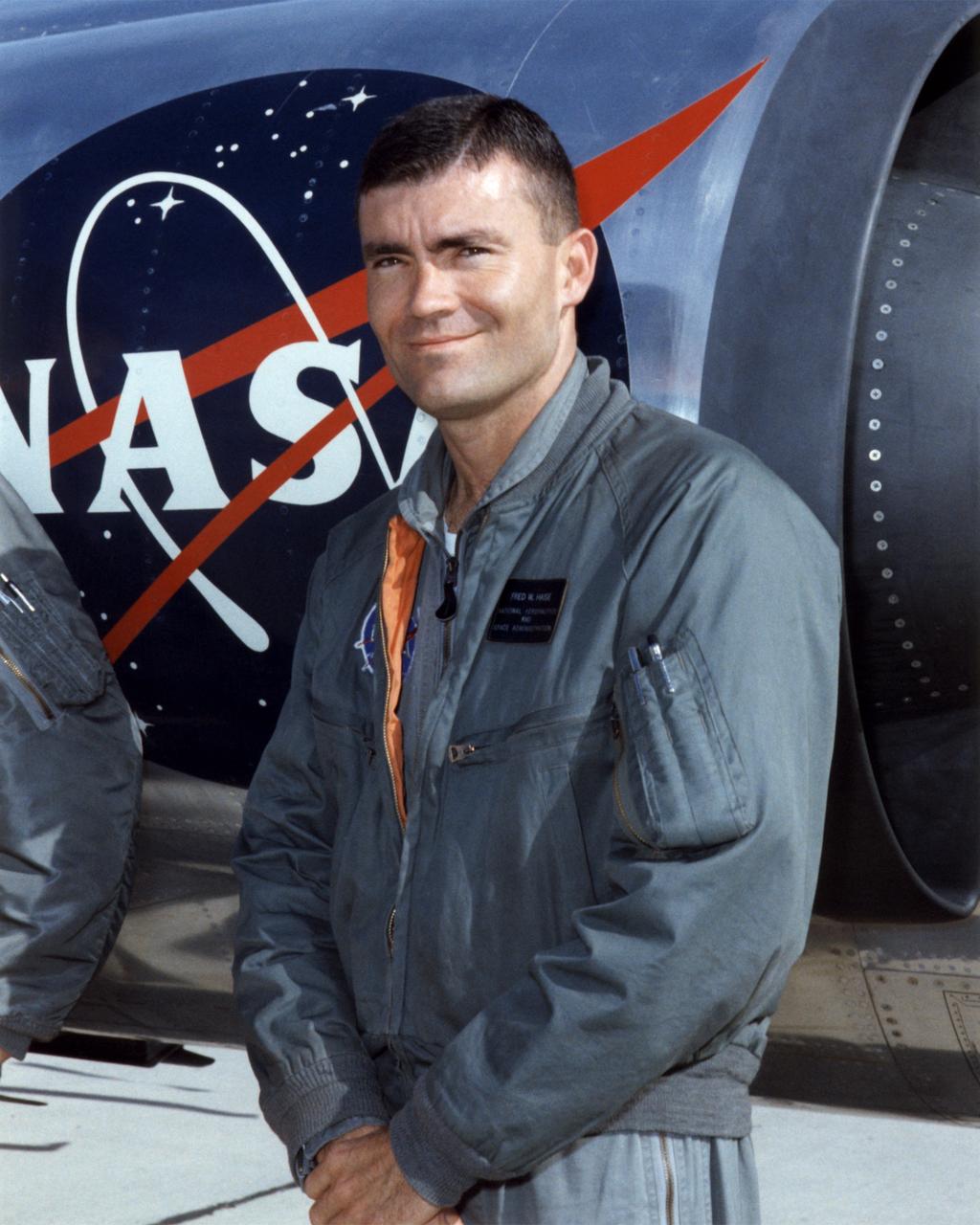
Fred W. Haise Jr. was a research pilot and an astronaut for the National Aeronautics and Space Administration from 1959 to 1979. He began flying at the Lewis Research Center in Cleveland, Ohio (today the Glenn Research Center), in 1959. He became a research pilot at the NASA Flight Research Center (FRC), Edwards, Calif., in 1963, serving NASA in that position for three years until being selected to be an astronaut in 1966 His best-known assignment at the FRC (later redesignated the Dryden Flight Research Center) was as a lifting body pilot. Shortly after flying the M2-F1 on a car tow to about 25 feet on April 22, 1966, he was assigned as an astronaut to the Johnson Space Center in Houston, Texas. While at the FRC he had also flown a variety of other research and support aircraft, including the variable-stability T-33A to simulate the M2-F2 heavyweight lifting body, some light aircraft including the Piper PA-30 to evaluate their handling qualities, the Apache helicopter, the Aero Commander, the Cessna 310, the Douglas F5D, the Lockheed F-104 and T-33, the Cessna T-37, and the Douglas C-47. After becoming an astronaut, Haise served as a backup crewmember for the Apollo 8, 11, and 16 missions. He flew on the aborted Apollo 13 lunar mission in 1970, spending 142 hours and 54 minutes in space before returning safely to Earth. In 1977, he was the commander of three free flights of the Space Shuttle prototype Enterprise when it flew its Approach and Landing Tests at Edwards Air Force Base, Calif. Meanwhile, from April 1973 to January 1976, Haise served as the Technical Assistant to the Manager of the Space Shuttle Orbiter Project. In 1979, he left NASA to become the Vice President for Space Programs with the Grumman Aerospace Corporation. He then served as President of Grumman Technical Services, an operating division of Northrop Grumman Corporation, from January 1992 until his retirement. Haise was born in Biloxi, Miss., on November 14, 1933. He underwent flight traini
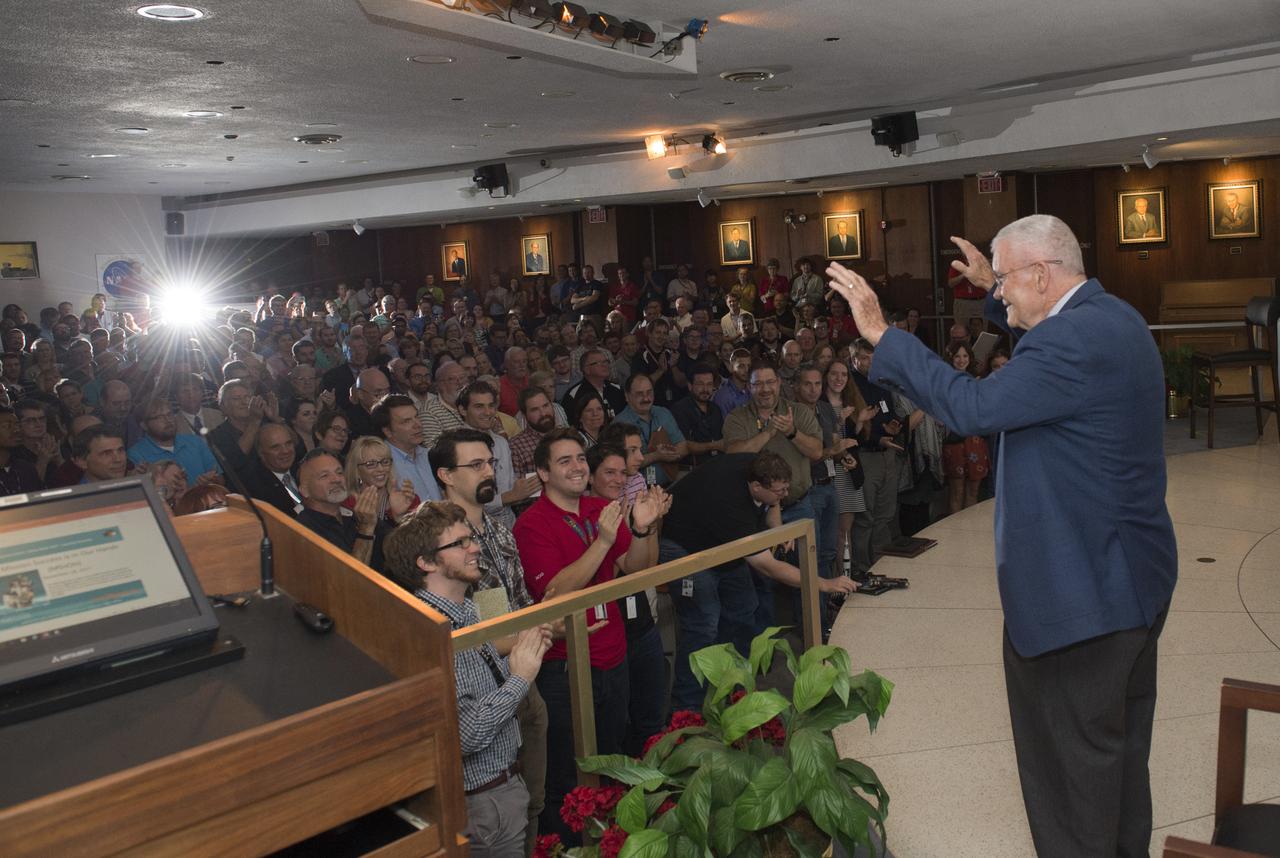
Former NASA astronaut Fred Haise Jr., right, part of the three-man Apollo 13 crew receives a standing ovation from members of the Marshall workforce Sept. 28 in Morris Auditorium.
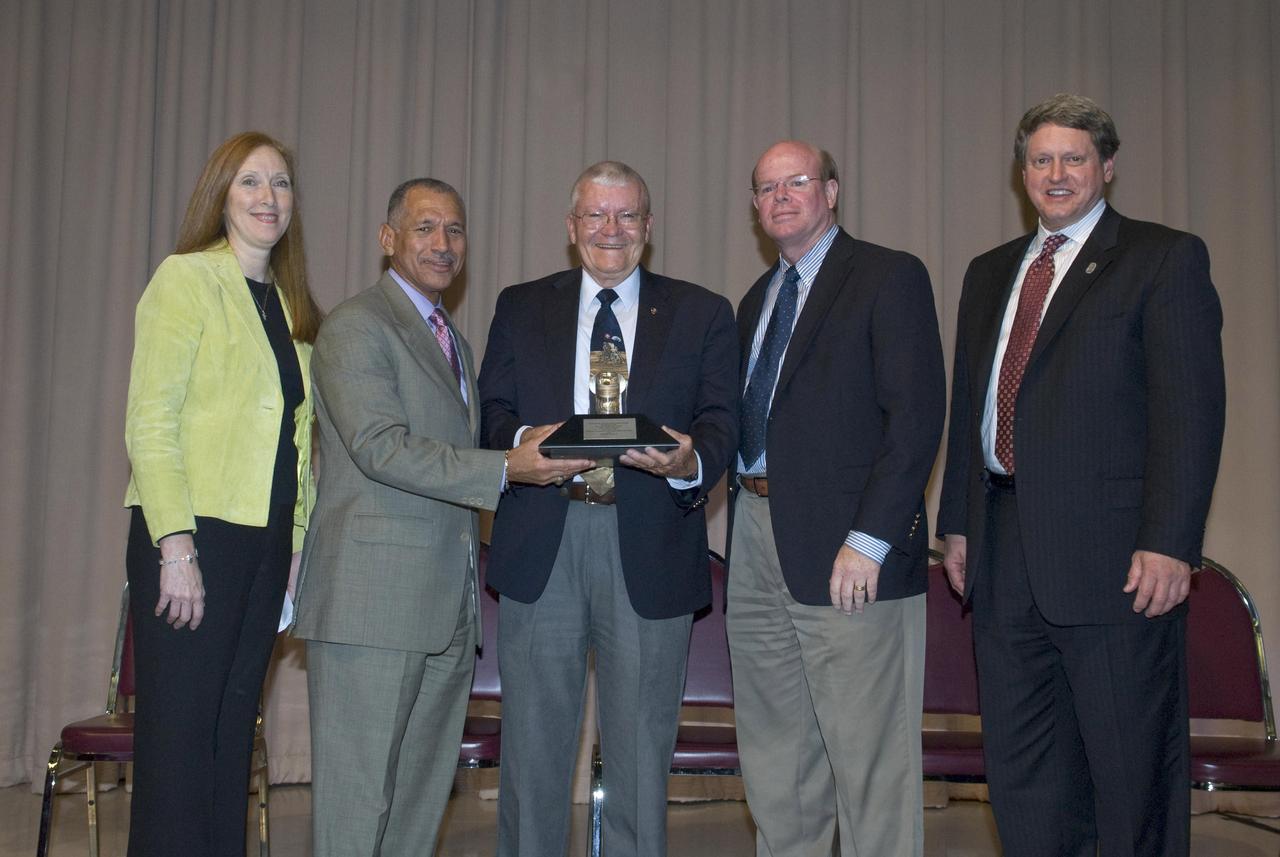
Apollo 13 astronaut and Biloxi native Fred Haise Jr. was honored for a lifetime of achievement with NASA's Ambassador of Exploration Award during a Dec. 2 ceremony at Gorenflo Elementary School in Biloxi. Haise subsequently presented the moon rock award to Gorenflo for display at the school. Participating in the ceremony were (l to r): Gorenflo Principal Tina Thompson, NASA Administrator Charles Bolden, Haise, Biloxi Public School District Superintendent Paul Tisdale and Stennis Director Gene Goldman.
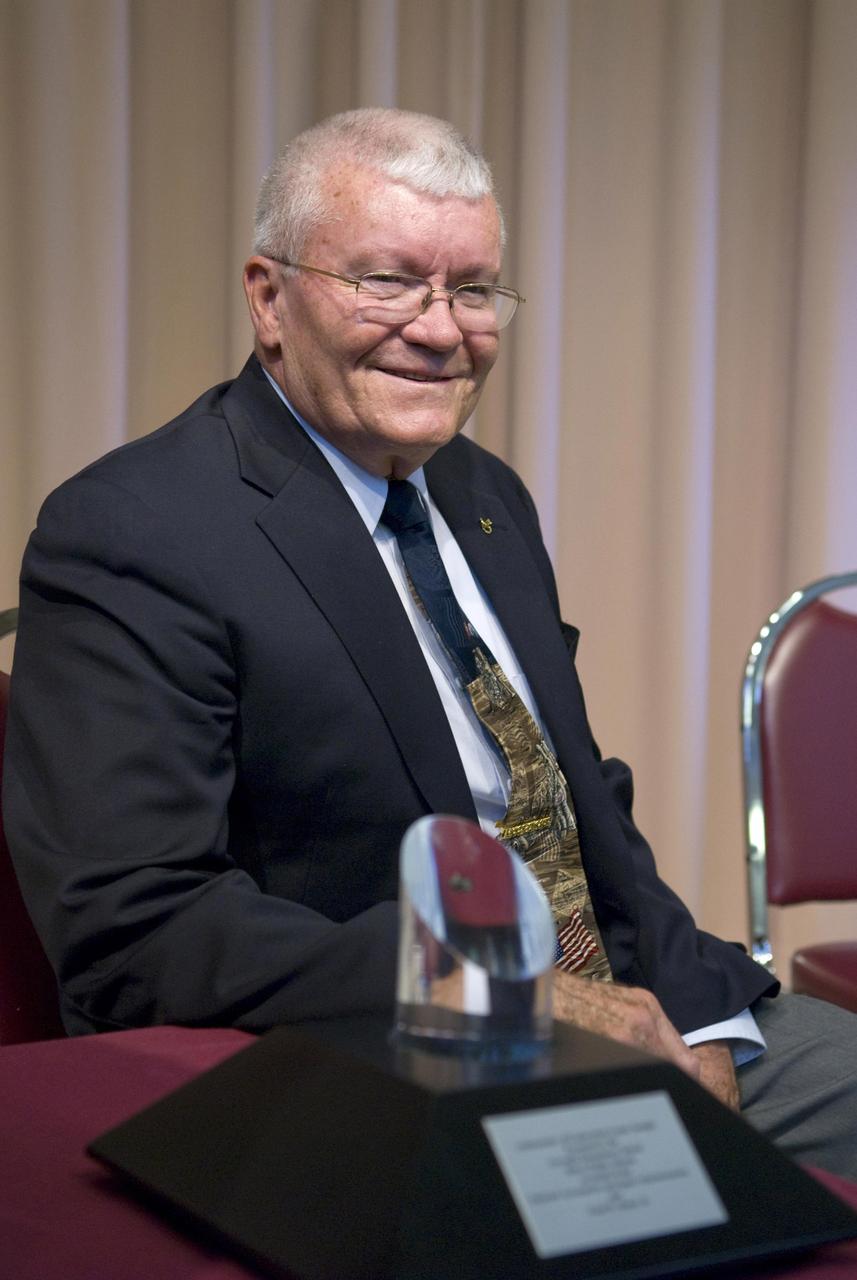
Apollo 13 astronaut and Biloxi native Fred Haise Jr. smiles during a Dec. 2 ceremony at Gorenflo Elementary School in Biloxi honoring his space career. During the ceremony, Haise was presented with NASA's Ambassador of Exploration Award (an encased moon rock). He subsequently presented the moon rock to Gorenflo officials for display at the school. Haise is best known as one of three astronauts who nursed a crippled Apollo 13 spacecraft back to Earth during a perilous 1970 mission. Although he was unable to walk on the moon as planned for that mission, Haise ended his astronaut career having logged 142 hours and 54 minutes in space. During the ceremony, he praised all those who contributed to the space program.
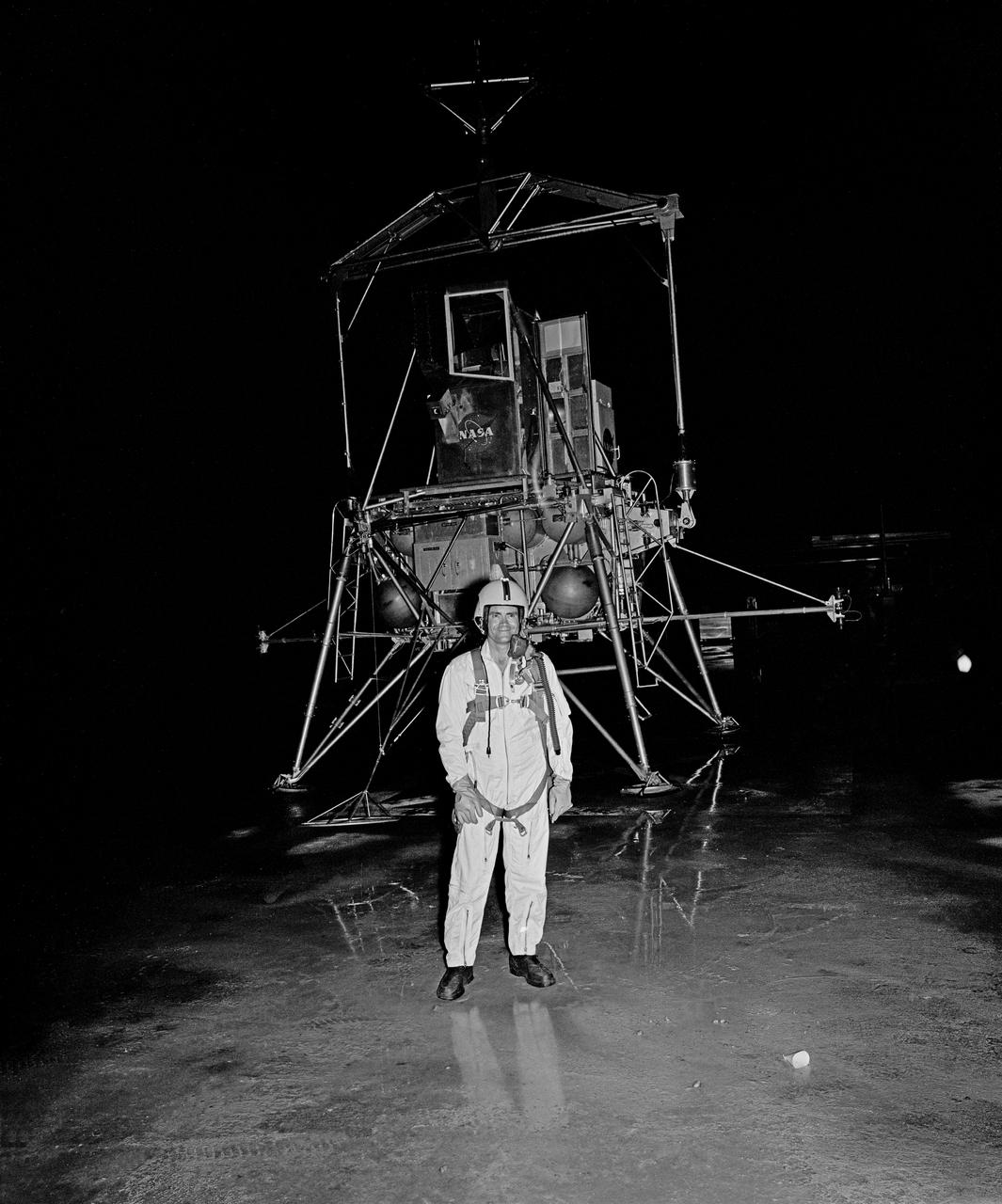
Astronaut Fred Wallace Haise, Jr. at NASA Langley Lunar Research Facility, Gantry test at night. Haise was the lunar module pilot on Apollo 13 (April 11-17, 1970) and has logged 142 hours and 54 minutes in space.
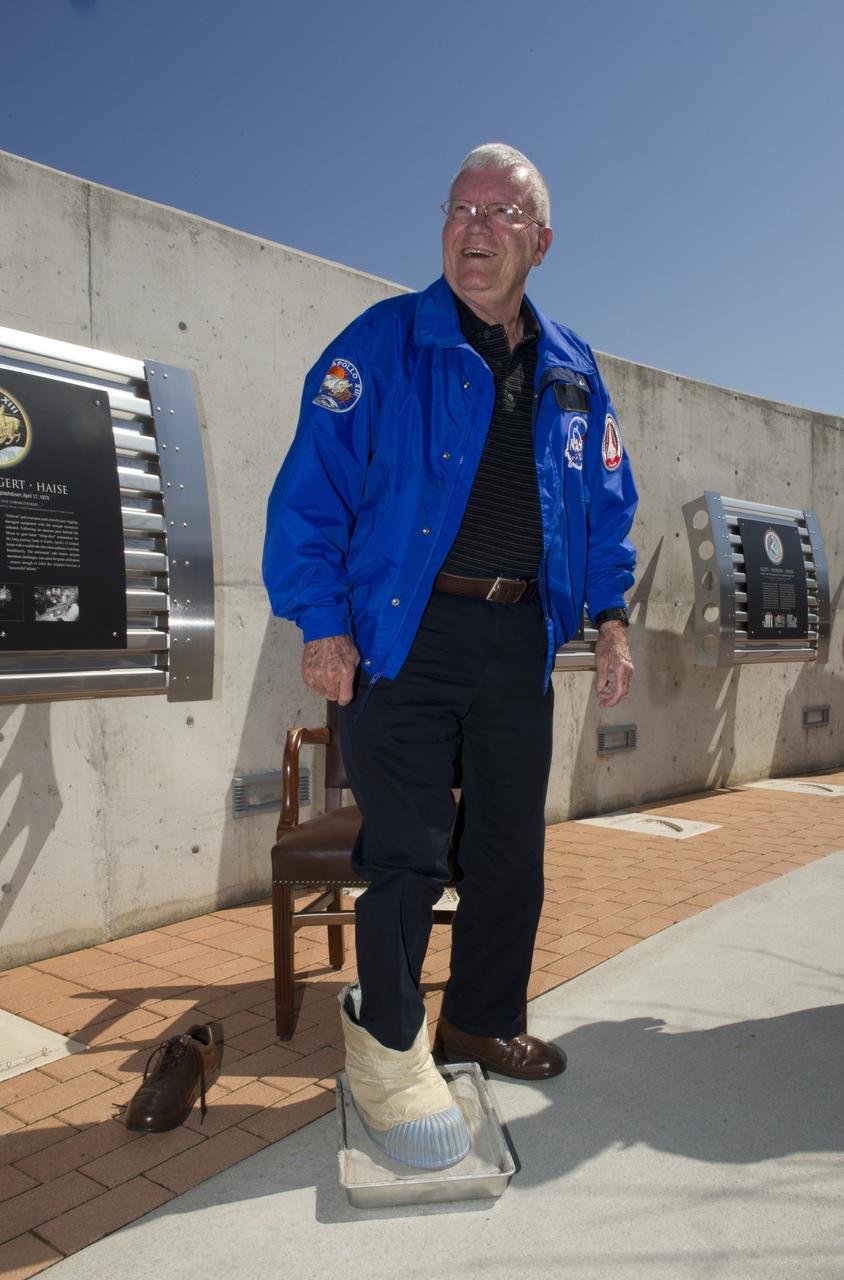
APOLLO 13 ASTRONAUT FRED HAISE CASTS FOOTPRINT AT USSRC DAVIDSON CENTER
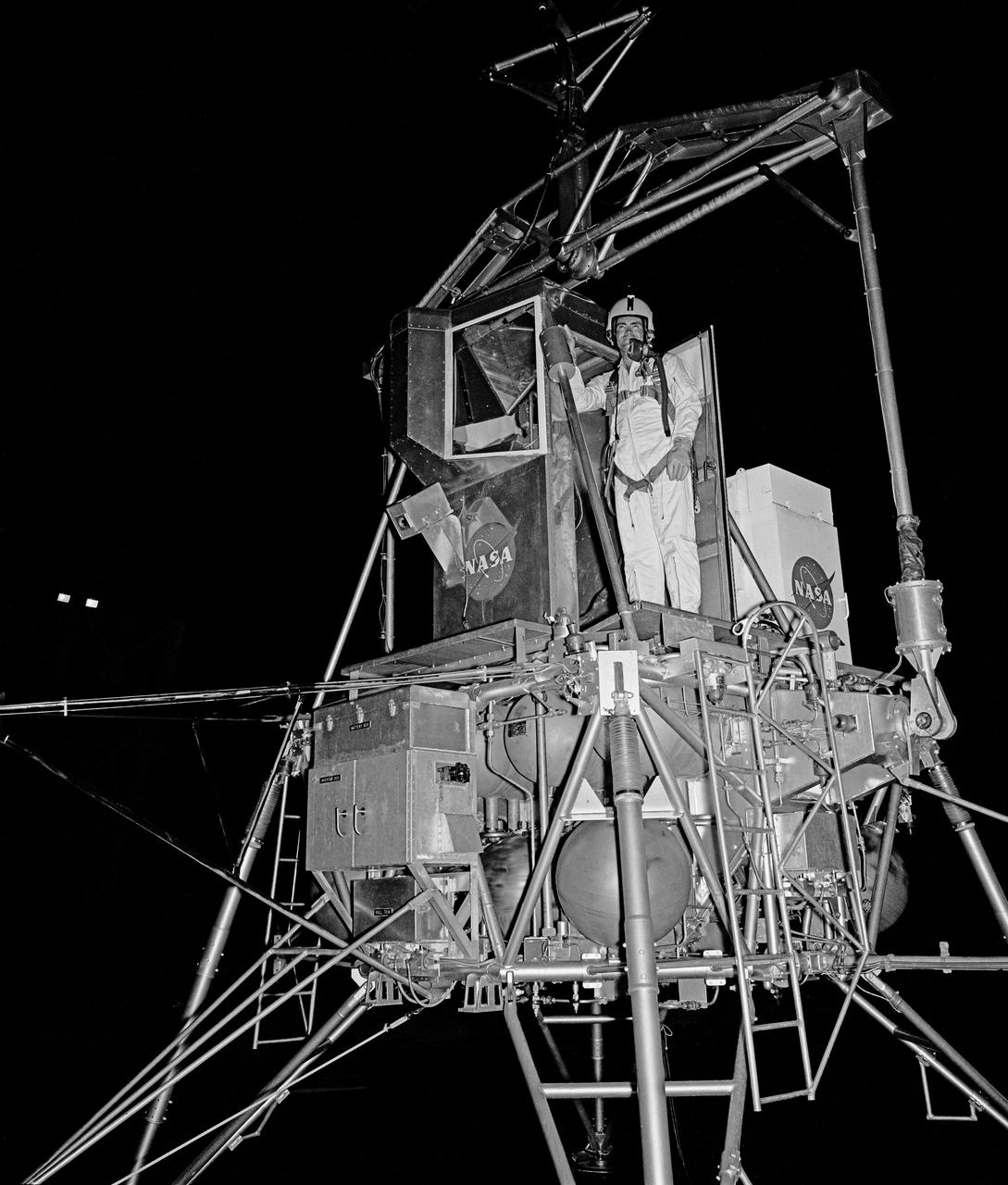
Astronaut Fred Wallace Haise, Jr. at NASA Langley Lunar Research Facility, Gantry test at night. Haise was the lunar module pilot on Apollo 13 (April 11-17, 1970) and has logged 142 hours and 54 minutes in space.
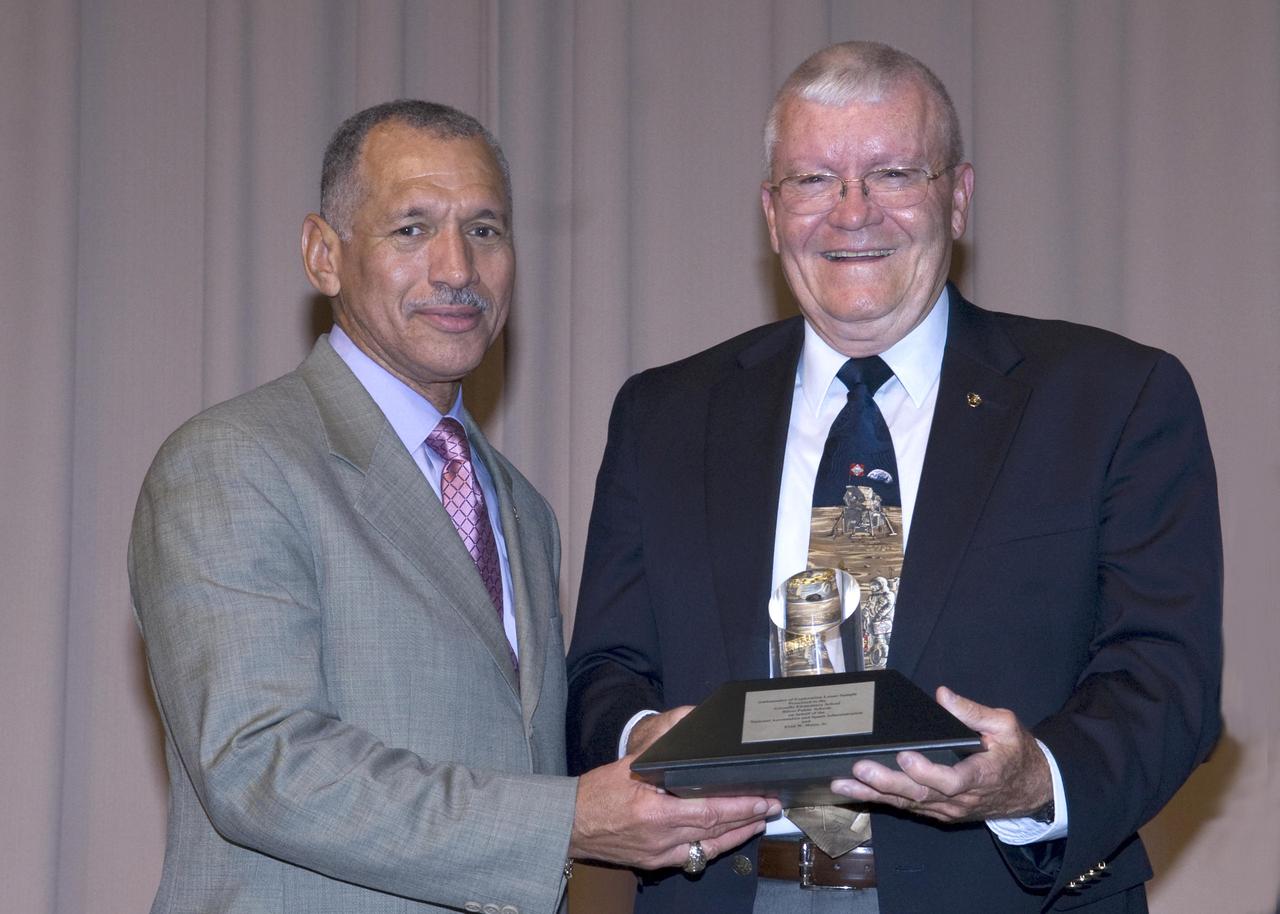
NASA Administrator Charles Bolden (left) presents the Ambassador of Exploration Award (an encased moon rock) to Biloxi native and Apollo 13 astronaut Fred Haise Jr. (right) for his contributions to space exploration. During a Dec. 2 ceremony at Gorenflo elementary School in Biloxi, Miss., Bolden praised Haise for his overall space career and his performance on the Apollo 13 mission that was crippled two days after launch. Haise and fellow crewmembers nursed the spacecraft on a perilous trip back to Earth. 'The historic Apollo 13 mission was as dramatic as any Hollywood production,' Bolden said. 'When an explosion crippled his command module, Fred and his crewmates, Jim Lovell and Jack Swigert, guided their spacecraft around the moon and back to a successful splashdown in the Pacific Ocean - all while the world held its breath. While Fred didn't have the chance to walk on the moon, the cool courage and concentration in the face of crisis is among NASA's most enduring legacies.'
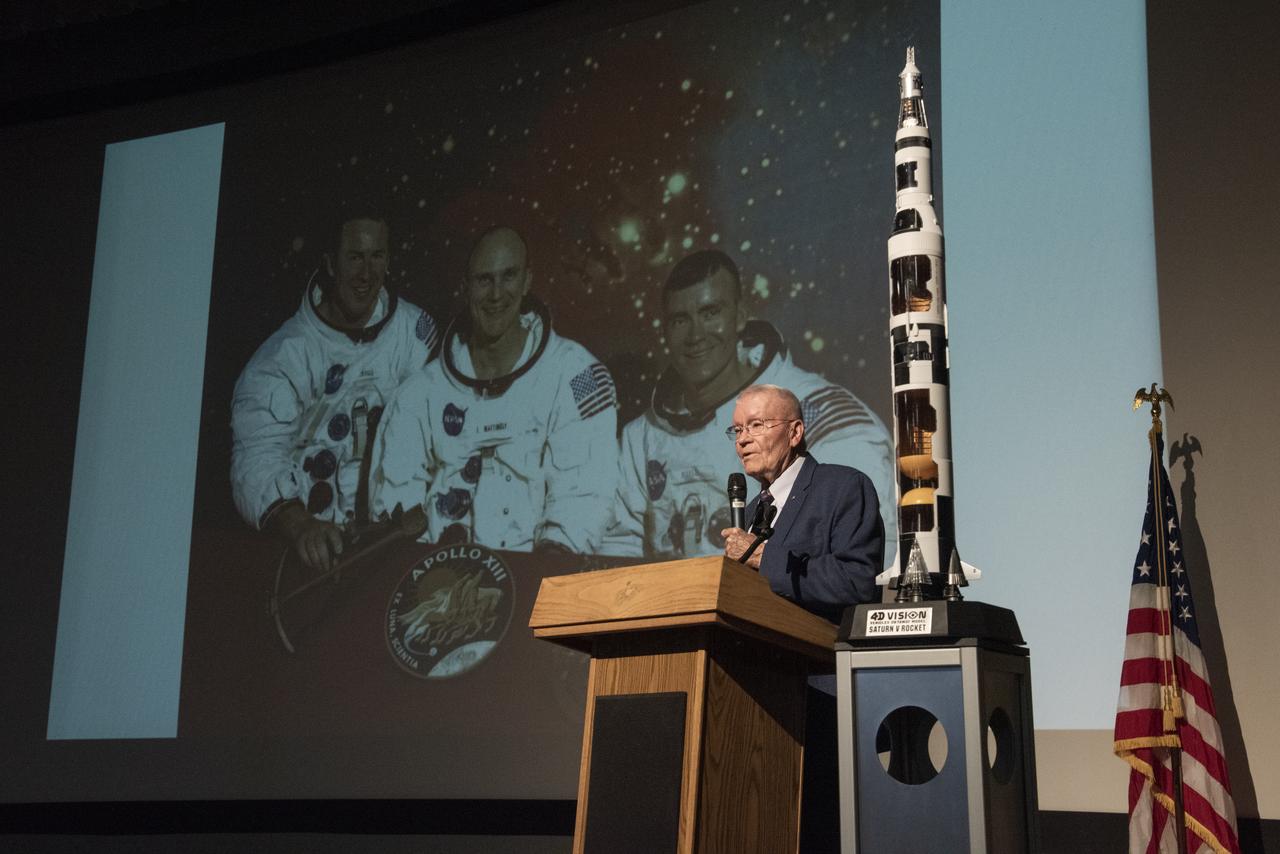
Apollo Astronaut Fred Haise speaks to a crowd of NASA and U.S Air Force employees at the Edwards Air Force Base theater about his career with NASA and as a military pilot. Haise stands on stage with a photo of former astronauts Jim Lovell and Jack Swigert who accompanied him on the Apollo 13 lunar mission in the background with a model of the Saturn V rocket.
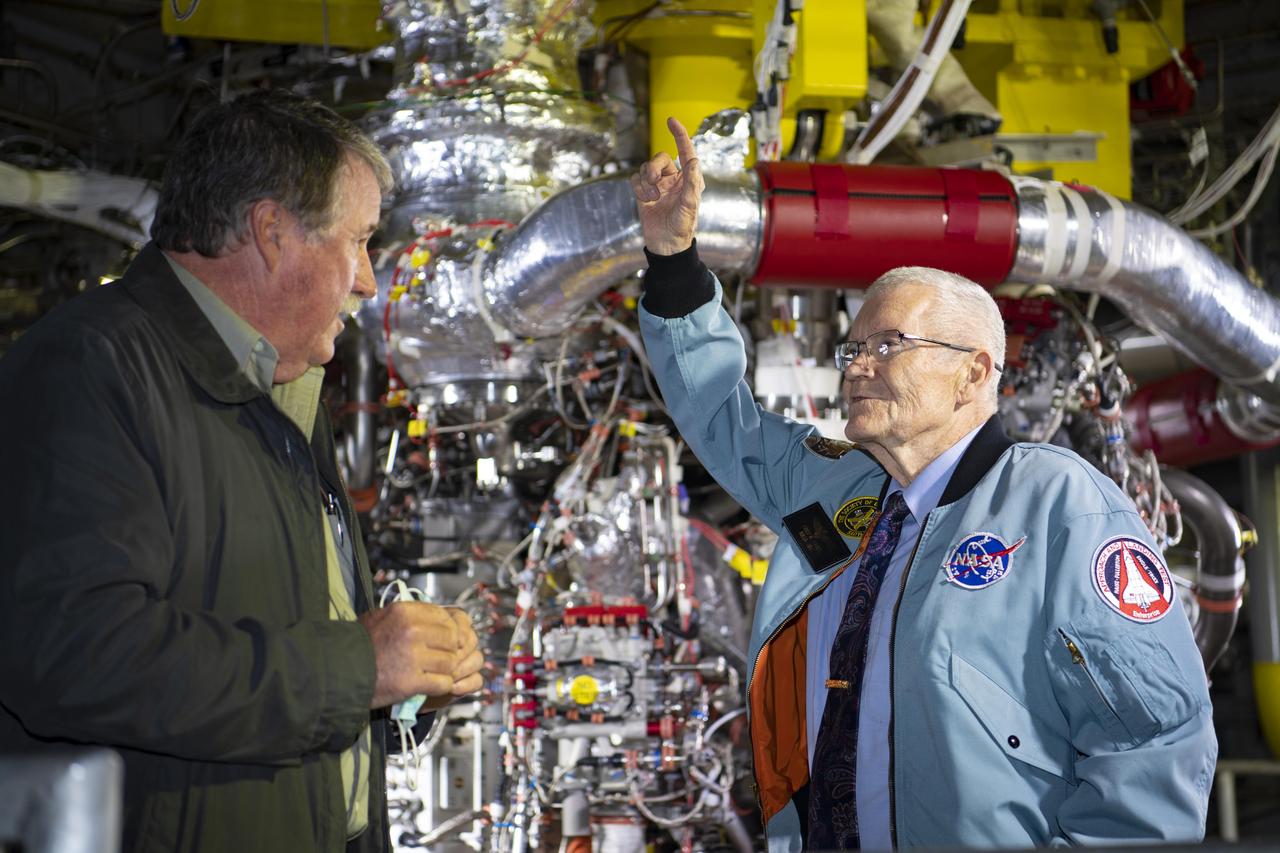
Apollo 13 Astronaut Fred Haise, right, stands in front of an RS-25 rocket engine installed on the A-1 Test Stand along with Jeff Henderson, test director at NASA’s Stennis Space Center. The A-1 stand was dedicated to the former astronaut on Dec. 7, 2021 and is now officially known as the Fred Haise Test Stand.
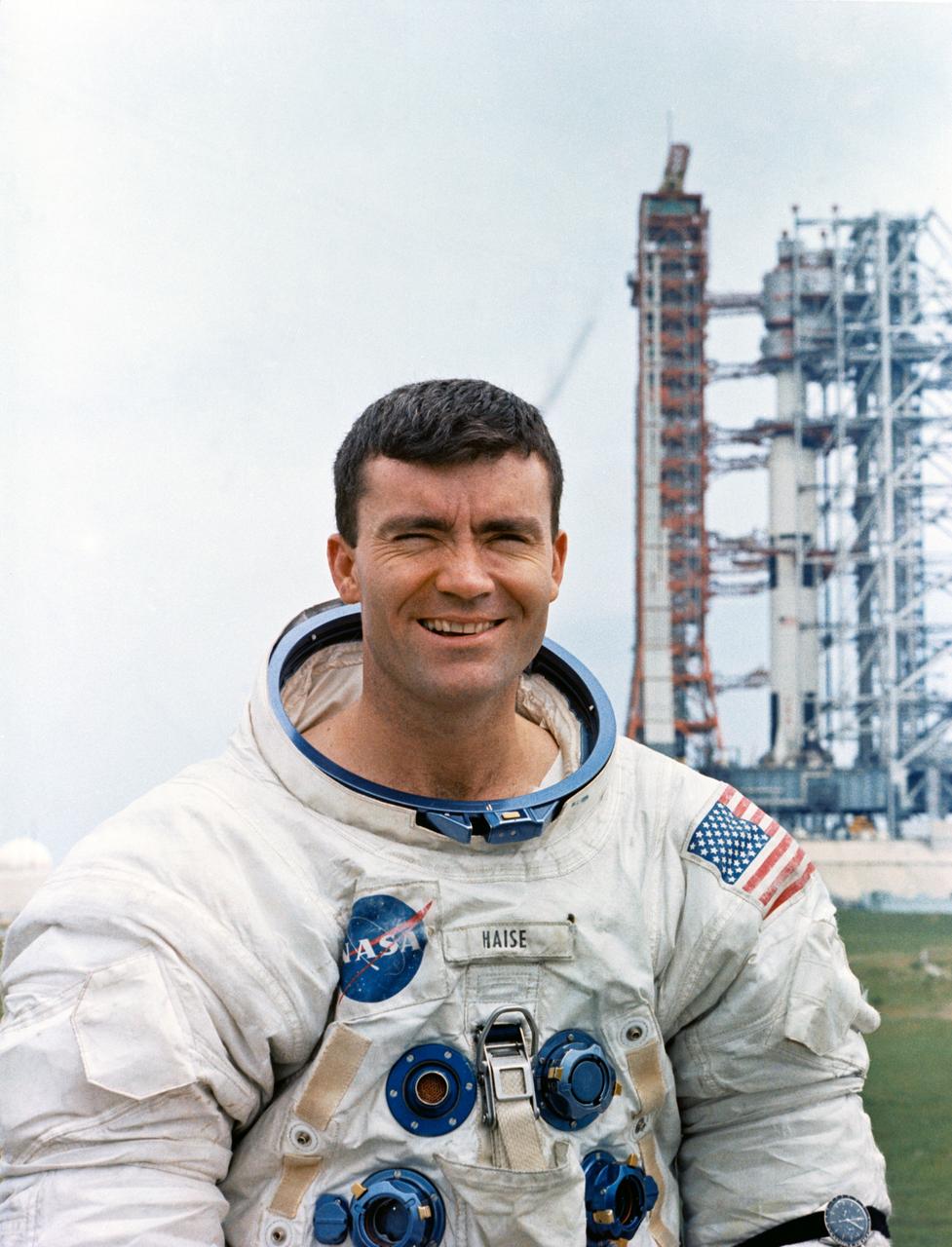
S70-34267 (April 1970) --- Astronaut Fred W. Haise Jr., lunar module pilot of the Apollo 13 lunar landing mission. Photo credit: NASA (Note, this is not the official Apollo portrait for Fred Haise)
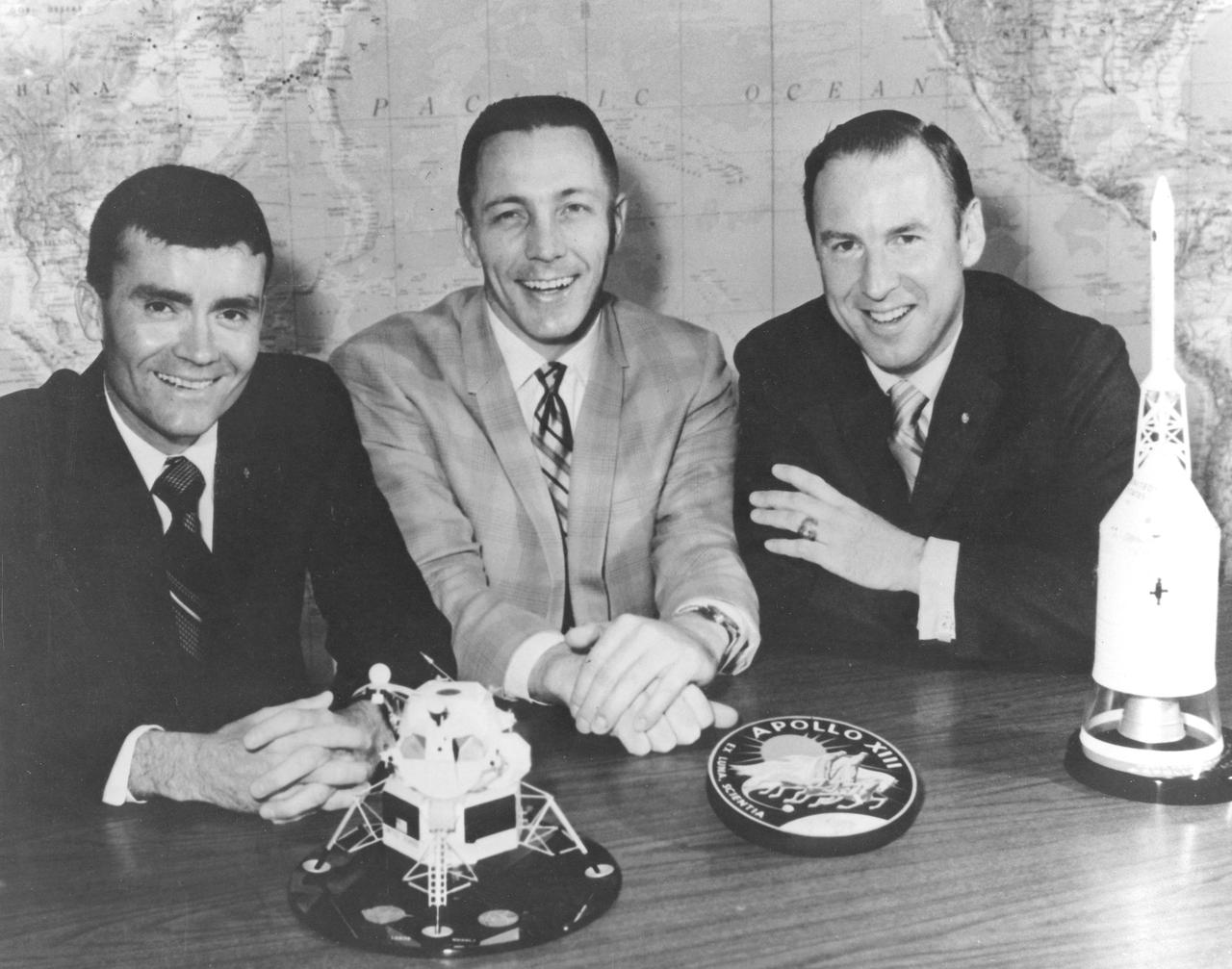
Apollo 13 astronauts Fred Haise, John Swigert, and James Lovell are pictured during the press conference after their ill-fated mission. The Apollo 13 mission (the third lunar landing mission) was aborted after 56 hours of flight, 205,000 miles from Earth, when an oxygen tank in the service module exploded.
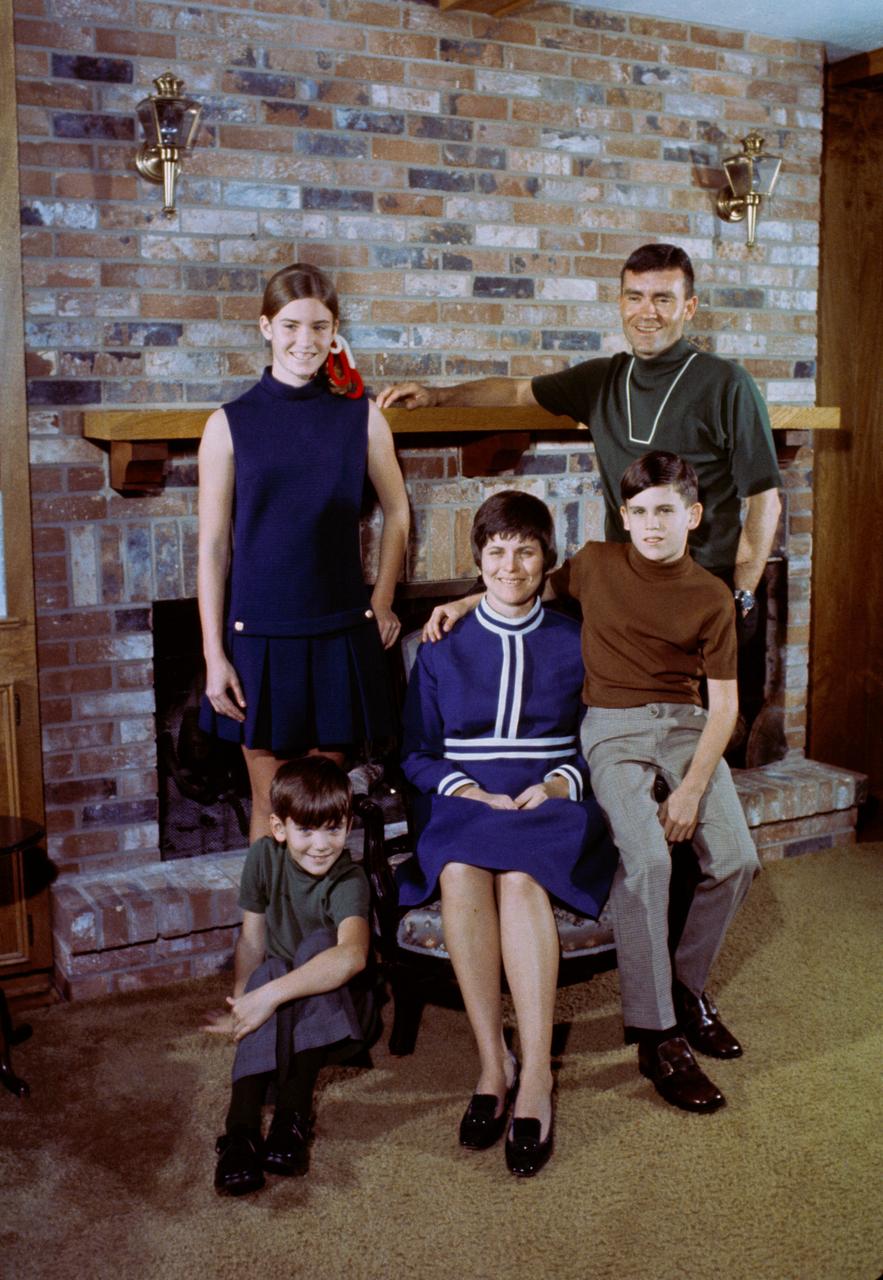
S70-30580 (March 1970) --- This is a family portrait of astronaut Fred W. Haise Jr. and his family. Haise is the lunar module pilot of the Apollo 13 lunar landing mission. The family includes: Mary M. (standing on left), born on Jan. 25, 1956; Frederick T. (seated on arm of chair), born on May 13, 1958; Stephen W. (seated on floor), born on June 30, 1961; and Mrs. Haise, the former Mary Griffin Grant.
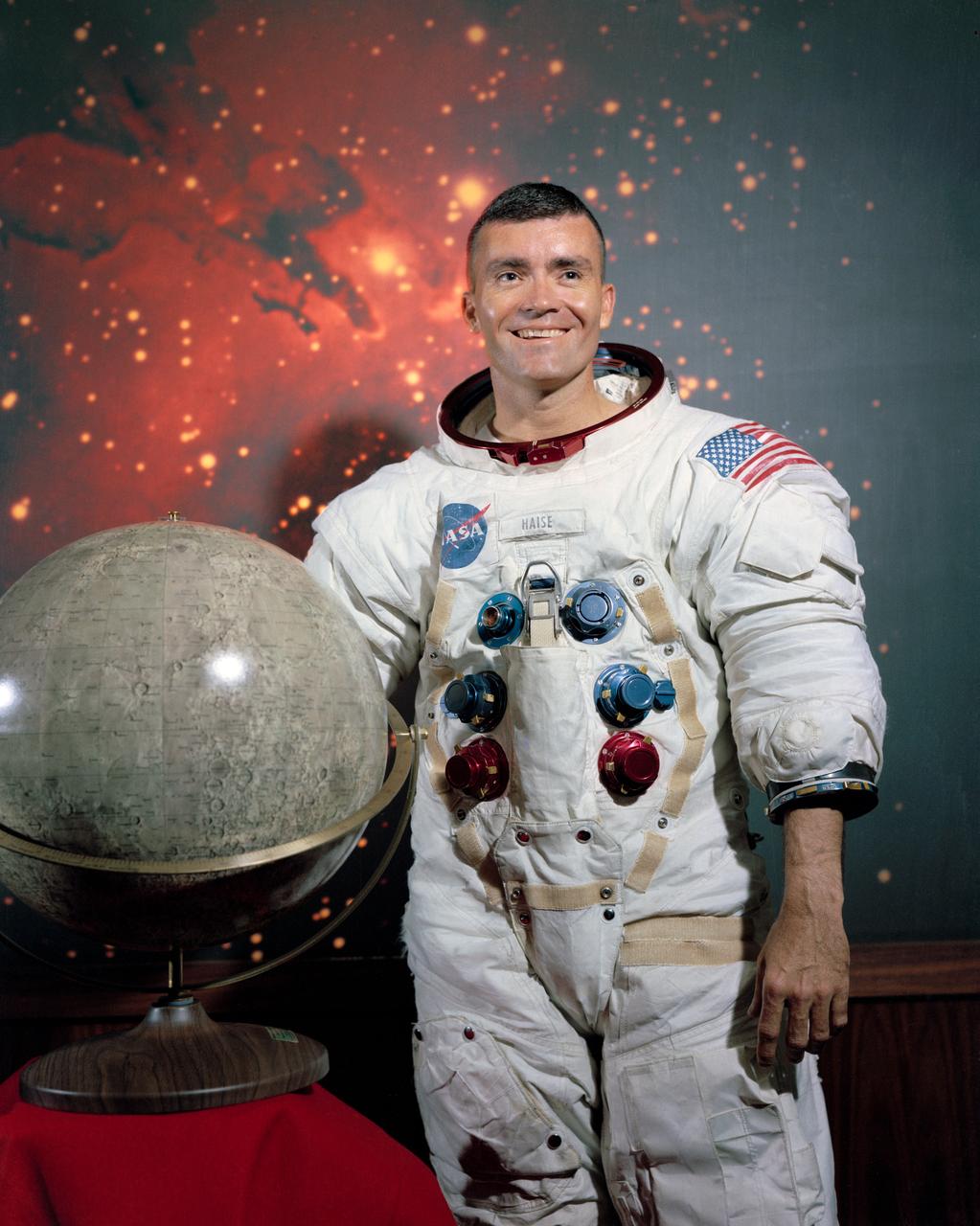
S69-62238 (1969) --- Astronaut Fred W. Haise Jr.
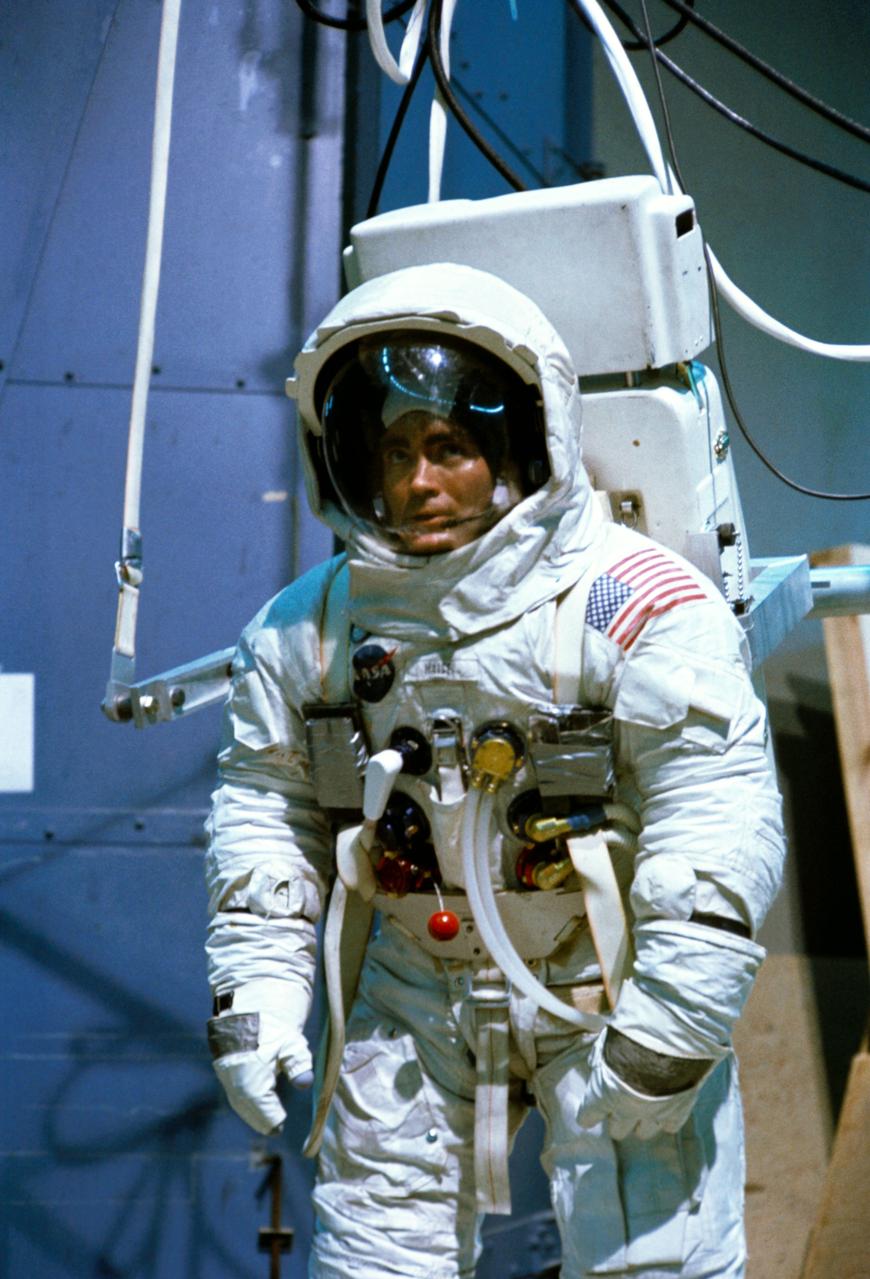
S70-24012 (19 Jan. 1970) --- Astronaut Fred W. Haise Jr., lunar module pilot of the Apollo 13 lunar landing mission, participates in lunar surface simulation training at the Manned Spacecraft Center (MSC). Haise is attached to a Six Degrees of Freedom Simulator.
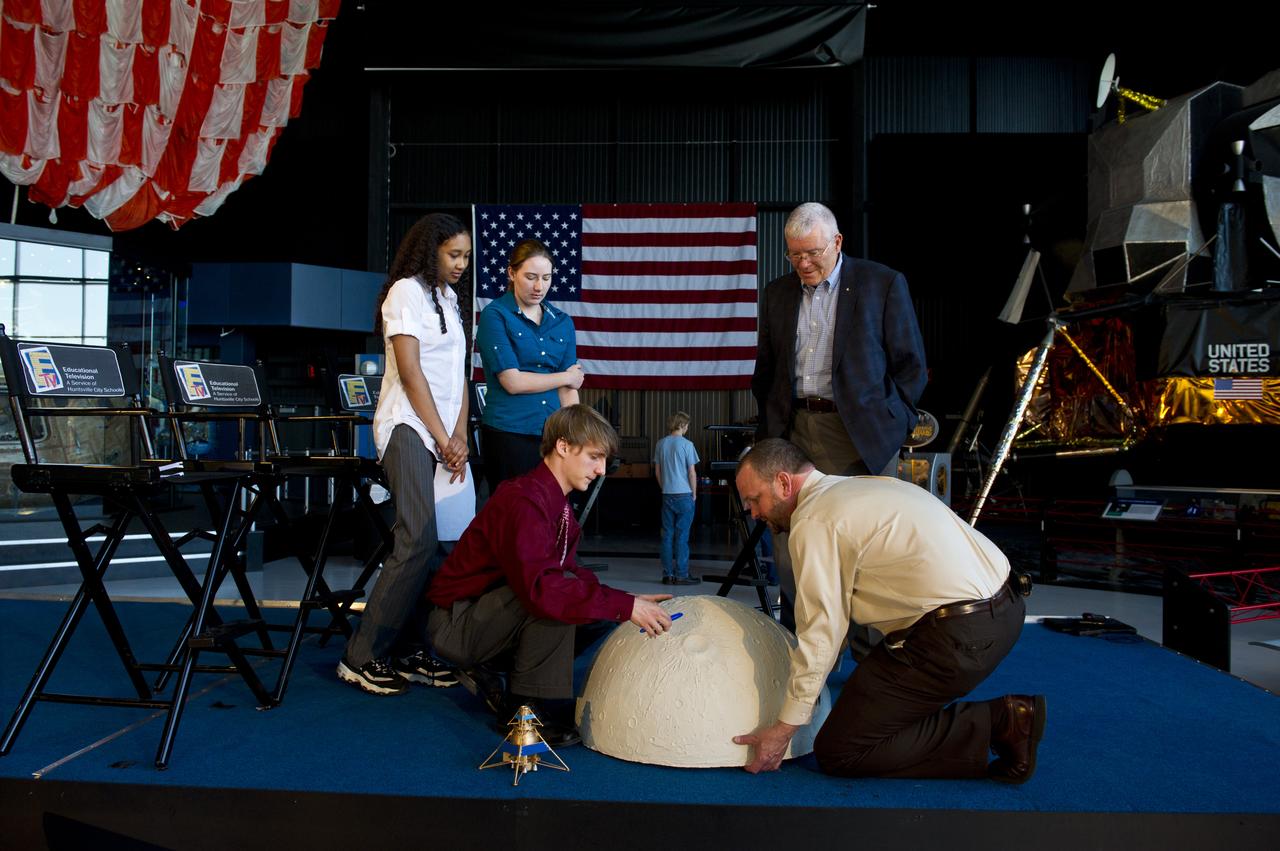
STUDENTS FROM THE CENTER FOR TECHNOLOGY SHOW APOLLO 13 ASTRONAUT FRED HAISE A DISPLAY MODEL FOR A MOON BASED PROJECT THEY ARE DESIGNING FOR COMPETITION WITH OTHER SCHOOLS IN ALABAMA. (L to R) QUIANA HUNT, SARAH FOLSE, MICHAEL HARTMAN, MIKE EVANS (TEACHER), AND FRED HAISE
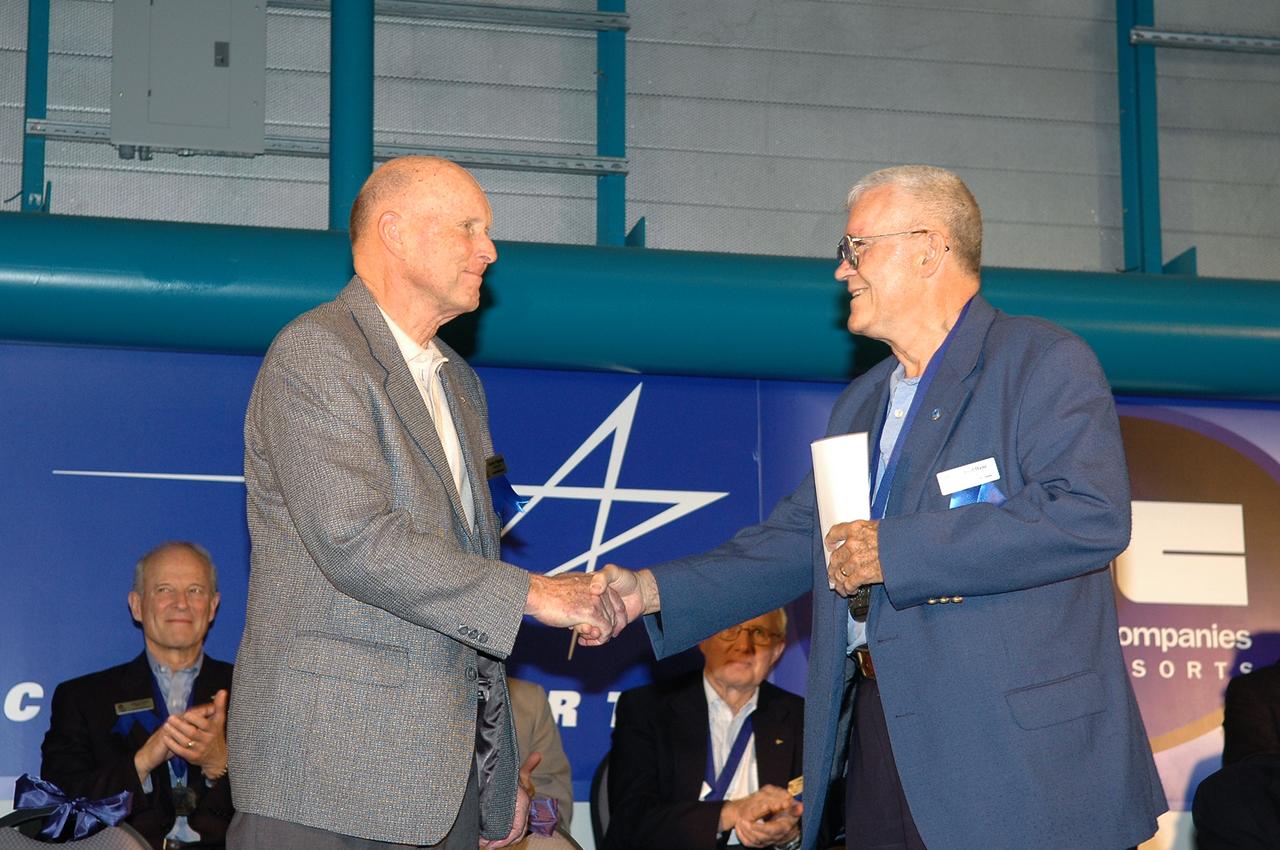
Former astronaut Gordon Fullerton (left), currently chief research pilot at NASA's Dryden Flight Research Center at Edwards Air Force Base, is congratulated by former astronaut Fred Haise (right) upon Fullerton's induction into the Astronaut Hall of Fame at the Kennedy Space Center (KSC) in Florida on April 30, 2005. Fullerton and Haise were one of two flight crews who flew the Approach and Landing Tests of the prototype Space Shuttle orbiter Enterprise at Dryden in 1977. Fullerton, who had served on the support crews for four Apollo moon landing missions in the early 1970s, went on to fly two Shuttle missions, STS-3 in 1982 and STS-51F in 1985. STS-3 became the only Shuttle mission to date to land at White Sands, N.M., and STS-51F was completed successfully despite the failure of one of the Shuttle's main engines during ascent to orbit. Haise, a member of the crew on the ill-fated Apollo 13 mission, was also a research pilot at NASA Dryden during his pre-astronaut career. Former astronauts Joseph Allen and Bruce McCandless were also inducted during the 2005 ceremonies at the KSC Visitor Center. In addition to honoring former members of NASA's astronaut corps who have made significant contributions to the advancement of space flight, the annual induction ceremonies serve as a fund-raiser for the Astronaut Scholarship Foundation. The foundation funded 17 $10,000 scholarships to college students studying science and engineering in 2004.
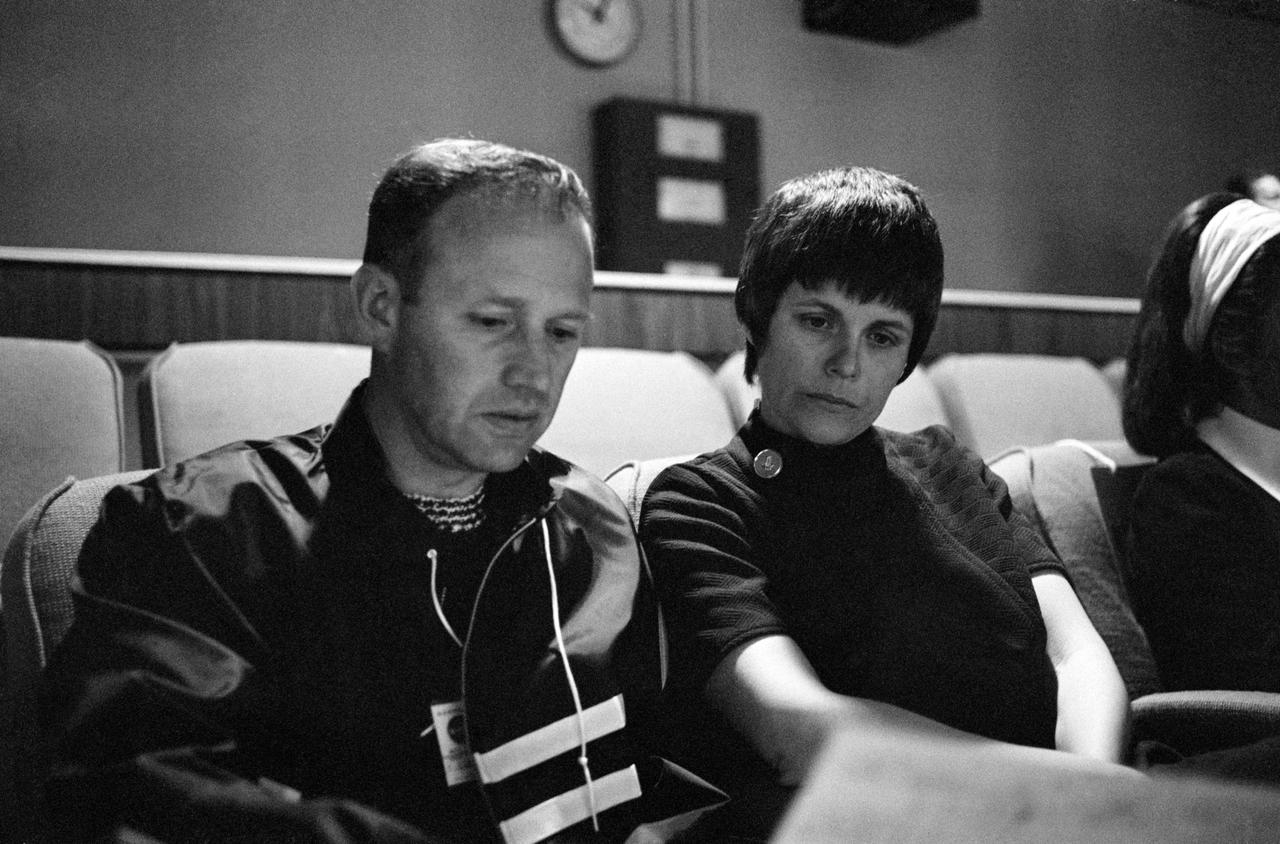
S70-34900 (14 April 1970) --- Mrs. Mary Haise receives an explanation of the revised flight plan of the Apollo 13 mission from astronaut Gerald P. Carr in the viewing room of the Mission Control Center (MCC), Building 30, at the Manned Spacecraft Center (MSC). Her husband, astronaut Fred W. Haise Jr., lunar module pilot for the Apollo 13 mission, was joining fellow crew members, astronauts James A. Lovell Jr., and John L. Swigert Jr. in making correction in their spacecraft following discovery of an oxygen cell failure several hours earlier.
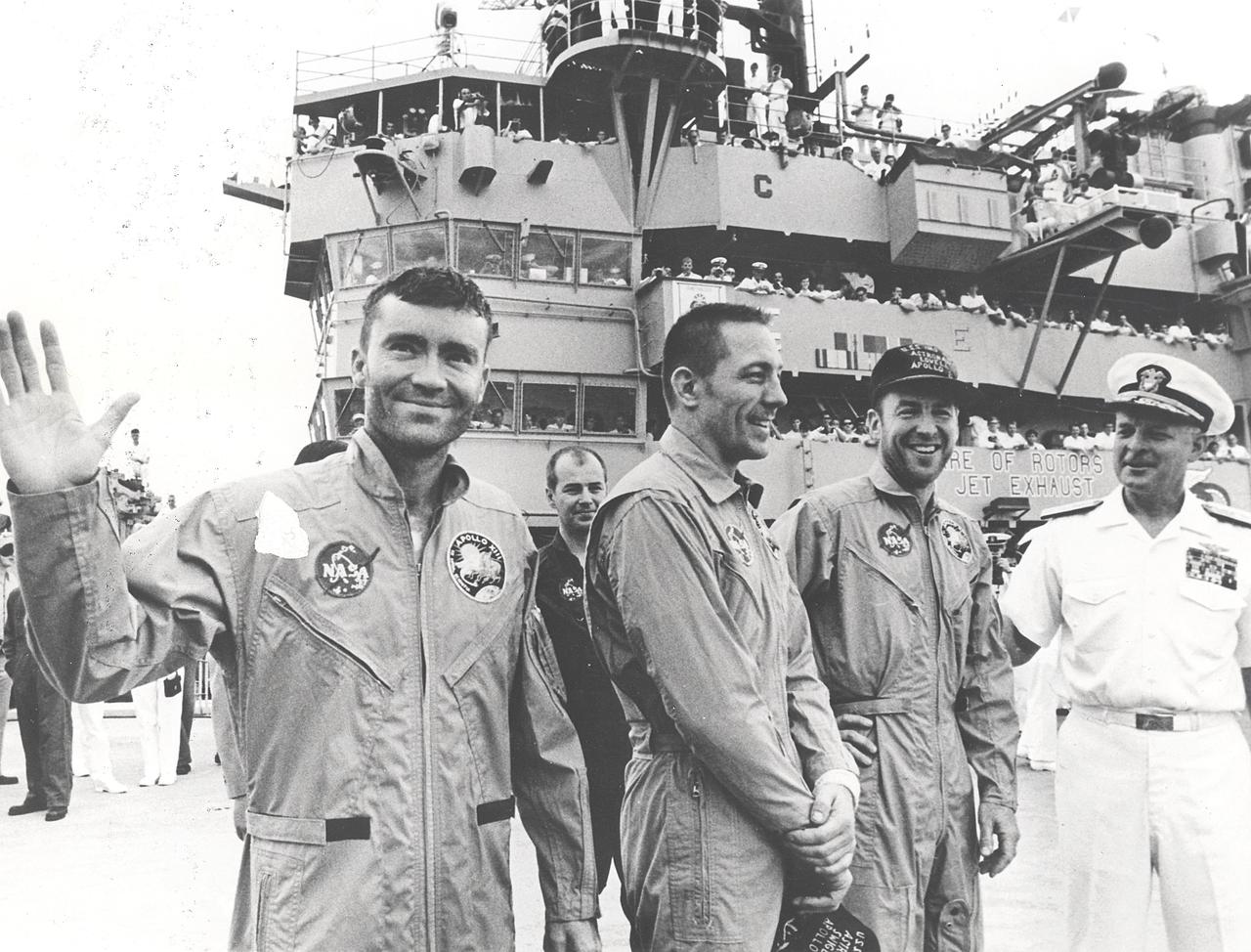
This photograph shows Apollo 13 astronauts Fred Haise, John Swigert, and James Lovell aboard the recovery ship, USS Iwo Jima after safely touching down in the Pacific Ocean at the end of their ill-fated mission. The mission was aborted after 56 hours of flight, 205,000 miles from Earth, when an oxygen tank in the service module exploded. The command module, Odyssey, brought the three astronauts back home safely.
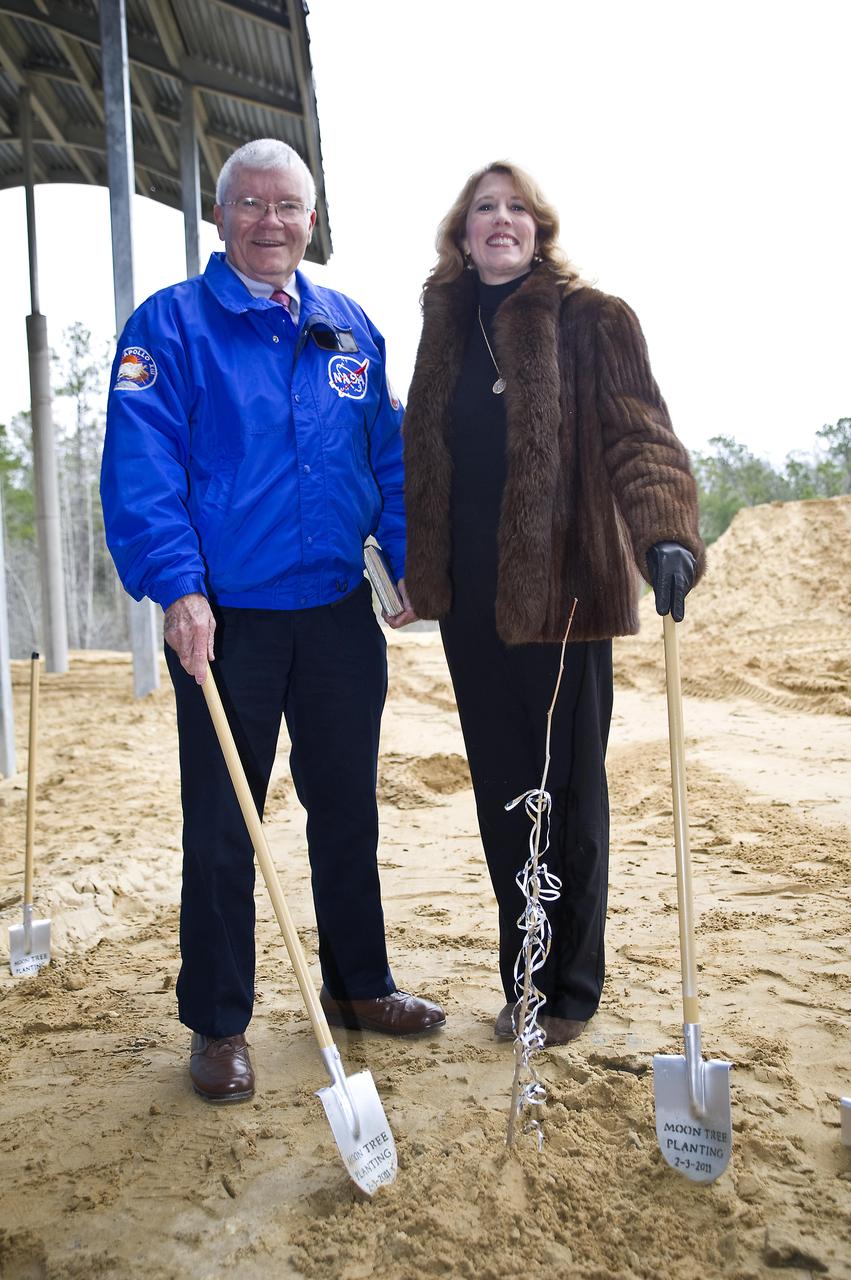
Apollo 13 astronaut Fred Haise stands with Rosemary Roosa, daughter of late Apollo 14 astronaut Stuart Roosa, beside a 'moon tree' planted at the INFINITY science center on Feb. 3, 2011. The moon tree is a descendent of seeds carried into space by Stuart Roosa on the Apollo 14 mission in 1971.
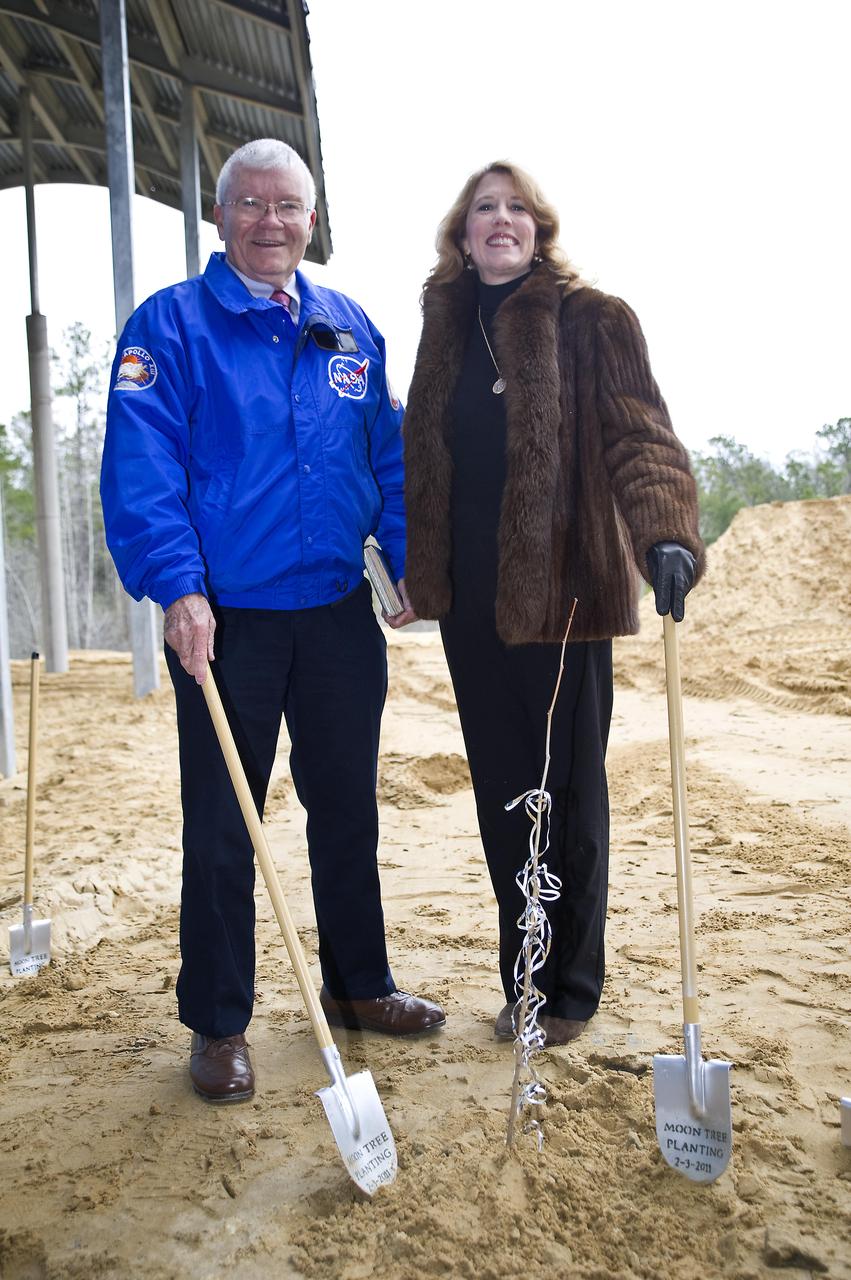
Apollo 13 astronaut Fred Haise stands with Rosemary Roosa, daughter of late Apollo 14 astronaut Stuart Roosa, beside a 'moon tree' planted at the INFINITY science center on Feb. 3, 2011. The moon tree is a descendent of seeds carried into space by Stuart Roosa on the Apollo 14 mission in 1971.
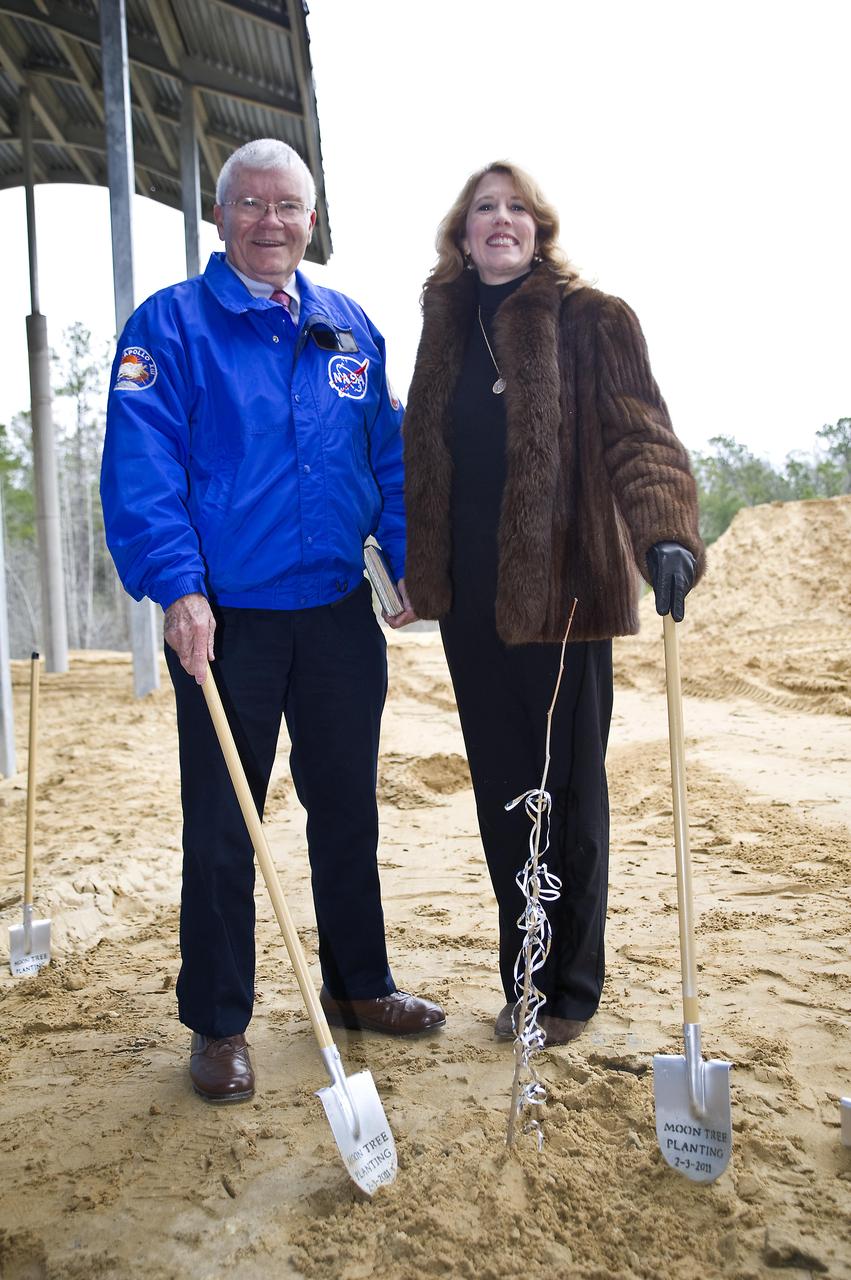
Apollo 13 astronaut Fred Haise stands with Rosemary Roosa, daughter of late Apollo 14 astronaut Stuart Roosa, beside a 'moon tree' planted at the INFINITY science center on Feb. 3, 2011. The moon tree is a descendent of seeds carried into space by Stuart Roosa on the Apollo 14 mission in 1971.
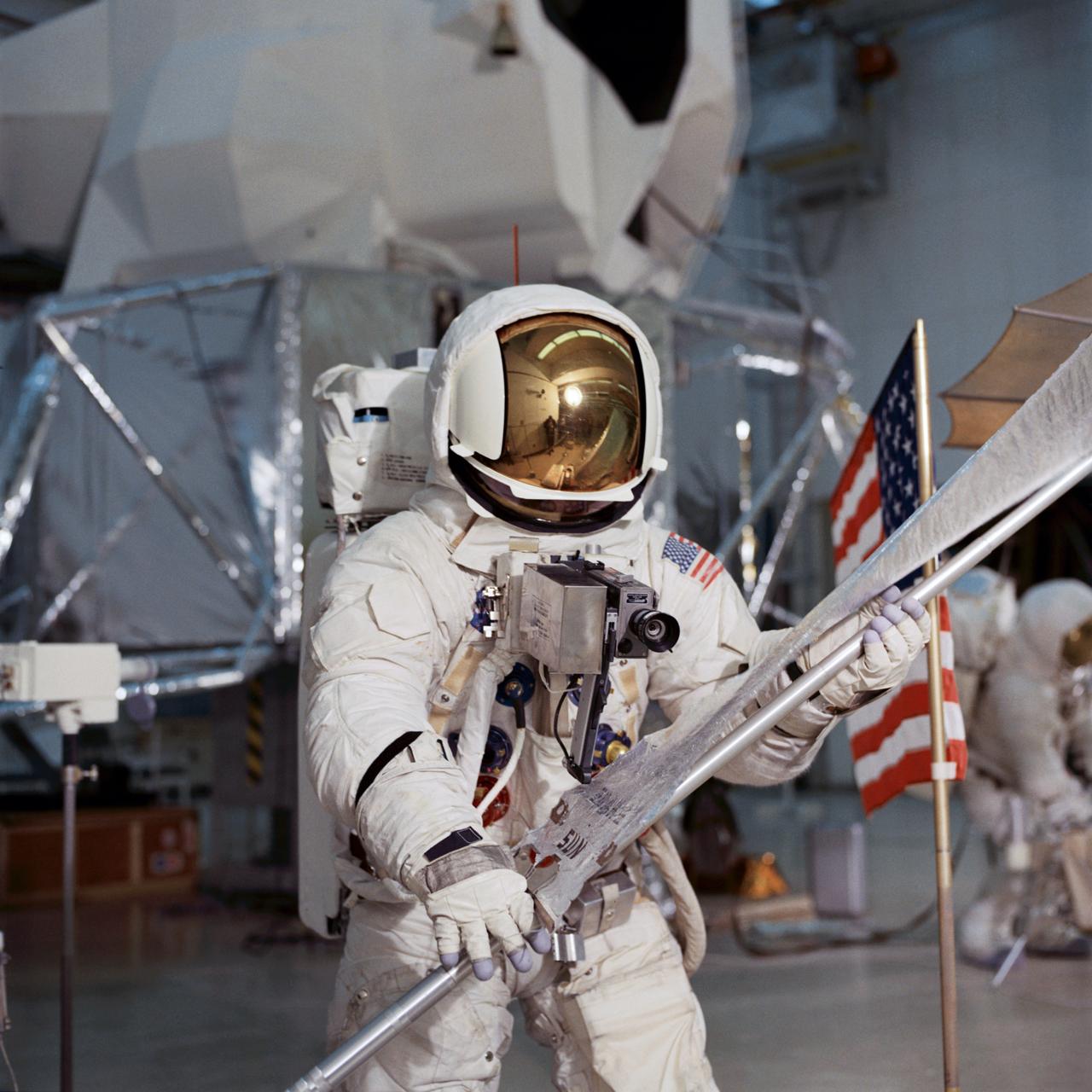
S70-27034 (4 Feb. 1970) --- Astronaut Fred W. Haise Jr., lunar module pilot of the Apollo 13 lunar landing mission, simulates lunar surface extravehicular activity (EVA) during training exercises in the Kennedy Space Center's (KSC) Flight Crew Training Building (FCTB). Haise, wearing an Extravehicular Mobility Unit (EMU), is holding a Solar Wind Composition (SWC) experiment.
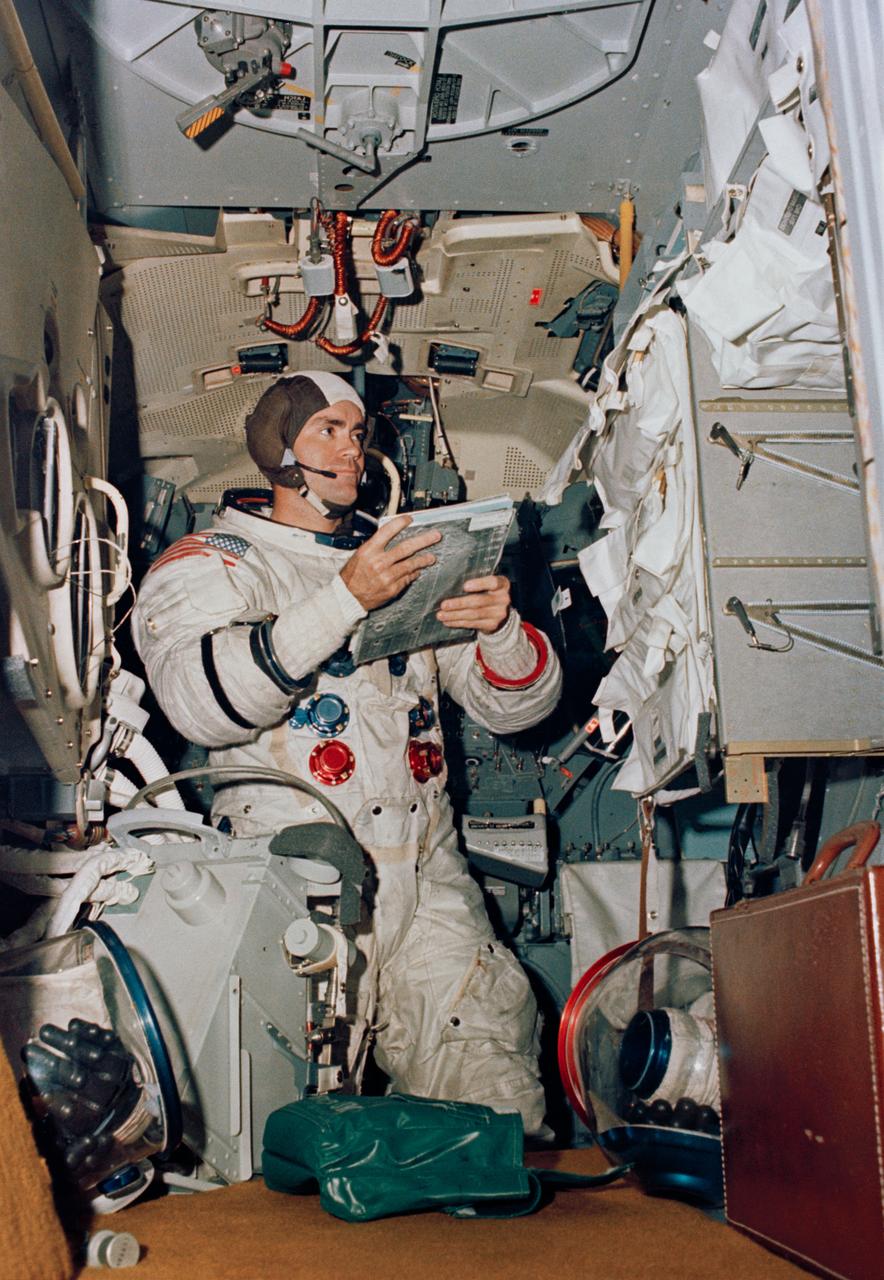
S70-34412 (4 April 1970) --- Astronaut Fred W. Haise Jr., Apollo 13 lunar module pilot, participates in simulation training in preparation for the scheduled lunar landing mission. He is in the Apollo Lunar Module Mission Simulator in the Kennedy Space Center's Flight Crew Training building.
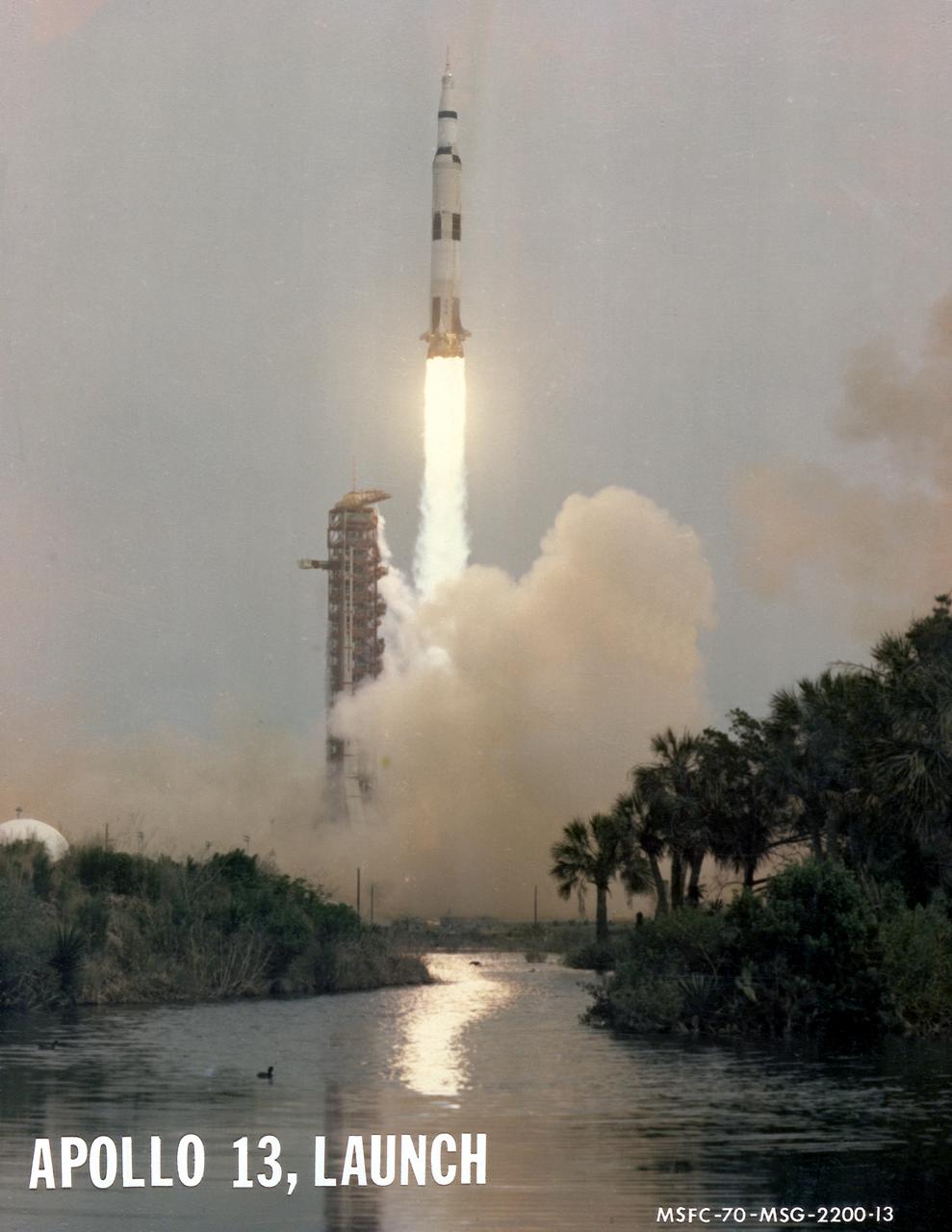
The third marned lunar landing mission, Apollo 13 (SA-508), with three astronauts: Mission commander James A. Lovell Jr., Lunar Module pilot Fred W. Haise Jr., and Command Module pilot John L. Swigert Jr., lifted off from the Kennedy Space Center launch complex 39A on April 11, 1970. The mission was aborted after 56 hours of flight, 205,000 miles from Earth, when an oxygen tank in the service module exploded. The Command Module, Odyssey, carrying the three astronauts, safely splashed down in the Pacific Ocean at 1:08 p.m. EST, April 17, 1970.
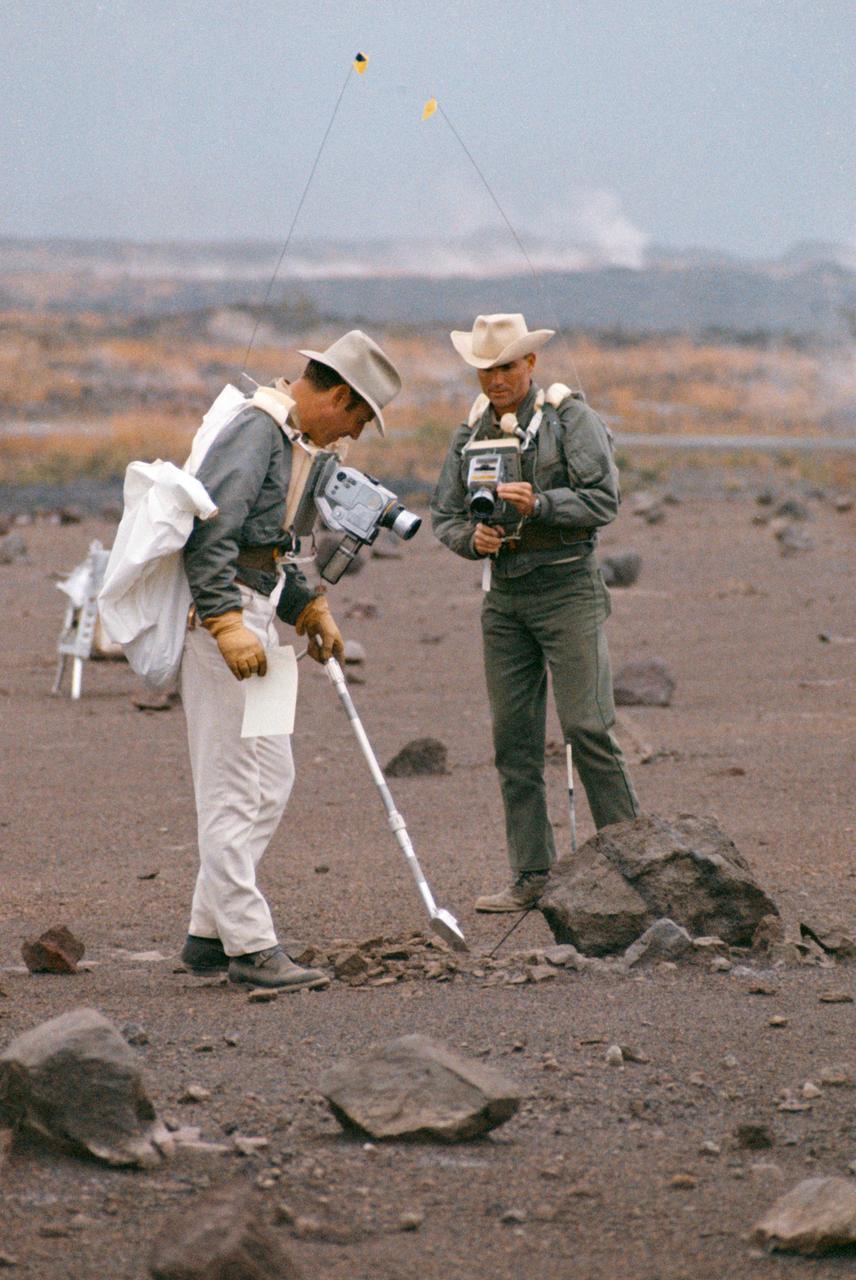
S70-20253 (December 1969) --- Astronauts James A. Lovell Jr. (left) commander, and Fred W. Haise Jr., lunar module pilot, carry out a simulation of a lunar traverse at Kilauea, Hawaii, site. Both crew members of NASA's third team of moon explorers were carrying cameras and communications equipment during the simulated traverse. They maintained contact with men in the roles of spacecraft throughout the traverse. Lovell holds a scoop for the Apollo Lunar Hand Tools (ALHT) and a gnomon, also for the ALHT is deployed in front of Haise. The ALHT carrier is at left background, (almost obscured by Lovell).
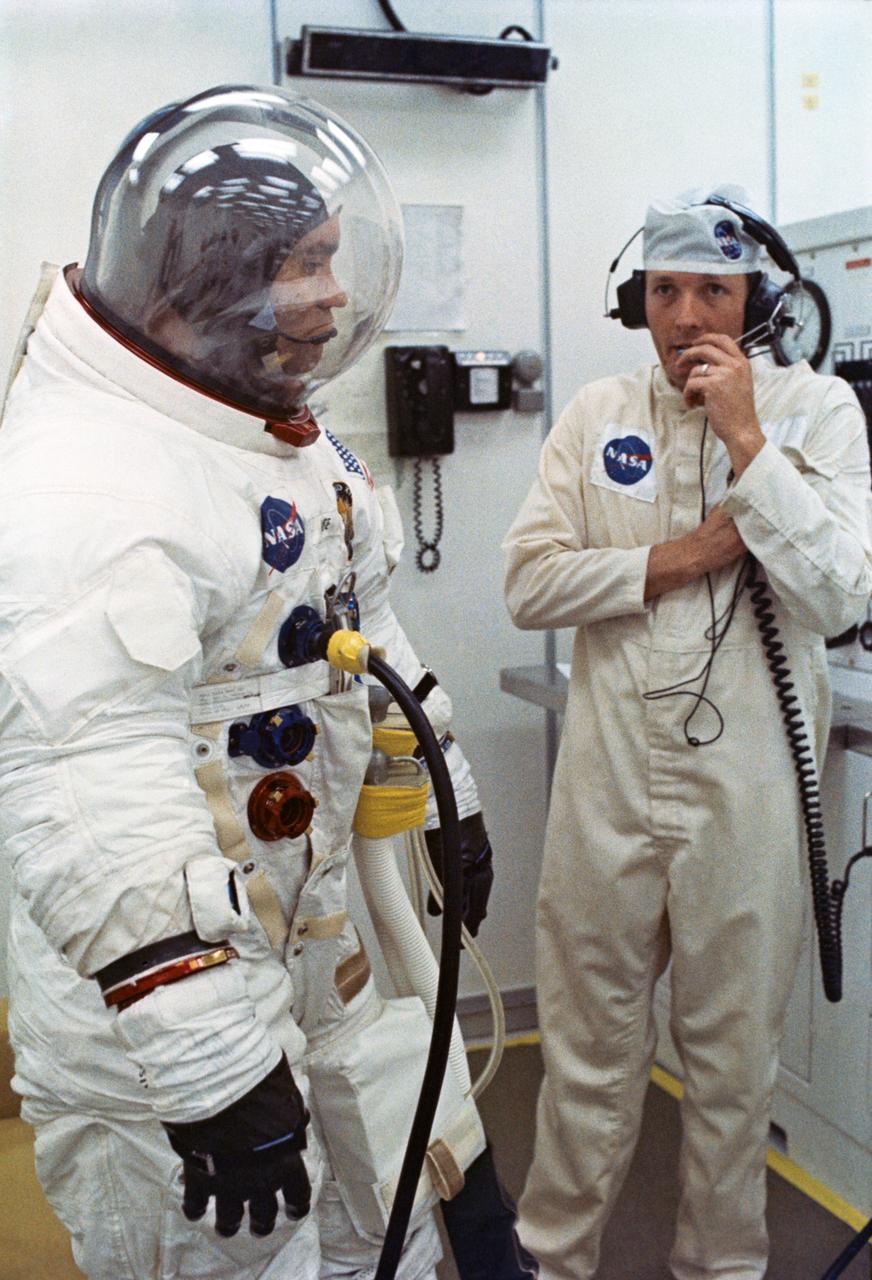
S70-34851 (11 April 1970) --- A space suit technician talks with astronaut Fred W. Haise Jr., lunar module pilot for NASA's Apollo 13 mission, during suiting up procedures at Kennedy Space Center (KSC). Other members of the crew are astronauts James A. Lovell Jr., commander, and John L. Swigert Jr., command module pilot. Swigert replaced astronaut Thomas K. Mattingly II as a member of the crew when it was learned he had been exposed to measles.
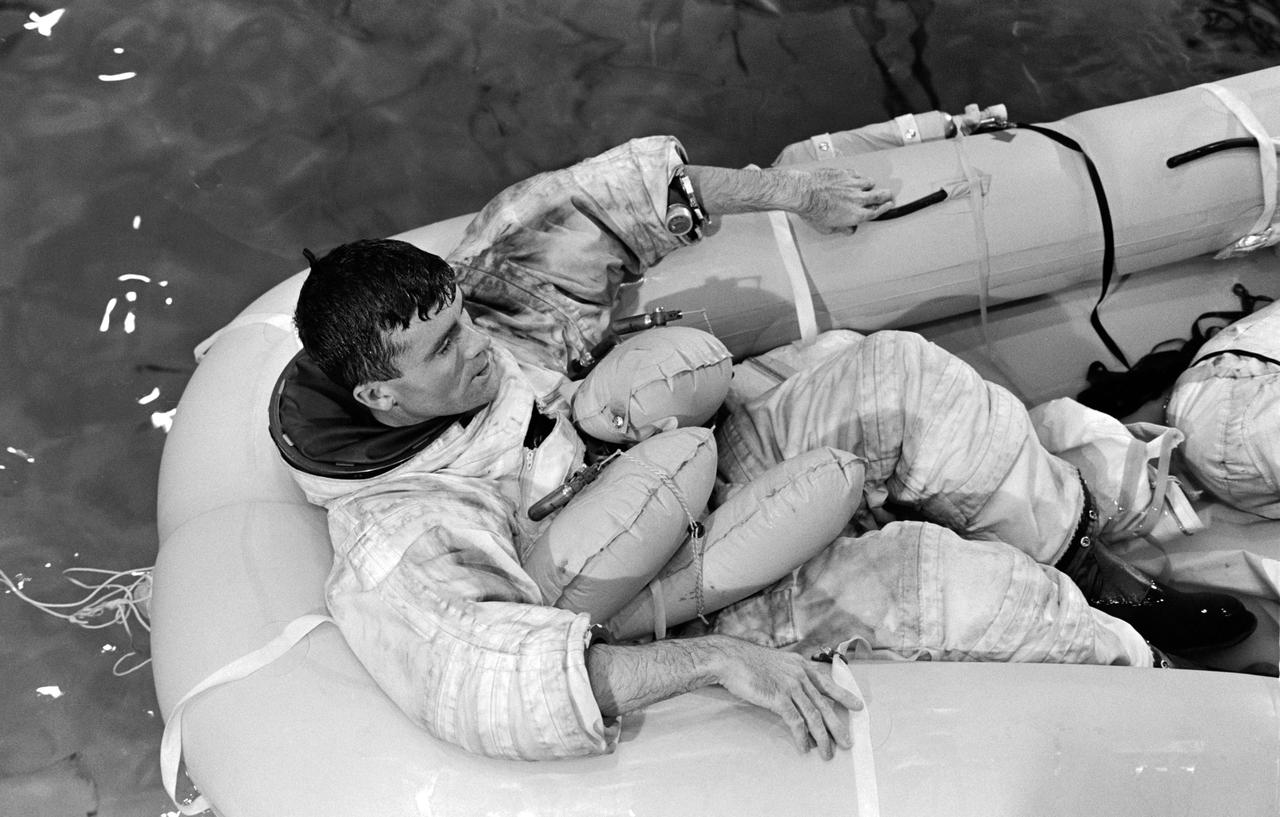
S70-31143 (17 Jan. 1970) --- Astronaut Fred W. Haise Jr., lunar module pilot of the Apollo 13 lunar landing mission, participates in water egress training in a water tank in Building 260 at the Manned Spacecraft Center.
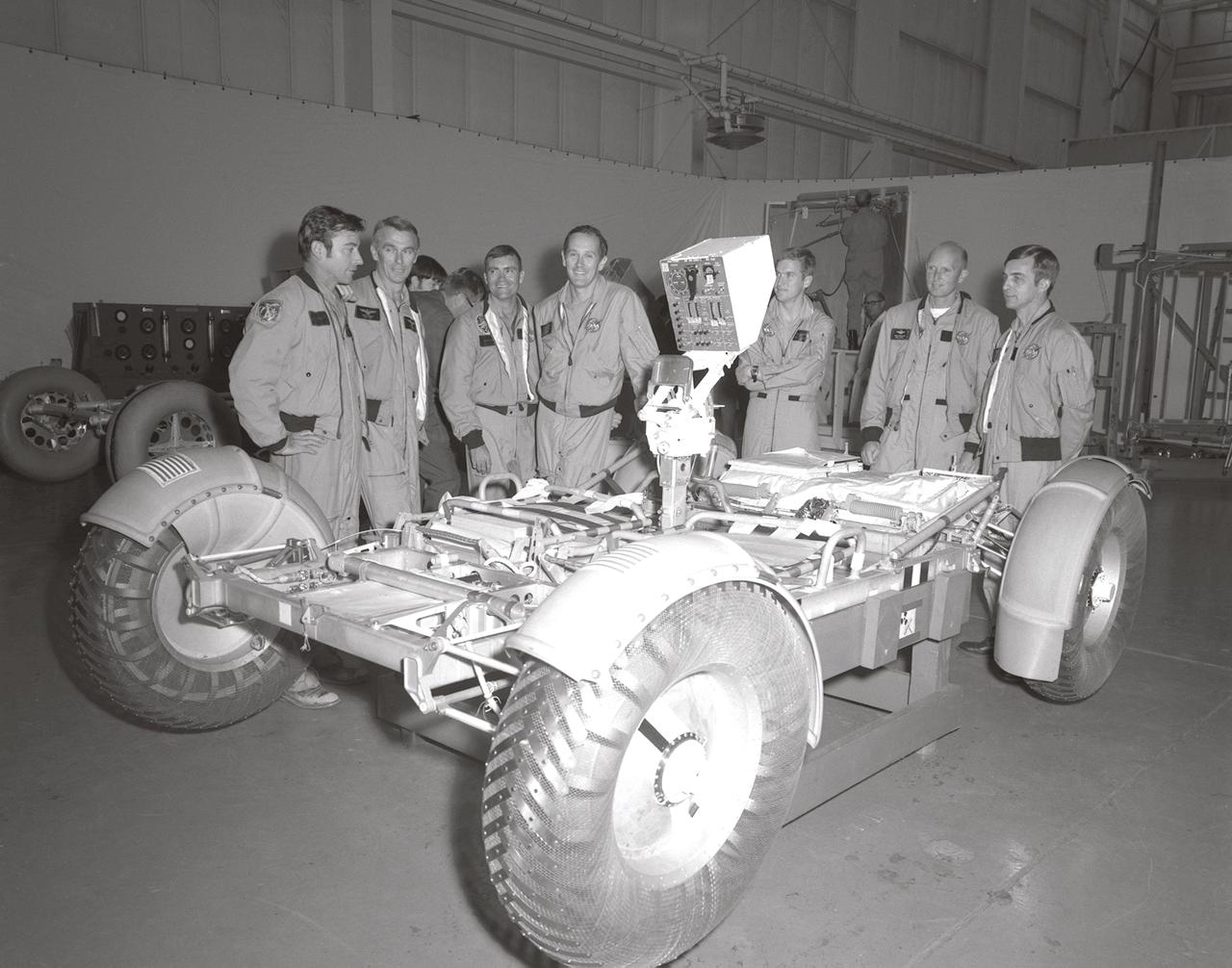
In this November 1971 photograph, (from left to right) Astronauts John Young, Eugene Cernan, Charles Duke, Fred Haise, Anthony England, Charles Fullerton, and Donald Peterson await deployment tests of the Lunar Roving Vehicle (LRV) qualification test unit in building 4649 at the Marshall Space Flight Center (MSFC). The LRV, developed under the direction of the MSFC, was designed to allow Apollo astronauts a greater range of mobility on the lunar surface during the last three lunar exploration missions; Apollo 15, Apollo 16, and Apollo 17.
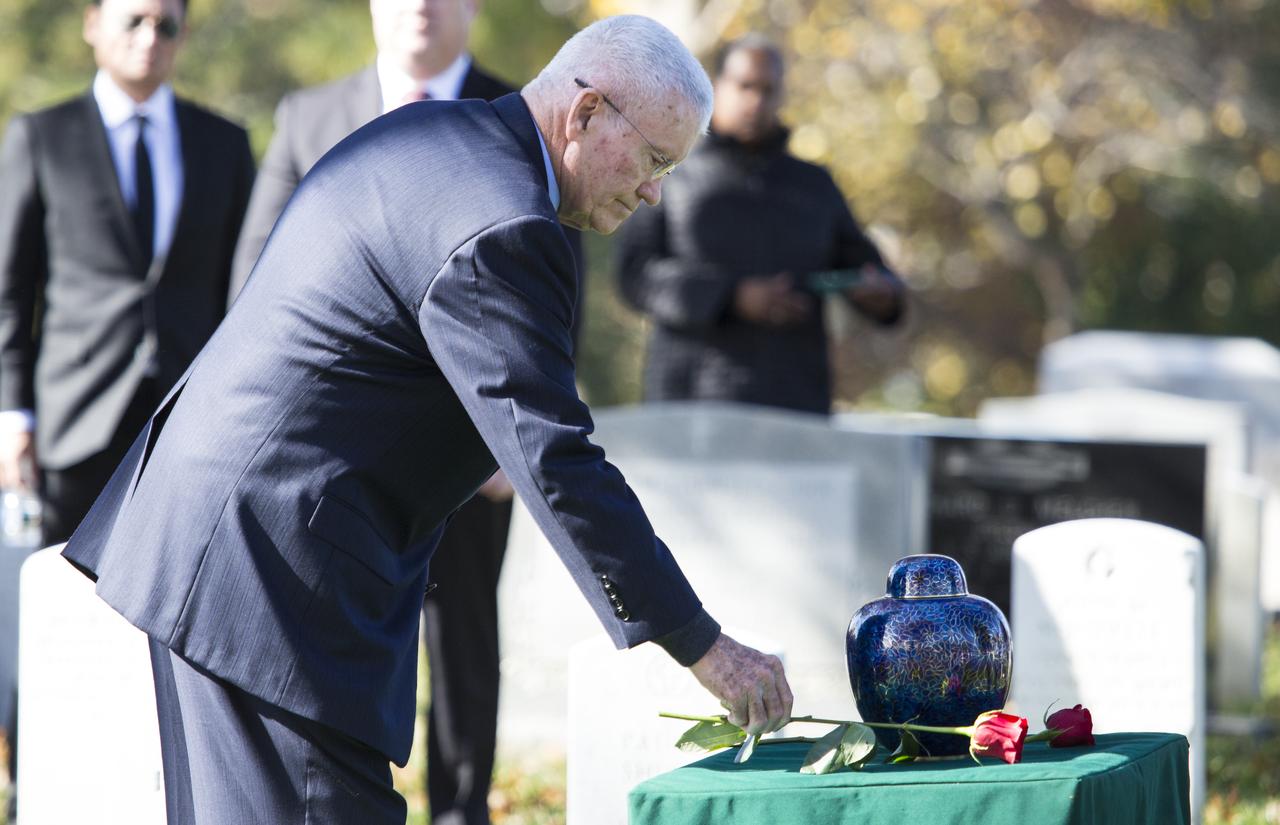
Former astronaut Fred Haise places a rose next to the urn containing the ashes of former astronaut Alan Bean, Thursday, Nov. 8, 2018 at Arlington National Cemetery in Virginia. Selected as an astronaut in 1963, Bean flew in space twice, becoming the fourth human to walk on the Moon on Nov. 19, 1969 and spent 59 days in space as commander of the second Skylab mission in 1973. Photo Credit: (NASA/Joel Kowsky)
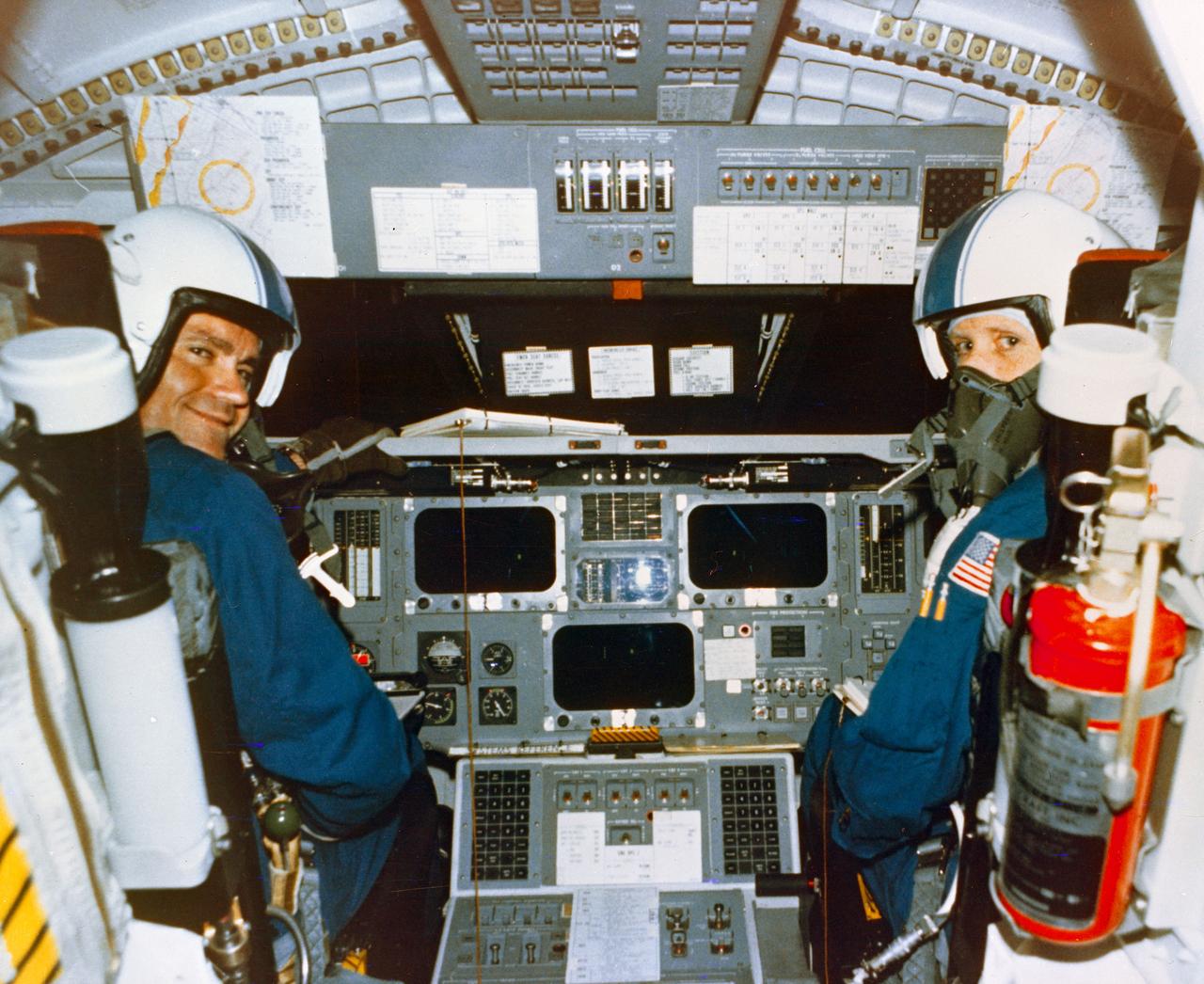
Astronauts Fred W. Haise, Jr., Commander, left, and C. Gordon Fullerton in the cockpit of the Space Shuttle Orbiter 101 "Enterprise" prior to the fifth and final FF in the Approach and Landing Test (ALT) series, from DFRC. Original photo number was 77-HC-446. DFRC, CA
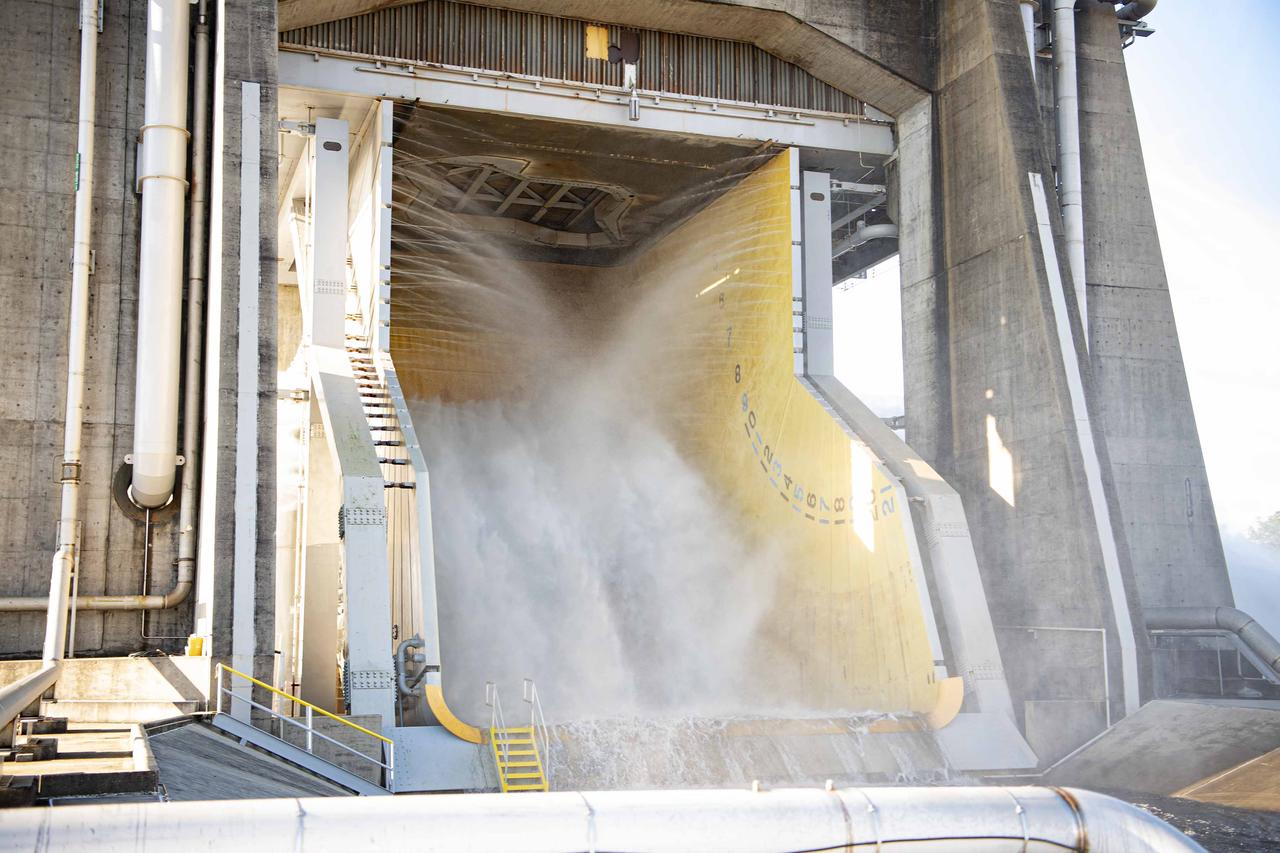
Crews conduct a planned flame deflector water flow system flush on the Fred Haise Test Stand at NASA’s Stennis Space Center on Oct. 22, following the recent completion of upgrades to the High Pressure Industrial Water Facility’s underground piping network. The flush, a periodic procedure to ensure system functionality and performance, involves flowing 150,000 gallons or more per minute from the High Pressure Industrial Water Facility to the stand. It also continues stand preparations for testing RS-25 flight engines for use on future Artemis missions to the Moon and beyond.
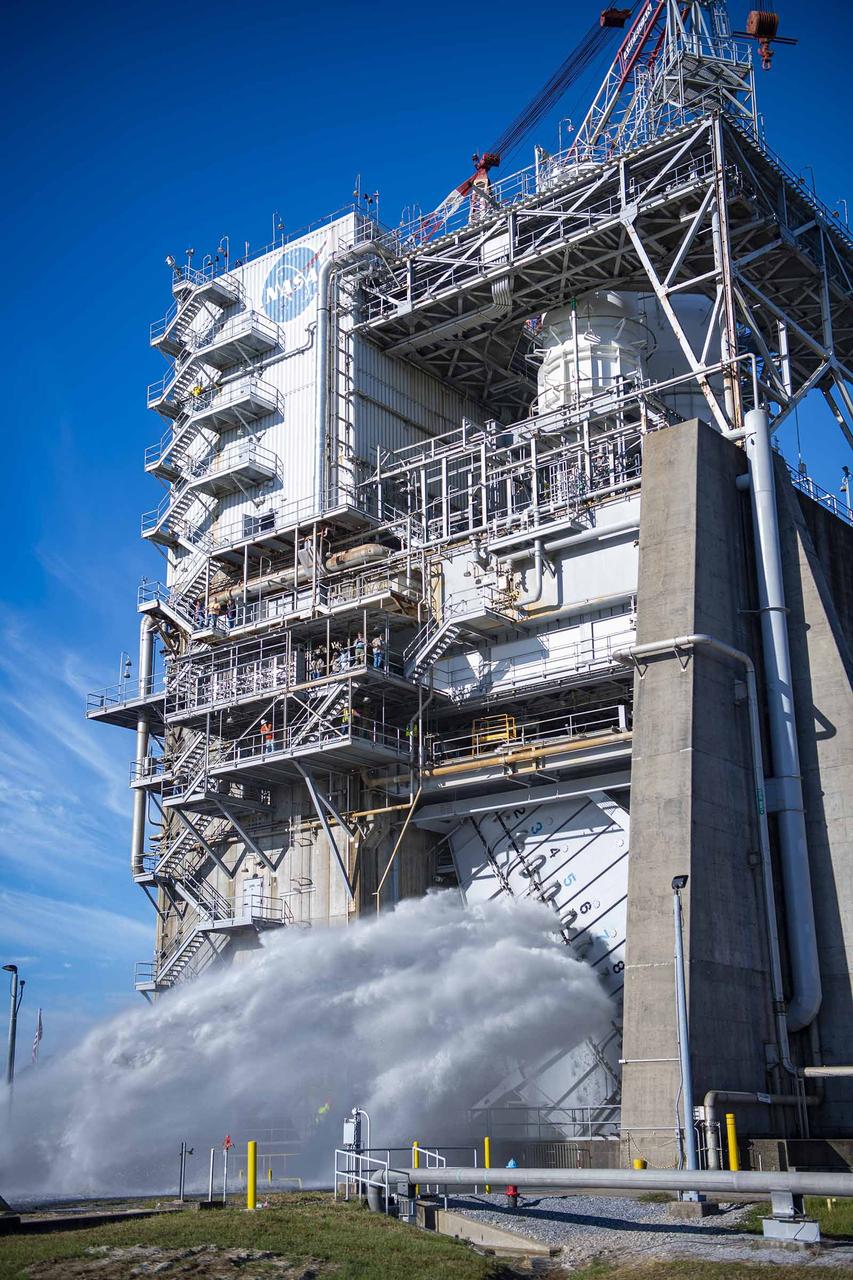
Crews conduct a planned flame deflector water flow system flush on the Fred Haise Test Stand at NASA’s Stennis Space Center on Oct. 22, following the recent completion of upgrades to the High Pressure Industrial Water Facility’s underground piping network. The flush, a periodic procedure to ensure system functionality and performance, involves flowing 150,000 gallons or more per minute from the High Pressure Industrial Water Facility to the stand. It also continues stand preparations for testing RS-25 flight engines for use on future Artemis missions to the Moon and beyond.
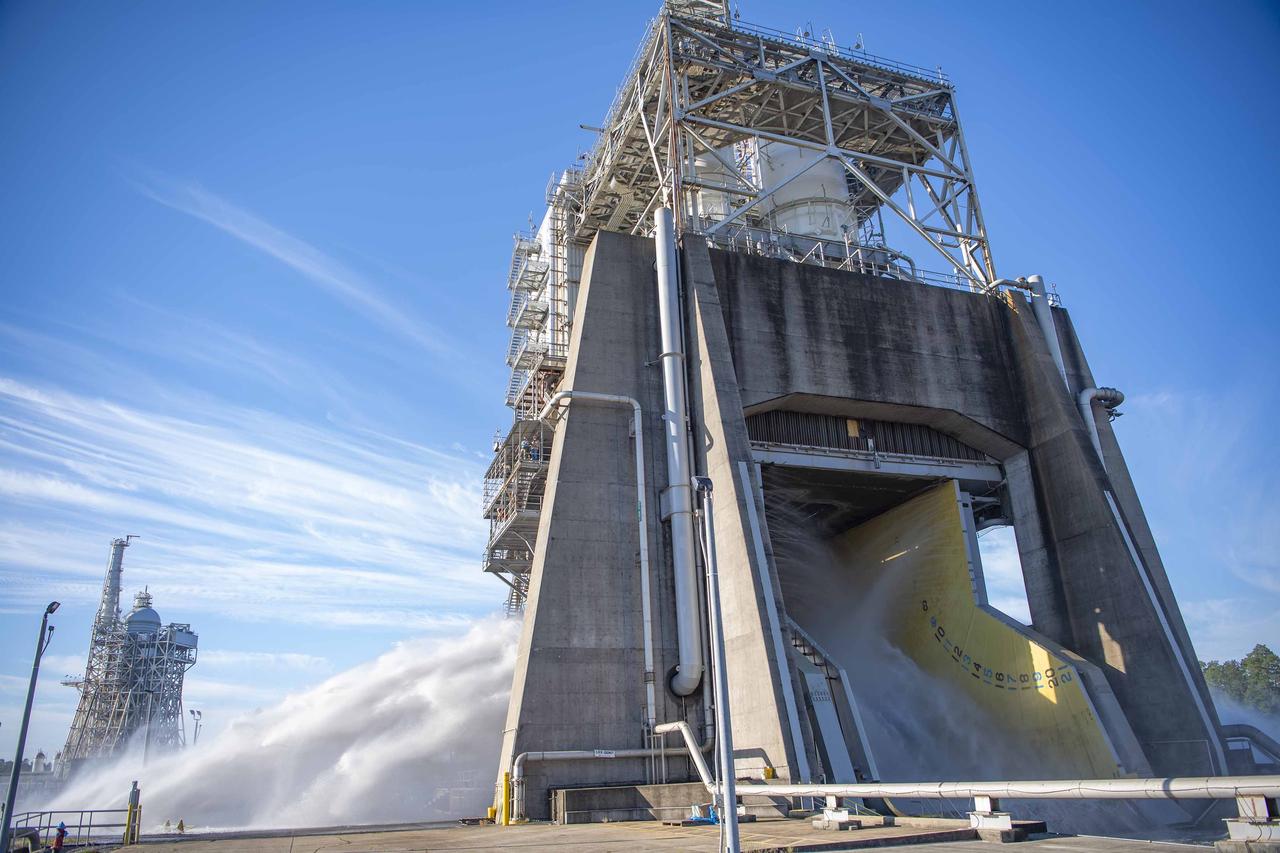
Crews conduct a planned flame deflector water flow system flush on the Fred Haise Test Stand at NASA’s Stennis Space Center on Oct. 22, following the recent completion of upgrades to the High Pressure Industrial Water Facility’s underground piping network. The flush, a periodic procedure to ensure system functionality and performance, involves flowing 150,000 gallons or more per minute from the High Pressure Industrial Water Facility to the stand. It also continues stand preparations for testing RS-25 flight engines for use on future Artemis missions to the Moon and beyond.

Crews conduct a planned flame deflector water flow system flush on the Fred Haise Test Stand at NASA’s Stennis Space Center on Oct. 22, following the recent completion of upgrades to the High Pressure Industrial Water Facility’s underground piping network. The flush, a periodic procedure to ensure system functionality and performance, involves flowing 150,000 gallons or more per minute from the High Pressure Industrial Water Facility to the stand. It also continues stand preparations for testing RS-25 flight engines for use on future Artemis missions to the Moon and beyond.
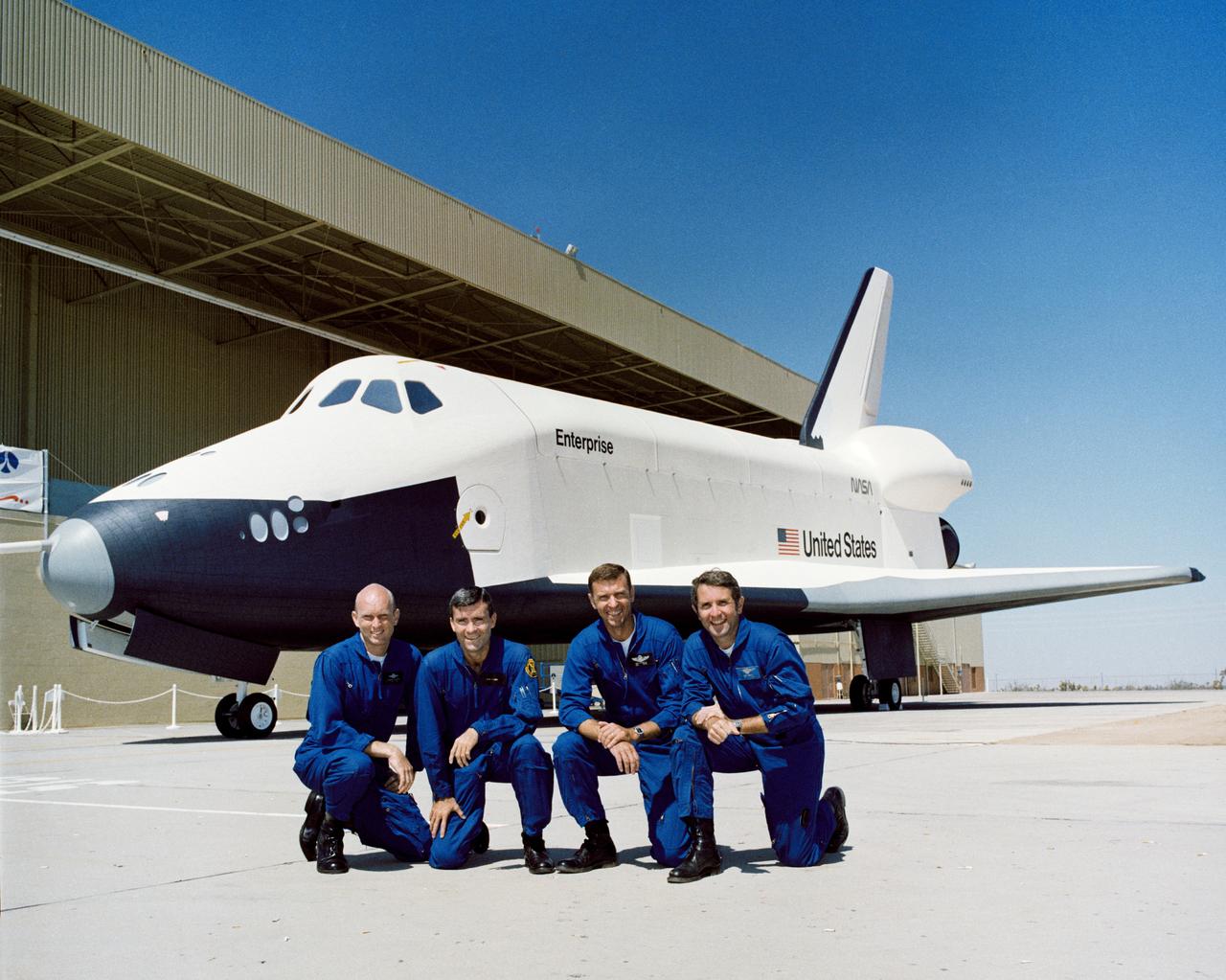
S76-29562 --- The two crews for the Space Shuttle Approach and Landing Tests (ALT) are photographed at the Rockwell International Space Division's Orbiter assembly facility at Palmdale, California on the day of the rollout of the Shuttle Orbiter 101 "Enterprise" spacecraft. They are, left to right, Astronauts C. Gordon Fullerton, pilot of the first crew; Fred W. Haise Jr., commander of the first crew; Joe H. Engle, commander of the second crew; and Richard H. Truly, pilot of the second crew. The DC-9 size airplane-like Orbiter 101 is in the background.
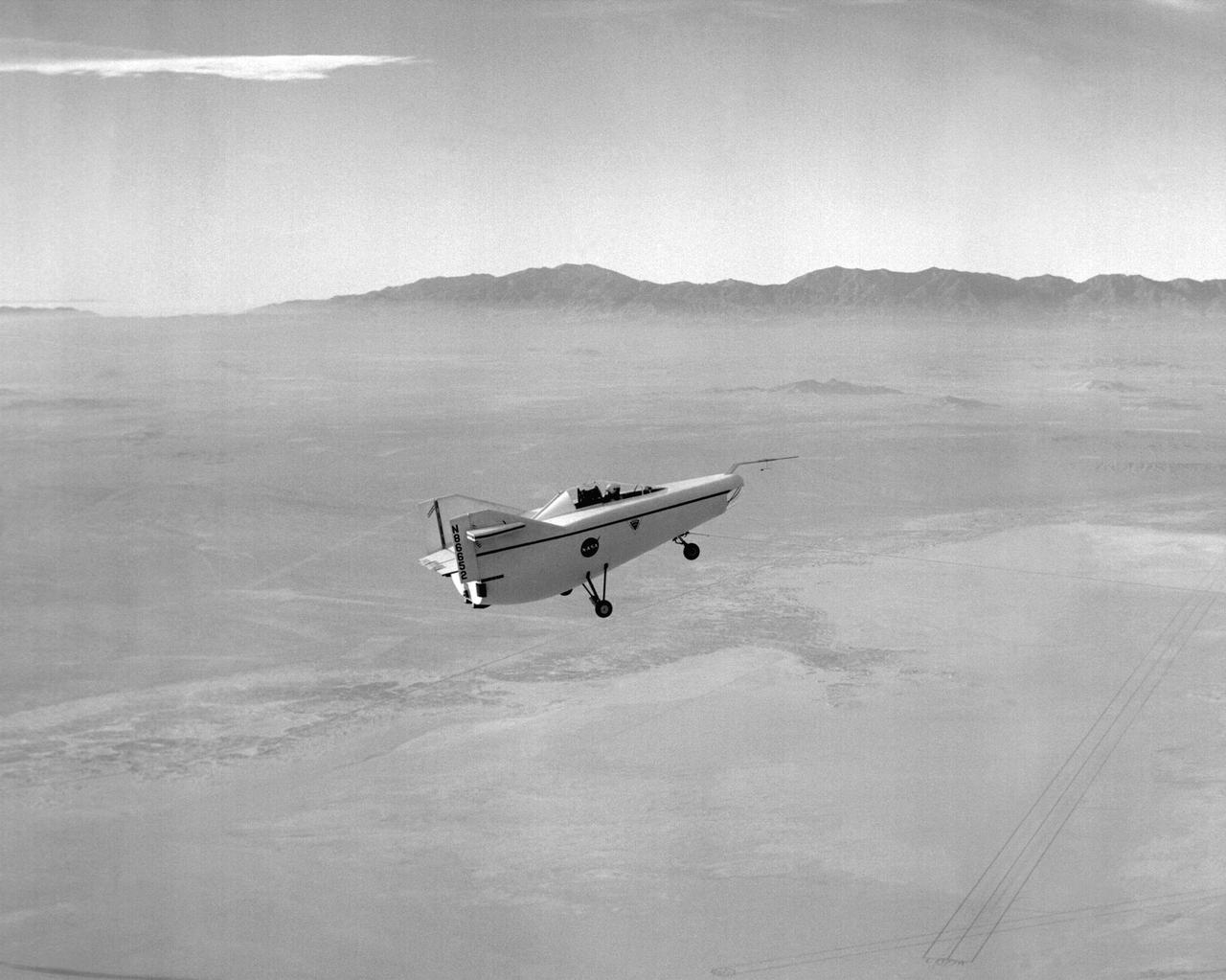
Following the first M2-F1 airtow flight on 16 August 1963, the Flight Research Center used the vehicle for both research flights and to check out new lifting-body pilots. These included Bruce Peterson, Don Mallick, Fred Haise, and Bill Dana from NASA. Air Force pilots who flew the M2-F1 included Chuck Yeager, Jerry Gentry, Joe Engle, Jim Wood, and Don Sorlie, although Wood, Haise, and Engle only flew on car tows. In the three years between the first and last flights of the M2-F1, it made about 400 car tows and 77 air tows.
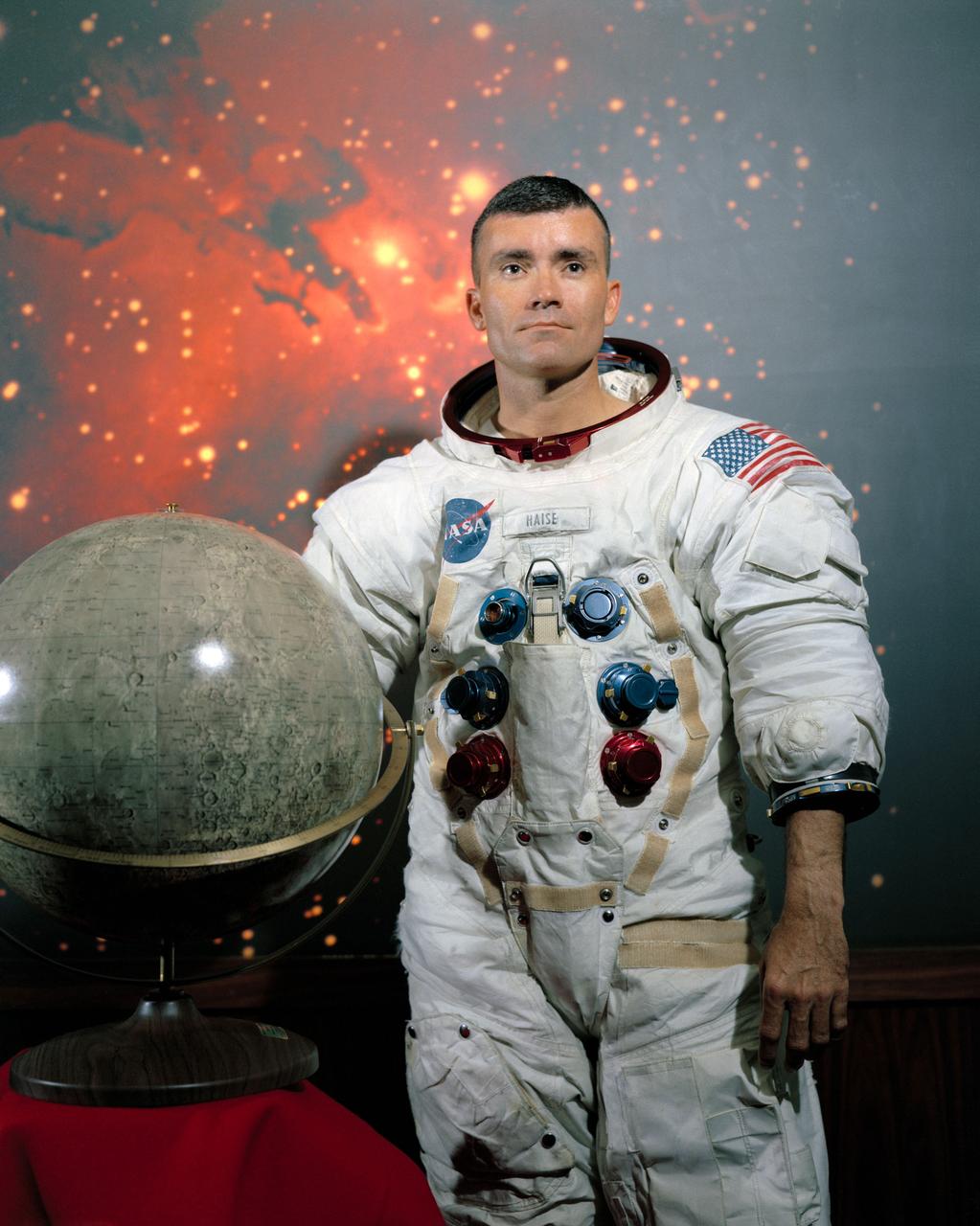
S69-62235 (1969) --- Astronaut Fred W. Haise Jr.
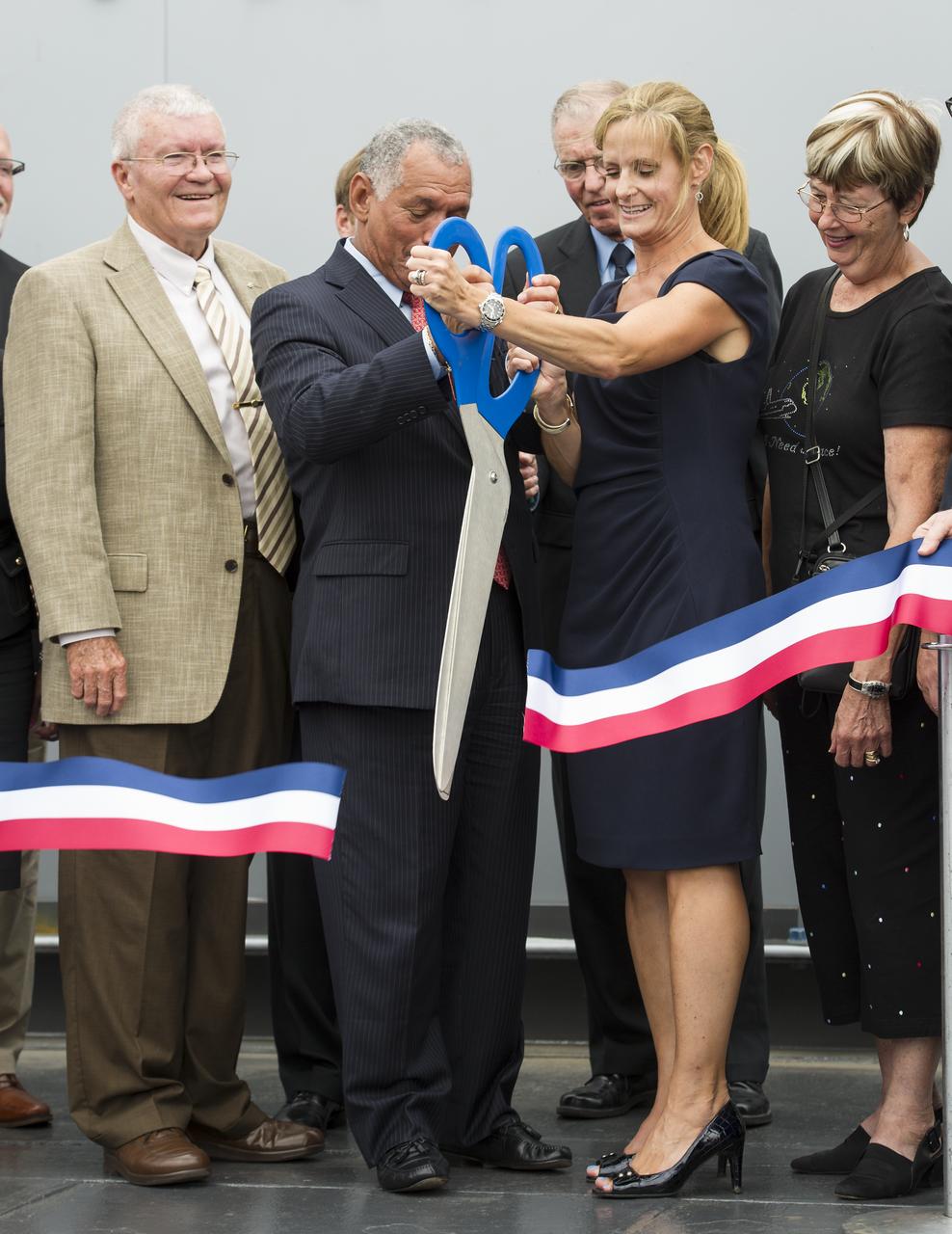
NASA Administrator Charlie Bolden and Intrepid Sea, Air & Space Museum President Susan Marenoff-Zausner cut a ribbon at the museum marking the opening of the new Space Shuttle Pavilion which exhibits the space shuttle Enterprise while NASA Astronaut and Enterprise Commander Fred Haise, left, NASA Astronaut and Enterprise Commander Joe Engle, background, and Marie Fullerton, wife of NASA Astronaut and Enterprise Pilot Gordon Fullerton, right, look on, Thursday, July 19, 2012 in New York City. Photo Credit: (NASA/Bill Ingalls)
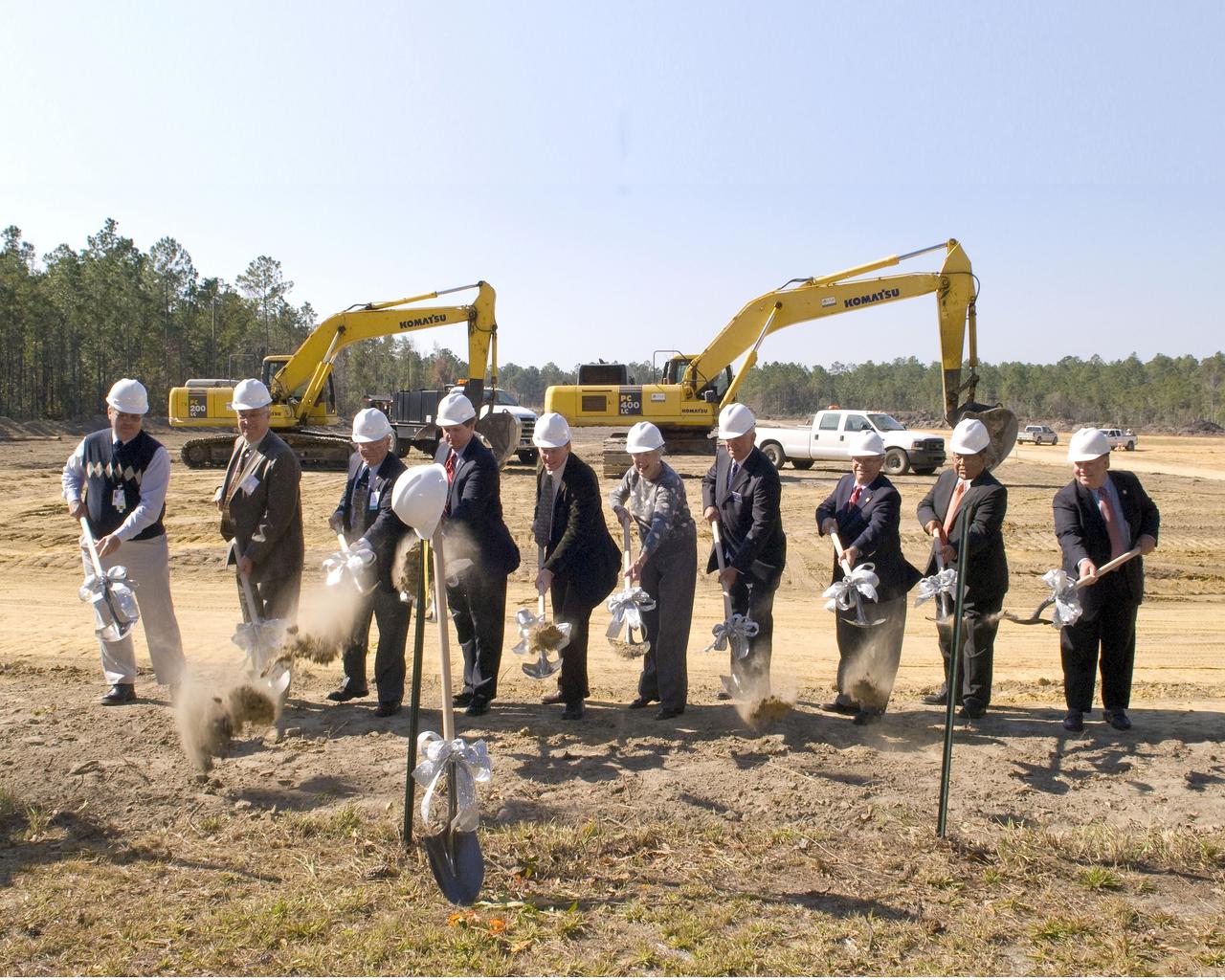
Community leaders from Mississippi and Louisiana break ground for the new INFINITY at NASA Stennis Space Center facility during a Nov. 20 ceremony. Groundbreaking participants included (l to r): Gottfried Construction representative John Smith, Mississippi Highway Commissioner Wayne Brown, INFINITY board member and Apollo 13 astronaut Fred Haise, Stennis Director Gene Goldman, Studio South representative David Hardy, Leo Seal Jr. family representative Virginia Wagner, Hancock Bank President George Schloegel, Mississippi Rep. J.P. Compretta, Mississippi Band of Choctaw Indians representative Charlie Benn and Louisiana Sen. A.G. Crowe.
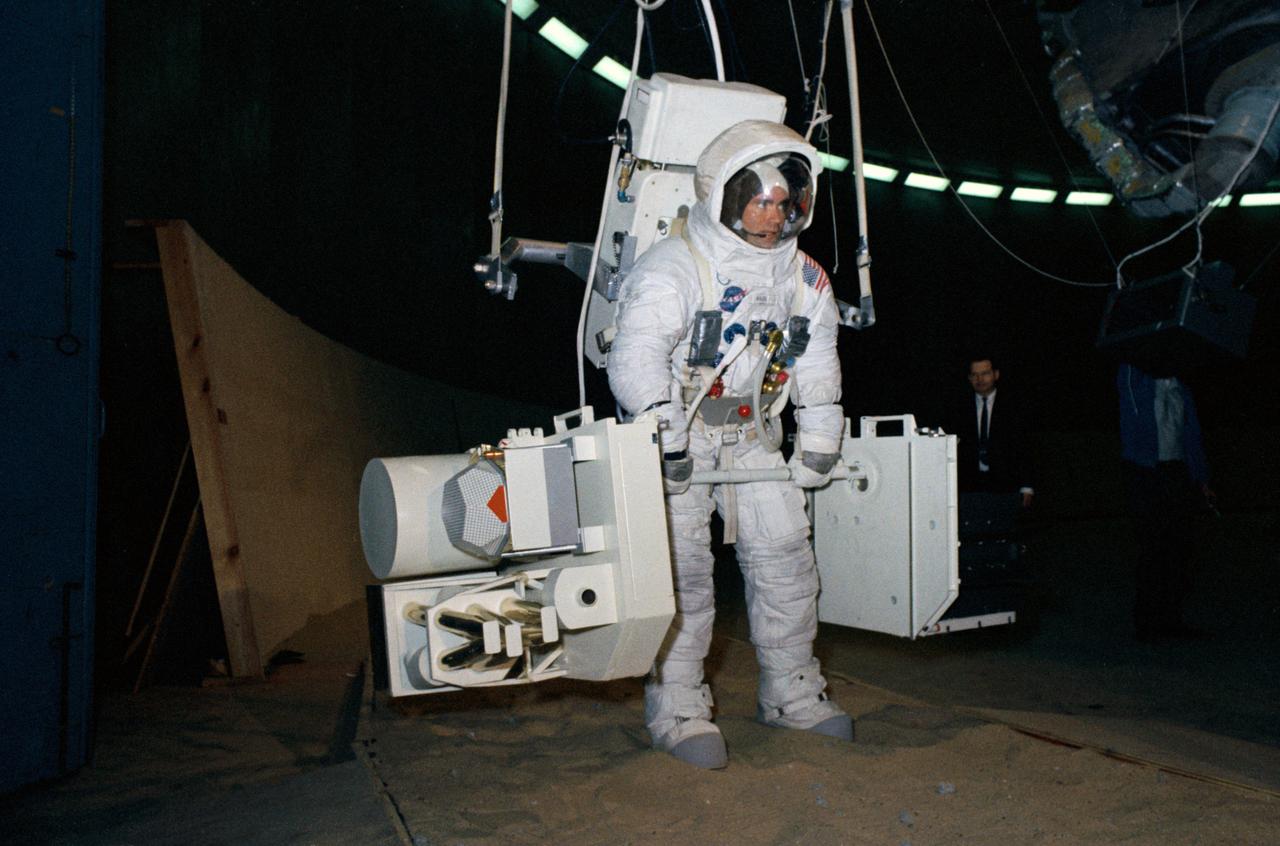
S70-24009 (19 Jan. 1970) --- Astronaut Fred W. Haise Jr., Apollo 13 lunar module pilot, trains for his scheduled April lunar space walk at the Manned Spacecraft Center (MSC). Haise carries a training version of the Apollo Lunar Surface Experiments Package (ALSEP), while connected to a "Six Degrees of Freedom" simulator. Out of frame is astronaut James A. Lovell Jr., commander, who will share the lunar extravehicular activity (EVA) with Haise. EDITOR'S NOTE: In April 1970 the Apollo 13 Service Module (SM) experienced an explosion en route to the moon. The three-man crew was forced to circumnavigate the moon and return to Earth.
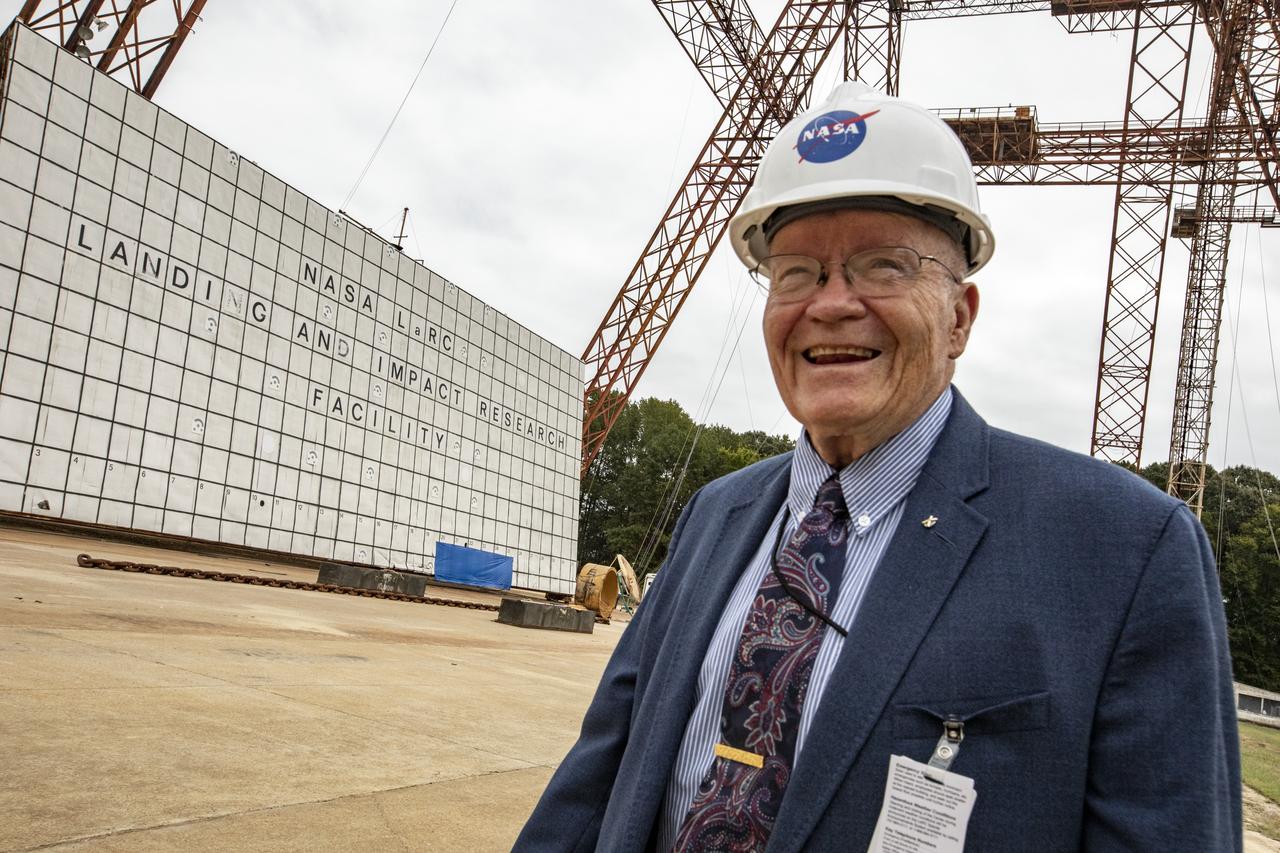
Apollo Astronaut Fred Haise visiting NASA Langley historic gantry where Fred once trained to fly the lunar lander.
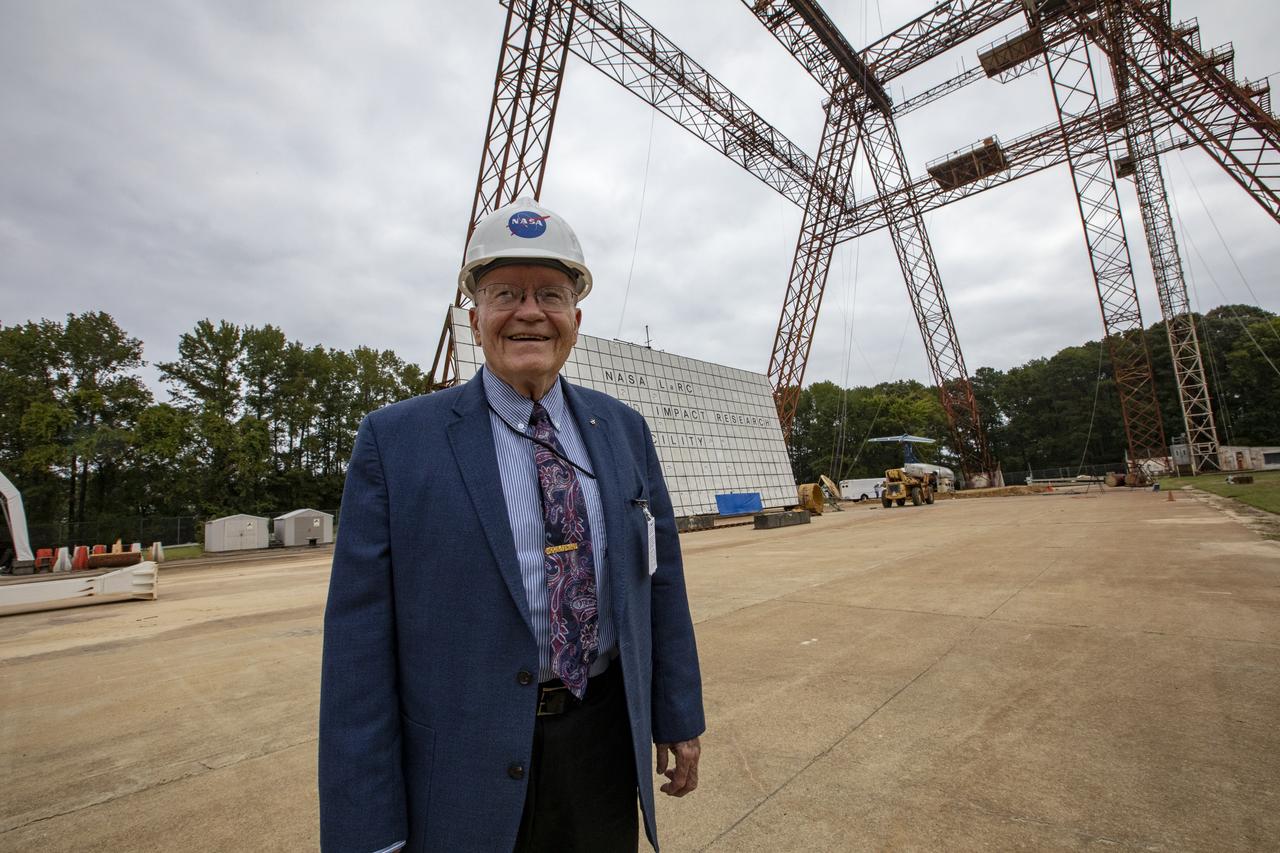
Astronaut Fred Haise visiting the gantry at Langley Research Center; a place where he once trained for the Apollo Mission.
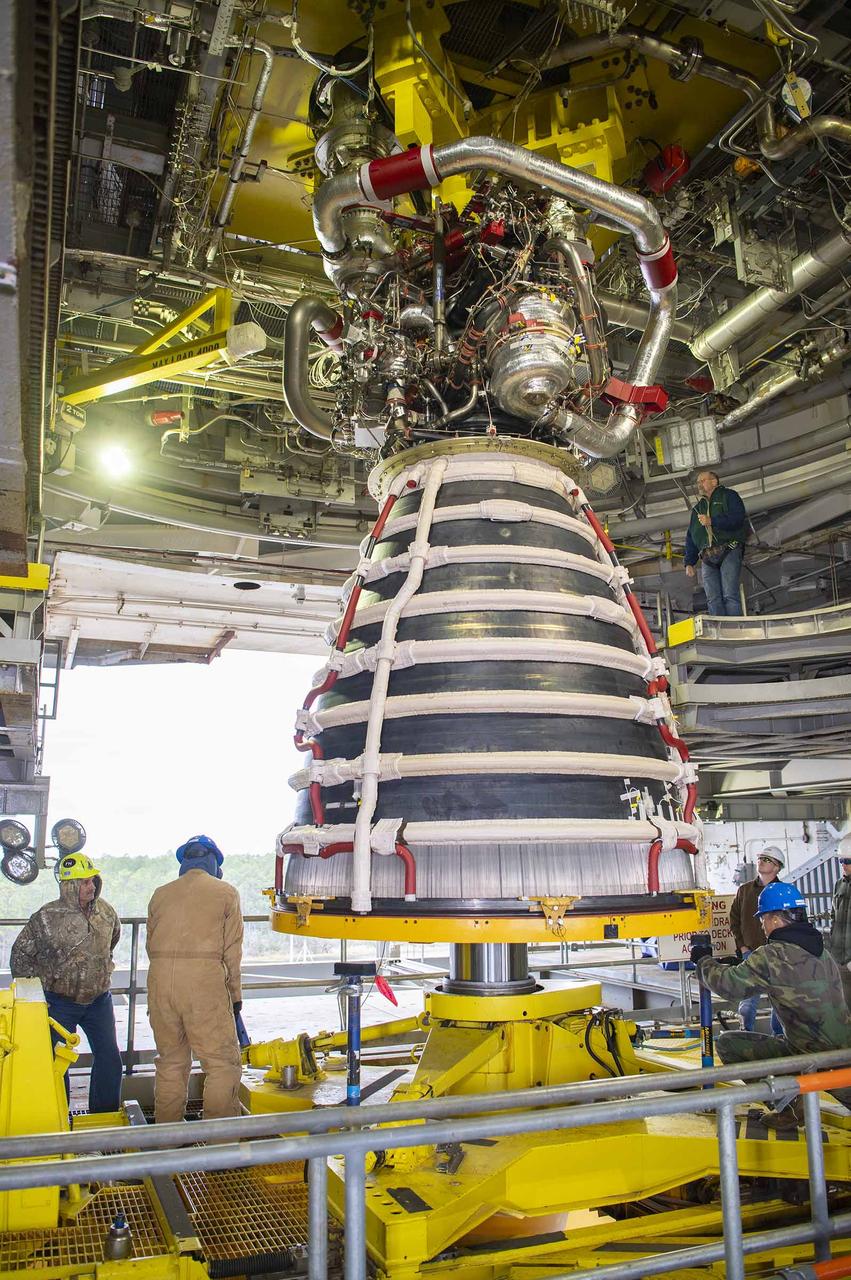
Teams at NASA’s Stennis Space Center deliver, lift, and install the first new production RS-25 engine on the Fred Haise Test Stand on Feb. 18.
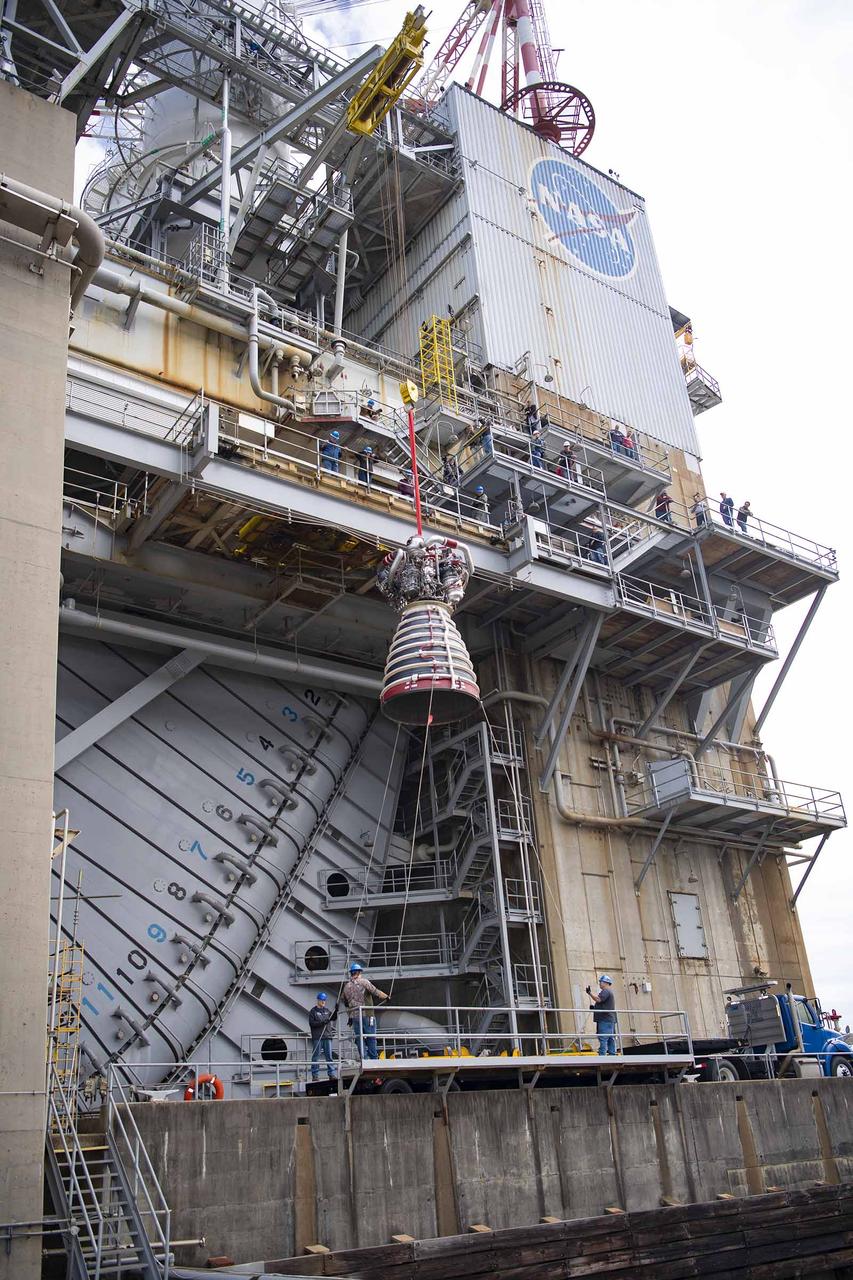
Teams at NASA’s Stennis Space Center deliver, lift, and install the first new production RS-25 engine on the Fred Haise Test Stand on Feb. 18.
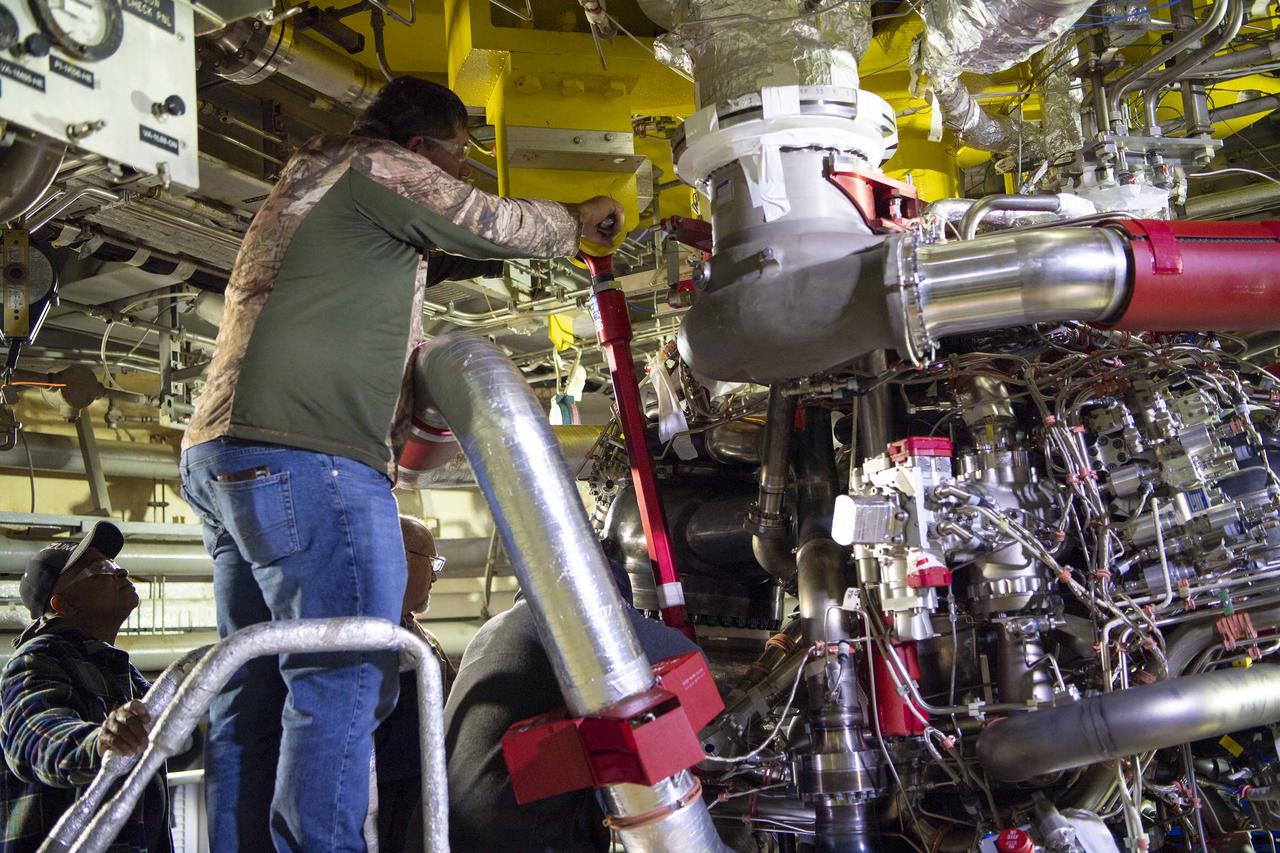
Teams at NASA’s Stennis Space Center deliver, lift, and install the first new production RS-25 engine on the Fred Haise Test Stand on Feb. 18.
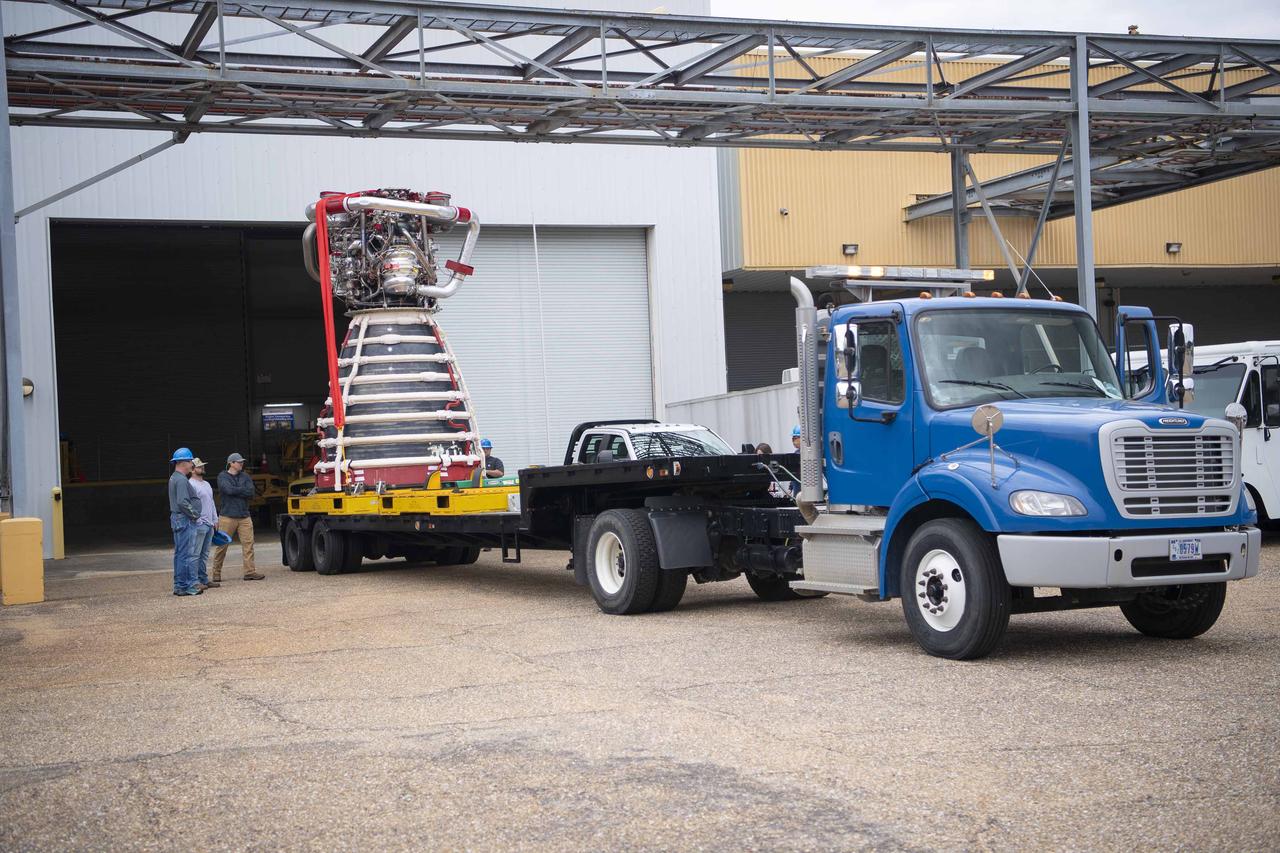
Teams at NASA’s Stennis Space Center deliver, lift, and install the first new production RS-25 engine on the Fred Haise Test Stand on Feb. 18.

Teams at NASA’s Stennis Space Center deliver, lift, and install the first new production RS-25 engine on the Fred Haise Test Stand on Feb. 18.
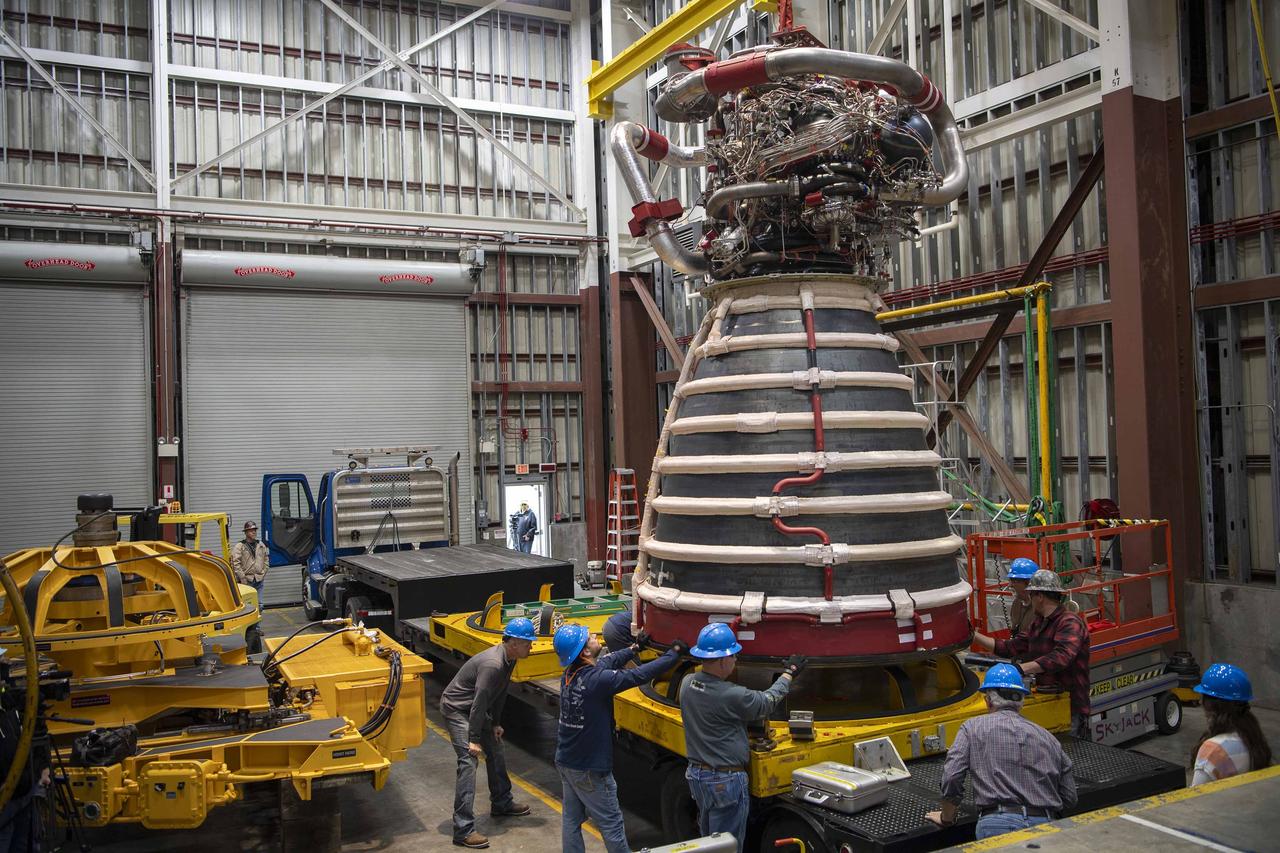
Teams at NASA’s Stennis Space Center deliver, lift, and install the first new production RS-25 engine on the Fred Haise Test Stand on Feb. 18.

Teams at NASA’s Stennis Space Center deliver, lift, and install the first new production RS-25 engine on the Fred Haise Test Stand on Feb. 18.
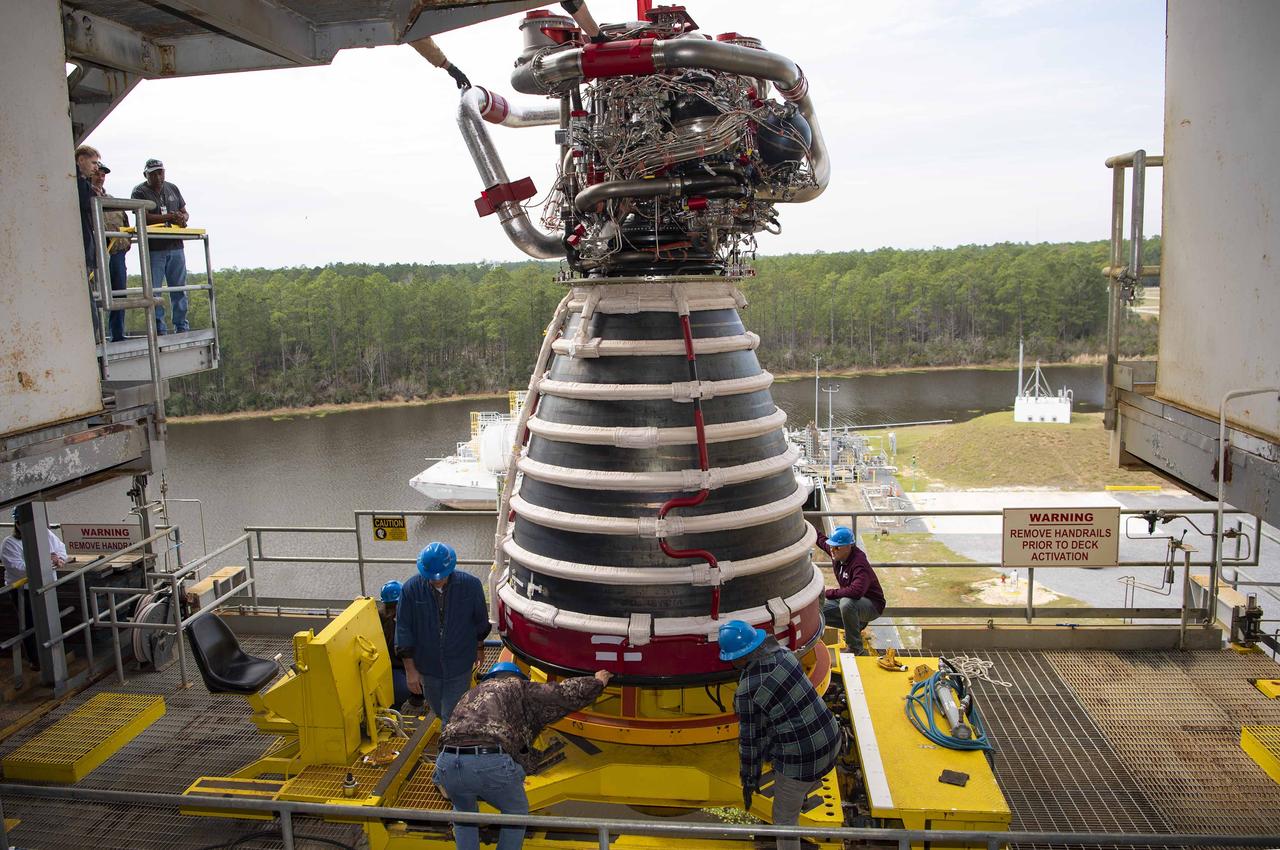
Teams at NASA’s Stennis Space Center deliver, lift, and install the first new production RS-25 engine on the Fred Haise Test Stand on Feb. 18.
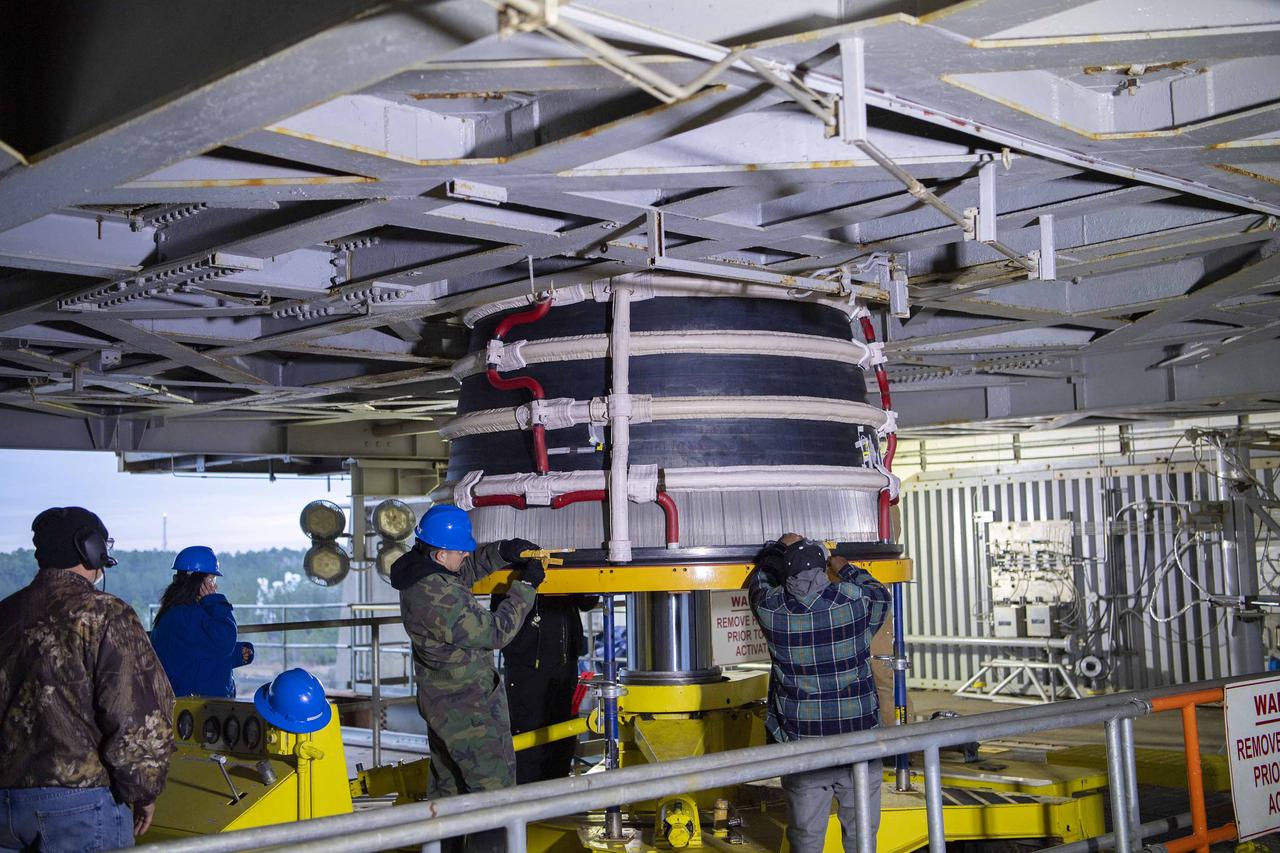
Teams at NASA’s Stennis Space Center deliver, lift, and install the first new production RS-25 engine on the Fred Haise Test Stand on Feb. 18.
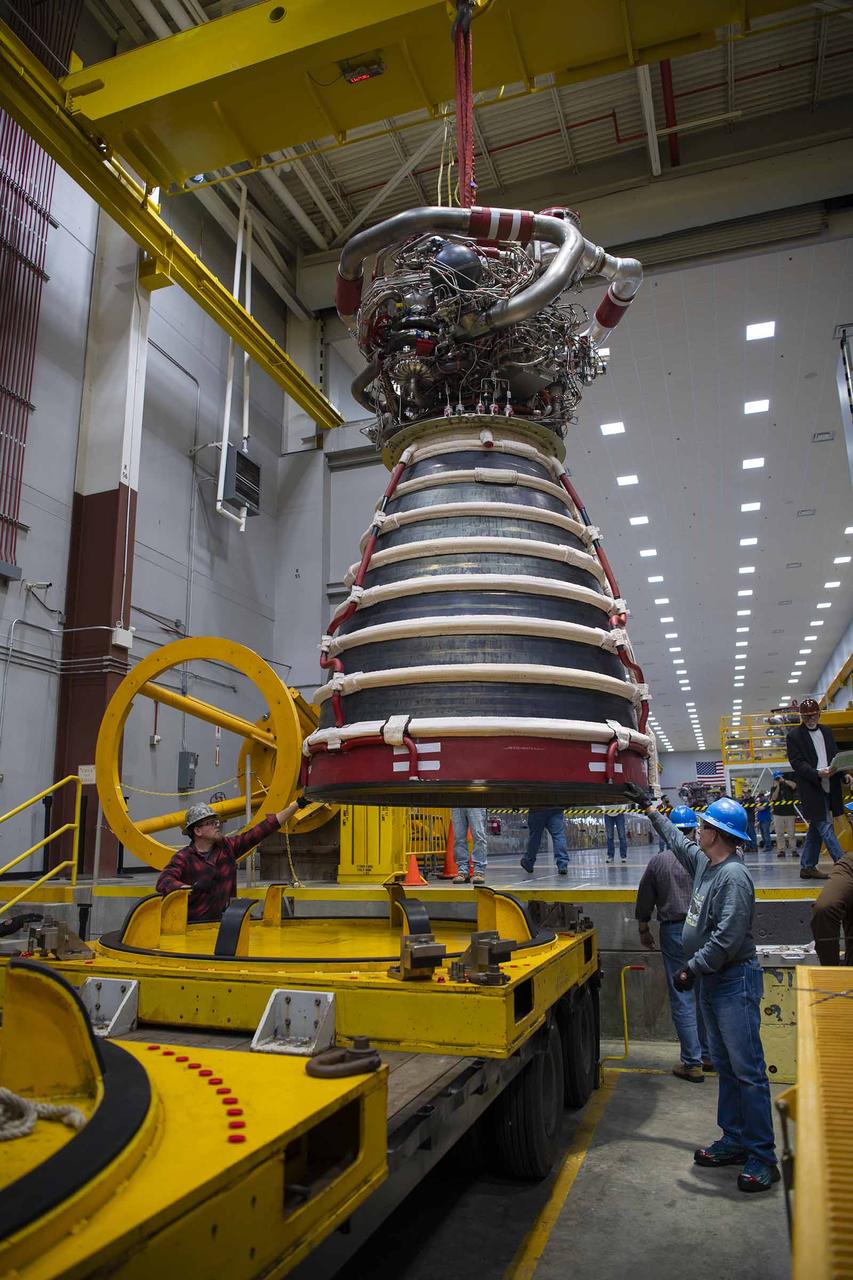
Teams at NASA’s Stennis Space Center deliver, lift, and install the first new production RS-25 engine on the Fred Haise Test Stand on Feb. 18.
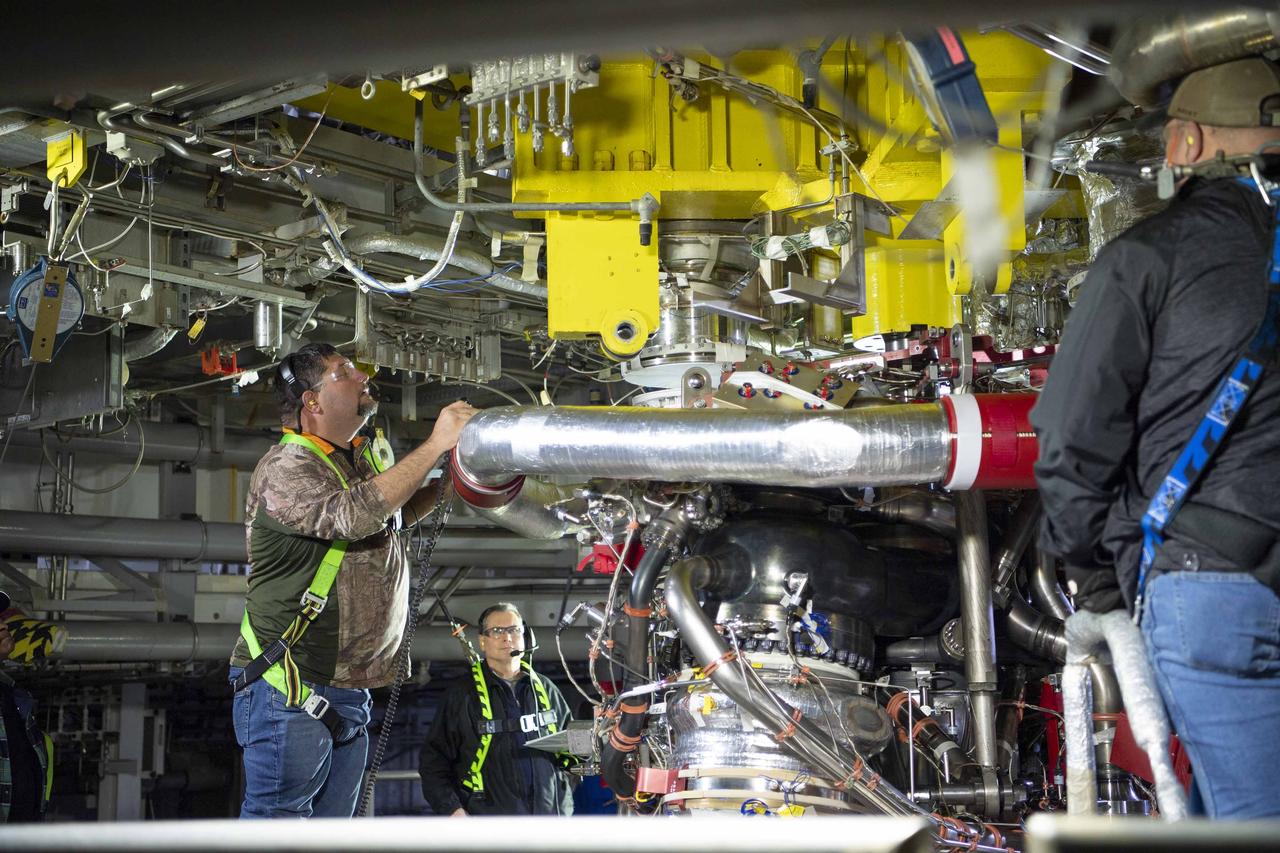
Teams at NASA’s Stennis Space Center deliver, lift, and install the first new production RS-25 engine on the Fred Haise Test Stand on Feb. 18.

Teams at NASA’s Stennis Space Center deliver, lift, and install the first new production RS-25 engine on the Fred Haise Test Stand on Feb. 18.
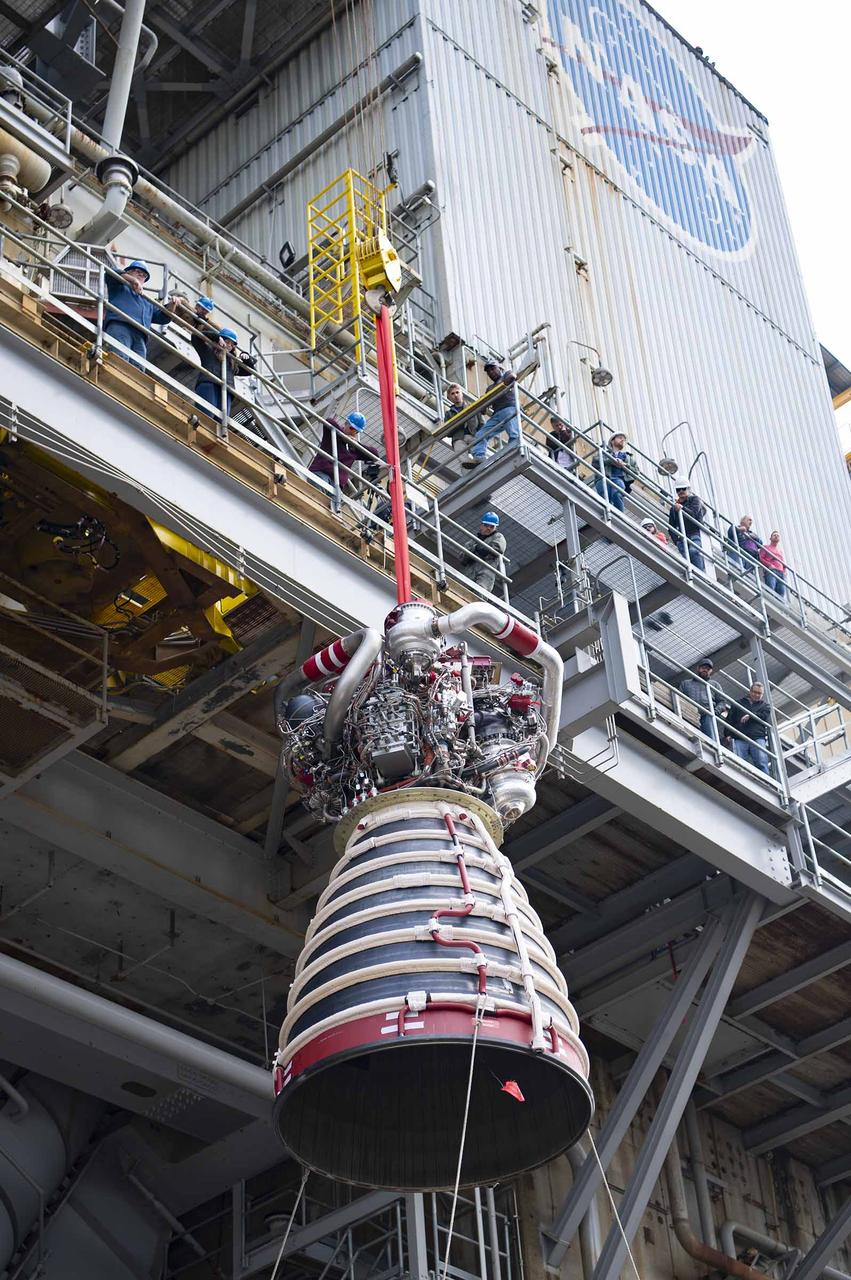
Teams at NASA’s Stennis Space Center deliver, lift, and install the first new production RS-25 engine on the Fred Haise Test Stand on Feb. 18.
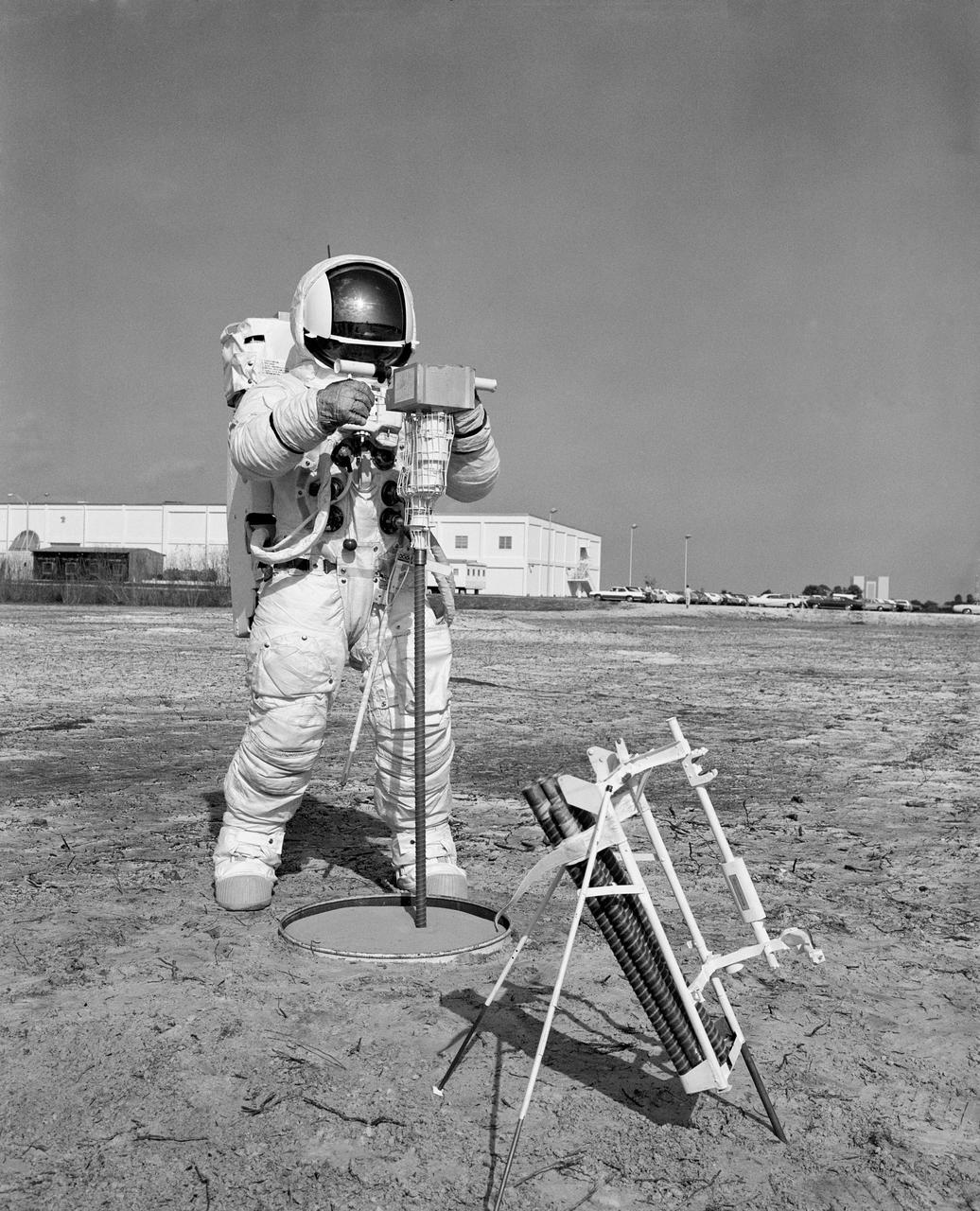
S70-29673 (28 Jan. 1970) --- Astronaut Fred W. Haise Jr., lunar module pilot of the Apollo 13 lunar landing mission, participates in a walk-through of the extravehicular activity timeline at the Kennedy Space Center. Here, Haise uses an Apollo Lunar Surface Drill to dig a three-meter heat flow probe hole. The heat flow experiment on Apollo 13 will have an electronic instrument which will measure the outward flux of heat from the moon?s interior.
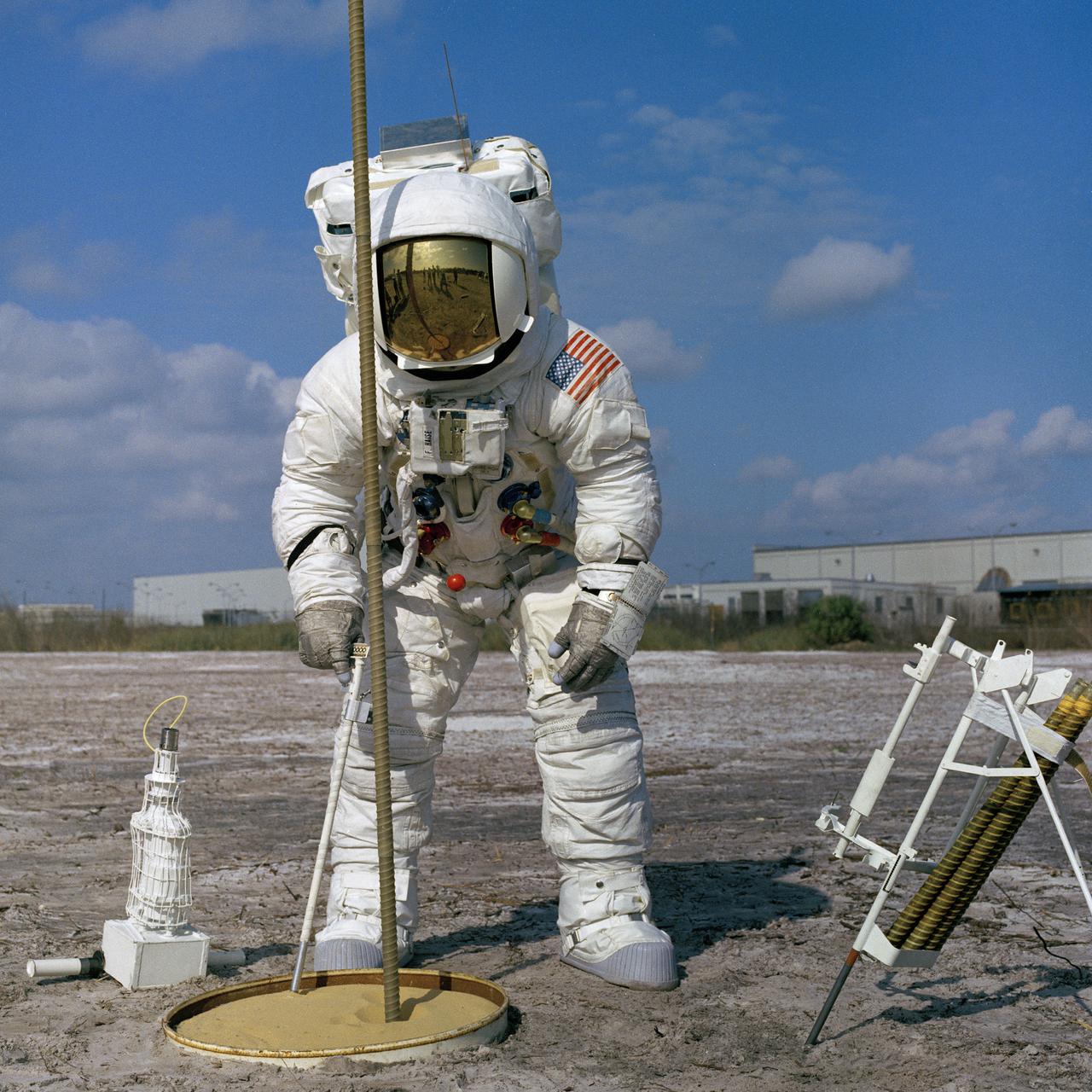
CAPE CANAVERAL, Fla. - Fred W. Haise Jr., Apollo 13 lunar module pilot, inspects the sampling tube to be used to take subsurface temperatures on the moon during the April lunar landing mission. Apollo 13 is scheduled for launch from Kennedy Space Center on April 11 and has a prime crew composed of Haise, James A. Lovell Jr., commander, and Thomas K. Mattingly II, command module pilot. Photo credit: NASA
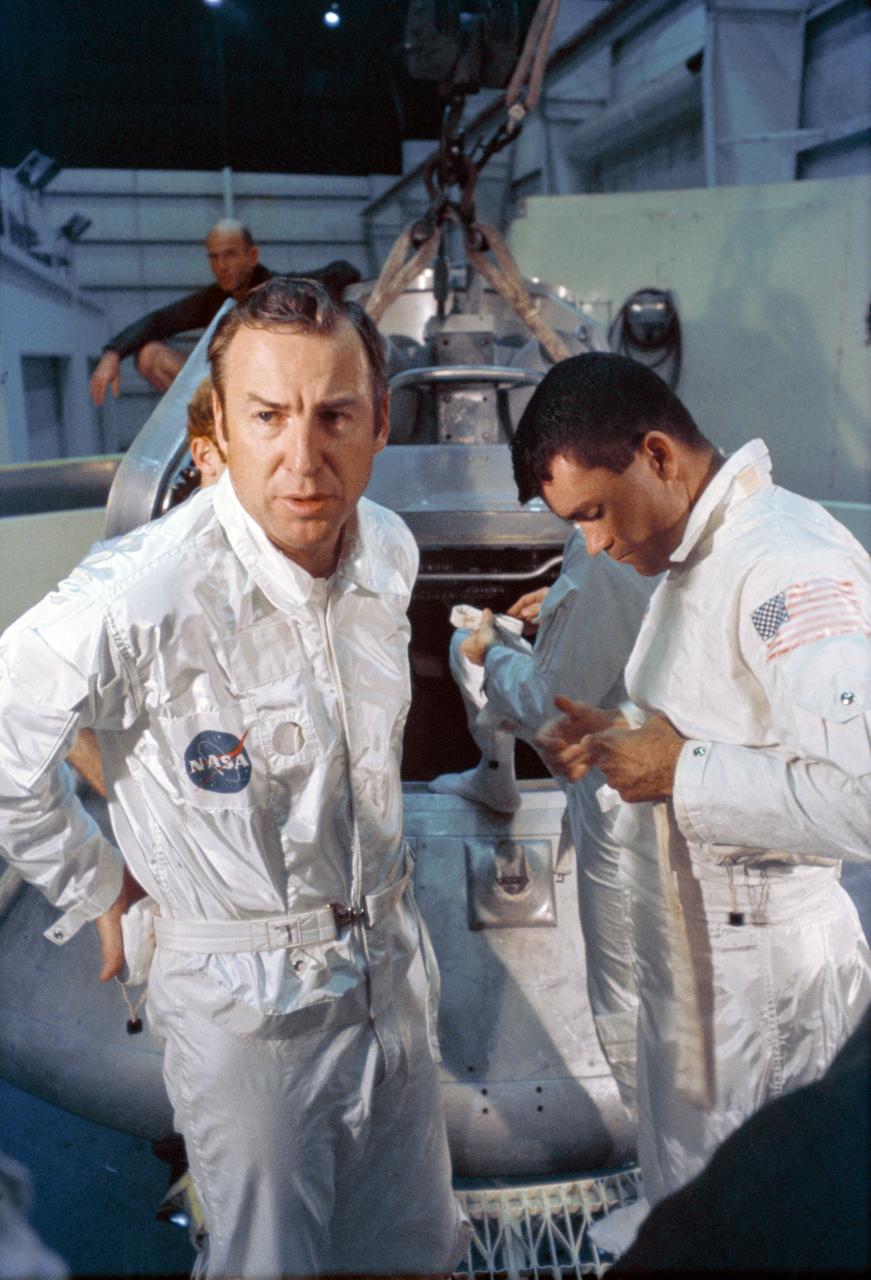
S70-24010 (17 Jan. 1970) --- The three prime crew members of the Apollo 13 lunar landing mission stand by to participate in water egress training in a water tank in Building 260 at the Manned Spacecraft Center (MSC). They are astronauts James A. Lovell Jr., (left) commander; Fred W. Haise Jr., (right) lunar module pilot; and Thomas K. Mattingly II (in background, obscured by Haise), command module pilot.
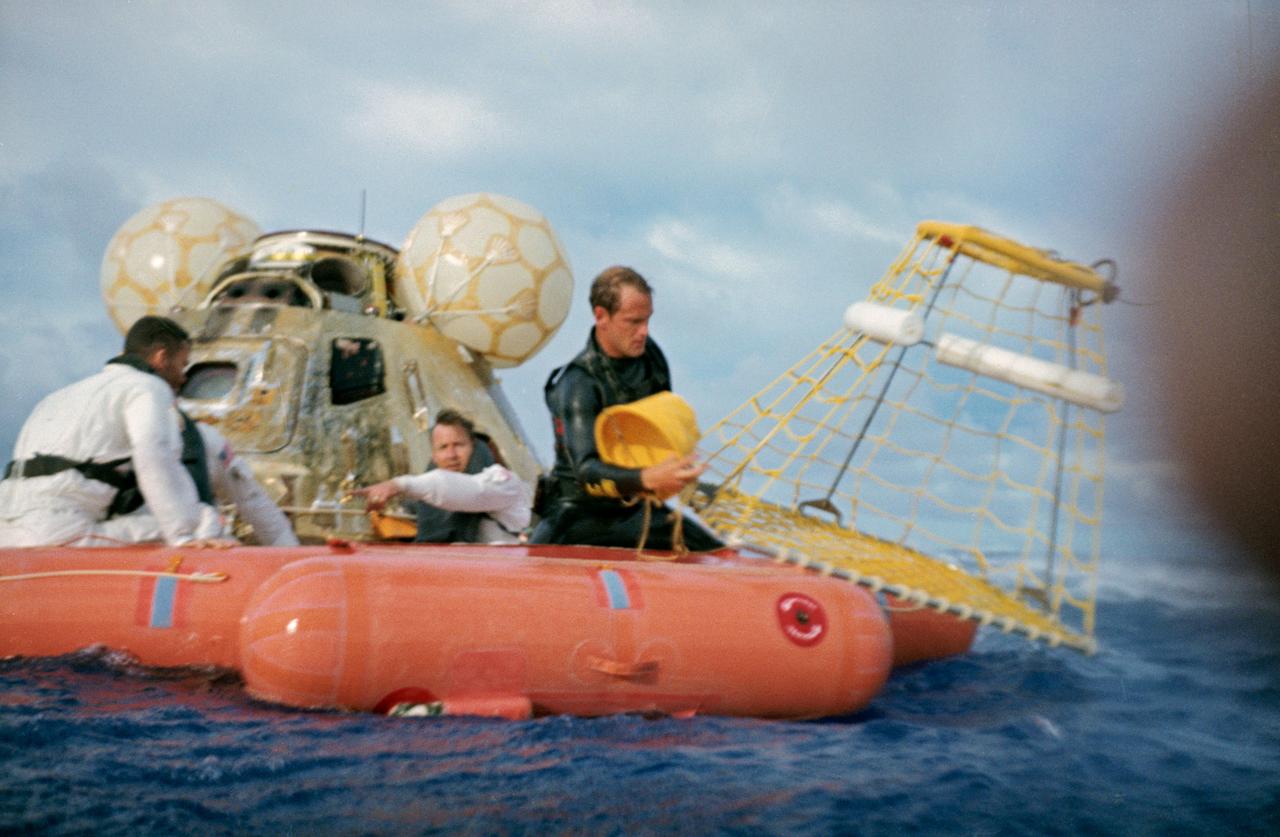
S70-35631 (17 April 1970) --- A water-level view of recovery operations for the Apollo 13 mission in the South Pacific Ocean. The three crewmen have egressed their spacecraft, and are awaiting the readying of the "Billy Pugh" net which will hoist them to a helicopter hovering above. The crewmembers (from the left) are astronauts Fred W. Haise Jr., lunar module pilot; John L. Swigert Jr., command module pilot; (only partially visible between Haise and the Command Module (CM)), and James A. Lovell Jr., commander. A U.S. Navy underwater demolition team swimmer prepares to assist Haise into the net. Apollo 13 splashdown occurred at 12:07:44 p.m. (CST), April 17, 1970, in the South Pacific, about four miles from the USS Iwo Jima, prime recovery ship.
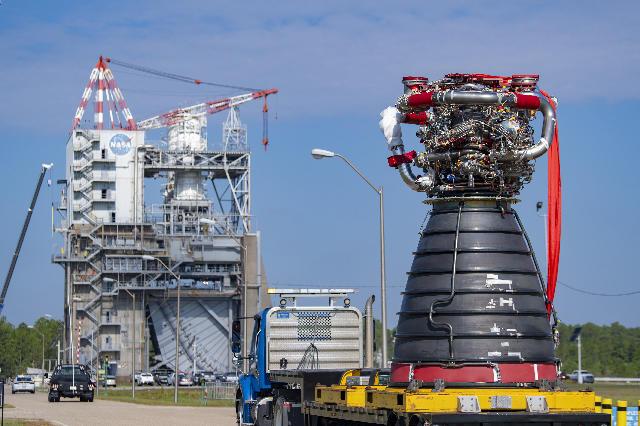
Crews bring RS-25 developmental engine E0525 to the Fred Haise Test Stand at NASA’s Stennis Space Center on Aug. 30 for the second and final certification test series.
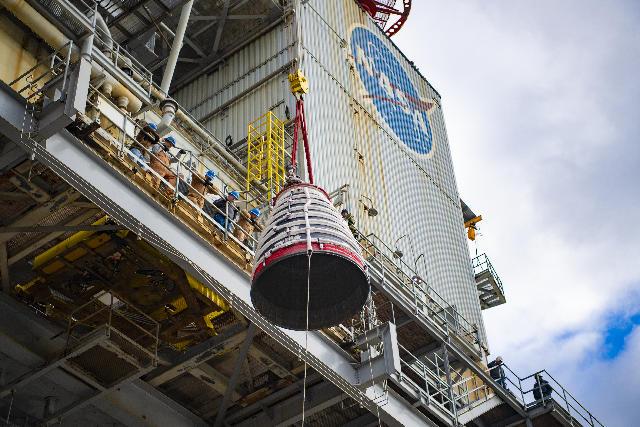
The new production nozzle is lifted on the Fred Haise Test Stand at NASA’s Stennis Space Center on Feb. 6. Crews used specially adapted procedures and tools to swap out the nozzles with the engine in place.
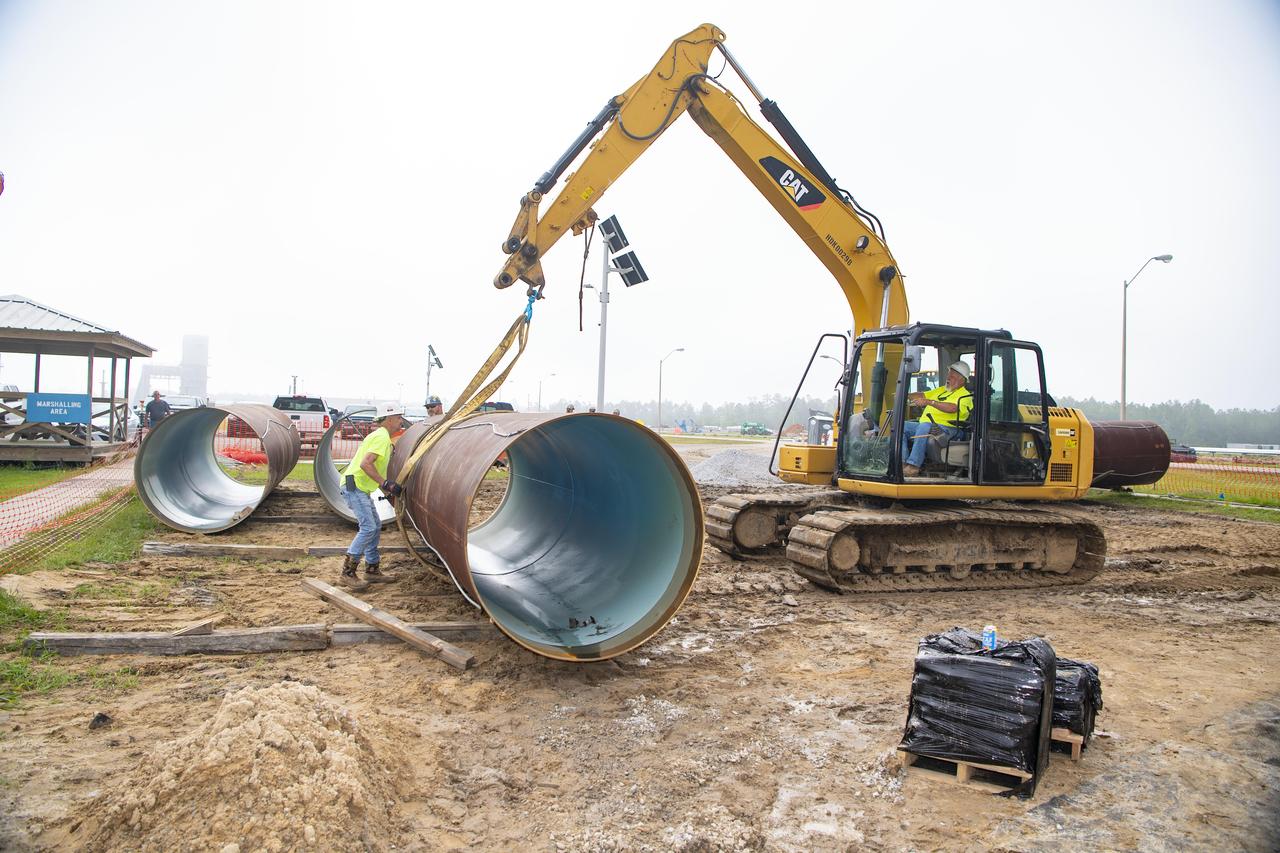
Crews lift a new pipeline liner section near the Fred Haise Test Stand on May 1 in the last phase of updating the original test complex water system at NASA’s Stennis Space Center.
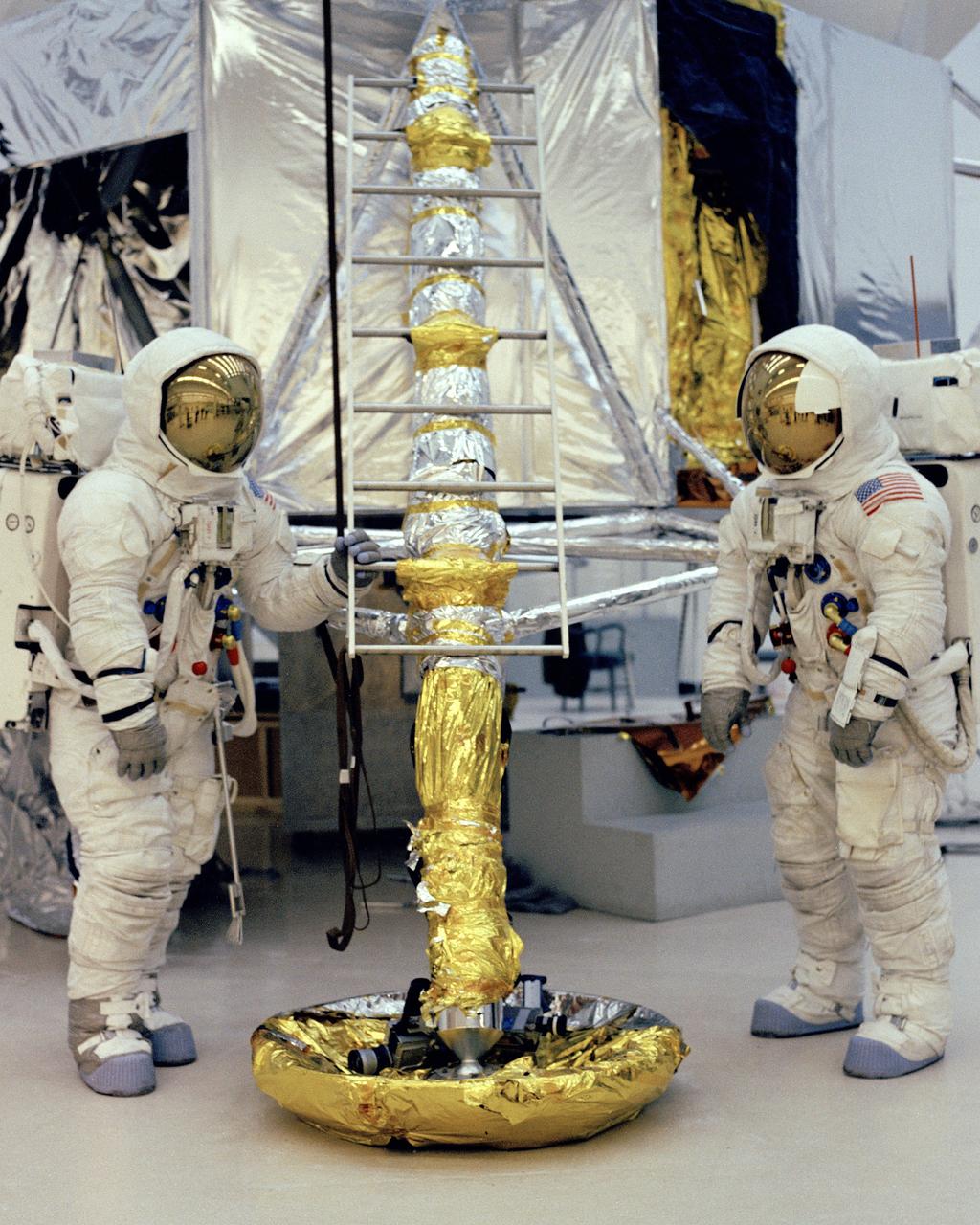
CAPE CANAVERAL, Fla. – Apollo 13 astronauts James A. Lovell, Jr., commander, and Fred W. Haise, Jr., lunar module pilot, practice their EVA training in preparation for their mission. Photo credit: NASA
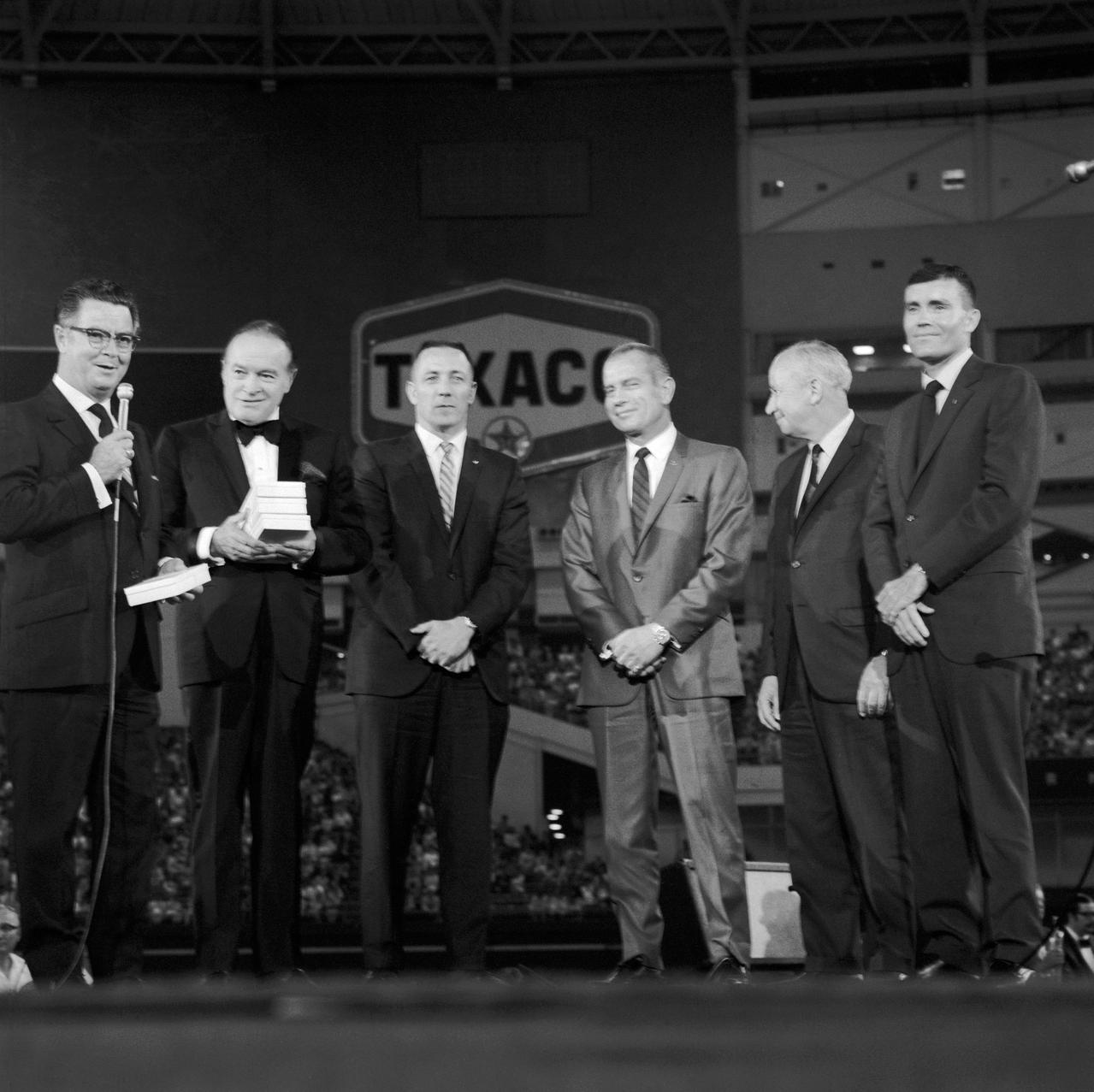
Activities during the "Bob Hope Special" for the Ed White Memorial Benefit. Left to right : Mayor of Houston Louie Welch, Bob Hope, Astronaut Jack Swigert , Astronaut Deke Slayton, Sig Sjoberg, Astronaut Fred Haise.
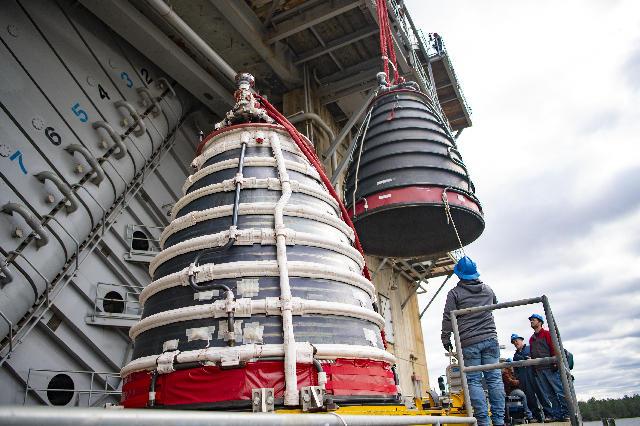
Teams at NASA’s Stennis Space Center install a second production nozzle, left, on Feb. 6 to gather additional performance data on the RS-25 certification engine at the Fred Haise Test Stand.
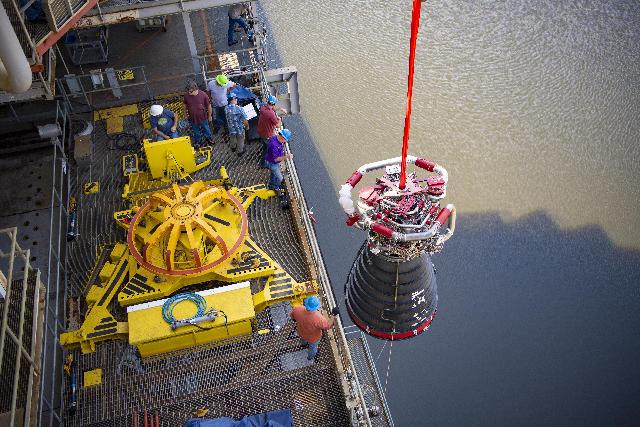
Crews prepare to place the RS-25 engine on the engine vertical installer, which raises the engine, so technicians can attach the engine on the Fred Haise Test Stand at NASA’s Stennis Space Center on Aug. 30.
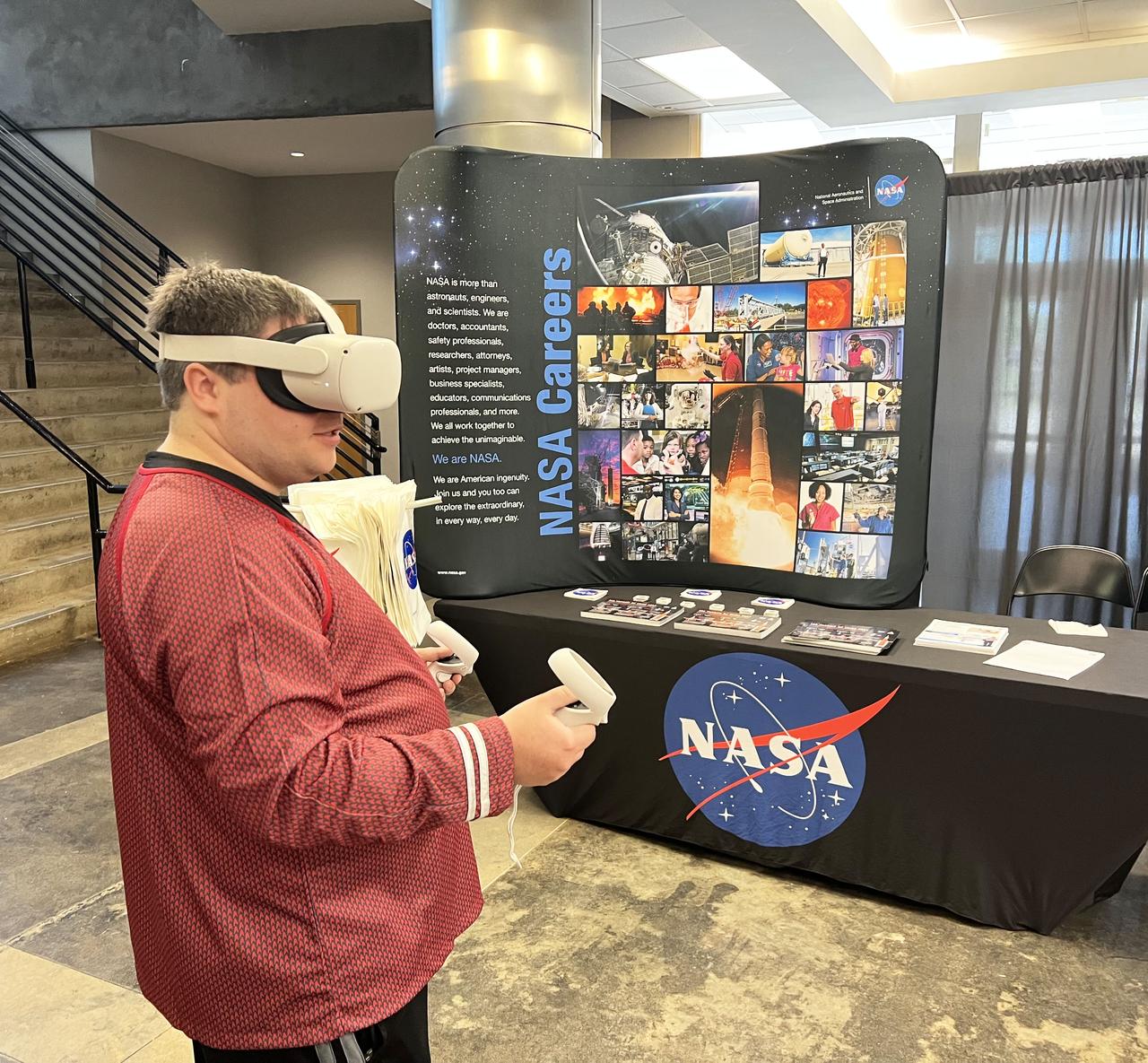
A Jackson, Mississippi, Star Trek fan club, USS Haise member, volunteers to be the first user of the virtual reality experience provided by NASA Stennis before the Mississippi Comic Convention begins.
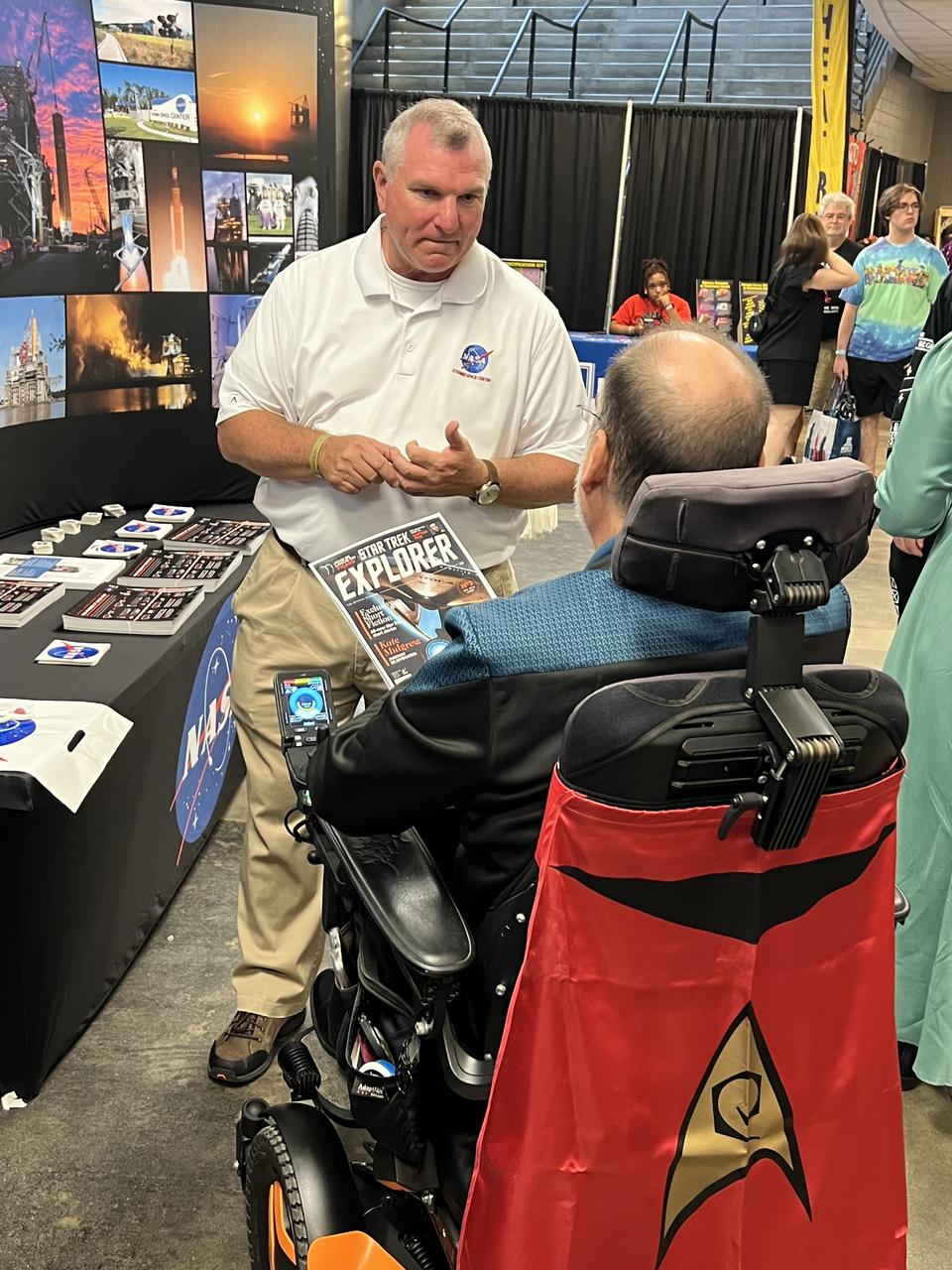
NASA Stennis legislative affairs specialist and chief of staff Troy Frisbie discusses his appearance in Star Trek Explorer magazine with a member of the Jackson, Mississippi, Star Trek fan club, USS Haise.
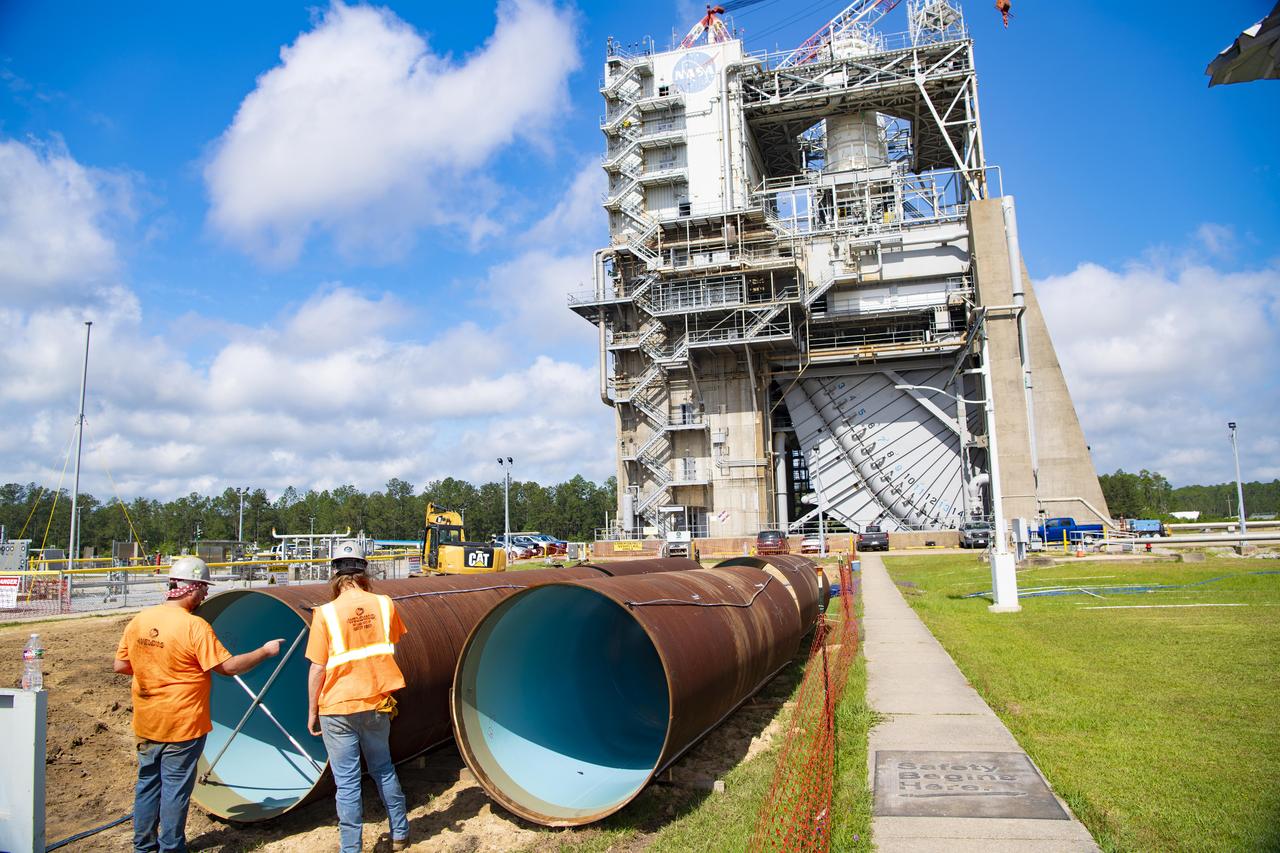
Crews prepare new pipeline liner sections for installation near the Fred Haise Test Stand on May 1 in the last phase of updating the original test complex industrial water system at NASA’s Stennis Space Center.
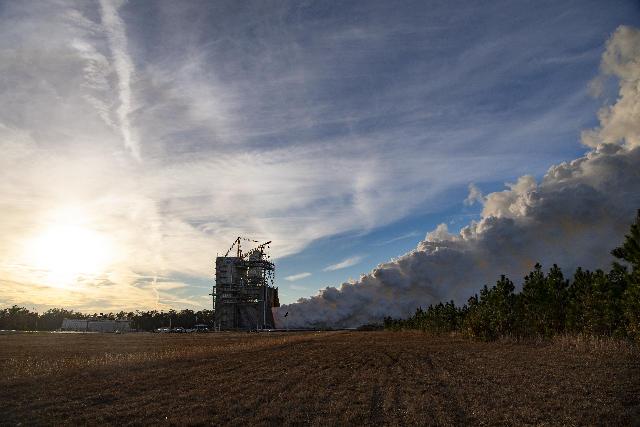
The first hot fire of 2024 takes place on Jan. 17 at NASA’s Stennis Space Center when crews complete a 500-second hot fire on the Fred Haise Test Stand.
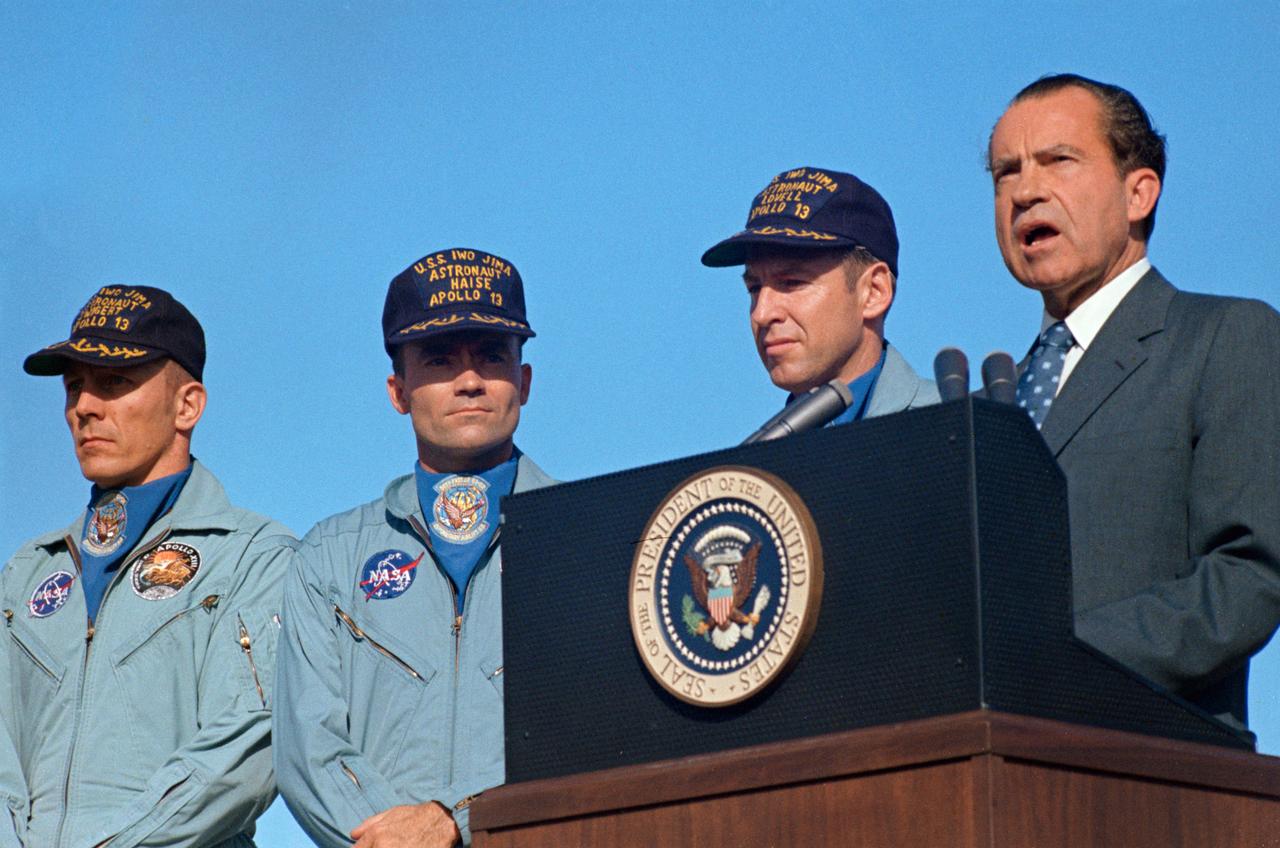
S70-15511 (19 April 1970) --- President Richard M. Nixon speaks at Hickham Air Force Base prior to presenting the nation's highest civilian award to the Apollo 13 crew. Receiving the Presidential Medal of Freedom were astronauts James A. Lovell Jr., (next to the Chief Executive), commander; John L. Swigert Jr. (left), command module pilot; and Fred W. Haise Jr., lunar module pilot. Wives of Lovell and Haise and the parents of Swigert accompanied the President to Hawaii. The Apollo 13 splashdown occurred at 12:07:44 p.m. (CST), April 17, 1970, about a day and a half prior to the Hickam Air Force Base ceremonies.
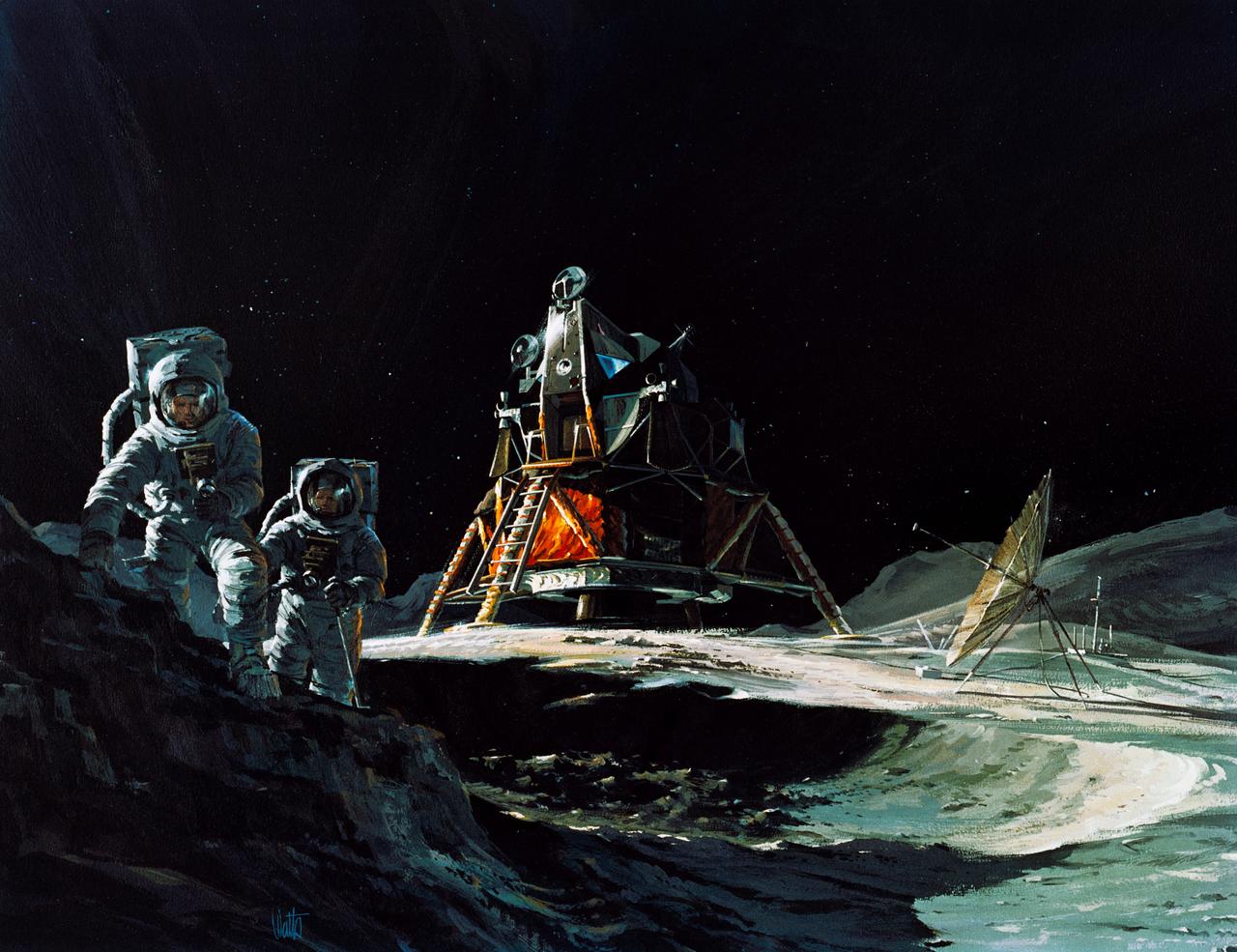
S70-31774 (March 1970) --- An artist's concept by Teledyne Ryan Aeronautical, San Diego, California, showing two Apollo 13 astronauts exploring the surface of the moon. In the center background is the Lunar Module (LM). Apollo 13 will land in the rugged highlands just north of Fra Mauro. The crew of the Apollo 13 lunar landing mission will be astronauts James A. Lovell Jr., commander; Thomas K. Mattingly II, command module pilot; and Fred W. Haise Jr., lunar module pilot. Lovell and Haise are represented by the two men in this picture.
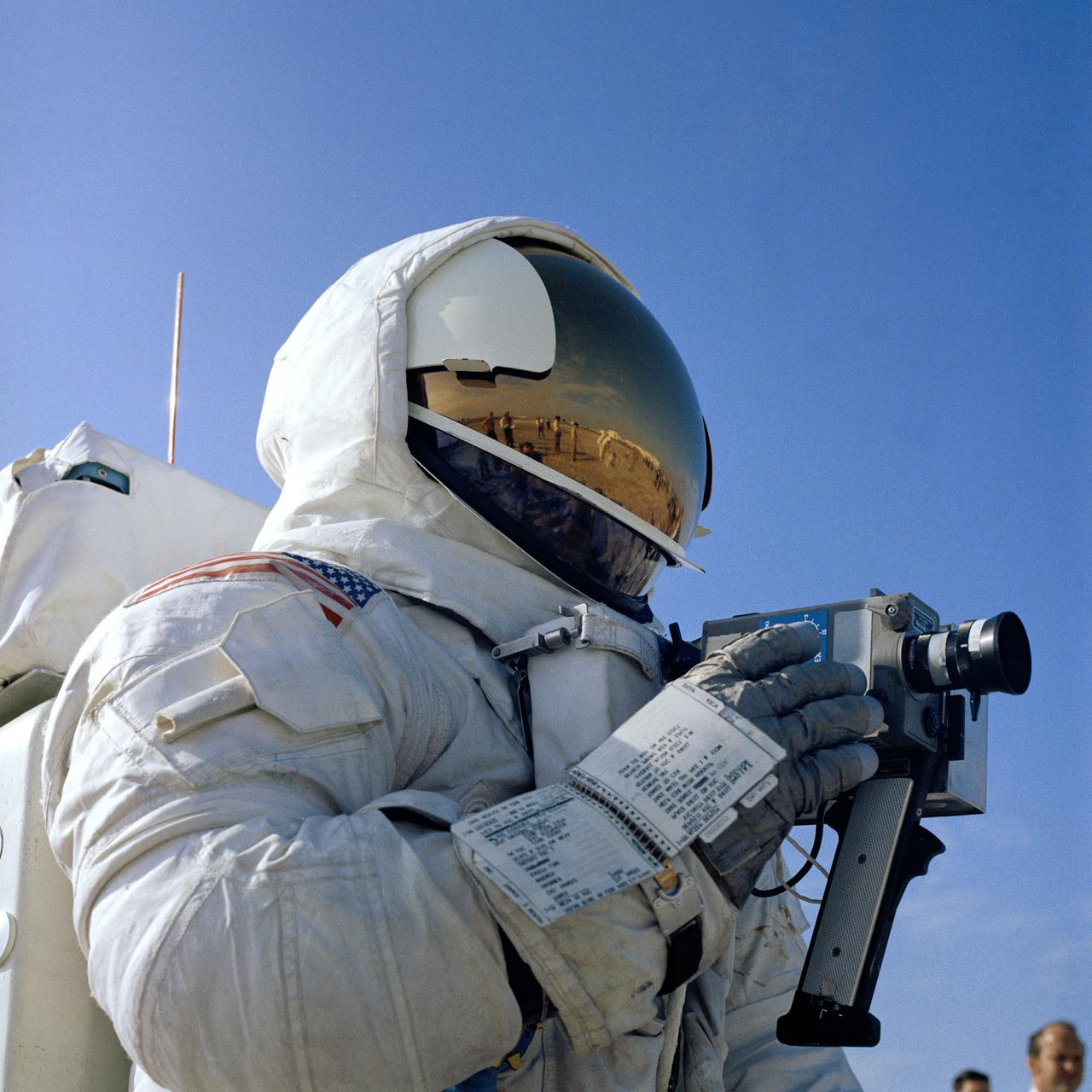
CAPE CANAVERAL, Fla. - Astronaut Fred W. Haise Jr., Apollo 13 lunar module pilot, practices operation of the 16-millimeter motion picture camera to be used on the lunar surface during the Apollo 13 mission. The Apollo 13 landing is scheduled for the Fra Mauro, a highlands area approximately 95 miles east of the Apollo 12 landing site in November 1969. Apollo 13, scheduled for launch from Kennedy Space Center on April 11, has a prime crew composed of Haise, James A. Lovell Jr., commander, and Thomas K. Mattingly II, command module pilot. Photo credit: NASA
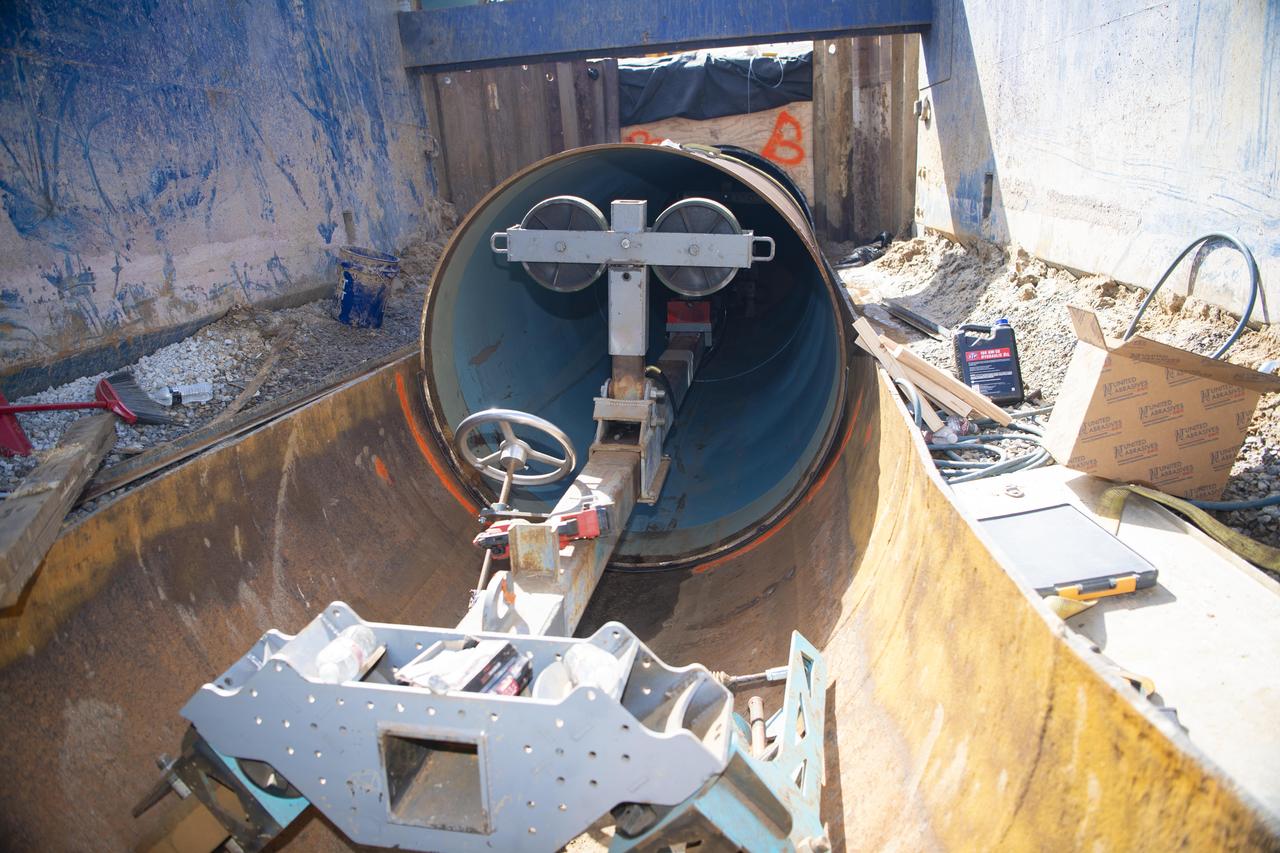
Crews use a special tool to place a new pipeline liner section inside the existing carrier pipe near the Fred Haise Test Stand on May 1 in the last phase of updating the original test complex industrial water system at NASA’s Stennis Space Center.
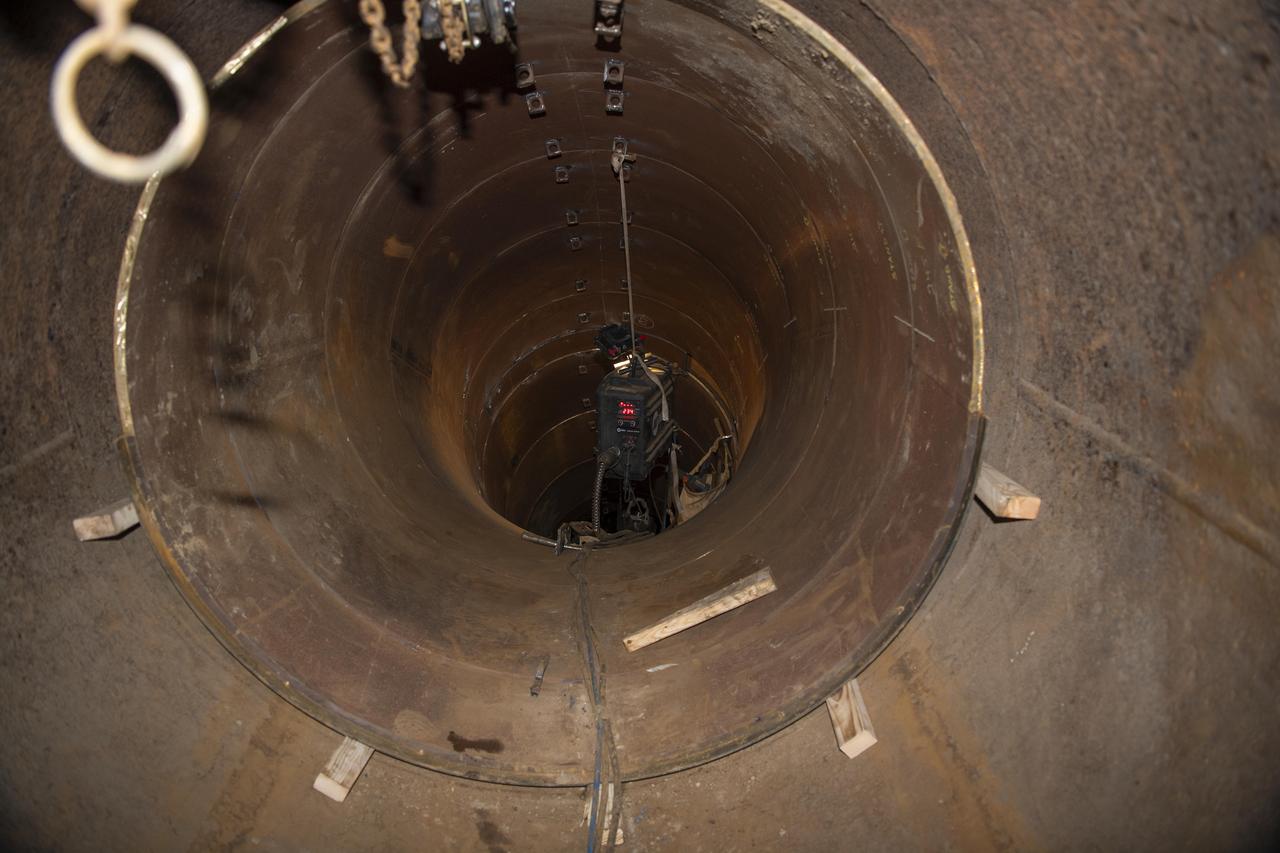
An image shows a new pipeline liner section being place inside the existing carrier pipe near the Fred Haise Test Stand on May 1 in the last phase of updating the original test complex industrial water system at NASA’s Stennis Space Center.

S69-39601 (20 July 1969) --- Spacecraft communicators are pictured as they keep in contact with the Apollo 11 astronauts during their lunar landing mission on July 20, 1969. From left to right are astronauts Charles M. Duke Jr., James A. Lovell Jr. and Fred W. Haise Jr.
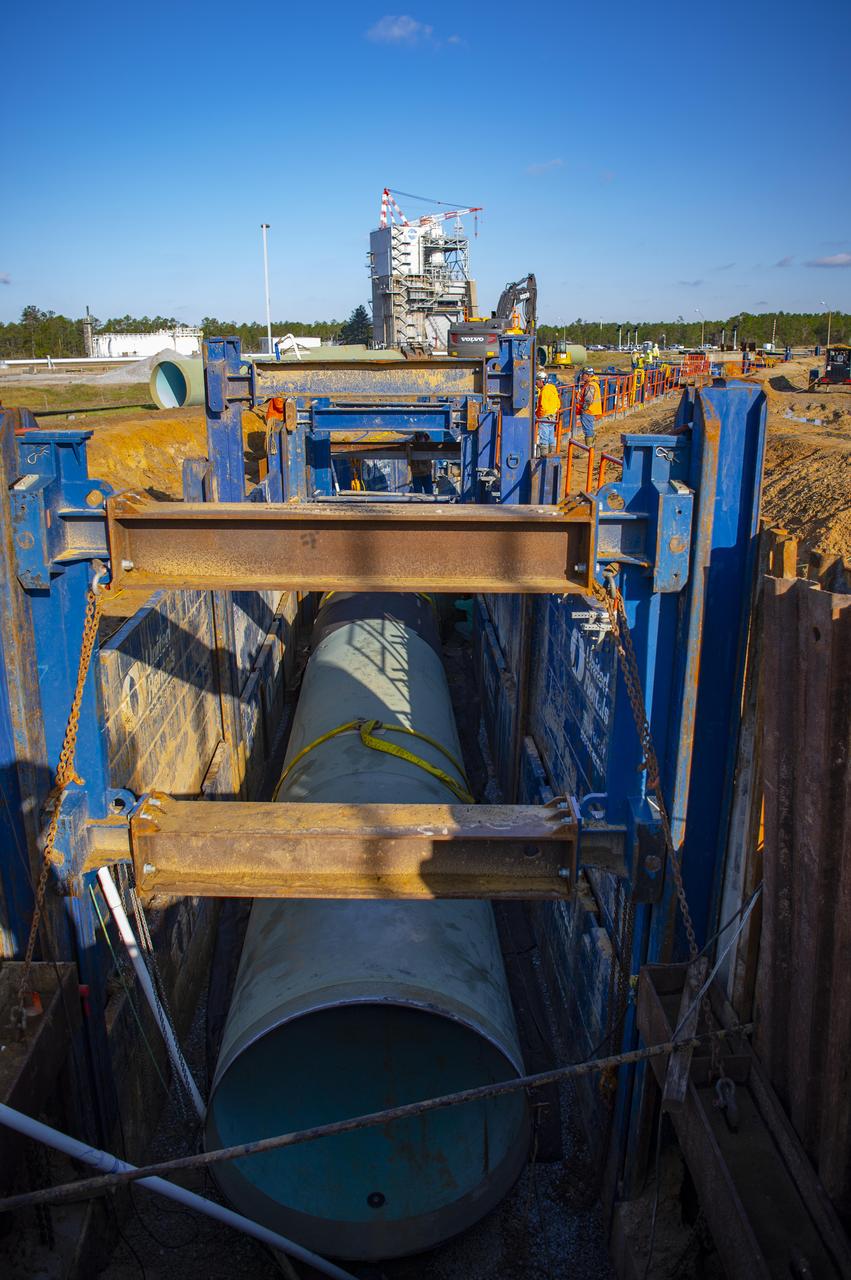
In this March 2022 photo, crews use a shoring system to hold back soil as they install new 75-inch piping leading from the NASA Stennis High Pressure Industrial Water Facility to the valve vault pit serving the Fred Haise Test Stand.
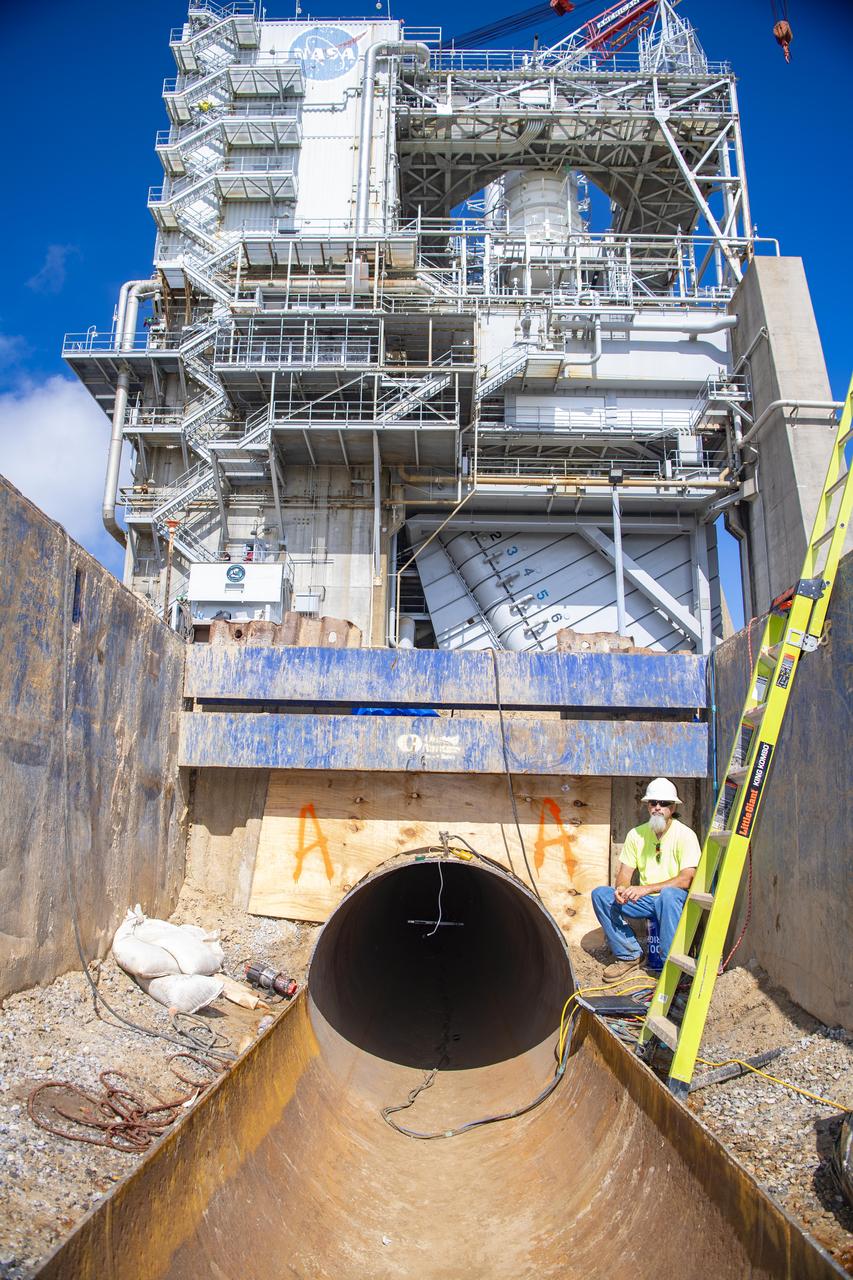
: An image shows the entry location of the existing carrier pipe where new liner sections are being placed at the base of the Fred Haise Test Stand at NASA’s Stennis Space Center in the last phase of updating the original test complex industrial water system.
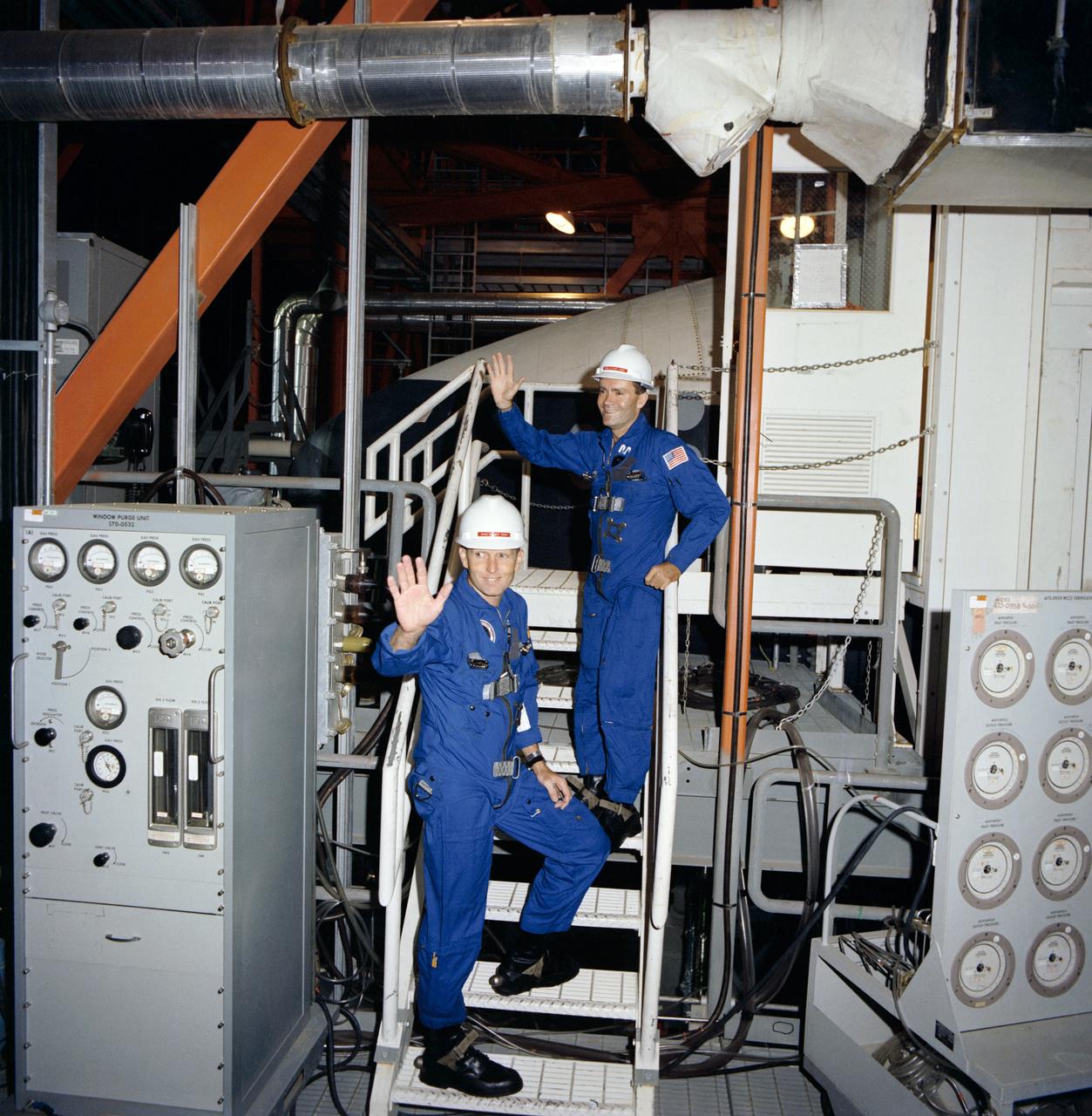
Public Affairs Office (PAO) release print of activity documenting third "free flight" of Shuttle Orbiter 101 Spacecraft at DFRC, Edwards Air Force Base (EAFB), CA. Astronauts Haise and Fullerton arrive at the Mate-Demate Device (MDD) and greet technicians prior to ingress.
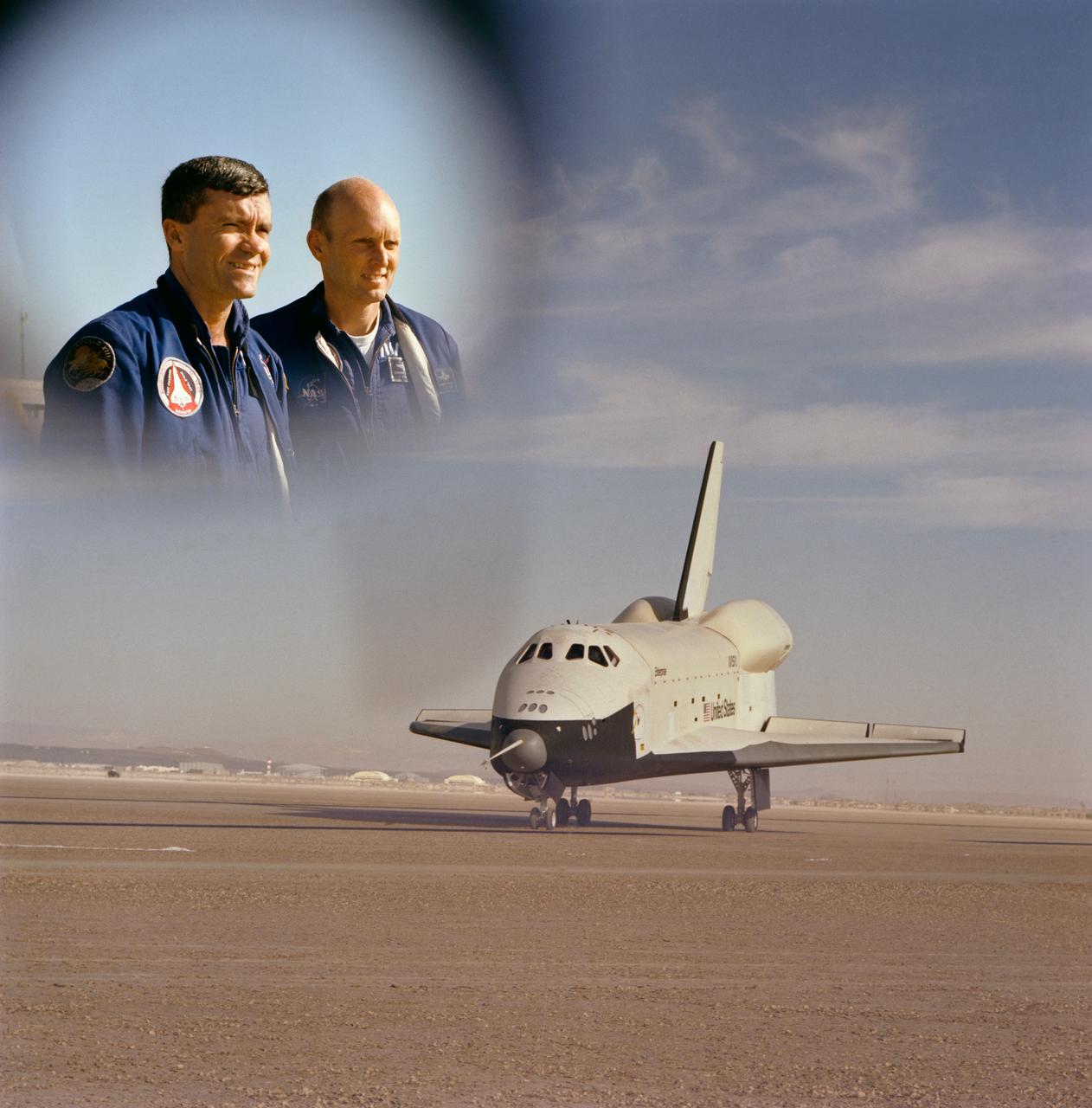
Public Affairs Office (PAO) release print of activity documenting third "free flight" of Shuttle Orbiter 101 Spacecraft at DFRC, Edwards Air Force Base (EAFB), CA. Enterprise is parked on the runway - Haise (left), Commander, and Fullerton, Pilot, are in the inset.
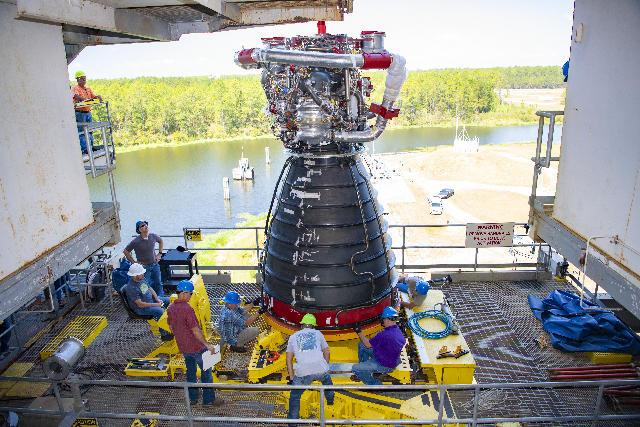
Once crews place the RS-25 engine on the engine vertical installer and it is attached to the Fred Haise Test Stand at NASA’s Stennis Space Center, the installer moves away, and technicians ensure all connections to the test facility are complete for the second certification test series to collect data for the final RS-25 design certification review.
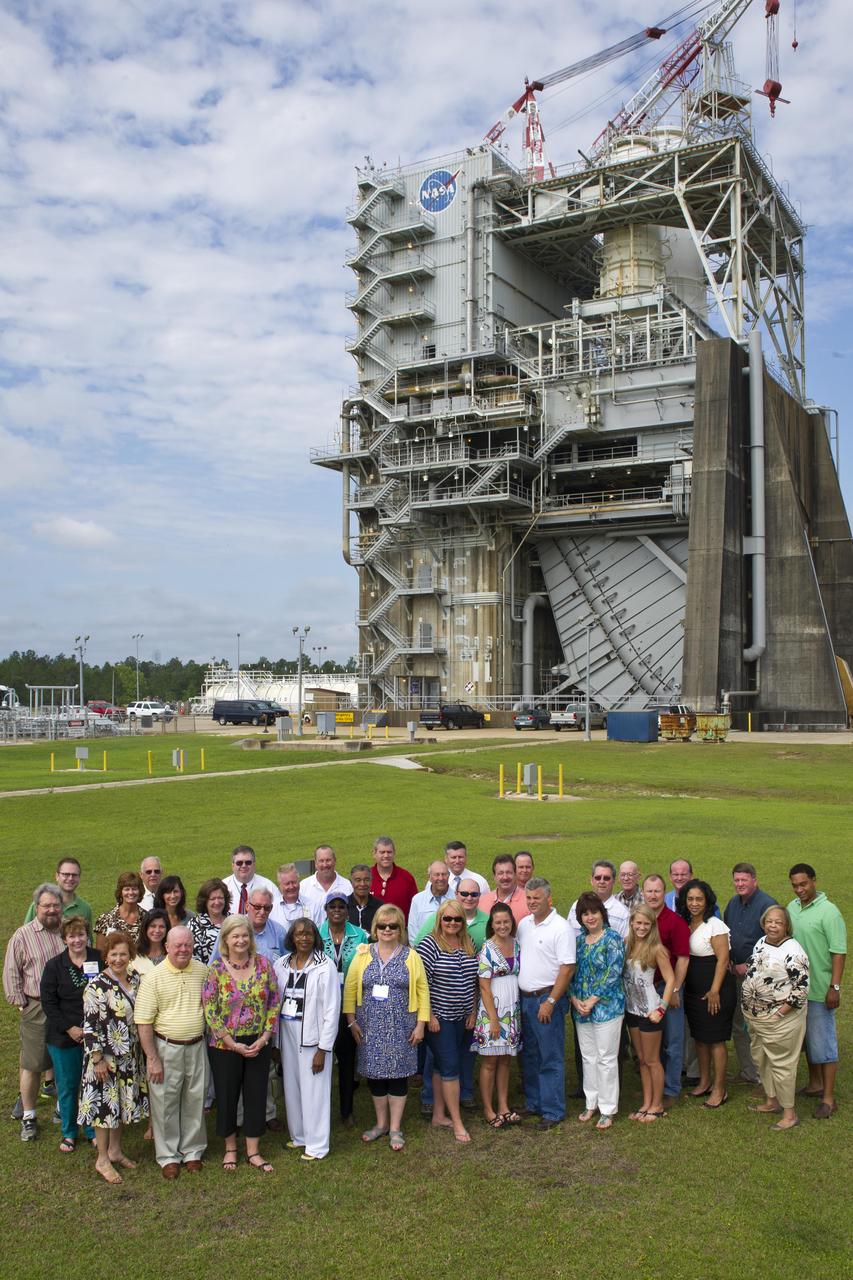
Legislators from across Mississippi visited Stennis Space Center on May 7, 2012, touring various facilities, including the A-1 Test Stand, and learning about work under way at the facility. The legislators also toured the INFINITY at NASA Stennis Space Center facility and met with Apollo 13 astronaut Fred Haise.
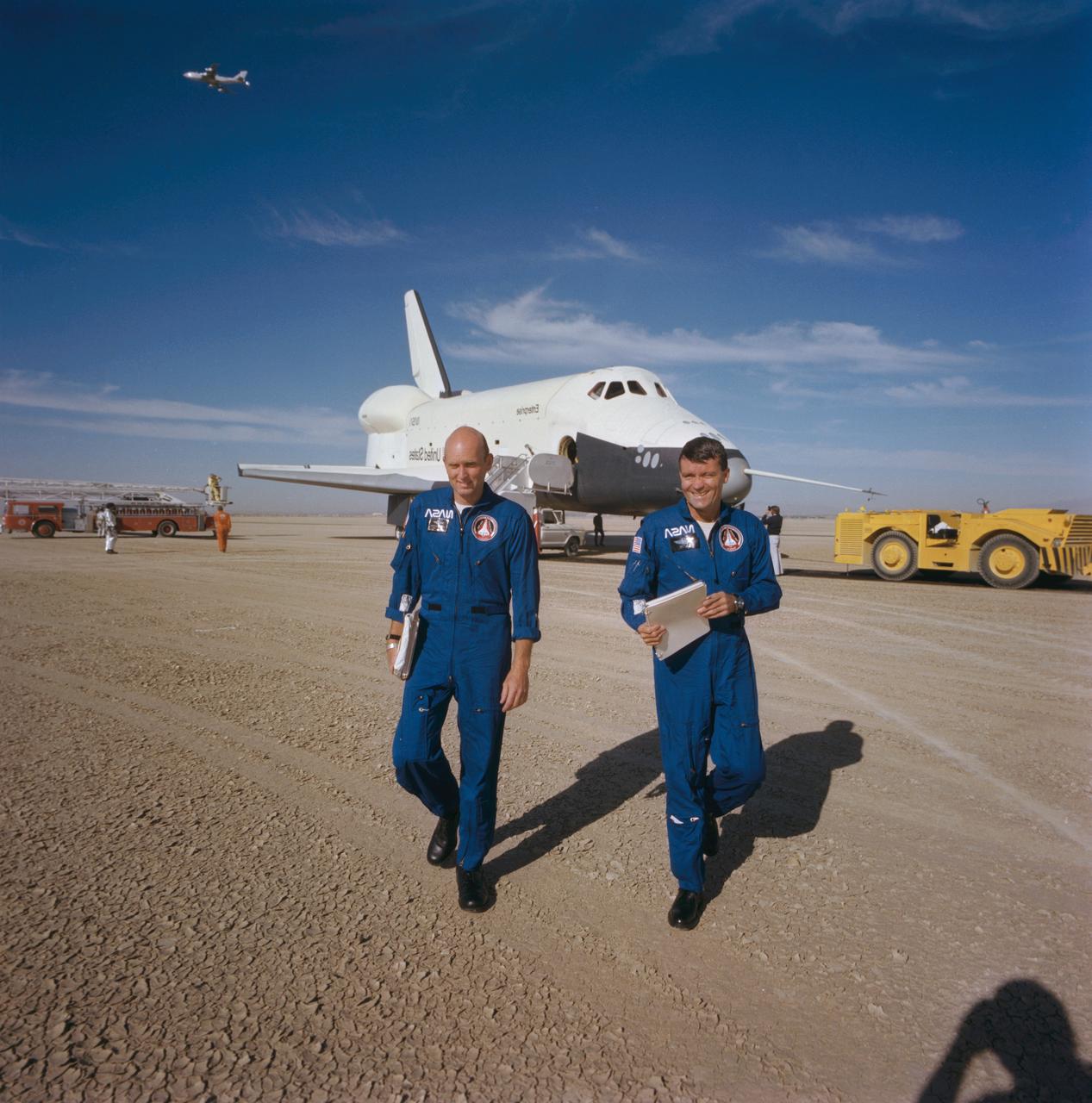
Public Affairs Office (PAO) release print of activity documenting third (3rd) "free flight" of Shuttle Orbiter 101 Spacecraft at DFRC, EAFB, CA. Astronauts Haise (left) and Fullerton in front of parking "Enterprise" just after egress. DFRC, EAFB, CA
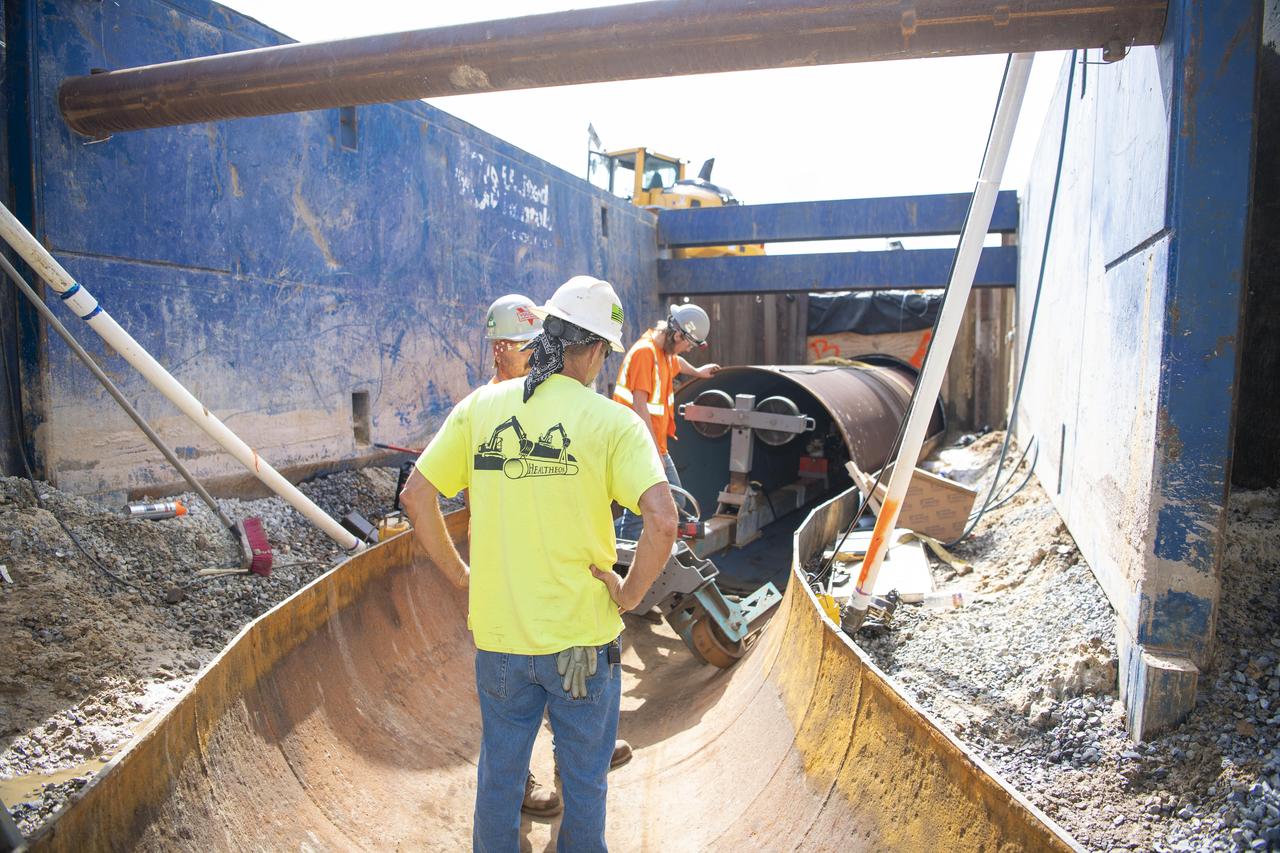
Crews use a special tool to place a new pipeline liner inside the existing carrier pipe near the Fred Haise Test Stand on May 1 in the last phase of updating the original test complex industrial water system at NASA’s Stennis Space Center.
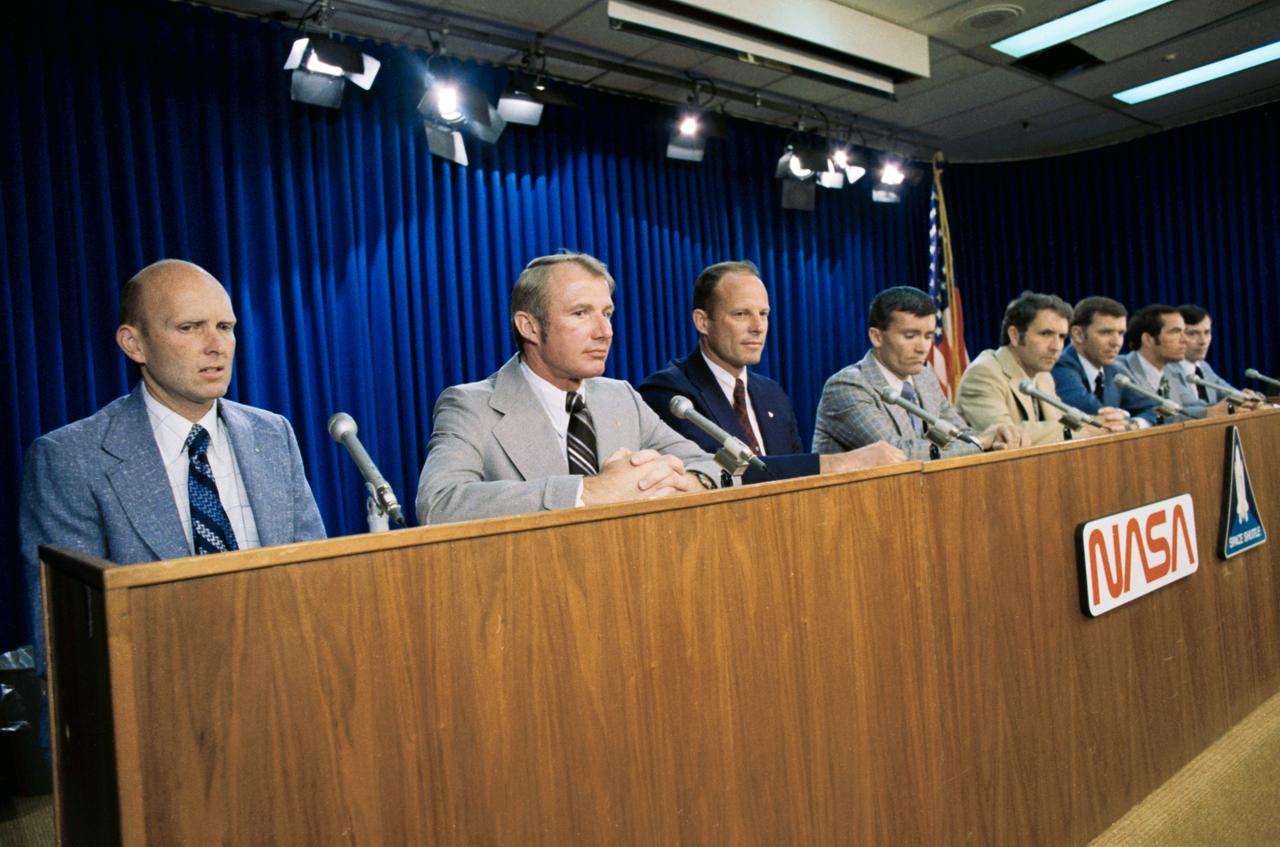
S78-27531 (22 March 1978) --- These eight men have been named on four two-man crews who will fly the space shuttle orbiter vehicle during orbital flight tests (OFT) scheduled to begin in 1979. Pictured during their press conference, right to left, astronauts John W. Young, Robert L. Crippen, Joe H. Engle, Richard H. Truly, Fred W. Haise Jr., Jack R. Lousma, Vance D. Brand and C. Gordon Fullerton. Young and Crippen are commander and pilot, respectively, for the first OFT mission. Other crews are comprised of Engle, commander, and Truly, pilot; Haise, commander, and Lousma, pilot; Brand, commander, and Fullerton, pilot. Photo credit: NASA

NASA's Lunar Lander exhibit is located at the Mississippi I-10 Welcome Center in Hancock County, Miss., just west of Bay St. Louis and 45 miles east of New Orleans on I-10 at Exit 2. The exhibit features a 30-foot-tall replica of a Lunar Lander used as a trainer by the Apollo 13 astronauts. Apollo 13 astronaut and Mississippi native Fred Haise left space-boot prints and signature in concrete at the base of the exhibit.
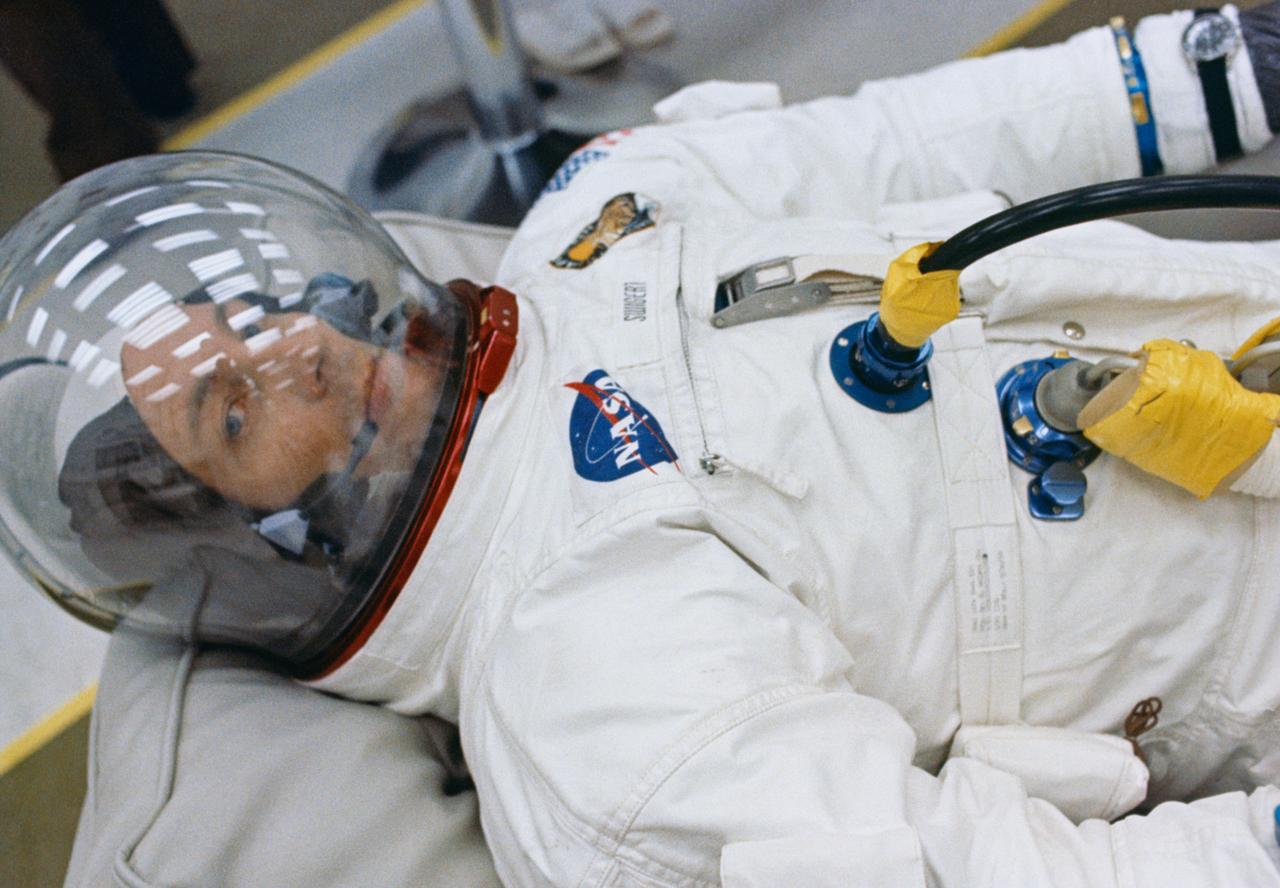
S70-34847 (11 April 1970) --- Astronaut John L. Swigert Jr., command module pilot for NASA?s third lunar landing mission, appears to be relaxing in the suiting room at Kennedy Space Center prior to launch. Other members of the Apollo 13 crew include astronauts James A. Lovell Jr., commander, and Fred W. Haise Jr., lunar module pilot. Swigert replaced astronaut Thomas K. Mattingly II when it was discovered that Mattingly had been exposed to the measles.
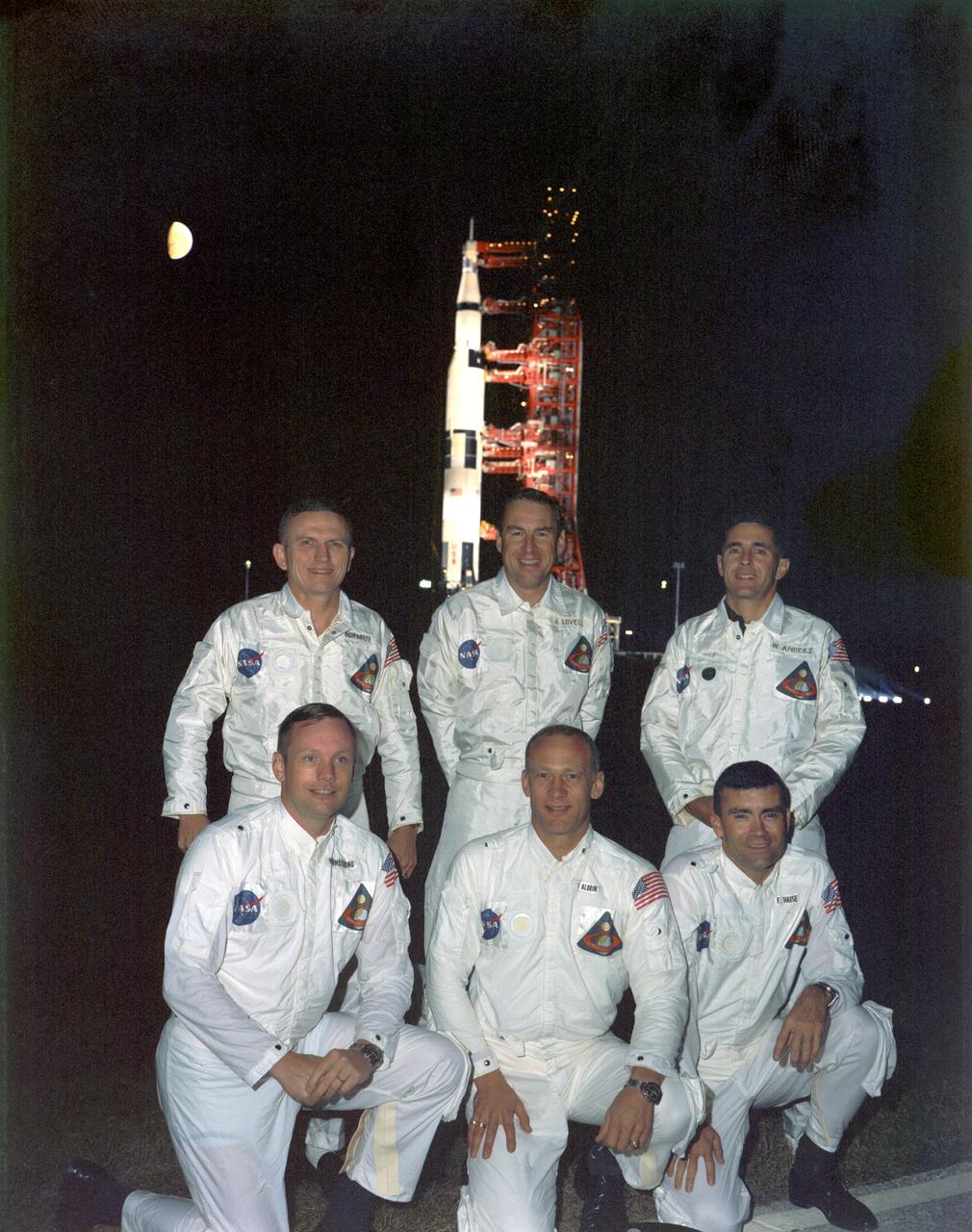
View of the Apollo 8 primary and backup crew portrait with the spacecraft at night in the background. Back row: (l.-r.) Frank Borman, commander, James A. Lovell, command module pilot and William A. Anders, lunar module pilot. Front row: (l.-r.) Neil A. Armstrong, commander, Edwin E. Aldrin, command module pilot and Fred W. Haise Jr., lunar module pilot. Original Photo number is KSC-68C-8017.
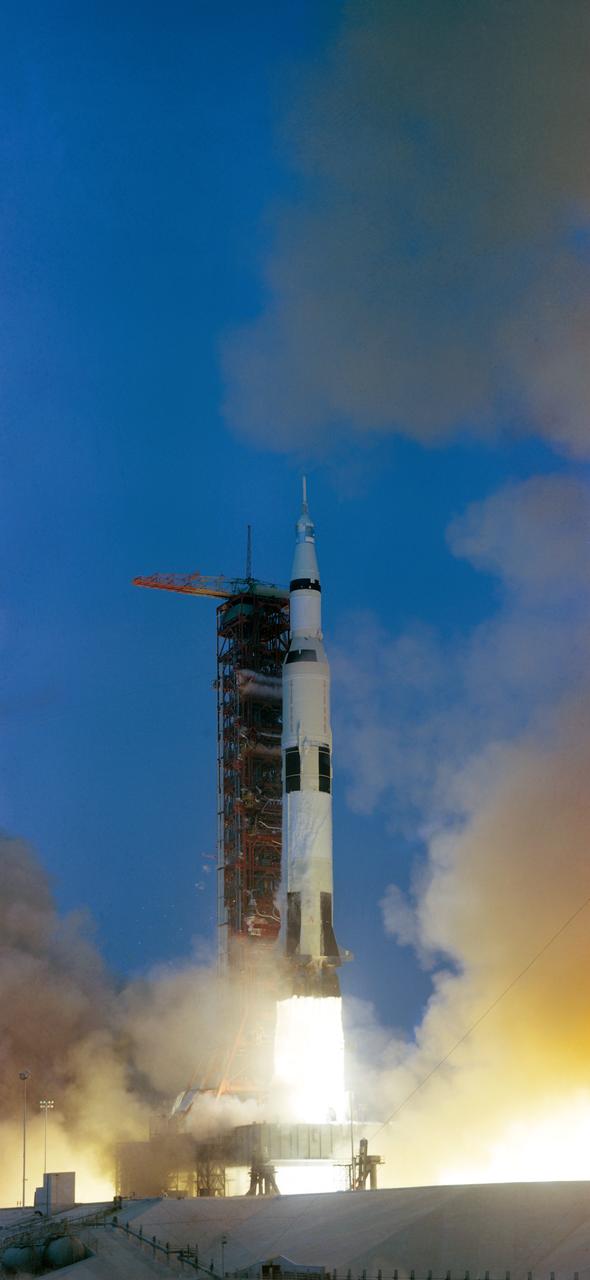
S70-34853 (11 April 1970) --- The Apollo 13 (Spacecraft 109/Lunar Module 7/Saturn 508) space vehicle is launched from Pad A, Launch Complex 39, Kennedy Space Center (KSC), at 2:13 p.m. (EST), April 11, 1970. The crew of the National Aeronautics and Space Administration's (NASA) third lunar landing mission are astronauts James A., Lovell Jr., commander; John L. Swigert Jr., command module pilot; and Fred W. Haise Jr., lunar module pilot.
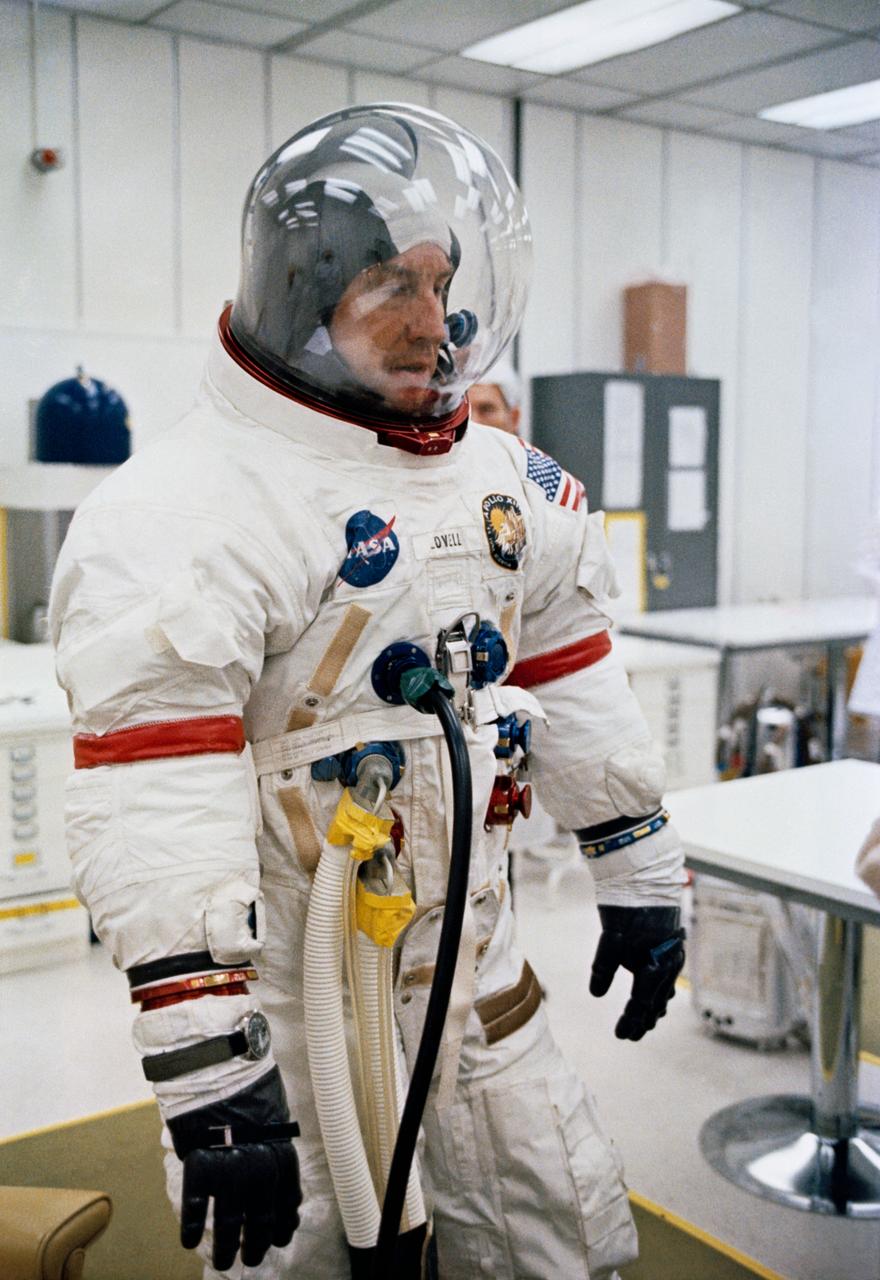
S70-34848 (11 April 1970) --- Astronaut James A. Lovell Jr., commander for NASA's Apollo 13 mission, undergoes space suit checks a few hours before launch. Other members of the crew are astronauts Fred W. Haise Jr., lunar module pilot, and John L. Swigert Jr., command module pilot. Swigert replaced astronaut Thomas K. Mattingly II when it was learned he had been exposed to measles.
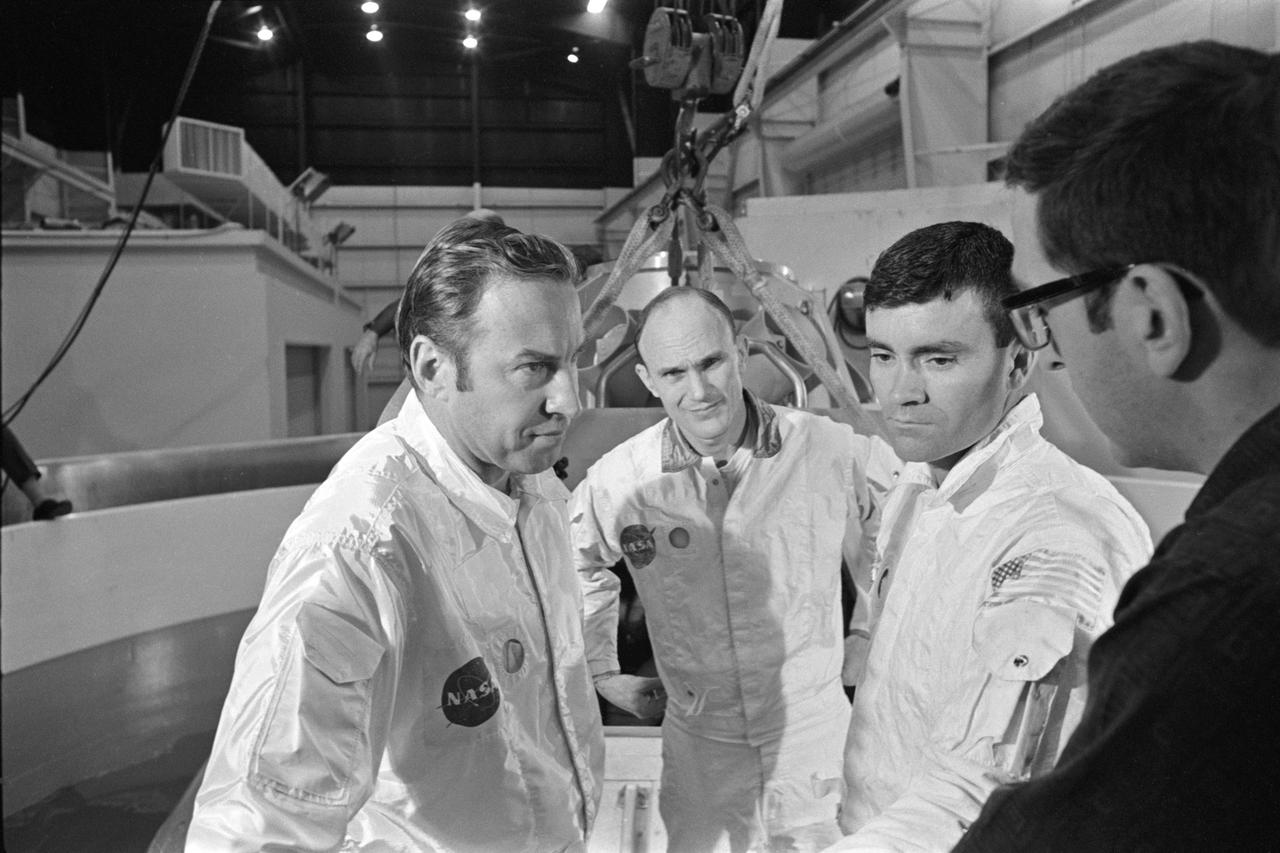
S70-24014 (17 Jan. 1970) --- The three prime crewmen of the Apollo 13 lunar landing mission stand by to participate in water egress training in a water tank in Building 260 at the Manned Spacecraft Center. They were (left to right) astronauts James A. Lovell Jr., commander; Thomas K. Mattingly II, command module pilot; and Fred W. Haise Jr., lunar module pilot.

Members of the World Presidents' Organization enjoy exhibits at StenniSphere, the museum and visitor center at NASA's John C. Stennis Space Center during a tour of the space facility Jan. 26. WPO members from several states toured Stennis facilities during a daylong visit that included a presentation by Apollo 13 astronaut Fred Haise of Biloxi.

S76-29557 (17 Sept 1976) --- The two members of the first crew for the Space Shuttle Approach and Landing Tests (ALT) are photographed at the Rockwell International Space Division's Orbiter assembly facility at Palmdale, California on the day of the rollout of the Shuttle Orbiter 101 "Enterprise" spacecraft. They are Astronauts Fred W. Haise Jr. (left), commander; and C. Gordon Fullerton, pilot. The DC-9 size airplane-like Orbiter 101 is in the background.
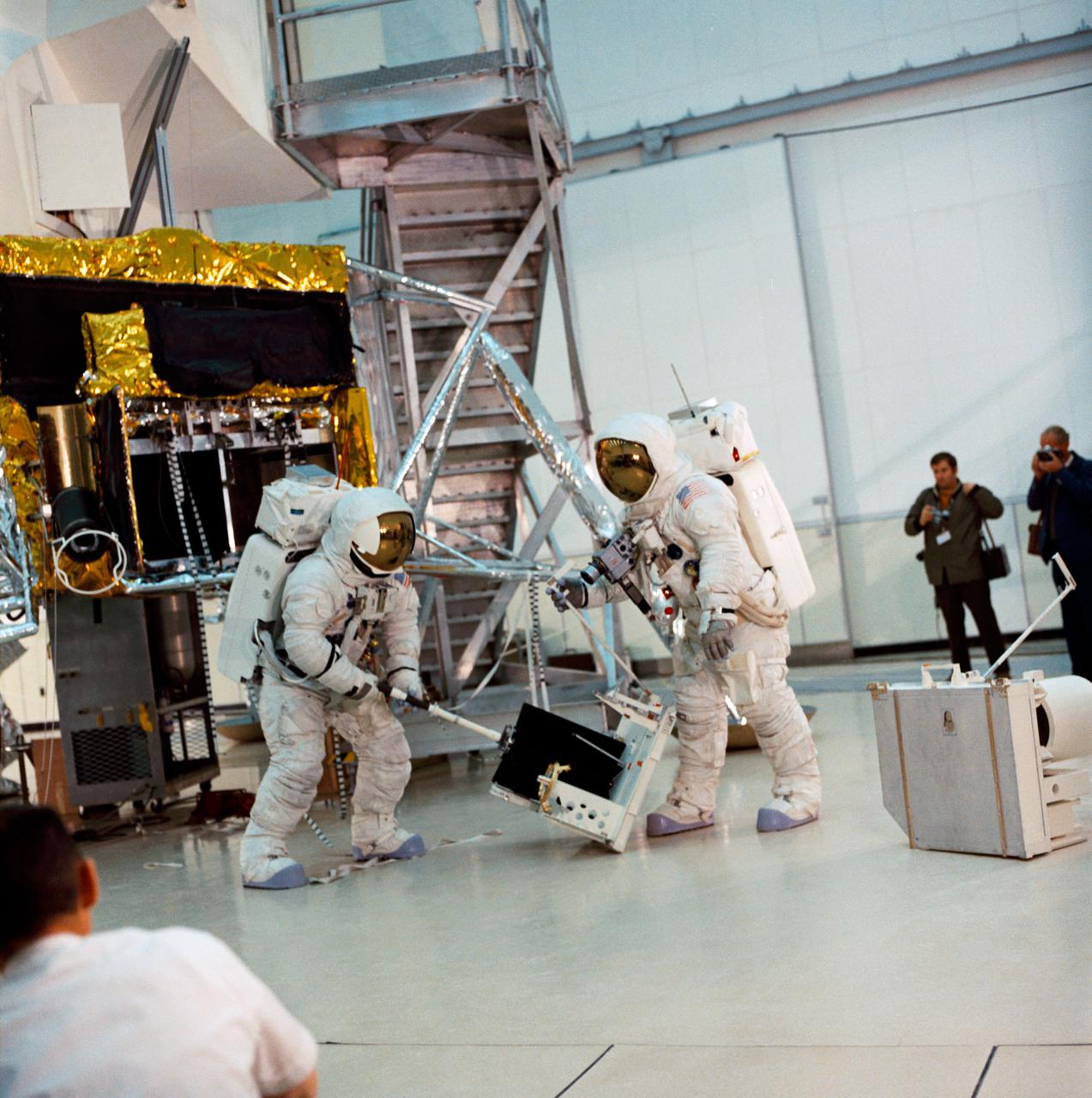
S70-27036 (4 Feb. 1970) --- Two crew men of the Apollo 13 lunar landing mission simulate lunar surface extravehicular activity (EVA) during training exercises in the Kennedy Space Center's (KSC) Flight Crew Training Building. They are astronauts James A. Lovell Jr. commander; and Fred W. Haise Jr., lunar module pilot.
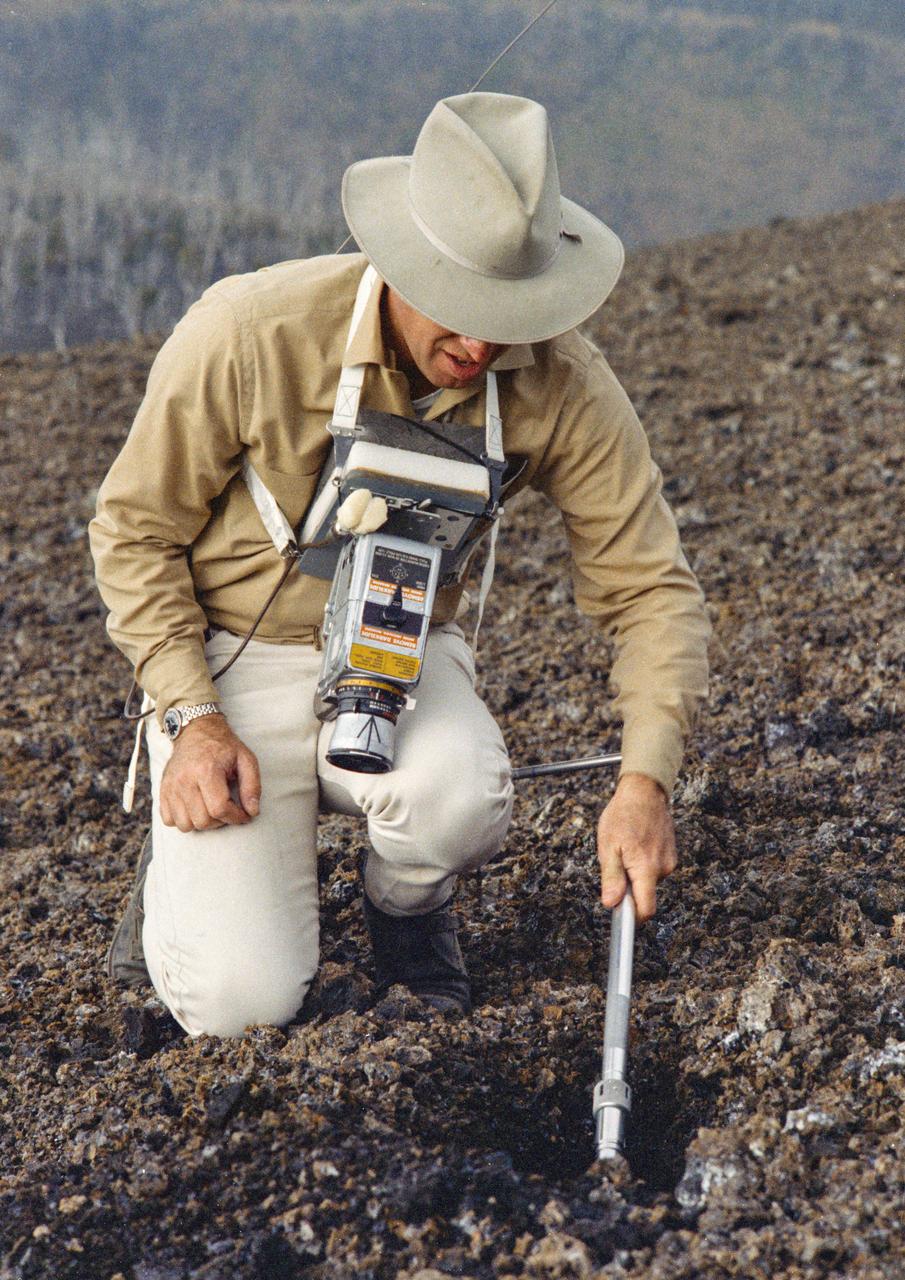
S70-20272 (December 1969) --- Astronaut James A. Lovell Jr., commander of the upcoming Apollo 13 lunar landing mission, uses a scoop from the Apollo Lunar Hand Tools (ALHT) during a simulated lunar surface traverse at the Kapoho, Hawaii training site. While at the Hawaii training sites, Lovell and Haise are participating in thorough rehearsals of their extravehicular activity (EVA). Photo credit: NASA

NASA marks the halfway point of the RS-25 certification series four days later on Jan. 27 with the sixth test of the series on the Fred Haise Test Stand at NASA’s Stennis Space Center. For each Artemis mission, four RS-25 engines, along with a pair of solid rocket boosters, power the SLS (Space Launch System) rocket, producing more than 8.8 million pounds of thrust at liftoff.
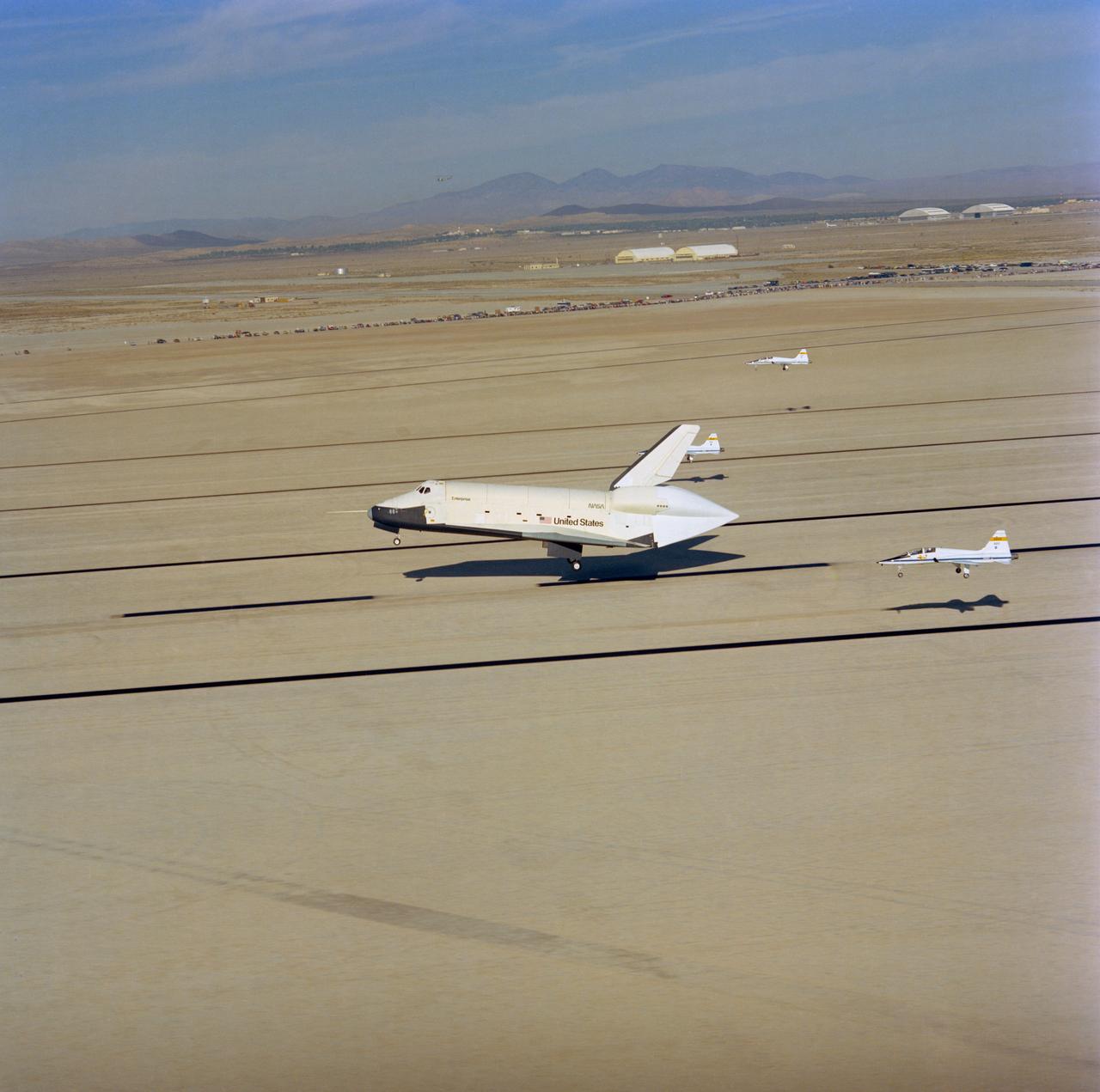
S77-28668 (23 Sept 1977) --- The shuttle Orbiter 101 "Enterprise" approaches touchdown on the runway at Edwards Air Force Base to conclude a five-minute, 34-second unpowered flight, the third of Shuttle Approach and Landing Tests (ALT) series, on September 23, 1977. Thress T-38 chase planes follow close by. Astronauts Fred W. Haise Jr., commander, and C. Gordon Fullerton, pilot, were the crew aboard the "Enterprise" for this flight.
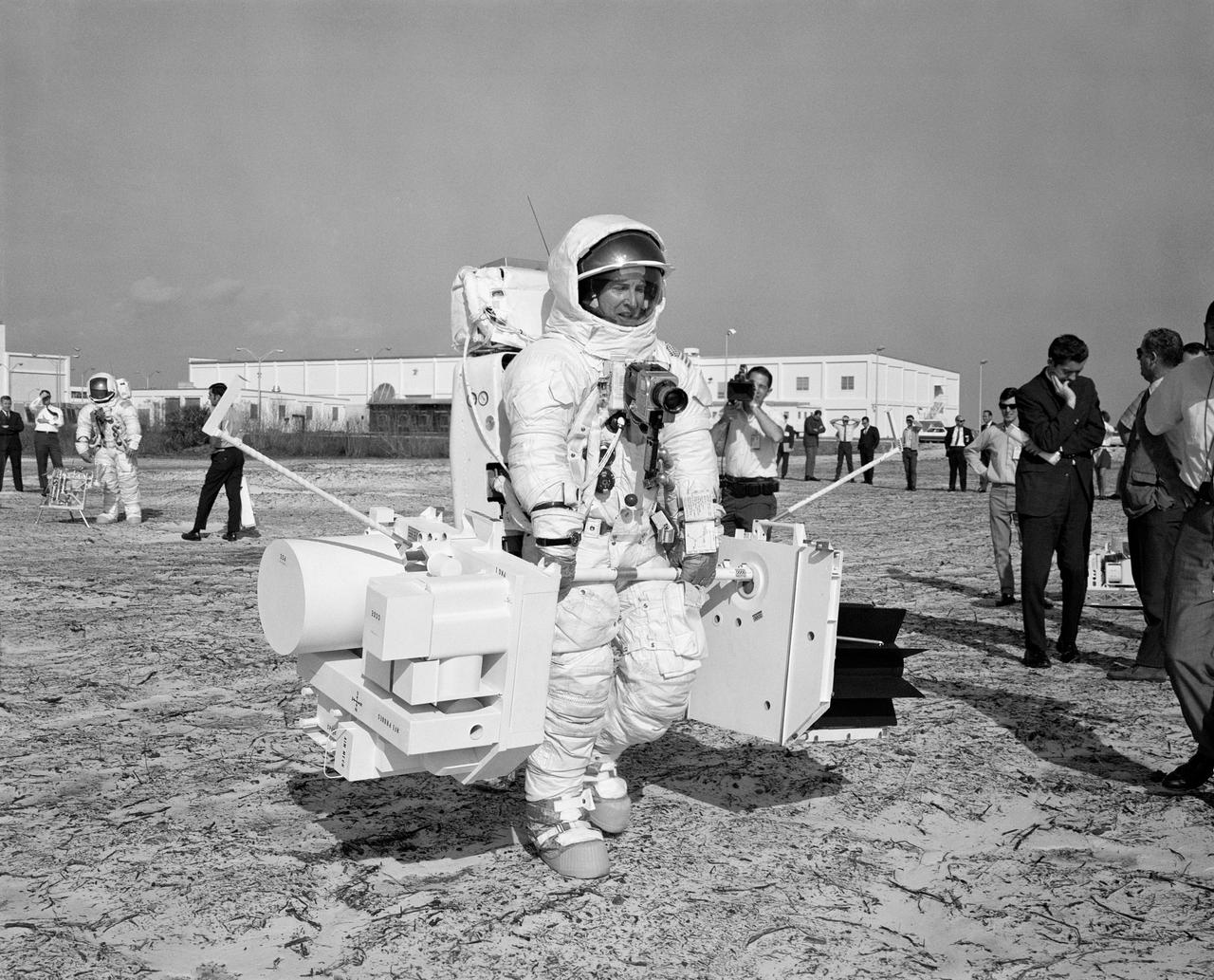
S70-29672 (28 Jan. 1970) --- Astronaut James A. Lovell Jr., commander of the Apollo 13 lunar landing mission, participates in a walk-through of the extravehicular activity timeline at the Kennedy Space Center. Here, Lovell, using mock-ups, traverses with the two subpackages of the Apollo Lunar Surface Experiments Package (ALSEP). Astronaut Fred W. Haise Jr., lunar module pilot, is standing in the left background.

Dr. Lee Silver (pointing foregroung), California Institute of Technology, calls a geological feature near Taos, New Mexico, to the attention of Apollo 16 prime and backup crewmen during a geological field trip. The crewmen, from left to right, are Astronauts Charles M. Duke Jr., lunar module pilot; Fred W. Haise Jr., backup commander; Edgar D. Mitchell, backup Lunar Module pilot; and John W. Young, commander.