
ASTRONAUT JIM HALSELL AND MSFC DIRECTOR PATRICK SCHEUERMANN LIGHT MEMORIAL CANDLE AT REMEMBRANCE DAY EVENT AT USSRC
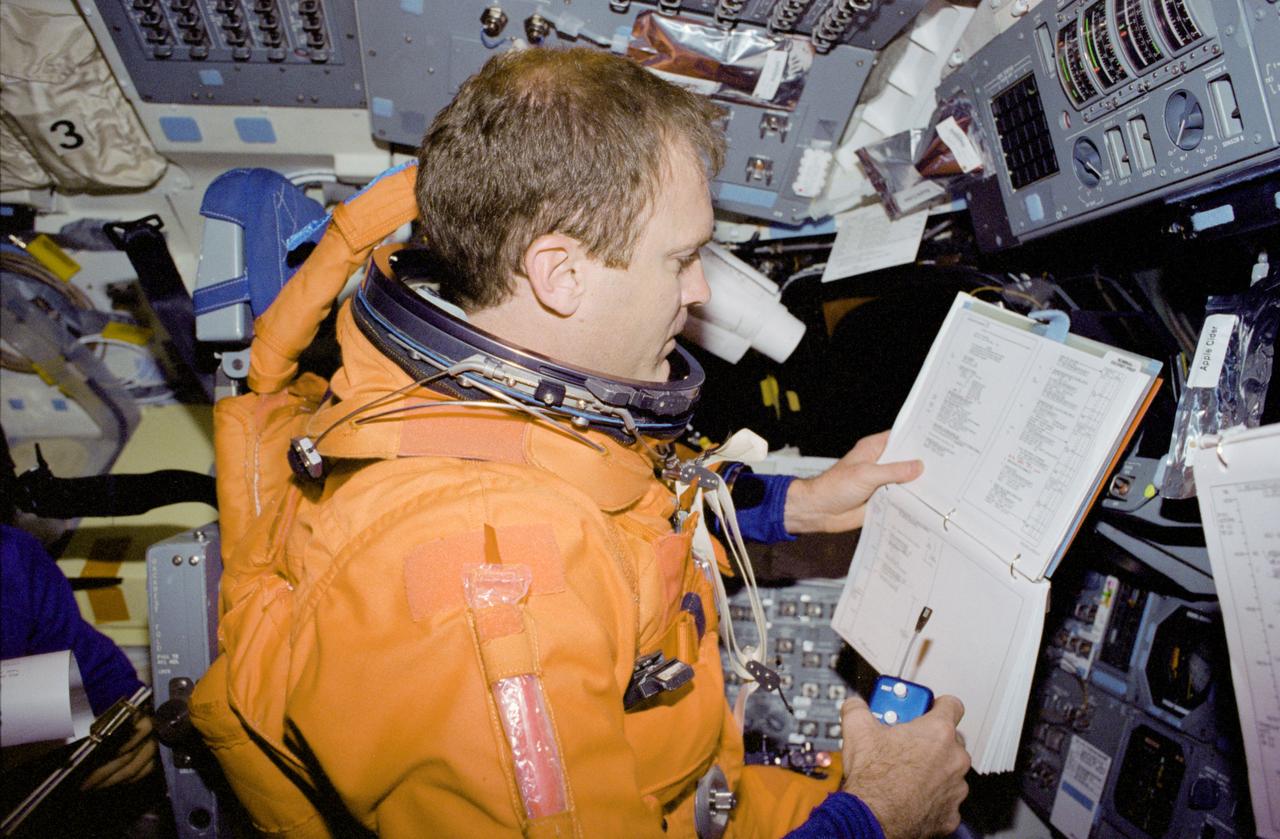
STS083-448-025 (8 April 1997) --- Partially suited in the partial-pressure launch and entry garment, astronaut James D. Halsell, Jr., mission commander, goes over a checklist prior to entry. Halsell, along with four other NASA astronauts and two payload specialists supporting the Microgravity Sciences Laboratory (MSL-1) mission were less than a fourth of the way through a scheduled 16-day flight when a power problem cut short their planned stay.
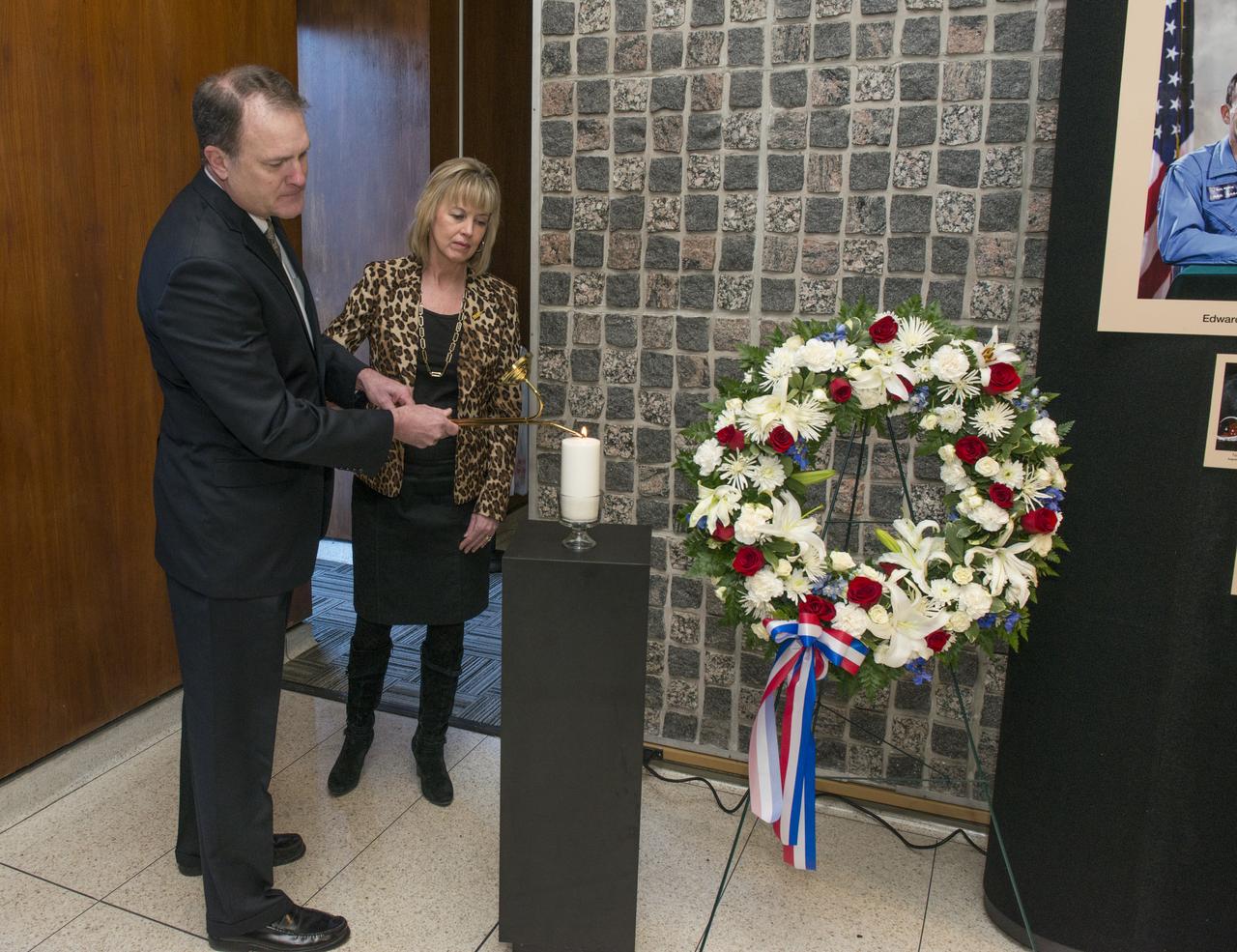
DAY OF REMEMBRANCE: FORMER SPACE SHUTTLE ASTRONAUT JIM HALSELL, LEFT, TECHNICAL DIRECTOR OF THE SPACE DIVISION OF DYNETICS INC. OF HUNTSVILLE, LIGHTS A CANDLE FOR NASA'S LOST CREW MEMBERS. TERESA VANHOOSER, MARSHALL DEPUTY DIRECTOR, LOOKS ON. THE CANDLE-LIGHTING WAS PART OF A DAY OF REMEMBRANCE CEREMONY JAN. 30 AT THE MARSHALL CENTER.
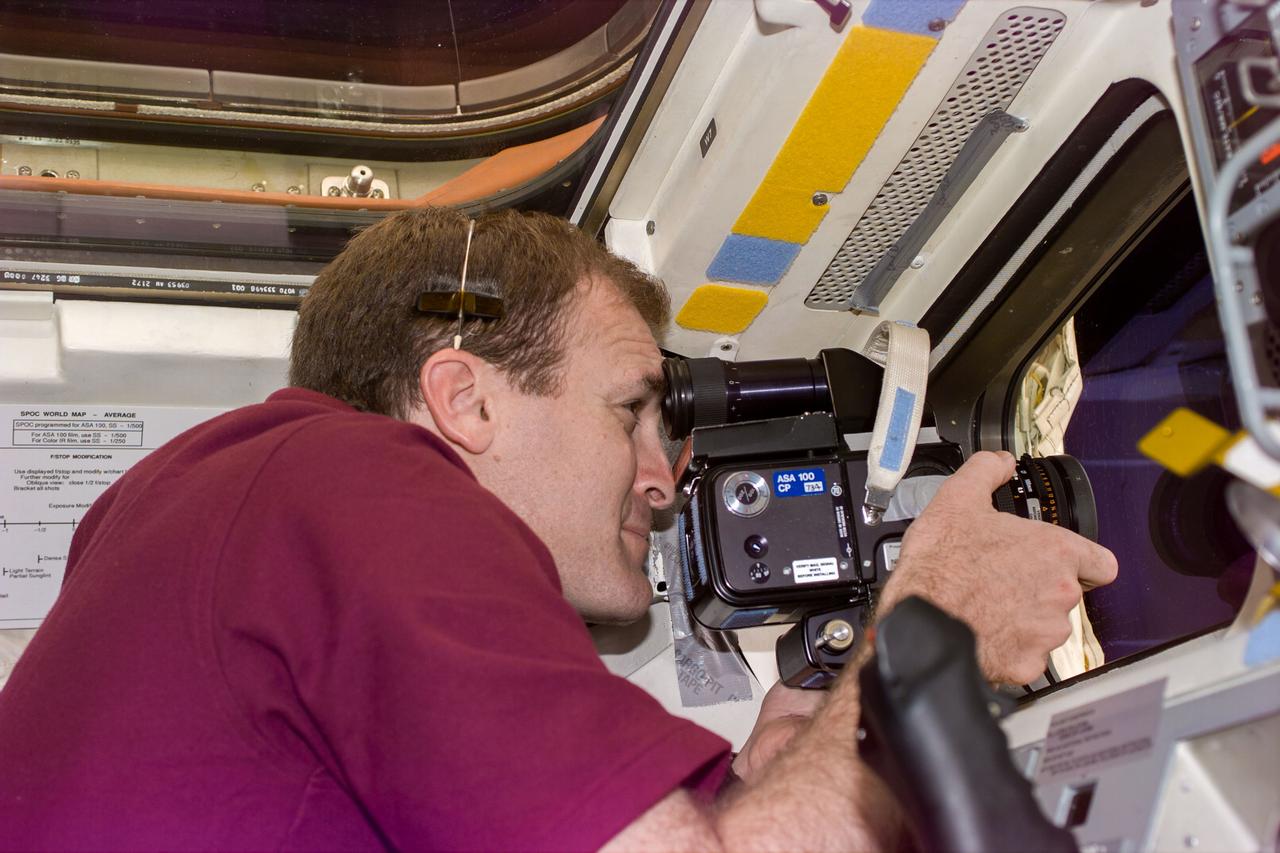
S94-E-5003 (5 July 1997) --- Astronaut James D. Halsell, Jr. , mission commander, positioned on the Space Shuttle Columbia's aft flight deck, takes a picture of the Spacelab Module, several feet away in Columbia's cargo bay.
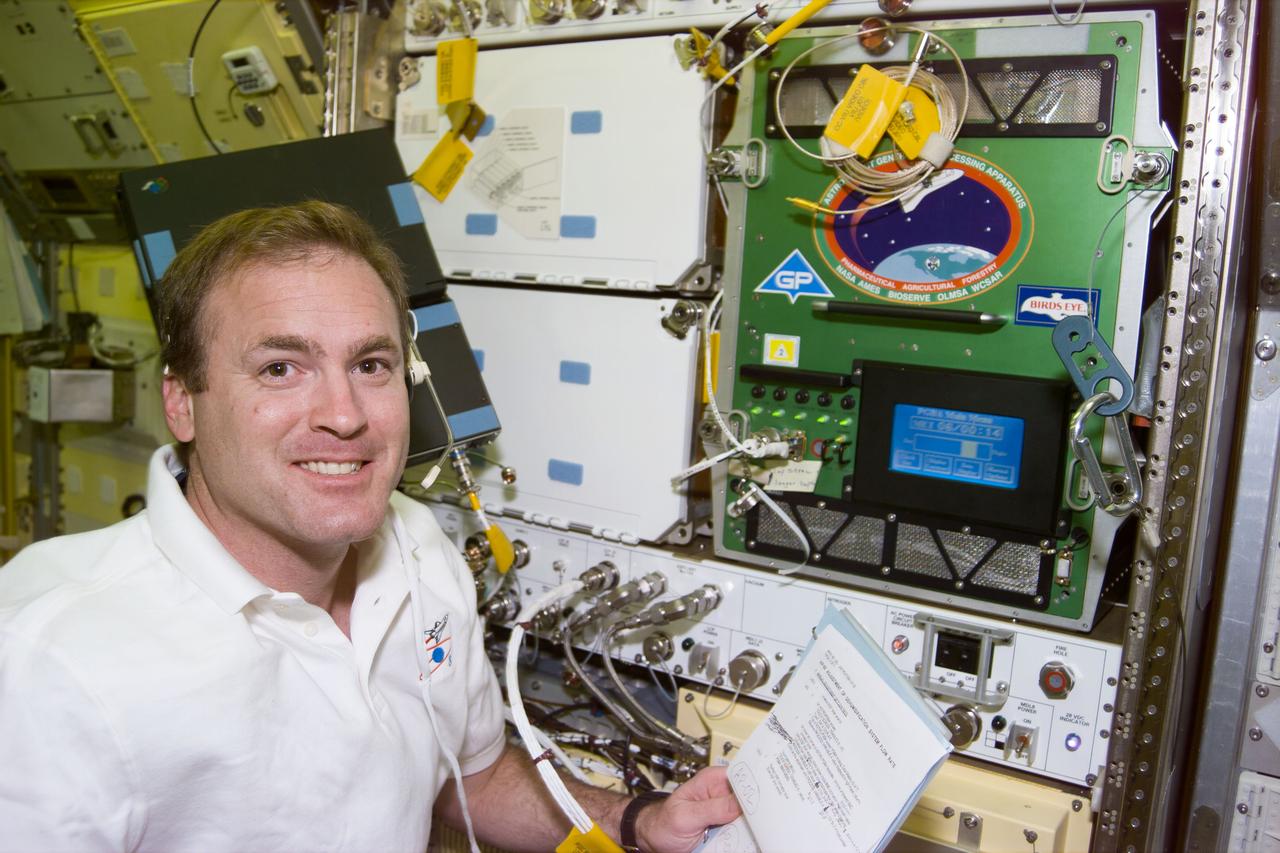
S94-E-5021 (6 July 1997) --- Astronaut James D. Halsell, Jr., mission commander, checks on an experiment in the Astro-Planet Generic Bioprocessing Apparatus onboard the Earth-orbiting Space Shuttle Columbia. The Microgravity Sciences Laboratory (MSL-1) had just completed the first one-third of its manifest time frame. The image was recorded with an Electronic Still Camera (ESC) and later downlinked to ground controllers in Houston, Texas.
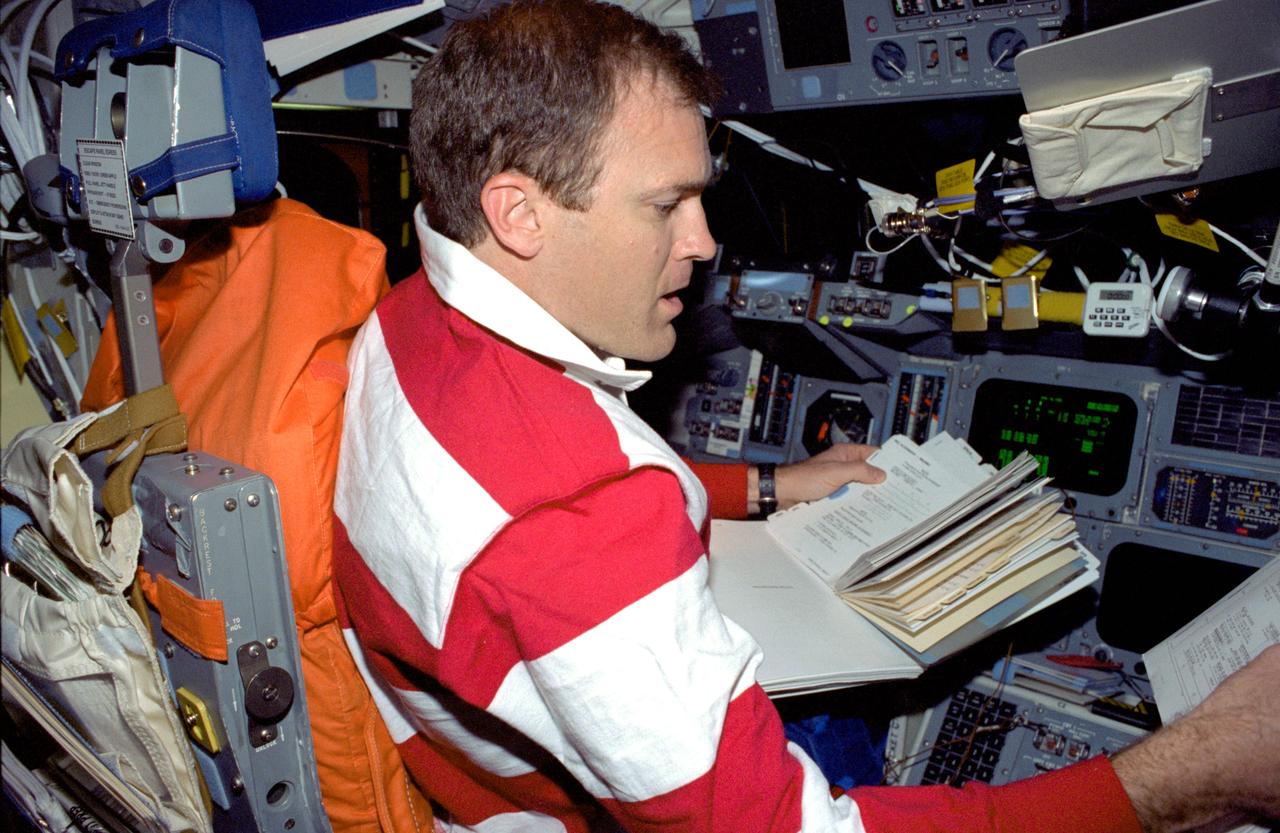
STS083-450-012 (4-8 April 1997) --- Astronaut James D. Halsell, Jr., commander, mans the commander's station aboard the Space Shuttle Columbia. Designed as a 16-day Microgravity Science Laboratory 1 (MSL-1) mission, the flight was cut short when one of three fuel cells did not function properly.
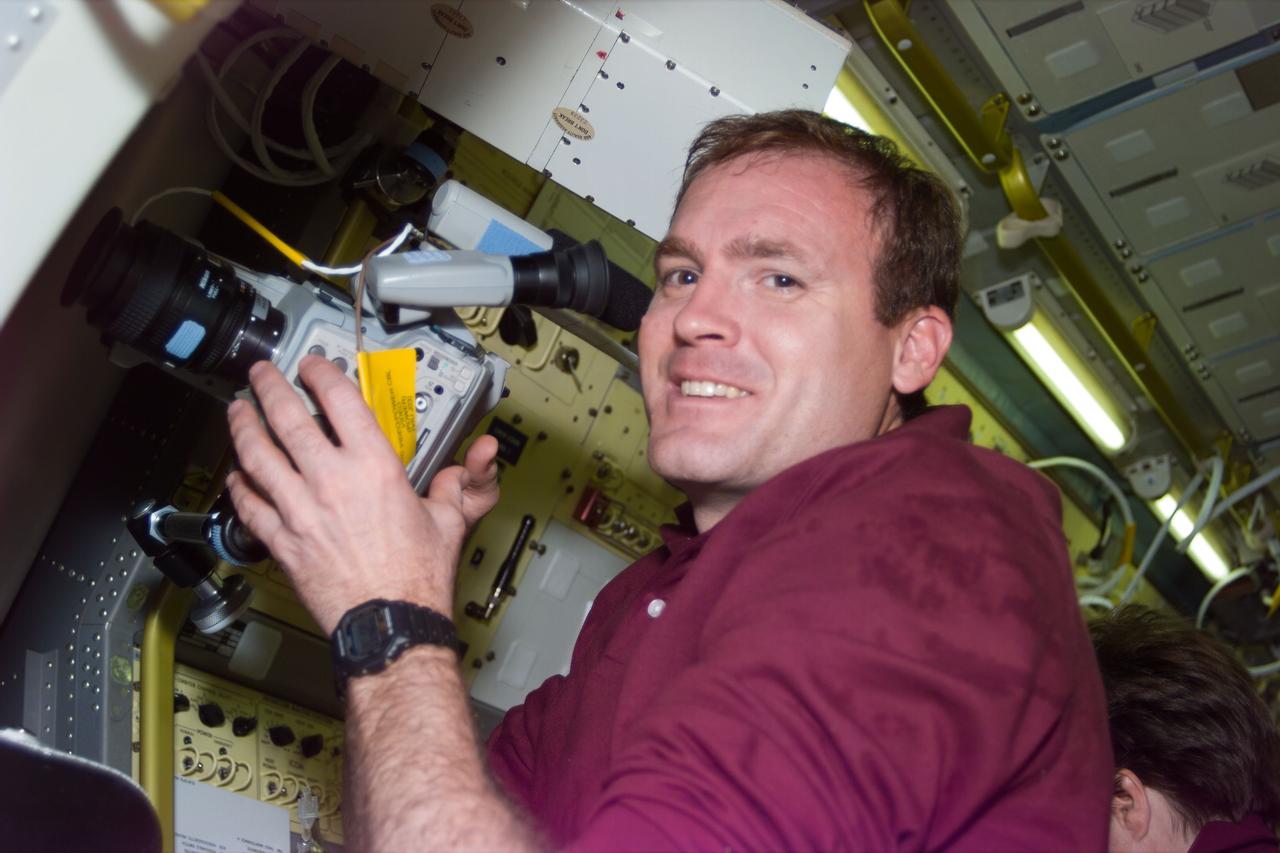
S94-E-5045 (July 1997) --- Astronaut James D. Halsell Jr., mission commander, video tapes an experiment onboard the Spacelab science module in support of the Microgravity Science Laboratory (MSL-1) mission of Columbia and STS-94.
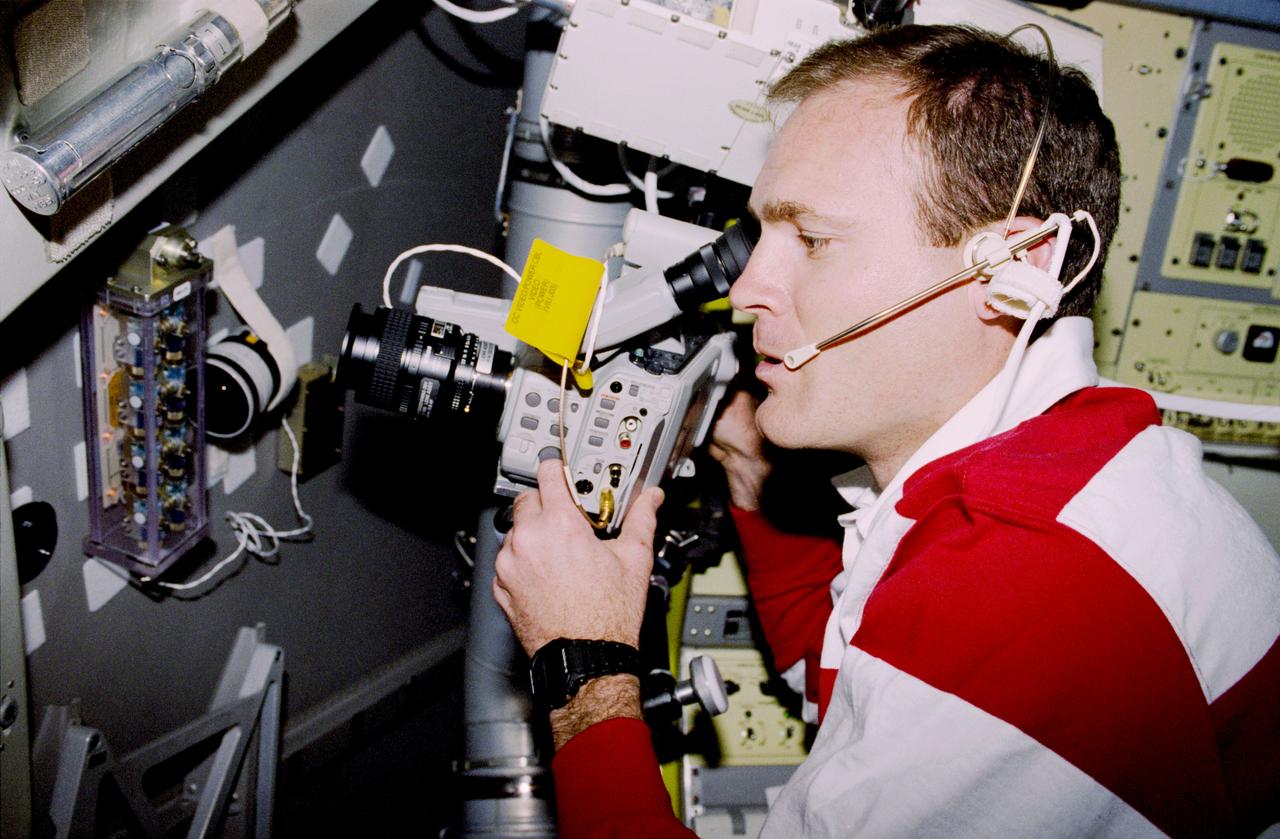
STS083-313-012 (4-8 April 1997) --- Astronaut James D. Halsell, Jr., mission commander, uses a Hi-8mm camcorder to videotape the Hand Held Diffusion Test Cells (HHDTC), in the Spacelab Module aboard the Earth-orbiting Space Shuttle Columbia. Each test cell has three chambers containing a protein solution, a buffer solution and a precipitant solution chamber. Using the liquid-liquid diffusion method, the different fluids are brought into contact but not mixed. Over a period of time, the fluids will diffuse into each other through the random motion of molecules. The gradual increase in concentration of the precipitant within the protein solution causes the proteins to crystallize.

STS083-489-021 (4-8 April 1997)--- Astronaut James D. Halsell, Jr., mission commander, checks on an experiment in the Astro-Planet Generic Bioprocessing Apparatus onboard the Earth-orbiting Space Shuttle Columbia. The Microgravity Sciences Laboratory (MSL-1) completed about one-fourth of its manifest time frame prior to being cut short by a power shortage.
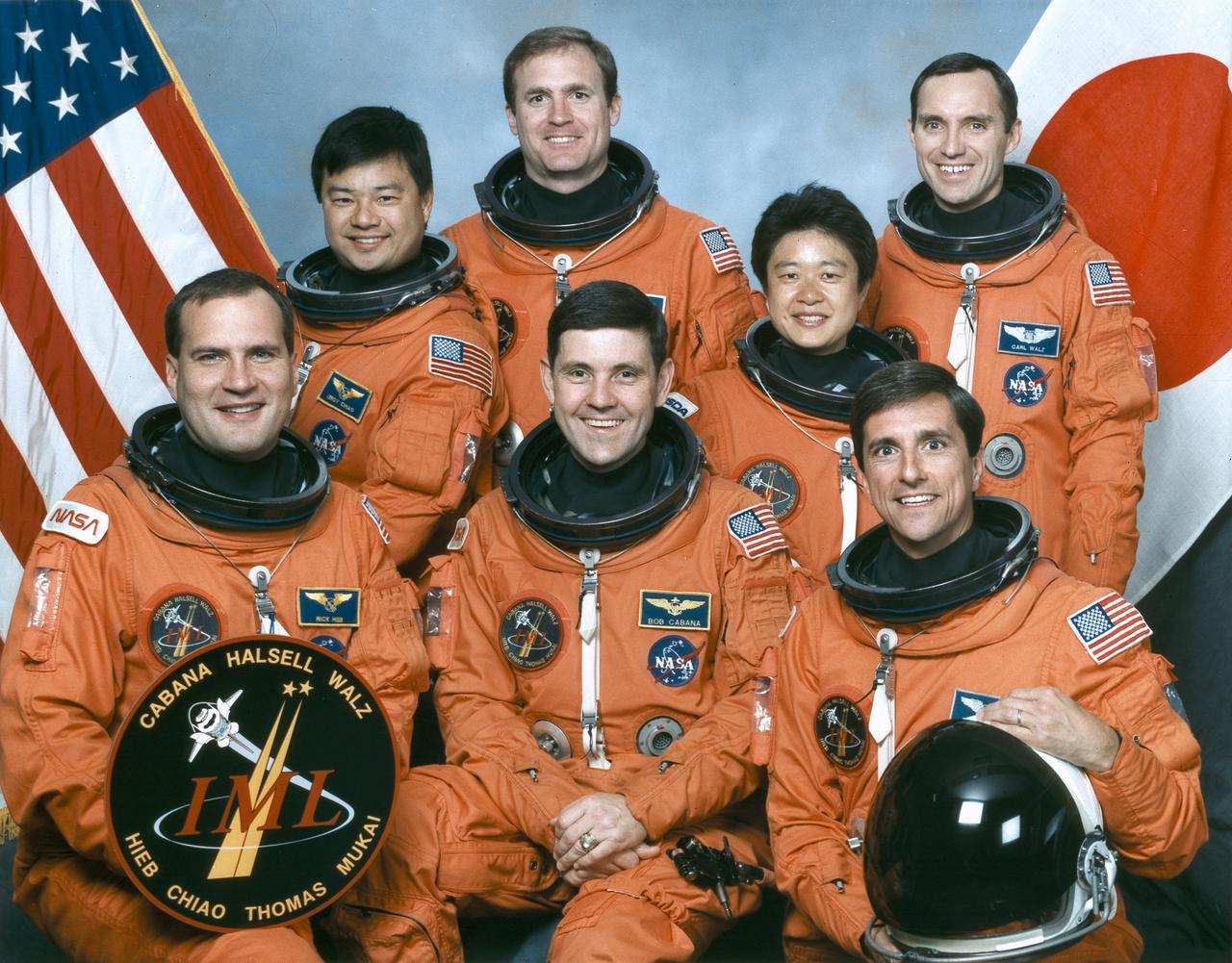
The crew assigned to the STS-65 mission included (seated left to right) Richard J. (Rick) Hieb, payload commander; Robert D. (Bob) Cabana, commander; and Donald A. Thomas, mission specialist. Standing, from left to right, are Leroy Chiao, mission specialist; James D. Halsell, pilot; Chiaki Naito-Mukai, payload specialist; and Carl E. Walz, mission specialist. Launched aboard the Space Shuttle Columbia on July 8, 1994 at 12:43:00 pm (EDT), the STS-64 mission marked the second flight of the International Microgravity Laboratory (IML-2) and the first flight of a female Japanese crew member.
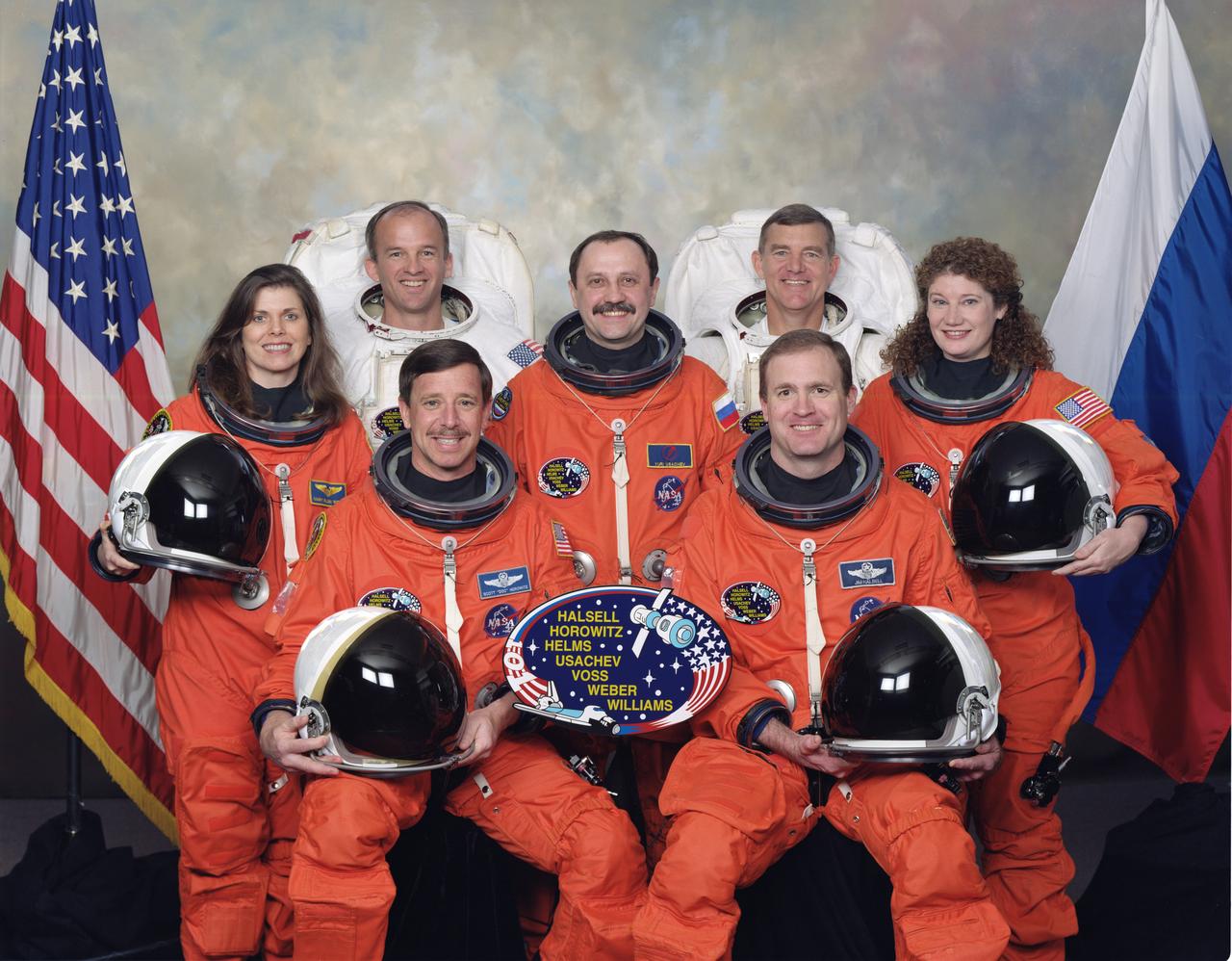
Six astronauts and a Russian cosmonaut comprised the STS-101 mission that launched aboard the Space Shuttle Atlantis on May 19, 2000 at 5:11 am (CDT). Seated in front are astronauts James D. Halsell (right), mission commander; and Scott J. Horowitz, pilot. Others, from the left, are Mary Ellen Weber, Jeffrey N. Williams, Yury V. Usachev, James S. Voss and Susan J. Helms, all mission specialists. Usachev represents the Russian Space Agency (RSA). The crew of the STS- 101 mission refurbished and replaced components in both the Zarya and Unity modules, with top priority being the Zarya module.
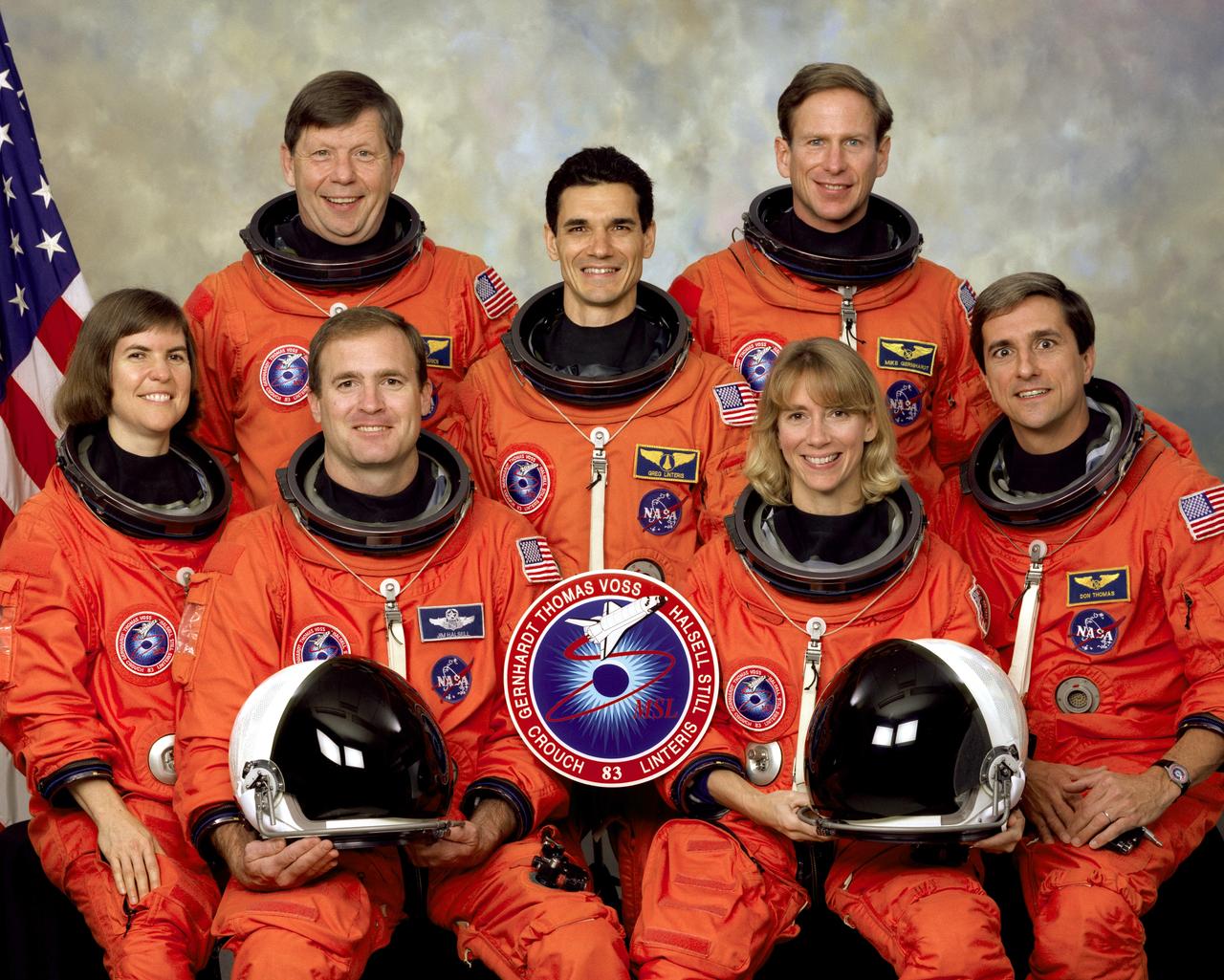
Five NASA astronauts and two scientists comprised the crew for the STS-83 mission in support of the first Microgravity Sciences Laboratory 1 (MSL-1). Pictured on the front row (left to right) are Janice E. Voss, payload commander; James D. Halsell, commander; Susan L. Still, pilot; and Donald A. Thomas, mission specialist. On the back row (left to right) are payload specialists Roger K. Crouch, and Gregory T. Linteris; and Michael L. Gernhardt, mission specialist. Dr. Crouch and Dr. Linteris are experts in several disciplines treated on MSL-1. STS-83 launched aboard the Space Shuttle Columbia on April 4, 1997. The five launched again in July 1997 for the STS-94 mission.
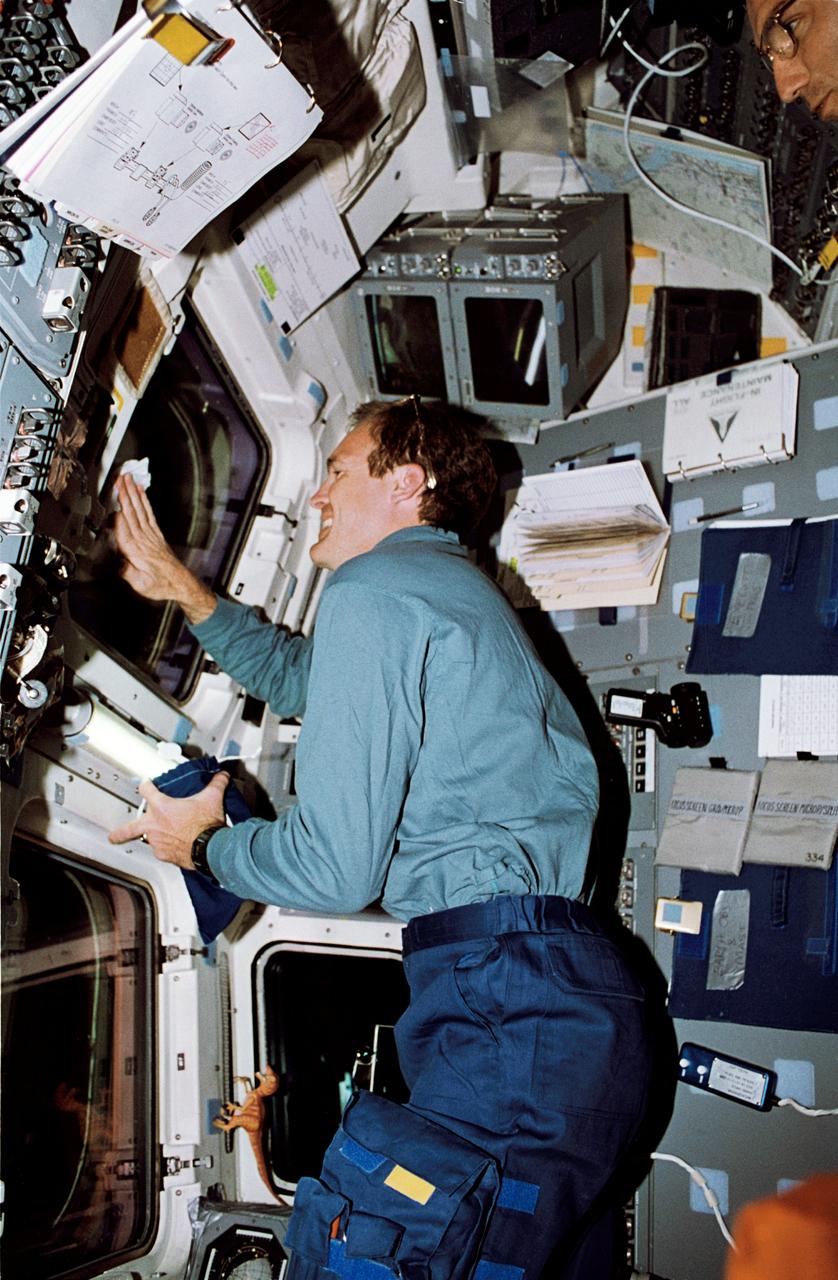
STS065-52-034 (8-23 July 1994) --- On the Space Shuttle Columbia's aft flight deck, astronaut James D. Halsel,l Jr., pilot, cleans off one of the overhead windows. Astronaut Carl E. Walz, mission specialist, looks on (photo's edge). The two shared over fourteen days in Earth-orbit with four other NASA astronauts and a Japanese payload specialist in support of the second International Microgravity Laboratory (IML-2) mission.
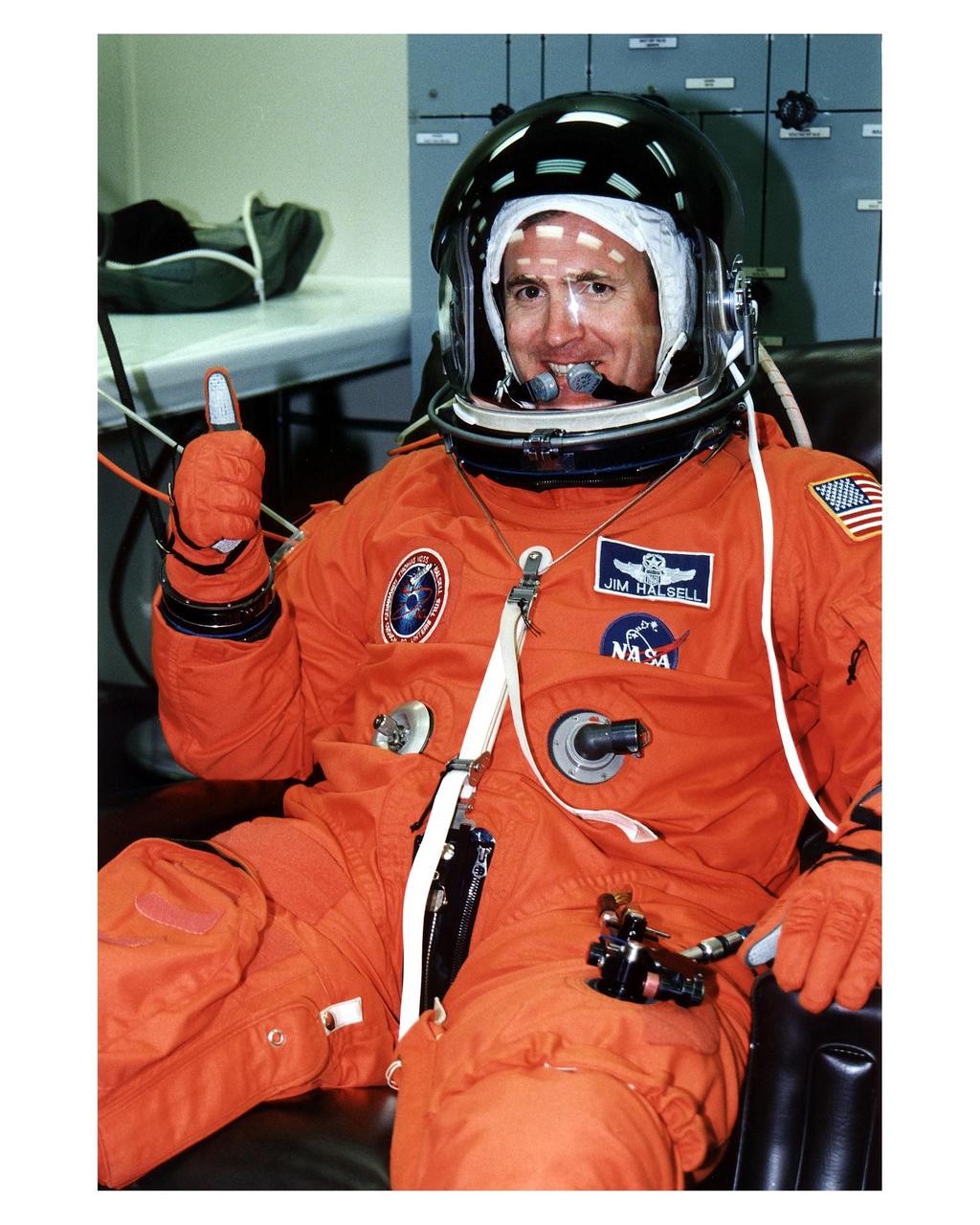
STS-83 Mission Commander James D. Halsell, Jr., gives a thumbs-up after he is assisted into his launch/entry suit in the Operations and Checkout (O&C) Building. Halsell is on his third space flight, having served as pilot of both STS-74 and STS-65. He is a lieutenant colonel in the Air Force and a former SR-71 Blackbird test pilot and holds master's degrees in management and space operations. Halsell will have responsibility for the success of the mission and will operate and maintain Columbia during the Red, or second shift. He will also assist with a materials science experiment and a protein crystal growth payload during the 16-day mission. Halsell and six fellow crew members will shortly depart the O&C and head for Launch Pad 39A, where the Space Shuttle Columbia will lift off during a launch window that opens at 2:00 p.m. EST, April 4
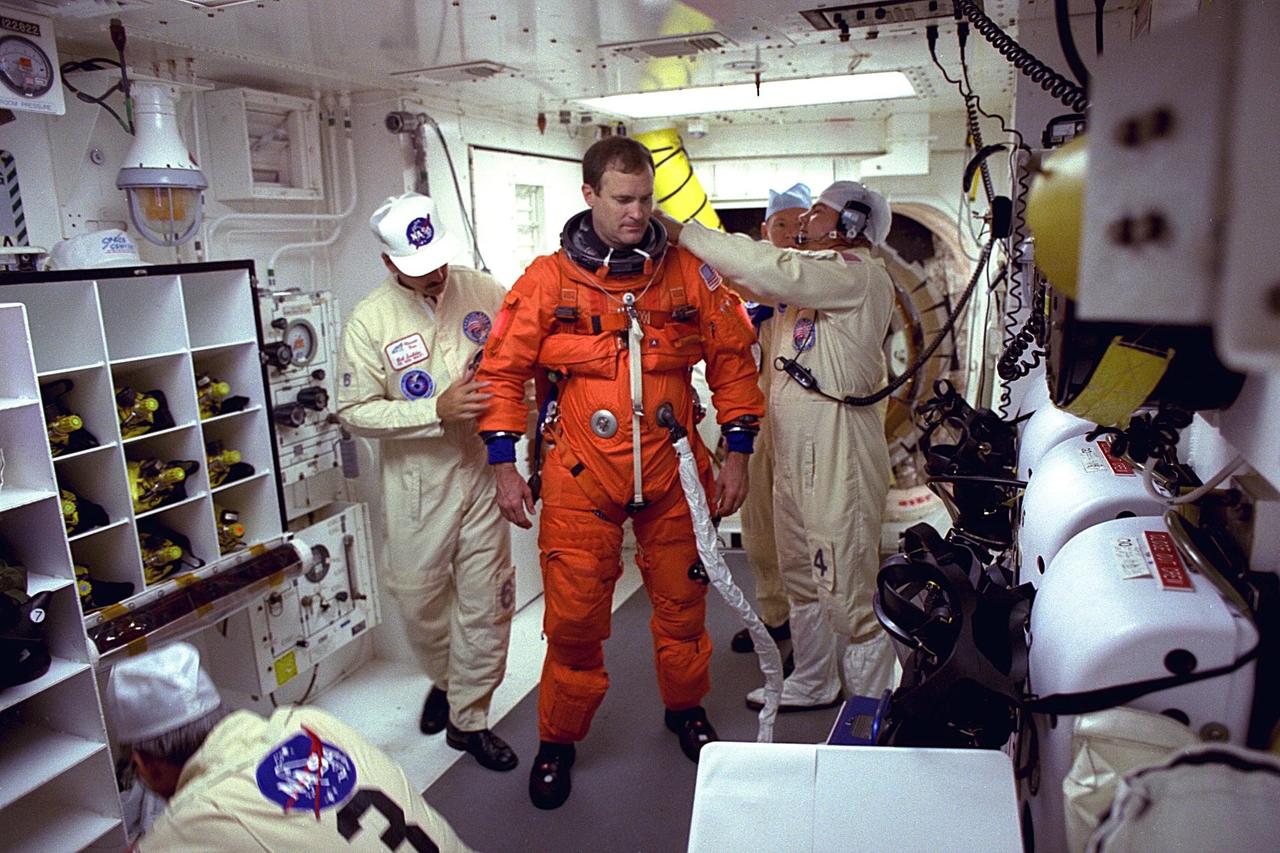
STS-94 Mission Commander James D. Halsell, Jr., prepares to enter the Space Shuttle Columbia at Launch Pad 39A in preparation for launch. Halsell is on his fourth space flight, having served as commander of STS-83 and pilot of both STS-74 and STS-65. He is a lieutenant colonel in the Air Force and a former SR-71 Blackbird test pilot and holds master’s degrees in management and space operations. Halsell will have responsibility for the success of the mission and will operate and maintain Columbia during the Red, or second shift. He will also assist with a materials science experiment and a protein crystal growth payload during the 16-day mission. Halsell and six fellow crew members will lift off during a launch window that opens at 1:50 p.m. EDT, July 1. The launch window will open 47 minutes early to improve the opportunity to lift off before Florida summer rain showers reach the space center
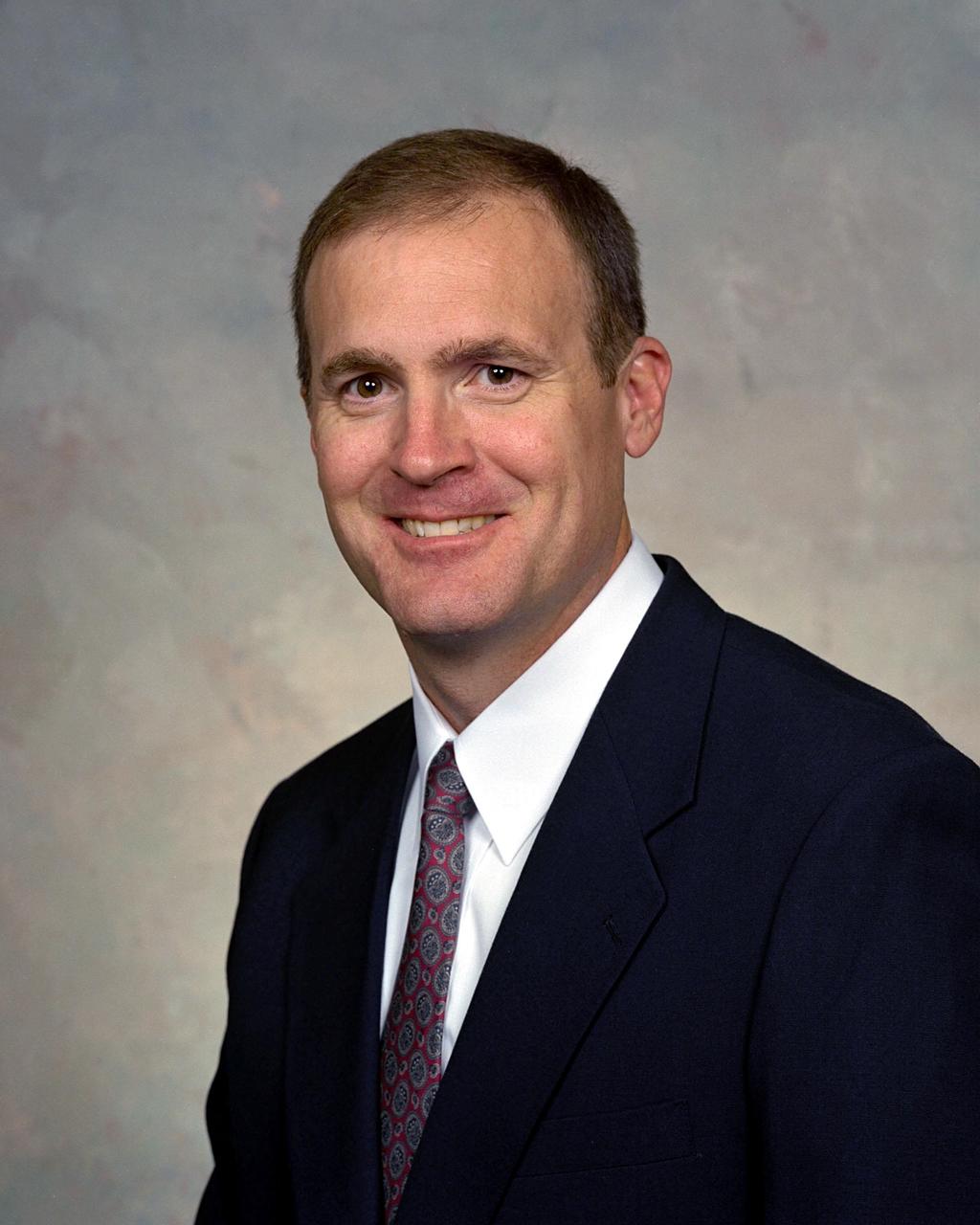
KENNEDY SPACE CENTER, FLA. -- Official portrait of James D. Halsell Jr., manager, Space Shuttle Program Integration Office.
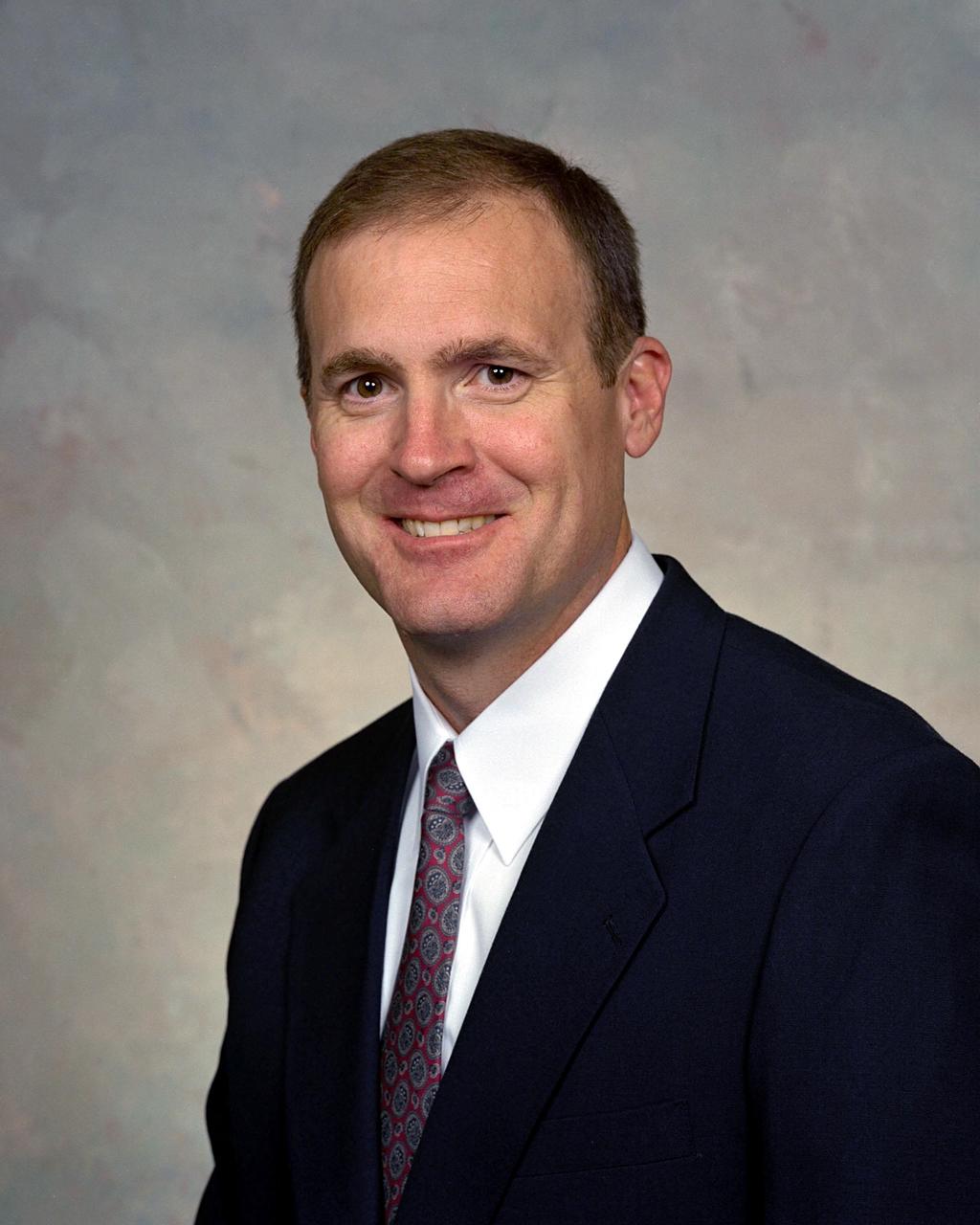
KENNEDY SPACE CENTER, FLA. -- Official portrait of James D. Halsell Jr., manager, Space Shuttle Program Integration Office.
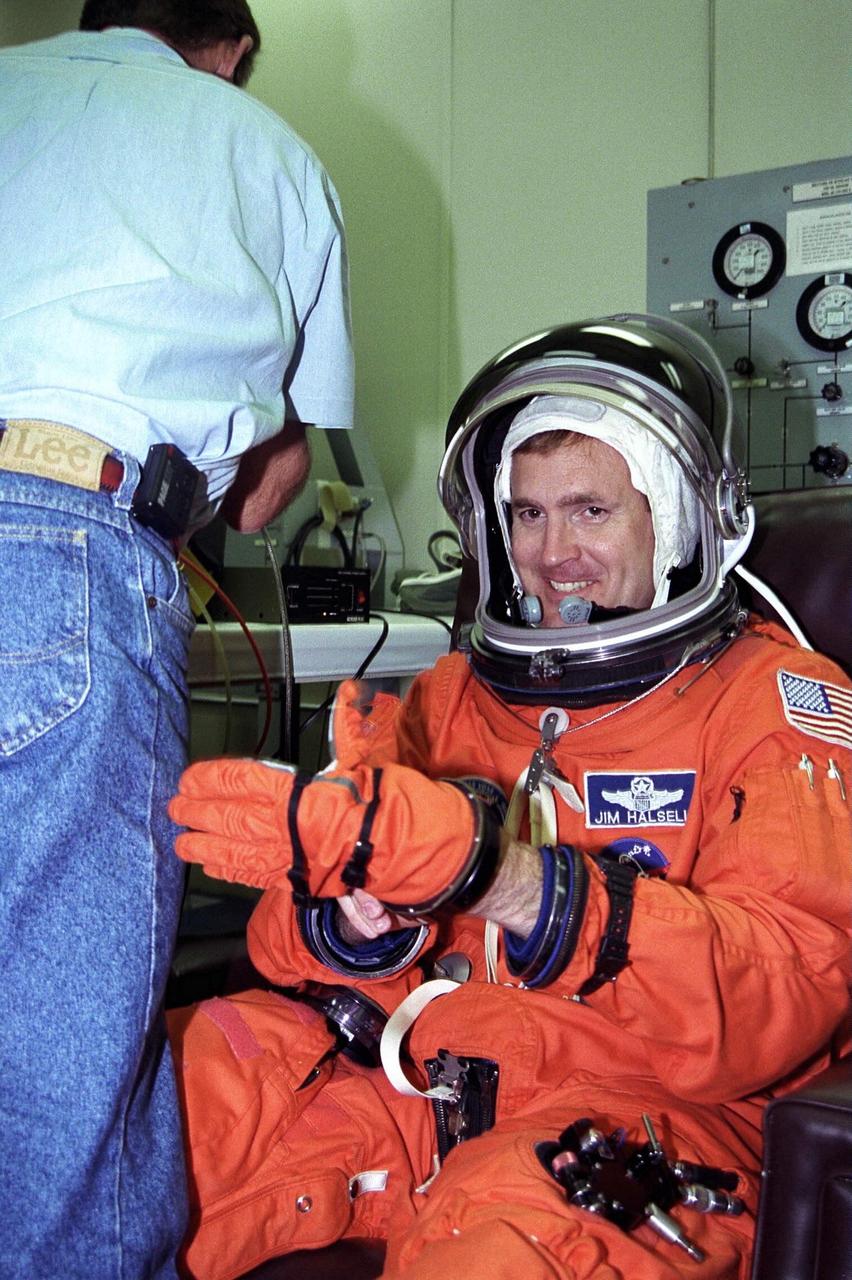
STS-94 Mission Commander James D. Halsell, Jr., puts his left glove on while he is assisted into his launch/entry suit in the Operations and Checkout (O&C) Building. Halsell is on his fourth space flight, having served as commander of STS-83 and pilot of both STS-74 and STS-65. He is a lieutenant colonel in the Air Force and a former SR-71 Blackbird test pilot and holds master’s degrees in management and space operations. Halsell will have responsibility for the success of the mission and will operate and maintain Columbia during the Red, or second shift. He will also assist with a materials science experiment and a protein crystal growth payload during the 16-day mission. Halsell and six fellow crew members will shortly depart the O&C and head for Launch Pad 39A, where the Space Shuttle Columbia will lift off during a launch window that opens at 1:50 p.m. EDT, July 1. The launch window was opened 47 minutes early to improve the opportunity to lift off before Florida summer rain showers reached the space center

JSC2000-04608 (30 May 2000) --- Astronaut James D. Halsell, Jr., mission commander, speaks to a crowd at the crew-welcoming ceremony at Ellington Field on the day following the completion of the STS-101 mission.
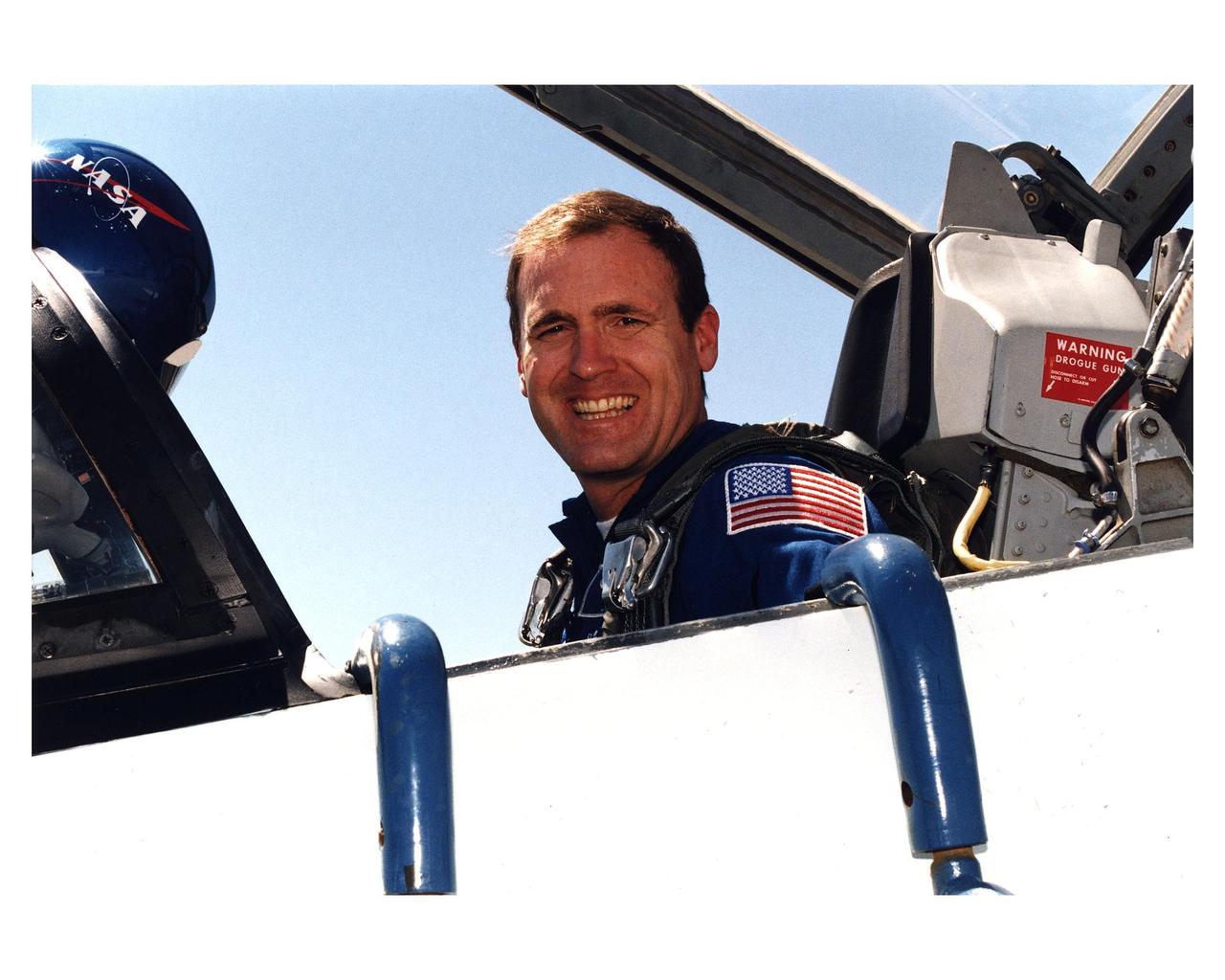
STS-83 Mission Commander James D. Halsell, Jr. arrives at Kennedy Space Center's Shuttle Landing Facility aboard a T-38 prior to Columbia's launch
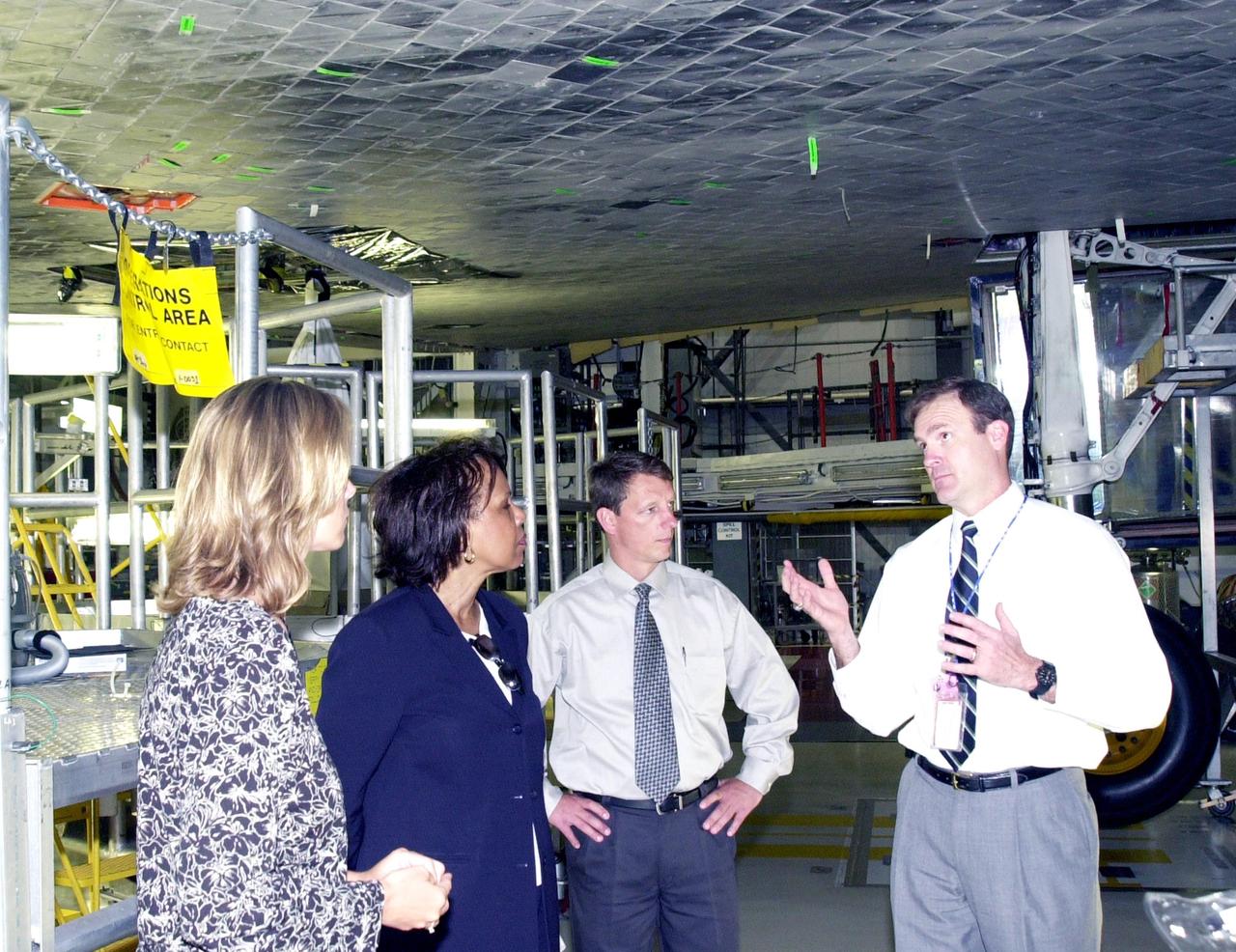
KENNEDY SPACE CENTER, FLA. - In the Orbiter Processing Facility, FAA Administrator Patti Smith (second from left) listens to Jim Halsell (right), manager of KSC's Space Shuttle Program Launch Integration, during a tour of KSC.
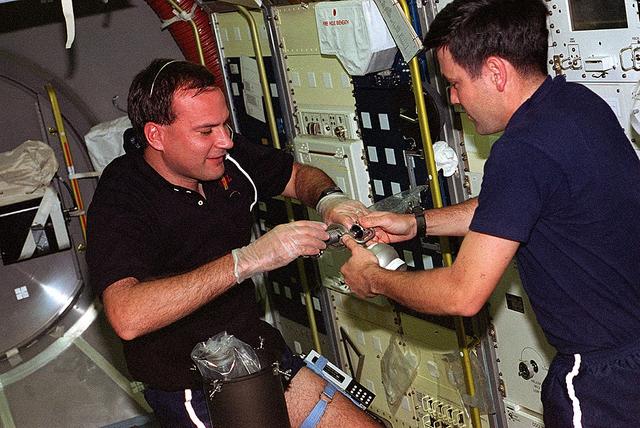
Space Shuttle Columbia (STS-65) onboard photo of Payload specialist Richard J. Hieb (right) and Shuttle Pilot James D. Halsell Jr. working on experiments in the Spacelab in the International Microgravity Laboratory (IML-2).
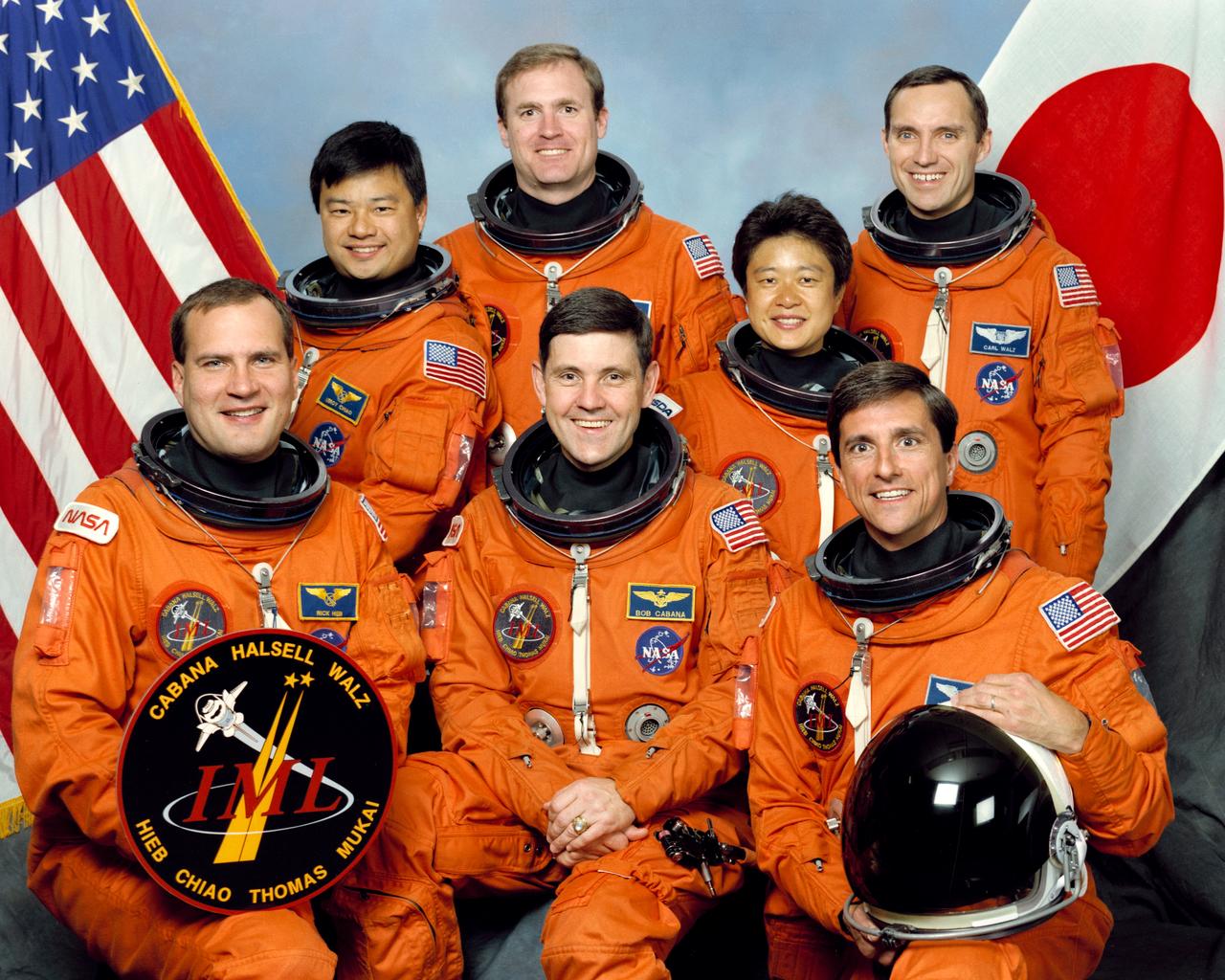
STS065-S-002 (April 1994) --- Six NASA astronauts and a Japanese payload specialist take a break from training to pose for their crew portrait. Left to right are Richard J. Hieb, Leroy Chiao, James D. Halsell Jr., Robert D. Cabana, Dr. Chiaki Mukai, Donald A. Thomas and Carl E. Walz. Cabana is mission commander, and Halsell has been assigned as pilot. Hieb is payload commander, with Walz, Thomas and Chiao serving as mission specialist. Dr. Mukai represents the National Space Development Agency (NASDA) of Japan as payload specialist on the International Microgravity Laboratory (IML) mission.
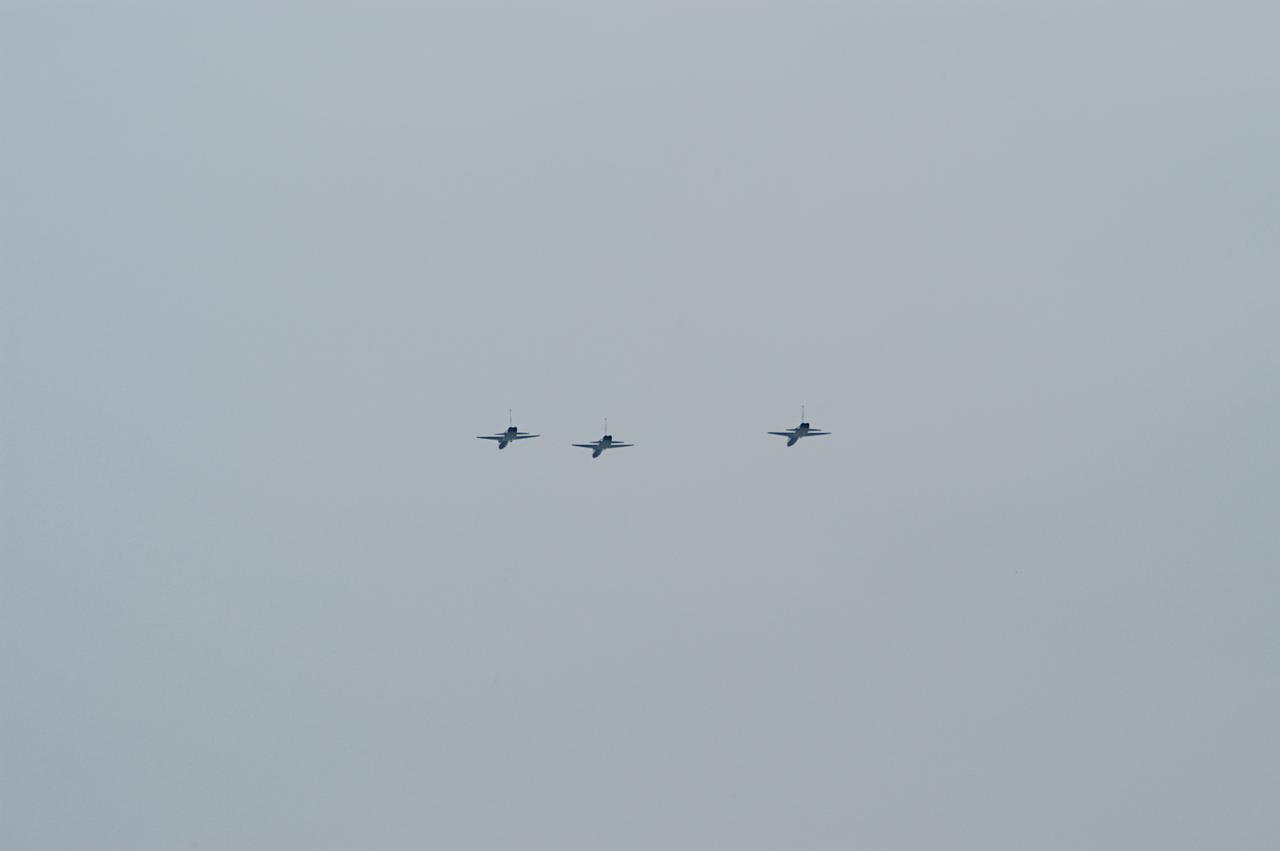
NASA T-38 jet aircraft are flying in a "Missing Man Formation" to conclude the memorial service for the crew of Columbia who were lost on Feb. 1, 2003, over East Texas as they returned to Earth after a 16-day research mission STS-107. The service was held at the Shuttle Landing Facility. Taking part in the service were NASA Administrator Sean O'Keefe, former KSC Director Robert Crippen, astronaut Jim Halsell, several employees, area clergymen, and members of Patrick Air Force Base. Crippen was the first to fly Columbia in 1981; Halsell first flew Columbia in 1994 and again in 1997.
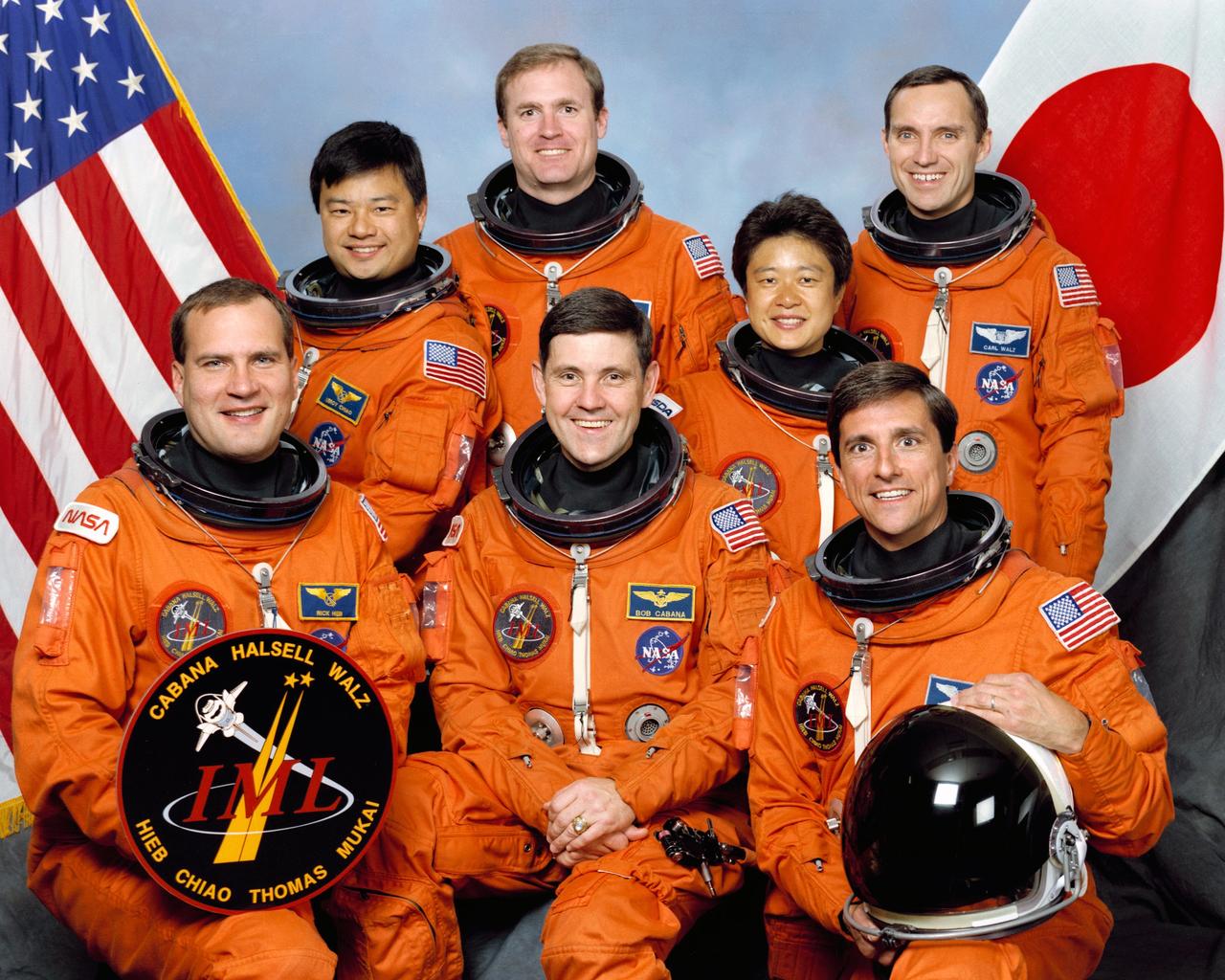
JOHNSON SPACE CENTER, Houston, Texas -- -- STS065(S)002 -- STS-65 Official Crew Portrait --- Six NASA astronauts and a Japanese payload specialist take a break from STS-65 training to pose for their crew portrait. Left to right are Richard J. Hieb, Leroy Chiao, James D. Halsell Jr., Robert D. Cabana, Dr. Chiaki Mukai, Donald A. Thomas and Carl E. Walz. Cabana is mission commander, and Halsell has been assigned as pilot. Hieb is payload commander, with Walz, Thomas and Chiao serving as mission specialists. Dr. Mukai represents the National Space Development Agency (NASDA) of Japan as payload specialist on the International Microgravity Laboratory (IML) mission.
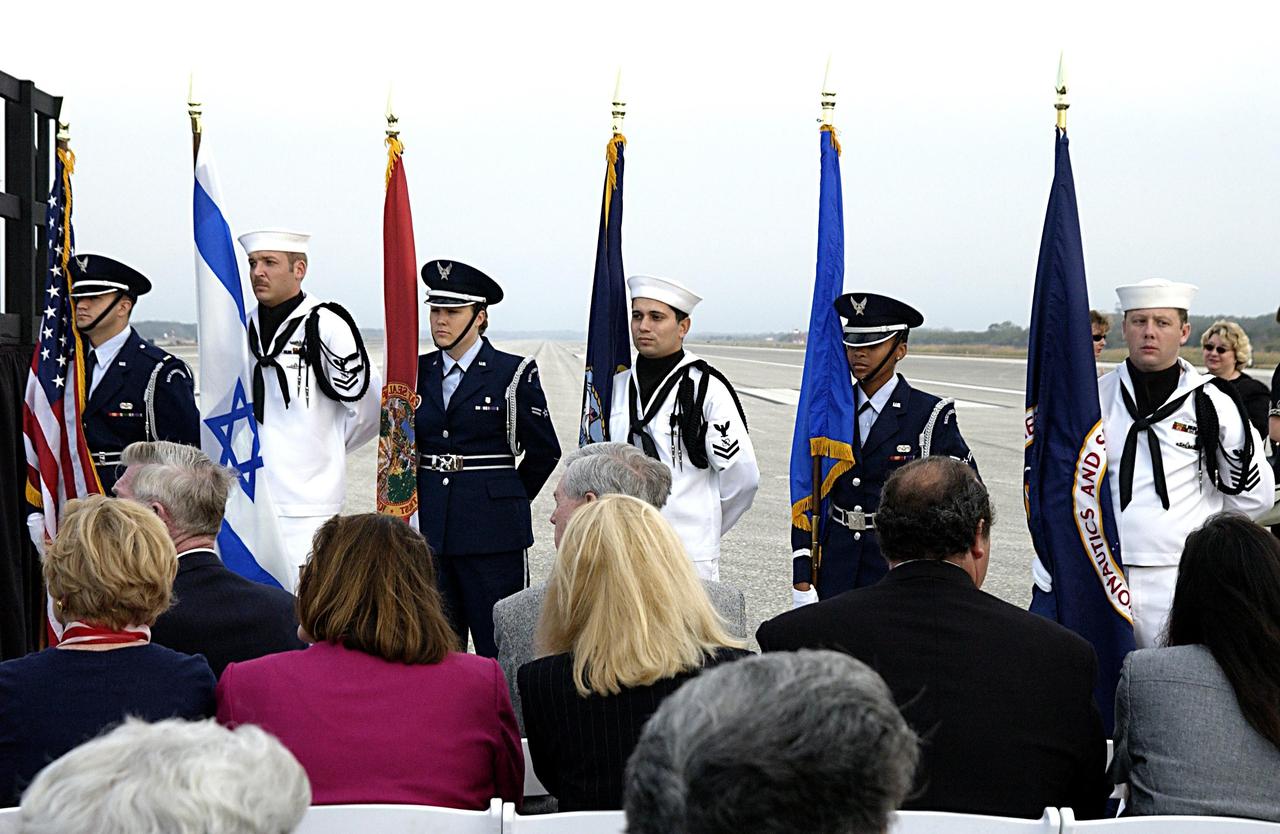
KENNEDY SPACE CENTER, FLA. -- The Patrick Air Force Base Honor Guard stands at attention during "Taps" at the conclusion of the STS-107 Columbia Crew Memorial Service held at KSC. The crew were lost on Feb. 1, 2003, over East Texas as they returned to Earth after the 16-day research mission STS-107. Also taking part in the service were NASA Administrator Sean O'Keefe, former KSC Director Robert Crippen, astronaut Jim Halsell, several employees and area clergymen. Crippen was the first to fly Columbia in 1981; Halsell first flew Columbia in 1994 and again in 1997.
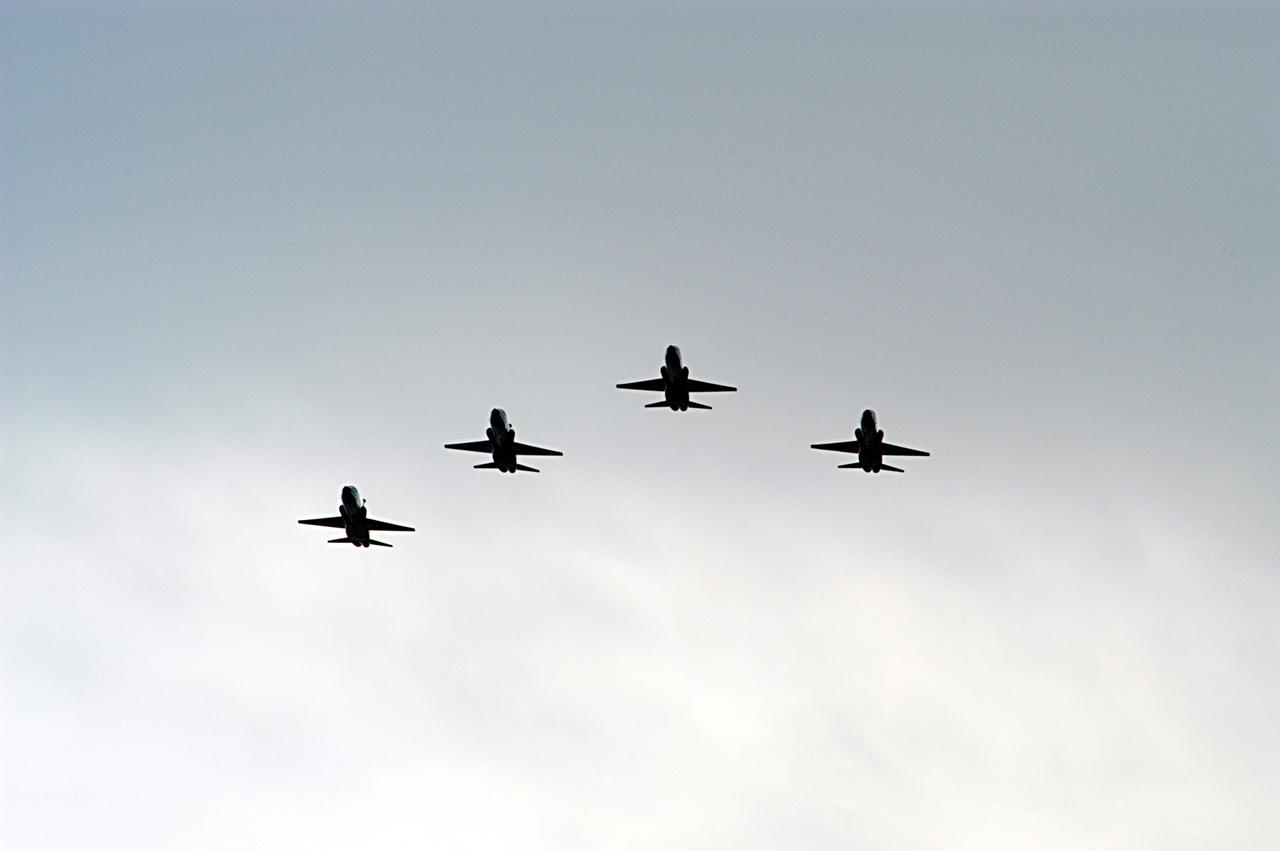
NASA T-38 jet aircraft are flying in a "Missing Man Formation" to conclude the memorial service for the crew of Columbia who were lost on Feb. 1, 2003, over East Texas as they returned to Earth after a 16-day research mission STS-107. The service was held at the Shuttle Landing Facility. Taking part in the service were NASA Administrator Sean O'Keefe, former KSC Director Robert Crippen, astronaut Jim Halsell, several employees, area clergymen, and members of Patrick Air Force Base. Crippen was the first to fly Columbia in 1981; Halsell first flew Columbia in 1994 and again in 1997.
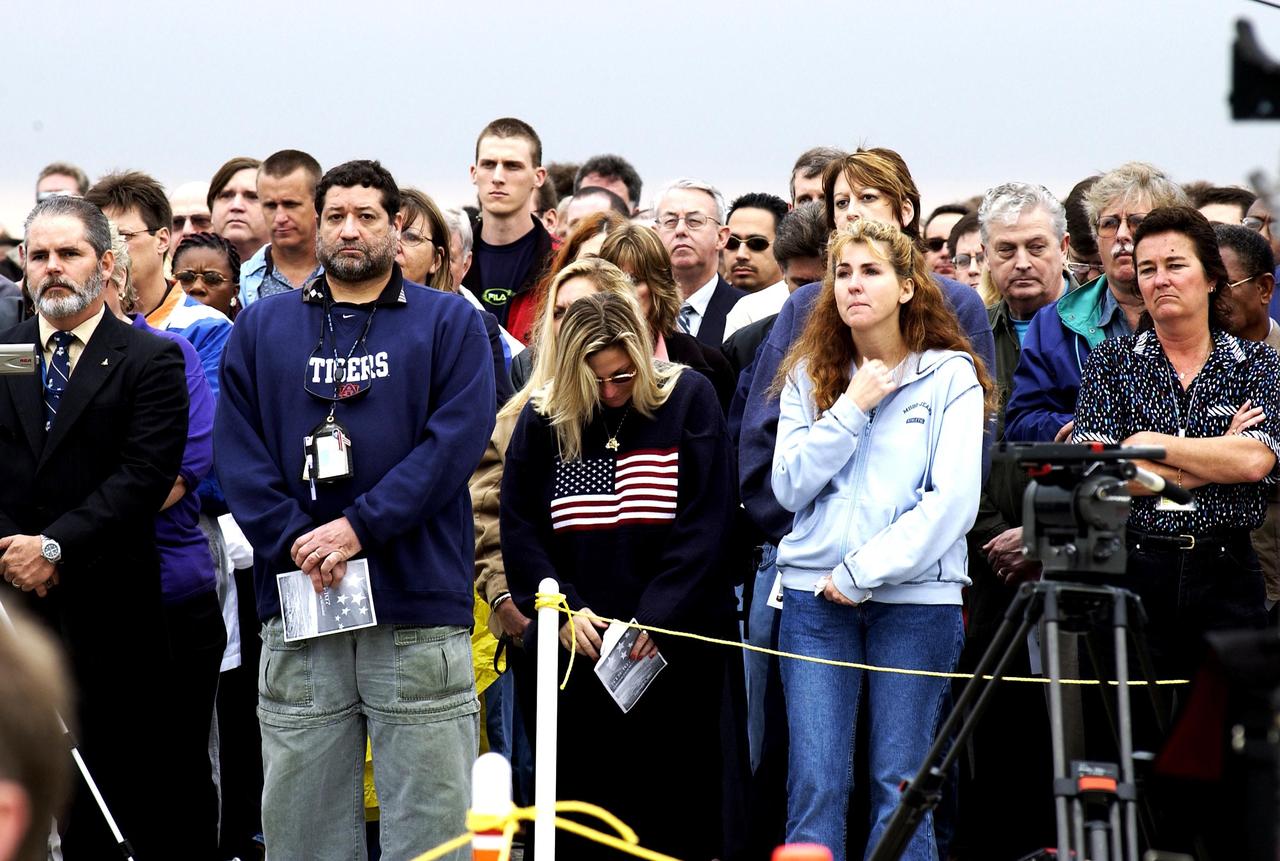
KENNEDY SPACE CENTER, FLA. -- Employees at KSC give solemn attention to the memorial service for the Columbia crew held at the Shuttle Landing Facility. The crew were lost on Feb. 1, 2003, over East Texas as they returned to Earth after the 16-day research mission STS-107. Taking part in the service were NASA Administrator Sean O'Keefe, former KSC Director Robert Crippen, astronaut Jim Halsell, several employees, area clergymen, and members of Patrick Air Force Base. Crippen was the first to fly Columbia in 1981; Halsell first flew Columbia in 1994 and again in 1997.
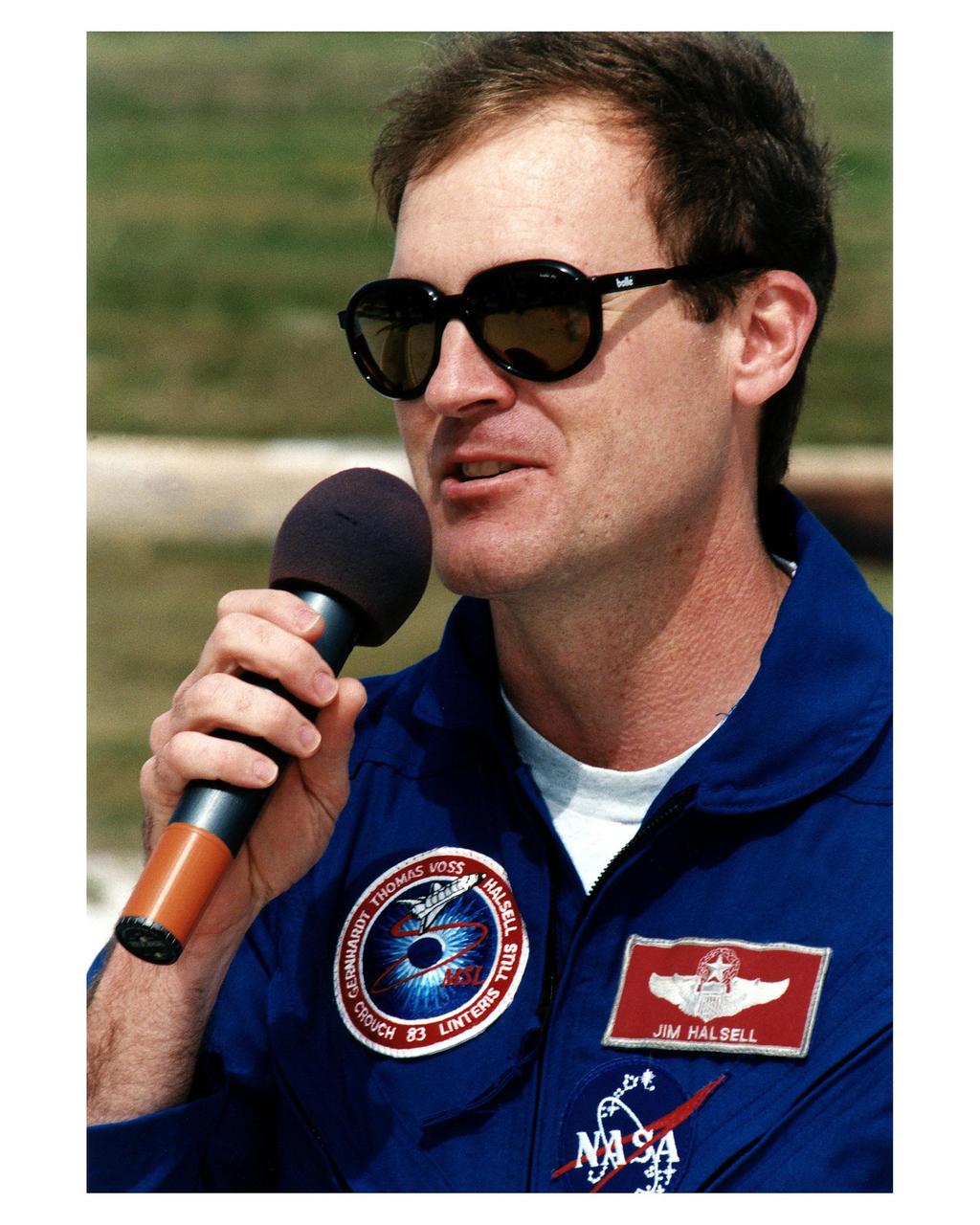
STS-83 Mission Commander James D. Halsell talks to the media at Launch Complex 39A during the crew's <a href="http://www-pao.ksc.nasa.gov/kscpao/release/1997/40-97.htm">Terminal Countdown Demonstration Test (TCDT).</a
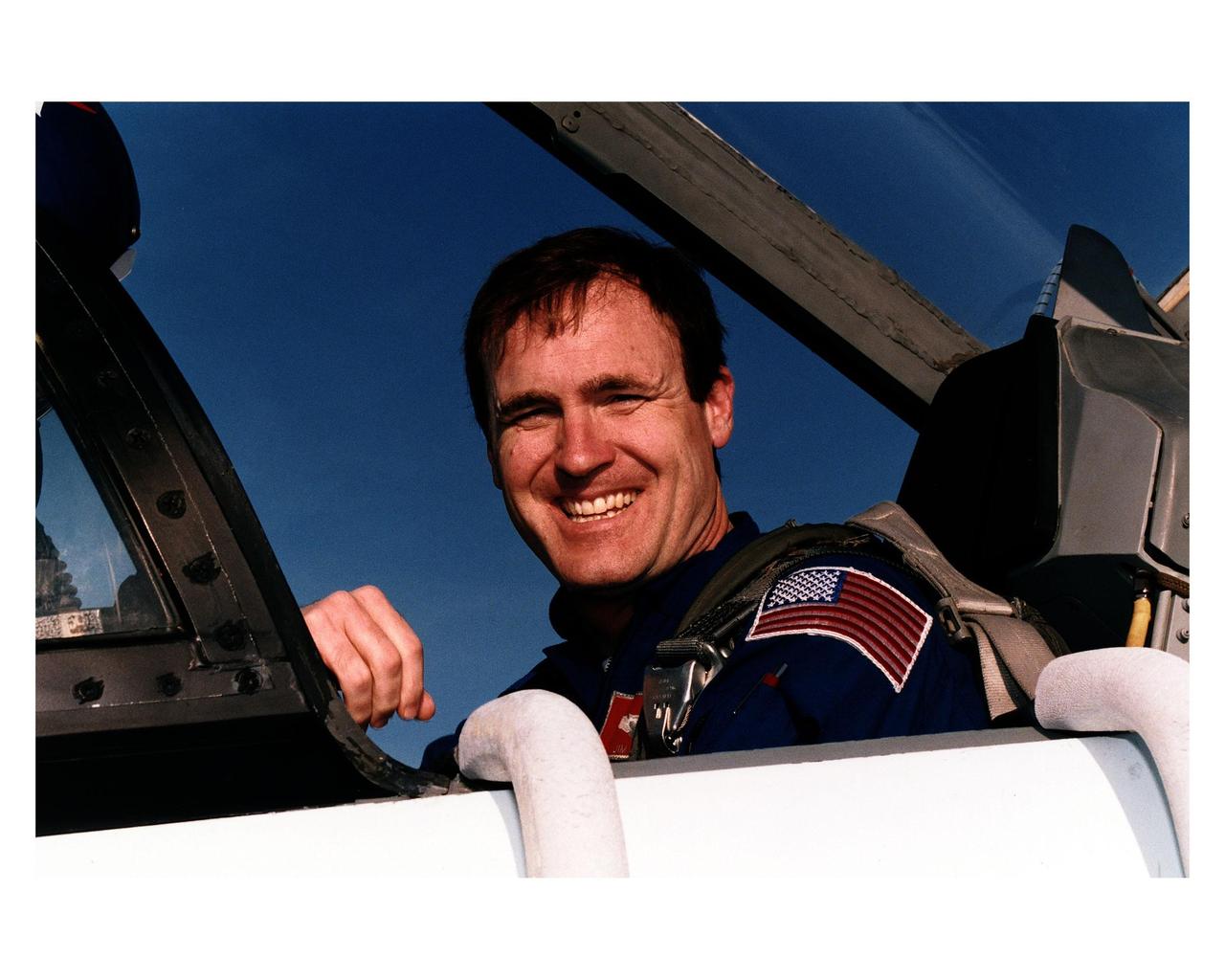
STS-83 Crew Commander James Halsell (in T-38 cockpit) and other members of the STS-83 crew arrive at Kennedy Space Center's Shuttle Landing Facility in preparation for their <a href="http://www-pao.ksc.nasa.gov/kscpao/release/1997/40-97.htm">Terminal Countdown Demonstration Test.</a

KENNEDY SPACE CENTER, FLA. - Greeted by cheers from wellwishers at KSC and eager for their ventur into space on the Microgrvity Science Laboratory-1 (MSL-1) mission, the STS-83 astronauts depart the Operations and Checkout Building on their way to Launch Pad 39A. Leading the seven-member crew is Mission Commander James D. Halsell Jr. Behind Halsell and to his right is Pilot Susan L. Still. Behind Still is Payload Commander Janice Voss, with Mission Specialist Donald A. Thomas to her left. Behind Thomas, in order, are Mission Specialist Michael L. Gernhardt and Payload Specialists Roger K. Crouch and Gregory T. Linteris. During the scheduled 16-day STS-83 mission, the MSL-1 will be used to test some of the hardware, facilities and procedures that are planned for use on the International Space Station while the flight crew conducts combustion, protein crystal growth and materials processing experiments. Also onboard is the Hitchhiker Cryogenic Flexible Diode (CRYOFD) experiment payload, which is attched to the right side of Columbia's payload bay.
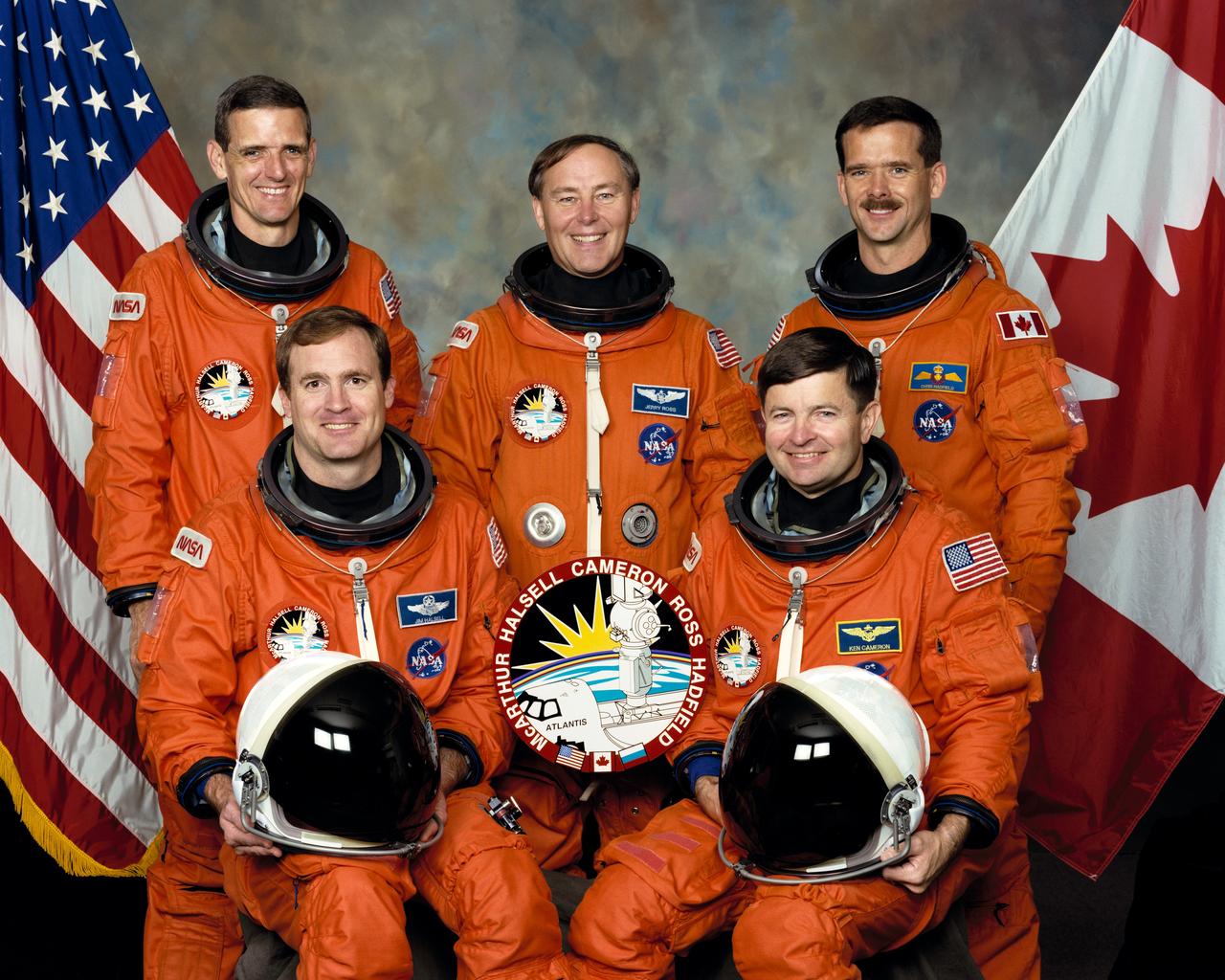
STS074-S-002(August 1995) --- These five NASA astronauts including one Canadian are in training for the STS-74 mission of the Space Shuttle Atlantis, scheduled later this year. Astronauts Kenneth D. Cameron (front right) and James D. Halsell Jr. (front left) are commander and pilot, respectively, for the flight. On the back row, left to right, are astronauts William McArthur Jr., Jerry L Ross and Chris A. Hadfield, all mission specialists. Hadfield is an international mission specialist representing the Canadian Space Agency (CSA).
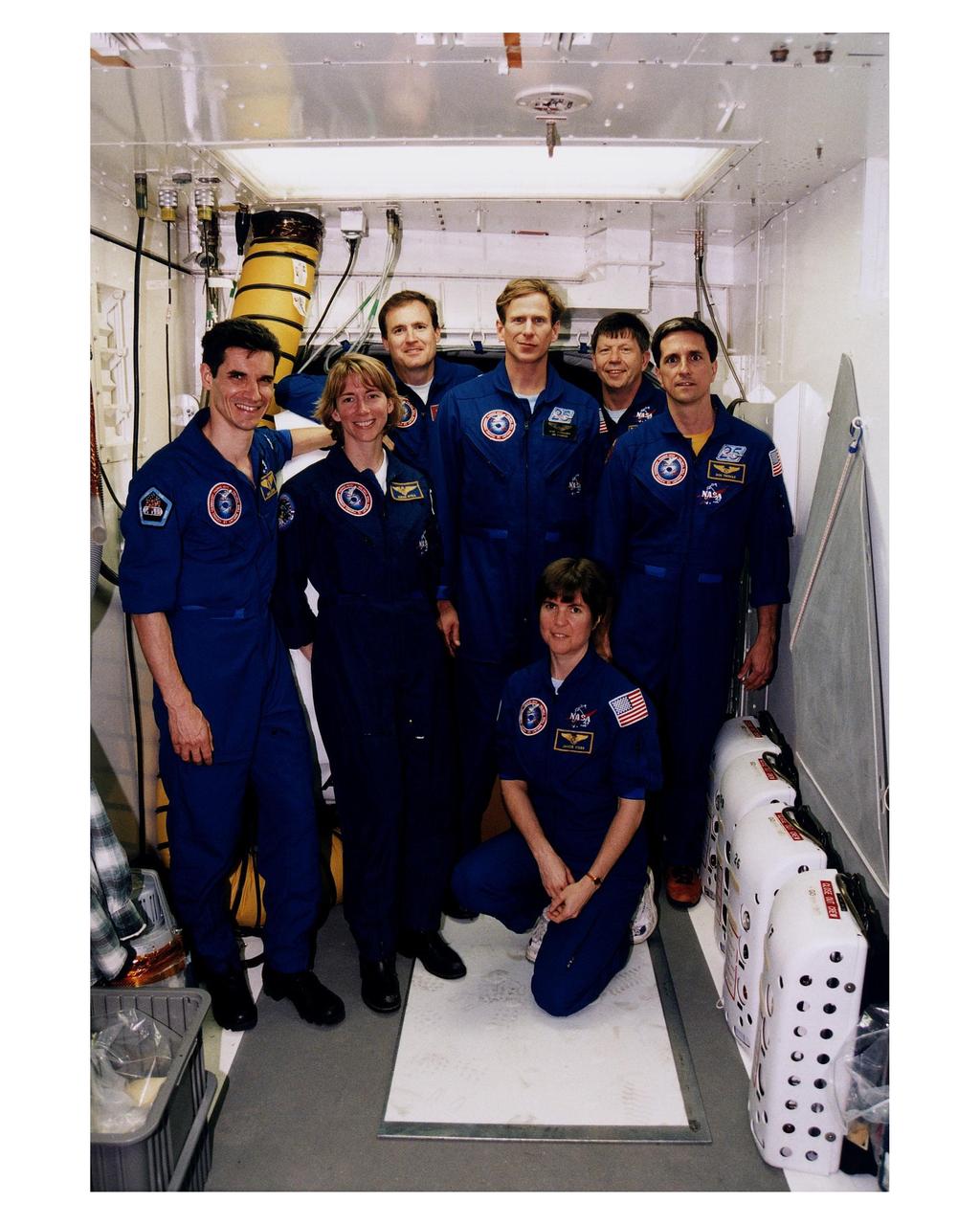
The STS-83 crew poses in the White Room at Launch Complex 39A during the crew's <a href="http://www-pao.ksc.nasa.gov/kscpao/release/1997/40-97.htm">Terminal Countdown Demonstration Test (TCDT).</a> From left to right, standing, they are Payload Specialist Gregory T. Linteris, Pilot Susan L. Still, Mission Commander James D. Halsell, Mission Specialist Michael L. Gernhardt, Payload Specialist Roger K. Crouch, and Mission Specialist Donald Thomas. Mission Specialist Janice E. Voss is kneeling
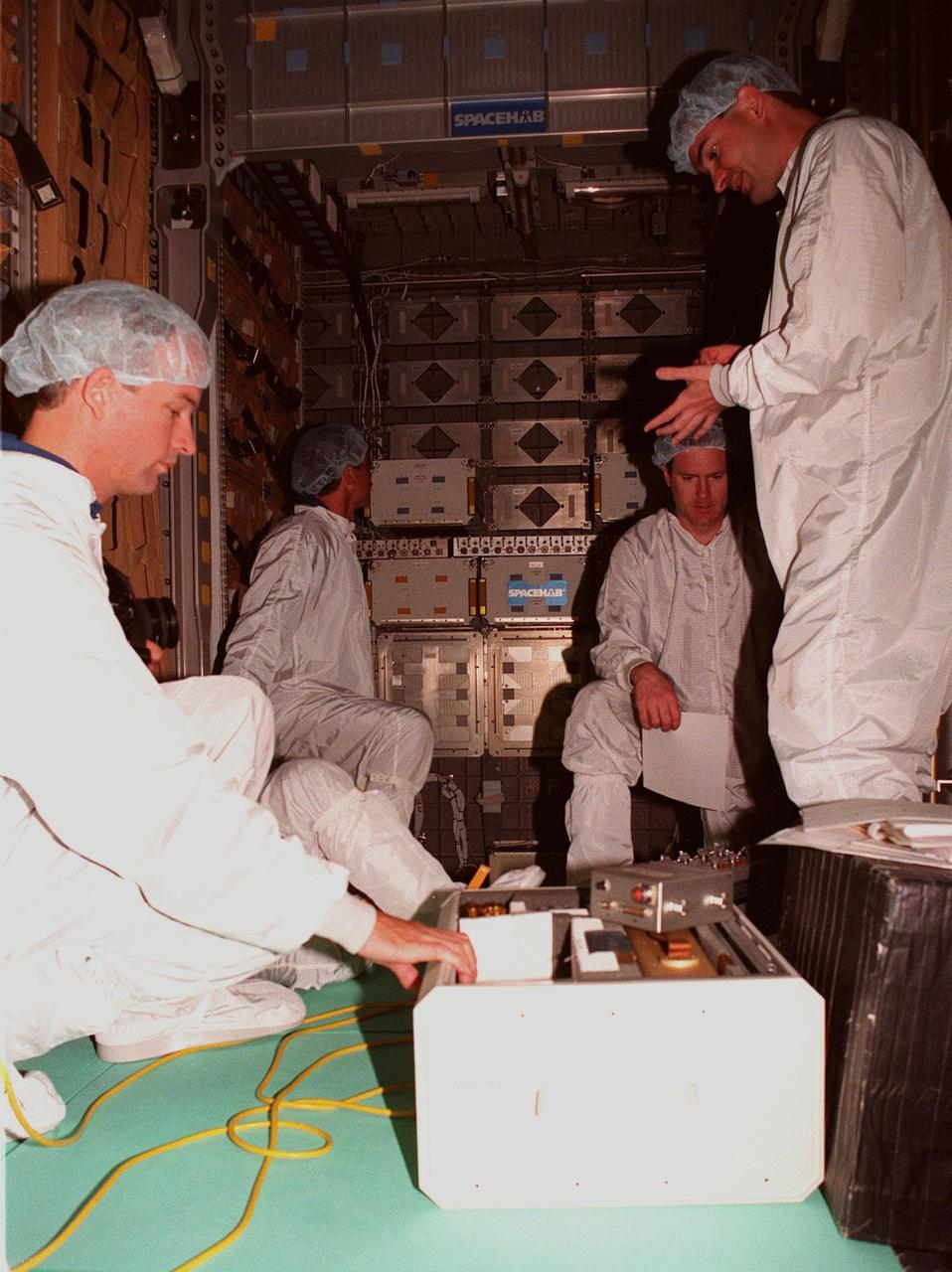
KENNEDY SPACE CENTER, FLA. -- Inside the SPACEHAB module, members of the STS-101 crew look at equipment during familiarization activities. From left are Mission Specialist Jeffrey N. Williams , Pilot Scott J. "Doc" Horowitz (Ph.D.), and Commander James Donald Halsell Jr., with Chris Jaskoika, of Boeing SPACEHAB. Mission STS-101 is the third flight in construction of the International Space Station. The 11-day mission is targeted for launch on December 2, 1999, at Launch Pad 39A
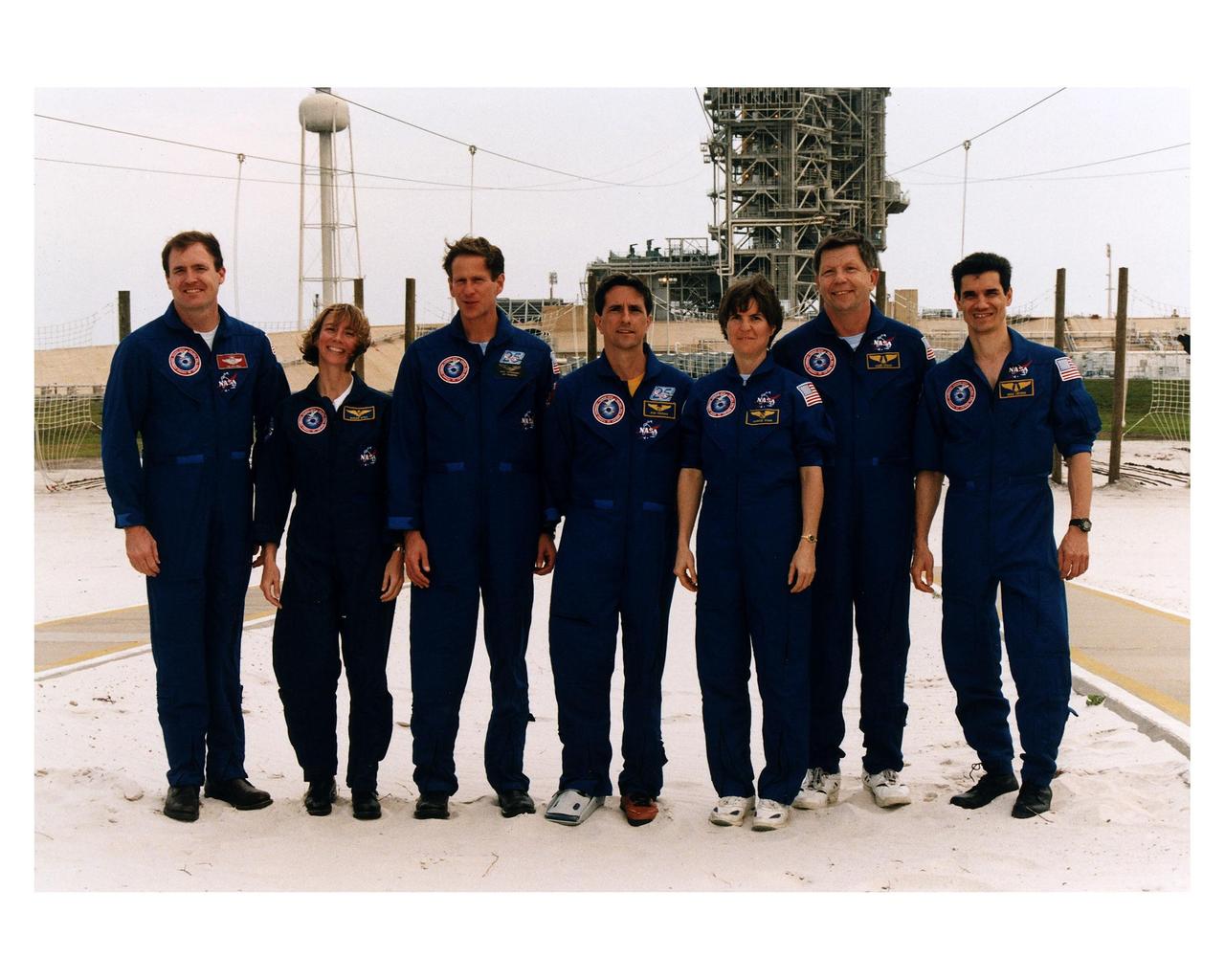
The STS-83 crew poses for the media at Launch Complex 39A during the crew's <a href="http://www-pao.ksc.nasa.gov/kscpao/release/1997/40-97.htm">Terminal Countdown Demonstration Test (TCDT).</a> From left to right, they are Mission Commander James D. Halsell; Pilot Susan L. Still; Mission Specialists Michael L. Gernhardt, Donald Thomas, and Janice E. Voss; and Payload Specialists Roger K. Crouch and Gregory T. Linteris
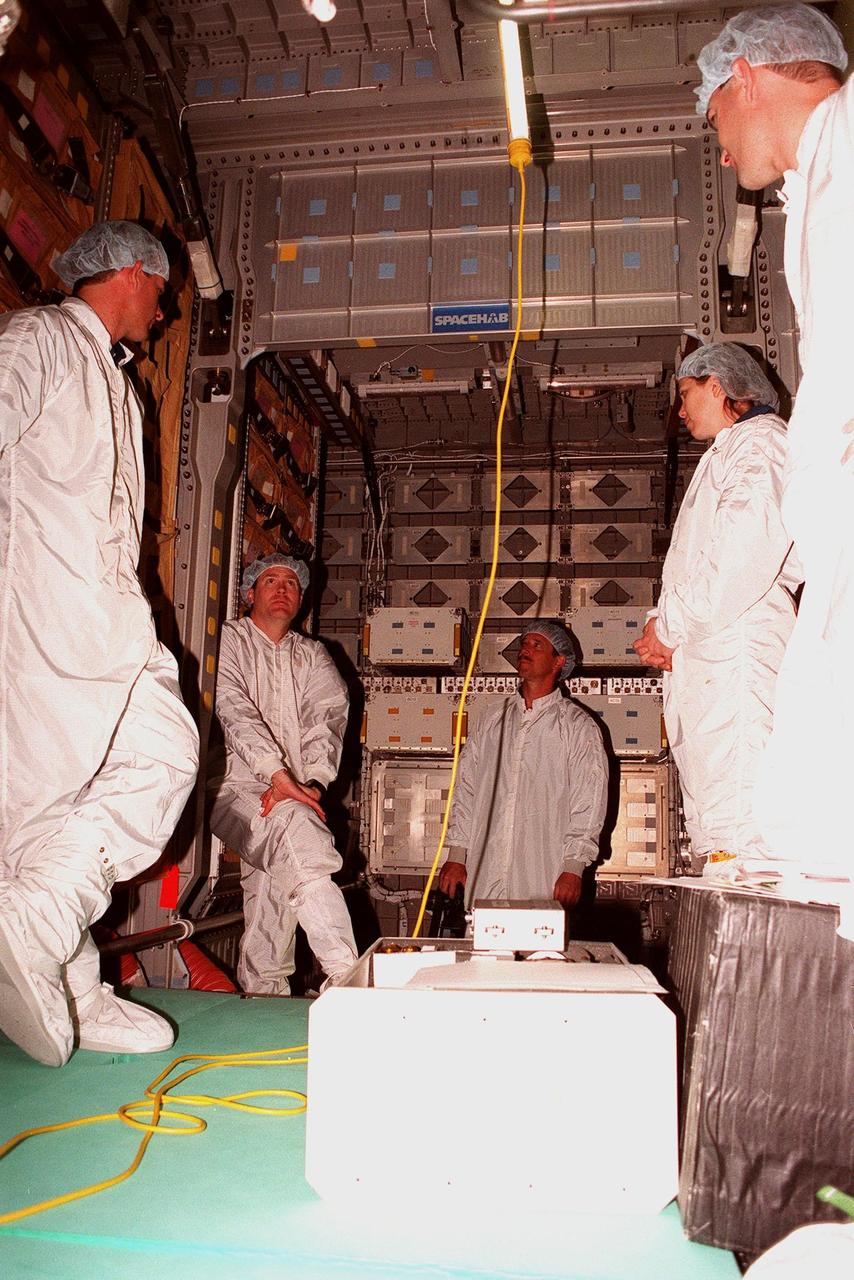
KENNEDY SPACE CENTER, FLA. -- Inside the SPACEHAB module, Chris Jaskoika (left), with Boeing SPACEHAB, works with members of the STS-101 crew during familiarization activities. Next to him are (left to right) Commander James Donald Halsell Jr., Pilot Scott "Doc" Horowitz (Ph.D.), and Mission Specialists Mary Ellen Weber (Ph.D.) and Jeffrey N. Williams. Mission STS-101 is the third flight in construction of the International Space Station. The 11-day mission is targeted for launch on December 2, 1999, at Launch Pad 39A
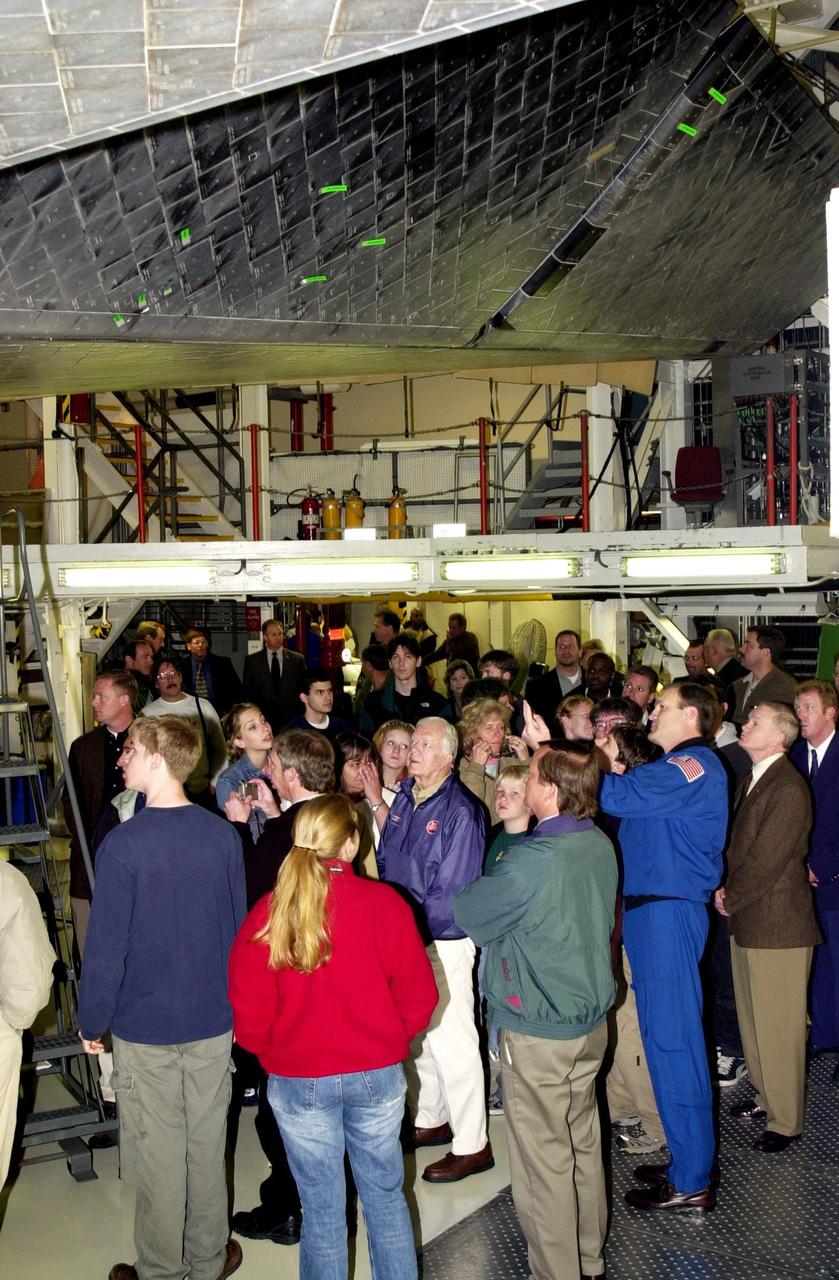
KENNEDY SPACE CENTER, FLA. -- In the Orbiter Processing Facility, former President Jimmy Carter (center) gets a closeup view of the underside of an orbiter space vehicle. On the outer edge of the crowd are (left to riht) Launch Director Mike Leinbach (green jacket), Space Shuttle Launch Integration Manager Jim Halsell and Center Director Roy D. Bridges. Carter and former First Lady Rosalyn Carter are touring KSC
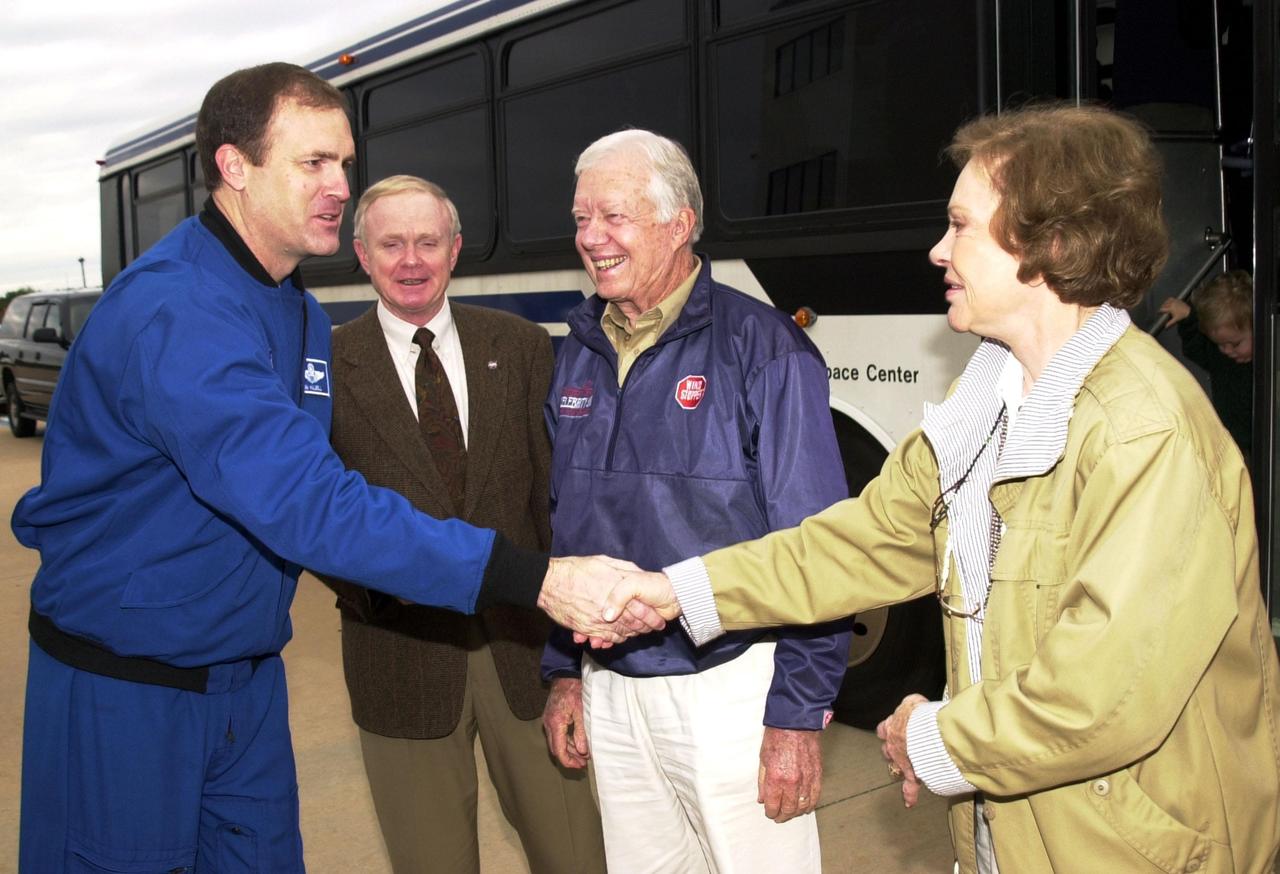
KENNEDY SPACE CENTER, FLA. -- During a visit to Kennedy Space Center, James Halsell (far left), manager, Launch Integration, Space Shuttle Program, greets former First Lady Rosalyn Carter (far right). Looking on are Center Director Roy D. Bridges Jr. (left) and former President Jimmy Carter (right). The Carters are touring KSC
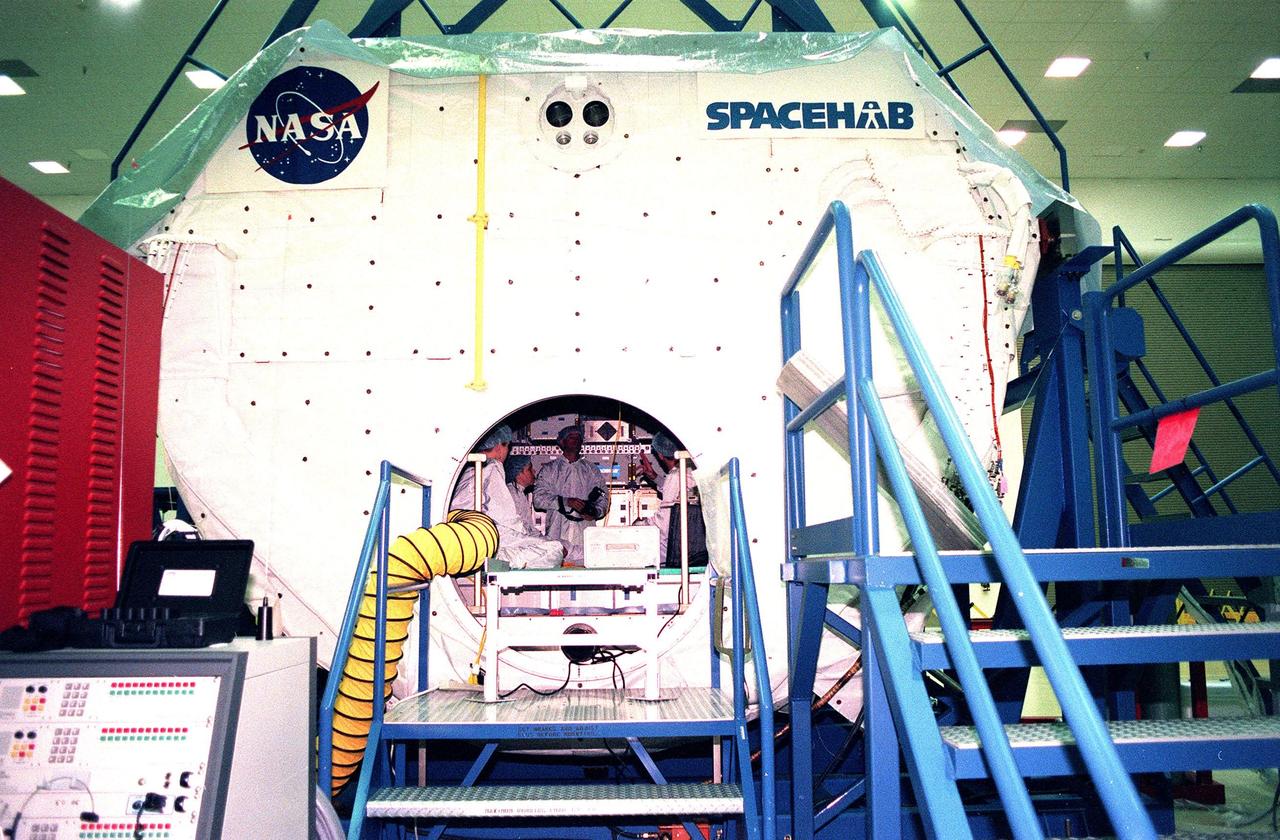
KENNEDY SPACE CENTER, FLA. -- Just inside the open hatch of the SPACEHAB module are (left to right) STS-101 crew members Mission Specialists Jeffrey N. Williams and Mary Ellen Weber (Ph.D.), Commander James Donald Halsell Jr., and Pilot Scott "Doc" Horowitz (Ph.D.). The crew is taking part in familiarization activities at the SPACEHAB facility. Mission STS-101 is the third flight in construction of the International Space Station. The 11-day mission is targeted for launch on December 2, 1999, at Launch Pad 39A
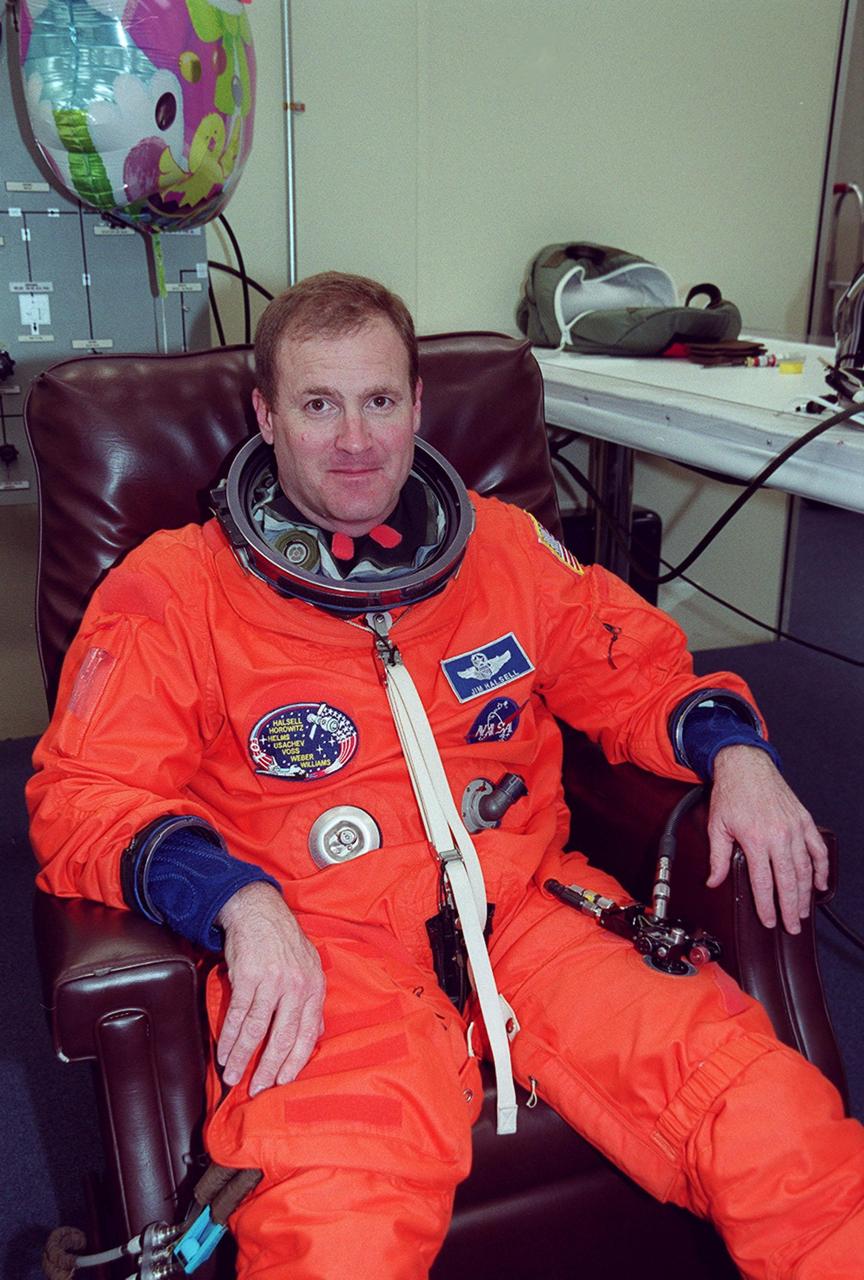
In the Operations and Checkout Building, STS-101 Commander James D. Halsell Jr. appears relaxed while waiting to finish suiting up before heading to Launch Pad 39A and launch of Space Shuttle Atlantis. The mission will take the crew to the International Space Station to deliver logistics and supplies and to prepare the Station for the arrival of the Zvezda Service Module, expected to be launched by Russia in July 2000. Also, the crew will conduct one space walk. This will be the third assembly flight to the Space Station
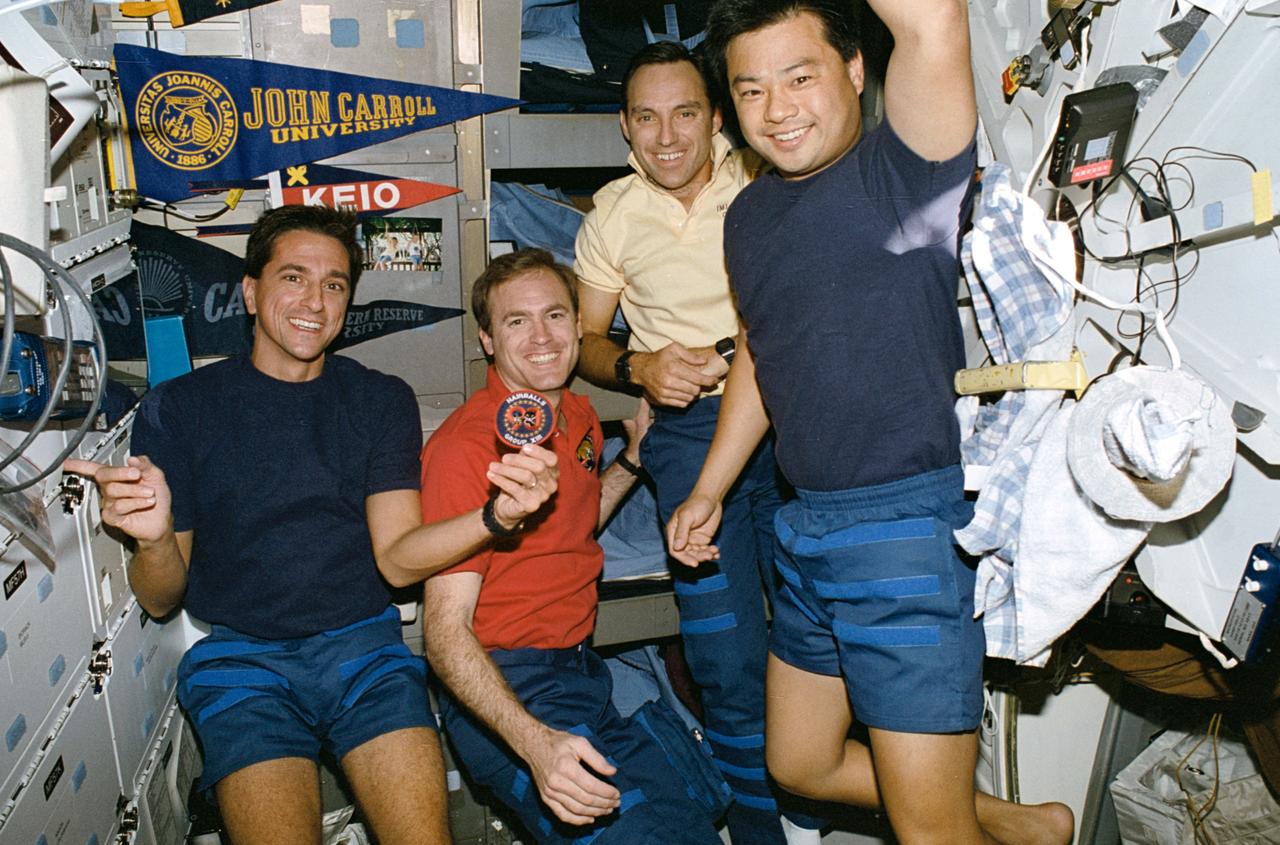
STS065-18-022 (8-23 July 1994) --- During off-duty time on the Space Shuttle Columbia's mid-deck, four members of the crew, from the 1990 (thirteenth) astronaut class, display their group's insignia. The "hairballs" pictured, (left to right) are astronauts Donald A. Thomas, James D. Halsell, Jr., Carl E. Walz and Leroy Chiao.
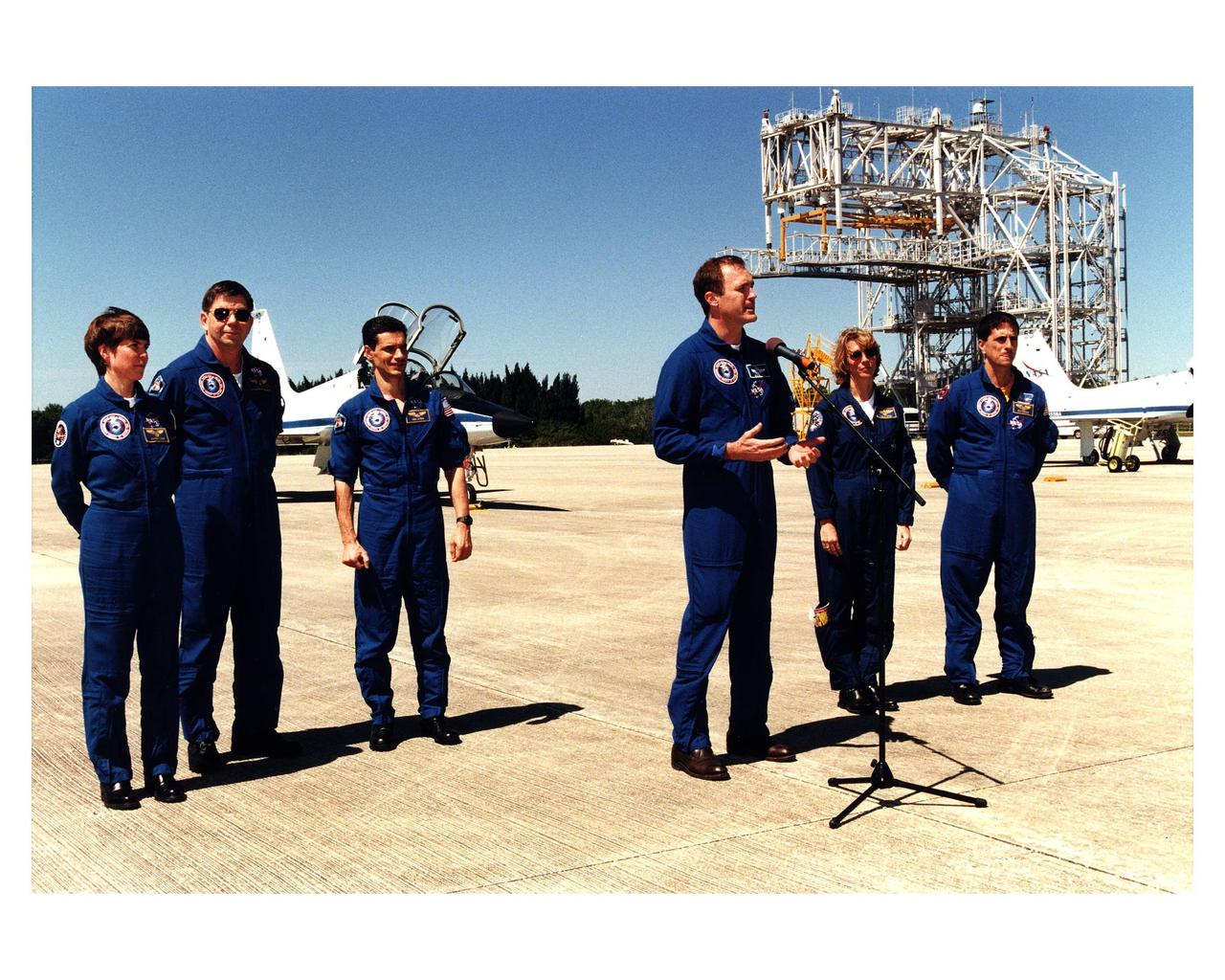
With the mate-demate device as backdrop, six of the seven STS-83 crew members speak to the media after arriving at Kennedy Space Center's Shuttle Landing Facility prior to Space Shuttle Columbia's launch. From left to right, they are Payload Commander Janice E. Voss; Payload Specialists Roger K. Crouch and Gregory T. Linteris; Commander James D. Halsell, Jr.; Pilot Susan Leigh Still; and Mission Specialist Donald A. Thomas. Mission Specialist Michael L. Gernhardt arrived separately later in the afternoon
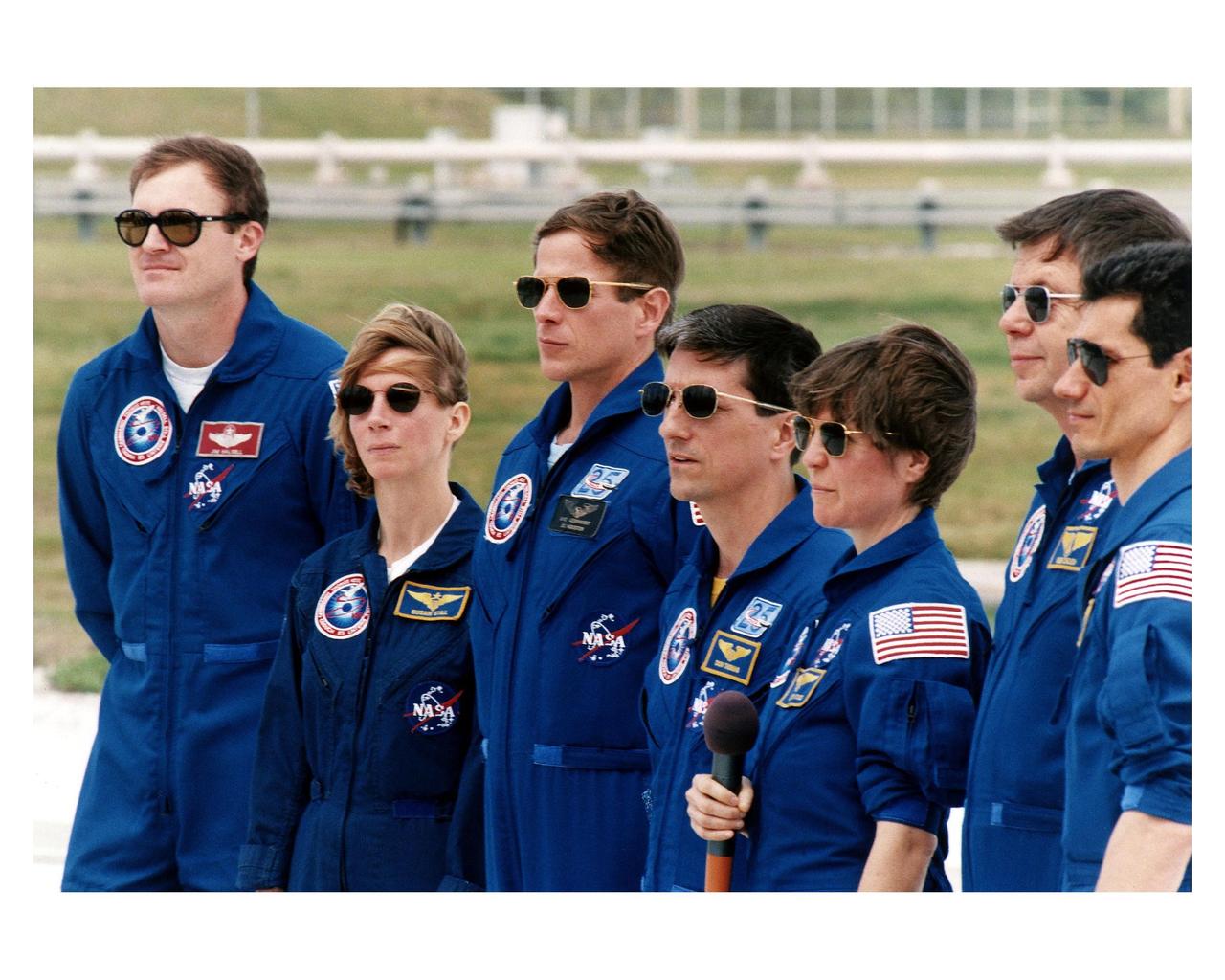
The Space Shuttle Mission STS-83 crew talks to the media at Launch Complex 39A during the crew's <a href="http://www-pao.ksc.nasa.gov/kscpao/release/1997/40-97.htm">Terminal Countdown Demonstration Test (TCDT).</a> From left to right, they are Mission Commander James D. Halsell; Pilot Susan L. Still; Mission Specialists Michael L. Gernhardt, Donald Thomas, and Janice E. Voss (holding microphone); and Payload Specialists Roger K. Crouch and Gregory T. Linteris
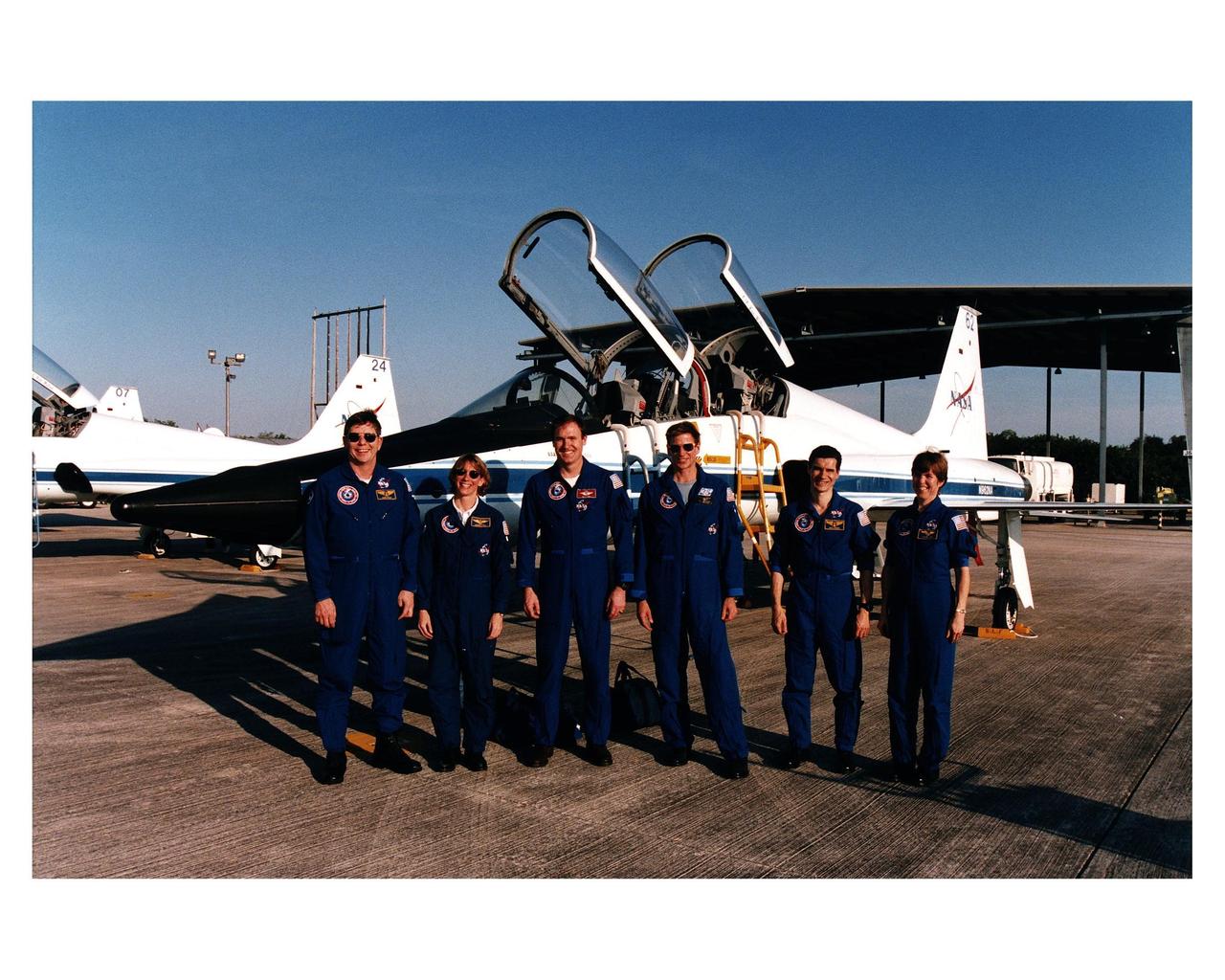
Six of the seven astronauts assigned to the STS-83 crew arrive at Kennedy Space Center's Shuttle Landing Facility in preparation for their <a href="http://www-pao.ksc.nasa.gov/kscpao/release/1997/40-97.htm">Terminal Countdown Demonstration Test.</a> From left to right, they are Payload Specialist Roger K. Crouch, Pilot Susan L. Still, Mission Commander James D. Halsell, Mission Specialist Michael L. Gernhardt, Payload Specialist Gregory T. Linteris, and Mission Specialist Janice E. Voss
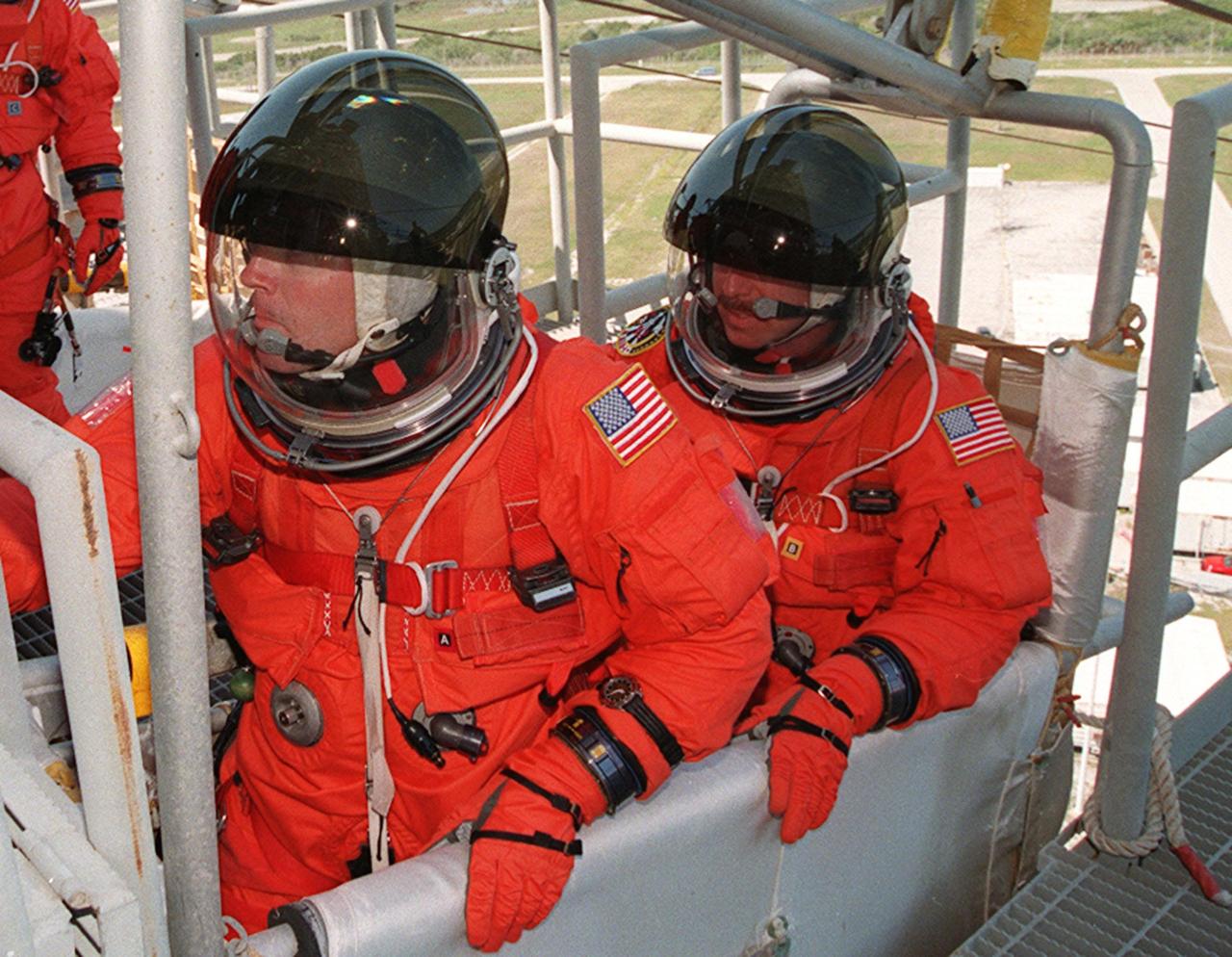
KENNEDY SPACE CENTER, FLA. -- Seated in a slidewire basket at the 195-foot level of the Fixed Service Structure, Launch Pad 39A, are (left to right) STS-101 Commander James D. Halsell Jr. and Pilot Scott J. "Doc" Horowitz. Halsell is reaching to pull the release lever that will send the basket shooting down the 1,200-foot slidewire to a bunker west of the launch pad. The crew is practicing emergency egress from the orbiter as part of Terminal Countdown Demonstration (TCDT) activities that include a simulated launch countdown and familiarization with the payload. During their mission to the International Space Station, the STS-101 crew will be delivering logistics and supplies, plus preparing the Station for the arrival of the Zvezda Service Module, expected to be launched by Russia in July 2000. Also, the crew will conduct one space walk to perform maintenance on the Space Station. This will be the third assembly flight to the Space Station. STS-101 is scheduled to launch April 24 at 4:15 p.m. from Launch Pad 39A
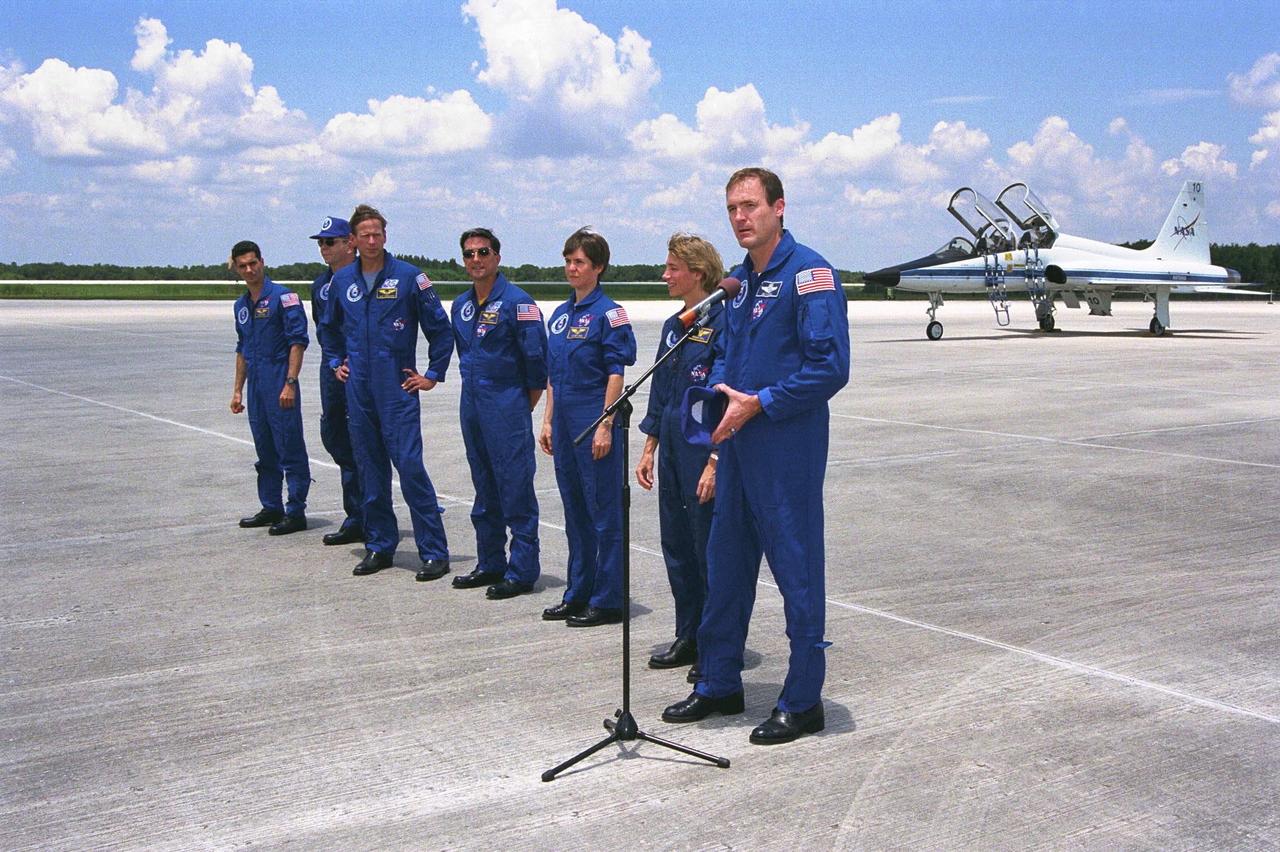
STS-94 Commander James D. Halsell, Jr., speaks to the media at the Shuttle Landing Facility after the crew arrived at Kennedy Space Center in preparation for the reflight of the Microgravity Science Laboratory-1 mission. Launch is scheduled for July 1, 1997, at 2:37 p.m. EDT. From left to right, the crew members are Payload Specialists Gregory T. Linteris and Roger K. Crouch; Mission Specialists Michael L. Gernhardt and Donald A. Thomas; Payload Commander Janice E. Voss; Pilot Susan Leigh Still and Commander James D. Halsell, Jr. One of the T-38 jets aboard which the crew arrived can be seen in the background. The laboratory was scheduled to fly again with the full complement of STS-83 experiments after that mission was cut short due to a faulty fuel cell. During the scheduled 16-day STS-94 mission, the experiments will be used to test some of the hardware, facilities and procedures that are planned for use on the International Space Station while the flight crew conducts combustion, protein crystal growth and materials processing experiments
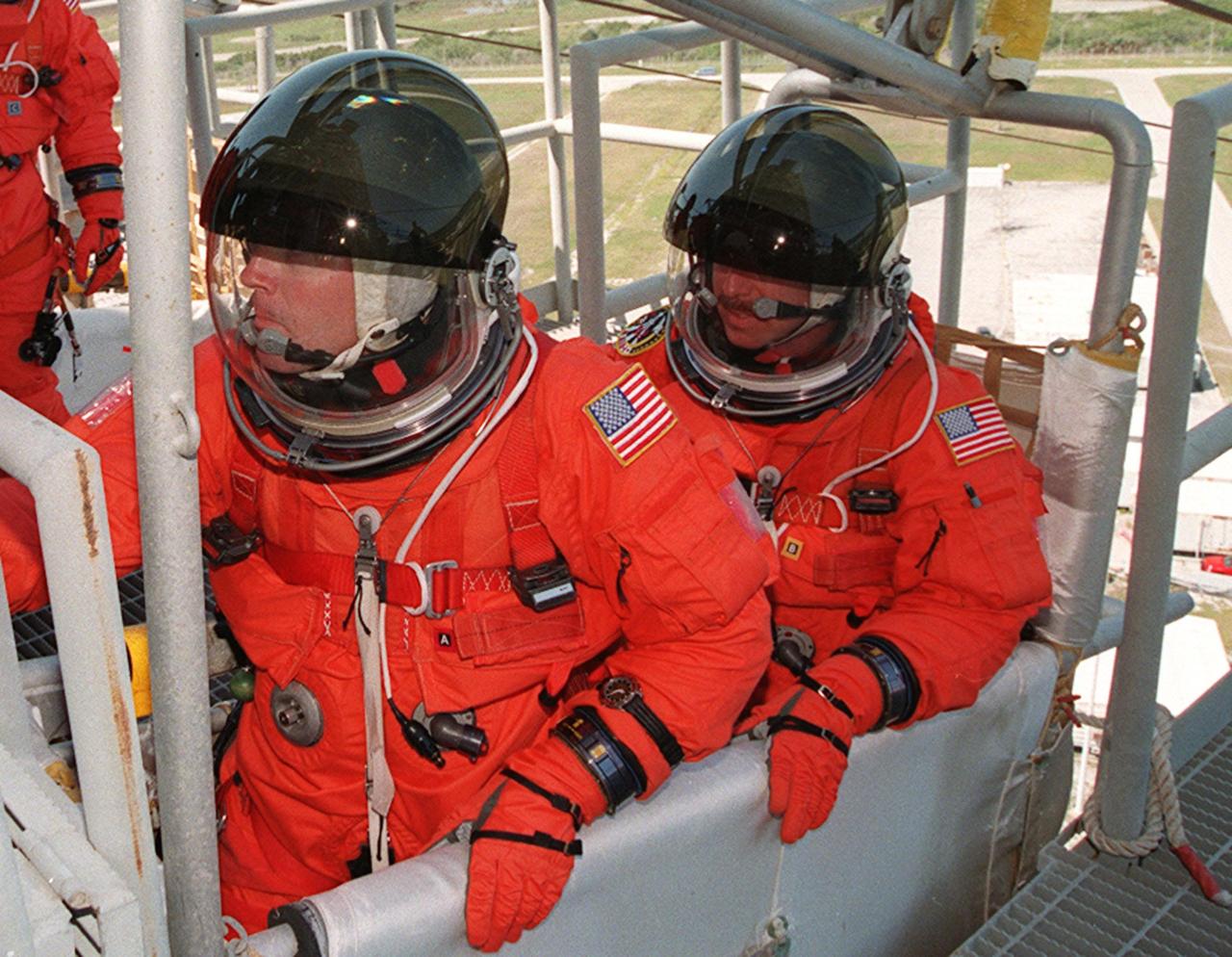
KENNEDY SPACE CENTER, FLA. -- Seated in a slidewire basket at the 195-foot level of the Fixed Service Structure, Launch Pad 39A, are (left to right) STS-101 Commander James D. Halsell Jr. and Pilot Scott J. "Doc" Horowitz. Halsell is reaching to pull the release lever that will send the basket shooting down the 1,200-foot slidewire to a bunker west of the launch pad. The crew is practicing emergency egress from the orbiter as part of Terminal Countdown Demonstration (TCDT) activities that include a simulated launch countdown and familiarization with the payload. During their mission to the International Space Station, the STS-101 crew will be delivering logistics and supplies, plus preparing the Station for the arrival of the Zvezda Service Module, expected to be launched by Russia in July 2000. Also, the crew will conduct one space walk to perform maintenance on the Space Station. This will be the third assembly flight to the Space Station. STS-101 is scheduled to launch April 24 at 4:15 p.m. from Launch Pad 39A
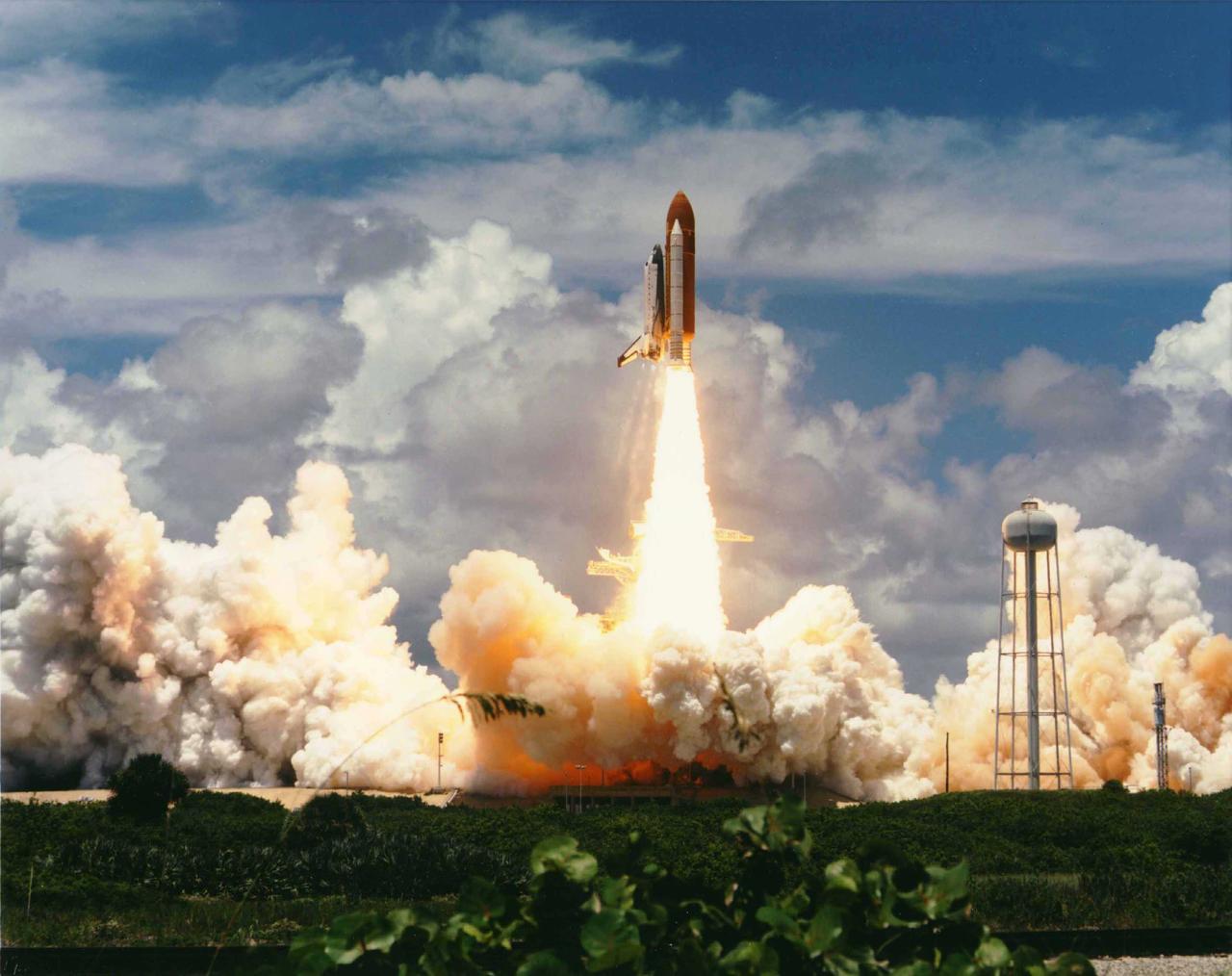
KENNEDY SPACE CENTER, FLA. - The second International Microgravity Laboratory-2 (IML-2) is off to an ontime start as the Space Shuttle Columbia lifts off from Launch Pad 39A at 12:43:00 p.m. EDT. On board are a crew of seven and more than 80 investigations developed by more than 200 scientists from 13 countries. The IML-2 complement includes materials science, bioprocessing, space and radiation biology, and human physiology experiments that will be carried out over the course of the 14-day flight. The commander of Space Shuttle Mission STS-65 is Robert D. Cabana. James D. Halsell Jr. is the pilot; the payload commander is Richard J. Hieb; the three mission specialists are Carl E. Walz, Leroy Chiao and Donald A. Thomas. Dr. Chiaki Mukai, representing NASDA, the National Space Development Agency of Japan, is the payload specialist. Mukai becomes the first Japanese woman to fly into space.
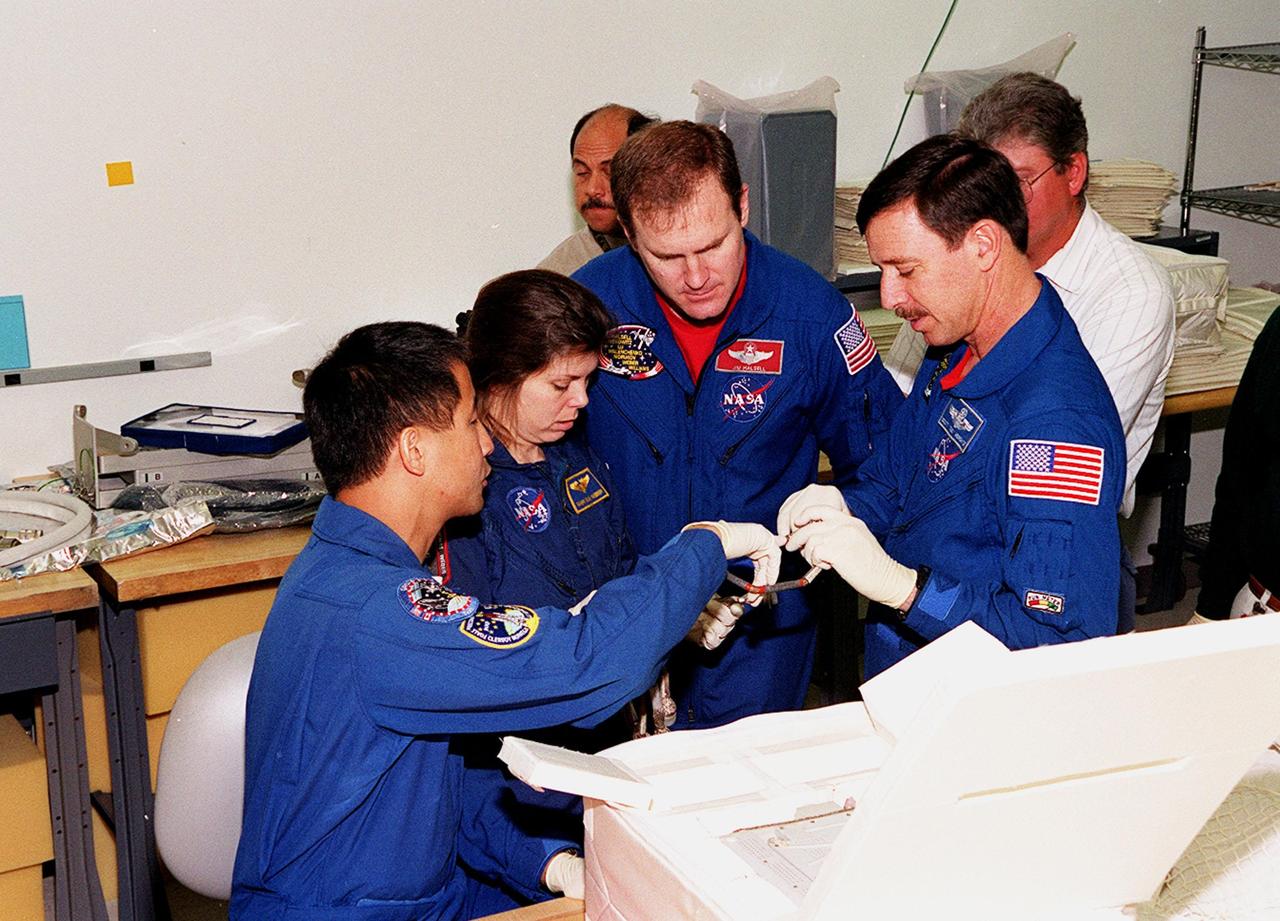
KENNEDY SPACE CENTER, FLA. -- At SPACEHAB, in Cape Canaveral, the STS-101 crew inspect equipment and payload for their mission. From left to right are Mission Specialist Edward Tsang Lu, Mary Ellen Weber (Ph.D.), Commander James D. Halsell Jr. and Pilot Scott J. "Doc" Horowitz (Ph.D). are taking part in a Crew Equipment Interface Test, which gives them an opportunity to look over equipment and payloads that will fly on the mission. Space Shuttle Atlantis will be carrying the SPACEHAB Double Module, which carries internal logistics and resupply cargo for station outfitting. Launch of Atlantis on mission STS-101 is scheduled no earlier than April 13, 2000
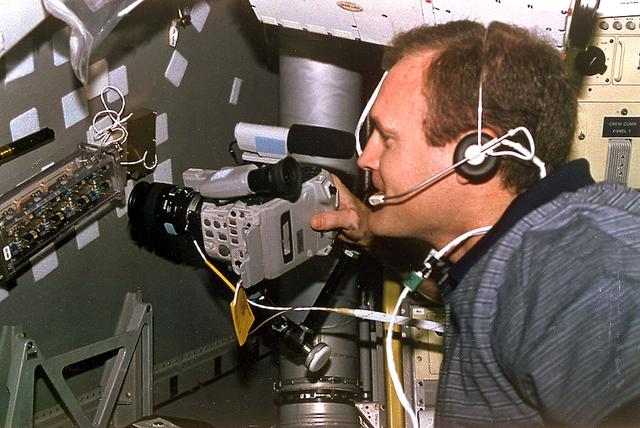
Astronaut James D. Halsell, Jr., mission commander, uses a Hi-8mm camcorder to videotape the Hand Held Diffusion Test Cells (HHDTC), in the Spacelab Science Module aboard the Earth-orbiting Space Shuttle Columbia (STS-94). Each test cell has three chambers containing a protein solution, a buffer solution and a precipitant solution chamber. Using the liquid-liquid diffusion method, the different fluids are brought into contact but not mixed. Over a period of time, the fluids will diffuse into each other through the random motion of molecules. The gradual increase in concentration of the precipitant within the protein solution causes the proteins to crystallize.
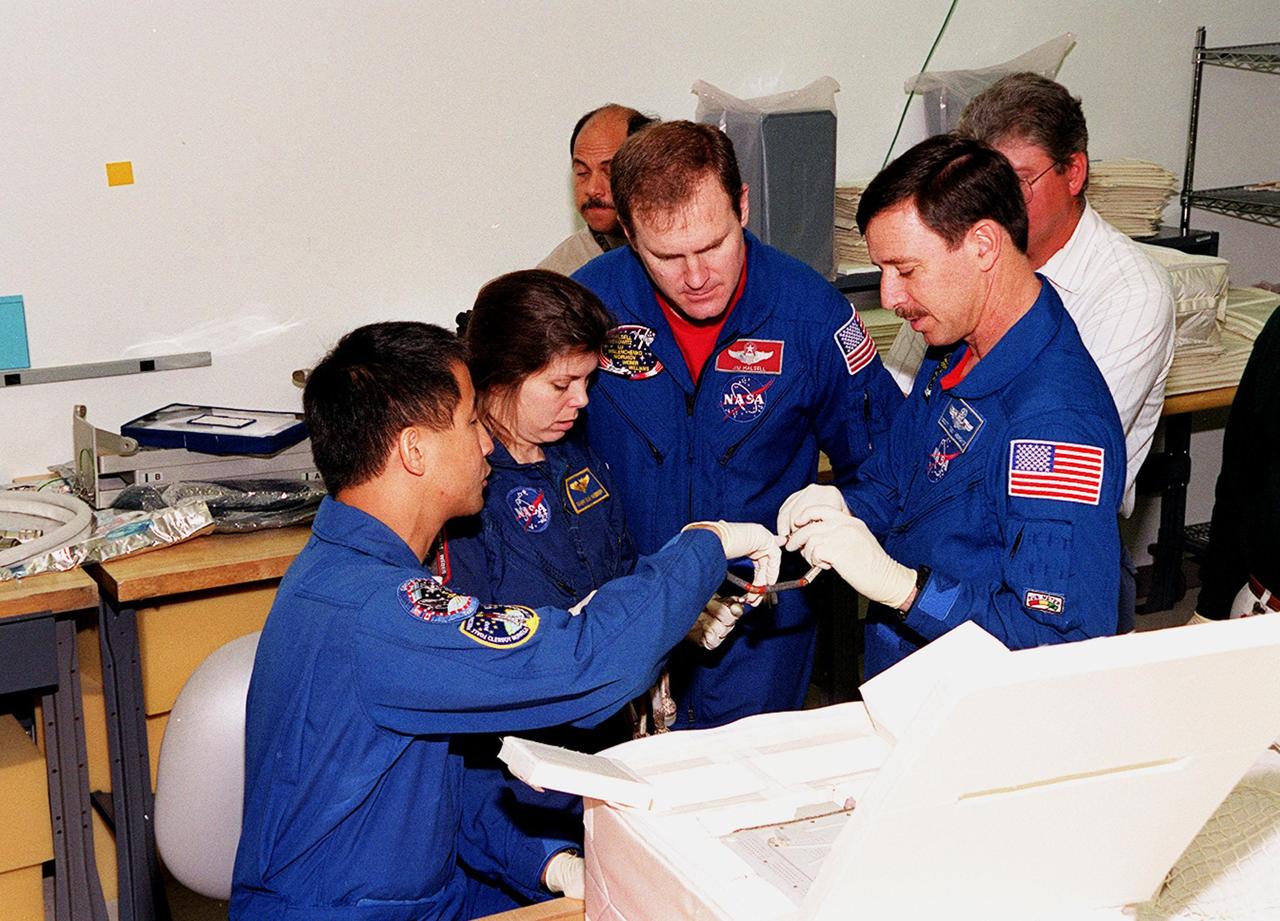
KENNEDY SPACE CENTER, FLA. -- At SPACEHAB, in Cape Canaveral, the STS-101 crew inspect equipment and payload for their mission. From left to right are Mission Specialist Edward Tsang Lu, Mary Ellen Weber (Ph.D.), Commander James D. Halsell Jr. and Pilot Scott J. "Doc" Horowitz (Ph.D). are taking part in a Crew Equipment Interface Test, which gives them an opportunity to look over equipment and payloads that will fly on the mission. Space Shuttle Atlantis will be carrying the SPACEHAB Double Module, which carries internal logistics and resupply cargo for station outfitting. Launch of Atlantis on mission STS-101 is scheduled no earlier than April 13, 2000
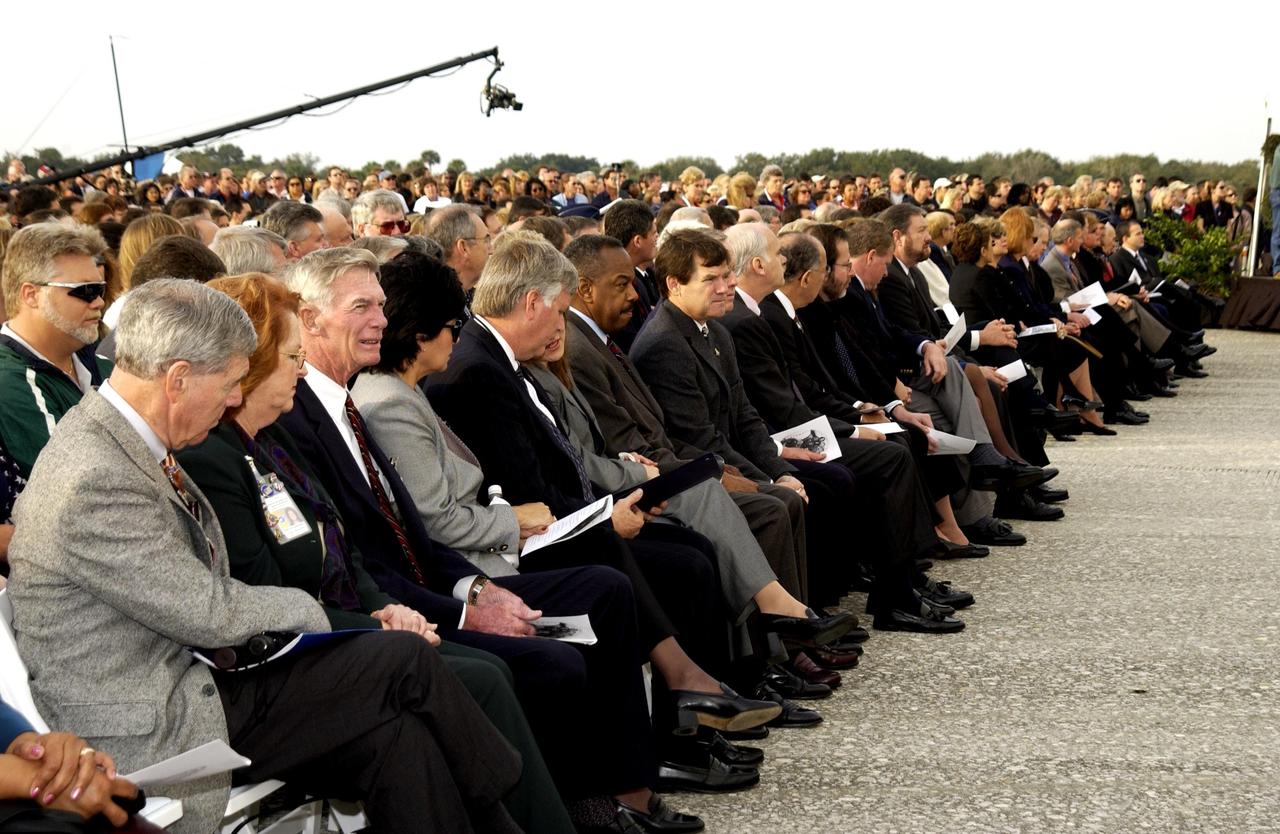
KENNEDY SPACE CENTER, FLA. - A Columbia Crew Memorial Service is held at the Shuttle Landing Facility for KSC employees and invited guests. The Columbia and her crew of seven were lost on Feb. 1, 2003, over East Texas as they returned to Earth after a 16-day research mission. Taking part in the service were NASA Administrator Sean O’Keefe, former KSC Director Robert Crippen, astronaut Jim Halsell, several employees, area clergymen, and members of Patrick Air Force Base. The service concluded with a “Missing Man Formation Fly Over” by NASA T-38 jet aircraft.
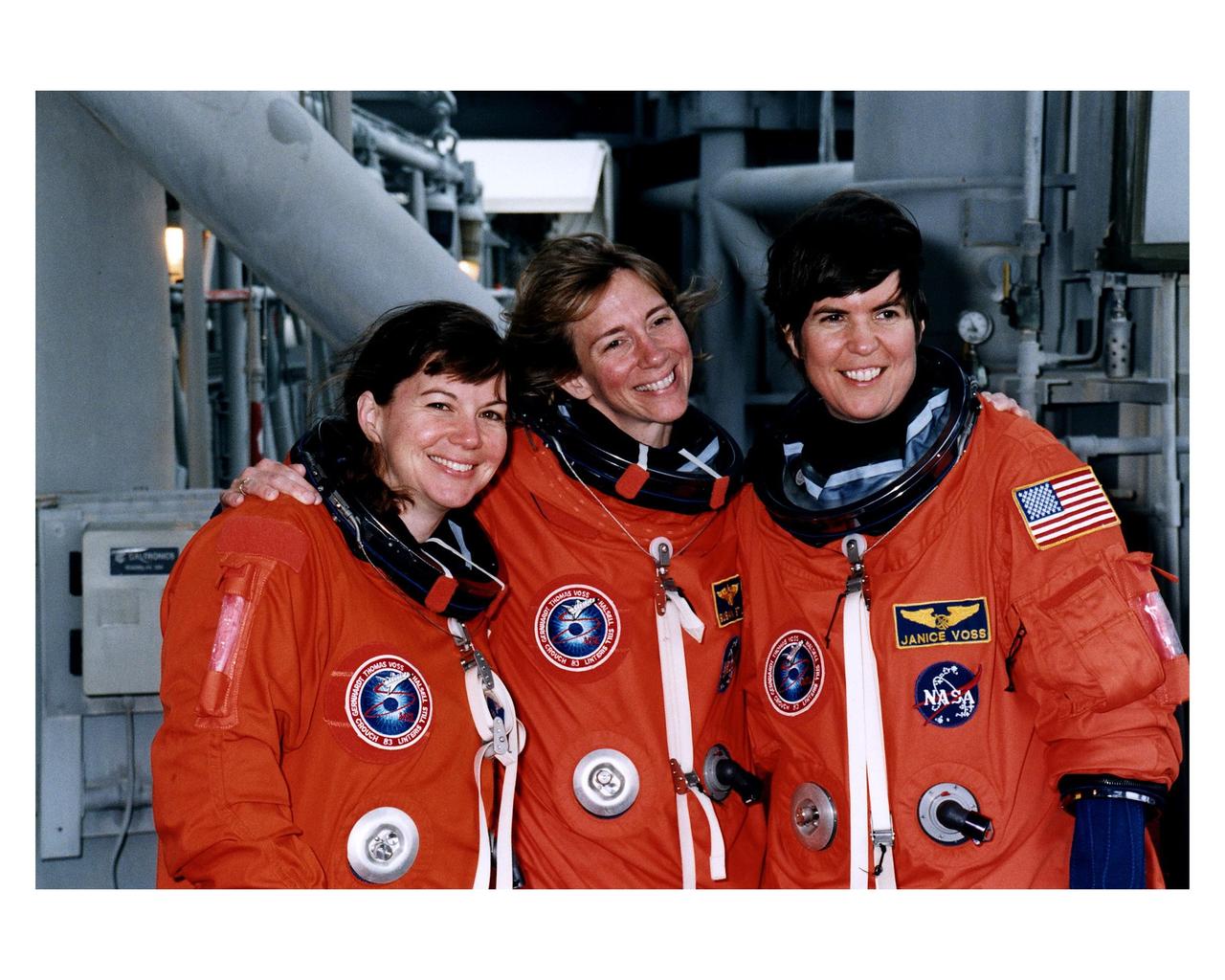
STS-83 Alternate Mission Specialist Catherine "Cady" Coleman, Pilot Susan L. Still and Payload Commander Janice Voss mug for the camera at the 195-foot level of Launch Pad 39A during Terminal Countdown Demonstration Test (TCDT) exercises for that mission. The other crew members for the 16-day Microgravity Science Laboratory-1 (MSL-1) mission are Mission Commander James D. Halsell, Jr.; Mission Specialist Donald A. Thomas; Payload Specialist Gregory T. Linteris; Mission Specialist Michael L. Gernhardt; and Payload Specialist Roger K. Crouch
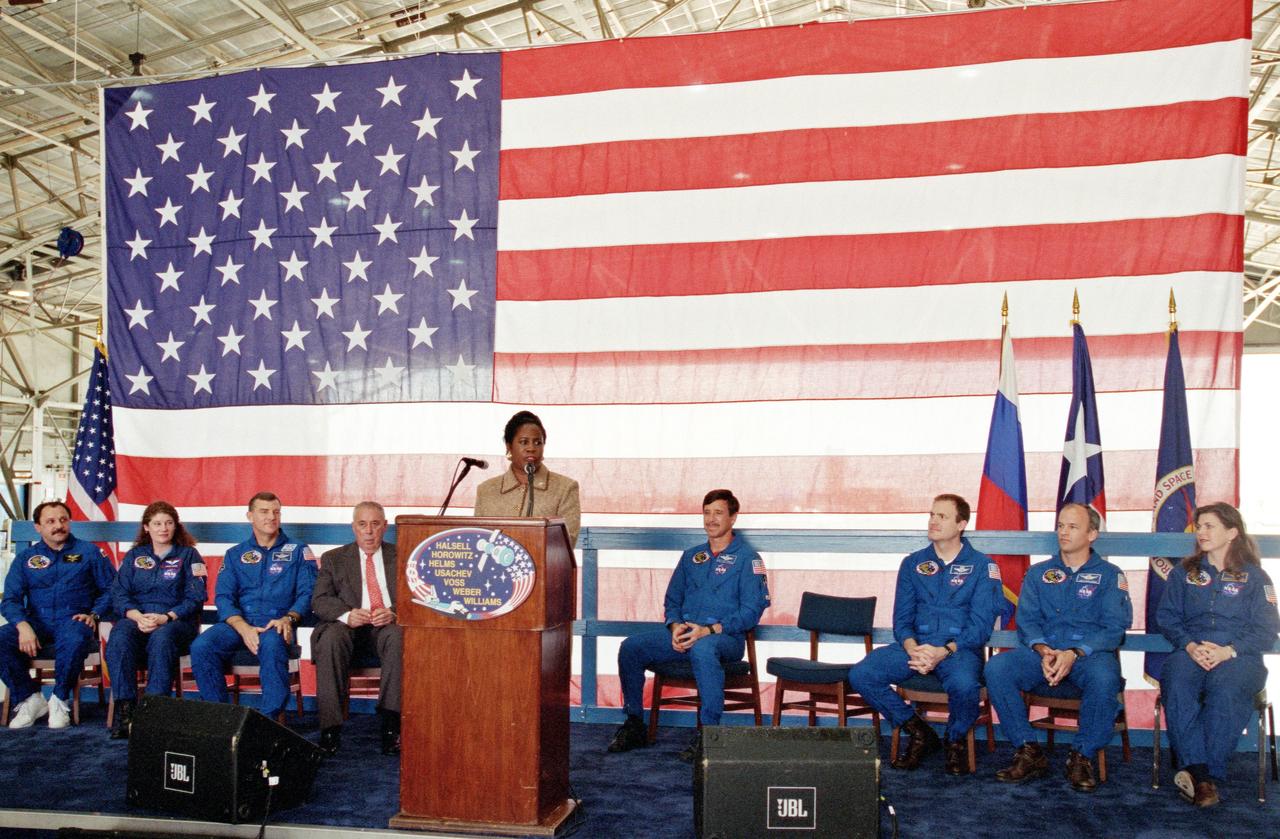
JSC2000-04603 (30 May 2000) --- U.S. Congresswoman Sheila Jackson Lee (D.-Houston) speaks to a crowd at the crew-welcoming ceremony at Ellington Field on the day following the completion of the STS-101 mission. Other speakers, seated behind the lecturn, are (from the left) cosmonaut Yury V. Usachev, representing the Russian Aviation and Space Agency; Susan J. Helms and James S. Voss, all mission specialists; JSC Director George W.S. Abbey; astronaut Scott J. Horowitz, pilot; along with astronauts James D. Halsell, Jr., mission commander; and Jeffrey N. Williams and Mary Ellen Weber, both mission specialists.
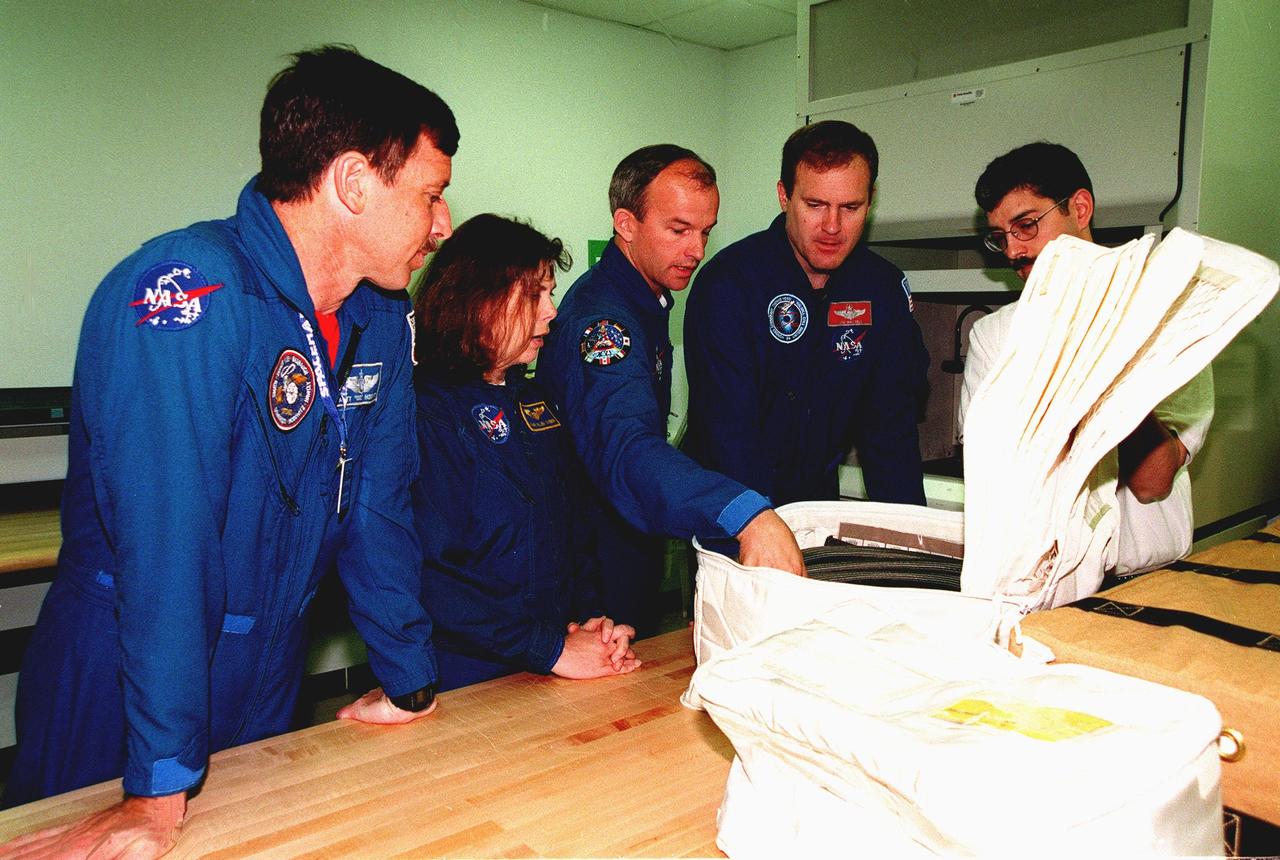
KENNEDY SPACE CENTER, FLA. -- At the SPACEHAB Facility, members of the STS-101 crew look over equipment during familiarization activities. From left are Pilot Scott J. "Doc" Horowitz (Ph.D.), Mission Specialists Mary Ellen Weber (Ph.D.) and Jeffrey N. Williams, and Commander James Donald Halsell Jr., plus Sean Hicks, with Boeing in Huntsville, Ala. Other crew members are Mission Specialists Edward Tsang Lu (Ph.D.), and Yuri Ivanovich Malenchenko and Boris Morukov, who represent the Russian Space Agency. Mission STS-101 is the third flight in construction of the International Space Station. The 11-day mission is targeted for launch on December 2, 1999, at Launch Pad 39A
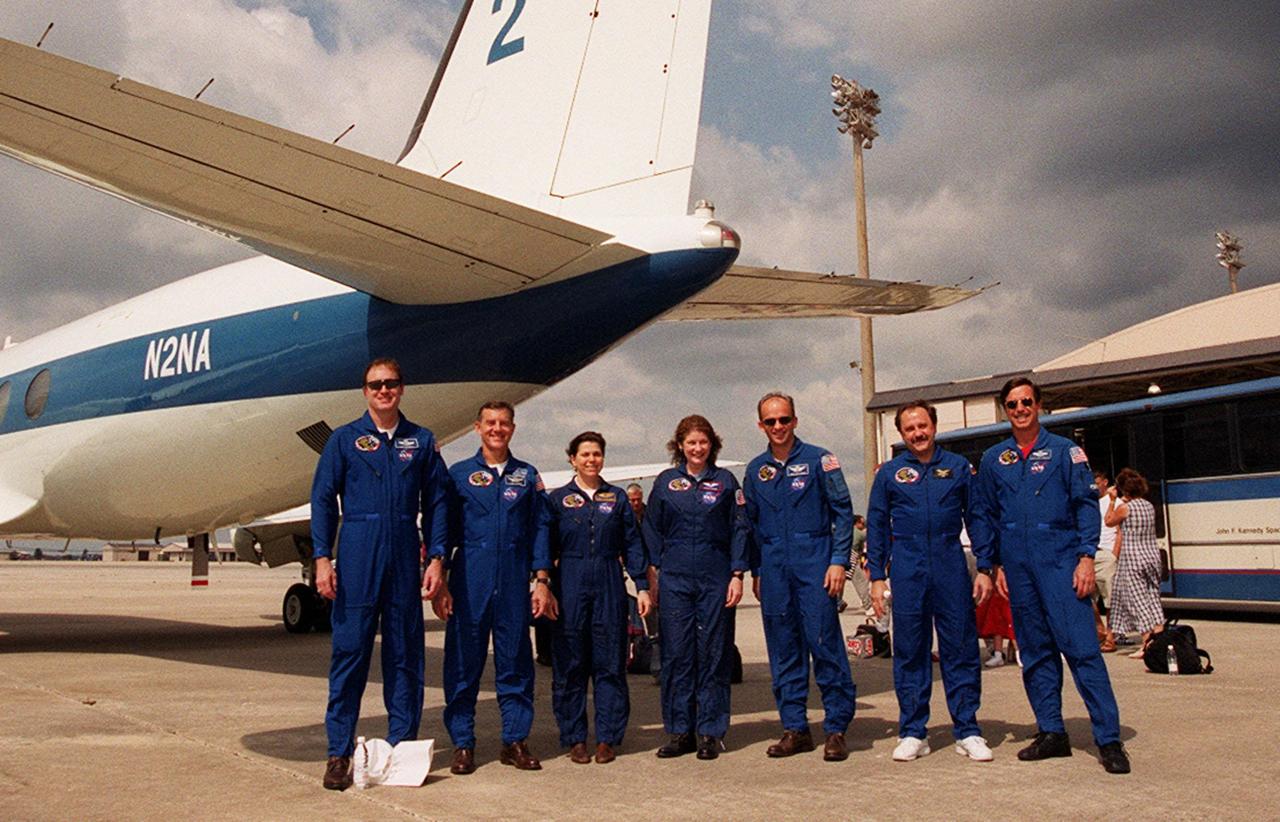
The STS-101 crew pose one more time before departing for Houston from Patrick Air Force Base. From left are Commander James D. Halsell Jr., Mission Specialists James S. Voss, Mary Ellen Weber, Susan J. Helms, Jeffrey N. Williams, Yury Usachev of Russia, and Pilot Scott “Doc” Horowitz. After landing at 2:20 a.m. EDT May 29, the crew and their families enjoyed the Memorial Day holiday in Florida. The crew returned from the third flight to the International Space Station where they made repairs, transferred cargo and completed a space walk to install and connect several pieces of equipment on the outside of the Space Station
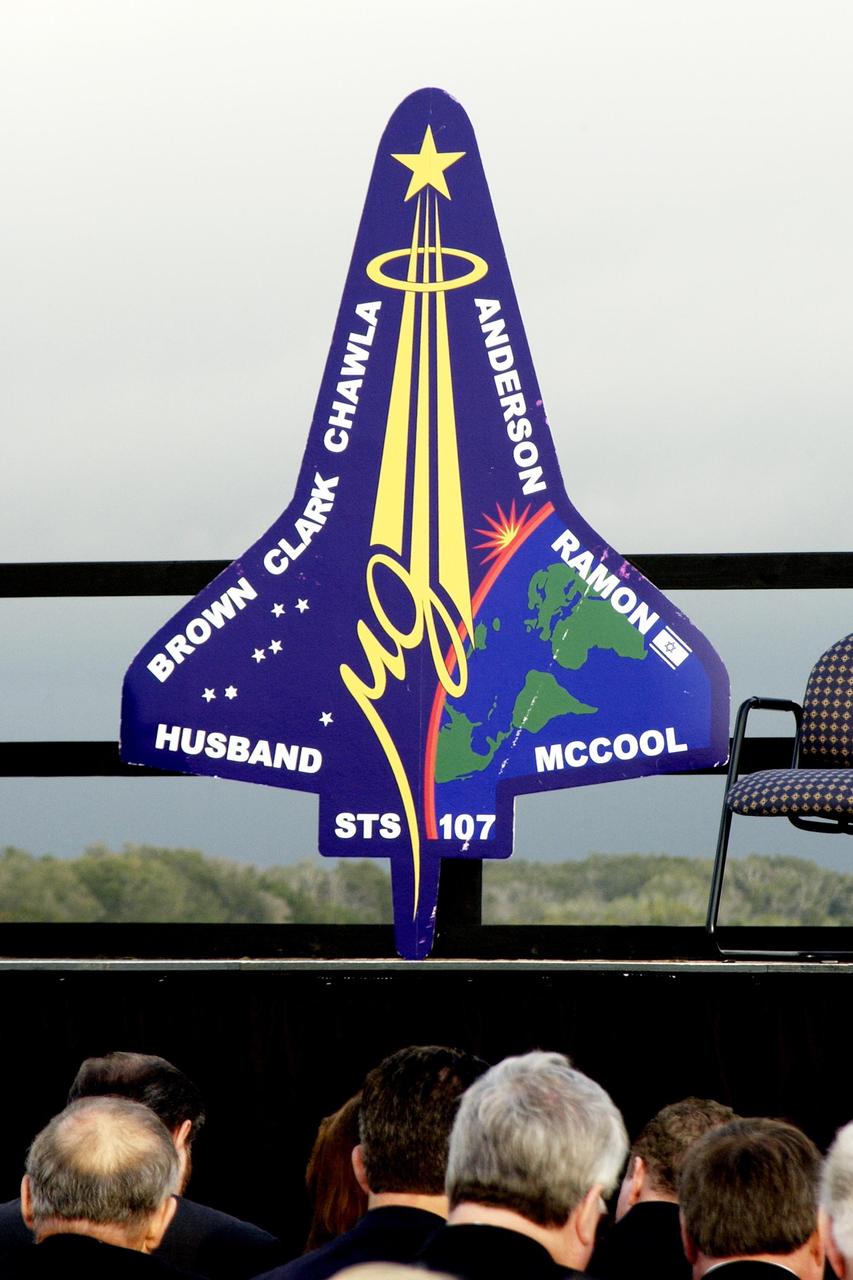
KENNEDY SPACE CENTER, FLA. - A Columbia Crew Memorial Service is held at the Shuttle Landing Facility for KSC employees and invited guests. The Columbia and her crew of seven were lost on Feb. 1, 2003, over East Texas as they returned to Earth after a 16-day research mission. Taking part in the service were NASA Administrator Sean O’Keefe, former KSC Director Robert Crippen, astronaut Jim Halsell, several employees, area clergymen, and members of Patrick Air Force Base. The service concluded with a “Missing Man Formation Fly Over” by NASA T-38 jet aircraft.
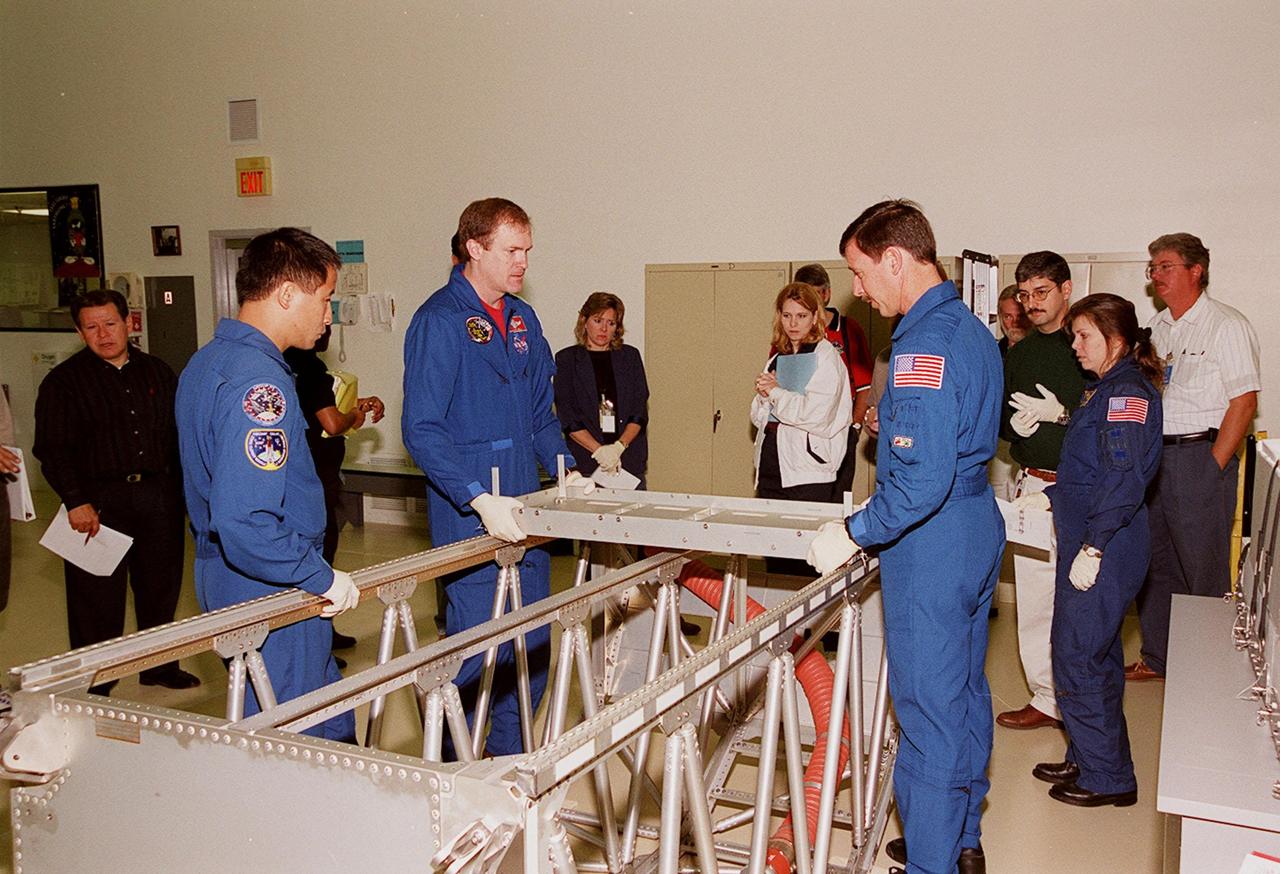
KENNEDY SPACE CENTER, FLA. -- At SPACEHAB, in Cape Canaveral, members of the STS-101 crew inspect equipment and payload for their mission. From left to right (in uniform) are Mission Specialist Edward Tsang Lu, Commander James D. Halsell Jr., Pilot Scott J. "Doc" Horowitz (Ph.D) and Mission Specialist Mary Ellen Weber (Ph.D.). They are taking part in a Crew Equipment Interface Test, which gives them an opportunity to look over equipment and payloads that will fly on the mission. Space Shuttle Atlantis will be carrying the SPACEHAB Double Module, which carries internal logistics and resupply cargo for station outfitting. Launch of Atlantis on mission STS-101 is scheduled no earlier than April 13, 2000
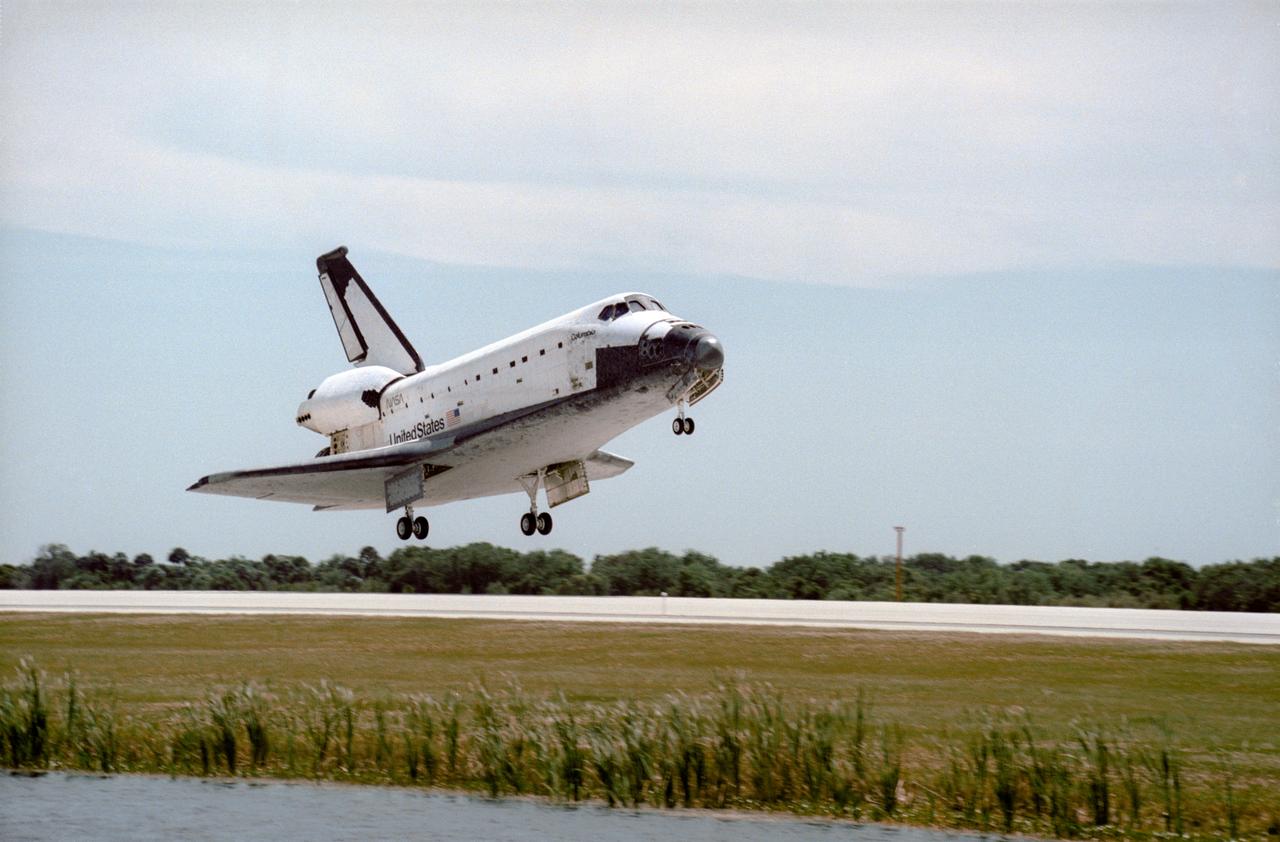
STS083-S-009 (8 April 1997) --- The Space Shuttle Columbia nears touchdown on the Shuttle Landing Facility (SLF) runway at the Kennedy Space Center (KSC), after completing almost four days of a scheduled 16-day mission in Earth-orbit. A problem with one of three fuel cells led to an early landing for the seven-member Microgravity Science Laboratory 1 (MSL-1) crew. Touchdown occurred at 1:33:11 p.m. (EDT), April 8, 1997. Onboard Columbia were James D. Halsell, Jr., Susan L. Still, Janice E. Voss, Donald A. Thomas, Michael L. Gernhardt, Roger K. Crouch and Gregory T. Linteris.
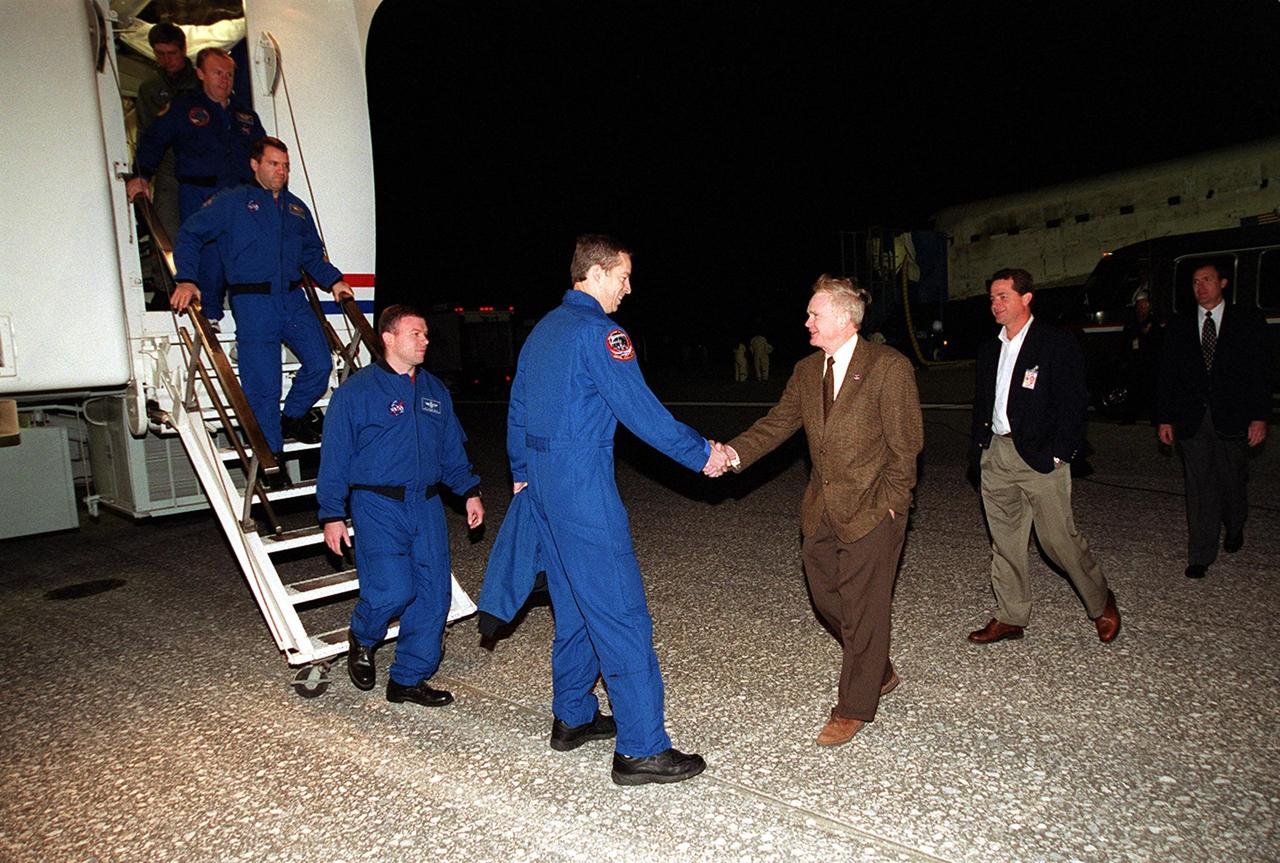
As the STS-102 crew exits the Crew Transport Vehicle, Center Director Roy Bridges is on hand to welcome them back to Earth. Commander James Wetherbee is the first to shake Bridges’ hand. Behind Wetherbee (right to left) are Pilot James Kelly and Mission Specialists Paul Richards and Andrew Thomas. Behind Bridges, at right, is Dave King, director of Shuttle Processing. Waiting at far right is Jim Halsell, manager of Space Shuttle Program Launch Integration. The crew landed at the KSC Shuttle Landing Facility at 2:31 a.m. EST aboard Discovery following a 12-day, 19-hour, 49-minute mission to the International Space Station
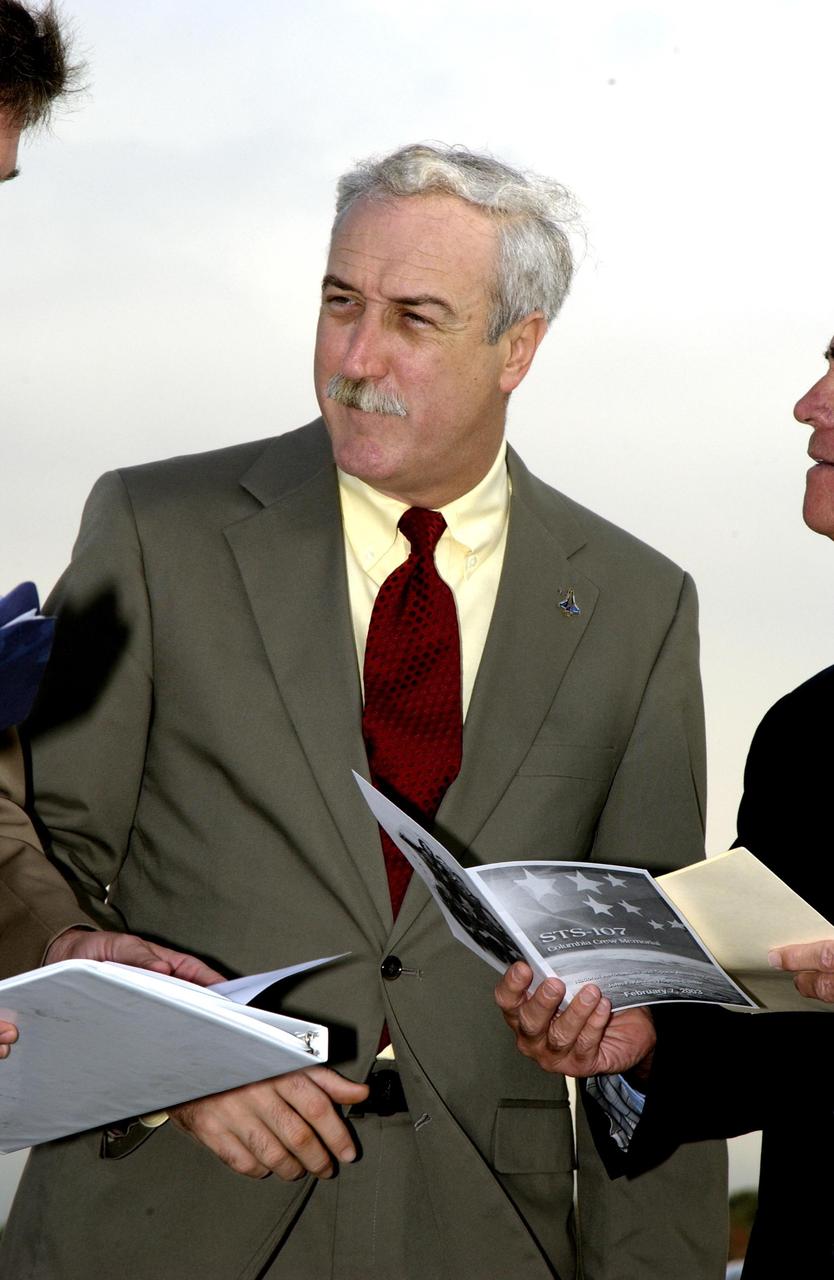
KENNEDY SPACE CENTER, FLA. - A Columbia Crew Memorial Service is held at the Shuttle Landing Facility for KSC employees and invited guests, including NASA Administrator Sean O'Keefe. The Columbia and her crew of seven were lost on Feb. 1, 2003, over East Texas as they returned to Earth after a 16-day research mission. Taking part in the service were NASA Administrator Sean O’Keefe, former KSC Director Robert Crippen, astronaut Jim Halsell, several employees, area clergymen, and members of Patrick Air Force Base. The service concluded with a “Missing Man Formation Fly Over” by NASA T-38 jet aircraft.
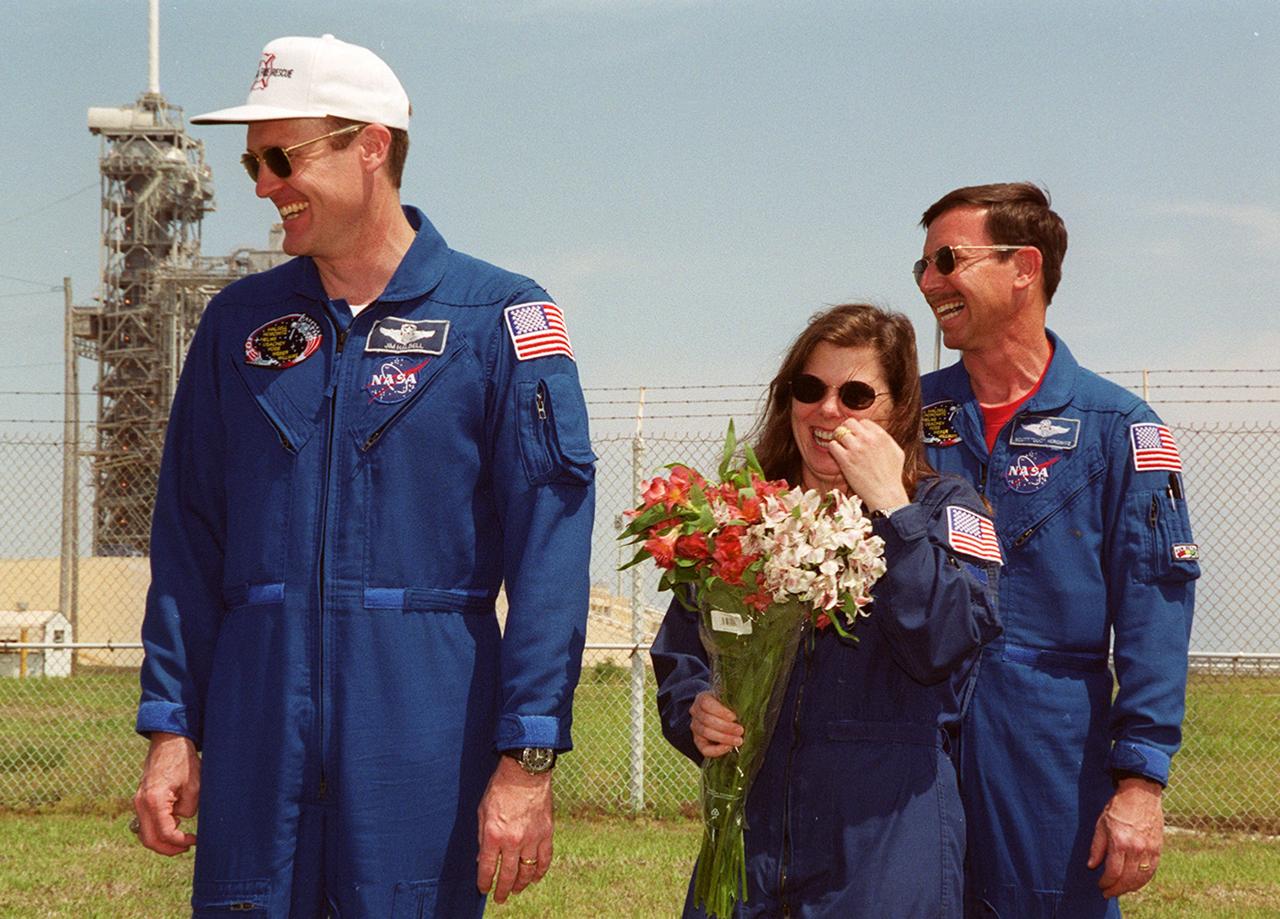
KENNEDY SPACE CENTER, FLA. -- A light-hearted moment during a meeting of the STS-101 crew with family and friends at Launch Pad 39A. From left are Commander James D. Halsell Jr., Mission Specialist Mary Ellen Weber and Pilot Scott J. Horowitz. Mission STS-101 will take the crew to the International Space Station to deliver logistics and supplies, plus prepare the Station for the arrival of the Zvezda Service Module, expected to be launched by Russia in July 2000. The crew will conduct one spacewalk to perform maintenance on the Space Station as well. This will be the third assembly flight for the Space Station. Launch is targeted for April 24 at about 4:15 p.m. EDT from Launch Pad 39A.
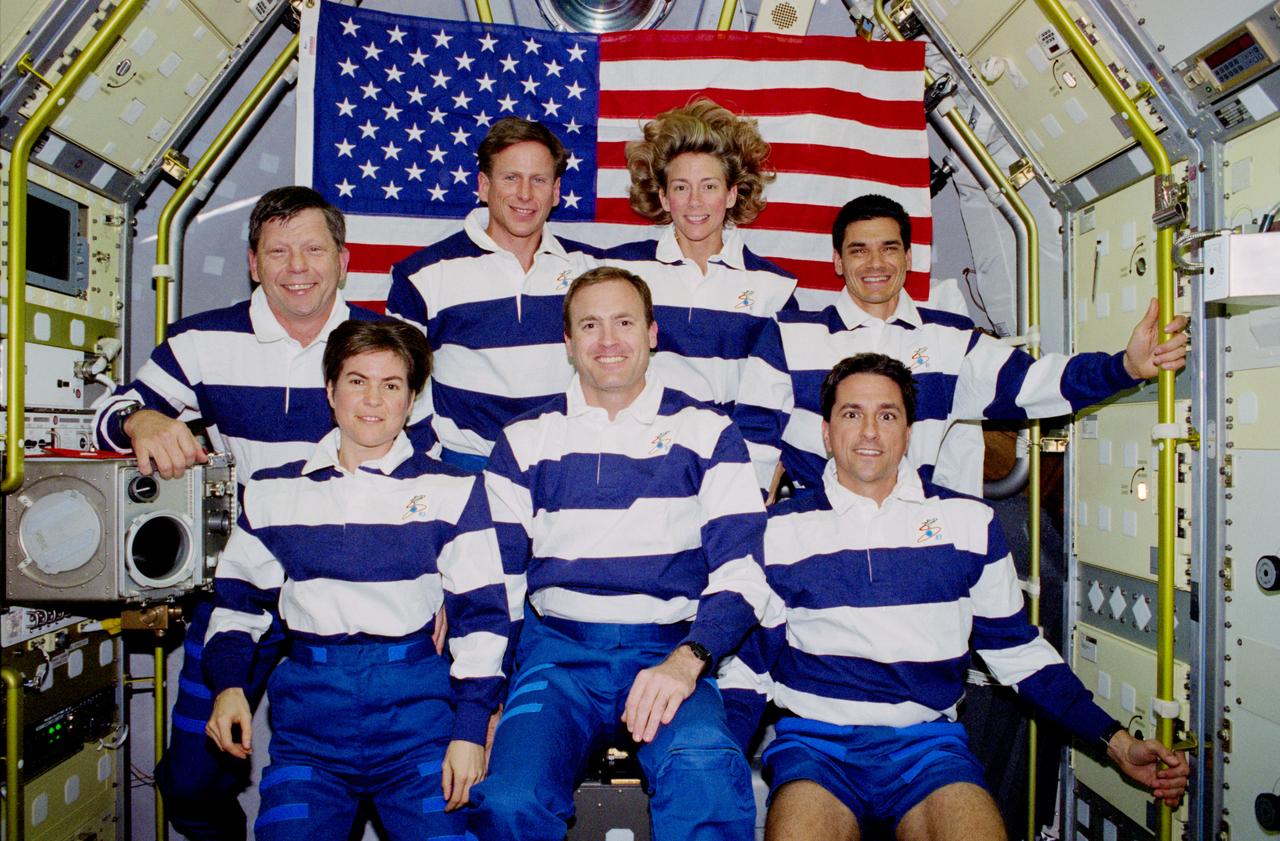
STS083-325-004 (4-8 April 1997) --- Five NASA astronauts and two payload specialists pose for the traditional inflight crew portrait during a Microgravity Science Laboratory 1 (MSL-1) shift changeover in the Spacelab Module aboard the Space Shuttle Columbia. In front (from the left) are astronauts Janice E. Voss, James D. Halsell, Jr. and Donald A. Thomas. From left to right in the rear are Roger K. Crouch, along with astronauts Michael L. Gernhardt and Susan L. Still, and Gregory T. Linteris. Crouch and Linteris are payload specialists.
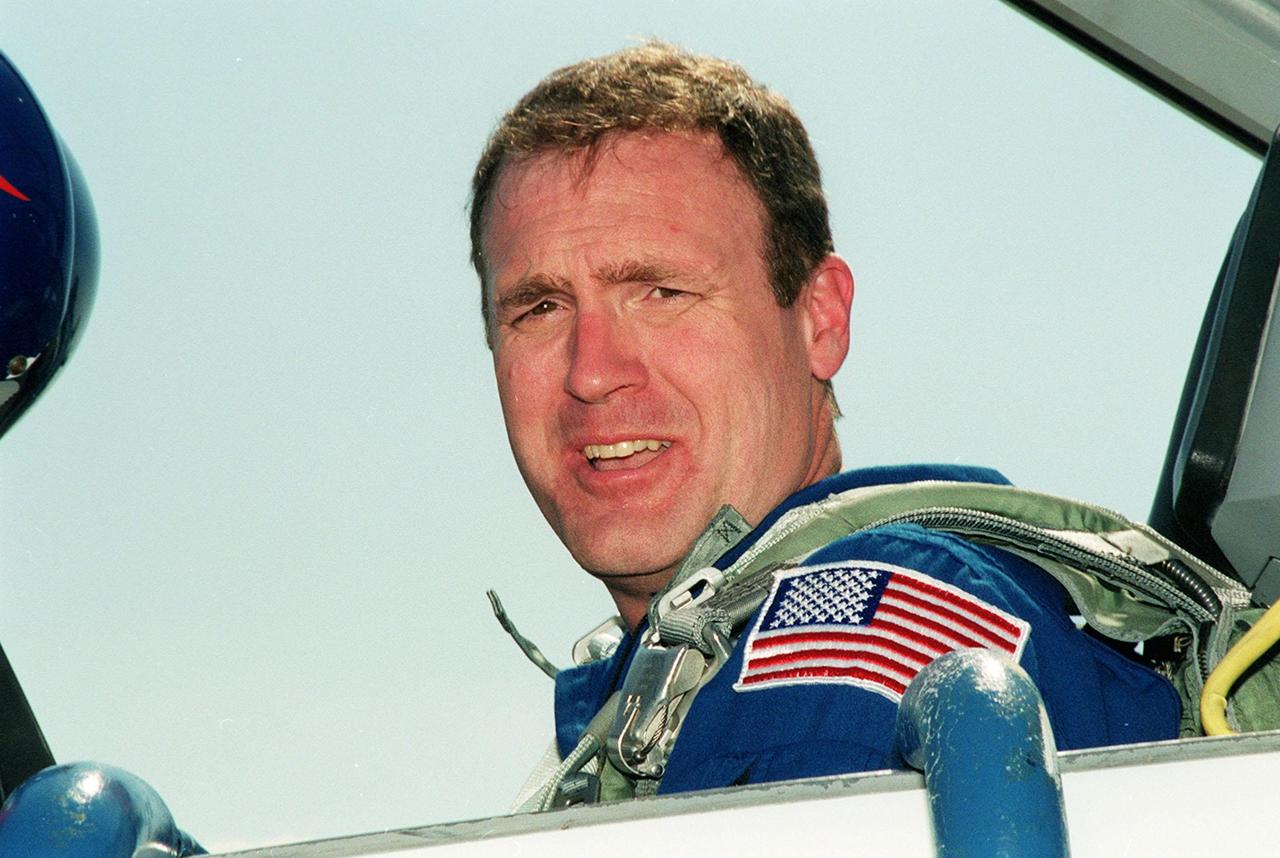
STS-101 Commander James D. Halsell Jr. arrives at KSC's Shuttle Landing Facility piloting a T-38 trainer jet aircraft. He and the rest of the crew are at KSC to get ready for their launch on April 24 about 4:15 p.m. EDT from Launch Pad 39A. The mission will take the crew to the International Space Station, delivering logistics and supplies, plus preparing the Station for the arrival of the Zvezda Service Module, expected to be launched by Russia in July 2000. Also, the crew will conduct one space walk to perform maintenance on the Space Station. This will be the third assembly flight for the Space Station
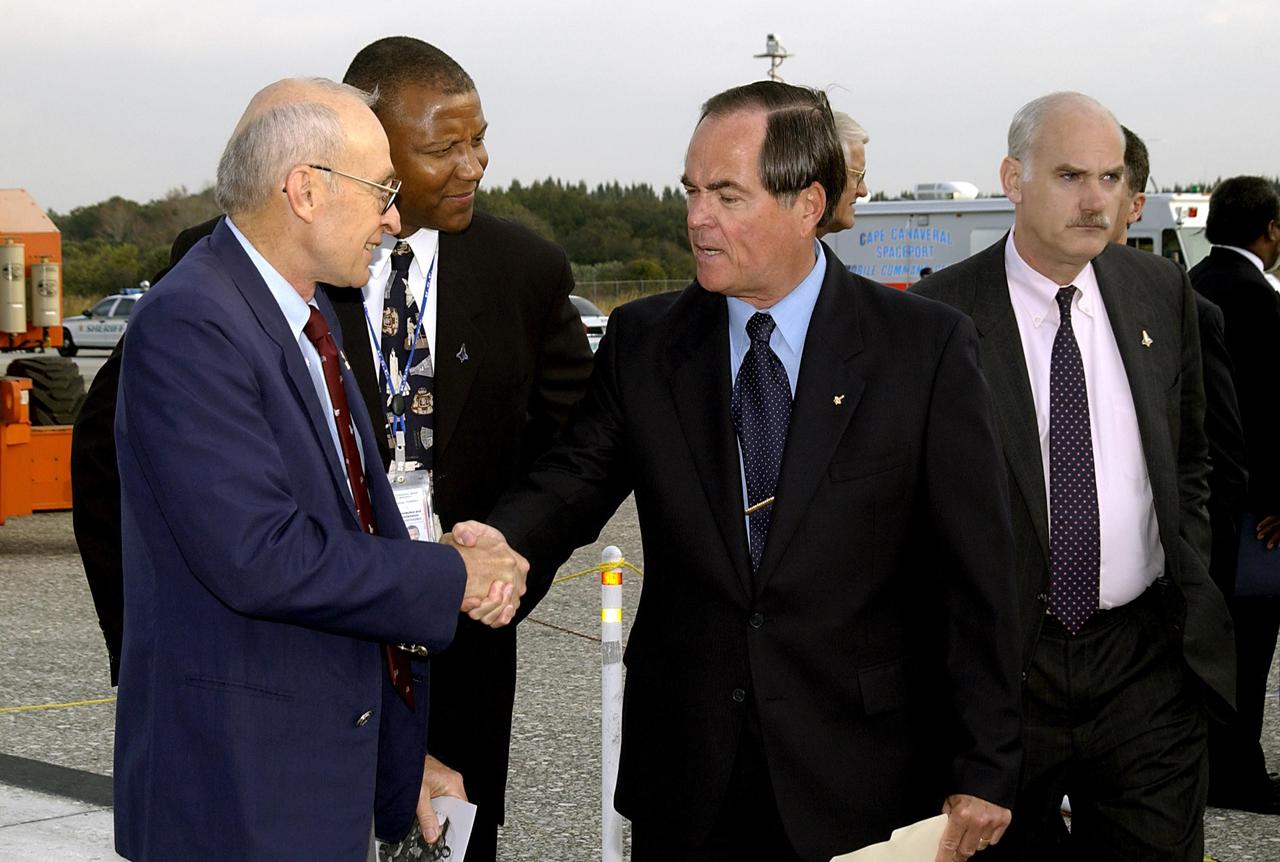
KENNEDY SPACE CENTER, FLA. - A Columbia Crew Memorial Service is held at the Shuttle Landing Facility for KSC employees and invited guests, including former astronaut and KSC Director Robert Crippen (center). The Columbia and her crew of seven were lost on Feb. 1, 2003, over East Texas as they returned to Earth after a 16-day research mission. Taking part in the service were NASA Administrator Sean O’Keefe, former KSC Director Robert Crippen, astronaut Jim Halsell, several employees, area clergymen, and members of Patrick Air Force Base. The service concluded with a “Missing Man Formation Fly Over” by NASA T-38 jet aircraft.
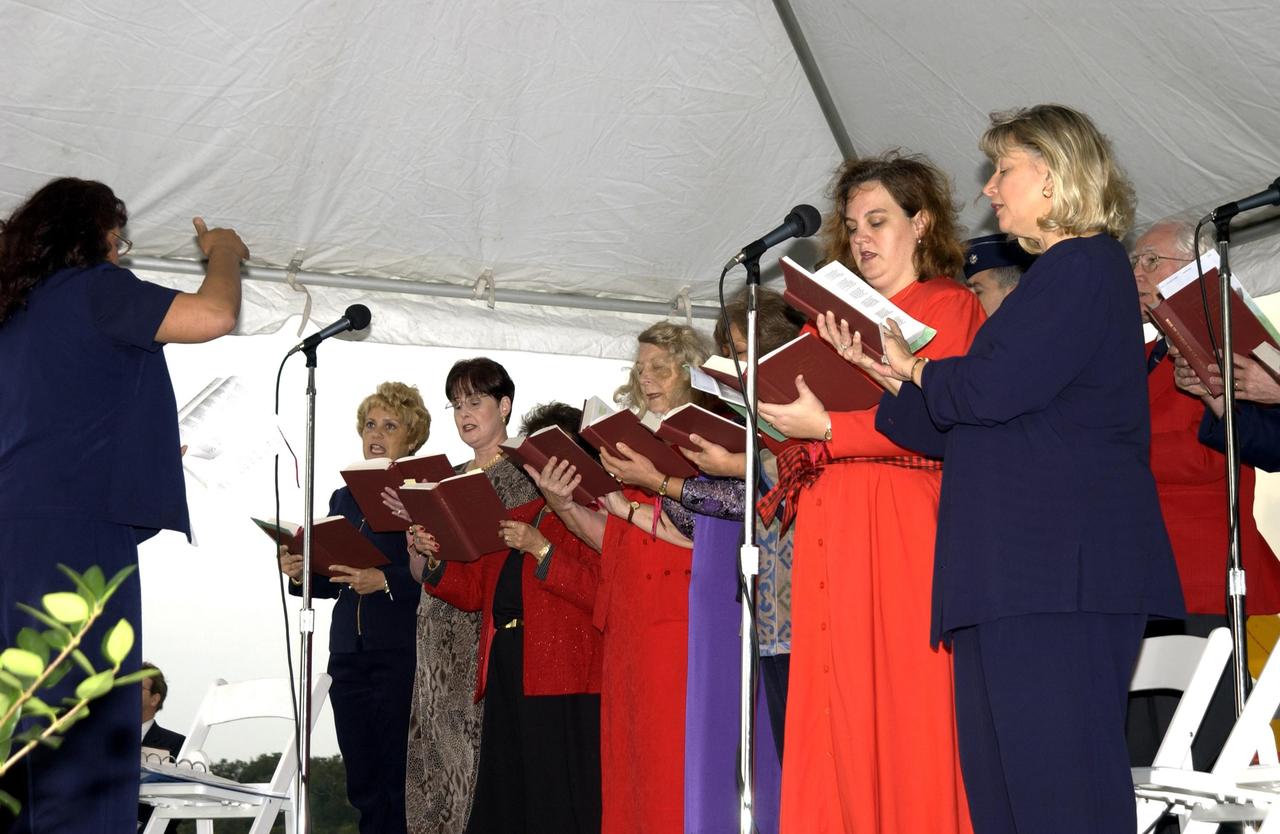
KENNEDY SPACE CENTER, FLA. - A Columbia Crew Memorial Service is held at the Shuttle Landing Facility for KSC employees and invited guests. The Columbia and her crew of seven were lost on Feb. 1, 2003, over East Texas as they returned to Earth after a 16-day research mission. Taking part in the service were NASA Administrator Sean O’Keefe, former KSC Director Robert Crippen, astronaut Jim Halsell, several employees, area clergymen, and members of Patrick Air Force Base. The service concluded with a “Missing Man Formation Fly Over” by NASA T-38 jet aircraft.
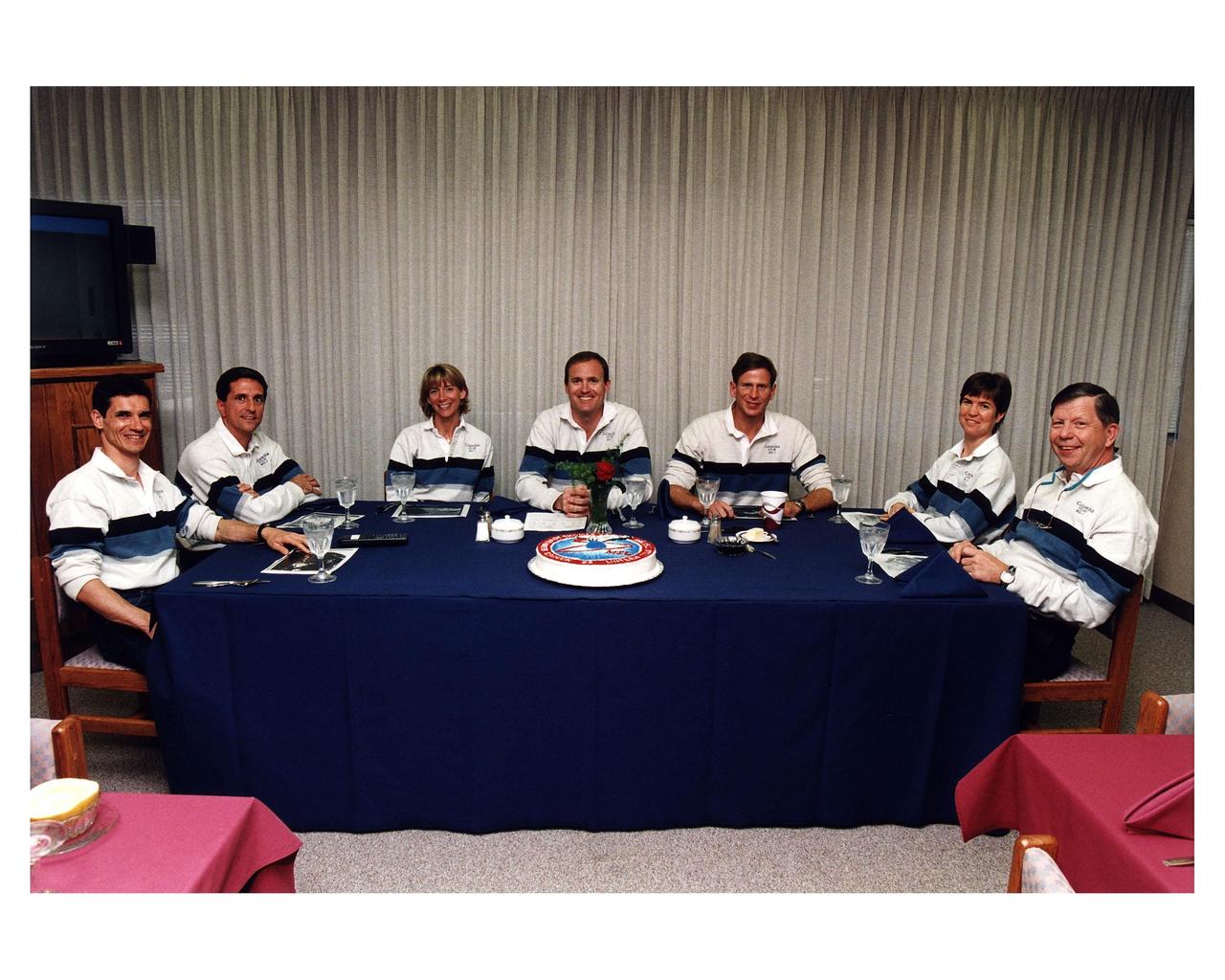
The STS-83 flight crew enjoys the traditional pre-liftoff breakfast in the crew quarters of the Operations and Checkout Building. They are (from left): Payload Specialist Gregory T. Linteris; Mission Specialist Donald A. Thomas; Pilot Susan L. Still; Mission Commander James D. Halsell, Jr.; Mission Specialist Michael L. Gernhardt; Payload Commander Janice E. Voss; and Payload Specialist Roger K. Crouch. After a weather briefing, the flight crew will be fitted with their launch/entry suits and depart for Launch Pad 39A. Once there, they will take their positions in the crew cabin of the Space Shuttle Columbia to await a liftoff during a window that will open at 2:00 p.m. EST, April 4
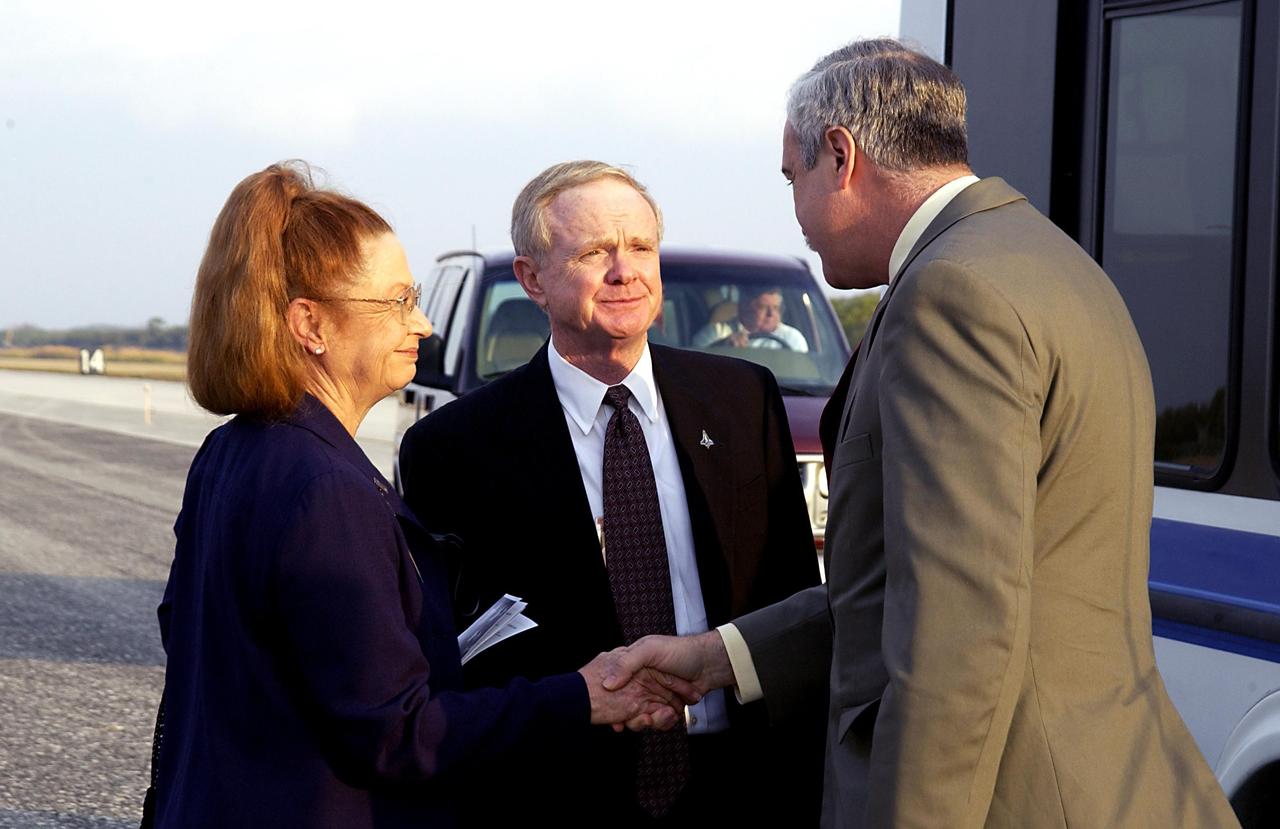
KENNEDY SPACE CENTER, FLA. - A Columbia Crew Memorial Service is held at the Shuttle Landing Facility for KSC employees and invited guests, including KSC Director Roy Bridges (center) and NASA Administrator Sean O'Keefe (right). The Columbia and her crew of seven were lost on Feb. 1, 2003, over East Texas as they returned to Earth after a 16-day research mission. Taking part in the service were NASA Administrator Sean O’Keefe, former KSC Director Robert Crippen, astronaut Jim Halsell, several employees, area clergymen, and members of Patrick Air Force Base. The service concluded with a “Missing Man Formation Fly Over” by NASA T-38 jet aircraft.
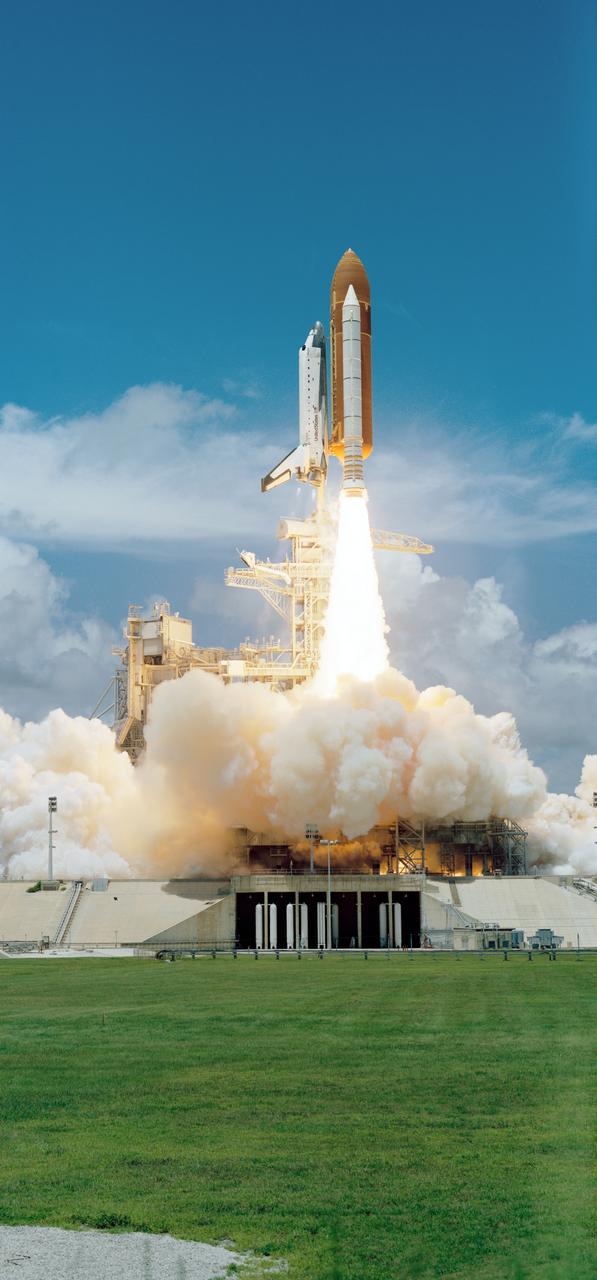
STS065-S-048 (8 July 1994) --- The Space Shuttle Columbia, with six NASA astronauts and a Japanese payload specialist aboard, heads toward Earth-orbit. A short time later, the crew began setting up the science module for two weeks of experimentation in support of the second International Microgravity Laboratory (IML-2). Launch occurred at 12:43 p.m. (EDT), July 8, 1994. Onboard were astronauts Robert D. Cabana, James D. Halsell, Jr., Richard J. Hieb, Carl E. Walz, Leroy Chiao, and Donald A. Thomas along with NASDA payload specialist Dr. Chiaki Mukai.
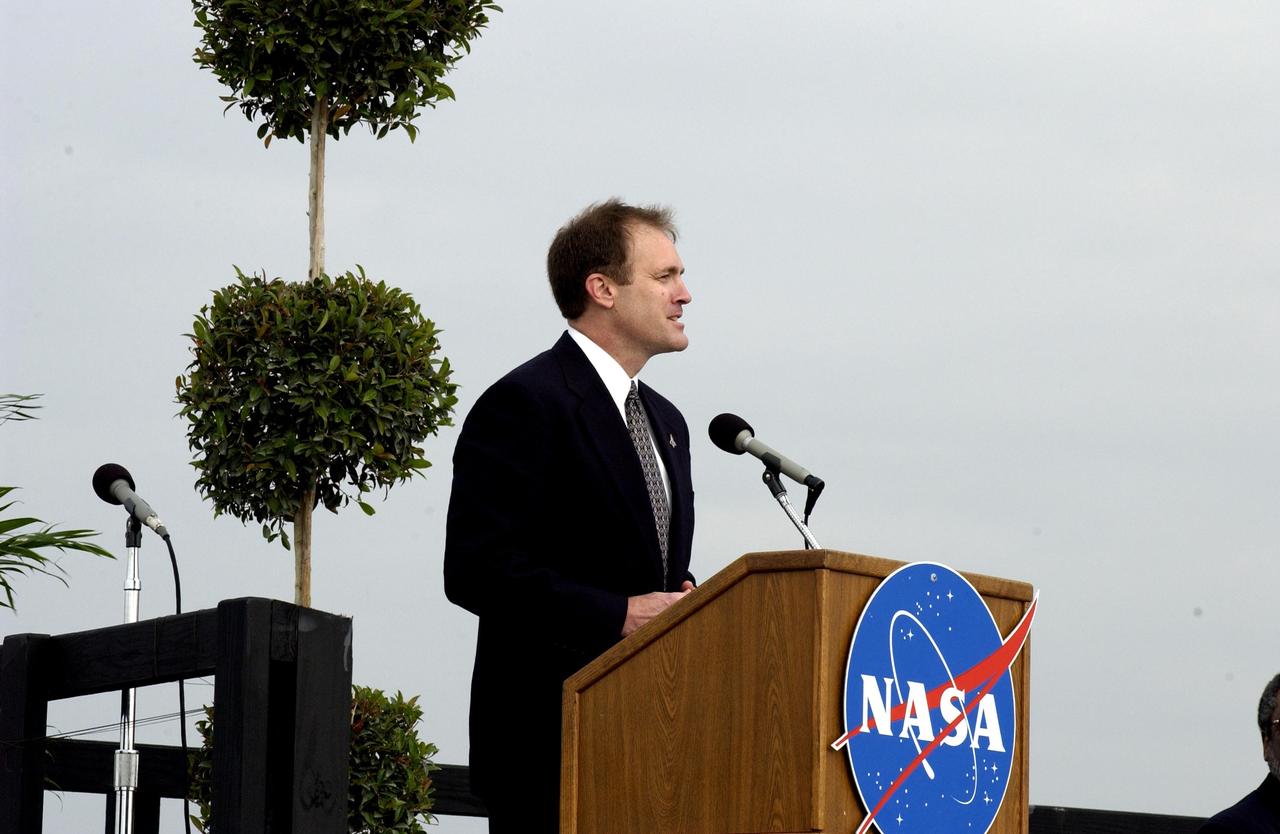
KENNEDY SPACE CENTER, FLA. - A Columbia Crew Memorial Service is held at the Shuttle Landing Facility for KSC employees and invited guests. At the podium is astronaut Jim Halsell. The Columbia and her crew of seven were lost on Feb. 1, 2003, over East Texas as they returned to Earth after a 16-day research mission. Also taking part in the service were NASA Administrator Sean O’Keefe, former KSC Director Robert Crippen, several employees, area clergymen, and members of Patrick Air Force Base. The service concluded with a “Missing Man Formation Fly Over” by NASA T-38 jet aircraft.
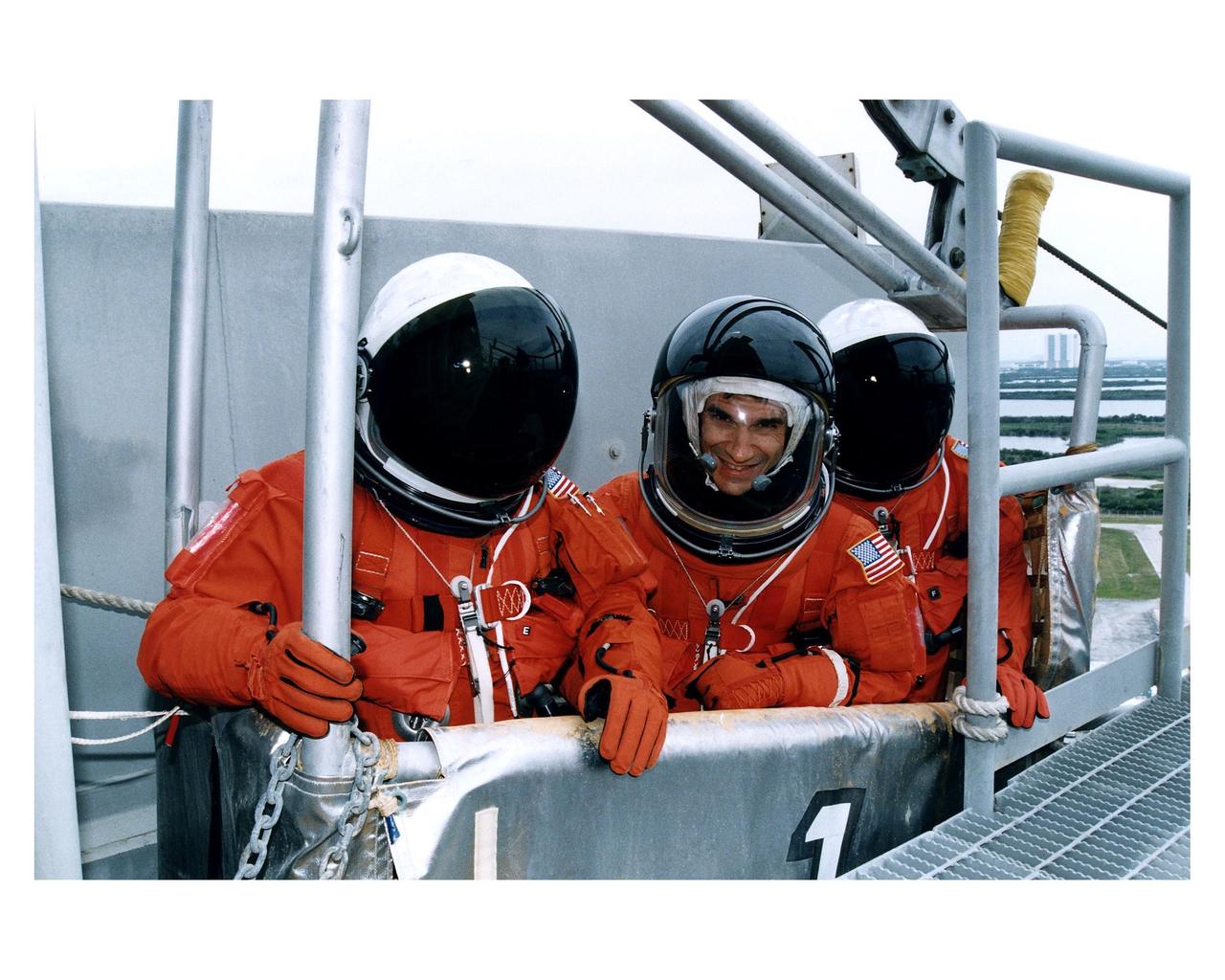
Three members of the STS-83 flight crew check out one of the baskets for the emergency egress slidewire system at Launch Pad 39A during Terminal Countdown Demonstration Test (TCDT) exercises for that mission. Payload Specialist Gregory T. Linteris is in the center of the group. Other crew members on the 16-day Microgravity Science Laboratory-1 (MSL-1) mission are: Mission Commander James D. Halsell, Jr.; Pilot Susan L. Still; Payload Commander Janice Voss; Mission Specialists Michael L. Gernhardt and Donald A. Thomas; and Payload Specialist Roger K. Crouch
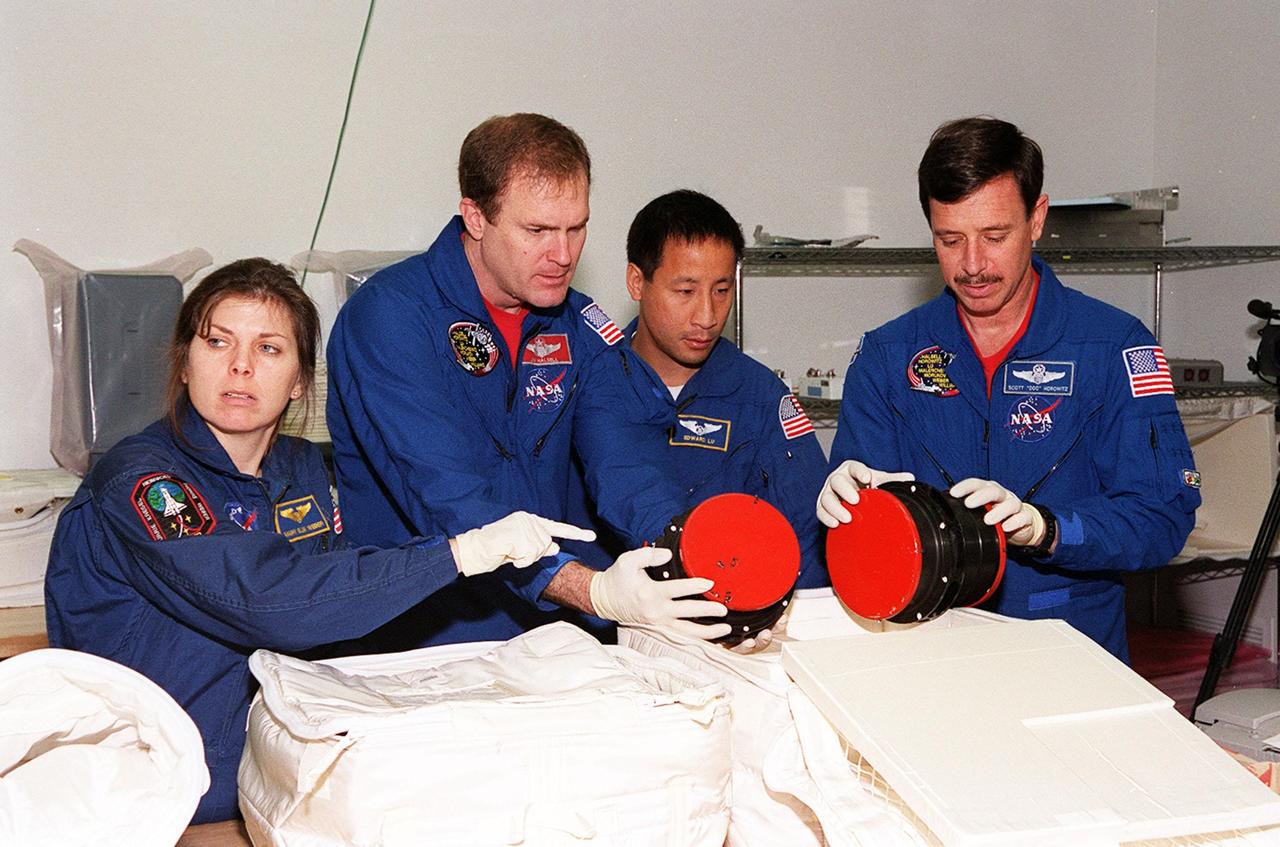
KENNEDY SPACE CENTER, FLA. -- At SPACEHAB, in Cape Canaveral, the STS-101 crew inspect equipment and payload for their mission. From left to right are Mission Specialist Mary Ellen Weber (Ph.D.) , Commander James D. Halsell Jr., Mission Specialist Edward Tsang Lu and Pilot Scott J. "Doc" Horowitz (Ph.D.). They are taking part in a Crew Equipment Interface Test, which gives them an opportunity to look over equipment and payloads that will fly on the mission. Space Shuttle Atlantis will be carrying the SPACEHAB Double Module, which carries internal logistics and resupply cargo for station outfitting. Launch of Atlantis on mission STS-101 is scheduled no earlier than April 13, 2000
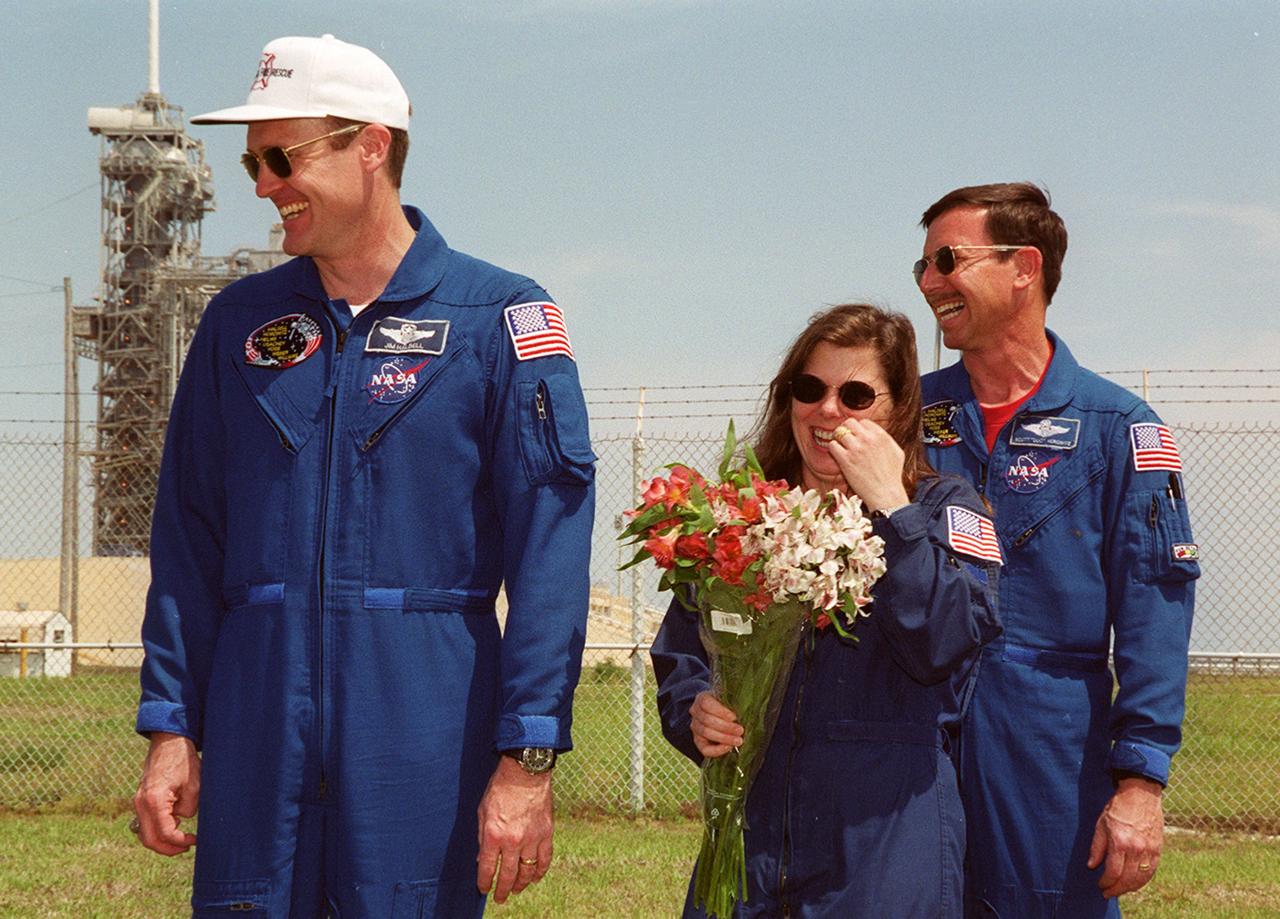
KENNEDY SPACE CENTER, FLA. -- A light-hearted moment during a meeting of the STS-101 crew with family and friends at Launch Pad 39A. From left are Commander James D. Halsell Jr., Mission Specialist Mary Ellen Weber and Pilot Scott J. Horowitz. Mission STS-101 will take the crew to the International Space Station to deliver logistics and supplies, plus prepare the Station for the arrival of the Zvezda Service Module, expected to be launched by Russia in July 2000. The crew will conduct one spacewalk to perform maintenance on the Space Station as well. This will be the third assembly flight for the Space Station. Launch is targeted for April 24 at about 4:15 p.m. EDT from Launch Pad 39A.
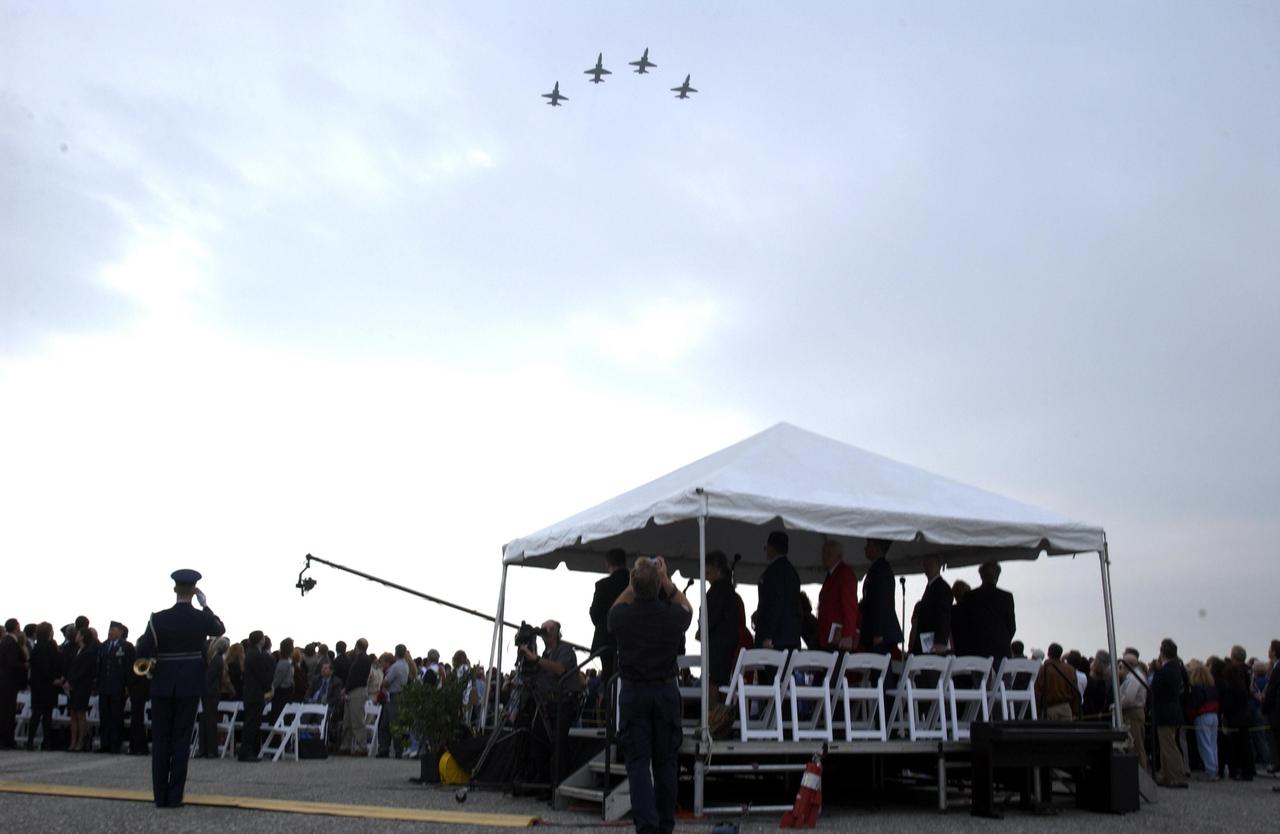
KENNEDY SPACE CENTER, FLA. - A Columbia Crew Memorial Service is held at the Shuttle Landing Facility for KSC employees and invited guests. The service concluded with a “Missing Man Formation Fly Over” by NASA T-38 jet aircraft, seen here. The Columbia and her crew of seven were lost on Feb. 1, 2003, over East Texas as they returned to Earth after a 16-day research mission. Taking part in the service were NASA Administrator Sean O’Keefe, former KSC Director Robert Crippen, astronaut Jim Halsell, several employees, area clergymen, and members of Patrick Air Force Base.
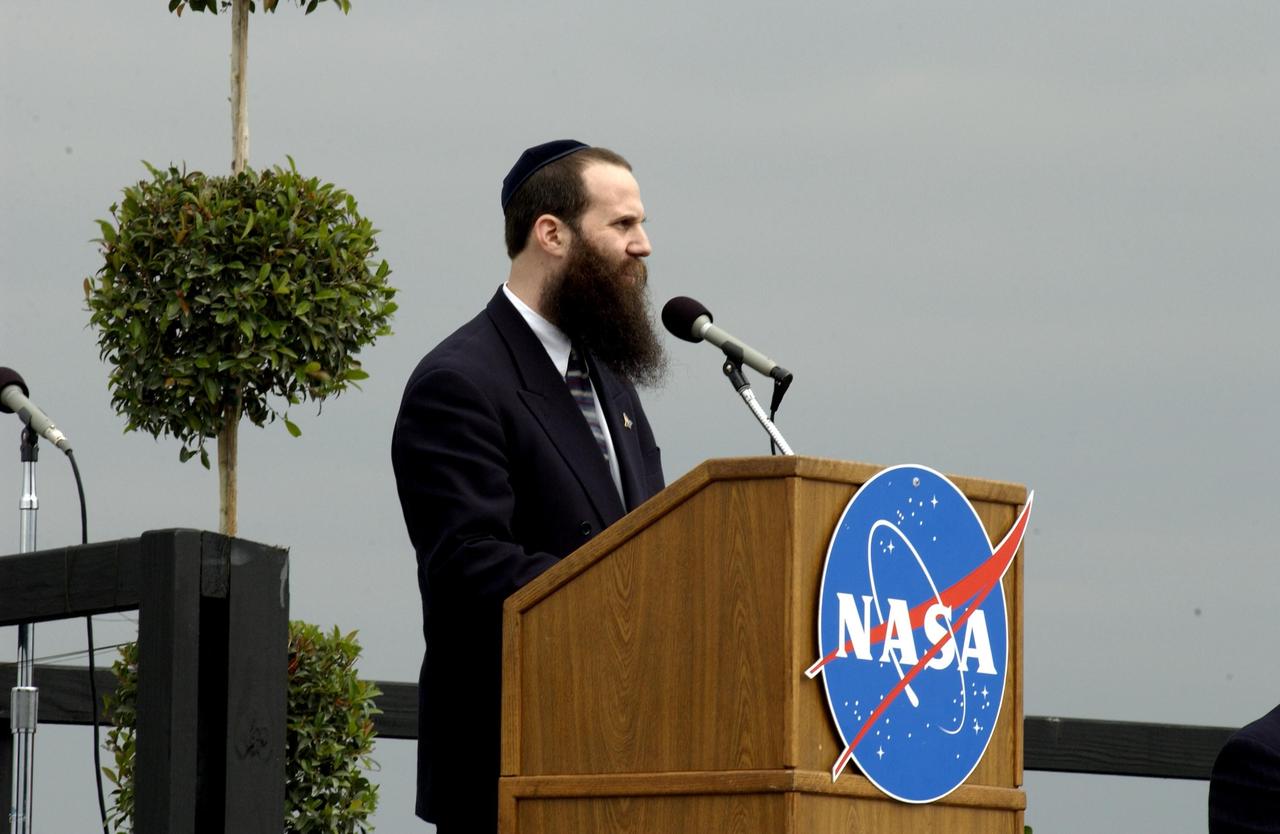
KENNEDY SPACE CENTER, FLA. - A Columbia Crew Memorial Service is held at the Shuttle Landing Facility for KSC employees and invited guests. Rabbi Zvi Konikov of the Chabad Jewish Community Center of the Space Coast is at the podium. The Columbia and her crew of seven were lost on Feb. 1, 2003, over East Texas as they returned to Earth after a 16-day research mission. Taking part in the service were NASA Administrator Sean O’Keefe, former KSC Director Robert Crippen, astronaut Jim Halsell, several employees, area clergymen, and members of Patrick Air Force Base. The service concluded with a “Missing Man Formation Fly Over” by NASA T-38 jet aircraft.

STS-101 Mission Commander James D. Halsell Jr. arrives at KSC's Shuttle Landing Facility aboard a T-38 jet aircraft to prepare for the launch on May 18. The mission will take the crew of seven to the International Space Station, delivering logistics and supplies, plus preparing the Station for the arrival of the Zvezda Service Module, expected to be launched by Russia in July 2000. Also, the crew will conduct one space walk to perform maintenance on the Space Station. This will be the third assembly flight for the Space Station. STS-101 is targeted for liftoff at 6:38 a.m. EDT from Launch Pad 39A
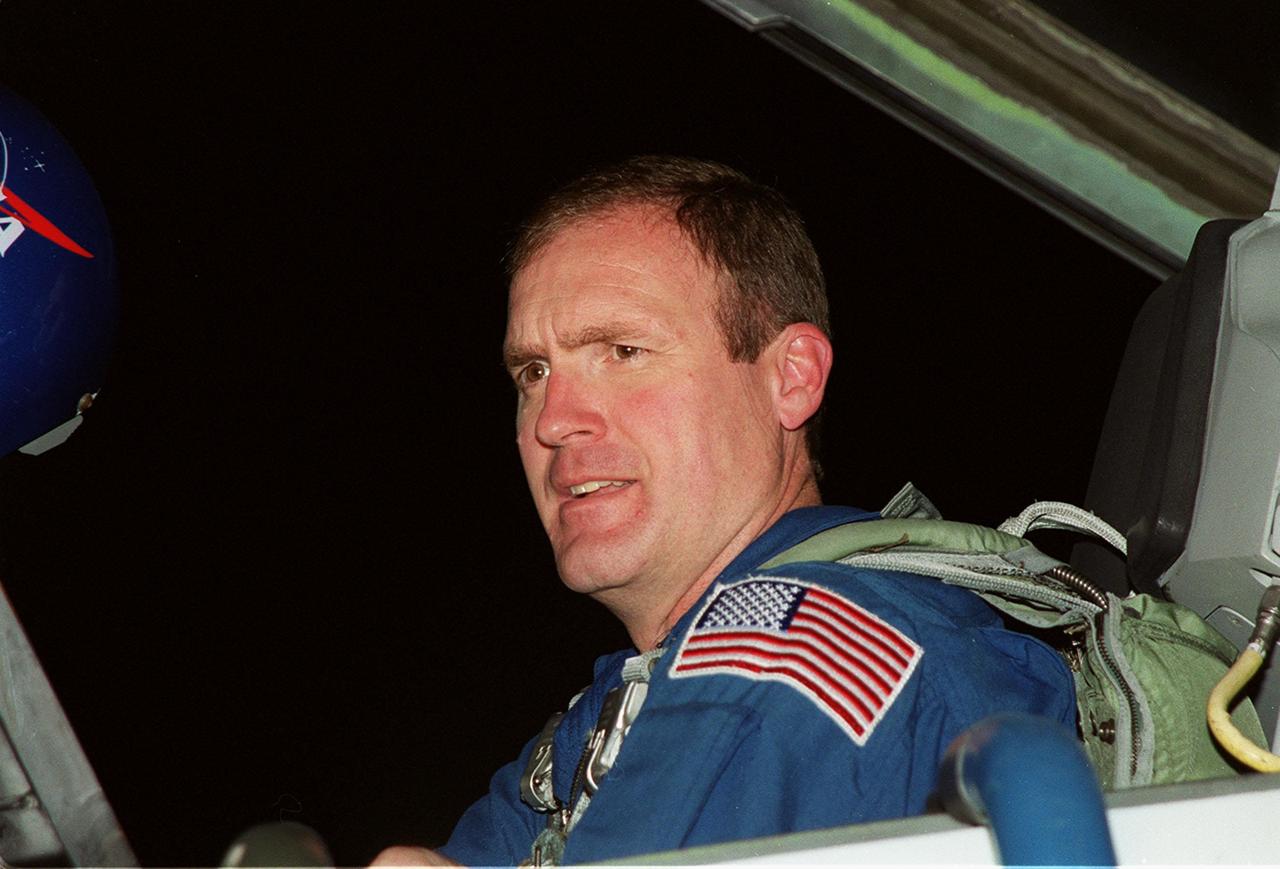
STS-101 Mission Commander James D. Halsell Jr. arrives at KSC's Shuttle Landing Facility aboard a T-38 jet aircraft to prepare for the launch on May 18. The mission will take the crew of seven to the International Space Station, delivering logistics and supplies, plus preparing the Station for the arrival of the Zvezda Service Module, expected to be launched by Russia in July 2000. Also, the crew will conduct one space walk to perform maintenance on the Space Station. This will be the third assembly flight for the Space Station. STS-101 is targeted for liftoff at 6:38 a.m. EDT from Launch Pad 39A
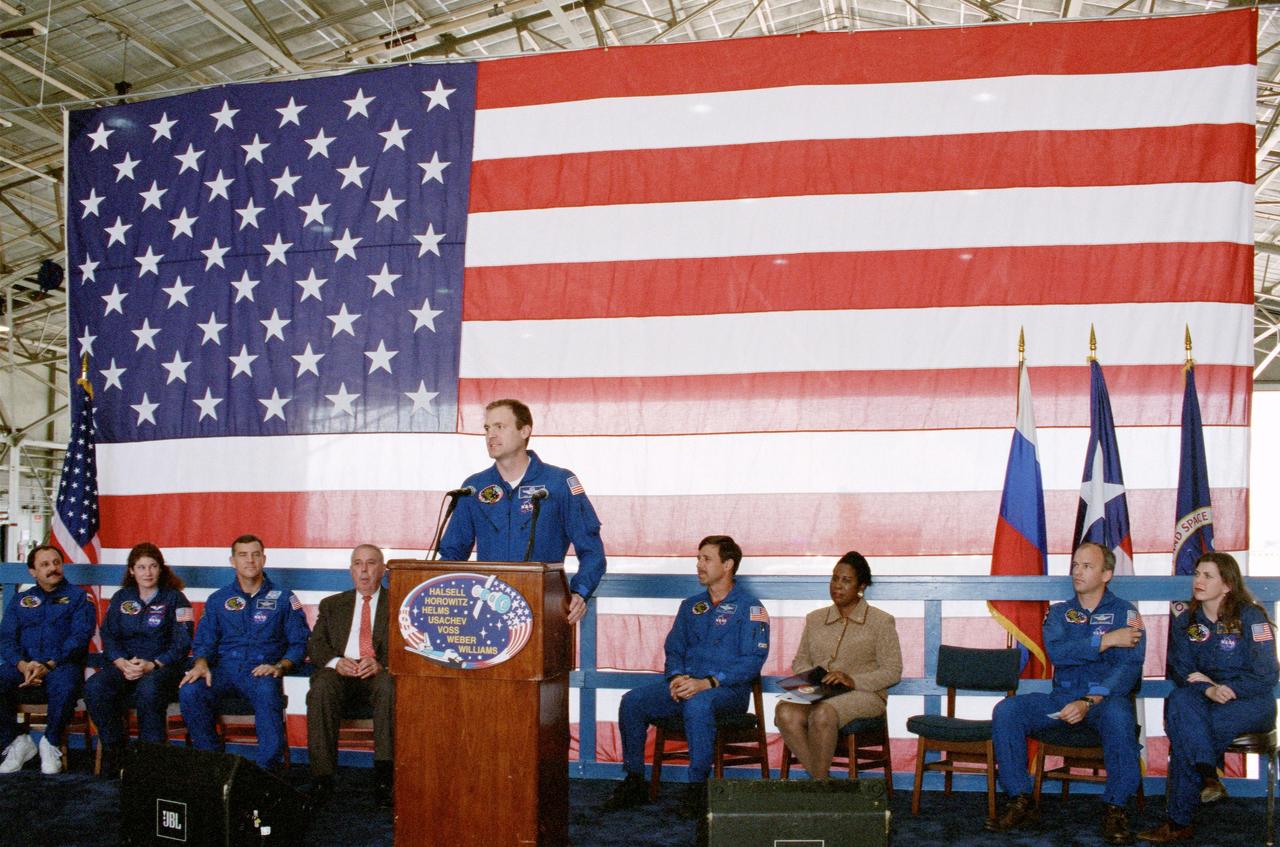
JSC2000-04607 (30 May 2000) --- Astronaut James D. Halsell, Jr., mission commander, speaks to a crowd at the crew-welcoming ceremony at Ellington Field on the day following the completion of the STS-101 mission. Other speakers, seated behind the lecturn, are (from the left) cosmonaut Yury V. Usachev, representing the Russian Aviation and Space Agency; Susan J. Helms and James S. Voss, all mission specialists; JSC Director George W.S. Abbey; astronaut Scott J. Horowitz, pilot; U.S. Congresswoman Sheila Jackson Lee (D.-Houston); along with astronauts Jeffrey N. Williams and Mary Ellen Weber, both mission specialists.
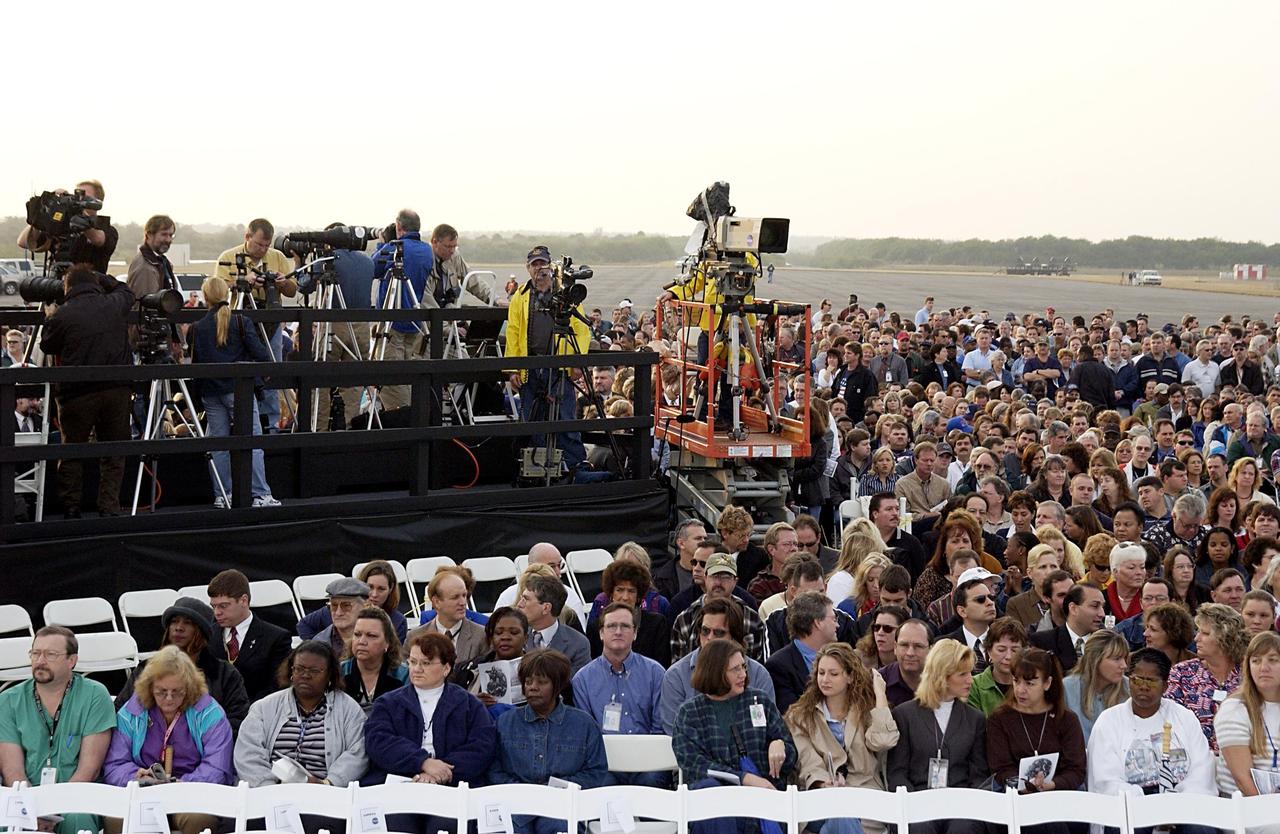
KENNEDY SPACE CENTER, FLA. - A Columbia Crew Memorial Service is held at the Shuttle Landing Facility for KSC employees and invited guests. The Columbia and her crew of seven were lost on Feb. 1, 2003, over East Texas as they returned to Earth after a 16-day research mission. Taking part in the service were NASA Administrator Sean O’Keefe, former KSC Director Robert Crippen, astronaut Jim Halsell, several employees, area clergymen, and members of Patrick Air Force Base. The service concluded with a “Missing Man Formation Fly Over” by NASA T-38 jet aircraft.
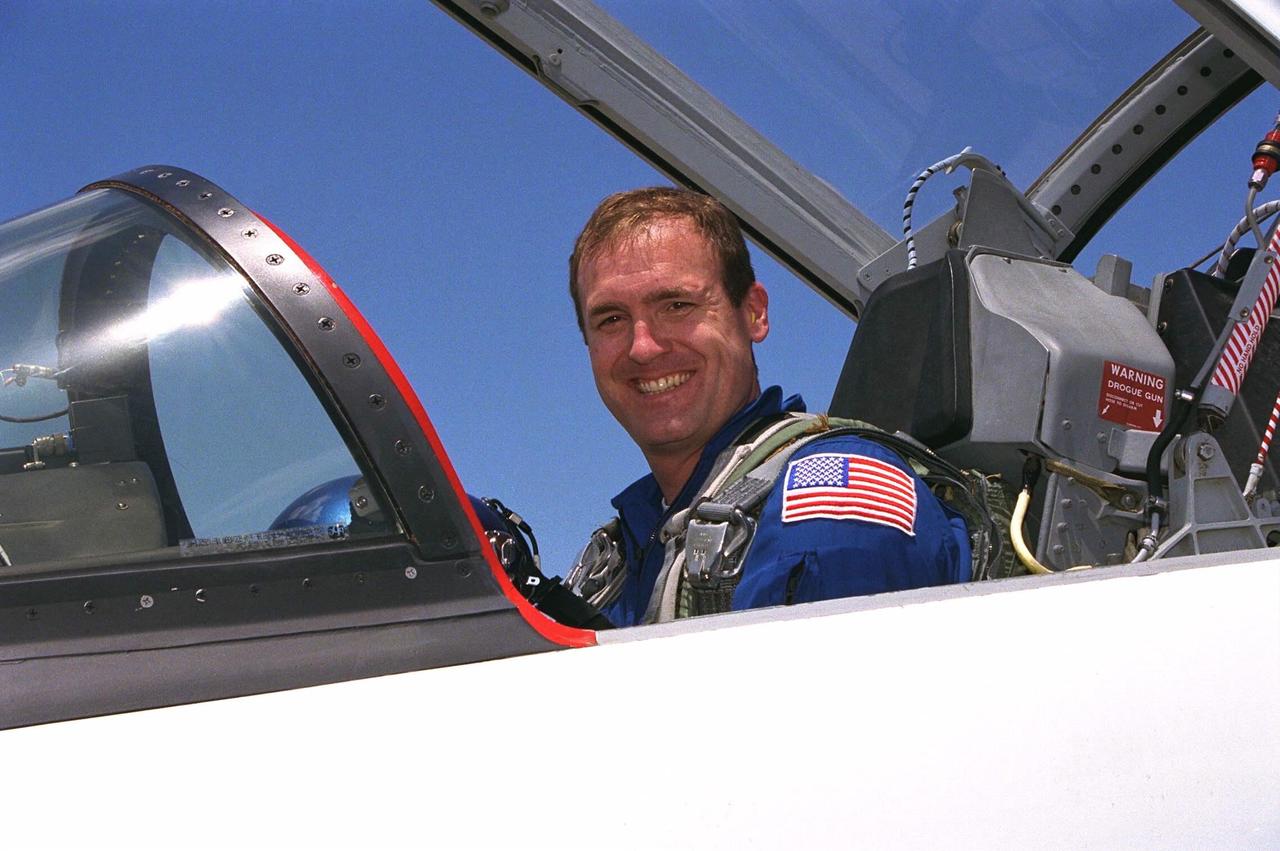
STS-94 Commander James D. Halsell, Jr., arrives at the Shuttle Landing Facility aboard a T-38 jet in preparation for the reflight of the Microgravity Science Laboratory-1 mission. Launch is scheduled for July 1, 1997, at 2:37 p.m. EDT. The laboratory was scheduled to fly again with the full complement of STS-83 experiments after that mission was cut short due to a faulty fuel cell. During the scheduled 16-day STS-94 mission, the experiments will be used to test some of the hardware, facilities and procedures that are planned for use on the International Space Station while the flight crew conducts combustion, protein crystal growth and materials processing experiments
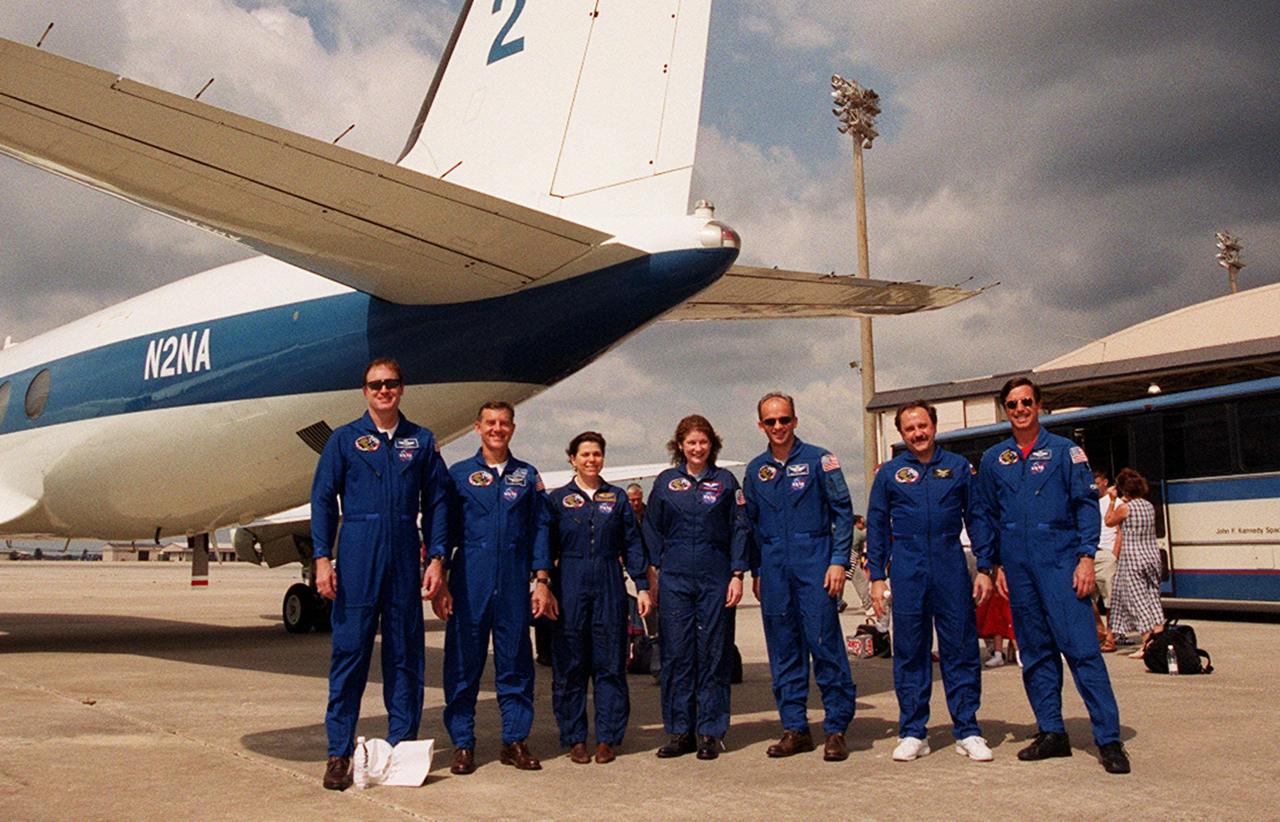
The STS-101 crew pose one more time before departing for Houston from Patrick Air Force Base. From left are Commander James D. Halsell Jr., Mission Specialists James S. Voss, Mary Ellen Weber, Susan J. Helms, Jeffrey N. Williams, Yury Usachev of Russia, and Pilot Scott “Doc” Horowitz. After landing at 2:20 a.m. EDT May 29, the crew and their families enjoyed the Memorial Day holiday in Florida. The crew returned from the third flight to the International Space Station where they made repairs, transferred cargo and completed a space walk to install and connect several pieces of equipment on the outside of the Space Station
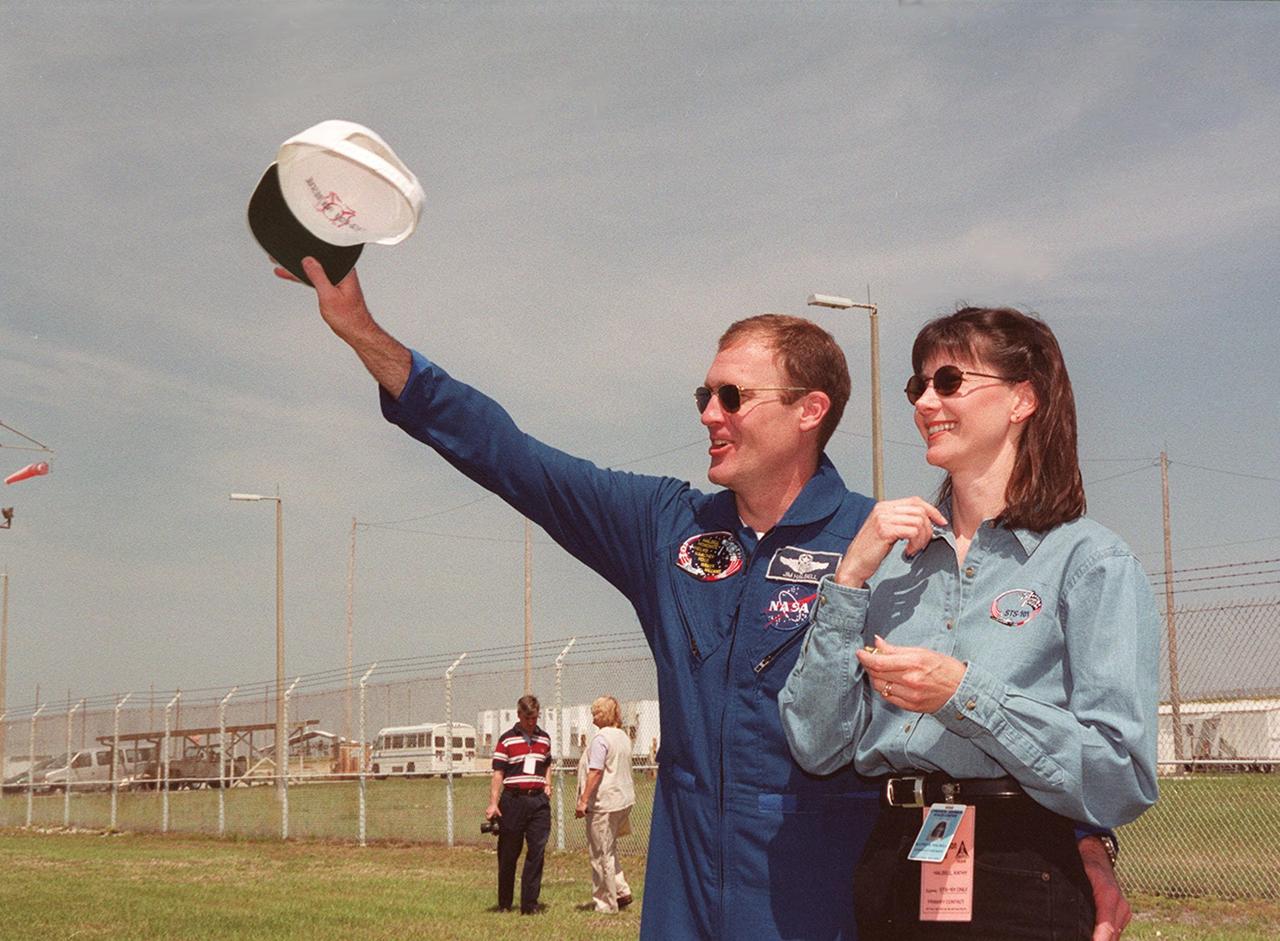
STS-101 Commander James D. Halsell Jr. waves as he stands with his wife Kathy during a meeting of the STS-101 crew with family and friends at Launch Pad 39A. Mission STS-101 will take the crew to the International Space Station to deliver logistics and supplies, plus prepare the Station for the arrival of the Zvezda Service Module, expected to be launched by Russia in July 2000. The crew will conduct one space walk to perform maintenance on the Space Station as well. This will be the third assembly flight for the Space Station. Launch is targeted for April 24 at about 4:15 p.m. EDT from Launch Pad 39A
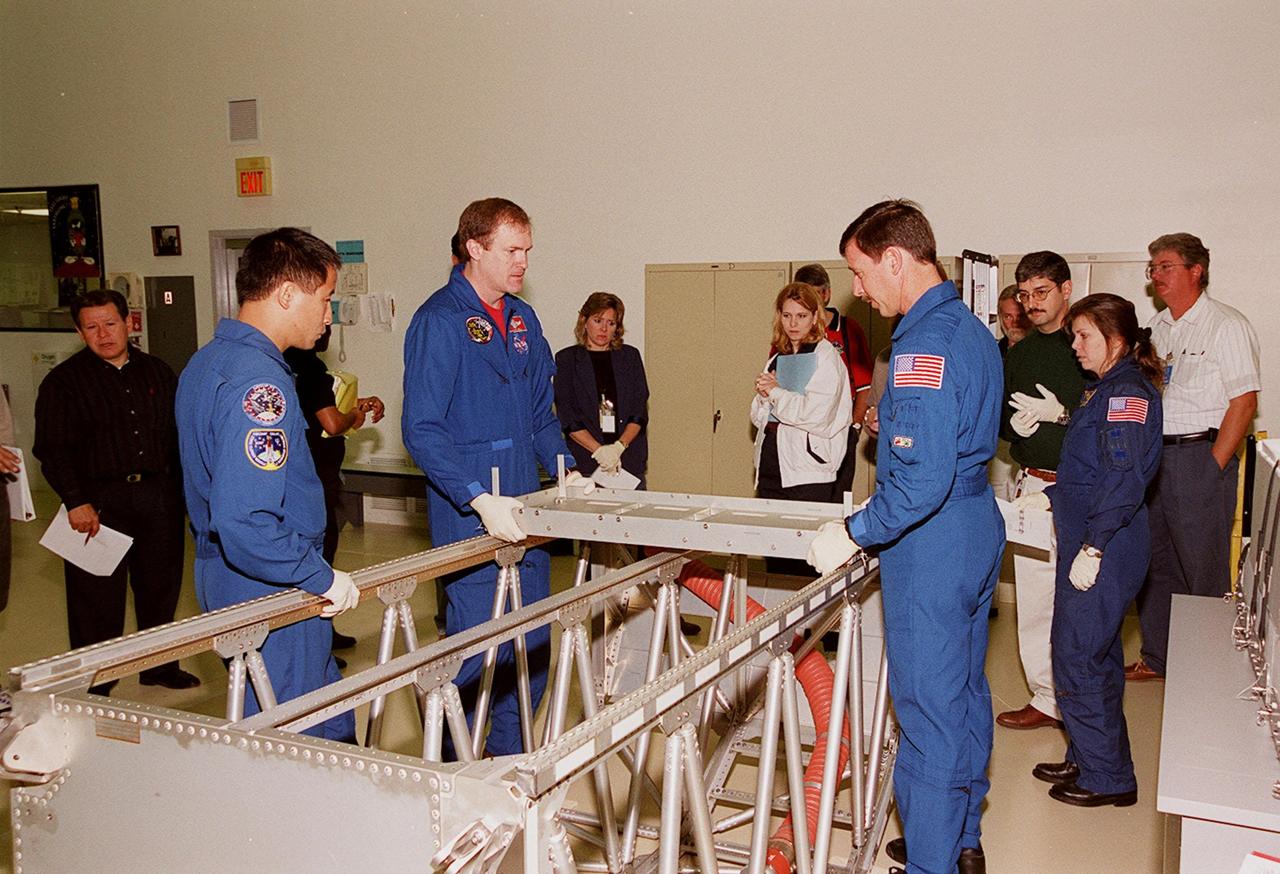
KENNEDY SPACE CENTER, FLA. -- At SPACEHAB, in Cape Canaveral, members of the STS-101 crew inspect equipment and payload for their mission. From left to right (in uniform) are Mission Specialist Edward Tsang Lu, Commander James D. Halsell Jr., Pilot Scott J. "Doc" Horowitz (Ph.D) and Mission Specialist Mary Ellen Weber (Ph.D.). They are taking part in a Crew Equipment Interface Test, which gives them an opportunity to look over equipment and payloads that will fly on the mission. Space Shuttle Atlantis will be carrying the SPACEHAB Double Module, which carries internal logistics and resupply cargo for station outfitting. Launch of Atlantis on mission STS-101 is scheduled no earlier than April 13, 2000
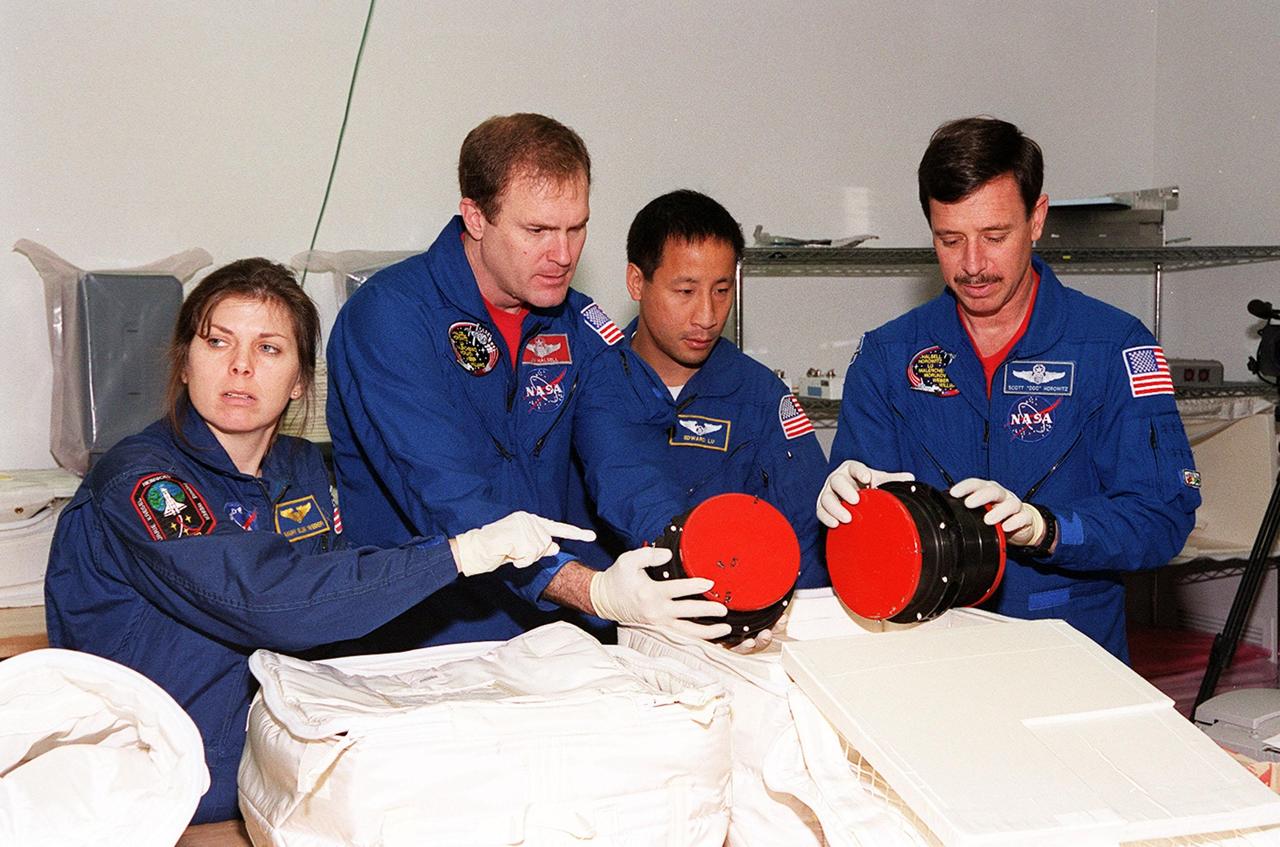
KENNEDY SPACE CENTER, FLA. -- At SPACEHAB, in Cape Canaveral, the STS-101 crew inspect equipment and payload for their mission. From left to right are Mission Specialist Mary Ellen Weber (Ph.D.) , Commander James D. Halsell Jr., Mission Specialist Edward Tsang Lu and Pilot Scott J. "Doc" Horowitz (Ph.D.). They are taking part in a Crew Equipment Interface Test, which gives them an opportunity to look over equipment and payloads that will fly on the mission. Space Shuttle Atlantis will be carrying the SPACEHAB Double Module, which carries internal logistics and resupply cargo for station outfitting. Launch of Atlantis on mission STS-101 is scheduled no earlier than April 13, 2000
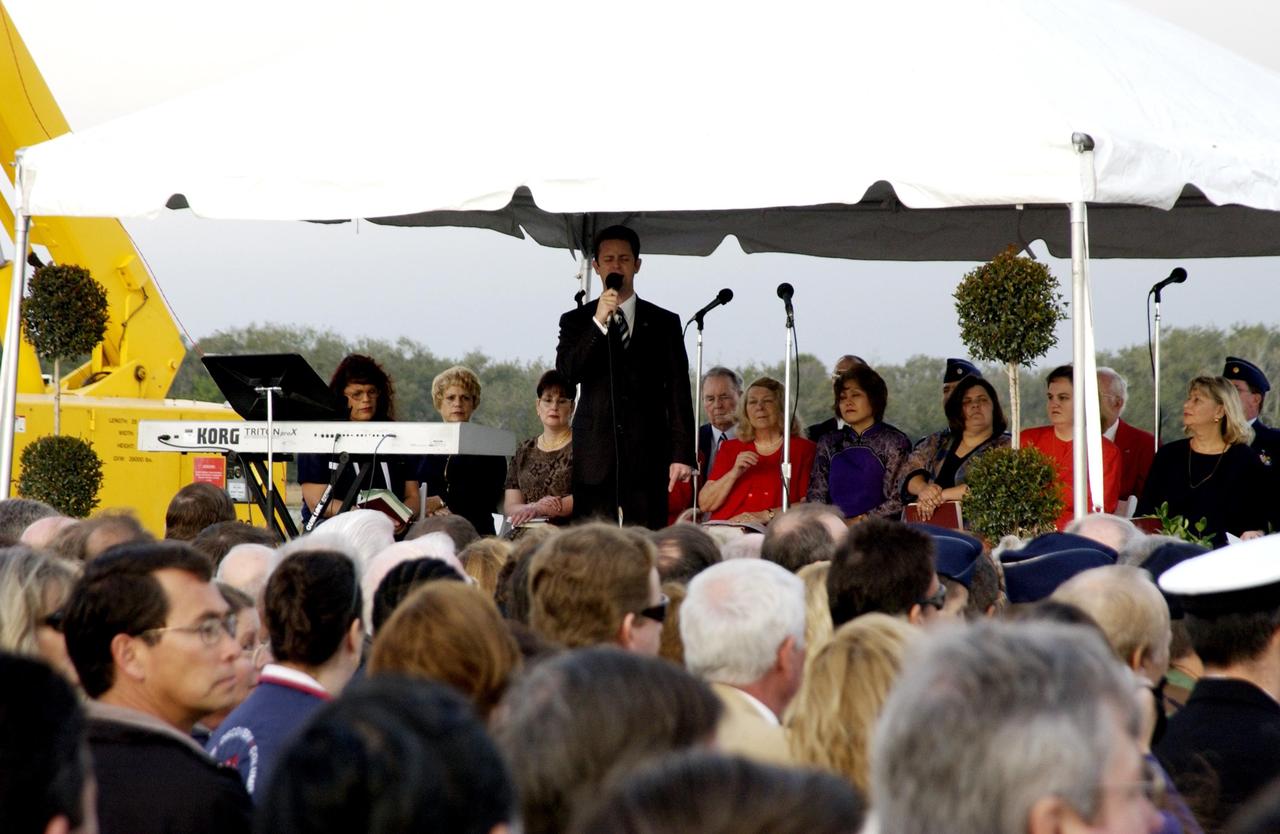
KENNEDY SPACE CENTER, FLA. - A Columbia Crew Memorial Service is held at the Shuttle Landing Facility for KSC employees and invited guests. The Columbia and her crew of seven were lost on Feb. 1, 2003, over East Texas as they returned to Earth after a 16-day research mission. Taking part in the service were NASA Administrator Sean O’Keefe, former KSC Director Robert Crippen, astronaut Jim Halsell, several employees, area clergymen, and members of Patrick Air Force Base. The service concluded with a “Missing Man Formation Fly Over” by NASA T-38 jet aircraft.
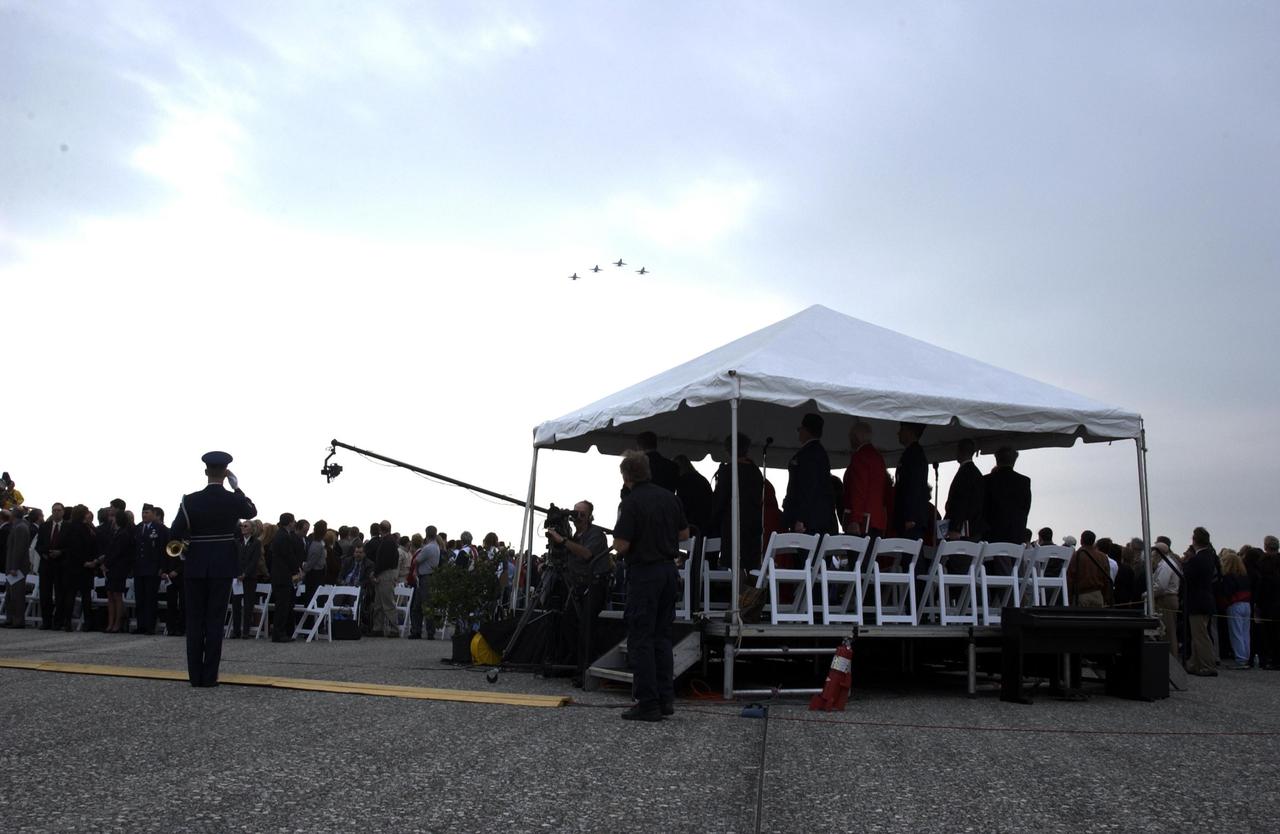
KENNEDY SPACE CENTER, FLA. - A Columbia Crew Memorial Service is held at the Shuttle Landing Facility for KSC employees and invited guests. The service concluded with a “Missing Man Formation Fly Over” by NASA T-38 jet aircraft, seen here. The Columbia and her crew of seven were lost on Feb. 1, 2003, over East Texas as they returned to Earth after a 16-day research mission. Taking part in the service were NASA Administrator Sean O’Keefe, former KSC Director Robert Crippen, astronaut Jim Halsell, several employees, area clergymen, and members of Patrick Air Force Base.
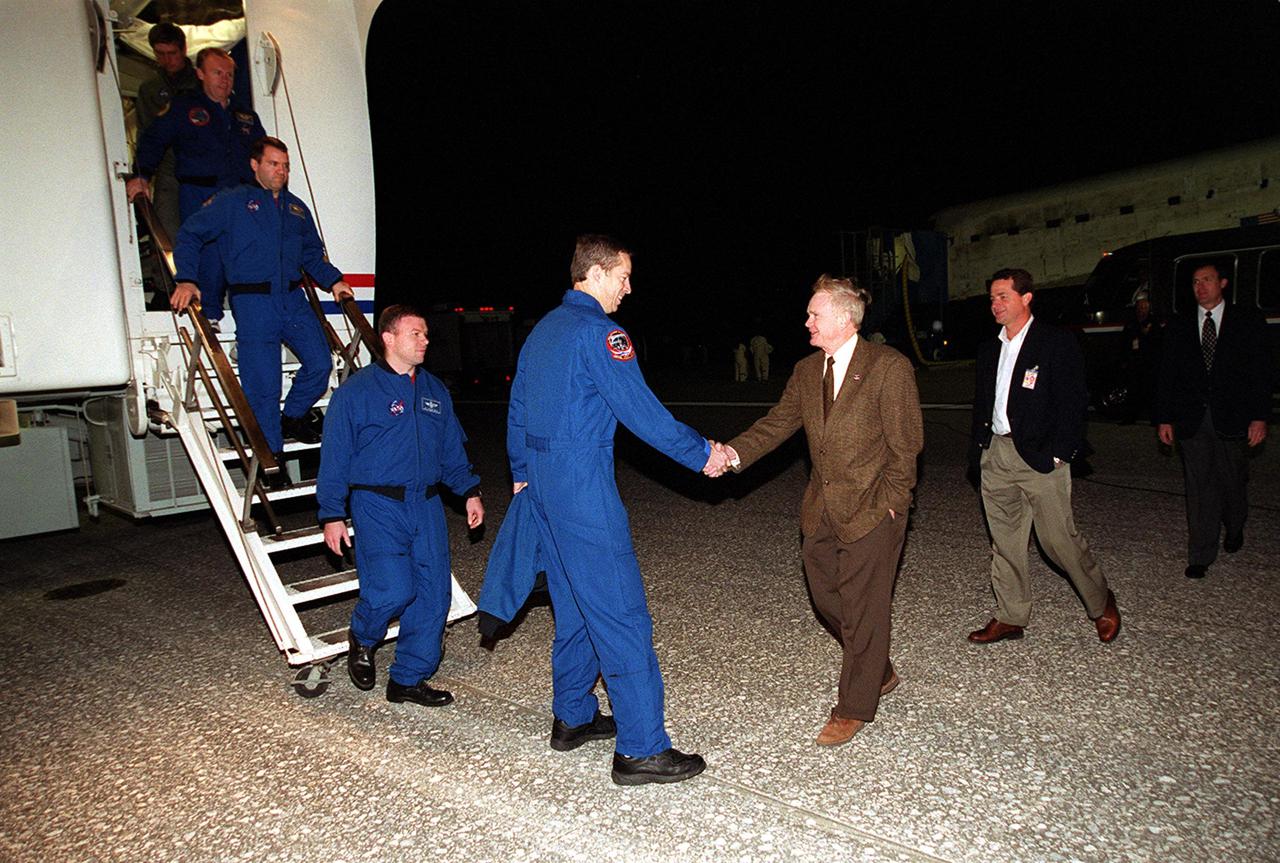
As the STS-102 crew exits the Crew Transport Vehicle, Center Director Roy Bridges is on hand to welcome them back to Earth. Commander James Wetherbee is the first to shake Bridges’ hand. Behind Wetherbee (right to left) are Pilot James Kelly and Mission Specialists Paul Richards and Andrew Thomas. Behind Bridges, at right, is Dave King, director of Shuttle Processing. Waiting at far right is Jim Halsell, manager of Space Shuttle Program Launch Integration. The crew landed at the KSC Shuttle Landing Facility at 2:31 a.m. EST aboard Discovery following a 12-day, 19-hour, 49-minute mission to the International Space Station
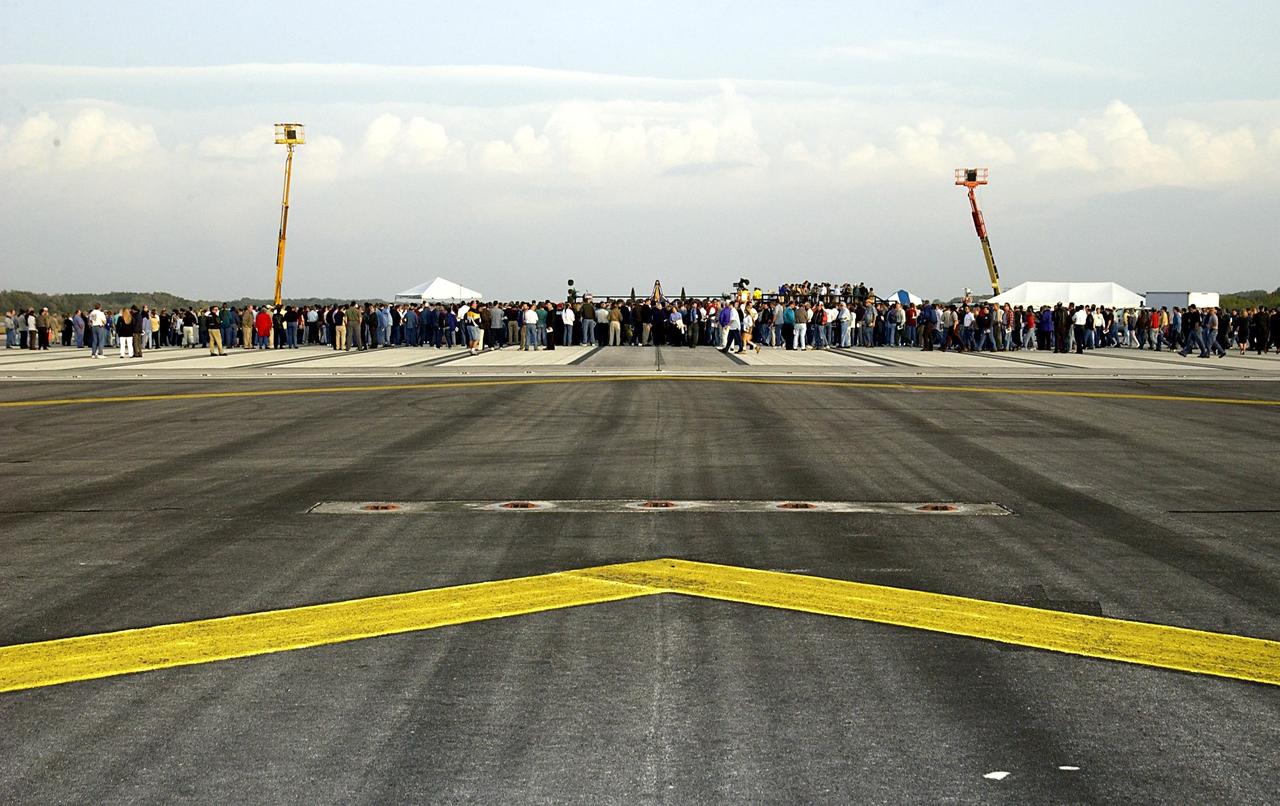
KENNEDY SPACE CENTER, FLA. - A Columbia Crew Memorial Service is held at the Shuttle Landing Facility for KSC employees and invited guests. The Columbia and her crew of seven were lost on Feb. 1, 2003, over East Texas as they returned to Earth after a 16-day research mission. Taking part in the service were NASA Administrator Sean O’Keefe, former KSC Director Robert Crippen, astronaut Jim Halsell, several employees, area clergymen, and members of Patrick Air Force Base. The service concluded with a “Missing Man Formation Fly Over” by NASA T-38 jet aircraft.
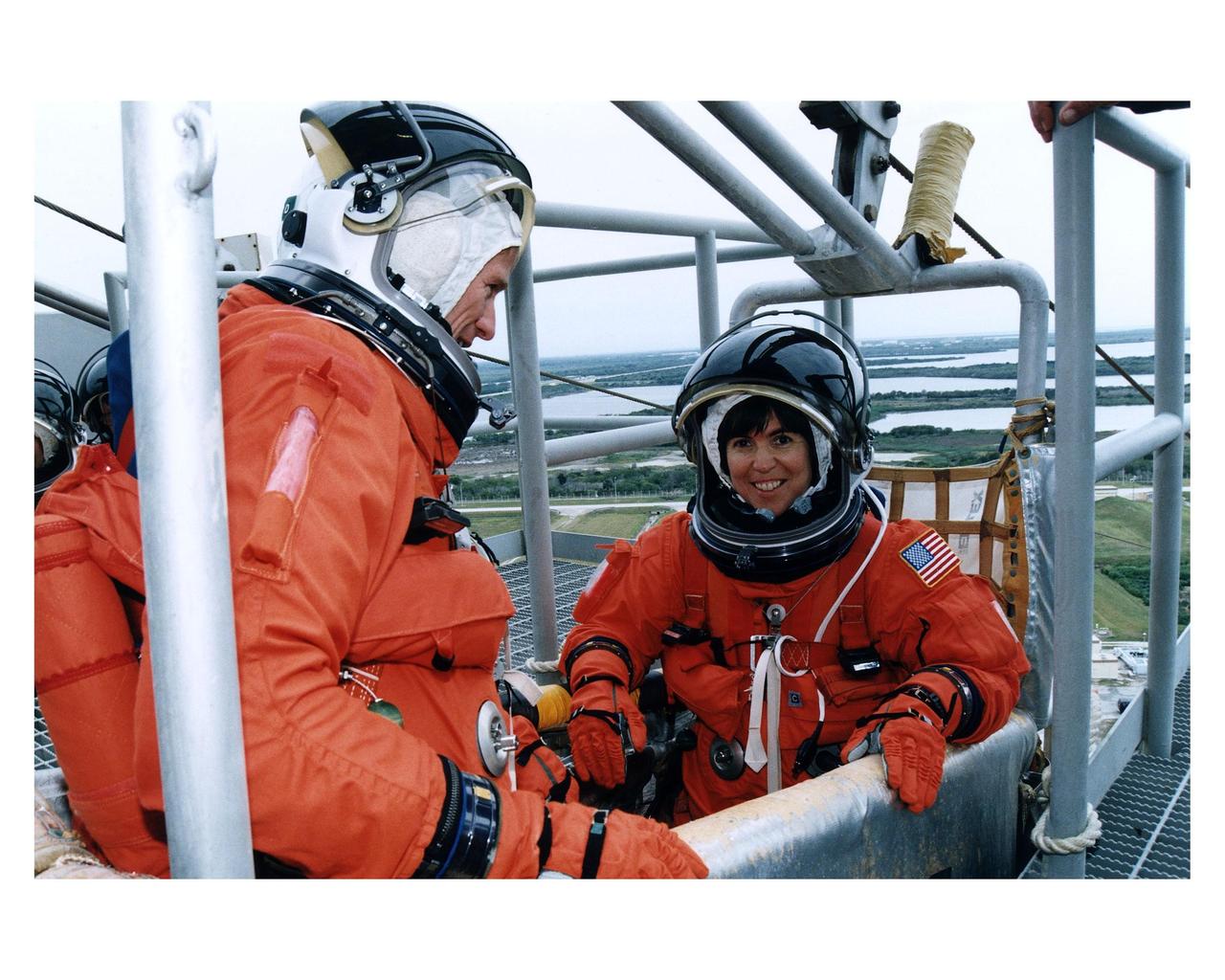
STS-83 Mission Specialist Michael L. Gernhardt and Payload Commander Janice Voss check out one of the baskets for the emergency egress slidewire system at Launch Pad 39A during Terminal Countdown Demonstration Test (TCDT) exercises for that mission. Mission Specialist Donald A. Thomas can be seen to the far left. Other crew members on the 16-day Microgravity Science Laboratory1 (MSL-1) mission are: Mission Commander James D. Halsell, Jr.; Pilot Susan L. Still; and Payload Specialists Gregory T. Linteris and Roger K. Crouch
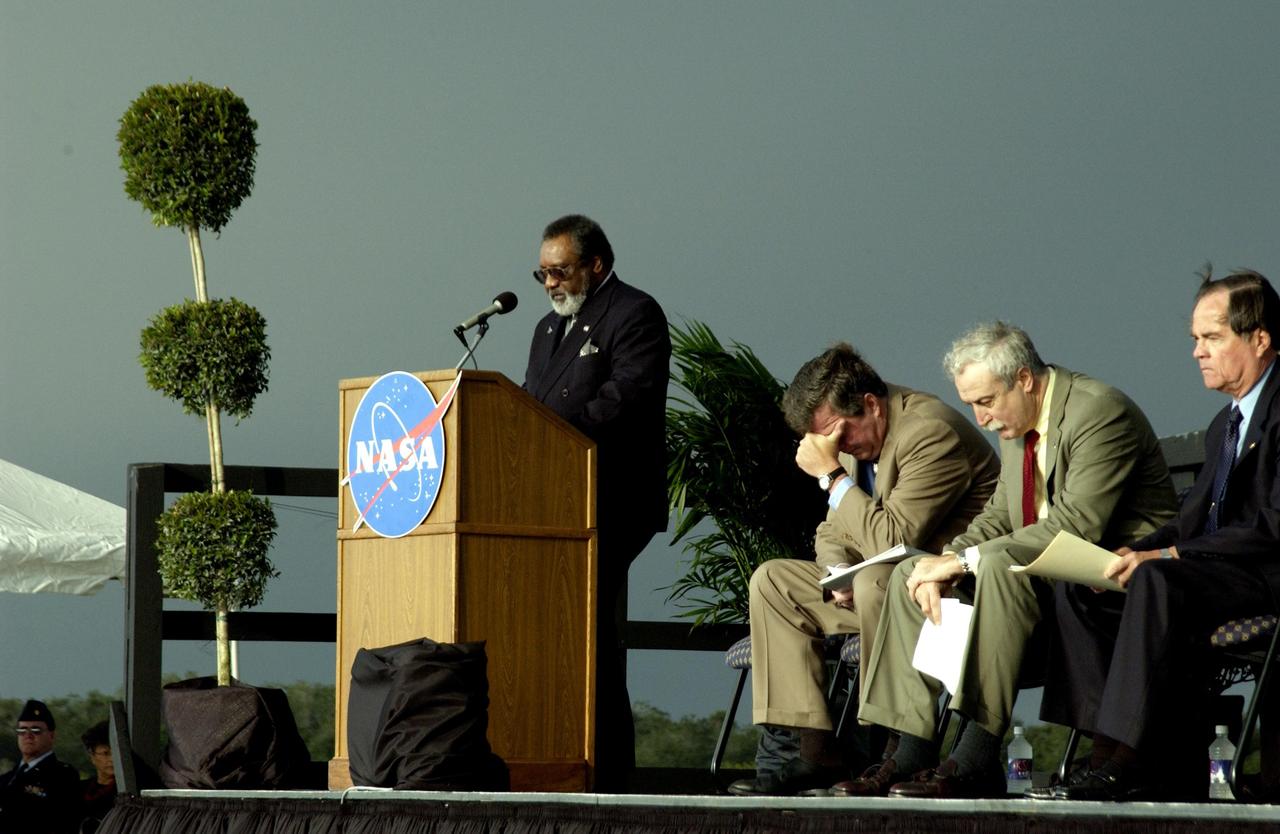
KENNEDY SPACE CENTER, FLA. - A Columbia Crew Memorial Service is held at the Shuttle Landing Facility for KSC employees and invited guests. NASA Associate Deputy Administrator for Institutions and Asset Management James L. Jennings is at the podium. The Columbia and her crew of seven were lost on Feb. 1, 2003, over East Texas as they returned to Earth after a 16-day research mission. Taking part in the service were NASA Administrator Sean O’Keefe, former KSC Director Robert Crippen, astronaut Jim Halsell, several employees, area clergymen, and members of Patrick Air Force Base. The service concluded with a “Missing Man Formation Fly Over” by NASA T-38 jet aircraft.
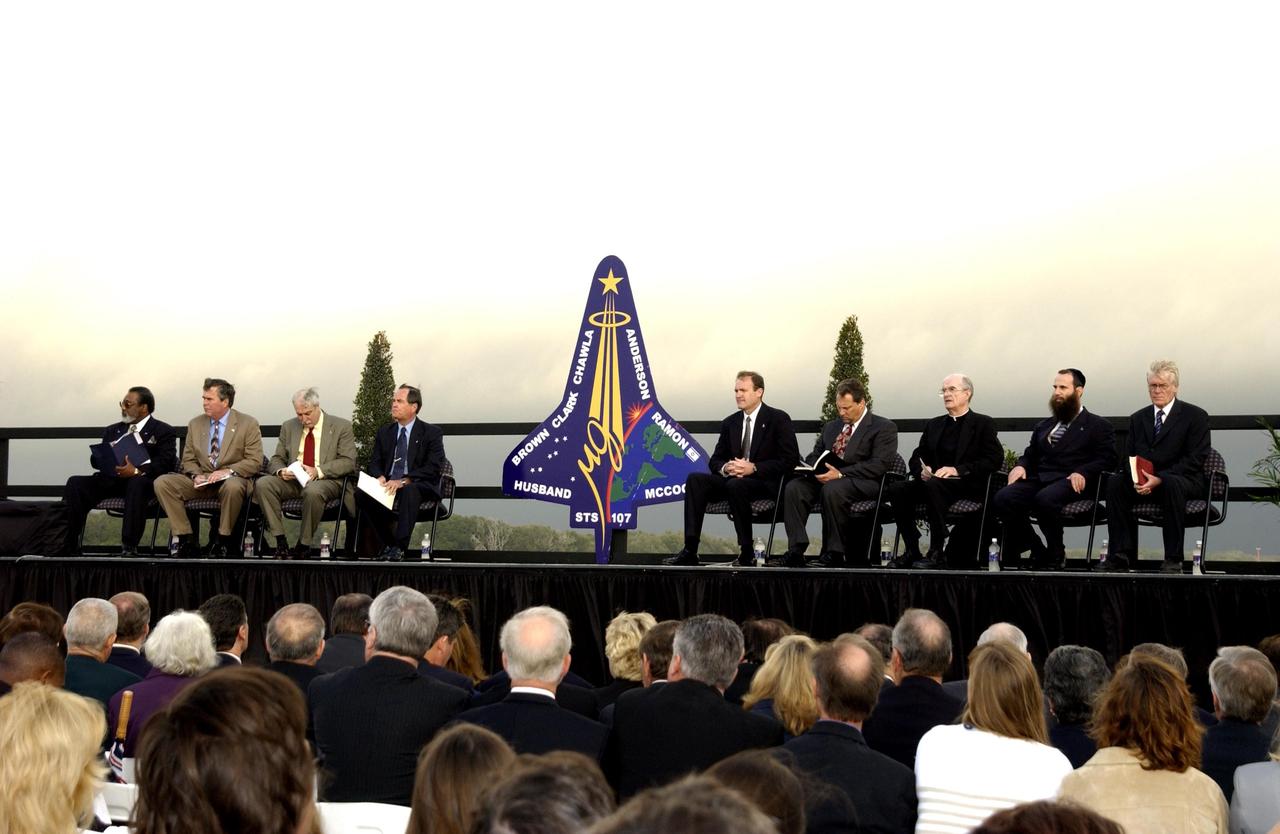
KENNEDY SPACE CENTER, FLA. - A Columbia Crew Memorial Service is held at the Shuttle Landing Facility for KSC employees and invited guests. The Columbia and her crew of seven were lost on Feb. 1, 2003, over East Texas as they returned to Earth after a 16-day research mission. Taking part in the service were NASA Administrator Sean O’Keefe, former KSC Director Robert Crippen, astronaut Jim Halsell, several employees, area clergymen, and members of Patrick Air Force Base. The service concluded with a “Missing Man Formation Fly Over” by NASA T-38 jet aircraft.
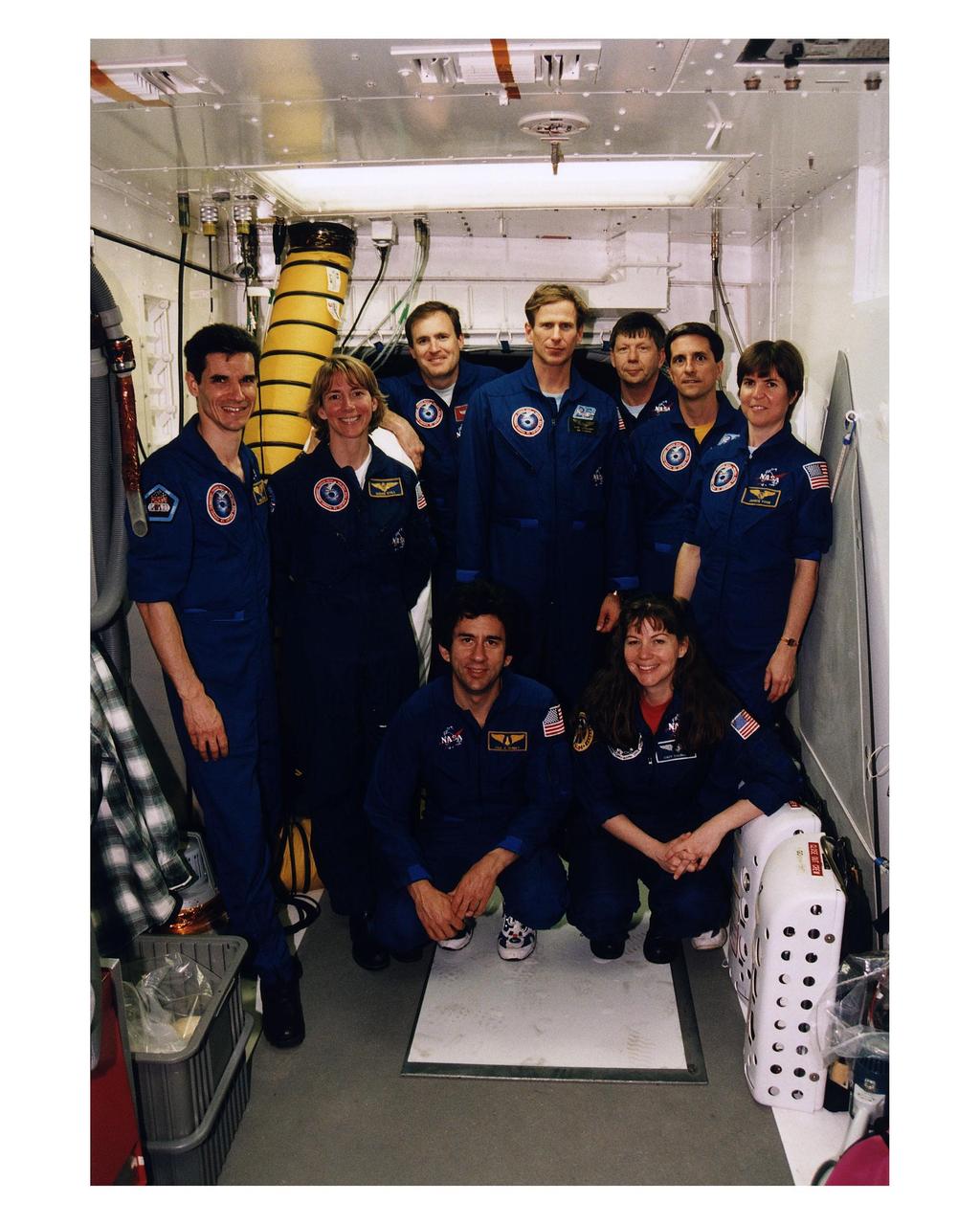
The STS-83 crew poses in the White Room at Launch Complex 39A during the crew's <a href="http://www-pao.ksc.nasa.gov/kscpao/release/1997/40-97.htm">Terminal Countdown Demonstration Test (TCDT).</a> From left to right, standing, they are Payload Specialist Gregory T. Linteris, Pilot Susan L. Still, Mission Commander James D. Halsell, Mission Specialist Michael L. Gernhardt, Payload Specialist Roger K. Crouch, and Mission Specialists Donald Thomas and Janice E. Voss. Cady Coleman, the backup Mission Specialist for Donald Thomas, is kneeling on the right
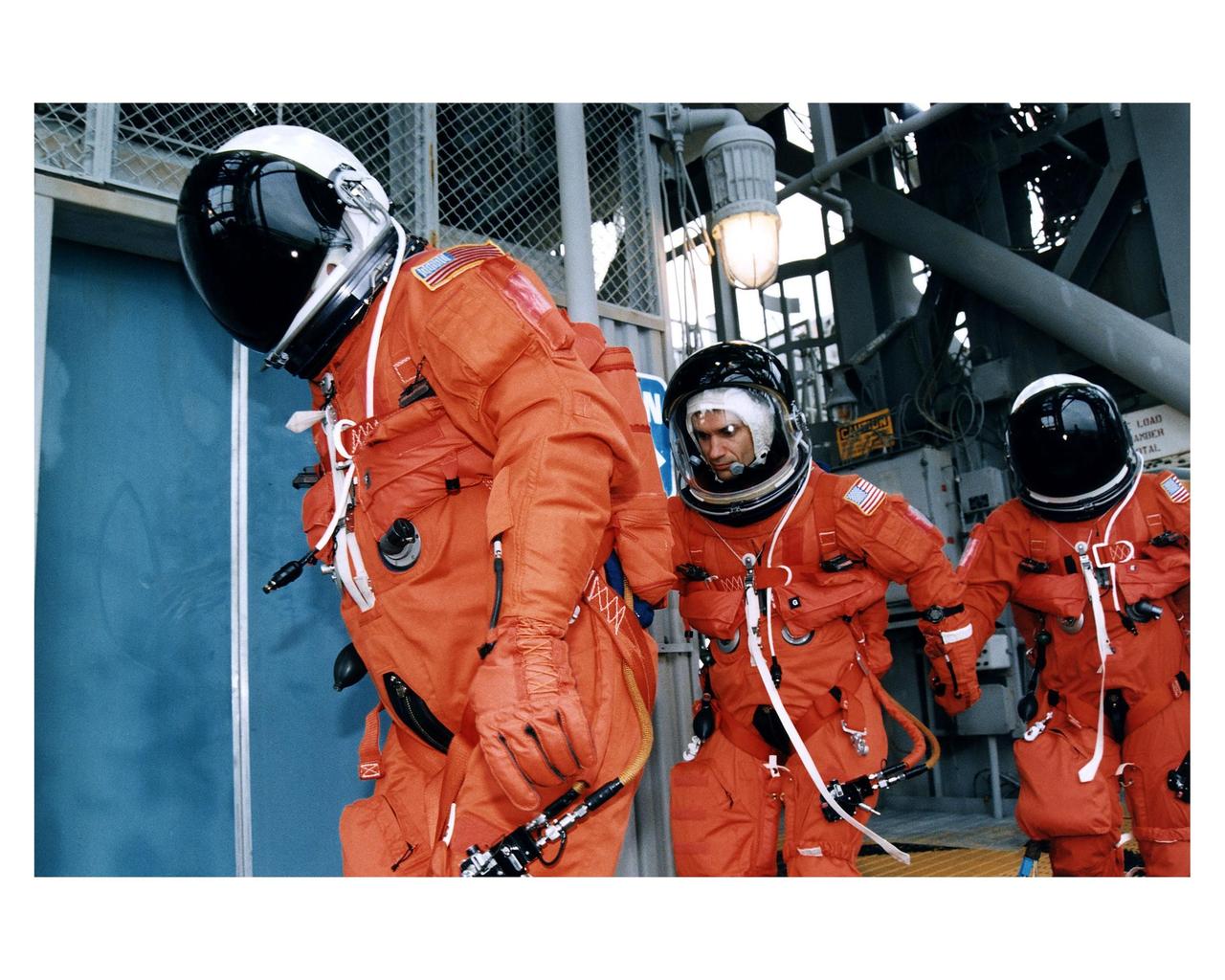
Three members of the STS-83 flight crew head toward the orbiter access arm on the 195-foot level Launch of Pad 39A that will take them to the crew hatch of the Space Shuttle Columbia during Terminal Countdown Demonstration Test (TCDT) exercises for that mission. Mission Specialist Donald A. Thomas is in the center of the group. Other crew members on the 16-day Microgravity Science Laboratory-1 (MSL-1) mission are: Mission Commander James D. Halsell, Jr.; Pilot Susan L. Still; Payload Commander Janice Voss; Mission Specialist Michael L.Gernhardt; and Payload Specialists Gregory T. Linteris and Roger K. Crouch
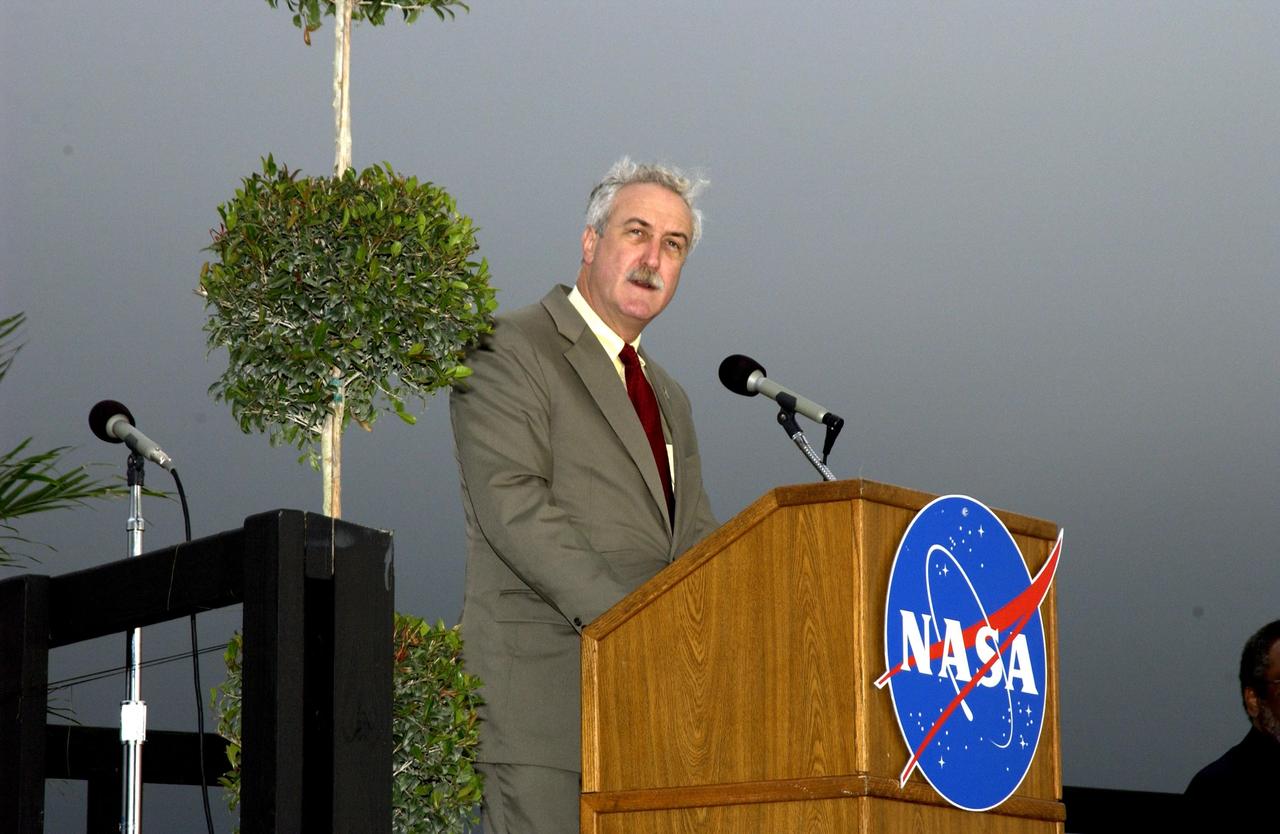
KENNEDY SPACE CENTER, FLA. - A Columbia Crew Memorial Service is held at the Shuttle Landing Facility for KSC employees and invited guests. NASA Administrator Sean O'Keefe is at the podium. The Columbia and her crew of seven were lost on Feb. 1, 2003, over East Texas as they returned to Earth after a 16-day research mission. Taking part in the service were NASA Administrator Sean O’Keefe, former KSC Director Robert Crippen, astronaut Jim Halsell, several employees, area clergymen, and members of Patrick Air Force Base. The service concluded with a “Missing Man Formation Fly Over” by NASA T-38 jet aircraft.
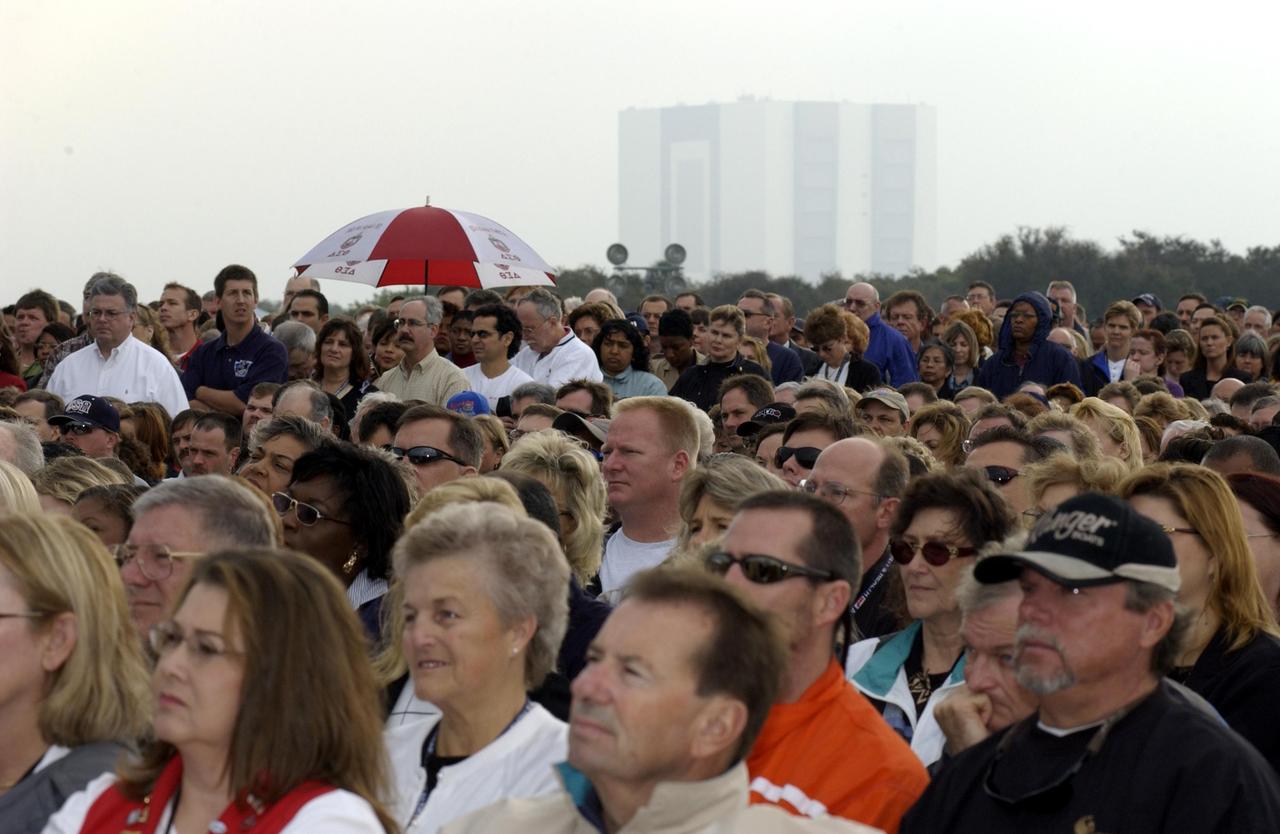
KENNEDY SPACE CENTER, FLA. - With the Vehicle Assembly Building looming in the background, a Columbia Crew Memorial Service is held at the Shuttle Landing Facility for KSC employees and invited guests. The Columbia and her crew of seven were lost on Feb. 1, 2003, over East Texas as they returned to Earth after a 16-day research mission. Taking part in the service were NASA Administrator Sean O’Keefe, former KSC Director Robert Crippen, astronaut Jim Halsell, several employees, area clergymen, and members of Patrick Air Force Base. The service concluded with a “Missing Man Formation Fly Over” by NASA T-38 jet aircraft.
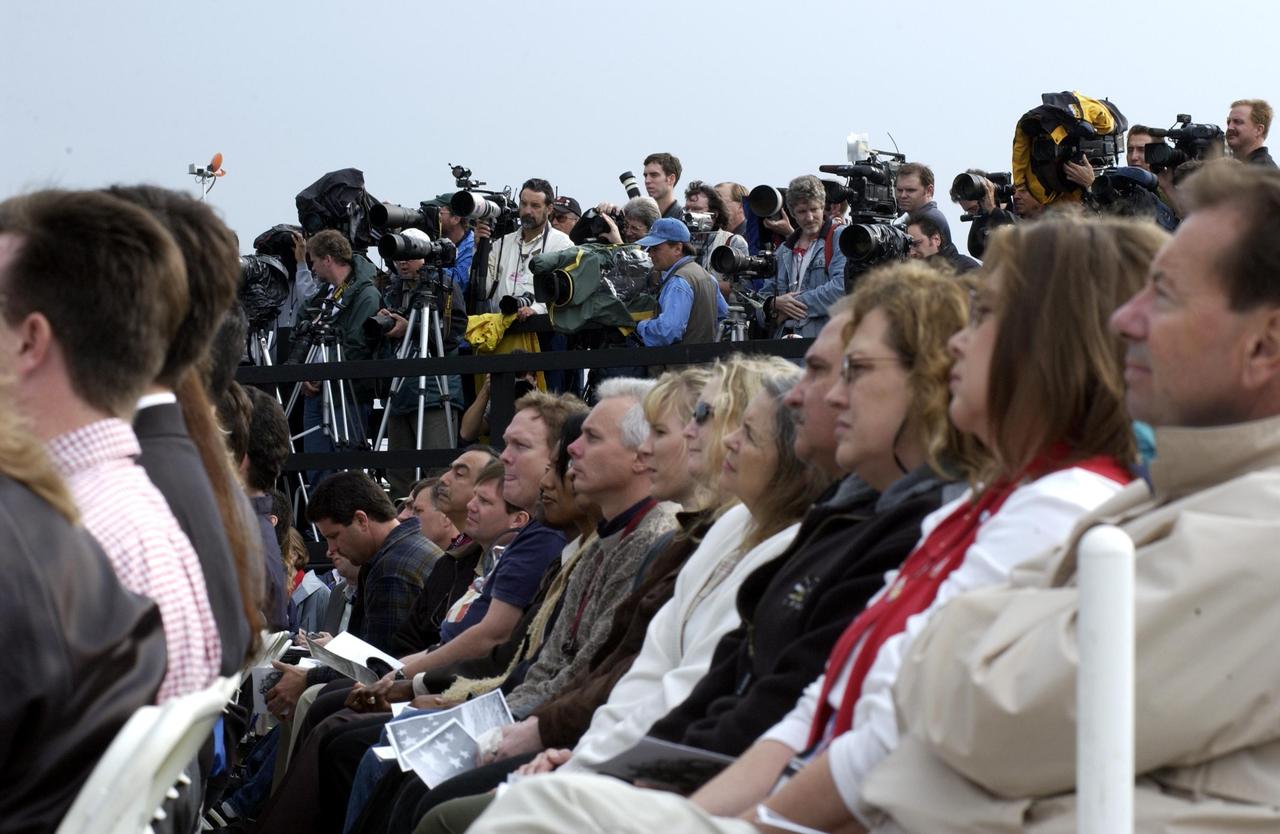
KENNEDY SPACE CENTER, FLA. - A Columbia Crew Memorial Service is held at the Shuttle Landing Facility for KSC employees and invited guests. The Columbia and her crew of seven were lost on Feb. 1, 2003, over East Texas as they returned to Earth after a 16-day research mission. Taking part in the service were NASA Administrator Sean O’Keefe, former KSC Director Robert Crippen, astronaut Jim Halsell, several employees, area clergymen, and members of Patrick Air Force Base. The service concluded with a “Missing Man Formation Fly Over” by NASA T-38 jet aircraft.
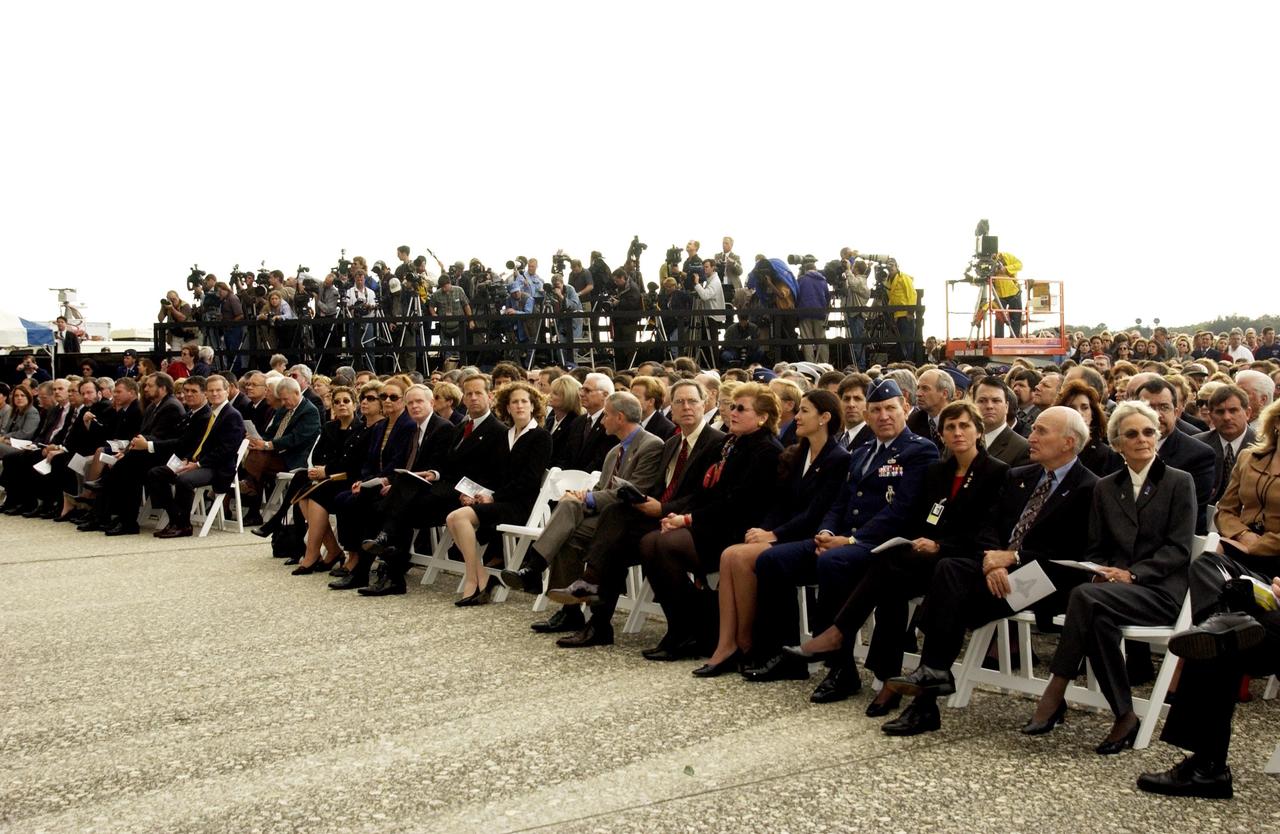
KENNEDY SPACE CENTER, FLA. - A Columbia Crew Memorial Service is held at the Shuttle Landing Facility for KSC employees and invited guests. The Columbia and her crew of seven were lost on Feb. 1, 2003, over East Texas as they returned to Earth after a 16-day research mission. Taking part in the service were NASA Administrator Sean O’Keefe, former KSC Director Robert Crippen, astronaut Jim Halsell, several employees, area clergymen, and members of Patrick Air Force Base. The service concluded with a “Missing Man Formation Fly Over” by NASA T-38 jet aircraft.
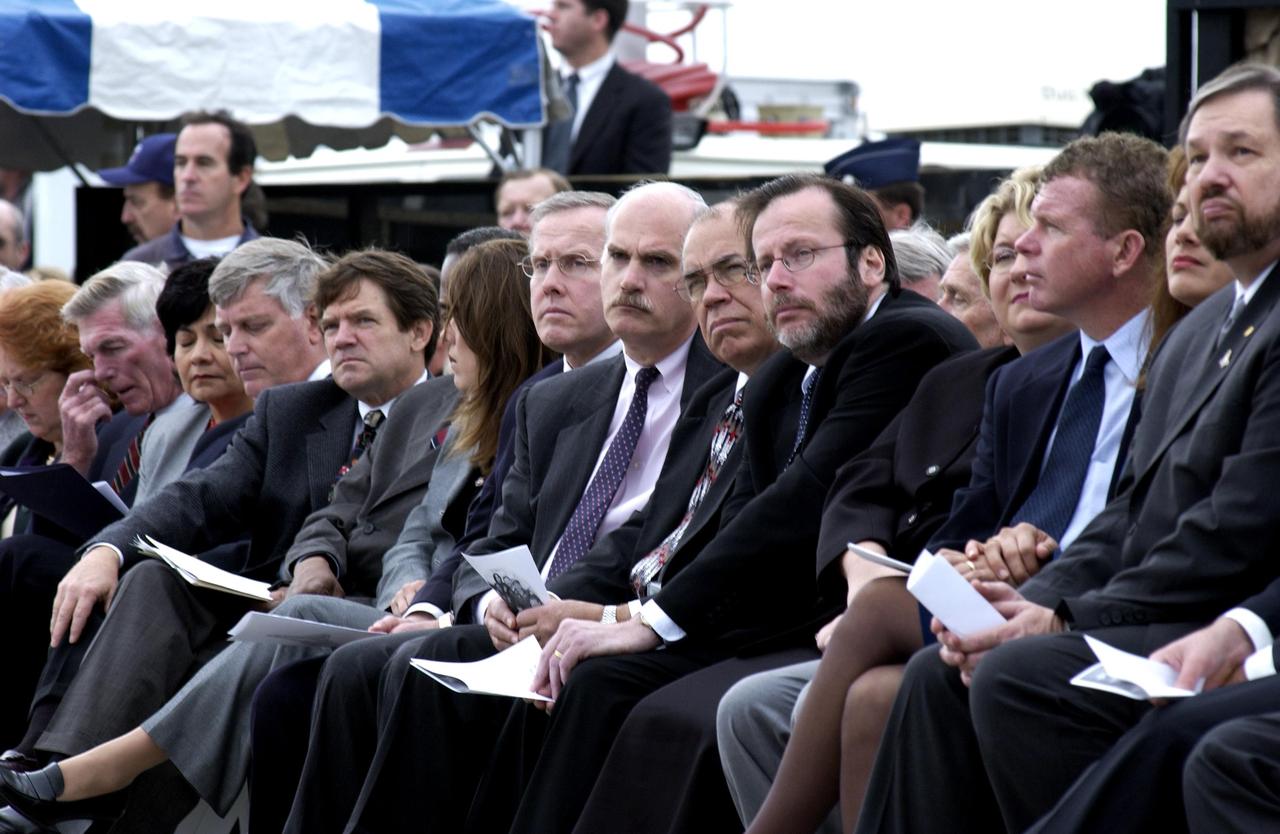
KENNEDY SPACE CENTER, FLA. - A Columbia Crew Memorial Service is held at the Shuttle Landing Facility for KSC employees and invited guests. The Columbia and her crew of seven were lost on Feb. 1, 2003, over East Texas as they returned to Earth after a 16-day research mission. Taking part in the service were NASA Administrator Sean O’Keefe, former KSC Director Robert Crippen, astronaut Jim Halsell, several employees, area clergymen, and members of Patrick Air Force Base. The service concluded with a “Missing Man Formation Fly Over” by NASA T-38 jet aircraft.
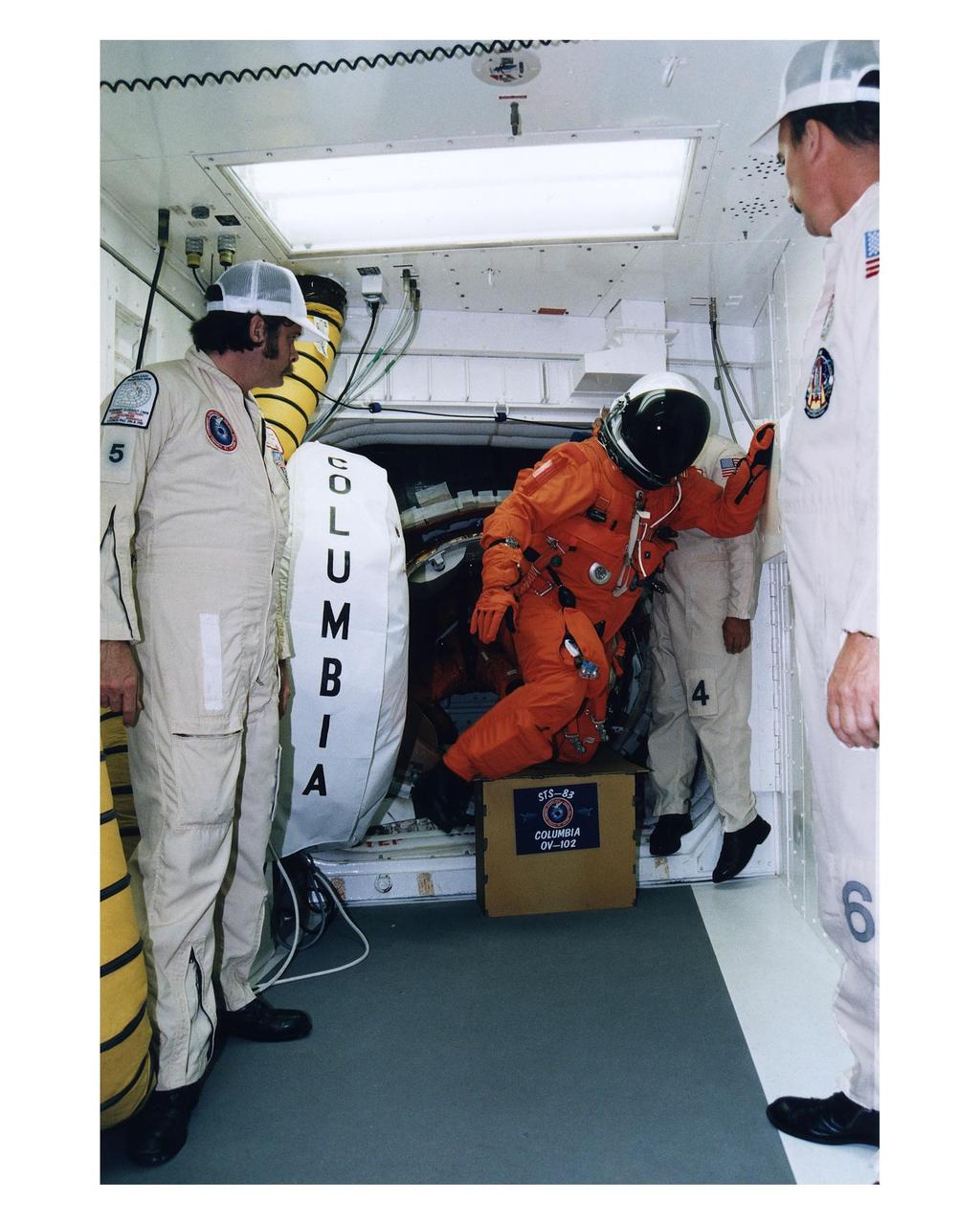
A member of the STS-83 flight crew enters the crew hatch of the Space Shuttle Columbia with the help of the white room crew during Terminal Countdown Demonstration Test (TCDT) exercises for that mission. Members of the white room crew are (from left): Steve Crosbie, Rene Arriens and Bob Saulnier. The STS-83 crew members for the 16-day Microgravity Science Laboratory-1 (MSL-1) mission are: Mission Commander James D. Halsell, Jr.; Pilot Susan L. Still; Payload Commander Janice Voss; Mission Specialists Michael L. Gernhardt and Donald A. Thomas; and Payload Specialists Gregory T. Linteris and Roger K. Crouch
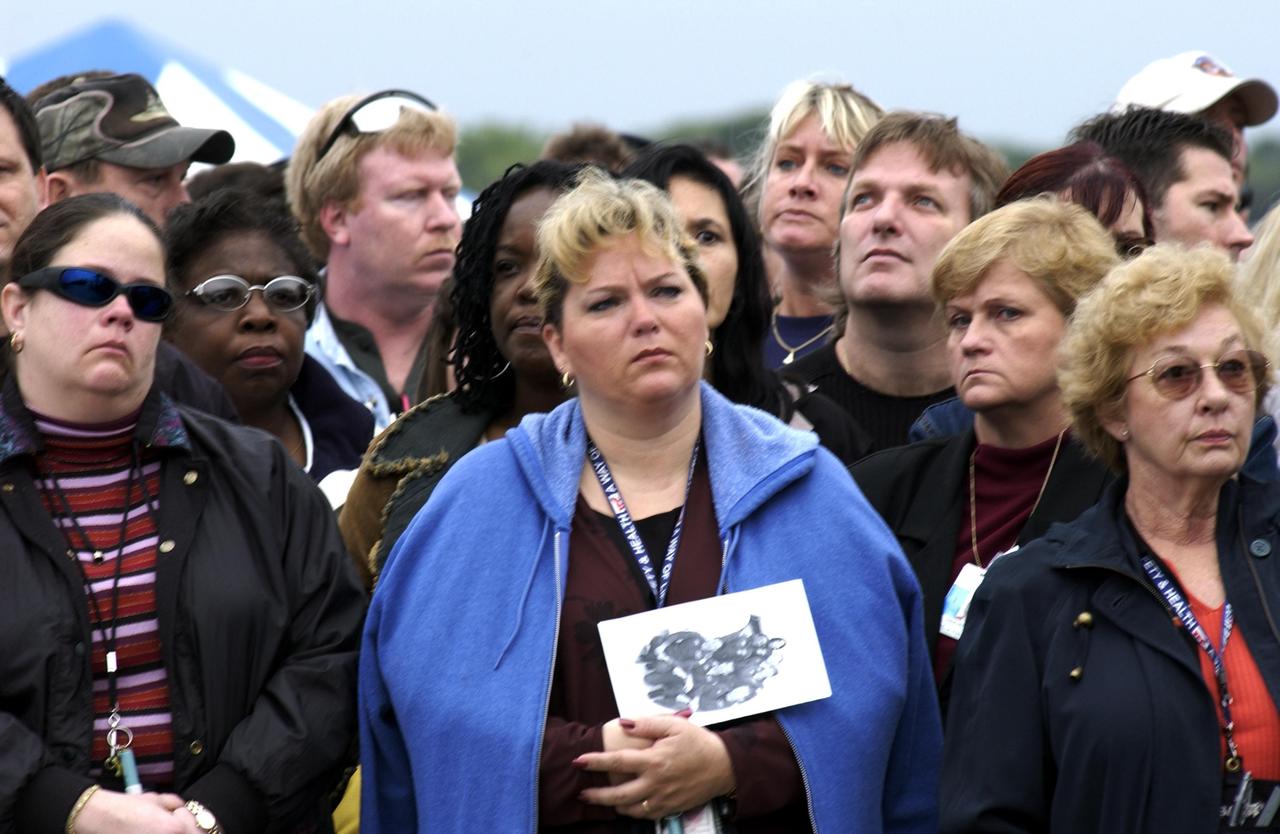
KENNEDY SPACE CENTER, FLA. - A Columbia Crew Memorial Service is held at the Shuttle Landing Facility for KSC employees and invited guests. The Columbia and her crew of seven were lost on Feb. 1, 2003, over East Texas as they returned to Earth after a 16-day research mission. Taking part in the service were NASA Administrator Sean O’Keefe, former KSC Director Robert Crippen, astronaut Jim Halsell, several employees, area clergymen, and members of Patrick Air Force Base. The service concluded with a “Missing Man Formation Fly Over” by NASA T-38 jet aircraft.