
Photograph taken July 30, 1964. Mary W Jackson, Aerospace Engineer in the Large Supersonic Tunnels Branch of Full-Scale Research Division, explains the facilities used in testing research models such as SCAT. The Guidance Counseling Class from Hampton Institute visited the center on July 30 and toured a number of facilities. The purpose of the visit was to provide the counselors an opportunity to see areas of work representing fields in which their students might be employed. The group, under the direction of Professor Fissell Jones (Left, back row) of Hampton Institute, represented the states of Virginia, North Carolina, South Carolina, and Georgia. In 1958 Mary Jackson became NASA's first black female engineer. The Hampton Institute (now Hampton University) is a Historically Black College. NASA started its EEO office in 1964 and the NASA Administrator at the time, James Webb, was very enthusiastic about reaching out to universities (including HBCUs) to partner with them and to encourage students to become NASA engineers.
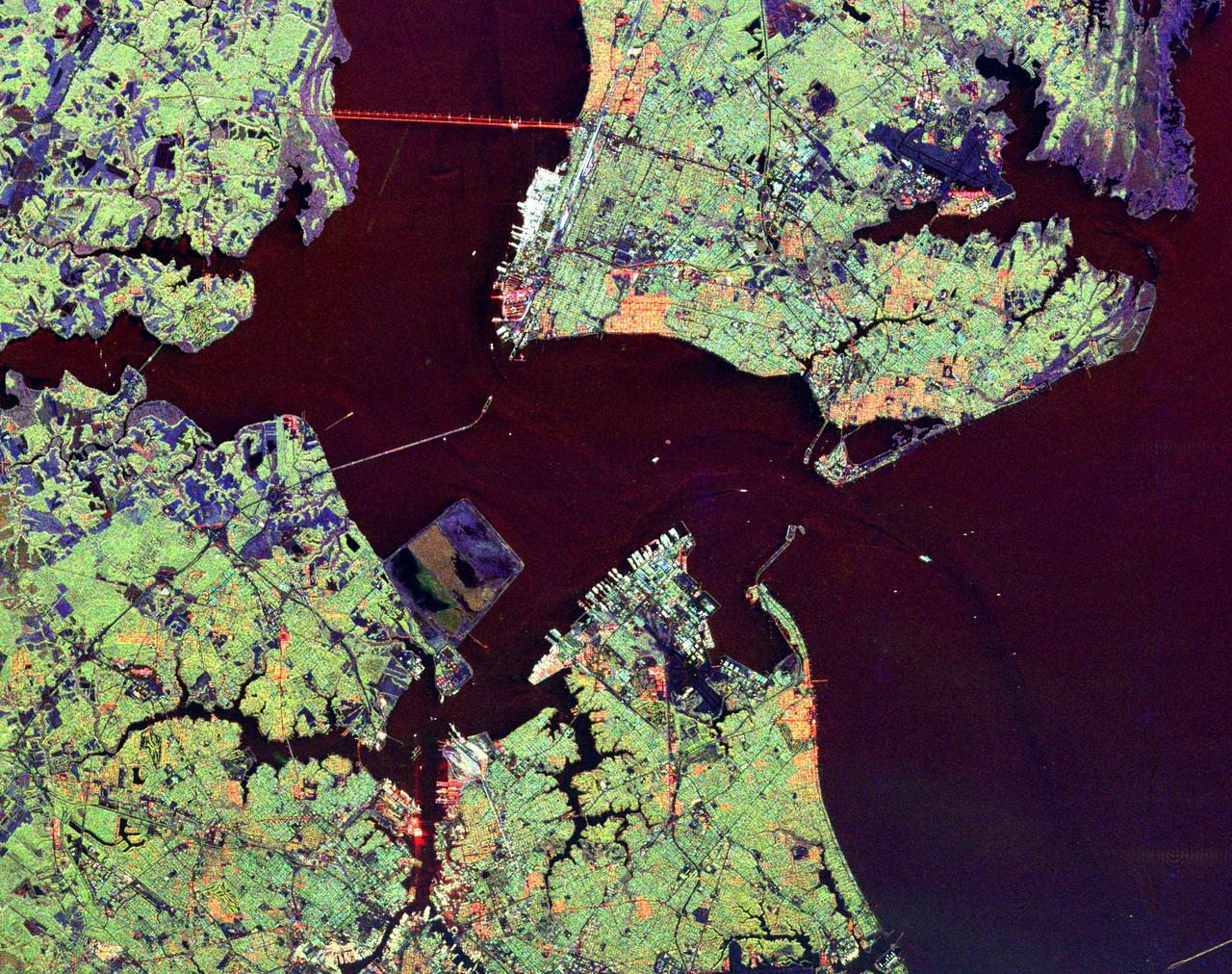
This radar image shows the Hampton Roads, Virginia region, where the James River upper left center flows into the Chesapeake Bay.
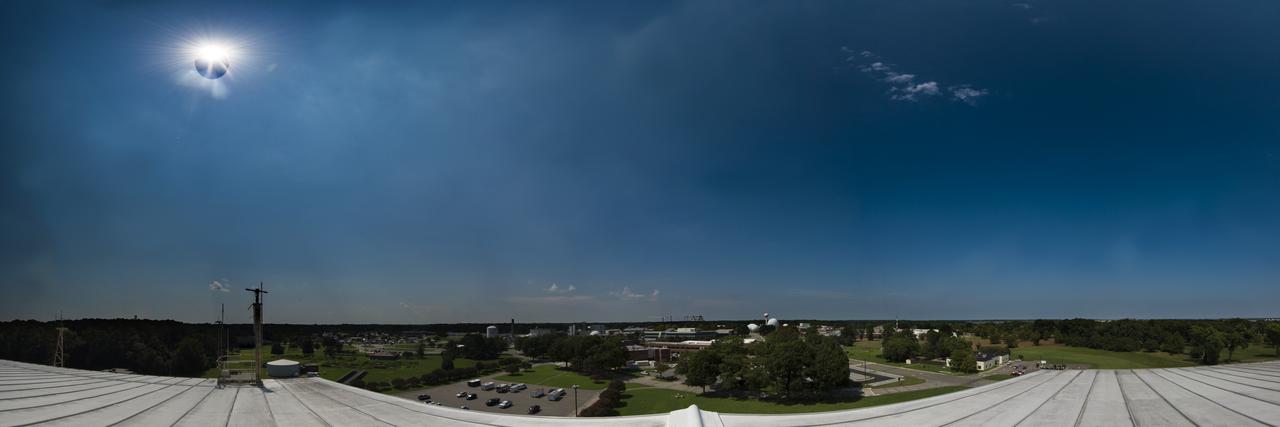
This panoramic view of the partial solar eclipse was taken from the roof of the aircraft hangar at NASA Langley Research Center in Hampton, Virginia. The eclipse in Hampton was about 85 percent of totality.
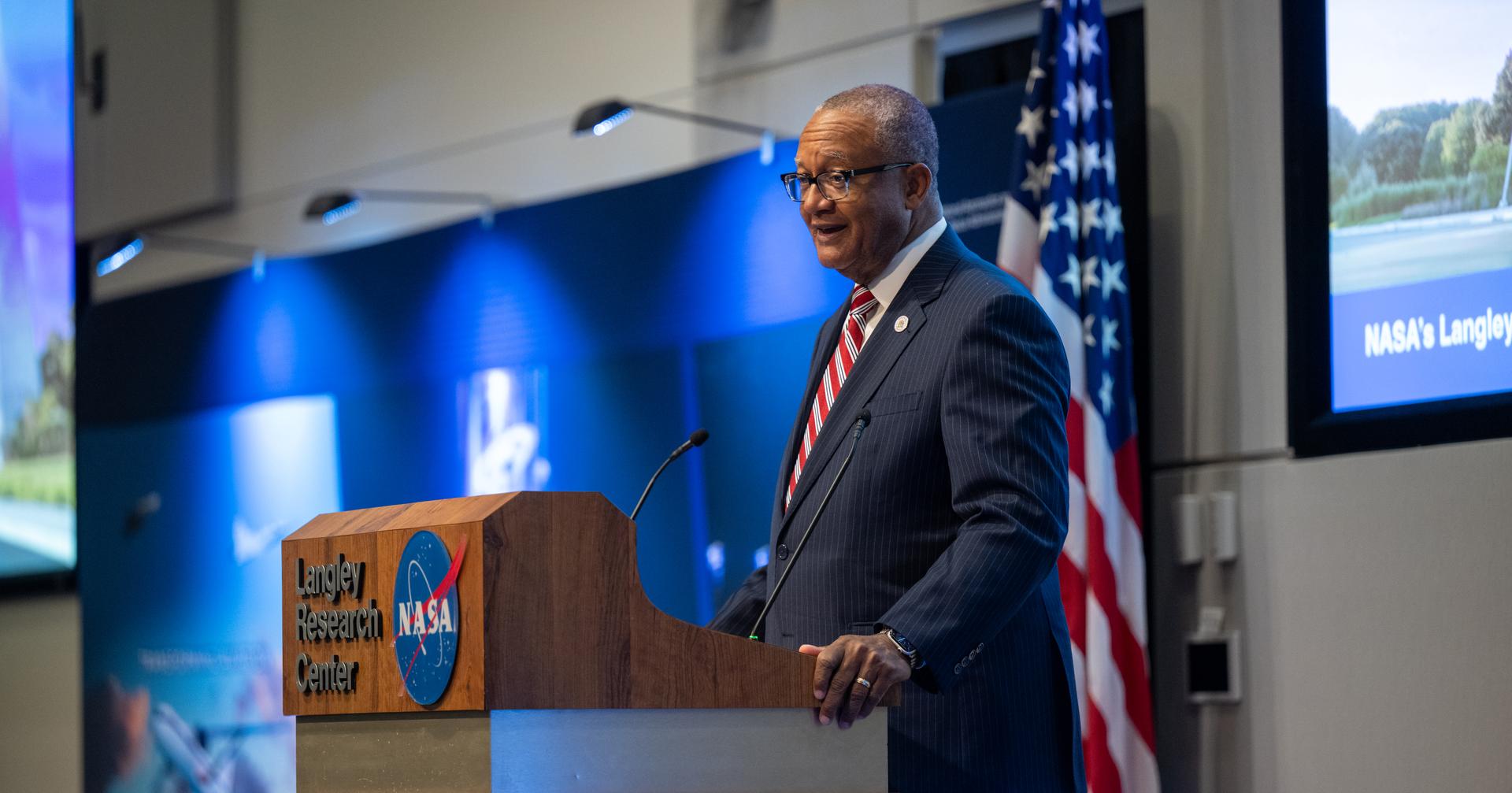
City of Hampton Mayor Jimmy Gray delivers remarks during a ribbon cutting ceremony for the Flight Dynamics Research Facility, NASA's newest wind tunnel, Friday, July 31, 2026, at NASA’s Langley Research Center in Hampton, Virginia. The state-of-the-art facility will support research and technology development that will advance the agency’s aeronautics, exploration, and science goals, including establishing a sustained human presence on the lunar surface through the Artemis program and the development of a Moon Base. Photo Credit: (NASA/Keegan Barber)
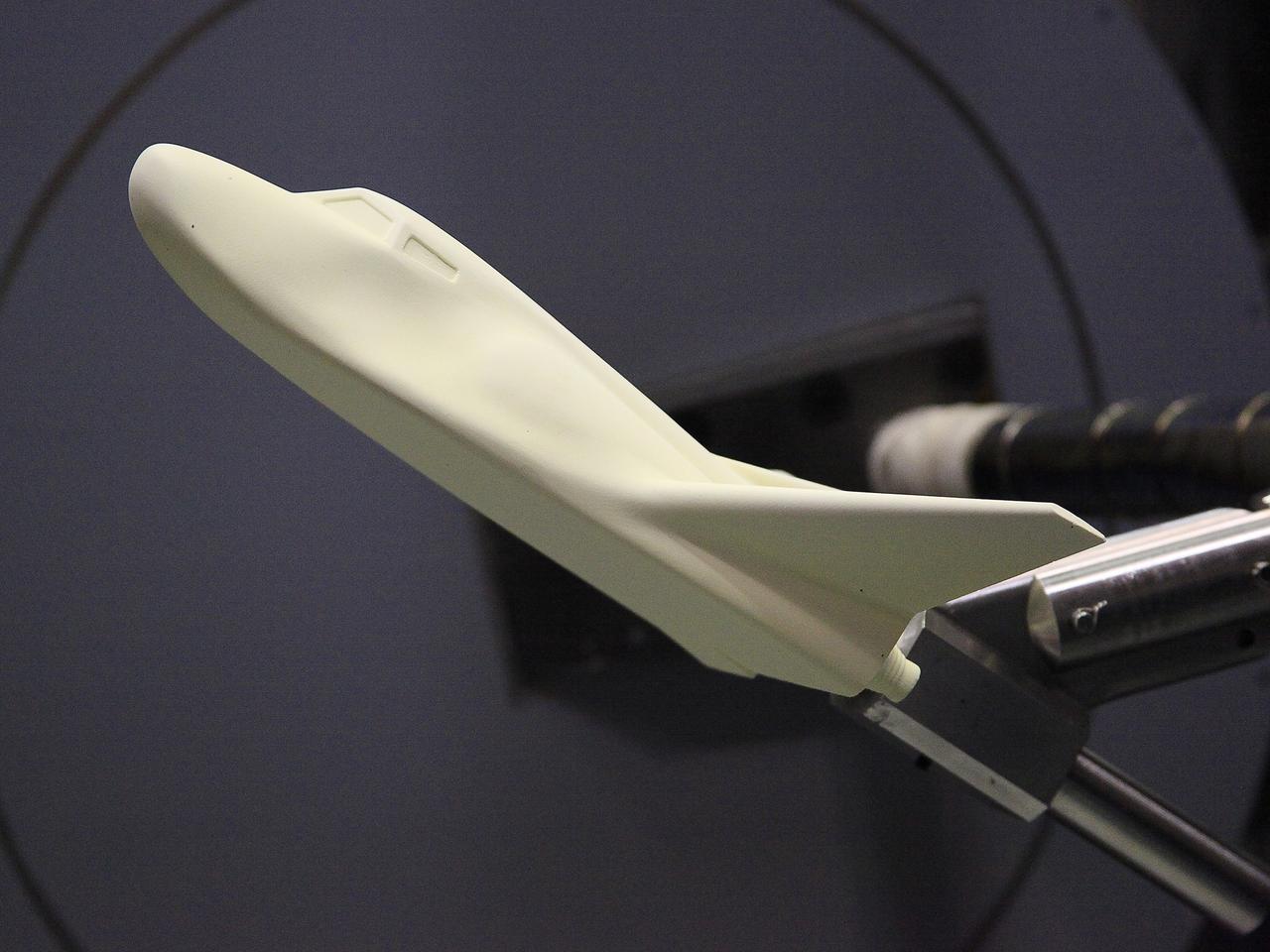
HAMPTON, Va. –A 10-inch long ceramic model of the Sierra Nevada Corporation, or SNC, Dream Chaser spacecraft is prepared for high-speed wind tunnel tests at NASA's Langley Research Center in Hampton, Va. The tests measure how much heat the winged vehicle would experience during ascent and re-entry through the atmosphere, including the spacecraft's lower- and upper-body flaps, elevons and a rudder. They're also helping the company obtain necessary data for the material selection and design of the spacecraft's thermal protection system. SNC is continuing the development of its Dream Chaser spacecraft under the agency's Commercial Crew Integrated Capability, or CCiCap, initiative, which is intended to lead to the availability of commercial human spaceflight services for government and commercial customers. To learn more about CCP and its industry partners, visit www.nasa.gov/commercialcrew. Image credit: NASA/David Bowman
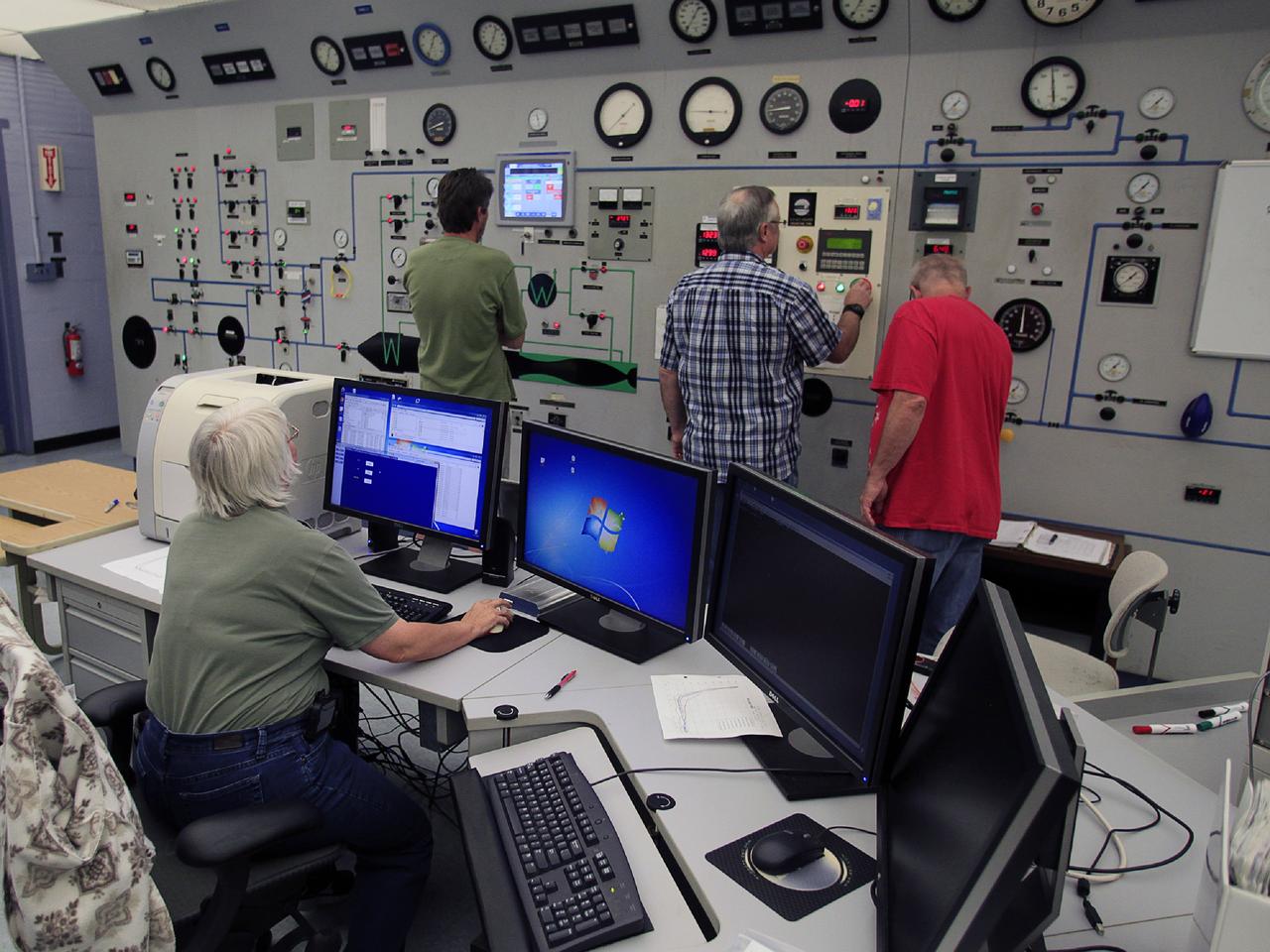
HAMPTON, Va. –Engineers monitor high-speed wind tunnel testing of a 10-inch long ceramic model of the Sierra Nevada Corporation, or SNC, Dream Chaser spacecraft at NASA's Langley Research Center in Hampton, Va. The tests measure how much heat the winged vehicle would experience during ascent and re-entry through the atmosphere, including the spacecraft's lower- and upper-body flaps, elevons and a rudder. They're also helping the company obtain necessary data for the material selection and design of the spacecraft's thermal protection system. SNC is continuing the development of its Dream Chaser spacecraft under the agency's Commercial Crew Integrated Capability, or CCiCap, initiative, which is intended to lead to the availability of commercial human spaceflight services for government and commercial customers. To learn more about CCP and its industry partners, visit www.nasa.gov/commercialcrew. Image credit: NASA/David Bowman
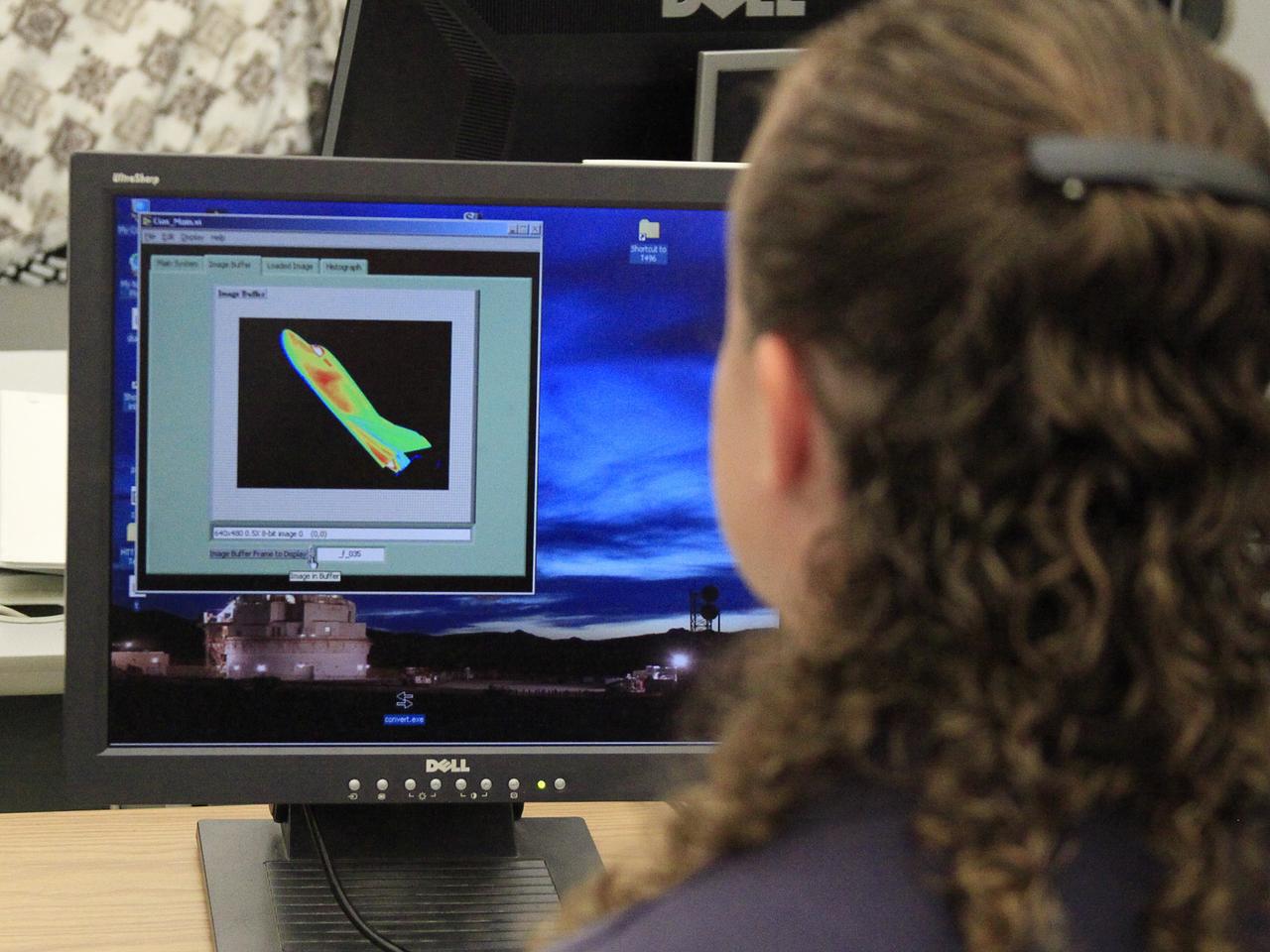
HAMPTON, Va. –An engineer monitors high-speed wind tunnel testing of a 10-inch long ceramic model of the Sierra Nevada Corporation, or SNC, Dream Chaser spacecraft at NASA's Langley Research Center in Hampton, Va. The tests measure how much heat the winged vehicle would experience during ascent and re-entry through the atmosphere, including the spacecraft's lower- and upper-body flaps, elevons and a rudder. They're also helping the company obtain necessary data for the material selection and design of the spacecraft's thermal protection system. SNC is continuing the development of its Dream Chaser spacecraft under the agency's Commercial Crew Integrated Capability, or CCiCap, initiative, which is intended to lead to the availability of commercial human spaceflight services for government and commercial customers. To learn more about CCP and its industry partners, visit www.nasa.gov/commercialcrew. Image credit: NASA/David Bowman
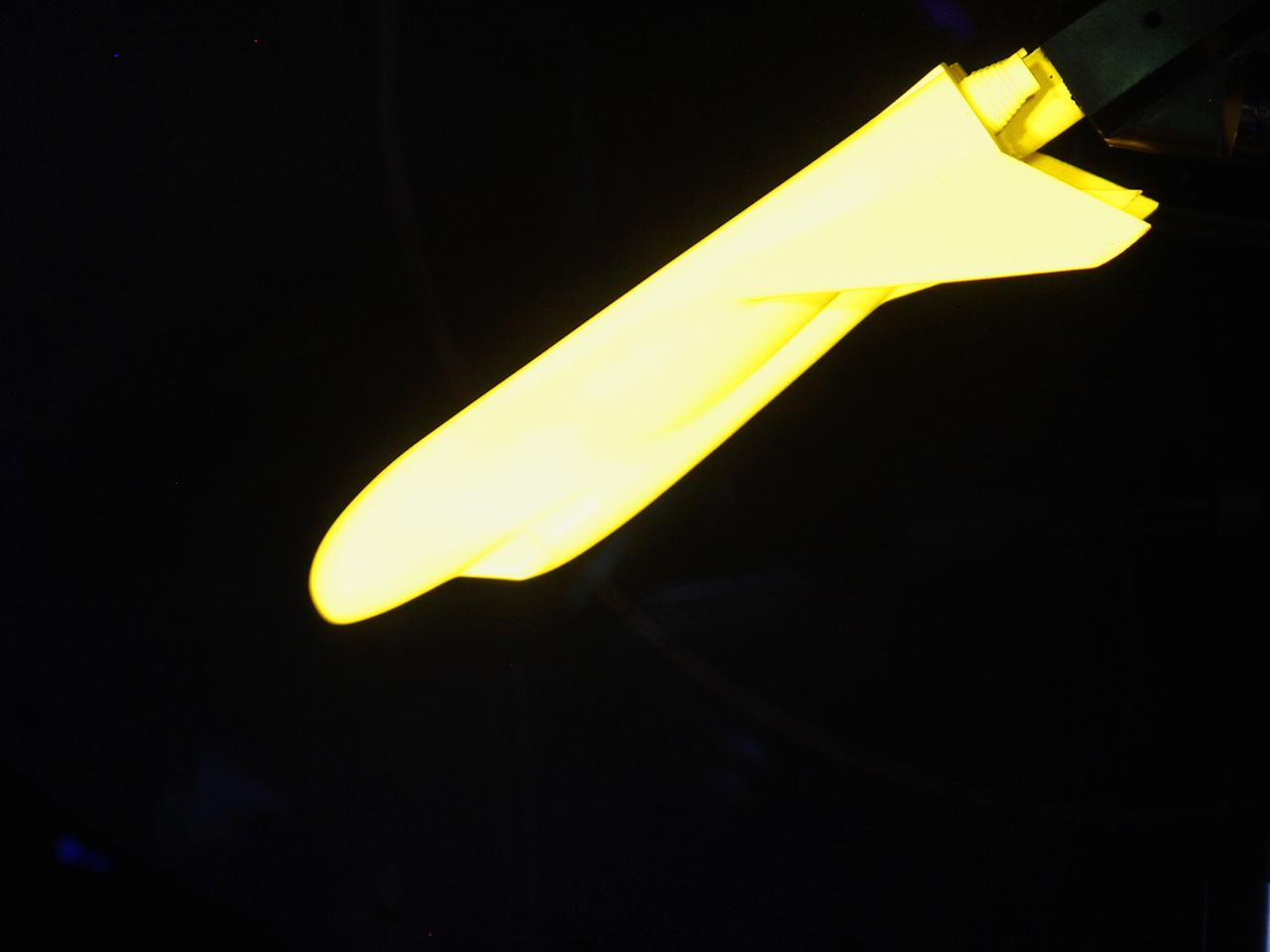
HAMPTON, Va. –A 10-inch long ceramic model of the Sierra Nevada Corporation, or SNC, Dream Chaser spacecraft undergoes high-speed wind tunnel tests at NASA's Langley Research Center in Hampton, Va. The tests measure how much heat the winged vehicle would experience during ascent and re-entry through the atmosphere, including the spacecraft's lower- and upper-body flaps, elevons and a rudder. They're also helping the company obtain necessary data for the material selection and design of the spacecraft's thermal protection system. SNC is continuing the development of its Dream Chaser spacecraft under the agency's Commercial Crew Integrated Capability, or CCiCap, initiative, which is intended to lead to the availability of commercial human spaceflight services for government and commercial customers. To learn more about CCP and its industry partners, visit www.nasa.gov/commercialcrew. Image credit: NASA/David Bowman
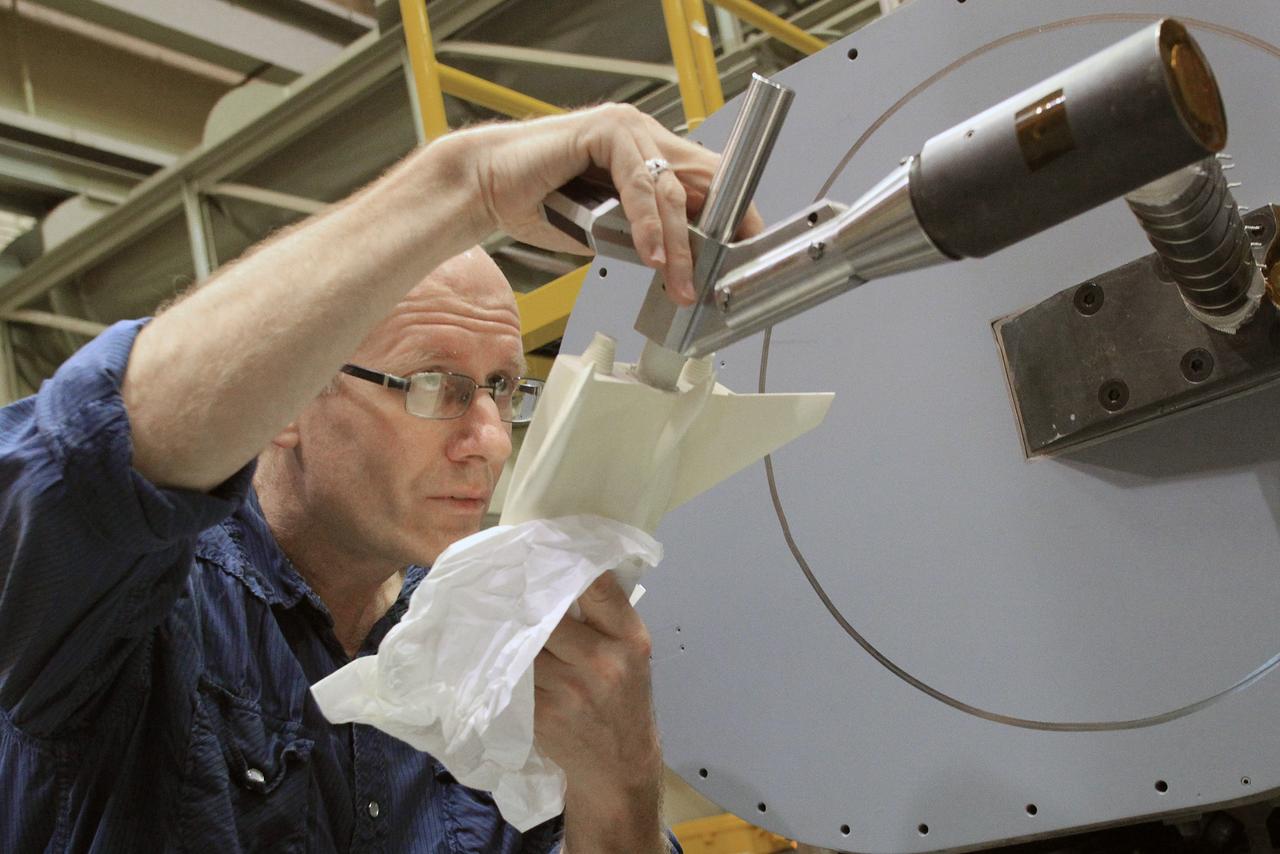
HAMPTON, Va. –A 10-inch long ceramic model of the Sierra Nevada Corporation, or SNC, Dream Chaser spacecraft is prepared for high-speed wind tunnel tests at NASA's Langley Research Center in Hampton, Va. The tests measure how much heat the winged vehicle would experience during ascent and re-entry through the atmosphere, including the spacecraft's lower- and upper-body flaps, elevons and a rudder. They're also helping the company obtain necessary data for the material selection and design of the spacecraft's thermal protection system. SNC is continuing the development of its Dream Chaser spacecraft under the agency's Commercial Crew Integrated Capability, or CCiCap, initiative, which is intended to lead to the availability of commercial human spaceflight services for government and commercial customers. To learn more about CCP and its industry partners, visit www.nasa.gov/commercialcrew. Image credit: NASA/David Bowman
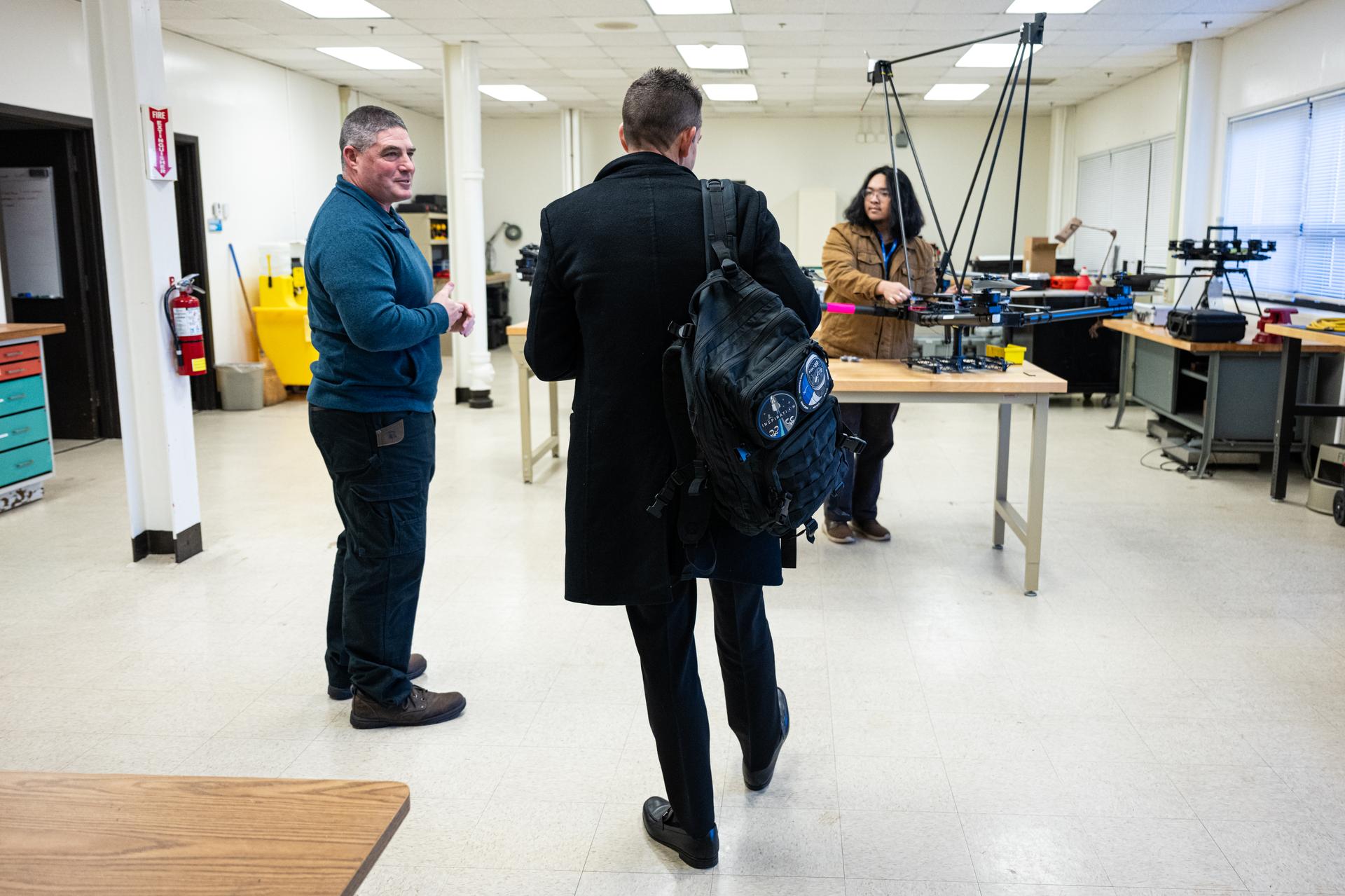
NASA Administrator Jared Isaacman, center, greets members of the Uninhabited Aircraft Systems Laboratory, Monday, Jan. 12, 2026, at NASA’s Langley Research Center in Hampton, Va. Langley marks the second stop in Isaacman’s roadshow to visit NASA facilities and engage directly with the agency’s workforce. Photo Credit: (NASA/John Kraus)
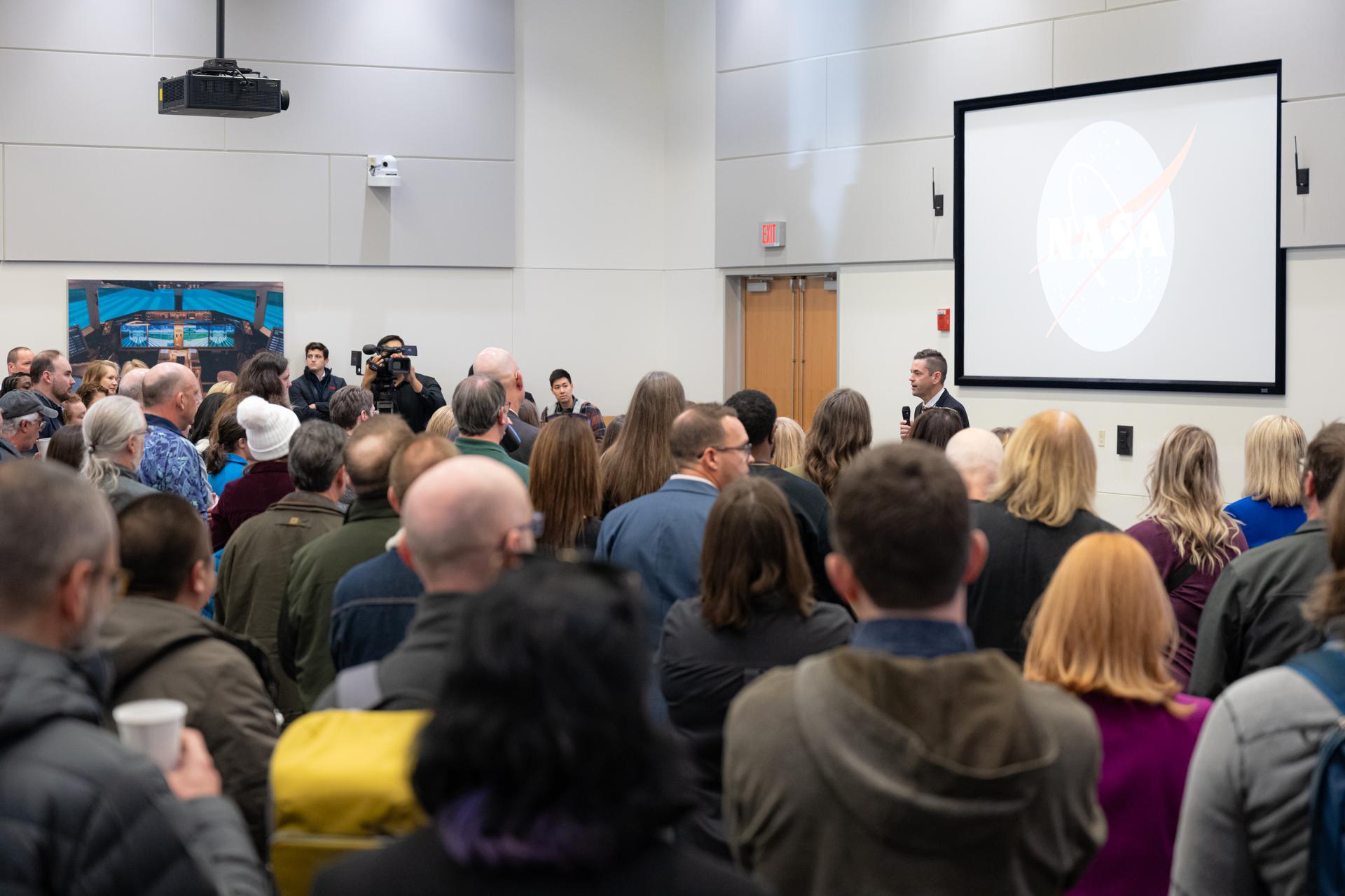
NASA Administrator Jared Isaacman speaks during a workforce Q&A session, Monday, Jan. 12, 2026, at NASA’s Langley Research Center in Hampton, Va. Langley marks the second stop in Isaacman’s roadshow to visit NASA facilities and engage directly with the agency’s workforce. Photo Credit: (NASA/John Kraus)
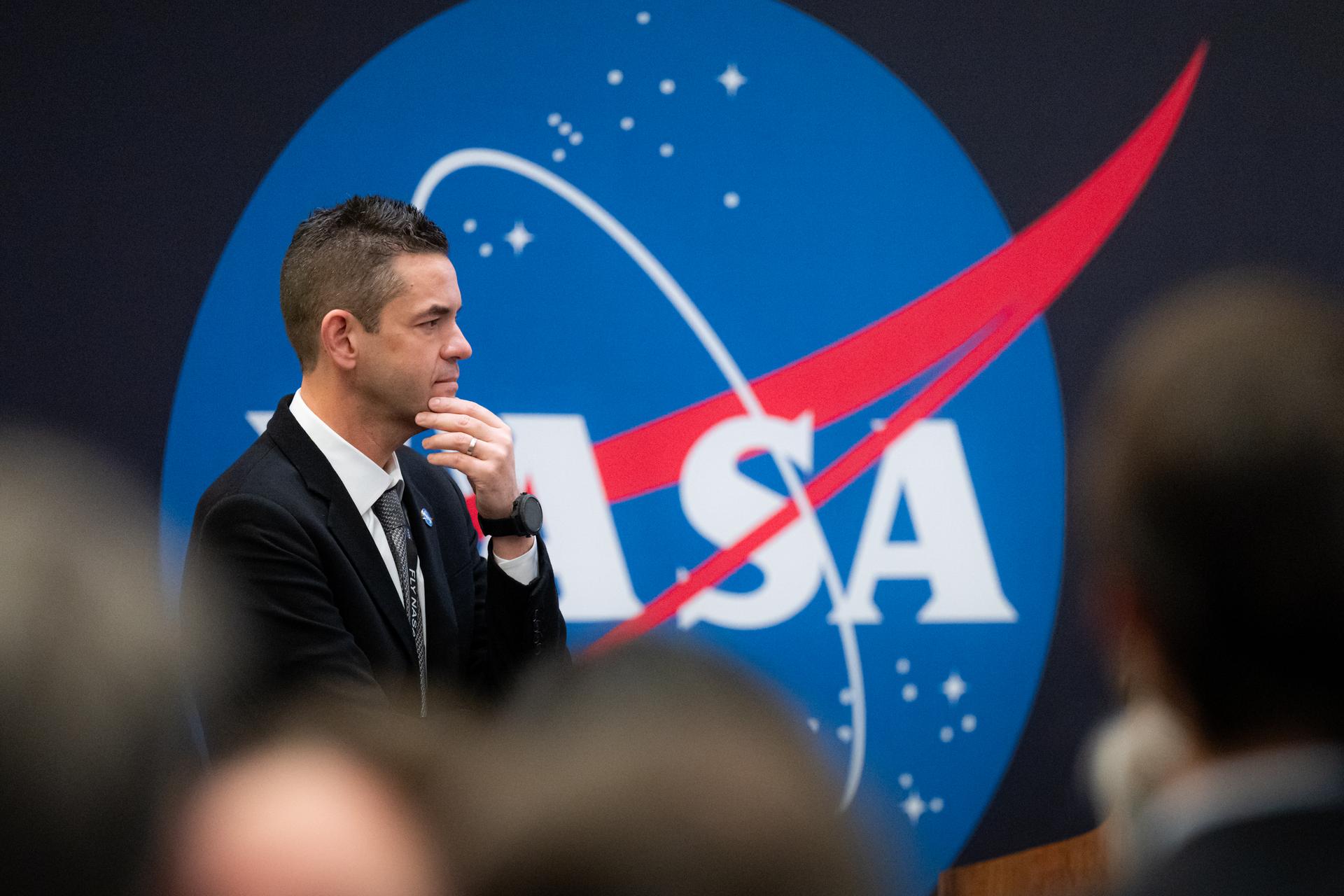
NASA Administrator Jared Isaacman speaks during a workforce Q&A session, Monday, Jan. 12, 2026, at NASA’s Langley Research Center in Hampton, Va. Langley marks the second stop in Isaacman’s roadshow to visit NASA facilities and engage directly with the agency’s workforce. Photo Credit: (NASA/John Kraus)
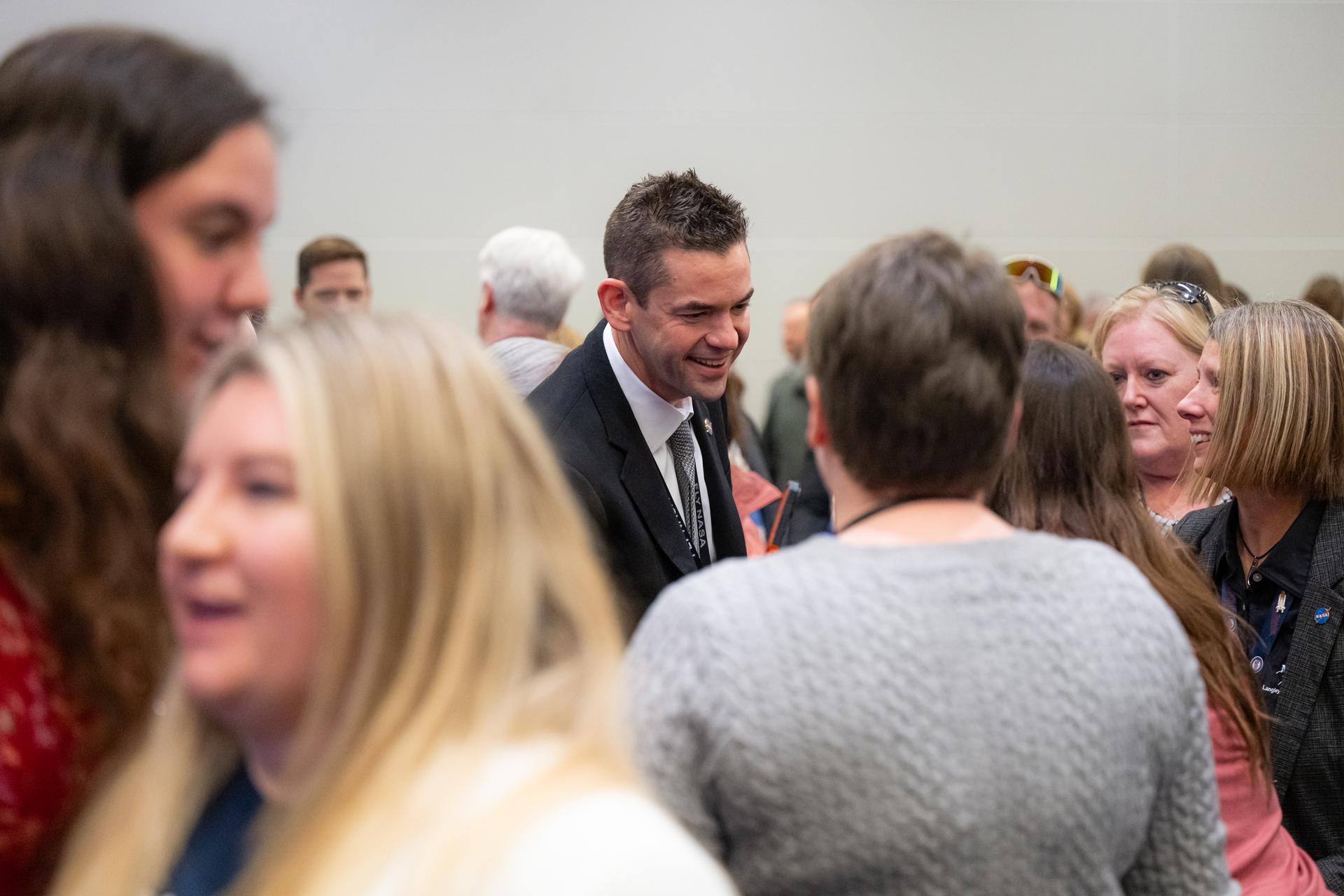
NASA Administrator Jared Isaacman greets members of the workforce, Monday, Jan. 12, 2026, at NASA’s Langley Research Center in Hampton, Va. Langley marks the second stop in Isaacman’s roadshow to visit NASA facilities and engage directly with the agency’s workforce. Photo Credit: (NASA/John Kraus)
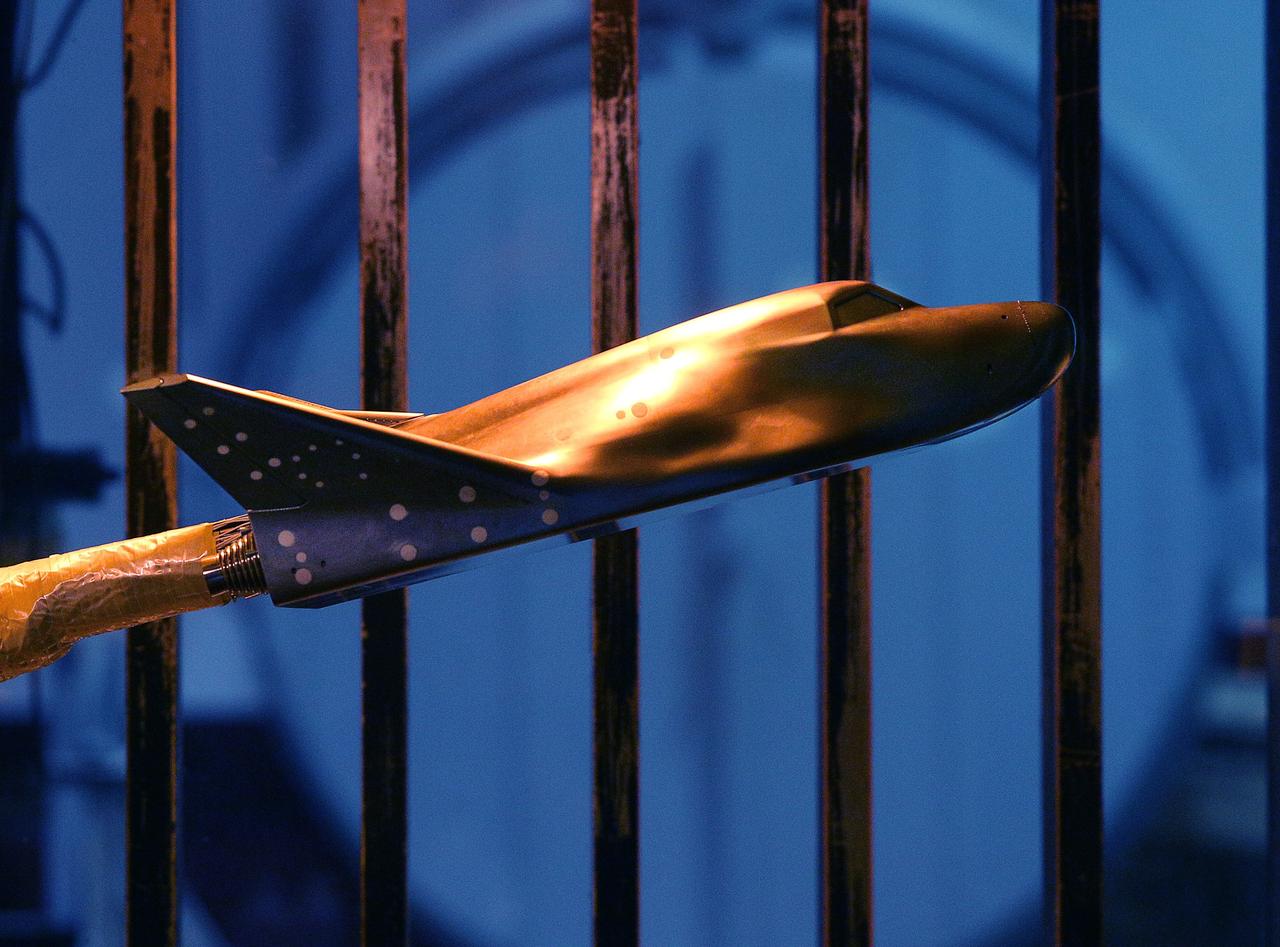
HAMPTON, Va. – A precise scale model of the Dream Chaser spacecraft begins an evaluation inside the Unitary Plan Wind Tunnel at NASA's Langley Research Center in Virginia. The Dream Chaser is in development by Sierra Nevada Corporation in partnership with NASA's Commercial Crew Program. The data gathered from the wind tunnel was used to further test the design through the company's Commercial Crew Integrated Capability agreement with NASA. Photo credit: NASA/ David C. Bowman
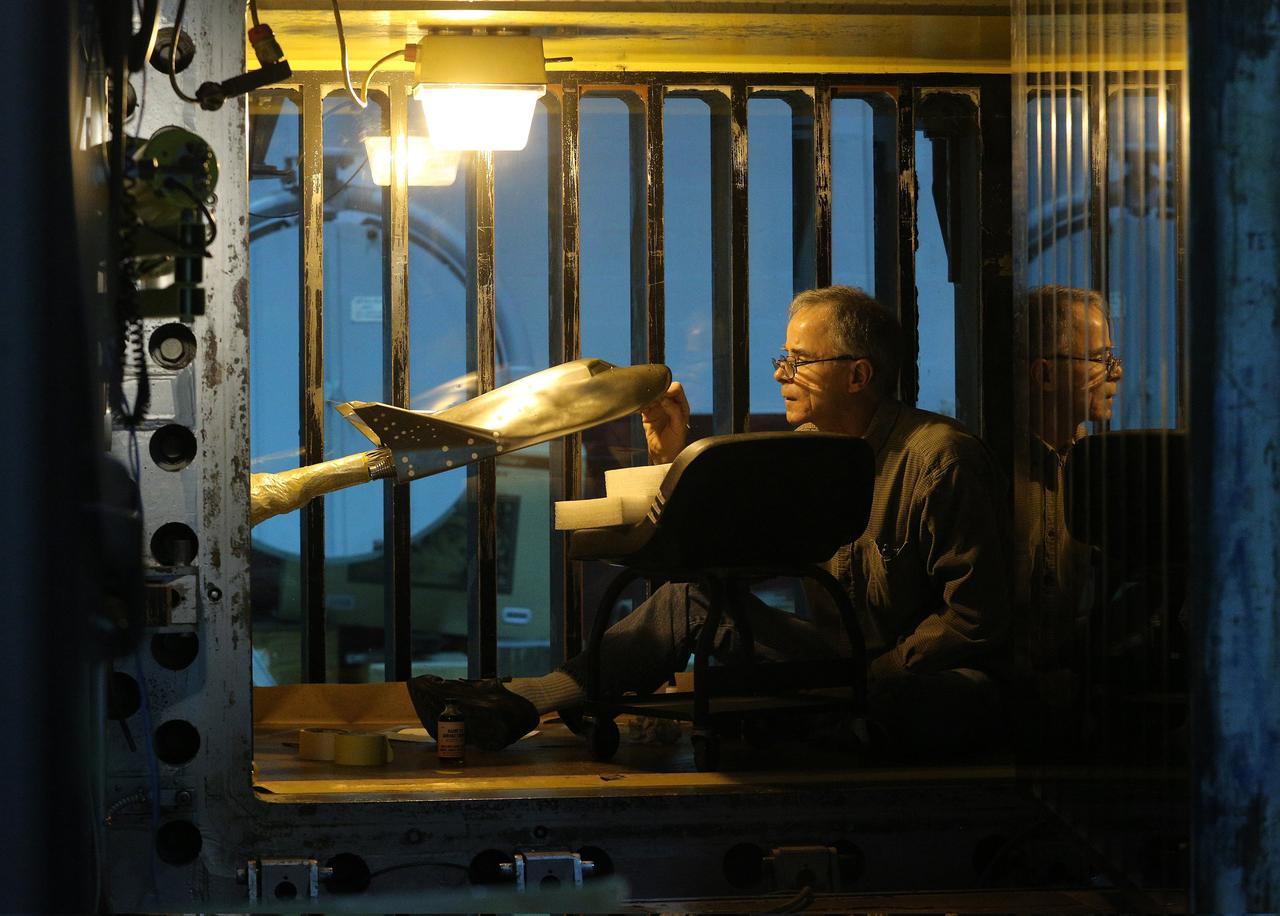
HAMPTON, Va. – NASA technician Ricky Hall works inside the Unitary Plan Wind Tunnel at NASA's Langley Research Center in Virginia to affix grains of sand to a precise scale model of the Dream Chaser spacecraft. Sierra Nevada Corporation is developing the Dream Chaser in partnership with NASA's Commercial Crew Program. The sand creates turbulence at key points to simulate the conditions the real spacecraft will encounter during its return to Earth. The data gathered from the wind tunnel was used to further test the design through the company's Commercial Crew Integrated Capability agreement with NASA. Photo credit: NASA/ David C. Bowman
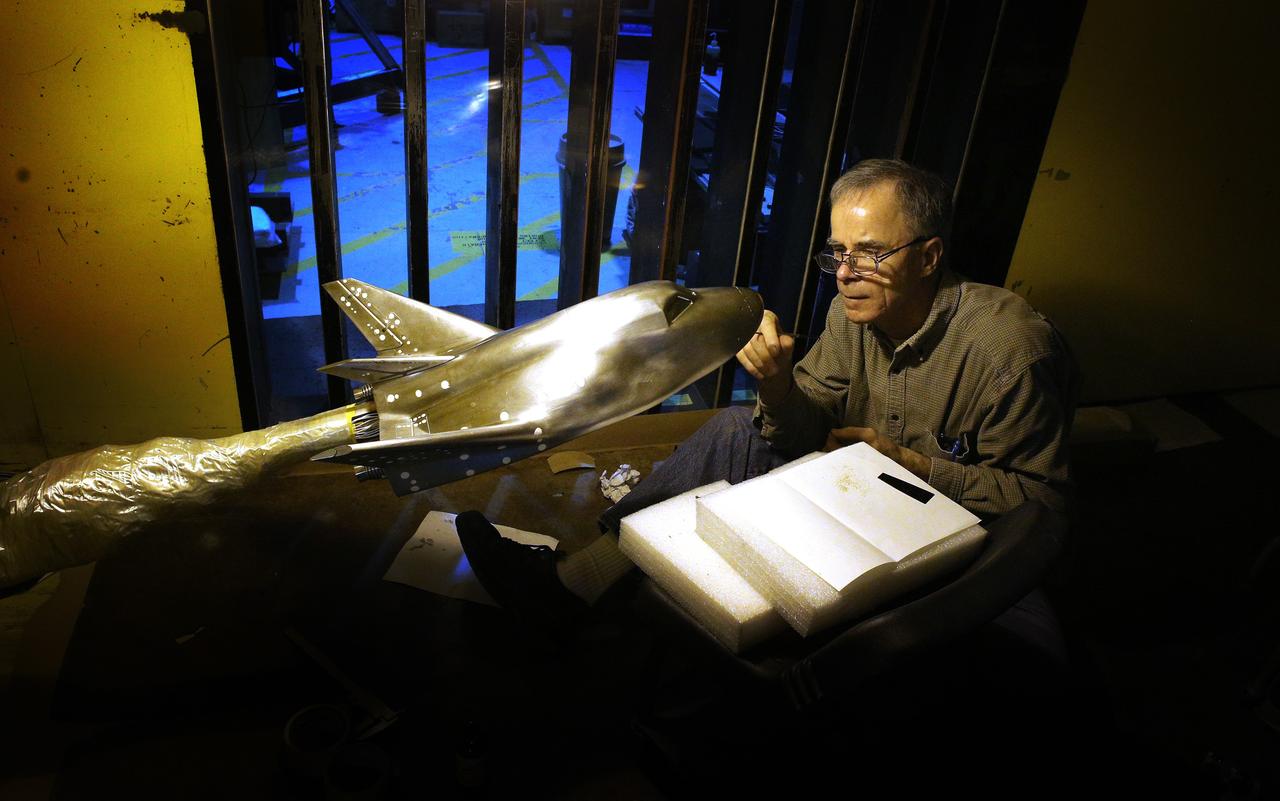
HAMPTON, Va. – NASA technician Ricky Hall works inside the Unitary Plan Wind Tunnel at NASA's Langley Research Center in Virginia to affix grains of sand to a precise scale model of the Dream Chaser spacecraft. Sierra Nevada Corporation is developing the Dream Chaser in partnership with NASA's Commercial Crew Program. The sand creates turbulence at key points to simulate the conditions the real spacecraft will encounter during its return to Earth. The data gathered from the wind tunnel was used to further test the design through the company's Commercial Crew Integrated Capability agreement with NASA. Photo credit: NASA/ David C. Bowman
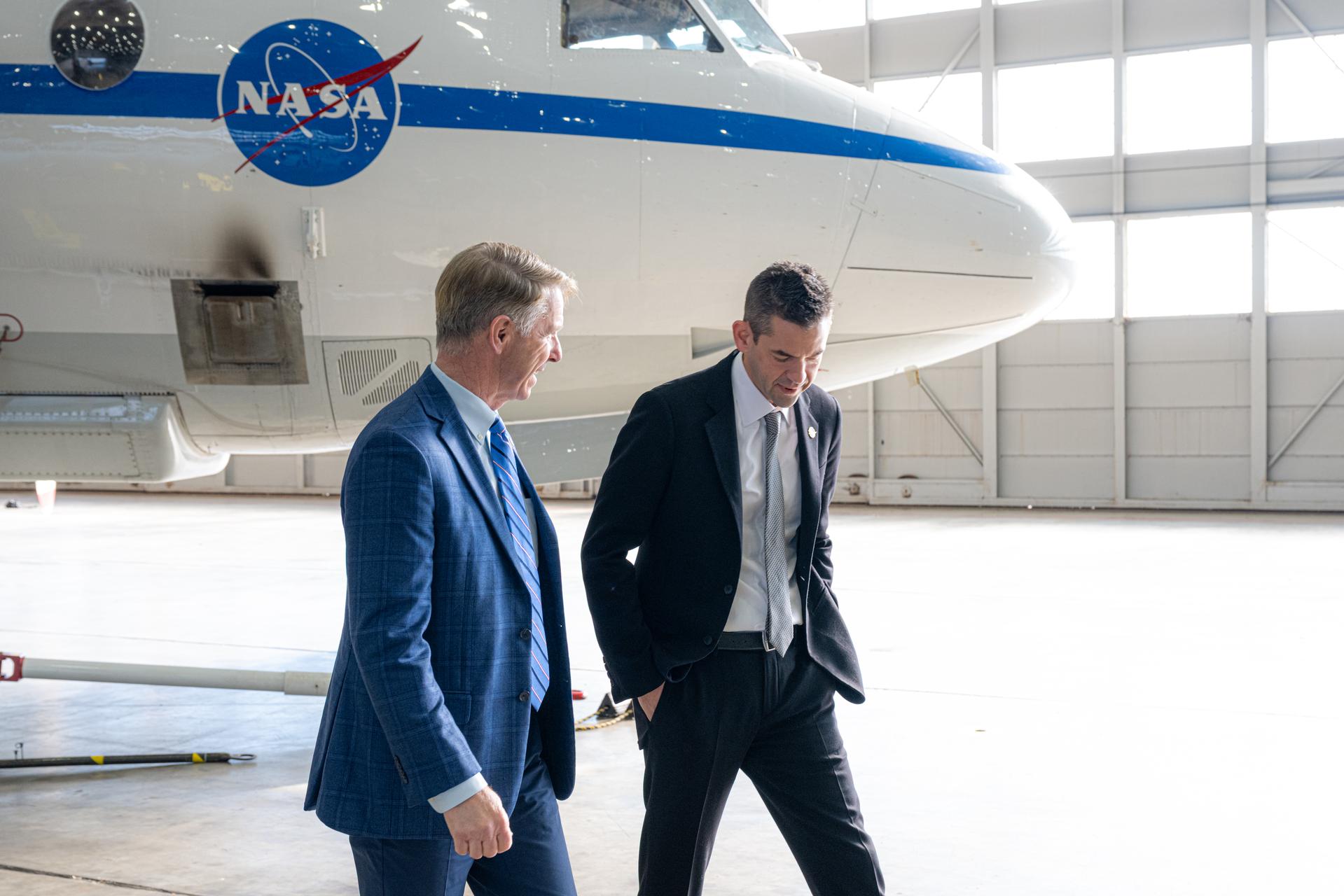
NASA Administrator Jared Isaacman, right, meets with U.S. Rep. Rob Wittman of Virginia’s 1st congressional district, left, Monday, Jan. 12, 2026, at NASA’s Langley Research Center in Hampton, Va. Langley marks the second stop in Isaacman’s roadshow to visit NASA facilities and engage directly with the agency’s workforce. Photo Credit: (NASA/John Kraus)
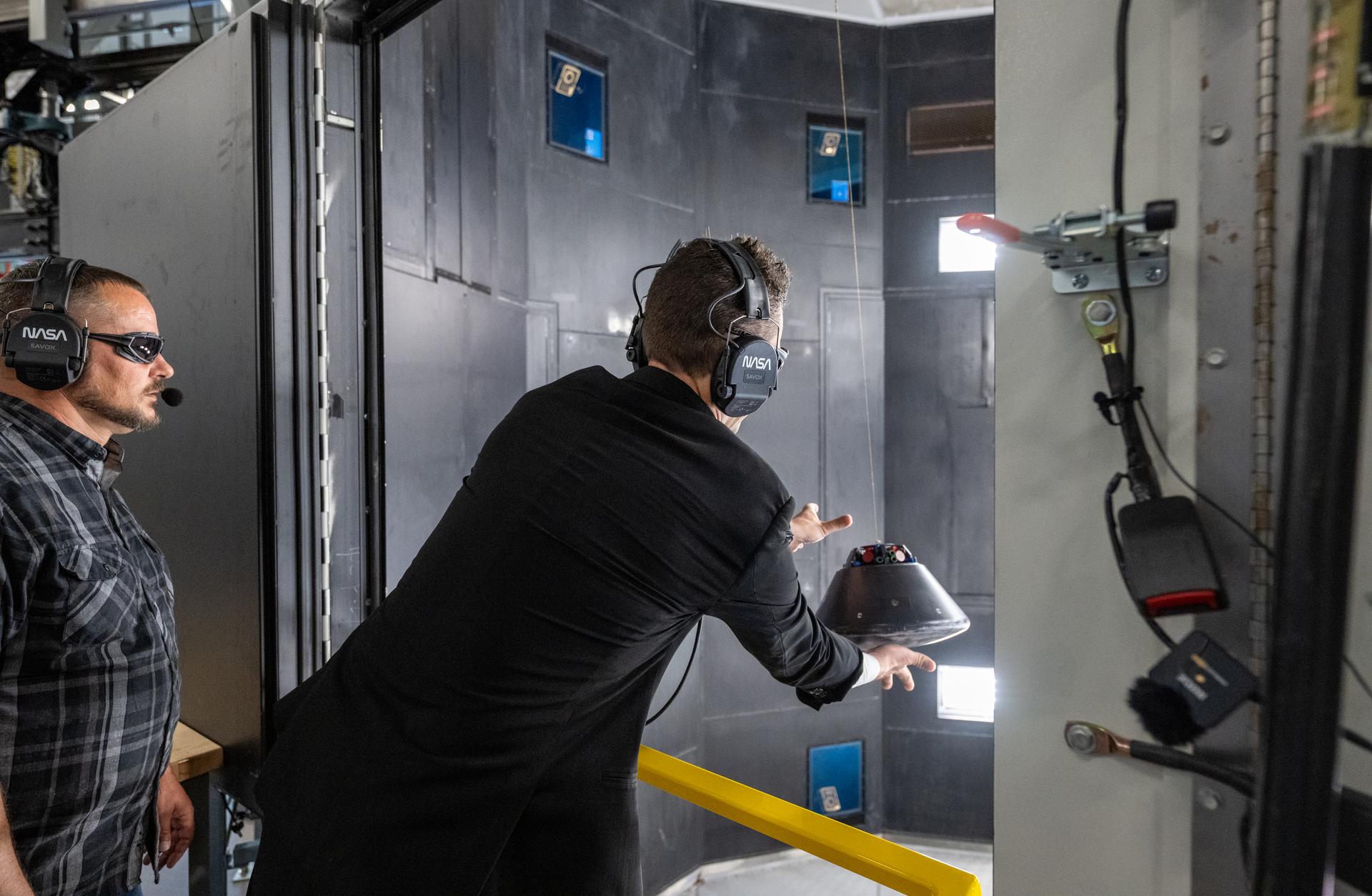
NASA Administrator Jared Isaacman launches a scale model of the Orion capsule during a demonstration at the Flight Dynamics Research Facility, NASA's newest wind tunnel, Friday, July 31, 2026, at NASA’s Langley Research Center in Hampton, Virginia. The state-of-the-art facility will support research and technology development that will advance the agency’s aeronautics, exploration, and science goals, including establishing a sustained human presence on the lunar surface through the Artemis program and the development of a Moon Base. Photo Credit: (NASA/Keegan Barber)
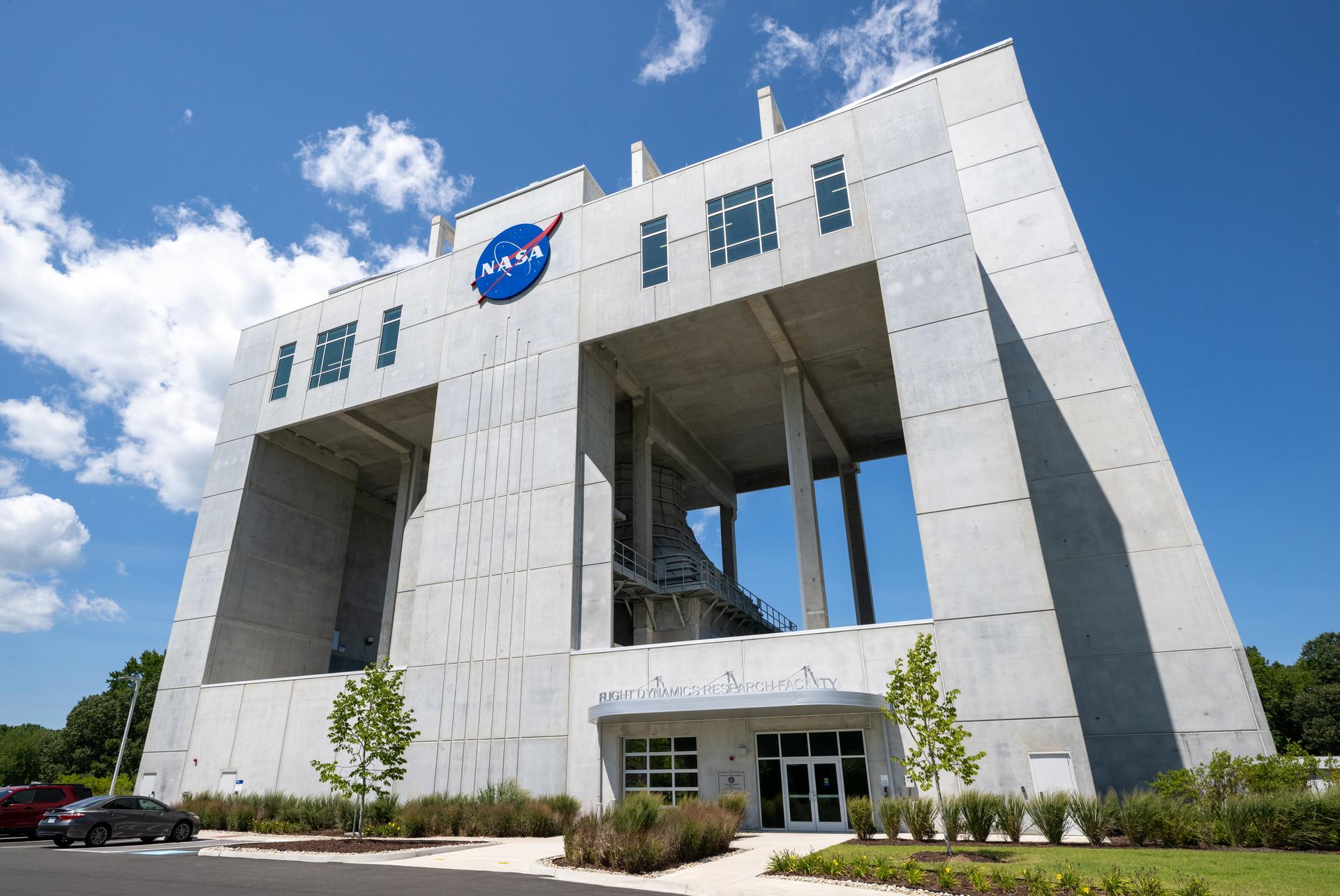
The Flight Dynamics Research Facility, NASA's newest wind tunnel, is seen Thursday, July 30, 2026, at NASA’s Langley Research Center in Hampton, Virginia. The state-of-the-art facility will support research and technology development that will advance the agency’s aeronautics, exploration, and science goals, including establishing a sustained human presence on the lunar surface through the Artemis program and the development of a Moon Base. Photo Credit: (NASA/Keegan Barber)
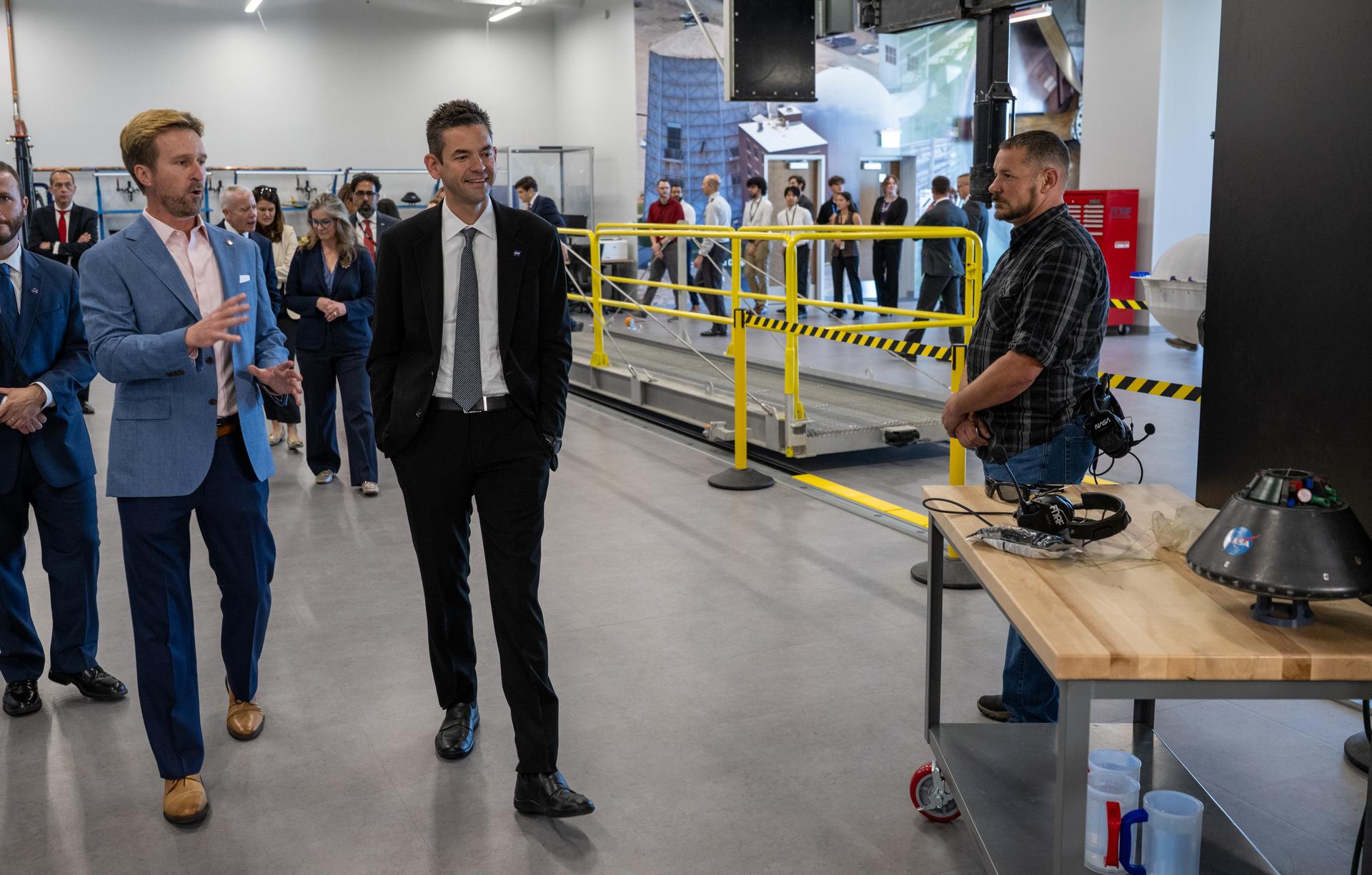
NASA Administrator Jared Isaacman, center, speaks with Corey Diebler, facility manager, left, during a tour of the Flight Dynamics Research Facility, NASA's newest wind tunnel, Friday, July 31, 2026, at NASA’s Langley Research Center in Hampton, Virginia. The state-of-the-art facility will support research and technology development that will advance the agency’s aeronautics, exploration, and science goals, including establishing a sustained human presence on the lunar surface through the Artemis program and the development of a Moon Base. Photo Credit: (NASA/Keegan Barber)
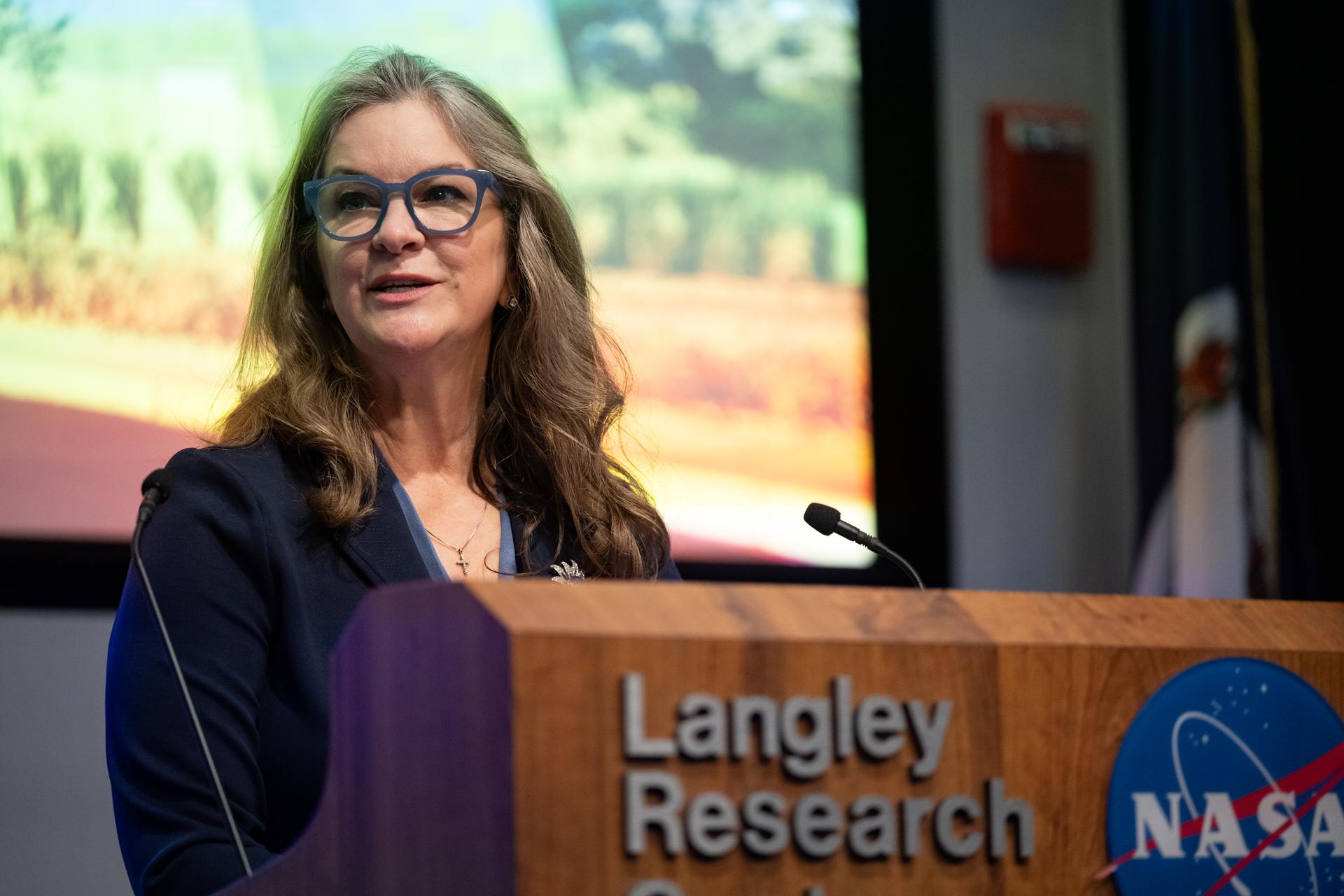
Dr. Trina Dyal, director of NASA's Langley Research Center, delivers remarks during a ribbon cutting ceremony for the Flight Dynamics Research Facility, NASA's newest wind tunnel, Friday, July 31, 2026, at NASA’s Langley Research Center in Hampton, Virginia. The state-of-the-art facility will support research and technology development that will advance the agency’s aeronautics, exploration, and science goals, including establishing a sustained human presence on the lunar surface through the Artemis program and the development of a Moon Base. Photo Credit: (NASA/Keegan Barber)
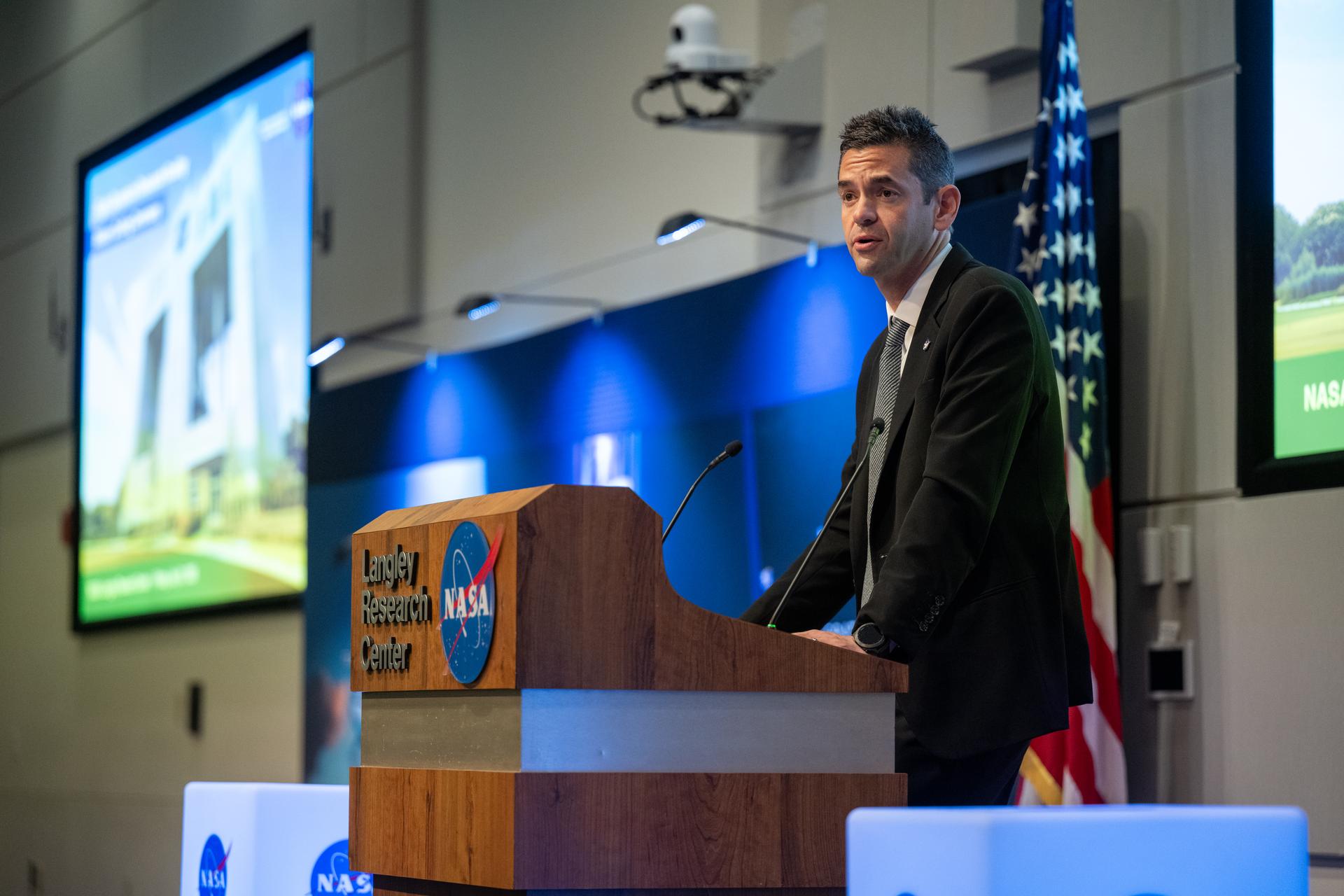
NASA Administrator Jared Isaacman delivers remarks during a ribbon cutting ceremony for the Flight Dynamics Research Facility, NASA's newest wind tunnel, Friday, July 31, 2026, at NASA’s Langley Research Center in Hampton, Virginia. The state-of-the-art facility will support research and technology development that will advance the agency’s aeronautics, exploration, and science goals, including establishing a sustained human presence on the lunar surface through the Artemis program and the development of a Moon Base. Photo Credit: (NASA/Keegan Barber)
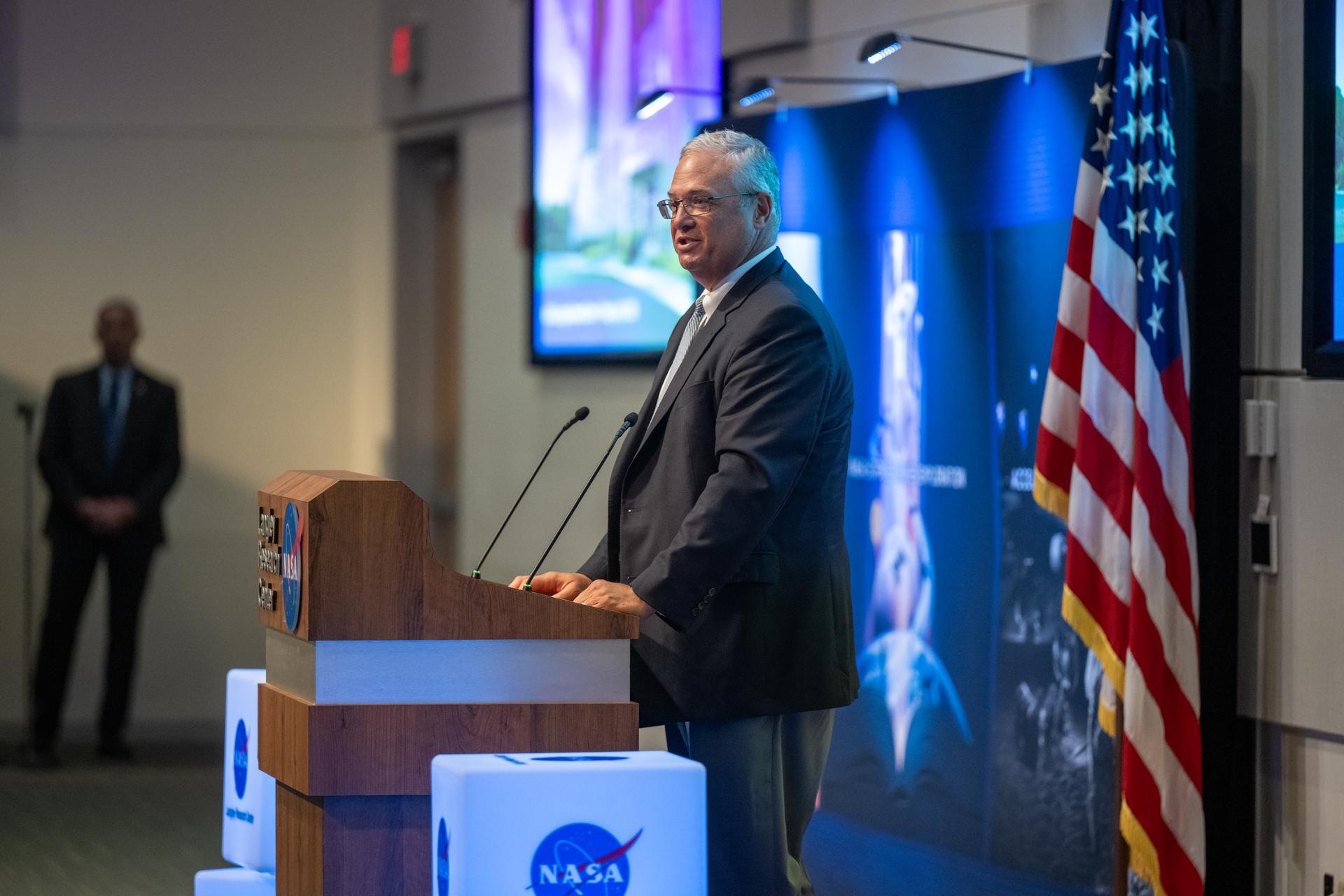
Mike Waller, vice president of BL Harbert International Federal Division delivers remarks during a ribbon cutting ceremony for the Flight Dynamics Research Facility, NASA's newest wind tunnel, Friday, July 31, 2026, at NASA’s Langley Research Center in Hampton, Virginia. The state-of-the-art facility will support research and technology development that will advance the agency’s aeronautics, exploration, and science goals, including establishing a sustained human presence on the lunar surface through the Artemis program and the development of a Moon Base. Photo Credit: (NASA/Keegan Barber)
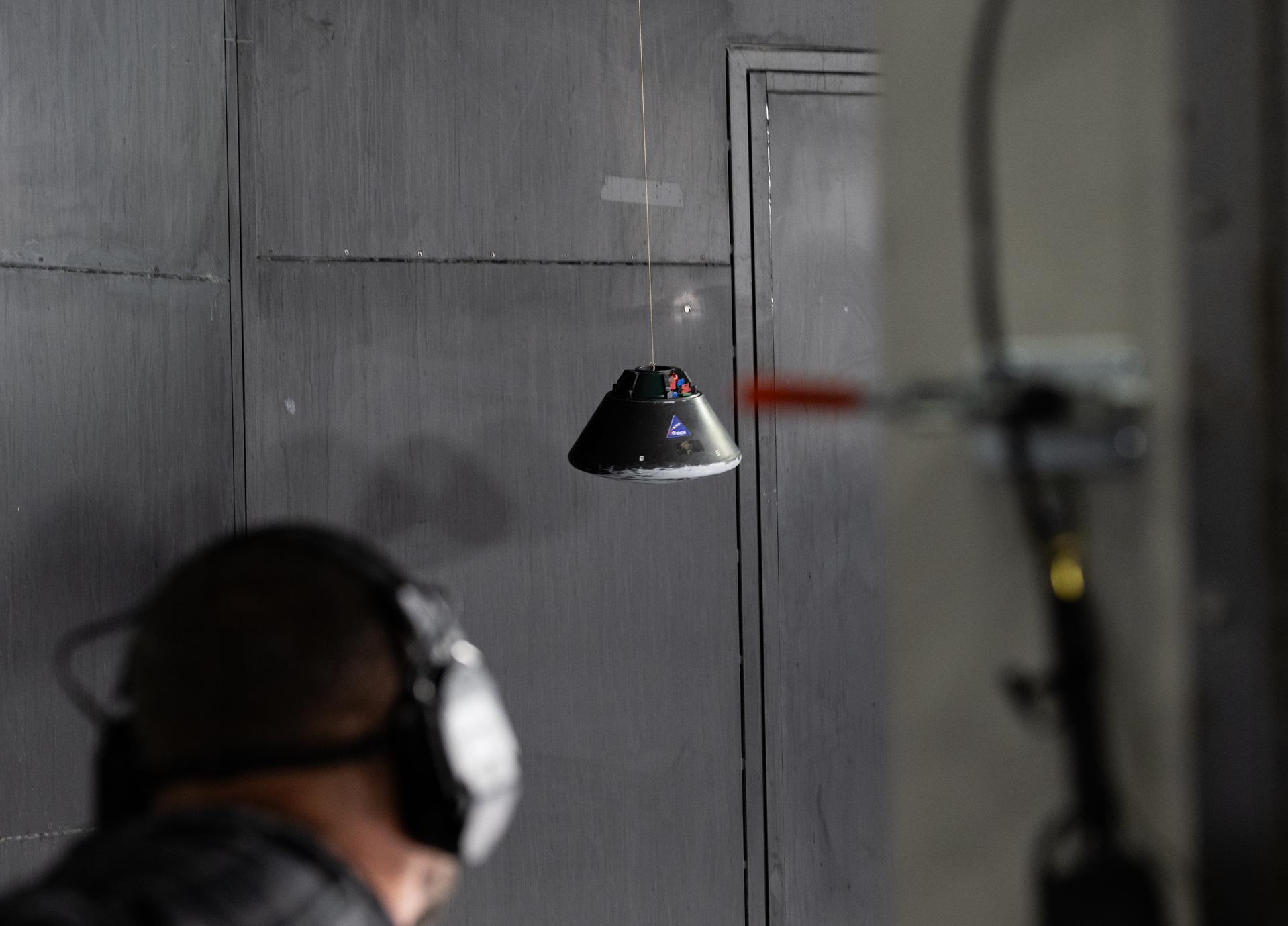
A scale model of the Orion capsule is seen during a demonstration at the Flight Dynamics Research Facility, NASA's newest wind tunnel, Friday, July 31, 2026, at NASA’s Langley Research Center in Hampton, Virginia. The state-of-the-art facility will support research and technology development that will advance the agency’s aeronautics, exploration, and science goals, including establishing a sustained human presence on the lunar surface through the Artemis program and the development of a Moon Base. Photo Credit: (NASA/Keegan Barber)
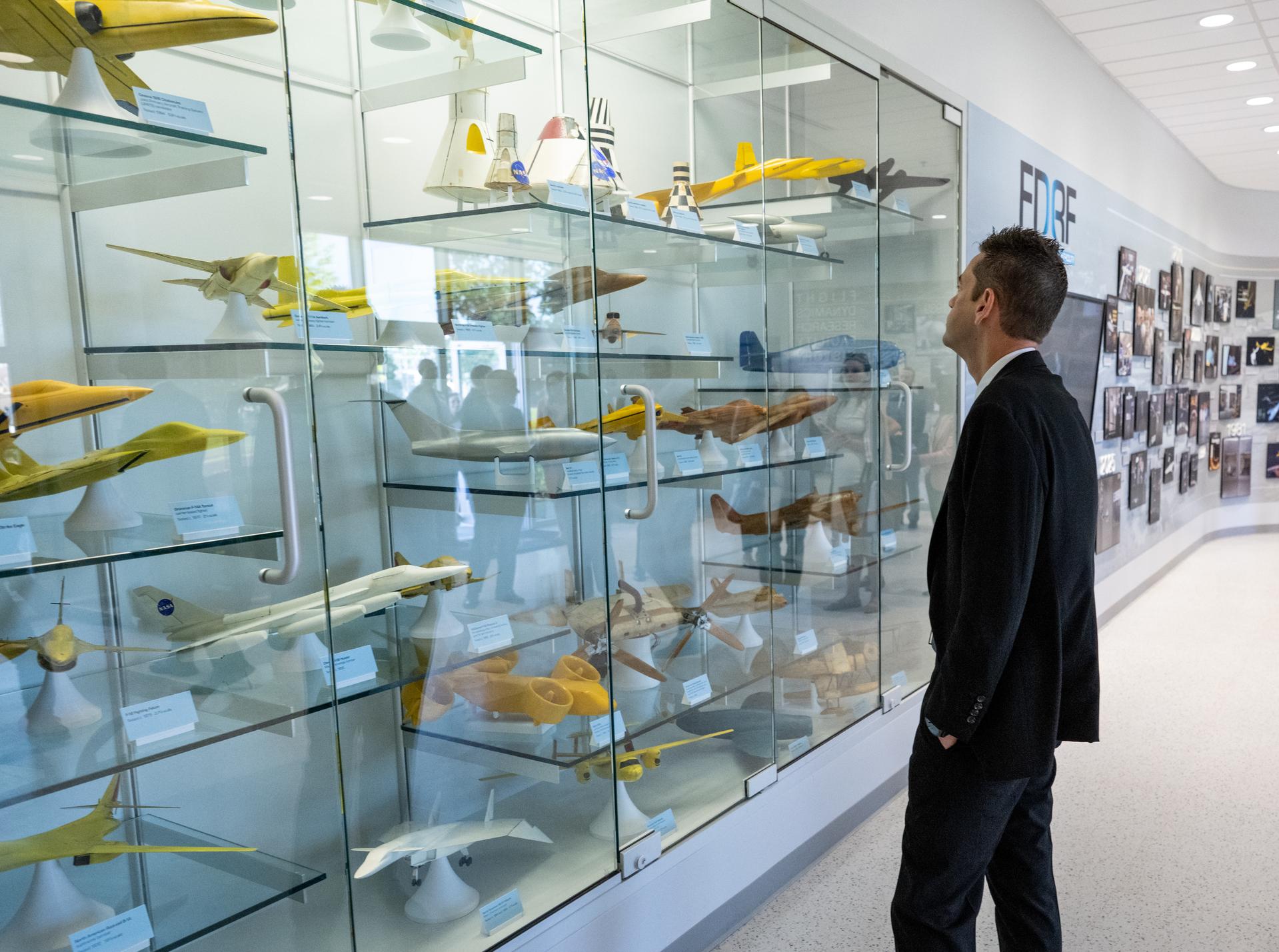
NASA Administrator Jared Isaacman views scale models of aircraft during a tour of the Flight Dynamics Research Facility, NASA's newest wind tunnel, Friday, July 31, 2026, at NASA’s Langley Research Center in Hampton, Virginia. The state-of-the-art facility will support research and technology development that will advance the agency’s aeronautics, exploration, and science goals, including establishing a sustained human presence on the lunar surface through the Artemis program and the development of a Moon Base. Photo Credit: (NASA/Keegan Barber)
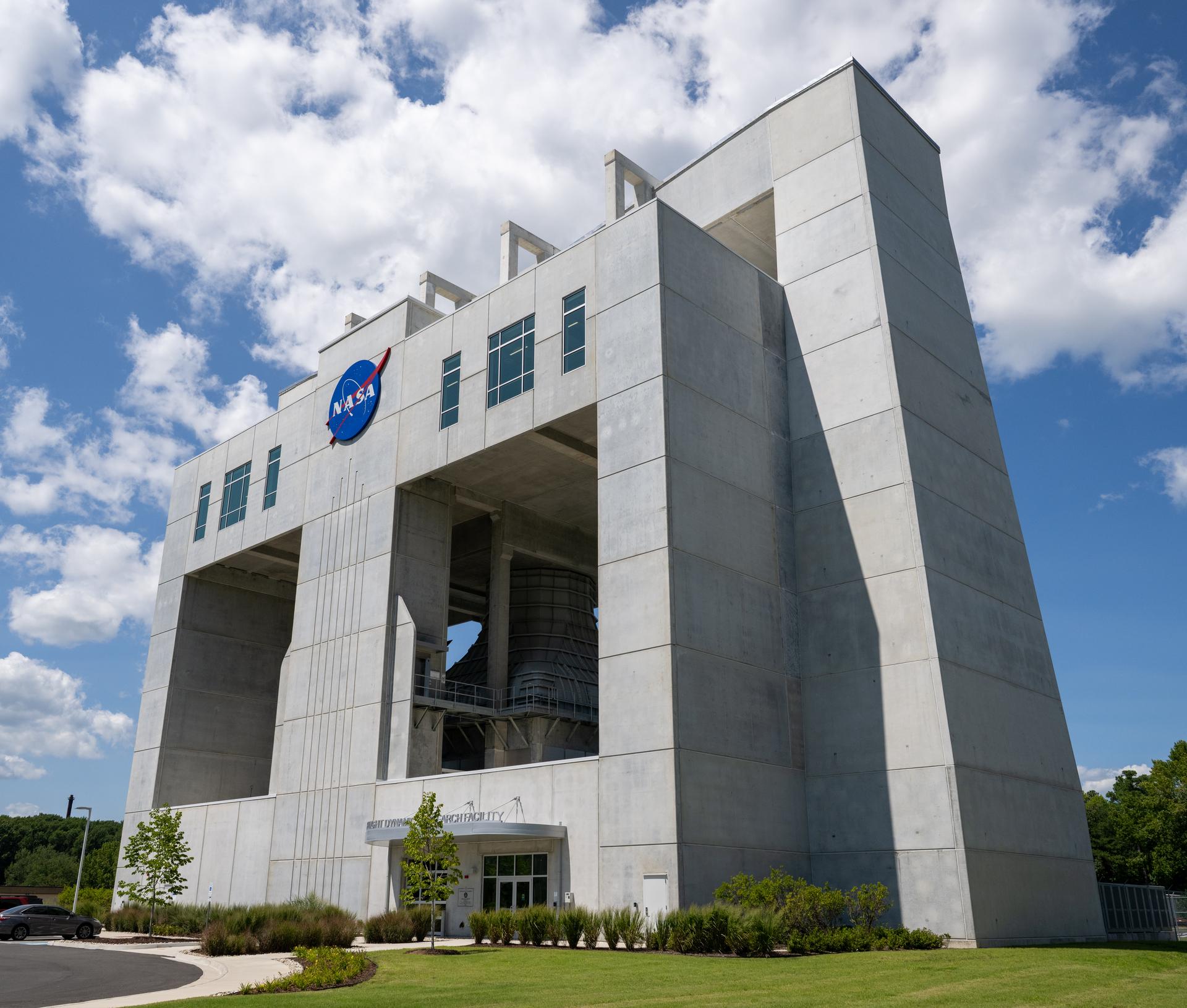
The Flight Dynamics Research Facility, NASA's newest wind tunnel, is seen Thursday, July 30, 2026, at NASA’s Langley Research Center in Hampton, Virginia. The state-of-the-art facility will support research and technology development that will advance the agency’s aeronautics, exploration, and science goals, including establishing a sustained human presence on the lunar surface through the Artemis program and the development of a Moon Base. Photo Credit: (NASA/Keegan Barber)
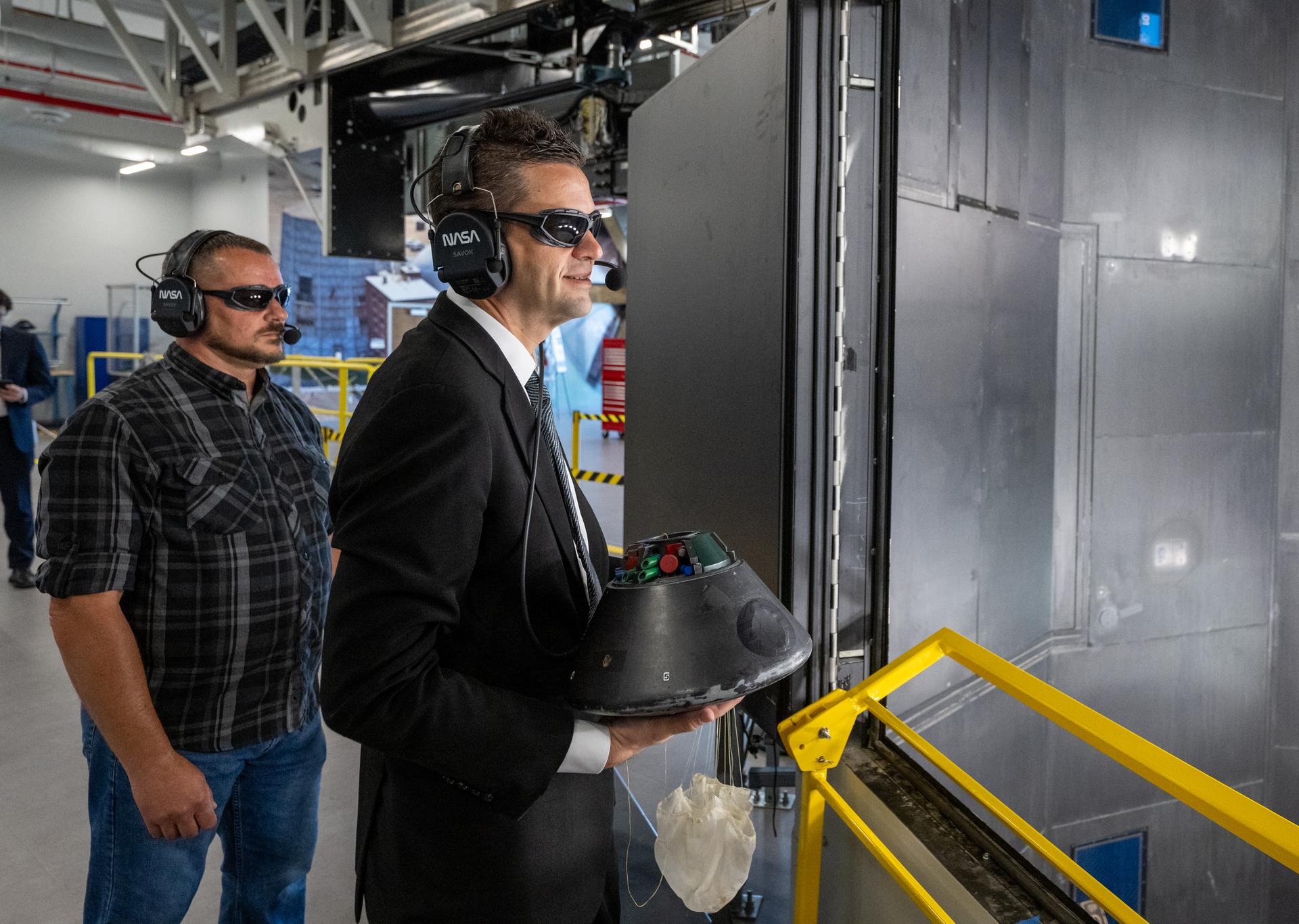
NASA Administrator Jared Isaacman prepares to launch a scale model of the Orion capsule for a demonstration at the Flight Dynamics Research Facility, NASA's newest wind tunnel, Friday, July 31, 2026, at NASA’s Langley Research Center in Hampton, Virginia. The state-of-the-art facility will support research and technology development that will advance the agency’s aeronautics, exploration, and science goals, including establishing a sustained human presence on the lunar surface through the Artemis program and the development of a Moon Base. Photo Credit: (NASA/Keegan Barber)
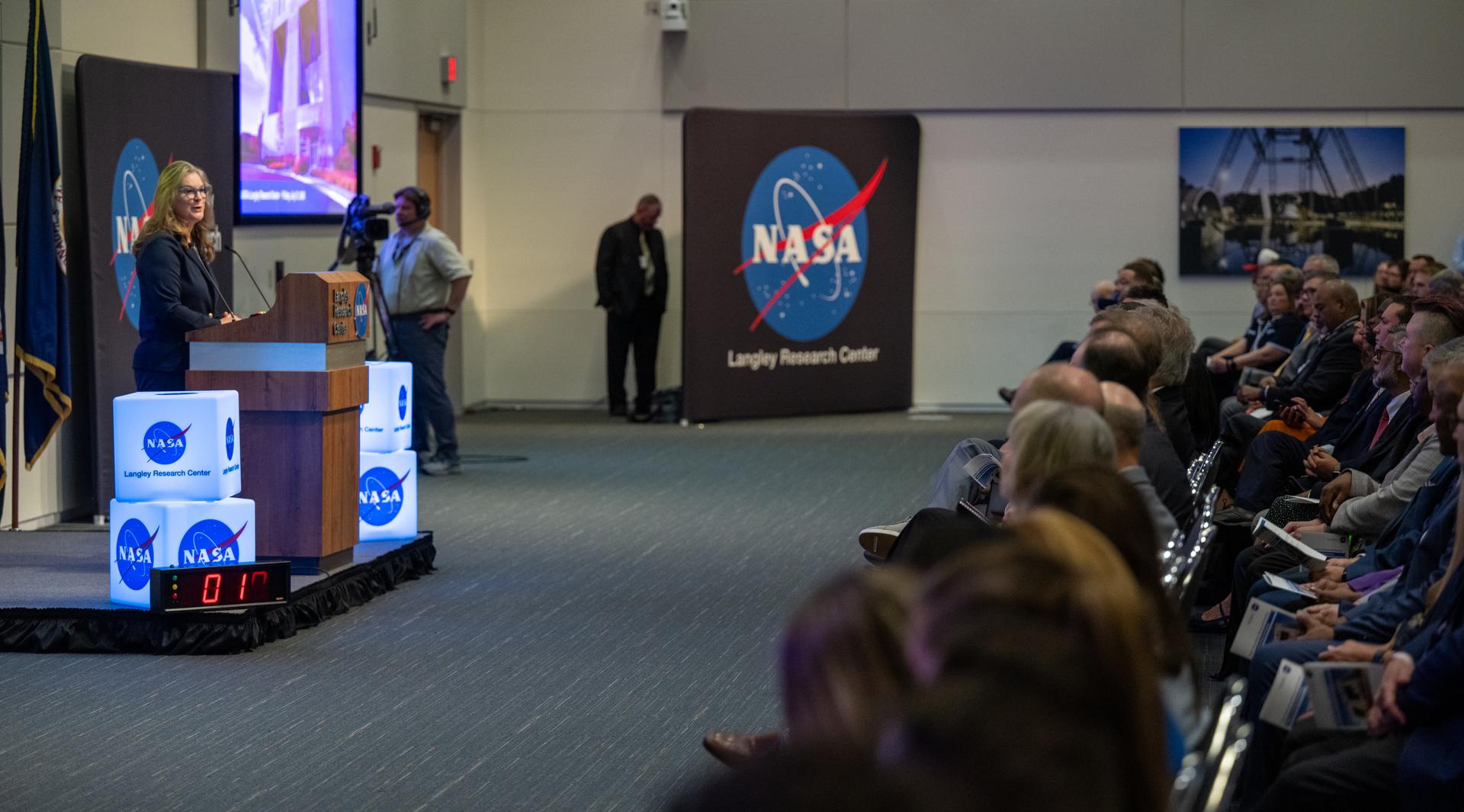
Dr. Trina Dyal, director of NASA's Langley Research Center, delivers remarks during a ribbon cutting ceremony for the Flight Dynamics Research Facility, NASA's newest wind tunnel, Friday, July 31, 2026, at NASA’s Langley Research Center in Hampton, Virginia. The state-of-the-art facility will support research and technology development that will advance the agency’s aeronautics, exploration, and science goals, including establishing a sustained human presence on the lunar surface through the Artemis program and the development of a Moon Base. Photo Credit: (NASA/Keegan Barber)
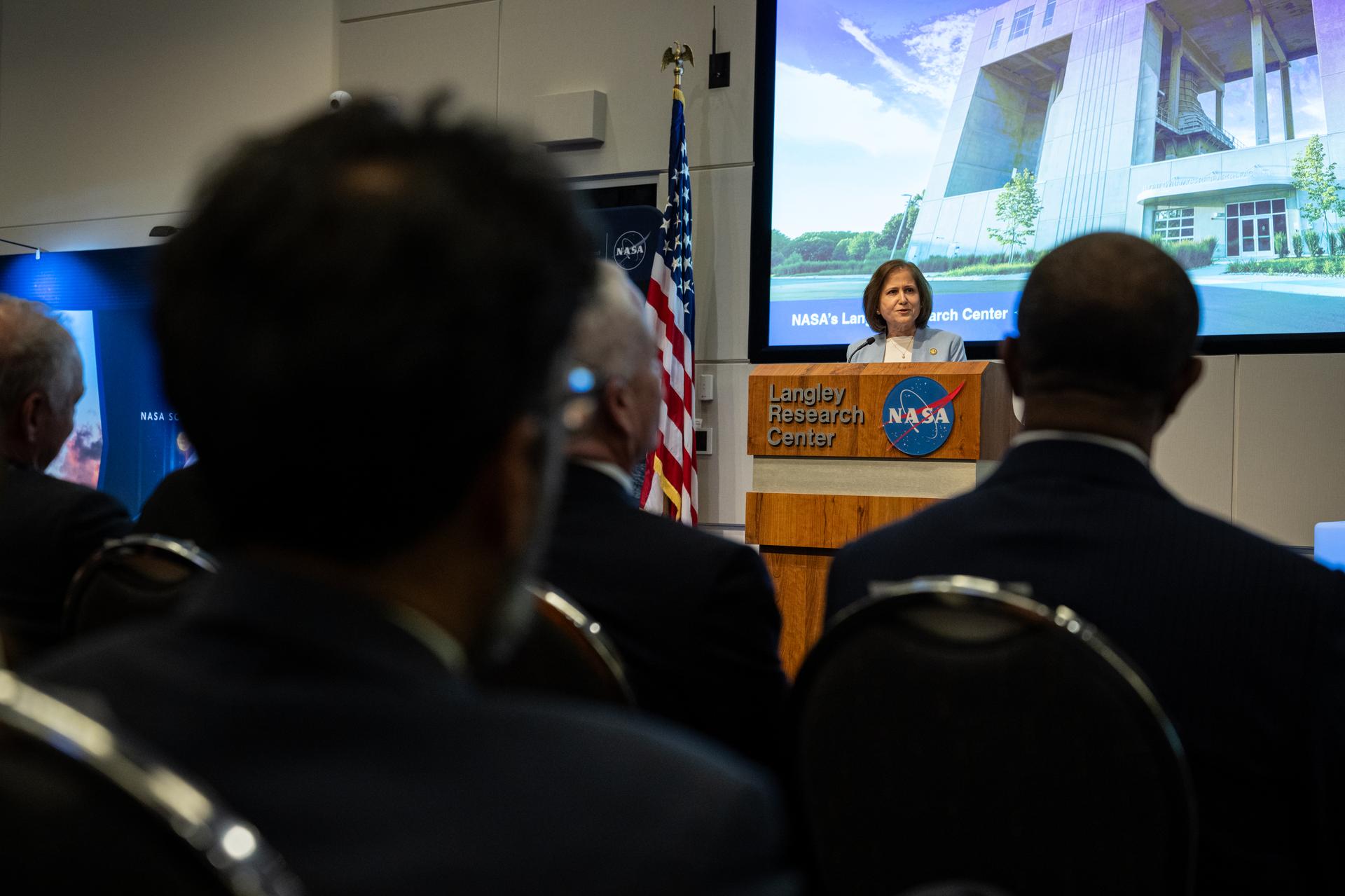
Virginia Lt. Governor Ghazala F. Hashmi delivers remarks during a ribbon cutting ceremony for the Flight Dynamics Research Facility, NASA's newest wind tunnel, Friday, July 31, 2026, at NASA’s Langley Research Center in Hampton, Virginia. The state-of-the-art facility will support research and technology development that will advance the agency’s aeronautics, exploration, and science goals, including establishing a sustained human presence on the lunar surface through the Artemis program and the development of a Moon Base. Photo Credit: (NASA/Keegan Barber)
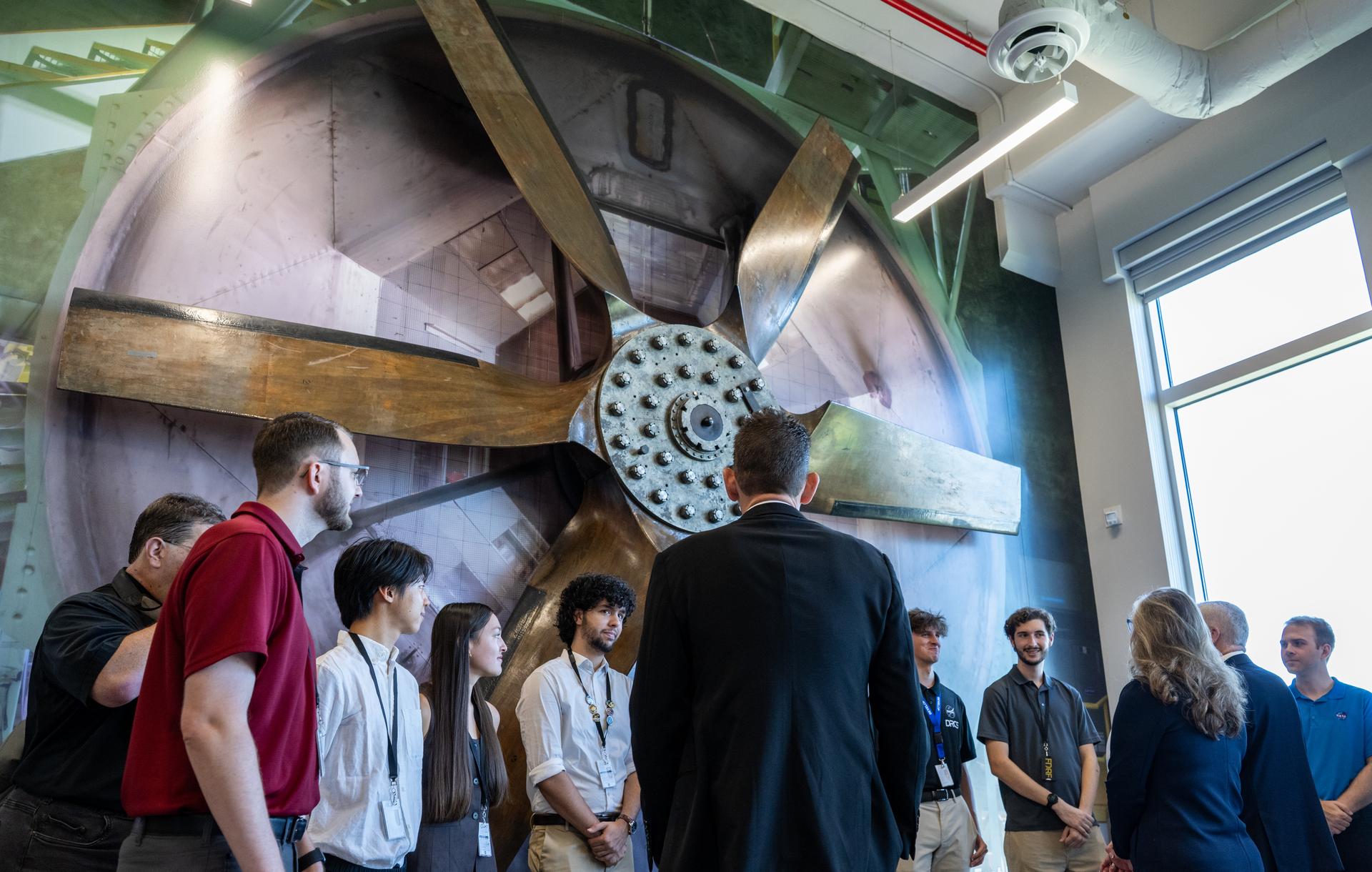
NASA Administrator Jared Isaacman, center, meets with interns during a tour of the Flight Dynamics Research Facility, NASA's newest wind tunnel, Friday, July 31, 2026, at NASA’s Langley Research Center in Hampton, Virginia. The state-of-the-art facility will support research and technology development that will advance the agency’s aeronautics, exploration, and science goals, including establishing a sustained human presence on the lunar surface through the Artemis program and the development of a Moon Base. Photo Credit: (NASA/Keegan Barber)
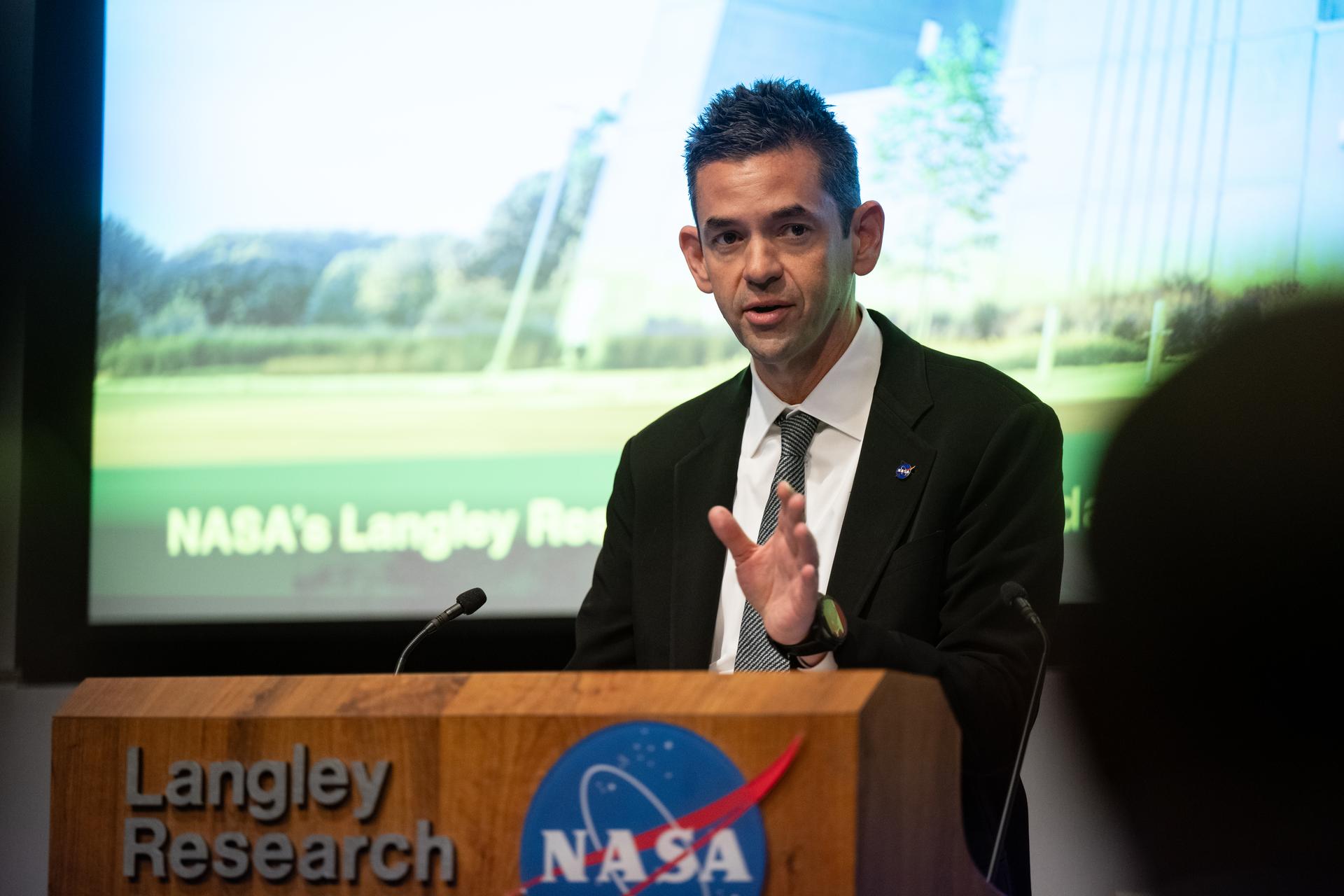
NASA Administrator Jared Isaacman delivers remarks during a ribbon cutting ceremony for the Flight Dynamics Research Facility, NASA's newest wind tunnel, Friday, July 31, 2026, at NASA’s Langley Research Center in Hampton, Virginia. The state-of-the-art facility will support research and technology development that will advance the agency’s aeronautics, exploration, and science goals, including establishing a sustained human presence on the lunar surface through the Artemis program and the development of a Moon Base. Photo Credit: (NASA/Keegan Barber)
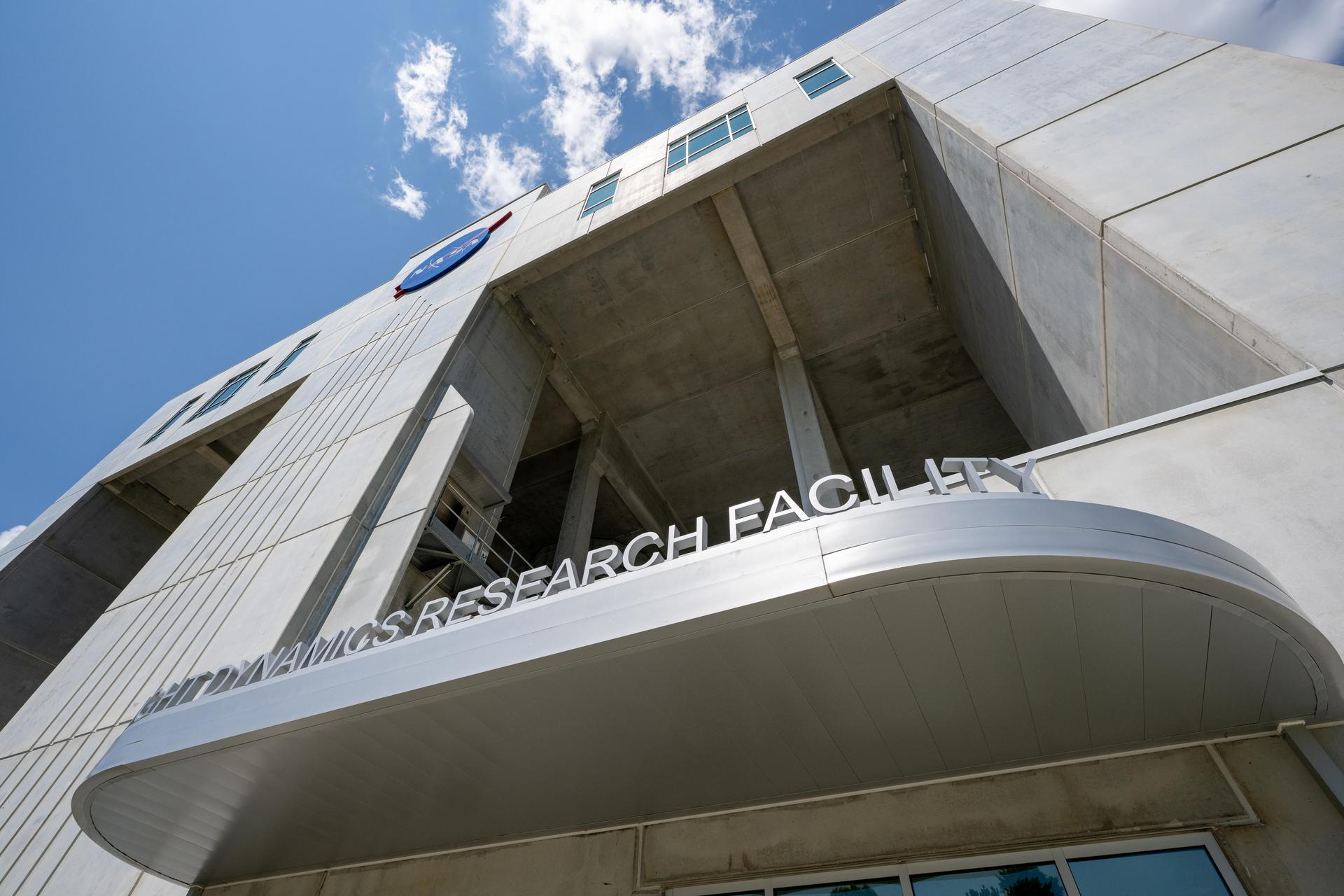
The Flight Dynamics Research Facility, NASA's newest wind tunnel, is seen Thursday, July 30, 2026, at NASA’s Langley Research Center in Hampton, Virginia. The state-of-the-art facility will support research and technology development that will advance the agency’s aeronautics, exploration, and science goals, including establishing a sustained human presence on the lunar surface through the Artemis program and the development of a Moon Base. Photo Credit: (NASA/Keegan Barber)
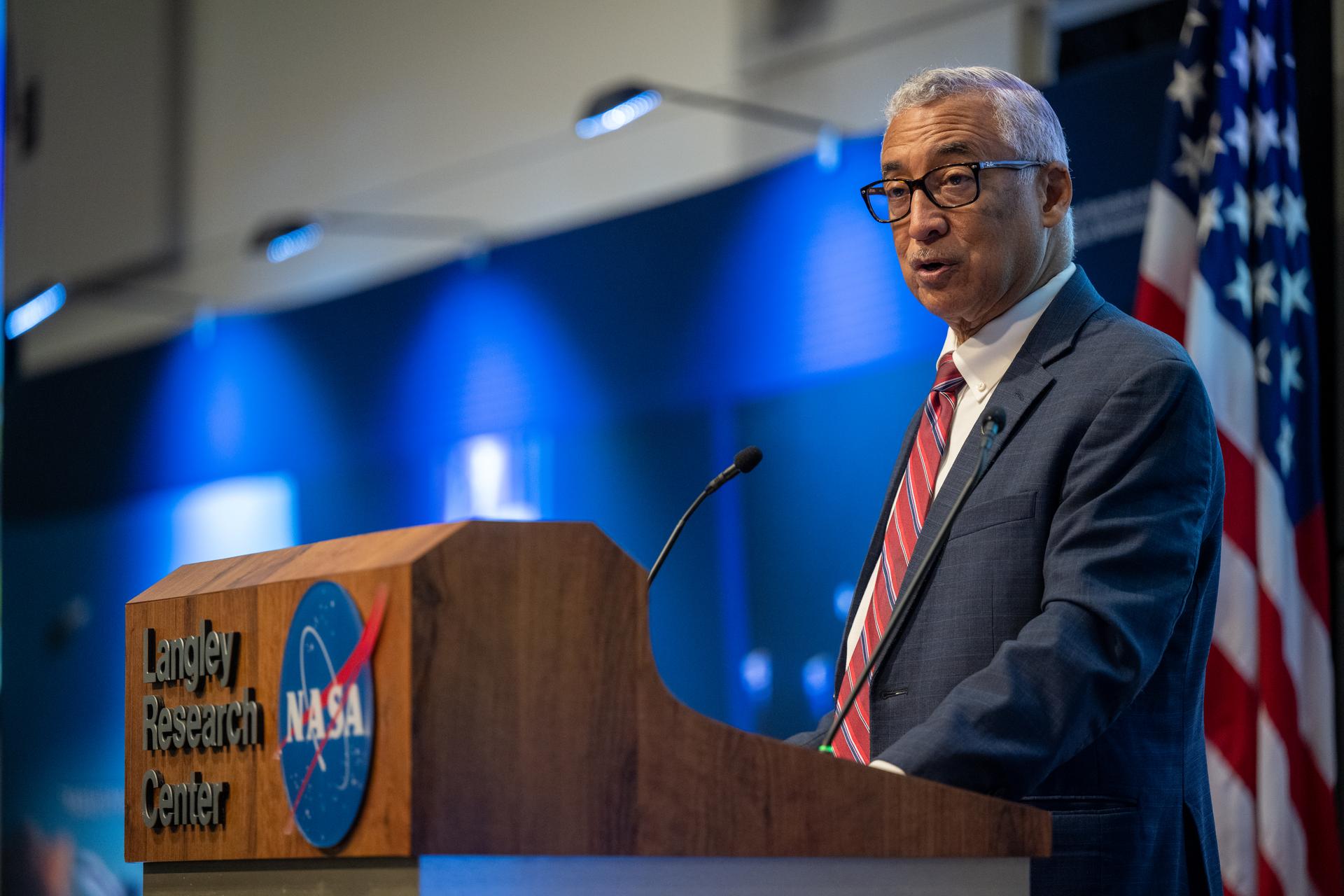
Congressman Robert “Bobby” Scott (D-Va.) delivers remarks during a ribbon cutting ceremony for the Flight Dynamics Research Facility, NASA's newest wind tunnel, Friday, July 31, 2026, at NASA’s Langley Research Center in Hampton, Virginia. The state-of-the-art facility will support research and technology development that will advance the agency’s aeronautics, exploration, and science goals, including establishing a sustained human presence on the lunar surface through the Artemis program and the development of a Moon Base. Photo Credit: (NASA/Keegan Barber)
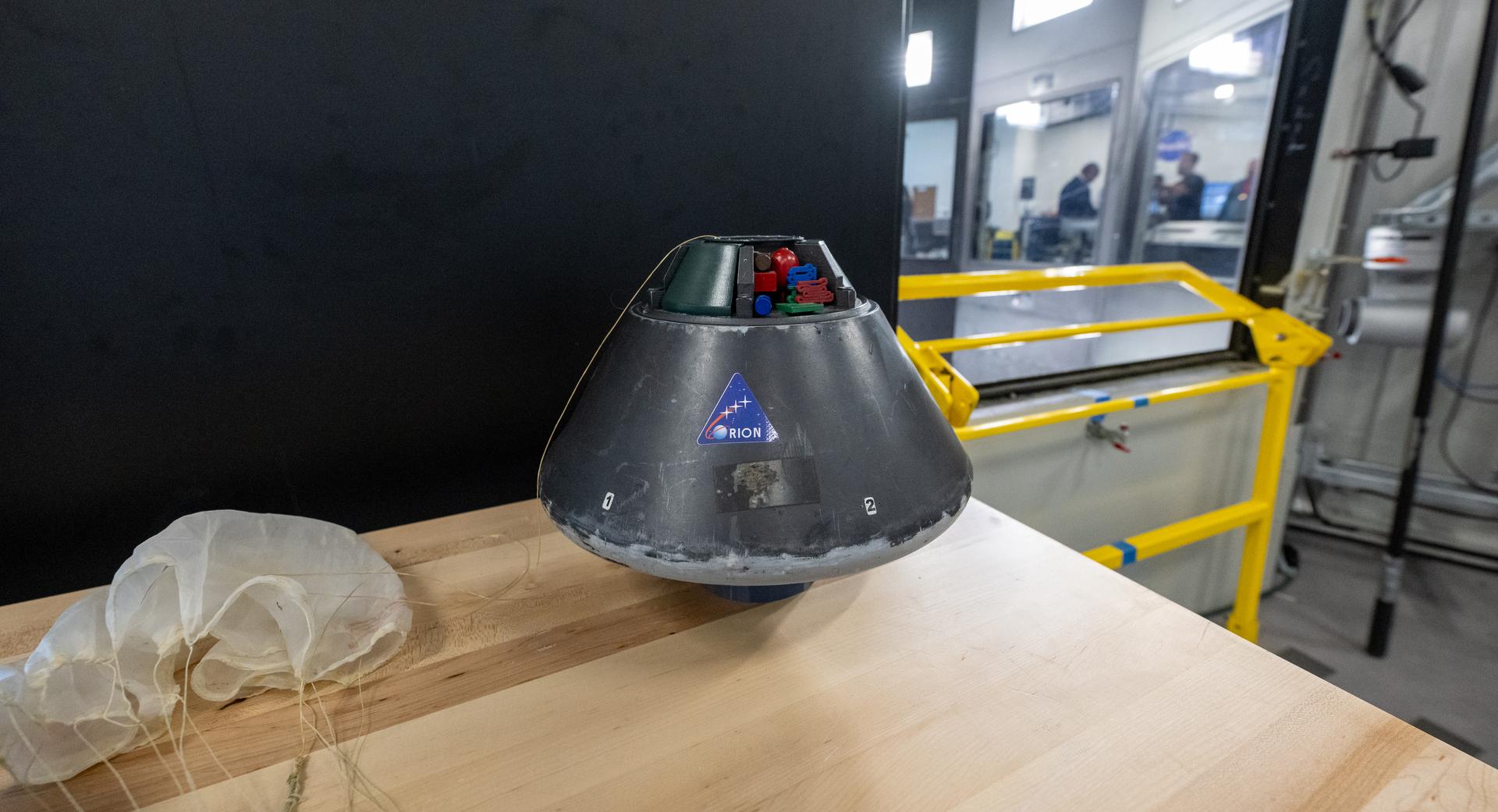
A scale model of the Orion capsule is seen prior to a demonstration at the Flight Dynamics Research Facility, NASA's newest wind tunnel, Friday, July 31, 2026, at NASA’s Langley Research Center in Hampton, Virginia. The state-of-the-art facility will support research and technology development that will advance the agency’s aeronautics, exploration, and science goals, including establishing a sustained human presence on the lunar surface through the Artemis program and the development of a Moon Base. Photo Credit: (NASA/Keegan Barber)
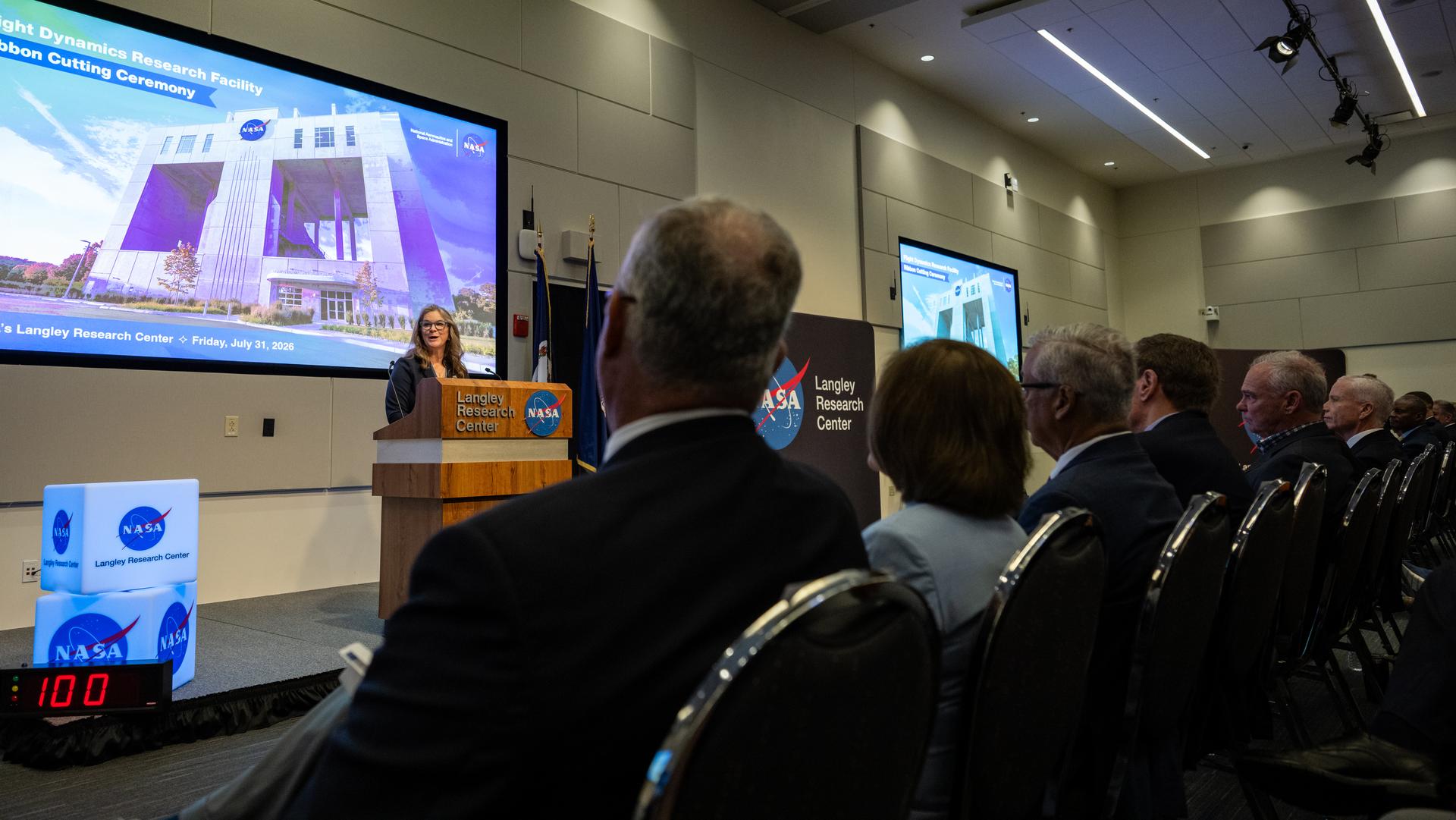
Dr. Trina Dyal, director of NASA's Langley Research Center, delivers remarks during a ribbon cutting ceremony for the Flight Dynamics Research Facility, NASA's newest wind tunnel, Friday, July 31, 2026, at NASA’s Langley Research Center in Hampton, Virginia. The state-of-the-art facility will support research and technology development that will advance the agency’s aeronautics, exploration, and science goals, including establishing a sustained human presence on the lunar surface through the Artemis program and the development of a Moon Base. Photo Credit: (NASA/Keegan Barber)
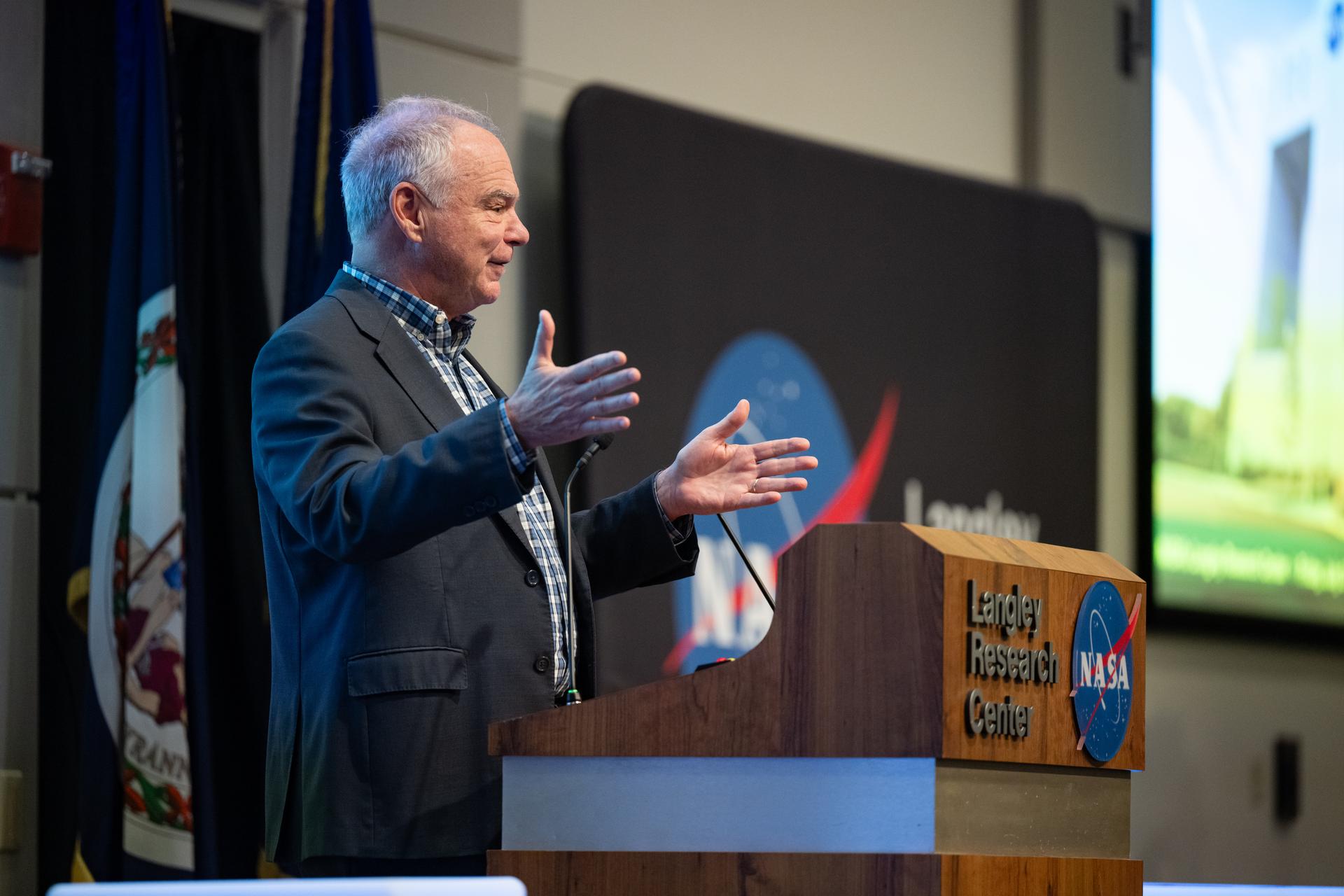
Senator Tim Kaine (D-Va.) delivers remarks during a ribbon cutting ceremony for the Flight Dynamics Research Facility, NASA's newest wind tunnel, Friday, July 31, 2026, at NASA’s Langley Research Center in Hampton, Virginia. The state-of-the-art facility will support research and technology development that will advance the agency’s aeronautics, exploration, and science goals, including establishing a sustained human presence on the lunar surface through the Artemis program and the development of a Moon Base. Photo Credit: (NASA/Keegan Barber)
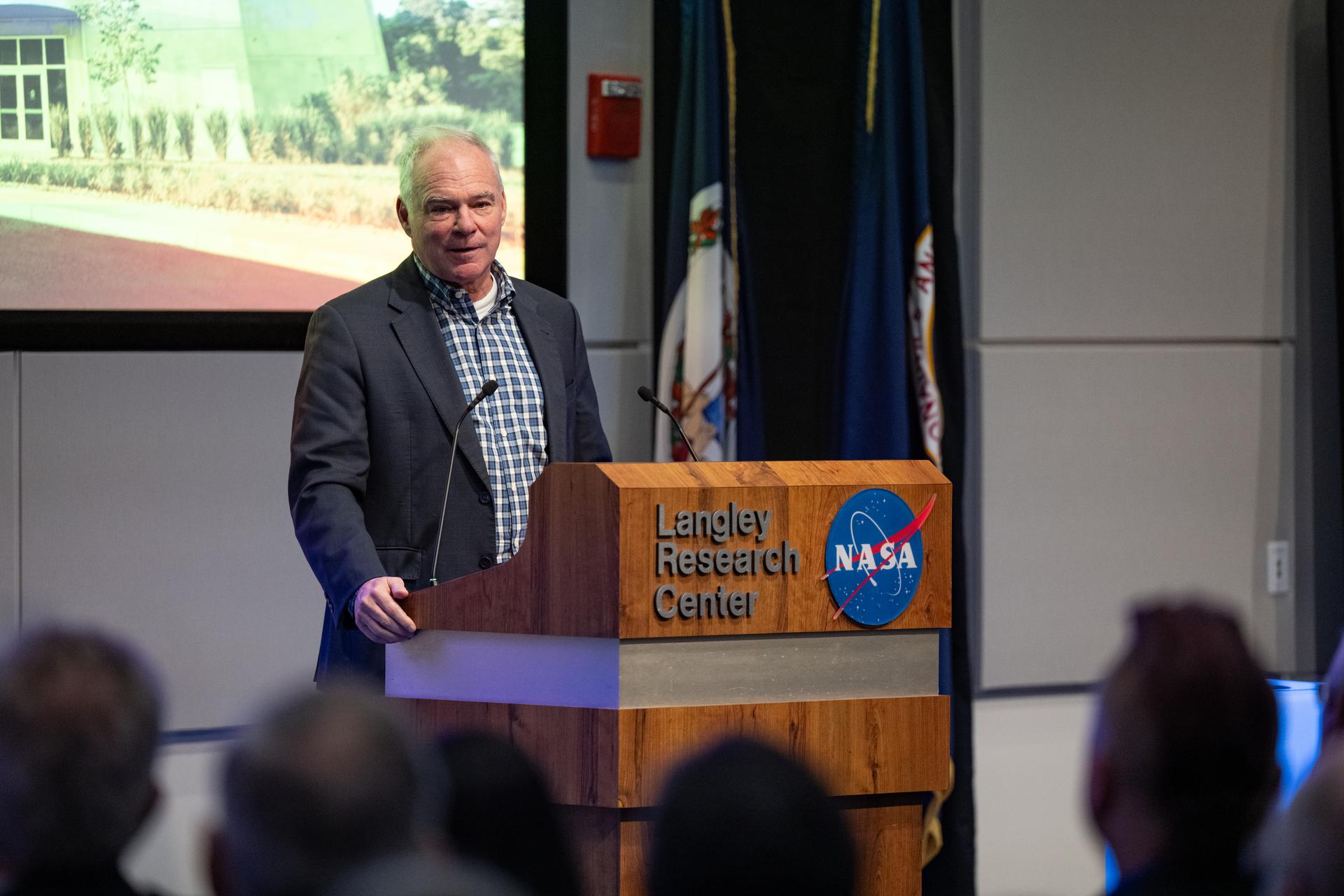
Senator Tim Kaine (D-Va.) delivers remarks during a ribbon cutting ceremony for the Flight Dynamics Research Facility, NASA's newest wind tunnel, Friday, July 31, 2026, at NASA’s Langley Research Center in Hampton, Virginia. The state-of-the-art facility will support research and technology development that will advance the agency’s aeronautics, exploration, and science goals, including establishing a sustained human presence on the lunar surface through the Artemis program and the development of a Moon Base. Photo Credit: (NASA/Keegan Barber)
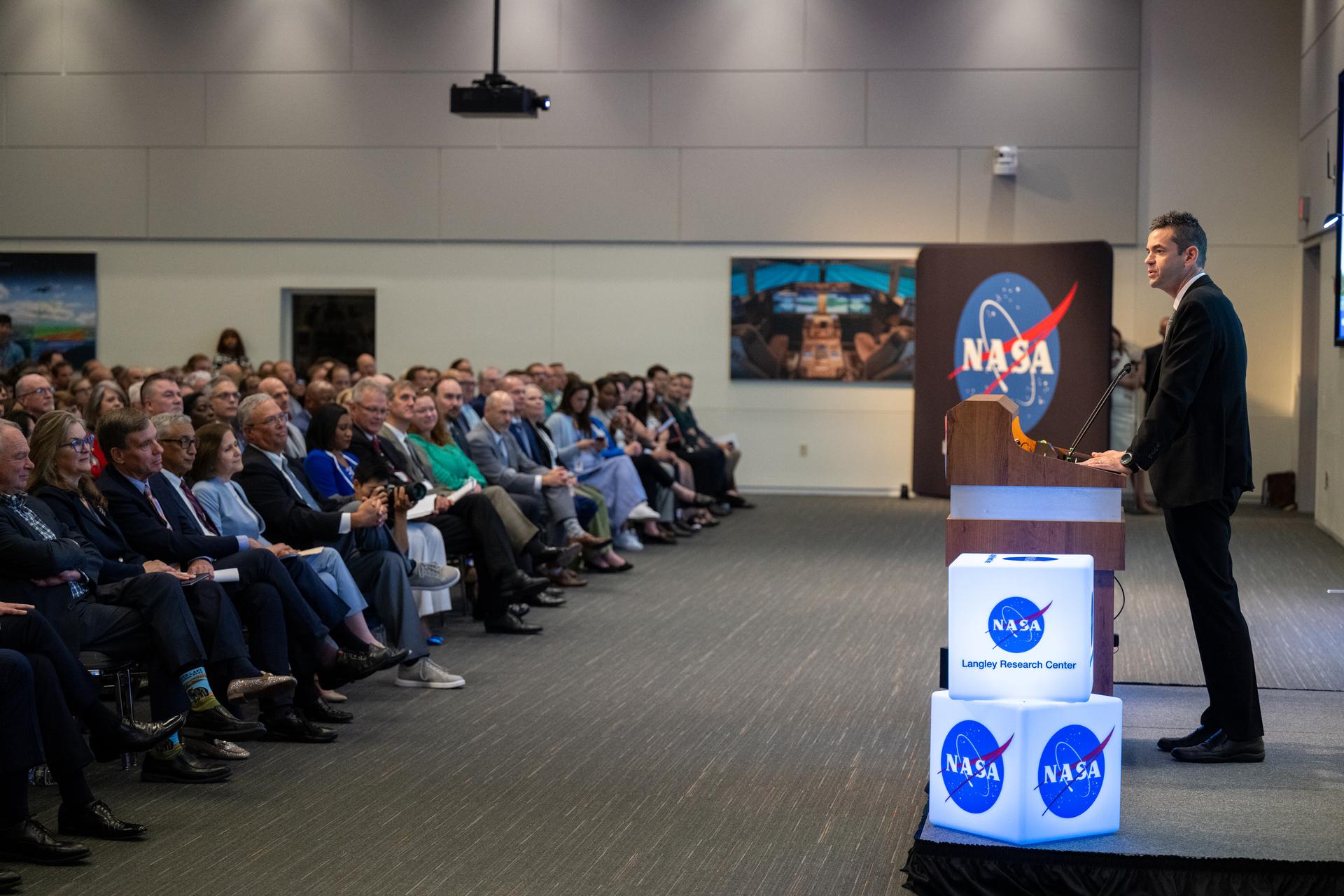
NASA Administrator Jared Isaacman delivers remarks during a ribbon cutting ceremony for the Flight Dynamics Research Facility, NASA's newest wind tunnel, Friday, July 31, 2026, at NASA’s Langley Research Center in Hampton, Virginia. The state-of-the-art facility will support research and technology development that will advance the agency’s aeronautics, exploration, and science goals, including establishing a sustained human presence on the lunar surface through the Artemis program and the development of a Moon Base. Photo Credit: (NASA/Keegan Barber)
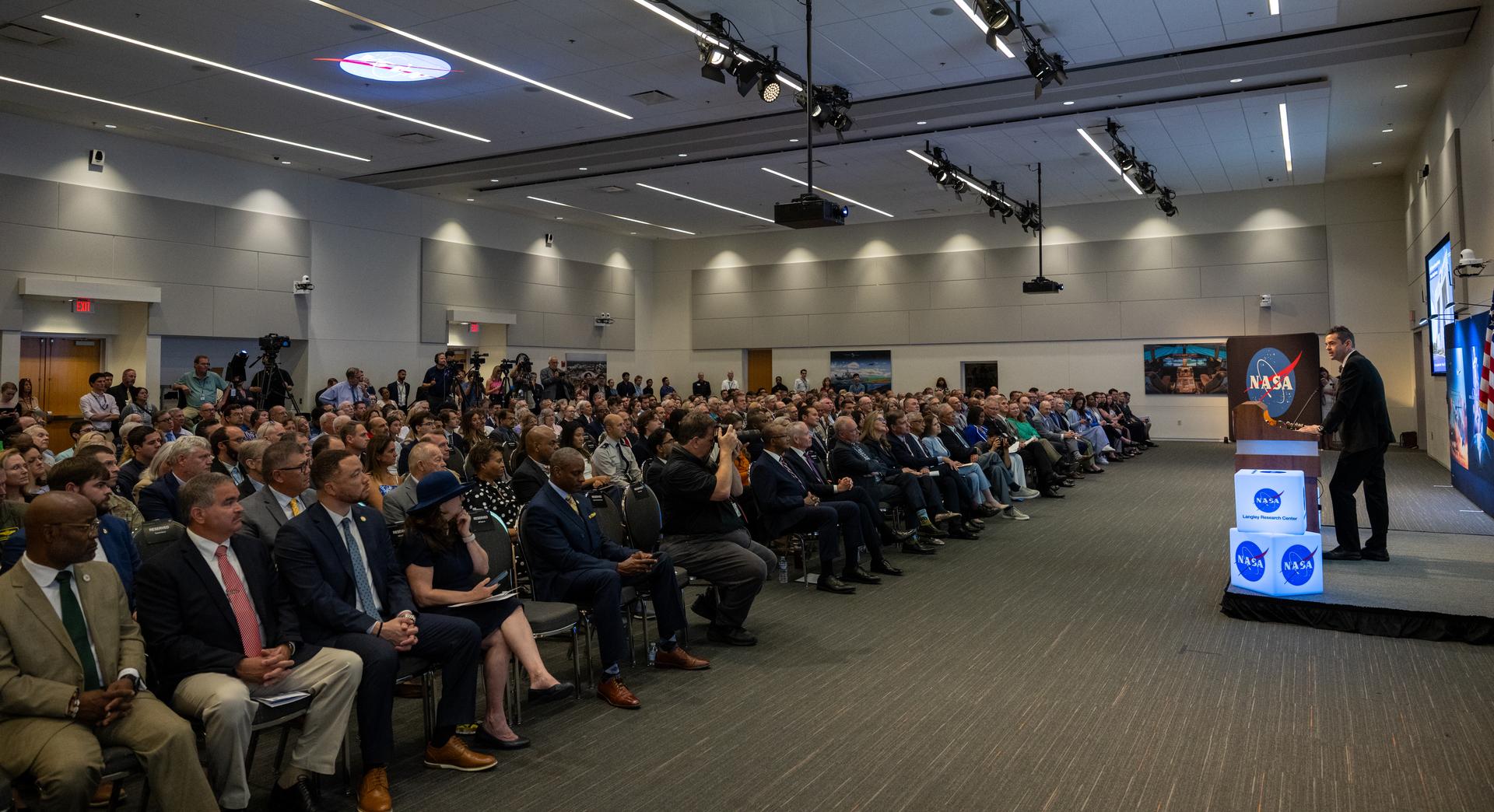
NASA Administrator Jared Isaacman delivers remarks during a ribbon cutting ceremony for the Flight Dynamics Research Facility, NASA's newest wind tunnel, Friday, July 31, 2026, at NASA’s Langley Research Center in Hampton, Virginia. The state-of-the-art facility will support research and technology development that will advance the agency’s aeronautics, exploration, and science goals, including establishing a sustained human presence on the lunar surface through the Artemis program and the development of a Moon Base. Photo Credit: (NASA/Keegan Barber)
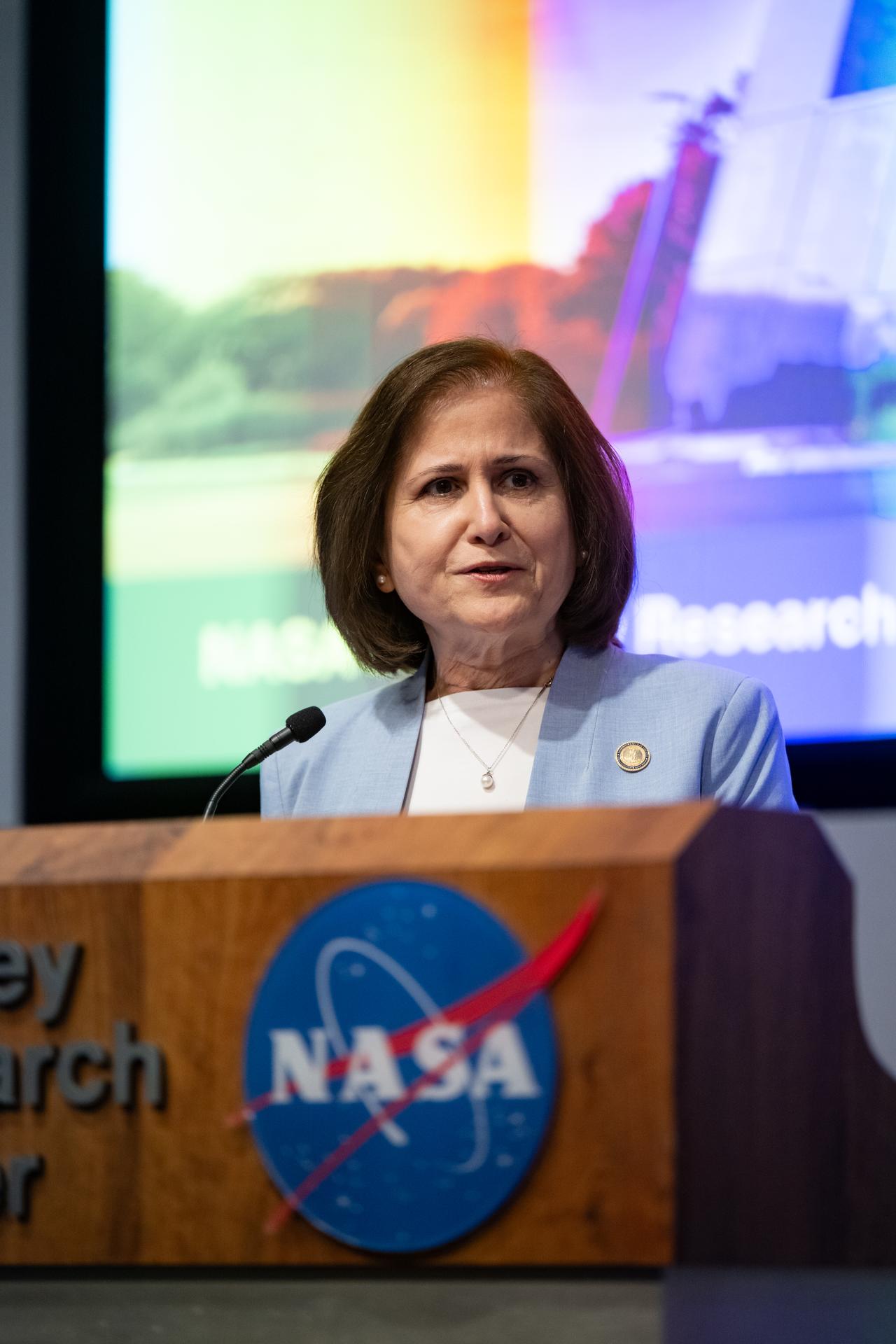
Virginia Lt. Governor Ghazala F. Hashmi delivers remarks during a ribbon cutting ceremony for the Flight Dynamics Research Facility, NASA's newest wind tunnel, Friday, July 31, 2026, at NASA’s Langley Research Center in Hampton, Virginia. The state-of-the-art facility will support research and technology development that will advance the agency’s aeronautics, exploration, and science goals, including establishing a sustained human presence on the lunar surface through the Artemis program and the development of a Moon Base. Photo Credit: (NASA/Keegan Barber)
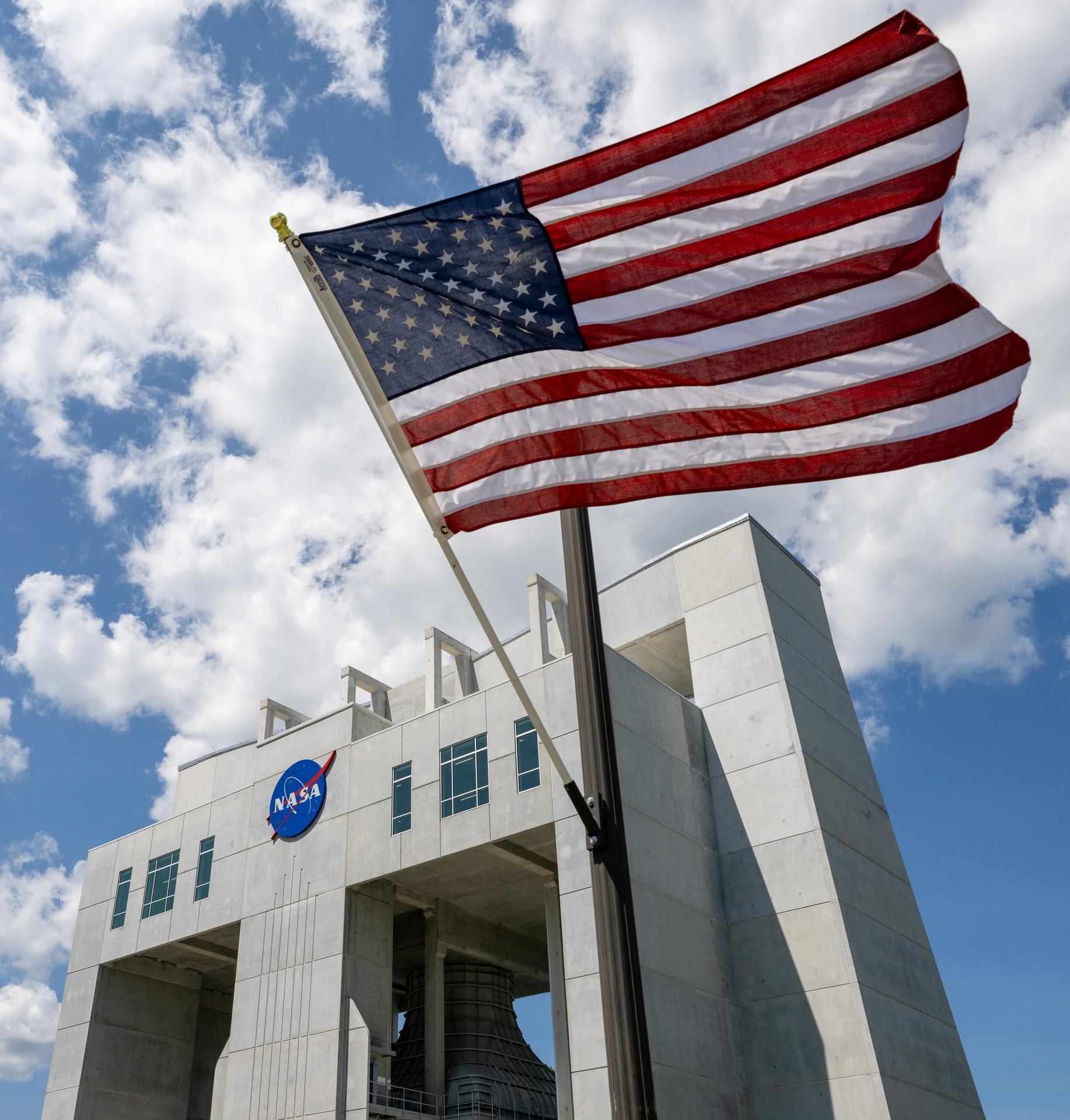
The Flight Dynamics Research Facility, NASA's newest wind tunnel, is seen Thursday, July 30, 2026, at NASA’s Langley Research Center in Hampton, Virginia. The state-of-the-art facility will support research and technology development that will advance the agency’s aeronautics, exploration, and science goals, including establishing a sustained human presence on the lunar surface through the Artemis program and the development of a Moon Base. Photo Credit: (NASA/Keegan Barber)
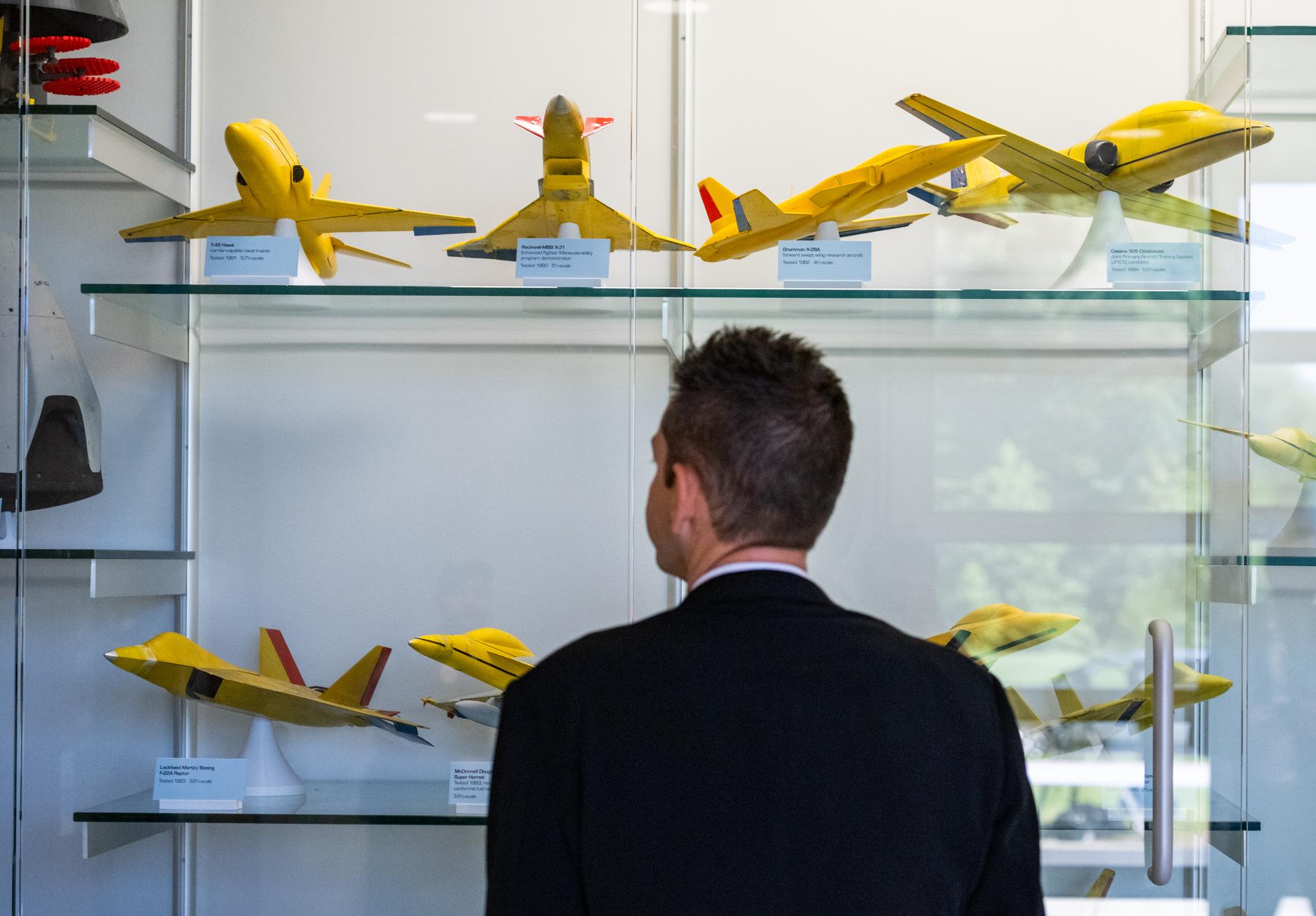
NASA Administrator Jared Isaacman views scale models of aircraft during a tour of the Flight Dynamics Research Facility, NASA's newest wind tunnel, Friday, July 31, 2026, at NASA’s Langley Research Center in Hampton, Virginia. The state-of-the-art facility will support research and technology development that will advance the agency’s aeronautics, exploration, and science goals, including establishing a sustained human presence on the lunar surface through the Artemis program and the development of a Moon Base. Photo Credit: (NASA/Keegan Barber)
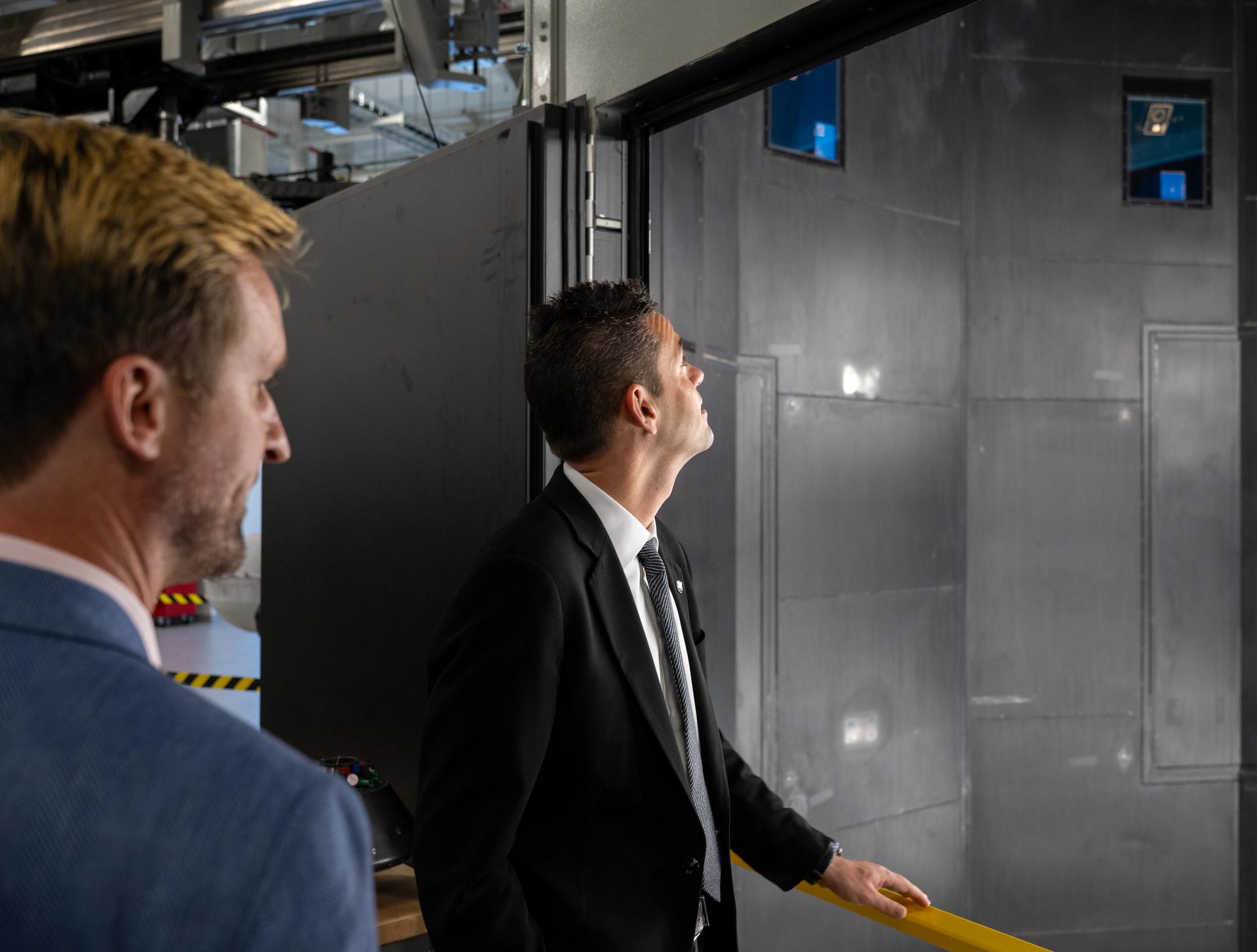
NASA Administrator Jared Isaacman is seen during a tour of the Flight Dynamics Research Facility, NASA's newest wind tunnel, Friday, July 31, 2026, at NASA’s Langley Research Center in Hampton, Virginia. The state-of-the-art facility will support research and technology development that will advance the agency’s aeronautics, exploration, and science goals, including establishing a sustained human presence on the lunar surface through the Artemis program and the development of a Moon Base. Photo Credit: (NASA/Keegan Barber)
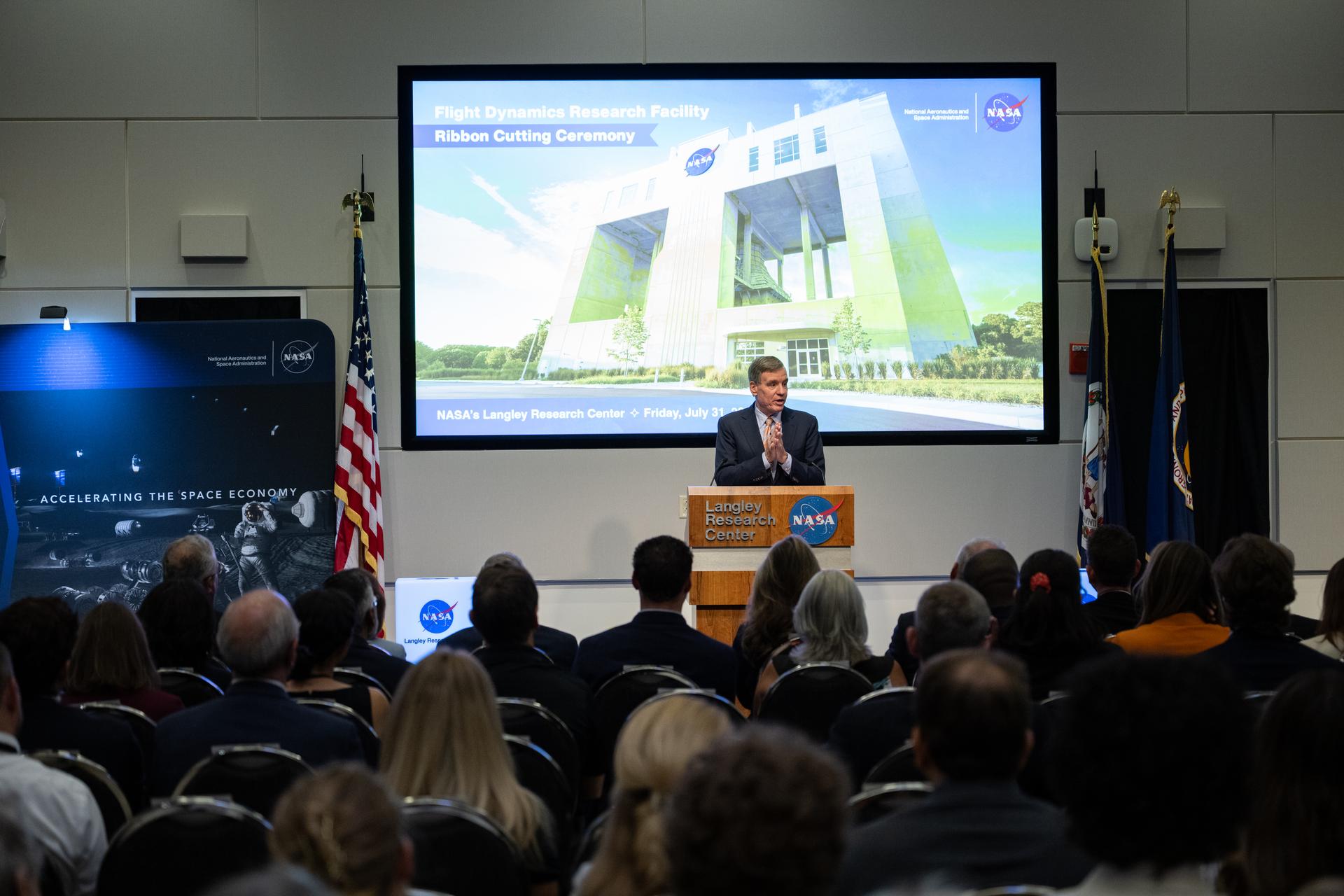
Senator Mark Warner (D-Va.) delivers remarks during a ribbon cutting ceremony for the Flight Dynamics Research Facility, NASA's newest wind tunnel, Friday, July 31, 2026, at NASA’s Langley Research Center in Hampton, Virginia. The state-of-the-art facility will support research and technology development that will advance the agency’s aeronautics, exploration, and science goals, including establishing a sustained human presence on the lunar surface through the Artemis program and the development of a Moon Base. Photo Credit: (NASA/Keegan Barber)
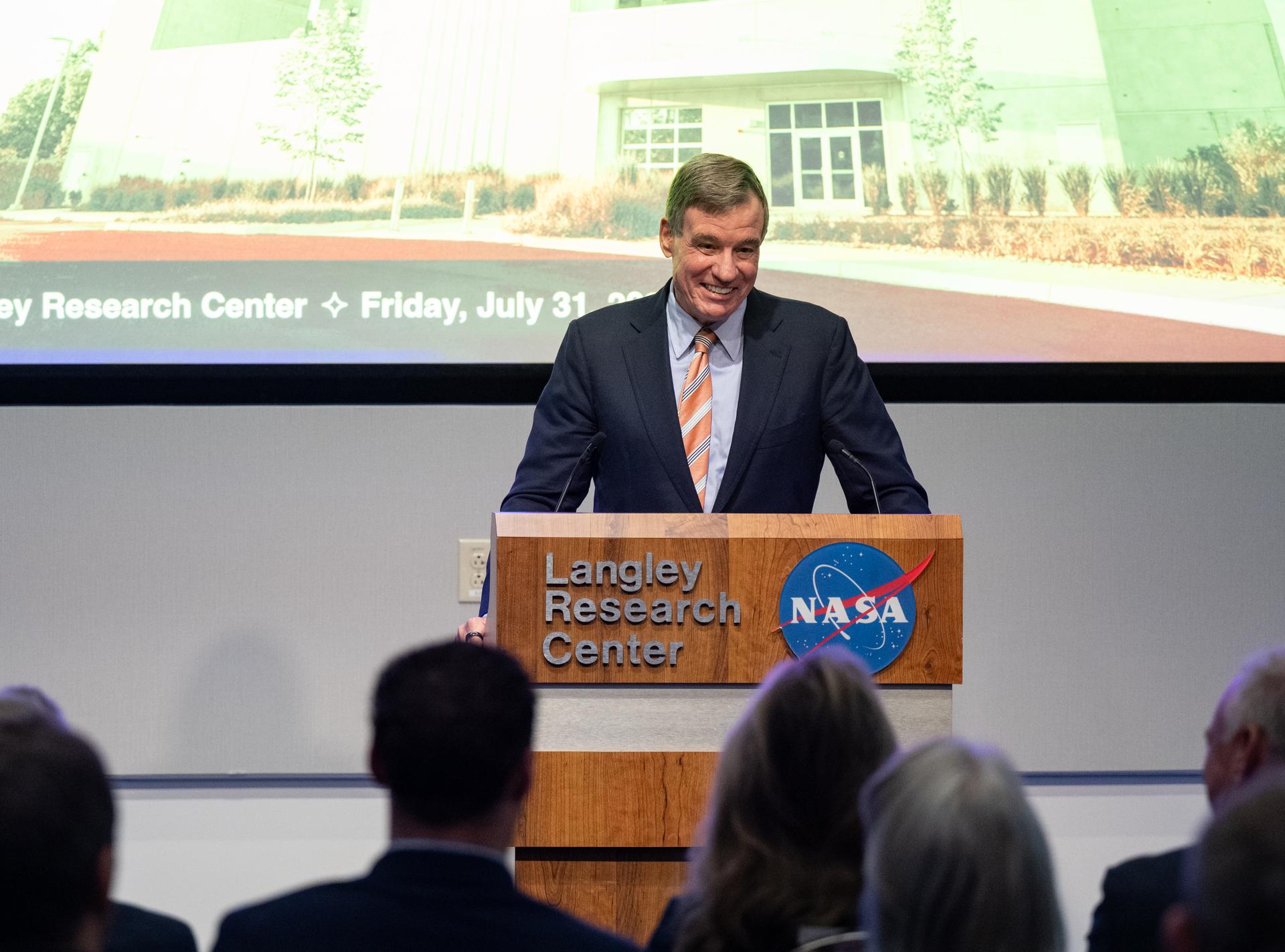
Senator Mark Warner (D-Va.) delivers remarks during a ribbon cutting ceremony for the Flight Dynamics Research Facility, NASA's newest wind tunnel, Friday, July 31, 2026, at NASA’s Langley Research Center in Hampton, Virginia. The state-of-the-art facility will support research and technology development that will advance the agency’s aeronautics, exploration, and science goals, including establishing a sustained human presence on the lunar surface through the Artemis program and the development of a Moon Base. Photo Credit: (NASA/Keegan Barber)
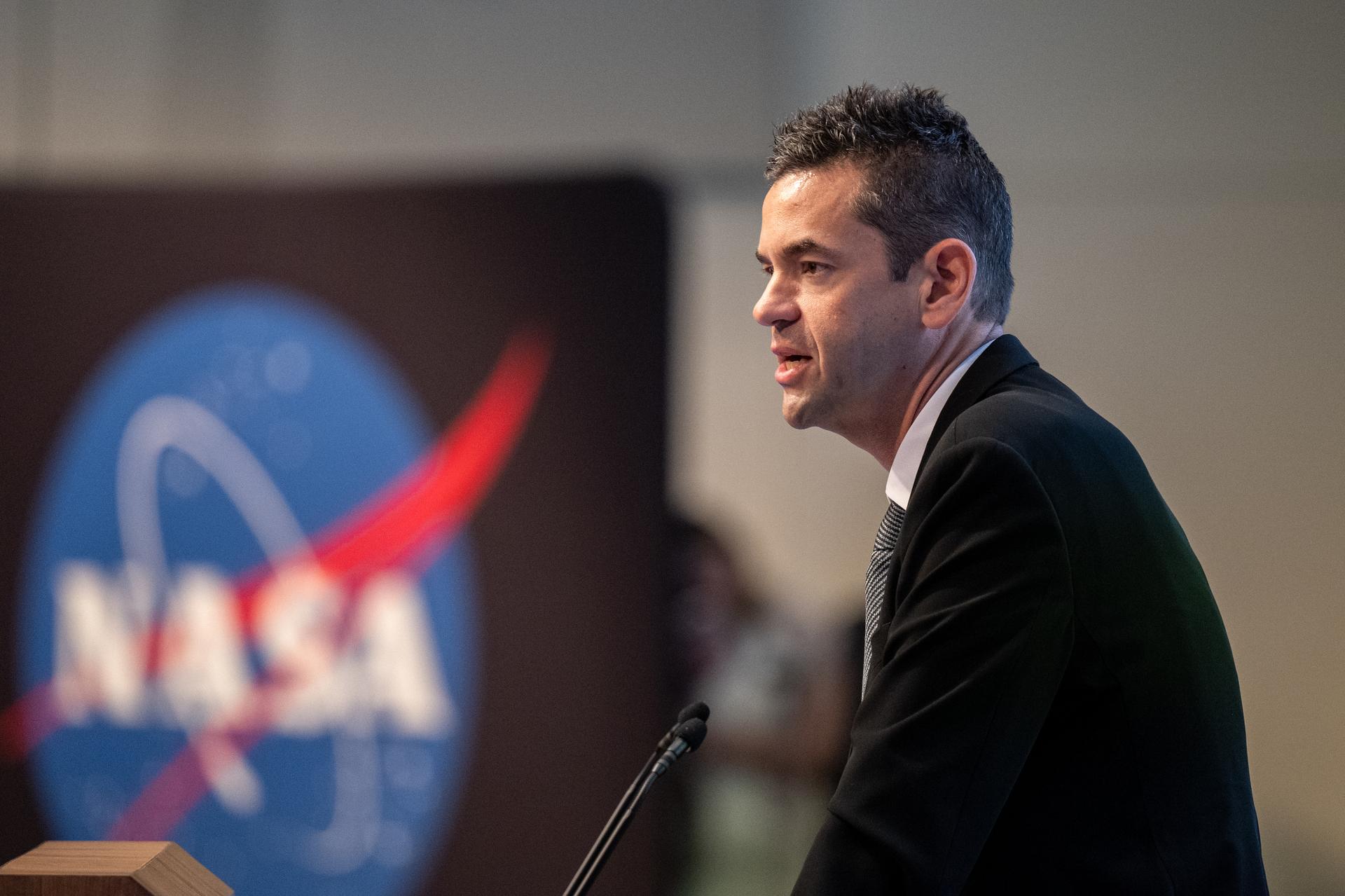
NASA Administrator Jared Isaacman delivers remarks during a ribbon cutting ceremony for the Flight Dynamics Research Facility, NASA's newest wind tunnel, Friday, July 31, 2026, at NASA’s Langley Research Center in Hampton, Virginia. The state-of-the-art facility will support research and technology development that will advance the agency’s aeronautics, exploration, and science goals, including establishing a sustained human presence on the lunar surface through the Artemis program and the development of a Moon Base. Photo Credit: (NASA/Keegan Barber)
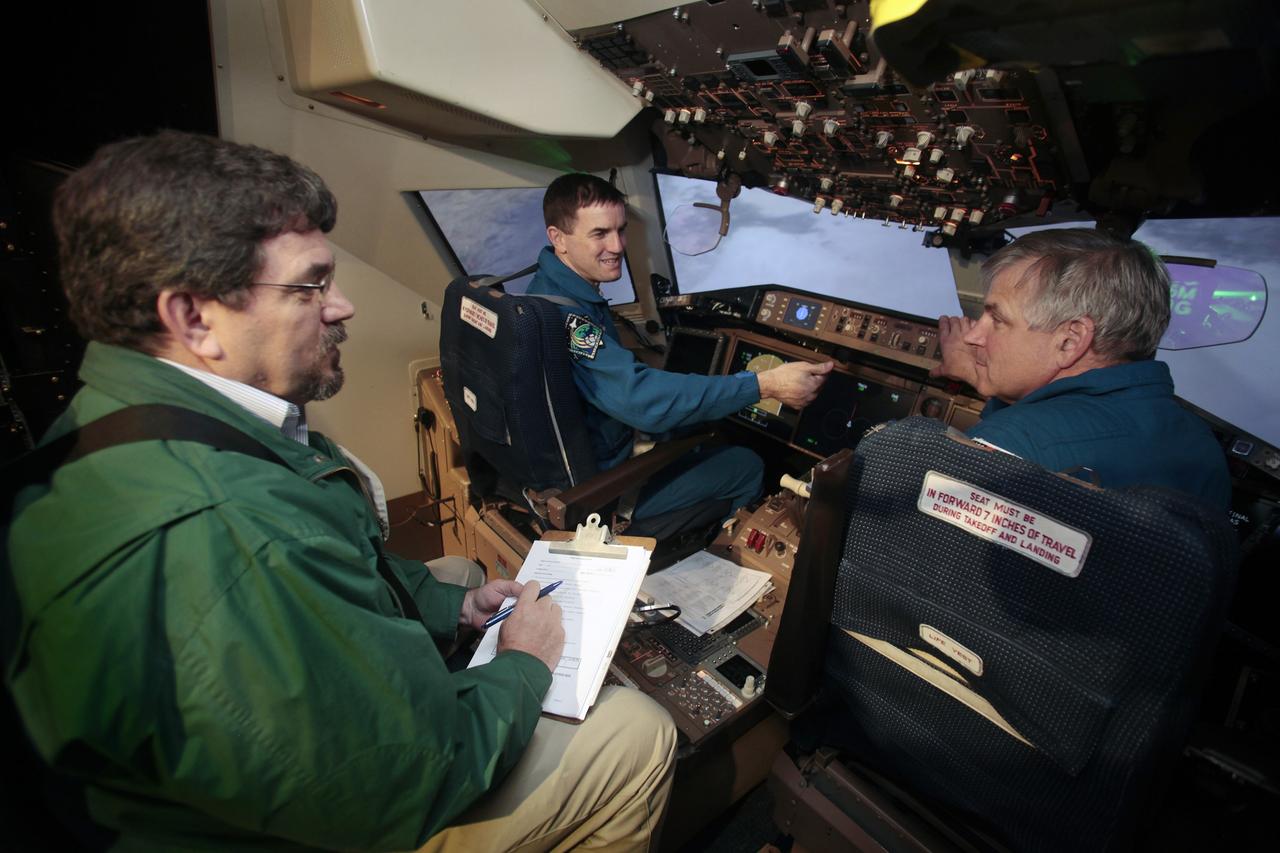
HAMPTON, Va. – Bruce Jackson, an aerospace engineer at NASA’s Langley Flight Research Center, briefs astronauts Rex Walheim, left, and Gregory Johnson as they evaluate Sierra Nevada Corporation, or SNC, Space Systems' Dream Chaser landing simulation, in support of NASA Commercial Crew Program, or CCP, efforts. The simulation makes use of the Synthetic Vision and Enhanced Vision systems in the center's Cockpit Motion Facility. SNC is one of three companies working with CCP during the agency's Commercial Crew Integrated Capability, or CCiCap, initiative, which is intended to lead to the availability of commercial human spaceflight services for government and commercial customers. To learn more about CCP and its industry partners, visit www.nasa.gov/commercialcrew. Image credit: NASA/David C. Bowman
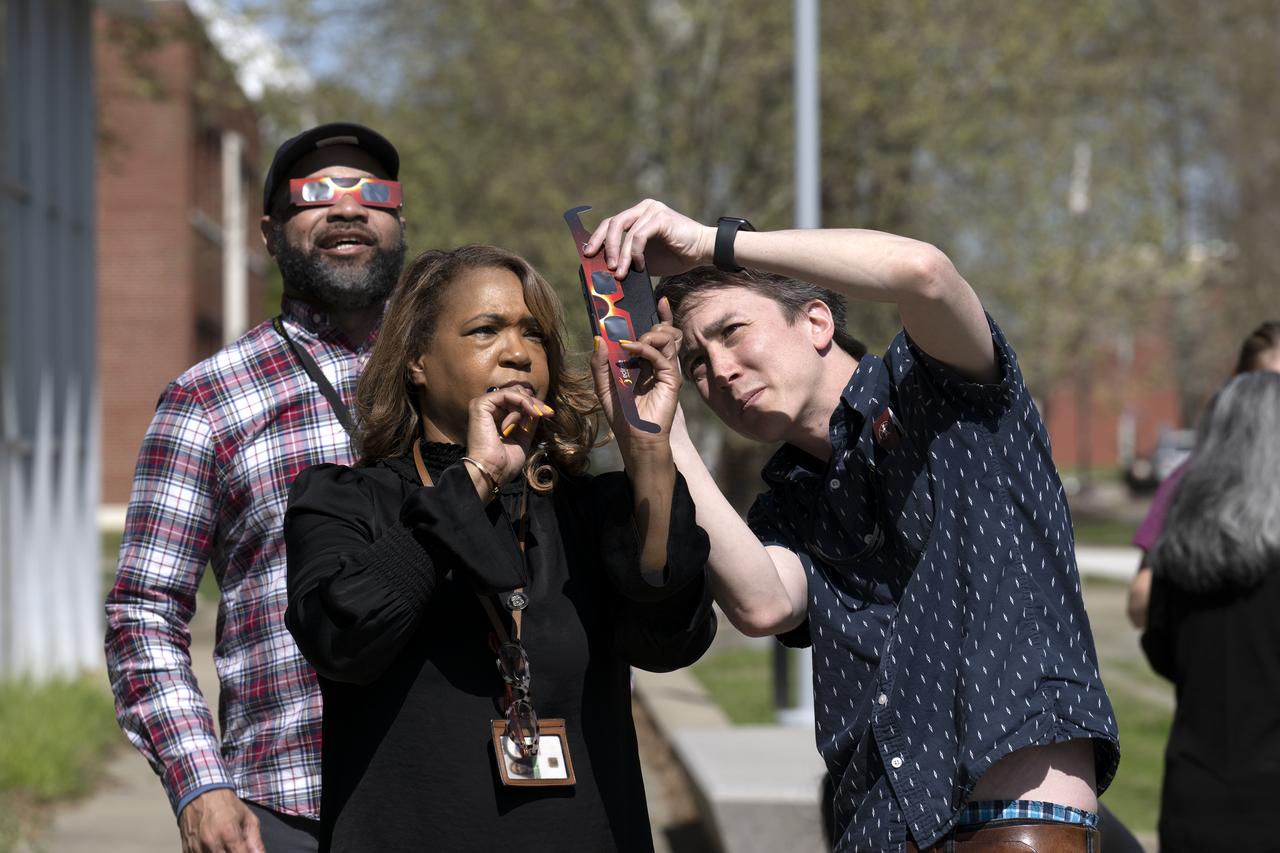
People are seen viewing the partial solar eclipse from NASA Langley Research Center in Hampton, VA, Monday, April 8, 2024. A total solar eclipse swept across a narrow portion of the North American continent from Mexico’s Pacific coast to the Atlantic coast of Newfoundland, Canada. A partial solar eclipse was visible across the entire North American continent along with parts of Central America and Europe. Photo Credit: (NASA/Ryan Hill)
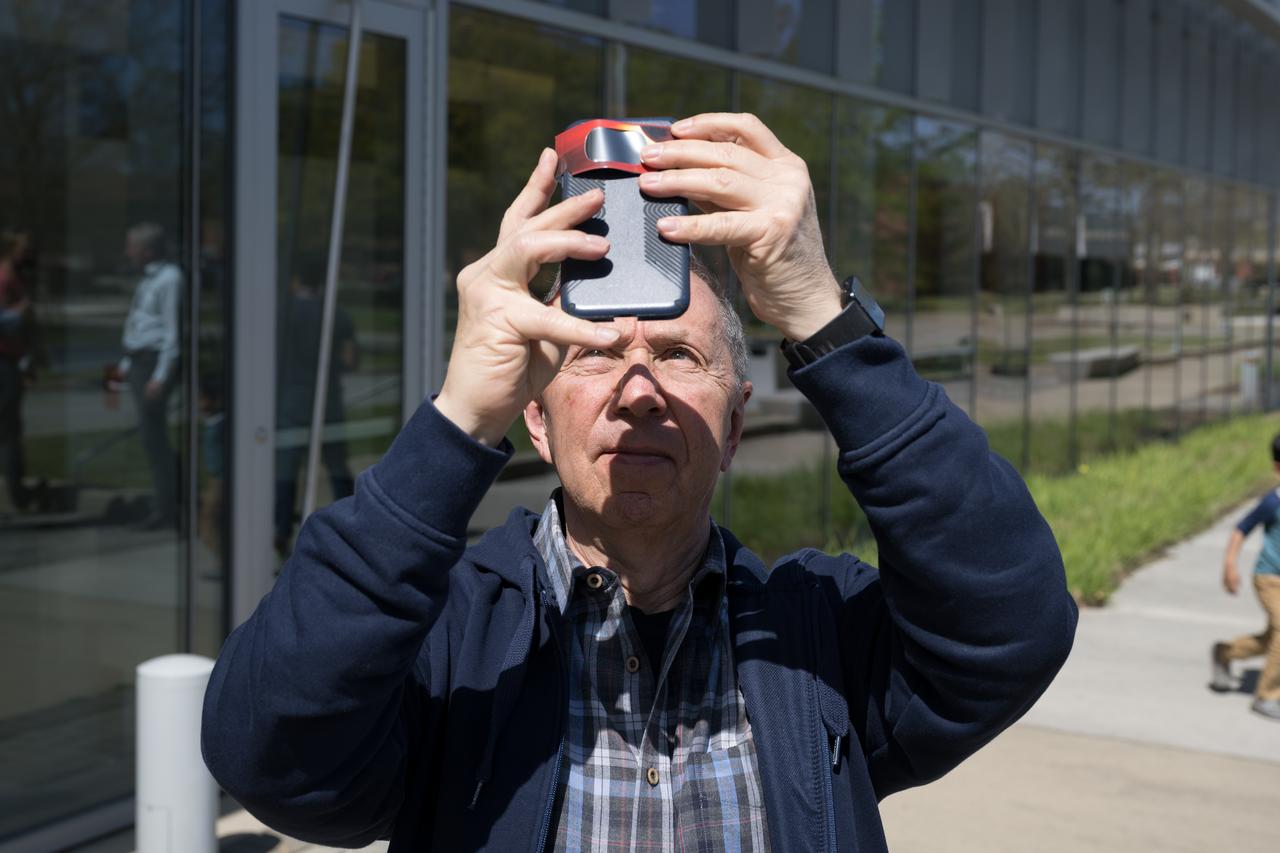
People are seen viewing the partial solar eclipse from NASA Langley Research Center in Hampton, VA, Monday, April 8, 2024. A total solar eclipse swept across a narrow portion of the North American continent from Mexico’s Pacific coast to the Atlantic coast of Newfoundland, Canada. A partial solar eclipse was visible across the entire North American continent along with parts of Central America and Europe. Photo Credit: (NASA/Mark Knopp)
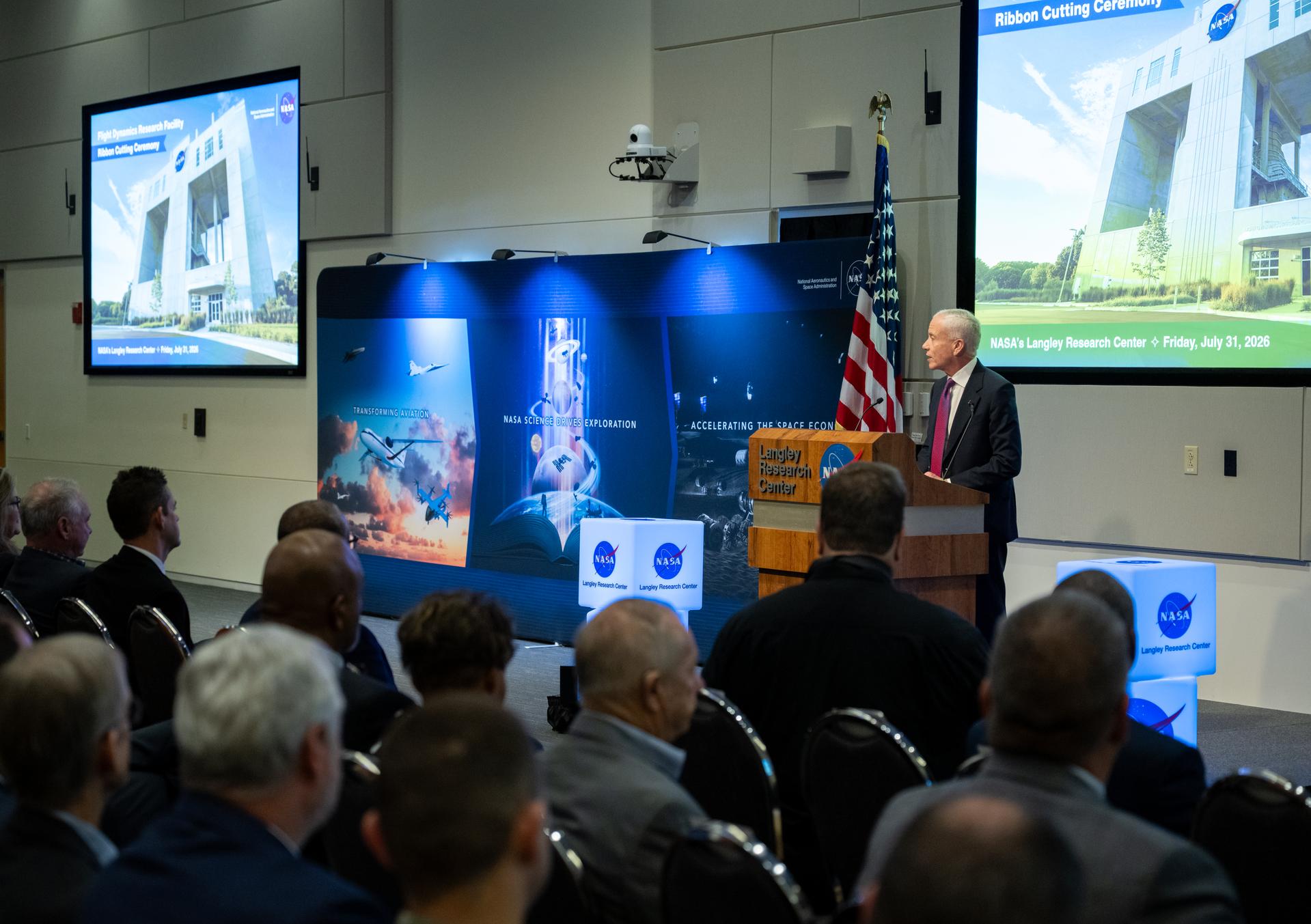
Edward C. Forst, Administrator of the General Services Administration delivers remarks during a ribbon cutting ceremony for the Flight Dynamics Research Facility, NASA's newest wind tunnel, Friday, July 31, 2026, at NASA’s Langley Research Center in Hampton, Virginia. The state-of-the-art facility will support research and technology development that will advance the agency’s aeronautics, exploration, and science goals, including establishing a sustained human presence on the lunar surface through the Artemis program and the development of a Moon Base. Photo Credit: (NASA/Keegan Barber)
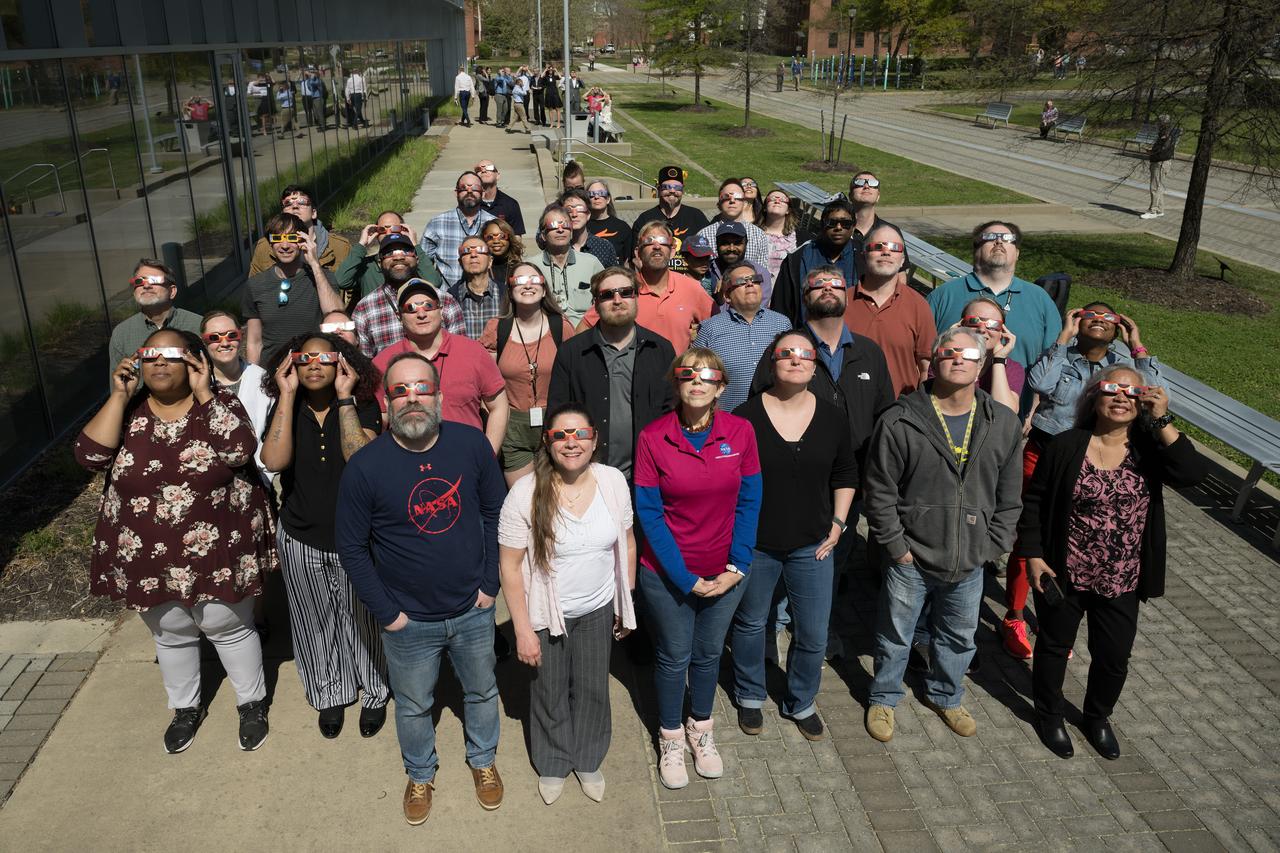
People are seen viewing the partial solar eclipse from NASA Langley Research Center in Hampton, VA, Monday, April 8, 2024. A total solar eclipse swept across a narrow portion of the North American continent from Mexico’s Pacific coast to the Atlantic coast of Newfoundland, Canada. A partial solar eclipse was visible across the entire North American continent along with parts of Central America and Europe. Photo Credit: (NASA/Mark Knopp)
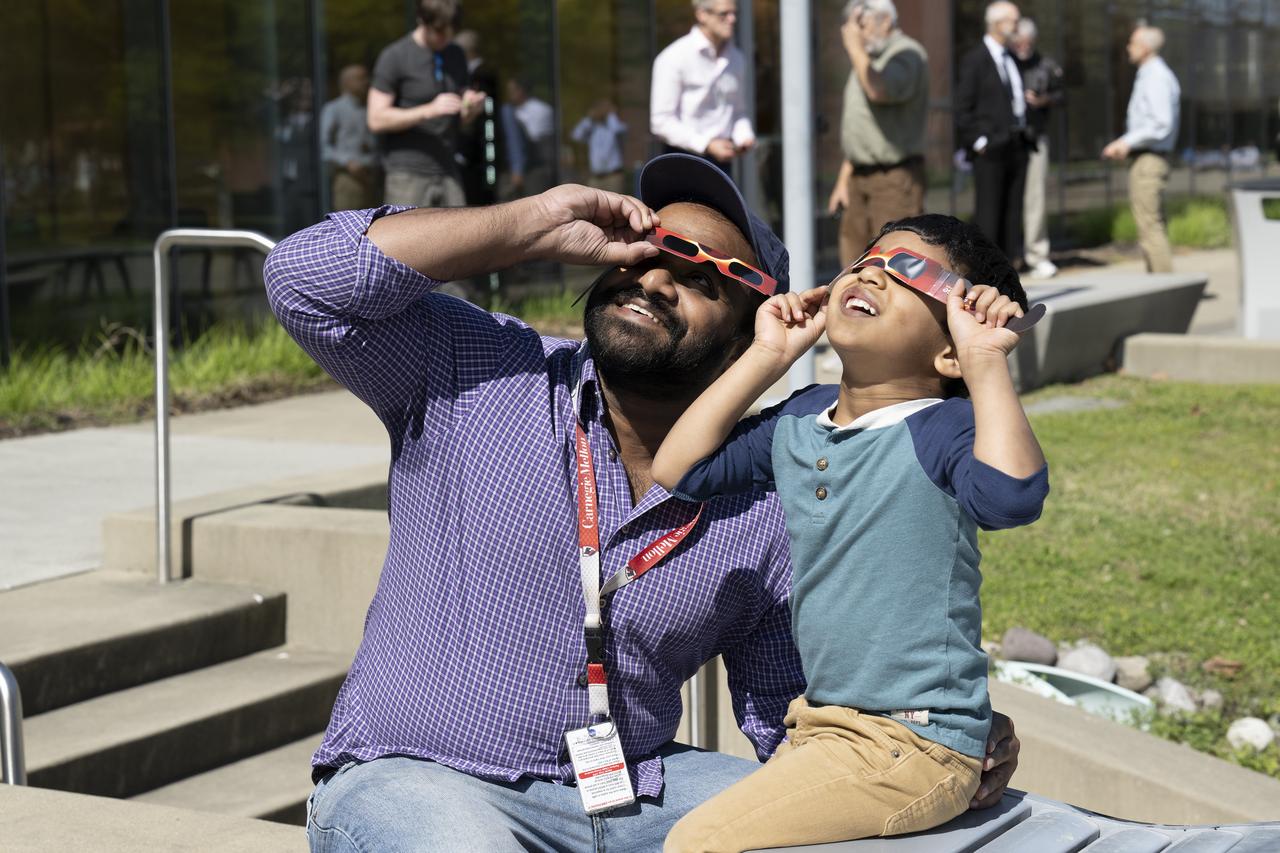
People are seen viewing the partial solar eclipse from NASA Langley Research Center in Hampton, VA, Monday, April 8, 2024. A total solar eclipse swept across a narrow portion of the North American continent from Mexico’s Pacific coast to the Atlantic coast of Newfoundland, Canada. A partial solar eclipse was visible across the entire North American continent along with parts of Central America and Europe. Photo Credit: (NASA/Ryan Hill)

People are seen viewing the partial solar eclipse from NASA Langley Research Center in Hampton, VA, Monday, April 8, 2024. A total solar eclipse swept across a narrow portion of the North American continent from Mexico’s Pacific coast to the Atlantic coast of Newfoundland, Canada. A partial solar eclipse was visible across the entire North American continent along with parts of Central America and Europe. Photo Credit: (NASA/Mark Knopp)

People are seen viewing the partial solar eclipse from NASA Langley Research Center in Hampton, VA, Monday, April 8, 2024. A total solar eclipse swept across a narrow portion of the North American continent from Mexico’s Pacific coast to the Atlantic coast of Newfoundland, Canada. A partial solar eclipse was visible across the entire North American continent along with parts of Central America and Europe. Photo Credit: (NASA/Mark Knopp)

People are seen viewing the partial solar eclipse from NASA Langley Research Center in Hampton, VA, Monday, April 8, 2024. A total solar eclipse swept across a narrow portion of the North American continent from Mexico’s Pacific coast to the Atlantic coast of Newfoundland, Canada. A partial solar eclipse was visible across the entire North American continent along with parts of Central America and Europe. Photo Credit: (NASA/Ryan Hill)
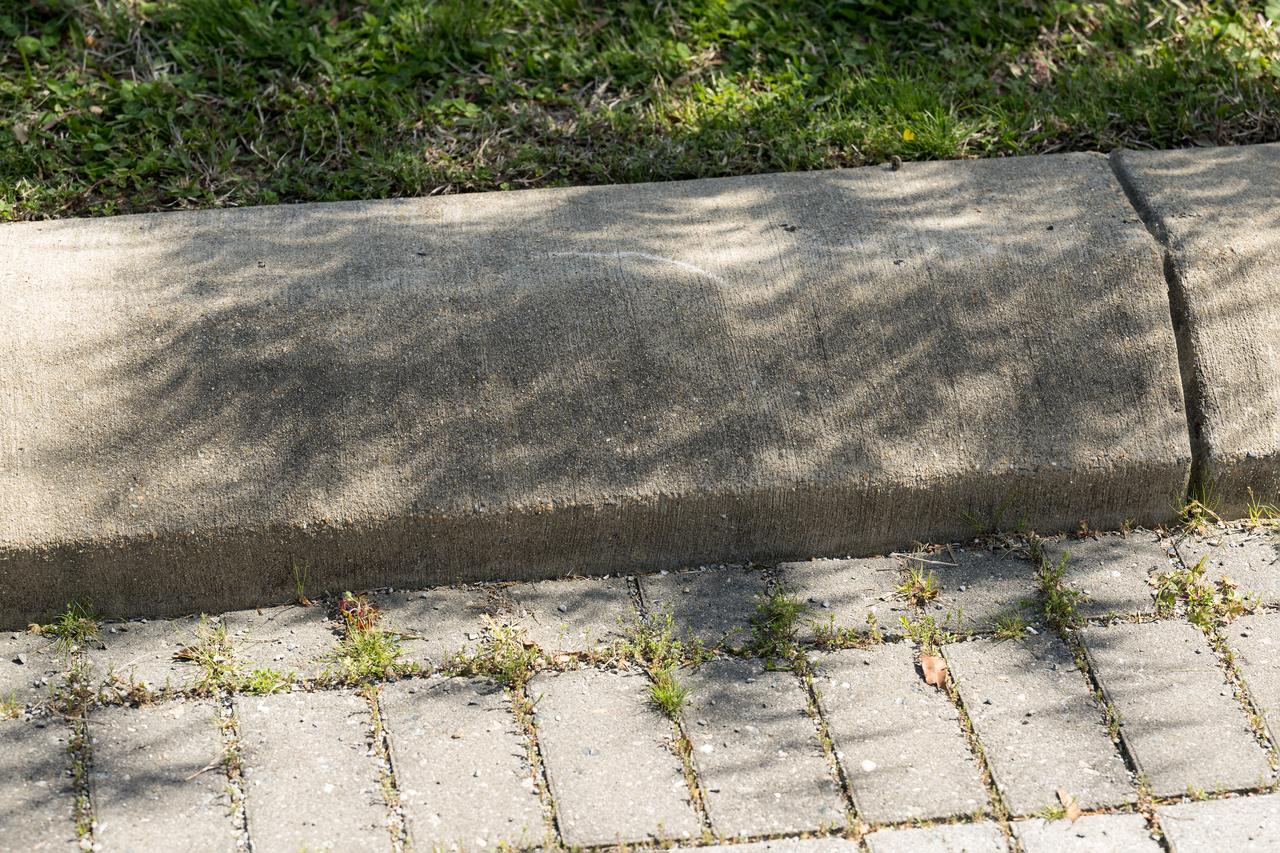
People are seen viewing the partial solar eclipse from NASA Langley Research Center in Hampton, VA, Monday, April 8, 2024. A total solar eclipse swept across a narrow portion of the North American continent from Mexico’s Pacific coast to the Atlantic coast of Newfoundland, Canada. A partial solar eclipse was visible across the entire North American continent along with parts of Central America and Europe. Photo Credit: (NASA/Mark Knopp)
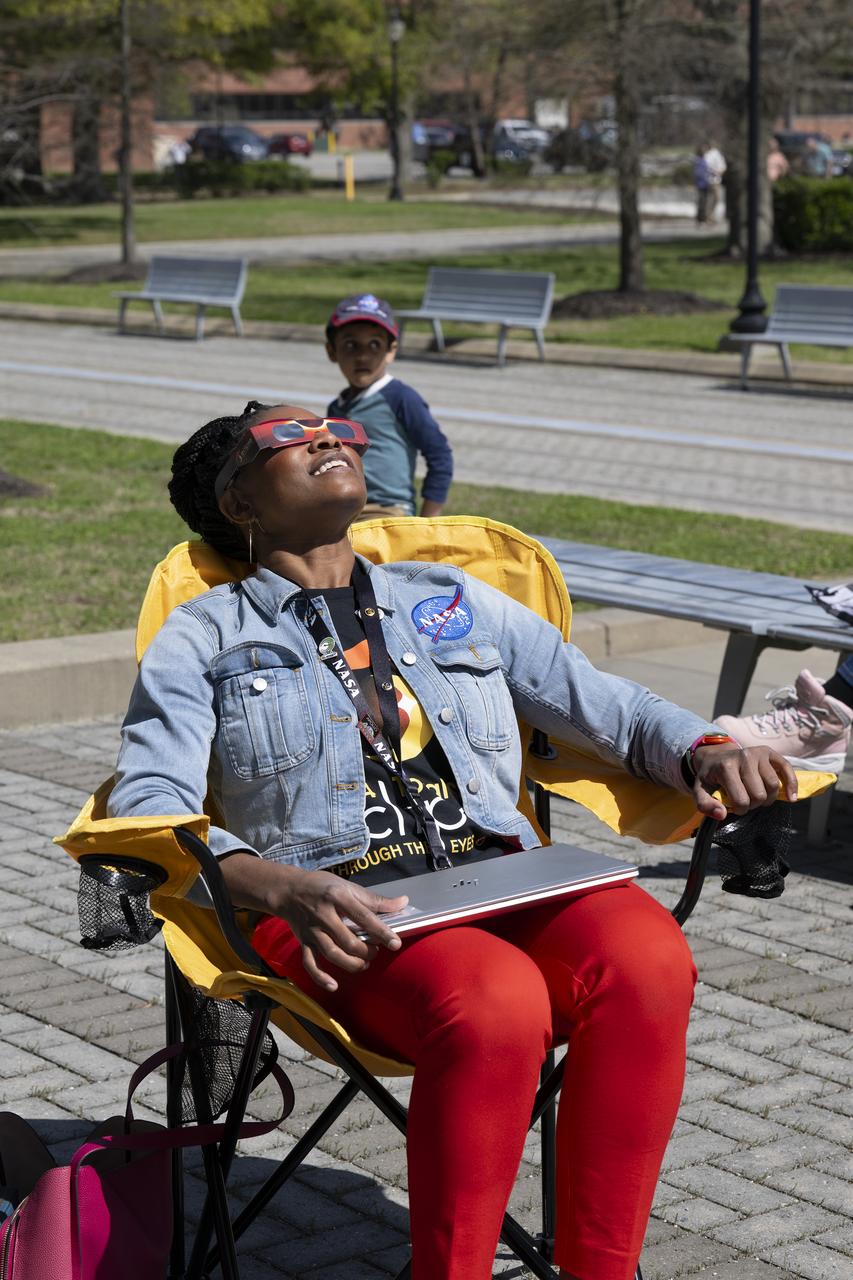
People are seen viewing the partial solar eclipse from NASA Langley Research Center in Hampton, VA, Monday, April 8, 2024. A total solar eclipse swept across a narrow portion of the North American continent from Mexico’s Pacific coast to the Atlantic coast of Newfoundland, Canada. A partial solar eclipse was visible across the entire North American continent along with parts of Central America and Europe. Photo Credit: (NASA/Ryan Hill)
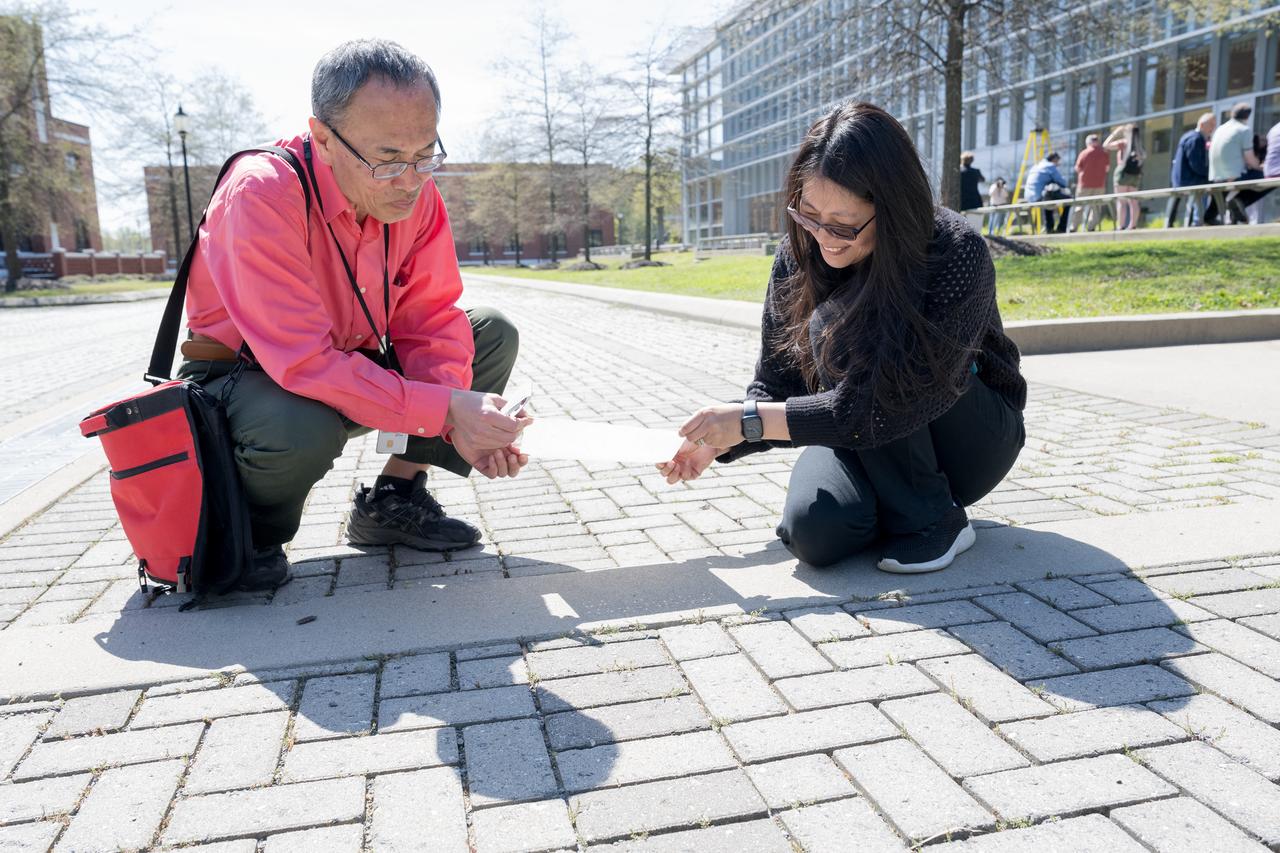
People are seen viewing the partial solar eclipse from NASA Langley Research Center in Hampton, VA, Monday, April 8, 2024. A total solar eclipse swept across a narrow portion of the North American continent from Mexico’s Pacific coast to the Atlantic coast of Newfoundland, Canada. A partial solar eclipse was visible across the entire North American continent along with parts of Central America and Europe. Photo Credit: (NASA/Mark Knopp)
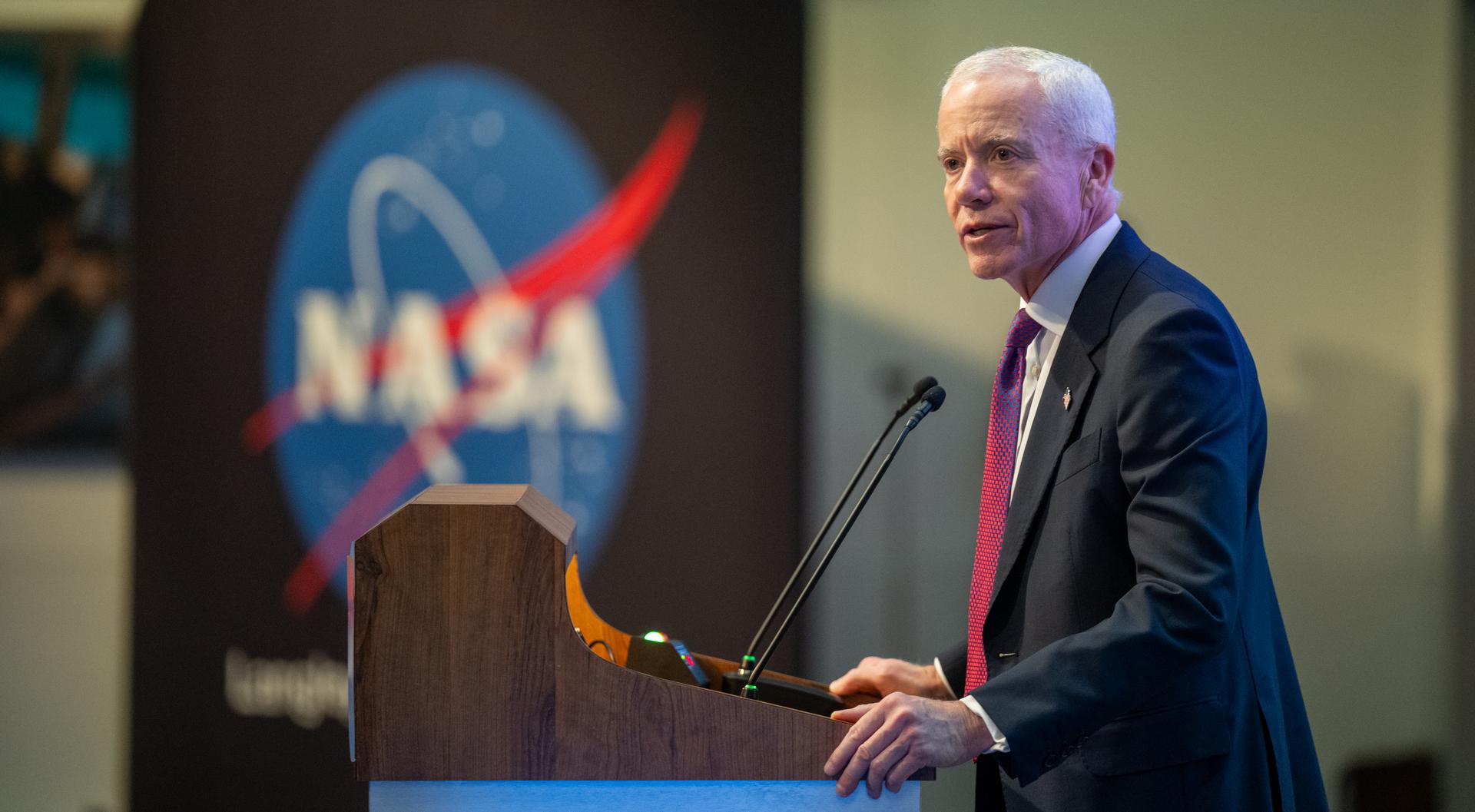
Edward C. Forst, Administrator of the General Services Administration delivers remarks during a ribbon cutting ceremony for the Flight Dynamics Research Facility, NASA's newest wind tunnel, Friday, July 31, 2026, at NASA’s Langley Research Center in Hampton, Virginia. The state-of-the-art facility will support research and technology development that will advance the agency’s aeronautics, exploration, and science goals, including establishing a sustained human presence on the lunar surface through the Artemis program and the development of a Moon Base. Photo Credit: (NASA/Keegan Barber)
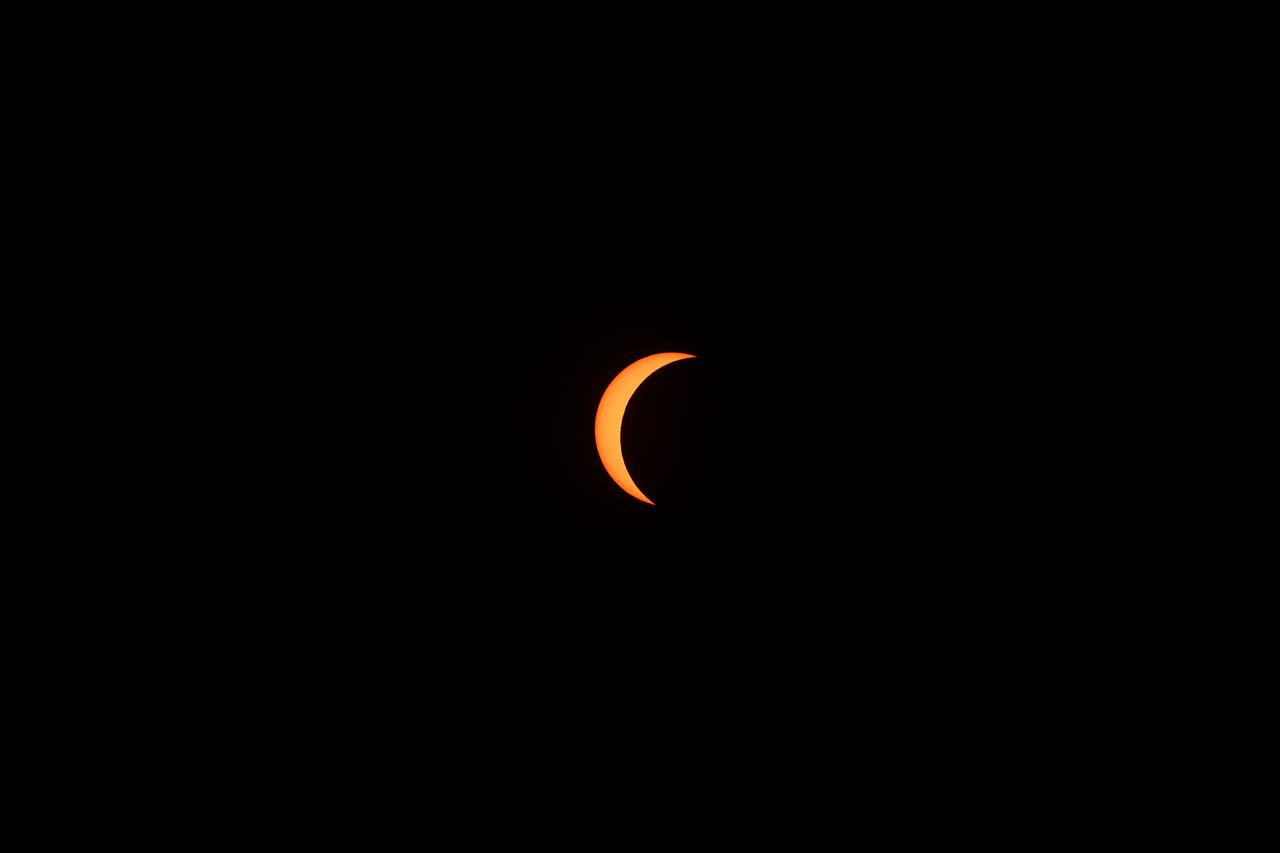
The moon is seen passing in front of the sun during a partial solar eclipse from NASA Langley Research Center in Hampton, VA, Monday, April 8, 2024. A total solar eclipse swept across a narrow portion of the North American continent from Mexico’s Pacific coast to the Atlantic coast of Newfoundland, Canada. A partial solar eclipse was visible across the entire North American continent along with parts of Central America and Europe. Photo Credit: (NASA/Ryan Hill)

People are seen viewing the partial solar eclipse from NASA Langley Research Center in Hampton, VA, Monday, April 8, 2024. A total solar eclipse swept across a narrow portion of the North American continent from Mexico’s Pacific coast to the Atlantic coast of Newfoundland, Canada. A partial solar eclipse was visible across the entire North American continent along with parts of Central America and Europe. Photo Credit: (NASA/Mark Knopp)
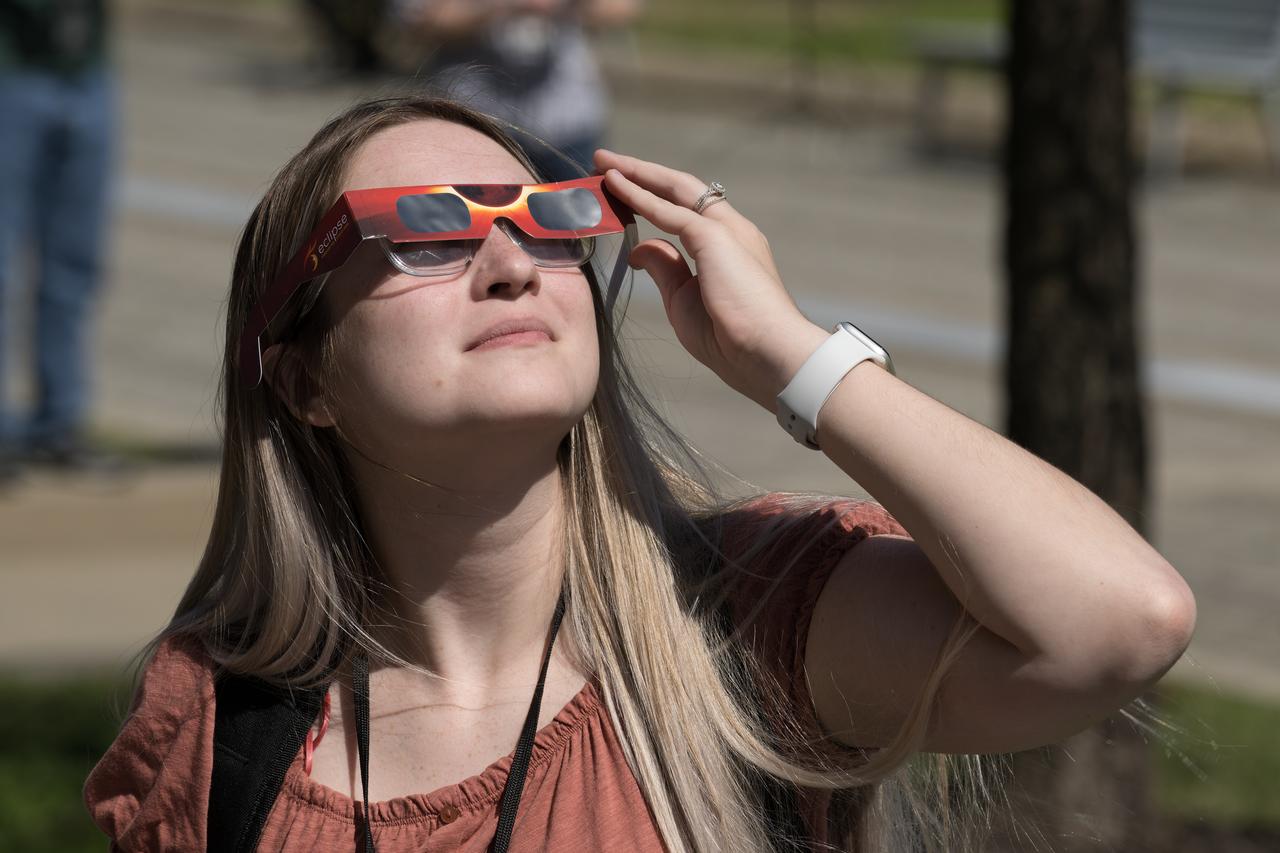
People are seen viewing the partial solar eclipse from NASA Langley Research Center in Hampton, VA, Monday, April 8, 2024. A total solar eclipse swept across a narrow portion of the North American continent from Mexico’s Pacific coast to the Atlantic coast of Newfoundland, Canada. A partial solar eclipse was visible across the entire North American continent along with parts of Central America and Europe. Photo Credit: (NASA/Mark Knopp)
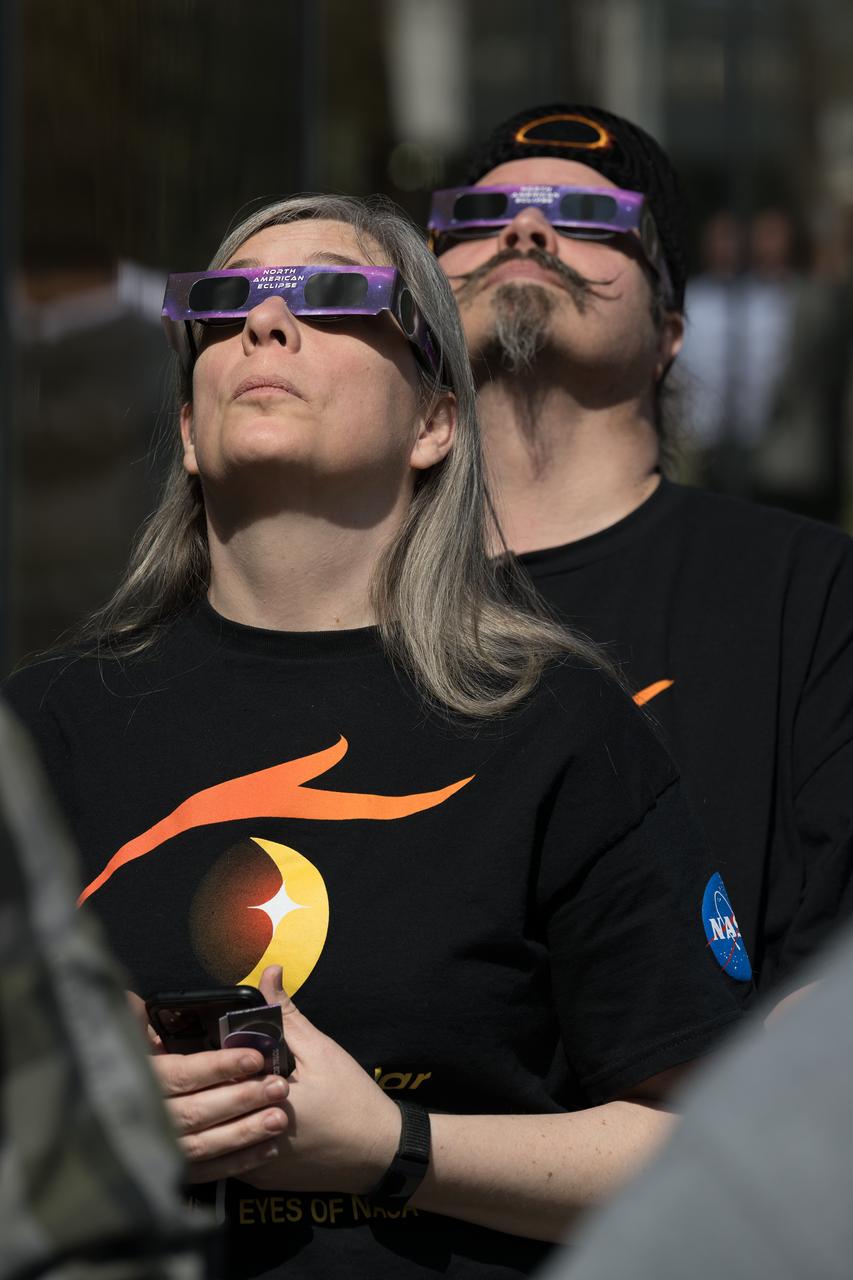
People are seen viewing the partial solar eclipse from NASA Langley Research Center in Hampton, VA, Monday, April 8, 2024. A total solar eclipse swept across a narrow portion of the North American continent from Mexico’s Pacific coast to the Atlantic coast of Newfoundland, Canada. A partial solar eclipse was visible across the entire North American continent along with parts of Central America and Europe. Photo Credit: (NASA/Mark Knopp)
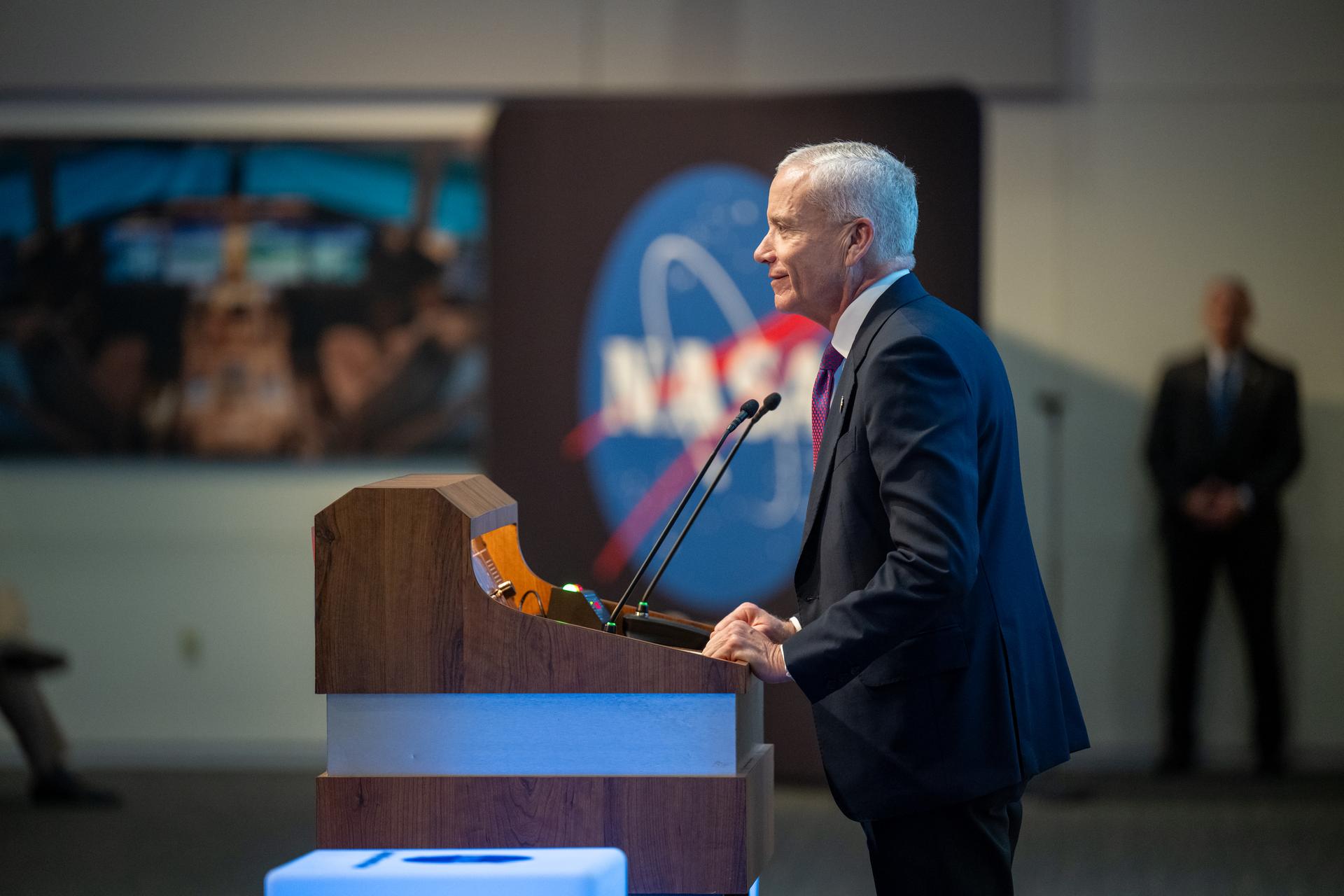
Edward C. Forst, Administrator of the General Services Administration delivers remarks during a ribbon cutting ceremony for the Flight Dynamics Research Facility, NASA's newest wind tunnel, Friday, July 31, 2026, at NASA’s Langley Research Center in Hampton, Virginia. The state-of-the-art facility will support research and technology development that will advance the agency’s aeronautics, exploration, and science goals, including establishing a sustained human presence on the lunar surface through the Artemis program and the development of a Moon Base. Photo Credit: (NASA/Keegan Barber)

People are seen viewing the partial solar eclipse from NASA Langley Research Center in Hampton, VA, Monday, April 8, 2024. A total solar eclipse swept across a narrow portion of the North American continent from Mexico’s Pacific coast to the Atlantic coast of Newfoundland, Canada. A partial solar eclipse was visible across the entire North American continent along with parts of Central America and Europe. Photo Credit: (NASA/Mark Knopp)
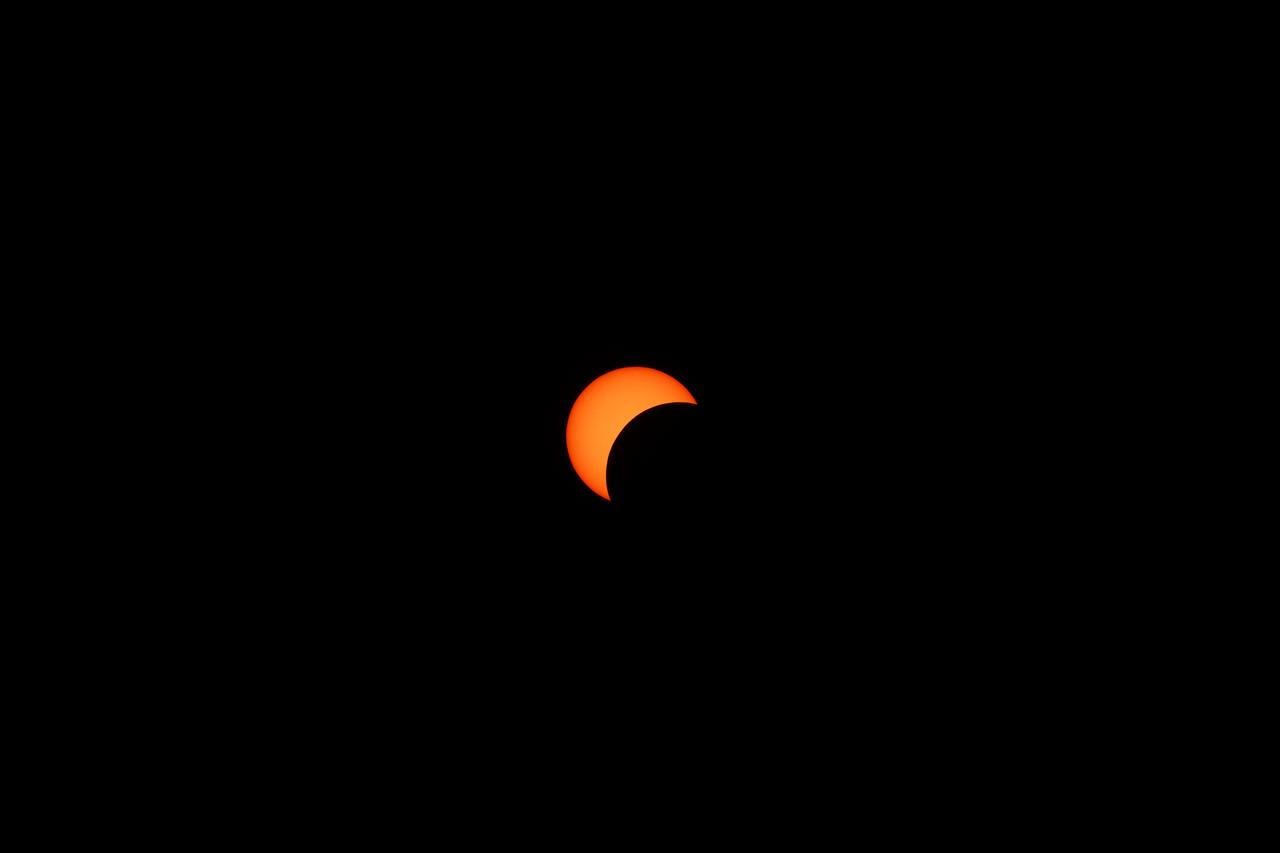
The moon is seen passing in front of the sun during a partial solar eclipse from NASA Langley Research Center in Hampton, VA, Monday, April 8, 2024. A total solar eclipse swept across a narrow portion of the North American continent from Mexico’s Pacific coast to the Atlantic coast of Newfoundland, Canada. A partial solar eclipse was visible across the entire North American continent along with parts of Central America and Europe. Photo Credit: (NASA/Ryan Hill)
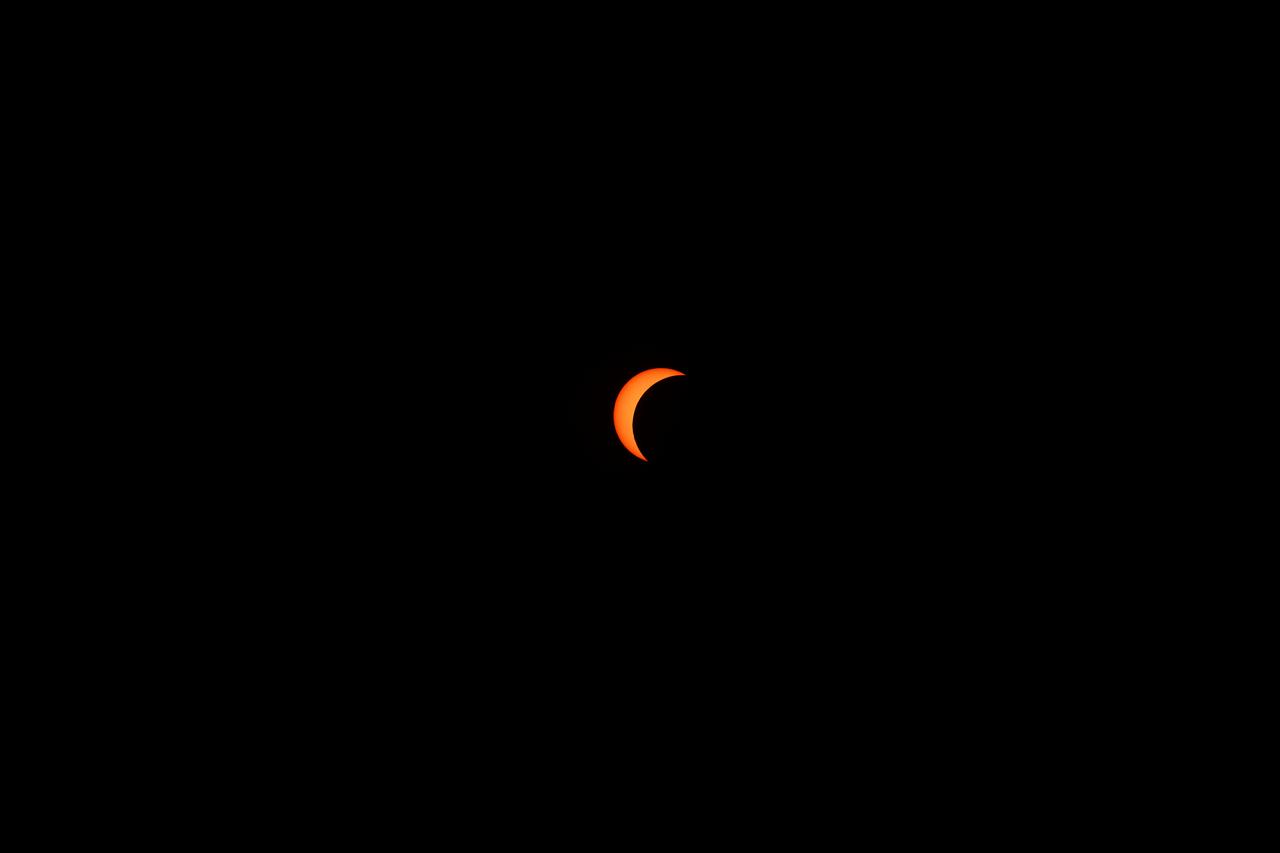
The moon is seen passing in front of the sun during a partial solar eclipse from NASA Langley Research Center in Hampton, VA, Monday, April 8, 2024. A total solar eclipse swept across a narrow portion of the North American continent from Mexico’s Pacific coast to the Atlantic coast of Newfoundland, Canada. A partial solar eclipse was visible across the entire North American continent along with parts of Central America and Europe. Photo Credit: (NASA/Ryan Hill)

People are seen viewing the partial solar eclipse from NASA Langley Research Center in Hampton, VA, Monday, April 8, 2024. A total solar eclipse swept across a narrow portion of the North American continent from Mexico’s Pacific coast to the Atlantic coast of Newfoundland, Canada. A partial solar eclipse was visible across the entire North American continent along with parts of Central America and Europe. Photo Credit: (NASA/Mark Knopp)
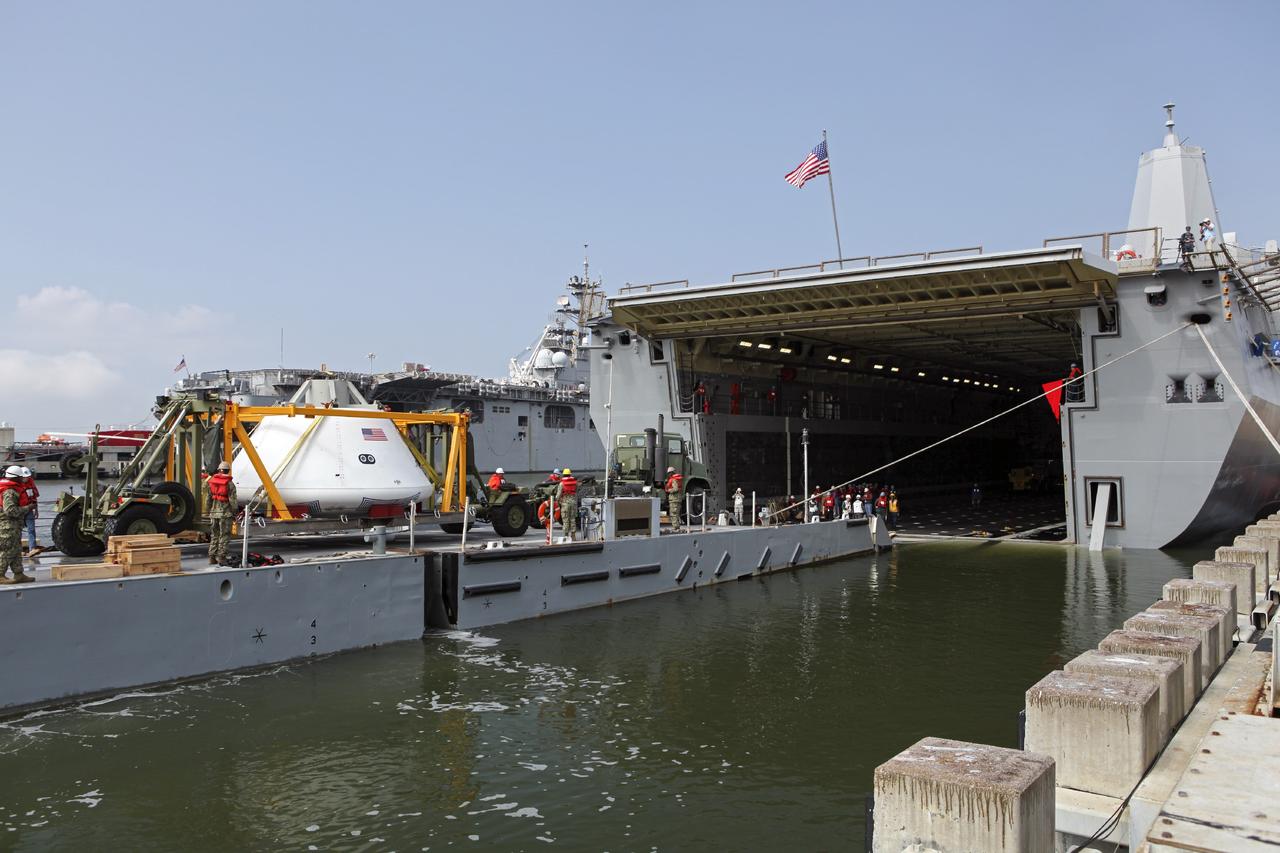
HAMPTON, Va. – At the Naval Station Norfolk near NASA’s Langley Research Center in Virginia, the Orion boilerplate test article and support equipment for a stationary recovery test are being transferred on a floating dock system to a U.S. Navy ship. NASA and the U.S. Navy are conducting tests to prepare for recovery of the Orion crew module and forward bay cover on its return from a deep space mission. The stationary recovery test will allow the teams to demonstrate and evaluate the recovery processes, procedures, hardware and personnel in a controlled environment before conducting a second recovery test next year in open waters. Orion is the exploration spacecraft designed to carry astronauts to destinations not yet explored by humans, including an asteroid and Mars. It will have emergency abort capability, sustain the crew during space travel and provide safe re-entry from deep space return velocities. The first unpiloted test flight of the Orion is scheduled to launch in 2014 atop a Delta IV rocket and in 2017 on NASA’s Space Launch System rocket. For more information, visit http://www.nasa.gov/orion. Photo credit: NASA/Dimitri Gerondidakis
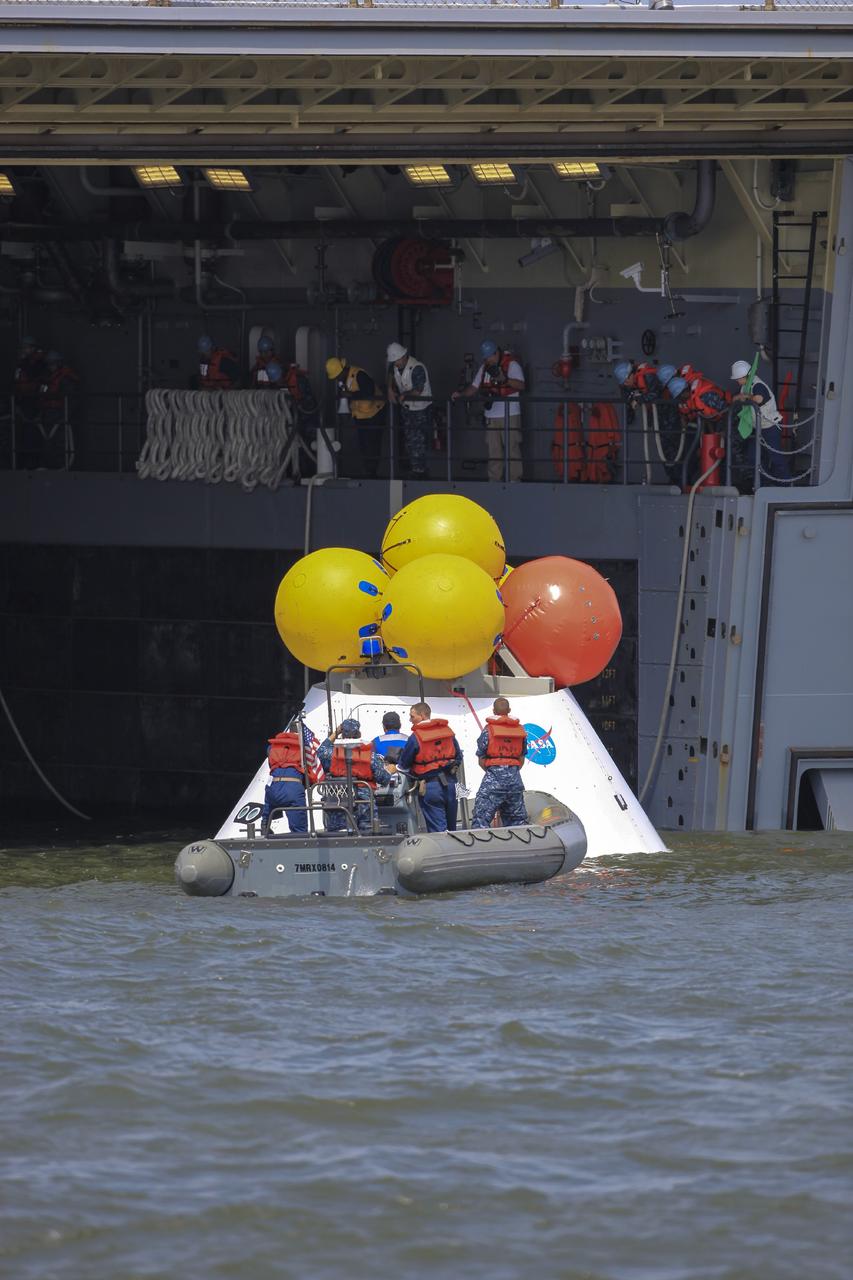
HAMPTON, Va. – At the Naval Station Norfolk near NASA’s Langley Research Center in Virginia, the Orion boilerplate test article is being returned to a U.S. Navy ship following a stationary recovery test in the water. NASA and the U.S. Navy are conducting tests to prepare for recovery of the Orion crew module and forward bay cover on its return from a deep space mission. The stationary recovery test will allow the teams to demonstrate and evaluate the recovery processes, procedures, hardware and personnel in a controlled environment before conducting a second recovery test next year in open waters. Orion is the exploration spacecraft designed to carry astronauts to destinations not yet explored by humans, including an asteroid and Mars. It will have emergency abort capability, sustain the crew during space travel and provide safe re-entry from deep space return velocities. The first unpiloted test flight of the Orion is scheduled to launch in 2014 atop a Delta IV rocket and in 2017 on NASA’s Space Launch System rocket. For more information, visit http://www.nasa.gov/orion. Photo credit: NASA/Dimitri Gerondidakis
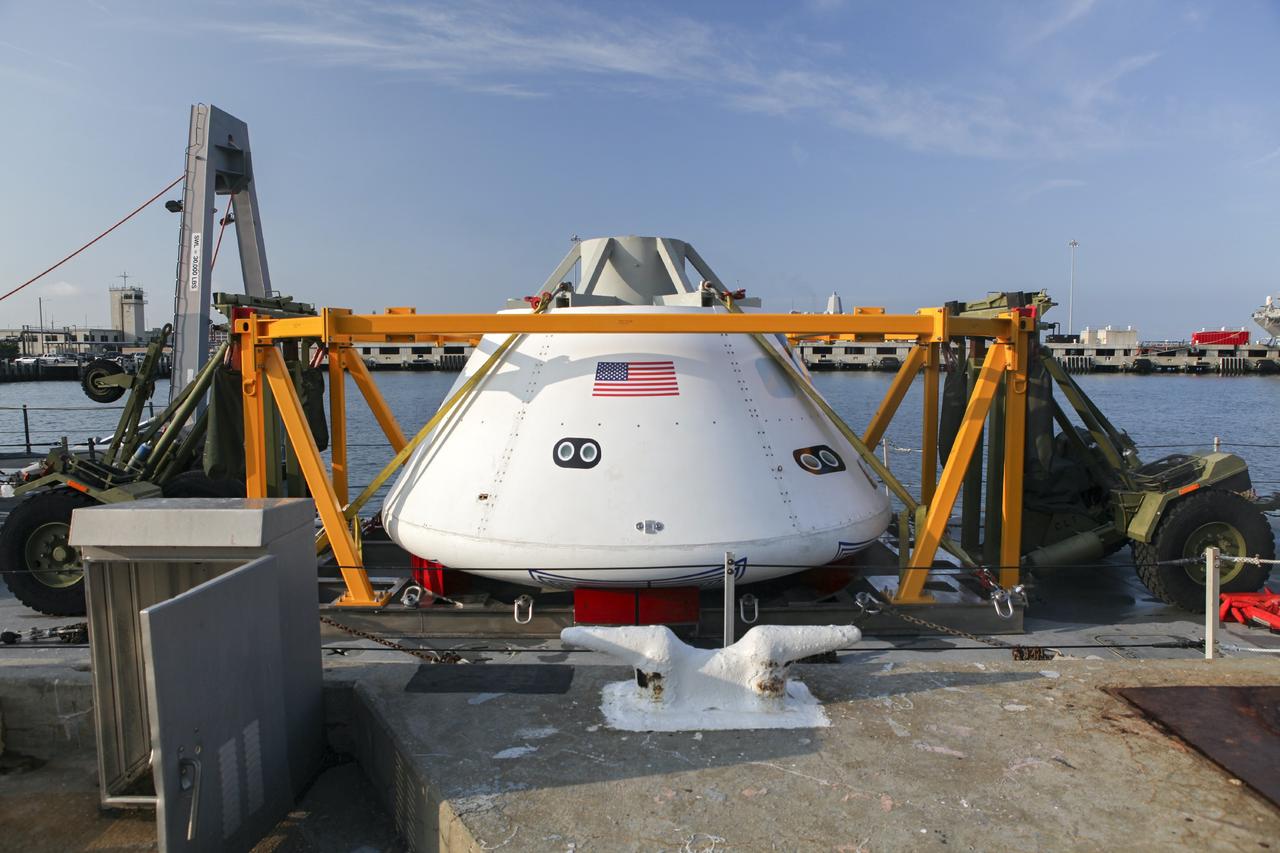
HAMPTON, Va. – At the Naval Station Norfolk near NASA’s Langley Research Center in Virginia, the Orion boilerplate test article and support equipment for a stationary recovery test are being transferred on a floating dock system to a U.S. Navy ship. NASA and the U.S. Navy are conducting tests to prepare for recovery of the Orion crew module and forward bay cover on its return from a deep space mission. The stationary recovery test will allow the teams to demonstrate and evaluate the recovery processes, procedures, hardware and personnel in a controlled environment before conducting a second recovery test next year in open waters. Orion is the exploration spacecraft designed to carry astronauts to destinations not yet explored by humans, including an asteroid and Mars. It will have emergency abort capability, sustain the crew during space travel and provide safe re-entry from deep space return velocities. The first unpiloted test flight of the Orion is scheduled to launch in 2014 atop a Delta IV rocket and in 2017 on a Space Launch System rocket. For more information, visit http://www.nasa.gov/orion. Photo credit: NASA/Dimitri Gerondidakis
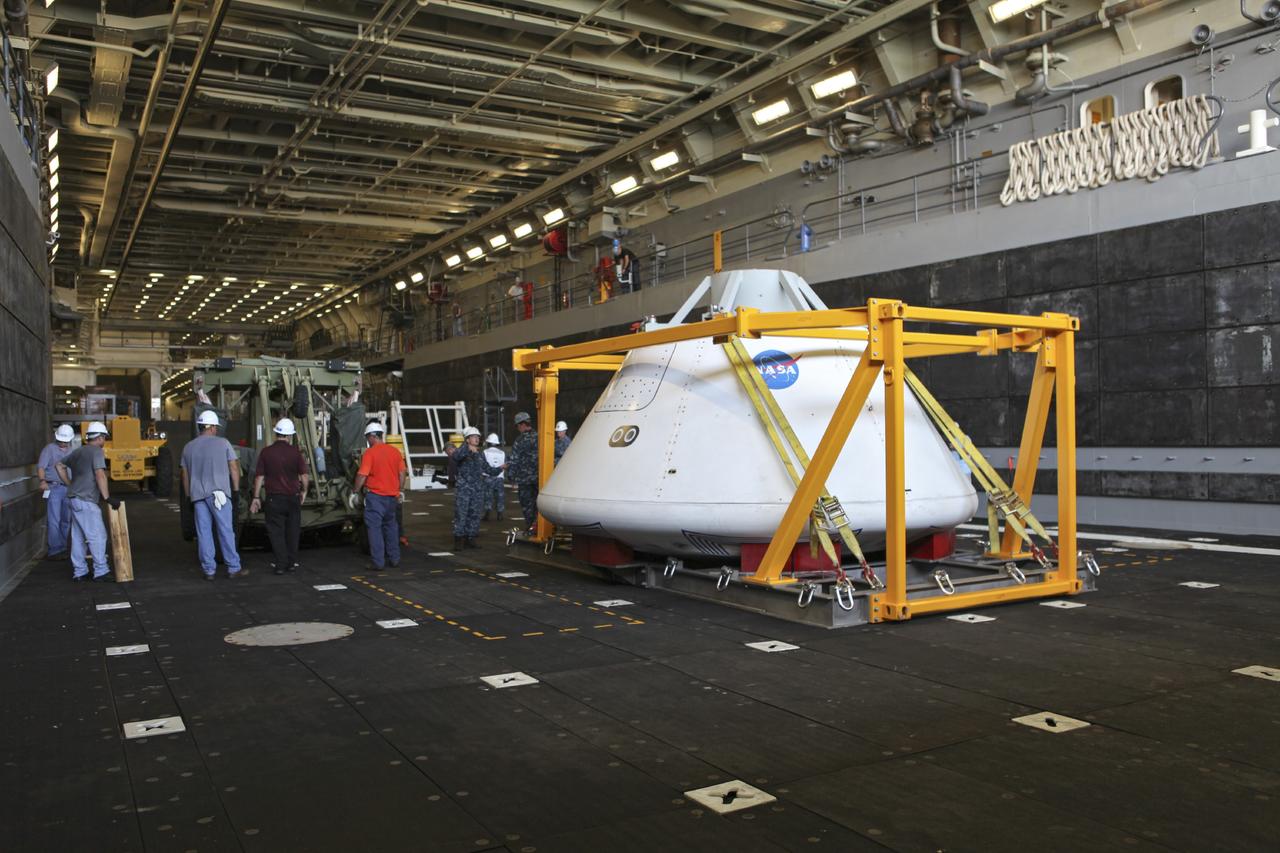
HAMPTON, Va. – At the Naval Station Norfolk near NASA’s Langley Research Center in Virginia, the Orion boilerplate test article and support equipment for a stationary recovery test have been secured on a U.S. Navy ship after arriving by floating dock system. NASA and the U.S. Navy are conducting tests to prepare for recovery of the Orion crew module and forward bay cover on its return from a deep space mission. The stationary recovery test will allow the teams to demonstrate and evaluate the recovery processes, procedures, hardware and personnel in a controlled environment before conducting a second recovery test next year in open waters. Orion is the exploration spacecraft designed to carry astronauts to destinations not yet explored by humans, including an asteroid and Mars. It will have emergency abort capability, sustain the crew during space travel and provide safe re-entry from deep space return velocities. The first unpiloted test flight of the Orion is scheduled to launch in 2014 atop a Delta IV rocket and in 2017 on NASA’s Space Launch System rocket. For more information, visit http://www.nasa.gov/orion. Photo credit: NASA/Dimitri Gerondidakis
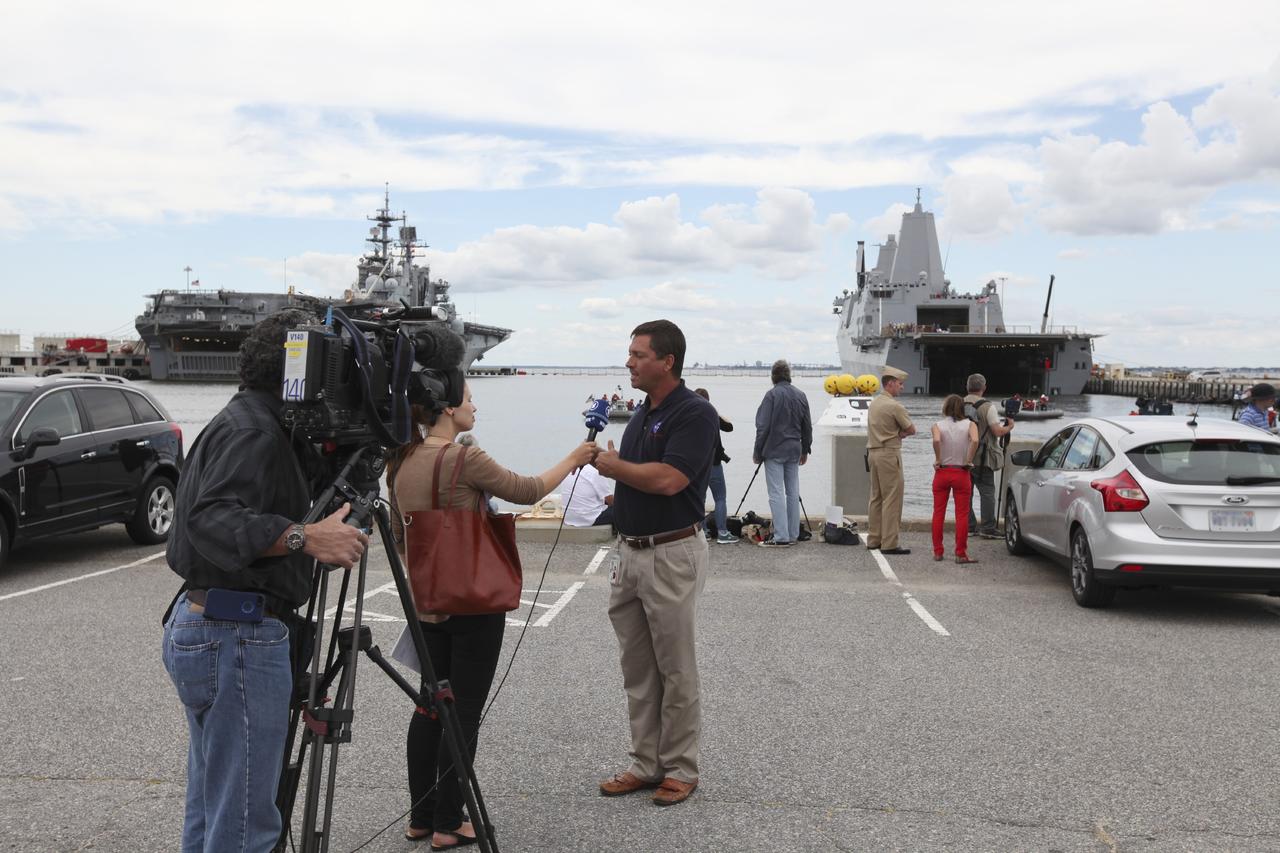
HAMPTON, Va. – At the Naval Station Norfolk near NASA’s Langley Research Center in Virginia, members of the news media speak with Louis Garcia, NASA recovery director, during the stationary recovery test being performed on the Orion boilerplate test in the water near a U.S. Navy ship. NASA and the U.S. Navy are conducting tests to prepare for recovery of the Orion crew module and forward bay cover on its return from a deep space mission. The stationary recovery test will allow the teams to demonstrate and evaluate the recovery processes, procedures, hardware and personnel in a controlled environment before conducting a second recovery test next year in open waters. Orion is the exploration spacecraft designed to carry astronauts to destinations not yet explored by humans, including an asteroid and Mars. It will have emergency abort capability, sustain the crew during space travel and provide safe re-entry from deep space return velocities. The first unpiloted test flight of the Orion is scheduled to launch in 2014 atop a Delta IV rocket and in 2017 on NASA’s Space Launch System rocket. For more information, visit http://www.nasa.gov/orion. Photo credit: NASA/Dimitri Gerondidakis
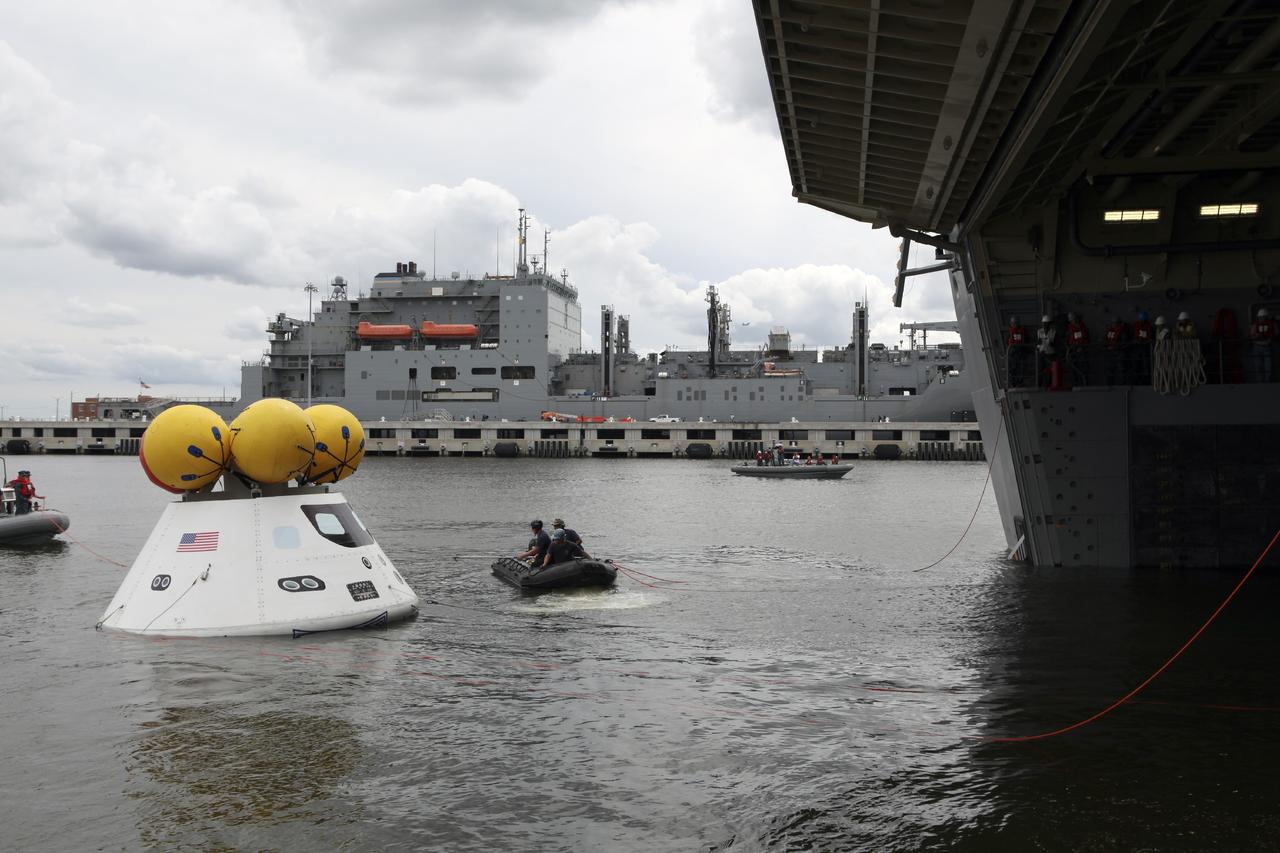
HAMPTON, Va. – At the Naval Station Norfolk near NASA’s Langley Research Center in Virginia, NASA and the U.S. Navy are conducting a stationary recovery test on the Orion boilerplate test article in the water near a U.S. Navy ship. NASA and the U.S. Navy are conducting tests to prepare for recovery of the Orion crew module and forward bay cover on its return from a deep space mission. The stationary recovery test will allow the teams to demonstrate and evaluate the recovery processes, procedures, hardware and personnel in a controlled environment before conducting a second recovery test next year in open waters. Orion is the exploration spacecraft designed to carry astronauts to destinations not yet explored by humans, including an asteroid and Mars. It will have emergency abort capability, sustain the crew during space travel and provide safe re-entry from deep space return velocities. The first unpiloted test flight of the Orion is scheduled to launch in 2014 atop a Delta IV rocket and in 2017 on NASA’s Space Launch System rocket. For more information, visit http://www.nasa.gov/orion. Photo credit: NASA/Dimitri Gerondidakis
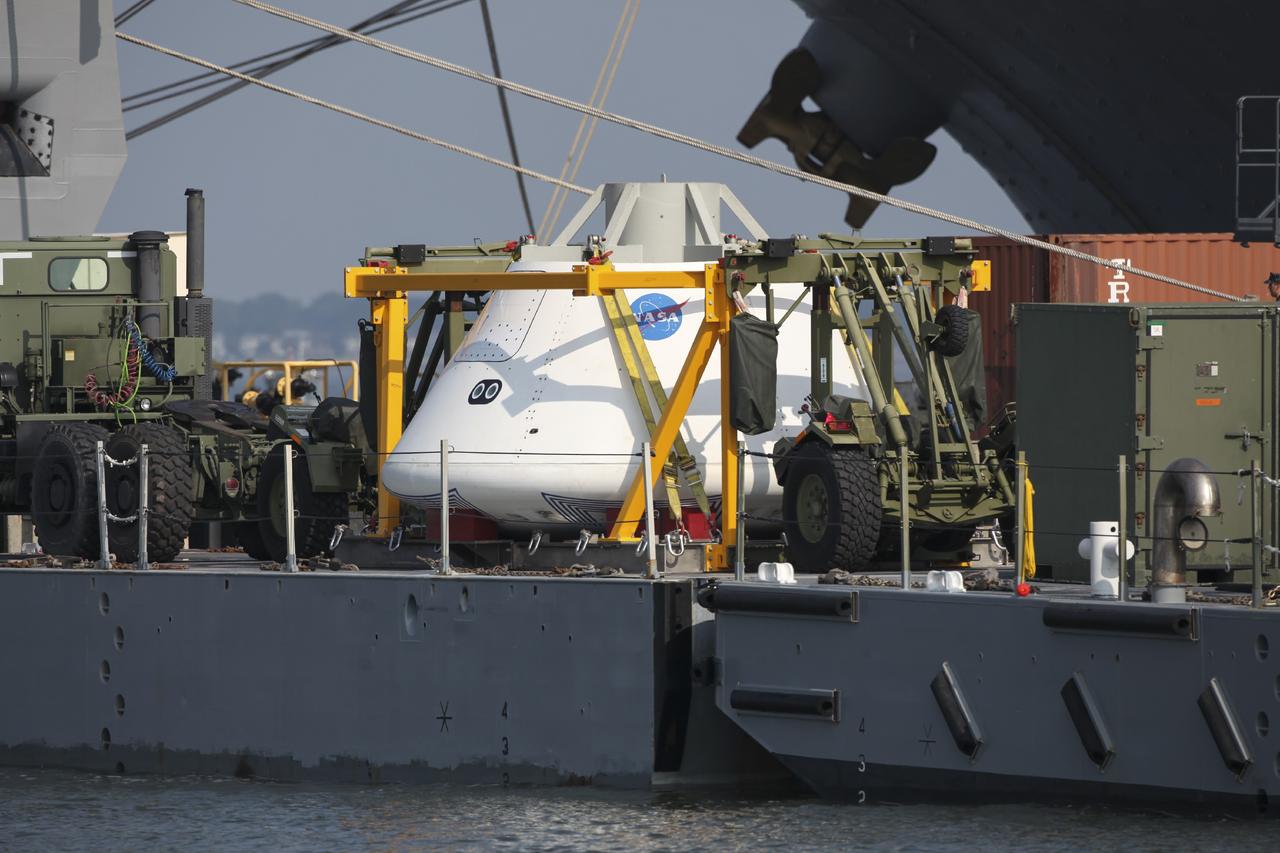
HAMPTON, Va. – At the Naval Station Norfolk near NASA’s Langley Research Center in Virginia, the Orion boilerplate test article and support equipment for a stationary recovery test are being transferred from a floating dock system to a U.S. Navy ship. NASA and the U.S. Navy are conducting tests to prepare for recovery of the Orion crew module and forward bay cover on its return from a deep space mission. The stationary recovery test will allow the teams to demonstrate and evaluate the recovery processes, procedures, hardware and personnel in a controlled environment before conducting a second recovery test next year in open waters. Orion is the exploration spacecraft designed to carry astronauts to destinations not yet explored by humans, including an asteroid and Mars. It will have emergency abort capability, sustain the crew during space travel and provide safe re-entry from deep space return velocities. The first unpiloted test flight of the Orion is scheduled to launch in 2014 atop a Delta IV rocket and in 2017 on a Space Launch System rocket. For more information, visit http://www.nasa.gov/orion. Photo credit: NASA/Dimitri Gerondidakis
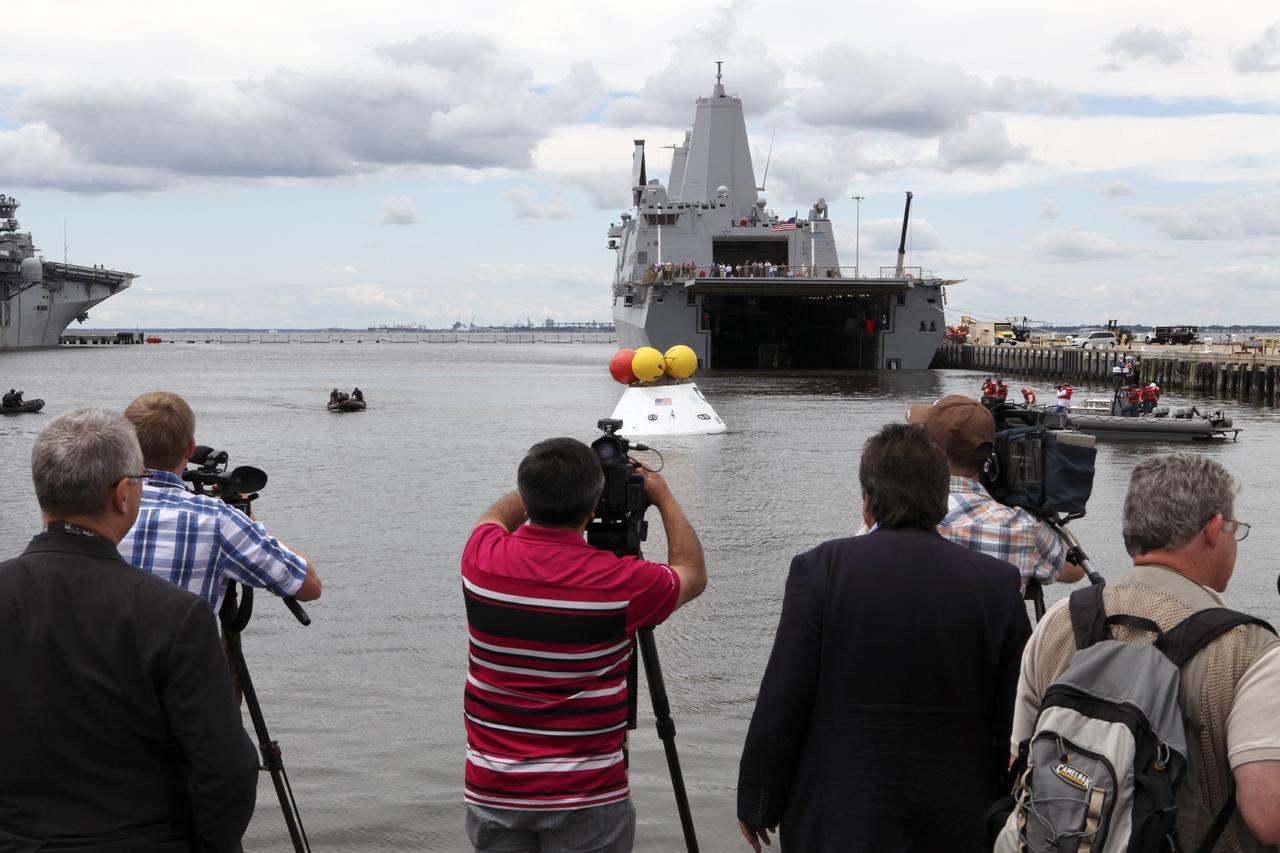
HAMPTON, Va. – At the Naval Station Norfolk near NASA’s Langley Research Center in Virginia, members of the news media observe the stationary recovery test being conducted on the Orion boilerplate test article in the water near a U.S. Navy ship. NASA and the U.S. Navy are conducting tests to prepare for recovery of the Orion crew module and forward bay cover on its return from a deep space mission. The stationary recovery test will allow the teams to demonstrate and evaluate the recovery processes, procedures, hardware and personnel in a controlled environment before conducting a second recovery test next year in open waters. Orion is the exploration spacecraft designed to carry astronauts to destinations not yet explored by humans, including an asteroid and Mars. It will have emergency abort capability, sustain the crew during space travel and provide safe re-entry from deep space return velocities. The first unpiloted test flight of the Orion is scheduled to launch in 2014 atop a Delta IV rocket and in 2017 on NASA’s Space Launch System rocket. For more information, visit http://www.nasa.gov/orion. Photo credit: NASA/Dimitri Gerondidakis
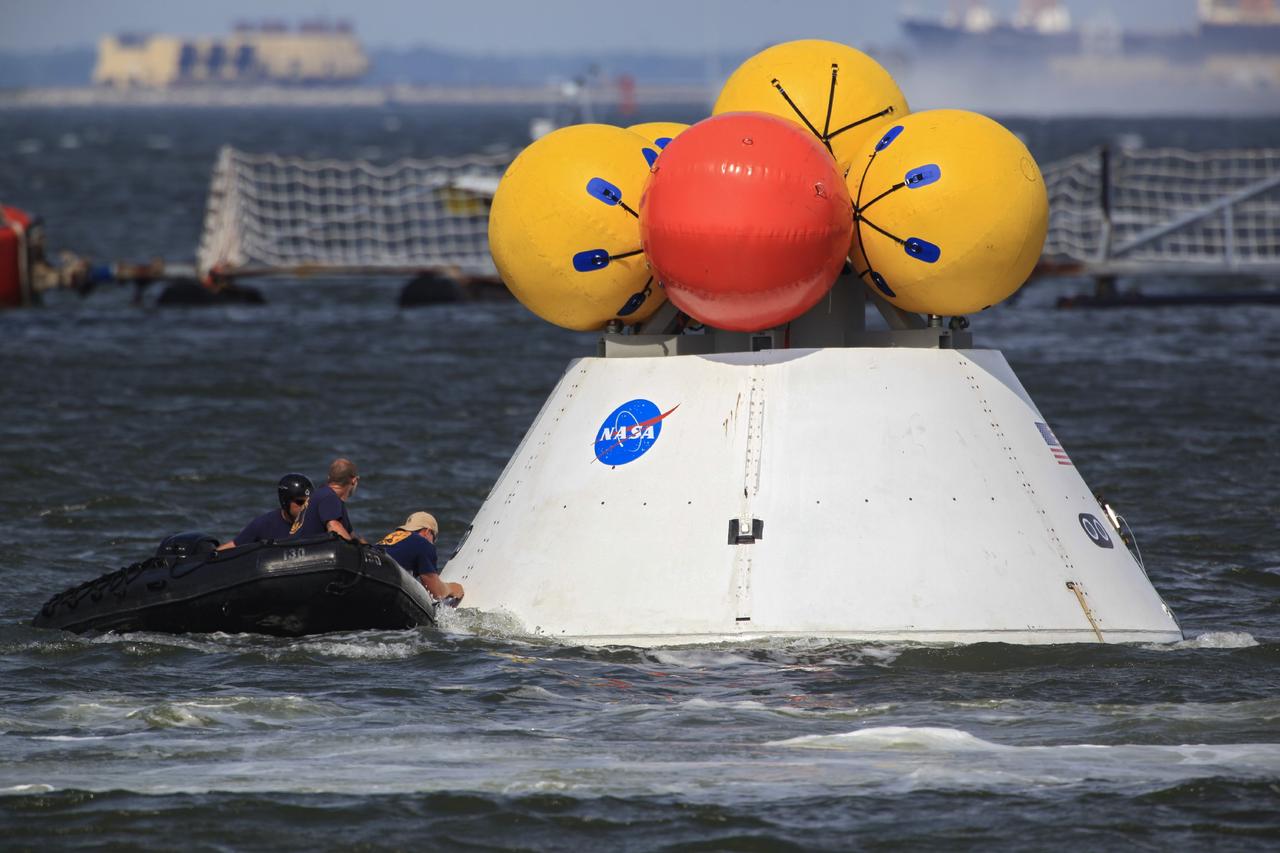
HAMPTON, Va. – At the Naval Station Norfolk near NASA’s Langley Research Center in Virginia, U.S. Navy personnel detach tether lines from the Orion boilerplate test article during a stationary recovery test in the water. NASA and the U.S. Navy are conducting tests to prepare for recovery of the Orion crew module and forward bay cover on its return from a deep space mission. The stationary recovery test will allow the teams to demonstrate and evaluate the recovery processes, procedures, hardware and personnel in a controlled environment before conducting a second recovery test next year in open waters. Orion is the exploration spacecraft designed to carry astronauts to destinations not yet explored by humans, including an asteroid and Mars. It will have emergency abort capability, sustain the crew during space travel and provide safe re-entry from deep space return velocities. The first unpiloted test flight of the Orion is scheduled to launch in 2014 atop a Delta IV rocket and in 2017 on NASA’s Space Launch System rocket. For more information, visit http://www.nasa.gov/orion. Photo credit: NASA/Dimitri Gerondidakis
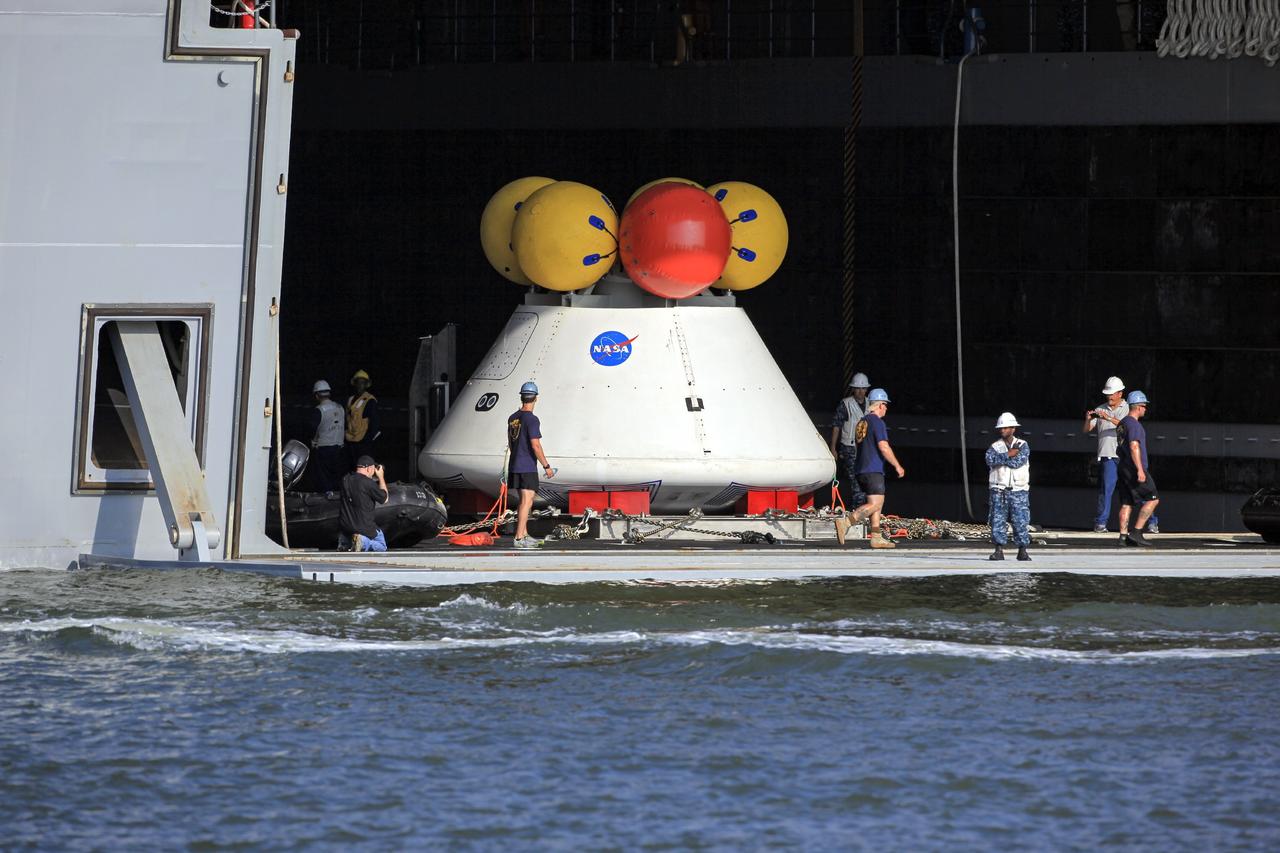
HAMPTON, Va. – At the Naval Station Norfolk near NASA’s Langley Research Center in Virginia, NASA and U.S. Navy personnel prepare the Orion boilerplate test article for a stationary recovery test aboard a U.S. Navy ship. NASA and the U.S. Navy are conducting tests to prepare for recovery of the Orion crew module and forward bay cover on its return from a deep space mission. The stationary recovery test will allow the teams to demonstrate and evaluate the recovery processes, procedures, hardware and personnel in a controlled environment before conducting a second recovery test next year in open waters. Orion is the exploration spacecraft designed to carry astronauts to destinations not yet explored by humans, including an asteroid and Mars. It will have emergency abort capability, sustain the crew during space travel and provide safe re-entry from deep space return velocities. The first unpiloted test flight of the Orion is scheduled to launch in 2014 atop a Delta IV rocket and in 2017 on NASA’s Space Launch System rocket. For more information, visit http://www.nasa.gov/orion. Photo credit: NASA/Dimitri Gerondidakis
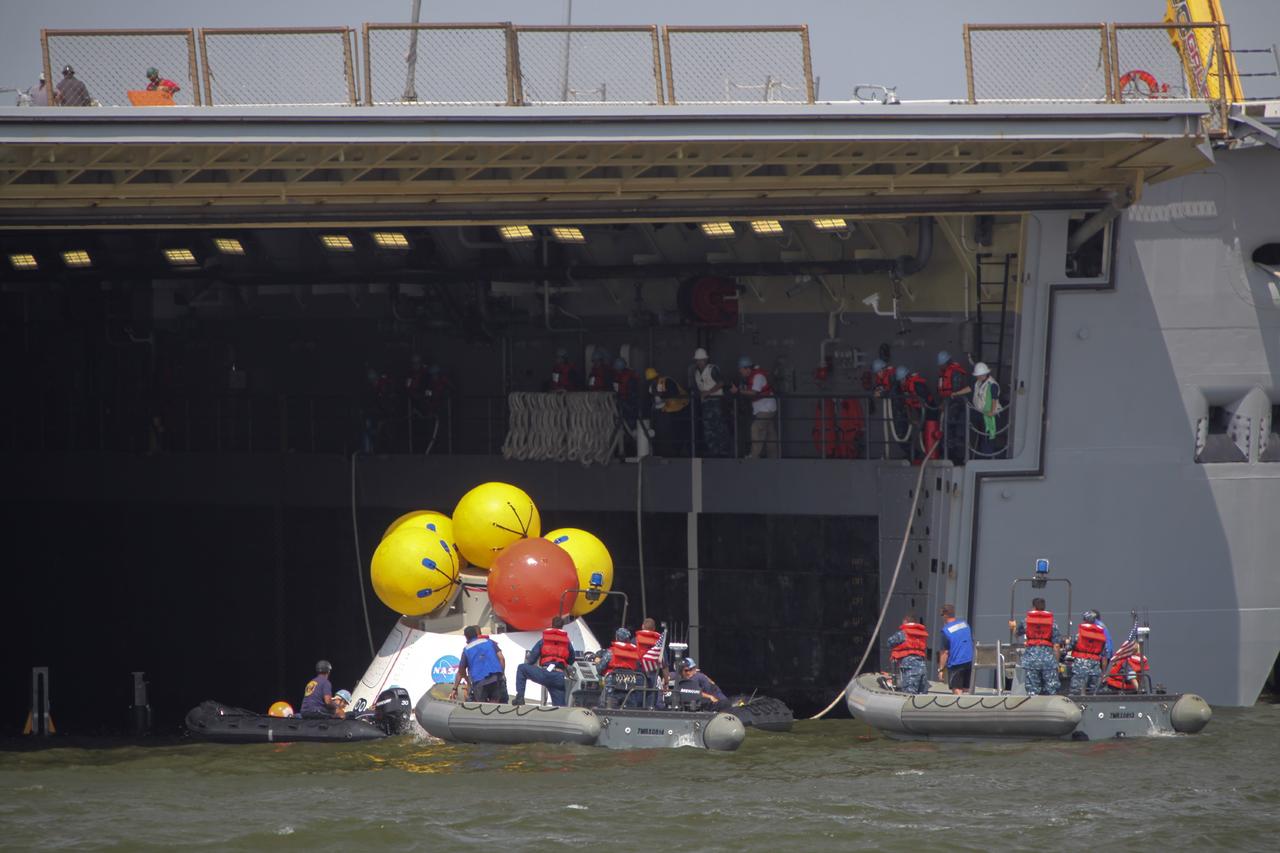
HAMPTON, Va. – At the Naval Station Norfolk near NASA’s Langley Research Center in Virginia, the Orion boilerplate test article is being returned to a U.S. Navy ship following a stationary recovery test in the water. NASA and the U.S. Navy are conducting tests to prepare for recovery of the Orion crew module and forward bay cover on its return from a deep space mission. The stationary recovery test will allow the teams to demonstrate and evaluate the recovery processes, procedures, hardware and personnel in a controlled environment before conducting a second recovery test next year in open waters. Orion is the exploration spacecraft designed to carry astronauts to destinations not yet explored by humans, including an asteroid and Mars. It will have emergency abort capability, sustain the crew during space travel and provide safe re-entry from deep space return velocities. The first unpiloted test flight of the Orion is scheduled to launch in 2014 atop a Delta IV rocket and in 2017 on NASA’s Space Launch System rocket. For more information, visit http://www.nasa.gov/orion. Photo credit: NASA/Dimitri Gerondidakis
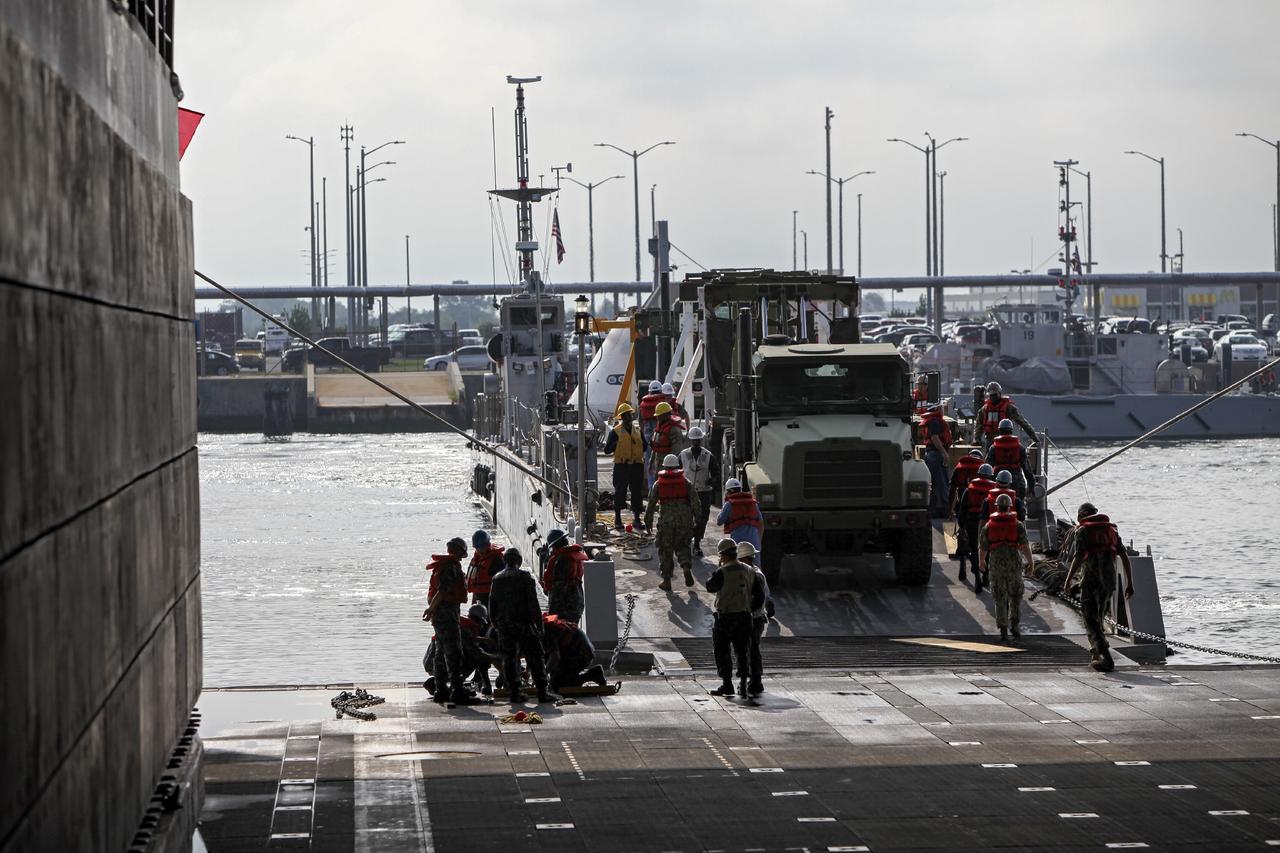
HAMPTON, Va. – At the Naval Station Norfolk near NASA’s Langley Research Center in Virginia, the Orion boilerplate test article and support equipment for a stationary recovery test are being transferred from a floating dock system to a U.S. Navy ship. NASA and the U.S. Navy are conducting tests to prepare for recovery of the Orion crew module and forward bay cover on its return from a deep space mission. The stationary recovery test will allow the teams to demonstrate and evaluate the recovery processes, procedures, hardware and personnel in a controlled environment before conducting a second recovery test next year in open waters. Orion is the exploration spacecraft designed to carry astronauts to destinations not yet explored by humans, including an asteroid and Mars. It will have emergency abort capability, sustain the crew during space travel and provide safe re-entry from deep space return velocities. The first unpiloted test flight of the Orion is scheduled to launch in 2014 atop a Delta IV rocket and in 2017 on a Space Launch System rocket. For more information, visit http://www.nasa.gov/orion. Photo credit: NASA/Dimitri Gerondidakis
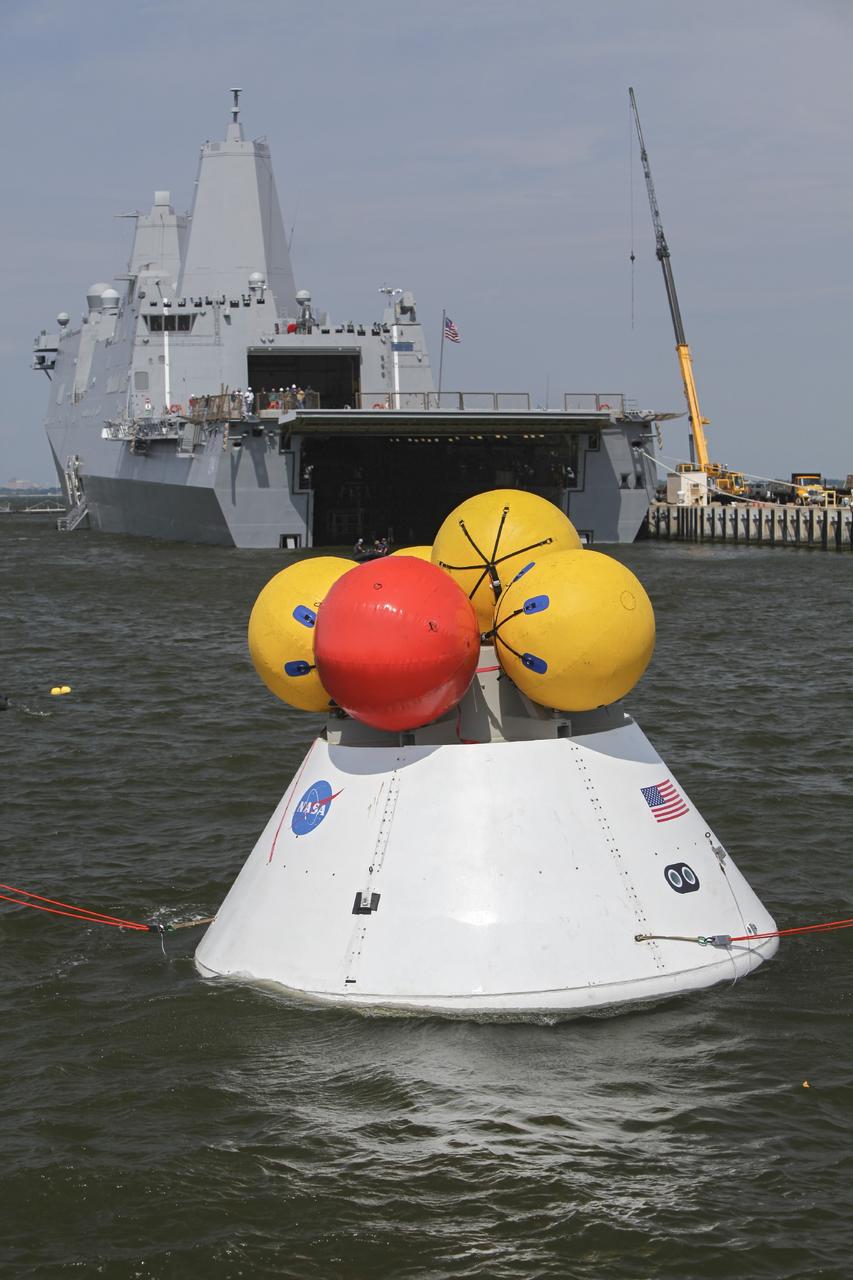
HAMPTON, Va. – At the Naval Station Norfolk near NASA’s Langley Research Center in Virginia, the Orion boilerplate test article floats in the water near a U.S. Navy ship during a stationary recovery test. NASA and the U.S. Navy are conducting tests to prepare for recovery of the Orion crew module and forward bay cover on its return from a deep space mission. The stationary recovery test will allow the teams to demonstrate and evaluate the recovery processes, procedures, hardware and personnel in a controlled environment before conducting a second recovery test next year in open waters. Orion is the exploration spacecraft designed to carry astronauts to destinations not yet explored by humans, including an asteroid and Mars. It will have emergency abort capability, sustain the crew during space travel and provide safe re-entry from deep space return velocities. The first unpiloted test flight of the Orion is scheduled to launch in 2014 atop a Delta IV rocket and in 2017 on NASA’s Space Launch System rocket. For more information, visit http://www.nasa.gov/orion. Photo credit: NASA/Dimitri Gerondidakis
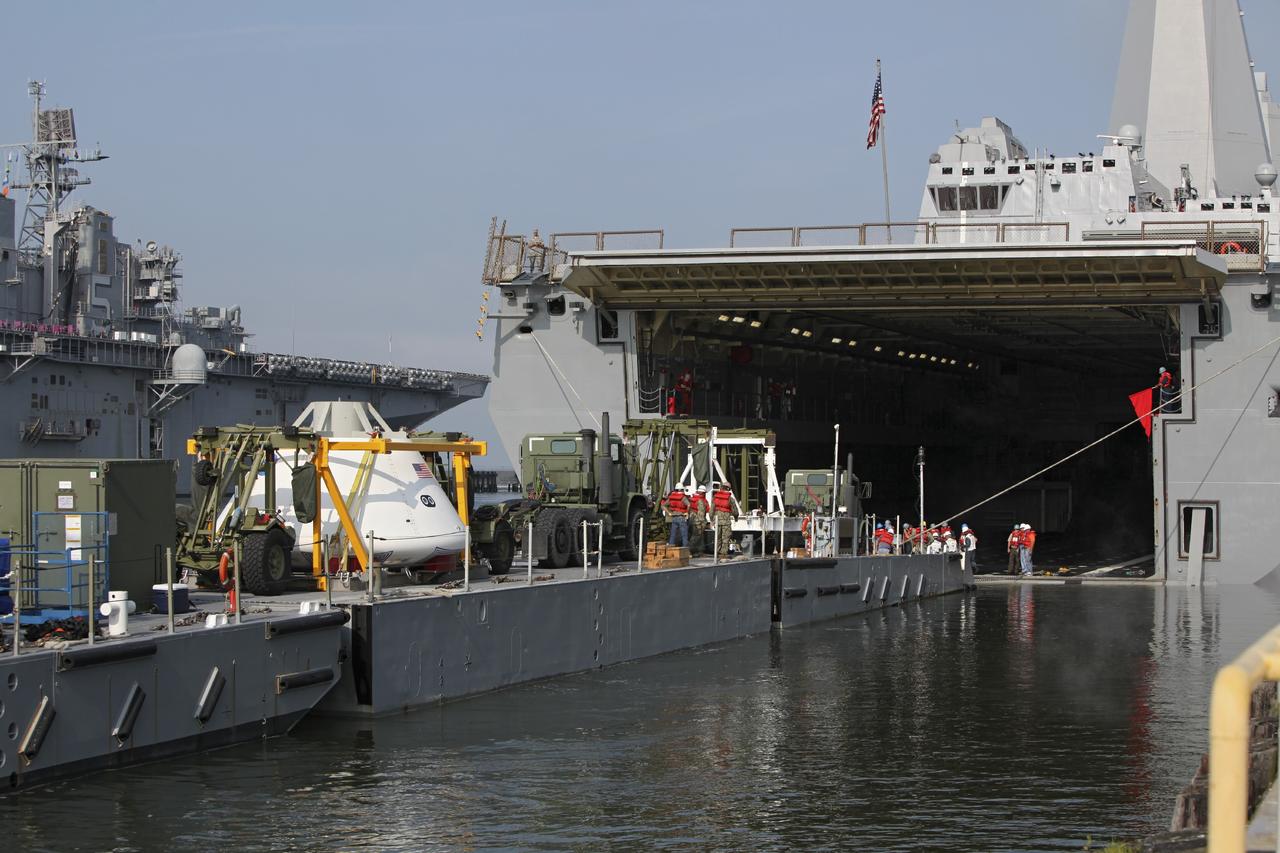
HAMPTON, Va. – At the Naval Station Norfolk near NASA’s Langley Research Center in Virginia, the Orion boilerplate test article and support equipment for a stationary recovery test are being transferred from a floating dock system to a U.S. Navy ship. NASA and the U.S. Navy are conducting tests to prepare for recovery of the Orion crew module and forward bay cover on its return from a deep space mission. The stationary recovery test will allow the teams to demonstrate and evaluate the recovery processes, procedures, hardware and personnel in a controlled environment before conducting a second recovery test next year in open waters. Orion is the exploration spacecraft designed to carry astronauts to destinations not yet explored by humans, including an asteroid and Mars. It will have emergency abort capability, sustain the crew during space travel and provide safe re-entry from deep space return velocities. The first unpiloted test flight of the Orion is scheduled to launch in 2014 atop a Delta IV rocket and in 2017 on a Space Launch System rocket. For more information, visit http://www.nasa.gov/orion. Photo credit: NASA/Dimitri Gerondidakis
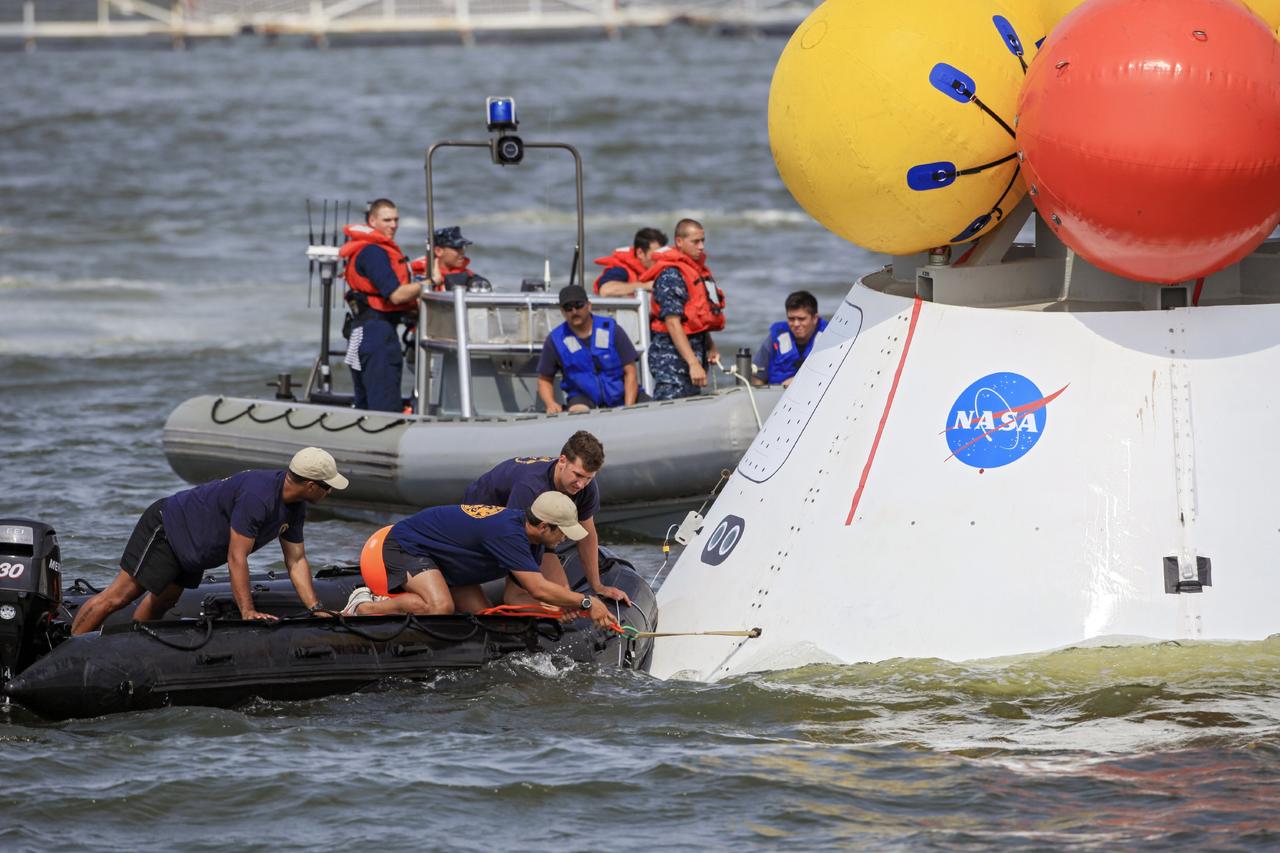
HAMPTON, Va. – At the Naval Station Norfolk near NASA’s Langley Research Center in Virginia, NASA and U.S. Navy personnel practice procedures during a stationary recovery test on the Orion boilerplate test article. NASA and the U.S. Navy are conducting tests to prepare for recovery of the Orion crew module and forward bay cover on its return from a deep space mission. The stationary recovery test will allow the teams to demonstrate and evaluate the recovery processes, procedures, hardware and personnel in a controlled environment before conducting a second recovery test next year in open waters. Orion is the exploration spacecraft designed to carry astronauts to destinations not yet explored by humans, including an asteroid and Mars. It will have emergency abort capability, sustain the crew during space travel and provide safe re-entry from deep space return velocities. The first unpiloted test flight of the Orion is scheduled to launch in 2014 atop a Delta IV rocket and in 2017 on NASA’s Space Launch System rocket. For more information, visit http://www.nasa.gov/orion. Photo credit: NASA/Dimitri Gerondidakis
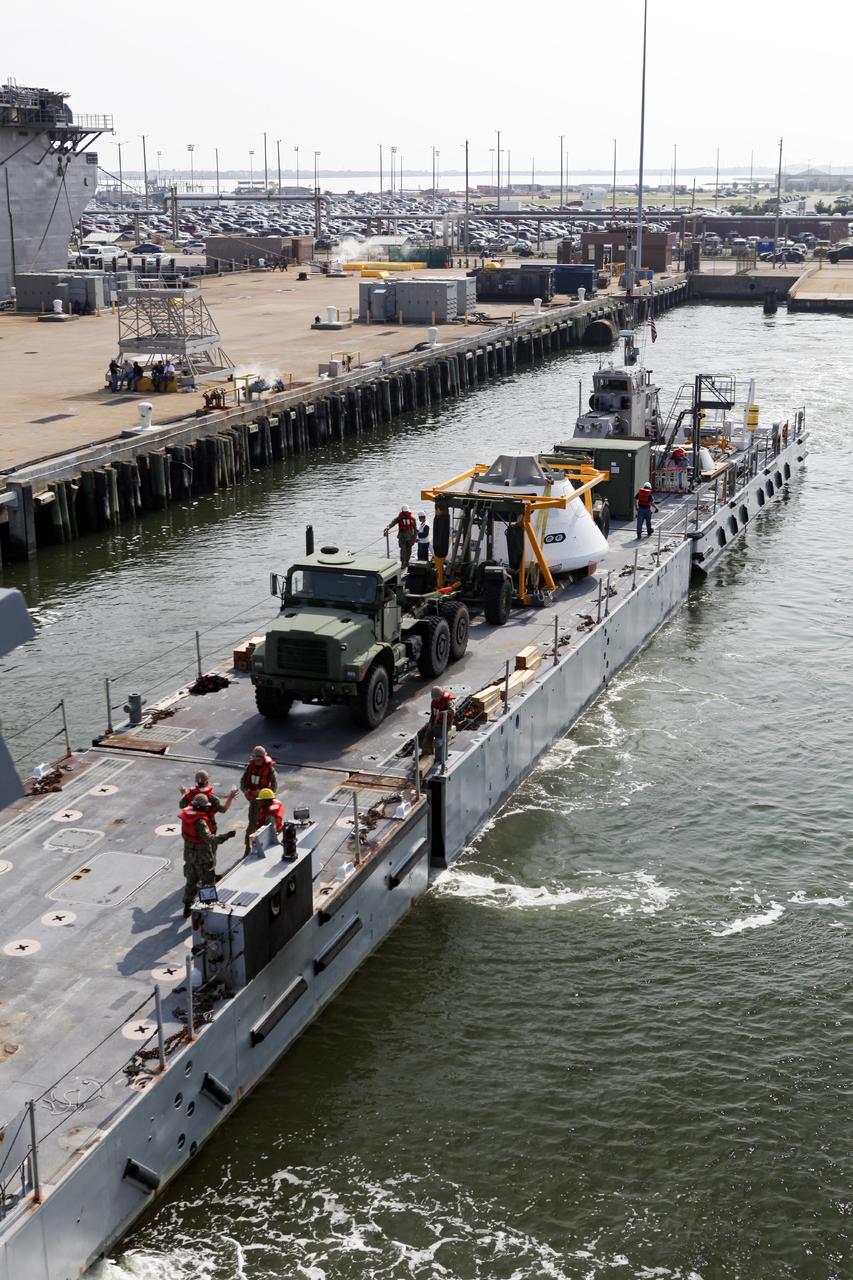
HAMPTON, Va. – At the Naval Station Norfolk near NASA’s Langley Research Center in Virginia, a floating dock system carries the Orion boilerplate test article and support equipment for a stationary recovery test aboard a U.S. Navy ship. NASA and the U.S. Navy are conducting tests to prepare for recovery of the Orion crew module and forward bay cover on its return from a deep space mission. The stationary recovery test will allow the teams to demonstrate and evaluate the recovery processes, procedures, hardware and personnel in a controlled environment before conducting a second recovery test next year in open waters. Orion is the exploration spacecraft designed to carry astronauts to destinations not yet explored by humans, including an asteroid and Mars. It will have emergency abort capability, sustain the crew during space travel and provide safe re-entry from deep space return velocities. The first unpiloted test flight of the Orion is scheduled to launch in 2014 atop a Delta IV rocket and in 2017 on NASA’s Space Launch System rocket. For more information, visit http://www.nasa.gov/orion. Photo credit: NASA/Dimitri Gerondidakis
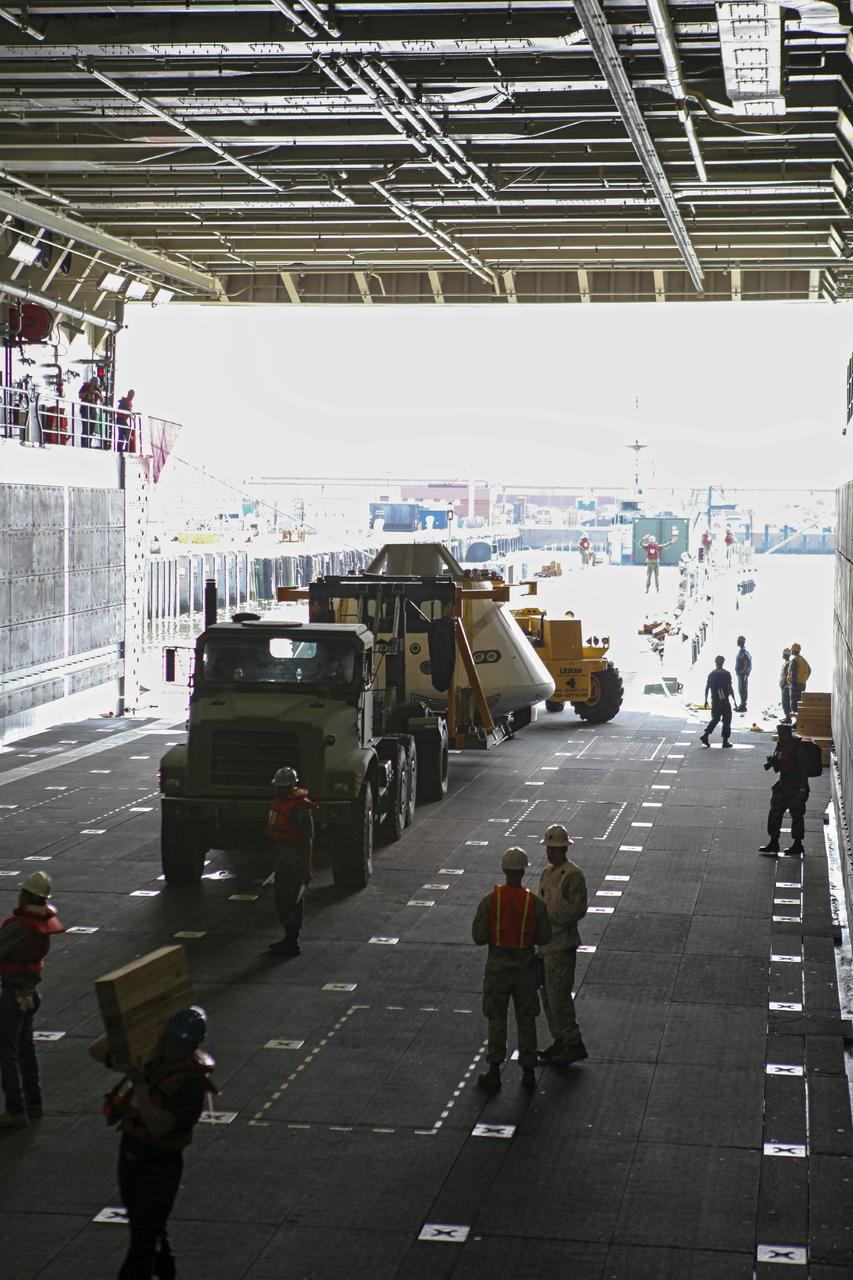
HAMPTON, Va. – At the Naval Station Norfolk near NASA’s Langley Research Center in Virginia, the Orion boilerplate test article and support equipment for a stationary recovery test are transferred to a U.S. Navy ship from a floating dock system. NASA and the U.S. Navy are conducting tests to prepare for recovery of the Orion crew module and forward bay cover on its return from a deep space mission. The stationary recovery test will allow the teams to demonstrate and evaluate the recovery processes, procedures, hardware and personnel in a controlled environment before conducting a second recovery test next year in open waters. Orion is the exploration spacecraft designed to carry astronauts to destinations not yet explored by humans, including an asteroid and Mars. It will have emergency abort capability, sustain the crew during space travel and provide safe re-entry from deep space return velocities. The first unpiloted test flight of the Orion is scheduled to launch in 2014 atop a Delta IV rocket and in 2017 on NASA’s Space Launch System rocket. For more information, visit http://www.nasa.gov/orion. Photo credit: NASA/Dimitri Gerondidakis
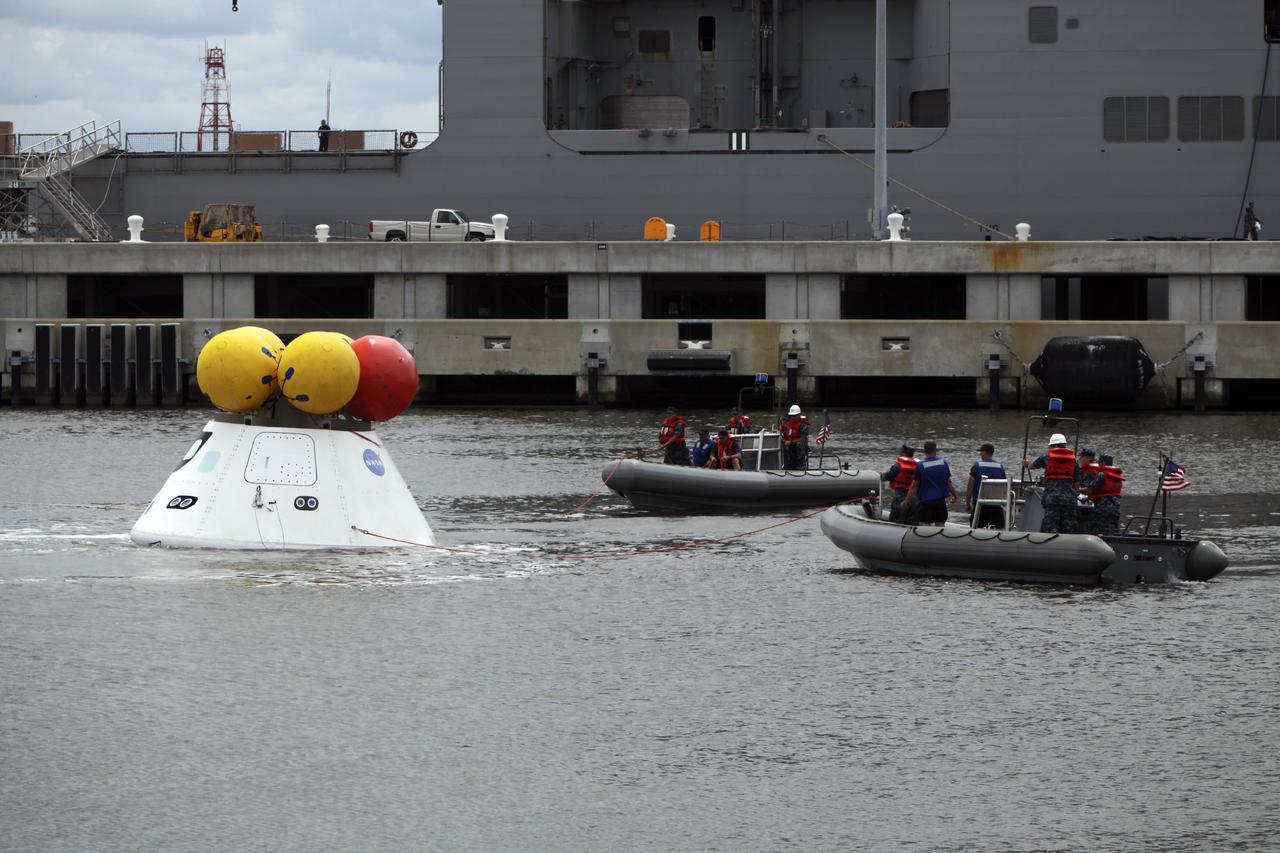
HAMPTON, Va. – At the Naval Station Norfolk near NASA’s Langley Research Center in Virginia, NASA and the U.S. Navy are conducting a stationary recovery test on the Orion boilerplate test article in the water near a U.S. Navy ship. NASA and the U.S. Navy are conducting tests to prepare for recovery of the Orion crew module and forward bay cover on its return from a deep space mission. The stationary recovery test will allow the teams to demonstrate and evaluate the recovery processes, procedures, hardware and personnel in a controlled environment before conducting a second recovery test next year in open waters. Orion is the exploration spacecraft designed to carry astronauts to destinations not yet explored by humans, including an asteroid and Mars. It will have emergency abort capability, sustain the crew during space travel and provide safe re-entry from deep space return velocities. The first unpiloted test flight of the Orion is scheduled to launch in 2014 atop a Delta IV rocket and in 2017 on NASA’s Space Launch System rocket. For more information, visit http://www.nasa.gov/orion. Photo credit: NASA/Dimitri Gerondidakis
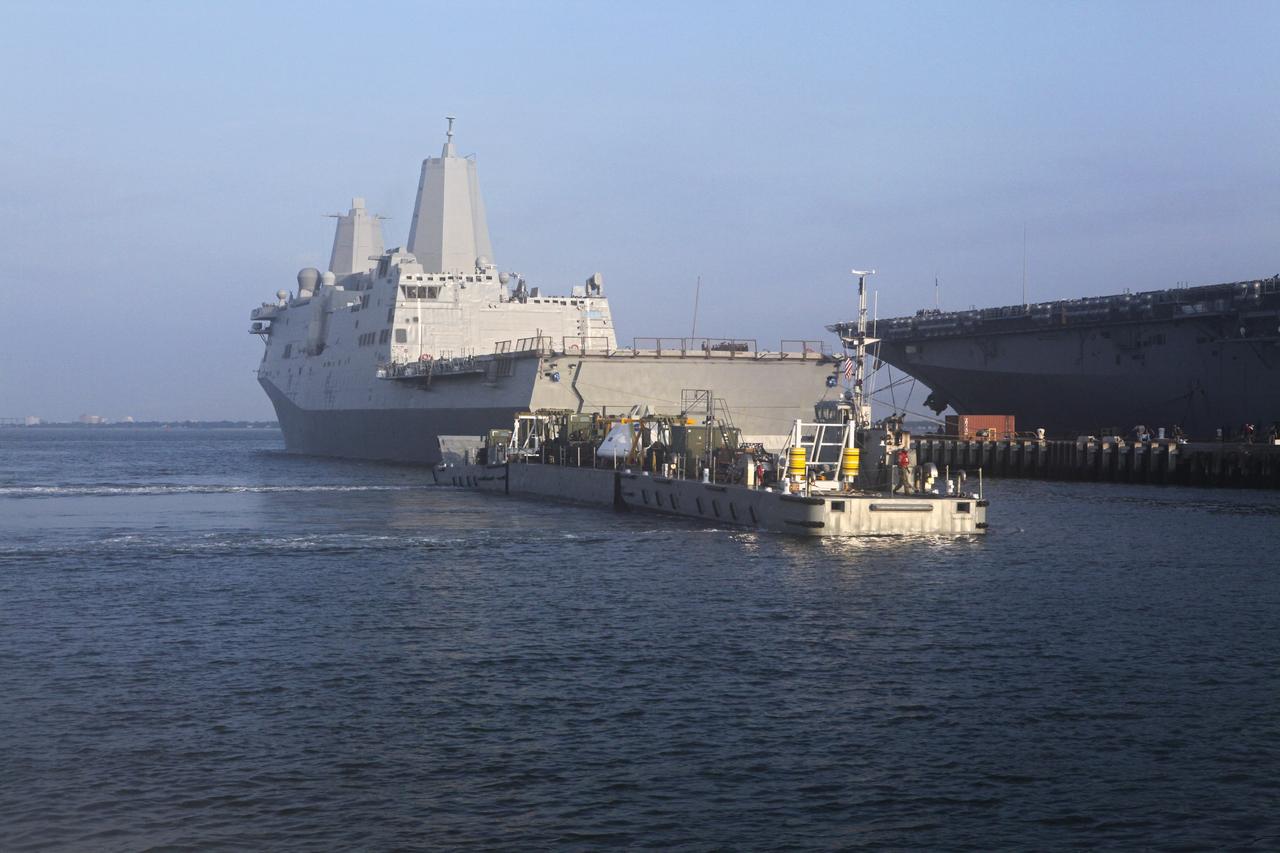
HAMPTON, Va. – At the Naval Station Norfolk near NASA’s Langley Research Center in Virginia, a floating dock system carries the Orion boilerplate test article and support equipment for a stationary recovery test aboard a U.S. Navy ship. NASA and the U.S. Navy are conducting tests to prepare for recovery of the Orion crew module and forward bay cover on its return from a deep space mission. The stationary recovery test will allow the teams to demonstrate and evaluate the recovery processes, procedures, hardware and personnel in a controlled environment before conducting a second recovery test next year in open waters. Orion is the exploration spacecraft designed to carry astronauts to destinations not yet explored by humans, including an asteroid and Mars. It will have emergency abort capability, sustain the crew during space travel and provide safe re-entry from deep space return velocities. The first unpiloted test flight of the Orion is scheduled to launch in 2014 atop a Delta IV rocket and in 2017 on a Space Launch System rocket. For more information, visit http://www.nasa.gov/orion. Photo credit: NASA/Dimitri Gerondidakis
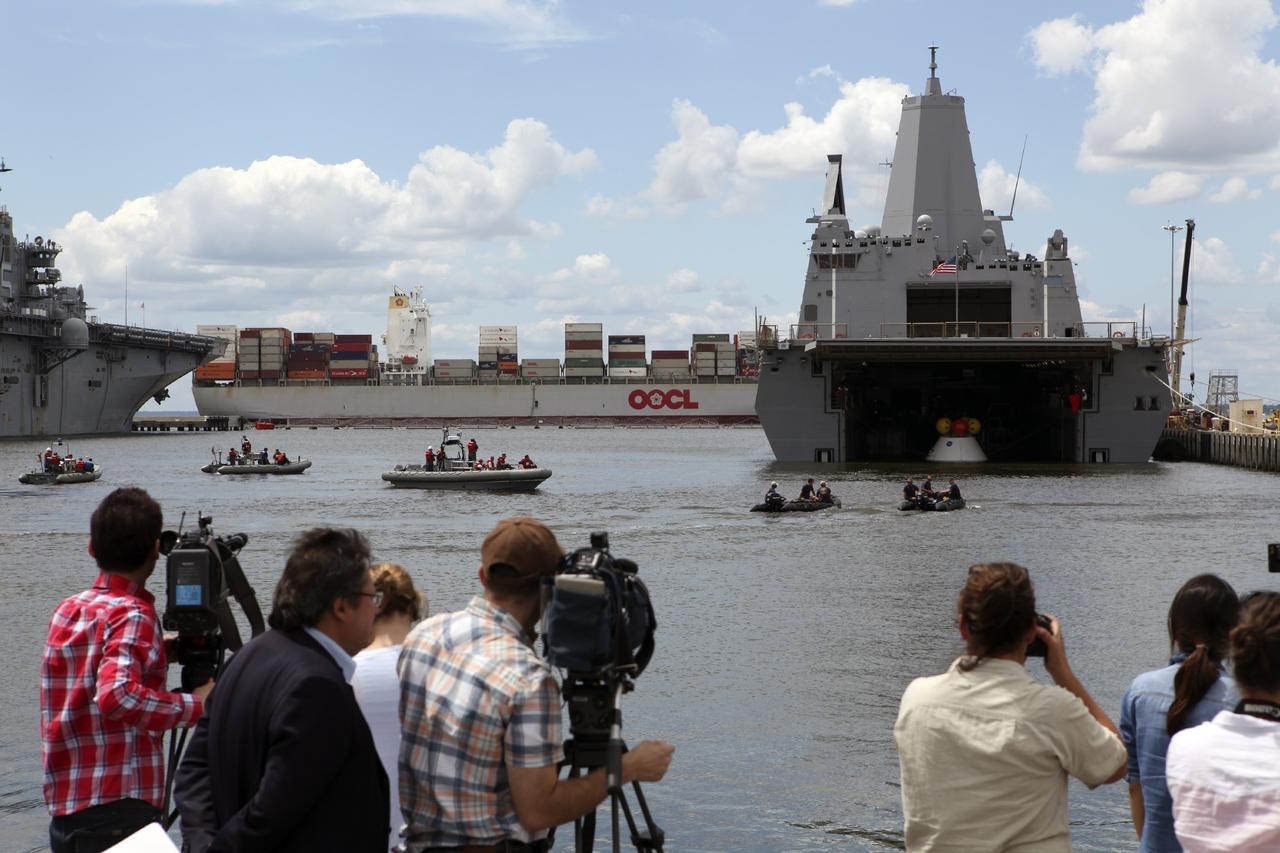
HAMPTON, Va. – At the Naval Station Norfolk near NASA’s Langley Research Center in Virginia, members of the news media observe the stationary recovery test being conducted on the Orion boilerplate test article in the water near a U.S. Navy ship. NASA and the U.S. Navy are conducting tests to prepare for recovery of the Orion crew module and forward bay cover on its return from a deep space mission. The stationary recovery test will allow the teams to demonstrate and evaluate the recovery processes, procedures, hardware and personnel in a controlled environment before conducting a second recovery test next year in open waters. Orion is the exploration spacecraft designed to carry astronauts to destinations not yet explored by humans, including an asteroid and Mars. It will have emergency abort capability, sustain the crew during space travel and provide safe re-entry from deep space return velocities. The first unpiloted test flight of the Orion is scheduled to launch in 2014 atop a Delta IV rocket and in 2017 on NASA’s Space Launch System rocket. For more information, visit http://www.nasa.gov/orion. Photo credit: NASA/Dimitri Gerondidakis

HAMPTON, Va. – At the Naval Station Norfolk near NASA’s Langley Research Center in Virginia, the Orion boilerplate test article is being prepared for a stationary recovery test aboard a U.S. Navy ship. NASA and the U.S. Navy are conducting tests to prepare for recovery of the Orion crew module and forward bay cover on its return from a deep space mission. The stationary recovery test will allow the teams to demonstrate and evaluate the recovery processes, procedures, hardware and personnel in a controlled environment before conducting a second recovery test next year in open waters. Orion is the exploration spacecraft designed to carry astronauts to destinations not yet explored by humans, including an asteroid and Mars. It will have emergency abort capability, sustain the crew during space travel and provide safe re-entry from deep space return velocities. The first unpiloted test flight of the Orion is scheduled to launch in 2014 atop a Delta IV rocket and in 2017 on NASA’s Space Launch System rocket. For more information, visit http://www.nasa.gov/orion. Photo credit: NASA/Dimitri Gerondidakis
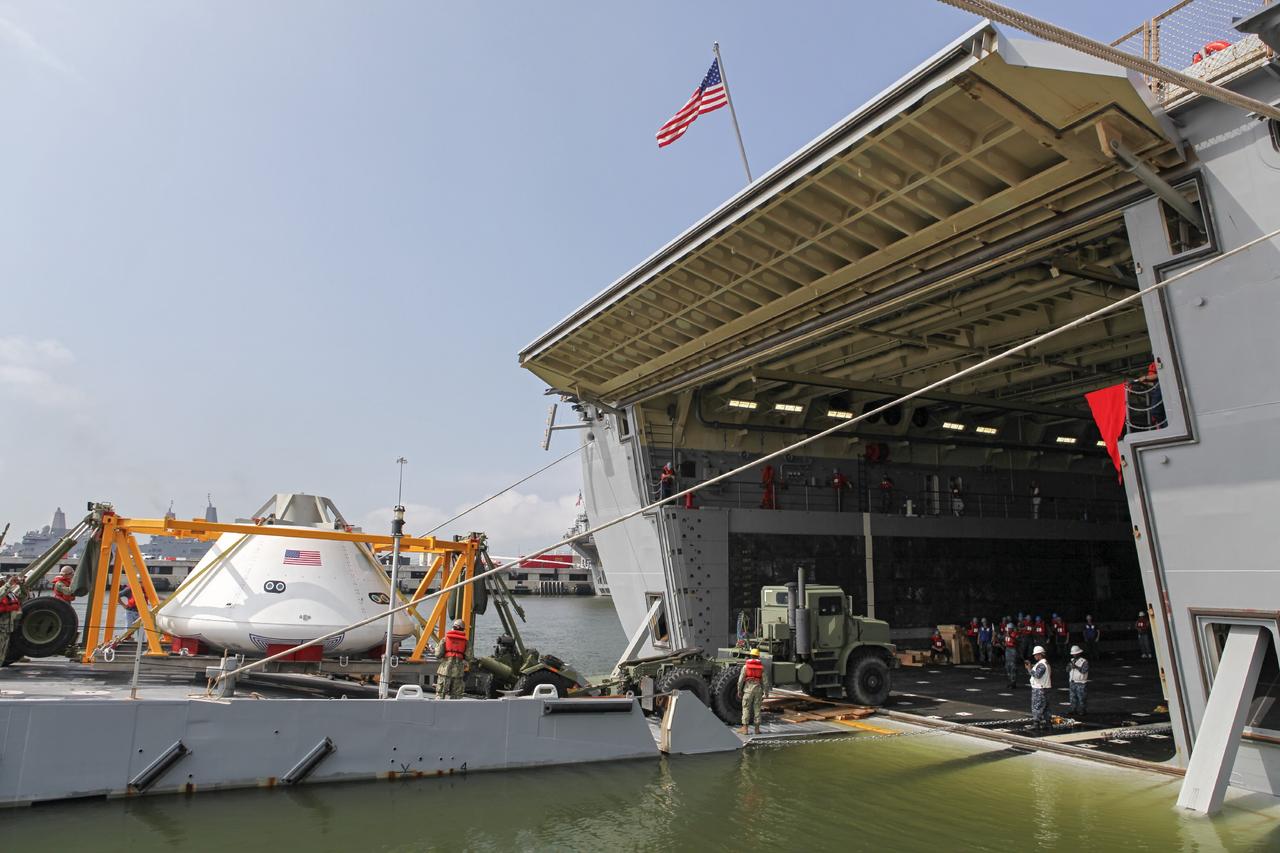
HAMPTON, Va. – At the Naval Station Norfolk near NASA’s Langley Research Center in Virginia, the Orion boilerplate test article and support equipment for a stationary recovery test are transferred by floating dock system to a U.S. Navy ship. NASA and the U.S. Navy are conducting tests to prepare for recovery of the Orion crew module and forward bay cover on its return from a deep space mission. The stationary recovery test will allow the teams to demonstrate and evaluate the recovery processes, procedures, hardware and personnel in a controlled environment before conducting a second recovery test next year in open waters. Orion is the exploration spacecraft designed to carry astronauts to destinations not yet explored by humans, including an asteroid and Mars. It will have emergency abort capability, sustain the crew during space travel and provide safe re-entry from deep space return velocities. The first unpiloted test flight of the Orion is scheduled to launch in 2014 atop a Delta IV rocket and in 2017 on NASA’s Space Launch System rocket. For more information, visit http://www.nasa.gov/orion. Photo credit: NASA/Dimitri Gerondidakis
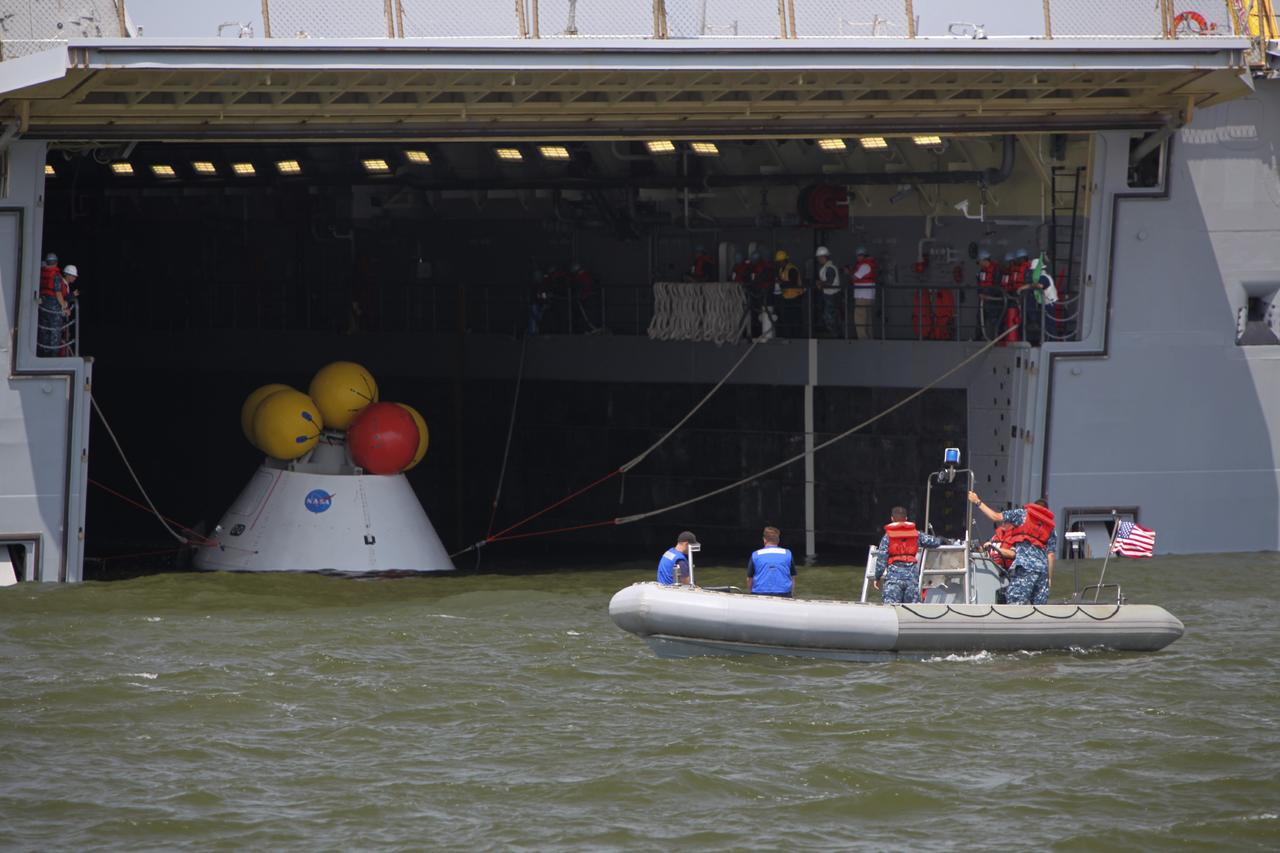
HAMPTON, Va. – At the Naval Station Norfolk near NASA’s Langley Research Center in Virginia, the Orion boilerplate test article has been returned to a U.S. Navy ship following a stationary recovery test in the water. NASA and the U.S. Navy are conducting tests to prepare for recovery of the Orion crew module and forward bay cover on its return from a deep space mission. The stationary recovery test will allow the teams to demonstrate and evaluate the recovery processes, procedures, hardware and personnel in a controlled environment before conducting a second recovery test next year in open waters. Orion is the exploration spacecraft designed to carry astronauts to destinations not yet explored by humans, including an asteroid and Mars. It will have emergency abort capability, sustain the crew during space travel and provide safe re-entry from deep space return velocities. The first unpiloted test flight of the Orion is scheduled to launch in 2014 atop a Delta IV rocket and in 2017 on NASA’s Space Launch System rocket. For more information, visit http://www.nasa.gov/orion. Photo credit: NASA/Dimitri Gerondidakis
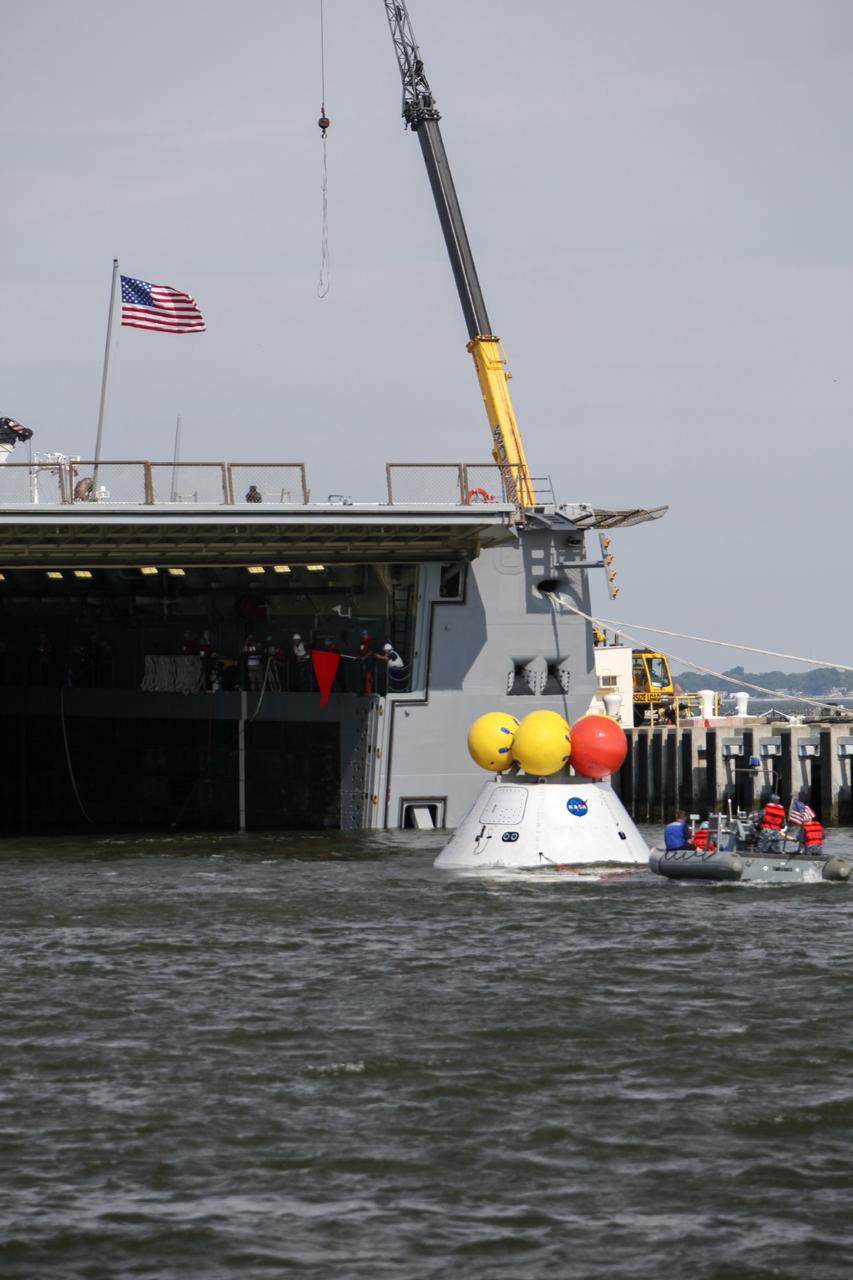
HAMPTON, Va. – At the Naval Station Norfolk near NASA’s Langley Research Center in Virginia, the Orion boilerplate test article has been moved from a U.S. Navy ship and placed in the water for a stationary recovery test. NASA and the U.S. Navy are conducting tests to prepare for recovery of the Orion crew module and forward bay cover on its return from a deep space mission. The stationary recovery test will allow the teams to demonstrate and evaluate the recovery processes, procedures, hardware and personnel in a controlled environment before conducting a second recovery test next year in open waters. Orion is the exploration spacecraft designed to carry astronauts to destinations not yet explored by humans, including an asteroid and Mars. It will have emergency abort capability, sustain the crew during space travel and provide safe re-entry from deep space return velocities. The first unpiloted test flight of the Orion is scheduled to launch in 2014 atop a Delta IV rocket and in 2017 on NASA’s Space Launch System rocket. For more information, visit http://www.nasa.gov/orion. Photo credit: NASA/Dimitri Gerondidakis
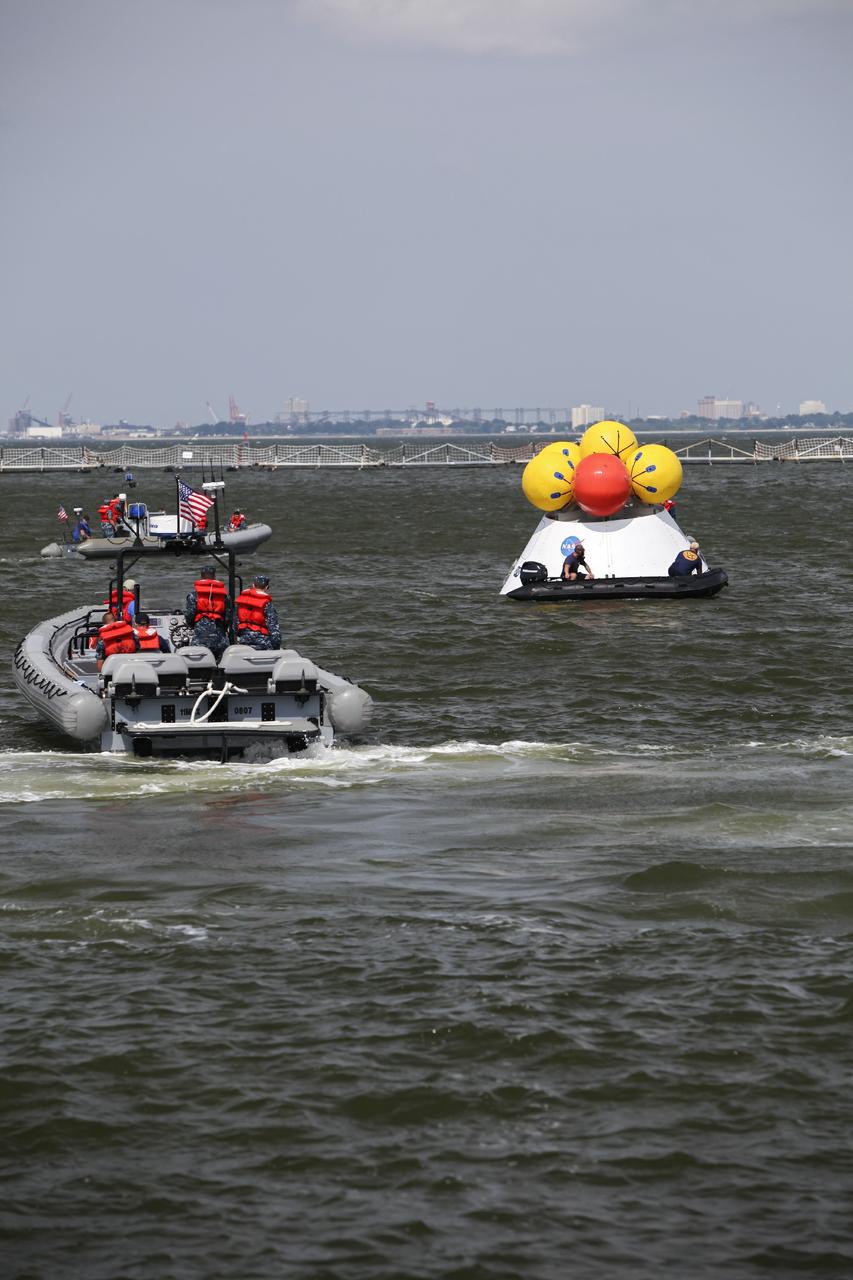
HAMPTON, Va. – At the Naval Station Norfolk near NASA’s Langley Research Center in Virginia, NASA and U.S. Navy personnel monitor the progress as the Orion boilerplate test article floats in the water during a stationary recovery test. NASA and the U.S. Navy are conducting tests to prepare for recovery of the Orion crew module and forward bay cover on its return from a deep space mission. The stationary recovery test will allow the teams to demonstrate and evaluate the recovery processes, procedures, hardware and personnel in a controlled environment before conducting a second recovery test next year in open waters. Orion is the exploration spacecraft designed to carry astronauts to destinations not yet explored by humans, including an asteroid and Mars. It will have emergency abort capability, sustain the crew during space travel and provide safe re-entry from deep space return velocities. The first unpiloted test flight of the Orion is scheduled to launch in 2014 atop a Delta IV rocket and in 2017 on NASA’s Space Launch System rocket. For more information, visit http://www.nasa.gov/orion. Photo credit: NASA/Dimitri Gerondidakis
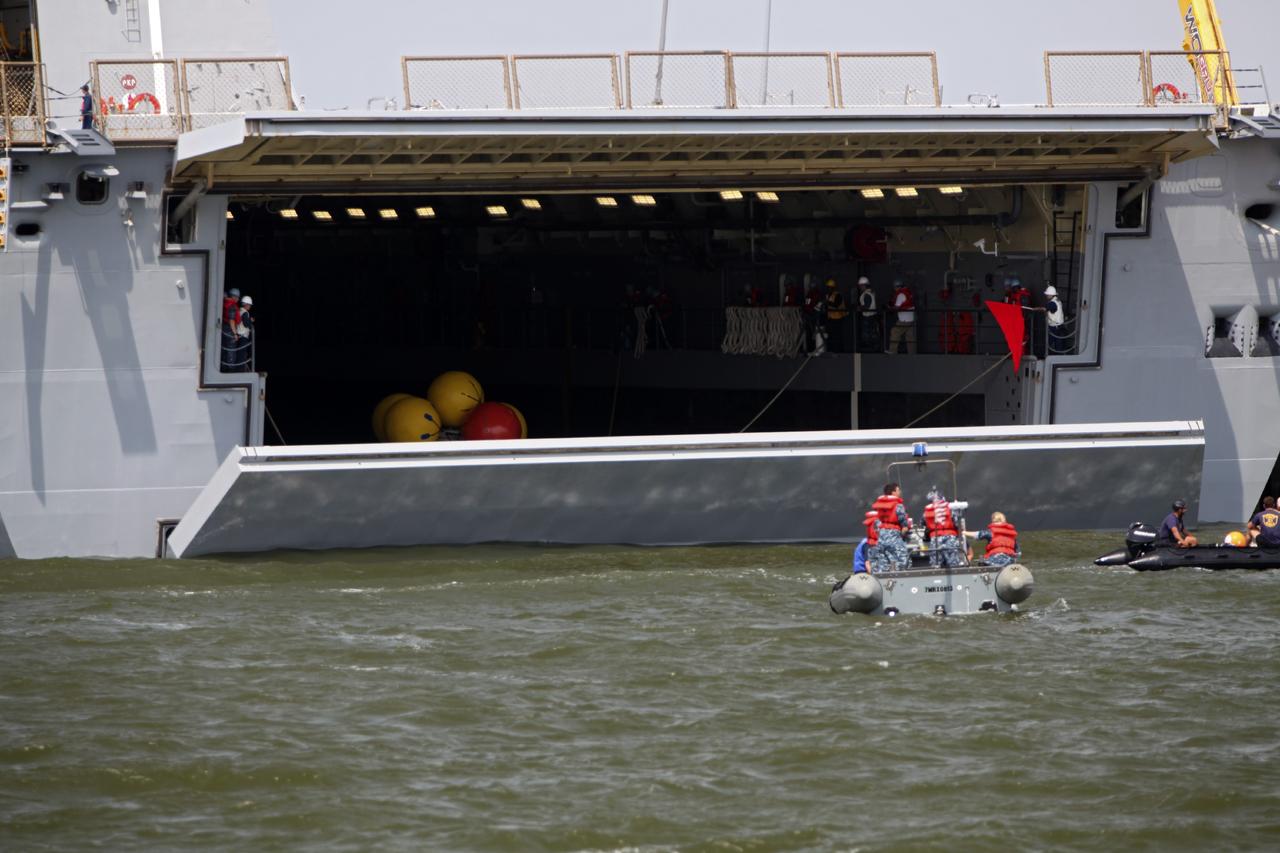
HAMPTON, Va. – At the Naval Station Norfolk near NASA’s Langley Research Center in Virginia, the Orion boilerplate test article has been returned to a U.S. Navy ship following a stationary recovery test in the water. NASA and the U.S. Navy are conducting tests to prepare for recovery of the Orion crew module and forward bay cover on its return from a deep space mission. The stationary recovery test will allow the teams to demonstrate and evaluate the recovery processes, procedures, hardware and personnel in a controlled environment before conducting a second recovery test next year in open waters. Orion is the exploration spacecraft designed to carry astronauts to destinations not yet explored by humans, including an asteroid and Mars. It will have emergency abort capability, sustain the crew during space travel and provide safe re-entry from deep space return velocities. The first unpiloted test flight of the Orion is scheduled to launch in 2014 atop a Delta IV rocket and in 2017 on NASA’s Space Launch System rocket. For more information, visit http://www.nasa.gov/orion. Photo credit: NASA/Dimitri Gerondidakis
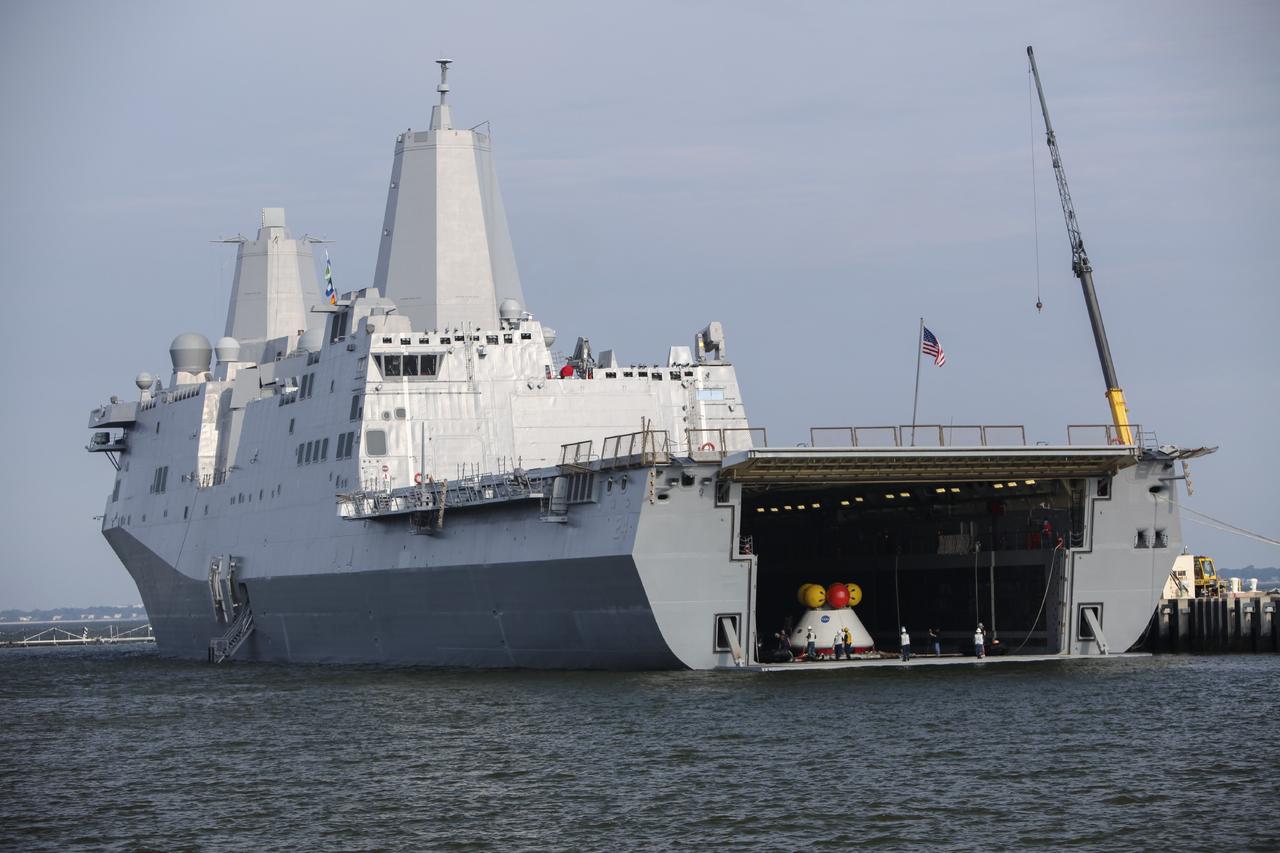
HAMPTON, Va. – At the Naval Station Norfolk near NASA’s Langley Research Center in Virginia, NASA and U.S. Navy personnel prepare the Orion boilerplate test article and support equipment for a stationary recovery test on a U.S. Navy ship. NASA and the U.S. Navy are conducting tests to prepare for recovery of the Orion crew module and forward bay cover on its return from a deep space mission. The stationary recovery test will allow the teams to demonstrate and evaluate the recovery processes, procedures, hardware and personnel in a controlled environment before conducting a second recovery test next year in open waters. Orion is the exploration spacecraft designed to carry astronauts to destinations not yet explored by humans, including an asteroid and Mars. It will have emergency abort capability, sustain the crew during space travel and provide safe re-entry from deep space return velocities. The first unpiloted test flight of the Orion is scheduled to launch in 2014 atop a Delta IV rocket and in 2017 on NASA’s Space Launch System rocket. For more information, visit http://www.nasa.gov/orion. Photo credit: NASA/Dimitri Gerondidakis
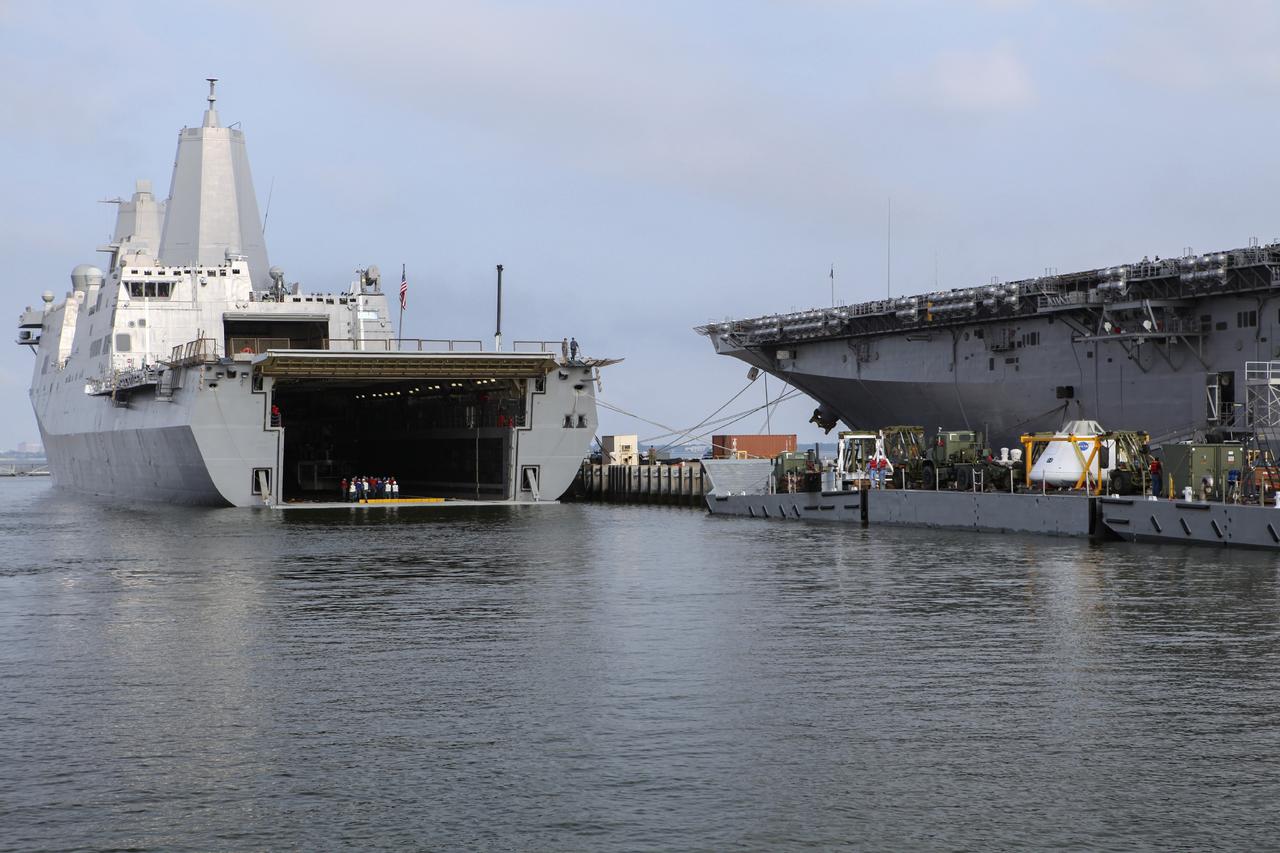
HAMPTON, Va. – At the Naval Station Norfolk near NASA’s Langley Research Center in Virginia, the Orion boilerplate test article and support equipment for a stationary recovery test are being transferred on a floating dock system to a U.S. Navy ship. NASA and the U.S. Navy are conducting tests to prepare for recovery of the Orion crew module and forward bay cover on its return from a deep space mission. The stationary recovery test will allow the teams to demonstrate and evaluate the recovery processes, procedures, hardware and personnel in a controlled environment before conducting a second recovery test next year in open waters. Orion is the exploration spacecraft designed to carry astronauts to destinations not yet explored by humans, including an asteroid and Mars. It will have emergency abort capability, sustain the crew during space travel and provide safe re-entry from deep space return velocities. The first unpiloted test flight of the Orion is scheduled to launch in 2014 atop a Delta IV rocket and in 2017 on a Space Launch System rocket. For more information, visit http://www.nasa.gov/orion. Photo credit: NASA/Dimitri Gerondidakis
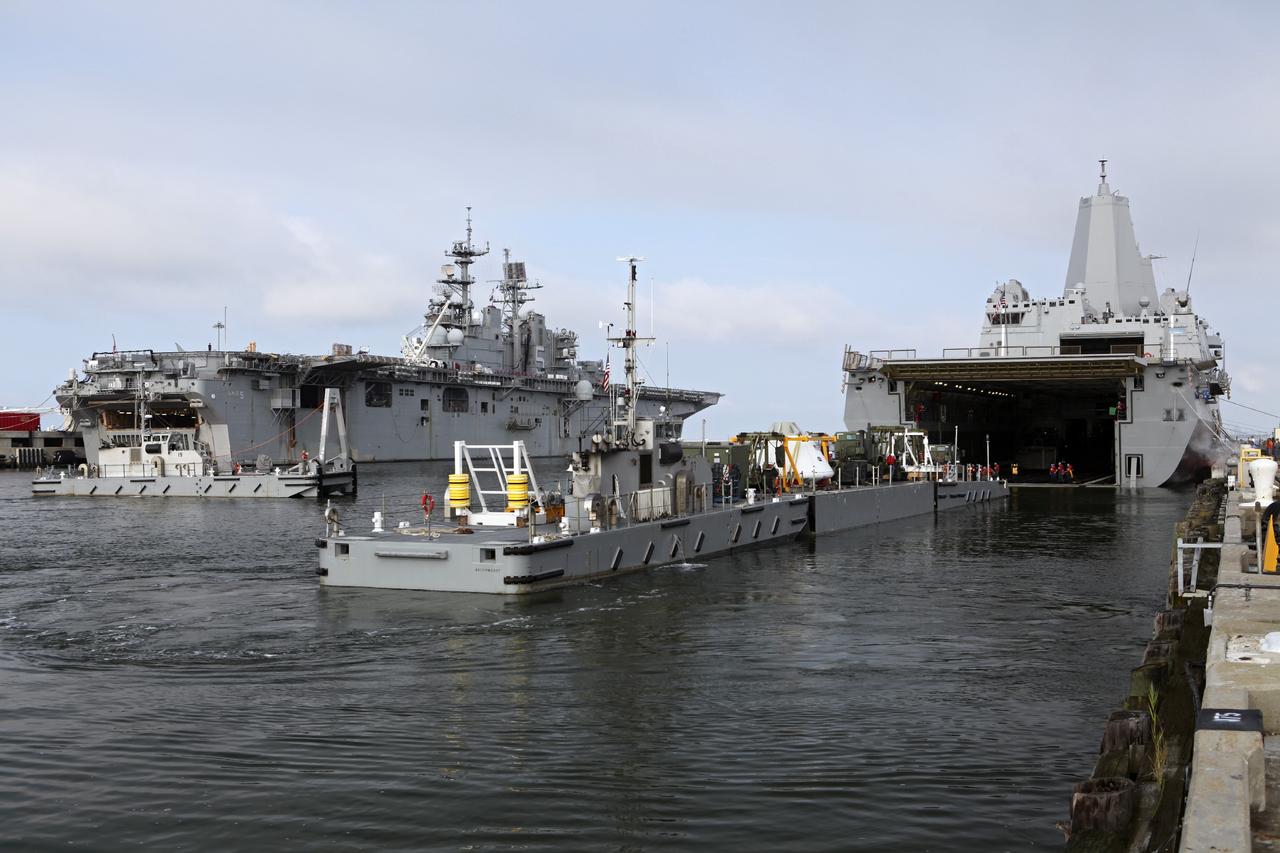
HAMPTON, Va. – At the Naval Station Norfolk near NASA’s Langley Research Center in Virginia, the Orion boilerplate test article and support equipment for a stationary recovery test are being transferred on a floating dock system to a U.S. Navy ship. NASA and the U.S. Navy are conducting tests to prepare for recovery of the Orion crew module and forward bay cover on its return from a deep space mission. The stationary recovery test will allow the teams to demonstrate and evaluate the recovery processes, procedures, hardware and personnel in a controlled environment before conducting a second recovery test next year in open waters. Orion is the exploration spacecraft designed to carry astronauts to destinations not yet explored by humans, including an asteroid and Mars. It will have emergency abort capability, sustain the crew during space travel and provide safe re-entry from deep space return velocities. The first unpiloted test flight of the Orion is scheduled to launch in 2014 atop a Delta IV rocket and in 2017 on a Space Launch System rocket. For more information, visit http://www.nasa.gov/orion. Photo credit: NASA/Dimitri Gerondidakis
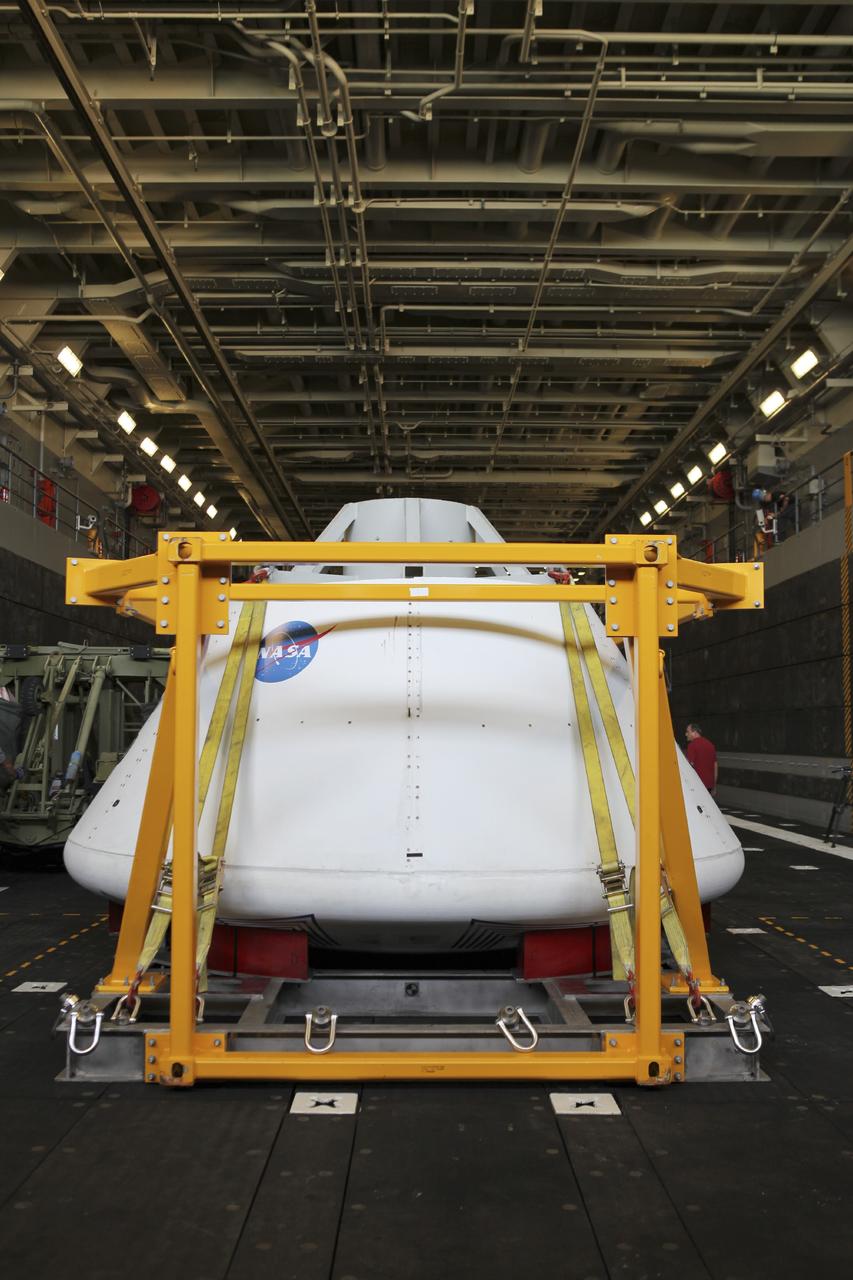
HAMPTON, Va. – At the Naval Station Norfolk near NASA’s Langley Research Center in Virginia, the Orion boilerplate test article was secured on a U.S. Navy ship after arriving by floating dock system for a stationary recovery test. NASA and the U.S. Navy are conducting tests to prepare for recovery of the Orion crew module and forward bay cover on its return from a deep space mission. The stationary recovery test will allow the teams to demonstrate and evaluate the recovery processes, procedures, hardware and personnel in a controlled environment before conducting a second recovery test next year in open waters. Orion is the exploration spacecraft designed to carry astronauts to destinations not yet explored by humans, including an asteroid and Mars. It will have emergency abort capability, sustain the crew during space travel and provide safe re-entry from deep space return velocities. The first unpiloted test flight of the Orion is scheduled to launch in 2014 atop a Delta IV rocket and in 2017 on NASA’s Space Launch System rocket. For more information, visit http://www.nasa.gov/orion. Photo credit: NASA/Dimitri Gerondidakis
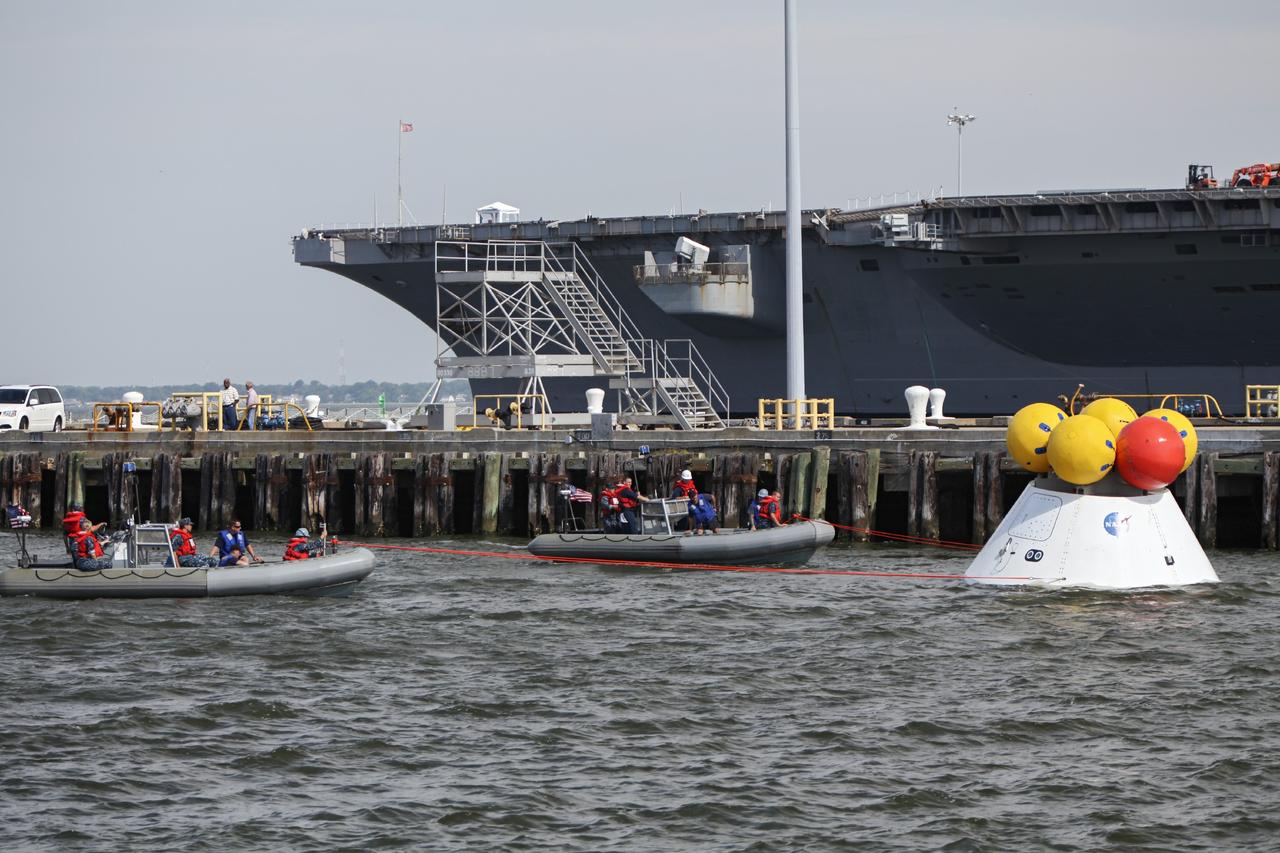
HAMPTON, Va. – At the Naval Station Norfolk near NASA’s Langley Research Center in Virginia, NASA and U.S. Navy personnel have attached tether lines to the Orion boilerplate test article for a stationary recovery test. NASA and the U.S. Navy are conducting tests to prepare for recovery of the Orion crew module and forward bay cover on its return from a deep space mission. The stationary recovery test will allow the teams to demonstrate and evaluate the recovery processes, procedures, hardware and personnel in a controlled environment before conducting a second recovery test next year in open waters. Orion is the exploration spacecraft designed to carry astronauts to destinations not yet explored by humans, including an asteroid and Mars. It will have emergency abort capability, sustain the crew during space travel and provide safe re-entry from deep space return velocities. The first unpiloted test flight of the Orion is scheduled to launch in 2014 atop a Delta IV rocket and in 2017 on NASA’s Space Launch System rocket. For more information, visit http://www.nasa.gov/orion. Photo credit: NASA/Dimitri Gerondidakis
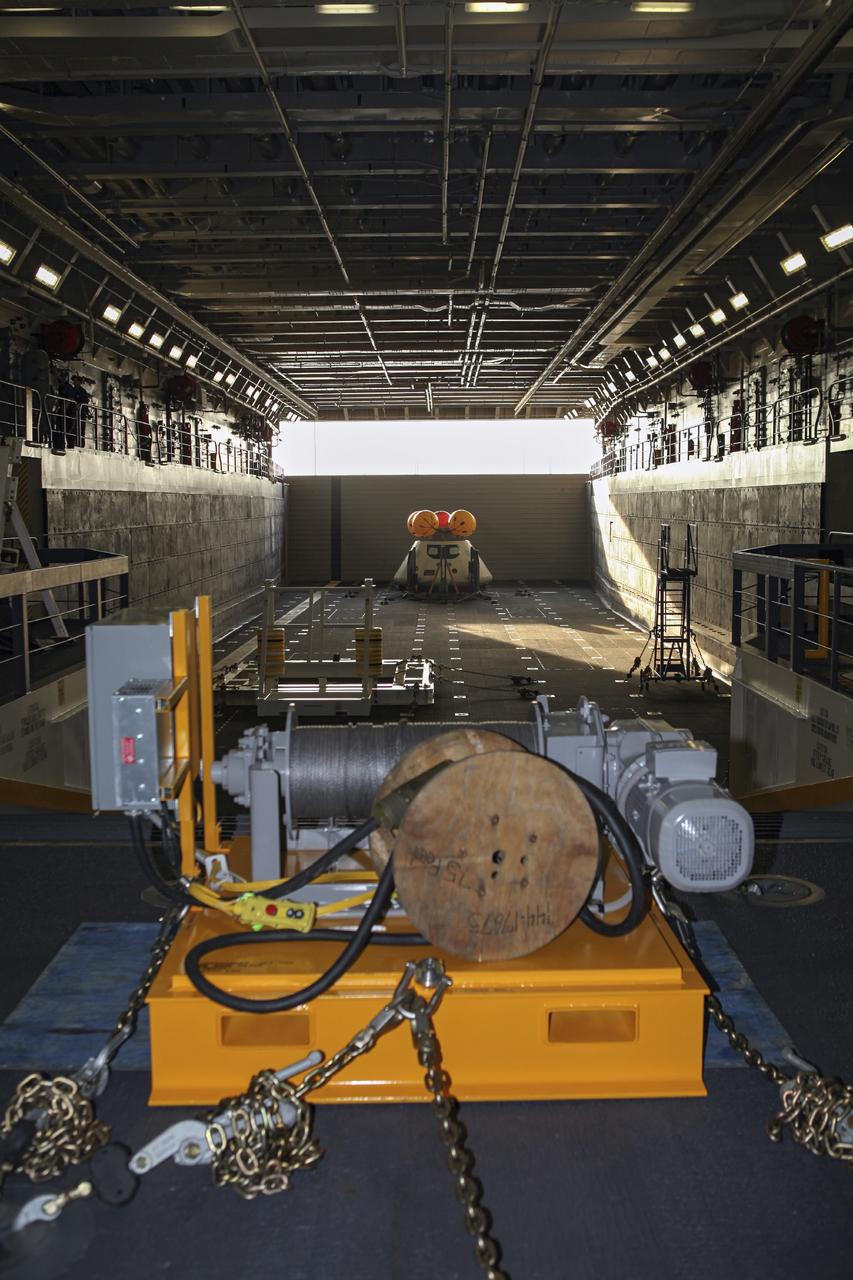
HAMPTON, Va. – At the Naval Station Norfolk near NASA’s Langley Research Center in Virginia, the Orion boilerplate test article and support equipment for a stationary recovery test are secured on a U.S. Navy ship. NASA and the U.S. Navy are conducting tests to prepare for recovery of the Orion crew module and forward bay cover on its return from a deep space mission. The stationary recovery test will allow the teams to demonstrate and evaluate the recovery processes, procedures, hardware and personnel in a controlled environment before conducting a second recovery test next year in open waters. Orion is the exploration spacecraft designed to carry astronauts to destinations not yet explored by humans, including an asteroid and Mars. It will have emergency abort capability, sustain the crew during space travel and provide safe re-entry from deep space return velocities. The first unpiloted test flight of the Orion is scheduled to launch in 2014 atop a Delta IV rocket and in 2017 on NASA’s Space Launch System rocket. For more information, visit http://www.nasa.gov/orion. Photo credit: NASA/Dimitri Gerondidakis