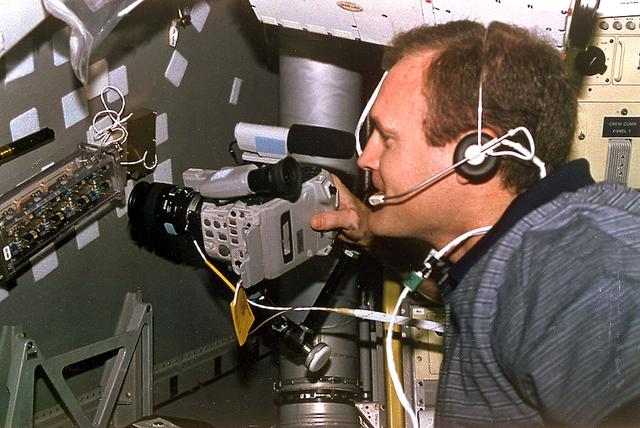
Astronaut James D. Halsell, Jr., mission commander, uses a Hi-8mm camcorder to videotape the Hand Held Diffusion Test Cells (HHDTC), in the Spacelab Science Module aboard the Earth-orbiting Space Shuttle Columbia (STS-94). Each test cell has three chambers containing a protein solution, a buffer solution and a precipitant solution chamber. Using the liquid-liquid diffusion method, the different fluids are brought into contact but not mixed. Over a period of time, the fluids will diffuse into each other through the random motion of molecules. The gradual increase in concentration of the precipitant within the protein solution causes the proteins to crystallize.
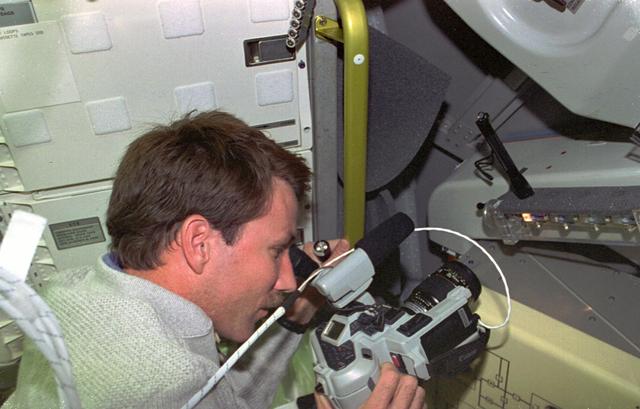
STS073-131-014 (20 October-5 November 1995) --- Astronaut Kent V. Rominger, STS-73 pilot, uses a camcorder to record progress in the Hand-Held Diffusion Test Cell (HHDTC) experiment. This test dealt with crystal growth by liquid-to-liquid diffusion. Four HHDTC units containing four test cells each produced protein crystals by diffusing one liquid to another. Rominger joined four other NASA astronauts and two guest researchers for 16 days of in-space United States Microgravity Laboratory 2 (USML-2) research aboard the Space Shuttle Columbia.
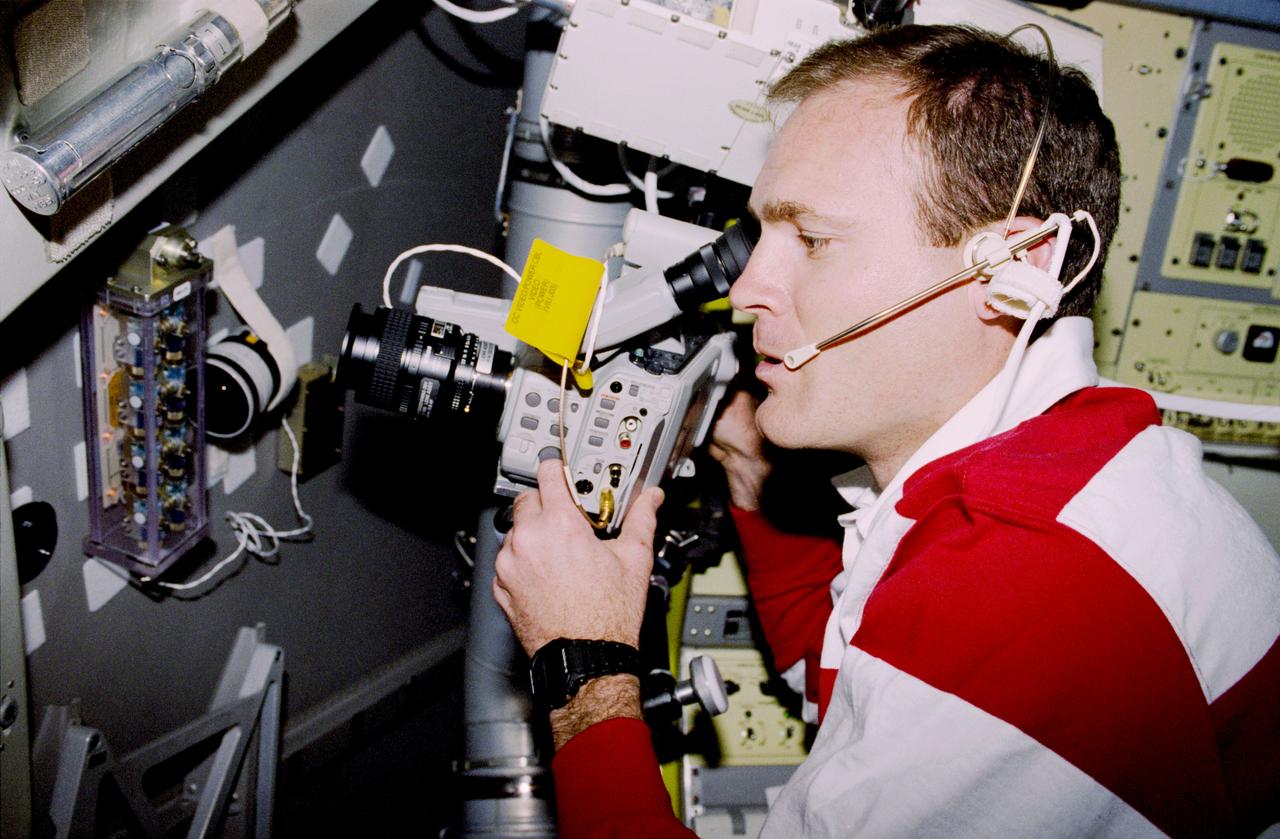
STS083-313-012 (4-8 April 1997) --- Astronaut James D. Halsell, Jr., mission commander, uses a Hi-8mm camcorder to videotape the Hand Held Diffusion Test Cells (HHDTC), in the Spacelab Module aboard the Earth-orbiting Space Shuttle Columbia. Each test cell has three chambers containing a protein solution, a buffer solution and a precipitant solution chamber. Using the liquid-liquid diffusion method, the different fluids are brought into contact but not mixed. Over a period of time, the fluids will diffuse into each other through the random motion of molecules. The gradual increase in concentration of the precipitant within the protein solution causes the proteins to crystallize.