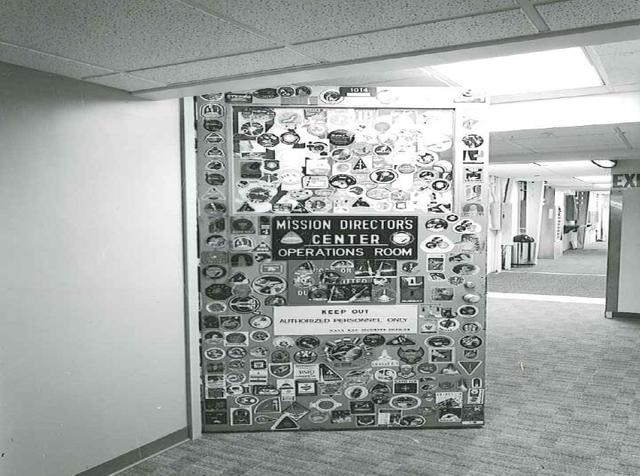
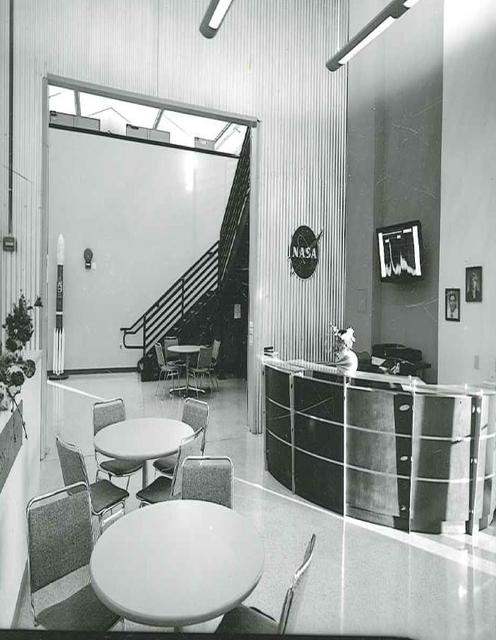
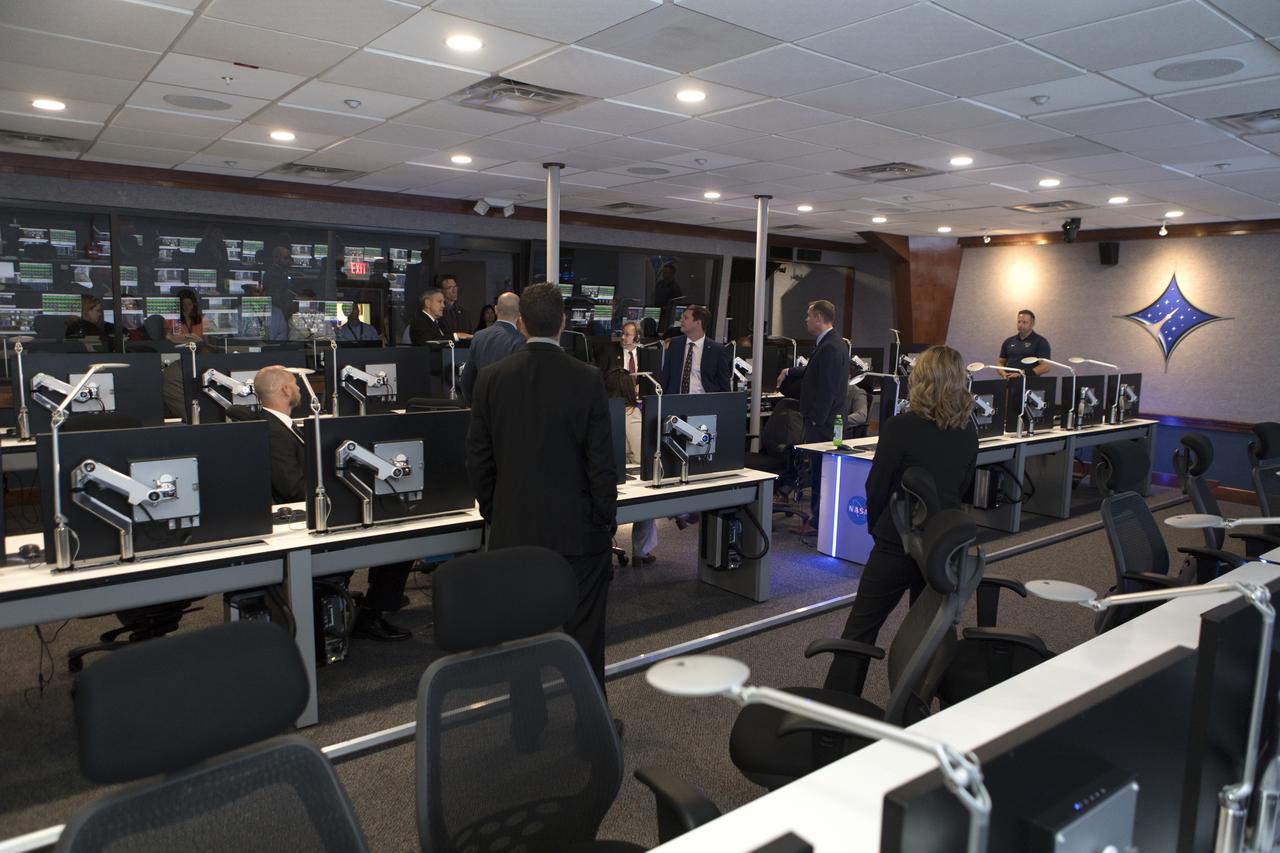
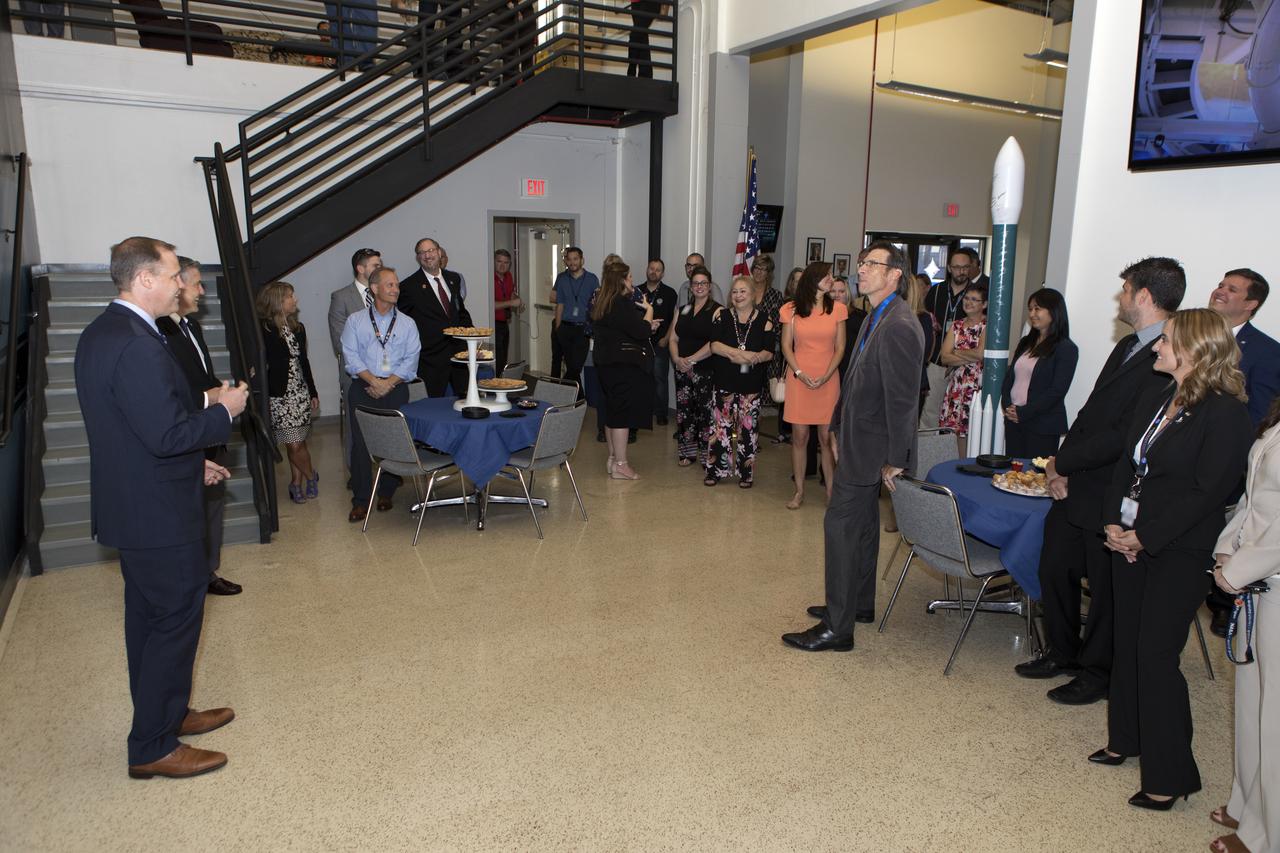
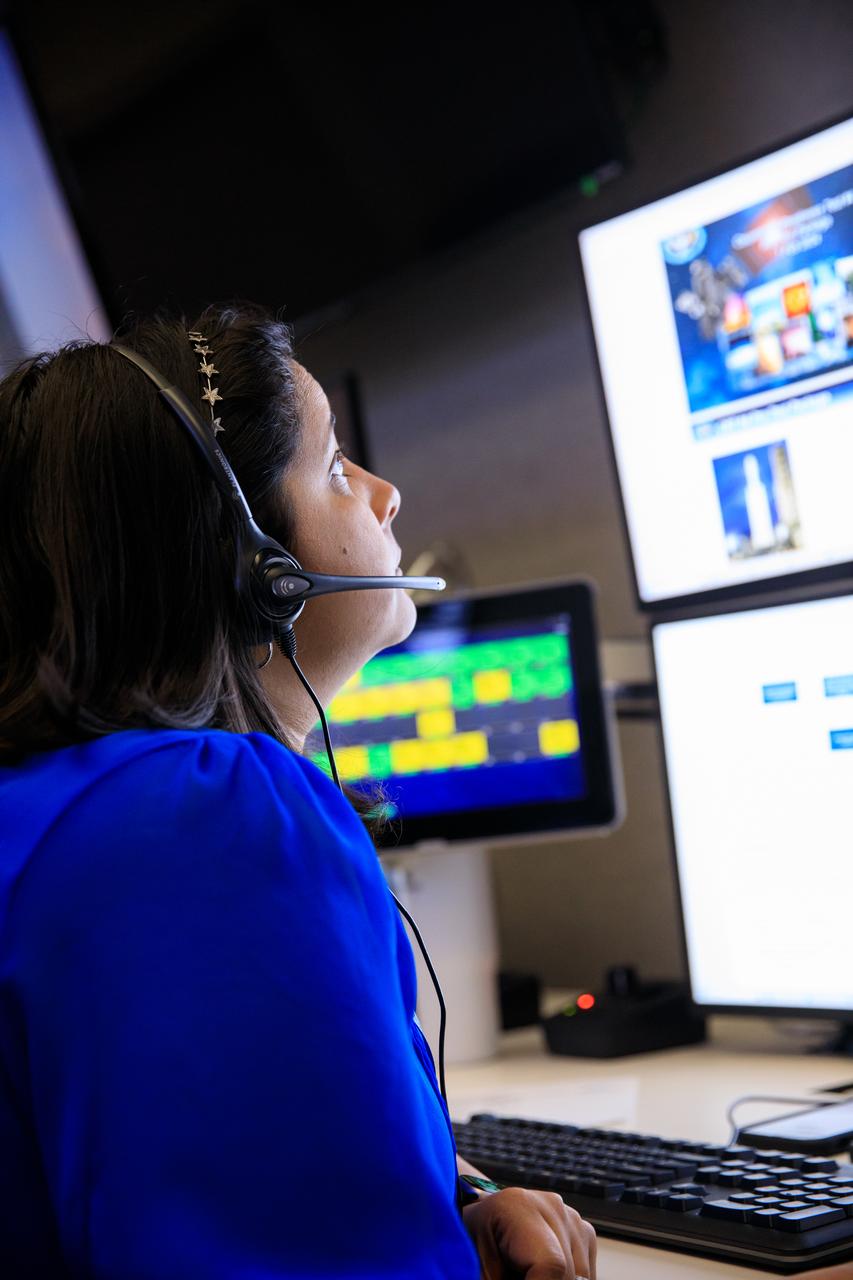
NASA Administrator Jim Bridenstine, second from left, tours the Launch Services Program's Mission Director's Center in Hangar AE, on Aug. 7, 2018, at Cape Canaveral Air Force Station in Florida. Bridenstine talked with workers and received updates on LSP missions and accomplishments.
NASA Administrator Jim Bridenstine Visits KSC - Hangar AE
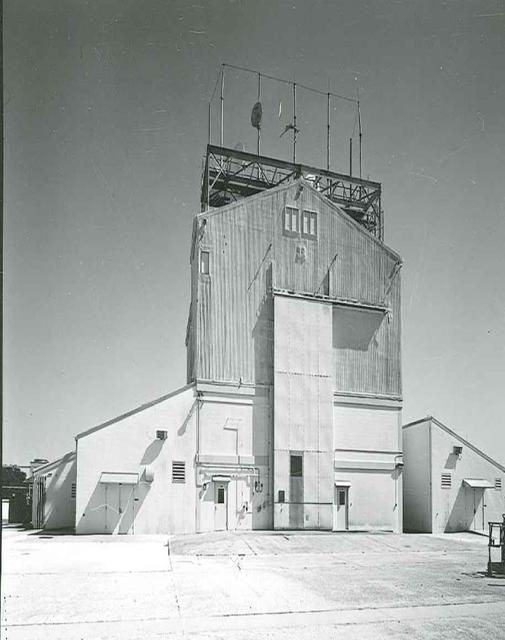
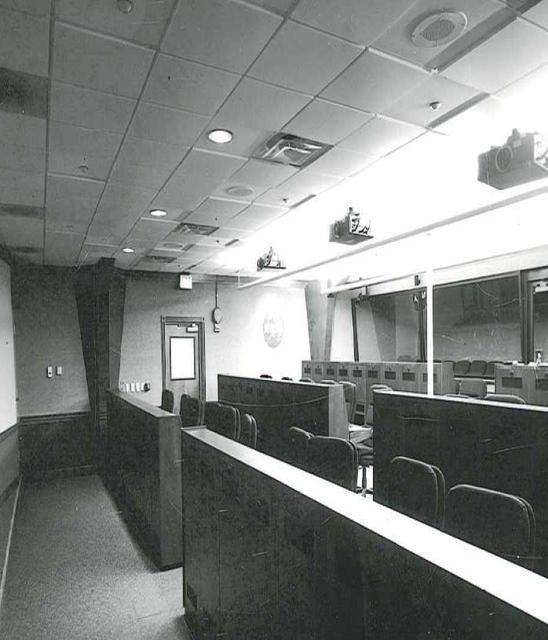
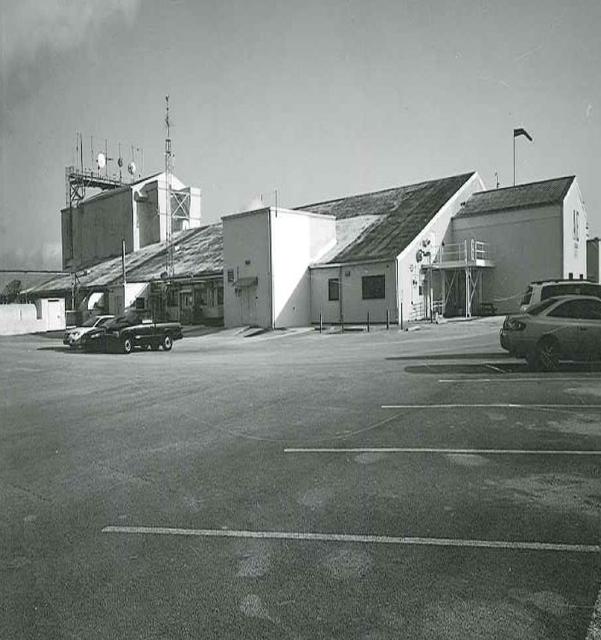
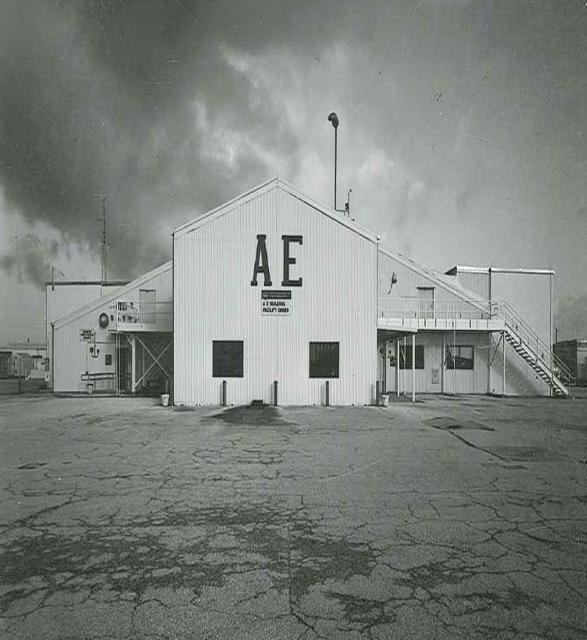
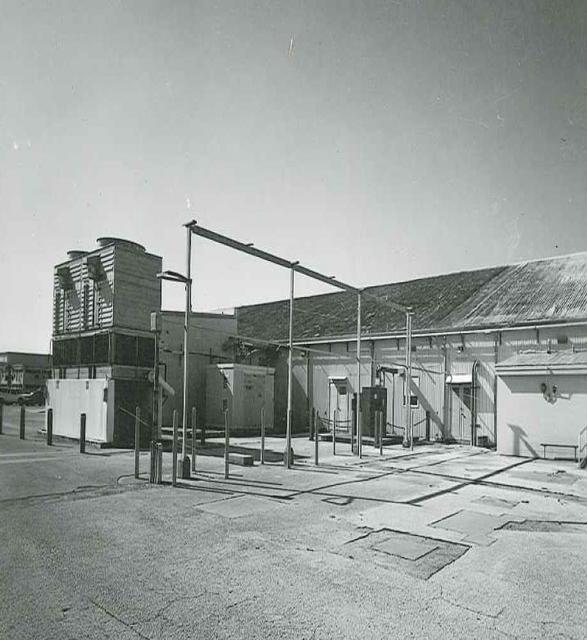
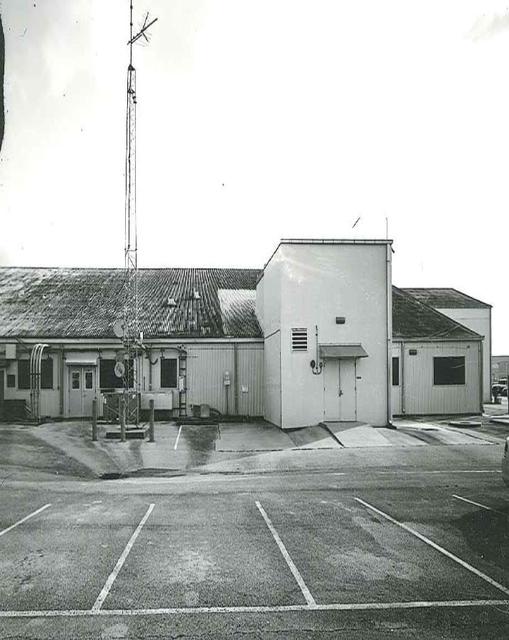
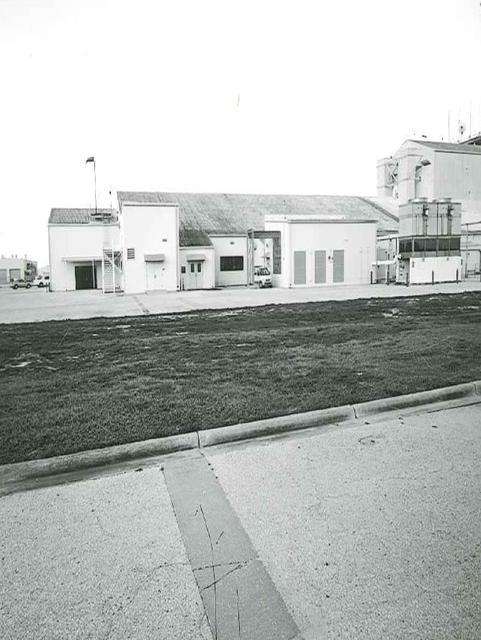
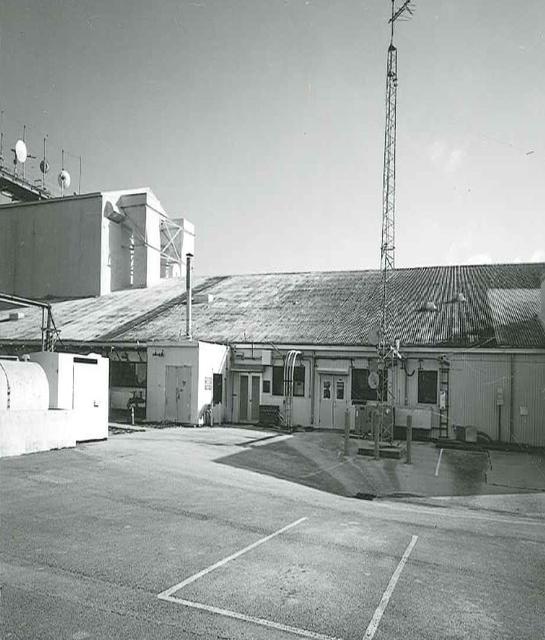
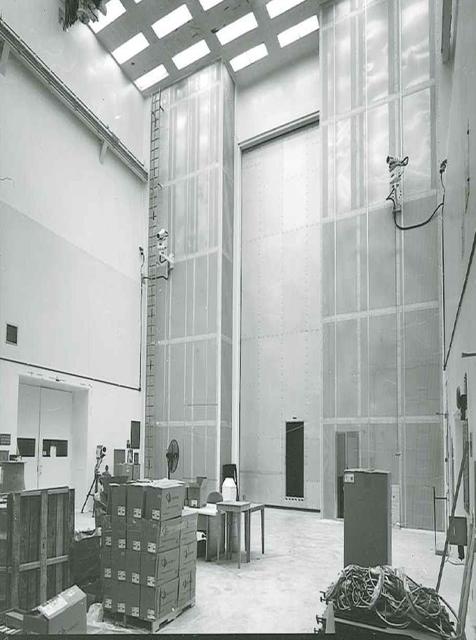
Exterior View of Hangar AE
KSC-20141001-PH-DD_6hangAE
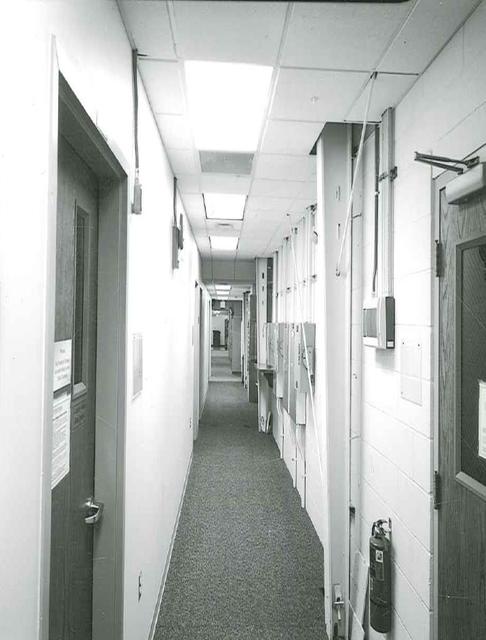
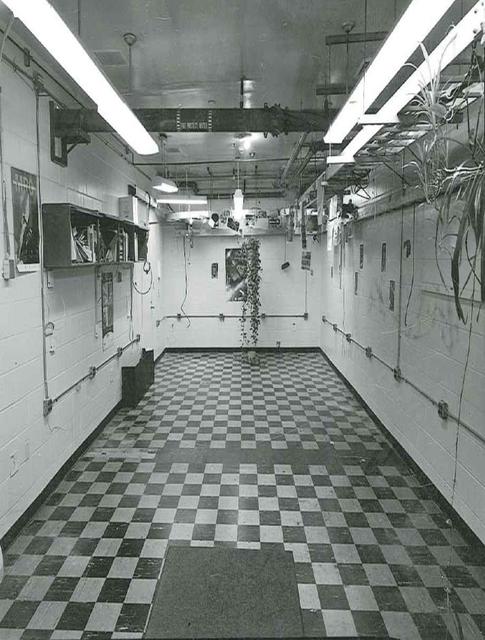
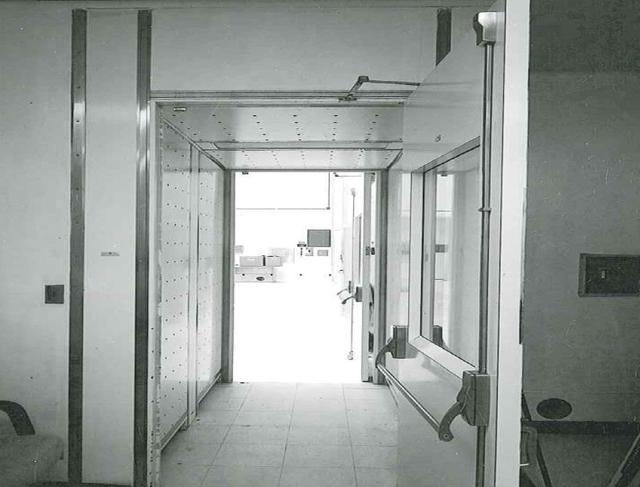
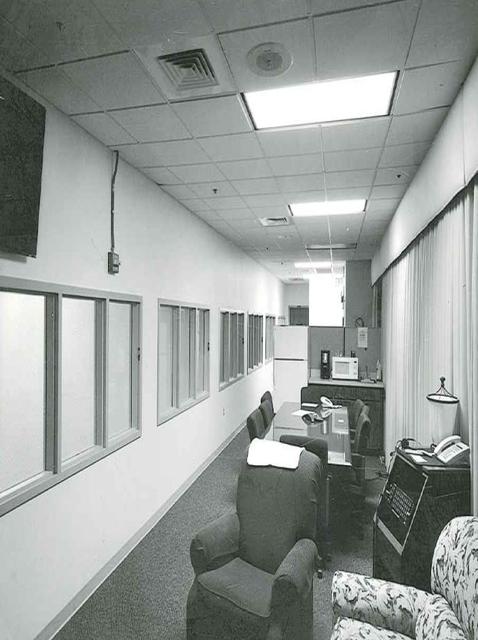
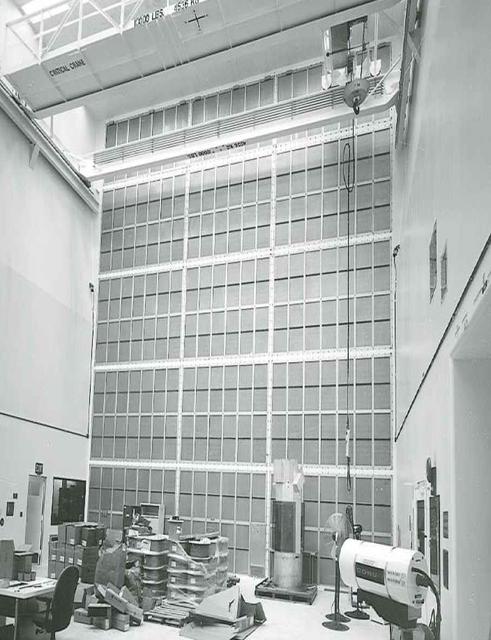
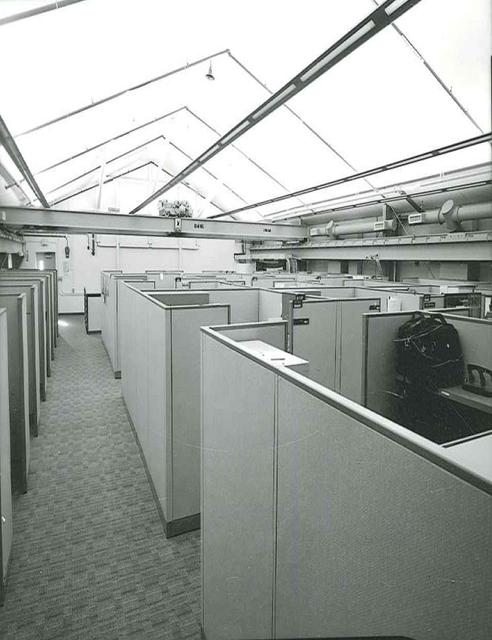
Interior View of Hangar AE
KSC-20141001-PH-DD_23hangAE
Interior View of Hangar AE
KSC-20141001-PH-DD_24hangAE
Interior View of Hangar AE
KSC-20141001-PH-DD_21hangAE
Interior View of Hangar AE
KSC-20141001-PH-DD_19hangAE
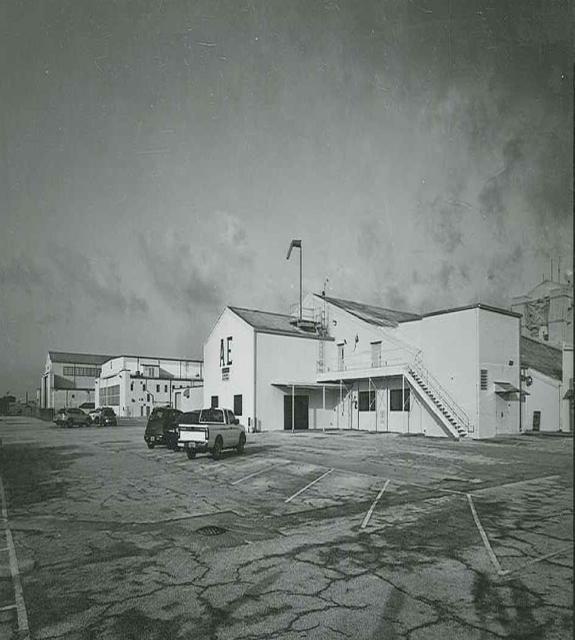
Exterior View of Hangar AE
KSC-20141001-PH-DD_9hangAE
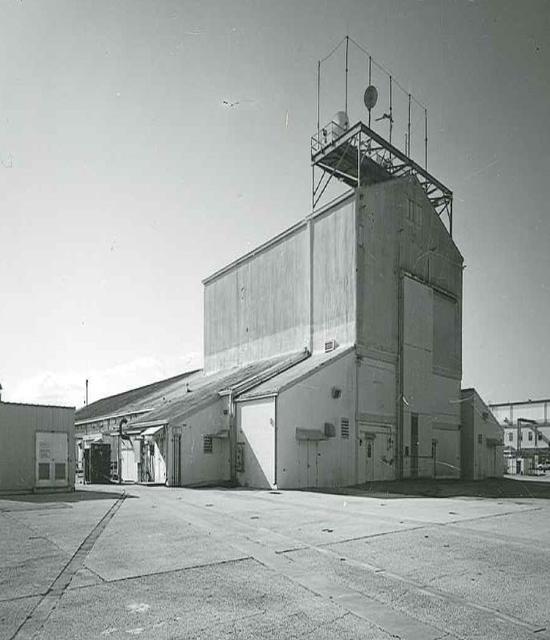
Exterior View of Hangar AE
KSC-20141001-PH-DD_4hangAE
Exterior View of Hangar AE
KSC-20141001-PH-DD_11hangAE
Exterior View of Hangar AE
KSC-20141001-PH-DD_2hangAE
Interior View of Hangar AE
KSC-20141001-PH-DD_13hangAE
Exterior View of Hangar AE
KSC-20141001-PH-DD_7hangAE
Exterior View of Hangar AE
KSC-20141001-PH-DD_8hangAE
Interior View of Hangar AE
KSC-20141001-PH-DD_25hangAE
Interior View of Hangar AE
KSC-20141001-PH-DD_22hangAE
Interior View of Hangar AE
KSC-20141001-PH-DD_14hangAE
Exterior View of Hangar AE
KSC-20141001-PH-DD_5hangAE
Interior View of Hangar AE
KSC-20141001-PH-DD_16hangAE
Interior View of Hangar AE
KSC-20141001-PH-DD_18hangAE
Exterior View of Hangar AE
KSC-20141001-PH-DD_3hangAE
Interior View of Hangar AE
KSC-20141001-PH-DD_15hangAE
Exterior View of Hangar AE
KSC-20141001-PH-DD_10hangAE
Interior View of Hangar AE
KSC-20141001-PH-DD_20hangAE
Interior View of Hangar AE
KSC-20141001-PH-DD_17hangAE
Exterior View of Hangar AE
KSC-20141001-PH-DD_1hangAE
Exterior View of Hangar AE
KSC-20141001-PH-DD_12hangAE
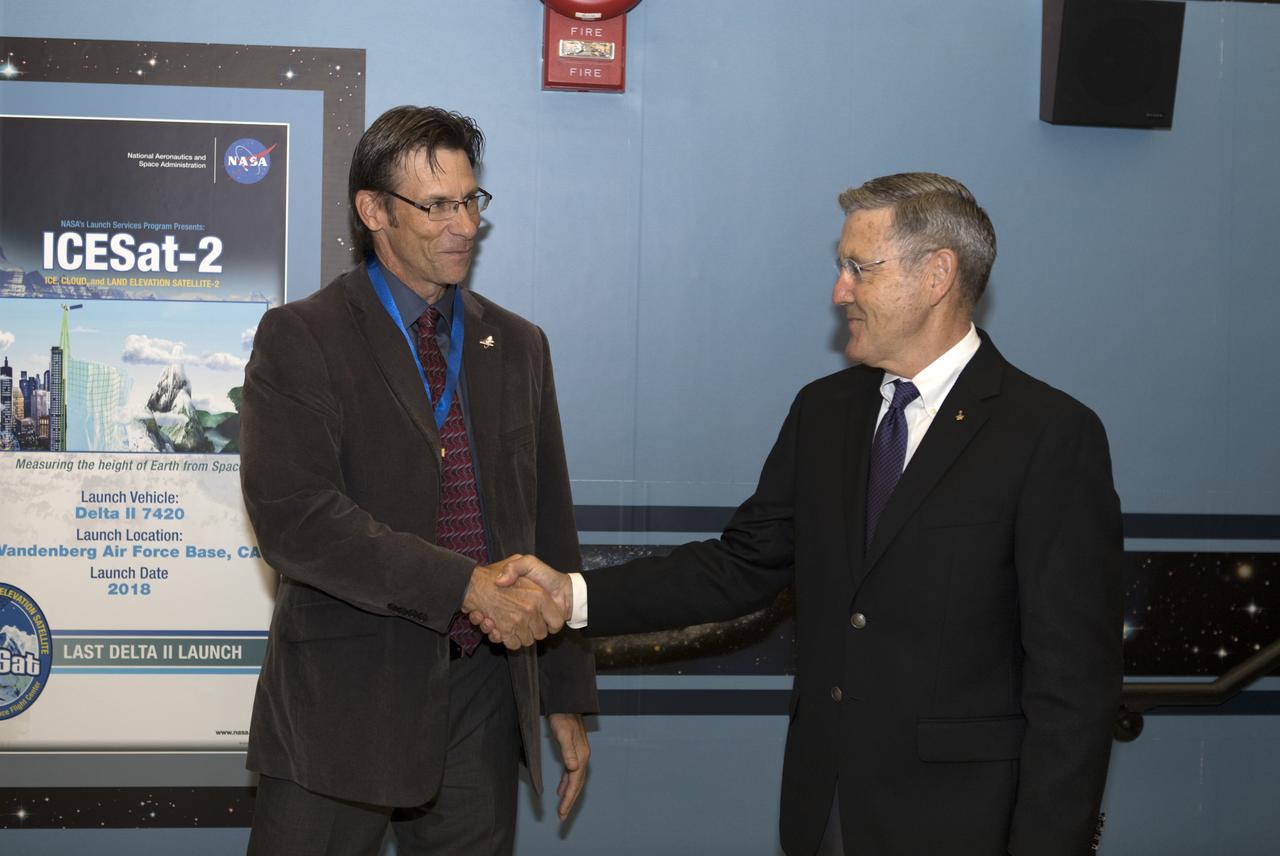
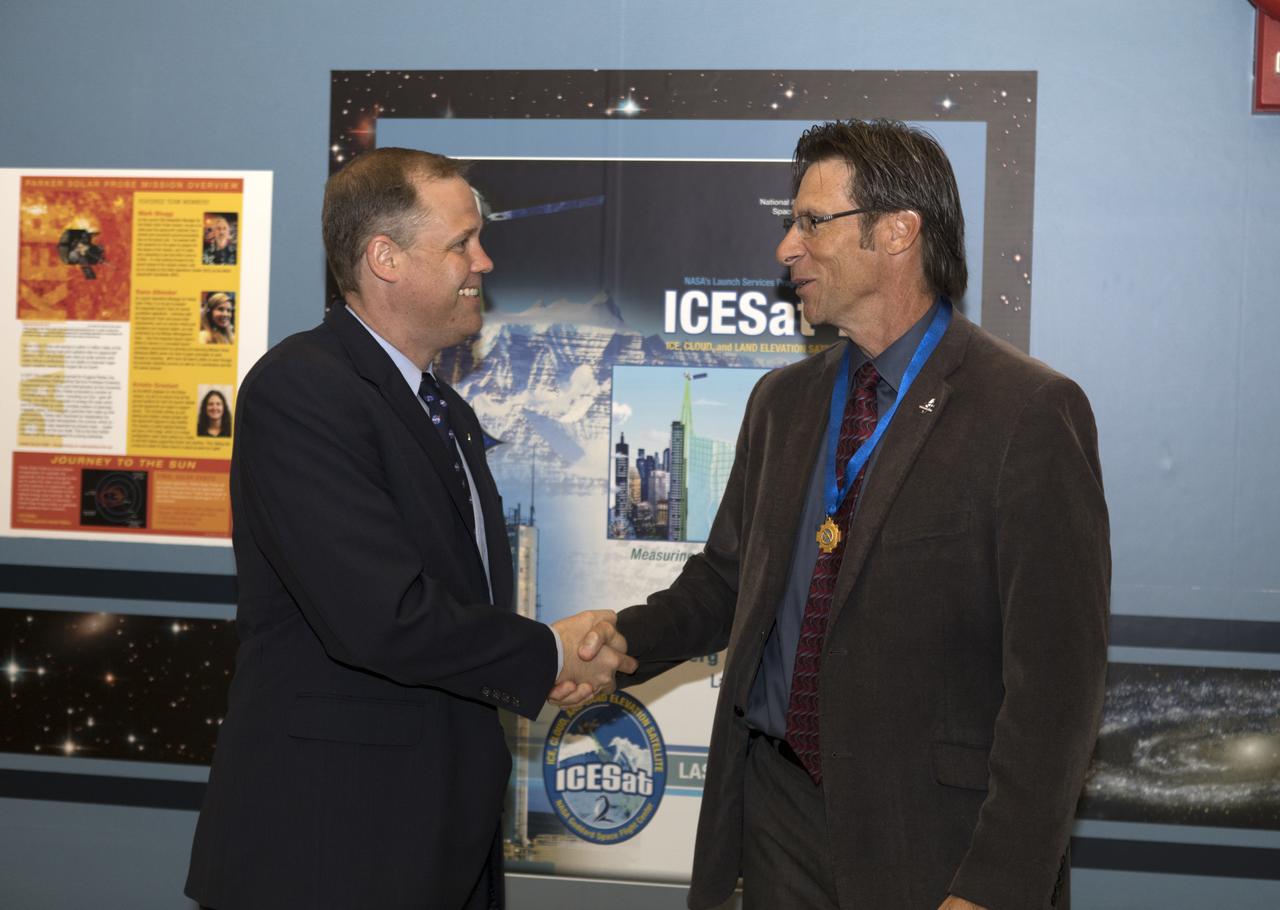
NASA Administrator Jim Bridenstine, left, congratulates Chuck Dovale, deputy program manager for the Launch Services Program (LSP), on Aug. 7, 2018, during a visit to the agency's Kennedy Space Center in Florida. Bridenstine presented a NASA Distinguished Service Medal to Dovale. During his tour of Hangar AE and LSP's Mission Director's Center, Bridenstine received updates on LSP missions and accomplishments.
NASA Administrator Jim Bridenstine Visits KSC - Hangar AE
NASA Administrator Jim Bridenstine, third row from front, second from right, tours the Launch Services Program's Mission Director's Center in Hangar AE, on Aug. 7, 2018, at Cape Canaveral Air Force Station in Florida. Kennedy Space Center Director Bob Cabana, first row up front, center, updates the administrator on LSP missions and accomplishments.
NASA Administrator Jim Bridenstine Visits KSC - Hangar AE
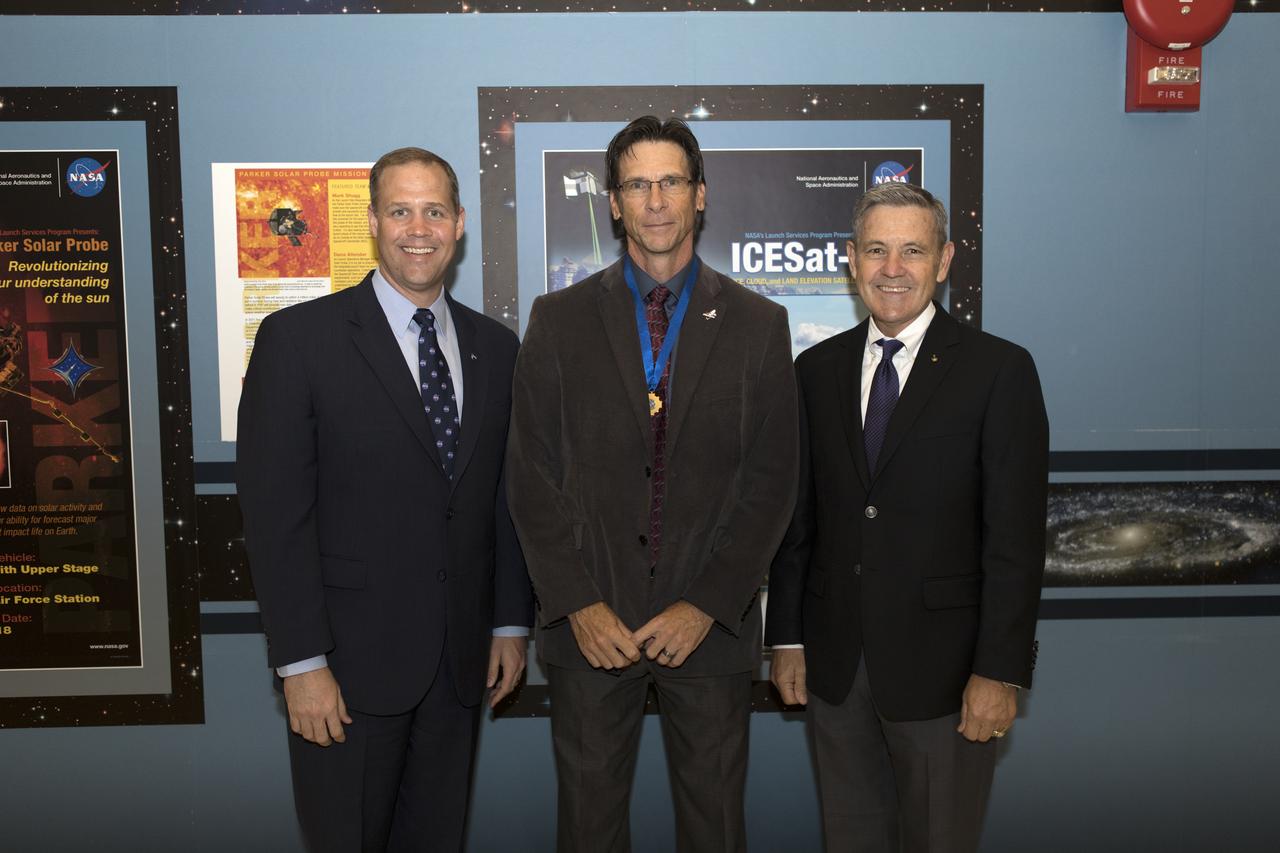
NASA Administrator Jim Bridenstine, left, tours Kennedy Space Center facilities and awards Chuck Dovale, center, deputy program manager for the Launch Services Program (LSP), a NASA Distinguished Service Medal on Aug. 7, 2018. At right is Kennedy Center Director Bob Cabana. During his tour of Hangar AE and LSP's Mission Director's Center, Bridenstine received updates on LSP missions and accomplishments.
NASA Administrator Jim Bridenstine Visits KSC - Hangar AE
NASA Kennedy Space Center Director Bob Cabana, at right, congratulates Chuck Dovale, deputy program manager for the Launch Services Program (LSP), on Aug. 7, 2018. During a visit to the center, NASA Administrator Jim Bridenstine presents a NASA Distinguished Service Medal to Dovale. During his tour of Hangar AE and LSP's Mission Director's Center, Bridenstine received updates on LSP missions and accomplishments.
NASA Administrator Jim Bridenstine Visits KSC - Hangar AE
NASA Administrator Jim Bridenstine, left, tours Hangar AE and the Launch Services Program's (LSP) Mission Director's Center at Cape Canaveral Air Force Station in Florida on Aug. 7, 2018. Bridenstine spoke to workers and received updates on LSP missions and accomplishments. At right, standing near a chair, is Chuck Dovale, deputy program manager for LSP. Bridenstine presented a NASA Distinguished Service Medal to Dovale.
NASA Administrator Jim Bridenstine Visits KSC - Hangar AE
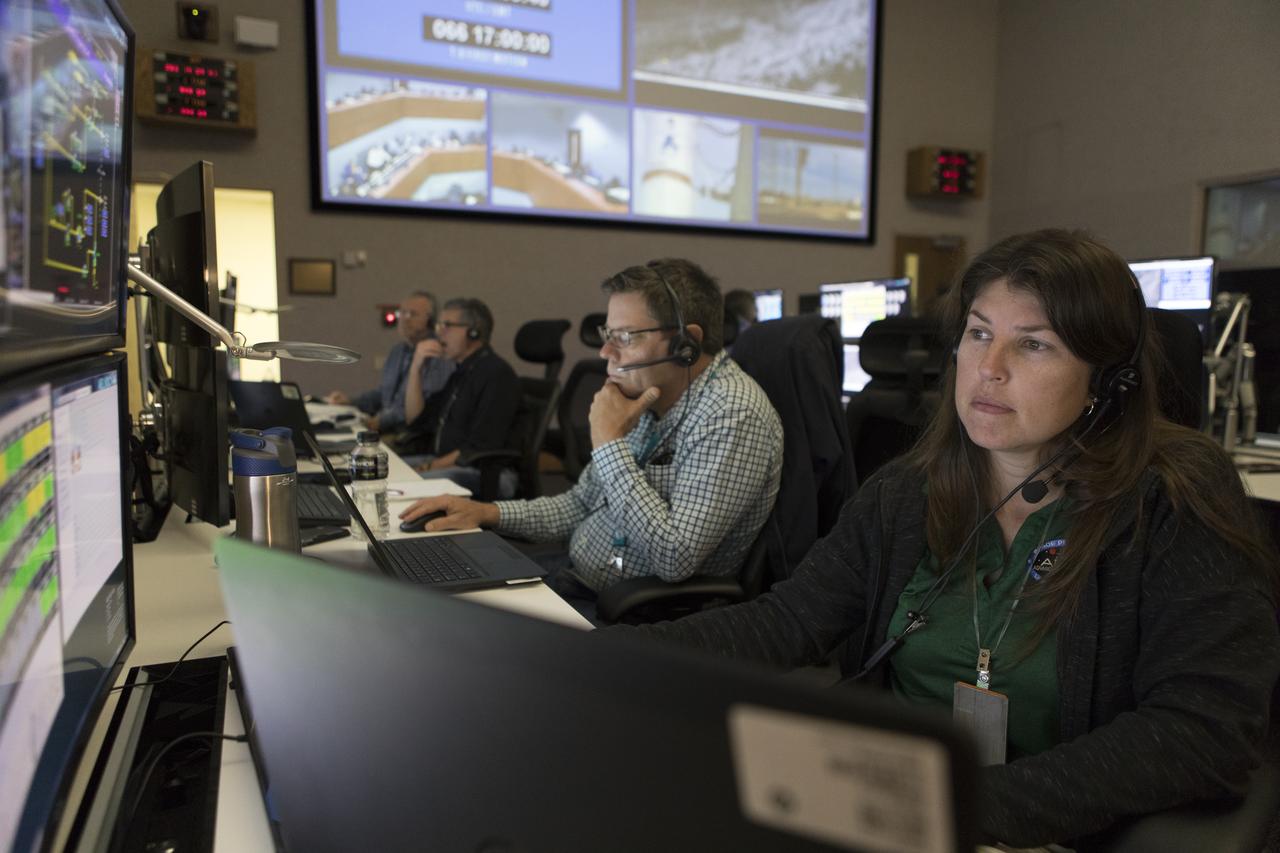
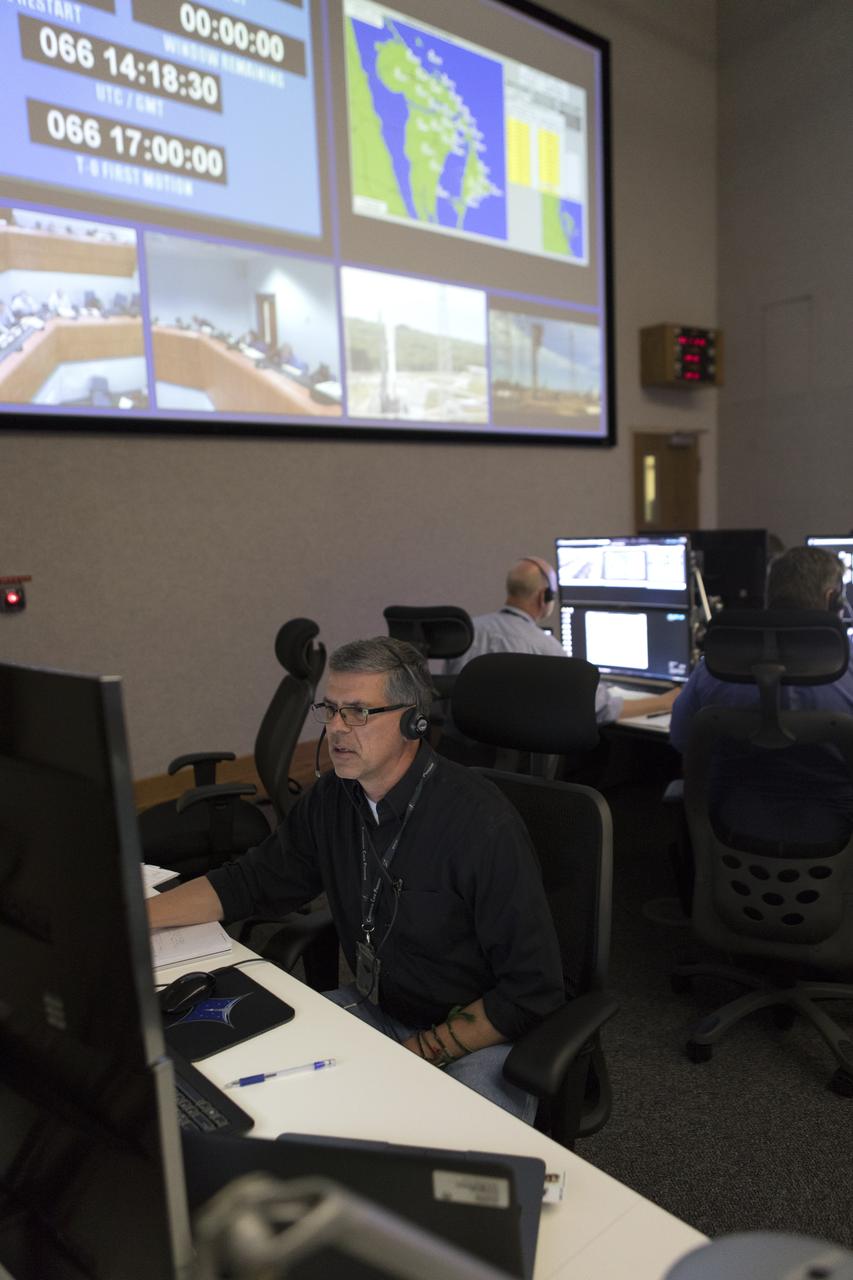
NASA, Boeing and United Launch Alliance (ULA) conduct a simulation of launch procedures for Boeing’s Orbital Test Flight, the first uncrewed test of the company’s CST-100 Starliner and a ULA Atlas V rocket. Launch teams participated in the simulation across the country, including inside the Launch Vehicle Data Center at Hangar AE at Cape Canaveral Air Force Station in Florida. The Starliner will launch on an Atlas V rocket to the International Space Station as part of NASA’s Commercial Crew Program.
NASA/Boeing Orbital Test Flight Simulation
NASA, Boeing and United Launch Alliance (ULA) conduct a simulation of launch procedures for Boeing’s Orbital Test Flight, the first uncrewed test of the company’s CST-100 Starliner and a ULA Atlas V rocket. Launch teams participated in the simulation across the country, including inside the Launch Vehicle Data Center at Hangar AE at Cape Canaveral Air Force Station in Florida. The Starliner will launch on an Atlas V rocket to the International Space Station as part of NASA’s Commercial Crew Program.
NASA/Boeing Orbital Test Flight Simulation
NASA, Boeing and United Launch Alliance (ULA) conduct a simulation of launch procedures for Boeing’s Orbital Test Flight, the first uncrewed test of the company’s CST-100 Starliner and a ULA Atlas V rocket. Launch teams participated in the simulation across the country, including inside the Launch Vehicle Data Center at Hangar AE at Cape Canaveral Air Force Station in Florida. The Starliner will launch on an Atlas V rocket to the International Space Station as part of NASA’s Commercial Crew Program.
NASA/Boeing Orbital Test Flight Simulation
NASA, Boeing and United Launch Alliance (ULA) conduct a simulation of launch procedures for Boeing’s Orbital Test Flight, the first uncrewed test of the company’s CST-100 Starliner and a ULA Atlas V rocket. Launch teams participated in the simulation across the country, including inside the Launch Vehicle Data Center at Hangar AE at Cape Canaveral Air Force Station in Florida. The Starliner will launch on an Atlas V rocket to the International Space Station as part of NASA’s Commercial Crew Program.
NASA/Boeing Orbital Test Flight Simulation
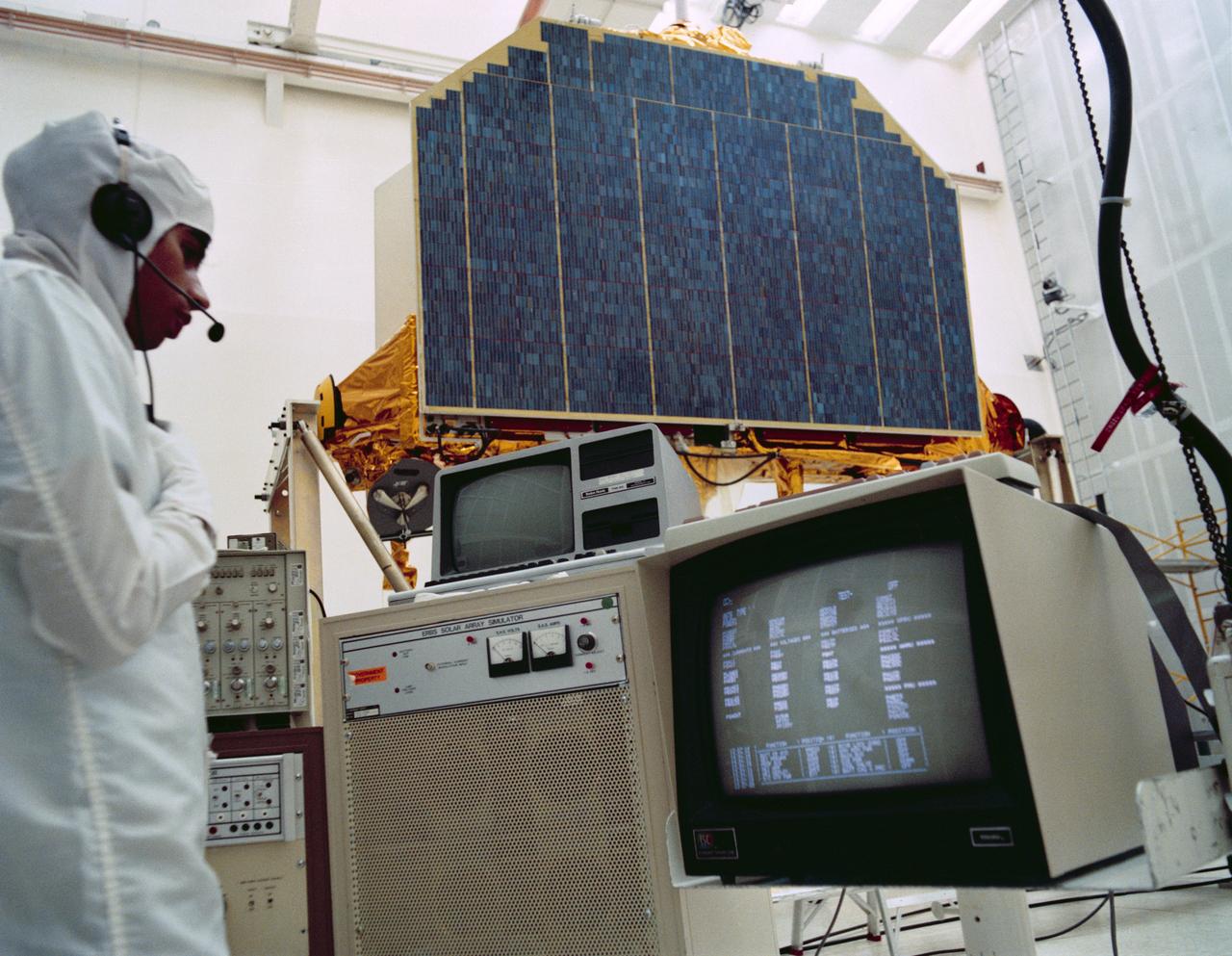
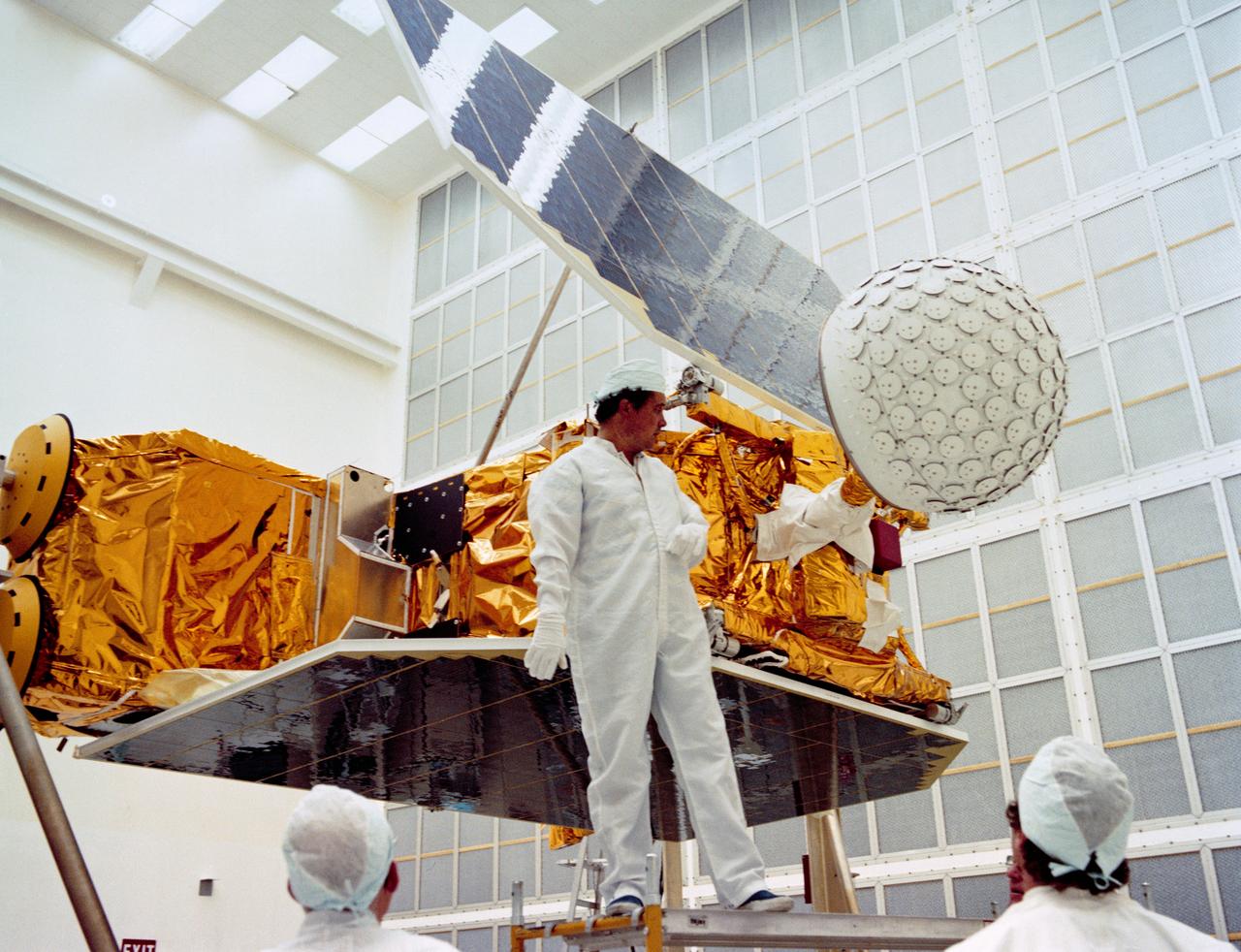
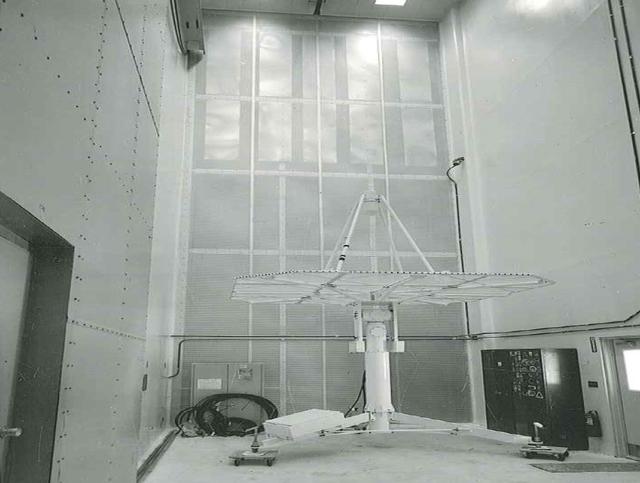
Documentation of STS 41-G payloads while in Hangar AE at Cape Canaveral. Views include documentation of the Earth Radiation Budget Satllite (ERBS) antenna (41266) and solar array panels (41265).
Documentation of STS 41-G payloads while in Hangar AE at Cape Canaveral
Documentation of STS 41-G payloads while in Hangar AE at Cape Canaveral. Views include documentation of the Earth Radiation Budget Satllite (ERBS) antenna (41266) and solar array panels (41265).
Documentation of STS 41-G payloads while in Hangar AE at Cape Canaveral
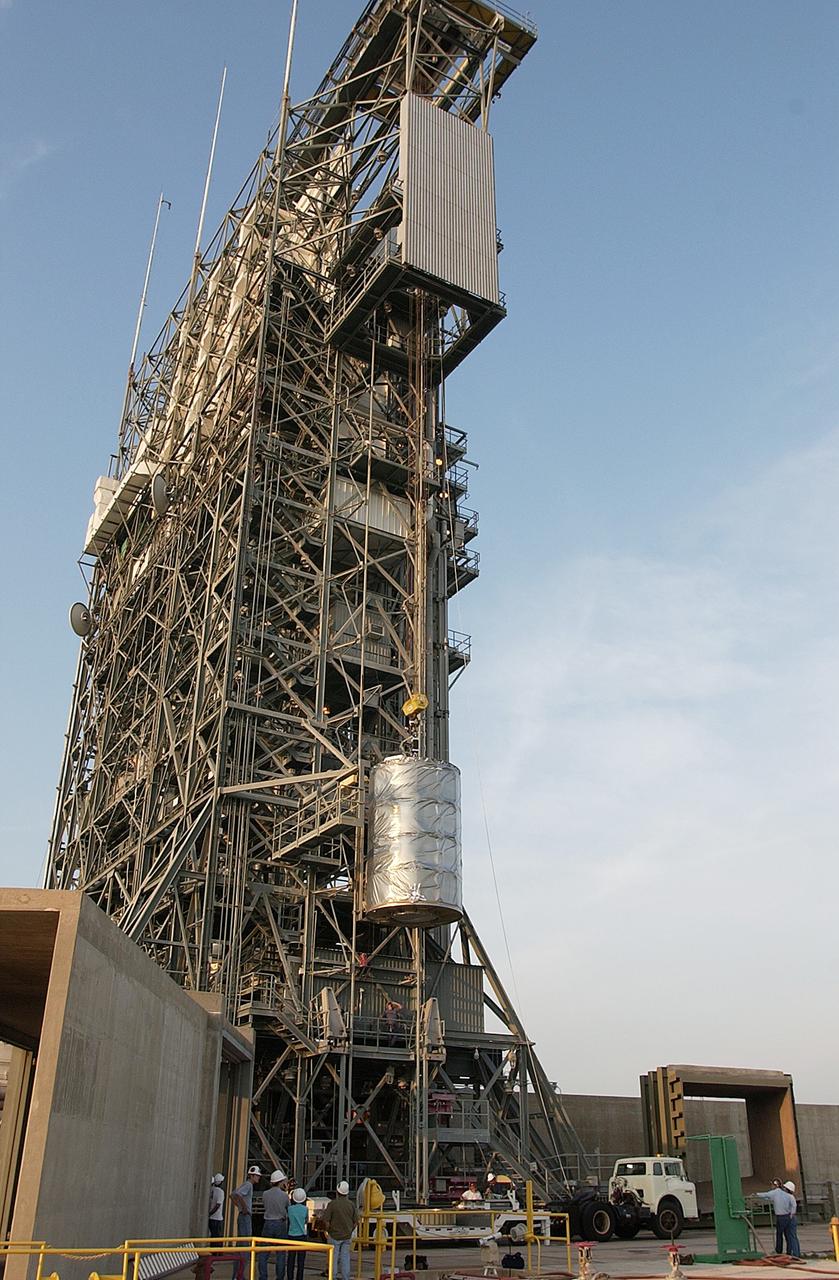
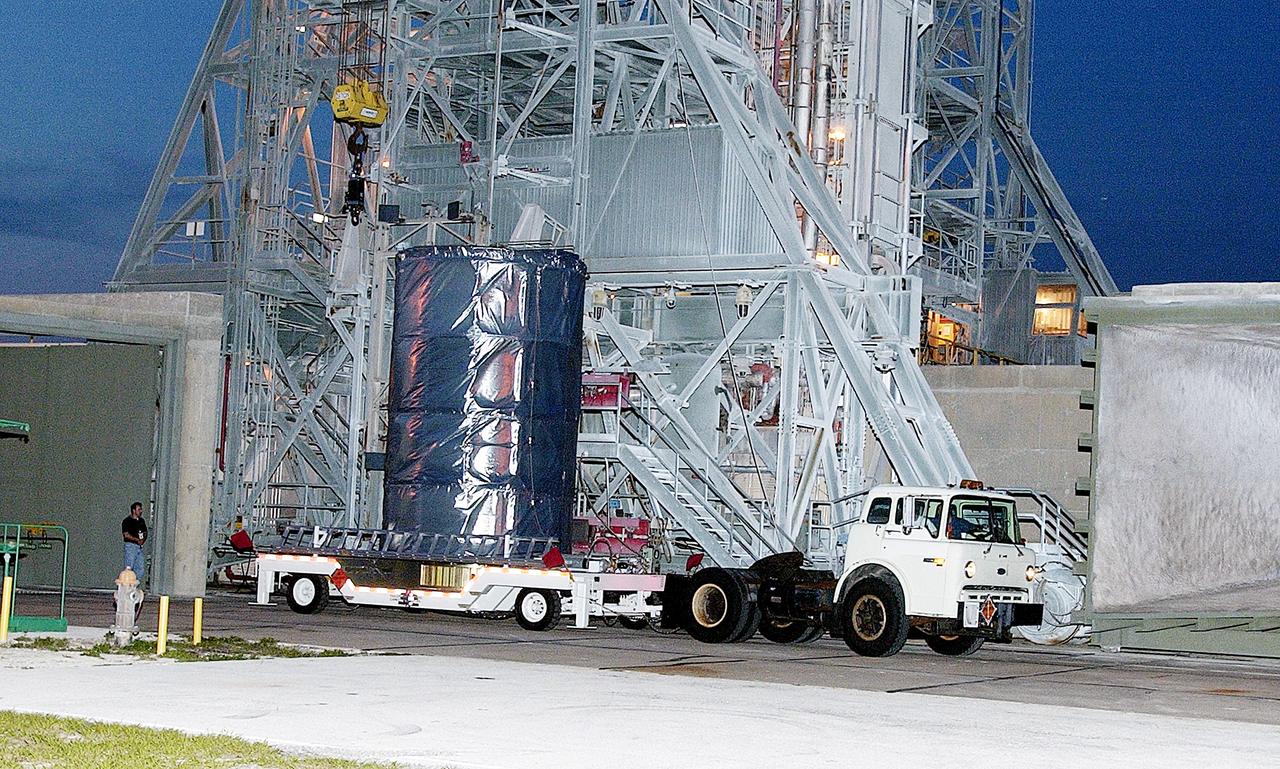
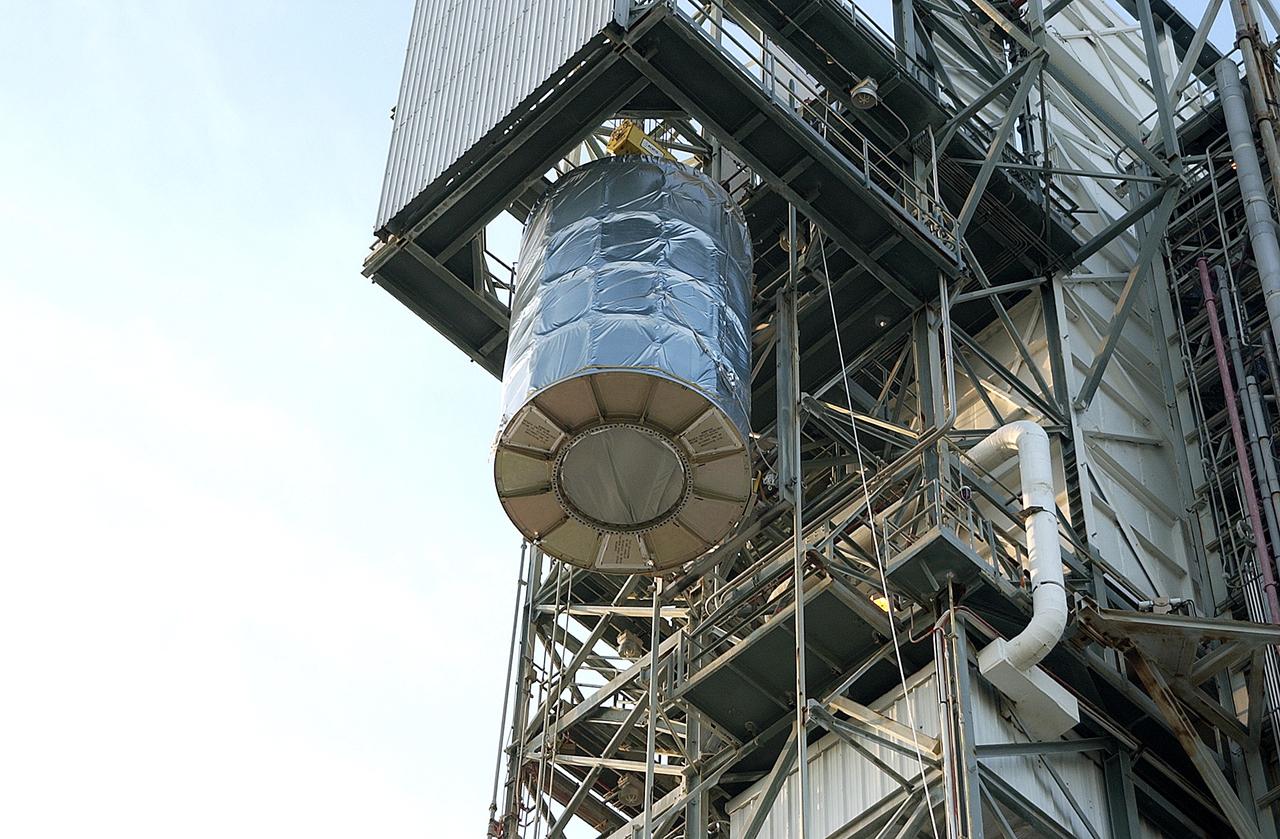
KENNEDY SPACE CENTER, FLA. - On Launch Complex 17-B, Cape Canaveral Air Force Station, the Space Infrared Telescope Facility (SIRTF) observatory is on a transporter to be taken back to NASA Spacecraft Hangar AE. SIRTF will remain in the clean room at Hangar AE until it returns to the pad in early August.
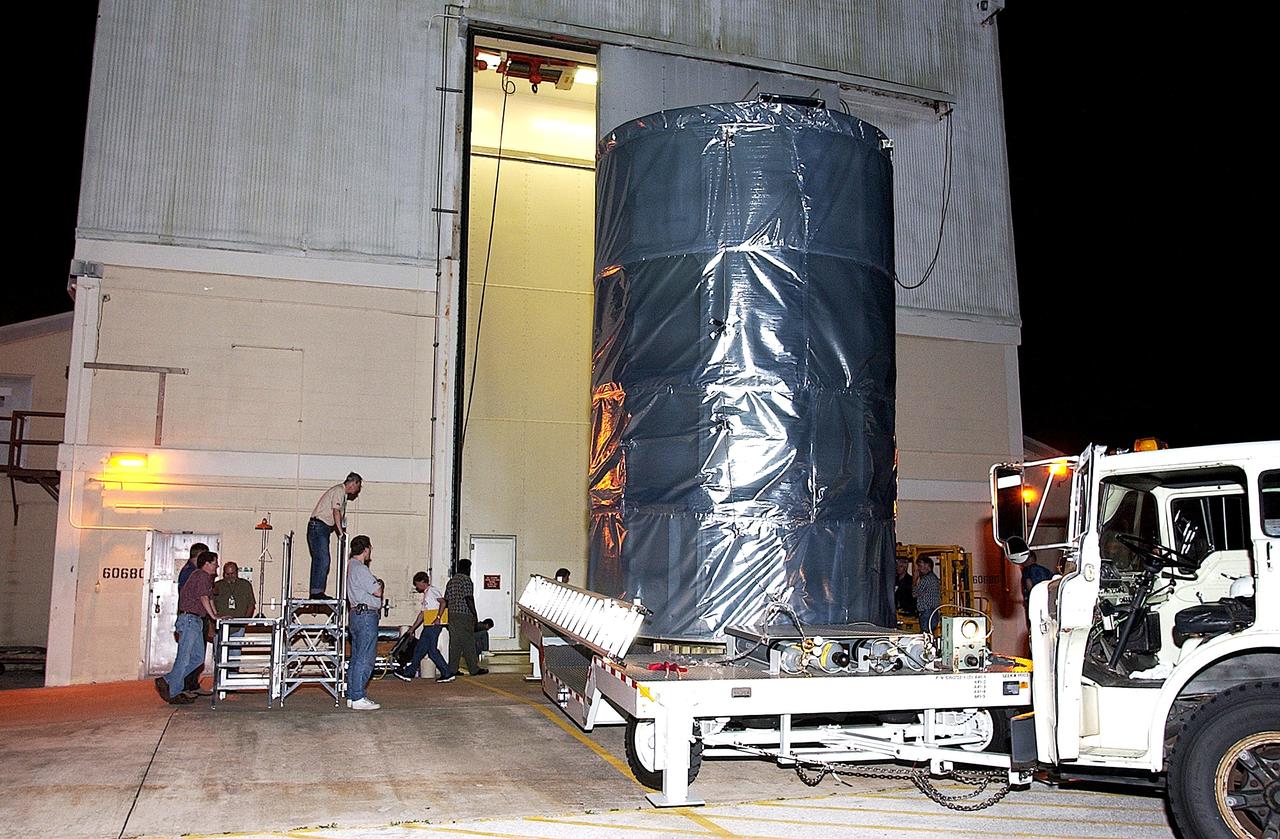
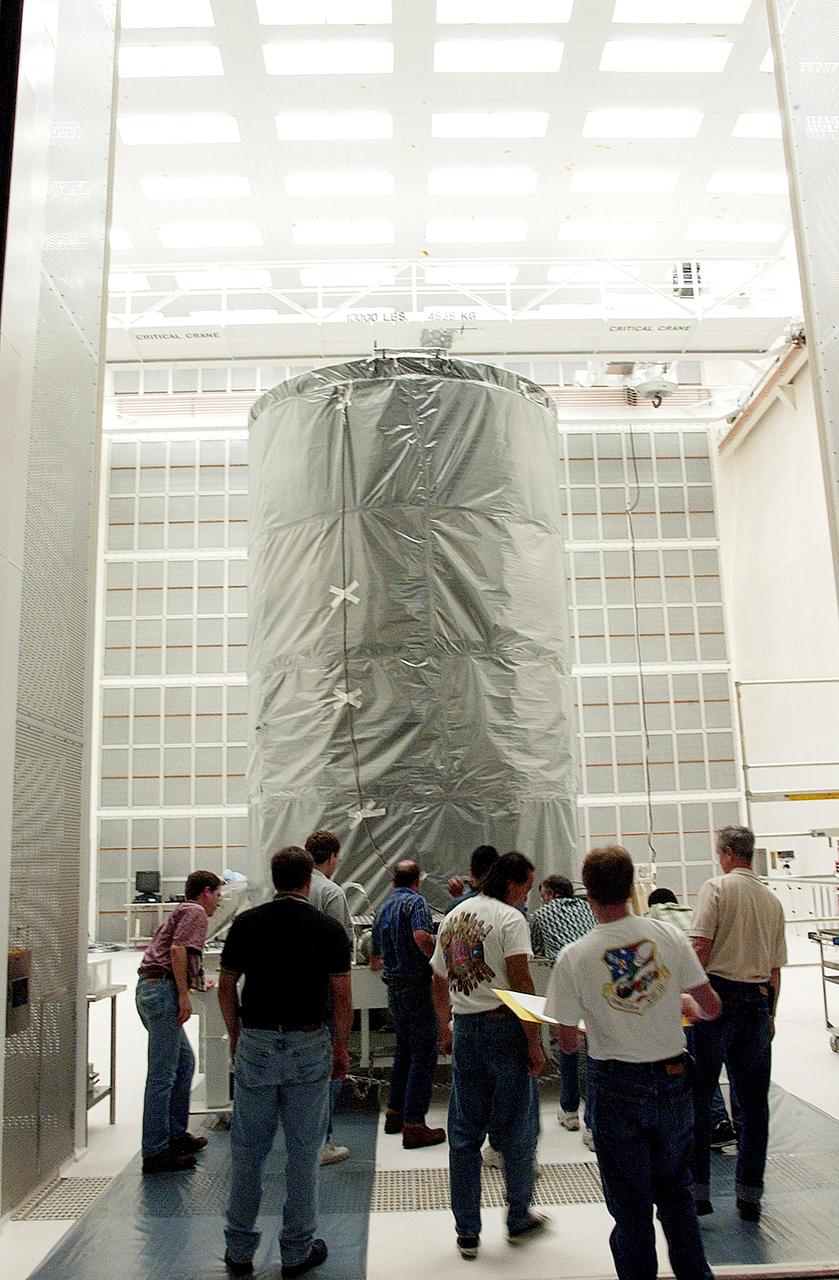
KENNEDY SPACE CENTER, FLA. -  At Cape Canaveral Air Force Station, the Space Infrared Telescope Facility (SIRTF) observatory is moved into NASA Spacecraft Hangar AE. SIRTF will remain in the clean room at Hangar AE until it returns to the pad in early August.
KENNEDY SPACE CENTER, FLA. - At Cape Canaveral Air Force Station, the Space Infrared Telescope Facility (SIRTF) observatory is moved into NASA Spacecraft Hangar AE. SIRTF will remain in the clean room at Hangar AE until it returns to the pad in early August.
KENNEDY SPACE CENTER, FLA. - On Launch Complex 17-B, Cape Canaveral Air Force Station, the Space Infrared Telescope Facility (SIRTF) observatory is ready to be lowered to the ground and taken back to NASA Spacecraft Hangar AE. SIRTF will remain in the clean room at Hangar AE until it returns to the pad in early August.
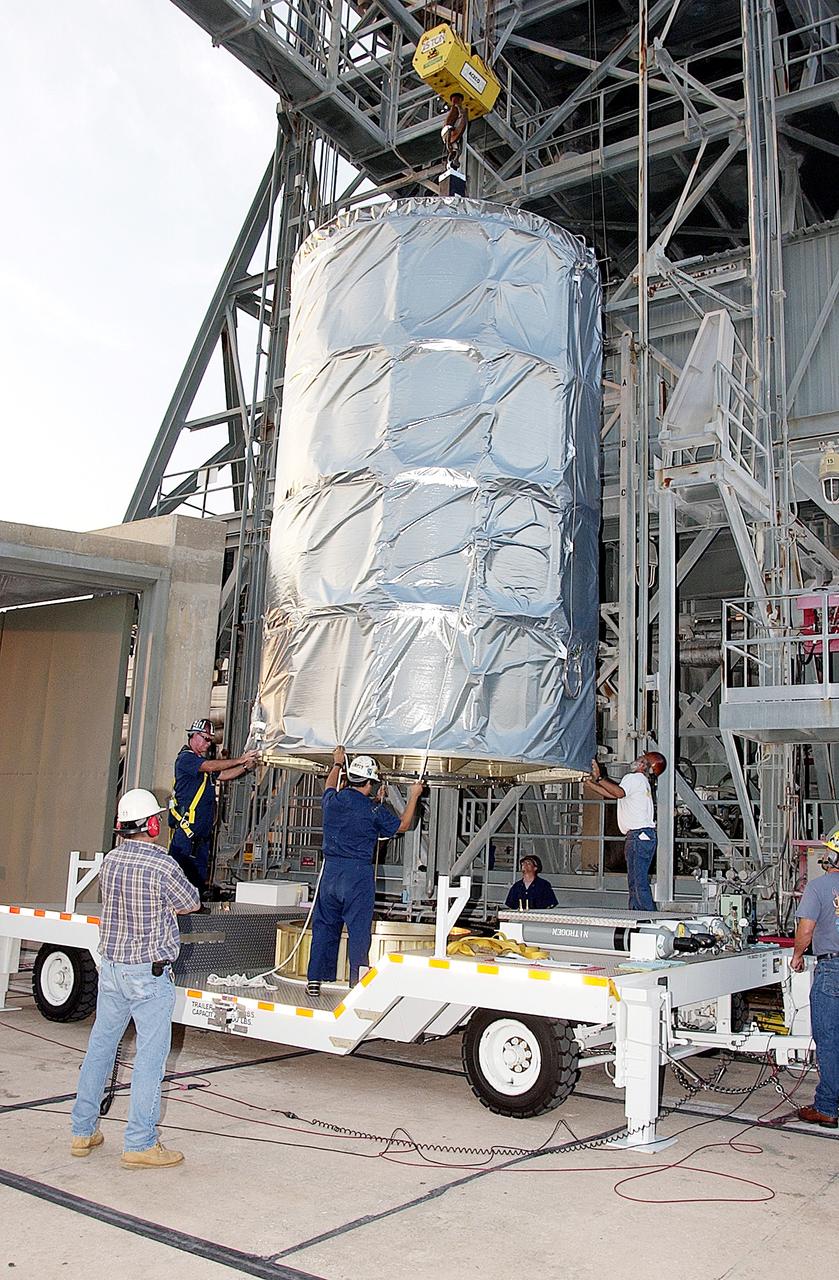
KENNEDY SPACE CENTER, FLA. - On Launch Complex 17-B, Cape Canaveral Air Force Station, the Space Infrared Telescope Facility (SIRTF) observatory is lowered onto a transporter to be taken back to NASA Spacecraft Hangar AE. SIRTF will remain in the clean room at Hangar AE until it returns to the pad in early August.
KENNEDY SPACE CENTER, FLA. -  On Launch Complex 17-B, Cape Canaveral Air Force Station, the Space Infrared Telescope Facility (SIRTF) observatory is on a transporter to be taken back to NASA Spacecraft Hangar AE. SIRTF will remain in the clean room at Hangar AE until it returns to the pad in early August.
KENNEDY SPACE CENTER, FLA. - On Launch Complex 17-B, Cape Canaveral Air Force Station, the Space Infrared Telescope Facility (SIRTF) observatory is on a transporter to be taken back to NASA Spacecraft Hangar AE. SIRTF will remain in the clean room at Hangar AE until it returns to the pad in early August.
KENNEDY SPACE CENTER, FLA. - On Launch Complex 17-B, Cape Canaveral Air Force Station, the Space Infrared Telescope Facility (SIRTF) observatory is lowered to the ground and taken back to NASA Spacecraft Hangar AE. SIRTF will remain in the clean room at Hangar AE until it returns to the pad in early August.
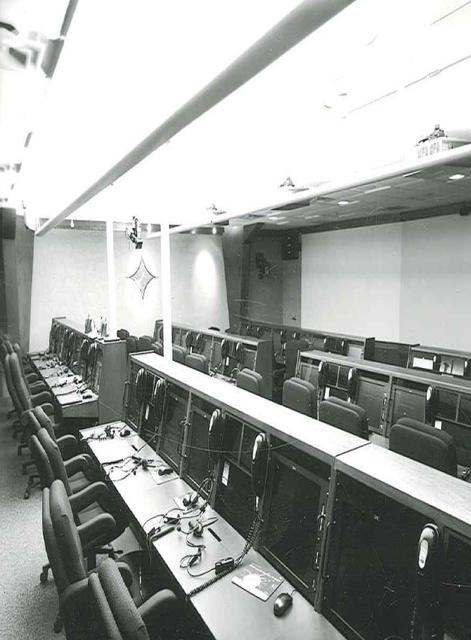
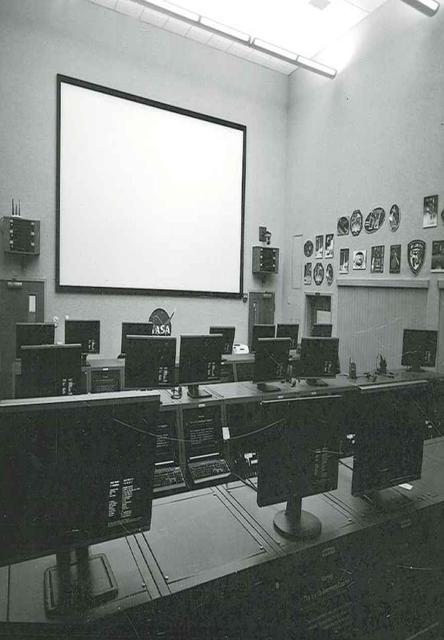
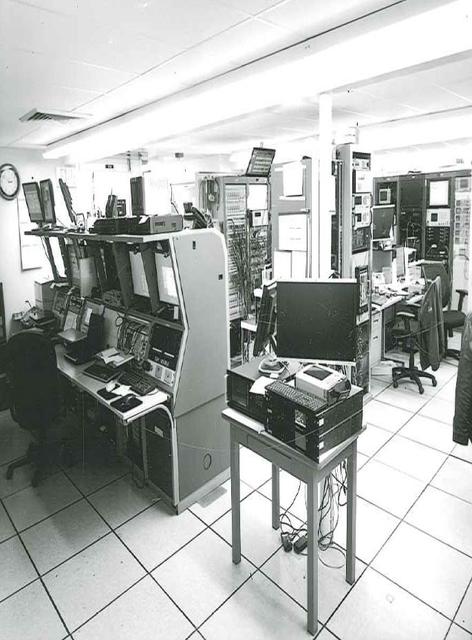
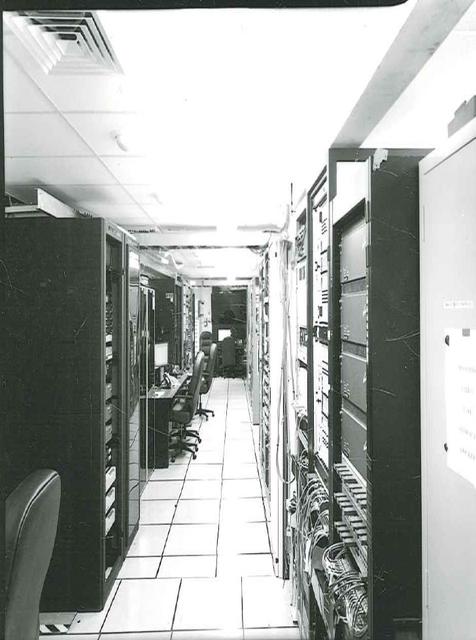
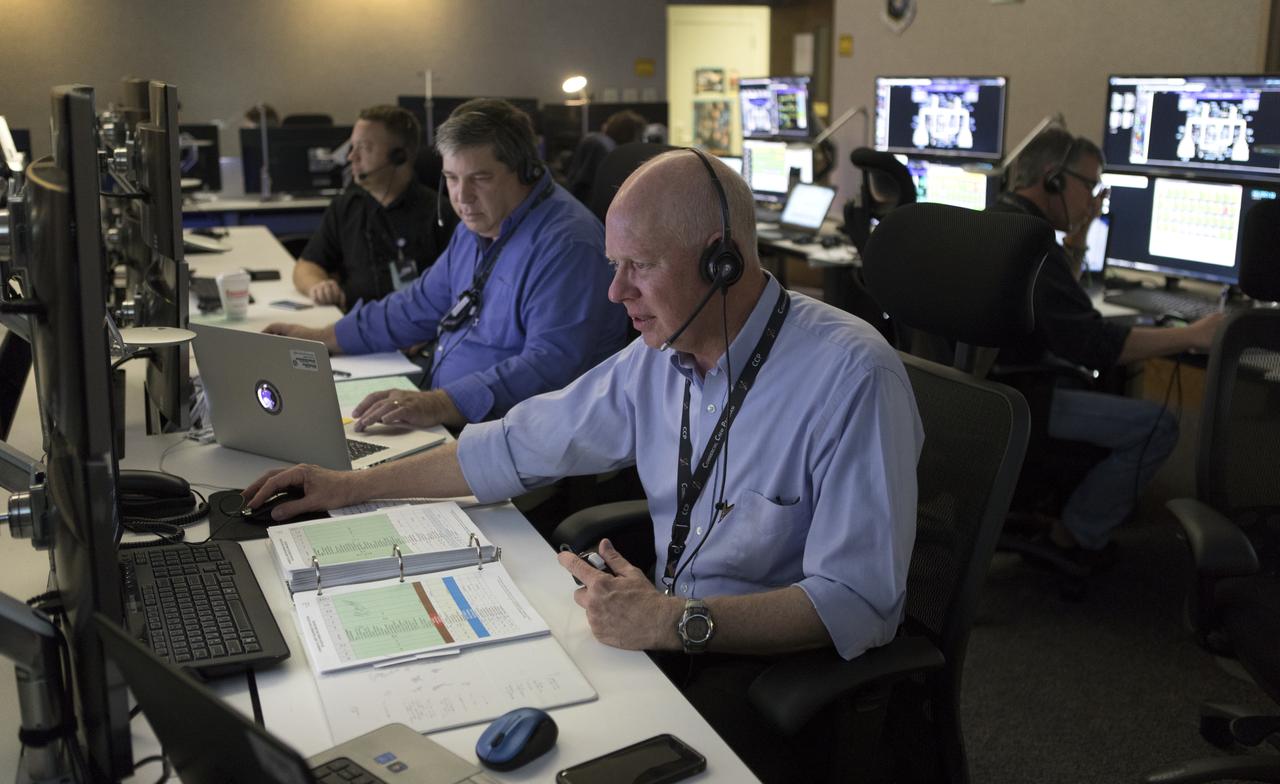
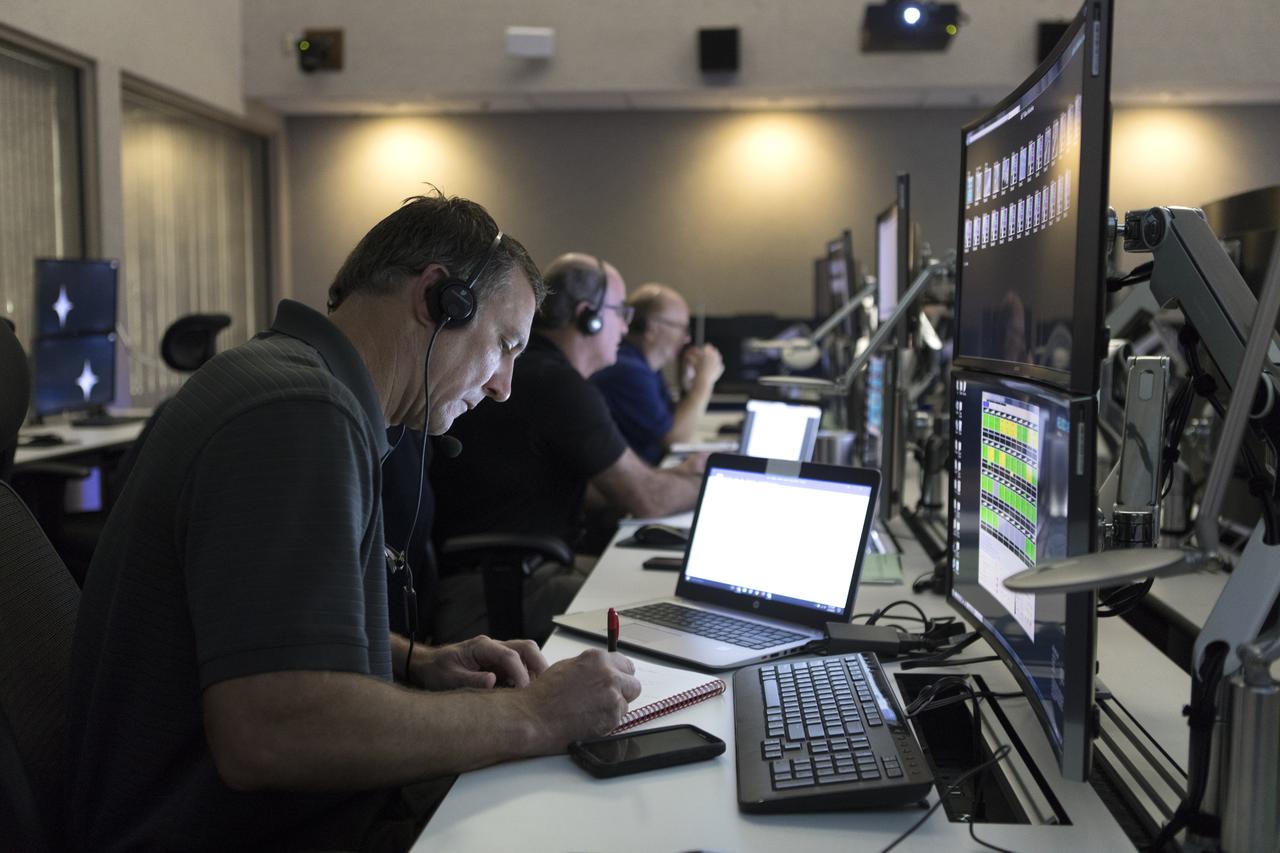
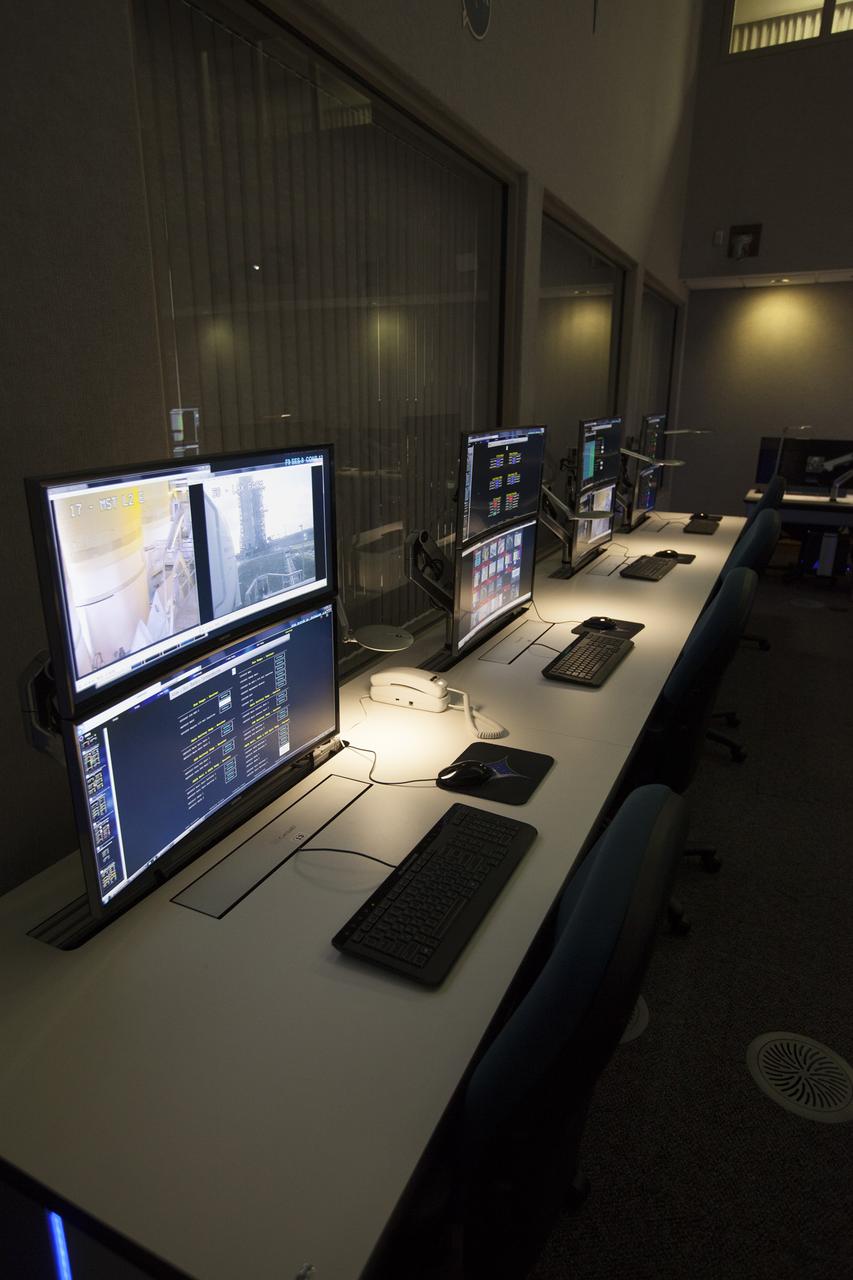
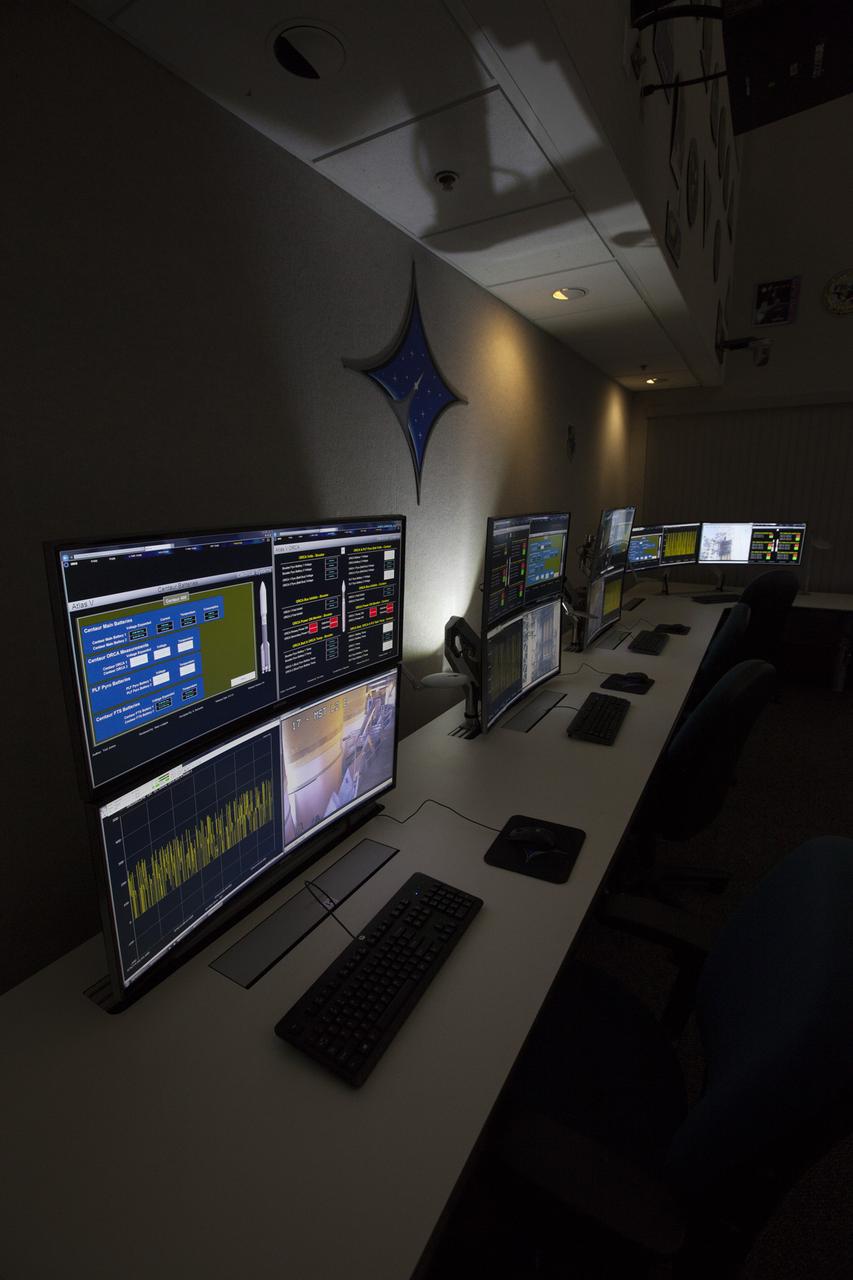
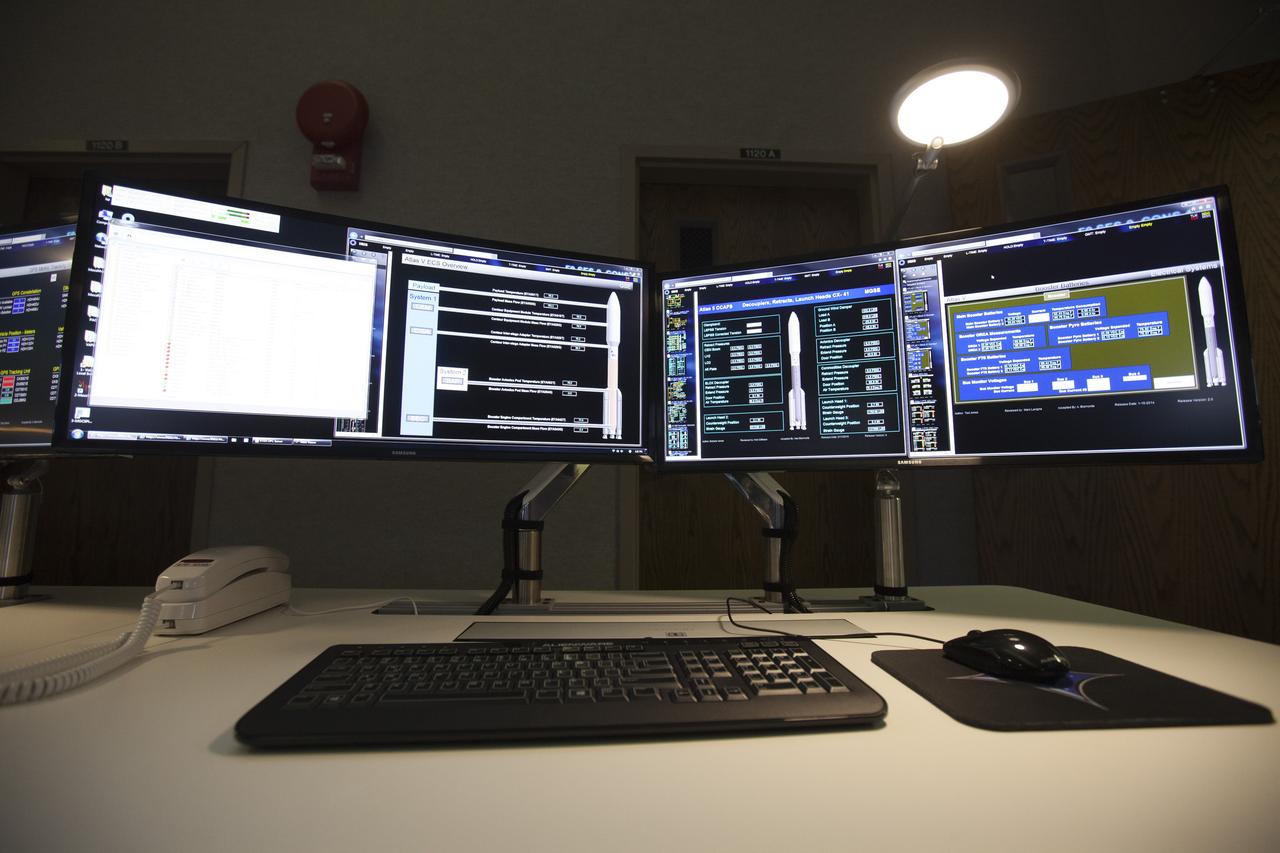
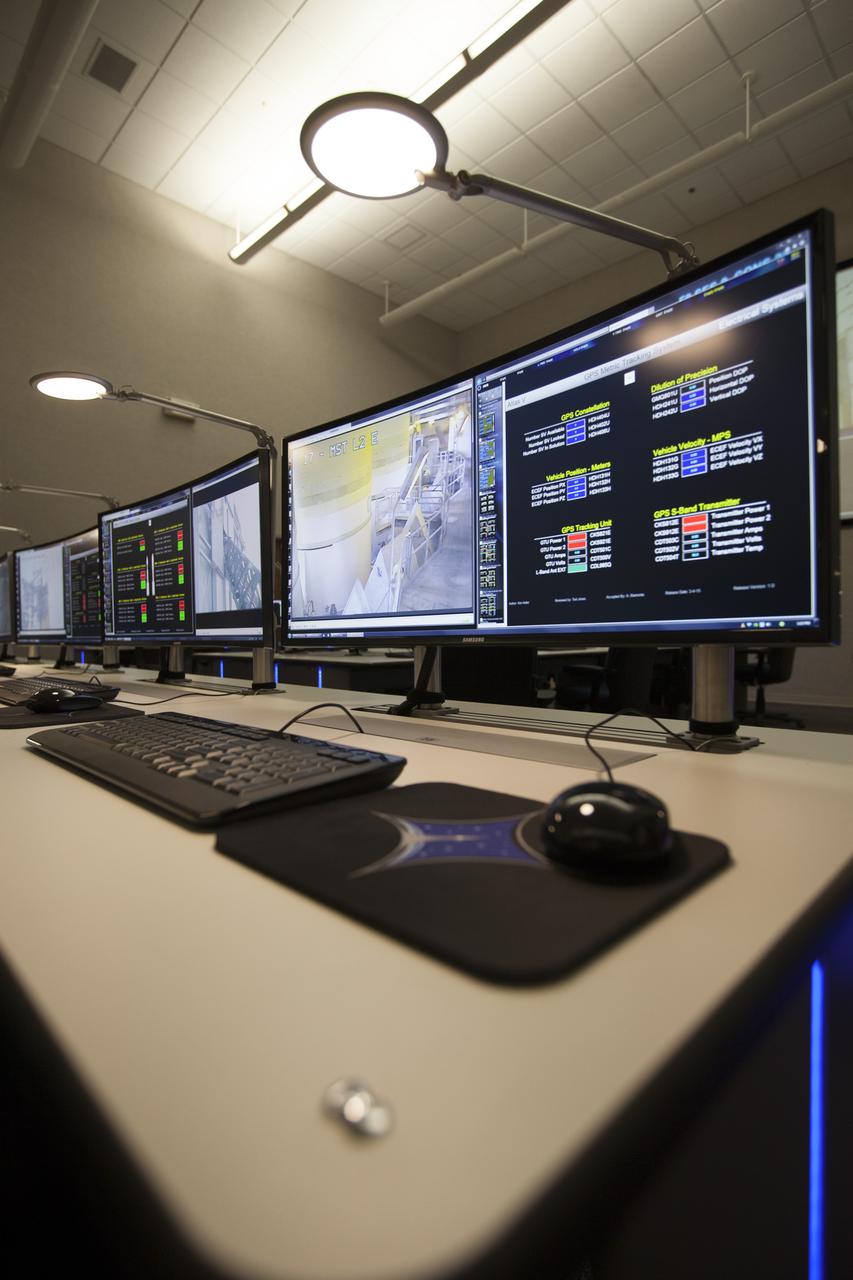
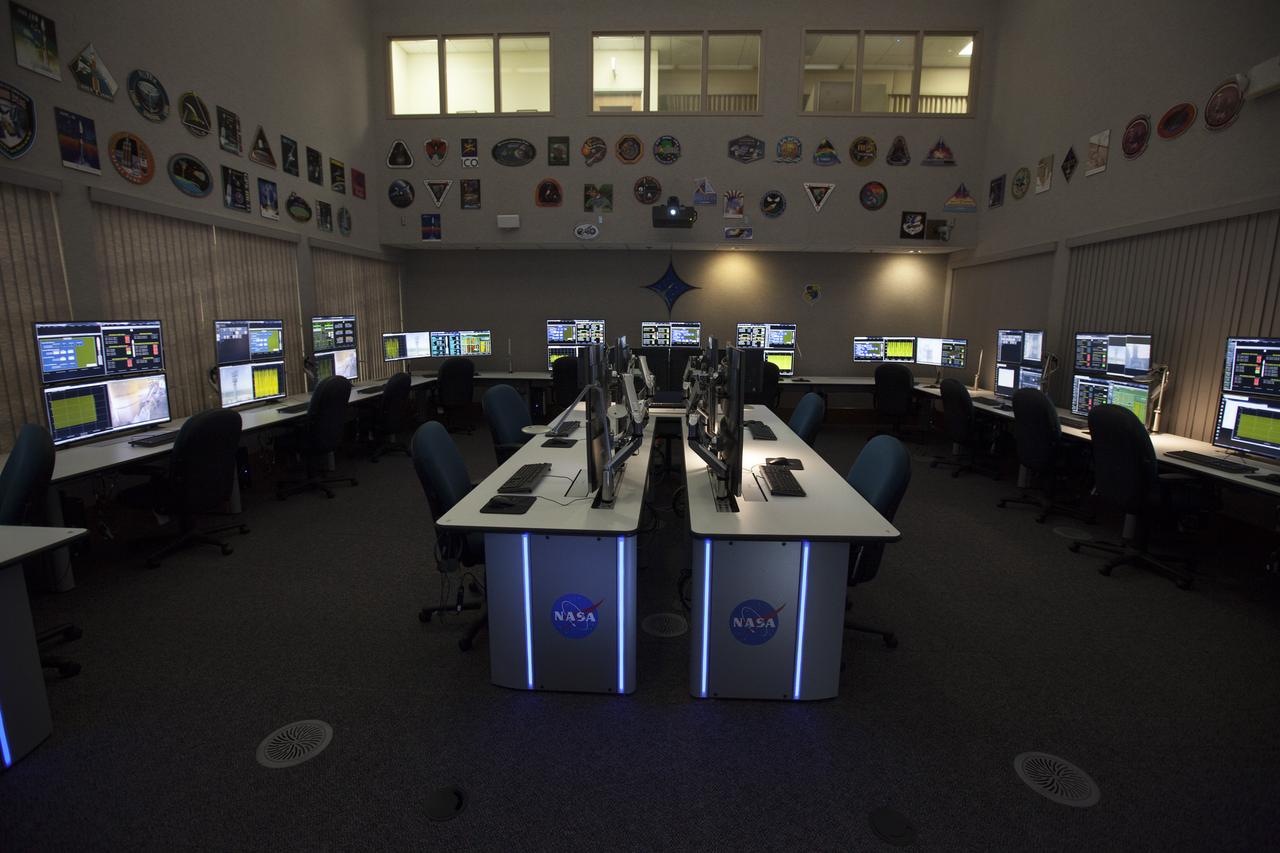
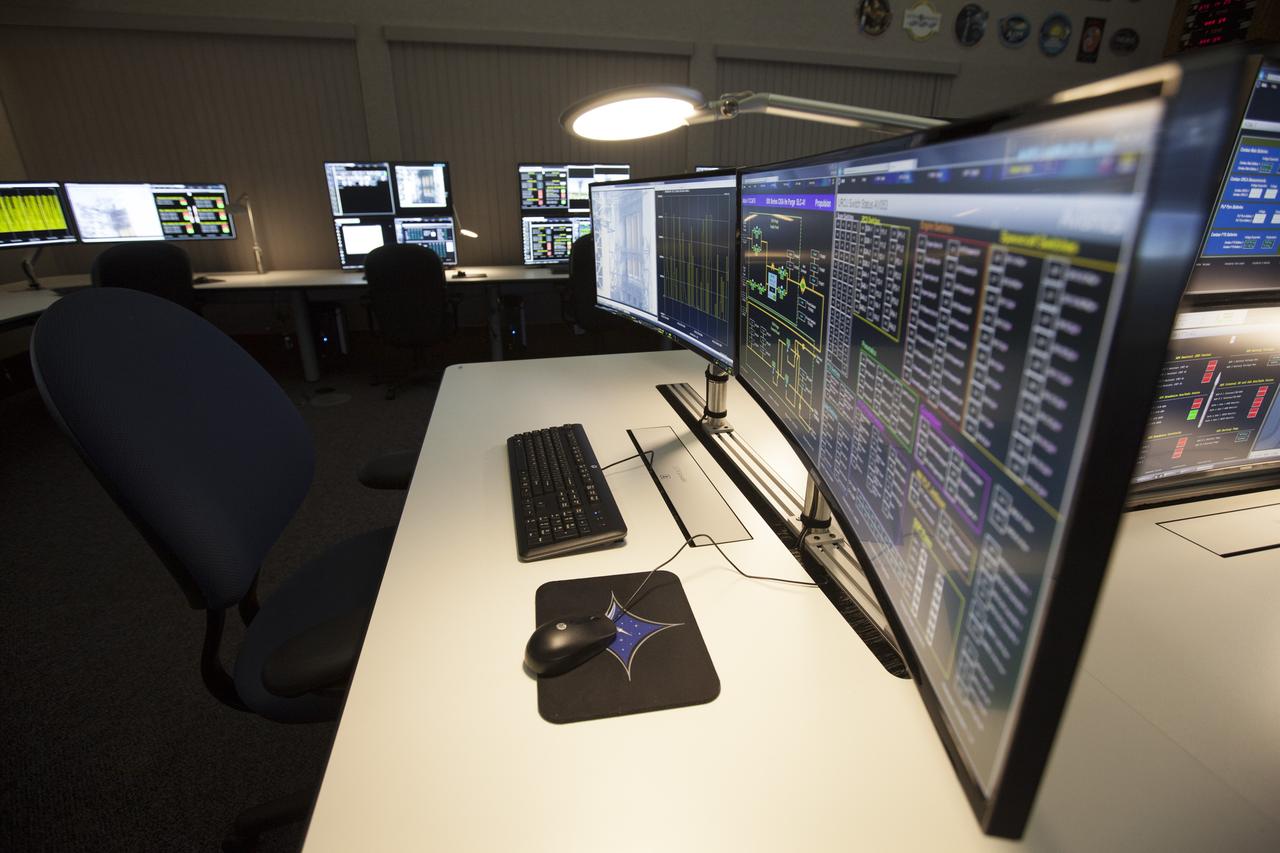
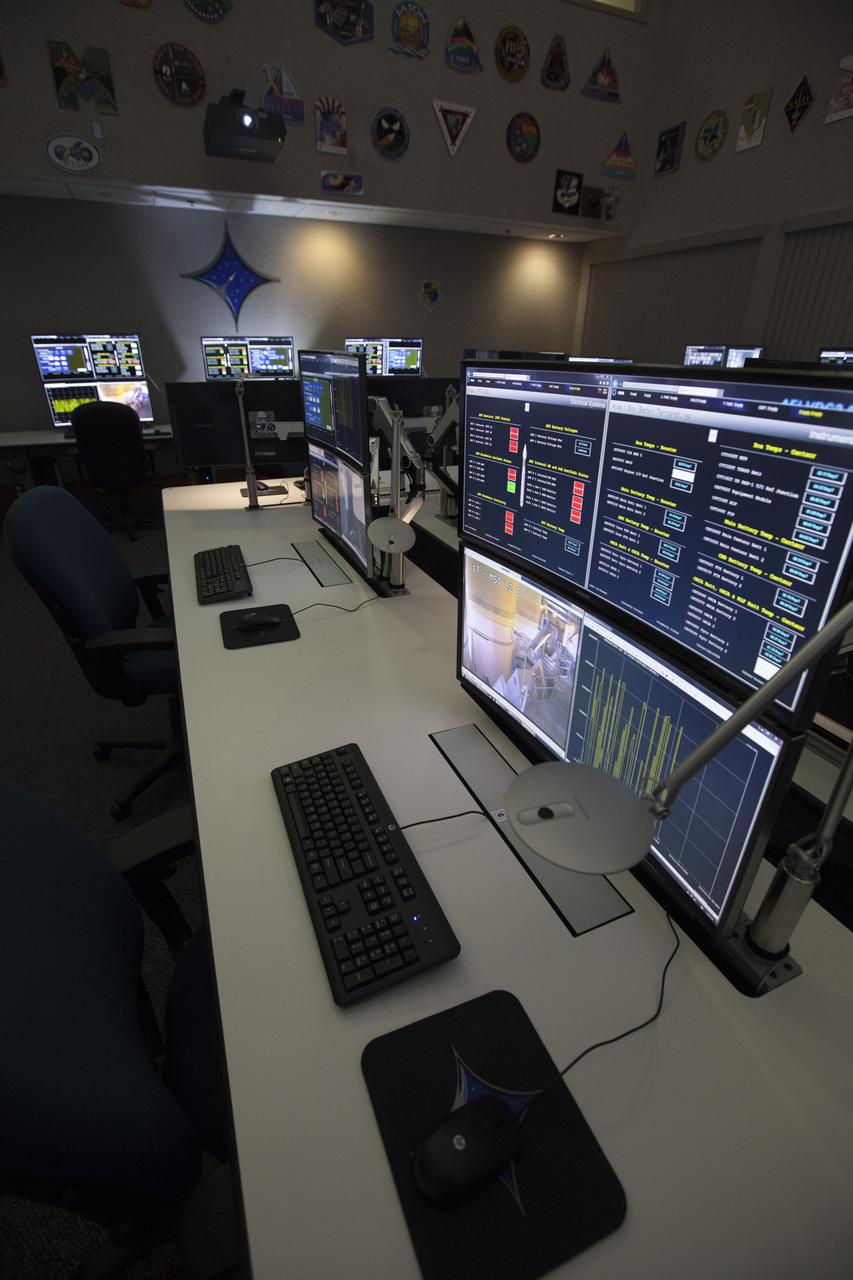
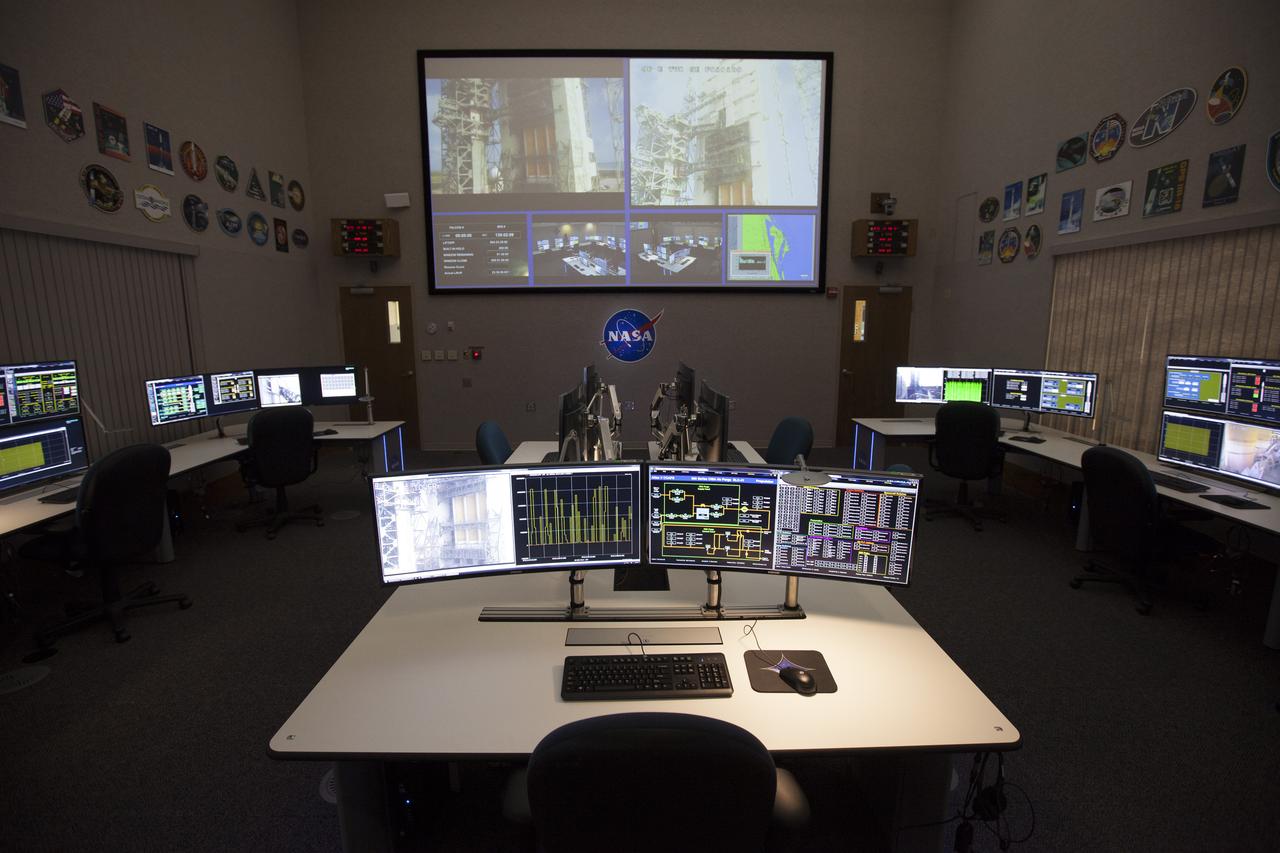
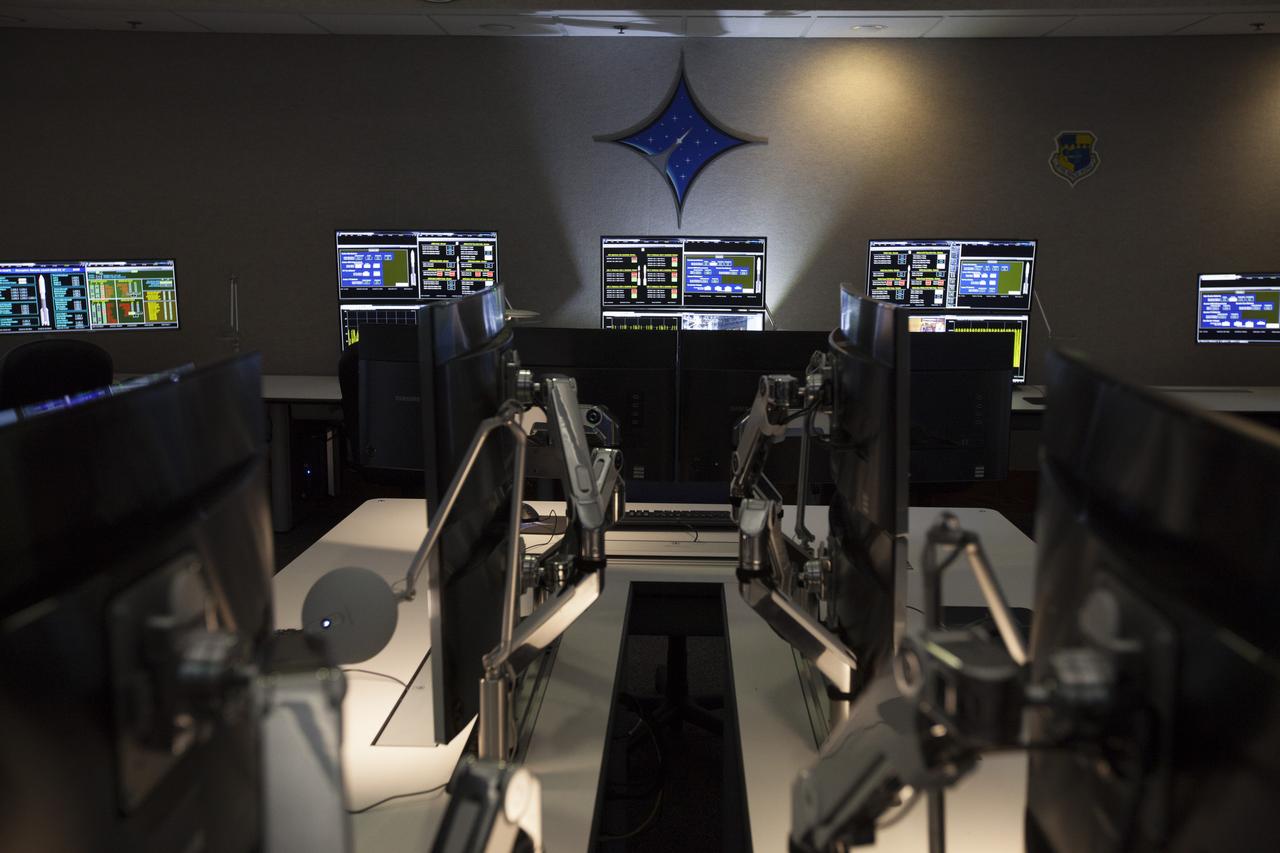
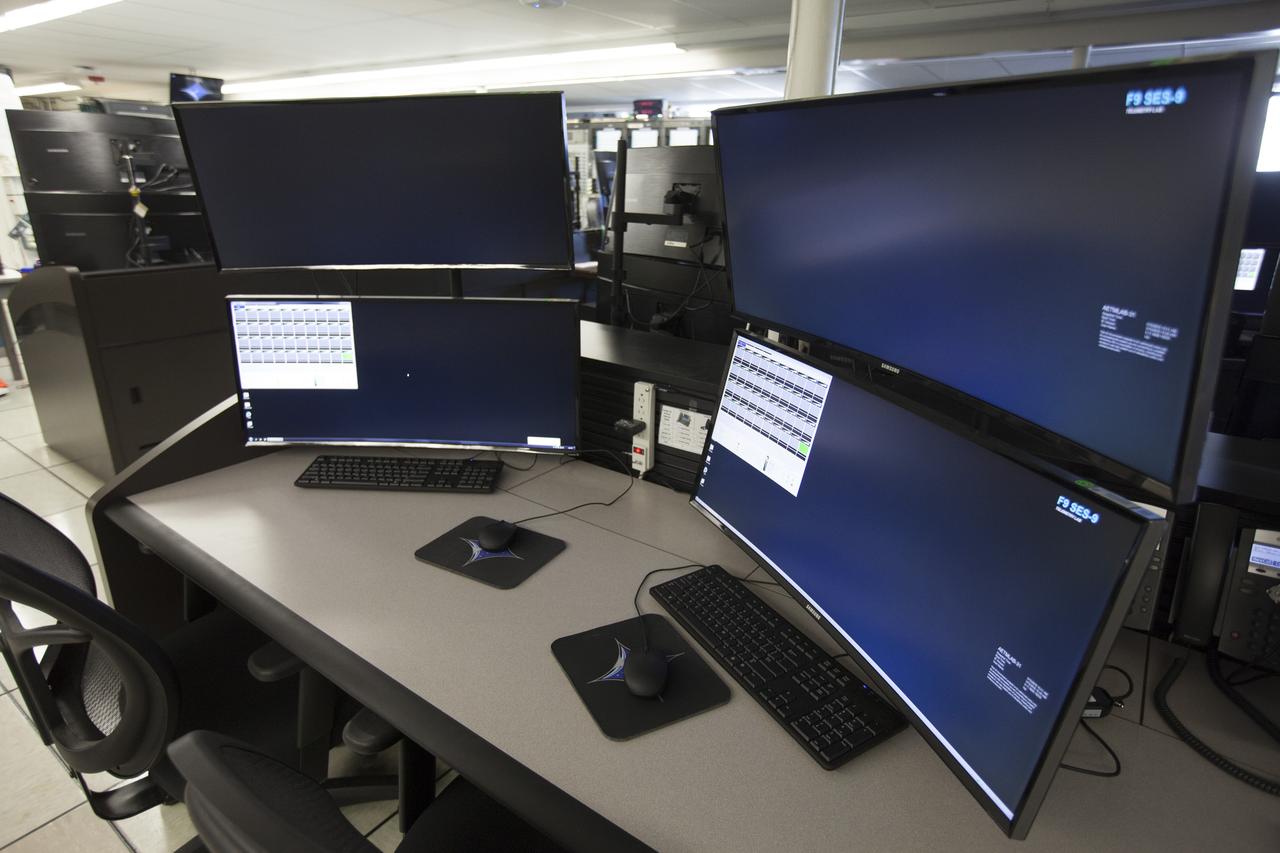
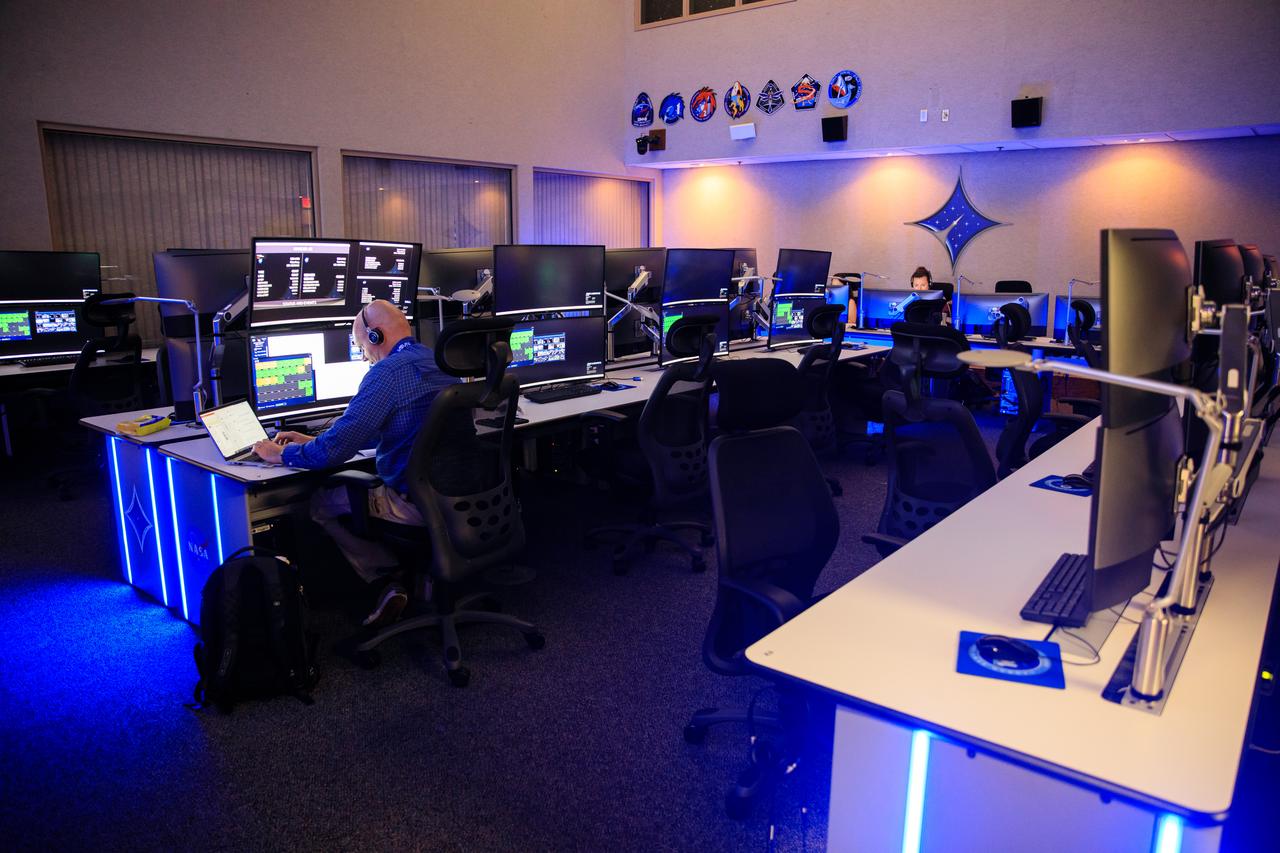
Photos of the Launch Vehicle Data Center (LVDC) in Hangar AE - Telemetry Room - showing the engineering consule upgrades.
LSP Highlights Newsletter: Photos of LVDC Console Upgrades
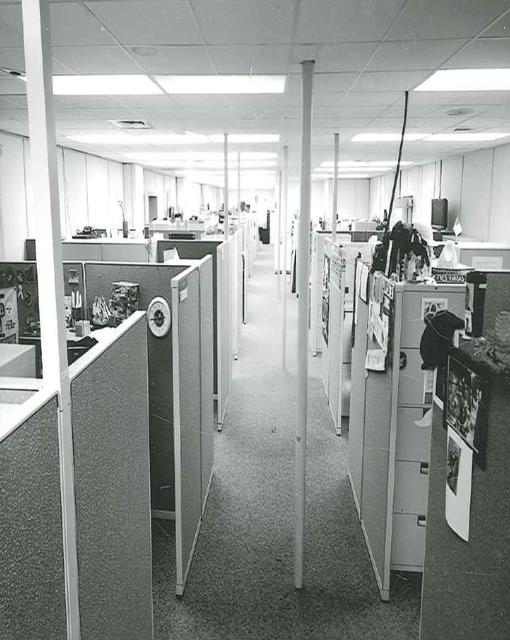
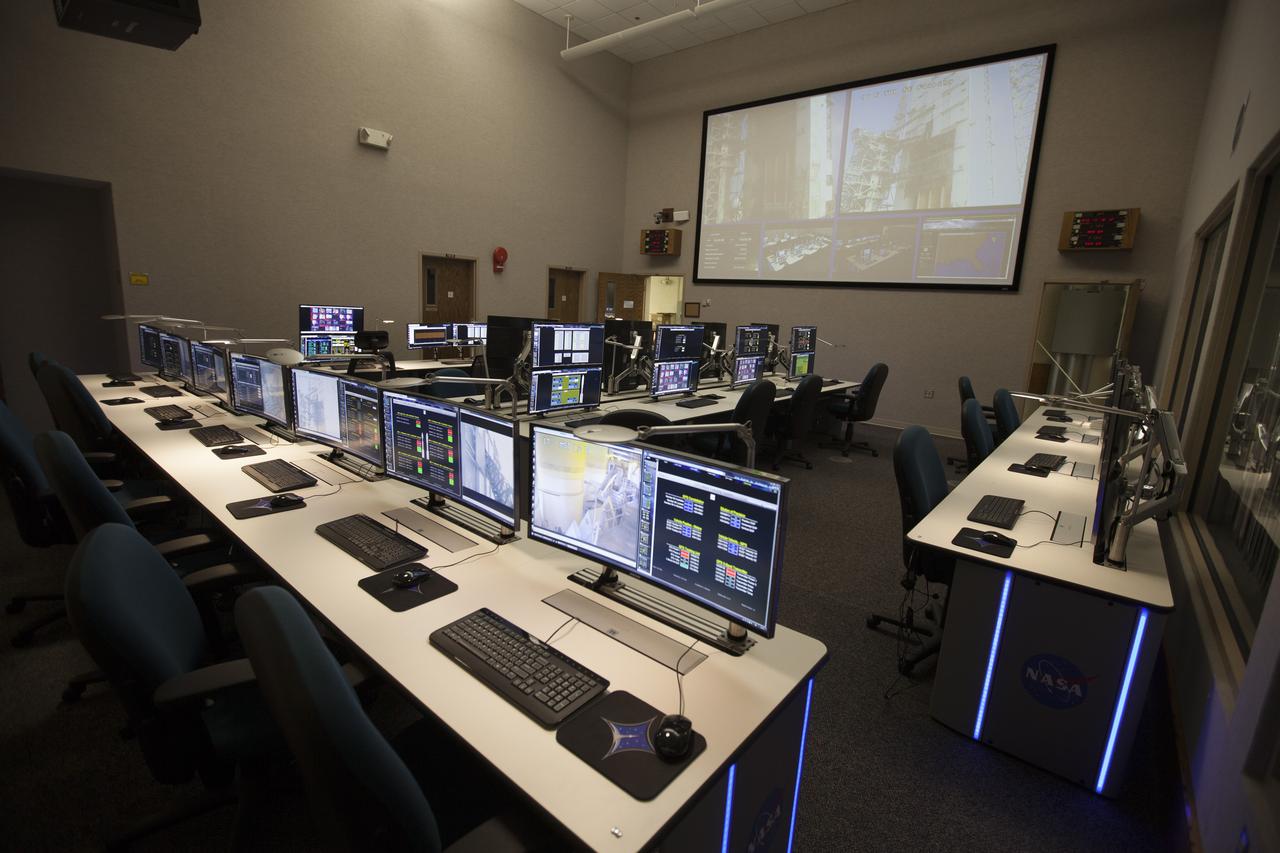
Photos of the Launch Vehicle Data Center (LVDC) in Hangar AE -  Room #2 of LVDC - showing the engineering consule upgrades.
LSP Highlights Newsletter: Photos of LVDC Console Upgrades
Photos of the Launch Vehicle Data Center (LVDC) in Hangar AE -  Room #1 of LVDC - showing the engineering consule upgrades.
LSP Highlights Newsletter: Photos of LVDC Console Upgrades
Photos of the Launch Vehicle Data Center (LVDC) in Hangar AE -  Room #2 of LVDC - showing the engineering consule upgrades.
LSP Highlights Newsletter: Photos of LVDC Console Upgrades
Photos of the Launch Vehicle Data Center (LVDC) in Hangar AE -  Room #1 of LVDC - showing the engineering consule upgrades.
LSP Highlights Newsletter: Photos of LVDC Console Upgrades
Photos of the Launch Vehicle Data Center (LVDC) in Hangar AE -  Room #2 of LVDC - showing the engineering consule upgrades.
LSP Highlights Newsletter: Photos of LVDC Console Upgrades
Photos of the Launch Vehicle Data Center (LVDC) in Hangar AE -  Room #2 of LVDC - showing the engineering consule upgrades.
LSP Highlights Newsletter: Photos of LVDC Console Upgrades
Photos of the Launch Vehicle Data Center (LVDC) in Hangar AE -  Room #1 of LVDC - showing the engineering consule upgrades.
LSP Highlights Newsletter: Photos of LVDC Console Upgrades
Photos of the Launch Vehicle Data Center (LVDC) in Hangar AE -  Room #2 of LVDC - showing the engineering consule upgrades.
LSP Highlights Newsletter: Photos of LVDC Console Upgrades
Photos of the Launch Vehicle Data Center (LVDC) in Hangar AE -  Room #1 of LVDC - showing the engineering consule upgrades.
LSP Highlights Newsletter: Photos of LVDC Console Upgrades
Photos of the Launch Vehicle Data Center (LVDC) in Hangar AE -  Room #2 of LVDC - showing the engineering consule upgrades.
LSP Highlights Newsletter: Photos of LVDC Console Upgrades
Photos of the Launch Vehicle Data Center (LVDC) in Hangar AE -  Room #1 of LVDC - showing the engineering consule upgrades.
LSP Highlights Newsletter: Photos of LVDC Console Upgrades
Photos of the Launch Vehicle Data Center (LVDC) in Hangar AE -  Room #2 of LVDC - showing the engineering consule upgrades.
LSP Highlights Newsletter: Photos of LVDC Console Upgrades
Photos of the Launch Vehicle Data Center (LVDC) in Hangar AE -  Room #2 of LVDC - showing the engineering consule upgrades.
LSP Highlights Newsletter: Photos of LVDC Console Upgrades
Photos of the Launch Vehicle Data Center (LVDC) in Hangar AE -  Room #1 of LVDC - showing the engineering consule upgrades.
LSP Highlights Newsletter: Photos of LVDC Console Upgrades
Photos of the Launch Vehicle Data Center (LVDC) in Hangar AE -  Room #2 of LVDC - showing the engineering consule upgrades.
LSP Highlights Newsletter: Photos of LVDC Console Upgrades
Photos of the Launch Vehicle Data Center (LVDC) in Hangar AE -  Room #2 of LVDC - showing the engineering consule upgrades.
LSP Highlights Newsletter: Photos of LVDC Console Upgrades
Photos of the Launch Vehicle Data Center (LVDC) in Hangar AE - Telemetry Room - showing the engineering consule upgrades.
LSP Highlights Newsletter: Photos of LVDC Console Upgrades
Photos of the Launch Vehicle Data Center (LVDC) in Hangar AE -  Room #2 of LVDC - showing the engineering consule upgrades.
LSP Highlights Newsletter: Photos of LVDC Console Upgrades
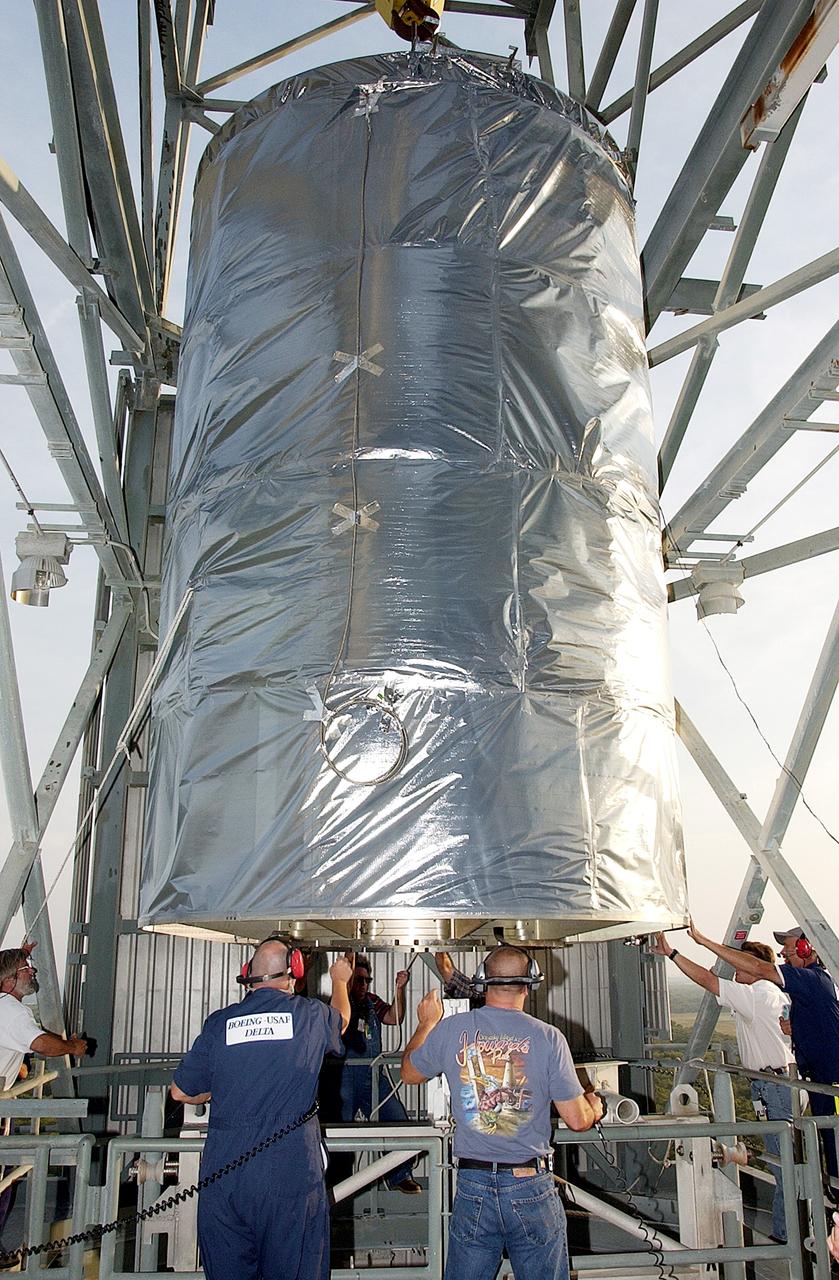
KENNEDY SPACE CENTER, FLA. -  On Launch Complex 17-B, Cape Canaveral Air Force Station, the Space Infrared Telescope Facility (SIRTF) observatory is being dismantled  from atop the Delta II rocket.  It will be taken back to NASA Spacecraft Hangar AE. SIRTF will remain in the clean room at Hangar AE until it returns to the pad in early August.
KENNEDY SPACE CENTER, FLA. - On Launch Complex 17-B, Cape Canaveral Air Force Station, the Space Infrared Telescope Facility (SIRTF) observatory is being dismantled from atop the Delta II rocket. It will be taken back to NASA Spacecraft Hangar AE. SIRTF will remain in the clean room at Hangar AE until it returns to the pad in early August.
KENNEDY SPACE CENTER, FLA. -  Workers on Launch Complex 17-B, Cape Canaveral Air Force Station, start dismantling the Space Infrared Telescope Facility (SIRTF) observatory from atop the Delta II rocket.  It will be taken back to NASA Spacecraft Hangar AE. SIRTF will remain in the clean room at Hangar AE until it returns to the pad in early August.
KENNEDY SPACE CENTER, FLA. - Workers on Launch Complex 17-B, Cape Canaveral Air Force Station, start dismantling the Space Infrared Telescope Facility (SIRTF) observatory from atop the Delta II rocket. It will be taken back to NASA Spacecraft Hangar AE. SIRTF will remain in the clean room at Hangar AE until it returns to the pad in early August.
KENNEDY SPACE CENTER, FLA. - On Launch Complex 17-B, Cape Canaveral Air Force Station, the Space Infrared Telescope Facility (SIRTF) observatory is moved toward the outside of the launch tower.  It will be lowered and taken back to NASA Spacecraft Hangar AE. SIRTF will remain in the clean room at Hangar AE until it returns to the pad in early August.
KENNEDY SPACE CENTER, FLA. - On Launch Complex 17-B, Cape Canaveral Air Force Station, the Space Infrared Telescope Facility (SIRTF) observatory is moved toward the outside of the launch tower. It will be lowered and taken back to NASA Spacecraft Hangar AE. SIRTF will remain in the clean room at Hangar AE until it returns to the pad in early August.
KENNEDY SPACE CENTER, FLA. - On Launch Complex 17-B, Cape Canaveral Air Force Station, the Space Infrared Telescope Facility (SIRTF) observatory is moved toward the outside of the launch tower.  It will be lowered and taken back to NASA Spacecraft Hangar AE. SIRTF will remain in the clean room at Hangar AE until it returns to the pad in early August.
KENNEDY SPACE CENTER, FLA. - On Launch Complex 17-B, Cape Canaveral Air Force Station, the Space Infrared Telescope Facility (SIRTF) observatory is moved toward the outside of the launch tower. It will be lowered and taken back to NASA Spacecraft Hangar AE. SIRTF will remain in the clean room at Hangar AE until it returns to the pad in early August.
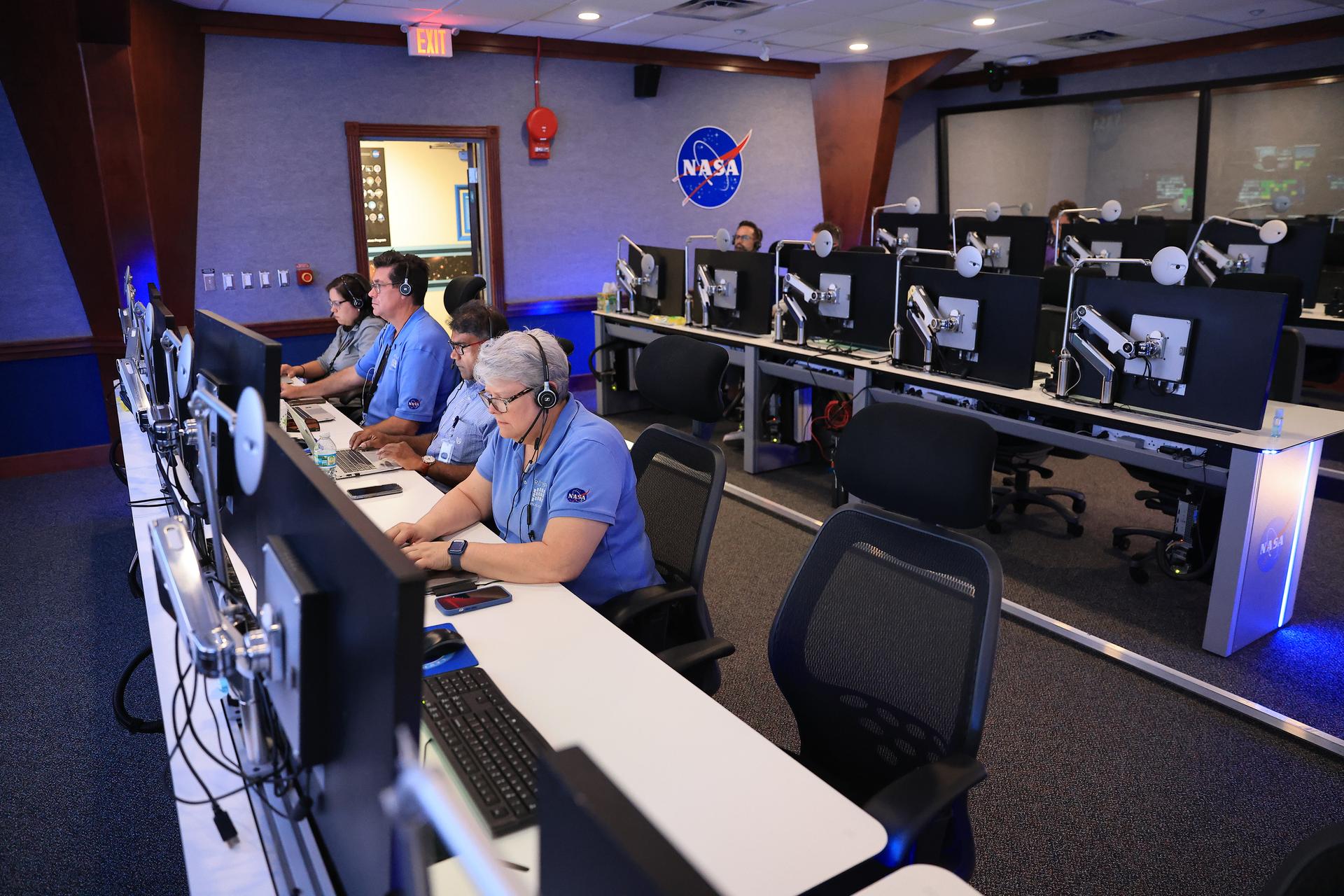
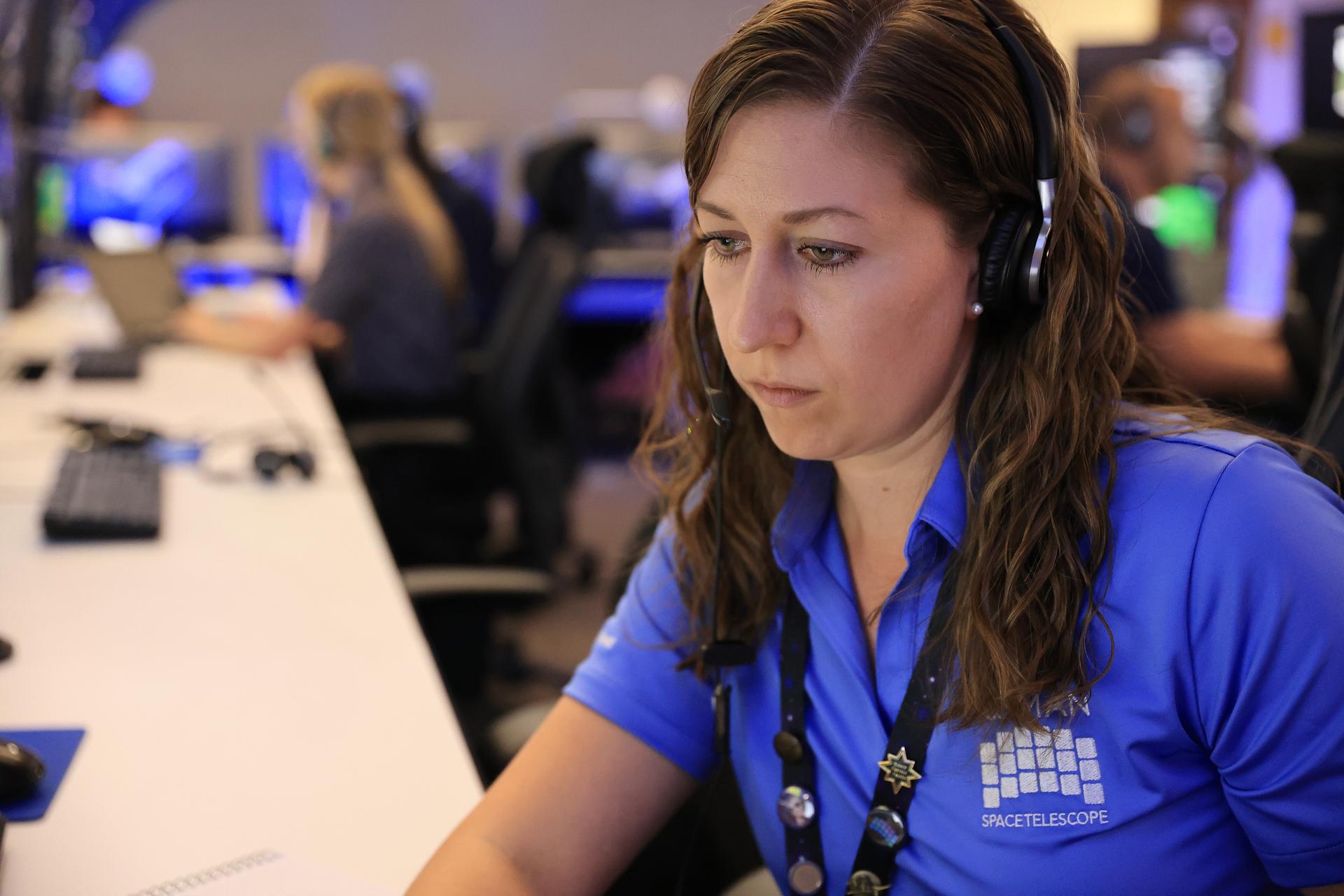
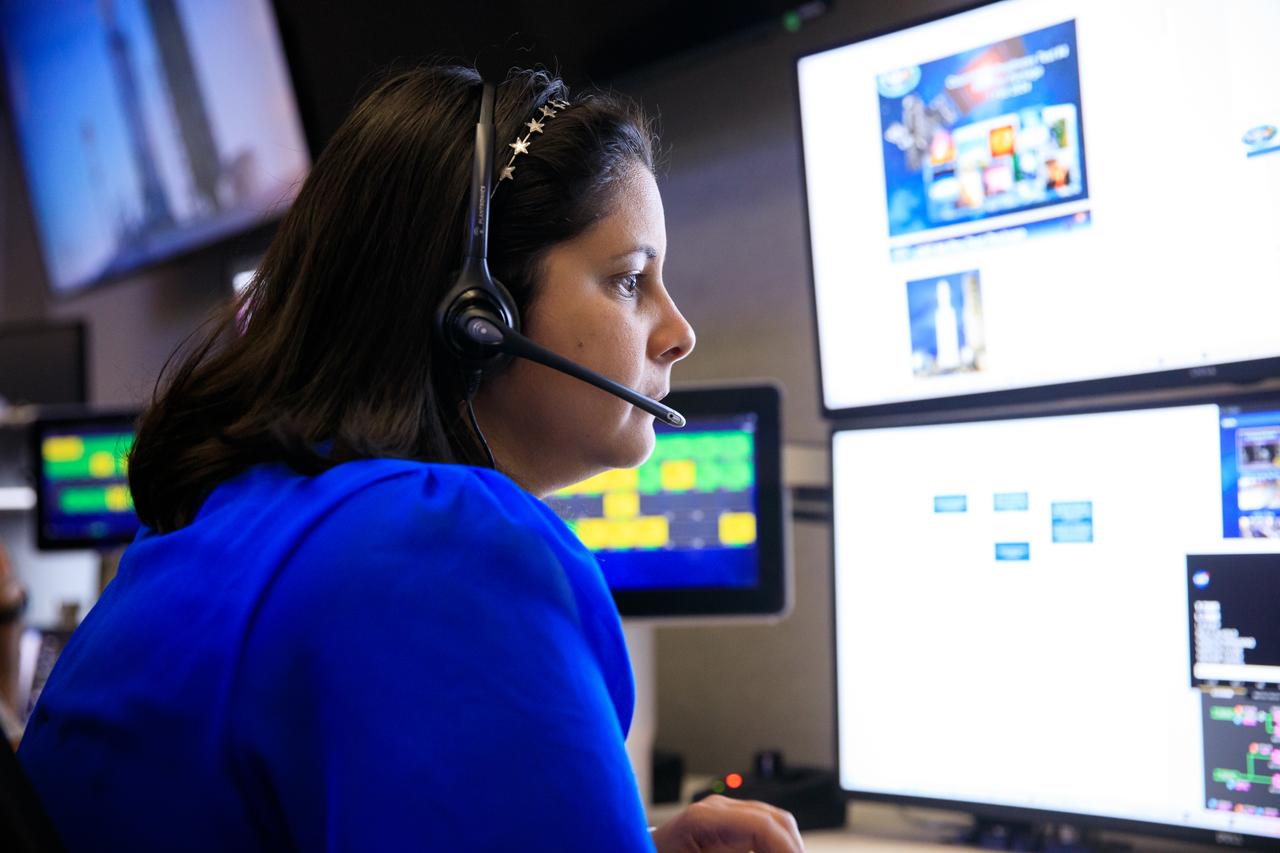
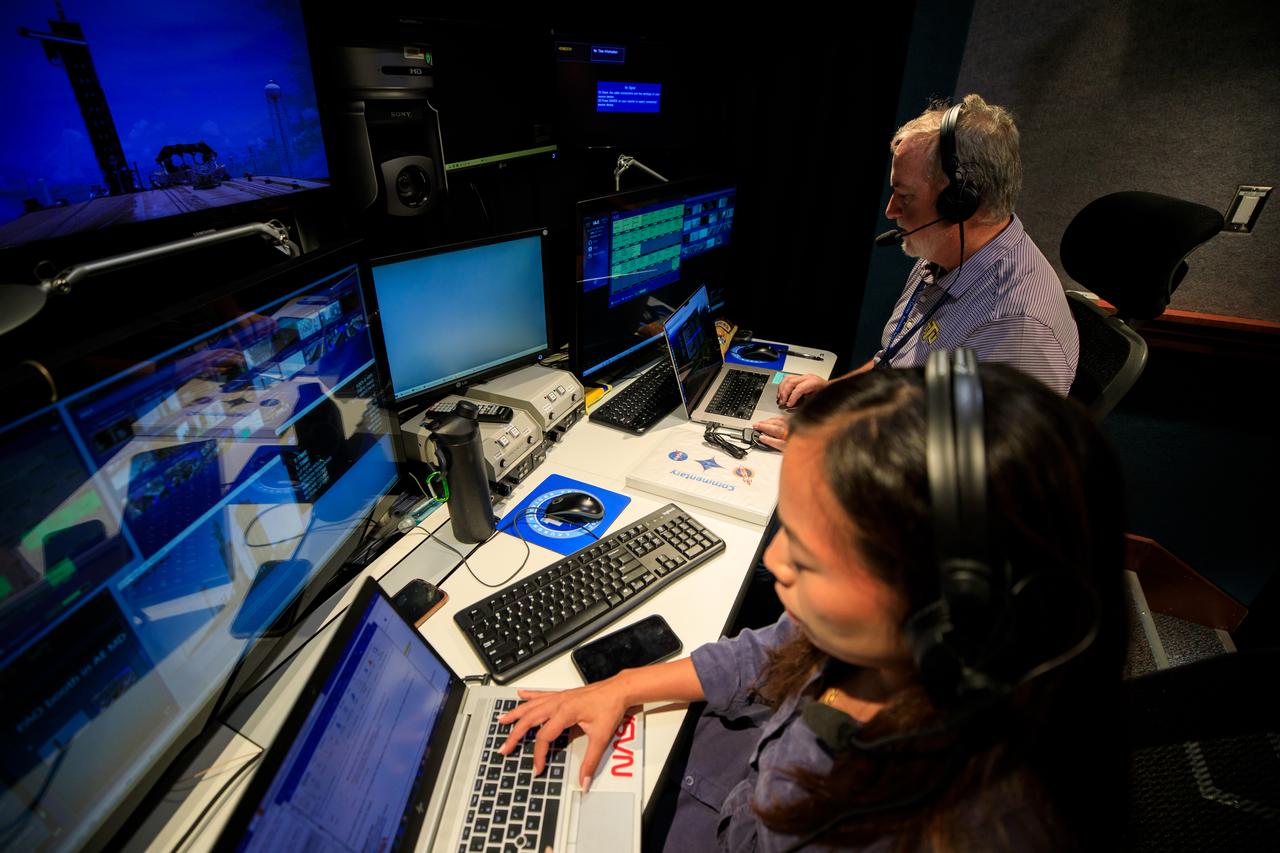
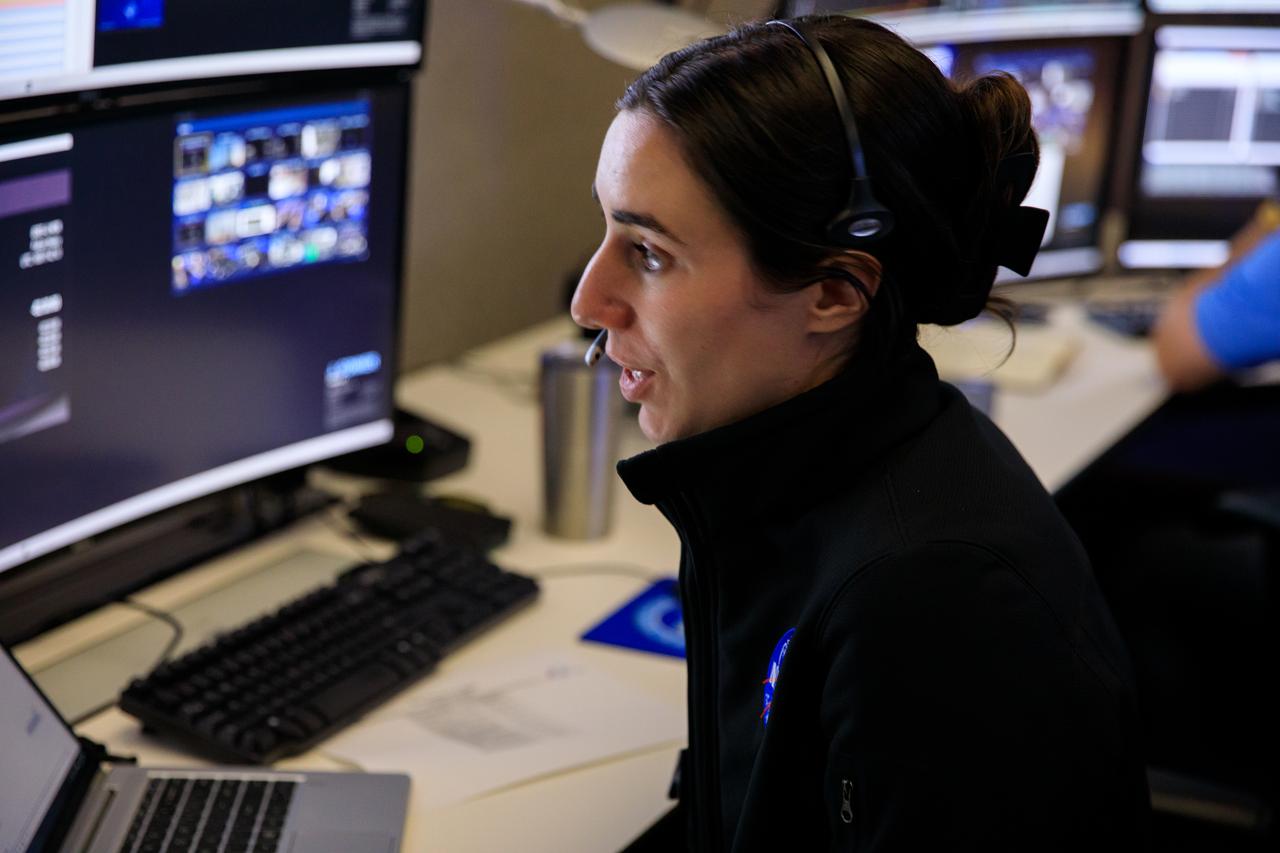
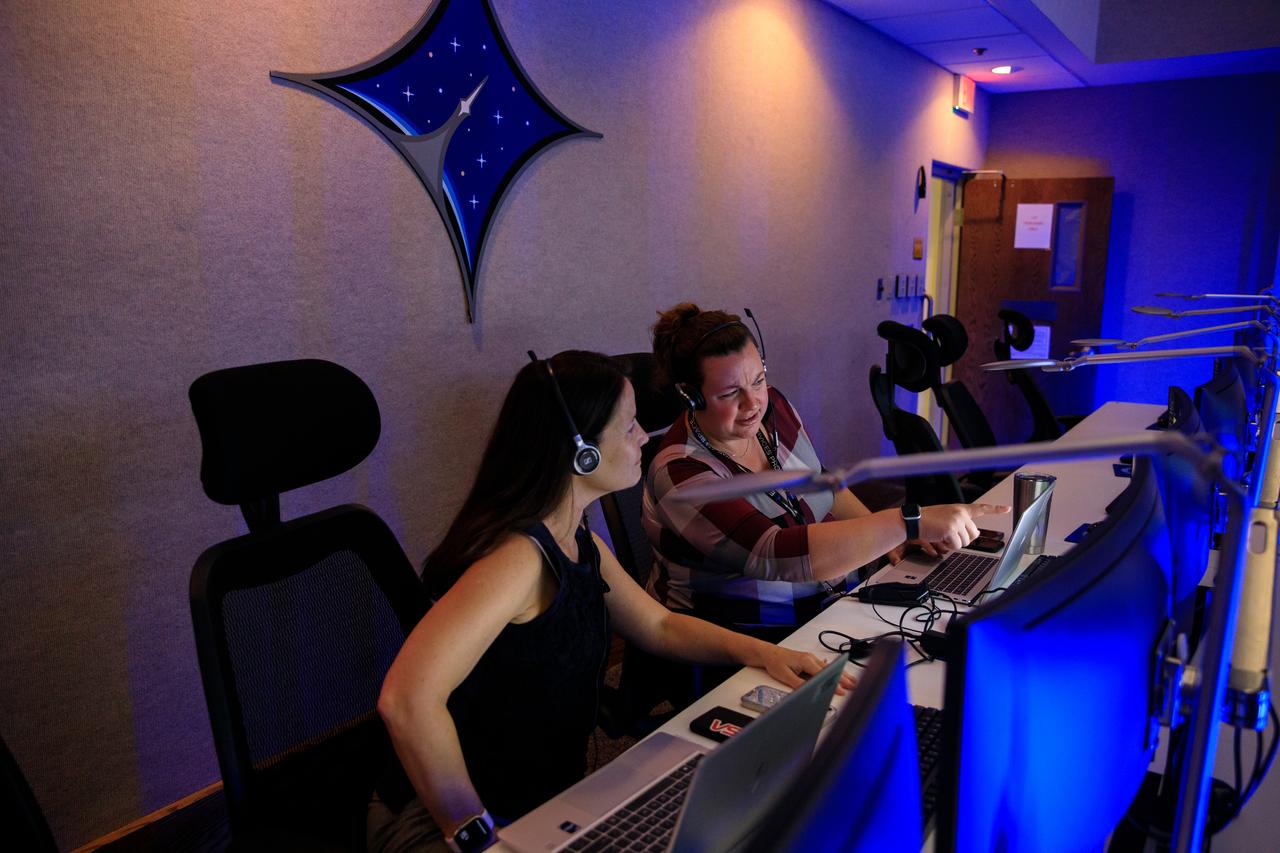
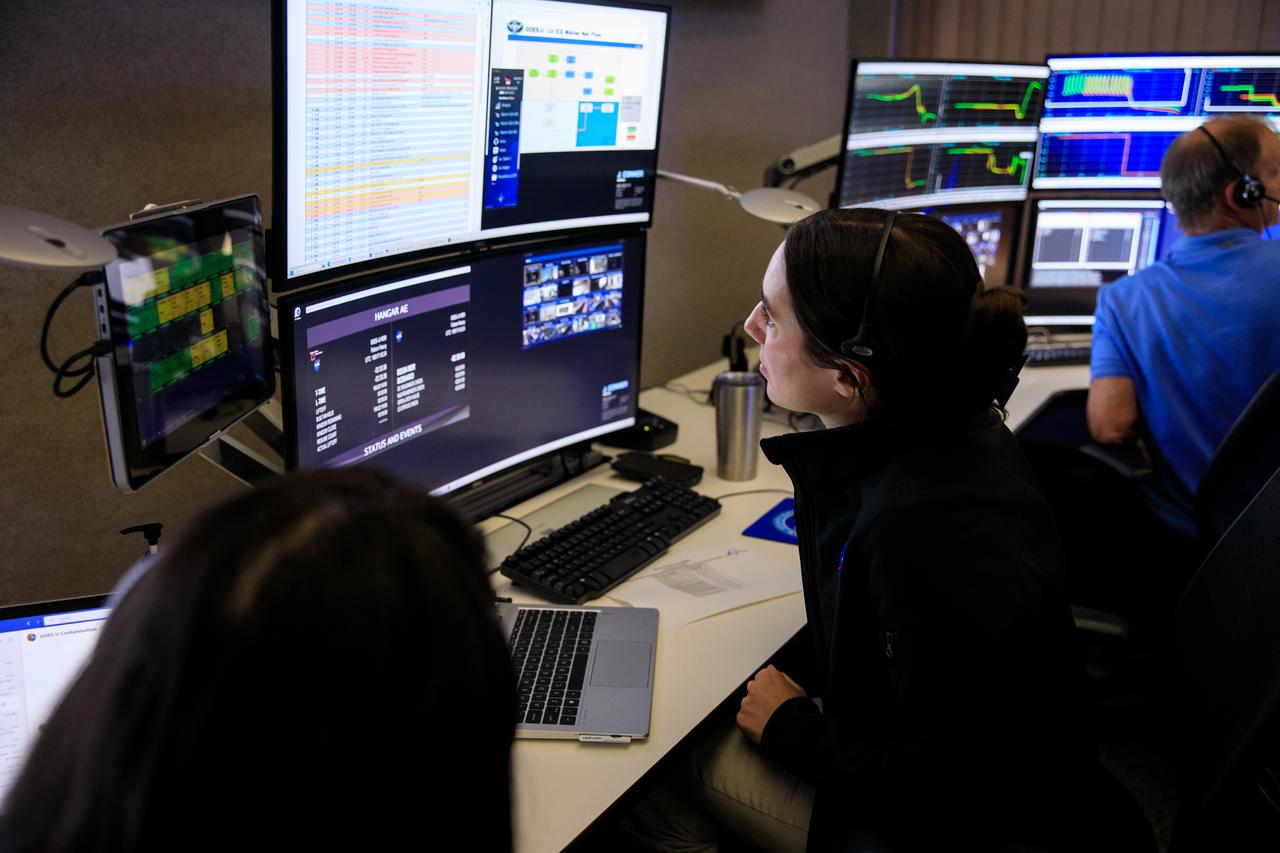
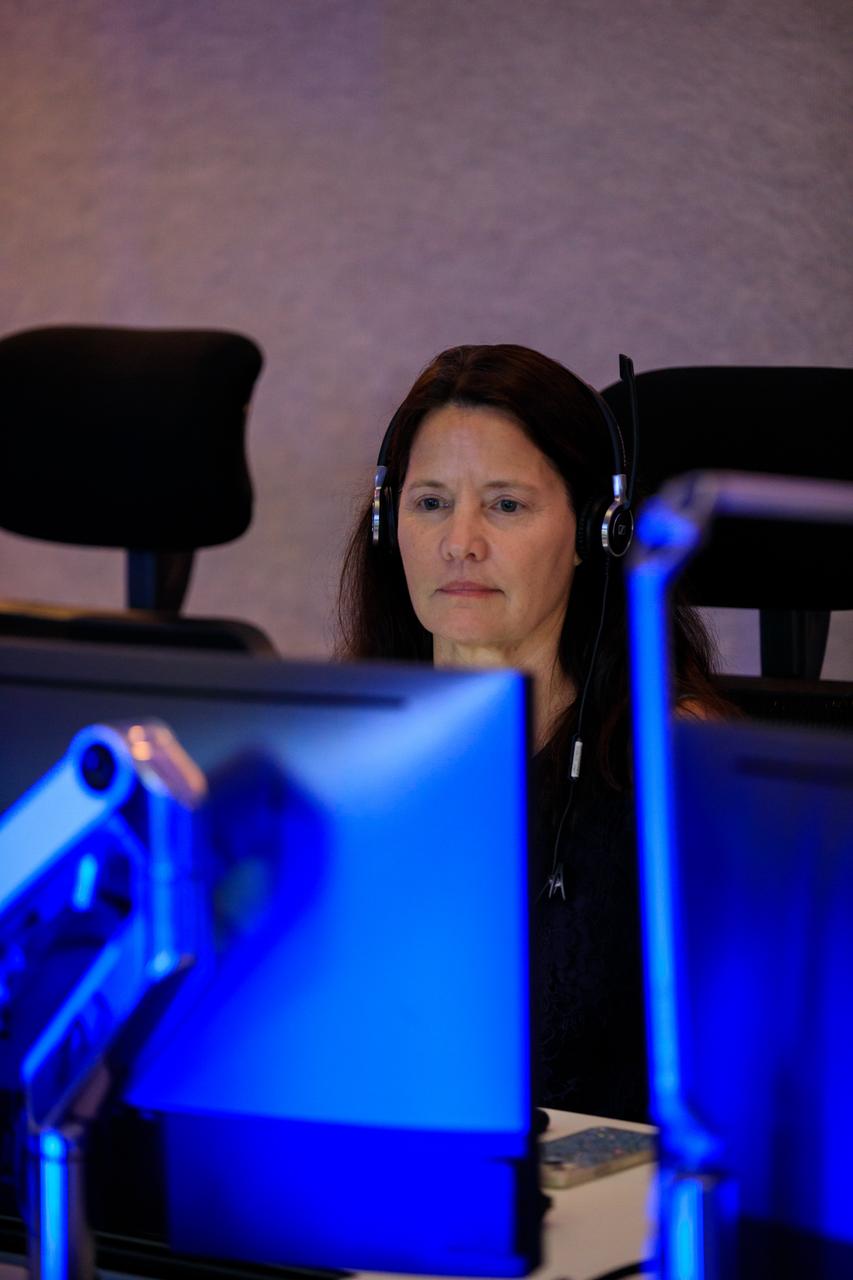
From left, Joan Misner, mission integration engineer with the Launch Services Program at NASA’s Kennedy Space Center and Jessica Conner, mission integration engineer at NASA Kennedy, participate in a mission dress rehearsal on Monday, June 17, 2024, inside Hangar AE at Cape Canaveral Space Force Station in Florida for the National Oceanic and Atmospheric Administration (NOAA) GOES-U (Geostationary Operational Environmental Satellite U) mission. The GOES-U satellite, the final addition to GOES-R series, will serve a critical role in providing continuous coverage of the Western Hemisphere, including monitoring tropical systems in the eastern Pacific and Atlantic oceans launched Tuesday, June 25, 2024.
GOES-U Dress Rehearsal
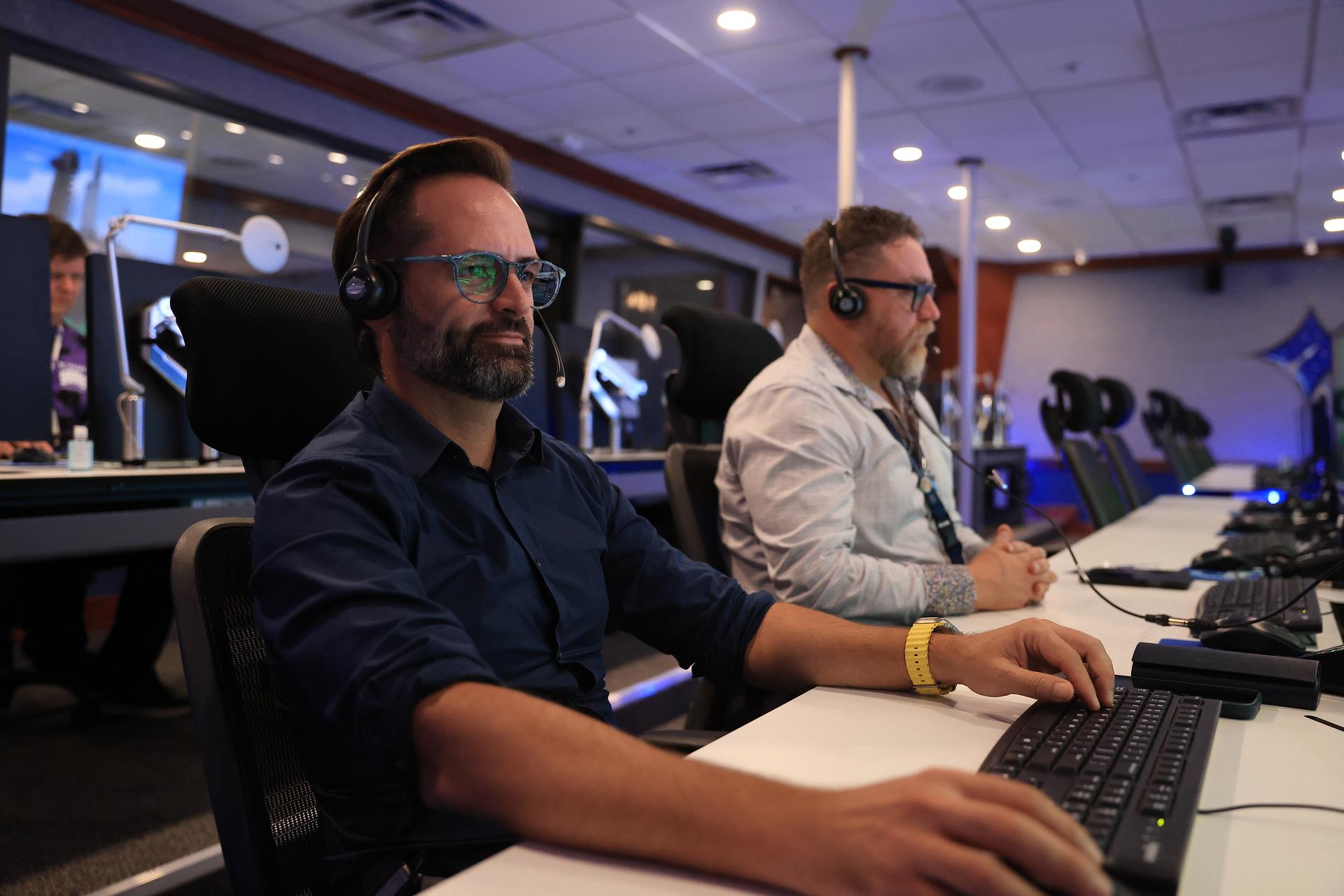
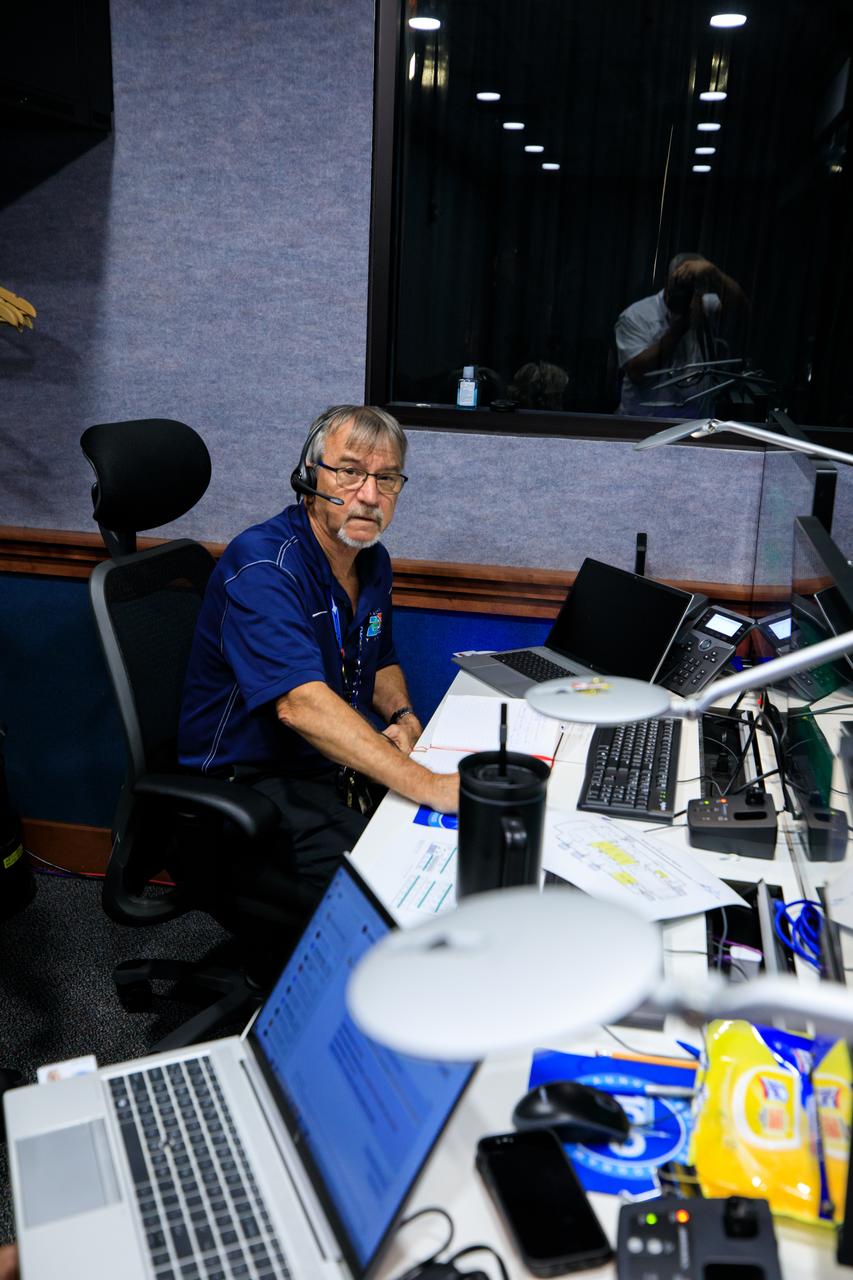
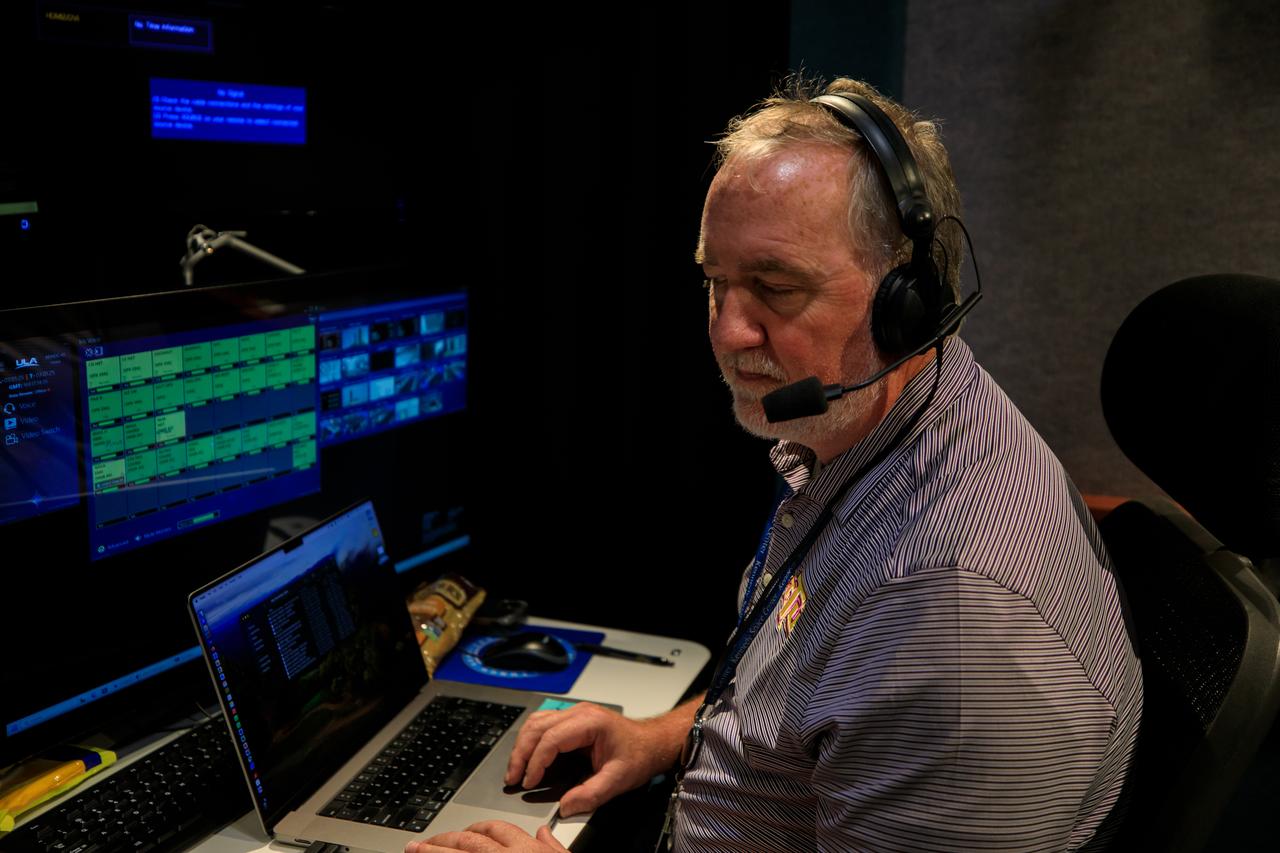
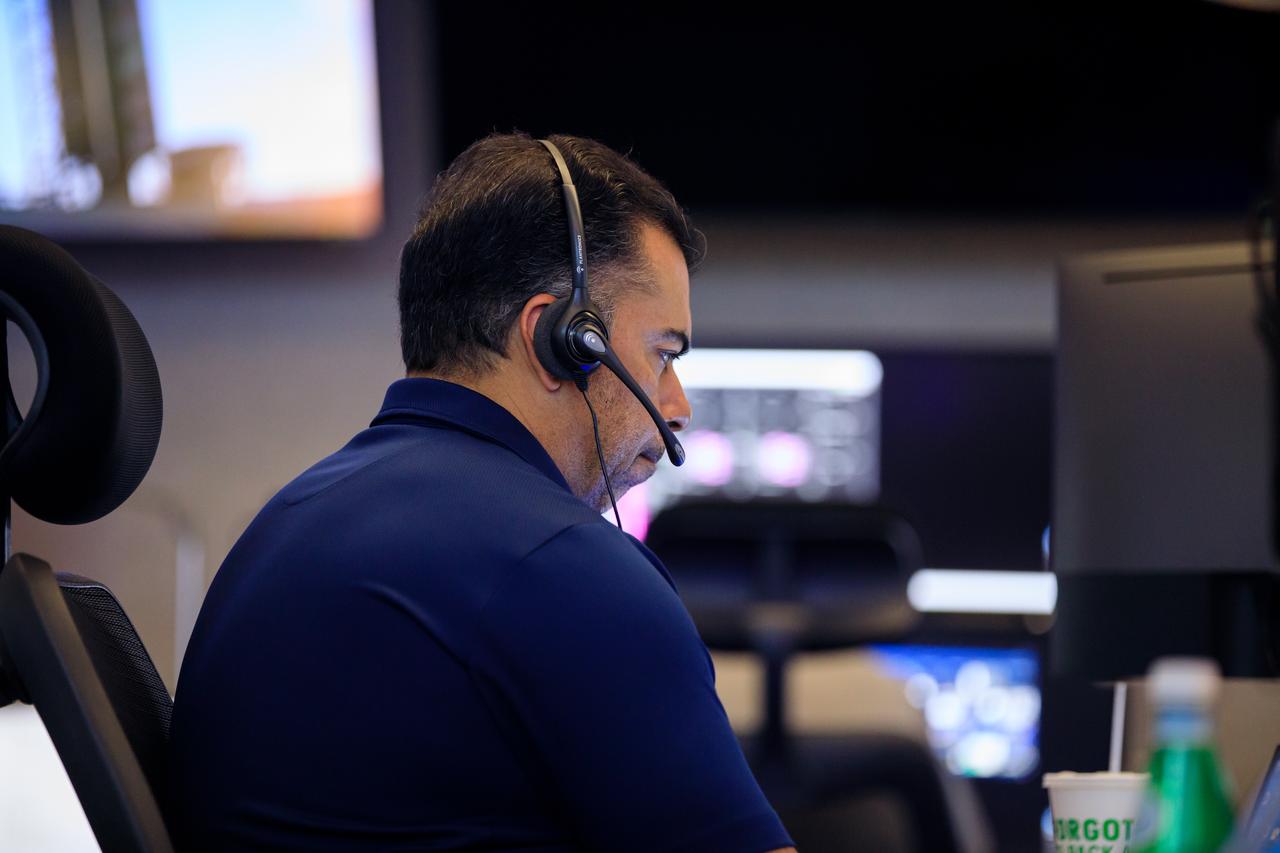
Reed Divertie, chief of Communications and Telemetry in the Ground System Integration Branch with the Launch Services Program at NASA’s Kennedy Space Center, participates in a mission dress rehearsal on Monday, June 17, 2024, inside Hangar AE at Cape Canaveral Space Force Station in Florida for the National Oceanic and Atmospheric Administration (NOAA) GOES-U (Geostationary Operational Environmental Satellite U) mission. The GOES-U satellite, the final addition to GOES-R series, will serve a critical role in providing continuous coverage of the Western Hemisphere, including monitoring tropical systems in the eastern Pacific and Atlantic oceans launched Tuesday, June 25, 2024.
GOES-U Dress Rehearsal
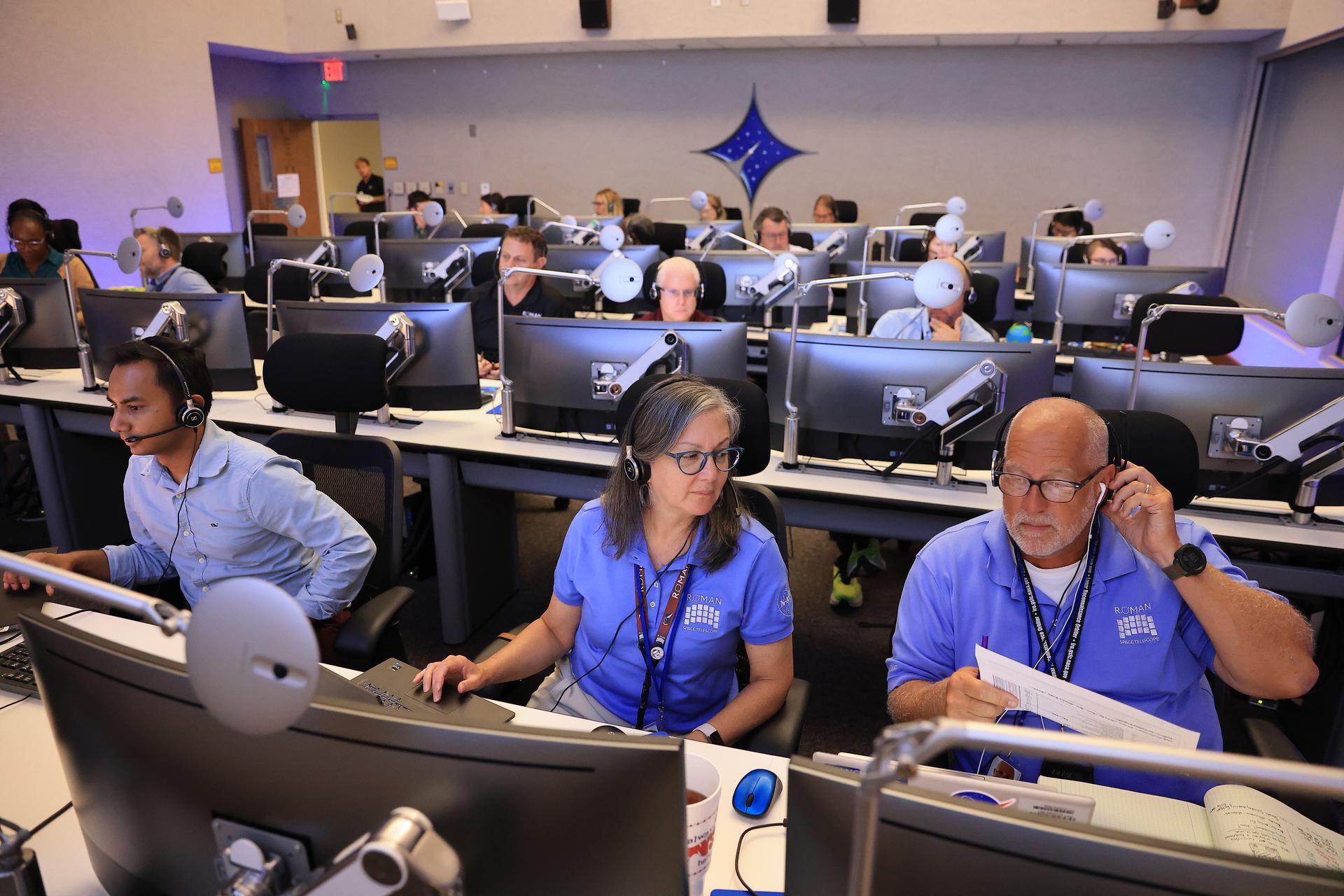
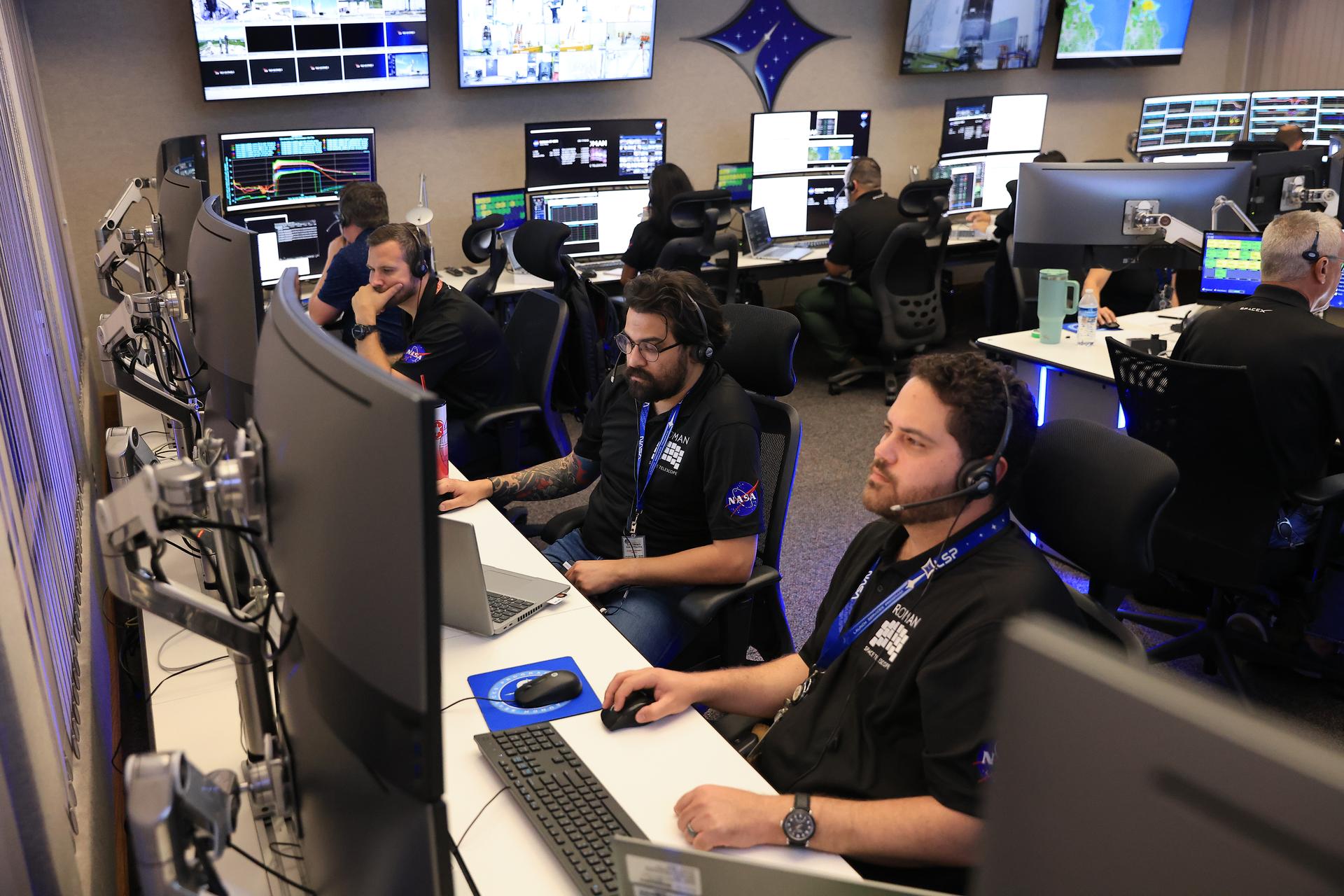
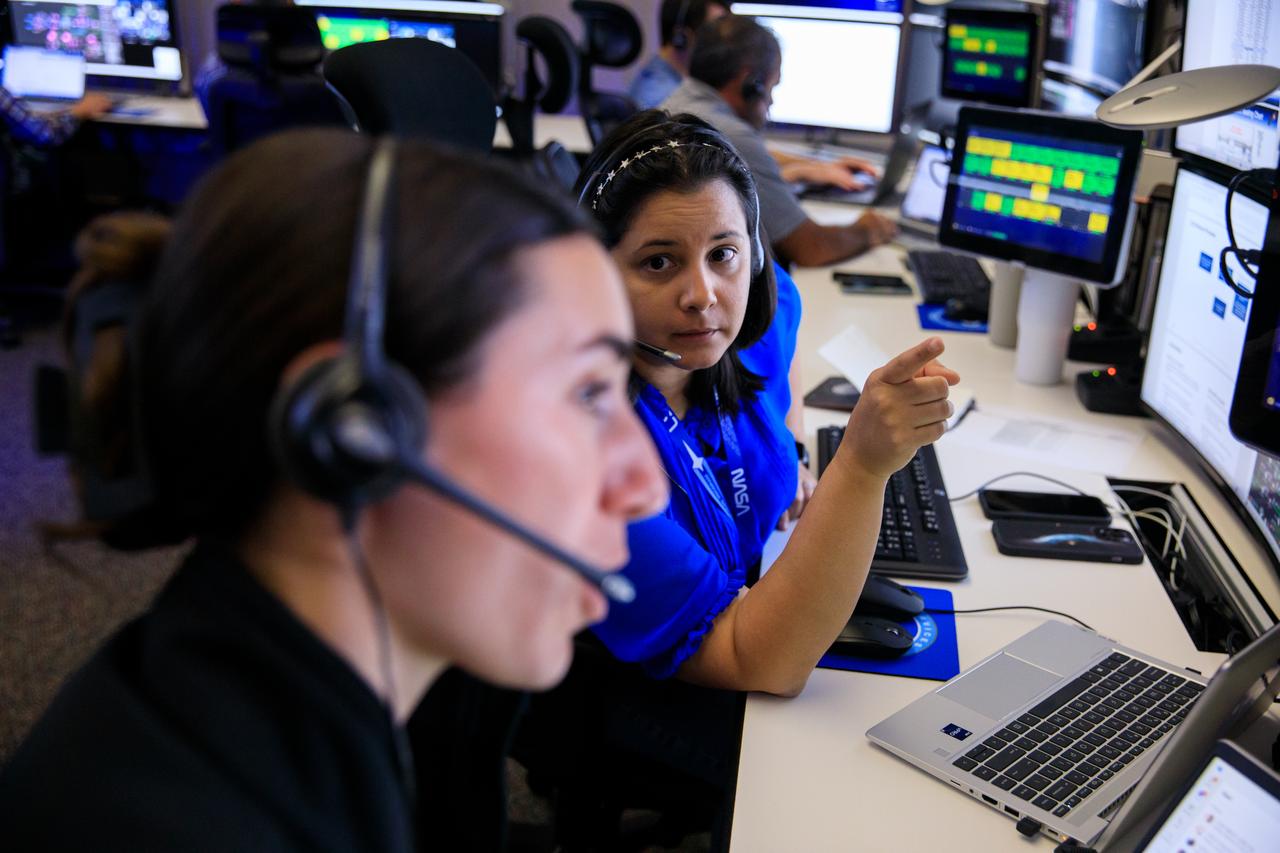
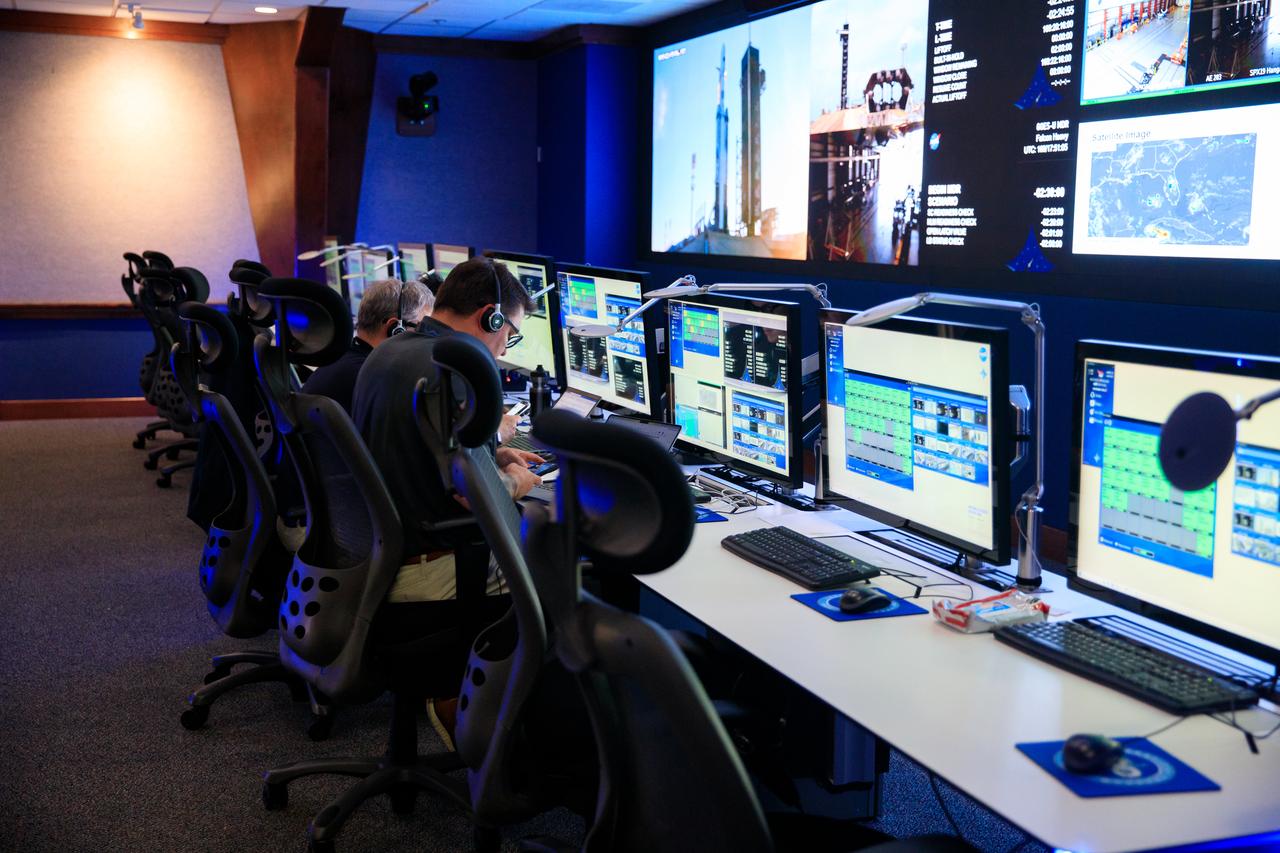
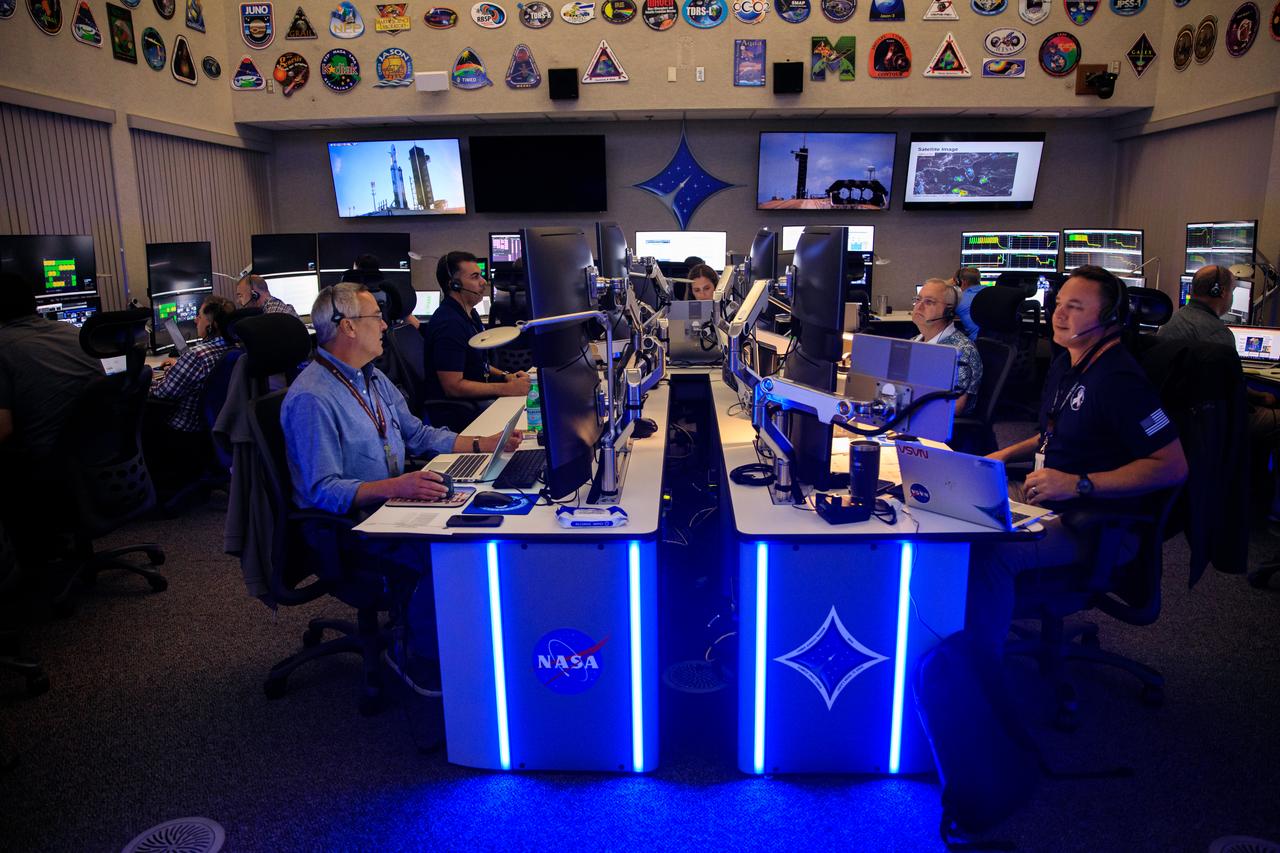
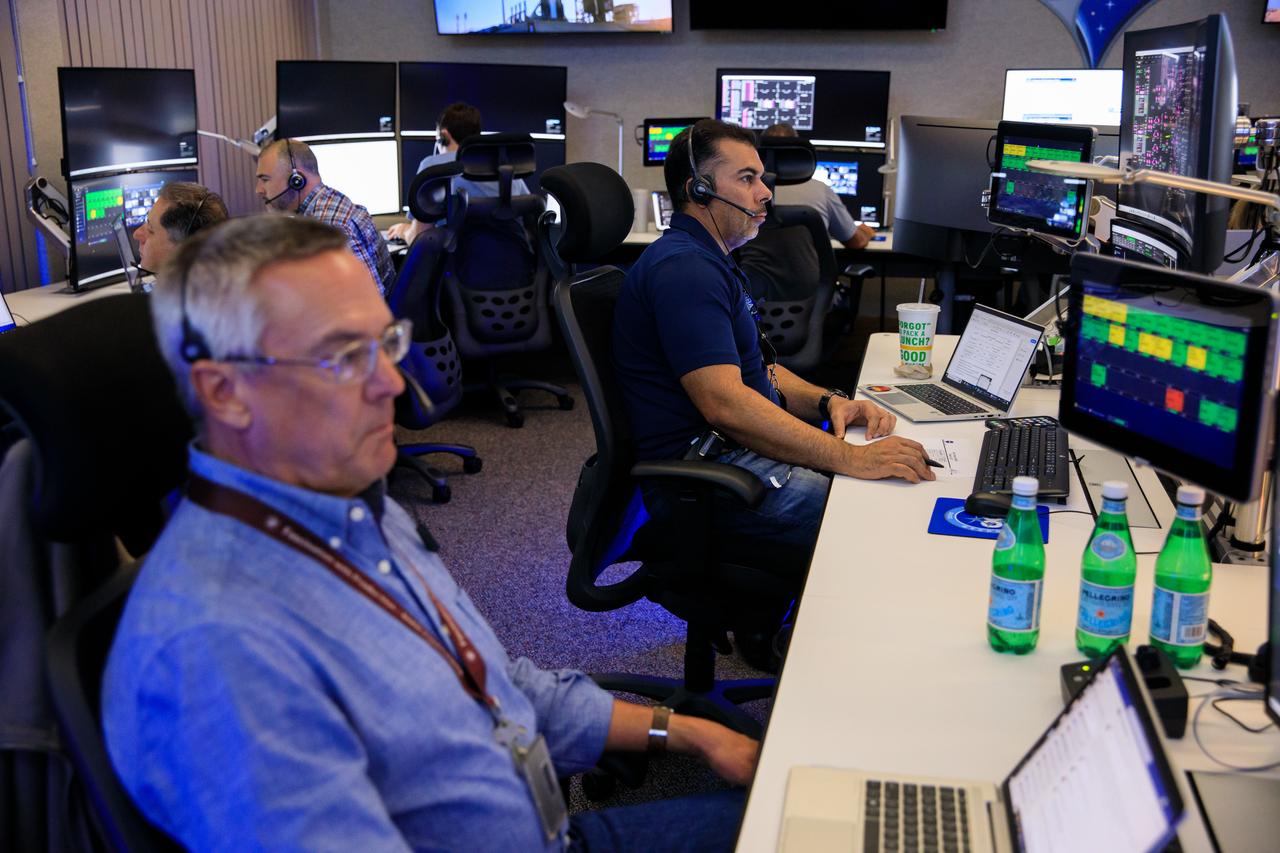
Engineers with the Launch Services Program at NASA’s Kennedy Space Center and mission managers participate in a mission dress rehearsal on Monday, June 17, 2024, inside Hangar AE at Cape Canaveral Space Force Station in Florida for the National Oceanic and Atmospheric Administration (NOAA) GOES-U (Geostationary Operational Environmental Satellite U) mission. The GOES-U satellite, the final addition to GOES-R series, will serve a critical role in providing continuous coverage of the Western Hemisphere, including monitoring tropical systems in the eastern Pacific and Atlantic oceans launched Tuesday, June 25, 2024.
GOES-U Dress Rehearsal
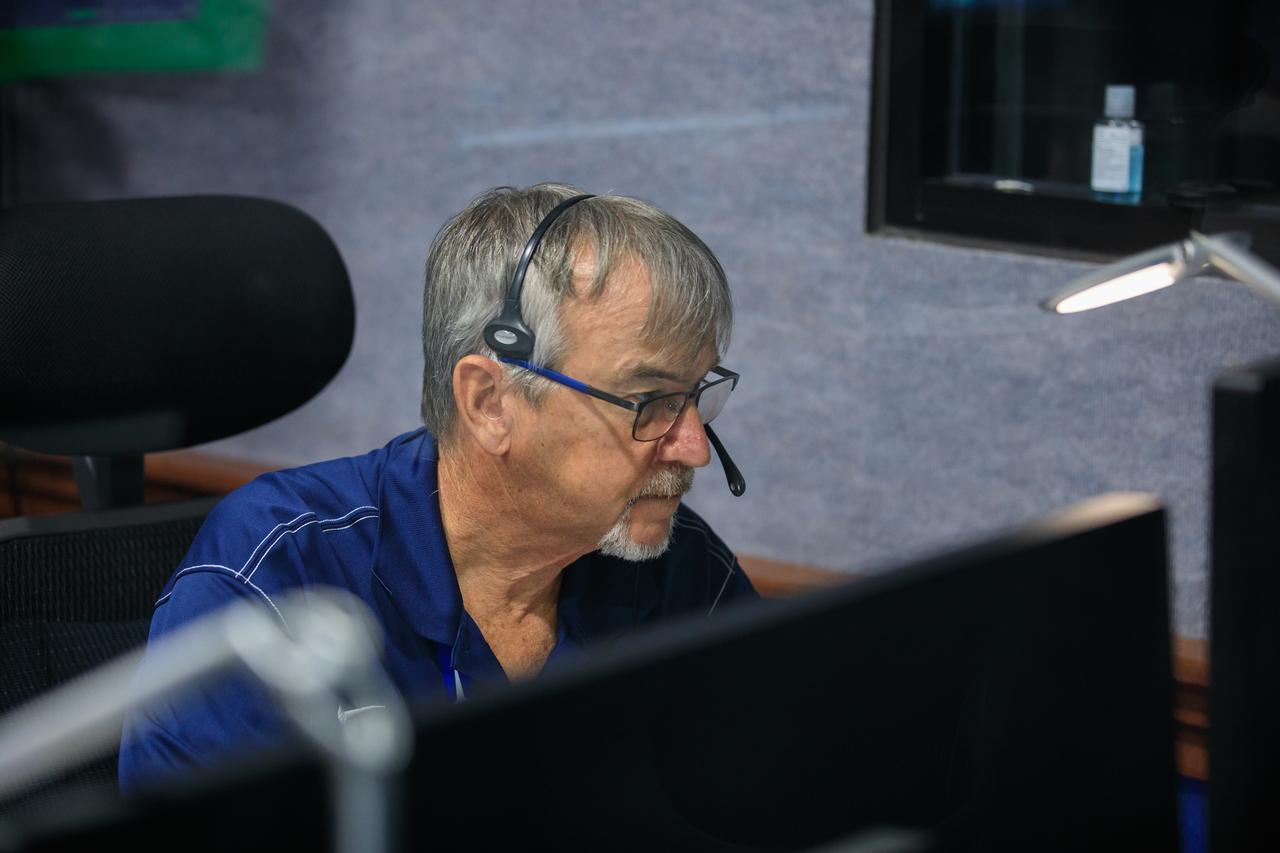
Mic Woltman, chief of Fleet Systems Integration for the Launch Services Program at NASA’s Kennedy Space Center participates in a mission dress rehearsal on Monday, June 17, 2024, inside Hangar AE at Cape Canaveral Space Force Station in Florida for the National Oceanic and Atmospheric Administration (NOAA) GOES-U (Geostationary Operational Environmental Satellite U) mission. The GOES-U satellite, the final addition to GOES-R series, will serve a critical role in providing continuous coverage of the Western Hemisphere, including monitoring tropical systems in the eastern Pacific and Atlantic oceans launched Tuesday, June 25, 2024.
GOES-U Dress Rehearsal
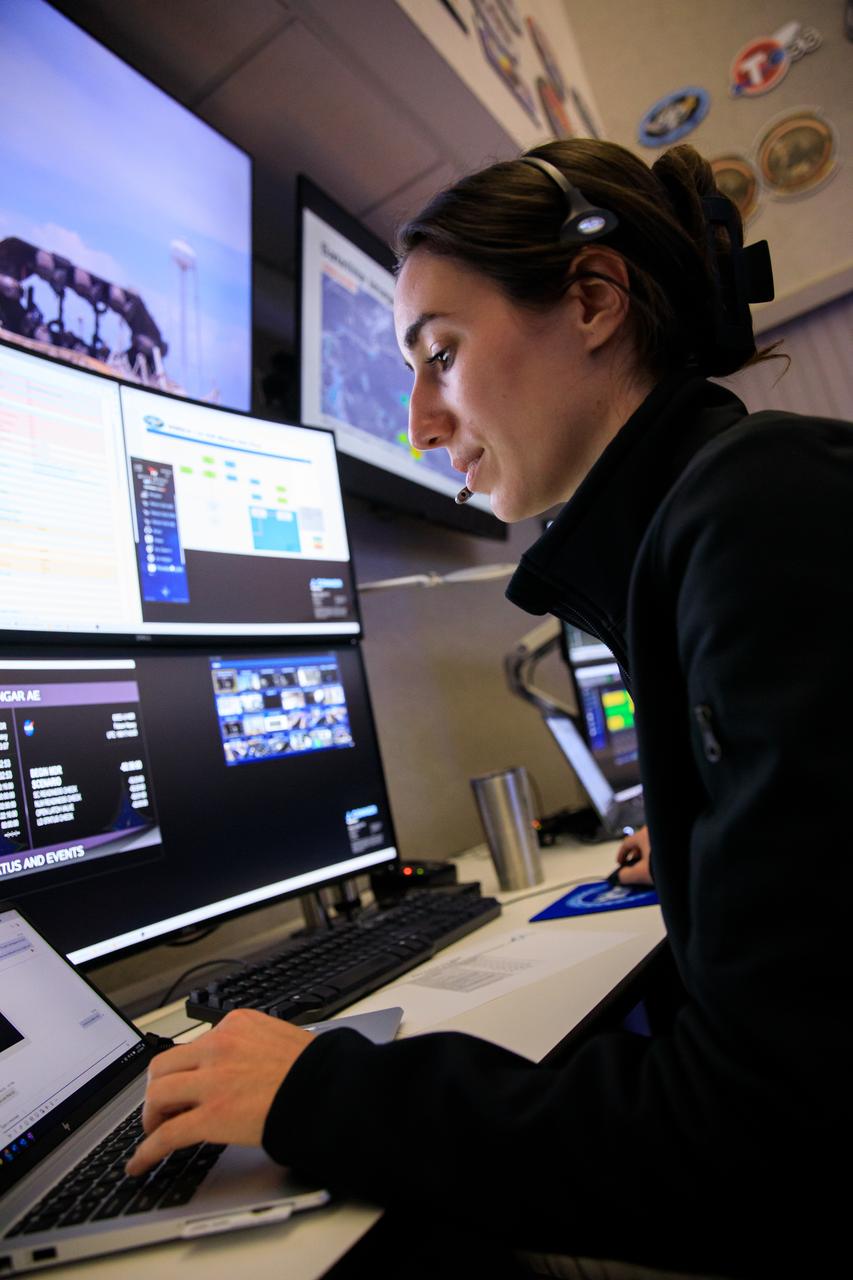
Jessica Conner, mission integration engineer at NASA’s Kennedy Space Center, participates in a mission dress rehearsal on Monday, June 17, 2024, inside Hangar AE at Cape Canaveral Space Force Station in Florida for the National Oceanic and Atmospheric Administration (NOAA) GOES-U (Geostationary Operational Environmental Satellite U) mission. The GOES-U satellite, the final addition to GOES-R series, will serve a critical role in providing continuous coverage of the Western Hemisphere, including monitoring tropical systems in the eastern Pacific and Atlantic oceans launched Tuesday, June 25, 2024.
GOES-U Dress Rehearsal
Engineers with the Launch Services Program at NASA’s Kennedy Space Center and mission managers participate in a mission dress rehearsal on Monday, June 17, 2024, inside Hangar AE at Cape Canaveral Space Force Station in Florida for the National Oceanic and Atmospheric Administration (NOAA) GOES-U (Geostationary Operational Environmental Satellite U) mission. The GOES-U satellite, the final addition to GOES-R series, will serve a critical role in providing continuous coverage of the Western Hemisphere, including monitoring tropical systems in the eastern Pacific and Atlantic oceans launched Tuesday, June 25, 2024.
GOES-U Dress Rehearsal
Engineers with the Launch Services Program at NASA’s Kennedy Space Center and mission managers participate in a mission dress rehearsal on Monday, June 17, 2024, inside Hangar AE at Cape Canaveral Space Force Station in Florida for the National Oceanic and Atmospheric Administration (NOAA) GOES-U (Geostationary Operational Environmental Satellite U) mission. The GOES-U satellite, the final addition to GOES-R series, will serve a critical role in providing continuous coverage of the Western Hemisphere, including monitoring tropical systems in the eastern Pacific and Atlantic oceans launched Tuesday, June 25, 2024.
GOES-U Dress Rehearsal
Engineers with the Launch Services Program at NASA’s Kennedy Space Center and mission managers participate in a mission dress rehearsal on Monday, June 17, 2024, inside Hangar AE at Cape Canaveral Space Force Station in Florida for the National Oceanic and Atmospheric Administration (NOAA) GOES-U (Geostationary Operational Environmental Satellite U) mission. The GOES-U satellite, the final addition to GOES-R series, will serve a critical role in providing continuous coverage of the Western Hemisphere, including monitoring tropical systems in the eastern Pacific and Atlantic oceans launched Tuesday, June 25, 2024.
GOES-U Dress Rehearsal
Joan Misner, mission integration engineer with the Launch Services Program at NASA’s Kennedy Space Center, participates in a mission dress rehearsal on Monday, June 17, 2024, inside Hangar AE at Cape Canaveral Space Force Station in Florida for the National Oceanic and Atmospheric Administration (NOAA) GOES-U (Geostationary Operational Environmental Satellite U) mission. The GOES-U satellite, the final addition to GOES-R series, will serve a critical role in providing continuous coverage of the Western Hemisphere, including monitoring tropical systems in the eastern Pacific and Atlantic oceans launched Tuesday, June 25, 2024.
GOES-U Dress Rehearsal
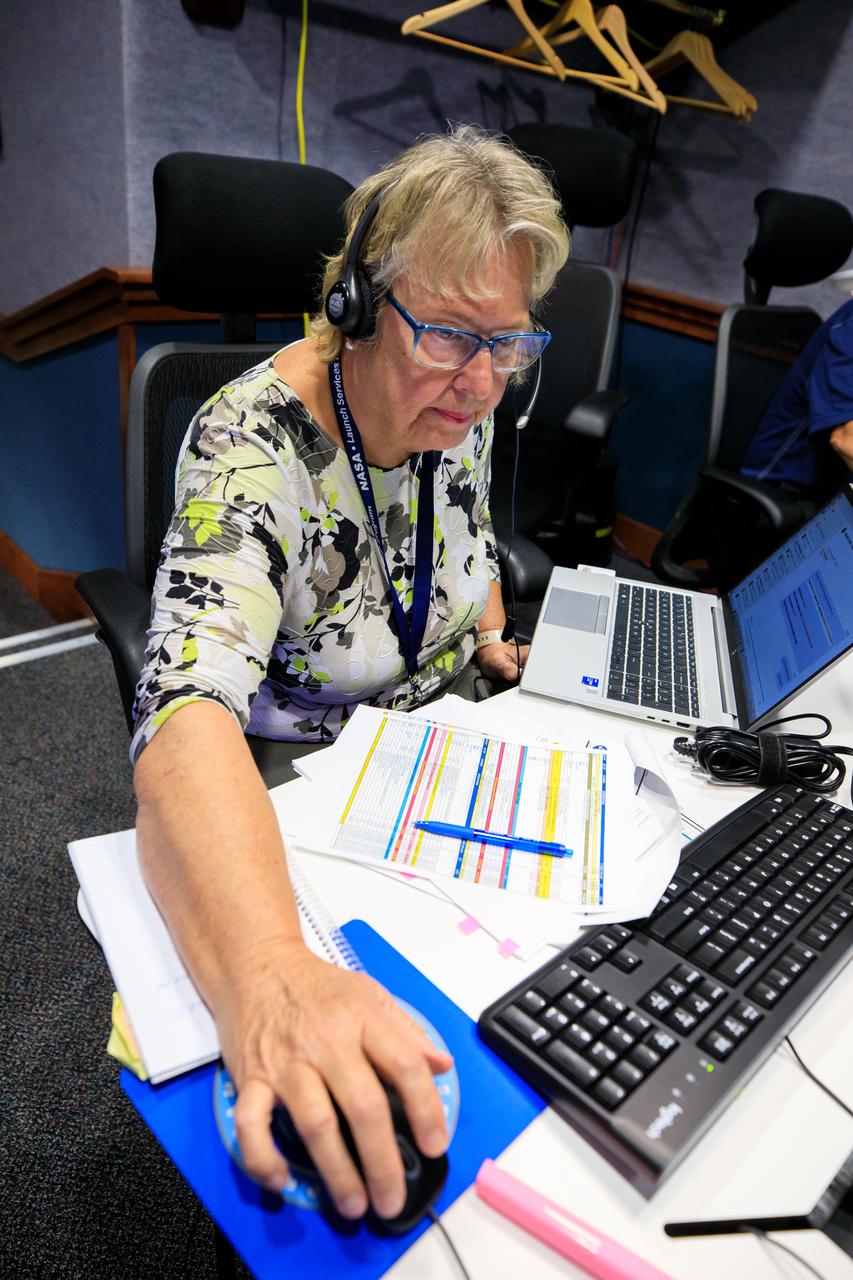
Lois Clutter, Mission Communications Engineer, Flight Operations Engineer with the Launch Services Program at NASA’s Kennedy Space Center participates in a mission dress rehearsal on Monday, June 17, 2024, inside Hangar AE at Cape Canaveral Space Force Station in Florida for the National Oceanic and Atmospheric Administration (NOAA) GOES-U (Geostationary Operational Environmental Satellite U) mission. The GOES-U satellite, the final addition to GOES-R series, will serve a critical role in providing continuous coverage of the Western Hemisphere, including monitoring tropical systems in the eastern Pacific and Atlantic oceans launched Tuesday, June 25, 2024.
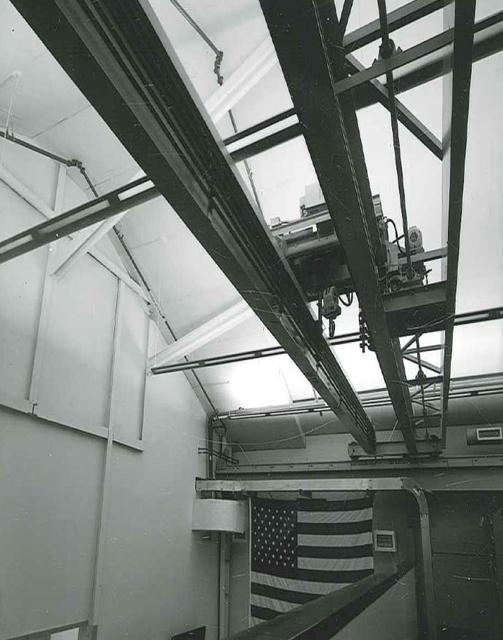
GOES-U Dress Rehearsal
Engineers with the Launch Services Program at NASA’s Kennedy Space Center and mission managers participate in a mission dress rehearsal on Monday, June 17, 2024, inside Hangar AE at Cape Canaveral Space Force Station in Florida for the National Oceanic and Atmospheric Administration (NOAA) GOES-U (Geostationary Operational Environmental Satellite U) mission. The GOES-U satellite, the final addition to GOES-R series, will serve a critical role in providing continuous coverage of the Western Hemisphere, including monitoring tropical systems in the eastern Pacific and Atlantic oceans launched Tuesday, June 25, 2024.
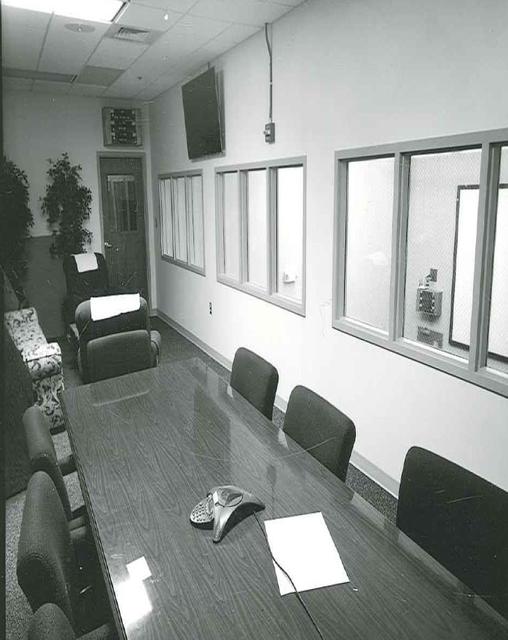
GOES-U Dress Rehearsal
James Wood, chief engineer with the Launch Services Program at NASA’s Kennedy Space Center, participates in a mission dress rehearsal on Monday, June 17, 2024, inside Hangar AE at Cape Canaveral Space Force Station in Florida for the National Oceanic and Atmospheric Administration (NOAA) GOES-U (Geostationary Operational Environmental Satellite U) mission. The GOES-U satellite, the final addition to GOES-R series, will serve a critical role in providing continuous coverage of the Western Hemisphere, including monitoring tropical systems in the eastern Pacific and Atlantic oceans launched Tuesday, June 25, 2024.
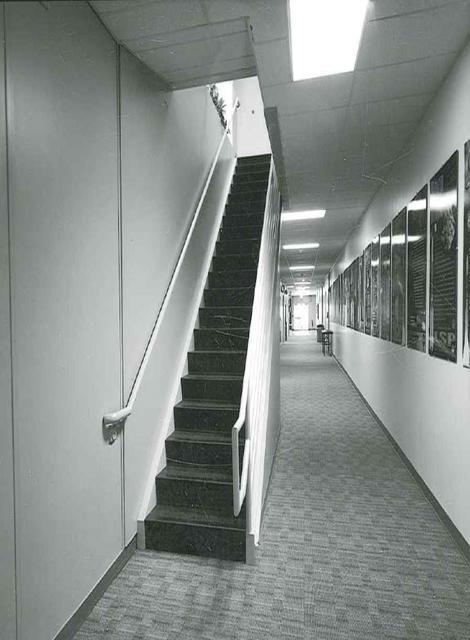
GOES-U Dress Rehearsal
Brian Lawson, Chief Communications Engineer at a.i. solutions, participates in a mission dress rehearsal on Monday, June 17, 2024, inside Hangar AE at Cape Canaveral Space Force Station in Florida for the National Oceanic and Atmospheric Administration (NOAA) GOES-U (Geostationary Operational Environmental Satellite U) mission. The GOES-U satellite, the final addition to GOES-R series, will serve a critical role in providing continuous coverage of the Western Hemisphere, including monitoring tropical systems in the eastern Pacific and Atlantic oceans launched Tuesday, June 25, 2024.
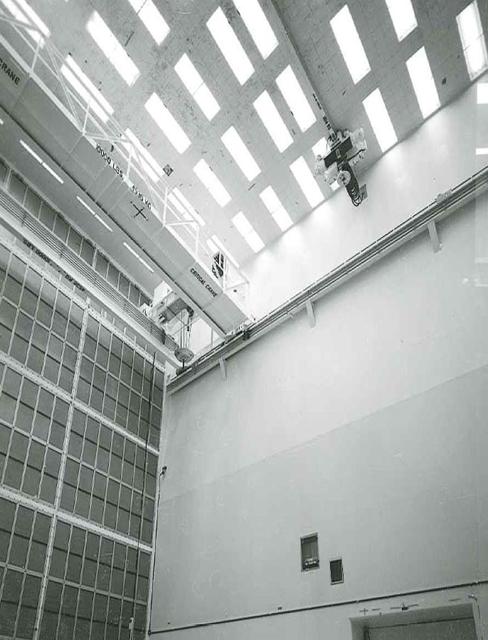
GOES-U Dress Rehearsal
Lori Ulrich, deputy chief, Fleet and Systems Management Division with the Launch Services Program at NASA’s Kennedy Space Center, participates in a mission dress rehearsal on Monday, June 17, 2024, inside Hangar AE at Cape Canaveral Space Force Station in Florida for the National Oceanic and Atmospheric Administration (NOAA) GOES-U (Geostationary Operational Environmental Satellite U) mission. The GOES-U satellite, the final addition to GOES-R series, will serve a critical role in providing continuous coverage of the Western Hemisphere, including monitoring tropical systems in the eastern Pacific and Atlantic oceans launched Tuesday, June 25, 2024.
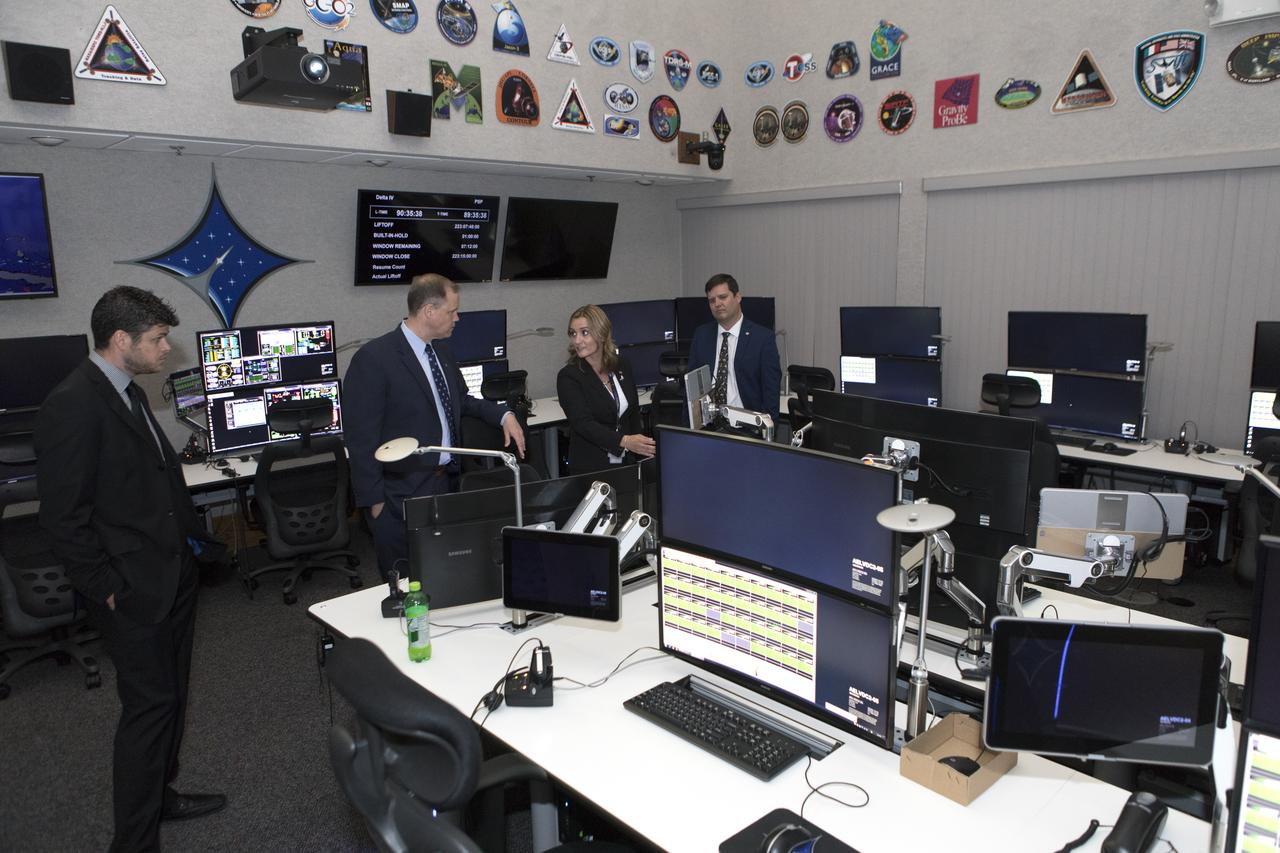
GOES-U Dress Rehearsal
Megan Cruz, NASA Communications at NASA’s Kennedy Space Center, participates in a mission dress rehearsal on Monday, June 17, 2024, inside Hangar AE at Cape Canaveral Space Force Station in Florida for the National Oceanic and Atmospheric Administration (NOAA) GOES-U (Geostationary Operational Environmental Satellite U) mission. The GOES-U satellite, the final addition to GOES-R series, will serve a critical role in providing continuous coverage of the Western Hemisphere, including monitoring tropical systems in the eastern Pacific and Atlantic oceans launched Tuesday, June 25, 2024.
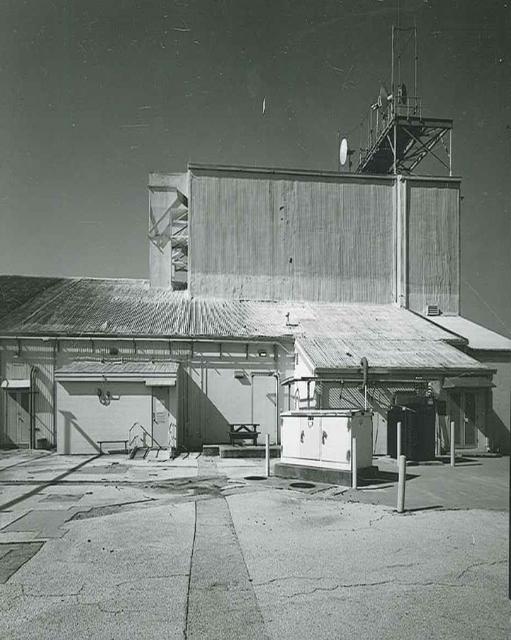
GOES-U Dress Rehearsal
James Wood, chief engineer with the Launch Services Program at NASA’s Kennedy Space Center, participates in a mission dress rehearsal on Monday, June 17, 2024, inside Hangar AE at Cape Canaveral Space Force Station in Florida for the National Oceanic and Atmospheric Administration (NOAA) GOES-U (Geostationary Operational Environmental Satellite U) mission. The GOES-U satellite, the final addition to GOES-R series, will serve a critical role in providing continuous coverage of the Western Hemisphere, including monitoring tropical systems in the eastern Pacific and Atlantic oceans launched Tuesday, June 25, 2024.
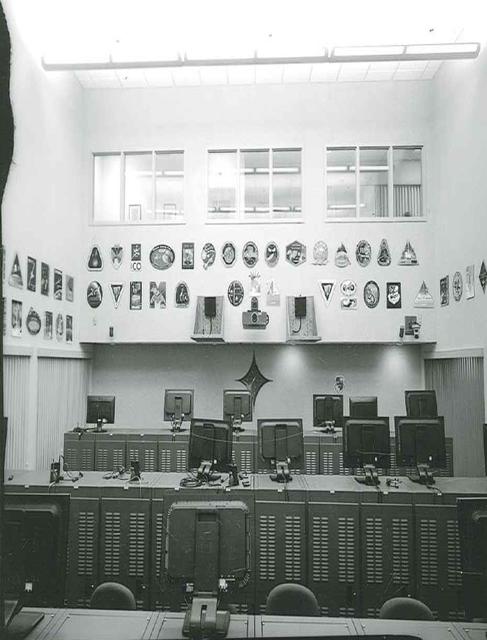
GOES-U Dress Rehearsal
Joan Misner, mission integration engineer with the Launch Services Program at NASA’s Kennedy Space Center, participates in a mission dress rehearsal on Monday, June 17, 2024, inside Hangar AE at Cape Canaveral Space Force Station in Florida for the National Oceanic and Atmospheric Administration (NOAA) GOES-U (Geostationary Operational Environmental Satellite U) mission. The GOES-U satellite, the final addition to GOES-R series, will serve a critical role in providing continuous coverage of the Western Hemisphere, including monitoring tropical systems in the eastern Pacific and Atlantic oceans launched Tuesday, June 25, 2024.
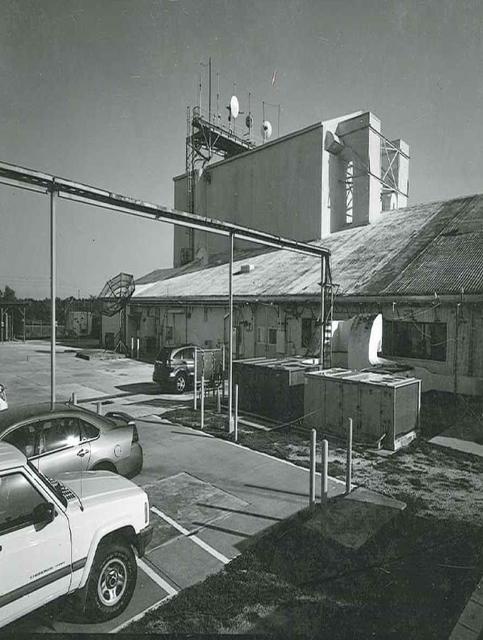
GOES-U Dress Rehearsal
Lori Ulrich, deputy chief, Fleet and Systems Management Division with the Launch Services Program at NASA’s Kennedy Space Center, participates in a mission dress rehearsal on Monday, June 17, 2024, inside Hangar AE at Cape Canaveral Space Force Station in Florida for the National Oceanic and Atmospheric Administration (NOAA) GOES-U (Geostationary Operational Environmental Satellite U) mission. The GOES-U satellite, the final addition to GOES-R series, will serve a critical role in providing continuous coverage of the Western Hemisphere, including monitoring tropical systems in the eastern Pacific and Atlantic oceans launched Tuesday, June 25, 2024.
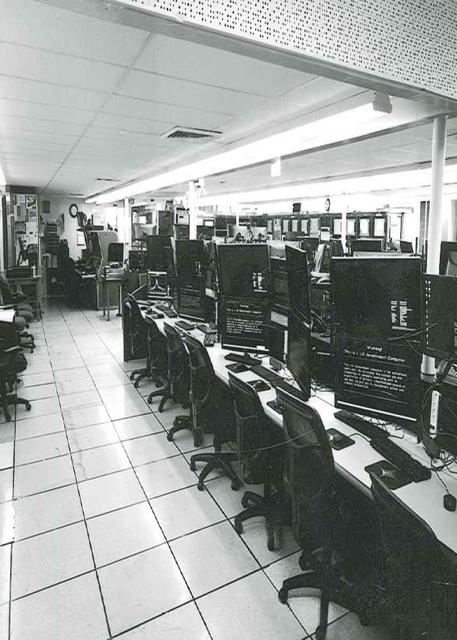
GOES-U Dress Rehearsal
Akash Vangani, deputy chief engineer with the Launch Services Program at NASA’s Kennedy Space Center, participates in a mission dress rehearsal on Monday, June 17, 2024, inside Hangar AE at Cape Canaveral Space Force Station in Florida for the National Oceanic and Atmospheric Administration (NOAA) GOES-U (Geostationary Operational Environmental Satellite U) mission. The GOES-U satellite, the final addition to GOES-R series, will serve a critical role in providing continuous coverage of the Western Hemisphere, including monitoring tropical systems in the eastern Pacific and Atlantic oceans launched Tuesday, June 25, 2024.
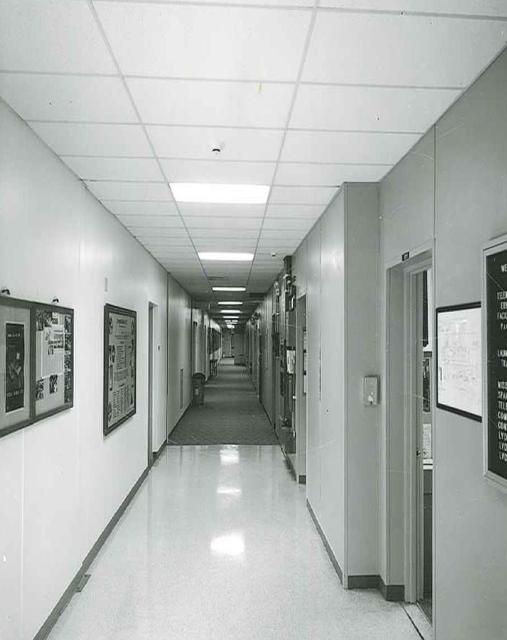
GOES-U Dress Rehearsal
From left, Lori Ulrich, deputy chief, Fleet and Systems Management Division with the Launch Services Program at NASA’s Kennedy Space Center, participates in a mission dress rehearsal on Monday, June 17, 2024, inside Hangar AE at Cape Canaveral Space Force Station in Florida for the National Oceanic and Atmospheric Administration (NOAA) GOES-U (Geostationary Operational Environmental Satellite U) mission. The GOES-U satellite, the final addition to GOES-R series, will serve a critical role in providing continuous coverage of the Western Hemisphere, including monitoring tropical systems in the eastern Pacific and Atlantic oceans launched Tuesday, June 25, 2024.
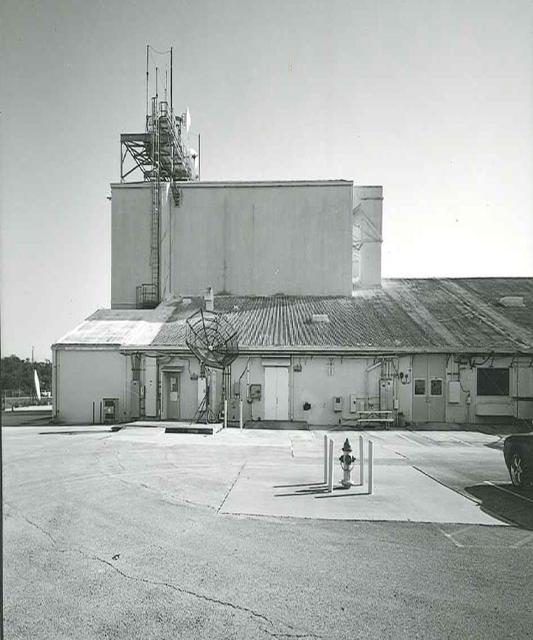
GOES-U Dress Rehearsal