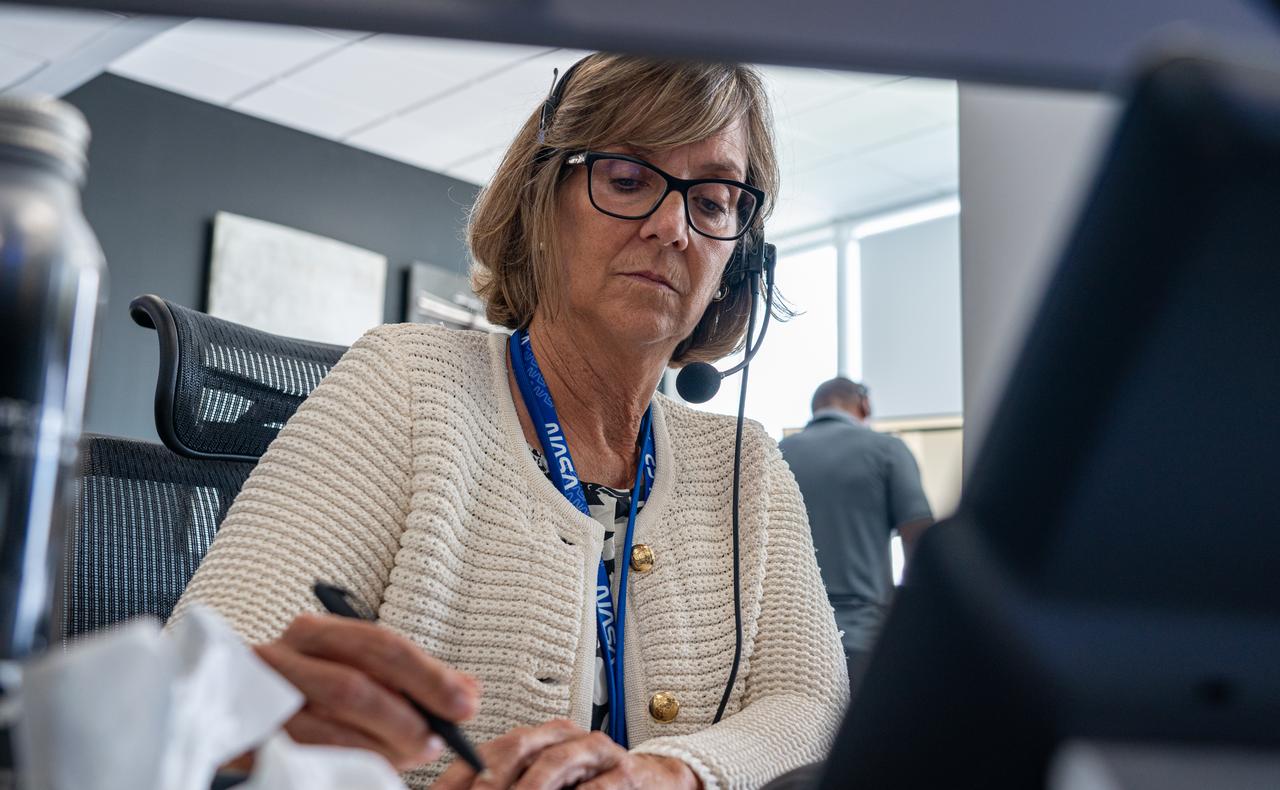
Jenny Lyons, deputy program manager for NASA’s Launch Services Program, participates in rehearsal launch operations for the National Oceanic and Atmospheric Administration (NOAA) GOES-U (Geostationary Operational Environmental Satellite U) mission inside Hangar X at NASA’s Kennedy Space Center in Florida on Monday, June 17, 2024. The GOES-U satellite, the final addition to GOES-R series, serves a critical role in providing continuous coverage of the Western Hemisphere, including monitoring tropical systems in the eastern Pacific and Atlantic oceans.
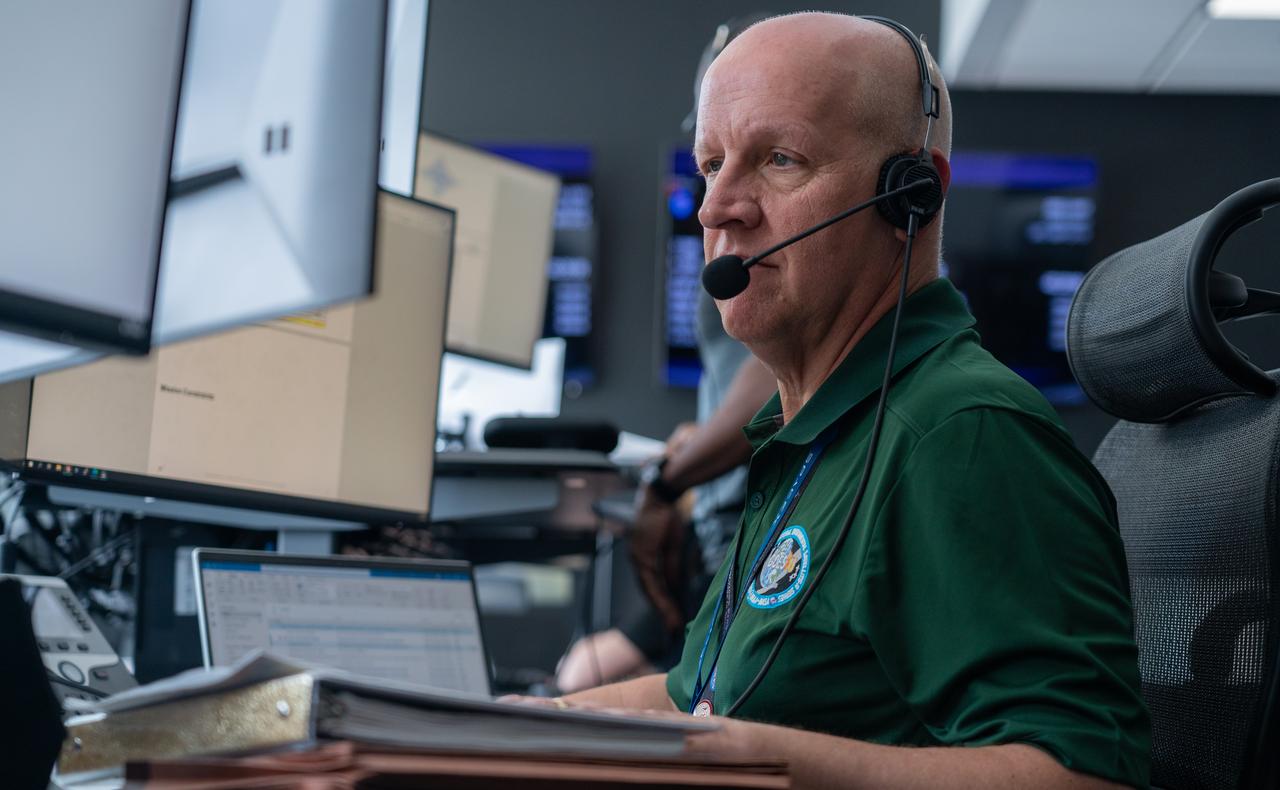
Tim Dunn, senior launch director for NASA’s Launch Services Program, participates in rehearsal launch operations for the National Oceanic and Atmospheric Administration (NOAA) GOES-U (Geostationary Operational Environmental Satellite U) mission inside Hangar X at NASA’s Kennedy Space Center in Florida on Monday, June 17, 2024. The GOES-U satellite, the final addition to GOES-R series, serves a critical role in providing continuous coverage of the Western Hemisphere, including monitoring tropical systems in the eastern Pacific and Atlantic oceans.
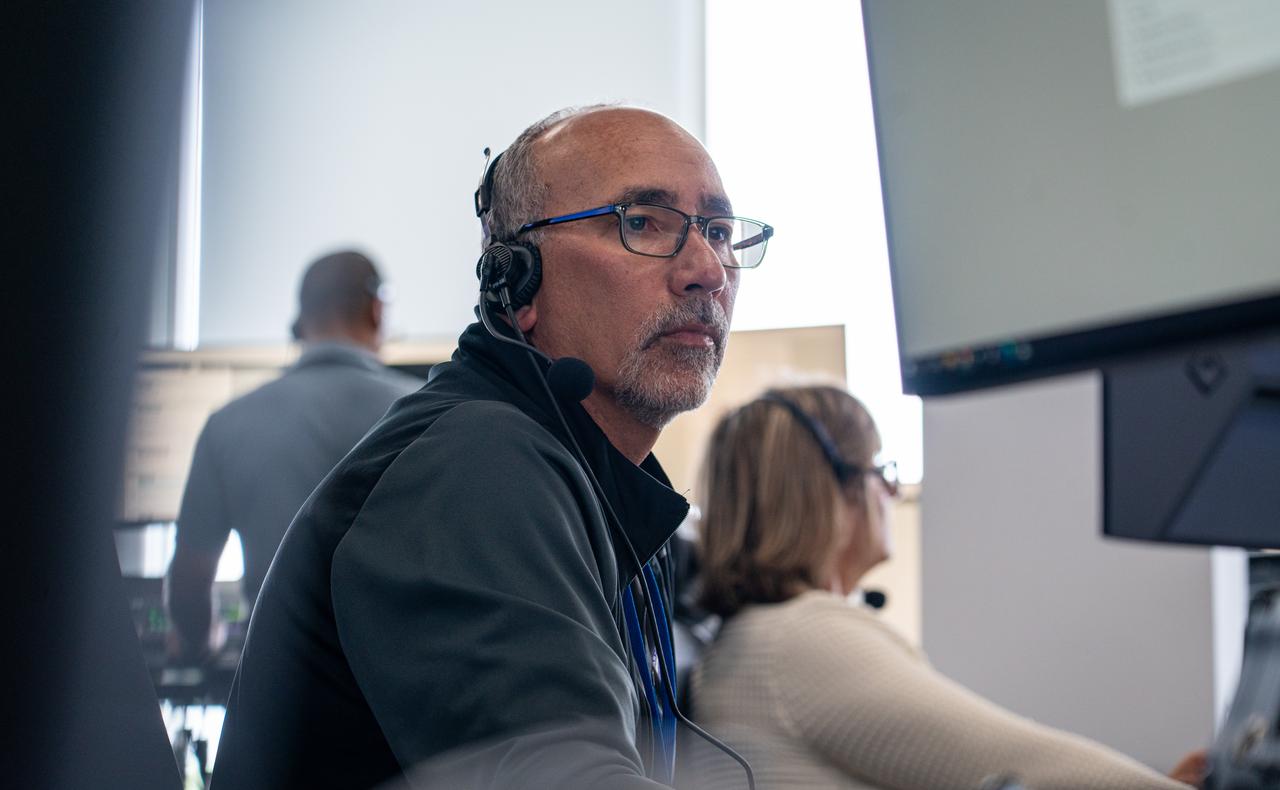
Albert Sierra, program manager for NASA’s Launch Services Program, participates in rehearsal launch operations for the National Oceanic and Atmospheric Administration (NOAA) GOES-U (Geostationary Operational Environmental Satellite U) mission inside Hangar X at NASA’s Kennedy Space Center in Florida on Monday, June 17, 2024. The GOES-U satellite, the final addition to GOES-R series, serves a critical role in providing continuous coverage of the Western Hemisphere, including monitoring tropical systems in the eastern Pacific and Atlantic oceans.
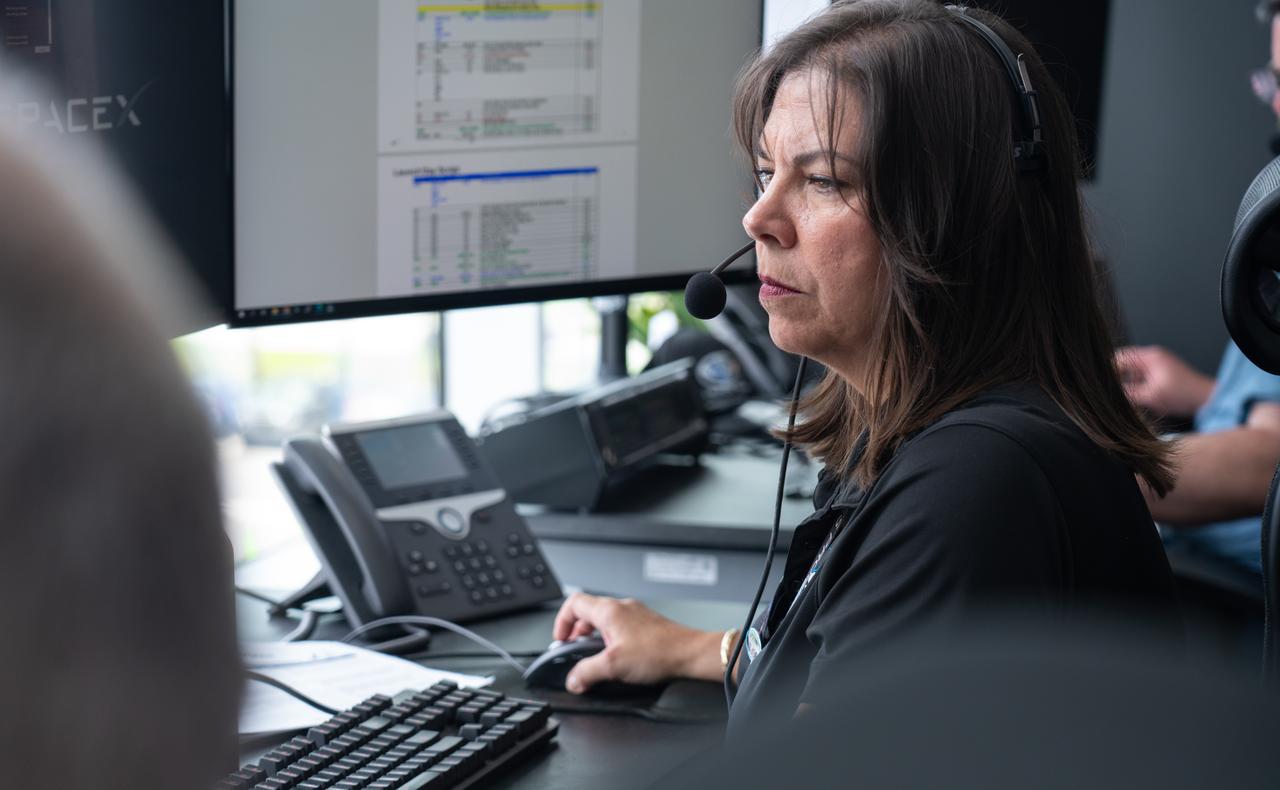
Diana Calero, chief of the Flight Projects Office for NASA’s Launch Services Program, participates in rehearsal launch operations for the National Oceanic and Atmospheric Administration (NOAA) GOES-U (Geostationary Operational Environmental Satellite U) mission inside Hangar X at NASA’s Kennedy Space Center in Florida on Monday, June 17, 2024. The GOES-U satellite, the final addition to GOES-R series, serves a critical role in providing continuous coverage of the Western Hemisphere, including monitoring tropical systems in the eastern Pacific and Atlantic oceans.
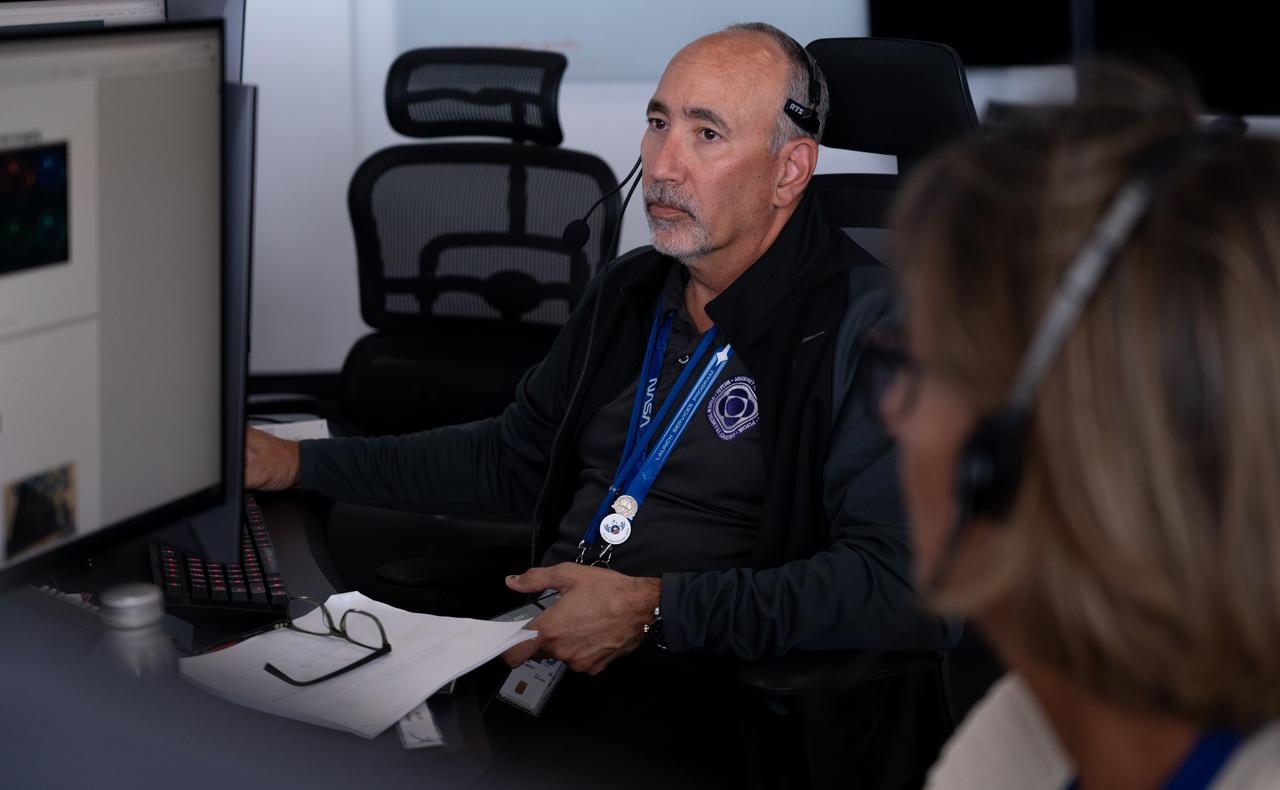
Albert Sierra, program manager for NASA’s Launch Services Program, participates in rehearsal launch operations for the National Oceanic and Atmospheric Administration (NOAA) GOES-U (Geostationary Operational Environmental Satellite U) mission inside Hangar X at NASA’s Kennedy Space Center in Florida on Monday, June 17, 2024. The GOES-U satellite, the final addition to GOES-R series, serves a critical role in providing continuous coverage of the Western Hemisphere, including monitoring tropical systems in the eastern Pacific and Atlantic oceans.
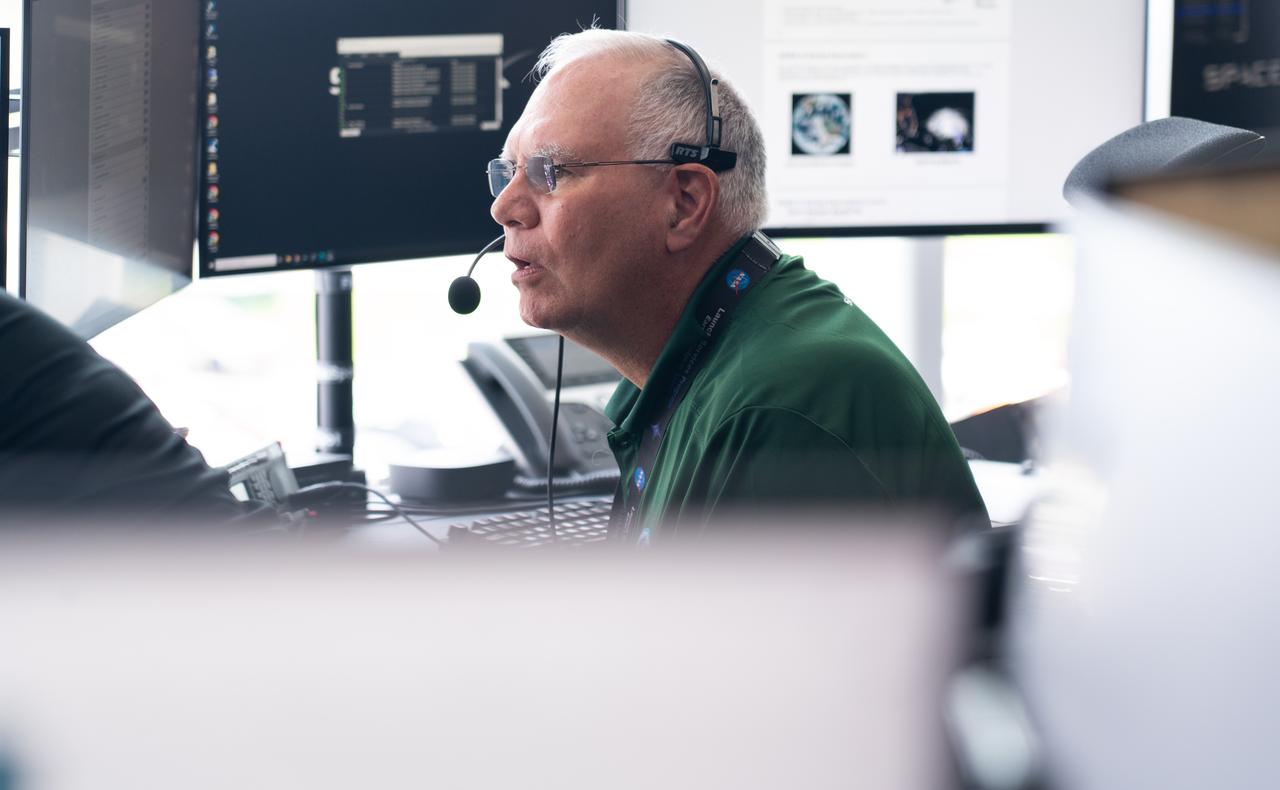
Rex Engelhardt, mission manager for NASA’s Launch Services Program, participates in rehearsal launch operations for the National Oceanic and Atmospheric Administration (NOAA) GOES-U (Geostationary Operational Environmental Satellite U) mission inside Hangar X at NASA’s Kennedy Space Center in Florida on Monday, June 17, 2024. The GOES-U satellite, the final addition to GOES-R series, serves a critical role in providing continuous coverage of the Western Hemisphere, including monitoring tropical systems in the eastern Pacific and Atlantic oceans.
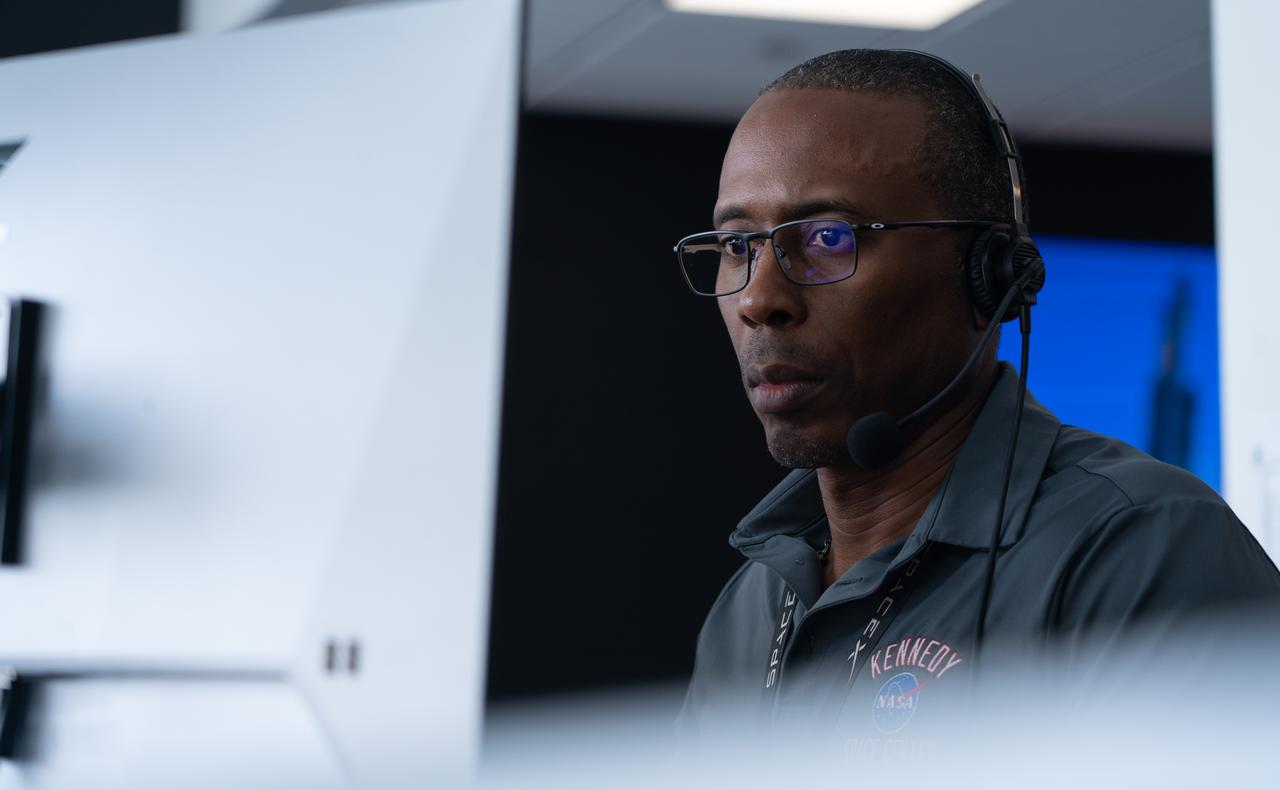
Dr. Denton Gibson, launch director for NASA’s Launch Services Program, participates in rehearsal launch operations for the National Oceanic and Atmospheric Administration (NOAA) GOES-U (Geostationary Operational Environmental Satellite U) mission inside Hangar X at NASA’s Kennedy Space Center in Florida on Monday, June 17, 2024. The GOES-U satellite, the final addition to GOES-R series, serves a critical role in providing continuous coverage of the Western Hemisphere, including monitoring tropical systems in the eastern Pacific and Atlantic oceans.
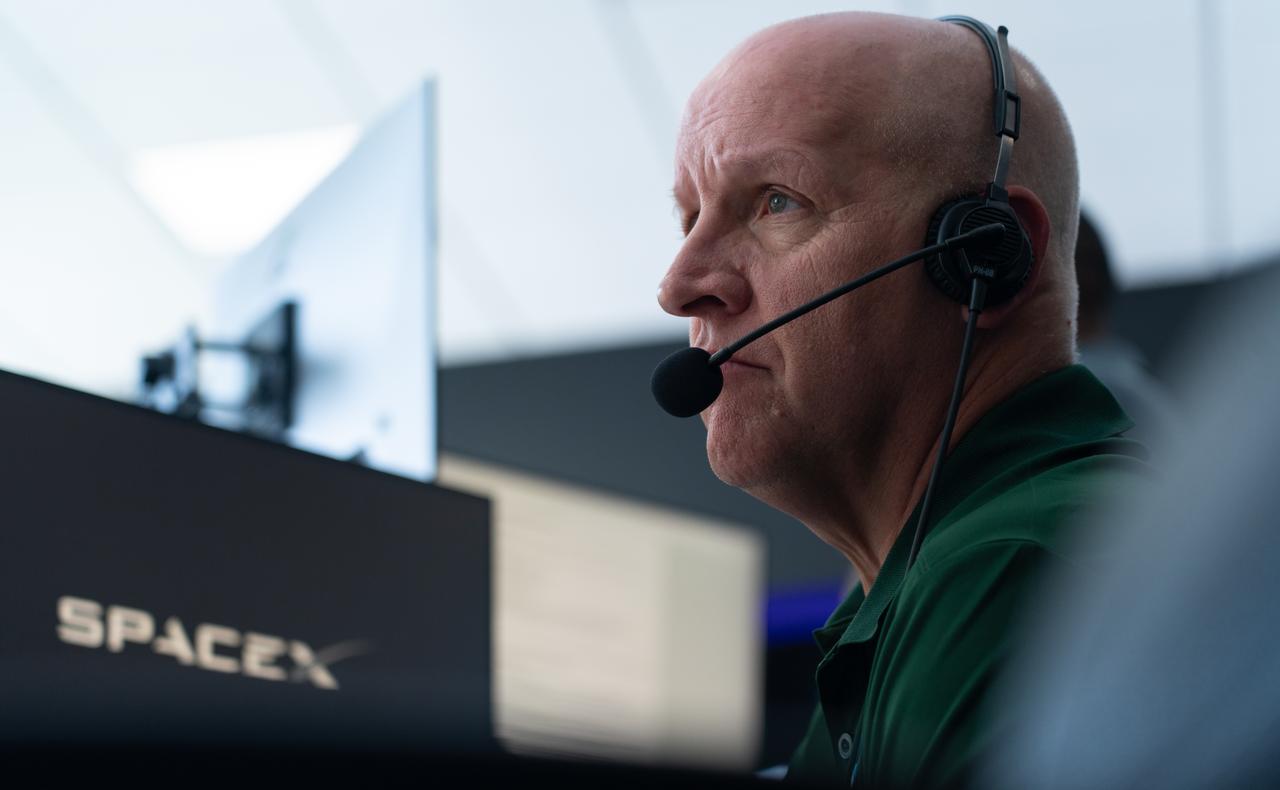
Tim Dunn, senior launch director for NASA’s Launch Services Program, participates in rehearsal launch operations for the National Oceanic and Atmospheric Administration (NOAA) GOES-U (Geostationary Operational Environmental Satellite U) mission inside Hangar X at NASA’s Kennedy Space Center in Florida on Monday, June 17, 2024. The GOES-U satellite, the final addition to GOES-R series, serves a critical role in providing continuous coverage of the Western Hemisphere, including monitoring tropical systems in the eastern Pacific and Atlantic oceans.
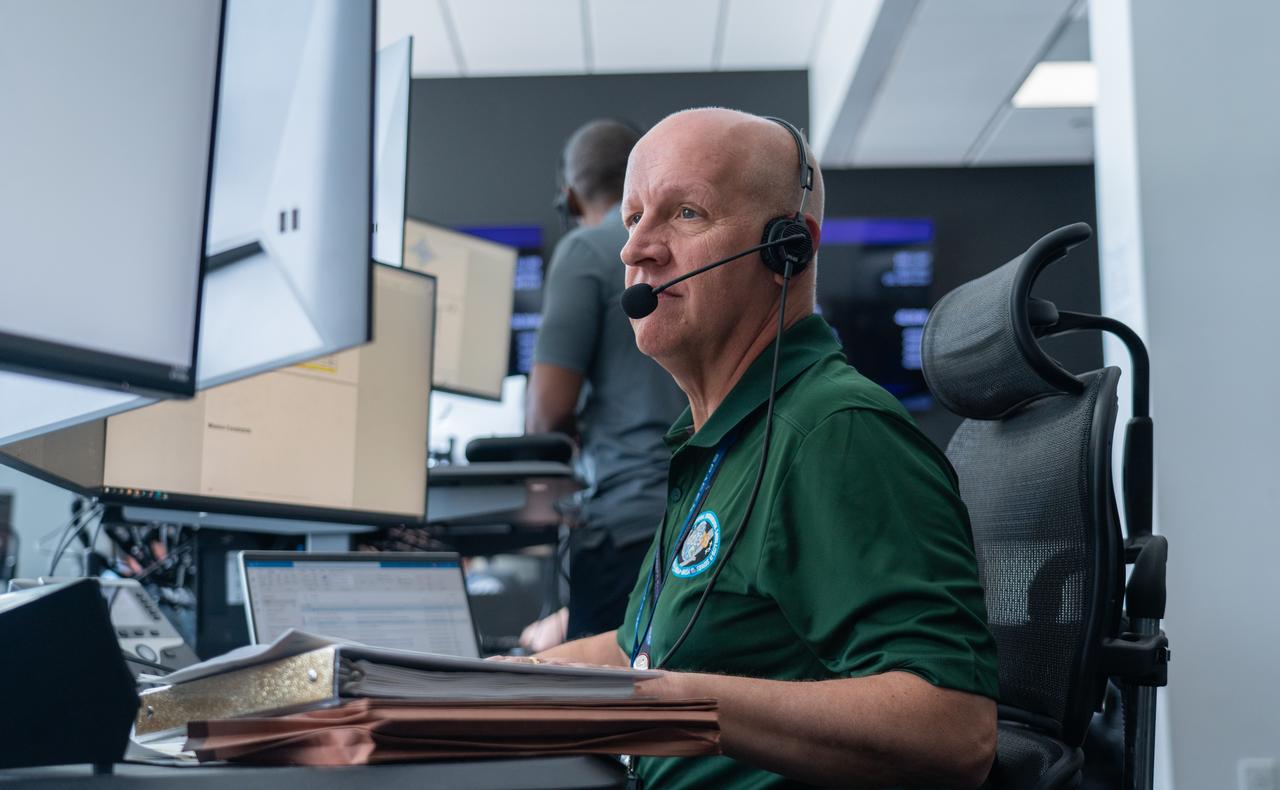
Tim Dunn, senior launch director for NASA’s Launch Services Program, participates in rehearsal launch operations for the National Oceanic and Atmospheric Administration (NOAA) GOES-U (Geostationary Operational Environmental Satellite U) mission inside Hangar X at NASA’s Kennedy Space Center in Florida on Monday, June 17, 2024. The GOES-U satellite, the final addition to GOES-R series, serves a critical role in providing continuous coverage of the Western Hemisphere, including monitoring tropical systems in the eastern Pacific and Atlantic oceans.
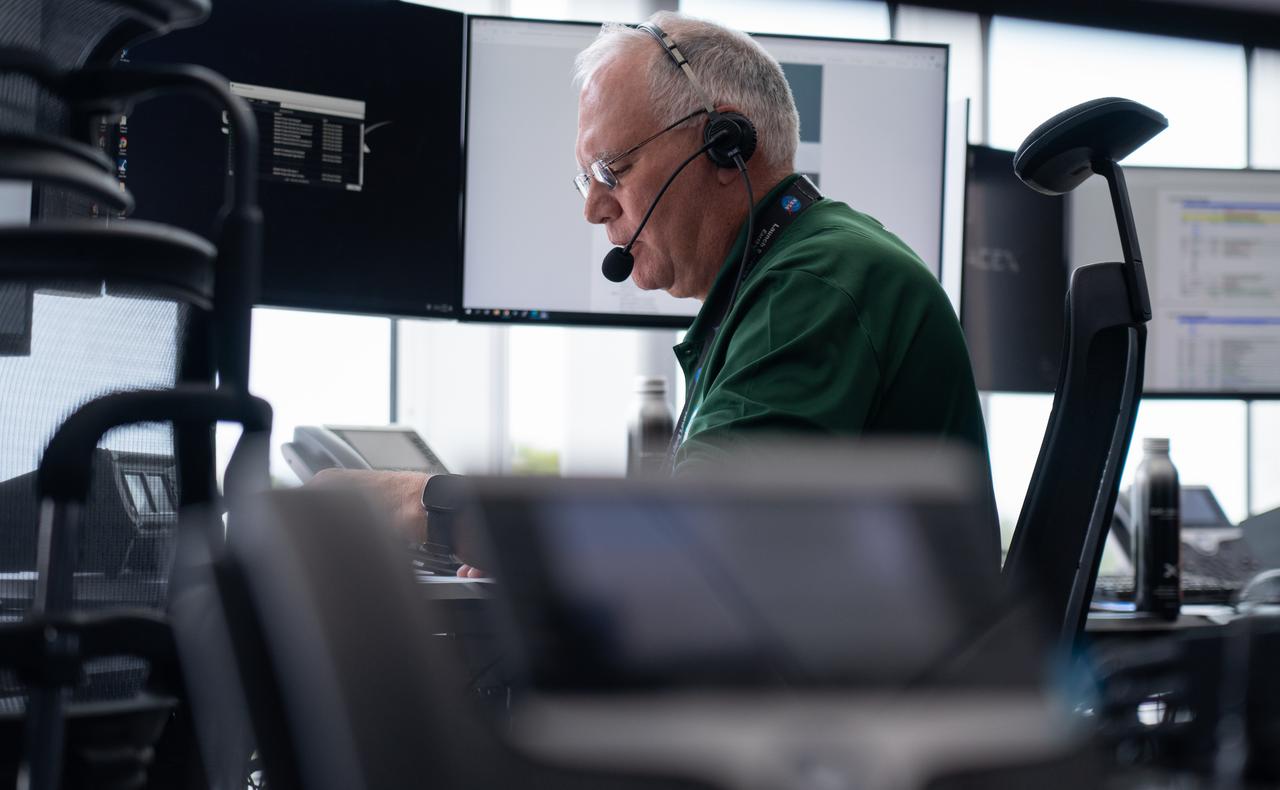
Rex Engelhardt, mission manager for NASA’s Launch Services Program, participates in rehearsal launch operations for the National Oceanic and Atmospheric Administration (NOAA) GOES-U (Geostationary Operational Environmental Satellite U) mission inside Hangar X at NASA’s Kennedy Space Center in Florida on Monday, June 17, 2024. The GOES-U satellite, the final addition to GOES-R series, serves a critical role in providing continuous coverage of the Western Hemisphere, including monitoring tropical systems in the eastern Pacific and Atlantic oceans.
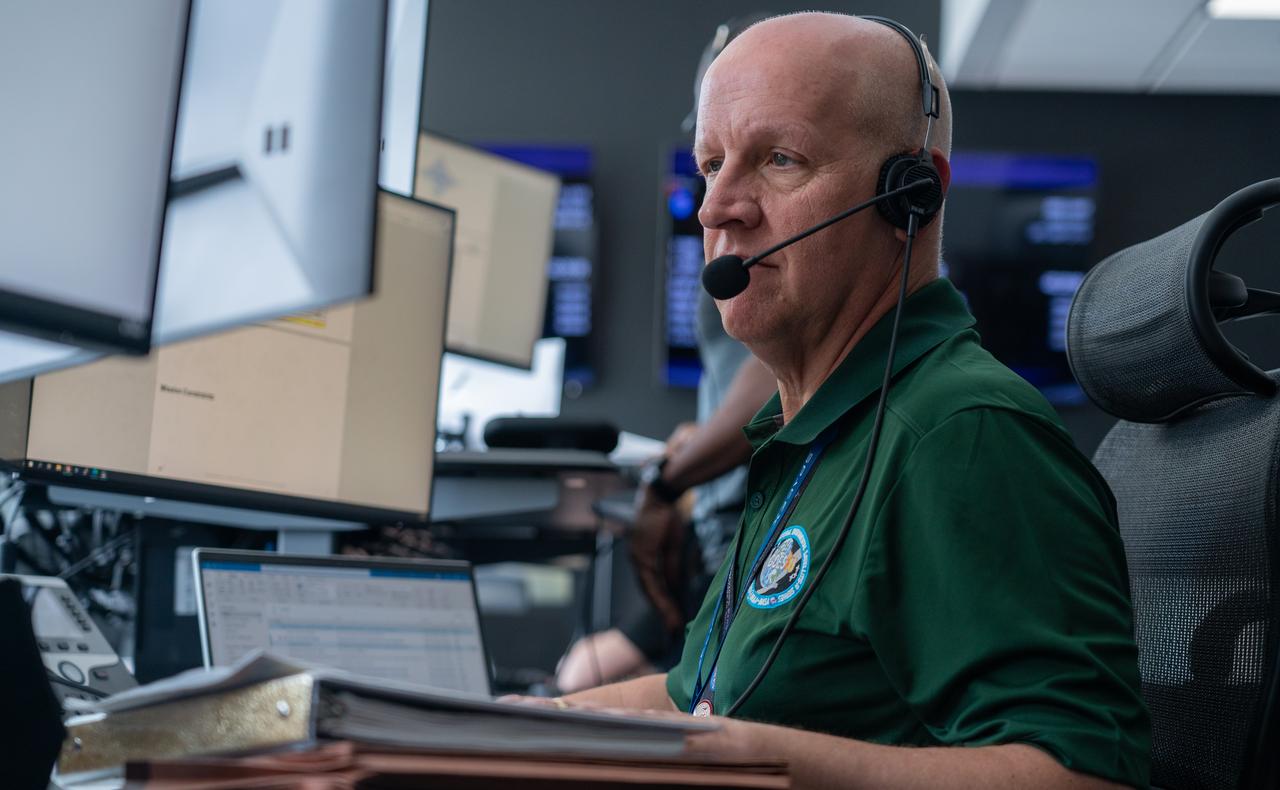
Tim Dunn, senior launch director for NASA’s Launch Services Program, participates in rehearsal launch operations for the National Oceanic and Atmospheric Administration (NOAA) GOES-U (Geostationary Operational Environmental Satellite U) mission inside Hangar X at NASA’s Kennedy Space Center in Florida on Monday, June 17, 2024. The GOES-U satellite, the final addition to GOES-R series, serves a critical role in providing continuous coverage of the Western Hemisphere, including monitoring tropical systems in the eastern Pacific and Atlantic oceans.
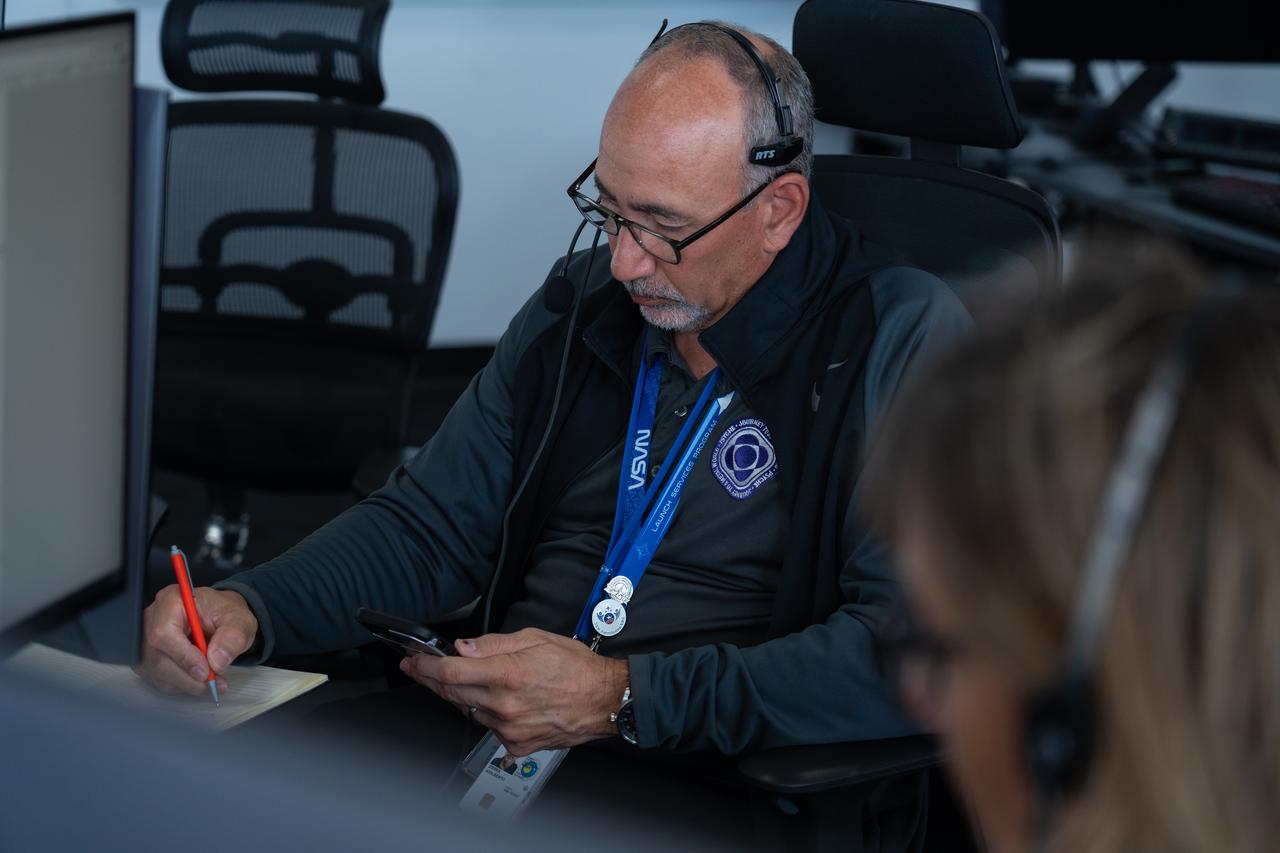
Albert Sierra, program manager for NASA’s Launch Services Program, participates in rehearsal launch operations for the National Oceanic and Atmospheric Administration (NOAA) GOES-U (Geostationary Operational Environmental Satellite U) mission inside Hangar X at NASA’s Kennedy Space Center in Florida on Monday, June 17, 2024. The GOES-U satellite, the final addition to GOES-R series, serves a critical role in providing continuous coverage of the Western Hemisphere, including monitoring tropical systems in the eastern Pacific and Atlantic oceans.
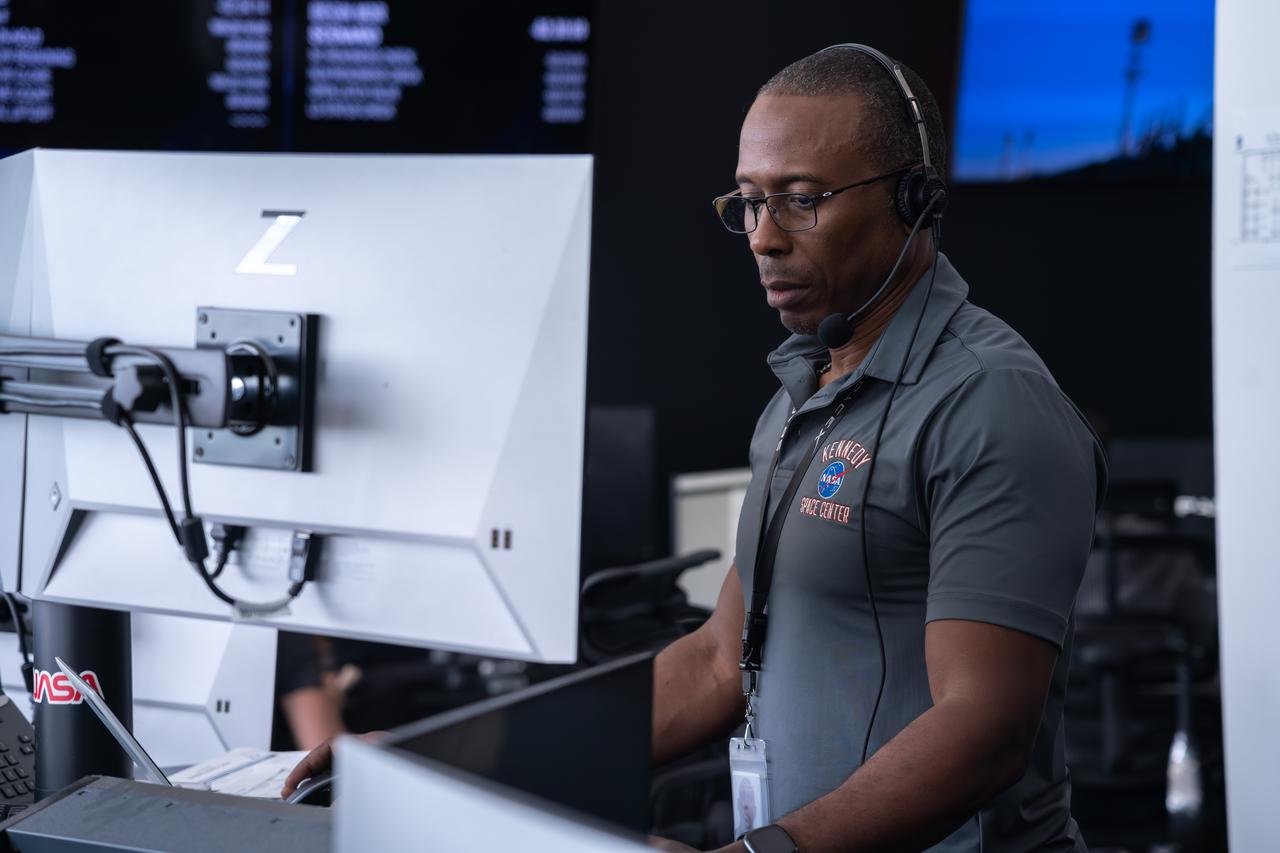
Dr. Denton Gibson, launch director for NASA’s Launch Services Program, participates in rehearsal launch operations for the National Oceanic and Atmospheric Administration (NOAA) GOES-U (Geostationary Operational Environmental Satellite U) mission inside Hangar X at NASA’s Kennedy Space Center in Florida on Monday, June 17, 2024. The GOES-U satellite, the final addition to GOES-R series, serves a critical role in providing continuous coverage of the Western Hemisphere, including monitoring tropical systems in the eastern Pacific and Atlantic oceans.
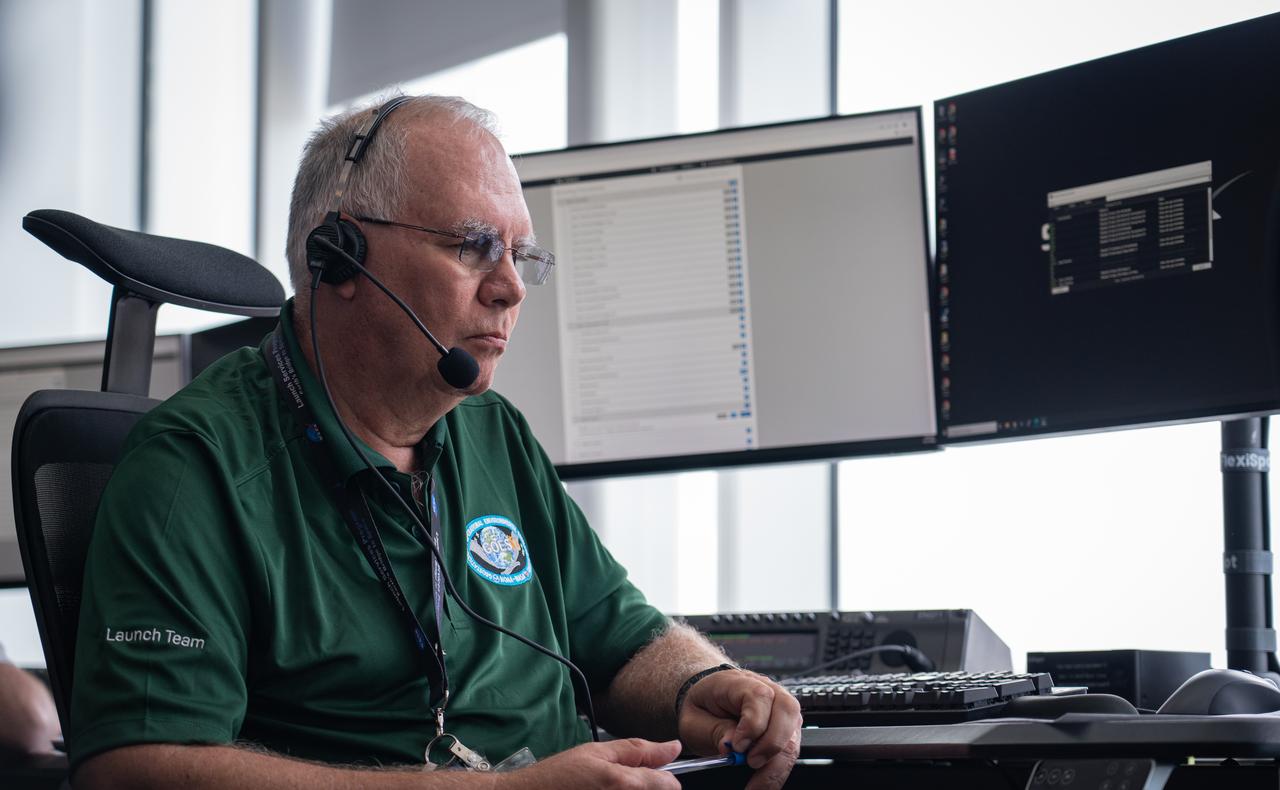
Rex Engelhardt, mission manager for NASA’s Launch Services Program, participates in rehearsal launch operations for the National Oceanic and Atmospheric Administration (NOAA) GOES-U (Geostationary Operational Environmental Satellite U) mission inside Hangar X at NASA’s Kennedy Space Center in Florida on Monday, June 17, 2024. The GOES-U satellite, the final addition to GOES-R series, serves a critical role in providing continuous coverage of the Western Hemisphere, including monitoring tropical systems in the eastern Pacific and Atlantic oceans.
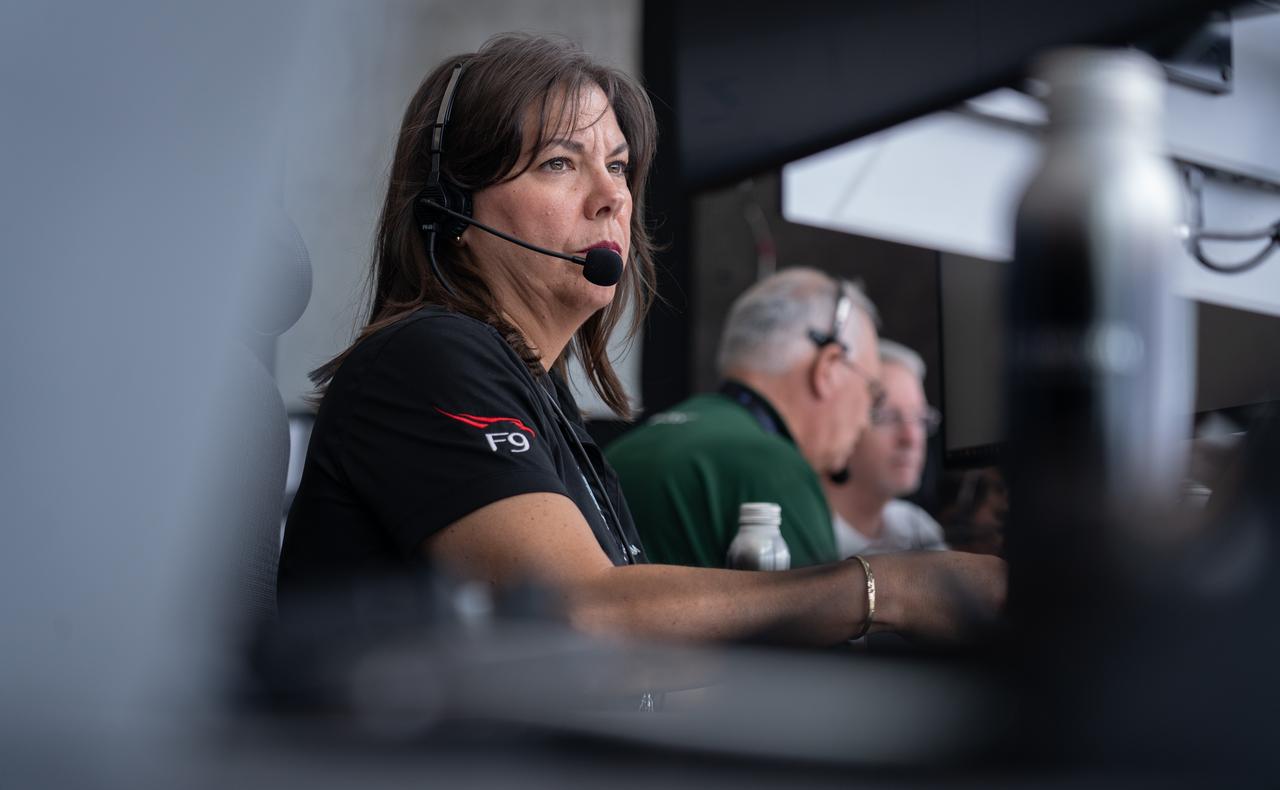
Diana Calero, chief of the Flight Projects Office for NASA’s Launch Services Program, participates in rehearsal launch operations for the National Oceanic and Atmospheric Administration (NOAA) GOES-U (Geostationary Operational Environmental Satellite U) mission inside Hangar X at NASA’s Kennedy Space Center in Florida on Monday, June 17, 2024. The GOES-U satellite, the final addition to GOES-R series, serves a critical role in providing continuous coverage of the Western Hemisphere, including monitoring tropical systems in the eastern Pacific and Atlantic oceans.
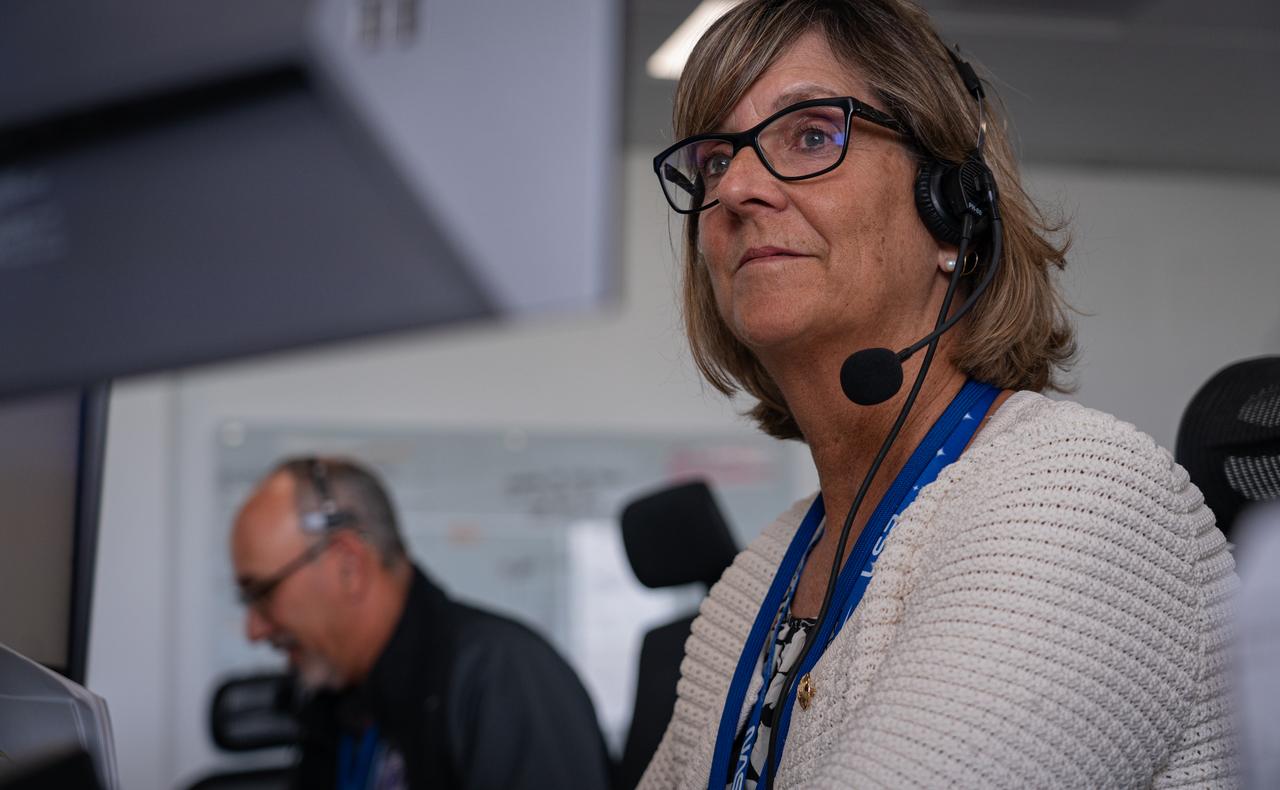
Jenny Lyons, deputy program manager for NASA’s Launch Services Program, participates in rehearsal launch operations for the National Oceanic and Atmospheric Administration (NOAA) GOES-U (Geostationary Operational Environmental Satellite U) mission inside Hangar X at NASA’s Kennedy Space Center in Florida on Monday, June 17, 2024. The GOES-U satellite, the final addition to GOES-R series, serves a critical role in providing continuous coverage of the Western Hemisphere, including monitoring tropical systems in the eastern Pacific and Atlantic oceans.
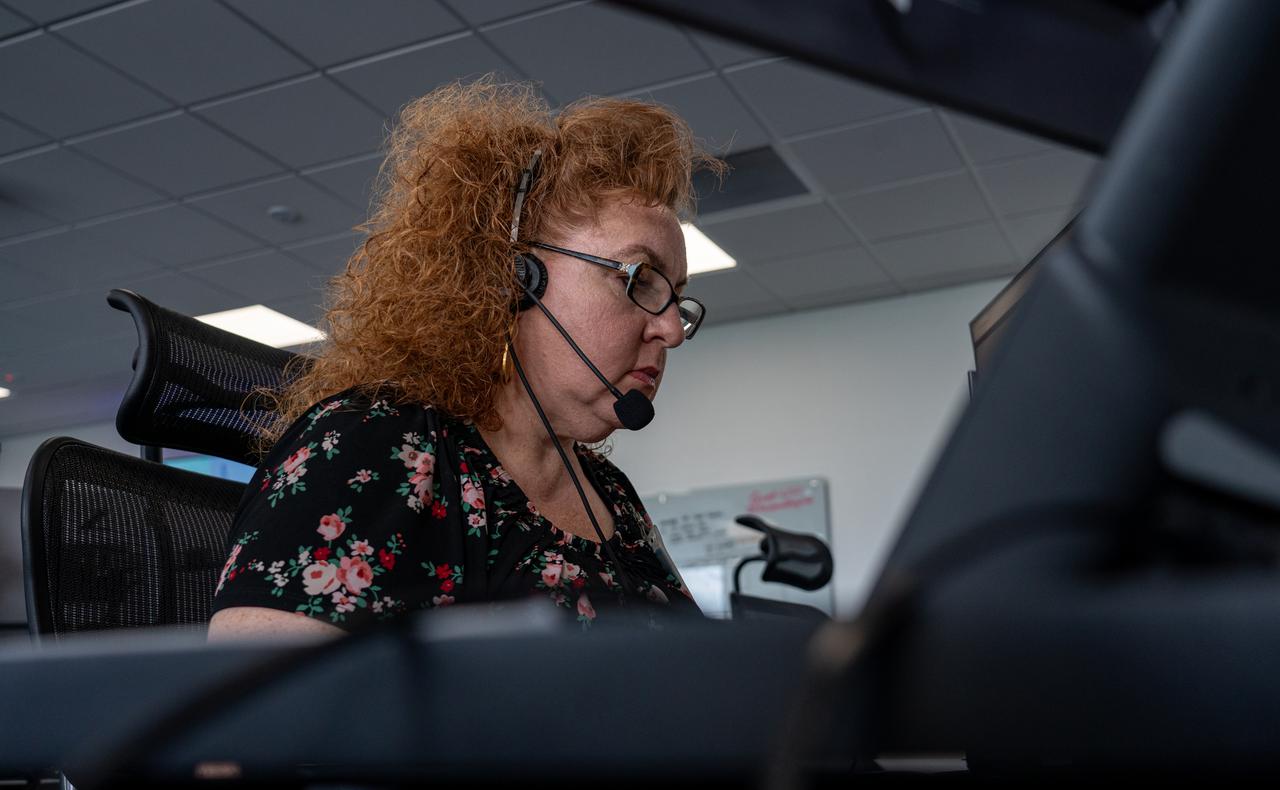
Coleen Taylor, deputy chief Safety and Mission Assurance officer for NASA’s Launch Services Program, participates in rehearsal launch operations for the National Oceanic and Atmospheric Administration (NOAA) GOES-U (Geostationary Operational Environmental Satellite U) mission inside Hangar X at NASA’s Kennedy Space Center in Florida on Monday, June 17, 2024. The GOES-U satellite, the final addition to GOES-R series, serves a critical role in providing continuous coverage of the Western Hemisphere, including monitoring tropical systems in the eastern Pacific and Atlantic oceans.
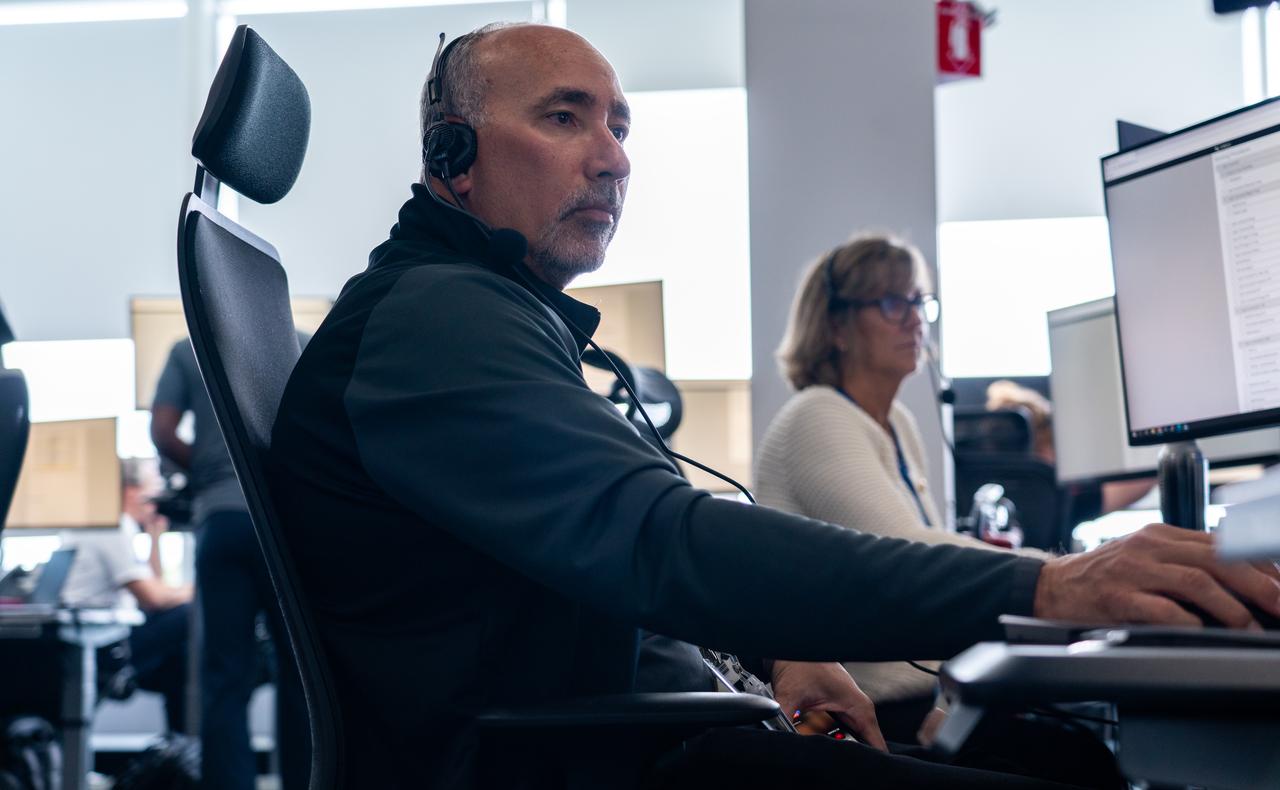
From left, Albert Sierra and Jenny Lyons, program and deputy program managers for NASA’s Launch Services Program, participate in rehearsal launch operations for the National Oceanic and Atmospheric Administration (NOAA) GOES-U (Geostationary Operational Environmental Satellite U) mission inside Hangar X at NASA’s Kennedy Space Center in Florida on Monday, June 17, 2024. The GOES-U satellite, the final addition to GOES-R series, serves a critical role in providing continuous coverage of the Western Hemisphere, including monitoring tropical systems in the eastern Pacific and Atlantic oceans.

Coleen Taylor, deputy chief Safety and Mission Assurance officer for NASA’s Launch Services Program, participates in rehearsal launch operations for the National Oceanic and Atmospheric Administration (NOAA) GOES-U (Geostationary Operational Environmental Satellite U) mission inside Hangar X at NASA’s Kennedy Space Center in Florida on Monday, June 17, 2024. The GOES-U satellite, the final addition to GOES-R series, serves a critical role in providing continuous coverage of the Western Hemisphere, including monitoring tropical systems in the eastern Pacific and Atlantic oceans.
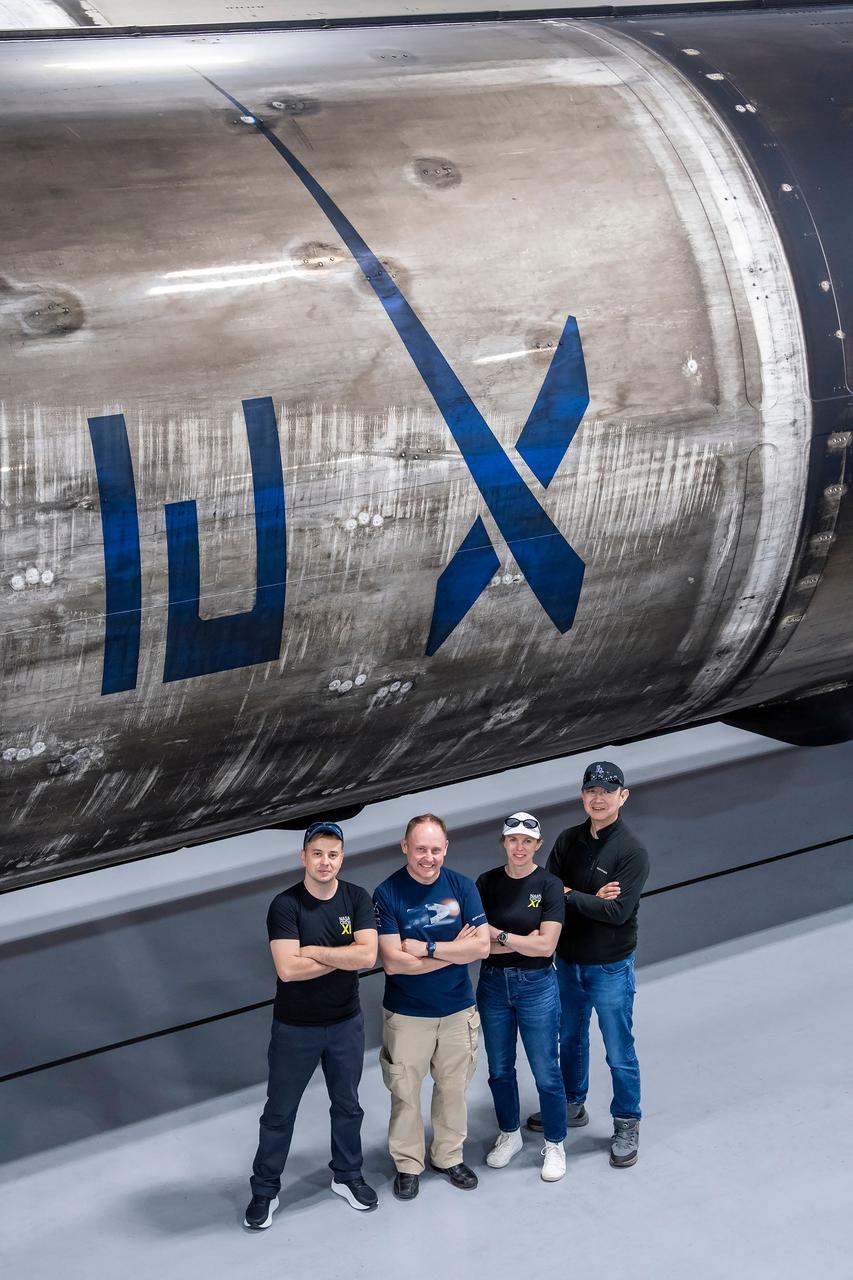
jsc2025e041093 (April 11, 2025) --- The four crew members of NASA's SpaceX Crew-11 mission to the International Space Station are pictured inside SpaceX’s Hangar X at NASA's Kennedy Space Center in Florida. From left to right: Roscosmos cosmonaut Oleg Platonov, NASA astronauts Mike Fincke and Zena Cardman, and JAXA astronaut Kimiya Yui.
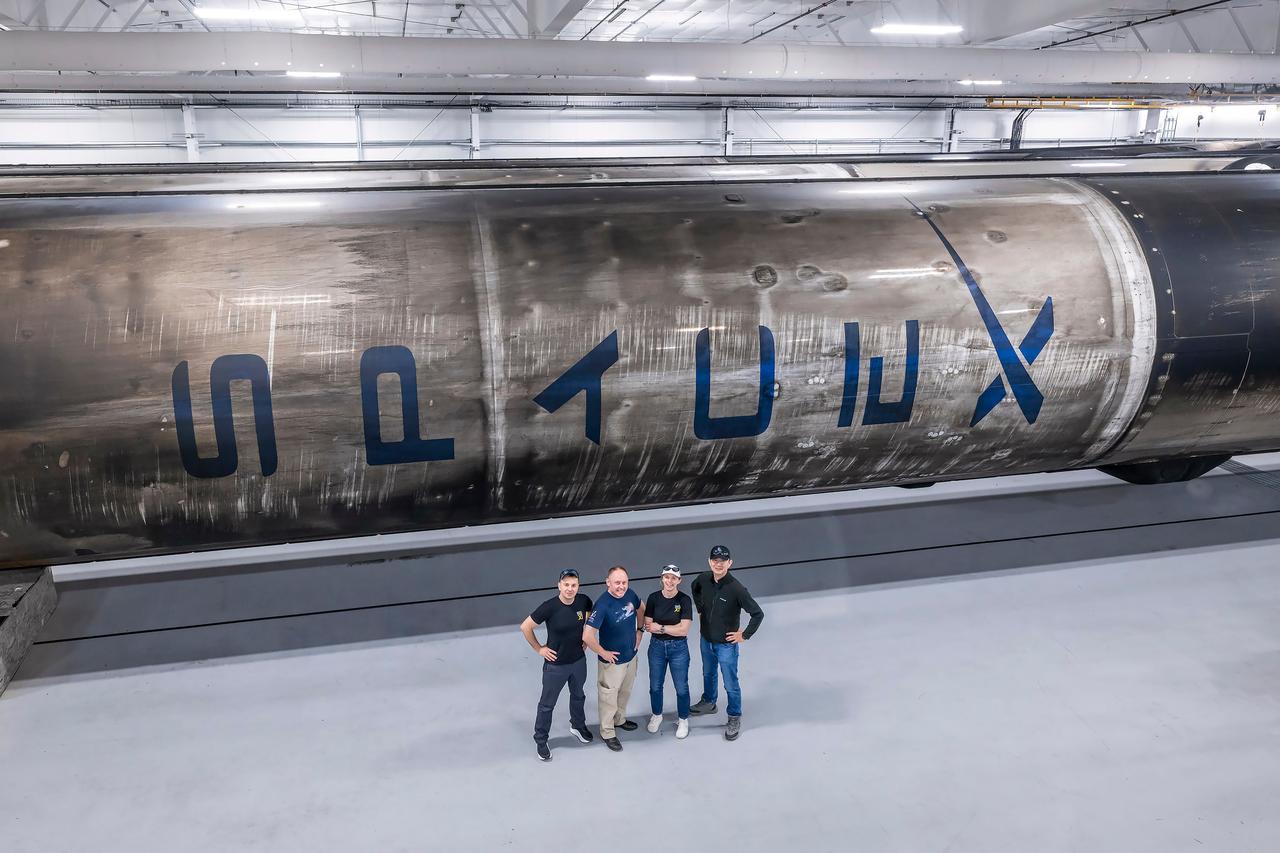
jsc2025e041094 (April 11, 2025) --- The four crew members of NASA's SpaceX Crew-11 mission to the International Space Station are pictured inside SpaceX’s Hangar X at NASA's Kennedy Space Center in Florida. From left to right: Roscosmos cosmonaut Oleg Platonov, NASA astronauts Mike Fincke and Zena Cardman, and JAXA astronaut Kimiya Yui.
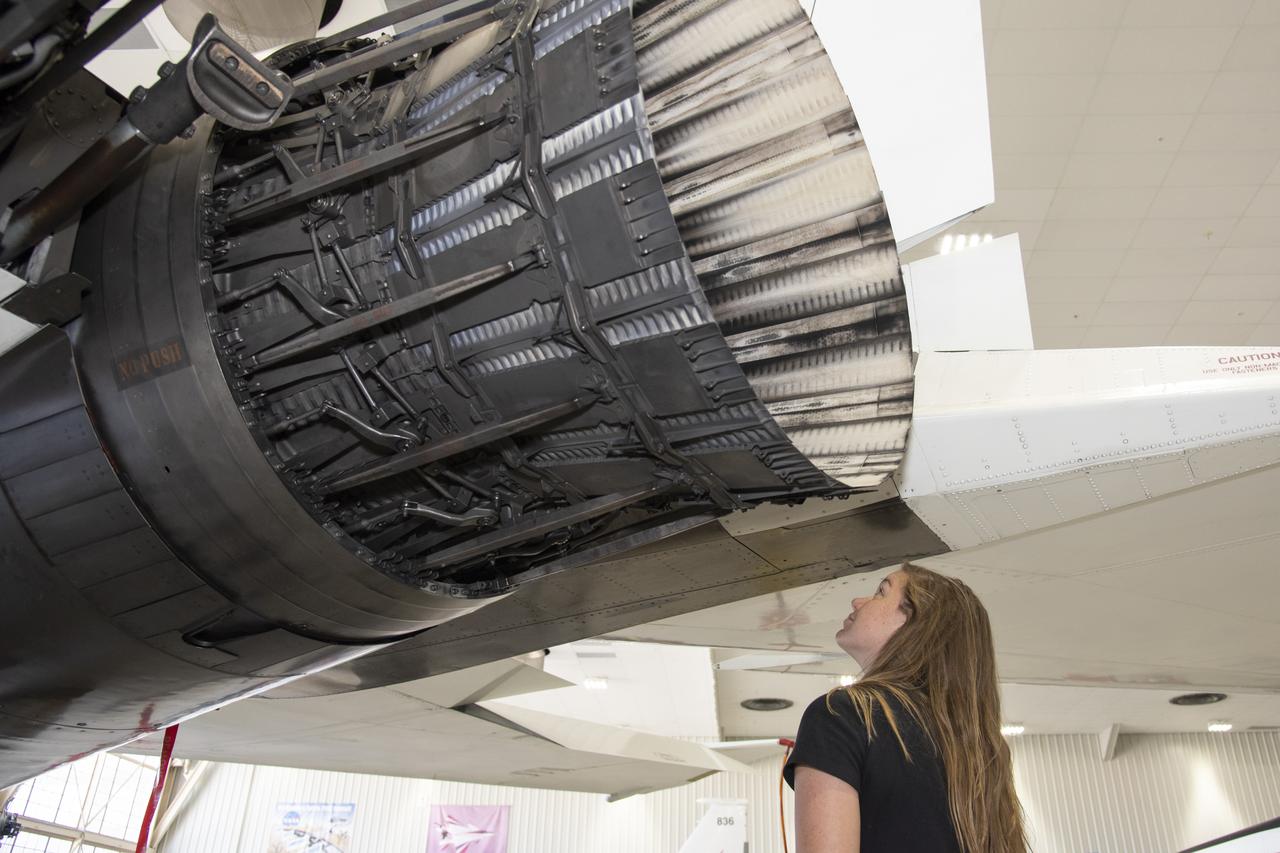
NASA’s 2017 astronaut candidates toured aircraft hangar at Armstrong Flight Research Center, in Southern California where Jenni Sidey-Gibbons looks inside engine nozzle of F-15 jet. The F-15 will fly in tandem with the X-59 QueSST during early flight test stages for the X-59 development.
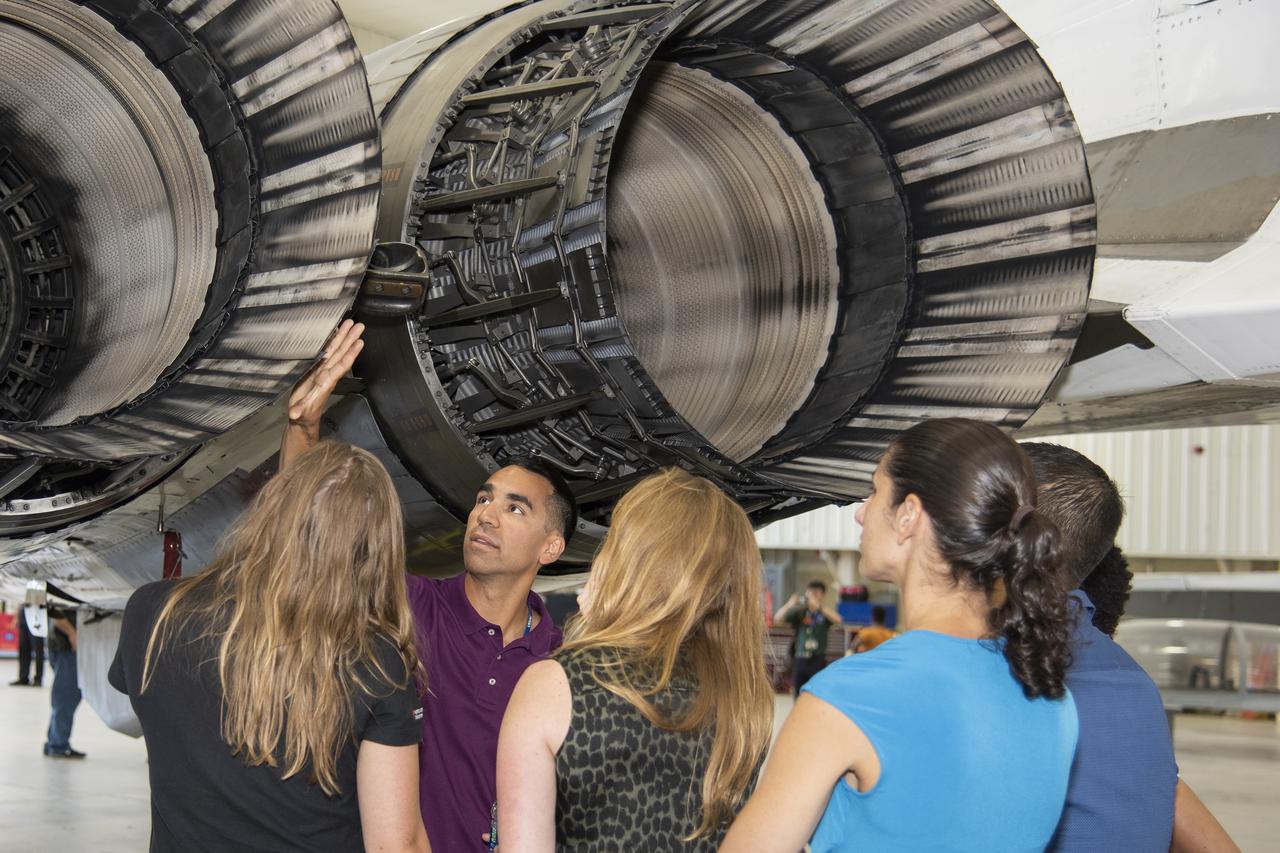
NASA's 2017 astronaut candidates toured aircraft hangar at Armstrong Flight Research Center, in Southern California (L to R) Jenni Sidey-Gibbons, Raja Chari, Loral O'Hara, Jasmin Moghbeli, Jonny Kim and Jessica Watkins look inside the engine nozzle of an F-15 jet. The F-15 will fly in tandem with the X-59 QueSST during early flight test stages for the X-59 development.
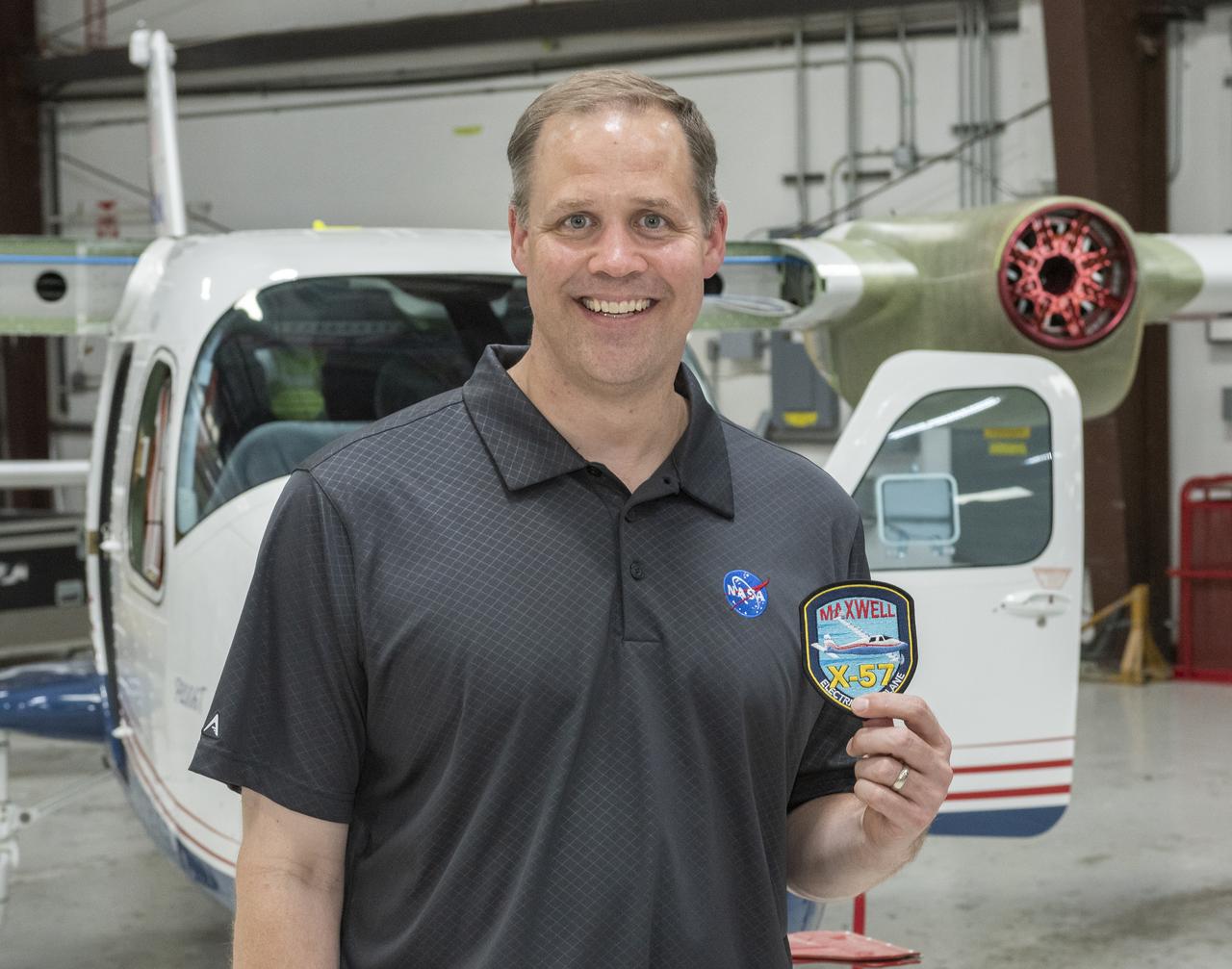
Administrator Bridenstine receives X-57 program patch standing in front of the X-57 being modified from combustion Tecnam P2006T aircraft into all-electric aircraft in Scaled Composites hangar at Mojave Air & Space Port in California.

The X-1E research aircraft provides a striking view at the entrance of NASA's Dryden Flight Research Center, Edwards, California. The X-1E, one of the three original X-1 aircraft modified with a raised cockpit canopy and an ejection seat, was flown at the facility between 1953 and 1958 to investigate speeds at twice that of sound, and also to evaluate a thin wing designed for high-speed flight. The Dryden complex was originally established in 1946 as a small high-speed flight station to support the X-1 program. The X-1 was the first aircraft to fly at supersonic speeds. The main administrative building is to the rear of the X-1E and is the center of a research installation that has grown to more than 450 government employees and nearly 400 civilian contractors. Located on the northwest "shore" of Rogers Dry Lake, the Dryden Center was built around the original administrative-hangar building constructed in 1954 at a cost of $3.8 million. Since then many additional support and operational facilities have been built including a number of unique test facilities such as the Thermalstructures Research Facility, Flow Visualization Facility, and the newest addition, the Integrated Test Facility.
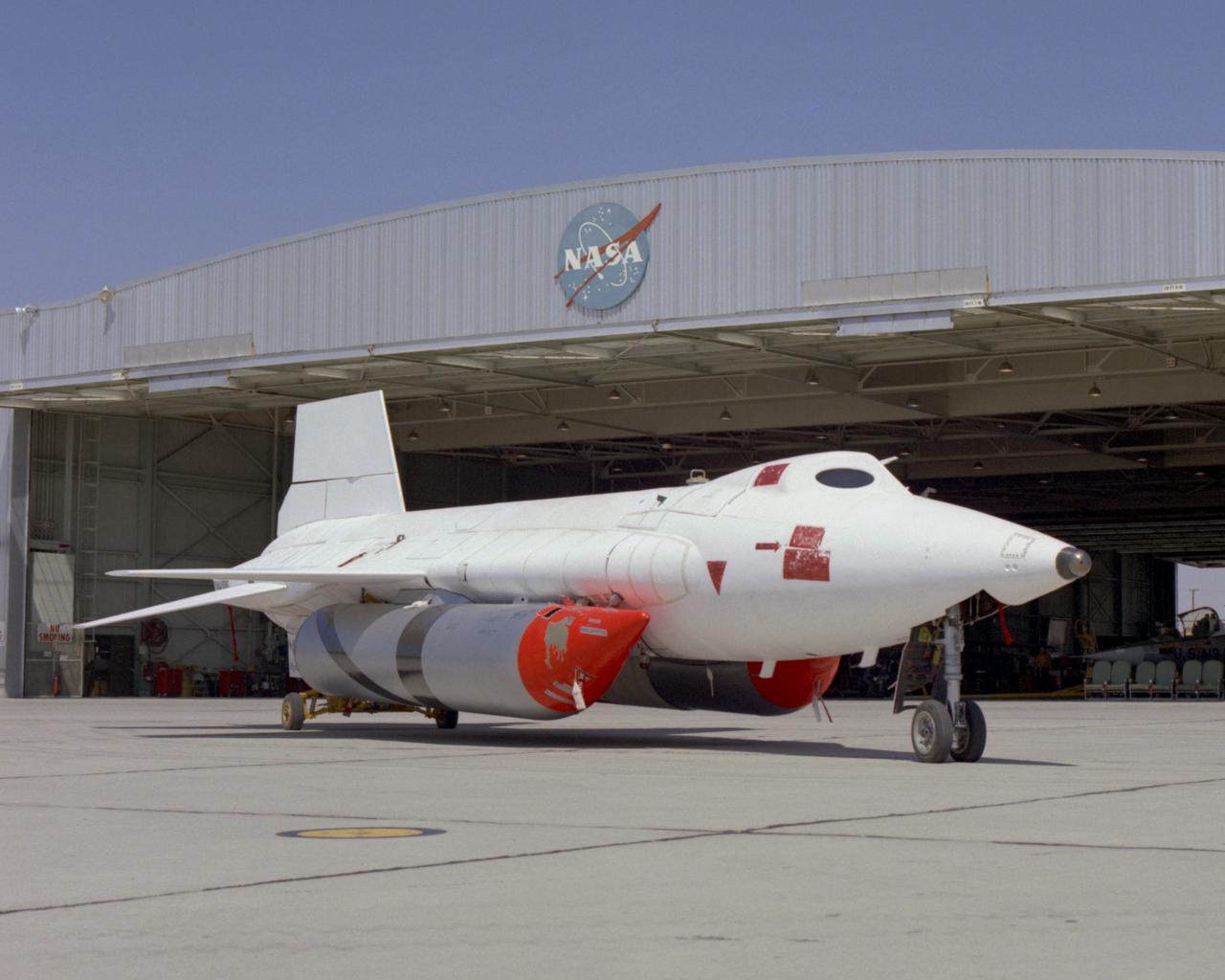
X-15A-2 with full scale ablative and external tanks installed parked in front of hangar. In June 1967, the X-15A-2 rocket-powered research aircraft received a full-scale ablative coating to protect the craft from the high temperatures associated with hypersonic flight (above Mach 5). This pink eraser-like substance, applied to the X-15A-2 aircraft (56-6671), was then covered with a white sealant coat before flight. This coating would help the #2 aircraft reach the record speed of 4,520 mph (Mach 6.7).
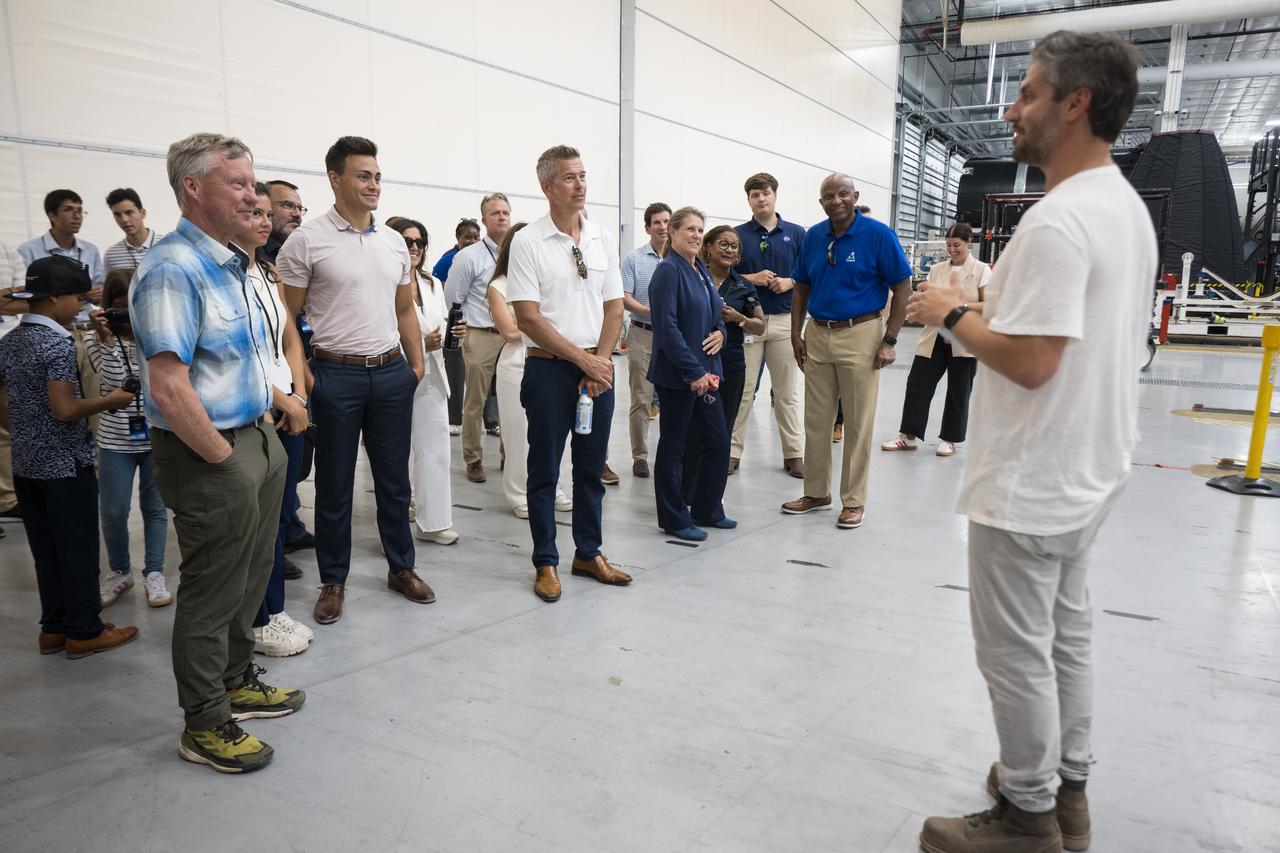
SpaceX Vice President for Launch, Kiko Dontchev, provides remarks during a tour of Hangar X with Acting NASA Administrator Sean Duffy, his family, and NASA leadership, Wednesday, July 30, 2025, at NASA’s Kennedy Space Center in Florida. Photo Credit: (NASA/Aubrey Gemignani)
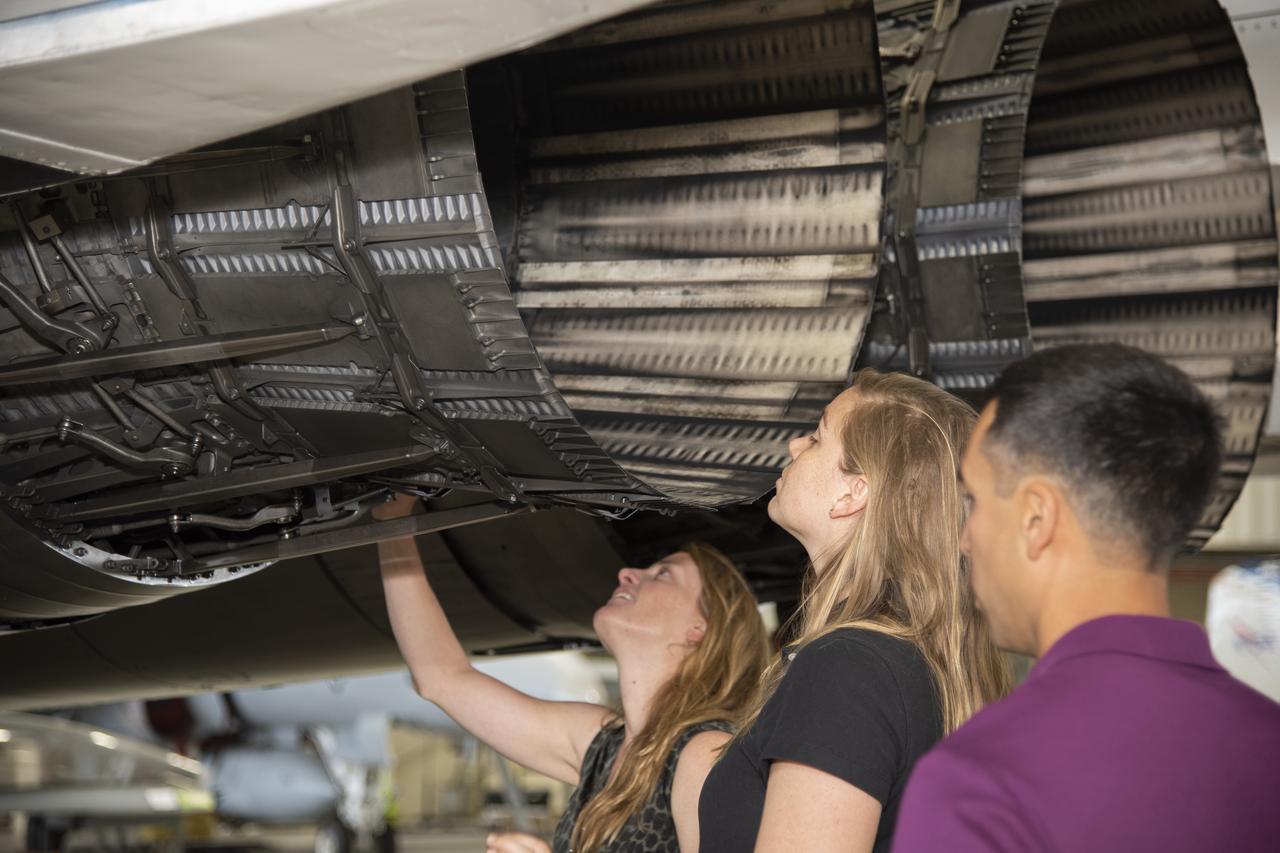
NASA's 2017 astronaut candidates toured aircraft hangar at Armstrong Flight Research Center, in Southern California where (L to R) Loral O'Hara, Jenni Sidey-Gibbons and Raja Chari look inside the engine nozzle of an F-15 jet. The F-15 will fly in tandem with the X-59 QueSST during early flight test stages for the X-59 development.
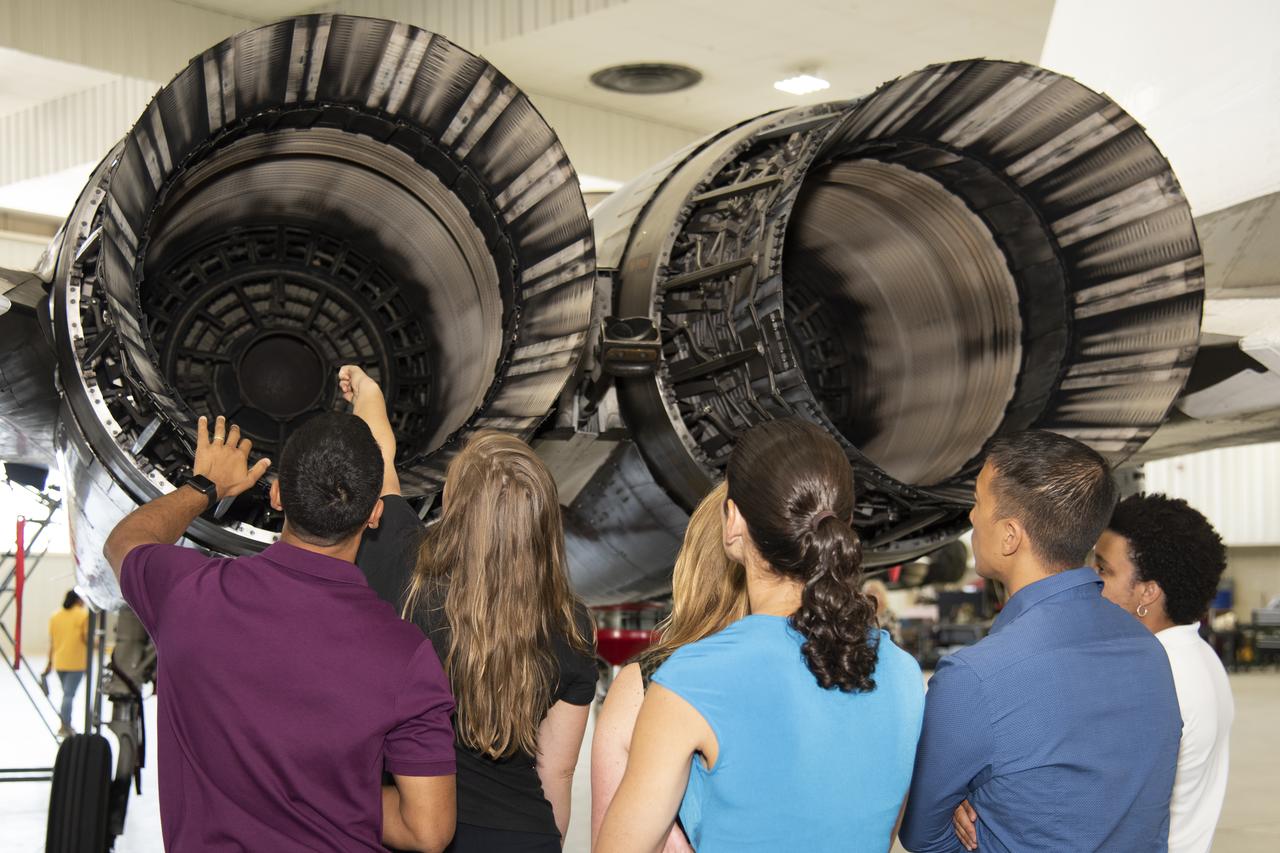
NASA's 2017 astronaut candidates toured aircraft hangar at Armstrong Flight Research Center, in Southern California (L to R) Raja Chari, Jenni Sidey-Gibbons, Loral O'Hara, Jasmin Moghbeli, Jonny Kim and Jessica Watkins look inside the engine nozzle of an F-15 jet. The F-15 will fly in tandem with the X-59 QueSST during early flight test stages for the X-59 development.
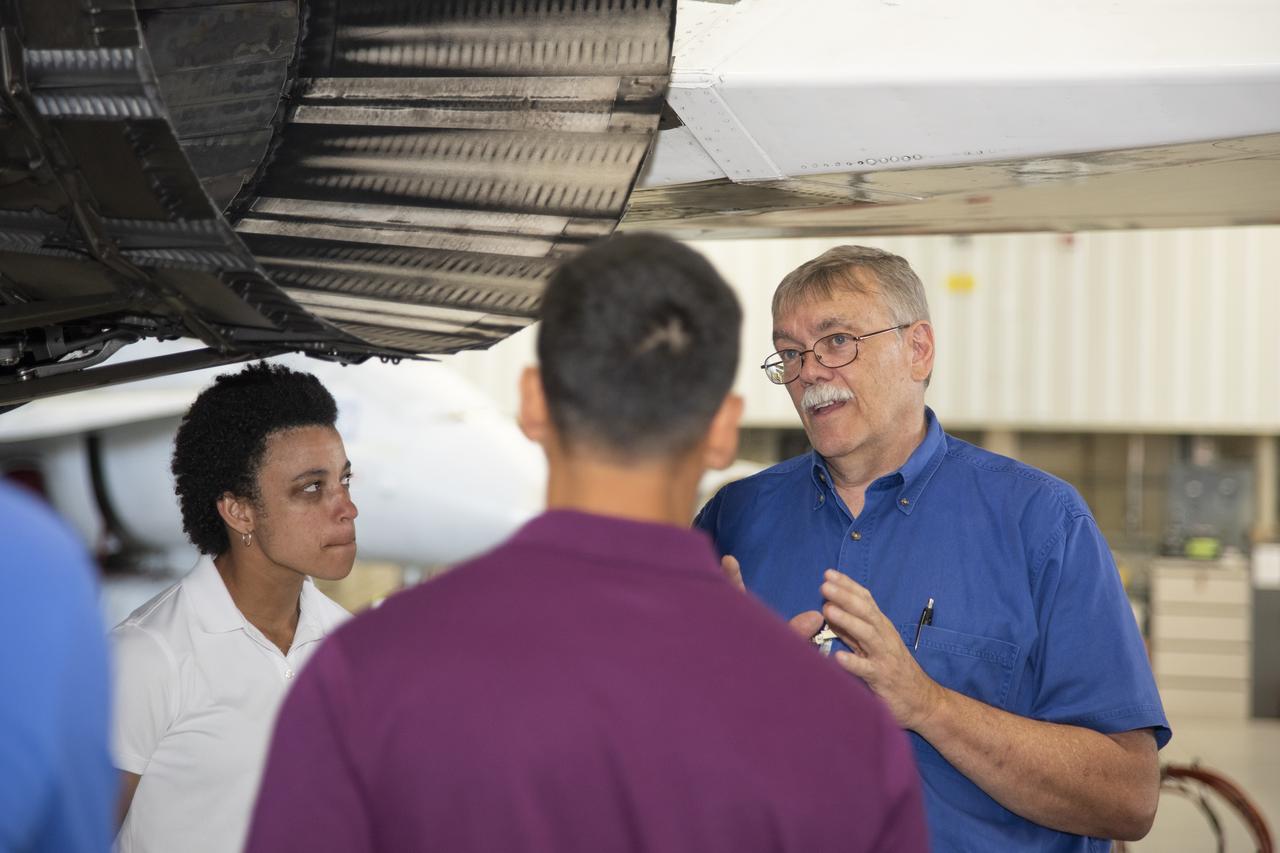
NASA's 2017 astronaut candidates toured aircraft hangar at Armstrong Flight Research Center, in Southern California where Crew Chief Tom Grindle talks with (L to R) Jessica Watkins and Raja Chari near engine nozzle of F-15 jet. The F-15 will fly in tandem with the X-59 QueSST during early flight test stages for the X-59 development.
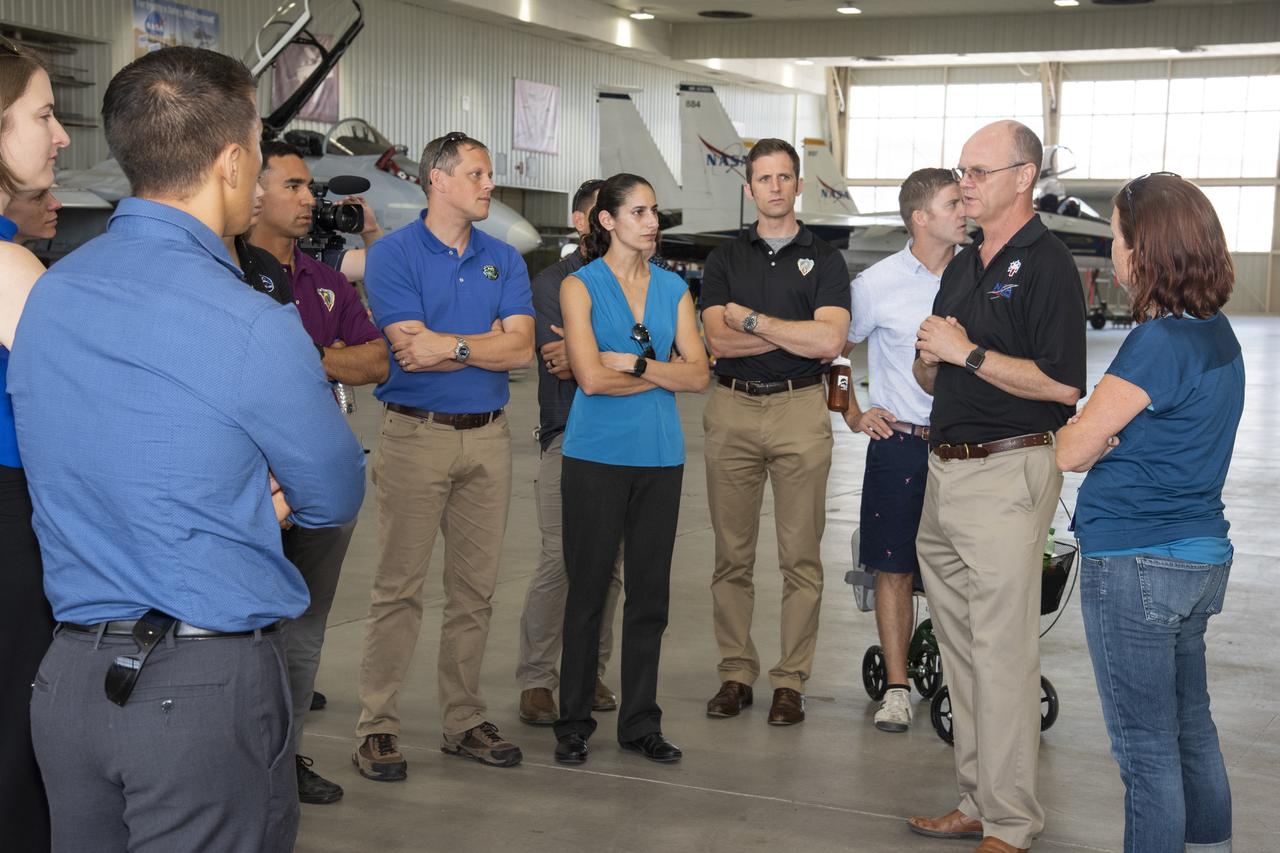
NASA’s 2017 astronaut candidates toured aircraft hangar at Armstrong Flight Research Center, in Southern California. On the right, NASA’s, X-59 pilot Nils Larsen, briefs the astronauts as they look at Armstrong’s fleet of supersonic research support aircraft, including the F-15, which will fly in tandem with the X-59 QueSST during early flight test stages, and the F-18, which is conducting supersonic research in support of the overall mission.
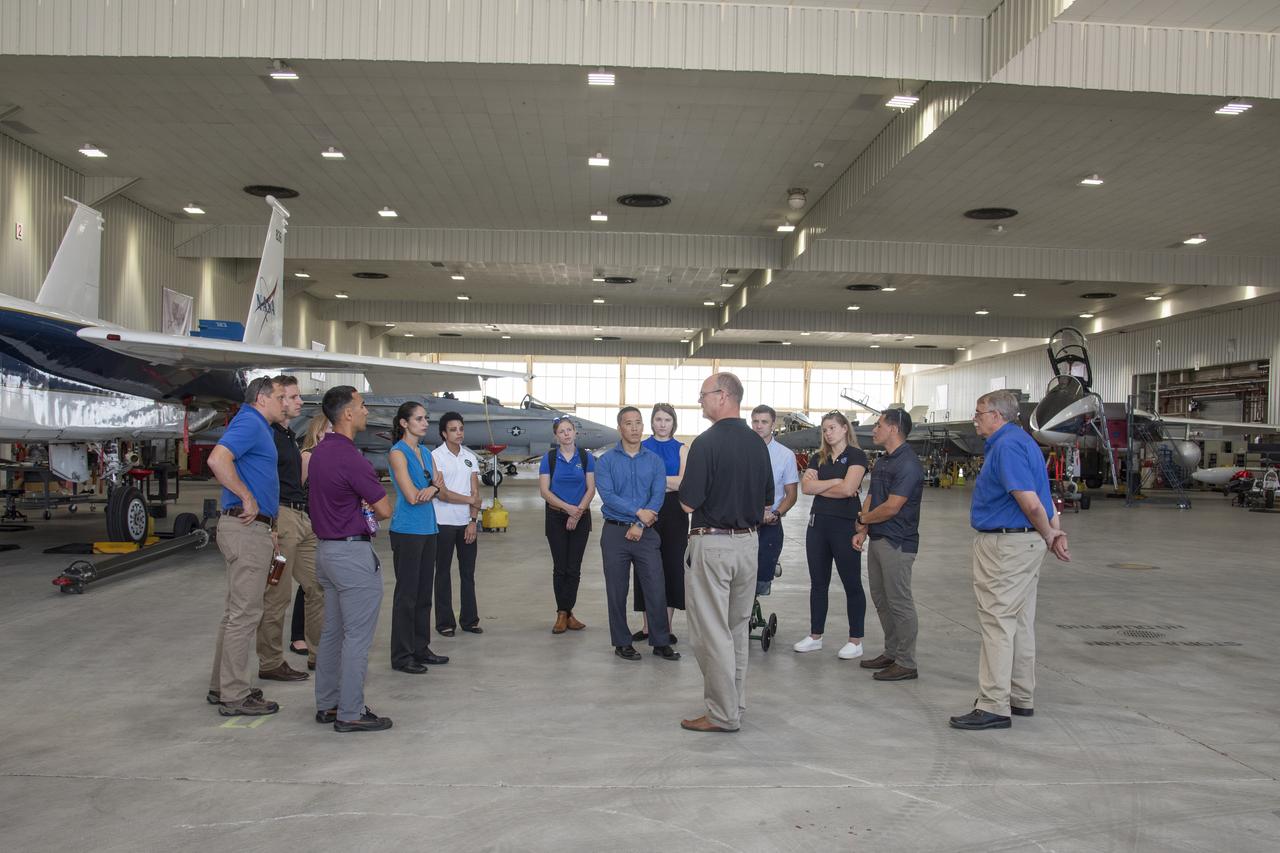
NASA's 2017 astronaut candidates toured aircraft hangar at Armstrong Flight Research Center, in Southern California. On the right, NASA's, X-59 pilot Nils Larsen, briefs the astronauts as they look at Armstrong's fleet of supersonic research support aircraft, including the F-15, which will fly in tandem with the X-59 QueSST during early flight test stages, and the F-18, which is conducting supersonic research in support of the overall mission.
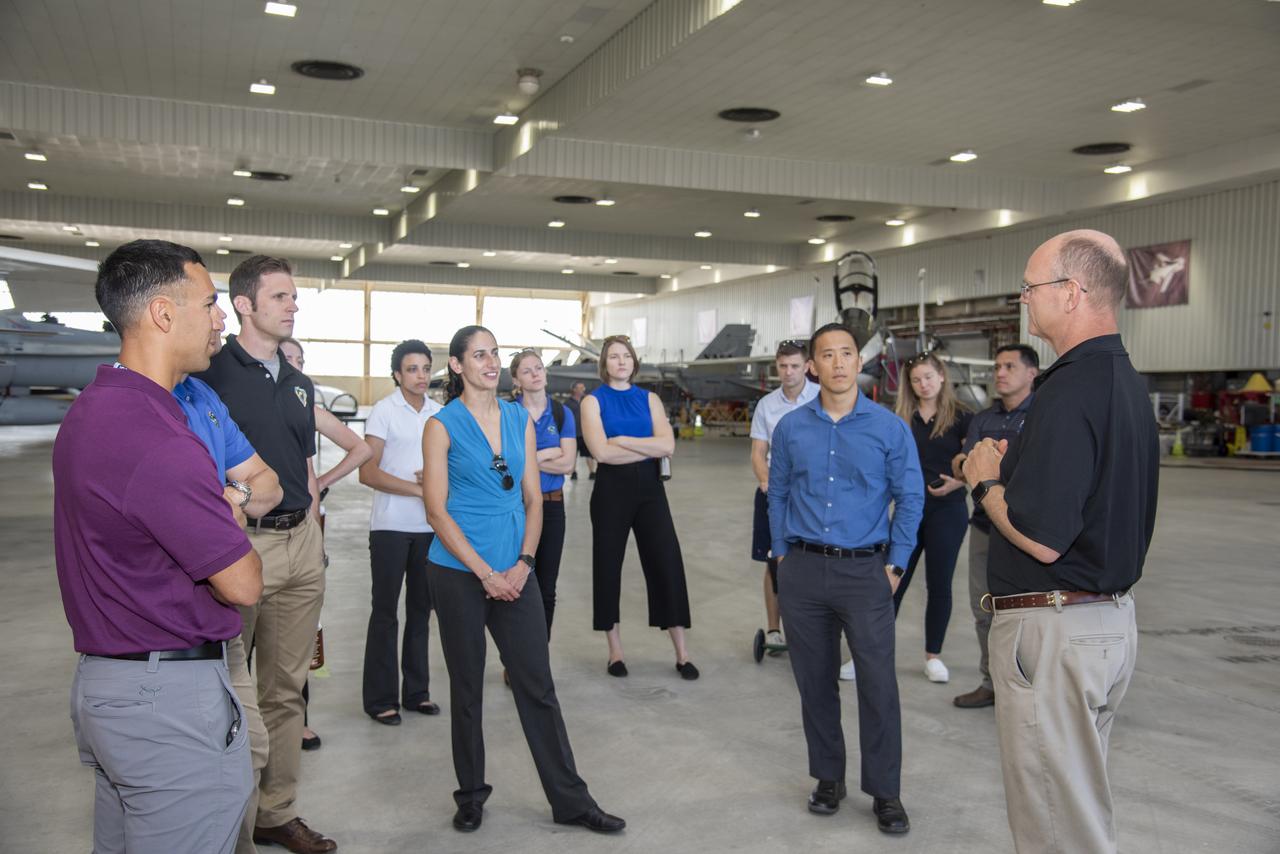
NASA's 2017 astronaut candidates toured aircraft hangar at Armstrong Flight Research Center, in Southern California. On the right, NASA's, X-59 pilot Nils Larsen, briefs the astronauts as they look at Armstrong's fleet of supersonic research support aircraft, including the F-15, which will fly in tandem with the X-59 QueSST during early flight test stages, and the F-18, which is conducting supersonic research in support of the overall mission.
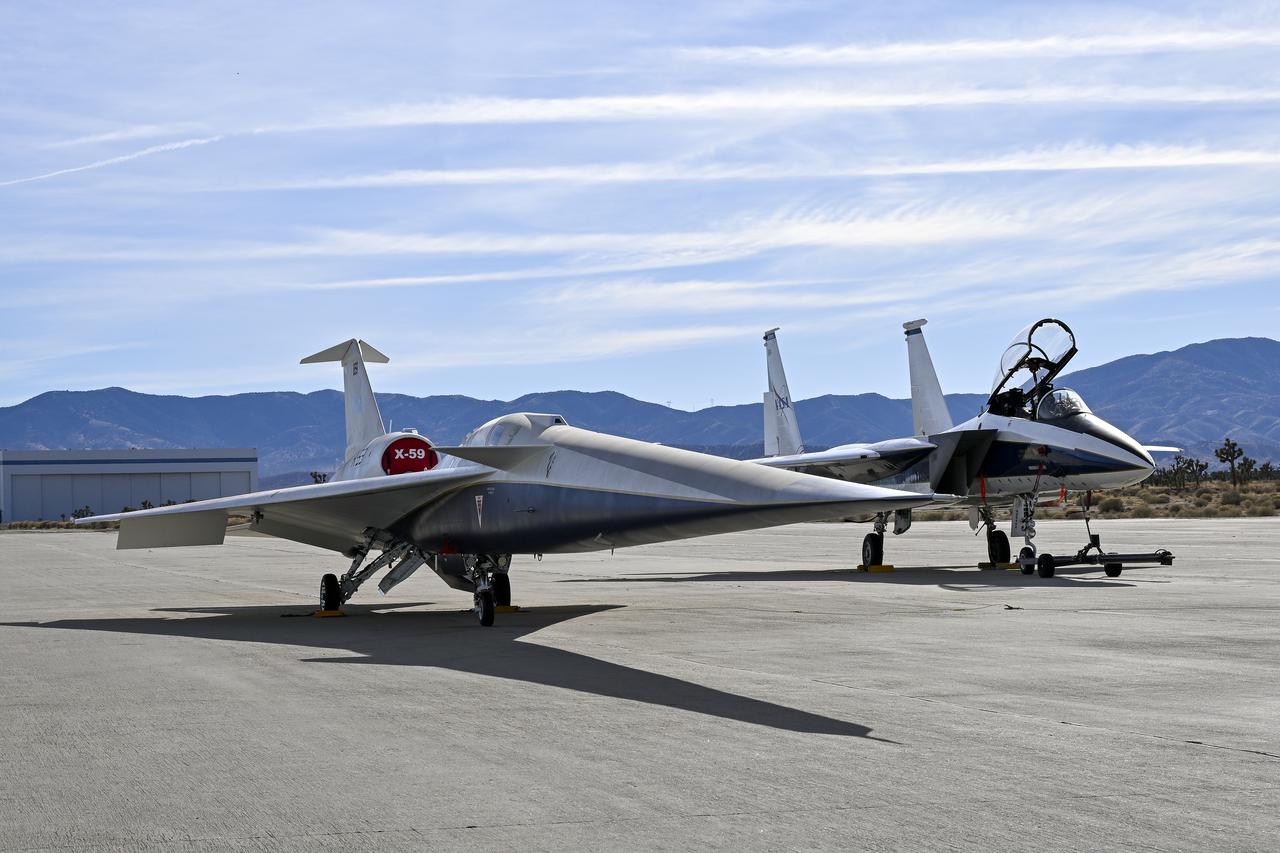
A NASA F-15 aircraft sits 20 feet off the left side of the X-59 aircraft, with a white hangar and hills in the background, during electromagnetic interference testing.
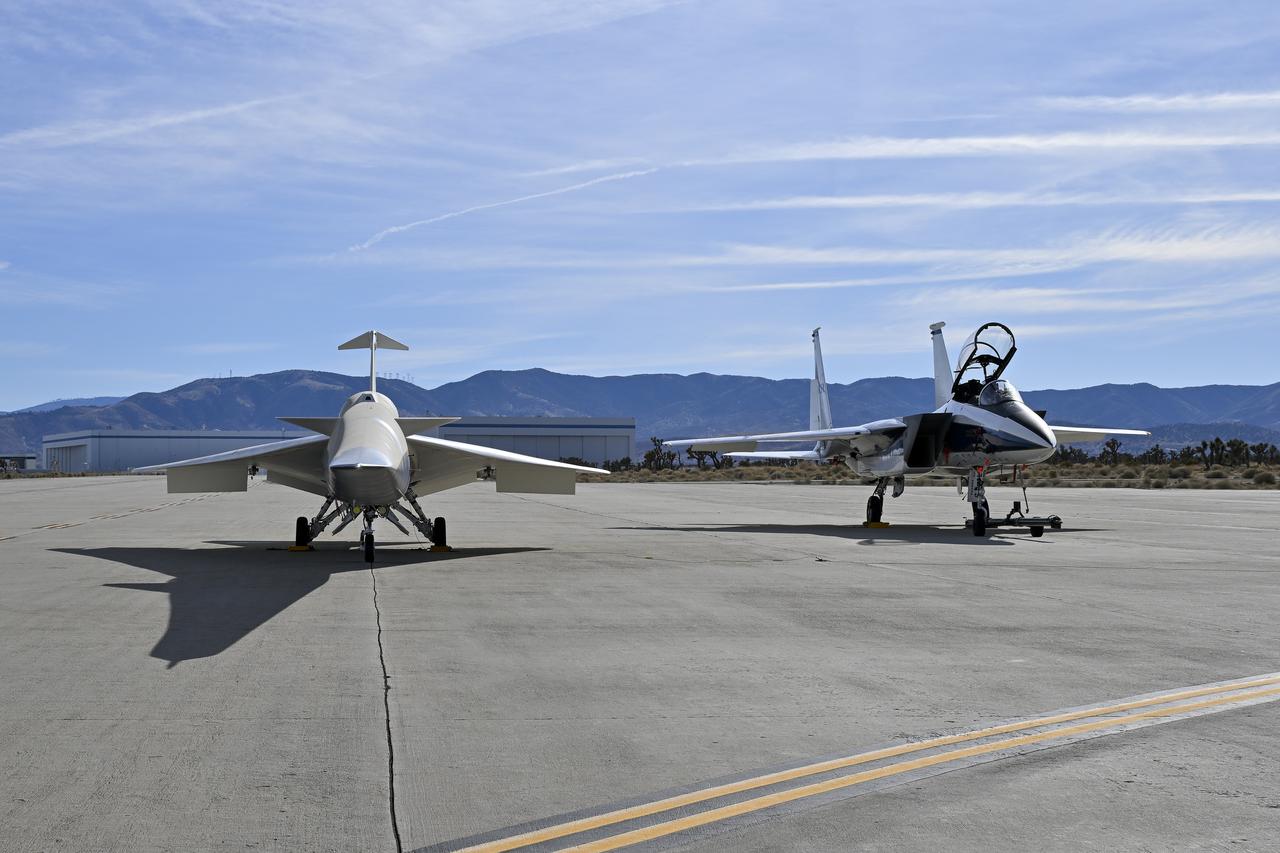
A NASA F-15 aircraft sits 20 feet off the left side of the X-59 aircraft, with a white hangar and hills in the background, during electromagnetic interference testing.
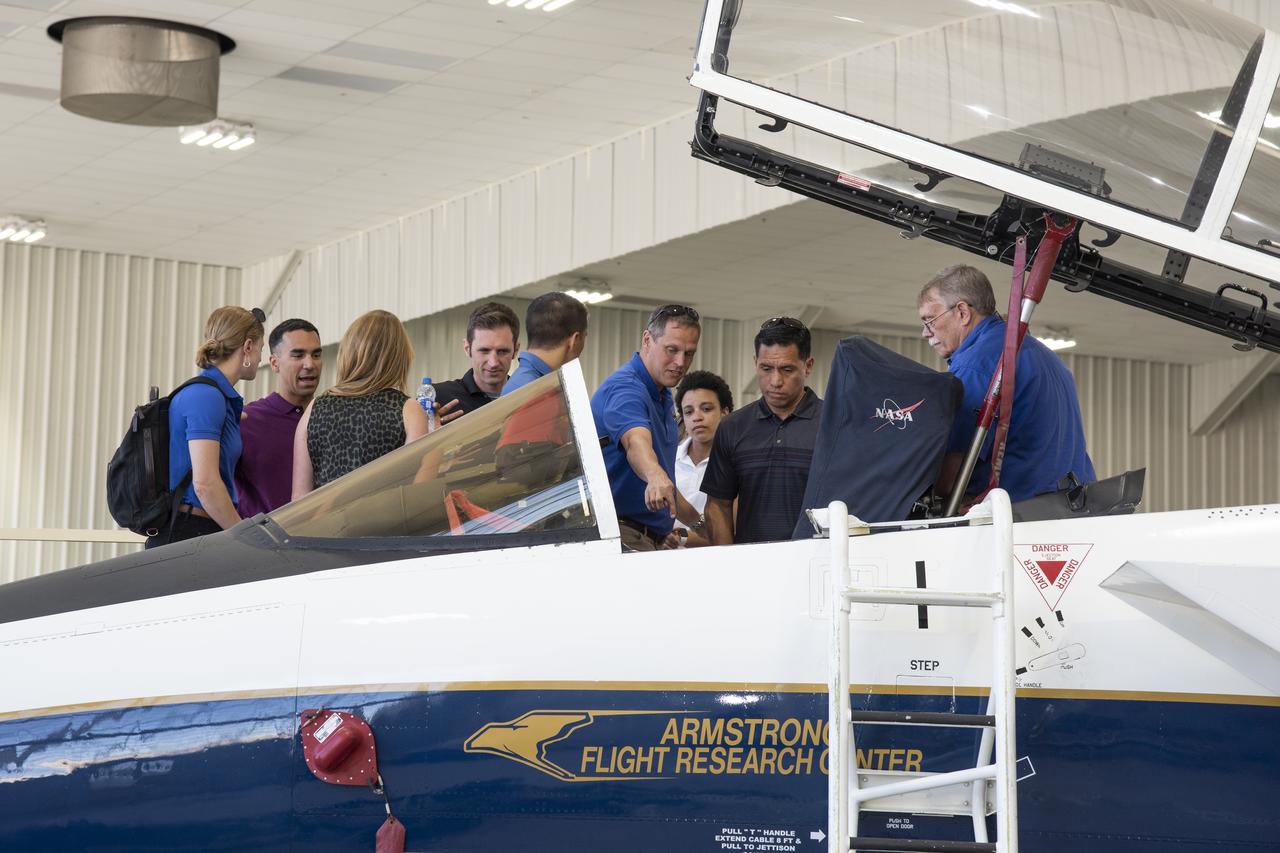
NASA’s 2017 astronaut candidates toured aircraft hangar at Armstrong Flight Research Center, in Southern California where they checked out a F-15 cockpit. The center is using its fleet of supersonic research support aircraft for sonic boom research, including the F-15, which will fly in tandem with the X-59 QueSST during early flight test stages, and the F-18, which is conducting supersonic research in support of the overall mission.
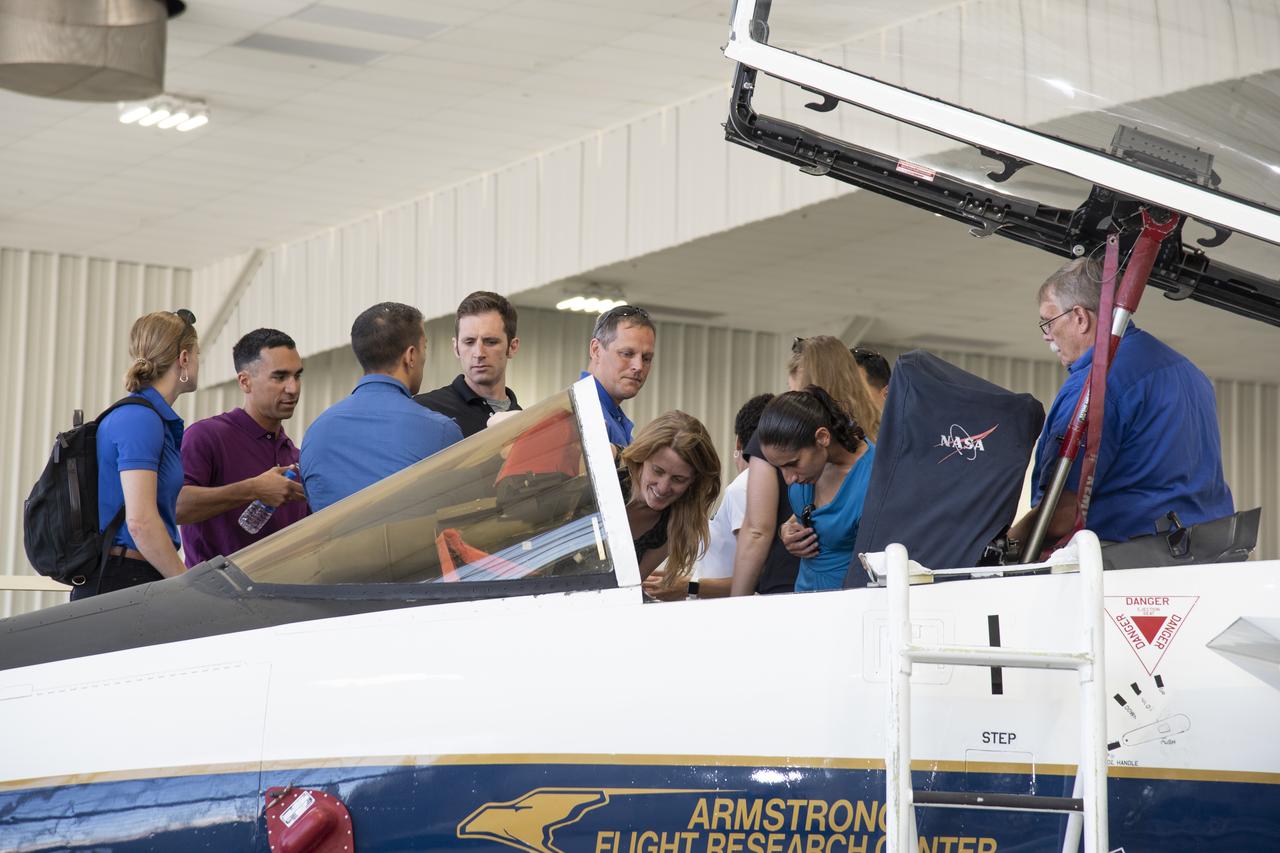
NASA's 2017 astronaut candidates toured aircraft hangar at Armstrong Flight Research Center, in Southern California where they checked out a F-15 cockpit. The center is using its fleet of supersonic research support aircraft for sonic boom research, including the F-15, which will fly in tandem with the X-59 QueSST during early flight test stages, and the F-18, which is conducting supersonic research in support of the overall mission.
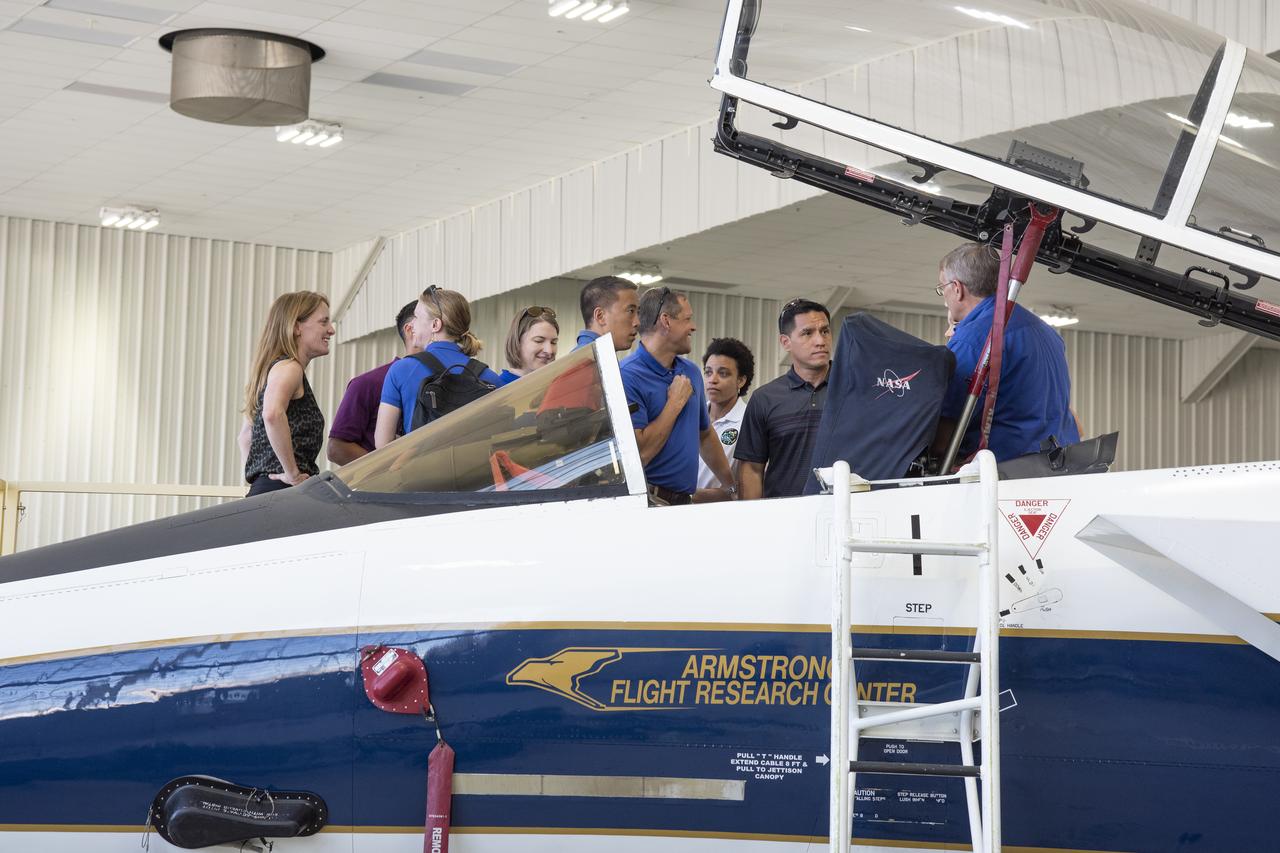
NASA's 2017 astronaut candidates toured aircraft hangar at Armstrong Flight Research Center, in Southern California where they checked out a F-15 cockpit. The center is using its fleet of supersonic research support aircraft for sonic boom research, including the F-15, which will fly in tandem with the X-59 QueSST during early flight test stages, and the F-18, which is conducting supersonic research in support of the overall mission.
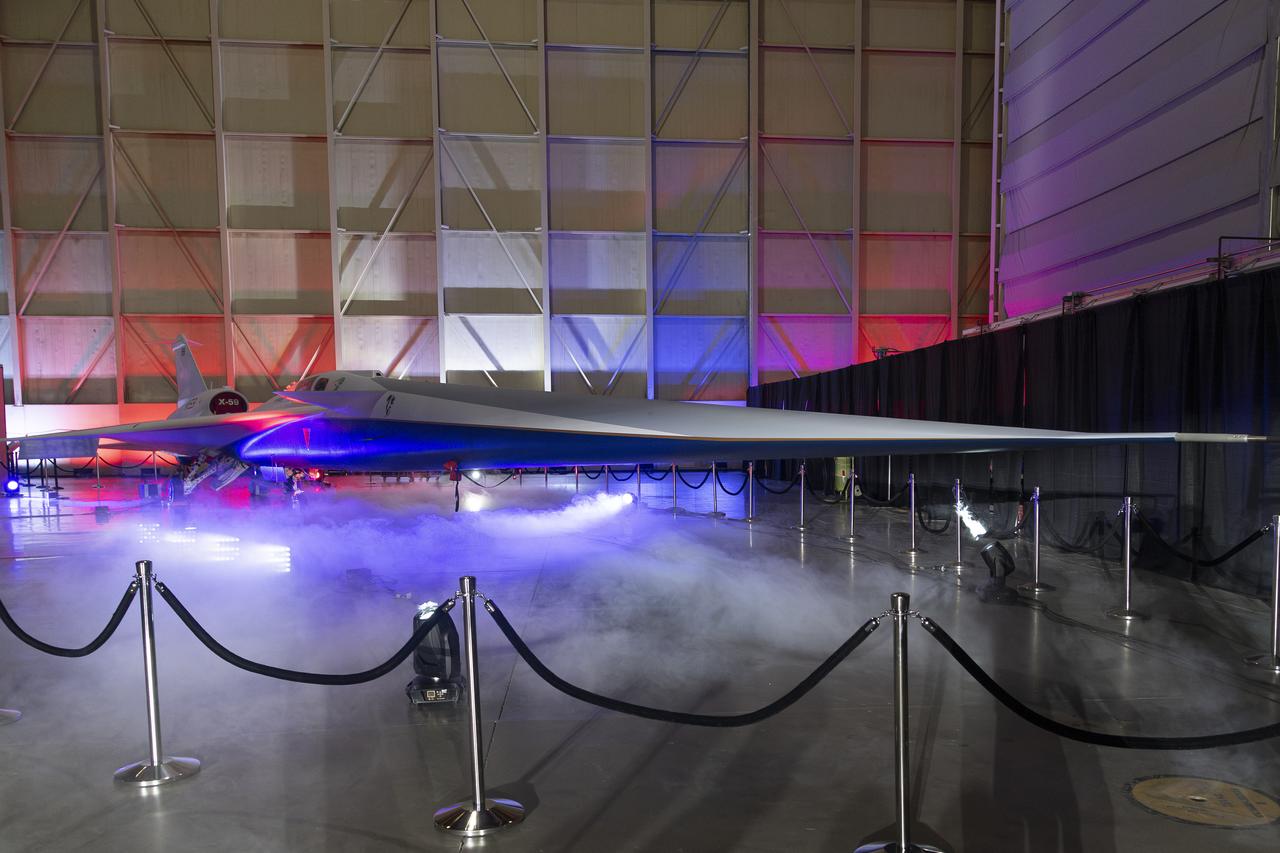
NASA’s X-59 quiet supersonic research aircraft sits in position inside a hangar at Lockheed Martin Skunk Works in Palmdale, California prior to its January 12, 2024 unveiling. The X-59 is the centerpiece of NASA’s Quesst mission, which seeks to solve one of the major barriers to supersonic flight over land, currently banned in the United States, by making sonic booms quieter.
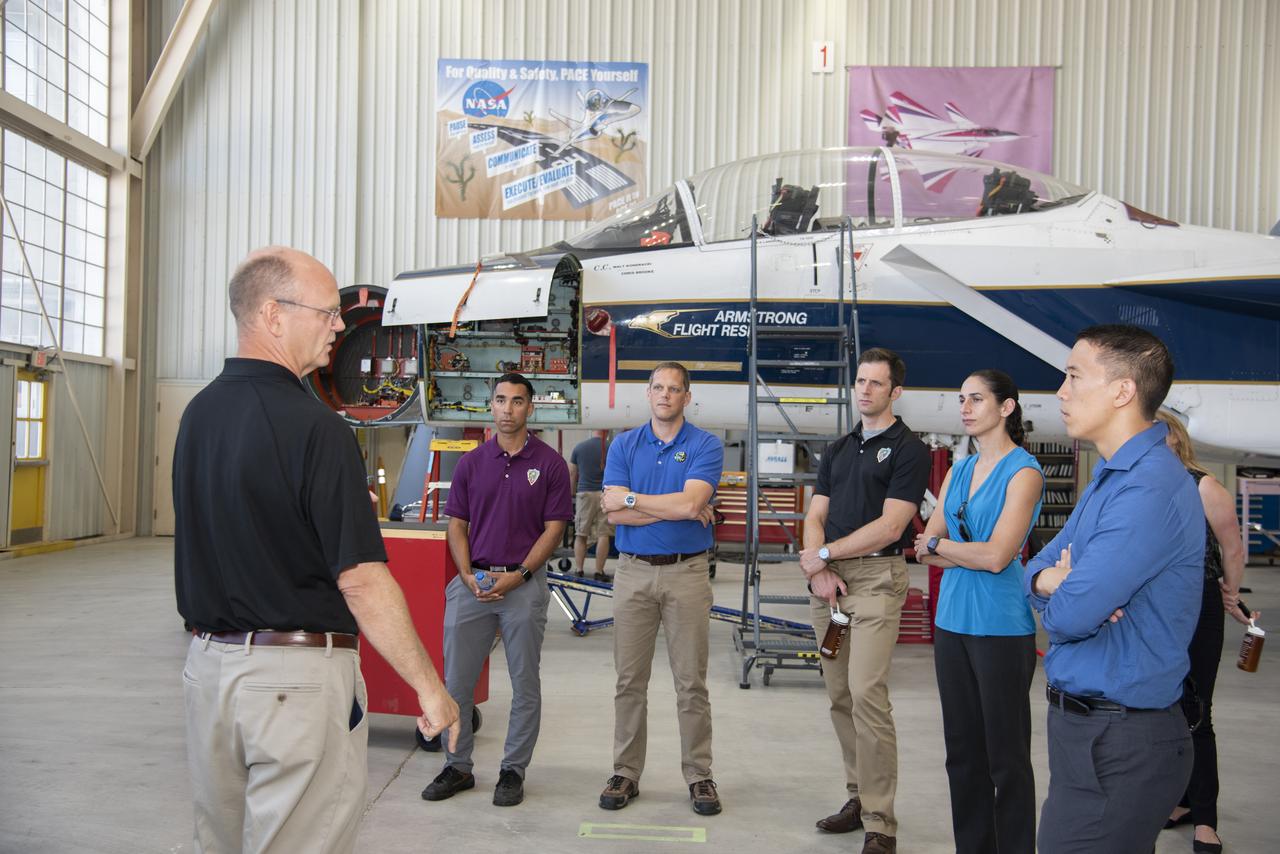
NASA’s 2017 astronaut candidates (L to R) Raja Chari, Bob Hines, Joshua Kutryk, Jasmin Moghbeli, Jonny Kim, and Jessica Watkins toured aircraft hangar at Armstrong Flight Research Center, in Southern California. On the left, NASA’s, X-59 pilot, briefs them on use of F-15 for studying sonic booms during the development of the low-boom X-59 aircraft that is planned to fly supersonically over land. Low-level supersonic flight is not allowed at this time because of the loud noise levels generated when flying beyond the speed of sound.
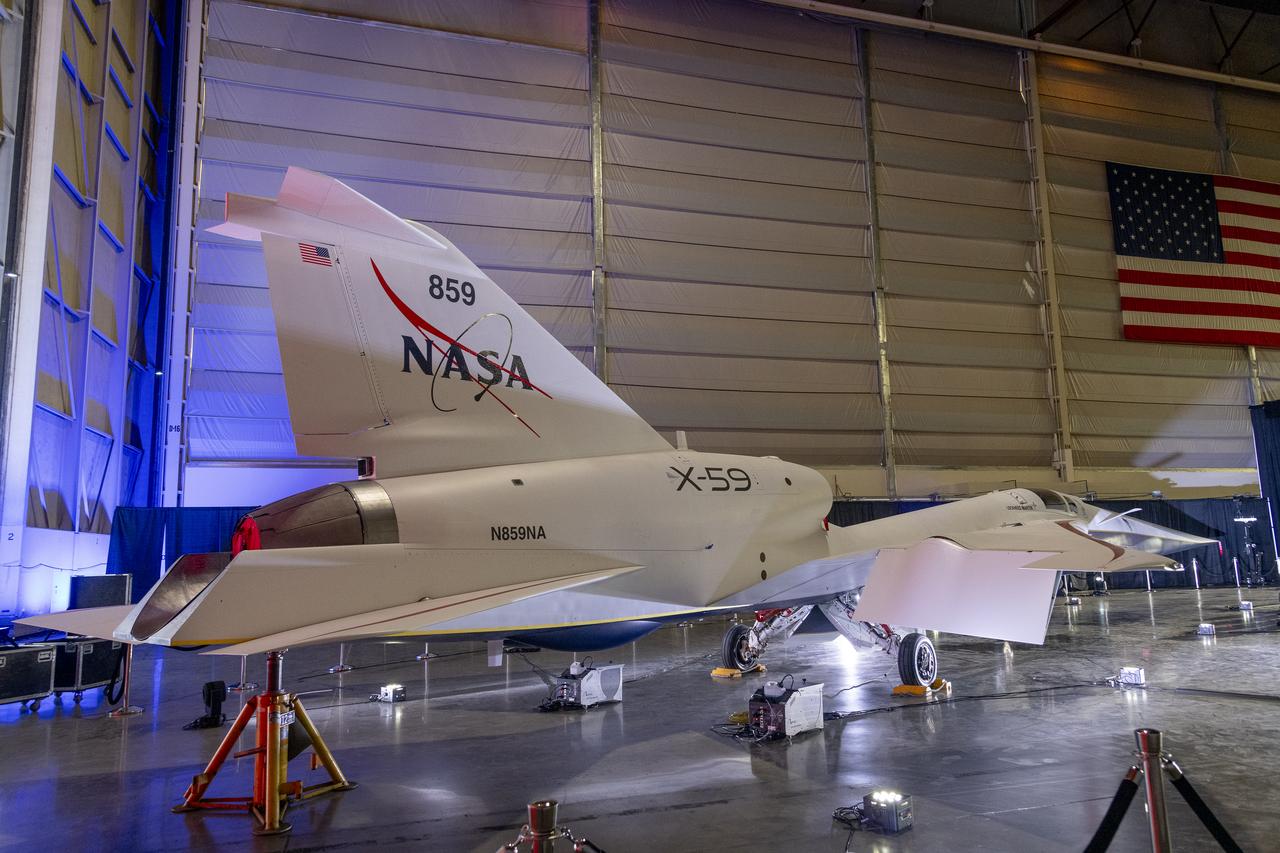
NASA’s X-59 quiet supersonic research aircraft sits in position inside a hangar at Lockheed Martin Skunk Works in Palmdale, California prior to its January 12, 2024 unveiling. The X-59 is the centerpiece of NASA’s Quesst mission, which seeks to solve one of the major barriers to supersonic flight over land, currently banned in the United States, by making sonic booms quieter.
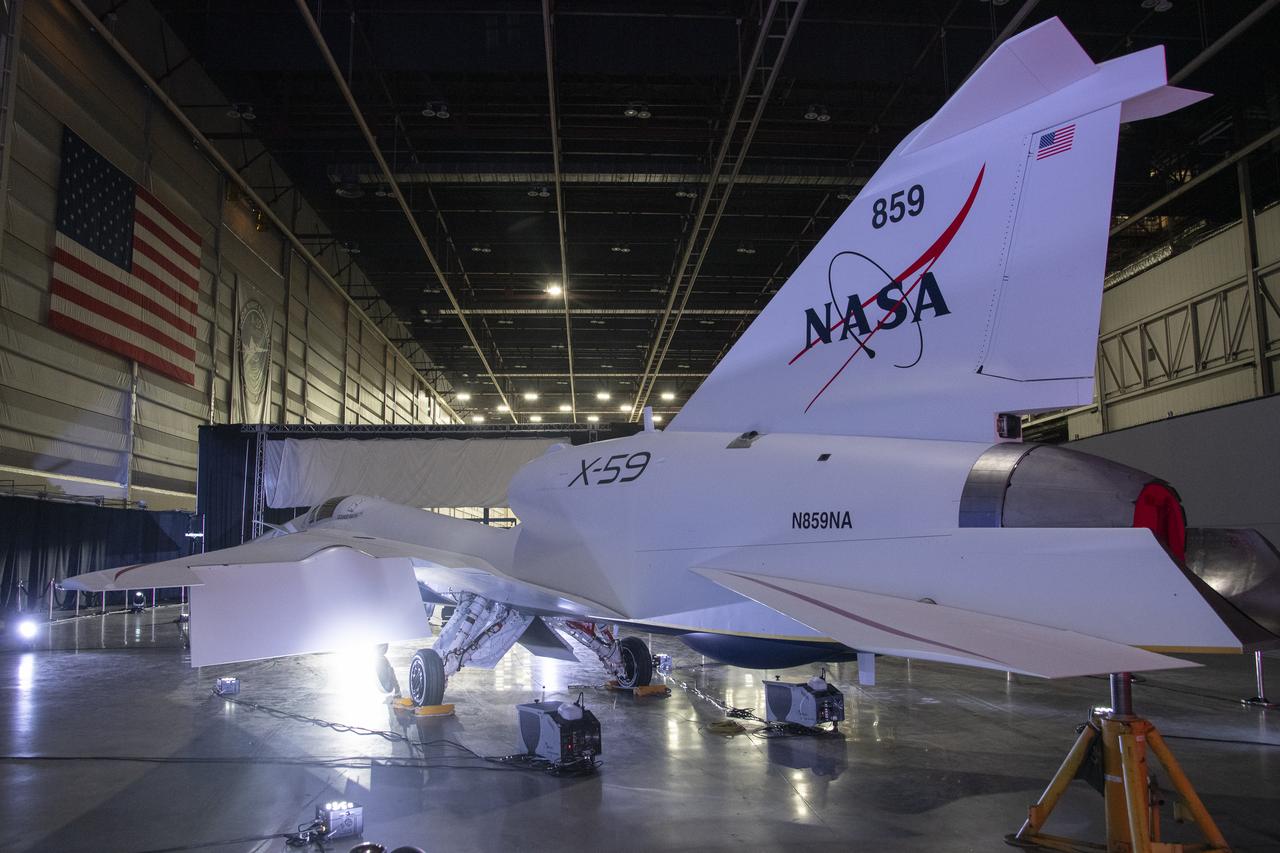
NASA’s X-59 quiet supersonic research aircraft sits in position inside a hangar at Lockheed Martin Skunk Works in Palmdale, California prior to its January 12, 2024 unveiling. The X-59 is the centerpiece of NASA’s Quesst mission, which seeks to solve one of the major barriers to supersonic flight over land, currently banned in the United States, by making sonic booms quieter.
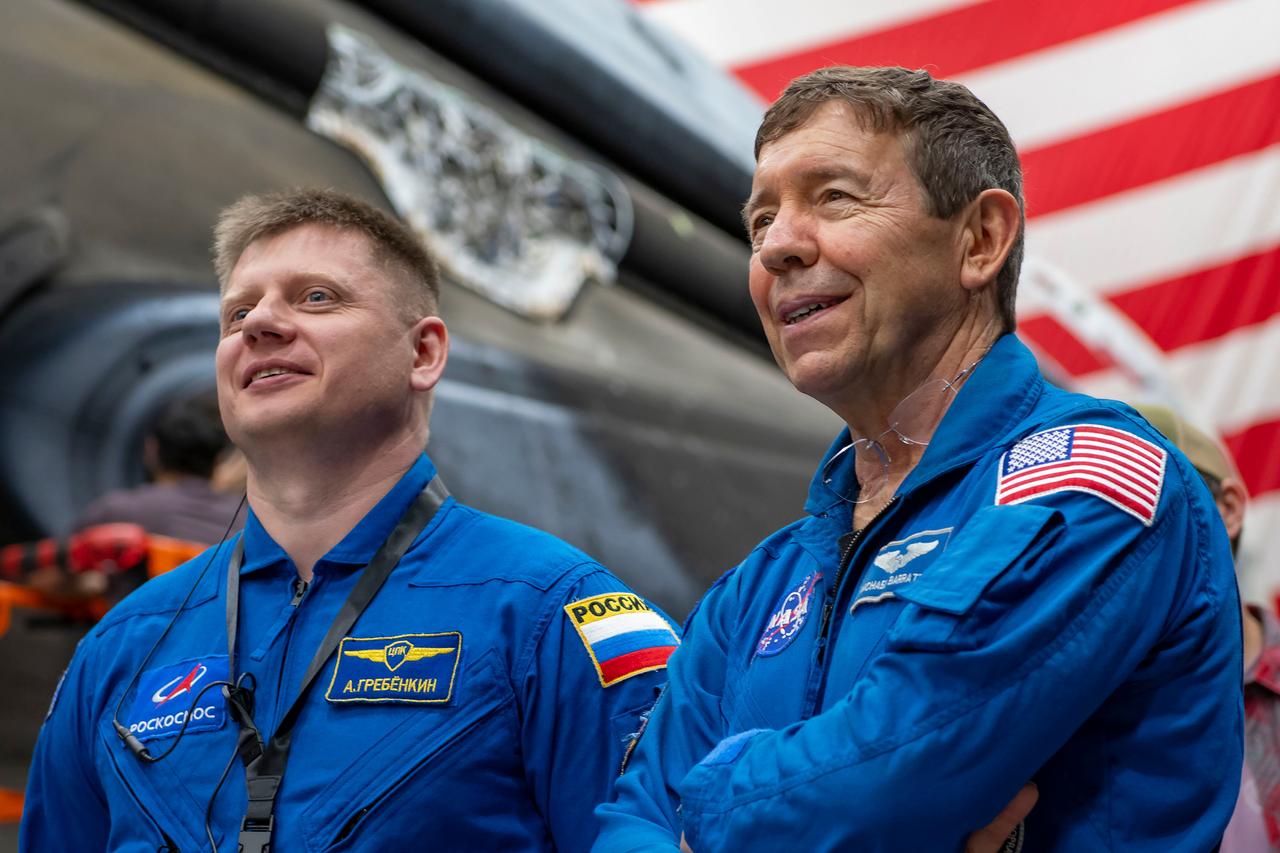
jsc2024e011741 (Oct. 12, 2023) --- SpaceX Crew-9 crew members Alexander Grebenkin and Michael Barratt, Mission Specialist and Pilot, respectively, are pictured inside SpaceX Hangar X at the Kennedy Space Center in Florida. Hangar X supports Falcon 9 rocket refurbishment and houses administration offices. Credit: SpaceX
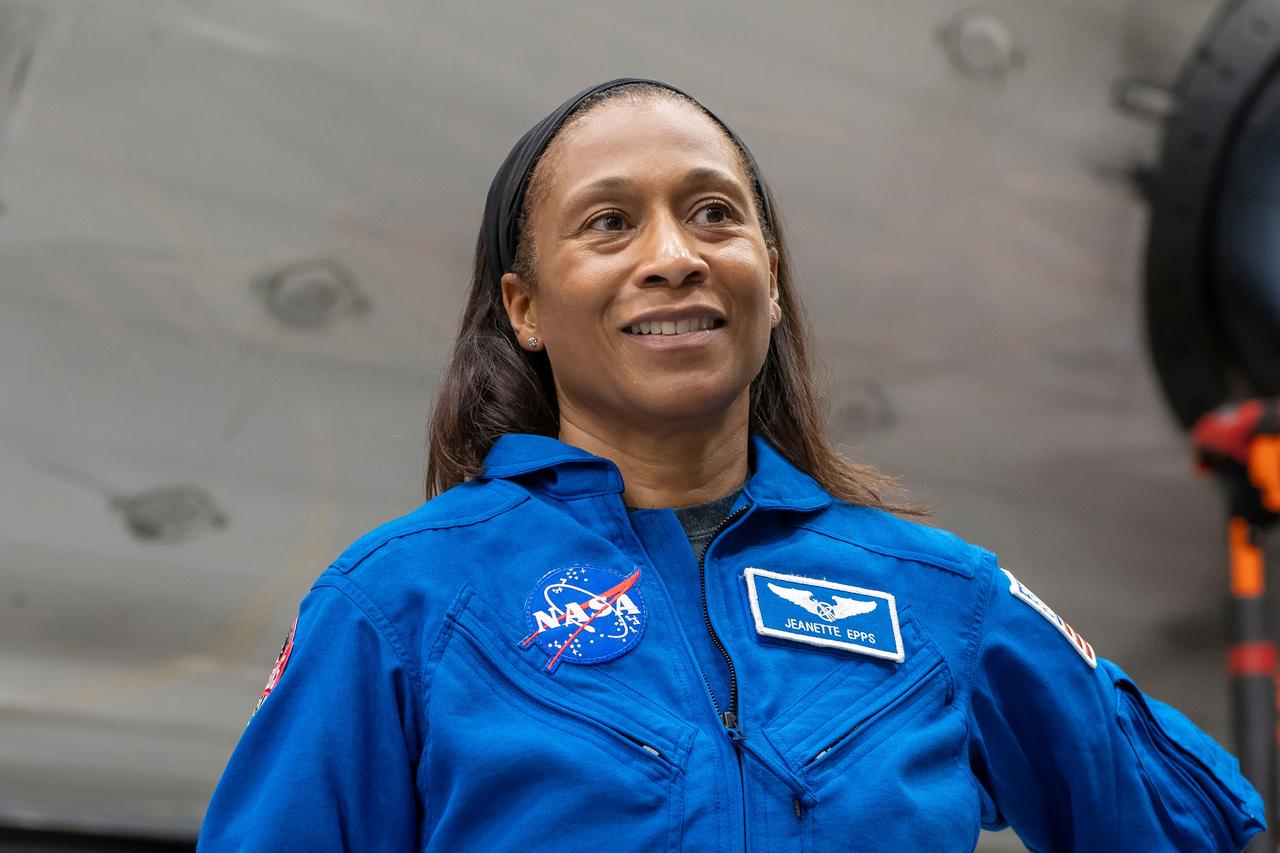
jsc2024e011738 (Oct. 12, 2023) --- SpaceX Crew-8 Mission Specialist Jeanette Epps poses for a photo inside SpaceX Hangar X at the Kennedy Space Center in Florida. Hangar X supports Falcon 9 rocket refurbishment and houses administration offices. Credit: SpaceX
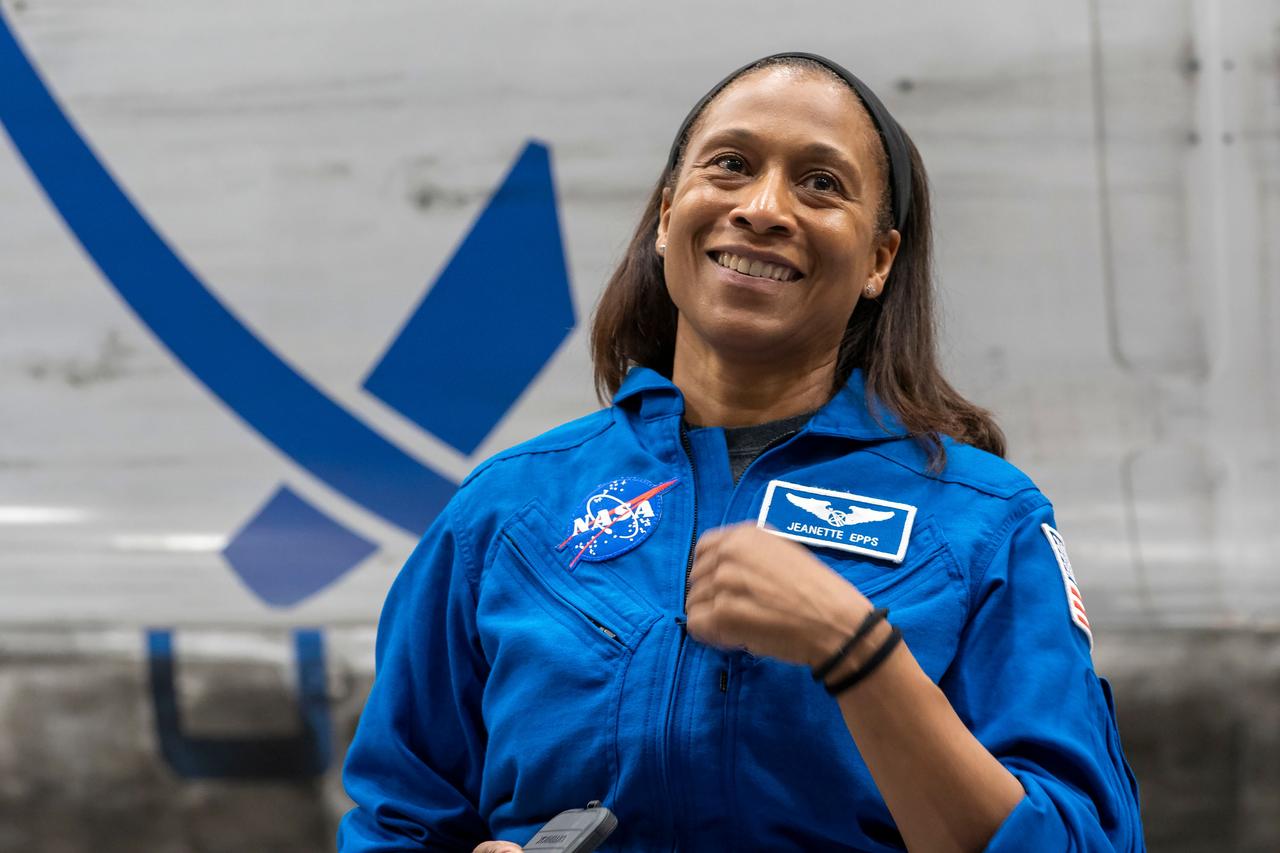
jsc2024e011742 (Oct. 12, 2023) --- SpaceX Crew-8 Mission Specialist Jeanette Epps inside SpaceX Hangar X at the Kennedy Space Center in Florida. Hangar X supports Falcon 9 rocket refurbishment and houses administration offices. Credit: SpaceX
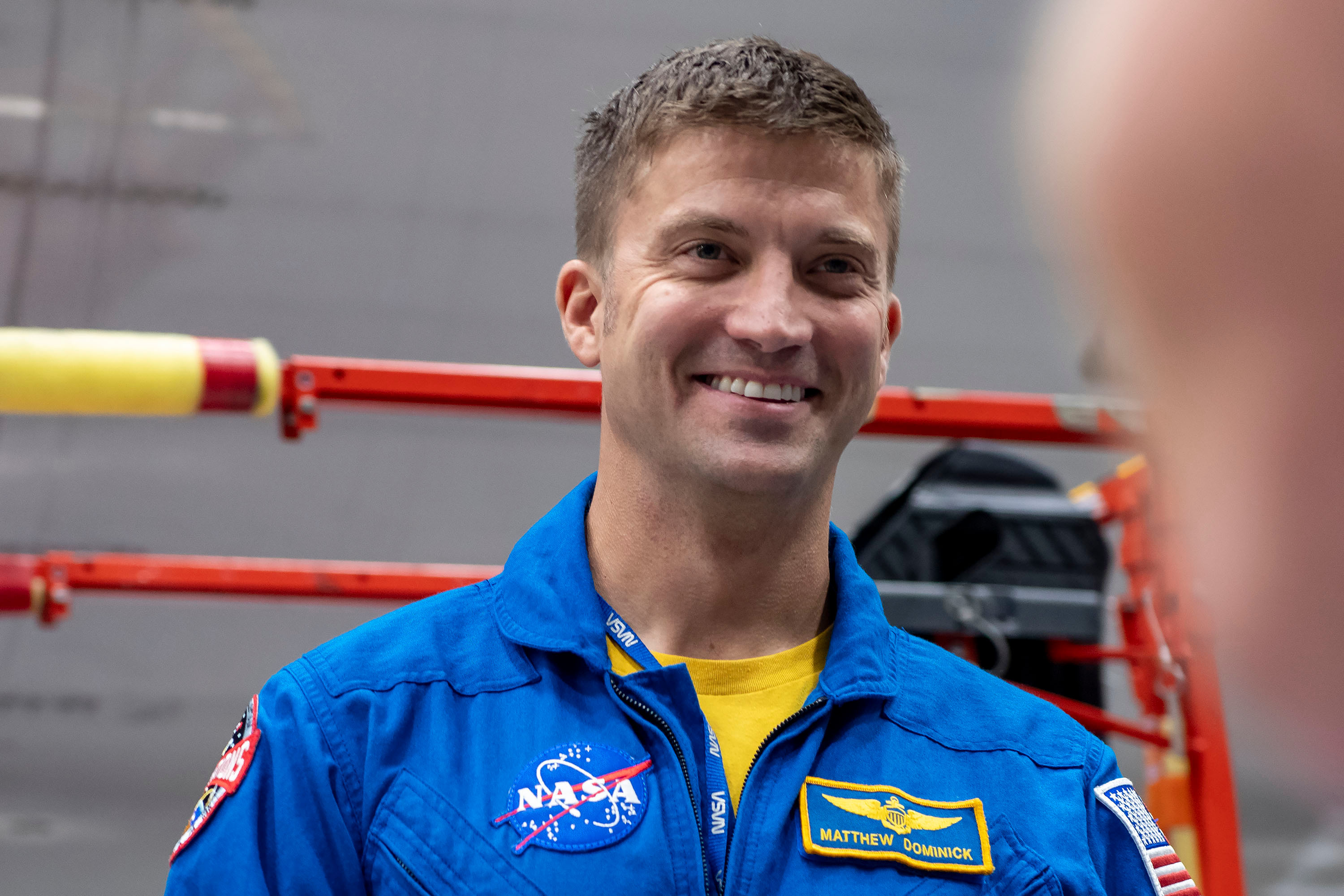
jsc2024e011739 (Oct. 12, 2023) --- SpaceX Crew-8 Commander Matthew Dominick poses for a photo inside SpaceX Hangar X at the Kennedy Space Center in Florida. Hangar X supports Falcon 9 rocket refurbishment and houses administration offices. Credit: SpaceX

jsc2024e011743 (Oct. 12, 2023) --- NASA's SpaceX Crew-8 Pilot Michael Barratt poses for a photo inside SpaceX Hangar X at the Kennedy Space Center in Florida. Hangar X supports Falcon 9 rocket refurbishment and houses administration offices. Credit: SpaceX
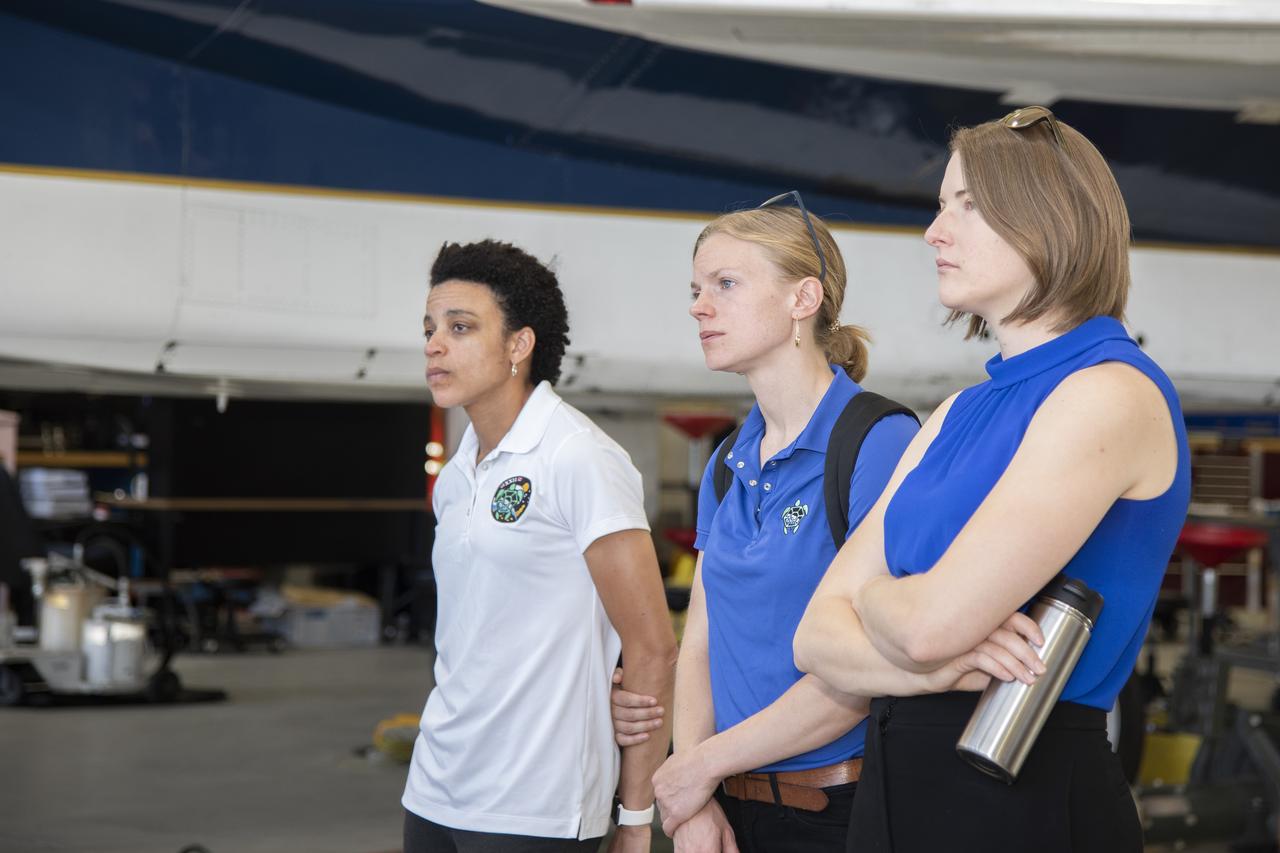
NASA’s 2017 astronaut candidates (L to R) Jessica Watkins, Zena Cardman, Kayla Barron toured aircraft hangar at Armstrong Flight Research Center, in Southern California where they were briefed on the use of Armstrong's F-15 and F-18 aircraft for studying sonic booms. The aircraft will be used during the development of the low-boom X-59 aircraft that is planned to fly supersonically over land, which is not allowed at this time because of the loud noise created when flying beyond the speed of sound.
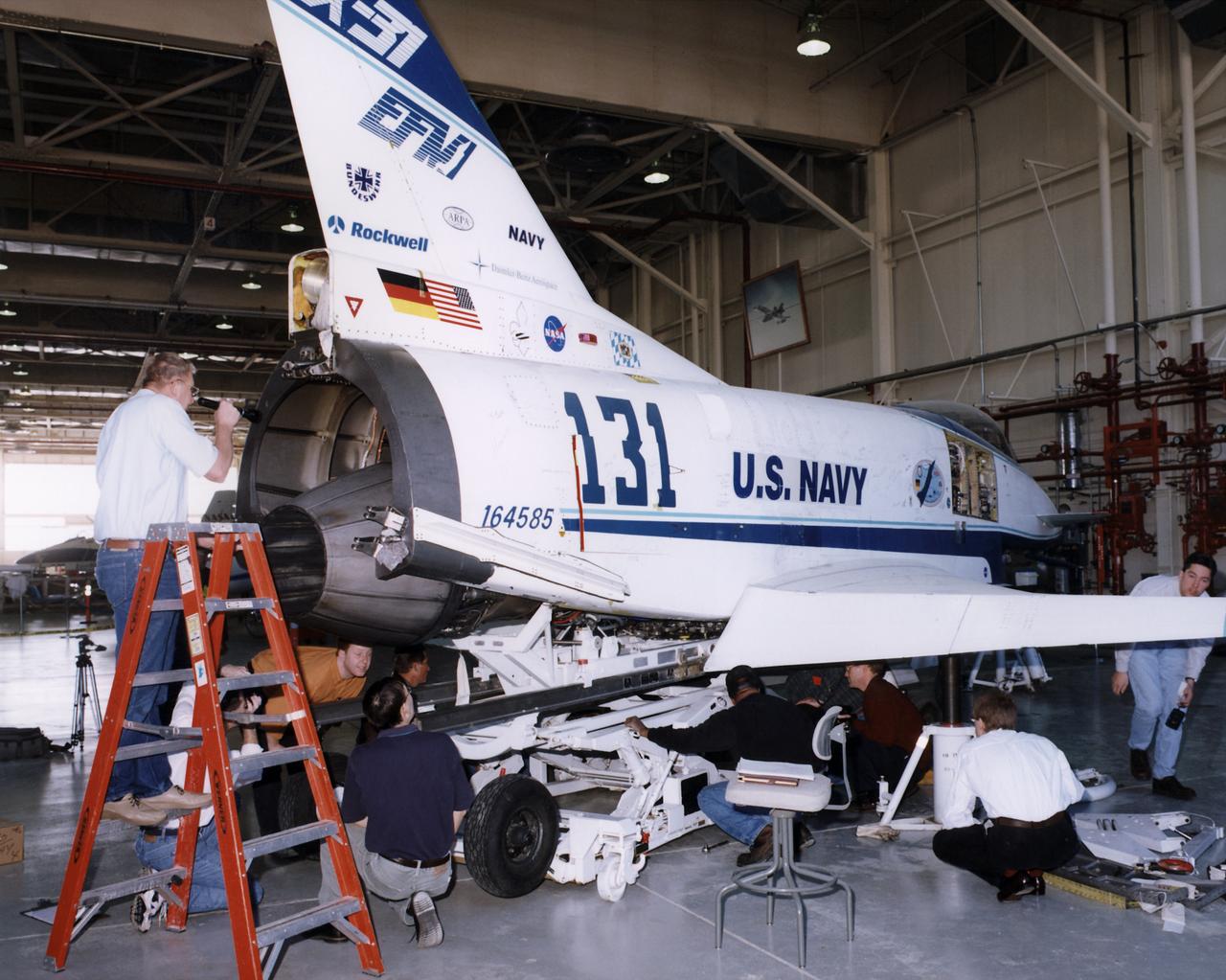
X-31 team members perform an engine fit check on the X-31 Enhanced Fighter Maneuverability demonstrator aircraft in a hangar at the Dryden Flight Research Center, Edwards, California.
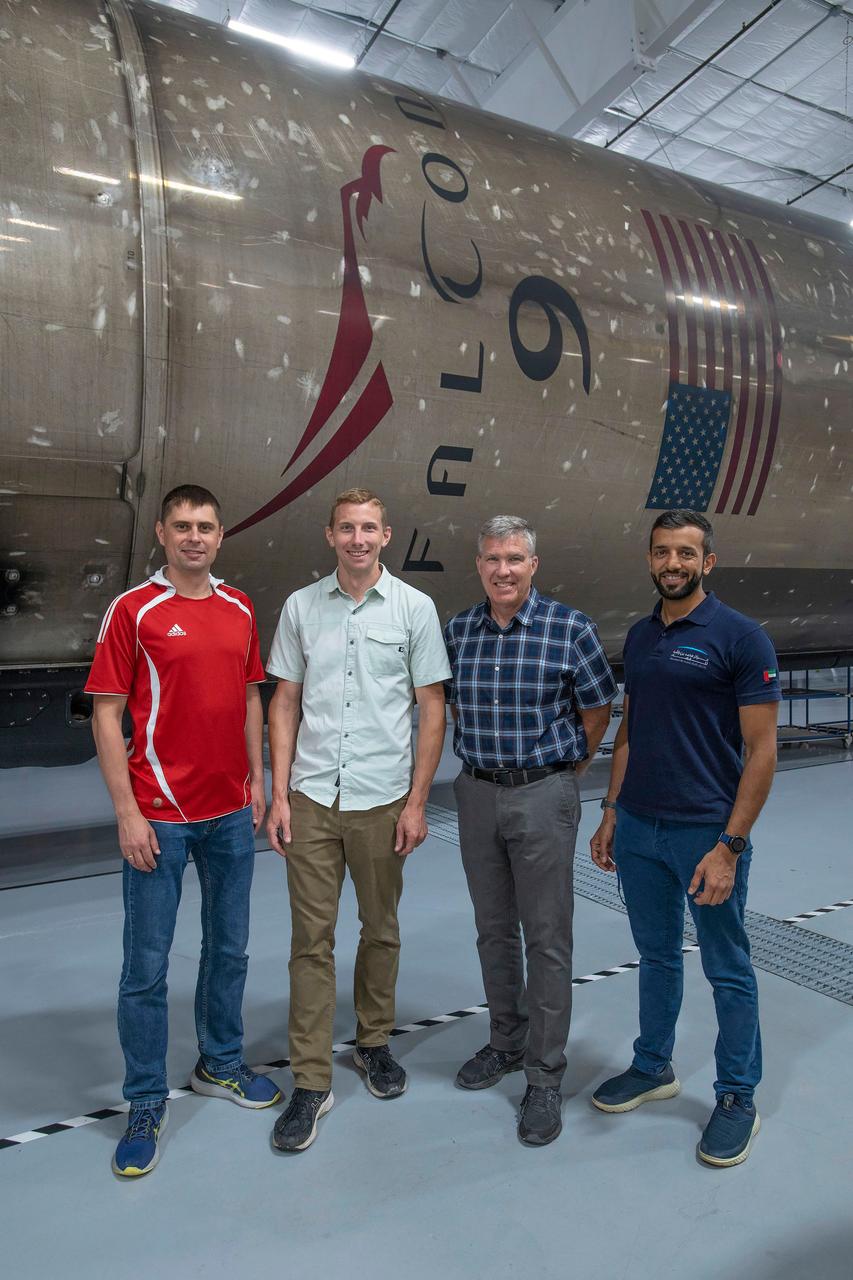
jsc2022e065073 (Aug. 9, 2022) --- The four crew members that comprise the SpaceX Crew-6 mission pose for a photo inside SpaceX Hangar X at the Kennedy Space Center in Florida. Hangar X supports Falcon 9 rocket refurbishment and houses administration offices. From left are, Mission Specialist Andrey Fedyaev, Pilot Warren "Woody" Hoburg, Commander Stephen Bowen, and Mission Specialist Sultan Alneyadi. Credit: SpaceX
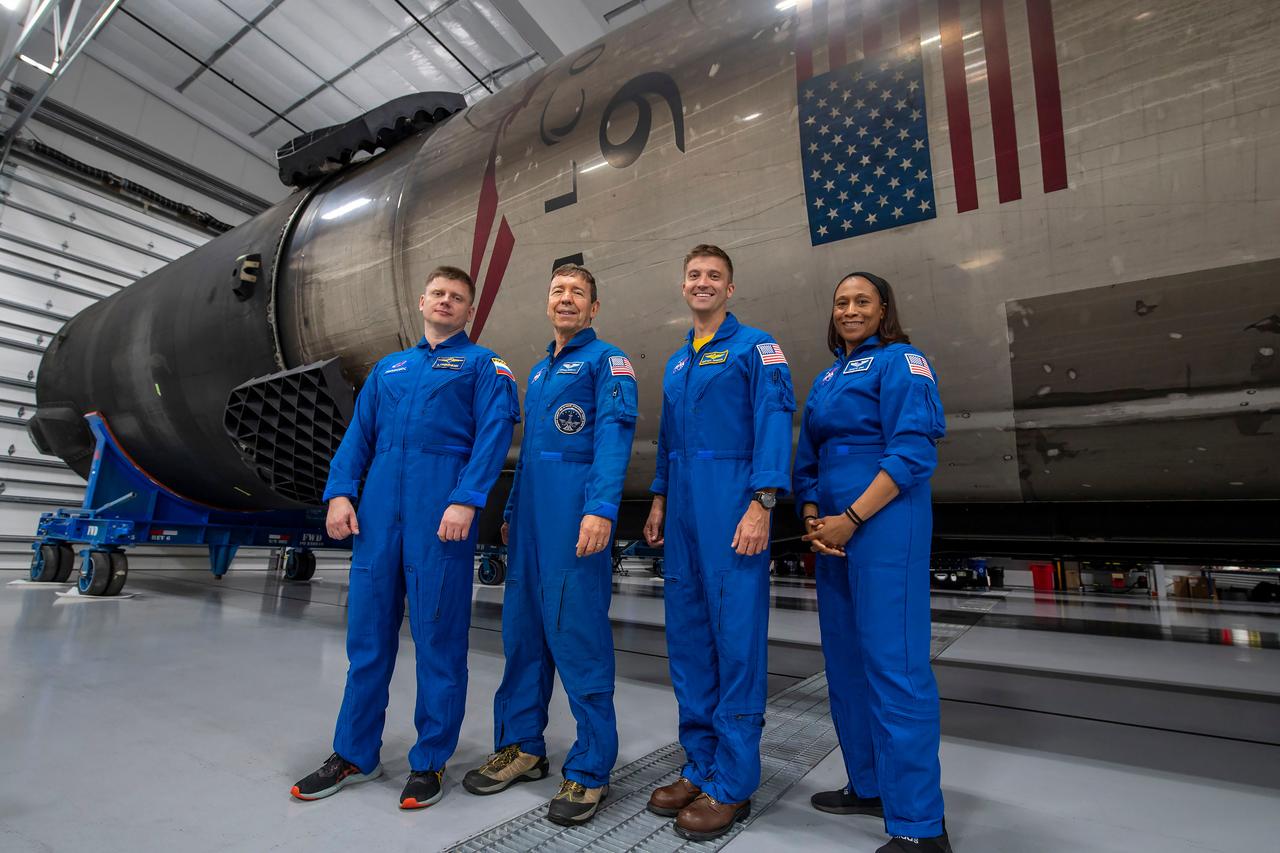
jsc2024e011735 (Oct. 12, 2023) --- The four crew members that comprise the SpaceX Crew-8 mission pose for a photo inside SpaceX Hangar X at the Kennedy Space Center in Florida. Hangar X supports Falcon 9 rocket refurbishment and houses administration offices. From left are, Mission Specialist Alexander Grebenkin, Pilot Michael Barratt, Commander Matthew Dominick, and Mission Specialist Jeanette Epps. Credit: SpaceX

jsc2024e011736 (Oct. 12, 2023) --- The four crew members that comprise the SpaceX Crew-8 mission pose for a photo inside SpaceX Hangar X at the Kennedy Space Center in Florida. Hangar X supports Falcon 9 rocket refurbishment and houses administration offices. From left are, Mission Specialist Alexander Grebenkin, Pilot Michael Barratt, Commander Matthew Dominick, and Mission Specialist Jeanette Epps. Credit: SpaceX

jsc2022e065074 (Aug. 9, 2022) --- The four crew members that comprise the SpaceX Crew-6 mission pose for a photo inside SpaceX Hangar X at the Kennedy Space Center in Florida. Hangar X supports Falcon 9 rocket refurbishment and houses administration offices. From left are, Mission Specialist Andrey Fedyaev, Pilot Warren "Woody" Hoburg, Commander Stephen Bowen, and Mission Specialist Sultan Alneyadi. Credit: SpaceX
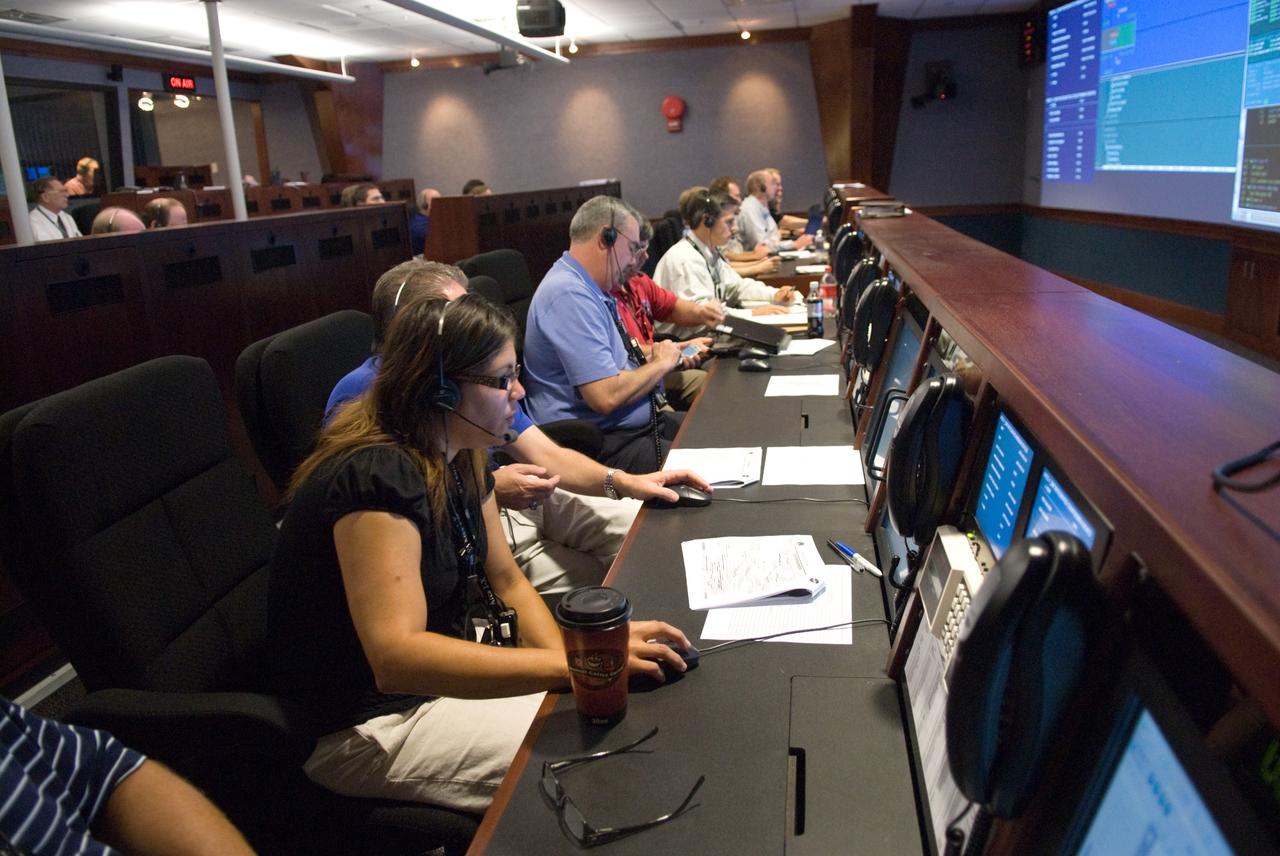
CAPE CANAVERAL, Fla. – In the Mission Director Center in Cape Canaveral Air Force Station's Hangar AE, mission engineers take part in a countdown simulation for the upcoming Ares I-X flight test. Ares I-X is targeted for the test on Oct. 31. The Hangar AE control rooms provide real-time voice, data and video information for ex¬pendable vehicle checkout and launch operations, similar to that provided by the space shuttle control rooms. Photo credit: NASA/Kim Shiflett

jsc2024e011734 (Oct. 12, 2023) --- The four crew members that comprise the SpaceX Crew-8 mission pose for a photo inside SpaceX Hangar X at the Kennedy Space Center in Florida. Hangar X supports Falcon 9 rocket refurbishment and houses administration offices. From left are, Mission Specialist Alexander Grebenkin, Pilot Michael Barratt, Commander Matthew Dominick, and Mission Specialist Jeanette Epps. Credit: SpaceX
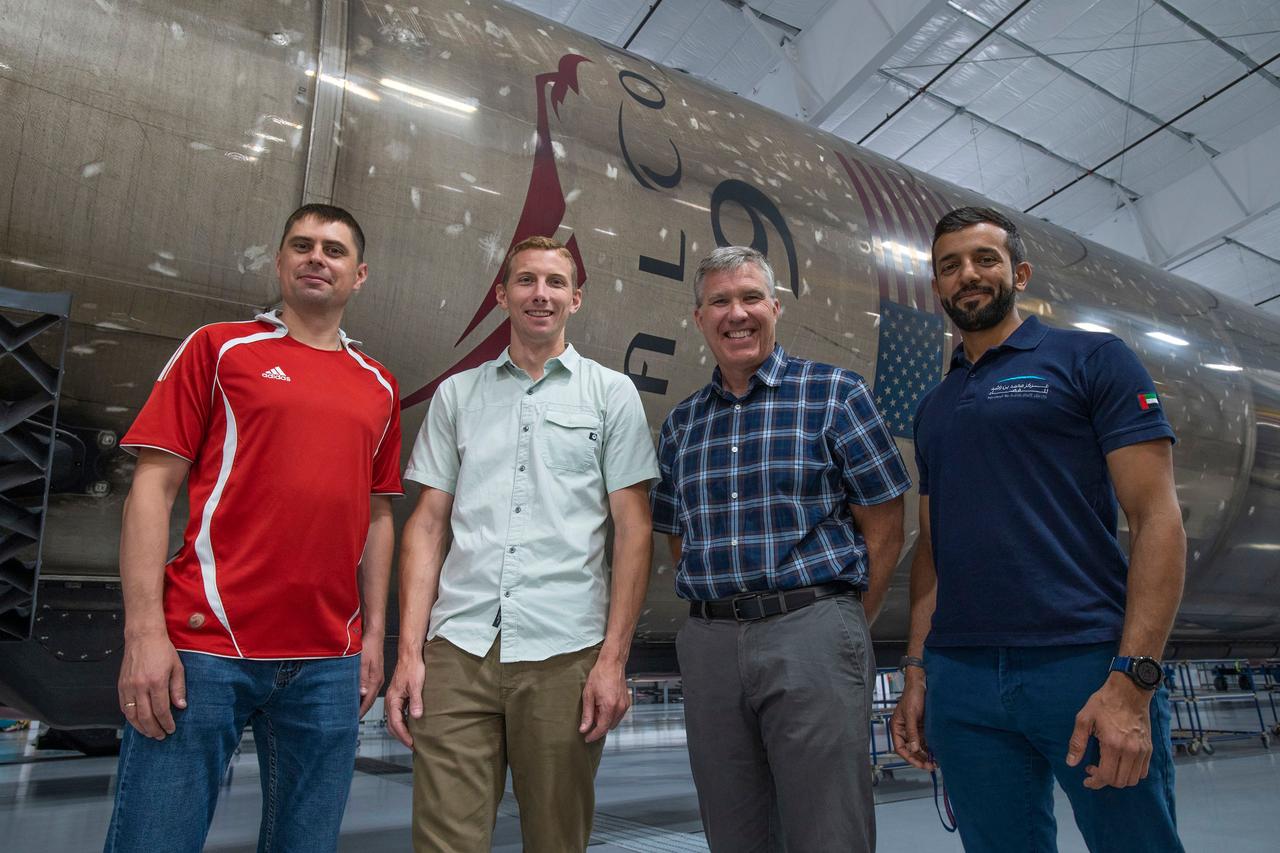
jsc2022e065075 (Aug. 9, 2022) --- The four crew members that comprise the SpaceX Crew-6 mission pose for a photo inside SpaceX Hangar X at the Kennedy Space Center in Florida. Hangar X supports Falcon 9 rocket refurbishment and houses administration offices. From left are, Mission Specialist Andrey Fedyaev, Pilot Warren "Woody" Hoburg, Commander Stephen Bowen, and Mission Specialist Sultan Alneyadi. Credit: SpaceX

jsc2024e011746 (Oct. 12, 2023) --- The four crew members that comprise the SpaceX Crew-8 mission pose for a photo inside SpaceX Hangar X at the Kennedy Space Center in Florida. Hangar X supports Falcon 9 rocket refurbishment and houses administration offices. From left are, Mission Specialist Alexander Grebenkin, Pilot Michael Barratt, Commander Matthew Dominick, and Mission Specialist Jeanette Epps. Credit: SpaceX

jsc2024e011737 (Oct. 12, 2023) --- The four crew members that comprise the SpaceX Crew-8 mission pose for a photo inside SpaceX Hangar X at the Kennedy Space Center in Florida. Hangar X supports Falcon 9 rocket refurbishment and houses administration offices. From left are, Mission Specialist Alexander Grebenkin, Pilot Michael Barratt, Commander Matthew Dominick, and Mission Specialist Jeanette Epps. Credit: SpaceX
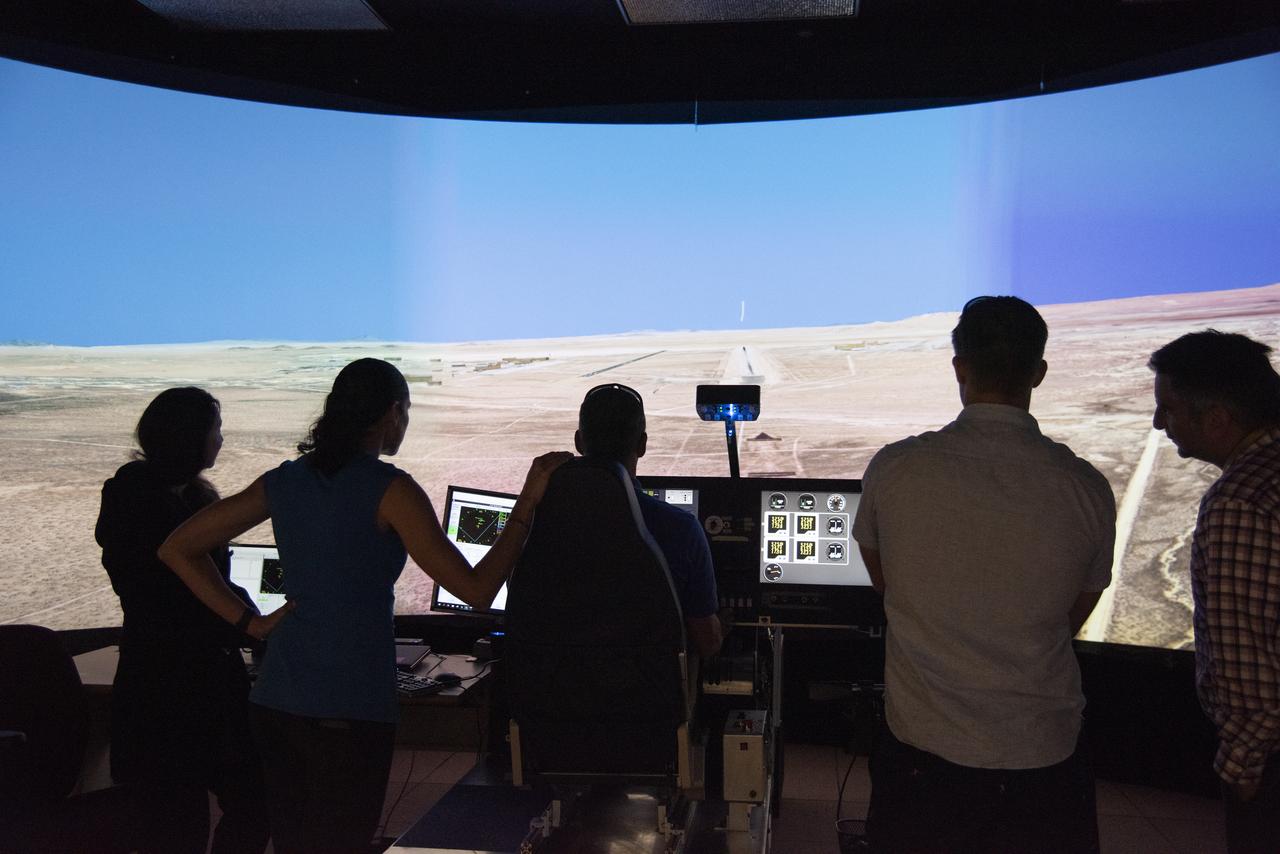
NASA's 2017 astronaut candidates toured aircraft hangar at Armstrong Flight Research Center, in Southern California. After tour of aircraft hangar and briefing on the use of aircraft for flight research, the astronauts practiced flying the X-57 simulator. Starting with the fuselage of a Tecnam P20067T, the X-57 Maxwell electric propulsion airplane is being built and could lead to the development of electric propulsion-powered aircraft, which would be quieter, more efficient and environmentally friendly than today's commuter aircraft.
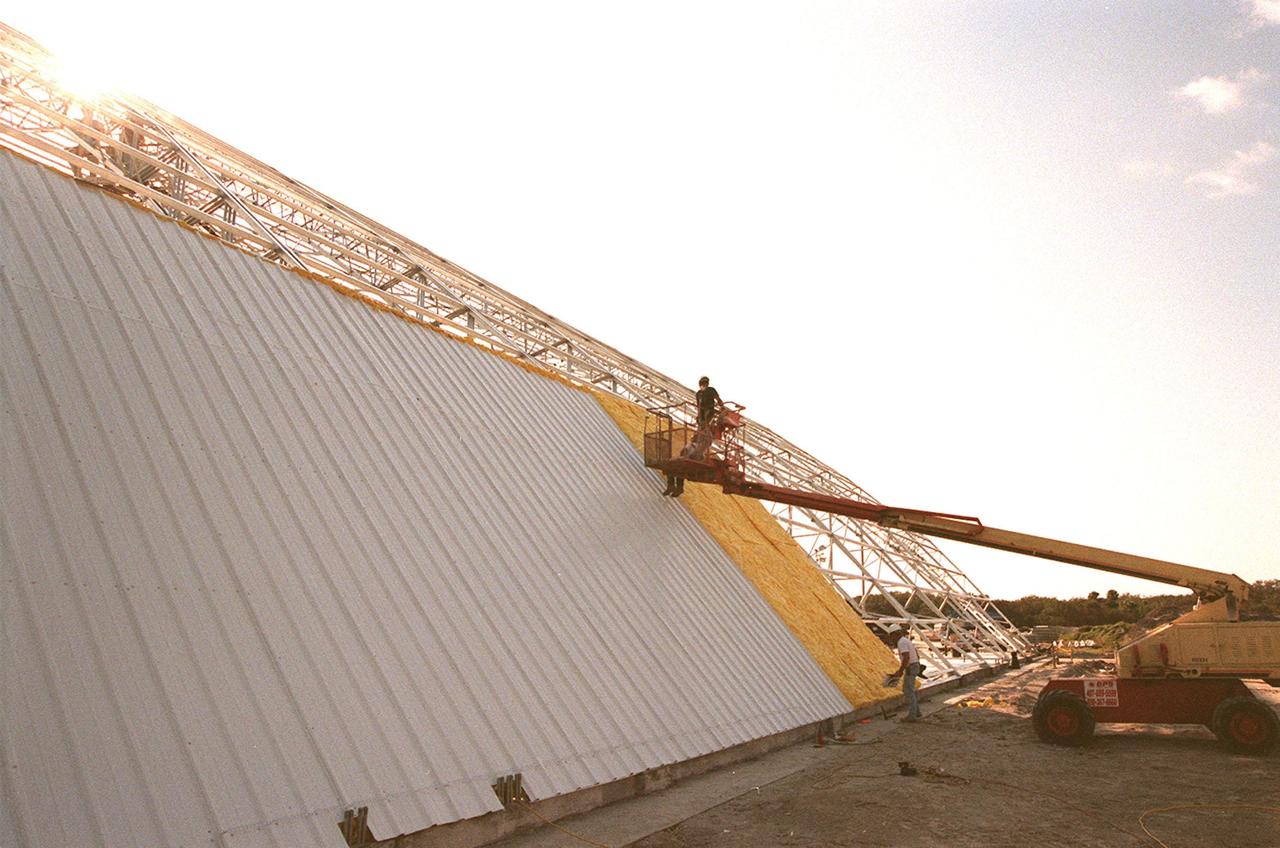
Workers place the first roof panels on the multi-purpose hangar at the site of the $8 million Reusable Launch Vehicle (RLV) Support Complex at Kennedy Space Center. The RLV complex, which includes the hangar and a building for related ground support equipment and administrative/technical support, will be available to accommodate the Space Shuttle; the X-34 RLV technology demonstrator; the L-1011 carrier aircraft for Pegasus and X-34; and other RLV and X-vehicle programs. The complex is jointly funded by the Spaceport Florida Authority, NASA's Space Shuttle Program and KSC. The facility will be operational in early 2000
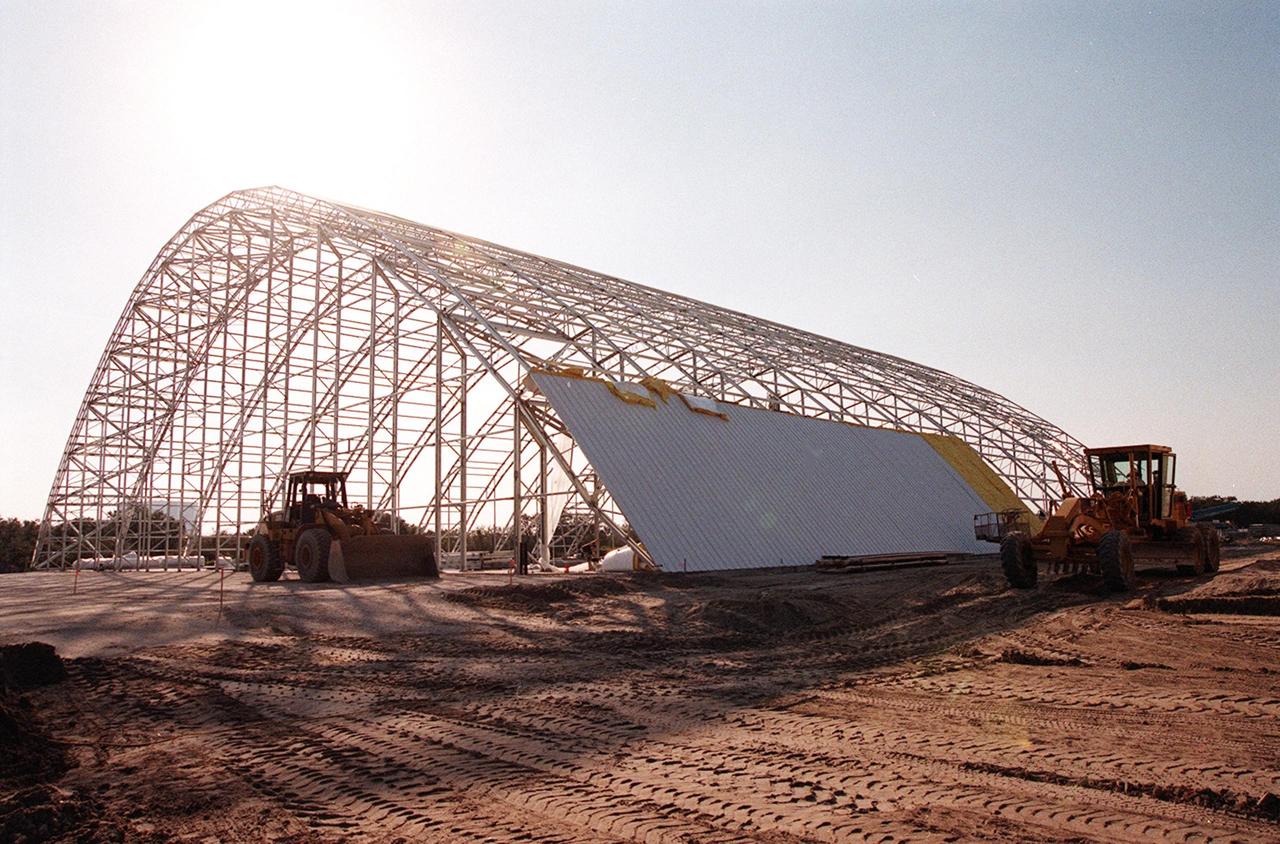
The first roof panels are placed on the multi-purpose hangar at the site of the $8 million Reusable Launch Vehicle (RLV) Support Complex at Kennedy Space Center. The RLV complex, which includes the hangar and a building for related ground support equipment and administrative/technical support, will be available to accommodate the Space Shuttle; the X-34 RLV technology demonstrator; the L-1011 carrier aircraft for Pegasus and X-34; and other RLV and X-vehicle programs. The complex is jointly funded by the Spaceport Florida Authority, NASA's Space Shuttle Program and KSC. The facility will be operational in early 2000
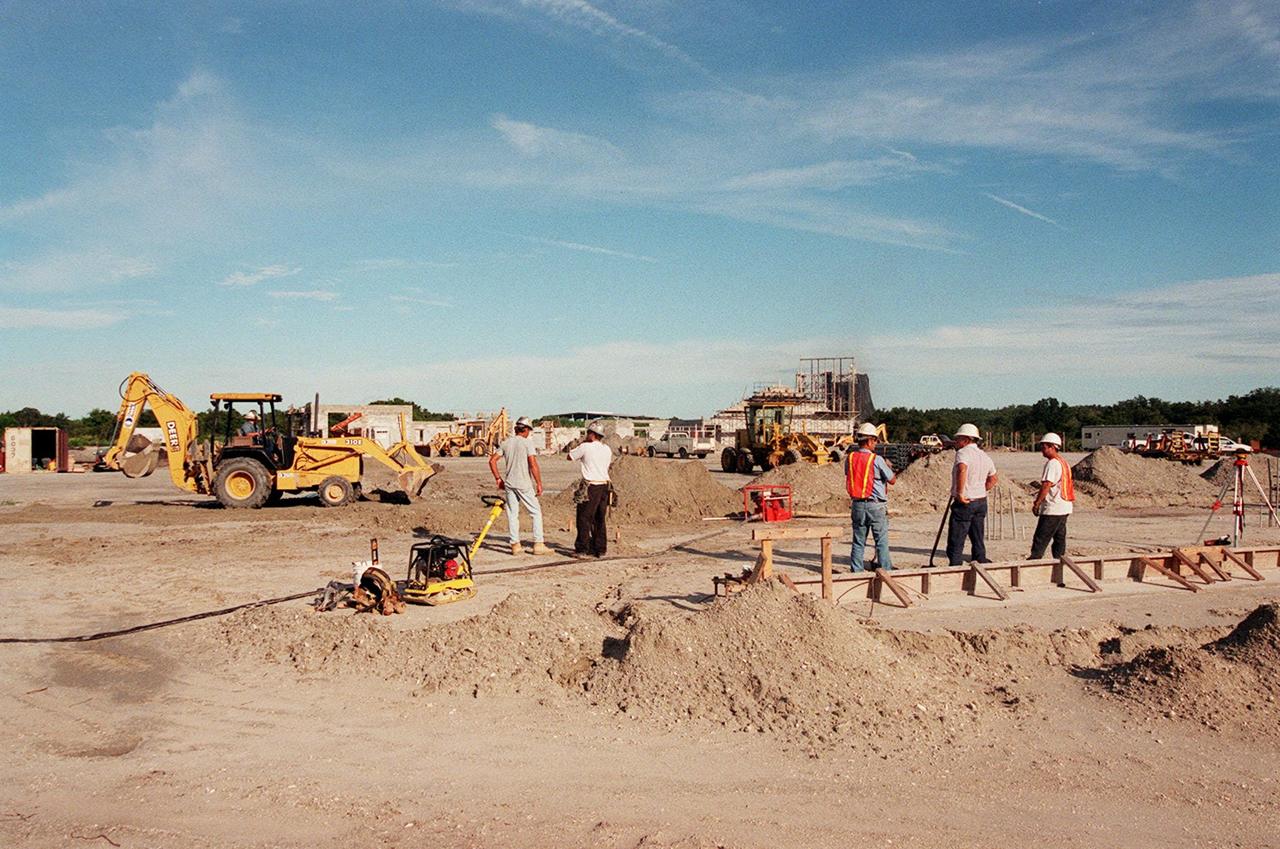
Construction is under way for the X-33/X-34 hangar complex near the Shuttle Landing Facility at KSC. The Reusable Launch Vehicle (RLV) complex will include facilities for related ground support equipment and administrative/ technical support. It will be available to accommodate the Space Shuttle; the X-34 RLV technology demonstrator; the L-1011 carrier aircraft for Pegasus and X-34; and other RLV and X-vehicle programs. The complex is jointly funded by the Spaceport Florida Authority, NASA's Space Shuttle Program and KSC. The facility will be operational in early 2000
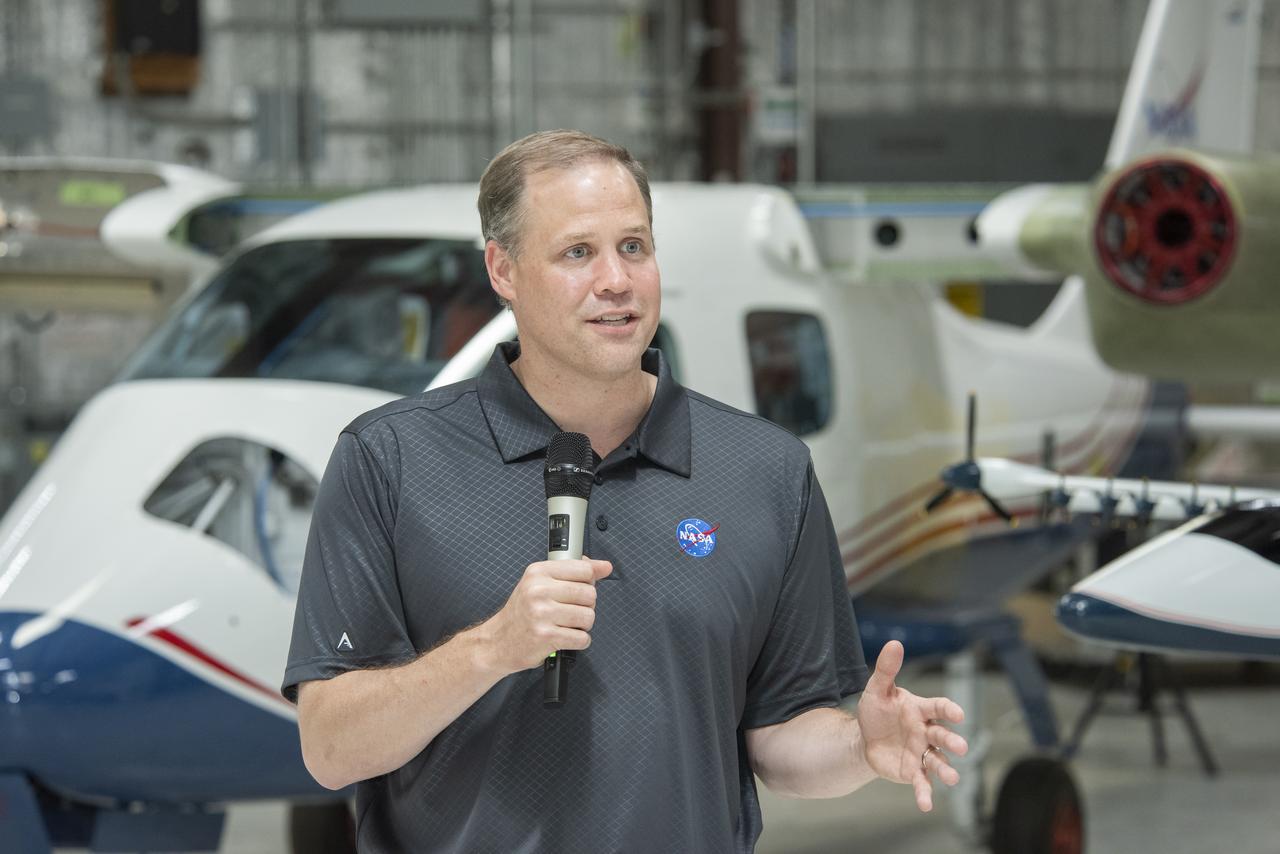
NASA Administrator Bridenstine talks to press at Scaled Composites hangar at Mojave Air & Space Port in California. He talks about X-planes and their future and the Flight Opportunities program as well as commercial space partnerships with the agency.
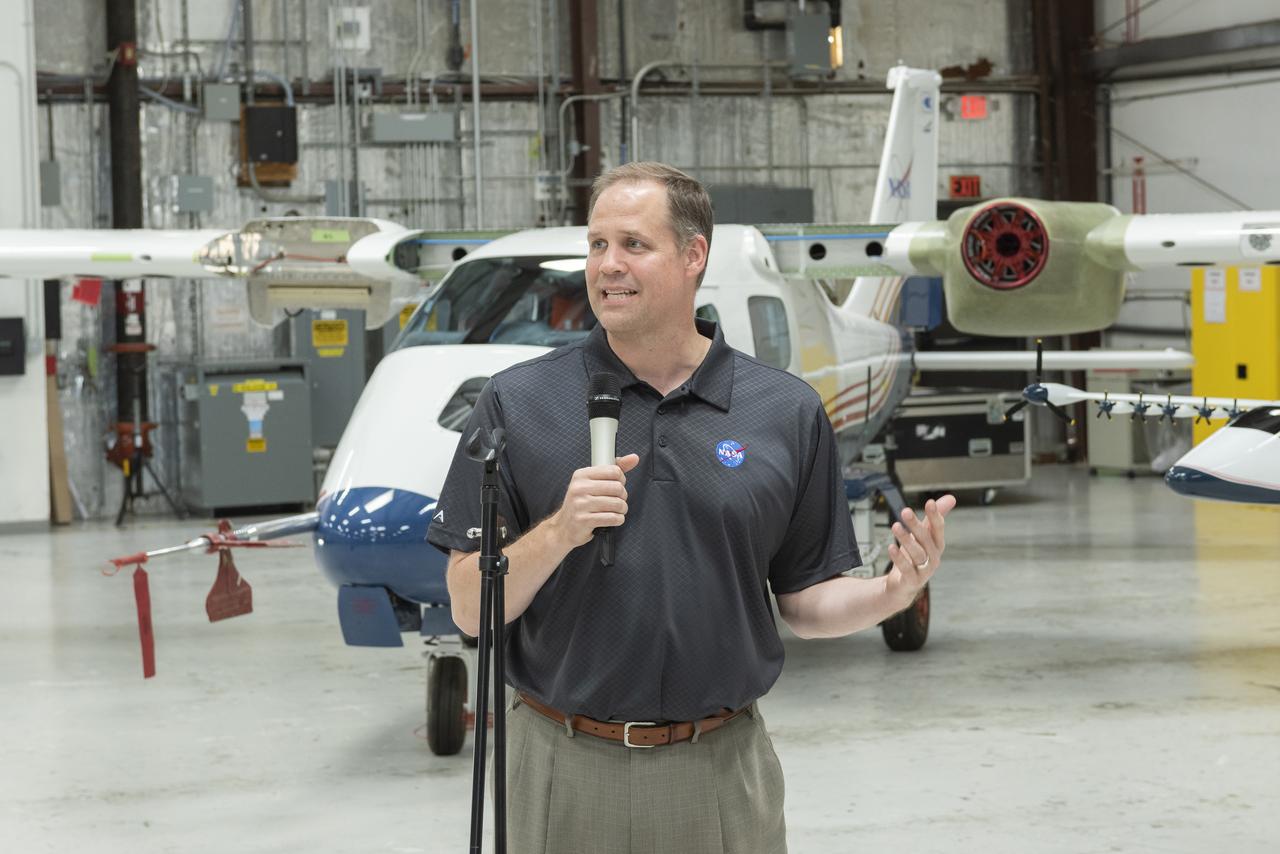
NASA Administrator Bridenstine talks to press at Scaled Composites hangar at Mojave Air & Space Port in California. He talks about X-planes and their future and the Flight Opportunities program as well as commercial space partnerships with the agency.

jsc2025e041109 (April 25, 2025) --- The four crew members of NASA's SpaceX Crew-11 mission to the International Space Station are pictured inside SpaceX’s Hangar X at NASA's Kennedy Space Center in Florida. From left to right: Roscosmos cosmonaut Oleg Platonov, NASA astronauts Mike Fincke and Zena Cardman, and JAXA astronaut Kimiya Yui.
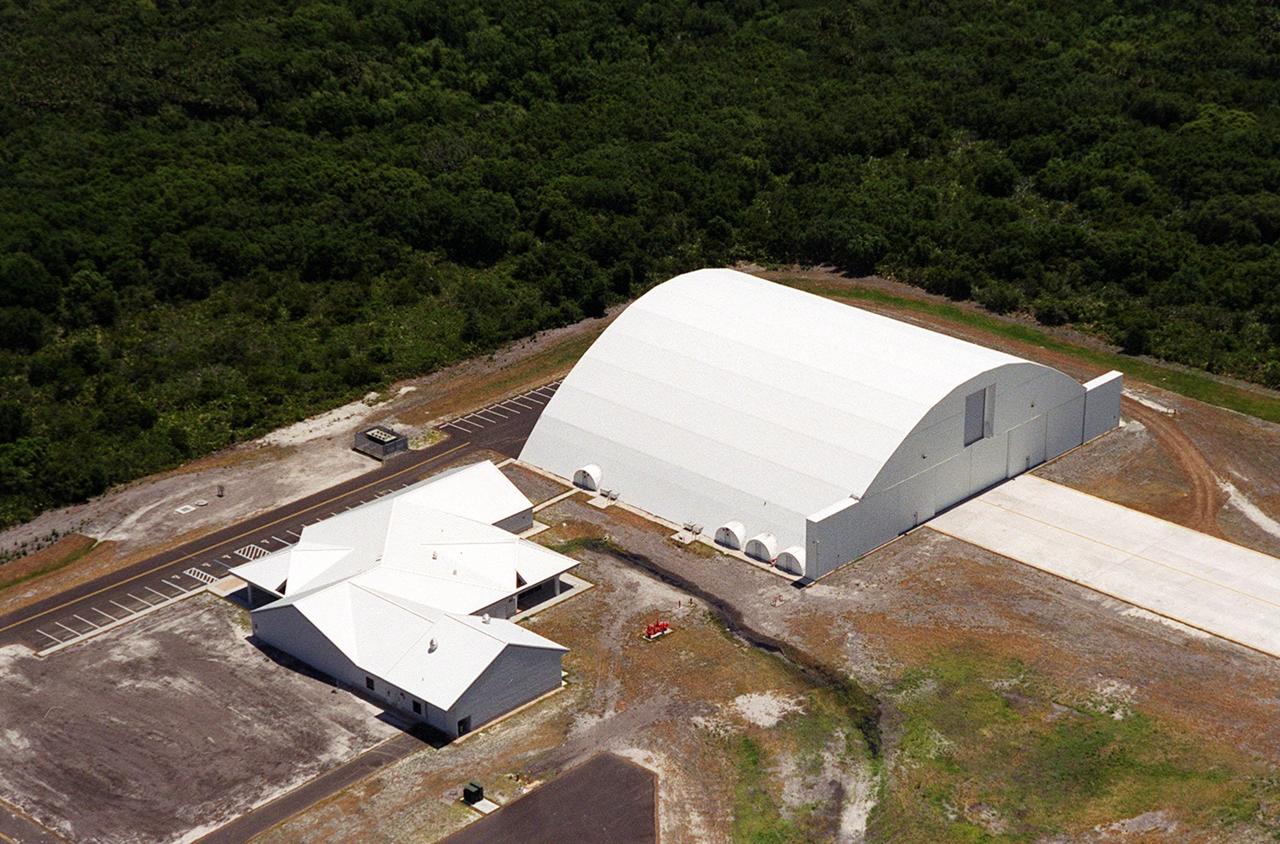
This closeup photo shows the Reusable Launch Vehicle (RLV) Support Complex at Kennedy Space Center. At right is a multi-purpose hangar and to the left is a building for related ground support equipment and administrative/ technical support. The complex is situated at the Shuttle Landing Facility. The RLV complex will be available to accommodate the Space Shuttle; the X-34 RLV technology demonstrator; the L-1011 carrier aircraft for Pegasus and X-34; and other RLV and X-vehicle programs. The complex is jointly funded by the Spaceport Florida Authority, NASA’s Space Shuttle Program and KSC
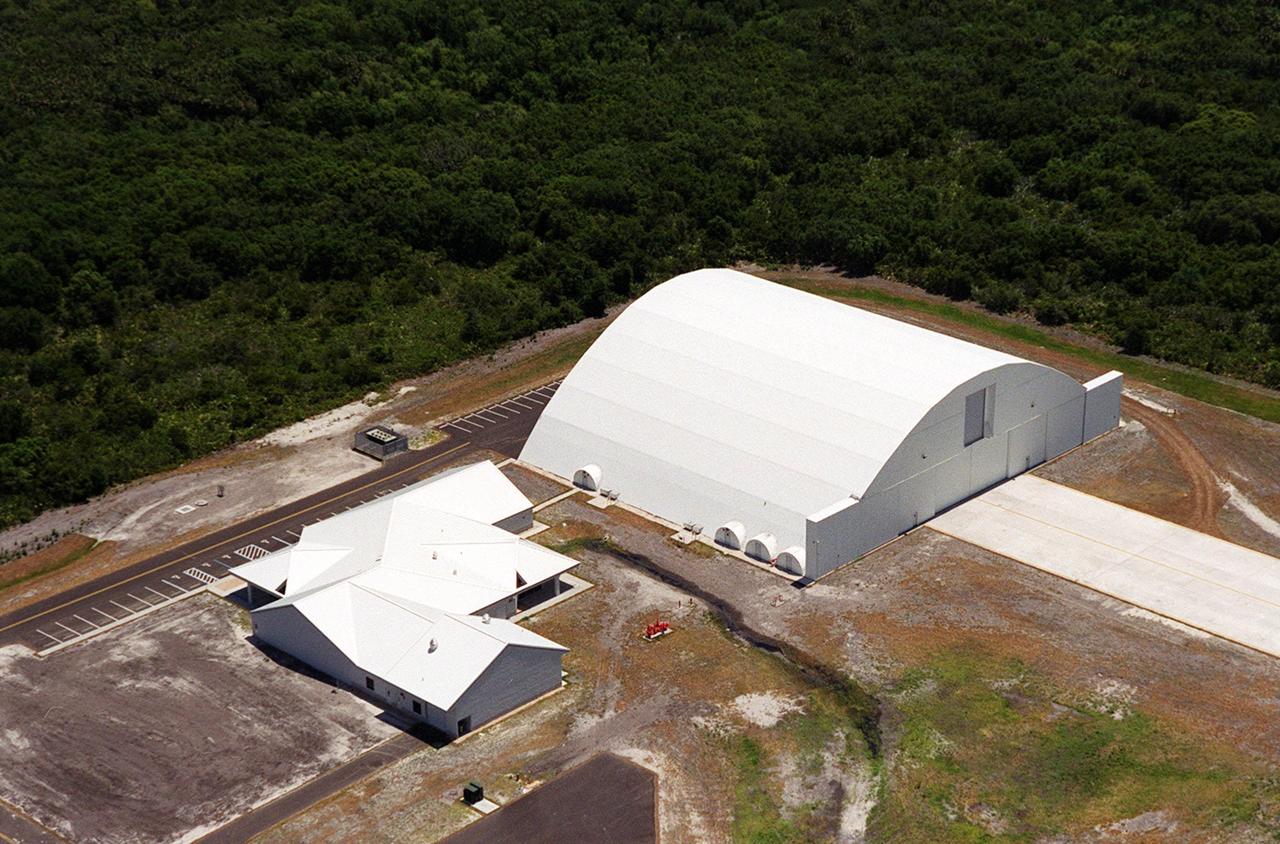
This closeup photo shows the Reusable Launch Vehicle (RLV) Support Complex at Kennedy Space Center. At right is a multi-purpose hangar and to the left is a building for related ground support equipment and administrative/ technical support. The complex is situated at the Shuttle Landing Facility. The RLV complex will be available to accommodate the Space Shuttle; the X-34 RLV technology demonstrator; the L-1011 carrier aircraft for Pegasus and X-34; and other RLV and X-vehicle programs. The complex is jointly funded by the Spaceport Florida Authority, NASA’s Space Shuttle Program and KSC
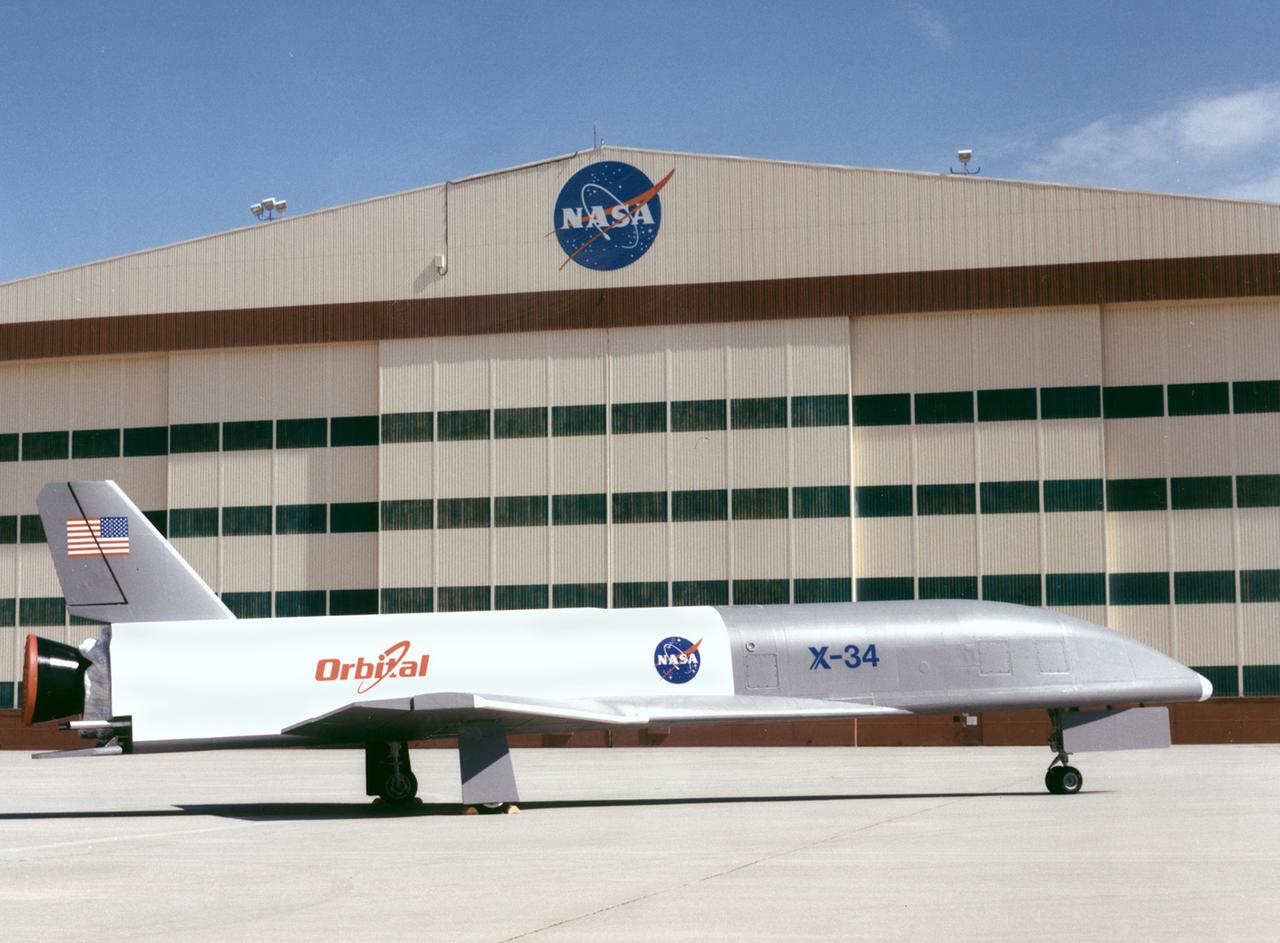
The X-34 demonstrator is shown being taken out of its hangar and placed on the tarmac. The X-34 was classified as part of the Pathfinder class demonstrators which include small experimental vehicles or less expensive flight experiments. These demonstrators were driven by technology and were executed every one to two years. They were done quickly, for low cost, and for a wide range of technologies and applications. The X-34 program was cancelled in 2001.
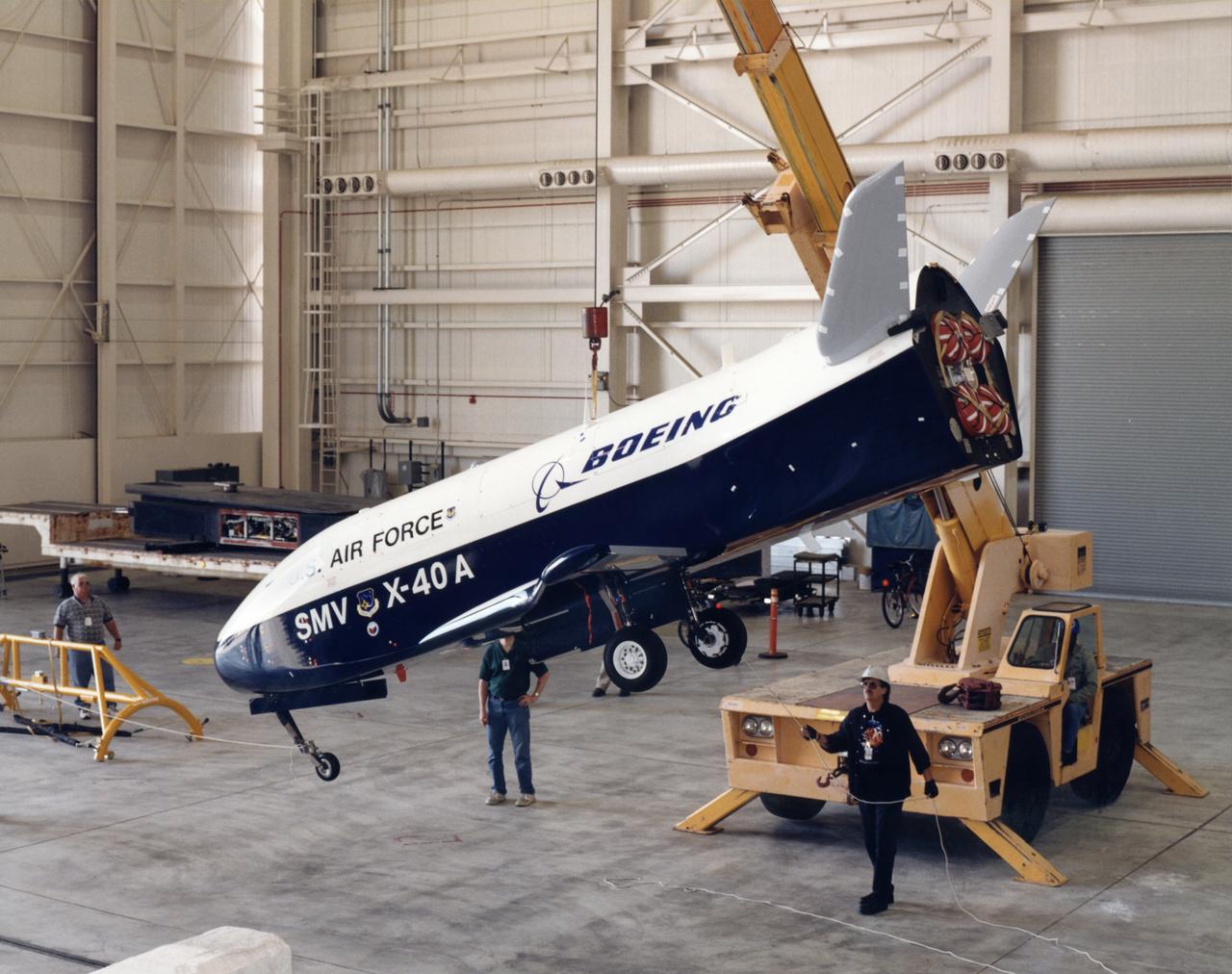
The X-40A SMV being delivered to NASA Dryden Flight Research Center at Edwards, California.

Navy Santa Cruz 'Airport'. Airport looking west: Municipal Rating: Location; 6 miles east of city- Altitude; 75ft - Layout: L-shaped, hard smooth dirt, Drainage; natural. East-west 2,500' X 300' North-South 2,000 X 400' to S.E. trees, to N.E. Hangar and Aviation fuel, Tower: 50' hight - Day Service Only
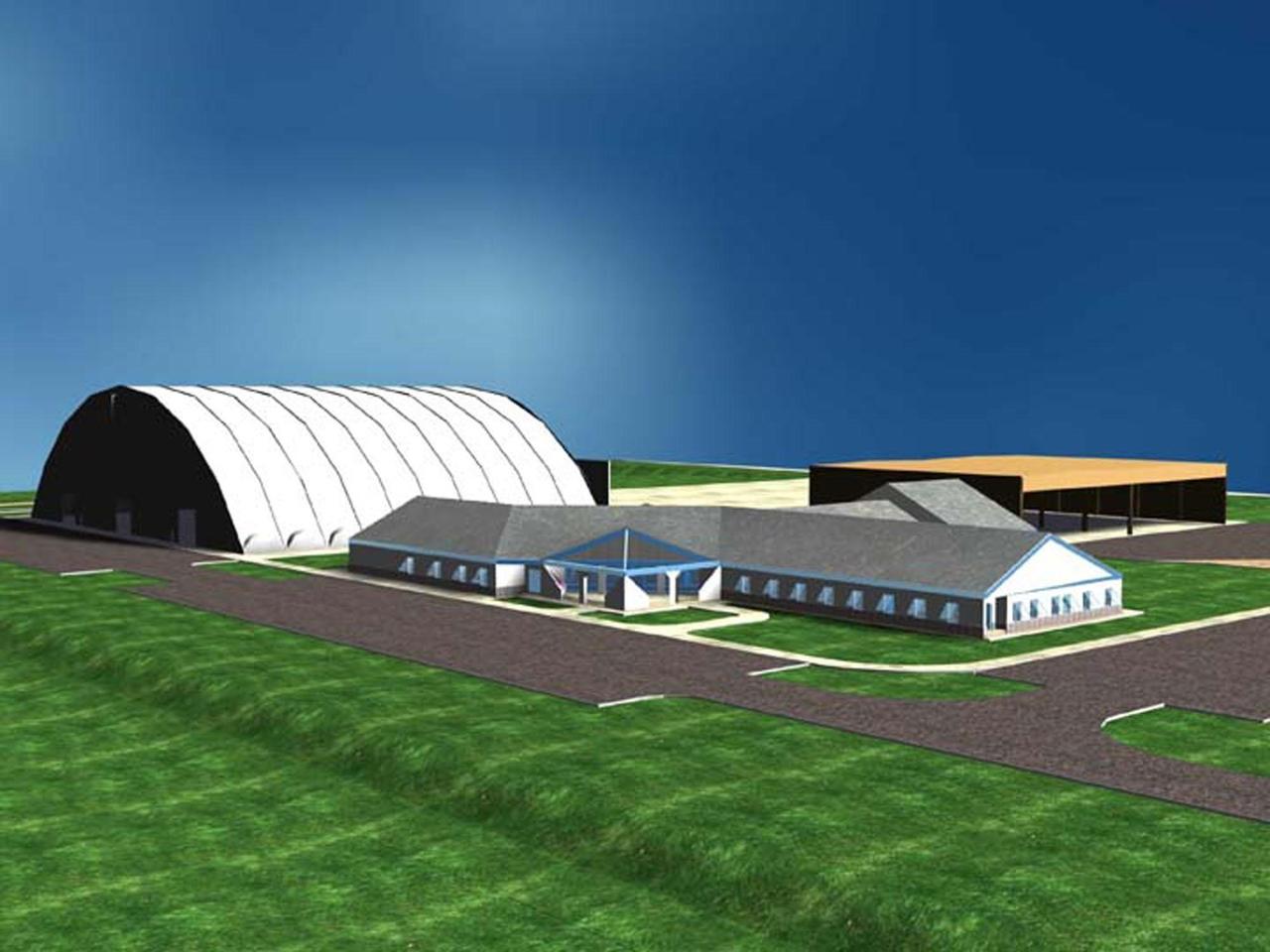
An artist's rendering shows the $8-million Reusable Launch Vehicle (RLV) Support Complex planned for the Shuttle Landing Facility (SLF) at Kennedy Space Center. The ground breaking took place today. To be located at the tow-way adjacent to the SLF, the complex will include a multi-purpose RLV hangar and adjacent facilities for related ground support equipment and administrative/technical support. It will be available to accommodate the Space Shuttle, the X-34 RLV technology demonstrator, the L-1011 carrier aircraft for Pegasus and X-34, and other RLV and X-vehicle programs. The complex is jointly funded by the Spaceport Florida Authority, NASA's Space Shuttle Program and KSC. The facility will be operational in early 2000
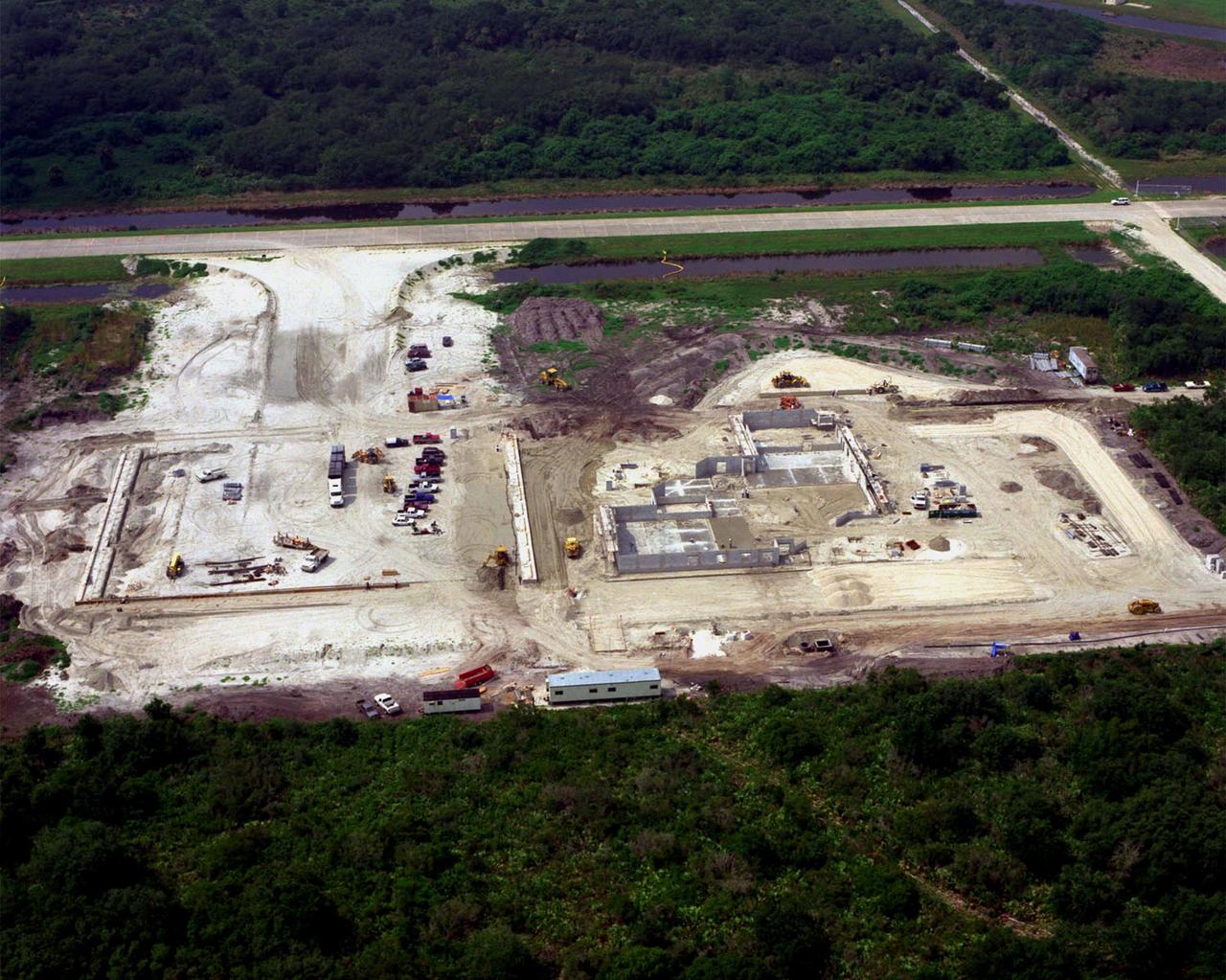
Looking southwest, this view shows ongoing construction of a multi-purpose hangar, which is part of the $8 million Reusable Launch Vehicle (RLV) Support Complex at Kennedy Space Center. Edging the construction is Sharkey Road, which parallels the landing strip of the Shuttle Landing Facility nearby. The RLV complex will include facilities for related ground support equipment and administrative/ technical support. It will be available to accommodate the Space Shuttle; the X-34 RLV technology demonstrator; the L-1011 carrier aircraft for Pegasus and X-34; and other RLV and X-vehicle programs. The complex is jointly funded by the Spaceport Florida Authority, NASA's Space Shuttle Program and KSC. The facility will be operational in early 2000.
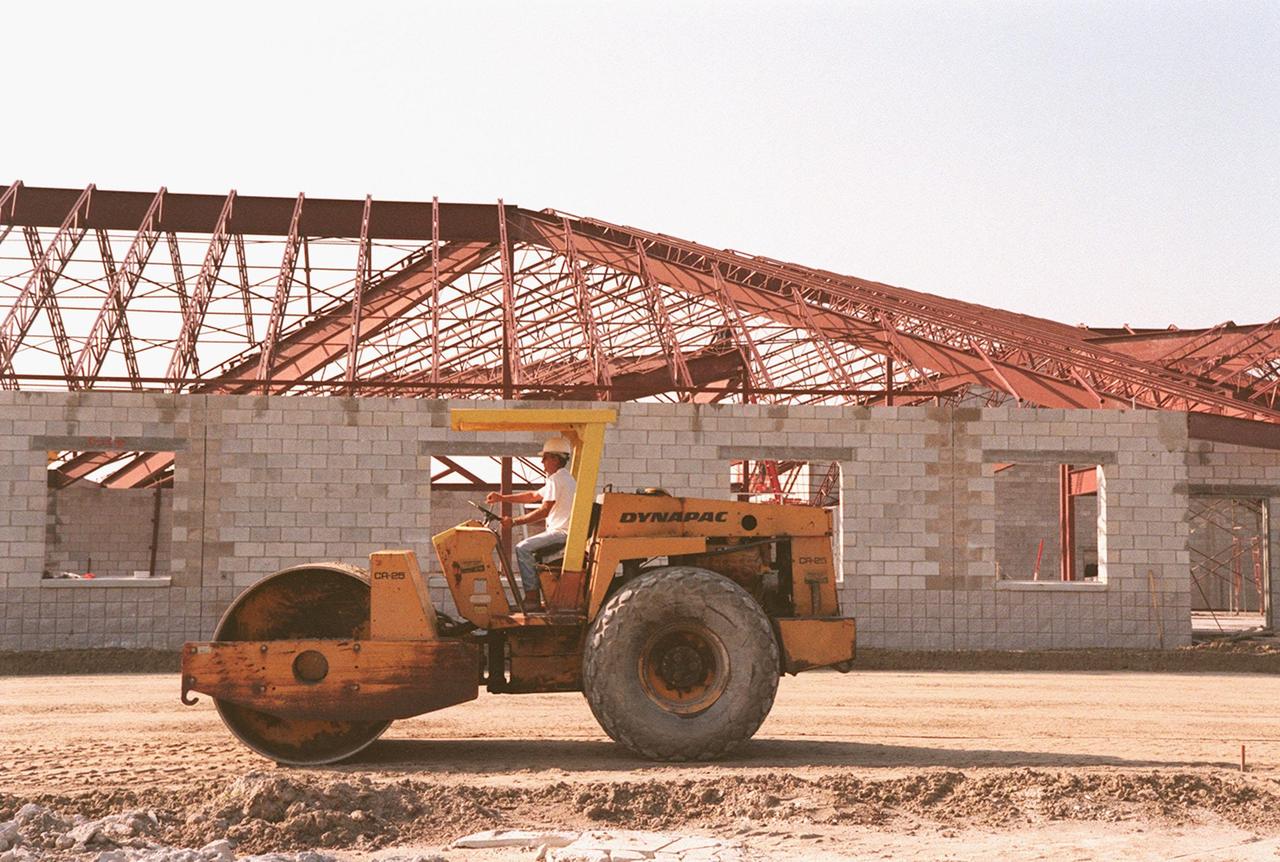
A steam roller packs down the ground next to construction of a support building, part of the $8 million Reusable Launch Vehicle (RLV) Support Complex at Kennedy Space Center. The RLV complex, which includes a multi-purpose hangar and the building to be used for related ground support equipment and administrative/technical support, will be available to accommodate the Space Shuttle; the X-34 RLV technology demonstrator; the L-1011 carrier aircraft for Pegasus and X-34; and other RLV and X-vehicle programs. The complex is jointly funded by the Spaceport Florida Authority, NASA's Space Shuttle Program and KSC. The facility will be operational in early 2000
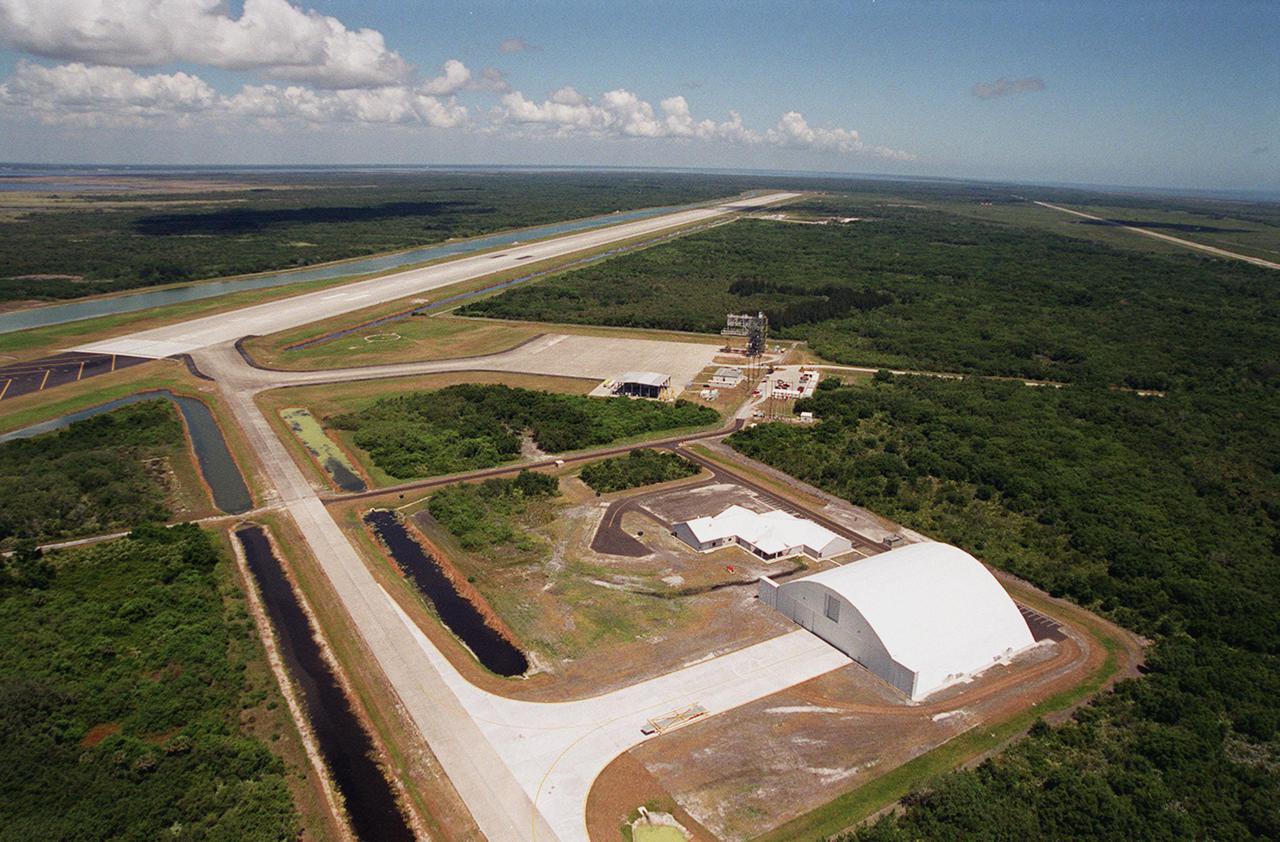
In the foreground of this aerial photo is the Reusable Launch Vehicle (RLV) Support Complex at Kennedy Space Center. At right is a multi-purpose hangar and to its left is a building for related ground support equipment and administrative_ technical support. The complex is situated at the Shuttle Landing Facility (center). At the upper left is the runway. The RLV complex will be available to accommodate the Space Shuttle; the X-34 RLV technology demonstrator; the L-1011 carrier aircraft for Pegasus and X-34; and other RLV and X-vehicle programs. The complex is jointly funded by the Spaceport Florida Authority, NASA’s Space Shuttle Program and KSC
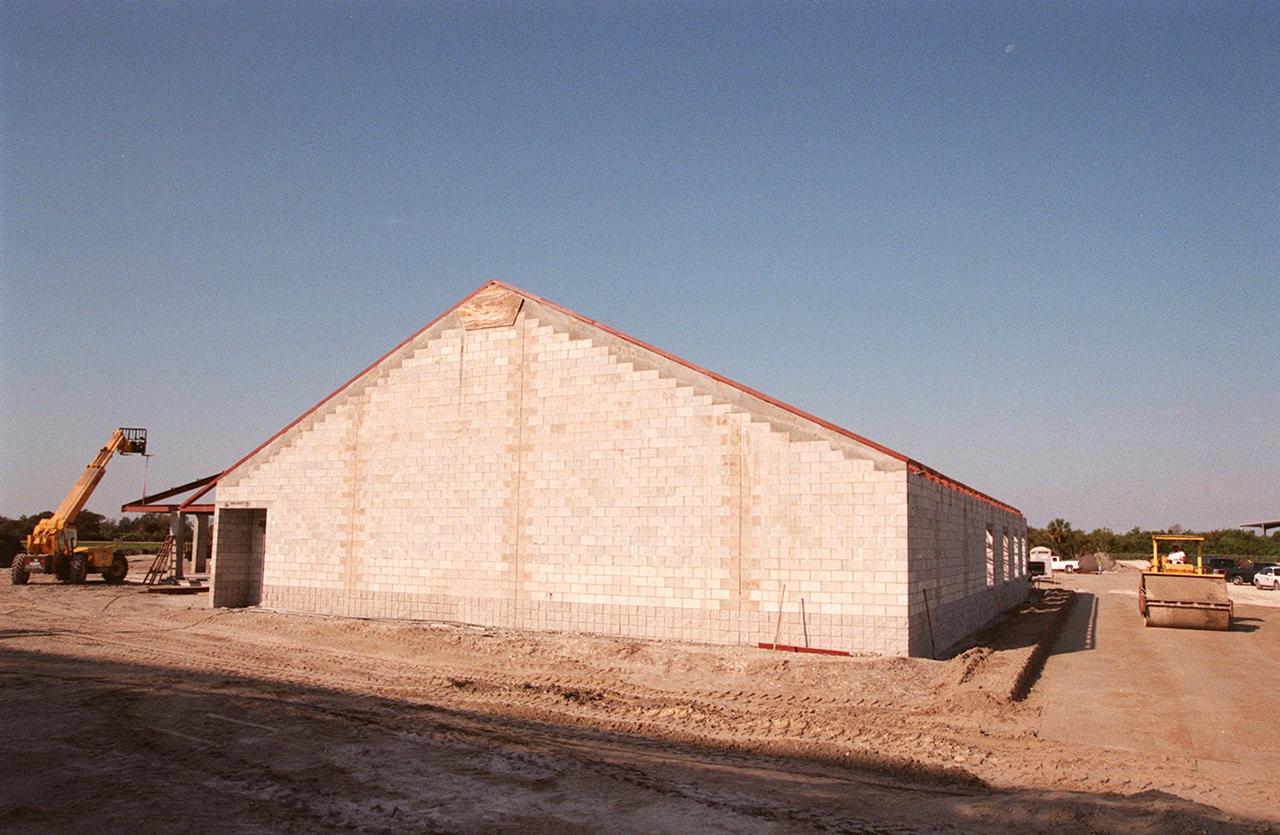
The support building at the $8 million Reusable Launch Vehicle (RLV) Support Complex at Kennedy Space Center takes form. It will house related ground support equipment and administrative/technical support. The RLV complex includes a multi-purpose hangar that will be available to accommodate the Space Shuttle; the X-34 RLV technology demonstrator; the L-1011 carrier aircraft for Pegasus and X-34; and other RLV and X-vehicle programs. The complex is jointly funded by the Spaceport Florida Authority, NASA's Space Shuttle Program and KSC. The facility will be operational in early 2000
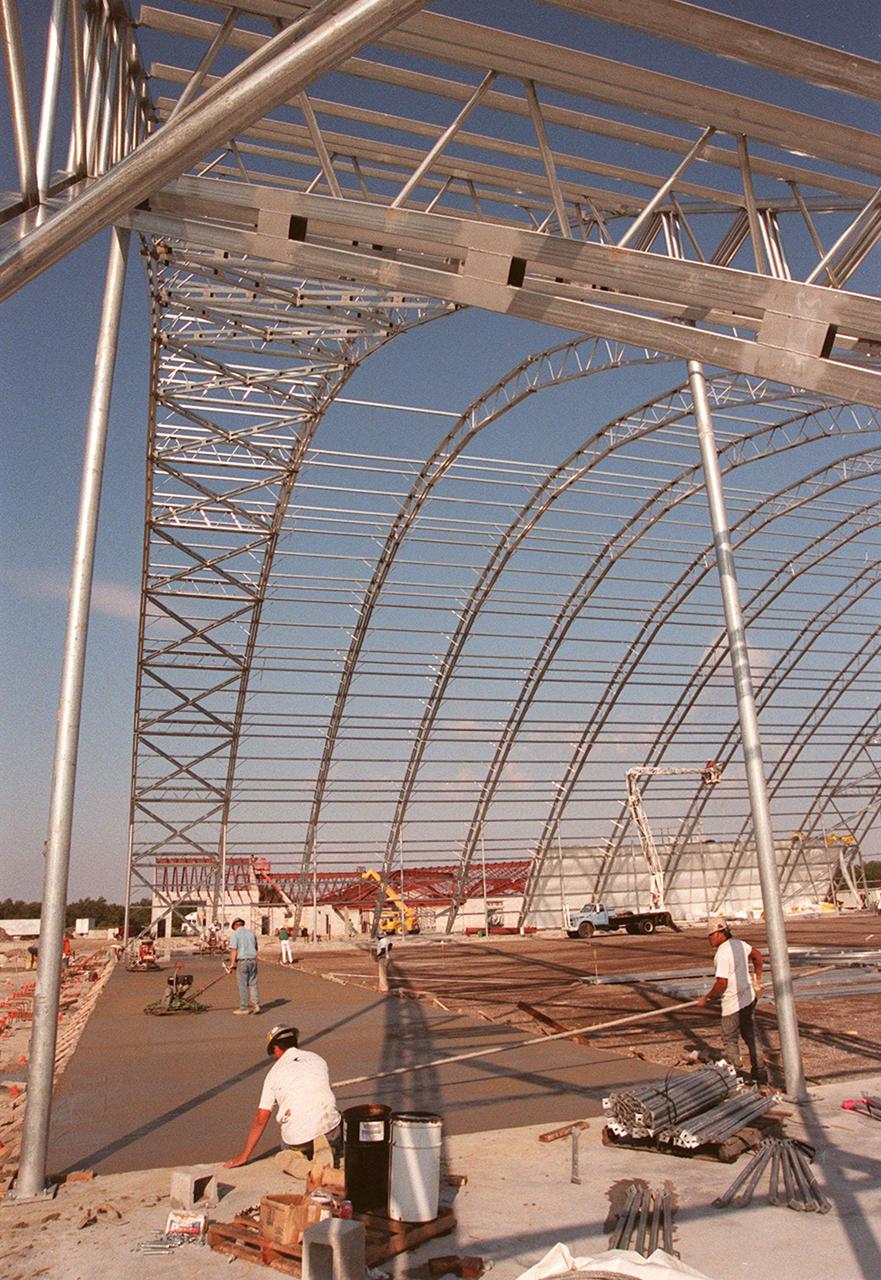
Work continues on construction of the multi-purpose hangar at the site of the $8 million Reusable Launch Vehicle (RLV) Support Complex at Kennedy Space Center. In the background can be seen the new construction for the building that will house related ground support equipment and administrative/technical support. The RLV complex will be available to accommodate the Space Shuttle; the X-34 RLV technology demonstrator; the L-1011 carrier aircraft for Pegasus and X-34; and other RLV and X-vehicle programs. The complex is jointly funded by the Spaceport Florida Authority, NASA's Space Shuttle Program and KSC. The facility will be operational in early 2000
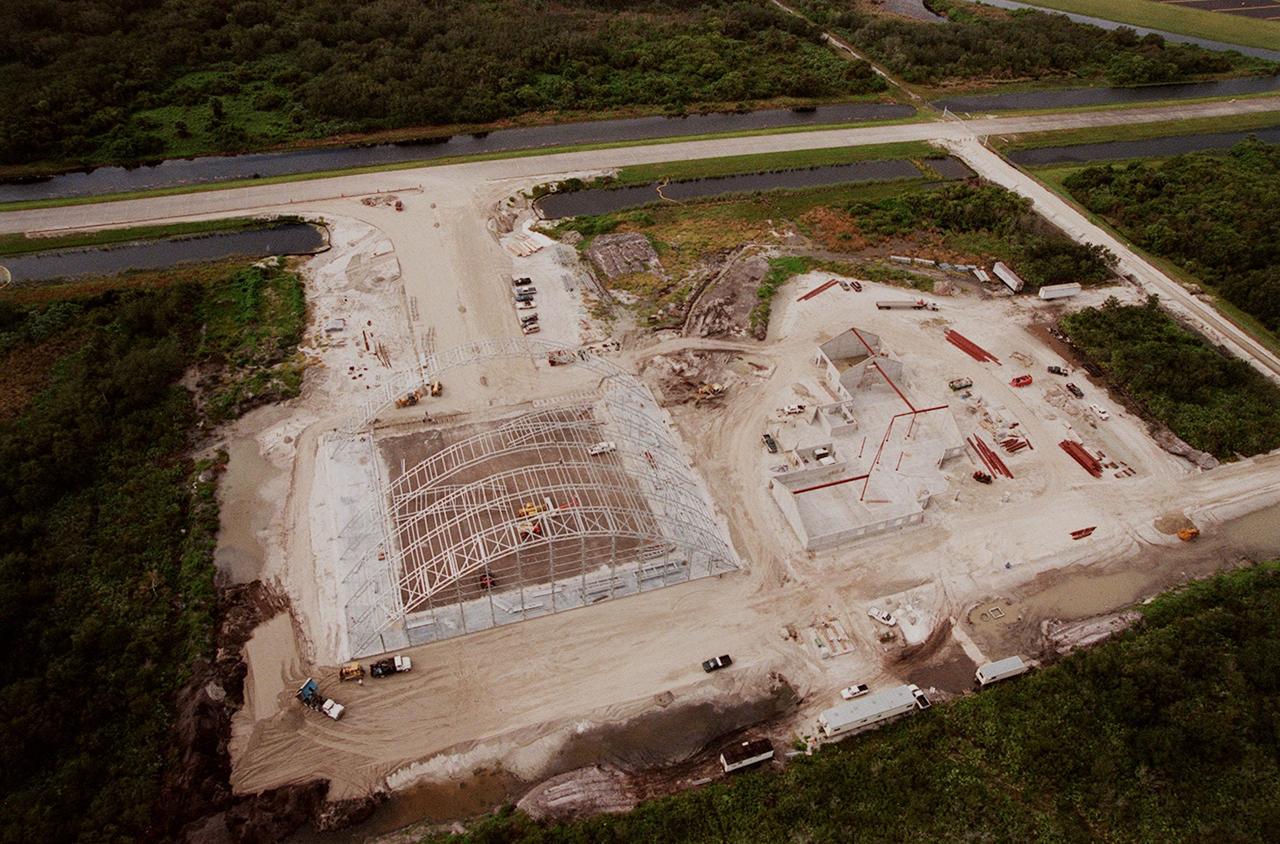
Construction continues on an $8 million Reusable Launch Vehicle (RLV) Support Complex at Kennedy Space Center. At left is a multi-purpose hangar and at right a building for related ground support equipment and administrative/ technical support. The complex is situated at the Shuttle Landing Facility (upper right). Near the top of the photo is the tow-way. The RLV complex will be available to accommodate the Space Shuttle; the X-34 RLV technology demonstrator; the L-1011 carrier aircraft for Pegasus and X-34; and other RLV and X-vehicle programs. The complex is jointly funded by the Spaceport Florida Authority, NASA's Space Shuttle Program and KSC. The facility will be operational in early 2000
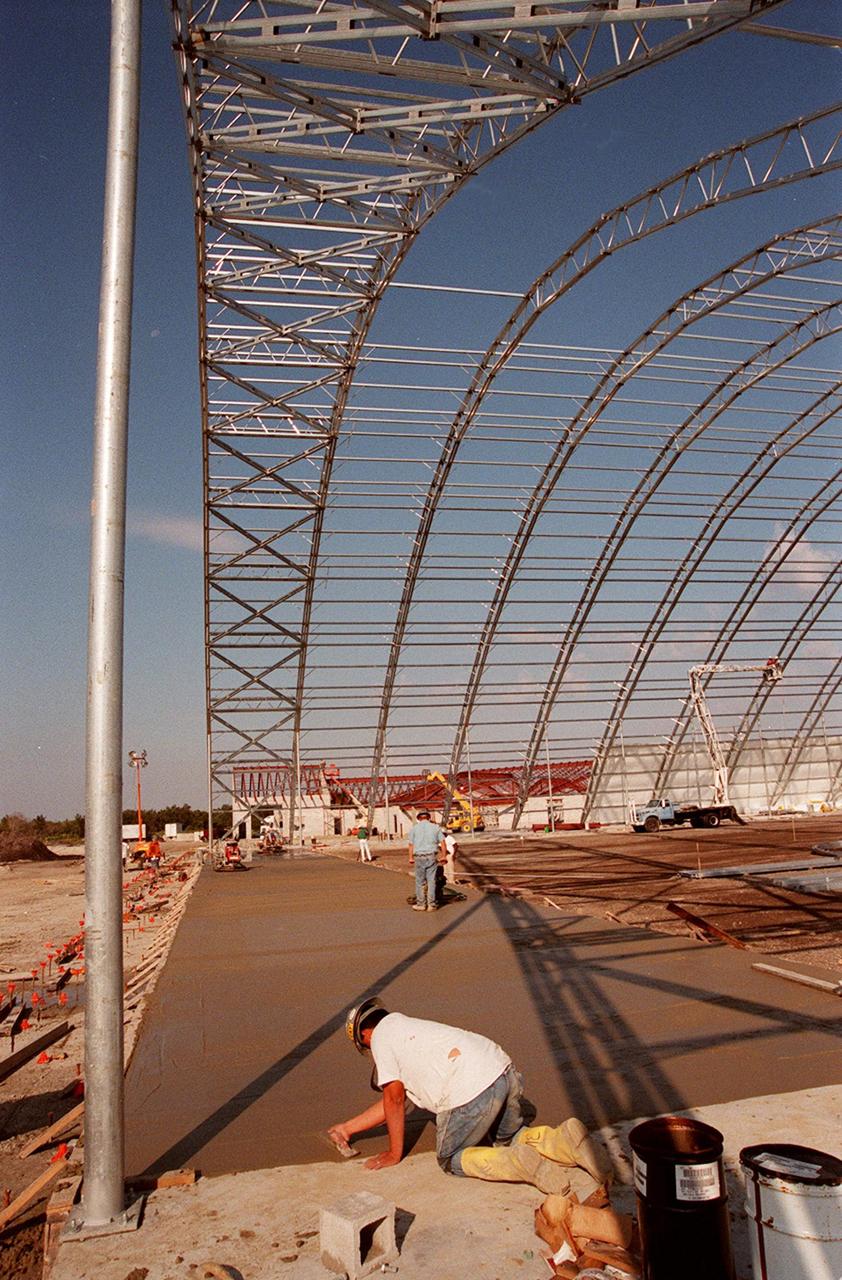
A worker smoothes the recently poured foundation of the multi-purpose hangar at the site of the $8 million Reusable Launch Vehicle (RLV) Support Complex at Kennedy Space Center. In the background can be seen the new construction for the building that will house related ground support equipment and administrative/technical support. The RLV complex will be available to accommodate the Space Shuttle; the X-34 RLV technology demonstrator; the L-1011 carrier aircraft for Pegasus and X-34; and other RLV and X-vehicle programs. The complex is jointly funded by the Spaceport Florida Authority, NASA's Space Shuttle Program and KSC. The facility will be operational in early 2000
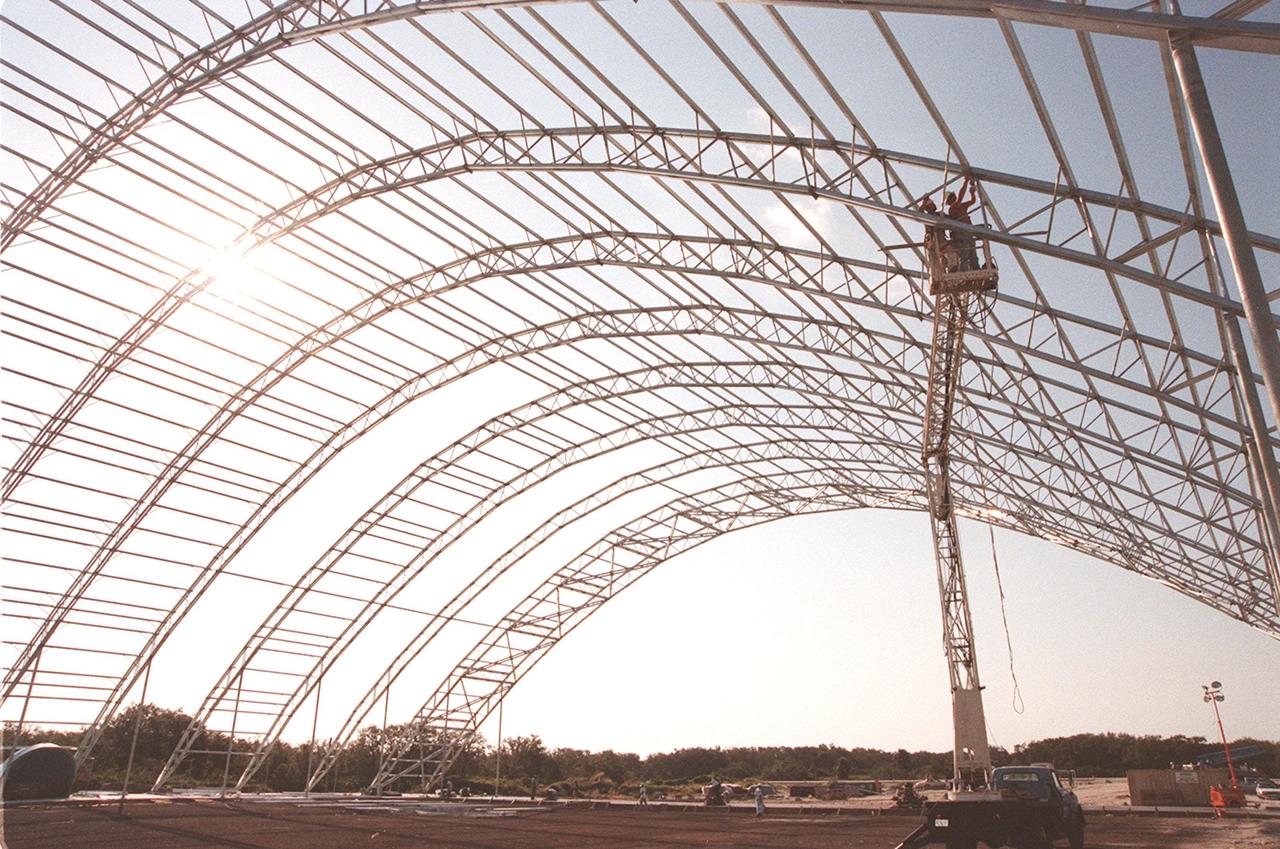
Work continues on the construction of the roof for the multi-purpose hangar at the site of the $8 million Reusable Launch Vehicle (RLV) Support Complex at Kennedy Space Center. In the background can be seen the new construction for the building that will house related ground support equipment and administrative/technical support. The RLV complex will be available to accommodate the Space Shuttle; the X-34 RLV technology demonstrator; the L-1011 carrier aircraft for Pegasus and X-34; and other RLV and X-vehicle programs. The complex is jointly funded by the Spaceport Florida Authority, NASA's Space Shuttle Program and KSC. The facility will be operational in early 2000
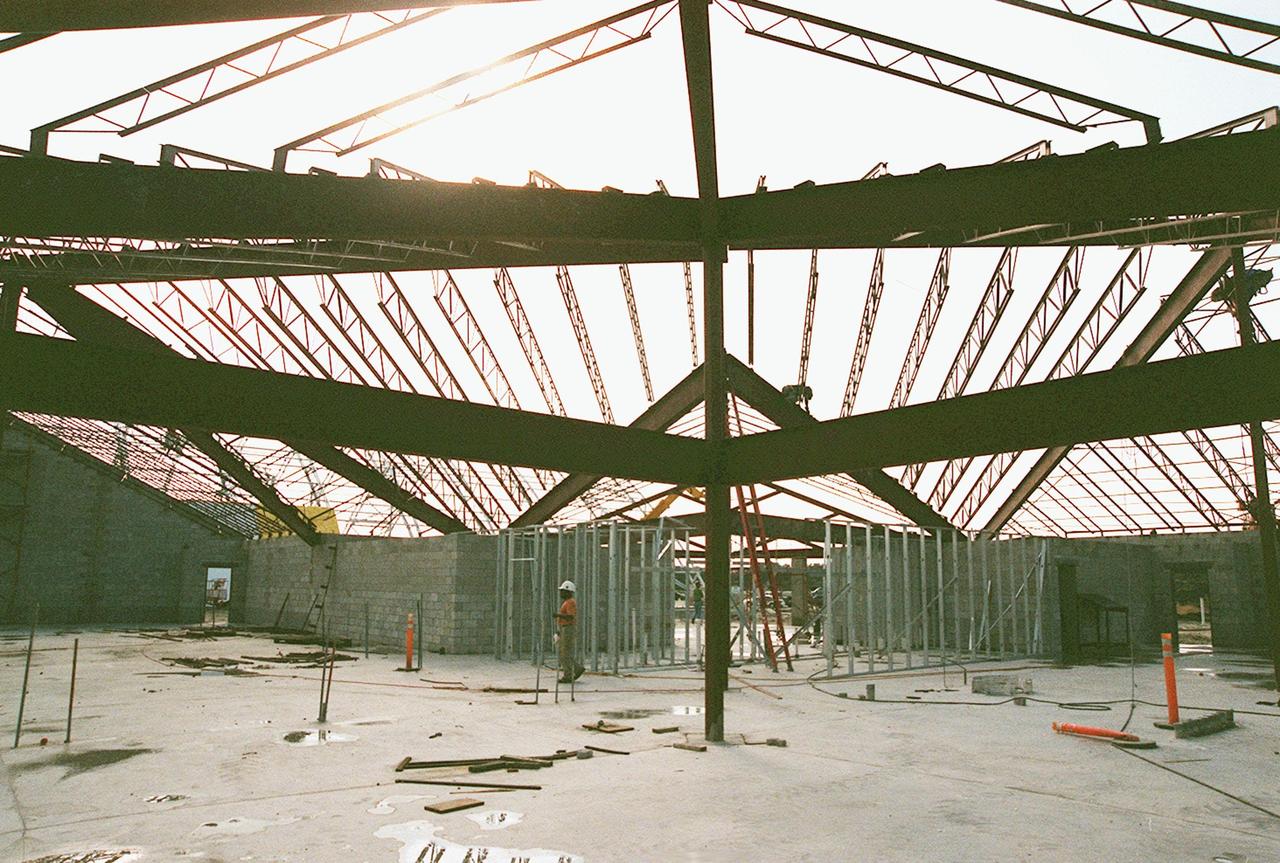
Construction continues on the $8 million Reusable Launch Vehicle (RLV) Support Complex at Kennedy Space Center. Shown is the interior of the building to be used for related ground support equipment and administrative/technical support. The RLV complex also includes a multi-purpose hangar. The complex will be available to accommodate the Space Shuttle; the X-34 RLV technology demonstrator; the L-1011 carrier aircraft for Pegasus and X-34; and other RLV and X-vehicle programs. The facility, jointly funded by the Spaceport Florida Authority, NASA's Space Shuttle Program and KSC, will be operational in early 2000
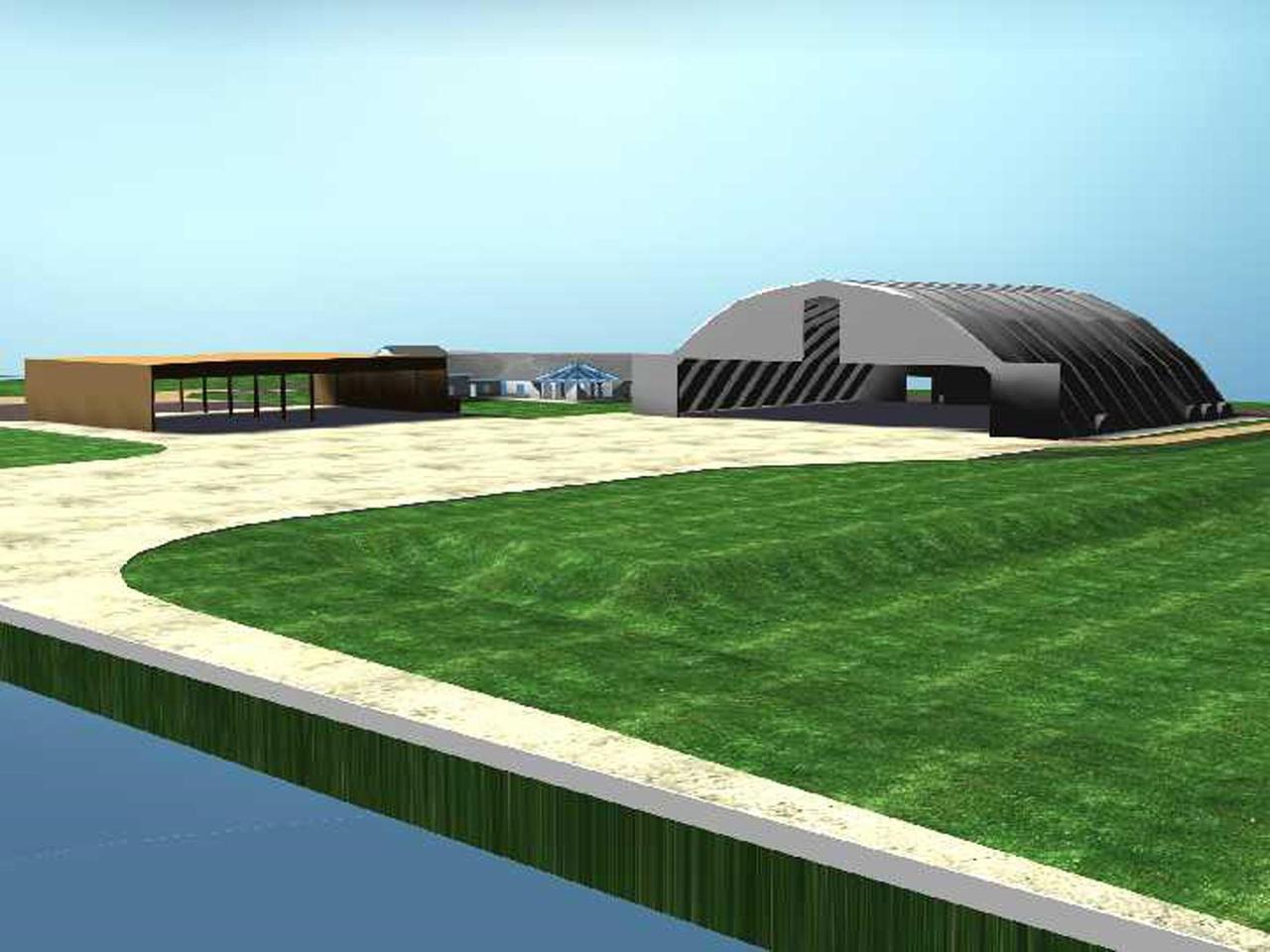
An artist's rendering shows the $8-million Reusable Launch Vehicle (RLV) Support Complex planned for the Shuttle Landing Facility (SLF) at Kennedy Space Center. The ground breaking took place today. To be located at the tow-way adjacent to the SLF, the complex will include a multi-purpose RLV hangar and adjacent facilities for related ground support equipment and administrative/technical support. It will be available to accommodate the Space Shuttle, the X-34 RLV technology demonstrator, the L-1011 carrier aircraft for Pegasus and X-34, and other RLV and X-vehicle programs. The complex is jointly funded by the Spaceport Florida Authority, NASA's Space Shuttle Program and KSC. The facility will be operational in early 2000

Construction workers are silhouetted against the sky as they work on the girders of a support building, part of the new $8 million Reusable Launch Vehicle (RLV) Support Complex at Kennedy Space Center. The building is to be used for related ground support equipment and administrative/technical support. The RLV complex also includes a multi-purpose hangar. The complex will be available to accommodate the Space Shuttle; the X-34 RLV technology demonstrator; the L-1011 carrier aircraft for Pegasus and X-34; and other RLV and X-vehicle programs. The facility, jointly funded by the Spaceport Florida Authority, NASA's Space Shuttle Program and KSC, will be operational in early 2000
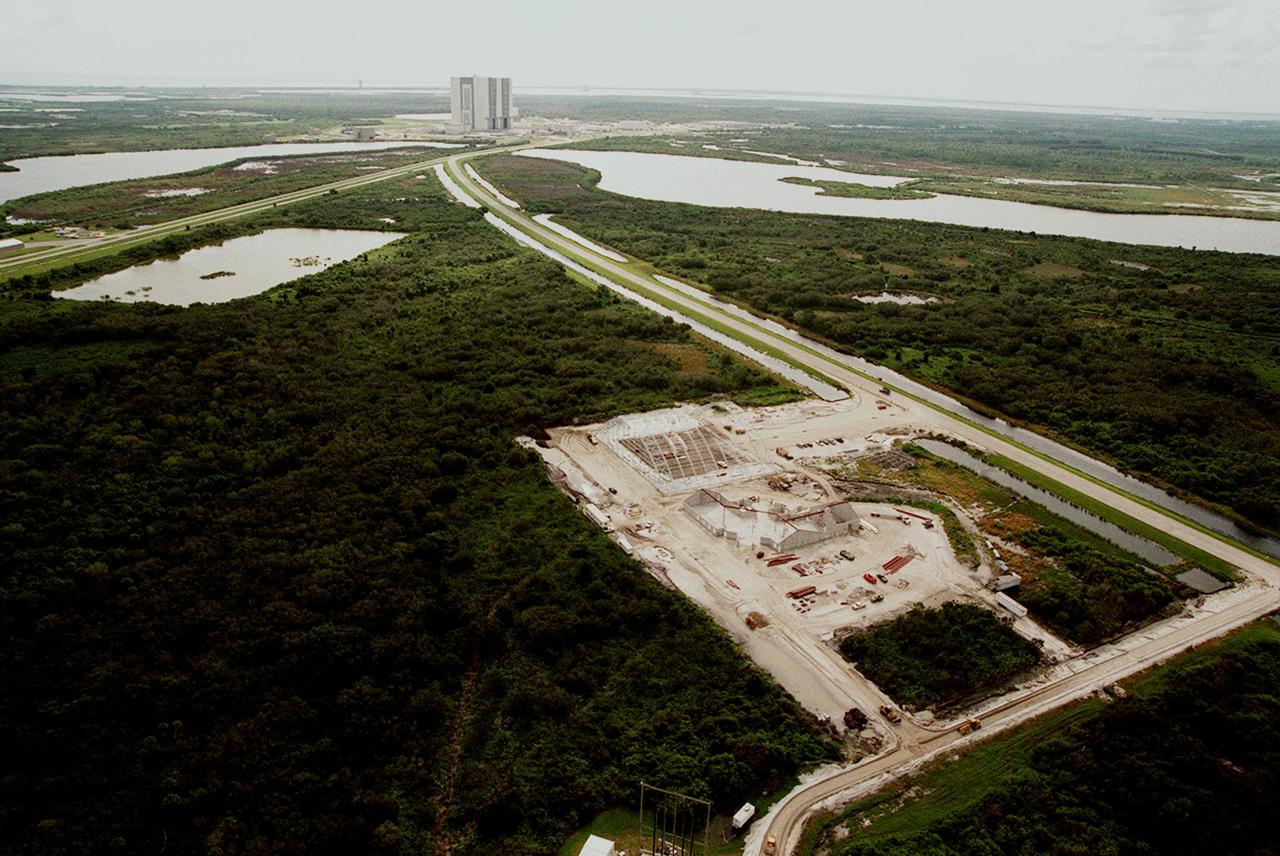
An aerial view reveals (foreground) the ongoing construction of an $8 million Reusable Launch Vehicle (RLV) Support Complex at Kennedy Space Center. At left is a multi-purpose hangar and at right a building for related ground support equipment and administrative/ technical support. In the background is the Vehicle Assembly Building. The road at right is the tow-way. The RLV complex will be available to accommodate the Space Shuttle; the X-34 RLV technology demonstrator; the L-1011 carrier aircraft for Pegasus and X-34; and other RLV and X-vehicle programs. The complex is jointly funded by the Spaceport Florida Authority, NASA's Space Shuttle Program and KSC. The facility will be operational in early 2000.
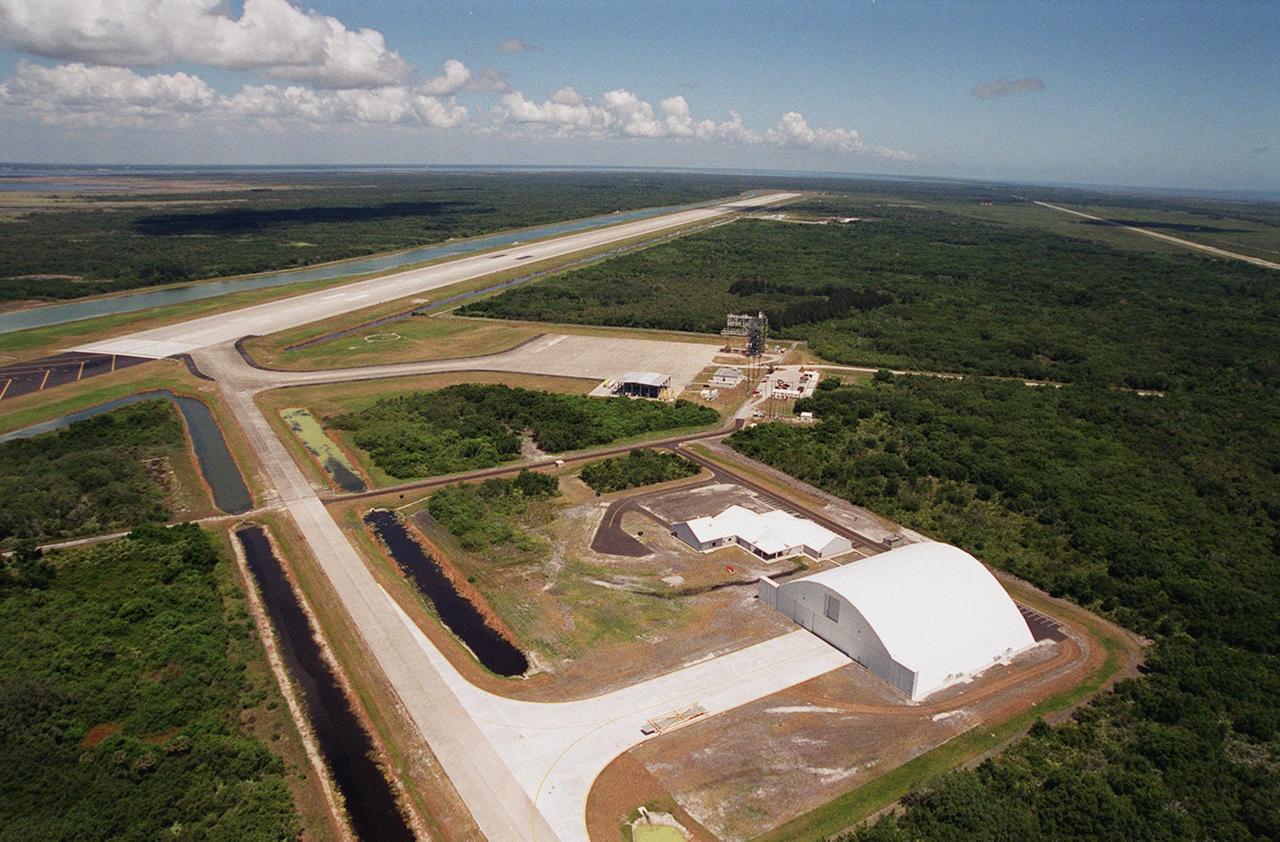
In the foreground of this aerial photo is the Reusable Launch Vehicle (RLV) Support Complex at Kennedy Space Center. At right is a multi-purpose hangar and to its left is a building for related ground support equipment and administrative/ technical support. The complex is situated at the Shuttle Landing Facility (center). At the upper left is the runway. The RLV complex will be available to accommodate the Space Shuttle; the X-34 RLV technology demonstrator; the L-1011 carrier aircraft for Pegasus and X-34; and other RLV and X-vehicle programs. The complex is jointly funded by the Spaceport Florida Authority, NASA’s Space Shuttle Program and KSC
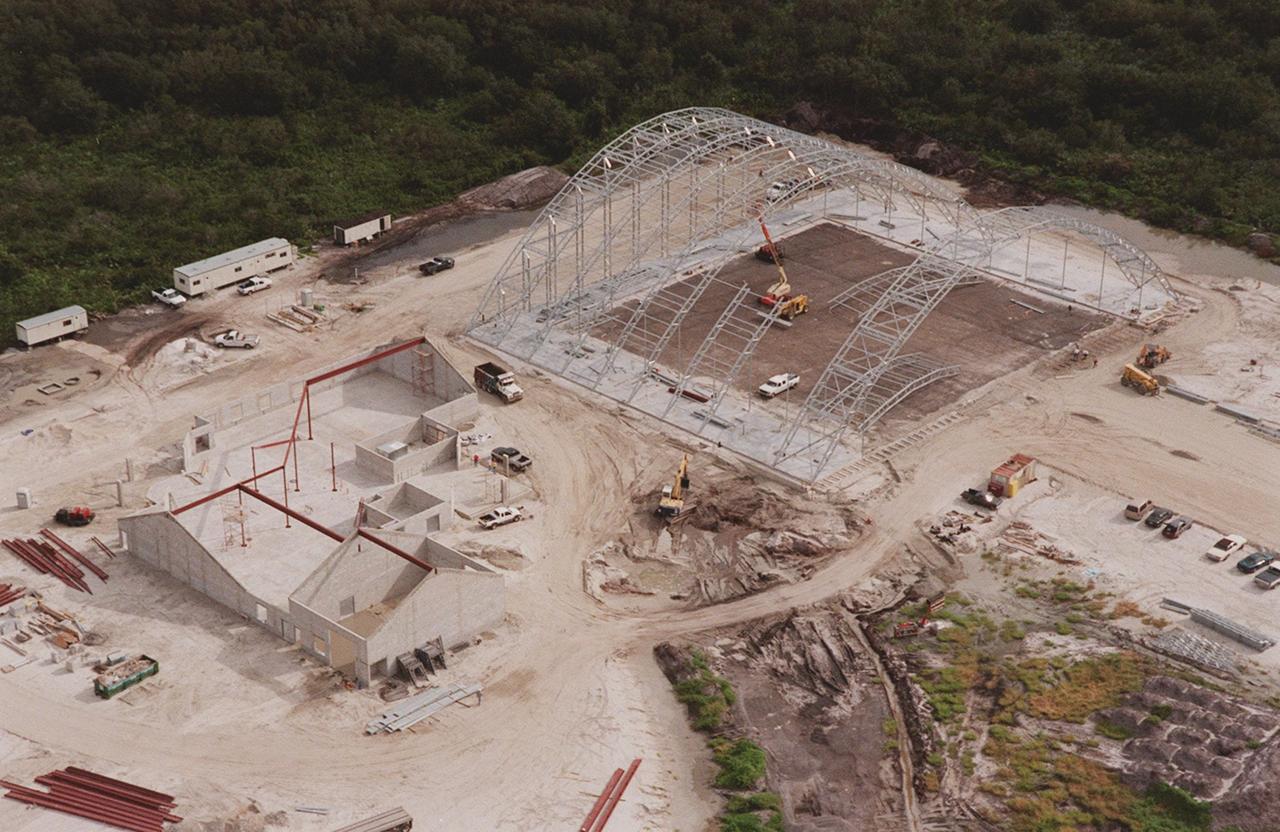
An aerial closeup view reveals the ongoing construction of an $8 million Reusable Launch Vehicle (RLV) Support Complex at Kennedy Space Center. At right is a multi-purpose hangar and at left a building for related ground support equipment and administrative/ technical support. The complex is situated at the Shuttle Landing Facility. Near the top of the photo can be seen the tow-way. The RLV complex will be available to accommodate the Space Shuttle; the X-34 RLV technology demonstrator; the L-1011 carrier aircraft for Pegasus and X-34; and other RLV and X-vehicle programs. The complex is jointly funded by the Spaceport Florida Authority, NASA's Space Shuttle Program and KSC. The facility will be operational in early 2000
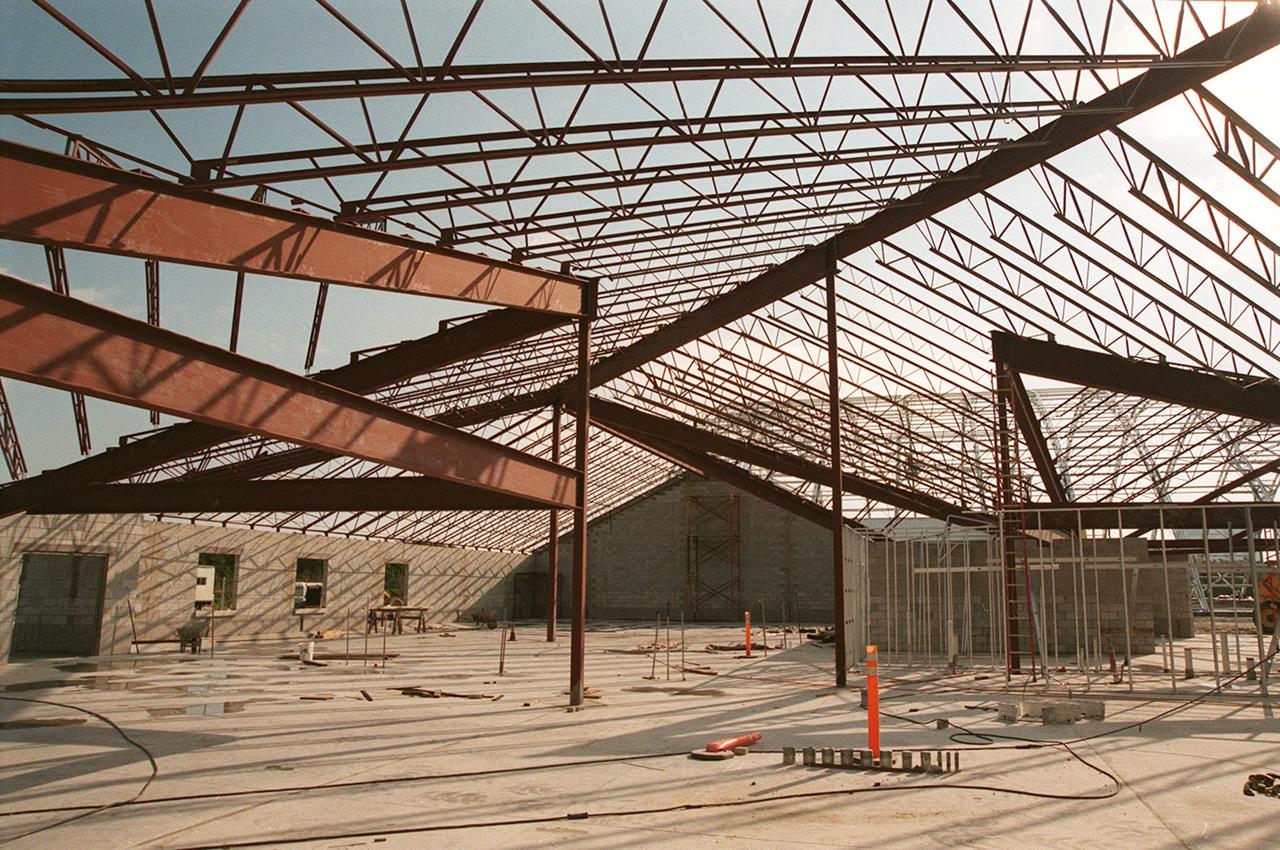
Girders overhead cast shadows on the walls and floor of a support building under construction, part of the new $8 million Reusable Launch Vehicle (RLV) Support Complex at Kennedy Space Center. The building is to be used for related ground support equipment and administrative/technical support. The RLV complex also includes a multi-purpose hangar. The complex will be available to accommodate the Space Shuttle; the X-34 RLV technology demonstrator; the L-1011 carrier aircraft for Pegasus and X-34; and other RLV and X-vehicle programs. The facility, jointly funded by the Spaceport Florida Authority, NASA's Space Shuttle Program and KSC, will be operational in early 2000
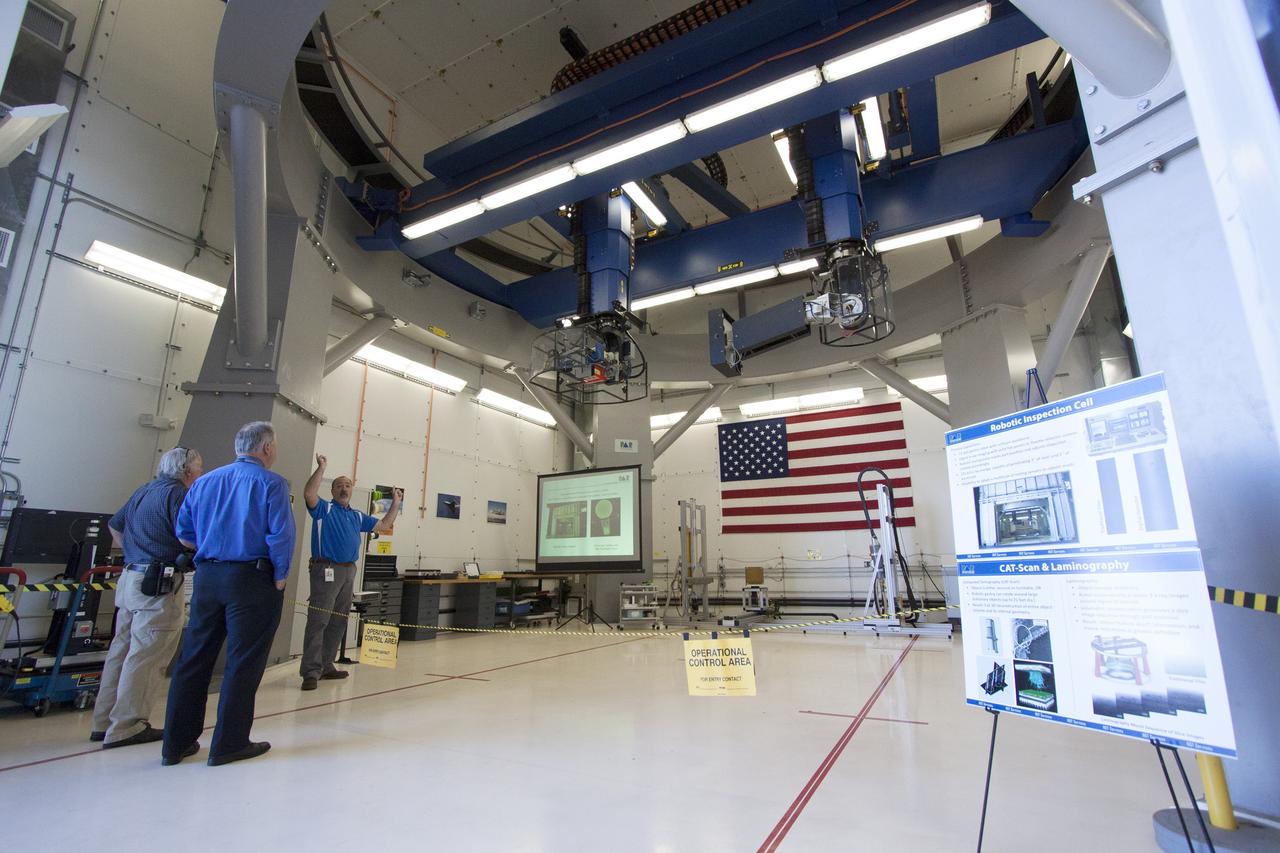
CAPE CANAVERAL, Fla. – Paul Vona, operations engineer, NDT Services, with PaR Systems Inc., demonstrates the automated X-ray system in the robotic inspection cell for members of the media at Hangar N at Cape Canaveral Air Force Station in Florida. PaR Systems held an Open House to celebrate the one-year anniversary of a lease agreement with Kennedy. Under a 15-year lease, PaR Systems is utilizing Hangar N and its unique nondestructive testing equipment. The partnership agreement was established by Kennedy's Center Planning and Development Directorate. The agreement is just one example of the types of partnerships that Kennedy is seeking to create a multi-user spaceport. Photo credit: NASA/Cory Huston
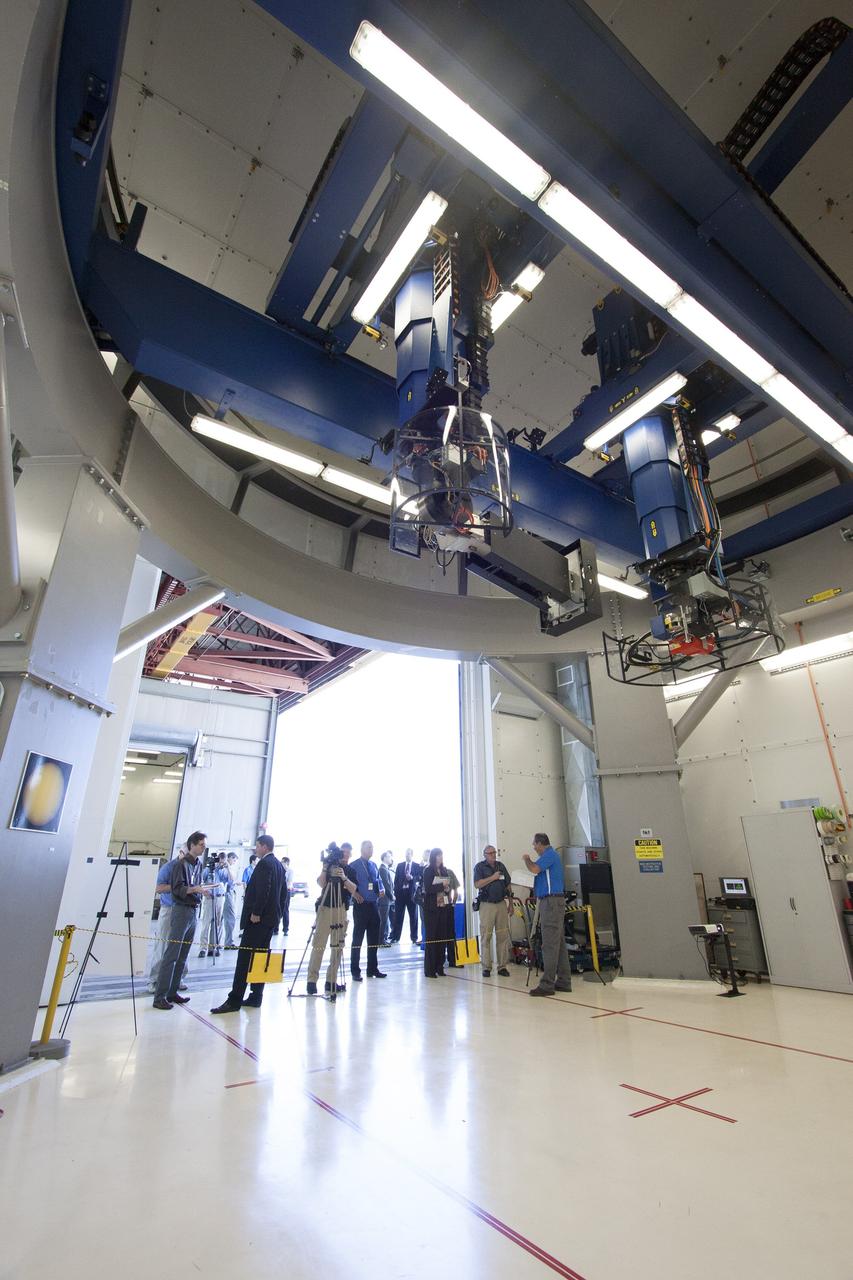
CAPE CANAVERAL, Fla. – Paul Vona, operations engineer, NDT Services, with PaR Systems Inc., demonstrates the automated X-ray system in the robotic inspection cell for members of the media at Hangar N at Cape Canaveral Air Force Station in Florida. PaR Systems held an Open House to celebrate the one-year anniversary of a lease agreement with Kennedy. Under a 15-year lease, PaR Systems is utilizing Hangar N and its unique nondestructive testing equipment. The partnership agreement was established by Kennedy's Center Planning and Development Directorate. The agreement is just one example of the types of partnerships that Kennedy is seeking to create a multi-user spaceport. Photo credit: NASA/Cory Huston
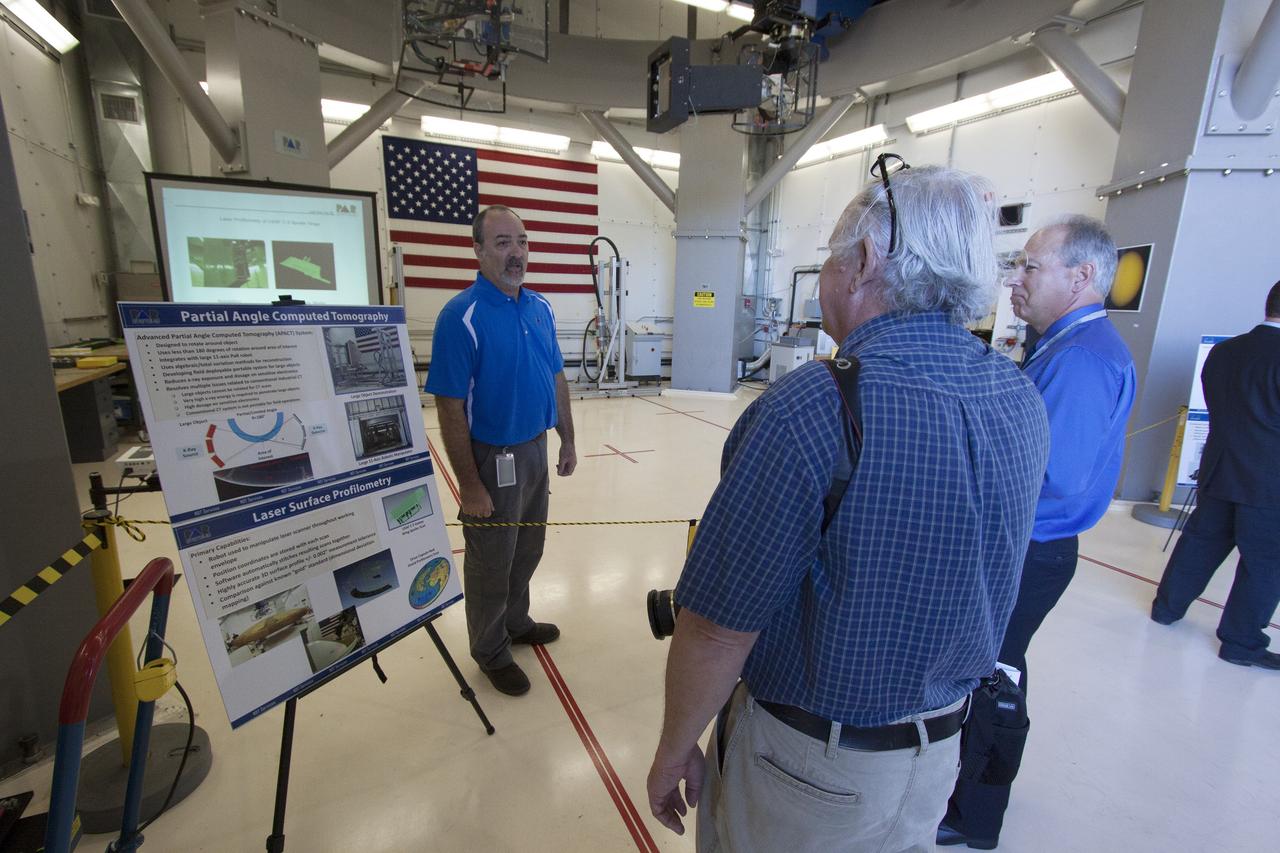
CAPE CANAVERAL, Fla. – Paul Vona, operations engineer, NDT Services, with PaR Systems Inc., talks with members of the media about the automated X-ray system in the robotic inspection cell at Hangar N at Cape Canaveral Air Force Station in Florida. PaR Systems held an Open House to celebrate the one-year anniversary of a lease agreement with Kennedy. Under a 15-year lease, PaR Systems is utilizing Hangar N and its unique nondestructive testing equipment. The partnership agreement was established by Kennedy's Center Planning and Development Directorate. The agreement is just one example of the types of partnerships that Kennedy is seeking to create a multi-user spaceport. Photo credit: NASA/Cory Huston
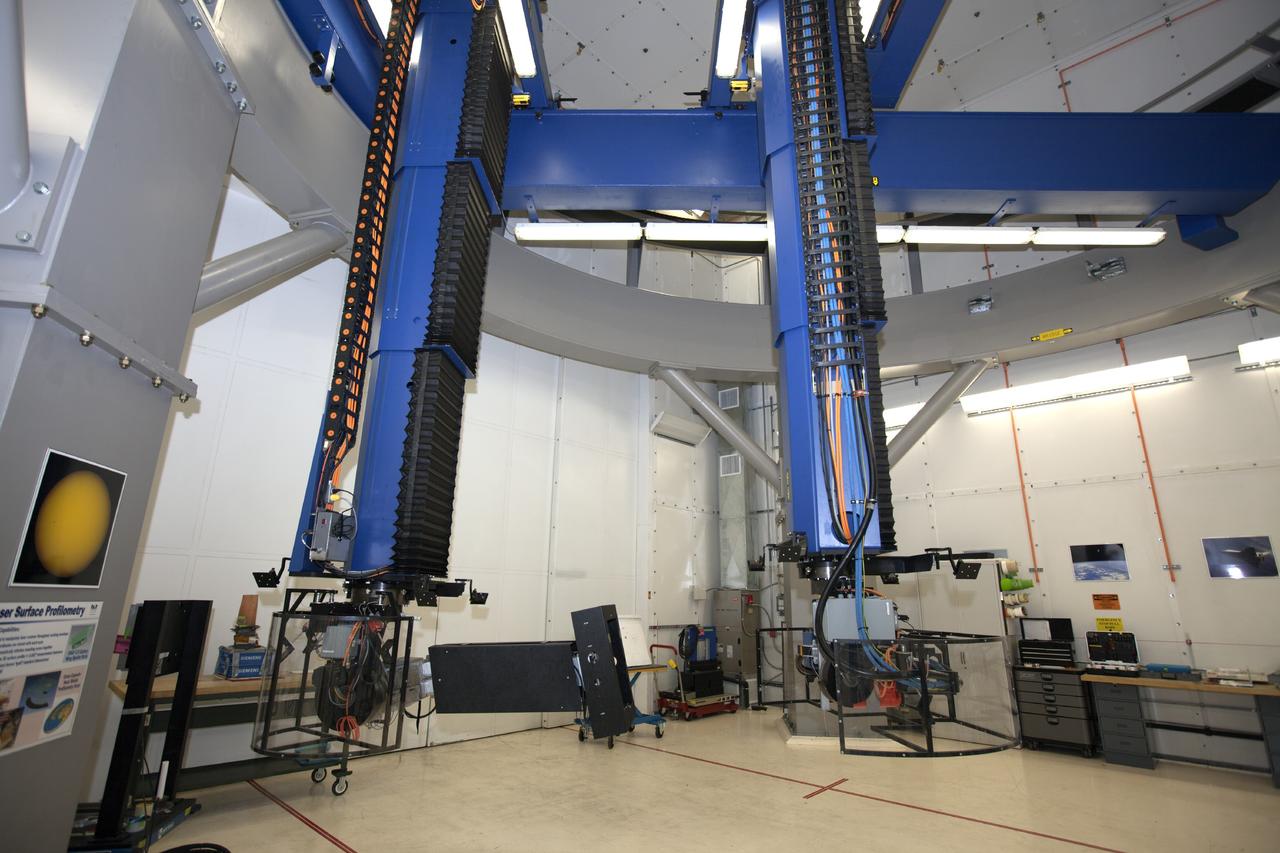
CAPE CANAVERAL, Fla. – In Hangar N at Cape Canaveral Air Force Station, an 11-axis robotic X-ray system takes images of hardware for evaluation. The activity is part of work performed by PaR Systems, Inc. under a partnership agreement with NASA. NASA's Kennedy Space Center in Florida recently established a partnership agreement with PaR Systems, Inc. of Shoreview, Minn., for operation of the Hangar N facility and its nondestructive testing and evaluation equipment. As the spaceport transitions from a historically government-only launch facility to a multi-user spaceport for both federal and commercial customers, partnerships between the space agency and other organizations will be a key element in that effort. Hangar N is located at Cape Canaveral Air Force Station adjacent to Kennedy and houses a unique inventory of test and evaluation equipment and the capability for current and future mission spaceflight support. Photo credit: NASA/ Dimitri Gerondidakis
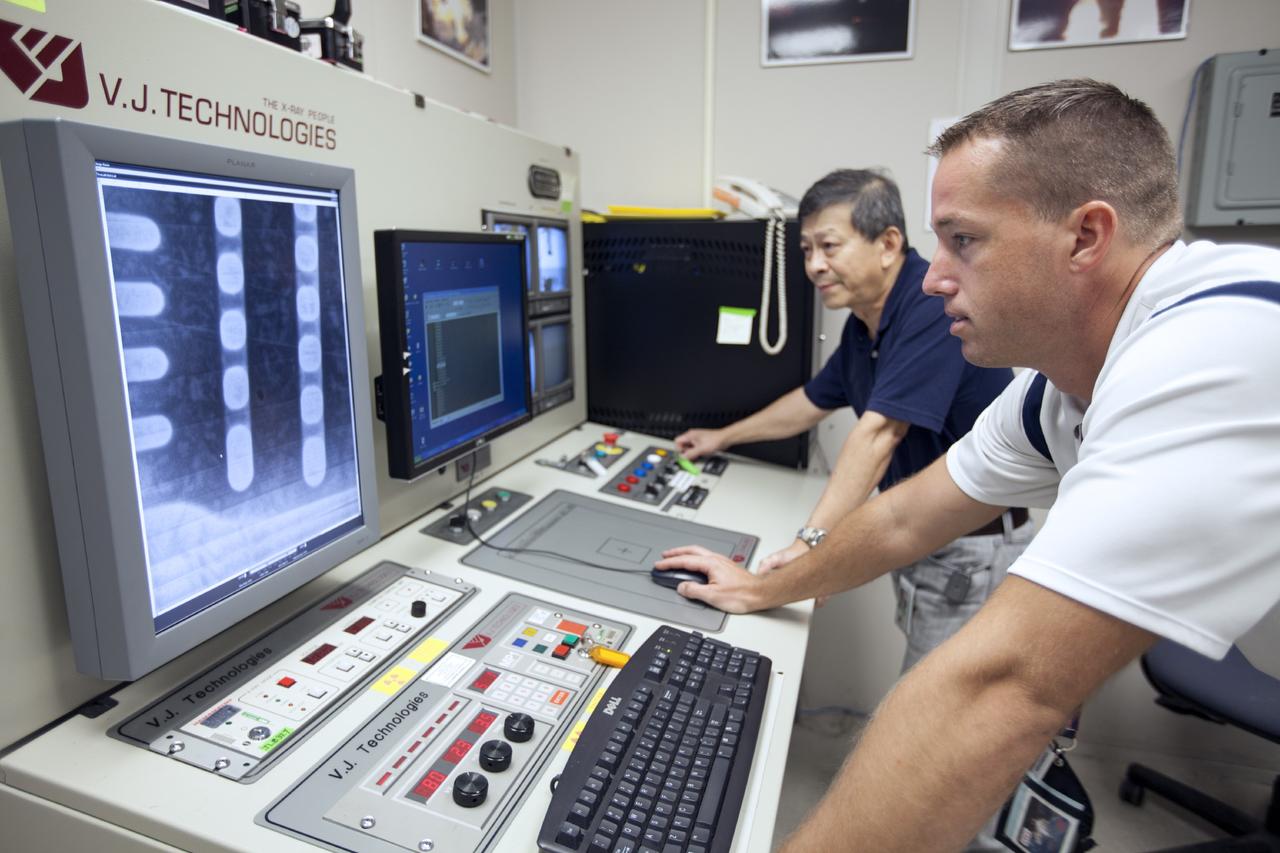
CAPE CANAVERAL, Fla. – In Hangar N at Cape Canaveral Air Force Station, PaR Systems, Inc. development engineer Wayne Cheng, left, and operations engineer Jeff Elston operate the controller for a robotic system used in nondestructive testing. The 11-axis robotic system takes X-ray images of hardware for evaluation. NASA's Kennedy Space Center in Florida recently established a partnership agreement with PaR Systems, Inc. of Shoreview, Minn., for operation of the Hangar N facility and its nondestructive testing and evaluation equipment. As the spaceport transitions from a historically government-only launch facility to a multi-user spaceport for both federal and commercial customers, partnerships between the space agency and other organizations will be a key element in that effort. Hangar N is located at Cape Canaveral Air Force Station adjacent to Kennedy and houses a unique inventory of test and evaluation equipment and the capability for current and future mission spaceflight support. Photo credit: NASA/ Dimitri Gerondidakis
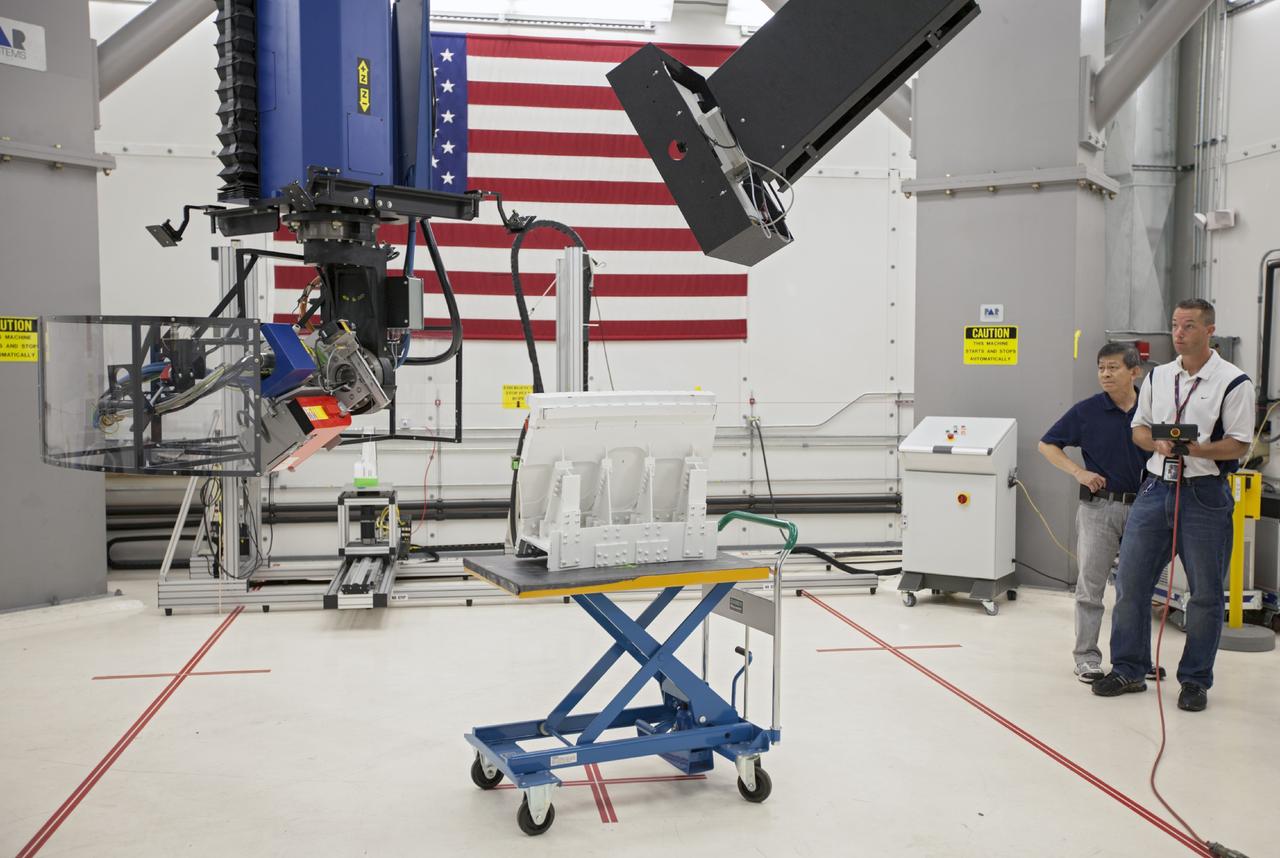
CAPE CANAVERAL, Fla. – In Hangar N at Cape Canaveral Air Force Station, PaR Systems, Inc. development engineer Wayne Cheng, left, and operations engineer Jeff Elston operate a robotic system used in nondestructive testing. The 11-axis robotic system takes X-ray images of hardware for evaluation. NASA's Kennedy Space Center in Florida recently established a partnership agreement with PaR Systems, Inc. of Shoreview, Minn., for operation of the Hangar N facility and its nondestructive testing and evaluation equipment. As the spaceport transitions from a historically government-only launch facility to a multi-user spaceport for both federal and commercial customers, partnerships between the space agency and other organizations will be a key element in that effort. Hangar N is located at Cape Canaveral Air Force Station adjacent to Kennedy and houses a unique inventory of test and evaluation equipment and the capability for current and future mission spaceflight support. Photo credit: NASA/ Dimitri Gerondidakis
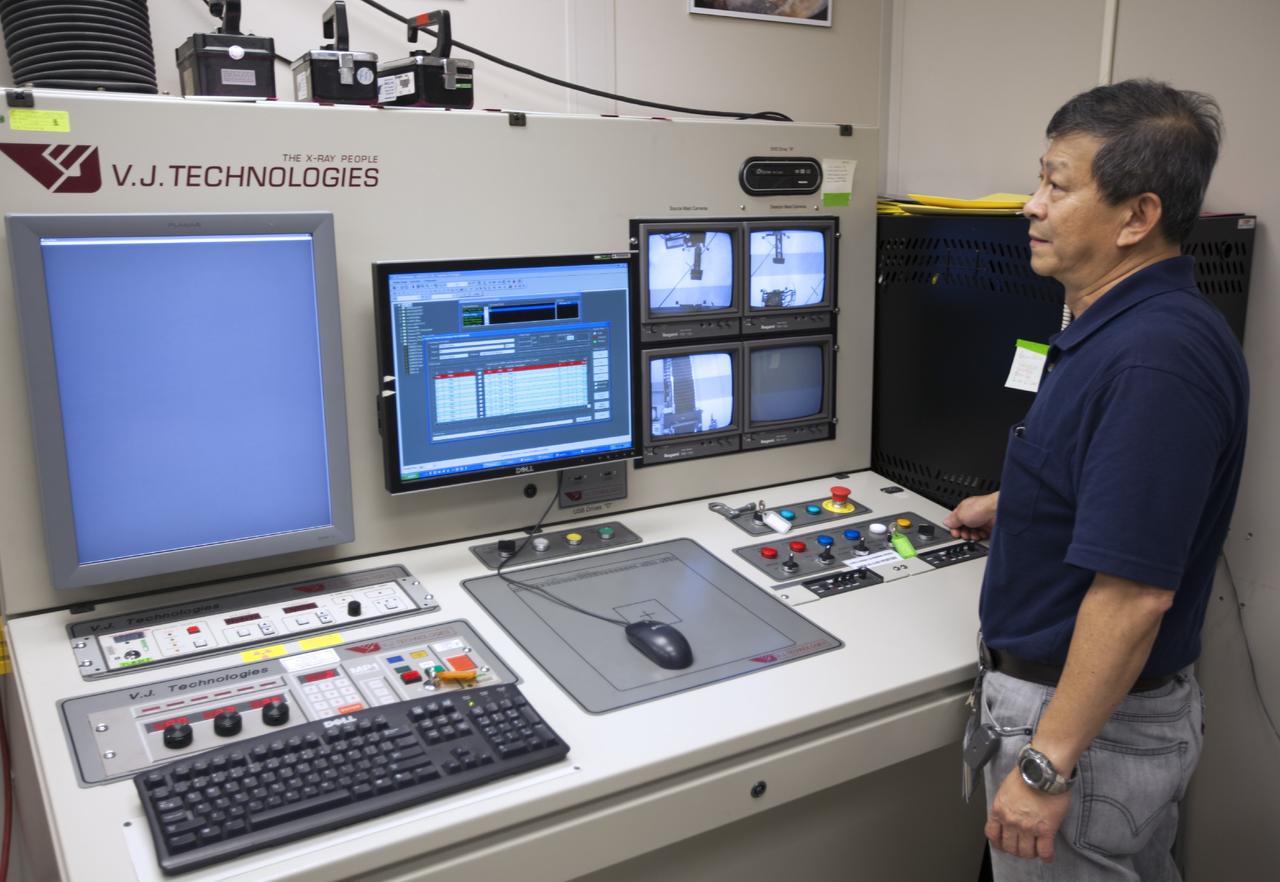
CAPE CANAVERAL, Fla. – In Hangar N at Cape Canaveral Air Force Station, PaR Systems, Inc. development engineer Wayne Cheng operates the controller for a robotic system used in nondestructive testing. The 11-axis robotic system takes X-ray images of hardware for evaluation. NASA's Kennedy Space Center in Florida recently established a partnership agreement with PaR Systems, Inc. of Shoreview, Minn., for operation of the Hangar N facility and its nondestructive testing and evaluation equipment. As the spaceport transitions from a historically government-only launch facility to a multi-user spaceport for both federal and commercial customers, partnerships between the space agency and other organizations will be a key element in that effort. Hangar N is located at Cape Canaveral Air Force Station adjacent to Kennedy and houses a unique inventory of test and evaluation equipment and the capability for current and future mission spaceflight support. Photo credit: NASA/ Dimitri Gerondidakis
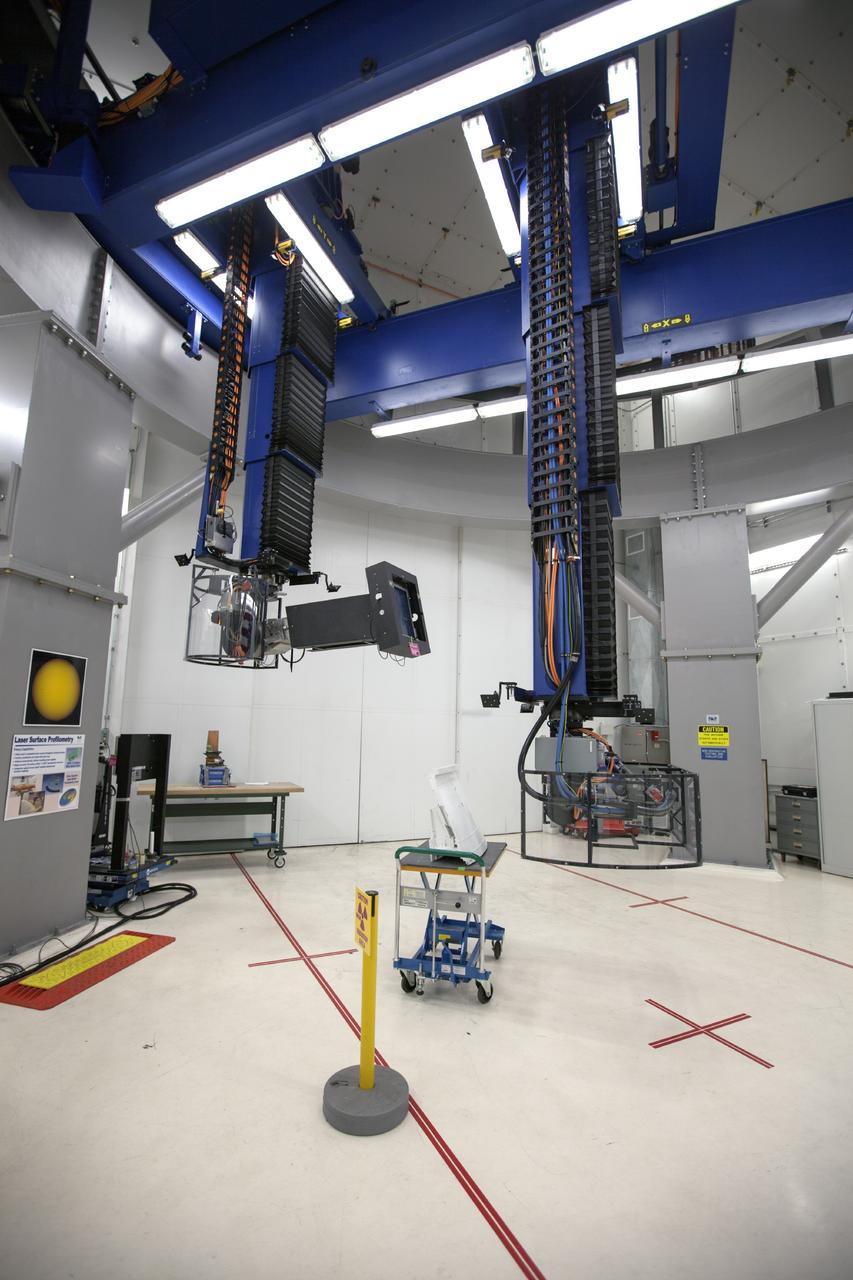
CAPE CANAVERAL, Fla. – In Hangar N at Cape Canaveral Air Force Station, an 11-axis robotic X-ray system takes images of hardware for evaluation. The activity is part of work performed by PaR Systems, Inc. under a partnership agreement with NASA. NASA's Kennedy Space Center in Florida recently established a partnership agreement with PaR Systems, Inc. of Shoreview, Minn., for operation of the Hangar N facility and its nondestructive testing and evaluation equipment. As the spaceport transitions from a historically government-only launch facility to a multi-user spaceport for both federal and commercial customers, partnerships between the space agency and other organizations will be a key element in that effort. Hangar N is located at Cape Canaveral Air Force Station adjacent to Kennedy and houses a unique inventory of test and evaluation equipment and the capability for current and future mission spaceflight support. Photo credit: NASA/ Dimitri Gerondidakis
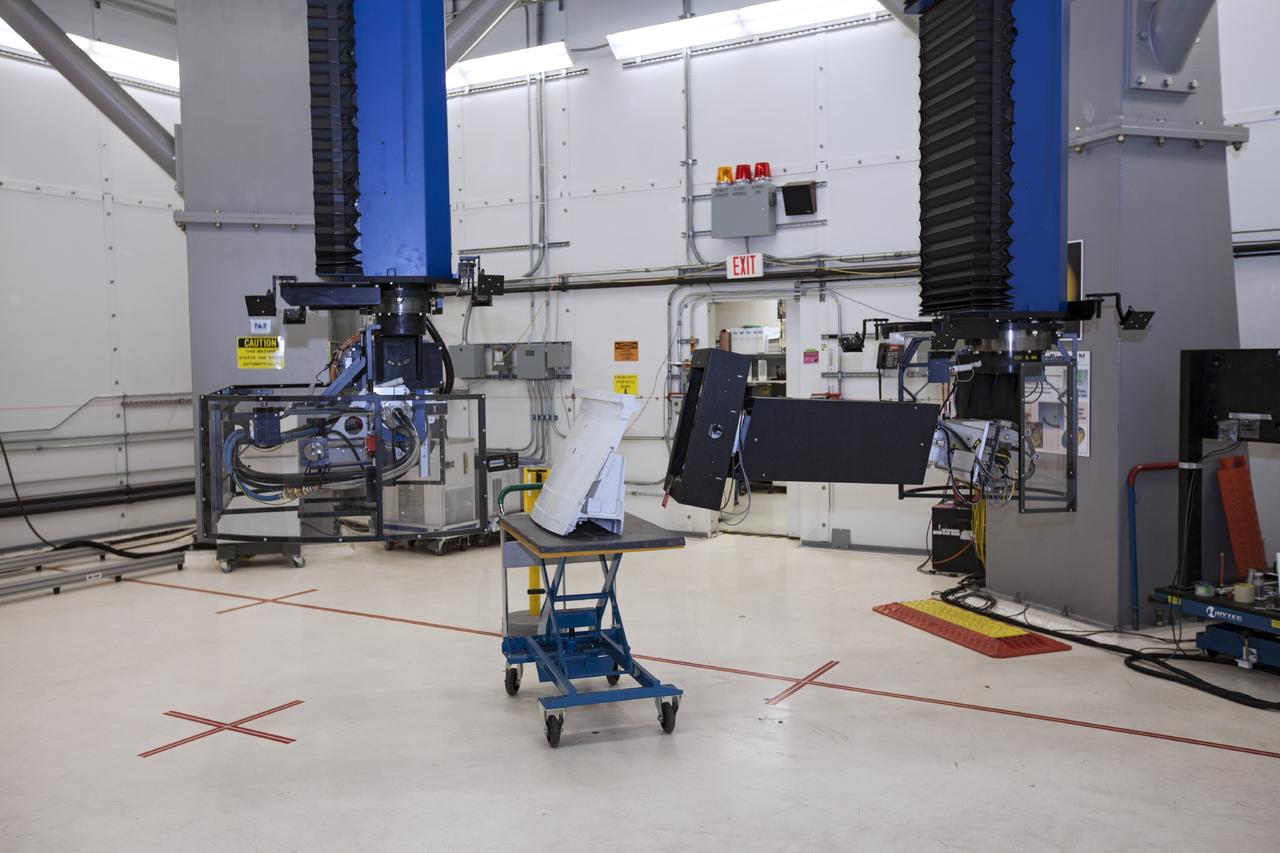
CAPE CANAVERAL, Fla. – In Hangar N at Cape Canaveral Air Force Station, an 11-axis robotic X-ray system takes images of hardware for evaluation. The activity is part of work performed by PaR Systems, Inc. under a partnership agreement with NASA. NASA's Kennedy Space Center in Florida recently established a partnership agreement with PaR Systems, Inc. of Shoreview, Minn., for operation of the Hangar N facility and its nondestructive testing and evaluation equipment. As the spaceport transitions from a historically government-only launch facility to a multi-user spaceport for both federal and commercial customers, partnerships between the space agency and other organizations will be a key element in that effort. Hangar N is located at Cape Canaveral Air Force Station adjacent to Kennedy and houses a unique inventory of test and evaluation equipment and the capability for current and future mission spaceflight support. Photo credit: NASA/ Dimitri Gerondidakis
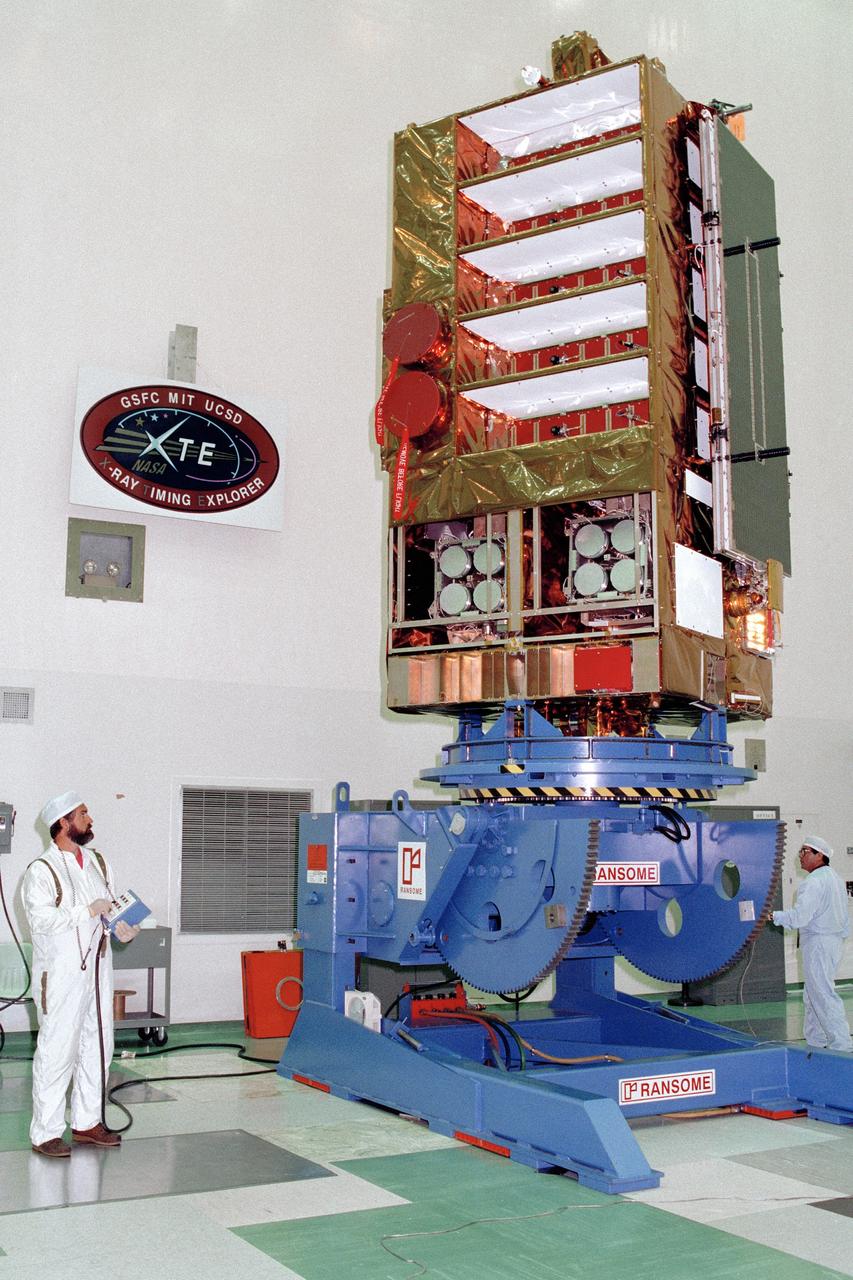
CAPE CANAVERAL, Fla. -- At Hangar AO at Cape Canaveral Air Force Station, payload processing technicians begin prelaunch checkout work of NASA’s X-Ray Timing Explorer XTE as it rests on a payload support structure after its arrival from the agency’s Goddard Space Flight Center in Maryland. The spacecraft is scheduled to lift off from Launch Complex 17 at the Cape on a Delta II rocket on Aug. 31, 1995. After launch, the XTE will gather data on X-ray sources in our galaxy and the universe. Photo Credit: NASA
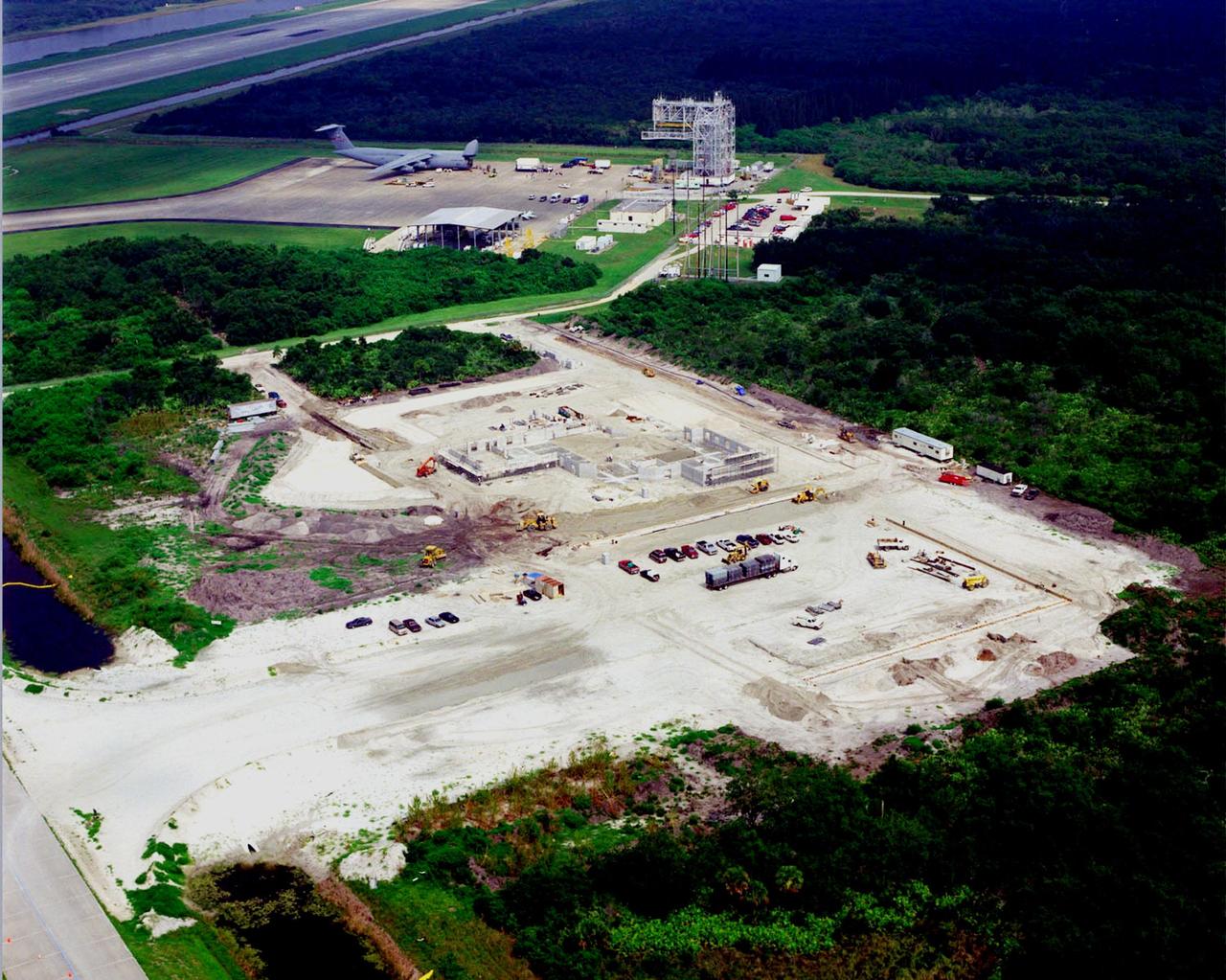
This aerial view shows the construction of a multi-purpose hangar, which is part of the $8 million Reusable Launch Vehicle (RLV) Support Complex at Kennedy Space Center. In the background is the Shuttle Landing Facility, with (left) a C-5 air cargo plane, the offloaded canister in front of it containing the Multi-Purpose Logistics Module Raffaello, and (right) the mate/demate tower that is used when an orbiter is transported to and from KSC atop a modified Boeing 747. The RLV complex will also include facilities for related ground support equipment and administrative/ technical support. It will be available to accommodate the Space Shuttle; the X-34 RLV technology demonstrator; the L-1011 carrier aircraft for Pegasus and X-34; and other RLV and X-vehicle programs. The complex is jointly funded by the Spaceport Florida Authority, NASA's Space Shuttle Program and KSC. The facility will be operational in early 2000.
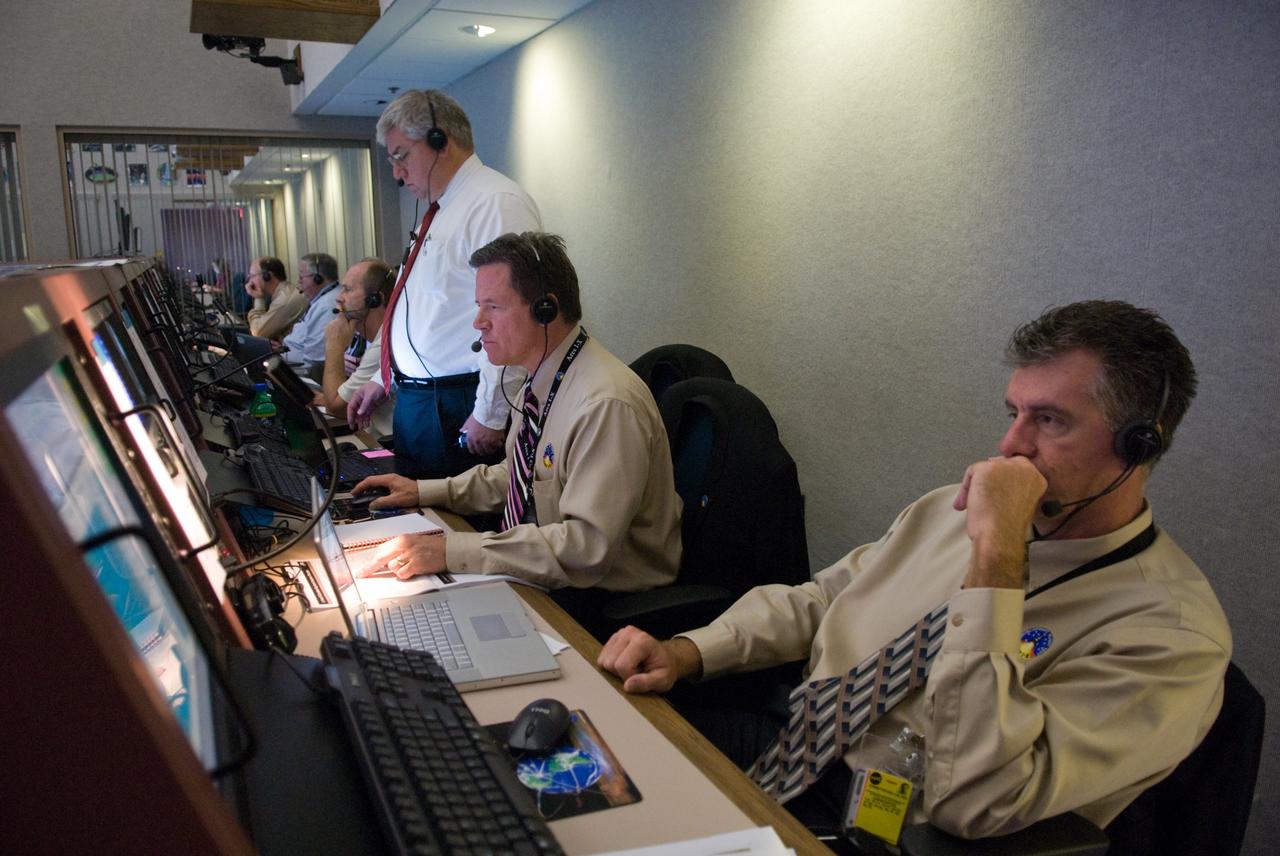
CAPE CANAVERAL, Fla. - The launch support team for the Ares I-X flight test monitors the countdown from consoles from the Launch Vehicle Data Center in Hangar AE on Cape Canaveral Air Force Station in Florida. This will be the first launch from Kennedy's pads of a vehicle other than the space shuttle since the Apollo Program's Saturn rockets were retired. The parts used to make the Ares I-X booster flew on 30 different shuttle missions ranging from STS-29 in 1989 to STS-106 in 2000. The data returned from more than 700 sensors throughout the rocket will be used to refine the design of future launch vehicles and bring NASA one step closer to reaching its exploration goals. For information on the Ares I-X vehicle and flight test, visit http://www.nasa.gov/aresIX. Photo credit: NASA/Kim Shiflett
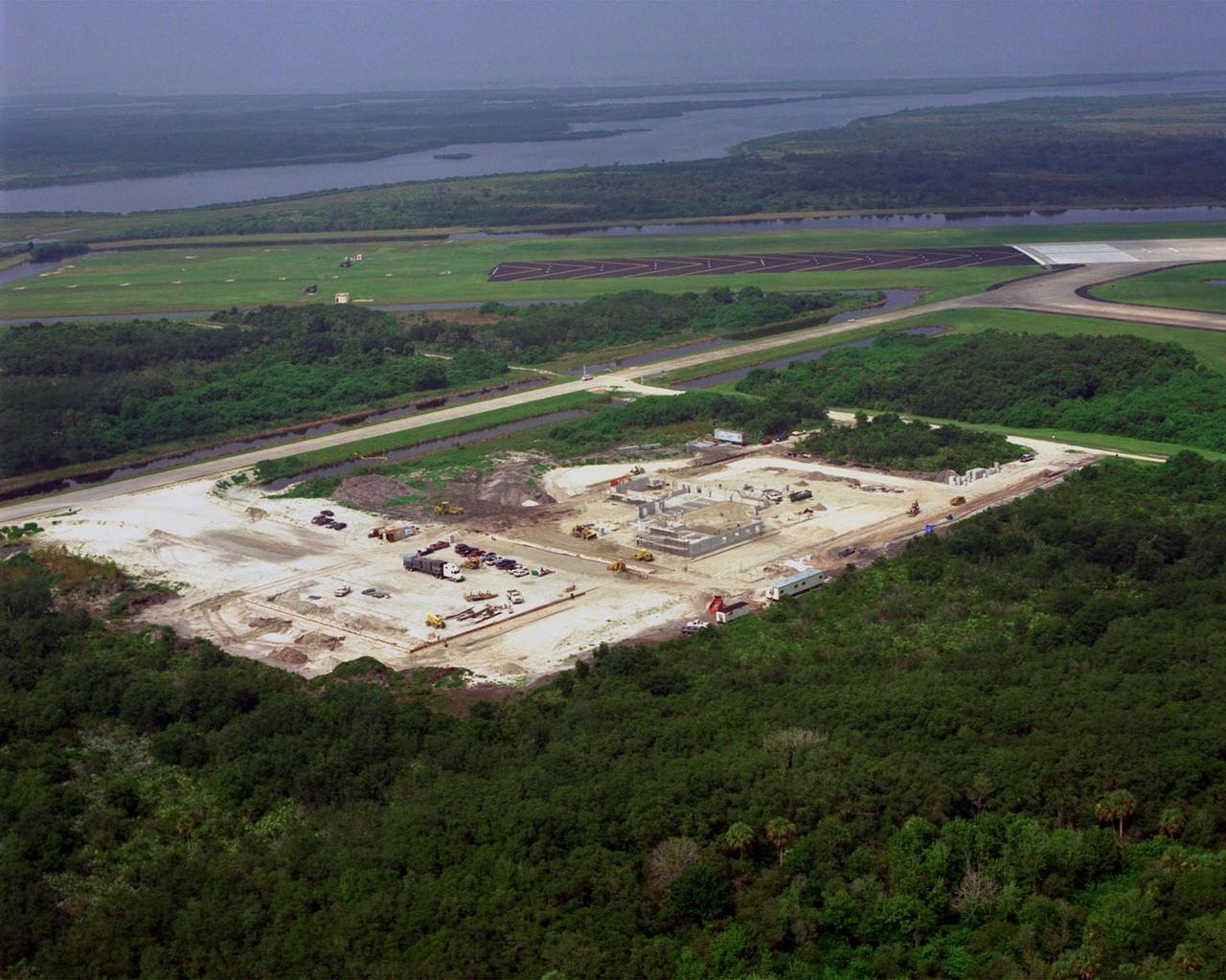
An aerial view shows the early construction of a multi-purpose hangar, which is part of the $8 million Reusable Launch Vehicle (RLV) Support Complex at Kennedy Space Center. In the background, toward the west, is Banana Creek, flowing into the Indian River Lagoon, and below it the Shuttle Landing Facility's landing strip. The RLV complex will also include facilities for related ground support equipment and administrative/ technical support. It will be available to accommodate the Space Shuttle; the X-34 RLV technology demonstrator; the L-1011 carrier aircraft for Pegasus and X-34; and other RLV and X-vehicle programs. The complex is jointly funded by the Spaceport Florida Authority, NASA's Space Shuttle Program and KSC. The facility will be operational in early 2000
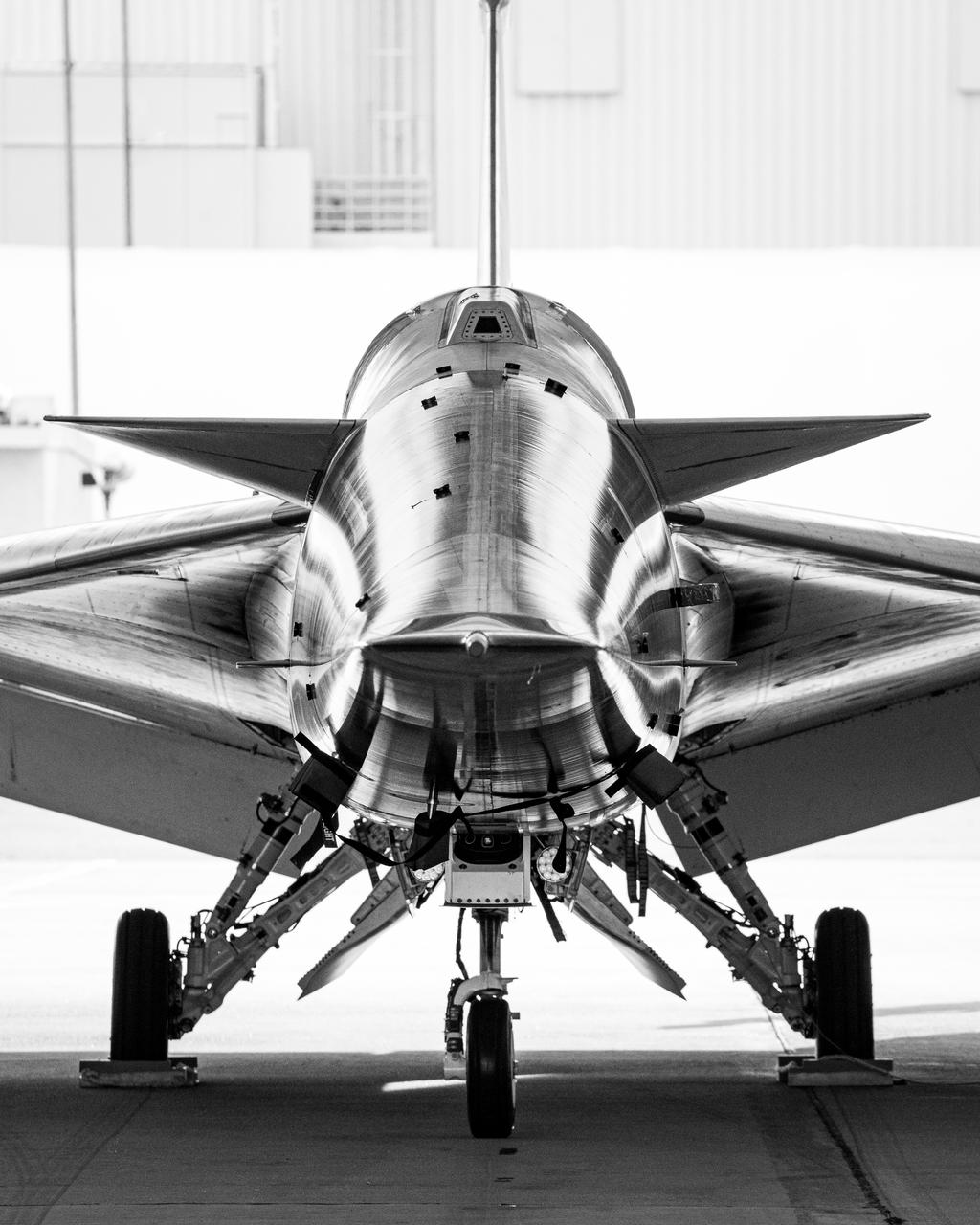
NASA’s X-59 research aircraft moves from its construction site to the flight line – or the space between the hangar and the runway – at Lockheed Martin Skunk Works in Palmdale, California, on June 16, 2023. This milestone kicks off a series of ground tests to ensure the X-59 is safe and ready to fly. The X-59 is designed to fly faster than Mach 1 while reducing the resulting sonic boom to a thump for people on the ground. NASA will evaluate this technology during flight tests as part of the agency’s Quesst mission, which helps enable commercial supersonic air travel over land. Lockheed Martin Photography By Garry Tice 1011 Lockheed Way, Palmdale, Ca. 93599 Event: Move to Run Stall 5 Date: 6/19/2023 Additional Info: