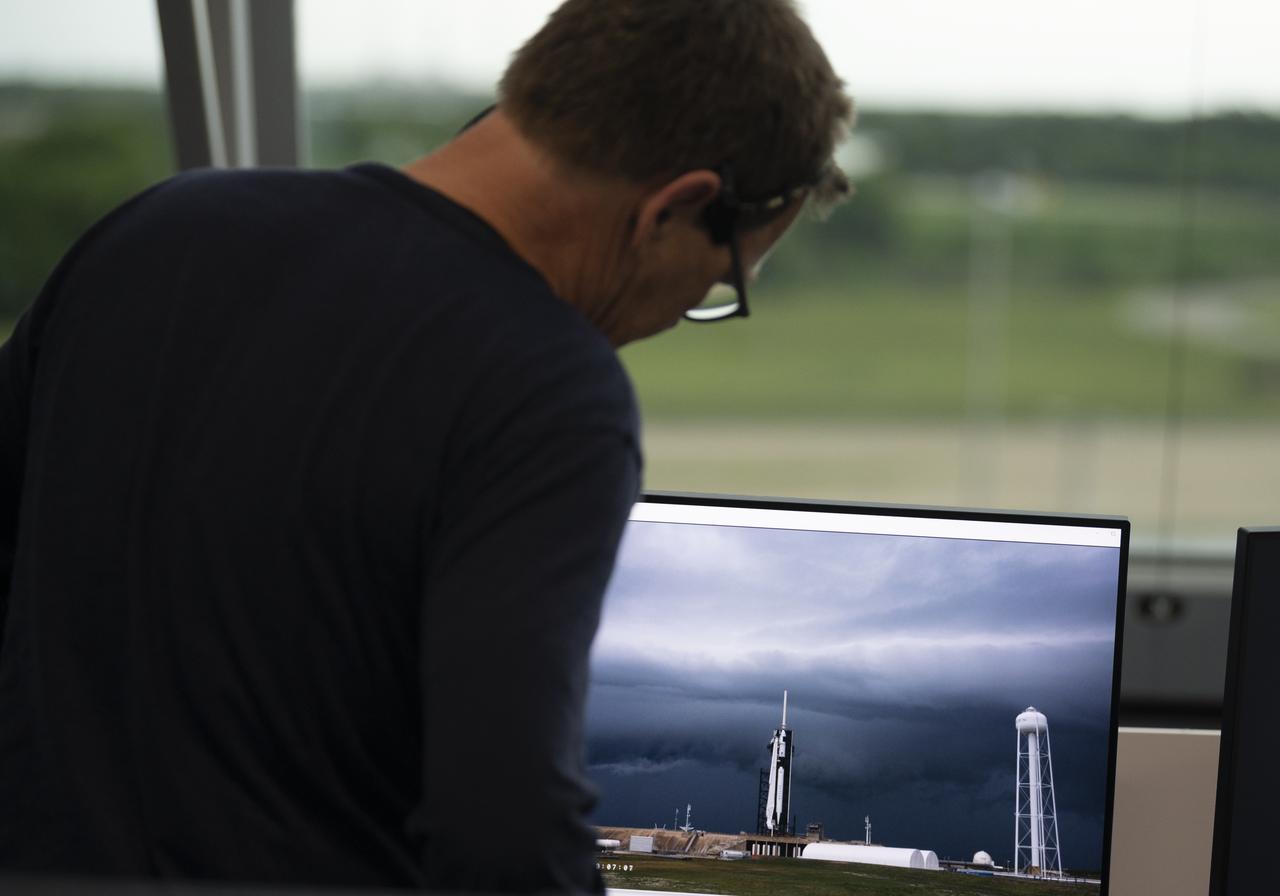
Hans Koenigsmann, vice president for build and flight reliability at SpaceX, looks at a monitor showing a live feed of a SpaceX Falcon 9 rocket carrying the company's Crew Dragon spacecraft on the launch pad during the countdown for a launch attempt of NASA’s SpaceX Demo-2 mission with NASA astronauts Robert Behnken and Douglas Hurley onboard, Wednesday, May 27, 2020, in firing room four of the Launch Control Center at NASA’s Kennedy Space Center in Florida. NASA’s SpaceX Demo-2 mission is the first launch with astronauts of the SpaceX Crew Dragon spacecraft and Falcon 9 rocket to the International Space Station as part of the agency’s Commercial Crew Program. The test flight serves as an end-to-end demonstration of SpaceX’s crew transportation system. Today’s launch of Behnken and Hurley was scrubbed due to weather and is now scheduled for 3:22 p.m. EDT on Saturday, May 30, from Launch Complex 39A at the Kennedy Space Center. A new era of human spaceflight is set to begin as American astronauts once again launch on an American rocket from American soil to low-Earth orbit for the first time since the conclusion of the Space Shuttle Program in 2011. Photo Credit: (NASA/Joel Kowsky)
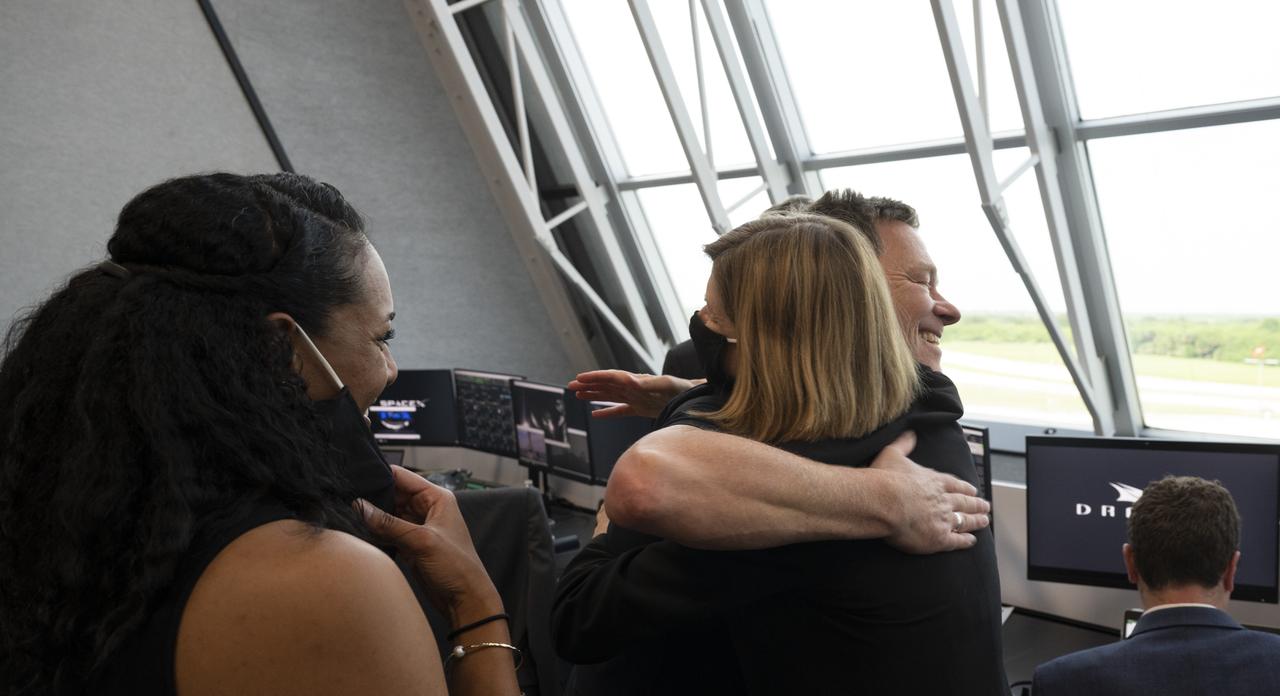
Hans Koenigsmann, vice president for build and flight reliability at SpaceX hugs Kathy Lueders, manager of NASA's Commercial Crew Program, following the launch of a SpaceX Falcon 9 rocket carrying the company's Crew Dragon spacecraft on the Demo-2 mission with NASA astronauts Douglas Hurley and Robert Behnken onboard, Saturday, May 30, 2020, in firing room four of the Launch Control Center at NASA’s Kennedy Space Center in Florida. NASA’s SpaceX Demo-2 mission is the first launch with astronauts of the SpaceX Crew Dragon spacecraft and Falcon 9 rocket to the International Space Station as part of the agency’s Commercial Crew Program. The test flight serves as an end-to-end demonstration of SpaceX’s crew transportation system. Behnken and Hurley launched at 3:22 p.m. EDT on Saturday, May 30, from Launch Complex 39A at the Kennedy Space Center. A new era of human spaceflight is set to begin as American astronauts once again launch on an American rocket from American soil to low-Earth orbit for the first time since the conclusion of the Space Shuttle Program in 2011. Photo Credit: (NASA/Joel Kowsky)
Hans Koenigsmann, vice president for build and flight reliability at SpaceX, monitors the launch of a SpaceX Falcon 9 rocket carrying the company's Crew Dragon spacecraft on the Demo-2 mission with NASA astronauts Douglas Hurley and Robert Behnken onboard, Saturday, May 30, 2020, in firing room four of the Launch Control Center at NASA’s Kennedy Space Center in Florida. NASA’s SpaceX Demo-2 mission is the first launch with astronauts of the SpaceX Crew Dragon spacecraft and Falcon 9 rocket to the International Space Station as part of the agency’s Commercial Crew Program. The test flight serves as an end-to-end demonstration of SpaceX’s crew transportation system. Behnken and Hurley launched at 3:22 p.m. EDT on Saturday, May 30, from Launch Complex 39A at the Kennedy Space Center. A new era of human spaceflight is set to begin as American astronauts once again launch on an American rocket from American soil to low-Earth orbit for the first time since the conclusion of the Space Shuttle Program in 2011. Photo Credit: (NASA/Joel Kowsky)
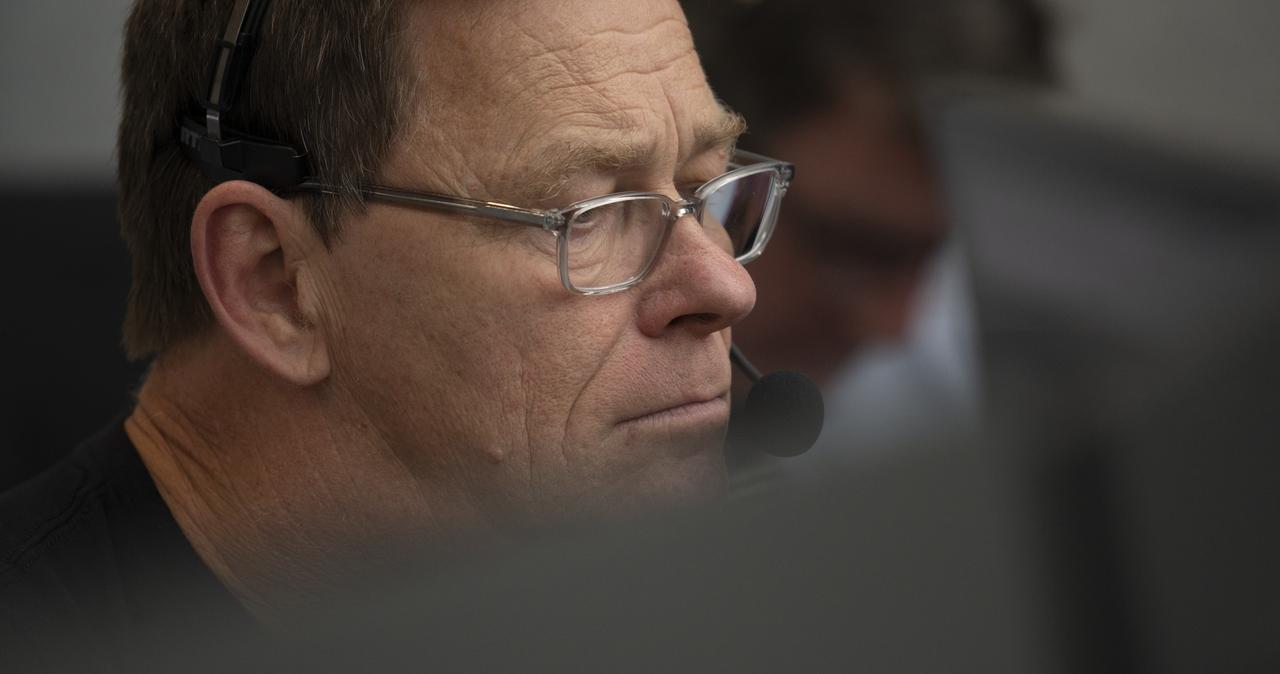
Hans Koenigsmann, vice president for build and flight reliability at SpaceX, monitors the countdown of the launch of a SpaceX Falcon 9 rocket carrying the company's Crew Dragon spacecraft on NASA’s SpaceX Demo-2 mission with NASA astronauts Robert Behnken and Douglas Hurley onboard, Saturday, May 30, 2020, in firing room four of the Launch Control Center at NASA’s Kennedy Space Center in Florida. NASA’s SpaceX Demo-2 mission is the first launch with astronauts of the SpaceX Crew Dragon spacecraft and Falcon 9 rocket to the International Space Station as part of the agency’s Commercial Crew Program. The test flight serves as an end-to-end demonstration of SpaceX’s crew transportation system. Behnken and Hurley launched at 3:22 p.m. EDT on Saturday, May 30, from Launch Complex 39A at the Kennedy Space Center. A new era of human spaceflight is set to begin as American astronauts once again launch on an American rocket from American soil to low-Earth orbit for the first time since the conclusion of the Space Shuttle Program in 2011. Photo Credit: (NASA/Joel Kowsky)
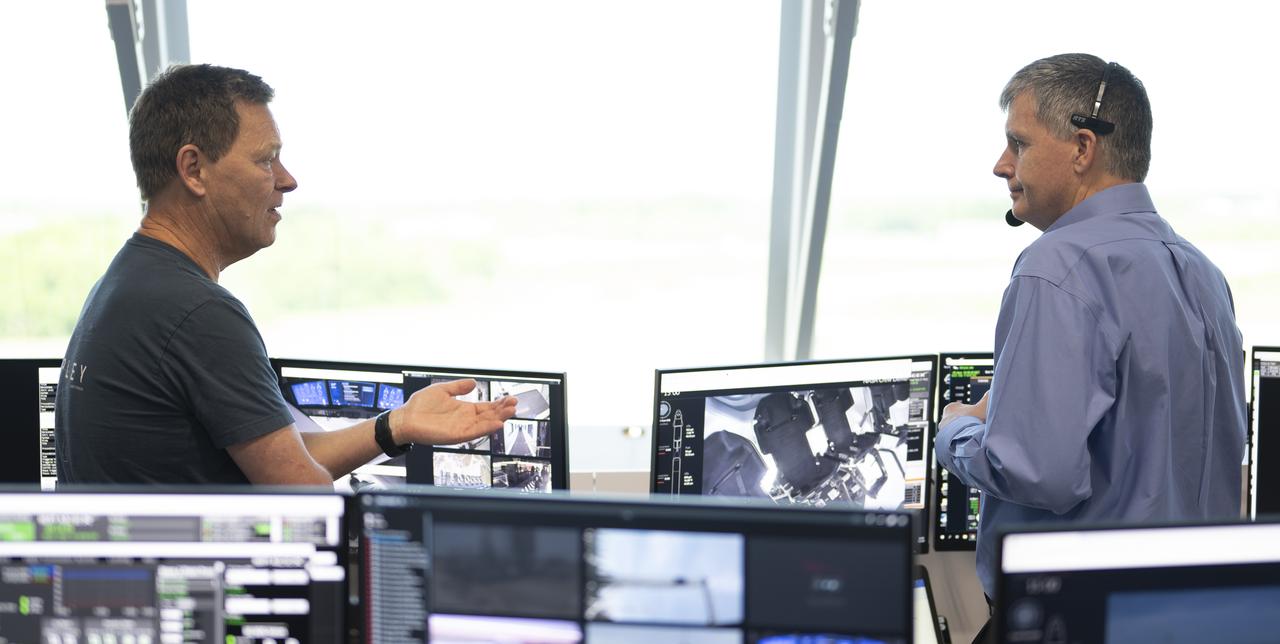
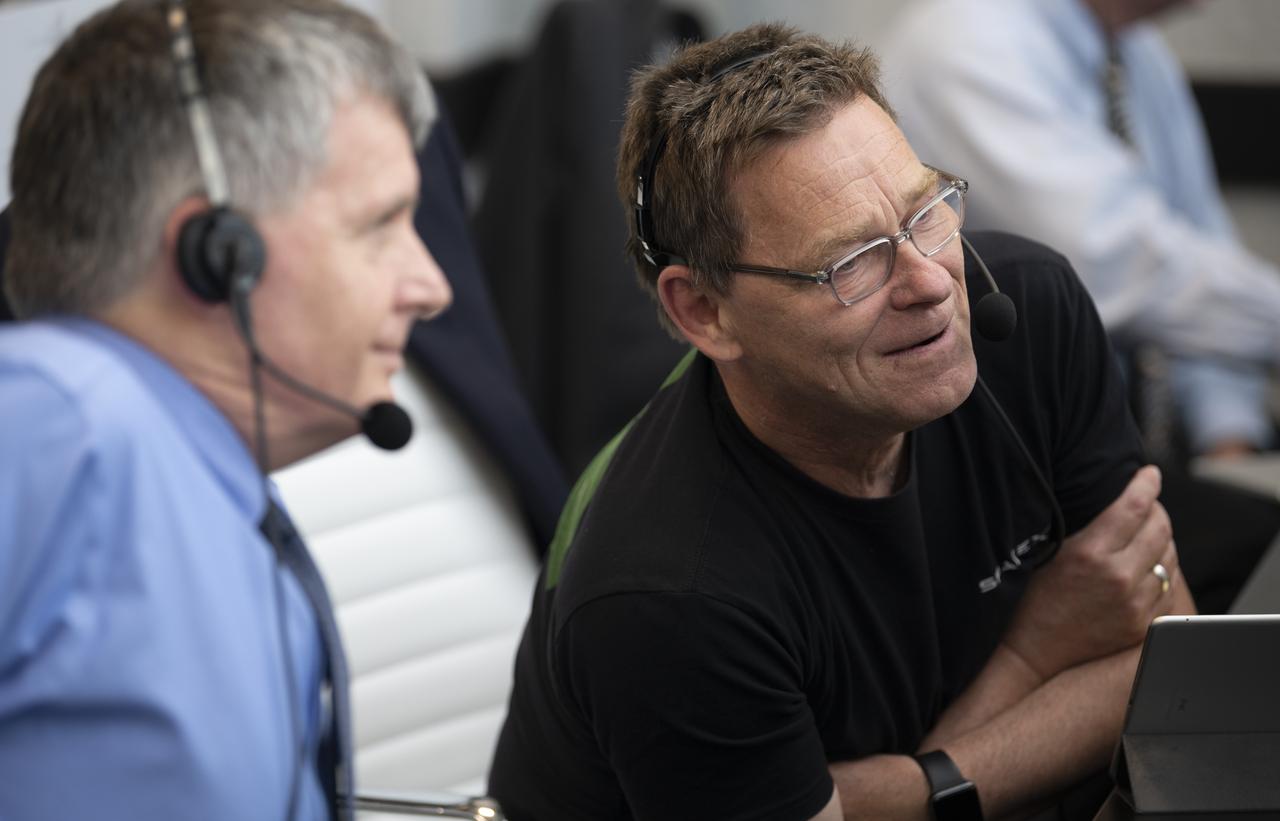
Hans Koenigsmann, vice president for build and flight reliability at SpaceX, left, and Steve Stich, deputy manager of NASA’s Commercial Crew Program, right, are seen as they monitor the countdown during a dress rehearsal in preparation for the launch of a SpaceX Falcon 9 rocket carrying the company's Crew Dragon spacecraft on NASA’s SpaceX Demo-2 mission with NASA astronauts Robert Behnken and Douglas Hurley onboard, Saturday, May 23, 2020, in firing room four of the Launch Control Center at NASA’s Kennedy Space Center in Florida. NASA’s SpaceX Demo-2 mission is the first launch with astronauts of the SpaceX Crew Dragon spacecraft and Falcon 9 rocket to the International Space Station as part of the agency’s Commercial Crew Program. The test flight serves as an end-to-end demonstration of SpaceX’s crew transportation system. Behnken and Hurley are scheduled to launch at 4:33 p.m. EDT on Wednesday, May 27, from Launch Complex 39A at the Kennedy Space Center. A new era of human spaceflight is set to begin as American astronauts once again launch on an American rocket from American soil to low-Earth orbit for the first time since the conclusion of the Space Shuttle Program in 2011. Photo Credit: (NASA/Joel Kowsky)
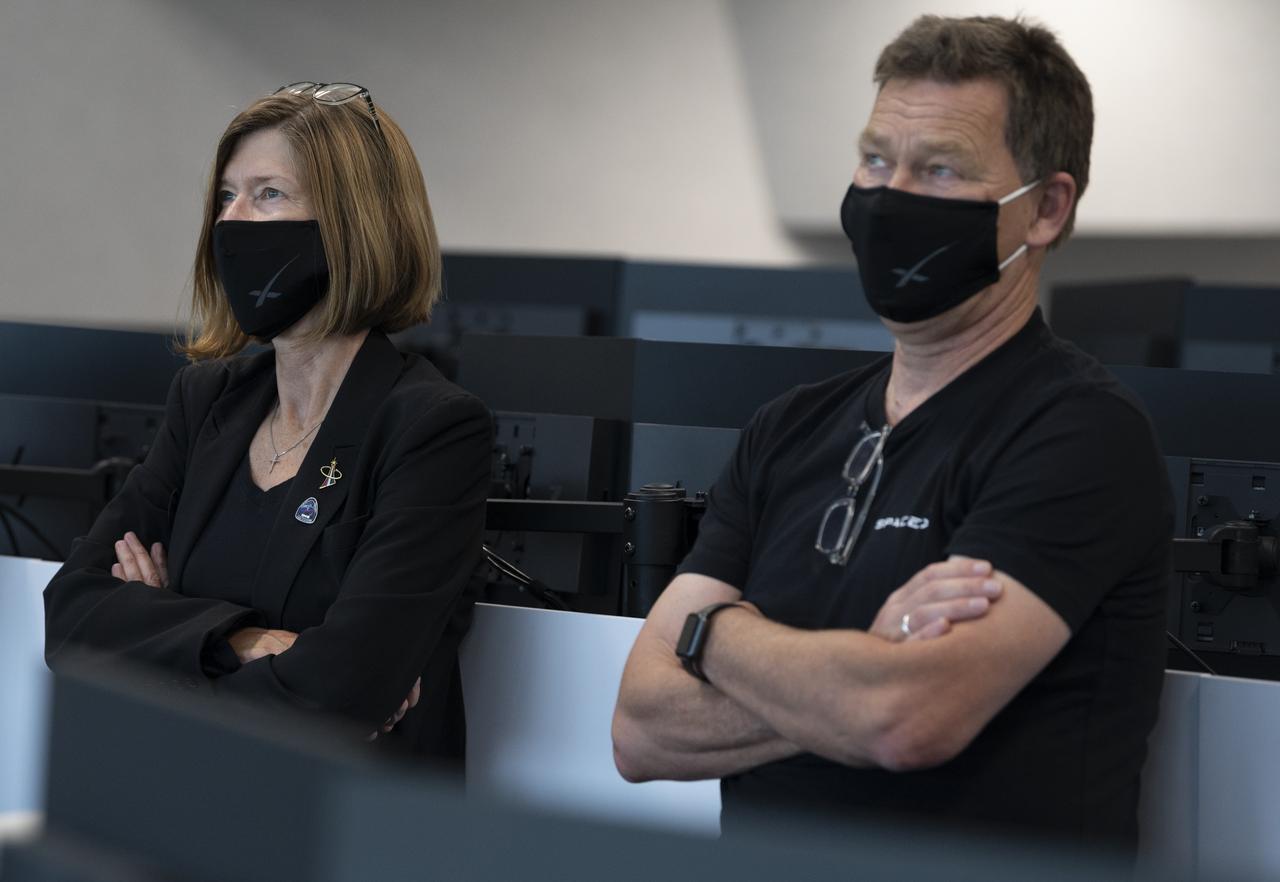
Kathy Lueders, manager of NASA's Commercial Crew Program, left, and Hans Koenigsmann, vice president for build and flight reliability at SpaceX, watch as the hatches are opened between SpaceX’s Crew Dragon spacecraft with NASA astronauts Douglas Hurley and Robert Behnken onboard and the International Space Station, Sunday, May 31, 2020, in firing room four of the Launch Control Center at NASA’s Kennedy Space Center in Florida. NASA’s SpaceX Demo-2 mission is the first launch with astronauts of the SpaceX Crew Dragon spacecraft and Falcon 9 rocket to the International Space Station as part of the agency’s Commercial Crew Program. The test flight serves as an end-to-end demonstration of SpaceX’s crew transportation system. Behnken and Hurley launched at 3:22 p.m. EDT on Saturday, May 30, from Launch Complex 39A at the Kennedy Space Center and docked with the International Space Station at 10:16am EDT on Sunday, May 31.. A new era of human spaceflight is set to begin as American astronauts once again launch on an American rocket from American soil to low-Earth orbit for the first time since the conclusion of the Space Shuttle Program in 2011. Photo Credit: (NASA/Joel Kowsky)
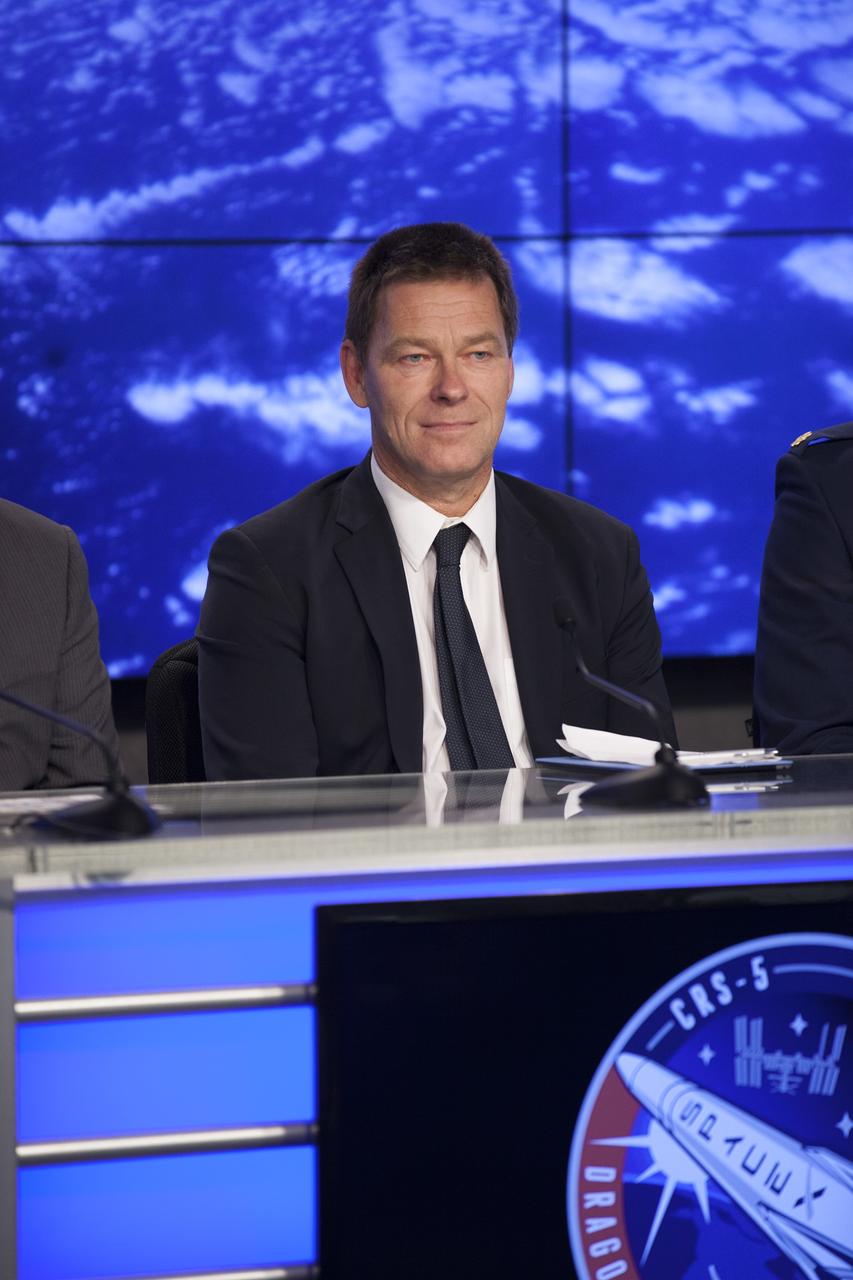
In the Kennedy Space Center’s Press Site auditorium, agency and industry leaders spoke to members of the news media on International Space Station research and technology developments. Participants included Hans Koenigsmann, SpaceX vice president of Mission Assurance. Photo credit: NASA/Kim Shiflett
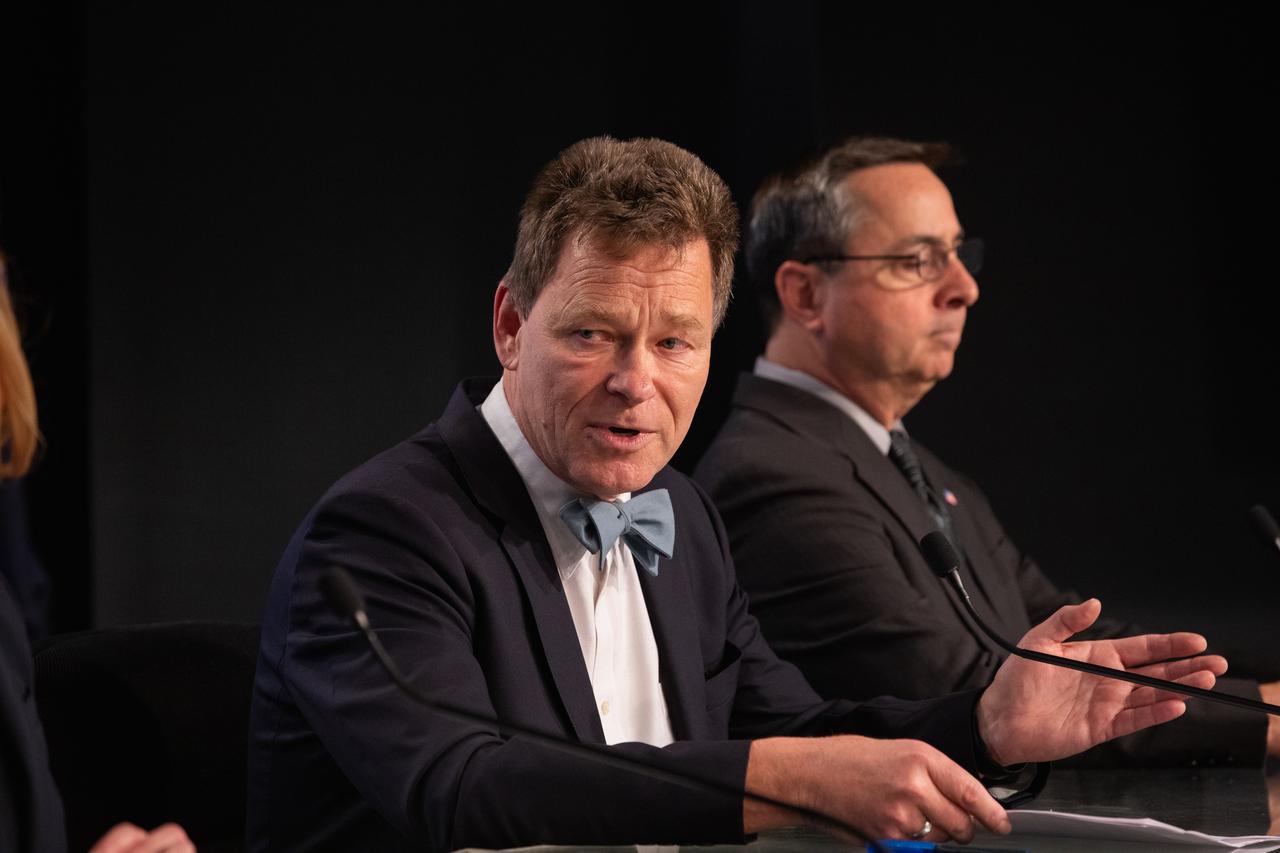
Hans Koenigsmann, vice president of Build and Flight Reliability at SpaceX, addresses members of the news media during a prelaunch news conference for SpaceX’s 20th Commercial Resupply Services (CRS-20) mission to the International Space Station at NASA’s Kennedy Space Center in Florida on March 6, 2020. Beside Koenigsmann is Mike McAleenan, launch weather officer with the U.S. Air Force 45th Space Wing. The company’s Falcon 9 rocket and cargo Dragon spacecraft are scheduled to lift off from Cape Canaveral Air Force Station’s Space Launch Complex 40 at 11:50 p.m. EST on March 6, 2020.
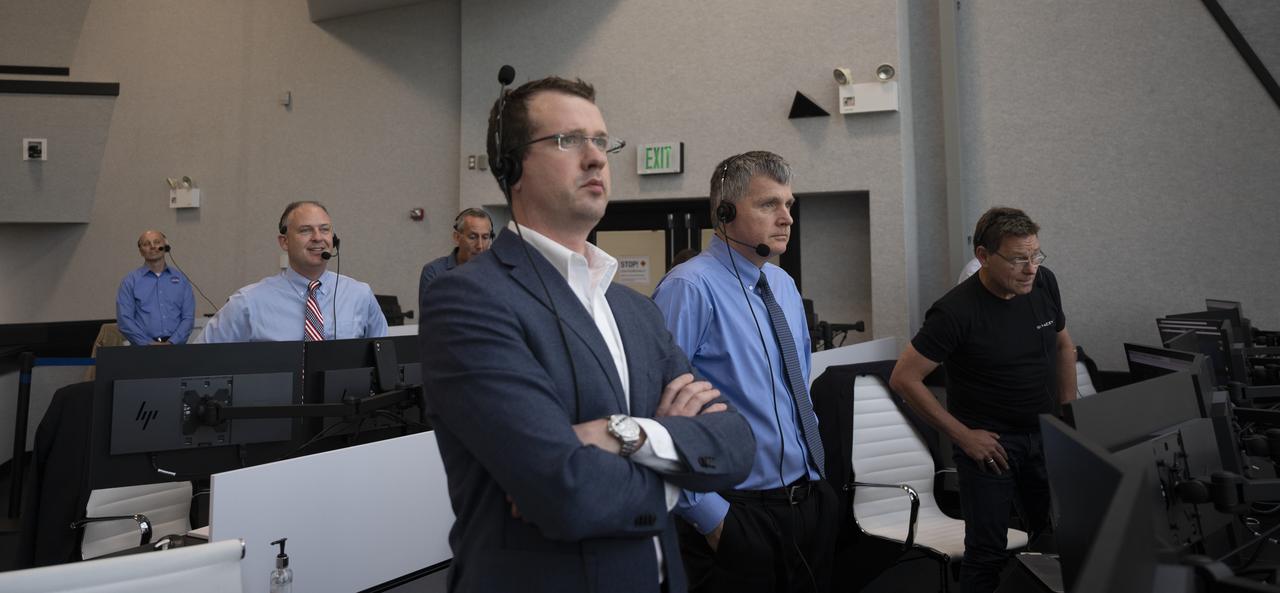
Stephen Koerner, Director of the Flight Operations Directorate at NASA’s Johnson Space Center, Norm Knight, deputy director of Flight Operations at NASA's Johnson Space Center, Steve Stich, deputy manager of NASA’s Commercial Crew Program, and Hans Koenigsmann, vice president for build and flight reliability at SpaceX are seen monitoring the launch of a SpaceX Falcon 9 rocket carrying the company's Crew Dragon spacecraft on the Demo-2 mission with NASA astronauts Douglas Hurley and Robert Behnken onboard, Saturday, May 30, 2020, in firing room four of the Launch Control Center at NASA’s Kennedy Space Center in Florida. NASA’s SpaceX Demo-2 mission is the first launch with astronauts of the SpaceX Crew Dragon spacecraft and Falcon 9 rocket to the International Space Station as part of the agency’s Commercial Crew Program. The test flight serves as an end-to-end demonstration of SpaceX’s crew transportation system. Behnken and Hurley launched at 3:22 p.m. EDT on Saturday, May 30, from Launch Complex 39A at the Kennedy Space Center. A new era of human spaceflight is set to begin as American astronauts once again launch on an American rocket from American soil to low-Earth orbit for the first time since the conclusion of the Space Shuttle Program in 2011. Photo Credit: (NASA/Joel Kowsky)
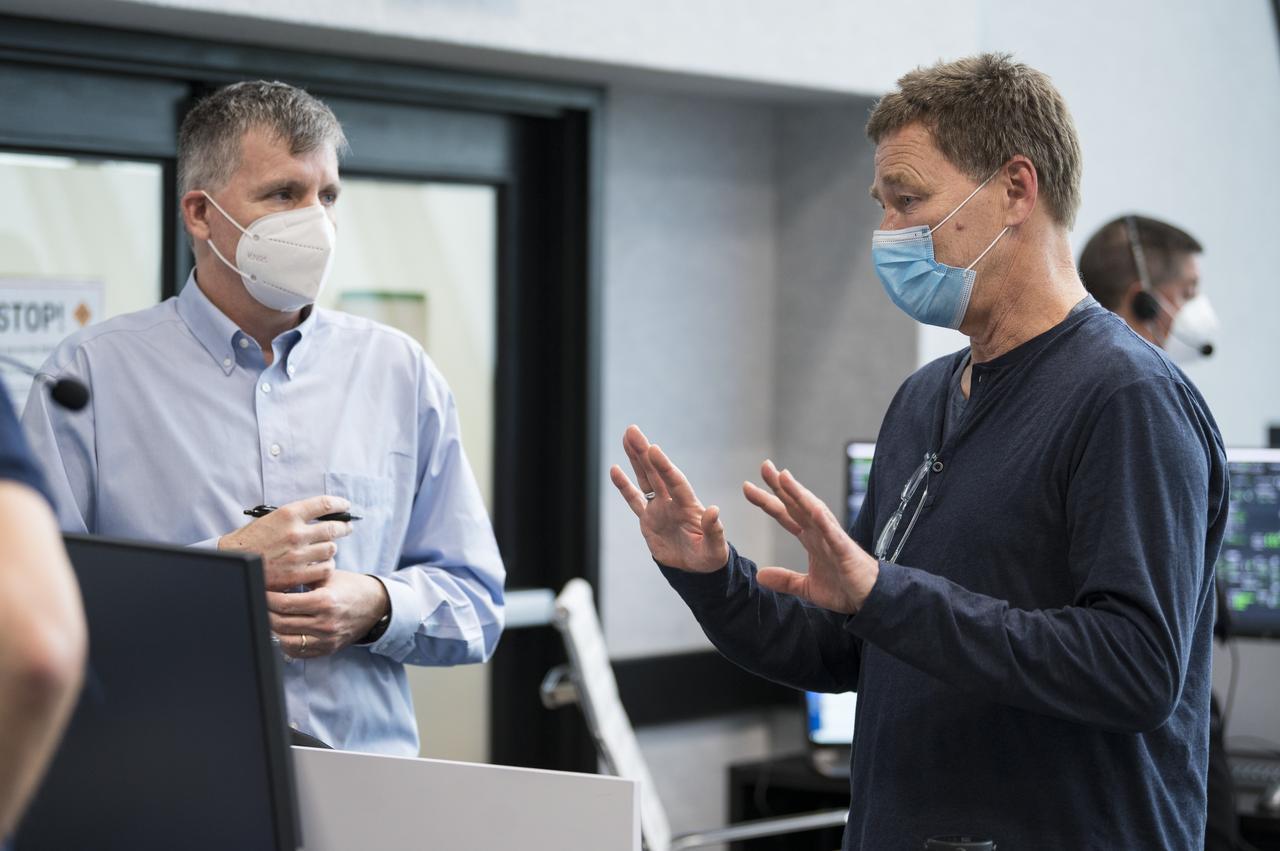
Hans Koenigsmann, vice president for Build and Flight Reliability at SpaceX speaks with Steve Stich, manager of NASA’s Commercial Crew Program, during a dress rehearsal in preparation for the launch of a SpaceX Falcon 9 rocket carrying the company's Crew Dragon spacecraft on NASA’s SpaceX Crew-1 mission with NASA astronauts Mike Hopkins, Victor Glover, Shannon Walker, and Japan Aerospace Exploration Agency (JAXA) astronaut Soichi Noguchi onboard, Thursday, Nov. 12, 2020, in firing room four of the Launch Control Center at NASA’s Kennedy Space Center in Florida. NASA’s SpaceX Crew-1 mission is the first crew rotation mission of the SpaceX Crew Dragon spacecraft and Falcon 9 rocket to the International Space Station as part of the agency’s Commercial Crew Program. Hopkins, Glover, Walker, and Noguchi are scheduled to launch at 7:49 p.m. EST on Saturday, Nov. 14, from Launch Complex 39A at the Kennedy Space Center. Photo Credit: (NASA/Aubrey Gemignani)
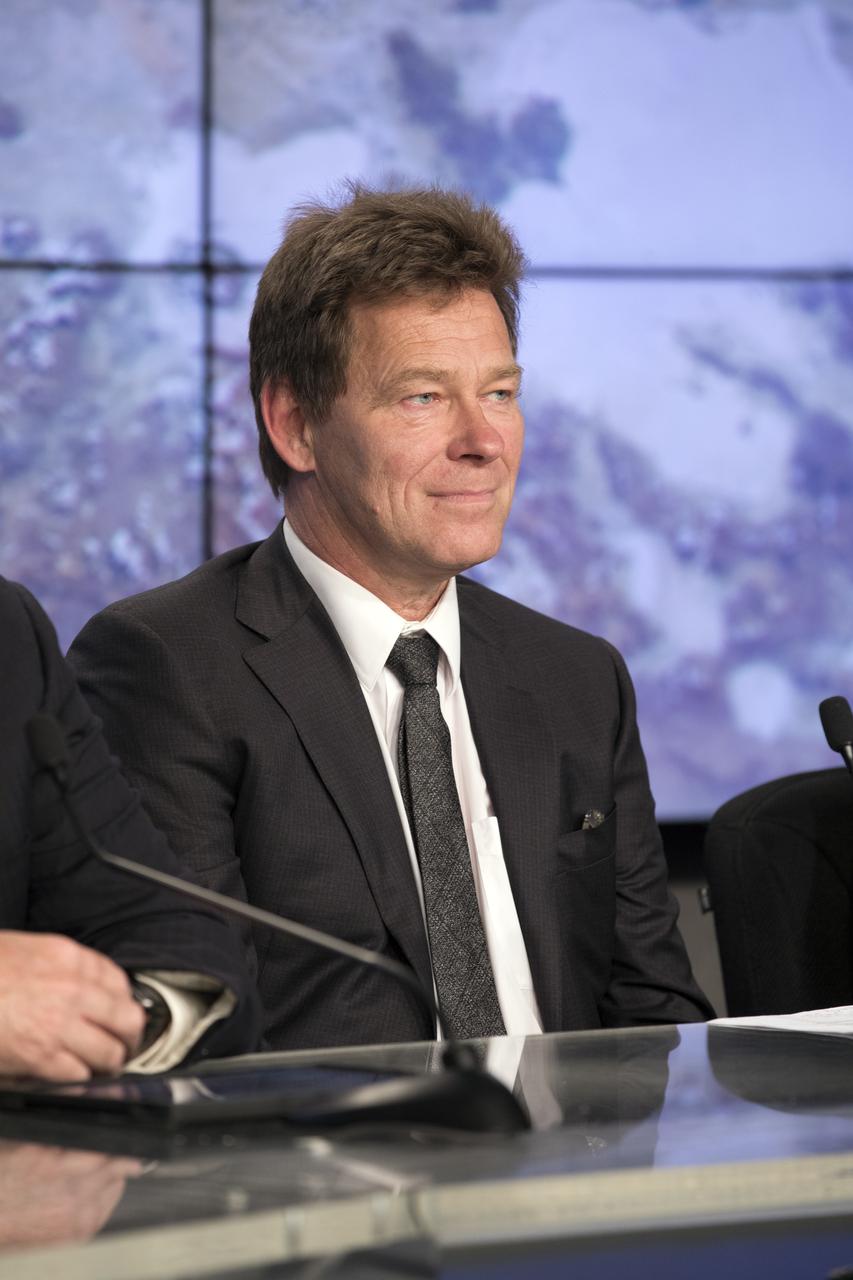
In the Kennedy Space Center’s Press Site auditorium, Hans Koenigsmann, vice president of Flight Reliability for SpaceX, speaks to members of the media during a prelaunch news conference for the SpaceX CRS-11 commercial resupply services mission to the International Space Station. A Dragon spacecraft is scheduled to be launched from Kennedy’s Launch Complex 39A on June 1 atop a SpaceX Falcon 9 rocket on the company's 11th Commercial Resupply Services mission to the space station.
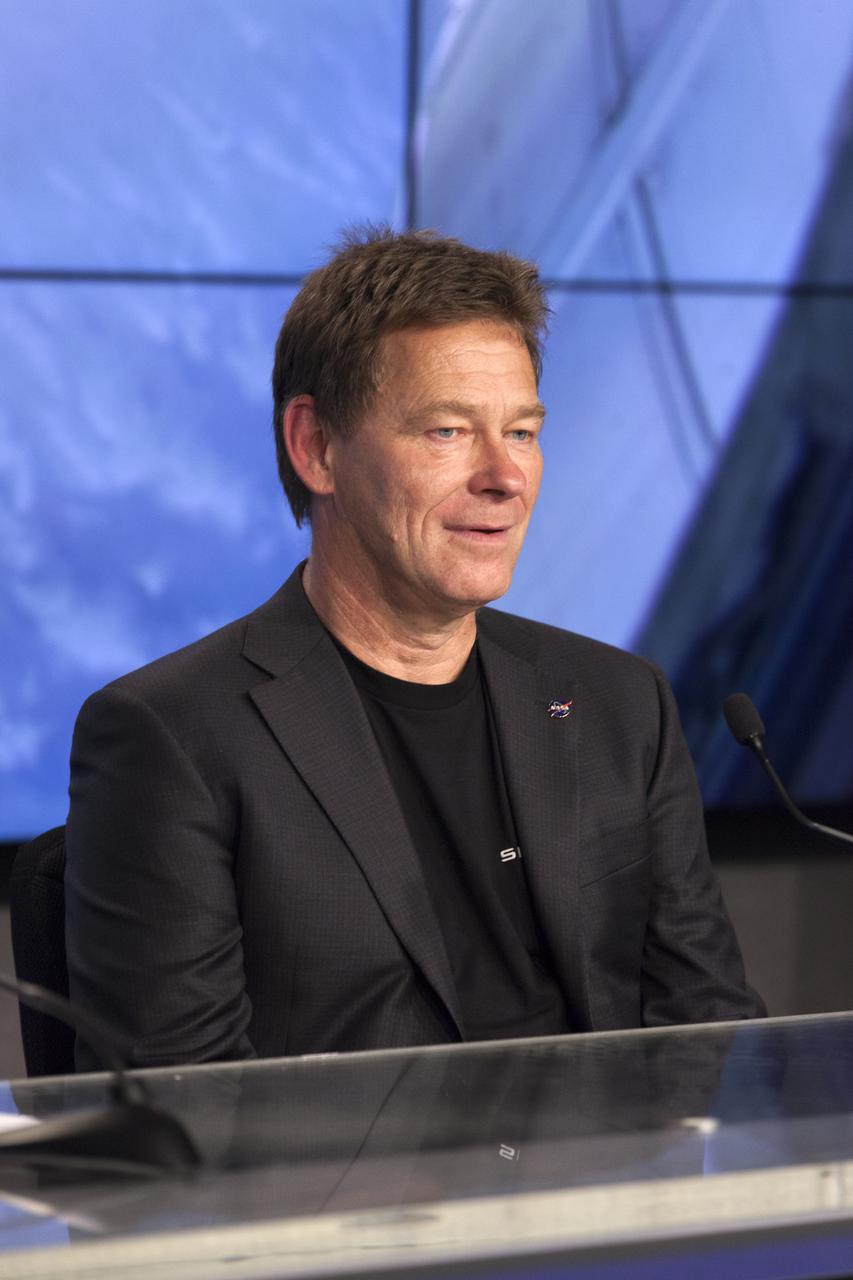
In the Press Site auditorium of NASA's Kennedy Space Center in Florida, Hans Koenigsmann, SpaceX vice president of Flight and Build Reliability, speaks to media at a post-launch news conference following the liftoff of SpaceX CRS-12, a commercial resupply services mission to the International Space Station. SpaceX CRS-12 lifted off atop a Falcon 9 rocket from Kennedy's Launch Complex 39A at 12:31 p.m. EDT.
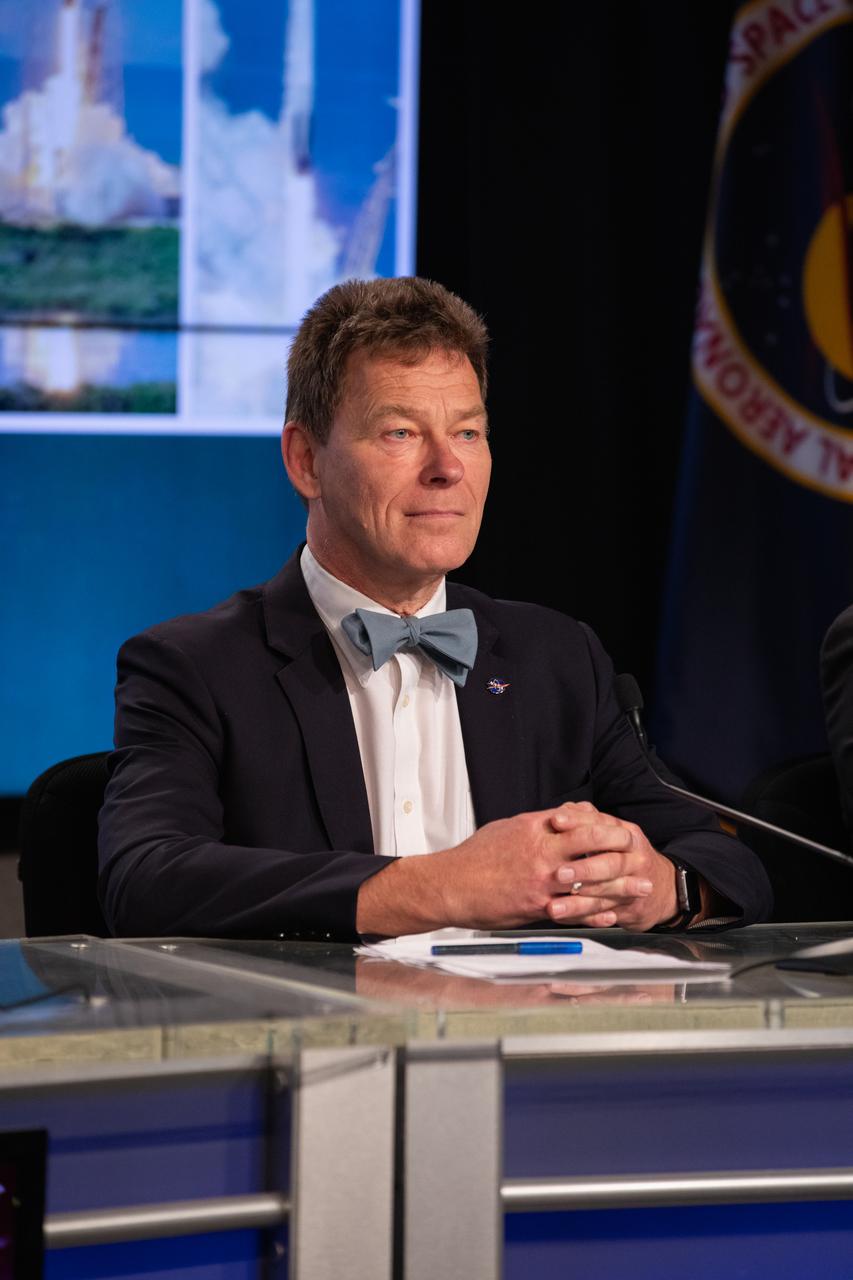
Hans Koenigsmann, vice president of Build and Flight Reliability at SpaceX, participates in a prelaunch news conference for SpaceX’s 20th Commercial Resupply Services (CRS-20) mission to the International Space Station at NASA’s Kennedy Space Center in Florida on March 6, 2020. The company’s Falcon 9 rocket and cargo Dragon spacecraft are scheduled to lift off from Cape Canaveral Air Force Station’s Space Launch Complex 40 at 11:50 p.m. EST on March 6, 2020.
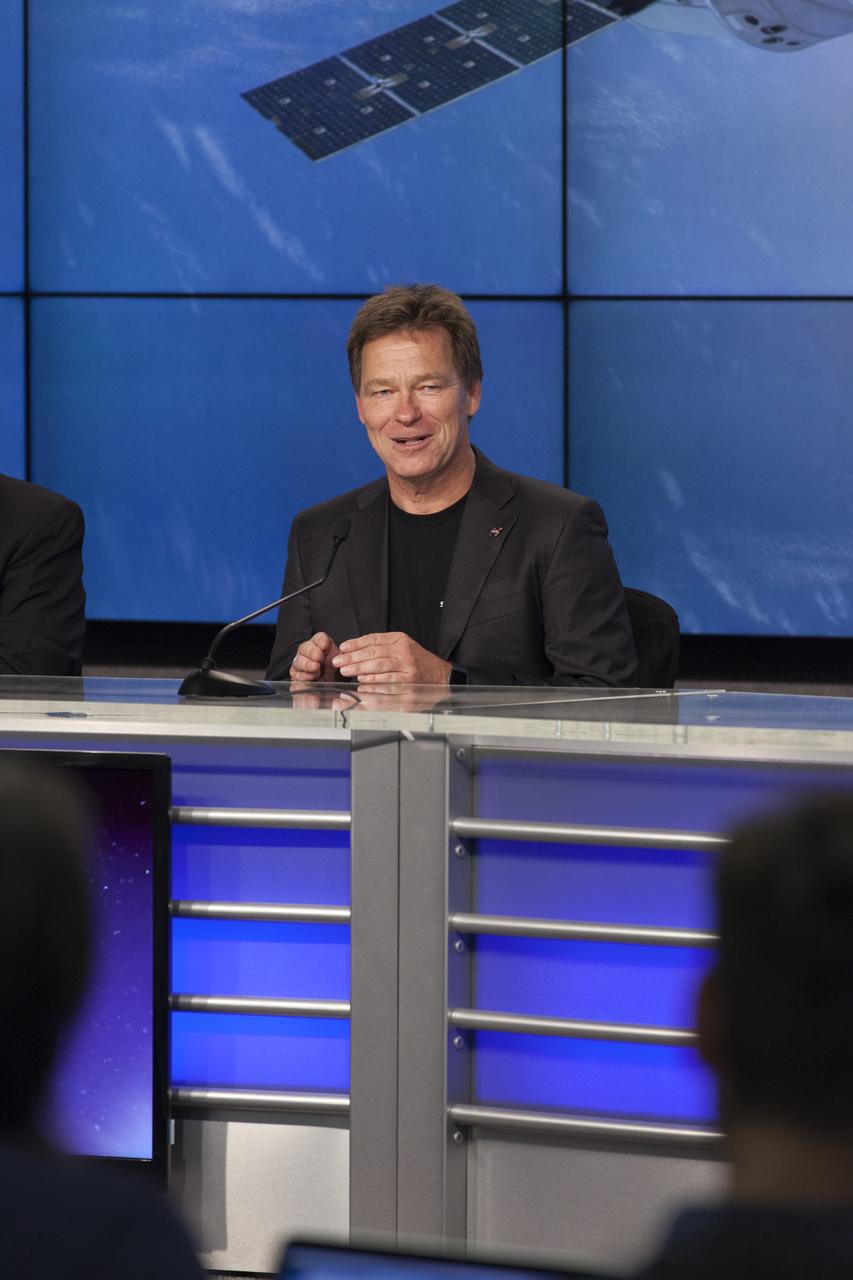
In the Press Site auditorium of NASA's Kennedy Space Center in Florida, Hans Koenigsmann, SpaceX vice president of Flight and Build Reliability, speaks to media at a post-launch news conference following the liftoff of SpaceX CRS-12, a commercial resupply services mission to the International Space Station. SpaceX CRS-12 lifted off atop a Falcon 9 rocket from Kennedy's Launch Complex 39A at 12:31 p.m. EDT.
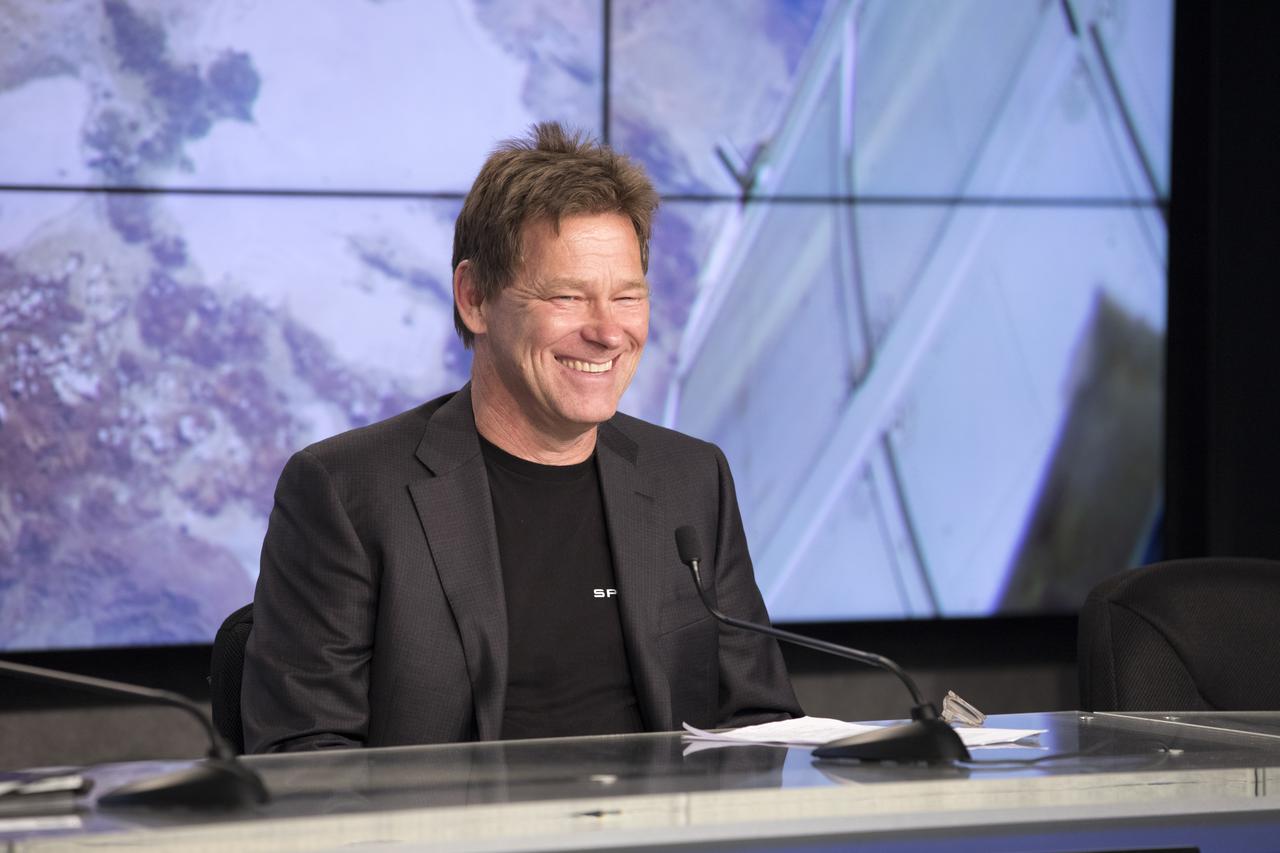
In the Press Site auditorium of NASA's Kennedy Space Center in Florida, Hans Koenigsmann, vice president of Flight Reliability for SpaceX. SpaceX, speaks to media at a post-launch news conference following the liftoff of SpaceX CRS-11, a commercial resupply services mission to the International Space Station. SpaceX CRS-11 lifted off atop a Falcon 9 rocket from Kennedy's Launch Complex 39A at 5:07 p.m. EDT.
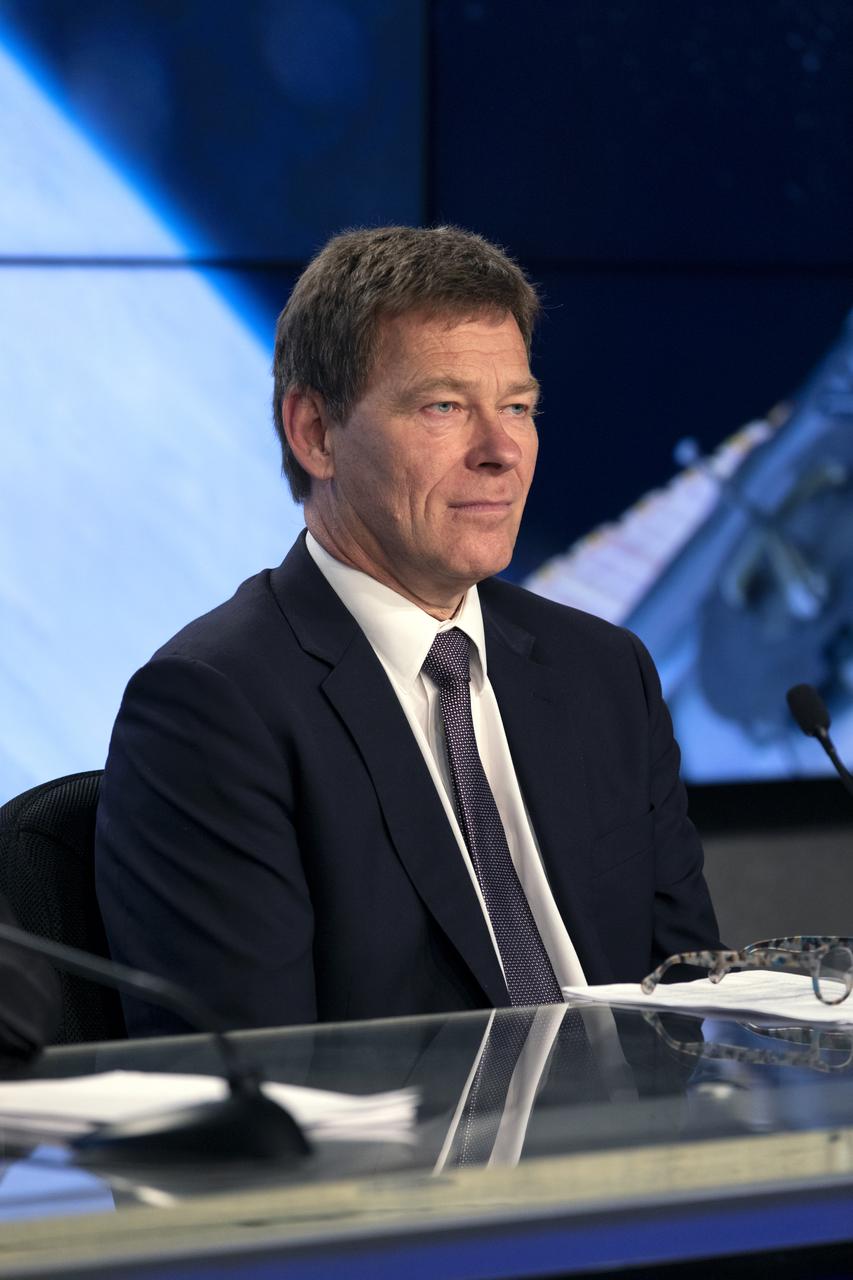
Hans Koenigsmann, VP, Build and Flight Reliability with SpaceX, speaks to members of the news media during a prelaunch news conference for SpaceX’s 17th Commercial Resupply Services (CRS-17) mission for NASA to the International Space Station on May 2, 2019, at the agency’s Kennedy Space Center in Florida. The SpaceX Falcon 9 rocket and Dragon cargo module are scheduled to launch no earlier than May 3, 2019, from Space Launch Complex 40 on Cape Canaveral Air Force Station in Florida.

In the Kennedy Space Center’s Press Site auditorium, Hans Koenigsmann, vice president of Build and Flight Reliability for SpaceX, speaks to members of the media during a prelaunch news conference for the SpaceX CRS-12 commercial resupply services mission to the International Space Station. A Dragon spacecraft is scheduled to be launched from Kennedy’s Launch Complex 39A on Aug. 14 atop a SpaceX Falcon 9 rocket on the company's 12th Commercial Resupply Services mission to the space station.
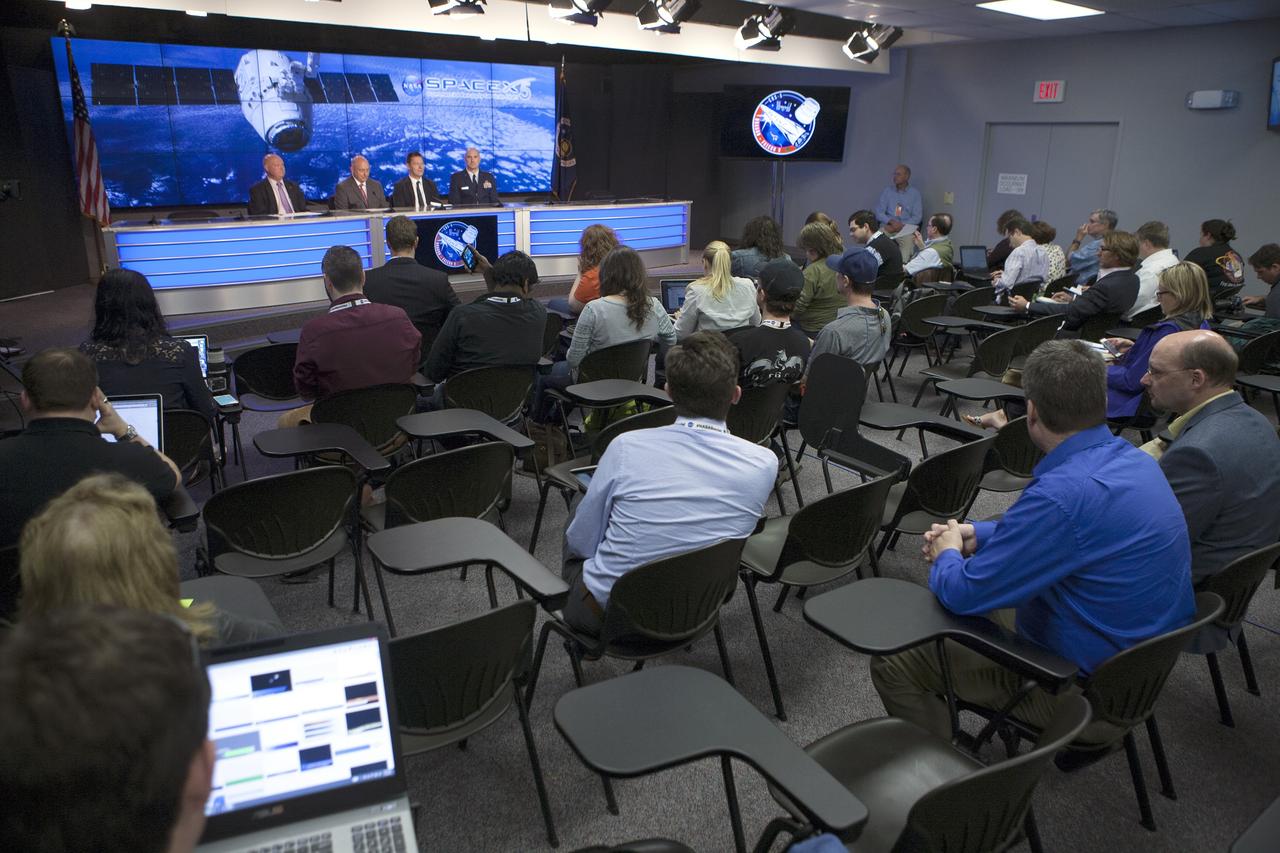
In the Kennedy Space Center’s Press Site auditorium, agency and industry leaders spoke to members of the news media as the SpaceX Dragon spacecraft and its Falcon 9 rocket were being prepared for launch. From left are: Mike Curie of NASA Public Affairs, Mike Suffredini, NASA International Space Station program manager, Hans Koenigsmann, SpaceX vice president of Mission Assurance, and Maj. Perry Sweat, U.S. Air Force’s 45th Weather Squadron at Cape Canaveral Air Force Station. Photo credit: NASA/Kim Shiflett
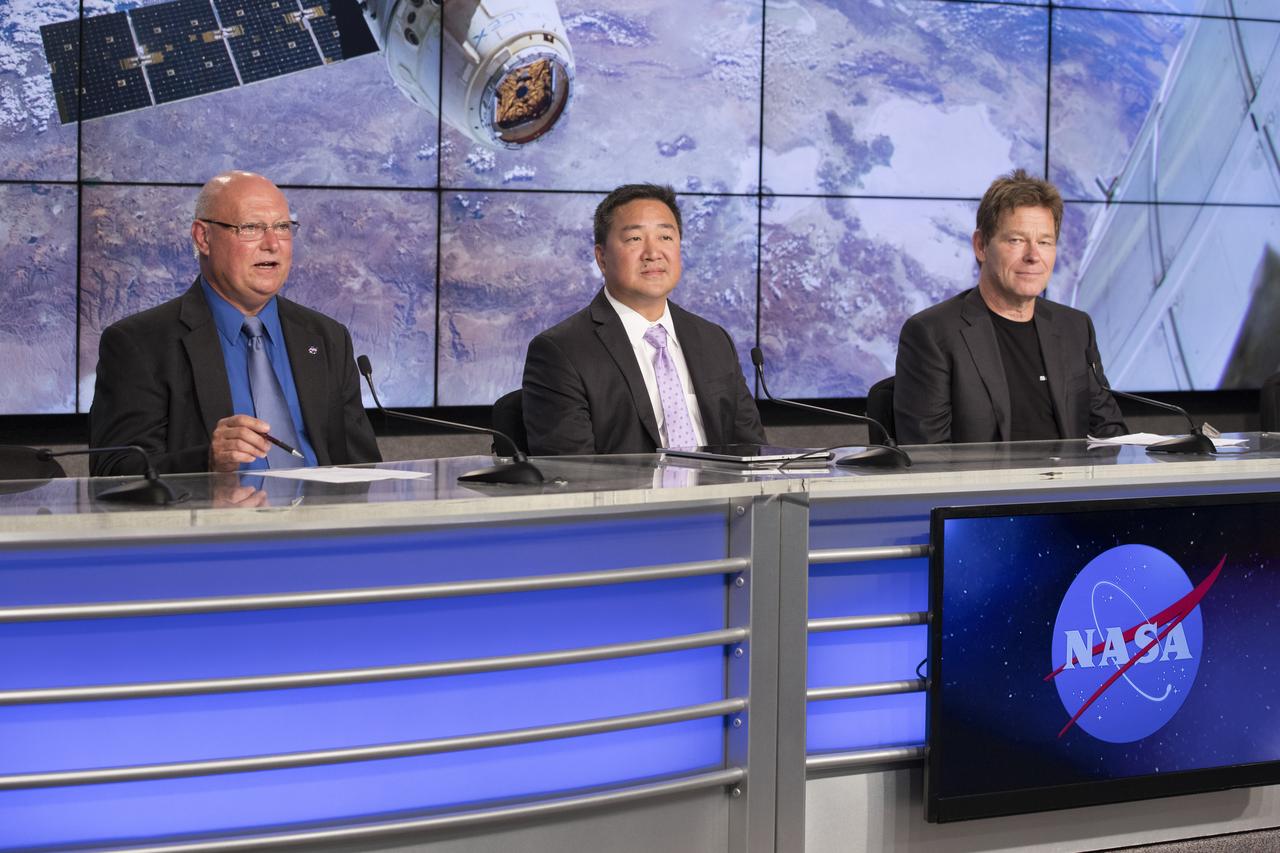
In the Press Site auditorium of NASA's Kennedy Space Center in Florida, NASA and industry leaders speak to media at a post-launch news conference following the liftoff of SpaceX CRS-11, a commercial resupply services mission to the International Space Station. From left are: Mike Curie of NASA Communications, Ven Feng, NASA's manager of the International Space Station Transportation Integration Office, and Hans Koenigsmann, vice president of Flight Reliability for SpaceX. SpaceX CRS-11 lifted off atop a Falcon 9 rocket from Kennedy's Launch Complex 39A at 5:07 p.m. EDT.
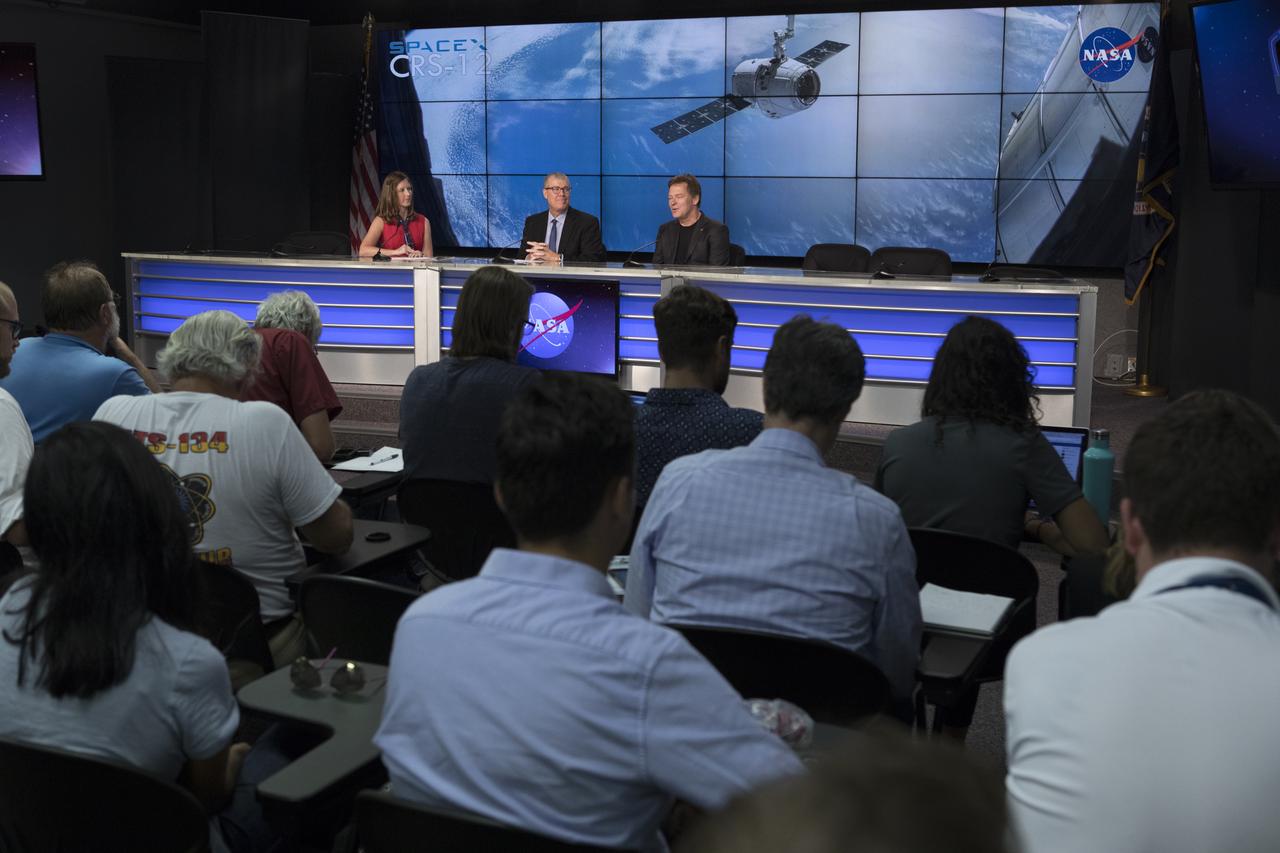
In the Press Site auditorium of NASA's Kennedy Space Center in Florida, NASA and industry leaders speak to media at a post-launch news conference following the liftoff of SpaceX CRS-12, a commercial resupply services mission to the International Space Station. From left are: Stephanie Martin of NASA Communications, Dan Hartman, NASA deputy manager of the International Space Station Program, and Hans Koenigsmann, SpaceX vice president of Flight and Build Reliability. SpaceX CRS-12 lifted off atop a Falcon 9 rocket from Kennedy's Launch Complex 39A at 12:31 p.m. EDT.
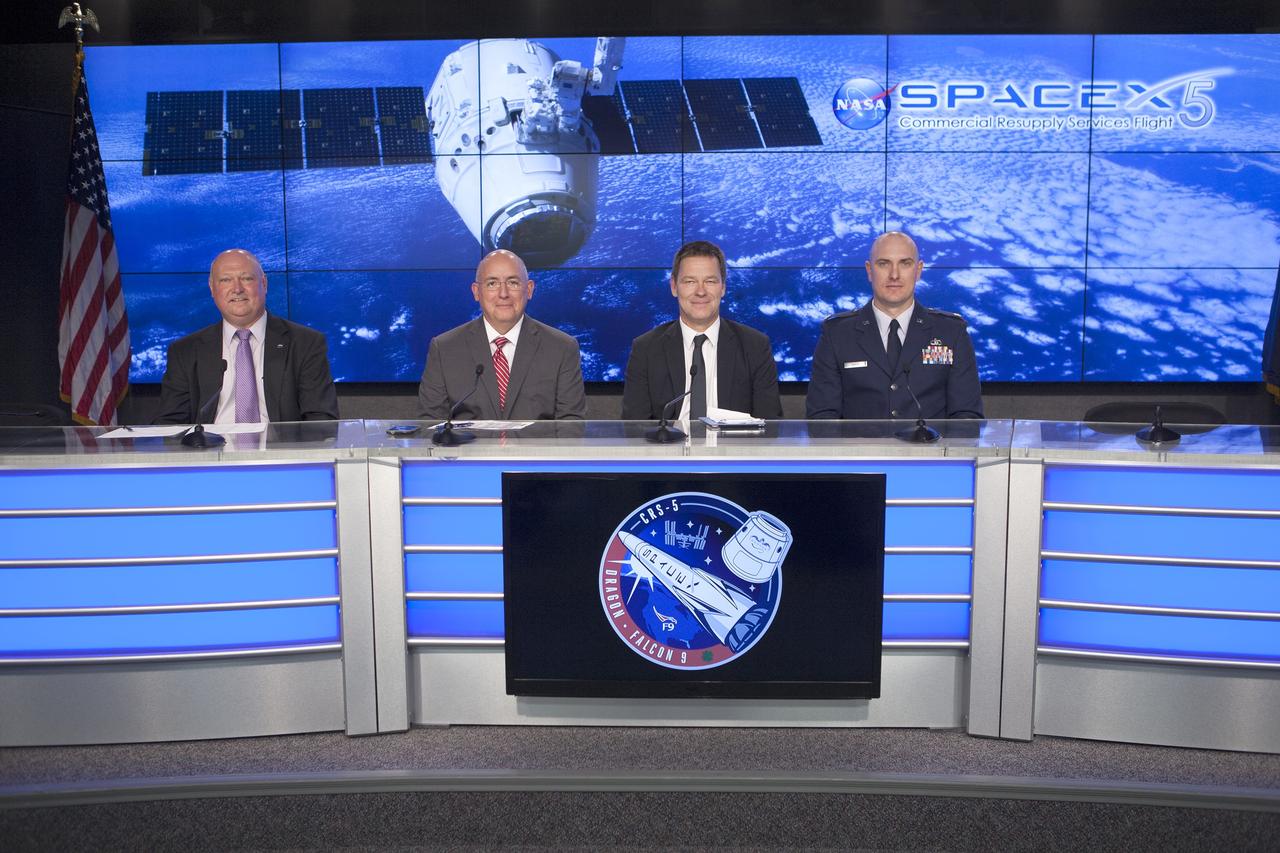
In the Kennedy Space Center’s Press Site auditorium, agency and industry leaders spoke to members of the news media as the SpaceX Dragon spacecraft and its Falcon 9 rocket were being prepared for launch. From left are: Mike Curie of NASA Public Affairs, Mike Suffredini, NASA International Space Station program manager, Hans Koenigsmann, SpaceX vice president of Mission Assurance, and Maj. Perry Sweat, U.S. Air Force’s 45th Weather Squadron at Cape Canaveral Air Force Station. Photo credit: NASA/Kim Shiflett
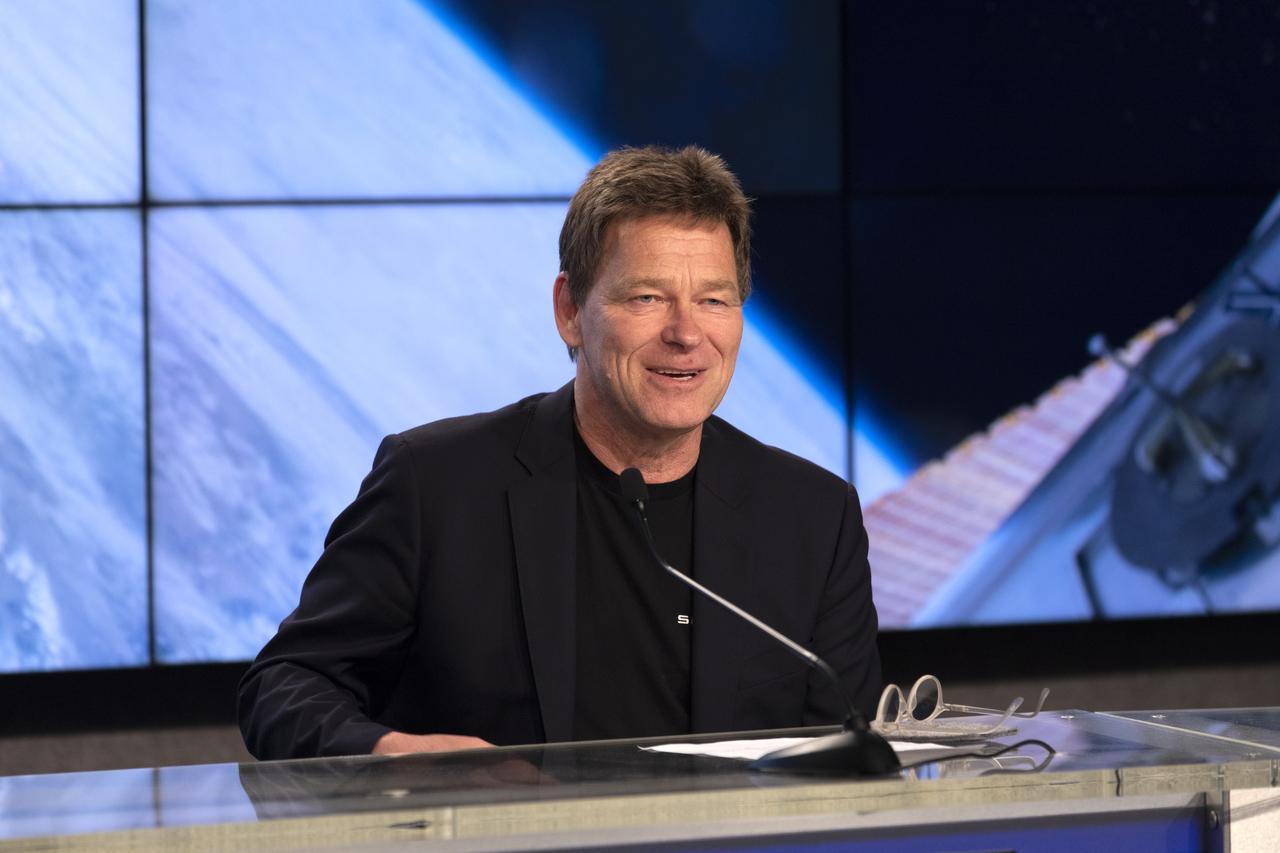
Hans Koenigsmann, vice president, Build and Flight Reliability with SpaceX, speaks to members of the news media during a postlaunch news conference at NASA’s Kennedy Space Center in Florida on May 4, 2019, for SpaceX’s 17th Commercial Resupply Services (CRS-17) mission to the International Space Station for the agency. The company’s Falcon 9 rocket with the Dragon cargo module lifted off from Space Launch Complex 40 at Cape Canaveral Air Force Station in Florida at 2:48 a.m. EDT. The Dragon cargo module will deliver about 5,500 pounds of science and research, crew supplies and vehicle hardware to the orbital laboratory and its crew.
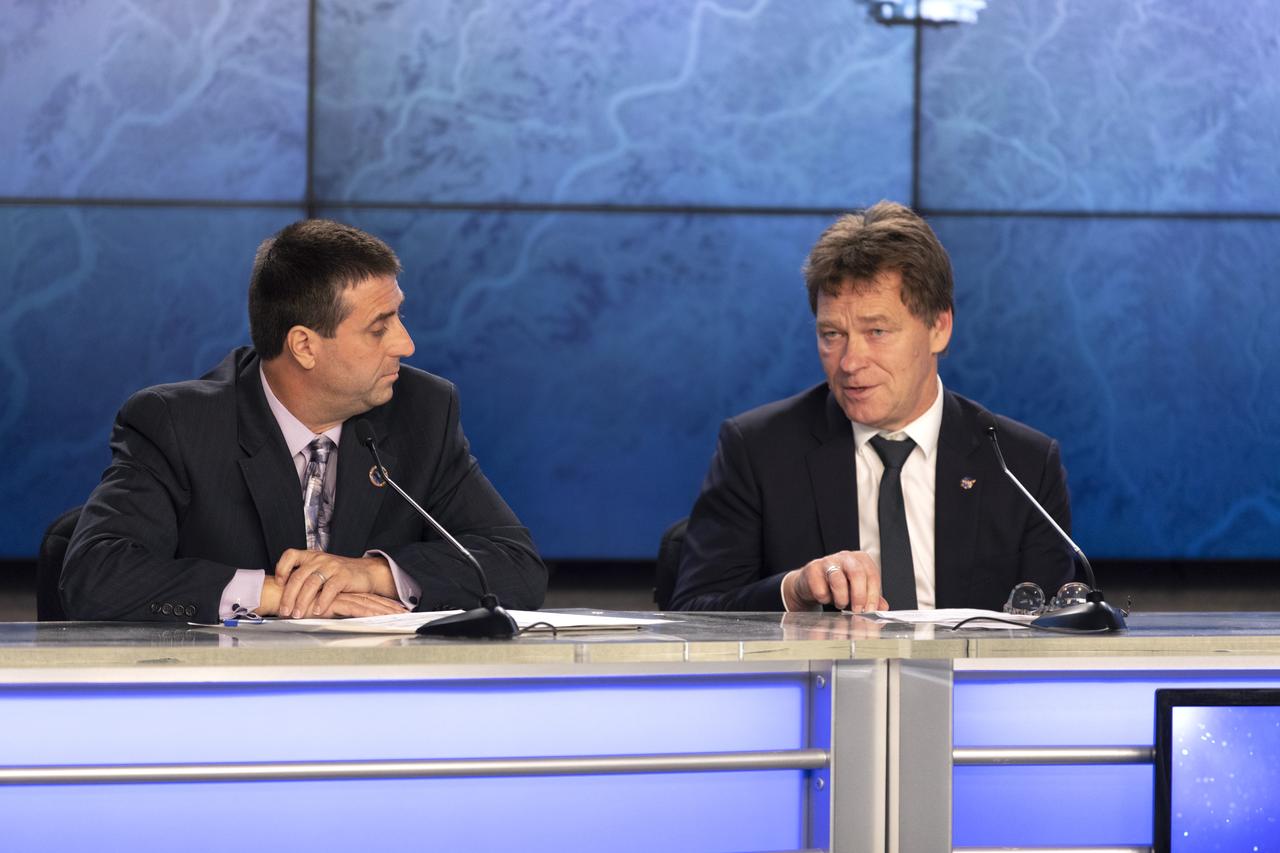
In the Kennedy Space Center’s Press Site auditorium, Joel Montalbano, deputy International Space Station program manager at NASA's Johnson Space Center in Houston, and Hans Koenigsmann, vice president of Build and Flight Reliability for SpaceX, speak to members of the media during a prelaunch news conference for the SpaceX CRS-16 commercial resupply services mission to the International Space Station. A Dragon spacecraft is scheduled to be launched from Space Launch Complex 40 at Cape Canaveral Air Force Station. The SpaceX Falcon 9 rocket will lift off on the company's 16th Commercial Resupply Services mission to the space station.
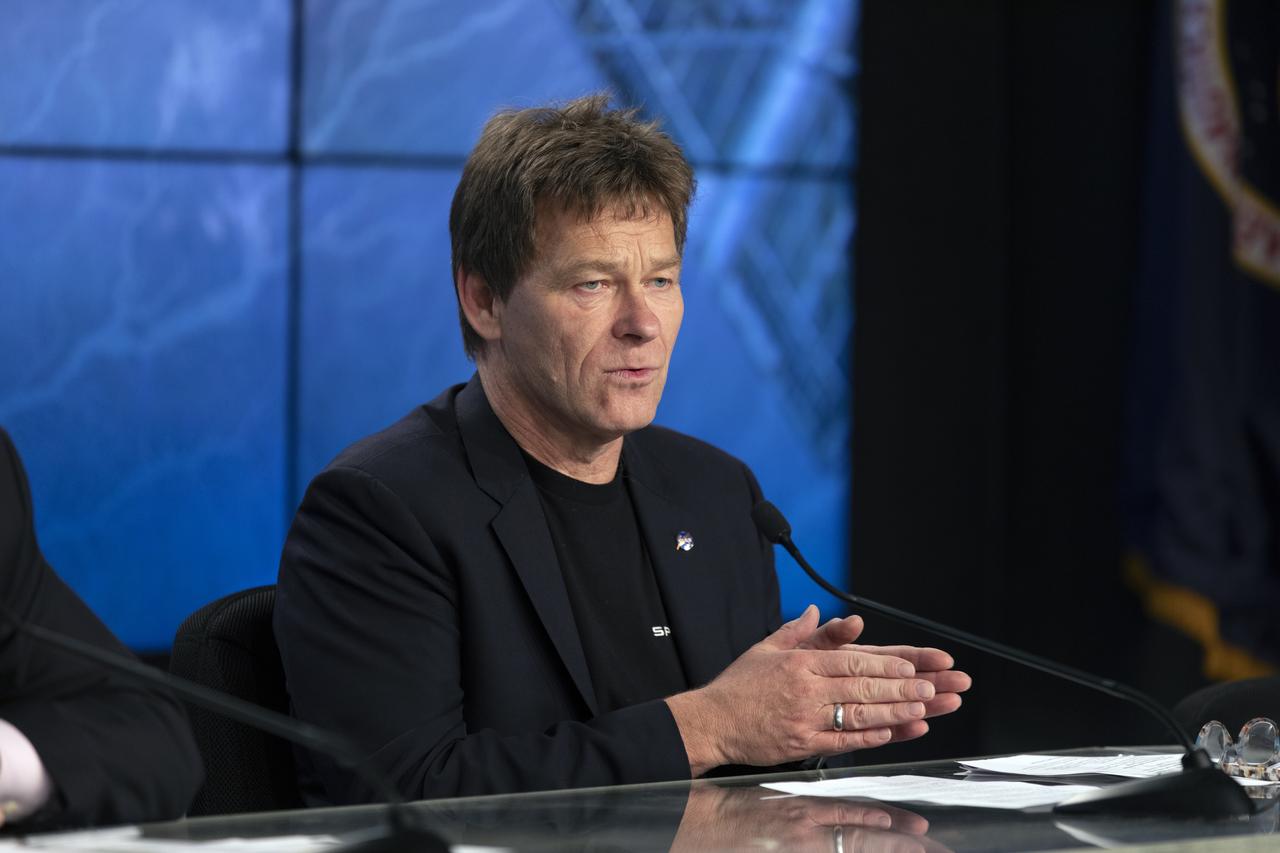
In the Press Site auditorium of NASA's Kennedy Space Center in Florida, Hans Koenigsmann, vice president of Build and Flight Reliability for SpaceX, speaks to media at a post-launch news conference following the liftoff of SpaceX CRS-16. The flight is a commercial resupply services mission to the International Space Station. SpaceX CRS-16 lifted off atop a Falcon 9 rocket from Space Launch Complex 40 at Cape Canaveral Air Force Station at 1:16 p.m. EST, Dec. 5, 2018, with supplies and equipment and new science experiments for technology research.
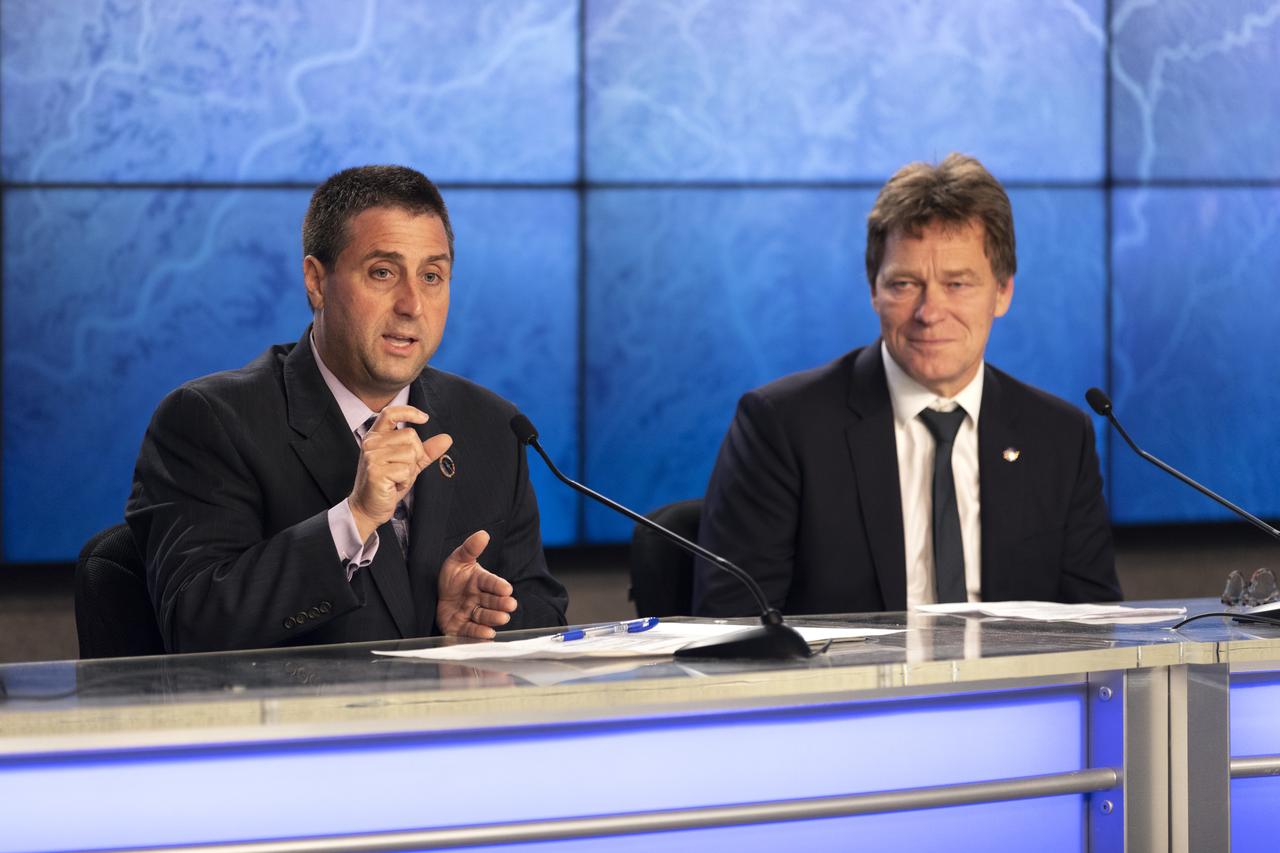
In the Kennedy Space Center’s Press Site auditorium, Joel Montalbano, deputy International Space Station program manager at NASA's Johnson Space Center in Houston, and Hans Koenigsmann, vice president of Build and Flight Reliability for SpaceX, speak to members of the media during a prelaunch news conference for the SpaceX CRS-16 commercial resupply services mission to the International Space Station. A Dragon spacecraft is scheduled to be launched from Space Launch Complex 40 at Cape Canaveral Air Force Station. The SpaceX Falcon 9 rocket will lift off on the company's 16th Commercial Resupply Services mission to the space station.

CAPE CANAVERAL, Fla. – Hans Koenigsmann, vice president of mission assurance at SpaceX, listens to a question from a member of the news media during a briefing regarding NOAA’s Deep Space Climate Observatory spacecraft, or DSCOVR. DSCOVR will launch aboard a SpaceX Falcon 9 rocket. The mission is a partnership between NOAA, NASA and the U.S. Air Force. DSCOVR will maintain the nation's real-time solar wind monitoring capabilities which are critical to the accuracy and lead time of NOAA's space weather alerts and forecasts. To learn more about DSCOVR, visit http://www.nesdis.noaa.gov/DSCOVR. Photo credit: NASA/Kim Shiflett
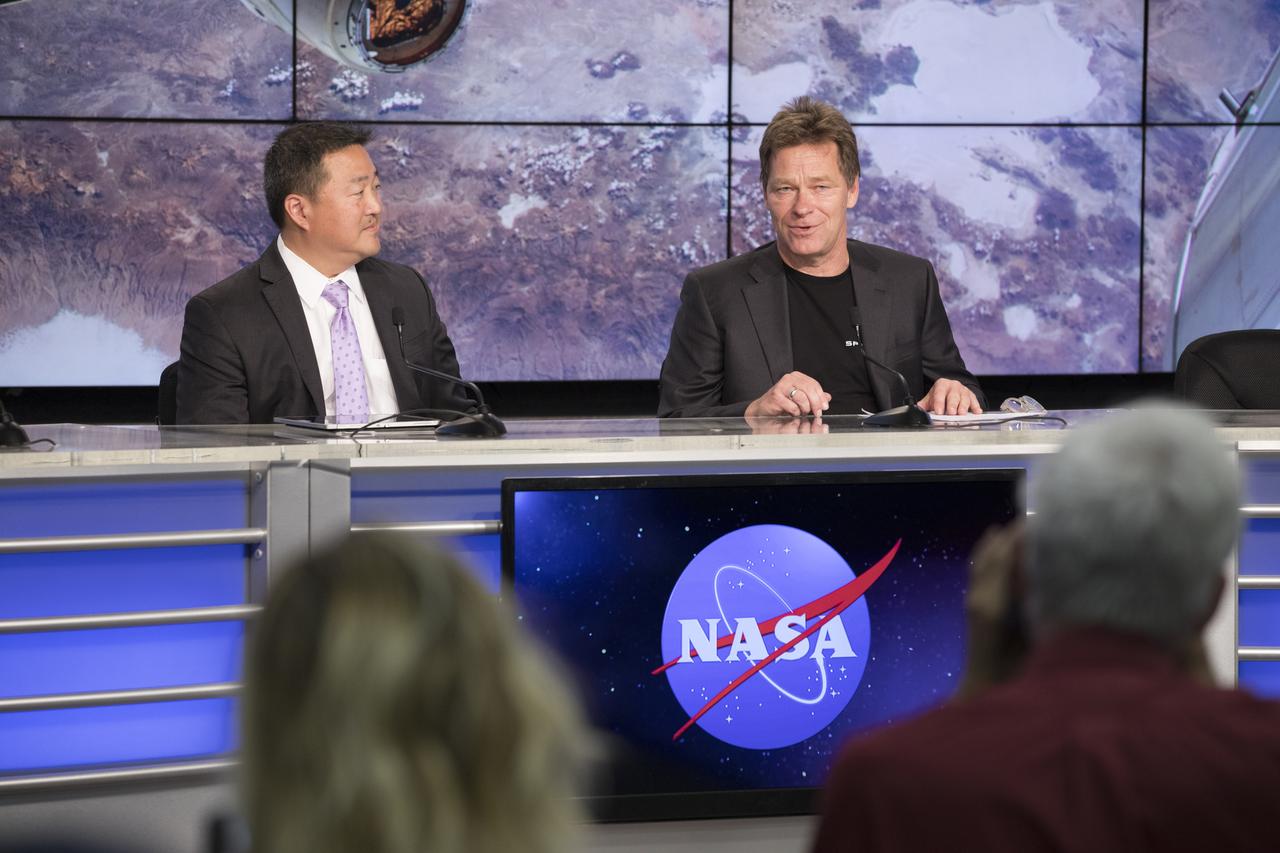
In the Press Site auditorium of NASA's Kennedy Space Center in Florida, NASA and industry leaders speak to media at a post-launch news conference following the liftoff of SpaceX CRS-11, a commercial resupply services mission to the International Space Station. From left are: Ven Feng, NASA's manager of the International Space Station Transportation Integration Office, and Hans Koenigsmann, vice president of Flight Reliability for SpaceX. SpaceX CRS-11 lifted off atop a Falcon 9 rocket from Kennedy's Launch Complex 39A at 5:07 p.m. EDT.
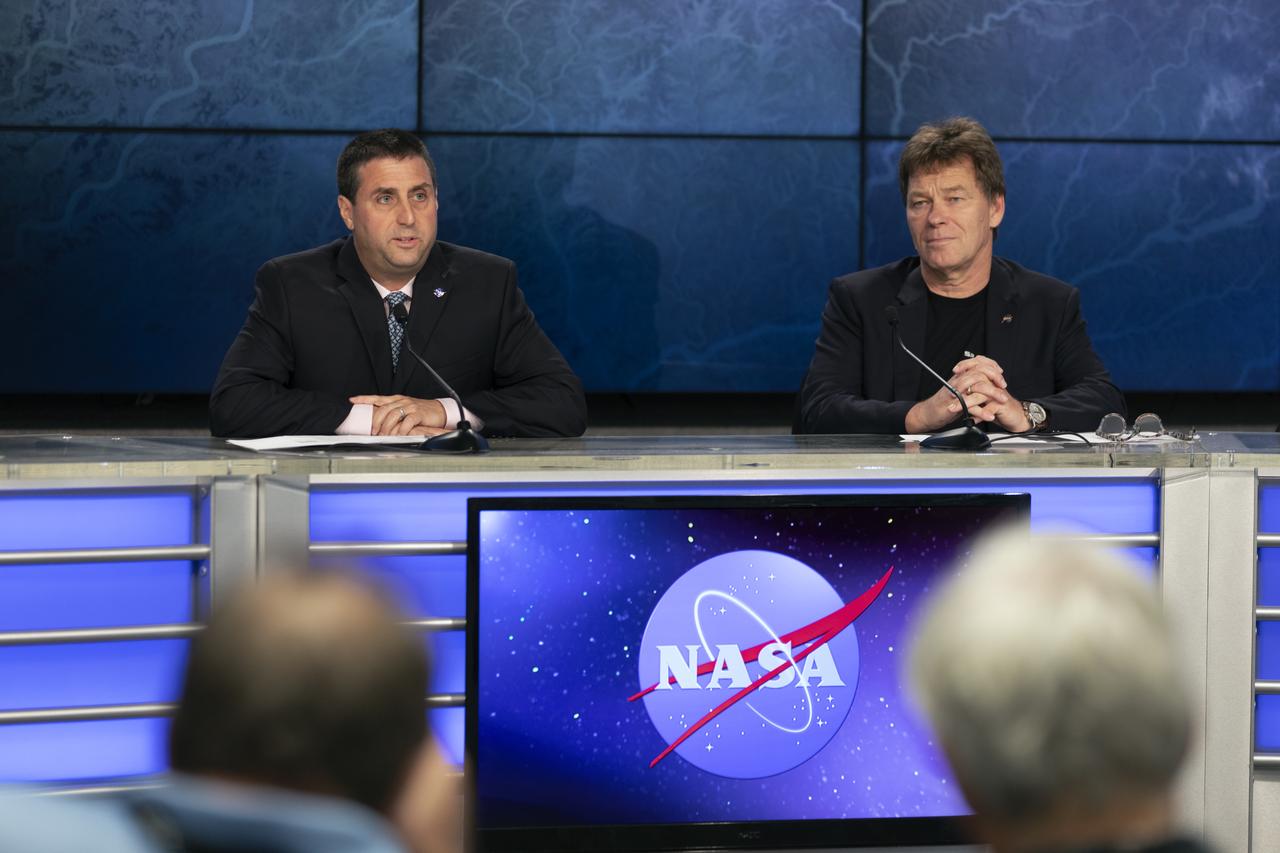
In the Press Site auditorium of NASA's Kennedy Space Center in Florida, Joel Montalbano, deputy International Space Station program manager at NASA's Johnson Space Center in Houston, left, and Hans Koenigsmann, vice president of Build and Flight Reliability for SpaceX, speak to media at a post-launch news conference following the liftoff of SpaceX CRS-16. The flight is a commercial resupply services mission to the International Space Station. SpaceX CRS-16 lifted off atop a Falcon 9 rocket from Space Launch Complex 40 at Cape Canaveral Air Force Station at 1:16 p.m. EST, Dec. 5, 2018, with supplies and equipment and new science experiments for technology research.
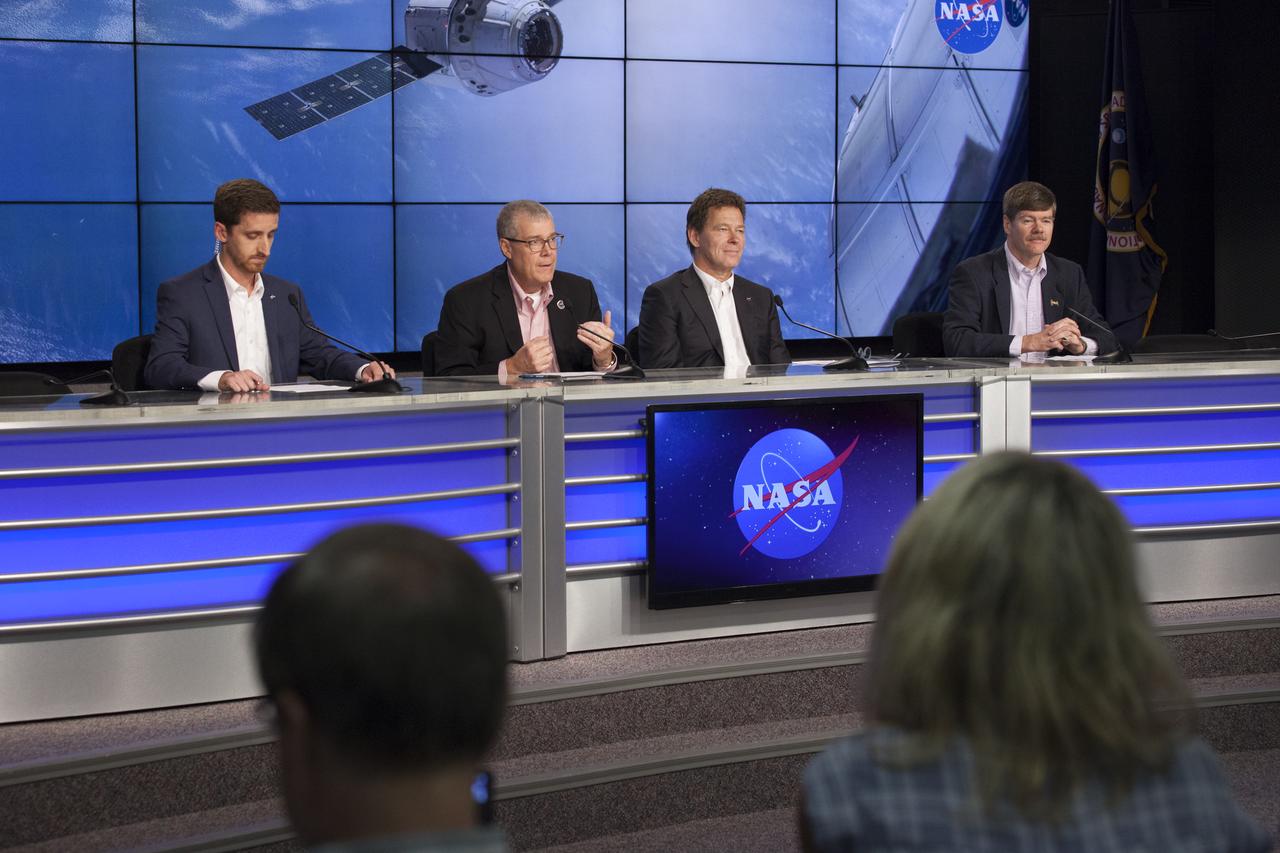
In the Kennedy Space Center’s Press Site auditorium, agency and industry leaders speak to members of the media during a prelaunch news conference for the SpaceX CRS-12 commercial resupply services mission to the International Space Station. From left are: Josh Finch of NASA Communications; Dan Hartman, NASA deputy manager of the International Space Station Program, Hans Koenigsmann, vice president of Build and Flight Reliability for SpaceX, and Pete Hasbrook, associate program scientist for the International Space Station Program. A Dragon spacecraft is scheduled to be launched from Kennedy’s Launch Complex 39A on Aug. 14 atop a SpaceX Falcon 9 rocket on the company's 12th Commercial Resupply Services mission to the space station.
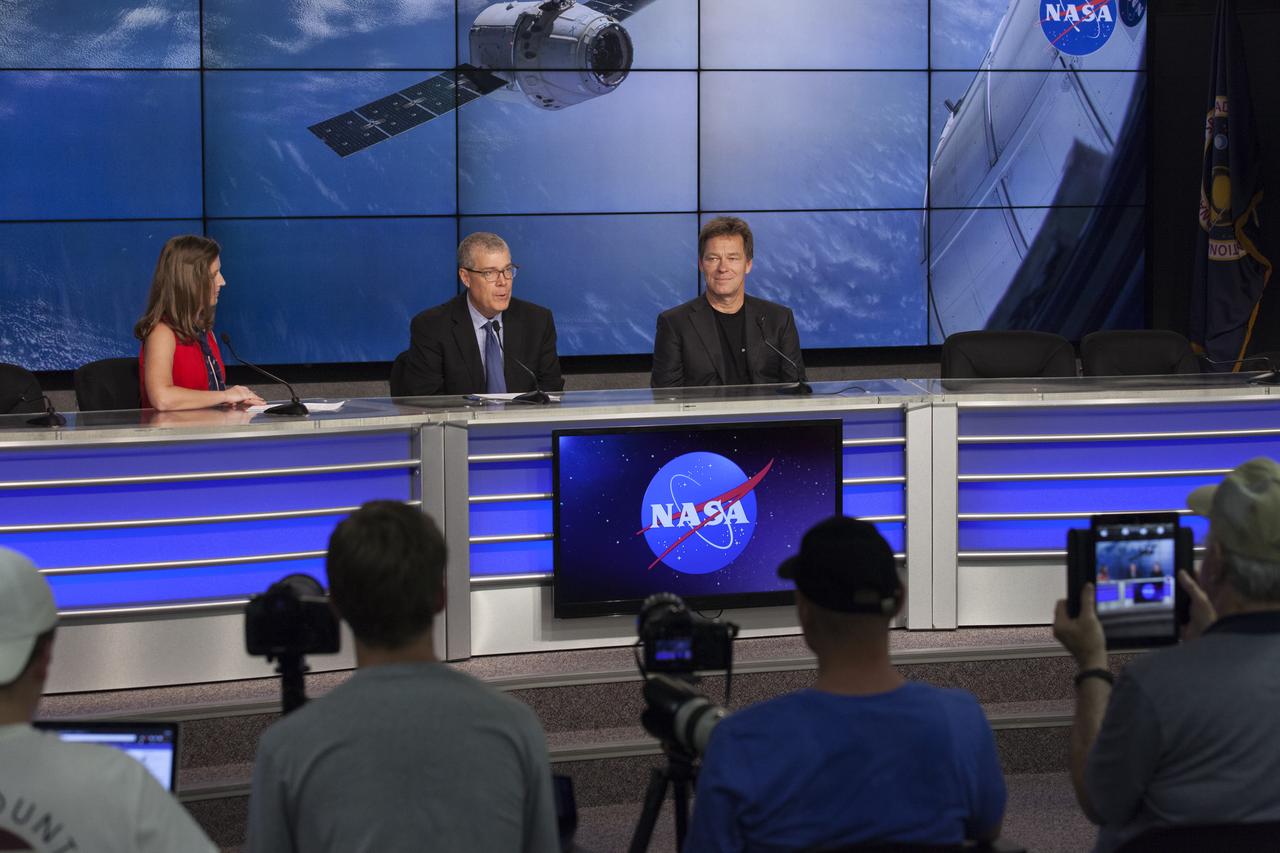
In the Press Site auditorium of NASA's Kennedy Space Center in Florida, NASA and industry leaders speak to media at a post-launch news conference following the liftoff of SpaceX CRS-12, a commercial resupply services mission to the International Space Station. From left are: Stephanie Martin of NASA Communications, Dan Hartman, NASA deputy manager of the International Space Station Program, and Hans Koenigsmann, SpaceX vice president of Flight and Build Reliability. SpaceX CRS-12 lifted off atop a Falcon 9 rocket from Kennedy's Launch Complex 39A at 12:31 p.m. EDT.
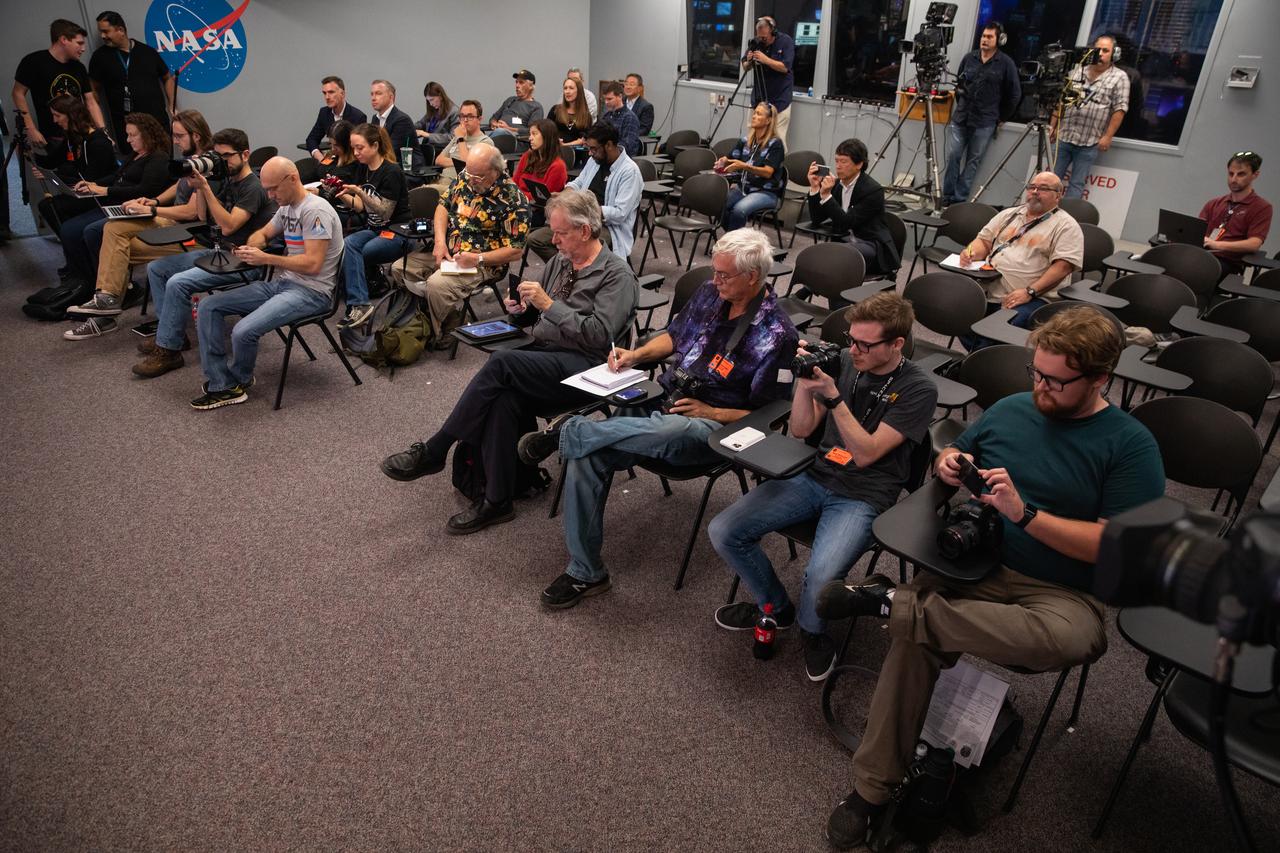
Members of the media attend a prelaunch news conference for SpaceX’s 20th Commercial Resupply Services (CRS-20) mission to the International Space Station at NASA’s Kennedy Space Center in Florida on March 6, 2020. Participants included conference moderator Heather Scott of NASA Communications; Joel Montalbano, manager of the agency’s International Space Station Program; Jennifer Buchli, deputy chief scientist for the International Space Station Program; Hans Koenigsmann, vice president of Build and Flight Reliability at SpaceX; and Mike McAleenan, launch weather officer with the U.S. Air Force 45th Space Wing. SpaceX’s Falcon 9 rocket and cargo Dragon spacecraft are scheduled to lift off from Cape Canaveral Air Force Station’s Space Launch Complex 40 at 11:50 p.m. EST on March 6, 2020.
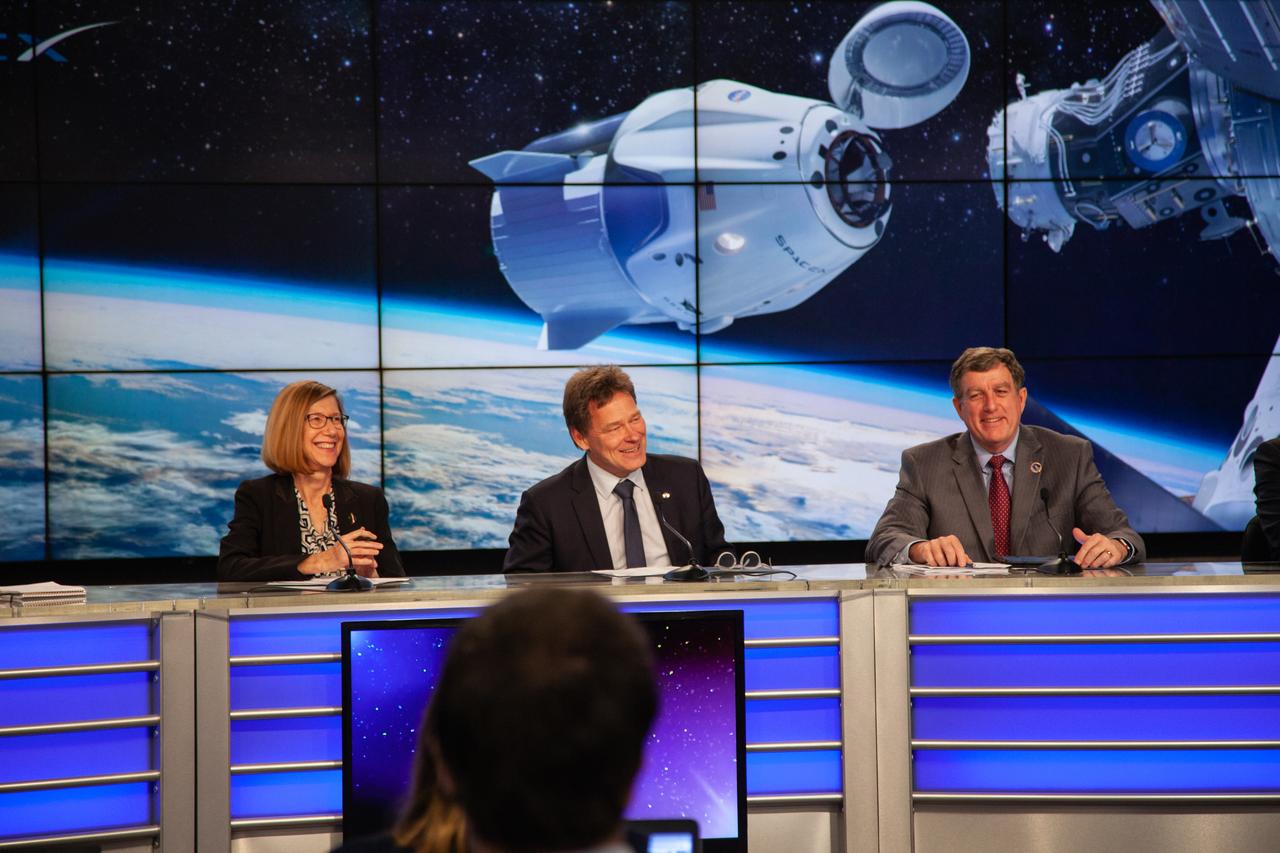
In Kennedy Space Center’s Press Site auditorium, agency and industry leaders speak to members of the media on Friday, Feb. 22, during the post-flight readiness review briefing for the SpaceX Demo-1 Commercial Crew Program (CCP) mission to the International Space Station. From left are: Kathy Lueders, manager, NASA Commercial Crew Program; Hans Koenigsmann, vice president, Build and Flight Reliability, SpaceX; and Kirk Shireman, International Space Station Program manager. The inaugural uncrewed flight of the SpaceX Crew Dragon, known as Demo-1, is targeted to lift off from Kennedy’s Launch Complex 39A on Saturday, March 2. EST. A SpaceX Falcon 9 rocket will launch the Crew Dragon on a mission designed to validate end-to-end systems and capabilities, leading to certification to fly crew.
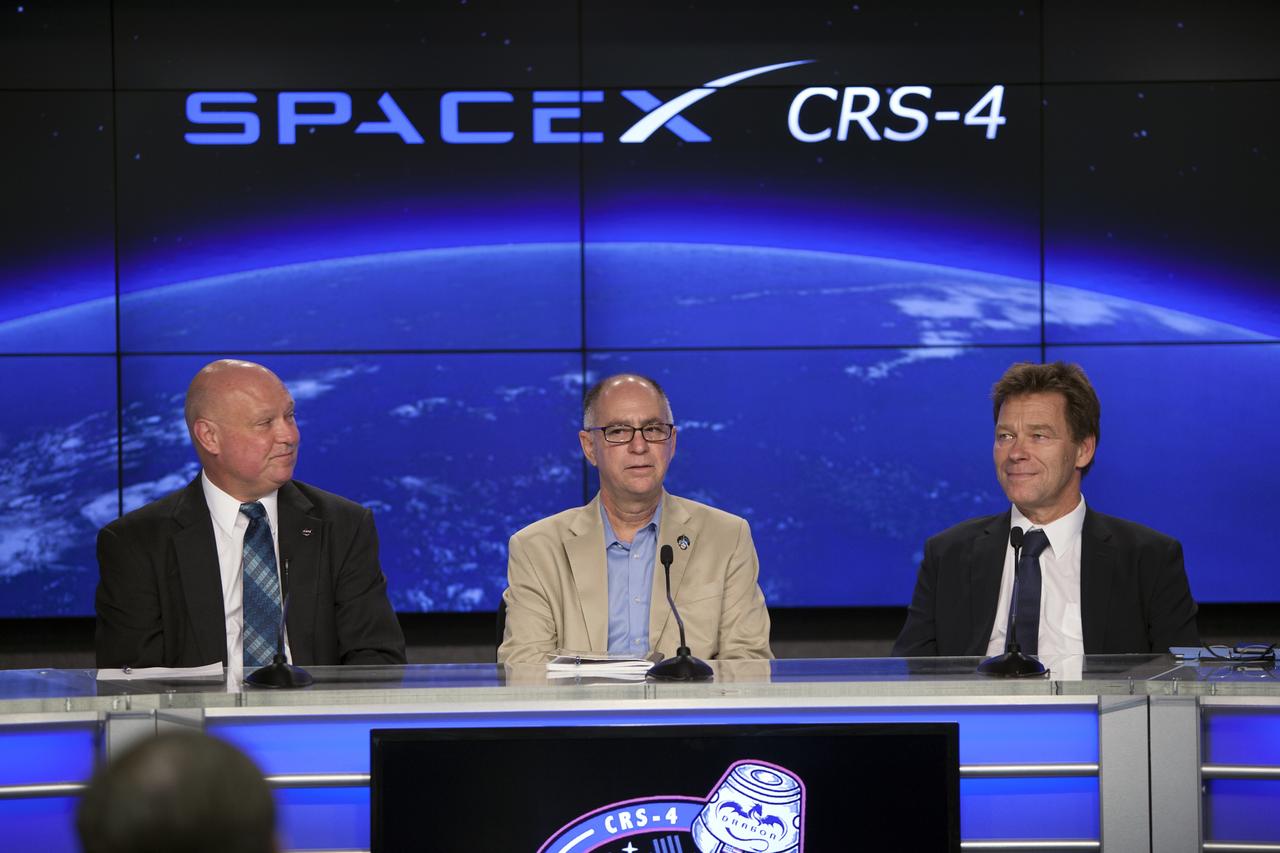
CAPE CANAVERAL, Fla. – NASA holds a post-launch media briefing following the successful launch of NASA's SpaceX CRS-4 mission to the International Space Station. From left are Michael Curie, moderator, NASA Public Affairs, Sam Scimemi, International Space Station Division director, NASA Human Exploration and Operation Mission Directorate, and Hans Koenigsmann, vice president of Mission Assurance, SpaceX. Liftoff was at 1:52 a.m. EDT. The mission is the fourth of 12 SpaceX flights NASA contracted with the company to resupply the space station. It will be the fifth trip by a Dragon spacecraft to the orbiting laboratory. The spacecraft’s 2.5 tons of supplies, science experiments, and technology demonstrations include critical materials to support 255 science and research investigations that will occur during the station's Expeditions 41 and 42. To learn more about the mission, visit http://www.nasa.gov/mission_pages/station/structure/launch/index.html. Photo credit: NASA/Jim Grossmann
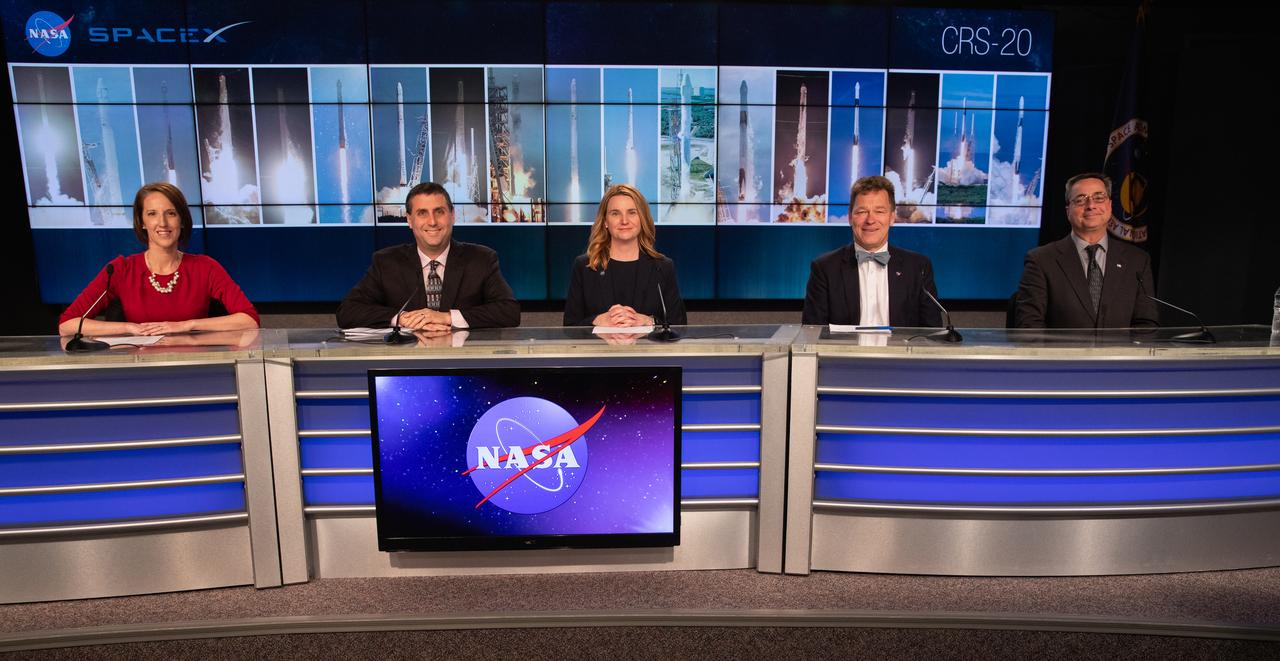
A prelaunch news conference for SpaceX’s 20th Commercial Resupply Services (CRS-20) mission to the International Space Station is held at NASA’s Kennedy Space Center in Florida on March 6, 2020. From left are conference moderator Heather Scott of NASA Communications; Joel Montalbano, manager of the agency’s International Space Station Program; Jennifer Buchli, deputy chief scientist for the International Space Station Program; Hans Koenigsmann, vice president of Build and Flight Reliability at SpaceX; and Mike McAleenan, launch weather officer with the U.S. Air Force 45th Space Wing. SpaceX’s Falcon 9 rocket and cargo Dragon spacecraft are scheduled to lift off from Cape Canaveral Air Force Station’s Space Launch Complex 40 at 11:50 p.m. EST on March 6, 2020.
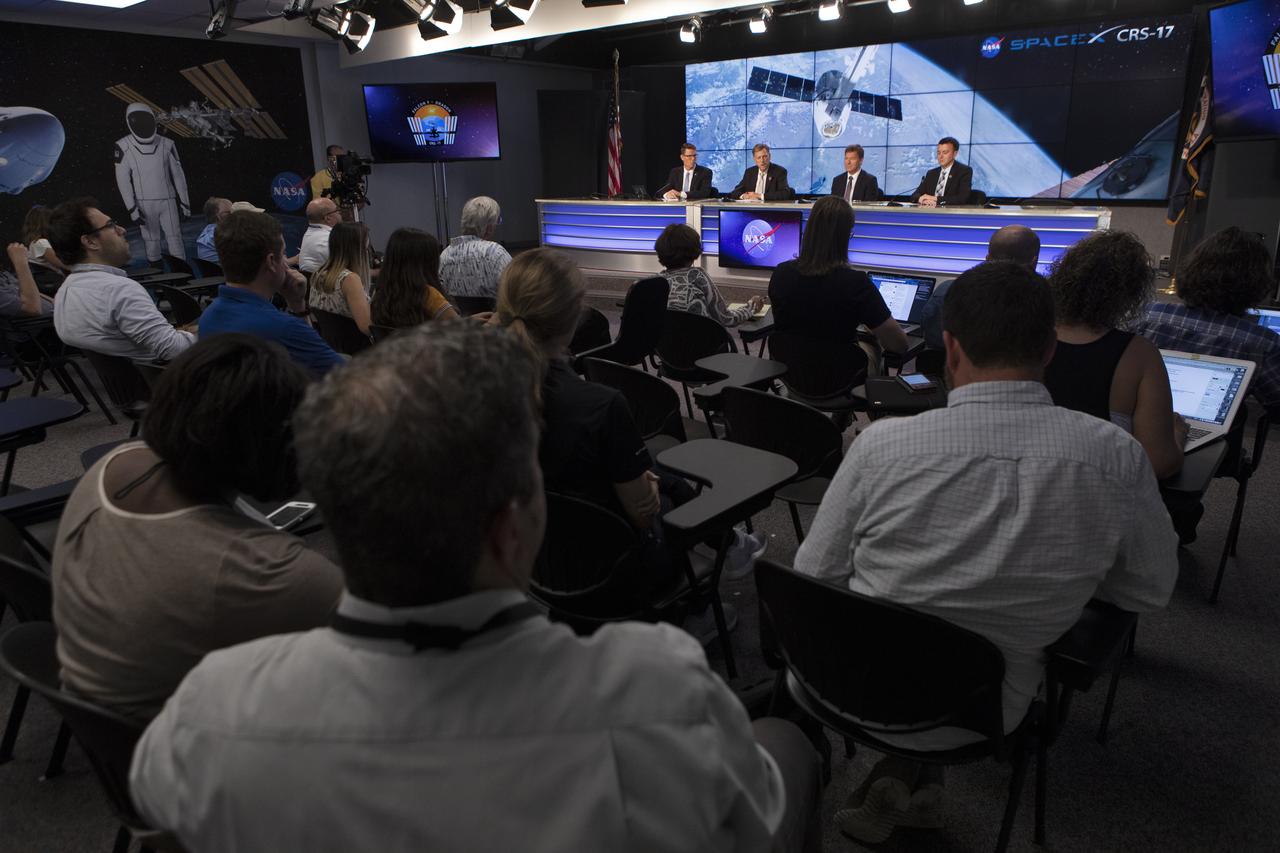
Members of the news media attend a prelaunch news conference for SpaceX’s 17th Commercial Resupply Services (CRS-17) mission to the International Space Station for NASA on May 2, 2019, at the agency’s Kennedy Space Center in Florida. From left, are Derrol Nail, NASA Communications moderator; Kenny Todd, Manager, International Space Station Operations and Integration at NASA’s Johnson Space Center in Houston; Hans Koenigsmann, VP, Build and Flight Reliability with SpaceX; and Will Ulrich, 45th launch weather officer with the U.S. Air Force. The SpaceX Falcon 9 rocket and Dragon cargo module are scheduled to launch no earlier than May 3, 2019, from Space Launch Complex 40 on Cape Canaveral Air Force Station in Florida.
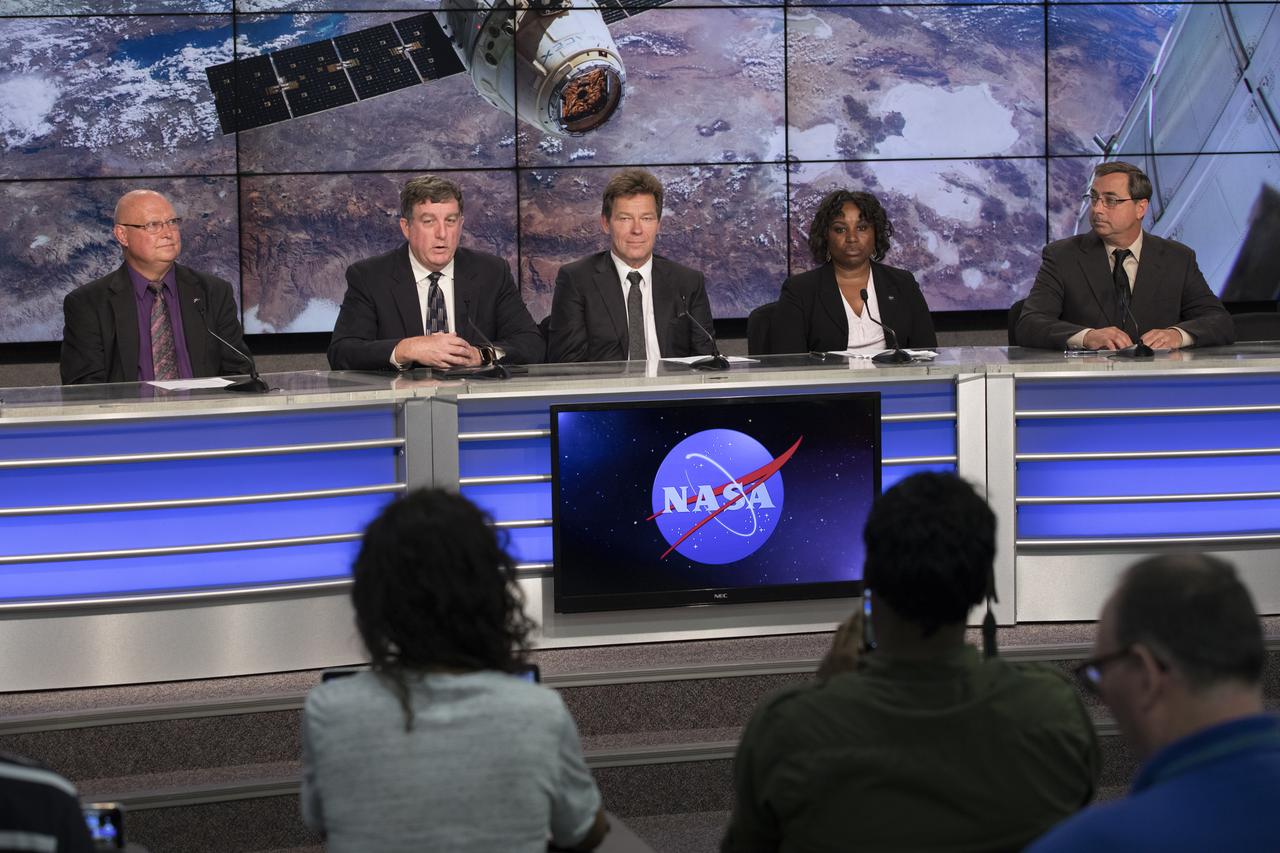
In the Kennedy Space Center’s Press Site auditorium, agency and industry leaders speak to members of the media during a prelaunch news conference for the SpaceX CRS-11 commercial resupply services mission to the International Space Station. From left are: Mike Curie of NASA Communications, Kirk Shireman, NASA's International Space Station Program manager, Hans Koenigsmann, vice president of Flight Reliability for SpaceX, Camille Alleyne, associate program scientist for the International Space Station at NASA’s Johnson Space Center, and Mike McAleenan, launch weather officer for the U.S. Air Force 45th Weather Squadron. A Dragon spacecraft is scheduled to be launched from Kennedy’s Launch Complex 39A on June 1 atop a SpaceX Falcon 9 rocket on the company's 11th Commercial Resupply Services mission to the space station.
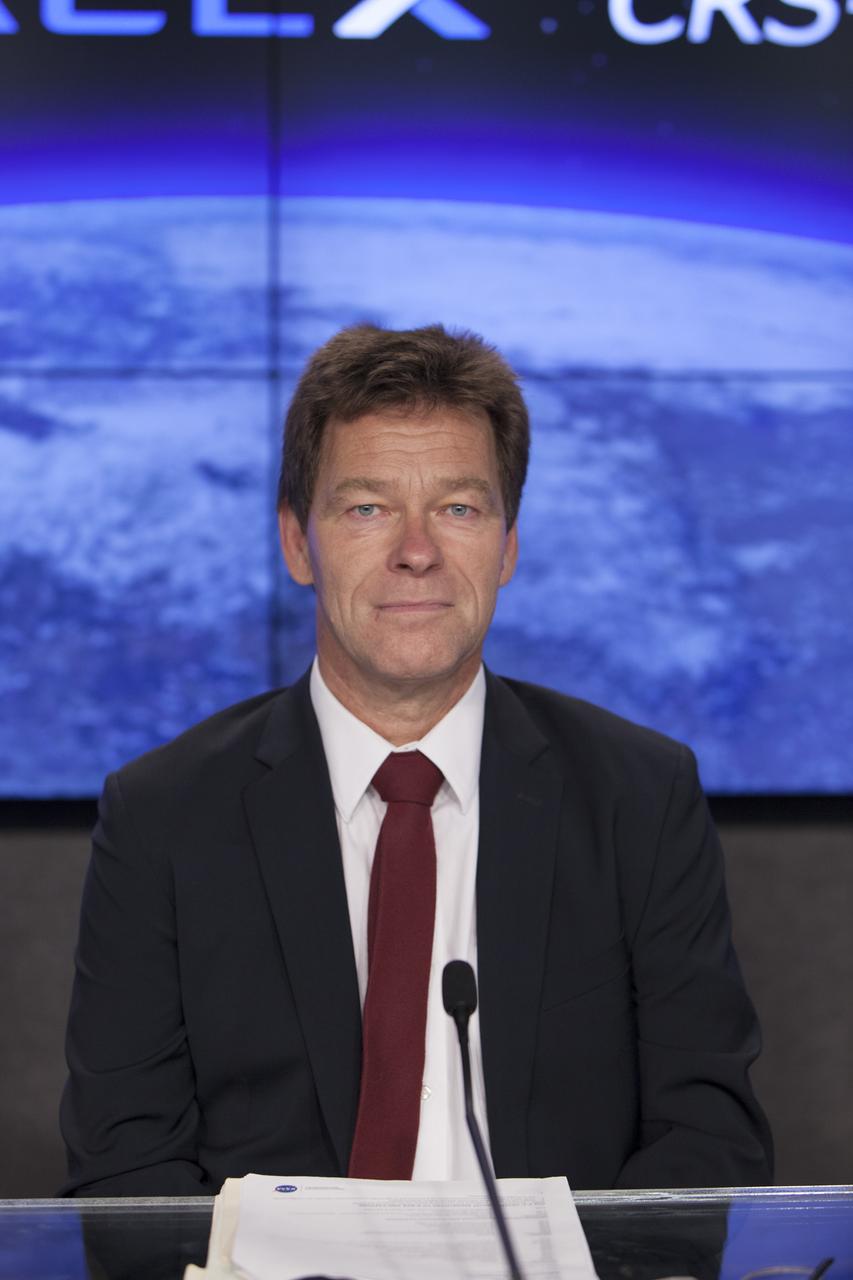
CAPE CANAVERAL, Fla. – In the Kennedy Space Center’s Press Site auditorium, members of news media are briefed on preparations for the launch of the SpaceX CRS-4 mission to resupply the International Space Station. Hans Koenigsmann, vice president of Mission Assurance with SpaceX, participated in the briefing. The mission is the fourth of 12 SpaceX flights NASA contracted with the company to resupply the space station. It will be the fifth trip by a Dragon spacecraft to the orbiting laboratory. The spacecraft’s 2.5 tons of supplies, science experiments, and technology demonstrations include critical materials to support 255 science and research investigations that will occur during the station's Expeditions 41 and 42. Liftoff is targeted for an instantaneous window at 2:14 a.m. EDT. To learn more about the mission, visit http://www.nasa.gov/mission_pages/station/structure/launch/index.html Photo credit: NASA/Jim Grossmann
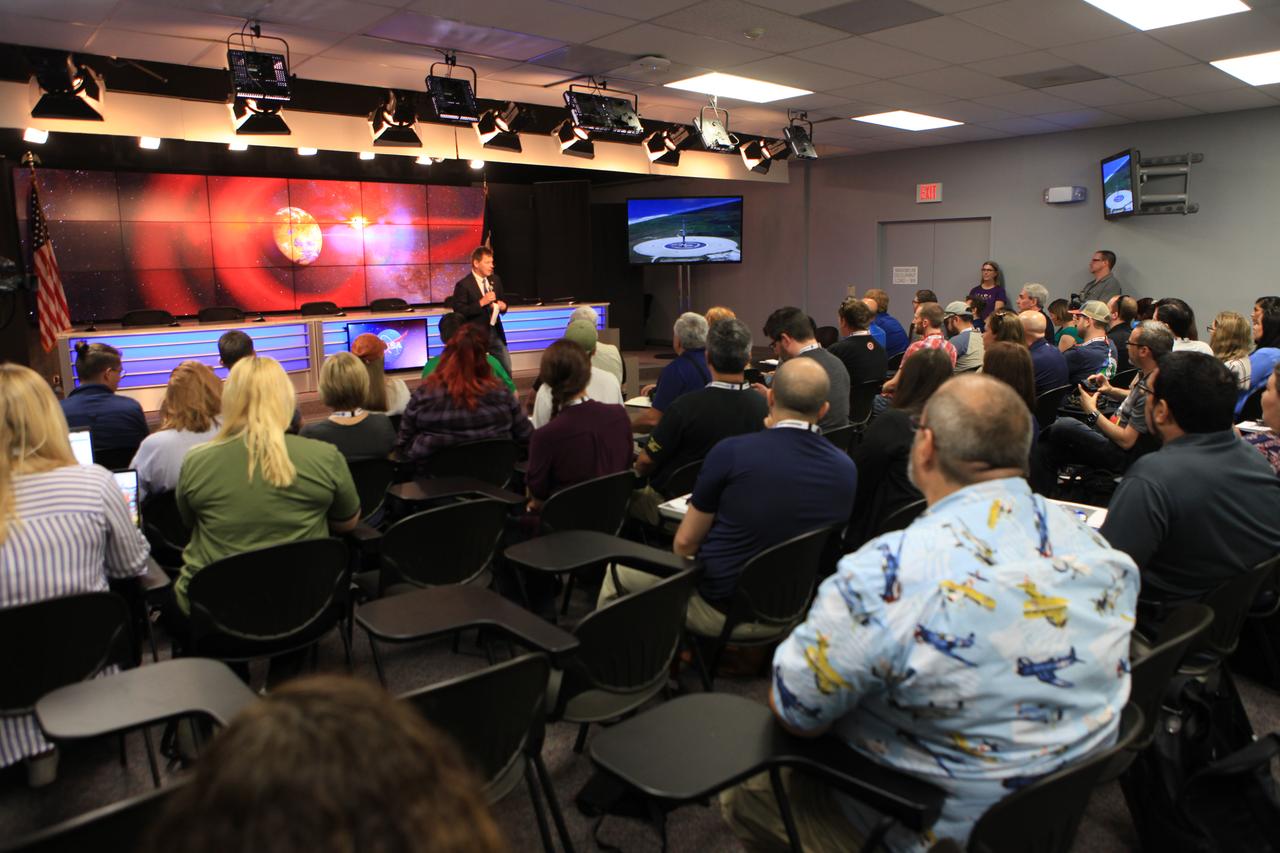
NASA and industry leaders speak to NASA Social participants about the agency's Transiting Exoplanet Survey Satellite (TESS) in the Press Site auditorium at Kennedy Space Center in Florida. Speaking to the group is Hans Koenigsmann, vice president of Build and Flight Reliability at SpaceX. TESS is the next step in the search for planets outside of our solar system. The mission will find exoplanets that periodically block part of the light from their host stars, events called transits. The satellite will survey the nearest and brightest stars for two years to search for transiting exoplanets. TESS will launch on a SpaceX Falcon 9 rocket from Space Launch Complex 40 at Cape Canaveral Air Force Station no earlier than 6:32 p.m. EDT on Monday, April 16.
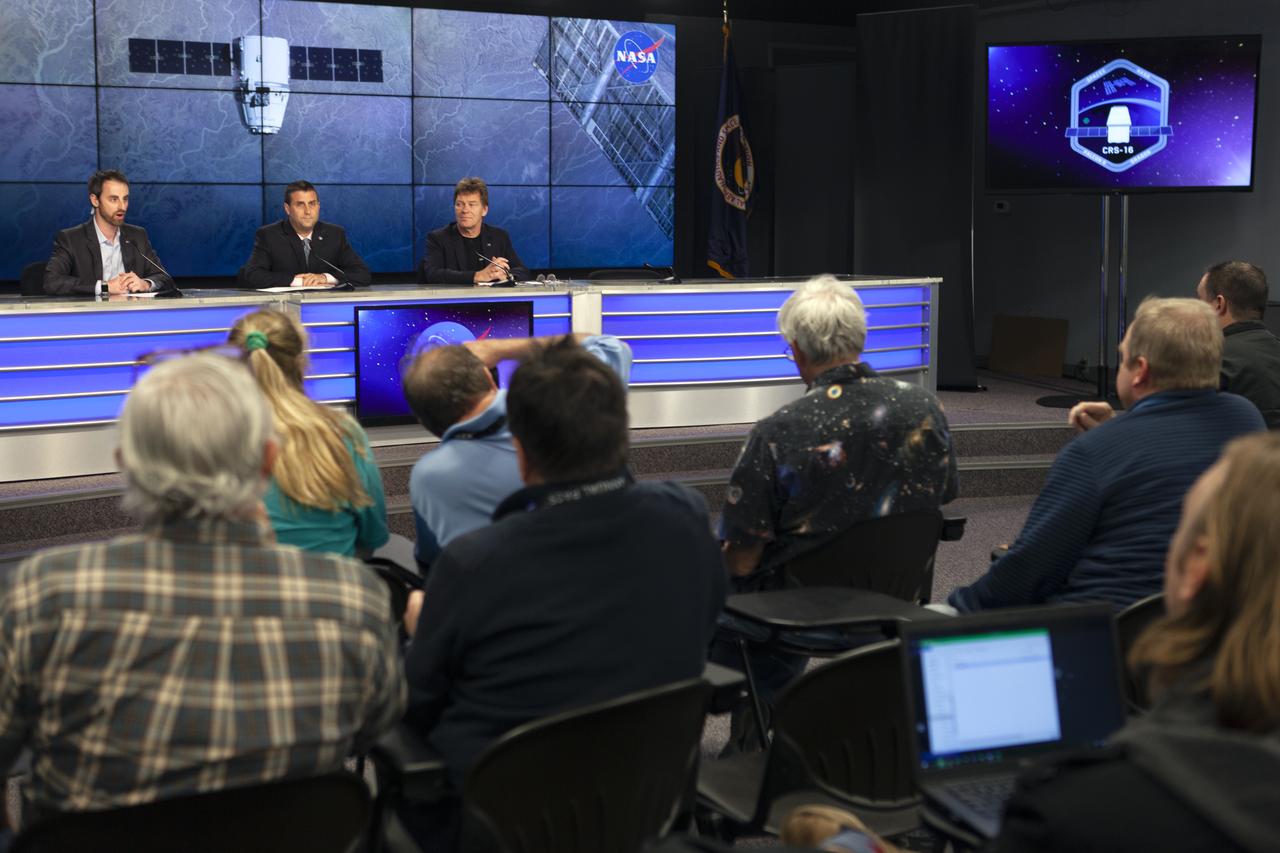
In the Press Site auditorium of NASA's Kennedy Space Center in Florida, from left, Joshua Santora of NASA Communications, Joel Montalbano, deputy International Space Station program manager at NASA's Johnson Space Center in Houston, and Hans Koenigsmann, vice president of Build and Flight Reliability for SpaceX, speak to media at a post-launch news conference following the liftoff of SpaceX CRS-16. The flight is a commercial resupply services mission to the International Space Station. SpaceX CRS-16 lifted off atop a Falcon 9 rocket from Space Launch Complex 40 at Cape Canaveral Air Force Station at 1:16 p.m. EST, Dec. 5, 2018, with supplies and equipment and new science experiments for technology research.
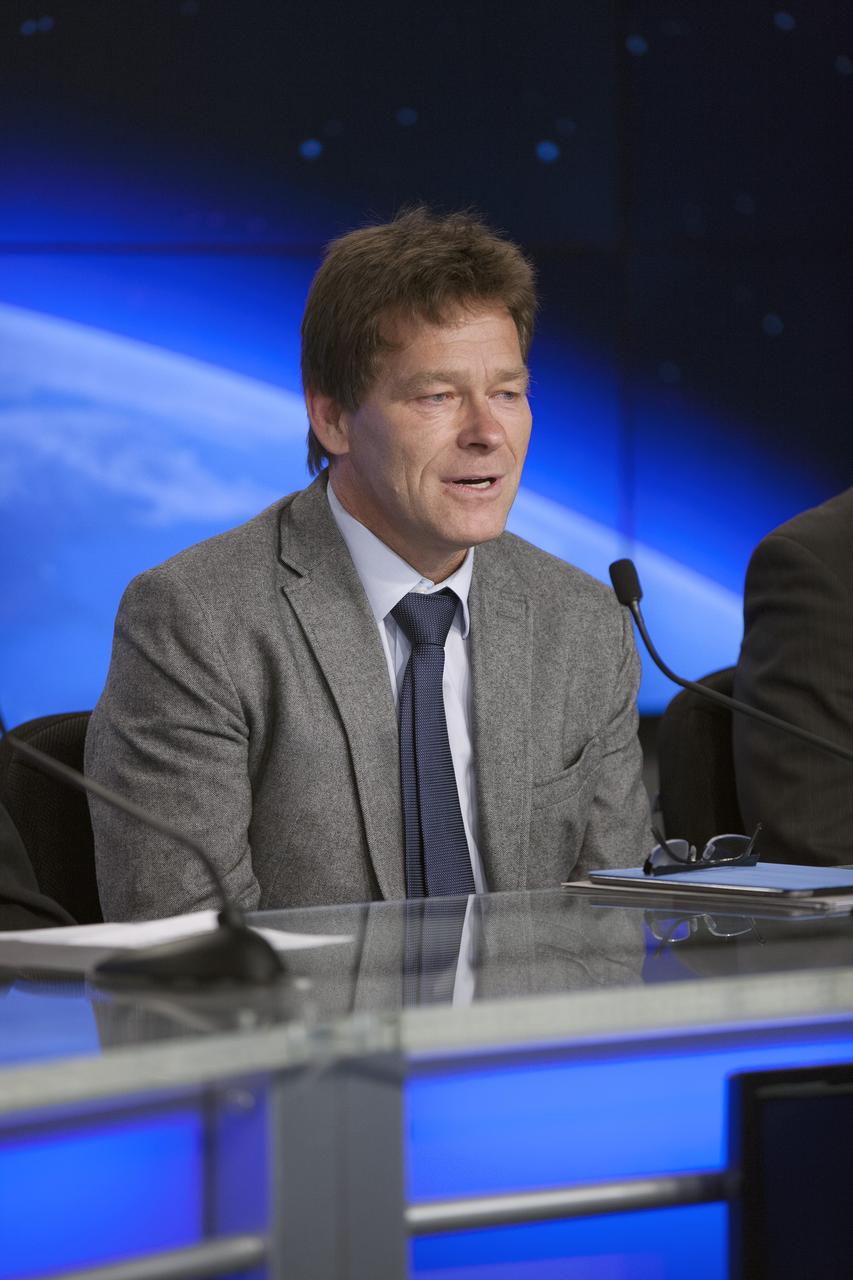
CAPE CANAVERAL, Fla. – During a news conference at NASA's Kennedy Space Center in Florida, agency and contractor officials discussed preparations for the launch of the SpaceX-3 Commercial Resupply Services mission to the International Space Station. Participating in the briefing is Hans Koenigsmann, SpaceX vice president of Mission Assurance. Scheduled for launch on April 14, 2014 atop a Falcon 9 rocket, Dragon spacecraft will be marking its fourth trip to the space station. The SpaceX-3 mission carrying almost 2.5 tons of supplies, technology and science experiments is the third of 12 flights contracted by NASA to resupply the orbiting laboratory. For more information, visit http://www.nasa.gov/mission_pages/station/structure/launch/index.html Photo credit: NASA/Kim Shiflett
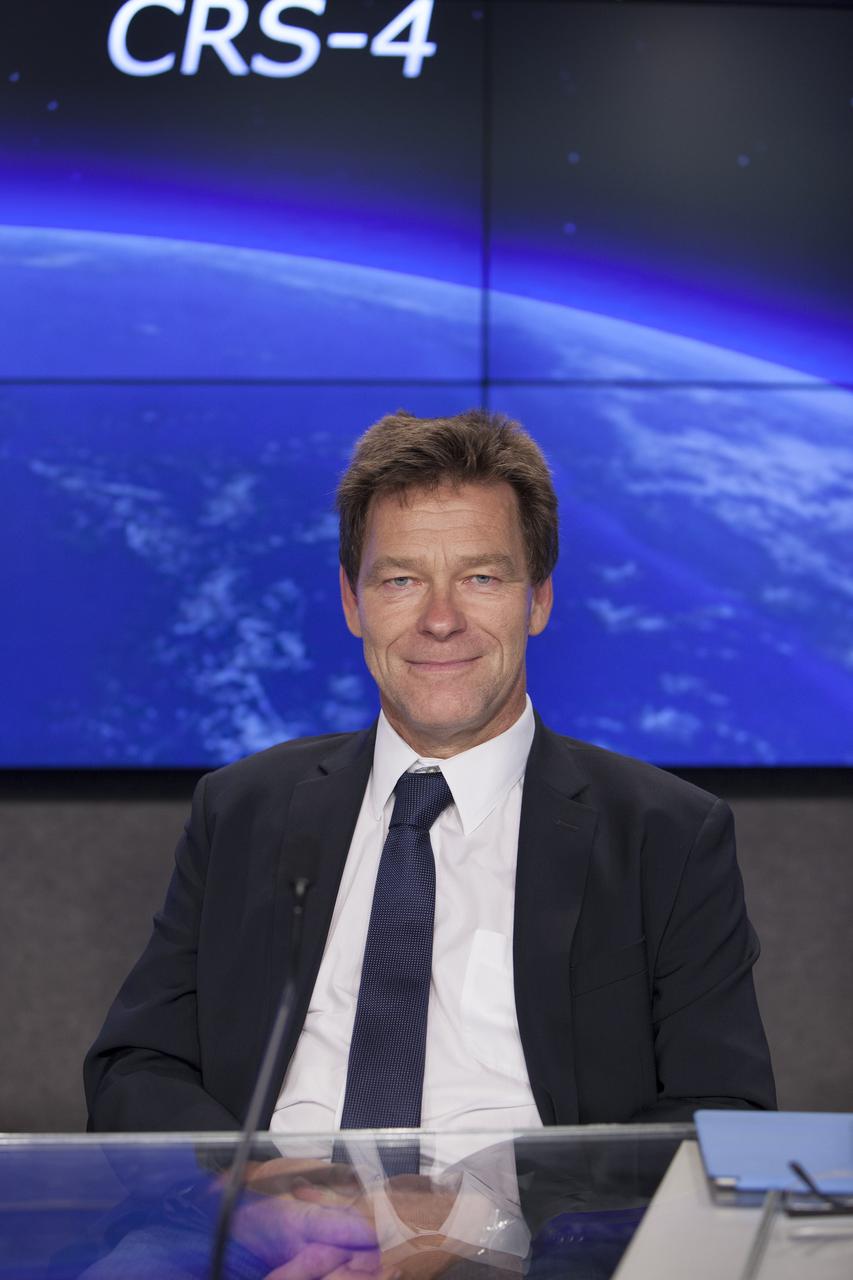
CAPE CANAVERAL, Fla. – Hans Koenigsmann, vice president of Mission Assurance, SpaceX, participates in a post-launch media briefing following the successful launch of NASA's SpaceX CRS-4 mission to the International Space Station. Liftoff was at 1:52 a.m. EDT. The mission is the fourth of 12 SpaceX flights NASA contracted with the company to resupply the space station. It will be the fifth trip by a Dragon spacecraft to the orbiting laboratory. The spacecraft’s 2.5 tons of supplies, science experiments, and technology demonstrations include critical materials to support 255 science and research investigations that will occur during the station's Expeditions 41 and 42. To learn more about the mission, visit http://www.nasa.gov/mission_pages/station/structure/launch/index.html. Photo credit: NASA/Jim Grossmann
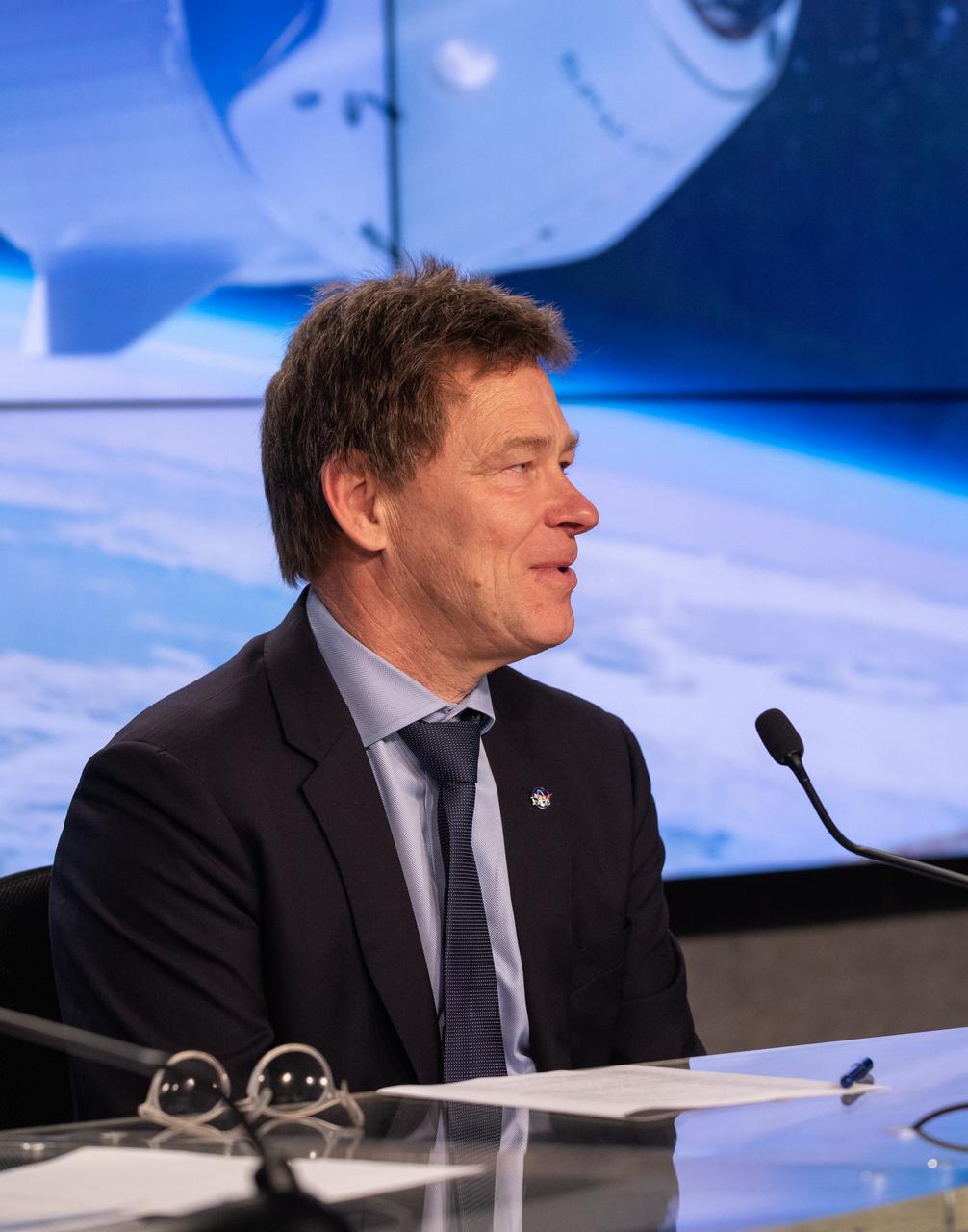
Hans Koenigsmann, vice president, Build and Flight Reliability, SpaceX, speaks to members of the media during a prelaunch news conference with NASA, SpaceX and the 45th Weather Squadron leaders Thursday, Feb. 28, prior to the Saturday, March 2 launch of the SpaceX Demo-1 Commercial Crew Program (CCP) mission to the International Space Station. The inaugural flight of the SpaceX Crew Dragon, known as Demo-1, is scheduled to lift off from Kennedy’s Launch Complex 39A Saturday at 2:49 EST. A SpaceX Falcon 9 rocket will launch the uncrewed spacecraft on a mission designed to validate end-to-end systems and capabilities, leading to certification to fly crew. NASA has worked with SpaceX and Boeing in developing the Commercial Crew Program spacecraft to facilitate new human spaceflight systems launching from U.S. soil with the goal of safe, reliable and cost-effective access to low-Earth orbit destinations, such as the International Space Station.
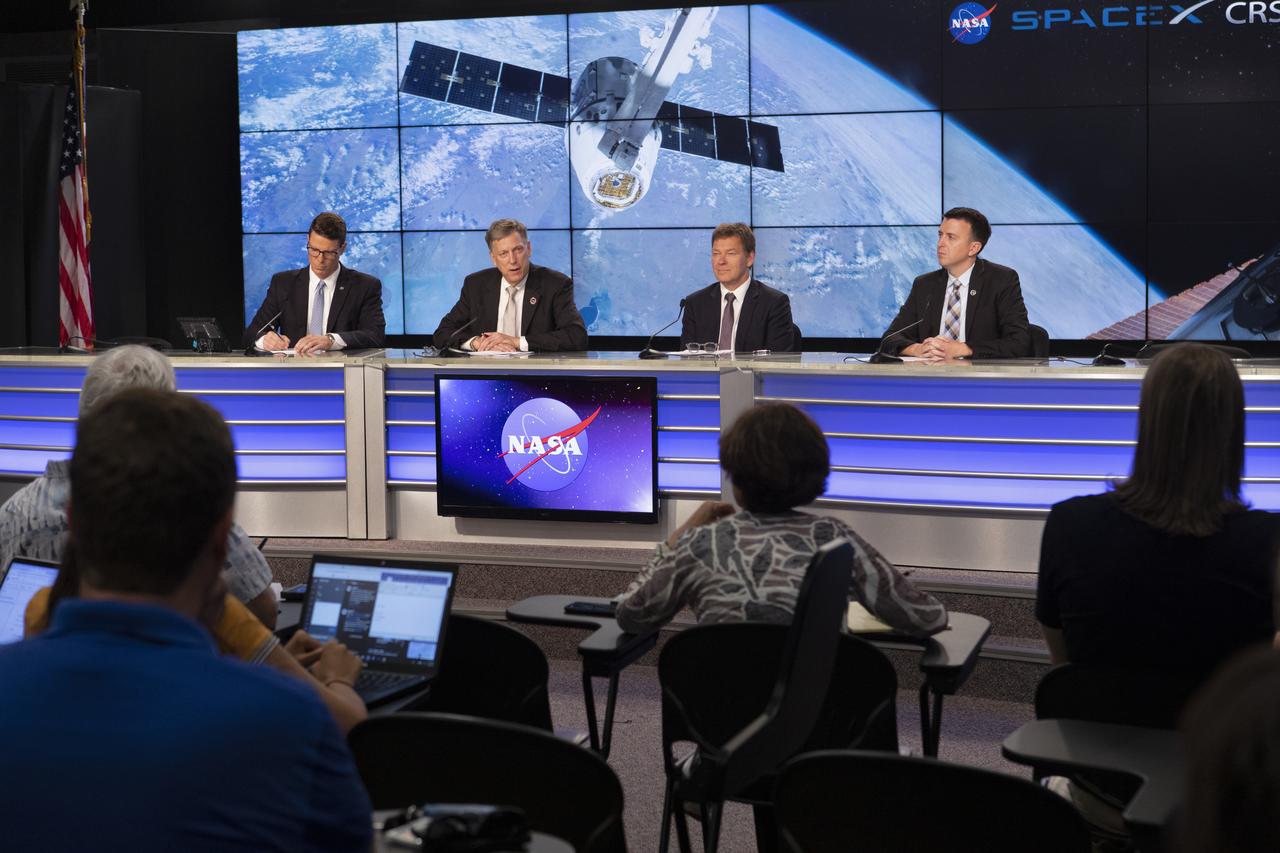
A prelaunch news conference for SpaceX’s 17th Commercial Resupply Services (CRS-17) mission to the International Space Station for NASA is held at the agency’s Kennedy Space Center in Florida on May 2, 2019. From left, are Derrol Nail, NASA Communications moderator; Kenny Todd, Manager, International Space Station Operations and Integration at NASA’s Johnson Space Center in Houston; Hans Koenigsmann, VP, Build and Flight Reliability with SpaceX; and Will Ulrich, 45th launch weather officer with the U.S. Air Force. The SpaceX Falcon 9 rocket and Dragon cargo module are scheduled to launch no earlier than May 3, 2019, from Space Launch Complex 40 on Cape Canaveral Air Force Station in Florida.
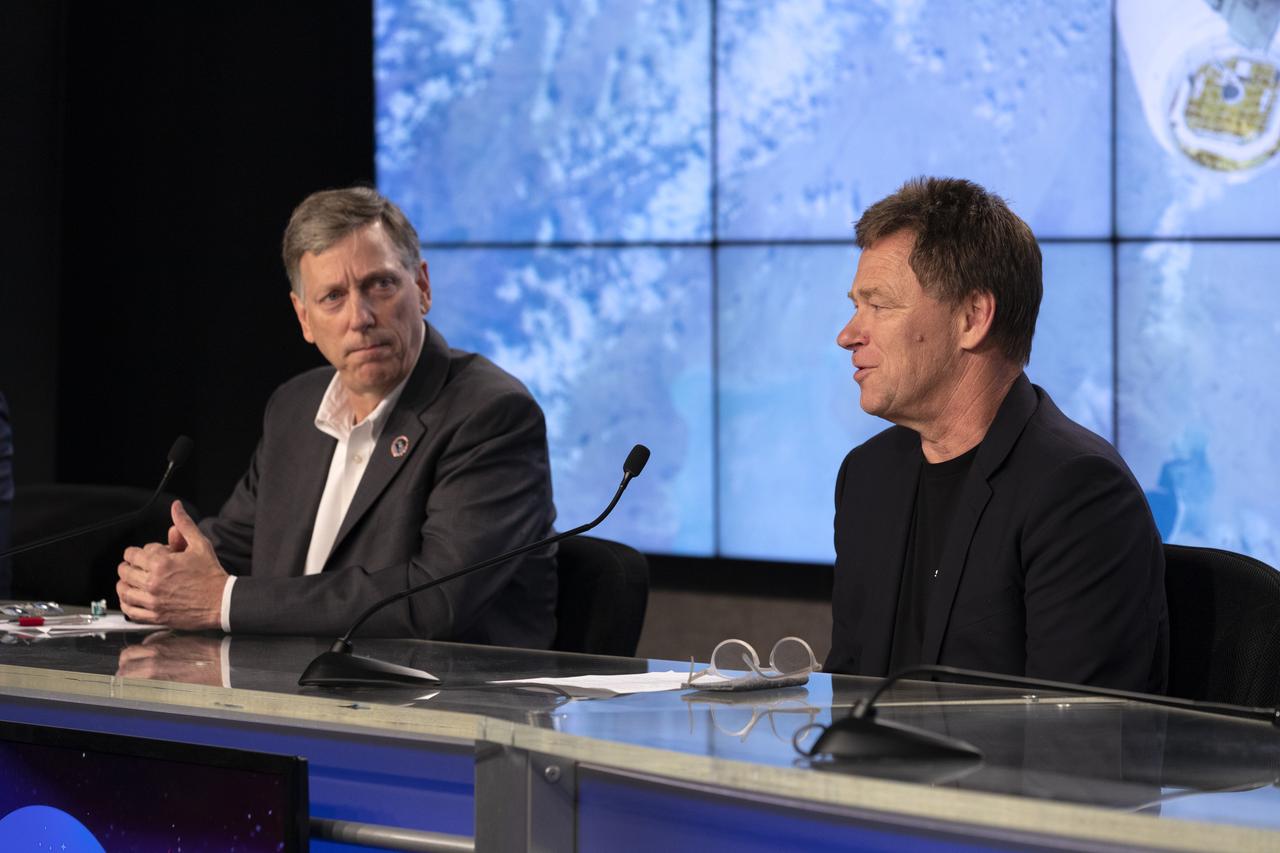
From left, Kenny Todd, manager, International Space Station Operations and Integration at NASA’s Johnson Space Center in Houston; and Hans Koenigsmann, vice president, Build and Flight Reliability with SpaceX, speak to members of the news media during a postlaunch news conference at NASA’s Kennedy Space Center in Florida on May 4, 2019, for SpaceX’s 17th Commercial Resupply Services (CRS-17) mission to the International Space Station for the agency. The company’s Falcon 9 rocket with the Dragon cargo module lifted off from Space Launch Complex 40 at Cape Canaveral Air Force Station in Florida at 2:48 a.m. EDT. The Dragon cargo module will deliver about 5,500 pounds of science and research, crew supplies and vehicle hardware to the orbital laboratory and its crew.
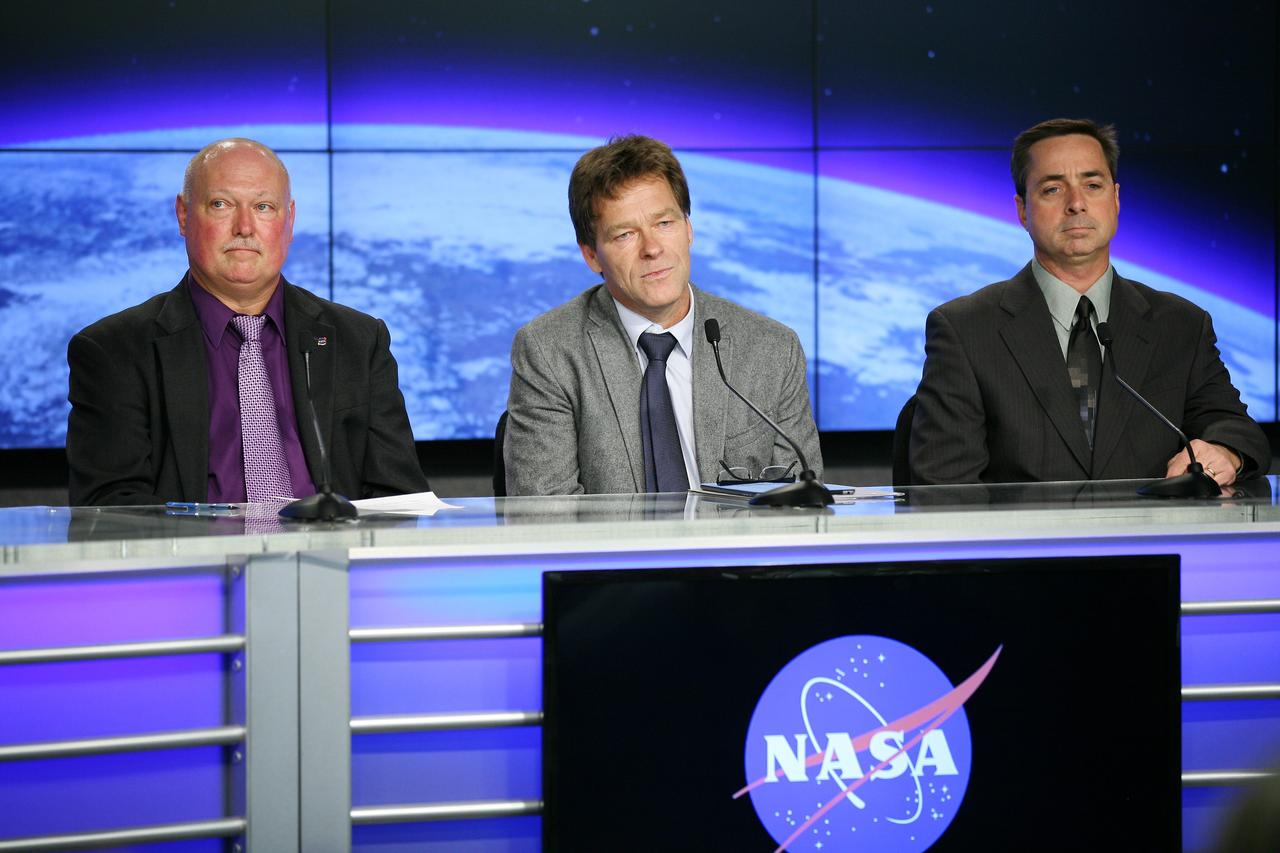
CAPE CANAVERAL, Fla. – During a news conference at NASA's Kennedy Space Center in Florida, agency and contractor officials discussed preparations for the launch of the SpaceX-3 Commercial Resupply Services mission to the International Space Station. Participating in the briefing, from the left, are Mike Curie of NASA Public Affairs, Hans Koenigsmann, SpaceX vice president of Mission Assurance, and Mike McAleenan, launch weather officer, 45th Weather Squadron. Scheduled for launch on April 14, 2014 atop a Falcon 9 rocket, Dragon spacecraft will be marking its fourth trip to the space station. The SpaceX-3 mission carrying almost 2.5 tons of supplies, technology and science experiments is the third of 12 flights contracted by NASA to resupply the orbiting laboratory. For more information, visit http://www.nasa.gov/mission_pages/station/structure/launch/index.html Photo credit: NASA/Kim Shiflett
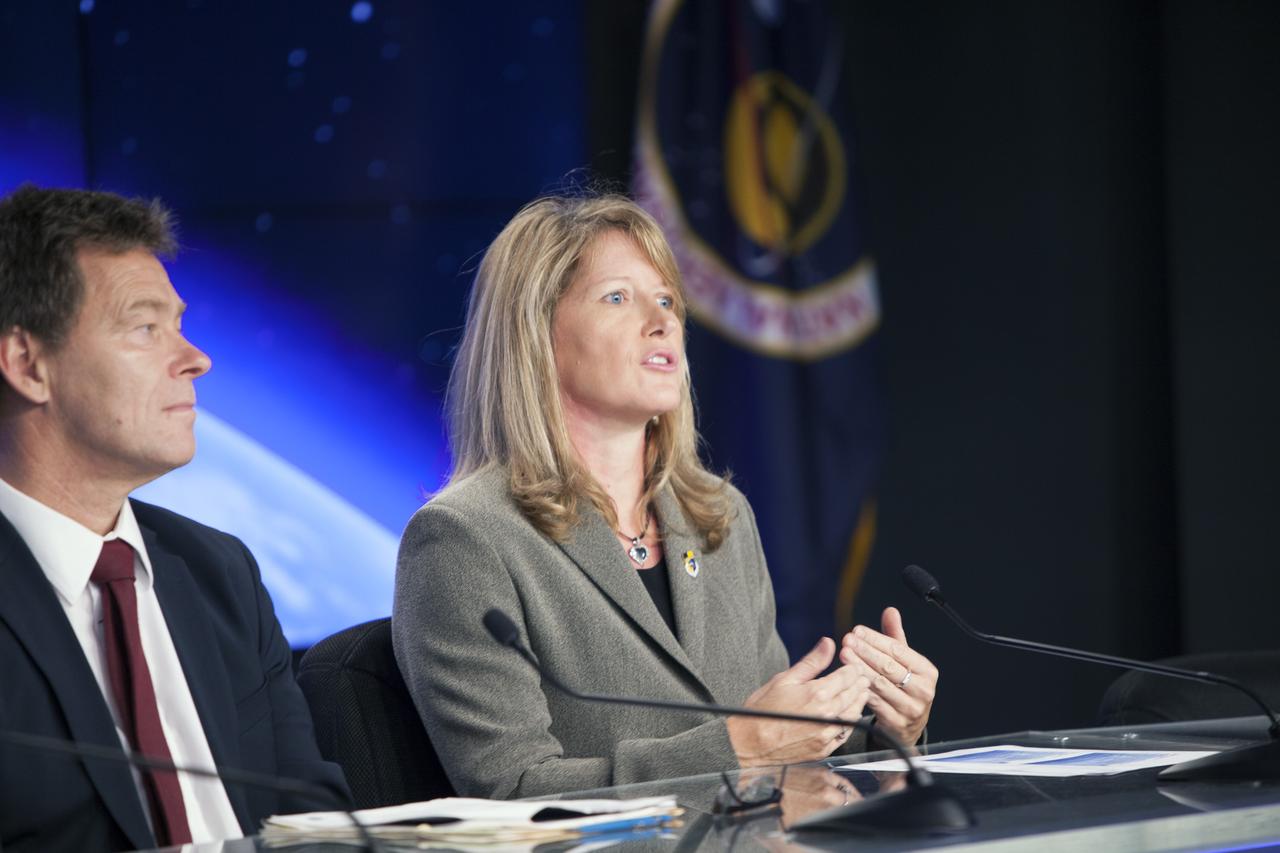
CAPE CANAVERAL, Fla. – In the Kennedy Space Center’s Press Site auditorium, members of news media are briefed on preparations for the launch of the SpaceX CRS-4 mission to resupply the International Space Station. Kathy Winters, launch weather officer for the 45th Weather Squadron, participated in the briefing. Hans Koenigsmann, vice president of Mission Assurance with SpaceX, looks on from the left. The mission is the fourth of 12 SpaceX flights NASA contracted with the company to resupply the space station. It will be the fifth trip by a Dragon spacecraft to the orbiting laboratory. The spacecraft’s 2.5 tons of supplies, science experiments, and technology demonstrations include critical materials to support 255 science and research investigations that will occur during the station's Expeditions 41 and 42. Liftoff is targeted for an instantaneous window at 2:14 a.m. EDT. To learn more about the mission, visit http://www.nasa.gov/mission_pages/station/structure/launch/index.html Photo credit: NASA/Jim Grossmann
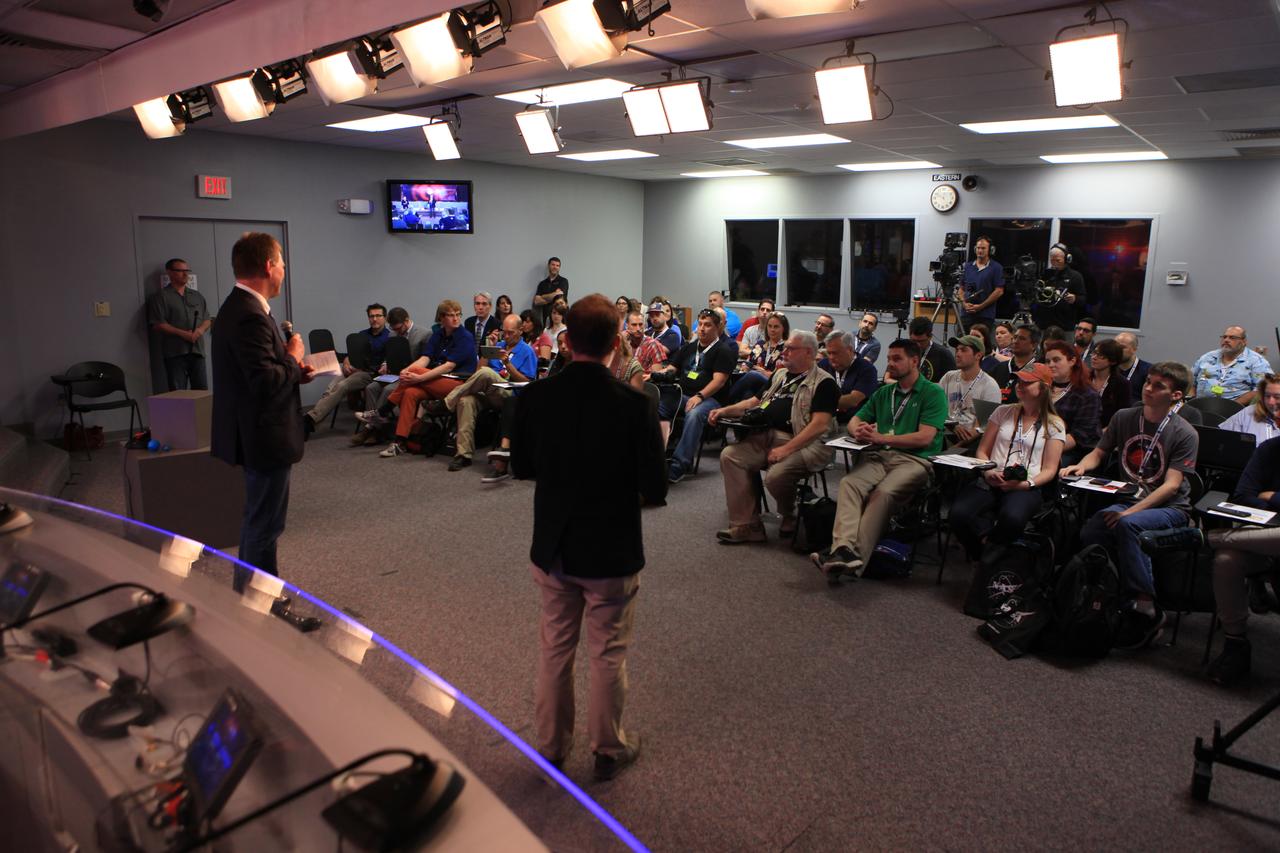
NASA and industry leaders speak to NASA Social participants about the agency's Transiting Exoplanet Survey Satellite (TESS) in the Press Site auditorium at Kennedy Space Center in Florida. Speaking to the group, at left is Hans Koenigsmann, vice president of Build and Flight Reliability at SpaceX. TESS is the next step in the search for planets outside of our solar system. The mission will find exoplanets that periodically block part of the light from their host stars, events called transits. The satellite will survey the nearest and brightest stars for two years to search for transiting exoplanets. TESS will launch on a SpaceX Falcon 9 rocket from Space Launch Complex 40 at Cape Canaveral Air Force Station no earlier than 6:32 p.m. EDT on Monday, April 16.
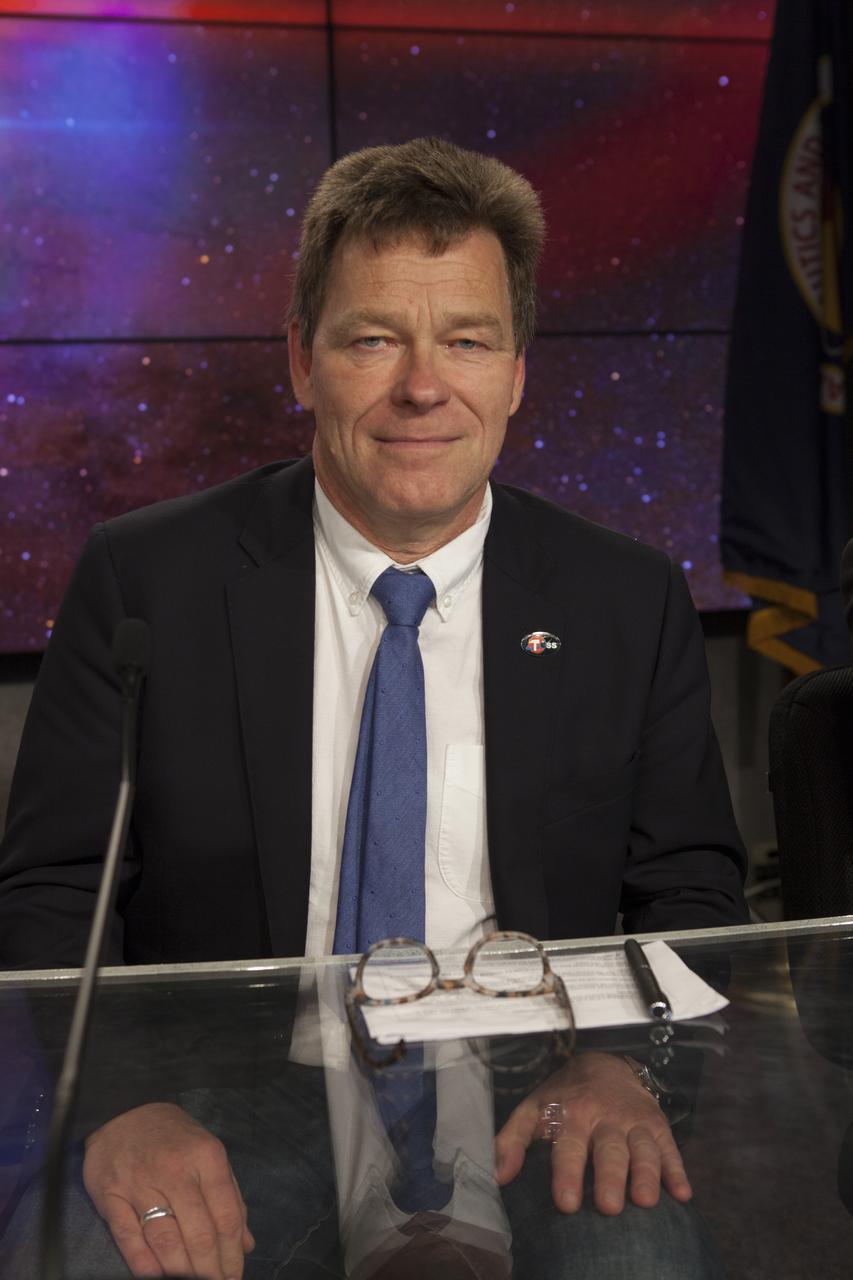
In Kennedy Space Center's Press Site auditorium, members of the media participate in a mission briefing on NASA's Transiting Exoplanet Survey Satellite (TESS). Hans Koenigsmann, vice president of Build and Flight Reliability at SpaceX, answers questions during the briefing. TESS is the next step in the search for planets outside of our solar system. The mission will find exoplanets that periodically block part of the light from their host stars, events called transits. The satellite will survey the nearest and brightest stars for two years to search for transiting exoplanets. TESS will launch on a SpaceX Falcon 9 rocket from Space Launch Complex 40 at Cape Canaveral Air Force Station no earlier than 6:32 p.m. EDT on Monday, April 16.
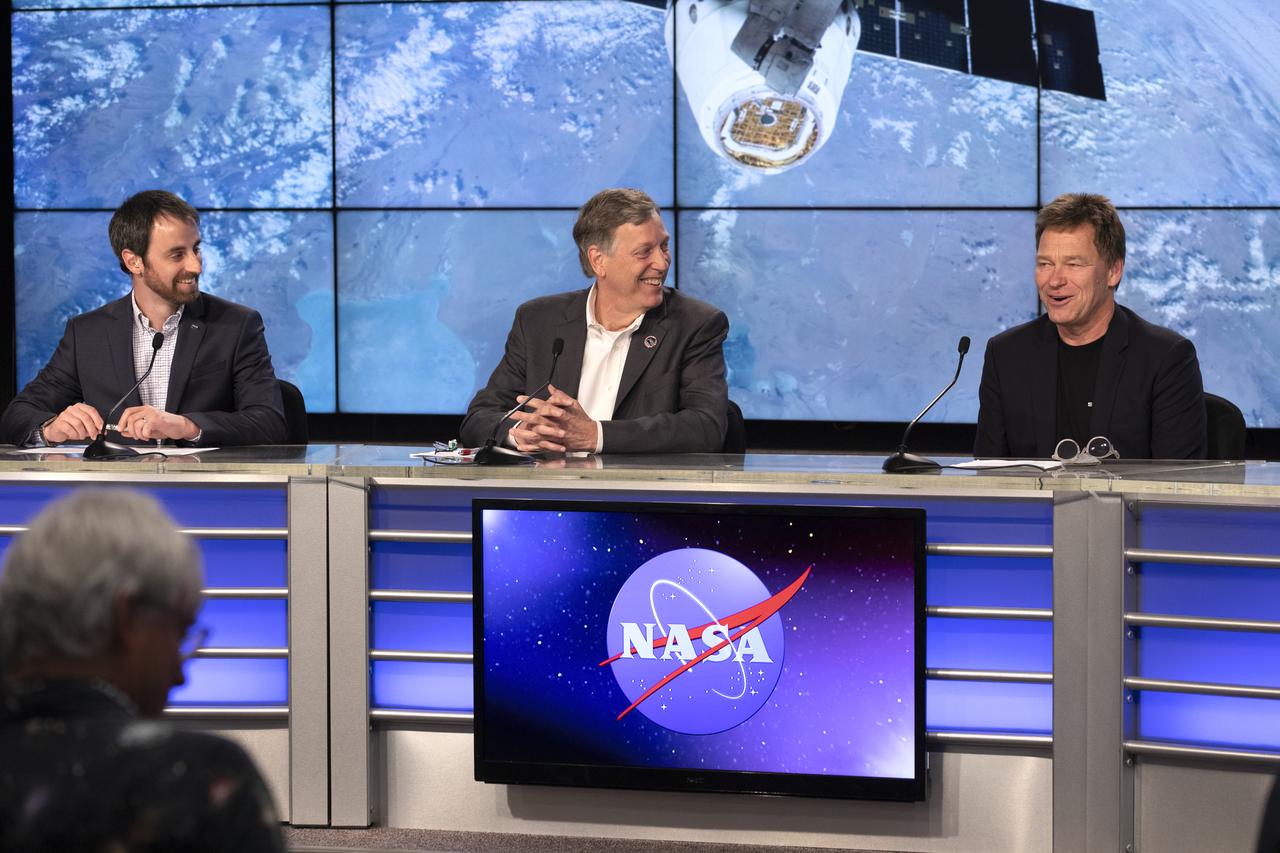
From left, Josh Santora, moderator with NASA Communications; Kenny Todd, manager, International Space Station Operations and Integration at NASA’s Johnson Space Center in Houston; and Hans Koenigsmann, vice president, Build and Flight Reliability with SpaceX, speak to members of the news media during a postlaunch news conference at NASA’s Kennedy Space Center in Florida on May 4, 2019, for SpaceX’s 17th Commercial Resupply Services (CRS-17) mission to the International Space Station for the agency. The company’s Falcon 9 rocket with the Dragon cargo module lifted off from Space Launch Complex 40 at Cape Canaveral Air Force Station in Florida at 2:48 a.m. EDT. The Dragon cargo module will deliver about 5,500 pounds of science and research, crew supplies and vehicle hardware to the orbital laboratory and its crew.
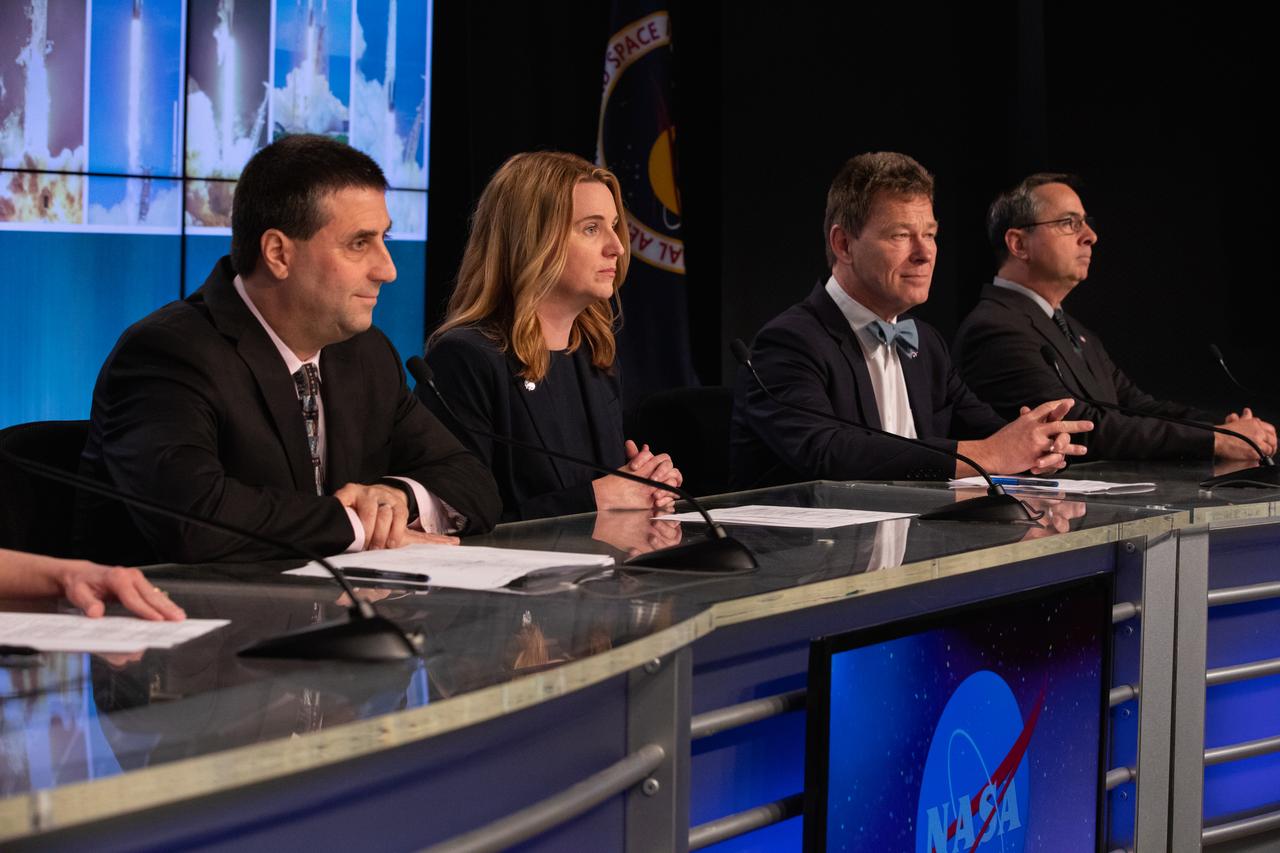
A prelaunch news conference for SpaceX’s 20th Commercial Resupply Services (CRS-20) mission to the International Space Station is held at NASA’s Kennedy Space Center in Florida on March 6, 2020. From left are Joel Montalbano, manager of the agency’s International Space Station Program; Jennifer Buchli, deputy chief scientist for the International Space Station Program; Hans Koenigsmann, vice president of Build and Flight Reliability at SpaceX; and Mike McAleenan, launch weather officer with the U.S. Air Force 45th Space Wing. SpaceX’s Falcon 9 rocket and cargo Dragon spacecraft are scheduled to lift off from Cape Canaveral Air Force Station’s Space Launch Complex 40 at 11:50 p.m. EST on March 6, 2020.
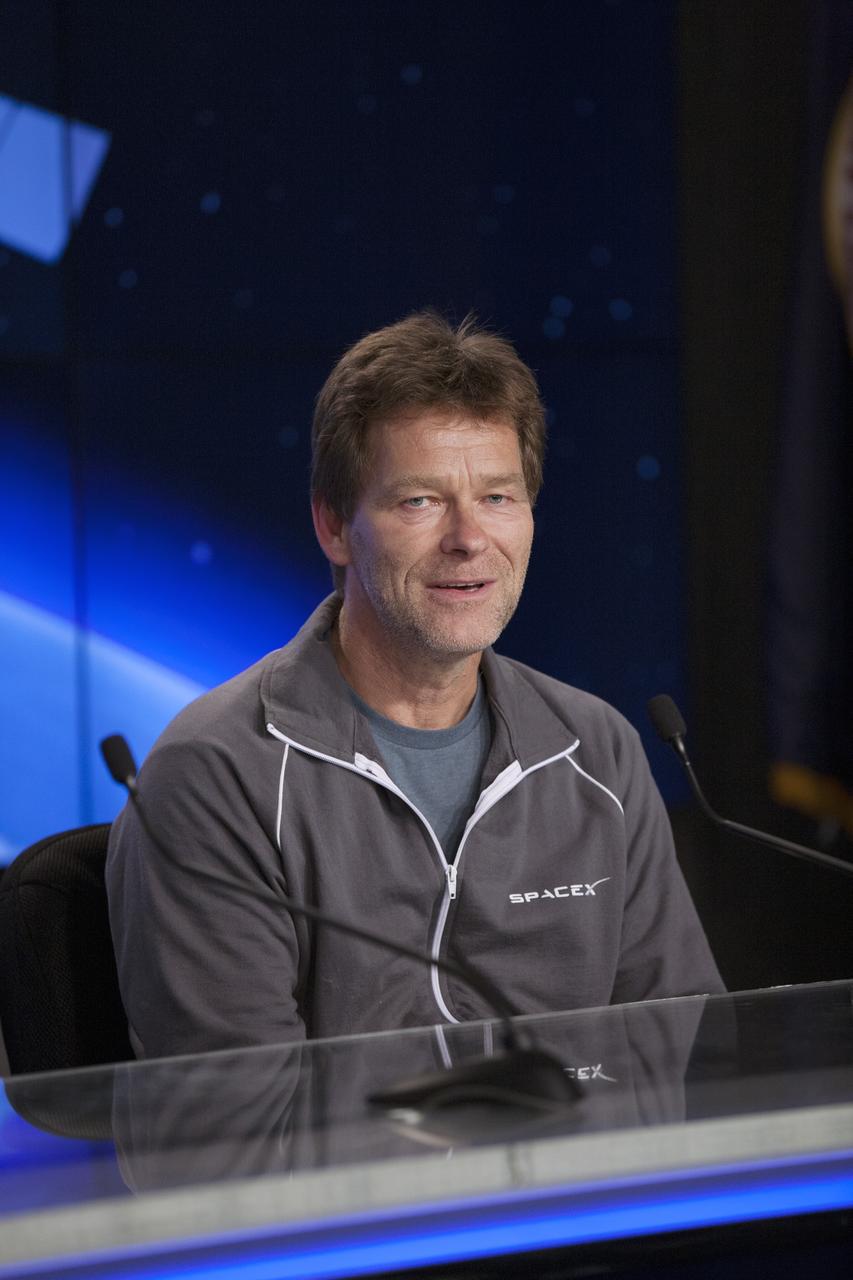
CAPE CANAVERAL, Fla. - SpaceX Vice President of Mission Assurance Hans Koenigsmann participates in a SpaceX-3 post-launch news conference in the NASA Press Site television auditorium at Kennedy Space Center in Florida. SpaceX-3 launched at 3:25 p.m. EDT aboard a Falcon 9 rocket carrying a Dragon capsule from Space Launch Complex 40 on Cape Canaveral Air Force Station. Dragon is making its fourth trip to the space station. The SpaceX-3 mission, carrying almost 2.5 tons of supplies, technology and science experiments, is the third of 12 flights through a $1.6 billion NASA Commercial Resupply Services contract. Dragon's cargo will support more than 150 experiments that will be conducted during the station's Expeditions 39 and 40. For more information, visit http://www.nasa.gov/mission_pages/station/structure/launch/index.html. Photo credit: NASA/Kim Shiflett
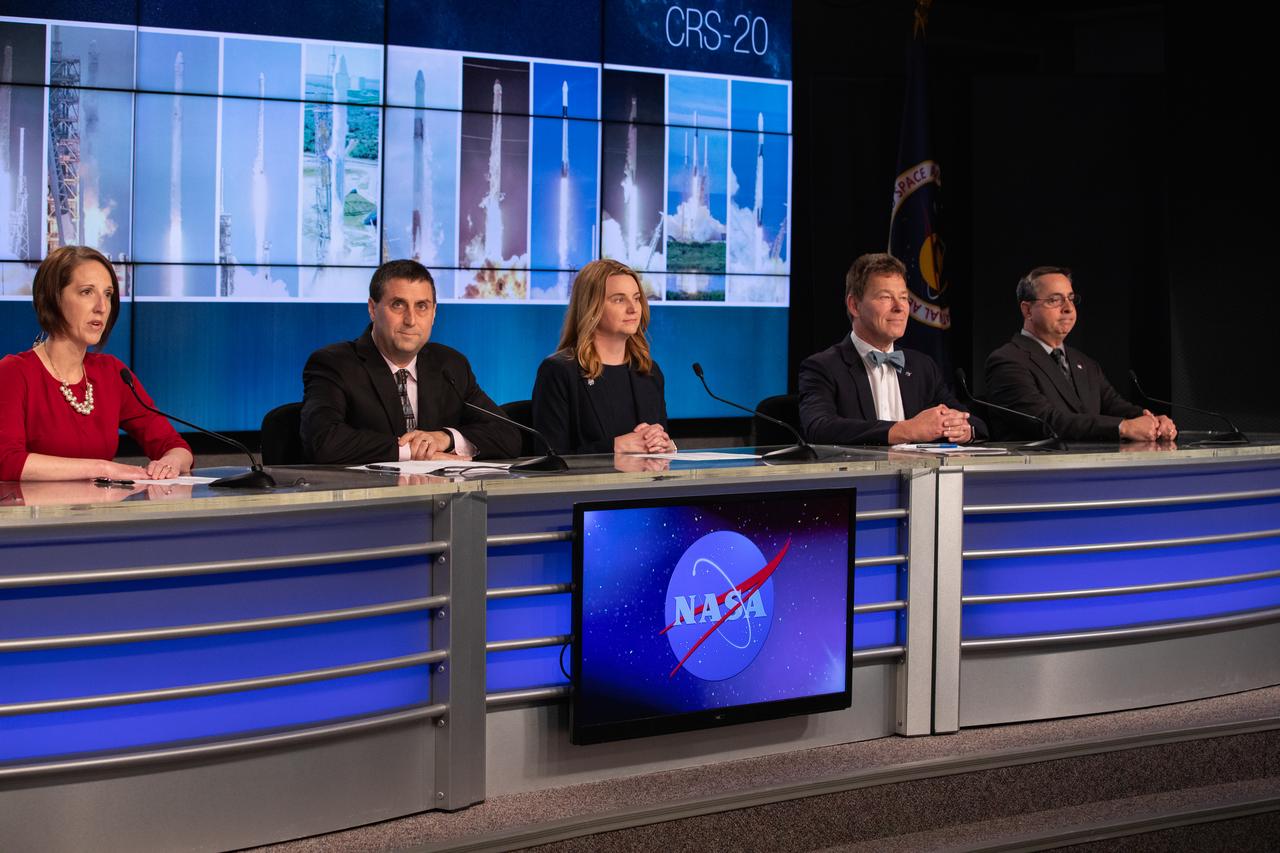
A prelaunch news conference for SpaceX’s 20th Commercial Resupply Services (CRS-20) mission to the International Space Station is held at NASA’s Kennedy Space Center in Florida on March 6, 2020. From left are conference moderator Heather Scott of NASA Communications; Joel Montalbano, manager of the agency’s International Space Station Program; Jennifer Buchli, deputy chief scientist for the International Space Station Program; Hans Koenigsmann, vice president of Build and Flight Reliability at SpaceX; and Mike McAleenan, launch weather officer with the U.S. Air Force 45th Space Wing. SpaceX’s Falcon 9 rocket and cargo Dragon spacecraft are scheduled to lift off from Cape Canaveral Air Force Station’s Space Launch Complex 40 at 11:50 p.m. EST on March 6, 2020.
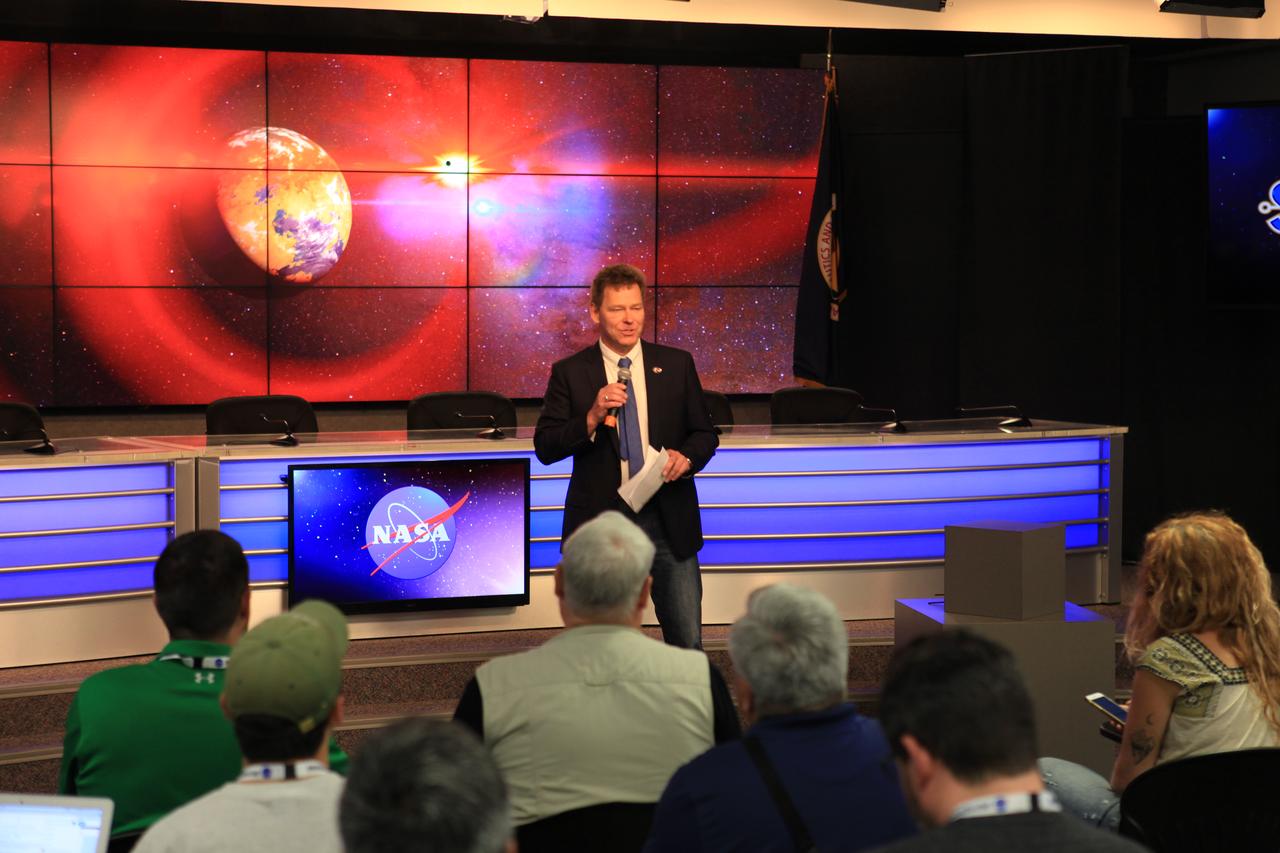
NASA and industry leaders speak to NASA Social participants about the agency's Transiting Exoplanet Survey Satellite (TESS) in the Press Site auditorium at Kennedy Space Center in Florida. Speaking to the group is Hans Koenigsmann, vice president of Build and Flight Reliability at SpaceX. TESS is the next step in the search for planets outside of our solar system. The mission will find exoplanets that periodically block part of the light from their host stars, events called transits. The satellite will survey the nearest and brightest stars for two years to search for transiting exoplanets. TESS will launch on a SpaceX Falcon 9 rocket from Space Launch Complex 40 at Cape Canaveral Air Force Station no earlier than 6:32 p.m. EDT on Monday, April 16.
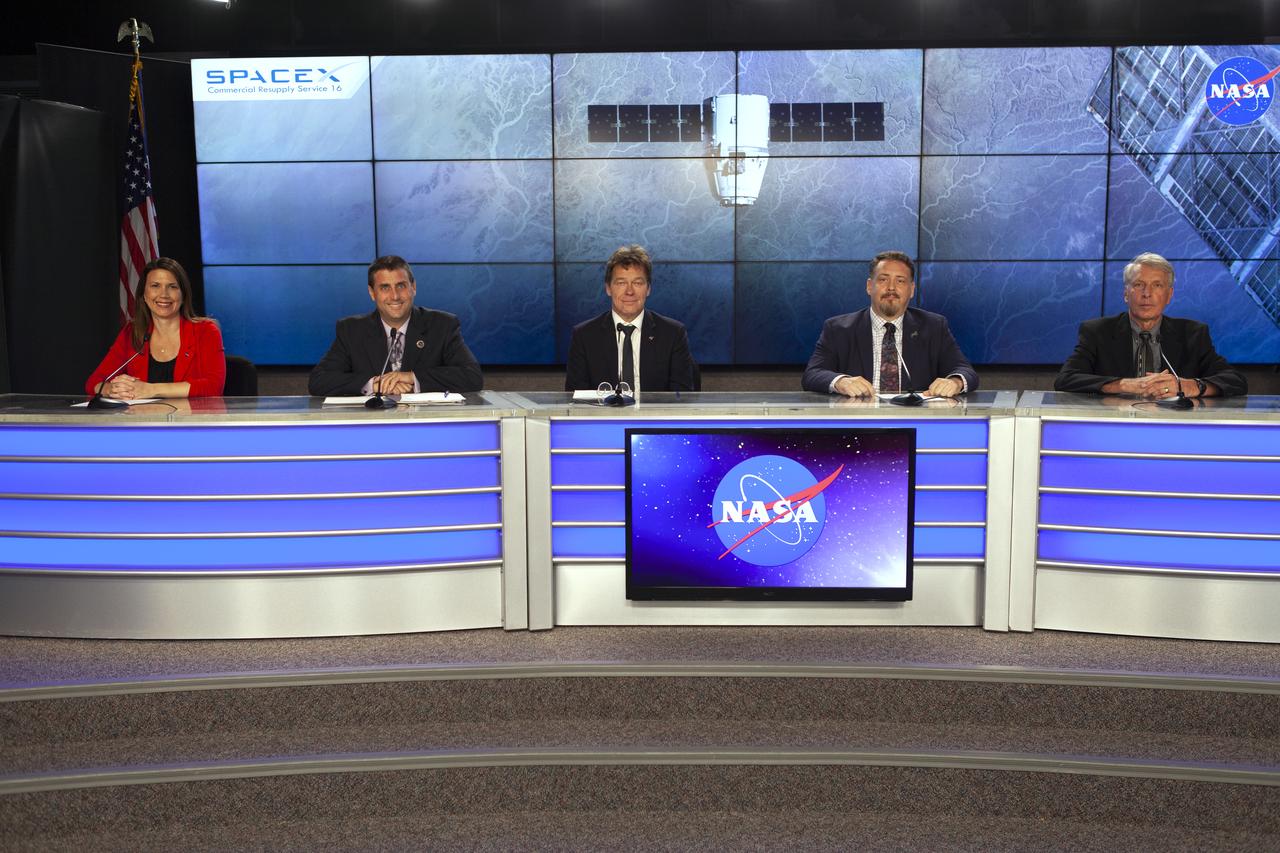
In the Kennedy Space Center’s Press Site auditorium, agency and industry leaders speak to members of the media during a prelaunch news conference for the SpaceX CRS-16 commercial resupply services mission to the International Space Station. From left are: Tori McLendon of NASA Communications, Joel Montalbano, deputy International Space Station program manager at NASA's Johnson Space Center in Houston, Hans Koenigsmann, vice president of Build and Flight Reliability for SpaceX, Kirt Costello, International Space Station program chief scientist at Johnson, and Clay Flinn, launch weather officer for the U.S. Air Force 45th Space Wing at Cape Canaveral Air Force Station. A Dragon spacecraft is scheduled to be launched from Space Launch Complex 40 at Cape Canaveral Air Force Station. The SpaceX Falcon 9 rocket will lift off on the company's 16th Commercial Resupply Services mission to the space station.
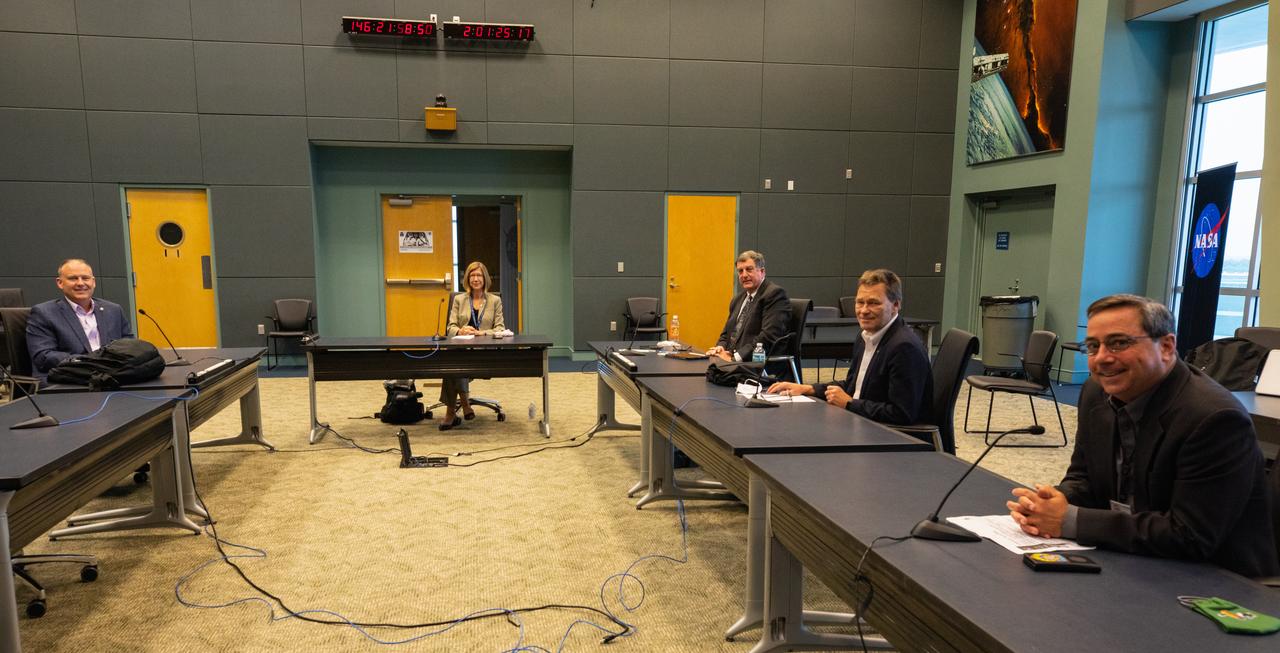
Representatives from NASA, SpaceX and the U.S. Space Force 45th Weather Squadron participate in a news conference following the Launch Readiness Review at the agency’s Kennedy Space Center in Florida on Monday, May 25, 2020, in advance of NASA’s SpaceX Demo-2 Flight Test to the International Space Station as part of NASA’s Commercial Crew Program. From the left are: Norm Knight, deputy director, NASA Johnson Space Center Flight Operations Kathy Lueders, manager, NASA Commercial Crew Program; Kirk Shireman, manager, International Space Station Program; Hans Koenigsmann, vice president, Build and Flight Reliability, SpaceX; and Mike McAleenan, launch weather officer, 45th Weather Squadron. Launch is currently targeted for 4:33 p.m. EDT Wednesday, May 27. The SpaceX Crew Dragon spacecraft will launch on a Falcon 9 rocket from historic Launch Complex 39A at NASA’s Kennedy Space Center in Florida.
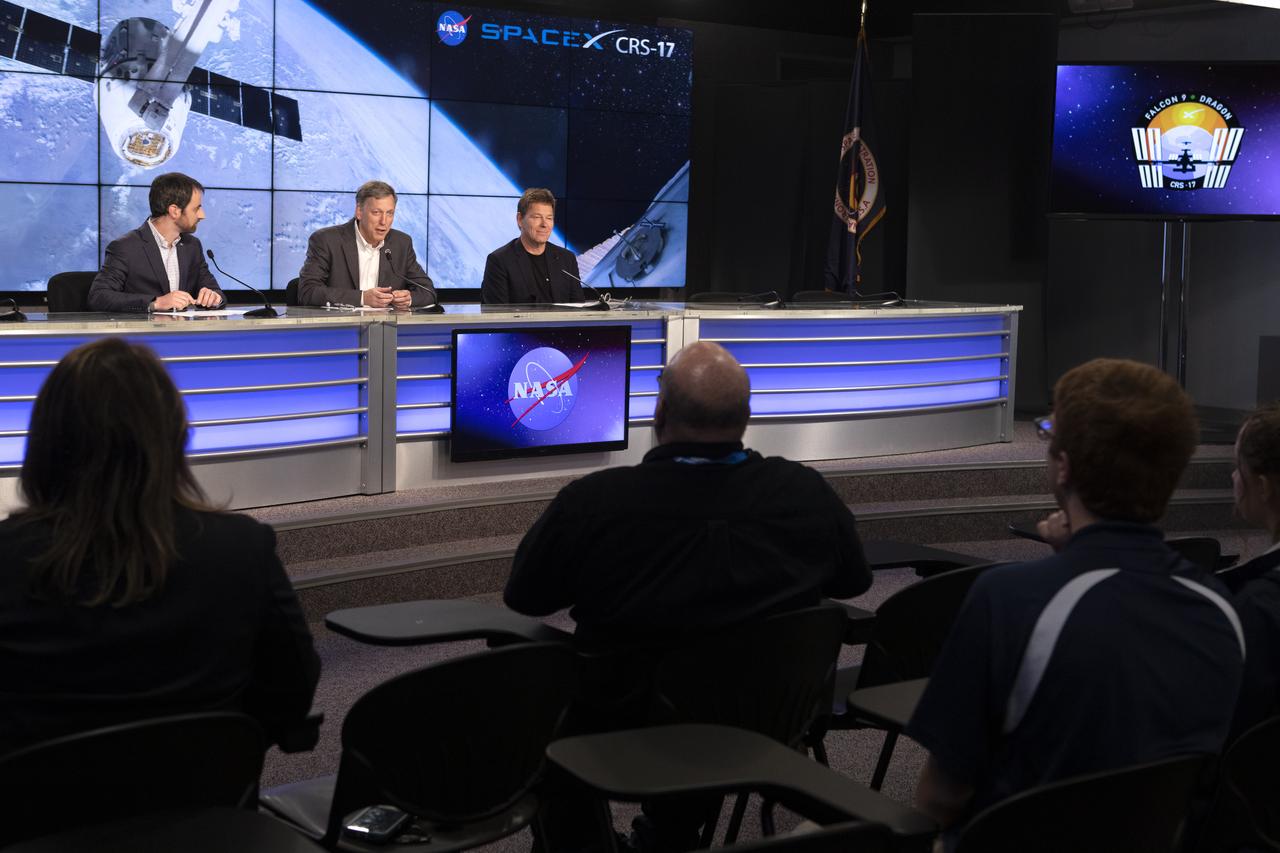
From left, Josh Santora, moderator with NASA Communications; Kenny Todd, manager, International Space Station Operations and Integration at NASA’s Johnson Space Center in Houston; and Hans Koenigsmann, vice president, Build and Flight Reliability with SpaceX, speak to members of the news media during a postlaunch news conference at NASA’s Kennedy Space Center in Florida on May 4, 2019, for SpaceX’s 17th Commercial Resupply Services (CRS-17) mission to the International Space Station for the agency. The company’s Falcon 9 rocket with the Dragon cargo module lifted off from Space Launch Complex 40 at Cape Canaveral Air Force Station in Florida at 2:48 a.m. EDT. The Dragon cargo module will deliver about 5,500 pounds of science and research, crew supplies and vehicle hardware to the orbital laboratory and its crew.
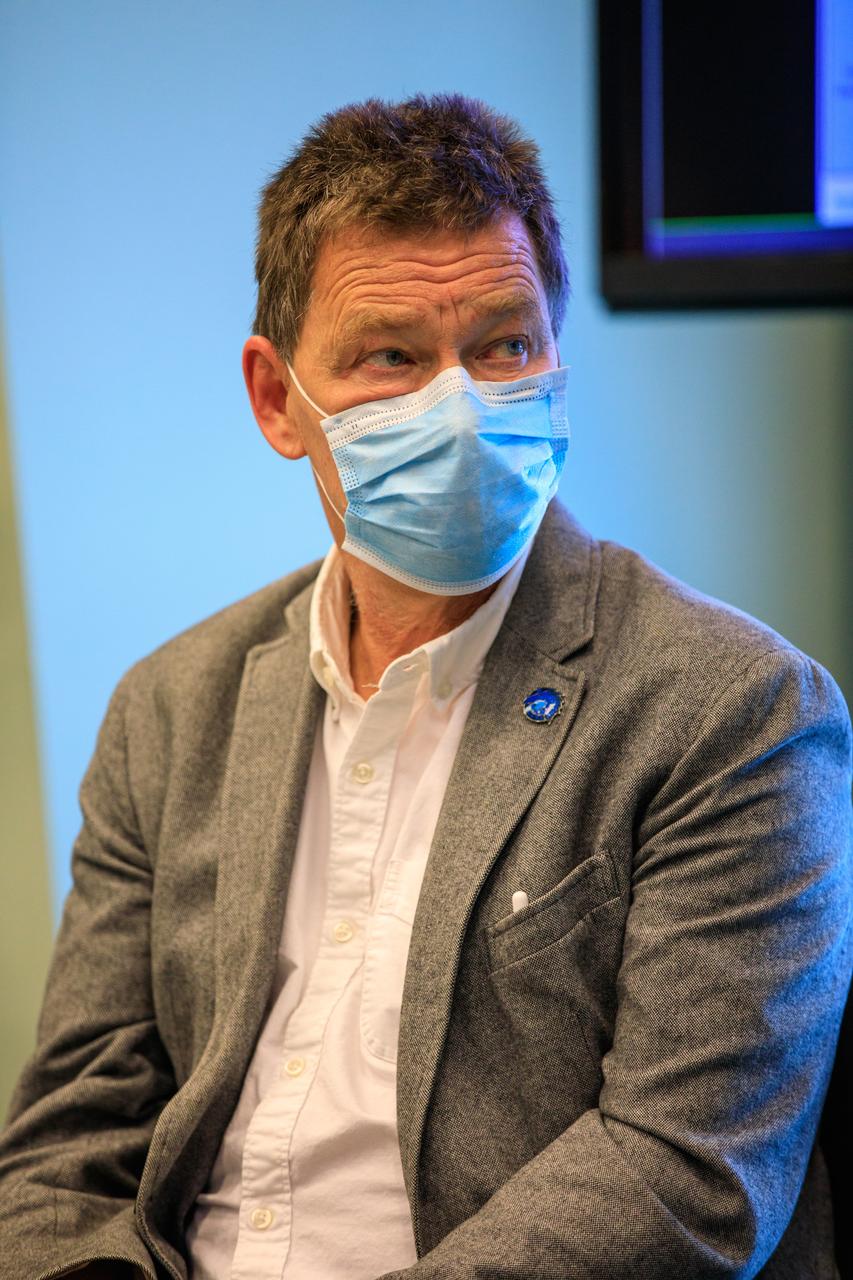
Hans Koenigsmann, vice president, Build and Flight Reliability with SpaceX, participates in a Flight Readiness Review (FRR) for NASA’s SpaceX Crew-1 mission at Kennedy Space Center in Florida on Nov. 9, 2020. The FRR focuses on the preparedness of SpaceX’s crew transportation system, the International Space Station, and its international partners to support the flight, and the certification of flight readiness. Crew-1 is the first regular crew mission of a U.S. commercial spacecraft with astronauts to the International Space Station as part of NASA’s Commercial Crew Program. The Crew Dragon Resilience capsule will launch atop a Falcon 9 rocket from Launch Complex 39A carrying NASA astronauts Michael Hopkins, Victor Glover, Shannon Walker and Japan Aerospace Exploration Agency (JAXA) astronaut Soichi Noguchi to the space station for a six-month science mission.
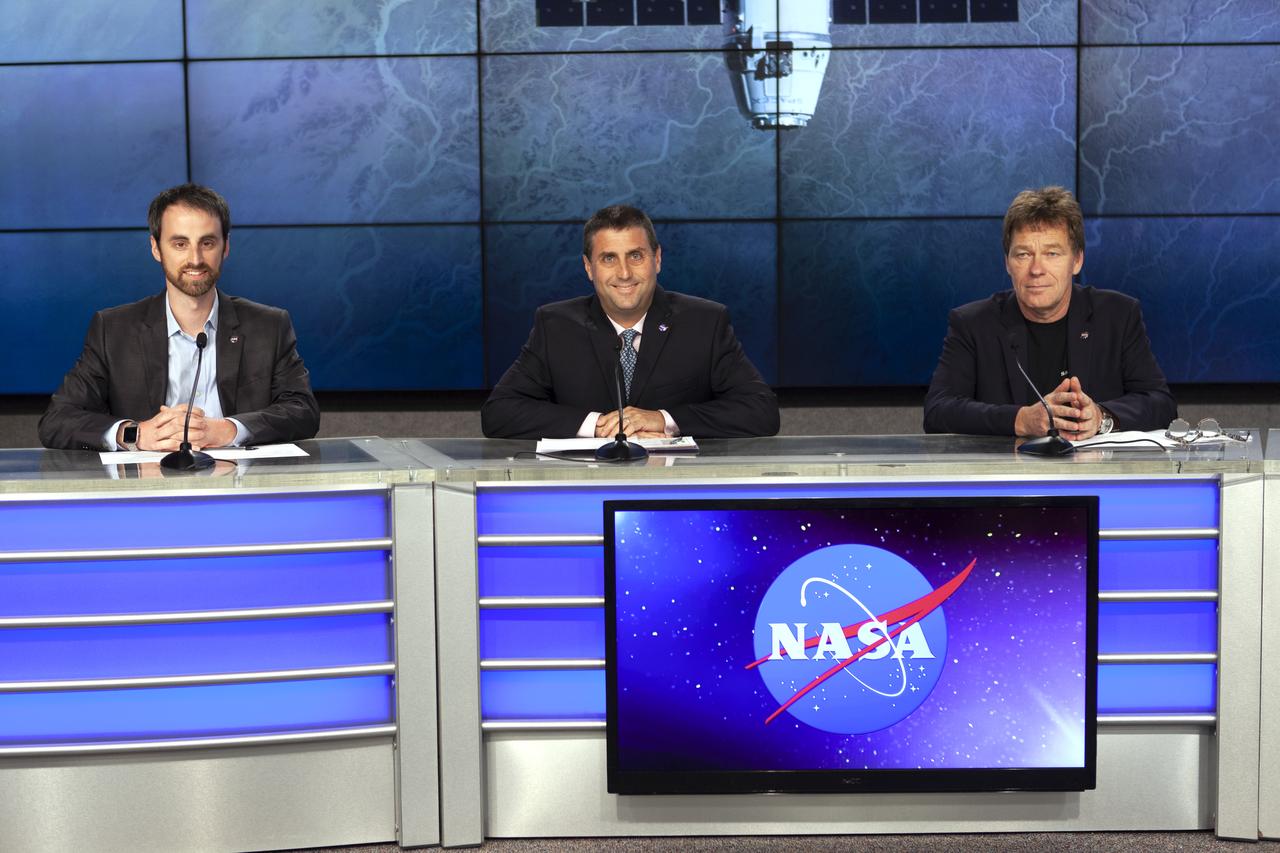
In the Press Site auditorium of NASA's Kennedy Space Center in Florida, from left, Joshua Santora of NASA Communications, Joel Montalbano, deputy International Space Station program manager at NASA's Johnson Space Center in Houston, and Hans Koenigsmann, vice president of Build and Flight Reliability for SpaceX, speak to media at a post-launch news conference following the liftoff of SpaceX CRS-16. The flight is a commercial resupply services mission to the International Space Station. SpaceX CRS-16 lifted off atop a Falcon 9 rocket from Space Launch Complex 40 at Cape Canaveral Air Force Station at 1:16 p.m. EST, Dec. 5, 2018, with supplies and equipment and new science experiments for technology research.
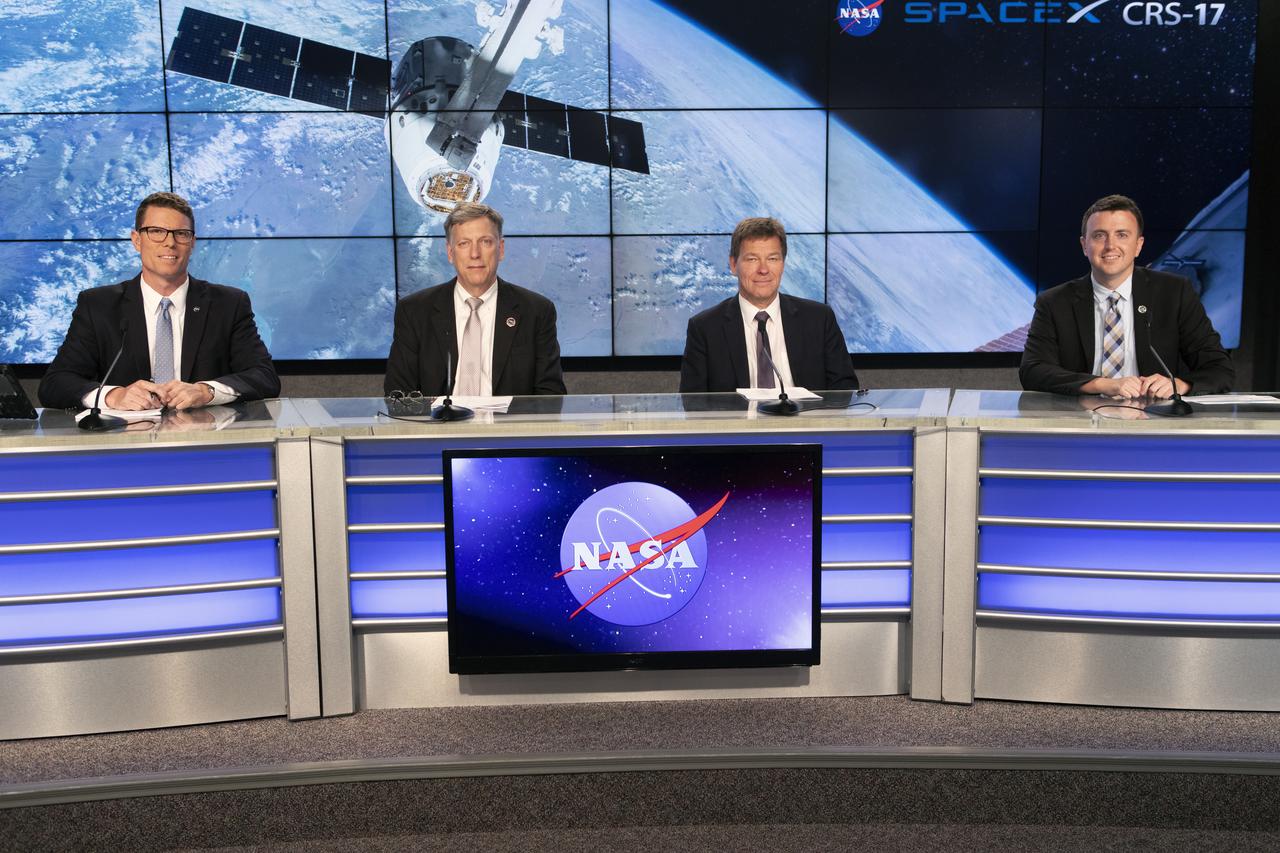
A prelaunch news conference for SpaceX’s 17th Commercial Resupply Services (CRS-17) mission to the International Space Station for NASA is held at the agency’s Kennedy Space Center in Florida on May 2, 2019. From left, are Derrol Nail, NASA Communications moderator; Kenny Todd, Manager, International Space Station Operations and Integration at NASA’s Johnson Space Center in Houston; Hans Koenigsmann, VP, Build and Flight Reliability with SpaceX; and Will Ulrich, 45th launch weather officer with the U.S. Air Force. The SpaceX Falcon 9 rocket and Dragon cargo module are scheduled to launch no earlier than May 3, 2019, from Space Launch Complex 40 on Cape Canaveral Air Force Station in Florida.
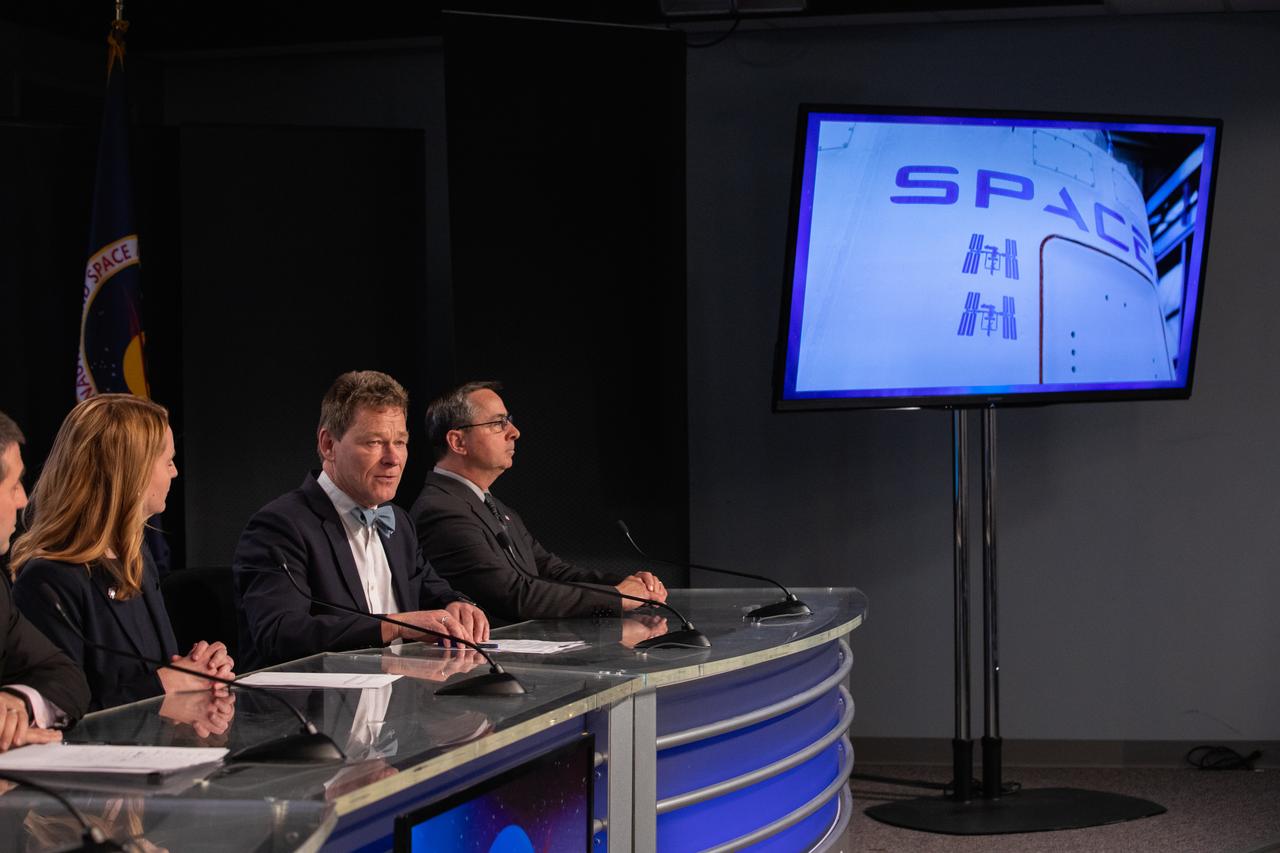
A prelaunch news conference for SpaceX’s 20th Commercial Resupply Services (CRS-20) mission to the International Space Station is held at NASA’s Kennedy Space Center in Florida on March 6, 2020. From left are Joel Montalbano, manager of the agency’s International Space Station Program; Jennifer Buchli, deputy chief scientist for the International Space Station Program; Hans Koenigsmann, vice president of Build and Flight Reliability at SpaceX; and Mike McAleenan, launch weather officer with the U.S. Air Force 45th Space Wing. SpaceX’s Falcon 9 rocket and cargo Dragon spacecraft are scheduled to lift off from Cape Canaveral Air Force Station’s Space Launch Complex 40 at 11:50 p.m. EST on March 6, 2020.
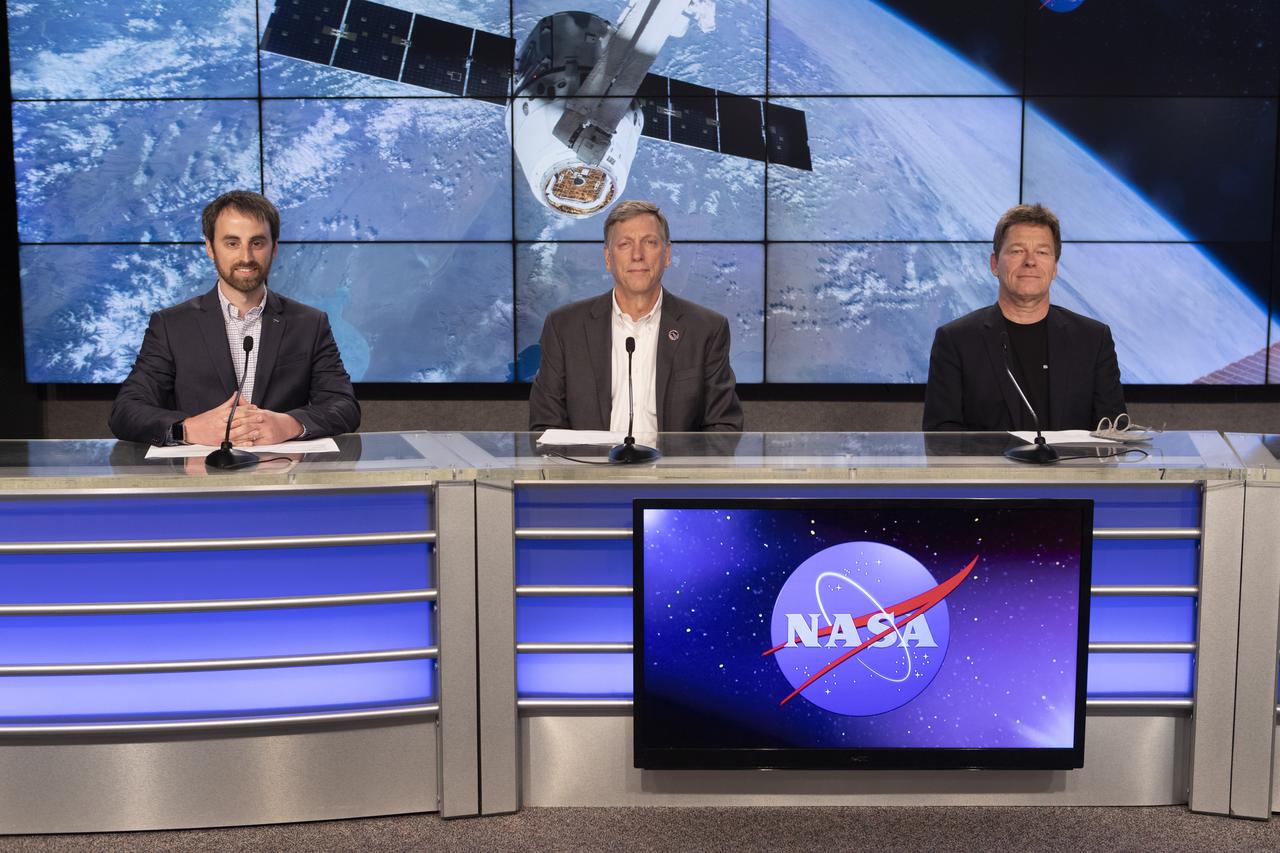
From left, Josh Santora, moderator with NASA Communications; Kenny Todd, manager, International Space Station Operations and Integration at NASA’s Johnson Space Center in Houston; and Hans Koenigsmann, vice president, Build and Flight Reliability with SpaceX, speak to members of the news media during a postlaunch news conference at NASA’s Kennedy Space Center in Florida on May 4, 2019, for SpaceX’s 17th Commercial Resupply Services (CRS-17) mission to the International Space Station for the agency. The company’s Falcon 9 rocket with the Dragon cargo module lifted off from Space Launch Complex 40 at Cape Canaveral Air Force Station in Florida at 2:48 a.m. EDT. The Dragon cargo module will deliver about 5,500 pounds of science and research, crew supplies and vehicle hardware to the orbital laboratory and its crew.
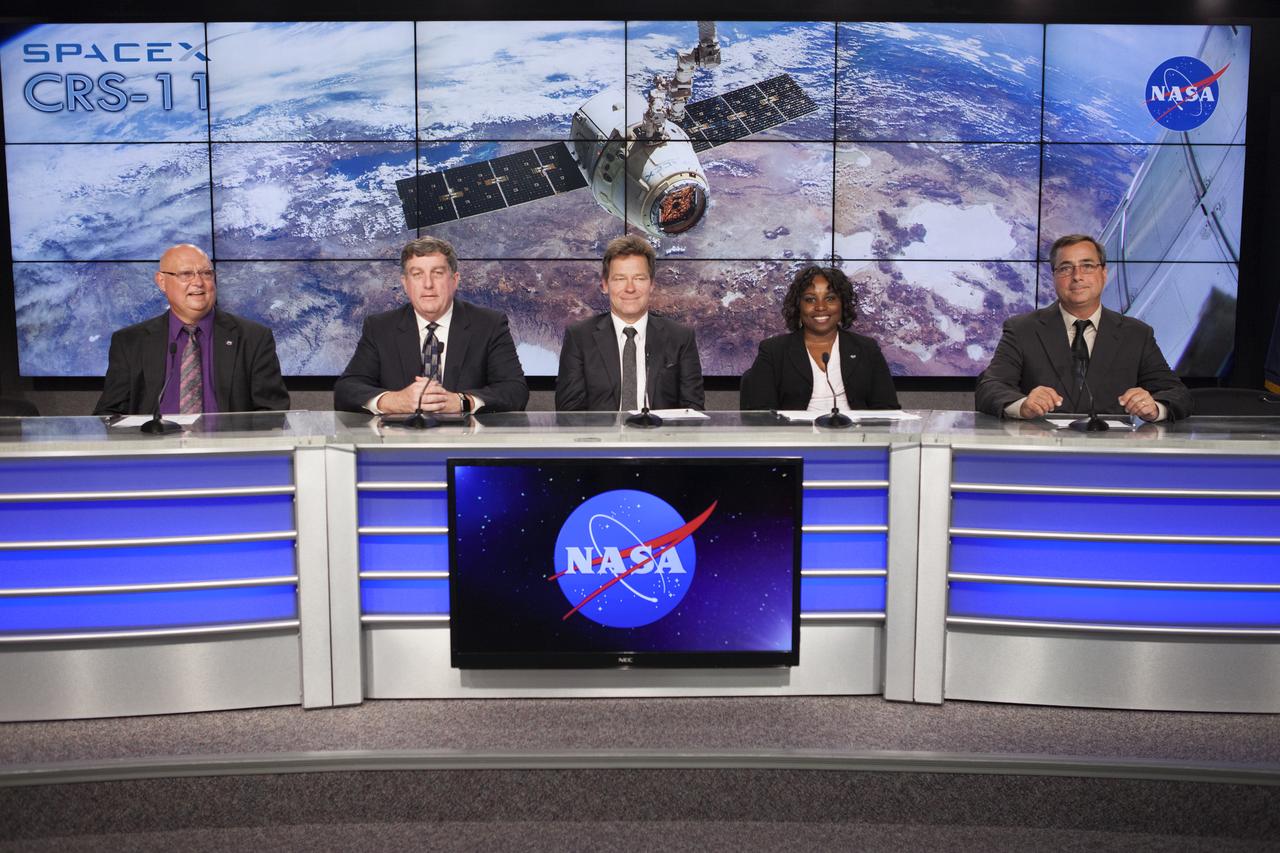
In the Kennedy Space Center’s Press Site auditorium, agency and industry leaders speak to members of the media during a prelaunch news conference for the SpaceX CRS-11 commercial resupply services mission to the International Space Station. From left are: Mike Curie of NASA Communications, Kirk Shireman, NASA's International Space Station Program manager, Hans Koenigsmann, vice president of Flight Reliability for SpaceX, Camille Alleyne, associate program scientist for the International Space Station at NASA’s Johnson Space Center, and Mike McAleenan, launch weather officer for the U.S. Air Force 45th Weather Squadron. A Dragon spacecraft is scheduled to be launched from Kennedy’s Launch Complex 39A on June 1 atop a SpaceX Falcon 9 rocket on the company's 11th Commercial Resupply Services mission to the space station.
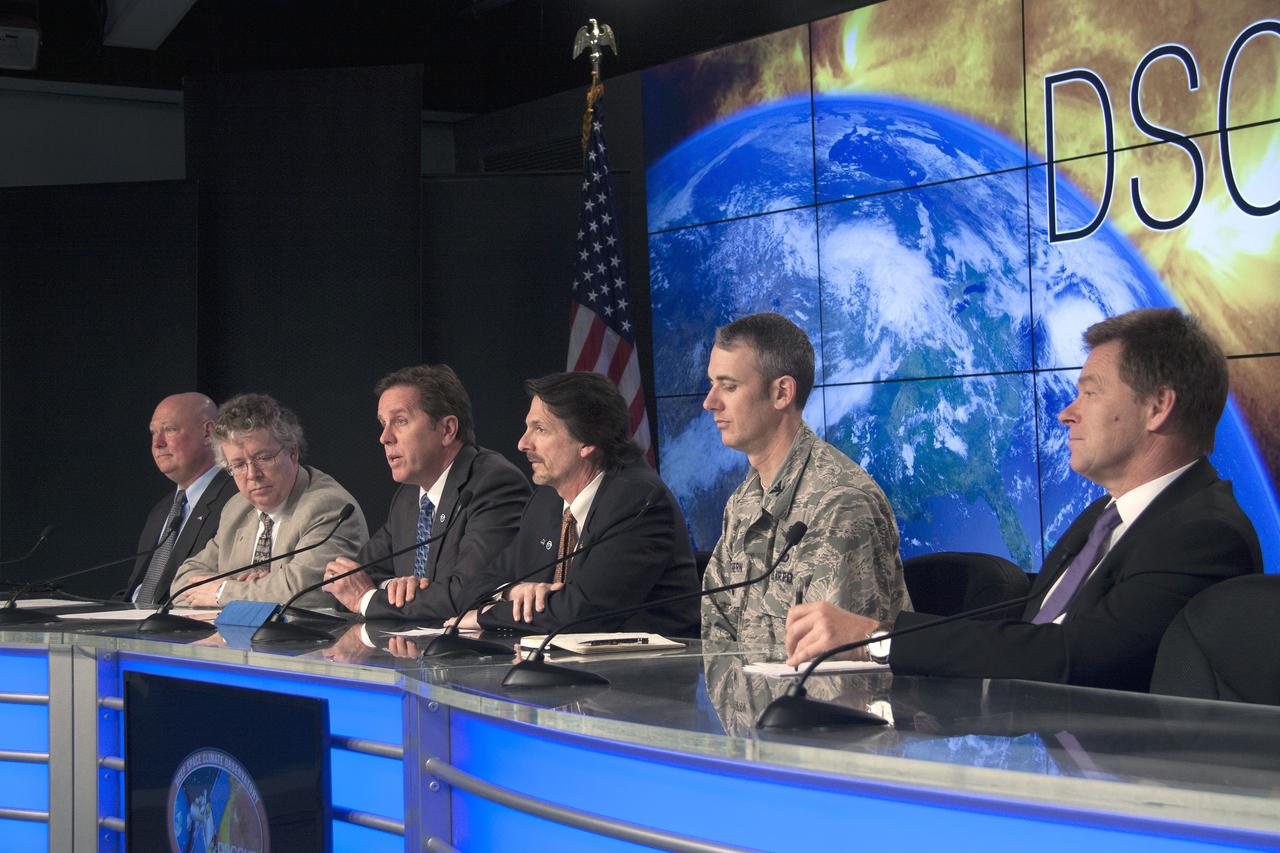
CAPE CANAVERAL, Fla. – A prelaunch briefing at NASA’s Kennedy Space Center in Florida brings media up to date on preparations for the liftoff of NOAA’s Deep Space Climate Observatory spacecraft, or DSCOVR. From left are Michael Curie, moderator, NASA Public Affairs, Stephen Volz, assistant administrator of the NOAA Satellite and Information Service, Tom Berger, director of the NOAA Space Weather Prediction Center, Steven Clarke, NASA Joint Agency Satellite Division director for the agency’s Science Mission Directorate, Col. D. Jason Cothern, Space Demonstrations Division chief at Kirtland Air Force Base in Albuquerque, New Mexico, and Hans Koenigsmann, vice president of mission assurance at SpaceX. DSCOVR will launch aboard a SpaceX Falcon 9 rocket. The mission is a partnership between NOAA, NASA and the U.S. Air Force. DSCOVR will maintain the nation's real-time solar wind monitoring capabilities which are critical to the accuracy and lead time of NOAA's space weather alerts and forecasts. To learn more about DSCOVR, visit http://www.nesdis.noaa.gov/DSCOVR. Photo credit: NASA/Jim Grossman
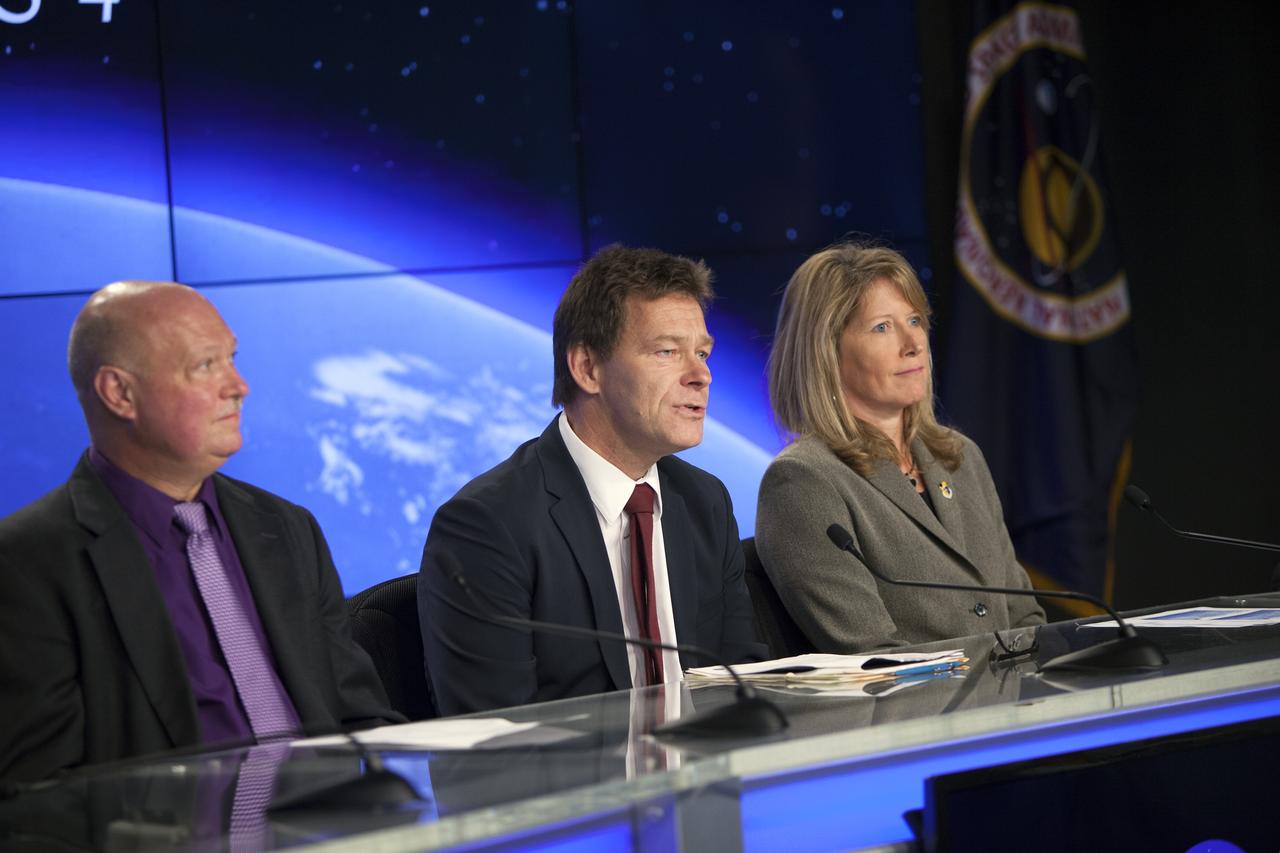
CAPE CANAVERAL, Fla. – In the Kennedy Space Center’s Press Site auditorium, members of news media are briefed on preparations for the launch of the SpaceX CRS-4 mission to resupply the International Space Station. From left are Mike Curie of NASA Public Affairs, Hans Koenigsmann, vice president of Mission Assurance with SpaceX, and Kathy Winters, launch weather officer for the 45th Weather Squadron. Dan Hartman, deputy program manager of the International Space Station Program, participated by telephone. The mission is the fourth of 12 SpaceX flights NASA contracted with the company to resupply the space station. It will be the fifth trip by a Dragon spacecraft to the orbiting laboratory. The spacecraft’s 2.5 tons of supplies, science experiments, and technology demonstrations include critical materials to support 255 science and research investigations that will occur during the station's Expeditions 41 and 42. Liftoff is targeted for an instantaneous window at 2:14 a.m. EDT. To learn more about the mission, visit http://www.nasa.gov/mission_pages/station/structure/launch/index.html Photo credit: NASA/Jim Grossmann
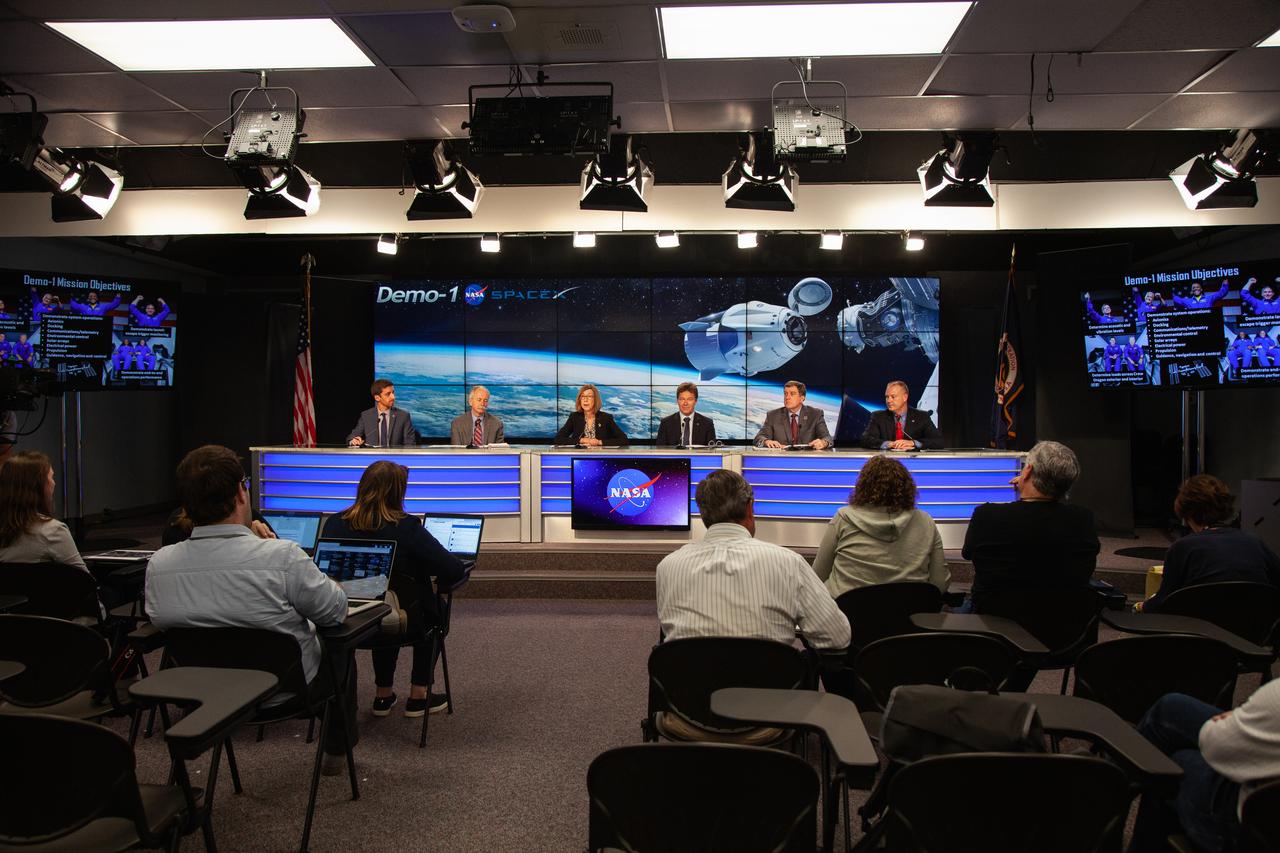
In Kennedy Space Center’s Press Site auditorium, agency and industry leaders speak to members of the media on Friday, Feb. 22, during the post-flight readiness review briefing for the SpaceX Demo-1 Commercial Crew Program (CCP) mission to the International Space Station. From left are: Josh Finch of NASA Communications; William Gerstenmaier, associate administrator, NASA Human Exploration and Operations; Kathy Lueders, manager, NASA Commercial Crew Program; Hans Koenigsmann, vice president, Build and Flight Reliability, SpaceX; Kirk Shireman, International Space Station Program manager; and Norm Knight, deputy director, NASA Johnson Space Center Flight Operations. The inaugural uncrewed flight of the SpaceX Crew Dragon, known as Demo-1, is targeted to lift off from Kennedy’s Launch Complex 39A on Saturday, March 2. EST. A SpaceX Falcon 9 rocket will launch the Crew Dragon on a mission designed to validate end-to-end systems and capabilities, leading to certification to fly crew.
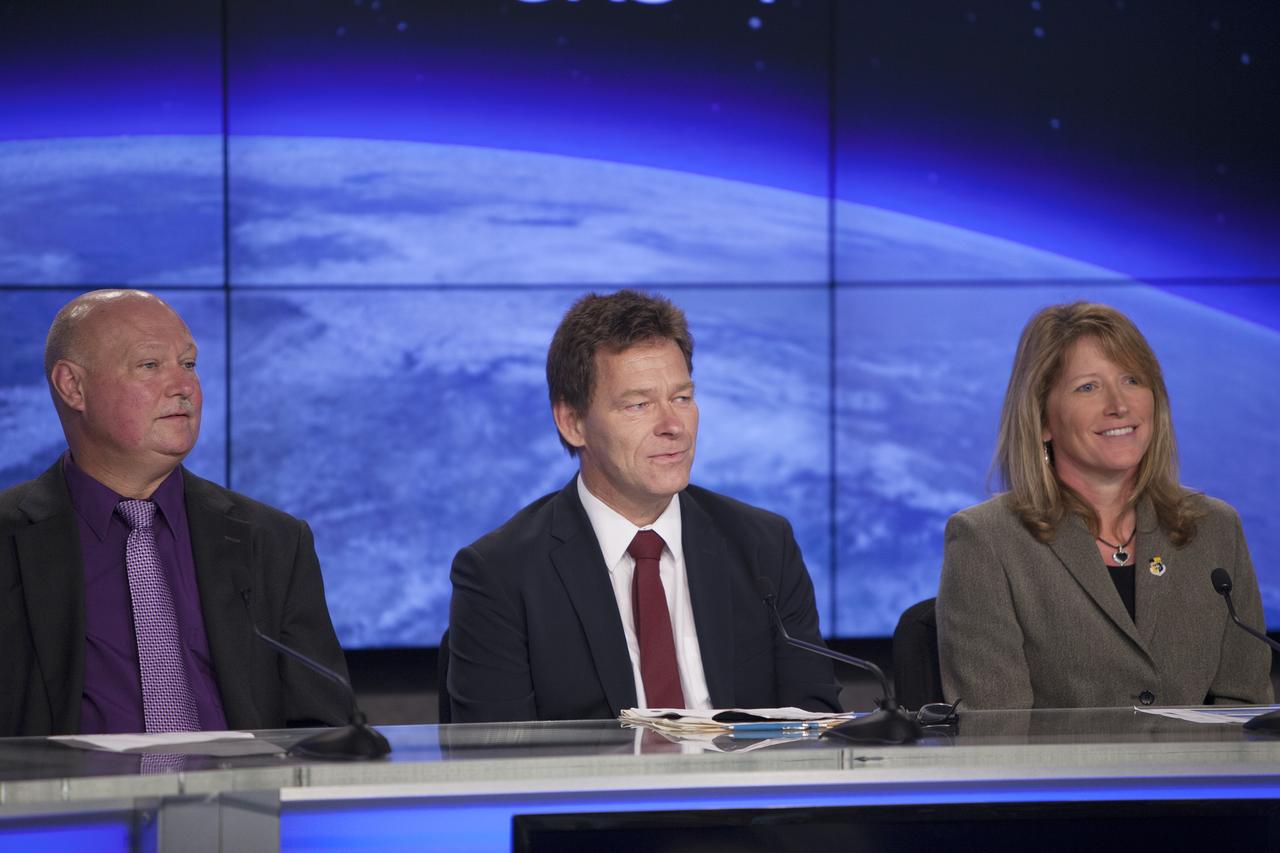
CAPE CANAVERAL, Fla. – In the Kennedy Space Center’s Press Site auditorium, members of news media are briefed on preparations for the launch of the SpaceX CRS-4 mission to resupply the International Space Station. From left are Mike Curie of NASA Public Affairs, Hans Koenigsmann, vice president of Mission Assurance with SpaceX, and Kathy Winters, launch weather officer for the 45th Weather Squadron. Dan Hartman, deputy program manager of the International Space Station Program, participated by telephone. The mission is the fourth of 12 SpaceX flights NASA contracted with the company to resupply the space station. It will be the fifth trip by a Dragon spacecraft to the orbiting laboratory. The spacecraft’s 2.5 tons of supplies, science experiments, and technology demonstrations include critical materials to support 255 science and research investigations that will occur during the station's Expeditions 41 and 42. Liftoff is targeted for an instantaneous window at 2:14 a.m. EDT. To learn more about the mission, visit http://www.nasa.gov/mission_pages/station/structure/launch/index.html Photo credit: NASA/Jim Grossmann
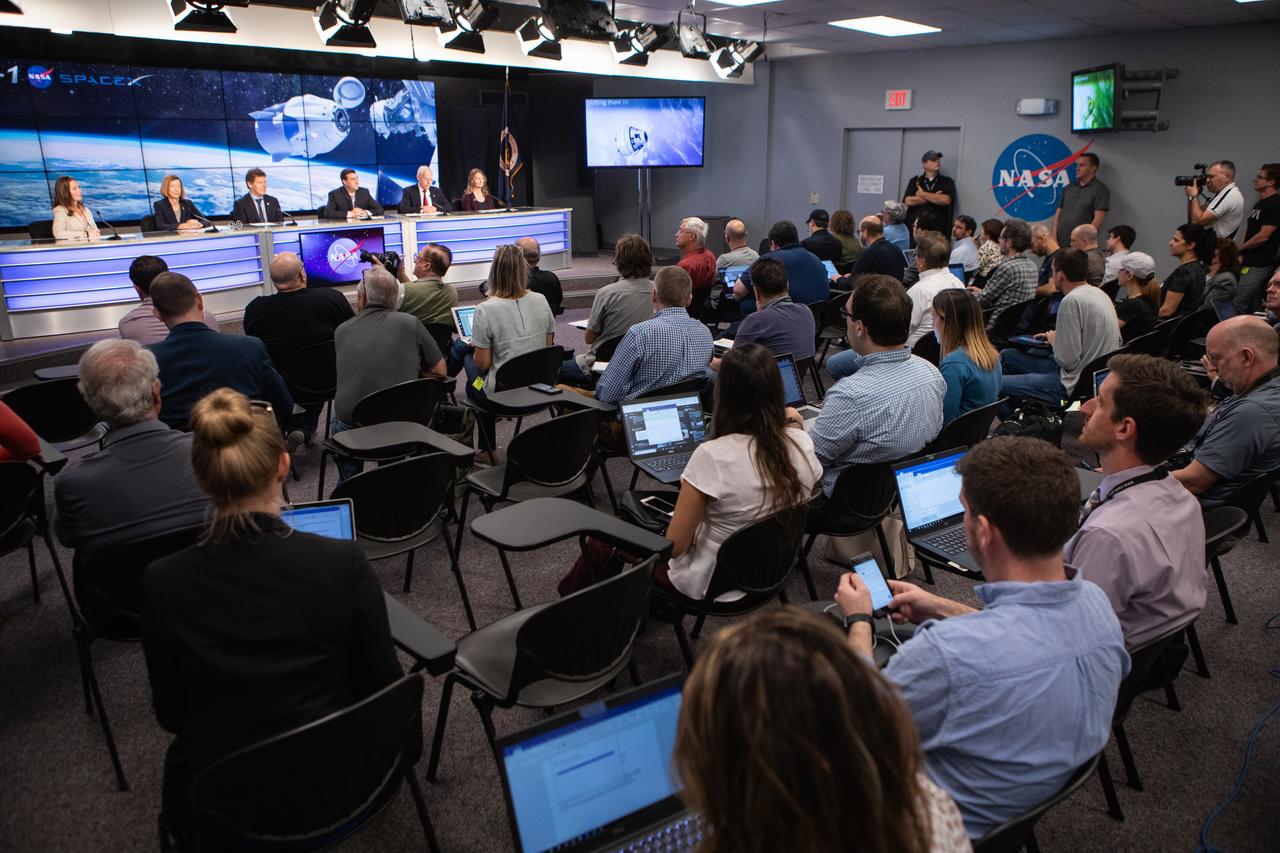
In the Kennedy Space Center’s Press Site TV auditorium, NASA, SpaceX and the 45th Weather Squadron leaders speak to members of the media during a prelaunch news conference Thursday, Feb. 28, prior to the Saturday, March 2 launch of the SpaceX Demo-1 Commercial Crew Program (CCP) mission to the International Space Station. From left are: Stephanie Martin of NASA Communications, Kathy Lueders, manager, NASA’s Commercial Crew Program; Hans Koenigsmann, vice president, Build and Flight Reliability, SpaceX; Joel Montalbano, deputy manager, International Space Station Program; Pat Forrester, chief, Astronaut Office, Johnson Space Center; and Melody C. Lovin, launch weather officer, 45th Weather Squadron. The inaugural flight of the SpaceX Crew Dragon, known as Demo-1, is scheduled to lift off from Kennedy’s Launch Complex 39A Saturday at 2:49 EST. A SpaceX Falcon 9 rocket will launch the uncrewed spacecraft on a mission designed to validate end-to-end systems and capabilities, leading to certification to fly crew. NASA has worked with SpaceX and Boeing in developing the Commercial Crew Program spacecraft to facilitate new human spaceflight systems launching from U.S. soil with the goal of safe, reliable and cost-effective access to low-Earth orbit destinations, such as the International Space Station.
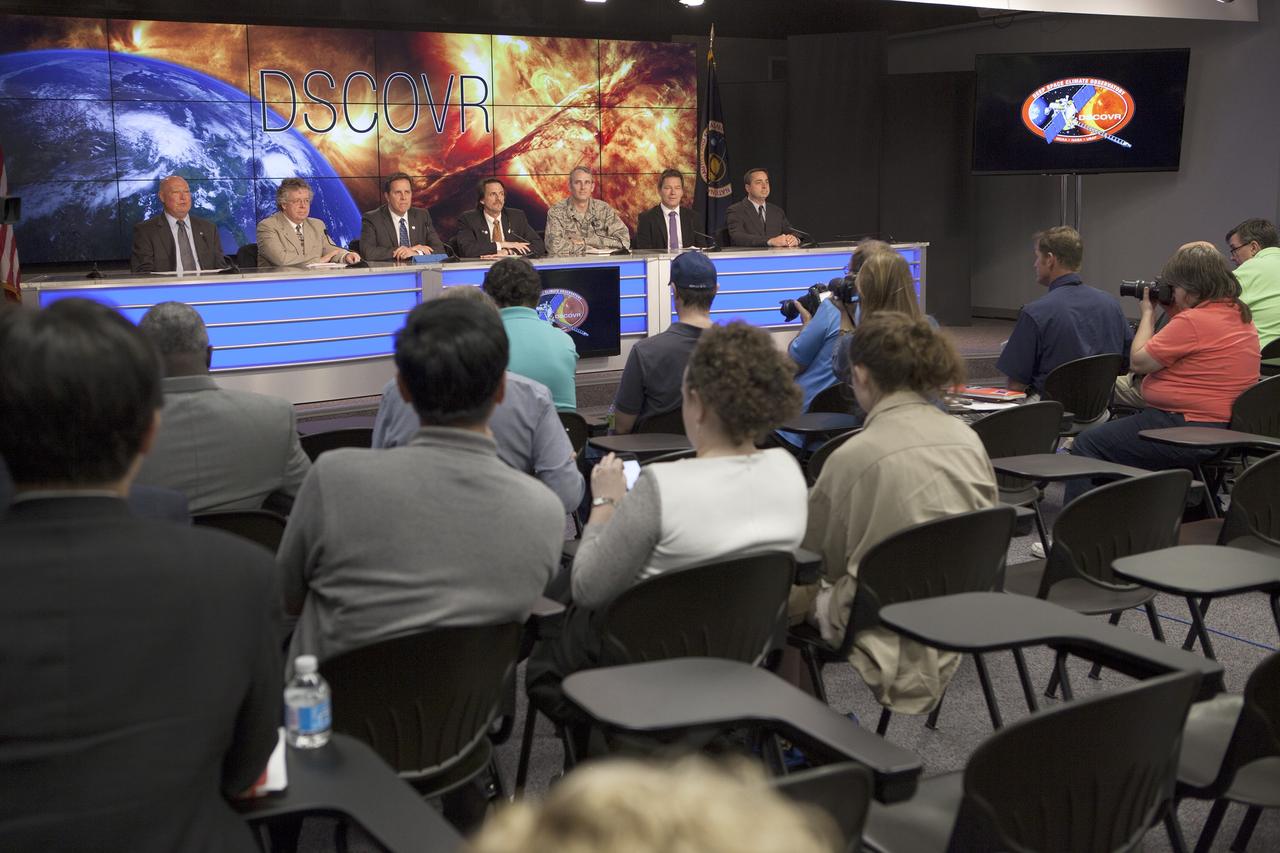
CAPE CANAVERAL, Fla. – A prelaunch briefing at NASA’s Kennedy Space Center in Florida brings media up to date on preparations for the liftoff of NOAA’s Deep Space Climate Observatory spacecraft, or DSCOVR. From left are Michael Curie, moderator, NASA Public Affairs, Stephen Volz, assistant administrator of the NOAA Satellite and Information Service, Tom Berger, director of the NOAA Space Weather Prediction Center, Steven Clarke, NASA Joint Agency Satellite Division director for the agency’s Science Mission Directorate, Col. D. Jason Cothern, Space Demonstrations Division chief at Kirtland Air Force Base in Albuquerque, New Mexico, and Hans Koenigsmann, vice president of mission assurance at SpaceX, and Mike McAleenan, launch weather officer with the U.S. Air Force 45th Weather Squadron. DSCOVR will launch aboard a SpaceX Falcon 9 rocket. The mission is a partnership between NOAA, NASA and the U.S. Air Force. DSCOVR will maintain the nation's real-time solar wind monitoring capabilities which are critical to the accuracy and lead time of NOAA's space weather alerts and forecasts. To learn more about DSCOVR, visit http://www.nesdis.noaa.gov/DSCOVR. Photo credit: NASA/Kim Shiflett
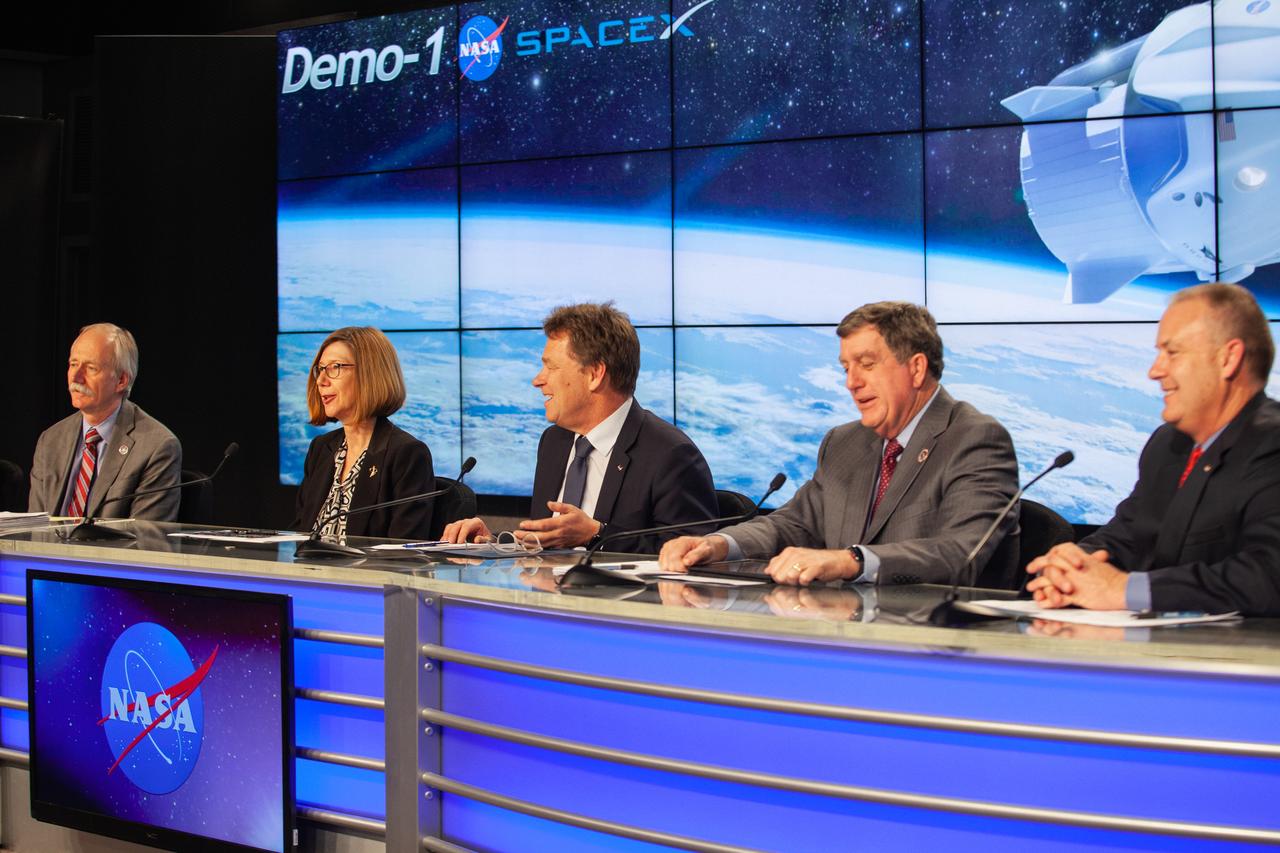
In Kennedy Space Center’s Press Site auditorium, agency and industry leaders speak to members of the media on Friday, Feb. 22, during the post-flight readiness review briefing for the SpaceX Demo-1 Commercial Crew Program (CCP) mission to the International Space Station. From left are: Josh Finch of NASA Communications; William Gerstenmaier, associate administrator, NASA Human Exploration and Operations; Kathy Lueders, manager, NASA Commercial Crew Program; Hans Koenigsmann, vice president, Build and Flight Reliability, SpaceX; Kirk Shireman, International Space Station Program manager; and Norm Knight, deputy director, NASA Johnson Space Center Flight Operations. The inaugural uncrewed flight of the SpaceX Crew Dragon, known as Demo-1, is targeted to lift off from Kennedy’s Launch Complex 39A on Saturday, March 2. EST. A SpaceX Falcon 9 rocket will launch the Crew Dragon on a mission designed to validate end-to-end systems and capabilities, leading to certification to fly crew.
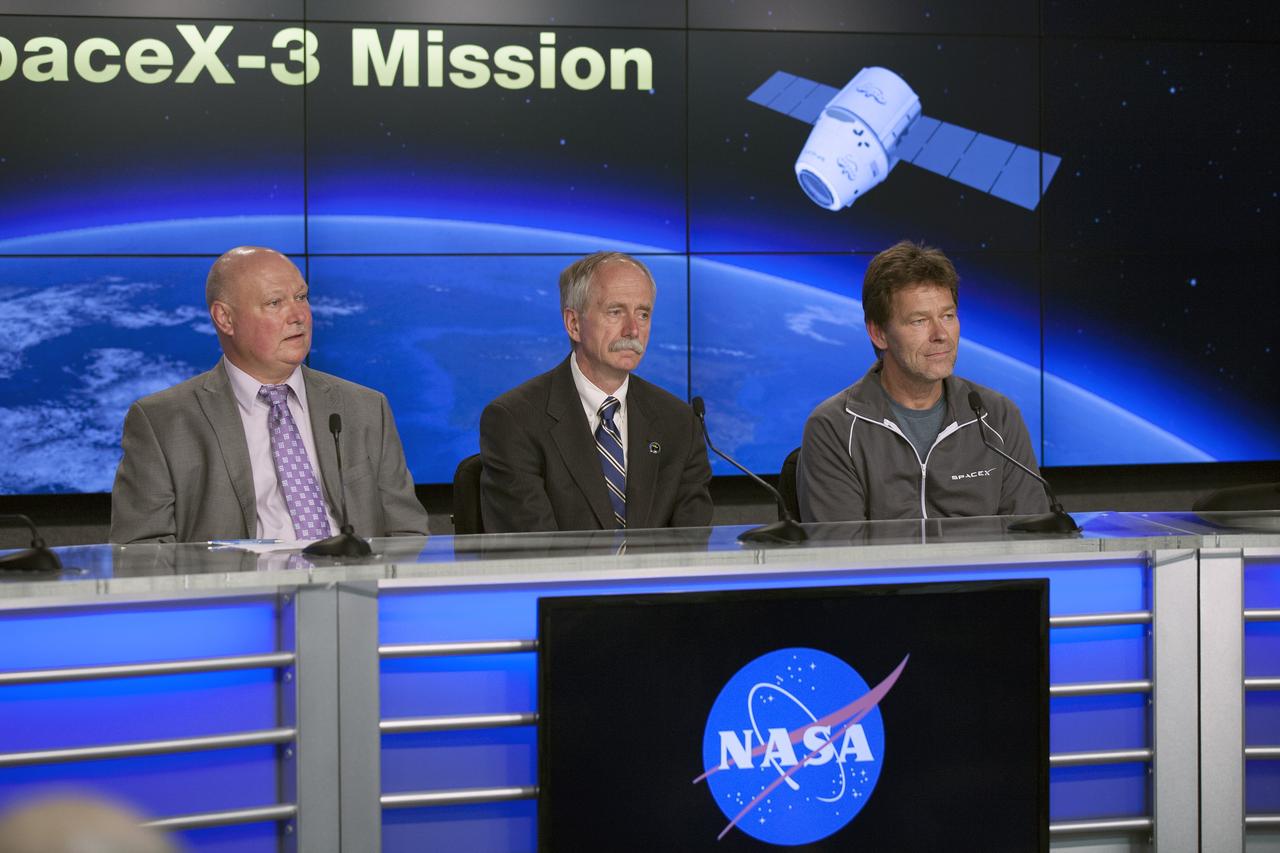
CAPE CANAVERAL, Fla. - Participating in a SpaceX-3 post-launch news conference in the NASA Press Site television auditorium at Kennedy Space Center in Florida are, from left, Michael Curie, NASA Public Affairs, William Gersteinmeier, NASA associate administrator for Human Exploration and Operations, and Hans Koenigsmann, SpaceX vice president of Mission Assurance. SpaceX CEO and chief designer Elon Musk participated in the conference by telephone. SpaceX-3 launched at 3:25 p.m. EDT aboard a Falcon 9 rocket carrying a Dragon capsule from Space Launch Complex 40 on Cape Canaveral Air Force Station. Dragon is making its fourth trip to the space station. The SpaceX-3 mission, carrying almost 2.5 tons of supplies, technology and science experiments, is the third of 12 flights through a $1.6 billion NASA Commercial Resupply Services contract. Dragon's cargo will support more than 150 experiments that will be conducted during the station's Expeditions 39 and 40. For more information, visit http://www.nasa.gov/mission_pages/station/structure/launch/index.html. Photo credit: NASA/Kim Shiflett
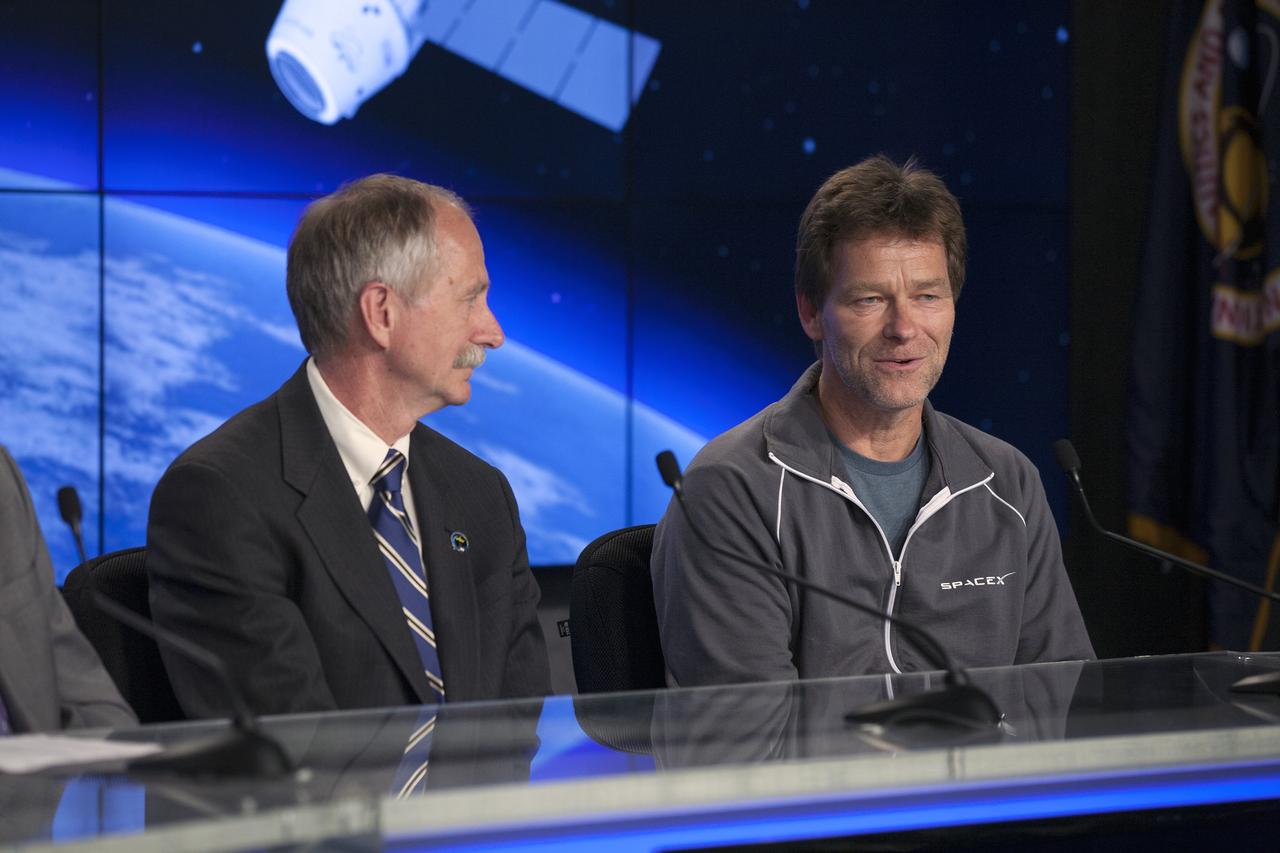
CAPE CANAVERAL, Fla. - Participating in a SpaceX-3 post-launch news conference in the NASA Press Site television auditorium at Kennedy Space Center in Florida are, from left, William Gersteinmeier, NASA associate administrator for Human Exploration and Operations, and Hans Koenigsmann, SpaceX vice president of Mission Assurance. SpaceX CEO and chief designer Elon Musk participated in the conference by telephone. SpaceX-3 launched at 3:25 p.m. EDT aboard a Falcon 9 rocket carrying a Dragon capsule from Space Launch Complex 40 on Cape Canaveral Air Force Station. Dragon is making its fourth trip to the space station. The SpaceX-3 mission, carrying almost 2.5 tons of supplies, technology and science experiments, is the third of 12 flights through a $1.6 billion NASA Commercial Resupply Services contract. Dragon's cargo will support more than 150 experiments that will be conducted during the station's Expeditions 39 and 40. For more information, visit http://www.nasa.gov/mission_pages/station/structure/launch/index.html. Photo credit: NASA/Kim Shiflett
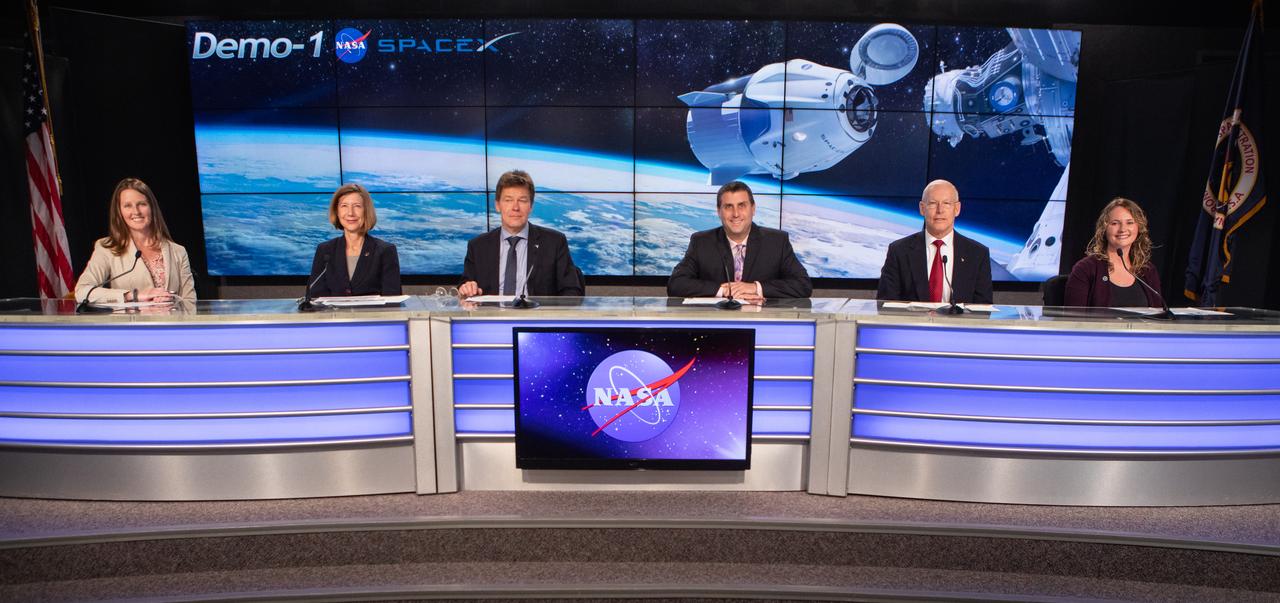
In the Kennedy Space Center’s Press Site TV auditorium, NASA, SpaceX and the 45th Weather Squadron leaders speak to members of the media during a prelaunch news conference Thursday, Feb. 28, prior to the Saturday, March 2 launch of the SpaceX Demo-1 Commercial Crew Program (CCP) mission to the International Space Station. From left are: Stephanie Martin of NASA Communications, Kathy Lueders, manager, NASA’s Commercial Crew Program; Hans Koenigsmann, vice president, Build and Flight Reliability, SpaceX; Joel Montalbano, deputy manager, International Space Station Program; Pat Forrester, chief, Astronaut Office, Johnson Space Center; and Melody C. Lovin, launch weather officer, 45th Weather Squadron. The inaugural flight of the SpaceX Crew Dragon, known as Demo-1, is scheduled to lift off from Kennedy’s Launch Complex 39A Saturday at 2:49 EST. A SpaceX Falcon 9 rocket will launch the uncrewed spacecraft on a mission designed to validate end-to-end systems and capabilities, leading to certification to fly crew. NASA has worked with SpaceX and Boeing in developing the Commercial Crew Program spacecraft to facilitate new human spaceflight systems launching from U.S. soil with the goal of safe, reliable and cost-effective access to low-Earth orbit destinations, such as the International Space Station.
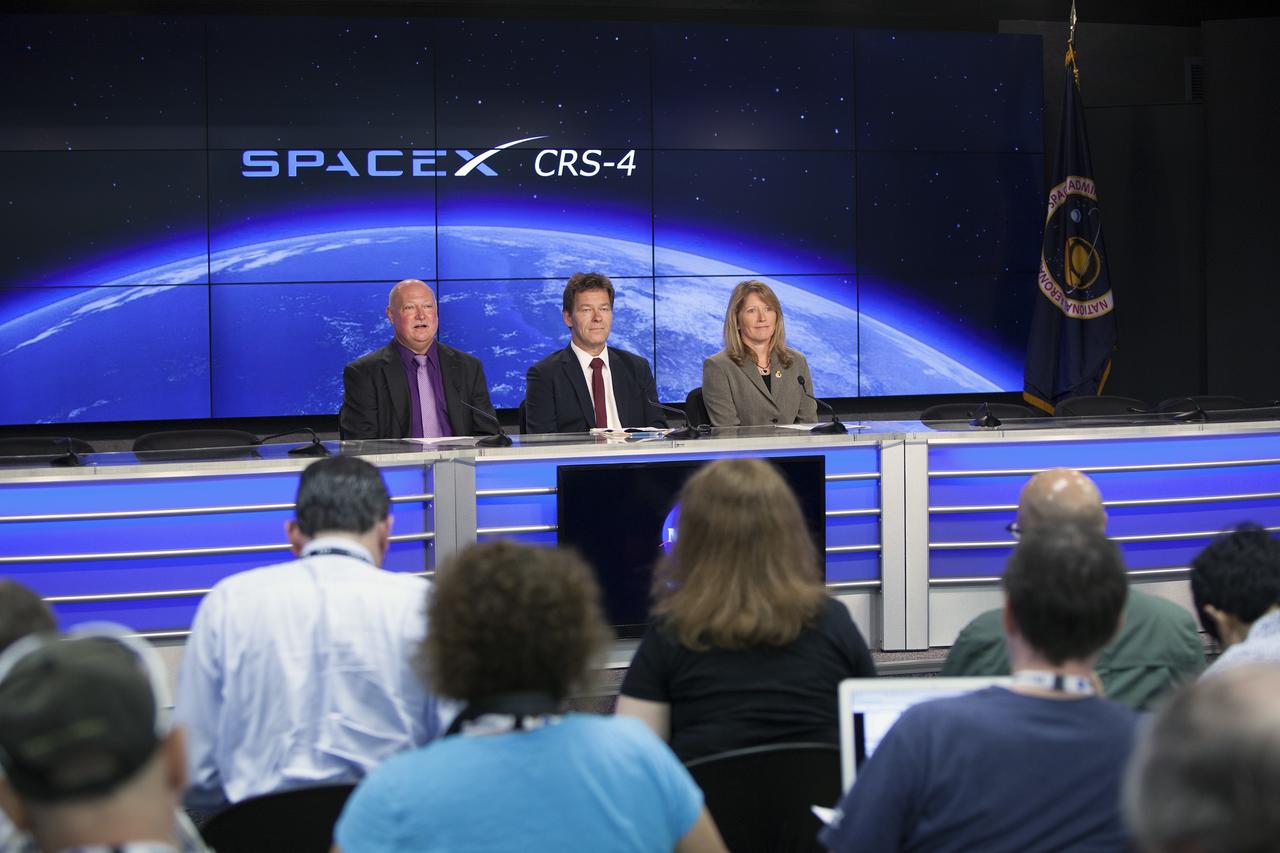
CAPE CANAVERAL, Fla. – In the Kennedy Space Center’s Press Site auditorium, members of news media are briefed on preparations for the launch of the SpaceX CRS-4 mission to resupply the International Space Station. From left are Mike Curie of NASA Public Affairs, Hans Koenigsmann, vice president of Mission Assurance with SpaceX, and Kathy Winters, launch weather officer for the 45th Weather Squadron. Dan Hartman, deputy program manager of the International Space Station Program, participated by telephone. The mission is the fourth of 12 SpaceX flights NASA contracted with the company to resupply the space station. It will be the fifth trip by a Dragon spacecraft to the orbiting laboratory. The spacecraft’s 2.5 tons of supplies, science experiments, and technology demonstrations include critical materials to support 255 science and research investigations that will occur during the station's Expeditions 41 and 42. Liftoff is targeted for an instantaneous window at 2:14 a.m. EDT. To learn more about the mission, visit http://www.nasa.gov/mission_pages/station/structure/launch/index.html Photo credit: NASA/Jim Grossmann
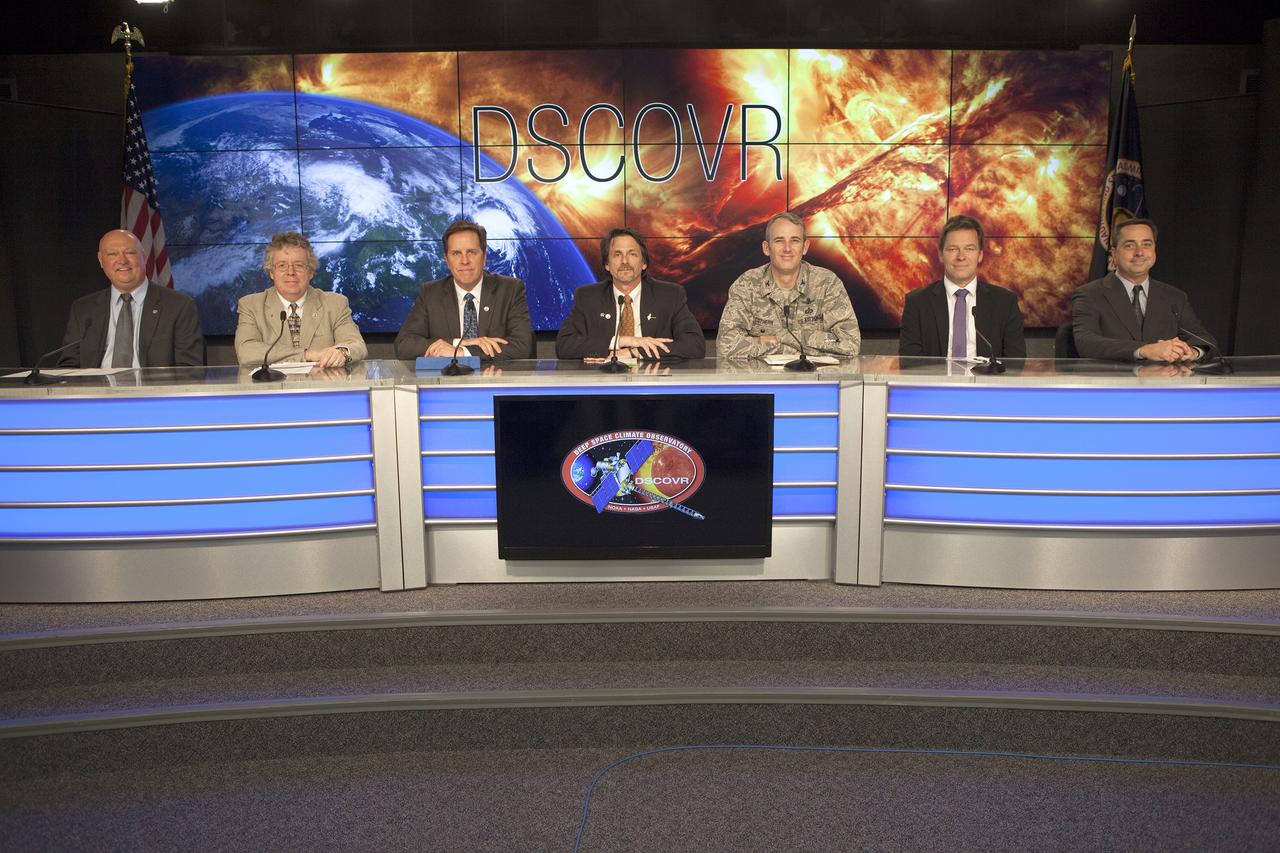
CAPE CANAVERAL, Fla. – Launch and mission officials prepare for the start of a prelaunch briefing at NASA’s Kennedy Space Center in Florida regarding NOAA’s Deep Space Climate Observatory mission, or DSCOVR. From left are Michael Curie, moderator, NASA Public Affairs, Stephen Volz, assistant administrator of the NOAA Satellite and Information Service, Tom Berger, director of the NOAA Space Weather Prediction Center, Steven Clarke, NASA Joint Agency Satellite Division director for the agency’s Science Mission Directorate, Col. D. Jason Cothern, Space Demonstrations Division chief at Kirtland Air Force Base in Albuquerque, New Mexico, and Hans Koenigsmann, vice president of mission assurance at SpaceX, and Mike McAleenan, launch weather officer with the U.S. Air Force 45th Weather Squadron. DSCOVR will launch aboard a SpaceX Falcon 9 rocket. The mission is a partnership between NOAA, NASA and the U.S. Air Force. DSCOVR will maintain the nation's real-time solar wind monitoring capabilities which are critical to the accuracy and lead time of NOAA's space weather alerts and forecasts. To learn more about DSCOVR, visit http://www.nesdis.noaa.gov/DSCOVR. Photo credit: NASA/Kim Shiflett