
iss071e403651 (July 21, 2024) --- The 57.7-foot-long Canadarm2 robotic arm extends from the International Space Station's Harmony module as the orbital outpost soared 261 miles above the coast of Peru. Partially obscured in the top background, is the Boeing Starliner spacecraft docked to Harmony's forward port.
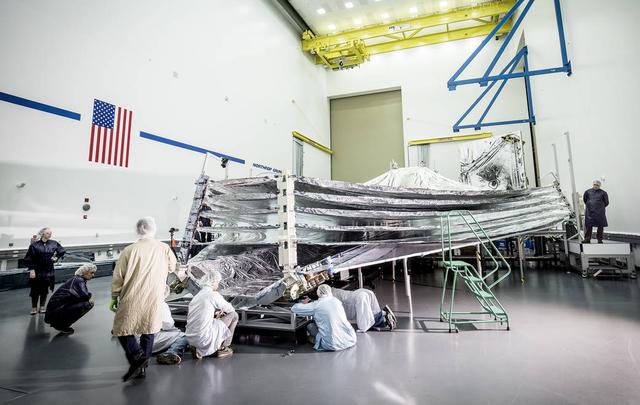
NASA's James Webb Space Telescope has a giant custom-built, kite-shaped sunshield driven by mechanics that will fold and unfold with a harmonious synchronicity 1 million miles from Earth. Like a car, many mechanical pieces in the Webb telescope's sunshield will work together to open it from its stored folded position in the rocket that will carry it into space. According to car manufacturers, a single car can have about 30,000 parts, counting every part down to the smallest screws. Like getting all of the parts in a car to operate together, the mechanical parts of the sunshield have to work in the same way. The sunshield support structure contains well over 7,000 flight parts, including springs, bearings, pulleys, magnets, etc. In addition, the sunshield has hundreds of custom fabricated pieces. Most mechanical pieces were developed exclusively for the sunshield, with a few from existing designs. Read more: <a href="http://go.nasa.gov/2cXcQMT" rel="nofollow">go.nasa.gov/2cXcQMT</a>
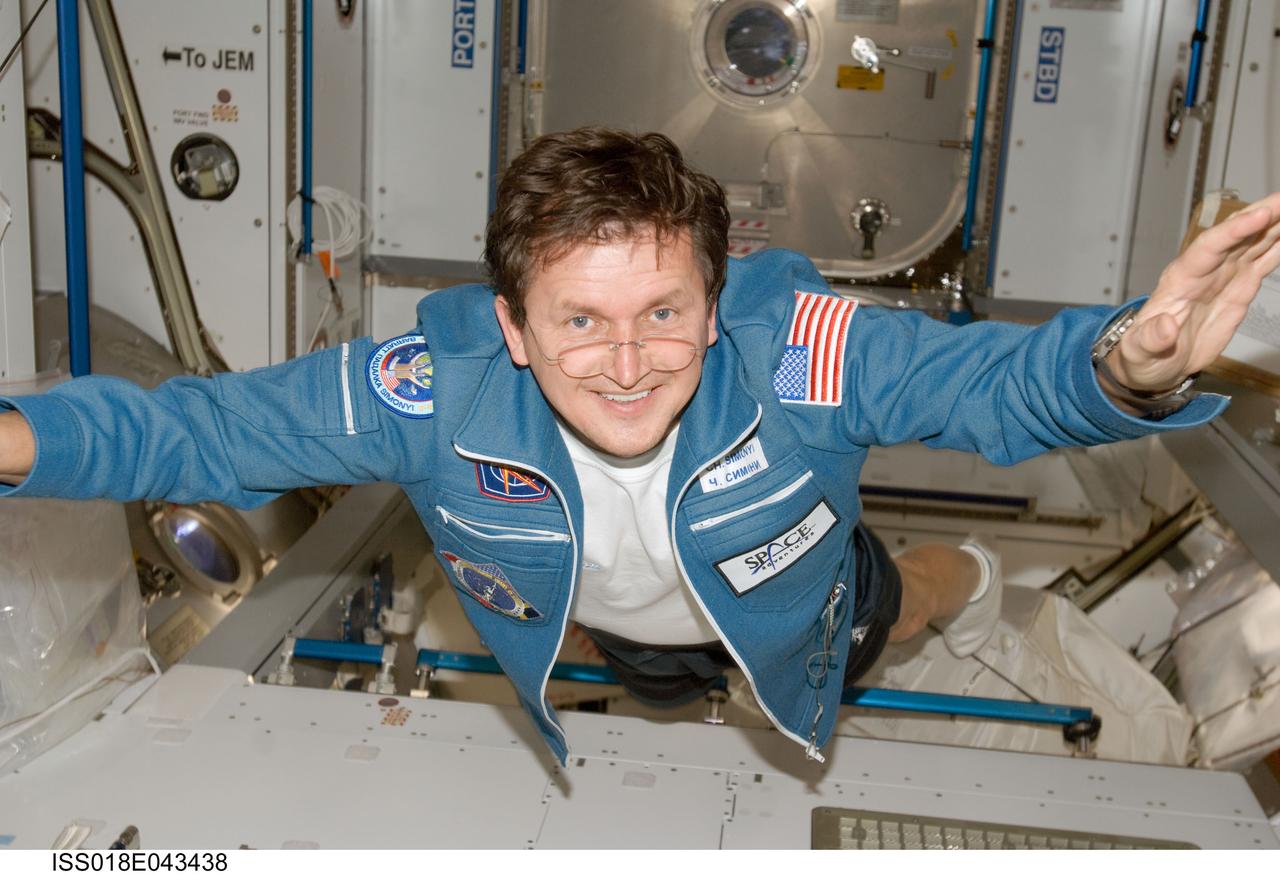
ISS018-E-043438 (29 March 2009) --- U.S. spaceflight participant Charles Simonyi floats in the Harmony node of the International Space Station.
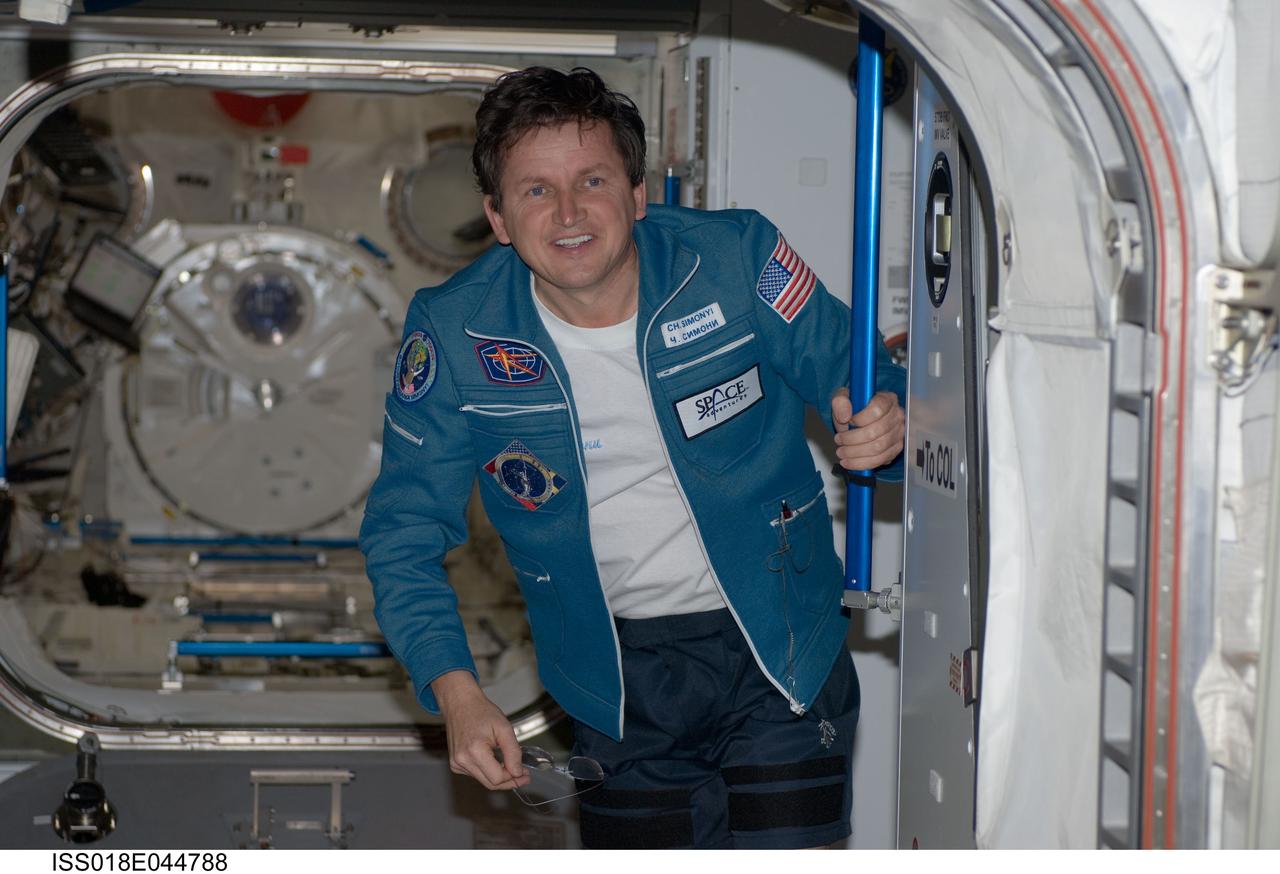
ISS018-E-044788 (29 March 2009) --- U.S. spaceflight participant Charles Simonyi is pictured in the Harmony node of the International Space Station.
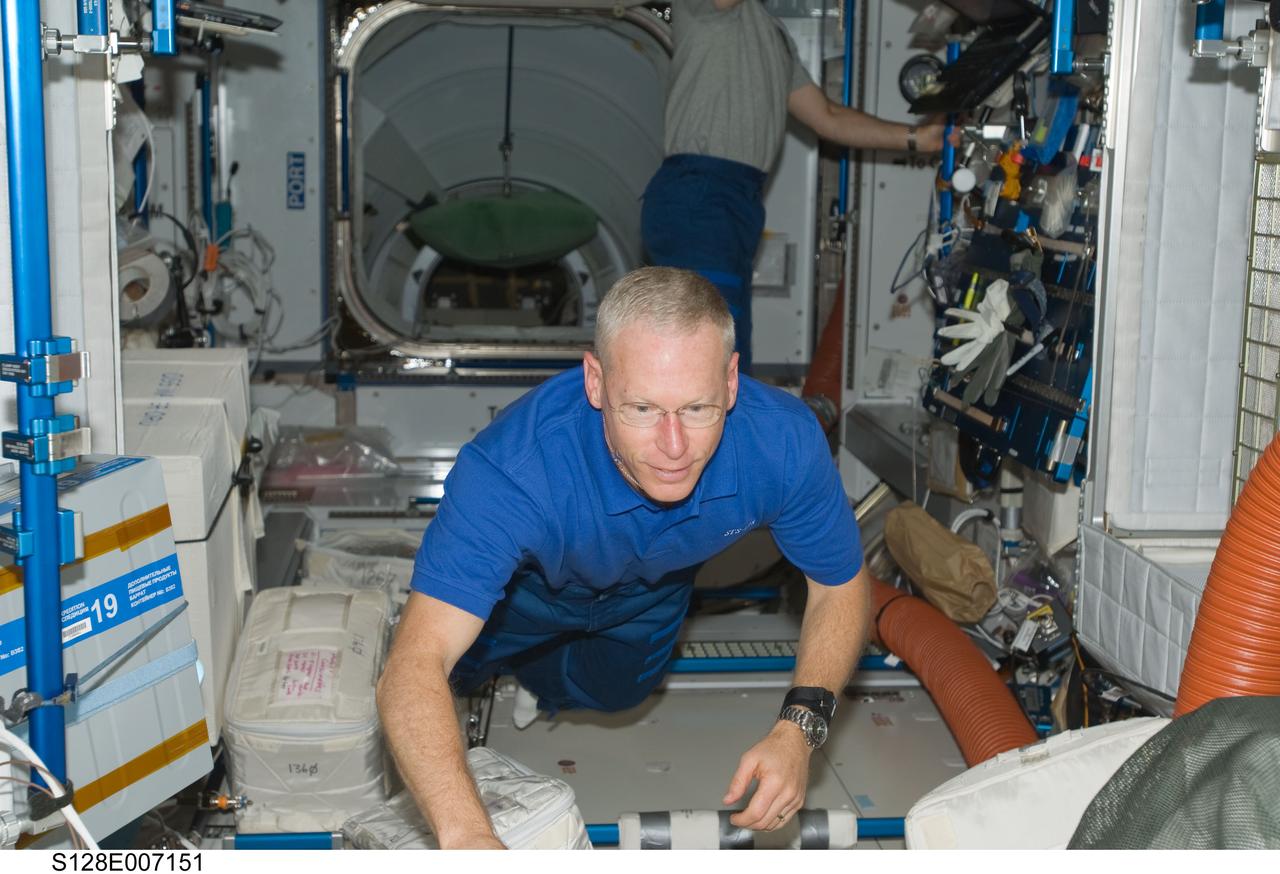
S128-E-007151 (31 Aug. 2009) --- Astronaut Patrick Forrester, STS-128 mission specialist, is pictured in the Harmony node of the International Space Station while Space Shuttle Discovery remains docked with the station.
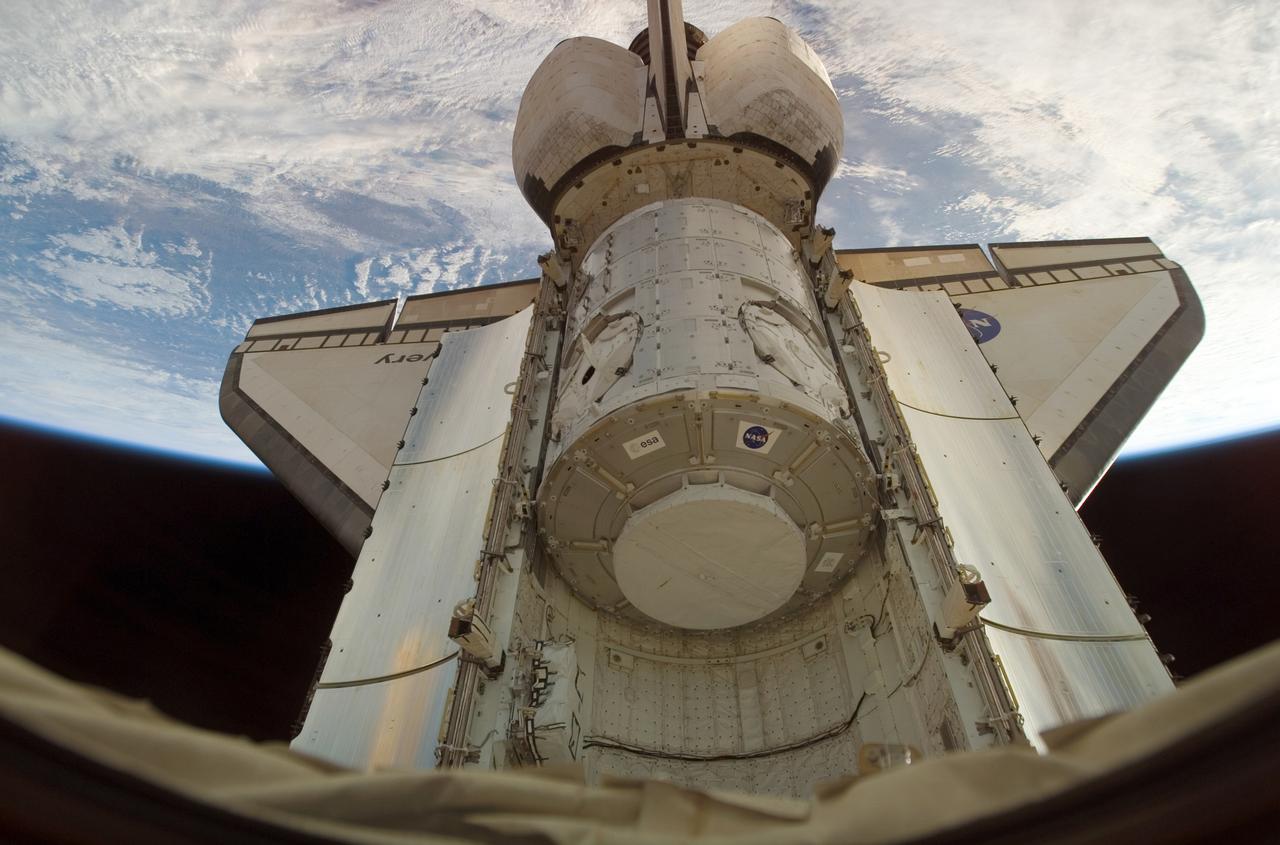
Back dropped by Earth's horizon and the blackness of space, the Italian-built U.S. Node 2, Harmony, is featured in Space Shuttle Discovery's cargo bay during the STS-120 mission. This image was photographed by an Expedition 16 crew member on the International Space Station (ISS) while Discovery was docked with the station. The aluminum node is 7.2 meters (23.6 feet) long and 4.4 meters (14.5 feet) in diameter. Its pressurized volume is 75.5 cubic meters (2666 cubic feet), and its launch weight is approximately 14,288 kilograms (31,500 pounds). The installation of Harmony increases the living and working space inside the station to approximately 500 cubic meters (18,000 cubic feet). It also allows the addition of international laboratories from Europe and Japan to the station.
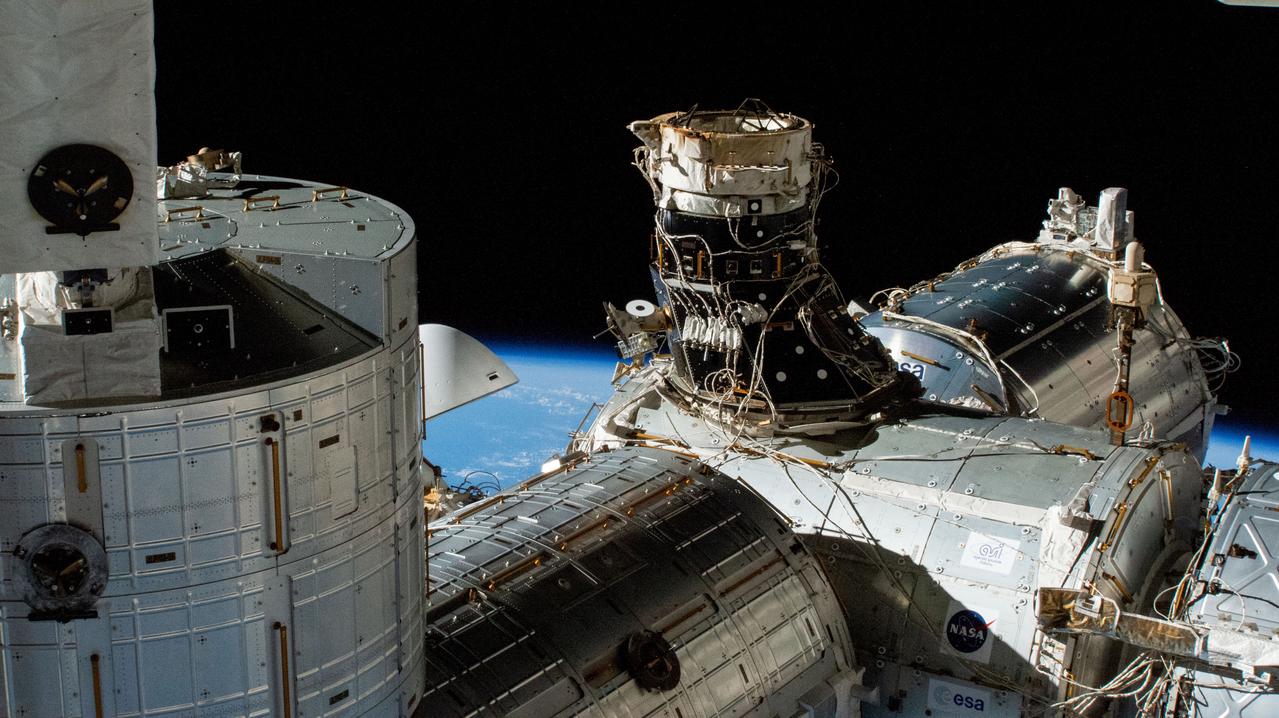
iss072e143839 (Nov. 3, 2024) --- The unoccupied space-facing port on the International Space Station's Harmony module is pictured several hours before the SpaceX Dragon Freedom spacecraft would relocate there after undocking from Harmony's forward port.
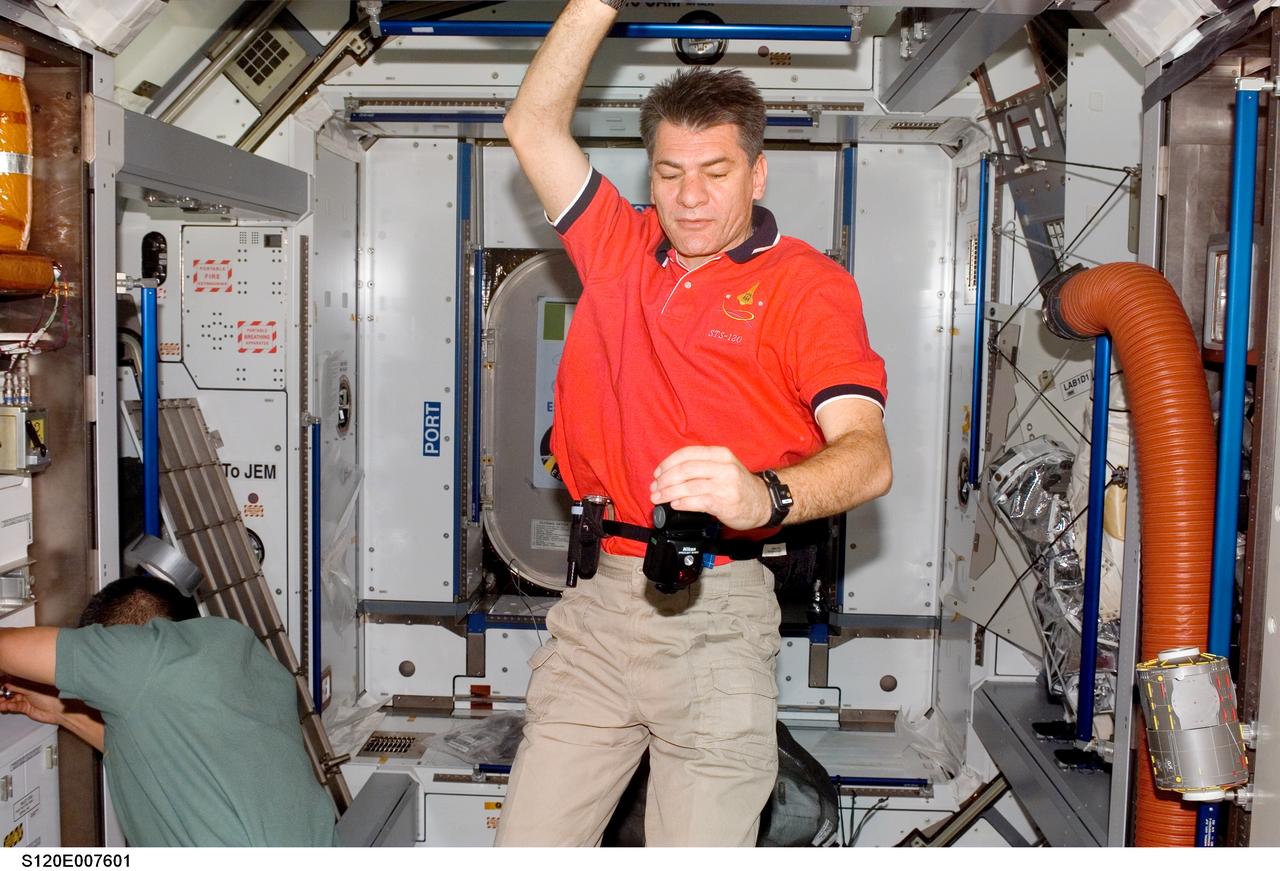
S120-E-007601 (31 Oct. 2007) --- European Space Agency (ESA) astronaut Paolo Nespoli (center), STS-120 mission specialist, and astronaut George Zamka, pilot, work in the Harmony node of the International Space Station while Space Shuttle Discovery is docked with the station.
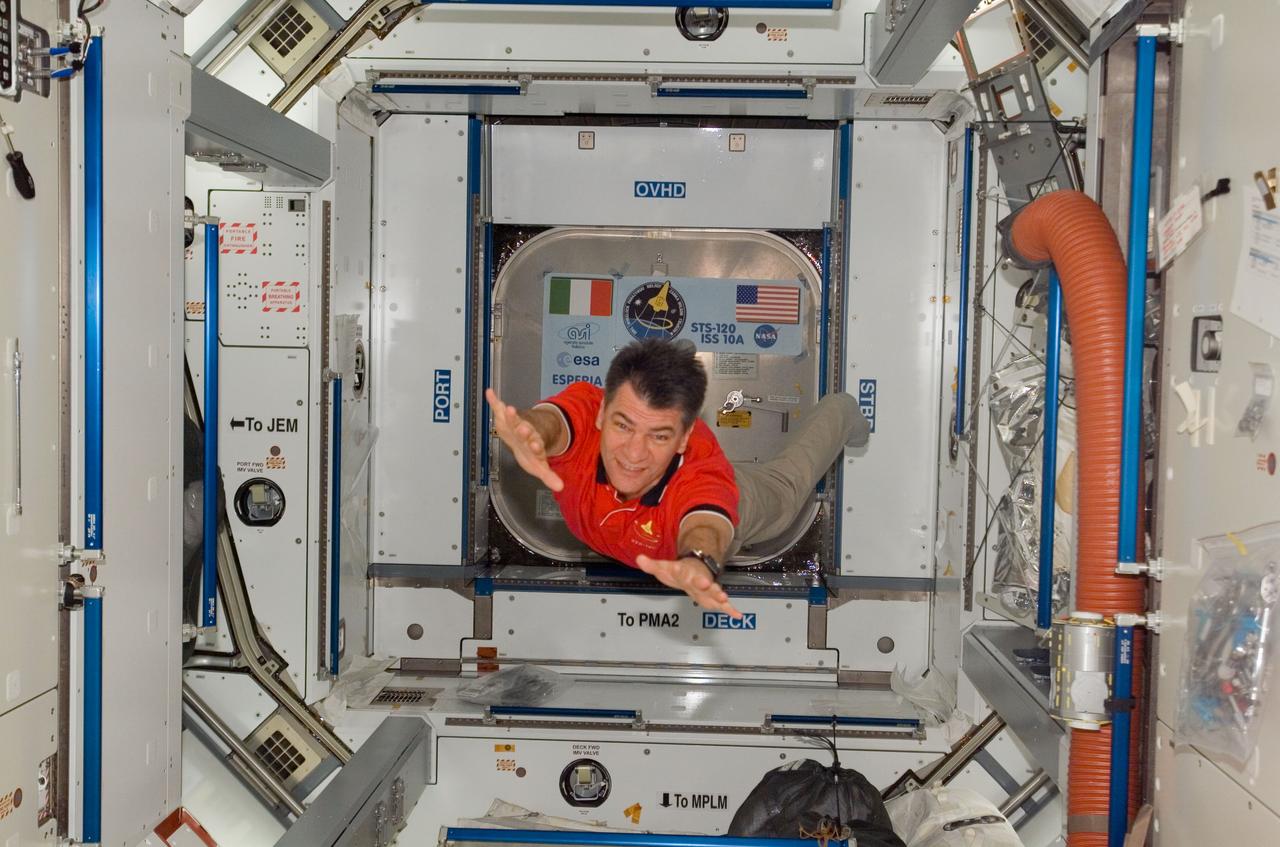
ISS016-E-007932 (31 Oct. 2007) --- European Space Agency (ESA) astronaut Paolo Nespoli, STS-120 mission specialist, floats in the Harmony node of the International Space Station while Space Shuttle Discovery is docked with the station.
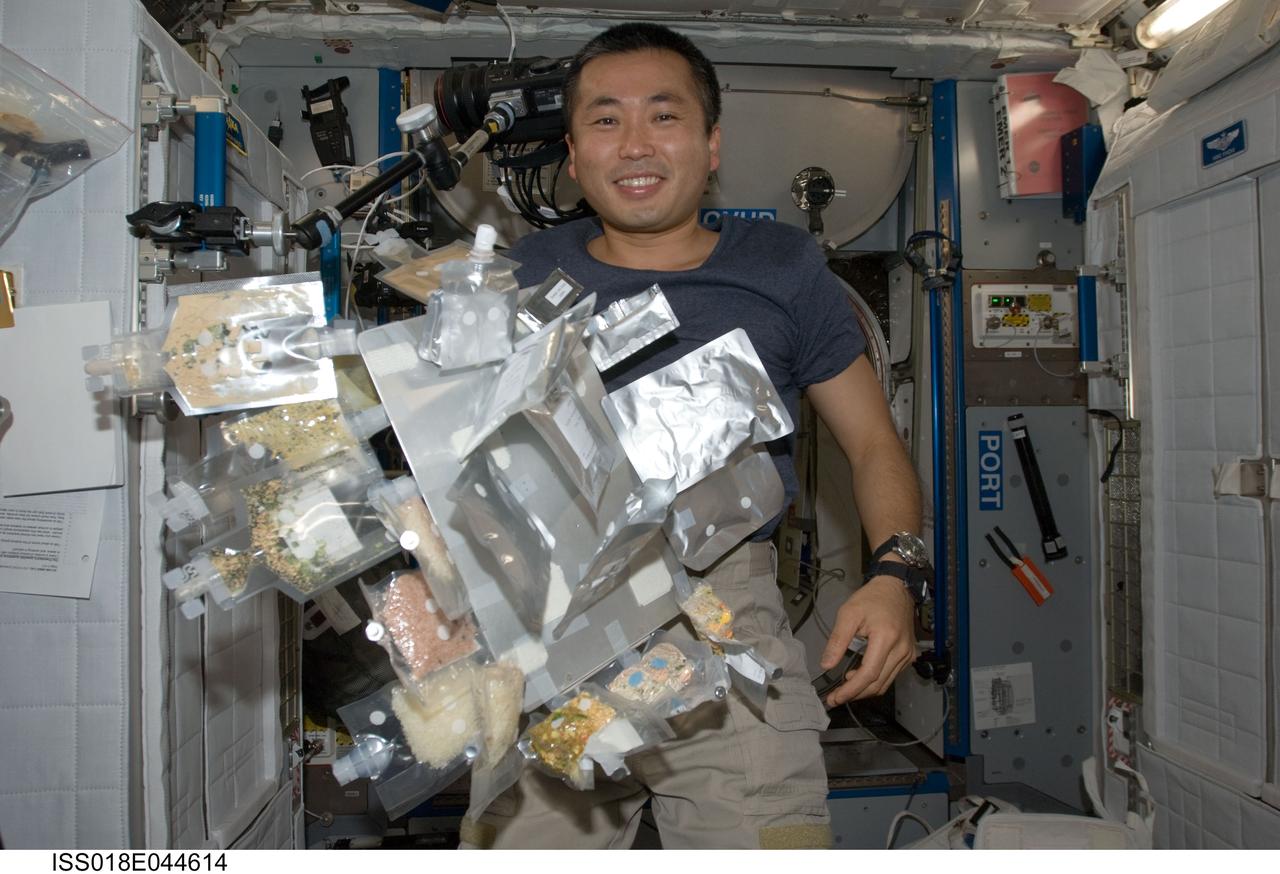
ISS018-E-044614 (4 April 2009) --- Japan Aerospace Exploration Agency (JAXA) astronaut Koichi Wakata, Expedition 18/19 flight engineer, is pictured near food and drink containers floating freely in the Harmony node of the International Space Station.
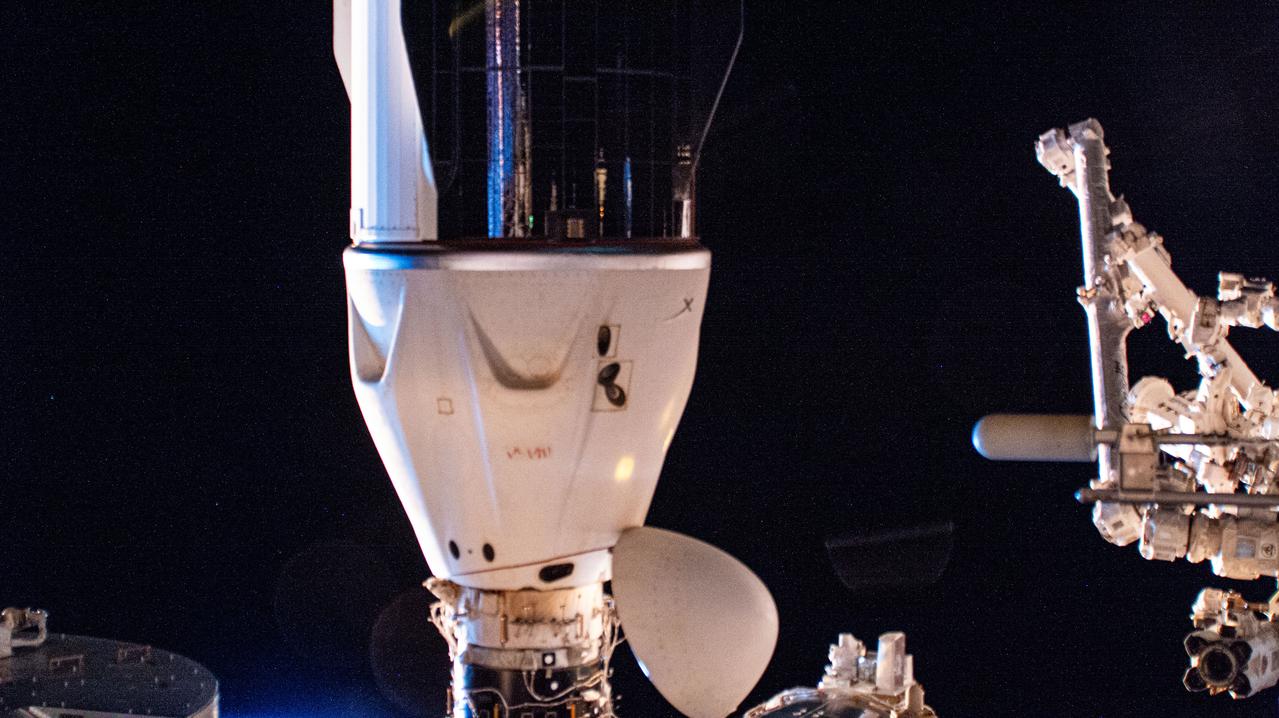
iss072e096331 (Oct. 22, 2024) --- The SpaceX Dragon Endeavour spacecraft is pictured docked to the space-facing port on the Harmony module the day before undocking from the International Space Station.
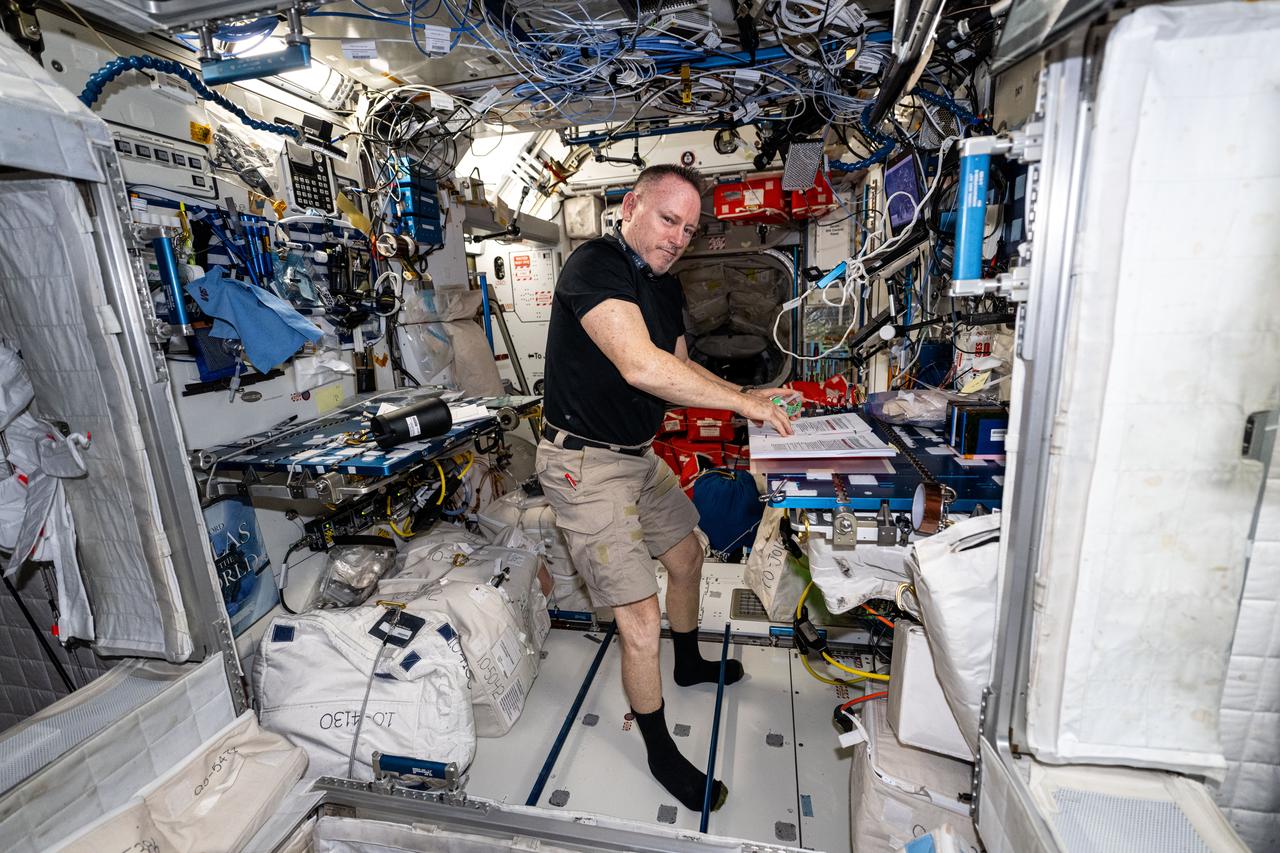
iss072e099557 (Oct. 25, 2024) --- NASA astronaut and Expedition 72 Flight Engineer Butch Wilmore works in the Harmony module printing and updating International Space Station emergency procedures.
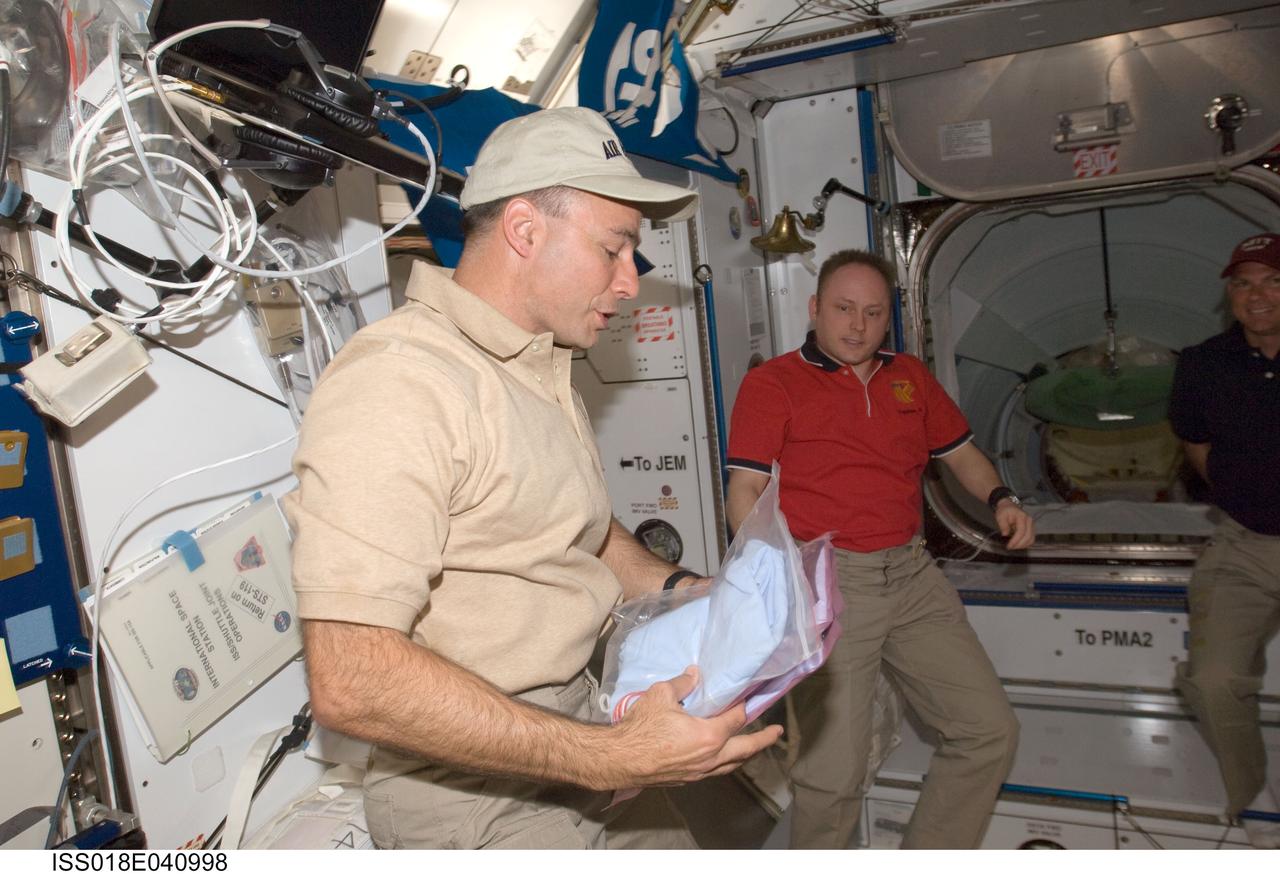
ISS018-E-040998 (18 March 2009) --- Astronauts Lee Archambault (left), STS-119 commander; Michael Fincke, Expedition 18 commander; and Tony Antonelli (partially out of frame at right), STS-119 pilot, are pictured in the Harmony node of the International Space Station while Space Shuttle Discovery remains docked with the station.
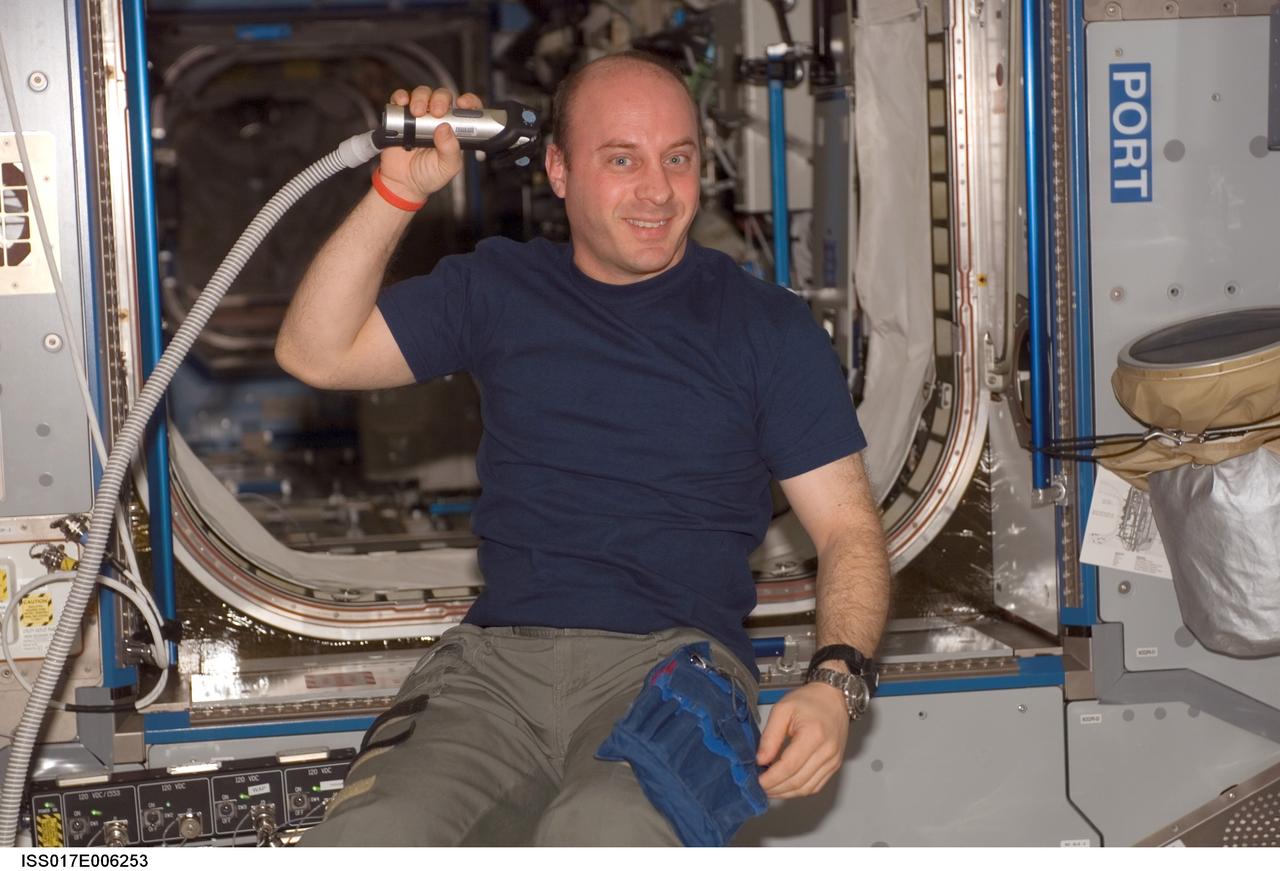
ISS017-E-006253 (4 May 2008) --- Astronaut Garrett Reisman, Expedition 17 flight engineer, trims his hair in the Harmony node of the International Space Station, using hair clippers fashioned with a vacuum device to garner freshly cut hair.
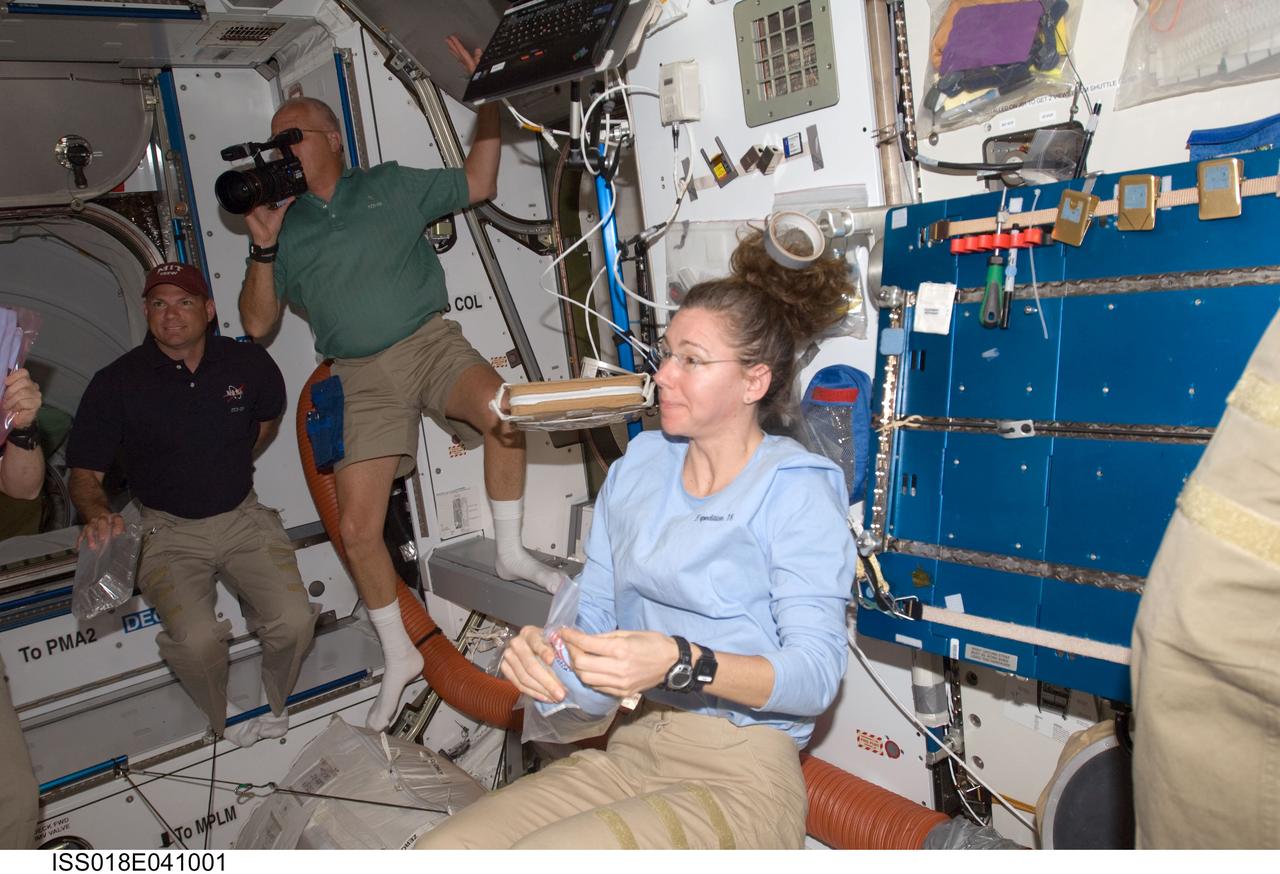
ISS018-E-041001 (18 March 2009) --- Astronauts Sandra Magnus and John Phillips (with camera), both STS-119 mission specialists; along with Tony Antonelli, pilot, are pictured in the Harmony node of the International Space Station while Space Shuttle Discovery remains docked with the station.
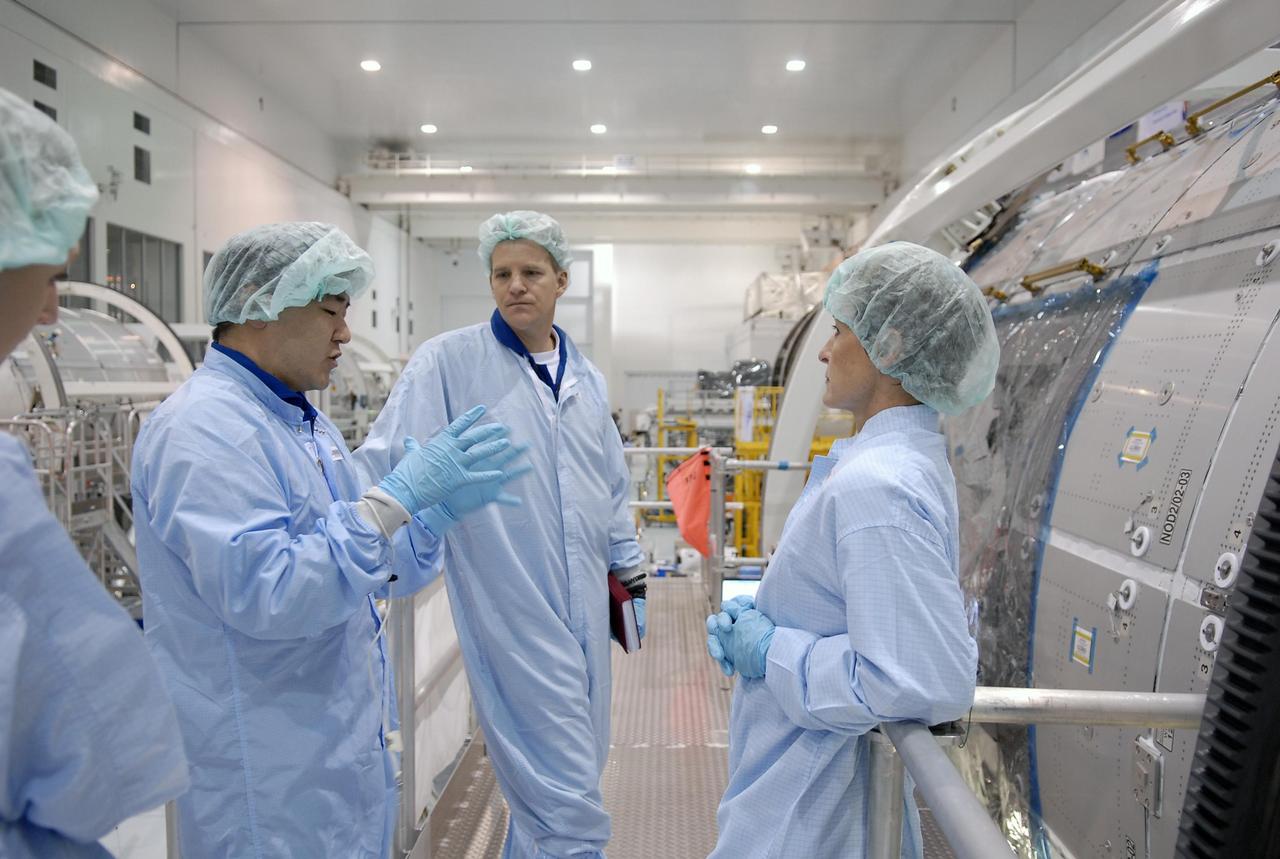
KENNEDY SPACE CENTER, FLA. -- In the Space Station Processing Facility, STS-120 Mission Specialist Daniel Tani (gesturing) explains to Scott Parazynski (center) and astronaut Peggy Whitson what he has learned about the Node 2, another element to be added to the International Space Station. Whitson served on Expedition 5 aboard the space station. Tani and other crew members are at KSC for equipment familiarization. Tani will be joining the Expedition 15 crew on the space station as flight engineer. Node 2 will provide a passageway between three station science experiment facilities: the U.S. Destiny Laboratory, the Kibo Japanese Experiment Module, and the European Columbus Laboratory. STS-120 is targeted for launch on October 20. Photo credit: NASA/Kim Shiflett
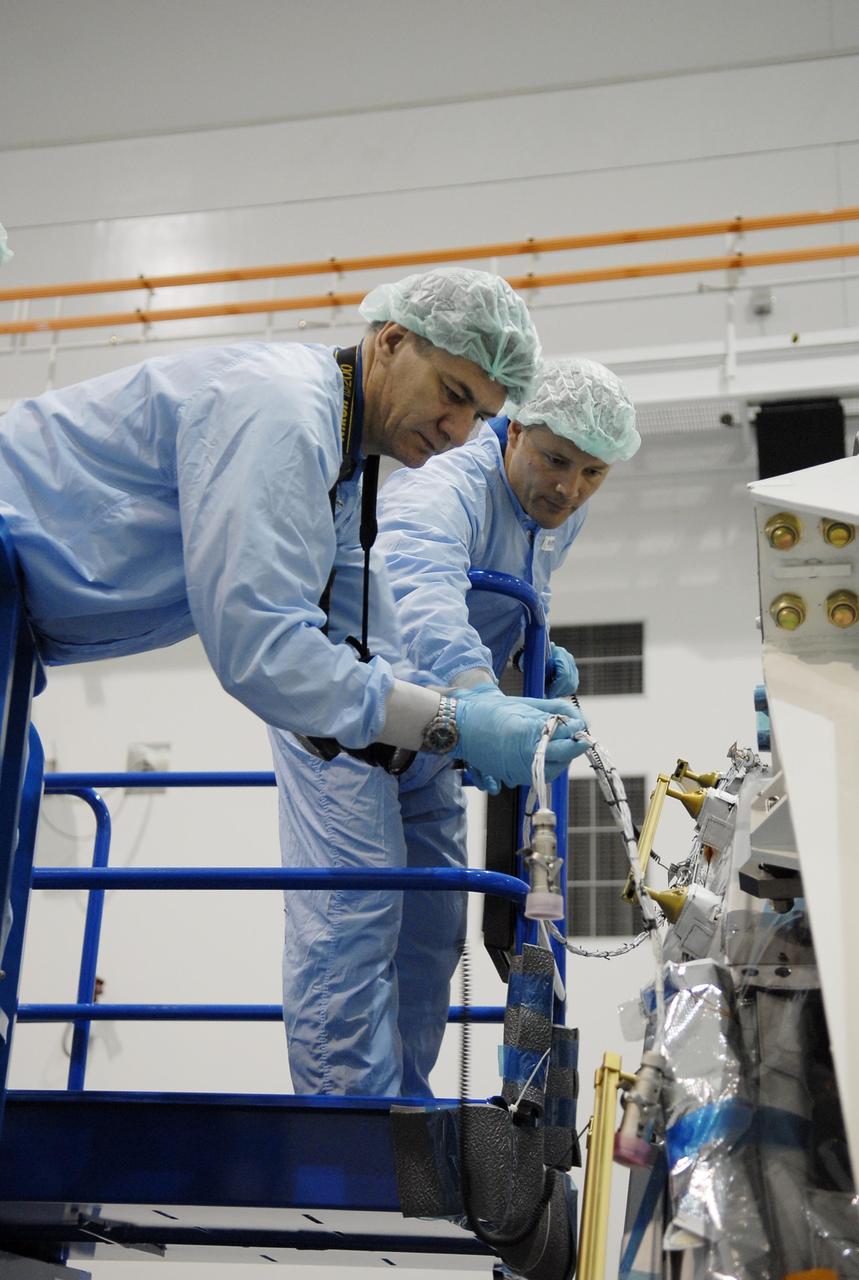
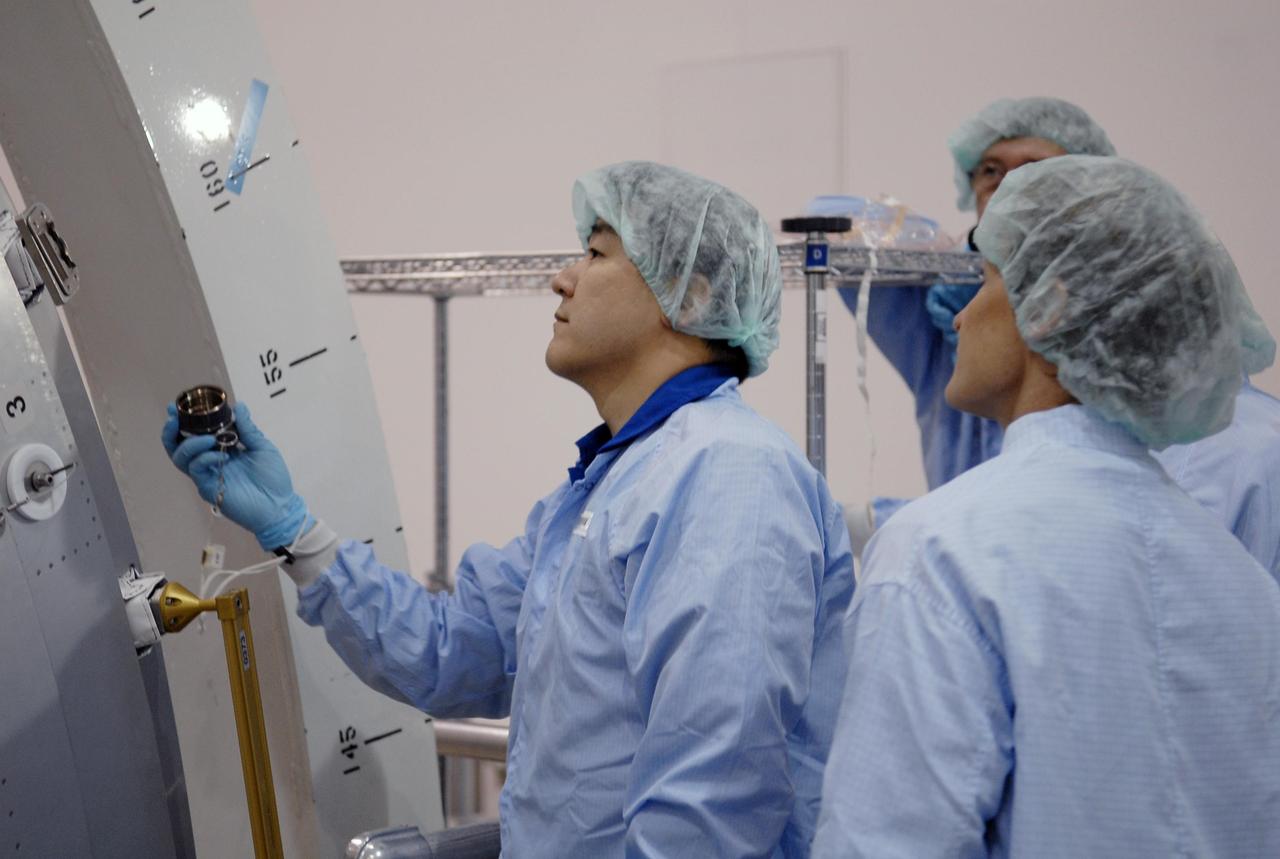
KENNEDY SPACE CENTER, FLA. -- In the Space Station Processing Facility, the mission STS-120 crew members are getting familiar with the Node 2, another element to be added to the International Space Station. Seen here are Mission Specialists Paolo Angelo Nespoli (left) and Douglas H. Wheelock. Nespoli represents the European Space Agency. Node 2 will provide a passageway between three station science experiment facilities: the U.S. Destiny Laboratory, the Kibo Japanese Experiment Module, and the European Columbus Laboratory. STS-120 is targeted for launch on October 20. Photo credit: NASA/Kim Shiflett
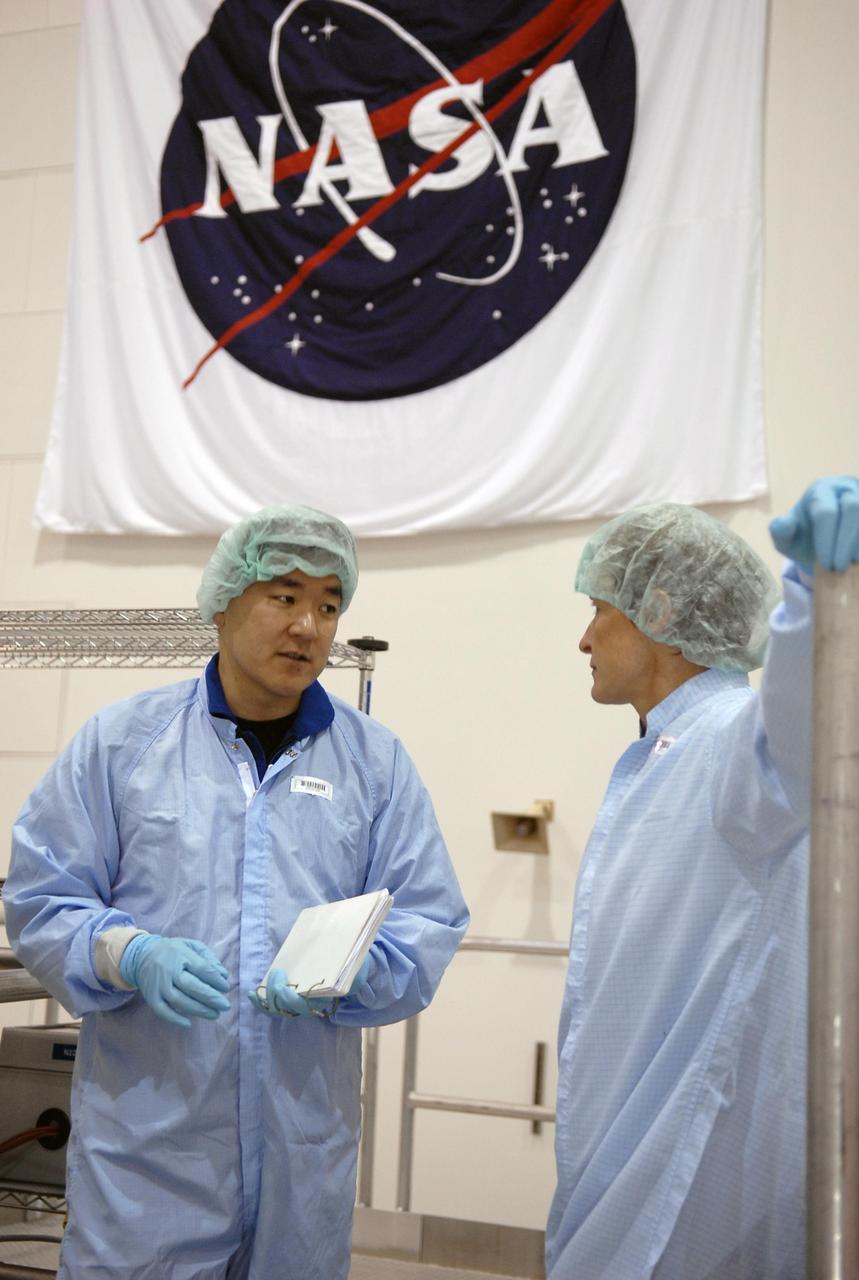
KENNEDY SPACE CENTER, FLA. -- In the Space Station Processing Facility, STS-120 Mission Specialist Daniel Tani (center) talks about his mission and the Node 2, another element to be added to the International Space Station with astronaut Peggy Whitson, at right. Whitson served on Expedition 5 aboard the space station. During her 6-month stay, Dr. Whitson installed the Mobile Base System, the S1 truss segment, and the P1 truss segment. He and other crew members are at KSC for equipment familiarization. Tani will be joining the Expedition 15 crew on the space station as flight engineer. Node 2 will provide a passageway between three station science experiment facilities: the U.S. Destiny Laboratory, the Kibo Japanese Experiment Module, and the European Columbus Laboratory. STS-120 is targeted for launch on October 20. Photo credit: NASA/Kim Shiflett
KENNEDY SPACE CENTER, FLA. -- In the Space Station Processing Facility, STS-120 Mission Specialist Daniel Tani (left) examines equipment for the Node 2, another element to be added to the International Space Station. Looking on, at right, is astronaut Peggy Whitson, who served on Expedition 5 aboard the space station. During her 6-month stay aboard the space station, Dr. Whitson installed the Mobile Base System, the S1 truss segment, and the P1 truss segment. Tani and other crew members are at KSC for equipment familiarization. Tani will be joining the Expedition 15 crew on the space station as flight engineer. Node 2 will provide a passageway between three station science experiment facilities: the U.S. Destiny Laboratory, the Kibo Japanese Experiment Module, and the European Columbus Laboratory. STS-120 is targeted for launch on October 20. Photo credit: NASA/Kim Shiflett
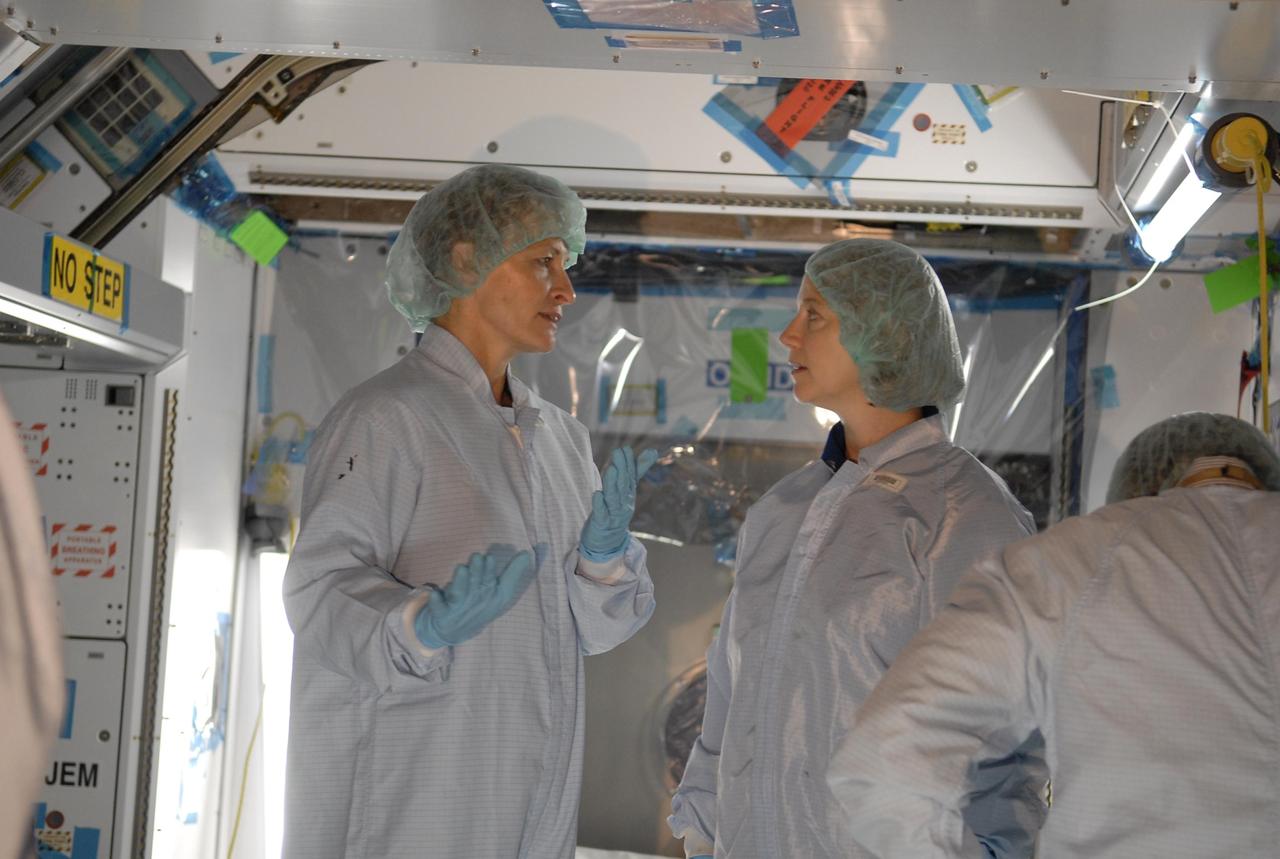
KENNEDY SPACE CENTER, FLA. -- In In the Space Station Processing Facility, STS-120 Commander Pamela Melroy (center) learns more about the Node 2, another element to be added to the International Space Station. With her is astronaut Peggy Whitson, who served on Expedition 5 aboard the space station. During her 6-month stay aboard the space station, Dr. Whitson installed the Mobile Base System, the S1 truss segment, and the P1 truss segment. Melroy and other crew members are at KSC for equipment familiarization. Node 2 will provide a passageway between three station science experiment facilities: the U.S. Destiny Laboratory, the Kibo Japanese Experiment Module, and the European Columbus Laboratory. STS-120 is targeted for launch on October 20. Photo credit: NASA/Kim Shiflett
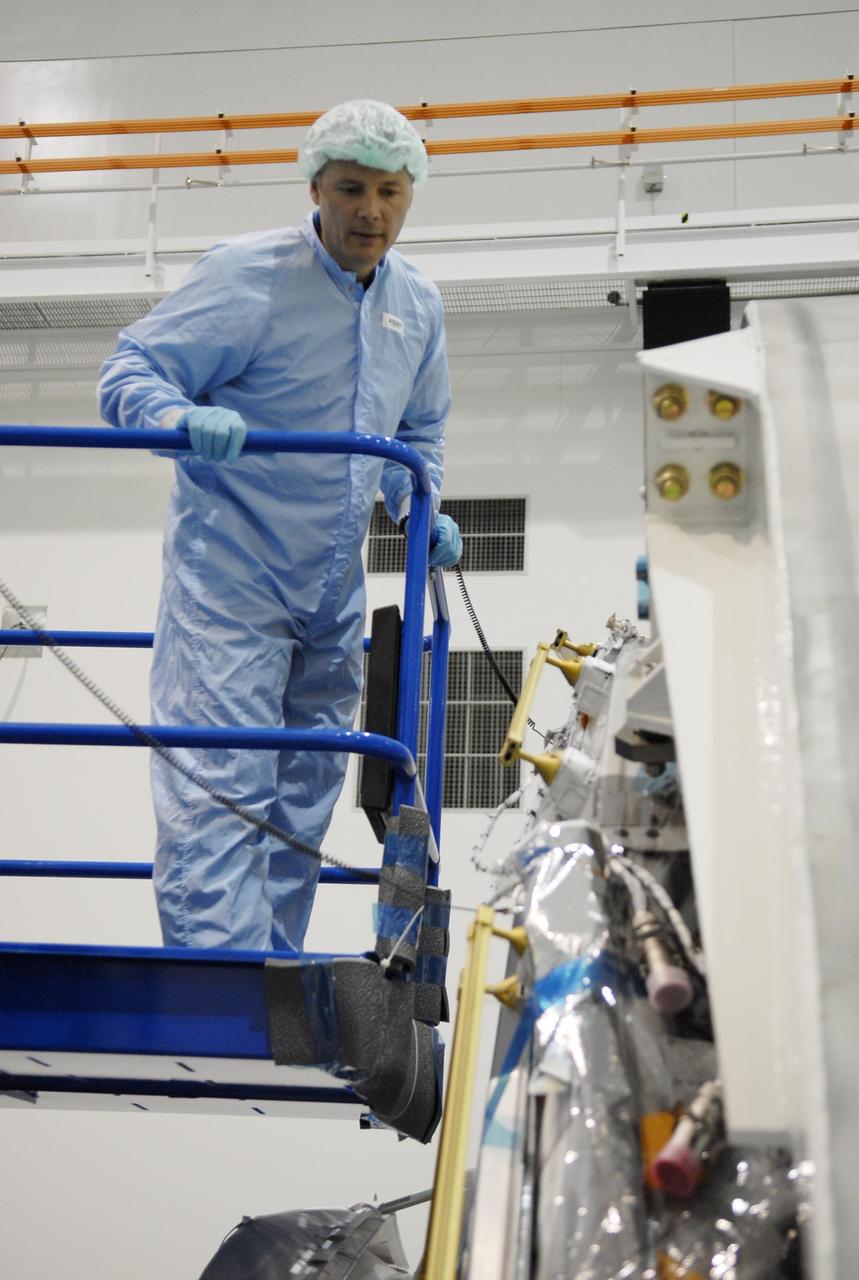
KENNEDY SPACE CENTER, FLA. -- In the Space Station Processing Facility, the mission STS-120 crew members are getting familiar with the Node 2, another element to be added to the International Space Station. Seen here is Mission Specialist Douglas H. Wheelock. Node 2 will provide a passageway between three station science experiment facilities: the U.S. Destiny Laboratory, the Kibo Japanese Experiment Module, and the European Columbus Laboratory. STS-120 is targeted for launch on October 20. Photo credit: NASA/Kim Shiflett
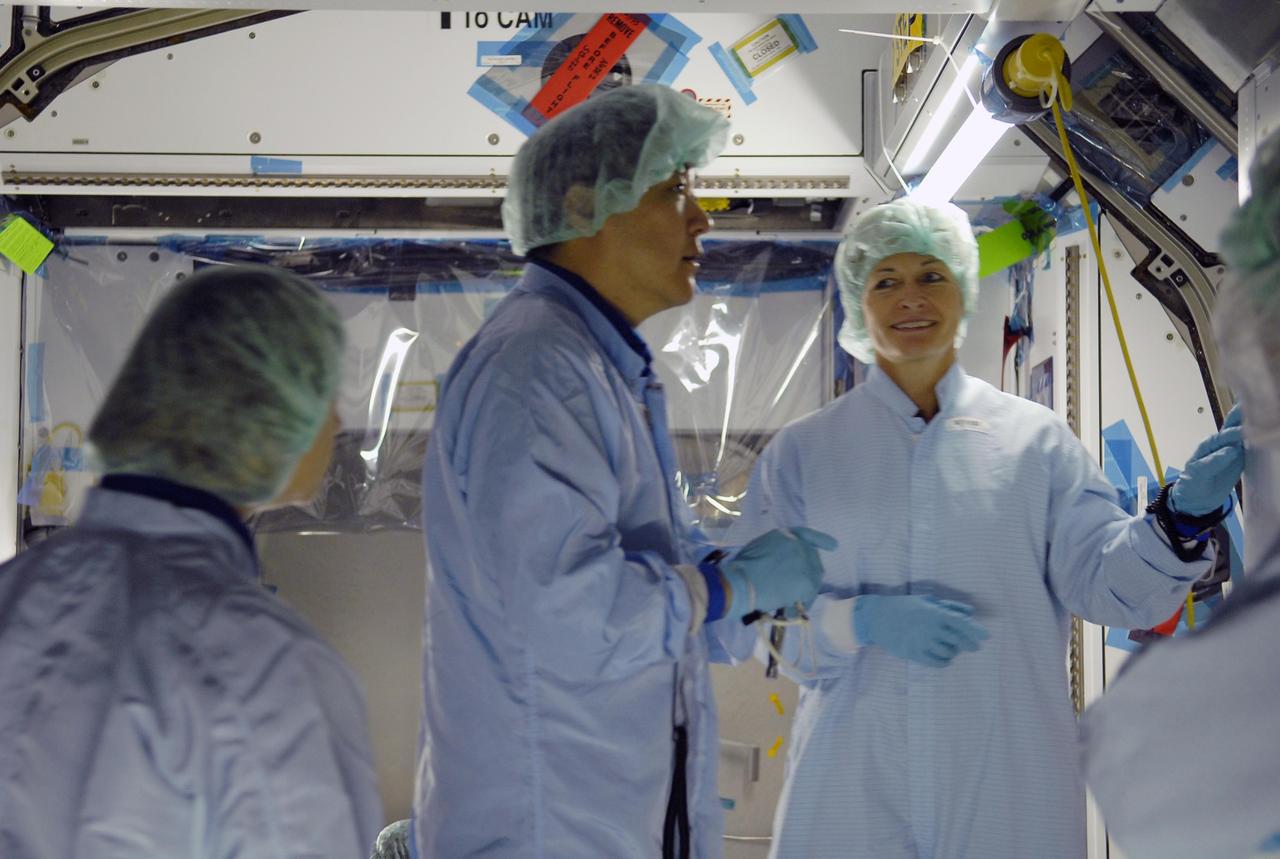
KENNEDY SPACE CENTER, FLA. -- In the Space Station Processing Facility, STS-120 Mission Specialist Daniel Tani (center) learns more about the Node 2, another element to be added to the International Space Station. With him, at right, is astronaut Peggy Whitson, who served on Expedition 5 aboard the space station. During her 6-month stay aboard the space station, Dr. Whitson installed the Mobile Base System, the S1 truss segment, and the P1 truss segment.. He and other crew members are at KSC for equipment familiarization. Tani will be joining the Expedition 15 crew on the space station as flight engineer. Node 2 will provide a passageway between three station science experiment facilities: the U.S. Destiny Laboratory, the Kibo Japanese Experiment Module, and the European Columbus Laboratory. STS-120 is targeted for launch on October 20. Photo credit: NASA/Kim Shiflett
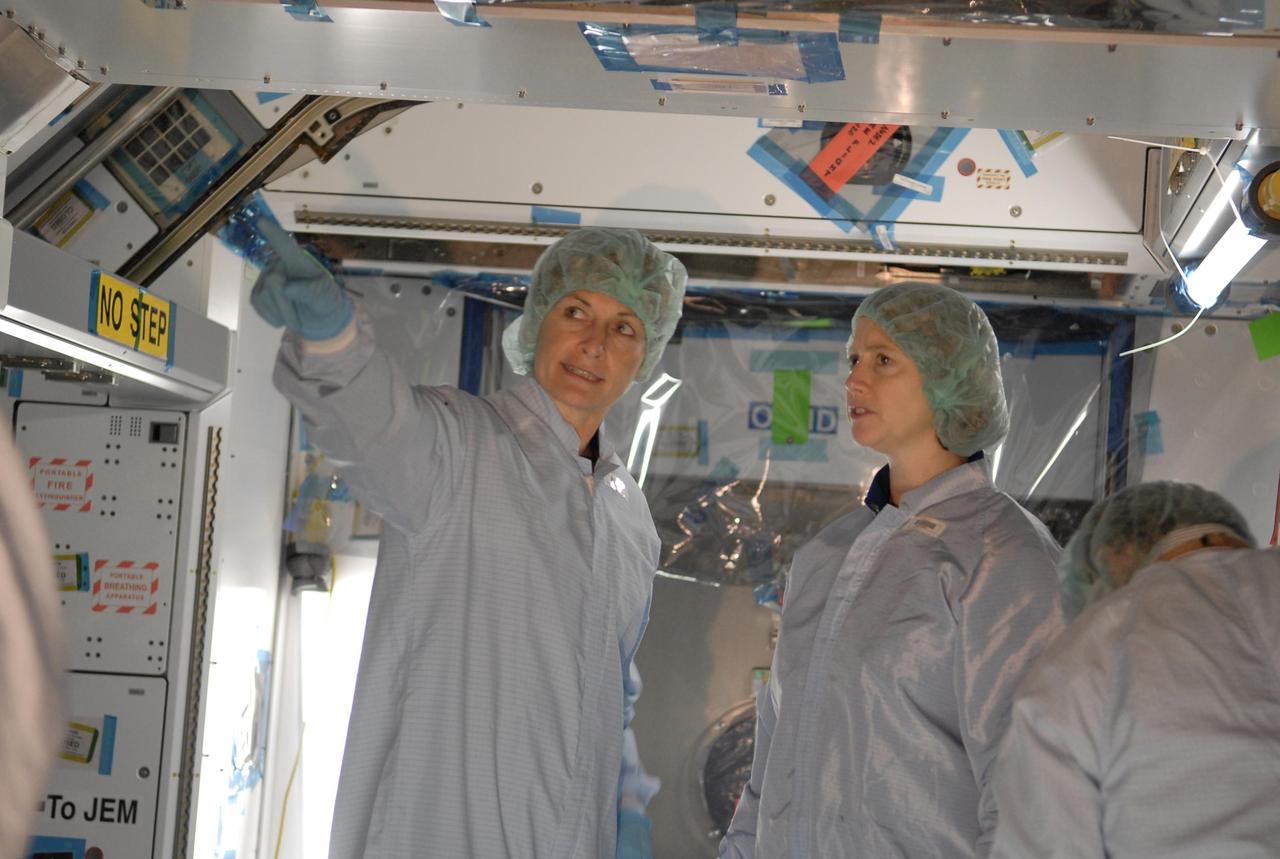
KENNEDY SPACE CENTER, FLA. -- In the Space Station Processing Facility, STS-120 Commander Pamela Melroy (right) learns more about the Node 2, another element to be added to the International Space Station. With her is astronaut Peggy Whitson, who served on Expedition 5 aboard the space station. During her 6-month stay aboard the space station, Dr. Whitson installed the Mobile Base System, the S1 truss segment, and the P1 truss segment. She and other crew members are at KSC for equipment familiarization. Node 2 will provide a passageway between three station science experiment facilities: the U.S. Destiny Laboratory, the Kibo Japanese Experiment Module, and the European Columbus Laboratory. STS-120 is targeted for launch on October 20. Photo credit: NASA/Kim Shiflett
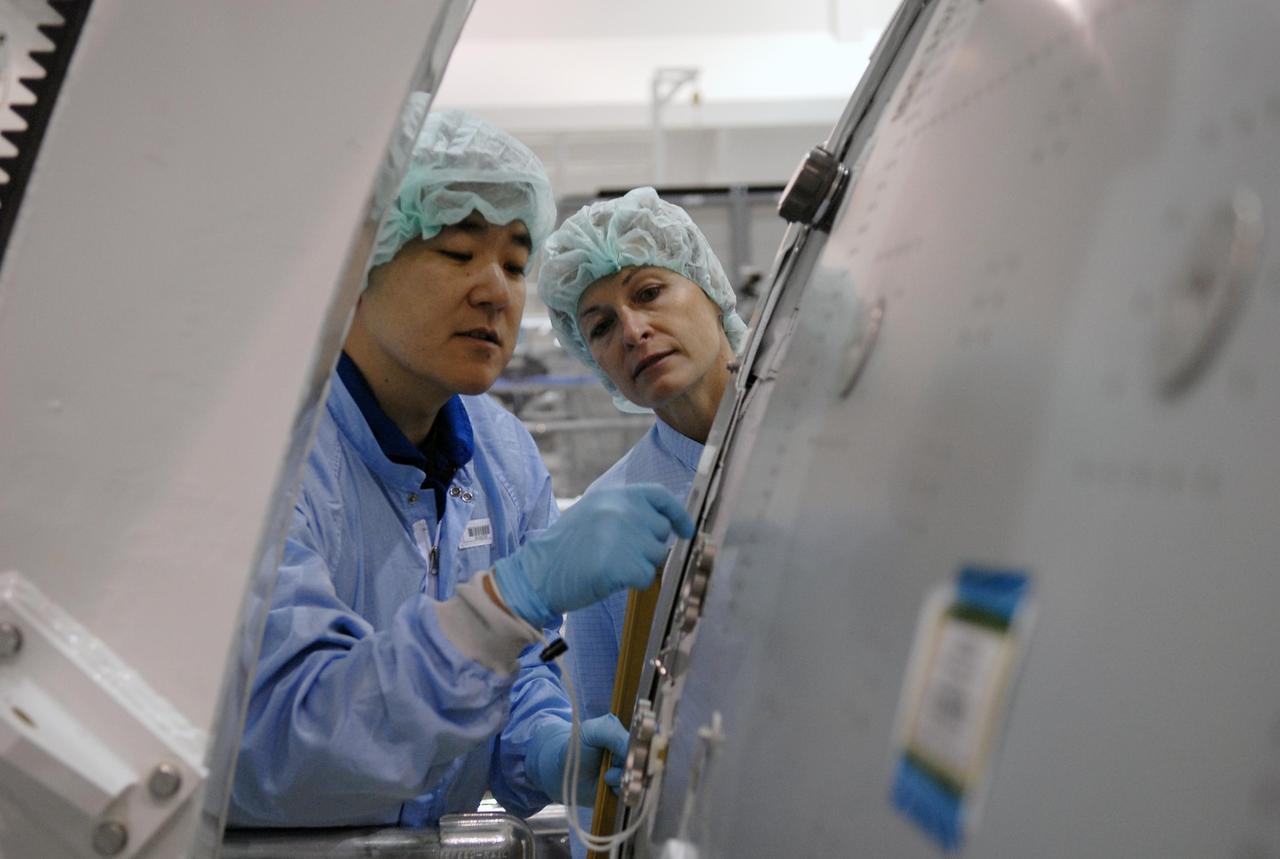
KENNEDY SPACE CENTER, FLA. -- In the Space Station Processing Facility, STS-120 Mission Specialist Daniel Tani (left) examines equipment for the Node 2, another element to be added to the International Space Station. Looking on, at right, is astronaut Peggy Whitson, who served on Expedition 5 aboard the space station. During her 6-month stay aboard the space station, Dr. Whitson installed the Mobile Base System, the S1 truss segment, and the P1 truss segment. Tani and other crew members are at KSC for equipment familiarization. Tani will be joining the Expedition 15 crew on the space station as flight engineer. Node 2 will provide a passageway between three station science experiment facilities: the U.S. Destiny Laboratory, the Kibo Japanese Experiment Module, and the European Columbus Laboratory. STS-120 is targeted for launch on October 20. Photo credit: NASA/Kim Shiflett
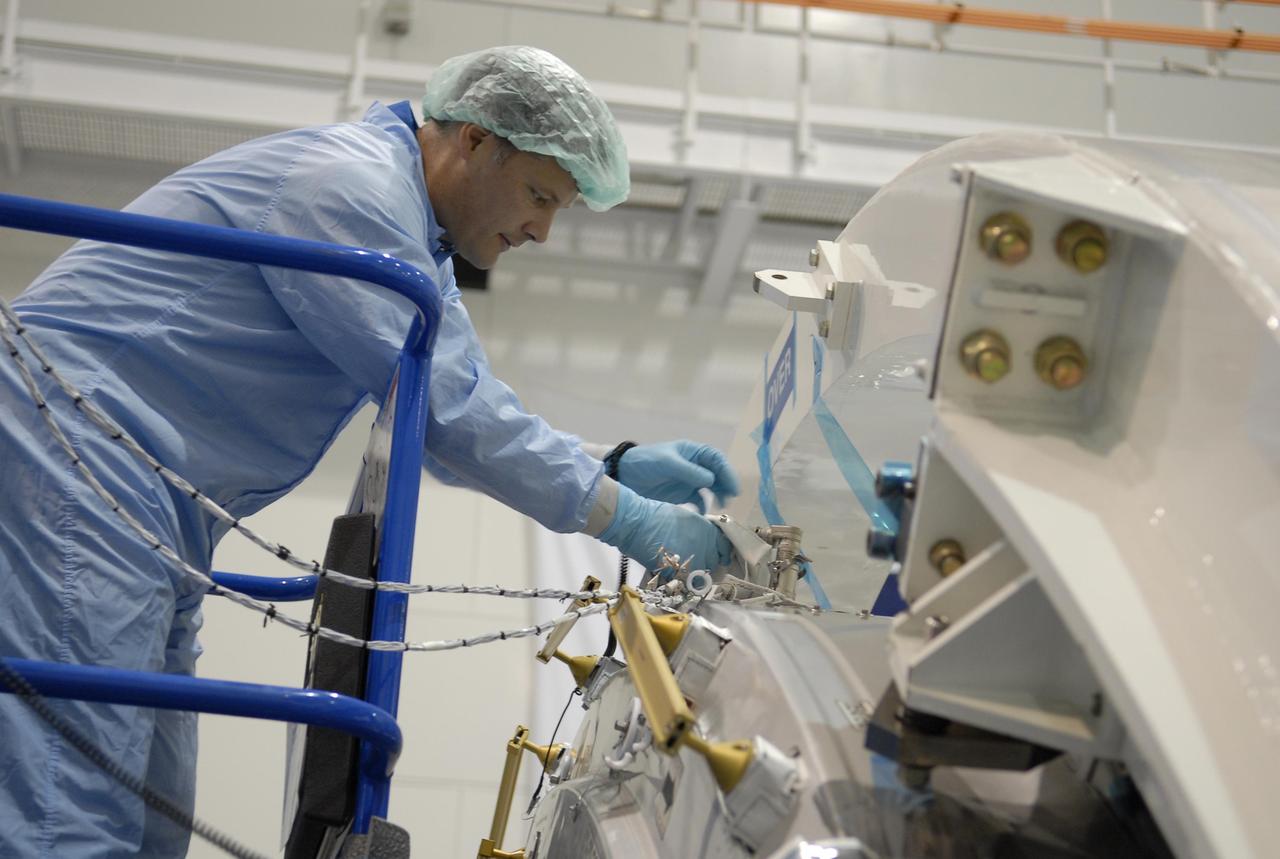
KENNEDY SPACE CENTER, FLA. -- In the Space Station Processing Facility, the mission STS-120 crew members are getting familiar with the Node 2, another element to be added to the International Space Station. Seen here is Mission Specialist Douglas H. Wheelock, handling some of the equipment on the module. Node 2 will provide a passageway between three station science experiment facilities: the U.S. Destiny Laboratory, the Kibo Japanese Experiment Module, and the European Columbus Laboratory. STS-120 is targeted for launch on October 20. Photo credit: NASA/Kim Shiflett
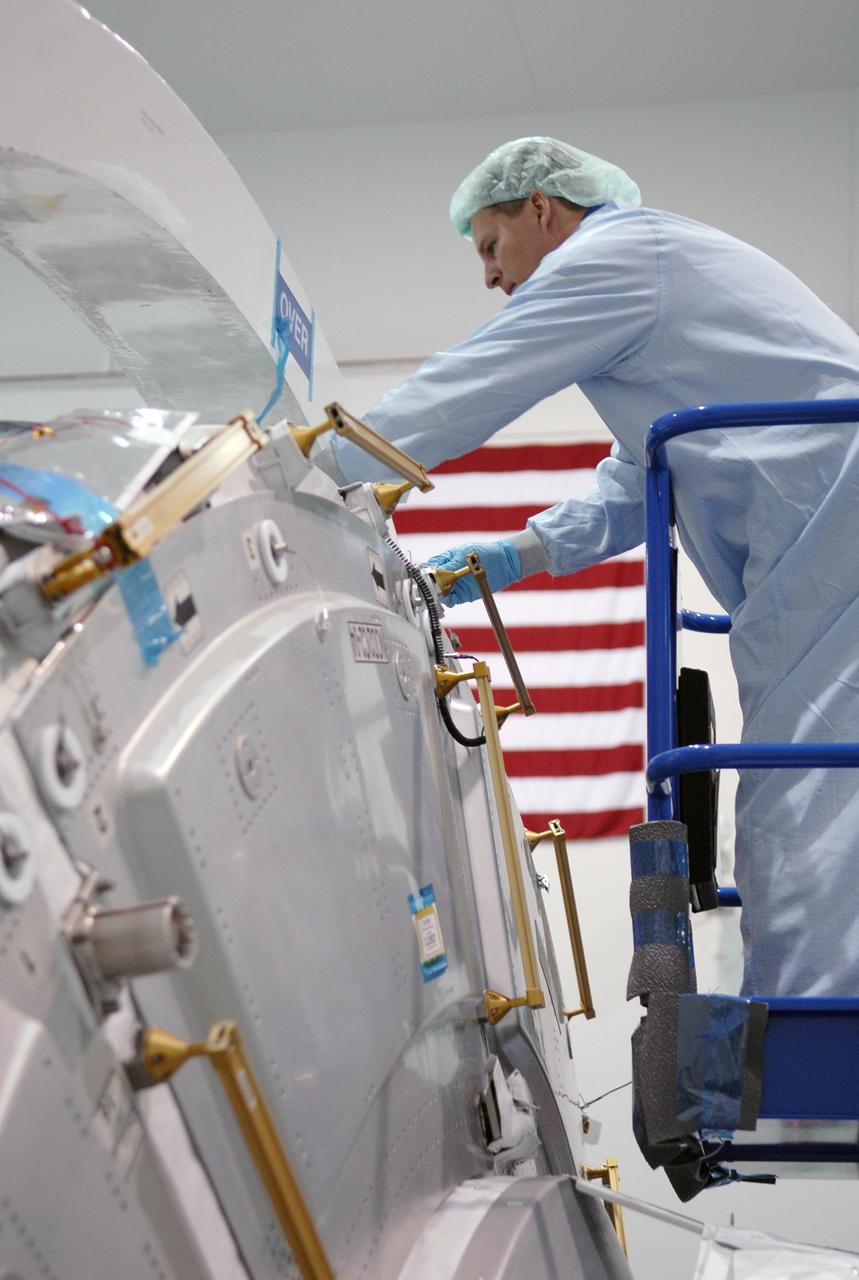
KENNEDY SPACE CENTER, FLA. -- In the Space Station Processing Facility, STS-120 Mission Specialist Scott Parazynski becomes familiar with the Node 2, another element to be added to the International Space Station. He and other crew members are at KSC for equipment familiarization. Node 2 will provide a passageway between three station science experiment facilities: the U.S. Destiny Laboratory, the Kibo Japanese Experiment Module, and the European Columbus Laboratory. STS-120 is targeted for launch on October 20. Photo credit: NASA/Kim Shiflett
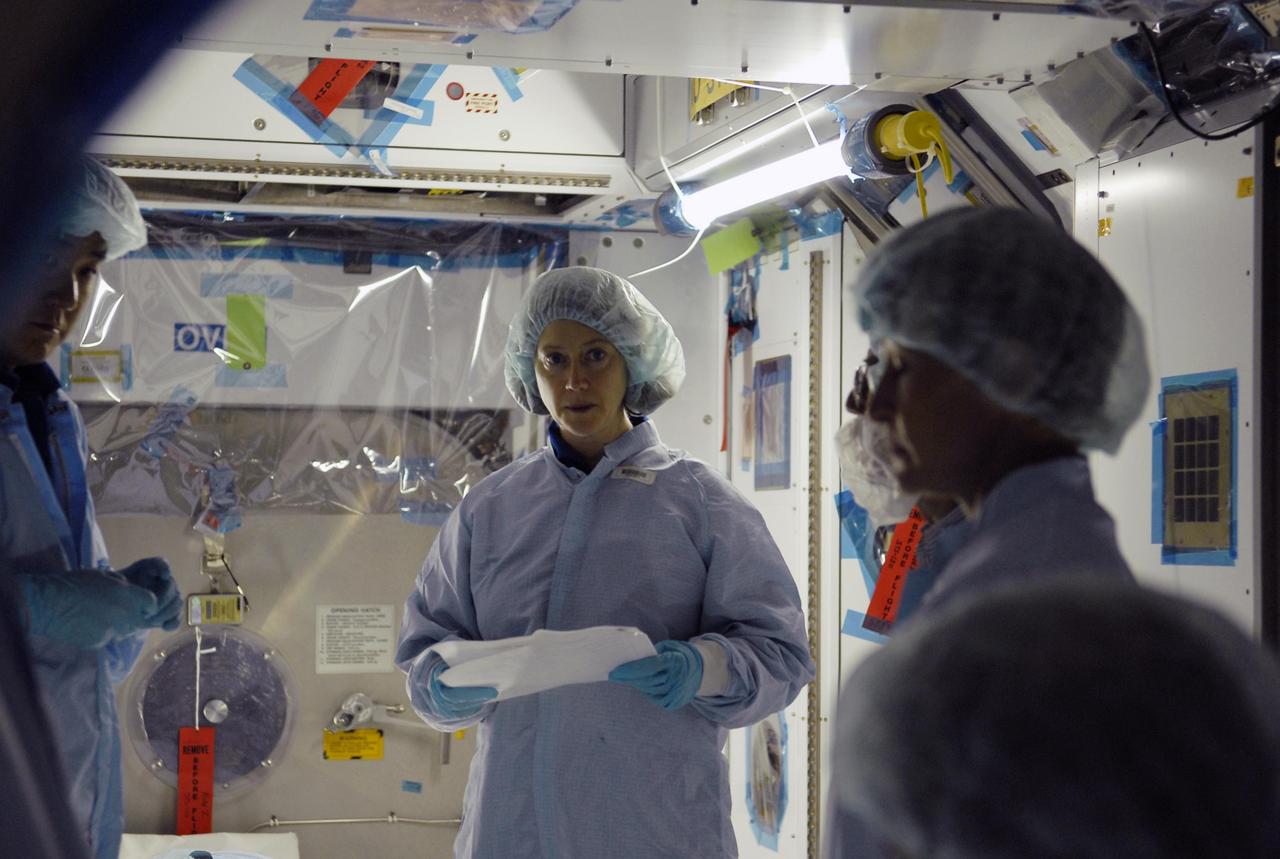
KENNEDY SPACE CENTER, FLA. -- In In the Space Station Processing Facility, STS-120 Commander Pamela Melroy (center) learns more about the Node 2, another element to be added to the International Space Station. She and other crew members are at KSC for equipment familiarization. Node 2 will provide a passageway between three station science experiment facilities: the U.S. Destiny Laboratory, the Kibo Japanese Experiment Module, and the European Columbus Laboratory. STS-120 is targeted for launch on October 20. Photo credit: NASA/Kim Shiflett
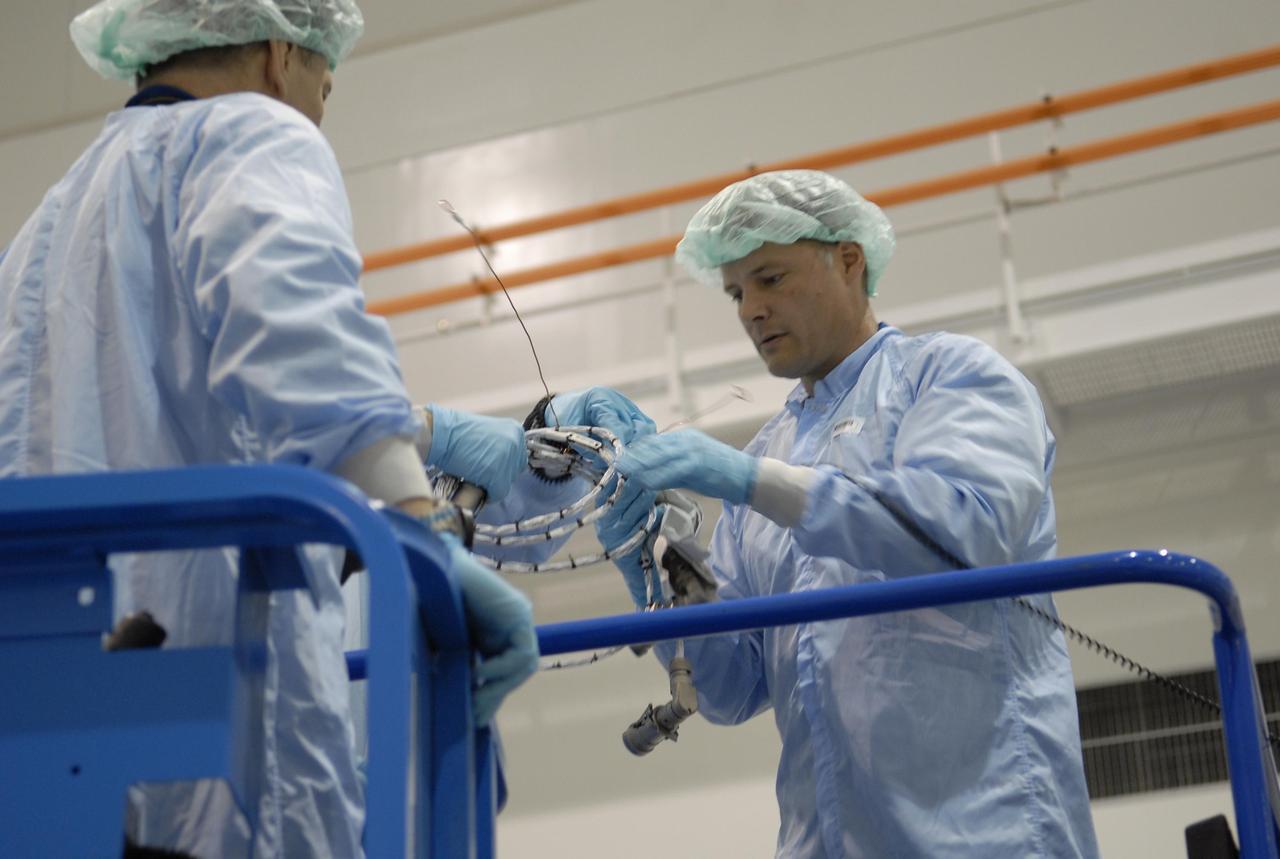
KENNEDY SPACE CENTER, FLA. -- In the Space Station Processing Facility, STS-120 Mission Specialists Paolo Angelo Nespoli (left) and Douglas H. Wheelock practice using some of the equipment for the Node 2, another element to be added to the International Space Station. They and other crew members are at KSC for equipment familiarization. Node 2 will provide a passageway between three station science experiment facilities: the U.S. Destiny Laboratory, the Kibo Japanese Experiment Module, and the European Columbus Laboratory. STS-120 is targeted for launch on October 20. Photo credit: NASA/Kim Shiflett
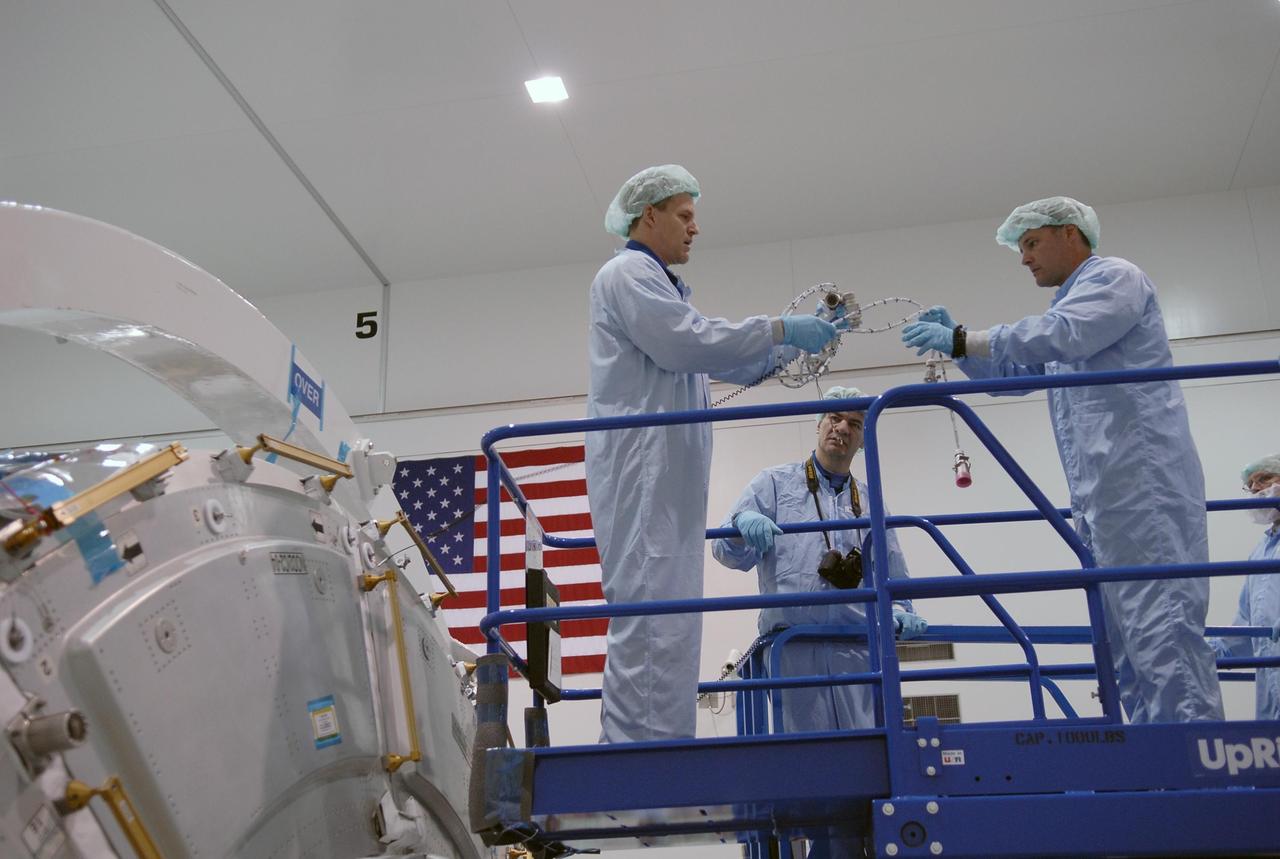
KENNEDY SPACE CENTER, FLA. -- In the Space Station Processing Facility, STS-120 Mission Specialists Scott Parazynski (left), Paolo Angelo Nespoli (center) and Douglas H. Wheelock practice using some of the equipment for the Node 2, another element to be added to the International Space Station. They and other crew members are at KSC for equipment familiarization. Node 2 will provide a passageway between three station science experiment facilities: the U.S. Destiny Laboratory, the Kibo Japanese Experiment Module, and the European Columbus Laboratory. STS-120 is targeted for launch on October 20. Photo credit: NASA/Kim Shiflett
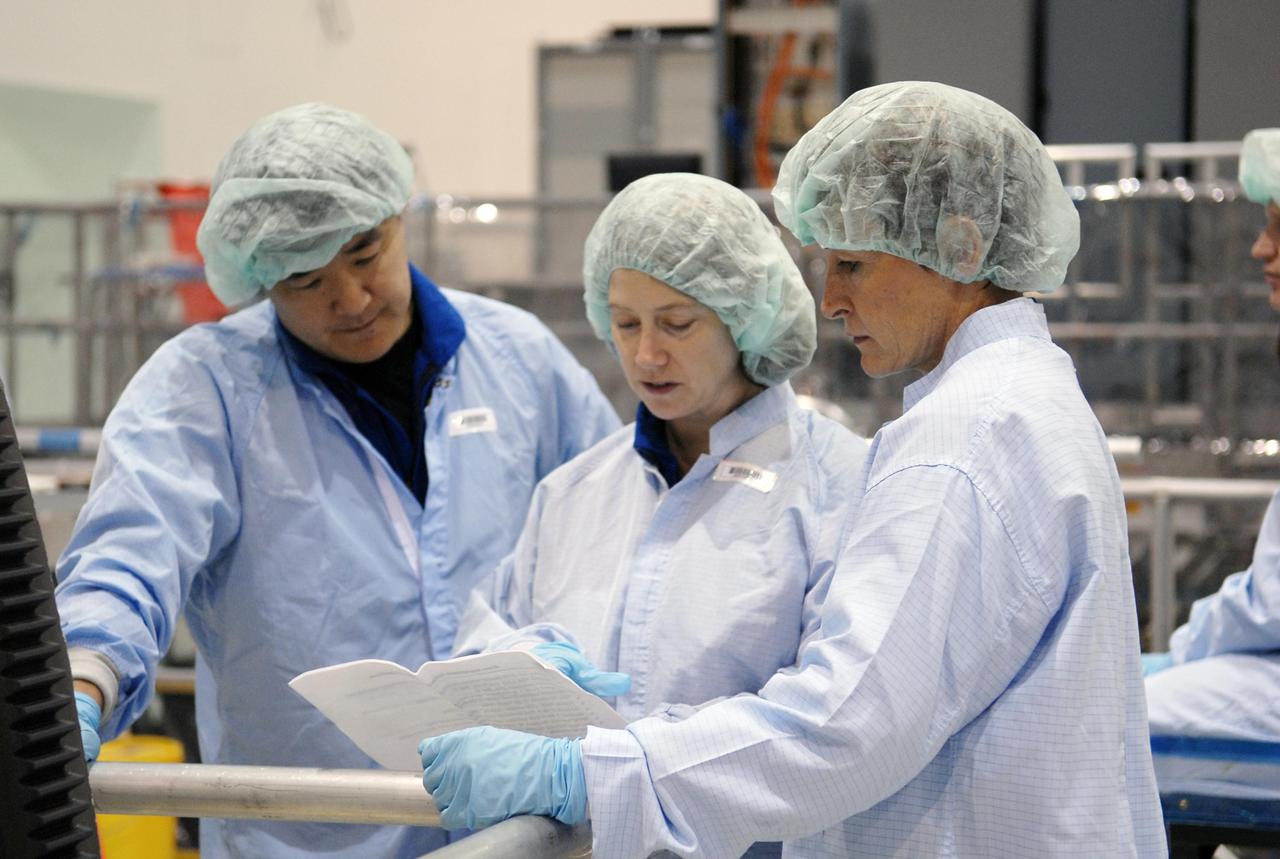
KENNEDY SPACE CENTER, FLA. -- In the Space Station Processing Facility, STS-120 Mission Specialist Daniel Tani (left) and Commander Pamela Melroy learn some details about the Node 2, another element to be added to the International Space Station. With them, at right, is astronaut Peggy Whitson, who served on Expedition 5 aboard the space station. During her 6-month stay aboard the space station, Dr. Whitson installed the Mobile Base System, the S1 truss segment, and the P1 truss segment. Tani, Melroy and other crew members are at KSC for equipment familiarization. Tani will be joining the Expedition 15 crew on the space station as flight engineer. Node 2 will provide a passageway between three station science experiment facilities: the U.S. Destiny Laboratory, the Kibo Japanese Experiment Module, and the European Columbus Laboratory. STS-120 is targeted for launch on October 20. Photo credit: NASA/Kim Shiflett
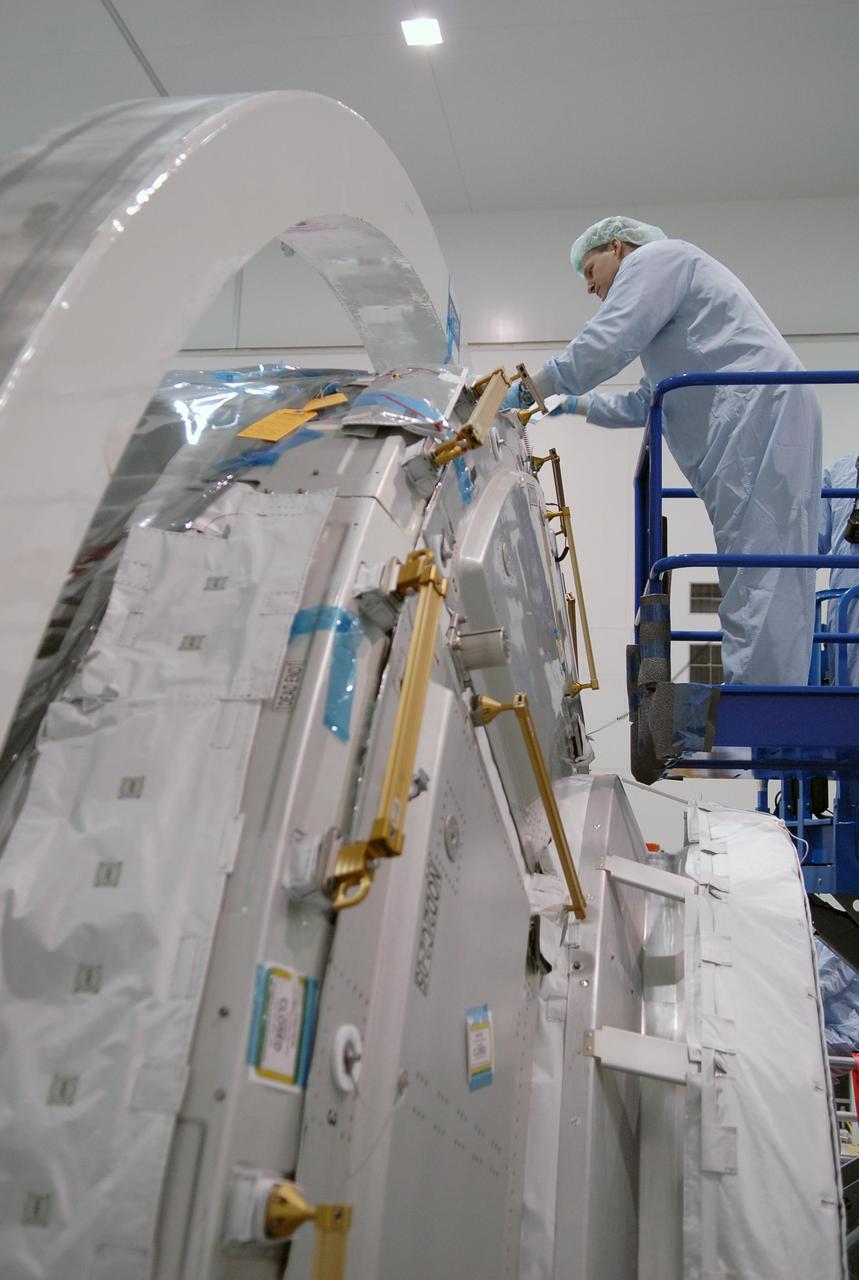
KENNEDY SPACE CENTER, FLA. -- In the Space Station Processing Facility, STS-120 Mission Specialist Scott Parazynski becomes familiar with the Node 2, another element to be added to the International Space Station. He and other crew members are at KSC for equipment familiarization. Node 2 will provide a passageway between three station science experiment facilities: the U.S. Destiny Laboratory, the Kibo Japanese Experiment Module, and the European Columbus Laboratory. STS-120 is targeted for launch on October 20. Photo credit: NASA/Kim Shiflett
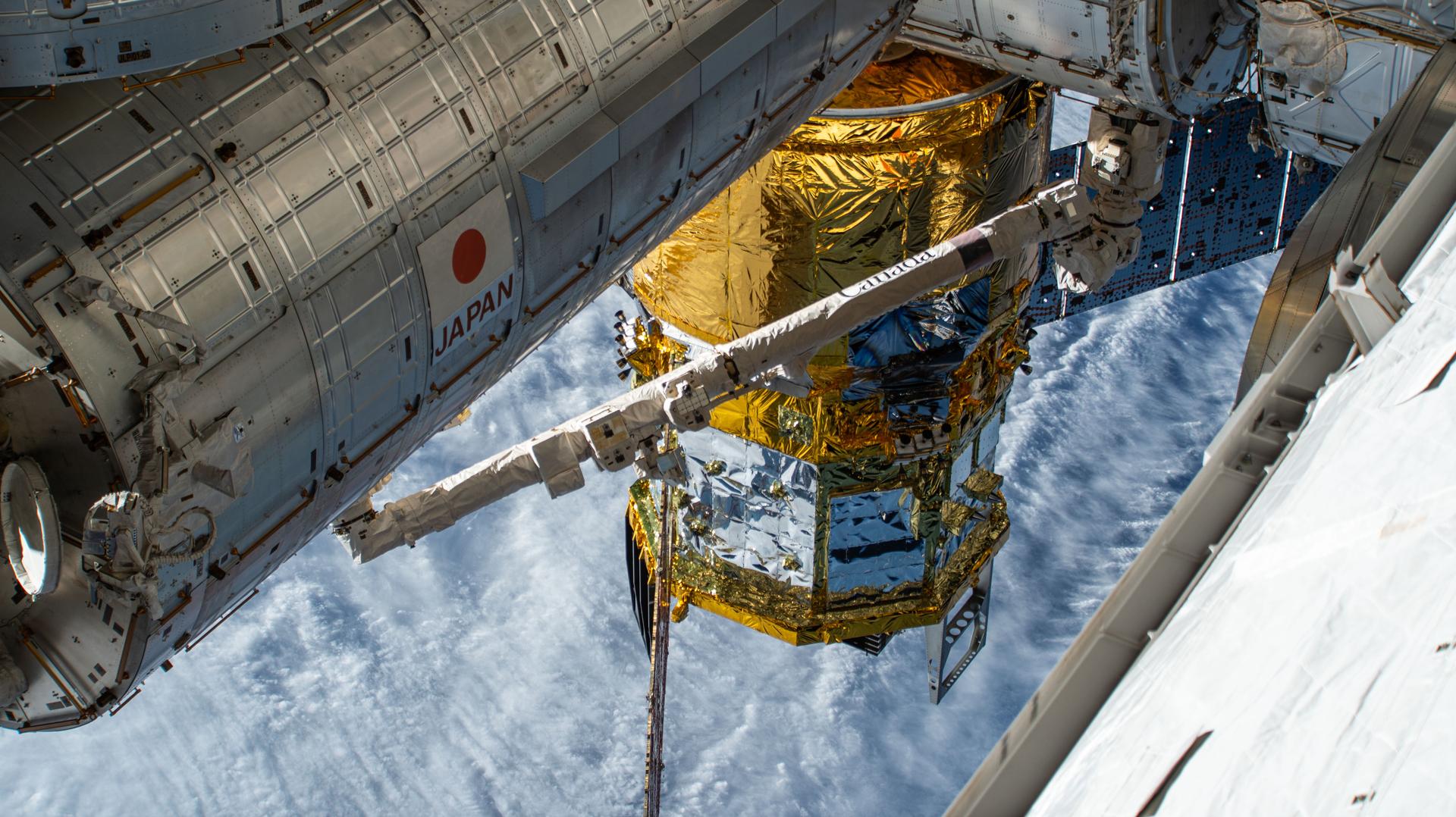
iss073e0988953 (Oct. 29, 2025) --- The new HTV-X1 cargo spacecraft from JAXA (Japan Aerospace Exploration Agency) is pictured berthed to the Earth-facing port on the International Space Station’s Harmony module. Crossing the left side of the photograph is JAXA’s Kibo laboratory module, attached to Harmony's port side. Kibo is a microgravity research facility that enables crews to conduct advanced space experiments in biology, physics, technology, and more.
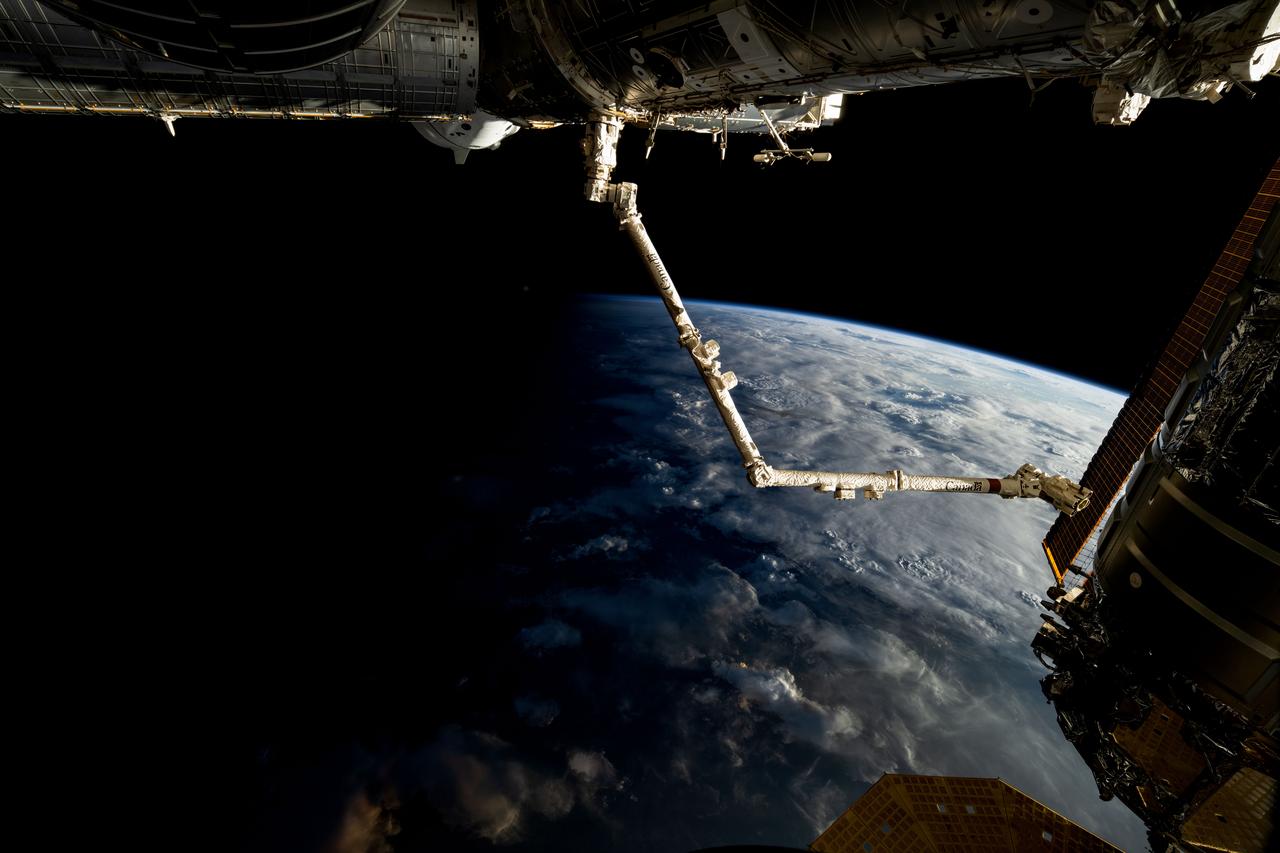
iss072e032723 (Oct. 8, 2024) --- The 57.7-foot-long Candarm2 robotic arm extends from the Harmony module as the International Space Station orbits above the terminator, the line that separates Earth's daytime from nighttime, 261 miles above the African nation of Sudan. Obscured behind Harmony toward upper left, is the SpaceX Dragon Freedom spacecraft.
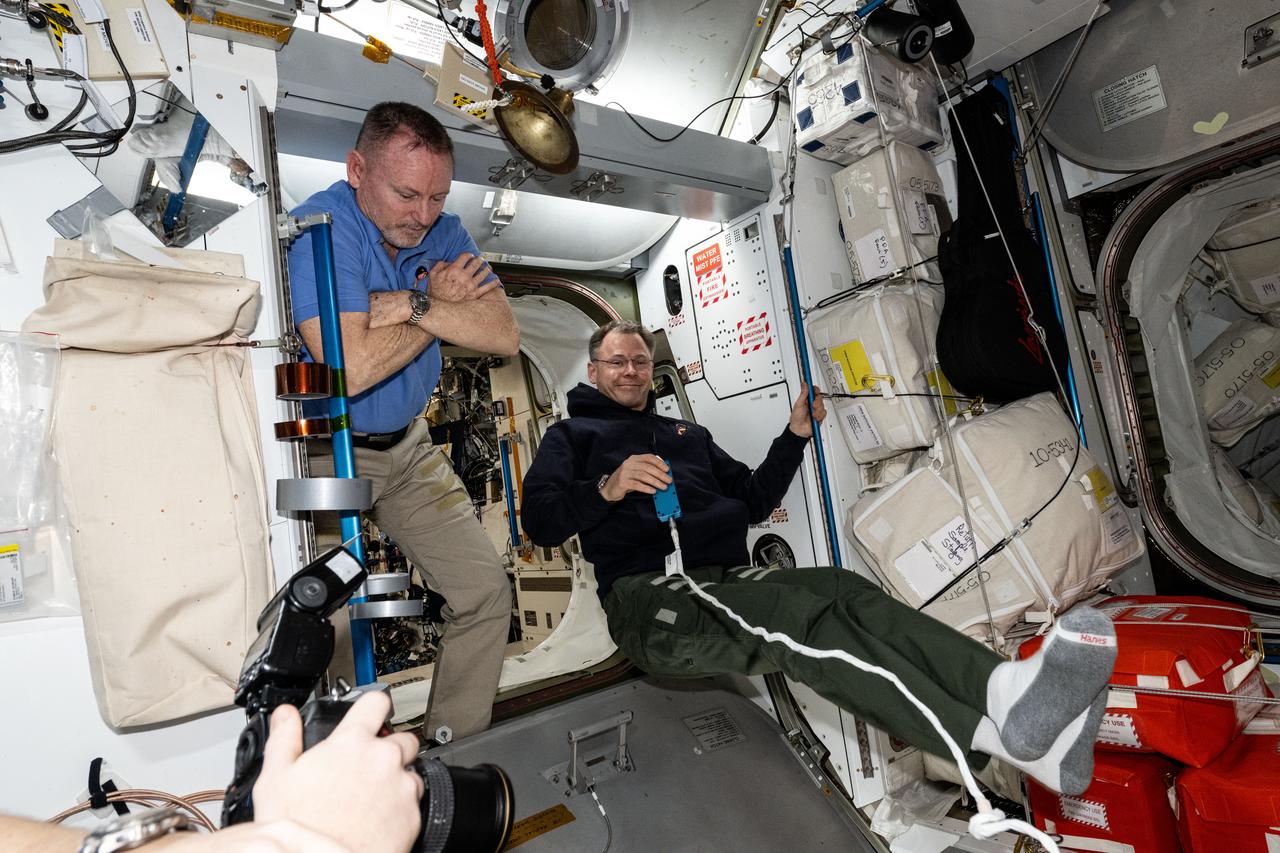
iss072e782430 (March 16, 2025) --- NASA astronauts (from left) Butch Wilmore and Nick Hague, both Expedition 72 Flight Engineers, are pictured relaxing inside the International Space Station's Harmony module.
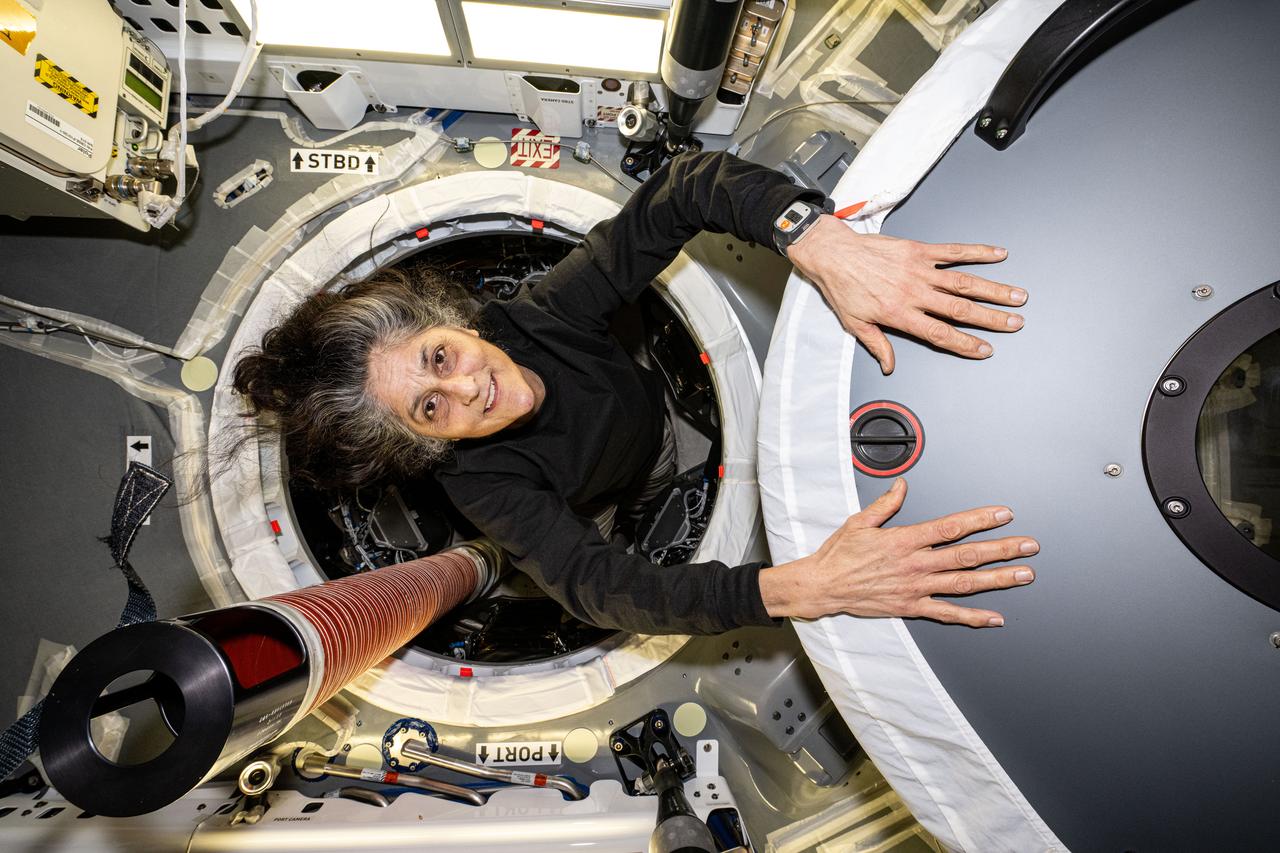
iss072e282112 (Nov. 29, 2024) --- NASA astronaut and Expedition 72 Commander Suni Williams is pictured inside the vestibule between the SpaceX Dragon cargo spacecraft and the forward port on the International Space Station's Harmony module.
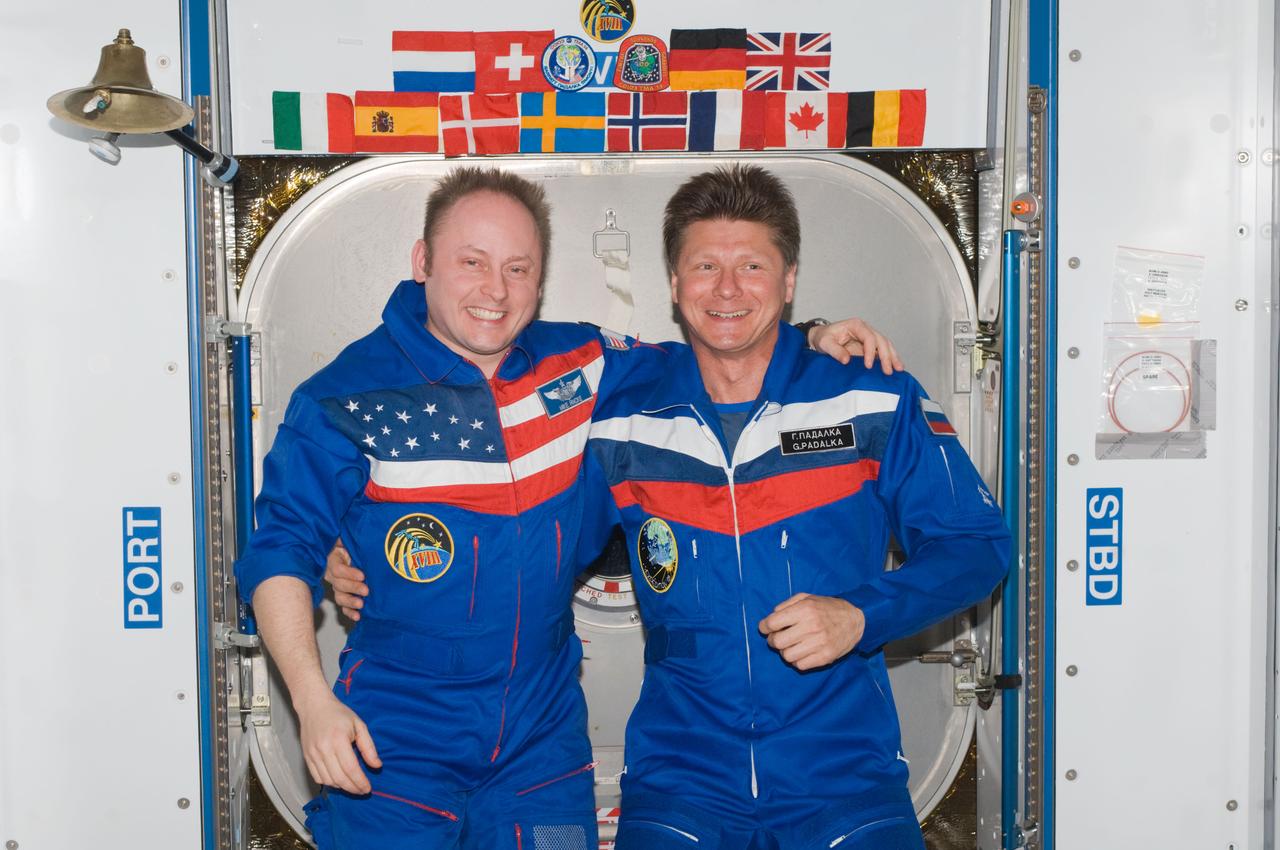
ISS018-E-044296 (1 April 2009) --- NASA astronaut Michael Fincke (left), Expedition 18 commander; and cosmonaut Gennady Padalka, Expedition 19 commander, pose for a photo in the Harmony node of the International Space Station.

ISS018-E-044299 (1 April 2009) --- NASA astronaut Michael Fincke (left), Expedition 18 commander; and cosmonaut Gennady Padalka, Expedition 19 commander, pose for a photo in the Harmony node of the International Space Station.
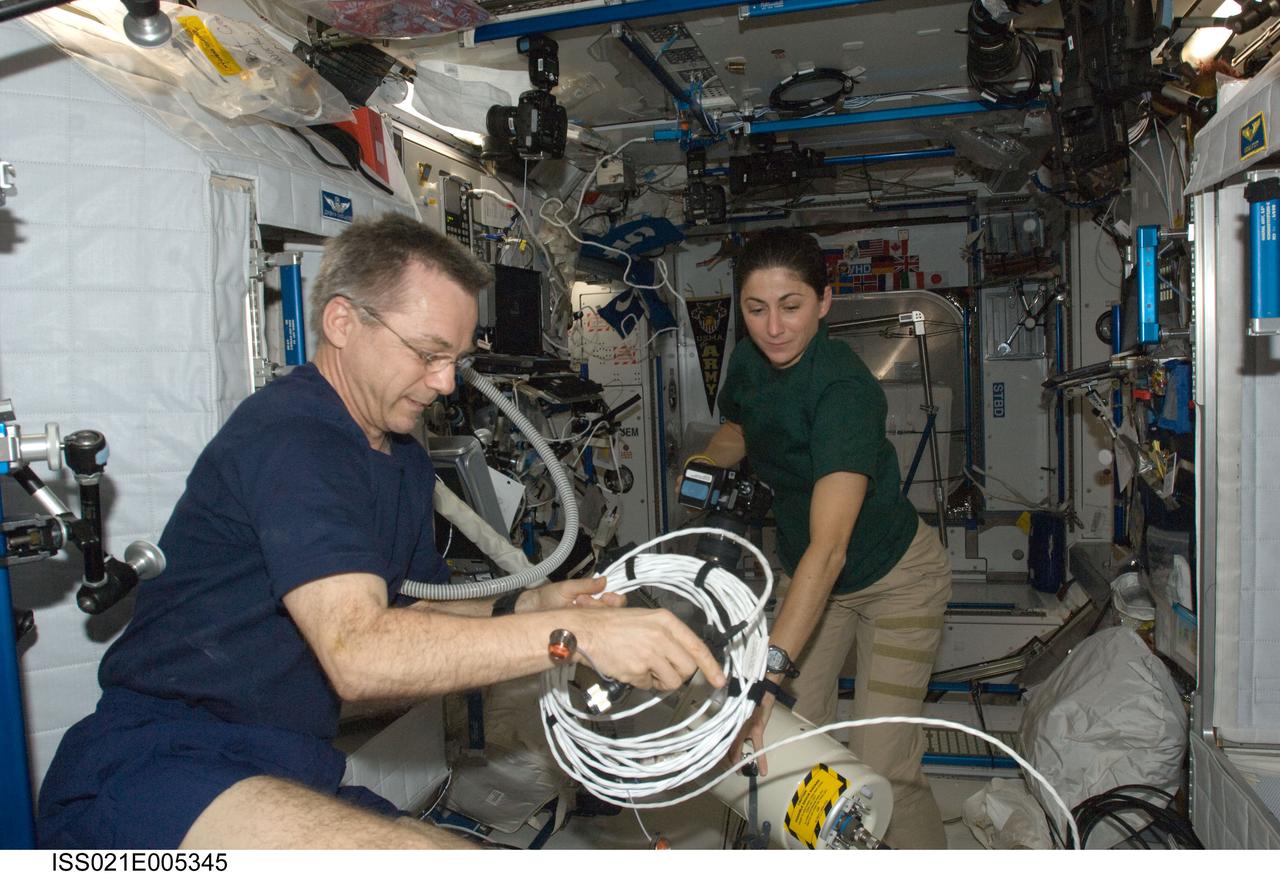
ISS021-E-005345 (11 Oct. 2009) --- Canadian Space Agency astronaut Robert Thirsk and NASA astronaut Nicole Stott, both Expedition 21 flight engineers, work in the Harmony node of the International Space Station.
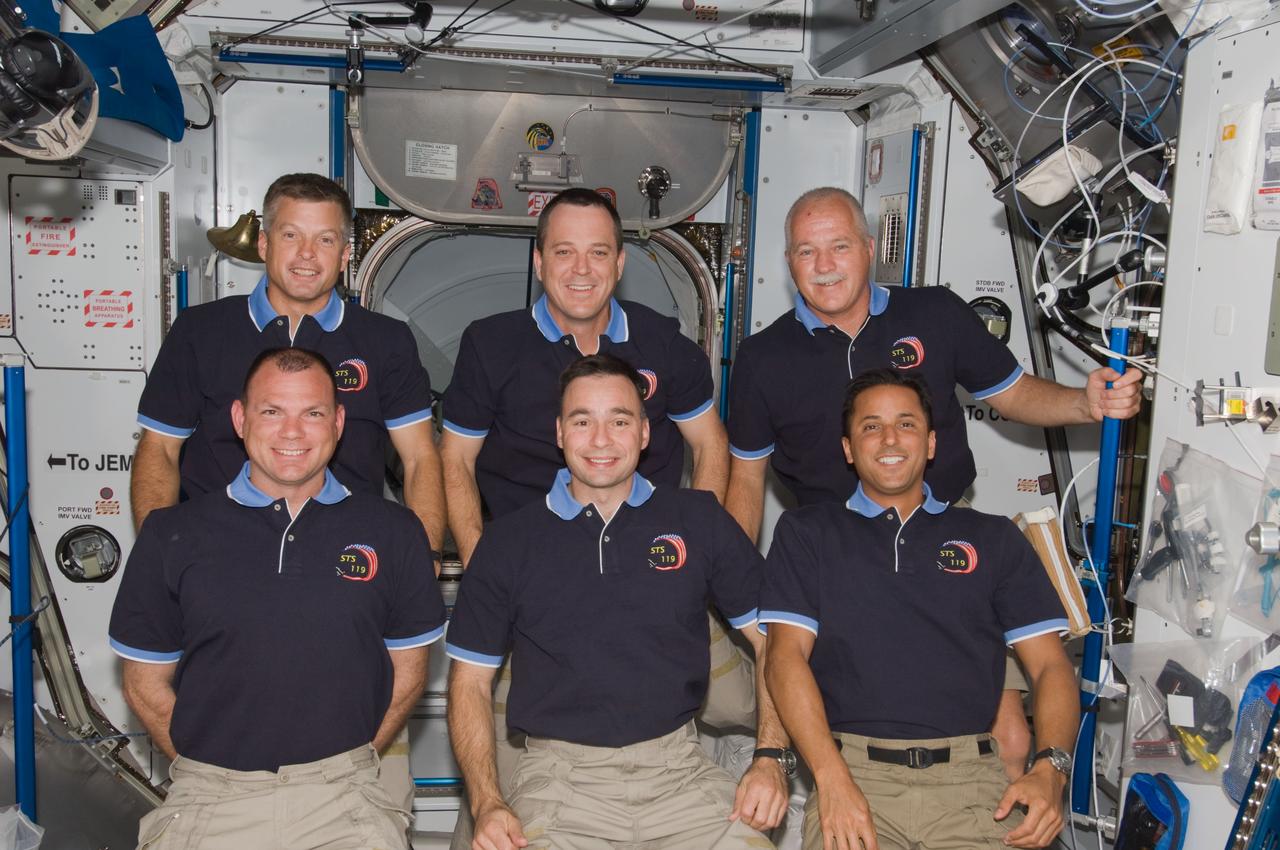
S119-E-007770 (24 March 2009) --- STS-119 crewmembers pose for a group photo following a joint news conference in the Harmony node of the International Space Station while Space Shuttle Discovery remains docked with the station. From the left (bottom row) are NASA astronauts Tony Antonelli, pilot; Lee Archambault, commander; and Joseph Acaba, mission specialist. From the left (top row) are astronauts Steve Swanson, Richard Arnold and John Phillips, all mission specialists.
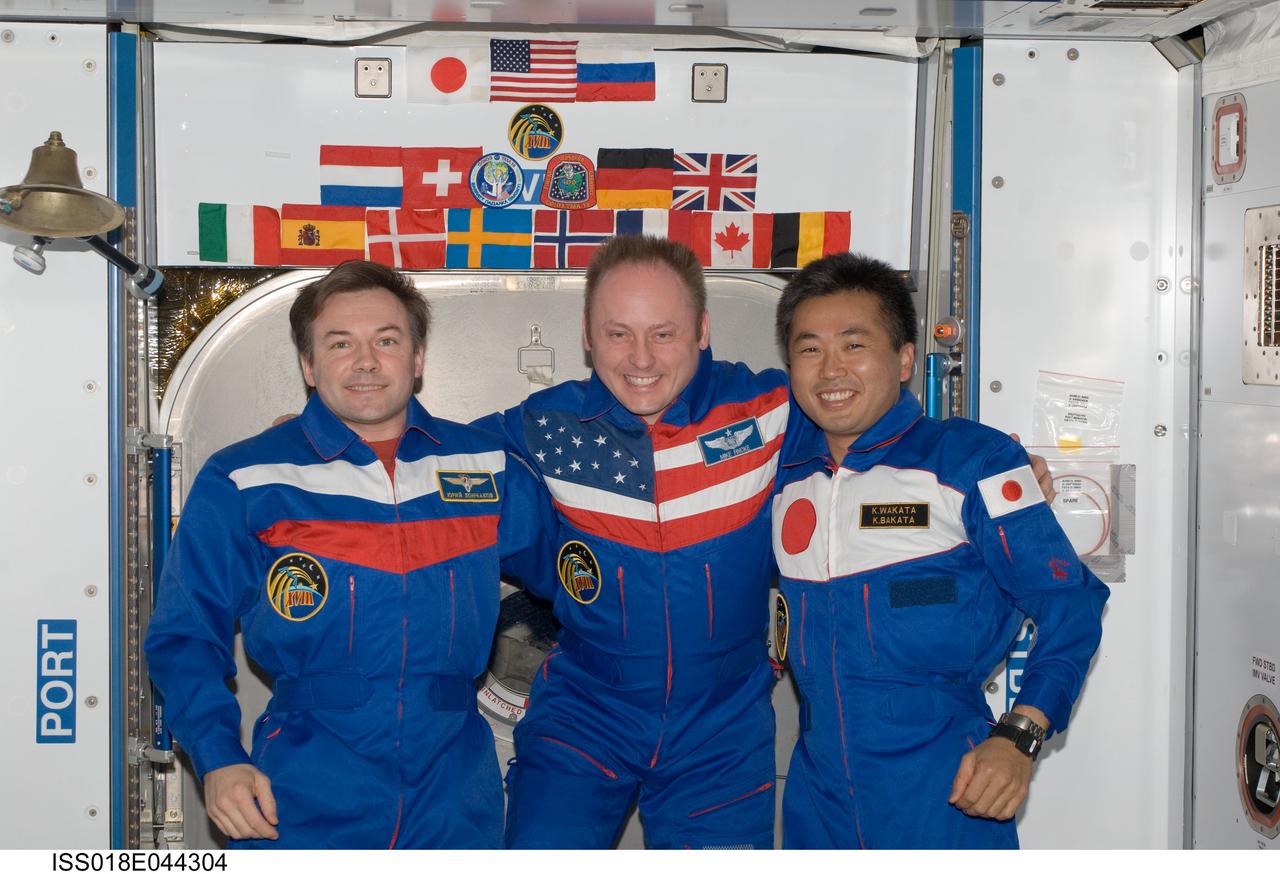
ISS018-E-044304 (1 April 2009) --- NASA astronaut Michael Fincke (center), Expedition 18 commander; cosmonaut Yury Lonchakov (left), Expedition 18 flight engineer; and Japan Aerospace Exploration Agency (JAXA) astronaut Koichi Wakata, Expedition 18/19 flight engineer, pose for a photo in the Harmony node of the International Space Station.
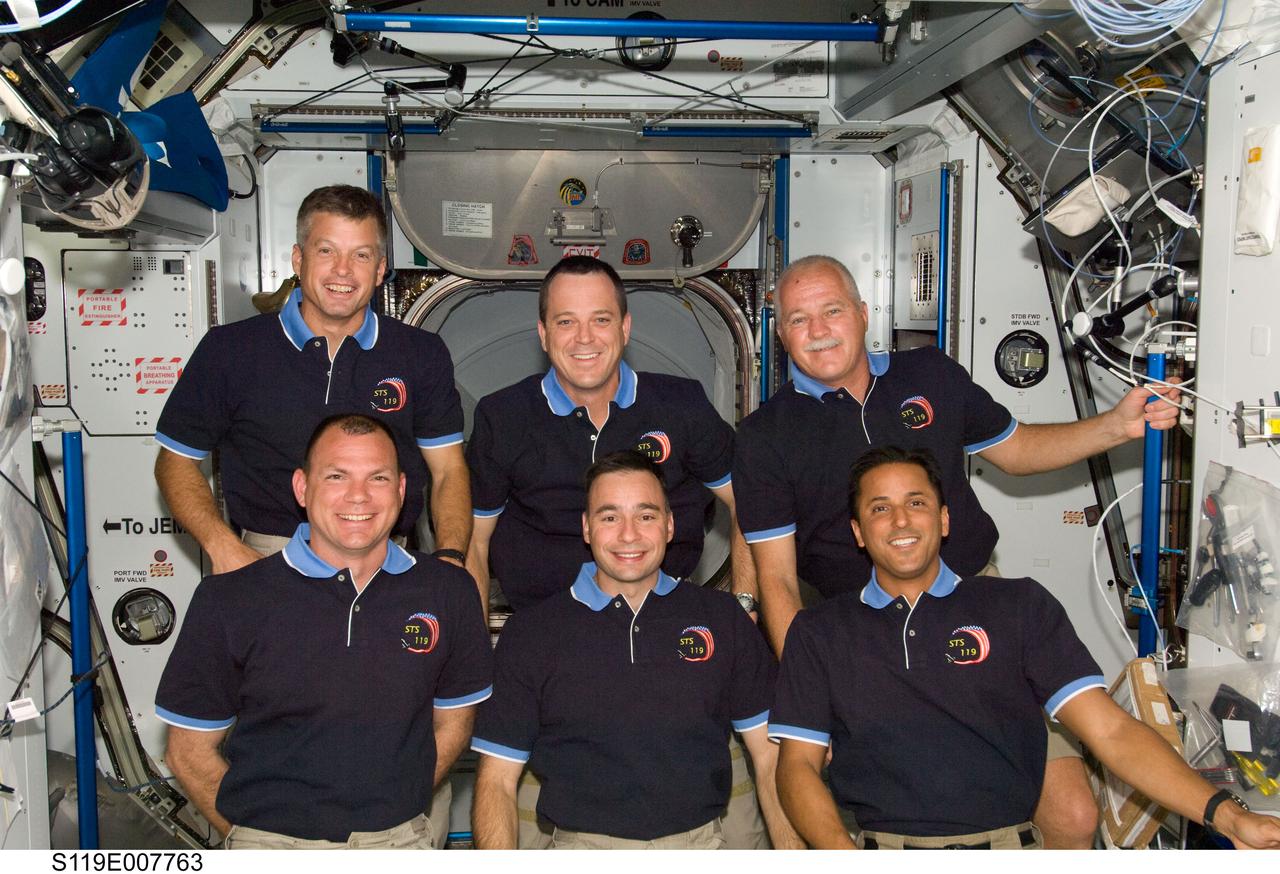
S119-E-007763 (24 March 2009) --- STS-119 crewmembers pose for a group photo following a joint news conference in the Harmony node of the International Space Station while Space Shuttle Discovery remains docked with the station. From the left (bottom row) are NASA astronauts Tony Antonelli, pilot; Lee Archambault, commander; and Joseph Acaba, mission specialist. From the left (top row) are astronauts Steve Swanson, Richard Arnold and John Phillips, all mission specialists.
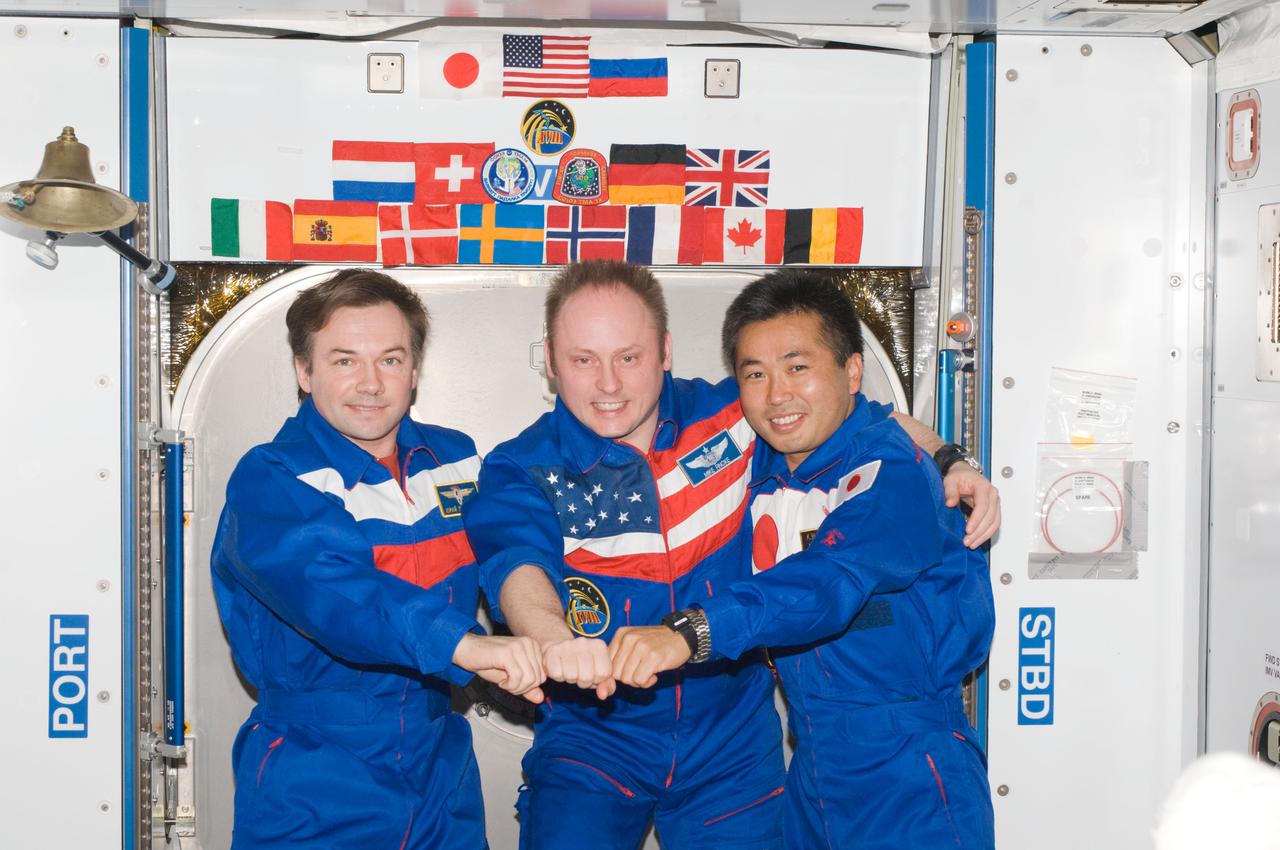
ISS018-E-044308 (1 April 2009) --- NASA astronaut Michael Fincke (center), Expedition 18 commander; cosmonaut Yury Lonchakov (left), Expedition 18 flight engineer; and Japan Aerospace Exploration Agency (JAXA) astronaut Koichi Wakata, Expedition 18/19 flight engineer, pose for a photo in the Harmony node of the International Space Station.
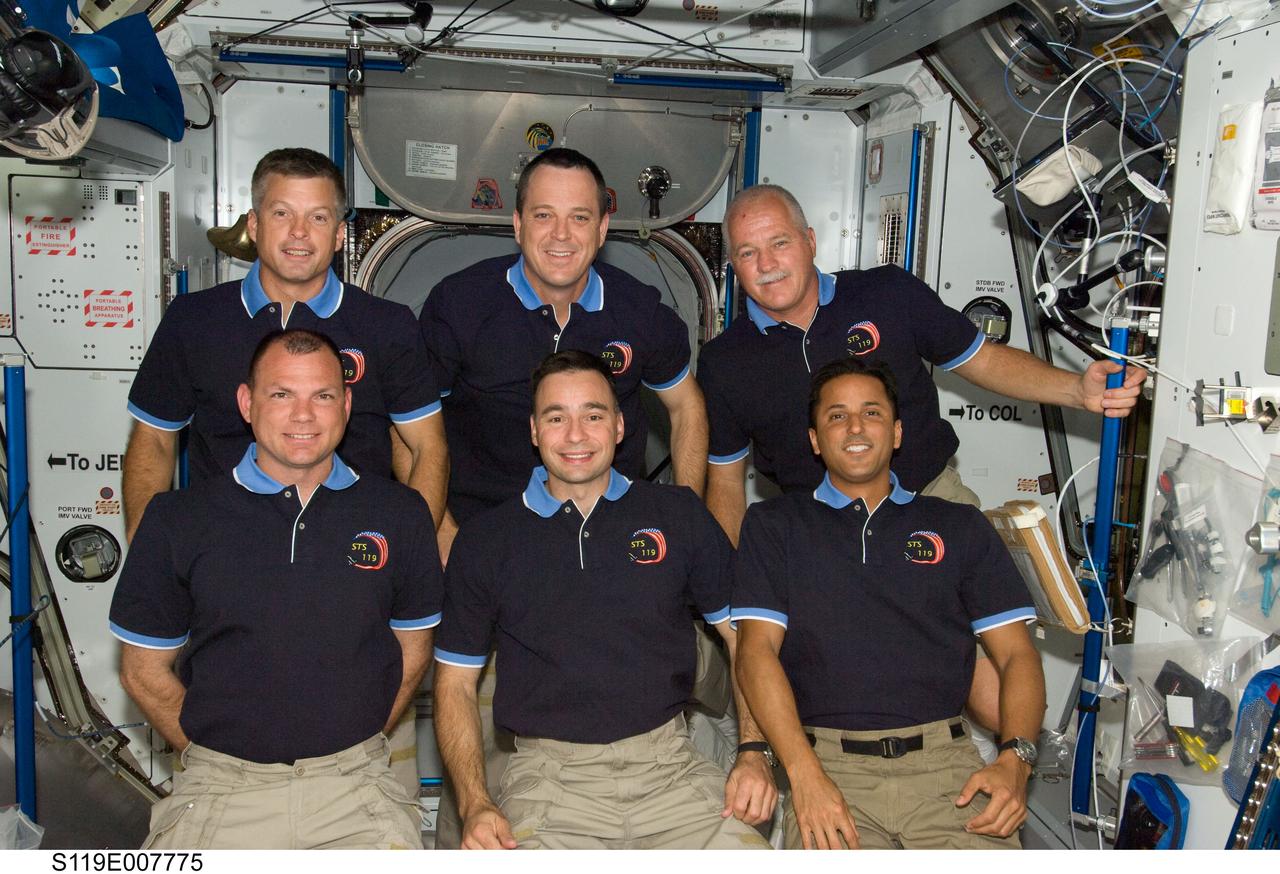
S119-E-007775 (24 March 2009) --- STS-119 crewmembers pose for a group photo following a joint news conference in the Harmony node of the International Space Station while Space Shuttle Discovery remains docked with the station. From the left (bottom row) are NASA astronauts Tony Antonelli, pilot; Lee Archambault, commander; and Joseph Acaba, mission specialist. From the left (top row) are astronauts Steve Swanson, Richard Arnold and John Phillips, all mission specialists.
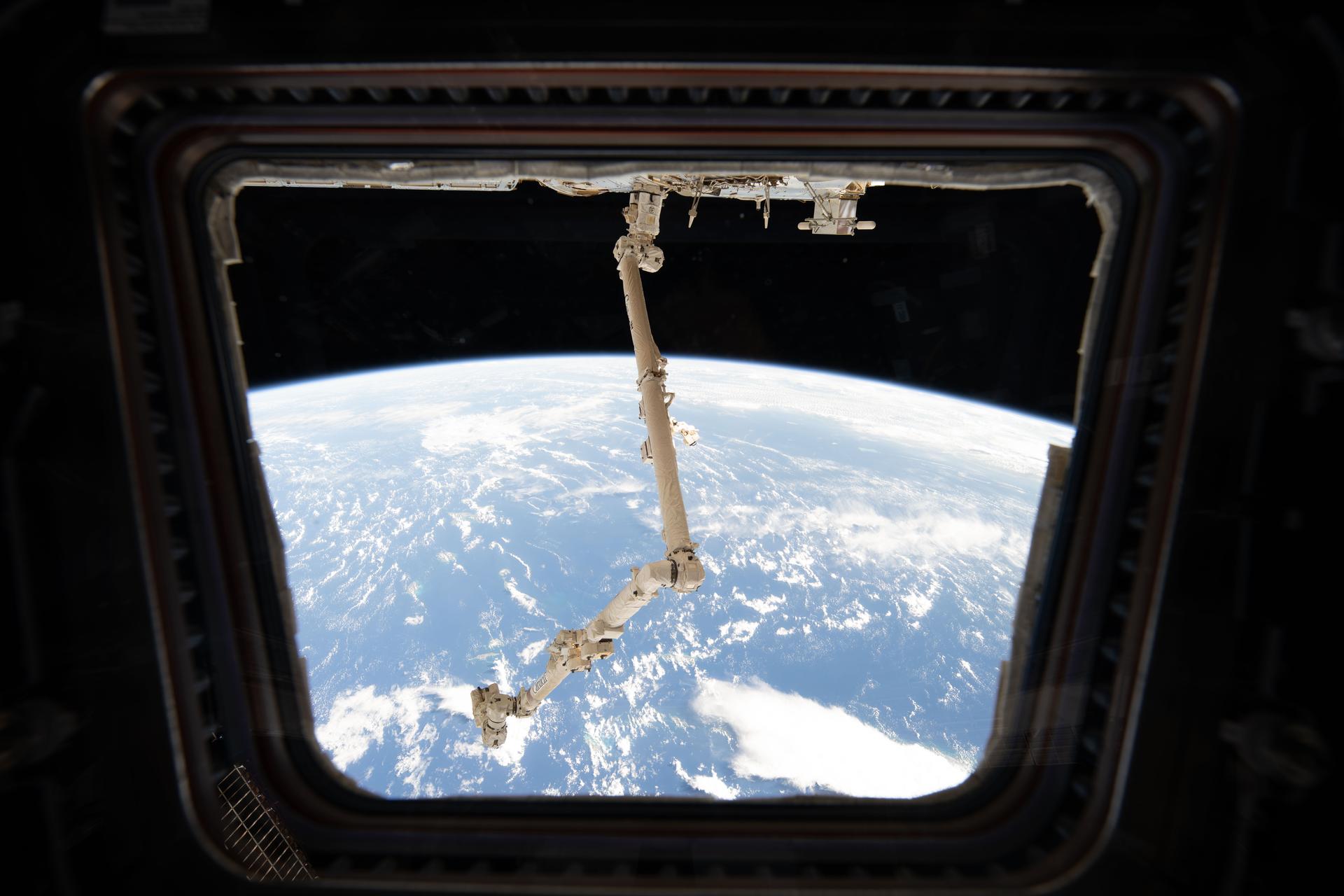
iss074e0503977 (April 12, 2026) --- This view from a window in the International Space Station’s cupola highlights the 57.7‑foot‑long Canadarm2 robotic arm attached to a power‑and‑data grapple fixture on the Harmony module. The orbital outpost was soaring 264 miles above the Atlantic Ocean northwest of Puerto Rico at the time of this photograph. Credit: NASA/Chris Williams
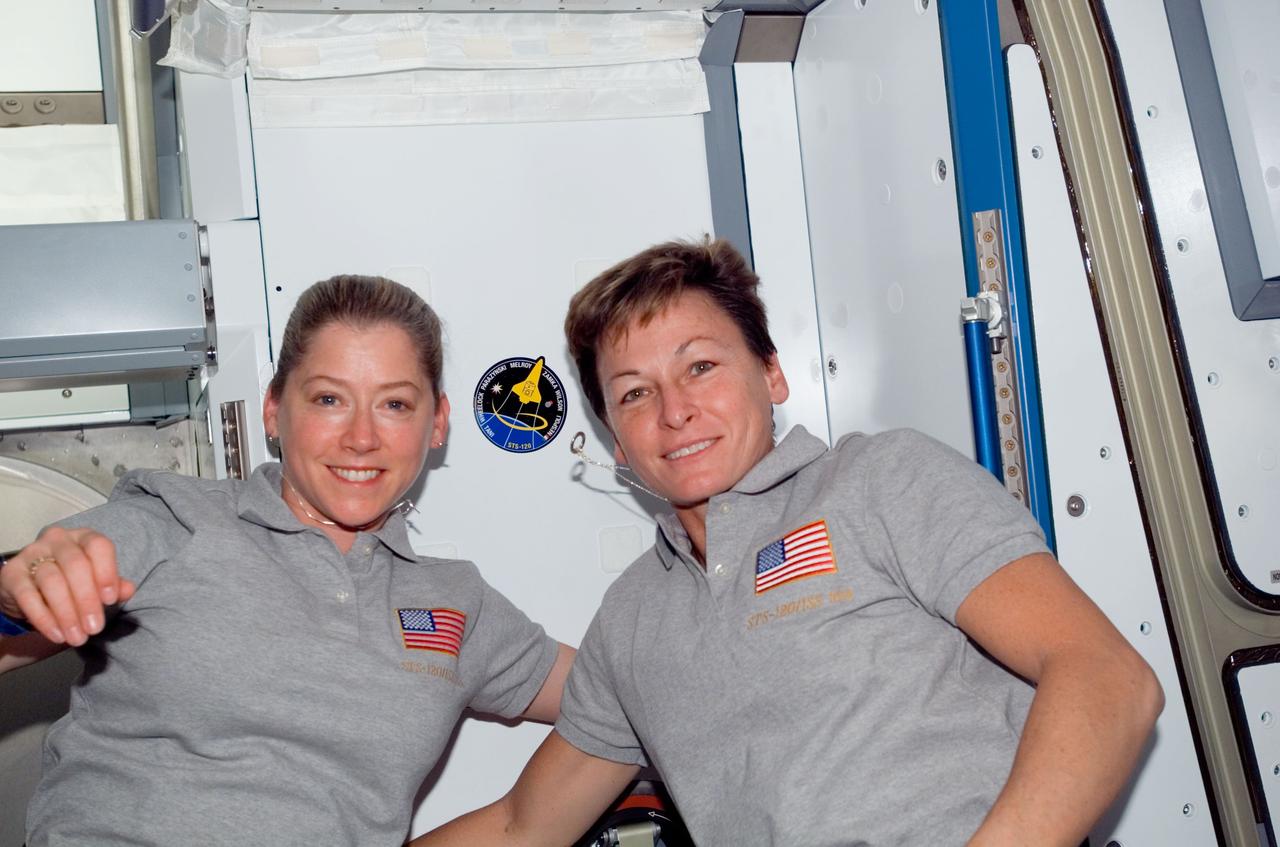
S120-E-008356 (4 Nov. 2007) --- Astronauts Pam Melroy (left), STS-120 commander; and Peggy Whitson, Expedition 16 commander, pose for a photo after placing the STS-120 crew patch in the Harmony node -- newest addition to the International Space Station -- while Space Shuttle Discovery is docked with the station.
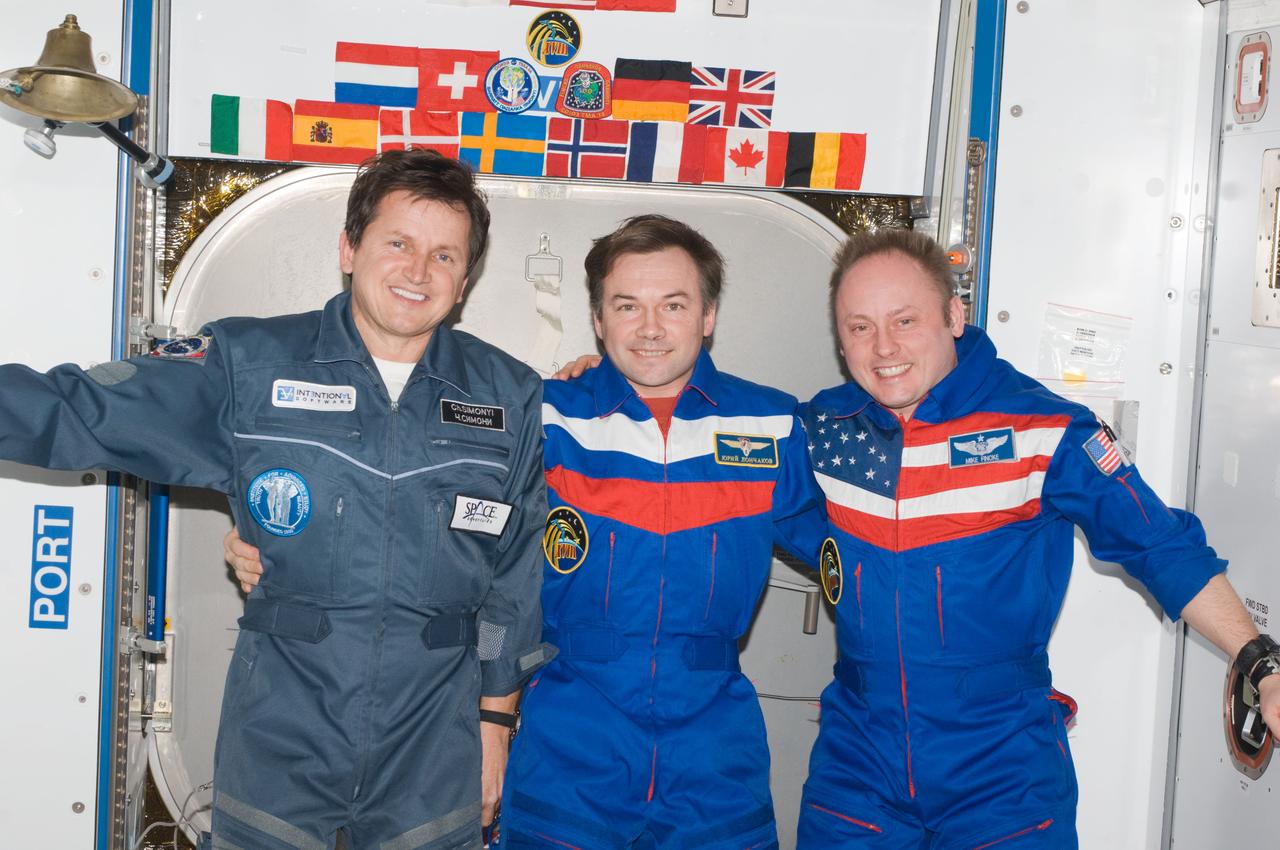
ISS018-E-044302 (1 April 2009) --- NASA astronaut Michael Fincke (right), Expedition 18 commander; cosmonaut Yury Lonchakov (center), Expedition 18 flight engineer; and U.S. spaceflight participant Charles Simonyi pose for a photo in the Harmony node of the International Space Station.

ISS018-E-044334 (1 April 2009) --- NASA astronaut Michael Fincke (right), Expedition 18 commander; and Japan Aerospace Exploration Agency (JAXA) astronaut Koichi Wakata, Expedition 18/19 flight engineer, pose for a photo in the Harmony node of the International Space Station.
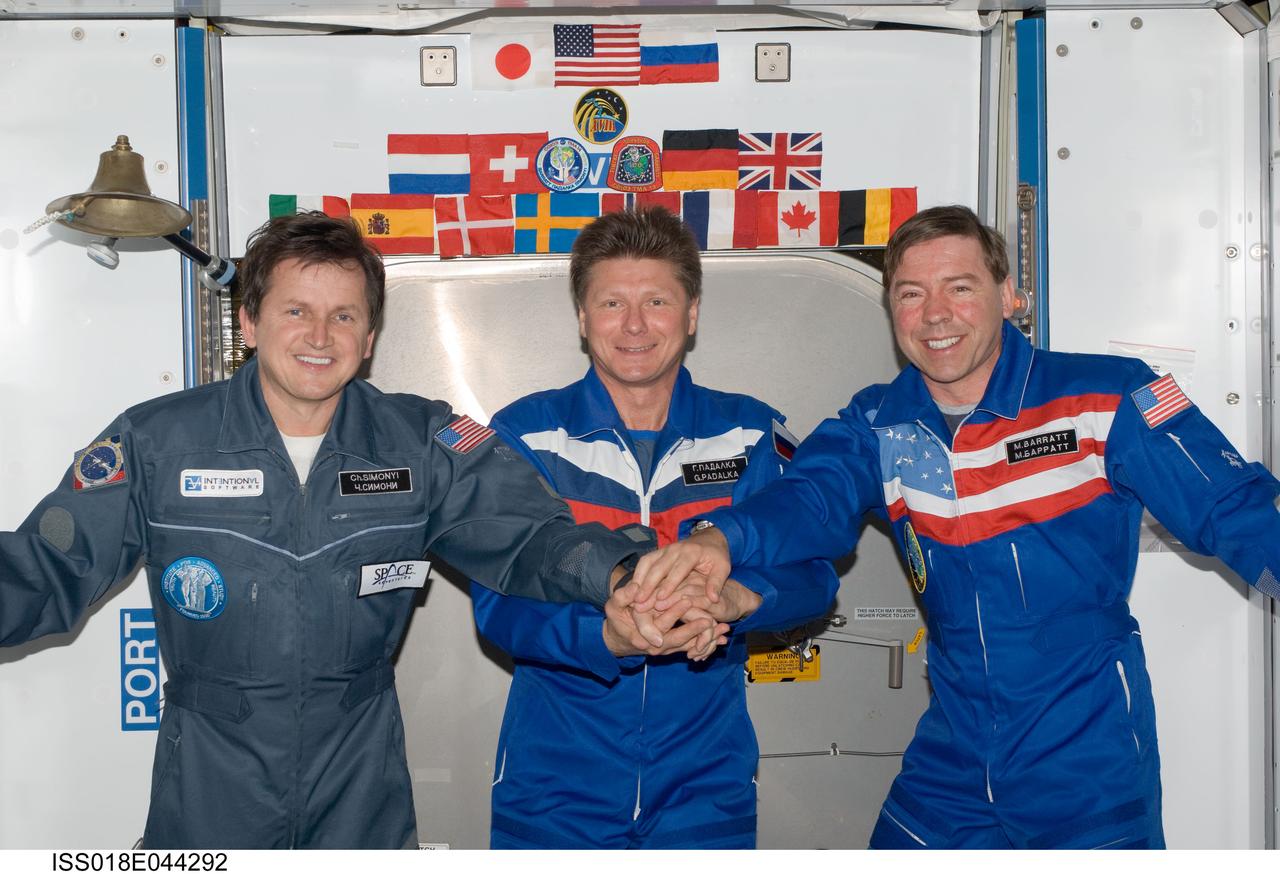
ISS018-E-044292 (1 April 2009) --- Cosmonaut Gennady Padalka (center), Expedition 19 commander; NASA astronaut Michael Barratt (right), Expedition 19 flight engineer; and U.S. spaceflight participant Charles Simonyi pose for a photo in the Harmony node of the International Space Station.
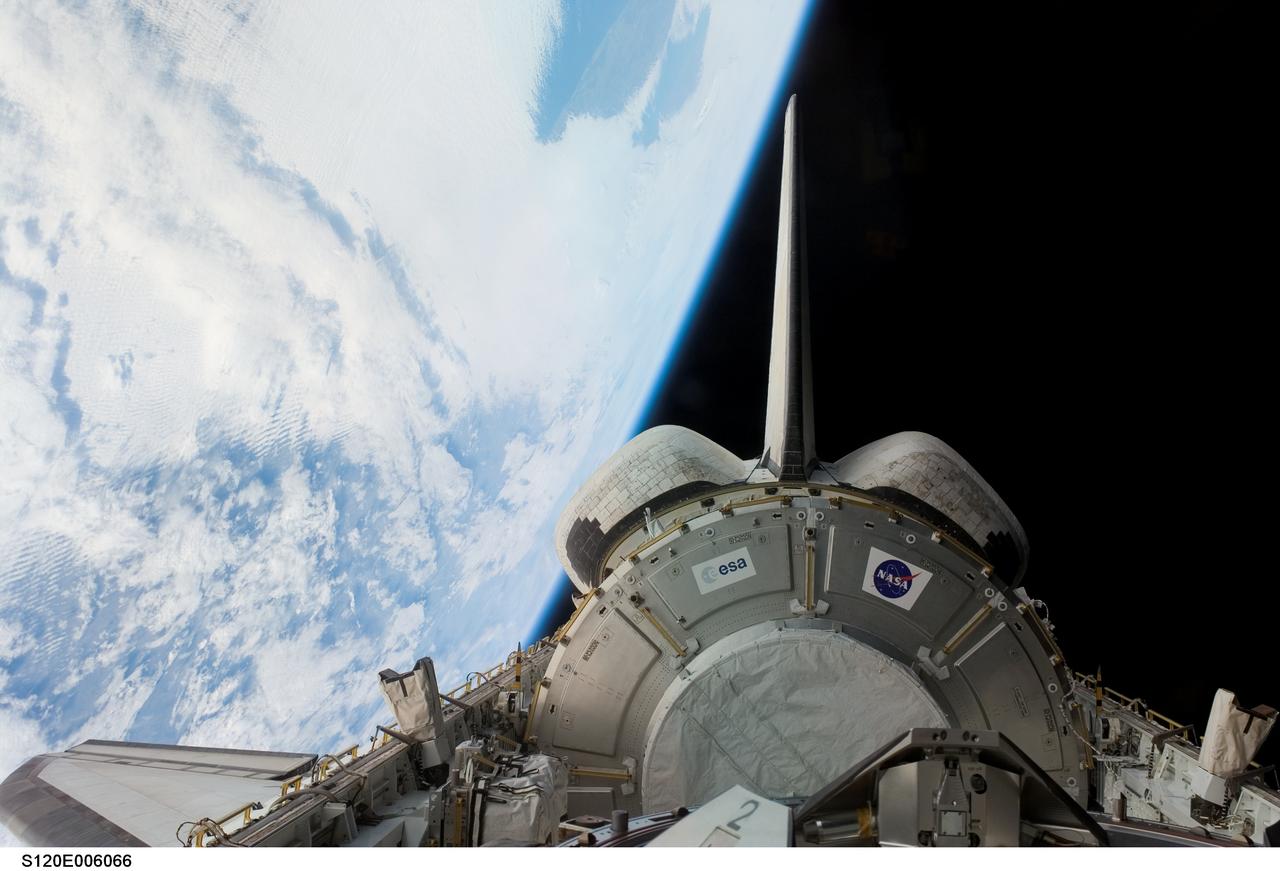
S120-E-006066 (24 Oct. 2007) --- Backdropped by the blackness of space and Earth's horizon, the Harmony node in Space Shuttle Discovery's payload bay, vertical stabilizer and orbital maneuvering system (OMS) pods are featured in this image photographed by a STS-120 crewmember during flight day two activities.
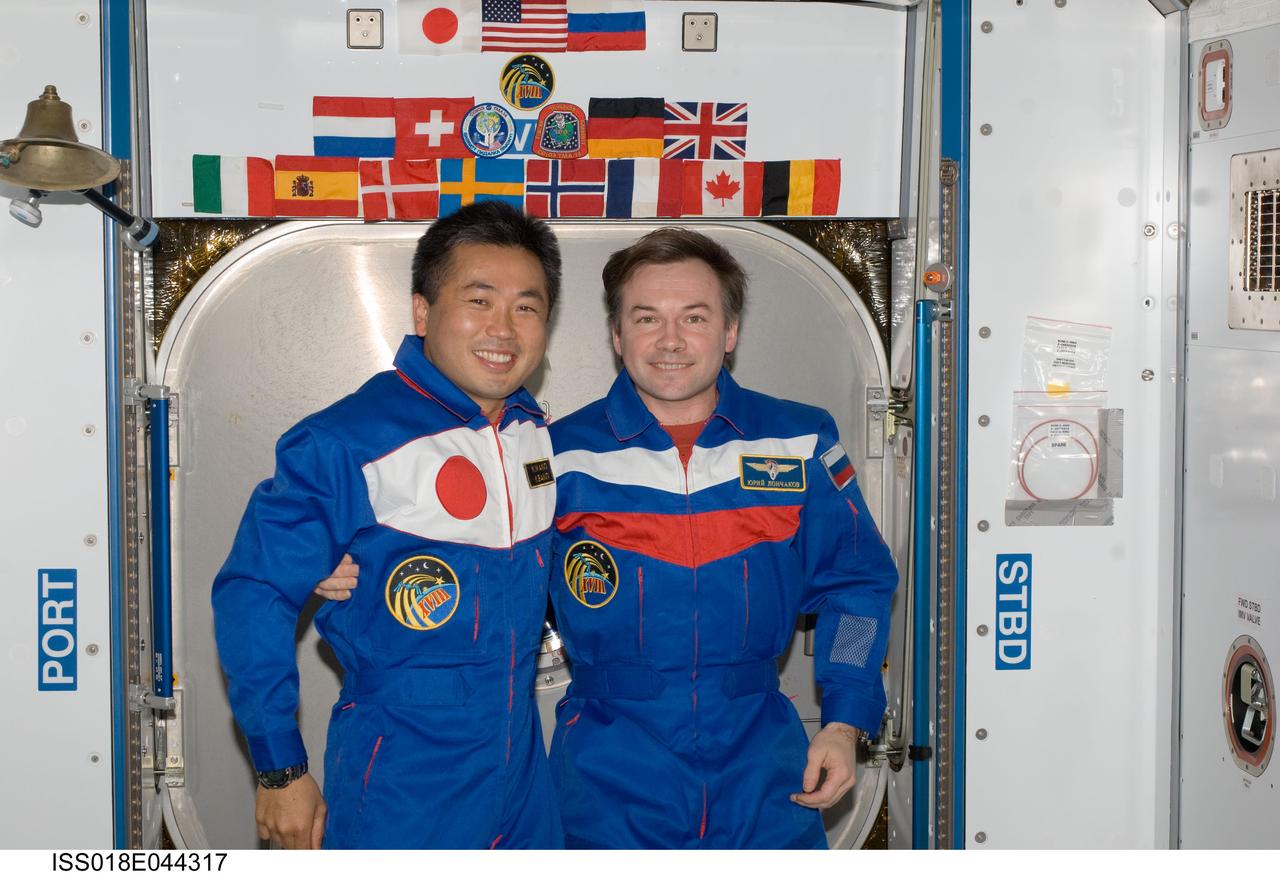
ISS018-E-044317 (1 April 2009) --- Japan Aerospace Exploration Agency (JAXA) astronaut Koichi Wakata (left), Expedition 18/19 flight engineer; and cosmonaut Yury Lonchakov, Expedition 18 flight engineer, pose for a photo in the Harmony node of the International Space Station.
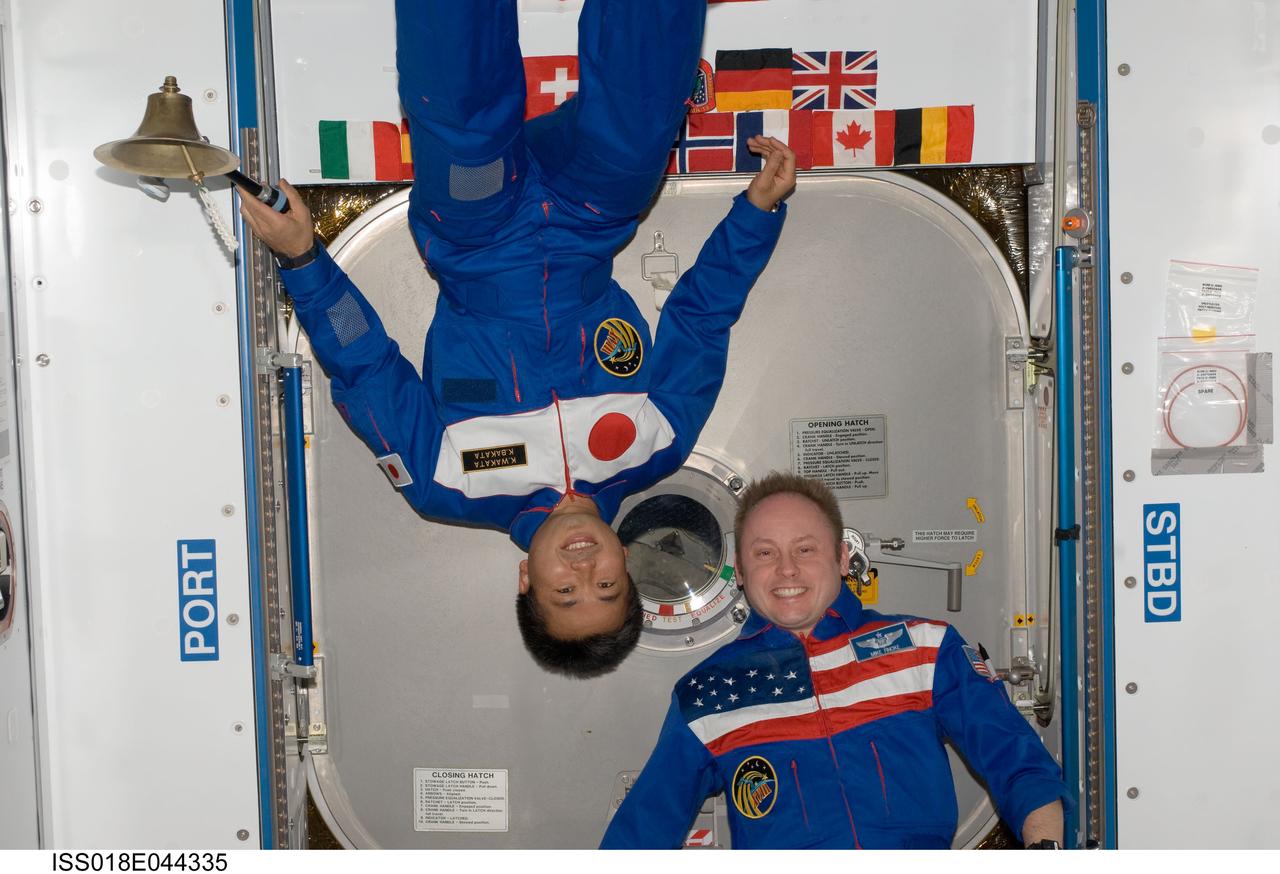
ISS018-E-044335 (1 April 2009) --- NASA astronaut Michael Fincke (right), Expedition 18 commander; and Japan Aerospace Exploration Agency (JAXA) astronaut Koichi Wakata, Expedition 18/19 flight engineer, pose for a photo in the Harmony node of the International Space Station.
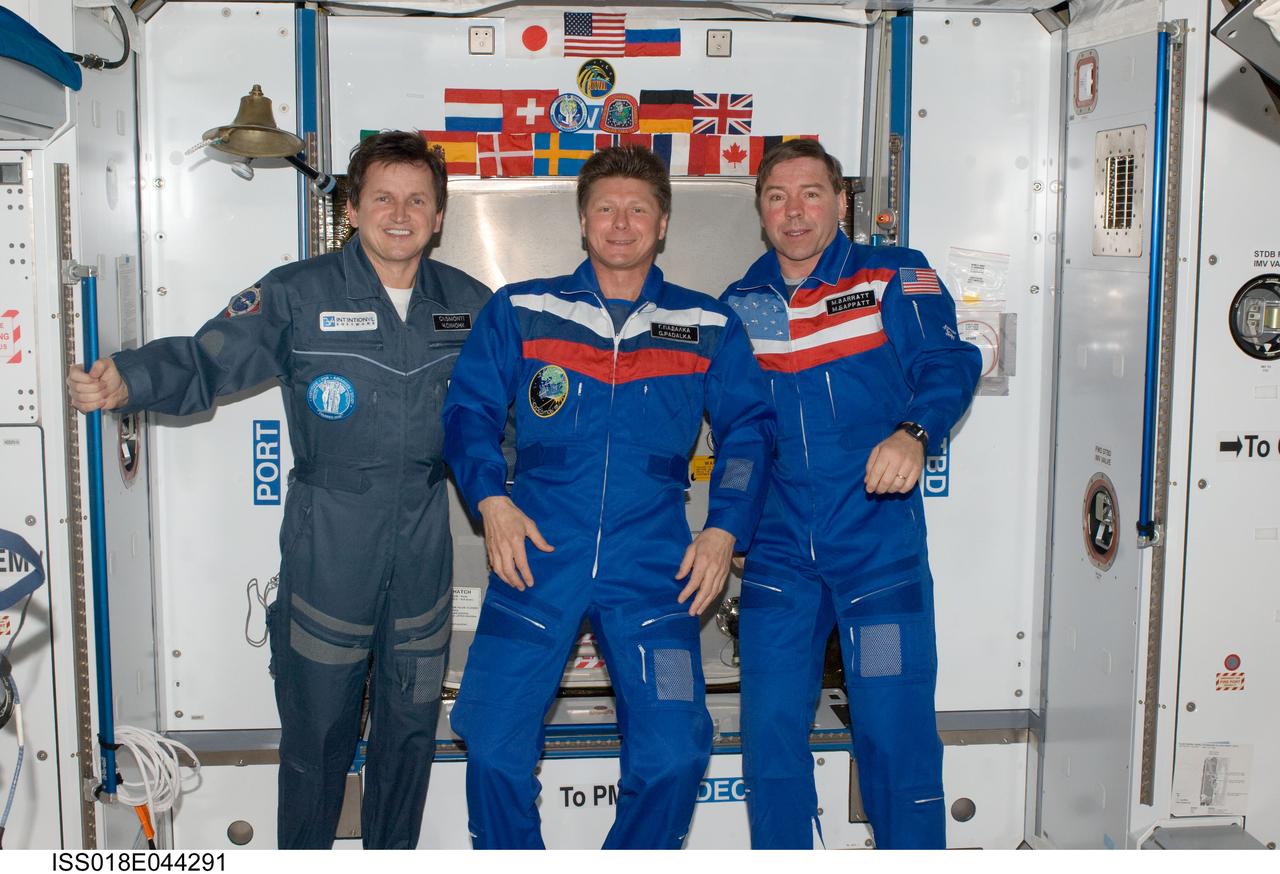
ISS018-E-044291 (1 April 2009) --- Cosmonaut Gennady Padalka (center), Expedition 19 commander; NASA astronaut Michael Barratt (right), Expedition 19 flight engineer; and U.S. spaceflight participant Charles Simonyi pose for a photo in the Harmony node of the International Space Station.
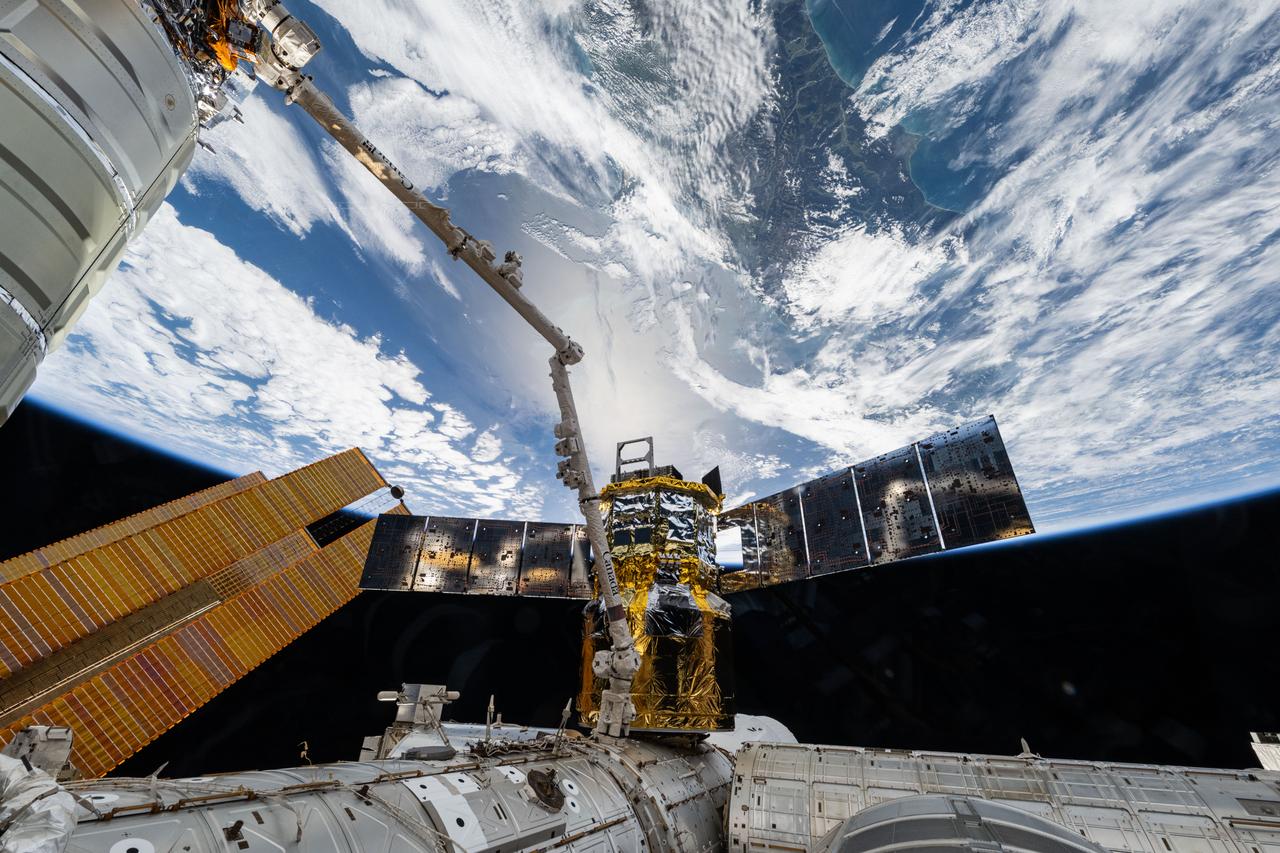
iss073e1193852 (Nov. 24, 2025) --- The HTV-X1 cargo spacecraft from JAXA (Japan Aerospace Exploration Agency) is pictured attached to the Earth-facing port on the Harmony module while in the grips of the Canadarm2 robotic arm. The International Space Station was orbiting 271 miles above New Zealand at the time of this photograph.
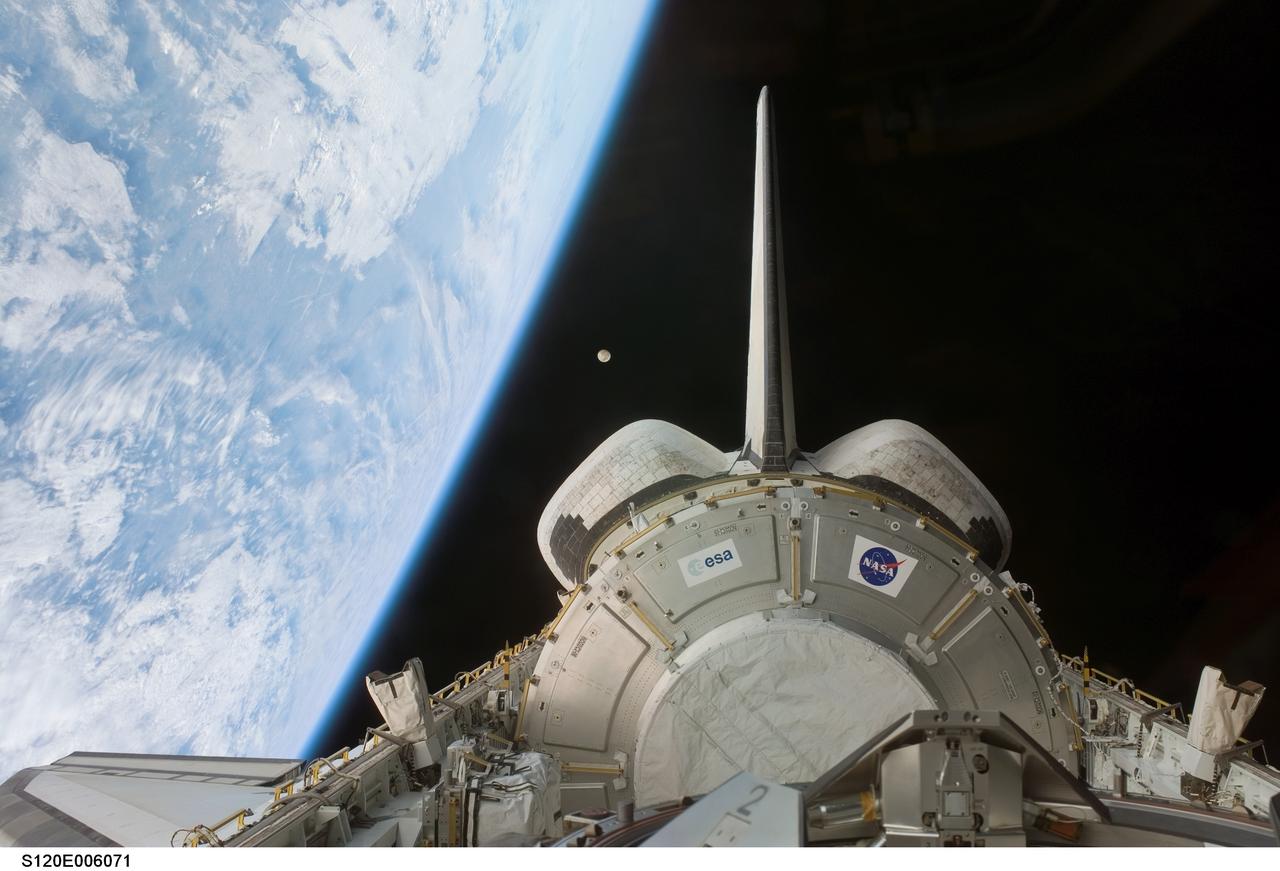
S120-E-006071 (24 Oct. 2007) --- Backdropped by the blackness of space and Earth's horizon, the Harmony node in Space Shuttle Discovery's payload bay, vertical stabilizer and orbital maneuvering system (OMS) pods are featured in this image photographed by a STS-120 crewmember during flight day two activities. Earth's moon is visible at center.
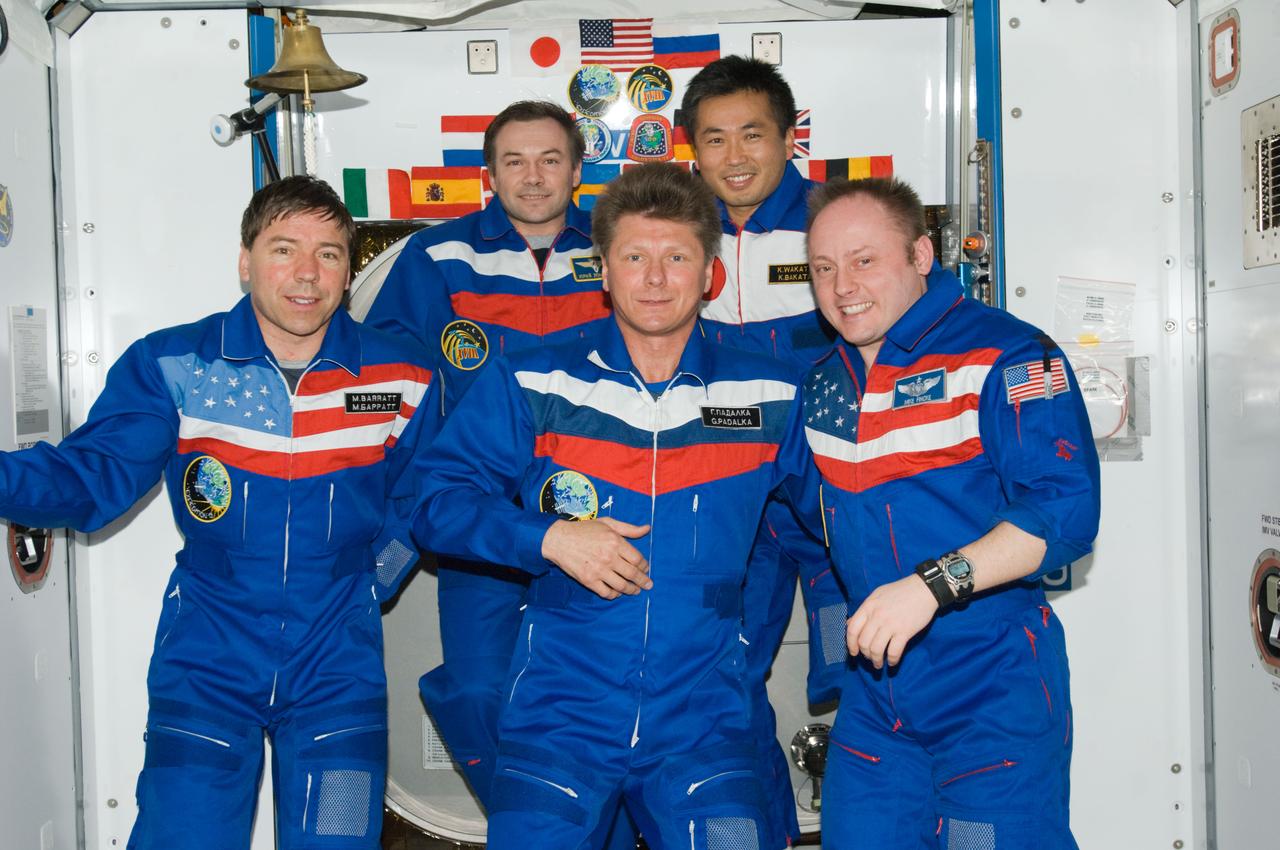
ISS018-E-044482 (2 April 2009) --- Crewmembers aboard the International Space Station pose for a group portrait during the ceremony of Changing-of-Command from Expedition 18 to Expedition 19 in the Harmony node. Pictured on the front row are NASA astronaut Michael Fincke (right), Expedition 18 commander; cosmonaut Gennady Padalka (center), Expedition 19 commander; and NASA astronaut Michael Barratt, Expedition 19 flight engineer. Pictured on the back row are cosmonaut Yury Lonchakov (left), Expedition 18 flight engineer; and Japan Aerospace Exploration Agency (JAXA) astronaut Koichi Wakata, Expedition 18/19 flight engineer.
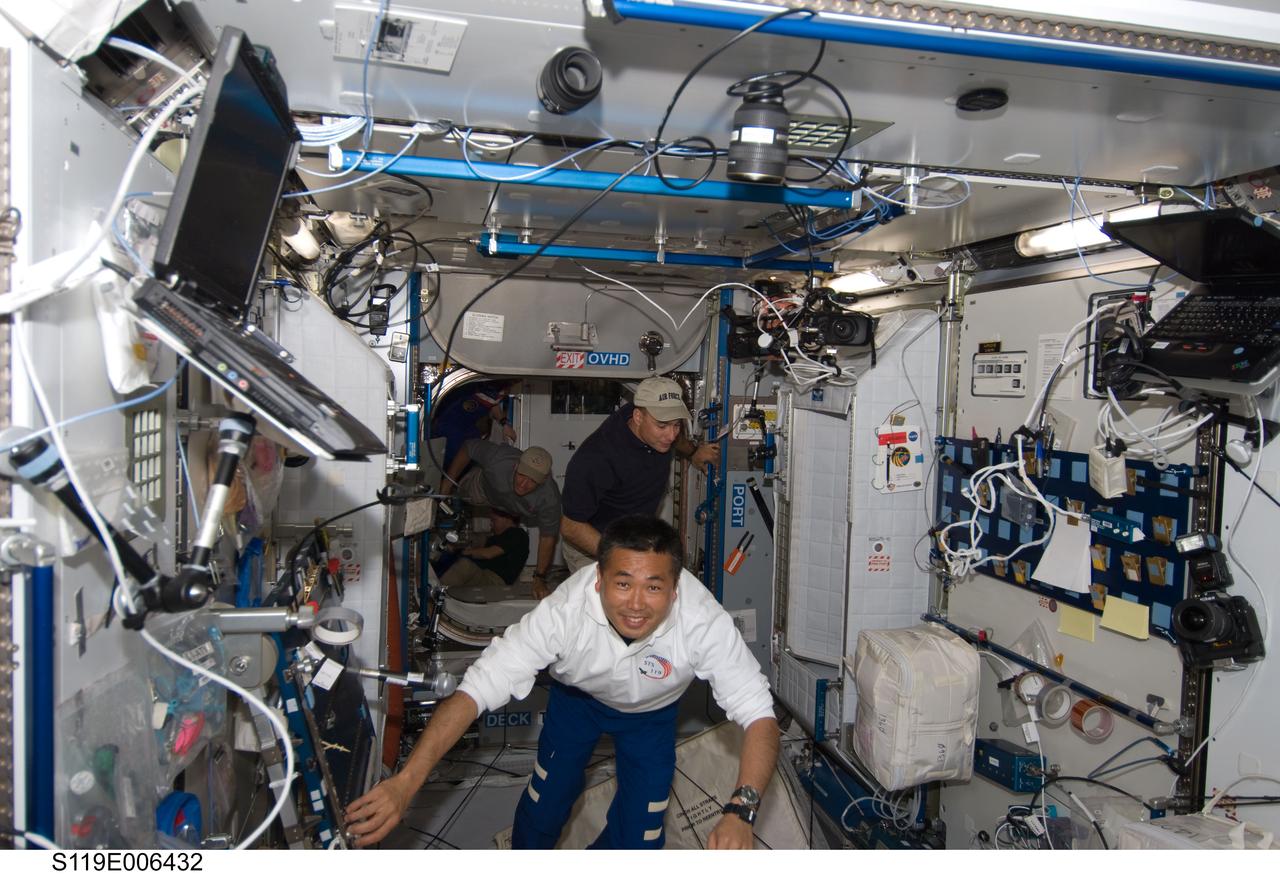
S119-E-006432 (17 March 2009) --- Japan Aerospace Exploration Agency (JAXA) astronaut Koichi Wakata (foreground), STS-119 mission specialist; NASA astronauts Lee Archambault, commander; Steve Swanson and Joseph Acaba, both mission specialists, enter the Harmony node shortly after Space Shuttle Discovery and the International Space Station docked in space and the hatches were opened on March 17, 2009. STS-119 crewmembers not pictured are astronauts Tony Antonelli, pilot; Richard Arnold and John Phillips, both mission specialists.
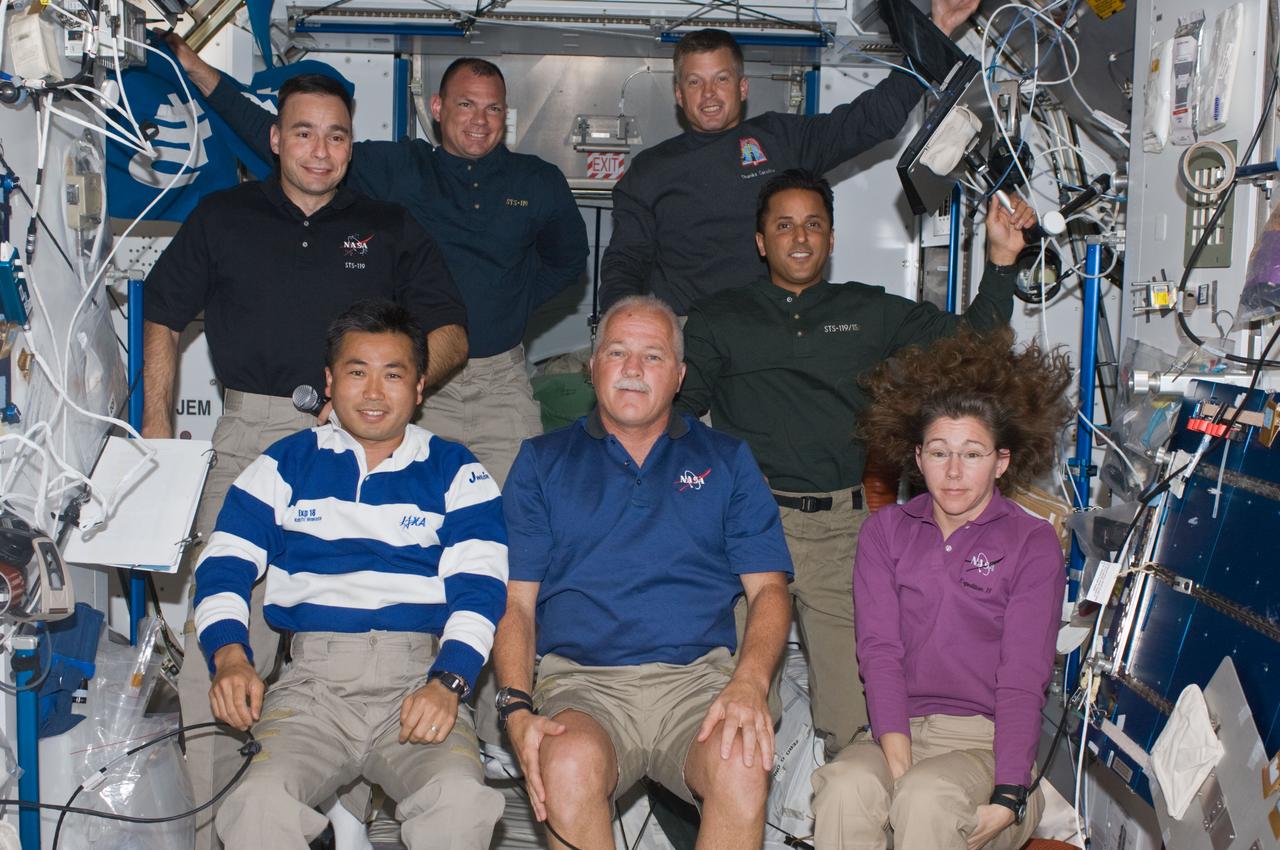
ISS018-E-042673 (22 March 2009) --- Seven of the ten crewmembers on the International Space Station are pictured in the Harmony node while Space Shuttle Discovery remains docked with the station. Pictured from the left (bottom) are Japan Aerospace Exploration Agency (JAXA) astronaut Koichi Wakata, Expedition 18 flight engineer; NASA astronauts John Phillips and Sandra Magnus, both STS-119 mission specialists. From the left (top) are astronauts Lee Archambault, STS-119 commander; Tony Antonelli, STS-119 pilot; Steve Swanson and Joseph Acaba, both STS-119 mission specialists.
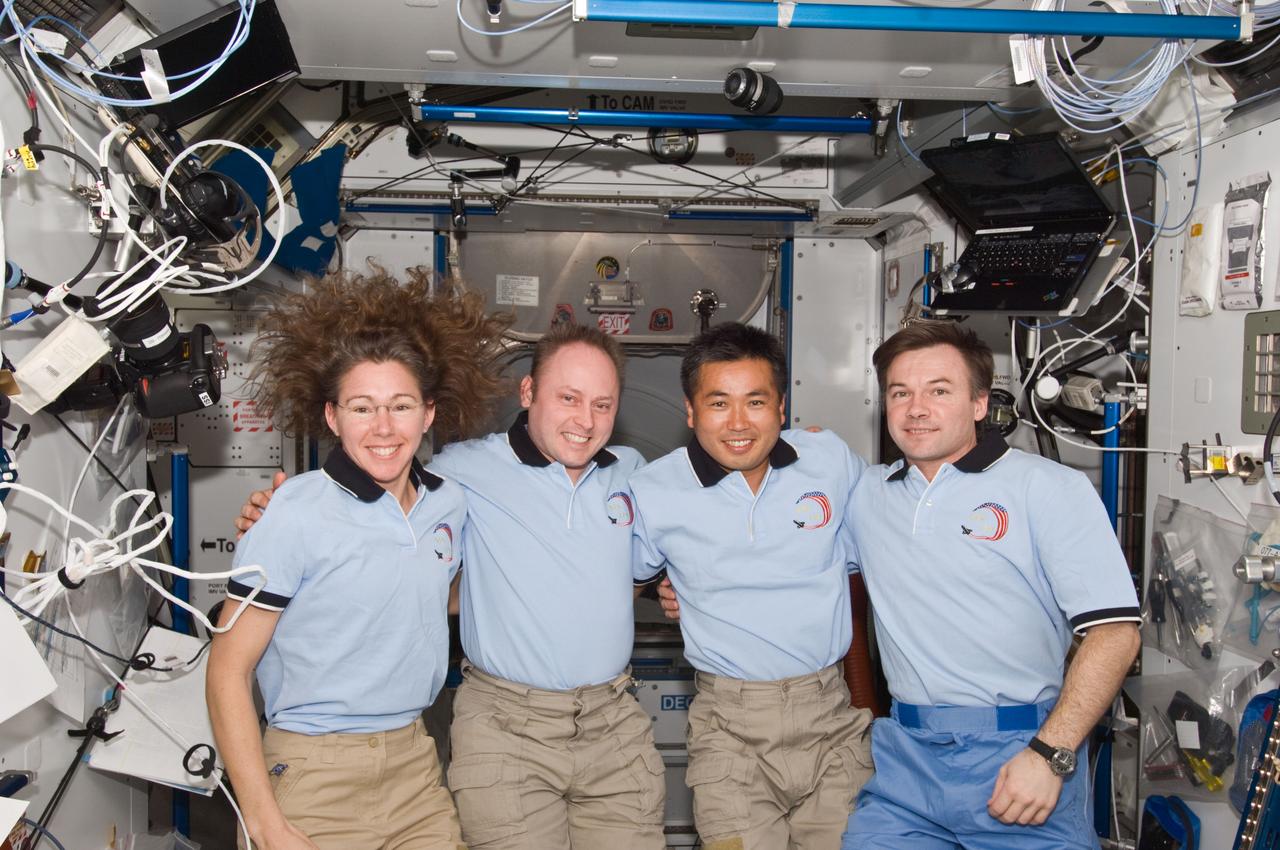
S119-E-007740 (24 March 2009) --- NASA astronauts Sandra Magnus, STS-119 mission specialist; and Michael Fincke (second left), Expedition 18 commander; along with Japan Aerospace Exploration Agency astronaut (JAXA) Koichi Wakata and cosmonaut Yury Lonchakov, both Expedition 18 flight engineers, pose for a photo following a joint news conference in the Harmony node of the International Space Station while Space Shuttle Discovery remains docked with the station. Magnus, who joined the station’s Expedition 18 crew in November 2008, is being replaced by Wakata, who arrived at the station with the STS-119 crew.
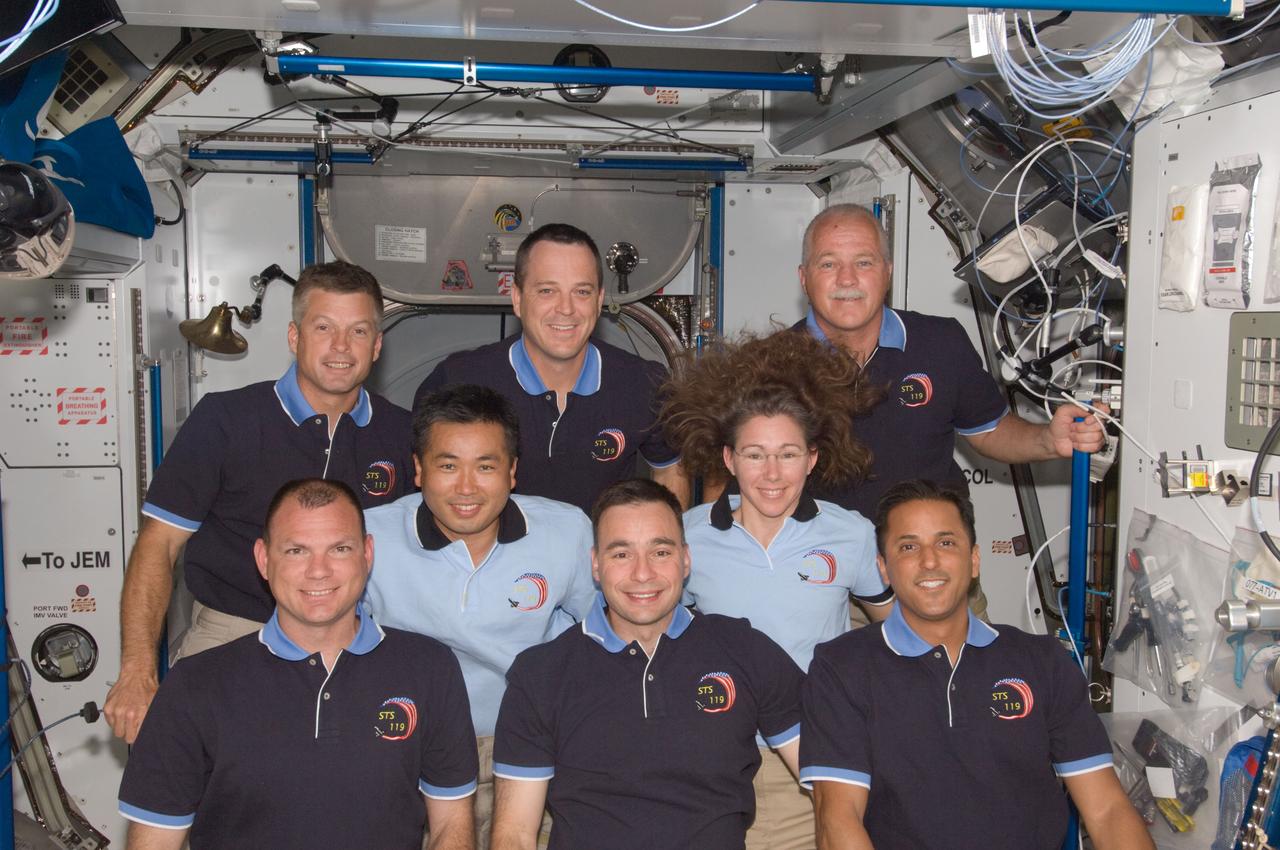
S119-E-007794 (24 March 2009) --- Eight out of the ten crewmembers on the International Space Station pose for a group photo following a joint news conference in the Harmony node while Space Shuttle Discovery remains docked with the station. From the left are NASA astronauts Tony Antonelli, STS-119 pilot; Lee Archambault, STS-119 commander; and Joseph Acaba, STS-119 mission specialist. From the left (middle row) are Japan Aerospace Exploration Agency astronaut (JAXA) Koichi Wakata, Expedition 18 flight engineer; and NASA astronaut Sandra Magnus, STS-119 mission specialist. From the left (back row) are astronauts Steve Swanson, Richard Arnold and John Phillips, all STS-119 mission specialists. Magnus, who joined the station’s Expedition 18 crew in November 2008, is being replaced by Wakata, who arrived at the station with the STS-119 crew.
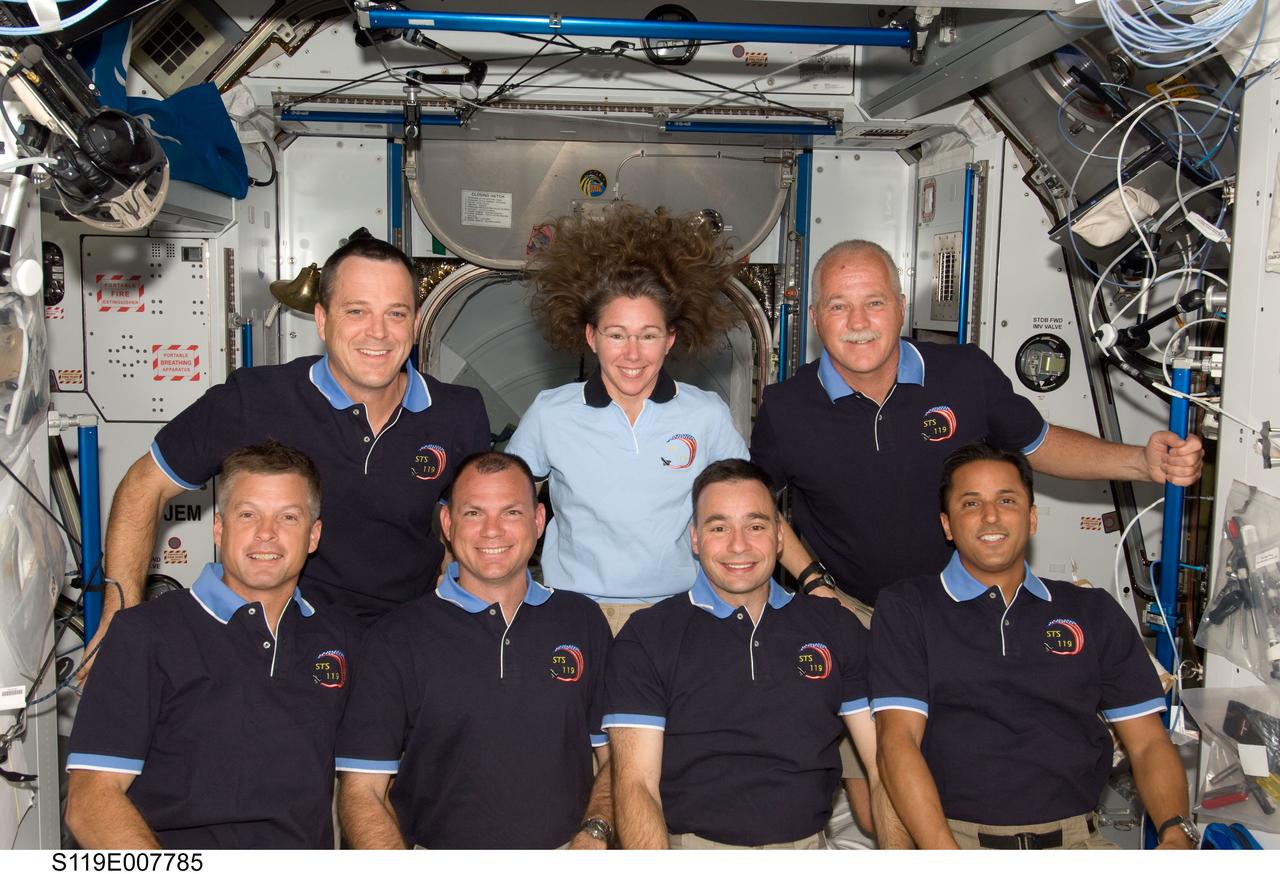
S119-E-007785 (24 March 2009) --- STS-119 crewmembers and astronaut Sandra Magnus (center, top row), Expedition 18 flight engineer, pose for a group photo following a joint news conference with the Expedition 18 crewmembers from the Harmony node of the International Space Station while Space Shuttle Discovery remains docked with the station. Also pictured from the left (bottom row) are NASA astronauts Steve Swanson, mission specialist; Tony Antonelli, pilot; Lee Archambault, commander; and Joseph Acaba, mission specialist. Pictured on the top row with Magnus are astronauts Richard Arnold (left) and John Phillips, both mission specialists. Magnus, who joined the station’s crew in November, is being replaced by Japan Aerospace Exploration Agency astronaut (JAXA) Koichi Wakata (not pictured), who arrived at the station with the STS-119 crew.
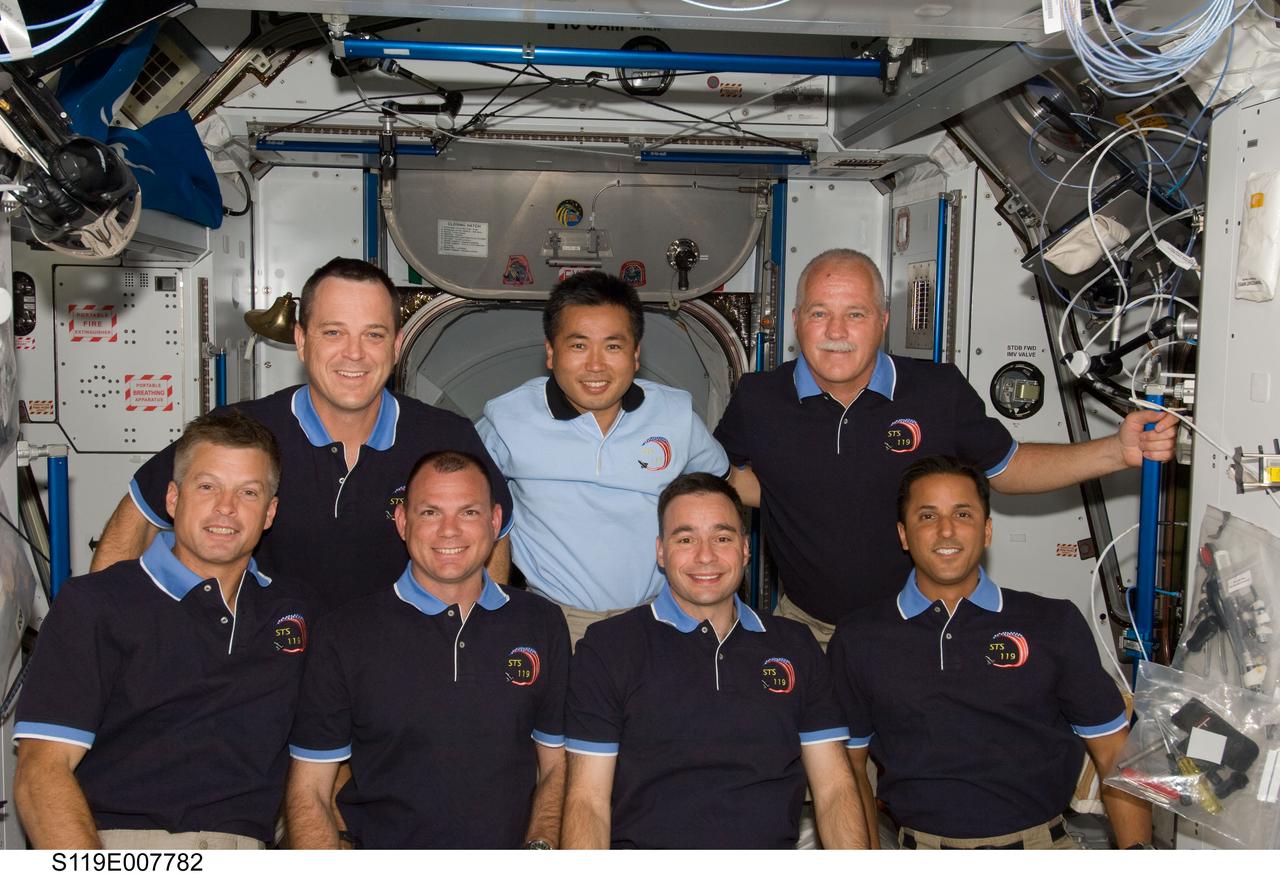
S119-E-007782 (24 March 2009) --- STS-119 crewmembers and Japan Aerospace Exploration Agency astronaut (JAXA) Koichi Wakata (center, top row), Expedition 18 flight engineer, pose for a group photo following a joint news conference with the Expedition 18 crewmembers from the Harmony node of the International Space Station while Space Shuttle Discovery remains docked with the station. Also pictured from the left (bottom row) are NASA astronauts Steve Swanson, mission specialist; Tony Antonelli, pilot; Lee Archambault, commander; and Joseph Acaba, mission specialist. Pictured on the top row with Wakata are astronauts Richard Arnold (left) and John Phillips, both mission specialists. NASA astronaut Sandra Magnus (not pictured), who joined the station’s crew in November, is being replaced by Wakata, who arrived at the station with the STS-119 crew.
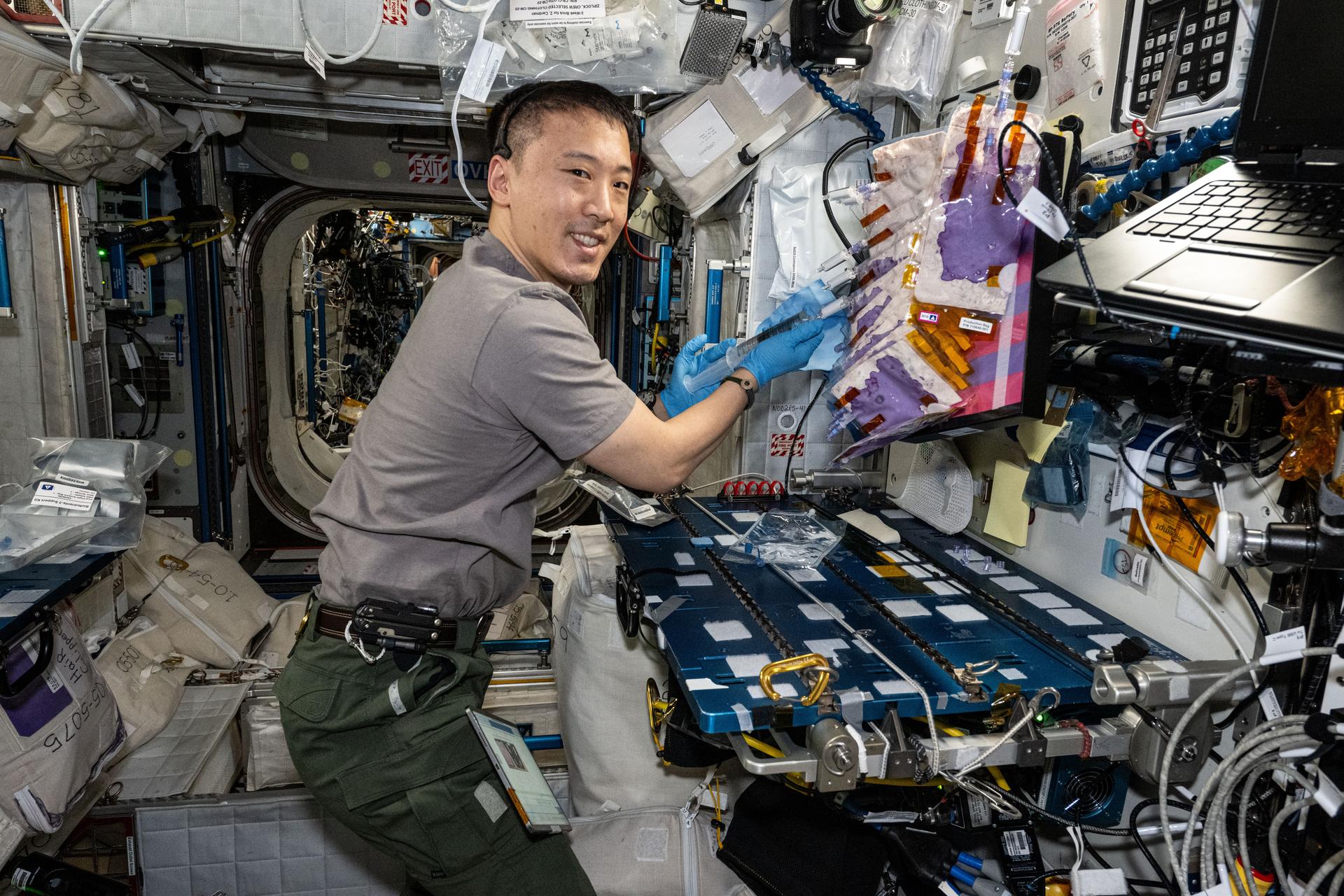
iss073e0817658 (Oct. 1, 2025) --- NASA astronaut and Expedition 73 Flight Engineer Jonny Kim works at the maintenance work area inside the International Space Station's Harmony module hydrating, agitating, and preparing production bags containing bioengineered yeasts and probiotic cultures for incubation. These activities are designed to demonstrate how astronauts could grow and safely consume fresh vitamins and nutrients on demand helping researchers plan future missions farther from Earth.
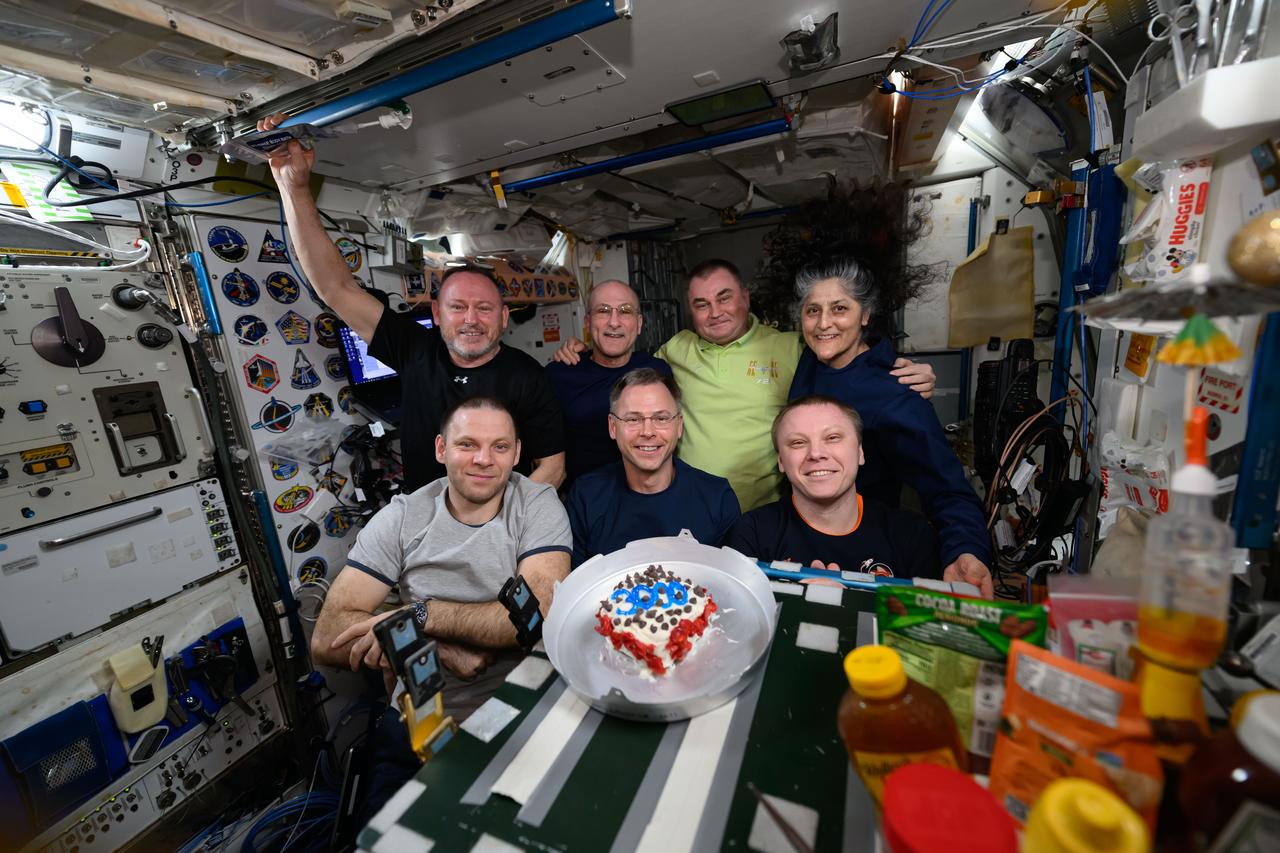
iss072e661496 (March 1, 2025) --- The Expedition 72 crew poses for a portrait inside the International Space Station's Harmony module with a cake commemorating a total of 3,000 cumulative days in space gained between the individual crew members. In the front row (from left), are Roscosmos cosmonaut Ivan vagner, NASA astronaut Nick Hague, and Roscosmos cosmonaut Aleksandr Gorbunov. In the back (from left), are NASA astronauts Butch Wilmore and Don Pettit, Roscosmos cosmonaut Alexey Ovchinin, and NASA astronaut Suni Williams.
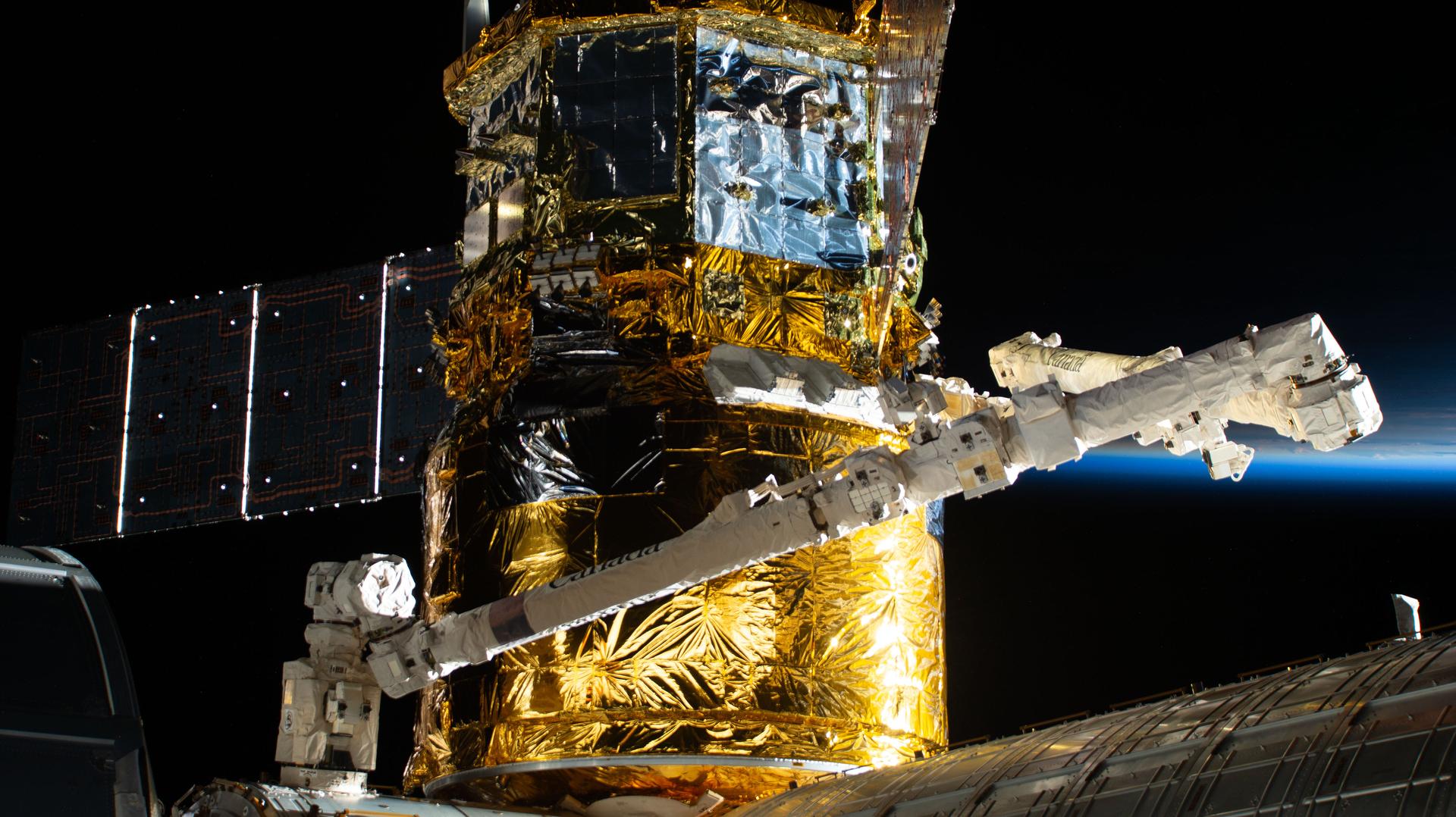
iss073e0989004 (Oct. 30, 2025) --- The HTV-X1 cargo spacecraft from JAXA (Japan Aerospace Exploration Agency) is pictured in the grips of the Canadarm2 robotic arm after it was berthed to the Harmony module's Earth-facing port on the International Space Station. HTV-X1 delivered about 12,800 pounds of science experiments, supplies, and hardware for the Expedition 73 crew, following its launch three days earlier from the Tanegashima Space Center in Japan.
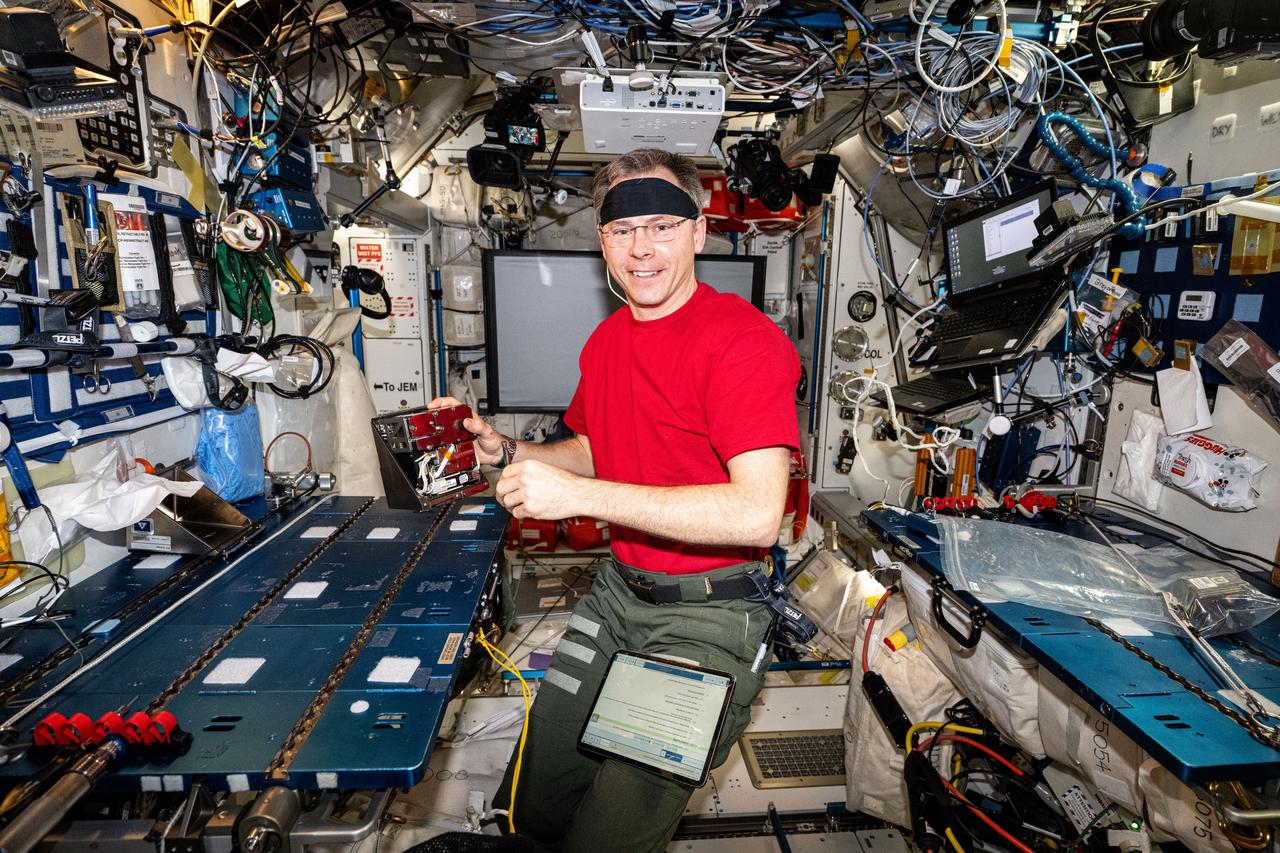
iss072e452598 (Jan. 10, 2025) --- NASA astronaut and Expedition 72 Flight Engineer Nick Hague processes samples of micro-algae at the Harmony module's maintenance work area aboard the International Space Station. The Arthrospira C biotechnology investigation exposes micro-algae to cosmic radiation and microgravity to learn how to revitalize the spacecraft environment using photosynthesis and produce fresh food on long-term space missions.
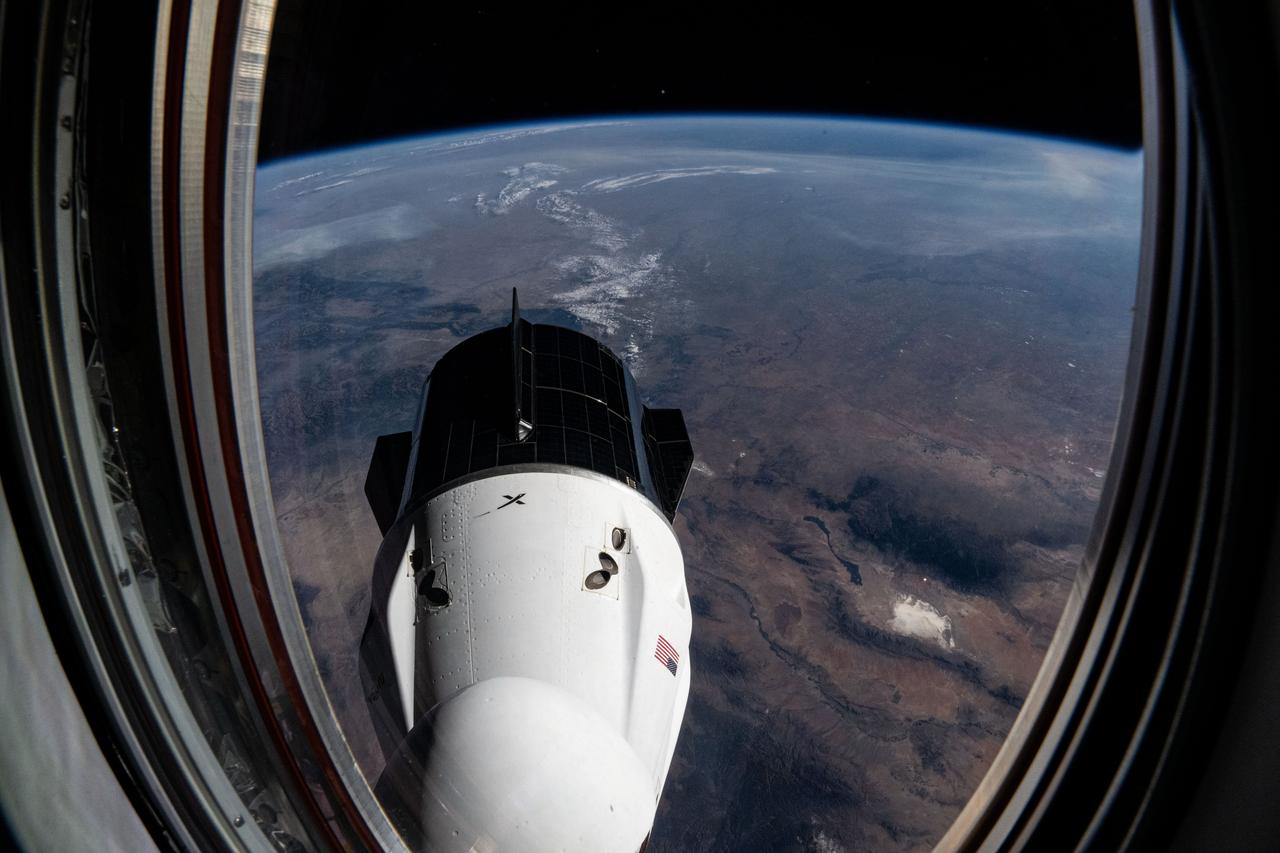
iss072e031300 (Oct. 7, 2024) -- The SpaceX Dragon Freedom spacecraft, docked to the forward-facing port of the International Space Station's Harmony module, was photographed as the orbiting lab soared 258 miles above the state of Colorado.
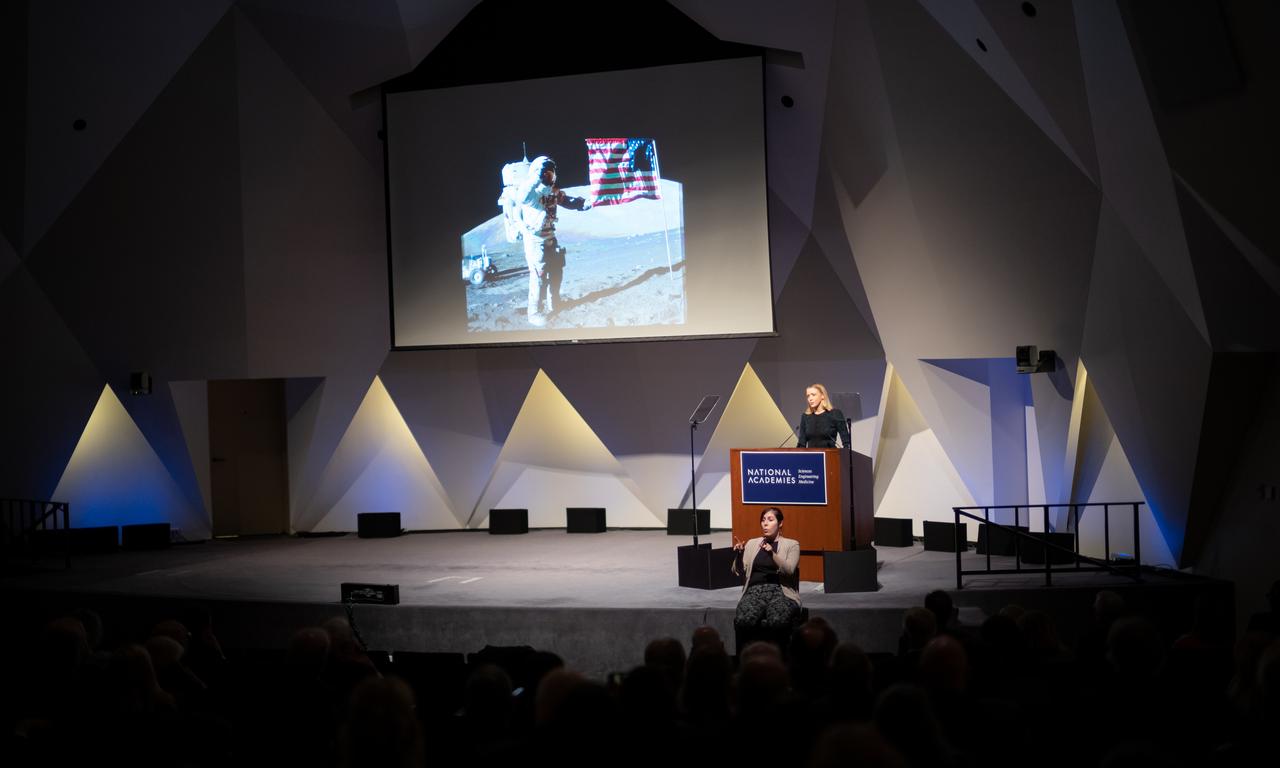
Teasel Muir-Harmony, curator of the Apollo collection at the Smithsonian National Air and Space Museum speaks during an event celebrating the 50th anniversary of the Apollo 17 mission, Wednesday, Dec. 14, 2022, at the National Academies of Science in Washington. The three-astronaut crew of Apollo 17 - commander Eugene Cernan, lunar module pilot Harrison Schmitt, and command module pilot Ronald Evans, embarked on the last mission of the Apollo program to land humans on the Moon in December of 1972. Cernan and Schmitt spent three days on the lunar surface collecting samples and performing scientific experiments before lifting off from the Taurus-Littrow Valley on December 14, 1972. Photo Credit: (NASA/Joel Kowsky)
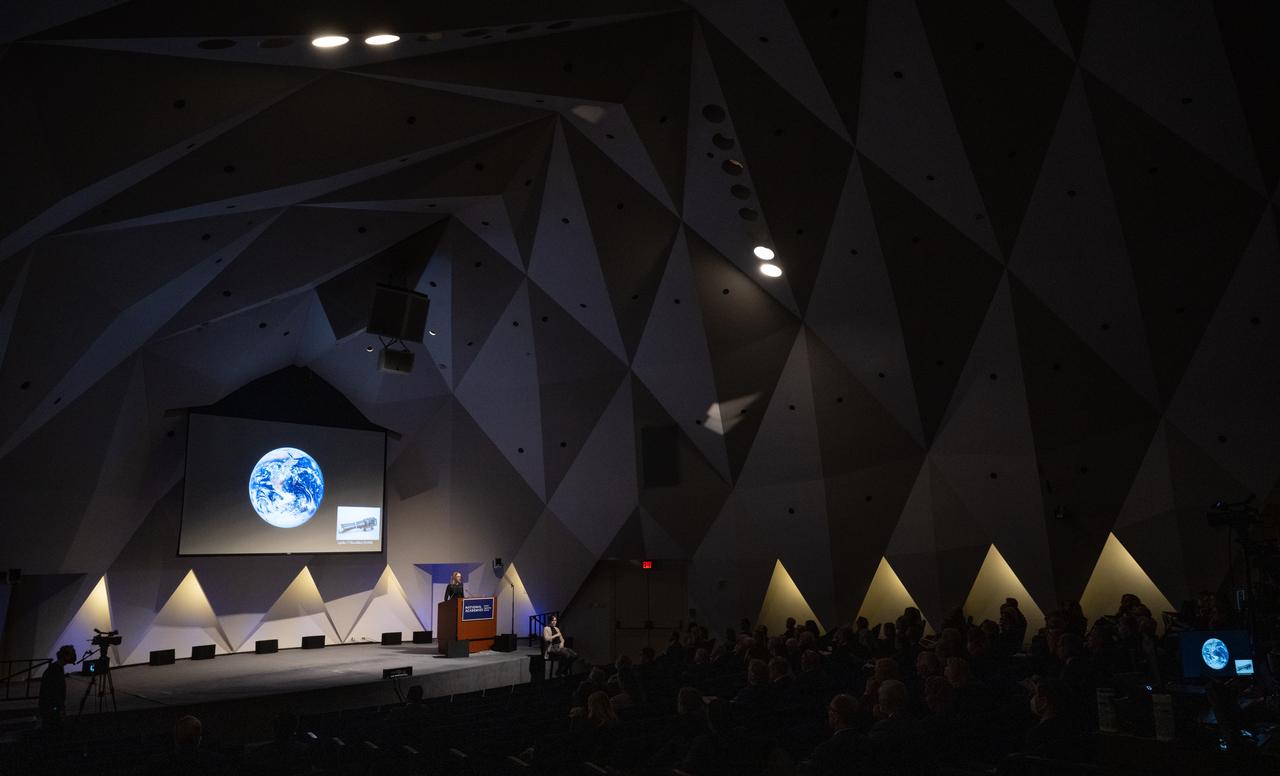
Teasel Muir-Harmony, curator of the Apollo collection at the Smithsonian National Air and Space Museum, speaks during an event celebrating the 50th anniversary of the Apollo 17 mission, Wednesday, Dec. 14, 2022, at the National Academies of Science in Washington. The three-astronaut crew of Apollo 17 - commander Eugene Cernan, lunar module pilot Harrison Schmitt, and command module pilot Ronald Evans, embarked on the last mission of the Apollo program to land humans on the Moon in December of 1972. Cernan and Schmitt spent three days on the lunar surface collecting samples and performing scientific experiments before lifting off from the Taurus-Littrow Valley on December 14, 1972. Photo Credit: (NASA/Joel Kowsky)
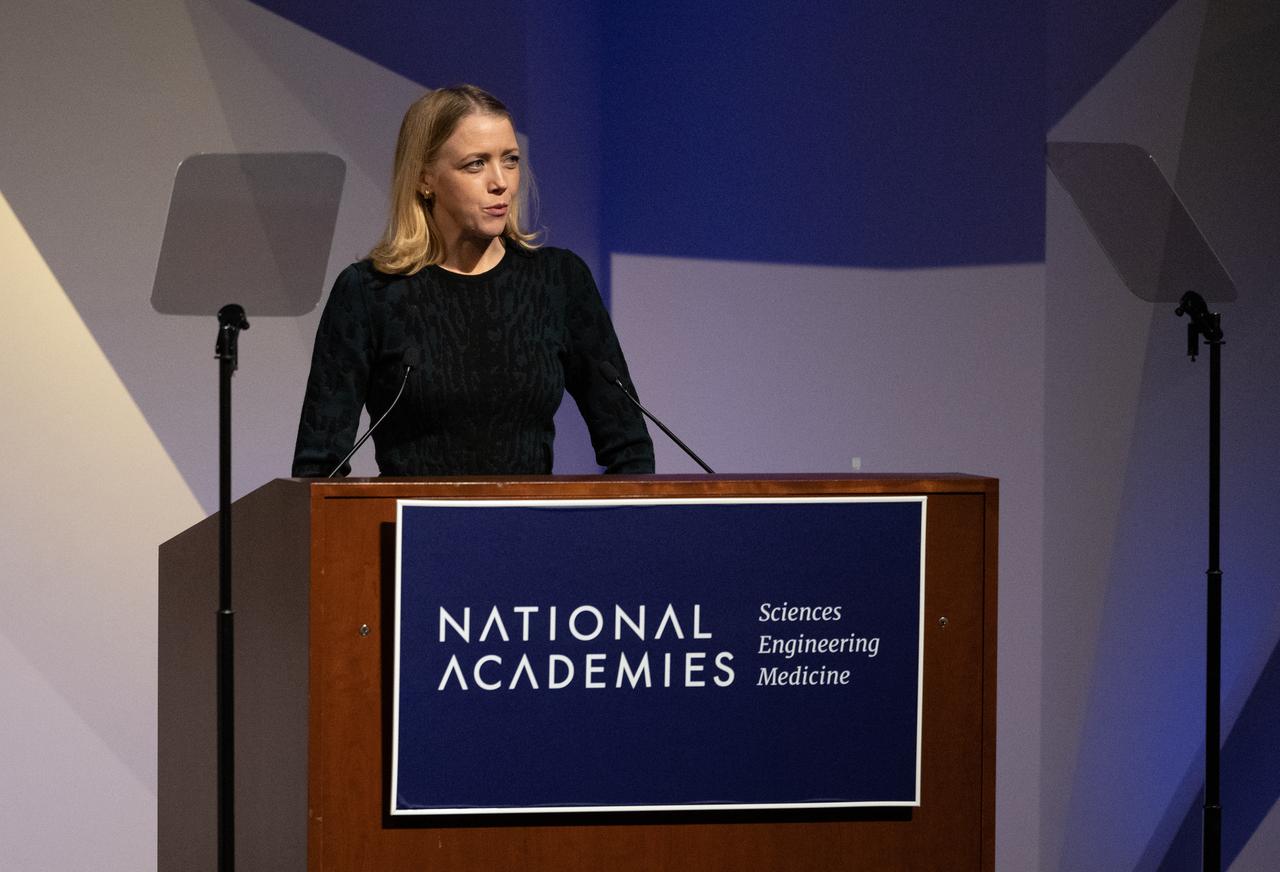
Teasel Muir-Harmony, curator of the Apollo collection at the Smithsonian National Air and Space Museum, speaks during an event celebrating the 50th anniversary of the Apollo 17 mission, Wednesday, Dec. 14, 2022, at the National Academies of Science in Washington. The three-astronaut crew of Apollo 17 - commander Eugene Cernan, lunar module pilot Harrison Schmitt, and command module pilot Ronald Evans, embarked on the last mission of the Apollo program to land humans on the Moon in December of 1972. Cernan and Schmitt spent three days on the lunar surface collecting samples and performing scientific experiments before lifting off from the Taurus-Littrow Valley on December 14, 1972. Photo Credit: (NASA/Joel Kowsky)
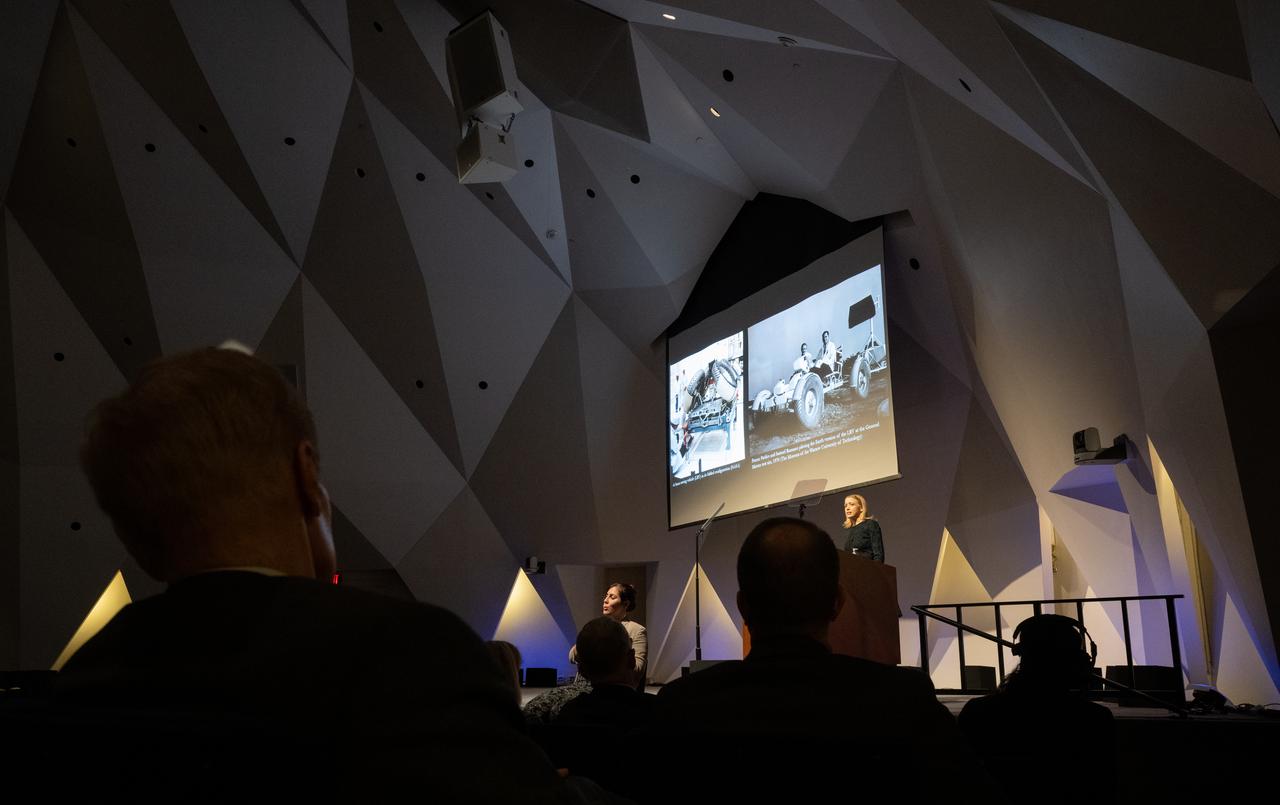
Teasel Muir-Harmony, curator of the Apollo collection at the Smithsonian National Air and Space Museum, speaks during an event celebrating the 50th anniversary of the Apollo 17 mission, Wednesday, Dec. 14, 2022, at the National Academies of Science in Washington. The three-astronaut crew of Apollo 17 - commander Eugene Cernan, lunar module pilot Harrison Schmitt, and command module pilot Ronald Evans, embarked on the last mission of the Apollo program to land humans on the Moon in December of 1972. Cernan and Schmitt spent three days on the lunar surface collecting samples and performing scientific experiments before lifting off from the Taurus-Littrow Valley on December 14, 1972. Photo Credit: (NASA/Joel Kowsky)
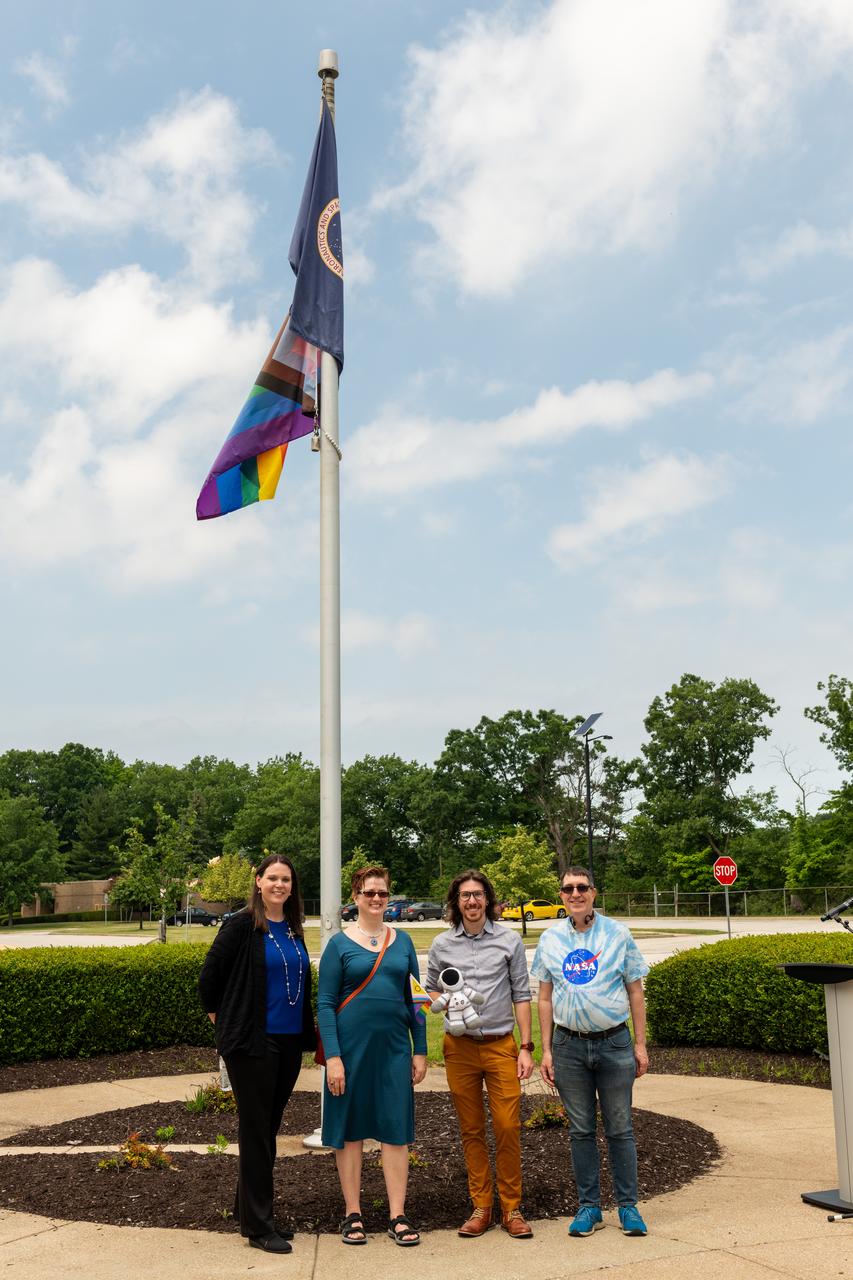
NASA Glenn’s Rainbow Alliance Advisory Group hosted an in-person and livestreamed Pride flag raising ceremony at the building 3 flagpole on June 3, 2024. The event included remarks from Deputy Director Dawn Schaible and NASA Safety Center Director Harmony Myers. Flag raising events such as this are times for LGBTQ+ employees and their allies to come together to celebrate the progress made in the quest for safety, tolerance, acceptance, rights, happiness, and freedom for the LGBTQ+ community on- and off-site of the center. Pictured here is NASA Safety Center Director Harmony Myers, Rainbow Alliance Advisory Group Co-Chairs Matthew Huffman and Jessica Reinert and John Wolter.

iss058e013244 (Feb. 13, 2019) --- The forward end of the International Space Station is pictured showing portions of five modules. From right to left is a portion of the U.S. Destiny laboratory module linking forward to the Harmony module. Attached to the port side of Harmony (left foreground) is the Kibo laboratory module from the Japan Aerospace Exploration Agency (JAXA) with its logistics module berthed on top. On Harmony's starboard side (center background) is the Columbus laboratory module from ESA (European Space Agency).
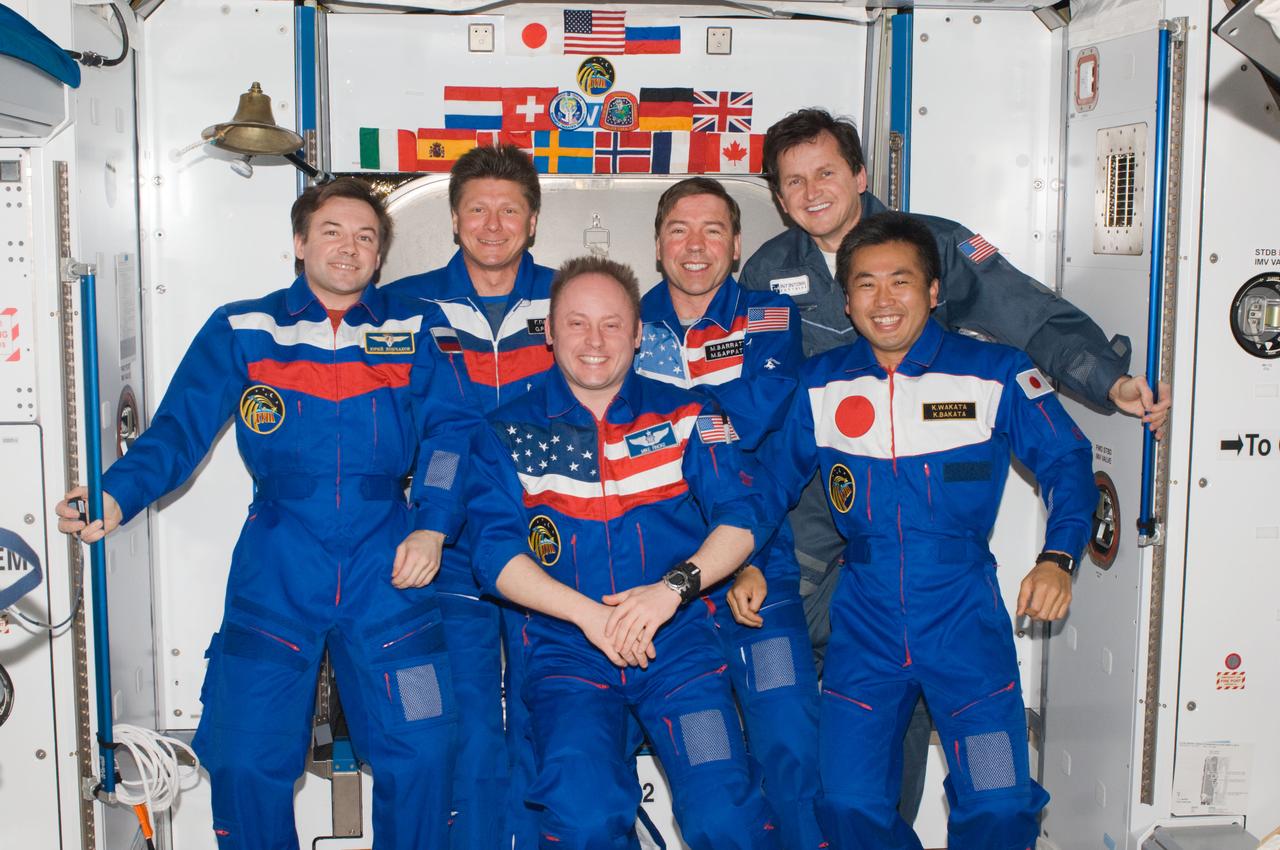
ISS018-E-044287 (1 April 2009) --- Crewmembers on the International Space Station pose for a group photo following a joint crew news conference in the Harmony node of the International Space Station. Pictured from the left (front row) are cosmonaut Yury Lonchakov, Expedition 18 flight engineer; NASA astronaut Michael Fincke, Expedition 18 commander; and Japan Aerospace Exploration Agency (JAXA) astronaut Koichi Wakata, Expedition 18/19 flight engineer. From the left (back row) are cosmonaut Gennady Padalka, Expedition 19 commander; NASA astronaut Michael Barratt, Expedition 19 flight engineer; and U.S. spaceflight participant Charles Simonyi.
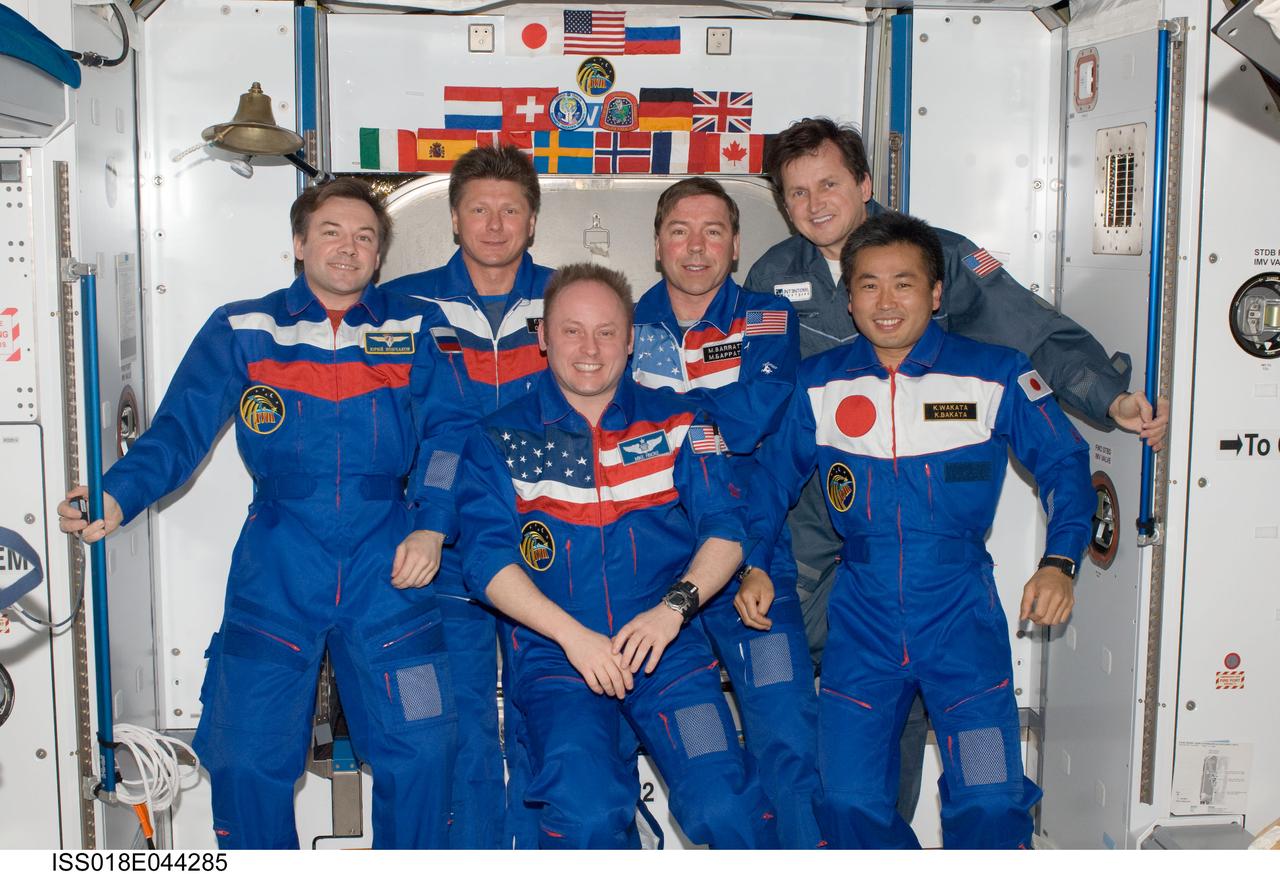
ISS018-E-044285 (1 April 2009) --- Crewmembers on the International Space Station pose for a group photo following a joint crew news conference in the Harmony node of the International Space Station. Pictured from the left (front row) are cosmonaut Yury Lonchakov, Expedition 18 flight engineer; NASA astronaut Michael Fincke, Expedition 18 commander; and Japan Aerospace Exploration Agency (JAXA) astronaut Koichi Wakata, Expedition 18/19 flight engineer. From the left (back row) are cosmonaut Gennady Padalka, Expedition 19 commander; NASA astronaut Michael Barratt, Expedition 19 flight engineer; and U.S. spaceflight participant Charles Simonyi.
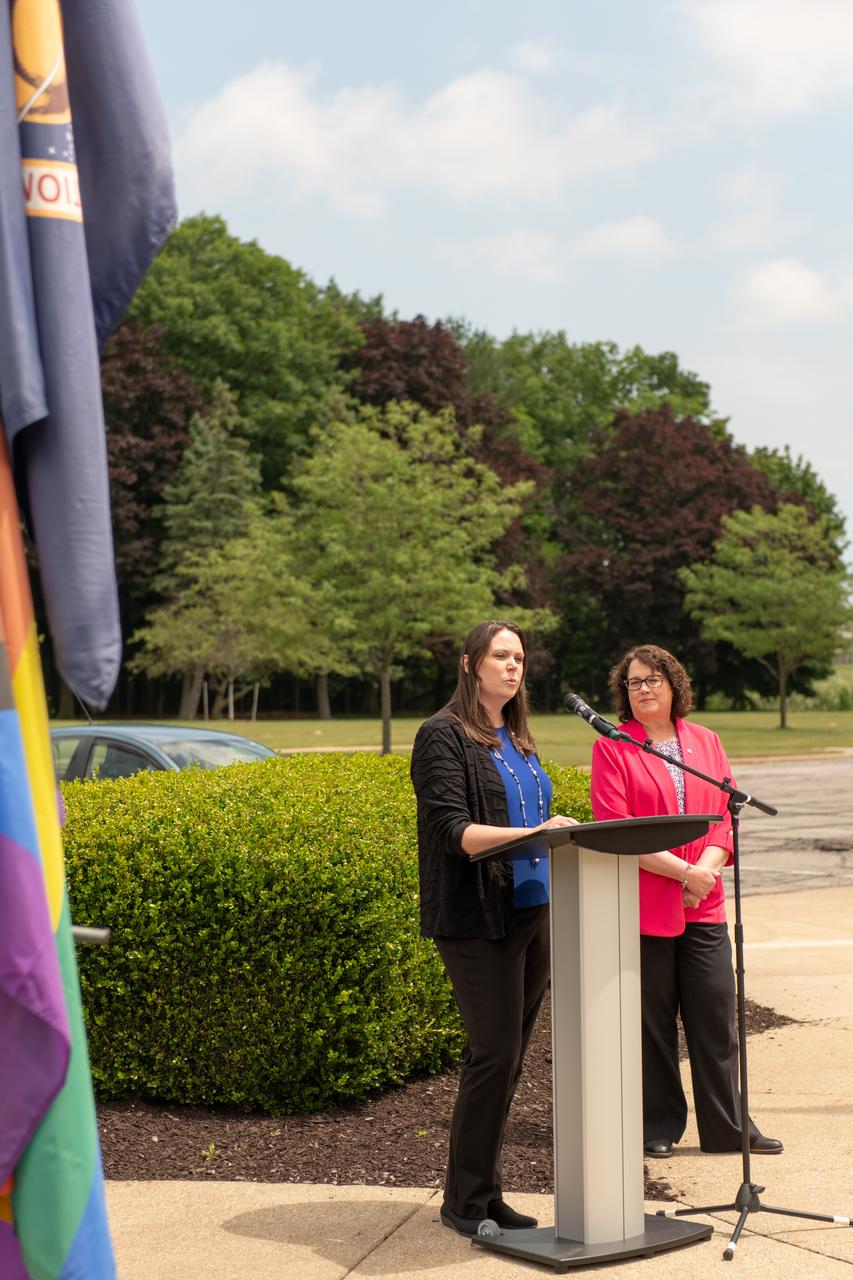
NASA Glenn’s Rainbow Alliance Advisory Group hosted an in-person and livestreamed Pride flag raising ceremony at the building 3 flagpole on June 3, 2024. The event included remarks from Deputy Director Dawn Schaible and NASA Safety Center Director Harmony Myers. Flag raising events such as this are times for LGBTQ+ employees and their allies to come together to celebrate the progress made in the quest for safety, tolerance, acceptance, rights, happiness, and freedom for the LGBTQ+ community on- and off-site of the center.
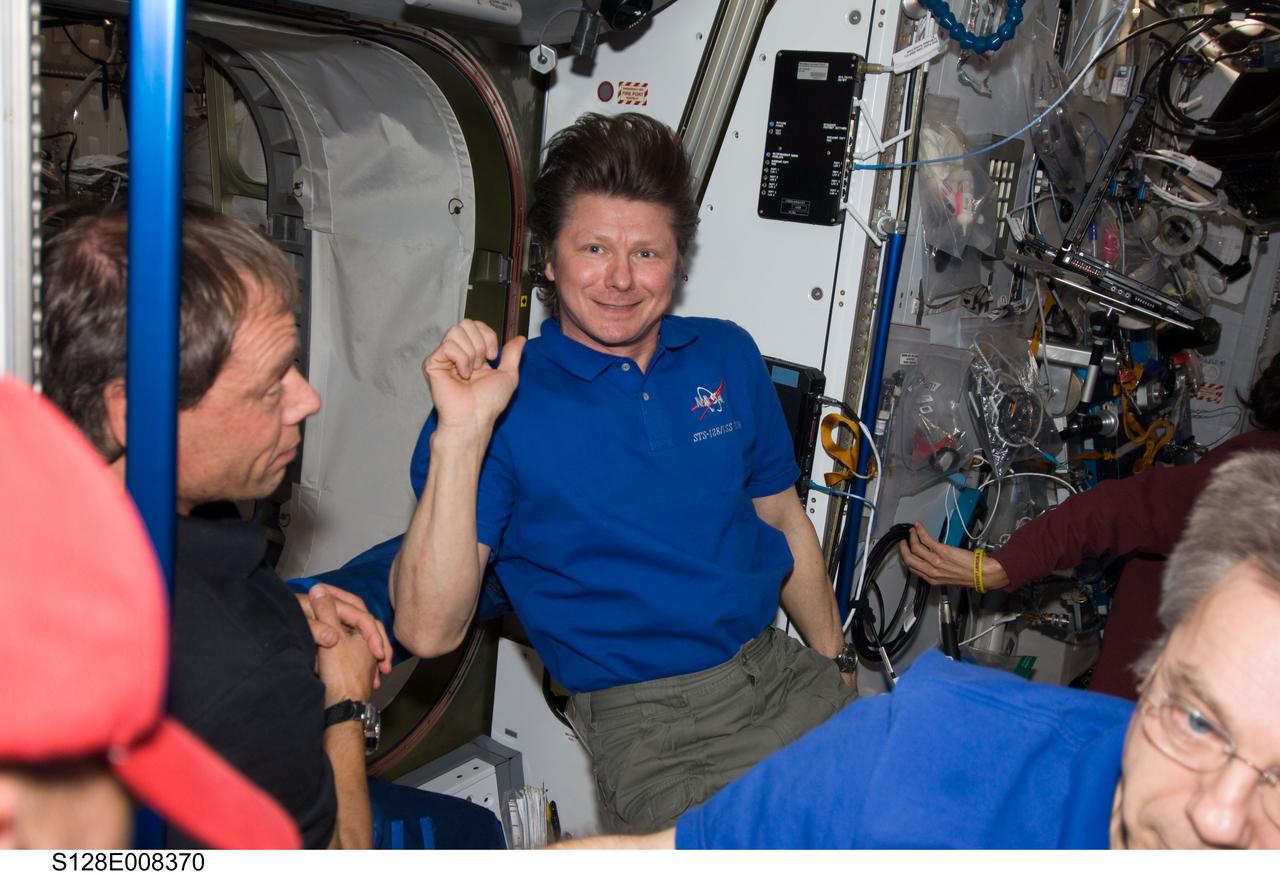
S128-E-008370 (7 Sept. 2009) --- Russian cosmonaut Gennady Padalka (center), Expedition 20 commander; European Space Agency astronaut Christer Fuglesang (left), STS-128 mission specialist; and Canadian Space Agency astronaut Robert Thirsk, Expedition 20 flight engineer, are pictured on the International Space Station while Space Shuttle Discovery remains docked with the station.
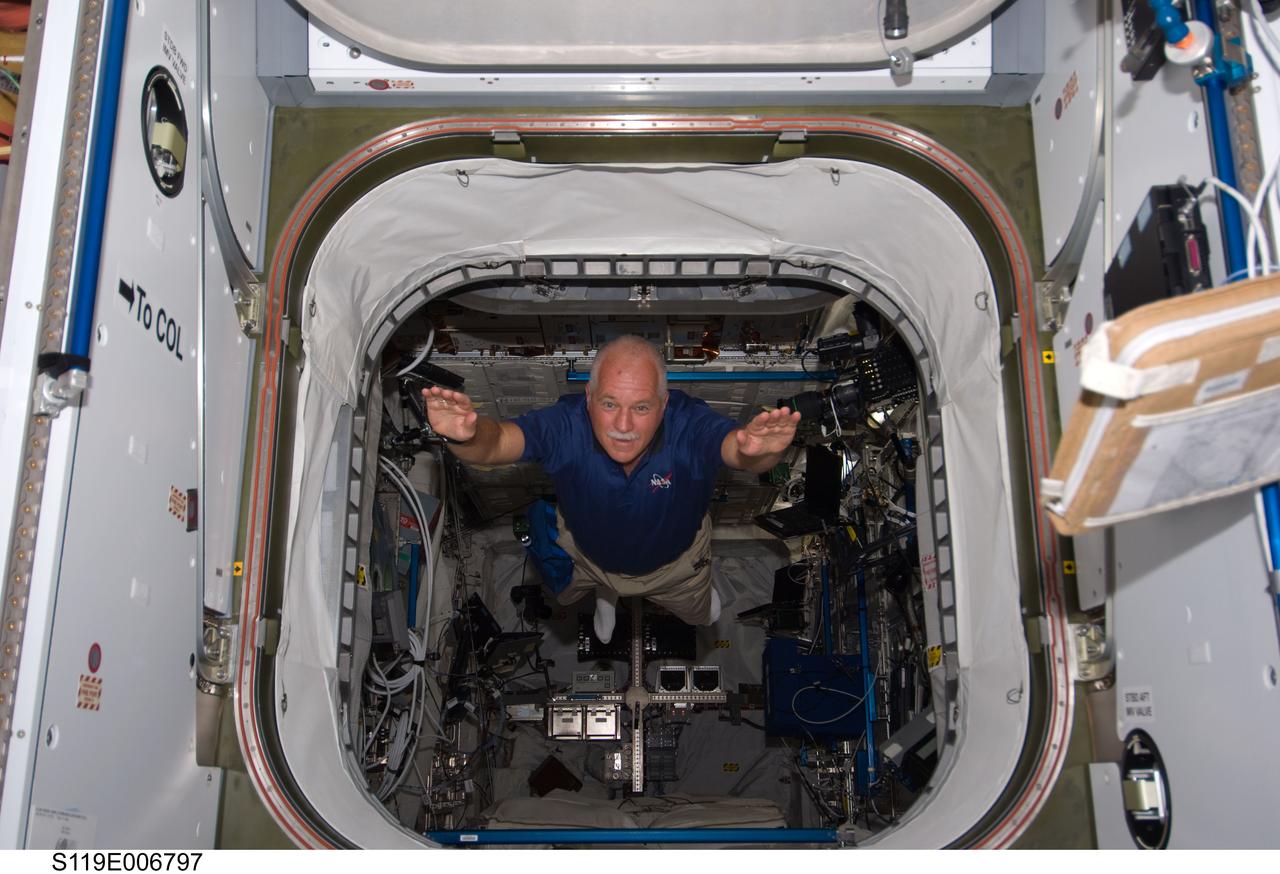
S119-E-006797 (20 March 2009) --- Astronaut John Phillips is about to exit the European Space Agency's Columbus module in a manner quite unique to space travelers. The STS-119 mission specialist and the rest of the Discovery crew are joining forces with the Expedition 18 crew for the continuation of the home improvement project aboard the International Space Station.
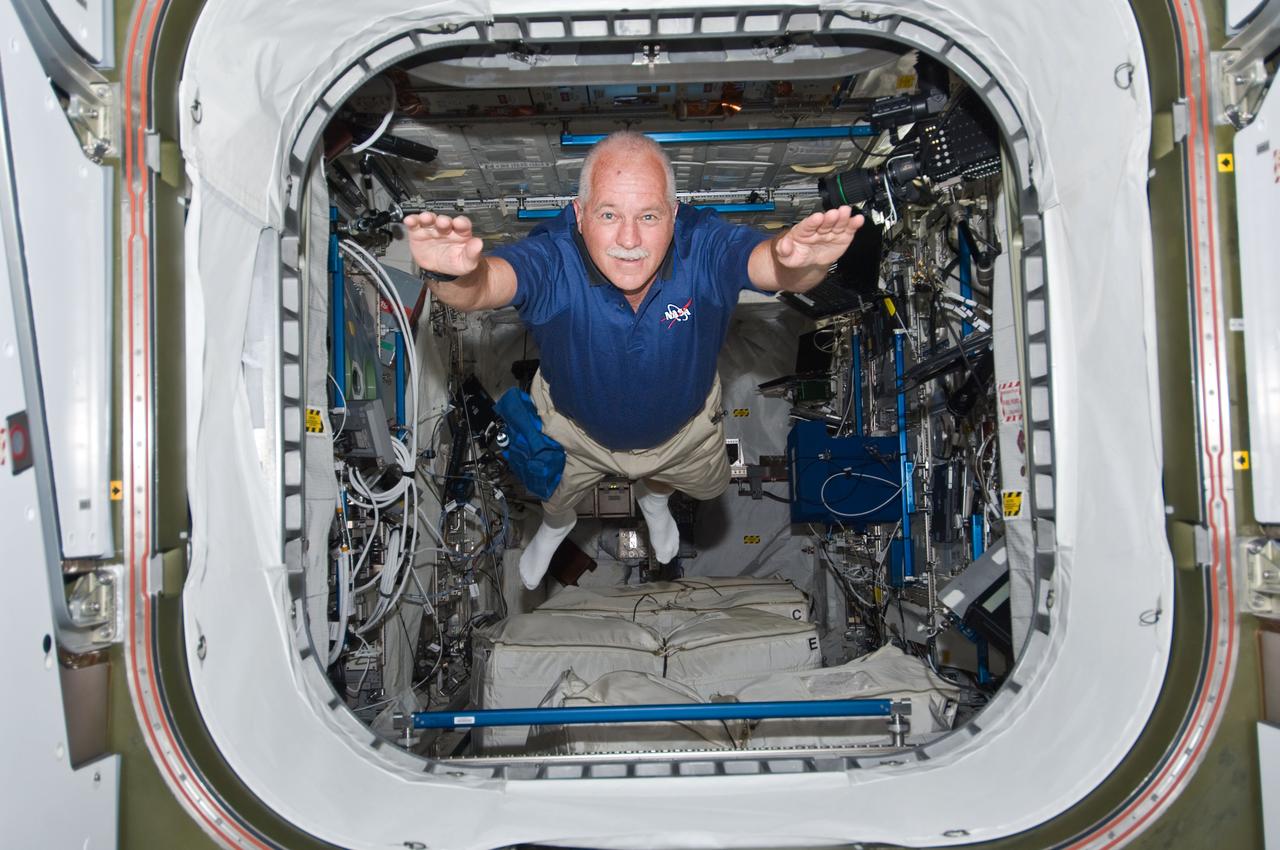
S119-E-006798 (20 March 2009) --- Astronaut John Phillips is about to exit the European Space Agency's Columbus module in a manner quite unique to space travelers. The STS-119 mission specialist and the rest of the Discovery crew are joining forces with the Expedition 18 crew for the continuation of the home improvement project aboard the International Space Station.
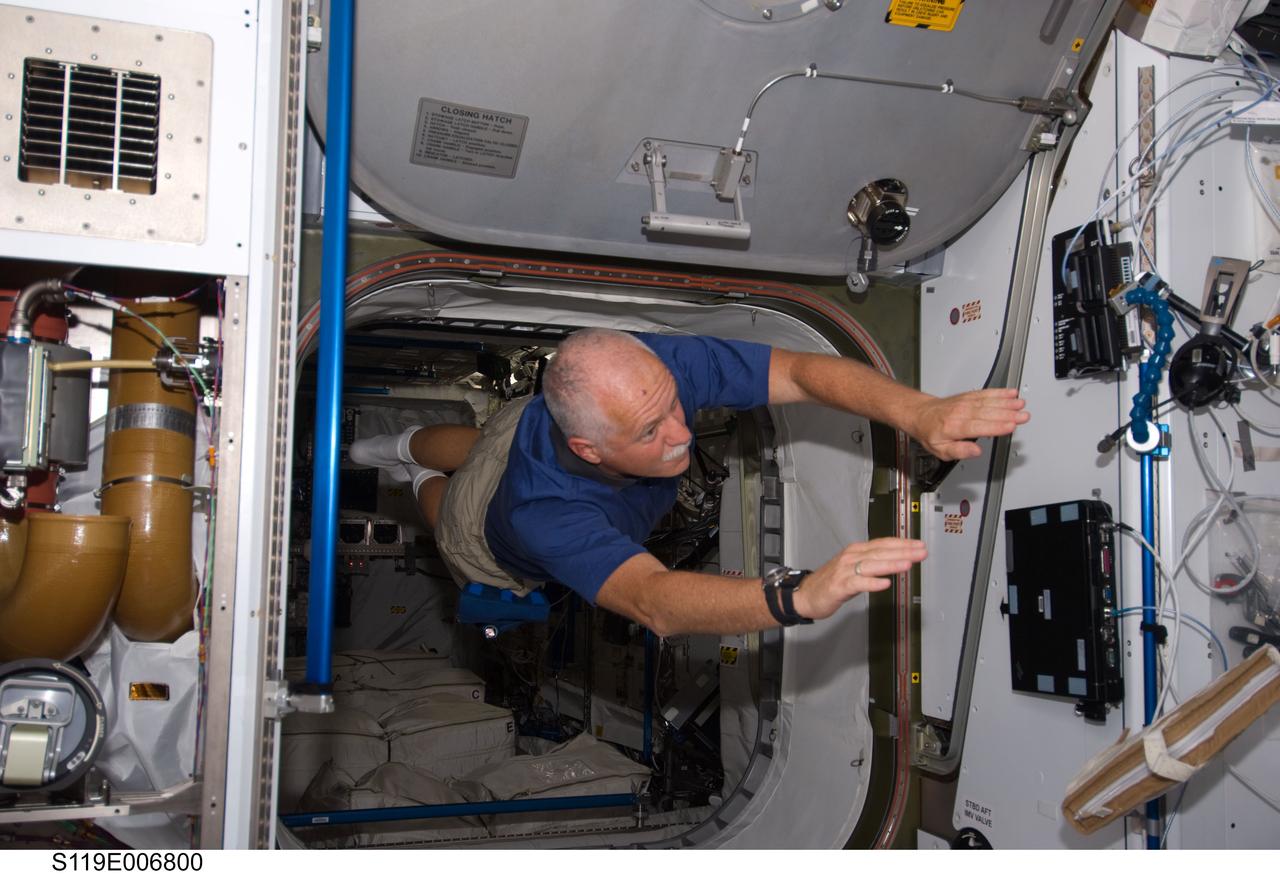
S119-E-006800 (20 March 2009) --- Astronaut John Phillips is about to exit the European Space Agency's Columbus module in a manner quite unique to space travelers. The STS-119 mission specialist and the rest of the Discovery crew are joining forces with the Expedition 18 crew for the continuation of the home improvement project aboard the International Space Station.
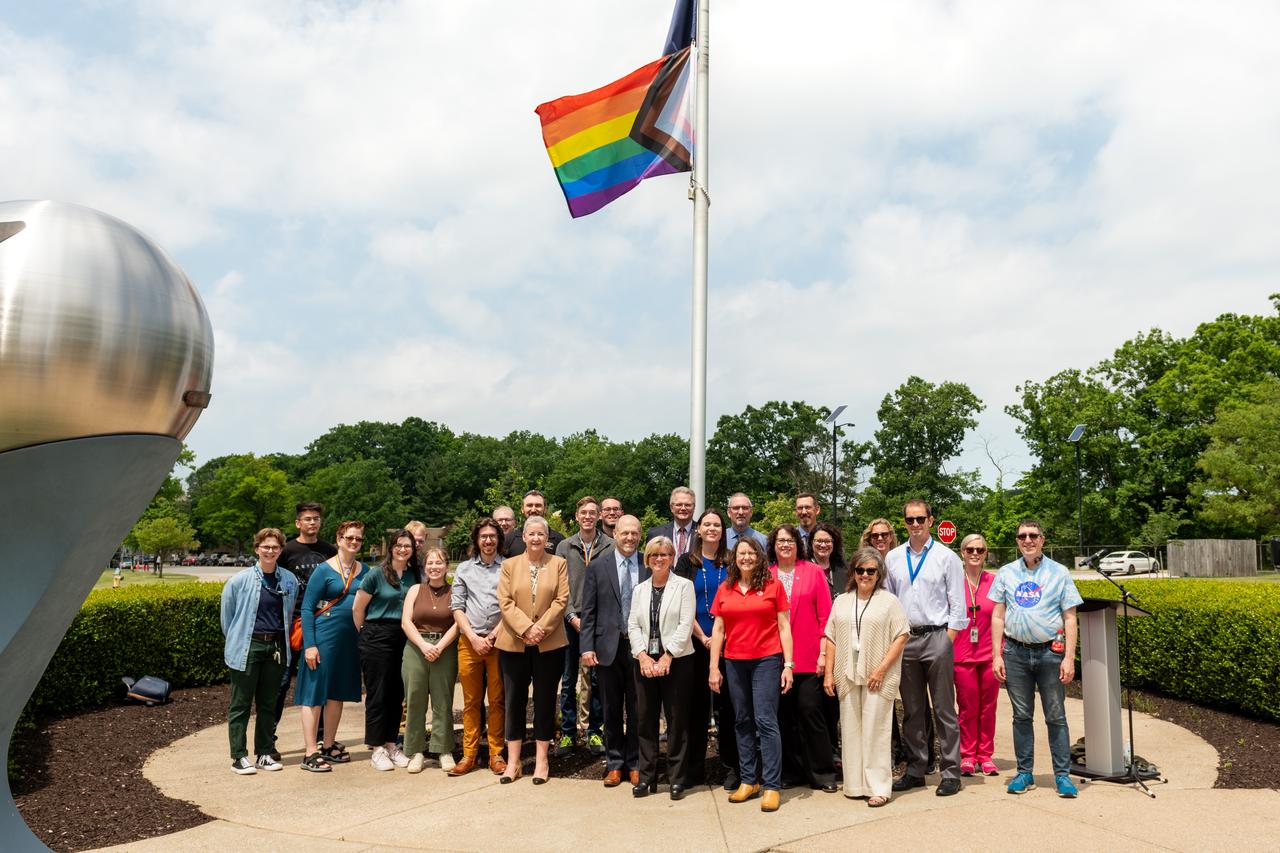
NASA Glenn’s Rainbow Alliance Advisory Group hosted an in-person and livestreamed Pride flag raising ceremony at the building 3 flagpole on June 3, 2024. The event included remarks from Deputy Director Dawn Schaible and NASA Safety Center Director Harmony Myers. Flag raising events such as this are times for LGBTQ+ employees and their allies to come together to celebrate the progress made in the quest for safety, tolerance, acceptance, rights, happiness, and freedom for the LGBTQ+ community on- and off-site of the center.
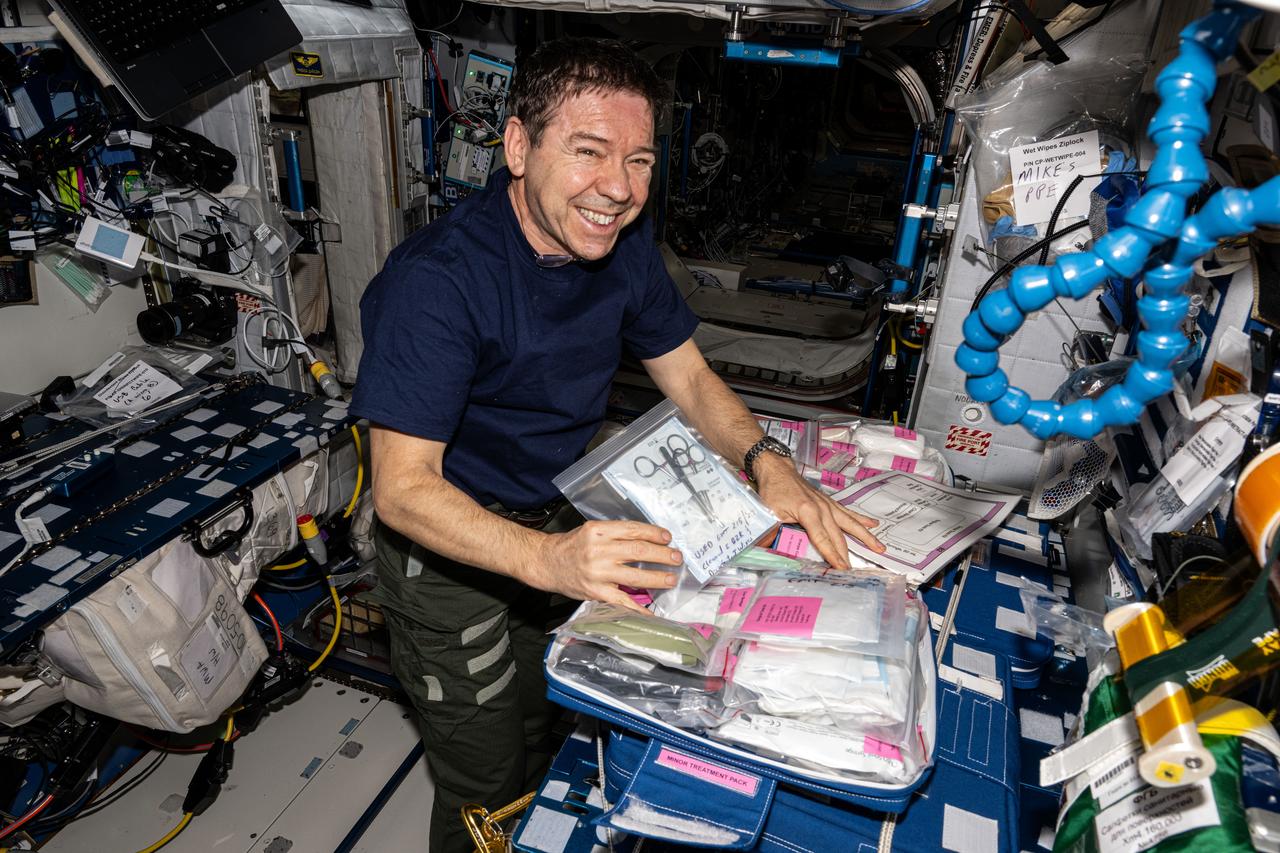
iss071e414062 (Aug. 3, 2024) --- NASA astronaut and Expedition 71 Flight Engineer Mike Barratt collects and organizes medical supplies aboard the International Space Station's Harmony module.
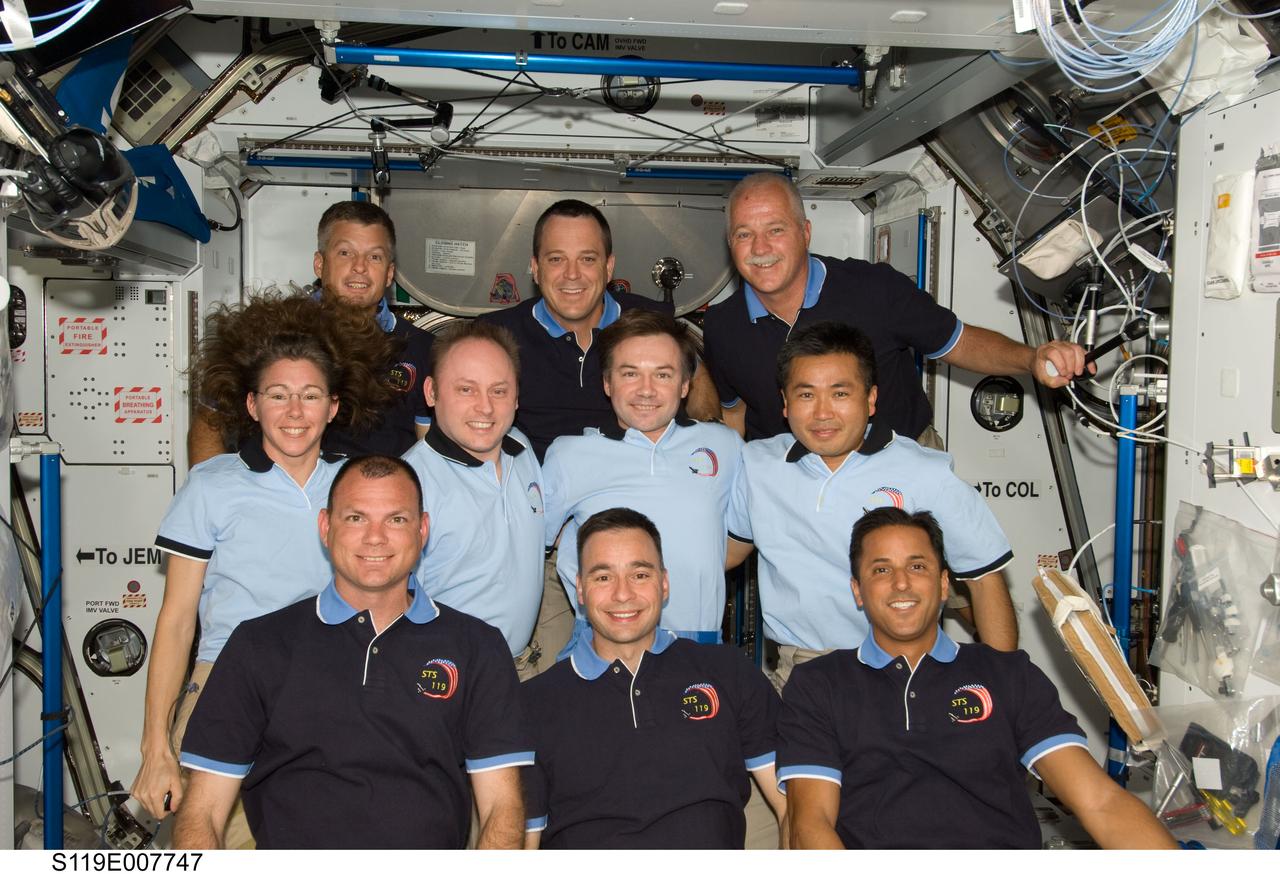
S119-E-007747 (24 March 2009) --- STS-119 and Expedition 18 crewmembers pose for a group photo following a joint news conference in the Harmony node of the International Space Station while Space Shuttle Discovery remains docked with the station. From the left (bottom row) are NASA astronauts Tony Antonelli, STS-119 pilot; Lee Archambault, STS-119 commander; and Joseph Acaba, STS-119 mission specialist. From the left (middle row) are NASA astronauts Sandra Magnus, STS-119 mission specialist; and Michael Fincke, Expedition 18 commander; along with cosmonaut Yury Lonchakov and Japan Aerospace Exploration Agency astronaut (JAXA) Koichi Wakata, both Expedition 18 flight engineers. From the left (top row) are NASA astronauts Steve Swanson, Richard Arnold and John Phillips, all STS-119 mission specialists. Magnus, who joined the station’s Expedition 18 crew in November 2008, is being replaced by Wakata, who arrived at the station with the STS-119 crew.
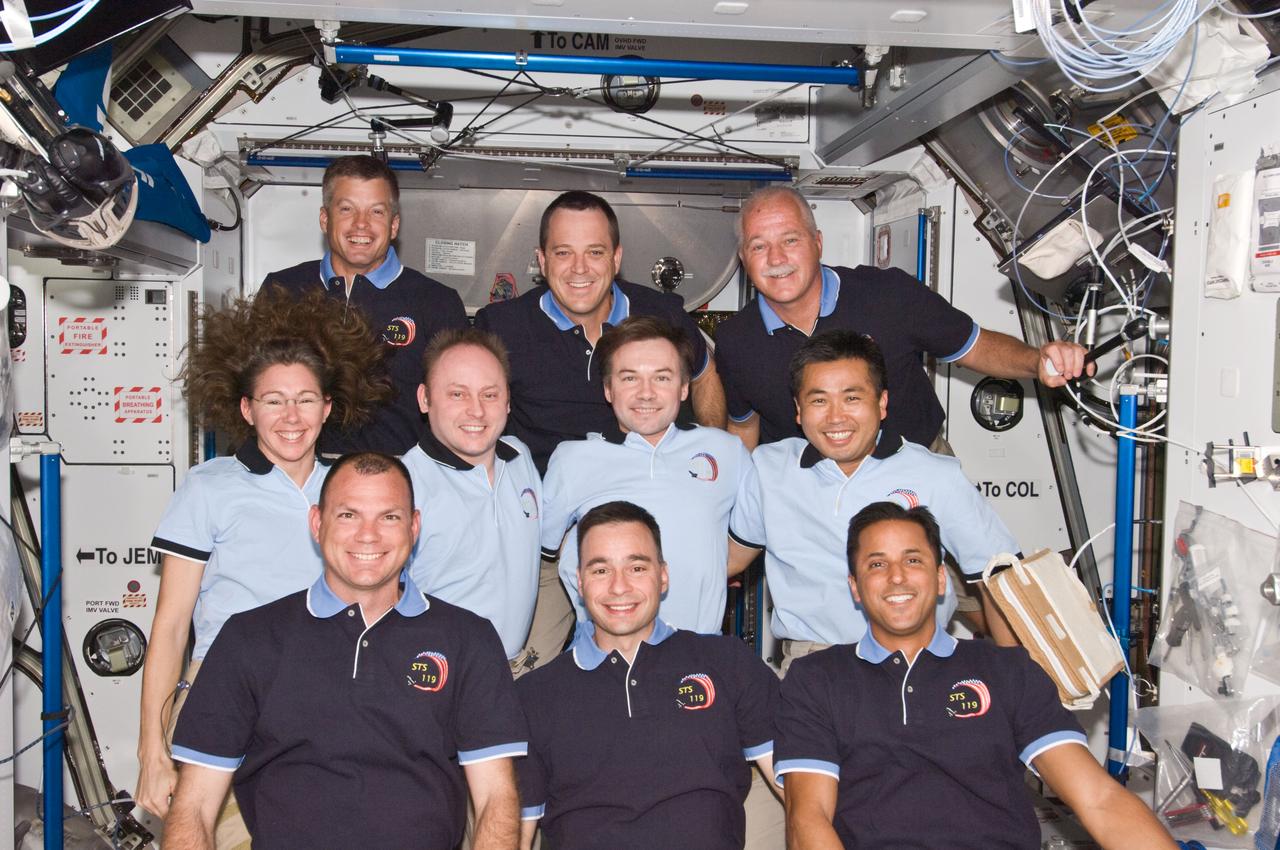
S119-E-007753 (24 March 2009) --- STS-119 and Expedition 18 crewmembers pose for a group photo following a joint news conference in the Harmony node of the International Space Station while Space Shuttle Discovery remains docked with the station. From the left (bottom row) are NASA astronauts Tony Antonelli, STS-119 pilot; Lee Archambault, STS-119 commander; and Joseph Acaba, STS-119 mission specialist. From the left (middle row) are NASA astronauts Sandra Magnus, STS-119 mission specialist; and Michael Fincke, Expedition 18 commander; along with cosmonaut Yury Lonchakov and Japan Aerospace Exploration Agency astronaut (JAXA) Koichi Wakata, both Expedition 18 flight engineers. From the left (top row) are NASA astronauts Steve Swanson, Richard Arnold and John Phillips, all STS-119 mission specialists. Magnus, who joined the station’s Expedition 18 crew in November 2008, is being replaced by Wakata, who arrived at the station with the STS-119 crew.

iss058e002592 (Jan. 9, 2019) --- The SpaceX Dragon cargo craft is pictured attached to the International Space Station's Harmony module as the orbital complex flew 258 miles above the Indian Ocean off the eastern coast of South Africa.
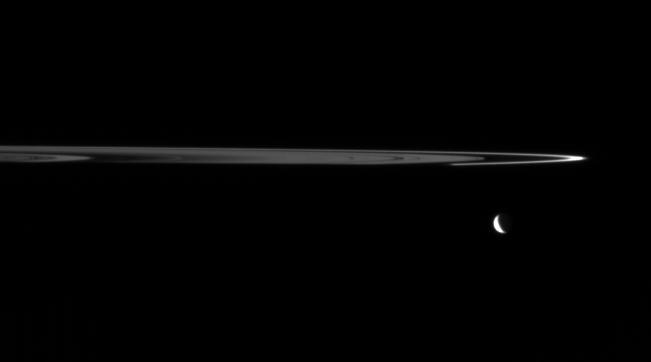
Cassini finds artistic harmony in the dark and icy realm of Saturn. The dim, unlit side of the rings is shown here. The narrow F ring appears bright when seen from angles near the plane of the rings

iss058e001534 (Dec. 28, 2018) --- The SpaceX Dragon cargo craft is pictured attached to the International Space Station's Harmony module as the orbital complex flew 256 miles above Alaska's Aleutian Islands in the Bering Sea.
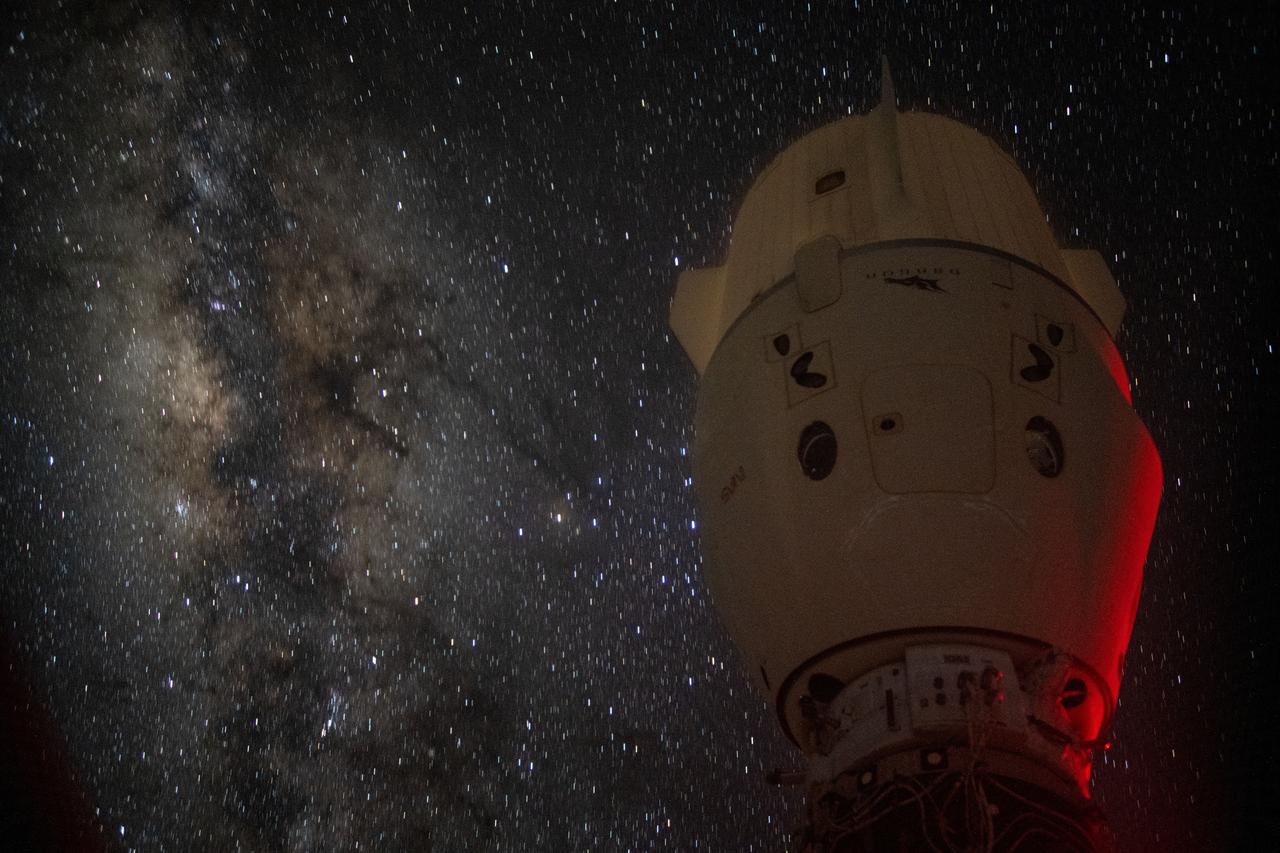
iss071e256593 (July 1, 2024) --- The Milky Way appears in the vastness of space behind the dimly lit SpaceX Dragon Endeavour spacecraft docked to the Harmony module's space-facing port on the International Space Station.

iss052e004198 (June 19, 2017) ---- Astronaut Peggy Whitson changes out the Imaging Unit on the Bone Densitometer inside the Harmony module. The SpaceX Dragon is attached to the Earth-facing port of Harmony.
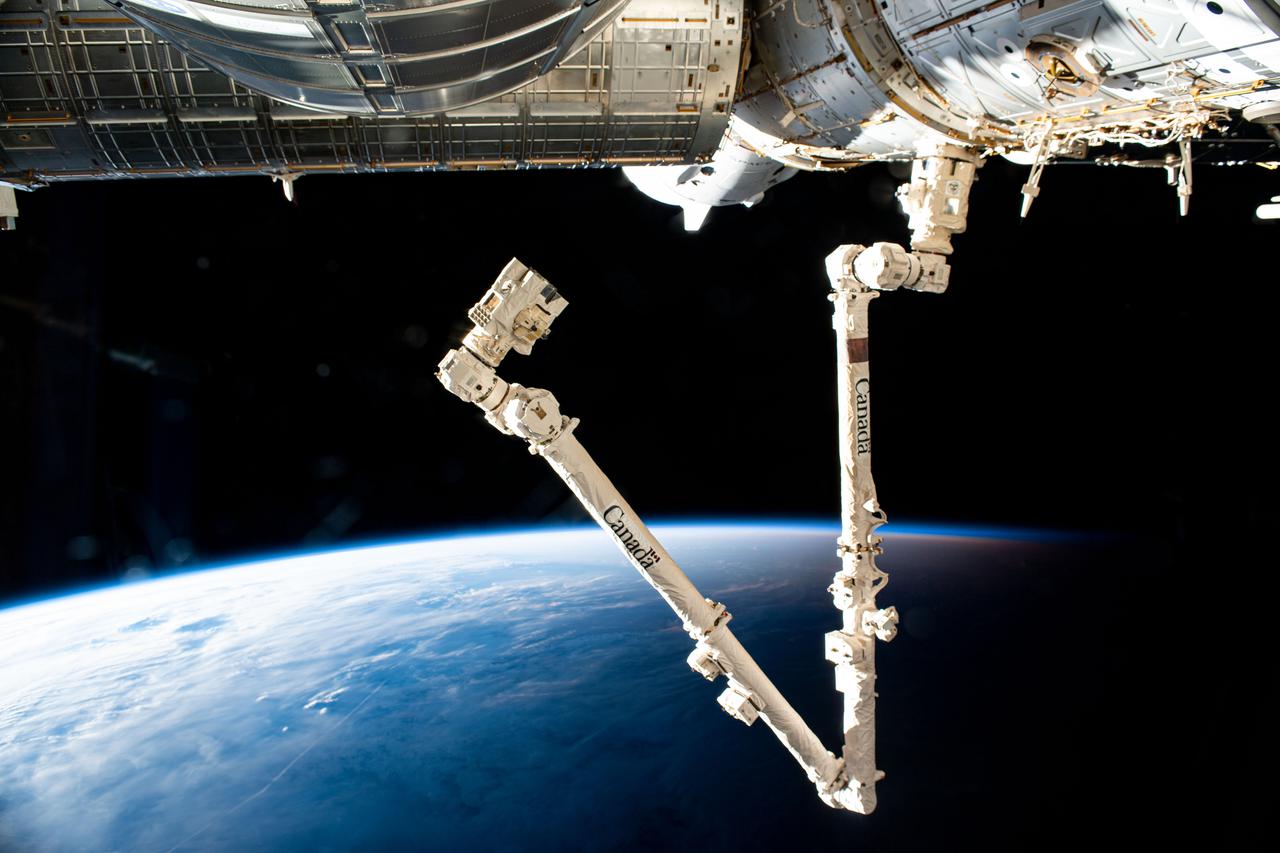
iss065e045231 (May 13, 2021) --- The forward portion of the International Space Station is pictured as it orbited into a sunrise 263 miles above the East China Sea. Prominent in the foreground, is the Canadarm2 robotic arm attached to the Harmony module. Toward the center top, is the SpaceX Crew Dragon Endeavour docked to Harmony's forward-facing international docking adapter. Portions of the Permanent Multipurpose Logistics Module, the Kibo laboratory module, the U.S. Destiny laboratory module and Harmony are also viewed in the frame.
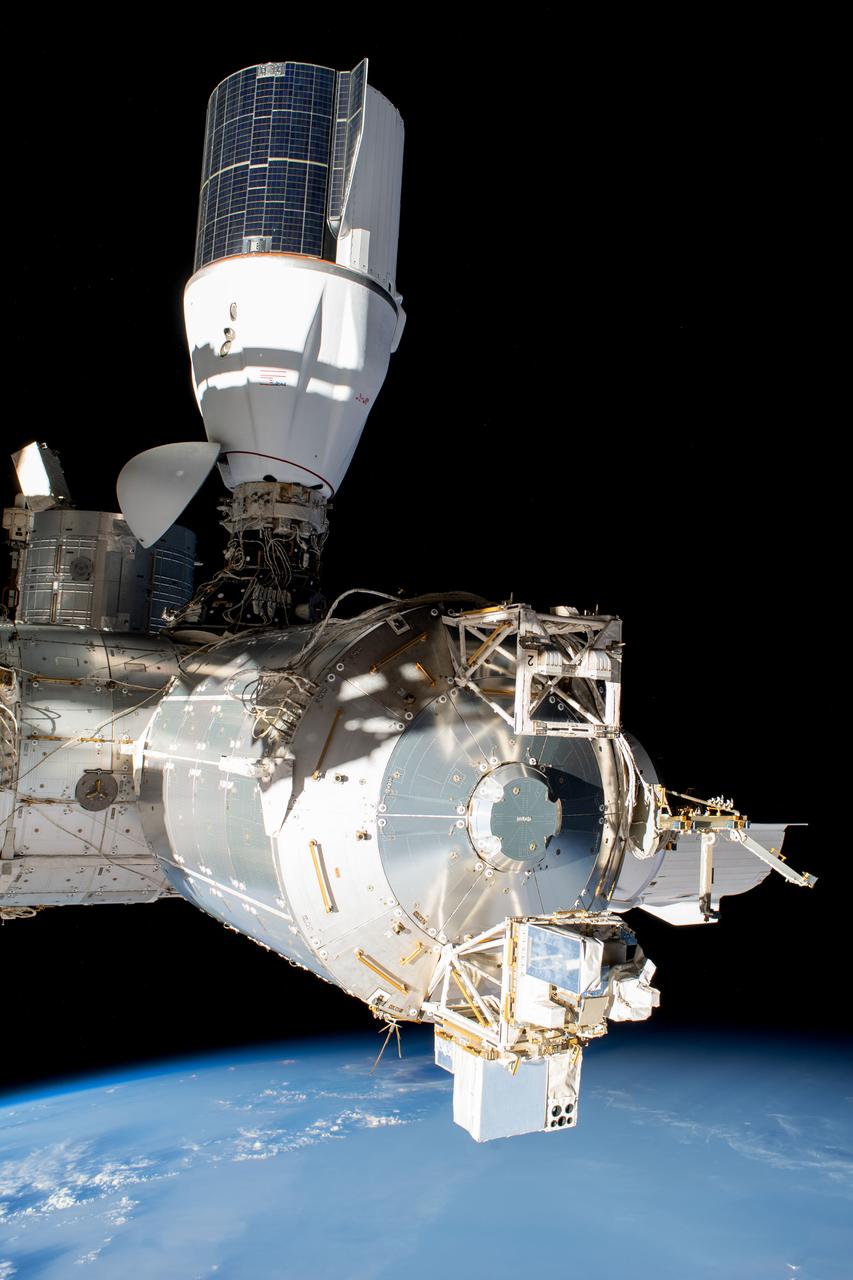
iss069e018596 (June 9, 2023) --- Two SpaceX Dragon vehicles are pictured docked to the International Space Station's Harmony module in this photograph taken from NASA astronaut Woody Hoburg's camera during a spacewalk. At top, is the Dragon cargo vehicle that docked to Harmony's space-facing port on June 6 with over 7,000 pounds of science experiments, crew supplies, and station hardware. Barely visible at right, is the Dragon crew vehicle that docked to Harmony's forward port on March 3 carrying four SpaceX Crew-6 crew members.
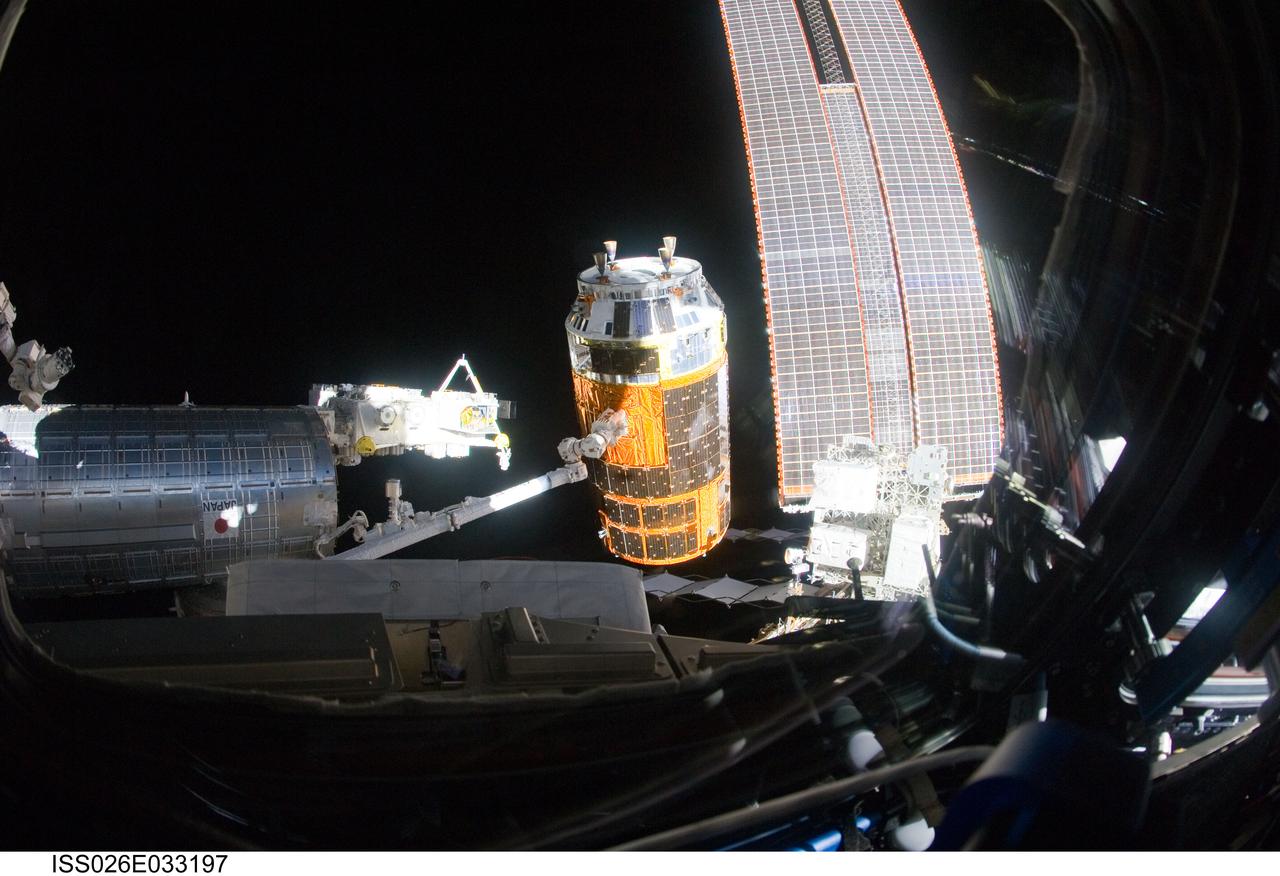
ISS026-E-033197 (10 March 2011) --- In the grasp of the International Space Station’s Canadarm2, the Kounotori2 H-II Transfer Vehicle (HTV-2) is moved from the space-facing side of the Harmony node back to the Earth-facing port of Harmony. HTV-2 had been moved to the top of Harmony prior to space shuttle Discovery’s arrival for the STS-133 mission. The HTV-2, loaded with trash and materials no longer needed by the station crew, will be unberthed for the final time on March 28 and deorbited the following day.
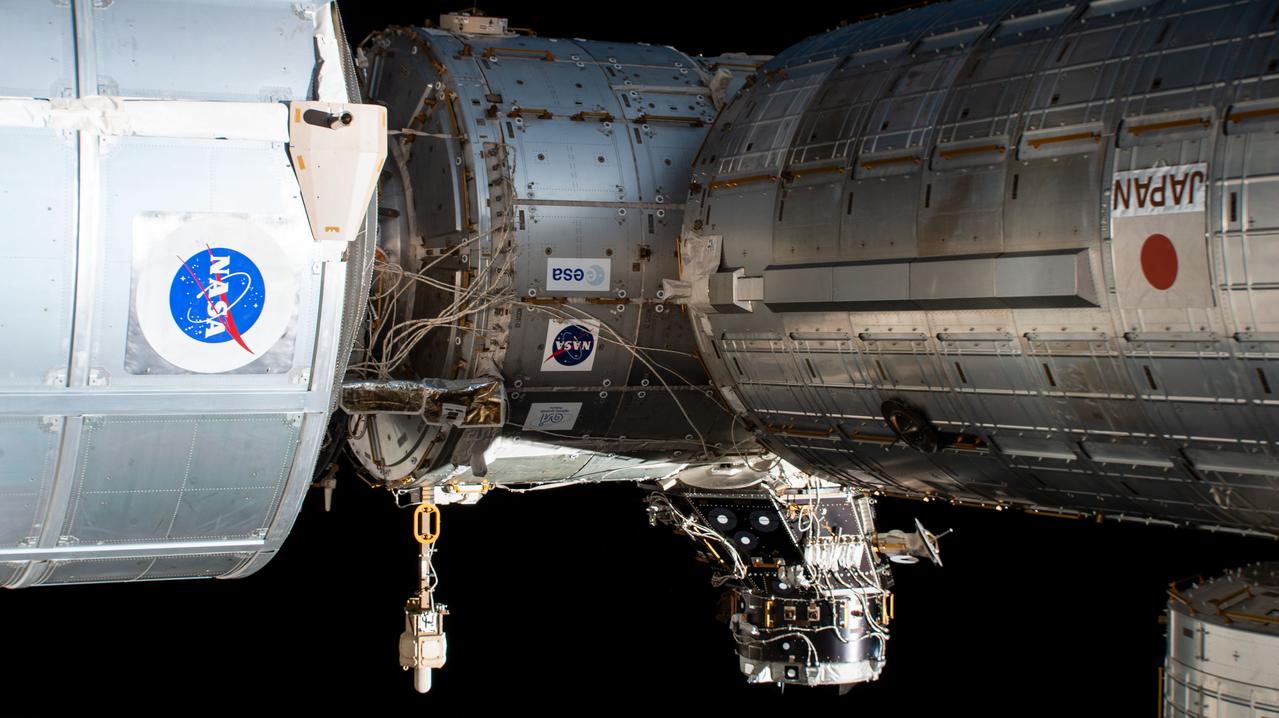
iss060e007002 (July 12, 2019) --- The forward-end of the International Space Station is pictured highlighting portions of three modules and a pressurized mating adapter. An external high definition camera captured (from left) the Permanent Multipurpose Module (PMM), the Harmony Module and the Japanese Kibo laboratory module. Protruding from the Harmony module is the pressurized mating adapter that will host the International Docking Adapter-3. The PMM is actually in front of the U.S. Destiny laboratory module to which Harmony is attached to.
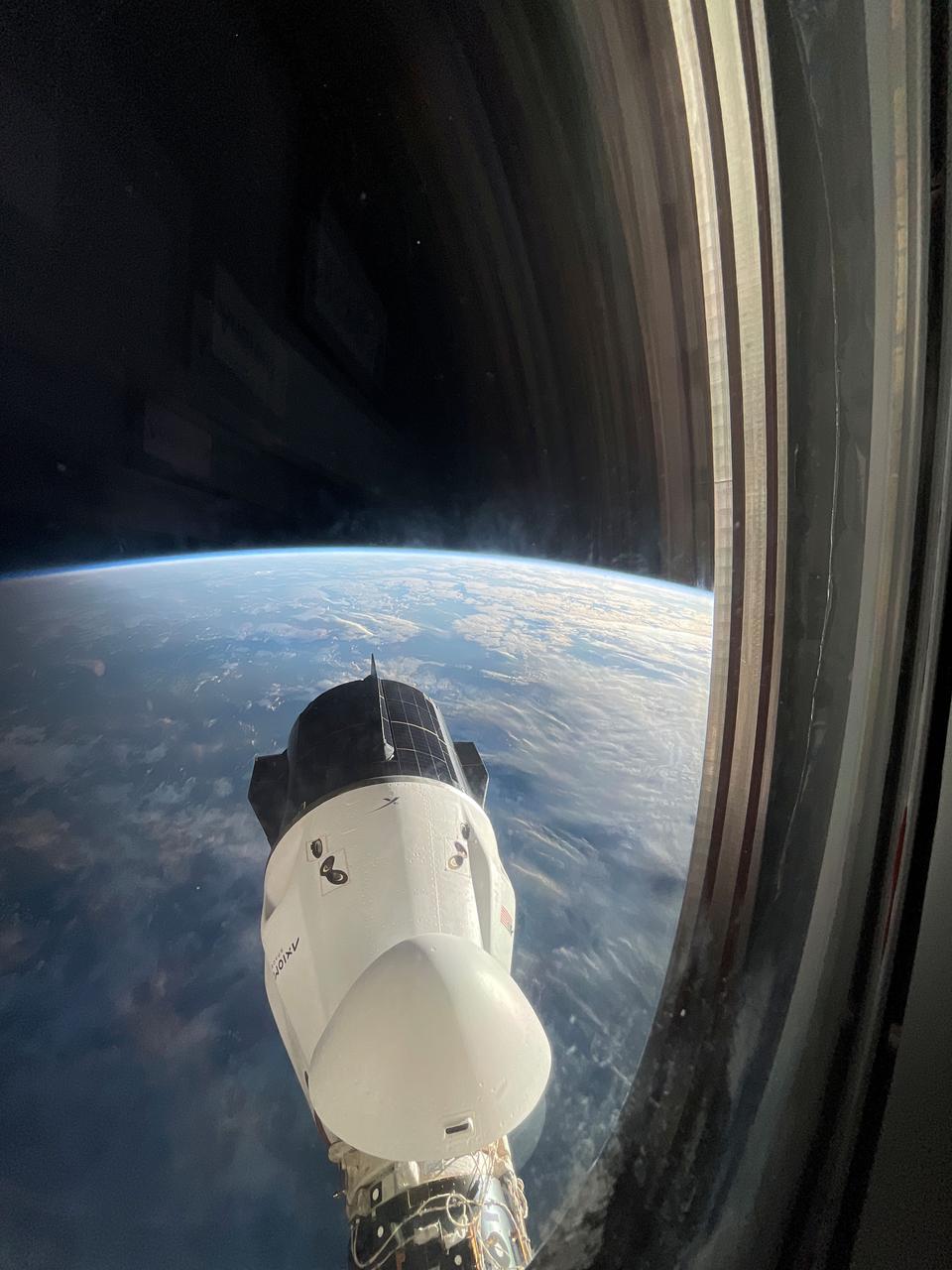
iss070e087496 (Feb. 7, 2024) --- The SpaceX Dragon Freedom spacecraft is pictured from a window aboard the SpaceX Dragon Endurance spacecraft. Both spacecraft are docked to ports on the International Space Station's Harmony module. Freedom is seen moments before undocking from Harmony's forward port with the Axiom Mission 3 crew aboard.
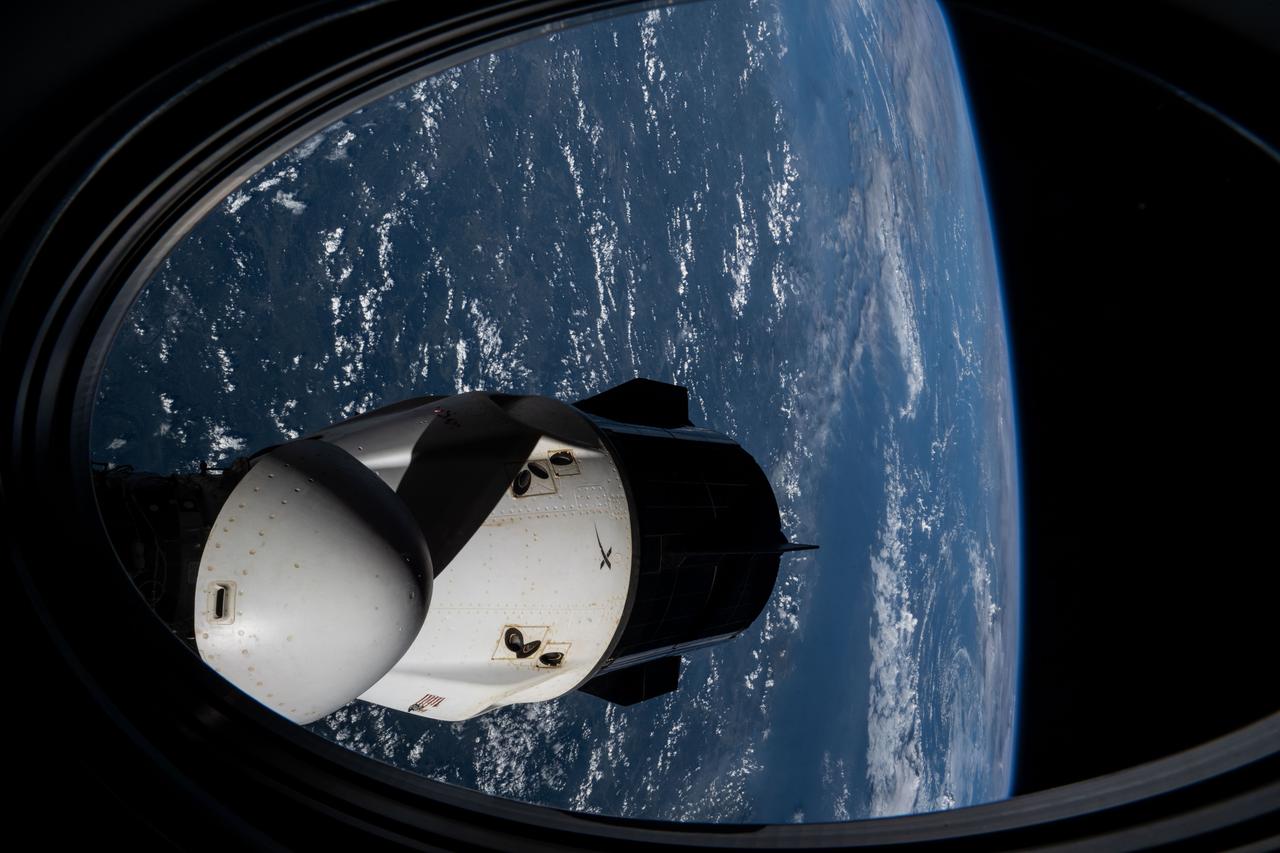
iss073e0427628 (Aug. 8, 2025) --- From one Dragon to another: A view of the SpaceX Dragon crew spacecraft docked to the forward port of the International Space Station's Harmony module, captured from a window aboard another Dragon spacecraft docked to Harmony’s space-facing port.
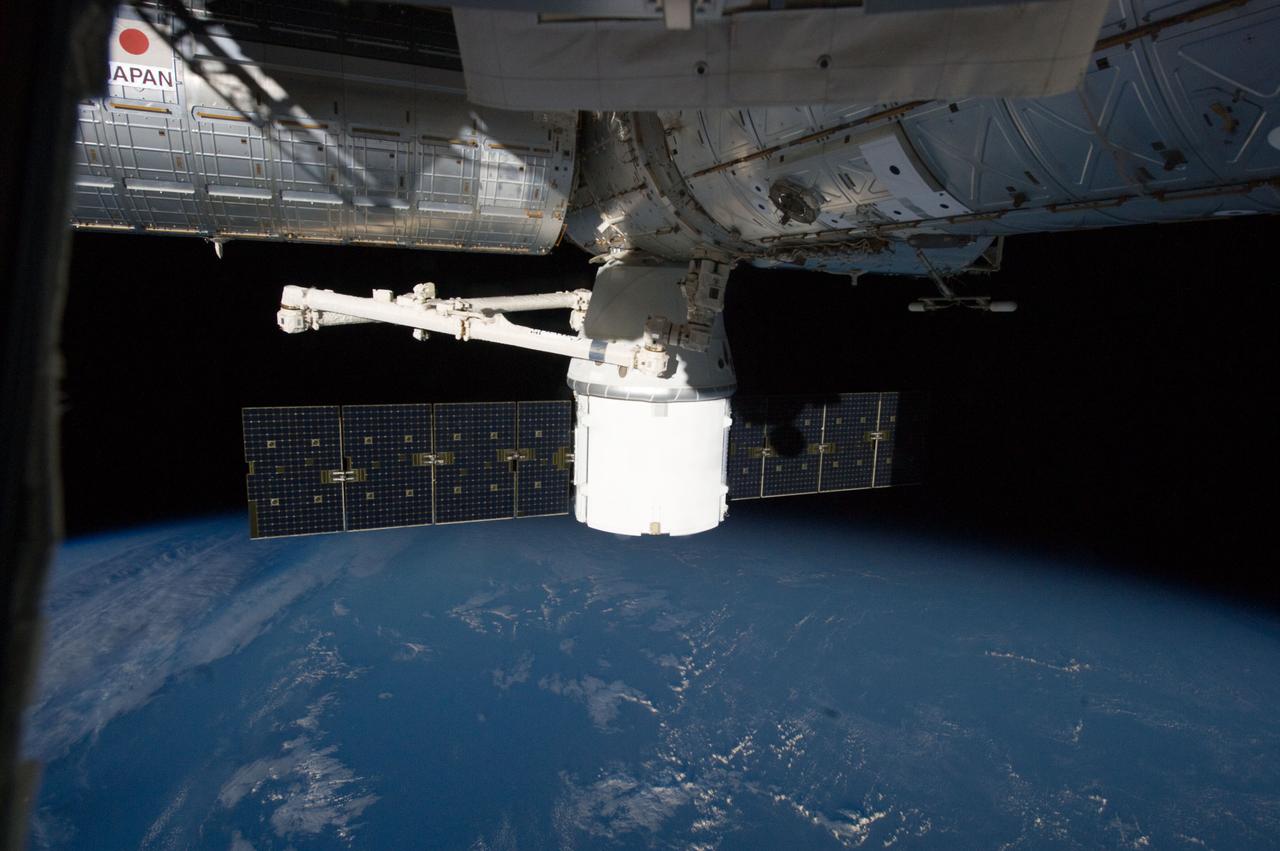
ISS033-E-012422 (14 Oct. 2012) --- Attached to the Earth-facing side of the Harmony node, the SpaceX Dragon commercial cargo craft is featured in this image photographed by an Expedition 33 crew member on the International Space Station. Dragon was berthed to Harmony on Oct. 10 and is scheduled to spend 18 days attached to the station.
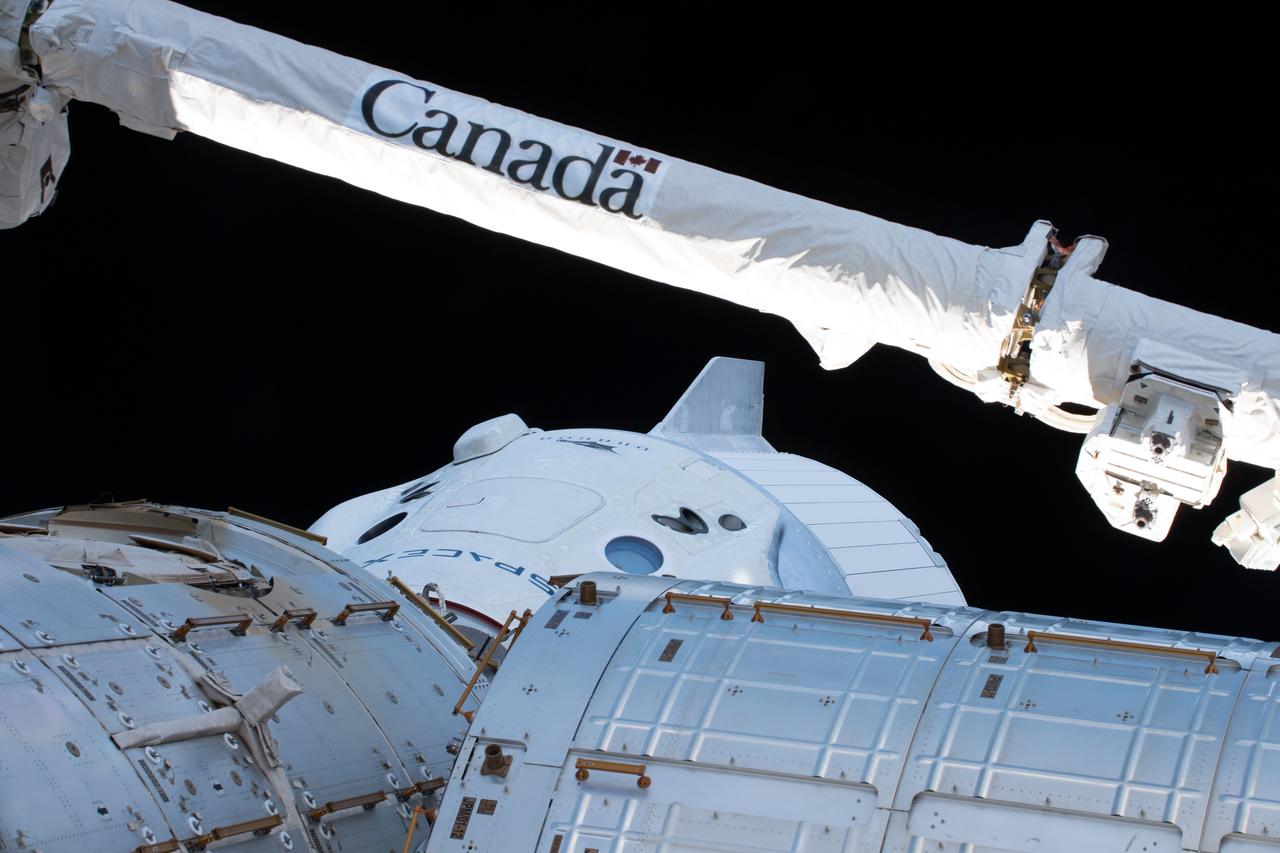
iss058e027796 (March 4, 2019) --- The uncrewed SpaceX Crew Dragon spacecraft is the first Commercial Crew vehicle to visit the International Space Station. Here it is pictured docked to the international docking adapter attached to the forward end of the Harmony module. In the foreground are portions of Harmony, the Kibo laboratory module, and the Canadarm2 robotic arm.
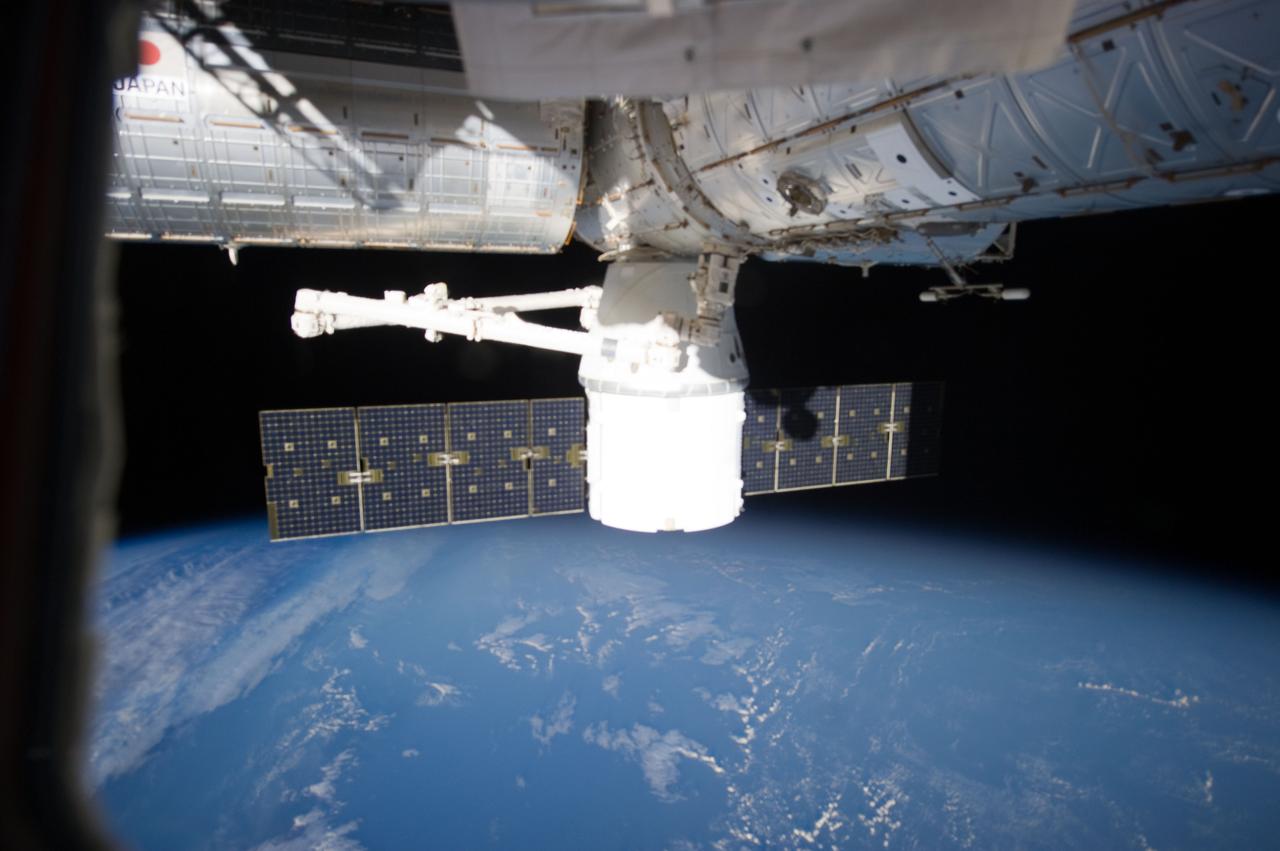
ISS033-E-012424 (14 Oct. 2012) --- Attached to the Earth-facing side of the Harmony node, the SpaceX Dragon commercial cargo craft is featured in this image photographed by an Expedition 33 crew member on the International Space Station. Dragon was berthed to Harmony on Oct. 10 and is scheduled to spend 18 days attached to the station.
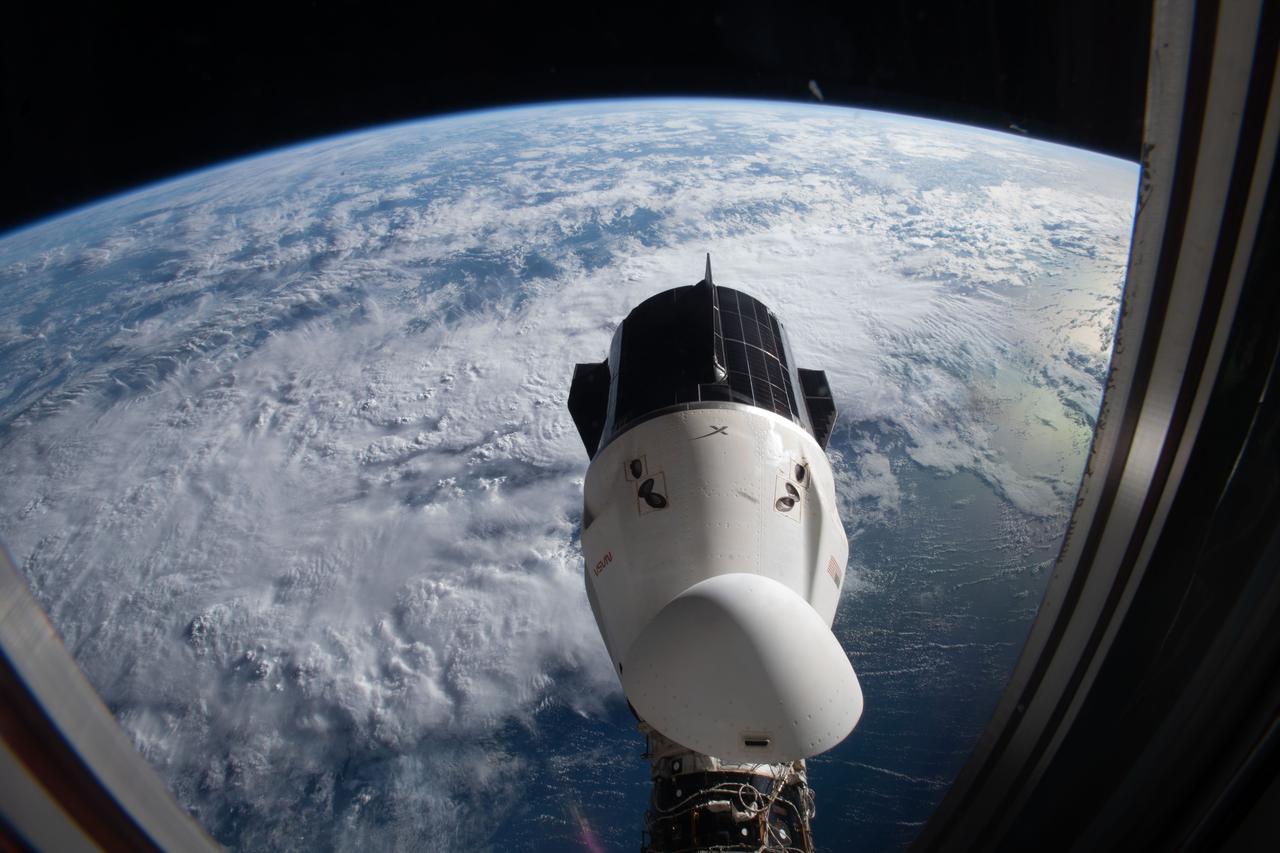
iss067e014471 (April 12, 2022) --- The SpaceX Dragon Endurance crew ship is pictured from a window aboard the SpaceX Dragon Endeavour crew ship. Endurance is docked to the Harmony module's forward-facing port while Endeavour is docked to Harmony's space-facing port on the International Space Station.
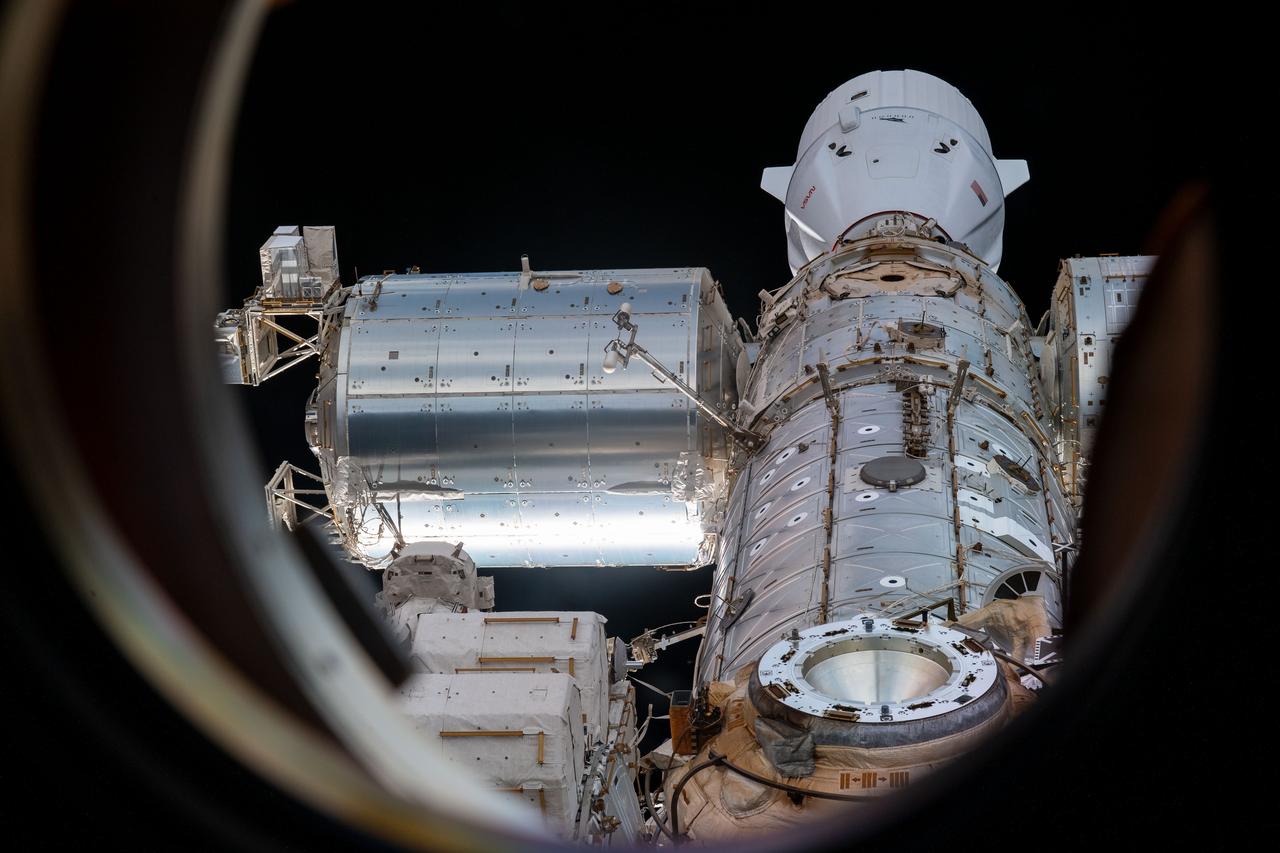
iss067e214074 (Aug. 2, 2022) --- This view of the International Space Station from a window on the orbiting lab's Russian segment shows portions of the Rassvet module's docking port, the U.S. Destiny laboratory module, the Harmony module, Columbus laboratory module, and the Kibo laboratory module. Docked to Harmony at top, is the SpaceX Dragon resupply ship.
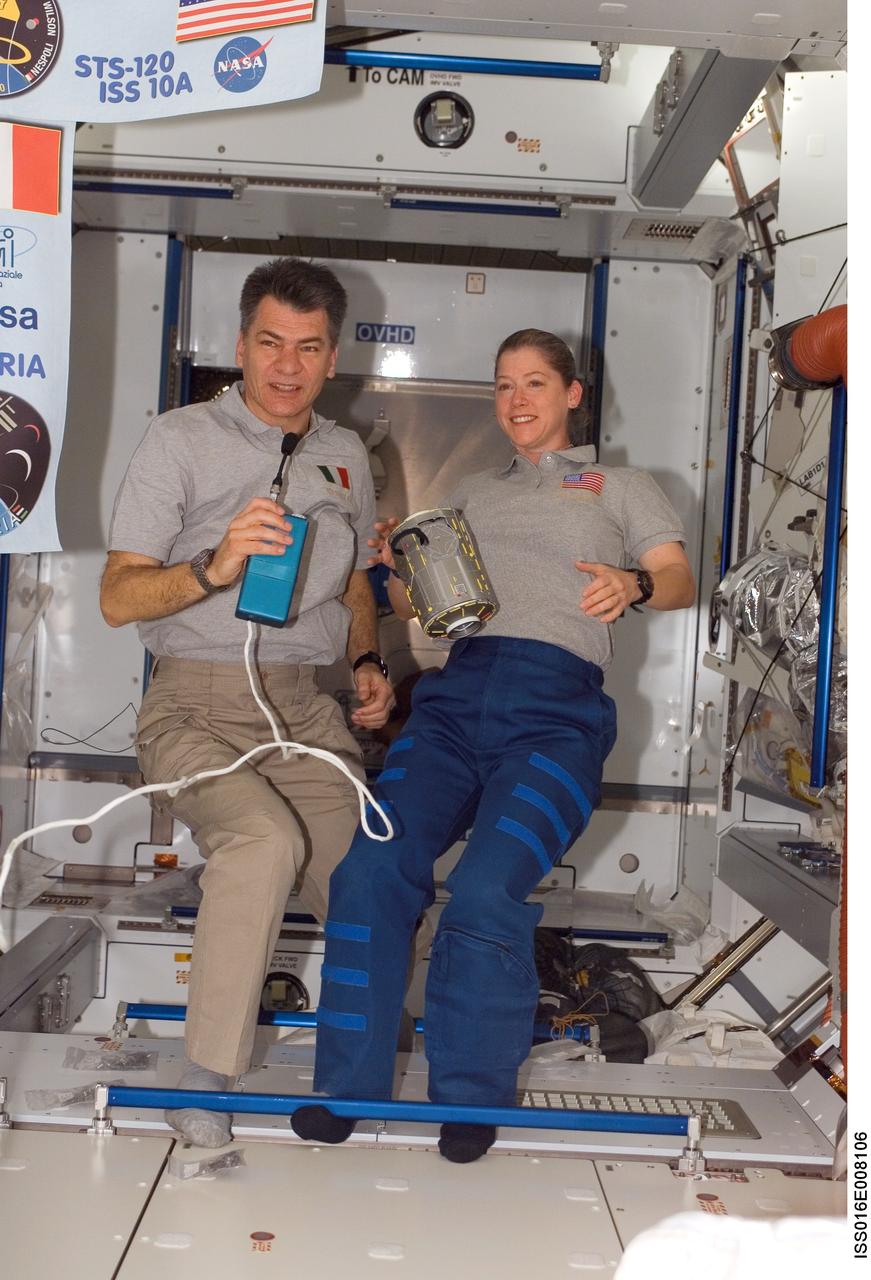
ISS016-E-008106 (31 Oct. 2007) --- Astronauts Pam Melroy, STS-120 commander, and European Space Agency's (ESA) Paolo Nespoli, mission specialist, are pictured in the Harmony node of the International Space Station during a congratulatory phone call from the president of Italy. A module of Harmony floats freely in the foreground.