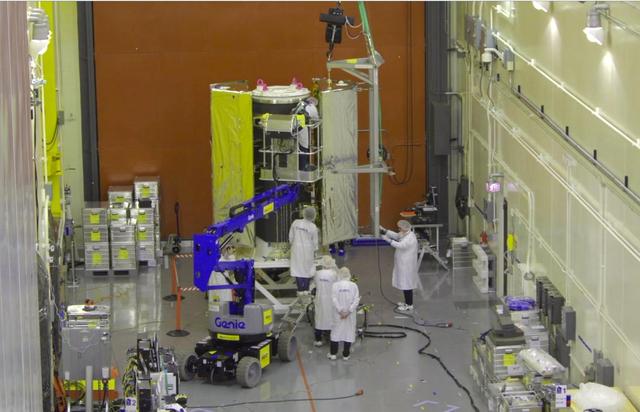
At the Harris Spaceport Systems facility at Vandenberg Air Force Base in California, the twin GRACE-FO satellites are integrated with the multi-satellite dispenser structure that will be used to deploy the satellites during launch on the SpaceX Falcon 9 launch vehicle. https://photojournal.jpl.nasa.gov/catalog/PIA22442
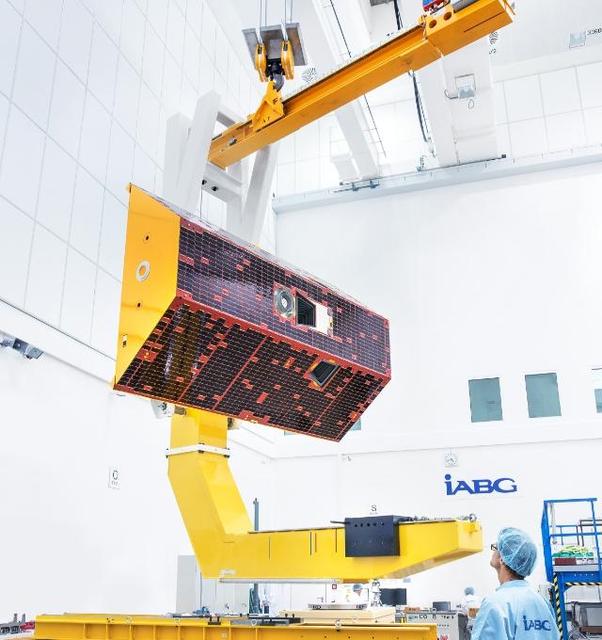
At the Harris Spaceport Systems facility at Vandenberg Air Force Base in California, the twin GRACE-FO satellites are integrated with the multi-satellite dispenser structure that will be used to deploy the satellites during launch on the SpaceX Falcon 9 launch vehicle. https://photojournal.jpl.nasa.gov/catalog/PIA22444

A science briefing for the National Oceanic and Atmospheric Administration’s (NOAA) Geostationary Operational Environmental Satellite-T (GOES-T) is held on Feb. 25, 2022, at NASA’s Kennedy Space Center in Florida. Daniel Gall, Advanced Baseline Imager chief systems engineer, Space and Airborne Systems, L3 Harris Technologies, participates in the briefing. GOES-T is scheduled to lift off on a United Launch Alliance Atlas V 541 rocket from Space Launch Complex 41 at Cape Canaveral Space Force Station in Florida on March 1, 2022, at 4:38 p.m. GOES-T is the third satellite in the GOES-R series that will continue to help meteorologists observe and predict local weather events that affect public safety. The launch is being managed by NASA’s Launch Services Program based at Kennedy Space Center in Florida, America’s multi-user spaceport.
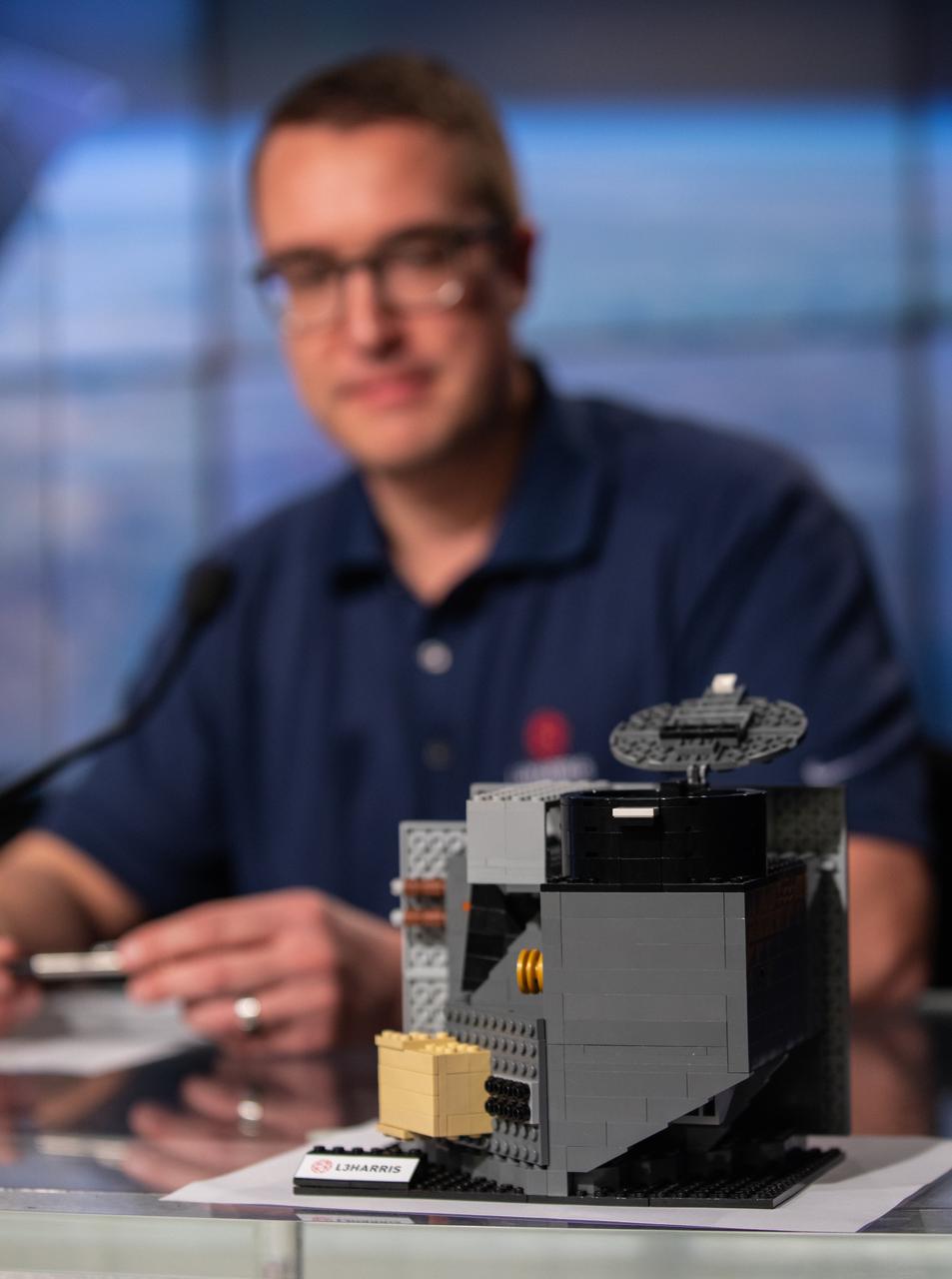
A science briefing for the National Oceanic and Atmospheric Administration’s (NOAA) Geostationary Operational Environmental Satellite-T (GOES-T) is held on Feb. 25, 2022, at NASA’s Kennedy Space Center in Florida. Daniel Gall, Advanced Baseline Imager chief systems engineer, Space and Airborne Systems, L3 Harris Technologies, participates in the briefing. GOES-T is scheduled to lift off on a United Launch Alliance Atlas V 541 rocket from Space Launch Complex 41 at Cape Canaveral Space Force Station in Florida on March 1, 2022, at 4:38 p.m. GOES-T is the third satellite in the GOES-R series that will continue to help meteorologists observe and predict local weather events that affect public safety. The launch is being managed by NASA’s Launch Services Program based at Kennedy Space Center in Florida, America’s multi-user spaceport.
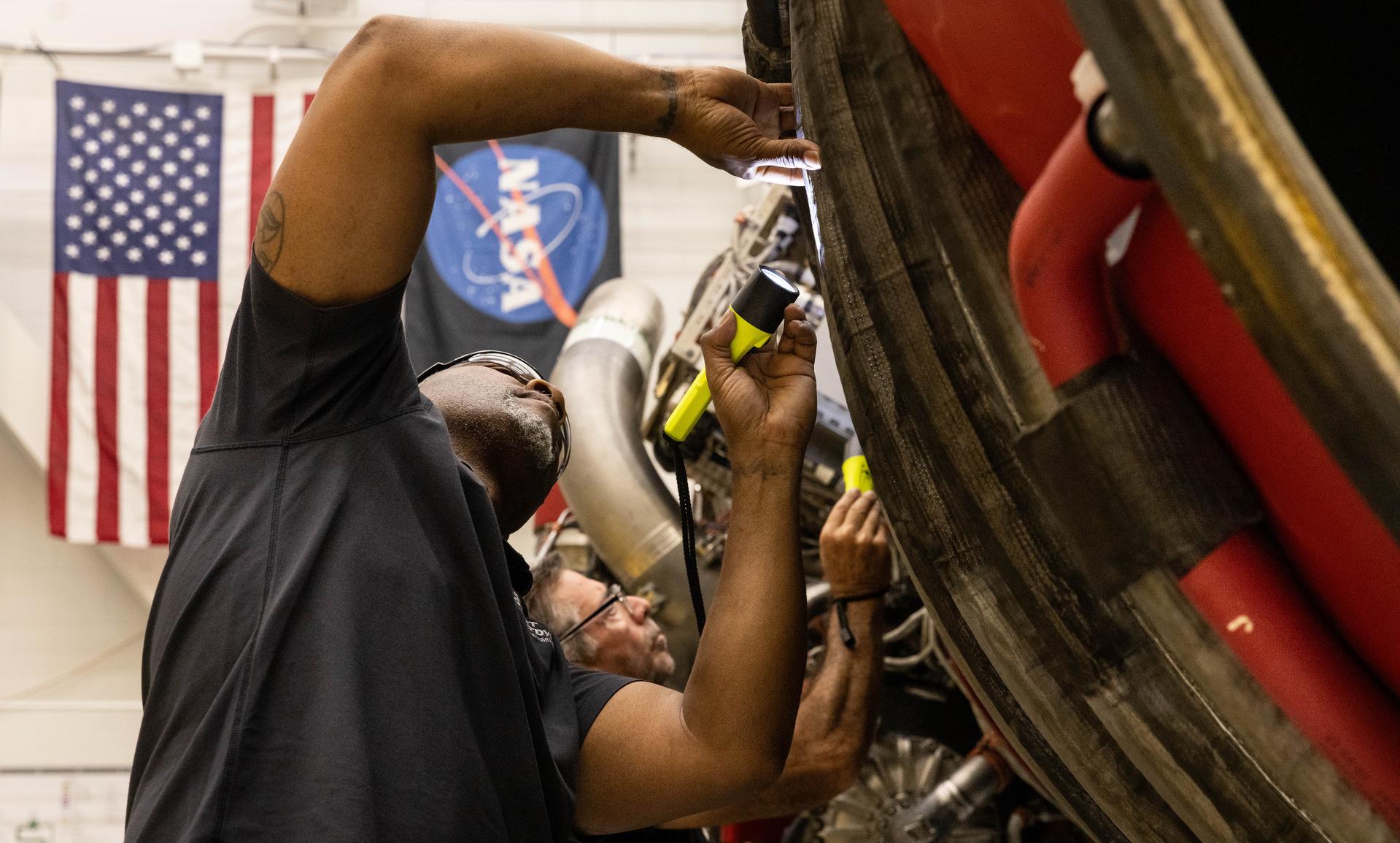
Teams at NASA’s Kennedy Space Center in Florida offload the second of four RS-25 SLS (Space Launch System) rocket engines built by L3 Harris Technologies for the agency's Artemis III mission on Tuesday, June 23, 2026, inside the spaceport’s Vehicle Assembly Building. The SLS rocket will use four RS-25 engines in the core stage to propel the Orion spacecraft into orbit providing over two million pounds of thrust at liftoff. As part of the Golden Age of innovation and exploration, NASA will send Artemis astronauts on increasingly difficult missions to explore more of the Moon for scientific discovery and economic benefits, establish an enduring human presence on the lunar surface, and build on our foundation for the first crewed missions to Mars.
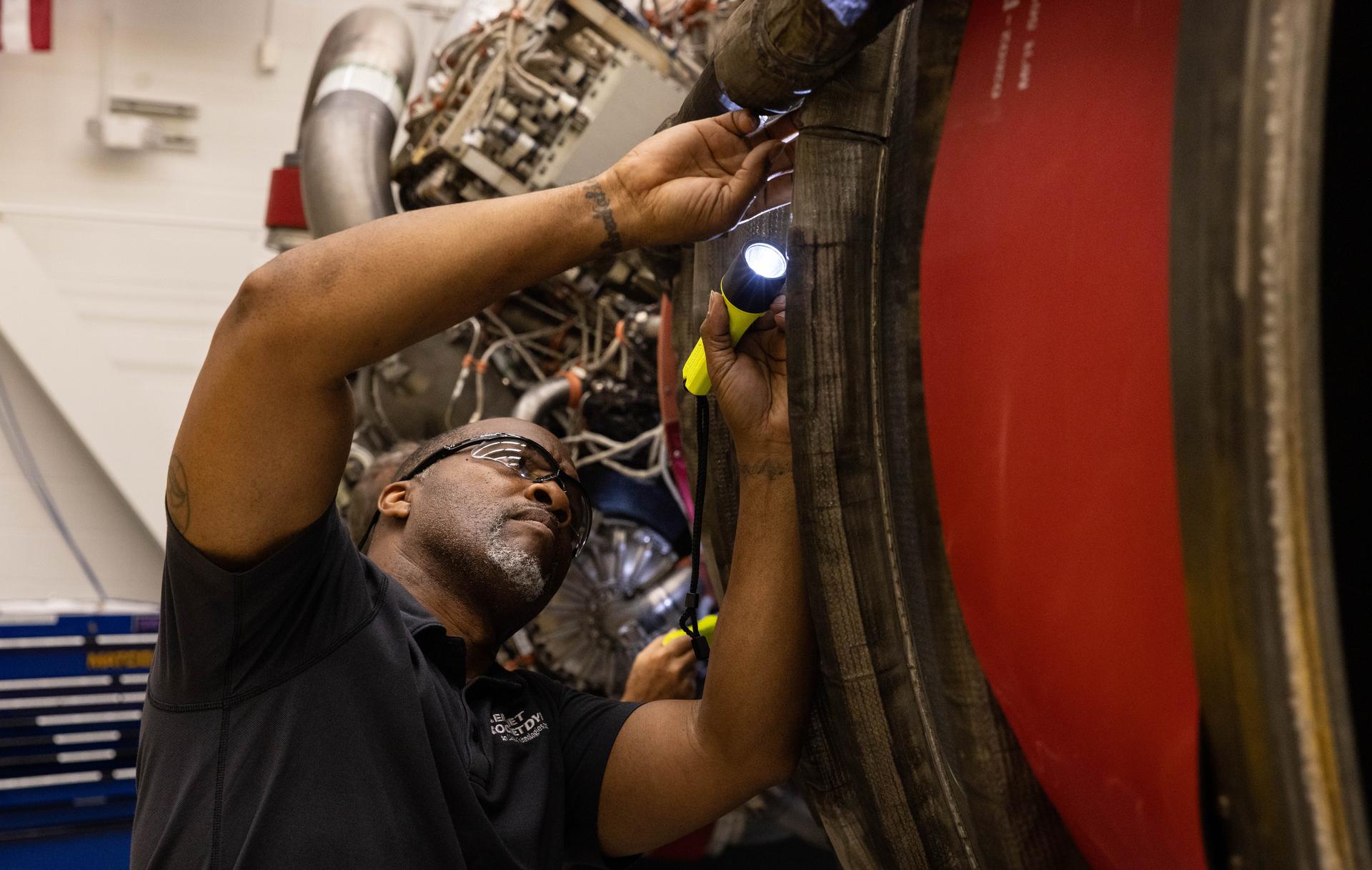
Teams at NASA’s Kennedy Space Center in Florida offload the second of four RS-25 SLS (Space Launch System) rocket engines built by L3 Harris Technologies for the agency's Artemis III mission on Tuesday, June 23, 2026, inside the spaceport’s Vehicle Assembly Building. The SLS rocket will use four RS-25 engines in the core stage to propel the Orion spacecraft into orbit providing over two million pounds of thrust at liftoff. As part of the Golden Age of innovation and exploration, NASA will send Artemis astronauts on increasingly difficult missions to explore more of the Moon for scientific discovery and economic benefits, establish an enduring human presence on the lunar surface, and build on our foundation for the first crewed missions to Mars.
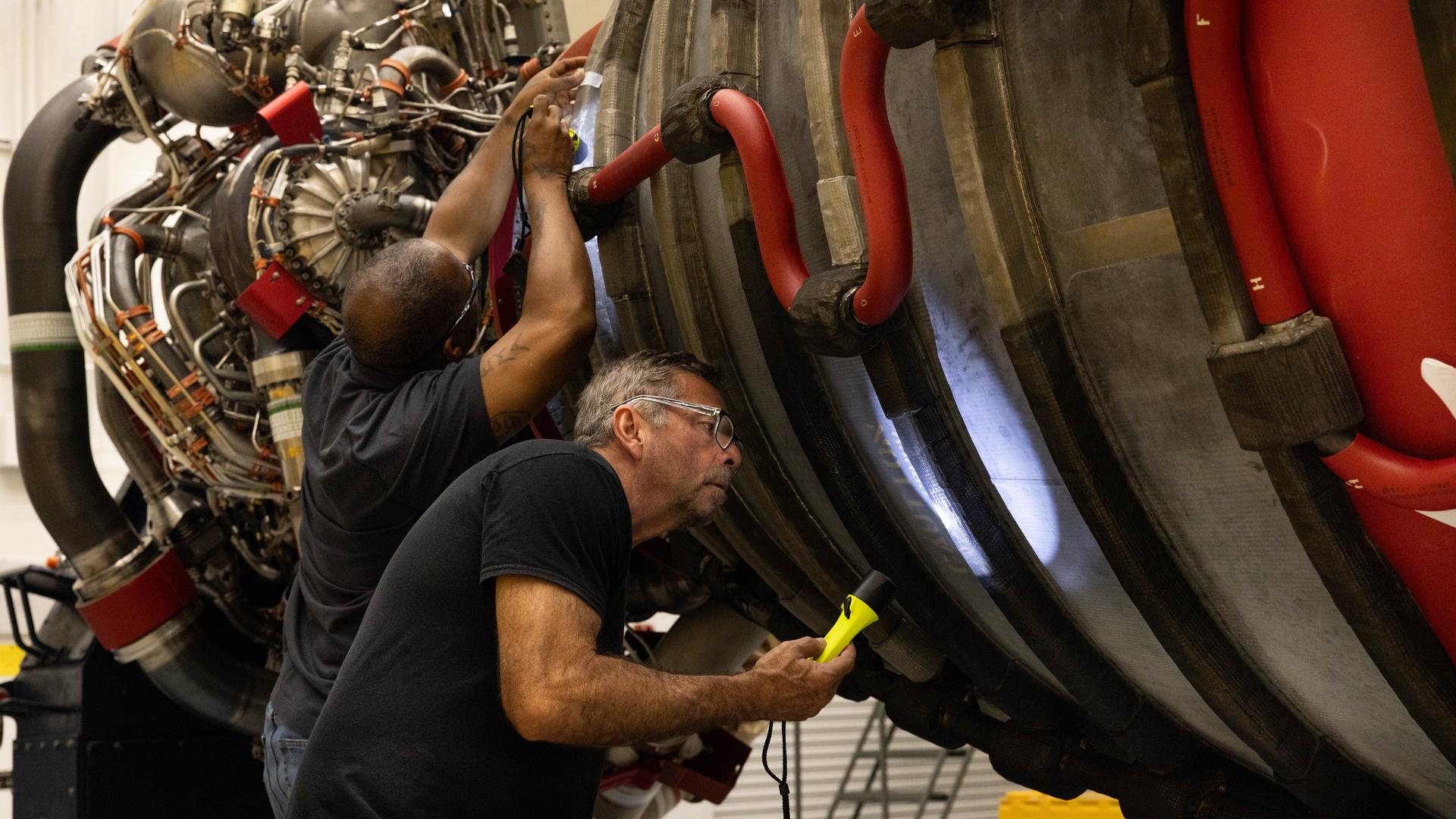
Teams at NASA’s Kennedy Space Center in Florida offload the second of four RS-25 SLS (Space Launch System) rocket engines built by L3 Harris Technologies for the agency's Artemis III mission on Tuesday, June 23, 2026, inside the spaceport’s Vehicle Assembly Building. The SLS rocket will use four RS-25 engines in the core stage to propel the Orion spacecraft into orbit providing over two million pounds of thrust at liftoff. As part of the Golden Age of innovation and exploration, NASA will send Artemis astronauts on increasingly difficult missions to explore more of the Moon for scientific discovery and economic benefits, establish an enduring human presence on the lunar surface, and build on our foundation for the first crewed missions to Mars.
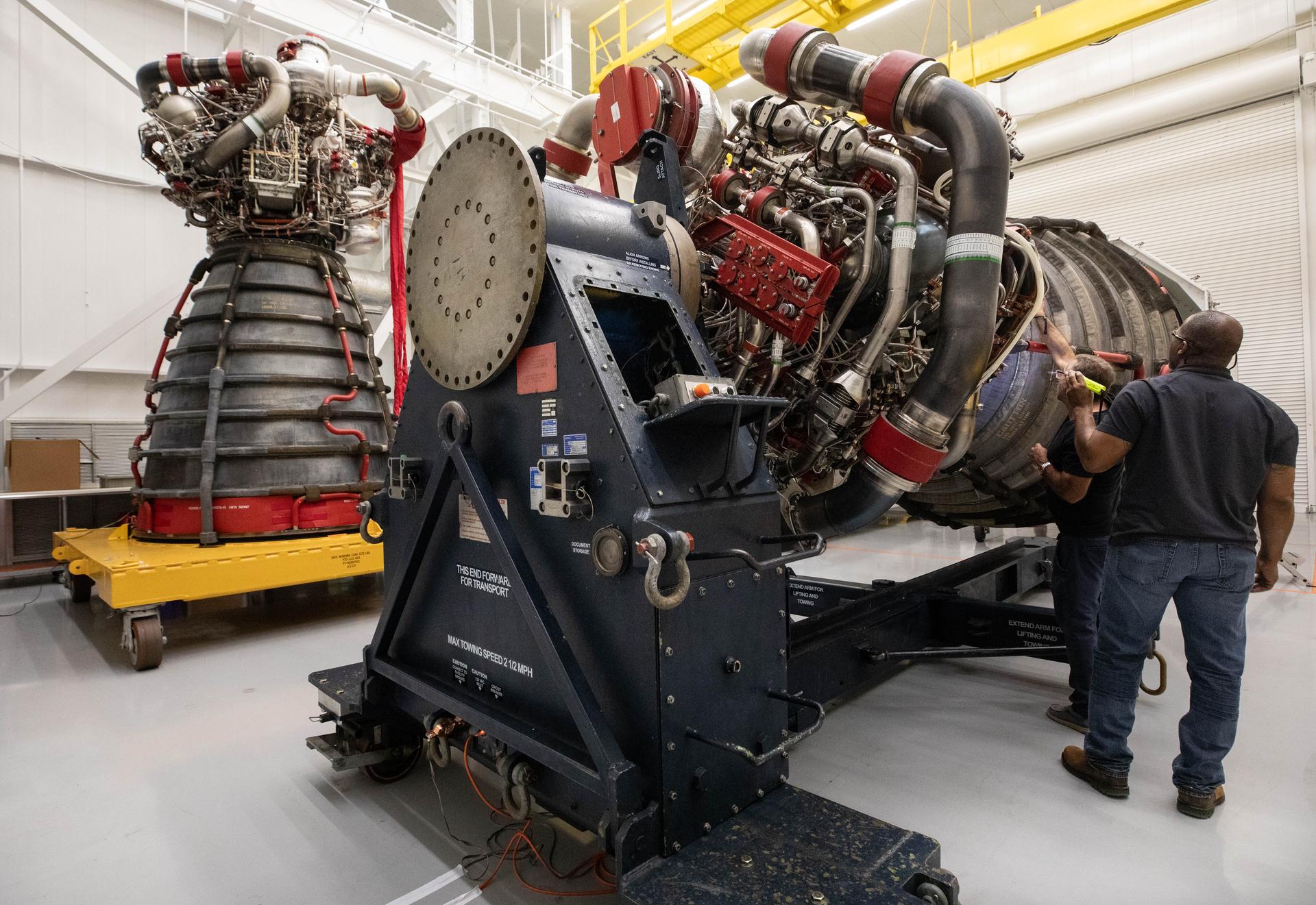
Teams at NASA’s Kennedy Space Center in Florida offload the second of four RS-25 SLS (Space Launch System) rocket engines built by L3 Harris Technologies for the agency's Artemis III mission on Tuesday, June 23, 2026, inside the spaceport’s Vehicle Assembly Building. The SLS rocket will use four RS-25 engines in the core stage to propel the Orion spacecraft into orbit providing over two million pounds of thrust at liftoff. As part of the Golden Age of innovation and exploration, NASA will send Artemis astronauts on increasingly difficult missions to explore more of the Moon for scientific discovery and economic benefits, establish an enduring human presence on the lunar surface, and build on our foundation for the first crewed missions to Mars.
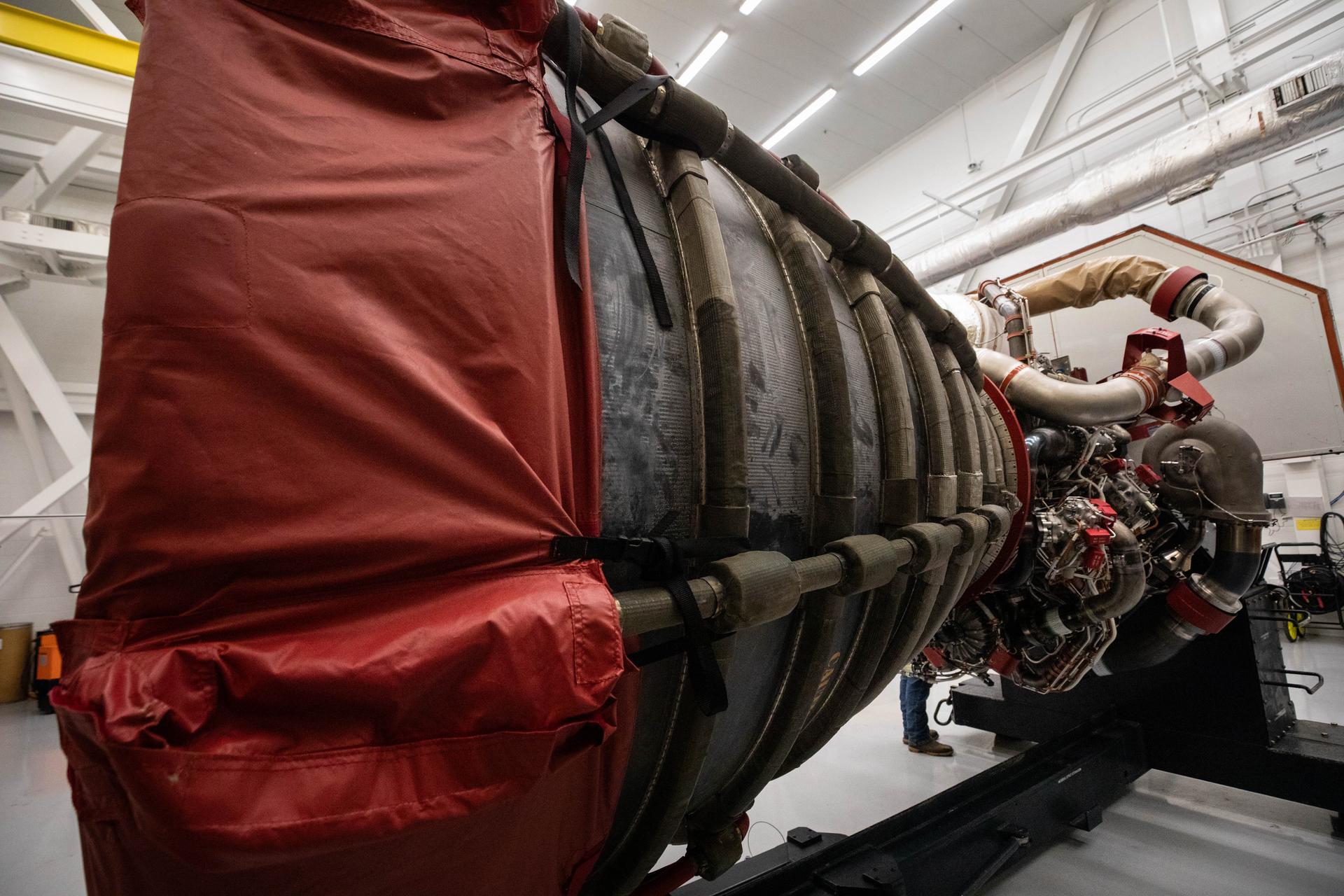
Teams at NASA’s Kennedy Space Center in Florida offload the third of four RS-25 SLS (Space Launch System) rocket engines built by L3 Harris Technologies for the agency's Artemis III mission on Tuesday, July 14, 2026, inside the spaceport’s Vehicle Assembly Building. The SLS rocket will use four RS-25 engines in the core stage to propel the Orion spacecraft into orbit providing over two million pounds of thrust at liftoff. As part of the Golden Age of innovation and exploration, NASA will send Artemis astronauts on increasingly difficult missions to explore more of the Moon for scientific discovery and economic benefits, establish an enduring human presence on the lunar surface, and build on our foundation for the first crewed missions to Mars.
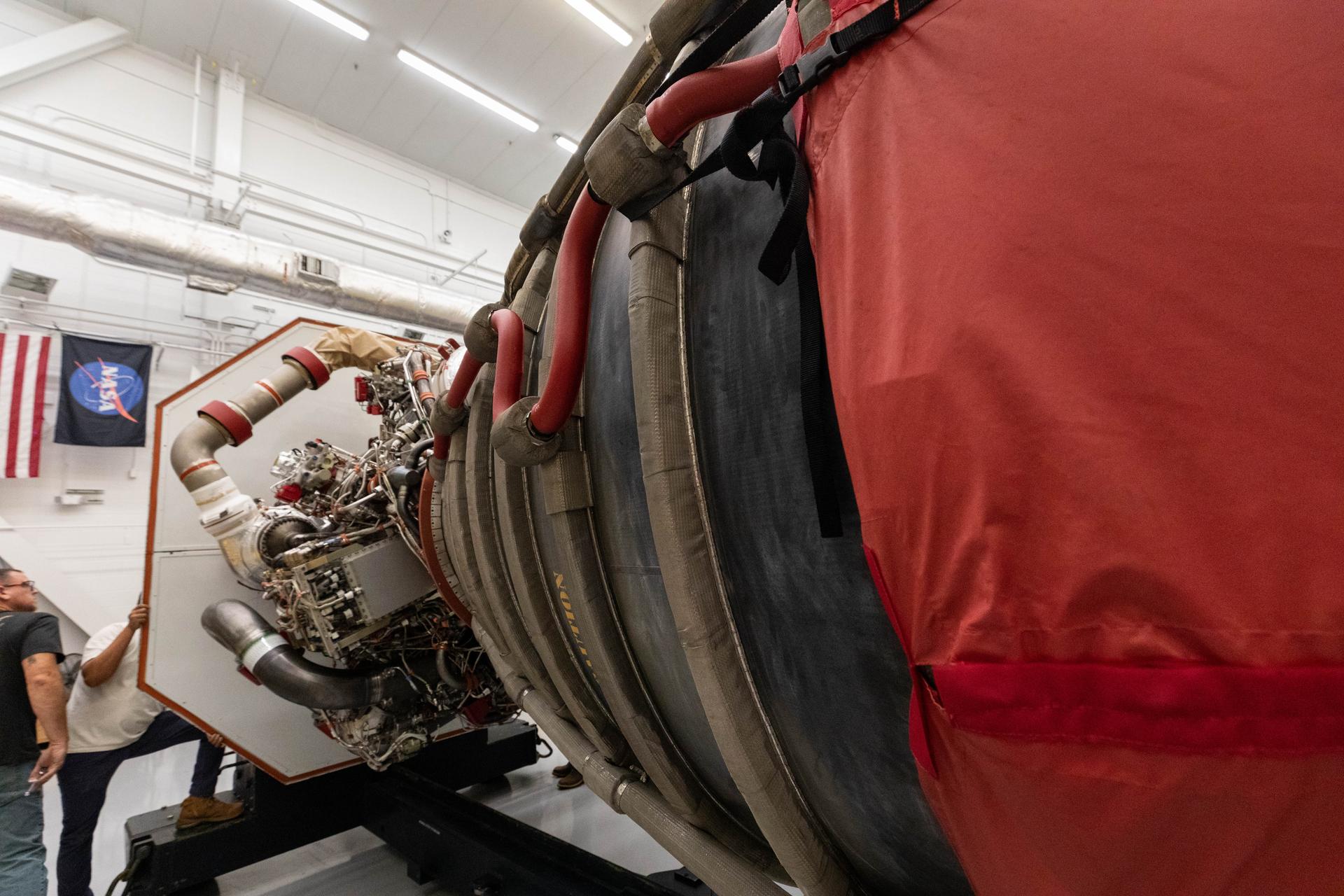
Teams at NASA’s Kennedy Space Center in Florida offload the third of four RS-25 SLS (Space Launch System) rocket engines built by L3 Harris Technologies for the agency's Artemis III mission on Tuesday, July 14, 2026, inside the spaceport’s Vehicle Assembly Building. The SLS rocket will use four RS-25 engines in the core stage to propel the Orion spacecraft into orbit providing over two million pounds of thrust at liftoff. As part of the Golden Age of innovation and exploration, NASA will send Artemis astronauts on increasingly difficult missions to explore more of the Moon for scientific discovery and economic benefits, establish an enduring human presence on the lunar surface, and build on our foundation for the first crewed missions to Mars.
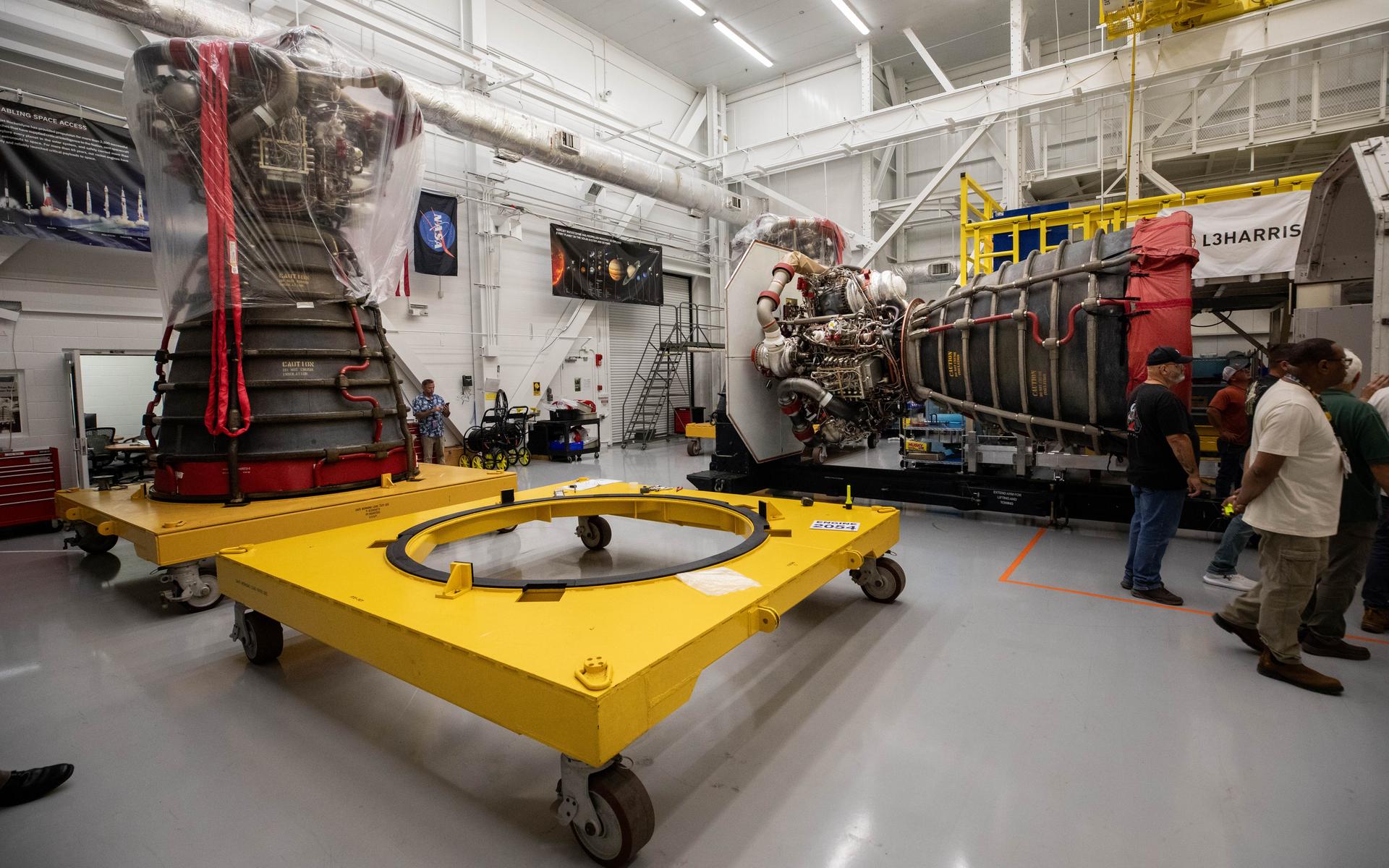
Teams at NASA’s Kennedy Space Center in Florida offload the third of four RS-25 SLS (Space Launch System) rocket engines built by L3 Harris Technologies for the agency's Artemis III mission on Tuesday, July 14, 2026, inside the spaceport’s Vehicle Assembly Building. The SLS rocket will use four RS-25 engines in the core stage to propel the Orion spacecraft into orbit providing over two million pounds of thrust at liftoff. As part of the Golden Age of innovation and exploration, NASA will send Artemis astronauts on increasingly difficult missions to explore more of the Moon for scientific discovery and economic benefits, establish an enduring human presence on the lunar surface, and build on our foundation for the first crewed missions to Mars.
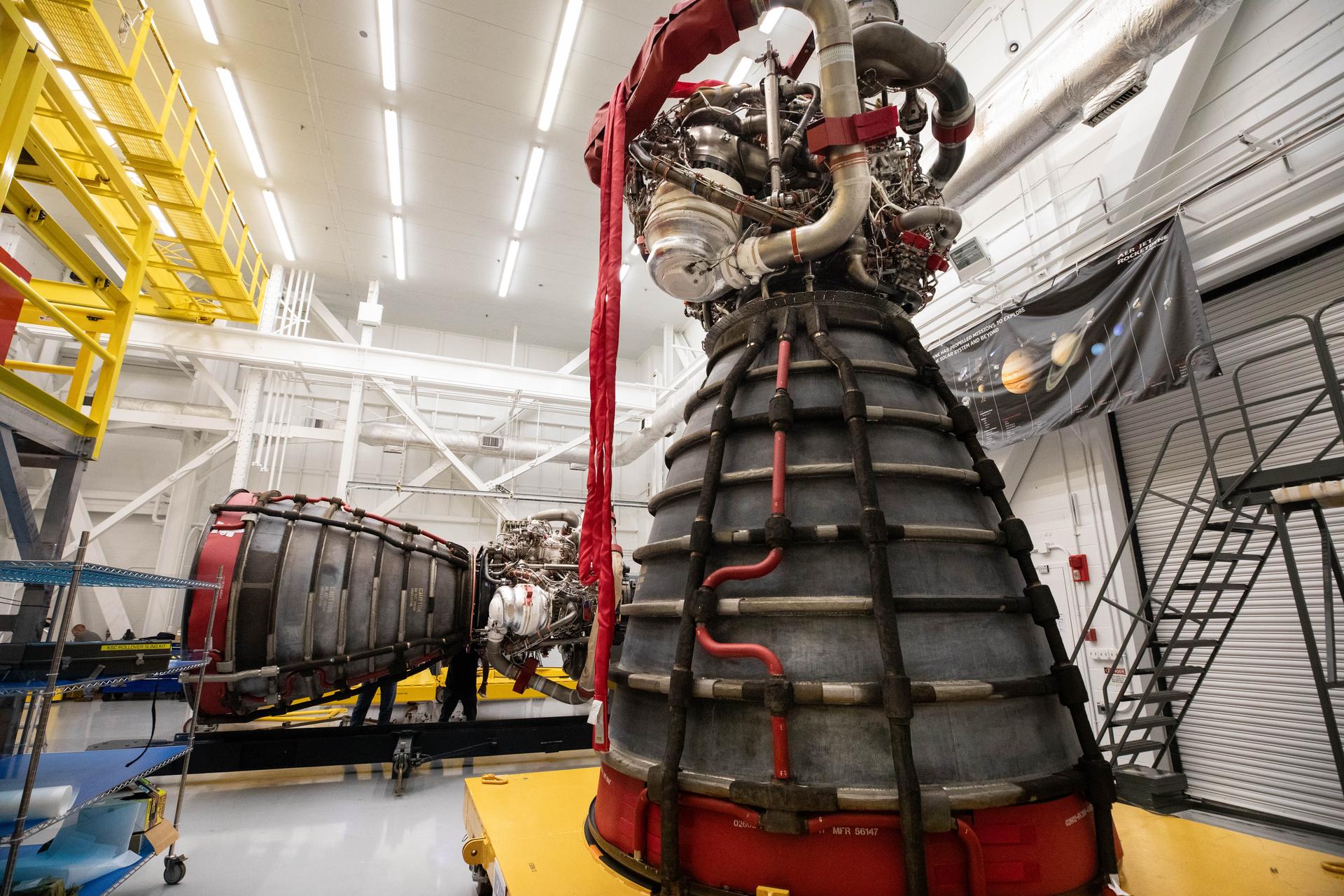
Teams at NASA’s Kennedy Space Center in Florida offload the second of four RS-25 SLS (Space Launch System) rocket engines built by L3 Harris Technologies for the agency's Artemis III mission on Tuesday, June 23, 2026, inside the spaceport’s Vehicle Assembly Building. The SLS rocket will use four RS-25 engines in the core stage to propel the Orion spacecraft into orbit providing over two million pounds of thrust at liftoff. As part of the Golden Age of innovation and exploration, NASA will send Artemis astronauts on increasingly difficult missions to explore more of the Moon for scientific discovery and economic benefits, establish an enduring human presence on the lunar surface, and build on our foundation for the first crewed missions to Mars.
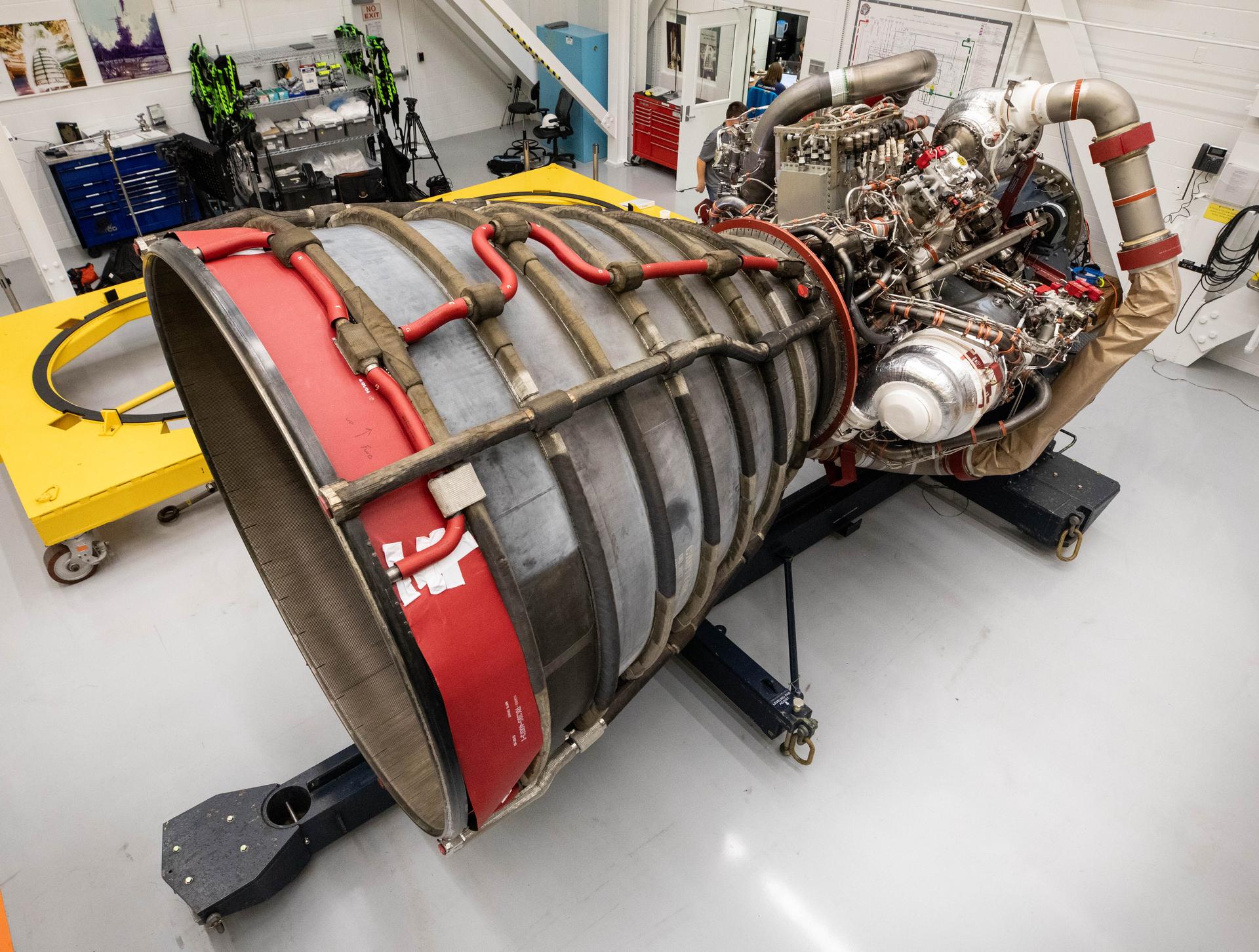
Teams at NASA’s Kennedy Space Center in Florida offload the second of four RS-25 SLS (Space Launch System) rocket engines built by L3 Harris Technologies for the agency's Artemis III mission on Tuesday, June 23, 2026, inside the spaceport’s Vehicle Assembly Building. The SLS rocket will use four RS-25 engines in the core stage to propel the Orion spacecraft into orbit providing over two million pounds of thrust at liftoff. As part of the Golden Age of innovation and exploration, NASA will send Artemis astronauts on increasingly difficult missions to explore more of the Moon for scientific discovery and economic benefits, establish an enduring human presence on the lunar surface, and build on our foundation for the first crewed missions to Mars.
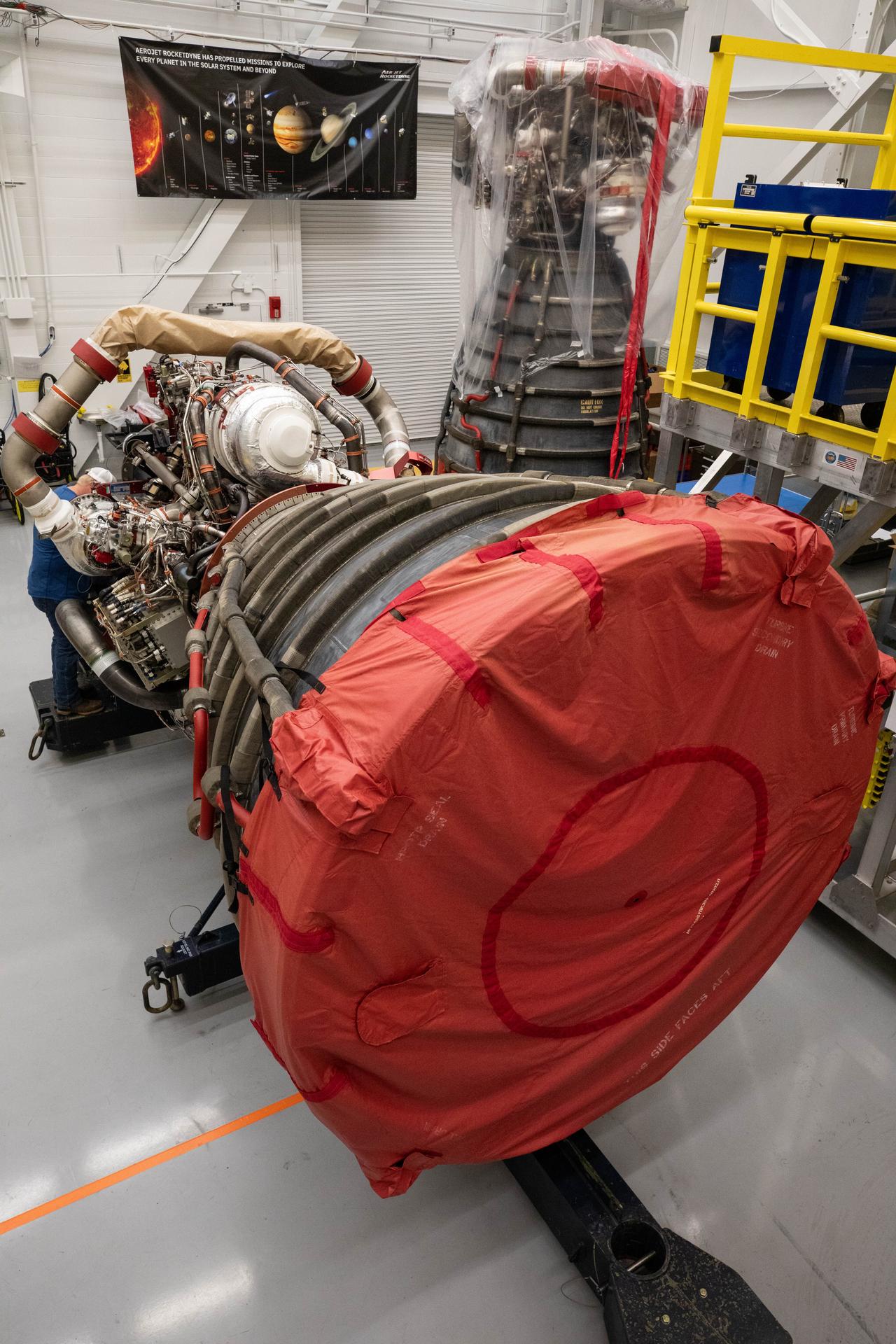
Teams at NASA’s Kennedy Space Center in Florida offload the third of four RS-25 SLS (Space Launch System) rocket engines built by L3 Harris Technologies for the agency's Artemis III mission on Tuesday, July 14, 2026, inside the spaceport’s Vehicle Assembly Building. The SLS rocket will use four RS-25 engines in the core stage to propel the Orion spacecraft into orbit providing over two million pounds of thrust at liftoff. As part of the Golden Age of innovation and exploration, NASA will send Artemis astronauts on increasingly difficult missions to explore more of the Moon for scientific discovery and economic benefits, establish an enduring human presence on the lunar surface, and build on our foundation for the first crewed missions to Mars.
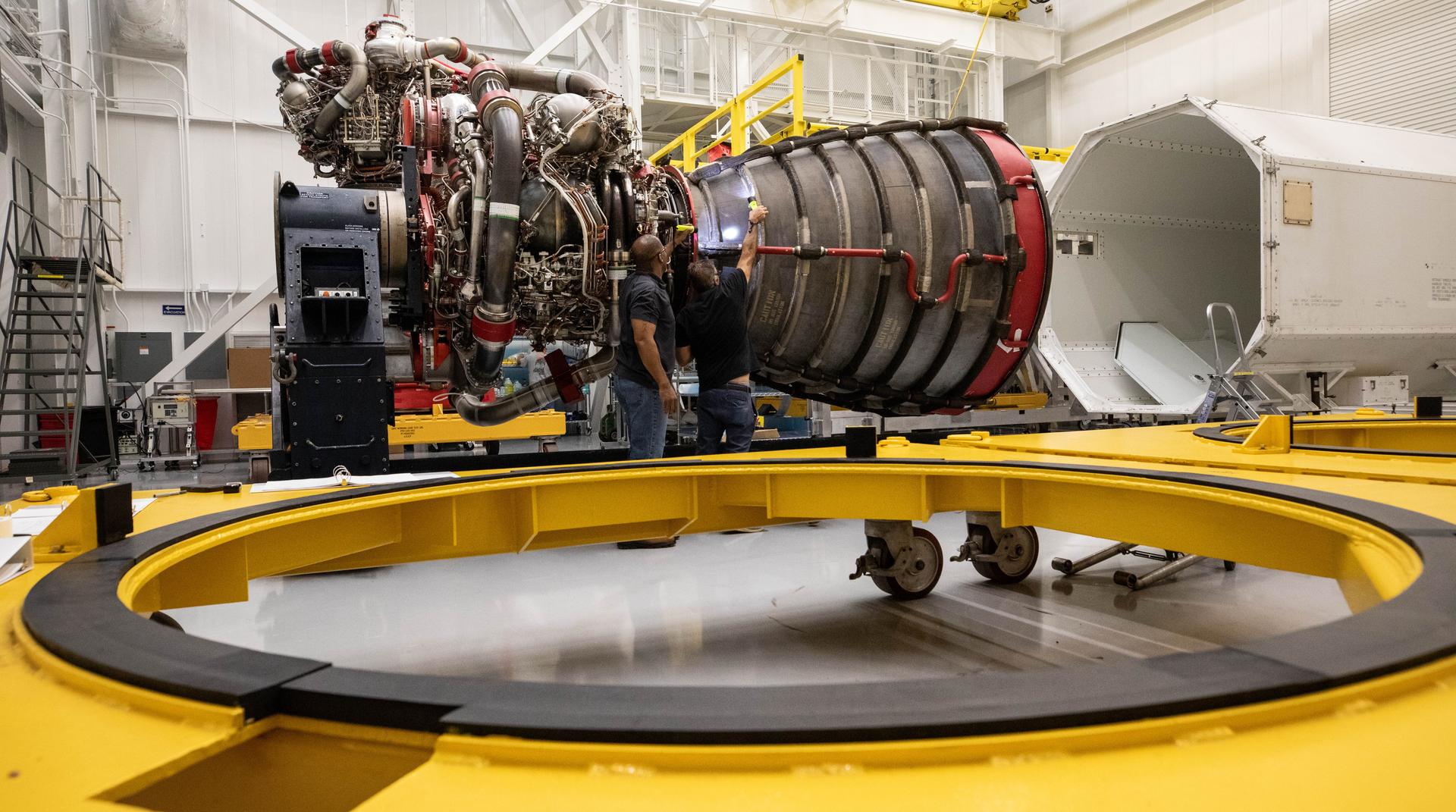
Teams at NASA’s Kennedy Space Center in Florida offload the second of four RS-25 SLS (Space Launch System) rocket engines built by L3 Harris Technologies for the agency's Artemis III mission on Tuesday, June 23, 2026, inside the spaceport’s Vehicle Assembly Building. The SLS rocket will use four RS-25 engines in the core stage to propel the Orion spacecraft into orbit providing over two million pounds of thrust at liftoff. As part of the Golden Age of innovation and exploration, NASA will send Artemis astronauts on increasingly difficult missions to explore more of the Moon for scientific discovery and economic benefits, establish an enduring human presence on the lunar surface, and build on our foundation for the first crewed missions to Mars.
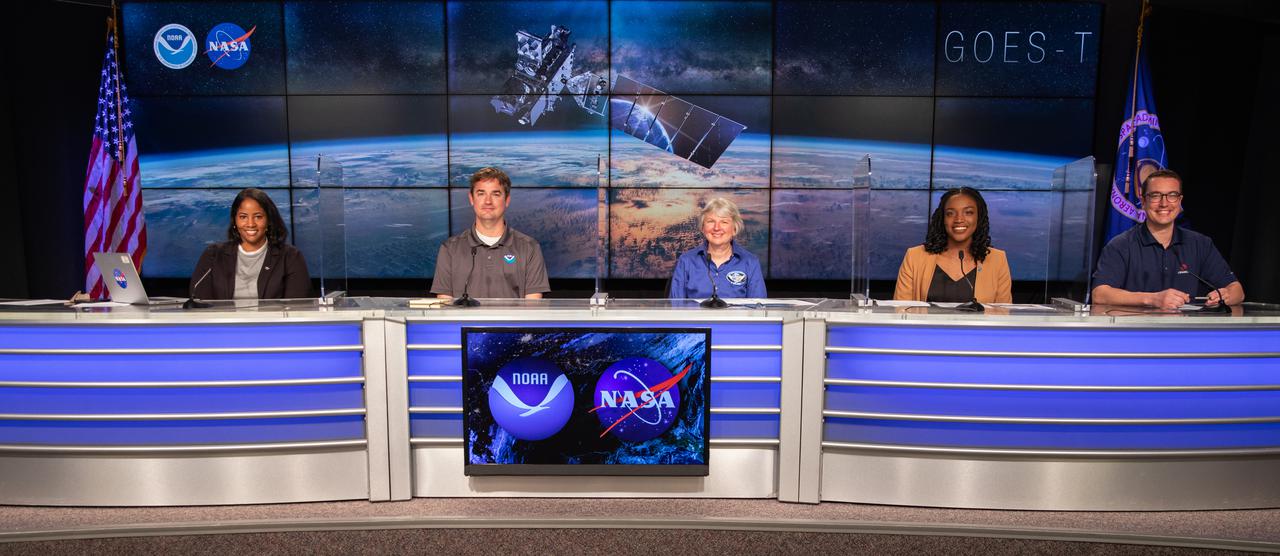
A science briefing for the National Oceanic and Atmospheric Administration’s (NOAA) Geostationary Operational Environmental Satellite-T (GOES-T) is held on Feb. 25, 2022, at NASA’s Kennedy Space Center in Florida. Participants from left, are Tylar Greene, briefing moderator, NASA Communications; Dr. Dan Lindsey, GOES-R program scientist, NOAA; Candace Carlisle, GOES-R flight project manager, NASA’s Goddard Space Flight Center; Tewa Kpulun, Geostationary Lightning Mapper science lead, Lockheed Martin; and Daniel Gall, Advanced Baseline Imager chief systems engineer, Space and Airborne Systems, L3 Harris Technologies, participates in the briefing. GOES-T is scheduled to lift off on a United Launch Alliance Atlas V 541 rocket from Space Launch Complex 41 at Cape Canaveral Space Force Station in Florida on March 1, 2022, at 4:38 p.m. GOES-T is the third satellite in the GOES-R series that will continue to help meteorologists observe and predict local weather events that affect public safety. The launch is being managed by NASA’s Launch Services Program based at Kennedy Space Center in Florida, America’s multi-user spaceport.