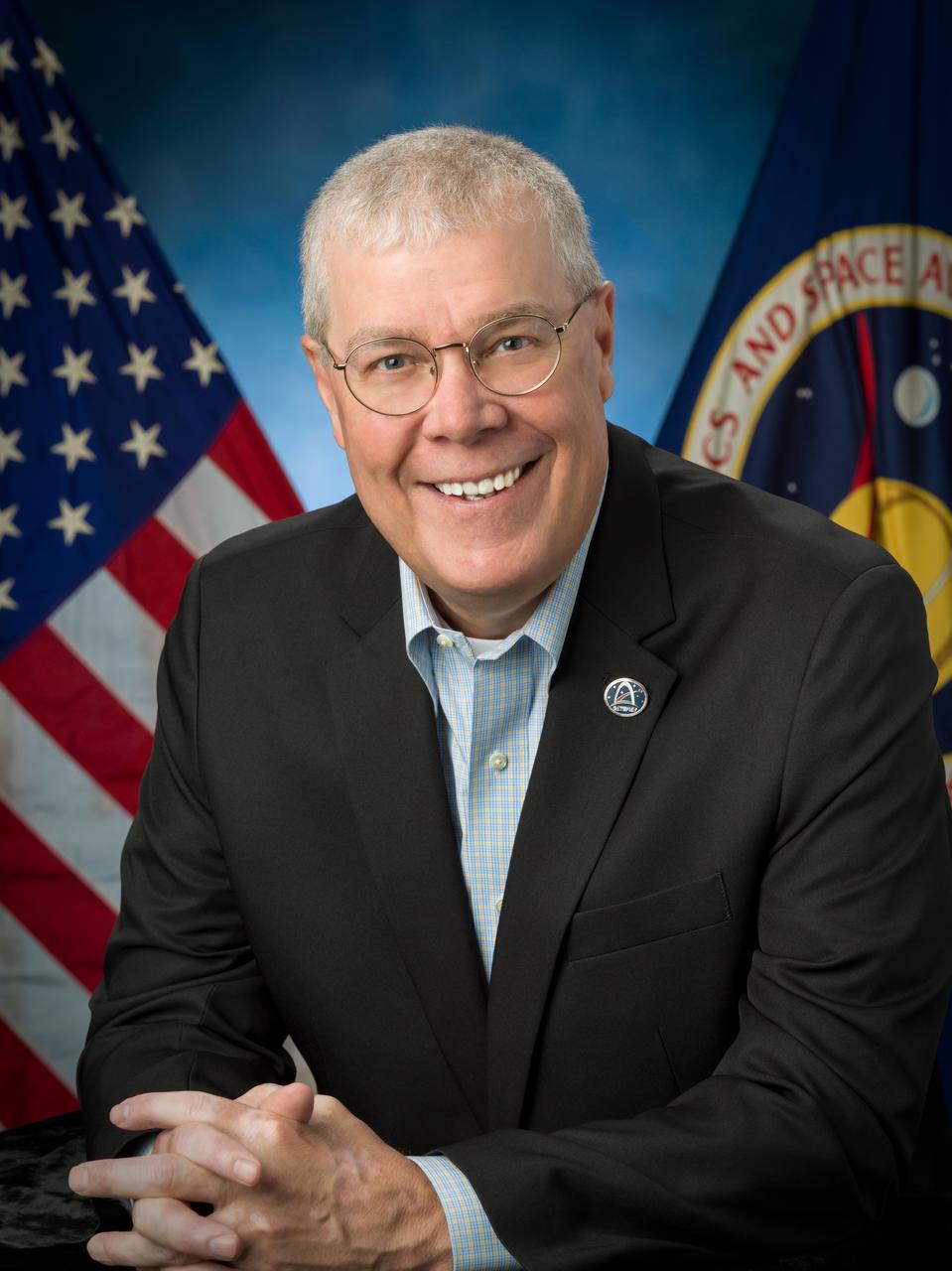
Dan Hartman is a global leader in human spaceflight with a storied 29-year career at NASA. He was the first program manager for Gateway. Dan retired from NASA in 2023.

Deputy Director Colleen Hartman from NASA Goddard Space Flight Center looks on as Kamal Amiral, 5, of Arlington, Va., looks at the moon through a telescope during a stargazing event at Hoffman-Boston Elementary School in Arlington, Va. on Thursday, Nov. 7, 2013. NASA Administrator Charles F. Bolden is also pictured. Photo Credit: (NASA/Jay Westcott)
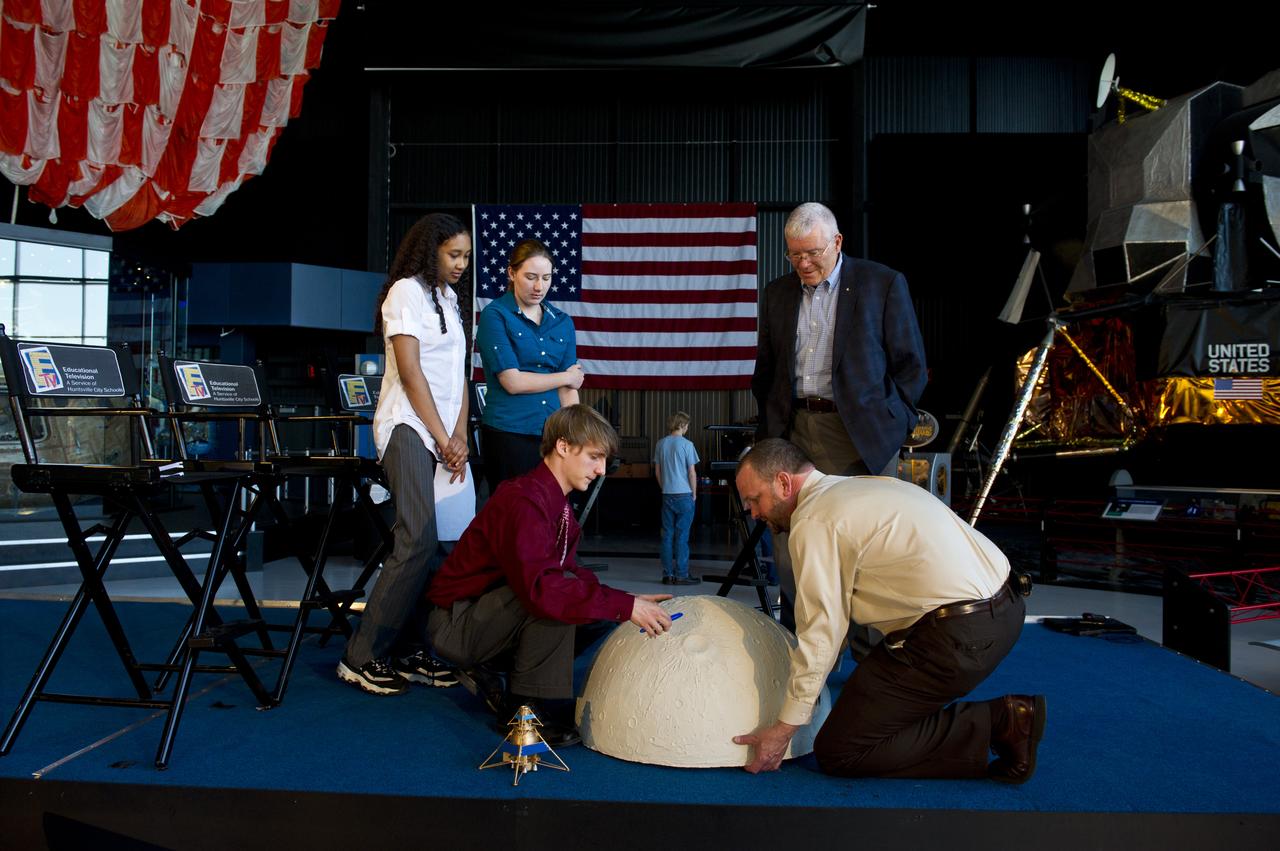
STUDENTS FROM THE CENTER FOR TECHNOLOGY SHOW APOLLO 13 ASTRONAUT FRED HAISE A DISPLAY MODEL FOR A MOON BASED PROJECT THEY ARE DESIGNING FOR COMPETITION WITH OTHER SCHOOLS IN ALABAMA. (L to R) QUIANA HUNT, SARAH FOLSE, MICHAEL HARTMAN, MIKE EVANS (TEACHER), AND FRED HAISE
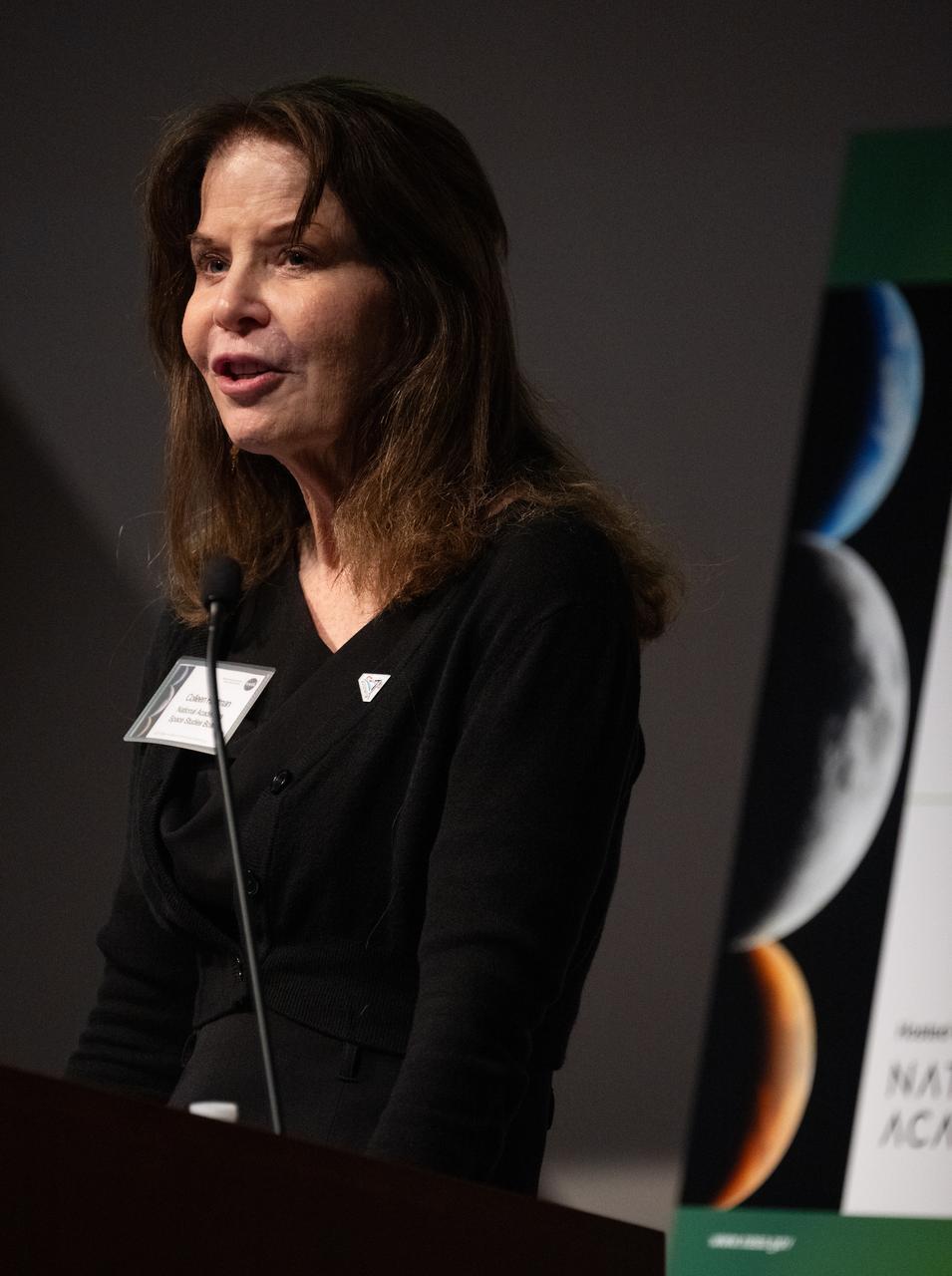
Colleen Hartman, director of the Space Studies Board at the National Academy of Sciences gives opening remarks at the Moon to Mars Architecture Workshop, Wednesday, Feb. 12, 2025, at the National Academy of Sciences in Washington. NASA held the workshop to engage the broader space community and collect feedback from U.S. industry and academia and international partners to inform NASA's Moon to Mars Architecture, the agency's roadmap for human exploration of the Moon and Mars. Photo Credit: (NASA/Joel Kowsky)
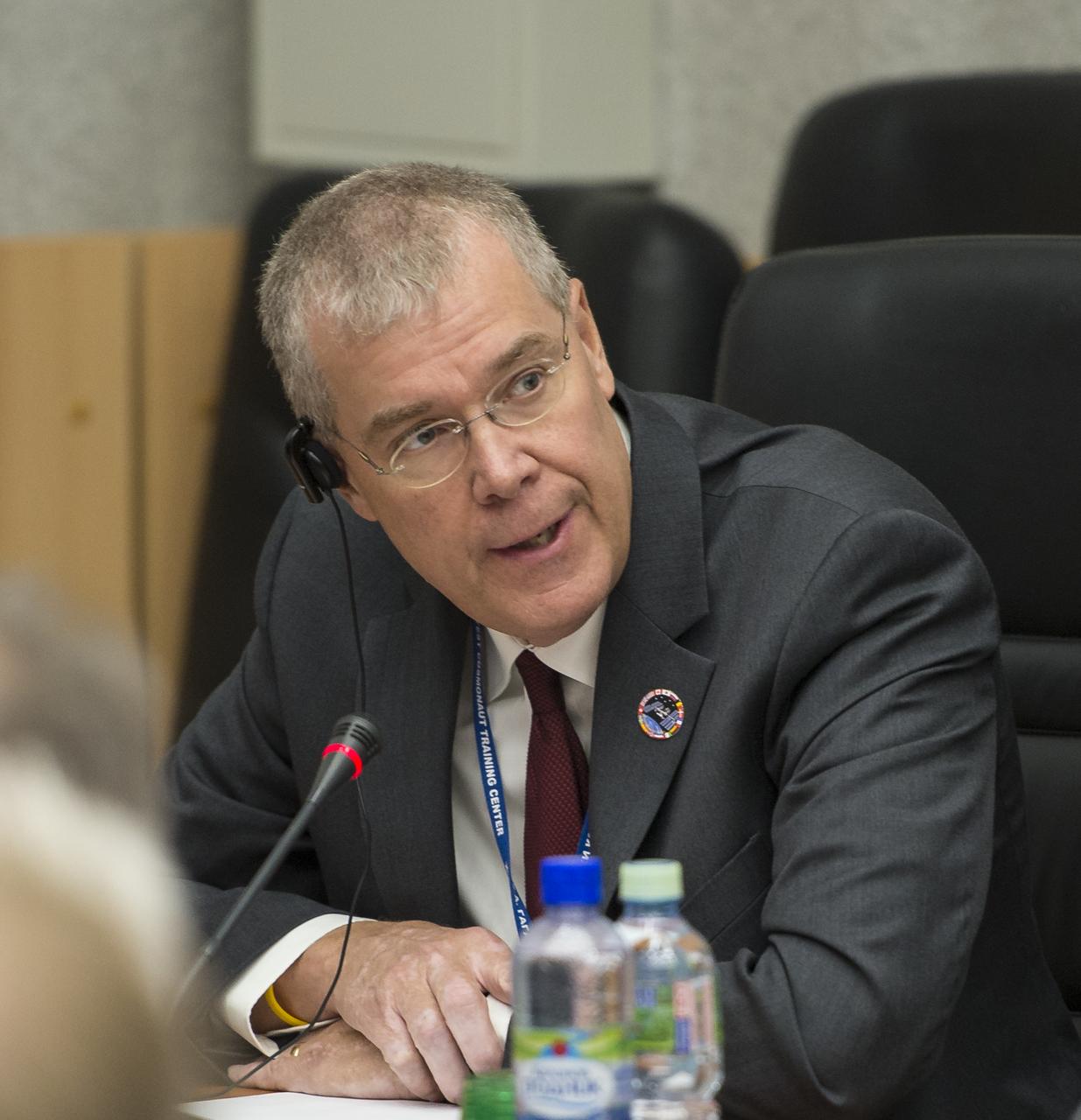
Dan Hartman, NASA Deputy Space Station Program Manager, speaks during the State Commission meeting to approve the Soyuz launch of Expedition 51 to the International Space Station, Wednesday, April 19, 2017, at the Cosmonaut Hotel in Baikonur, Kazakhstan. The mission is set to launch April 20 from the Baikonur Cosmodrome. Photo Credit: (NASA/Aubrey Gemignani)
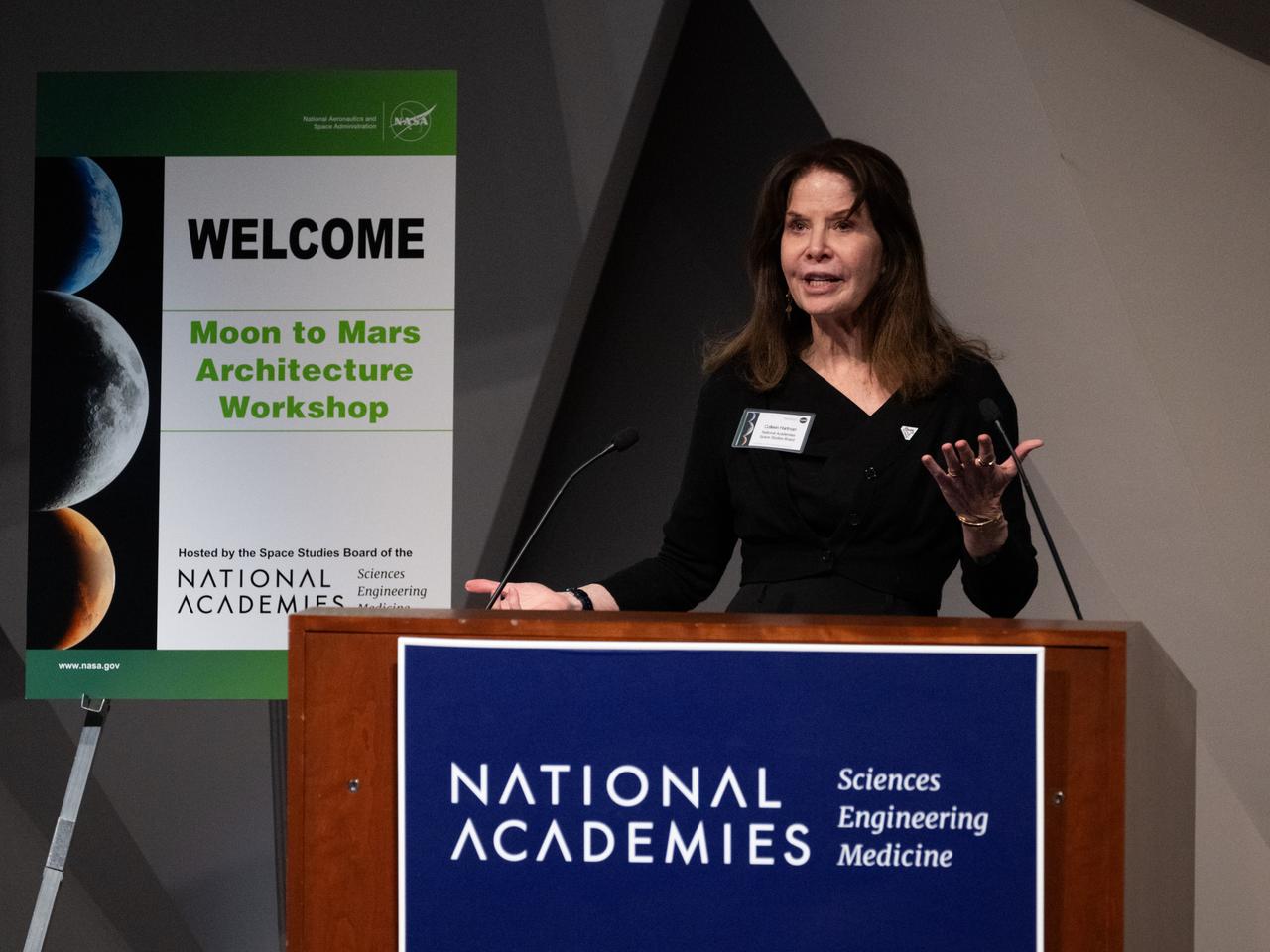
Colleen Hartman, director of the Space Studies Board at the National Academy of Sciences gives opening remarks at the Moon to Mars Architecture Workshop, Wednesday, Feb. 12, 2025, at the National Academy of Sciences in Washington. NASA held the workshop to engage the broader space community and collect feedback from U.S. industry and academia and international partners to inform NASA's Moon to Mars Architecture, the agency's roadmap for human exploration of the Moon and Mars. Photo Credit: (NASA/Joel Kowsky)
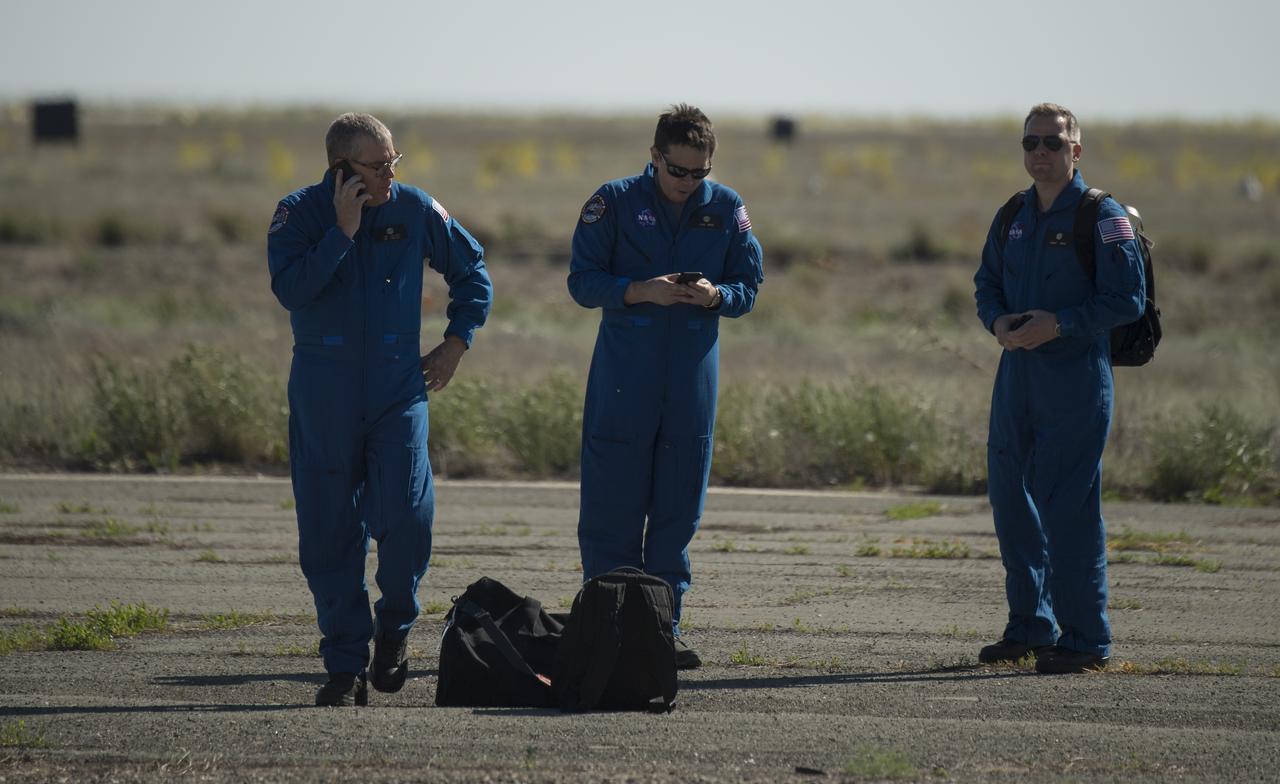
NASA Deputy International Space Station Program Manager Dan Hartman, left, NASA Director for Human Space Flight Programs, Russia, Chad Rowe, and NASA Interpreter Evgeny Sokol, right, wait at the Zhezkazgan, Kazakhstan Airport to support the Soyuz landing of Expedition 55 crew members Anton Shkaplerov of Roscosmos, Scott Tingle of NASA, Norishige Kanai of the Japan Aerospace Exploration Agency (JAXA) Sunday, June 3, 2018. Shkaplerov, Tingle, and Kanai are returning after 168 days in space where they served as members of the Expedition 54 and 55 crews onboard the International Space Station. Photo Credit: (NASA/Bill Ingalls)
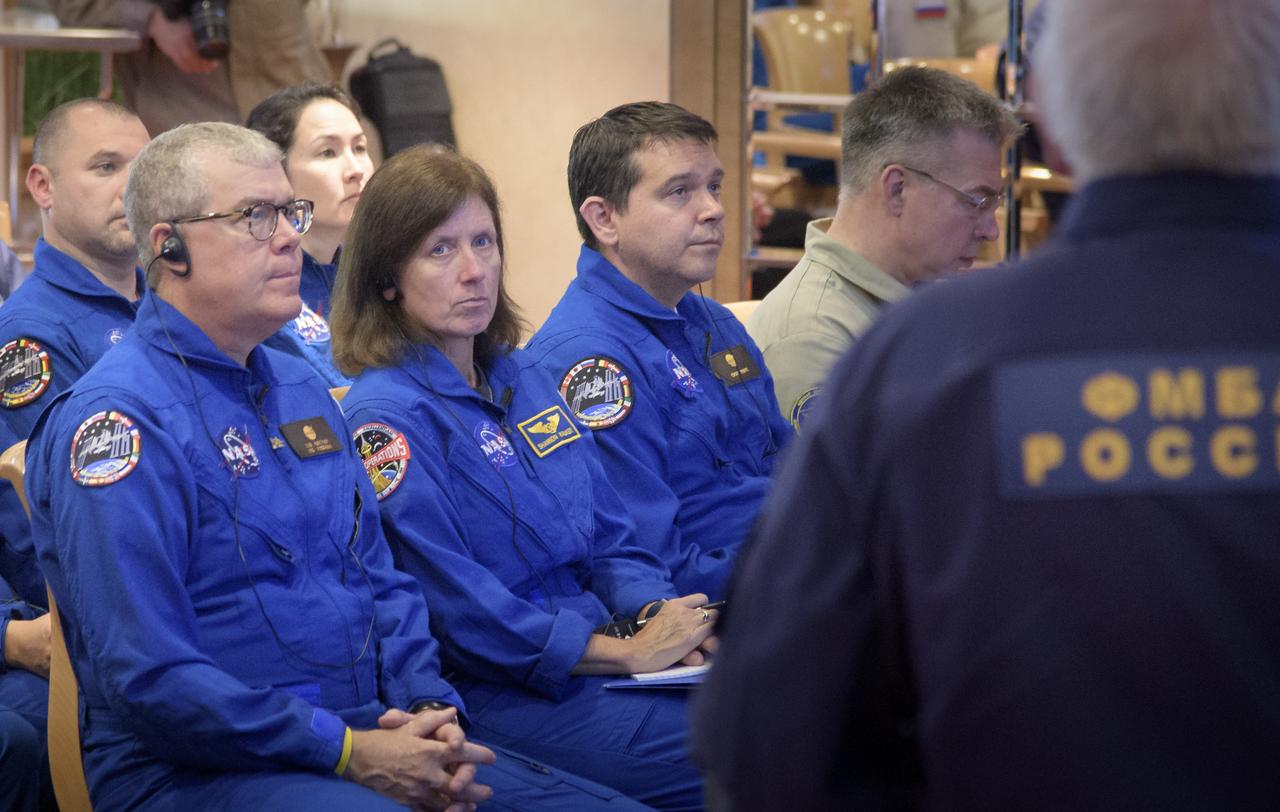
NASA Deputy International Space Station Program Manager Dan Hartman, left, NASA astronaut and Astronaut Office Representative Shannon Walker, center, and NASA Director for Human Space Flight Programs, Russia, Chad Rowe attend a NASA, Roscosmos, and Russian Search and Recovery Forces meeting to discuss the readiness for the landing of the Expedition 56 crew, Tuesday, Oct. 2, 2018. Expedition 56 crew members Drew Feustel and Ricky Arnold of NASA, along with Oleg Artemyev of Roscosmos are returning after 197 days in space where they served as members of the Expedition 55 and 56 crews onboard the International Space Station. Photo Credit: (NASA/Bill Ingalls)
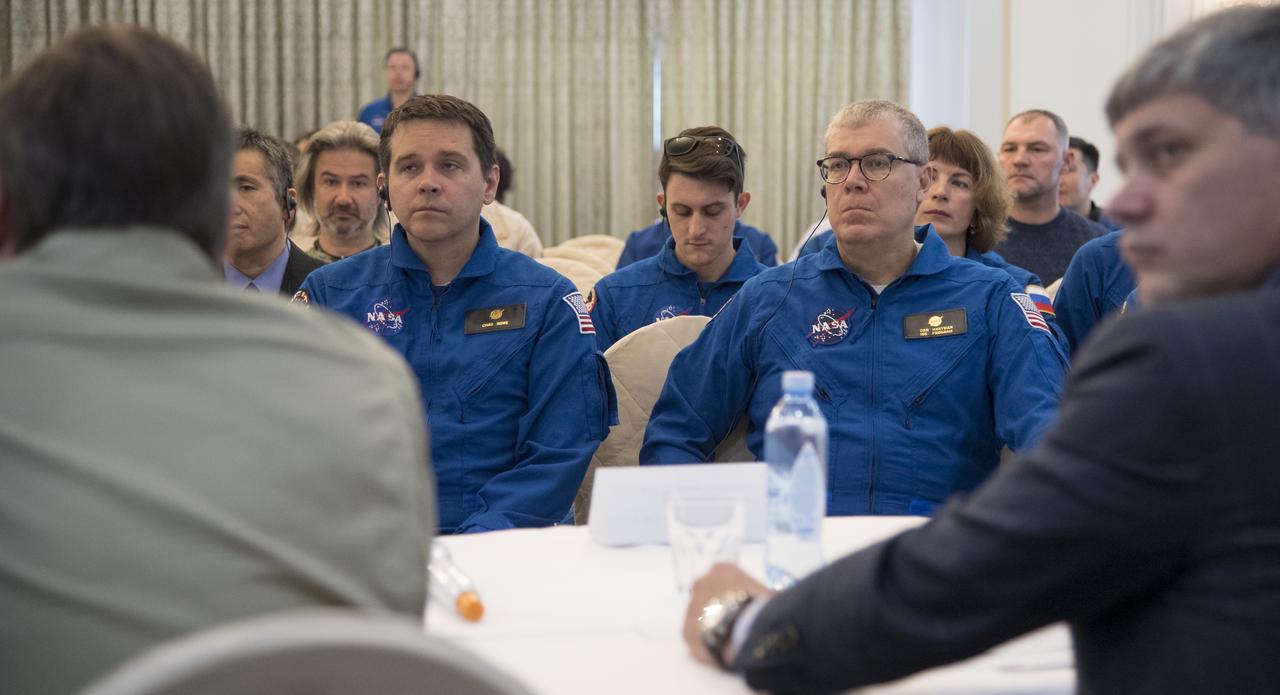
NASA Director for Human Space Flight Programs, Russia, Chad Rowe, left, and NASA Deputy International Space Station Program Manager Dan Hartman, right, are seen along with other NASA, Roscosmos, and JAXA team members during a meeting to discuss the readiness for the landing of Expedition 55 crew members Anton Shkaplerov of Roscosmos, Scott Tingle of NASA, Norishige Kanai of the Japan Aerospace Exploration Agency (JAXA) Saturday, June 2, 2018. Shkaplerov, Tingle, and Kanai are returning after 168 days in space where they served as members of the Expedition 54 and 55 crews onboard the International Space Station. Photo Credit: (NASA/Bill Ingalls)
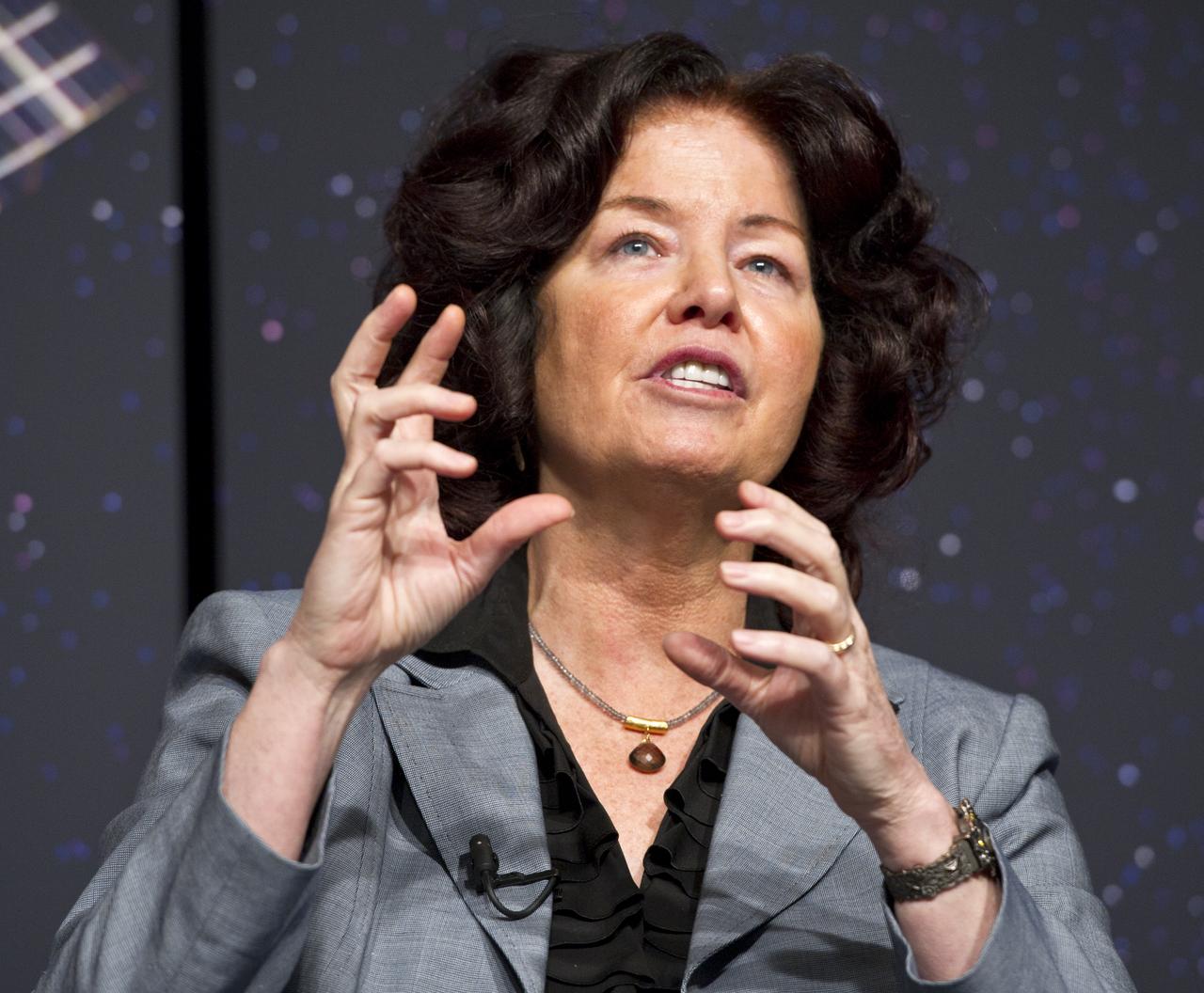
Colleen Hartman, Senior Advisor at NASA Headquarters and Research Professor at George Washington University, makes a point during a press conference, Wednesday, May 4, 2011, to discuss NASA's Gravity Probe B (GP-B) mission which has confirmed two key predictions derived from Albert Einstein's general theory of relativity, which the spacecraft was designed to test at NASA Headquarters in Washington. The experiment, launched in 2004, used four ultra-precise gyroscopes to measure the hypothesized geodetic effect, the warping of space and time around a gravitational body, and frame-dragging, the amount a spinning object pulls space and time with it as it rotates. Photo Credit: (NASA/Paul E. Alers)
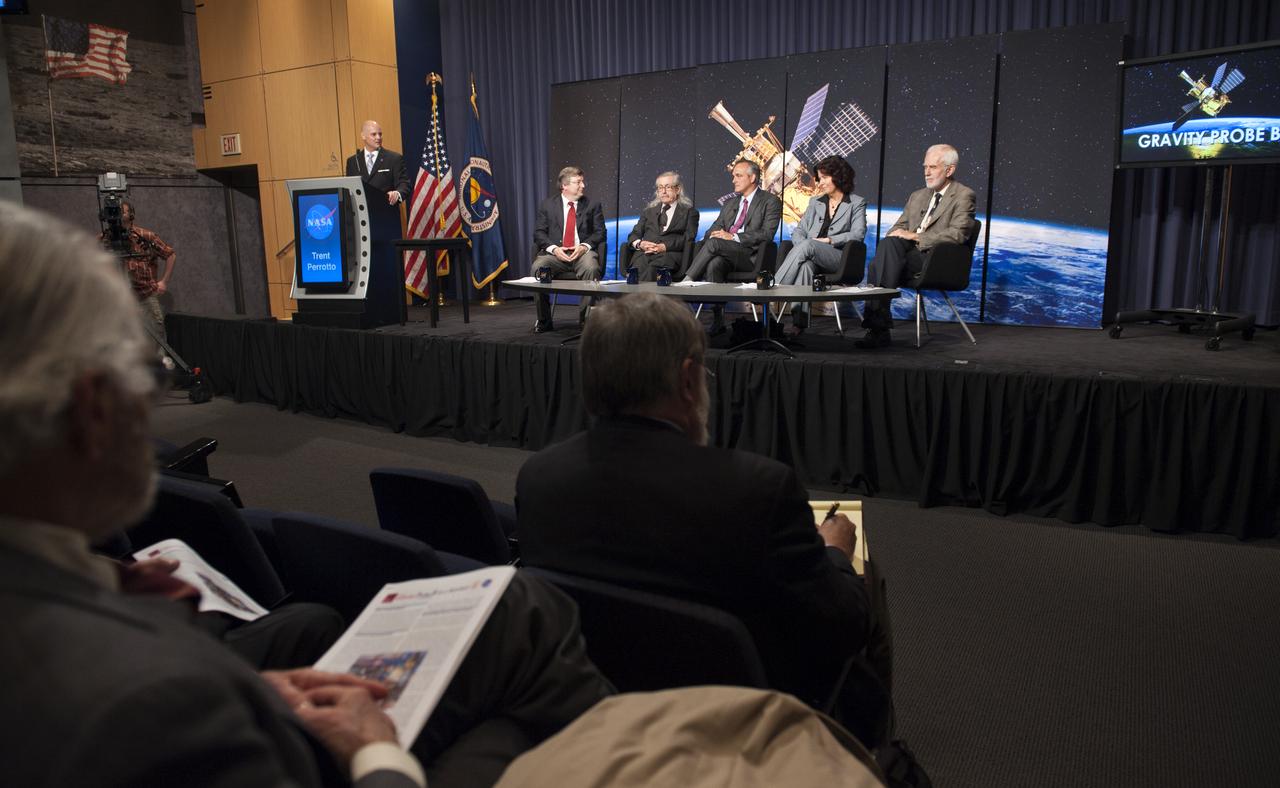
Seated from left, Bill Danchi, Senior Astrophysicist and Program Scientist at NASA Headquarters, Francis Everitt, Principal Investigator for the Gravity Probe B Mission at Stanford University, Rex Geveden, President of Teledyne Brown Engineering, Colleen Hartman, a research professor at George Washington University, and Clifford Will, Professor of Physics at Washington University in St. Louis, Mo., conduct a press conference, Wednesday, May 4, 2011, to discuss NASA's Gravity Probe B (GP-B) mission which has confirmed two key predictions derived from Albert Einstein's general theory of relativity, which the spacecraft was designed to test. at NASA Headquarters in Washington. Photo Credit: (NASA/Paul E. Alers)
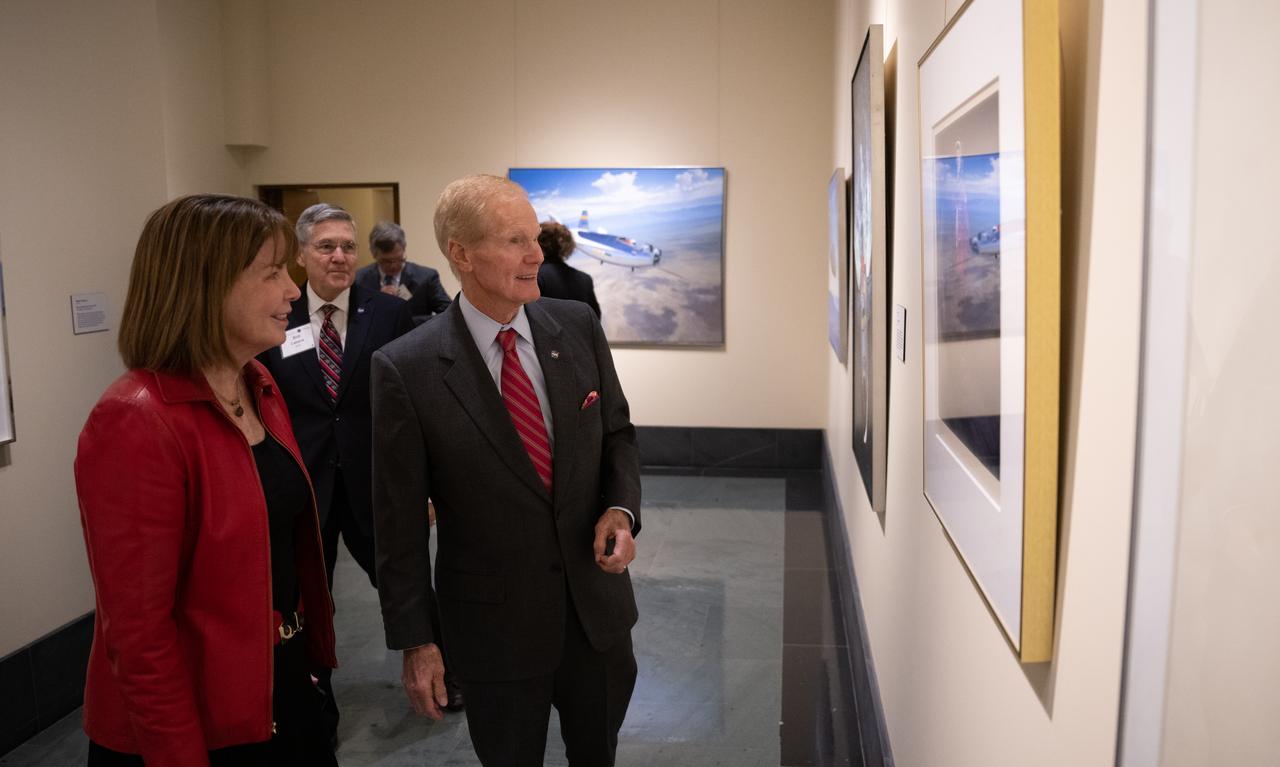
Colleen Hartman, director of physics, aeronautics, and space science at the National Academies of Science , left, and NASA Administrator Bill Nelson are seen as they view the NASA Art Program Exhibition “Launching the Future: Looking Back to Look Forward” during an event celebrating the 50th anniversary of the Apollo 17 mission, Wednesday, Dec. 14, 2022, at the National Academies of Science in Washington. The three-astronaut crew of Apollo 17 - commander Eugene Cernan, lunar module pilot Harrison Schmitt, and command module pilot Ronald Evans, embarked on the last mission of the Apollo program to land humans on the Moon in December of 1972. Cernan and Schmitt spent three days on the lunar surface collecting samples and performing scientific experiments before lifting off from the Taurus-Littrow Valley on December 14, 1972. Photo Credit: (NASA/Joel Kowsky)
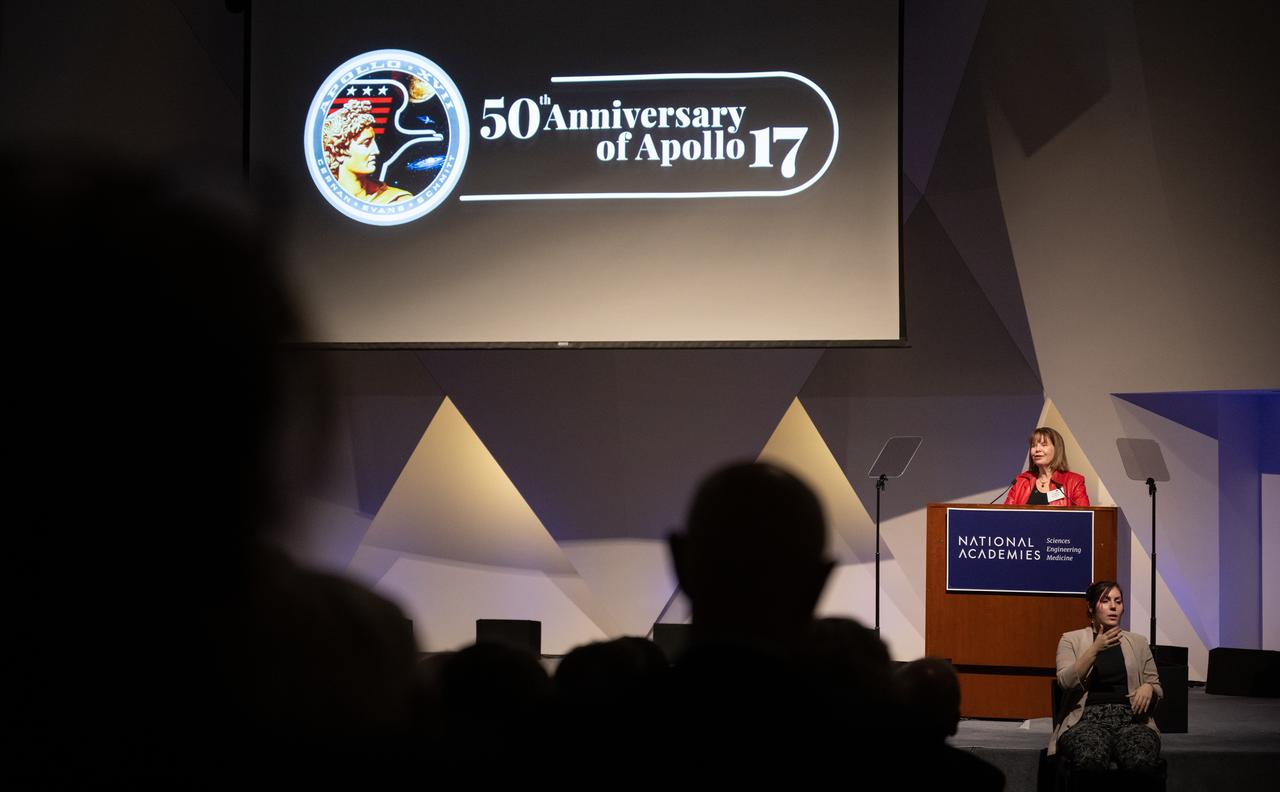
Colleen Hartman, director of physics, aeronautics, and space science at the National Academies of Science gives closing remarks during an event celebrating the 50th anniversary of the Apollo 17 mission, Wednesday, Dec. 14, 2022, at the National Academies of Science in Washington. The three-astronaut crew of Apollo 17 - commander Eugene Cernan, lunar module pilot Harrison Schmitt, and command module pilot Ronald Evans, embarked on the last mission of the Apollo program to land humans on the Moon in December of 1972. Cernan and Schmitt spent three days on the lunar surface collecting samples and performing scientific experiments before lifting off from the Taurus-Littrow Valley on December 14, 1972. Photo Credit: (NASA/Joel Kowsky)
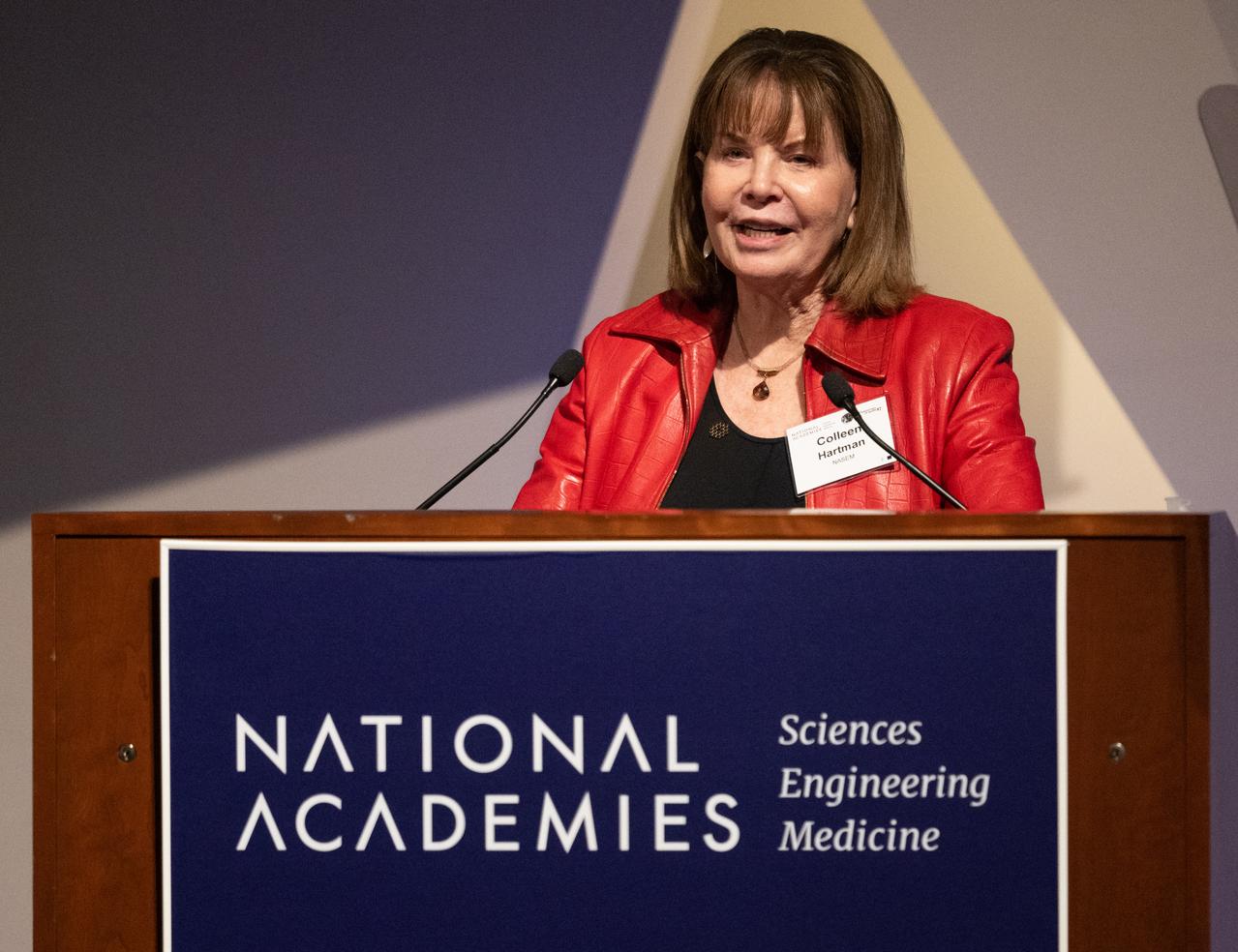
Colleen Hartman, director of physics, aeronautics, and space science at the National Academies of Science gives closing remarks during an event celebrating the 50th anniversary of the Apollo 17 mission, Wednesday, Dec. 14, 2022, at the National Academies of Science in Washington. The three-astronaut crew of Apollo 17 - commander Eugene Cernan, lunar module pilot Harrison Schmitt, and command module pilot Ronald Evans, embarked on the last mission of the Apollo program to land humans on the Moon in December of 1972. Cernan and Schmitt spent three days on the lunar surface collecting samples and performing scientific experiments before lifting off from the Taurus-Littrow Valley on December 14, 1972. Photo Credit: (NASA/Joel Kowsky)
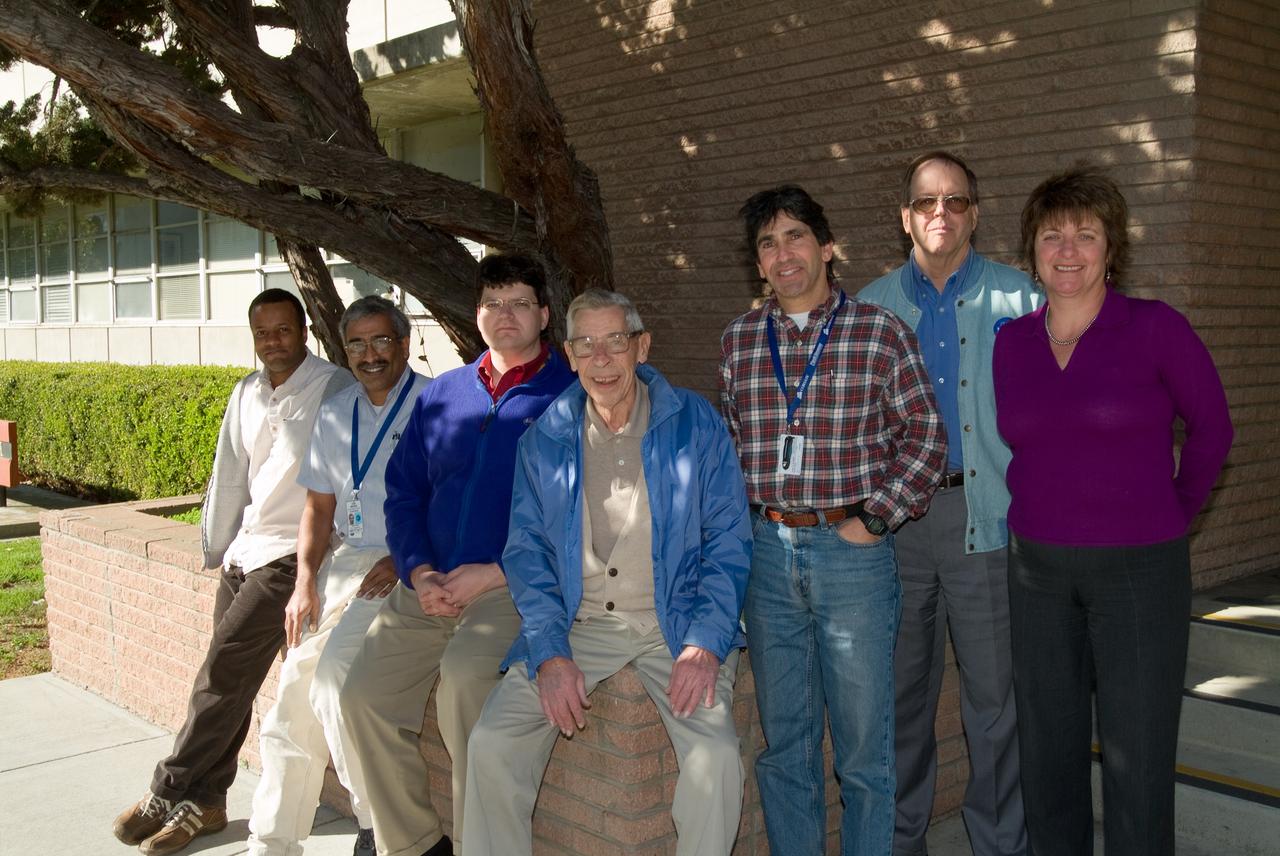
Dr. Alfred Eggers returns for a visit to Ames and the arc jet with (left to right); Ryan Mcdaniel, Dinesh Rabhu, Joe Olejnizak, Alfred Eggers, Jeff Brown, Joe Hartman, Sylvia Johnson.

U. S. Congressman Culbertson, Texas and Mr John Webb, Webb & Associates visit and tour Ames Research Center with Center Director G. Scott Hubbard (briefing and tour of the test facilities by Joe Hartman)
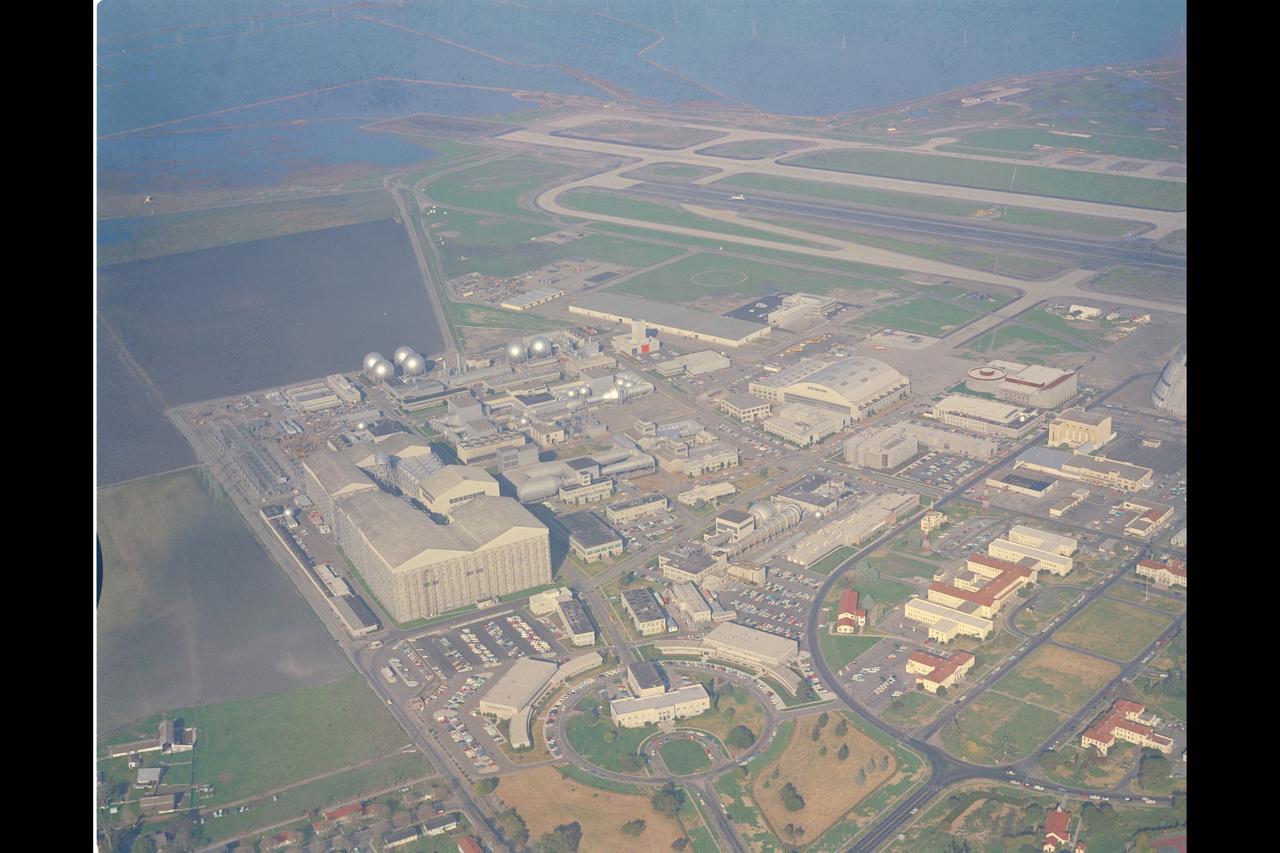
Aerial Survey of Ames Research Center (Used in NASA/AMES publication 'Adventures in Research' A history of Ames Research Center 1940 - 1965 by Edwin P. Hartman - SP-4302)
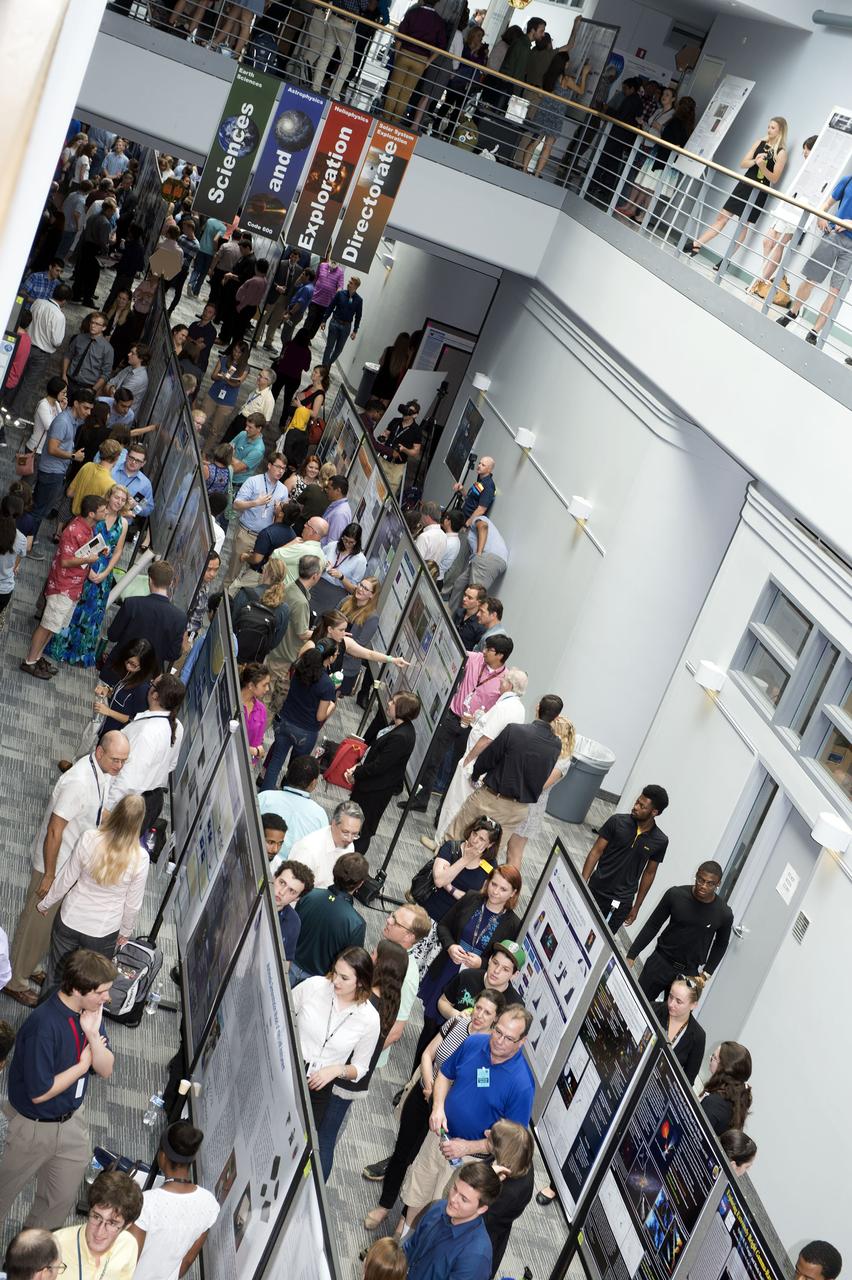
2017 interns participated in a summer poster session at Goddard on August 3,2017. Awards were given to top posters in categories of: computer science/IT, engineering, GSFC functional services and science. Colleen Hartman, Nancy Abell and Juan Ramon presented awards.
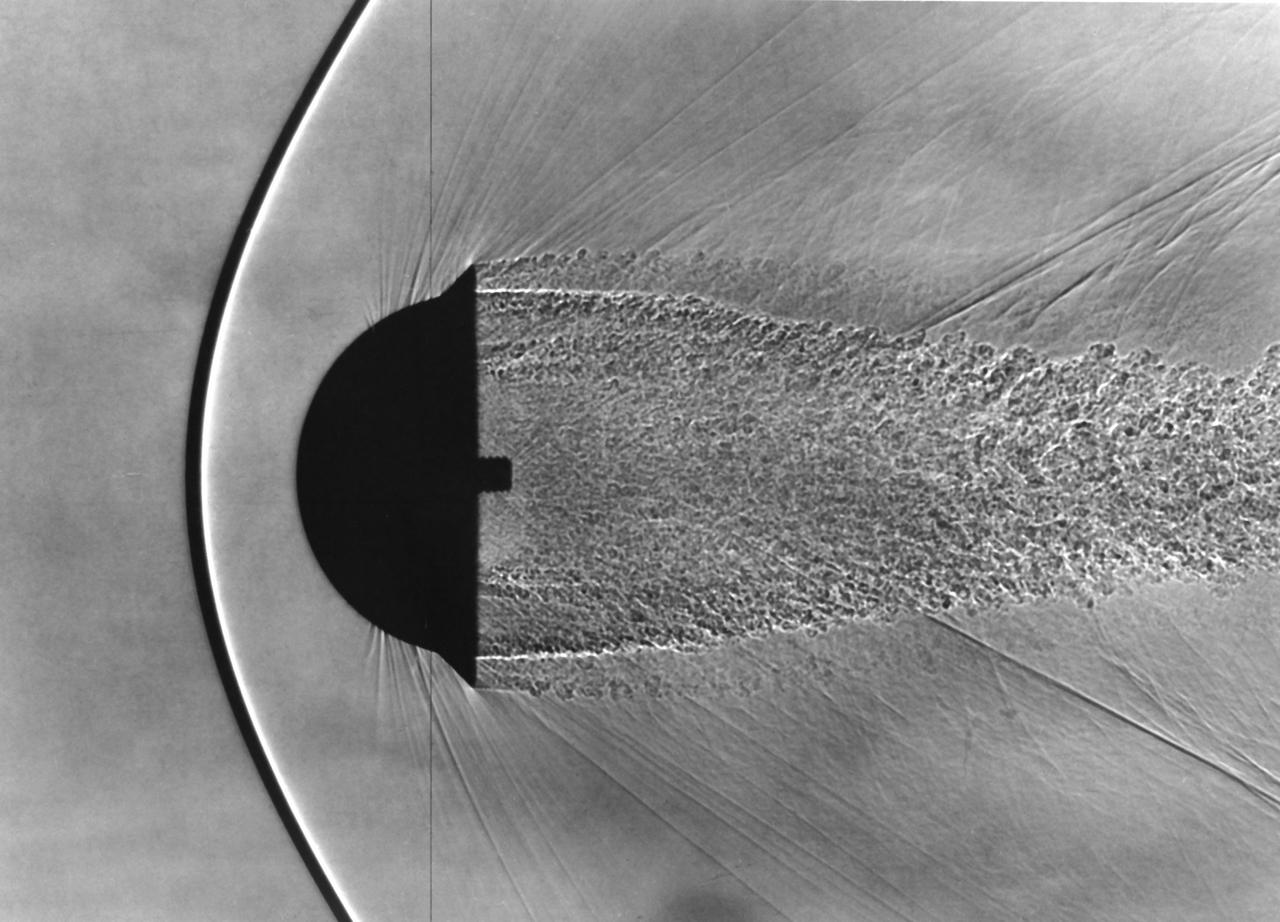
Shadowgraph of Finned Hemispherical model in free-flight show shock waves produced by blunt bodies (H. Julian Allen blunt nose theory) (Used in NASA/AMES publication 'Adventures in Research' A history of Ames Research Center 1940 - 1965 by Edwin P. Hartman - SP-4302)
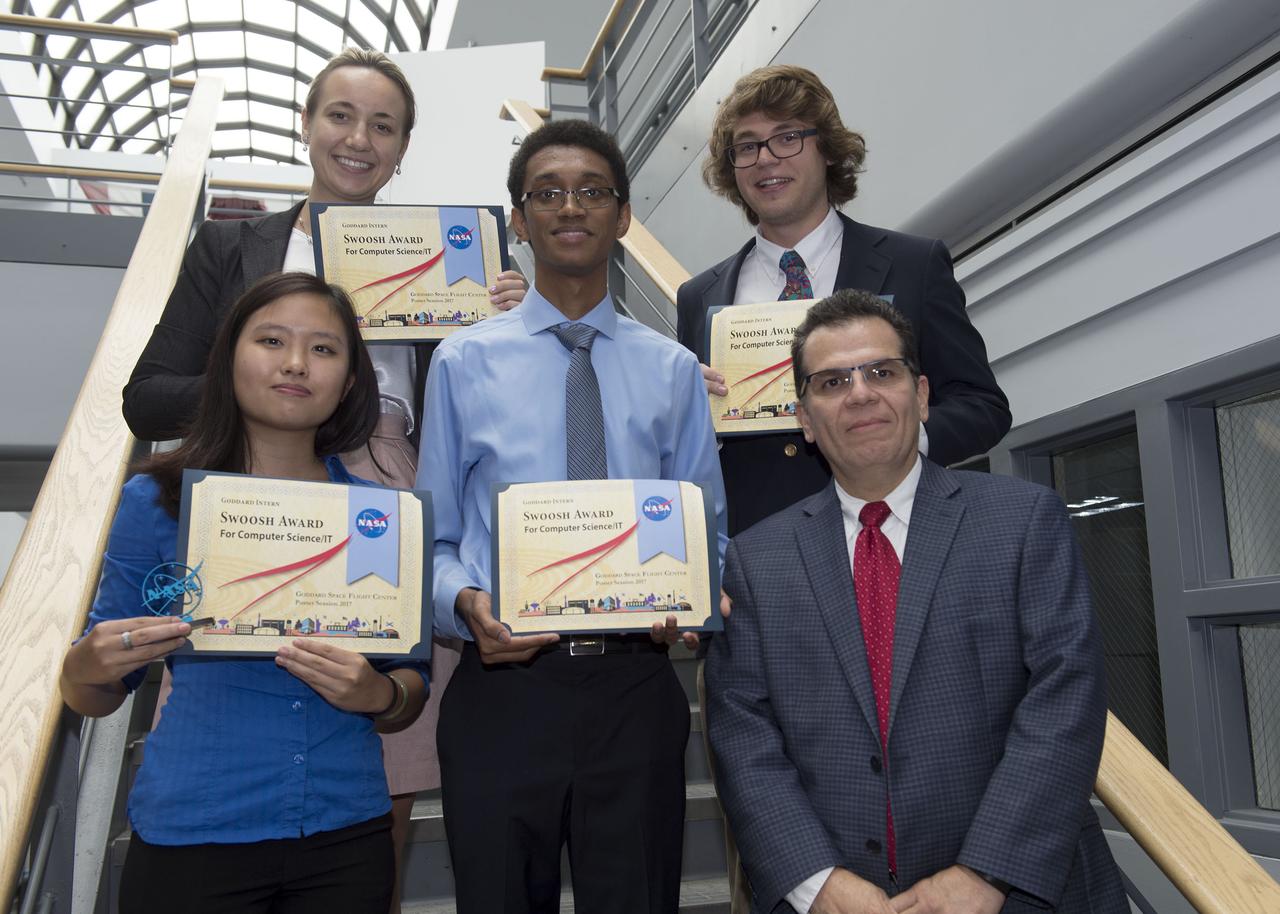
2017 interns participated in a summer poster session at Goddard on August 3, 2017. Awards were given to top posters in categories of: computer science/IT, engineering, GSFC functional services, and science. Colleen Hartman, Nancy Abell and Juan Ramon presented awards.
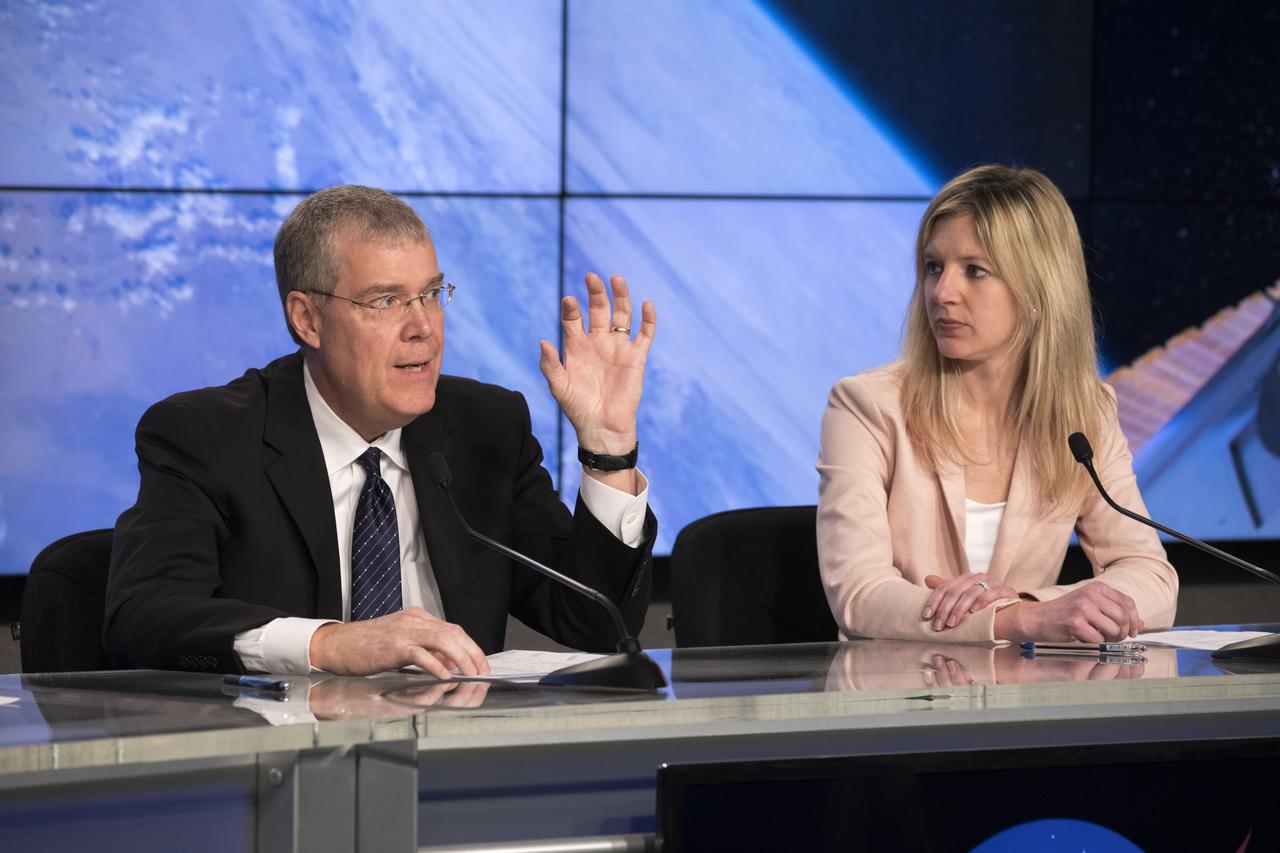
In the Kennedy Space Center’s Press Site auditorium, agency and industry leaders speak to members of the media at a prelaunch news conference for the SpaceX CRS-10 commercial resupply services mission to the International Space Station. From left are: Dan Hartman, deputy manager for the International Space Station Program at NASA's Johnson Space Center in Texas; and Jessica Jensen, director of Dragon mission management for SpaceX.

In the Kennedy Space Center’s Press Site auditorium, Dan Hartman, NASA deputy manager of the International Space Station Program, speaks to members of the media during a prelaunch news conference for the SpaceX CRS-12 commercial resupply services mission to the International Space Station. A Dragon spacecraft is scheduled to be launched from Kennedy’s Launch Complex 39A on Aug. 14 atop a SpaceX Falcon 9 rocket on the company's 12th Commercial Resupply Services mission to the space station.
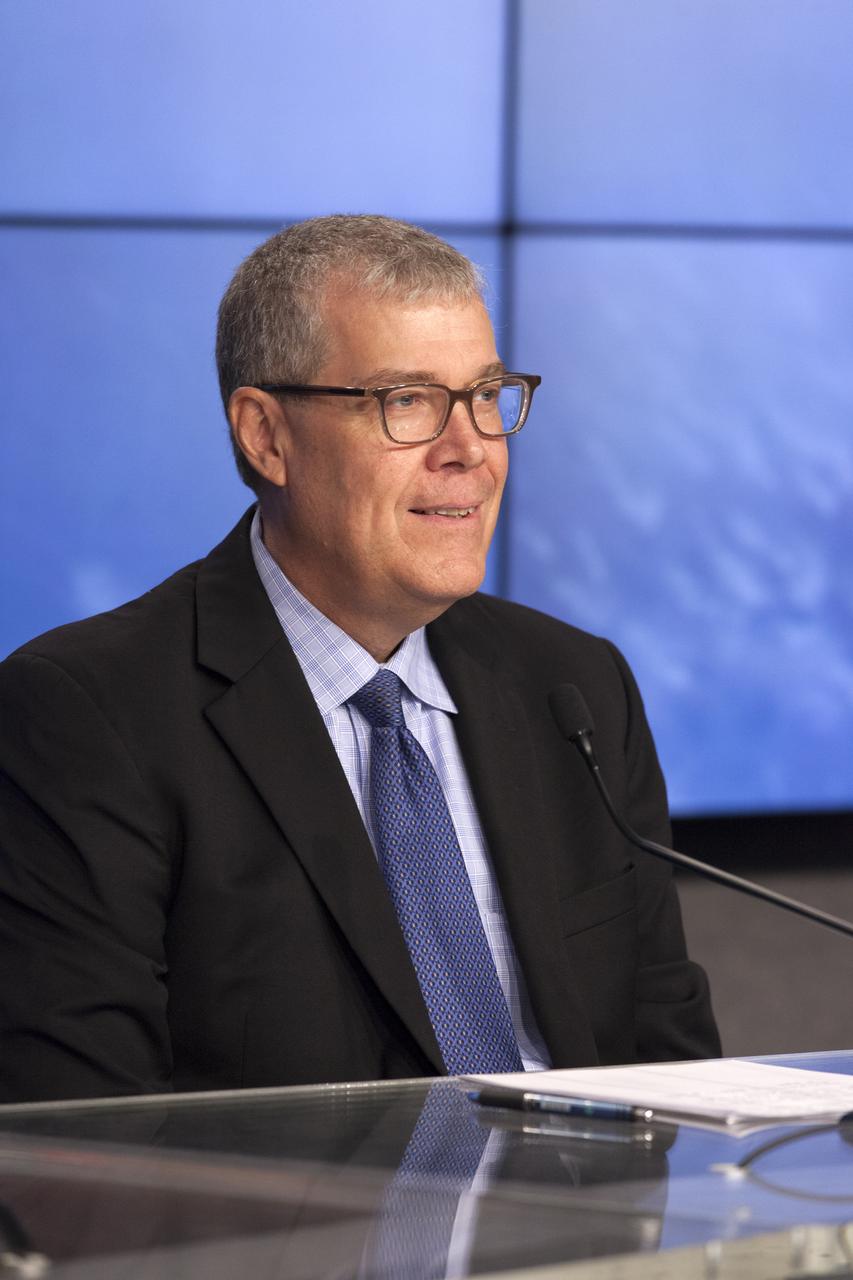
In the Press Site auditorium of NASA's Kennedy Space Center in Florida, Dan Hartman, NASA deputy manager of the International Space Station Program, speaks to media at a post-launch news conference following the liftoff of SpaceX CRS-12, a commercial resupply services mission to the International Space Station. SpaceX CRS-12 lifted off atop a Falcon 9 rocket from Kennedy's Launch Complex 39A at 12:31 p.m. EDT.
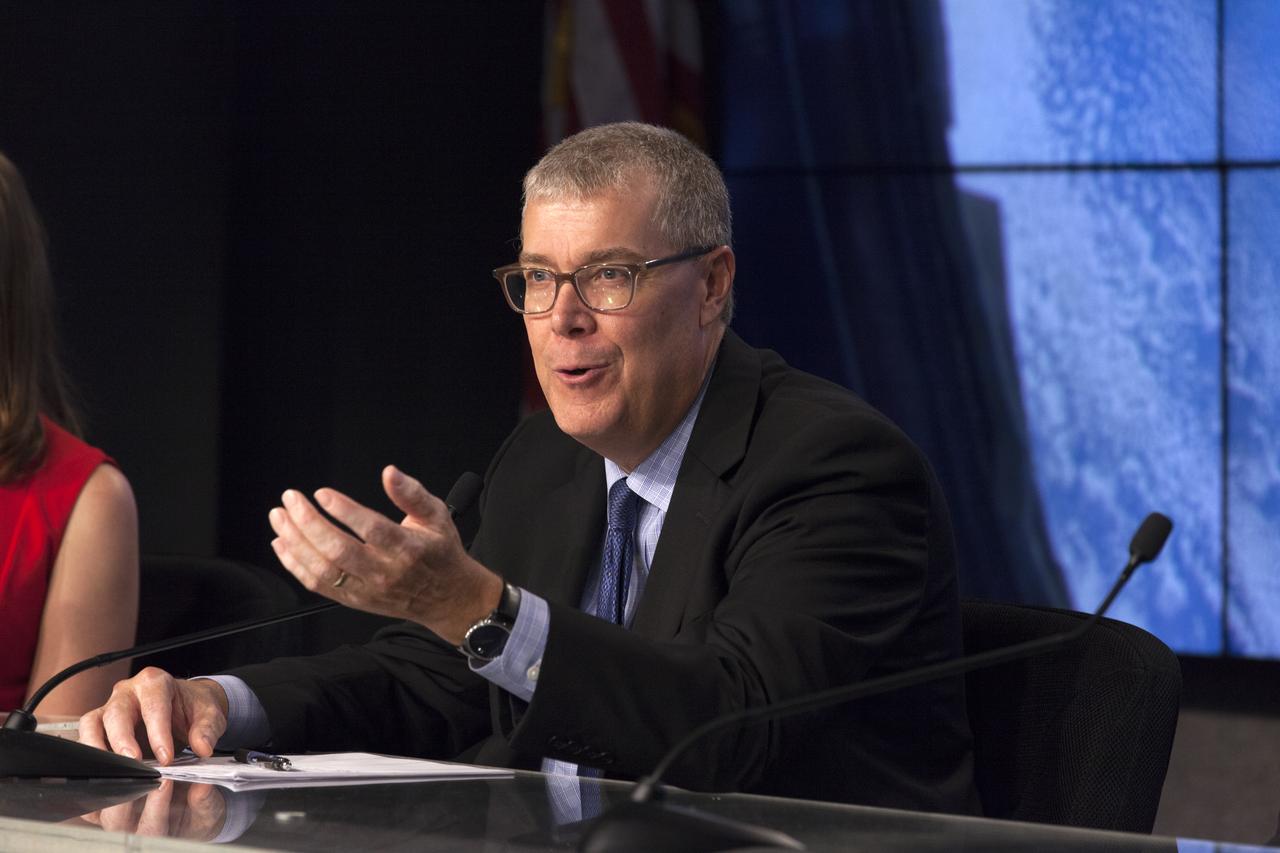
In the Press Site auditorium of NASA's Kennedy Space Center in Florida, Dan Hartman, NASA deputy manager of the International Space Station Program, speaks to media at a post-launch news conference following the liftoff of SpaceX CRS-12, a commercial resupply services mission to the International Space Station. SpaceX CRS-12 lifted off atop a Falcon 9 rocket from Kennedy's Launch Complex 39A at 12:31 p.m. EDT.
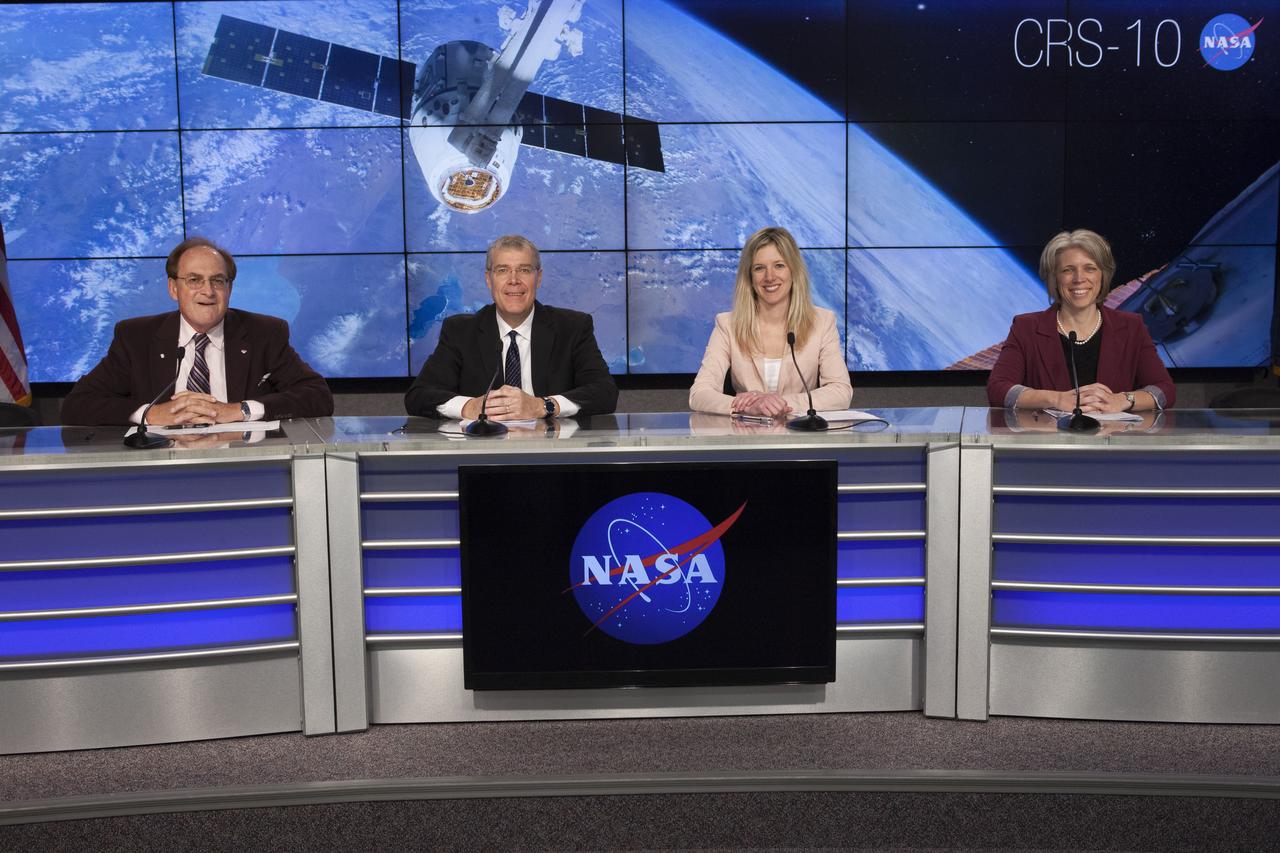
In the Kennedy Space Center’s Press Site auditorium, agency and industry leaders speak to members of the media at a prelaunch news conference for the SpaceX CRS-10 commercial resupply services mission to the International Space Station. From left are: George Diller of NASA Communications; Dan Hartman, deputy manager for the International Space Station Program at NASA's Johnson Space Center in Texas; Jessica Jensen, director of Dragon mission management for SpaceX; and Tara Ruttley, associate scientist for the International Space Station Program at Johnson.
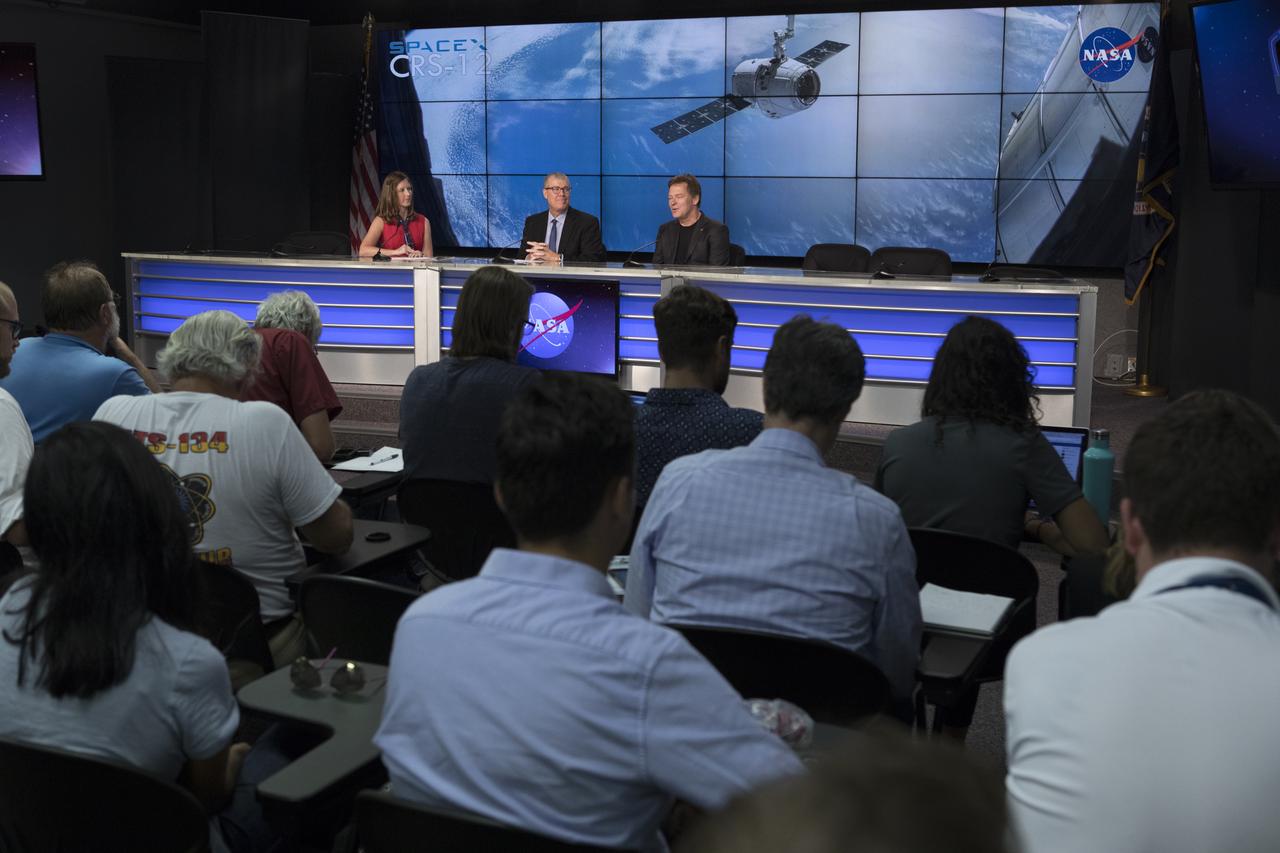
In the Press Site auditorium of NASA's Kennedy Space Center in Florida, NASA and industry leaders speak to media at a post-launch news conference following the liftoff of SpaceX CRS-12, a commercial resupply services mission to the International Space Station. From left are: Stephanie Martin of NASA Communications, Dan Hartman, NASA deputy manager of the International Space Station Program, and Hans Koenigsmann, SpaceX vice president of Flight and Build Reliability. SpaceX CRS-12 lifted off atop a Falcon 9 rocket from Kennedy's Launch Complex 39A at 12:31 p.m. EDT.
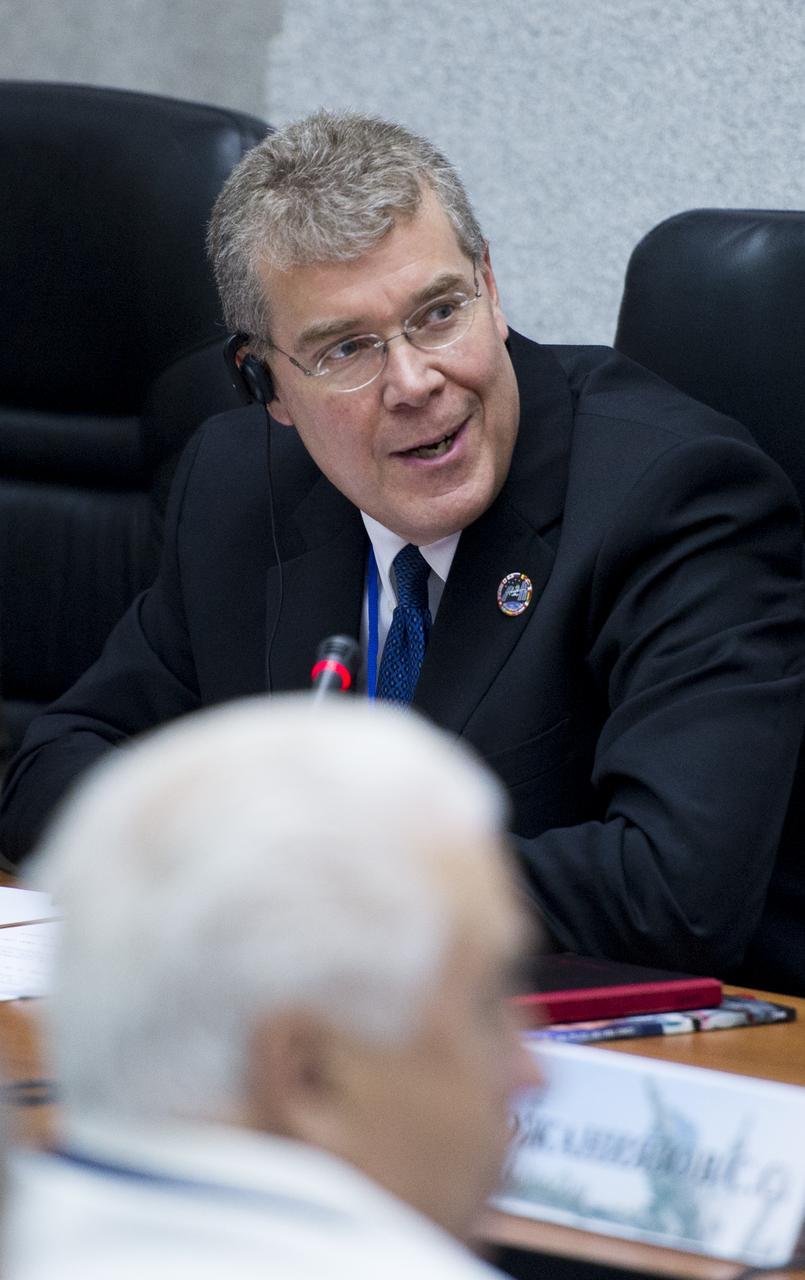
Dan Hartman, NASA Deputy Space Station Program Manager speaks during the State Commission meeting held to approve the Soyuz launch of the crew for a five and a half month mission aboard the International Space Station, Tuesday, May 27, 2014 at the Cosmonaut Hotel in Baikonur, Kazakhstan. Expedition 40 Soyuz Commander Maxim Suraev of the Russian Federal Space Agency, Roscosmos, Flight Engineer Alexander Gerst of the European Space Agency, ESA, and Flight Engineer Reid Wiseman of NASA will launch about their Soyuz TMA-13M spacecraft in the early hours of May 29. Photo Credit: (NASA/Joel Kowsky)
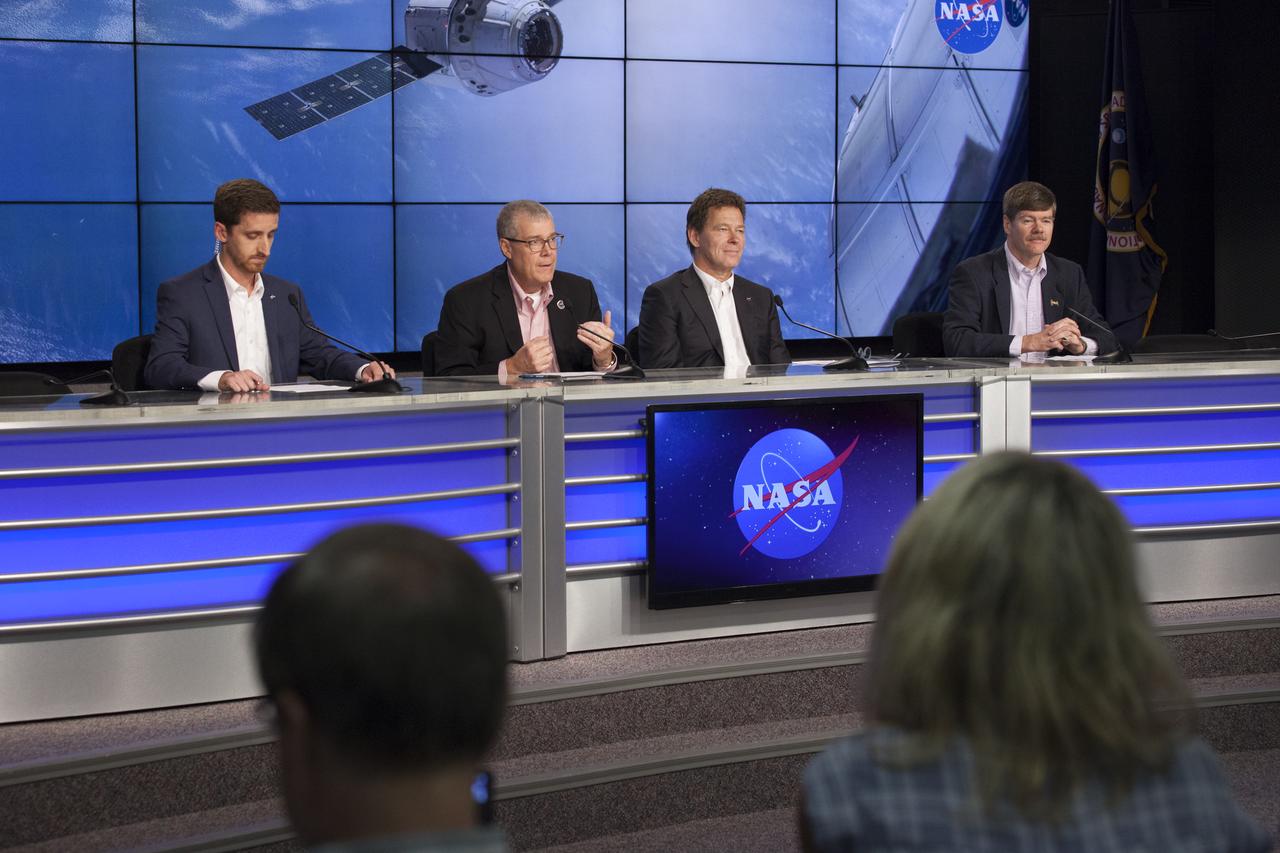
In the Kennedy Space Center’s Press Site auditorium, agency and industry leaders speak to members of the media during a prelaunch news conference for the SpaceX CRS-12 commercial resupply services mission to the International Space Station. From left are: Josh Finch of NASA Communications; Dan Hartman, NASA deputy manager of the International Space Station Program, Hans Koenigsmann, vice president of Build and Flight Reliability for SpaceX, and Pete Hasbrook, associate program scientist for the International Space Station Program. A Dragon spacecraft is scheduled to be launched from Kennedy’s Launch Complex 39A on Aug. 14 atop a SpaceX Falcon 9 rocket on the company's 12th Commercial Resupply Services mission to the space station.
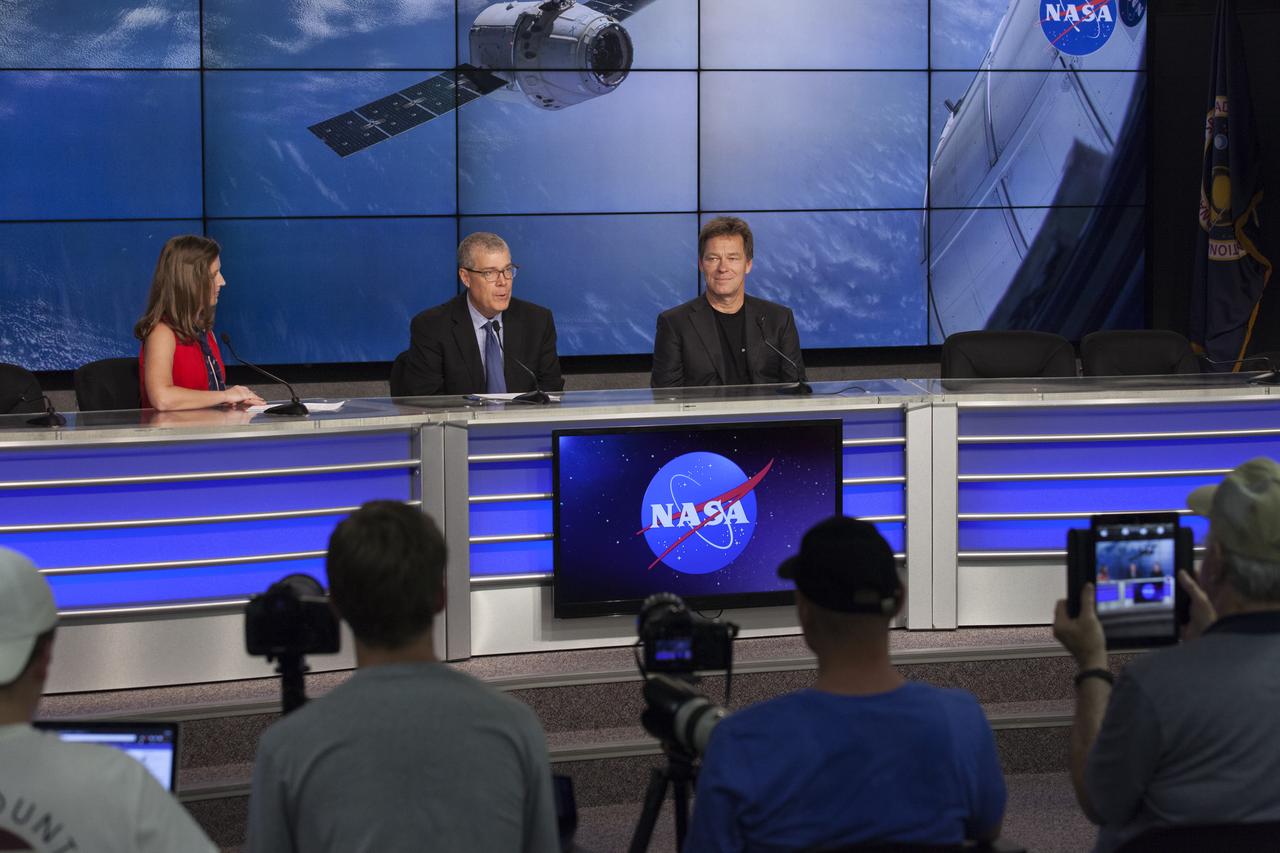
In the Press Site auditorium of NASA's Kennedy Space Center in Florida, NASA and industry leaders speak to media at a post-launch news conference following the liftoff of SpaceX CRS-12, a commercial resupply services mission to the International Space Station. From left are: Stephanie Martin of NASA Communications, Dan Hartman, NASA deputy manager of the International Space Station Program, and Hans Koenigsmann, SpaceX vice president of Flight and Build Reliability. SpaceX CRS-12 lifted off atop a Falcon 9 rocket from Kennedy's Launch Complex 39A at 12:31 p.m. EDT.
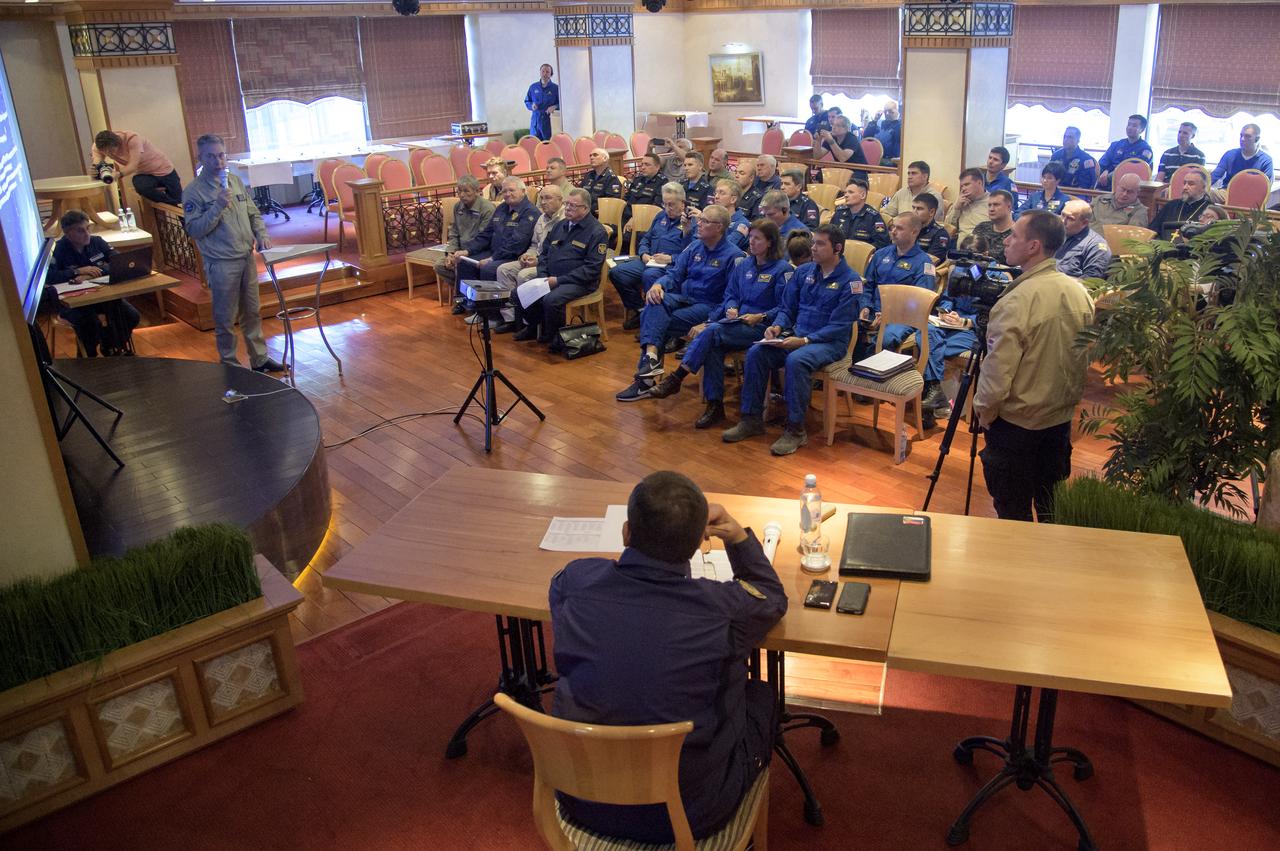
NASA and Roscosmos team members, along with Russian Search and Recovery Forces, meet at the Cosmonaut Hotel in Karaganda, Kazakhstan to discuss the readiness for the landing of Expedition 56 Commander Drew Feustel and Flight Engineer Ricky Arnold of NASA, along with Flight Engineer and Soyuz Commander Oleg Artemyev of Roscosmos Tuesday, Oct. 2, 2018. Feustel, Arnold, and Artemyev are returning after 197 days in space where they served as members of the Expedition 55 and 56 crews onboard the International Space Station. Photo Credit: (NASA/Bill Ingalls)
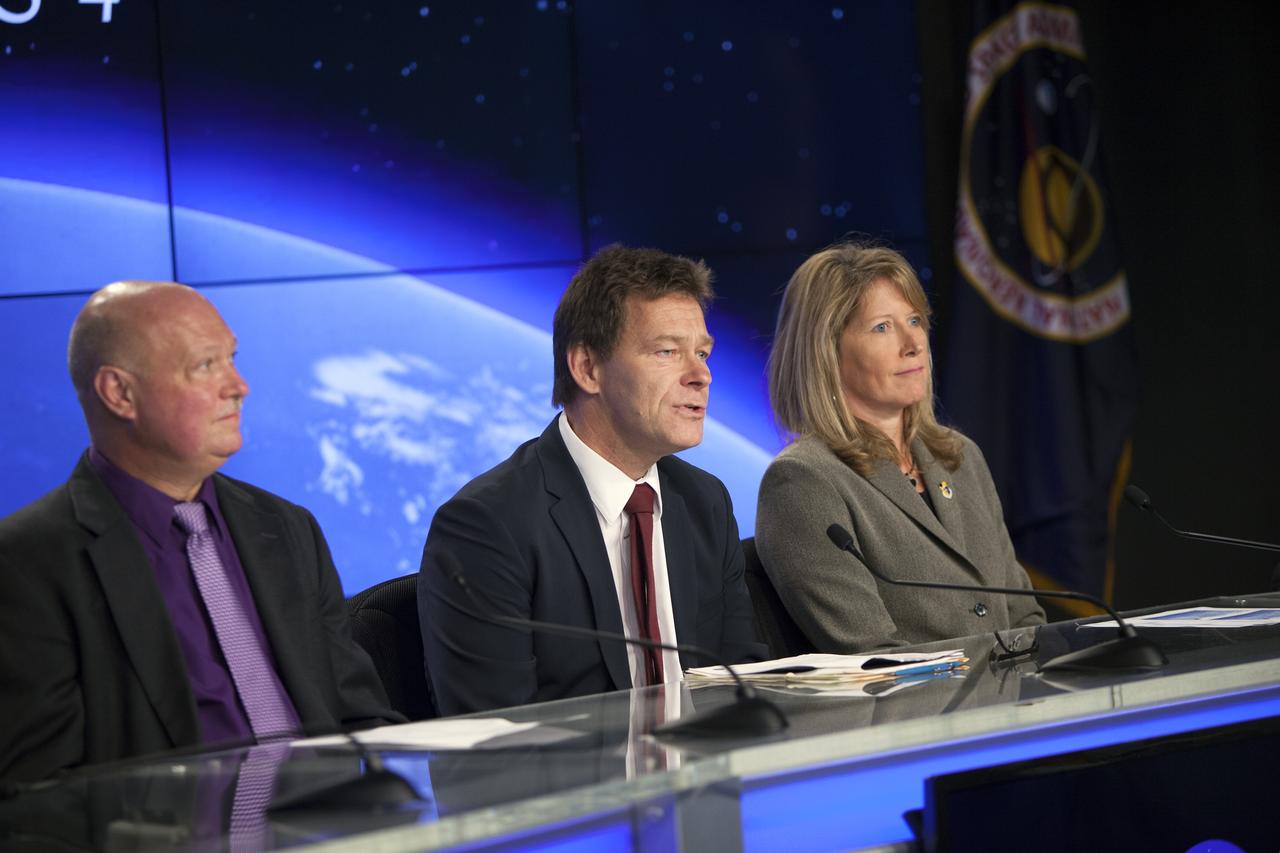
CAPE CANAVERAL, Fla. – In the Kennedy Space Center’s Press Site auditorium, members of news media are briefed on preparations for the launch of the SpaceX CRS-4 mission to resupply the International Space Station. From left are Mike Curie of NASA Public Affairs, Hans Koenigsmann, vice president of Mission Assurance with SpaceX, and Kathy Winters, launch weather officer for the 45th Weather Squadron. Dan Hartman, deputy program manager of the International Space Station Program, participated by telephone. The mission is the fourth of 12 SpaceX flights NASA contracted with the company to resupply the space station. It will be the fifth trip by a Dragon spacecraft to the orbiting laboratory. The spacecraft’s 2.5 tons of supplies, science experiments, and technology demonstrations include critical materials to support 255 science and research investigations that will occur during the station's Expeditions 41 and 42. Liftoff is targeted for an instantaneous window at 2:14 a.m. EDT. To learn more about the mission, visit http://www.nasa.gov/mission_pages/station/structure/launch/index.html Photo credit: NASA/Jim Grossmann
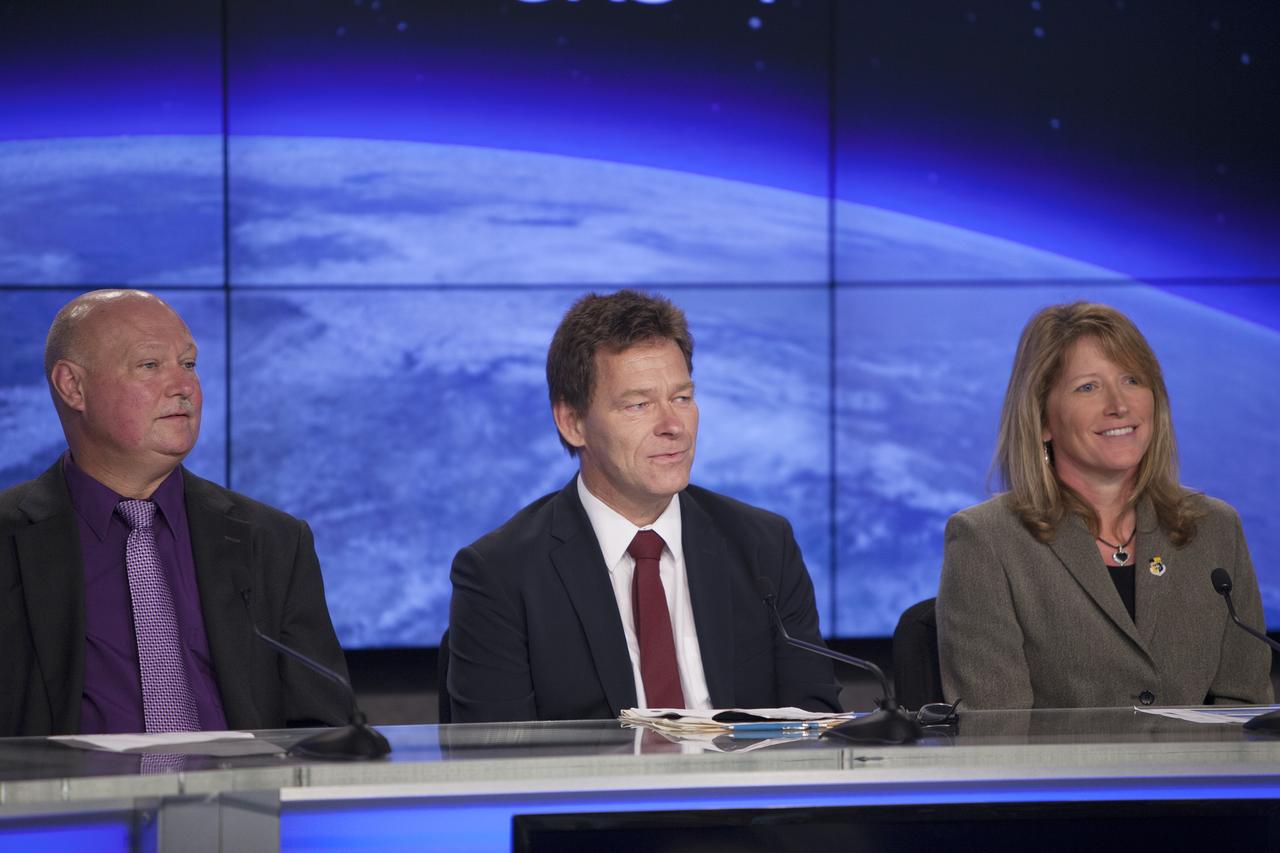
CAPE CANAVERAL, Fla. – In the Kennedy Space Center’s Press Site auditorium, members of news media are briefed on preparations for the launch of the SpaceX CRS-4 mission to resupply the International Space Station. From left are Mike Curie of NASA Public Affairs, Hans Koenigsmann, vice president of Mission Assurance with SpaceX, and Kathy Winters, launch weather officer for the 45th Weather Squadron. Dan Hartman, deputy program manager of the International Space Station Program, participated by telephone. The mission is the fourth of 12 SpaceX flights NASA contracted with the company to resupply the space station. It will be the fifth trip by a Dragon spacecraft to the orbiting laboratory. The spacecraft’s 2.5 tons of supplies, science experiments, and technology demonstrations include critical materials to support 255 science and research investigations that will occur during the station's Expeditions 41 and 42. Liftoff is targeted for an instantaneous window at 2:14 a.m. EDT. To learn more about the mission, visit http://www.nasa.gov/mission_pages/station/structure/launch/index.html Photo credit: NASA/Jim Grossmann
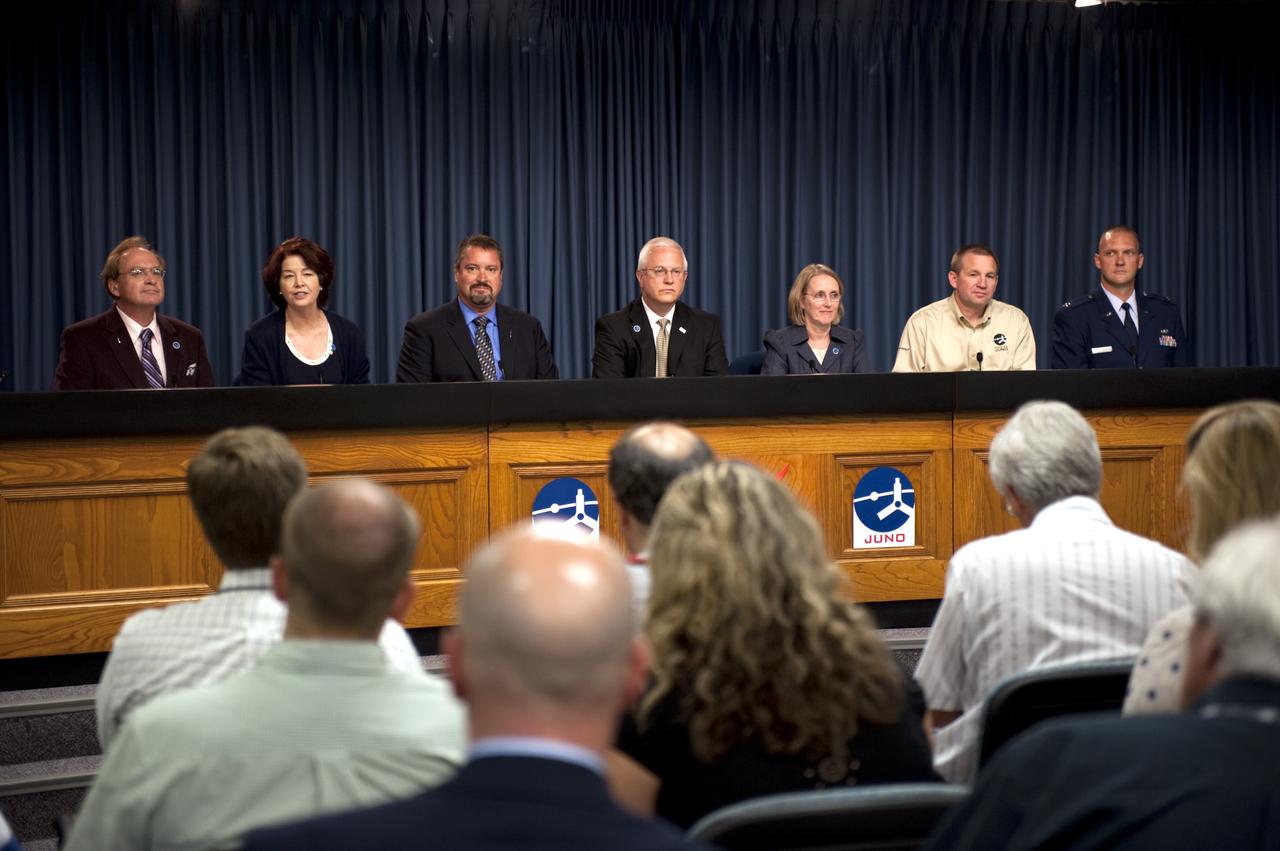
CAPE CANAVERAL, Fla. -- A Juno prelaunch news conference is held in the NASA Press Site auditorium at NASA's Kennedy Space Center in Florida. From left are George Diller, NASA Public Affairs; Colleen Hartman, assistant associate administrator, Science Mission Directorate, NASA Headquarters, Washington; Omar Baez, NASA launch director, Kennedy Space Center, Cape Canaveral, Fla.; Vernon Thorp, program manager, NASA Missions, United Launch Alliance, Denver, Colo.; Jan Chodas, Juno project manager, Jet Propulsion Laboratory, Pasadena, Calif.; Tim Gasparrini, Juno program manager, Lockheed Martin Space Systems, Denver, Colo.; and Capt. Billy Whisel, launch weather officer, 45th Weather Squadron, Cape Canaveral Air Force Station, Fla. Juno is scheduled to launch Aug. 5 aboard a United Launch Alliance Atlas V rocket from Cape Canaveral Air Force Station in Florida. The solar-powered spacecraft will orbit Jupiter's poles 33 times to find out more about the gas giant's origins, structure, atmosphere and magnetosphere and investigate the existence of a solid planetary core. For more information, visit www.nasa.gov/juno. Photo credit: NASA/Kim Shiflett
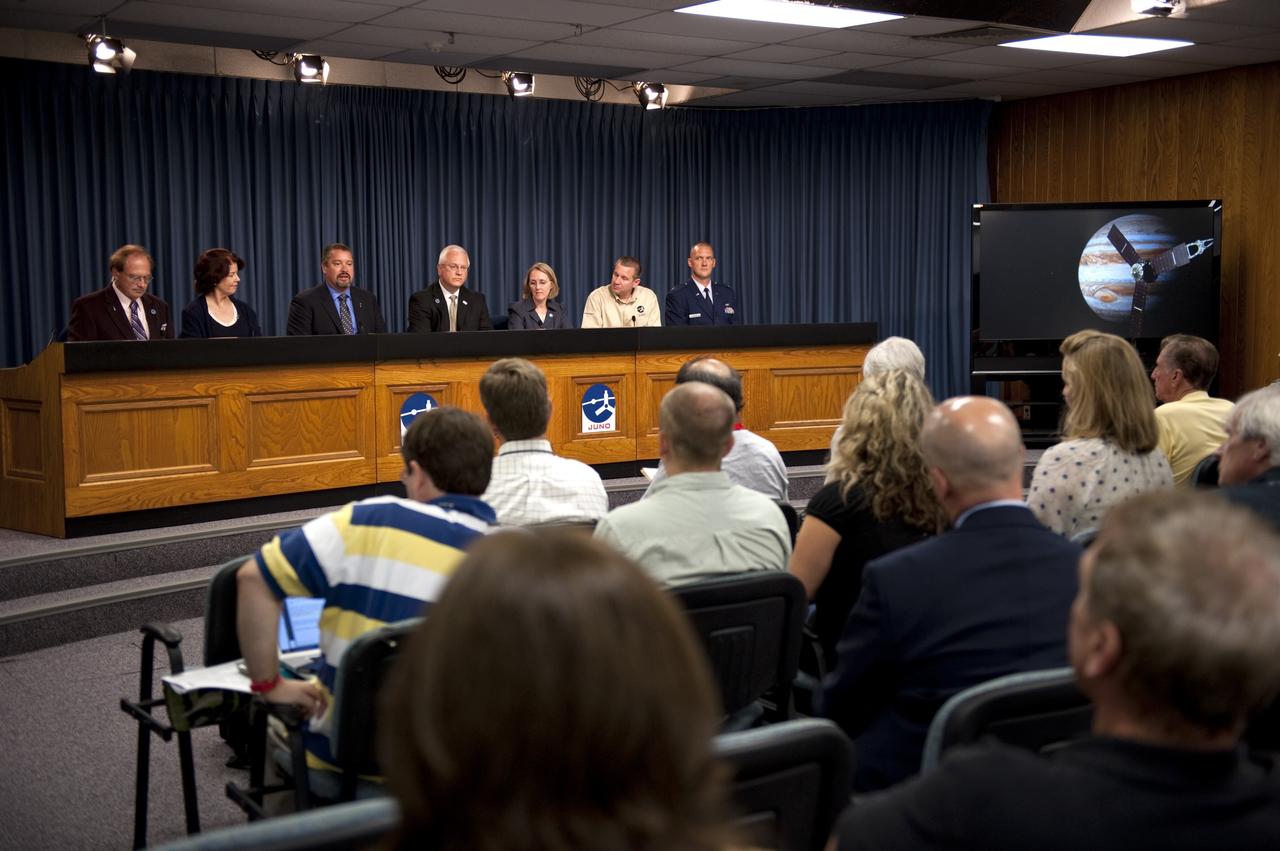
CAPE CANAVERAL, Fla. -- Media representatives question the participants of a Juno prelaunch news conference in the NASA Press Site auditorium at NASA's Kennedy Space Center in Florida. From left are George Diller, NASA Public Affairs; Colleen Hartman, assistant associate administrator, Science Mission Directorate, NASA Headquarters, Washington; Omar Baez, NASA launch director, Kennedy Space Center, Cape Canaveral, Fla.; Vernon Thorp, program manager, NASA Missions, United Launch Alliance, Denver, Colo.; Jan Chodas, Juno project manager, Jet Propulsion Laboratory, Pasadena, Calif.; Tim Gasparrini, Juno program manager, Lockheed Martin Space Systems, Denver, Colo.; and Capt. Billy Whisel, launch weather officer, 45th Weather Squadron, Cape Canaveral Air Force Station, Fla. Juno is scheduled to launch Aug. 5 aboard a United Launch Alliance Atlas V rocket from Cape Canaveral Air Force Station in Florida. The solar-powered spacecraft will orbit Jupiter's poles 33 times to find out more about the gas giant's origins, structure, atmosphere and magnetosphere and investigate the existence of a solid planetary core. For more information, visit www.nasa.gov/juno. Photo credit: NASA/Kim Shiflett
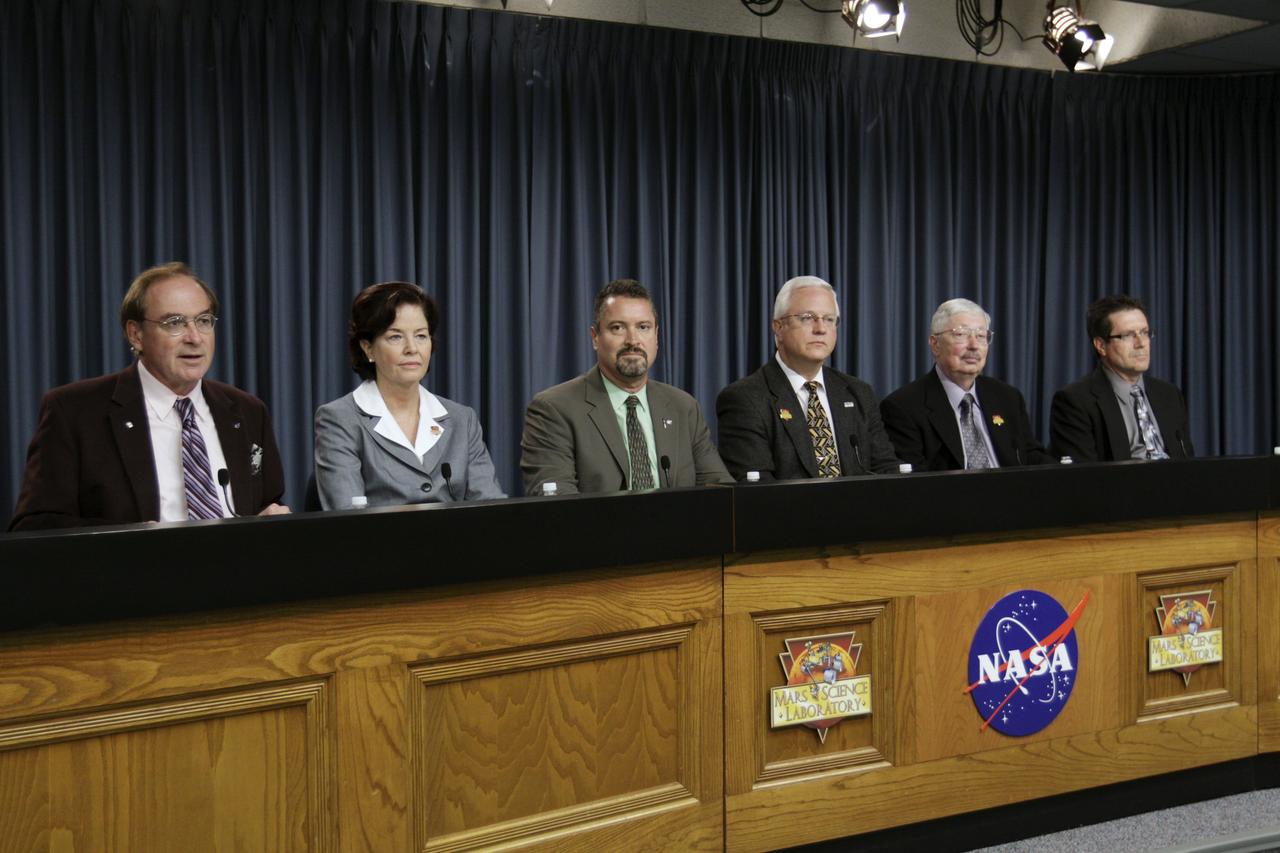
CAPE CANAVERAL, Fla. – NASA’s Kennedy Space Center in Florida is host to a Mars Science Laboratory (MSL) prelaunch news conference as part of preflight activities for the MSL mission. From left are NASA Public Affairs Officer George Diller; Colleen Hartman, assistant associate administrator, NASA Science Mission Directorate; Omar Baez, NASA launch director; Vernon Thorp, program manager, NASA Missions, United Launch Alliance; Peter Theisinger, MSL project manager; and Clay Flinn, launch weather officer 45th Weather Squadron, Cape Canaveral Air Force Station, Fla. MSL’s components include a car-sized rover, Curiosity, which has 10 science instruments designed to search for signs of life, including methane, and help determine if the gas is from a biological or geological source. Launch of MSL aboard a United Launch Alliance Atlas V rocket is scheduled for Nov. 26 from Space Launch Complex-41 on Cape Canaveral Air Force Station in Florida. For more information, visit http://www.nasa.gov/msl. Photo credit: NASA/Kim Shiflett
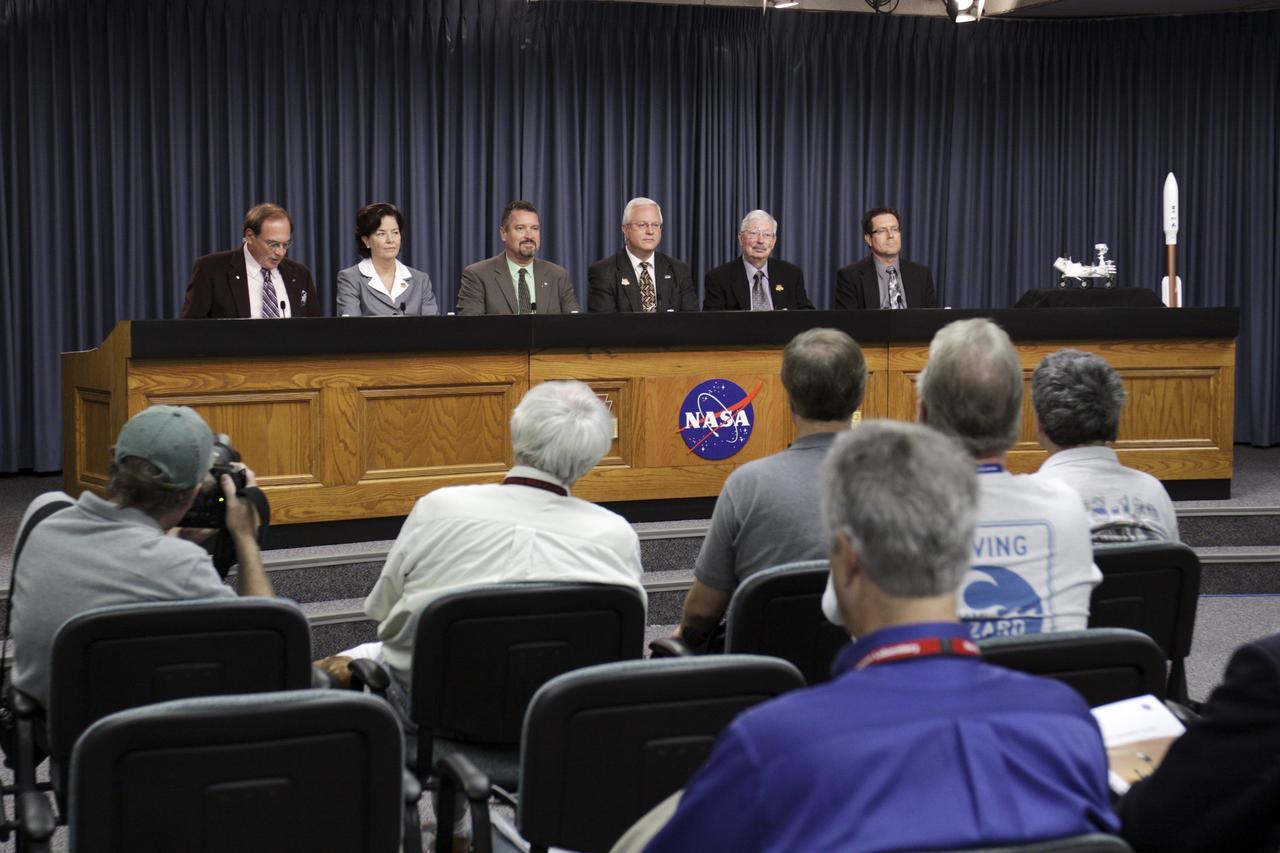
CAPE CANAVERAL, Fla. – Media representatives participate in a prelaunch news conference for the Mars Science Laboratory (MSL) in the Press Site auditorium at NASA’s Kennedy Space Center in Florida. From left are NASA Public Affairs Officer George Diller; Colleen Hartman, assistant associate administrator, NASA Science Mission Directorate; Omar Baez, NASA launch director; Vernon Thorp, program manager, NASA Missions, United Launch Alliance; Peter Theisinger, MSL project manager; and Clay Flinn, launch weather officer 45th Weather Squadron, Cape Canaveral Air Force Station, Fla. MSL’s components include a car-sized rover, Curiosity, which has 10 science instruments designed to search for signs of life, including methane, and help determine if the gas is from a biological or geological source. Launch of MSL aboard a United Launch Alliance Atlas V rocket is scheduled for Nov. 26 from Space Launch Complex-41 on Cape Canaveral Air Force Station in Florida. For more information, visit http://www.nasa.gov/msl. Photo credit: NASA/Kim Shiflett
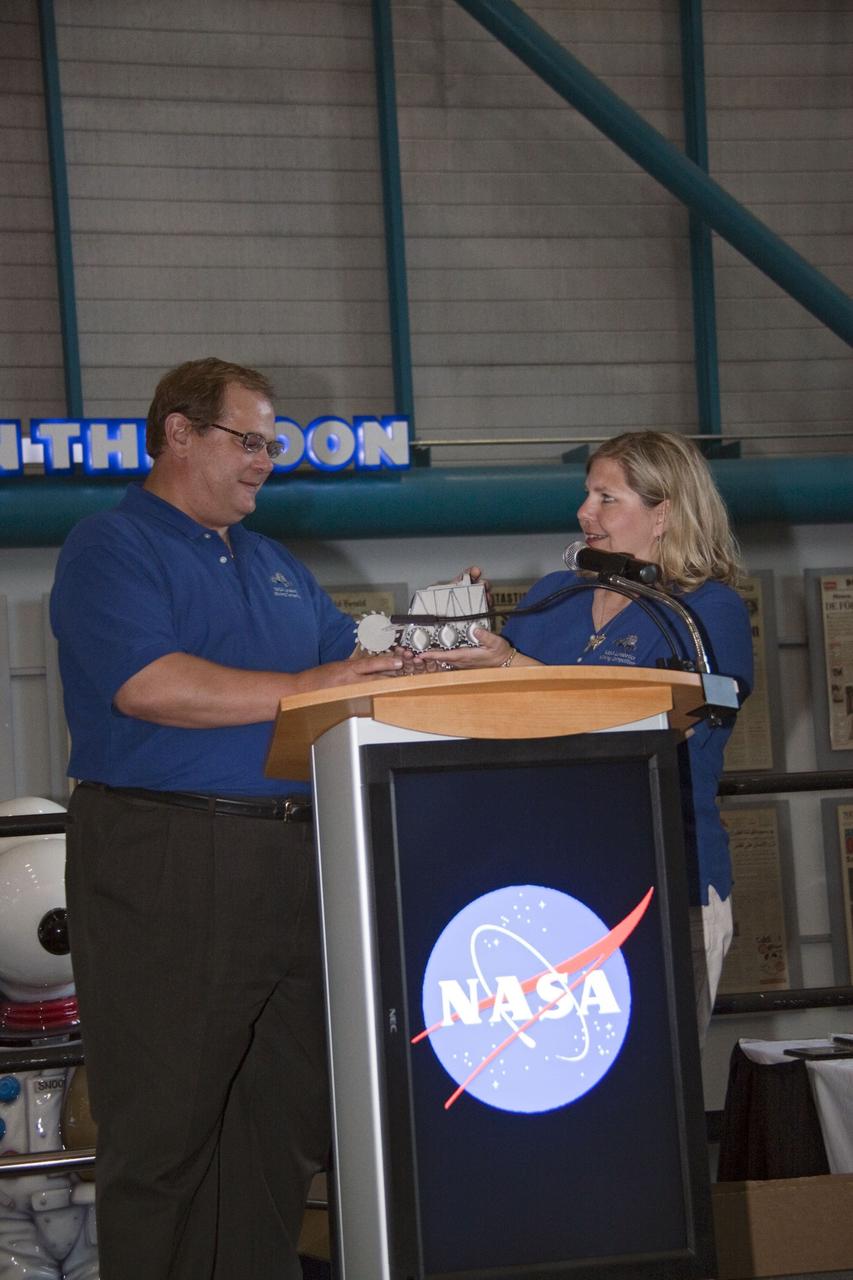
CAPE CANAVERAL, Fla. -- At NASA Kennedy Space Center's Apollo/Saturn V Center, Jerry Hartman, Education Lead with the Exploration Systems Mission Directorate at NASA Headquarters and Susan Sawyer, Lunabotics Project Coordinator with ReDe/Critique, display the trophy the winning team will receive at the award ceremony for NASA's second annual Lunabotics Mining Competition. Thirty-six teams of undergraduate and graduate students from the United States, Bangladesh, Canada, Colombia and India participated in NASA's Lunabotics Mining Competition May 26 - 28 at the agency's Kennedy Space Center in Florida. The competition is designed to engage and retain students in science, technology, engineering and mathematics (STEM). Teams will maneuver their remote controlled or autonomous excavators, called lunabots, in about 60 tons of ultra-fine simulated lunar soil, called BP-1. The competition is an Exploration Systems Mission Directorate project managed by Kennedy's Education Division. The event also provides a competitive environment that could result in innovative ideas and solutions for NASA's future excavation of the moon. Photo credit: NASA/Jack Pfaller
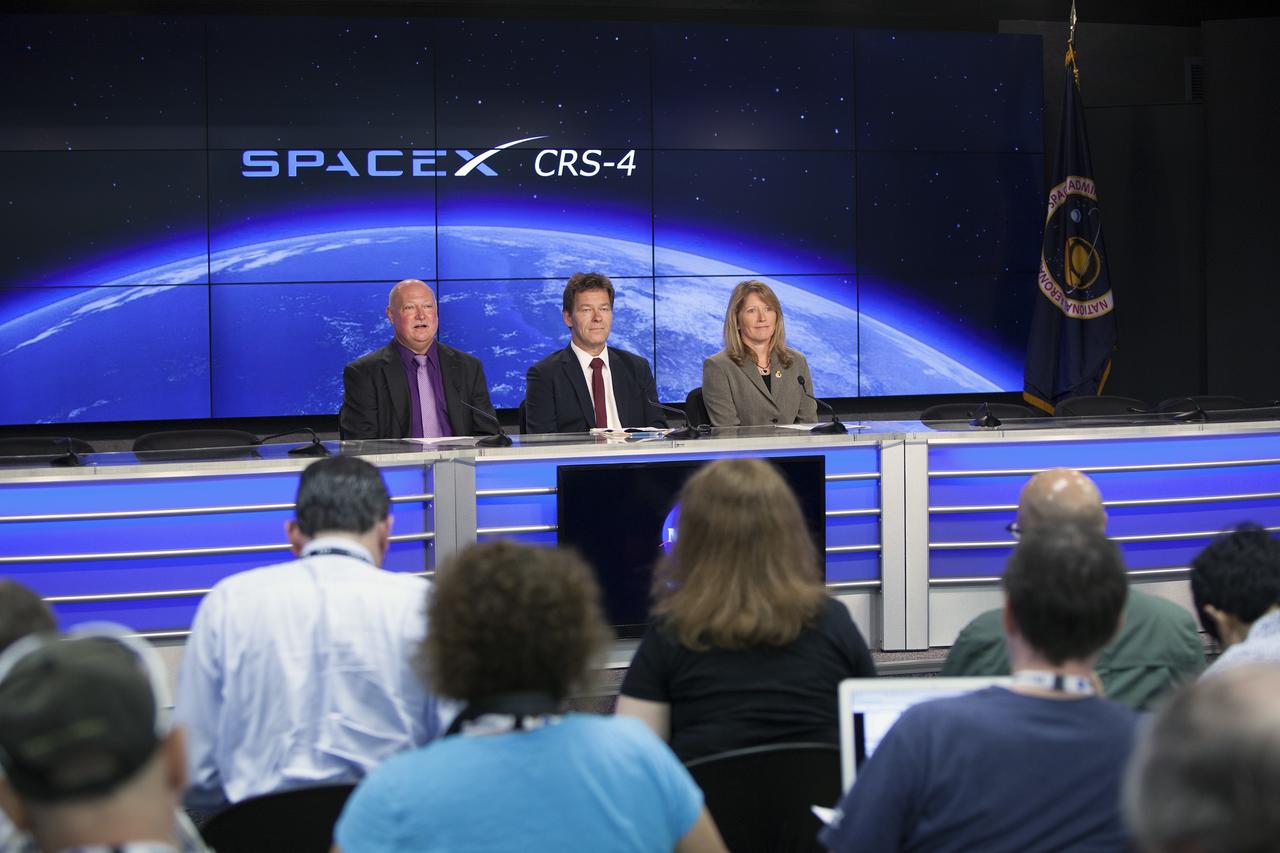
CAPE CANAVERAL, Fla. – In the Kennedy Space Center’s Press Site auditorium, members of news media are briefed on preparations for the launch of the SpaceX CRS-4 mission to resupply the International Space Station. From left are Mike Curie of NASA Public Affairs, Hans Koenigsmann, vice president of Mission Assurance with SpaceX, and Kathy Winters, launch weather officer for the 45th Weather Squadron. Dan Hartman, deputy program manager of the International Space Station Program, participated by telephone. The mission is the fourth of 12 SpaceX flights NASA contracted with the company to resupply the space station. It will be the fifth trip by a Dragon spacecraft to the orbiting laboratory. The spacecraft’s 2.5 tons of supplies, science experiments, and technology demonstrations include critical materials to support 255 science and research investigations that will occur during the station's Expeditions 41 and 42. Liftoff is targeted for an instantaneous window at 2:14 a.m. EDT. To learn more about the mission, visit http://www.nasa.gov/mission_pages/station/structure/launch/index.html Photo credit: NASA/Jim Grossmann
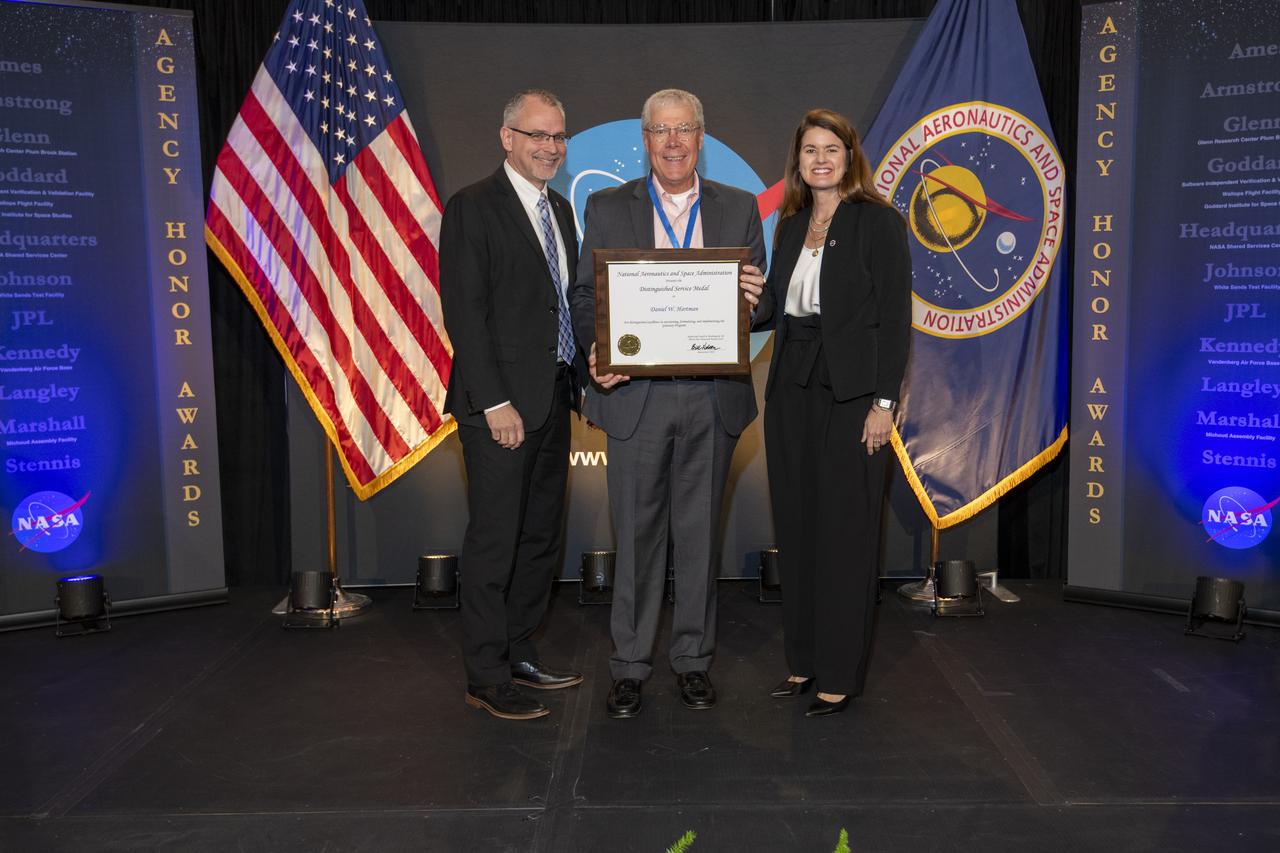
On March 28, 2024 NASA held its 2023 Administrator’s Agency Honor Awards at the Glenn Research Center in Cleveland, OH. This celebratory event recognized the invaluable contributions of civil servants and contractors alike, each one instrumental in propelling humanity further into the realms of space exploration, understanding, and discoverThis is NASA's highest form of recognition that is awarded to any Government employee who, by distinguished service, ability, or vision has personally contributed to NASA's advancement of United States' interests.
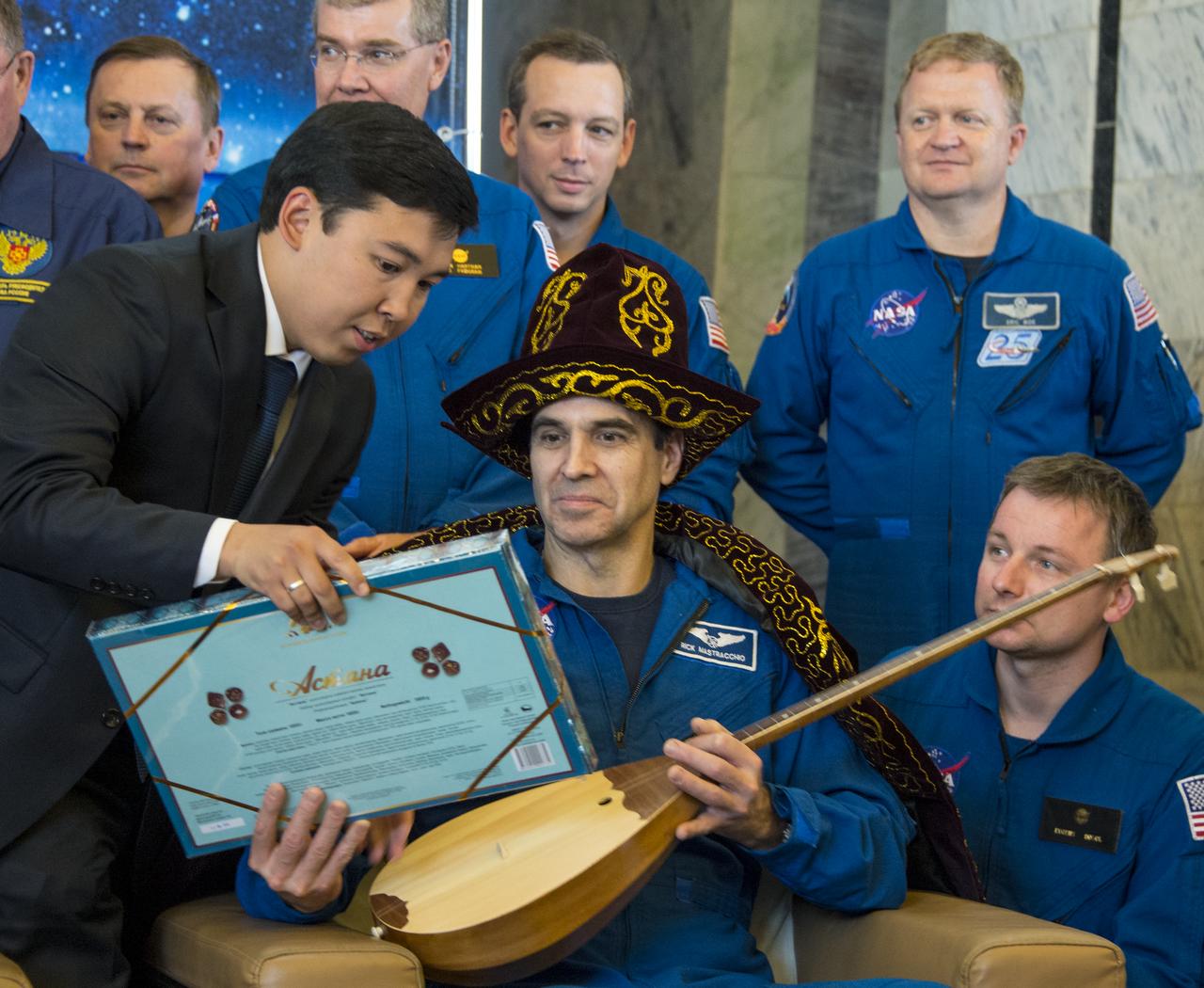
Expedition 39 Flight Engineer Rick Mastracchio of NASA is presented with a box of Karaganda chocolates during a welcome home ceremony, Wednesday, May 14, 2014 at the Karaganda Airport in Kazakhstan. Mastracchio, Expedition 39 Commander Koichi Wakata of the Japan Aerospace Exploration Agency (JAXA), and Soyuz Commander Mikhail Tyurin of Roscosmos landed in their Soyuz TMA-11M spacecraft just a few hours earlier near the town of Zhezkazgan. Wakata, Tyurin and Mastracchio returned to Earth after more than six months onboard the International Space Station where they served as members of the Expedition 38 and 39 crews. Photo Credit: (NASA/Bill Ingalls)