Moon Harvest
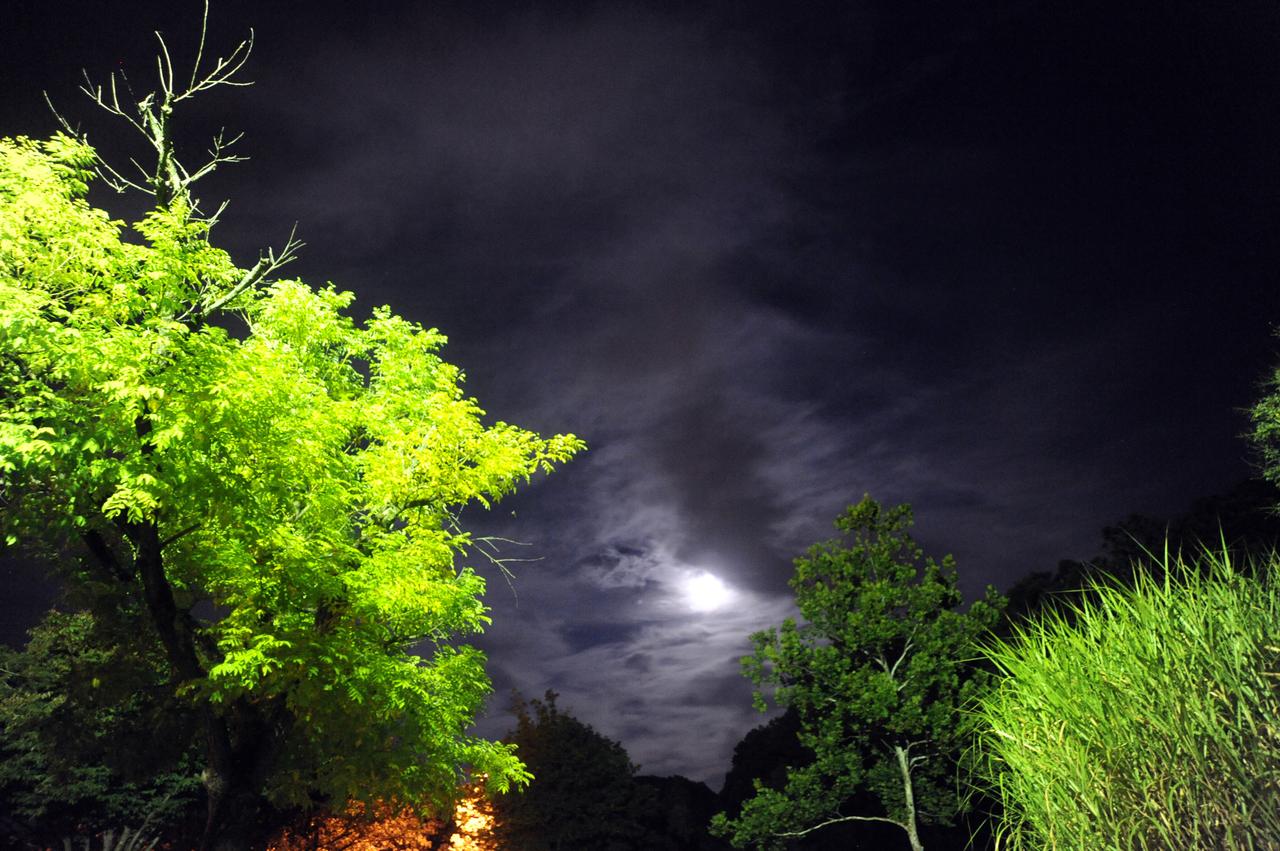
September's Harvest Moon as seen around NASA's Goddard Space Flight Center. According to folklore, every full Moon has a special name. There's the Wolf Moon, the Snow Moon, the Worm Moon, the Sprouting Grass Moon, the Flower Moon, the Strawberry Moon, the Thunder Moon, the Sturgeon Moon, the Harvest Moon, the Hunter's Moon, the Beaver Moon, and the Long Night's Moon. Each name tells us something about the season or month in which the full Moon appears. This month's full Moon is the Harvest Moon. More about the Harvest Moon from NASA: Science <a href="http://1.usa.gov/16lb1eZ" rel="nofollow">1.usa.gov/16lb1eZ</a> Credit: NASA/Goddard/Debbie Mccallum <b><a href="http://www.nasa.gov/audience/formedia/features/MP_Photo_Guidelines.html" rel="nofollow">NASA image use policy.</a></b> <b><a href="http://www.nasa.gov/centers/goddard/home/index.html" rel="nofollow">NASA Goddard Space Flight Center</a></b> enables NASA’s mission through four scientific endeavors: Earth Science, Heliophysics, Solar System Exploration, and Astrophysics. Goddard plays a leading role in NASA’s accomplishments by contributing compelling scientific knowledge to advance the Agency’s mission. <b>Follow us on <a href="http://twitter.com/NASA_GoddardPix" rel="nofollow">Twitter</a></b> <b>Like us on <a href="http://www.facebook.com/pages/Greenbelt-MD/NASA-Goddard/395013845897?ref=tsd" rel="nofollow">Facebook</a></b> <b>Find us on <a href="http://instagram.com/nasagoddard?vm=grid" rel="nofollow">Instagram</a></b>
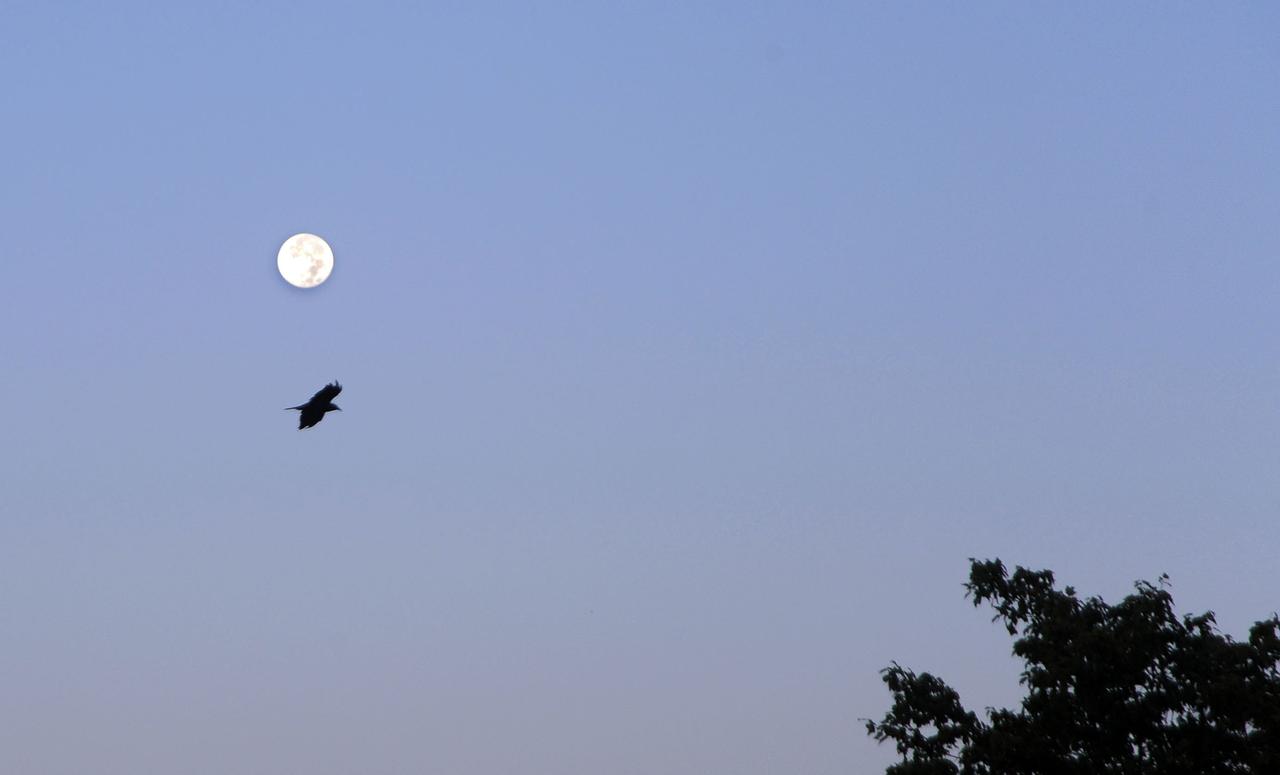
September's Harvest Moon as seen around NASA's Goddard Space Flight Center. According to folklore, every full Moon has a special name. There's the Wolf Moon, the Snow Moon, the Worm Moon, the Sprouting Grass Moon, the Flower Moon, the Strawberry Moon, the Thunder Moon, the Sturgeon Moon, the Harvest Moon, the Hunter's Moon, the Beaver Moon, and the Long Night's Moon. Each name tells us something about the season or month in which the full Moon appears. This month's full Moon is the Harvest Moon. More about the Harvest Moon from NASA: Science <a href="http://1.usa.gov/16lb1eZ" rel="nofollow">1.usa.gov/16lb1eZ</a> Credit: NASA/Goddard/Debbie Mccallum <b><a href="http://www.nasa.gov/audience/formedia/features/MP_Photo_Guidelines.html" rel="nofollow">NASA image use policy.</a></b> <b><a href="http://www.nasa.gov/centers/goddard/home/index.html" rel="nofollow">NASA Goddard Space Flight Center</a></b> enables NASA’s mission through four scientific endeavors: Earth Science, Heliophysics, Solar System Exploration, and Astrophysics. Goddard plays a leading role in NASA’s accomplishments by contributing compelling scientific knowledge to advance the Agency’s mission. <b>Follow us on <a href="http://twitter.com/NASA_GoddardPix" rel="nofollow">Twitter</a></b> <b>Like us on <a href="http://www.facebook.com/pages/Greenbelt-MD/NASA-Goddard/395013845897?ref=tsd" rel="nofollow">Facebook</a></b> <b>Find us on <a href="http://instagram.com/nasagoddard?vm=grid" rel="nofollow">Instagram</a></b>
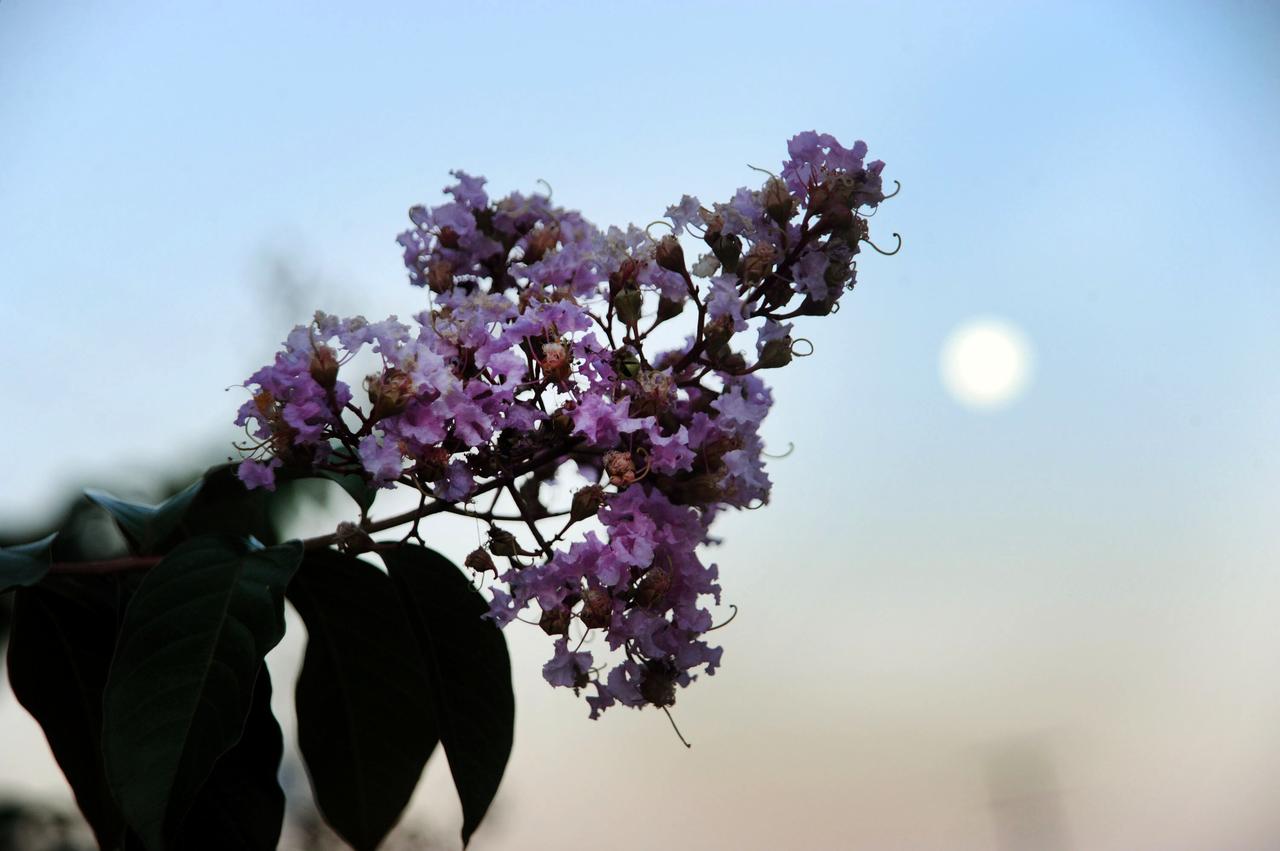
September's Harvest Moon as seen around NASA's Goddard Space Flight Center. According to folklore, every full Moon has a special name. There's the Wolf Moon, the Snow Moon, the Worm Moon, the Sprouting Grass Moon, the Flower Moon, the Strawberry Moon, the Thunder Moon, the Sturgeon Moon, the Harvest Moon, the Hunter's Moon, the Beaver Moon, and the Long Night's Moon. Each name tells us something about the season or month in which the full Moon appears. This month's full Moon is the Harvest Moon. More about the Harvest Moon from NASA: Science <a href="http://1.usa.gov/16lb1eZ" rel="nofollow">1.usa.gov/16lb1eZ</a> Credit: NASA/Goddard/Debbie Mccallum <b><a href="http://www.nasa.gov/audience/formedia/features/MP_Photo_Guidelines.html" rel="nofollow">NASA image use policy.</a></b> <b><a href="http://www.nasa.gov/centers/goddard/home/index.html" rel="nofollow">NASA Goddard Space Flight Center</a></b> enables NASA’s mission through four scientific endeavors: Earth Science, Heliophysics, Solar System Exploration, and Astrophysics. Goddard plays a leading role in NASA’s accomplishments by contributing compelling scientific knowledge to advance the Agency’s mission. <b>Follow us on <a href="http://twitter.com/NASA_GoddardPix" rel="nofollow">Twitter</a></b> <b>Like us on <a href="http://www.facebook.com/pages/Greenbelt-MD/NASA-Goddard/395013845897?ref=tsd" rel="nofollow">Facebook</a></b> <b>Find us on <a href="http://instagram.com/nasagoddard?vm=grid" rel="nofollow">Instagram</a></b>
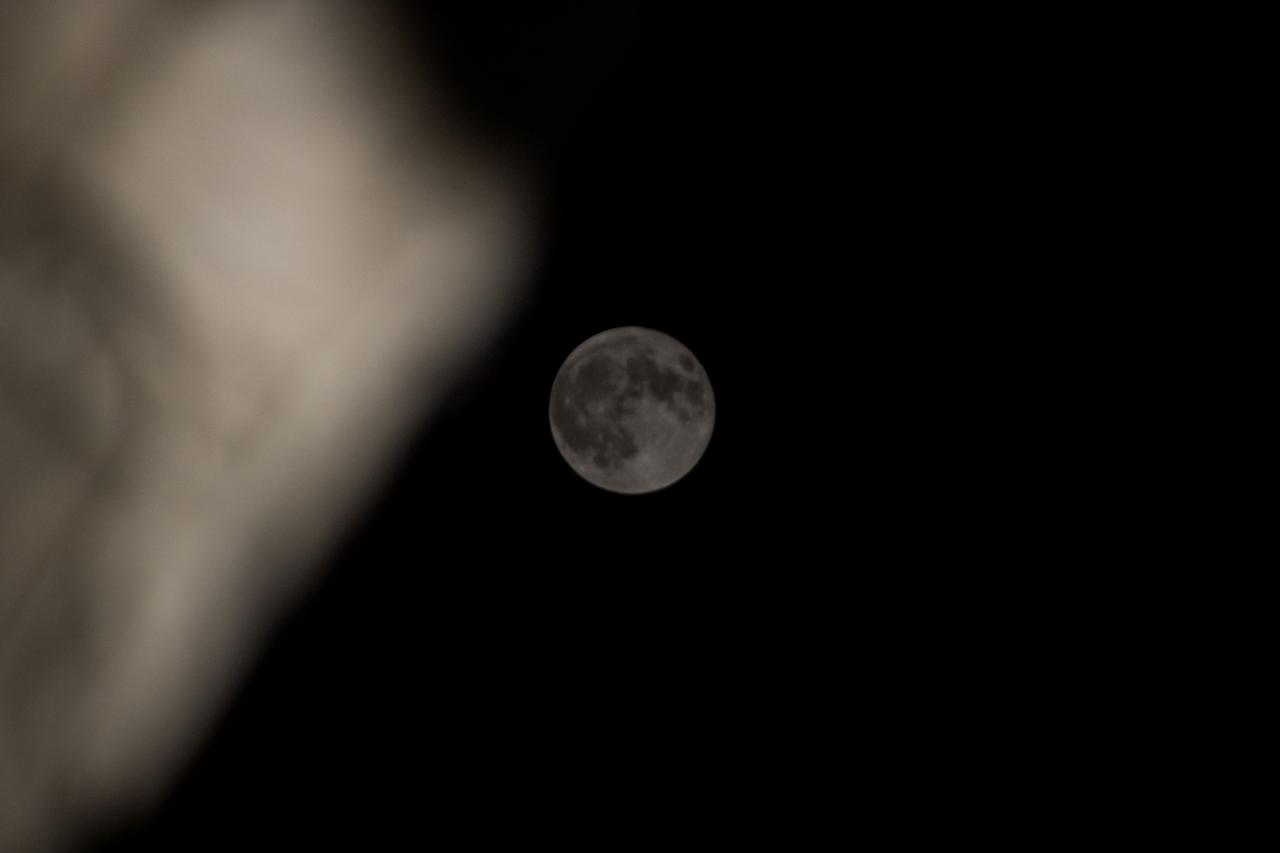
iss071e675220 (Sept. 18, 2024) -- September's full moon, known as the "Harvest Moon," is pictured from the International Space Station as it orbited 260 miles above Beijing.
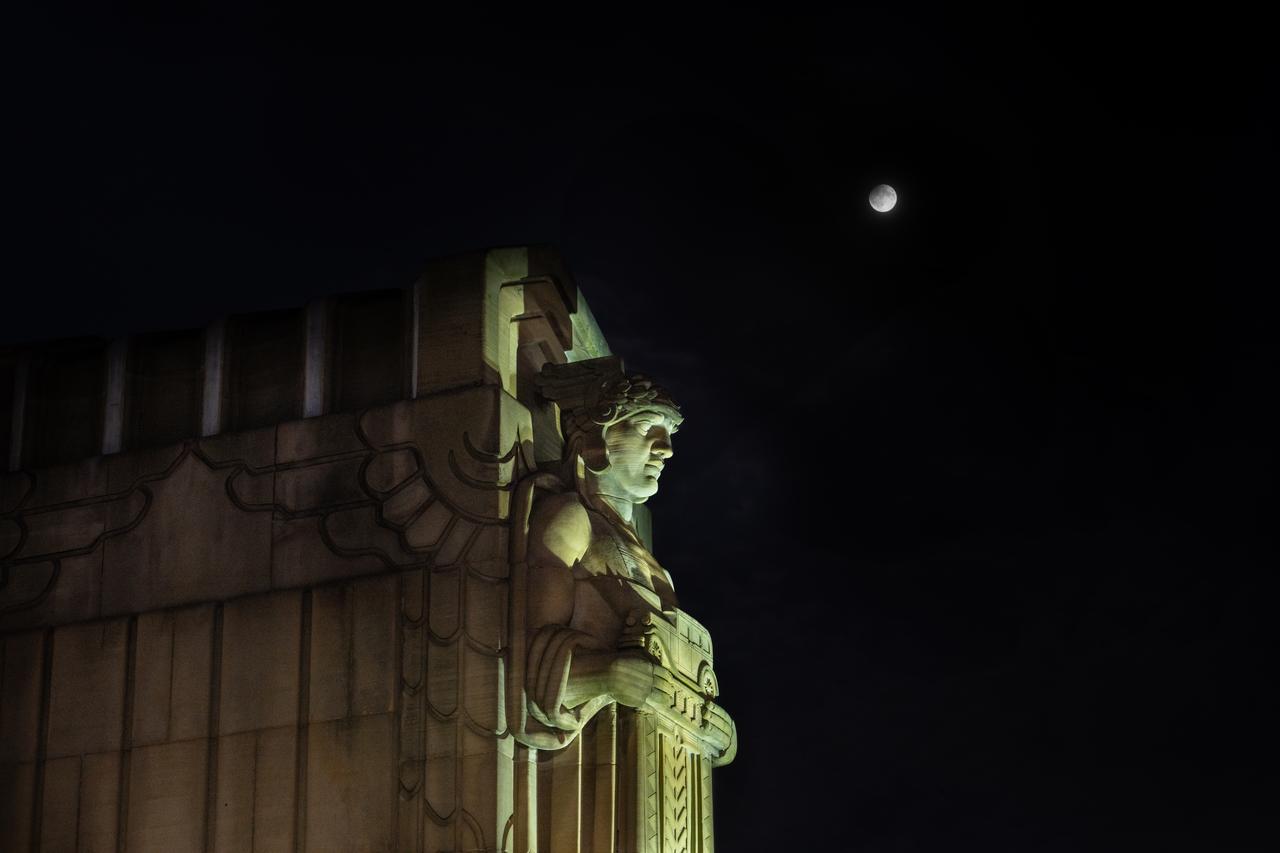
Guardians of Traffic Statue in Cleveland, OH in front of the Supermoon that was visible on September 17th, 2024. On this day, the full moon was a partial lunar eclipse; a supermoon; and a harvest moon.

This Full Moon that occurred on September 17, 2024 in Cleveland, OH was a Partial Lunar Eclipse; a Supermoon; the Corn Moon; and a harvest moon. Photo Credit: (NASA/Sara Lowthian-Hanna)
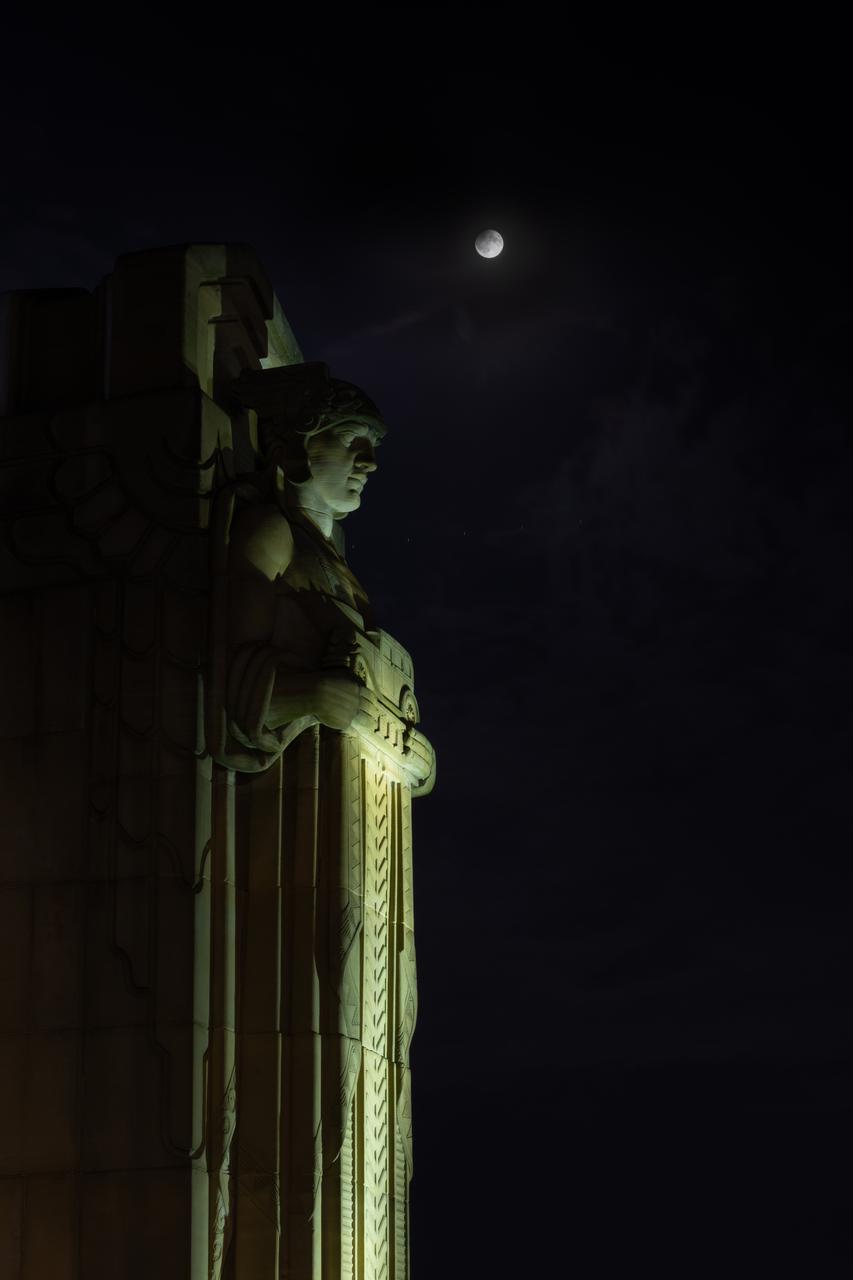
Guardians of Traffic Statue in Cleveland, OH in front of the Supermoon that was visible on September 17th, 2024. On this day, the full moon was a partial lunar eclipse; a supermoon; and a harvest moon. Photo Credit: (NASA/Sara Lowthian-Hanna)

Guardians of Traffic Statue in Cleveland, OH watches over the Supermoon that was visible on September 17th, 2024. On this day, the full moon was a partial Lunar Eclipse; a Supermoon; and a Harvest Moon. Photo Credit: (NASA/Sara Lowthian-Hanna)
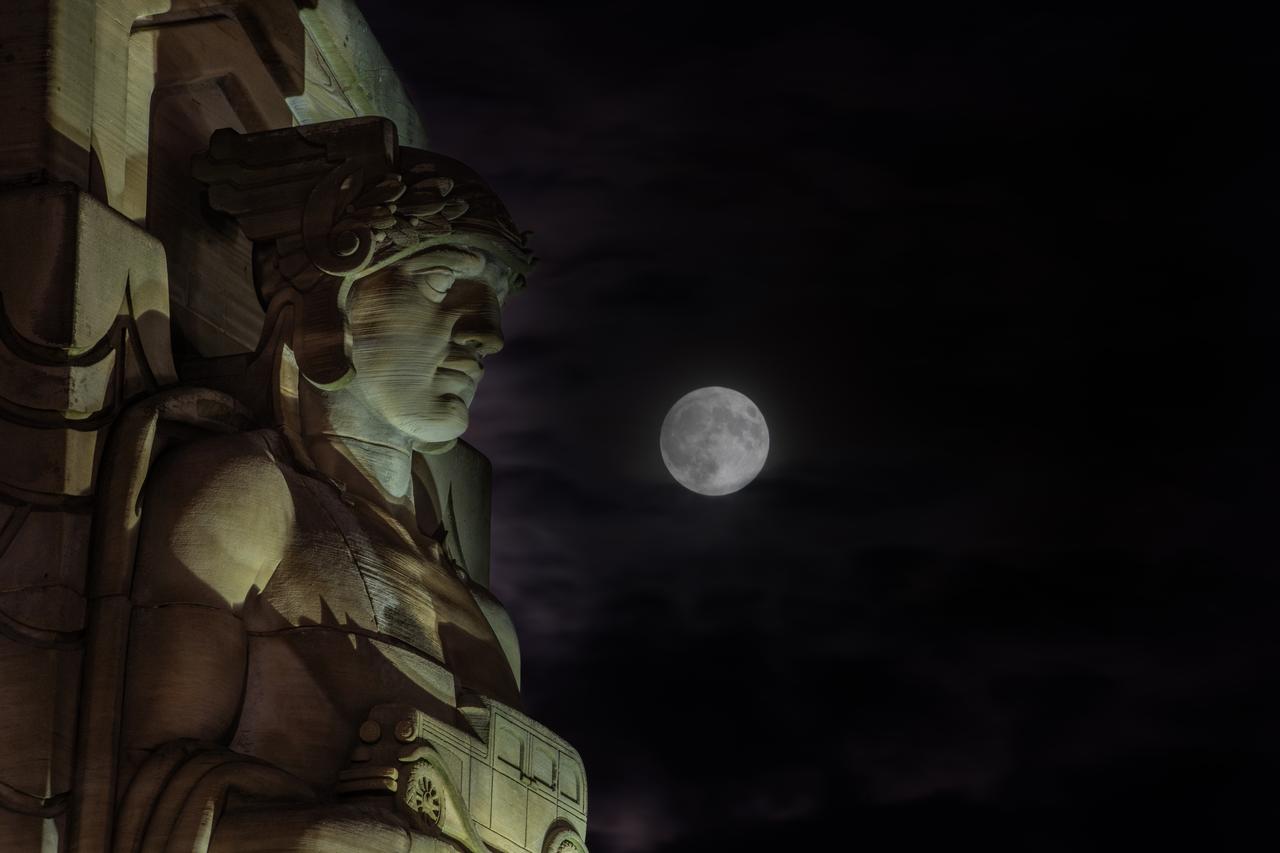
Guardians of Traffic Statue in Cleveland, OH in front of the Supermoon that was visible on September 17th, 2024. On this day, the full moon was a partial lunar eclipse; a supermoon; and a harvest moon. Photo Credit: (NASA/Sara Lowthian-Hanna)

The Supermoon that was visible on September 17th, 2024 in Cleveland, OH. On this day, the full moon was a partial lunar eclipse; a supermoon; and a harvest moon.
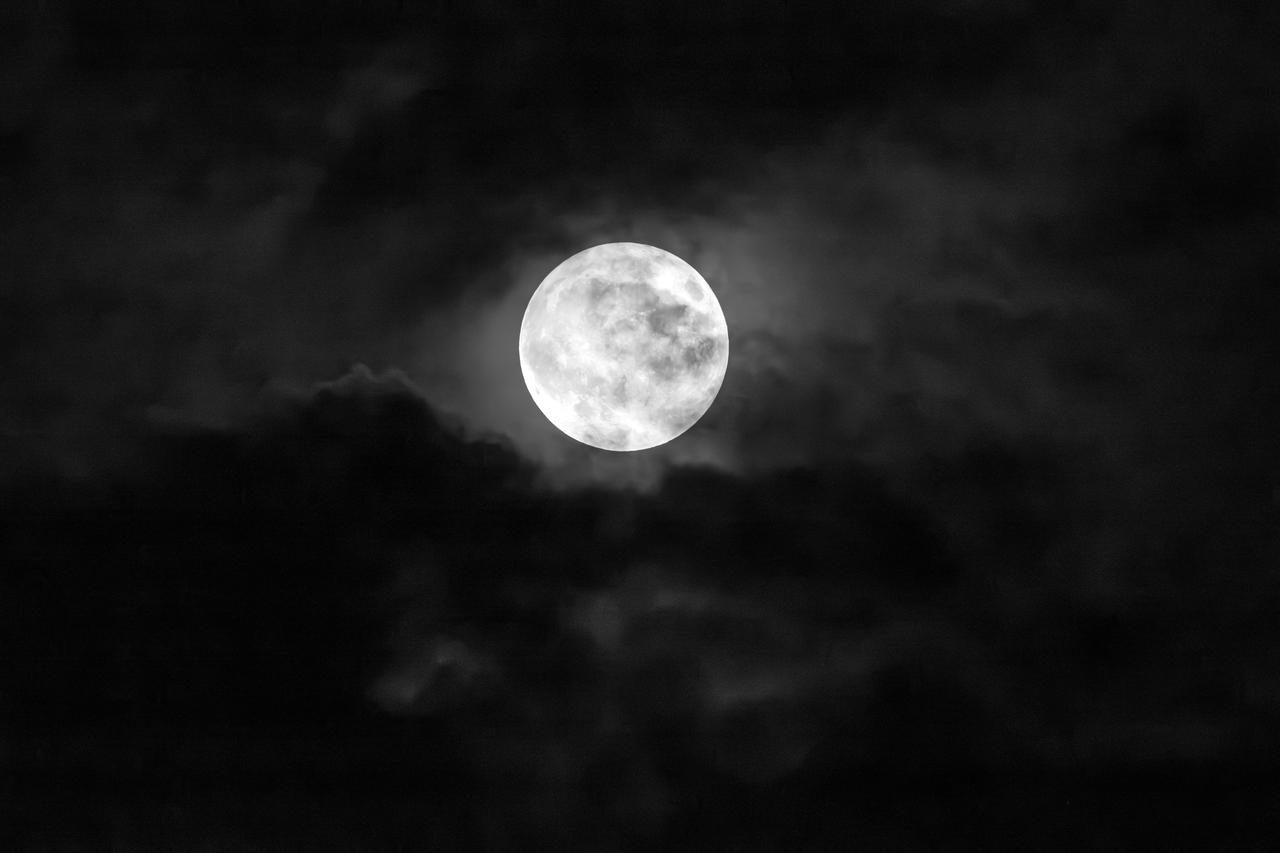
The Supermoon that was visible on September 17th, 2024 in Cleveland, OH. On this day, the full moon was a partial lunar eclipse; a supermoon; and a harvest moon.
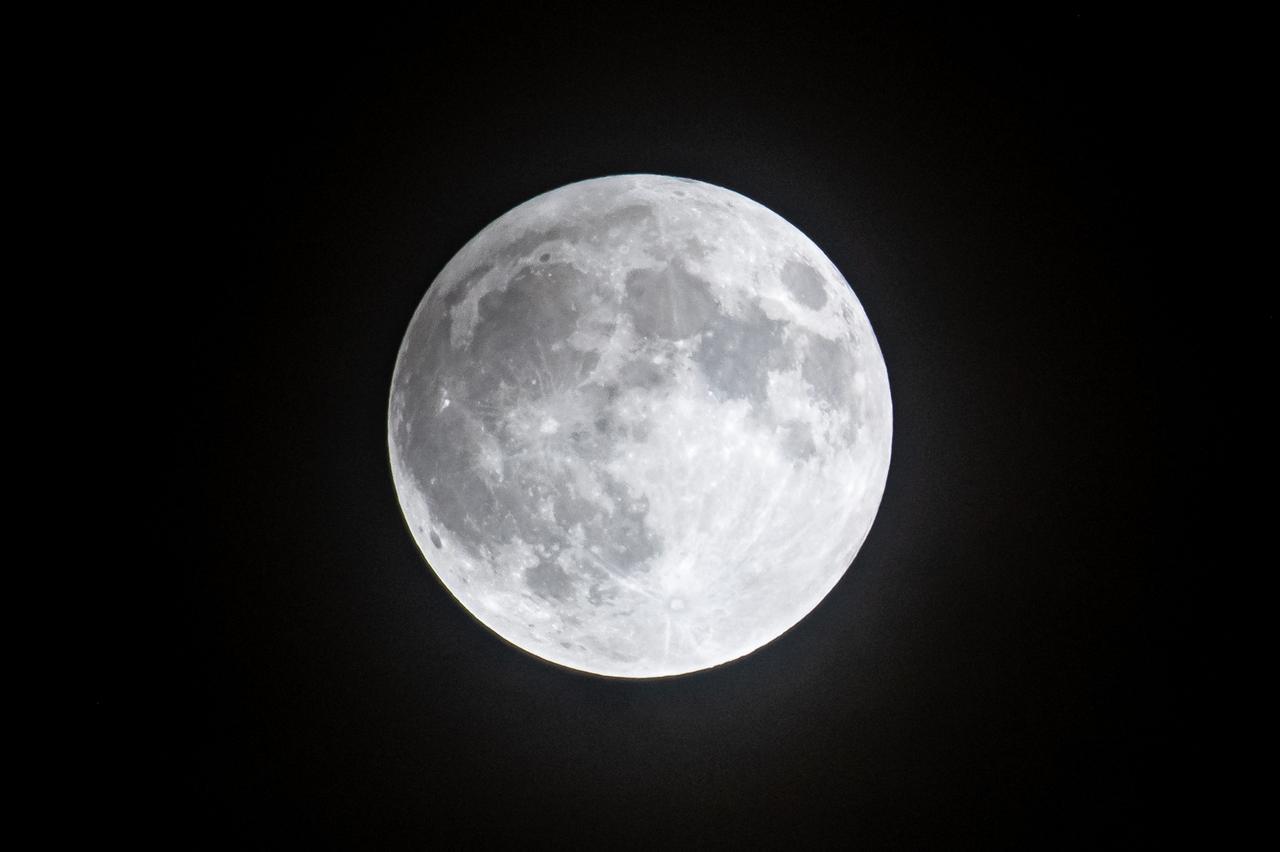
The Supermoon that was visible on September 17th, 2024 in Cleveland, OH. On this day, the full moon was a partial lunar eclipse; a supermoon; and a harvest moon.
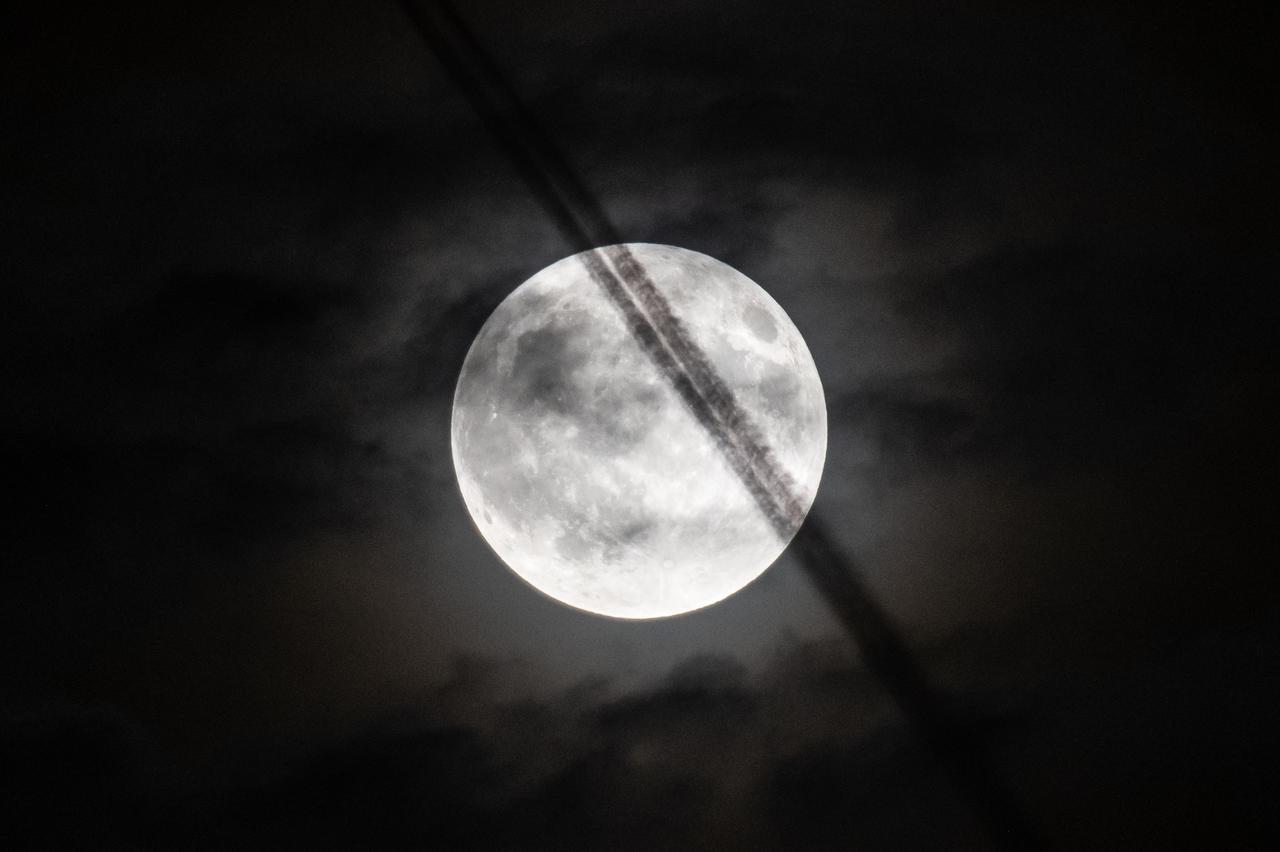
The Supermoon that was visible on September 17th, 2024 in Cleveland, OH. On this day, the full moon was a partial lunar eclipse; a supermoon; and a harvest moon.
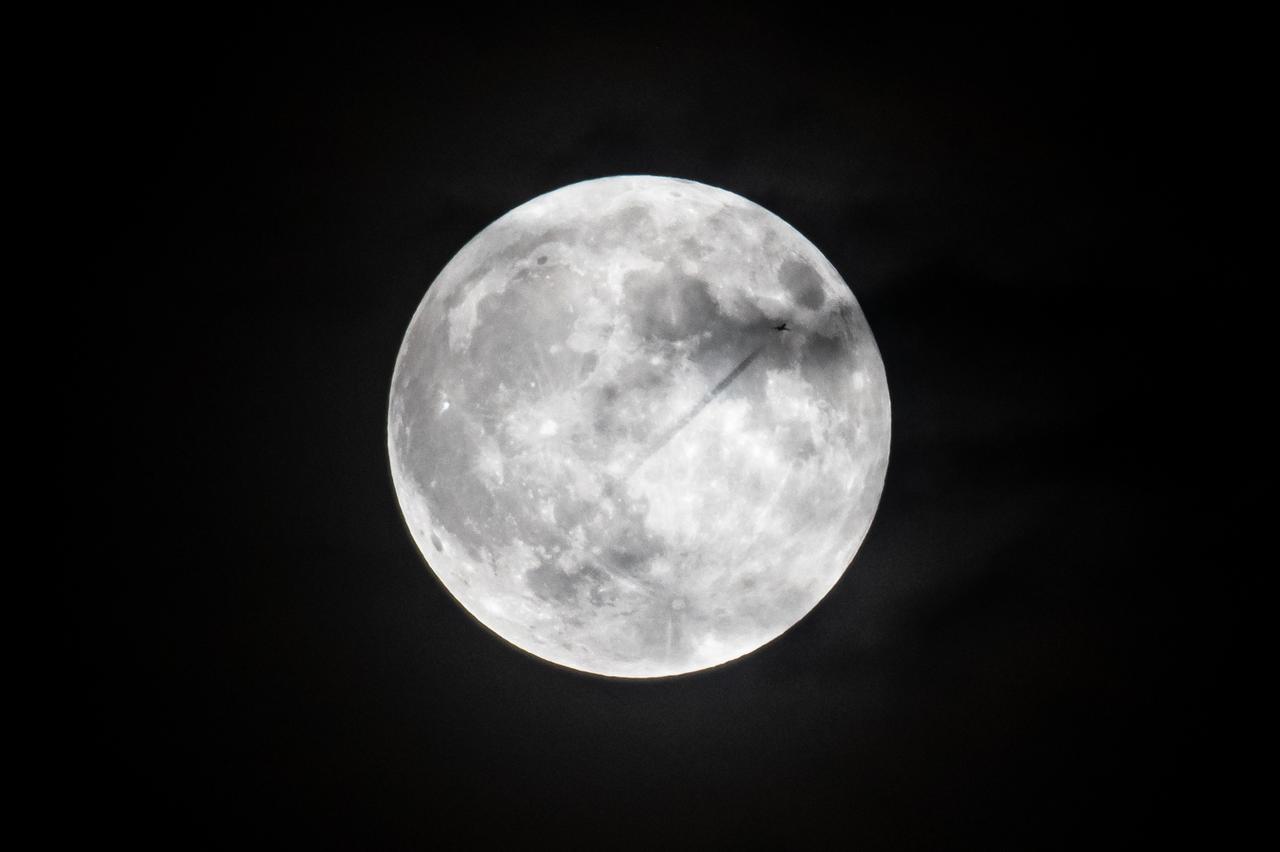
The Supermoon that was visible on September 17th, 2024 in Cleveland, OH. On this day, the full moon was a partial lunar eclipse; a supermoon; and a harvest moon.
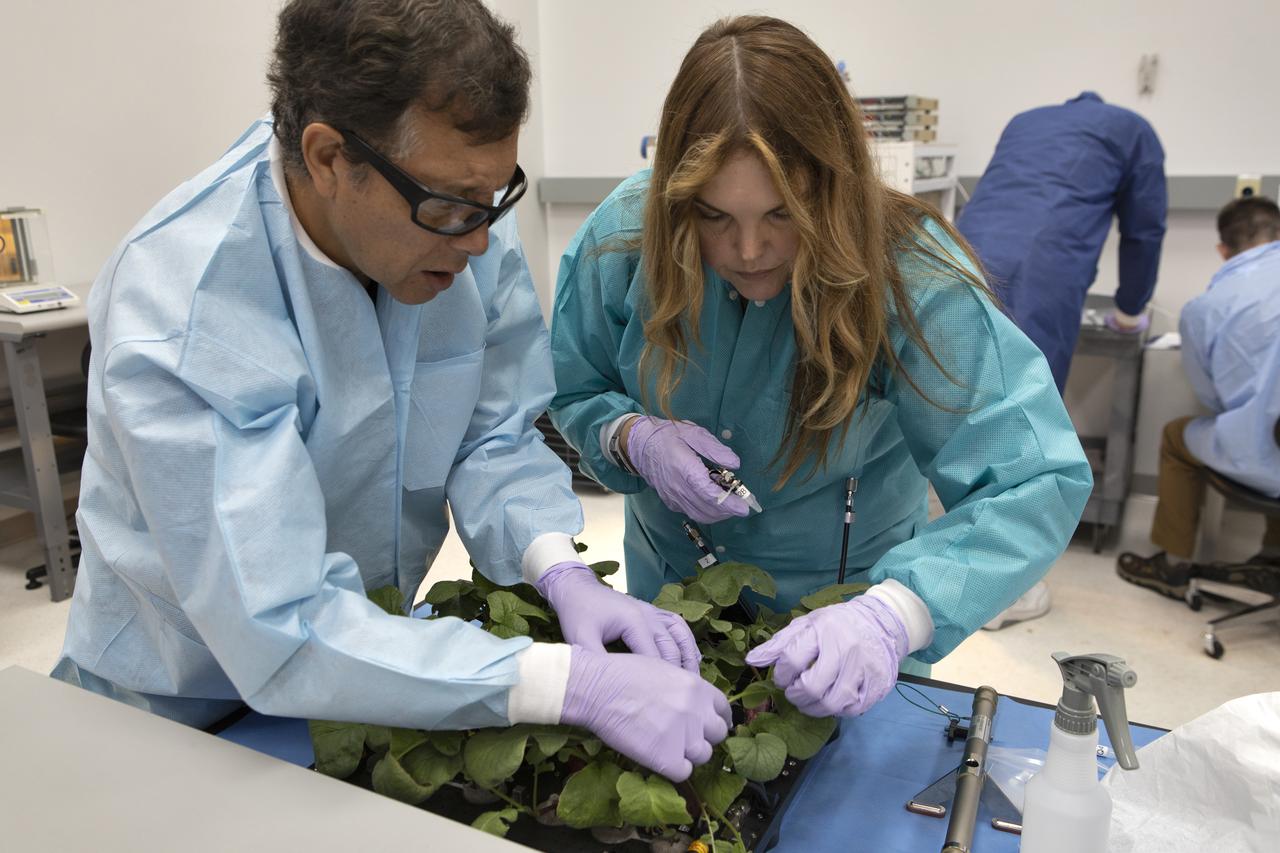
From left, Oscar Monje, Ph.D., a plant physiologist with AECOM Management Services; and Alora Mazarakis, an electrical engineer with Techshot, prepare to harvest radish plants from the base of the Advanced Plant Habitat ground unit inside a laboratory in the Space Station Processing Facility at NASA’s Kennedy Space Center in Florida on June 13, 2019. The radishes are being harvested as part of a science verification test. The APH is currently the largest plant chamber built for the agency in use on the International Space Station. It is an autonomous plant growth facility that is being used to conduct bioscience research on the space station with the goal of enabling astronauts to be sustainable on long duration missions to the Moon, Mars and beyond.
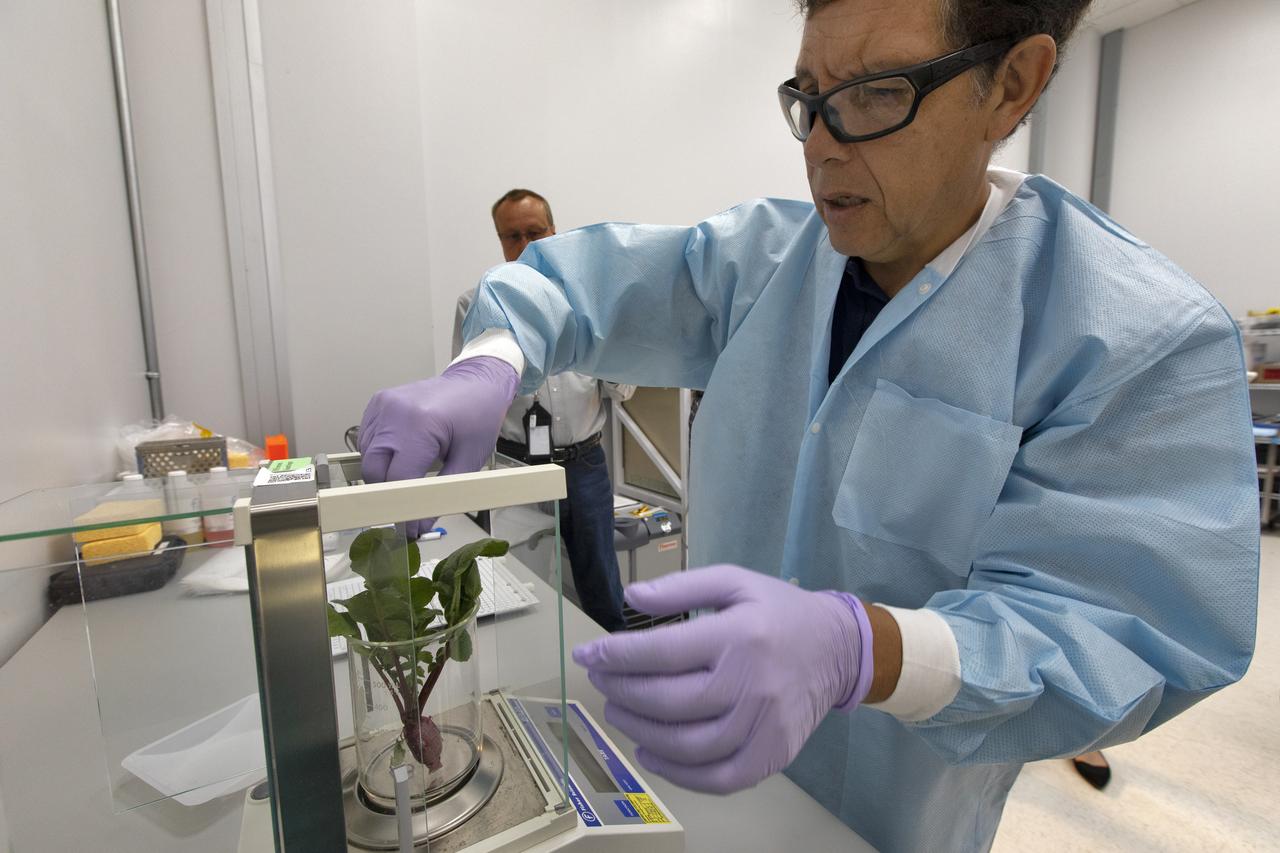
Oscar Monje, Ph.D., a plant physiologist with AECOM Management Services, weighs a harvested radish plant inside a laboratory in the Space Station Processing Facility at NASA’s Kennedy Space Center in Florida on June 13, 2019. The radishes are being harvested from the base of the Advanced Plant Habitat (APH) ground unit as part of a science verification test. The APH is currently the largest plant chamber built for the agency in use on the International Space Station. It is an autonomous plant growth facility that is being used to conduct bioscience research on the space station with the goal of enabling astronauts to be sustainable on long duration missions to the Moon, Mars and beyond.
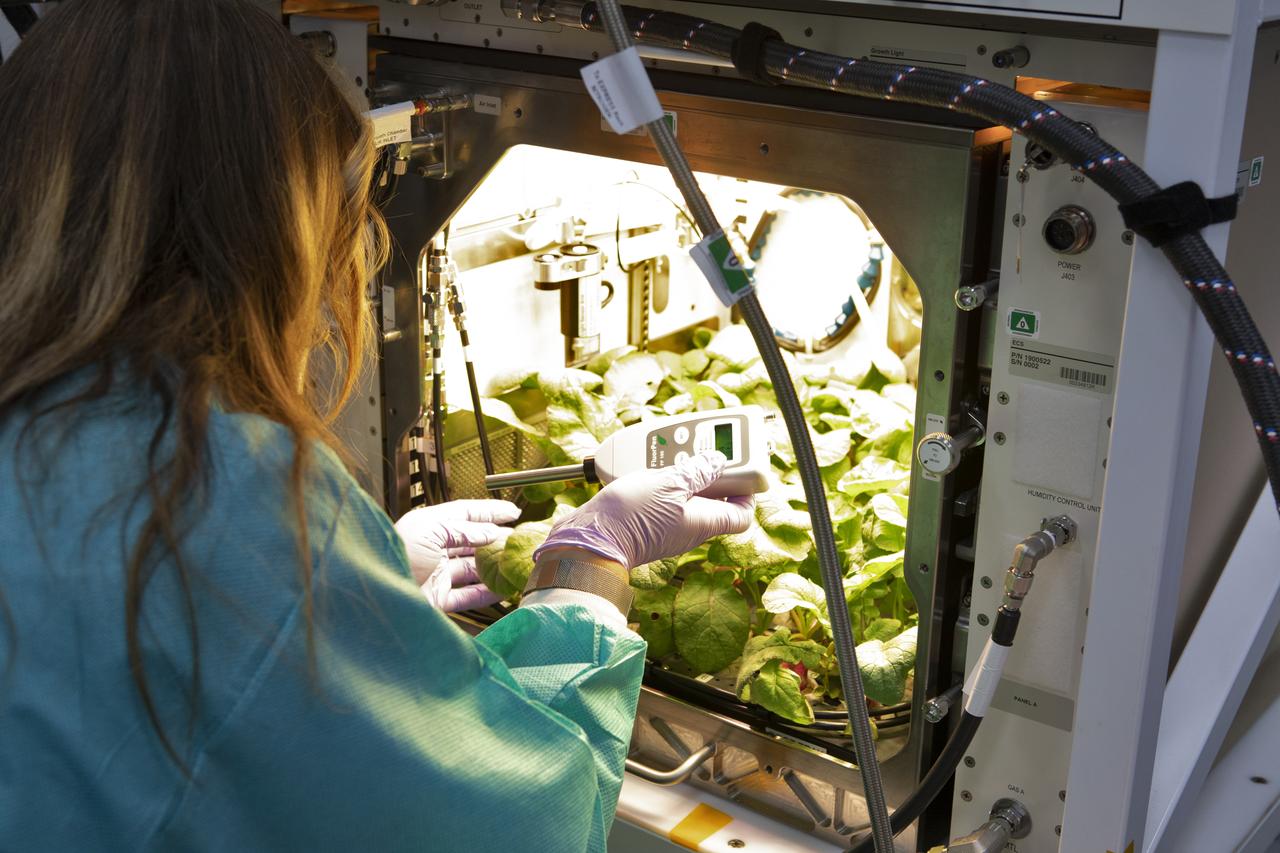
Inside a laboratory in the Space Station Processing Facility at NASA’s Kennedy Space Center in Florida, a plant biologist prepares to harvest radish plants growing in the Advanced Plant Habitat (APH) ground unit on June 13, 2019. The radishes are being harvested as part of a science verification test. The APH is currently the largest plant chamber built for the agency in use on the International Space Station. It is an autonomous plant growth facility that is being used to conduct bioscience research on the space station with the goal of enabling astronauts to be sustainable on long duration missions to the Moon, Mars and beyond.
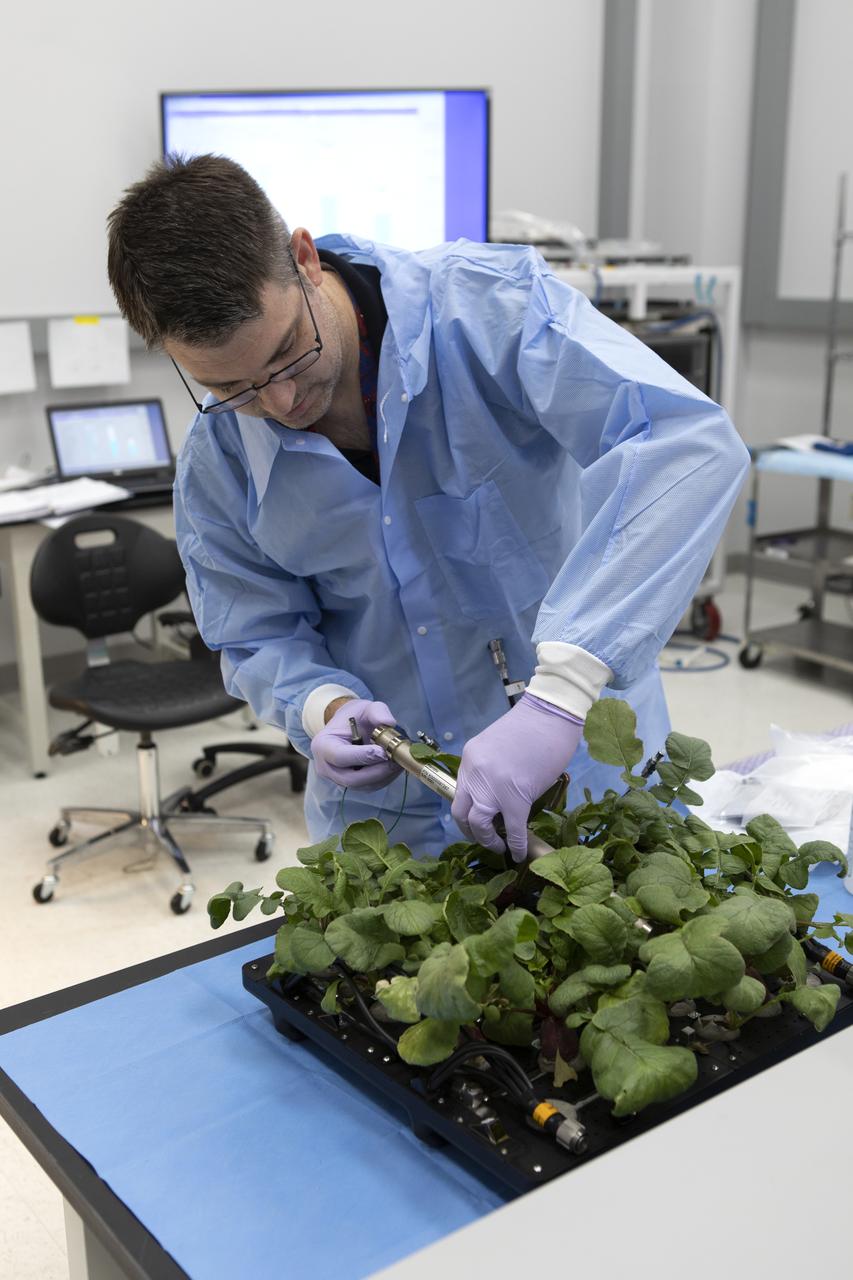
Clayton Grosse, a mechanical engineer with Techshot, prepares to harvest radish plants from the base of the Advanced Plant Habitat (APH) ground unit inside a laboratory in the Space Station Processing Facility at NASA’s Kennedy Space Center in Florida on June 13, 2019. The radishes are being harvested as part of a science verification test. The APH is currently the largest plant chamber built for the agency in use on the International Space Station. It is an autonomous plant growth facility that is being used to conduct bioscience research on the space station with the goal of enabling astronauts to be sustainable on long duration missions to the Moon, Mars and beyond.
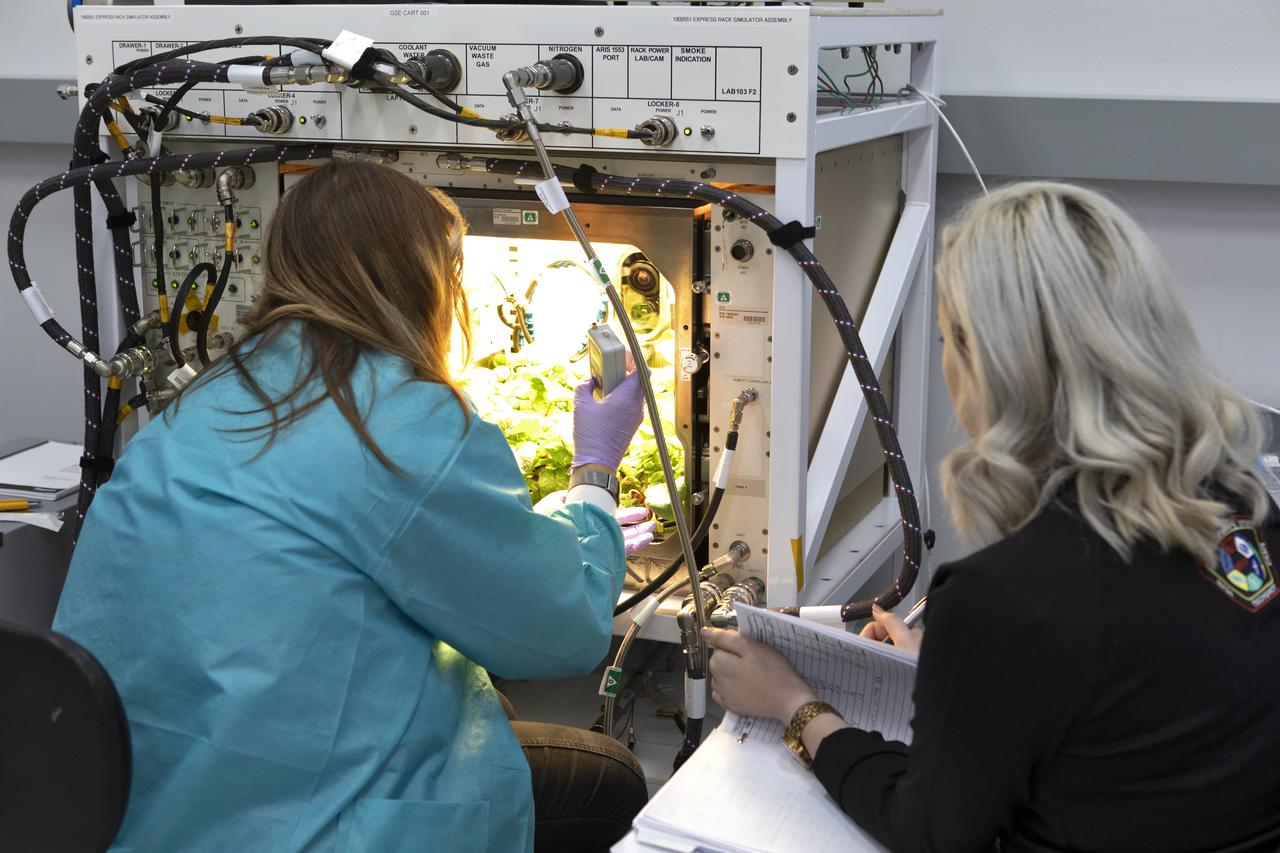
Inside a laboratory in the Space Station Processing Facility at NASA’s Kennedy Space Center in Florida, plant biologists prepare to harvest radish plants growing in the Advanced Plant Habitat (APH) ground unit on June 13, 2019. The radishes are being harvested as part of a science verification test. The APH is currently the largest plant chamber built for the agency in use on the International Space Station. It is an autonomous plant growth facility that is being used to conduct bioscience research on the space station with the goal of enabling astronauts to be sustainable on long duration missions to the Moon, Mars and beyond.
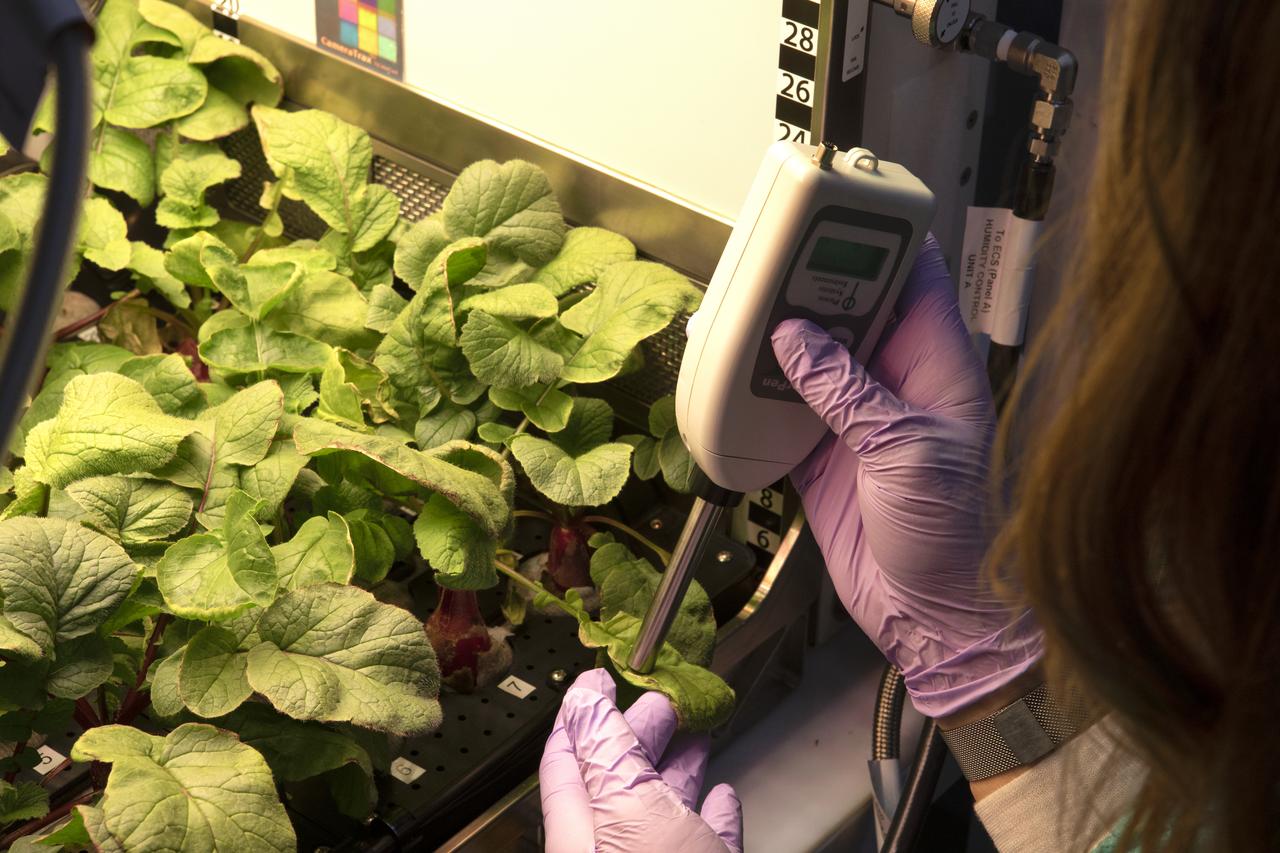
Inside a laboratory in the Space Station Processing Facility at NASA’s Kennedy Space Center in Florida, a plant biologist prepares to harvest radish plants growing in the Advanced Plant Habitat (APH) ground unit on June 13, 2019. The radishes are being harvested as part of a science verification test. The APH is currently the largest plant chamber built for the agency in use on the International Space Station. It is an autonomous plant growth facility that is being used to conduct bioscience research on the space station with the goal of enabling astronauts to be sustainable on long duration missions to the Moon, Mars and beyond.
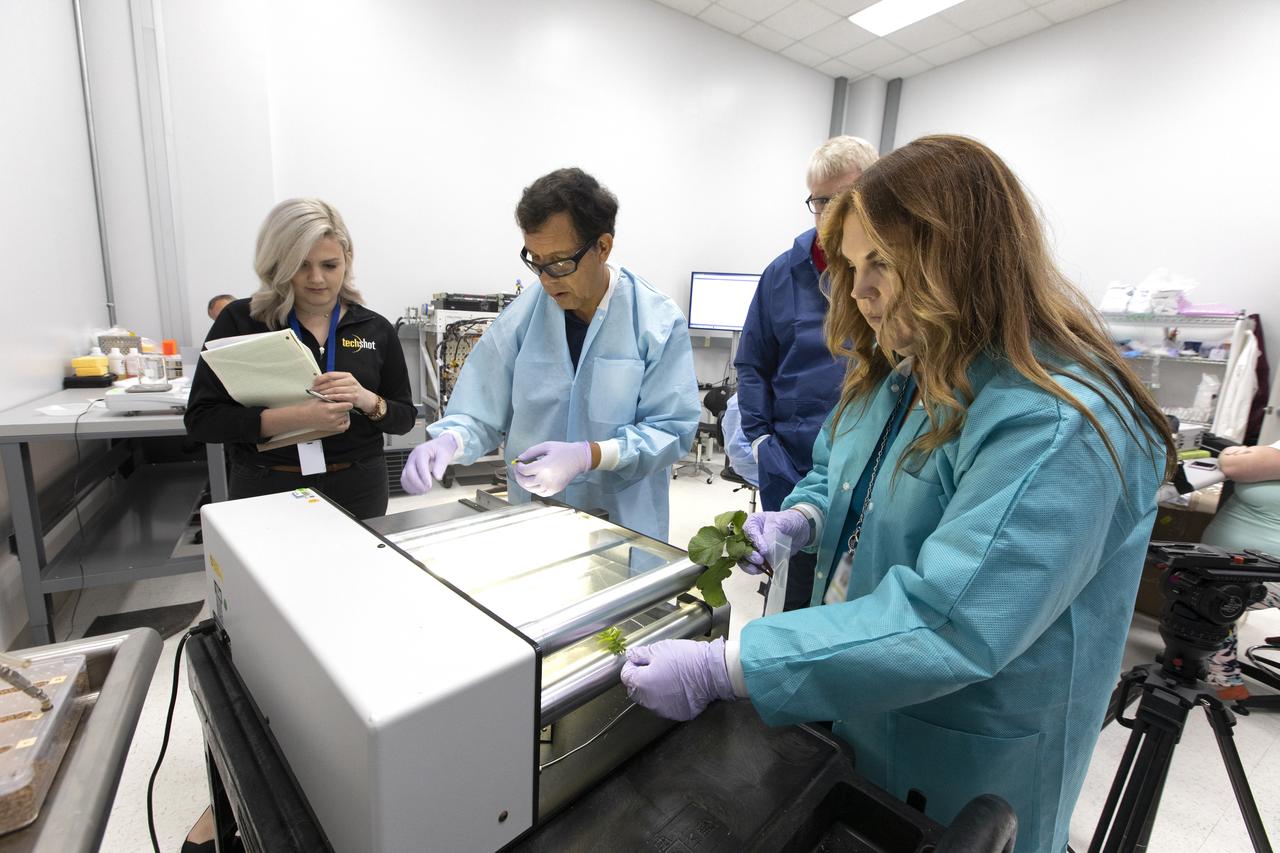
From left are Ashleigh Ruggles, a launch operations support specialist with Techshot; Oscar Monje, Ph.D., a plant physiologist with AECOM Management Services; and Sam Logan, senior mechanical engineering technician; and Alora Mazarakis, an electrical engineer, both with Techshot. They are harvesting radish plants from the base of the Advanced Plant Habitat ground unit inside a laboratory in the Space Station Processing Facility at NASA’s Kennedy Space Center in Florida on June 13, 2019. The radishes are being harvested as part of a science verification test. The APH is currently the largest plant chamber built for the agency in use on the International Space Station. It is an autonomous plant growth facility that is being used to conduct bioscience research on the space station with the goal of enabling astronauts to be sustainable on long duration missions to the Moon, Mars and beyond.
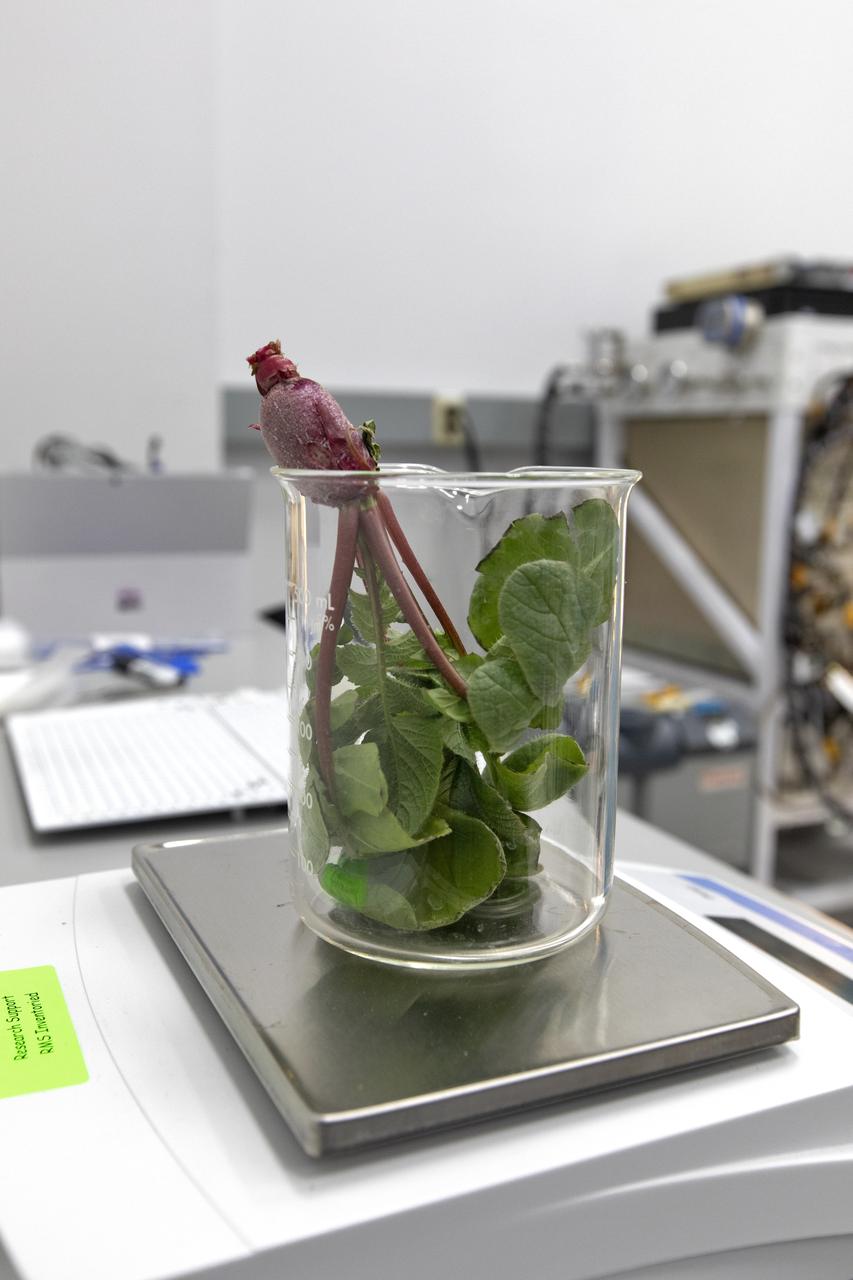
A radish plant is weighed inside a laboratory in the Space Station Processing Facility at NASA’s Kennedy Space Center in Florida on June 13, 2019. The radishes are being harvested from the base of the Advanced Plant Habitat (APH) ground unit as part of a science verification test. The APH is currently the largest plant chamber built for the agency in use on the International Space Station. It is an autonomous plant growth facility that is being used to conduct bioscience research on the space station with the goal of enabling astronauts to be sustainable on long duration missions to the Moon, Mars and beyond.
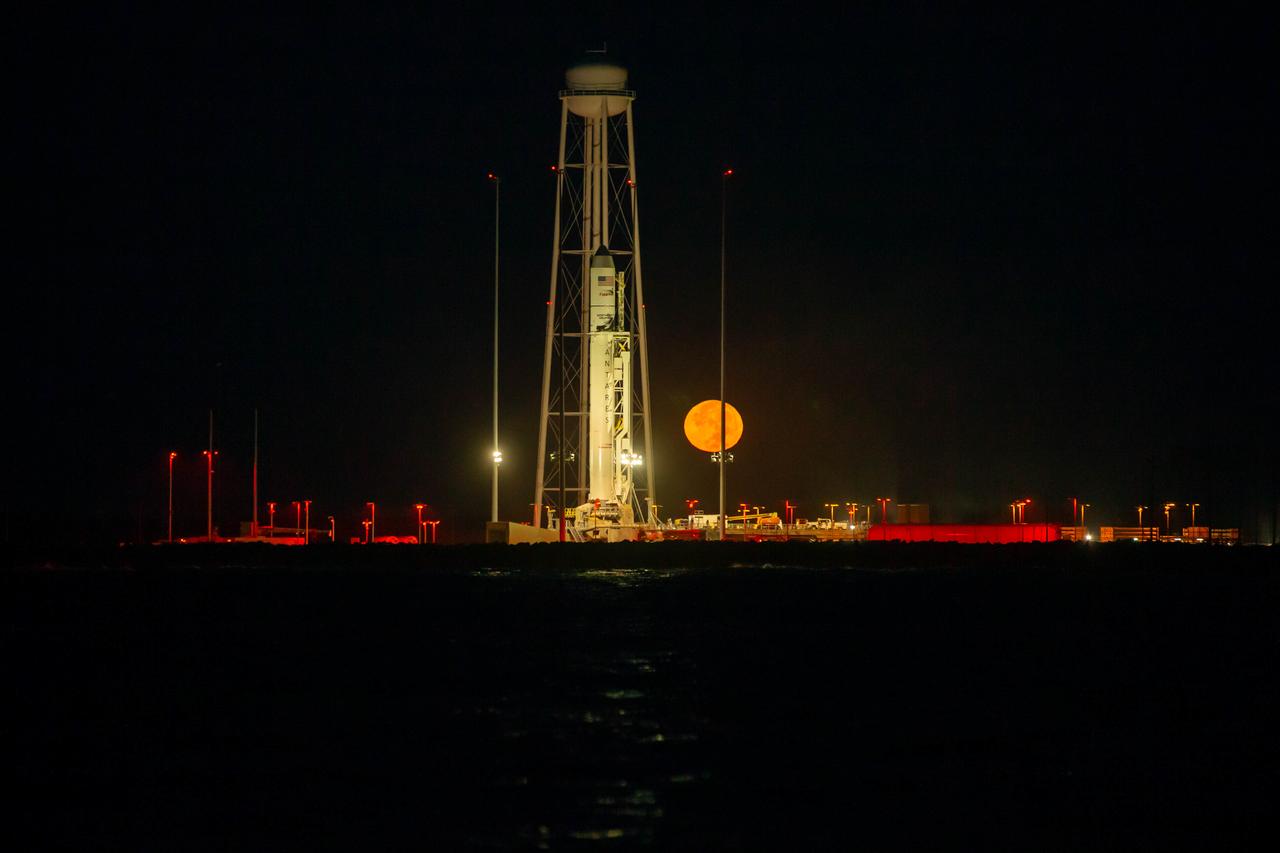
A Northrop Grumman Antares rocket carrying a Cygnus resupply spacecraft is seen on the Mid-Atlantic Regional Spaceport’s Pad-0A, Thursday, October 1, 2020, at NASA's Wallops Flight Facility in Virginia as the Harvest Moon sets. Northrop Grumman’s 14th contracted cargo resupply mission with NASA to the International Space Station will deliver nearly 8,000 pounds of science and research, crew supplies and vehicle hardware to the orbital laboratory and its crew. The CRS-14 Cygnus spacecraft is named after the first female astronaut of Indian descent, Kalpana Chawla, and is scheduled to launch at 9:38 p.m., Thursday, October 1, 2020 EDT. Photo Credit: (NASA/Patrick Black)
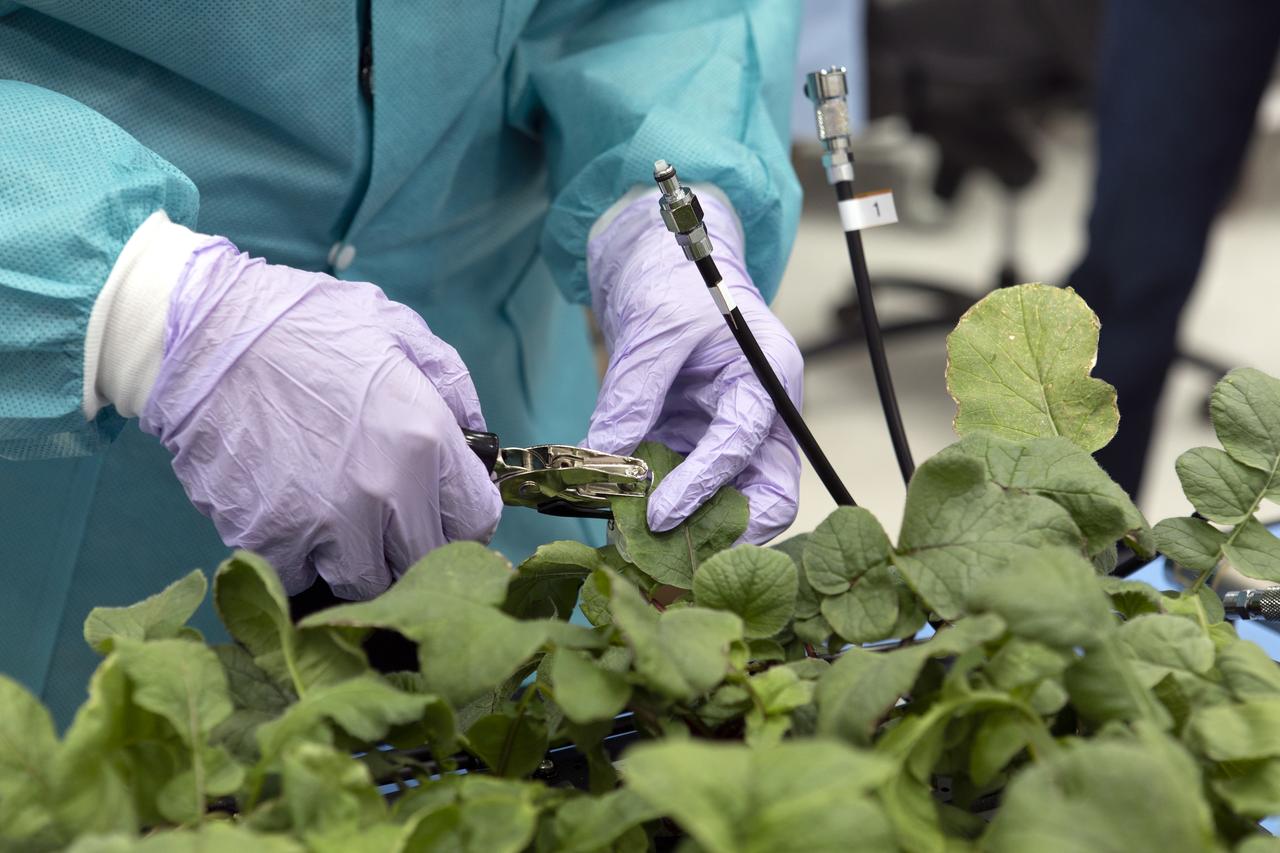
Clayton Grosse, a mechanical engineer with Techshot, uses a punch to take a sample of the leaf of a radish plant growing in the base of the Advanced Plant Habitat (APH) ground unit, inside a laboratory in the Space Station Processing Facility at NASA’s Kennedy Space Center in Florida on June 13, 2019. The radishes are being harvested as part of a science verification test. The APH is currently the largest plant chamber built for the agency in use on the International Space Station. It is an autonomous plant growth facility that is being used to conduct bioscience research on the space station with the goal of enabling astronauts to be sustainable on long duration missions to the Moon, Mars and beyond.

A Northrop Grumman Antares rocket carrying a Cygnus resupply spacecraft is seen on the Mid-Atlantic Regional Spaceport’s Pad-0A, Thursday, October 1, 2020, at NASA's Wallops Flight Facility in Virginia as the Harvest Moon sets. Northrop Grumman’s 14th contracted cargo resupply mission with NASA to the International Space Station will deliver nearly 8,000 pounds of science and research, crew supplies and vehicle hardware to the orbital laboratory and its crew. The CRS-14 Cygnus spacecraft is named after the first female astronaut of Indian descent, Kalpana Chawla, and is scheduled to launch at 9:38 p.m., Thursday, October 1, 2020 EDT. Photo Credit: (NASA/Patrick Black)
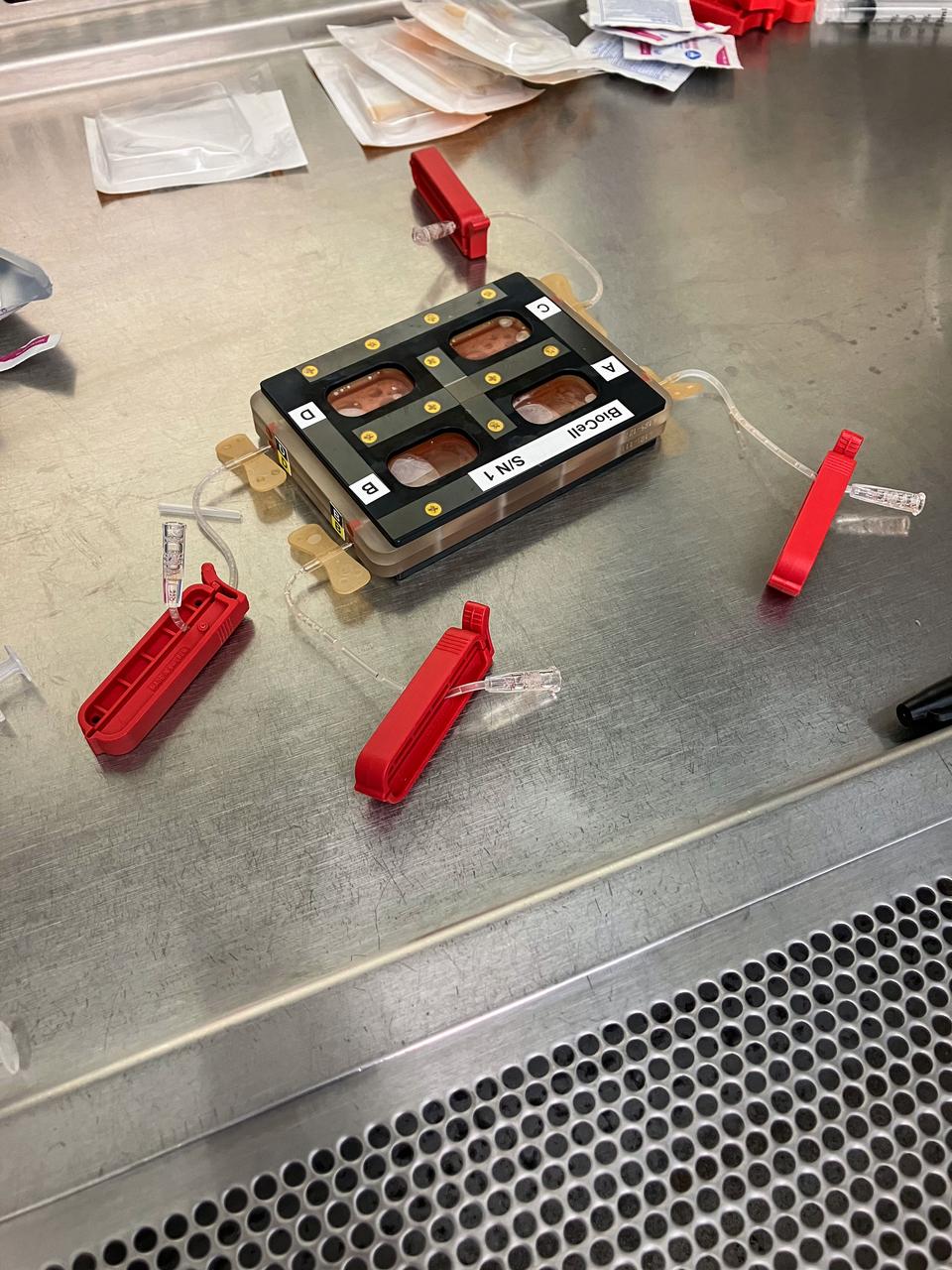
jsc2024e043735 (4/23/2024) --- A BioCell filled with cultures of megakaryocytes (precursor cells which produce platelets) on the last day of the Experiment Verification Test. The International Space Station crew will harvest the cell cultures for microscopy, fixation, and sequencing. Megakaryocytes Orbiting in Outer Space and Near Earth: The MOON Study (Megakaryocyte Flying-One (MeF1)) investigates how environmental conditions affect development and function of platelets and megakaryocytes, cells found in bone marrow. Results could clarify the risks of changes in inflammation, immune responses, and clot formation in spaceflight and on the ground. Image courtesy of the NASA Space Radiation Laboratory.
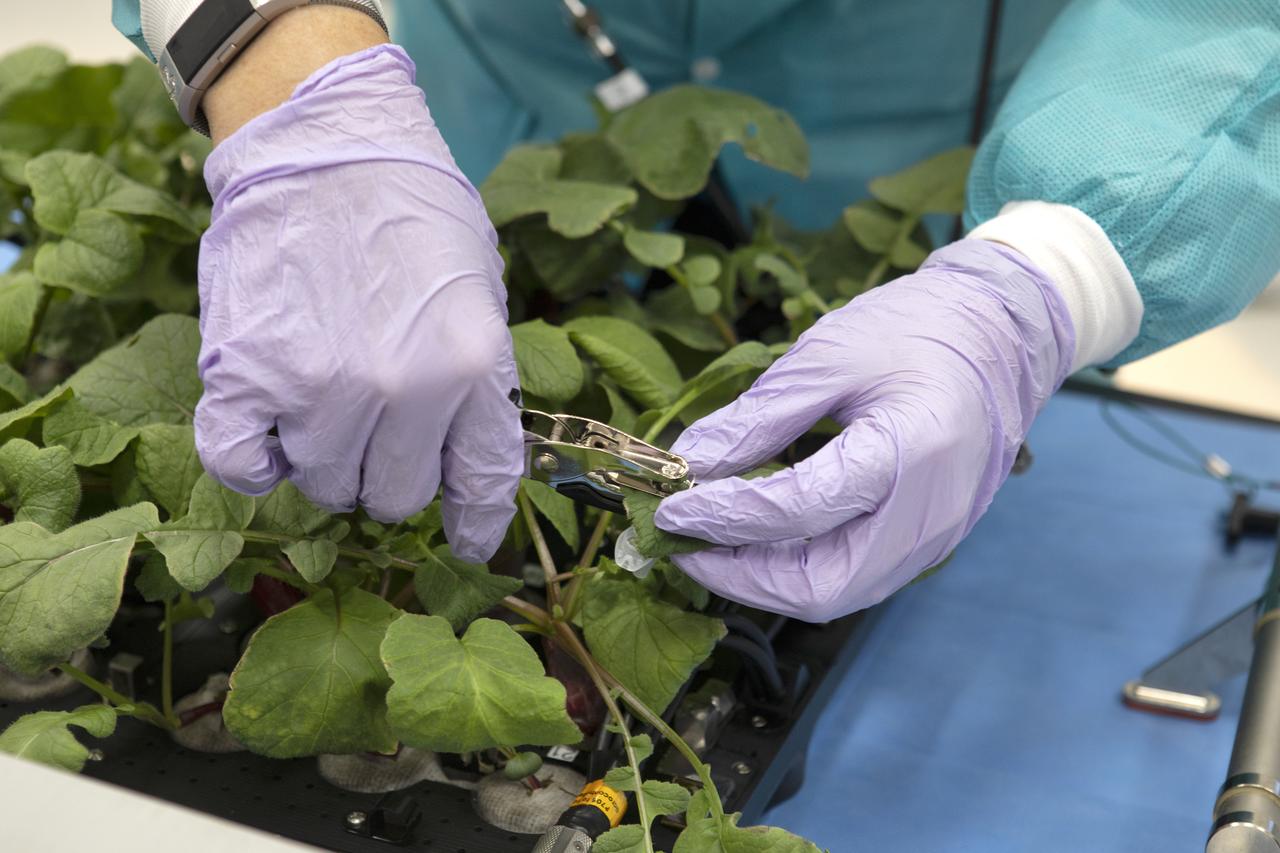
A sample of a leaf from one of the radish plant growing in the base of the Advanced Plant Habitat (APH) ground unit is taken inside a laboratory in the Space Station Processing Facility at NASA’s Kennedy Space Center in Florida on June 13, 2019. The radishes are being harvested as part of a science verification test. The APH is currently the largest plant chamber built for the agency in use on the International Space Station. It is an autonomous plant growth facility that is being used to conduct bioscience research on the space station with the goal of enabling astronauts to be sustainable on long duration missions to the Moon, Mars and beyond.
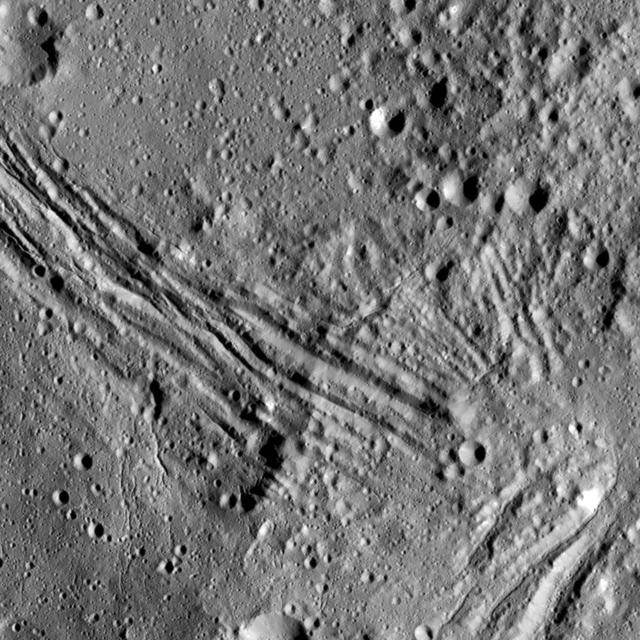
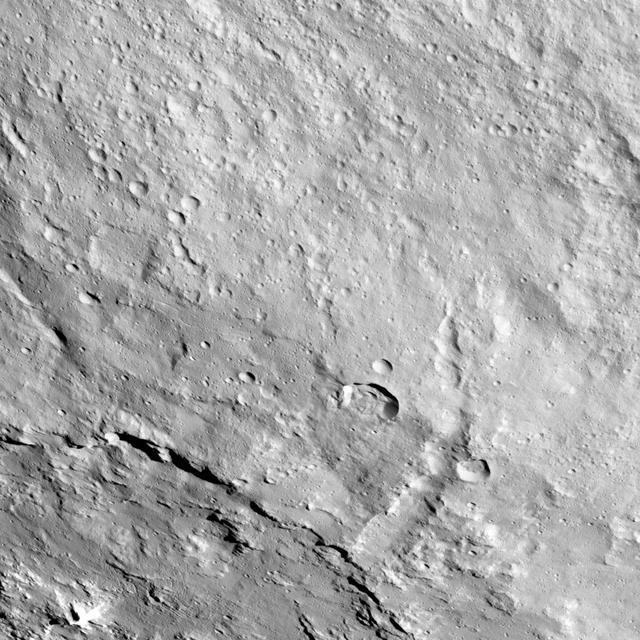
This image shows the eastern part of a feature called Nar Sulcus in Yalode Crater on dwarf planet Ceres, as seen by NASA's Dawn spacecraft. The term "sulcus" (plural: sulci) describes terrain with long, parallel fractures. Sulci are very common on icy moons -- for example, at the south pole of Enceladus, as seen in PIA11686. Nar Sulcus, 31 miles (50 kilometer) long, is the only feature of its kind identified on Ceres. It may point to an episode of tectonic deformation resulting from the evolution of the crater, which is the second largest on Ceres. The impact that formed Yalode heated Ceres' mixture of ice, rock and salt, perhaps causing a large volume to melt. When this material subsequently refroze, it would expand (just as water does when it turns to ice in your freezer). That may have created stresses that fractured the ground, forming Nar Sulcus. The name "Nar Sulcus" refers to the Azerbaijani festival of the pomegranate harvest. That festival is held in October and November in the city of Goychay, center of pomegranate cultivation in Azerbaijan. Dawn took this image on August 15, 2016, from its low-altitude mapping orbit, at a distance of about 240 miles (385 kilometers) above the surface. The image resolution is 120 feet (35 meters) per pixel. https://photojournal.jpl.nasa.gov/catalog/PIA21400
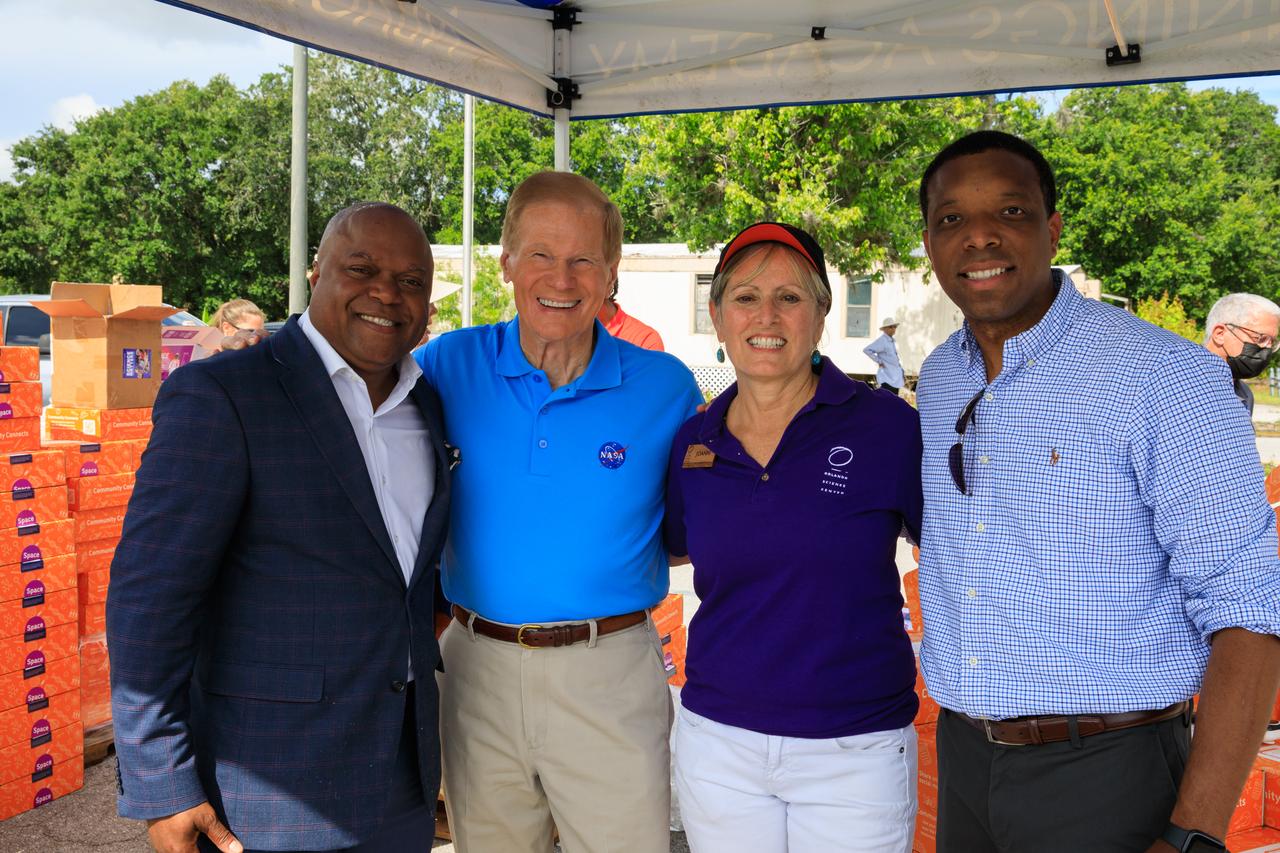
From left to right, Dr. Frederic Bertley, president and CEO, Center of Science and Industry (COSI); NASA Administrator Bill Nelson; JoAnn Newman, president and CEO, Orlando Science Center; and Stephen White, chief strategy officer, COSI helped kick off a new initiative to deliver food and hands-on science, technology, engineering, and math kits, called Learning Lunchboxes, at New Beginnings Church – The Gathering Place in Orlando, Florida on Friday, June 3. The lunchboxes are aimed at inspiring and educating youth and families about NASA’s upcoming Artemis missions, which includes landing the first woman and person of color on the Moon and helping prepare for human exploration of Mars. Partners on the initiative with NASA include COSI, the Second Harvest Food Bank, and the Orlando Science Center. The NASA Artemis Learning Lunchbox is made possible through NASA’s Teams Engaging Affiliated Museums and Informal Institutions (TEAM II) program. NASA Learning Lunchboxes provide five space-focused learning activities that showcase the diversity of STEM at NASA. COSI will distribute 30,000 NASA Learning Lunchboxes at local food banks across the country to help feed hungry lives and feed hungry minds. This innovative, community-based model will bring together other science centers and museums, afterschool providers, and community leaders to highlight the importance of STEM. This project also includes digital extension resources.
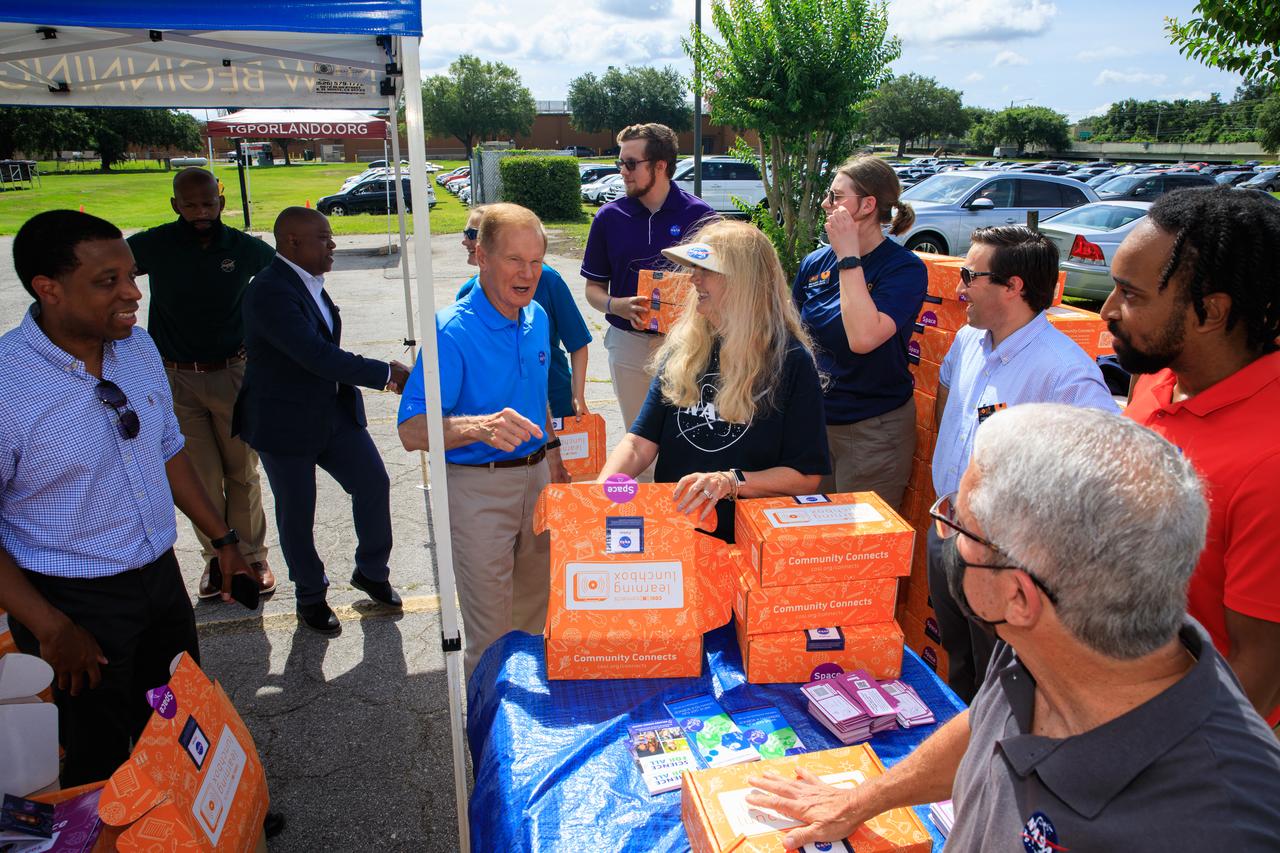
NASA Administrator Bill Nelson helped kick off a new initiative to deliver food and hands-on science, technology, engineering, and math kits, called Learning Lunchboxes, at New Beginnings Church – The Gathering Place in Orlando, Florida on Friday, June 3. The lunchboxes are aimed at inspiring and educating youth and families about NASA’s upcoming Artemis missions, which includes landing the first woman and person of color on the Moon and helping prepare for human exploration of Mars. Partners on the initiative with NASA include the Center of Science and Industry, the Second Harvest Food Bank, and the Orlando Science Center. The NASA Artemis Learning Lunchbox is made possible through NASA’s Teams Engaging Affiliated Museums and Informal Institutions (TEAM II) program. NASA Learning Lunchboxes provide five space-focused learning activities that showcase the diversity of STEM at NASA. COSI will distribute 30,000 NASA Learning Lunchboxes at local food banks across the country to help feed hungry lives and feed hungry minds. This innovative, community-based model will bring together other science centers and museums, afterschool providers, and community leaders to highlight the importance of STEM. This project also includes digital extension resources.
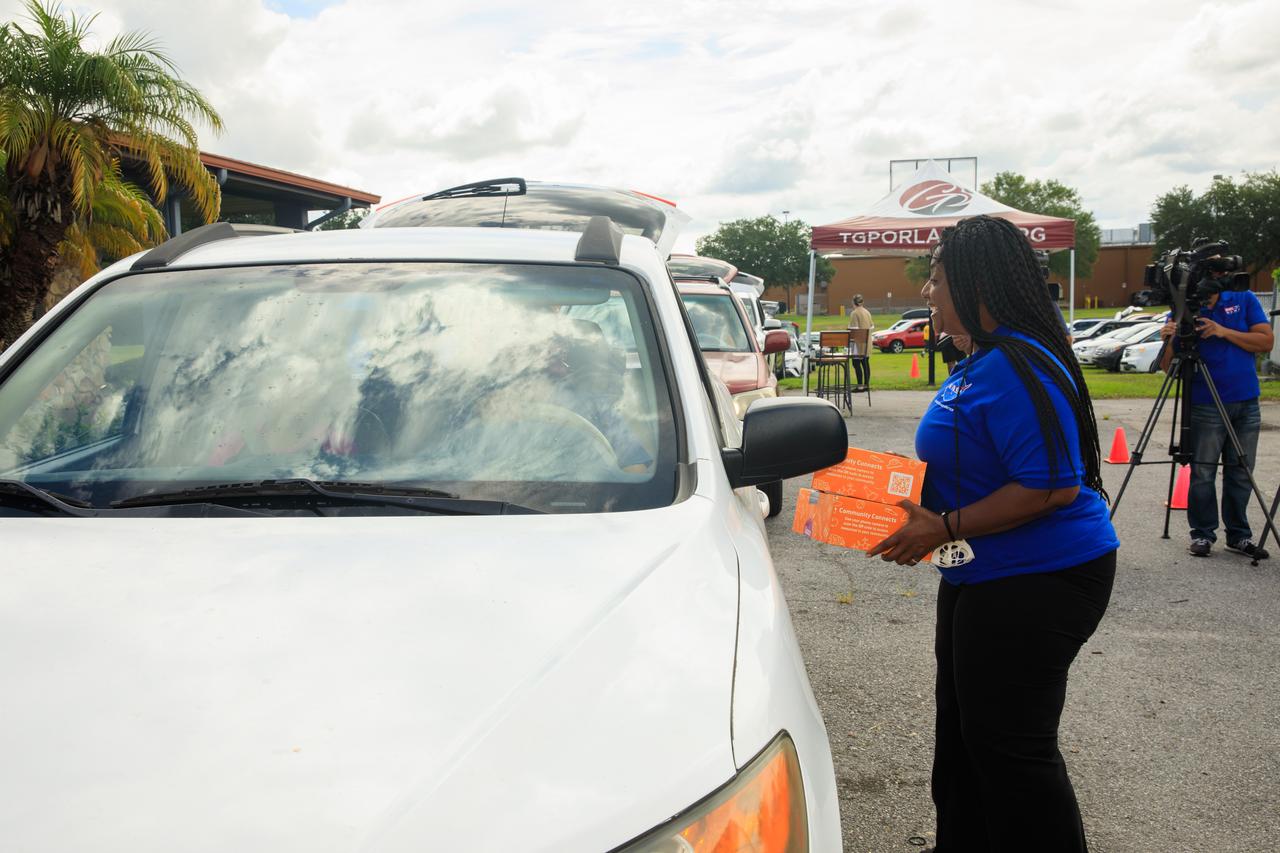
Barbara Brown, director of the Exploration Research and Technology Program at Kennedy Space Center in Florida, helped kick off a new initiative to deliver food and hands-on science, technology, engineering, and math kits, called Learning Lunchboxes, at New Beginnings Church – The Gathering Place in Orlando, Florida on Friday, June 3. The lunchboxes are aimed at inspiring and educating youth and families about NASA’s upcoming Artemis missions, which includes landing the first woman and person of color on the Moon and helping prepare for human exploration of Mars. Partners on the initiative with NASA include the Center of Science and Industry, the Second Harvest Food Bank, and the Orlando Science Center. The NASA Artemis Learning Lunchbox is made possible through NASA’s Teams Engaging Affiliated Museums and Informal Institutions (TEAM II) program. NASA Learning Lunchboxes provide five space-focused learning activities that showcase the diversity of STEM at NASA. COSI will distribute 30,000 NASA Learning Lunchboxes at local food banks across the country to help feed hungry lives and feed hungry minds. This innovative, community-based model will bring together other science centers and museums, afterschool providers, and community leaders to highlight the importance of STEM. This project also includes digital extension resources.
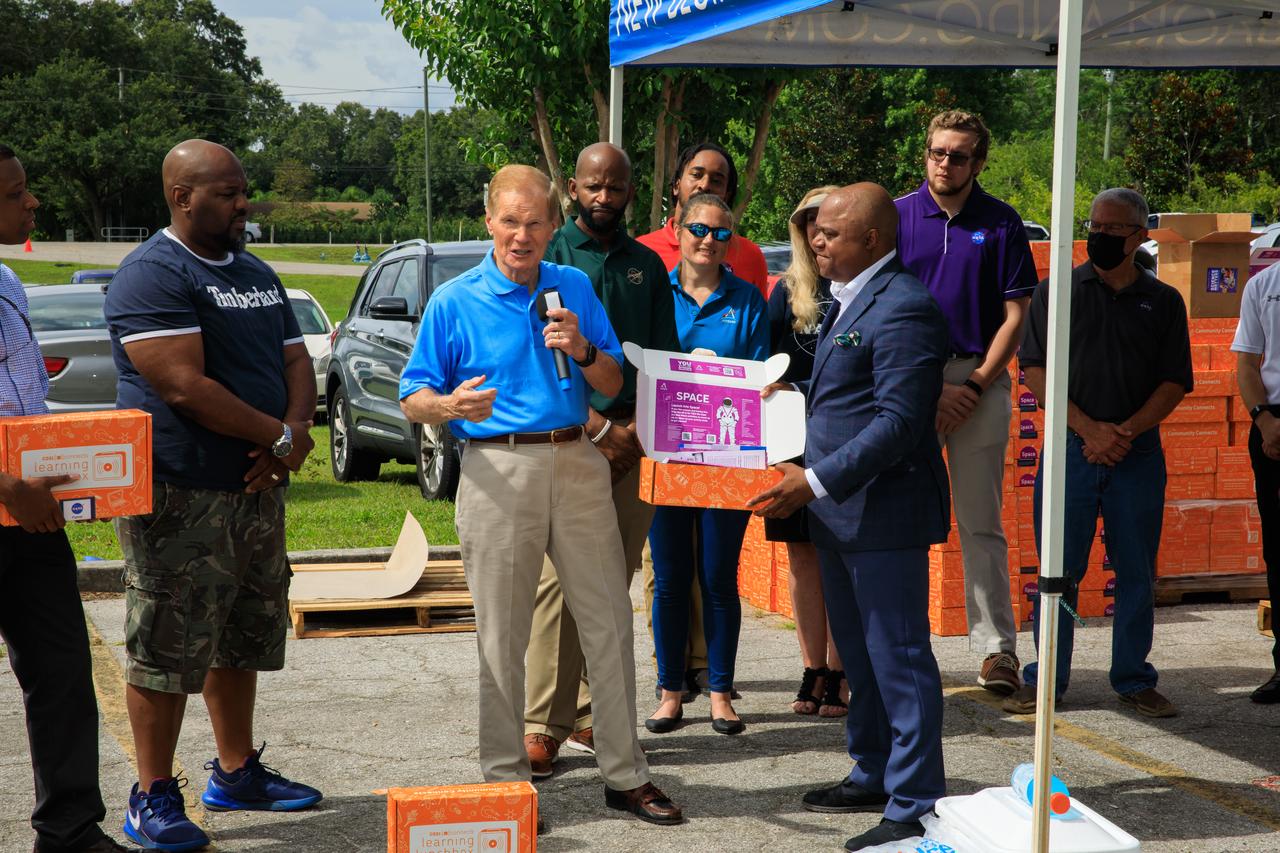
NASA Administrator Bill Nelson helped kick off a new initiative to deliver food and hands-on science, technology, engineering, and math kits, called Learning Lunchboxes, at New Beginnings Church – The Gathering Place in Orlando, Florida on Friday, June 3. The lunchboxes are aimed at inspiring and educating youth and families about NASA’s upcoming Artemis missions, which includes landing the first woman and person of color on the Moon and helping prepare for human exploration of Mars. Partners on the initiative with NASA include the Center of Science and Industry, the Second Harvest Food Bank, and the Orlando Science Center. The NASA Artemis Learning Lunchbox is made possible through NASA’s Teams Engaging Affiliated Museums and Informal Institutions (TEAM II) program. NASA Learning Lunchboxes provide five space-focused learning activities that showcase the diversity of STEM at NASA. COSI will distribute 30,000 NASA Learning Lunchboxes at local food banks across the country to help feed hungry lives and feed hungry minds. This innovative, community-based model will bring together other science centers and museums, afterschool providers, and community leaders to highlight the importance of STEM. This project also includes digital extension resources.
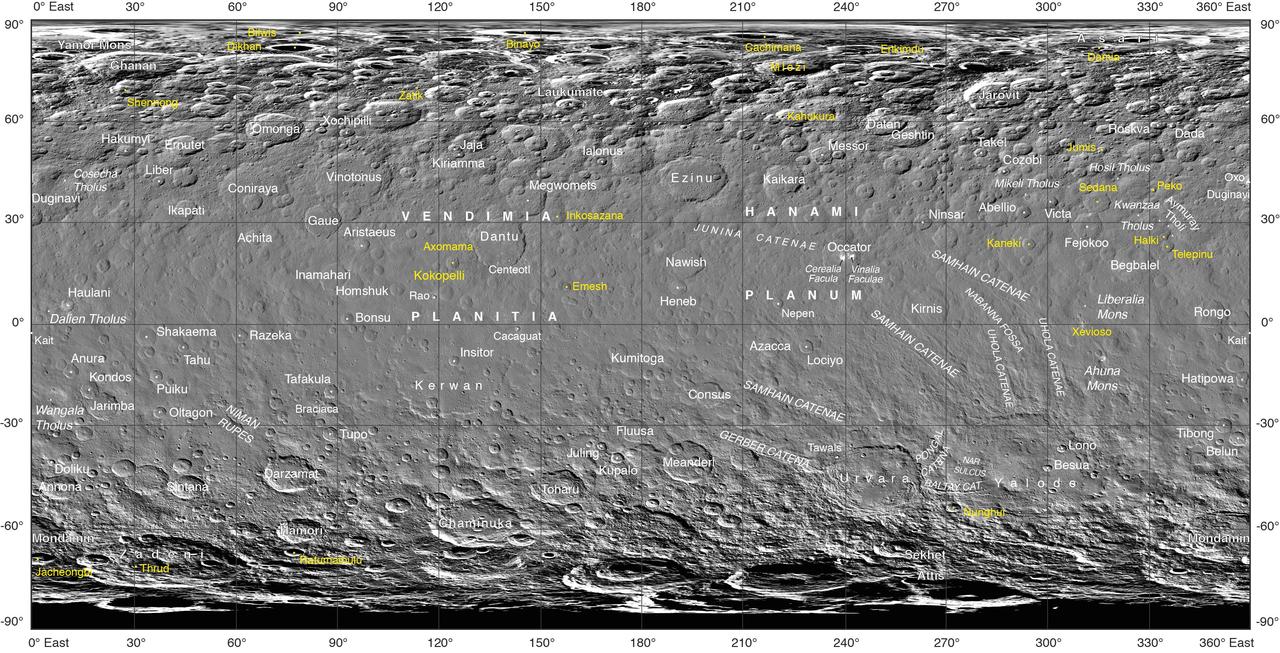
Often, the names of features on planetary bodies are connected through a specific theme -- for example, many features on the Moon have been named after famous scientists. NASA's Dawn mission, together with the International Astronomical Union, established that craters on Ceres would be named for agricultural deities from all over the world, and other features would be named for agricultural festivals. Ceres itself was named after the Roman goddess of corn and harvests by its discoverer, Giuseppe Piazzi, who spotted it with his telescope in 1801. Since March 2015, Dawn has been orbiting Ceres and sending back many intriguing images and other data about its features. Using suggestions from the Dawn team, the IAU recently approved 25 new Ceres feature names tied to theme of agricultural deities, marked in yellow on the map. Emesh Crater, for example, is named for the Sumerian god of vegetation and agriculture. Jumi is the Latvian god of fertility of the field. The newly named surface features vary in size. Thrud, for example, is a crater with a diameter of 4.8 miles (7.8 kilometers) within the larger crater Zadeni, while Mlezi has a diameter of 28 miles (42 kilometers). For more information, the characteristics of these and other features on Ceres can be found in the IAU's Gazetteer of Planetary Nomenclature. https://photojournal.jpl.nasa.gov/catalog/PIA21755
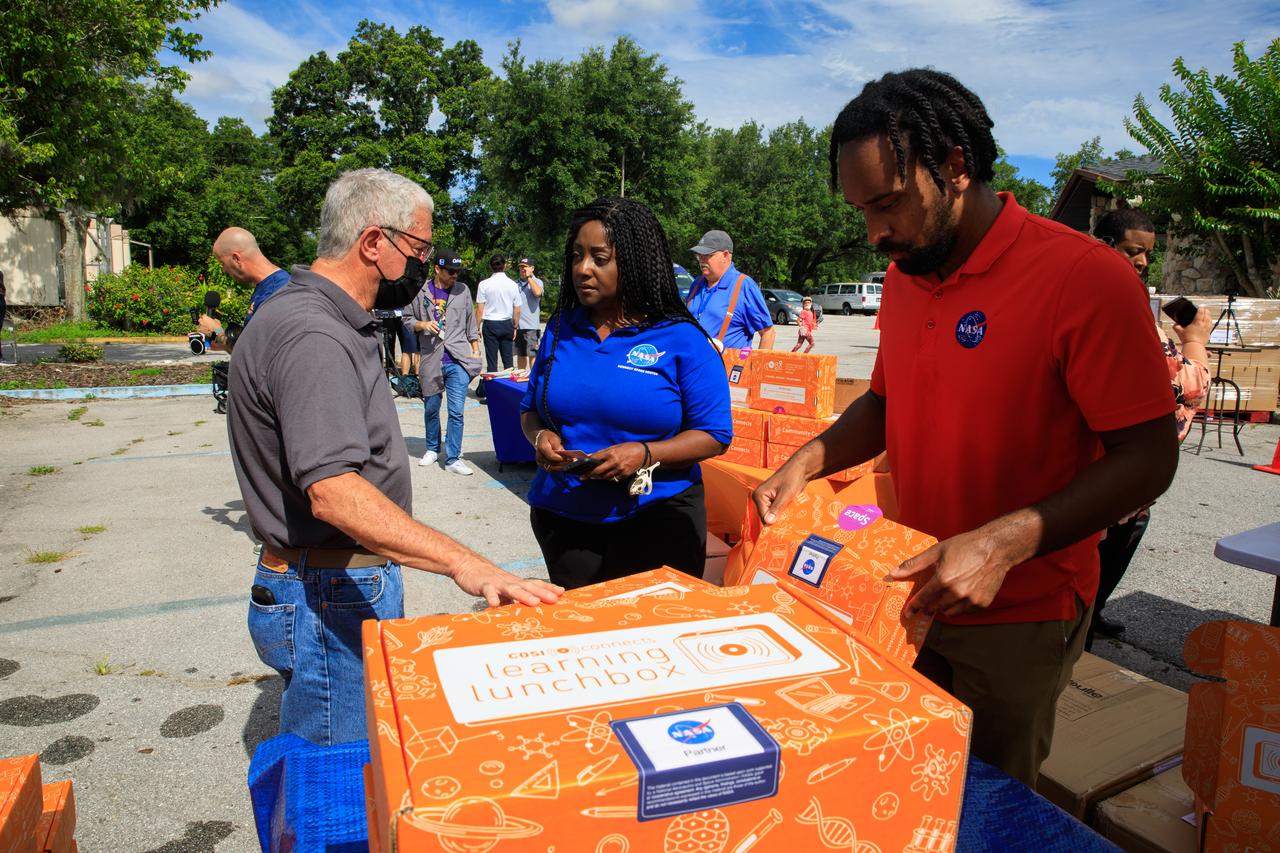
Barbara Brown (center), director of the Exploration Research and Technology Program at Kennedy Space Center in Florida, helped kick off a new initiative to deliver food and hands-on science, technology, engineering, and math kits, called Learning Lunchboxes, at New Beginnings Church – The Gathering Place in Orlando, Florida on Friday, June 3. The lunchboxes are aimed at inspiring and educating youth and families about NASA’s upcoming Artemis missions, which includes landing the first woman and person of color on the Moon and helping prepare for human exploration of Mars. Partners on the initiative with NASA include the Center of Science and Industry, the Second Harvest Food Bank, and the Orlando Science Center. The NASA Artemis Learning Lunchbox is made possible through NASA’s Teams Engaging Affiliated Museums and Informal Institutions (TEAM II) program. NASA Learning Lunchboxes provide five space-focused learning activities that showcase the diversity of STEM at NASA. COSI will distribute 30,000 NASA Learning Lunchboxes at local food banks across the country to help feed hungry lives and feed hungry minds. This innovative, community-based model will bring together other science centers and museums, afterschool providers, and community leaders to highlight the importance of STEM. This project also includes digital extension resources.
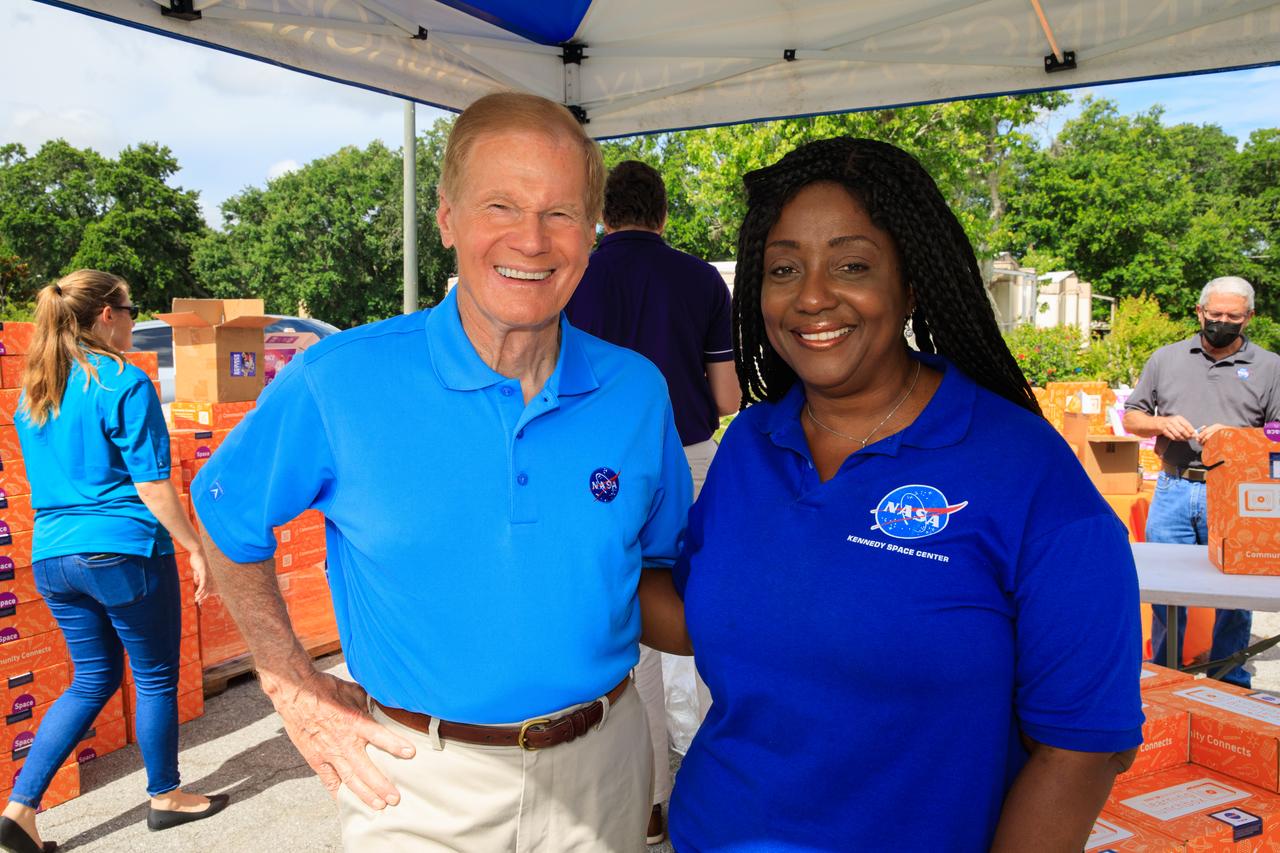
NASA Administrator Bill Nelson (left) and Barbara Brown (right), director of the Exploration Research and Technology Program at Kennedy Space Center in Florida, helped kick off a new initiative to deliver food and hands-on science, technology, engineering, and math kits, called Learning Lunchboxes, at New Beginnings Church – The Gathering Place in Orlando, Florida on Friday, June 3. The lunchboxes are aimed at inspiring and educating youth and families about NASA’s upcoming Artemis missions, which includes landing the first woman and person of color on the Moon and helping prepare for human exploration of Mars. Partners on the initiative with NASA include the Center of Science and Industry, the Second Harvest Food Bank, and the Orlando Science Center. The NASA Artemis Learning Lunchbox is made possible through NASA’s Teams Engaging Affiliated Museums and Informal Institutions (TEAM II) program. NASA Learning Lunchboxes provide five space-focused learning activities that showcase the diversity of STEM at NASA. COSI will distribute 30,000 NASA Learning Lunchboxes at local food banks across the country to help feed hungry lives and feed hungry minds. This innovative, community-based model will bring together other science centers and museums, afterschool providers, and community leaders to highlight the importance of STEM. This project also includes digital extension resources.
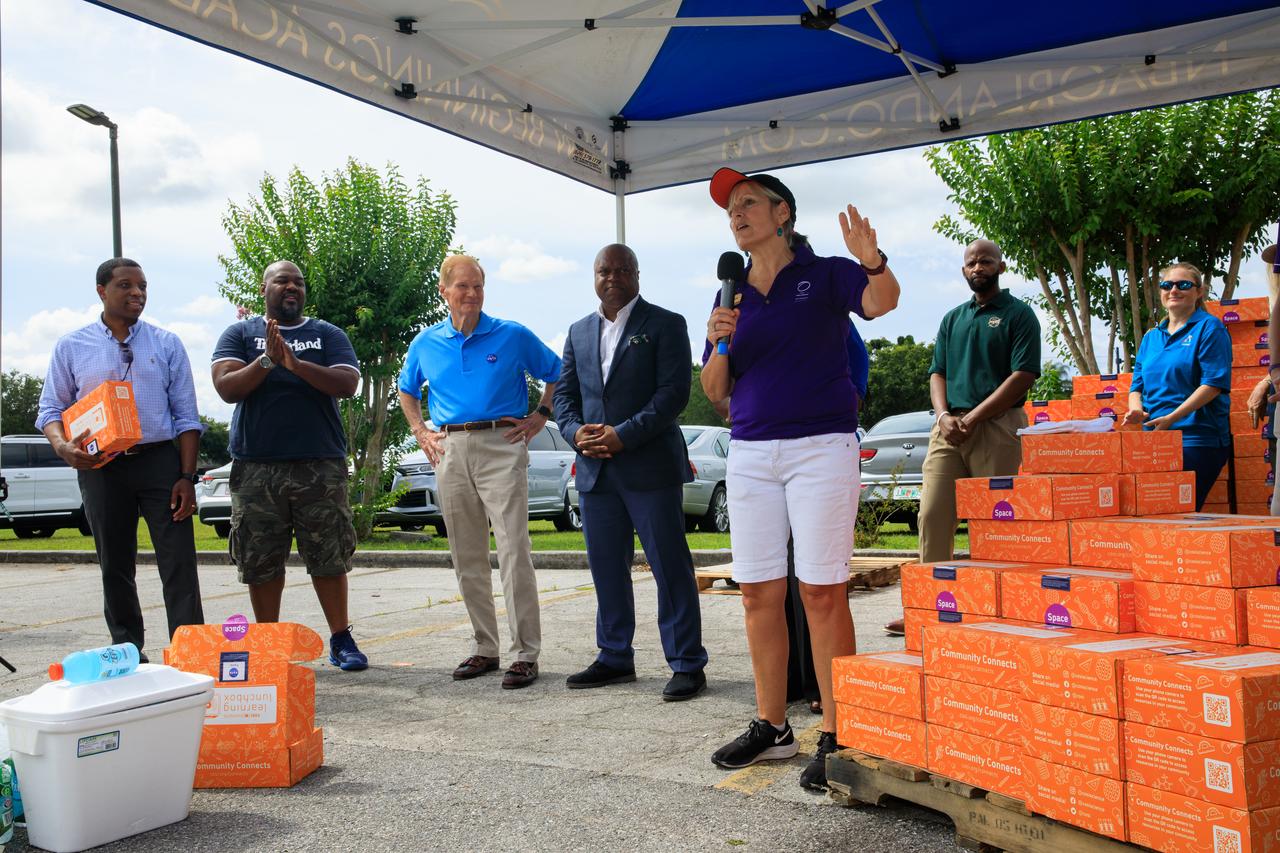
Dr. Frederic Bertley (center), president and CEO, Center of Science and Industry (COSI), speaks at New Beginnings Church – The Gathering Place in Orlando, Florida on Friday, June 3, as part of the launch of a new initiative to deliver food and hands-on science, technology, engineering, and math kits, called Learning Lunchboxes. NASA Administrator Bill Nelson and other agency representatives were on hand to hand out the lunchboxes, which are aimed at inspiring and educating youth and families about NASA’s upcoming Artemis missions, including landing the first woman and person of color on the Moon and helping prepare for human exploration of Mars. Along with COSI, NASA’s partners on the initiative include the Second Harvest Food Bank and the Orlando Science Center. The NASA Artemis Learning Lunchbox is made possible through NASA’s Teams Engaging Affiliated Museums and Informal Institutions (TEAM II) program. NASA Learning Lunchboxes provide five space-focused learning activities that showcase the diversity of STEM at NASA. COSI will distribute 30,000 NASA Learning Lunchboxes at local food banks across the country to help feed hungry lives and feed hungry minds. This innovative, community-based model will bring together other science centers and museums, afterschool providers, and community leaders to highlight the importance of STEM. This project also includes digital extension resources.
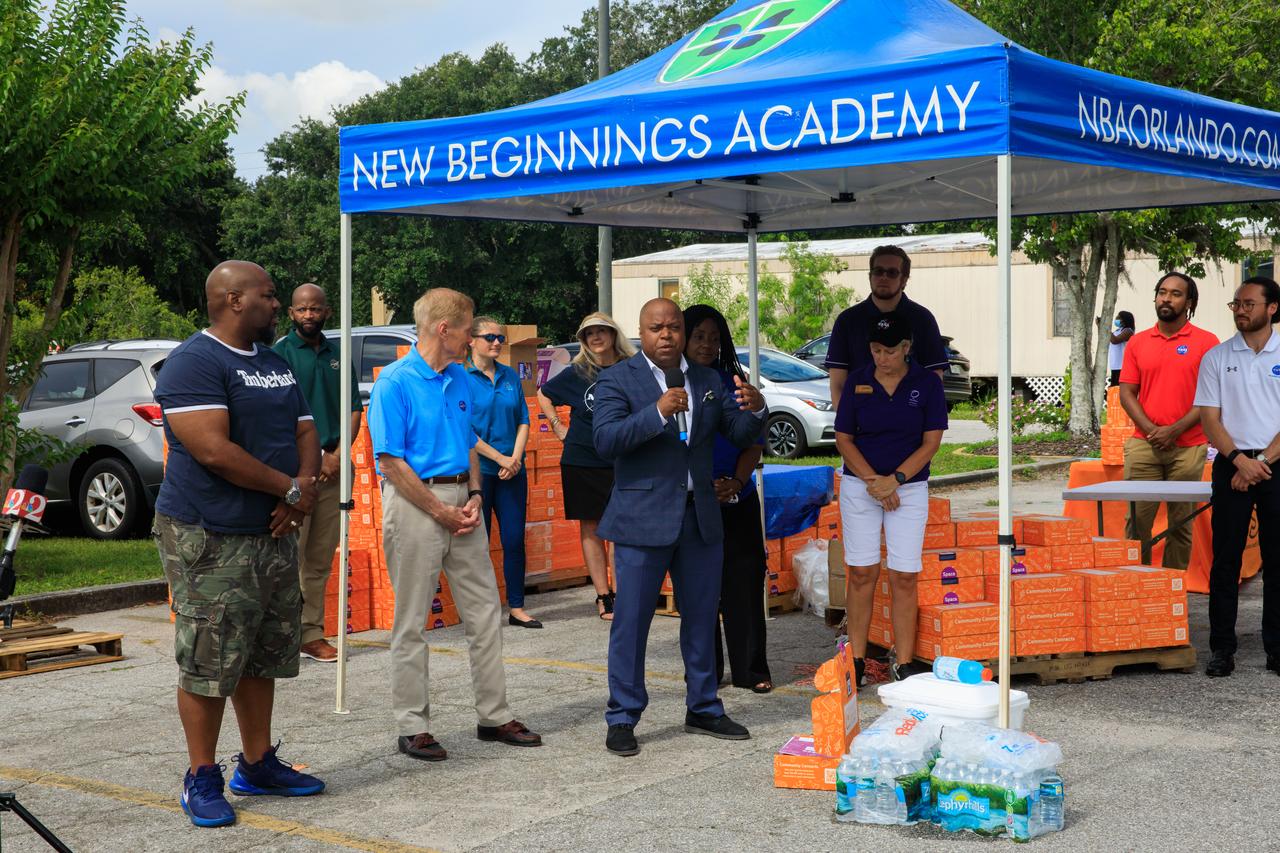
Dr. Frederic Bertley (center), president and CEO, Center of Science and Industry (COSI), speaks at New Beginnings Church – The Gathering Place in Orlando, Florida on Friday, June 3, as part of the launch of a new initiative to deliver food and hands-on science, technology, engineering, and math kits, called Learning Lunchboxes. NASA Administrator Bill Nelson and other agency representatives were on hand to hand out the lunchboxes, which are aimed at inspiring and educating youth and families about NASA’s upcoming Artemis missions, including landing the first woman and person of color on the Moon and helping prepare for human exploration of Mars. Along with COSI, NASA’s partners on the initiative include the Second Harvest Food Bank and the Orlando Science Center. The NASA Artemis Learning Lunchbox is made possible through NASA’s Teams Engaging Affiliated Museums and Informal Institutions (TEAM II) program. NASA Learning Lunchboxes provide five space-focused learning activities that showcase the diversity of STEM at NASA. COSI will distribute 30,000 NASA Learning Lunchboxes at local food banks across the country to help feed hungry lives and feed hungry minds. This innovative, community-based model will bring together other science centers and museums, afterschool providers, and community leaders to highlight the importance of STEM. This project also includes digital extension resources.
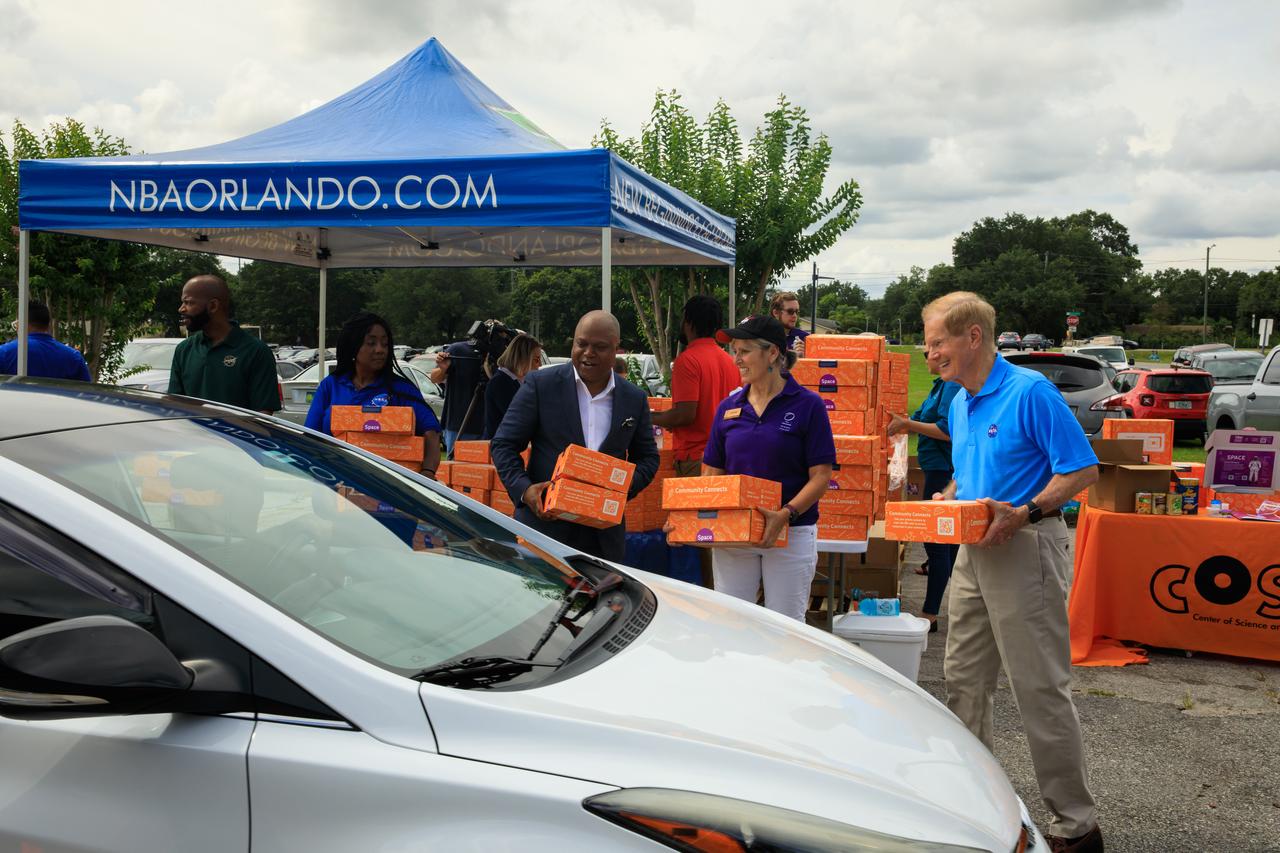
NASA Administrator Bill Nelson helped kick off a new initiative to deliver food and hands-on science, technology, engineering, and math kits, called Learning Lunchboxes, at New Beginnings Church – The Gathering Place in Orlando, Florida on Friday, June 3. The lunchboxes are aimed at inspiring and educating youth and families about NASA’s upcoming Artemis missions, which includes landing the first woman and person of color on the Moon and helping prepare for human exploration of Mars. Partners on the initiative with NASA include the Center of Science and Industry, the Second Harvest Food Bank, and the Orlando Science Center. The NASA Artemis Learning Lunchbox is made possible through NASA’s Teams Engaging Affiliated Museums and Informal Institutions (TEAM II) program. NASA Learning Lunchboxes provide five space-focused learning activities that showcase the diversity of STEM at NASA. COSI will distribute 30,000 NASA Learning Lunchboxes at local food banks across the country to help feed hungry lives and feed hungry minds. This innovative, community-based model will bring together other science centers and museums, afterschool providers, and community leaders to highlight the importance of STEM. This project also includes digital extension resources.
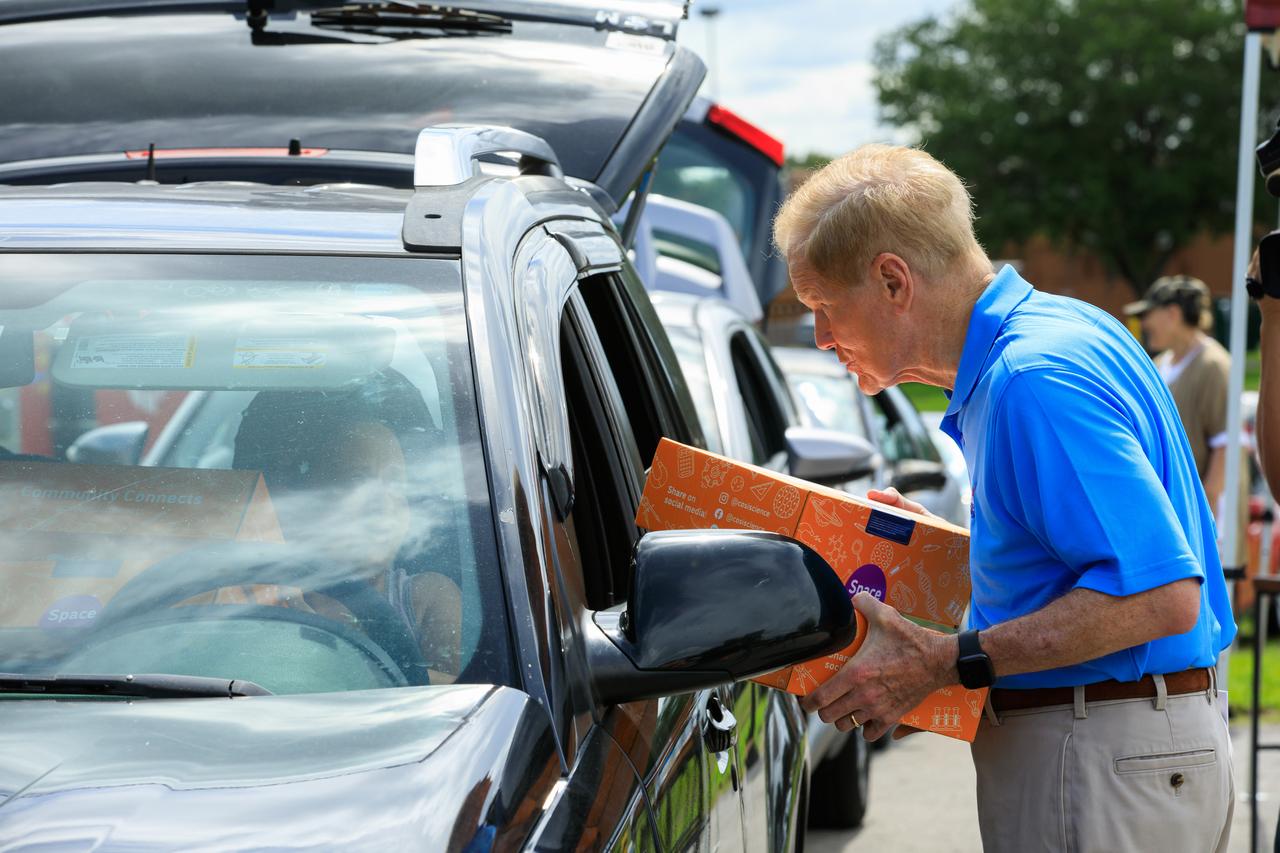
NASA Administrator Bill Nelson helped kick off a new initiative to deliver food and hands-on science, technology, engineering, and math kits, called Learning Lunchboxes, at New Beginnings Church – The Gathering Place in Orlando, Florida on Friday, June 3. The lunchboxes are aimed at inspiring and educating youth and families about NASA’s upcoming Artemis missions, which includes landing the first woman and person of color on the Moon and helping prepare for human exploration of Mars. Partners on the initiative with NASA include the Center of Science and Industry, the Second Harvest Food Bank, and the Orlando Science Center. The NASA Artemis Learning Lunchbox is made possible through NASA’s Teams Engaging Affiliated Museums and Informal Institutions (TEAM II) program. NASA Learning Lunchboxes provide five space-focused learning activities that showcase the diversity of STEM at NASA. COSI will distribute 30,000 NASA Learning Lunchboxes at local food banks across the country to help feed hungry lives and feed hungry minds. This innovative, community-based model will bring together other science centers and museums, afterschool providers, and community leaders to highlight the importance of STEM. This project also includes digital extension resources.
This image from NASA's Dawn spacecraft shows the northeastern rim of Urvara Crater on Ceres at lower left. To the right of the crater, the long, narrow feature that appears to jut out toward the north is called Pongal Catena, which is about 60 miles (96 km) long. Catenae are large grooves or troughs that can have various origins. They refer to chains of closely connected craters formed by a series of impacts, as found on Jupiter's moon Ganymede. They can also represent large faults created by internal forces, for example in this example found on Mars. The mechanism that formed Pongal Catena is not understood yet, but it likely formed as a consequence of the stresses generated by the large impacts that resulted in the formation of the Urvara and Yalode craters. Pongal catena is one of several types of fractures found in this region that reflect a complex history. A feature called Nar Sulcus is another example. Studying the geometry of these features and their relationships can help shed light on the nature of Ceres' subsurface. This image was obtained on September 28, 2015, from an altitude of about 915 miles (1,470 kilometers). Pongal Catena is centered at 37.4 degrees south latitude, 267.7 degrees east longitude. This feature gets its name from the Tamil (Sri Lanka and southern India) harvest festival observed in mid-January. It is a time for giving thanks to nature, and we thank Ceres for all the wonders it has offered us so far. https://photojournal.jpl.nasa.gov/catalog/PIA21408