
Local educators participate in heliophysics activities during a teacher professional development event hosted by the NASA Heliophysics Education Activation Team (HEAT) at the Dallas Arboretum, Saturday, April 6, 2024, in Dallas, Texas. Photo Credit: (NASA/Keegan Barber)

Local educators participate in heliophysics activities during a teacher professional development event hosted by the NASA Heliophysics Education Activation Team (HEAT) at the Dallas Arboretum, Saturday, April 6, 2024, in Dallas, Texas. Photo Credit: (NASA/Keegan Barber)

Local educators participate in heliophysics activities during a teacher professional development event hosted by the NASA Heliophysics Education Activation Team (HEAT) at the Dallas Arboretum, Saturday, April 6, 2024, in Dallas, Texas. Photo Credit: (NASA/Keegan Barber)
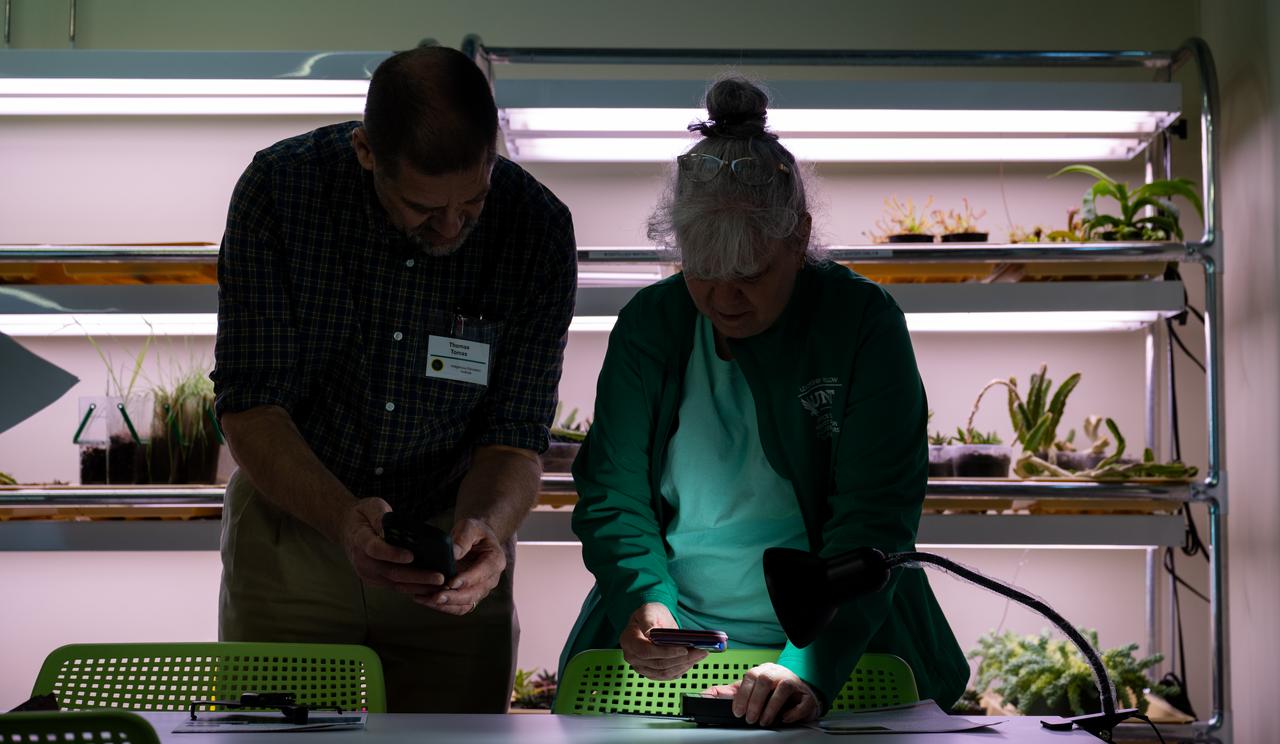
Local educators participate in heliophysics activities during a teacher professional development event hosted by the NASA Heliophysics Education Activation Team (HEAT) at the Dallas Arboretum, Saturday, April 6, 2024, in Dallas, Texas. Photo Credit: (NASA/Keegan Barber)
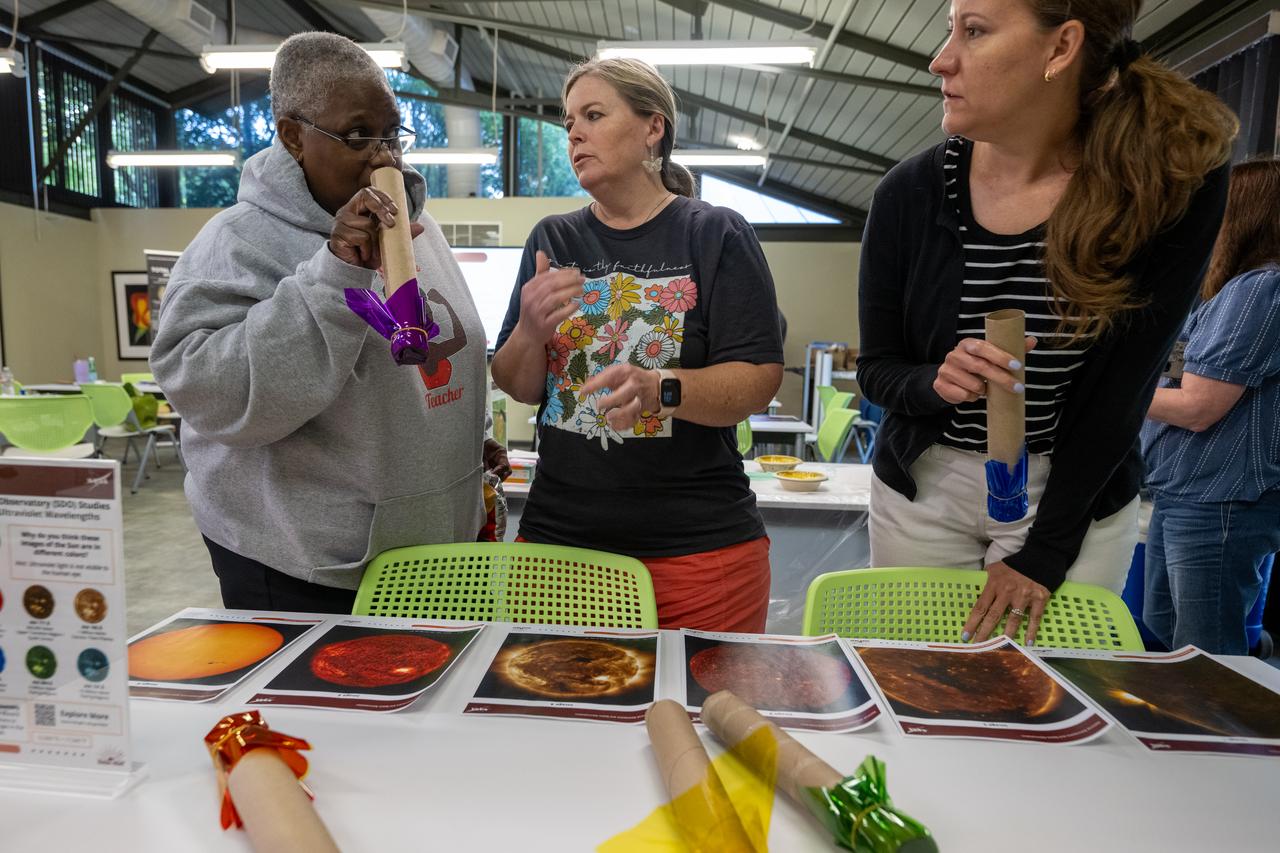
Local educators participate in heliophysics activities during a teacher professional development event hosted by the NASA Heliophysics Education Activation Team (HEAT) at the Dallas Arboretum, Saturday, April 6, 2024, in Dallas, Texas. Photo Credit: (NASA/Keegan Barber)
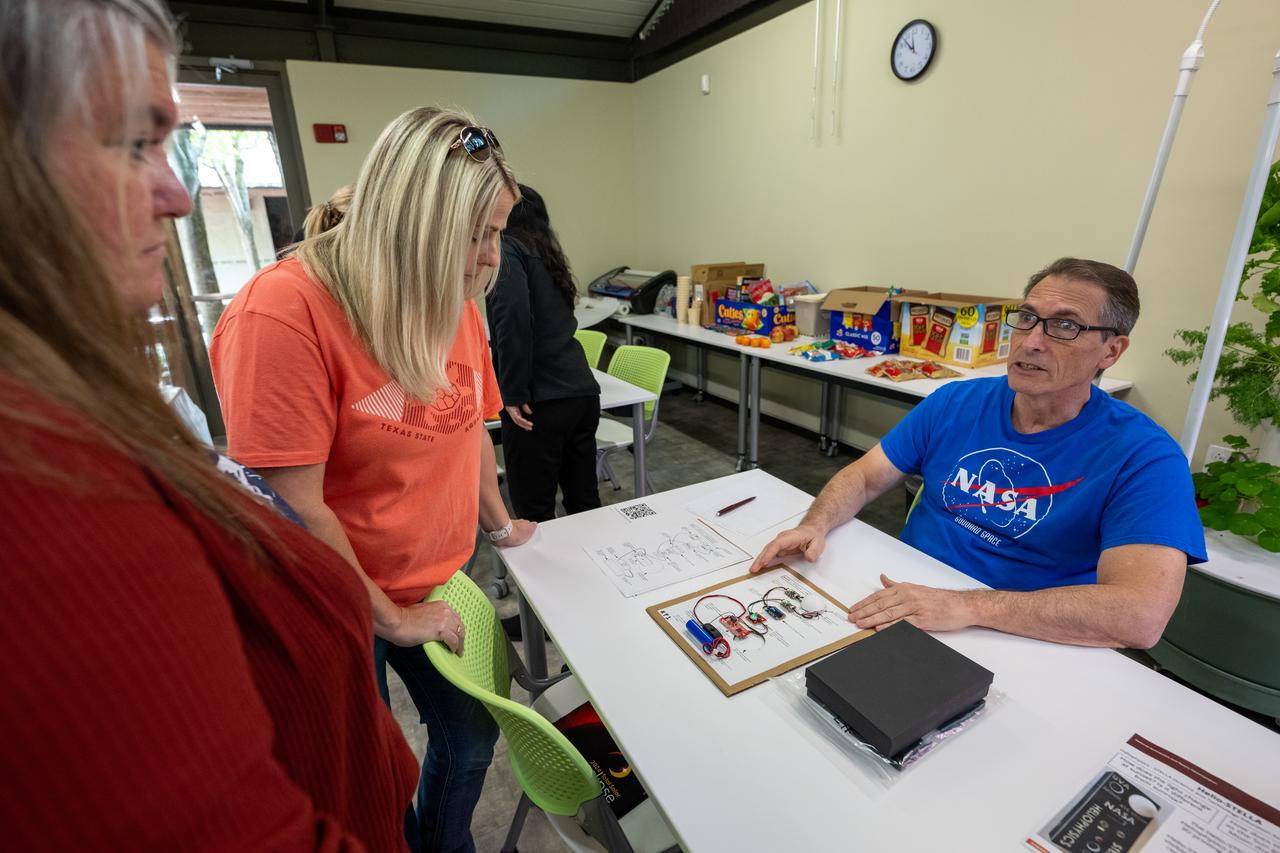
NASA Heliophysics Science Division Instrument Systems Engineer Patrick Haas, right, demonstrates heliophysics activities during a teacher professional development event hosted by the NASA Heliophysics Education Activation Team (HEAT) at the Dallas Arboretum, Saturday, April 6, 2024, in Dallas, Texas. Photo Credit: (NASA/Keegan Barber)

NASA Heliophysics Science Division Instrument Systems Engineer Patrick Haas, left, demonstrates heliophysics activities during a teacher professional development event hosted by the NASA Heliophysics Education Activation Team (HEAT) at the Dallas Arboretum, Saturday, April 6, 2024, in Dallas, Texas. Photo Credit: (NASA/Keegan Barber)
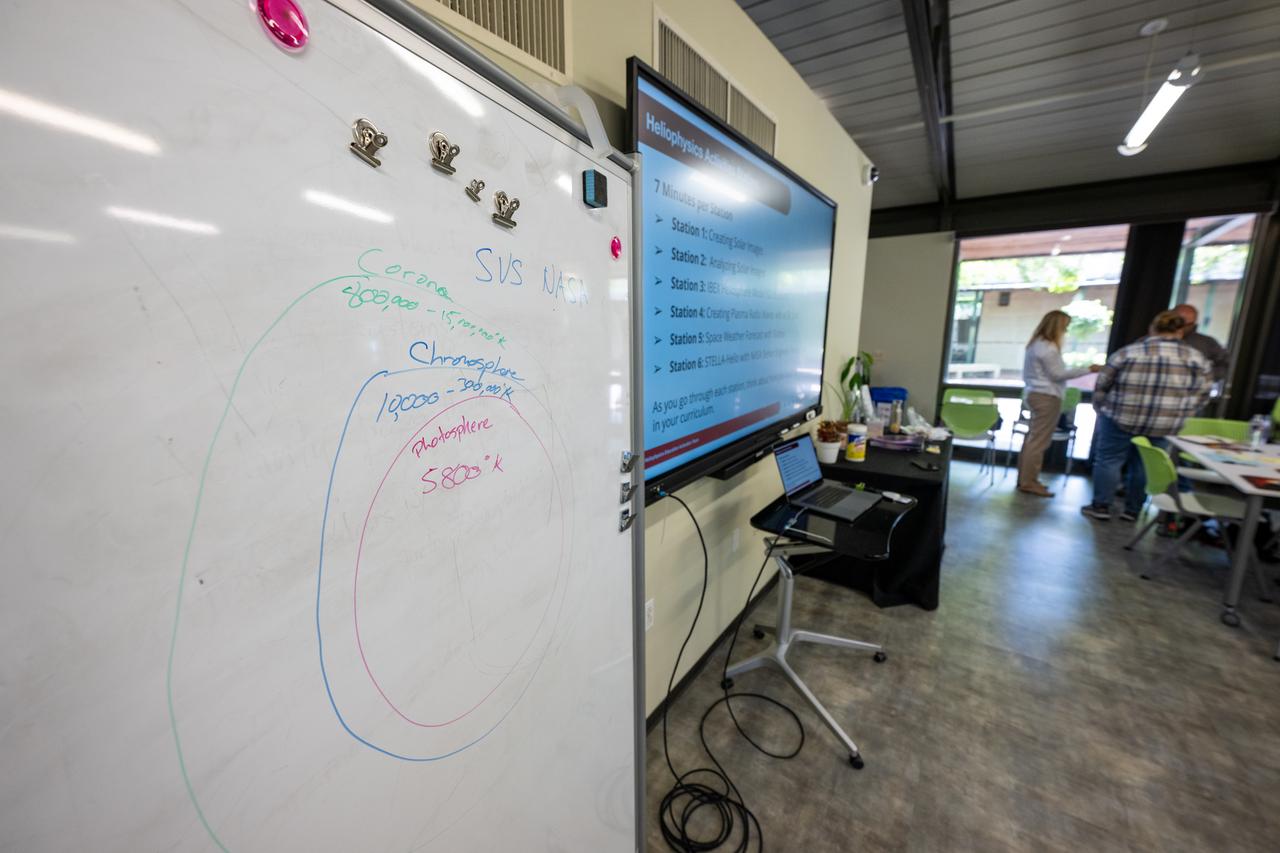
A diagram is seen during a teacher professional development event hosted by the NASA Heliophysics Education Activation Team (HEAT) at the Dallas Arboretum, Saturday, April 6, 2024, in Dallas, Texas. Photo Credit: (NASA/Keegan Barber)

NASA Education Specialist Christine Milotte demonstrates heliophysics activities during a teacher professional development event hosted by the NASA Heliophysics Education Activation Team (HEAT) at the Dallas Arboretum, Saturday, April 6, 2024, in Dallas, Texas. Photo Credit: (NASA/Keegan Barber)
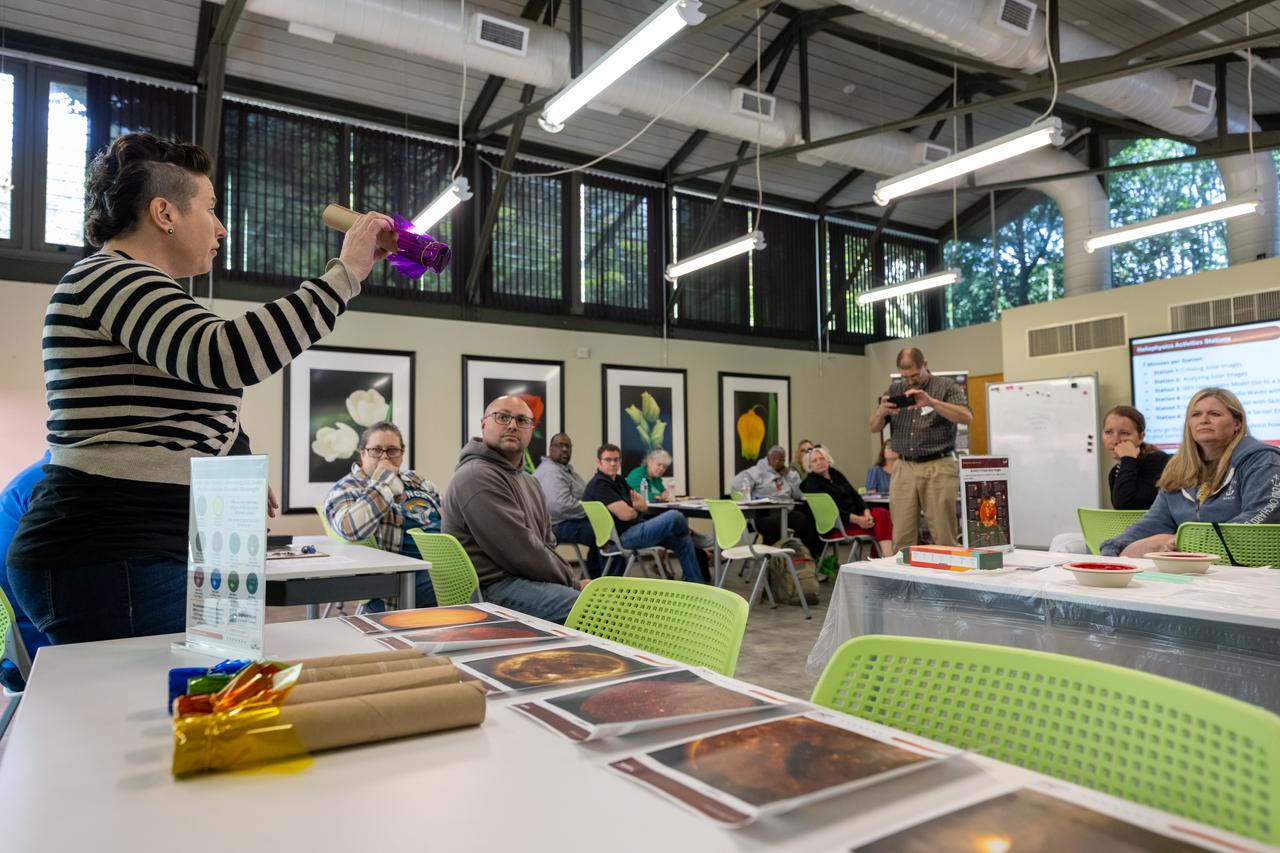
NASA Education Specialist Christine Milotte demonstrates heliophysics activities during a teacher professional development event hosted by the NASA Heliophysics Education Activation Team (HEAT) at the Dallas Arboretum, Saturday, April 6, 2024, in Dallas, Texas. Photo Credit: (NASA/Keegan Barber)
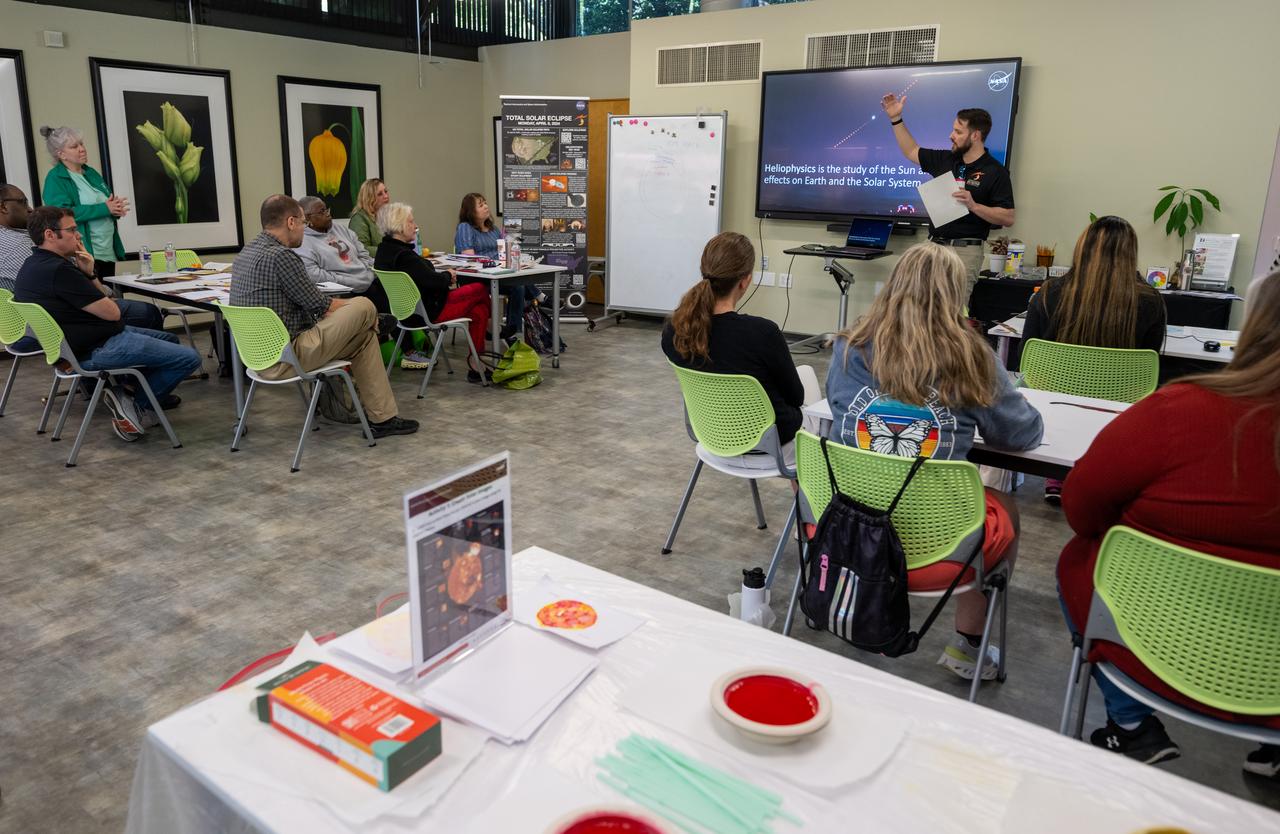
NASA Heliophysics Division Director Dr. Joseph Westlake delivers remarks during a teacher professional development event hosted by the NASA Heliophysics Education Activation Team (HEAT) at the Dallas Arboretum, Saturday, April 6, 2024, in Dallas, Texas. Photo Credit: (NASA/Keegan Barber)
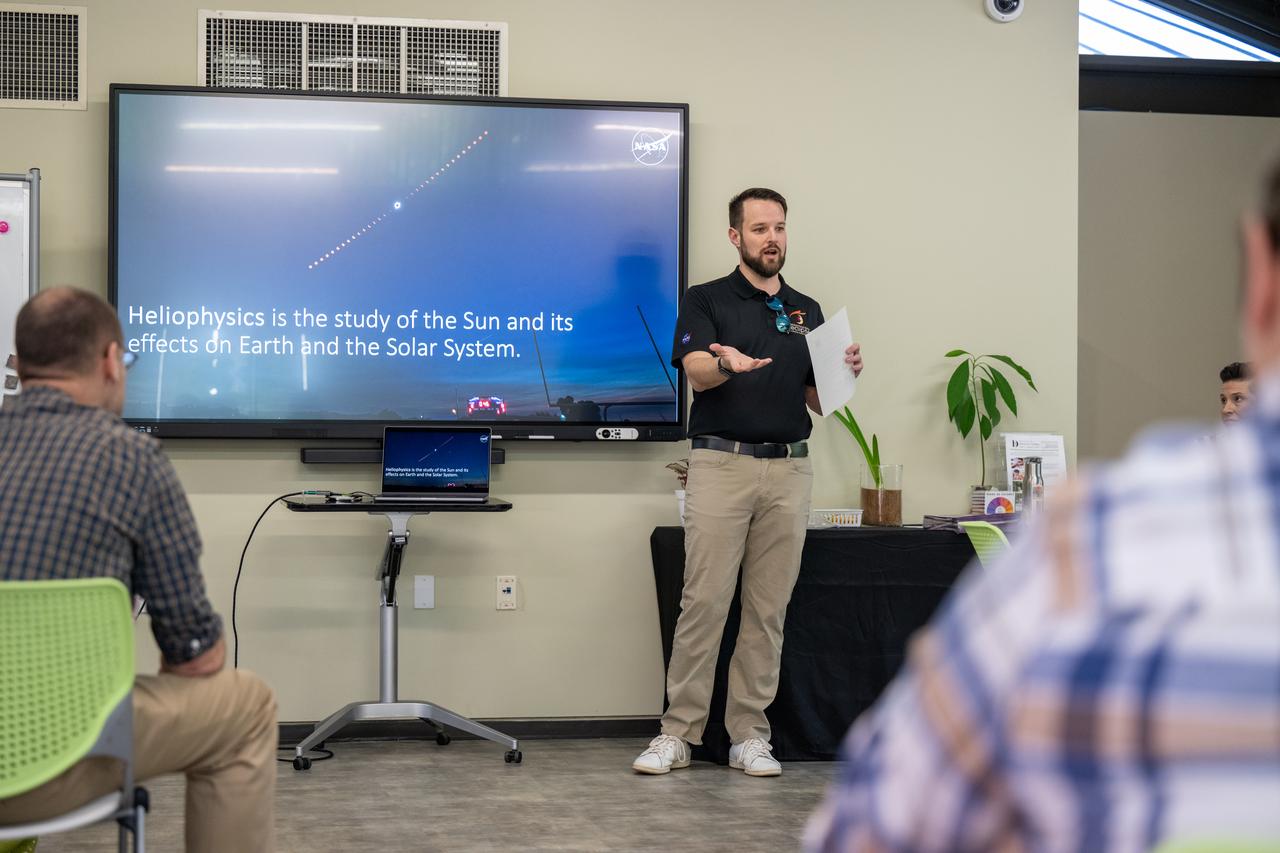
NASA Heliophysics Division Director Dr. Joseph Westlake delivers remarks during a teacher professional development event hosted by the NASA Heliophysics Education Activation Team (HEAT) at the Dallas Arboretum, Saturday, April 6, 2024, in Dallas, Texas. Photo Credit: (NASA/Keegan Barber)
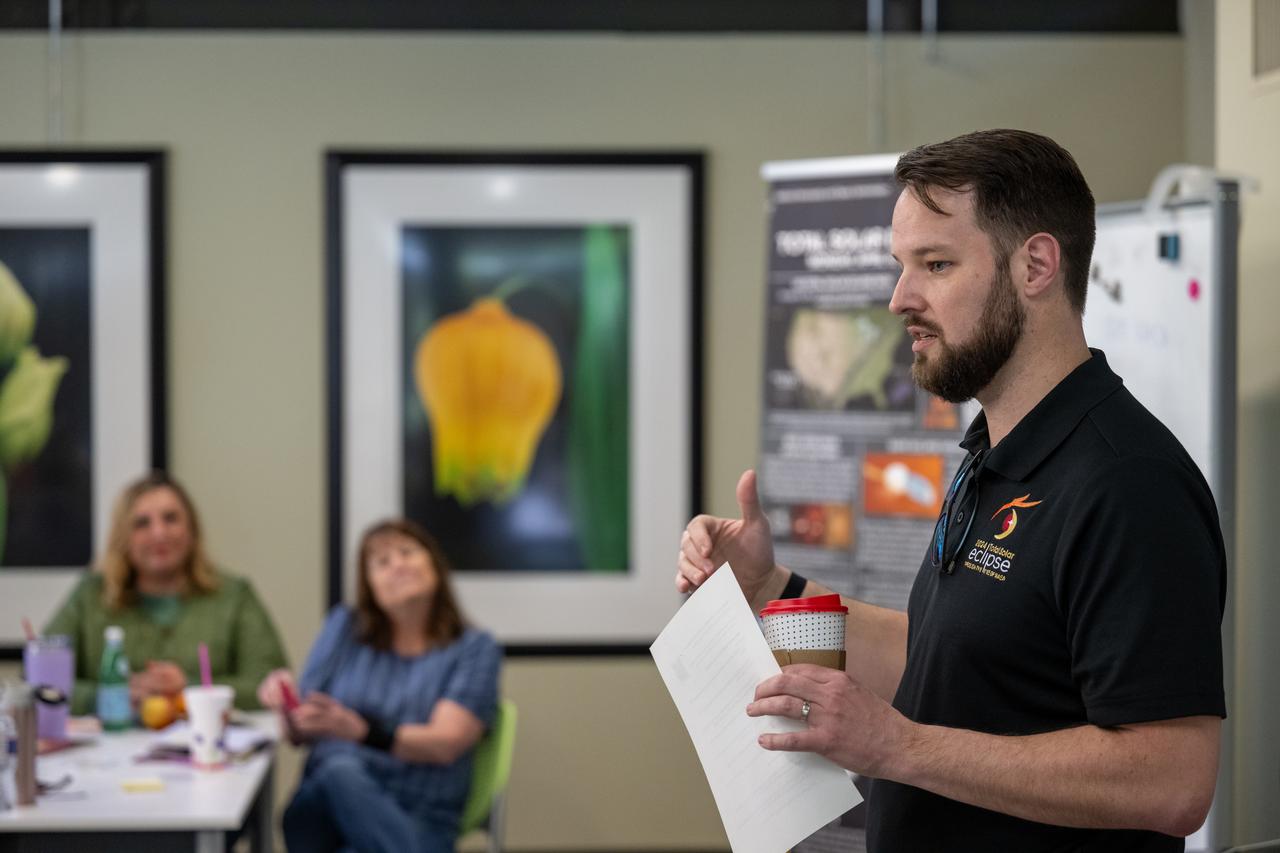
NASA Heliophysics Division Director Dr. Joseph Westlake delivers remarks during a teacher professional development event hosted by the NASA Heliophysics Education Activation Team (HEAT) at the Dallas Arboretum, Saturday, April 6, 2024, in Dallas, Texas. Photo Credit: (NASA/Keegan Barber)

NASA Education Specialist Christine Milotte gives a presentation during a teacher professional development event hosted by the NASA Heliophysics Education Activation Team (HEAT) at the Dallas Arboretum, Saturday, April 6, 2024, in Dallas, Texas. Photo Credit: (NASA/Keegan Barber)
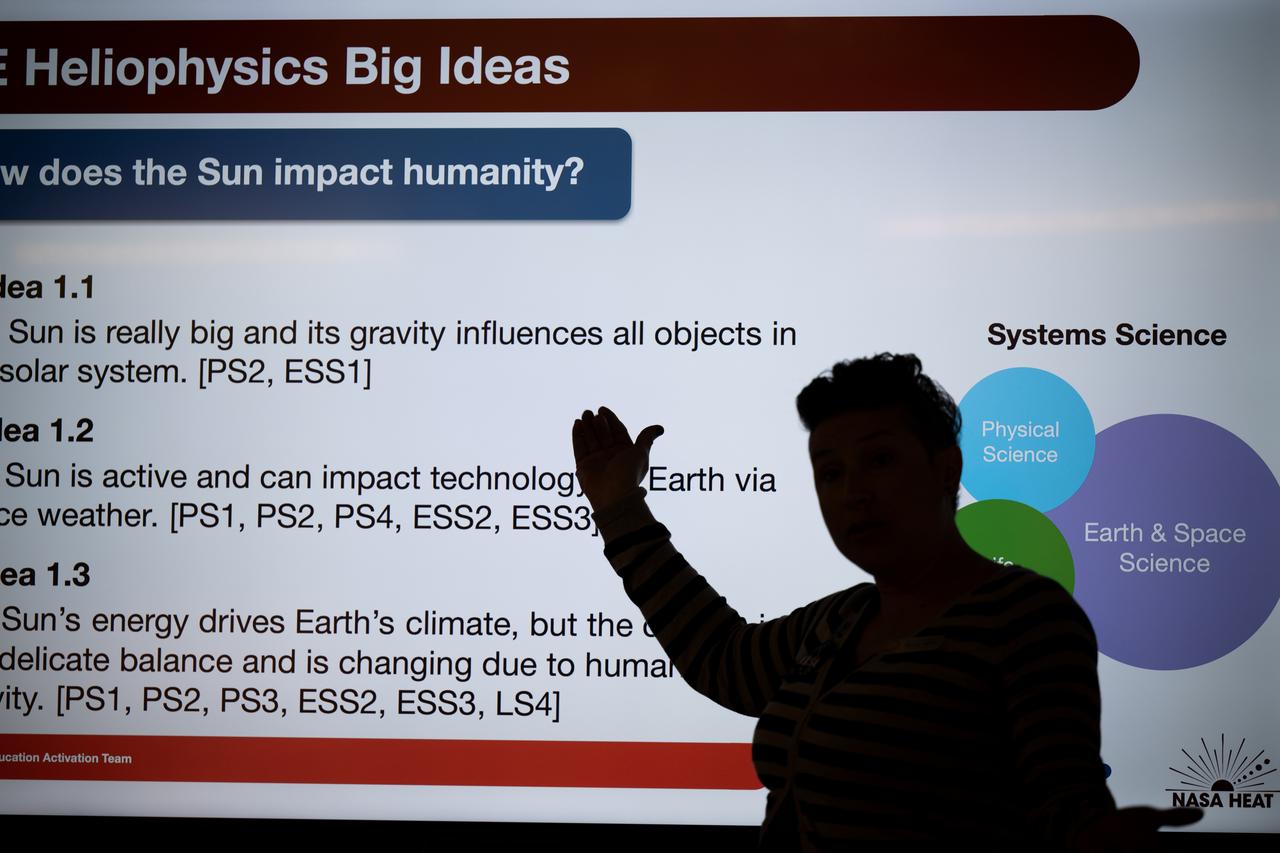
NASA Education Specialist Christine Milotte gives a presentation during a teacher professional development event hosted by the NASA Heliophysics Education Activation Team (HEAT) at the Dallas Arboretum, Saturday, April 6, 2024, in Dallas, Texas. Photo Credit: (NASA/Keegan Barber)
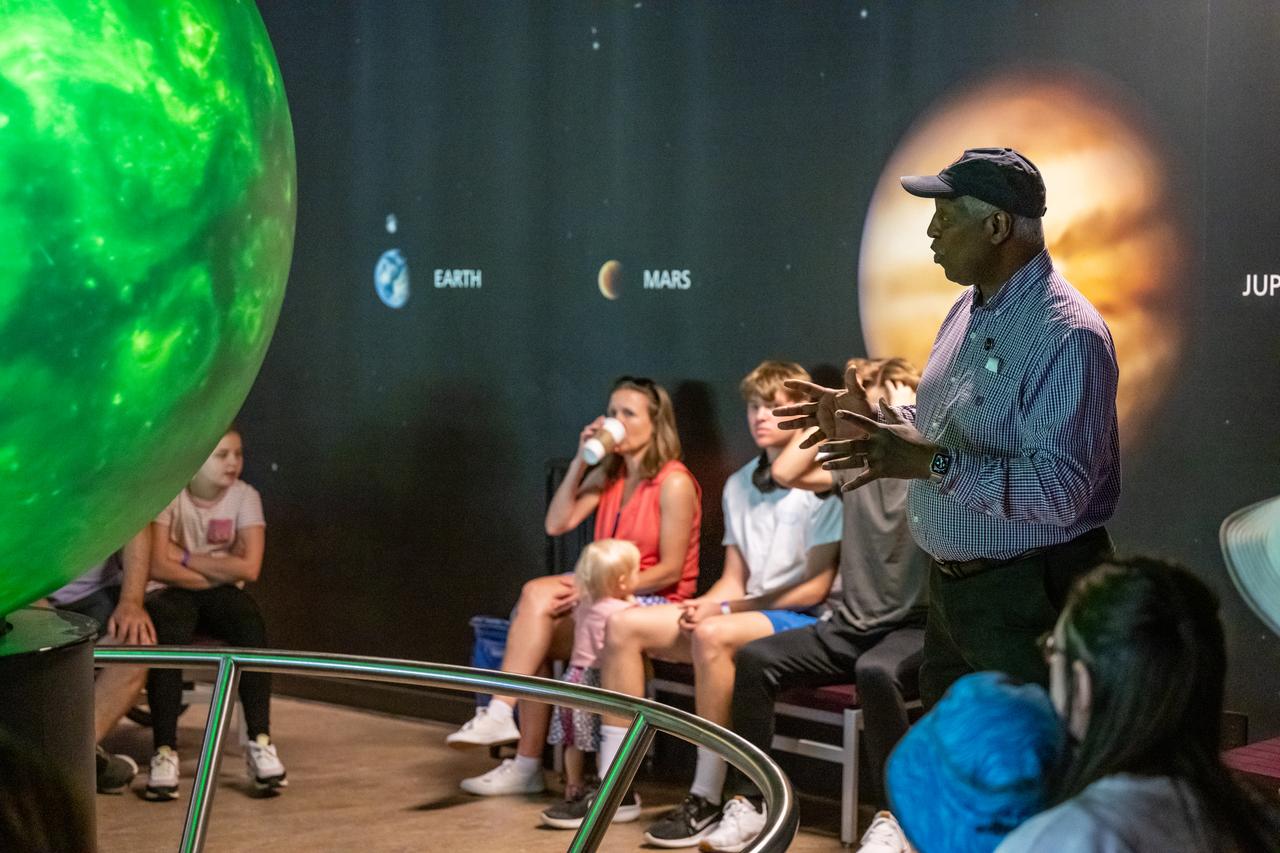
Maurice Henderson speaks to guests about the upcoming total solar eclipse at the Dallas Arboretum, Sunday, April 7, 2024, in Dallas, Texas. On Monday, April 8, a total solar eclipse will sweep across a narrow portion of the North American continent from Mexico’s Pacific coast to the Atlantic coast of Newfoundland, Canada, while a partial solar eclipse will be visible across the entire North American continent along with parts of Central America and Europe. Photo Credit: (NASA/Keegan Barber)

A guest embellishes their solar eclipse glasses at the Dallas Arboretum, Sunday, April 7, 2024, in Dallas, Texas. On Monday, April 8, a total solar eclipse will sweep across a narrow portion of the North American continent from Mexico’s Pacific coast to the Atlantic coast of Newfoundland, Canada, while a partial solar eclipse will be visible across the entire North American continent along with parts of Central America and Europe. Photo Credit: (NASA/Keegan Barber)
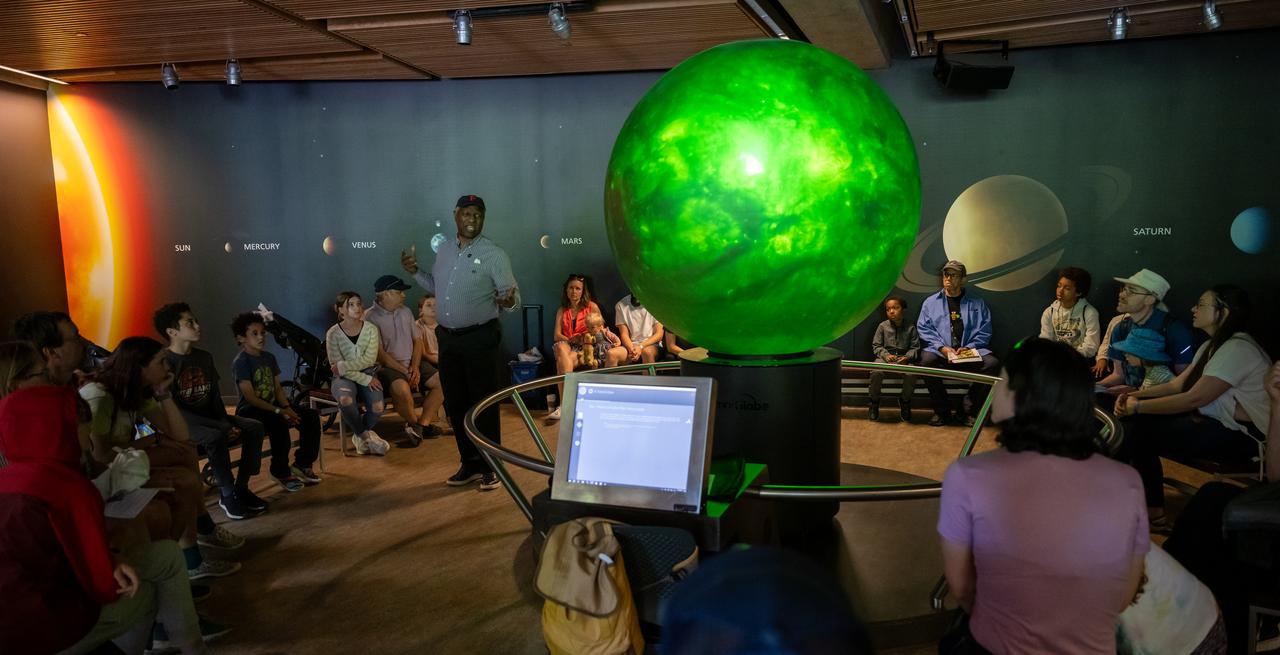
Maurice Henderson speaks to guests about the upcoming total solar eclipse at the Dallas Arboretum, Sunday, April 7, 2024, in Dallas, Texas. On Monday, April 8, a total solar eclipse will sweep across a narrow portion of the North American continent from Mexico’s Pacific coast to the Atlantic coast of Newfoundland, Canada, while a partial solar eclipse will be visible across the entire North American continent along with parts of Central America and Europe. Photo Credit: (NASA/Keegan Barber)

Guests pose for a photo in front of a floral solar eclipse display at the Dallas Arboretum, Sunday, April 7, 2024, in Dallas, Texas. On Monday, April 8, a total solar eclipse will sweep across a narrow portion of the North American continent from Mexico’s Pacific coast to the Atlantic coast of Newfoundland, Canada, while a partial solar eclipse will be visible across the entire North American continent along with parts of Central America and Europe. Photo Credit: (NASA/Keegan Barber)

Guests learn about the upcoming total solar eclipse from NASA staff at the Dallas Arboretum, Sunday, April 7, 2024, in Dallas, Texas. On Monday, April 8, a total solar eclipse will sweep across a narrow portion of the North American continent from Mexico’s Pacific coast to the Atlantic coast of Newfoundland, Canada, while a partial solar eclipse will be visible across the entire North American continent along with parts of Central America and Europe. Photo Credit: (NASA/Keegan Barber)
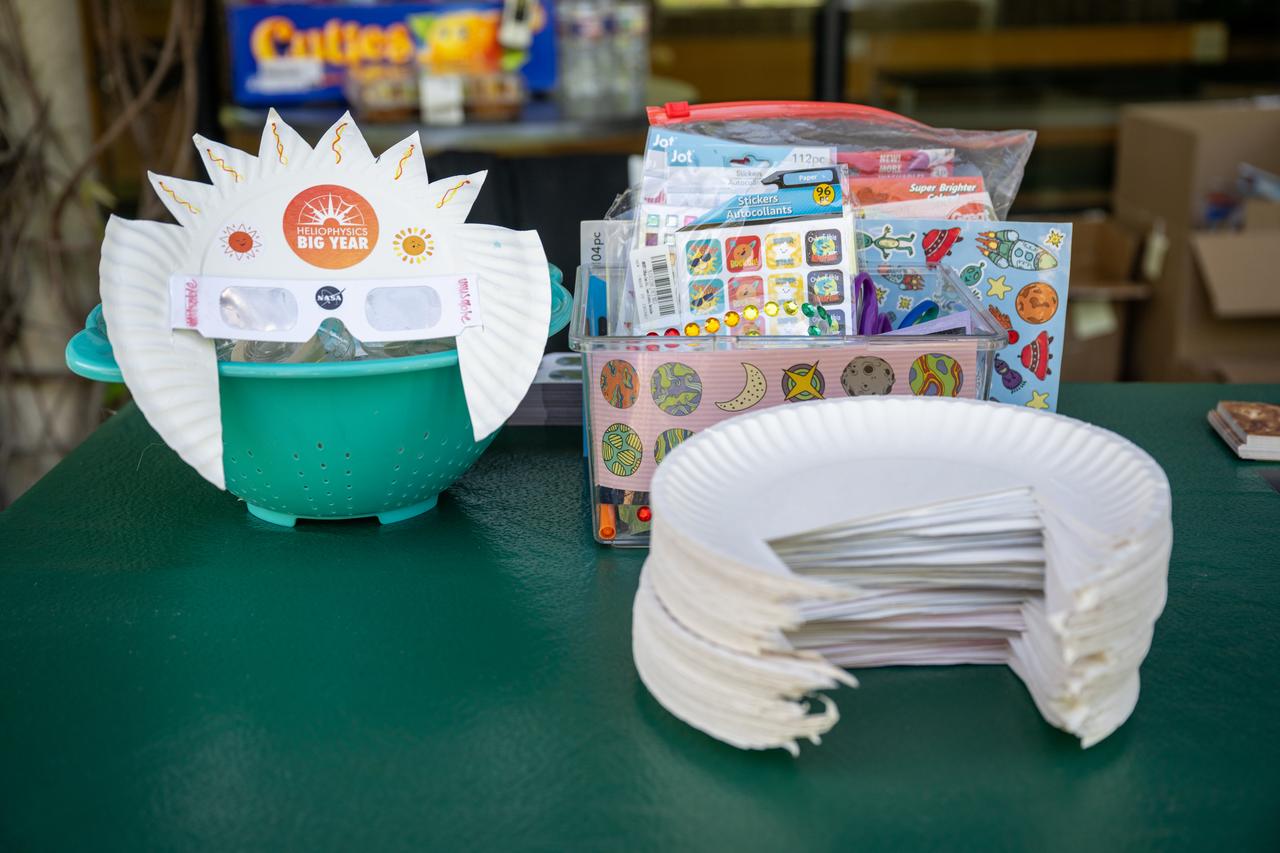
A solar eclipse glasses crafting station is seen at the Dallas Arboretum, Sunday, April 7, 2024, in Dallas, Texas. On Monday, April 8, a total solar eclipse will sweep across a narrow portion of the North American continent from Mexico’s Pacific coast to the Atlantic coast of Newfoundland, Canada, while a partial solar eclipse will be visible across the entire North American continent along with parts of Central America and Europe. Photo Credit: (NASA/Keegan Barber)
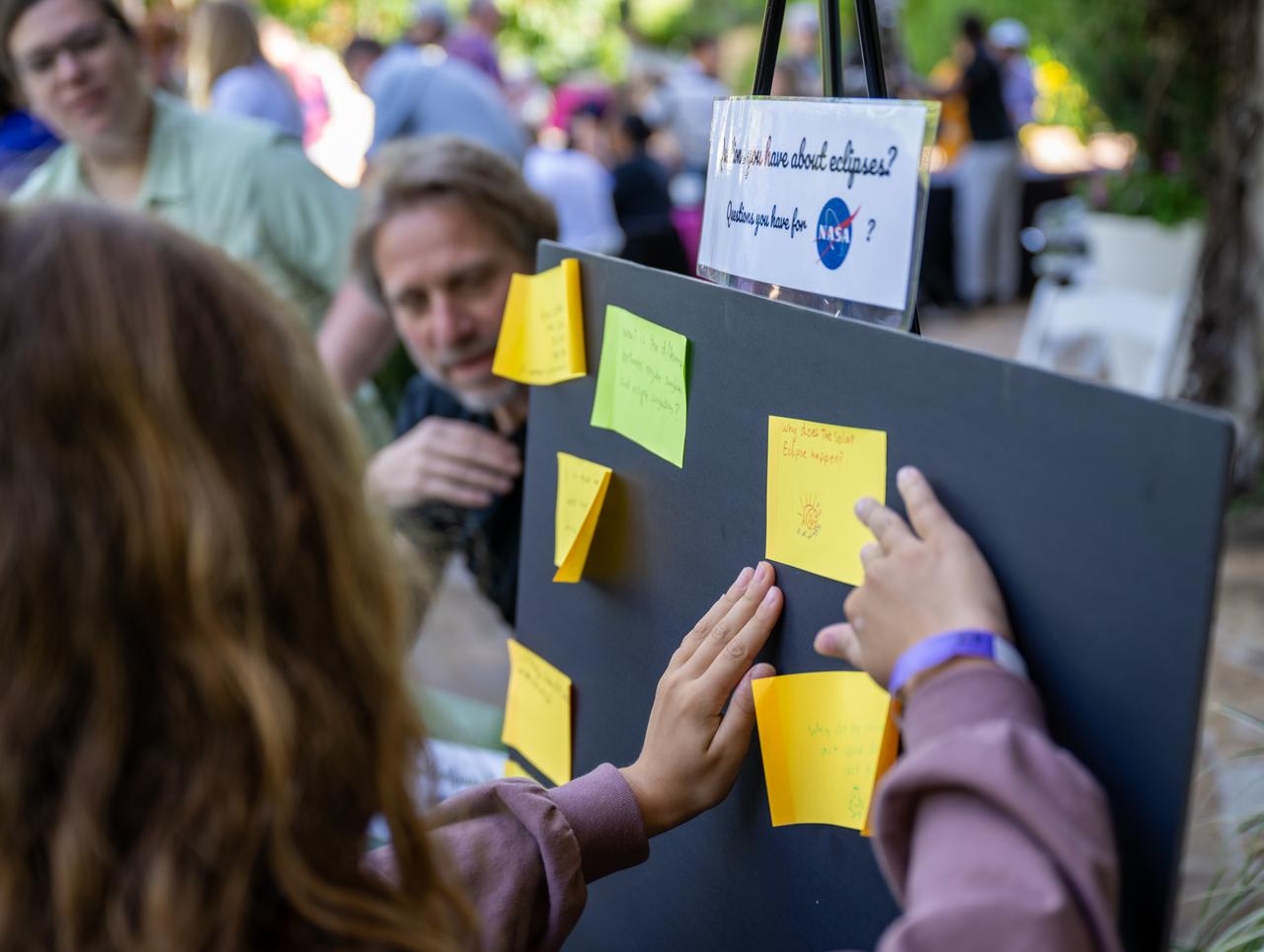
Guests place their questions about the solar eclipse upon a board at the Dallas Arboretum, Sunday, April 7, 2024, in Dallas, Texas. On Monday, April 8, a total solar eclipse will sweep across a narrow portion of the North American continent from Mexico’s Pacific coast to the Atlantic coast of Newfoundland, Canada, while a partial solar eclipse will be visible across the entire North American continent along with parts of Central America and Europe. Photo Credit: (NASA/Keegan Barber)
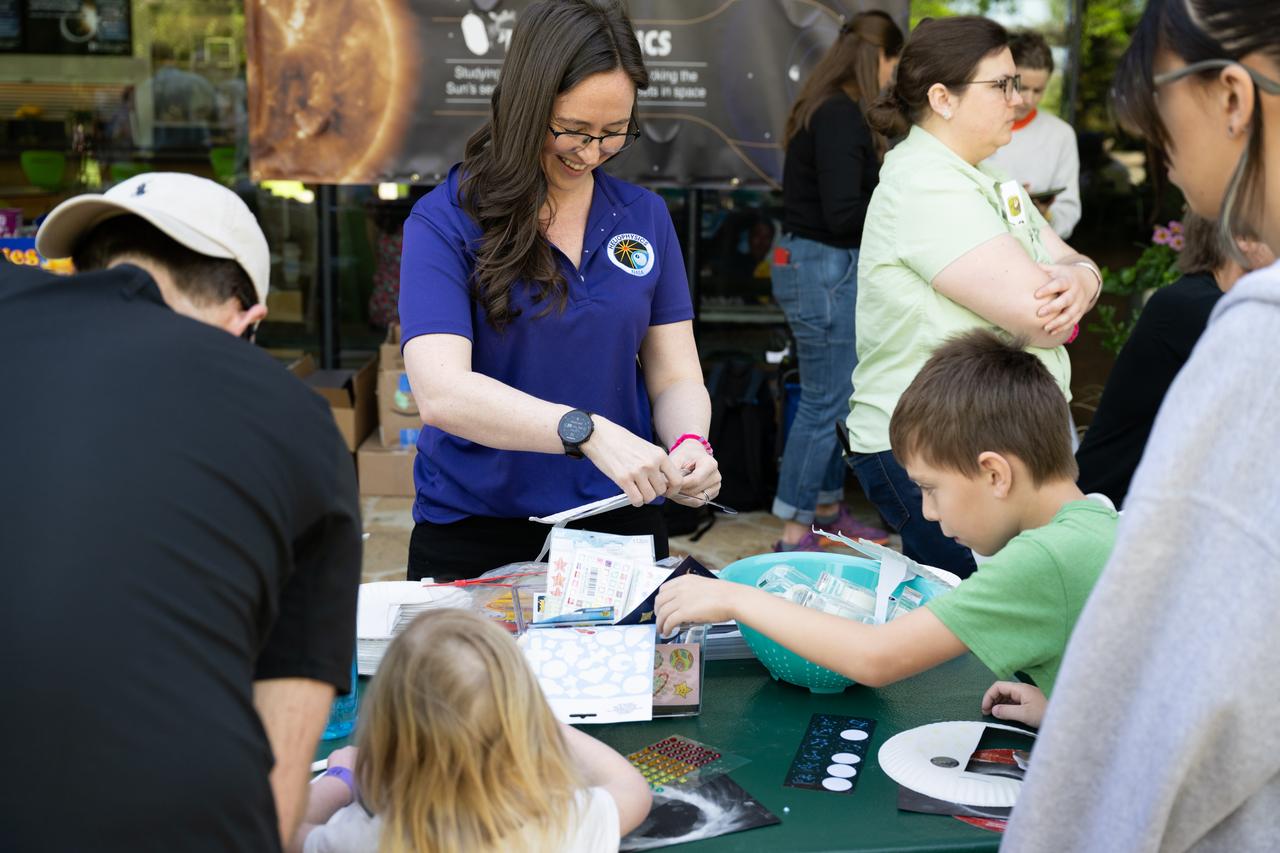
NASA Heliophysics Laboratory Research Scientist Ashley Greeley, center, works with guests at the solar eclipse glasses crafting station at the Dallas Arboretum, Sunday, April 7, 2024, in Dallas, Texas. On Monday, April 8, a total solar eclipse will sweep across a narrow portion of the North American continent from Mexico’s Pacific coast to the Atlantic coast of Newfoundland, Canada, while a partial solar eclipse will be visible across the entire North American continent along with parts of Central America and Europe. Photo Credit: (NASA/Keegan Barber)
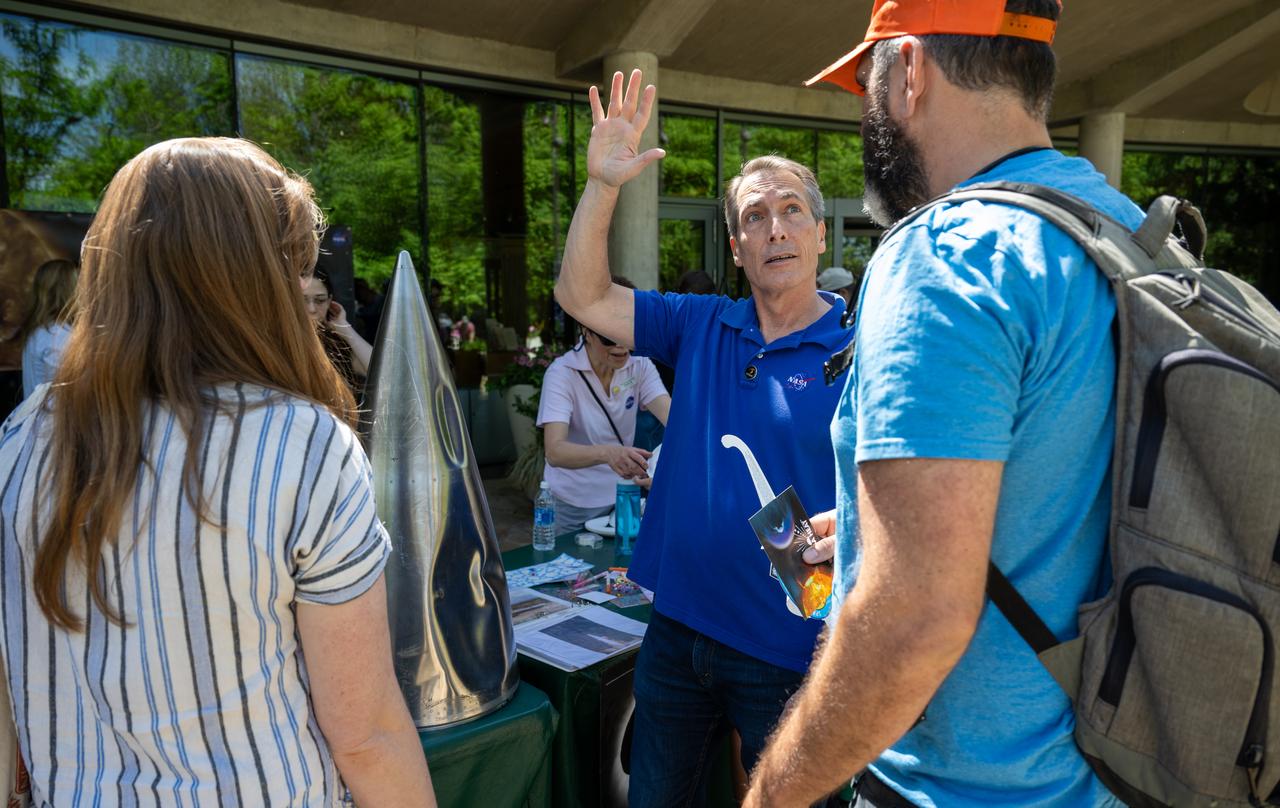
NASA Heliophysics Science Division Instrument Systems Engineer Patrick Haas speaks to guests about the upcoming total solar eclipse at the Dallas Arboretum, Sunday, April 7, 2024, in Dallas, Texas. On Monday, April 8, a total solar eclipse will sweep across a narrow portion of the North American continent from Mexico’s Pacific coast to the Atlantic coast of Newfoundland, Canada, while a partial solar eclipse will be visible across the entire North American continent along with parts of Central America and Europe. Photo Credit: (NASA/Keegan Barber)

NASA Principal Scientist Carolyn Ng speaks to guests about the upcoming total solar eclipse at the Dallas Arboretum, Sunday, April 7, 2024, in Dallas, Texas. On Monday, April 8, a total solar eclipse will sweep across a narrow portion of the North American continent from Mexico’s Pacific coast to the Atlantic coast of Newfoundland, Canada, while a partial solar eclipse will be visible across the entire North American continent along with parts of Central America and Europe. Photo Credit: (NASA/Keegan Barber)

NASA Earth Science Education and Outreach Lead Dr. Trena Ferrell, second from right, hands out educational materials to guests at the Dallas Arboretum, Sunday, April 7, 2024, in Dallas, Texas. On Monday, April 8, a total solar eclipse will sweep across a narrow portion of the North American continent from Mexico’s Pacific coast to the Atlantic coast of Newfoundland, Canada, while a partial solar eclipse will be visible across the entire North American continent along with parts of Central America and Europe. Photo Credit: (NASA/Keegan Barber)
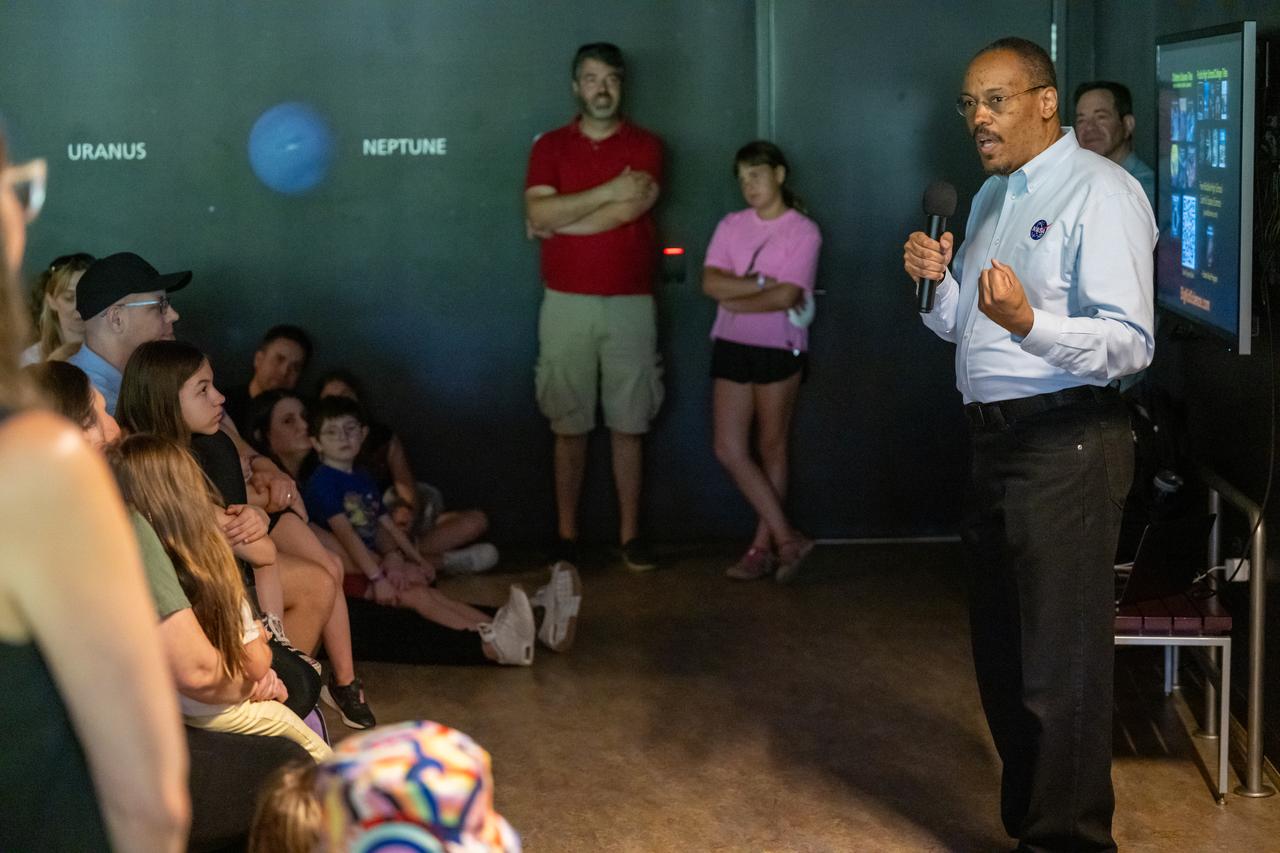
Former NASA astronaut Alvin Drew, right, speaks with guests at the Dallas Arboretum, Sunday, April 7, 2024, in Dallas, Texas. On Monday, April 8, a total solar eclipse will sweep across a narrow portion of the North American continent from Mexico’s Pacific coast to the Atlantic coast of Newfoundland, Canada, while a partial solar eclipse will be visible across the entire North American continent along with parts of Central America and Europe. Photo Credit: (NASA/Keegan Barber)
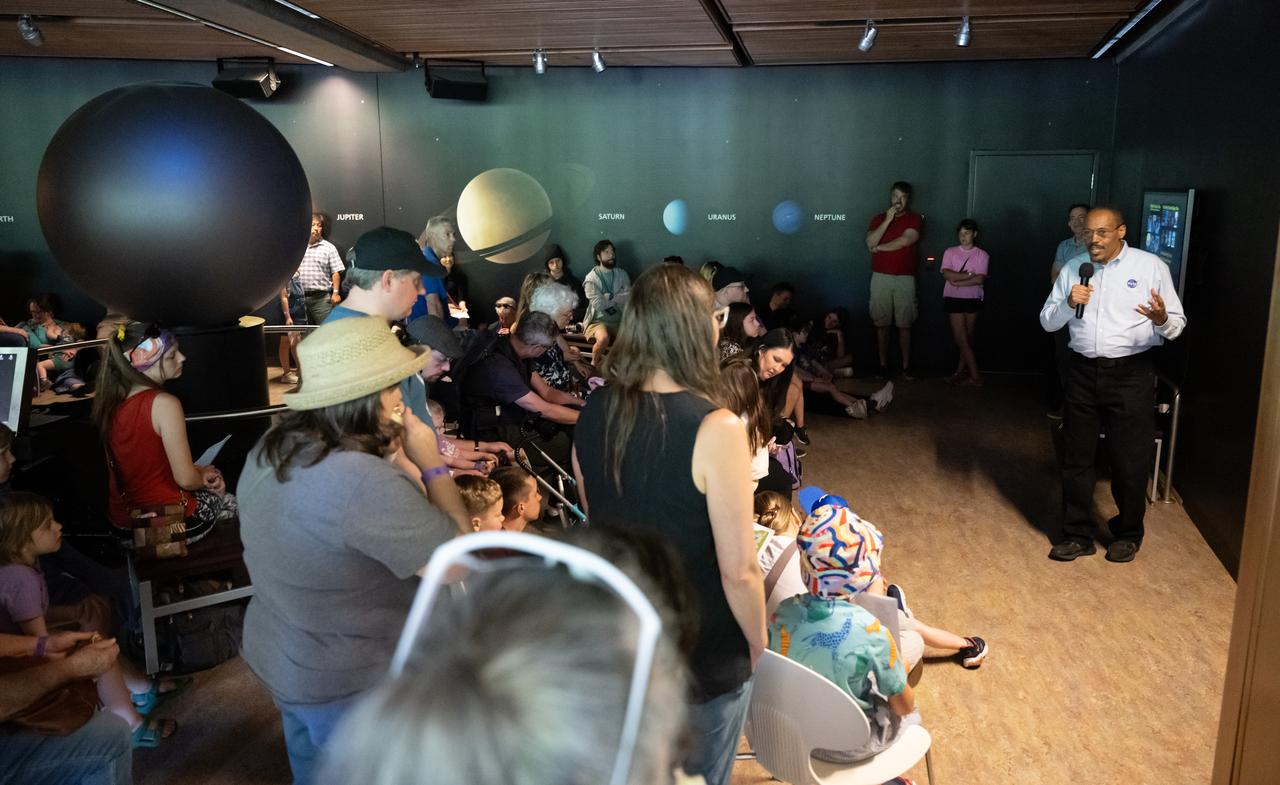
Former NASA astronaut Alvin Drew, right, speaks with guests at the Dallas Arboretum, Sunday, April 7, 2024, in Dallas, Texas. On Monday, April 8, a total solar eclipse will sweep across a narrow portion of the North American continent from Mexico’s Pacific coast to the Atlantic coast of Newfoundland, Canada, while a partial solar eclipse will be visible across the entire North American continent along with parts of Central America and Europe. Photo Credit: (NASA/Keegan Barber)
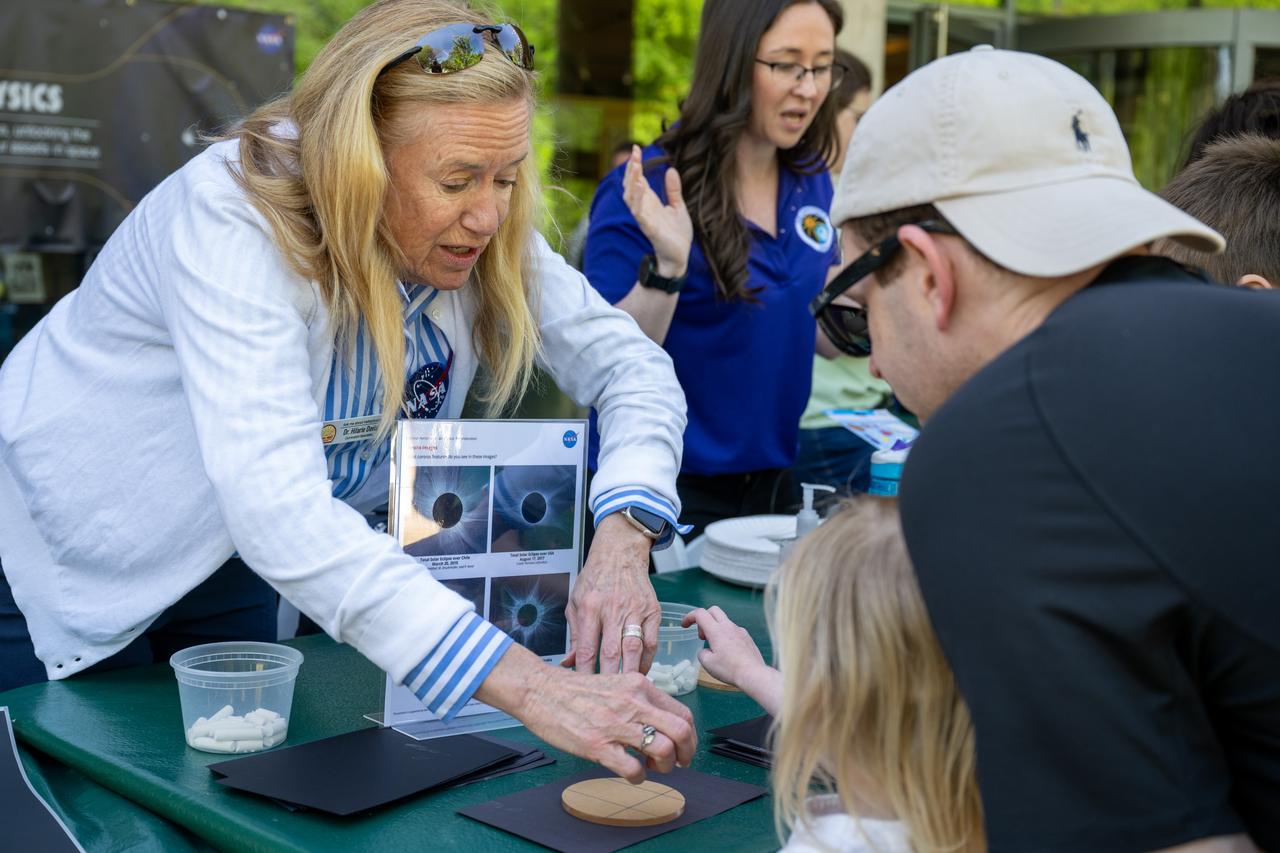
NASA Curriculum Specialist Dr. Hilarie Davis speaks to guests about the upcoming total solar eclipse at the Dallas Arboretum, Sunday, April 7, 2024, in Dallas, Texas. On Monday, April 8, a total solar eclipse will sweep across a narrow portion of the North American continent from Mexico’s Pacific coast to the Atlantic coast of Newfoundland, Canada, while a partial solar eclipse will be visible across the entire North American continent along with parts of Central America and Europe. Photo Credit: (NASA/Keegan Barber)