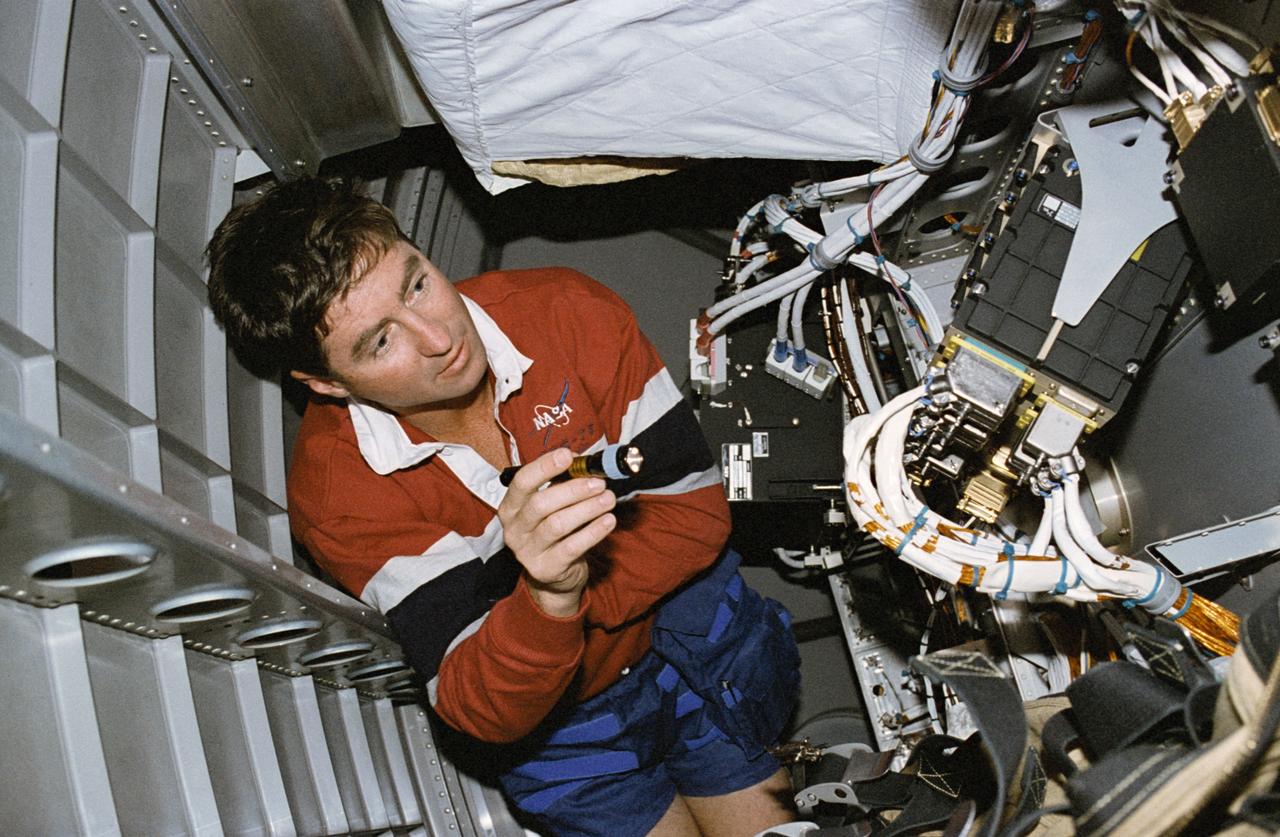
STS078-432-009 (20 June-7 July 1996) --- Among the inflight maintenance (IFM) chores that were handled by the crew members during their almost 17 days in space aboard the space shuttle Columbia was one that involved going into the bay beneath the floor of the Life and Microgravity Spacelab (LMS-1) Science Module. Astronaut Terence T. (Tom) Henricks, mission commander, shines a tiny flashlight onto some cables related to LMS-1 supported computer systems. As in the case of the other IFM chores, Henricks' efforts were successful. He was joined by four other NASA astronauts and two international payload specialists for the space shuttle duration record-setting mission.
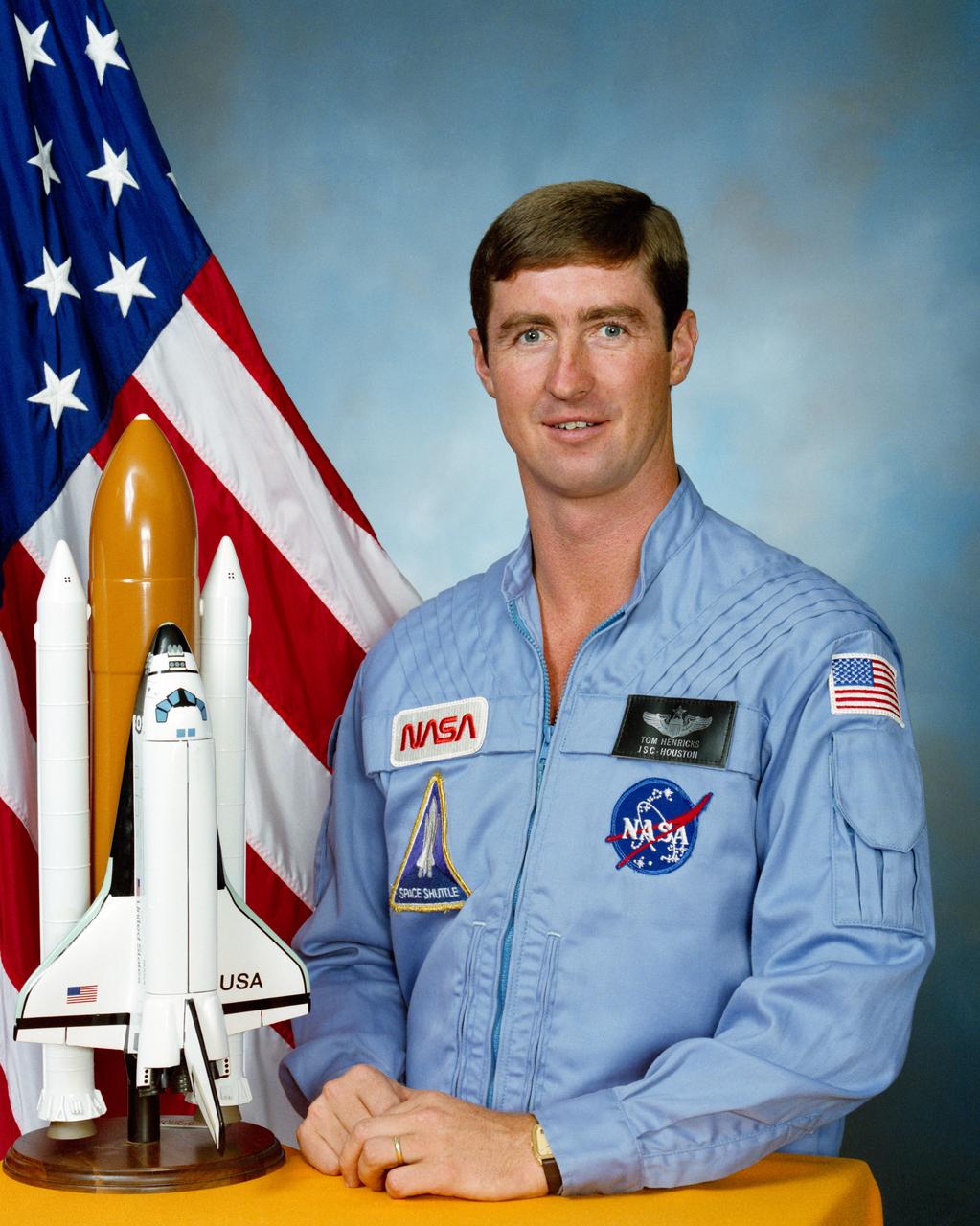
S85-41891 (Oct 1985) --- Astronaut Terence T. Henricks, ASCAN Group 11.
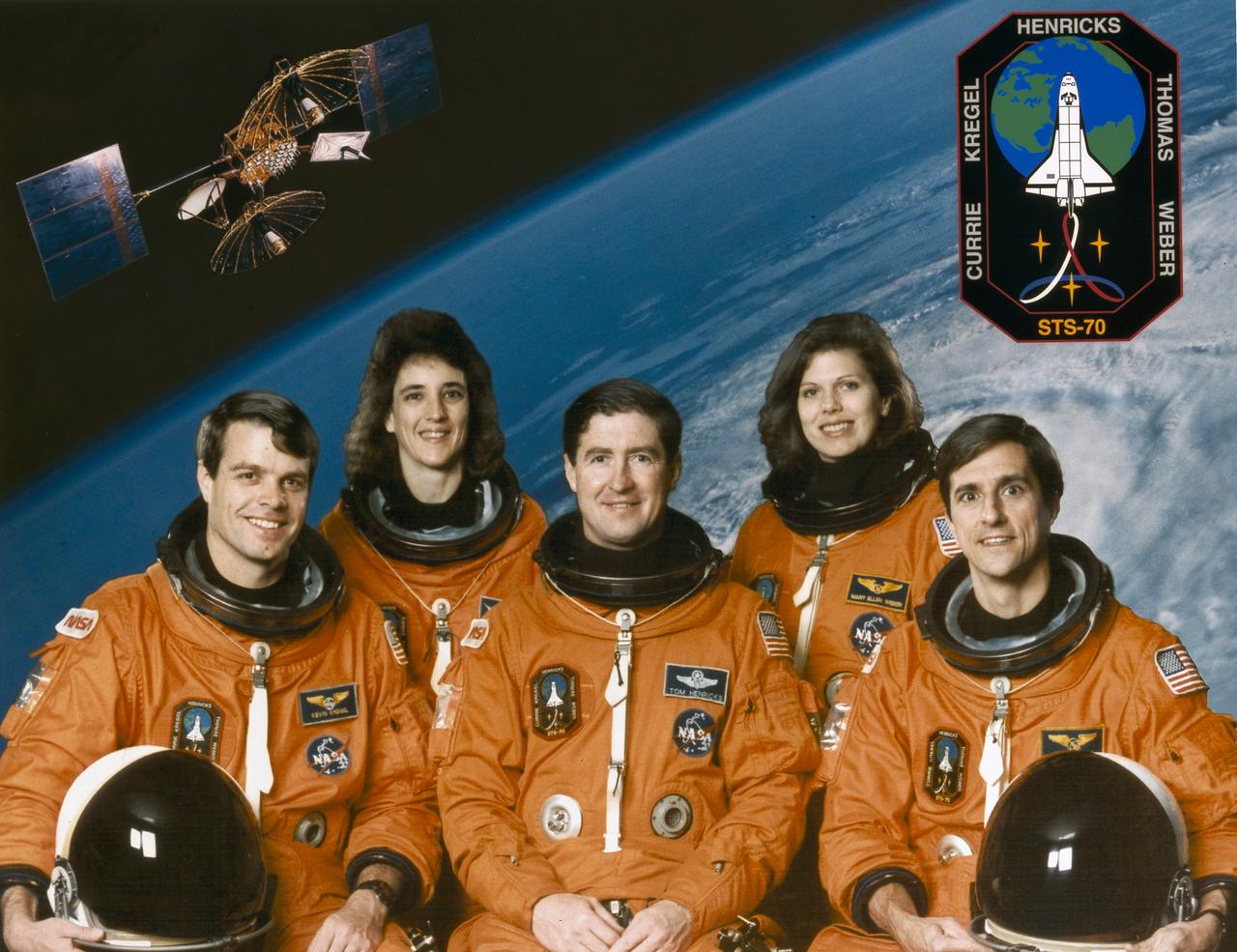
The crew assigned to the STS-70 mission included (front left to right) Kevin R. Kregel, pilot; Nancy J. Currie, mission specialist; Terrence T, Henricks, commander; Mary Ellen Weber, mission specialist, and Donald A. Thomas, mission specialist. Launched aboard the Space Shuttle Discovery on July 13,9:41:55.078 am (EDT), the STS-70 mission’s primary payload was the Tracking and Data Relay Satellite-G (TDRS-G).
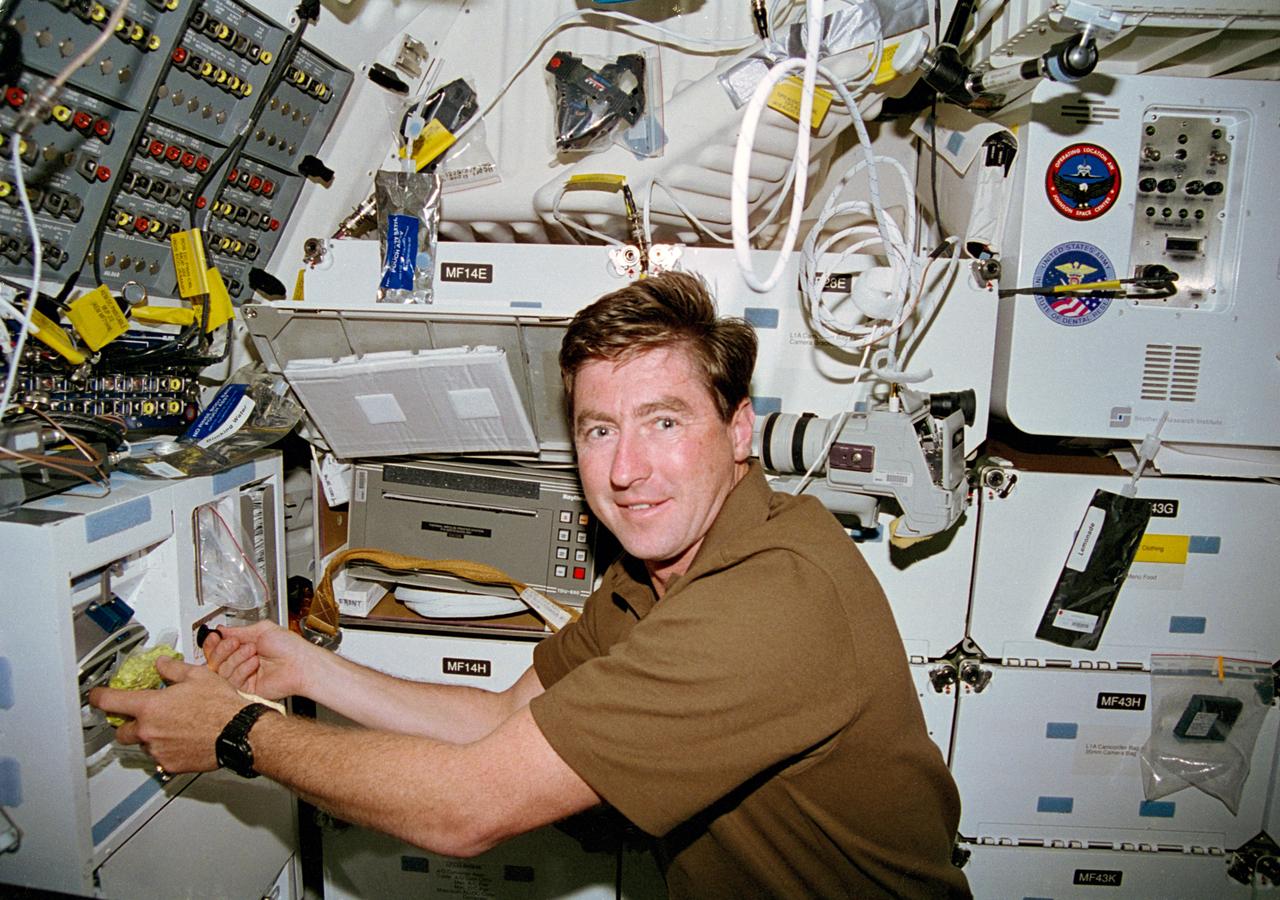
STS070-333-016 (13-22 JULY 1995) --- At the space shuttle Discovery?s galley on the middeck, astronaut Terence T. (Tom) Henricks, mission commander, prepares to rehydrate a package of broccoli au gratin. A packet of punch and another beverage pouch filled with lemonade can be seen temporarily stowed on locker exteriors nearby.
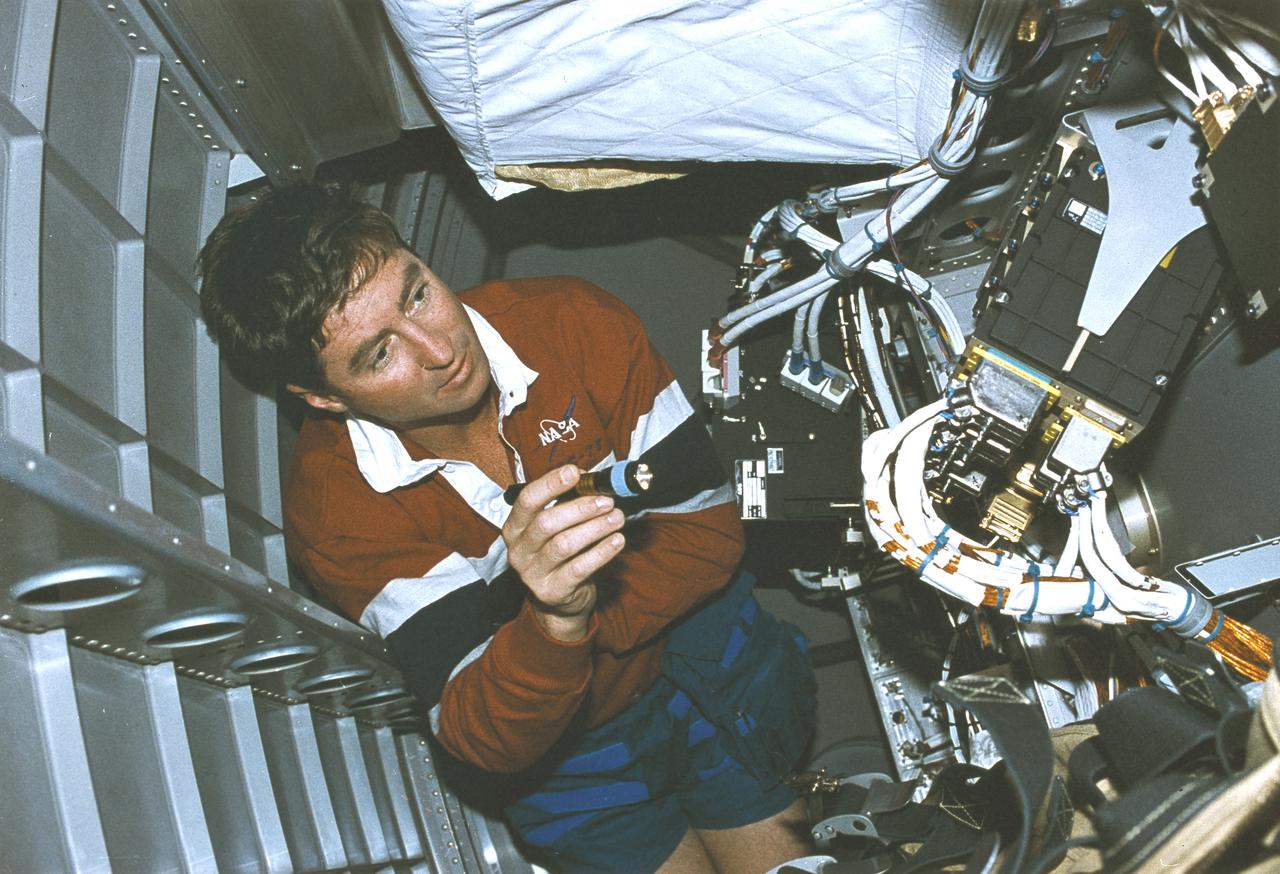
Launched on June 20, 1996, the STS-78 mission’s primary payload was the Life and Microgravity Spacelab (LMS), which was managed by the Marshall Space Flight Center (MSFC). During the 17 day space flight, the crew conducted a diverse slate of experiments divided into a mix of life science and microgravity investigations. In a manner very similar to future International Space Station operations, LMS researchers from the United States and their European counterparts shared resources such as crew time and equipment. Five space agencies (NASA/USA, European Space Agency/Europe (ESA), French Space Agency/France, Canadian Space Agency /Canada, and Italian Space Agency/Italy) along with research scientists from 10 countries worked together on the design, development and construction of the LMS. In this onboard photograph, mission commander Terence Henricks is checking out equipment.
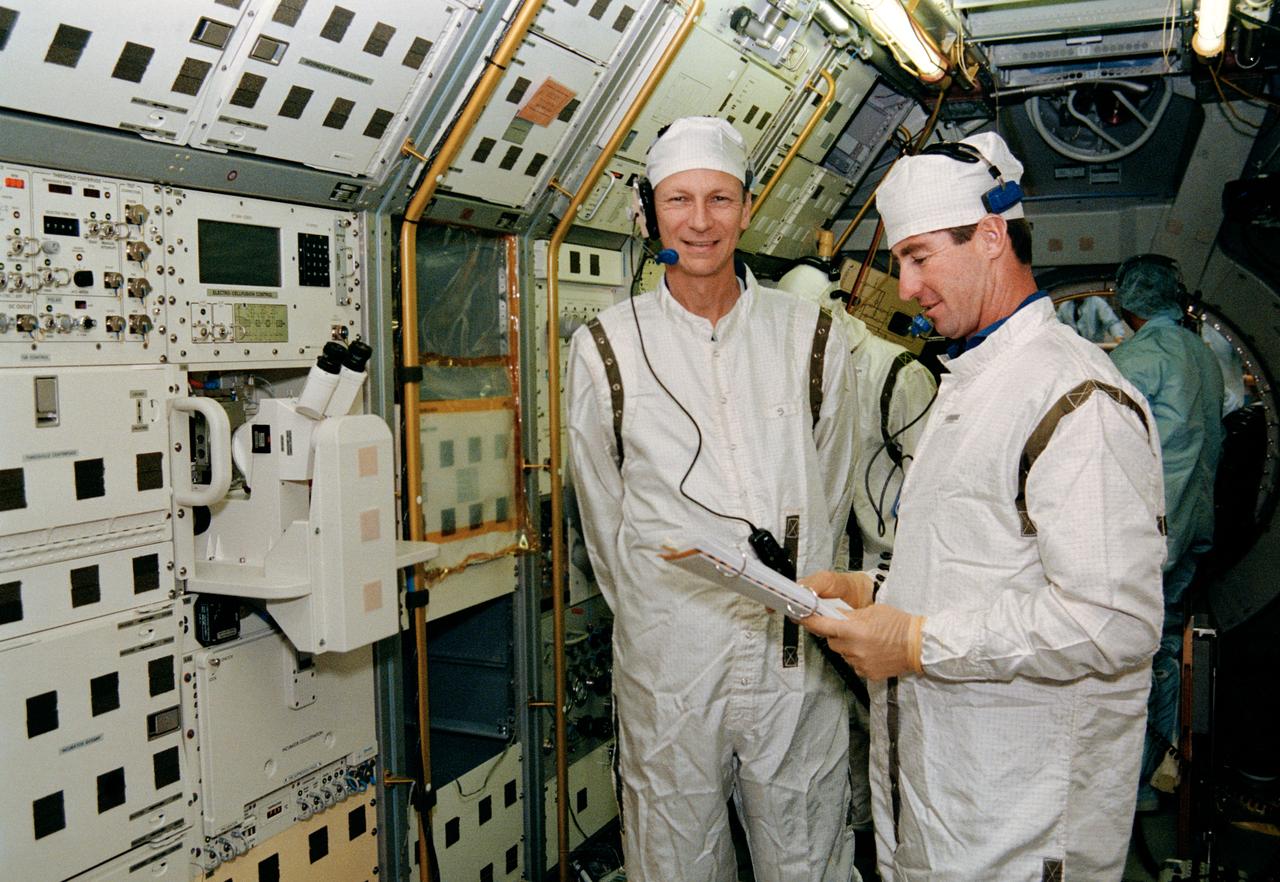
S93-29830 (4 Nov 1992) --- Inside the Spacelab D-2 module in the Operations and Checkout Building high bay, STS-55 Mission Commander Steven R. Nagel (left) and Pilot Terence T. Henricks are participating in a mission sequence test to check out experiment steps and procedures which will be conducted on-orbit. Spacelab D-2, the second German Spacelab, is scheduled to fly on space shuttle mission STS-55 in 1993.
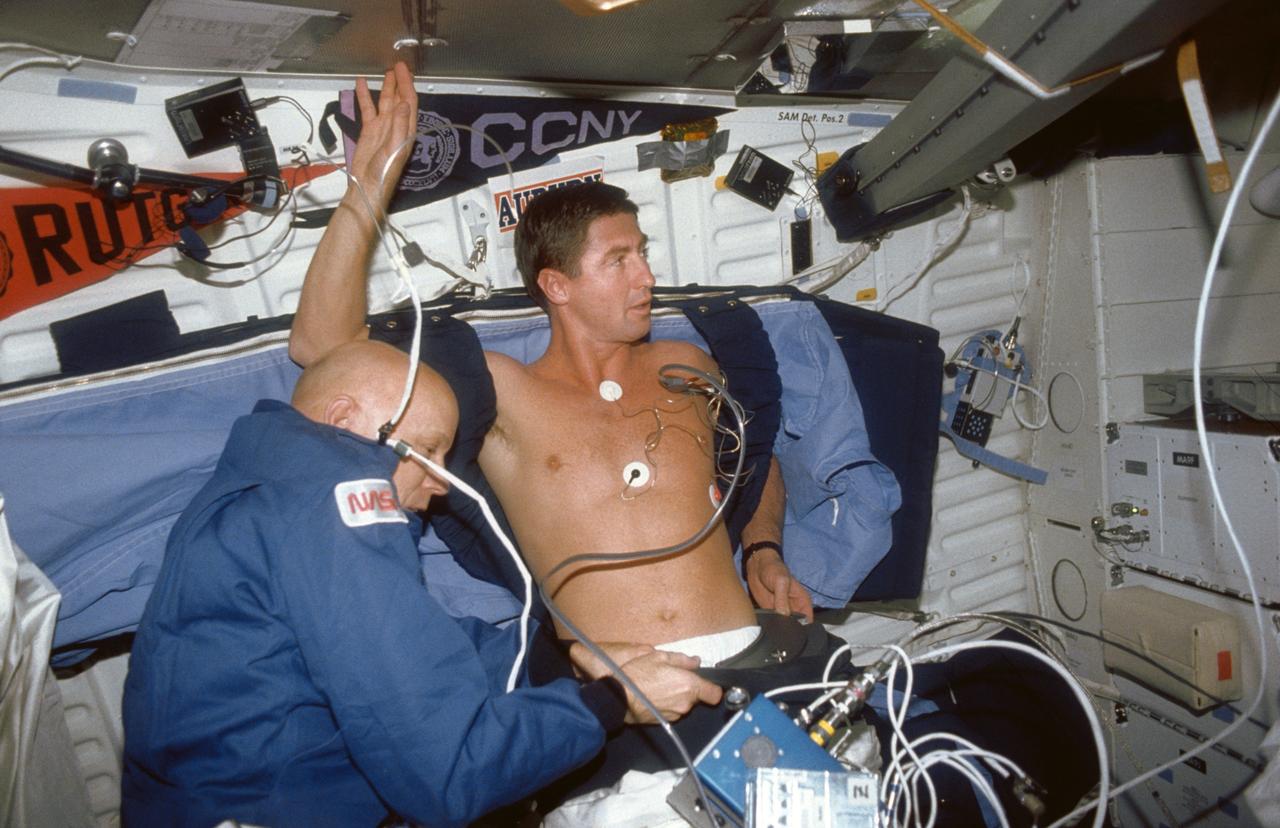
STS044-05-023 (24 Nov-1 Dec 1991) --- Astronaut F. Story Musgrave (left), Mission Specialist, assists Astronaut Terence T. (Tom) Henricks, Mission Specialist, with a Detailed Supplementary Objective (DSO) involving Lower Body Negative Pressure.
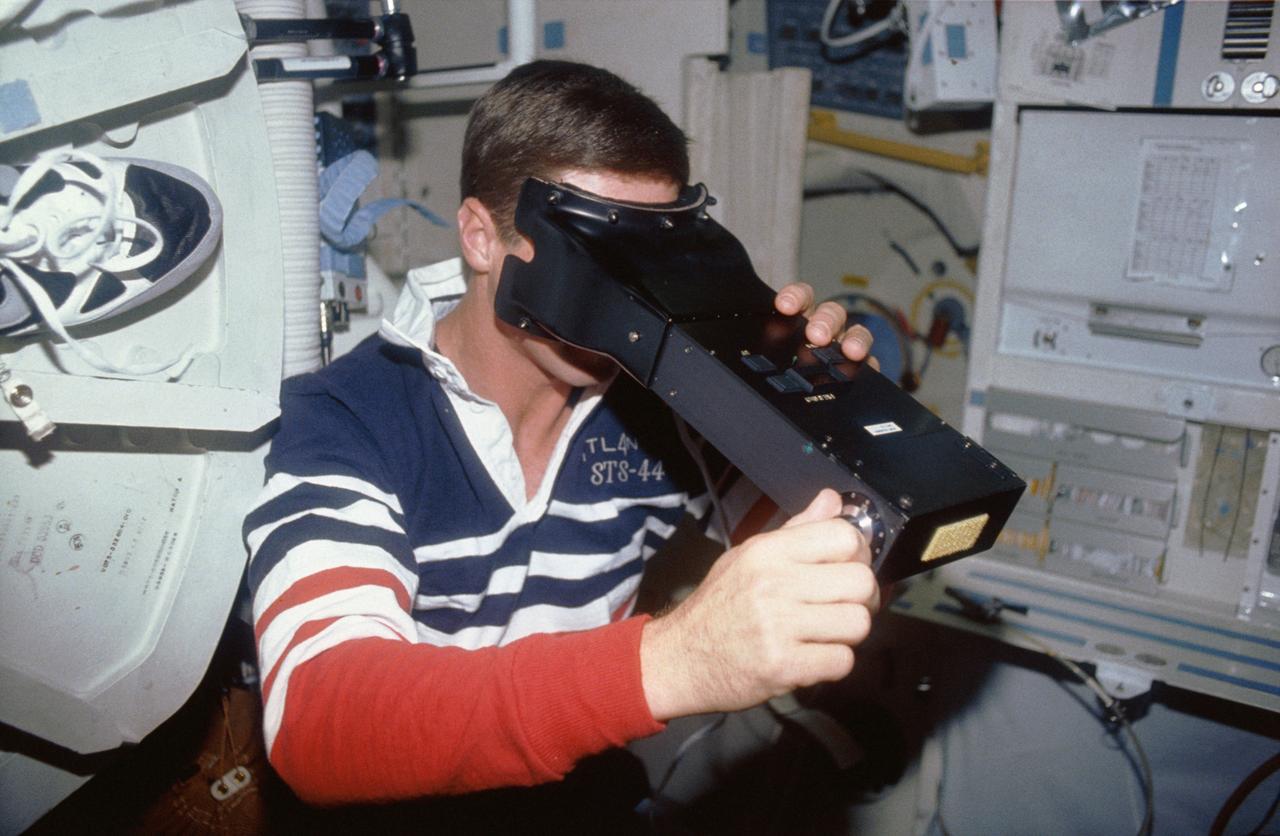
STS044-14-013 (24 Nov-1 Dec 1991) --- Terence T. (Tom) Henricks, STS-44 pilot, tests his visual acuity with the Visual Function Test (VFT) apparatus. This photograph was among the first released by NASA following the eight day mission, dedicated to the Department of Defense.
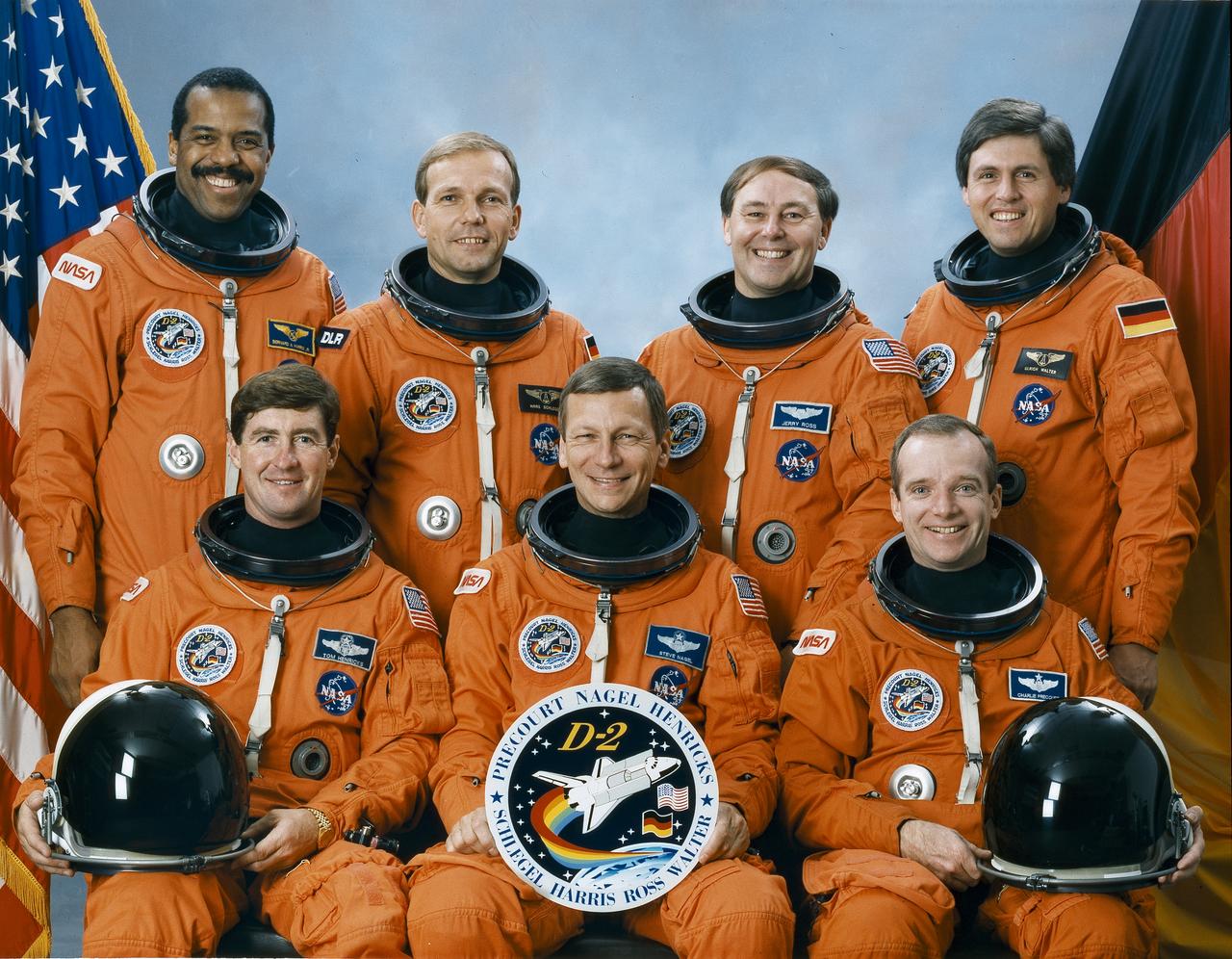
The seven astronauts included in the STS-55 crew portrait are: (front left to right) Terence (Tom) Henricks, pilot; Steven R. Negal, commander; and Charles J. Precourt, mission specialist. On the back row, from left to right, are Bernard A. Harris, mission specialist; Hans Schlegel, payload specialist; Jerry L. Ross, mission specialist; and Ulrich Walter, payload specialist. The crew launched aboard the Space Shuttle Columbia on April 26, 1993 at 10:50:00 am (EDT). The major payload was the German Dedicated Spacelab, D2.
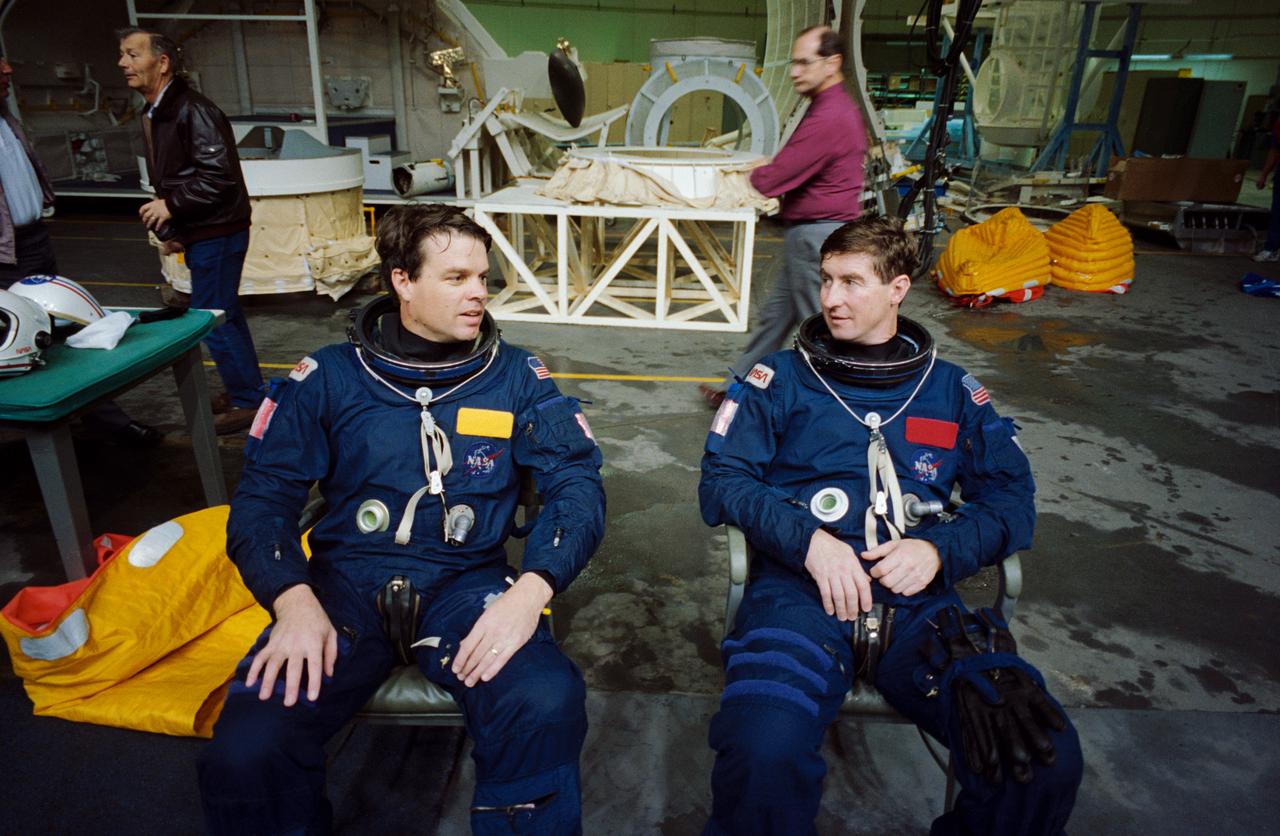
S95-03470 (16 FEB 1995) --- Attired in blue training versions of the orange Shuttle launch and entry garments, astronauts Terence T. (Tom) Henricks, right, and Kevin R. Kregel take a break during a bailout training session at the Johnson Space Center's (JSC) Weightless Environment Training Facility (WET-F). Assigned as commander and pilot, respectively, for the STS-70 mission, the two later joined their crew mates in making use of a nearby 25-feet deep pool to practice parachute landings in water and subsequent deployment of life rafts.
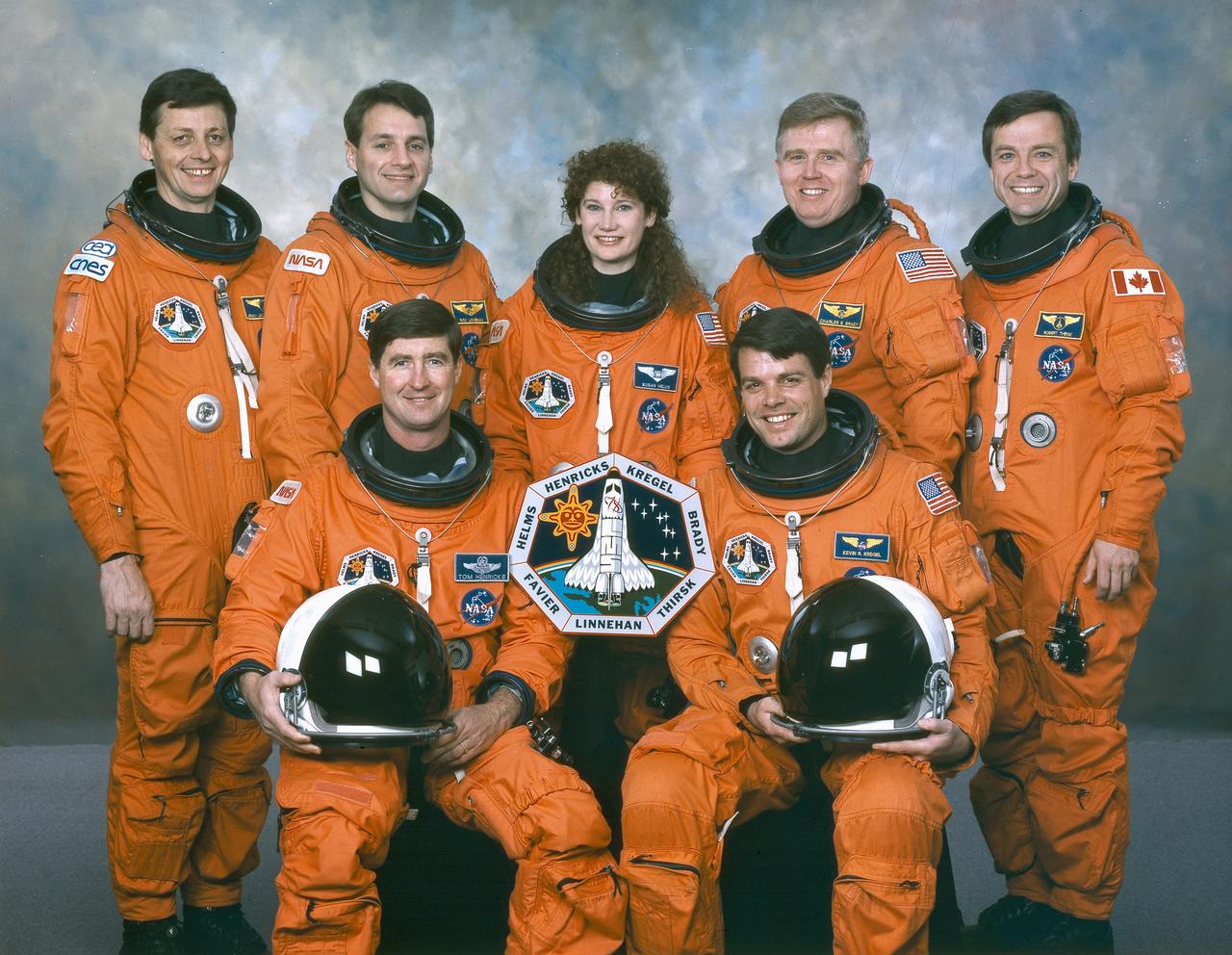
The crew assigned to the STS-78 mission included (seated left to right) Terrence T. (Tom) Henricks, commander; and Kevin R. Kregel, pilot. Standing, left to right, are Jean-Jacques Favier (CNES), payload specialist; Richard M. Linneham, mission specialist; Susan J. Helms, payload commander; Charles E. Brady, mission specialist; and Robert Brent Thirsk (CSA). Launched aboard the Space Shuttle Columbia on June 20, 1996 at 10:49:00 am (EDT), the STS-78 mission’s primary payloads was the Life and Microgravity Spacelab (LMS). Five space agencies (NASA/USA, European Space Agency/Europe (ESA), French Space Agency/France, Canadian Space Agency /Canada, and Italian Space Agency/Italy) along with research scientists from 10 countries worked together on the design, development and construction of the LMS.
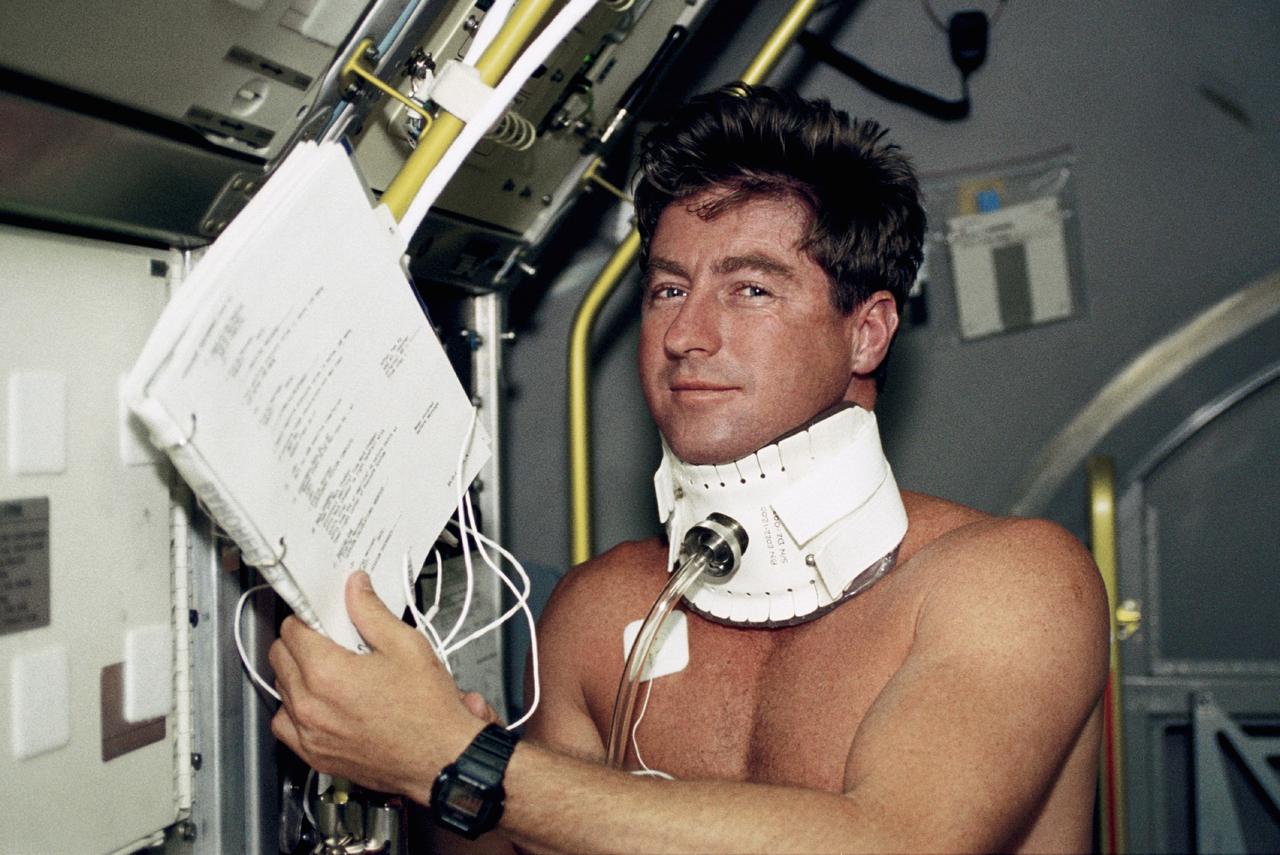
STS055-233-019 (26 April-6 May 1993) --- Terence T. (Tom) Henricks, STS-55 pilot, wears a special collar for a space adaptation experiment in the science module onboard the Earth-orbiting Space Shuttle Columbia. The Baroreflex (BA) experiment is designed to investigate the theory that light-headedness and a reduction in blood pressures upon standing after landing may arise because the normal reflex system regulating blood pressure behaves differently after having adapted to a microgravity environment. These space-based measurements of the baroreflex will be compared to ground measurements to determine if microgravity affects the reflex.
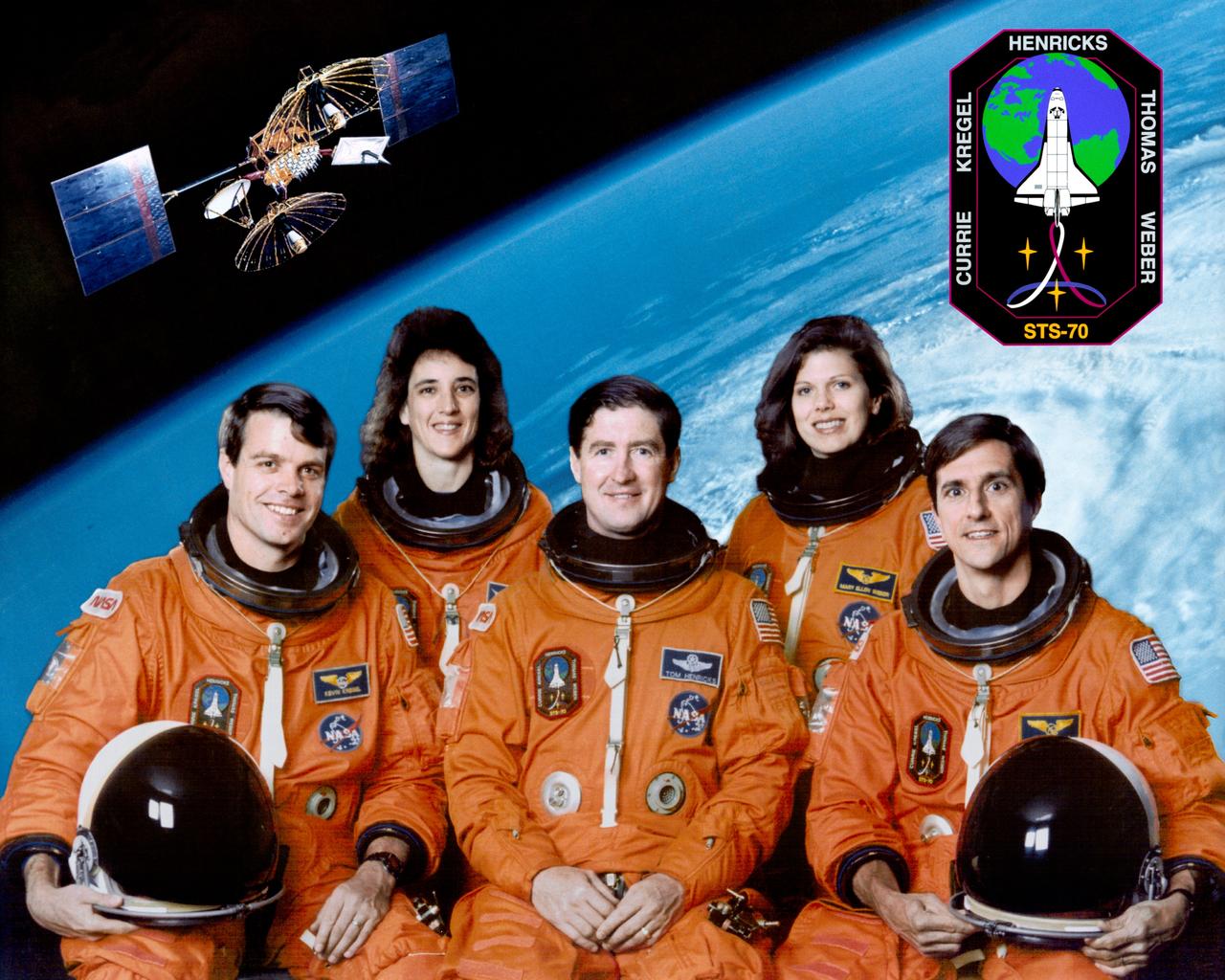
STS070-S-002 (May 1995) --- These five NASA astronauts are in training for the STS-70 mission aboard the Space Shuttle Discovery. Left to right are astronauts Kevin R. Kregel, Nancy J. Currie, Terence T. (Tom) Henricks, Mary Ellen Weber and Donald A. Thomas. Henricks and Kregel are commander and pilot, respectively. The other three are mission specialists. Among the tasks they are expected to perform is the deployment of another satellite in the network of the Tracking and Data Relay Satellite System (TDRSS).
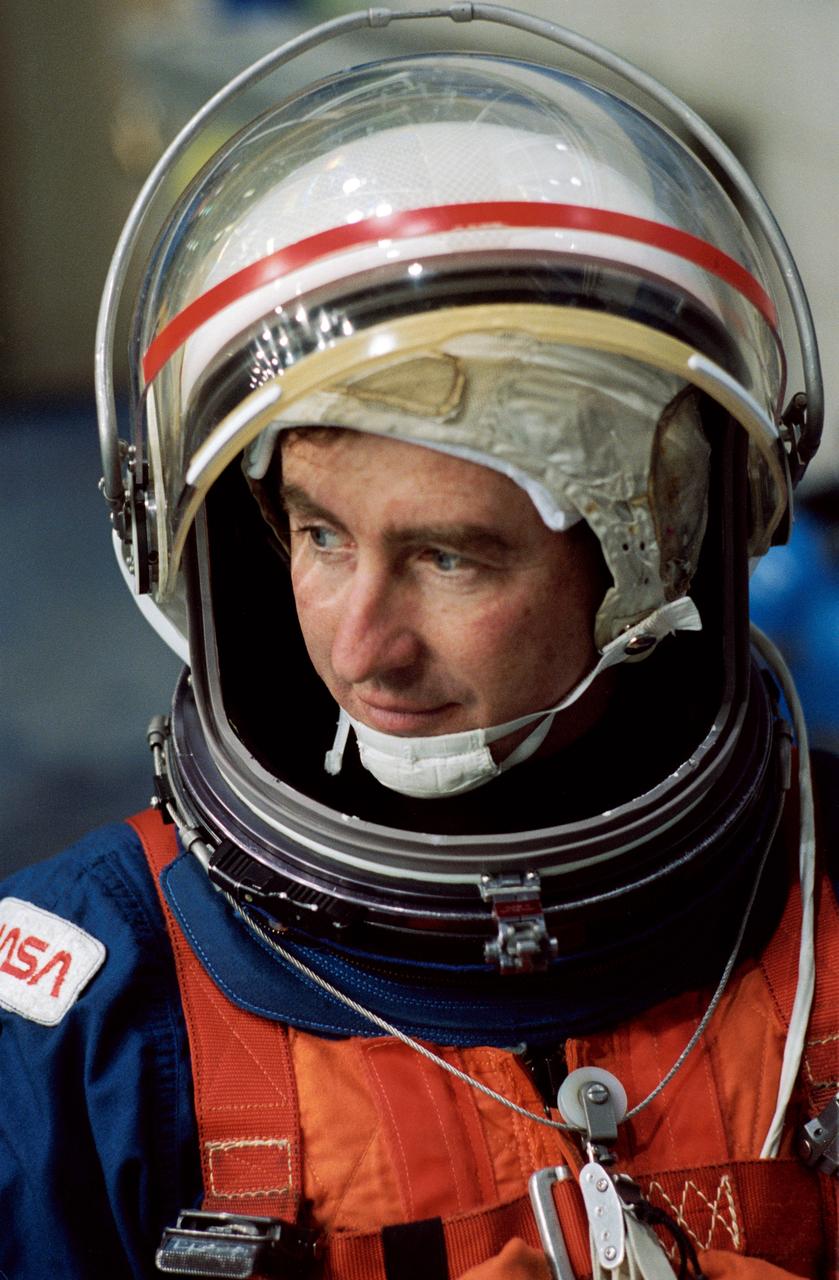
S95-03464 (16 Feb 1995) --- Attired in a training version of the Shuttle launch and entry garment, astronaut Terence T. (Tom) Henricks participates in a bailout training session at the Johnson Space Center's (JSC) systems integration facility. Henricks, mission commander for the STS-70 flight, was listening as a member of the crew training staff briefed the crew members on the use of parachute gear.
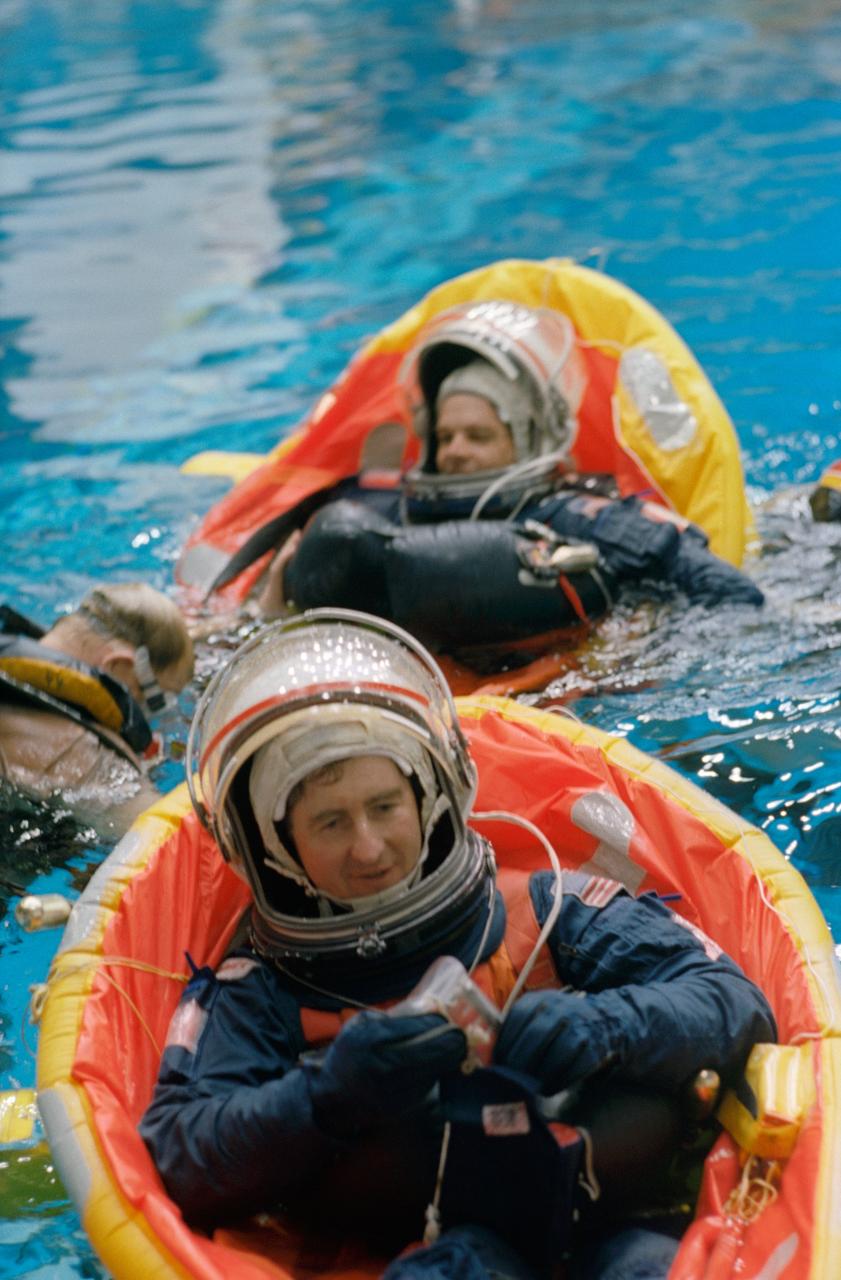
S95-03473 (16 Feb 1995) --- Astronauts Terence T. (Tom) Henricks (foreground) and Kevin R. Kregel deploy their life rafts during emergency bailout training in a 25 feet deep pool at the Johnson Space Center's (JSC) Weightless Environment Training Facility (WET-F). Henricks and Kregel are commander and pilot, respectively, for the STS-70 mission, now scheduled for a liftoff in early June.
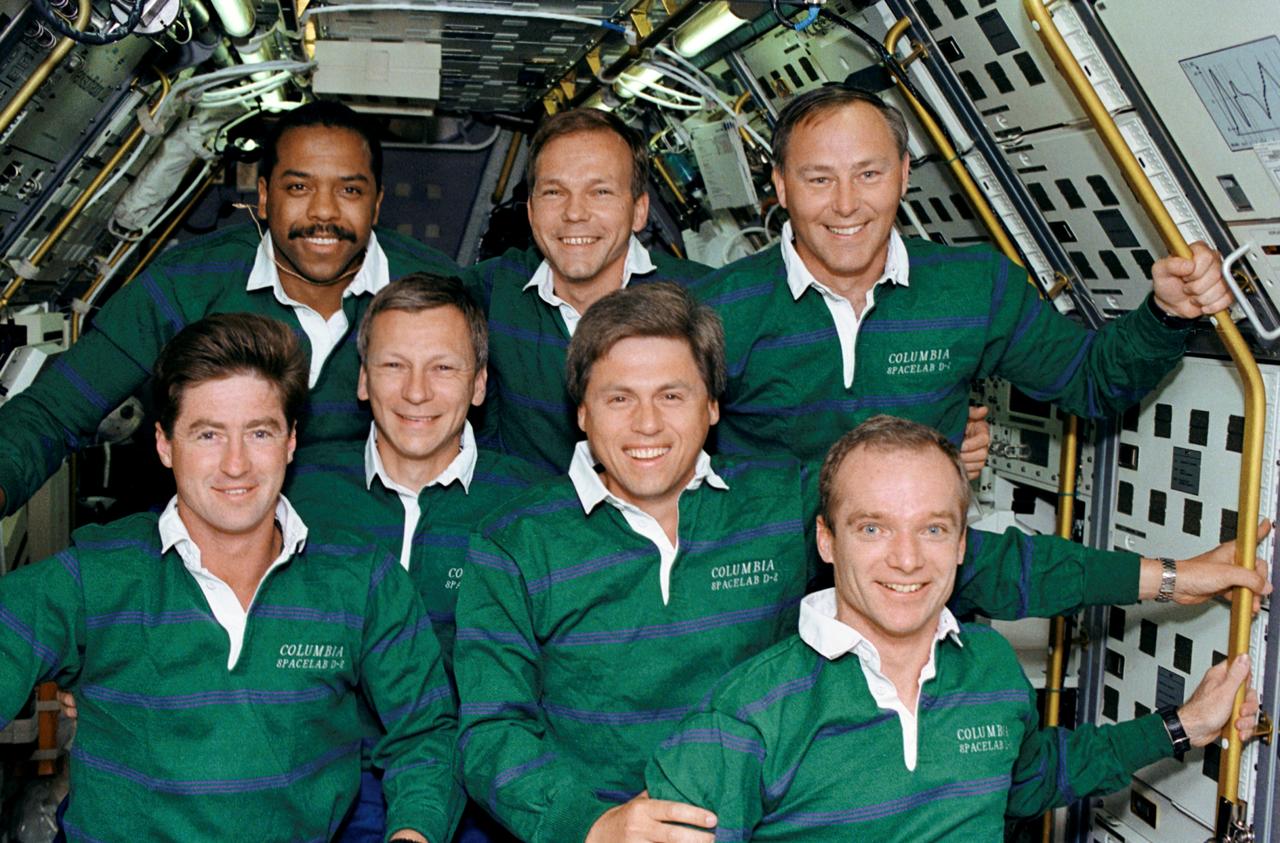
STS055-203-009 (26 April-6 May 1993) --- The seven crew members who spent 10 days aboard the space shuttle Columbia pose for the traditional in-flight portrait in the Spacelab D-2 Science Module. Front, left to right, are Terence T. (Tom) Henricks, Steven R. Nagel, Ulrich Walter and Charles J. Precourt. In the rear are (left to right) Bernard A. Harris Jr., Hans Schlegel and Jerry L. Ross. Nagel served as mission commander; Henricks was the pilot and Ross, the payload commander. Harris and Precourt were mission specialists and Schlegel and Walter were payload specialists representing the German Aerospace Research Establishment (DLR). Photo credit: NASA
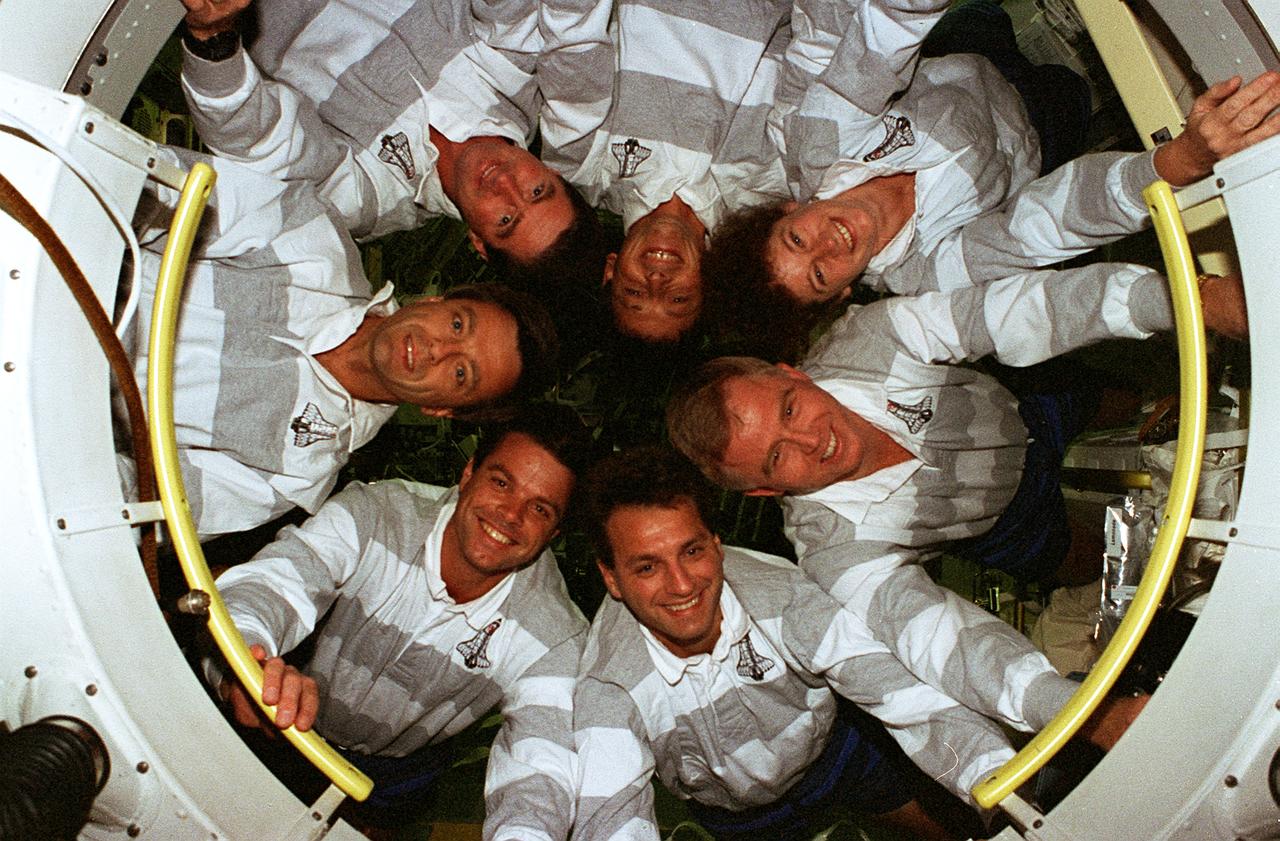
STS078-428-015 (20 June-7 July 1996) --- The crewmembers chose the Life and Microgravity Spacelab (LMS-1) Science Module as a backdrop for their traditional inflight portrait. Hold picture vertically with payload commander Susan J. Helms in lower right. Clockwise from astronaut Helms are Charles J. Brady, Richard M. Linnehan, Kevin R. Kregel, Canadian payload specialist Robert B. Thirsk, Terence T. (Tom) Henricks and French payload specialist Jean-Jacques Favier. Henricks and Kregel are commander and pilot, respectively, with Linnehan and Brady serving as mission specialists.
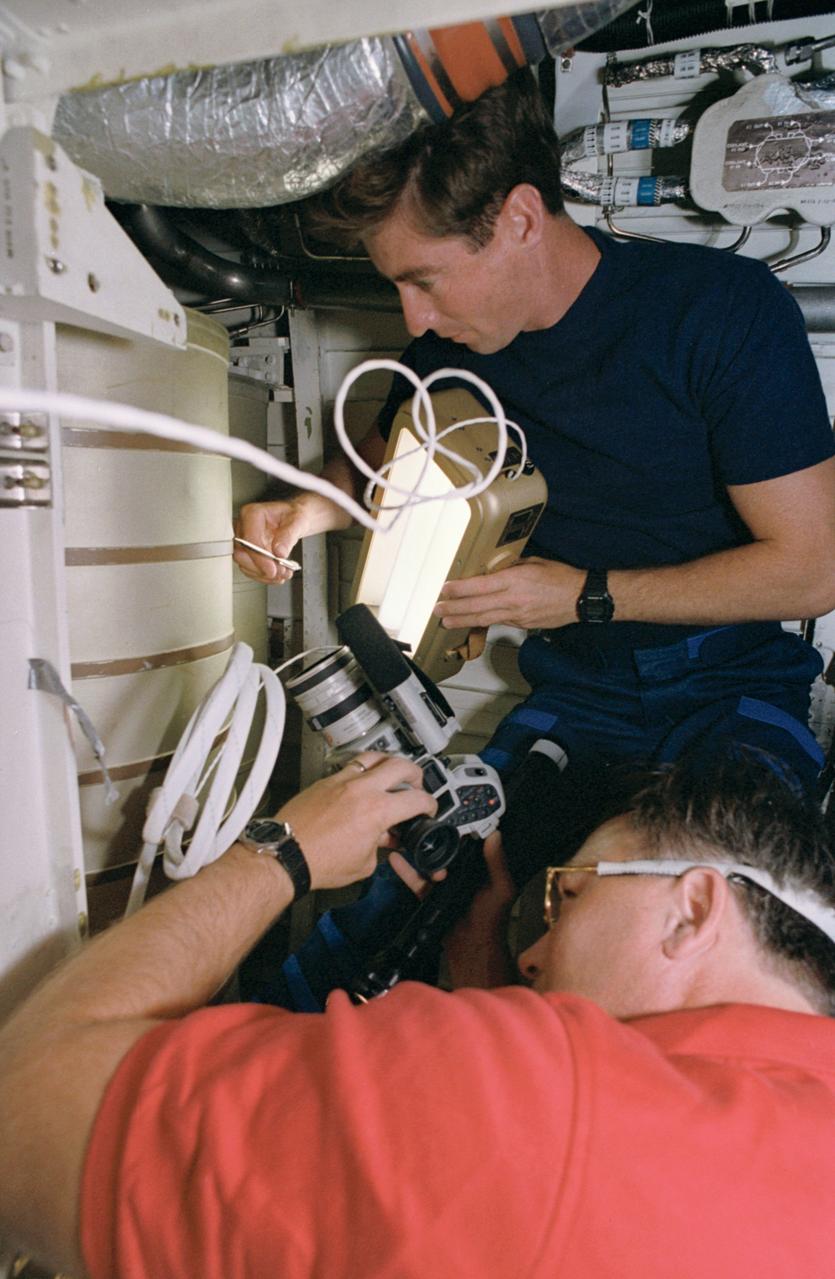
STS055-39-036 (26 April-6 May 1993) --- Astronaut Terence T. (Tom) Henricks, pilot, uses a spotlight and pen to point out a possible problem area on a waste water tank in the bilge area below Columbia's middeck. Astronaut Jerry L. Ross, payload commander, records the activity with a camera.
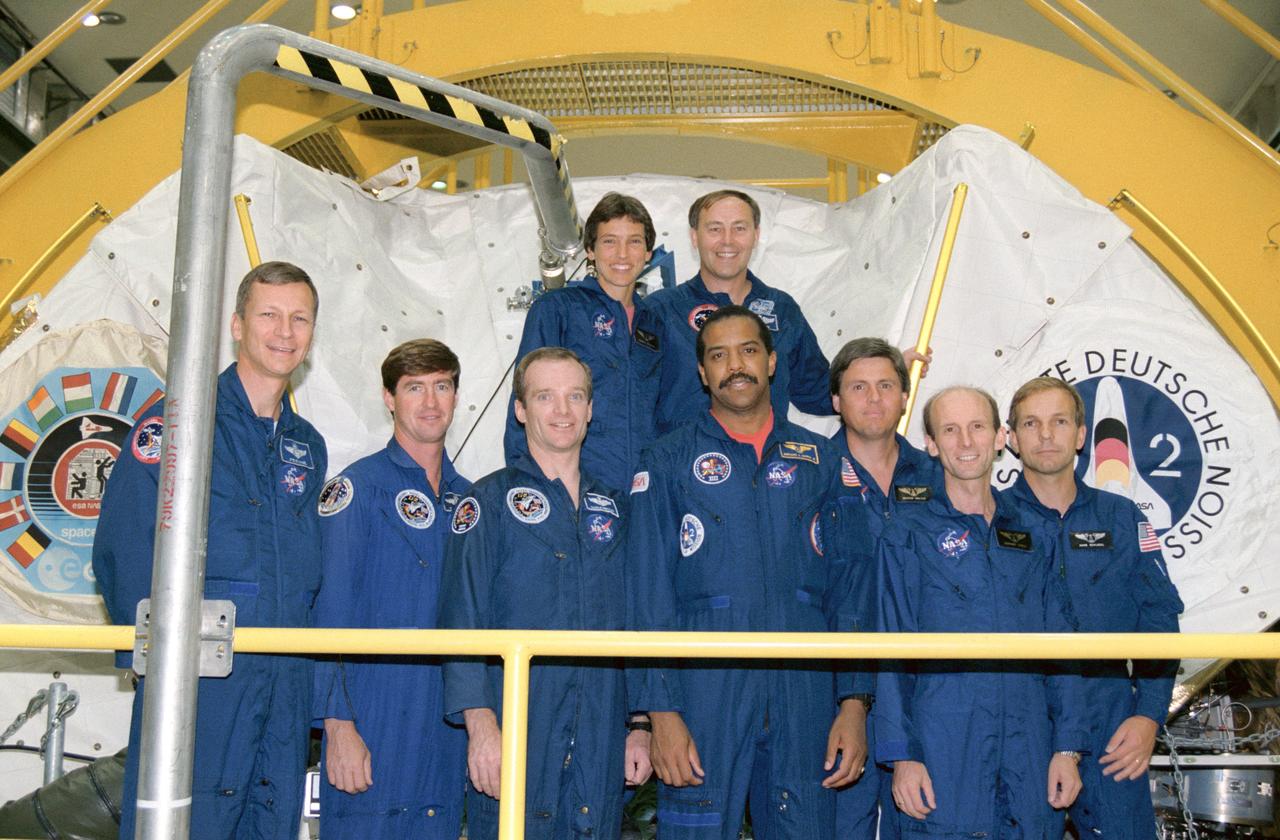
S92-49373 (8 Dec 1992) --- The seven prime flight crewmembers and two alternates assigned to support the STS-55\Spacelab D-2 mission pose with their science module. Left to right (front) are Steven R. Nagel, Terence T. (Tom) Henricks, Charles J. Precourt, Bernard A. Harris Jr., Ulrich Walter, Gerhard Thiele and Hans Schlegel; and (back) Renate Brummer and Jerry L. Ross. Nagel is mission commander; Henricks, pilot; and Ross, payload commander. Harris and Precourt will serve as mission specialists. Walter and Schlegel are scheduled to represent the DLR as payload specialists for the mission, while Brummer and Thiele will serve as alternates and fill supportive roles on the ground. The crew was photographed during a tour of the science module before its integration at Kennedy Space Center (KSC).
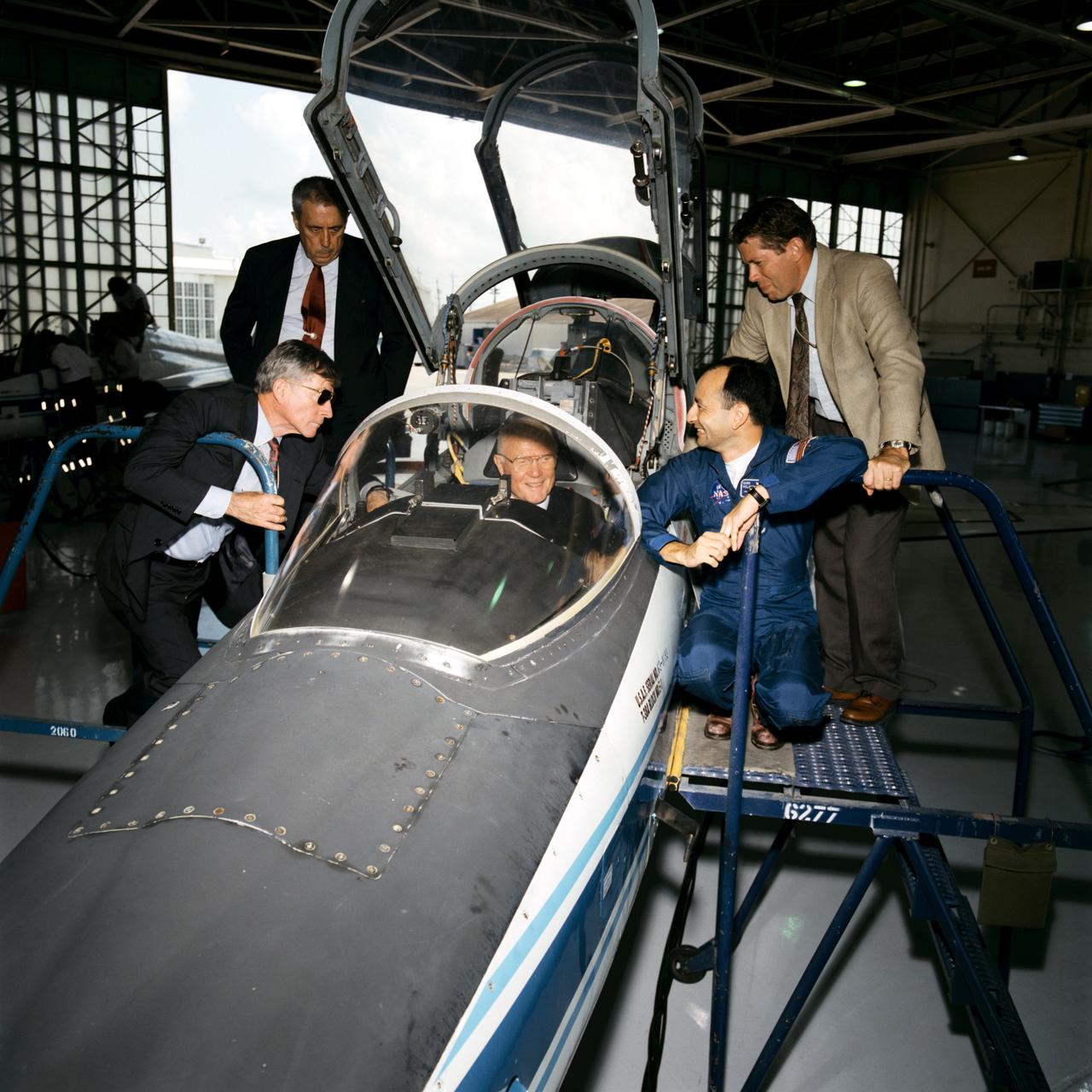
Senator John Glenn visit to Johnson Space Center (JSC). Views of Glenn sitting in cockpit of T-38 in Hangar 276 with John Young, George Abbey, David Leestma and Mark Polansky observing (11150). An engineer explains SPIFEX experiment hardware to Abby, Young and Glenn in Bldg 13 (11151, 11153). Glenn talks with astronaut Terrence T. Henricks and employees in Bldg 9C, Virtual reality lab (11152). Lunch in Bldg 17 Flight Crew support division with Dr. Ellen Baker, Robert "Hoot" Gibson and John Glenn (11154). Linda Godwin, Robert Cabana, Abbey, Young, Baker, Gibson and Glenn at lunch (11155). Astronaut Mark Lee shows Glenn and his aide how to use the virtural reality helmets (11156-7). Glenn shakes the hand of Franklin Chang-Diaz with his plasma rocket in the background in the Sonny Carter Training Facility (SCTF) (11158). Glenn in the Manipulator Development Facility (MDF) Remote Manipulator System (RMS) station mock-up in Bldg 9A with Abbey, Young and aide (11159, 11186). Glenn signs a book for Thomas D. Jones as Frederick Sturckow and Linda Godwin look on (11160). Glenn inside visual-vestibular trainer in Bldg 9B (11161). In conference room meeting with astronaut corps in Bldg 4S, Glenn shakes Robert Cabana's hand (11162). John Glenn and John Young pose for a group shot with Bldg 17 Food lab personnel (11163). Glenn thanks the food lab personnel (11164). Glenn visits Bldg 5 Fixed Base (FB) middeck simulator with astronauts Terrence Henricks and Mary Ellen Weber (11165). Glenn with Charles T. Bourland (11166). STS-70 crew Donald Thomas, Terrence Henricks, Mary Ellen Weber, Nancy Currie and Kevin Kregel with Glenn's advisor (11167). STS-70 crew Thomas, Henricks, Weber, Currie and Kregel with John Glenn (11175). Glenn with Thomas, Kregel, Weber, Henricks and trainer (11176-7). David J. Homan assists Glenn's aide with virtual reality goggles (11168) and Glenn (11174). John Young in Bldg 9C equilibrium trainer (11169). Glenn with Carl Walz in flight deck mock-up of MDF in Bldg 9NE (11170, 11187). Young, Abbey, aides, Glenn and Walz examine helium balloon in MDF (11171-2). Chang-Diaz shows Glenn's tour group the plasma rocket (11173). Glenn's presentation to astronaut corps (11178-81, 11184-5). Glenn is presented with framed picture of Sonny Carter Training Facility (SCTF) (11182) and framed picture of space station (11183).
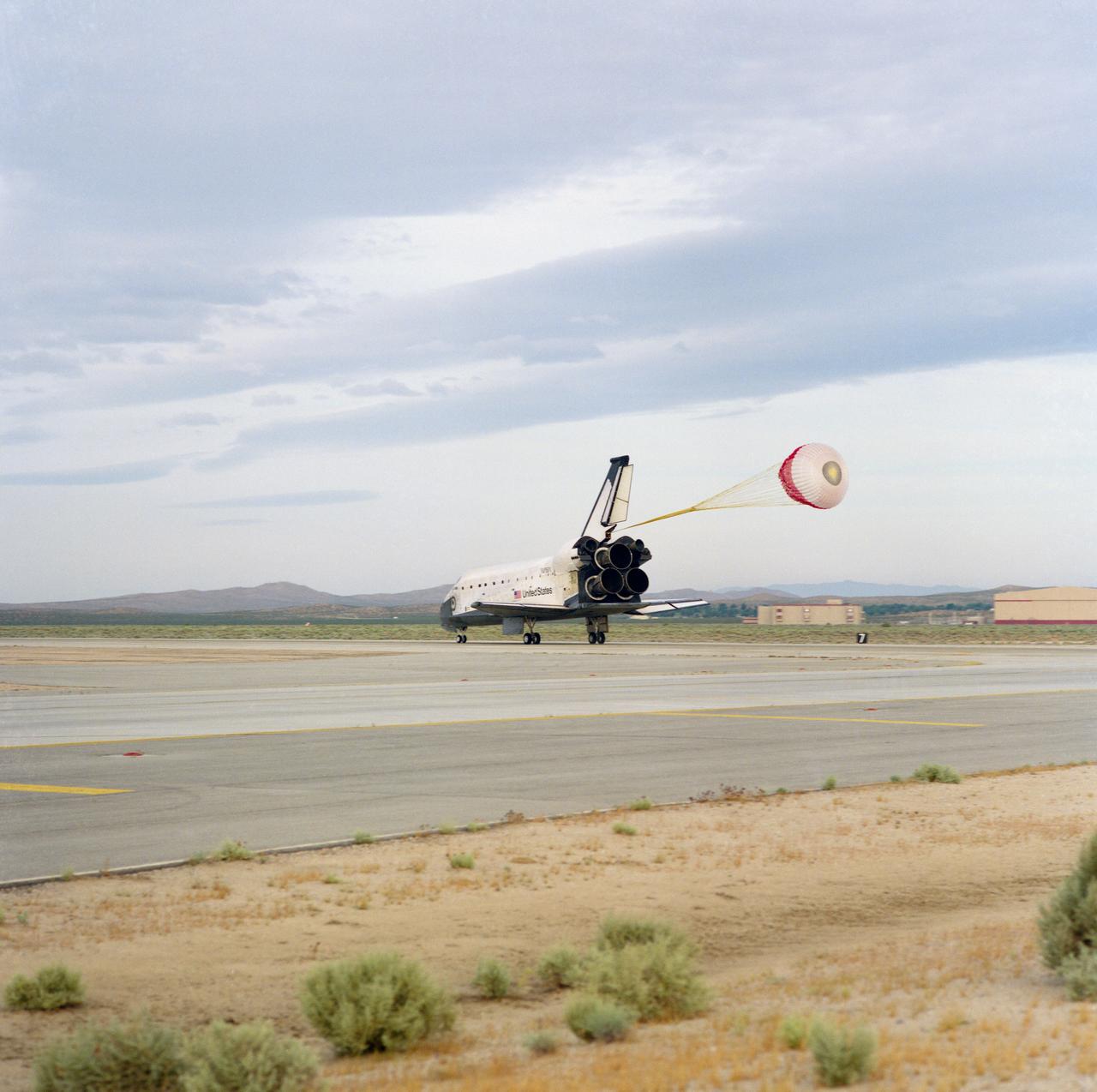
STS055-S-089 (6 May 1993) --- The main drag chute on the Space Shuttle Columbia is almost fully deployed in this three-quarter aft view of the vehicle's runway landing at Edwards Air Force Base in California. Landing occurred at 7:30 a.m. (PDT), May 6, 1993. Onboard the spacecraft were astronauts Steven R. Nagel, Terence T. (Tom) Henricks, Jerry L. Ross, Bernard Harris Jr. and Charles J. Precourt, along with German payload specialists Hans Schlegel and Ulrich Walter.
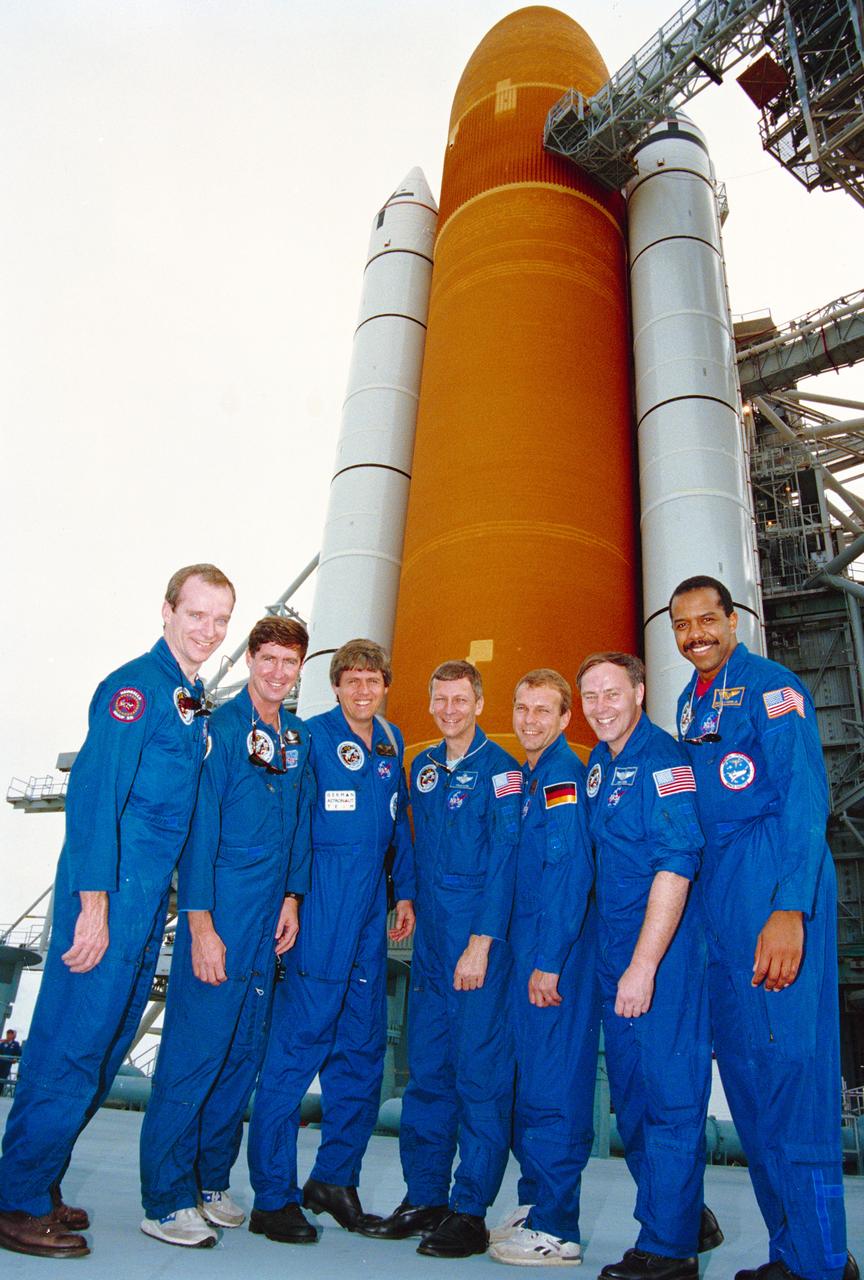
S93-29860 (11 Feb 1993) --- The STS-55 crew poses for a group portrait next to the Space Shuttle Columbia at Launch Pad 39A. From left are mission specialist Charles J. Precourt; pilot Terence T. Henricks; payload specialist Ulrich Walter, mission commander Steven R. Nagel; payload specialist Hans Schlegel; payload commander Jerry L. Ross; and mission specialist Bernard A. Harris Jr.. The crew is at KSC for the Terminal Countdown Demonstration Test (TCDT), a dress rehearsal for launch.
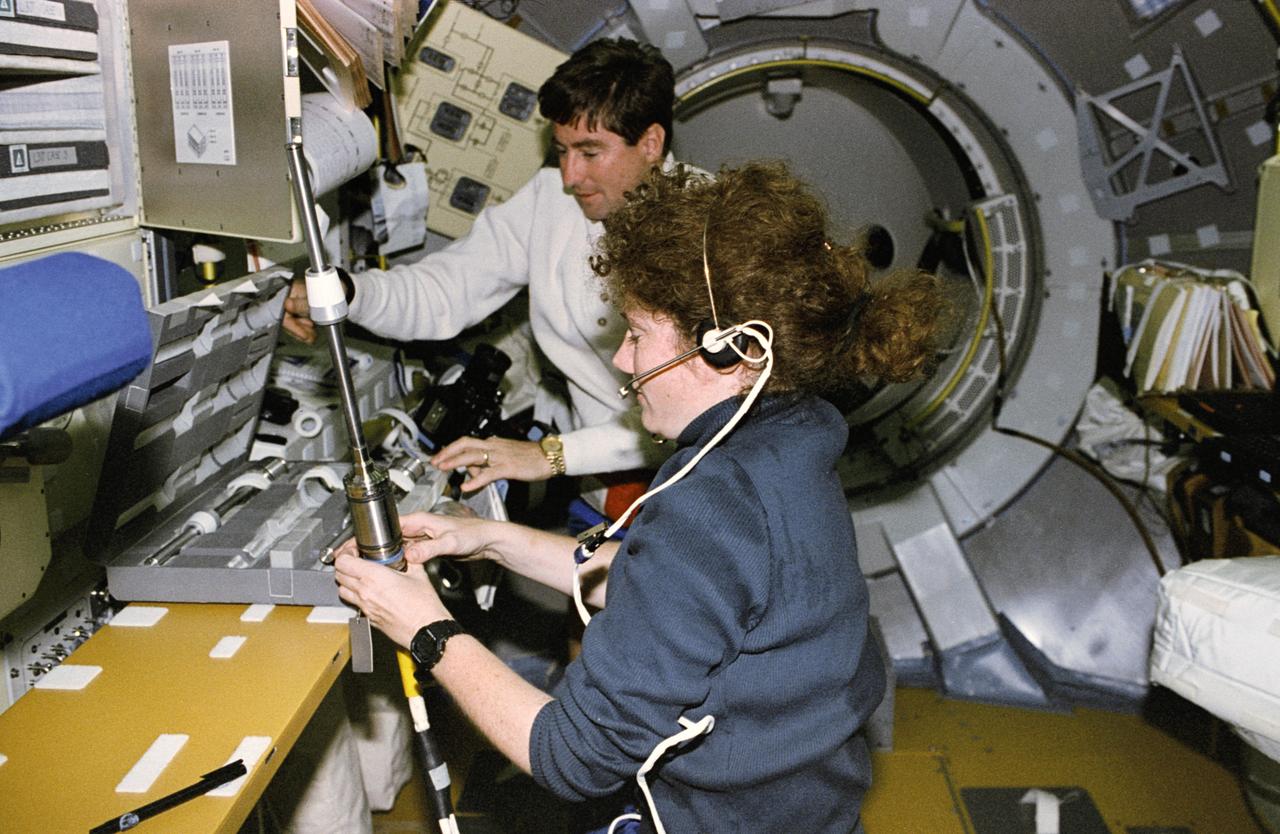
STS078-368-022 (20 June - 7 July 1996) --- Astronauts Susan J. Helms, payload commander, and Terence T. (Tom) Henricks, mission commander, prepare a sample cartridge containing semiconductor crystals for Spacelab research. The crystals were later placed in the Advanced Gradient Heating Furnace (AGHF) in the Life and Microgravity Spacelab (LMS-1) Science Module. The AGHF is designed for directional solidification of the crystals in the sample cartridges. The microgravity of space allows the crystals to grow in a perfect state that can not be accomplished in Earth's gravity.
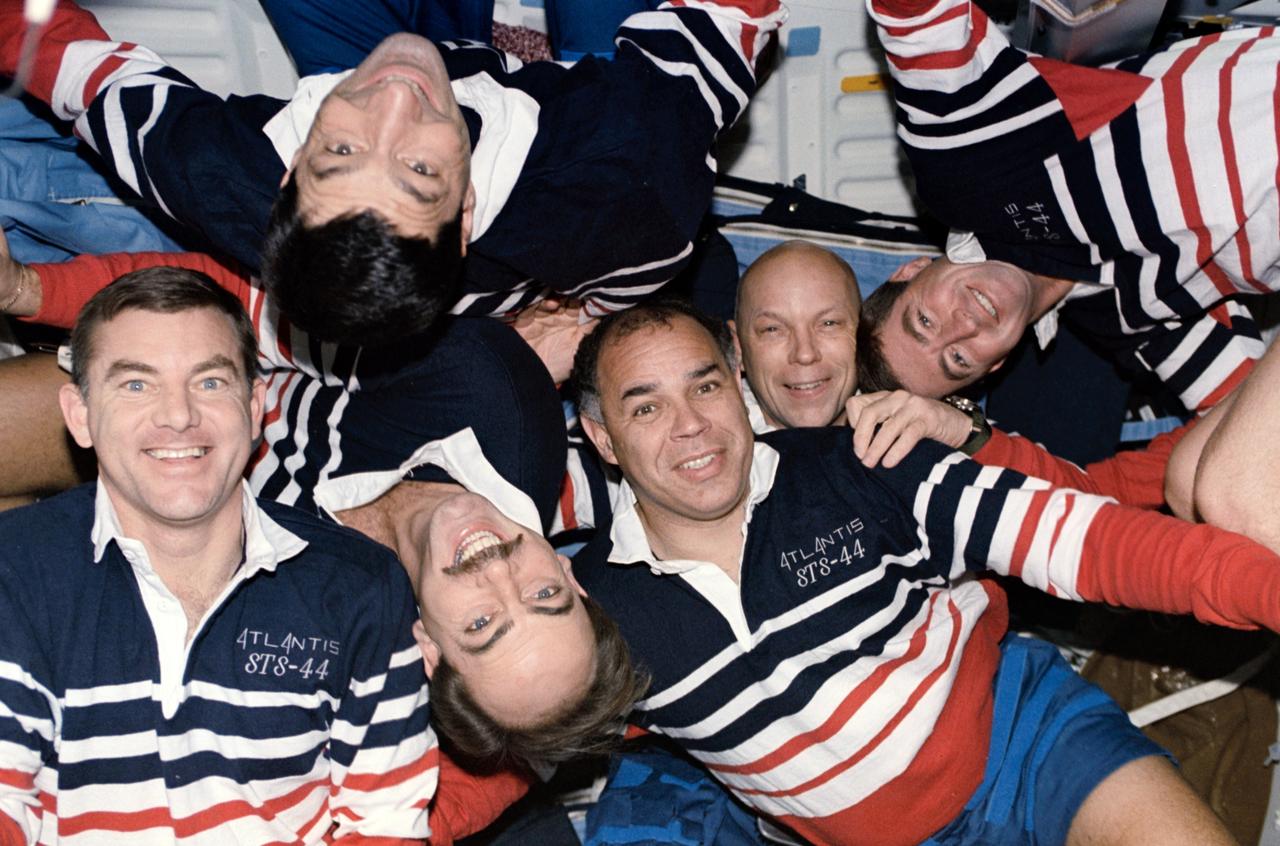
STS044-50-033 (24 Nov-1 Dec 1991) --- The six crewmembers for STS-44 assemble on the middeck. An auto-set 35mm camera recorded this view of them enroute to a more formal pose. Astronaut Frederick D. Gregory, Mission Commander, is at center. Clockwise from his position, other crewmembers are Payload Specialist Thomas J. Hennen; and astronauts James S. Voss, Mario Runco Jr. and F. Story Musgrave, all Mission Specialists, and Terence T. (Tom) Henricks, Pilot.
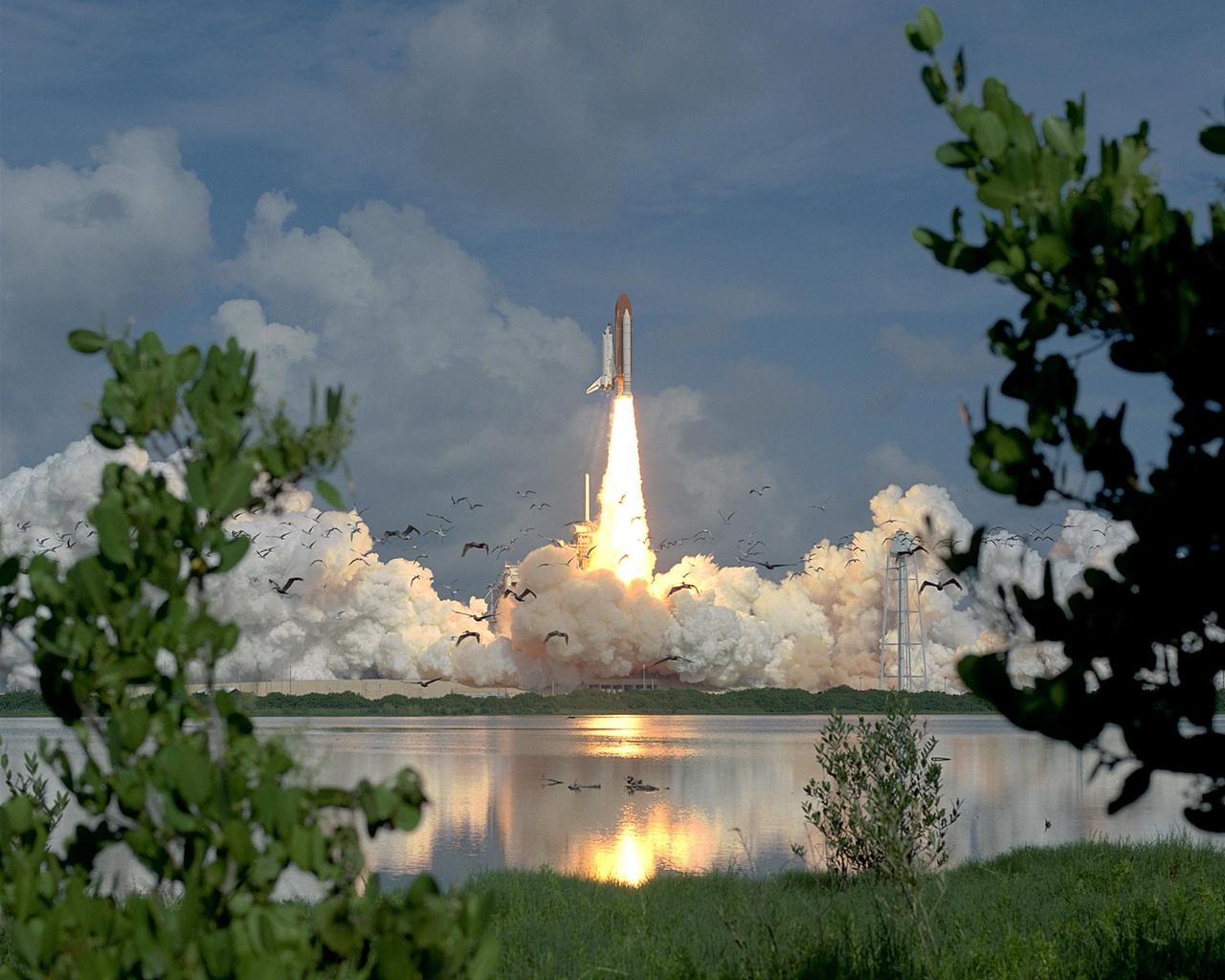
Startled birds scatter as the stillness of a summer morning is broken by a giant's roar. The Space Shuttle Discovery thundered into space from Launch Pad 39B at 9:41:55:078 a.m. EDT. STS-70 is the 70th Shuttle flight overall, the 21st for Discovery (OV-103), and the fourth Shuttle flight in 1995. On board for the nearly eight-day mission are a crew of five: Commander Terence "Tom" Henricks, Pilot Kevin R. Kregel, and Mission Specialists Nancy Jane Currie, Donald A. Thomas and Mary Ellen Weber. The crew's primary objective is to deploy the Tracking and Data Relay Satellite-G (TDRS-G), which will join a constellation of other TDRS spacecraft already on orbit
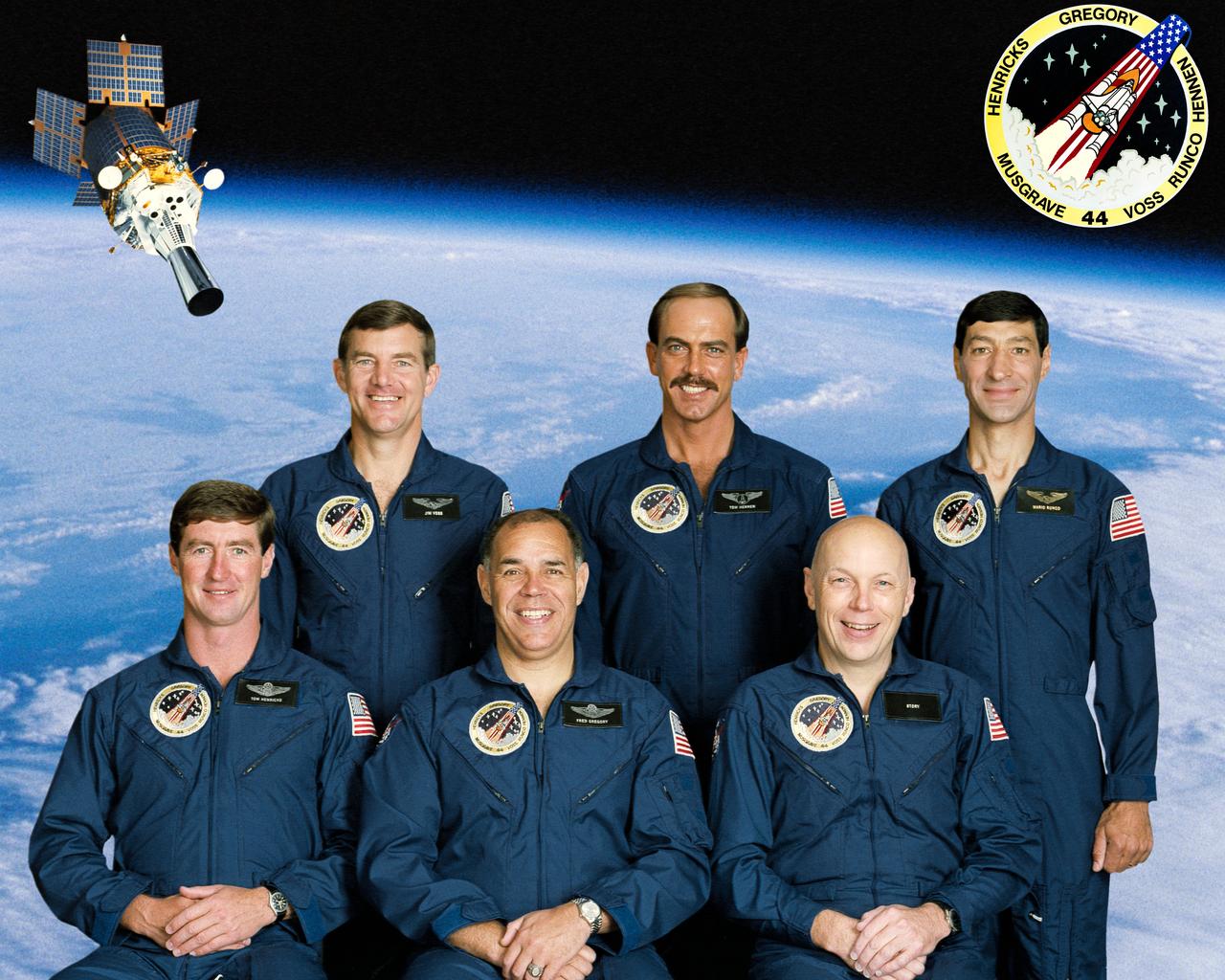
STS044-S-002 (July 1991) --- These are the six crew members assigned to fly onboard the Space Shuttle Atlantis for NASA's STS 44 mission, scheduled for later this year. Astronaut Frederick D. Gregory (center, front row) is mission commander. He is flanked by astronauts Terence T. (Tom) Henricks (left), pilot; and F. Story Musgrave, mission specialist. On the back row are astronaut James S. Voss, mission specialist; payload specialist Thomas J. Hennen of the U.S. Army; and astronaut Mario Runco Jr., mission specialist. The mission insignia is seen in the upper right corner, while the Defense Support System (DPS)/IUS payload is depicted in the upper left corner.
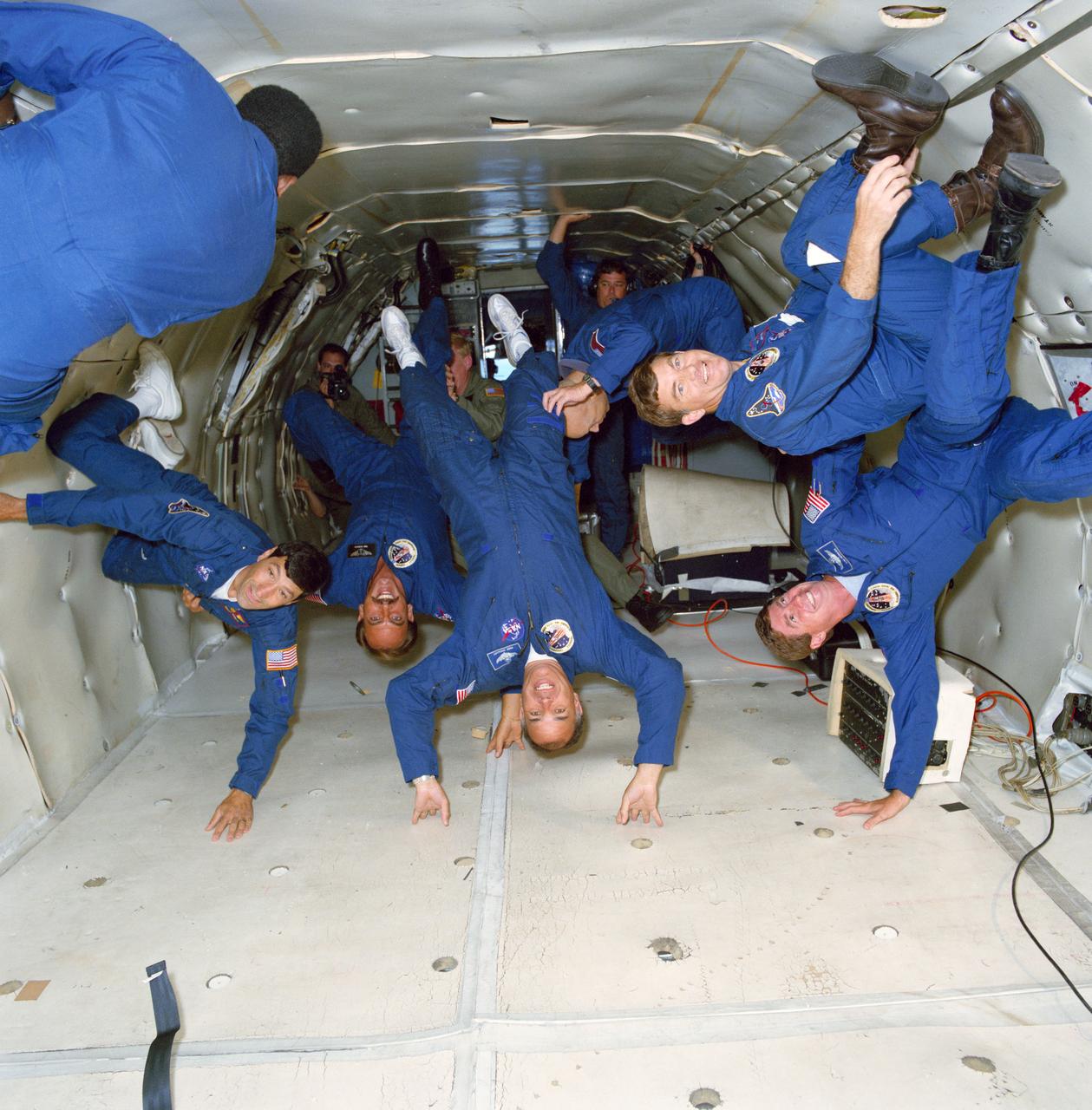
S91-38355 (28 May 1991) --- Seen floating about the vacant spaces of the Johnson Space Center's KC-135 "zero-gravity" aircraft are the six crewmembers for the STS 44 mission. Left to right are Terence T. Henricks, James S. Voss, F. Story Musgrave (partially obscured), Frederick D. Gregory, Thomas J. Hennen and Mario Runco Jr. Gregory is mission commander. Hennen is payload specialist for this flight, dedicated to the Department of Defense. The flight served as a refresher and a preview of the experience of weightlessness, as the special aircraft flew a series of parabolas which provided short sessions of zero-gravity.
S91-38355 (28 May 1991) --- Seen floating about the vacant spaces of the Johnson Space Center's KC-135 "zero-gravity" aircraft are the six crewmembers for the STS 44 mission. Left to right are Terence T. Henricks, James S. Voss, F. Story Musgrave (partially obscured), Frederick D. Gregory, Thomas J. Hennen and Mario Runco Jr. Gregory is mission commander. Hennen is payload specialist for this flight, dedicated to the Department of Defense. The flight served as a refresher and a preview of the experience of weightlessness, as the special aircraft flew a series of parabolas which provided short sessions of zero-gravity.
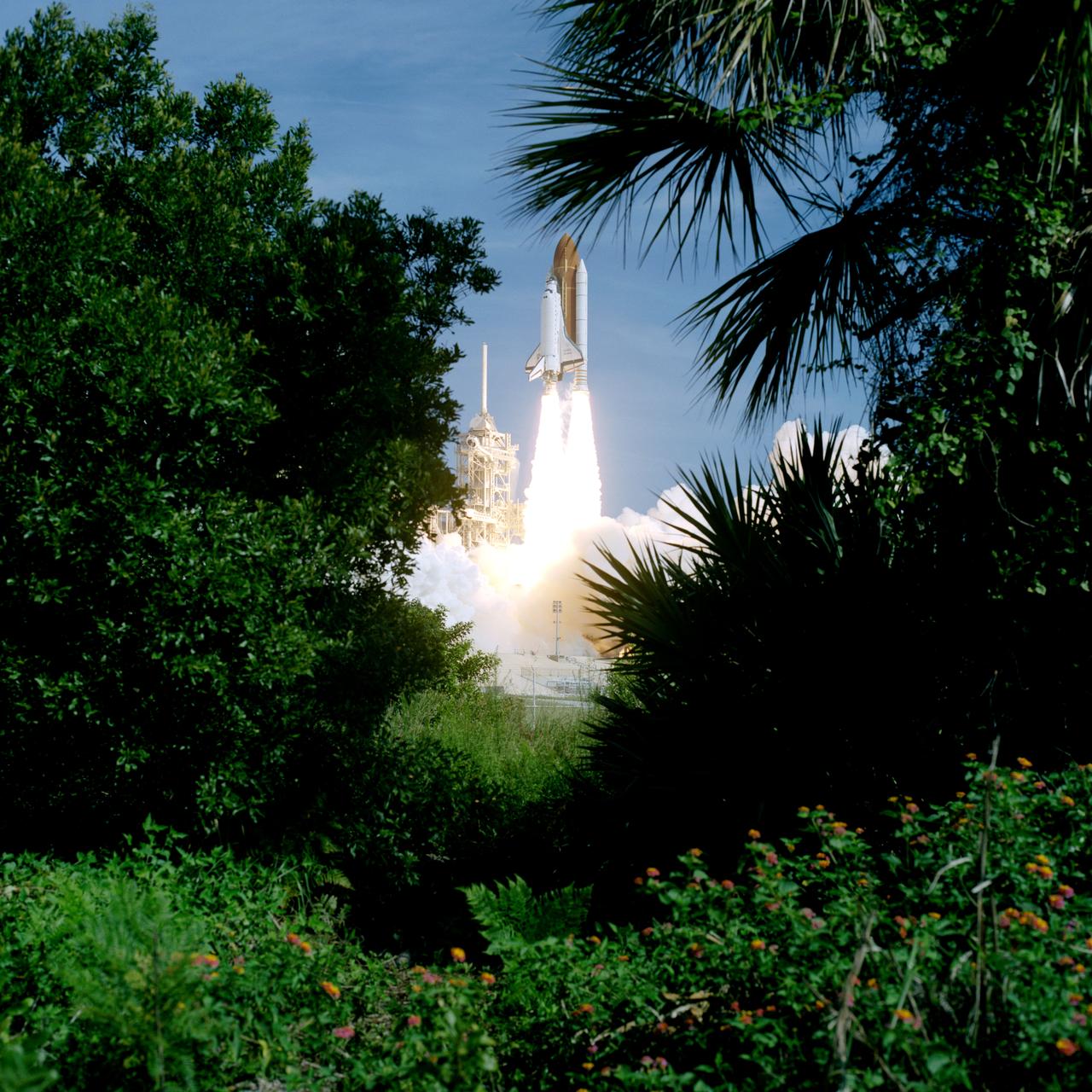
STS070-S-003 (13 JULY 1995) --- Framed by Florida foliage, the Space Shuttle Discovery begins its 21st Spaceflight. Five NASA astronauts and a Tracking and Data Relay Satellite (TDRS) were aboard for the liftoff, which occurred at 9:41:55 a.m. (EDT), July 13, 1995 from Launch Pad 39B. Onboard were astronauts Terence T. (Tom) Henricks, Kevin R. Kregel, Nancy J. Curie, Donald A. Thomas and Mary Ellen Weber. This mission also marks the maiden flight of the new Block I Space Shuttle Main Engine configuration designed to increase engine performance as well as safety and reliability.
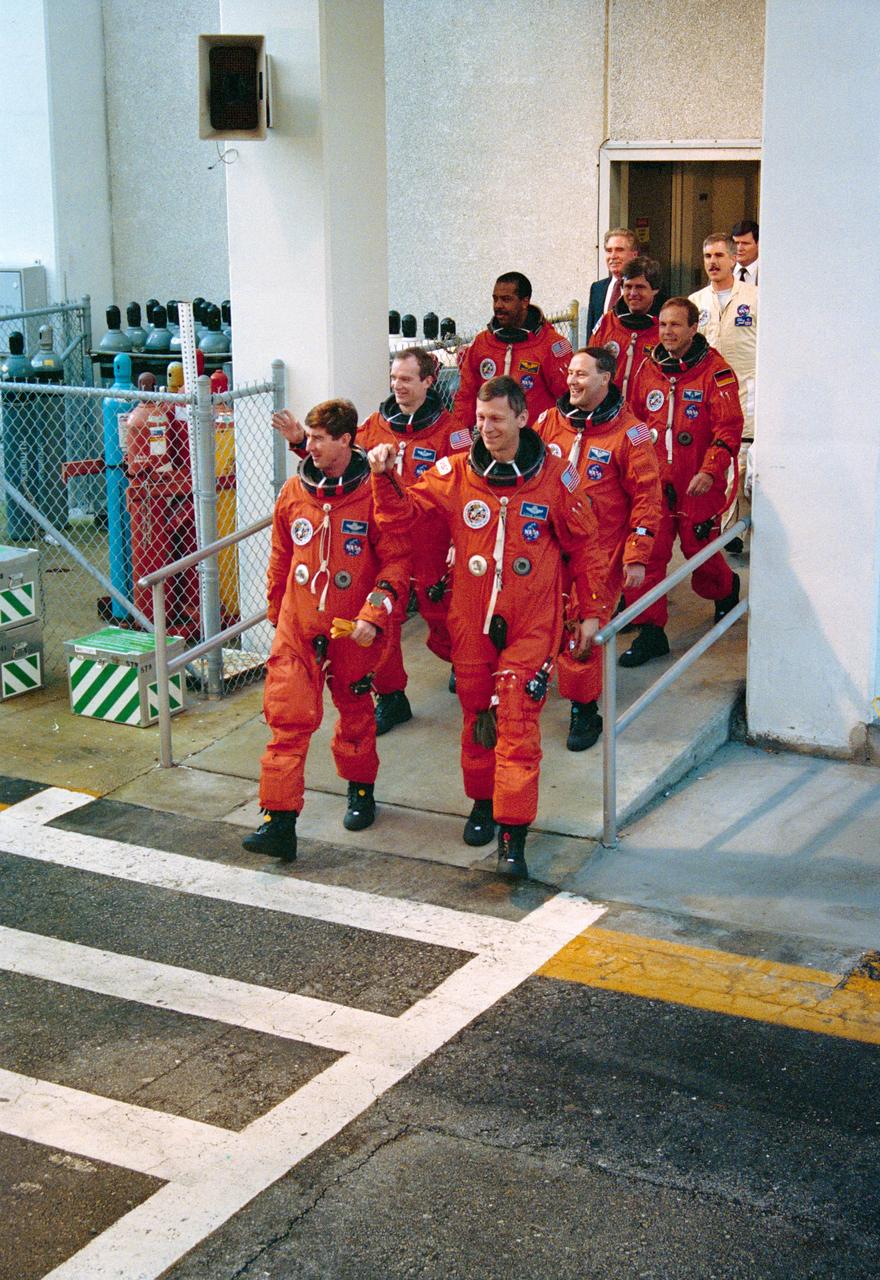
S93-29851 (12 Feb 1993) --- Clad in their bright orange launch/entry suits, the STS-55 flight crew departs the Operations and Checkout Building for the Space Shuttle Columbia at Launch Pad 39A. Leading the way are Pilot Terence T. Henricks (left) and Mission Commander Steven R. Nagel; behind them are, from left, Mission Specialists Charles J. Precourt and Bernard A. Harris Jr.; Payload Commander Jerry L. Ross; and Payload Specialists Ulrich Walter and Hans Schlegel. This is the final portion of the Terminal Countdown Demonstration Test, a dress rehearsal for launch which culminates with a simulated T -0.
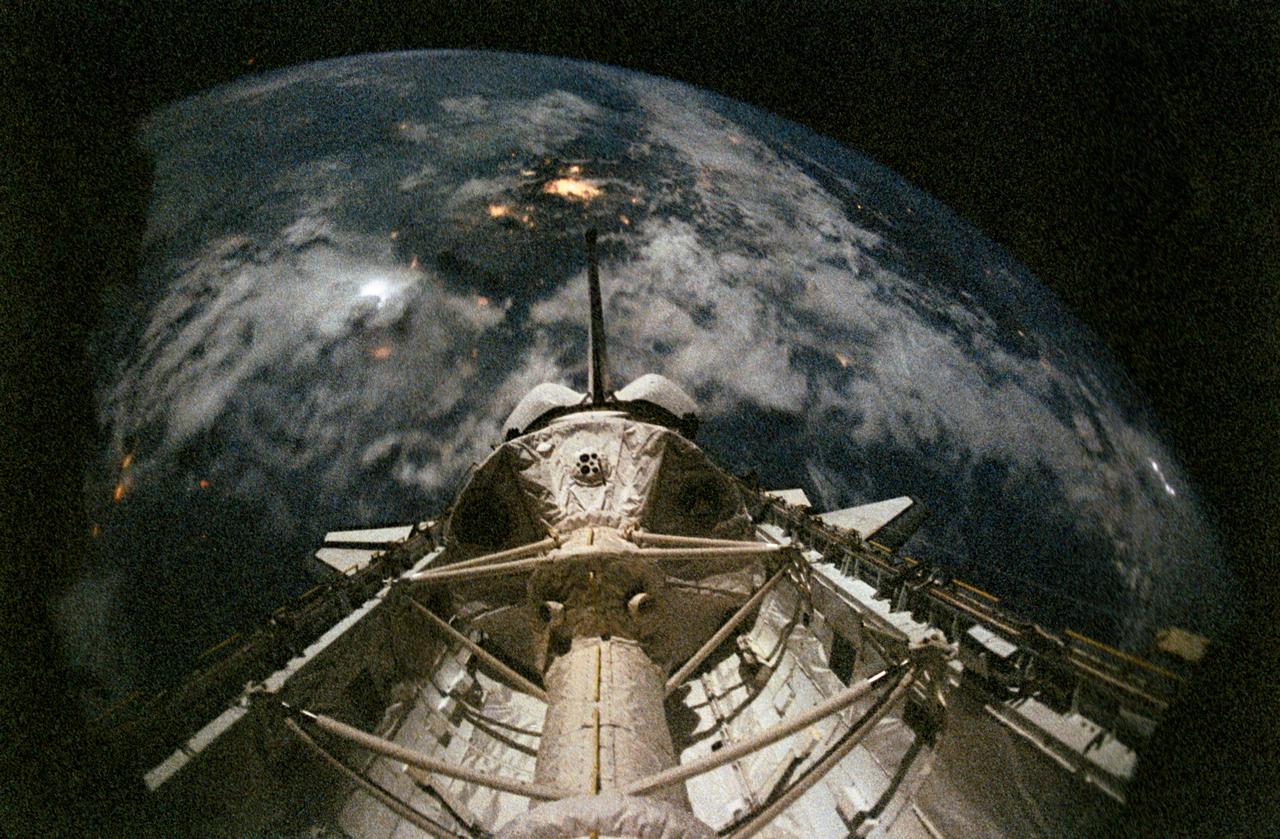
STS055-26-023 (26 April-6 May 1993) --- Lightning and man-made lights on Earth can be seen in this fast speed, 35mm frame photographed by a STS-55 crew member in the Space Shuttle Columbia's cabin. The cluster of lights near frame center is believed to be from Mexico City. Onboard the spacecraft were astronauts Steven R. Nagel, Terence T. (Tom) Henricks, Jerry L. Ross, Bernard A. Harris Jr. and Charles J. Precourt, along with German payload specialists Hans Schlegel and Ulrich Walter.
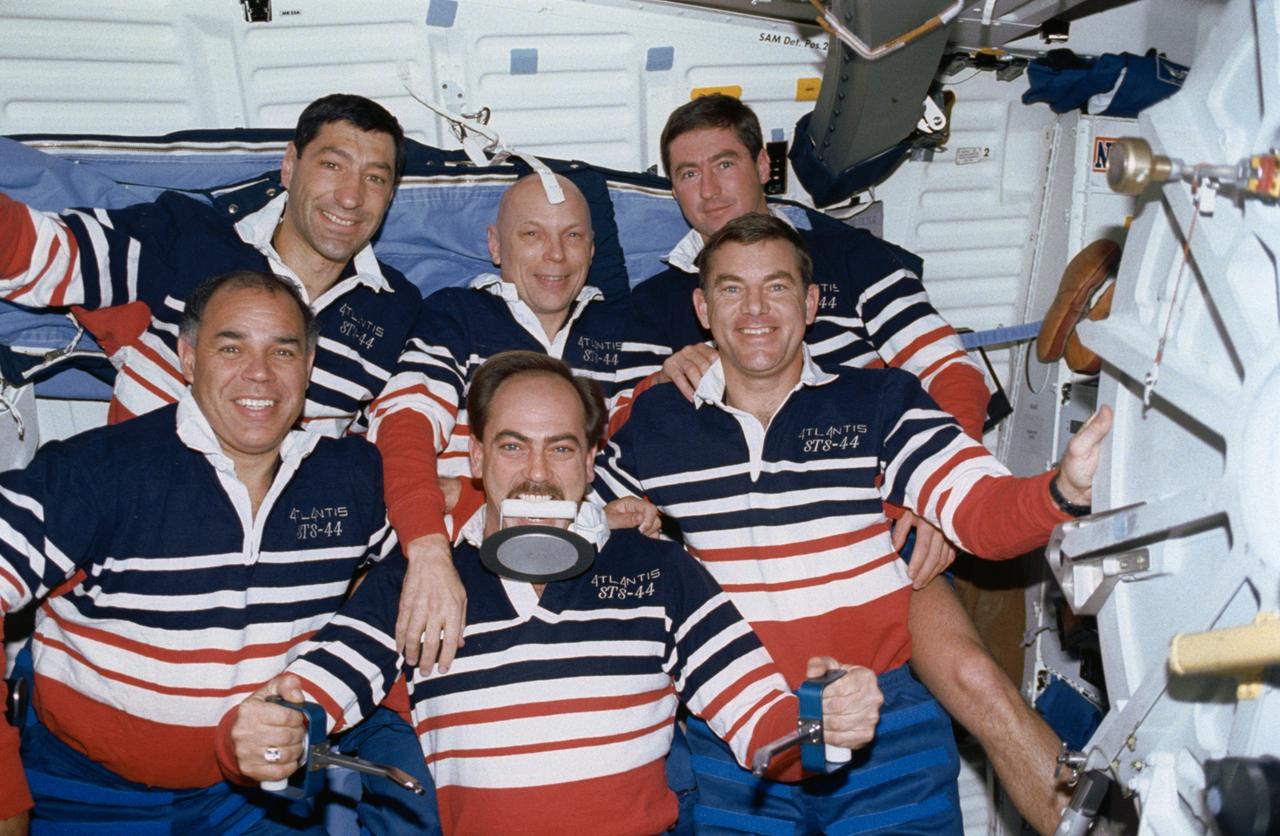
STS044-17-030 (24 Nov-1 Dec 1991) --- The six crewmembers for STS-44 pose for a second crew portrait on Atlantis' flight deck. This portrait was intended to focus on Payload Specialist Thomas J. Hennen (front center), who earned the nickname, "Trash Man" during the flight. It was Hennen who "starred" in a brief onboard video production about the disposal of trash and waste. Others in the picture are (front row) Astronauts Frederick D. Gregory (left), Mission Commander; and James S. Voss, Mission Specialist; and (back row, left to right) Astronauts Mario Runco Jr. and F. Story Musgrave, both Mission Specialists; and Terence T. (Tom) Henricks, Pilot.
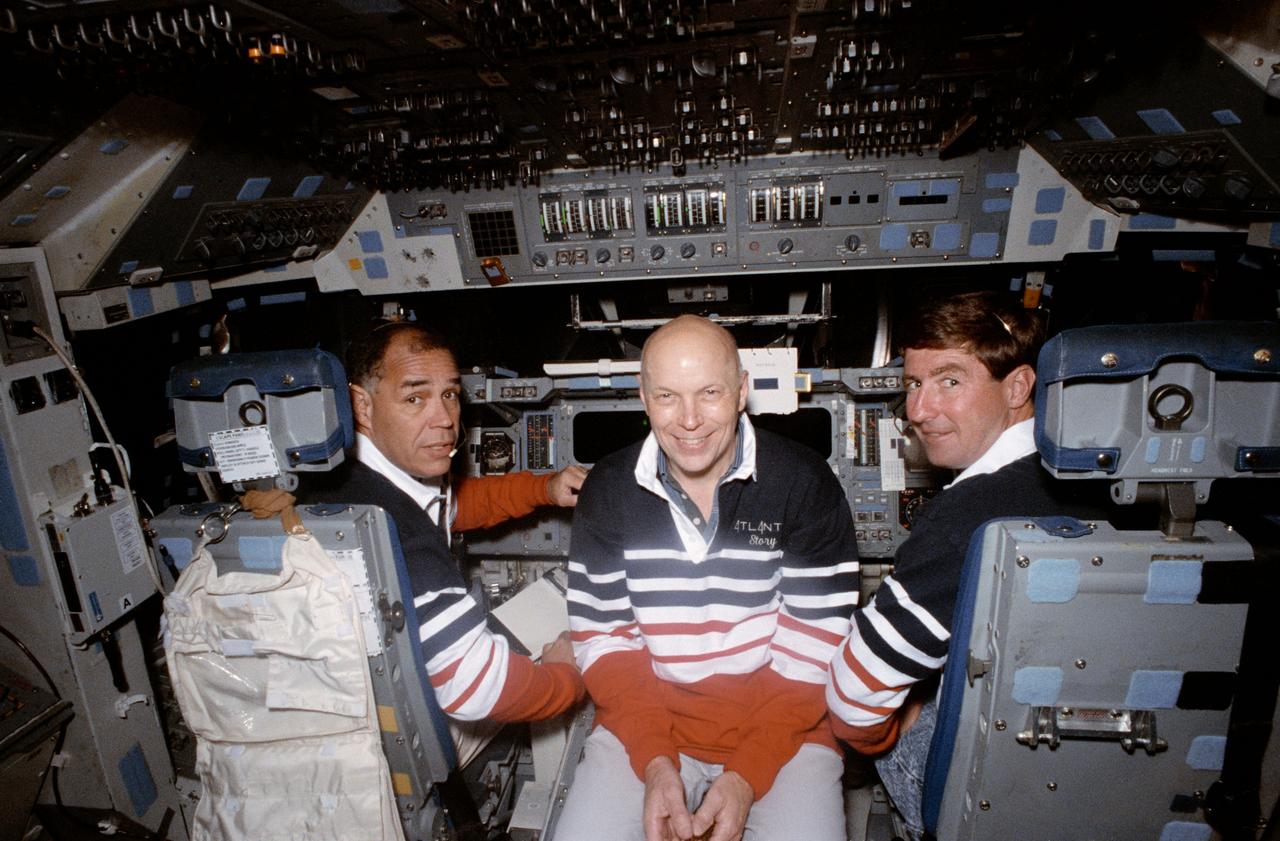
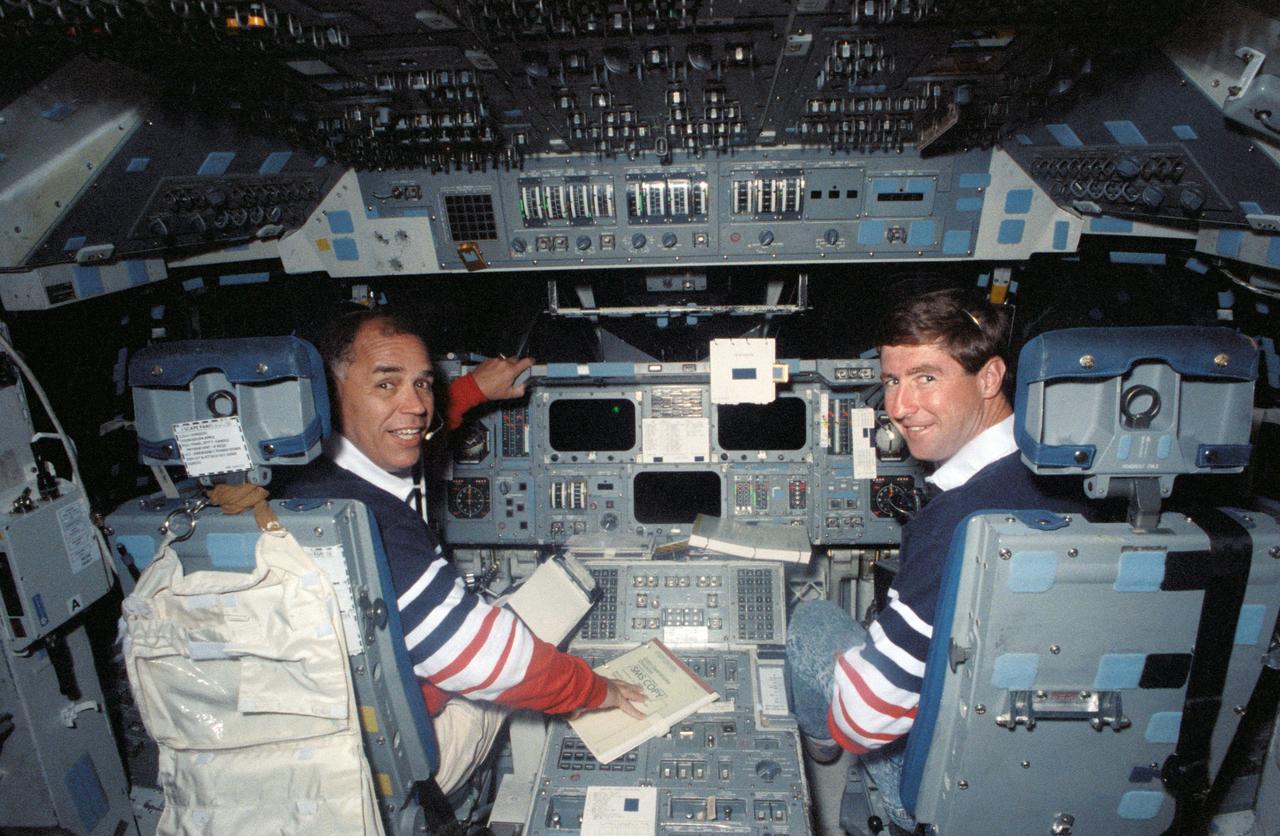
S91-35303 (22 April 1991) --- Astronauts Frederick D. Gregory (left) and Terrence T. Henricks (right), STS-44 commander and pilot, respectively, are joined near their launch and entry stations by F. Story Musgrave, mission specialist. The three pause while rehearsing some of the activities that will be performed during the scheduled ten-day November flight. Musgrave will be in a rear cabin station during launch and entry phases of the flight deck of the fixed-base Shuttle Mission Simulator (SMS) in the Johnson Space Center's mission simulation and training facility.
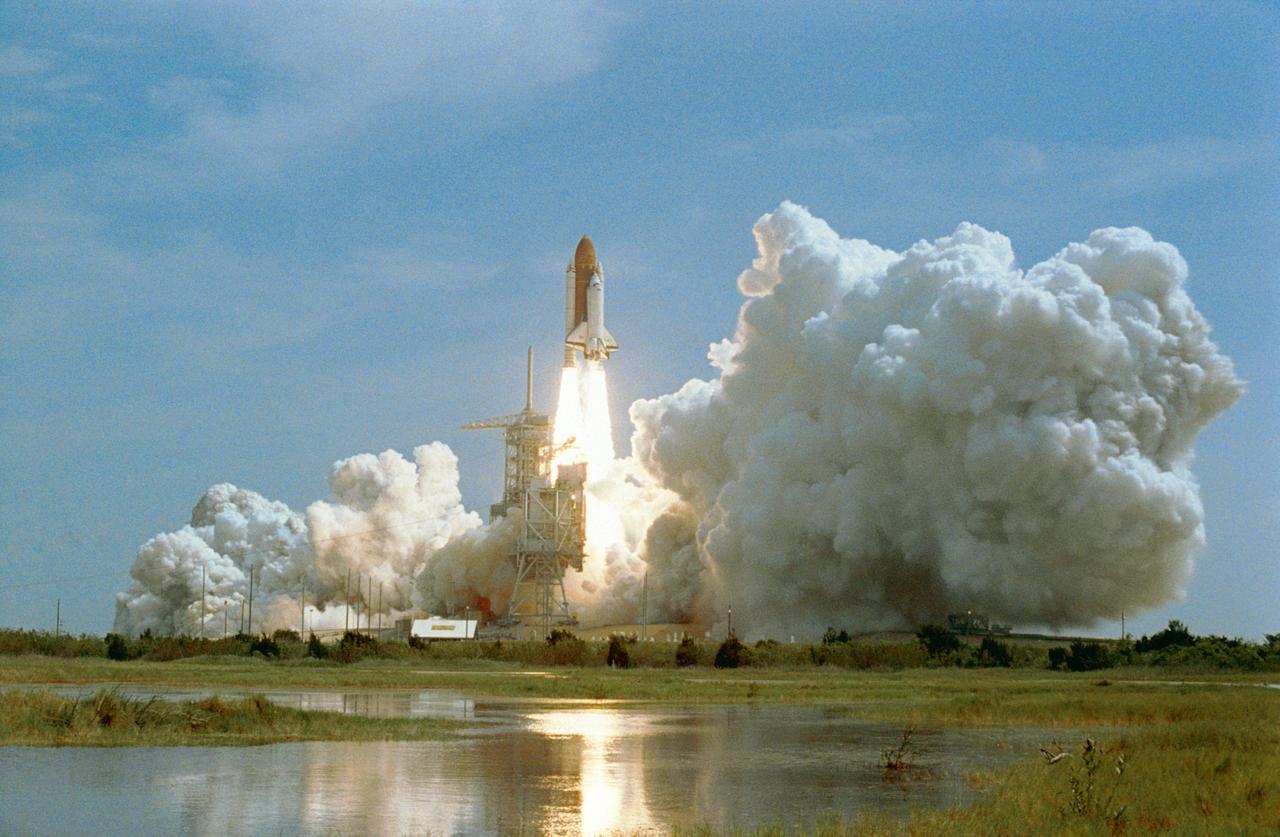
STS055-S-052 (26 April 1993) --- A wide shot shows the STS-55 launch at the Kennedy Space Center. Carrying an international crew of seven and a science laboratory, the Space Shuttle Columbia was on its way for a nine-day Earth-orbital mission in support of the Spacelab D-2 mission. Onboard were astronauts Steven R. Nagel, mission commander; Terence T. (Tom) Henricks, pilot; Jerry L. Ross, payload commander; Charles J. Precourt and Bernard A. Harris Jr., mission specialists; along with German payload specialists Hans Schlegel and Ulrich Walter. Liftoff occurred at 10:50 a.m. (EDT), April 26, 1993.
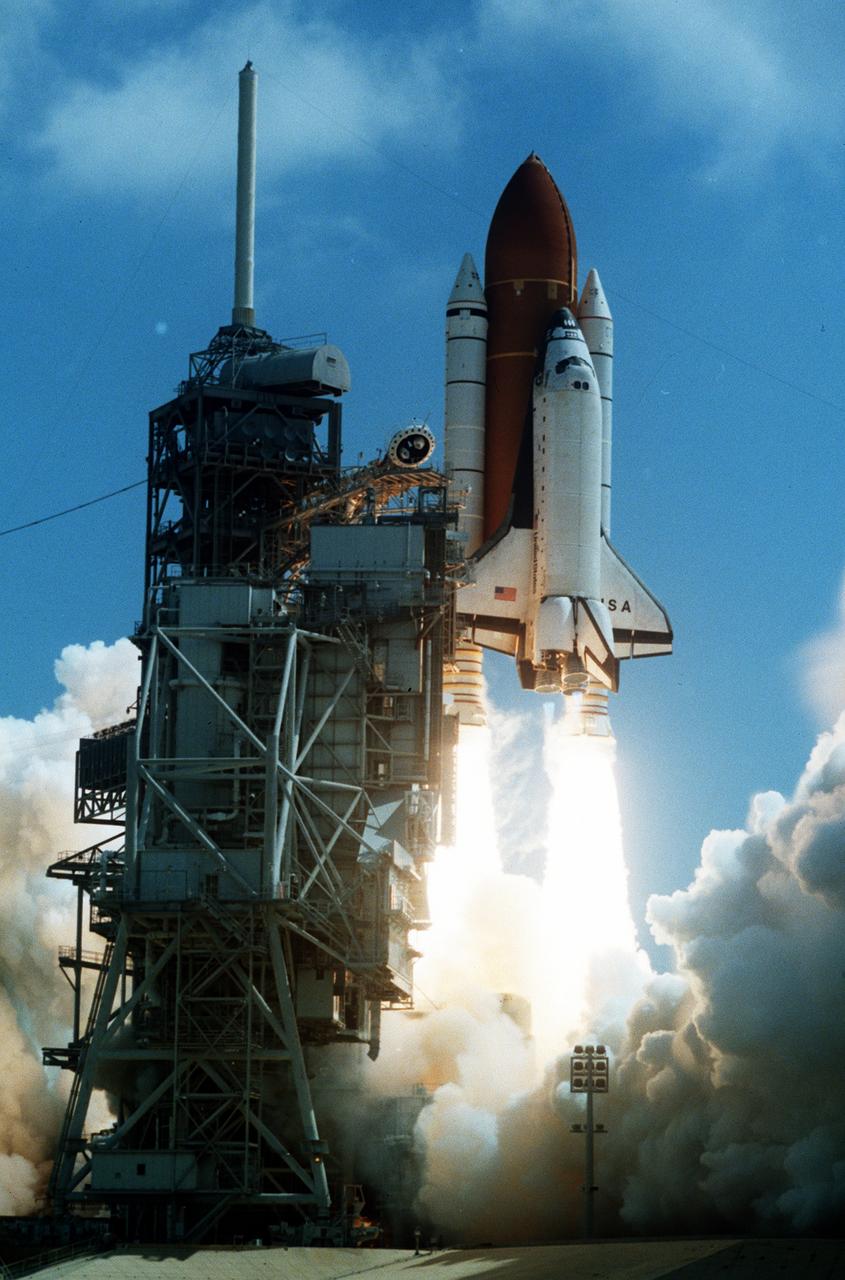
STS078-S-008 (20 June 1996) --- With an international payload and crew aboard, the Space Shuttle Columbia lifts off from Launch Pad 39B, at the Kennedy Space Center (KSC). Possibly expected to be NASA's longest duration Shuttle flight to date, the mission officially began at 10:49:00 a.m. (EDT), June 20, 1996. Onboard for Columbia’s 20th flight were astronauts Terence T. (Tom) Henricks, mission commander; Kevin R. Kregel, pilot; Susan J. Helms, payload commander; and Richard M. Linnehan and Charles E. Brady, Jr., both mission specialists, along with payload specialists Jean-Jacques Favier of the French Space Agency (CNES) and Robert B. Thirsk of the Canadian Space Agency (CSA). Flying in Columbia’s payload bay is the Life and Microgravity Spacelab (LMS), carrying a complement of United States and international experiments.
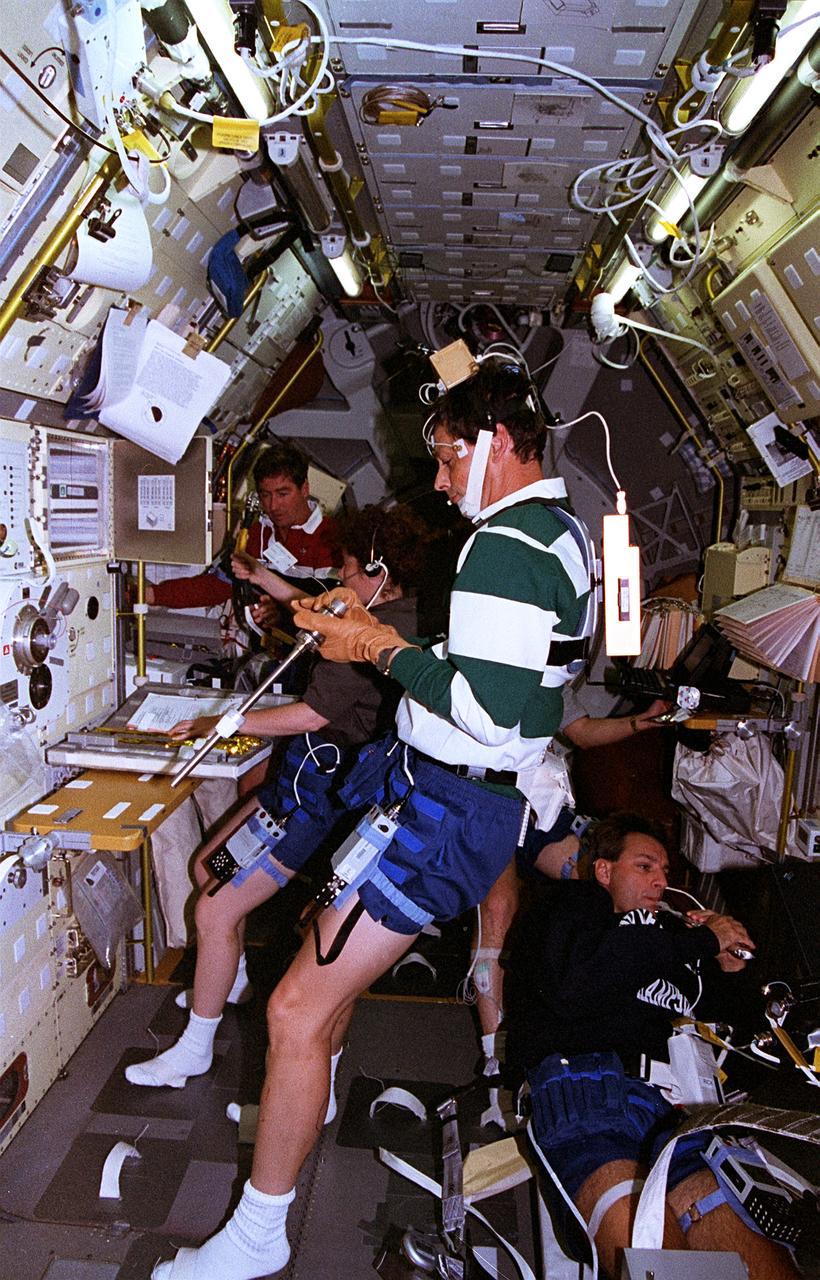
STS078-396-015 (20 June - 7 July 1996) --- Payload specialist Jean-Jacques Favier, representing the French Space Agency (CNES), prepares a sample for the Advanced Gradient Heating Facility (AGHF) while wearing instruments that measure upper body movement. The Torso Rotation Experiment (TRE) complements other vestibular studies that measure differences in the way human beings react physically to their surroundings in microgravity. This is a typical Life and Microgravity Spacelab (LMS-1) mission scene, with several experiments being performed. Astronaut Susan J. Helms, payload commander, assists Favier in the AGHF preparations. Astronaut Richard M. Linnehan (bottom right), mission specialist, tests his muscle response with the Handgrip Dynamometer. Astronaut Thomas T. (Tom) Henricks (far background), mission commander, offers assistance.
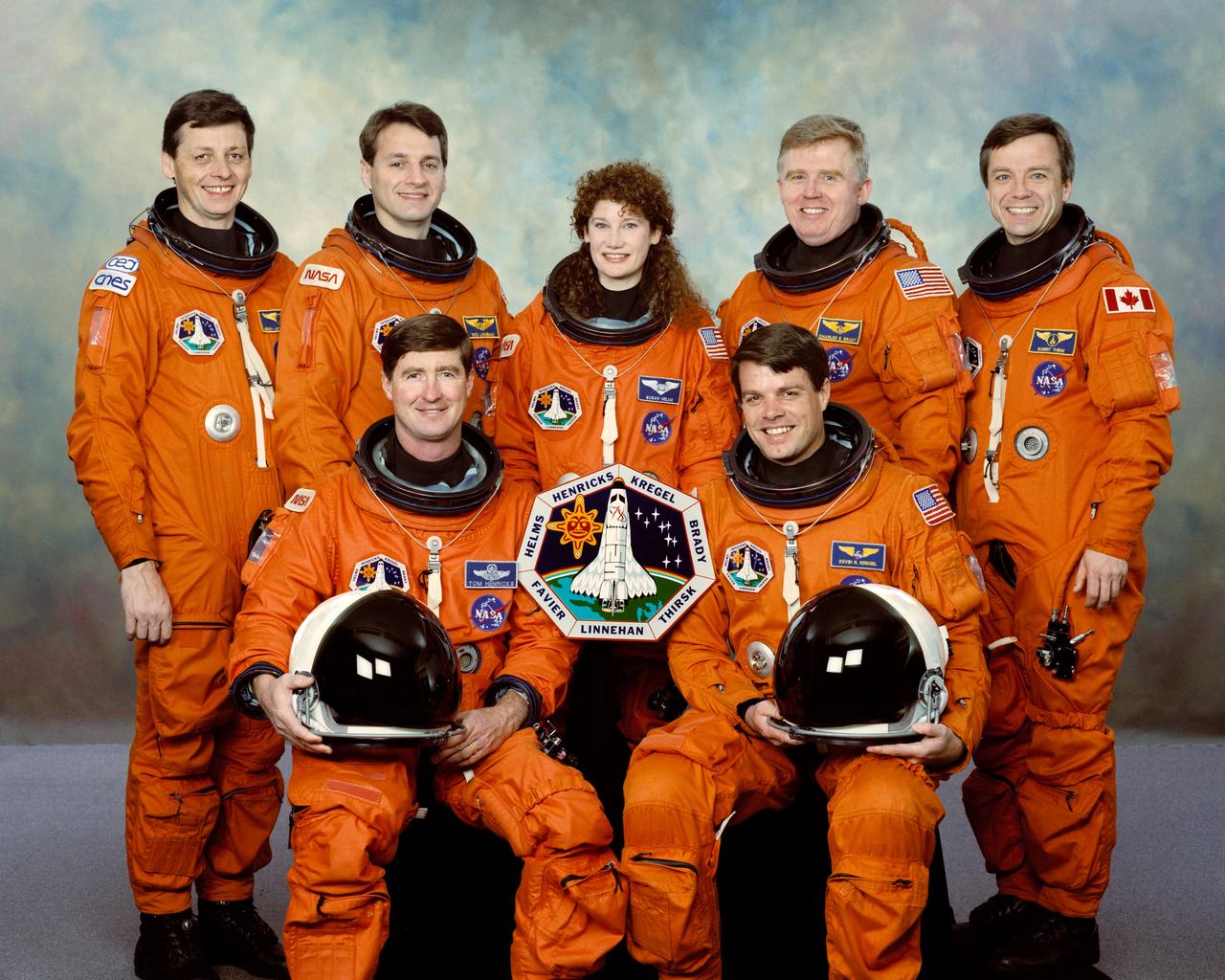
STS078-S-002 (April 1996) --- These seven crew members will spend 16 days aboard the Space Shuttle Columbia, scheduled for launch in early summer 1996. Seated are astronauts Terrence T. (Tom) Henricks (left), mission commander, and Kevin R. Kregel, pilot. Standing, from the left, are payload specialist Jean-Jacques Favier, along with astronauts Richard M. Linnehan, Susan J. Helms and Charles E. Brady, Jr., all mission specialists; and payload specialist Robert B. Thirsk. Thirsk is with the Canadian Space Agency (CSA) and Favier is with the French Atomic Energy Commission (FAEC) and represents the French Space Agency (CNES). The twentieth flight of the Space Shuttle Columbia will be devoted to the Life and Microgravity Spacelab (LMS).
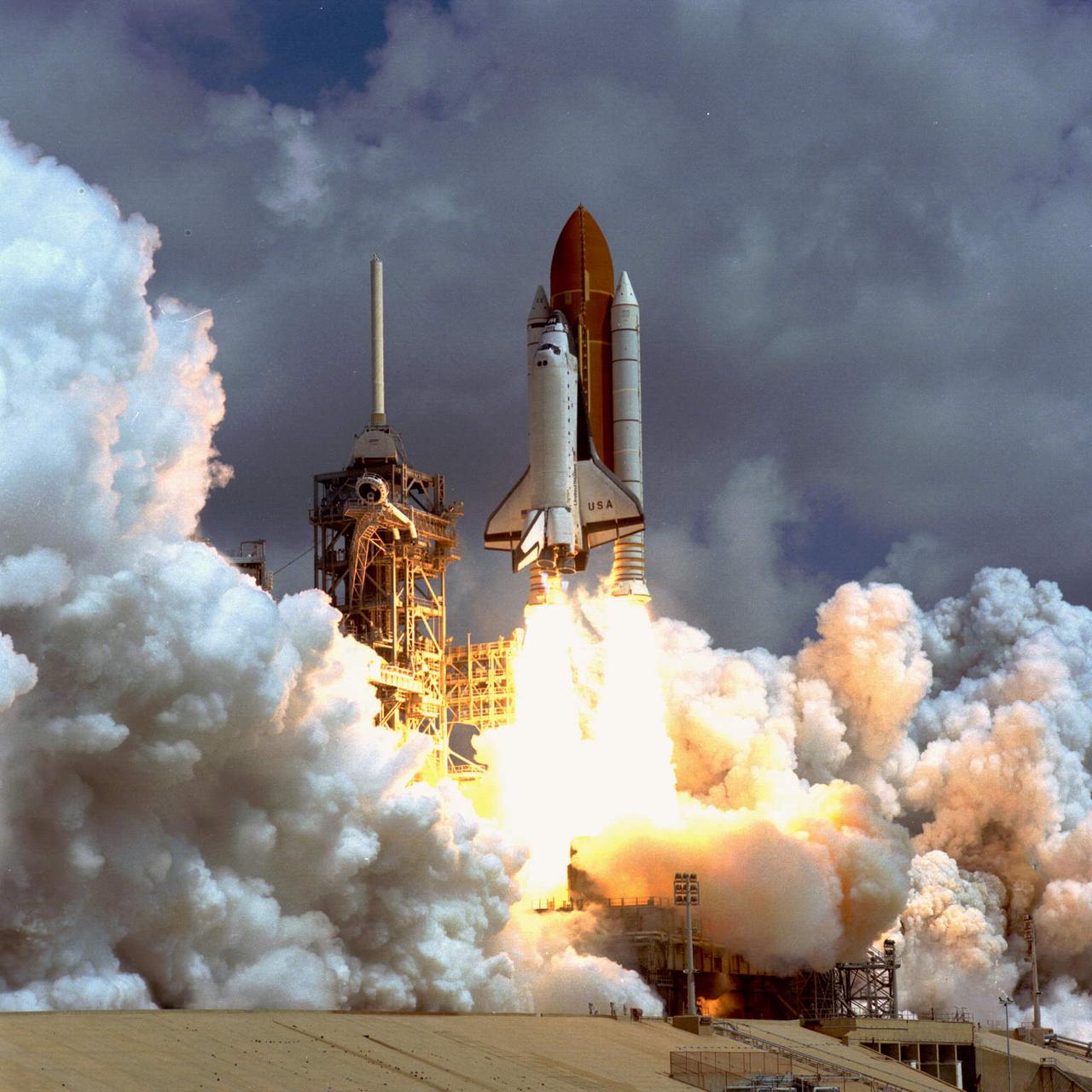
STS078-S-009 (20 June 1996) --- With an international payload and crew aboard, the Space Shuttle Columbia lifts off from Launch Pad 39B, at the Kennedy Space Center (KSC). Possibly expected to be NASA's longest duration Shuttle flight to date, the mission officially began at 10:49:00 a.m. (EDT), June 20, 1996. Onboard for Columbia’s 20th flight were astronauts Terence T. (Tom) Henricks, mission commander; Kevin R. Kregel, pilot; Susan J. Helms, payload commander; and Richard M. Linnehan and Charles E. Brady, Jr., both mission specialists, along with payload specialists Jean-Jacques Favier of the French Space Agency (CNES) and Robert B. Thirsk of the Canadian Space Agency (CSA). Flying in Columbia’s payload bay is the Life and Microgravity Spacelab (LMS), carrying a complement of United States and international experiments.
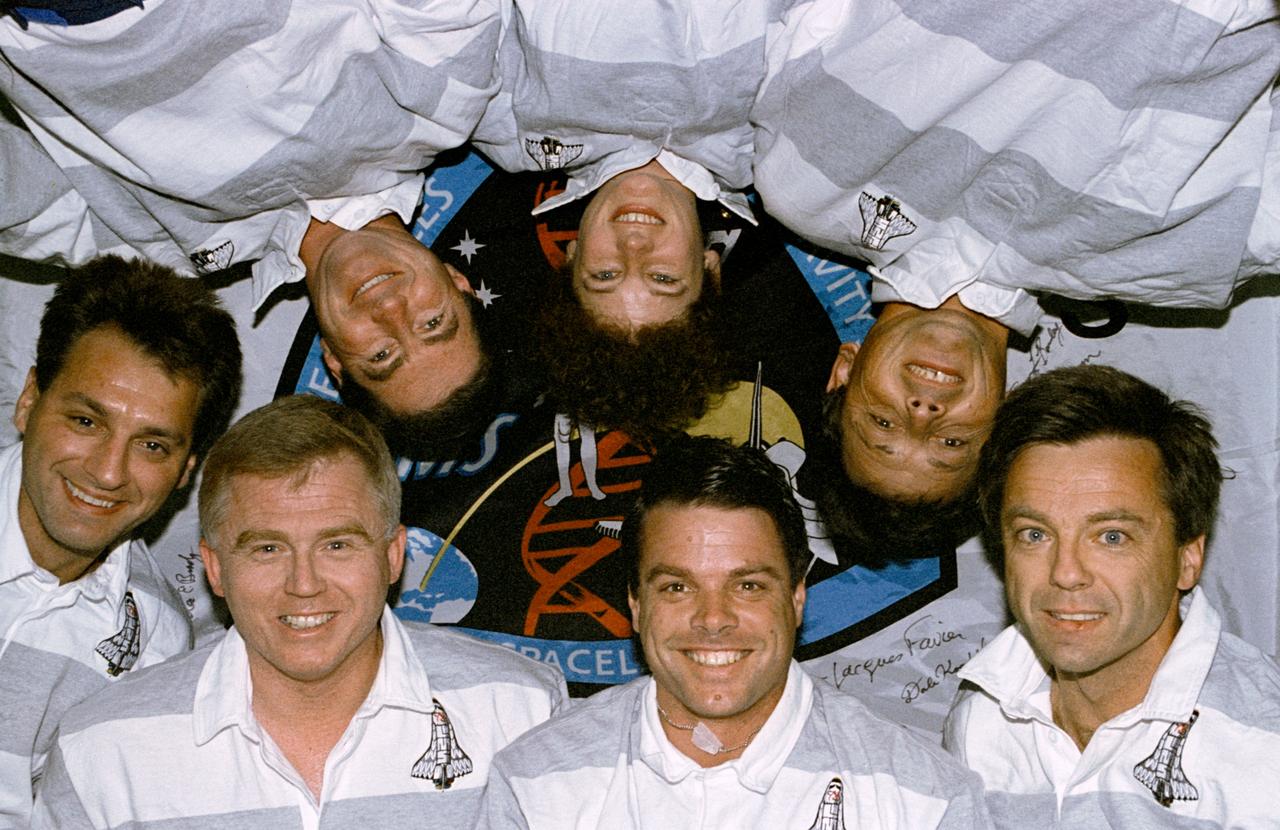
STS078-397-030 (20 June - 7 July 1996) --- Five NASA astronauts and two international payload specialists take a break from a Shuttle duration record-breaker flight to pose for the traditional inflight crew portrait. The photograph should be oriented with payload commander Susan J. Helms at bottom center. Others, clockwise, are French payload specialist Jean-Jacques Favier, Canadian payload specialist Robert B. Thirsk; and astronauts Kevin R. Kregel, pilot; and Charles J. (Chuck) Brady and Richard M. Linnehan, both mission specialists, and Terence T. (Tom) Henricks, mission commander. The crew chose the Life and Microgravity Spacelab (LMS-1) Science Module, situated in the Space Shuttle Columbia's cargo bay, for the portrait setting.
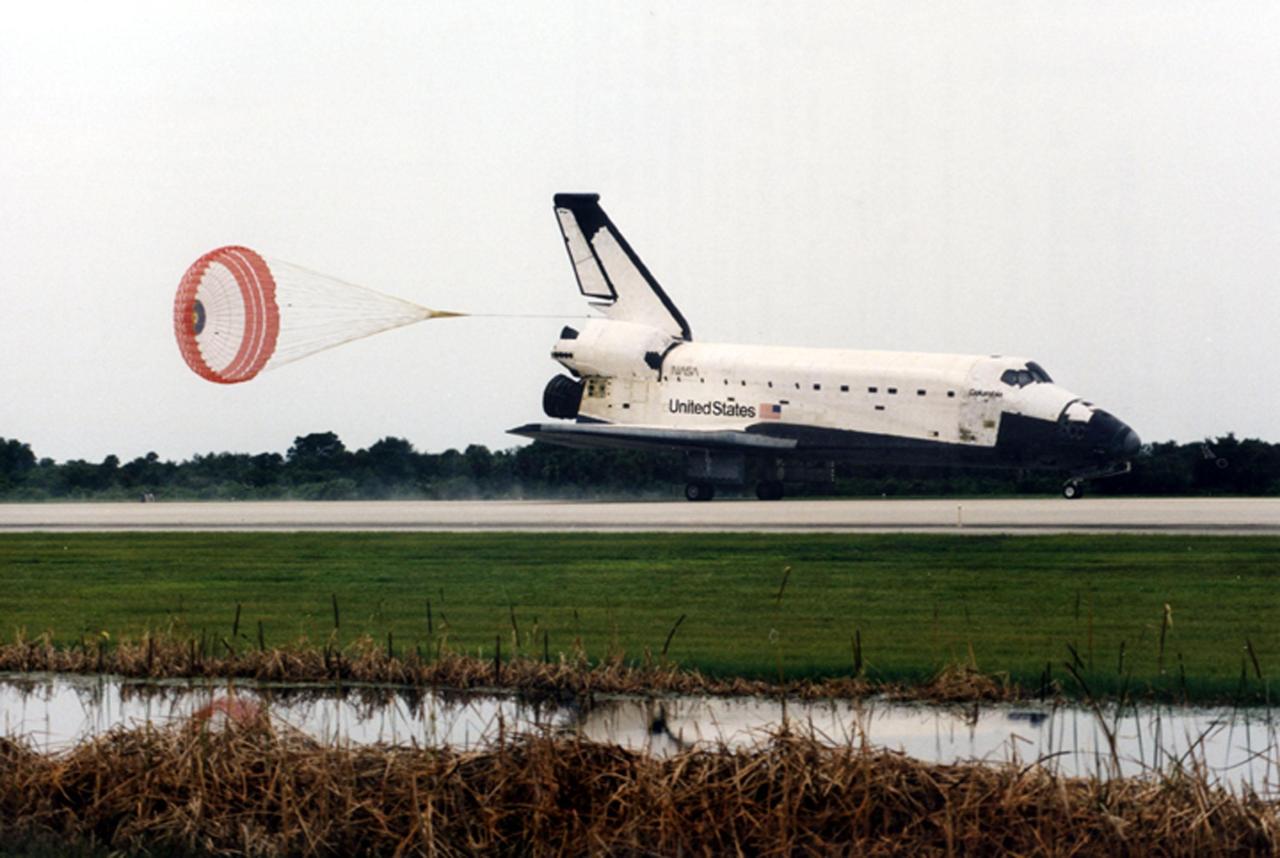
KENNEDY SPACE CENTER, FLA. -- The drag chute pops open as the orbiter Columbia glides down Runway 33 of the Kennedy Space Center's Shuttle Landing Facility. Main gear touchdown occurred at 8:36 a.m. EDT, July 7, 1996. A mission duration of 16 days, 21 hours, and 47 minutes made STS-78 the longest Shuttle flight to date. On board are a crew of seven: mission Commander Terence "Tom" Henricks; Pilot Kevin R. Kregel; Payload Commander Susan J. Helms; Mission Specialists Richard M. Linnehan and Charles E. Brady Jr.; and Payload Specialist Jean-Jacques Favier, representing the French Space Agency (CNES) and Robert Brent Thirsk, of the Canadian Space Agency (CSA) . The primary payload of the 78th Shuttle flight was the Life and Microgravity Spacelab (LMS)
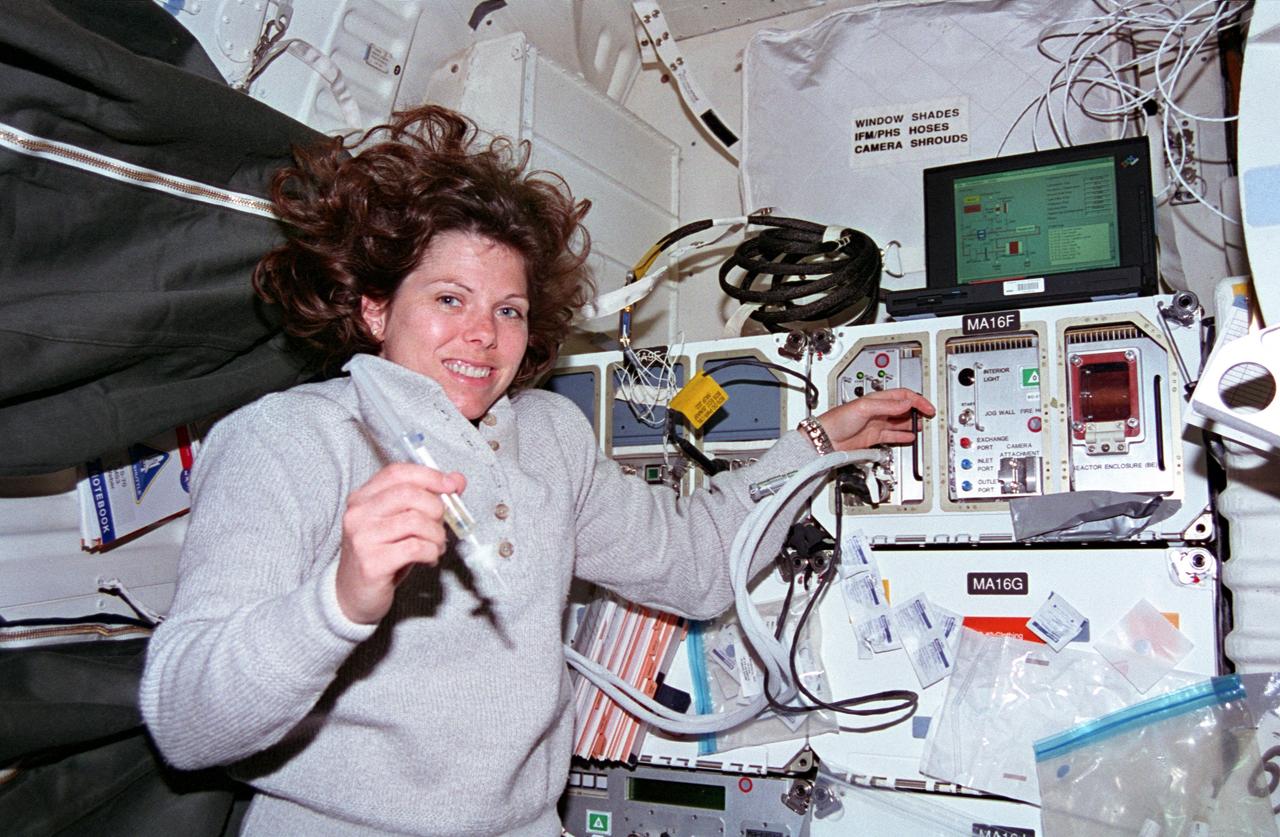
STS070-301-025 (13-22 July 1995) --- Astronaut Mary Ellen Weber works with a syringe related to the Bioreactor Development System (BDS). The almost weightless state of space travel provides life science researchers with the opportunity to grow cells into three-dimensional tissue pieces that are not achievable using conventional tissue culture methods on Earth. At specified times during the STS-70 mission, crew members injected color producing substances to document fluid movement in the reactor, and various-sized beads to estimate the tissue size that could be supported in the Bioreactor. The photo was among NASA's first release of still photography from the STS-70 mission. The mission was launched from the Kennedy Space Center (KSC) on July 13, 1995, and ended when Discovery landed on Runway 33 there on July 22, 1995. The crew members were astronauts Terence T. (Tom) Henricks, commander; Kevin R. Kregel, pilot; and Donald A. Thomas, Nancy J. Currie and Weber, all mission specialists.