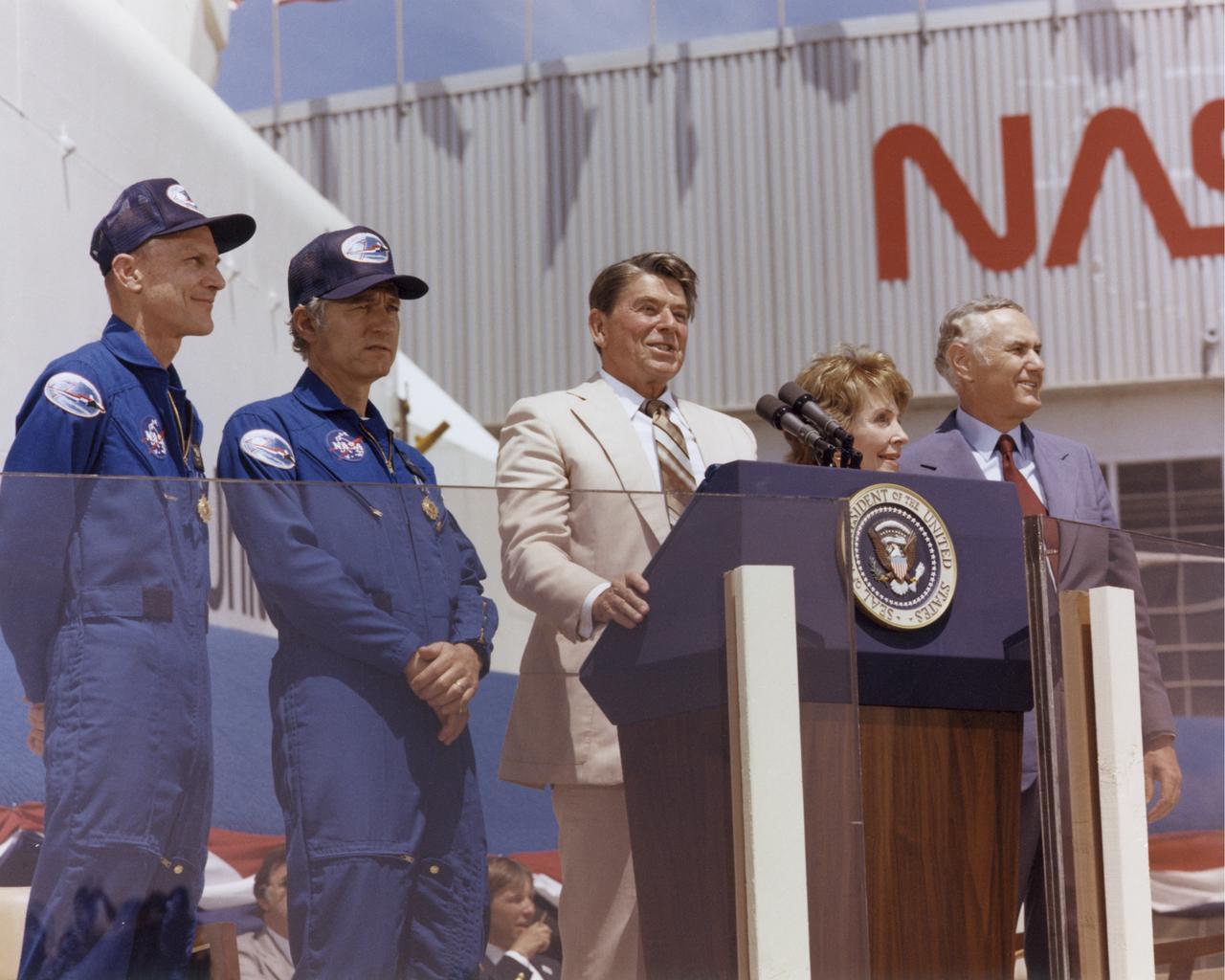
President Ronald Reagan speaks to a crowd of more than 45,000 people at NASA's Dryden Flight Research Center following the landing of STS-4 on July 4, 1982. To the right of the President are Mrs. Reagan and NASA Administrator James M. Beggs. To the left are STS-4 Columbia astronauts Thomas K. Mattingly and Henry W. Hartsfield, Jr. Prototype Space Shuttle Enterprise is in the background.
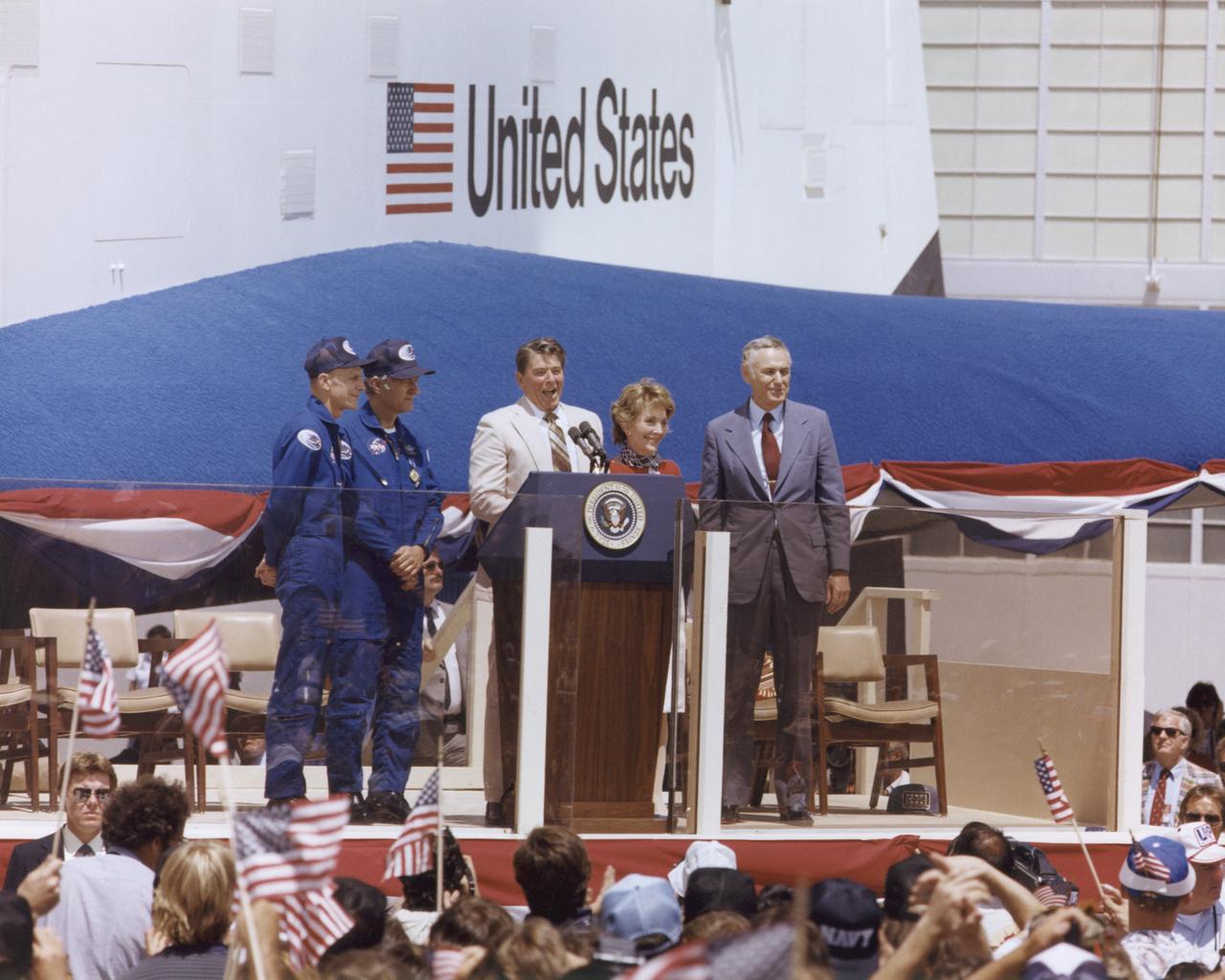
President Ronald Reagan speaks to a crowd of more than 45,000 people at NASA's Dryden Flight Research Center following the landing of STS-4 on July 4, 1982. To the right of the President are Mrs. Reagan and NASA Administrator James M. Beggs. To the left are STS-4 Columbia astronauts Thomas K. Mattingly and Henry W. Hartsfield, Jr. Prototype Space Shuttle Enterprise is in the background.
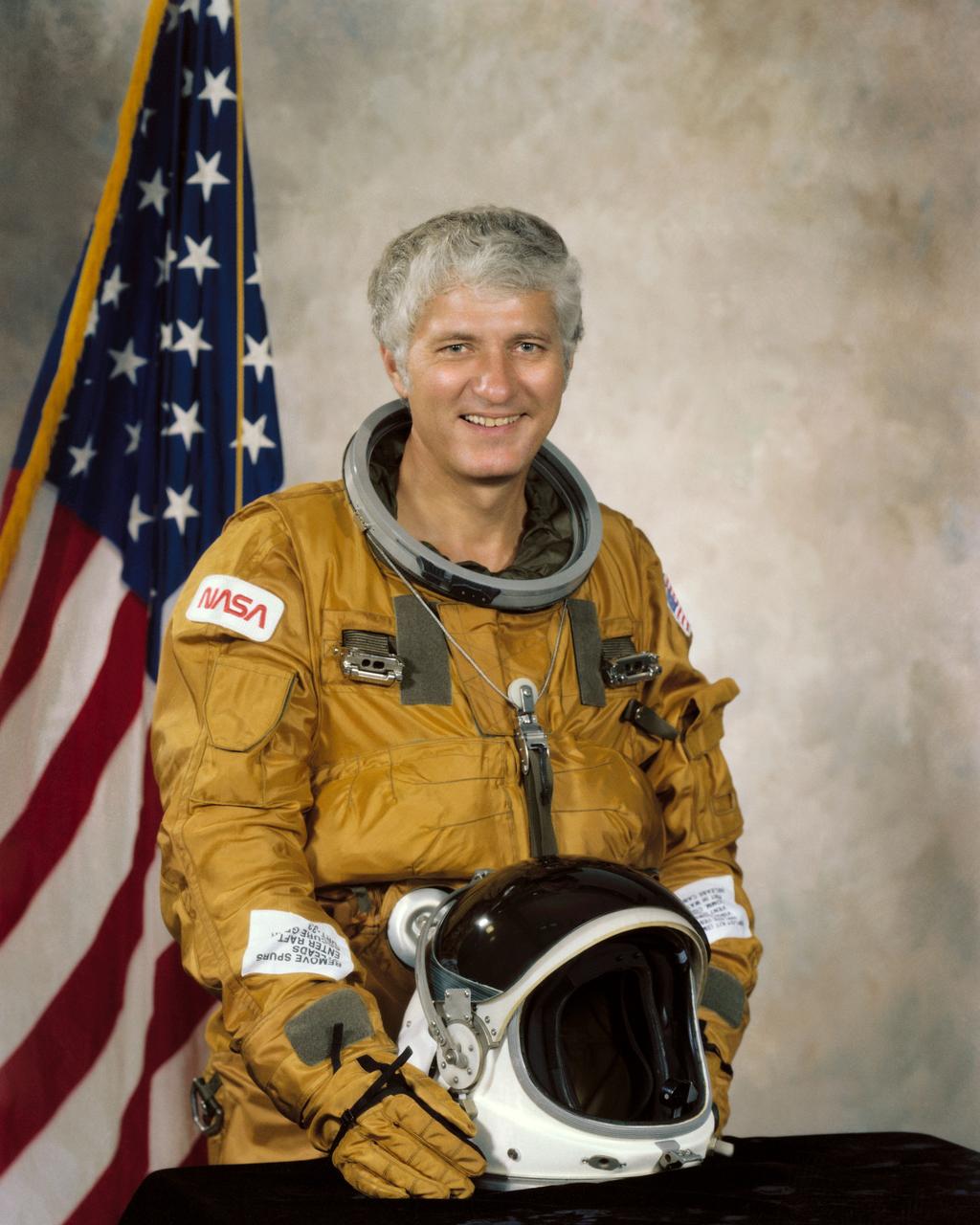
S79-36412 (October 1979) --- Astronaut Henry W. Hartsfield, Jr.
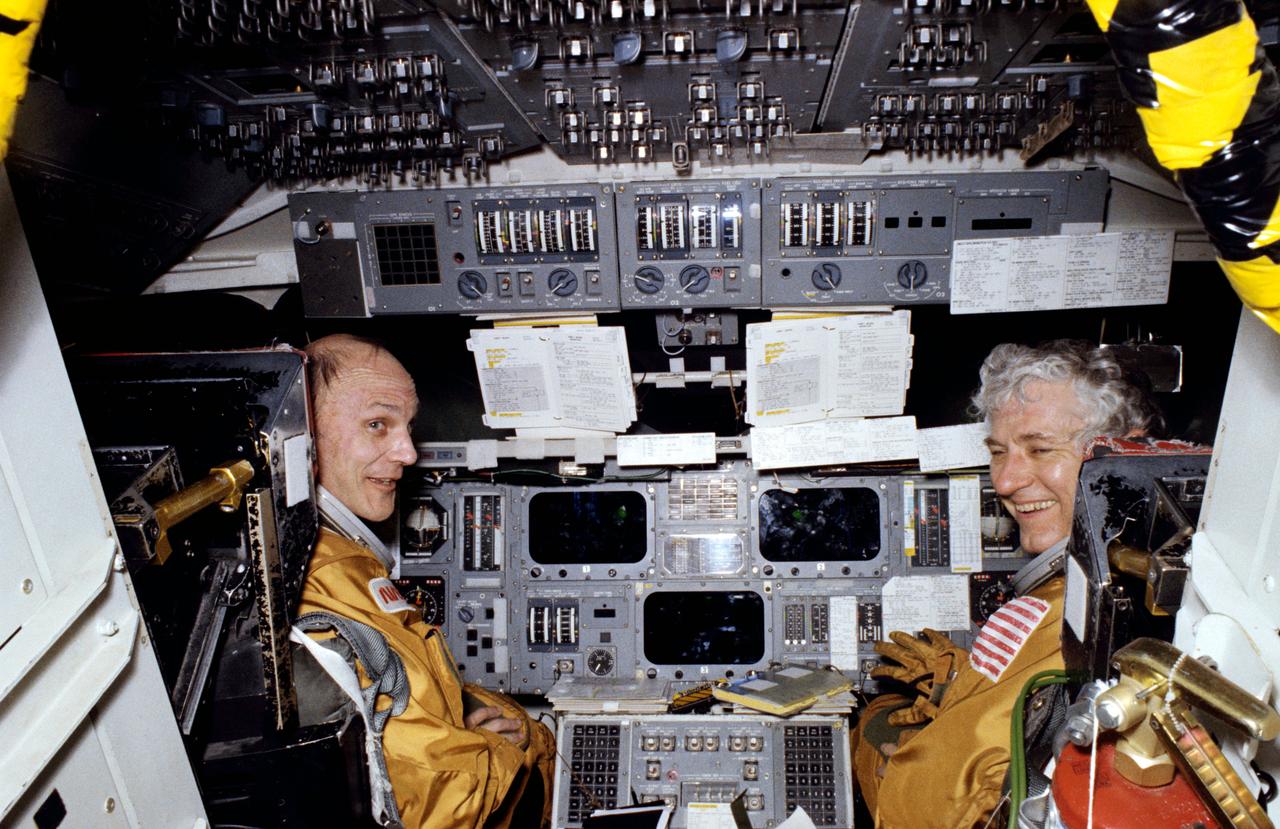
S82-31527 (15 May 1982) --- Astronauts Thomas K. Mattingly II (left) and Henry W. Hartsfield Jr., STS-4 commander and pilot, respectively, get in some training time in the motion base Shuttle Mission Simulator (SMS) at the Johnson Space Center's Mission Simulations and Training Facility. Photo credit: NASA
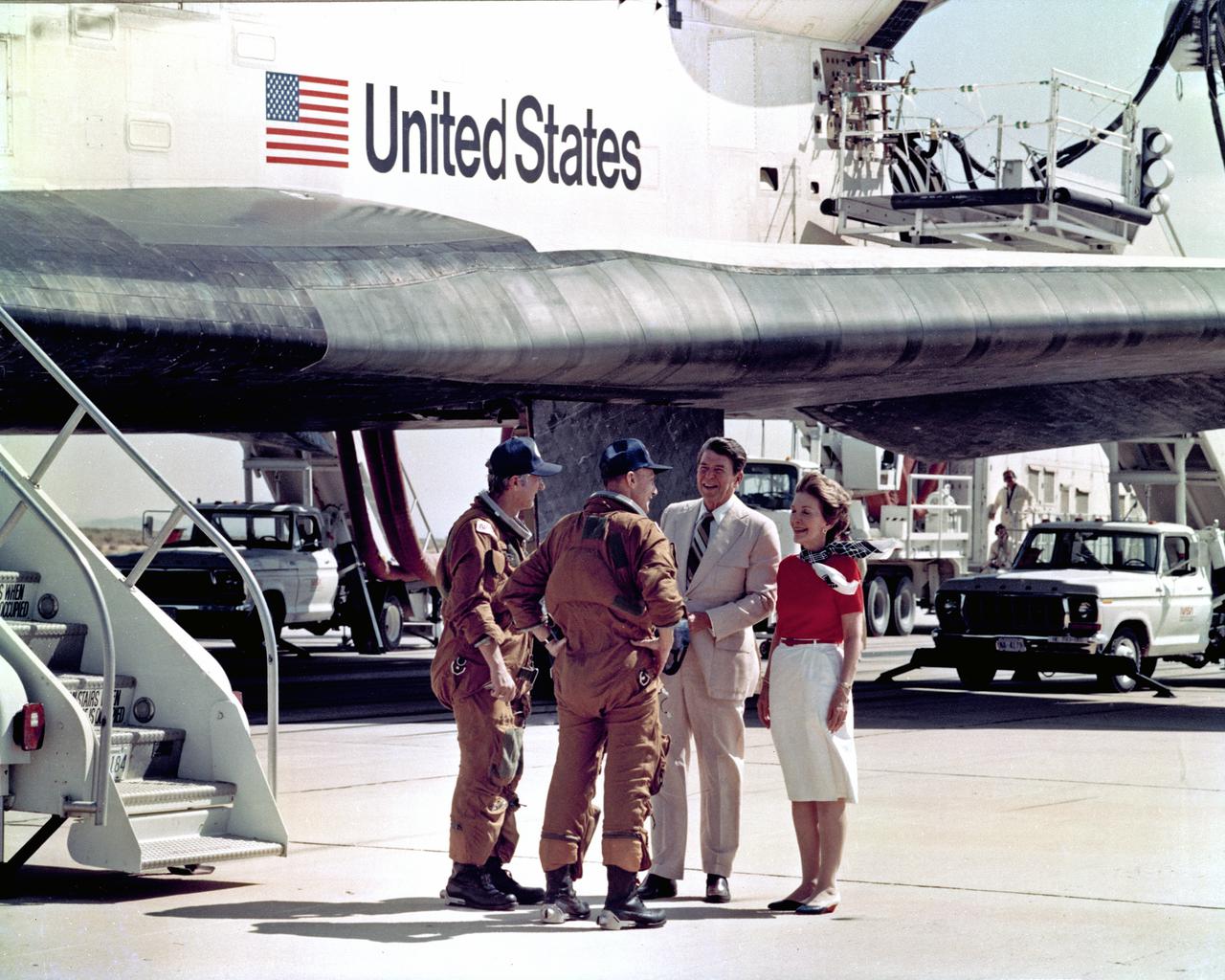
CAPE CANAVERAL, Fla. -- President and First Lady Reagan meet astronauts Thomas K. Mattingly II and Henry W. Hartsfield Jr. after the landing of space shuttle Columbia at Edwards Air Force Base in California. Photo credit: NASA
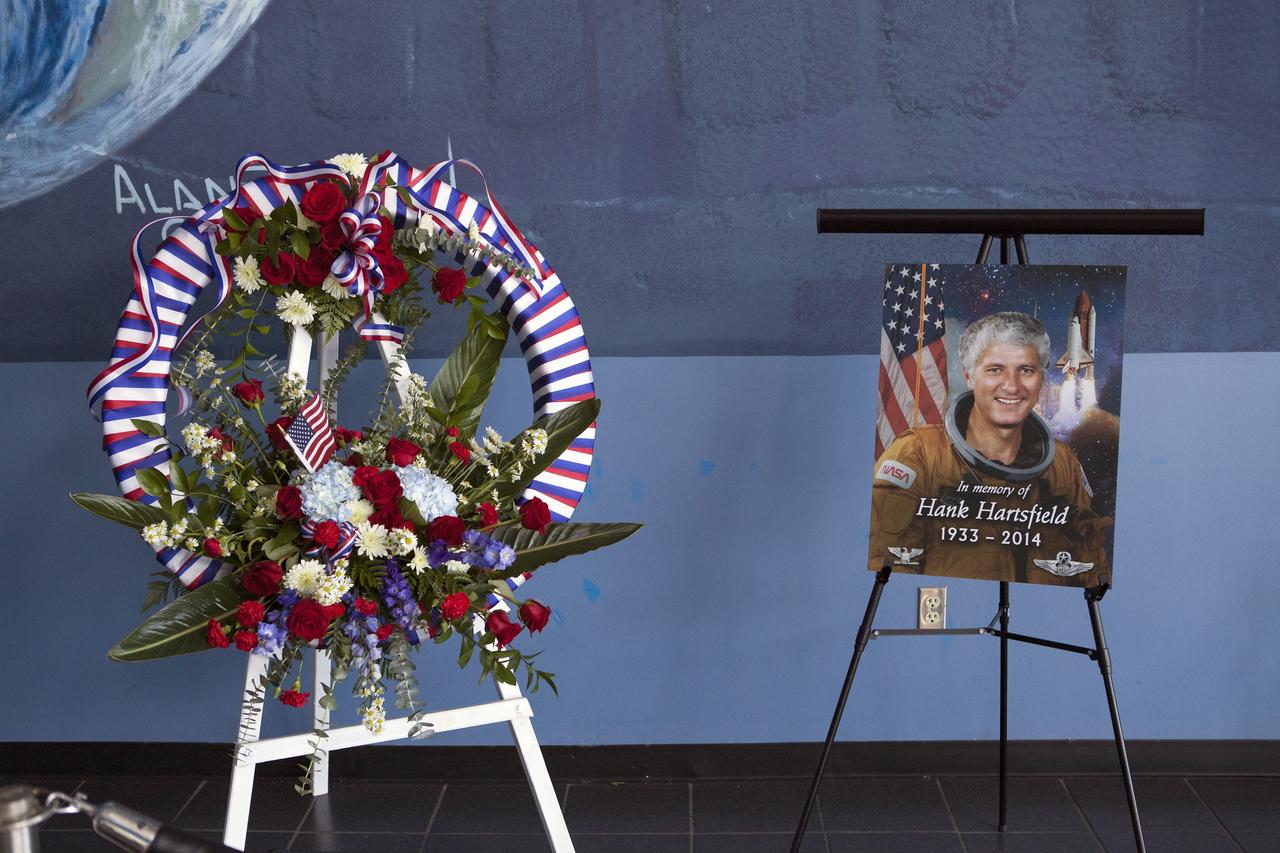
CAPE CANAVERAL, Fla. -- A wreath honoring Henry W. "Hank" Hartsfield is displayed beside his photo at the U.S. Astronaut Hall of Fame. Hartsfield commanded space shuttle Discovery's maiden mission and was a veteran of three shuttle flights. He died July 17 after an illness. He was 80 years old. Hartsfield joined NASA in 1969 and was part of the astronaut support crew for Apollo 16 and the Skylab 2, 3 and 4 missions. He logged 483 hours in space during missions STS-4, on which he served as pilot, as well as STS-41D and STS-61A, both of which he commanded. Photo credit: NASA/Dimitri Gerondidakis
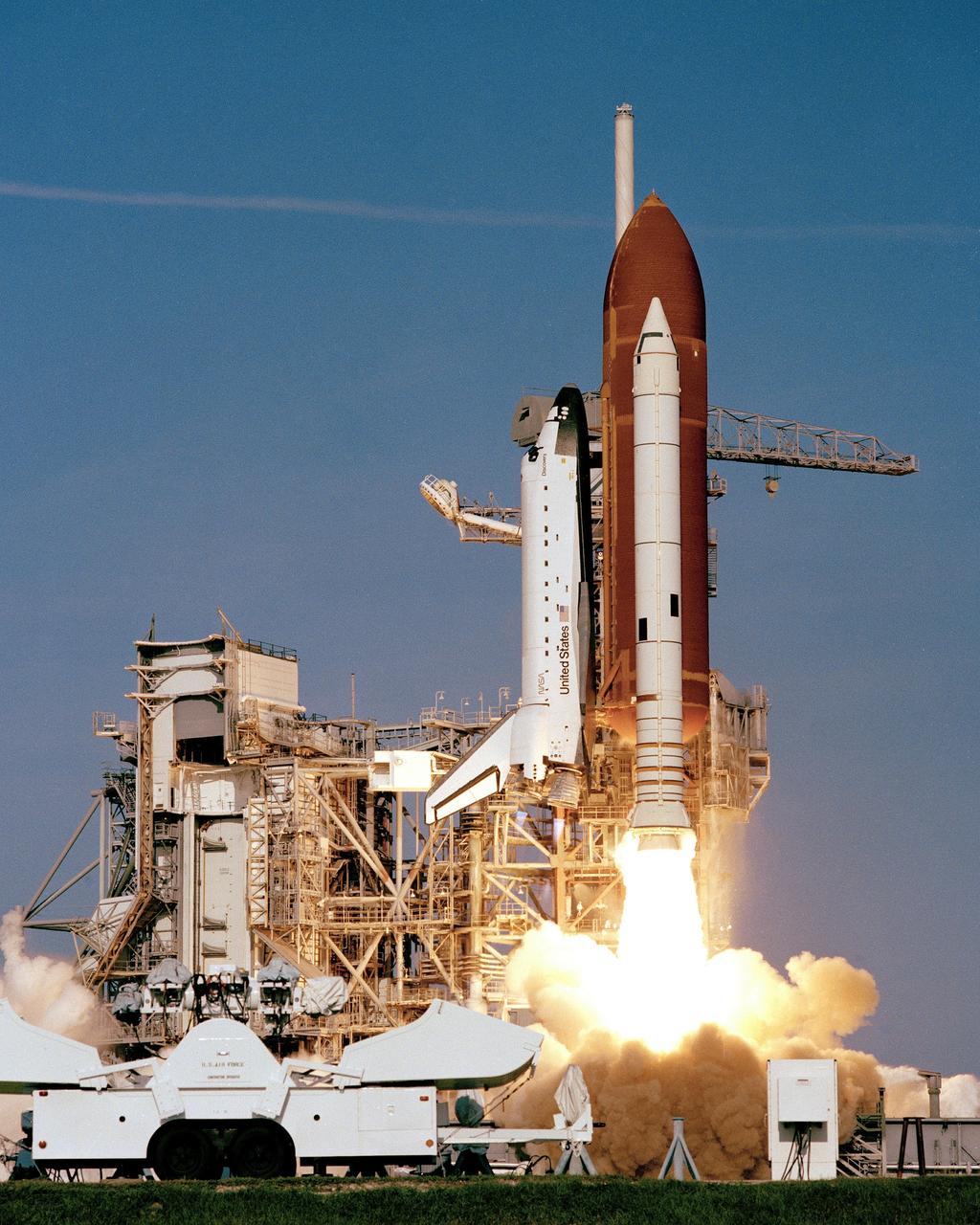
CAPE CANAVERAL, Fla. -- At the Kennedy Space Center in Florida, The space shuttle Discovery lifts off from Launch Pad 39A for its maiden flight at 8:42 a.m. EDT. The crew members for the 41-D flight are commander Henry w. Hartsfield, pilot Michael L. Coats, mission specialists Judith A. Resnik, Steven A. Hawley, Richard M. Mullane, and payload specialist Charles W. Walker. Photo Credit: NASA
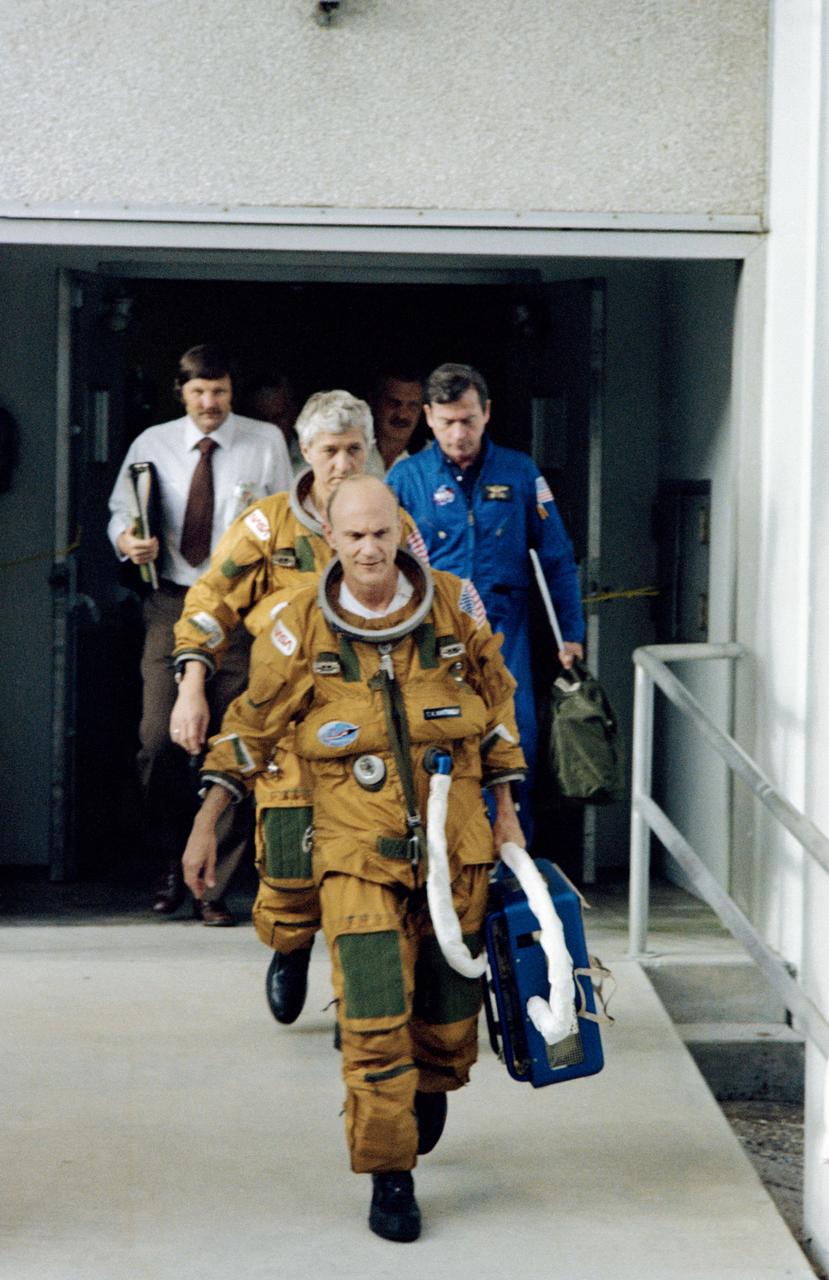
S82-32202 (29 May 1982) --- Astronauts Thomas K. (Ken) Mattingly II, center foreground, and Henry W. Hartsfield Jr., both wearing pressure garments, leave the operations and checkout building at KSC to board a special van that will take them to Launch Pad 39A for a rehearsal for their liftoff. Accompanying the pair are astronaut John W. Young (blue flight suit), chief of the astronaut office at JSC; Richard W. Nygren of the vehicle integration test team (VITT); and James O. Schlosser, space suit engineer. Photo credit: NASA
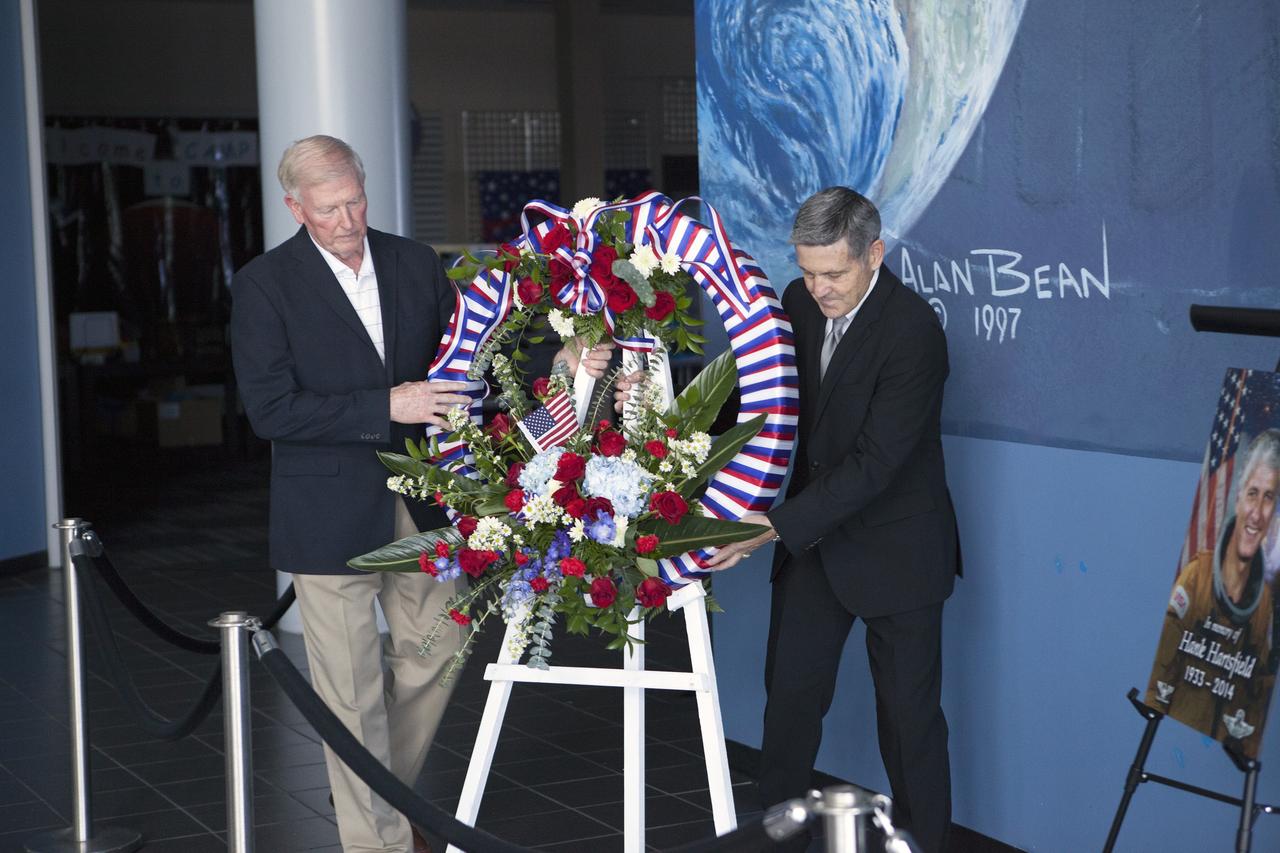
CAPE CANAVERAL, Fla. -- Former NASA astronaut Jon McBride, left, and Kennedy Space Center Director Bob Cabana place a wreath honoring Henry W. "Hank" Hartsfield at the U.S. Astronaut Hall of Fame. Hartsfield commanded space shuttle Discovery's maiden mission and was a veteran of three shuttle flights. He died July 17 after an illness. He was 80 years old. Hartsfield joined NASA in 1969 and was part of the astronaut support crew for Apollo 16 and the Skylab 2, 3 and 4 missions. He logged 483 hours in space during missions STS-4, on which he served as pilot, as well as STS-41D and STS-61A, both of which he commanded. Photo credit: NASA/Dimitri Gerondidakis
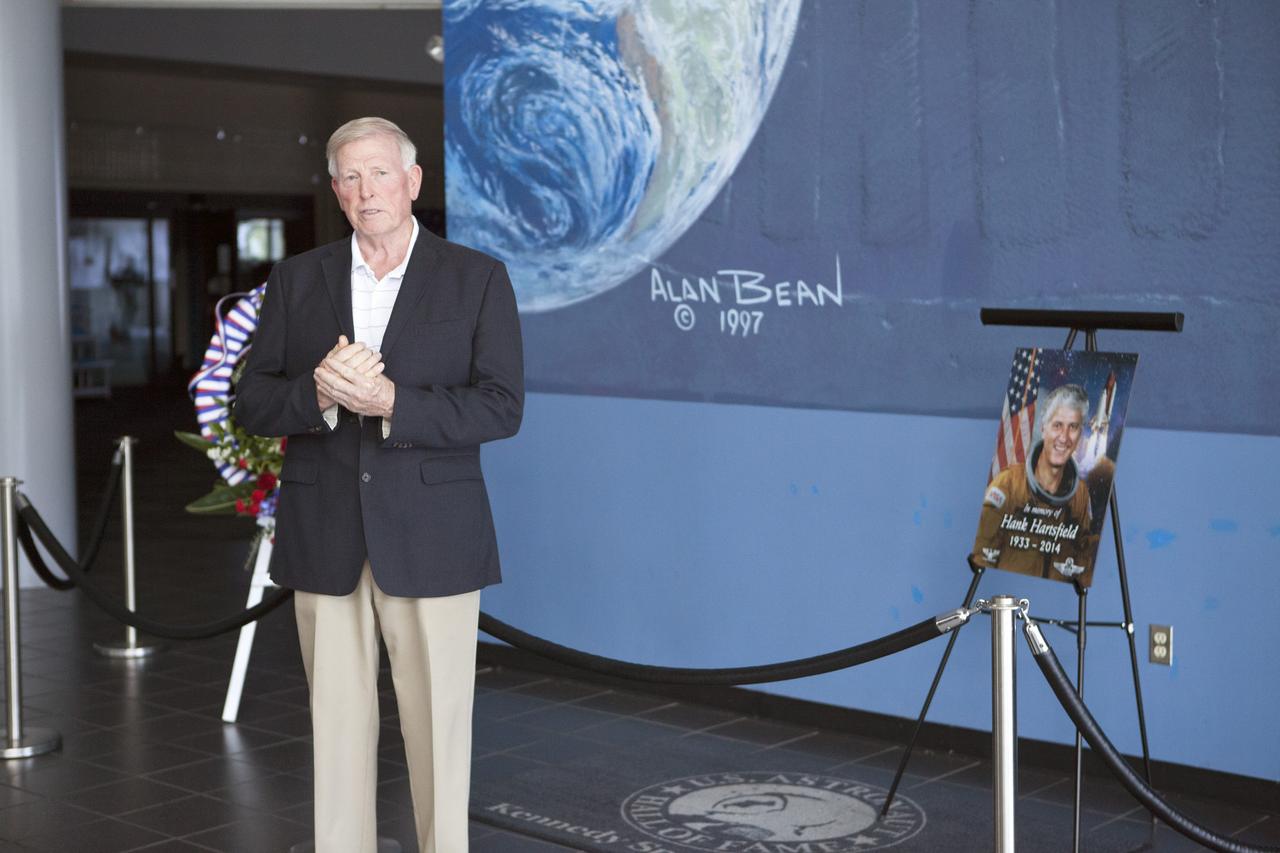
CAPE CANAVERAL, Fla. -- Former NASA astronaut Jon McBride shares his thoughts at a wreath-laying ceremony honoring Henry W. "Hank" Hartsfield at the U.S. Astronaut Hall of Fame. Hartsfield commanded space shuttle Discovery's maiden mission and was a veteran of three shuttle flights. He died July 17 after an illness. He was 80 years old. Hartsfield joined NASA in 1969 and was part of the astronaut support crew for Apollo 16 and the Skylab 2, 3 and 4 missions. He logged 483 hours in space during missions STS-4, on which he served as pilot, as well as STS-41D and STS-61A, both of which he commanded. Photo credit: NASA/Dimitri Gerondidakis
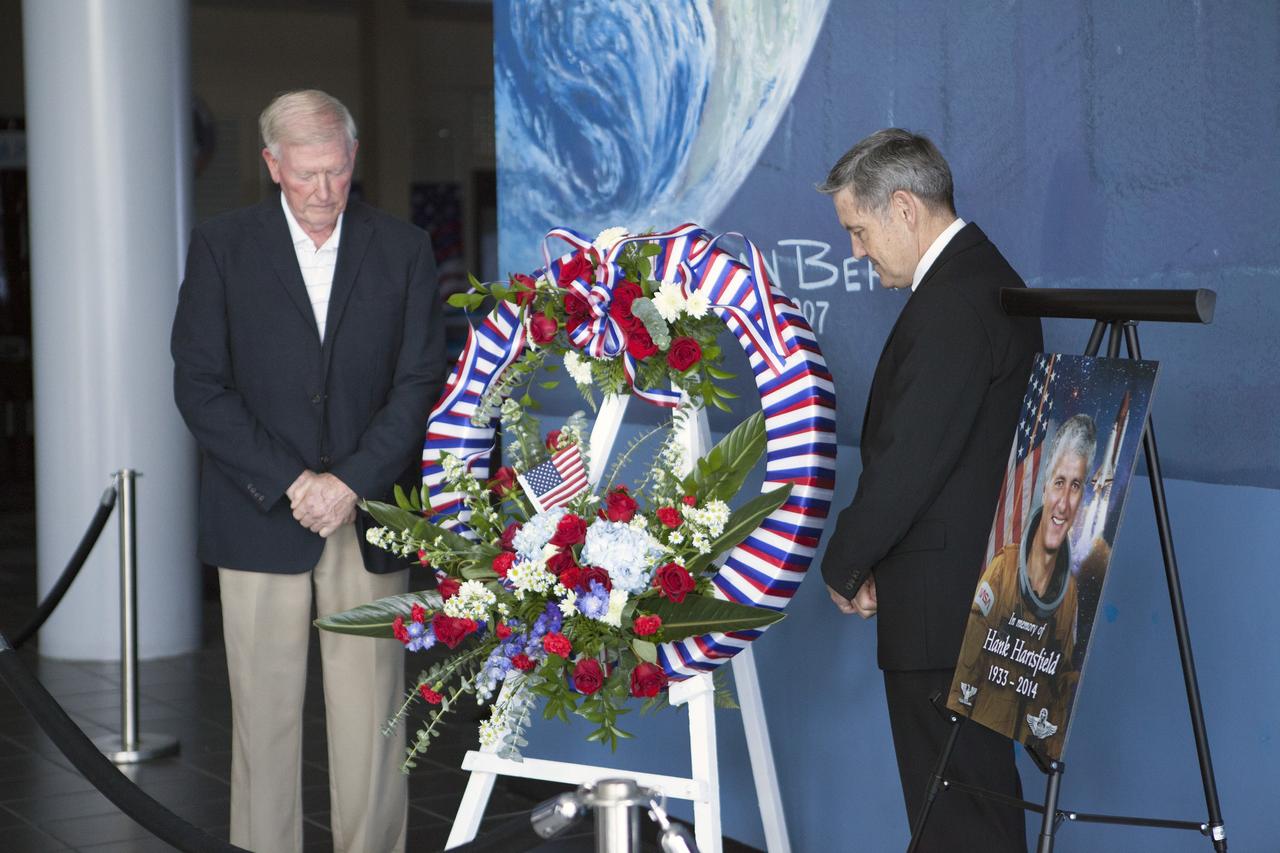
CAPE CANAVERAL, Fla. -- Former NASA astronaut Jon McBride, left, and Kennedy Space Center Director Bob Cabana pause for reflection after placing a wreath honoring Henry W. "Hank" Hartsfield at the U.S. Astronaut Hall of Fame. Hartsfield commanded space shuttle Discovery's maiden mission and was a veteran of three shuttle flights. He died July 17 after an illness. He was 80 years old. Hartsfield joined NASA in 1969 and was part of the astronaut support crew for Apollo 16 and the Skylab 2, 3 and 4 missions. He logged 483 hours in space during missions STS-4, on which he served as pilot, as well as STS-41D and STS-61A, both of which he commanded. Photo credit: NASA/Dimitri Gerondidakis
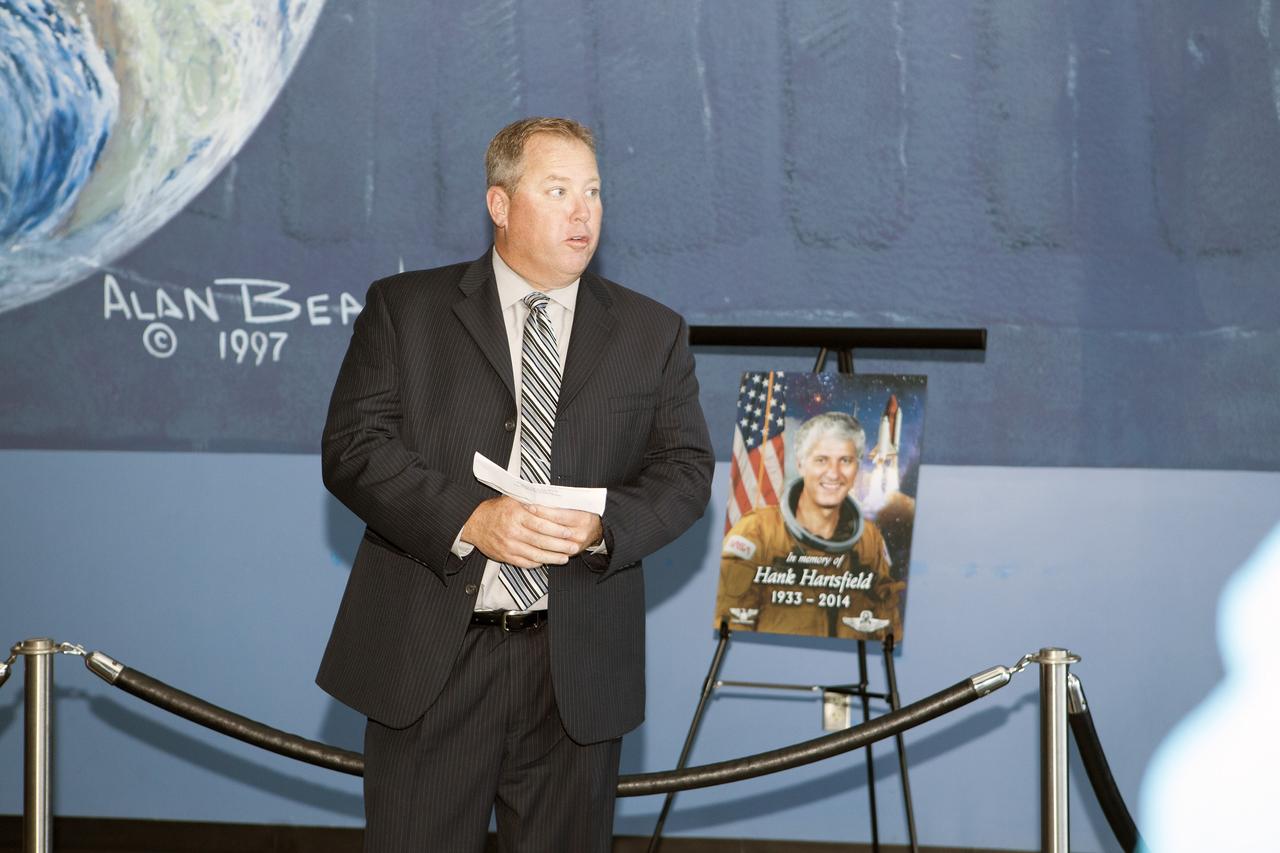
CAPE CANAVERAL, Fla. -- Therrin Protze, chief operating officer for Delaware North Parks Services at Kennedy Space Center Visitor Complex, speaks at a wreath-laying ceremony honoring Henry W. "Hank" Hartsfield at the U.S. Astronaut Hall of Fame. Hartsfield commanded space shuttle Discovery's maiden mission and was a veteran of three shuttle flights. He died July 17 after an illness. He was 80 years old. Hartsfield joined NASA in 1969 and was part of the astronaut support crew for Apollo 16 and the Skylab 2, 3 and 4 missions. He logged 483 hours in space during missions STS-4, on which he served as pilot, as well as STS-41D and STS-61A, both of which he commanded. Photo credit: NASA/Dimitri Gerondidakis
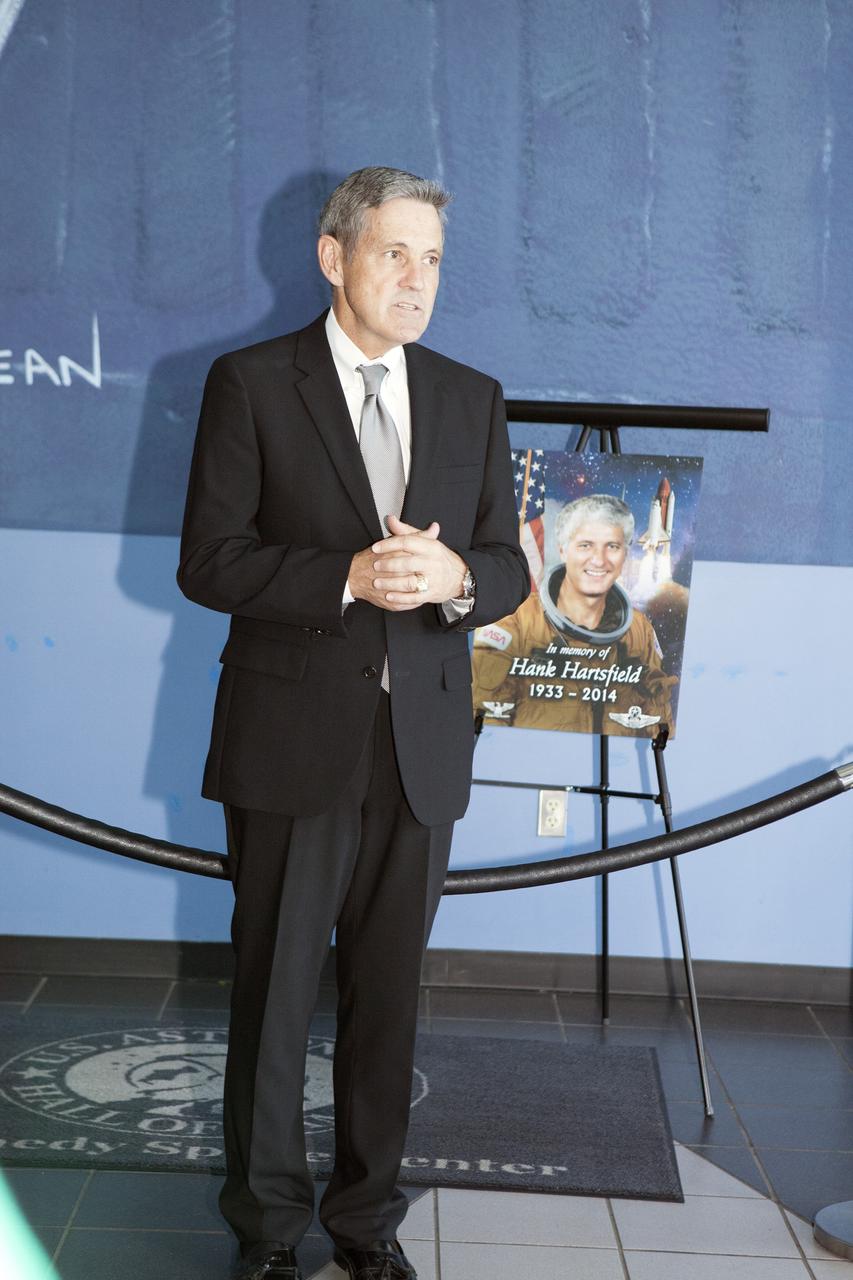
CAPE CANAVERAL, Fla. -- Kennedy Space Center Director Bob Cabana speaks at a wreath-laying ceremony honoring Henry W. "Hank" Hartsfield at the U.S. Astronaut Hall of Fame. Hartsfield commanded space shuttle Discovery's maiden mission and was a veteran of three shuttle flights. He died July 17 after an illness. He was 80 years old. Hartsfield joined NASA in 1969 and was part of the astronaut support crew for Apollo 16 and the Skylab 2, 3 and 4 missions. He logged 483 hours in space during missions STS-4, on which he served as pilot, as well as STS-41D and STS-61A, both of which he commanded. Photo credit: NASA/Dimitri Gerondidakis
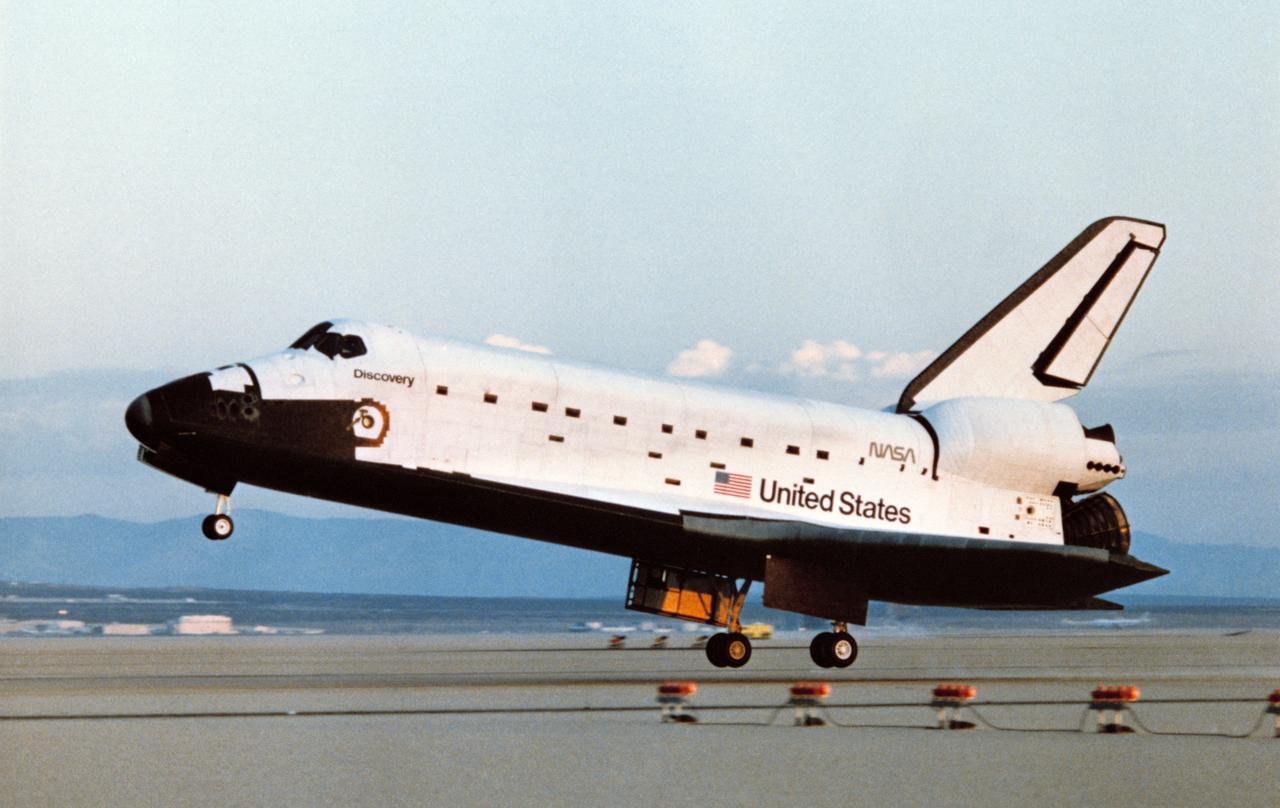
41D-3299 (5 Sept 1984) --- The Space Shuttle Discovery was captured on film just prior to touchdown on Runway 17 at Edwards Air Force Base to successfully complete a six-day mission in space. Inside were Henry W. Hartsfield, Jr., Michael L., Coats, Richard M. (Mike) Mullane, Steven A. Hawley, Judith A. Resnik and Charles D. Walker. Mission duration time was six days, 56 minutes and four seconds.
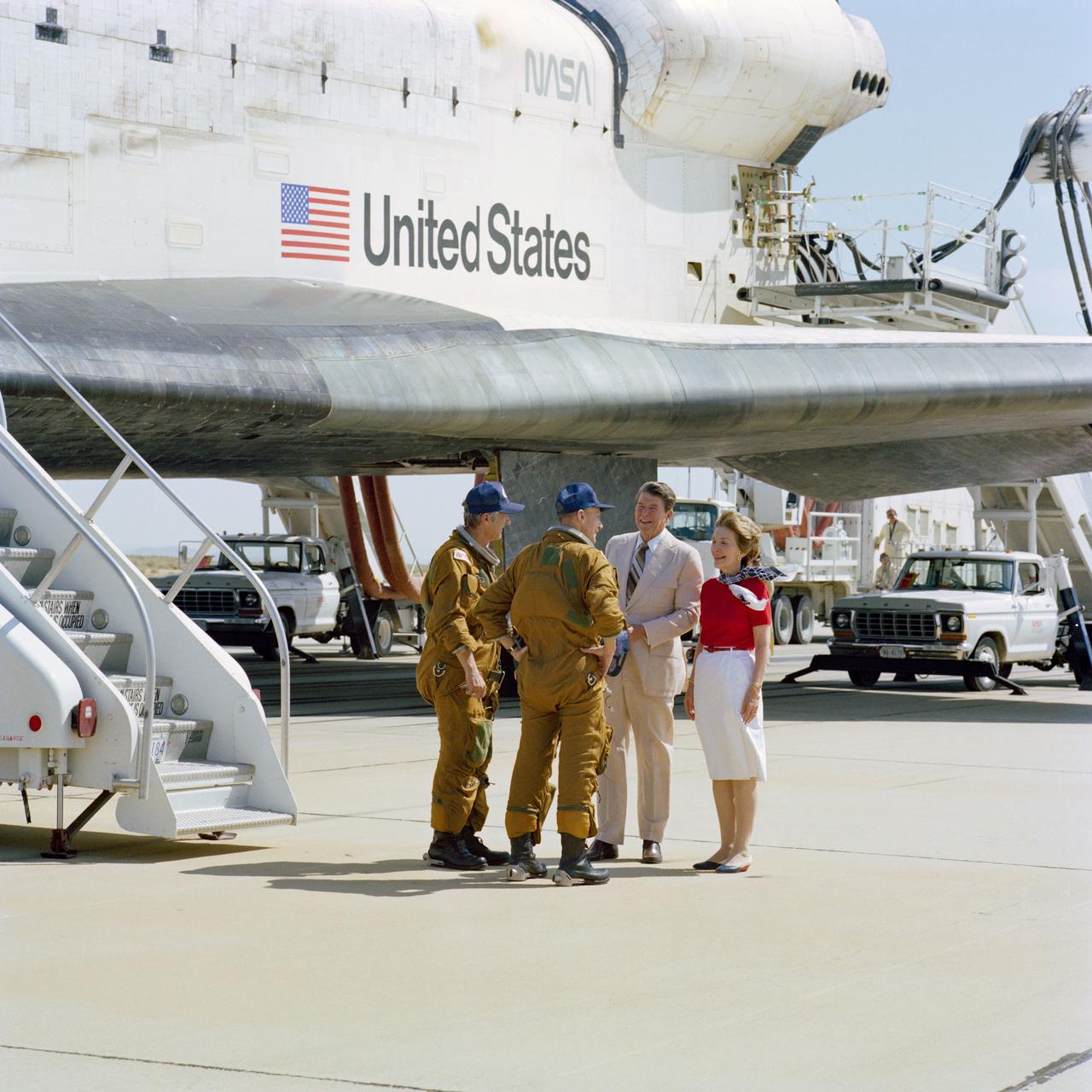
S82-33227 (4 July 1982) --- President and First Lady Reagan share a meeting with Astronauts Thomas K. Mattingly II, right, and Henry W. Hartsfield Jr., after the successful landing of the Space Shuttle Columbia at Edwards Air Force Base today. Besides the Columbia, pictures, the new Space Shuttle Challenger and the Enterprise (vehicle used for test flights in the lower atmosphere in 1977), were also present at Edwards AFB. The latter served as a backdrop for the President?s podium from which he made a brief speech.
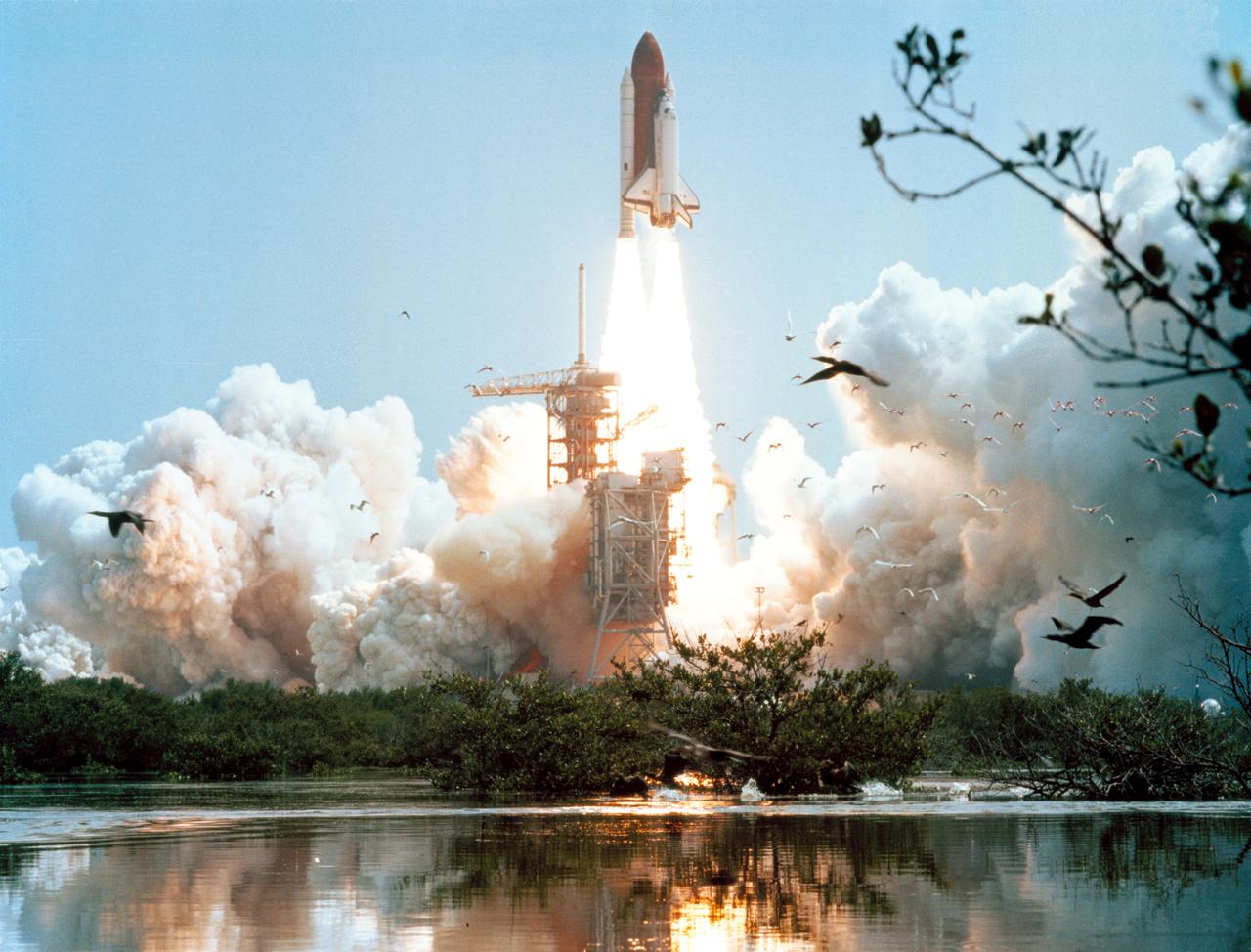
S82-33288 (27 June 1982) --- This horizontal view of the space shuttle Columbia captures the flight of water birds disturbed by the activity at launch Pad 39A. Launch occurred at 10:59:59 a.m. (EDT), June 27, 1982. Astronauts Thomas K. Mattingly II and Henry W. Hartsfield Jr. are aboard for NASA's final orbital flight test before launching into a new space era with the first operational flight planned for fall of this year. Photo credit: NASA
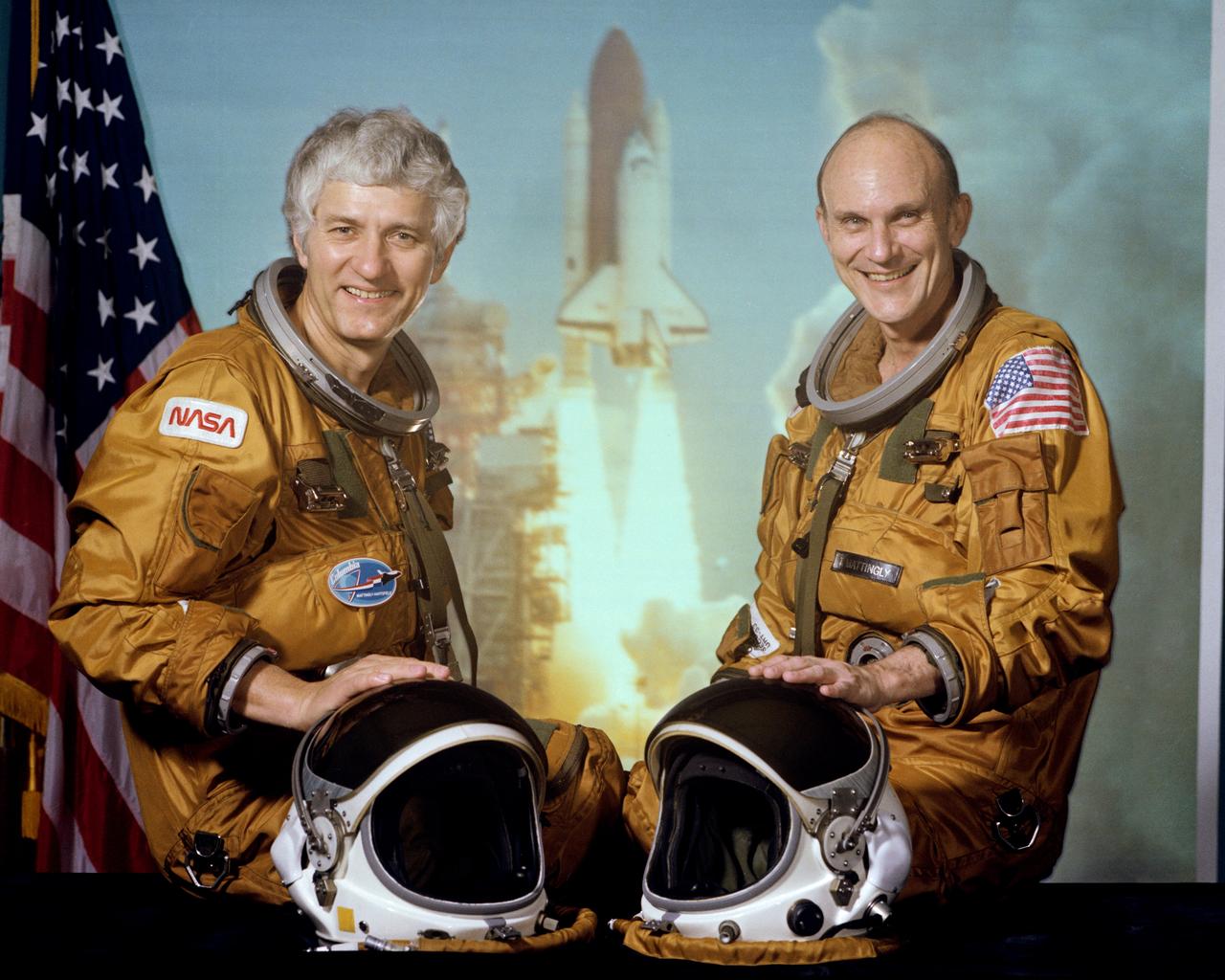
S82-31207 (1 May 1982) --- These two astronauts will man the space shuttle Columbia for NASA's fourth and final (STS-4) orbital flight test. Thomas K. (Ken) Mattingly II, right, is crew commander. Henry W. Hartsfield Jr., is pilot. Their flight is scheduled for launch in late June 1982, and is to last approximately one week, with launch to take place form KSC and landing to be on the dry lake beds of Edwards Air Force Base and Dryden Flight Research Facility (DFRC) in California. Photo credit: NASA
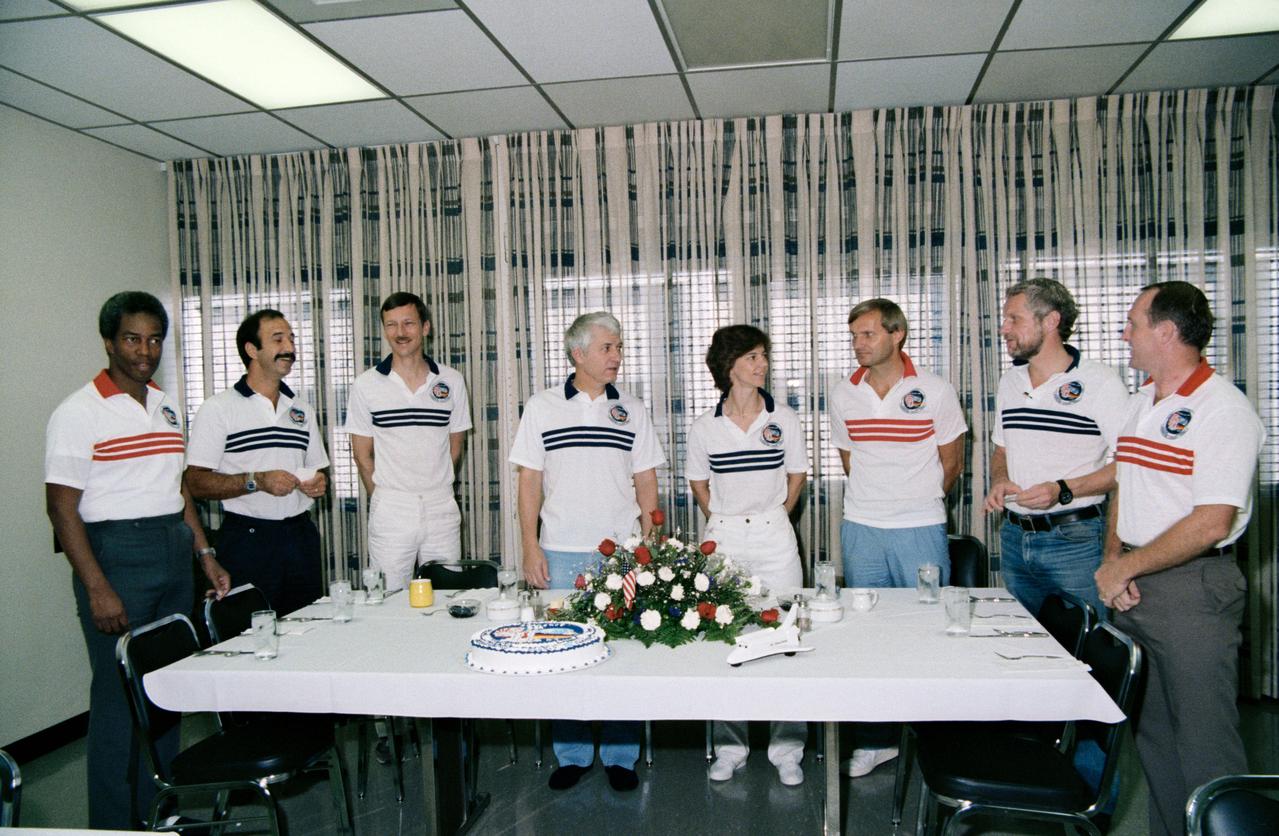
61A-S-016 (30 Oct 1985) --- Standing near their pre-flight breakfast table are the eight crewmembers for the STS 61-A/Spacelab D1 mission. L.-R., Guion S. Bluford, Wubbo J. Ockels, Steven R. Nagel, Henry W. Hartsfield, Bonnie J. Dunbar, Ernst Messerschmid, Reinhard Furrer and James F. Buchli, discuss their upcoming week in space.
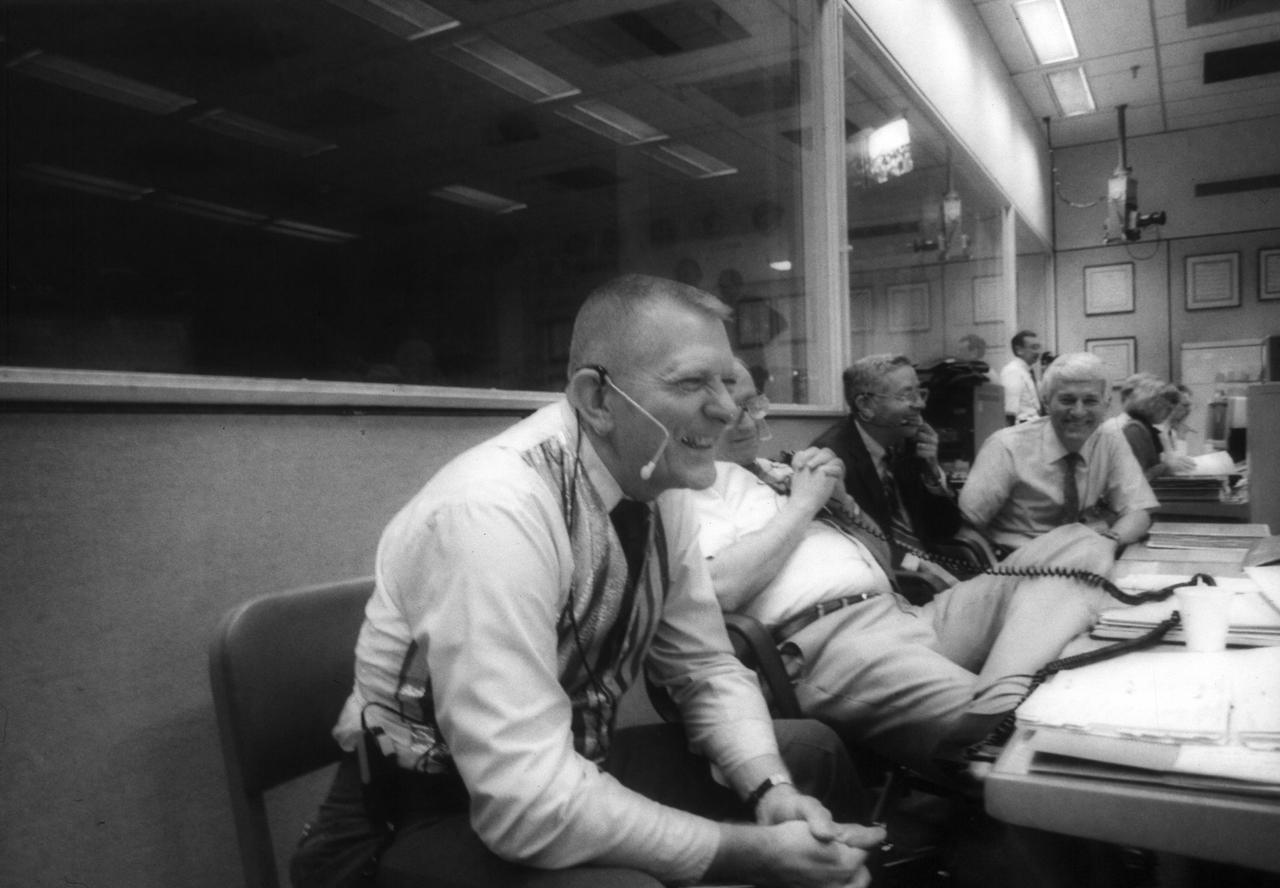
JSC officials, laughing, listen to crewmembers' commentary onboard Discovery, Orbiter Vehicle (OV) 103, during STS-26. In the Flight Control Room (FCR) of JSC's Mission Control Center (MCC) Bldg 30 and seated at the Mission Operations Directorate (MOD) console, MOD Director Eugene F. Kranz (foreground), wearing red, white and blue vest, smiles along with JSC Director Aaron Cohen and Flight Crew Operations Deputy Director Henry W. Hartsfield, Jr. (far right).
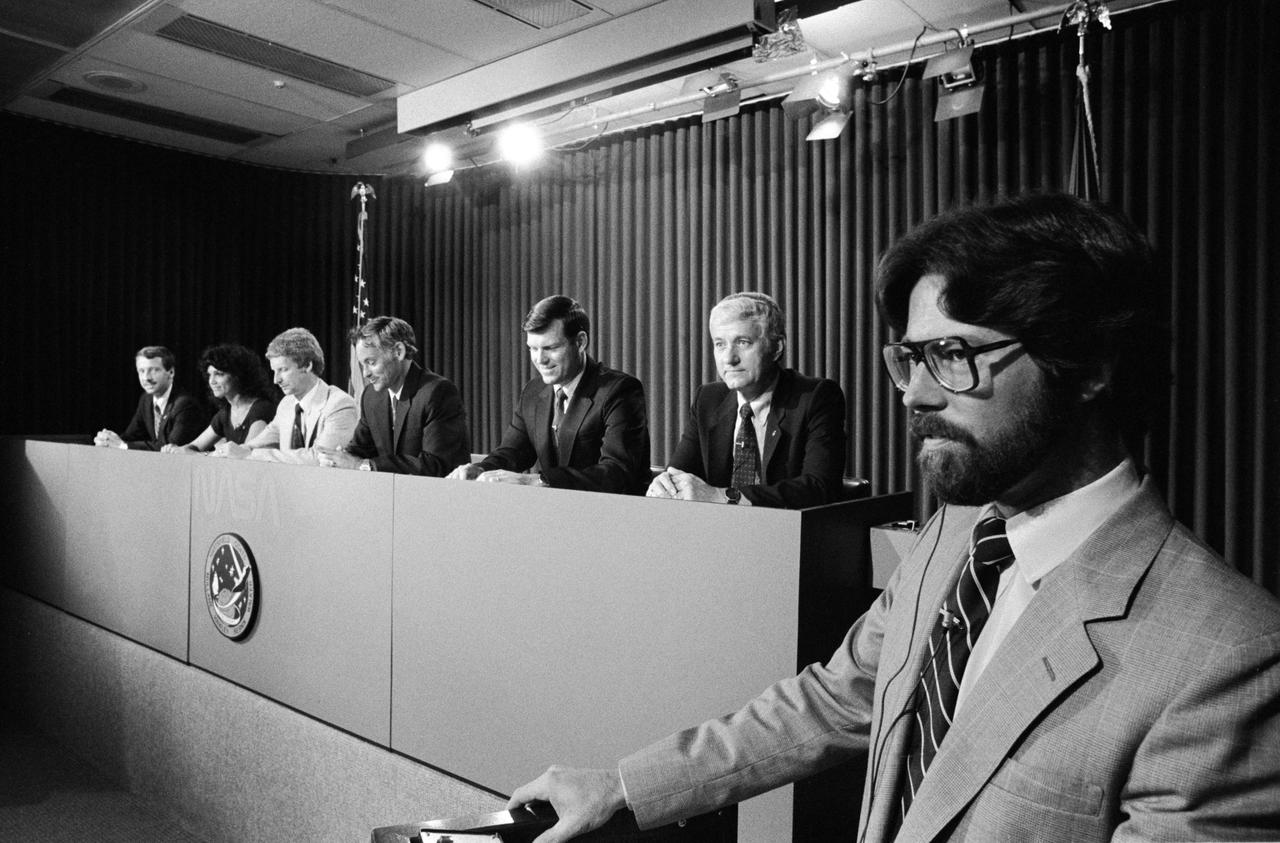
S84-40185 (08/21/1984) --- stronaut preflight Press Conference with the STS-41D Crew with Public Affairs Office (PAO) Reprentative Steve Nesbitt in the foreground in the Bldg 2 Briefing Room on 08/17/1984. Crewmembers visible (R-L) are: Henry W. Hartsfield, Jr., Crew Commander; Michael L. Coats, Pilot: Richard M. (Mike) Mullane, Steven A. Hawley, Judith A. Resnik - all Mission Specialists: and, Charlie D. Walker, Payload Specialist. JSC, Houston, TX
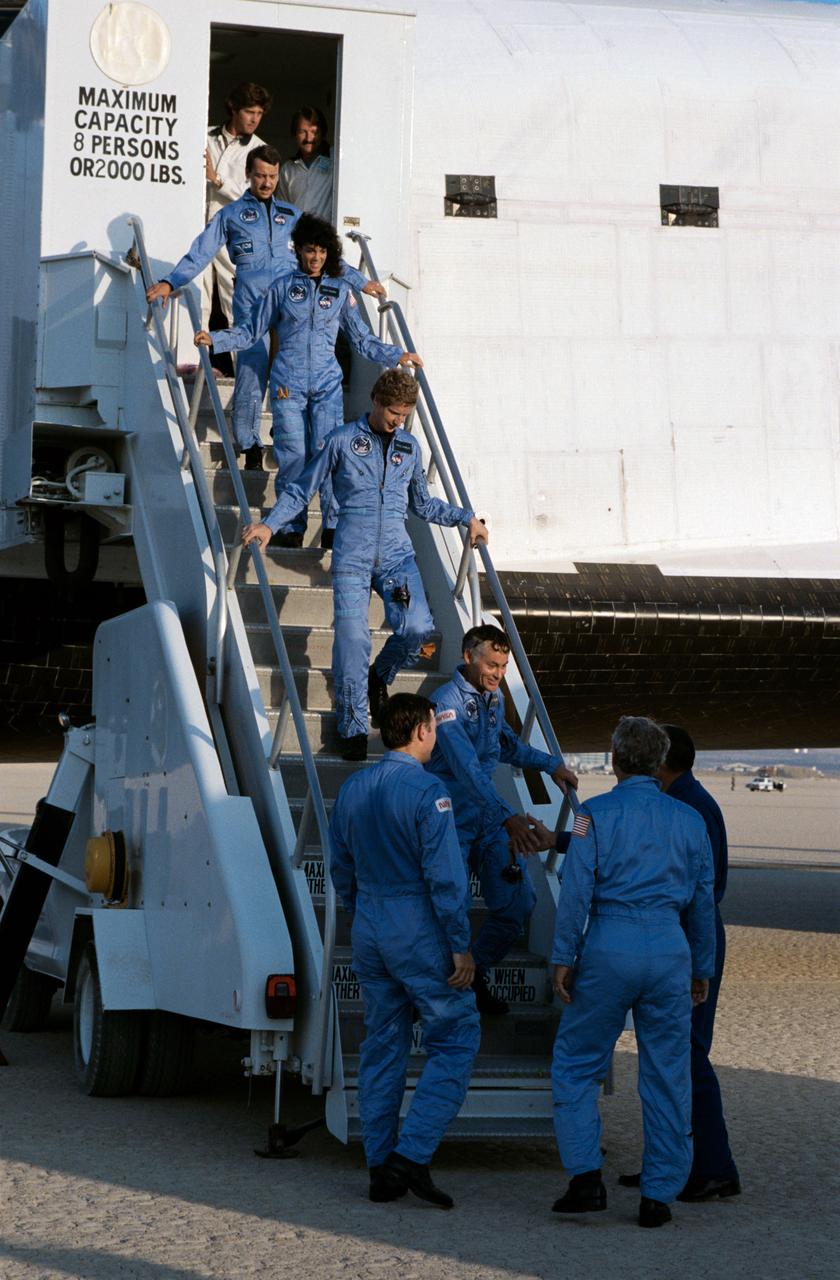
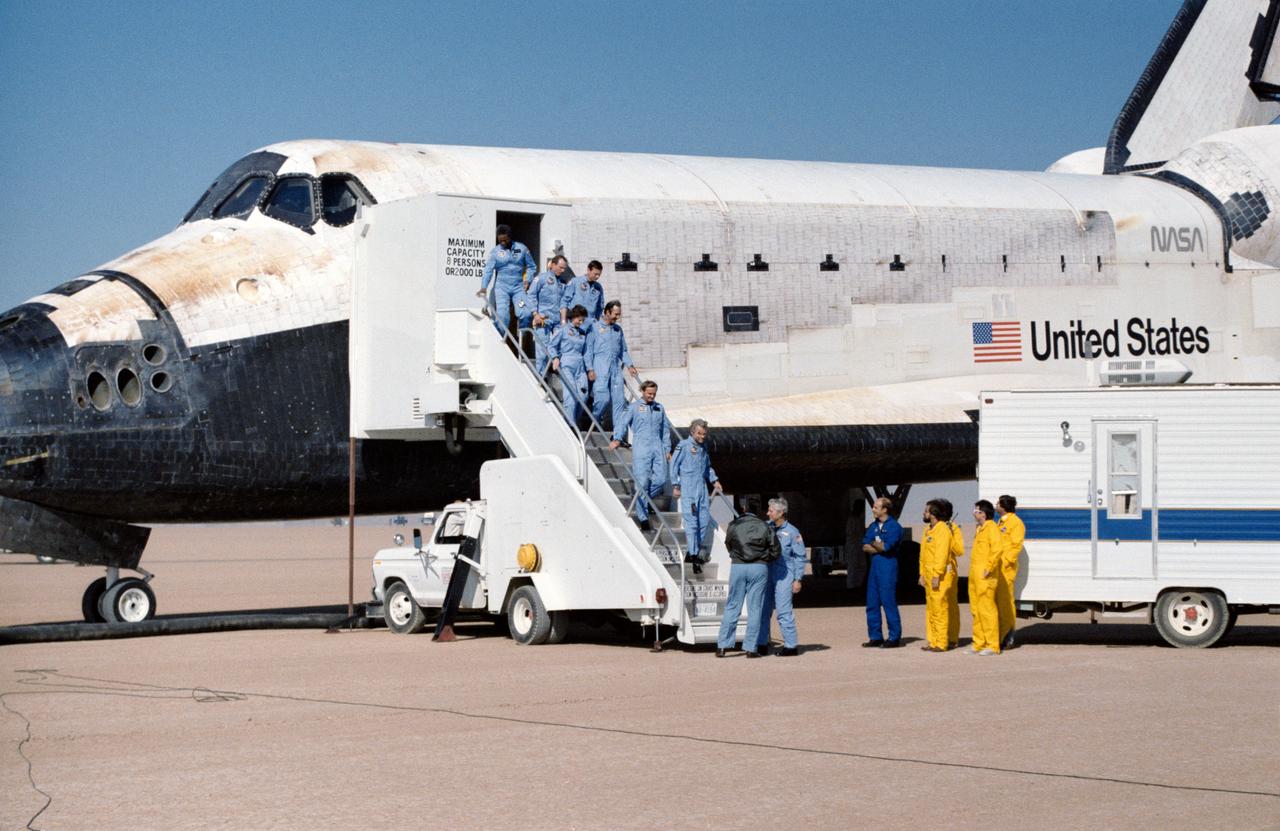
The crew of the STS 41-D mission exit the orbiter after landing at Edwards Air Force Base in California. Starting at the top of the ladder is Astronaut Charles D. Walker, payload specialist; Judith A. Resnik, mission specialist; Steven A. Hawley, mission specialist; and Richard M. Mike Mullane, mission specialist. Waiting at the bottom of the ramp are Astronaut Mike Coats (left), pilot and Henry W. Hartsfield, Jr. (center), crew commander.
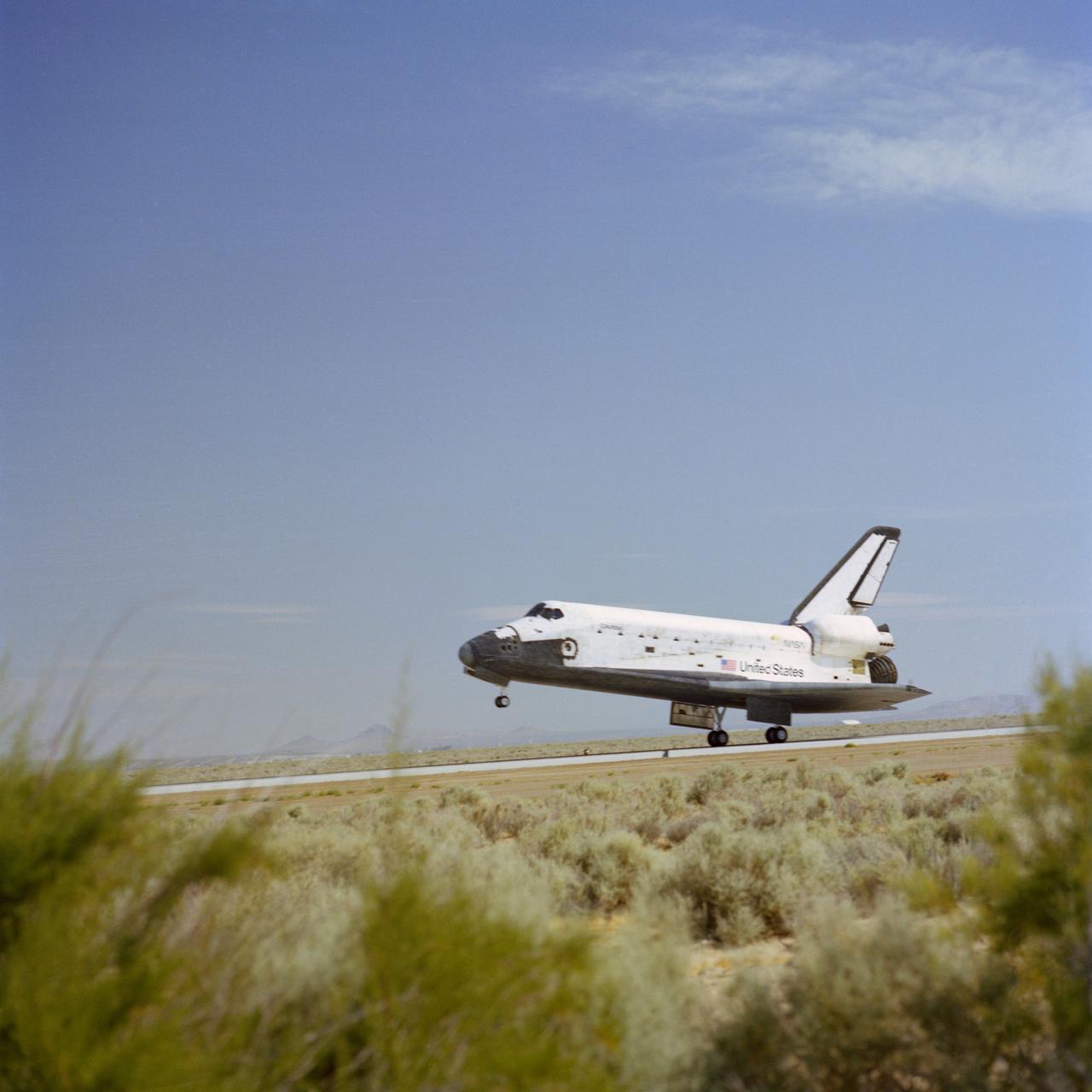
S82-33229 (4 July 1982) --- The space shuttle Columbia touches down on Runway 22 at Edwards Air Force Base in Southern California at the completion of a successful seven-day stay in Earth orbit. Inside are astronauts Thomas K. Mattingly II and Henry W. Hartsfield Jr., STS-4 commander and pilot, respectively. Though this closeup scene is devoid of visible people, hundreds of thousands weren?t far away for the unique July 4 celebration. Photo credit: NASA
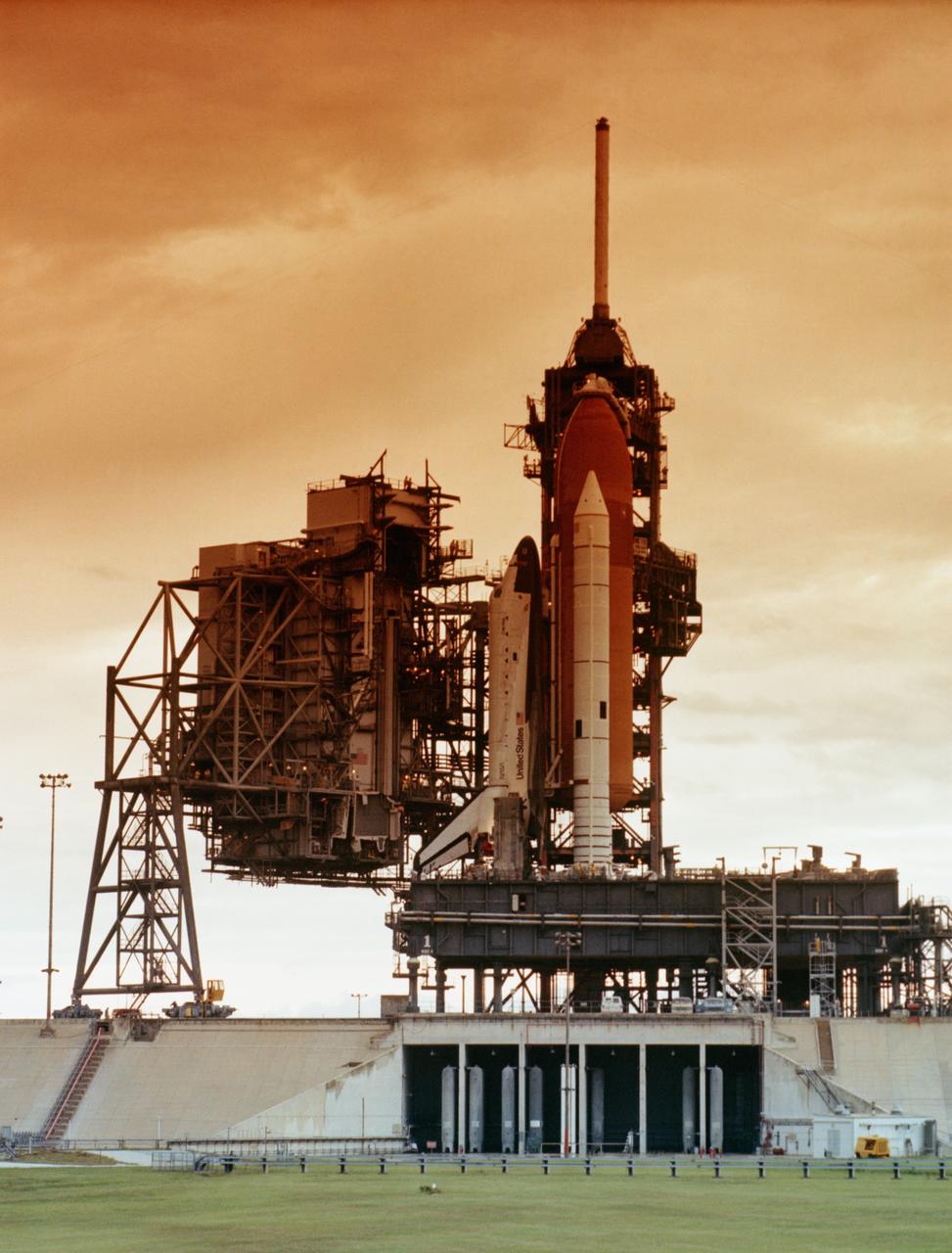
S82-32169 (26 May 1982) --- View of the space shuttle Columbia sitting on Launch Pad 39A at Kennedy Space Center (KSC), following rollout for STS-4, as preparations continue toward a late June launch. The fourth liftoff of the Columbia will mark the beginning of the final test flight in the Space Transportation System (STS) program. Astronauts Thomas K. Mattingly II and Henry W. Hartsfield will man the vehicle for a scheduled eight-day flight. Photo credit: NASA
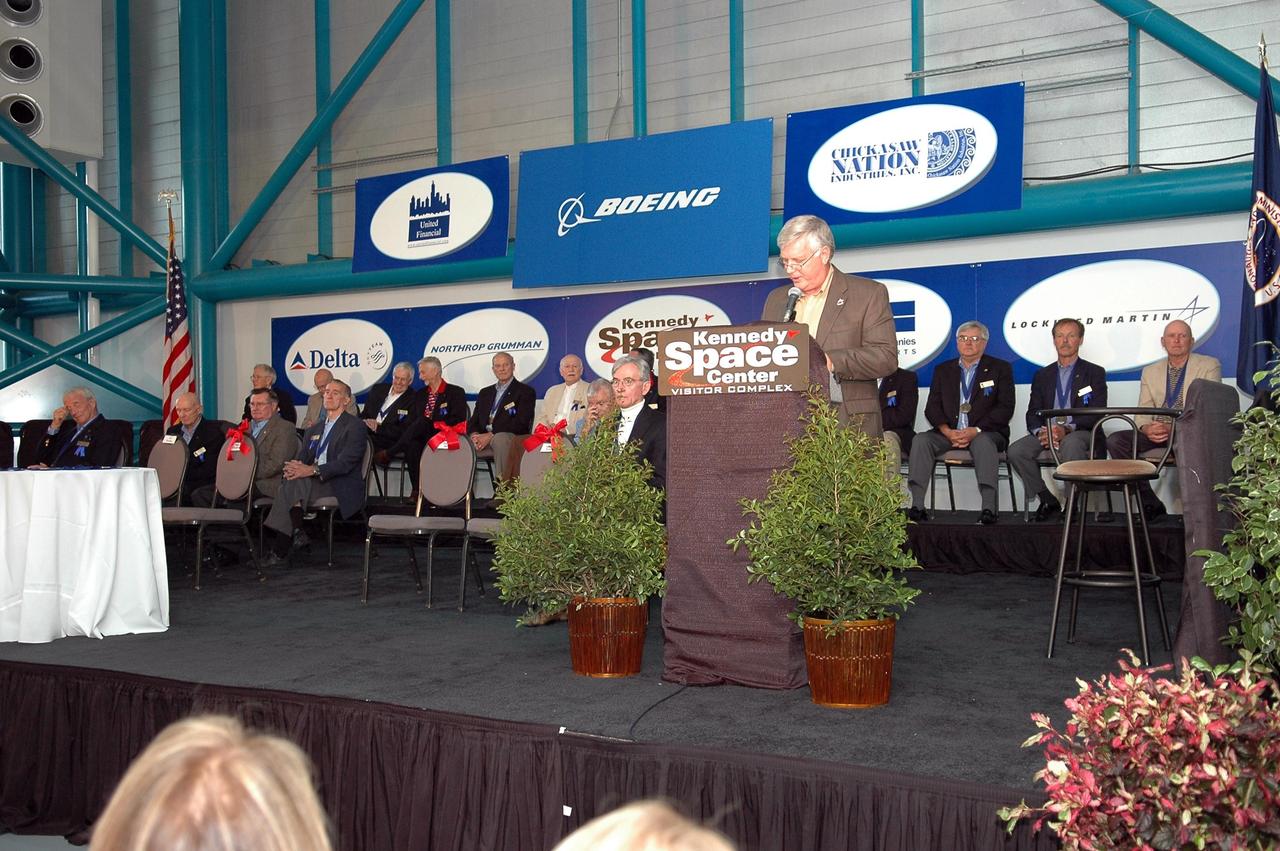
KENNEDY SPACE CENTER, FLA. - James W. Kennedy, director of NASA's John F. Kennedy Space Center, speaks at the 2006 induction ceremony for the U.S. Astronaut Hall of Fame held in the Apollo/Saturn V Center. The inductees for 2006 are former NASA astronauts Henry "Hank" Hartsfield Jr., Brewster H. Shaw Jr. and Charles F. Bolden Jr. The U.S. Astronaut Hall of Fame now includes 63 space explorers. Photo credit: NASA/Kim Shiflett
61A-S-140 (6 Nov 1985) --- The record-setting eight crewmembers for STS 61-A file from their "home" for the past week at the completion of a successful Spacelab D-1 mission. Astronaut Henry W. Hartsfield Jr., mission commander, shakes hands with George W. S. Abbey, director of flight crew operations at JSC. Other crewmembers, from left to right, are Astronauts Guion S. Bluford Jr., James F. Buchli, Steven R. Nagel and Bonnie J. Dunbar; and Payload Specialists Wubbo J. Ockels, Ernst Messerschmid and Reinhard Furrer. The Challenger came to a complete stop at 9:45:39 a.m. (PST).
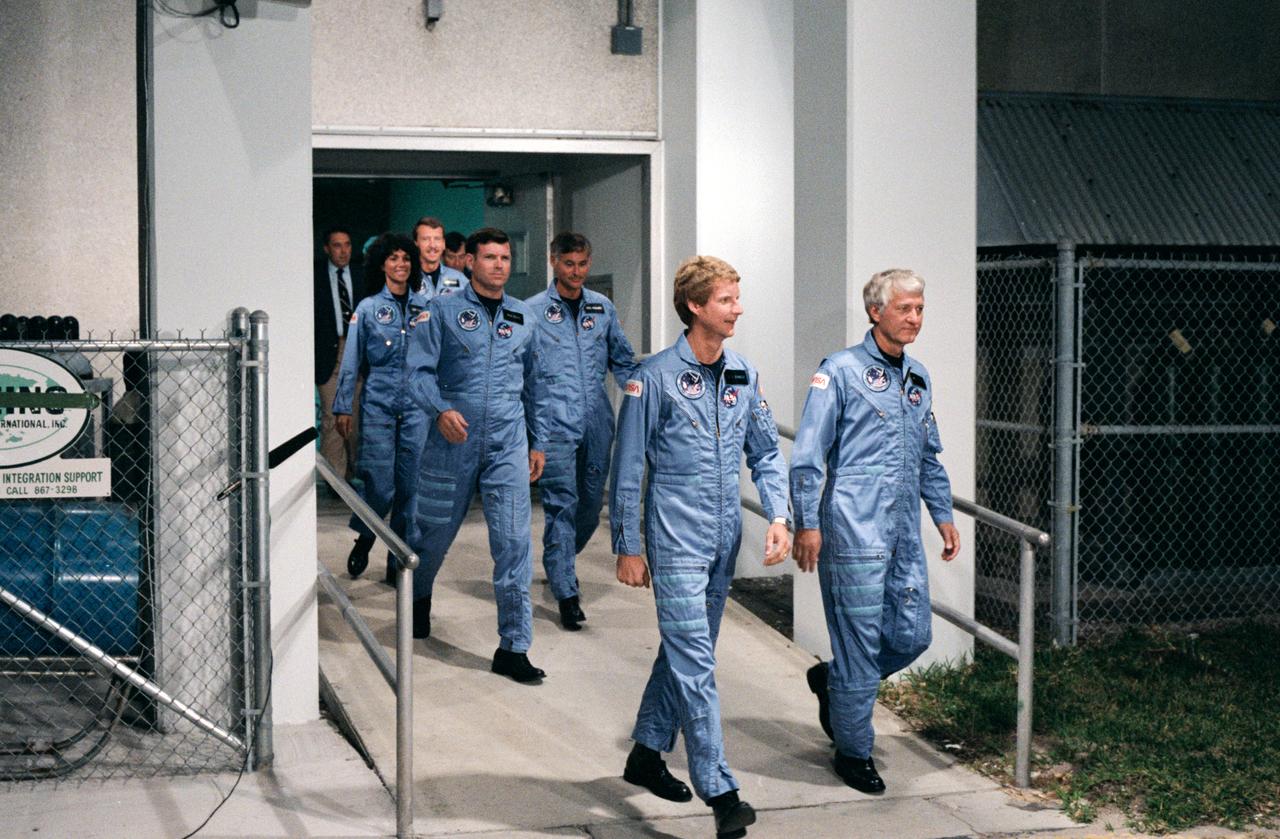
41D-3194 (30 Aug 1984)--- The six members of the 41-D Discovery crew leave the operations and checkout building at Kennedy Space to marke their way to Launch Pad 39A and a date with space. Leading the group is Henry W. hartsfield Jr., commander. Michael L. Coats, pilot, is left center. The mission specialists are Steven A. Hawley, second right, Richard M. (Mike) Mullane, right center, and Judith A. Resnik. Charles D. Walker, payload specialist, follows Resnik. Behind the blue-suited crewmembers are George W.S. Abbey, left, director of flight crew operations and John W. Young, chief of the astronaut office.
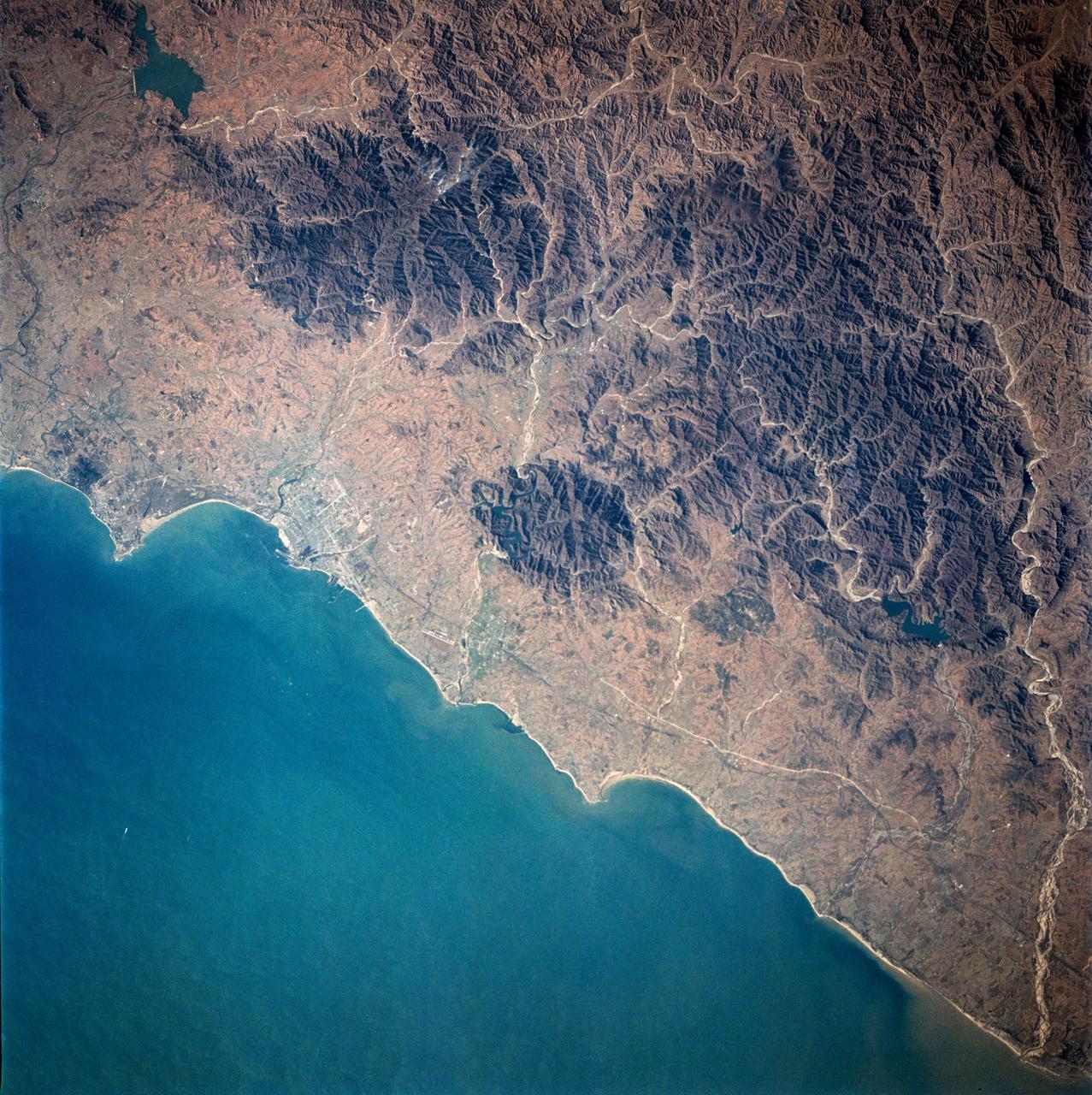
61A-39-052 (30 Oct-6 Nov 1985) --- This Earth view shows Quinhuangdao, China. The Great Wall of China can be seen in this photograph. The center coordinates are 40.0 north latitude and 120.0 east longitude. This photograph was taken from an altitude of 180 miles, on the 24th orbit of the Space Shuttle Challenger. The crew consists of astronauts Henry W. Hartsfield, Jr., commander; Steven R. Nagel, pilot; mission specialists James F. Buchli, Guion S. Bluford, Jr., Bonnie J. Dunbar; payload specialists Reinhard Furrer (DFVLR), Ernst Messerschmid (DFVLR), and Wubbo J. Ockels (ESA).
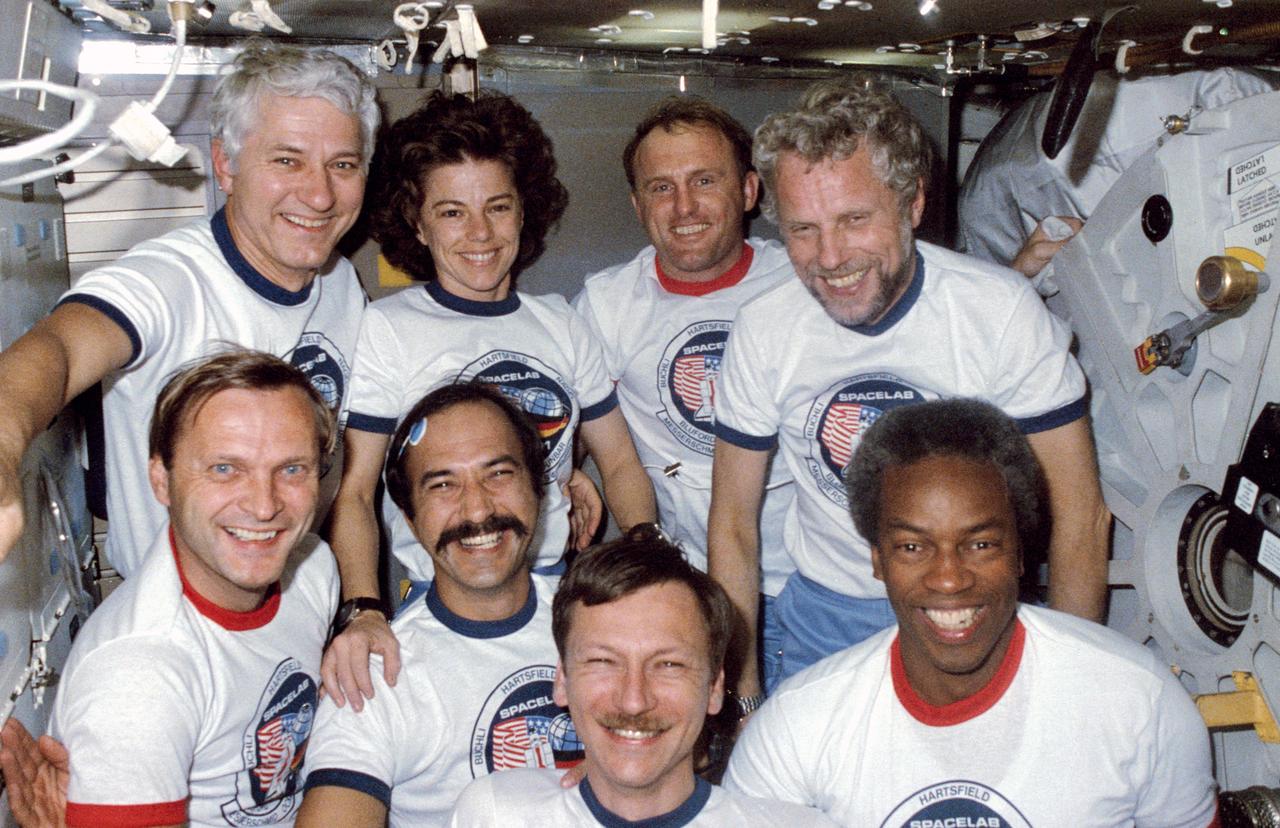
61A-117-019 (30 Oct.-6 Nov. 1985) --- Traditional in-flight portrait of all eight STS-61A crew members was made with an automatic exposure of a 35mm camera. Left to right, back row, Henry W. Hartsfield Jr., commander; Bonnie J. Dunbar, mission specialist; James F. Buchli, mission specialist; and Reinhard Furrer, payload specialist. Left to right, front row, Ernst Messerschmid, payload specialist; Wubbo J. Ockels, payload specialist representing the European Space Agency (ESA); Steven R. Nagel, pilot; and Guion S. Bluford Jr., mission specialist. Photo credit: NASA
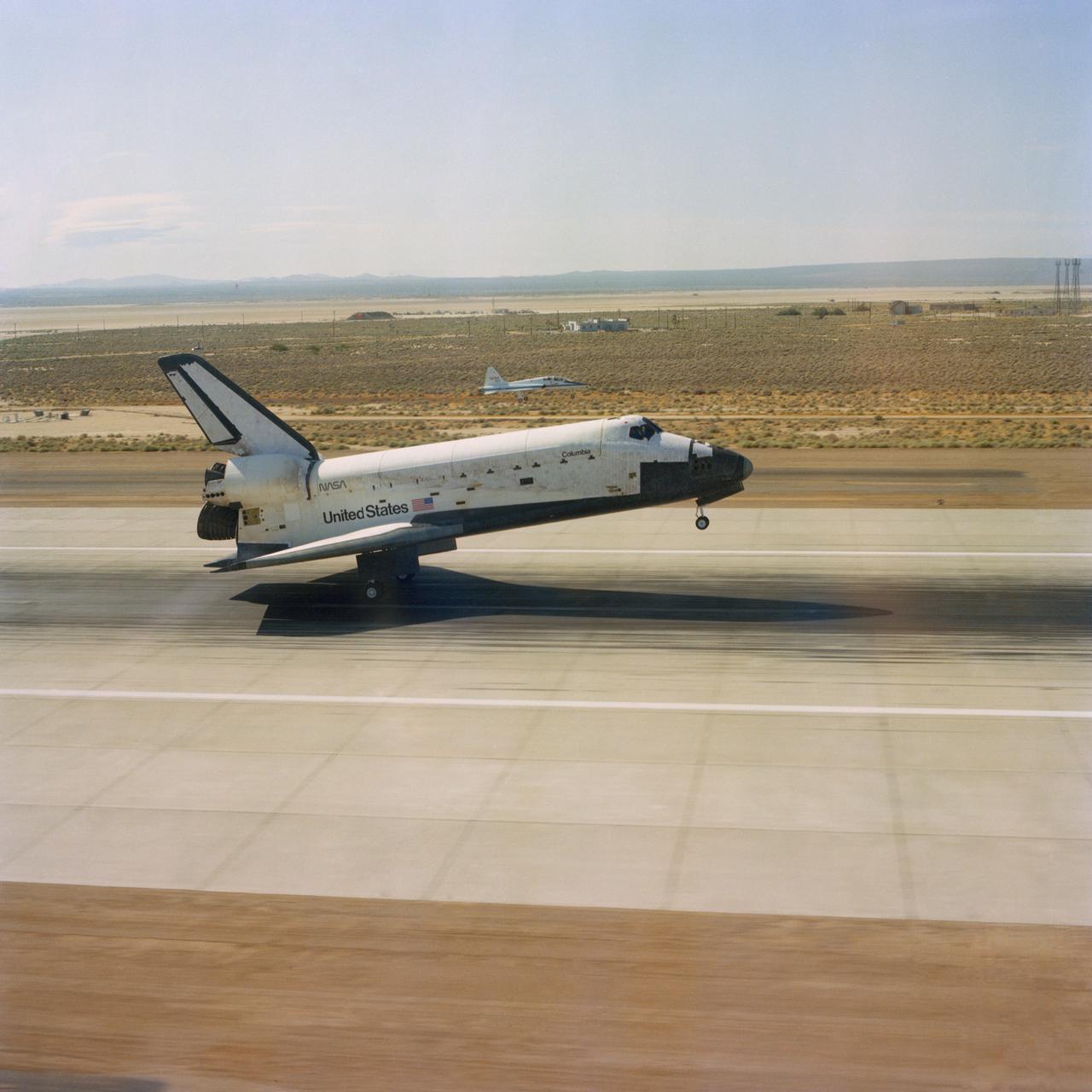
S82-33420 (4 July 1982) --- The aft wheels of the space shuttle Columbia ease down on the runway at Edwards Air Force Base (AFB) today to successfully complete a week-long spaceflight for astronauts Thomas K. Mattingly II, and Henry W. Hartsfield Jr. A T-38 aircraft serves as a chase plane (just above center of photo) in the background. Not long after this photograph was made and the crew had egressed their craft, President Ronald Reagan addressed a giant crowd on hand at Edwards AFB for a special kind of July 4 celebration. Photo credit: NASA
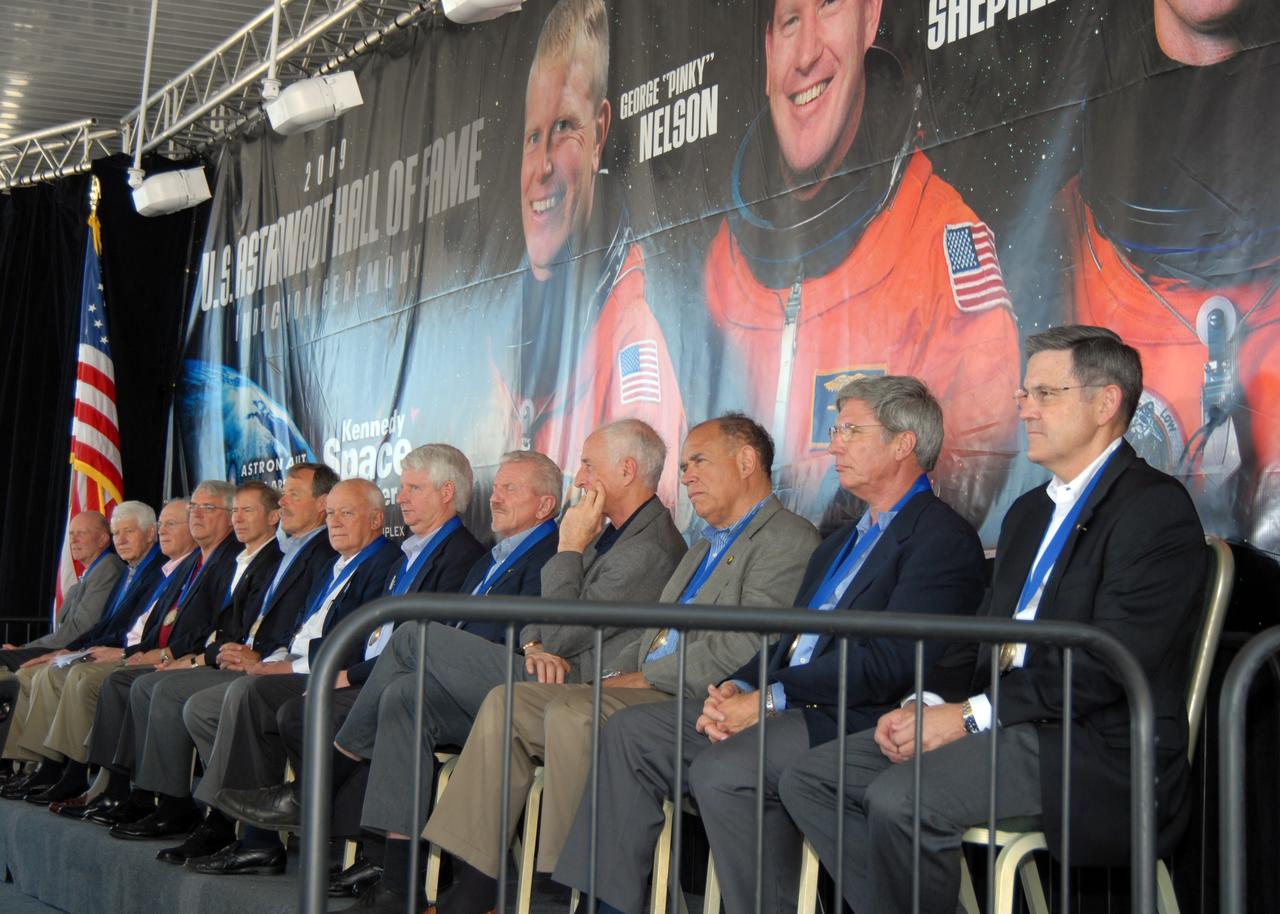
CAPE CANAVERAL, Fla. –– Hall of Fame astronauts (from left) Gordon Fullerton, Henry W. "Hank" Hartsfield Jr., Rick Hauk, Dan Brandenstein, Brewster Shaw, Robert "Hoot" Gibson, Bruce McCandless, Steven Hawley, Loren Shriver, Jeff Hoffman, Fred Gregory, John Blaha and Bob Cabana watch the U.S. Astronaut Hall of Fame induction ceremony at NASA's Kennedy Space Center Visitor Complex in Florida. Cabana is the Kennedy Space Center director. The ceremony took place May 2. More than 20 hall of fame astronauts attended, including Scott Carpenter, Walt Cunningham, Jim Lovell and Bob Crippen. Photo credit: NASA/Jim Grossmann
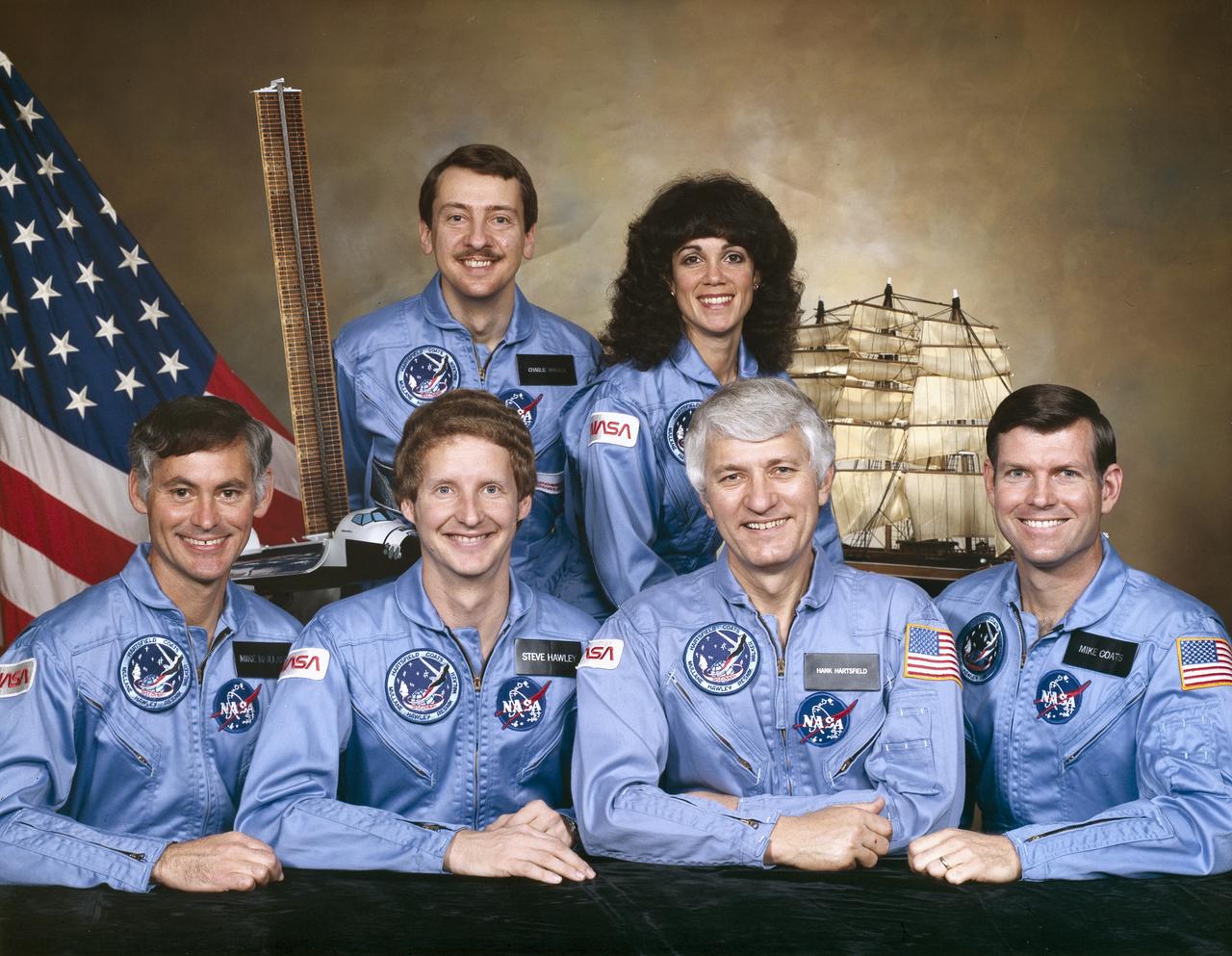
The crew assigned to the STS-41D mission included (seated left to right) Richard M. (Mike) Mullane, mission specialist; Steven A. Hawley, mission specialist; Henry W. Hartsfield, commander; and Michael L. (Mike) Coats, pilot. Standing in the rear are Charles D. Walker, payload specialist; and Judith A. (Judy) Resnik, mission specialist. Launched aboard the Space Shuttle Discovery August 30, 1984 at 8:41:50 am (EDT), the STS-41D mission deployed three satellites: the Satellite Business System SBS-D; the SYCOM IV-2 (also known as LEASAT-2); and the TELSTAR.
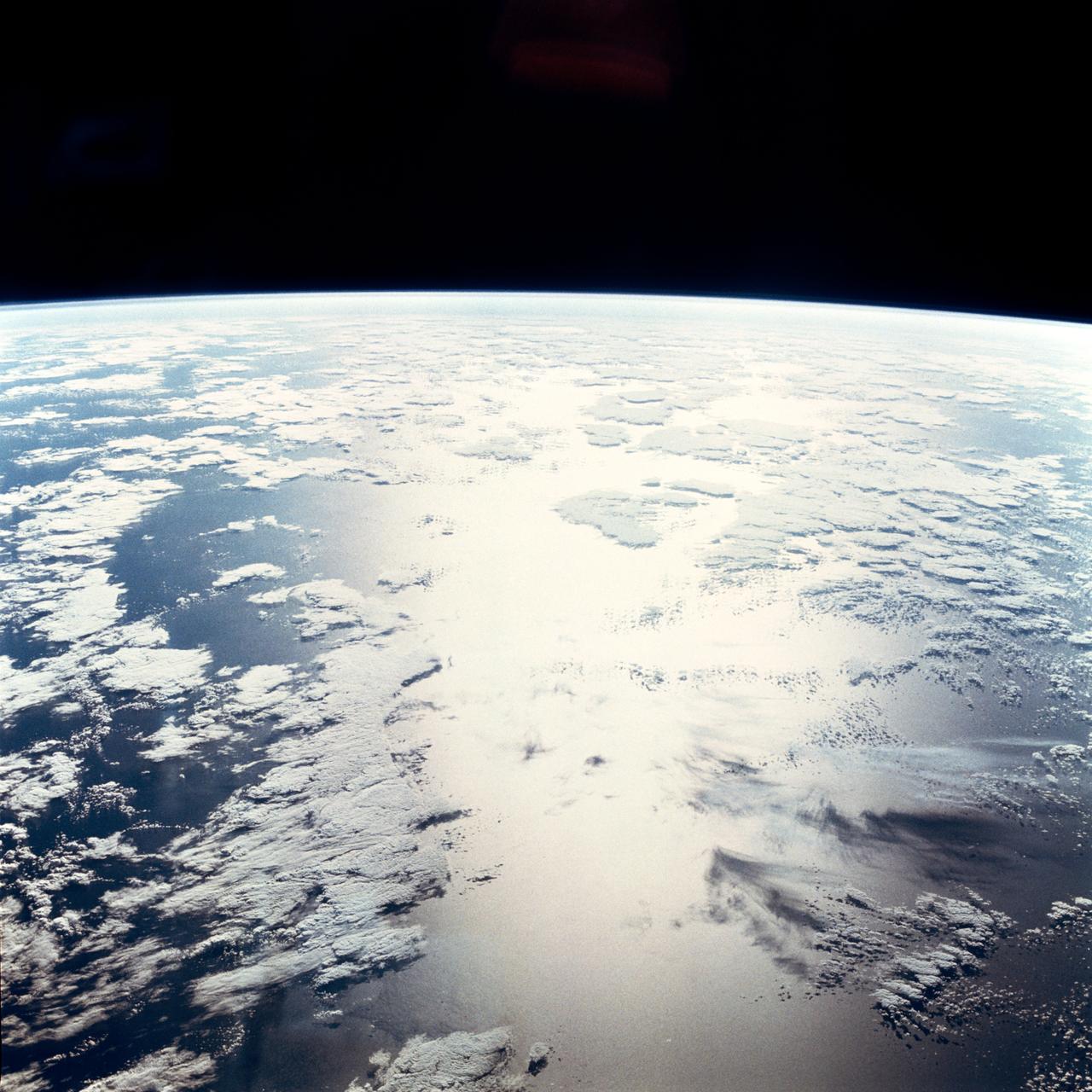
STS004-41-1206 (27 June-4July 1982) --- Sunglint reflects off the water of the North Atlantic Ocean in an area to the east of the Bahamas Islands sometimes called the Sargasso Sea. The area has also been referred to as the ?Bermuda Triangle.? Astronauts Thomas K. Mattingly II, STS-4 commander, and Henry W. Hartsfield Jr., pilot, spent seven days and one hour aboard the Earth-orbiting space shuttle Columbia and performed a variety of duties in addition to those of recording 70mm and 35mm imagery. Photo credit: NASA
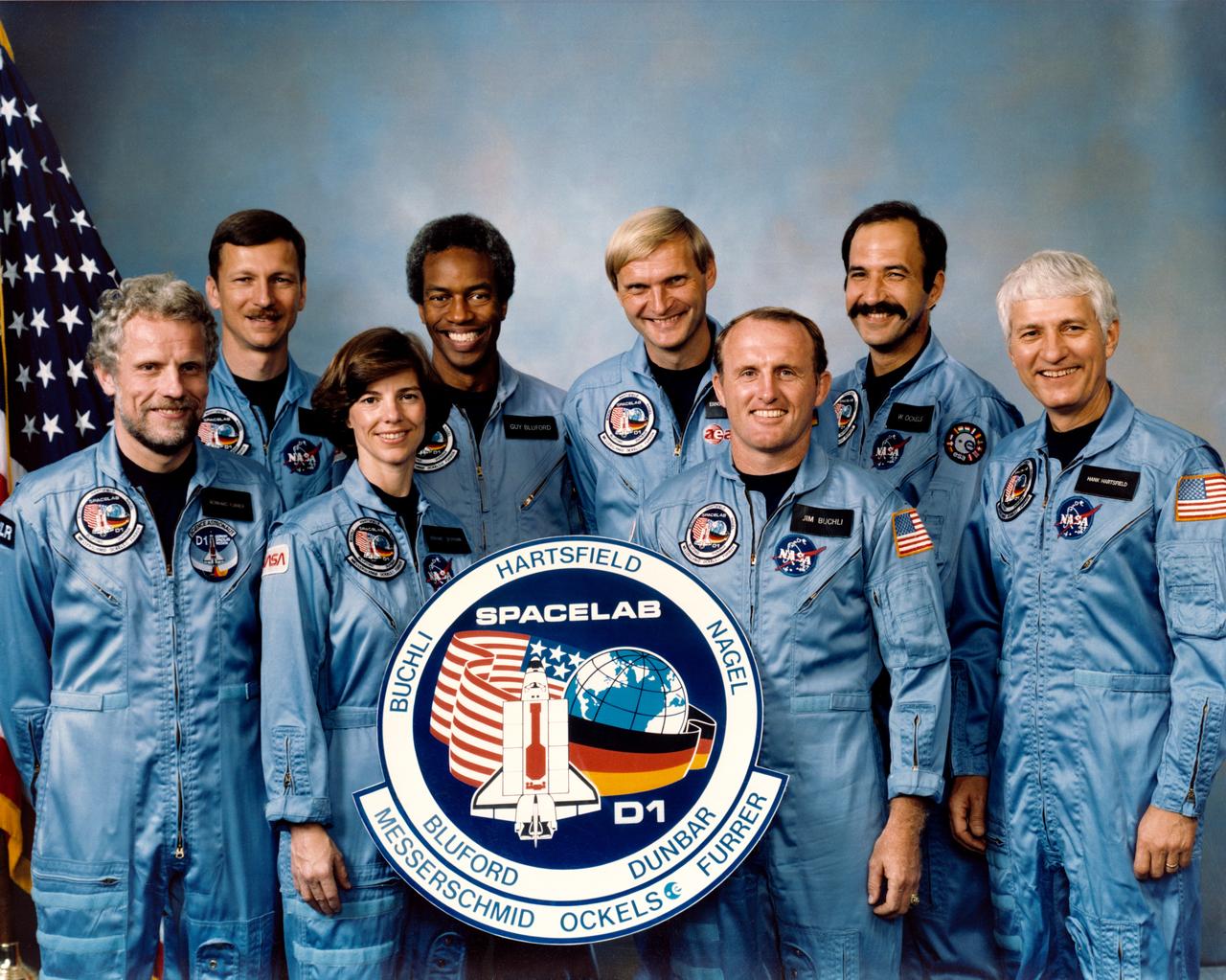
S85-40783 (27 Sept. 1985) --- This international crew expected to fly aboard the space shuttle Challenger when it launches next month represents the largest number (eight) of persons to occupy an orbiting spacecraft at the same time. Posing with the mission insignia are (front row, left to right) Reinhard Furrer, German payload specialist; Bonnie J. Dunbar, mission specialist; James F. Buchli, mission specialist; and Henry W. Hartsfield Jr., commander; and (back row, left to right) Steven R. Nagel, pilot; Guion S. Bluford, mission specialist; Ernst Messerschmid, German payload specialist; and Wubbo J. Ockels, Dutch payload specialist. Photo credit: NASA
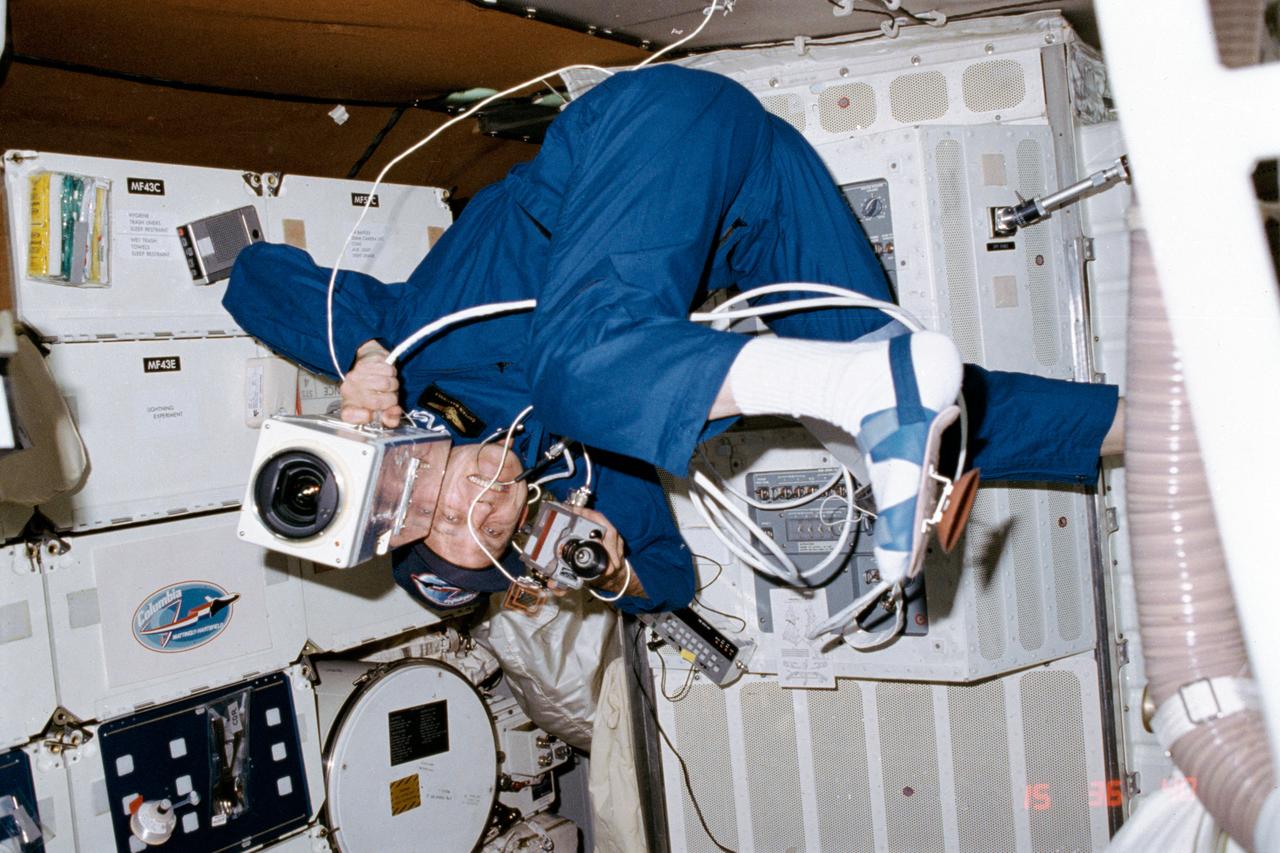
STS004-23-131 (27 June-4 July 1982) ---Astronaut Thomas K. Mattingly II, STS-4 commander, floats in the middeck area of the Earth-orbiting space shuttle Columbia. He handles two cameras at one time. In the commander’s right hand is a 16mm data acquisition camera (DAC), and in his left hand is a TV camera. Note the suction-cup equipped footwear which Mattingly revealed to the world via TV on one of his popular “cook’s tours” from crewmate Henry W. Hartsfield, pilot, operated a 35mm camera to expose this frame. Photo credit: NASA
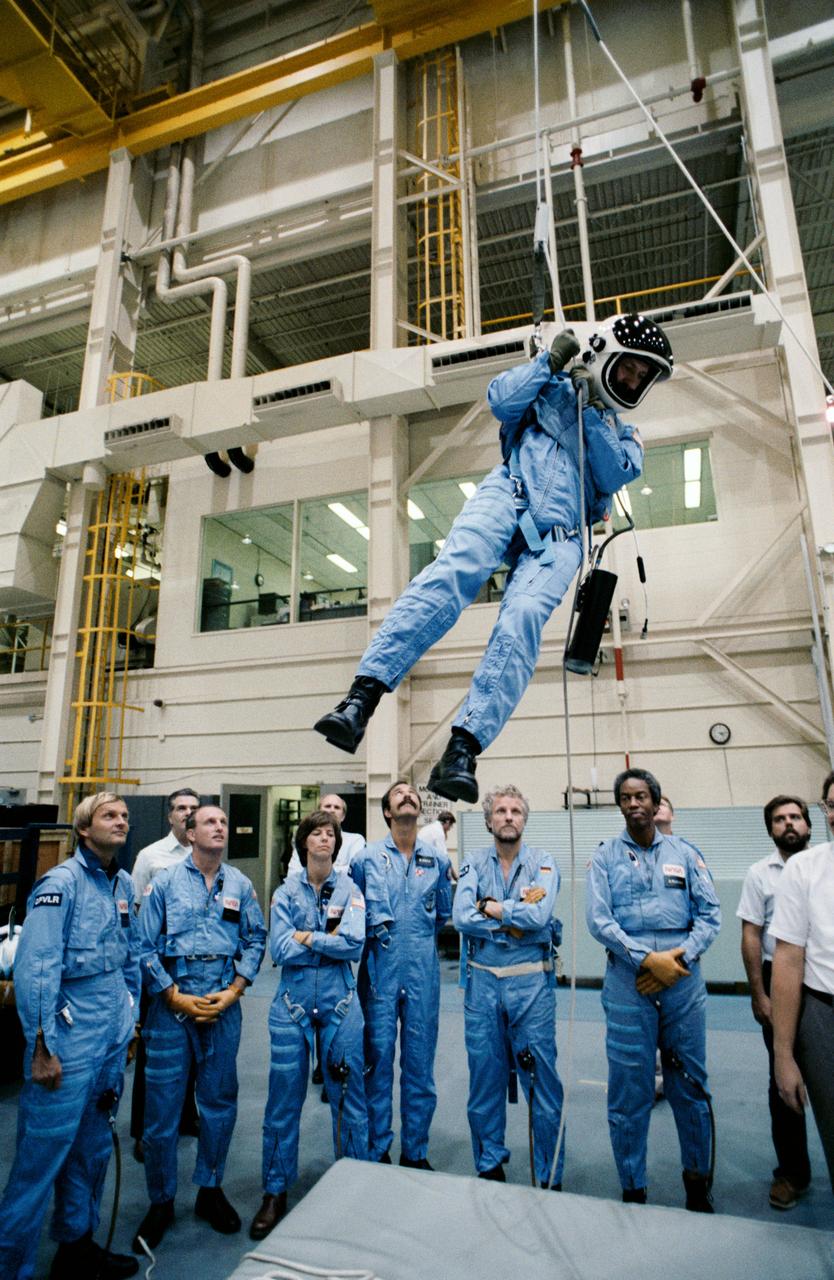
S85-41246 (26 Sept 1985) --- The STS 61-A/Spacelab D-1 crewmembers are seen in this training scene in the Johnson Space Center's Space Shuttle mockup and integration laboratory. Descending from a simulated Shuttle orbiter in distress, using a Sky-Genie device, is Astronaut Henry W. Hartsfield, Jr. mission commander. Watching in blue flight garments are other members of the crew. They are, left to right, Ernst Messerschmid, German payload specialist (PS1); James F. Buchli, NASA mission specialist (MS2); Bonnie J. Dunbar, NASA mission specialist (MS1); Wubbo J. Ockels, Dutch PS3. Not pictured is Steven R. Nagel, pilot. Photo was taken by Otis Imboden.
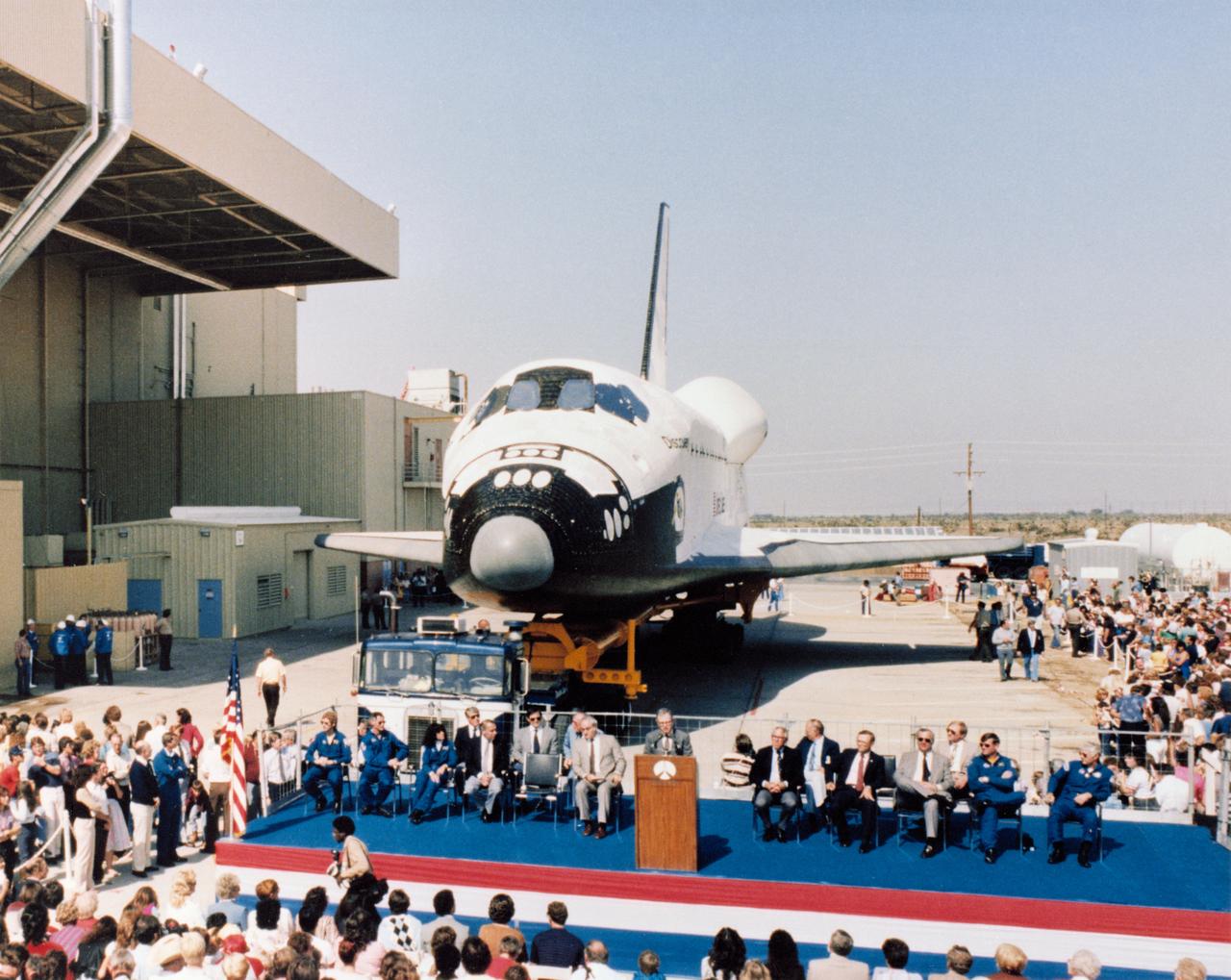
S84-30898 (16 Oct 1983) --- NASA Space Shuttle Orbiter 103, Discovery, is rolled out in formal ceremonies at the Rockwell International Palmdale, California, facility. On hand to greet the vehicle and the public are members of the 41-D crew--the first team of astronauts to man the new vehicle. Scheduled for a spring or summer flight in 1984 are astronauts Henry W. Hartsfield (right), commander; Michael L. Coats (second right), pilot; and Judith A. Resnik, Richard M. (Mike) Mullane and Steven A. Hawley (on left of stage), all mission specialists. Don Beall of Rockwell International (at lectern) prepares to introduce Dr. Rocco A. Petrone, president of Rockwell's Space Transportation Systems Division.
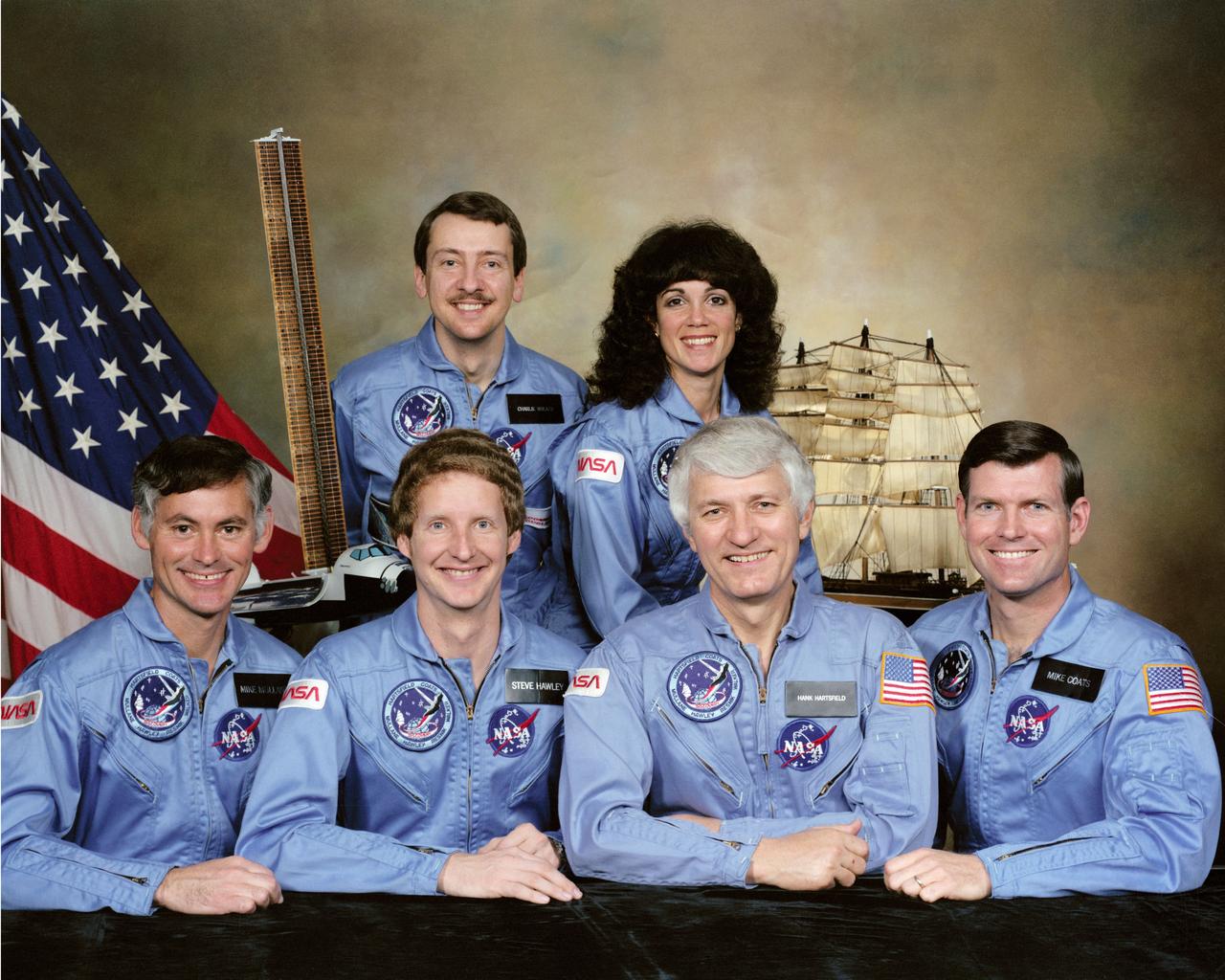
S84-30259 (April 1984) --- NASA's Discovery will carry these six STS51-D crew members into space on an early summer mission. Astronaut Henry W. Hartsfield Jr. (second right, front row) is crew commander; and Michael L. Coats, right, is pilot. Astronauts Richard M. (Mike) Mullane, left; Steven A. Hawley (second left) and Judith A. Resnik are mission specialists. Charles D. Walker (back row) is payload specialist. Both the early ocean-going Discovery and the debuting spacecraft are depicted in the backdrop. The conspicuous payload in the cargo bay of the spacecraft is that of NASA's Office of Aeronautics and Space Technology (OAST-1). Photo credit: NASA
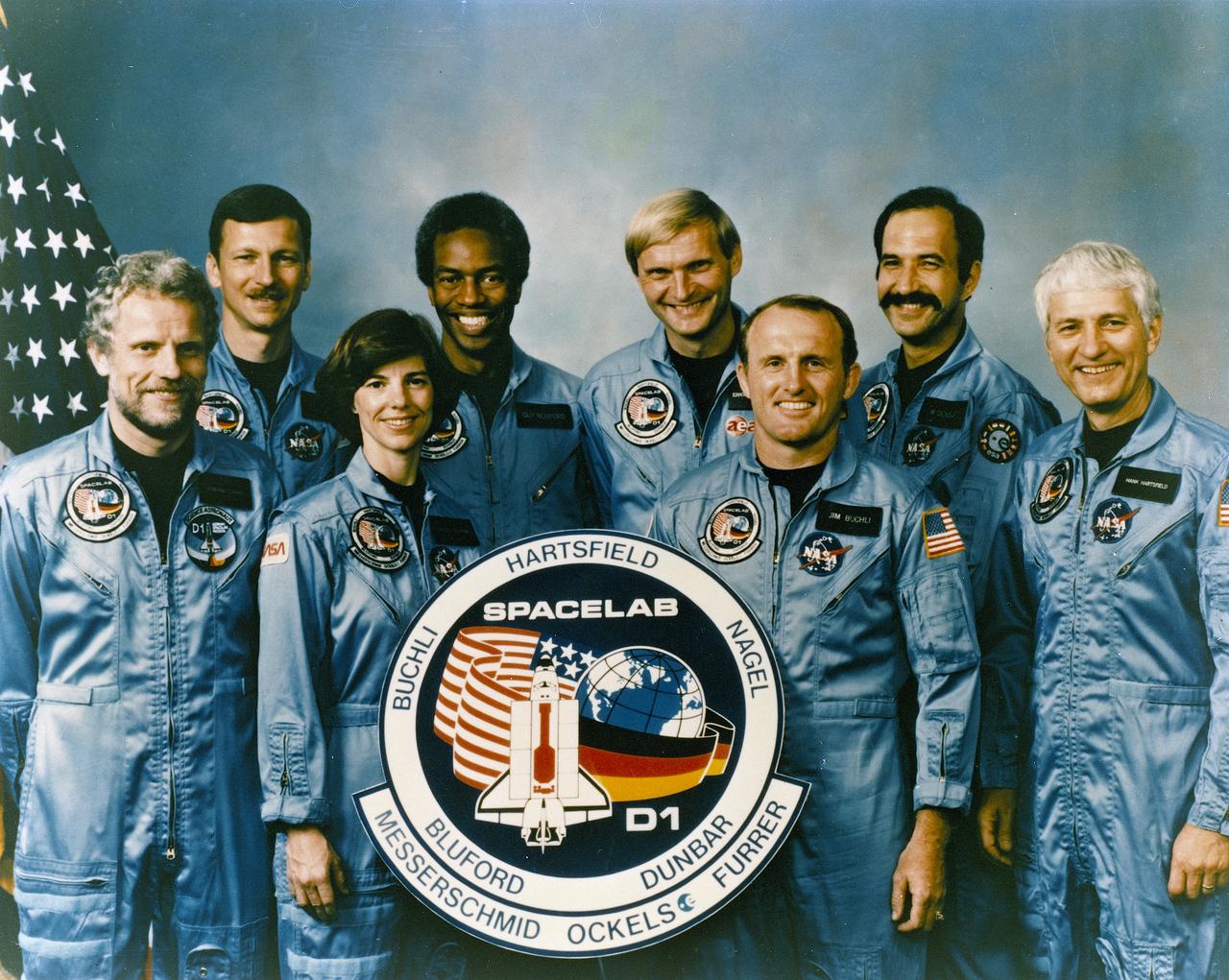
The crew assigned to the STS-61A mission included (front row left to right) Reinhard Furrer, German payload specialist; Bonnie J. Dunbar, mission specialist; and Henry W. Hartsfield, Jr. commander. On the back row, left to right, are Steven R. Nagel, pilot; Guion S. Bluford, mission specialist; Ernst Messerscmid, German payload specialist; and Wubbo J. Ockels, Dutch payload specialist. Launched aboard the Space Shuttle Challenger on October 30, 1985 at 12:00:00 noon (EST), the STS-61A mission’s primary payload was the Spacelab D-1 (German Spacelab mission).
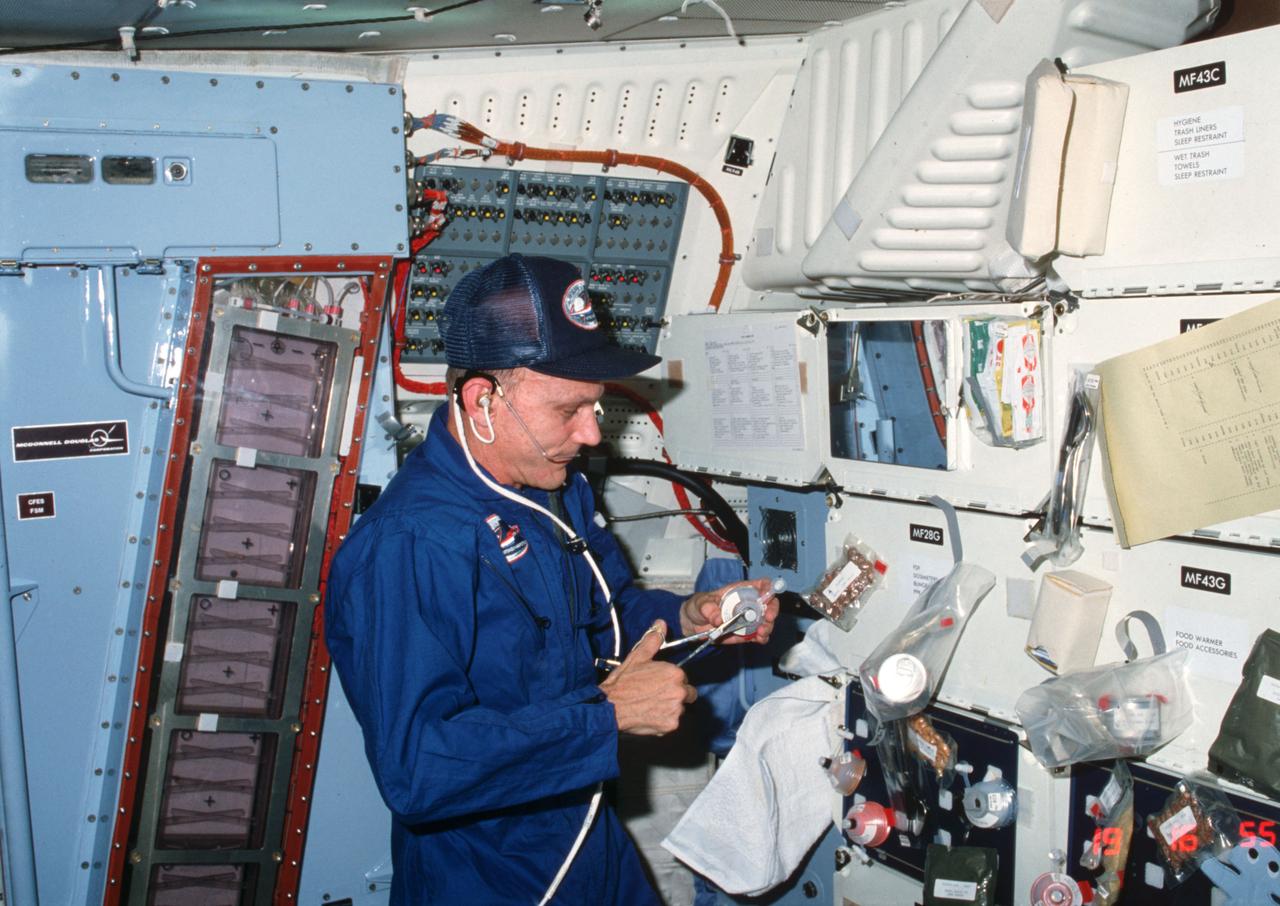
STS004-28-312 (27 June-4 July 1982) --- Astronaut Thomas K. Mattingly II, STS-4 crew commander, prepares a meal in the middeck area of space shuttle Columbia. He uses scissors to open a drink container. Various packages of food and meal accessories are attached to locker doors. At far left edge of the frame is the tall payload called continuous flow electrophoresis experiment (CFES) system-designed to separate biological materials according to their surface electrical charges as they pass through an electrical field. Astronaut Henry W. Hartsfield Jr. exposed this frame with a 35mm camera. Photo credit: NASA
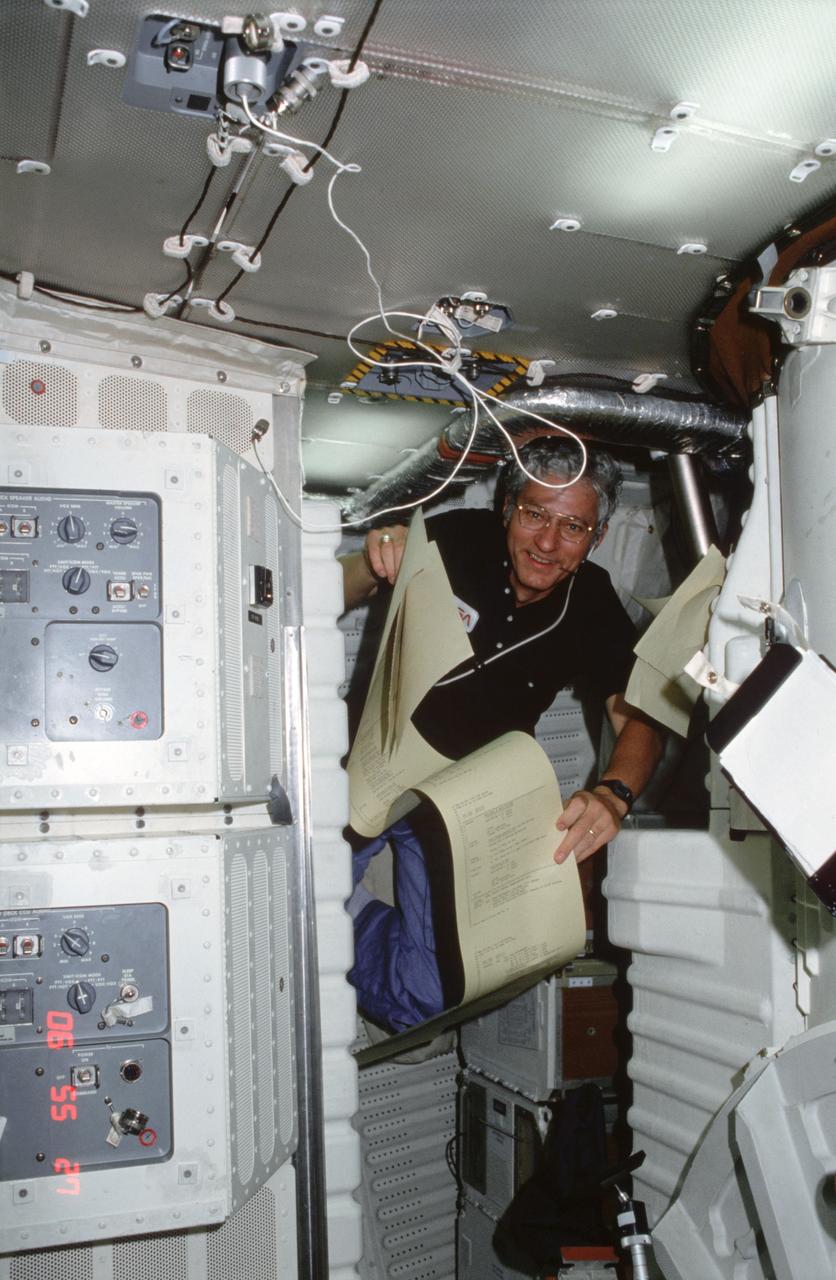
STS004-26-243 (27 June 1982) --- Astronaut Henry W. Hartsfield Jr., STS-4 pilot, has just torn off a rather prolific gathering of hard copy print-outs from the teleprinter aboard the Earth-orbiting space shuttle Columbia during NASA?s fourth orbital flight test. The teleprinter is located in the middeck area of the reusable spacecraft. The photograph was made by astronaut Thomas K. Mattingly II, STS-4 commander. The two shared a little more than seven days of duties aboard the space shuttle Columbia. Photo credit: NASA

STS004-21-076 (27 June-4 July 1982) --- Astronaut Thomas K. Mattingly II, STS-4 commander, loses his cap amidst a maze of wiring, tape recorder and camera equipment onboard the Earth-orbiting space shuttle Columbia. He stands near the aft control panel on the flight deck of the reusable space vehicle. The 35mm frame was exposed by astronaut Henry W. Hartsfield Jr., STS-4 pilot. The pair spent seven days on NASA’s final orbital flight test in the Space Transportation System (STS) program. Photo credit: NASA
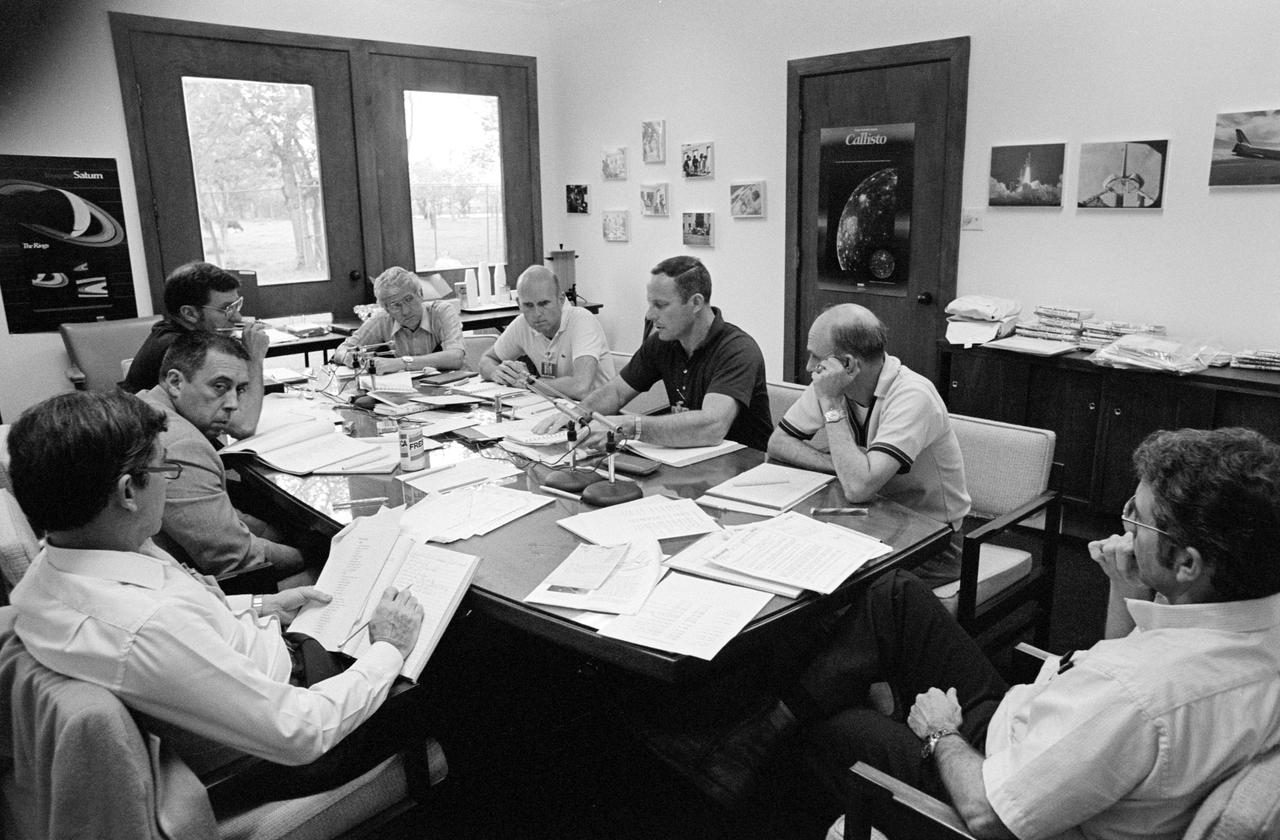
S82-28952 (1 April 1982) --- Crew members from STS-2 and STS-4 meet with the recently returned STS-3 astronauts for a debriefing session at the Johnson Space Center. Taking notes at bottom left foreground is astronaut John W. Young, STS-1 commander and chief of the Astronaut Office at JSC. Clockwise around the table, beginning with Young, are George W. S. Abbey, JSC Director of Flight Operations; and astronauts Joe E. Engle, STS-2 commander; Henry W. Hartsfield Jr., STS-4 pilot; C. Gordon Fullerton, STS-3 pilot; Jack R. Lousma, STS-3 commander; Thomas K. (Ken) Mattingly, STS-4 commander; and Richard H. Truly, STS-2 pilot. Photo credit: NASA
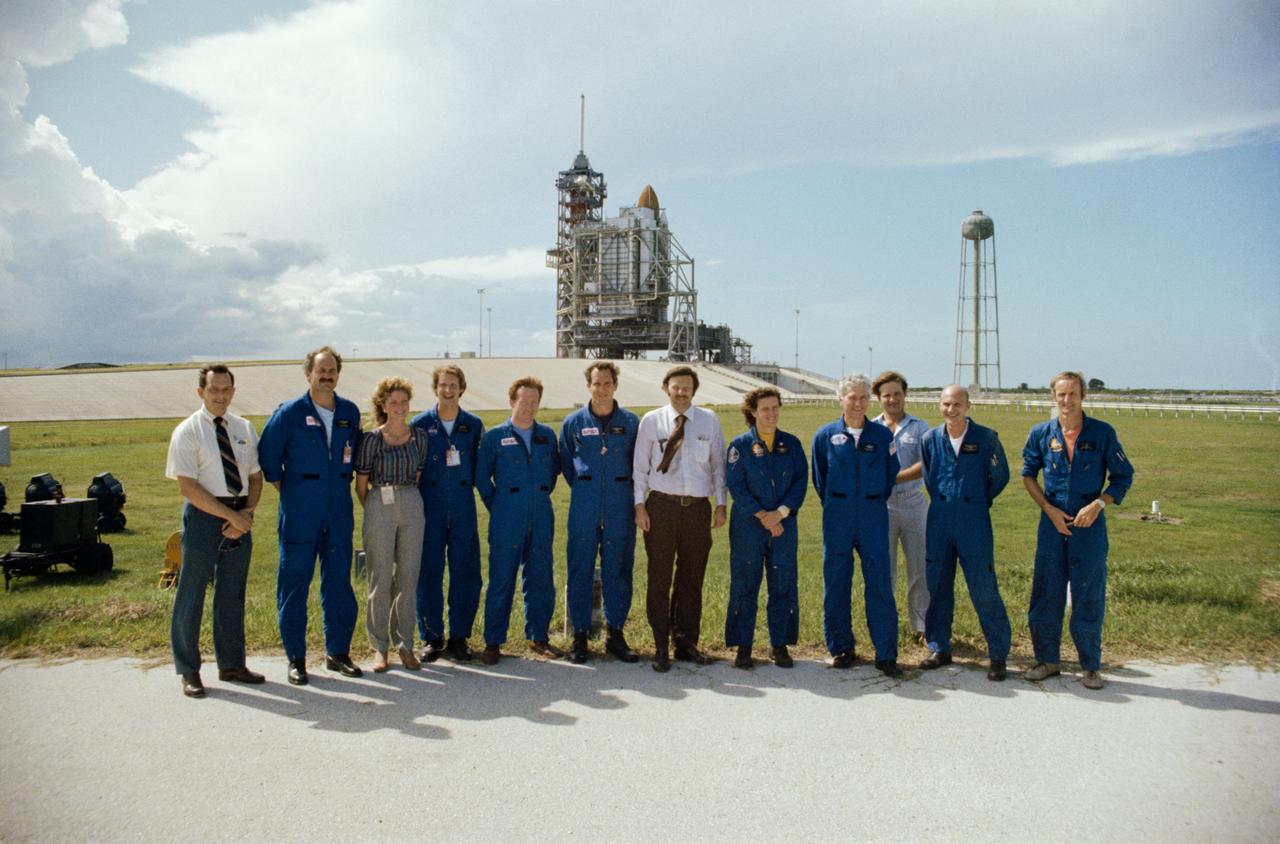
S82-32201 (29 May 1982) --- Members of the JSC astronaut corps, vehicle integration test team (VITT) and other personnel pose for a photograph at the completion of a countdown demonstration test (CDDT) at Launch Pad 39A, Kennedy Space Center (KSC). The participants are, from the left, Wilbur J. Etbauer, engineer with the VITT; mission specialist-astronaut James D. Van Hoften; Terri Stanford, engineer from JSC's flight operations directorate; mission specialist-astronaut Steven A. Hawley; astronaut Richard N. Richards; astronaut Michael J. Smith; Richard W. Nygren, head of the VITT; mission specialist-astronaut Kathryn D. Sullivan; astronaut Henry W. Hartsfield Jr., STS-4 pilot; Mark Haynes, a co-op student participating with the VITT; astronaut Thomas K. Mattingly II, STS-4 commander; and astronaut Donald E. Williams. Photo credit: NASA
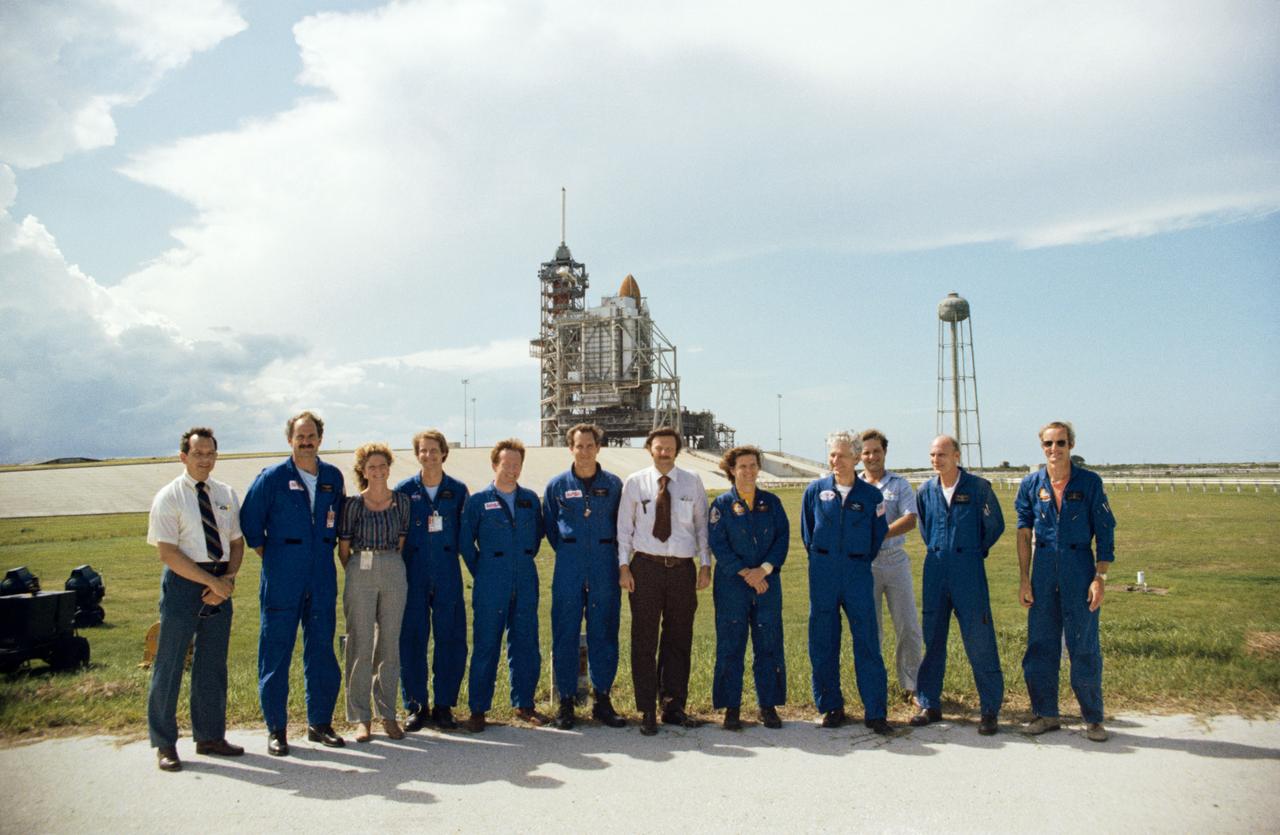
S82-32200 (29 May 1982) --- Members of the JSC astronaut corps, STS-4 vehicle integration test team (VITT) and other personnel pose for a photograph at the completion of a countdown demonstration test (CDDT) at Launch Pad 39A, Kennedy Space Center (KSC). The participants are, from the left, Wilbur J. Etbauer, engineer with the VITT; mission specialist-astronaut James D. van Hoften; Terry Stanford, engineer from JSC's flight operations directorate; mission specialist-astronaut Steven A. Hawley; astronaut Richard N. Richards; astronaut Michael J. Smith; Richard W. Nygren, head of the VITT; mission specialist-astronaut Kathryn D. Sullivan; astronaut Henry W. Hartsfield Jr.,STS-4 pilot; Mary Haynes, a co-op student participating with the VITT; astronaut Thomas K. Mattingly II, STS-4 commander; and astronaut Donald E. Williams. Photo credit: NASA
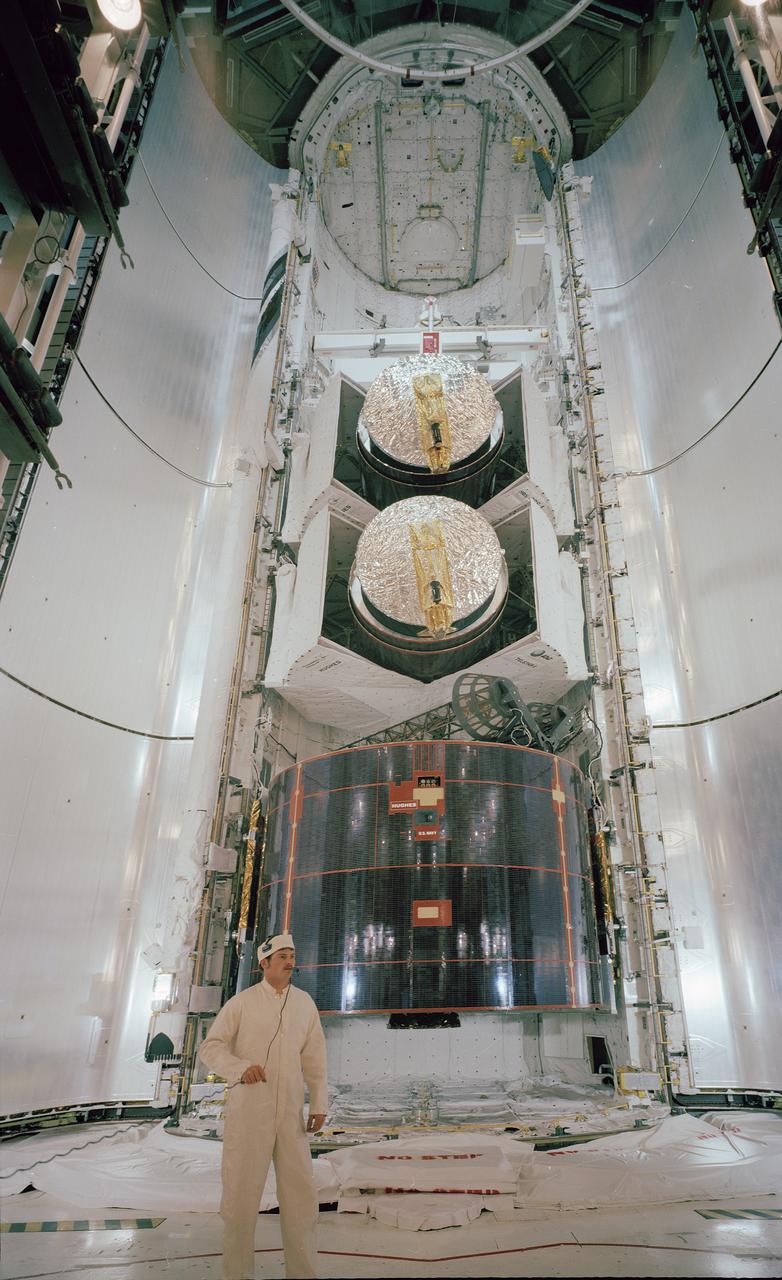
CAPE CANAVERAL, Fla. -- At the Kennedy Space Center in Florida, the payloads for the STS-41D space shuttle flight are shown loaded in Discovery’s cargo bay. With the orbiter in the vertical position at Launch Pad 39A, the payloads are, from top to bottom, OAST-1 a 102-foot-tall, 13-foot-wide Office of Application and Space Technology solar panel), the Satellite Business System SBS-D , Telstar 3-C, and Syncom IV-2. The six day mission is scheduled for launch on Aug. 29, 1984. The six crew members are Commander Henry W. Hartsfield Jr., Pilot Michael L. Coats, Mission Specialists Judith A. Resnik, Steven A. Hawley, Richard M. Mullane, and Payload Specialist Charles D. Walker. Photo Credit: NASA
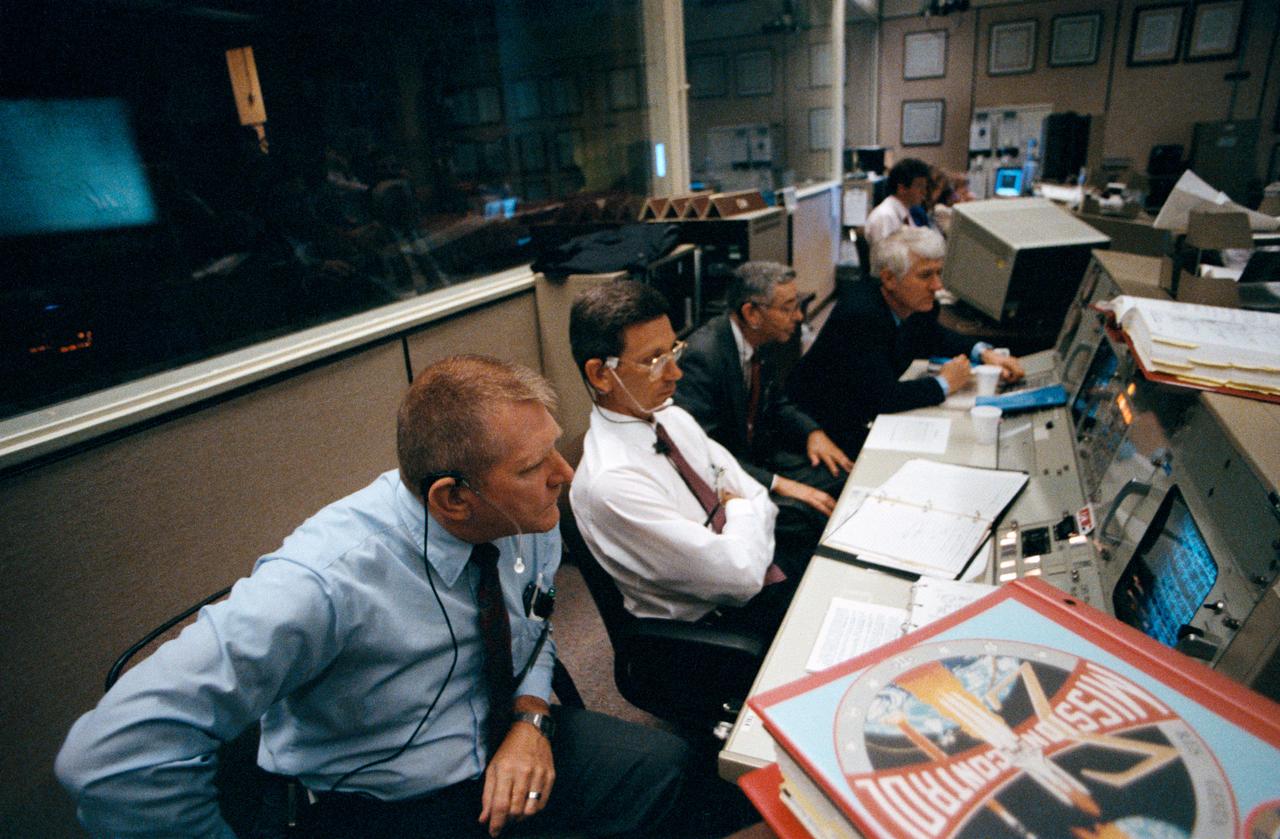
STS030-S-004 (8 May 1989) --- JSC Officials monitor early moments of NASA's STS-30 Atlantis, Orbiter Vehicle (OV) 104, flight in the Flight Control Room (FCR) of JSC's Mission Control Center (MCC) Bldg 30. At the Mission Operations Directorate (MOD) console, MOD Director Eugene F. Kranz (foreground), studiously reviews data on a nearby monitor. Others in the photo are (left to right) Flight Directors Office Deputy Chief Lawrence S. Bourgeois, JSC Director Aaron Cohen, and Flight Crew Operations Deputy Director Henry W. Hartsfield, Jr. Kranz'z replete loose-leaf notebook, bearing the insignia of the flight control team members (MOD insignia), is in the foreground.
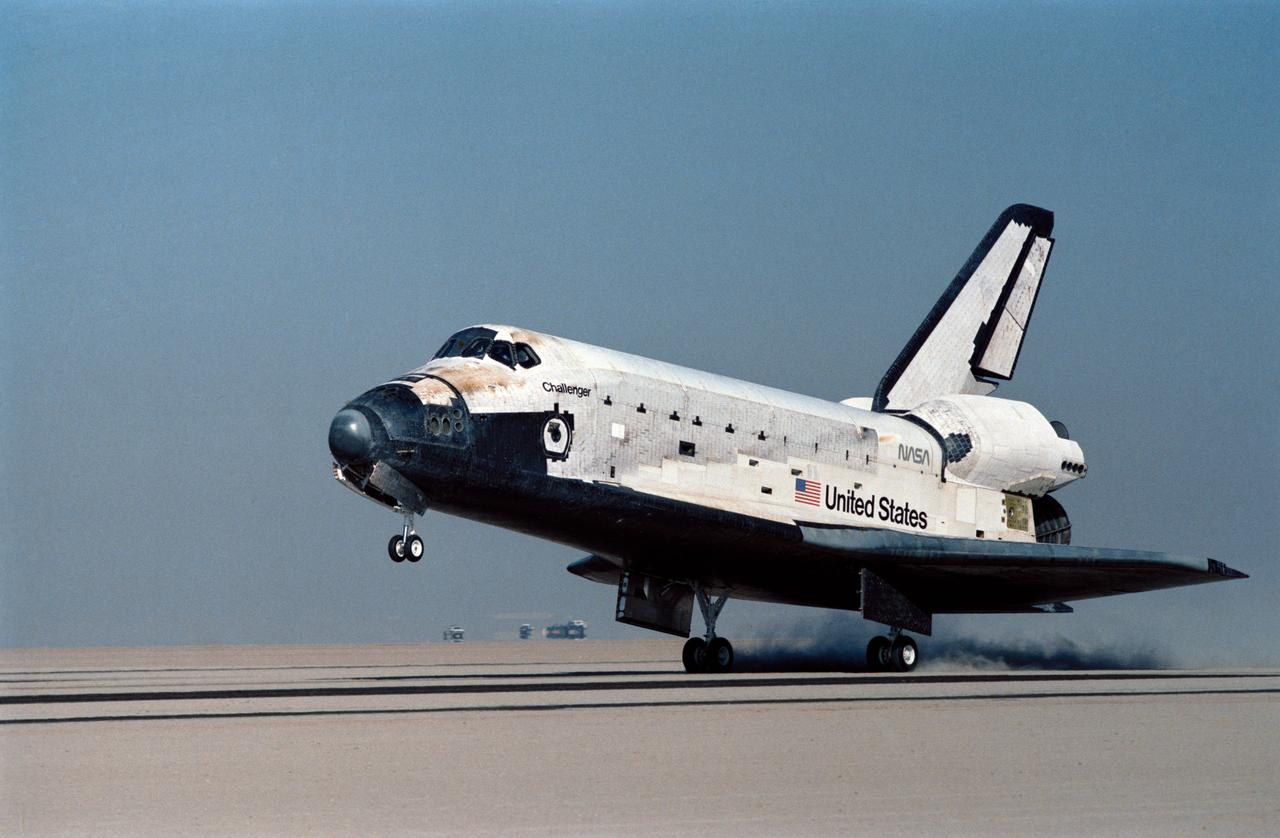
61A-S-139 (6 Nov 1985) --- Eight persons returning from space at one time is a record which was set at 9:45:39 a.m. (PST) today when the Space Shuttle Challenger's wheels came to a stop on the runway at Edwards Air Force Base. The main gear is seen touching down at 9:44:51 a.m. Inside the spacecraft are astronauts Henry W. Hartsfield Jr., Steven R. Nagel, Bonnie J. Dunbar, James F. Buchli, Guion S. Bluford Jr., Reinard Furrer, Ernst Messerschmid and Wubbo J. Ockels. A number of West German and other European experiments were performed during the week-long Spacelab D-1 mission.
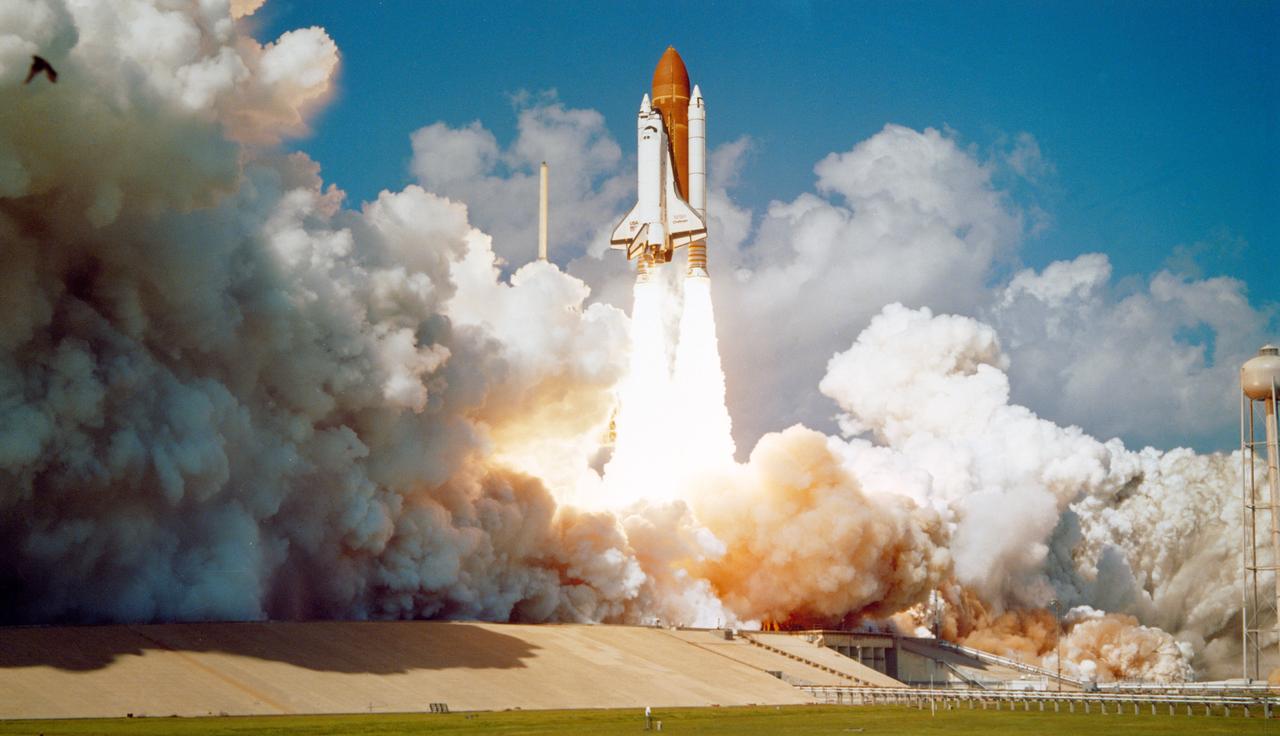
61A-S-018 (30 Oct 1985) --- A record-sized crew of eight persons is lifted toward Earth-orbit as the space shuttle Challenger blasts from the launch pad at Complex 39, Kennedy Space Center (KSC), Florida. Almost all the service structure/gantry is obscured by smoke resulting from the boosters' firing. Inside the spacecraft are astronauts Henry W. Hartsfield, Jr., Steven R. Nagel, Bonnie J. Dunbar, James F. Buchli, Guion S. Bluford, Jr., along with payload specialists Wubbo J. Ockels, Reinhard Furrer and Ernst Messerschmid. Within hours of this photo, the Spacelab D-1 Science Module was activated and crew members were busy performing experiments. Launch occurred at noon (EST), Oct. 30, 1985. Photo credit: NASA
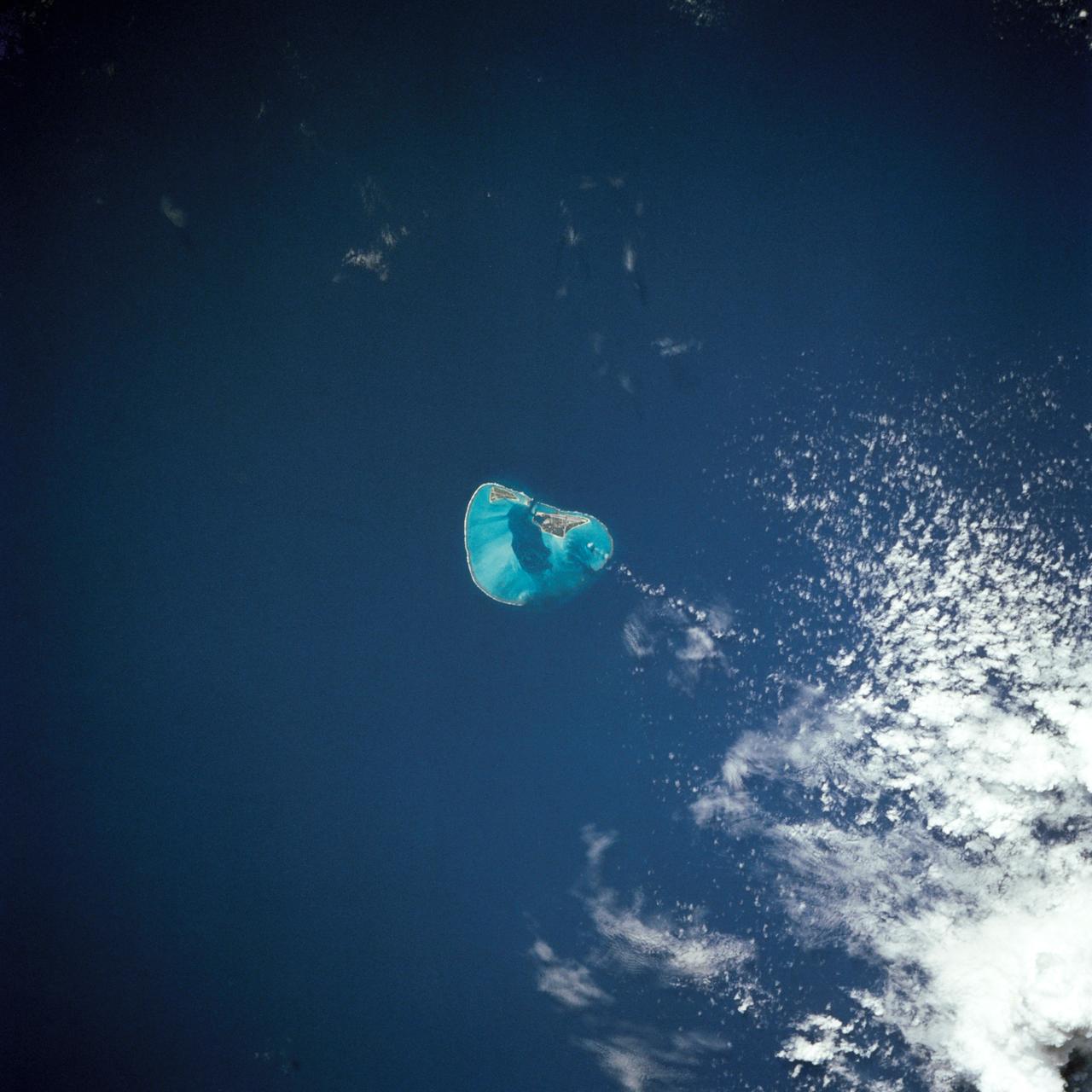
61A-40-38 (30 Oct-6 Nov 1985) --- The coral reef forming the atoll of Midway sits atop a volcanic seamount that has descended more than 3,000 feet (1000 meters) below the sea surface in this ancient region of the Hawaiian volcanic chain. This view was taken by the crew members onboard the Earth-orbiting Space Shuttle Challenger. The crew consisted of astronauts Henry W. Hartsfield, Jr., commander; Steven R. Nagel, pilot; James F. Buchli, Guion S. Bluford, Jr., and Bonnie J. Dunbar, all mission specialists; Reinhard Furrer, Ernst Messerschmid, and Wubbo J. Ockels, all payload specialists. Ockels represents the European Space Agency (ESA).

STS004-37-670 (27 June-4 July 1982) --- The North Atlantic Ocean southeast of the Bahamas serves as backdrop for this 70mm scene of the Columbia?s remote manipulator system (RMS) arm and hand-like device (called and end effector) grasping a multi-instrument monitor for detecting contaminants. The experiments is called the induced environment contaminant monitor (IECM). The small box contains 11 instruments for checking the contaminants in and around the orbiter?s cargo bay which might adversely affect delicate experiments carried onboard. Astronauts Thomas K. Mattingly II and Henry W. Hartsfield Jr. manned the Columbia for seven days and one hour. The Columbia?s vertical tail and orbital maneuvering system (OMS) pods are at left foreground. Photo credit: NASA
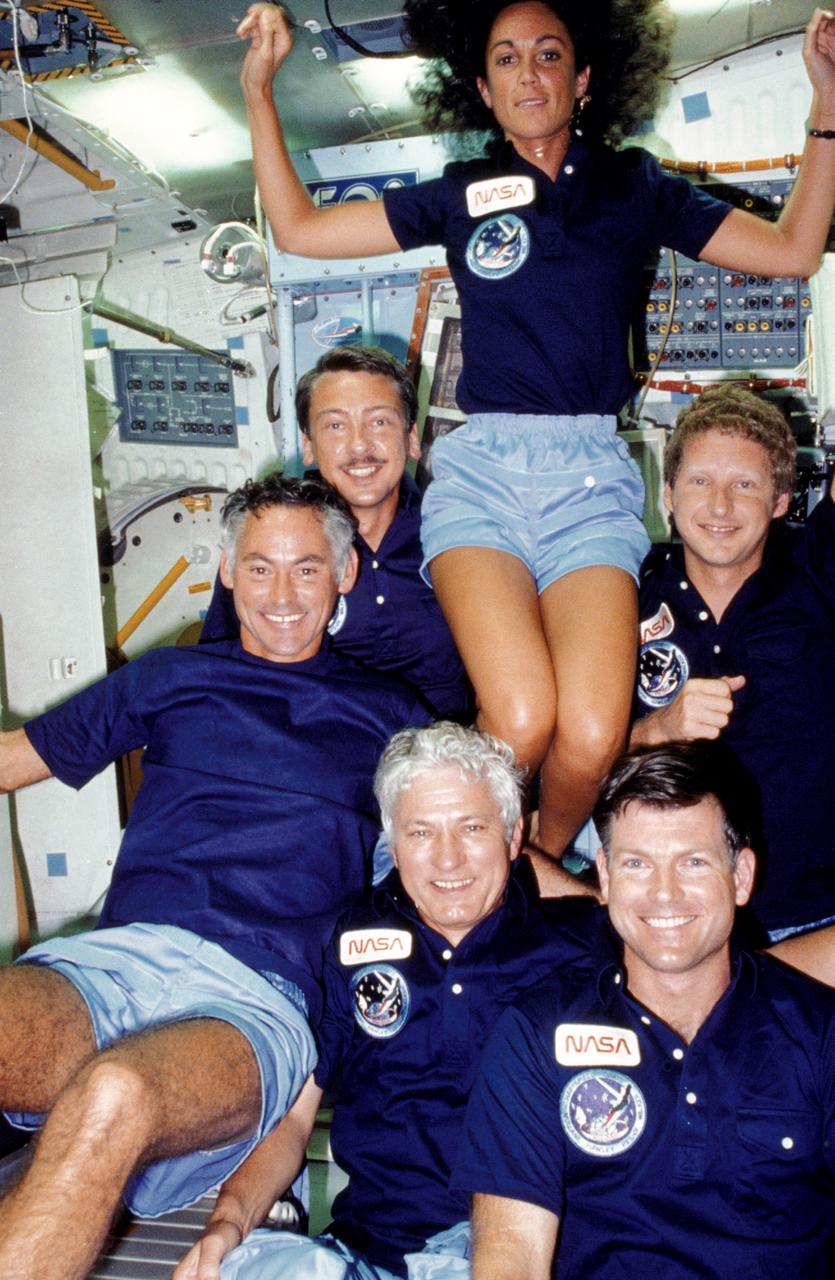
41D-12-034 (30 Aug.- 5 Sept. 1984) --- Following the completion of their six-day mission in space, the six crew members of NASA's 41-D mission mentioned that though a great deal of work was accomplished, there were "fun" moments too. From all appearance this group shot was one of the lighter moments aboard the Discovery. Crew members are (counter-clockwise from center) Henry W. Hartsfield Jr., crew commander; Michael L. Coats, pilot; Steven A. Hawley and Judith A. Resnik, both mission specialists; Charles D. Walker, payload specialist; and Richard M. (Mike) Mullane, mission specialist. A pre-set 35mm camera was used to expose the frame. Walker stands near the project that occupied the majority of his time onboard--the continuous flow electrophoresis systems (CFES) experiment. Photo credit: NASA
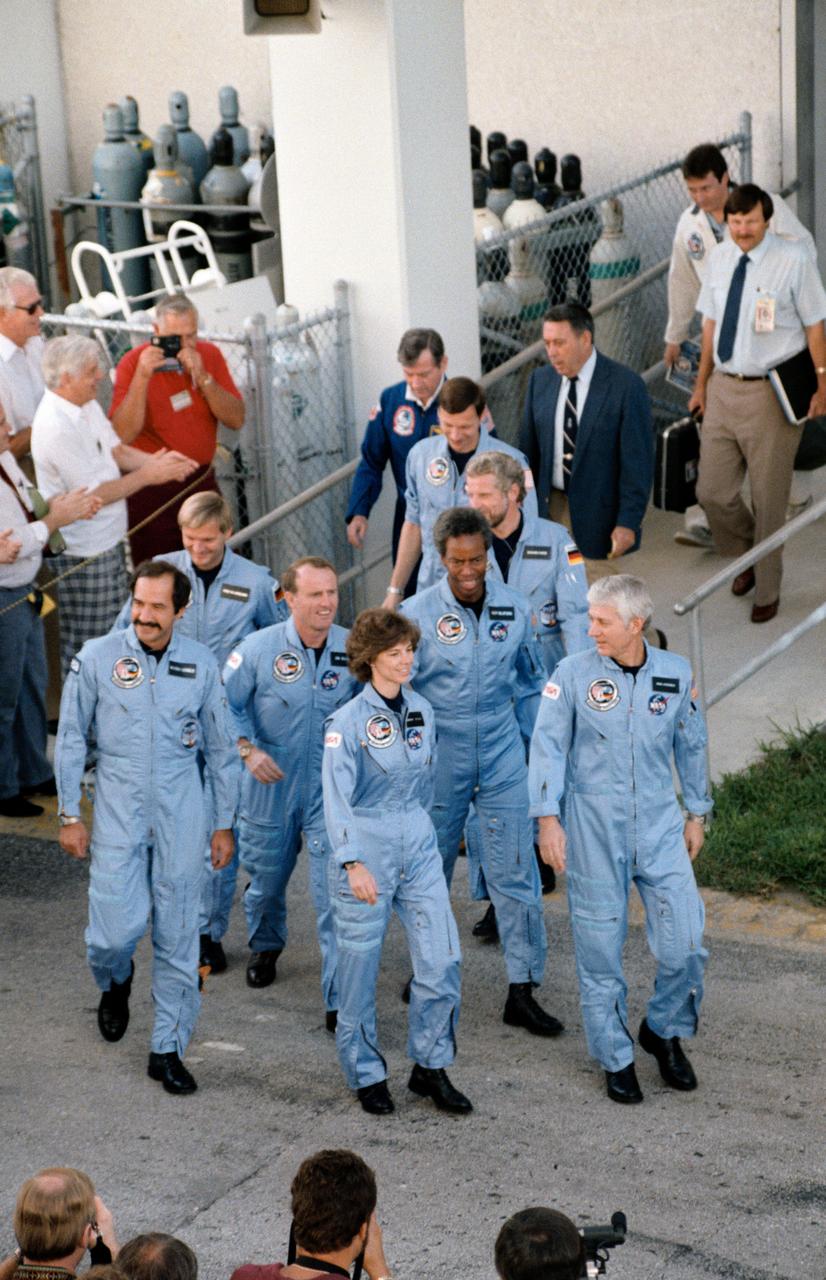
61A-S-015 (30 Oct 1985) --- A record number of crewmembers to serve on a Shuttle mission walks from the operations and checkout facility to a crew transfer van en route to Launch Pad 39A where the Challenger awaits the 61-A/Spacelab D-1launch. Leading the way is Henry W. Hartsfield Jr., mission commander, as Steven R. Nagel, pilot, trails the blue-suited team members. At center are James F. Buchli, Bonnie J. Dunbar and Guion S. Bluford Jr.--all mission specialists. They are flanked by Wubbo J. Ockels and Ernst Messerschmid on the left and Reinhard Furrer on the right. John W. Young, chief of the astronaut office at JSC and George W.S. Abbey, director of flight crew operations at JSC, follow the crew. Richard W. Nygren, assistant to the director, is in background. Messerschmid and Furrer are German scientists and Ockels is a Dutch scientist; and the three will be working with NASA's three mission specialists in the D-1 science module during the week-long flight.
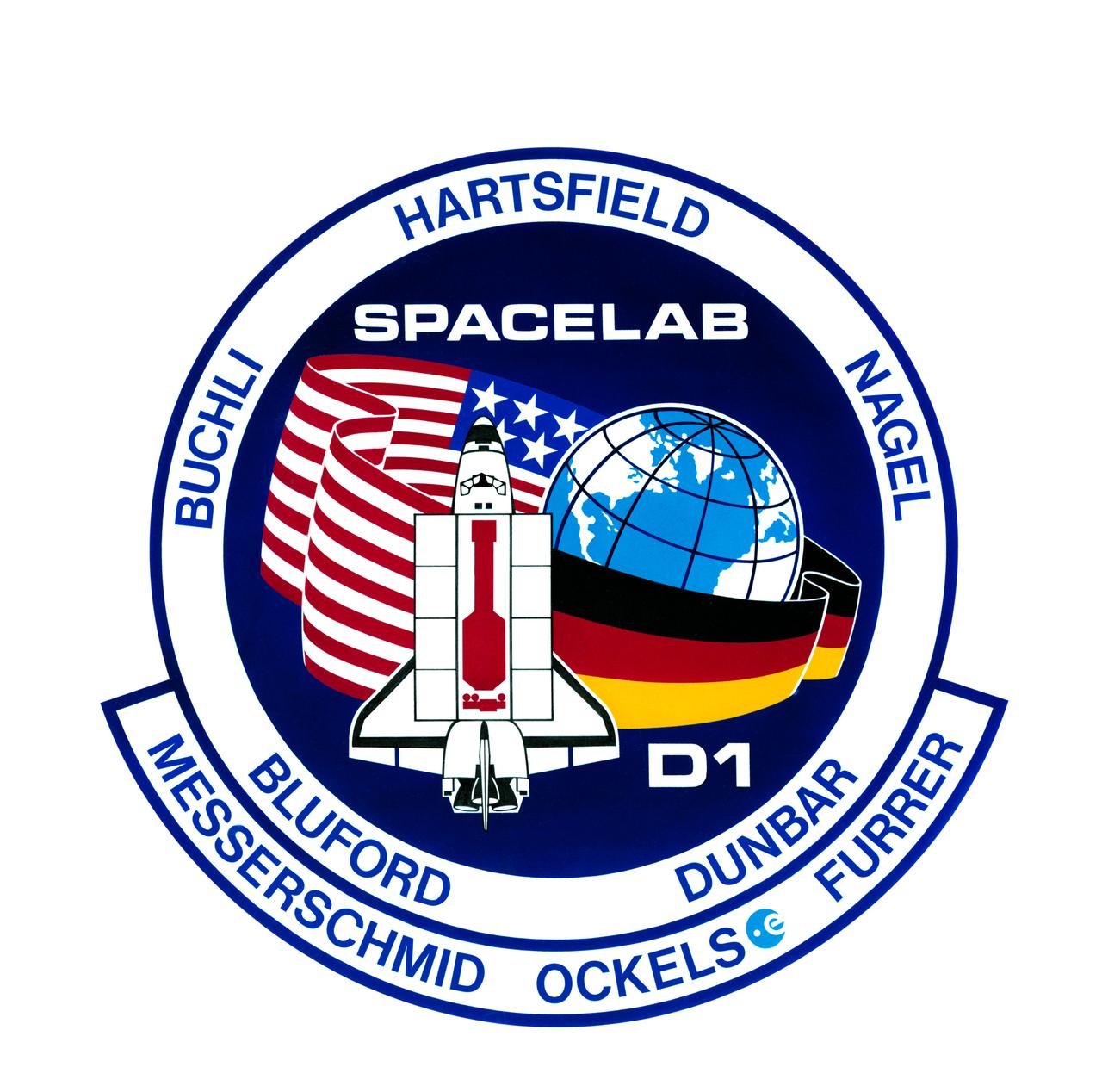
S85-38035 (August 1985) --- This insignia has been chosen by the eight members of the STS-61A/D1 Spacelab mission as the emblem they will wear on their spacesuits and which will represent the record-sized space shuttle crew on the scheduled autumn mission. Crew members' surnames surround the colorful patch scene depicting Challenger carrying a long science module and an international crew from Europe and the United States. Serving on the crew are Henry W. Hartsfield Jr., commander; Steven R. Nagel, pilot; Bonnie J. Dunbar, mission specialist; James F. Buchli, mission specialist; Guion S. Bluford Jr., mission specialist; Ernst Messerschmid, German payload specialist; Reinhard Furrer, German payload specialist; and Wubbo J. Ockels, Dutch payload specialist. The NASA insignia design for space shuttle flights is reserved for use by the astronauts and for other official use as the NASA Administrator may authorize. Public availability has been approved only in the forms of illustrations by the various news media. When and if there is any change in this policy, which is not anticipated, the change will be publicly announced. Photo credit: NASA
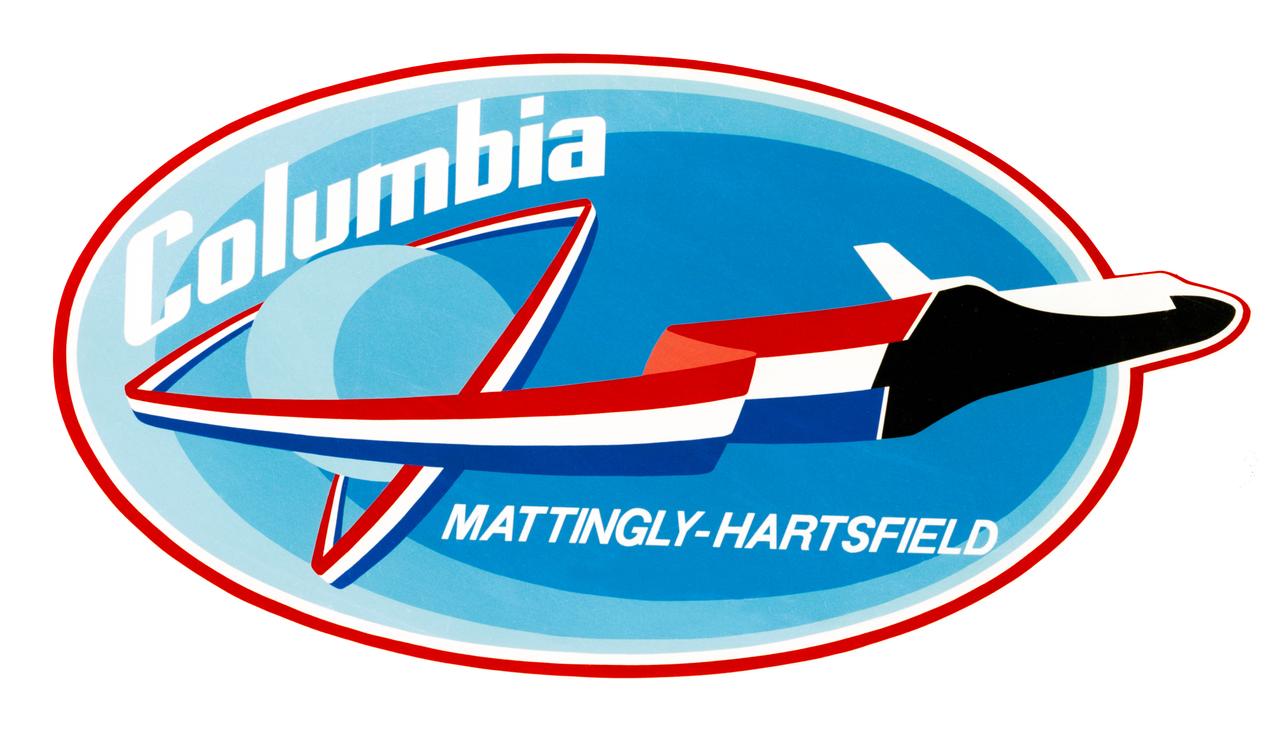
S82-29695 (April 1982) --- This oval shaped artwork is the insignia for the fourth Space Transportation System (STS-4) flight in the National Aeronautics and Space Administration's (NASA) space shuttle Columbia. The Columbia, with its crew of astronauts Thomas K. Mattingly II, and Henry W. Hartsfield Jr. aboard, will launch from the Kennedy Space Center (KSC), and orbit Earth for approximately one week in summer of 1982. The insignia shows the Columbia trailing our nation's colors in the shape of her flight number, representing the fourth and final flight of the highly successful flight test phase. She then streaks on into the future, entering the exciting operational phase scheduled to begin with STS-5. The NASA insignia design for space shuttle flights is reserved for use by the astronauts and for other official use as the NASA Administrator may authorize. Public availability has been approved only in the forms of illustrations by the various news media. When and if there is any change in this policy, which is not anticipated, the change will be publicly announced. Photo credit: NASA
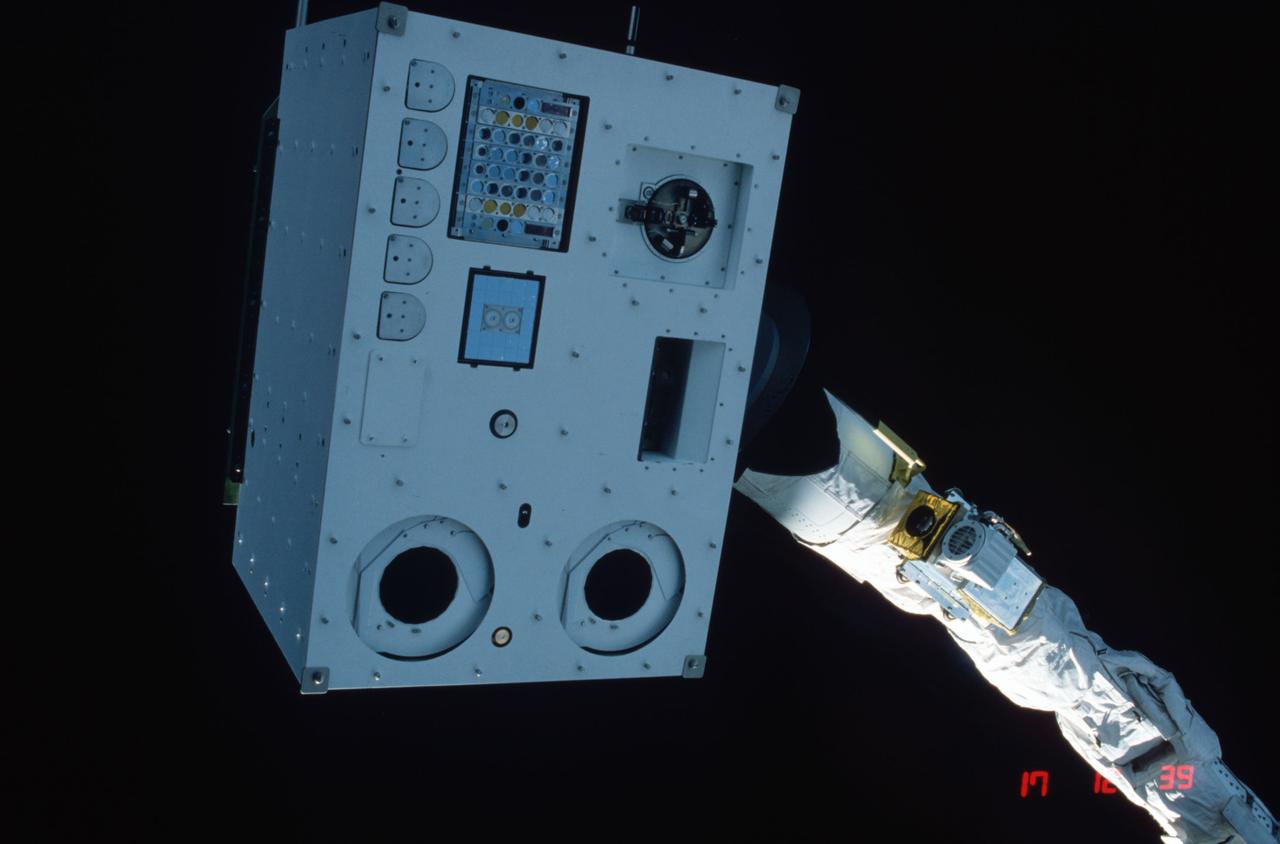
STS004-23-119 (27 June-4 July 1982) --- This is a close-up view of the Marshall Space Flight Center-developed Induced Environment Contamination Monitor (IECM), a multi-instrument box designed to check for contaminants in and around the space shuttle orbiter cargo bay which might adversely affect delicate experiments carried aboard. The astronaut crew of Thomas K. Mattingly II and Henry W. Hartsfield Jr. maneuvered the Canadian-built robot arm (called the remote manipulator system) very near their overhead flight deck windows and captured this scene with a 35mm camera. HOLD PICTURE HORIZONTALLY WITH FRAME NUMBER AT TOP CENTER. Cameras for the 11 instruments are pictured as black circles at the bottom of the frame. The access door to the arm and safe plug is located about halfway up the left edge of the box. A cascade injector device is immediately to the right of the plug. The rectangular opening at right center of the monitor is the optical effects module. Mass spectrometer is at upper left. Air sampler bottles are at upper left. The colorful rectangle near upper left of the monitor is the passive array. Not easily seen, but also a part of the instrument, are the cryogenic quartz crystal micro balance and the temperature controlled quartz micro balance. Photo credit: NASA
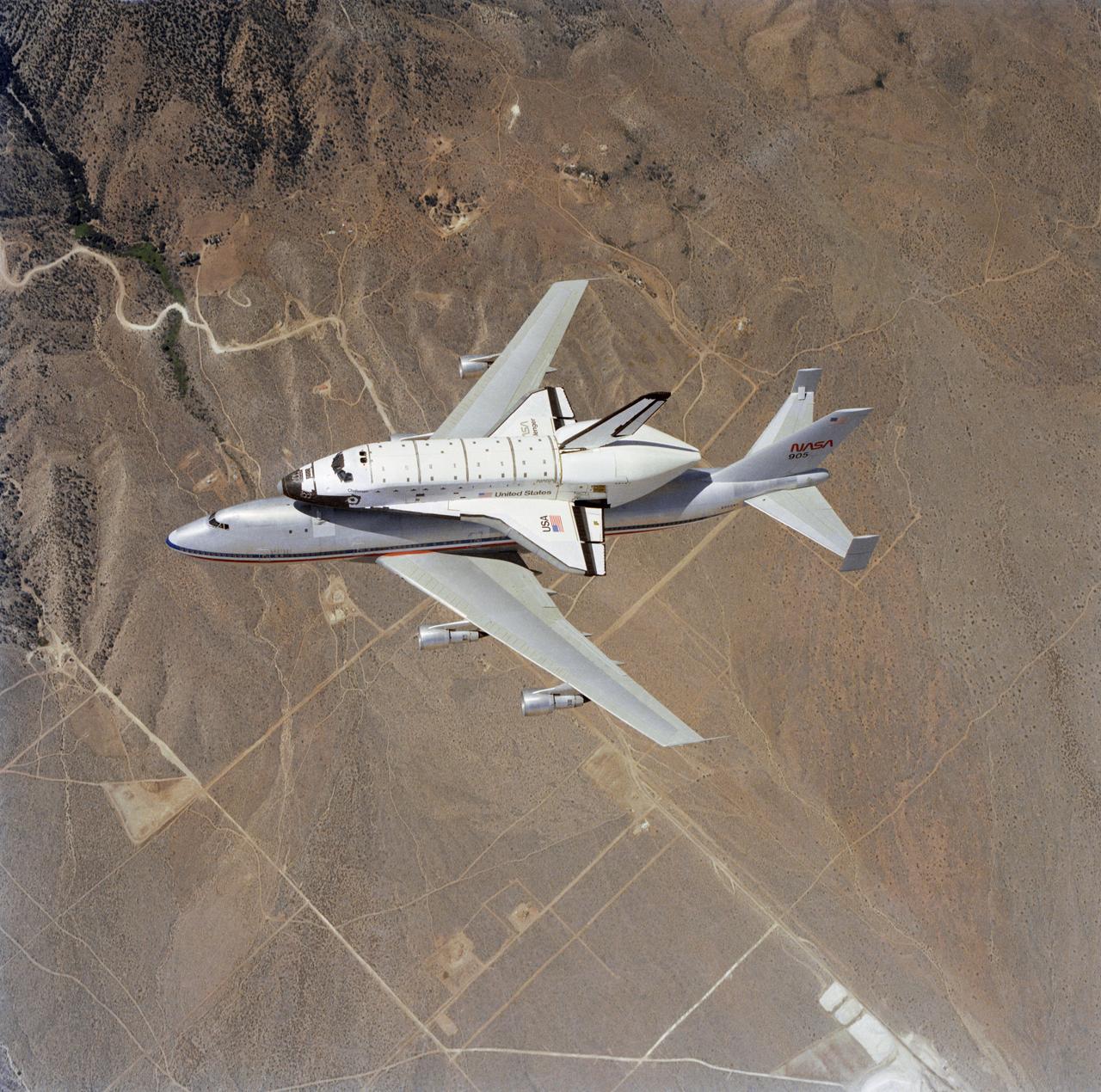
S82-33421 (4 July 1982) --- This spectacular view of the NASA 905 transport aircraft taxiing the new space shuttle Challenger was recorded from a T-38 aircraft as the aircraft were heading for Houston, Texas and a combination "meet the Challenger and greet the STS-4 crew" ceremony at Ellington Air Force Base. The STS-4 astronauts-Thomas K. Mattingly II, and Henry W. Hartsfield Jr., were minutes ahead of the tandem in another aircraft. Earlier today they completed a successful week-long stay in space aboard the Columbia. Upon their landing at Edwards Air Force Base, a historical "first" occurred for NASA and this nation. Three shuttlecraft ? The Enterprise, Challenger and Columbia ? were together at one time in the same location. The hardware served as a backdrop for a speech by President Ronald Reagan leading the nation in a special July 4 celebration. Following the stopover in Houston, the Challenger will move onto Florida for processing in preparation for future spaceflights. Photo credit: NASA
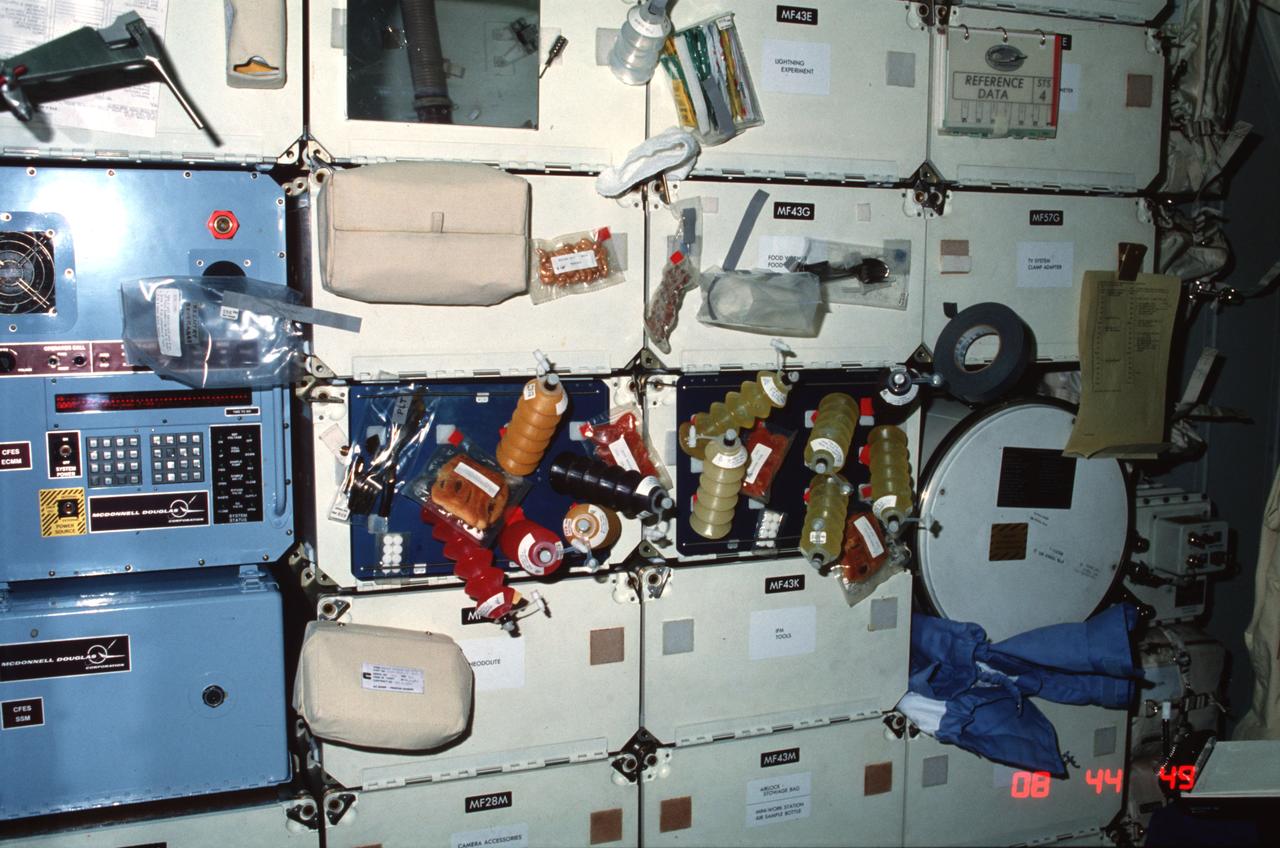
STS004-28-330 (27 June-4 July 1982) --- Thanks to a variety of juices and other food items, this array in the middeck area probably represents the most colorful area onboard the Earth-orbiting space shuttle Columbia. Most of the meal items have been carefully fastened to food trays and locker doors (or both). What has not been attached by conventional methods has been safely ?tucked? under something heavy (note jacket shoved into space occupied by one of Columbia?s experiments). The Monodisperse Latex Reflector (MLR), making its second flight on Columbia, is designed to test the feasibility of making large-size, monodisperse (same size), and polystyrene latex micro-spheres using the products of the STS-3 mission as seed particles. The latex spheres are used in calibration of scientific and industrial equipment and have potential medical and research applications. This frame was exposed with a 35mm camera. Onboard the space vehicle for seven days were astronauts Thomas K. Mattingly II and Henry W. Hartsfield Jr. Photo credit: NASA
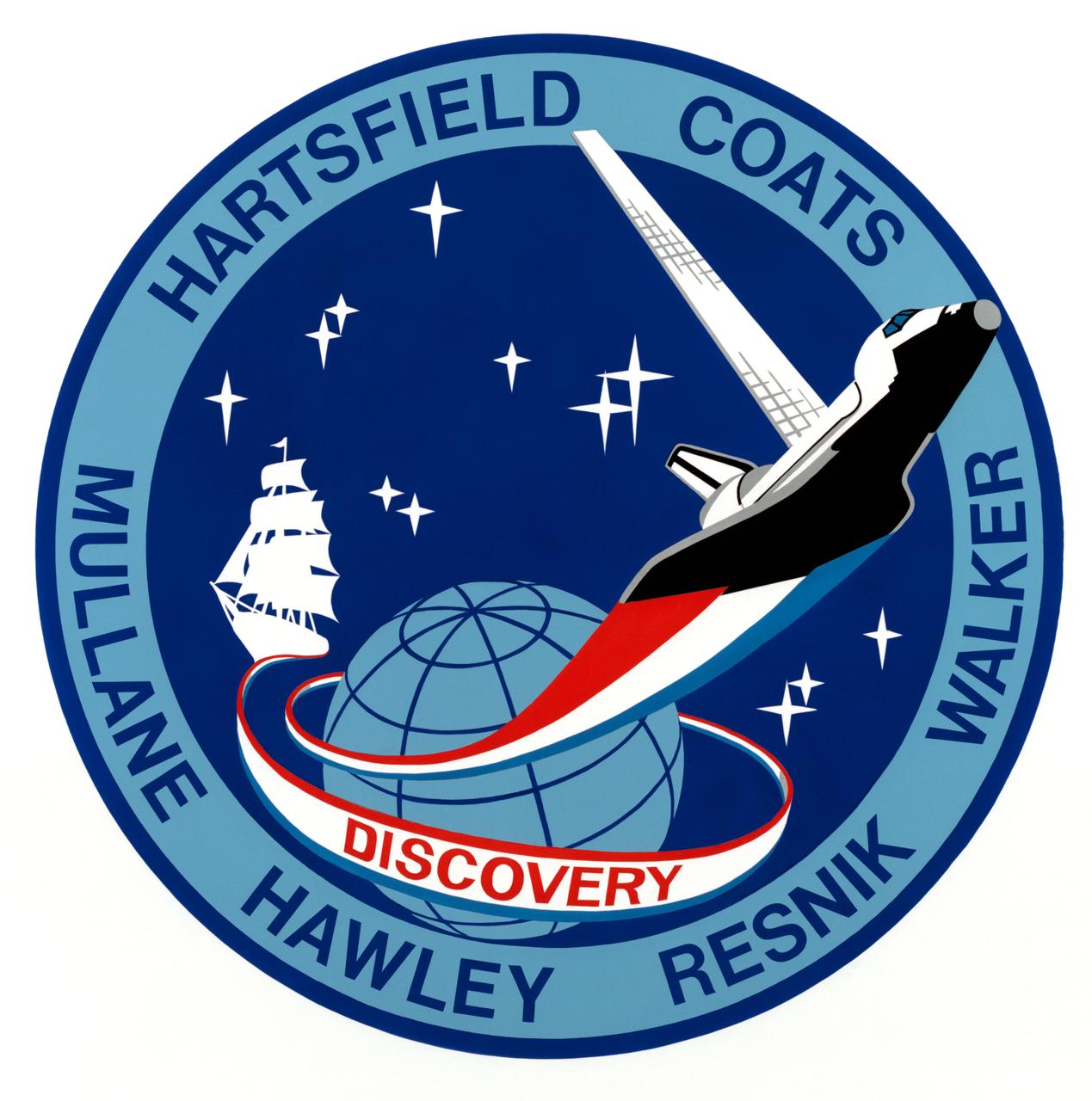
S84-26391 (3 April 1984) --- The official mission insignia for the 41-D space shuttle flight features the Discovery--NASA's third orbital vehicle--as it makes its maiden voyage. The ghost ship represents the orbiter's namesakes which have figured prominently in the history of exploration. The space shuttle Discovery heads for new horizons to extend that proud tradition. Surnames for the crew members of NASA's eleventh space shuttle mission encircle the red, white and blue scene. They are astronauts Henry W. Hartsfield Jr., commander; Michael L. Coats, pilot; Judith A. Resnik, Steven A. Hawley and Richard M. (Mike) Mullane, all mission specialists; and Charles D. Walker, payload specialist. The NASA insignia design for space shuttle flights is reserved for use by the astronauts and for other official use as the NASA Administrator may authorize. Public availability has been approved only in the forms of illustrations by the various news media. When and if there is any change in this policy, which is not anticipated, the change will be publicly announced. Photo credit: NASA