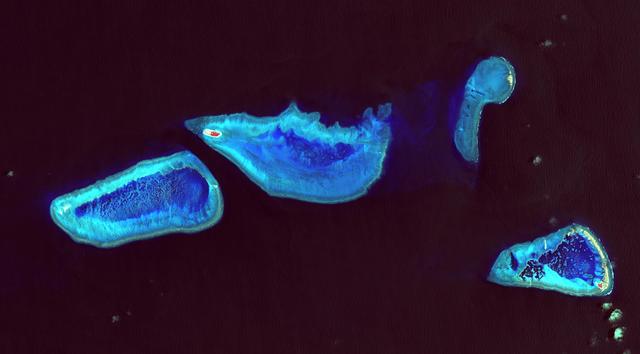
Heron Island is located in Queensland, Australia, approximately 45 miles (72 kilometers) off the Australian mainland, to the northeast of Gladstone. Part of Australia's Great Barrier Reef, the island is an evergreen coral cay surrounded by Wistari coral reef. Although just 42 acres in size, the island is home to a large resort and the University of Queensland's Heron Island Research Station. The island is famous for diving and snorkeling and is a World Heritage-Listed Marine National Park. It is one of two locations on the Great Barrier Reef that are serving as bases for in-water validation activities for NASA's Coral Reef Airborne Laboratory (CORAL) mission, which is studying the condition and function of the Great Barrier Reef and selected reef systems worldwide using NASA's airborne Portable Remote Imaging Spectrometer (PRISM) instrument from an altitude of 28,000 feet (8,500 meters).  The Advanced Spaceborne Thermal Emission and Reflection Radiometer (ASTER) instrument on NASA's Terra spacecraft acquired this image of Heron Island and its surroundings on December 22, 2001. The island appears at the left of the reef (Heron Reef) in the center of the image. Vegetation is red on the image. The image covers an area of 10.3 by 18.6 miles (16.5 by 30.0 kilometers), and is located at 23.5 degrees south, 151.9 degrees east.   http://photojournal.jpl.nasa.gov/catalog/PIA20900
A Bird Eye View of Australia Heron Island
KENNEDY SPACE CENTER, FLA.  -    A great blue heron swoops down for a landing on the water near KSC.  The heron is one of 310 species of birds that inhabit the National Merritt Island Wildlife Refuge, which shares a boundary with KSC.  The marshes and open water of the refuge also provide wintering areas for 23 species of migratory waterfowl, as well as a year-round home for great blue herons, great egrets, wood storks, cormorants, brown pelicans and other species of marsh and shore birds.
KENNEDY SPACE CENTER, FLA. - A great blue heron swoops down for a landing on the water near KSC. The heron is one of 310 species of birds that inhabit the National Merritt Island Wildlife Refuge, which shares a boundary with KSC. The marshes and open water of the refuge also provide wintering areas for 23 species of migratory waterfowl, as well as a year-round home for great blue herons, great egrets, wood storks, cormorants, brown pelicans and other species of marsh and shore birds.
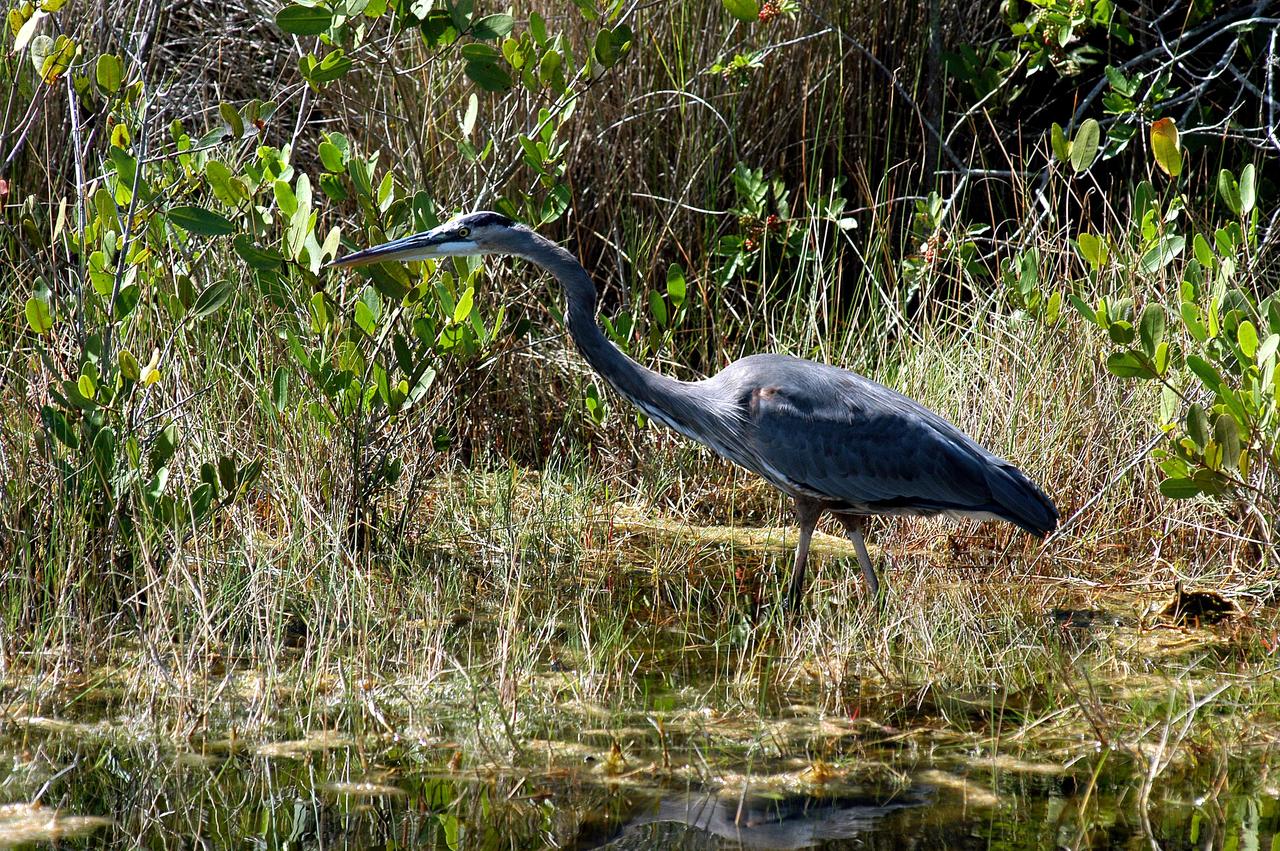
KENNEDY SPACE CENTER, FLA.   -   A great blue heron patiently stalks its prey in the marshes around KSC.   The heron is one of 310 species of birds that inhabit the National Merritt Island Wildlife Refuge, which shares a boundary with KSC.  The marshes and open water of the refuge also provide wintering areas for 23 species of migratory waterfowl, as well as a year-round home for great blue herons, great egrets, wood storks, cormorants, brown pelicans and other species of marsh and shore birds.
KENNEDY SPACE CENTER, FLA. - A great blue heron patiently stalks its prey in the marshes around KSC. The heron is one of 310 species of birds that inhabit the National Merritt Island Wildlife Refuge, which shares a boundary with KSC. The marshes and open water of the refuge also provide wintering areas for 23 species of migratory waterfowl, as well as a year-round home for great blue herons, great egrets, wood storks, cormorants, brown pelicans and other species of marsh and shore birds.
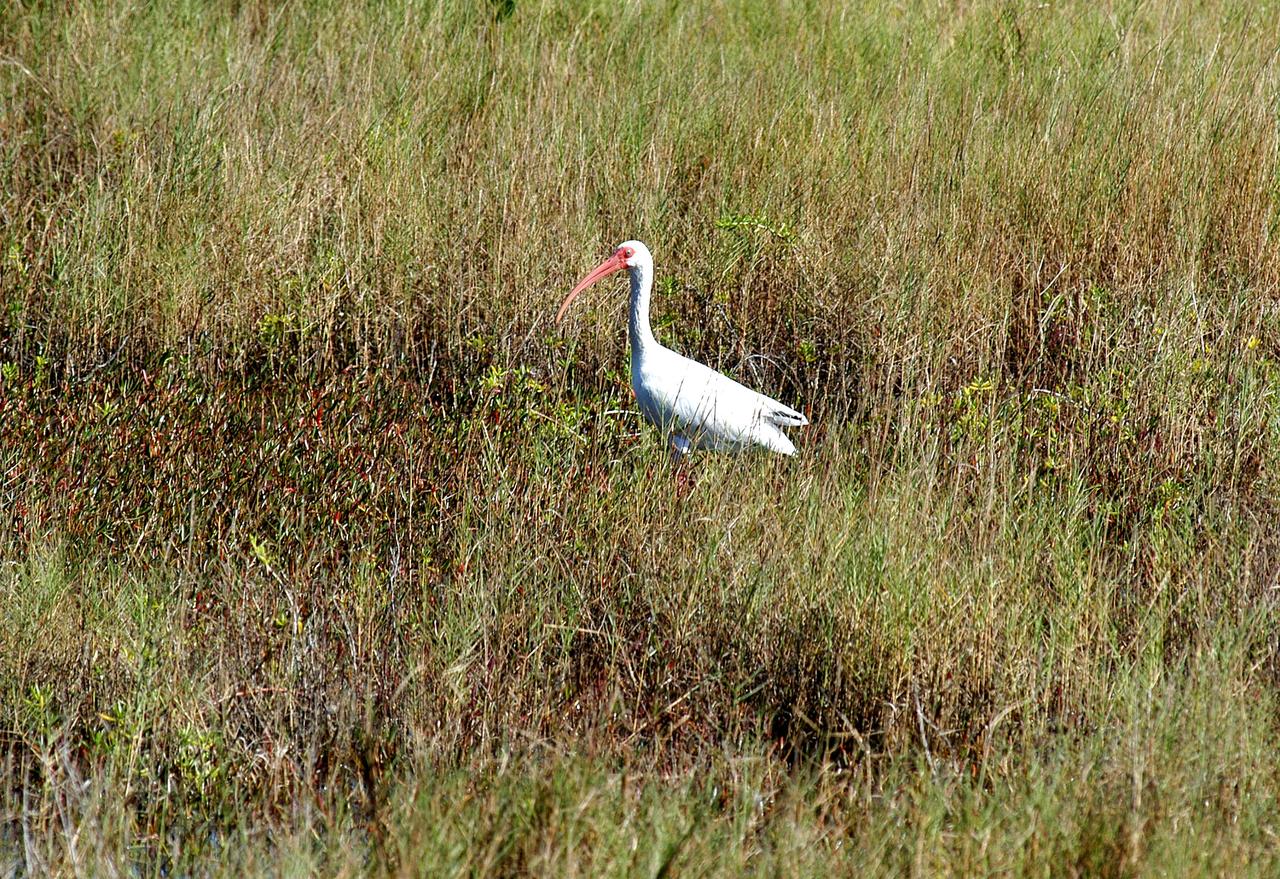
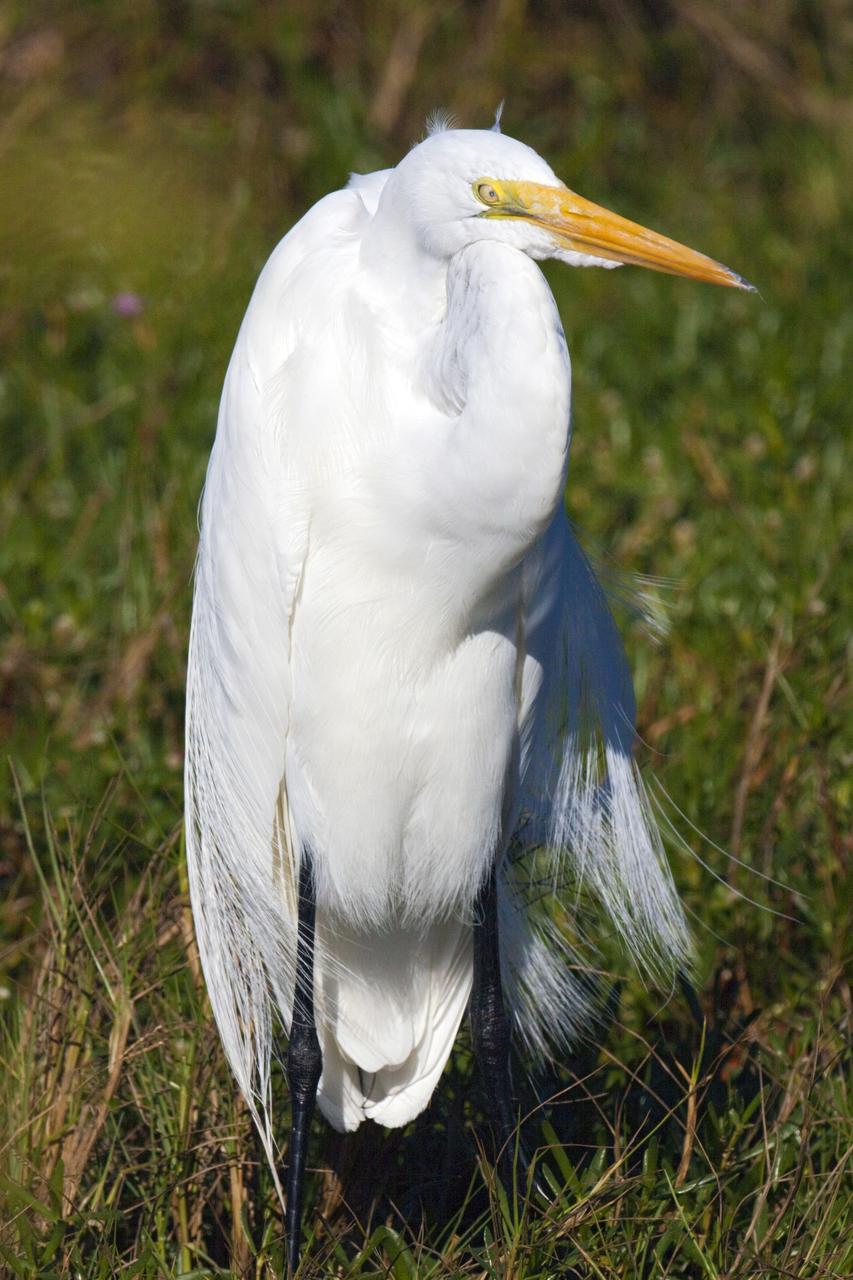
KENNEDY SPACE CENTER, FLA.   -   A great white heron silently waits in the tall grass within KSC.  The heron is one of 310 species of birds that inhabit the National Merritt Island Wildlife Refuge, which shares a boundary with KSC.  The marshes and open water of the refuge also provide wintering areas for 23 species of migratory waterfowl, as well as a year-round home for great blue herons, great egrets, wood storks, cormorants, brown pelicans and other species of marsh and shore birds.
KENNEDY SPACE CENTER, FLA. - A great white heron silently waits in the tall grass within KSC. The heron is one of 310 species of birds that inhabit the National Merritt Island Wildlife Refuge, which shares a boundary with KSC. The marshes and open water of the refuge also provide wintering areas for 23 species of migratory waterfowl, as well as a year-round home for great blue herons, great egrets, wood storks, cormorants, brown pelicans and other species of marsh and shore birds.
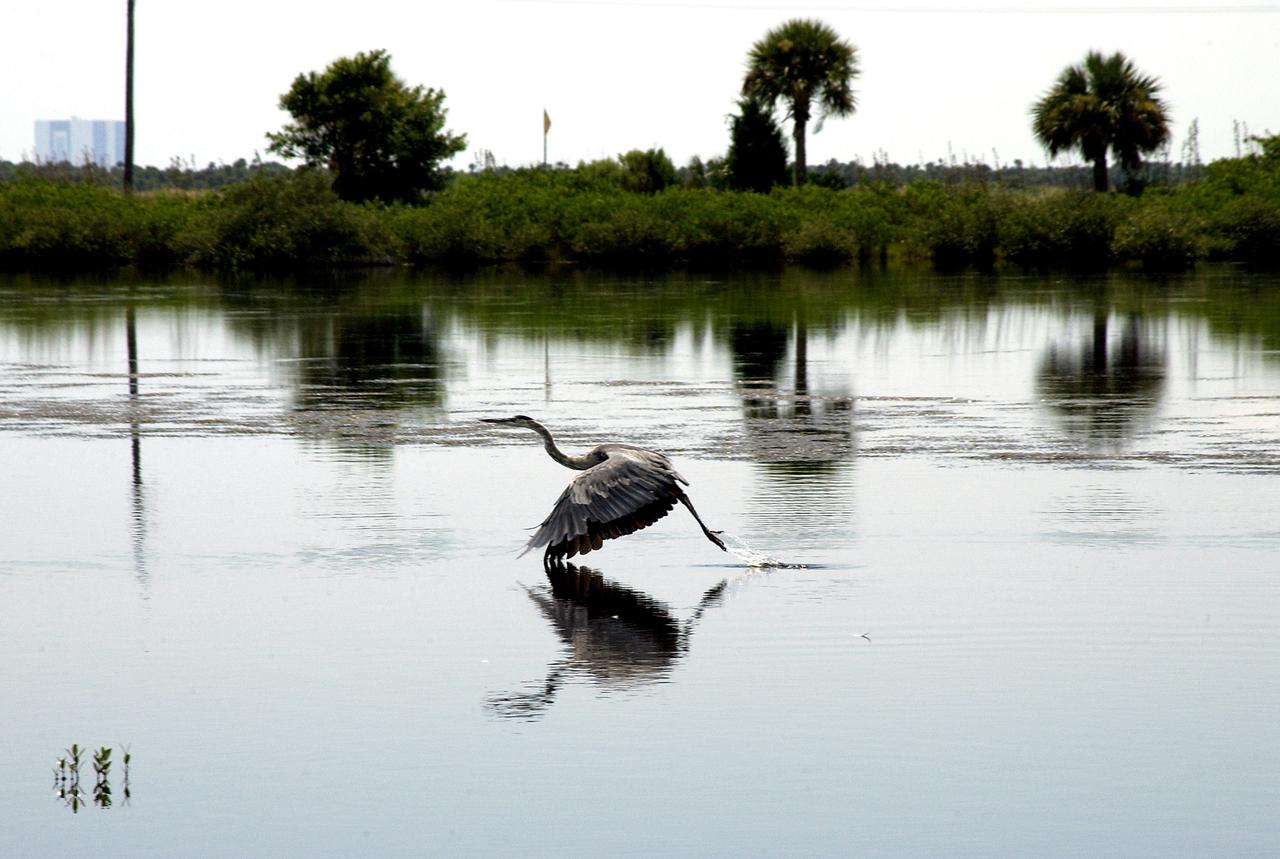
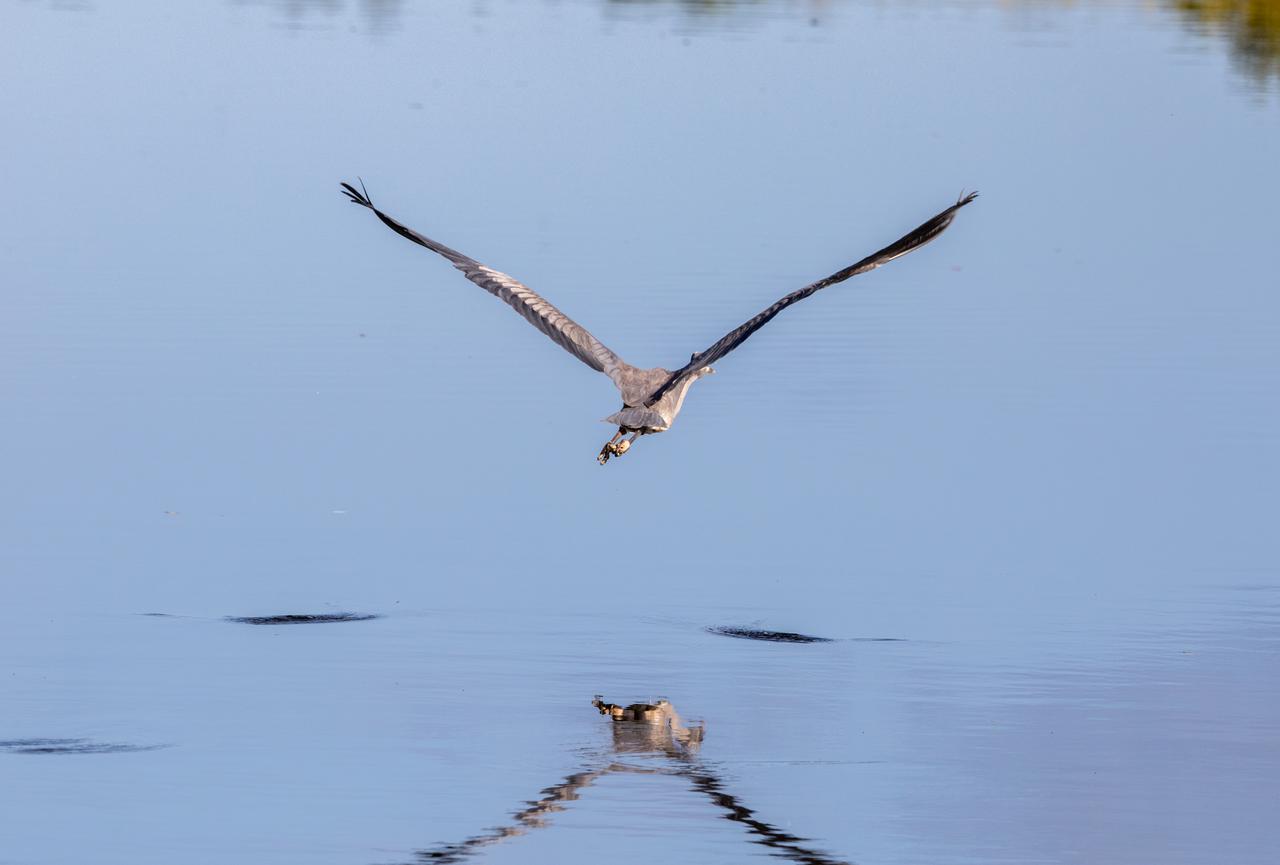
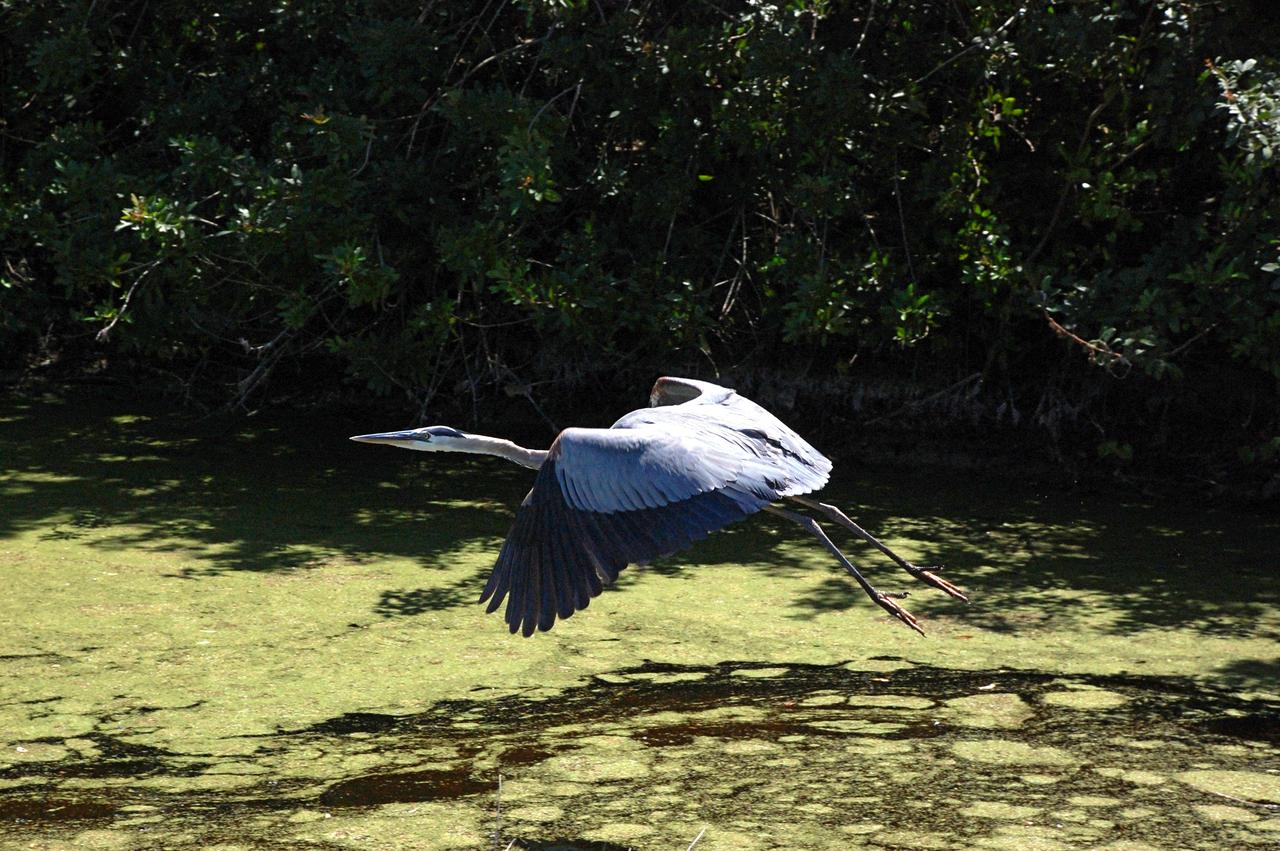
KENNEDY SPACE CENTER, FLA.  - A  Great Blue Heron takes flight from waters on KSC.  It is one of 310 species of birds that inhabit the National Merritt Island Wildlife Refuge, which shares a boundary with KSC.  The marshes and open water of the refuge also provide wintering areas for 23 species of migratory waterfowl, as well as a year-round home for great blue herons, great egrets, wood storks, cormorants, brown pelicans and other species of marsh and shore birds.
KENNEDY SPACE CENTER, FLA. - A Great Blue Heron takes flight from waters on KSC. It is one of 310 species of birds that inhabit the National Merritt Island Wildlife Refuge, which shares a boundary with KSC. The marshes and open water of the refuge also provide wintering areas for 23 species of migratory waterfowl, as well as a year-round home for great blue herons, great egrets, wood storks, cormorants, brown pelicans and other species of marsh and shore birds.
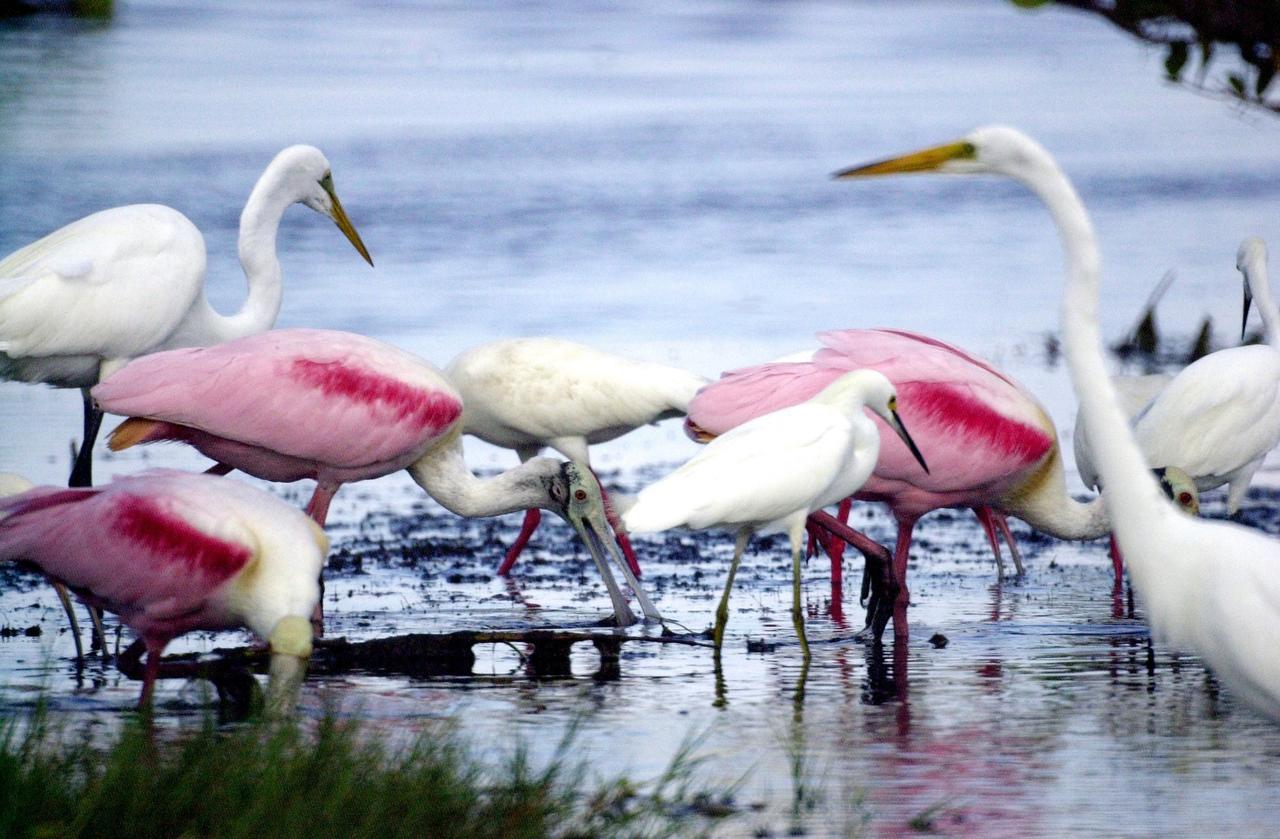
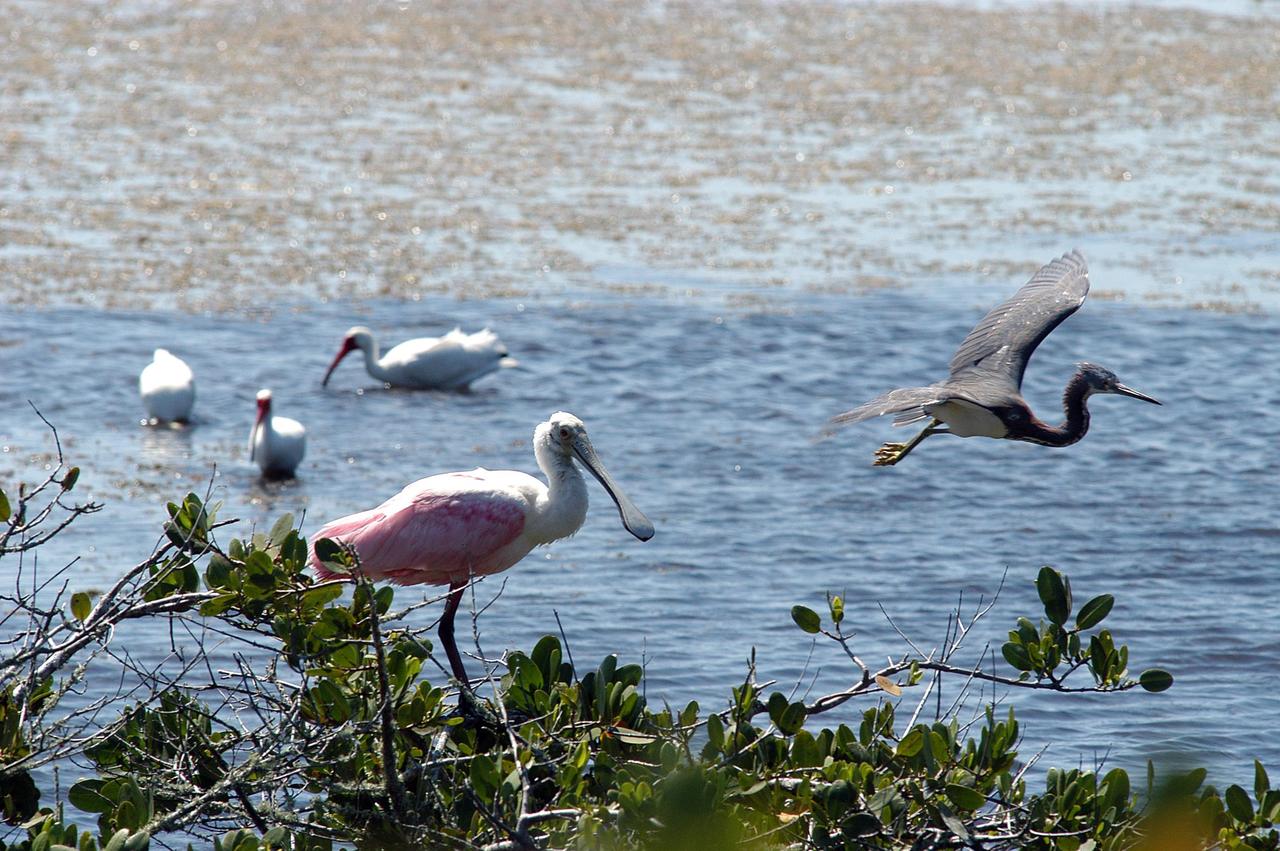
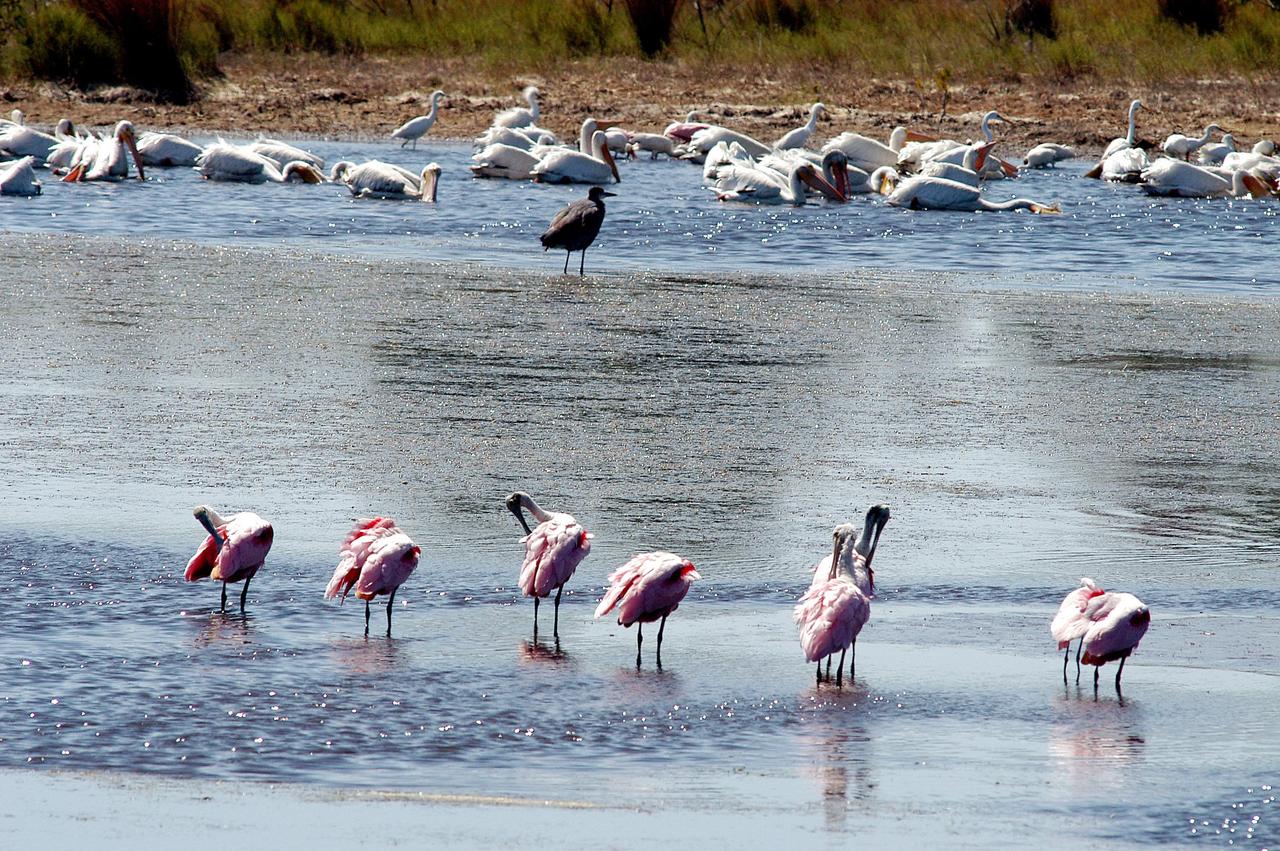
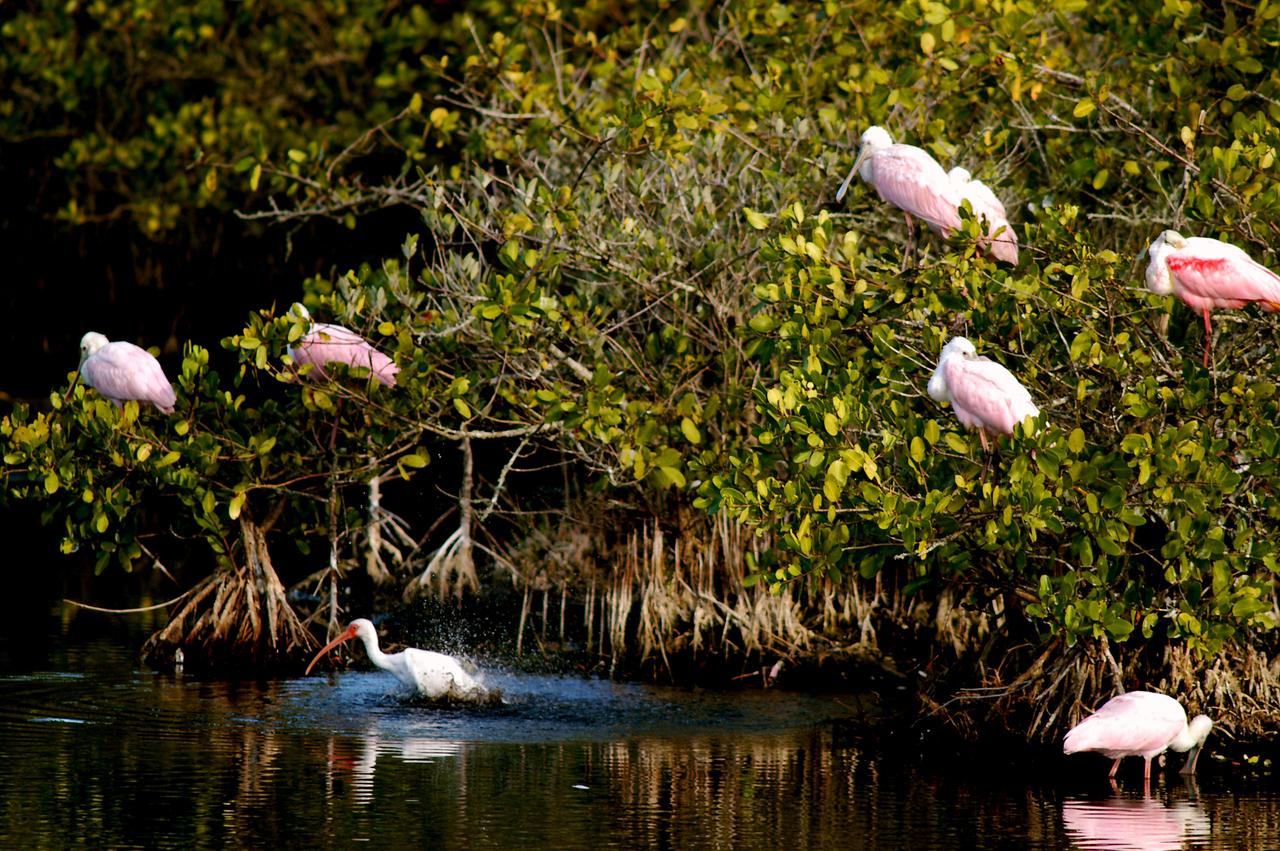
KENNEDY SPACE CENTER, FLA. --  An immature -- therefore white -- Little Blue Heron (center, with black bill) joins Roseate Spoonbills and a pair of Great Egrets in a lake near Kennedy Space Center.  The heron ranges along the east coast of the United States, from New York to Texas, inland to Oklahoma.  It winters from South Carolina to South America.  For habitat the Little Blue Heron prefers freshwater swamps and lagoons in the South, coastal thickets on islands in the North.  The species is often observed in large mixed concentrations of herons and egrets
KSC-02pd0436
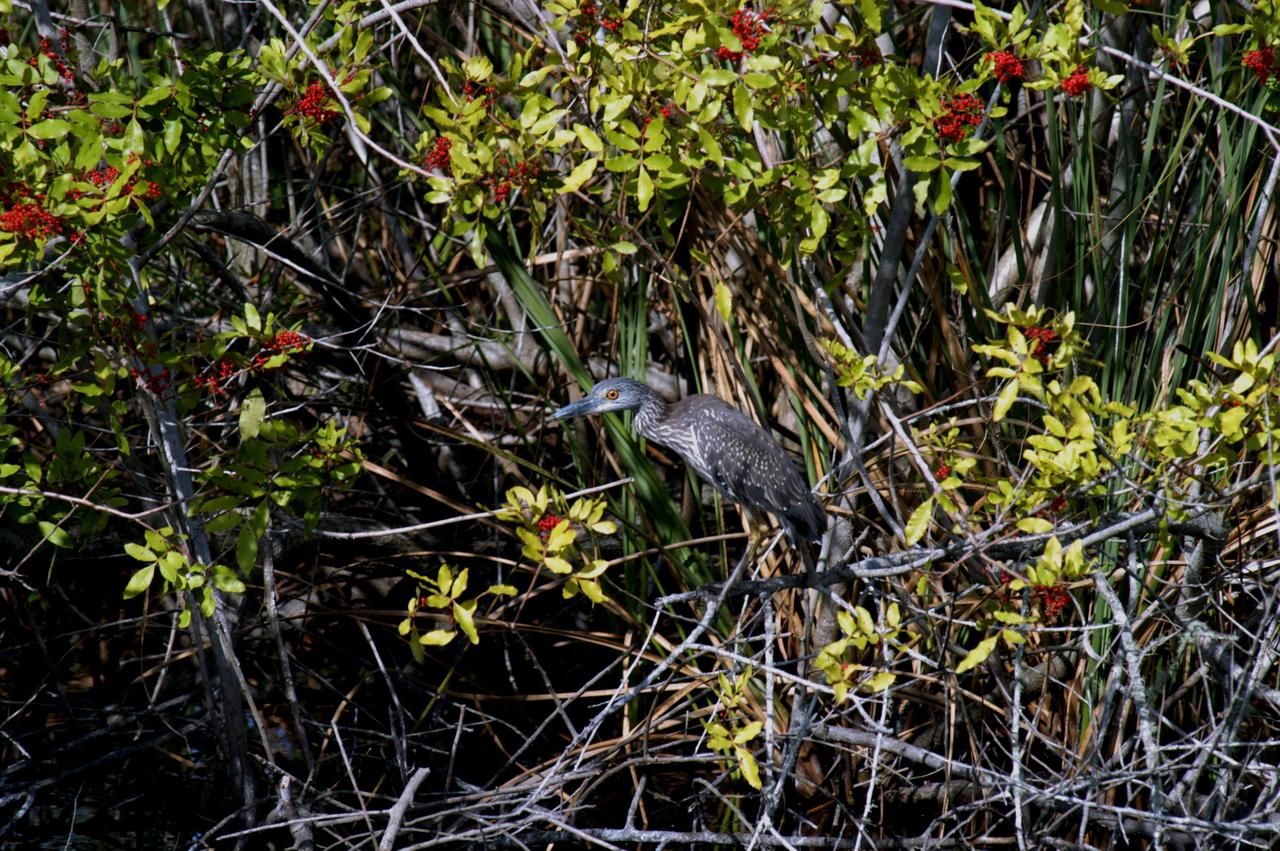
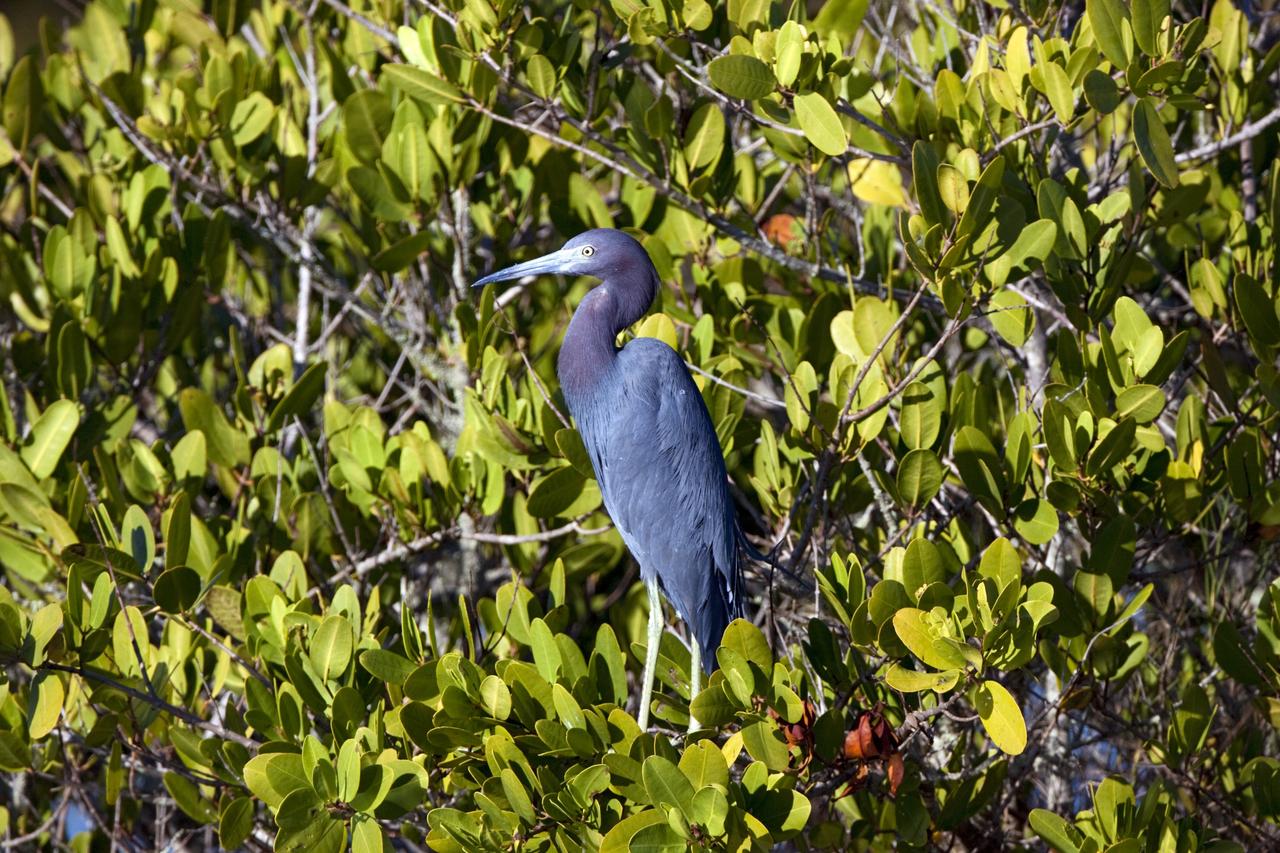
KENNEDY SPACE CENTER, FLA. - A young Little Blue Heron appears to hide in the underbrush at a site on NASA’s Kennedy Space Center.  These herons inhabit freshwater swamps and lagoons in the South; coastal thickets on islands in the North.  The Center shares a boundary with the 92,000-acre Merritt Island National Wildlife Refuge, which is a habitat for more than 310 species of birds, 25 mammals, 117 fishes and 65 amphibians and reptiles.  The marshes and open water of the refuge also provide wintering areas for 23 species of migratory waterfowl, as well as a year-round home for great blue herons, great egrets, wood storks, cormorants, brown pelicans and other species of marsh and shore birds.
KSC-04pd0205
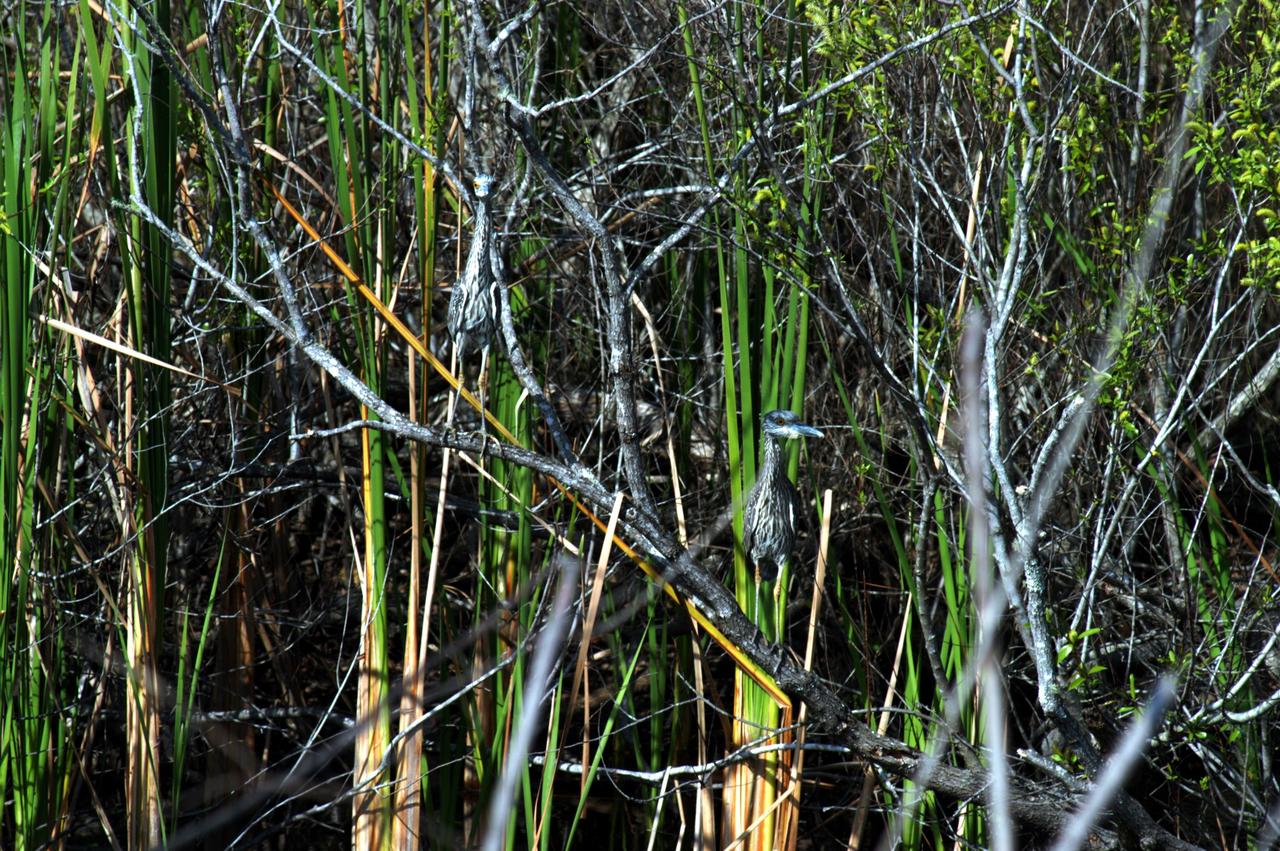
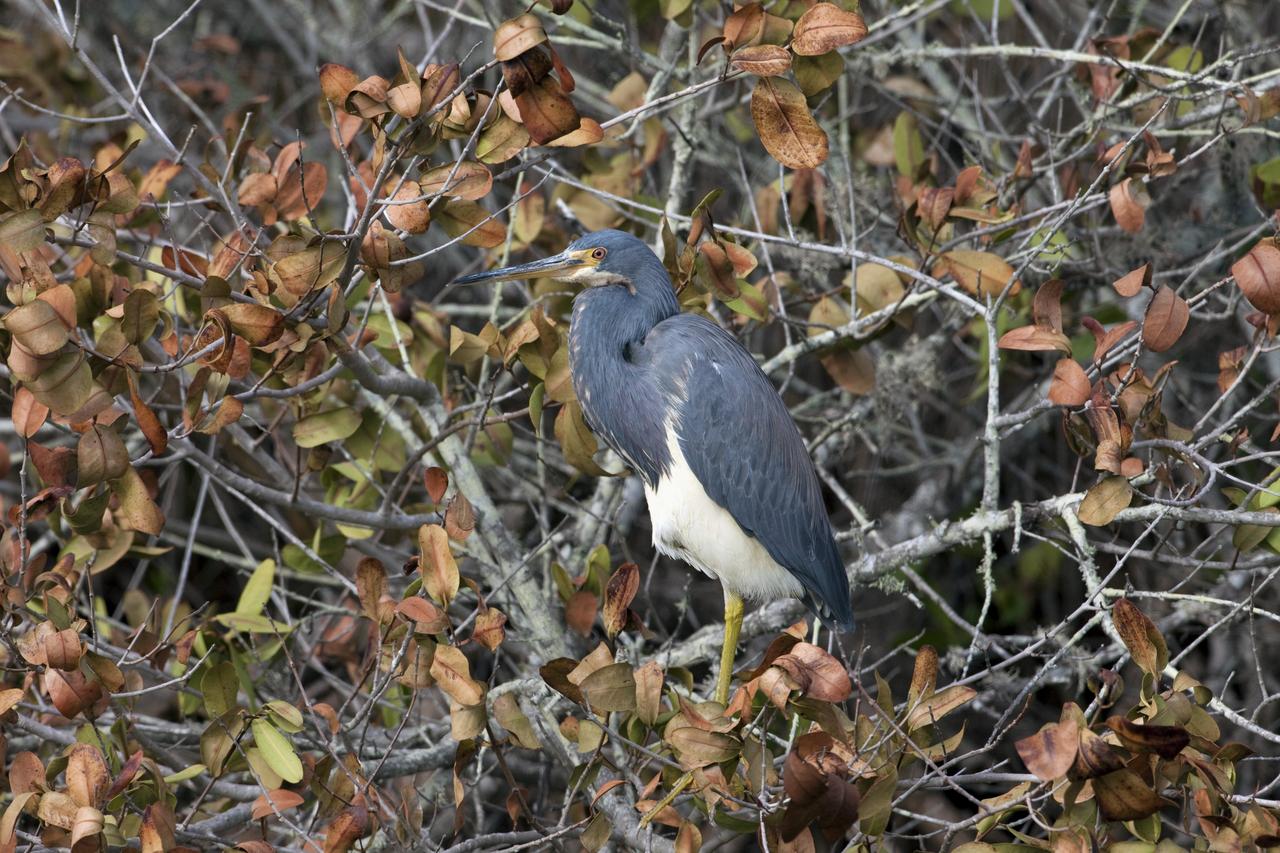
KENNEDY SPACE CENTER, FLA. - Two young Little Blue Herons perch on a limb in the underbrush at a site on NASA’s Kennedy Space Center.  These herons inhabit freshwater swamps and lagoons in the South; coastal thickets on islands in the North. Adults are slate blue with maroon necks.  Young birds acquiring adult plumage have a piebald appearance. The Center shares a boundary with the 92,000-acre Merritt Island National Wildlife Refuge, which is a habitat for more than 310 species of birds, 25 mammals, 117 fishes and 65 amphibians and reptiles.  The marshes and open water of the refuge also provide wintering areas for 23 species of migratory waterfowl, as well as a year-round home for great blue herons, great egrets, wood storks, cormorants, brown pelicans and other species of marsh and shore birds.
KSC-04pd0204
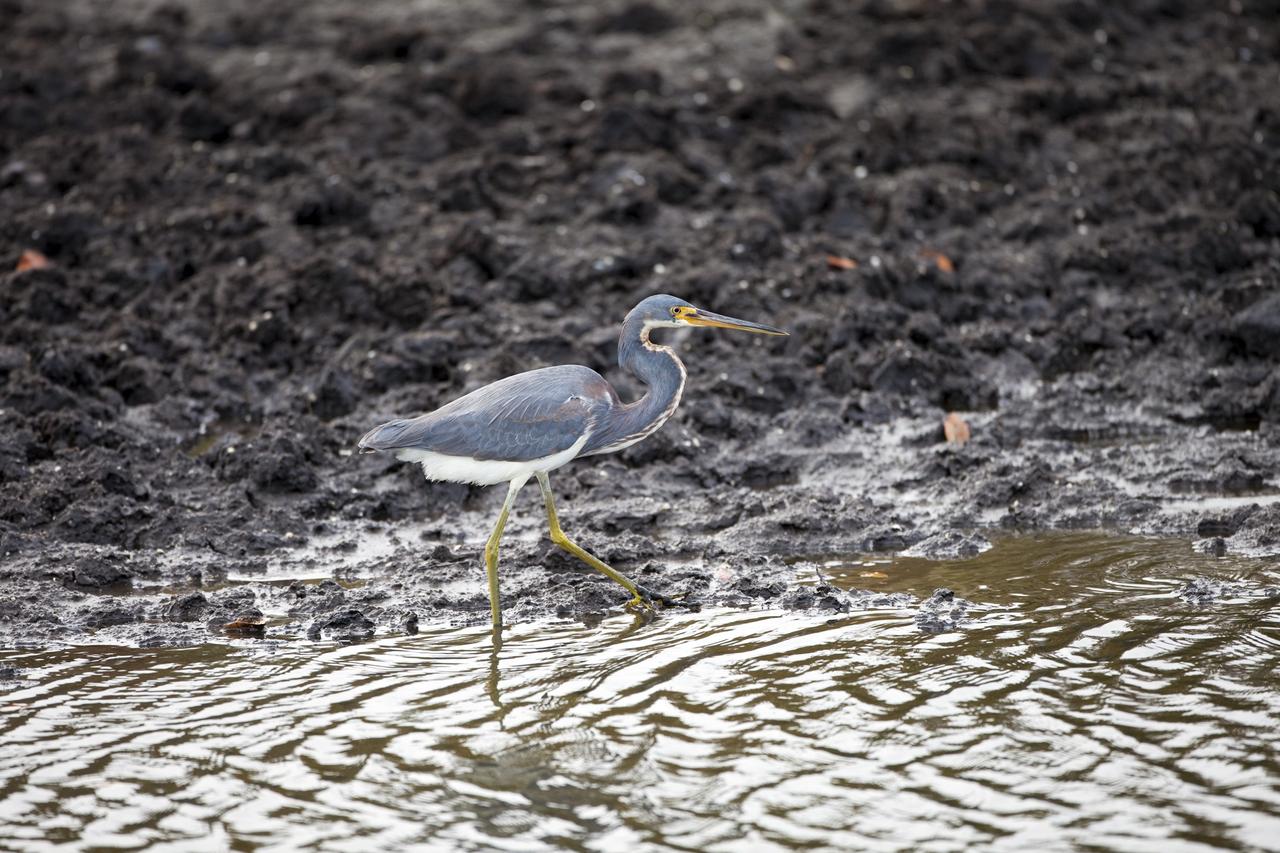
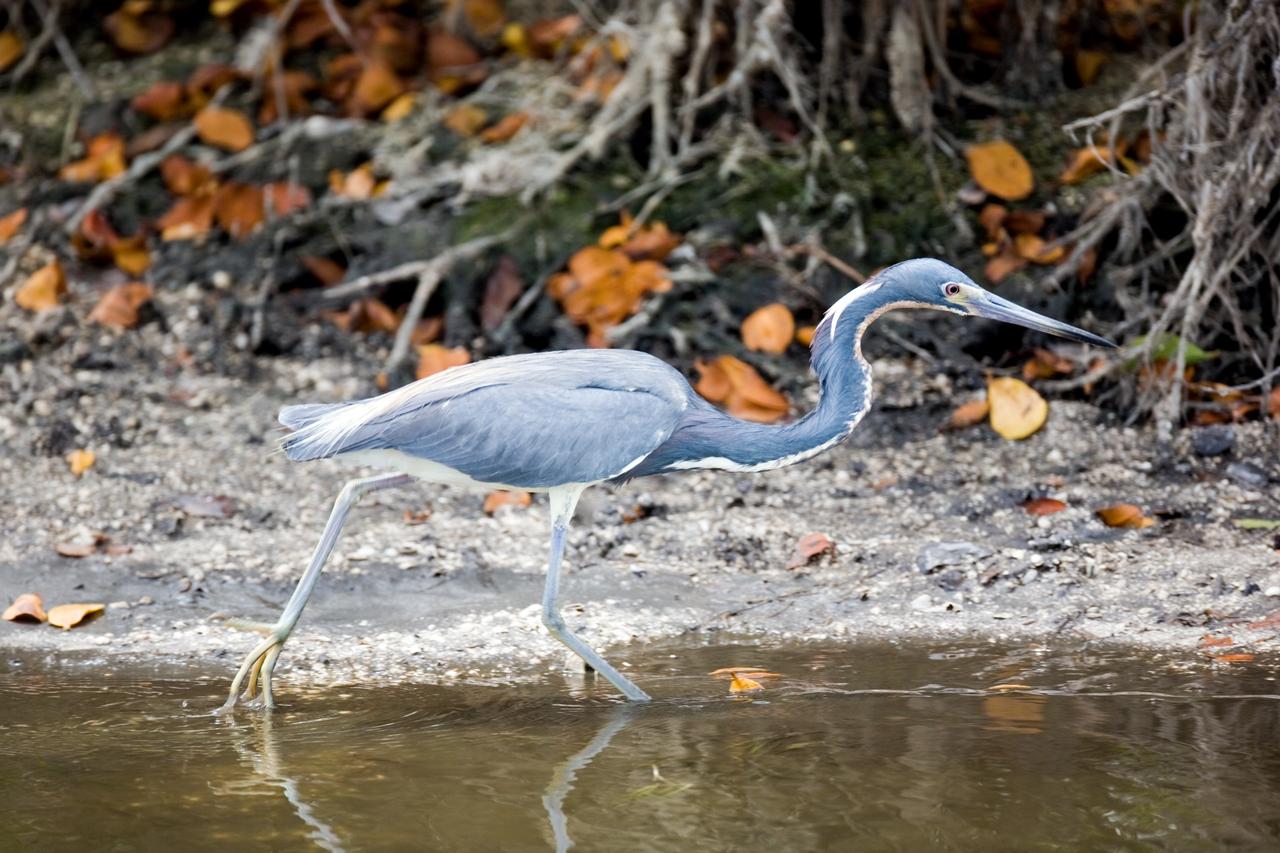
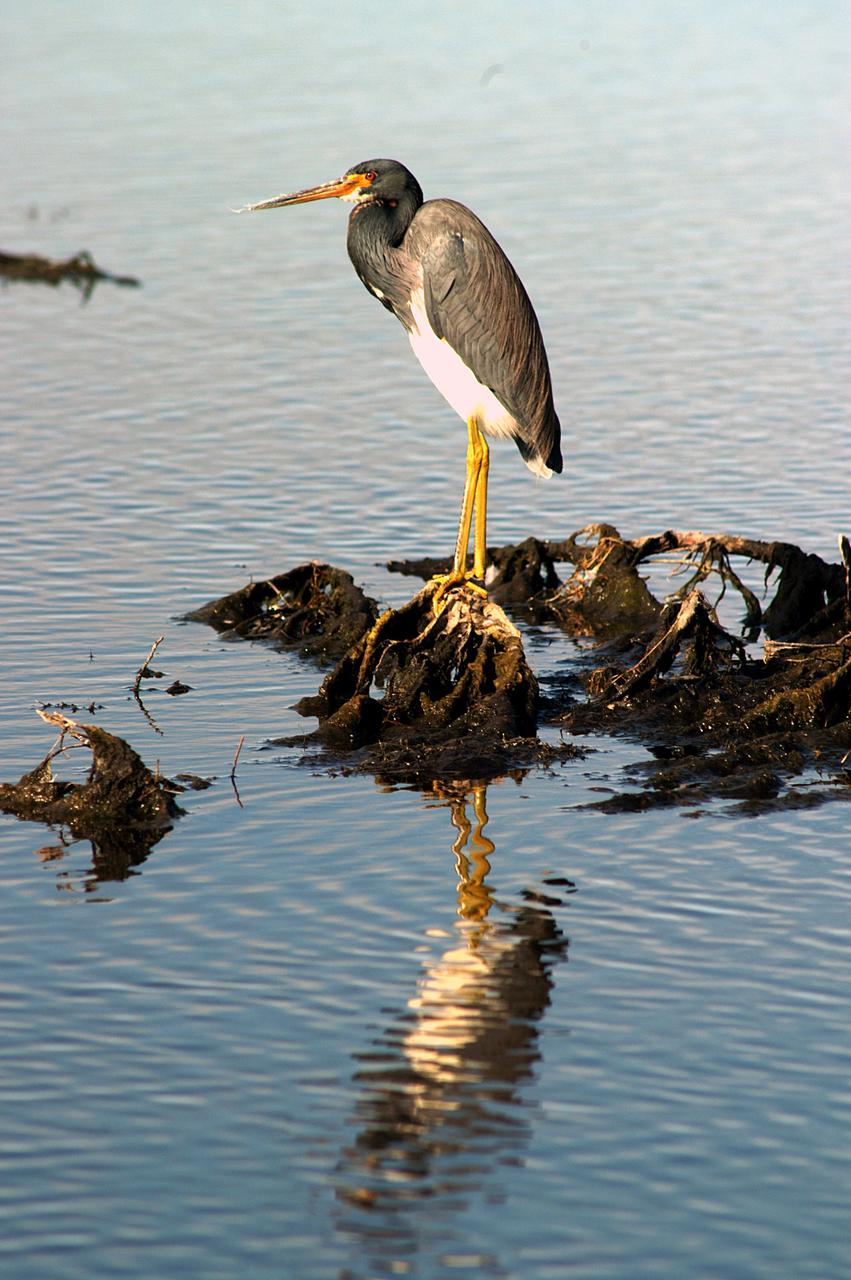
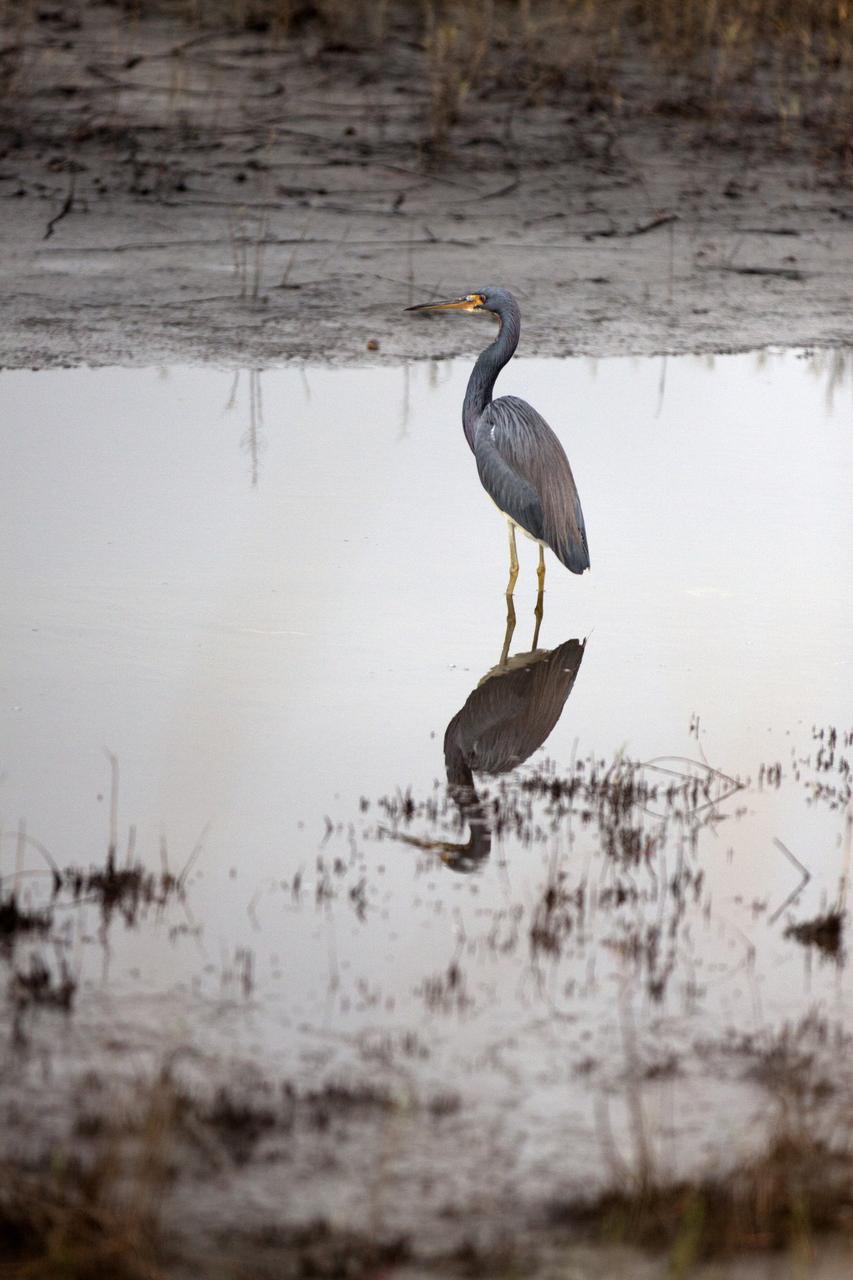
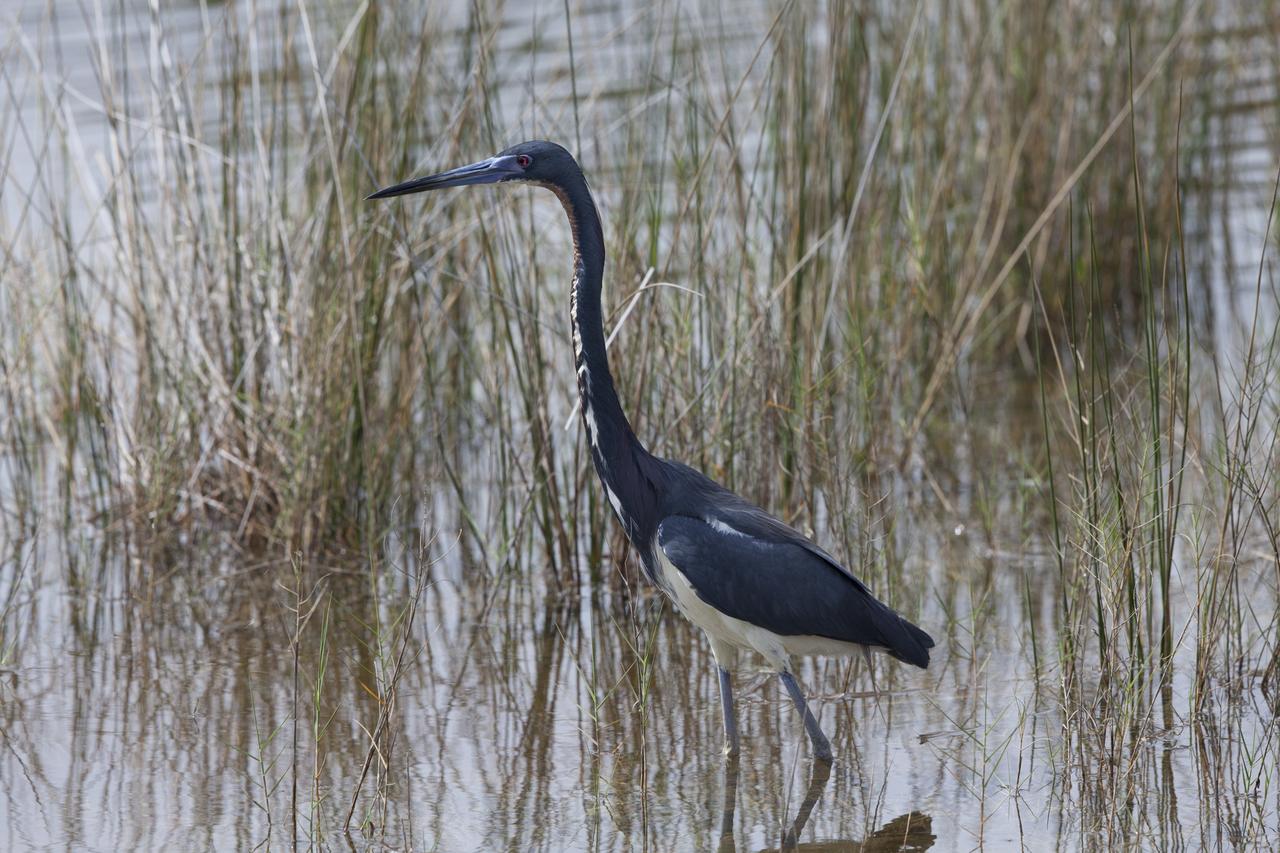
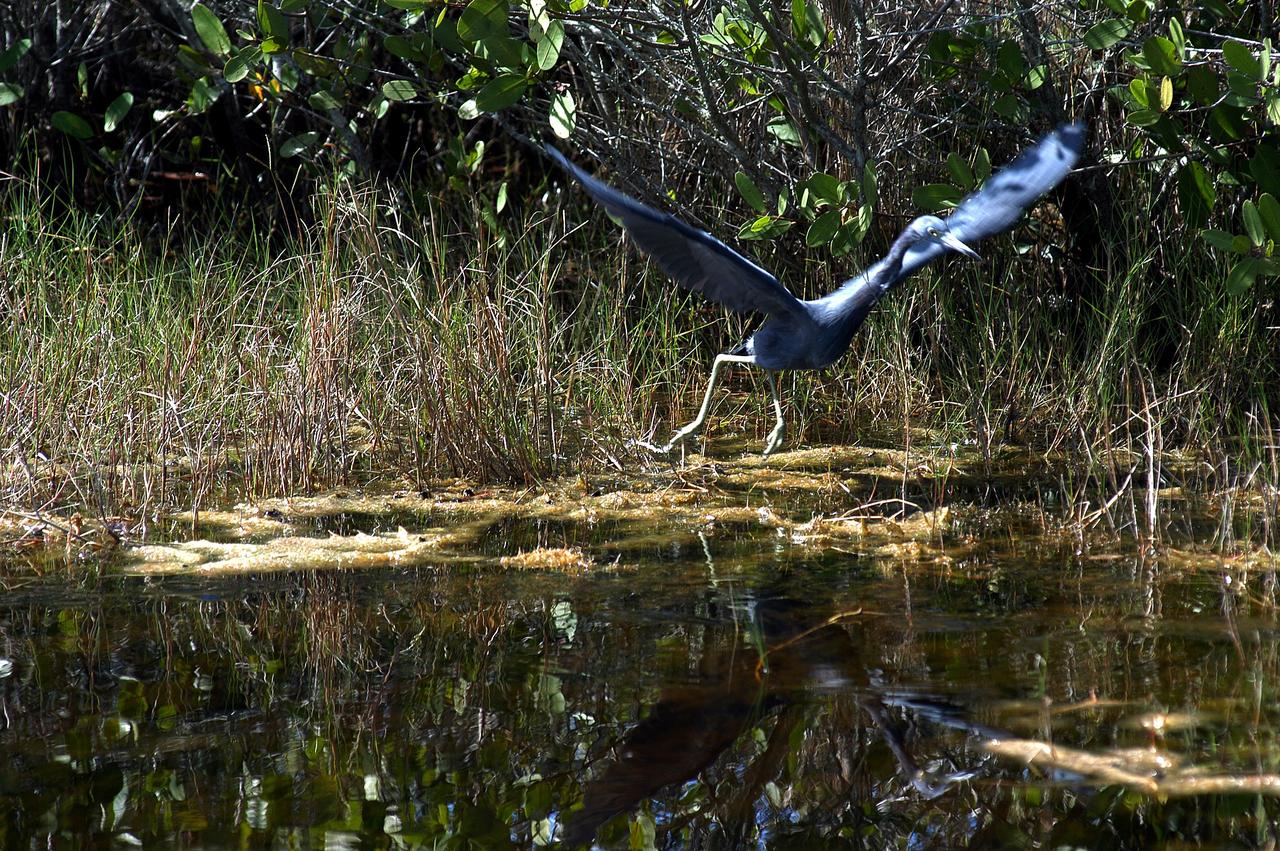
CAPE CANAVERAL, Fla. -- An Egretta Heron, also known as a Tricolored Heron, wades through water just north of the Shuttle Landing Facility at NASA's Kennedy Space Center in Florida.       Kennedy coexists with the Merritt Island National Wildlife Refuge, habitat to more than 310 species of birds, 25 mammals, 117 fish and 65 amphibians and reptiles. Photo credit: NASA/Frankie Martin
KSC-2011-1030
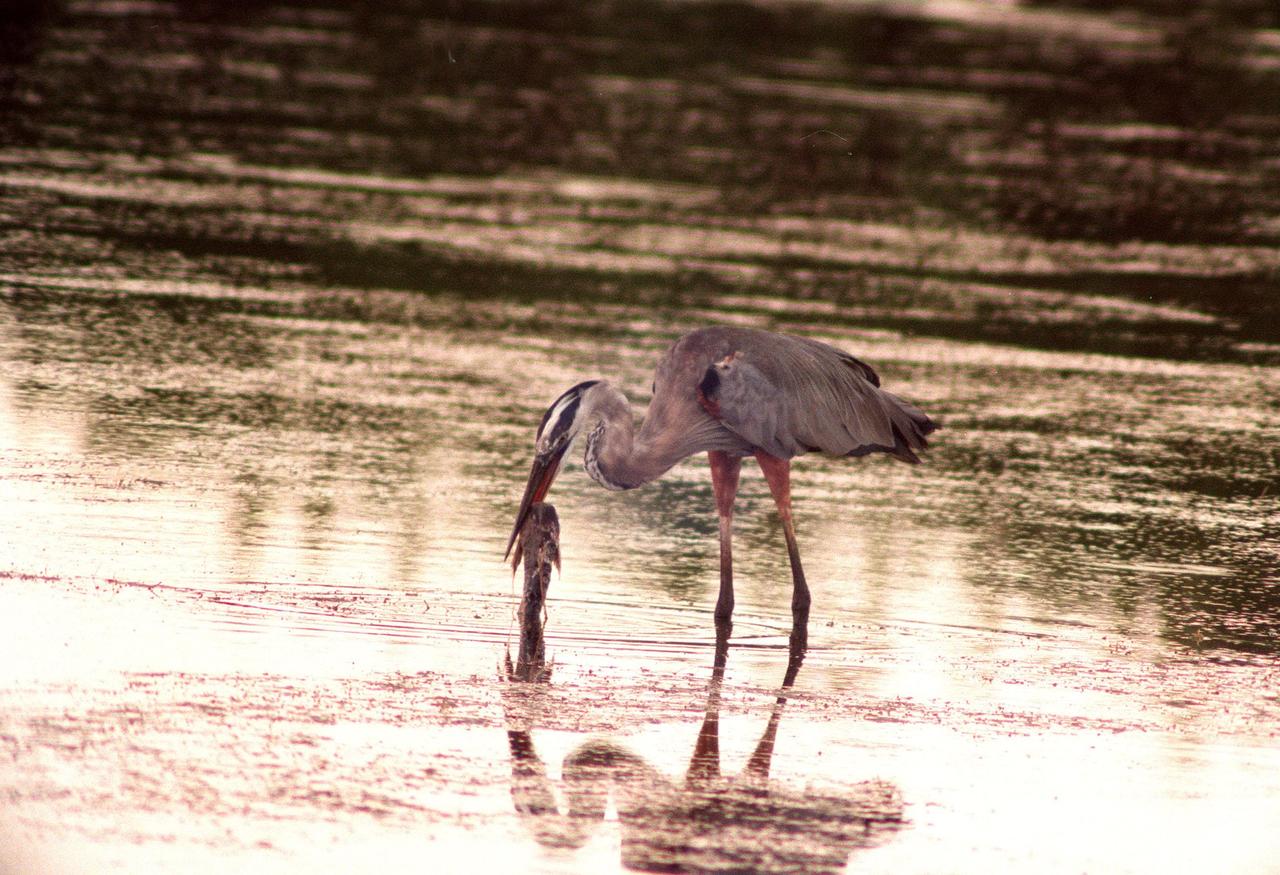
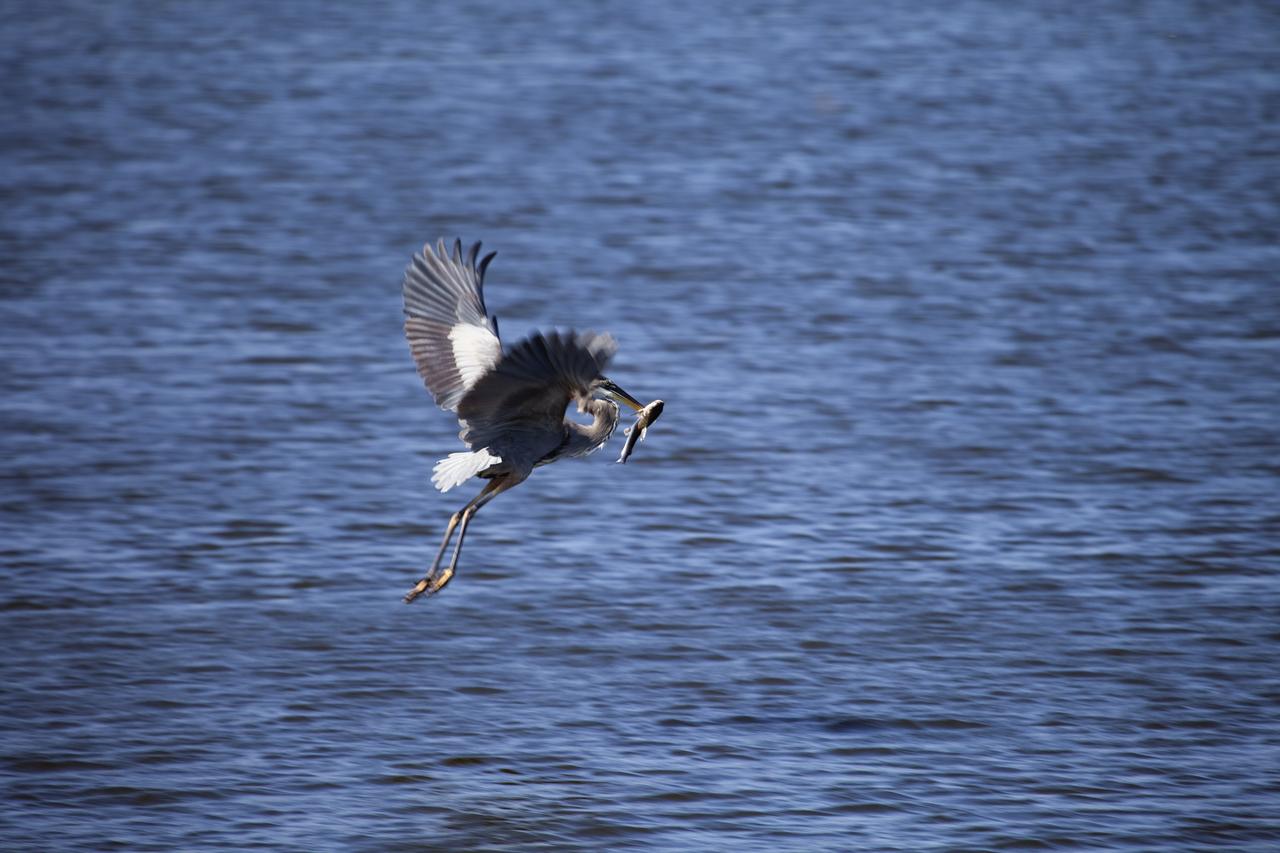
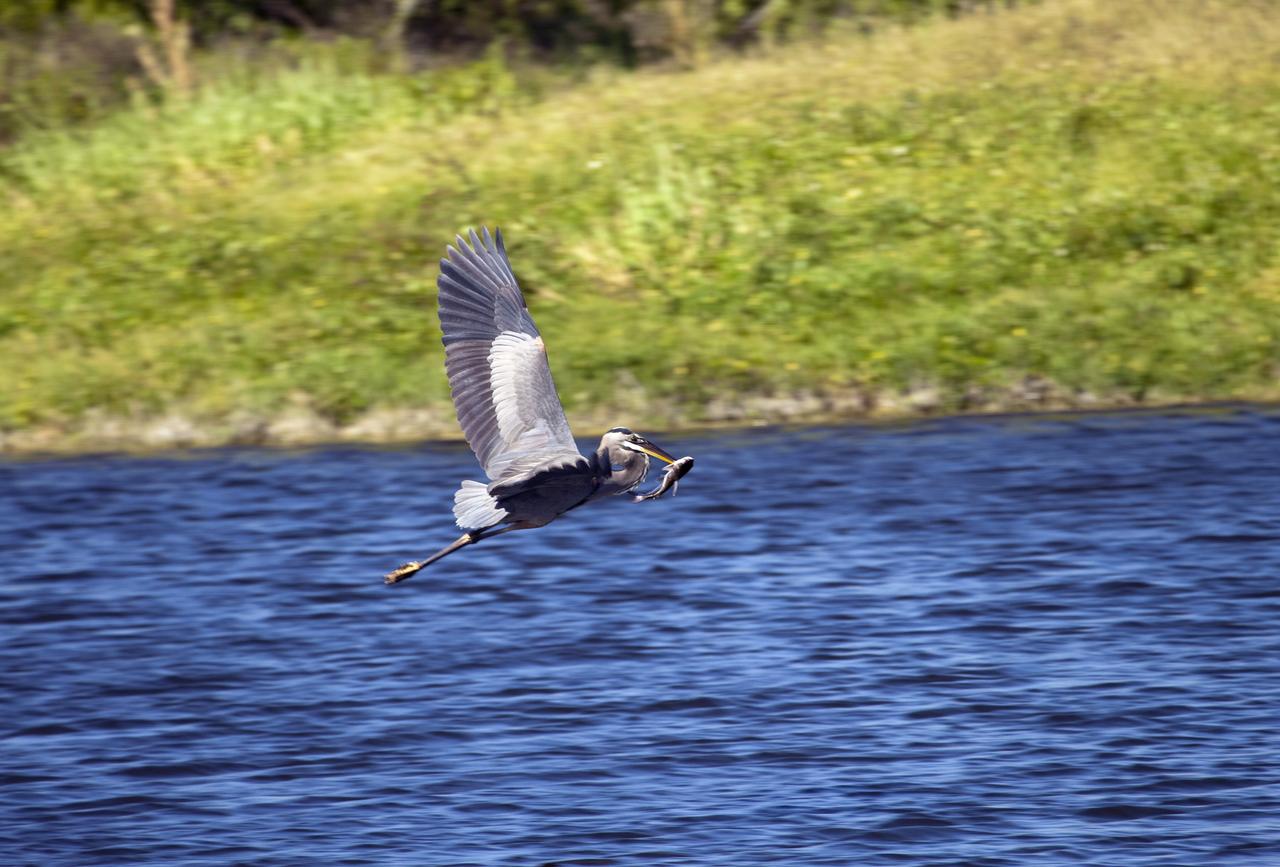
KENNEDY SPACE CENTER, FLA. -- A great blue heron pulls its catch from the waters of the Merritt Island National Wildlife Refuge, which shares a boundary with Kennedy Space Center. The great blue inhabits lakes, ponds, rivers and marshes from Alaska, Quebec and Nova Scotia to Mexico and the West Indies. Its principal food are fish or frogs but it may also feed on small animals, reptiles and even other birds. Great blue herons can be found year-round at the wildlife refuge
KSC-99wl11
CAPE CANAVERAL, Fla. –– One of the most numerous herons in the Deep South, this Louisiana Heron stalks the water at NASA's Kennedy Space Center in Florida looking for food, usually frogs or fish.  The range of this species is the Atlantic and Gulf coasts from Massachusetts south, wintering from Virginia to South America. The center shares a boundary with the Merritt Island Wildlife Nature Refuge, which is a habitat for more than 310 species of birds, 25 mammals, 117 fishes and 65 amphibians and reptiles.  Photo credit: NASA/Dimitri Gerondidakis
KSC-2009-2858
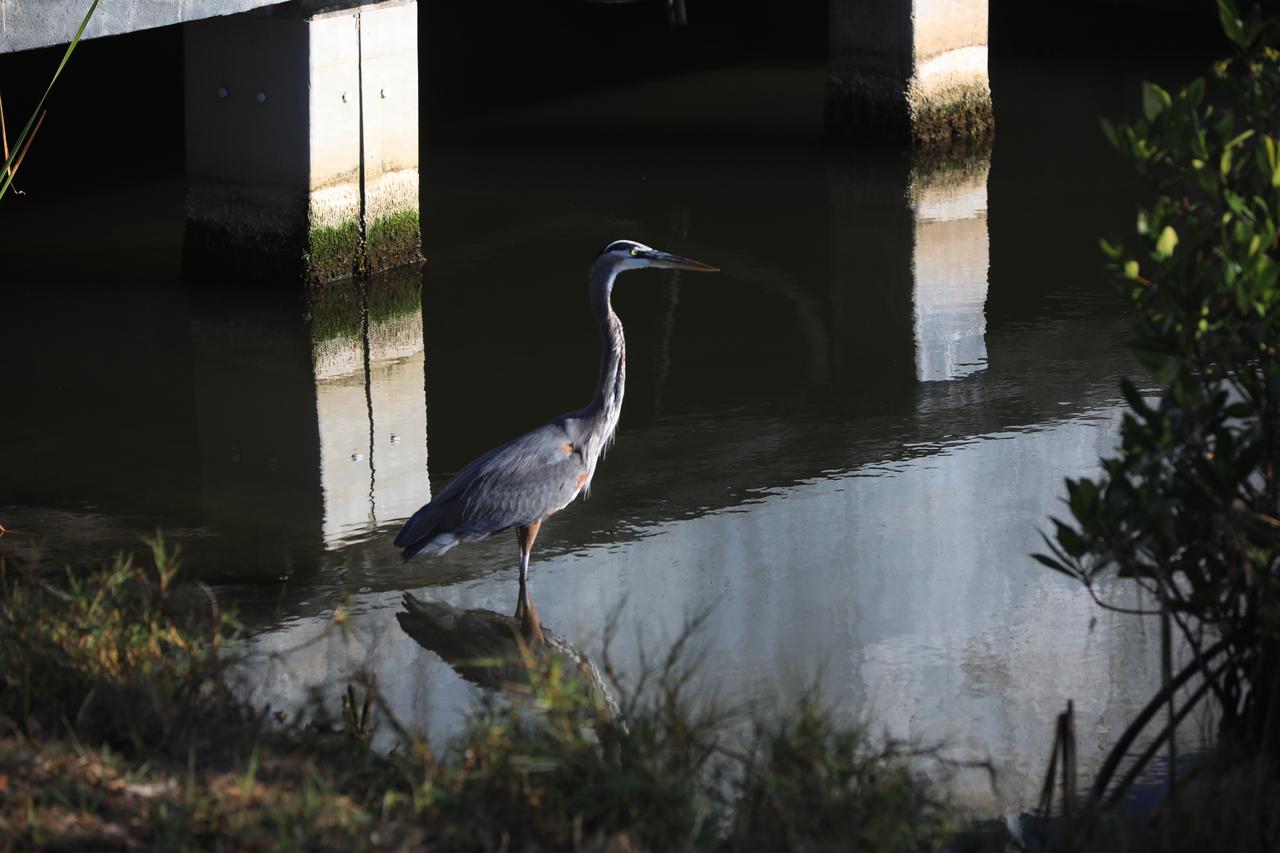
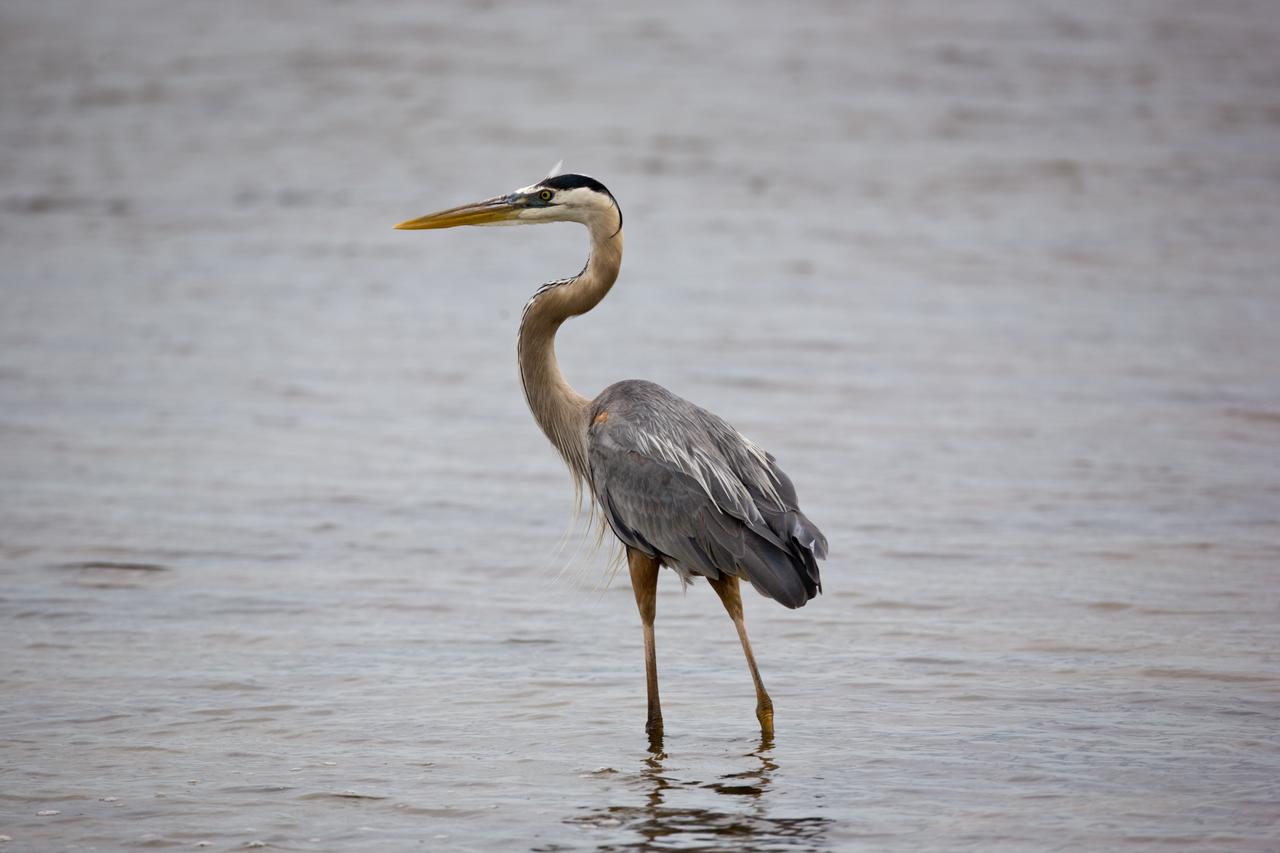
A great blue heron stands in the water at NASA's Kennedy Space Center in Florida on Tuesday, Nov. 26, 2024. A frequent sight around Kennedy, this large heron inhabits lakes, ponds, rivers, and marshes in a range from Alaska south to Mexico and the West Indies. NASA Kennedy shares a boundary with the Merritt Island National Wildlife Refuge that includes salt-water estuaries, brackish marshes, hardwood hammocks, and pine flatwoods.
Wildlife at KSC
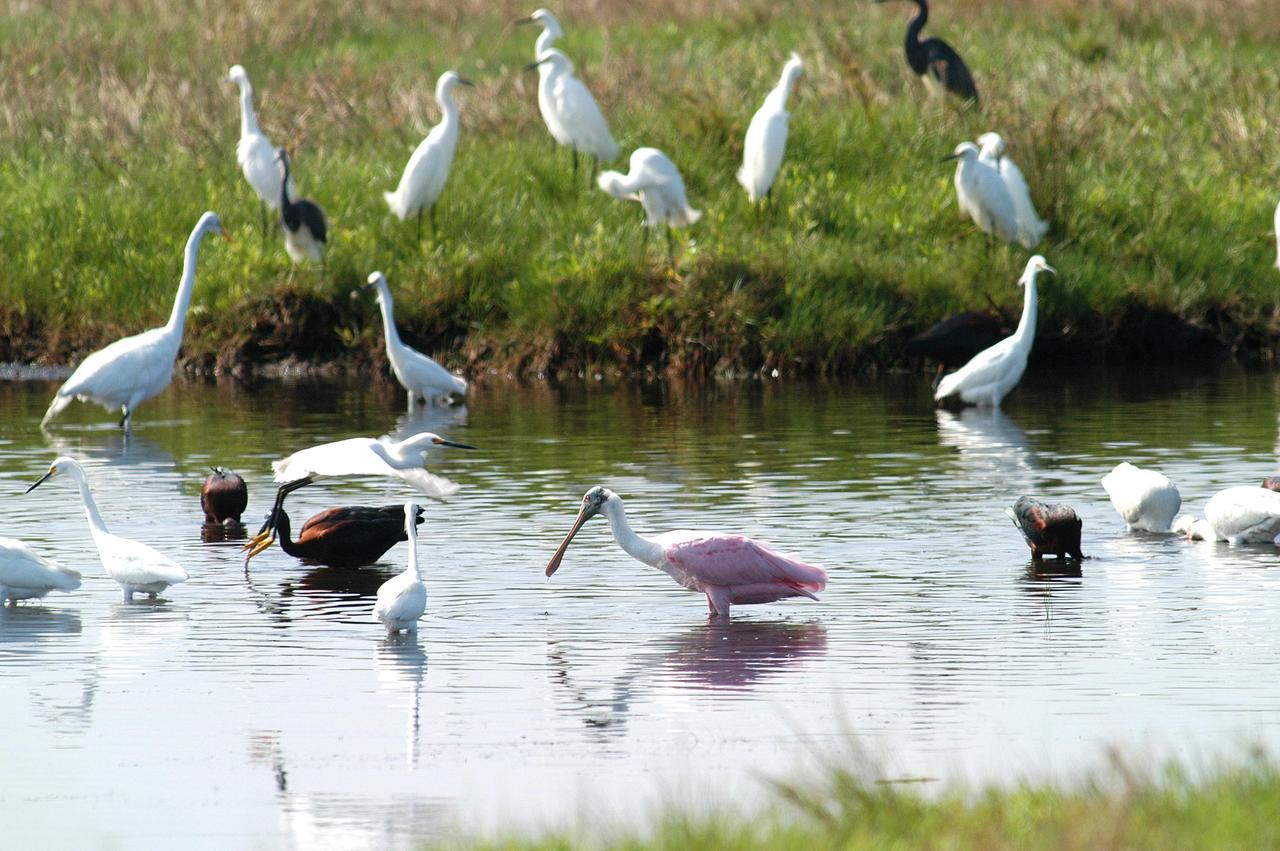
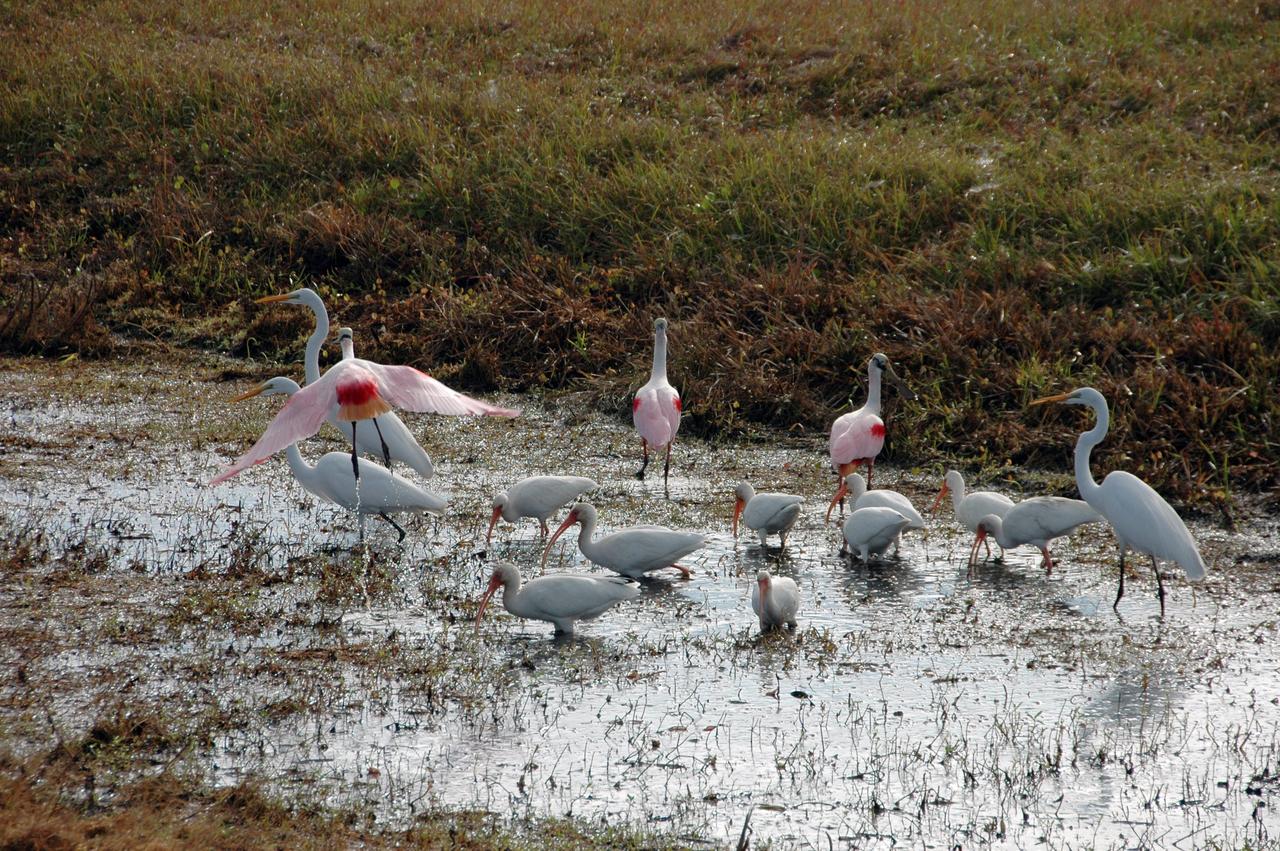
KENNEDY SPACE CENTER, FLA.  -  Herons, black ibis and a roseate spoonbill gather in a canal near KSC, which shares a boundary with the Merritt Island National Wildlife Refuge.  The marshes and open water of the refuge provide wintering areas for 23 species of migratory waterfowl, as well as a year-round home for great blue herons, great egrets, wood storks, cormorants, brown pelicans and other species of marsh and shore birds.
KSC-04pd1247
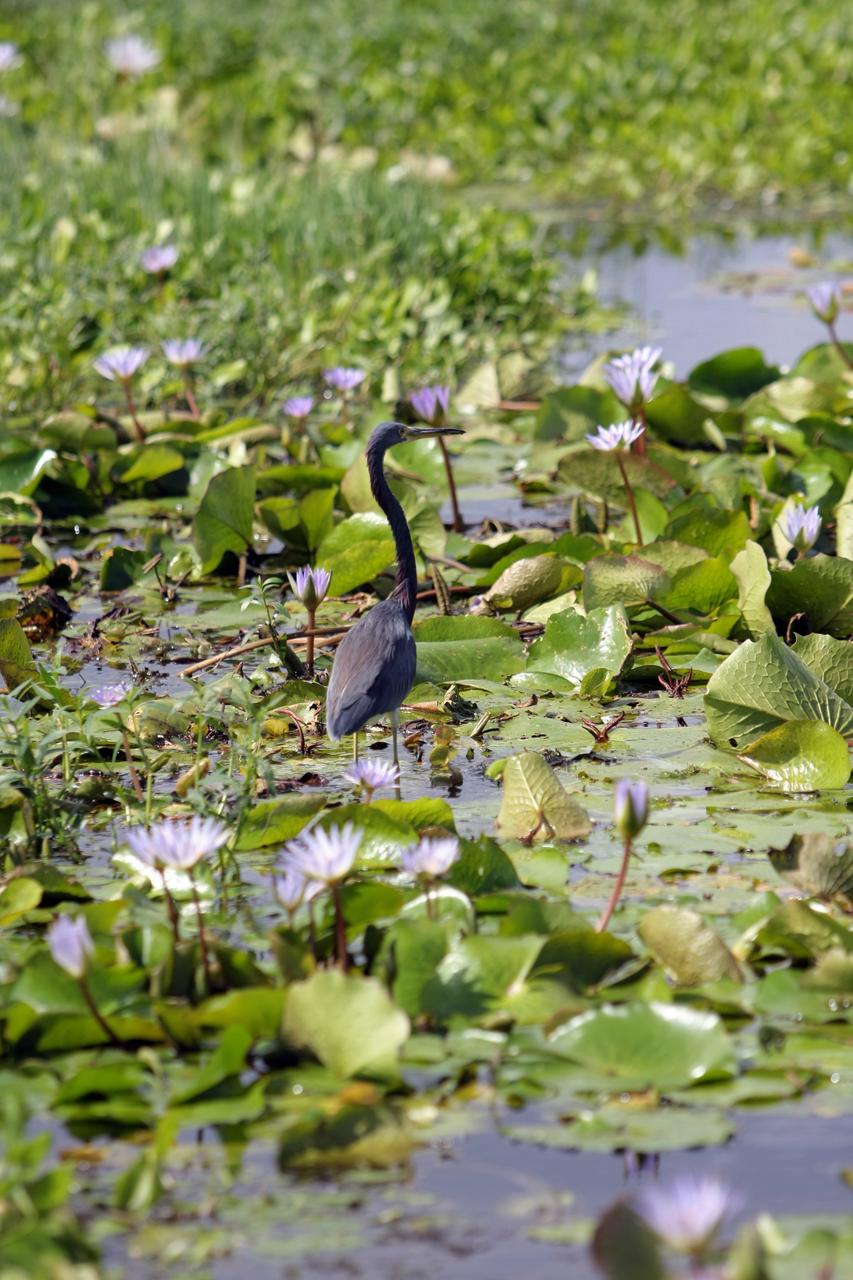
CAPE CANAVERAL, Fla. -- At NASA's Kennedy Space Center in Florida, a small Egretta Heron, also known as a Tricolored Heron, wades in some brackish water near Launch Pad 39B.    Kennedy coexists with the Merritt Island National Wildlife Refuge, habitat to more than 310 species of birds, 25 mammals, 117 fish and 65 amphibians and reptiles. Photo credit: NASA/Frank Michaux
KSC-2010-5318
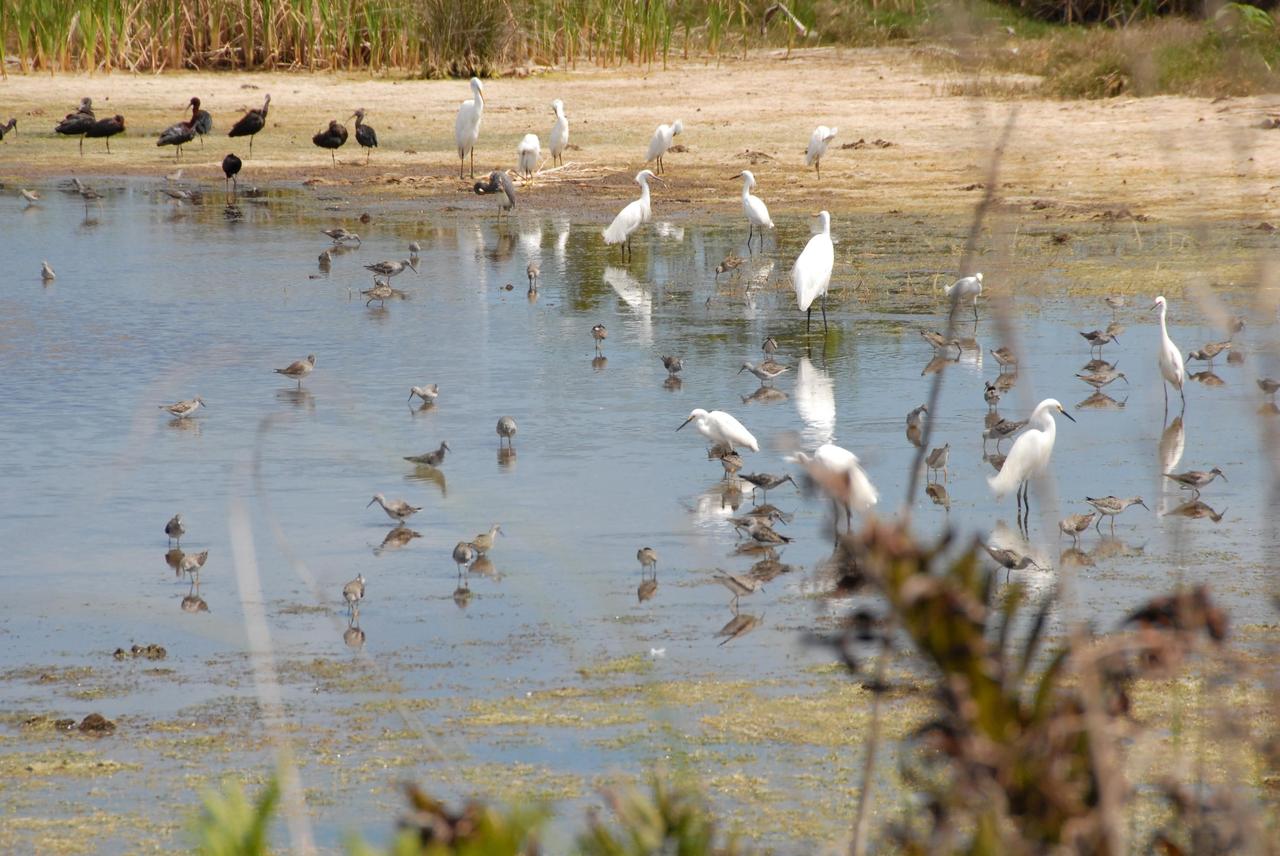
KENNEDY SPACE CENTER, FLA.  -  Herons, a roseate spoonbill and other species of water birds gather in a canal near KSC, which shares a boundary with the Merritt Island National Wildlife Refuge.  The marshes and open water of the refuge provide wintering areas for 23 species of migratory waterfowl, as well as a year-round home for great blue herons, great egrets, wood storks, cormorants, brown pelicans and other species of marsh and shore birds.
KSC-04pd1249
CAPE CANAVERAL, Fla. -- An Egretta Heron, also known as a Tricolored Heron, takes a break from flying just north of the Shuttle Landing Facility at NASA's Kennedy Space Center in Florida.           Kennedy coexists with the Merritt Island National Wildlife Refuge, habitat to more than 310 species of birds, 25 mammals, 117 fish and 65 amphibians and reptiles. Photo credit: NASA/Frankie Martin
KSC-2011-1018
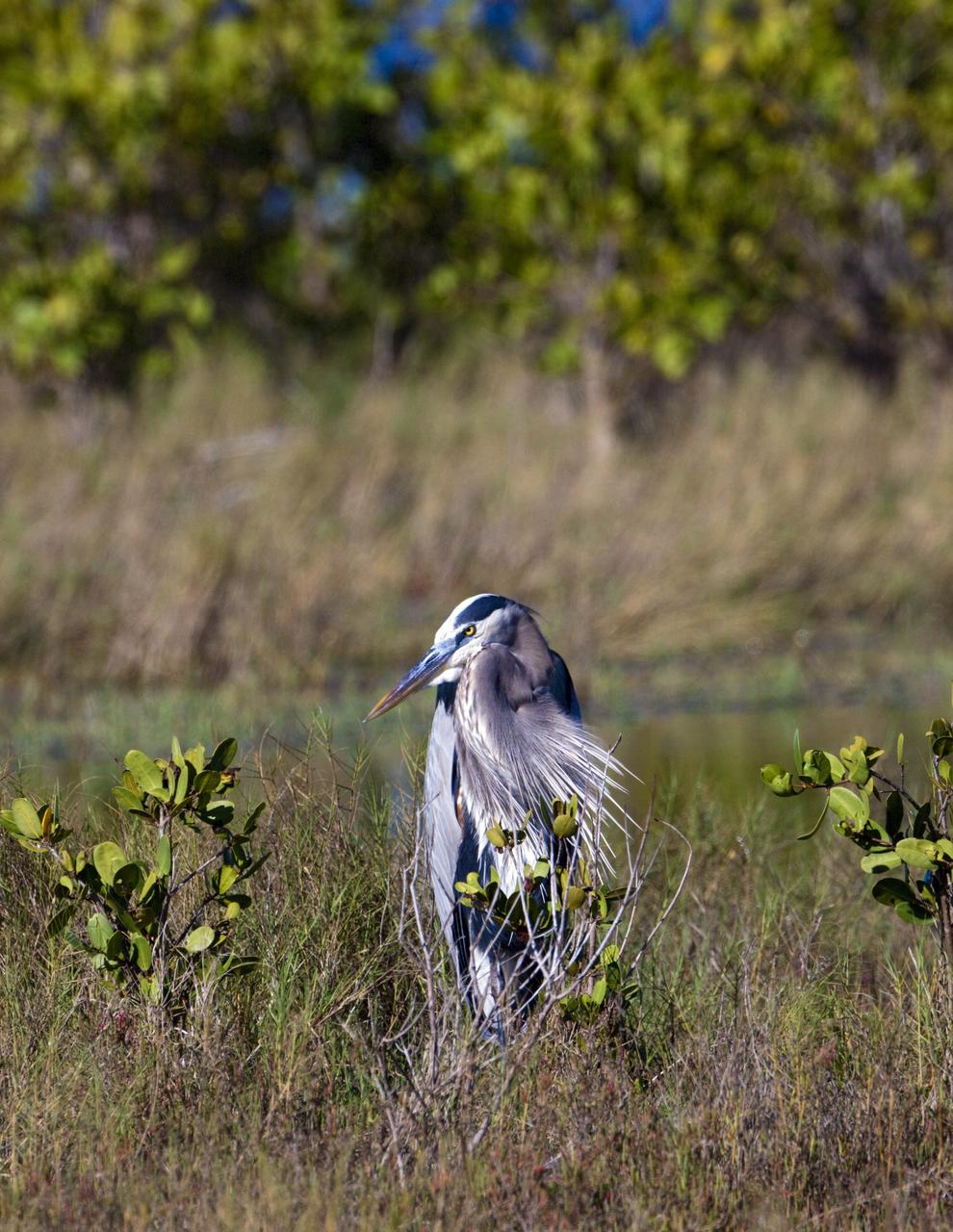
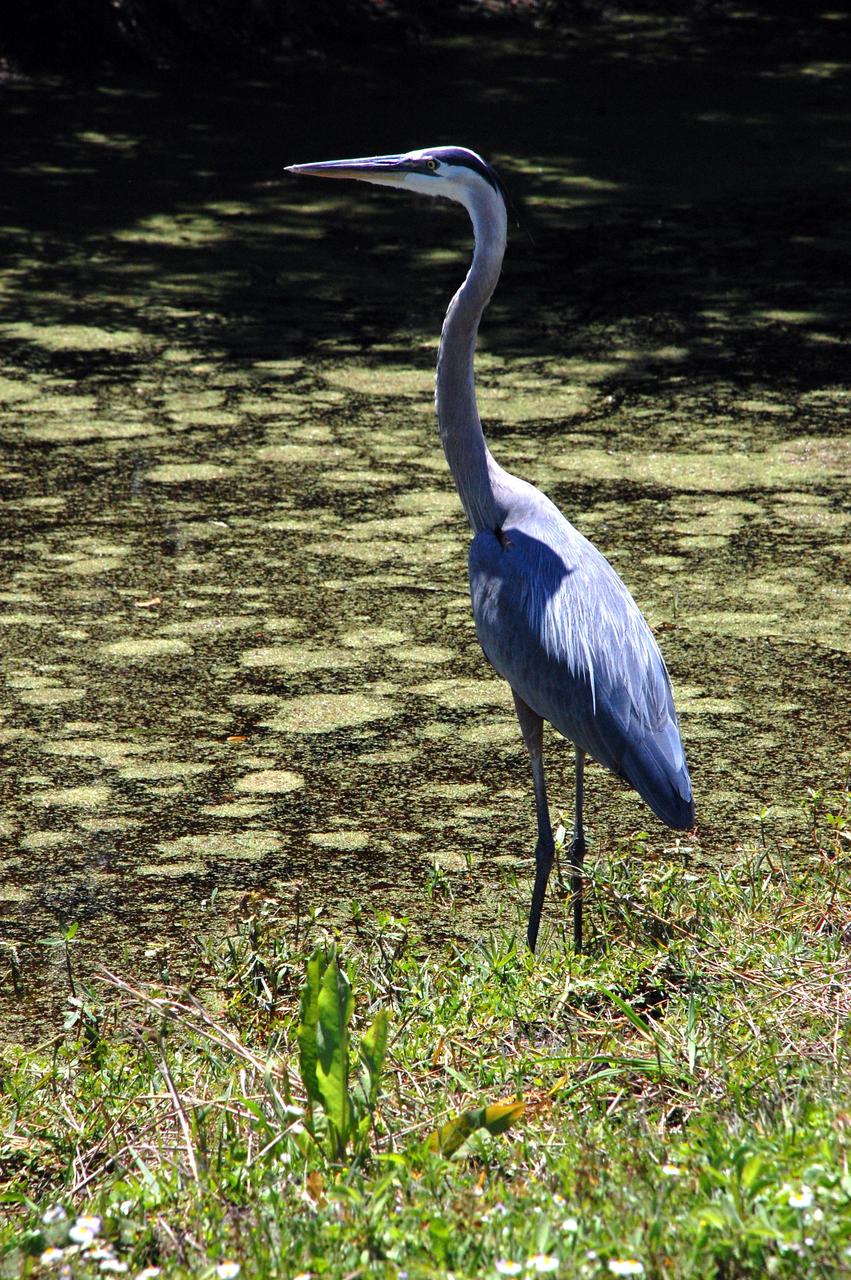
CAPE CANAVERAL, Fla. –– A great blue heron takes its familiar stance at the edge of the water, watching for fish or frogs, at  NASA's Kennedy Space Center in Florida.  A frequent sight around Kennedy, this large heron inhabits lakes, ponds, rivers and marshes in a range from Alaska south to Mexico and the West Indies. Kennedy shares a boundary with the Merritt Island National Wildlife Refuge that includes salt-water estuaries, brackish marshes, hardwood hammocks and pine flatwoods. Photo credit: NASA/Dimitri Gerondidakis
KSC-2009-2864
KENNEDY SPACE CENTER, FLA. -- A tri-colored heron stands sentry in the marshes around KSC. It has slate blue feathers on most of its body except for a white chest and belly and a rust-colored neck. It has long yellow legs, a white stripe that runs up its neck and long pointed yellow bill. The bill turns blue during breeding season.The heron is one of 310 species of birds that inhabit the Merritt Island National Wildlife Refuge, which shares a boundary with KSC. The marshes and open water of the refuge also provide wintering areas for 23 species of migratory waterfowl, as well as a year-round home for great egrets, wood storks, cormorants, brown pelicans and other species of marsh and shore birds.
A tricolored heron wades in a shallow waterway at Merritt Island National Wildlife Refuge in Florida. NASA’s Kennedy Space Center shares boundaries with the refuge, which is home to more than 330 native and migratory bird species, along with 25 mammal, 117 fish, and 65 amphibian and reptile species.
Creative Photography - Wildlife
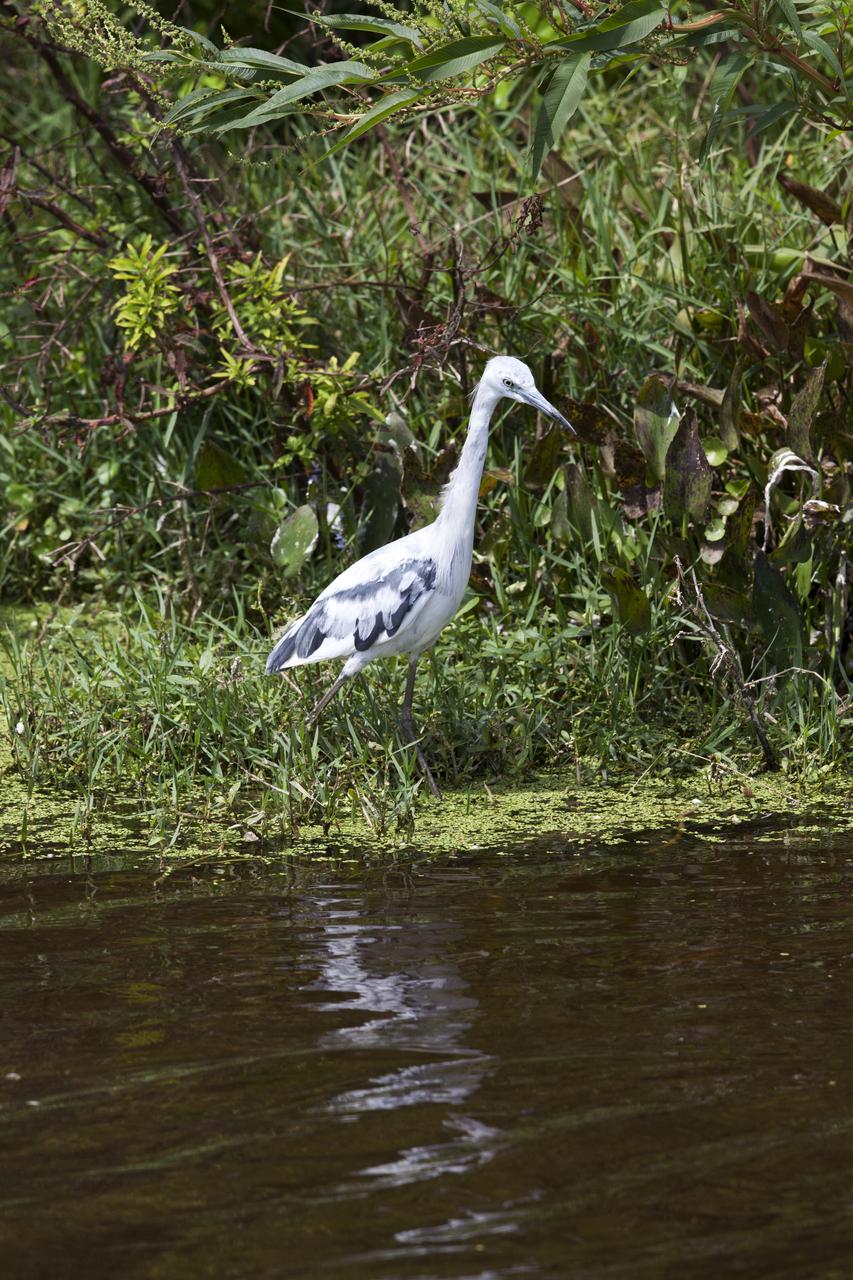
A juvenile heron wades in a waterway at NASA's Kennedy Space Center in Florida. The center shares a border with the Merritt Island National Wildlife Refuge. More than 330 native and migratory bird species, 25 mammals, 117 fishes and 65 amphibians and reptiles call Kennedy and the wildlife refuge home.
Wildlife Photography - Birds
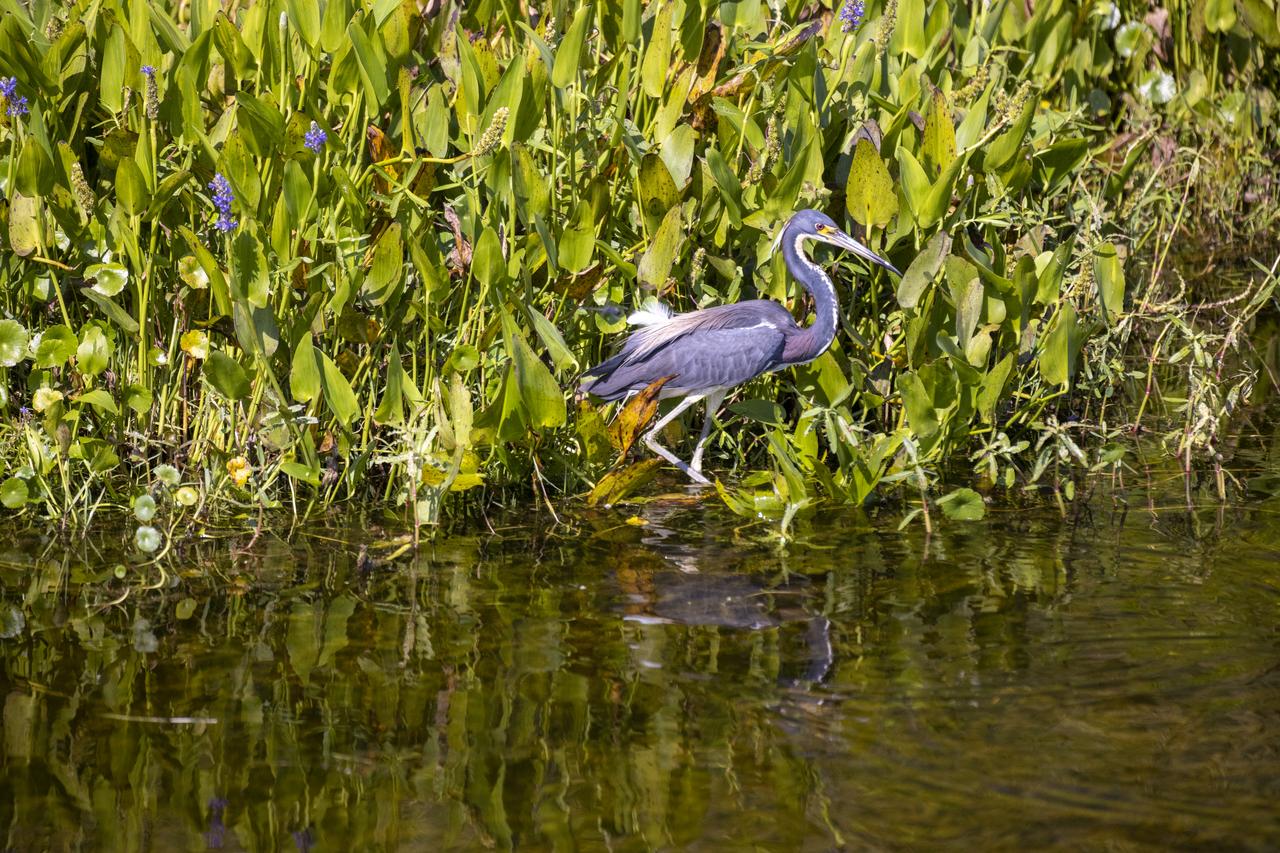
Framed by wildflowers, a tricolored heron wades in a waterway at NASA’s John F. Kennedy Space Center in Florida on May 19, 2023. The center shares a border with the Merritt Island National Wildlife Refuge. More than 330 native and migratory bird species call Kennedy and the wildlife refuge home.
Wildflowers at KSC
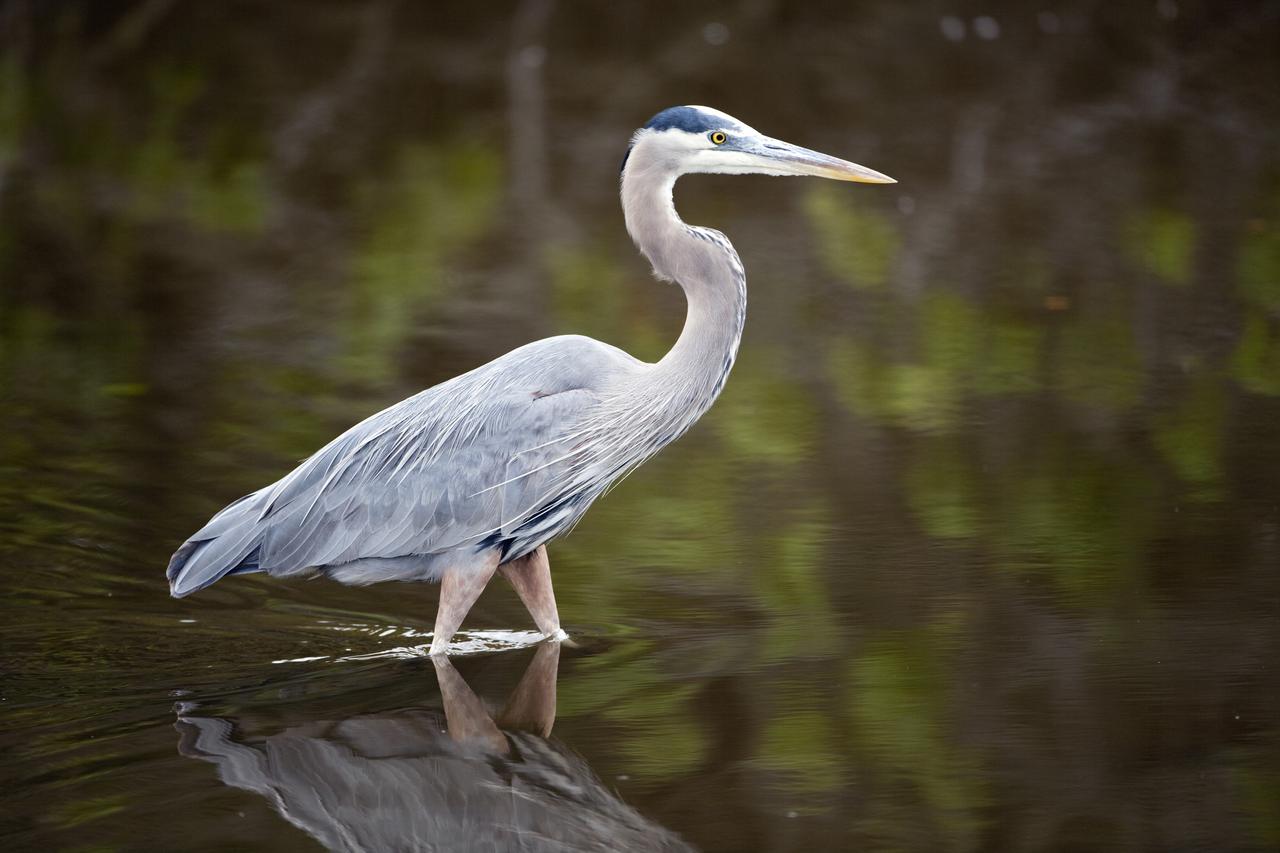
A Great Blue Heron wades in a waterway at NASA's Kennedy Space Center in Florida. The center shares a border with the Merritt Island National Wildlife Refuge. The bird is one of more than 330 native and migratory bird species, 25 mammals, 117 fishes and 65 amphibians and reptiles that call Kennedy and the wildlife refuge home.
Nature Photography - Birds
CAPE CANAVERAL, Fla. – A heron stands in the Blackpoint Wildlife Drive in the Merritt Island National Wildlife Refuge, northwest of NASA's Kennedy Space Center in Florida.      Kennedy Space Center shares a boundary with the Merritt Island National Wildlife Refuge. The Refuge encompasses 92,000 acres that are a habitat for more than 331 species of birds, 31 mammals, 117 fishes, and 65 amphibians and reptiles. The marshes and open water of the refuge provide wintering areas for 23 species of migratory waterfowl, as well as a year-round home for great blue herons, great egrets, wood storks, cormorants, brown pelicans and other species of marsh and shore birds, as well as a variety of insects. For more information, visit: http://www.nasa.gov/centers/kennedy/shuttleoperations/alligators/kscovr.html Photo credit: NASA/Jim Grossmann
KSC-2012-6479
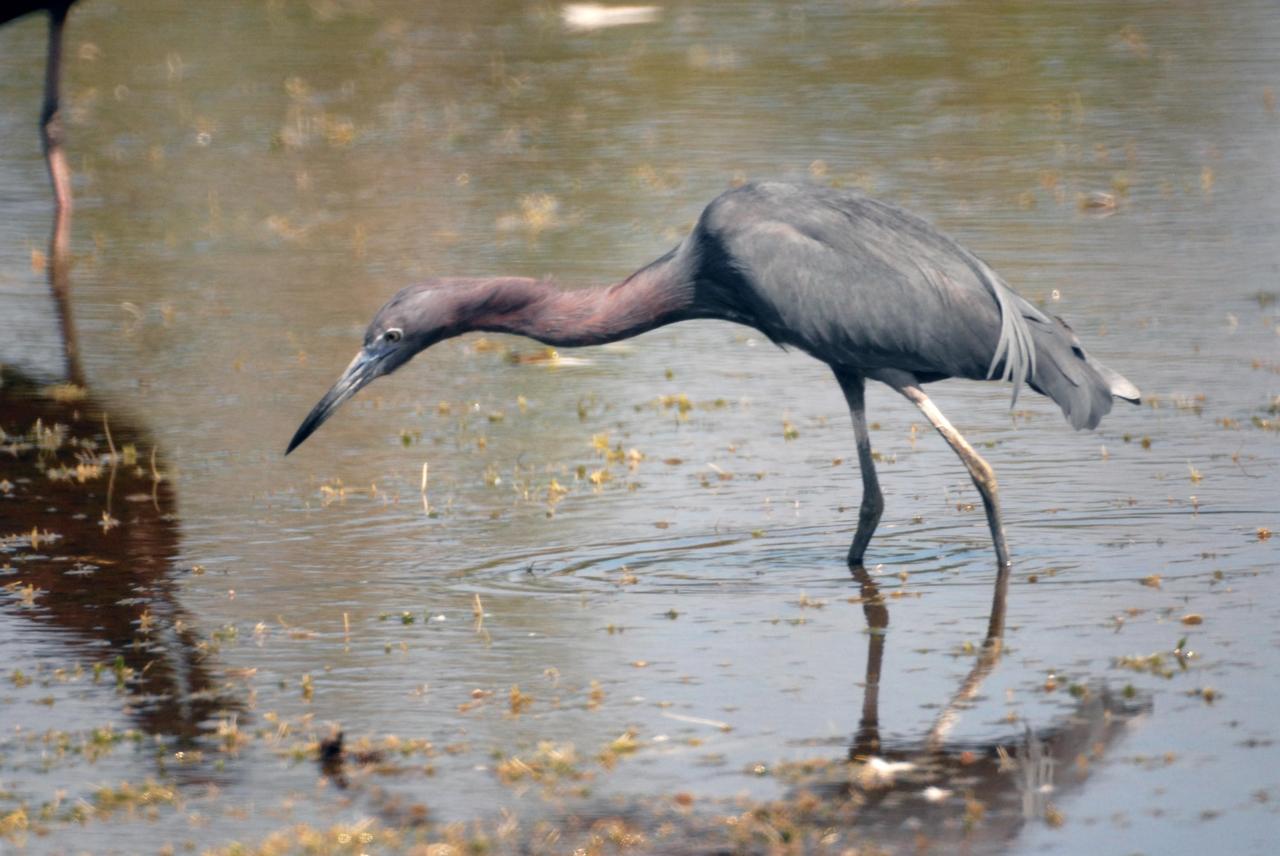
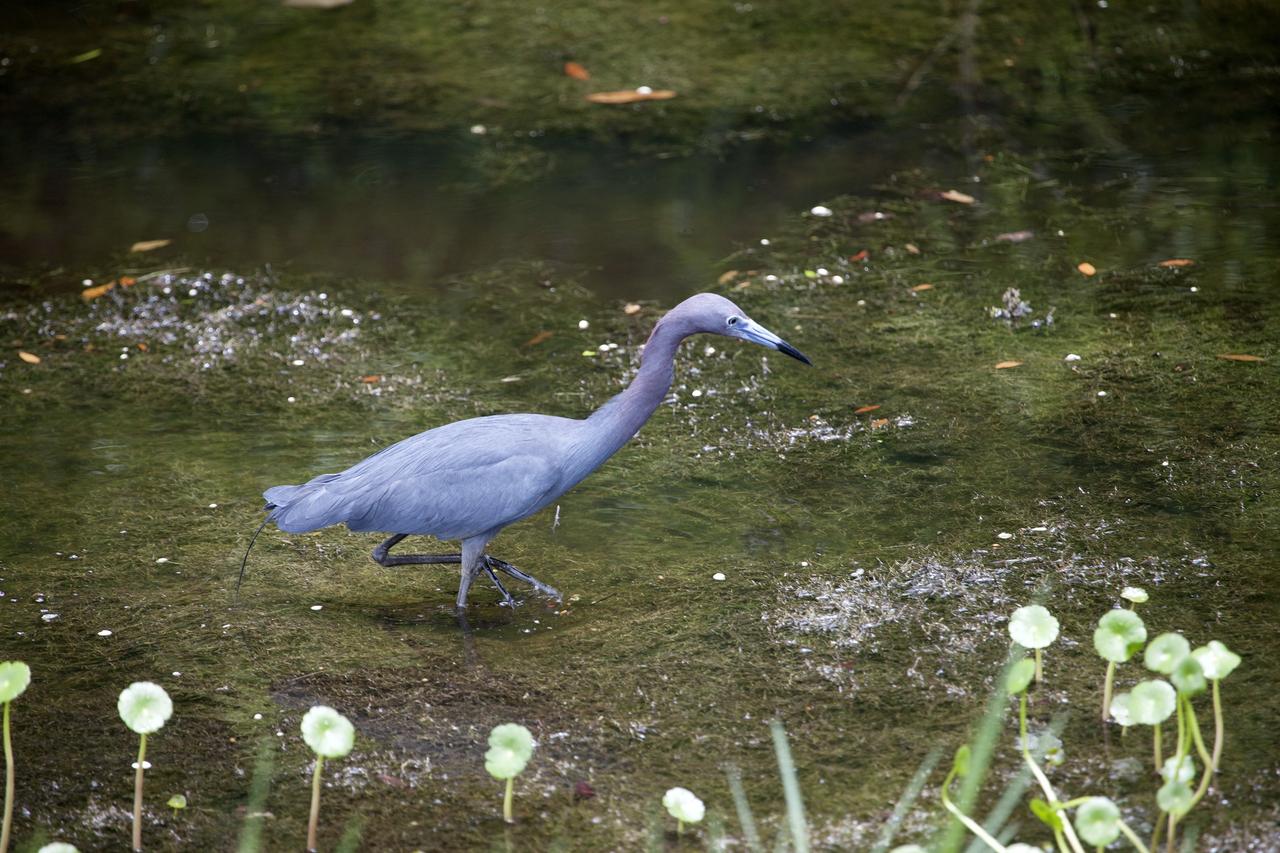
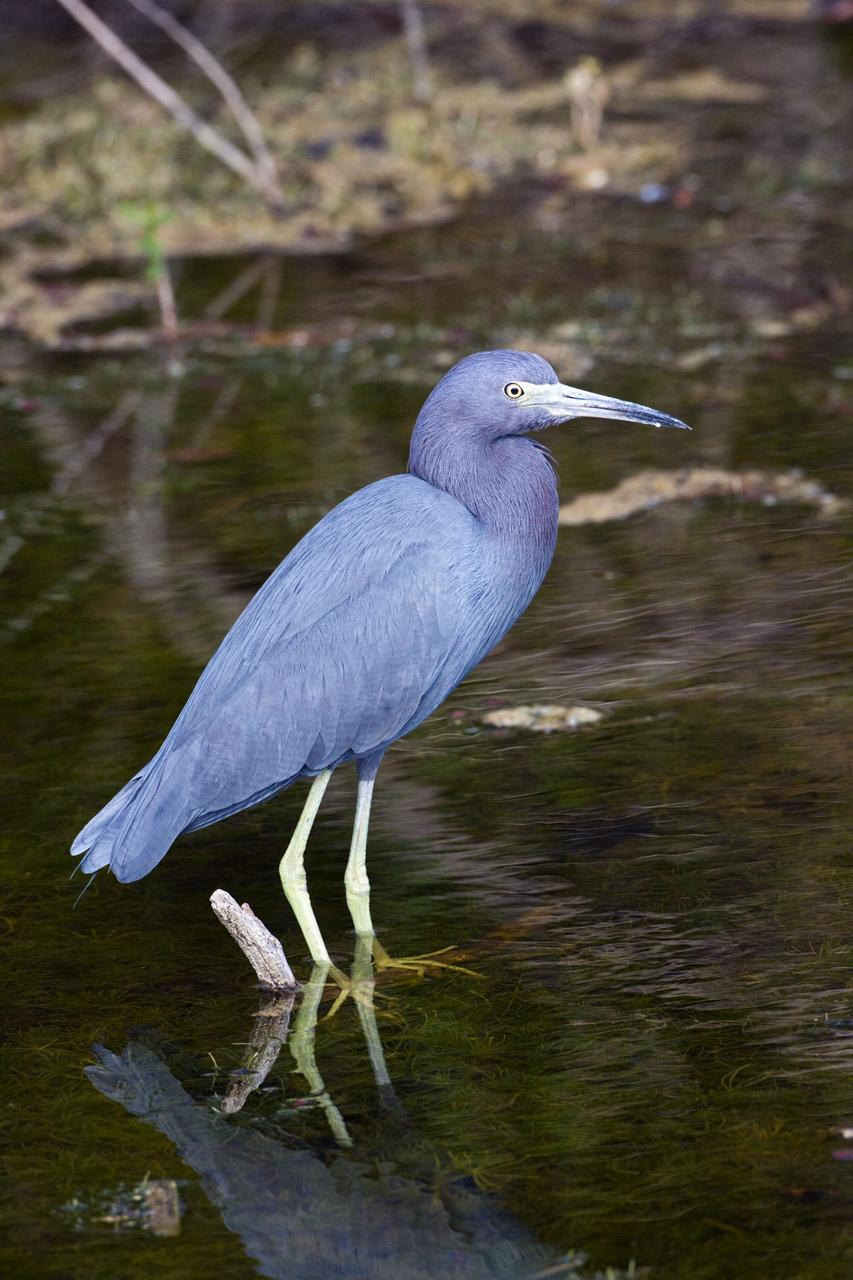
KENNEDY SPACE CENTER, FLA.  --  A little blue heron stalks its next meal in a pond near Kennedy Space Center.   Identified by their slate blue body and maroon neck, little blue herons range on the east coast from New York to Texas and inland to Oklahoma.  They winter as far south as South America.  They inhabit freshwater swamps and lagoons in the South; coastal thickets on islands in the North. KSC shares a boundary with the Merritt Island National Wildlife Refuge, which surrounds it.  The refuge is a habitat for more than 310 species of birds, 25 mammals, 117 fishes and 65 amphibians and reptiles. In addition, the refuge supports 19 endangered or threatened wildlife species on Federal or State lists, more than any other single refuge in the U.S.  Photo credit: NASA/Ken Thornsley
KSC-07pd0725
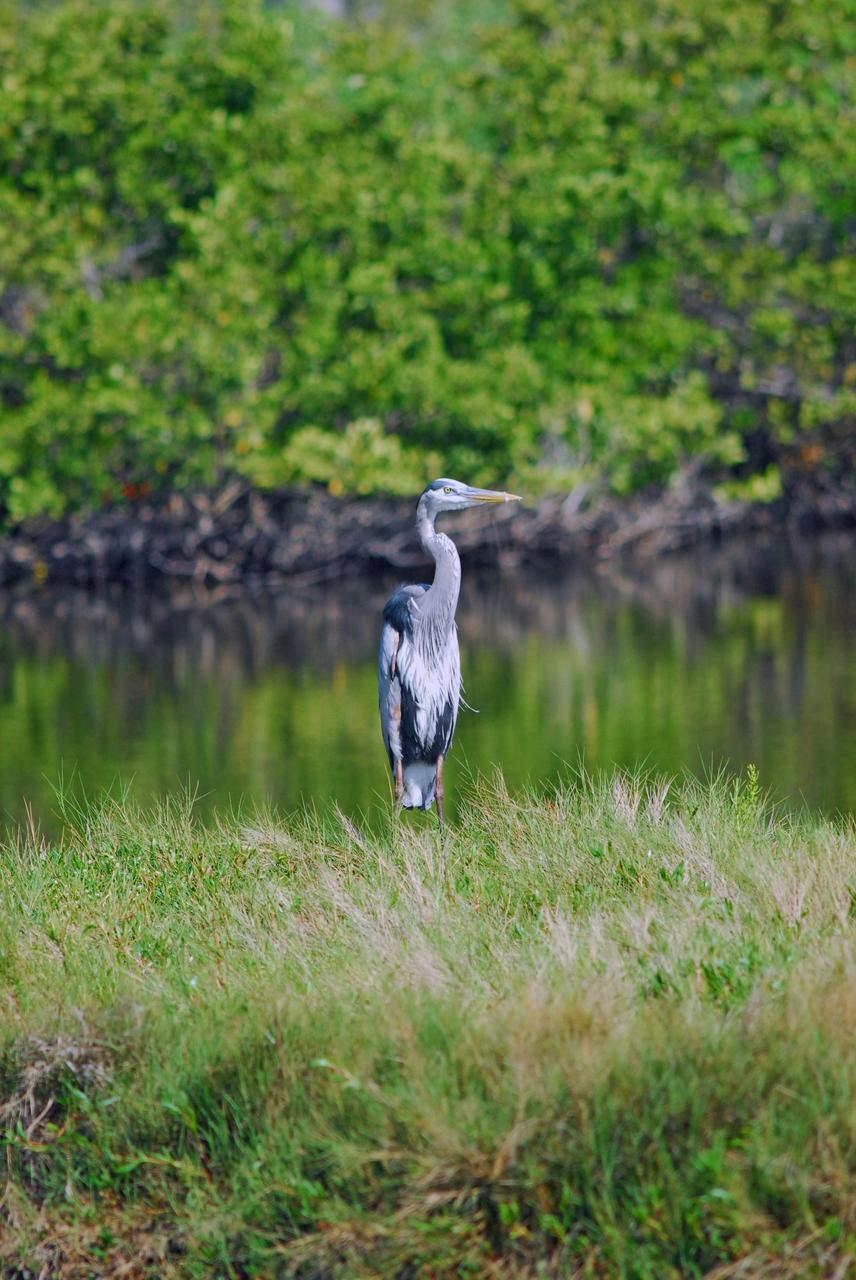
CAPE CANAVERAL, Fla. – A great blue heron stands in the Blackpoint Wildlife Drive in the Merritt Island National Wildlife Refuge, northwest of NASA's Kennedy Space Center in Florida.      Kennedy Space Center shares a boundary with the Merritt Island National Wildlife Refuge. The Refuge encompasses 92,000 acres that are a habitat for more than 331 species of birds, 31 mammals, 117 fishes, and 65 amphibians and reptiles. The marshes and open water of the refuge provide wintering areas for 23 species of migratory waterfowl, as well as a year-round home for great blue herons, great egrets, wood storks, cormorants, brown pelicans and other species of marsh and shore birds, as well as a variety of insects. For more information, visit: http://www.nasa.gov/centers/kennedy/shuttleoperations/alligators/kscovr.html Photo credit: NASA/Jim Grossmann
KSC-2012-6477
CAPE CANAVERAL, Fla. – A heron stands in the waters of the Blackpoint Wildlife Drive in the Merritt Island National Wildlife Refuge, northwest of NASA's Kennedy Space Center in Florida.      Kennedy Space Center shares a boundary with the Merritt Island National Wildlife Refuge. The Refuge encompasses 92,000 acres that are a habitat for more than 331 species of birds, 31 mammals, 117 fishes, and 65 amphibians and reptiles. The marshes and open water of the refuge provide wintering areas for 23 species of migratory waterfowl, as well as a year-round home for great blue herons, great egrets, wood storks, cormorants, brown pelicans and other species of marsh and shore birds, as well as a variety of insects. For more information, visit: http://www.nasa.gov/centers/kennedy/shuttleoperations/alligators/kscovr.html Photo credit: NASA/Jim Grossmann
KSC-2012-6475
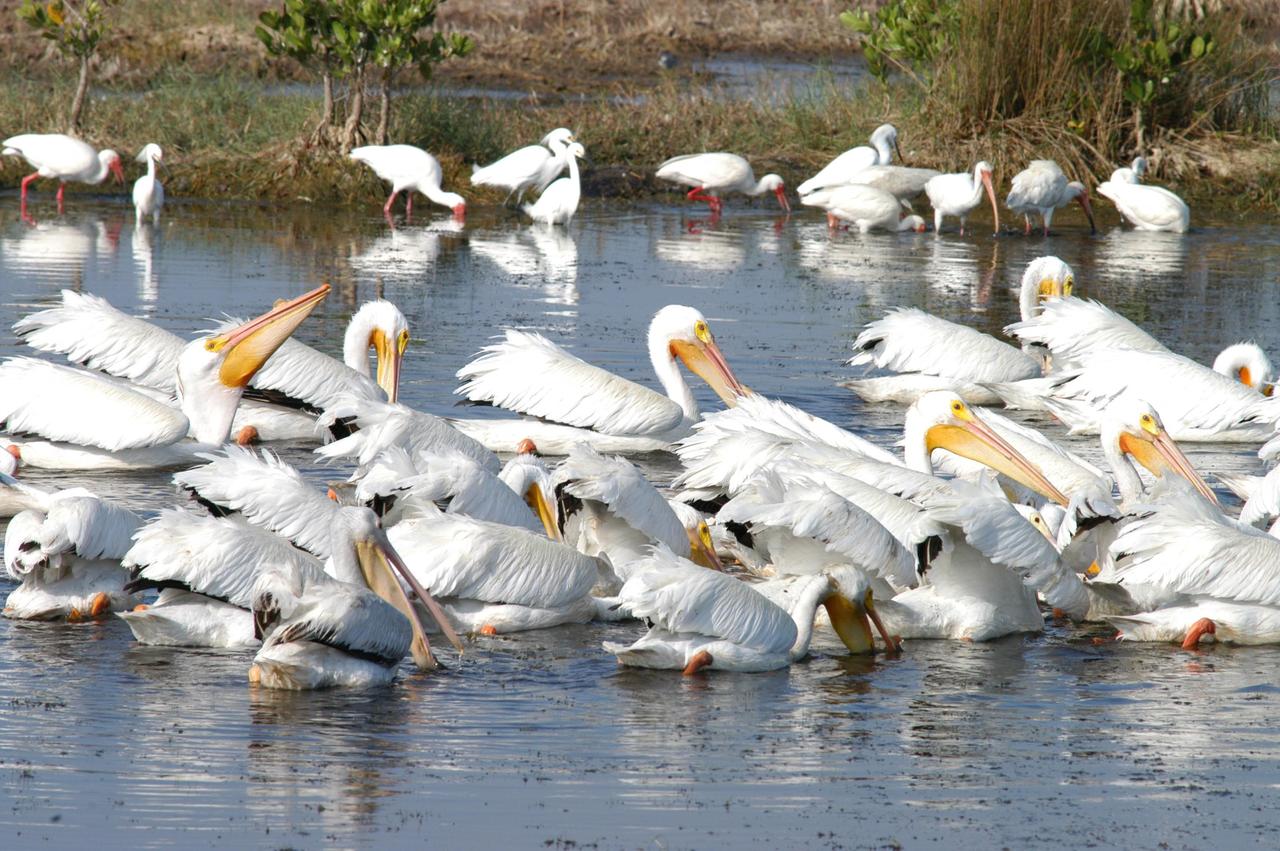
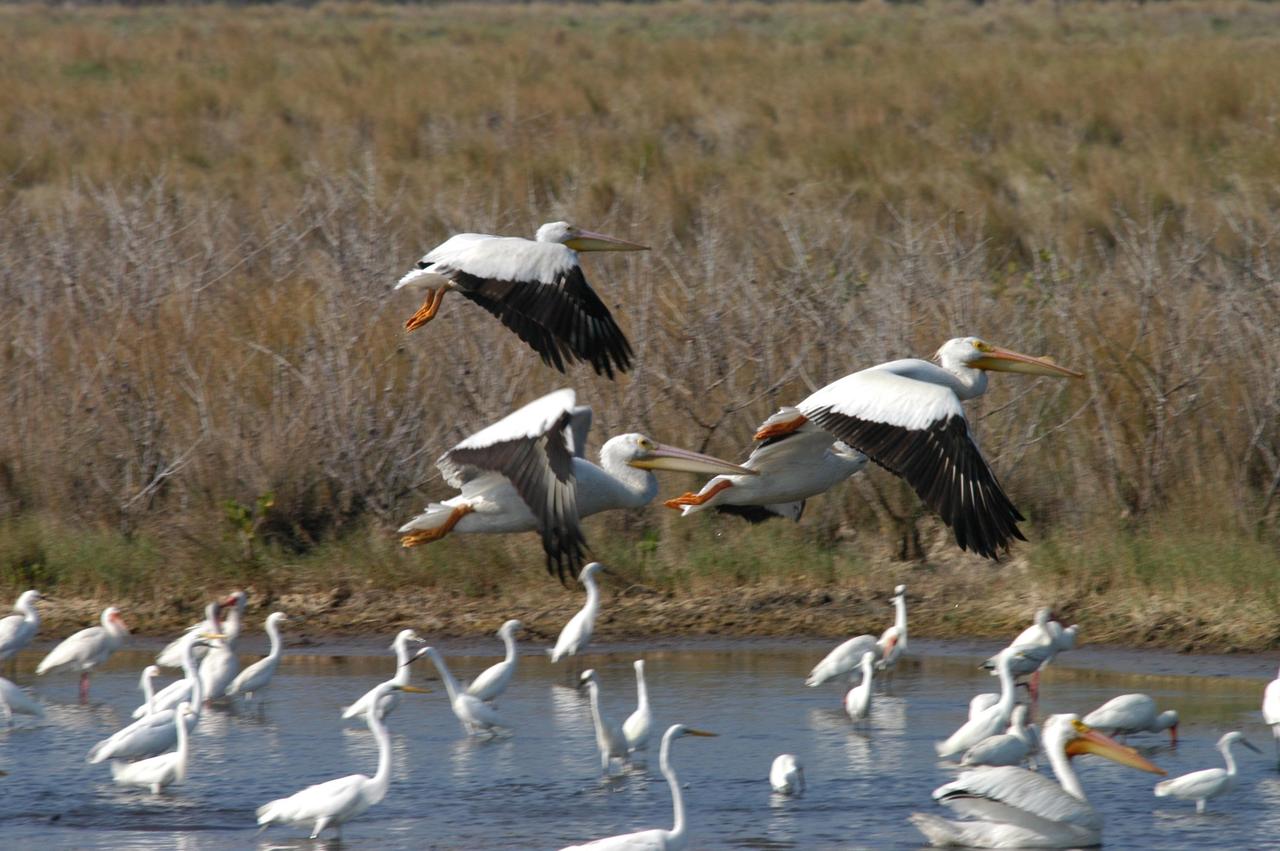
KENNEDY SPACE CENTER, FLA. - White pelicans feed in a lake north of Kennedy Space Center.  In the background are white ibis and great white herons.  The Center shares a boundary with the 92,000-acre Merritt Island National Wildlife Refuge, which is a habitat for more than 310 species of birds, 25 mammals, 117 fishes and 65 amphibians and reptiles.  The marshes and open water of the refuge also provide wintering areas for 23 species of migratory waterfowl, as well as a year-round home for great blue herons, great egrets, wood storks, cormorants, brown pelicans and other species of marsh and shore birds.
KSC-04pd0897
CAPE CANAVERAL, Fla. -  A great blue heron stands watch among a pond of water lilies on NASA's Kennedy Space Center in Florida.  It is one of 310 species of birds that inhabit the National Merritt Island Wildlife Refuge, which shares a boundary with Kennedy.  The marshes and open water of the refuge also provide wintering areas for 23 species of migratory waterfowl, as well as a year-round home for great blue herons, great egrets, wood storks, cormorants, brown pelicans and other species of marsh and shore birds. Photo credit: NASA/Dimitri Gerondidakis
KSC-08pd3162
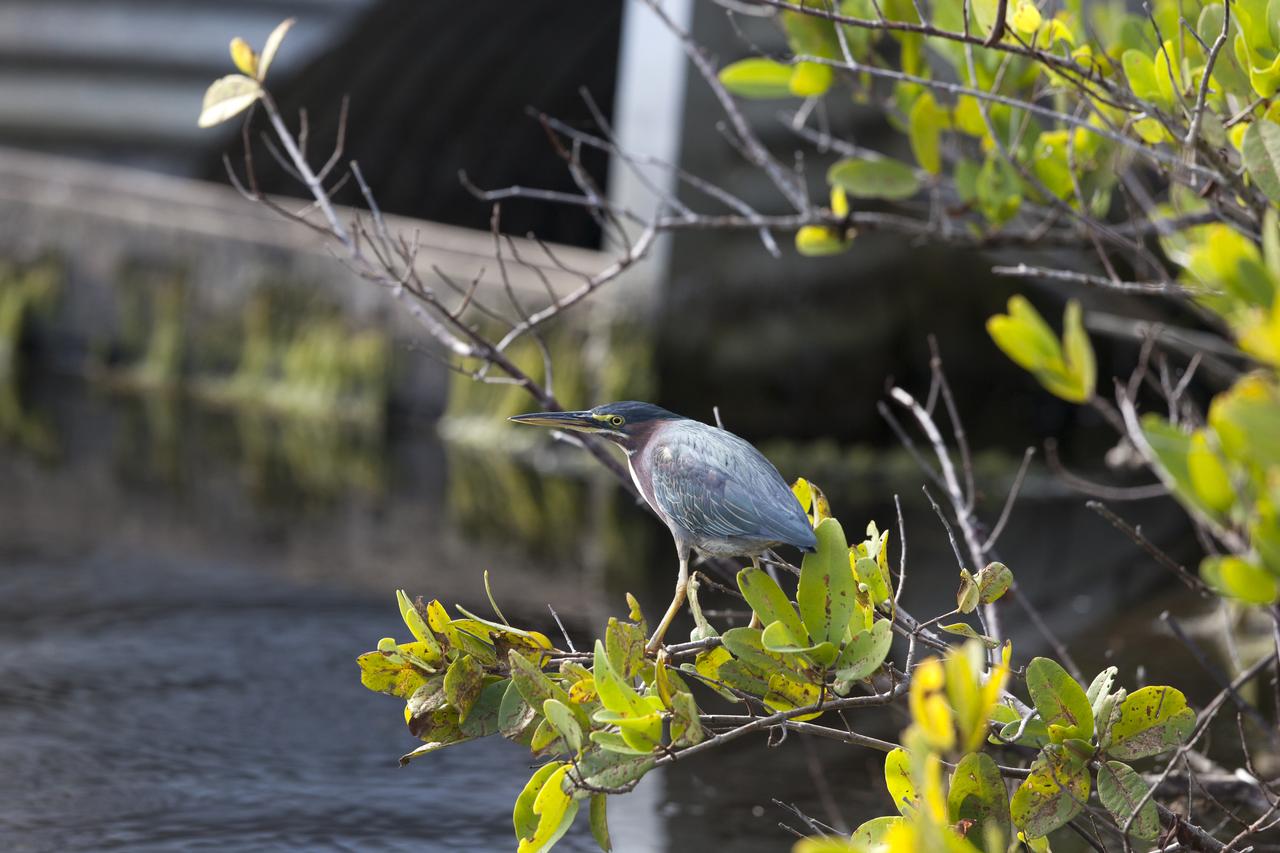
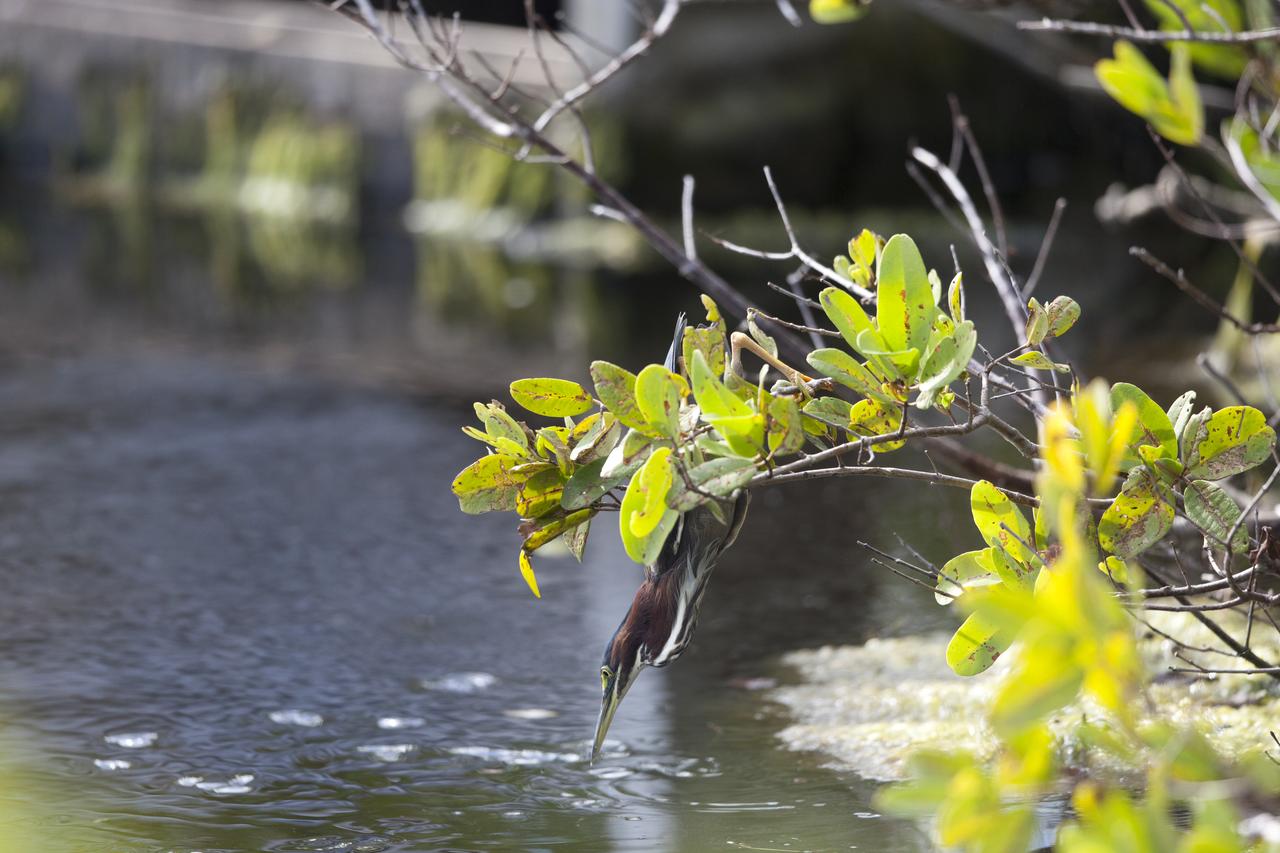
A little green heron is perched in a tree at NASA's Kennedy Space Center in Florida. Kennedy shares a boundary with the Merritt Island National Wildlife Refuge. The refuge encompasses 140,000 acres that are a habitat for more than 331 species of birds, 31 mammals, 117 fish, and 65 amphibians and reptiles. The marshes and open water of the refuge provide wintering areas for 23 species of migratory waterfowl, as well as a year-round home for great blue herons, great egrets, wood storks, cormorants, brown pelicans and other species of marsh and shore birds.
Wildlife Photography - Birds
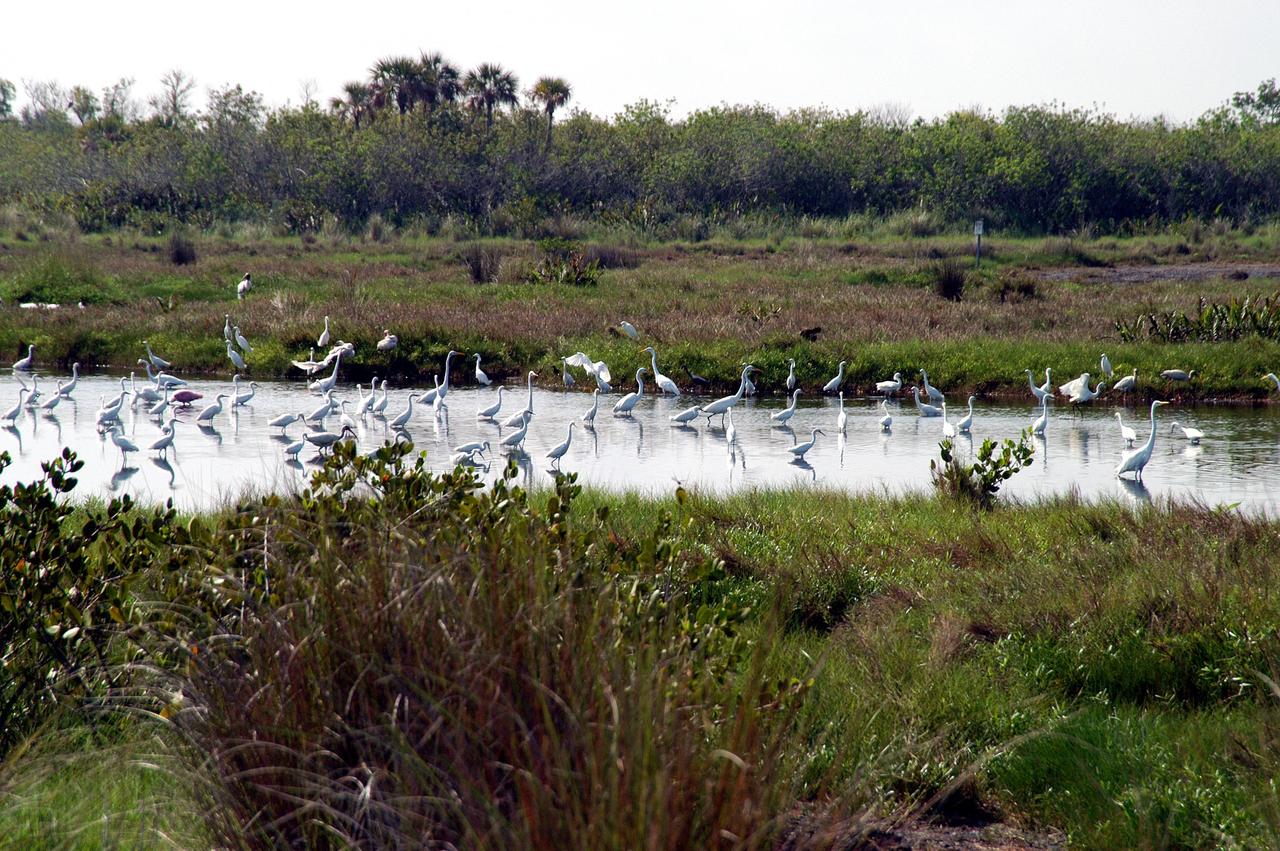
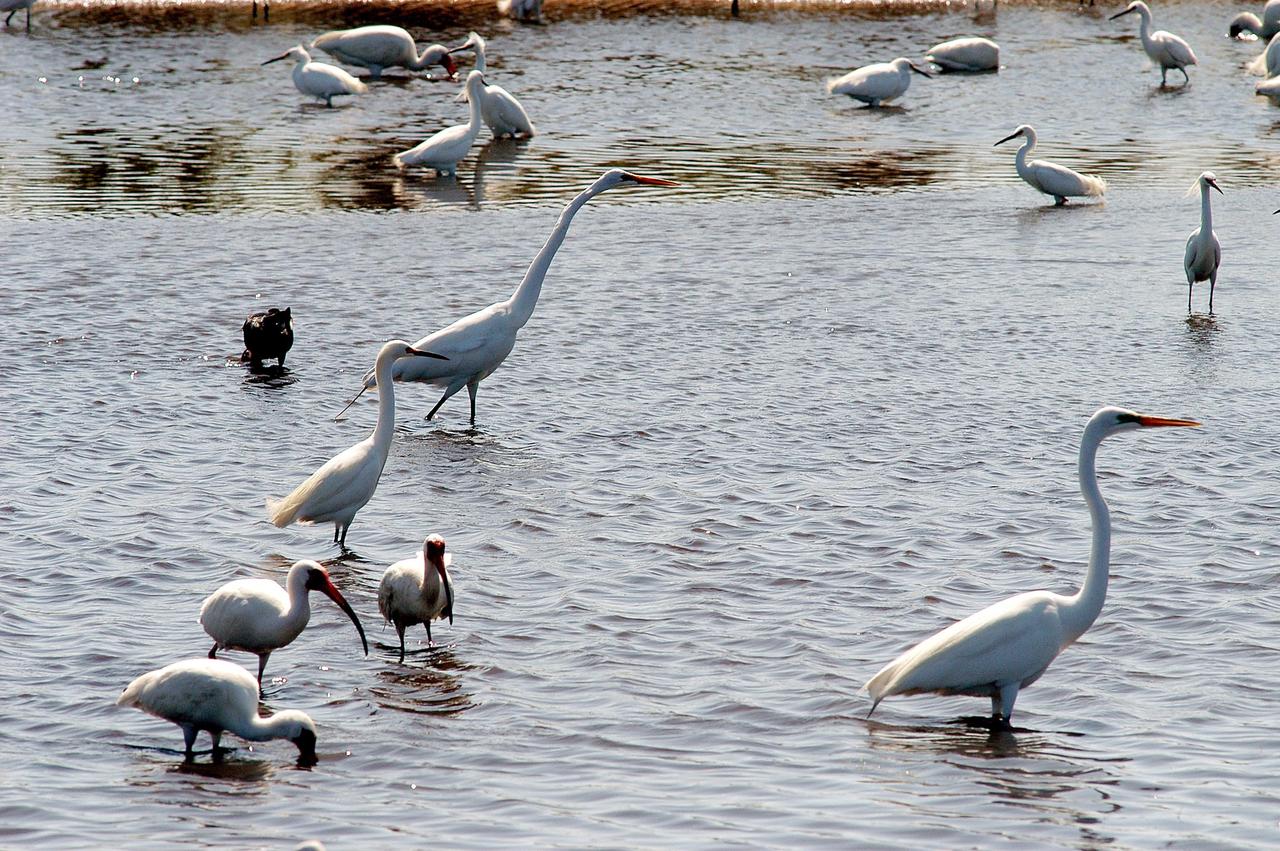
KENNEDY SPACE CENTER, FLA. -  Great white herons and white ibis (smaller, curved bill) wade in a lake north of Kennedy Space Center. The Center shares a boundary north, south and west with the 92,000-acre Merritt Island National Wildlife Refuge, which is a habitat for more than 310 species of birds, 25 mammals, 117 fishes and 65 amphibians and reptiles.  The marshes and open water of the refuge also provide wintering areas for 23 species of migratory waterfowl, as well as a year-round home for great blue herons, great egrets, wood storks, cormorants, brown pelicans and other species of marsh and shore birds.
KSC-04pd0889
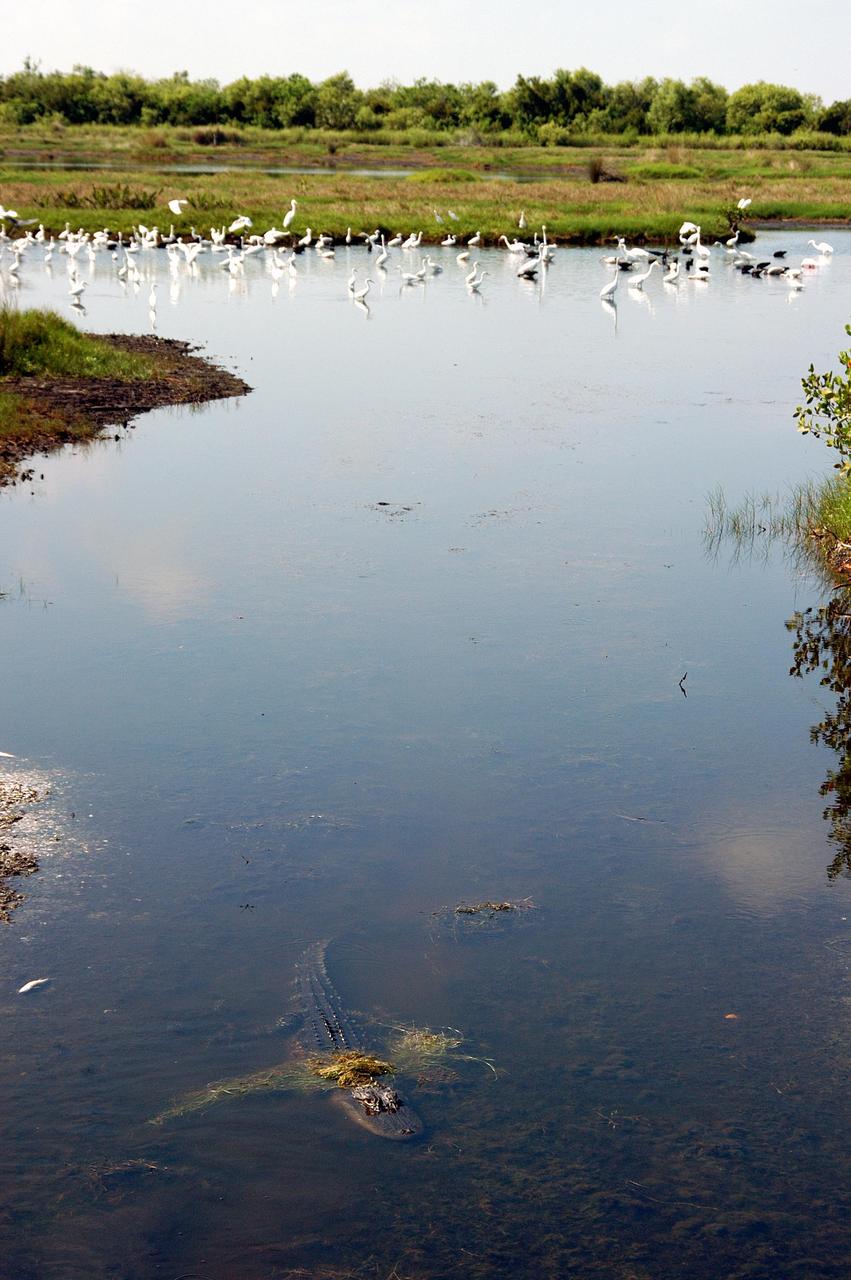
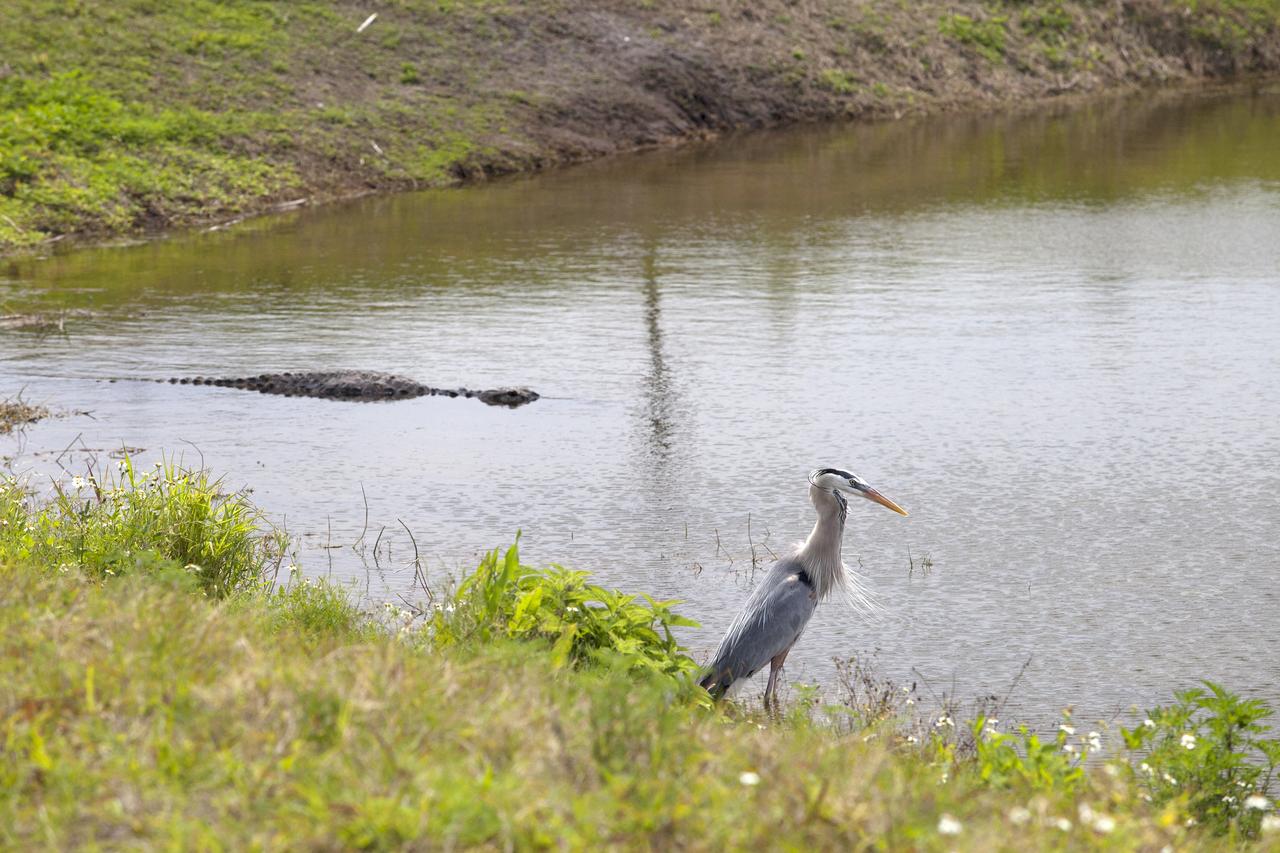
KENNEDY SPACE CENTER, FLA.  -  Above, herons, a roseate spoonbill and other species of water birds gather in a canal near KSC, which shares a boundary with the Merritt Island National Wildlife Refuge. Below is an alligator.  Nearly 5,000 alligators can be found in canals, ponds, and waterways throughout the Center.   The marshes and open water of the refuge also provide wintering areas for 23 species of migratory waterfowl, as well as a year-round home for great blue herons, great egrets, wood storks, cormorants, brown pelicans and other species of marsh and shore birds.
KSC-04pd1250
A little green heron is perched in a tree at NASA's Kennedy Space Center in Florida. Kennedy shares a boundary with the Merritt Island National Wildlife Refuge. The refuge encompasses 140,000 acres that are a habitat for more than 331 species of birds, 31 mammals, 117 fish, and 65 amphibians and reptiles. The marshes and open water of the refuge provide wintering areas for 23 species of migratory waterfowl, as well as a year-round home for great blue herons, great egrets, wood storks, cormorants, brown pelicans and other species of marsh and shore birds.
Wildlife Photography - Birds
KENNEDY SPACE CENTER, FLA.  --  A great blue heron watches warily near a canal on Kennedy Space Center.  These herons inhabit lakes, ponds, rivers and marshes.  They range throughout the United States.  Fish and frogs are its principal food but will also feed on small mammals, reptiles and, occasionally, birds.  KSC shares a boundary with the Merritt Island Wildlife Nature Refuge. The refuge is a habitat for more than 310 species of birds, 25 mammals, 117 fishes and 65 amphibians and reptiles. In addition, the Refuge supports 19 endangered or threatened wildlife species on Federal or State lists, more than any other single refuge in the U.S.   Photo credit: NASA/Dimitri Gerondidakis
KSC-07pd0866
KENNEDY SPACE CENTER, FLA. - White pelicans feed in a lake north of Kennedy Space Center.  In the background are white ibis and great white herons.  The Center shares a boundary with the 92,000-acre Merritt Island National Wildlife Refuge, which is a habitat for more than 310 species of birds, 25 mammals, 117 fishes and 65 amphibians and reptiles.  The marshes and open water of the refuge also provide wintering areas for 23 species of migratory waterfowl, as well as a year-round home for great blue herons, great egrets, wood storks, cormorants, brown pelicans and other species of marsh and shore birds.
KSC-04pd0895
KENNEDY SPACE CENTER, FLA.  --  White herons, blue herons, ibis and several other species of birds gather on a pond near Kennedy Space Center to hunt for food. KSC shares a boundary with the Merritt Island National Wildlife Refuge, which surrounds it.  The refuge is a habitat for more than 310 species of birds, 25 mammals, 117 fishes and 65 amphibians and reptiles. In addition, the refuge supports 19 endangered or threatened wildlife species on Federal or State lists, more than any other single refuge in the U.S.  Photo credit: NASA/Ken Thornsley
KSC-07pd0731
KENNEDY SPACE CENTER, FLA. -  This lake north of Kennedy Space Center attracts a myriad of birds, such as the white ibis (left), roseate spoonbill (center) and little blue heron (right) seen here. The Center shares a boundary north, south and west with the 92,000-acre Merritt Island National Wildlife Refuge, which is a habitat for more than 310 species of birds, 25 mammals, 117 fishes and 65 amphibians and reptiles.  The marshes and open water of the refuge also provide wintering areas for 23 species of migratory waterfowl, as well as a year-round home for great blue herons, great egrets, wood storks, cormorants, brown pelicans and other species of marsh and shore birds.
KSC-04pd0892
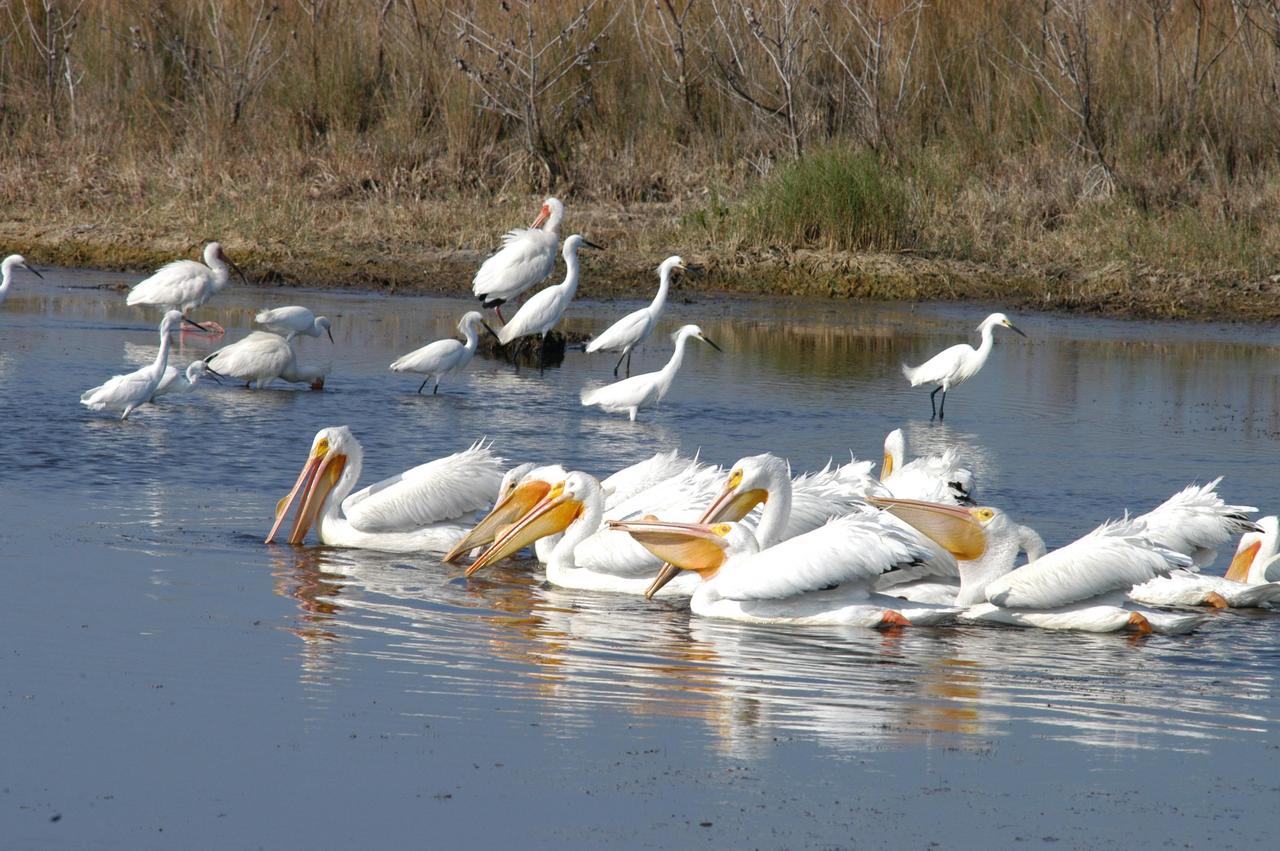
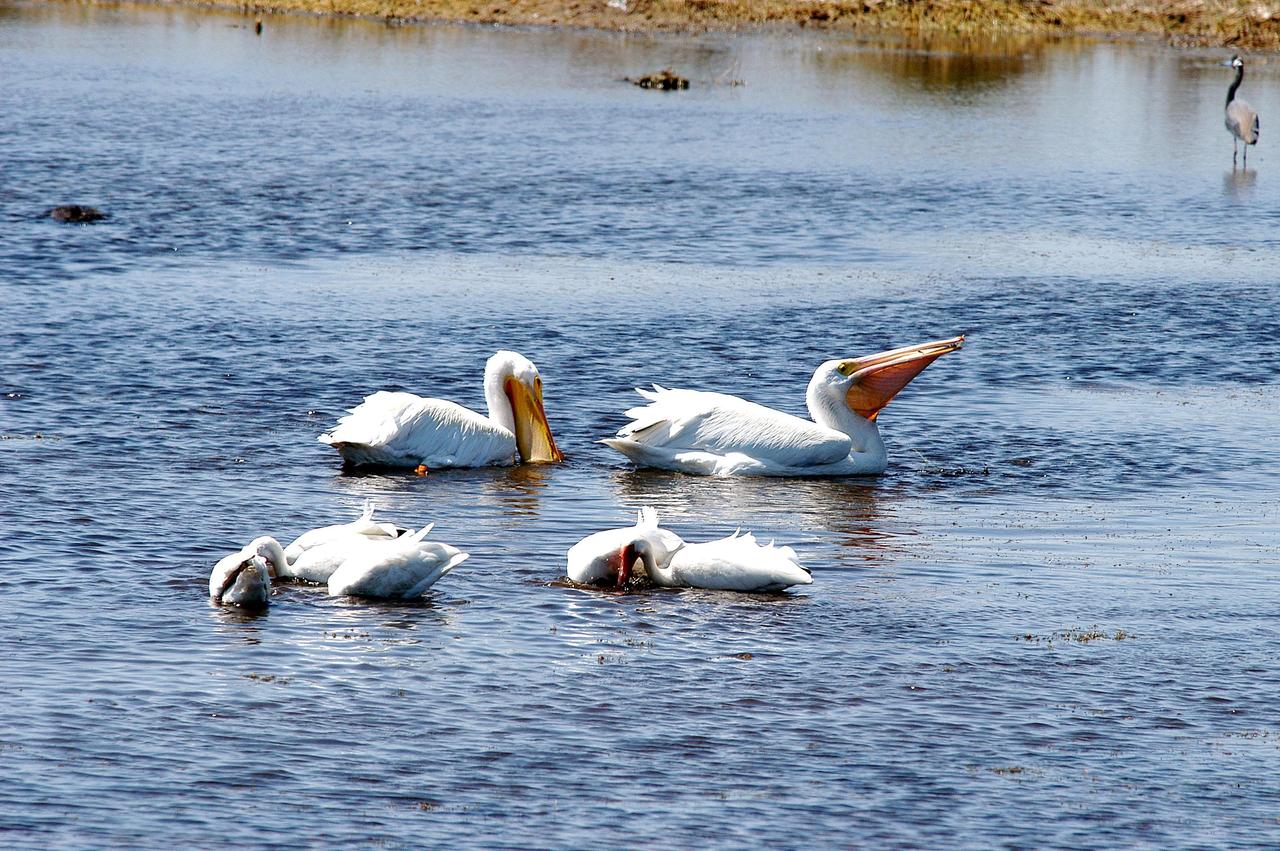
KENNEDY SPACE CENTER, FLA. -  White pelicans swim in a lake north of Kennedy Space Center.  In the distance, at right, is a great blue heron.  White pelicans winter from Florida and southern California south to Panama.  Great blue herons range across the breadth of the United States, as well as north to Alaska and Canada and south to Mexico and the West Indies.  The Center shares a boundary north, south and west with the 92,000-acre Merritt Island National Wildlife Refuge, which is a habitat for more than 310 species of birds, 25 mammals, 117 fishes and 65 amphibians and reptiles.  The marshes and open water of the refuge also provide wintering areas for 23 species of migratory waterfowl, as well as a year-round home for great blue herons, great egrets, wood storks, cormorants, brown pelicans and other species of marsh and shore birds.
KSC-04pd0894
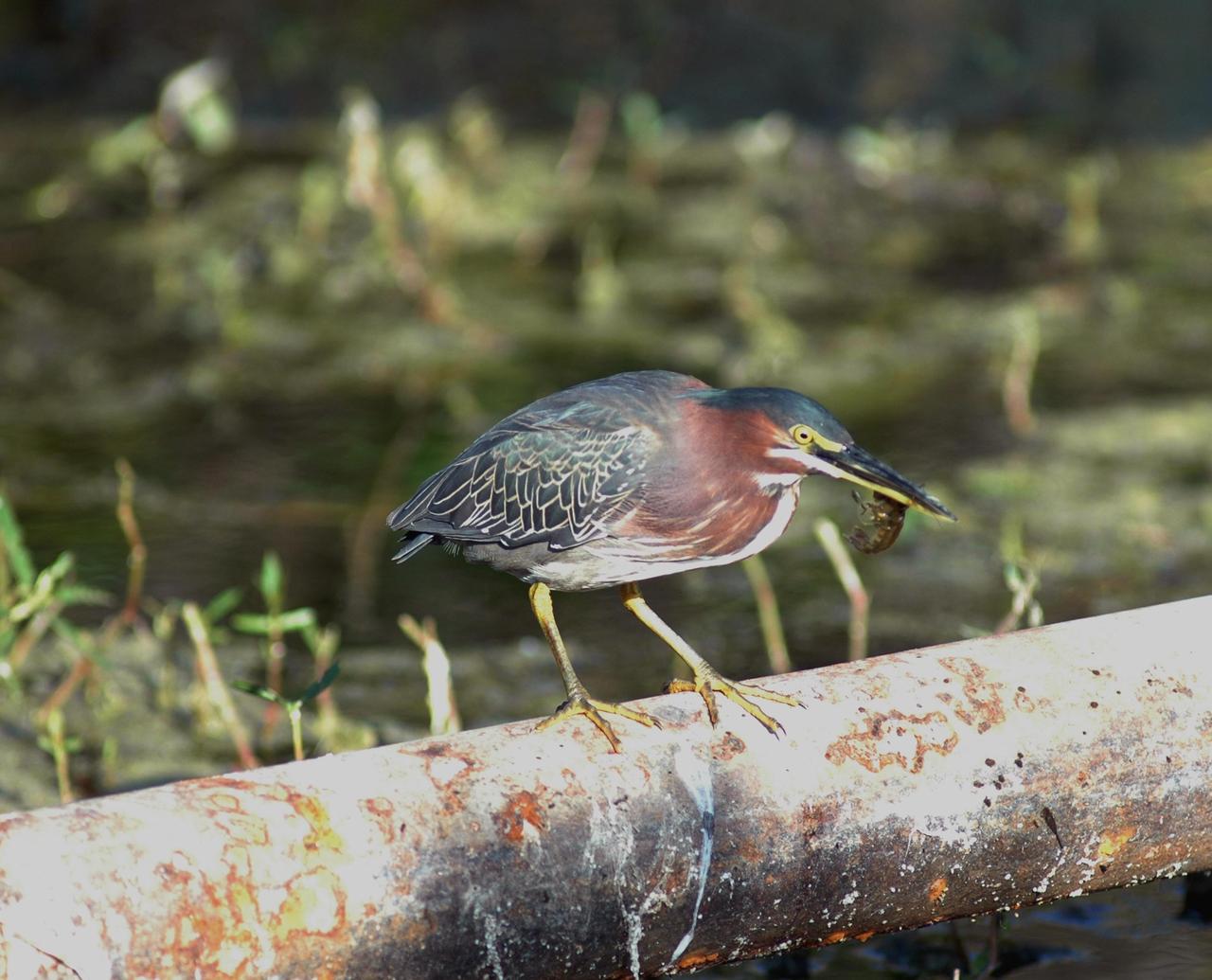
KENNEDY SPACE CENTER, FLA.  -- A green heron is spotted on a fence in the Launch Complex 39 Area at NASA's Kennedy Space Center.  These herons range across the eastern half of the United States, wintering through South Carolina, the Gulf Coast and California.  For their habitat, the herons prefer lake margins, streams, ponds and marshes.  KSC shares a boundary with the Merritt Island National Wildlife Refuge, which surrounds it.  The refuge is a habitat for more than 310 species of birds, 25 mammals, 117 fishes and 65 amphibians and reptiles. In addition, the refuge supports 19 endangered or threatened wildlife species on Federal or State lists, more than any other single refuge in the U.S.  Photo credit: NASA/Jim Grossmann
KSC-07pd0769
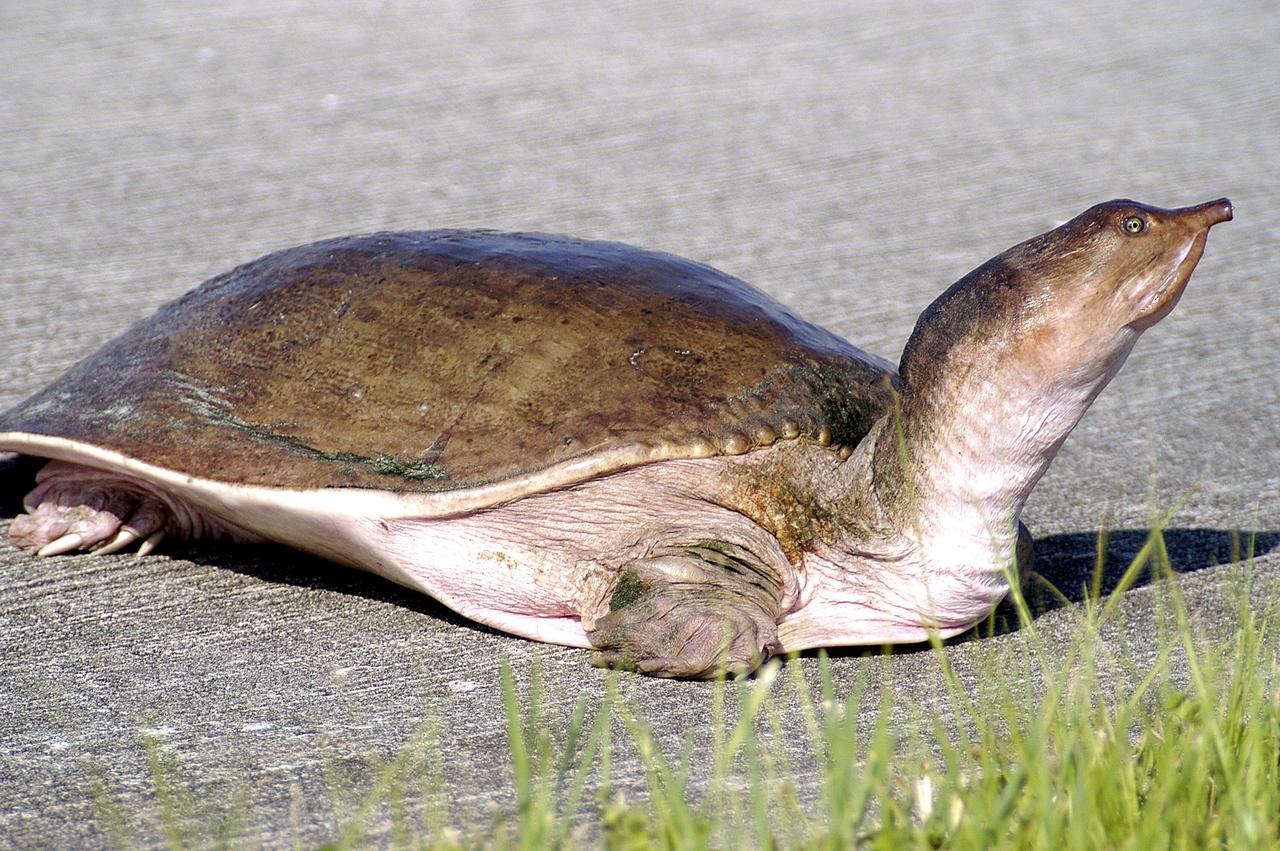
KENNEDY SPACE CENTER, FLA. -  A soft-shell turtle with only three legs is seen crossing the tow-way at KSC.  The turtle is one of 65 amphibians and reptiles found in the Merritt Island National Wildlife Refuge, which surrounds KSC.  The Wildlife Refuge encompasses 92,000 acres that are also a habitat for more than 331 species of birds, 31 mammals and 117 fishes.  The marshes and open water of the refuge provide wintering areas for 23 species of migratory waterfowl, as well as a year-round home for great blue herons, great egrets, wood storks, cormorants, brown pelicans and other species of marsh and shore birds, plus a variety of insects.
KENNEDY SPACE CENTER, FLA. - A soft-shell turtle with only three legs is seen crossing the tow-way at KSC. The turtle is one of 65 amphibians and reptiles found in the Merritt Island National Wildlife Refuge, which surrounds KSC. The Wildlife Refuge encompasses 92,000 acres that are also a habitat for more than 331 species of birds, 31 mammals and 117 fishes. The marshes and open water of the refuge provide wintering areas for 23 species of migratory waterfowl, as well as a year-round home for great blue herons, great egrets, wood storks, cormorants, brown pelicans and other species of marsh and shore birds, plus a variety of insects.
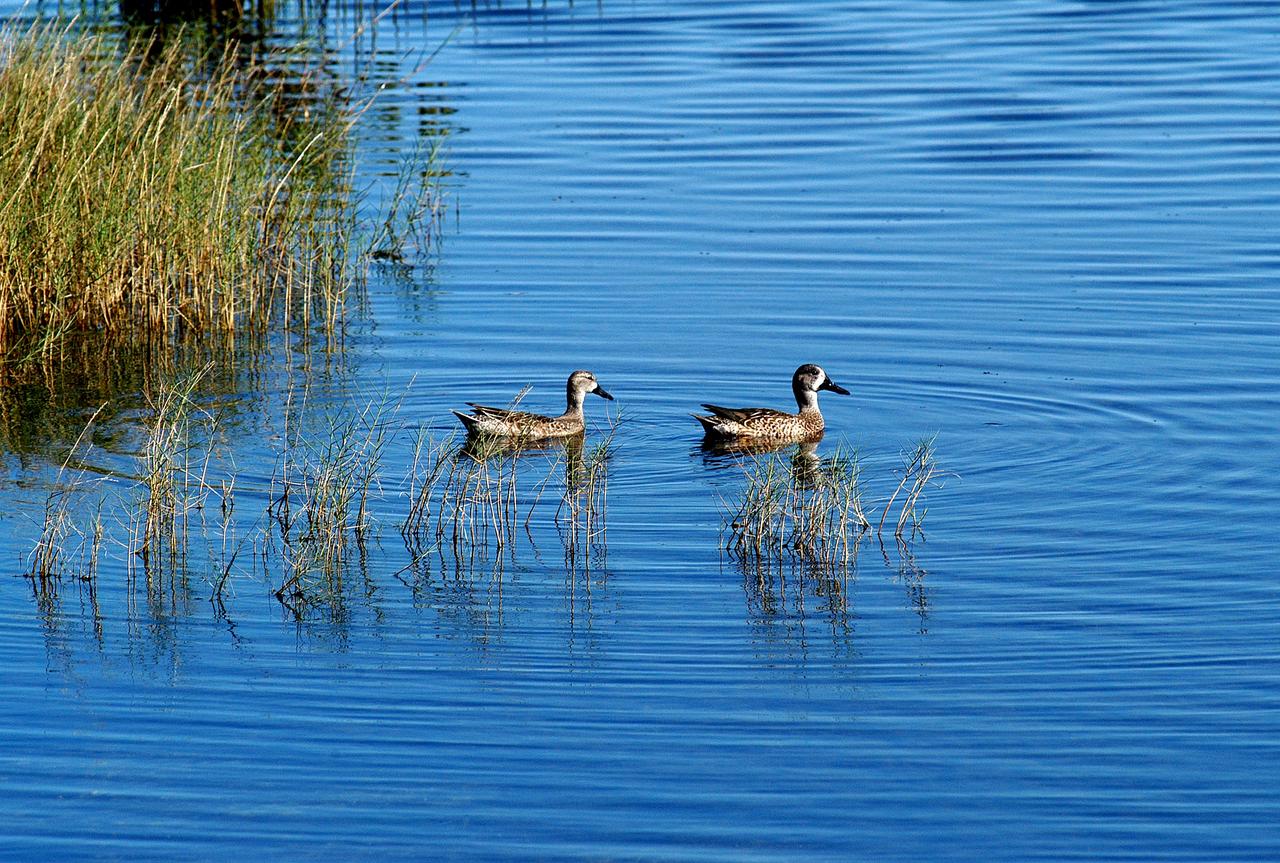
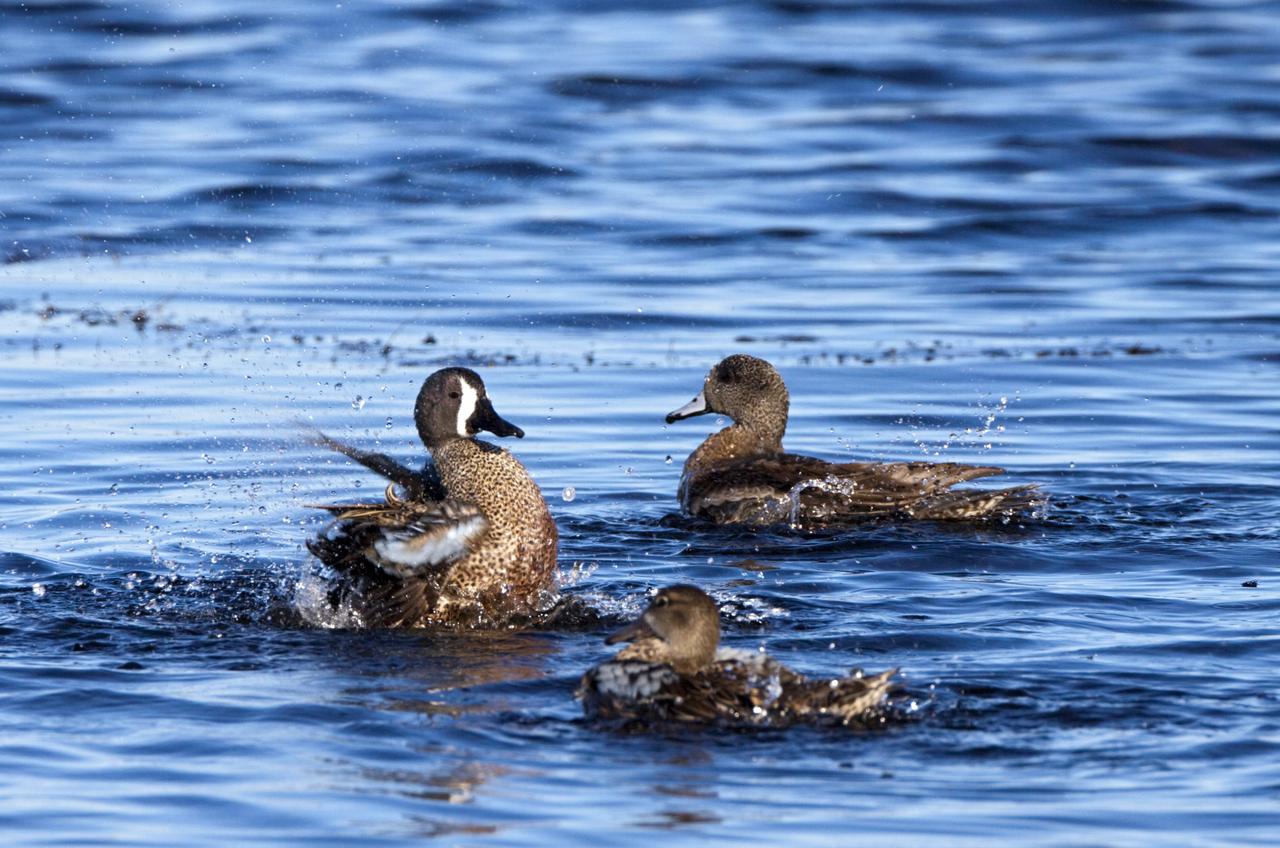
KENNEDY SPACE CENTER, FLA.   -   Two blue-winged teals swim in a pond near KSC.  The species prefers marshes and shallow ponds and lakes for nesting and range from Canada to North Carolina, the Gulf Coast and Southern California, as well as Florida.  KSC shares a boundary with the National Merritt Island Wildlife Refuge, which provides wintering areas for 23 species of migratory waterfowl, as well as a year-round home for great blue herons, great egrets, wood storks, cormorants, brown pelicans and other species of marsh and shore birds.
KENNEDY SPACE CENTER, FLA. - Two blue-winged teals swim in a pond near KSC. The species prefers marshes and shallow ponds and lakes for nesting and range from Canada to North Carolina, the Gulf Coast and Southern California, as well as Florida. KSC shares a boundary with the National Merritt Island Wildlife Refuge, which provides wintering areas for 23 species of migratory waterfowl, as well as a year-round home for great blue herons, great egrets, wood storks, cormorants, brown pelicans and other species of marsh and shore birds.
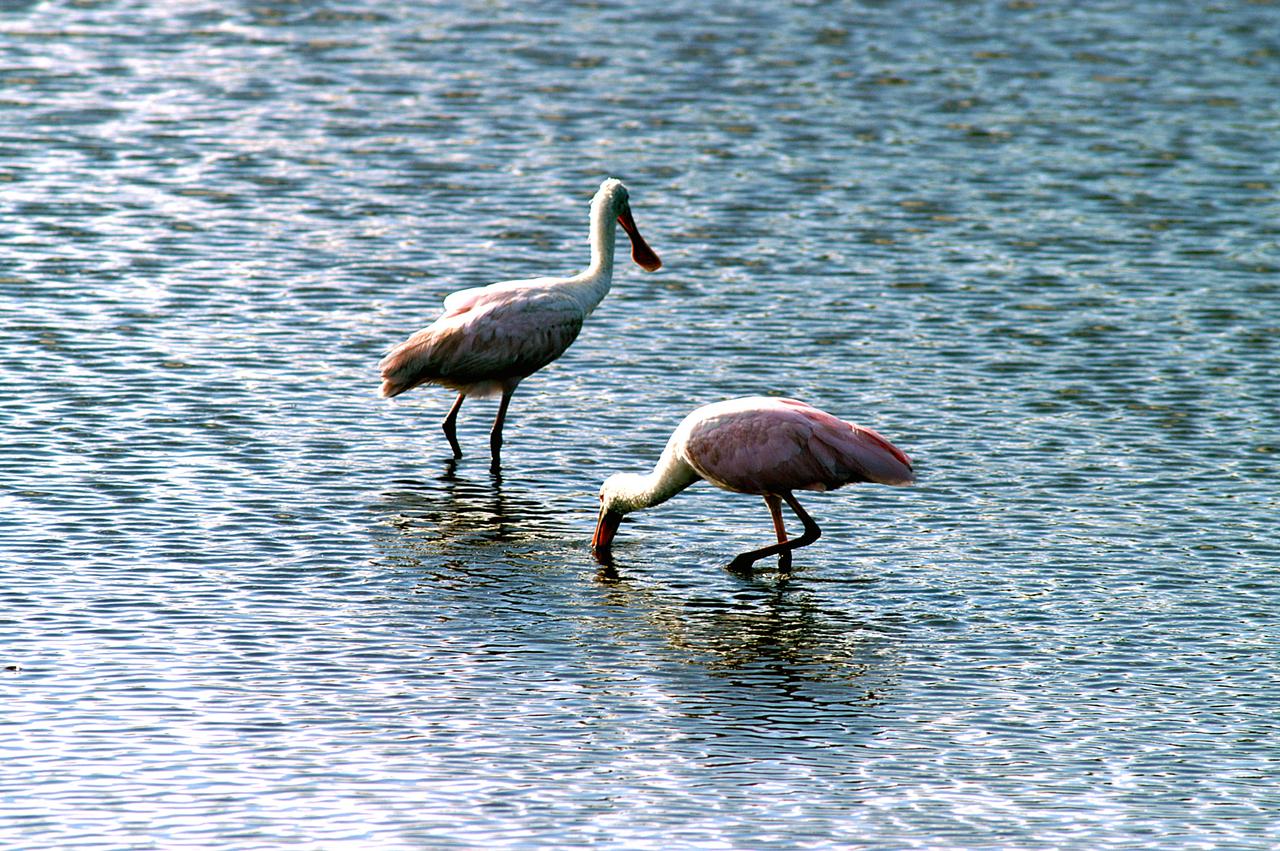
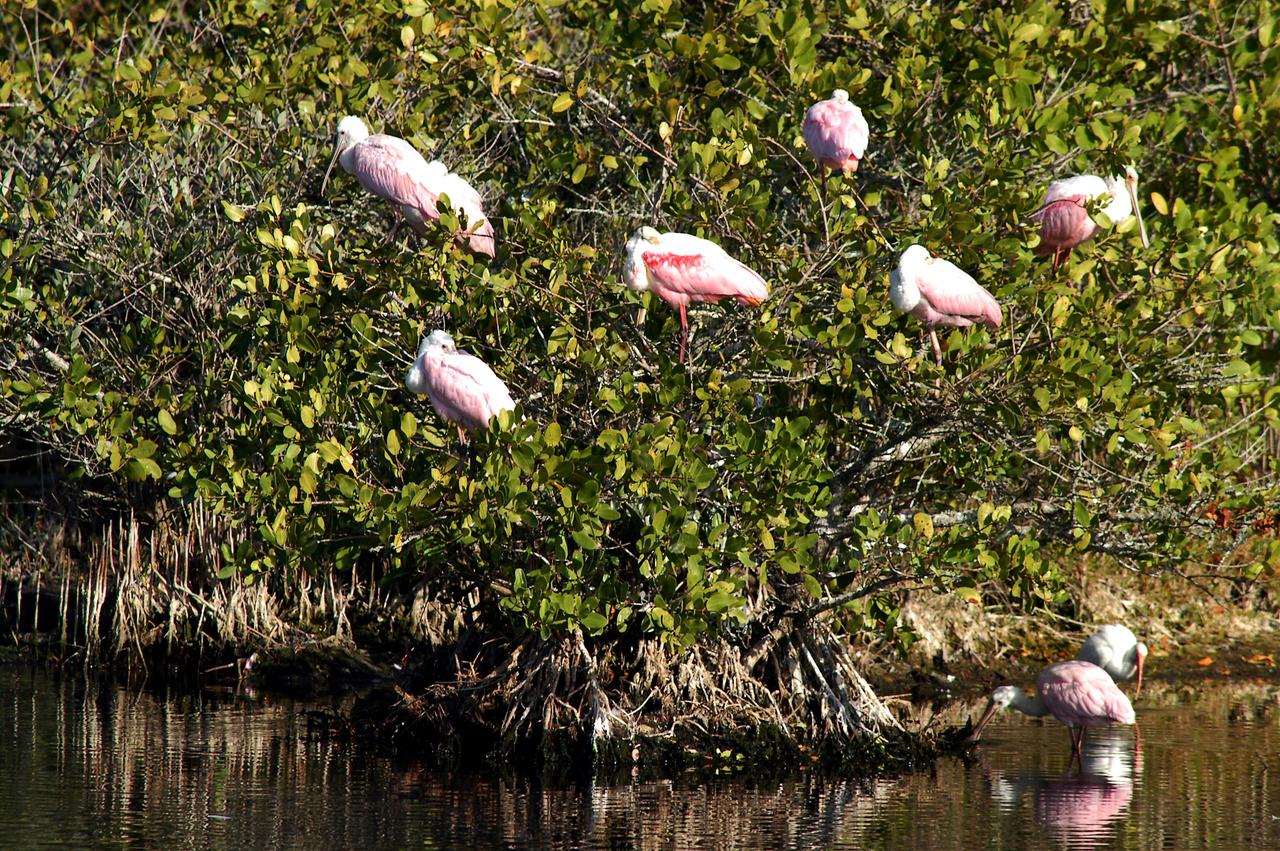
KENNEDY SPACE CENTER, FLA. -- Two roseate spoonbills hunt for their supper in the water near KSC. Spoonbills prefer to inhabit mangroves, ranging from the coasts of southern Florida, Louisiana and Texas, to the West Indies, Mexico, Central and South America. They feed on shrimps and fish in shallow waters. Spoonbills are one of 310 species of birds that inhabit the National Merritt Island Wildlife Refuge, which shares a boundary with KSC. The marshes and open water of the refuge also provide wintering areas for 23 species of migratory waterfowl, as well as a year-round home for great blue herons, great egrets, wood storks, cormorants, brown pelicans and other species of marsh and shore birds.
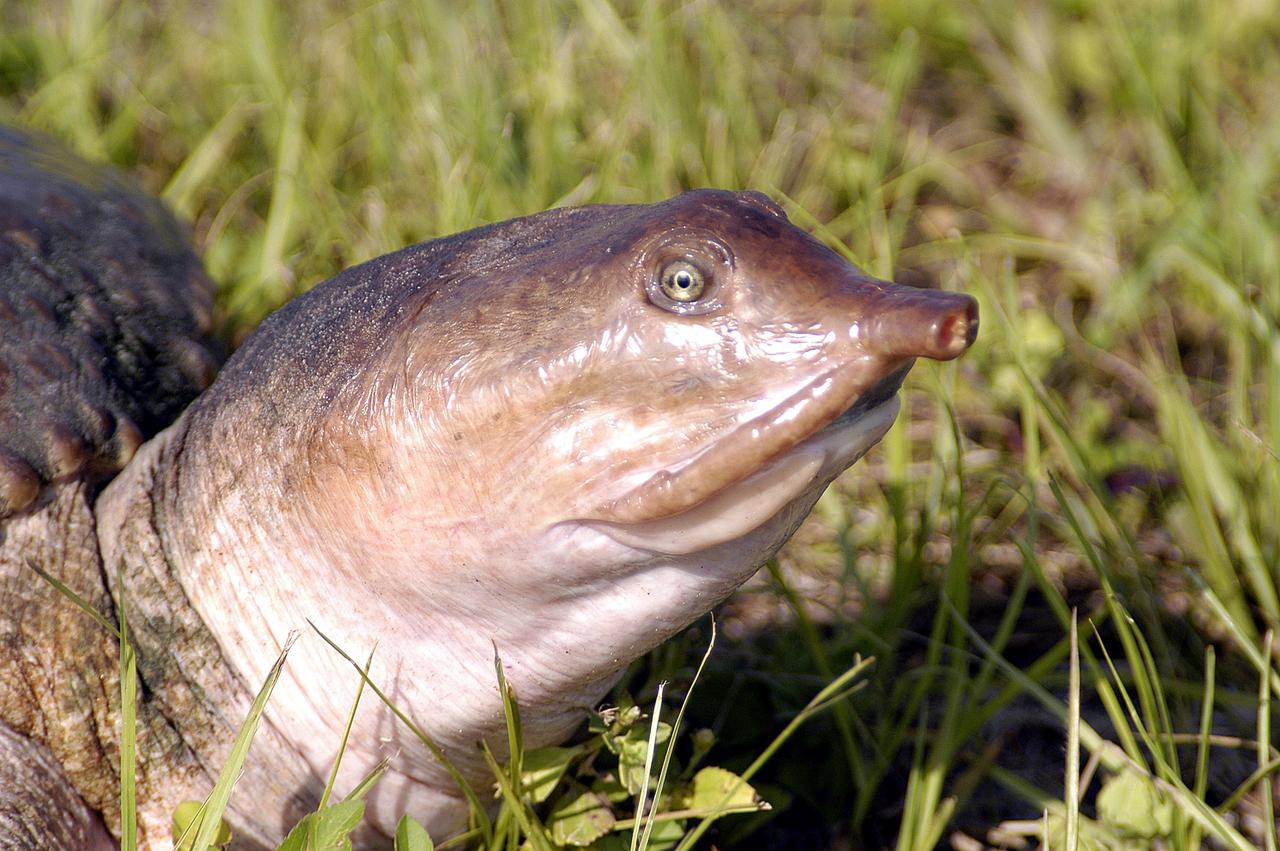
KENNEDY SPACE CENTER, FLA. -  A closeup of a soft-shell turtle seen crossing the tow-way at KSC.  The turtle is one of 65 amphibians and reptiles found in the Merritt Island National Wildlife Refuge, which surrounds KSC.  The Wildlife Refuge encompasses 92,000 acres that are also a habitat for more than 331 species of birds, 31 mammals and 117 fishes.  The marshes and open water of the refuge provide wintering areas for 23 species of migratory waterfowl, as well as a year-round home for great blue herons, great egrets, wood storks, cormorants, brown pelicans and other species of marsh and shore birds, plus a variety of insects.
KENNEDY SPACE CENTER, FLA. - A closeup of a soft-shell turtle seen crossing the tow-way at KSC. The turtle is one of 65 amphibians and reptiles found in the Merritt Island National Wildlife Refuge, which surrounds KSC. The Wildlife Refuge encompasses 92,000 acres that are also a habitat for more than 331 species of birds, 31 mammals and 117 fishes. The marshes and open water of the refuge provide wintering areas for 23 species of migratory waterfowl, as well as a year-round home for great blue herons, great egrets, wood storks, cormorants, brown pelicans and other species of marsh and shore birds, plus a variety of insects.
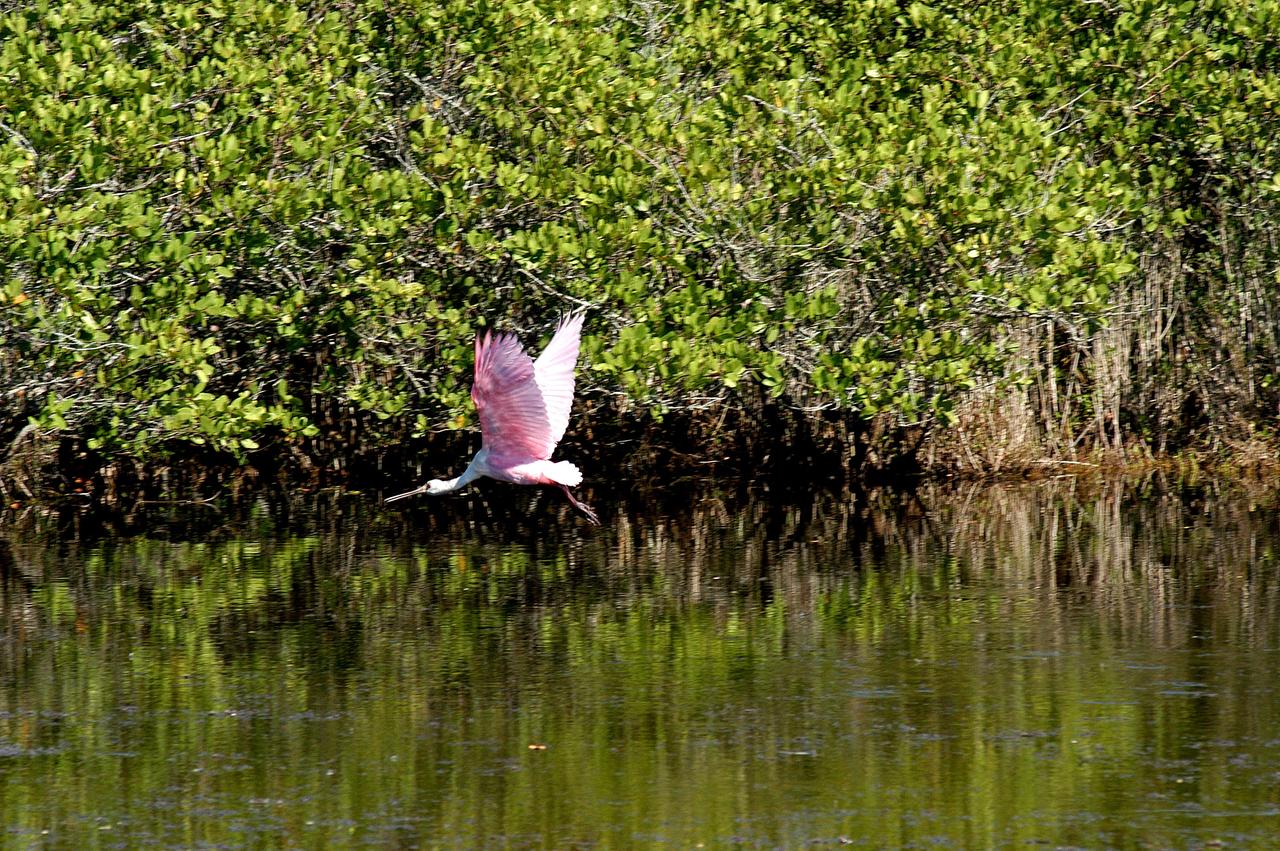
KENNEDY SPACE CENTER, FLA.   -  A roseate spoonbill flies across the water near KSC.  Spoonbills prefer to inhabit mangroves, ranging from the coasts of southern Florida, Louisiana and Texas, to the West Indies, Mexico, Central and South America.  They feed on shrimps and fish in shallow waters.   Spoonbills are one of 310 species of birds that inhabit the National Merritt Island Wildlife Refuge, which shares a boundary with KSC.  The marshes and open water of the refuge also provide wintering areas for 23 species of migratory waterfowl, as well as a year-round home for great blue herons, great egrets, wood storks, cormorants, brown pelicans and other species of marsh and shore birds.
KENNEDY SPACE CENTER, FLA. - A roseate spoonbill flies across the water near KSC. Spoonbills prefer to inhabit mangroves, ranging from the coasts of southern Florida, Louisiana and Texas, to the West Indies, Mexico, Central and South America. They feed on shrimps and fish in shallow waters. Spoonbills are one of 310 species of birds that inhabit the National Merritt Island Wildlife Refuge, which shares a boundary with KSC. The marshes and open water of the refuge also provide wintering areas for 23 species of migratory waterfowl, as well as a year-round home for great blue herons, great egrets, wood storks, cormorants, brown pelicans and other species of marsh and shore birds.
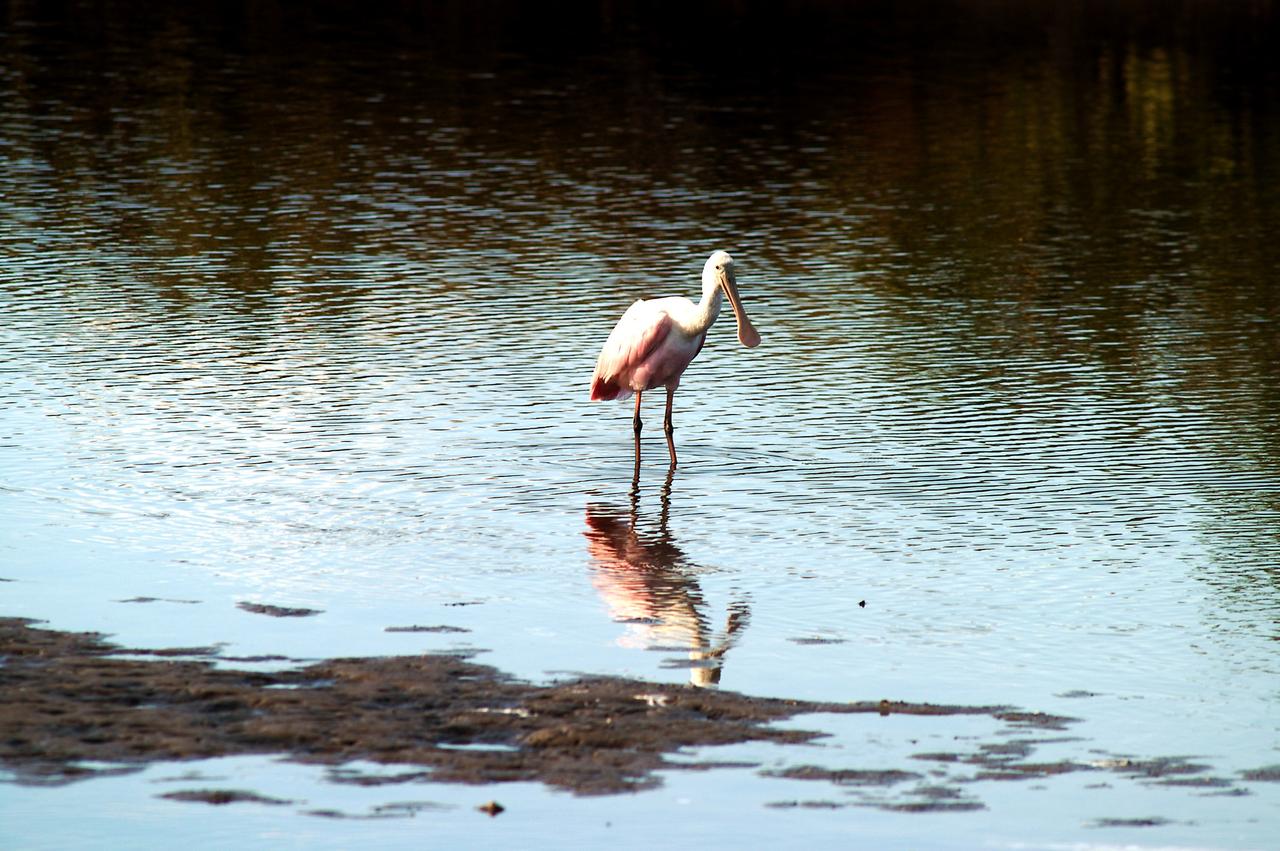
KENNEDY SPACE CENTER, FLA. -- A roseate spoonbill contemplates its reflection in the water near KSC. Spoonbills prefer to inhabit mangroves, ranging from the coasts of southern Florida, Louisiana and Texas, to the West Indies, Mexico, Central and South America. They feed on shrimps and fish in shallow waters. Spoonbills are one of 310 species of birds that inhabit the Merritt Island National Wildlife Refuge, which shares a boundary with KSC. The marshes and open water of the refuge also provide wintering areas for 23 species of migratory waterfowl, as well as a year-round home for great blue herons, great egrets, wood storks, cormorants, brown pelicans and other species of marsh and shore birds.
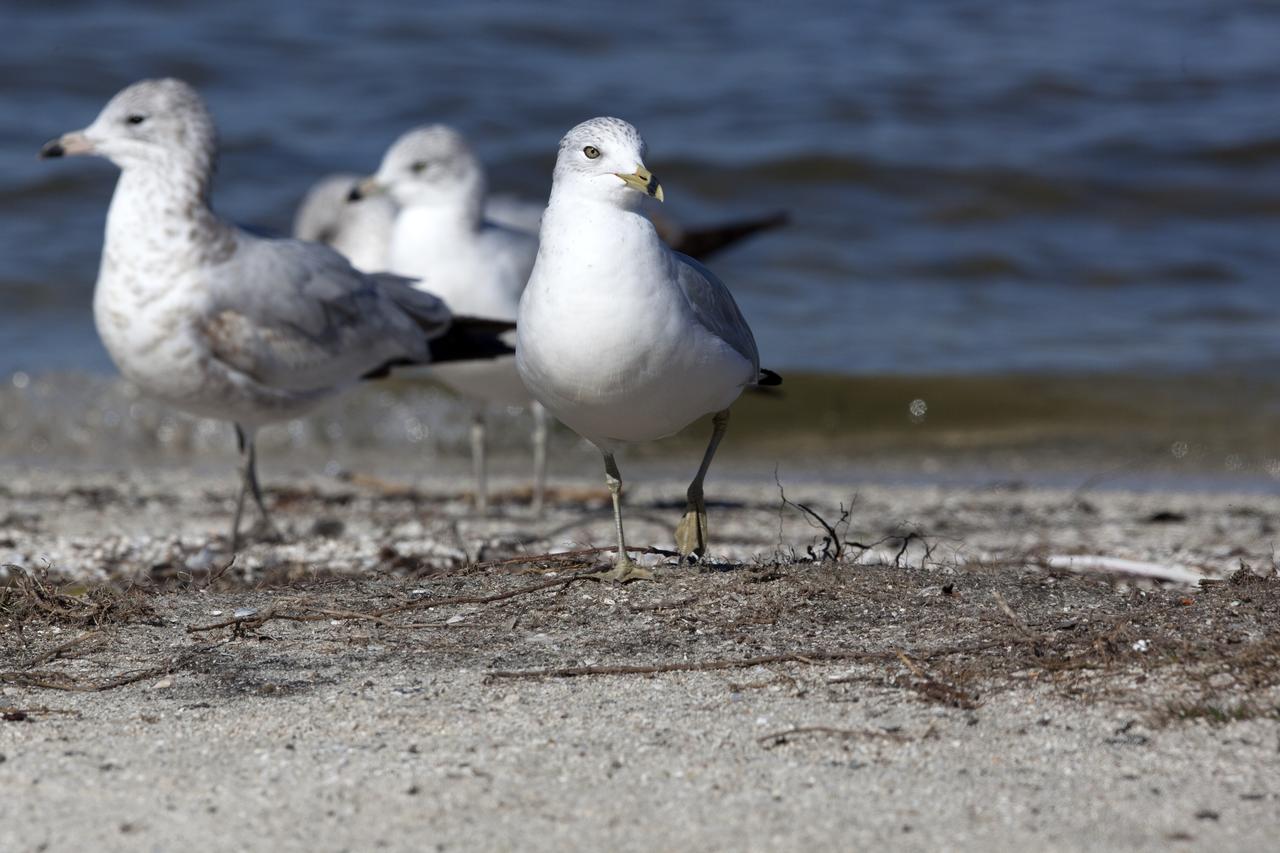
Seagulls gather along a shoreline at NASA's Kennedy Space Center in Florida. Kennedy shares a boundary with the Merritt Island National Wildlife Refuge. The refuge encompasses 140,000 acres that are a habitat for more than 331 species of birds, 31 mammals, 117 fish, and 65 amphibians and reptiles. The marshes and open water of the refuge provide wintering areas for 23 species of migratory waterfowl, as well as a year-round home for great blue herons, great egrets, wood storks, cormorants, brown pelicans and other species of marsh and shore birds.
Wildlife Photography - Birds
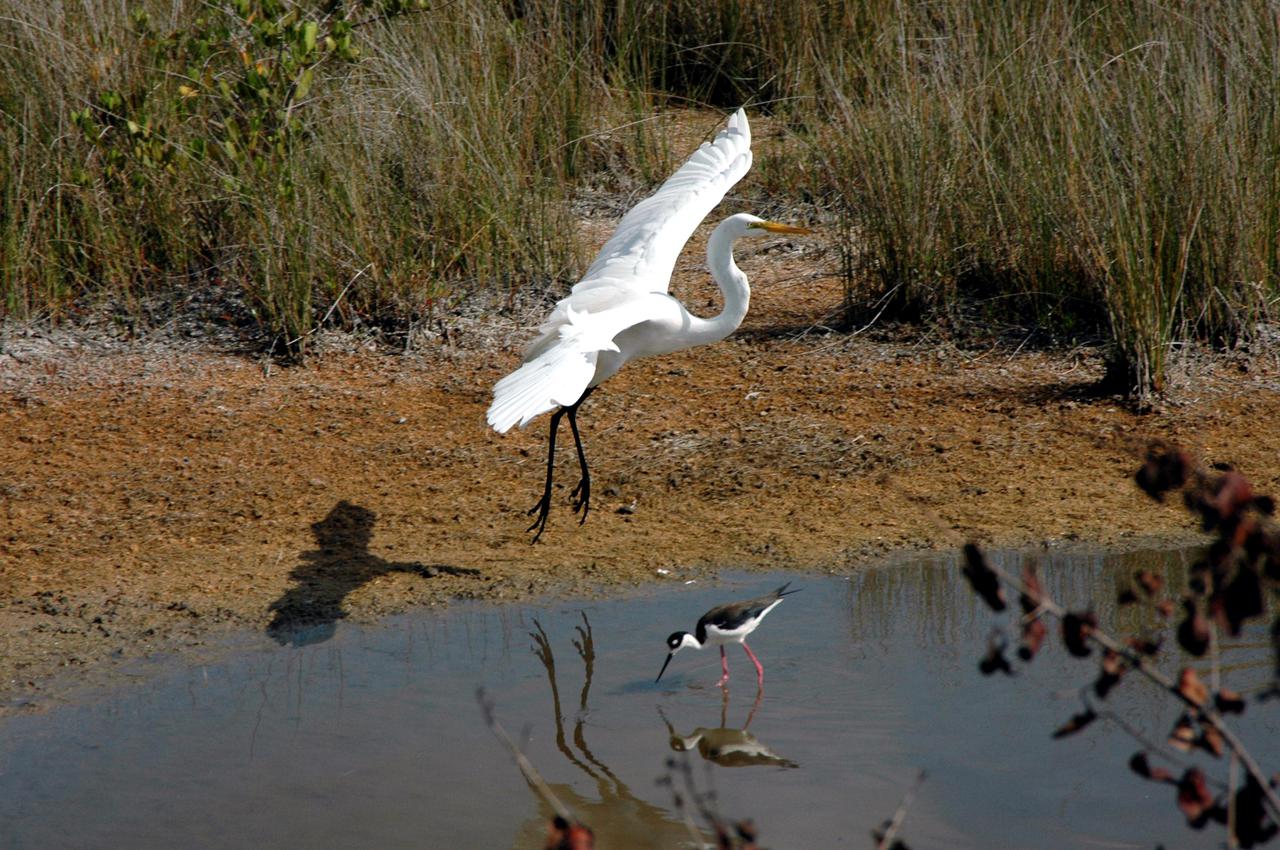
KENNEDY SPACE CENTER, FLA.  -  A black-necked stilt, foraging for food, pays no attention to a great egret as it comes in for a landing in a marshy area of the Merritt Island National Wildlife Refuge. The refuge was established in 1963 on Kennedy Space Center land and water not used by NASA for the space program. The marshes and open water of the refuge provide wintering grounds for 23 species of migratory waterfowl, as well as a year-round home for great blue herons, wood storks, cormorants, brown pelicans and other species of marsh and shore birds.
KSC-05pd-1019
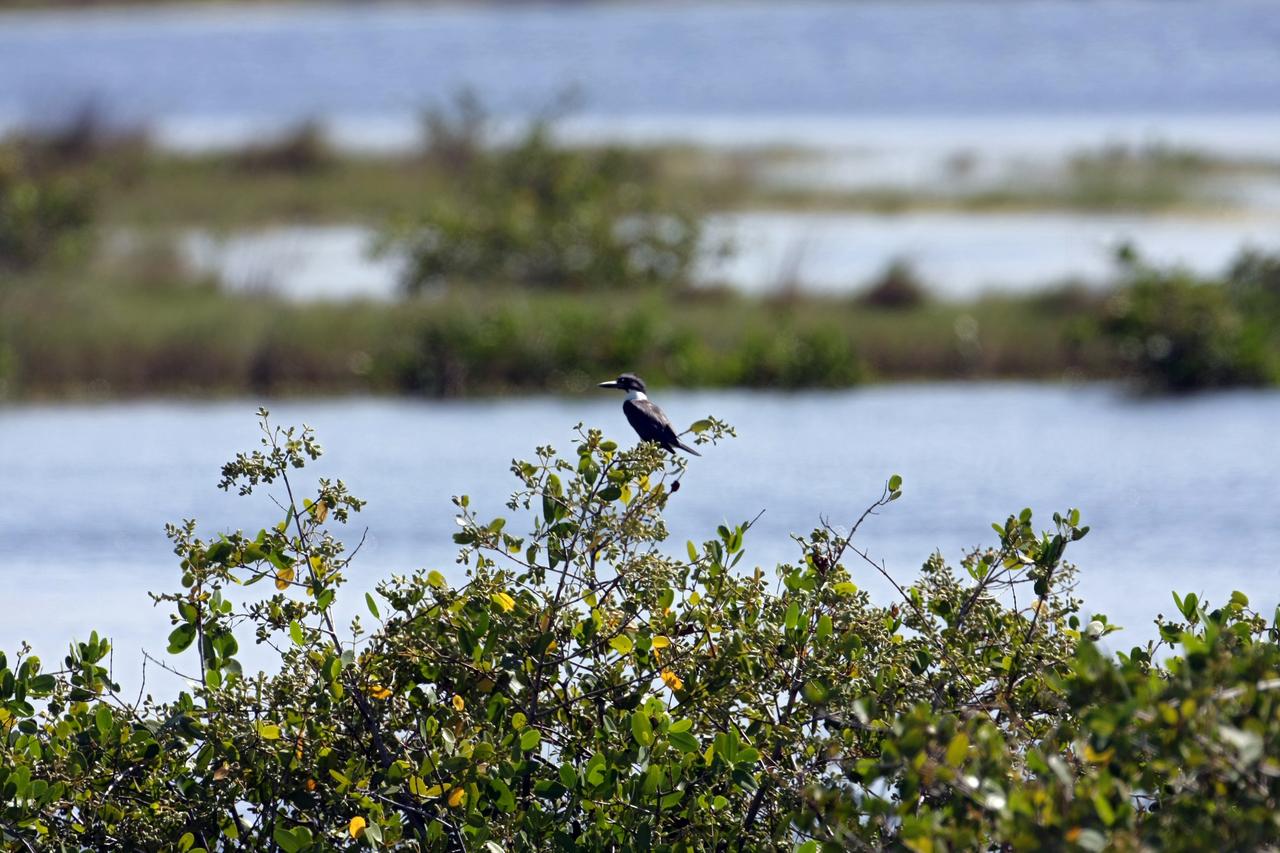
CAPE CANAVERAL, Fla. -   A belted kingfisher perches on a shrub branch in an area of NASA's Kennedy Space Center in Florida.  It is one of 310 species of birds that inhabit the National Merritt Island Wildlife Refuge, which shares a boundary with Kennedy.  The marshes and open water of the refuge also provide wintering areas for 23 species of migratory waterfowl, as well as a year-round home for great blue herons, great egrets, wood storks, cormorants, brown pelicans and other species of marsh and shore birds. Photo credit: NASA/Dimitri Gerondidakis
KSC-08pd3165
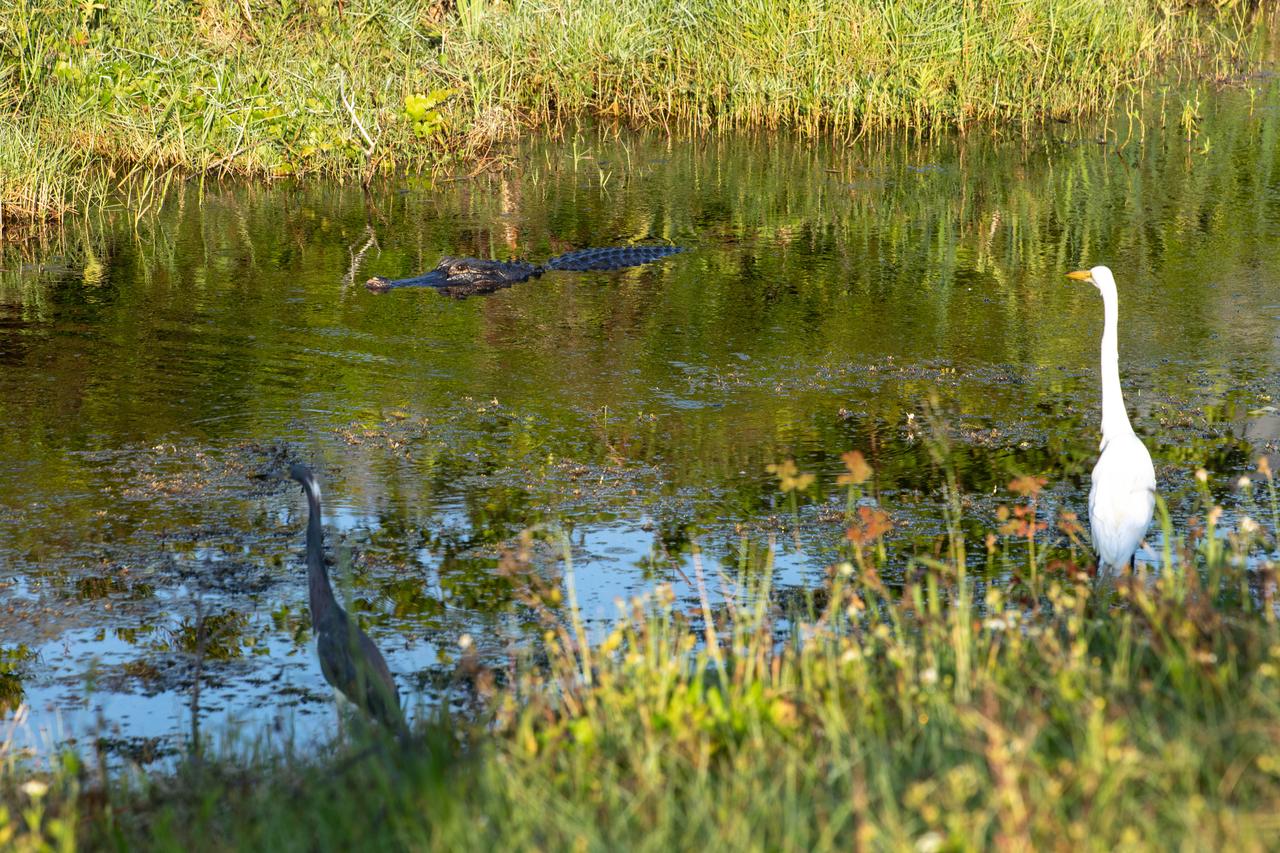
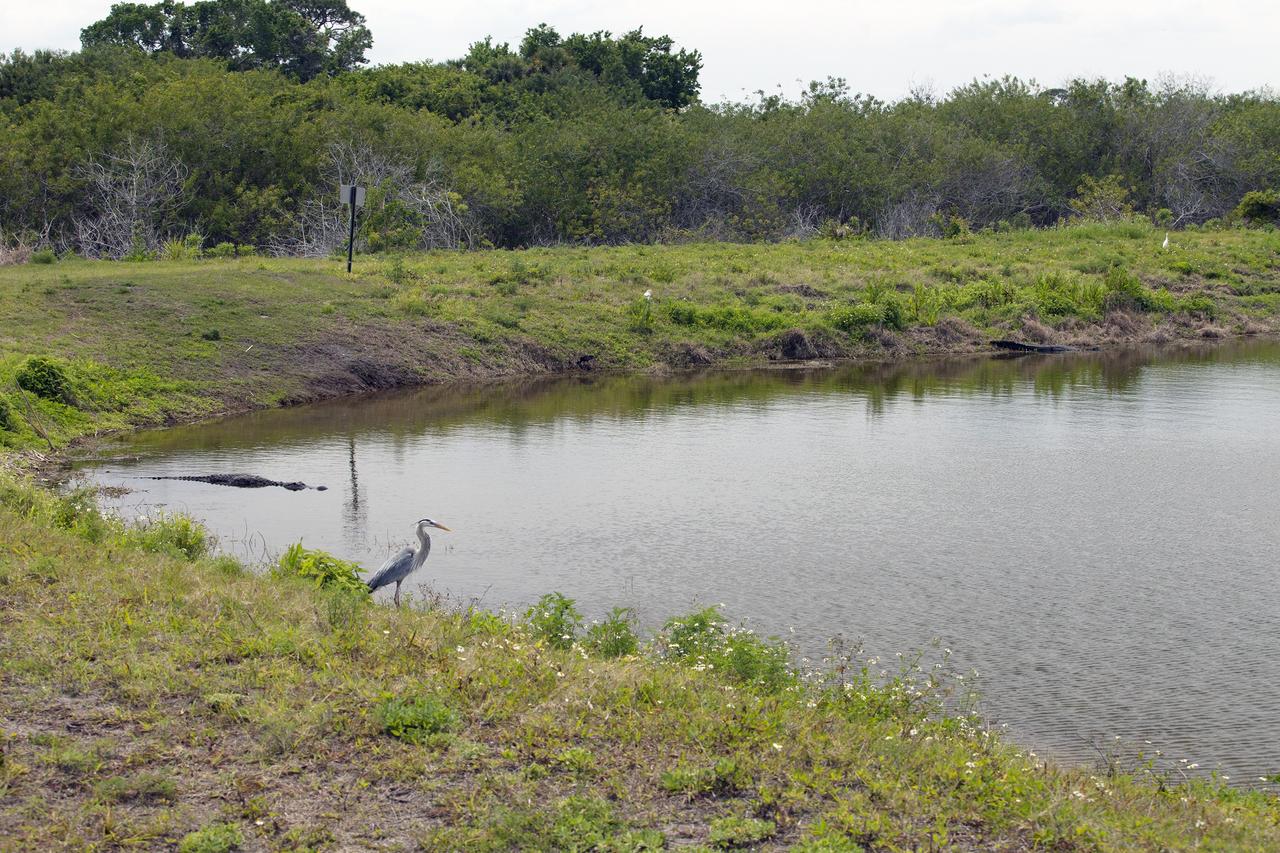
An adult blue heron, at left, and an adult great egret wade along the shore of a waterway at NASA’s Kennedy Space Center in Florida on May 16, 2022. An alligator swims nearby. The center shares a border with the Merritt Island National Wildlife Refuge. More than 330 native and migratory bird species, along with 65 amphibian and reptile species call Kennedy and the wildlife refuge home.
Wildlife at KSC
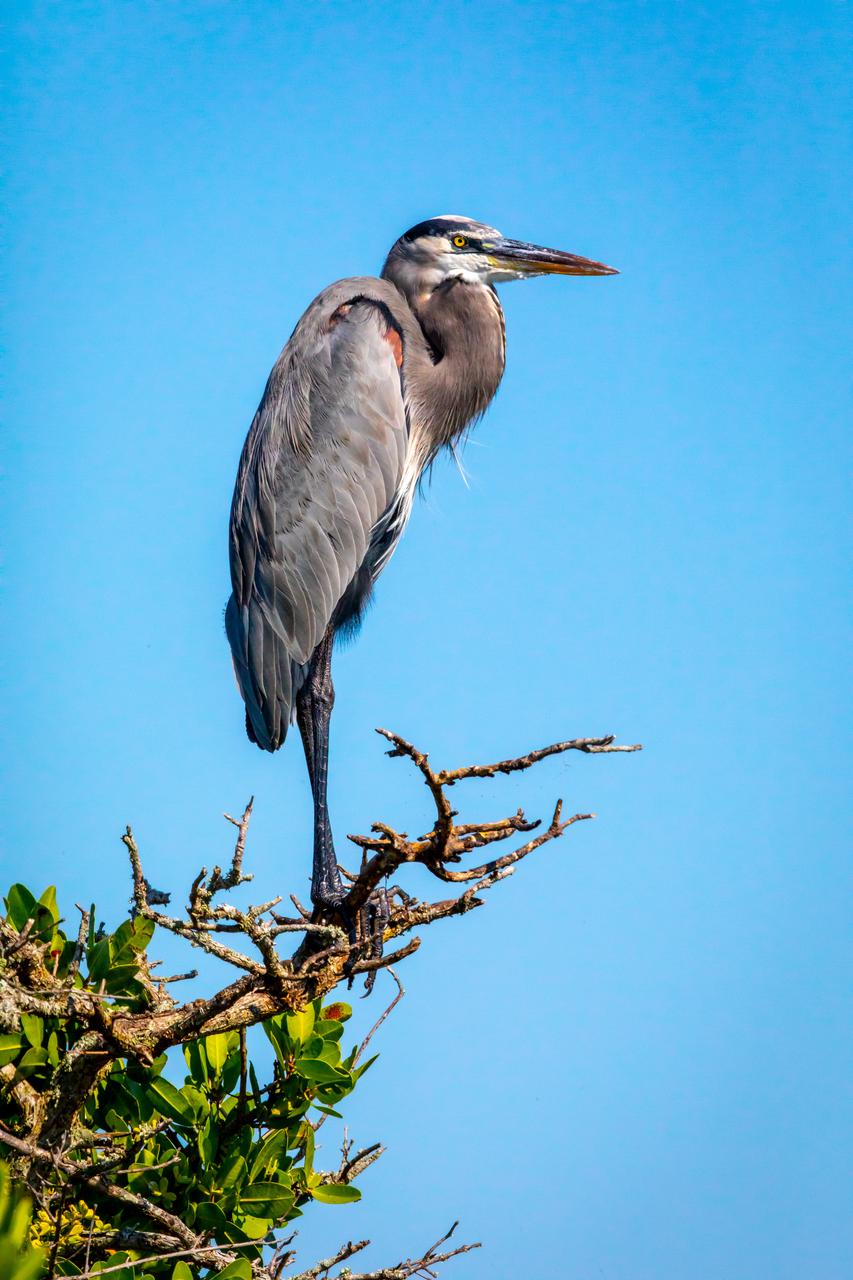
A young Great Blue Heron balances perfectly on the branch of a tree at NASA's Kennedy Space Center in Florida. The center shares a border with the Merritt Island National Wildlife Refuge. More than 330 native and migratory bird species, along 25 mammal, 117 fish and 65 amphibian and reptile species call Kennedy and the wildlife refuge home.
Creative Photography - Wildlife - Birds
CAPE CANAVERAL, Fla. -- A blue heron wades through a canal, searching for food on NASA's Kennedy Space Center in Florida.    The undeveloped property on Kennedy Space Center is managed by the U.S. Fish and Wildlife Service through the Merritt Island National Wildlife Refuge.  The refuge provides a habitat for a plethora of wildlife, including 330 species of birds. For information on the refuge, visit http://www.fws.gov/merrittisland/Index.html. Photo credit: NASA/Daniel Casper
KSC-2014-2923
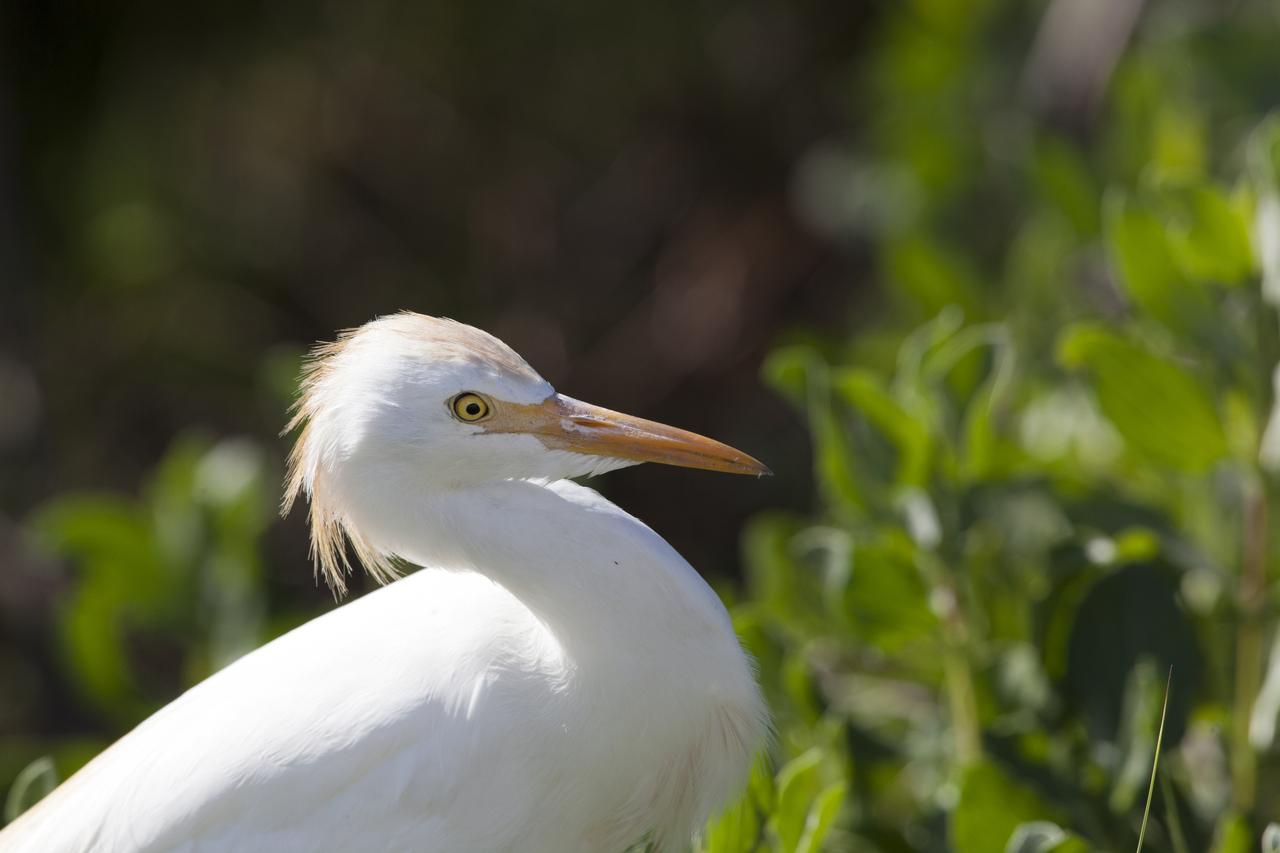
A snowy egret is seen at NASA's Kennedy Space Center in Florida. Kennedy shares a boundary with the Merritt Island National Wildlife Refuge. The refuge encompasses 140,000 acres that are a habitat for more than 331 species of birds, 31 mammals, 117 fish, and 65 amphibians and reptiles. The marshes and open water of the refuge provide wintering areas for 23 species of migratory waterfowl, as well as a year-round home for great blue herons, great egrets, wood storks, cormorants, brown pelicans and other species of marsh and shore birds.
Wildlife Photography - Birds
CAPE CANAVERAL, Fla. –– A cormorant enjoys the sunshine while standing in the water on NASA's Kennedy Space Center in Florida. The bird is a common sight around Kennedy, which shares a boundary with the Merritt Island National Wildlife Refuge. The marshes and open water of the refuge provide wintering areas for 23 species of migratory waterfowl, as well as a year-round home for great blue herons, great egrets, wood storks, cormorants, brown pelicans and other species of marsh and shore birds.  Photo credit: NASA/Dimitri Gerondidakis
KSC-2009-2852
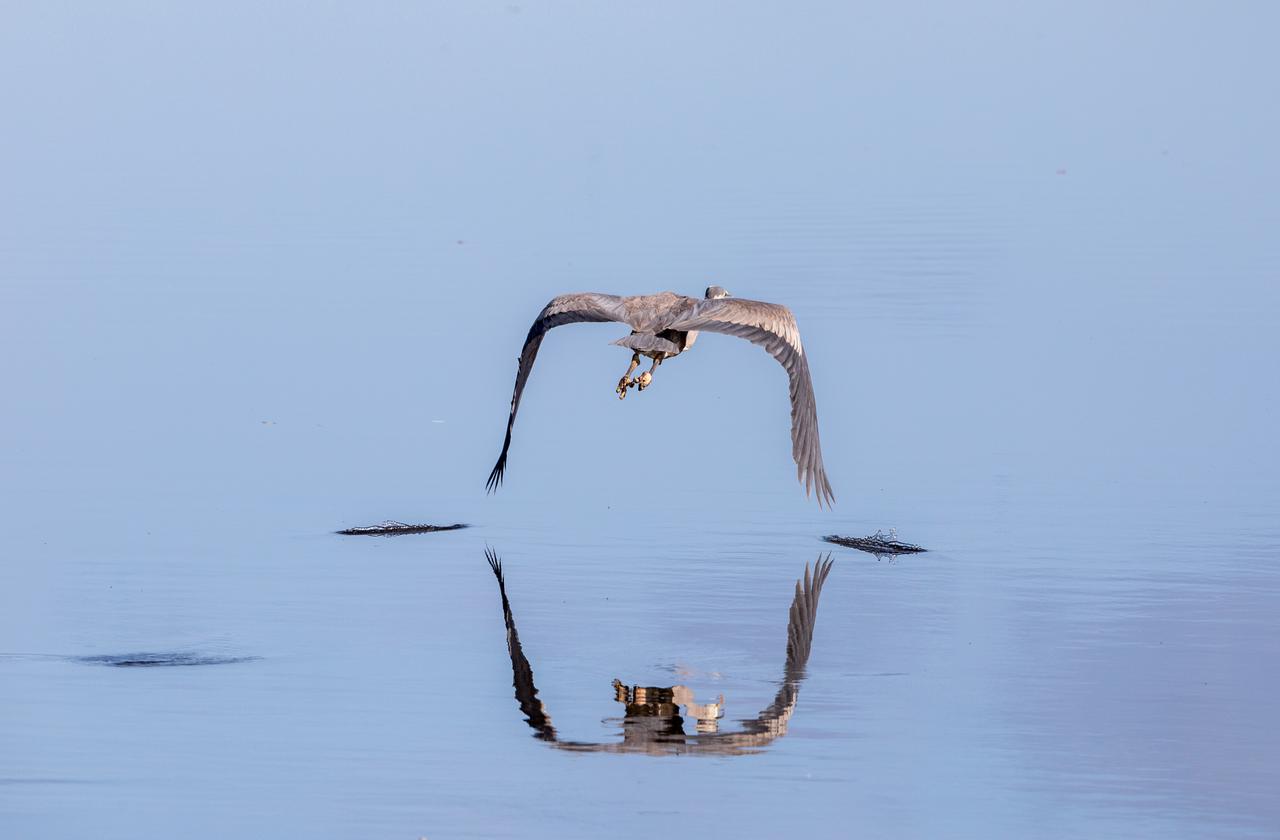
Creating an artistic reflection, a Great Blue Heron skims its wings on a waterway at NASA's Kennedy Space Center in Florida on Jan. 11, 2021. The center shares a border with the Merritt Island National Wildlife Refuge. More than 330 native and migratory bird species, along with 25 mammal, 117 fish, and 65 amphibian and reptile species call Kennedy and the wildlife refuge home.
Creative Photography, Wildlife - Birds
CAPE CANAVERAL, Fla. -- A great white heron joins roseate spoonbills and white ibis searching the water for food at NASA's Kennedy Space Center in Florida.  The center shares a boundary with the Merritt Island National Wildlife Refuge that includes salt-water estuaries, brackish marshes, hardwood hammocks and pine flatwoods.  The diverse landscape provides habitat for more than 310 species of birds, 25 mammals, 117 fishes and 65 amphibians and reptiles.  Photo credit: NASA/Tim Jacobs
KSC-08pd4102
CAPE CANAVERAL, Fla. -   A belted kingfisher perches on a shrub branch in an area of NASA's Kennedy Space Center in Florida.  It is one of 310 species of birds that inhabit the National Merritt Island Wildlife Refuge, which shares a boundary with Kennedy.  The marshes and open water of the refuge also provide wintering areas for 23 species of migratory waterfowl, as well as a year-round home for great blue herons, great egrets, wood storks, cormorants, brown pelicans and other species of marsh and shore birds. Photo credit: NASA/Dimitri Gerondidakis
KSC-08pd3172
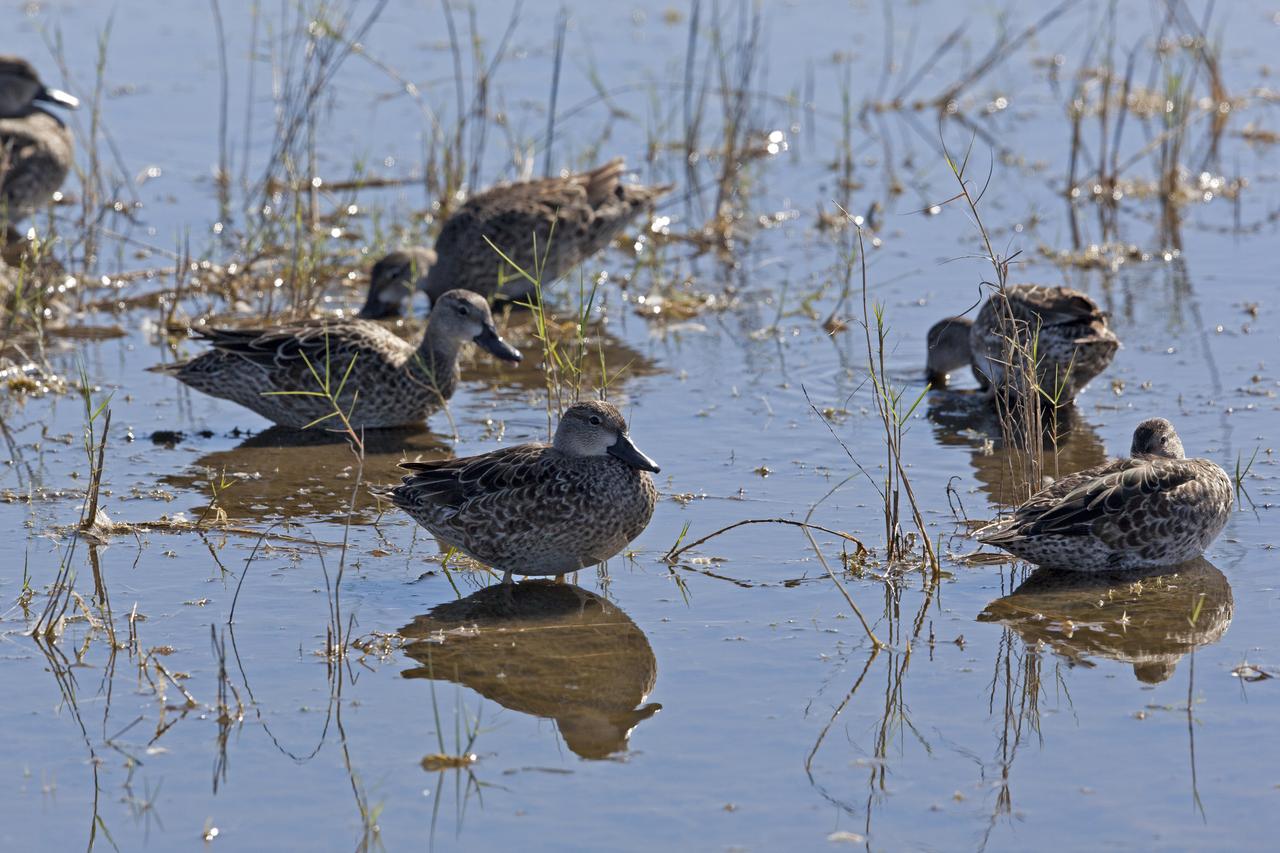
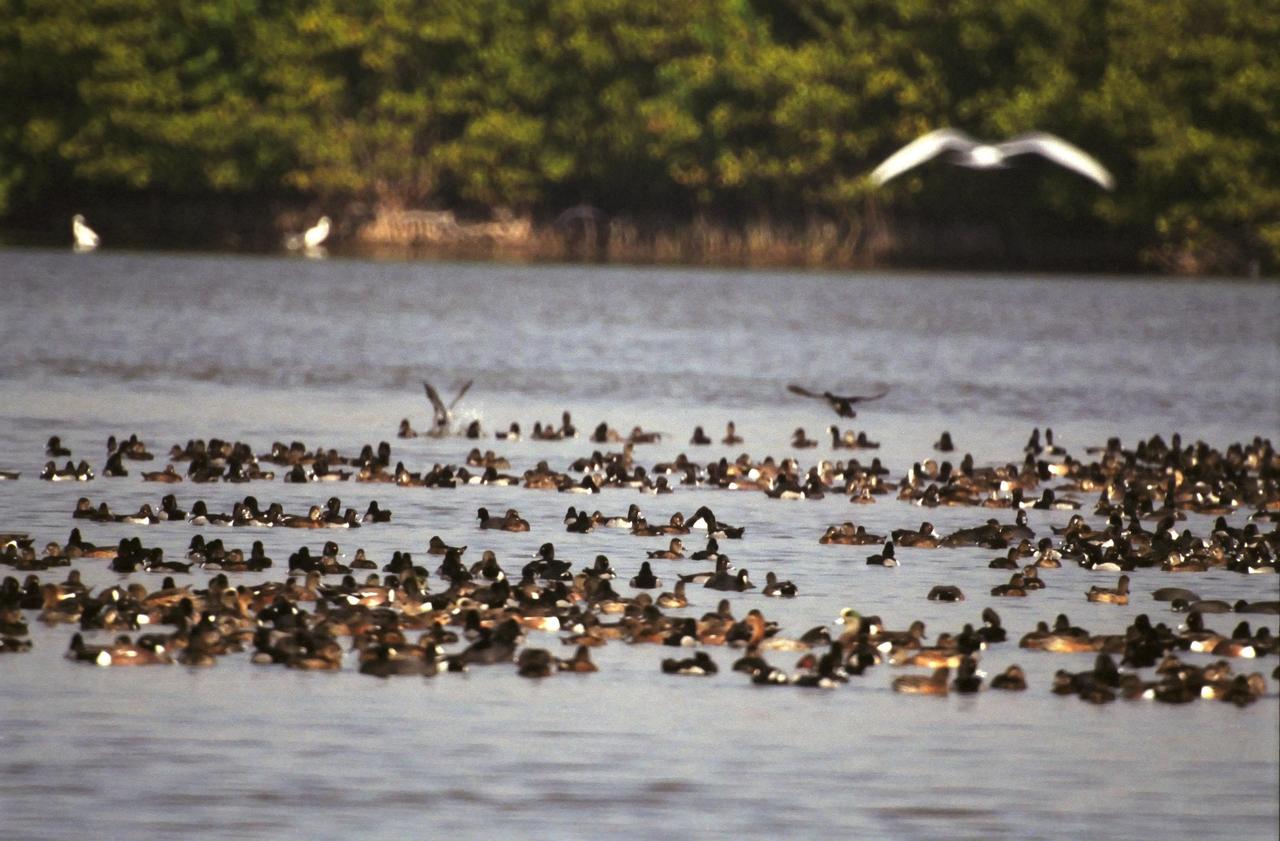
Ducks gather in a waterway at NASA's Kennedy Space Center in Florida. Kennedy shares a boundary with the Merritt Island National Wildlife Refuge. The refuge encompasses 140,000 acres that are a habitat for more than 331 species of birds, 31 mammals, 117 fish, and 65 amphibians and reptiles. The marshes and open water of the refuge provide wintering areas for 23 species of migratory waterfowl, as well as a year-round home for great blue herons, great egrets, wood storks, cormorants, brown pelicans and other species of marsh and shore birds.
Wildlife Photography - Birds
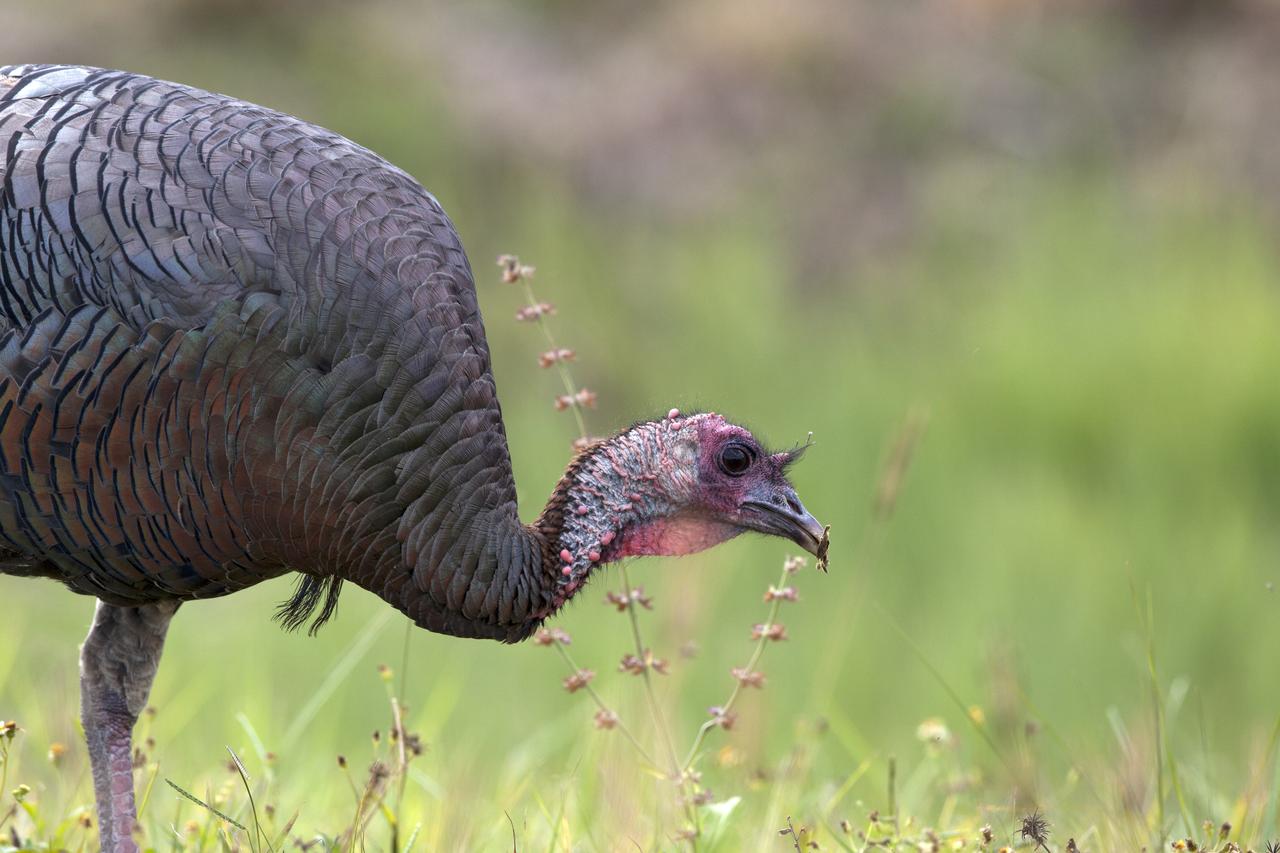
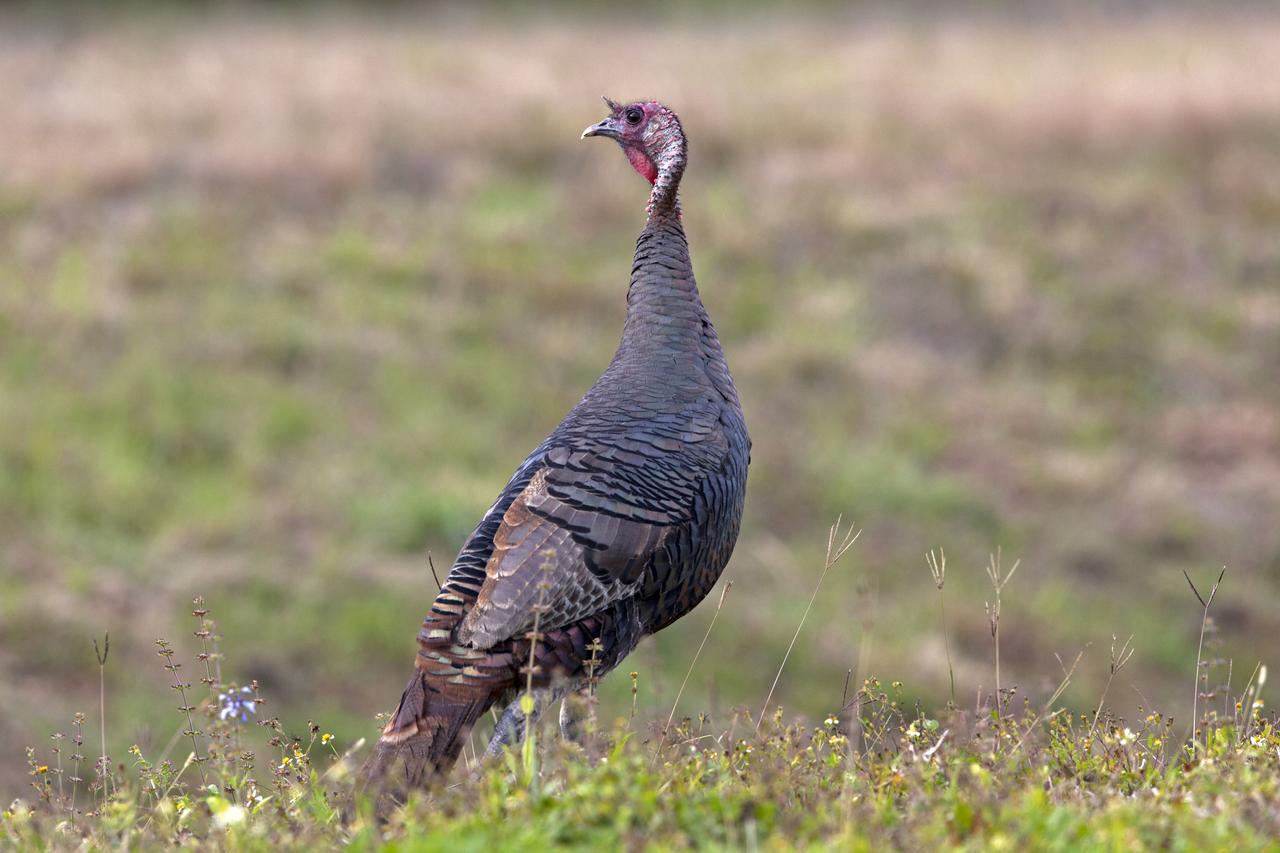
A wild turkey is seen at NASA's Kennedy Space Center in Florida. Kennedy shares a boundary with the Merritt Island National Wildlife Refuge. The refuge encompasses 140,000 acres that are a habitat for more than 331 species of birds, 31 mammals, 117 fish, and 65 amphibians and reptiles. The marshes and open water of the refuge provide wintering areas for 23 species of migratory waterfowl, as well as a year-round home for great blue herons, great egrets, wood storks, cormorants, brown pelicans and other species of marsh and shore birds.
Wildlife Photography - Birds
CAPE CANAVERAL, Fla. -- At NASA's Kennedy Space Center in Florida, a little blue heron wades in the shallows at water's edge.      The center shares a boundary with the Merritt Island National Wildlife Refuge, consisting of 140,000 acres. The refuge provides a wide variety of habitats -- coastal dunes, saltwater estuaries and marshes, freshwater impoundments, scrub, pine flatwoods, and hardwood hammocks -- that provide sanctuary for more than 1,500 species of plants and animals, including about 331 species of birds. Photo credit: NASA/Jim Grossmann
KSC-2011-8340
CAPE CANAVERAL, Fla. -- At NASA's Kennedy Space Center in Florida, a Great Blue Heron catches lunch from brackish water in the Launch Complex 39 area.        Kennedy coexists with the Merritt Island National Wildlife Refuge, habitat to more than 310 species of birds, 25 mammals, 117 fish and 65 amphibians and reptiles. Photo credit: NASA/Frank Michaux
KSC-2010-5316
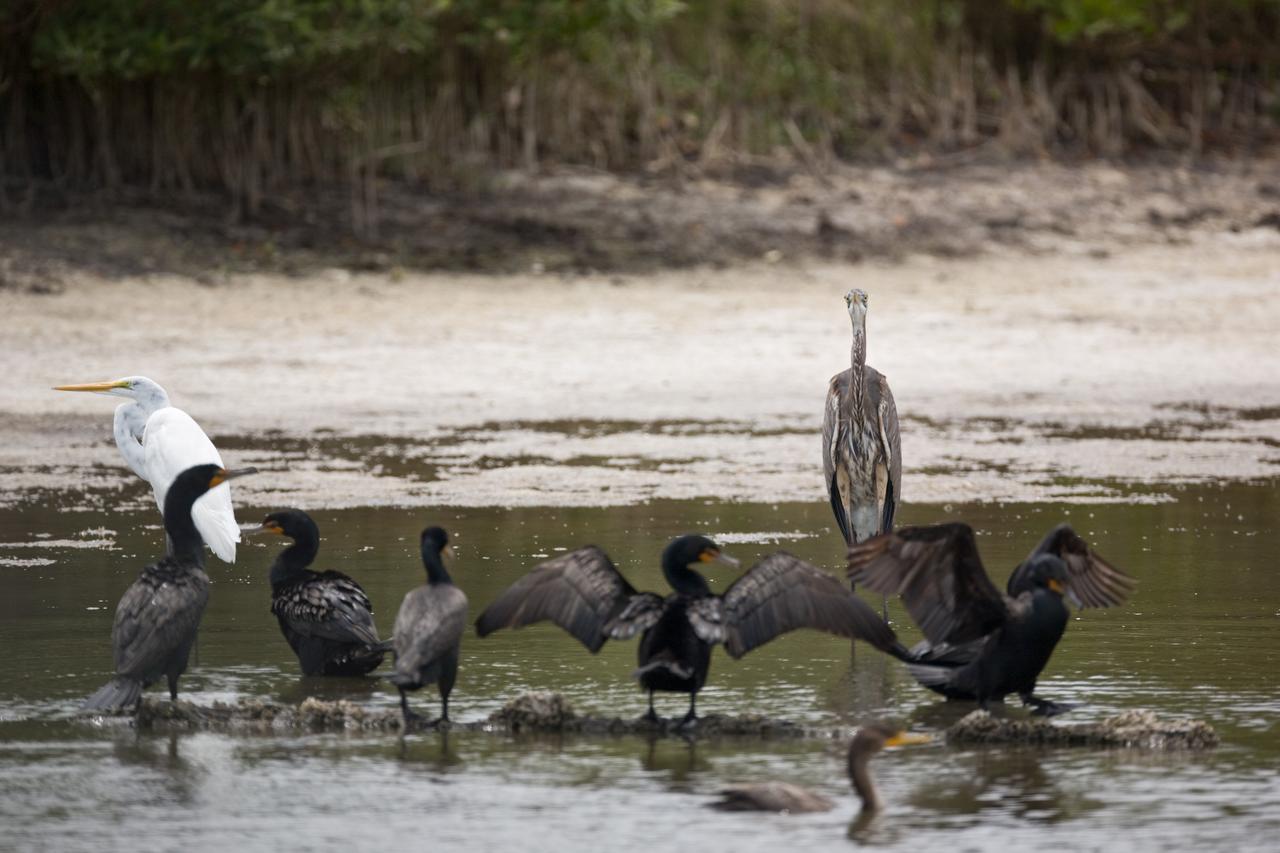
CAPE CANAVERAL, Fla. –– A great egret (left), great blue heron (far right) and cormorants (foreground) share the shallow water on NASA's Kennedy Space Center in Florida.  The center shares a boundary with the Merritt Island Wildlife Nature Refuge, which is a habitat for more than 310 species of birds, 25 mammals, 117 fishes and 65 amphibians and reptiles.  Photo credit: NASA/Dimitri Gerondidakis
KSC-2009-2857
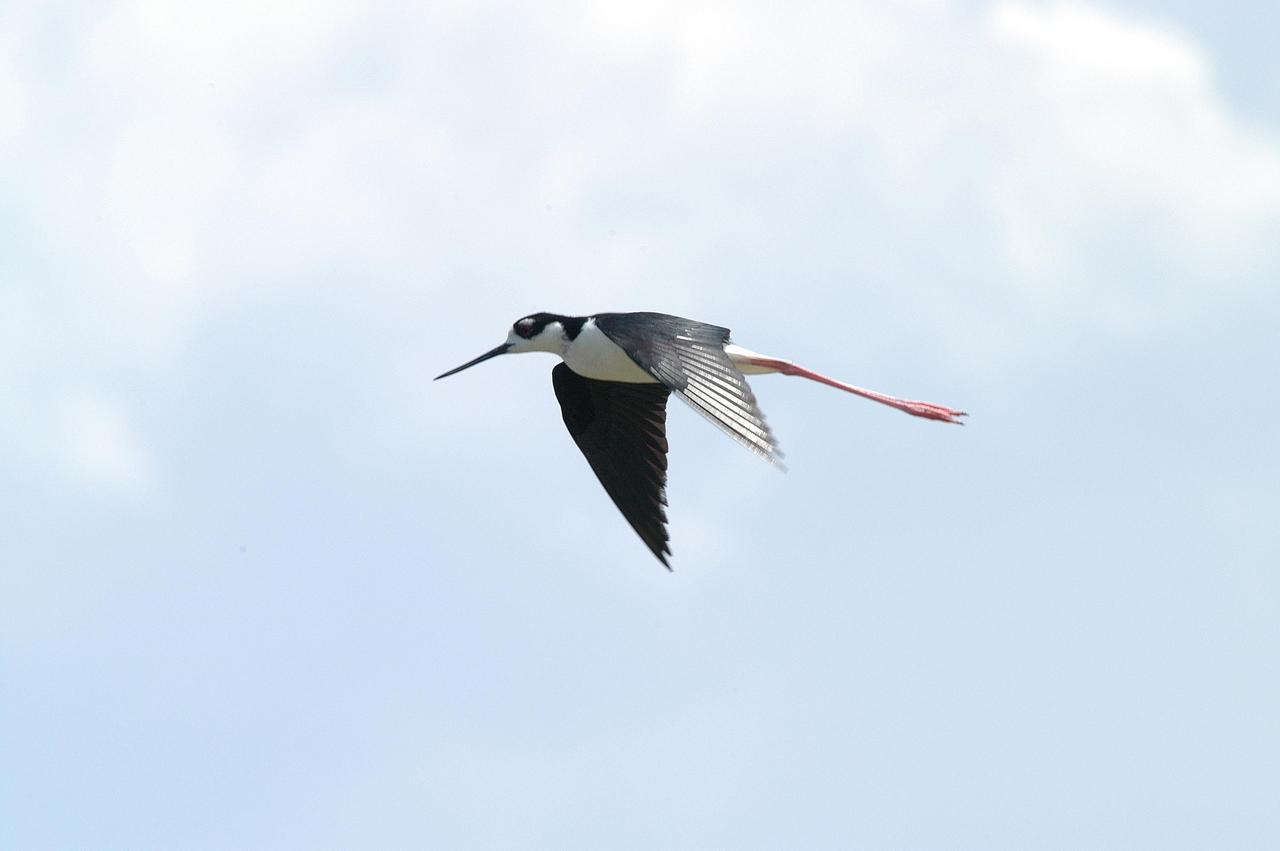
KENNEDY SPACE CENTER, FLA.  -  Distinctive with its black and white coloring and very long red legs trailing behind is a black-winged stilt.  The bird is a common sight around KSC, which shares a boundary with the Merritt Island National Wildlife Refuge.  The marshes and open water of the refuge provide wintering areas for 23 species of migratory waterfowl, as well as a year-round home for great blue herons, great egrets, wood storks, cormorants, brown pelicans and other species of marsh and shore birds.
KSC-04pd1248
CAPE CANAVERAL, Fla. -- A great blue heron wades through brackish water just north of the Shuttle Landing Facility at NASA's Kennedy Space Center in Florida.       Kennedy coexists with the Merritt Island National Wildlife Refuge, habitat to more than 310 species of birds, 25 mammals, 117 fish and 65 amphibians and reptiles. Photo credit: NASA/Frankie Martin
KSC-2011-1022
CAPE CANAVERAL, Fla. -- At NASA's Kennedy Space Center in Florida, a Great Blue Heron catches lunch from brackish water in the Launch Complex 39 area.      Kennedy coexists with the Merritt Island National Wildlife Refuge, habitat to more than 310 species of birds, 25 mammals, 117 fish and 65 amphibians and reptiles. Photo credit: NASA/Frank Michaux
KSC-2010-5315
A Great Blue Heron glides close to a waterway at NASA's Kennedy Space Center in Florida on Jan. 11, 2021. The center shares a border with the Merritt Island National Wildlife Refuge. More than 330 native and migratory bird species, along with 25 mammal, 117 fish, and 65 amphibian and reptile species call Kennedy and the wildlife refuge home.
Creative Photography, Wildlife - Birds
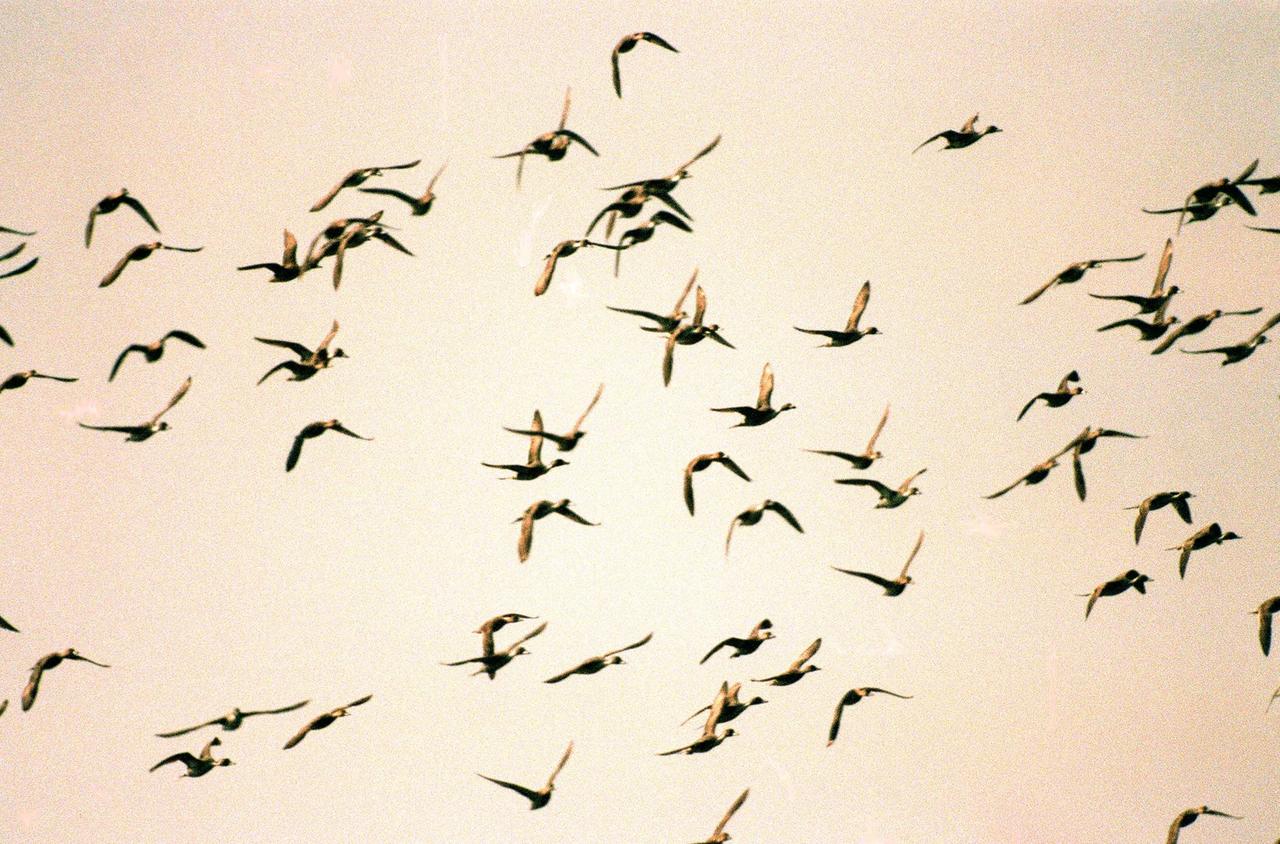
KENNEDY SPACE CENTER, FLA. -- A flock of ducks launch into the morning sky in the Merritt Island National Wildlife Refuge at Kennedy Space Center. The open water of the refuge provides wintering areas for 23 species of migratory waterfowl, as well as a year-round home for great blue herons, great egrets, wood storks, cormorants, brown pelicans and other species of marsh and shore birds. The 92,000-acre refuge is also habitat for more than 310 species of birds, 25 mammals, 117 fishes and 65 amphibians and reptiles
KSC-99pc0106
A wild turkey is seen at NASA's Kennedy Space Center in Florida. Kennedy shares a boundary with the Merritt Island National Wildlife Refuge. The refuge encompasses 140,000 acres that are a habitat for more than 331 species of birds, 31 mammals, 117 fish, and 65 amphibians and reptiles. The marshes and open water of the refuge provide wintering areas for 23 species of migratory waterfowl, as well as a year-round home for great blue herons, great egrets, wood storks, cormorants, brown pelicans and other species of marsh and shore birds.
Wildlife Photography - Birds
CAPE CANAVERAL, Fla. -- Great white herons, roseate spoonbills and white ibis search the water for food at NASA's Kennedy Space Center in Florida.  The center shares a boundary with the Merritt Island National Wildlife Refuge that includes salt-water estuaries, brackish marshes, hardwood hammocks and pine flatwoods.  The diverse landscape provides habitat for more than 310 species of birds, 25 mammals, 117 fishes and 65 amphibians and reptiles.  Photo credit: NASA/Tim Jacobs
KSC-08pd4103
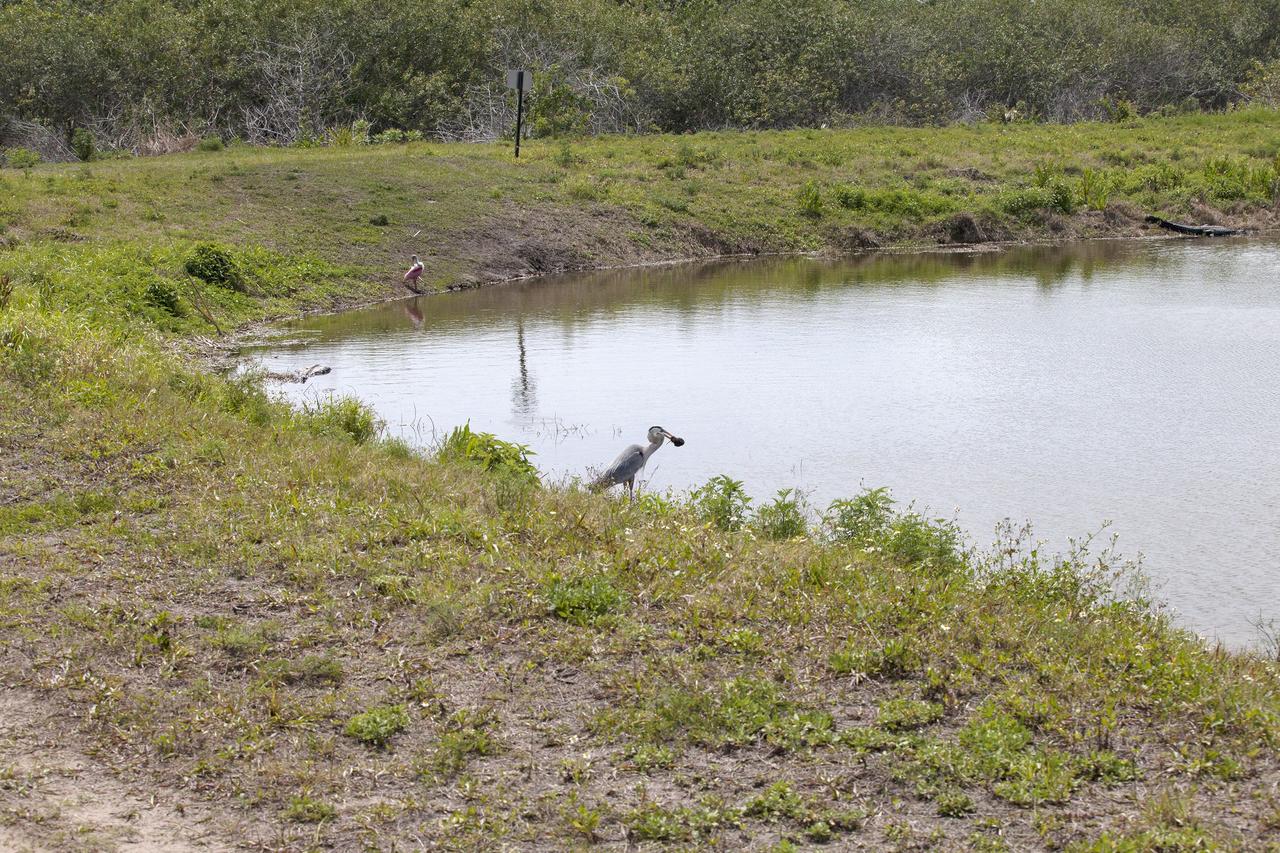
CAPE CANAVERAL, Fla. – A great blue heron catches a small rodent along the shore of an inland waterway near the former site of the Spacecraft Assembly and Encapsulation Facility-2 at NASA's Kennedy Space Center in Florida.    The center shares a boundary with the Merritt Island National Wildlife Refuge. The refuge encompasses 140,000 acres that are a habitat for more than 330 species of birds, 31 mammals, 117 fishes, and 65 amphibians and reptiles. It contains more than 1,000 known plant species. The marshes and open water of the refuge provide wintering areas for 23 species of migratory waterfowl, as well as a year-round home for great blue herons, great egrets, wood storks, cormorants, brown pelicans and other species of marsh and shore birds, and a variety of insects.  Photo credit: NASA/Daniel Casper
KSC-2014-1994
CAPE CANAVERAL, Fla. – A great blue heron catches a small rodent along the shore of an inland waterway near the former site of the Spacecraft Assembly and Encapsulation Facility-2 at NASA's Kennedy Space Center in Florida.    The center shares a boundary with the Merritt Island National Wildlife Refuge. The refuge encompasses 140,000 acres that are a habitat for more than 330 species of birds, 31 mammals, 117 fishes, and 65 amphibians and reptiles. It contains more than 1,000 known plant species. The marshes and open water of the refuge provide wintering areas for 23 species of migratory waterfowl, as well as a year-round home for great blue herons, great egrets, wood storks, cormorants, brown pelicans and other species of marsh and shore birds, and a variety of insects.  Photo credit: NASA/Daniel Casper
KSC-2014-1996
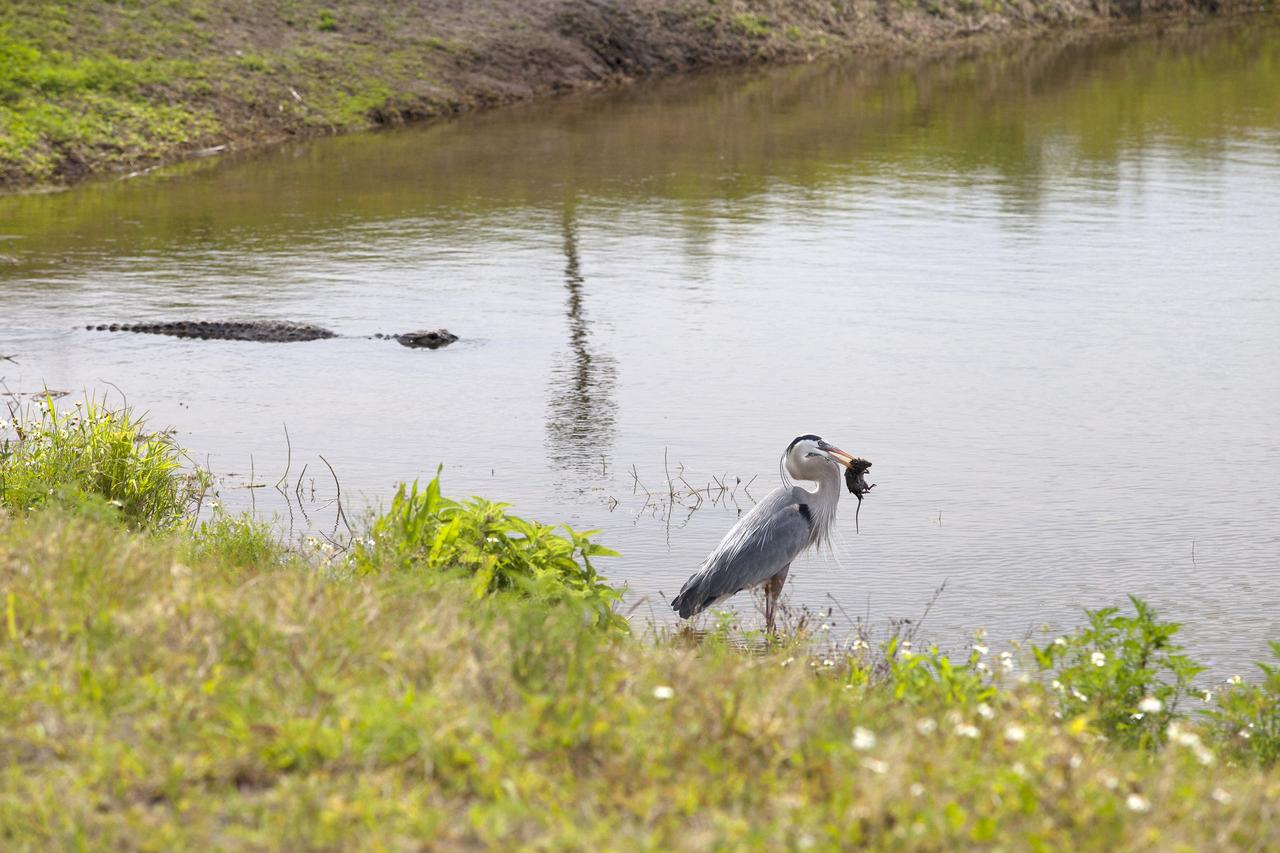
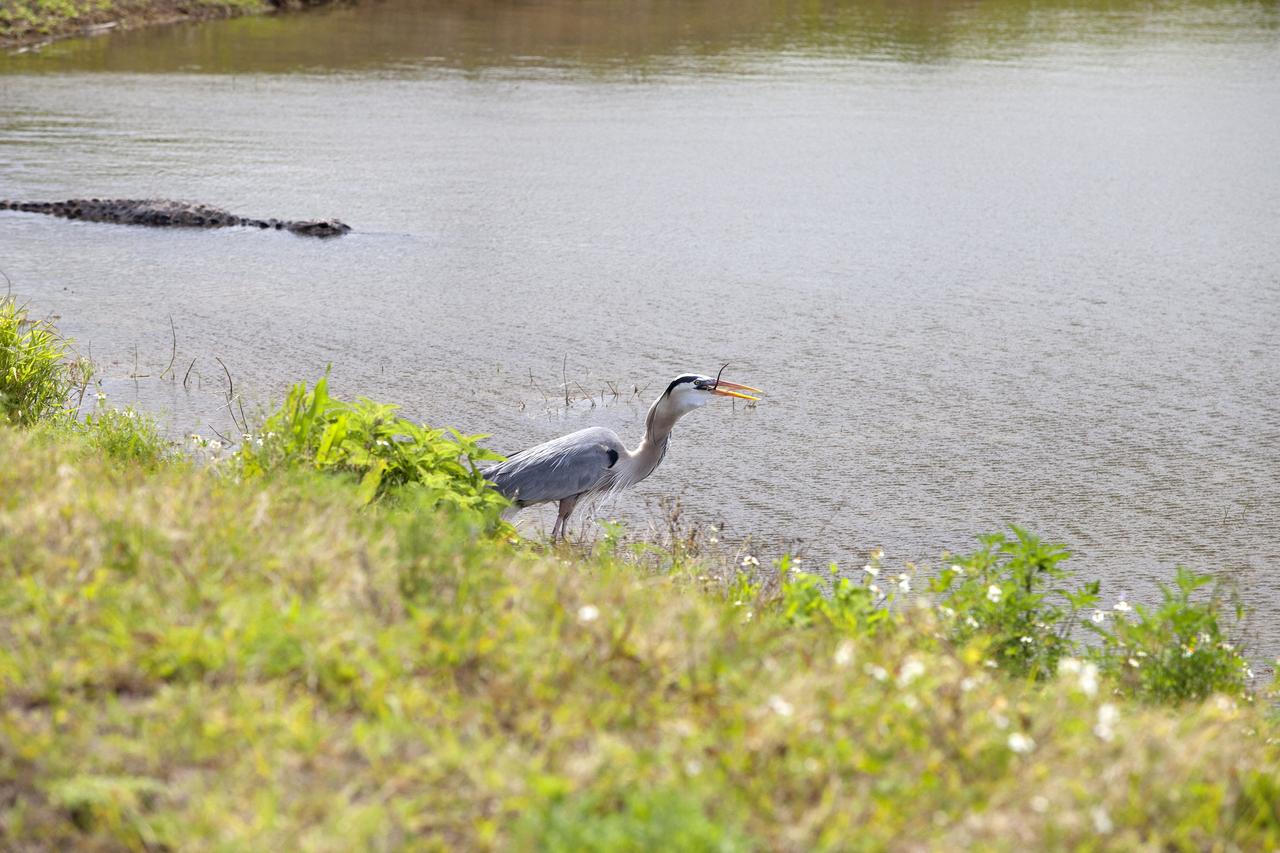
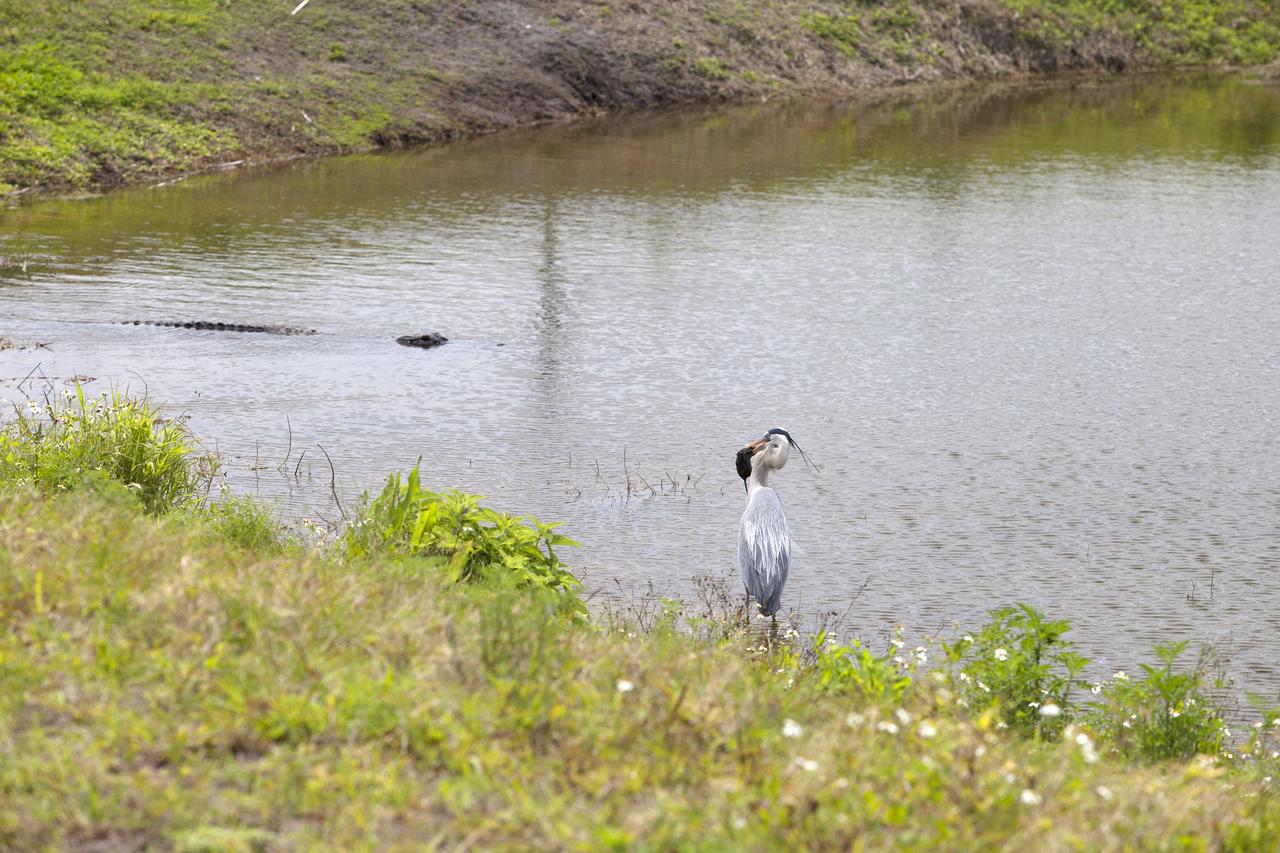
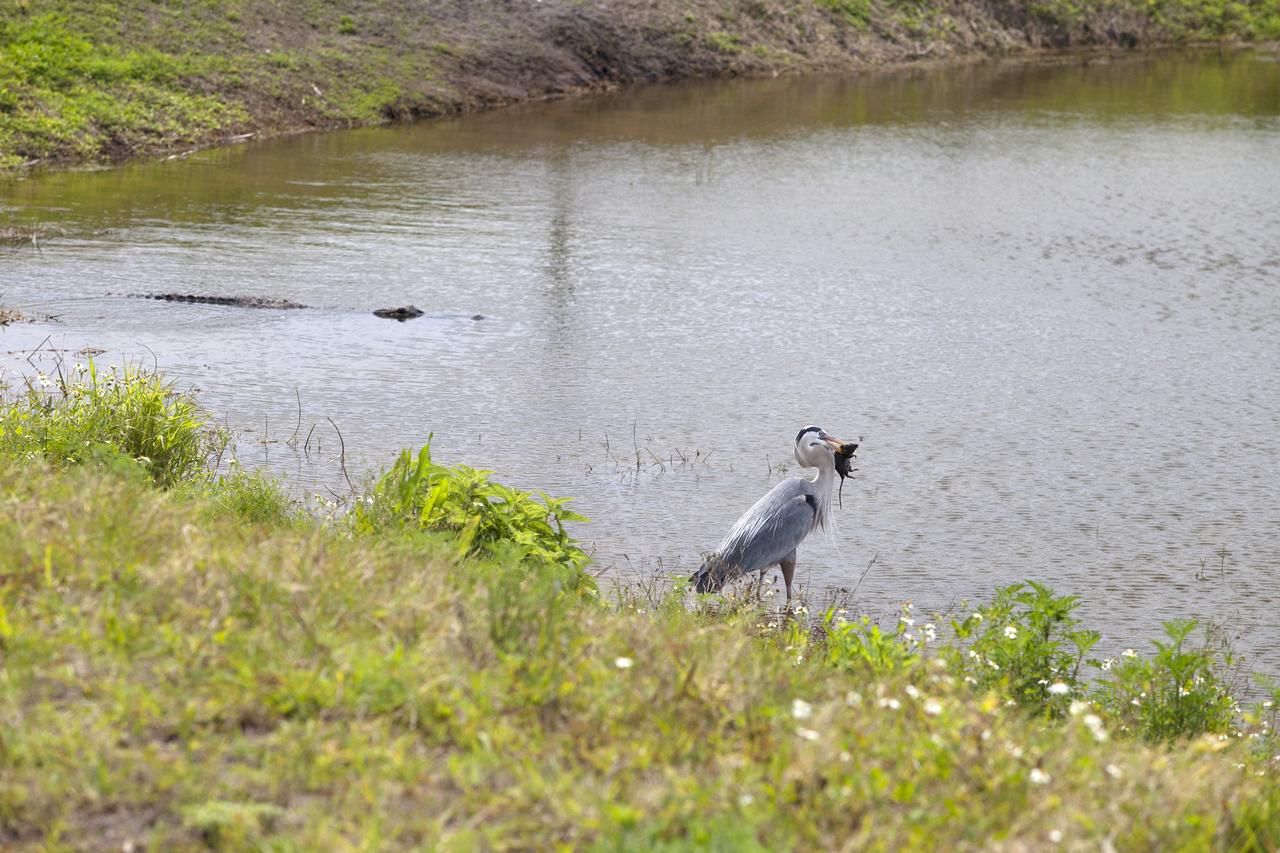
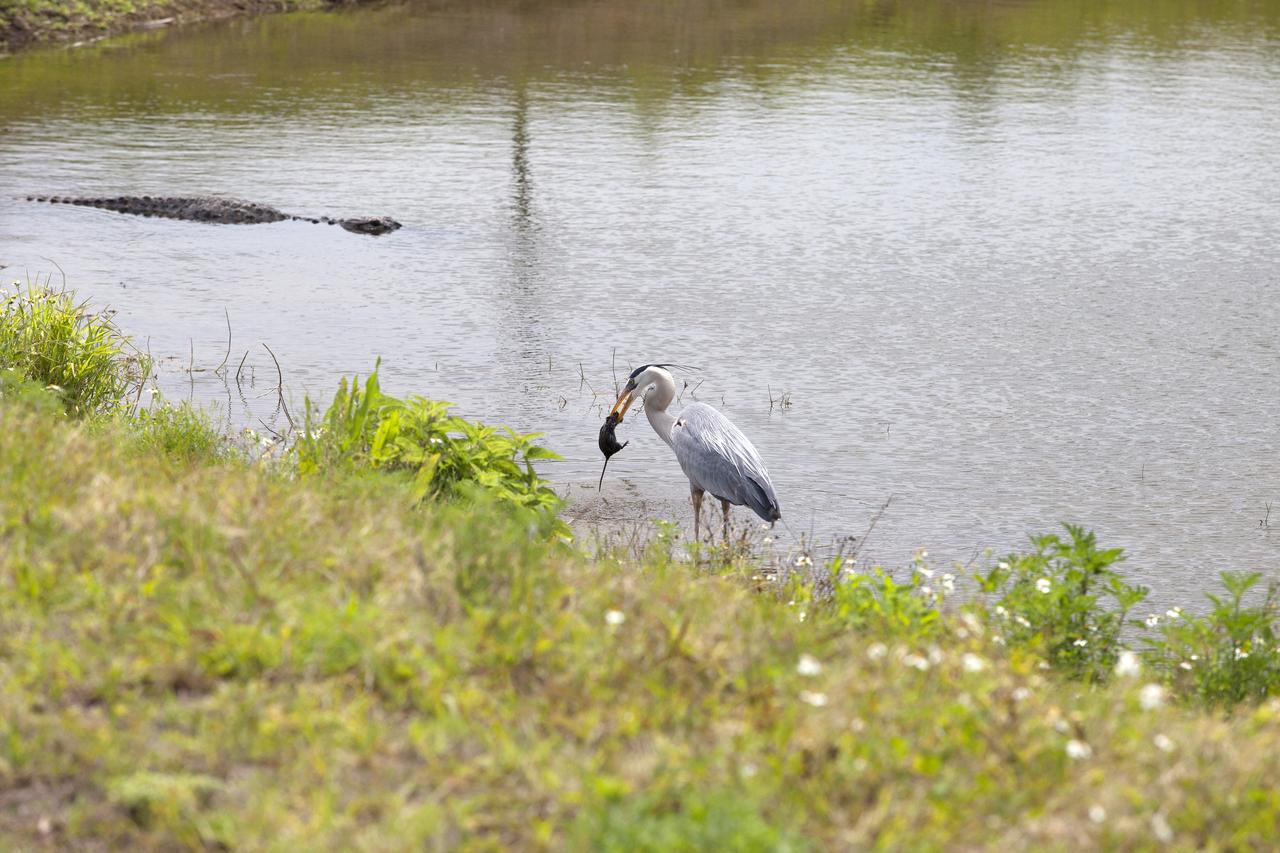
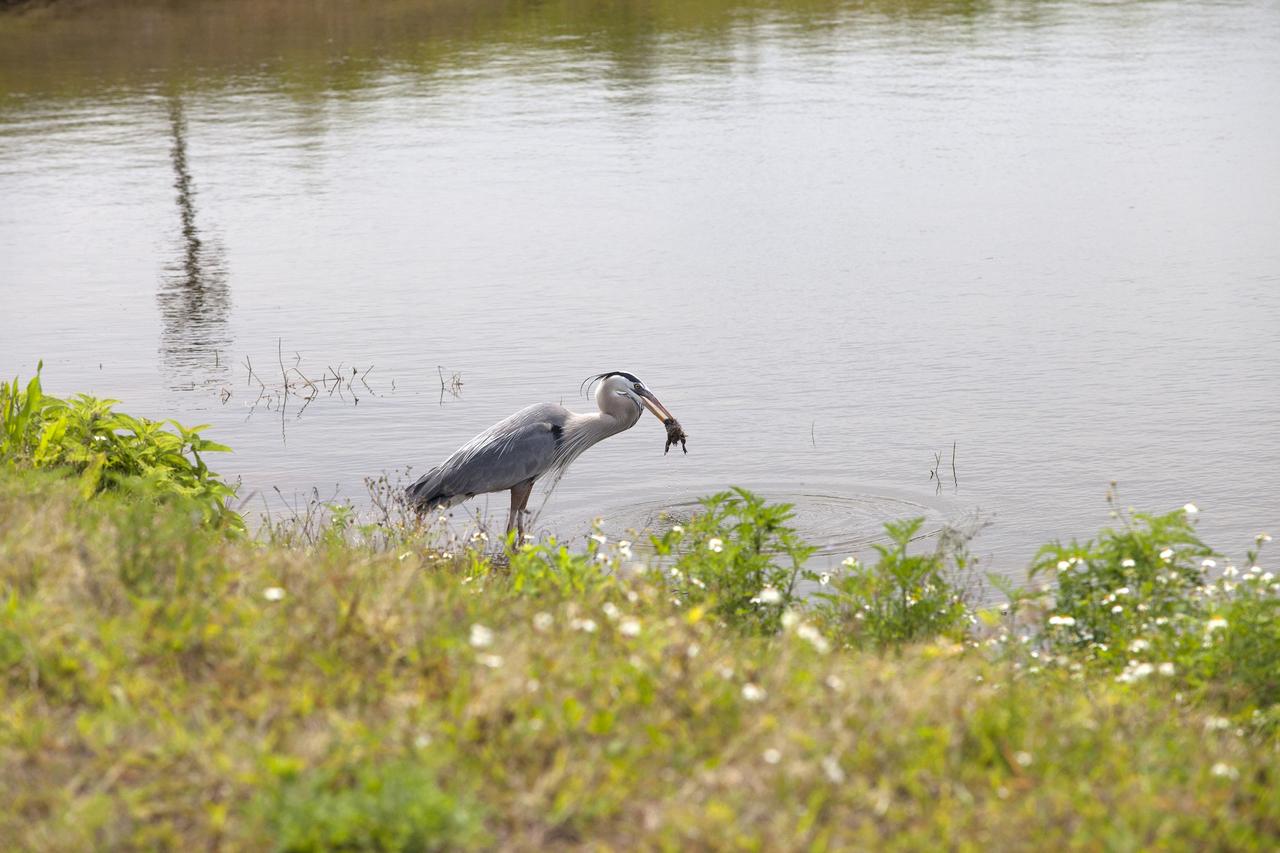
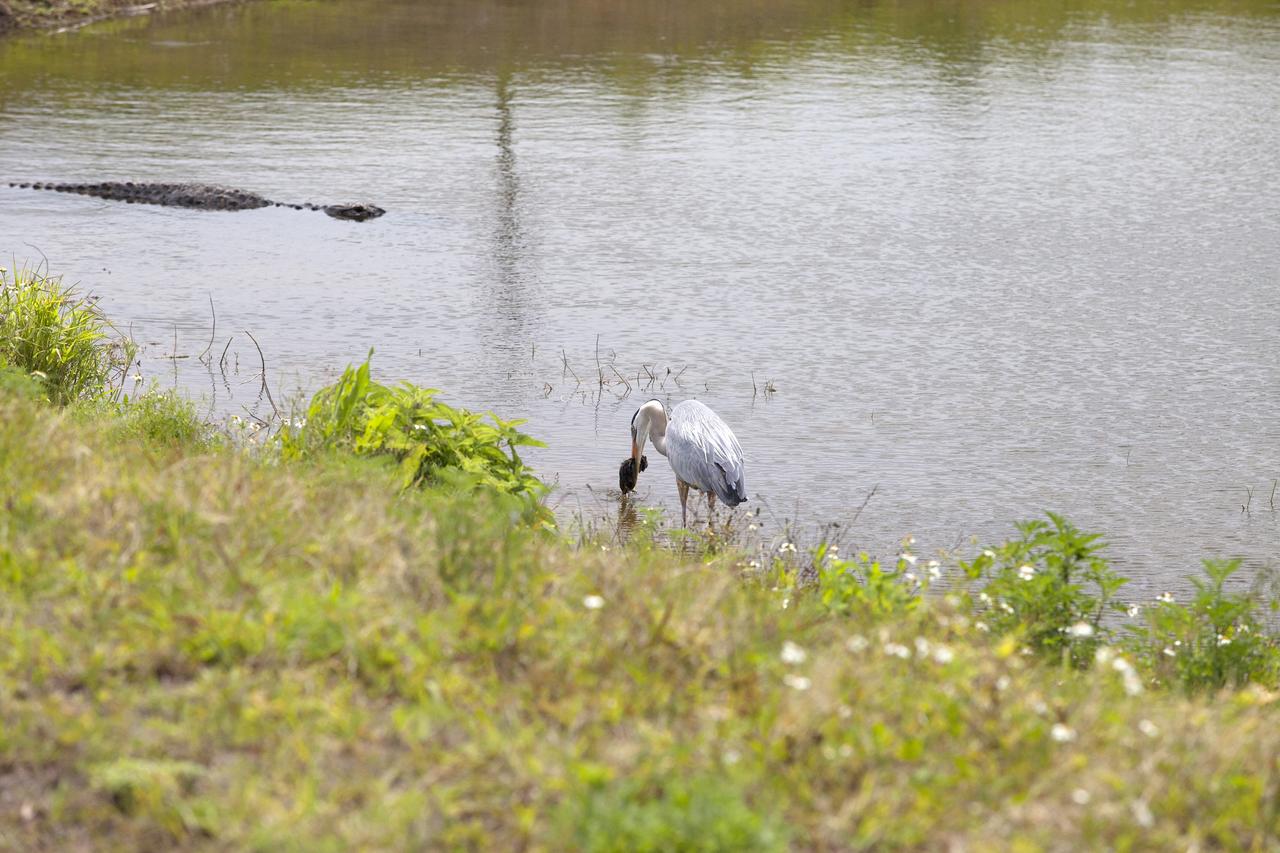
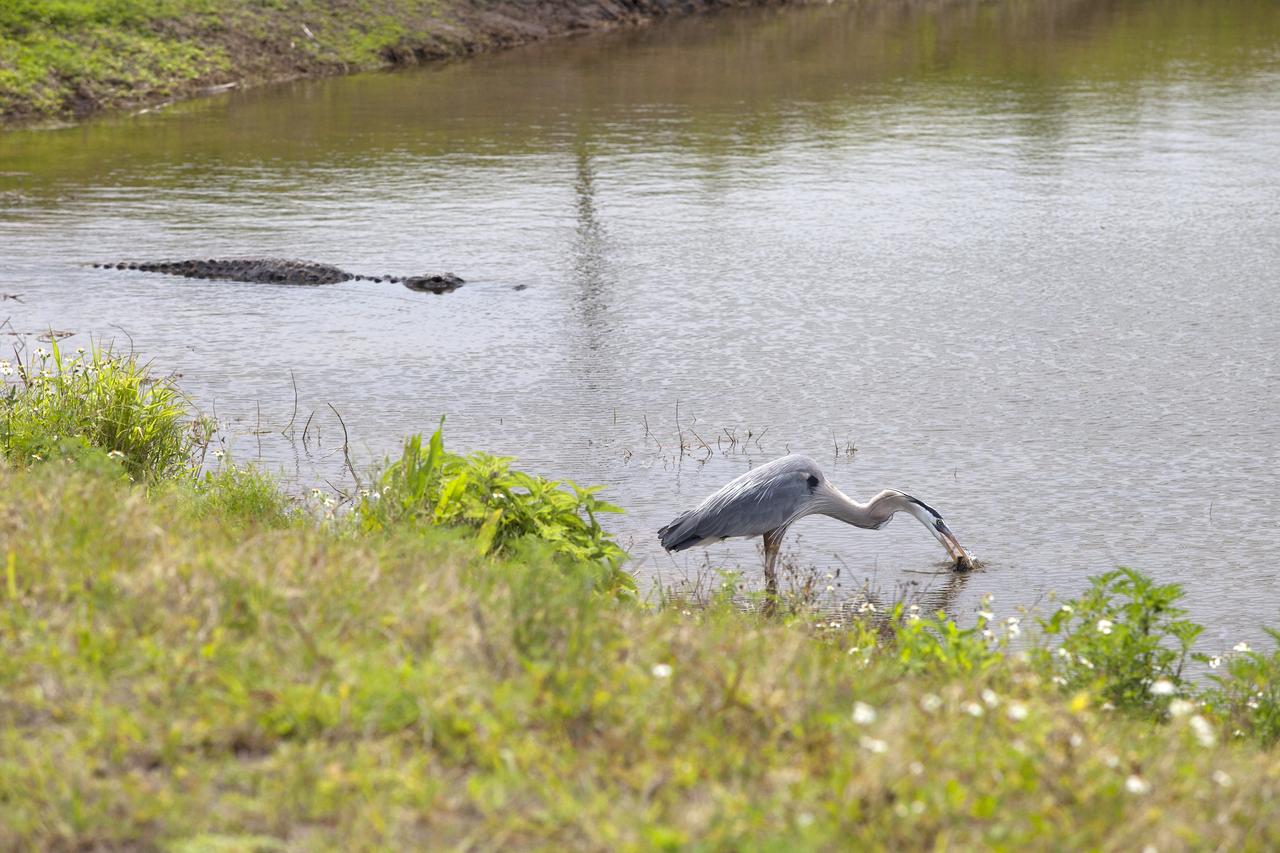
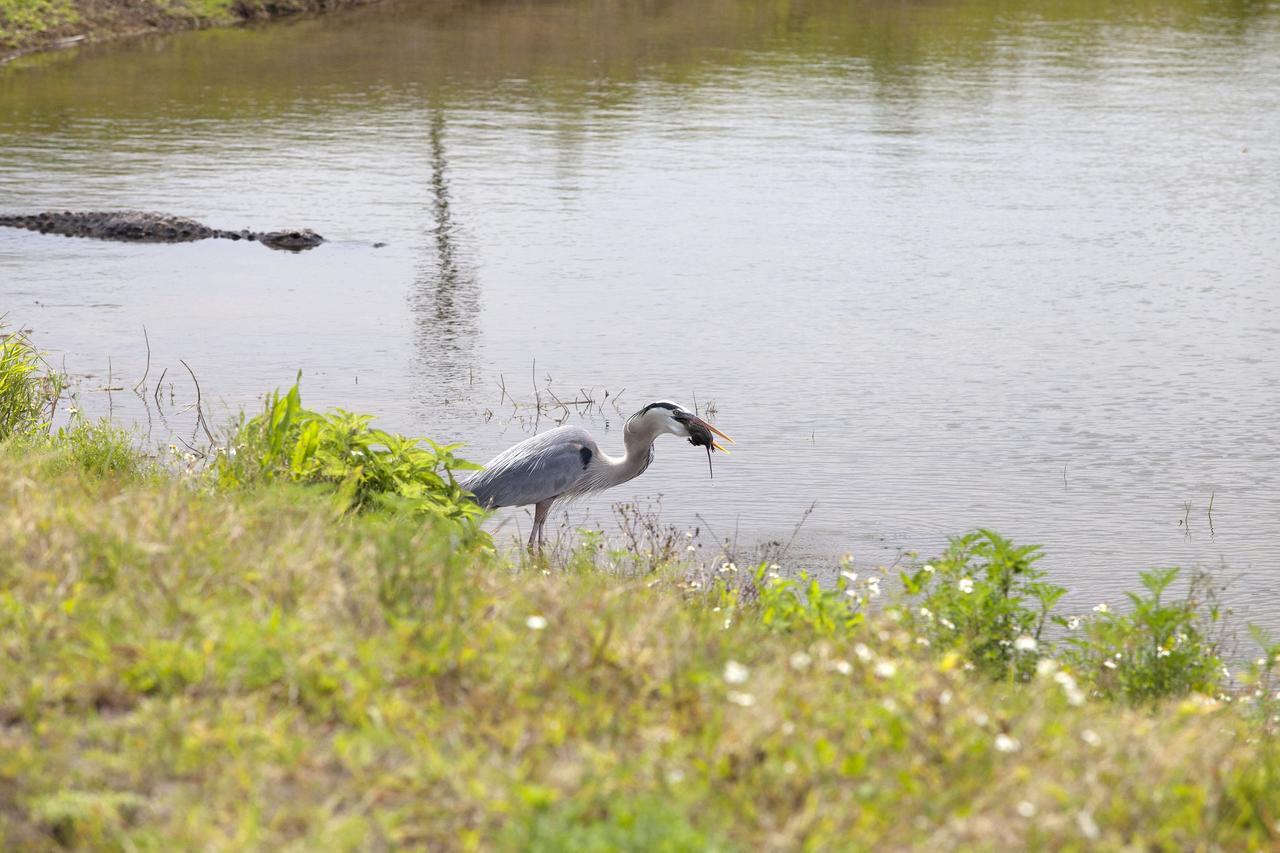
CAPE CANAVERAL, Fla. – A great blue heron catches a small rodent along the shore of an inland waterway at NASA's Kennedy Space Center in Florida. An alligator swims in the water nearby.    The center shares a boundary with the Merritt Island National Wildlife Refuge. The refuge encompasses 140,000 acres that are a habitat for more than 330 species of birds, 31 mammals, 117 fishes, and 65 amphibians and reptiles. It contains more than 1,000 known plant species. The marshes and open water of the refuge provide wintering areas for 23 species of migratory waterfowl, as well as a year-round home for great blue herons, great egrets, wood storks, cormorants, brown pelicans and other species of marsh and shore birds, and a variety of insects.  Photo credit: NASA/Daniel Casper
KSC-2014-1998
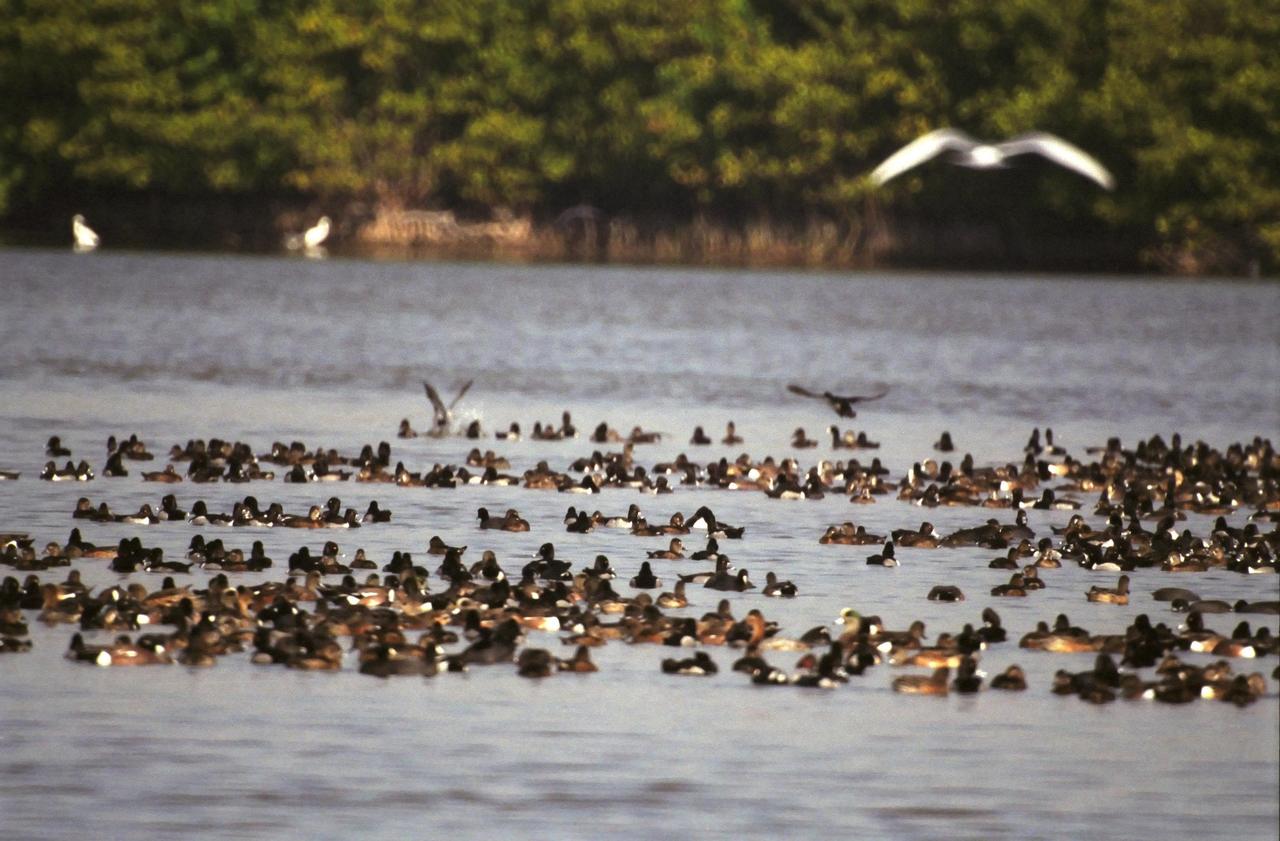
KENNEDY SPACE CENTER, FLA. -   The waters of the Merritt Island National Wildlife Refuge, which shares a boundary with Kennedy Space Center, attract coots, ducks, herons and other water birds as shown here. Coots are readily identified by their slate-gray bodies and conspicuous white bill. They inhabit open ponds and marshes from southern Canada to northern South America.  Excellent swimmers and divers, they eat various aquatic plants, but also feed on seeds grass and waste grain on land. The 92,000-acre refuge is a habitat for more than 330 species of birds, 31 mammals, 117 fishes and 65 amphibians and reptiles.  The marshes and open water of the refuge provide wintering areas for 23 species of migratory waterfowl, as well as a year-round home for great blue herons, great egrets, wood storks, cormorants, brown pelicans and other species of marsh and shore birds.
KSC-00PP-0237
KENNEDY SPACE CENTER, FLA. - White pelicans approach for a landing near white herons in a lake north of Kennedy Space Center.  Distinctive are the pelicans’ massive yellow bills and black wing tips.  They winter from Florida and southern California south to Panama. The Center shares a boundary with the 92,000-acre Merritt Island National Wildlife Refuge, which is a habitat for more than 310 species of birds, 25 mammals, 117 fishes and 65 amphibians and reptiles.  The marshes and open water of the refuge also provide wintering areas for 23 species of migratory waterfowl, as well as a year-round home for great blue herons, great egrets, wood storks, cormorants, brown pelicans and other species of marsh and shore birds.
KSC-04pd0899
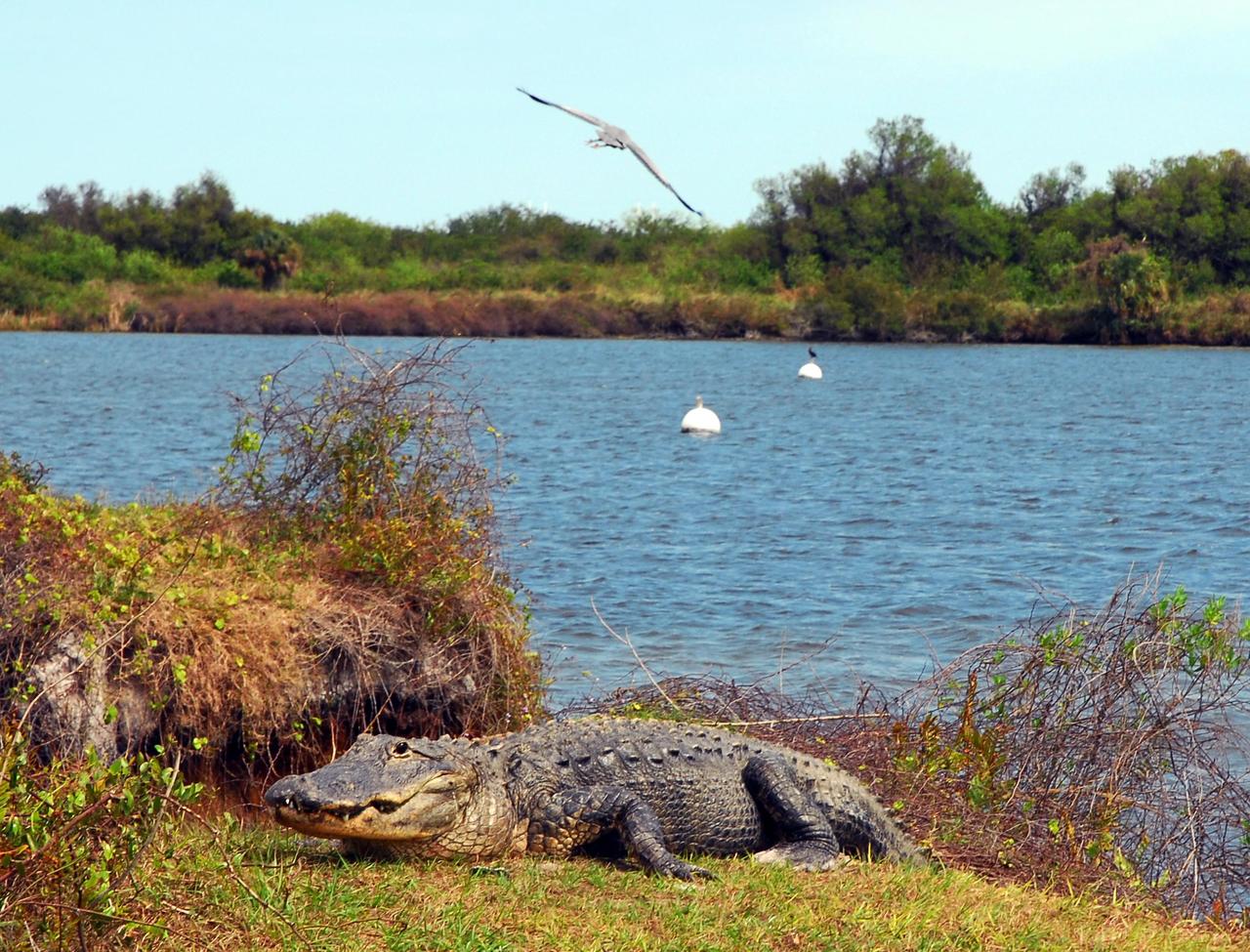
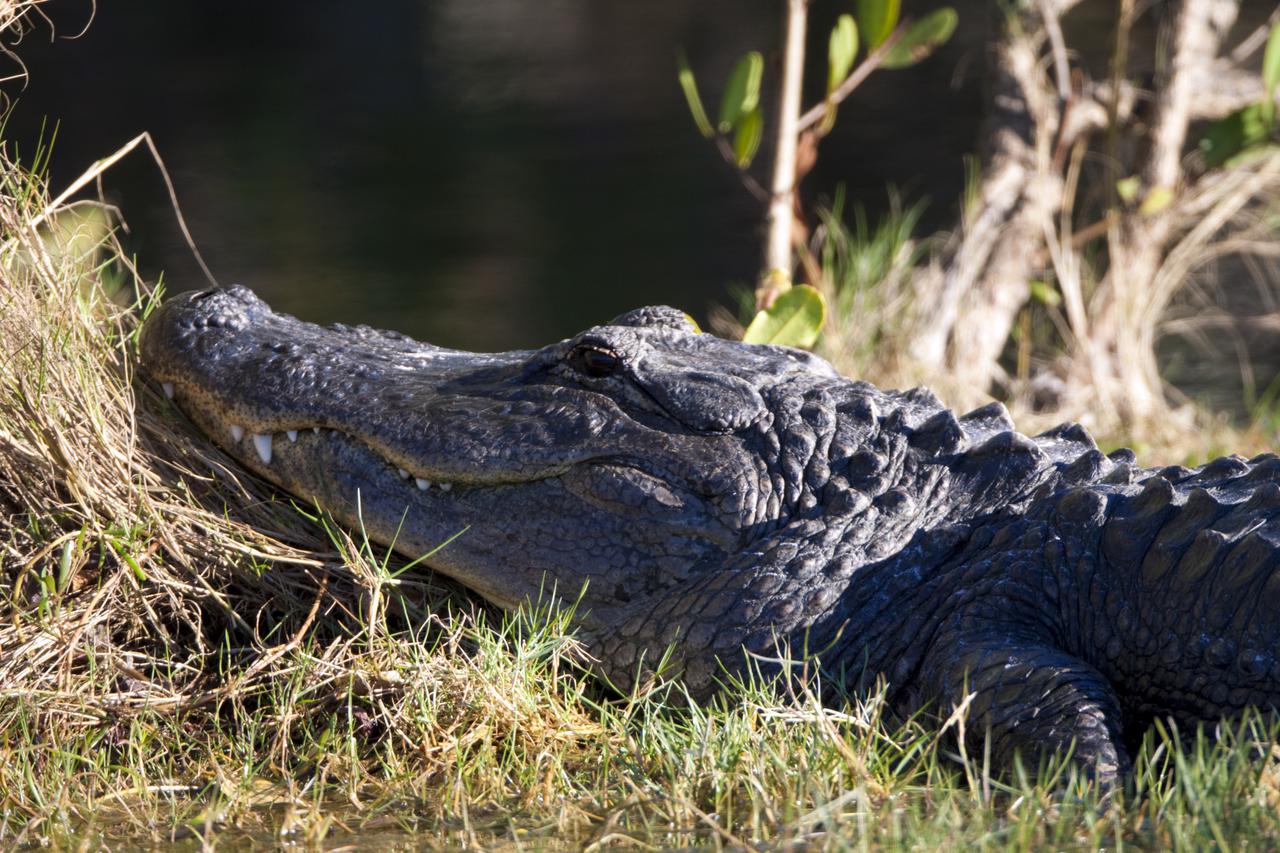
KENNEDY SPACE CENTER, FLA. --  A large alligator on the bank of a creek in NASA's Kennedy Space Center comes to alert, scaring off the great blue heron, seen in the sky above the water.  The heron had been standing behind the alligator. A protected species, alligators can be spotted in the drainage canals and other waters surrounding KSC.  The center shares a boundary with the Merritt Island Wildlife Nature Refuge, which is a habitat for more than 310 species of birds, 25 mammals, 117 fishes and 65 amphibians and reptiles. In addition, the Refuge supports 19 endangered or threatened wildlife species on Federal or State lists, more than any other single refuge in the U.S.  Photo credit: NASA/Amanda Diller
KSC-07pd0572
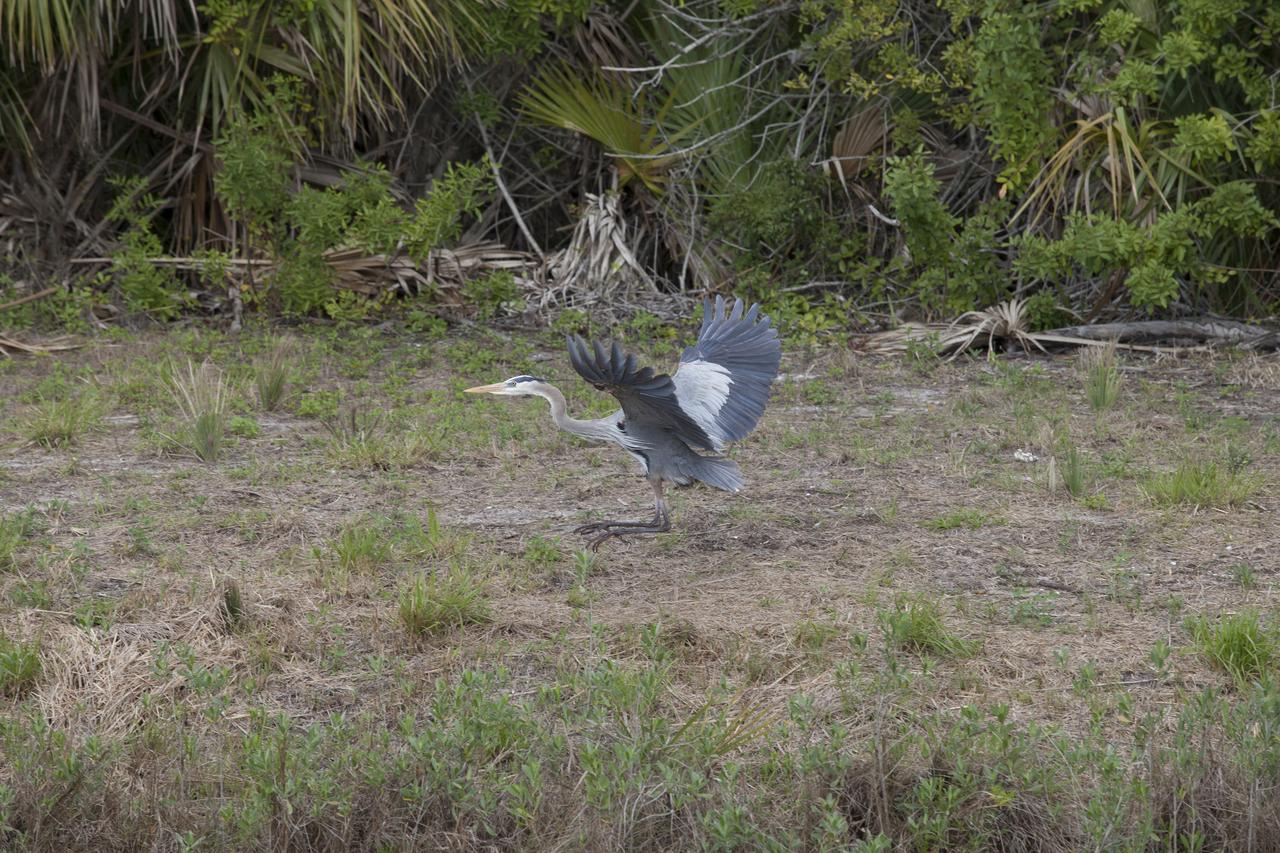
CAPE CANAVERAL, Fla. - A great blue heron begins to take flight in a grassy area at NASA’s Kennedy Space Center in Florida. The center shares a boundary with the Merritt Island National Wildlife Refuge. The refuge encompasses 140,000 acres that are a habitat for more than 330 species of birds, 31 mammals, 117 fishes, and 65 amphibians and reptiles. It contains more than 1,000 known plant species. The marshes and open water of the refuge provide wintering areas for 23 species of migratory waterfowl, as well as a year-round home for great blue herons, great egrets, wood storks, cormorants, brown pelicans and other species of marsh and shore birds, and a variety of insects. Photo credit: NASA/Daniel Casper
Various Wildlife Around Schwartz Rd.
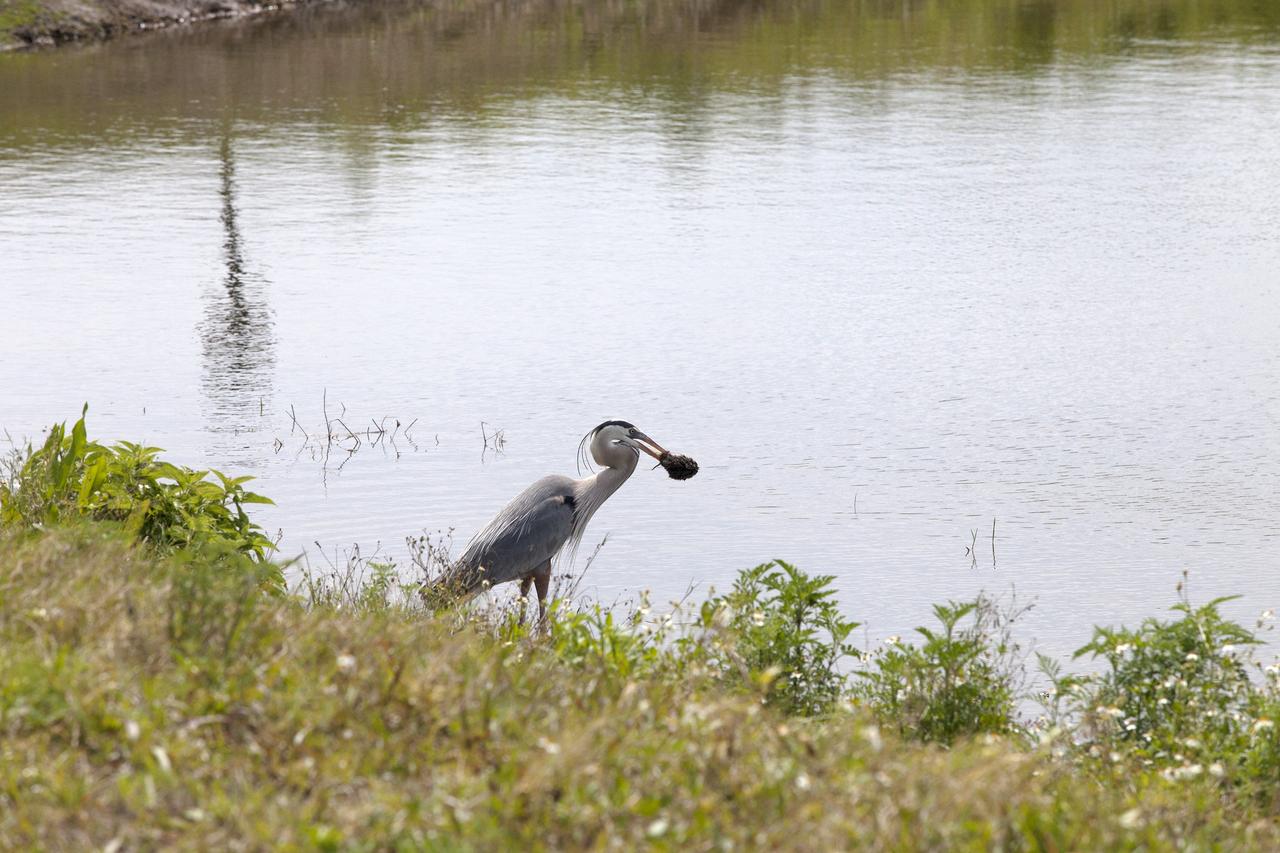
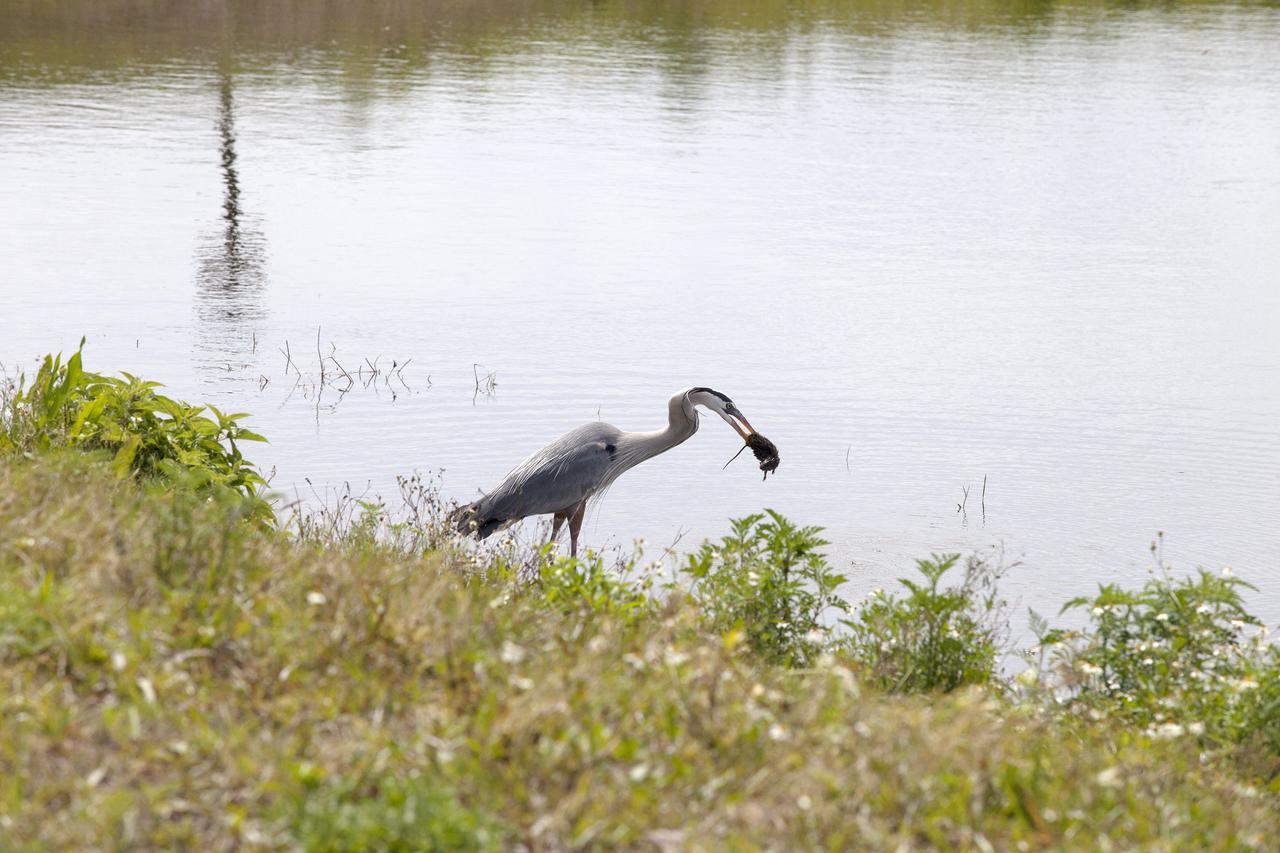
CAPE CANAVERAL, Fla. – A great blue heron consumes a small rodent along the shore of an inland waterway at NASA's Kennedy Space Center in Florida. An alligator swims in the water nearby.    The center shares a boundary with the Merritt Island National Wildlife Refuge. The refuge encompasses 140,000 acres that are a habitat for more than 330 species of birds, 31 mammals, 117 fishes, and 65 amphibians and reptiles. It contains more than 1,000 known plant species. The marshes and open water of the refuge provide wintering areas for 23 species of migratory waterfowl, as well as a year-round home for great blue herons, great egrets, wood storks, cormorants, brown pelicans and other species of marsh and shore birds, and a variety of insects.  Photo credit: NASA/Daniel Casper
KSC-2014-2003
CAPE CANAVERAL, Fla. – A Great Blue  Heron majestically takes to the air as it leaves the shallow water behind the NASA News Center at NASA's Kennedy Space Center in Florida. A frequent sight around Kennedy, this large heron inhabits lakes, ponds, rivers and marshes in a range from Alaska south to Mexico and the West Indies.  It is frequently found standing at the edge of a pond or pool, watching for fish or frogs, its principal food.  Kennedy shares a boundary with the Merritt Island National Wildlife Refuge that includes salt-water estuaries, brackish marshes, hardwood hammocks and pine flatwoods.  The diverse landscape provides habitat for more than 310 species of birds, 25 mammals, 117 fishes and 65 amphibians and reptiles. Photo credit: NASA/Ben Smegelsky
KSC-2009-2604
CAPE CANAVERAL, Fla. – A great blue heron catches a small rodent along the shore of an inland waterway near the former site of the Spacecraft Assembly and Encapsulation Facility-2 at NASA's Kennedy Space Center in Florida.    The center shares a boundary with the Merritt Island National Wildlife Refuge. The refuge encompasses 140,000 acres that are a habitat for more than 330 species of birds, 31 mammals, 117 fishes, and 65 amphibians and reptiles. It contains more than 1,000 known plant species. The marshes and open water of the refuge provide wintering areas for 23 species of migratory waterfowl, as well as a year-round home for great blue herons, great egrets, wood storks, cormorants, brown pelicans and other species of marsh and shore birds, and a variety of insects.  Photo credit: NASA/Daniel Casper
KSC-2014-1993
CAPE CANAVERAL, Fla. – A tall Great Blue Heron warily eyes its surroundings while standing in the shallow water behind the NASA News Center at NASA's Kennedy Space Center in Florida. A frequent sight around Kennedy, this large heron inhabits lakes, ponds, rivers and marshes in a range from Alaska south to Mexico and the West Indies.  It is frequently found standing at the edge of a pond or pool, watching for fish or frogs, its principal food.   Kennedy shares a boundary with the Merritt Island National Wildlife Refuge that includes salt-water estuaries, brackish marshes, hardwood hammocks and pine flatwoods.  The diverse landscape provides habitat for more than 310 species of birds, 25 mammals, 117 fishes and 65 amphibians and reptiles. Photo credit: NASA/Ben Smegelsky
KSC-2009-2603
CAPE CANAVERAL, Fla. – A great blue heron catches a small rodent along the shore of an inland waterway at NASA's Kennedy Space Center in Florida. An alligator swims in the water nearby.    The center shares a boundary with the Merritt Island National Wildlife Refuge. The refuge encompasses 140,000 acres that are a habitat for more than 330 species of birds, 31 mammals, 117 fishes, and 65 amphibians and reptiles. It contains more than 1,000 known plant species. The marshes and open water of the refuge provide wintering areas for 23 species of migratory waterfowl, as well as a year-round home for great blue herons, great egrets, wood storks, cormorants, brown pelicans and other species of marsh and shore birds, and a variety of insects.  Photo credit: NASA/Daniel Casper
KSC-2014-1997
CAPE CANAVERAL, Fla. – A great blue heron consumes a small rodent along the shore of an inland waterway at NASA's Kennedy Space Center in Florida. An alligator swims in the water nearby.    The center shares a boundary with the Merritt Island National Wildlife Refuge. The refuge encompasses 140,000 acres that are a habitat for more than 330 species of birds, 31 mammals, 117 fishes, and 65 amphibians and reptiles. It contains more than 1,000 known plant species. The marshes and open water of the refuge provide wintering areas for 23 species of migratory waterfowl, as well as a year-round home for great blue herons, great egrets, wood storks, cormorants, brown pelicans and other species of marsh and shore birds, and a variety of insects.  Photo credit: NASA/Daniel Casper
KSC-2014-2004
KENNEDY SPACE CENTER, FLA. -  Roseate spoonbills wade in the shallow water (foreground) while white pelicans and herons gather in deeper water (background) on a lake north of Kennedy Space Center.  The spoonbills are so named because of the broad spatulate tip on its long straight bill.  They obtain food by sweeping their bills from side to side and scooping up whatever they encounter.  The Center shares a boundary north, south and west with the 92,000-acre Merritt Island National Wildlife Refuge, which is a habitat for more than 310 species of birds, 25 mammals, 117 fishes and 65 amphibians and reptiles.  The marshes and open water of the refuge also provide wintering areas for 23 species of migratory waterfowl, as well as a year-round home for great blue herons, great egrets, wood storks, cormorants, brown pelicans and other species of marsh and shore birds.
KSC-04pd0888
CAPE CANAVERAL, Fla. – A great blue heron catches a small rodent along the shore of an inland waterway at NASA's Kennedy Space Center in Florida. An alligator swims in the water nearby.    The center shares a boundary with the Merritt Island National Wildlife Refuge. The refuge encompasses 140,000 acres that are a habitat for more than 330 species of birds, 31 mammals, 117 fishes, and 65 amphibians and reptiles. It contains more than 1,000 known plant species. The marshes and open water of the refuge provide wintering areas for 23 species of migratory waterfowl, as well as a year-round home for great blue herons, great egrets, wood storks, cormorants, brown pelicans and other species of marsh and shore birds, and a variety of insects.  Photo credit: NASA/Daniel Casper
KSC-2014-1999
CAPE CANAVERAL, Fla. – A great blue heron stands along the shore of an inland waterway at NASA's Kennedy Space Center in Florida. An alligator swims in the water nearby.    The center shares a boundary with the Merritt Island National Wildlife Refuge. The refuge encompasses 140,000 acres that are a habitat for more than 330 species of birds, 31 mammals, 117 fishes, and 65 amphibians and reptiles. It contains more than 1,000 known plant species. The marshes and open water of the refuge provide wintering areas for 23 species of migratory waterfowl, as well as a year-round home for great blue herons, great egrets, wood storks, cormorants, brown pelicans and other species of marsh and shore birds, and a variety of insects.  Photo credit: NASA/Daniel Casper
KSC-2014-2005
CAPE CANAVERAL, Fla. – A great blue heron catches a small rodent along the shore of an inland waterway at NASA's Kennedy Space Center in Florida. An alligator swims in the water nearby.    The center shares a boundary with the Merritt Island National Wildlife Refuge. The refuge encompasses 140,000 acres that are a habitat for more than 330 species of birds, 31 mammals, 117 fishes, and 65 amphibians and reptiles. It contains more than 1,000 known plant species. The marshes and open water of the refuge provide wintering areas for 23 species of migratory waterfowl, as well as a year-round home for great blue herons, great egrets, wood storks, cormorants, brown pelicans and other species of marsh and shore birds, and a variety of insects.  Photo credit: NASA/Daniel Casper
KSC-2014-2001
CAPE CANAVERAL, Fla. – A great blue heron stands along the shore of an inland waterway at NASA's Kennedy Space Center in Florida. An alligator swims in the water nearby.    The center shares a boundary with the Merritt Island National Wildlife Refuge. The refuge encompasses 140,000 acres that are a habitat for more than 330 species of birds, 31 mammals, 117 fishes, and 65 amphibians and reptiles. It contains more than 1,000 known plant species. The marshes and open water of the refuge provide wintering areas for 23 species of migratory waterfowl, as well as a year-round home for great blue herons, great egrets, wood storks, cormorants, brown pelicans and other species of marsh and shore birds, and a variety of insects.  Photo credit: NASA/Daniel Casper
KSC-2014-2006
CAPE CANAVERAL, Fla. – A great blue heron catches a small rodent along the shore of an inland waterway near the former site of the Spacecraft Assembly and Encapsulation Facility-2 at NASA's Kennedy Space Center in Florida.    The center shares a boundary with the Merritt Island National Wildlife Refuge. The refuge encompasses 140,000 acres that are a habitat for more than 330 species of birds, 31 mammals, 117 fishes, and 65 amphibians and reptiles. It contains more than 1,000 known plant species. The marshes and open water of the refuge provide wintering areas for 23 species of migratory waterfowl, as well as a year-round home for great blue herons, great egrets, wood storks, cormorants, brown pelicans and other species of marsh and shore birds, and a variety of insects.  Photo credit: NASA/Daniel Casper
KSC-2014-1995
KENNEDY SPACE CENTER, FLA. -   The waters of the Merritt Island National Wildlife Refuge, which shares a boundary with Kennedy Space Center, attract coots, ducks, herons and other water birds as shown here. Coots are readily identified by their slate-gray bodies and conspicuous white bill. They inhabit open ponds and marshes from southern Canada to northern South America.  Excellent swimmers and divers, they eat various aquatic plants, but also feed on seeds grass and waste grain on land. The 92,000-acre refuge is a habitat for more than 330 species of birds, 31 mammals, 117 fishes and 65 amphibians and reptiles.  The marshes and open water of the refuge provide wintering areas for 23 species of migratory waterfowl, as well as a year-round home for great blue herons, great egrets, wood storks, cormorants, brown pelicans and other species of marsh and shore birds.
KSC00PP-0237
CAPE CANAVERAL, Fla. – A great blue heron catches a small rodent along the shore of an inland waterway at NASA's Kennedy Space Center in Florida. An alligator swims in the water nearby.    The center shares a boundary with the Merritt Island National Wildlife Refuge. The refuge encompasses 140,000 acres that are a habitat for more than 330 species of birds, 31 mammals, 117 fishes, and 65 amphibians and reptiles. It contains more than 1,000 known plant species. The marshes and open water of the refuge provide wintering areas for 23 species of migratory waterfowl, as well as a year-round home for great blue herons, great egrets, wood storks, cormorants, brown pelicans and other species of marsh and shore birds, and a variety of insects.  Photo credit: NASA/Daniel Casper
KSC-2014-2002
CAPE CANAVERAL, Fla. – A great blue heron catches a small rodent along the shore of an inland waterway at NASA's Kennedy Space Center in Florida. An alligator swims in the water nearby.    The center shares a boundary with the Merritt Island National Wildlife Refuge. The refuge encompasses 140,000 acres that are a habitat for more than 330 species of birds, 31 mammals, 117 fishes, and 65 amphibians and reptiles. It contains more than 1,000 known plant species. The marshes and open water of the refuge provide wintering areas for 23 species of migratory waterfowl, as well as a year-round home for great blue herons, great egrets, wood storks, cormorants, brown pelicans and other species of marsh and shore birds, and a variety of insects.  Photo credit: NASA/Daniel Casper
KSC-2014-2000
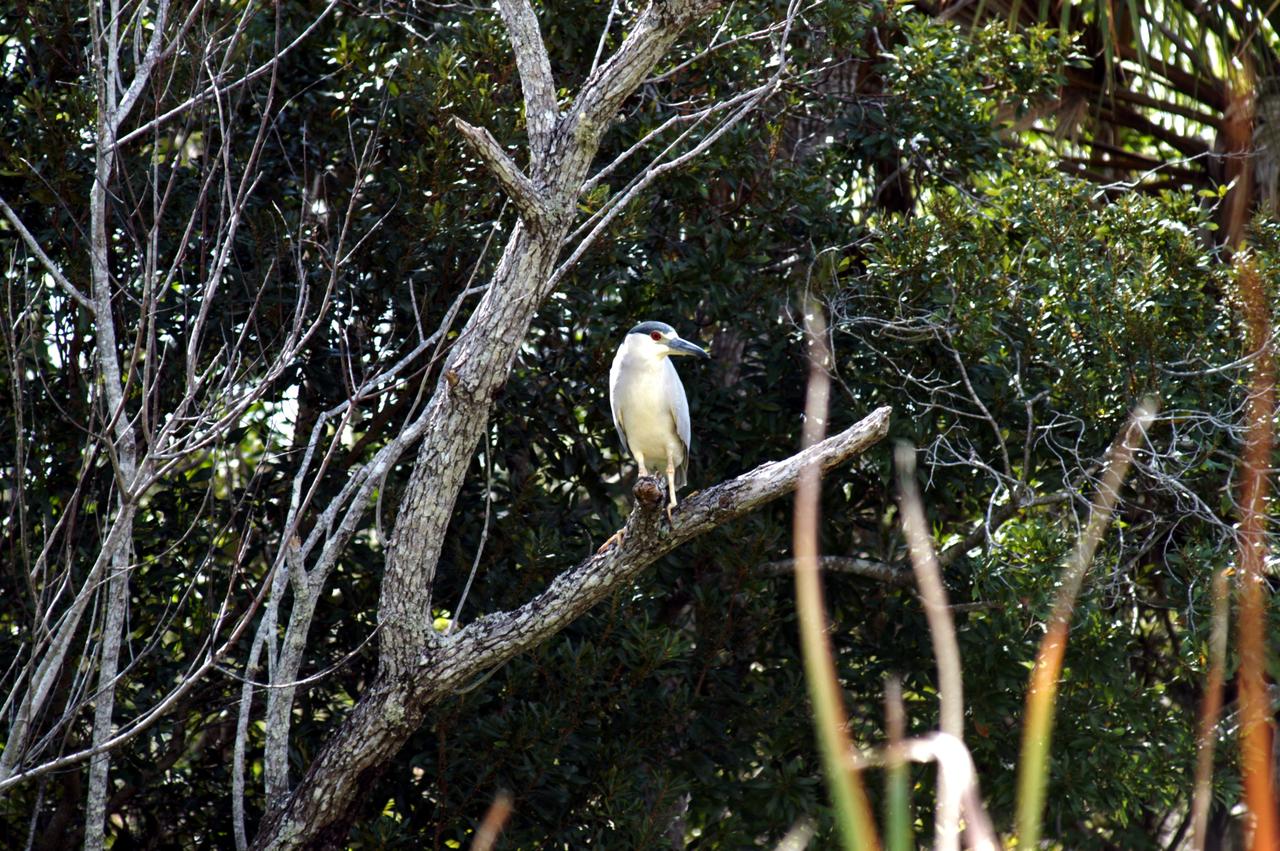
KENNEDY SPACE CENTER, FLA. - A young Yellow-Crowned Night Heron perches on a tree limb in a wooded area of NASA’s Kennedy Space Center.  Its habitat is wooded swamps and coastal thickets, ranging from Massachusetts to Florida, west to Texas, and north along the Mississippi River.  The Center shares a boundary with the 92,000-acre Merritt Island National Wildlife Refuge, which is a habitat for more than 310 species of birds, 25 mammals, 117 fishes and 65 amphibians and reptiles.  The marshes and open water of the refuge also provide wintering areas for 23 species of migratory waterfowl, as well as a year-round home for great blue herons, great egrets, wood storks, cormorants, brown pelicans and other species of marsh and shore birds.
KSC-04pd0199
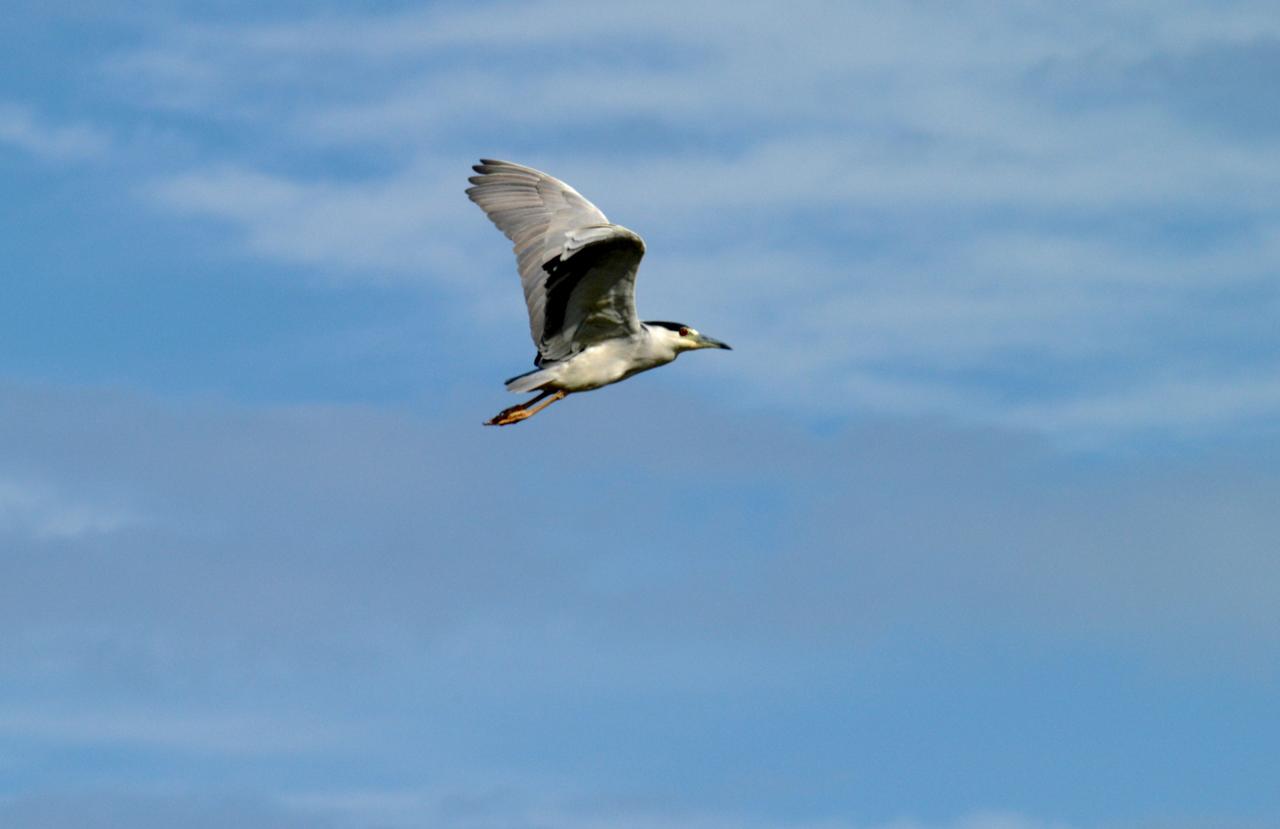
KENNEDY SPACE CENTER, FLA. - A young Yellow-Crowned Night Heron soars through the sky over NASA’s Kennedy Space Center.  It’s habitat is wooded swamps and coastal thickets, ranging from Massachusetts to Florida, west to Texas, and north along the Mississippi River.  The Center shares a boundary with the 92,000-acre Merritt Island National Wildlife Refuge, which is a habitat for more than 310 species of birds, 25 mammals, 117 fishes and 65 amphibians and reptiles.  The marshes and open water of the refuge also provide wintering areas for 23 species of migratory waterfowl, as well as a year-round home for great blue herons, great egrets, wood storks, cormorants, brown pelicans and other species of marsh and shore birds.
KSC-04pd0202
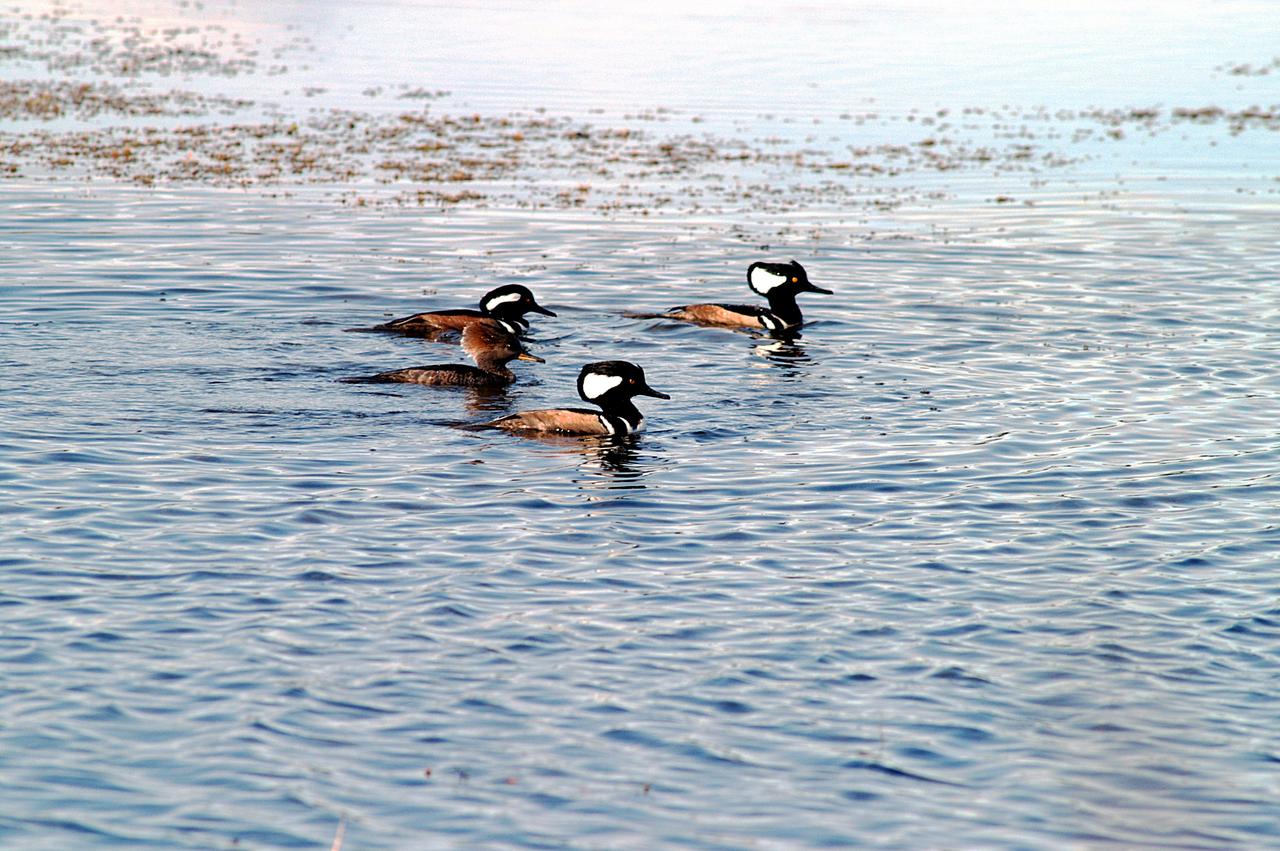
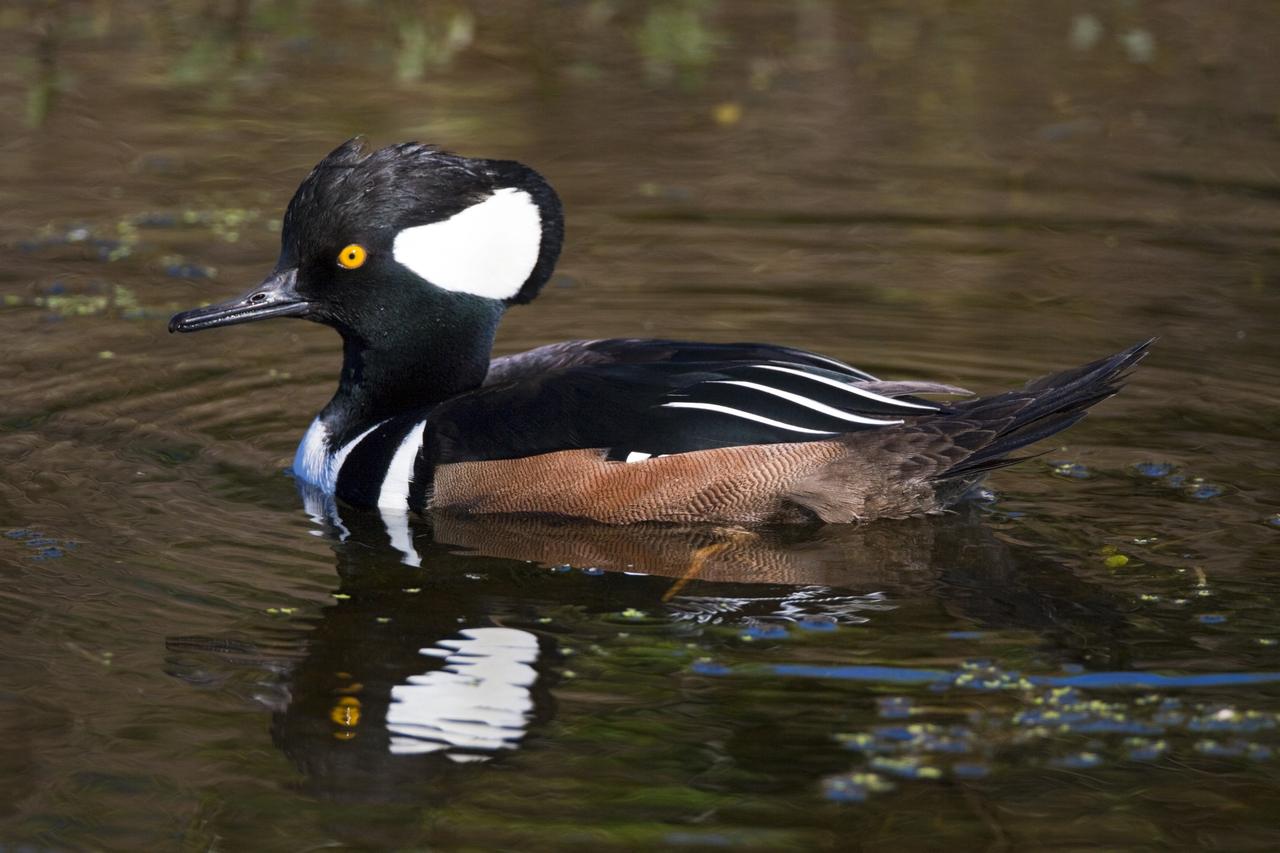
KENNEDY SPACE CENTER, FLA. -- Three male and one female hooded mergansers swim in the quicksilver water of the Merritt Island National Wildlife Refuge, which shares a boundary with Kennedy Space Center. Usually found from Alaska and Canada south to Nebraska, Oregon and Tennessee, hooded mergansers winter south to Mexico and the Gulf Coast, including KSC. The open water of the refuge provides wintering areas for 23 species of migratory waterfowl, as well as a year-round home for great blue herons, great egrets, wood storks, cormorants, brown pelicans and other species of marsh and shore birds. The 92,000-acre refuge is also habitat for more than 310 species of birds, 25 mammals, 117 fishes and 65 amphibians and reptiles.
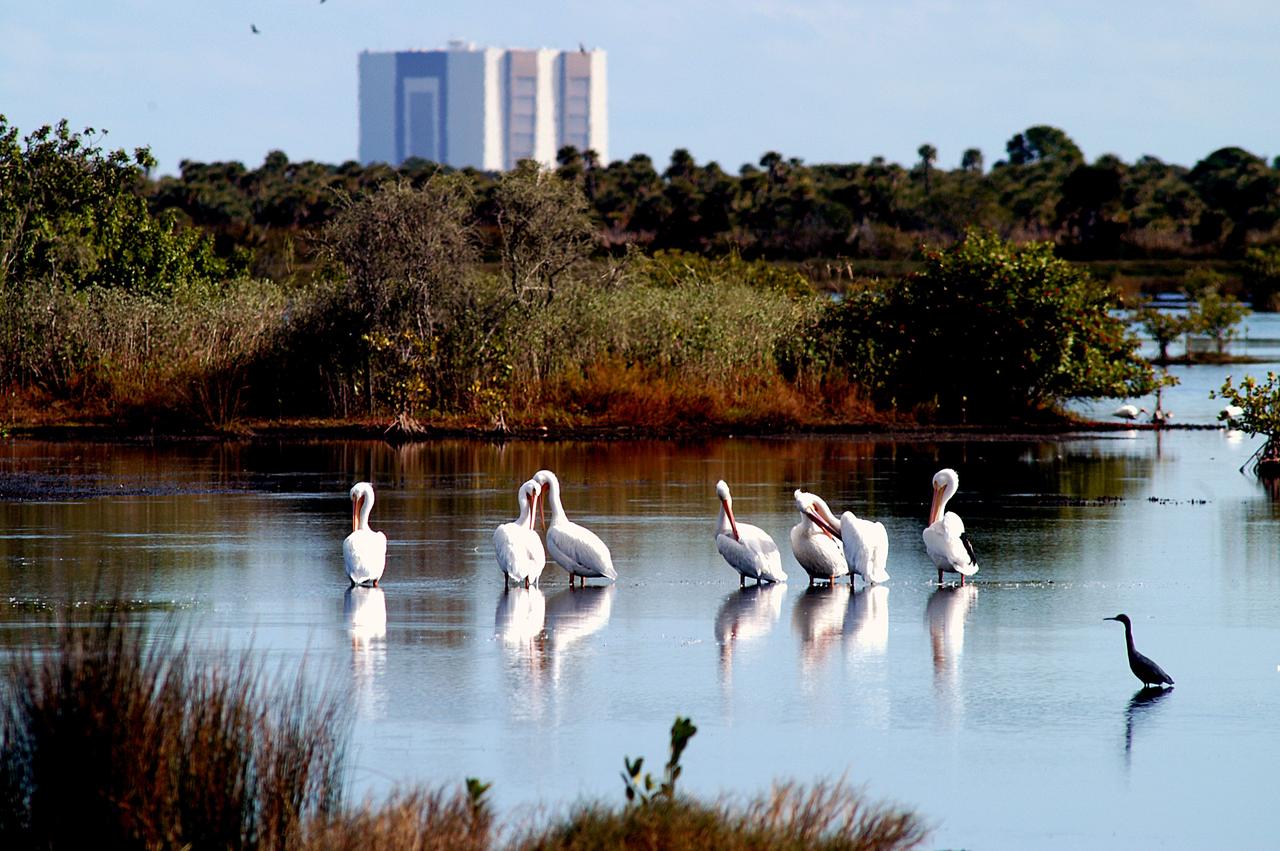
KENNEDY SPACE CENTER, FLA. -- A group of white pelicans spend a few moments relaxing in the water near the Vehicle Assembly Building at Kennedy Space Center. Found from British Columbia south to western Ontario, California and the Texas coast, white pelicans winter from Florida south to Panama. They prefer marshy lakes and coastal regions, and winter chiefly in coastal lagoons. White pelicans are one of 310 species of birds that inhabit the Merritt Island National Wildlife Refuge, which shares a boundary with KSC. The marshes and open water of the refuge also provide wintering areas for 23 species of migratory waterfowl, as well as a year-round home for great blue herons, great egrets, wood storks, cormorants, brown pelicans and other species of marsh and shore birds.
KENNEDY SPACE CENTER, FLA. -- A group of roseate spoonbills share their watery hunting ground with a lone white ibis near KSC. Spoonbills prefer to inhabit mangroves, ranging from the coasts of southern Florida, Louisiana and Texas, to the West Indies, Mexico, Central and South America. They feed on shrimps and fish in shallow waters. Spoonbills are one of 310 species of birds that inhabit the Merritt Island National Wildlife Refuge, which shares a boundary with KSC. The marshes and open water of the refuge also provide wintering areas for 23 species of migratory waterfowl, as well as a year-round home for great blue herons, great egrets, wood storks, cormorants, brown pelicans and other species of marsh and shore birds.
KENNEDY SPACE CENTER, FLA. -- A lone white ibis shares its watery hunting ground with a group of roseate spoonbills near KSC. Spoonbills prefer to inhabit mangroves, ranging from the coasts of southern Florida, Louisiana and Texas, to the West Indies, Mexico, Central and South America. They feed on shrimps and fish in shallow waters. Spoonbills are one of 310 species of birds that inhabit the Merritt Island National Wildlife Refuge, which shares a boundary with KSC. The marshes and open water of the refuge also provide wintering areas for 23 species of migratory waterfowl, as well as a year-round home for great blue herons, great egrets, wood storks, cormorants, brown pelicans and other species of marsh and shore birds.
CAPE CANAVERAL, Fla. – A duck is reflected in the waters of the Blackpoint Wildlife Drive in the Merritt Island National Wildlife Refuge, northwest of NASA's Kennedy Space Center in Florida.      Kennedy Space Center shares a boundary with the Merritt Island National Wildlife Refuge. The Refuge encompasses 92,000 acres that are a habitat for more than 331 species of birds, 31 mammals, 117 fishes, and 65 amphibians and reptiles. The marshes and open water of the refuge provide wintering areas for 23 species of migratory waterfowl, as well as a year-round home for great blue herons, great egrets, wood storks, cormorants, brown pelicans and other species of marsh and shore birds, as well as a variety of insects. For more information, visit: http://www.nasa.gov/centers/kennedy/shuttleoperations/alligators/kscovr.html Photo credit: NASA/Jim Grossmann
KSC-2012-6473
CAPE CANAVERAL, Fla. – A duck is reflected in the waters of the Blackpoint Wildlife Drive in the Merritt Island National Wildlife Refuge, northwest of NASA's Kennedy Space Center in Florida.      Kennedy Space Center shares a boundary with the Merritt Island National Wildlife Refuge. The Refuge encompasses 92,000 acres that are a habitat for more than 331 species of birds, 31 mammals, 117 fishes, and 65 amphibians and reptiles. The marshes and open water of the refuge provide wintering areas for 23 species of migratory waterfowl, as well as a year-round home for great blue herons, great egrets, wood storks, cormorants, brown pelicans and other species of marsh and shore birds, as well as a variety of insects. For more information, visit: http://www.nasa.gov/centers/kennedy/shuttleoperations/alligators/kscovr.html Photo credit: NASA/Jim Grossmann
KSC-2012-6478
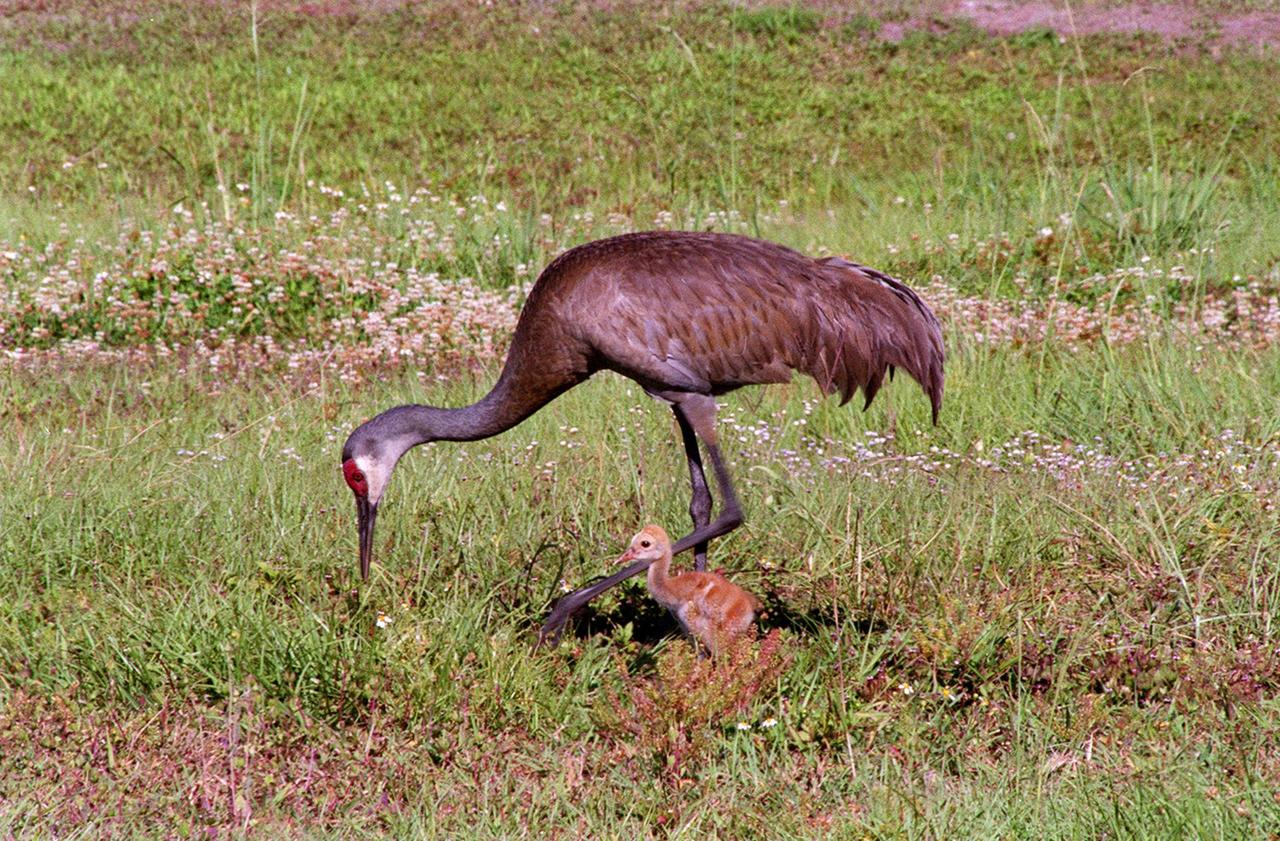
A family of sandhill cranes searches for food on the grounds near the Vehicle Assembly Building. The cranes have been a constant sight in the Launch Complex 39 area during the month of May. Sandhill cranes range from Siberia, Alaska and Arctic islands to Michigan, Minnesota and California; from Florida to Texas. They prefer large freshwater marshes, prairie ponds and marshy tundra. KSC shares a boundary with the Merritt Island National Wildlife Refuge, which encompasses 92,000 acres that are a habitat for more than 331 species of birds, 31 mammals, 117 fishes, and 65 amphibians and reptiles. The marshes and open water of the refuge provide wintering areas for 23 species of migratory waterfowl, as well as a year-round home for great blue herons, great egrets, wood storks, cormorants, brown pelicans and other species of marsh and shore birds, as well as a variety of insects
KSC-00pp0671
While the sandhill crane parents search for food in front of the Vehicle Assembly Building, their still-featherless baby nearby tests its voice. The cranes have been a constant sight in the Launch Complex 39 area during the month of May. Sandhill cranes range from Siberia, Alaska and Arctic islands to Michigan, Minnesota and California; from Florida to Texas. They prefer large freshwater marshes, prairie ponds and marshy tundra. KSC shares a boundary with the Merritt Island National Wildlife Refuge, which encompasses 92,000 acres that are a habitat for more than 331 species of birds, 31 mammals, 117 fishes, and 65 amphibians and reptiles. The marshes and open water of the refuge provide wintering areas for 23 species of migratory waterfowl, as well as a year-round home for great blue herons, great egrets, wood storks, cormorants, brown pelicans and other species of marsh and shore birds, as well as a variety of insects
KSC00pp0672
A Sandhill Crane searches for food with its still-fuzzy fledgling by its side. The two, along with another adult crane, have been seen wandering the grassy areas in the KSC Launch Complex 39 area. Sandhill cranes range from Siberia, Alaska and Arctic islands to Michigan, Minnesota and California; from Florida to Texas. They prefer large freshwater marshes, prairie ponds and marshy tundra. KSC shares a boundary with the Merritt Island National Wildlife Refuge, which encompasses 92,000 acres that are a habitat for more than 331 species of birds, 31 mammals, 117 fishes, and 65 amphibians and reptiles. The marshes and open water of the refuge provide wintering areas for 23 species of migratory waterfowl, as well as a year-round home for great blue herons, great egrets, wood storks, cormorants, brown pelicans and other species of marsh and shore birds, as well as a variety of insects
KSC00pp0625