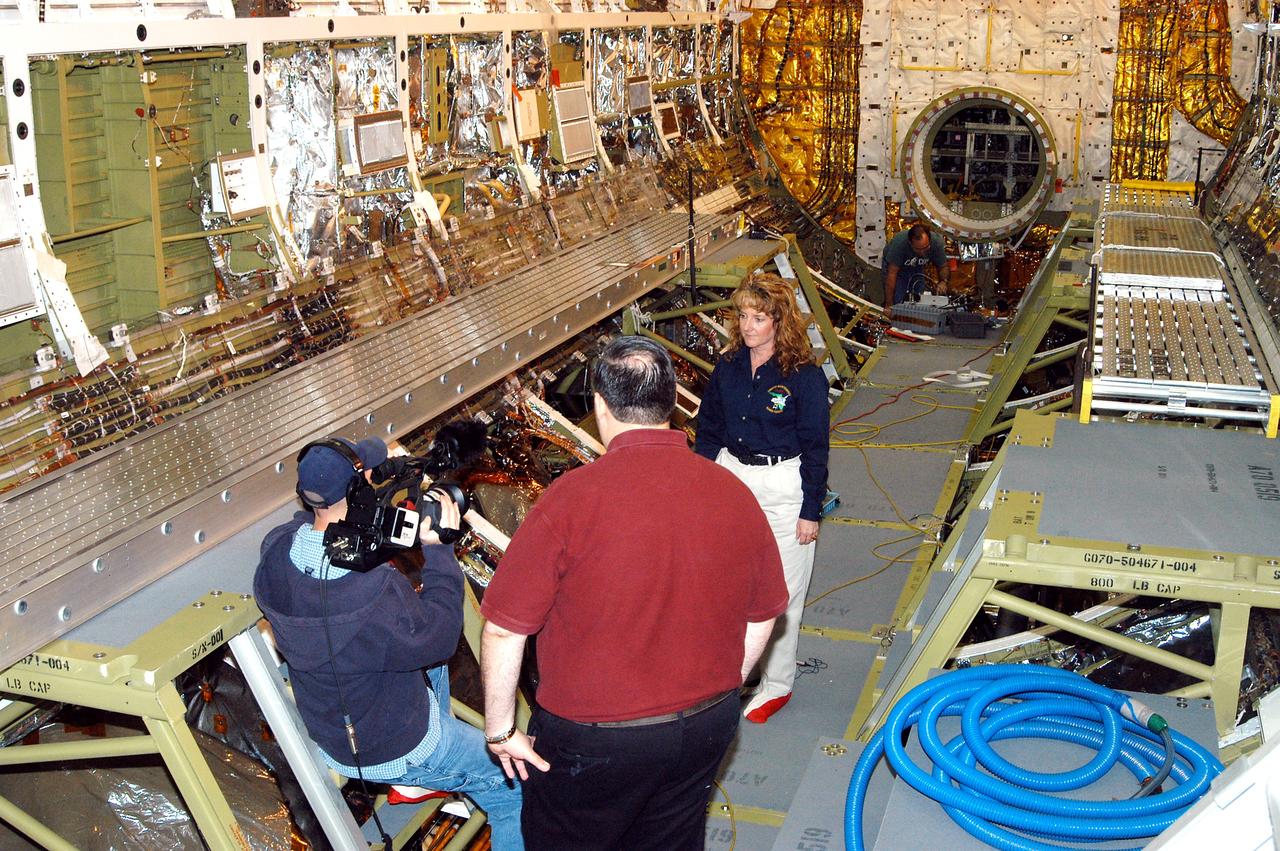
KENNEDY SPACE CENTER, FLA. - Standing inside Discovery’s payload bay, Carol Scott (right), lead orbiter engineer, talks about her job as part of a special feature for the KSC Web. With his back to the camera is Bill Kallus, Media manager in the KSC Web Studio. Behind Scott can be seen the open hatch of the airlock, which provides support functions such as airlock depressurization and repressurization, extravehicular activity equipment recharge, liquid-cooled garment water cooling, EVA equipment checkout, donning and communications. The outer hatch isolates the airlock from the unpressurized payload bay when closed and permits the EVA crew members to exit from the airlock to the payload bay when open.
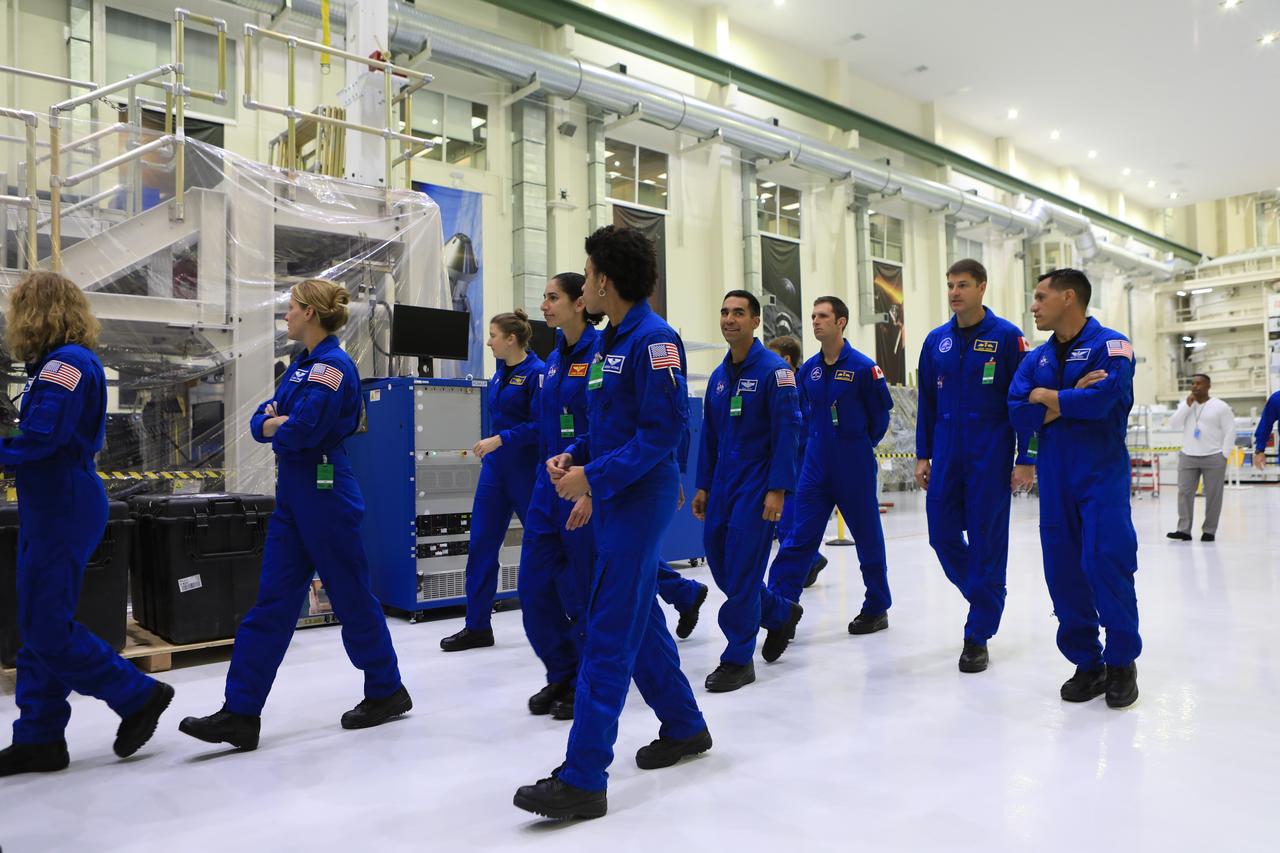
2017 ASCAN Tour of KSC at O&C Hi-Bay Orion Tour
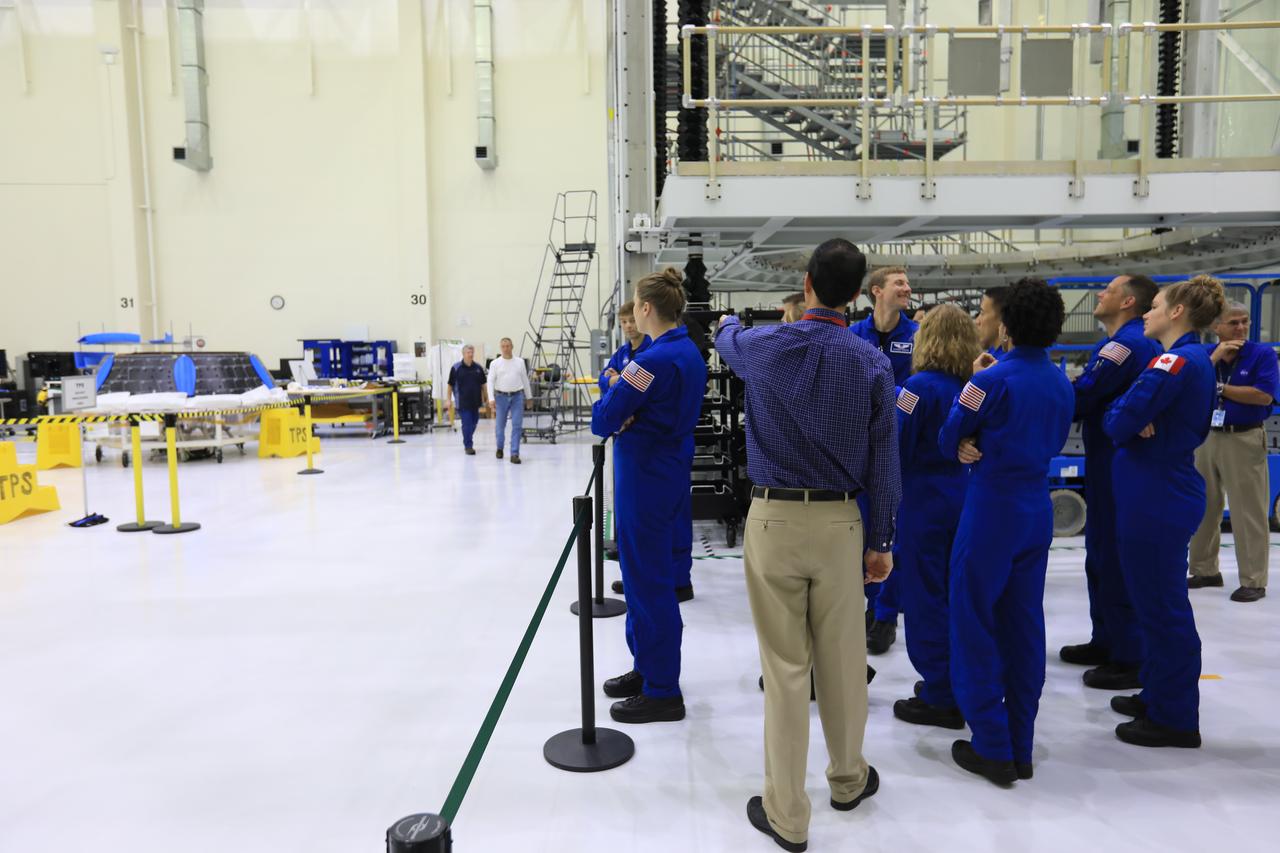
2017 ASCAN Tour of KSC at O&C Hi-Bay Orion Tour
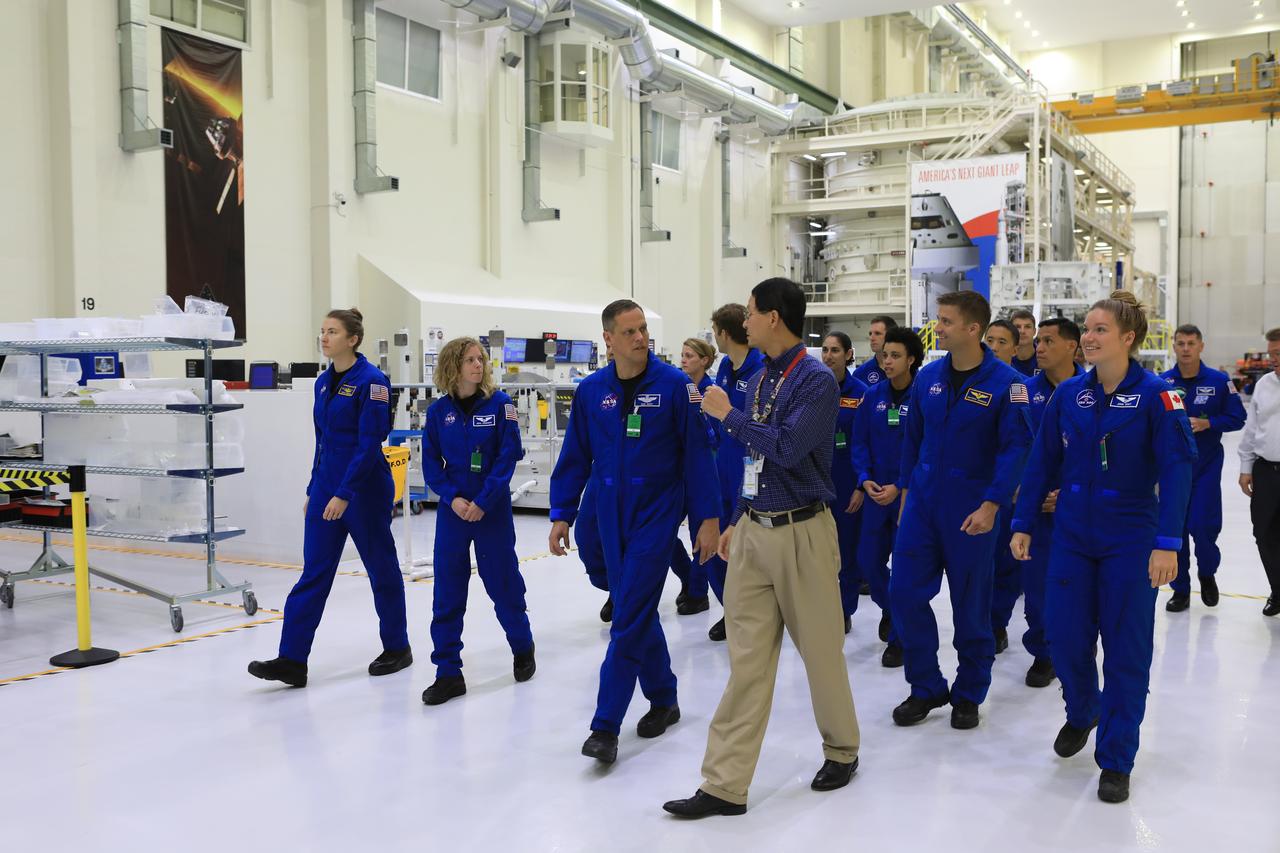
2017 ASCAN Tour of KSC at O&C Hi-Bay Orion Tour
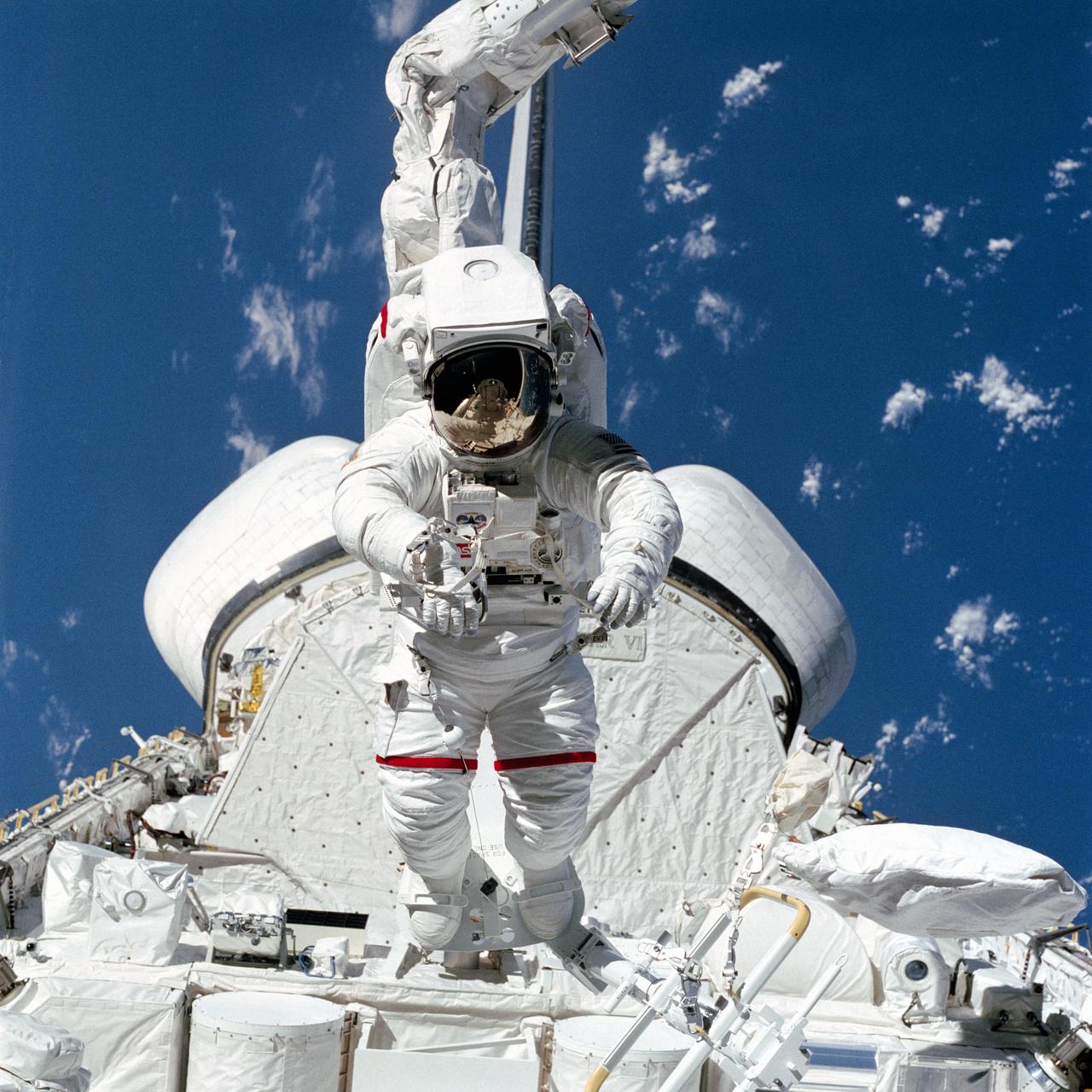
S84-27039 (7 Feb 1984) --- Astronaut Bruce McCandless II, at first glance appears to be walking on cargo in the Space Shuttle Challenger's payload bay. Actually, he is being "flown" around above the stationary cargo. His "flight" is due to the combined configuration of the Mobile Foot Restraint (MFR) and the Remote Manipulator System (RMS). His helmet visor reflects in miniature parts of the payload bay that can't be seen in the larger portion of the photo. A 70mm camera aimed through the aft flight deck windows exposed this frame.
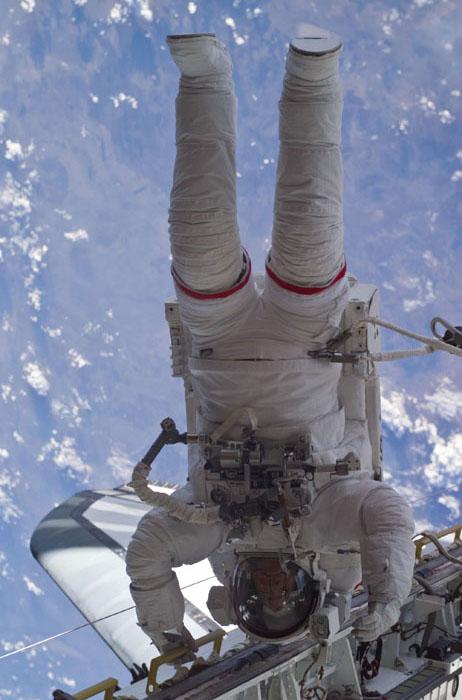
STS105-E-5236 (16 August 2001) --- Astronaut Daniel T. Barry appears to be hanging by his hands from the cargo bay's portside longerons on the Space Shuttle Discovery during the initial space walk on STS-105. Barry is actually tethered to the shuttle at his waist. The image was recorded with a digital still camera.
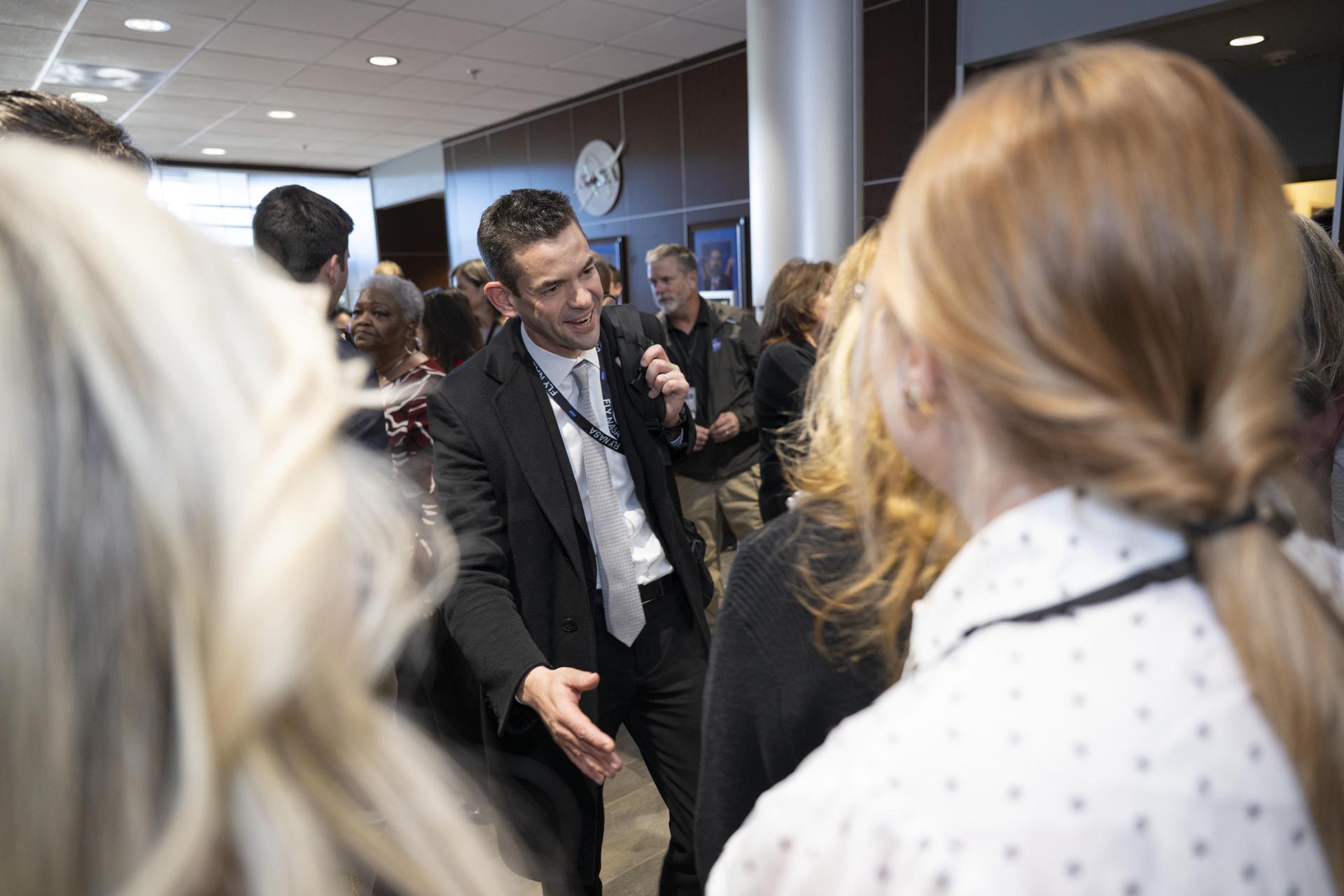
NASA Administrator Jared Isaacman, center, meets with NASA employees during his visit to NASA’s Stennis Space Center near Bay St. Louis, Mississippi, on Jan. 15, 2026. Isaacman, NASA’s 15th administrator, began visiting the agency’s centers after his appointment on Dec. 17, 2025.
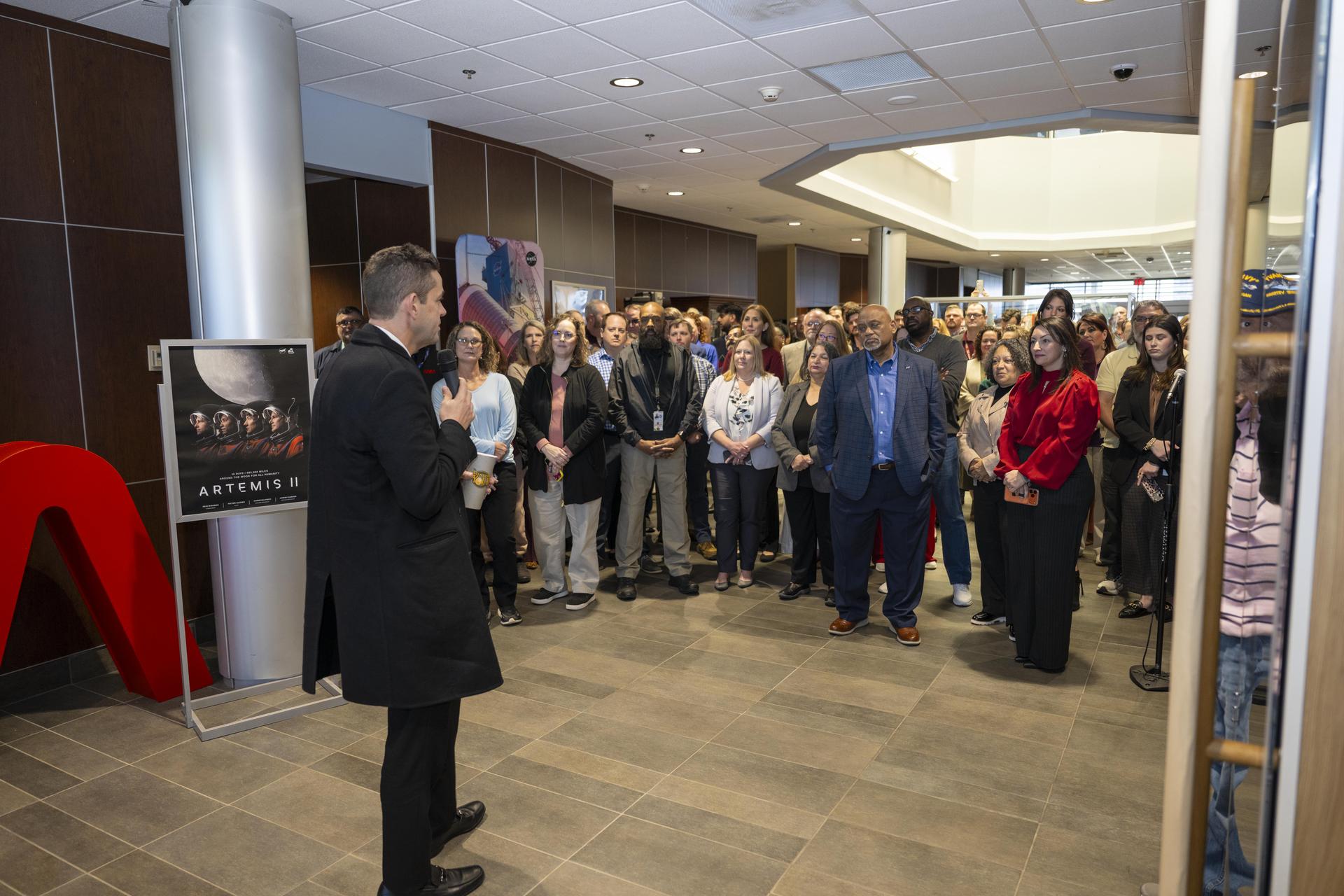
NASA Administrator Jared Isaacman, left, speaks with NASA employees during his visit to NASA’s Stennis Space Center near Bay St. Louis, Mississippi, on Jan. 15, 2026. Isaacman, NASA’s 15th administrator, began visiting the agency’s centers after his appointment on Dec. 17, 2025.
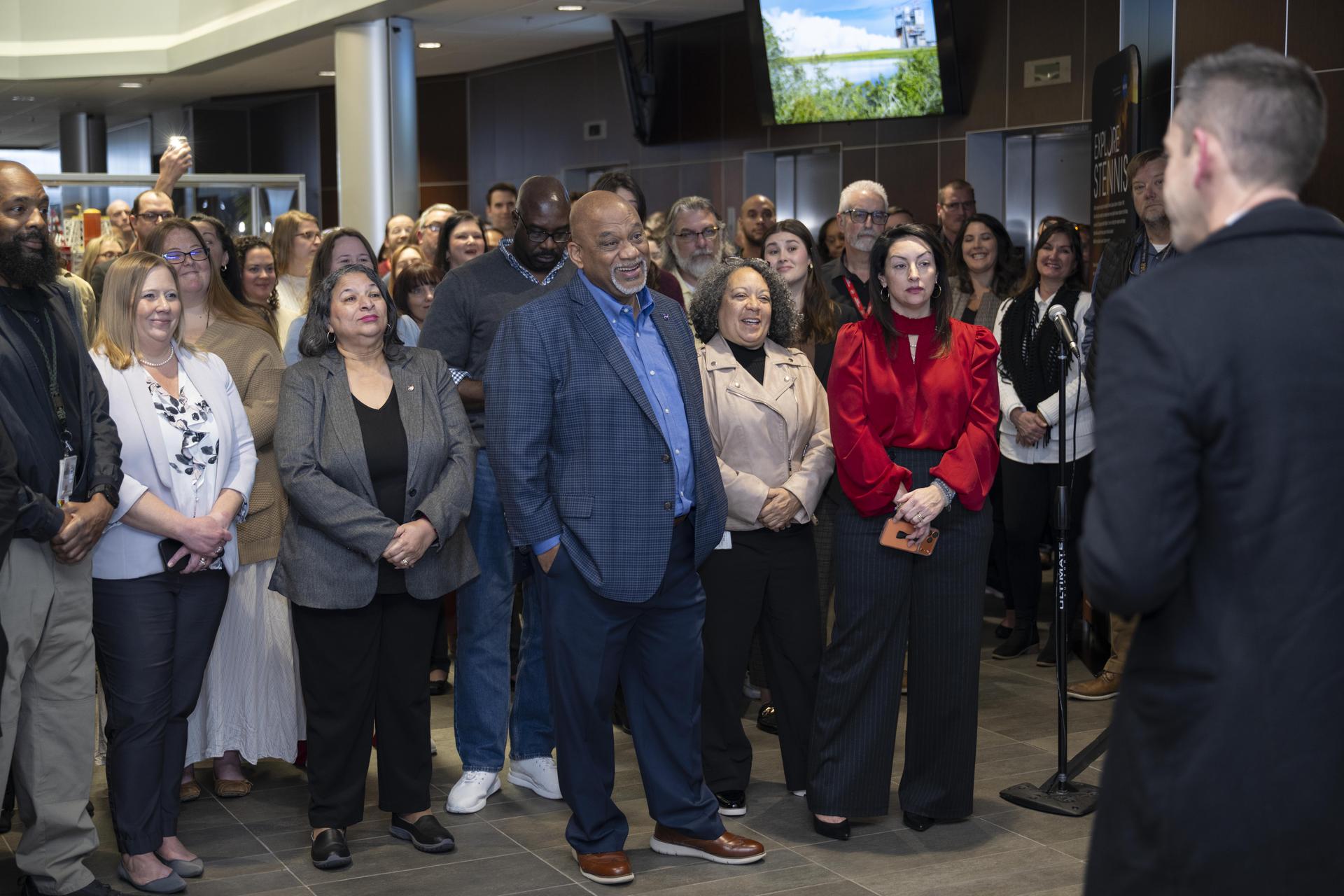
NASA Administrator Jared Isaacman, right, speaks with NASA employees during his visit to NASA’s Stennis Space Center near Bay St. Louis, Mississippi, on Jan. 15, 2026. Isaacman, NASA’s 15th administrator, began visiting the agency’s centers after his appointment on Dec. 17, 2025.
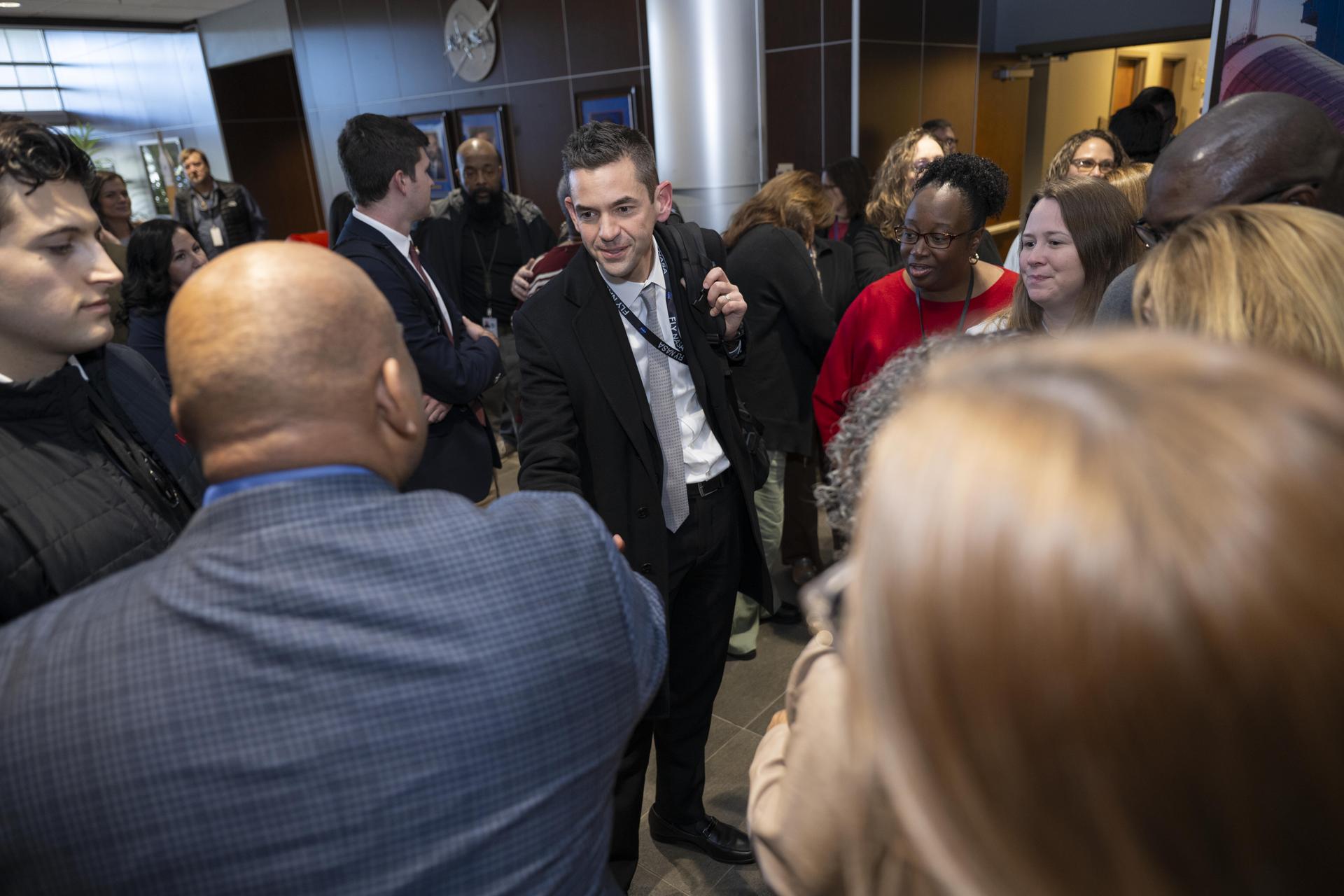
NASA Administrator Jared Isaacman, center, meets with NASA employees during his visit to NASA’s Stennis Space Center near Bay St. Louis, Mississippi, on Jan. 15, 2026. Isaacman, NASA’s 15th administrator, began visiting the agency’s centers after his appointment on Dec. 17, 2025.
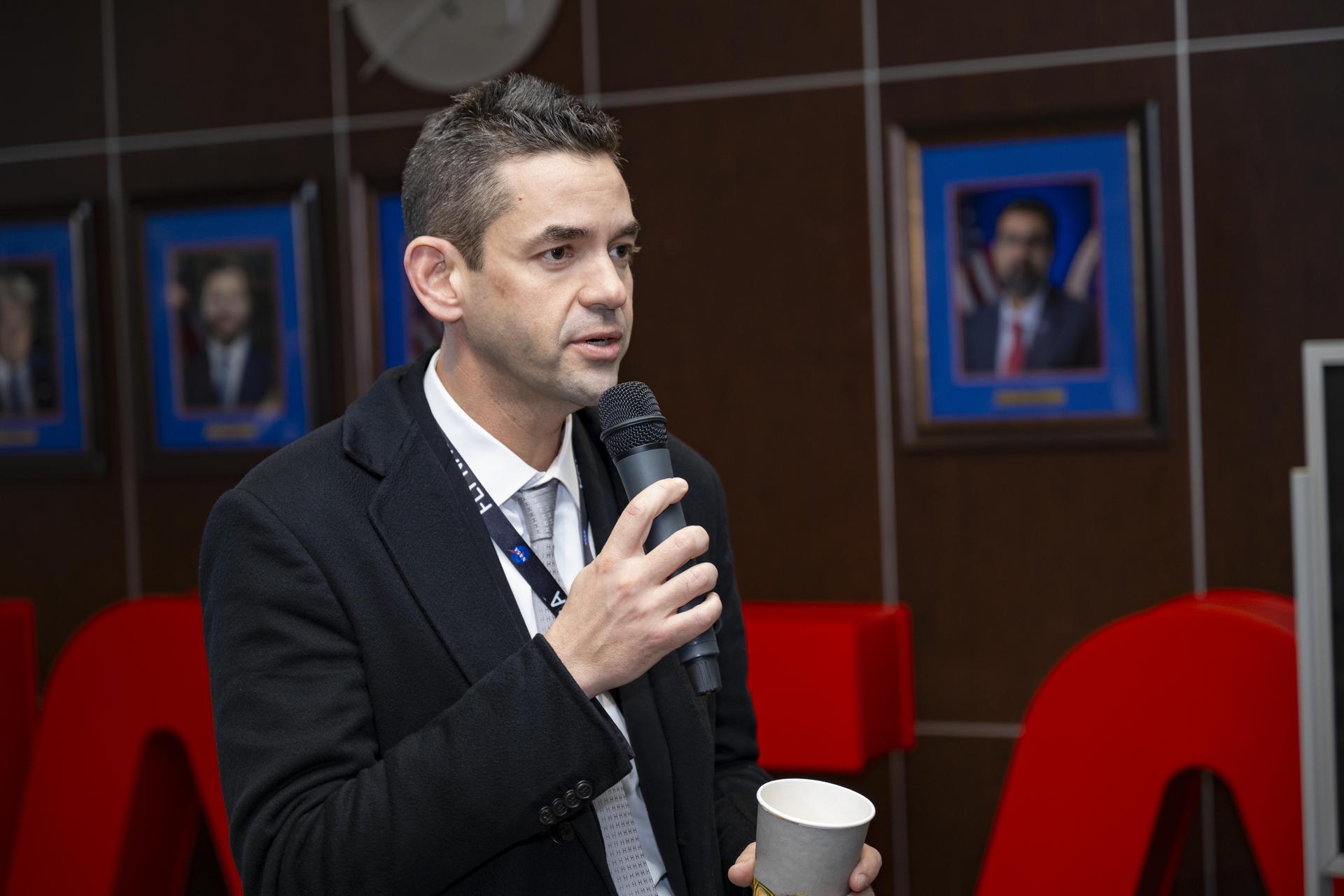
NASA Administrator Jared Isaacman speaks with NASA employees during his visit to NASA’s Stennis Space Center near Bay St. Louis, Mississippi, on Jan. 15, 2026. Isaacman, NASA’s 15th administrator, began visiting the agency’s centers after his appointment on Dec. 17, 2025.
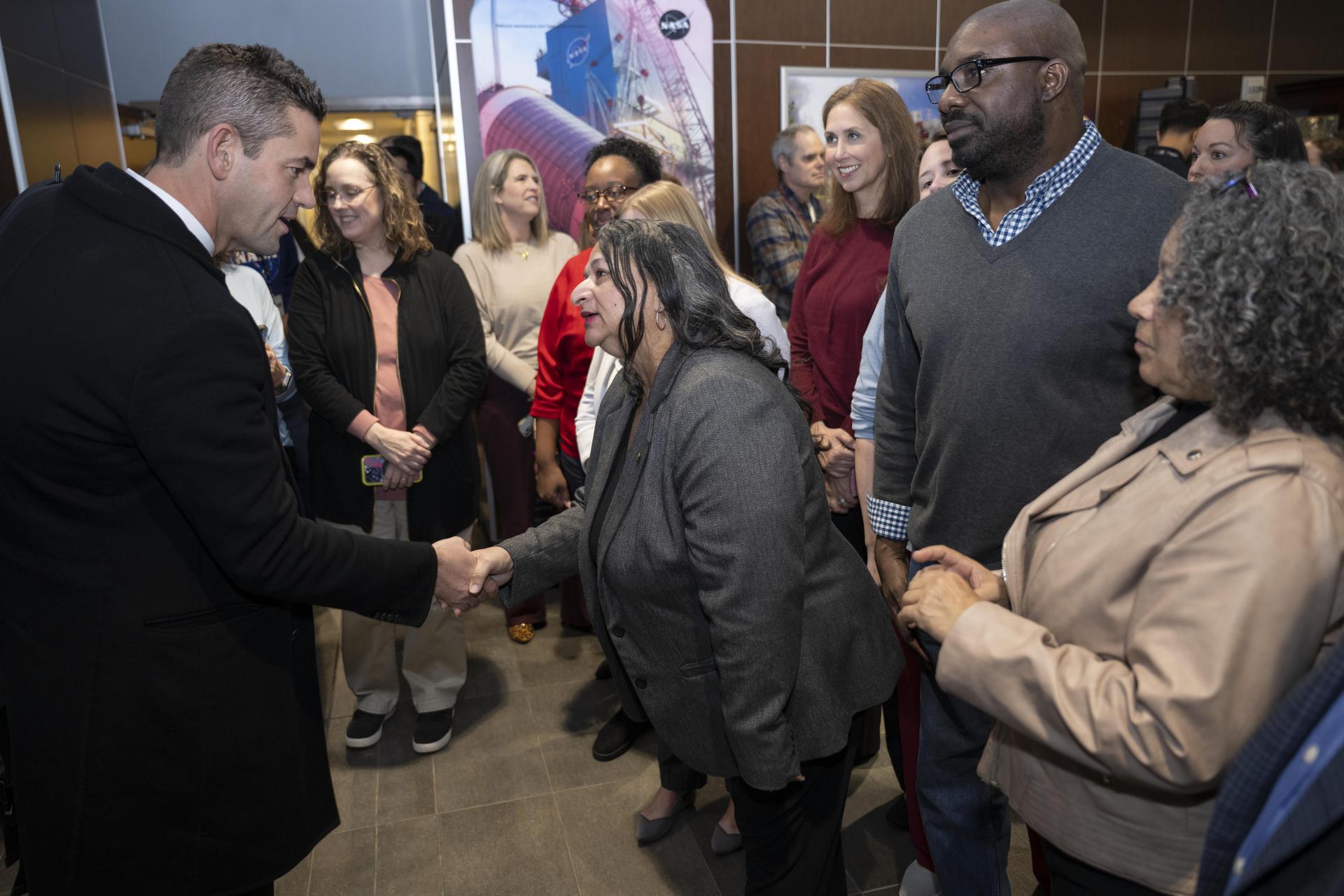
NASA Administrator Jared Isaacman, left, meets with NASA employees during his visit to NASA’s Stennis Space Center near Bay St. Louis, Mississippi, on Jan. 15, 2026. Isaacman, NASA’s 15th administrator, began visiting the agency’s centers after his appointment on Dec. 17, 2025.
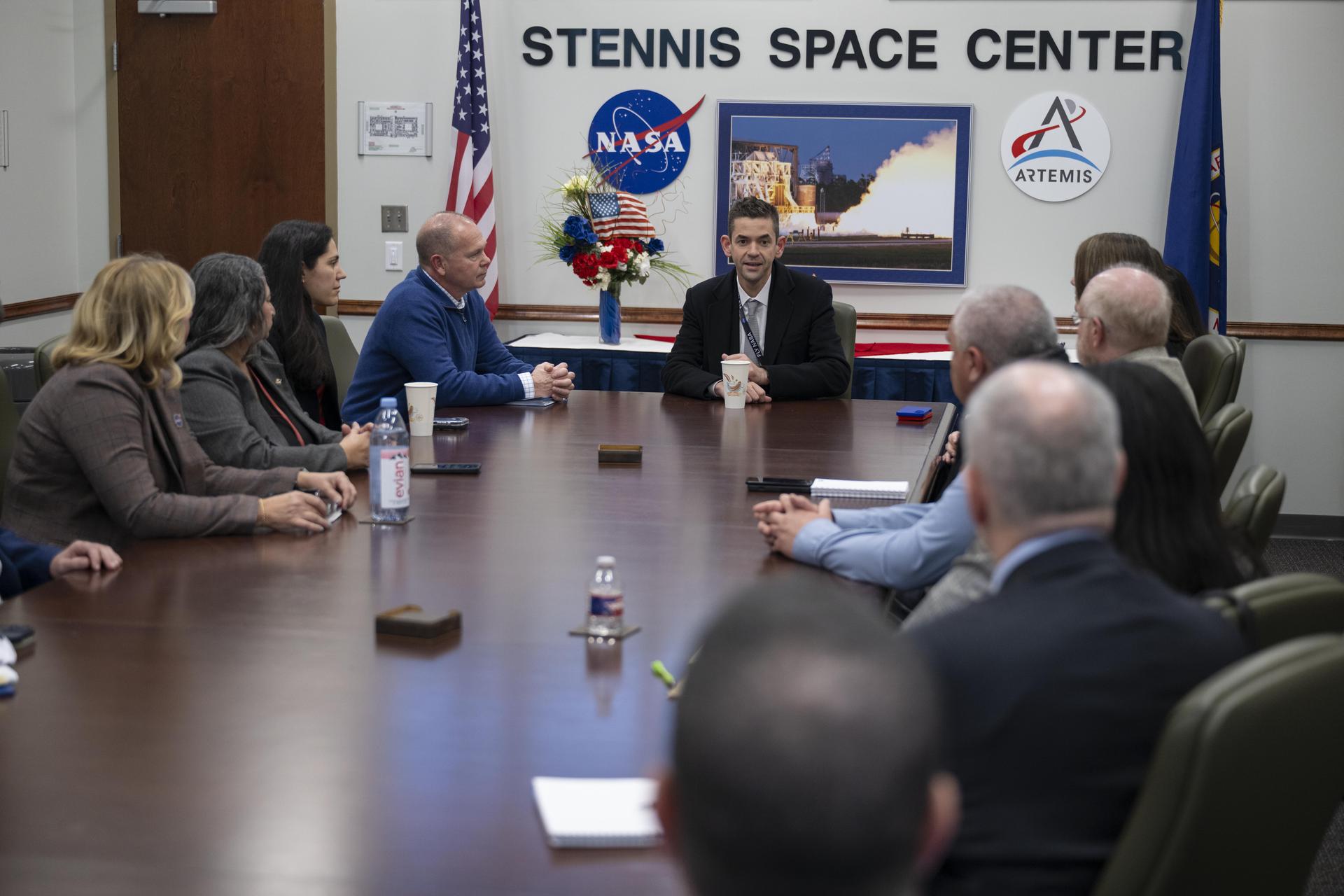
NASA Administrator Jared Isaacman, center, meets with the center’s senior leadership during his visit to NASA’s Stennis Space Center near Bay St. Louis, Mississippi, on Jan. 15, 2026. Isaacman, NASA’s 15th administrator, began visiting the agency’s centers after his appointment on Dec. 17, 2025.
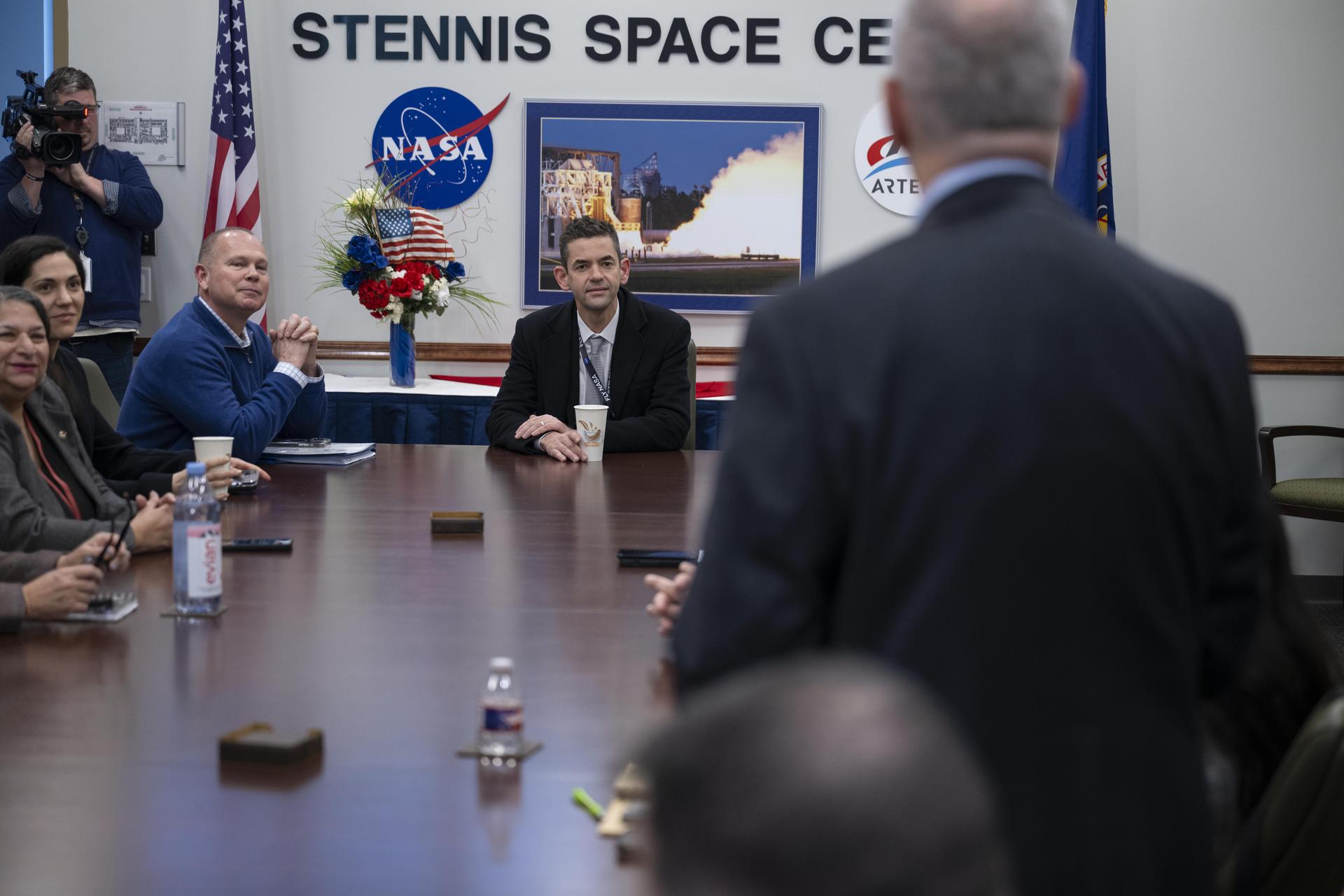
NASA Administrator Jared Isaacman, center, meets with the center’s senior leadership during his visit to NASA’s Stennis Space Center near Bay St. Louis, Mississippi, on Jan. 15, 2026. Isaacman, NASA’s 15th administrator, began visiting the agency’s centers after his appointment on Dec. 17, 2025.
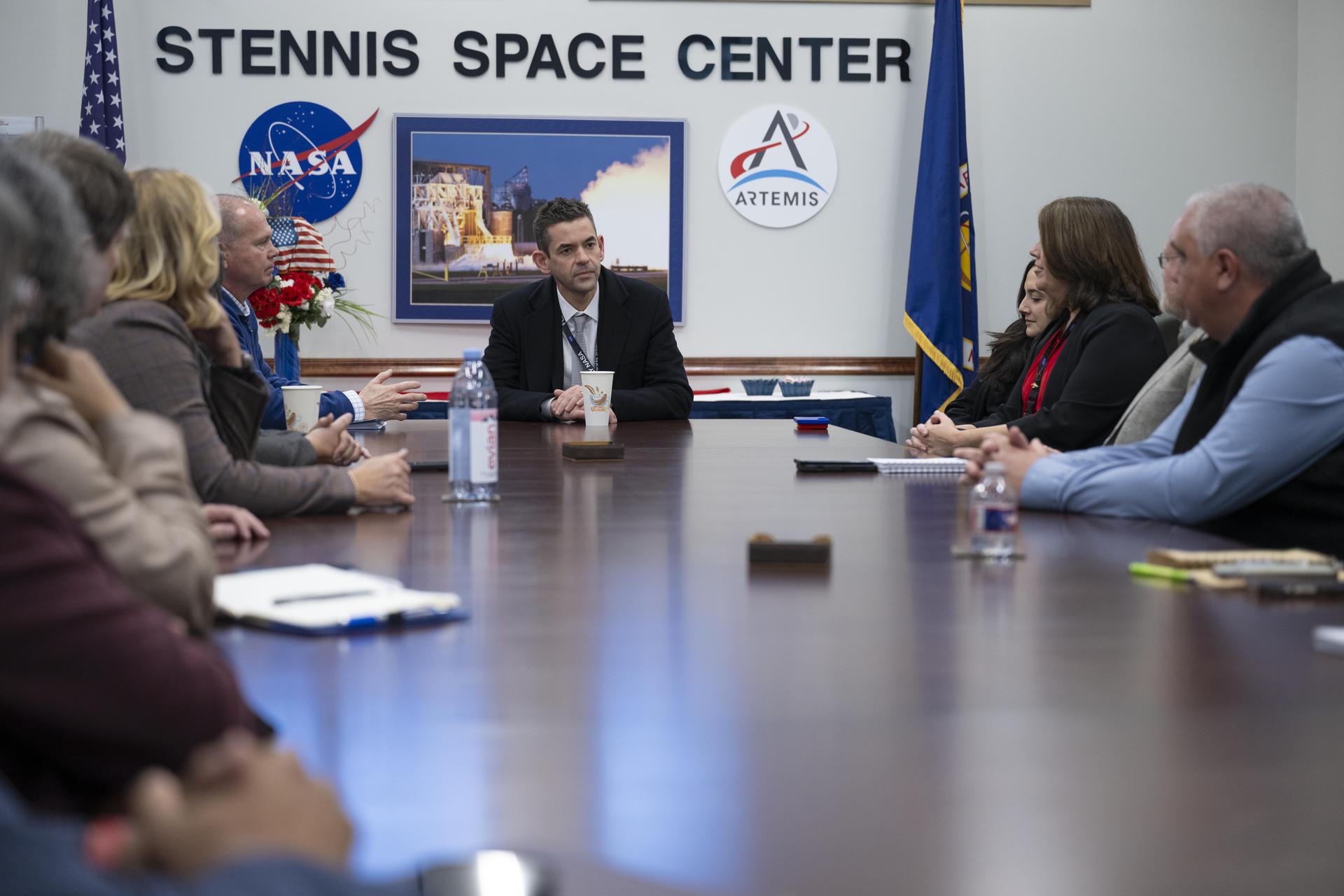
NASA Administrator Jared Isaacman, center, meets with the center’s senior leadership during his visit to NASA’s Stennis Space Center near Bay St. Louis, Mississippi, on Jan. 15, 2026. Isaacman, NASA’s 15th administrator, began visiting the agency’s centers after his appointment on Dec. 17, 2025.
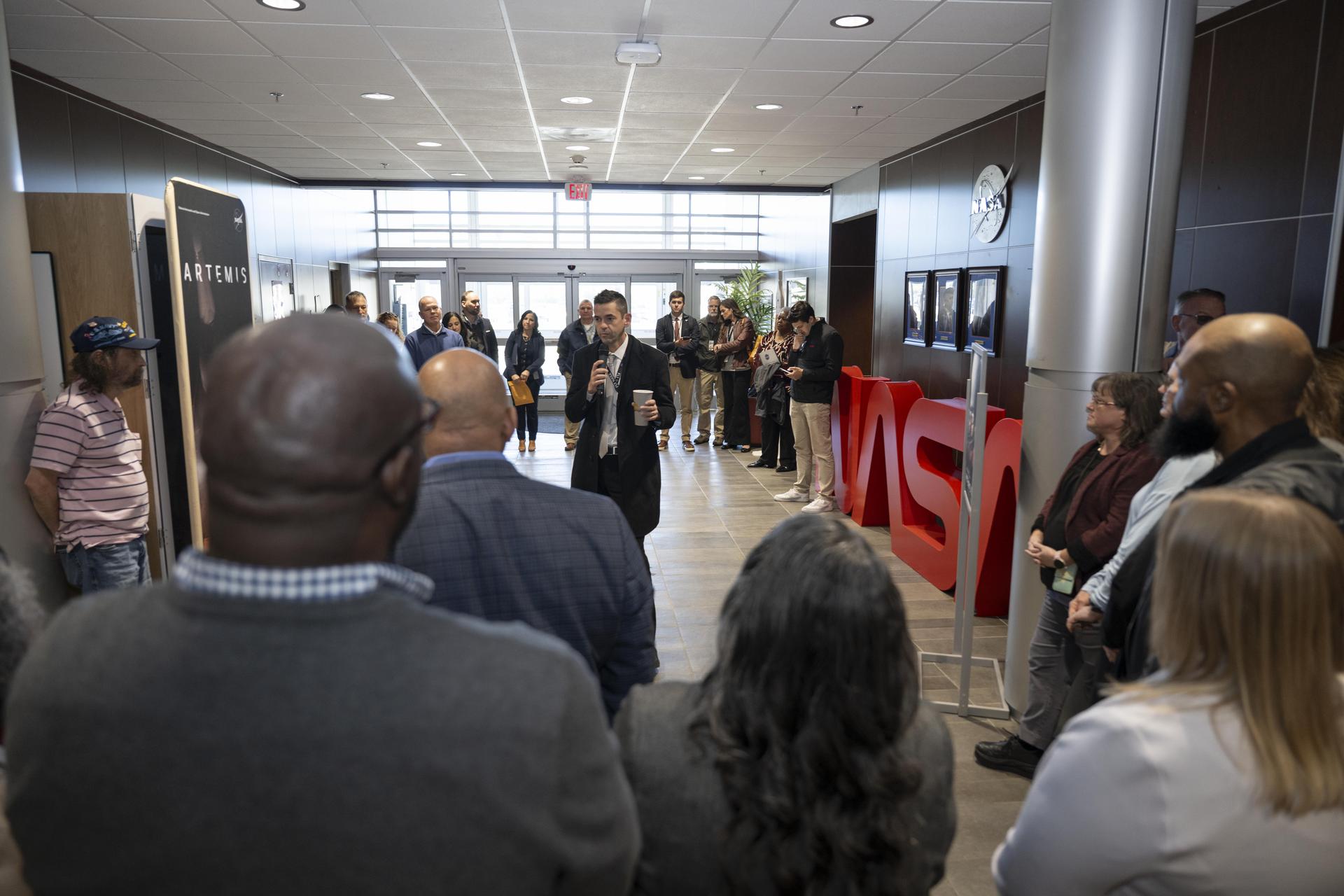
NASA Administrator Jared Isaacman, center, speaks with NASA employees during his visit to NASA’s Stennis Space Center near Bay St. Louis, Mississippi, on Jan. 15, 2026. Isaacman, NASA’s 15th administrator, began visiting the agency’s centers after his appointment on Dec. 17, 2025.
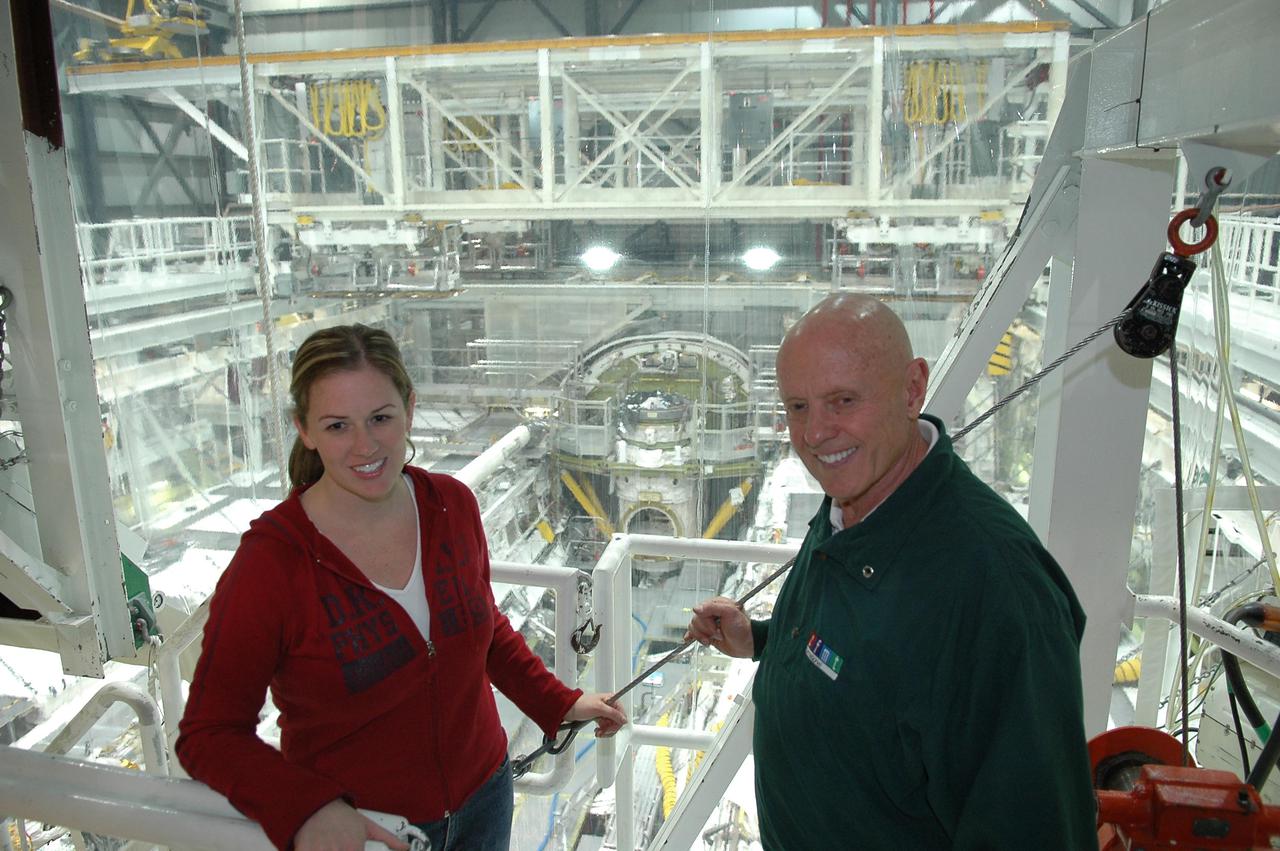
KENNEDY SPACE CENTER, FLA. - On a tour of Kennedy, author Stephen Covey, right, and his executive assistant Julie McAllister stop in the Orbiter Processing Facility to see Atlantis’ payload bay, below. Covey also spent time with KSC management discussing his newest book, The 8th Habit.
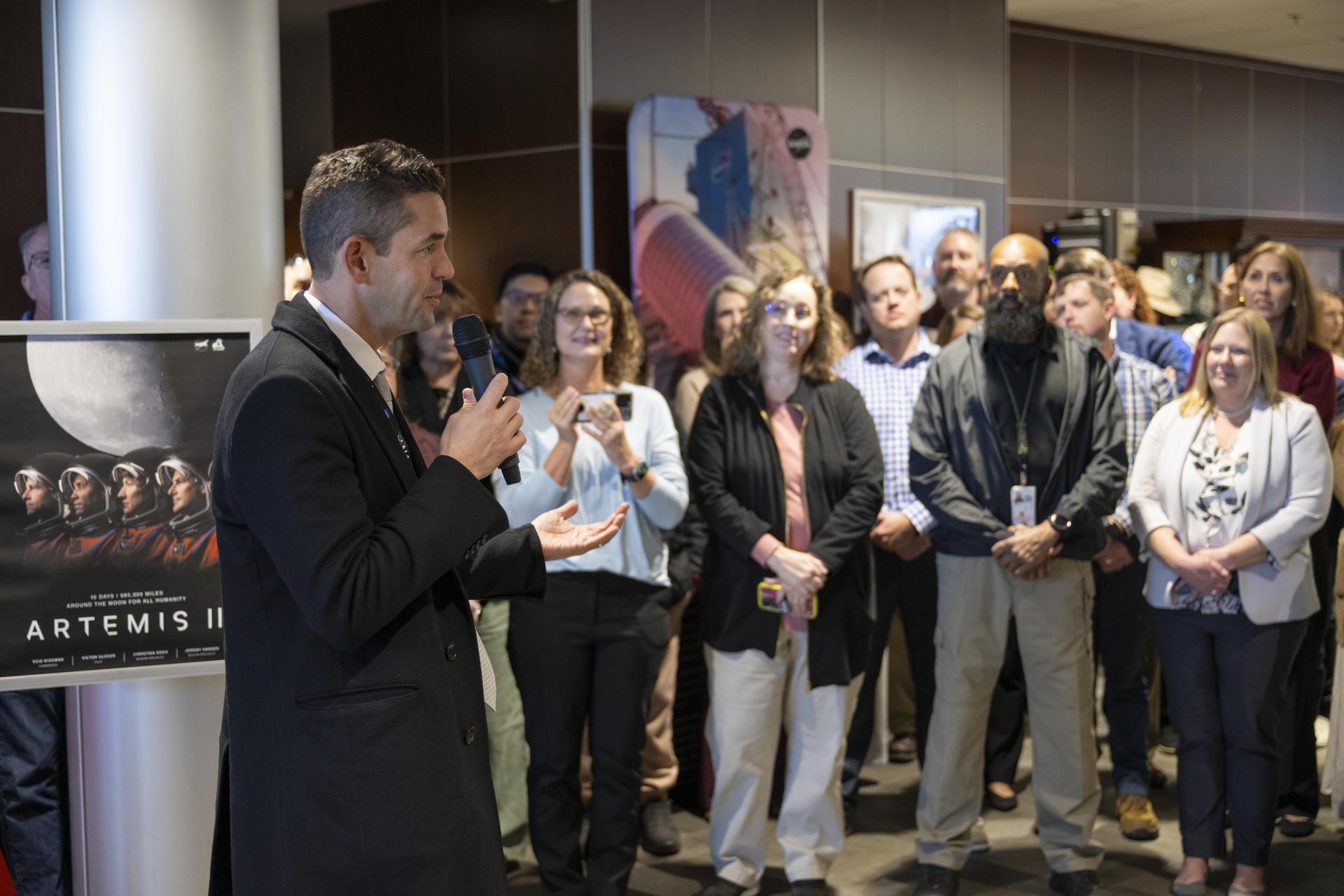
NASA Administrator Jared Isaacman, left, speaks with NASA employees during his visit to NASA’s Stennis Space Center near Bay St. Louis, Mississippi, on Jan. 15, 2026. Isaacman, NASA’s 15th administrator, began visiting the agency’s centers after his appointment on Dec. 17, 2025.
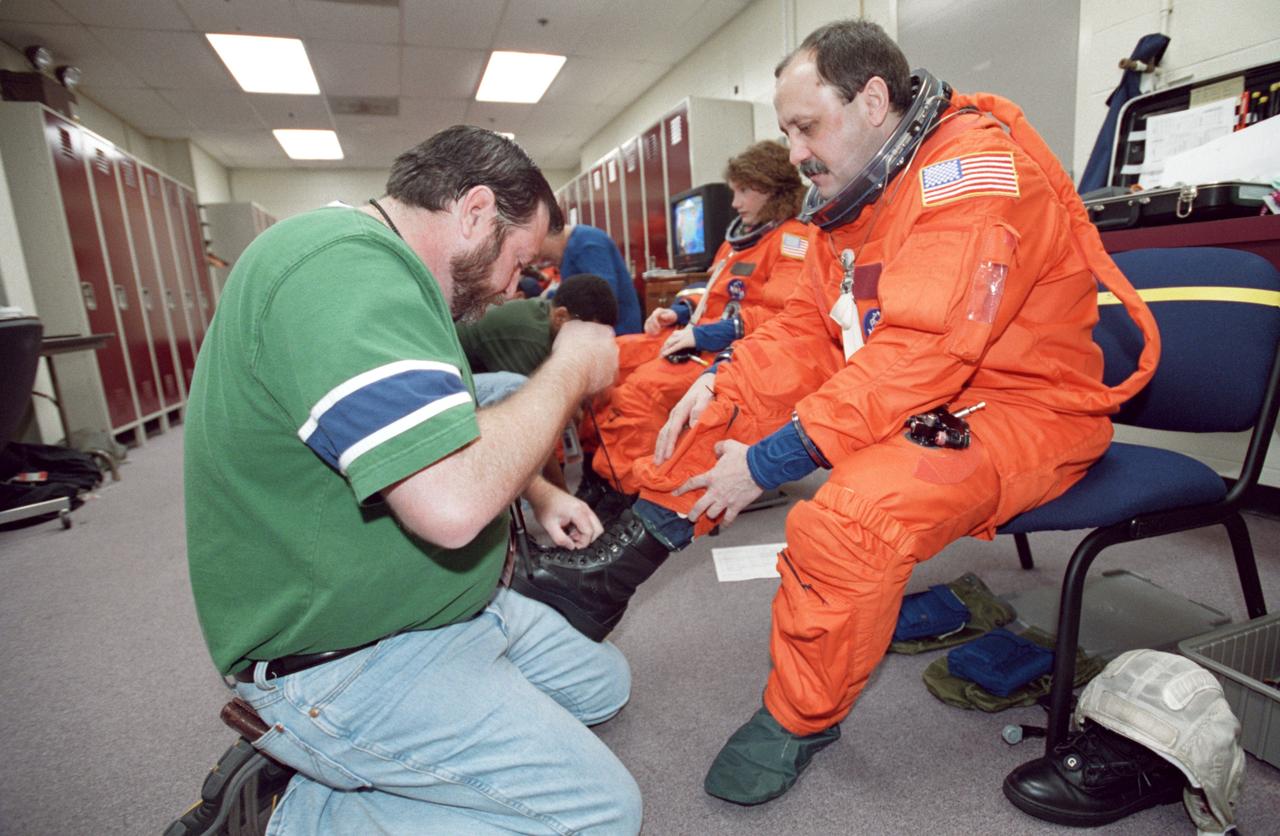
JSC2000-07446 (6 December 2000) --- Suit technician Steve Clendenin helps cosmonaut Yury V. Usachev with his boot straps during an STS-102 training session in the Systems Integration Facility at the Johnson Space Center (JSC). The Expedition Two commander, along with two astronauts on his crew and the four STS-102 crew members, later simulated procedures for a nominal countdown in the crew compartment trainer (CCT-2) in the high bay area of this facility.
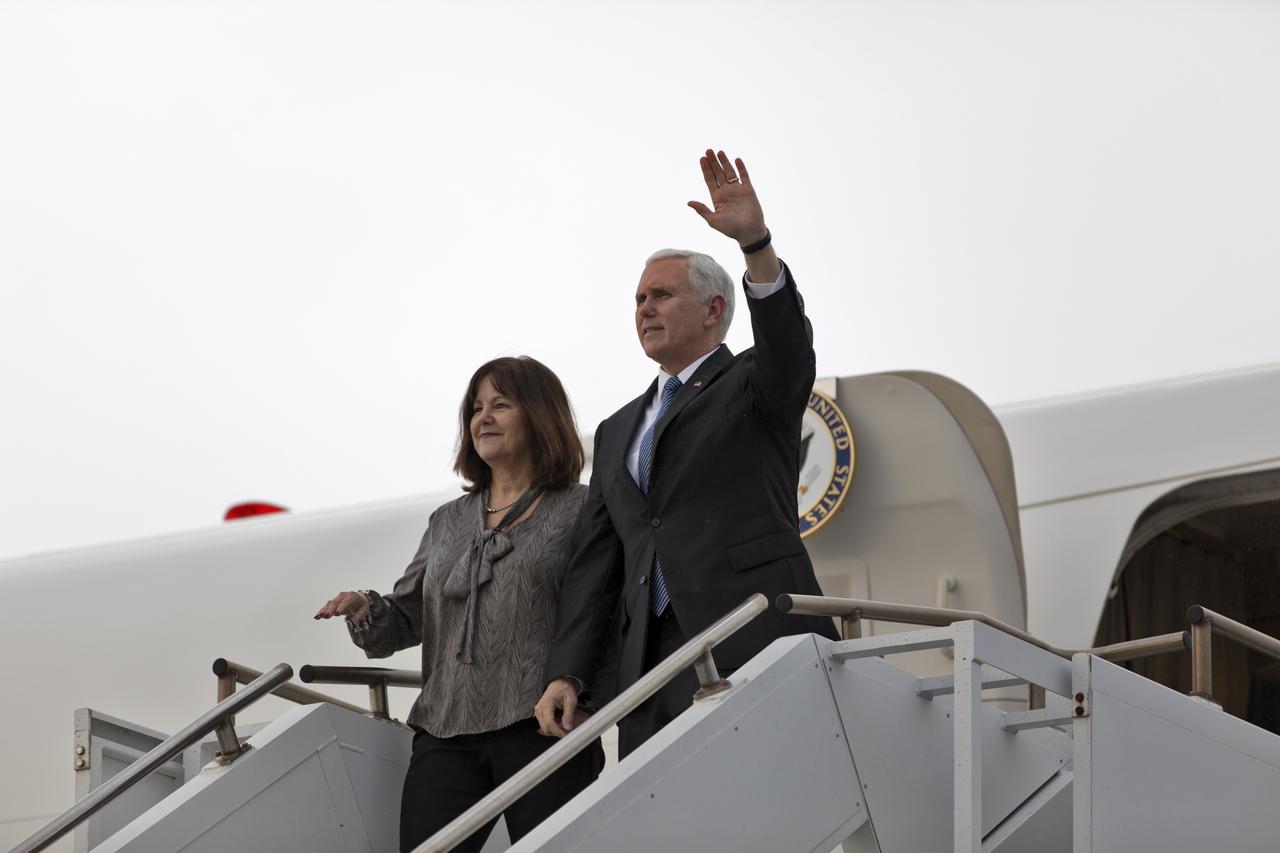
Vice President Mike Pence and his wife, Karen, step off Air Force Two on the Shuttle Landing Facility at NASA's Kennedy Space Center in Florida, on Feb. 20, 2018. During his visit, Pence will chair a meeting of the National Space Council in the high bay of the center's Space Station Processing Facility. The council's role is to advise the president regarding national space policy and strategy, and review the nation's long-range goals for space activities.
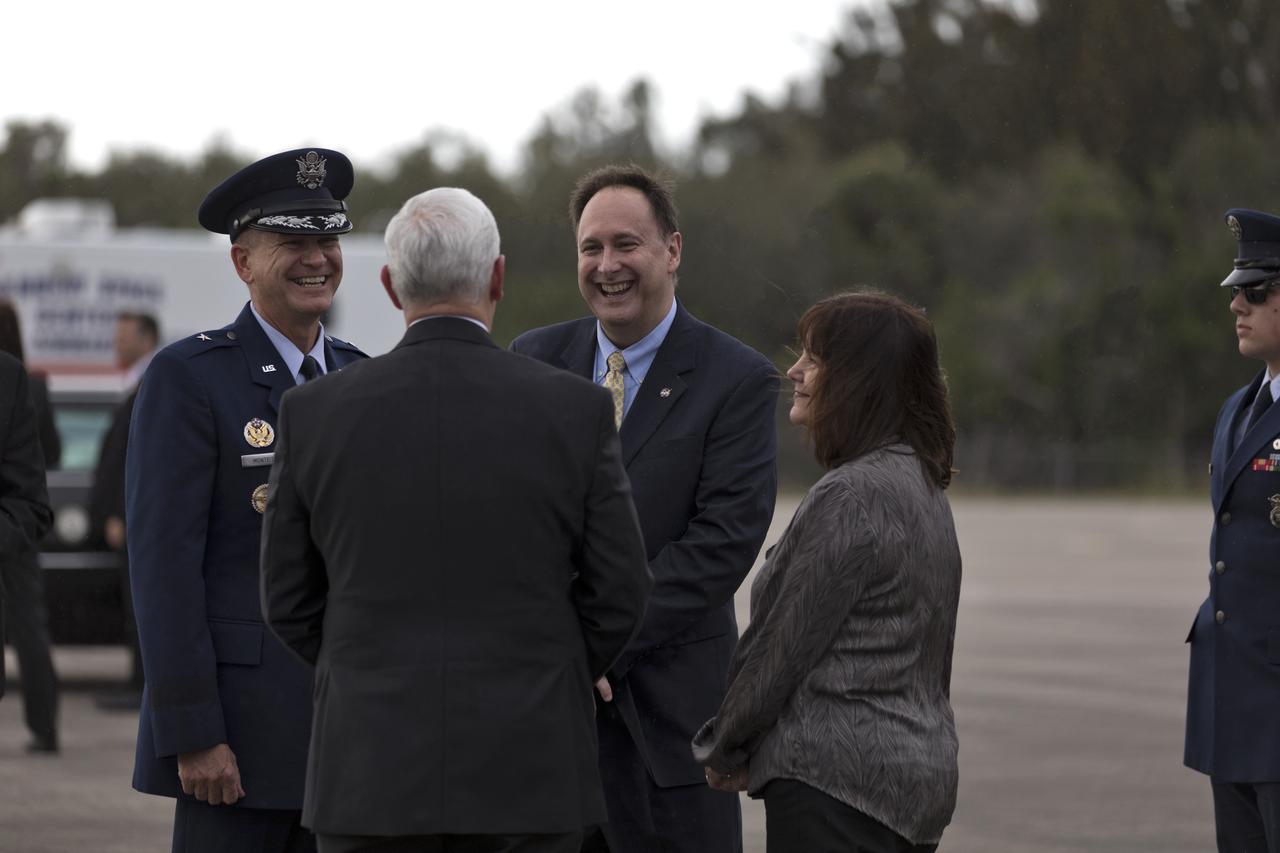
Acting NASA Administrator Robert Lightfoot, center, greets Vice President Mike Pence and his wife, Karen, at the Shuttle Landing Facility at the agency's Kennedy Space Center in Florida, on Feb. 20, 2018. During his visit, Pence will chair a meeting of the National Space Council in the high bay of the center's Space Station Processing Facility. The council's role is to advise the president regarding national space policy and strategy, and review the nation's long-range goals for space activities.
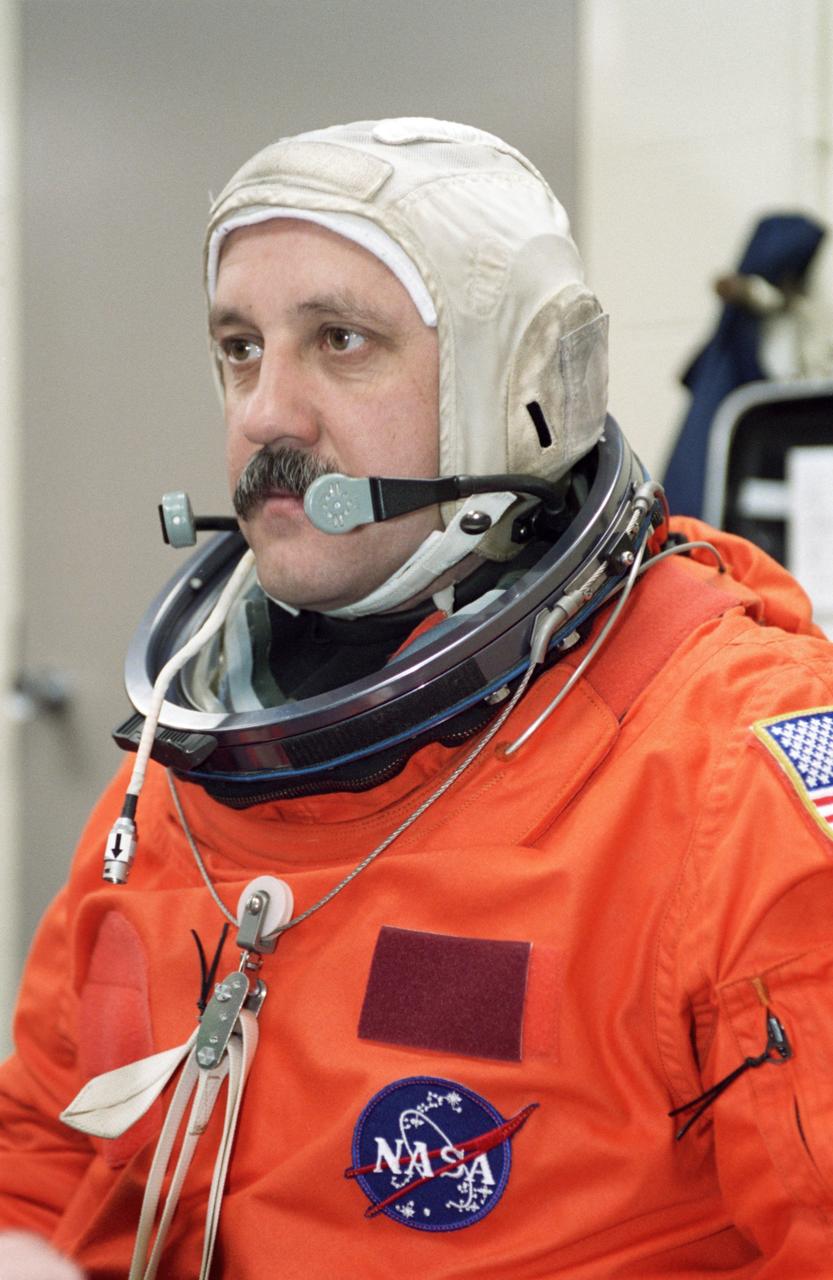
JSC2000-07447 (6 December 2000) --- Cosmonaut Yury V. Usachev, Expedition Two mission commander, checks out his communications gear during a joint Expedition Two/STS-102 training session in the Systems Integration Facility at the Johnson Space Center (JSC). The Russian Aviation and Space Agency representative, along with two astronauts on his crew and the four STS-102 crew members, later simulated procedures for a nominal countdown in the crew compartment trainer (CCT-2) in the high bay area of this facility.
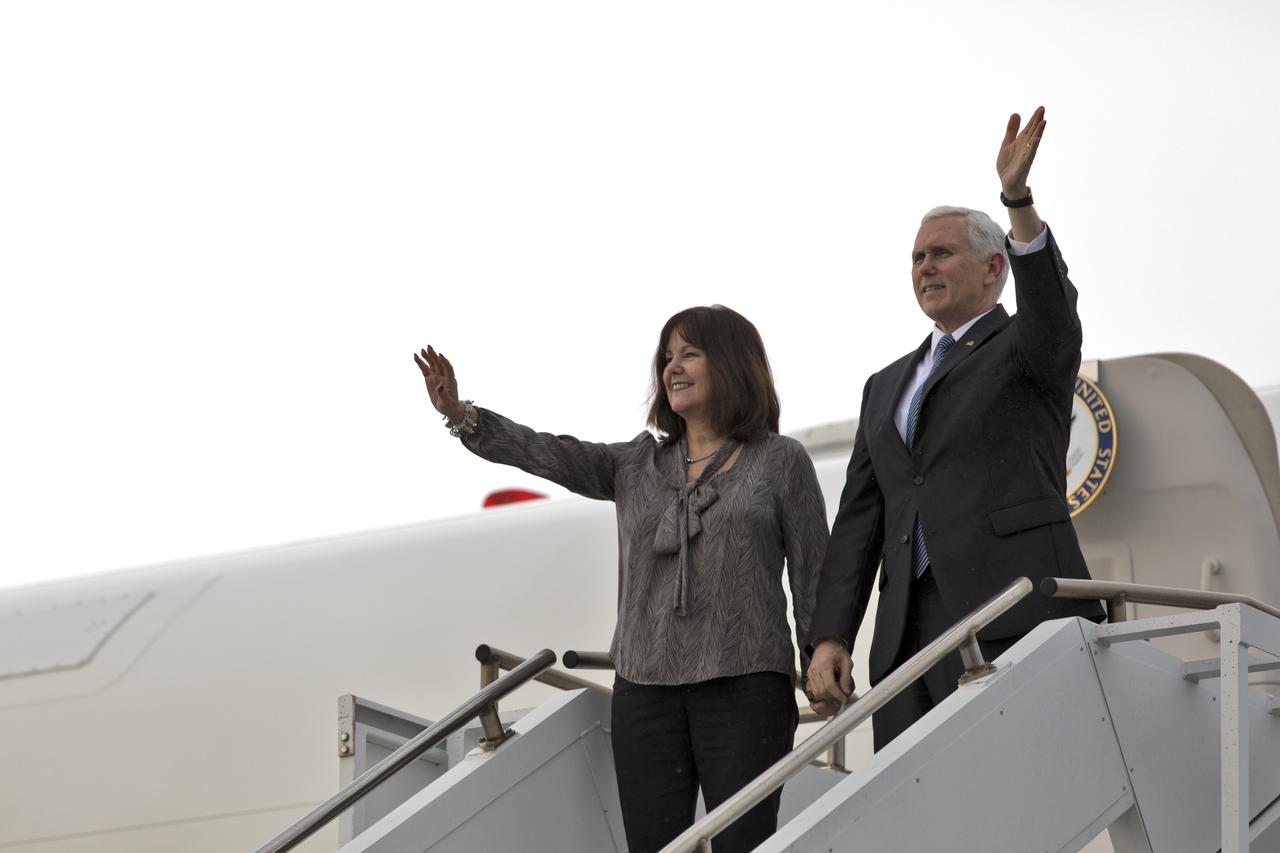
Vice President Mike Pence and his wife, Karen, step off Air Force Two on the Shuttle Landing Facility at NASA's Kennedy Space Center in Florida, on Feb. 20, 2018. During his visit, Pence will chair a meeting of the National Space Council in the high bay of the center's Space Station Processing Facility. The council's role is to advise the president regarding national space policy and strategy, and review the nation's long-range goals for space activities.
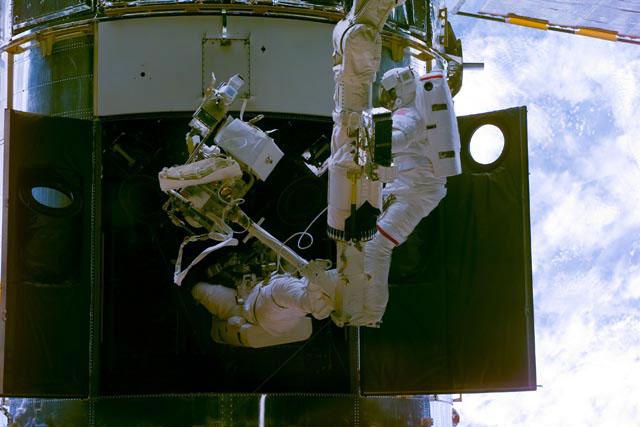
STS-103 mission specialist John M. Grunsfeld (attached to a workstation on the RMS arm) and payload commander Steven L. Smith (free-floating) perform a changeout of the Rate Sensor Units (RSU) in one of the bays of -V3 plane of the Hubble Space Telescope (HST). This repair was performed during the first of three extravehicular activities (EVAs) of the mission. Grunsfeld is distinguished by having no marks on his EMU and Smith is distinguished by the red strip on the pants of his EMU.
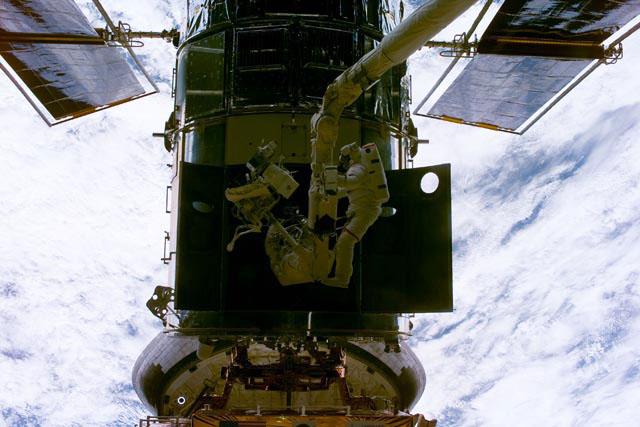
STS-103 mission specialist John M. Grunsfeld (attached to a workstation on the RMS arm) and payload commander Steven L. Smith (free-floating) perform a changeout of the Rate Sensor Units (RSU) in one of the bays of -V3 plane of the Hubble Space Telescope (HST). This repair was performed during the first of three extravehicular activities (EVAs) of the mission. Grunsfeld is distinguished by having no marks on his EMU and Smith is distinguished by the red strip on the pants of his EMU.
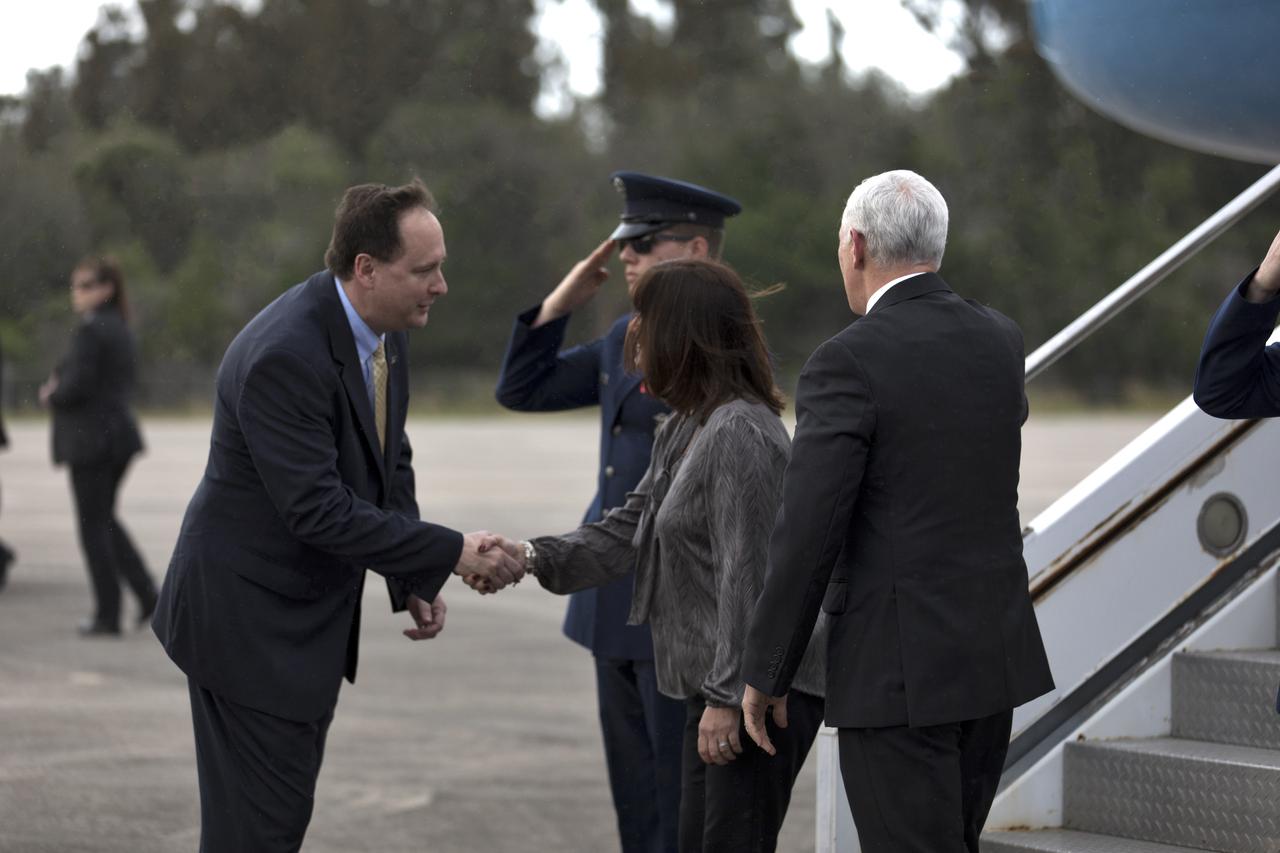
Acting NASA Administrator Robert Lightfoot, left, greets Vice President Mike Pence and his wife, Karen, after their arrival aboard Air Force Two at the Shuttle Landing Facility at NASA's Kennedy Space Center in Florida, on Feb. 20, 2018. During his visit, Pence will chair a meeting of the National Space Council in the high bay of the center's Space Station Processing Facility. The council's role is to advise the president regarding national space policy and strategy, and review the nation's long-range goals for space activities.
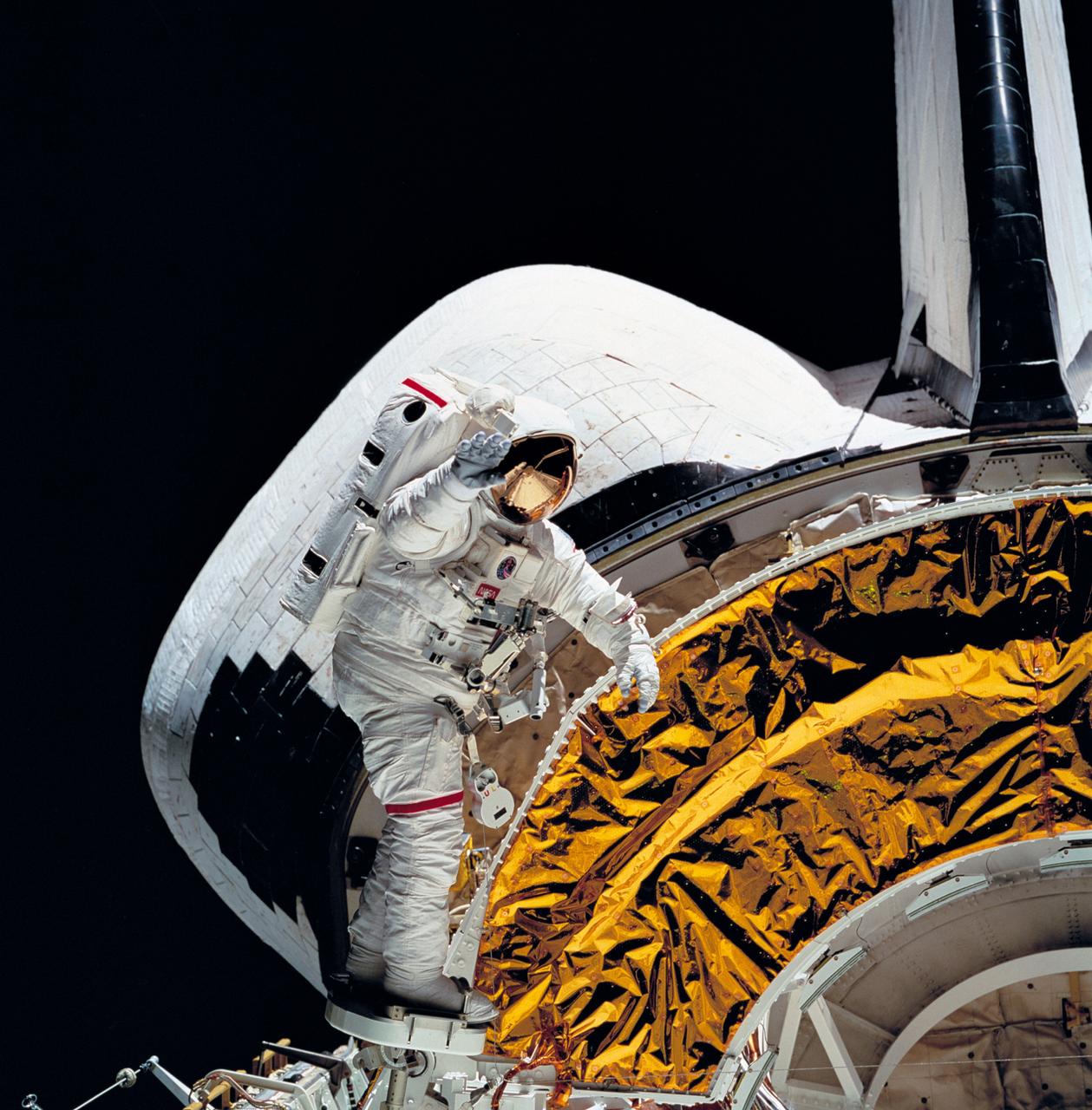
STS051-98-021 (16 Sept. 1993) --- In the Space Shuttle Discovery's aft cargo bay, astronaut Carl E. Walz gets his turn on the Portable Foot Restraint (PFR). Astronauts Walz, waving to his crew mates inside Discovery's cabin, and James H. Newman each put in some time evaluating the PFR, one of the pieces of gear to be used on the Hubble Space Telescope (HST) STS-61 servicing mission (scheduled later this year) and other Shuttle missions.
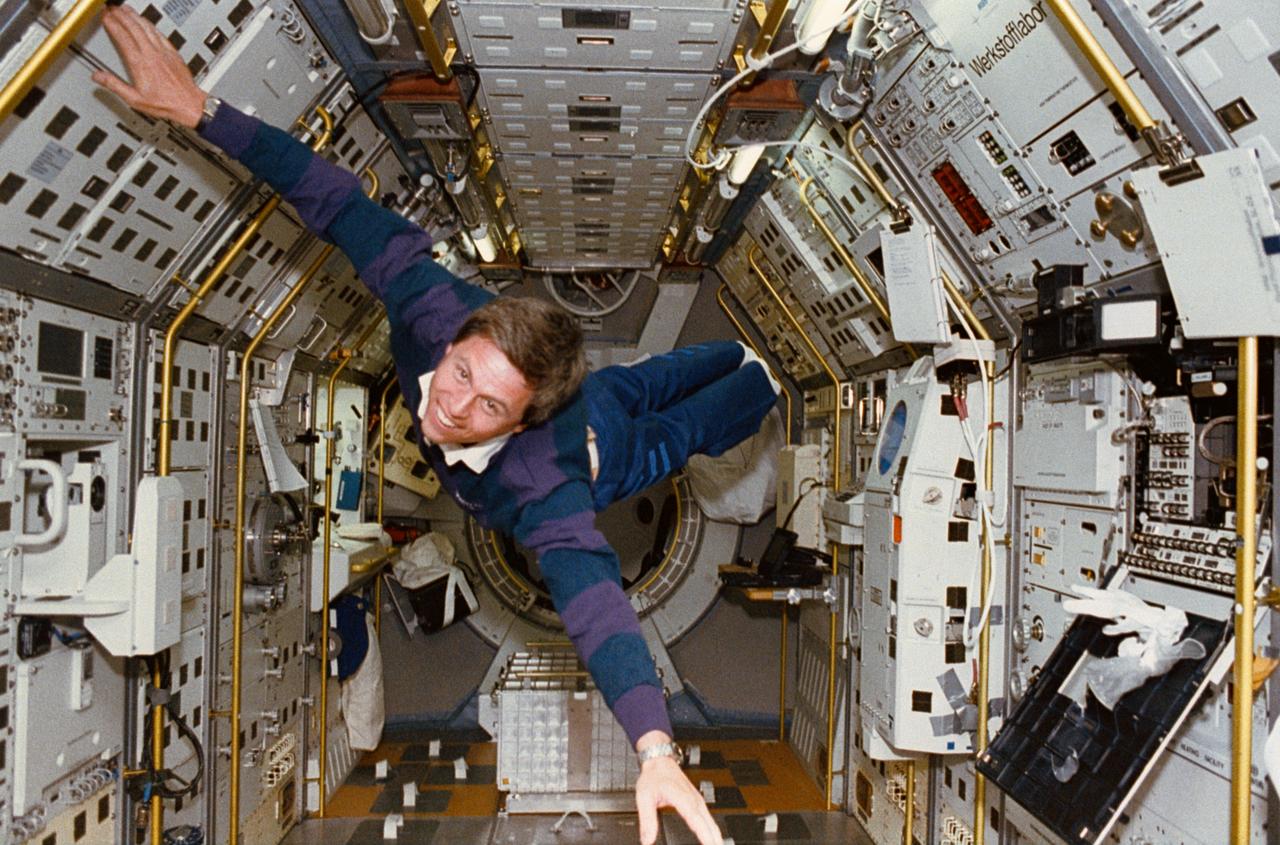
STS055-219-024 (26 April-6 May 1993) --- Ulrich Walter, STS-55 payload specialist representing the German Aerospace Research Establishment (DLR), demonstrates the microgravity aboard the Spacelab D-2 science module in Columbia's cargo bay. The module served as his space laboratory and that of his six crewmates for l0 days.
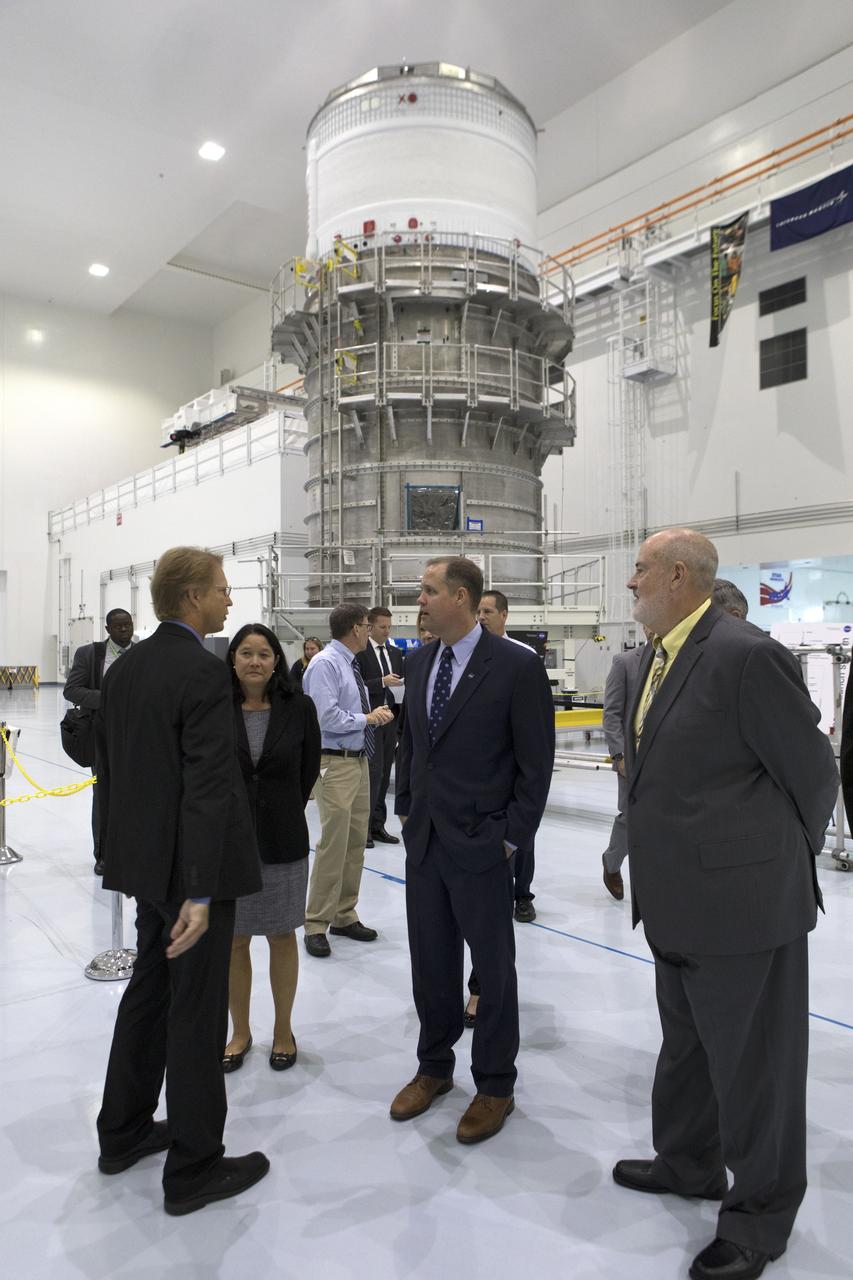
NASA Administrator Jim Bridenstine, center, tours the high bay inside the Space Station Processing Facility (SSPF) at NASA's Kennedy Space Center in Florida, on Aug. 7, 2018. To his left is Josie Burnett, director of Exploration Research and Technology. To his right is Ronnie Lawson, deputy director of Exploration Research and Technology. Behind them is the Interim Cryogenic Propulsion Stage, which will connect between the Orion spacecraft and the upper part of NASA's Space Launch System. It is being stored in the SSPF. Bridenstine also received updates on research and technology accomplishments during his visit to the SSPF.
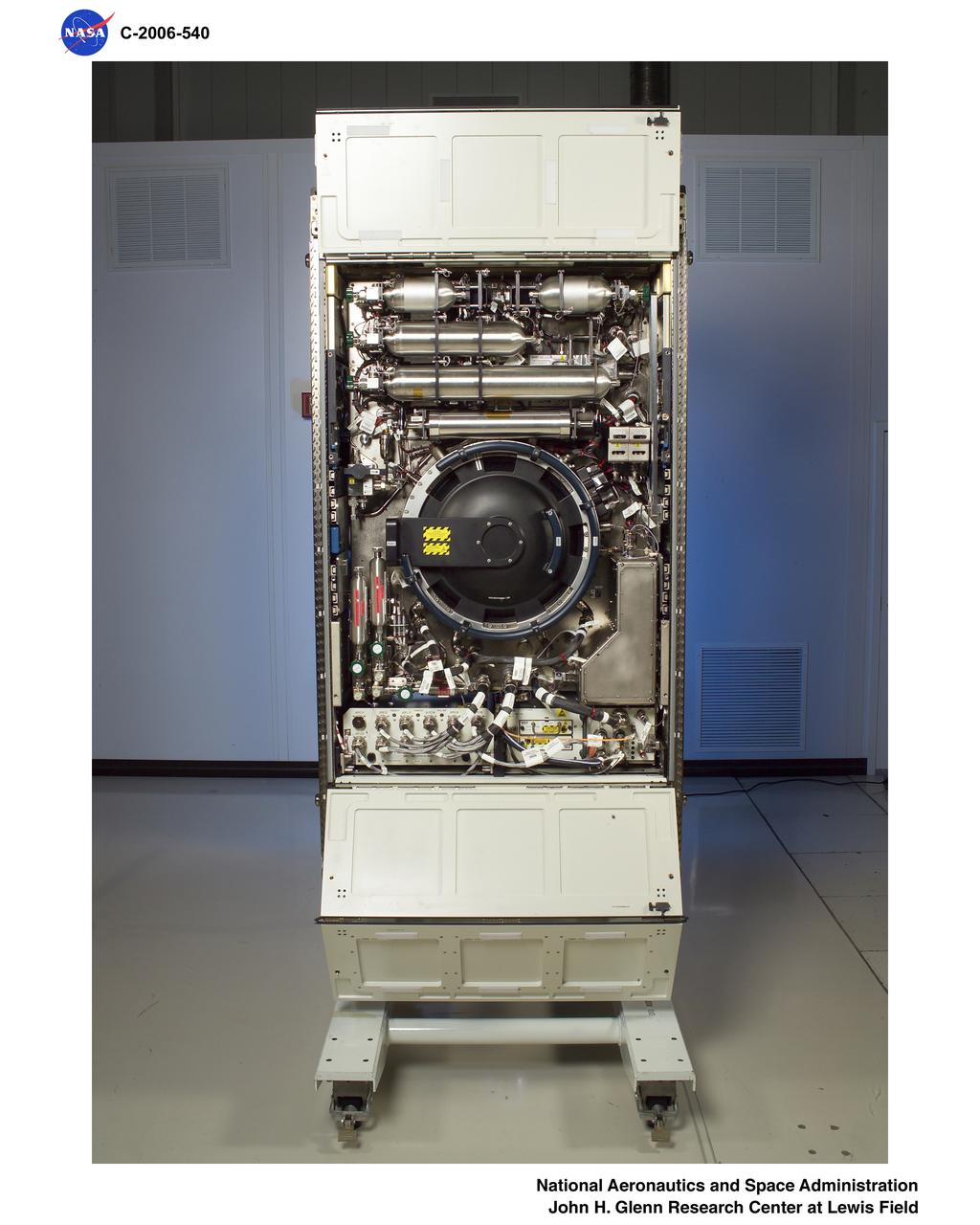
Combustion Integrated Rack (CIR)
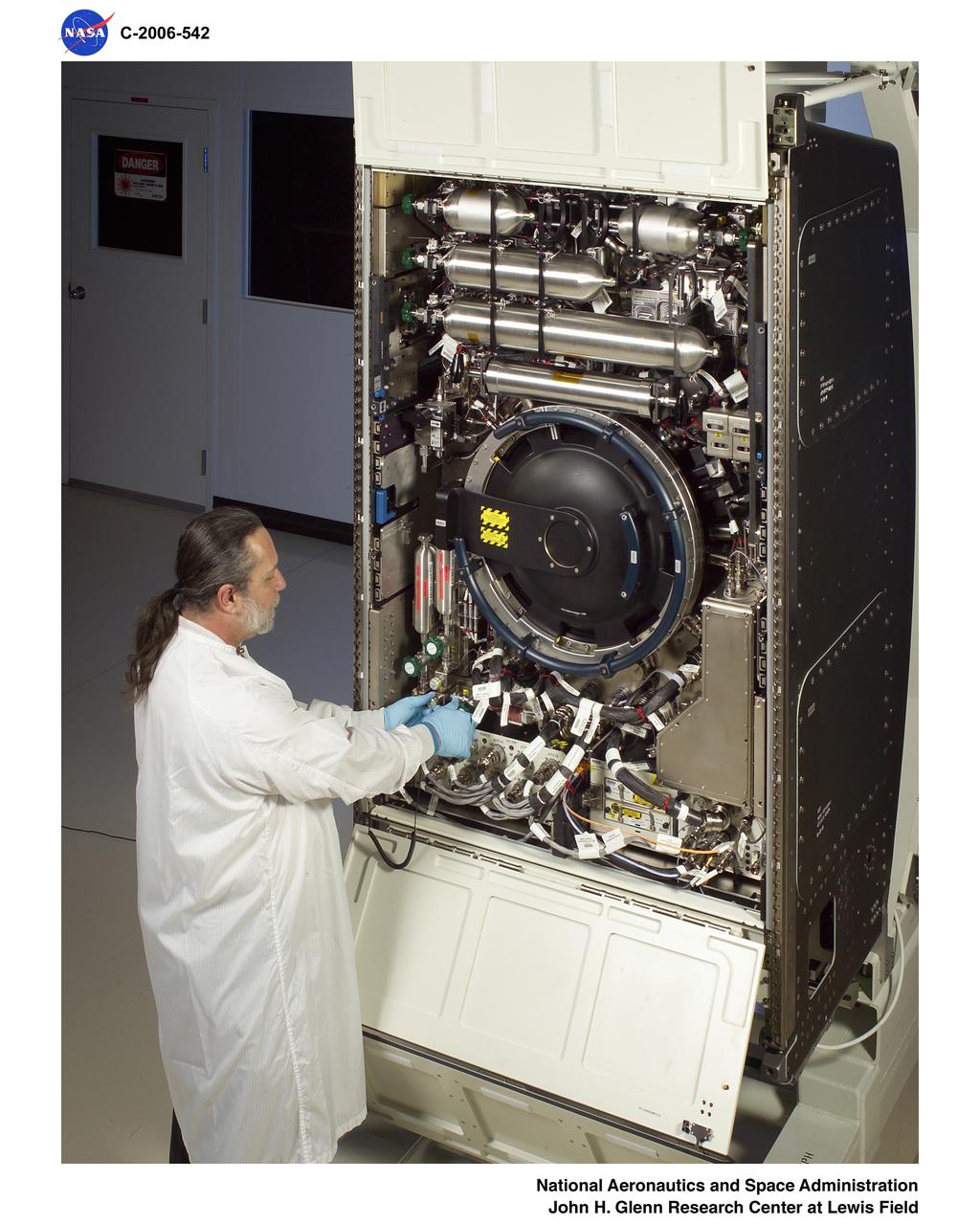
Combustion Integrated Rack (CIR)
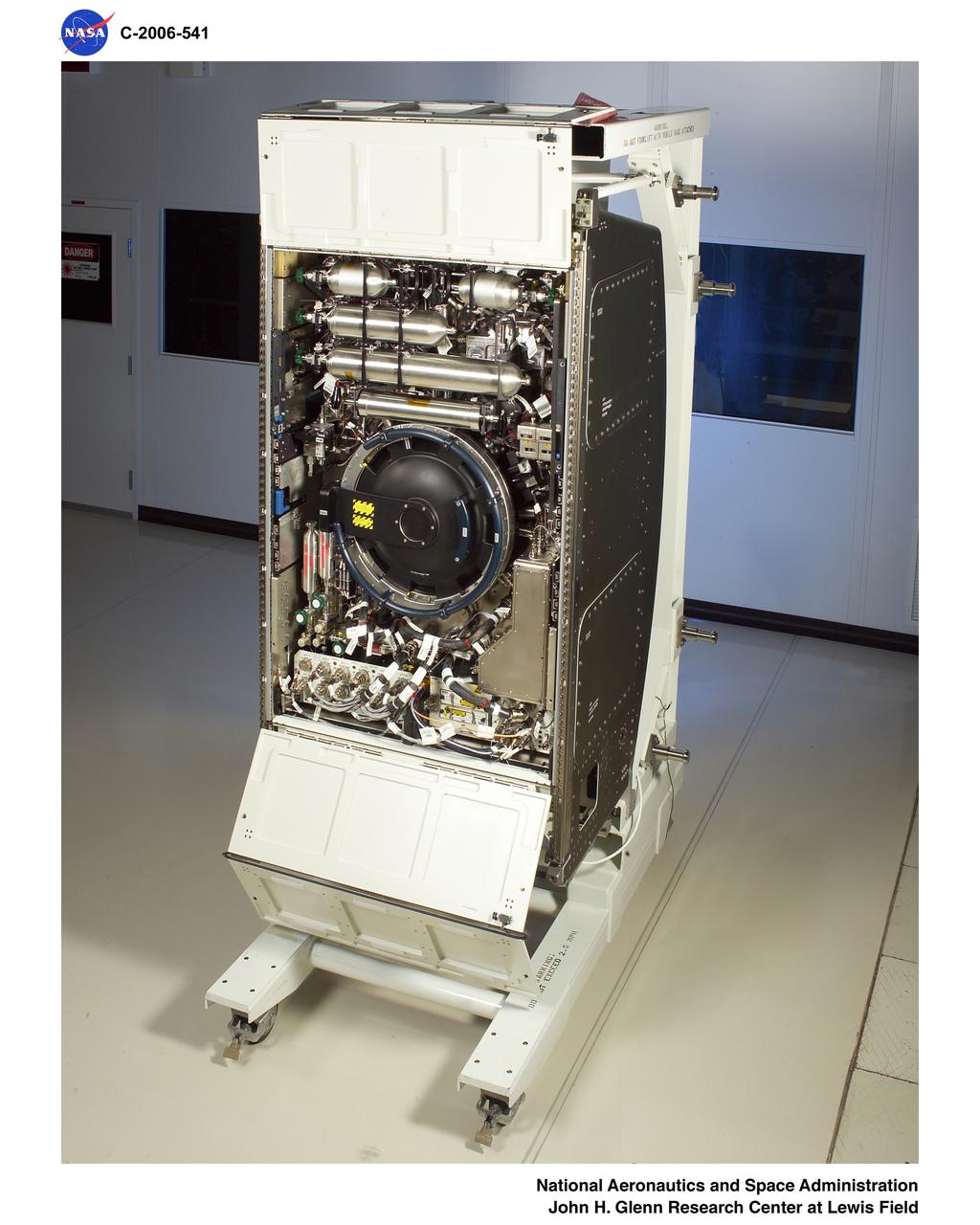
Combustion Integrated Rack (CIR)
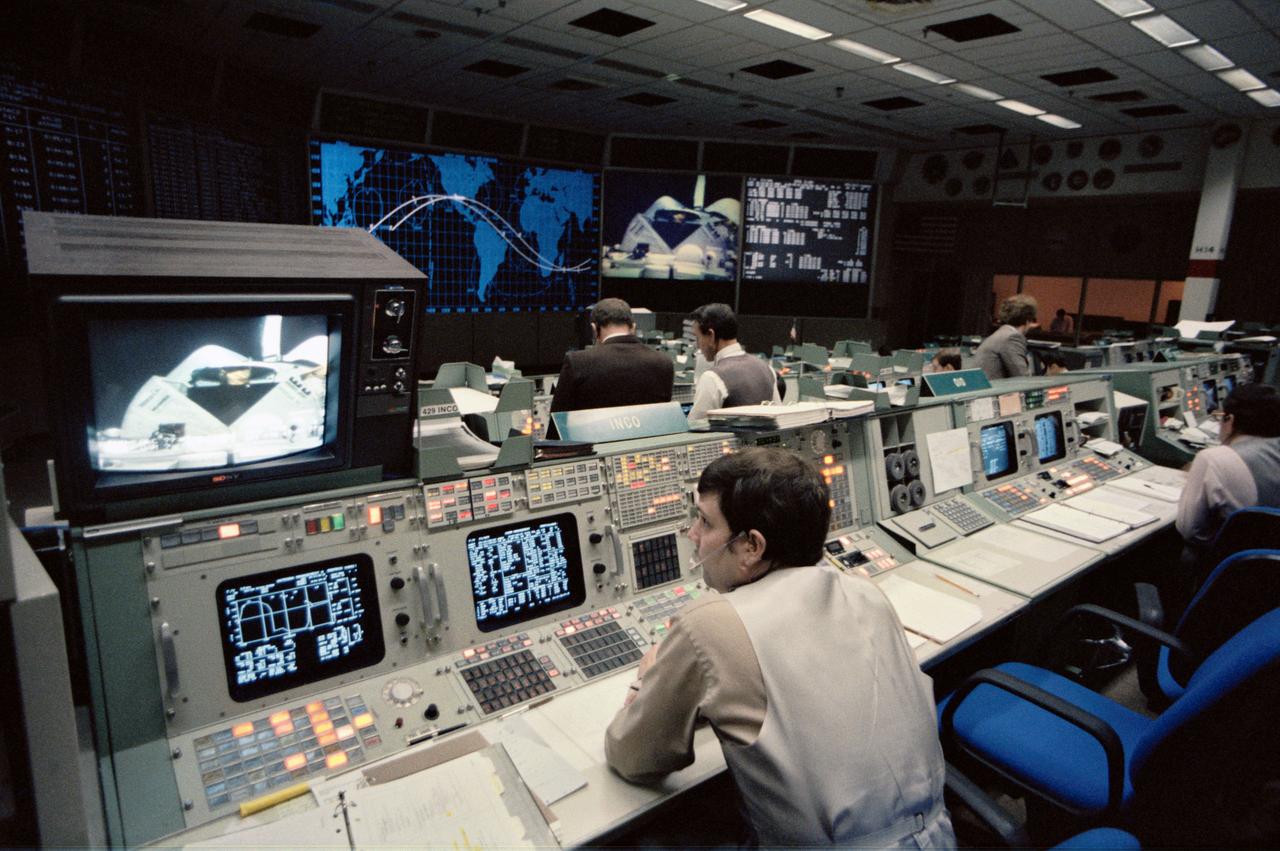
S84-26332 (3 Feb 1984) --- Robert E. Castle, integrated communications officer (INCO), plays an important role in the first television transmission from the Earth-orbiting Space Shuttle Challenger. Castle, at a console in the Johnson Space Center?s mission operations control room (MOCR) in the mission control center, is responsible for ground controlled television from the orbiter on his shift. Here, the Westar VI satellite is seen in the cargo bay just after opening of the payload bay doors.
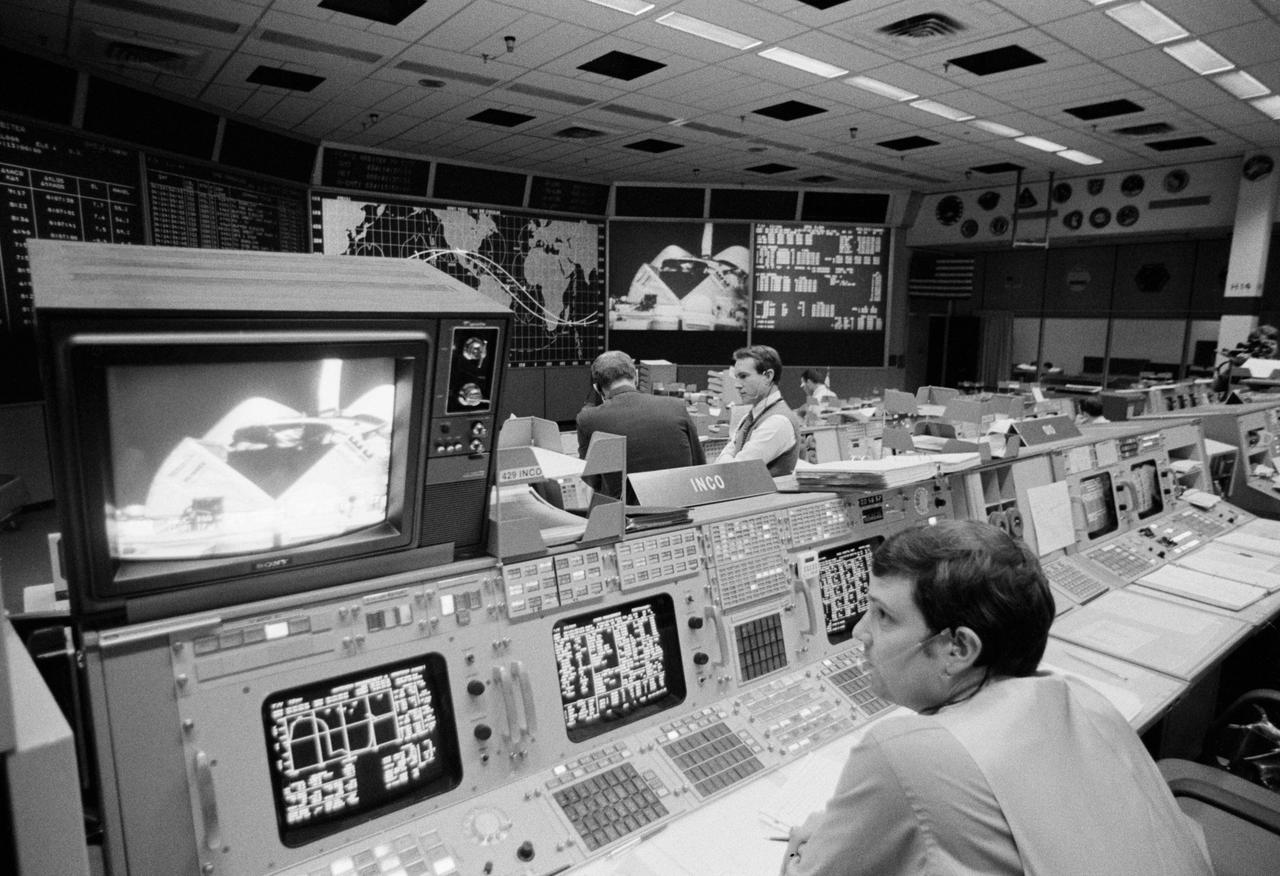
S84-26297 (3 Feb 1984) --- Robert E. Castle, Integrated Communications Officer (INCO), plays an important role in the first television transmission from the Earth-orbiting Space Shuttle Challenger. Castle, at a console in the Johnson Space Center's (JSC) Mission Operations Control Room (MOCR) in the Mission Control Center (MCC), is responsible for ground controlled television from the Orbiter on his shift. Here, the Westar VI satellite is seen in the cargo bay just after opening of the payload bay doors.

KENNEDY SPACE CENTER, Fla. -- The Undersecretary of the Air Force Dr. Lawrence Delaney and his wife, Angie (left), meet Center Director Roy Bridges while they tour the Orbiter Processing Facility bay 3. The orbiter Columbia is currently in bay 3 being prepared for mission STS-109. Targeted for launch in January 2002, STS-109 is a Hubble servicing mission.
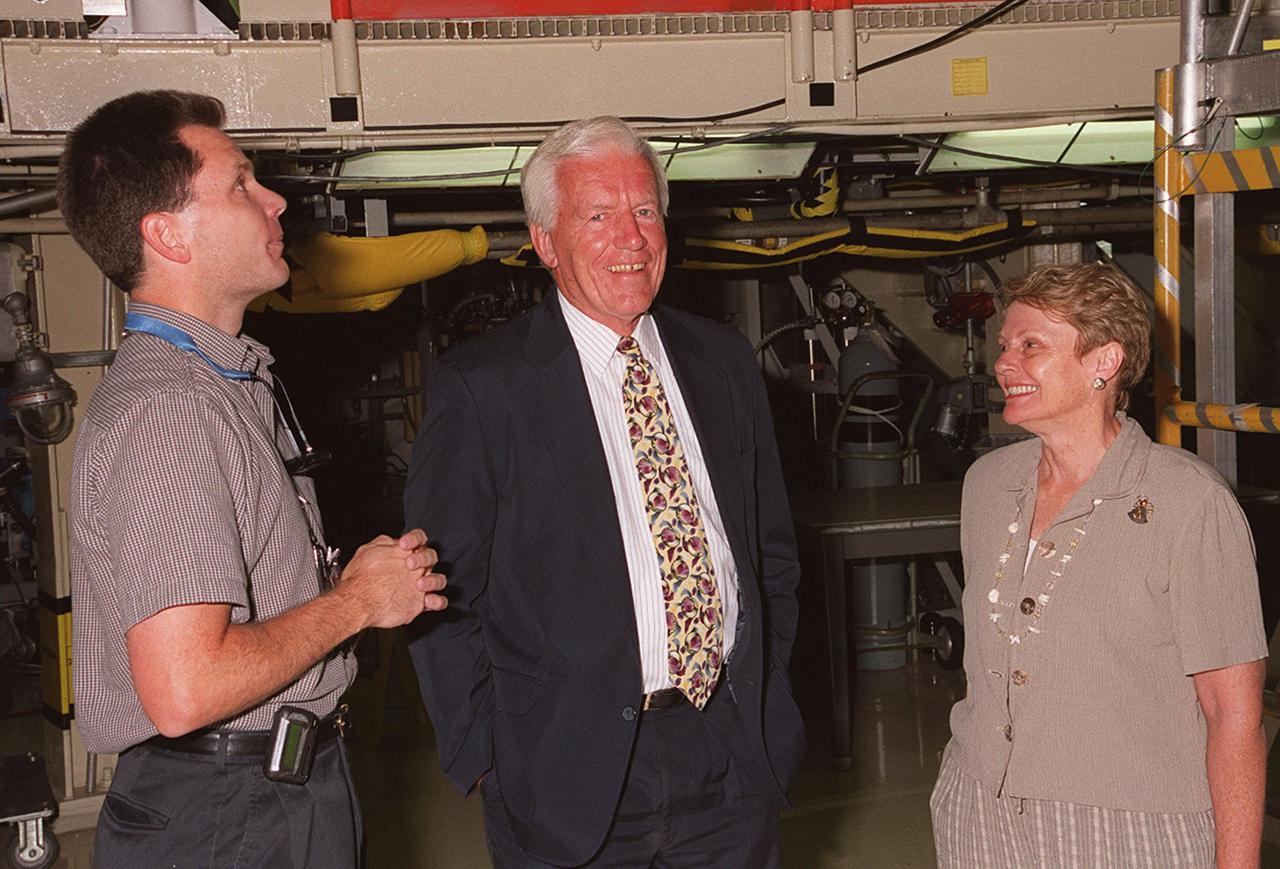
KENNEDY SPACE CENTER, FLA. -- The Undersecretary of the Air Force Dr. Lawrence Delaney (center) and his wife, Angie (right), are escorted around the Orbiter Processing Facility bay 3 by Scott Thurston (left). The orbiter Columbia is currently in bay 3 being prepared for mission STS-109. Targeted for launch in January 2002, STS-109 is a Hubble servicing mission.
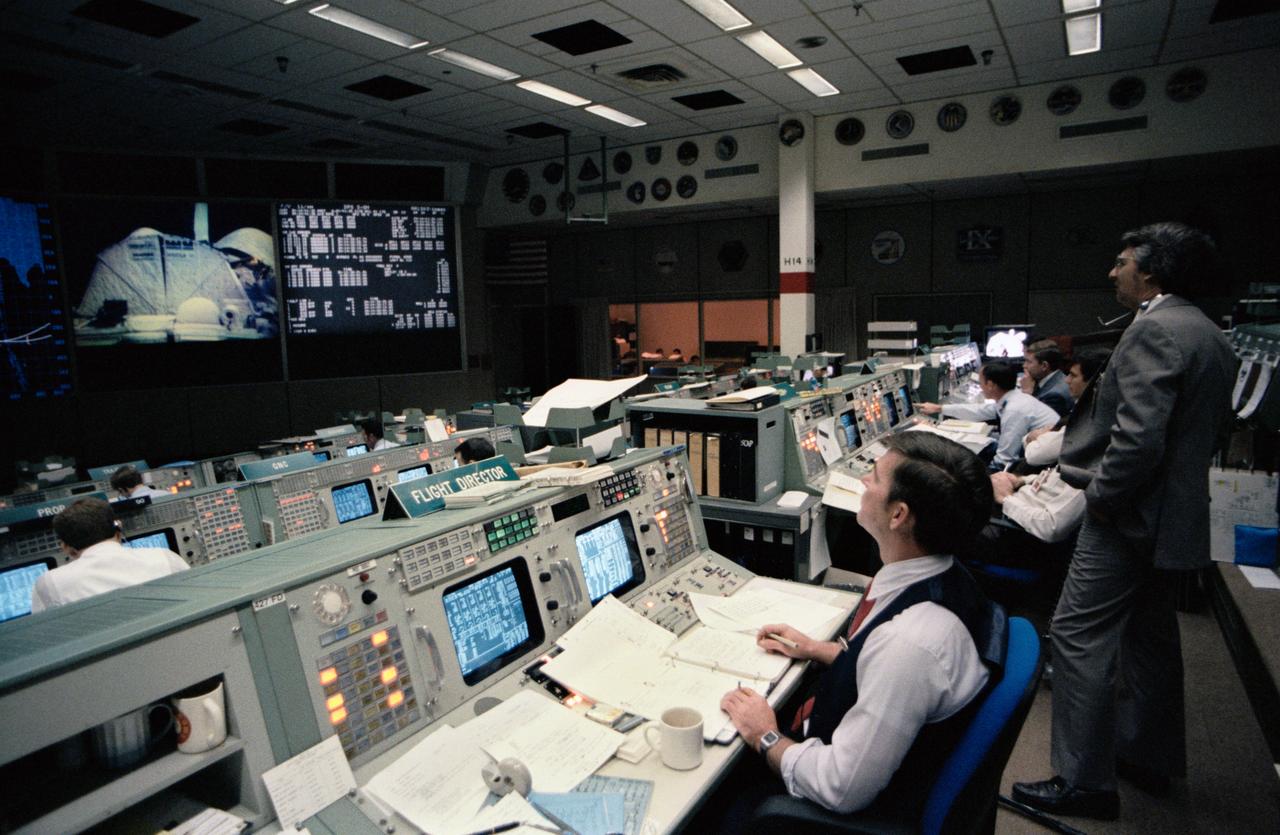
S84-26333 (6 Feb 1984) --- Robert E. Castle, integrated communications officer (INCO), is seated at the INCO console in the mission operations control room (MOCR) of Johnson Space Center's (JSC) mission control center (MCC). He is responsible for ground controlled television from the orbiter on his shift. On the screen at the front of the room the Westar VI satellite is seen in the cargo bay just after opening the payload bay doors.
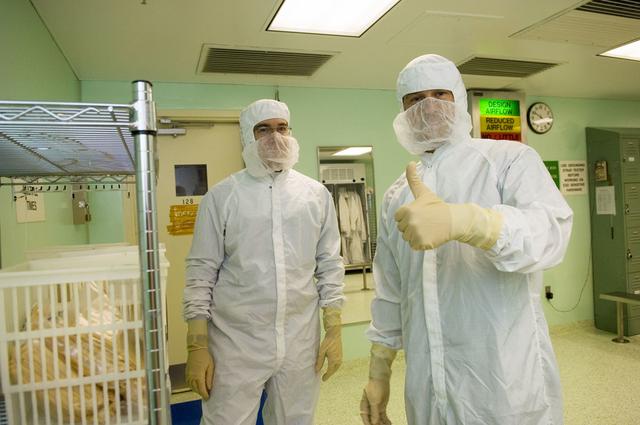
Actor Connor Trinneer, right, tours the high bay clean room in Building 29 at NASA's Goddard Space Flight Center in Greenbelt, Md. Trinneer is best known for his role as Chief Engineer "Trip" Tucker in the TV show "Star Trek: Enterprise."
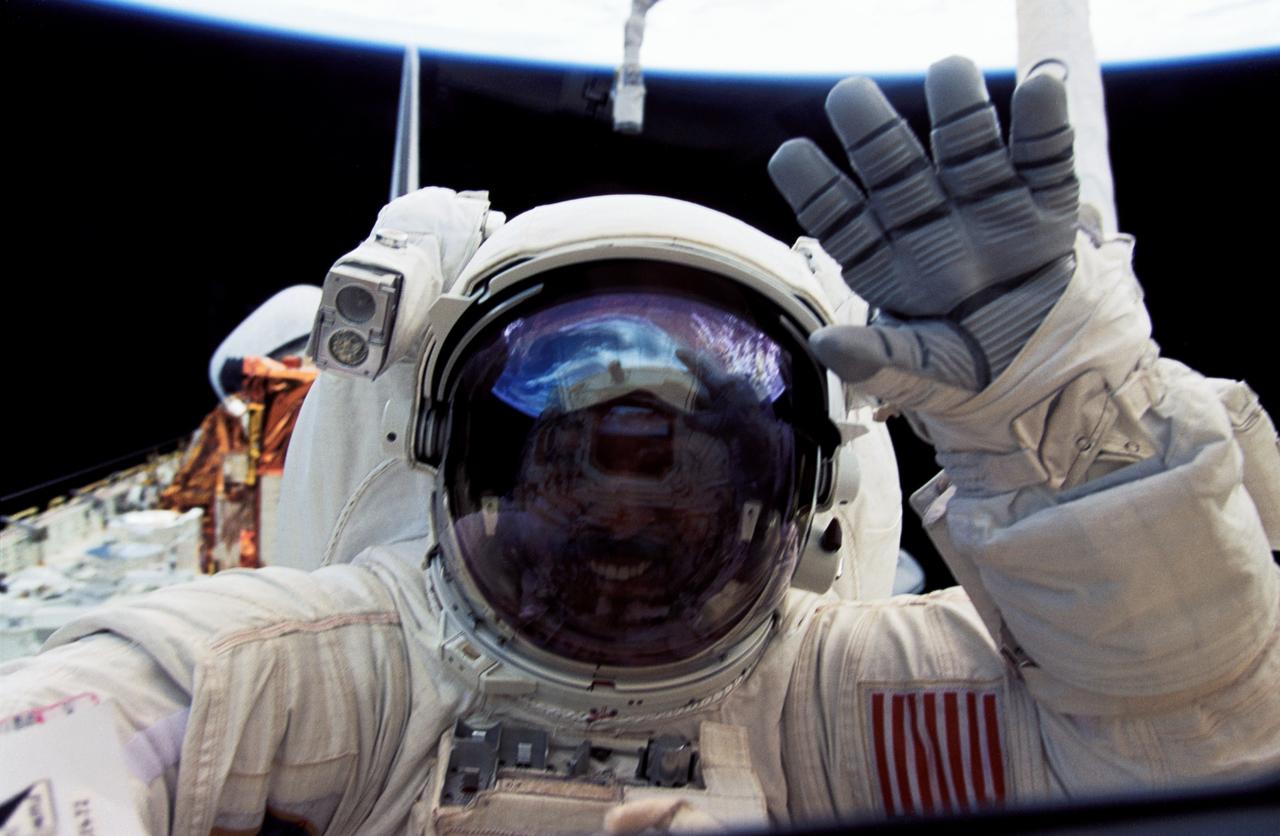
STS072-393-022 (17 Jan. 1996) --- In the Space Shuttle Endeavour's cargo bay, astronaut Winston E. Scott waves to crew mates inside the crew cabin during his extravehicular activity (EVA) on January 17, 1996. Scott was joined by astronaut Leroy Chiao for the EVA.
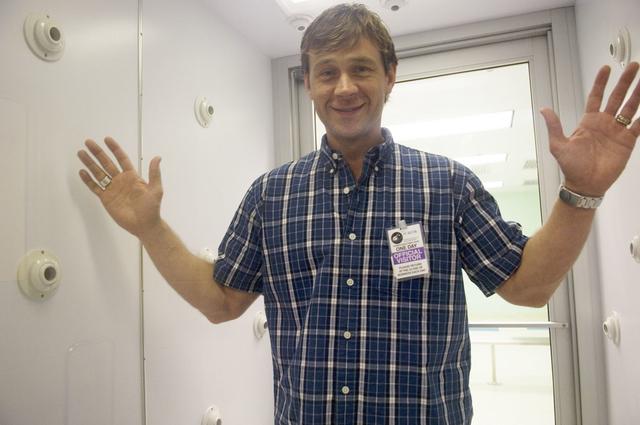
Actor Connor Trinneer tours the high bay clean room in Building 29 at NASA's Goddard Space Flight Center in Greenbelt, Md. Trinneer is best known for his role as Chief Engineer "Trip" Tucker in the TV show "Star Trek: Enterprise."
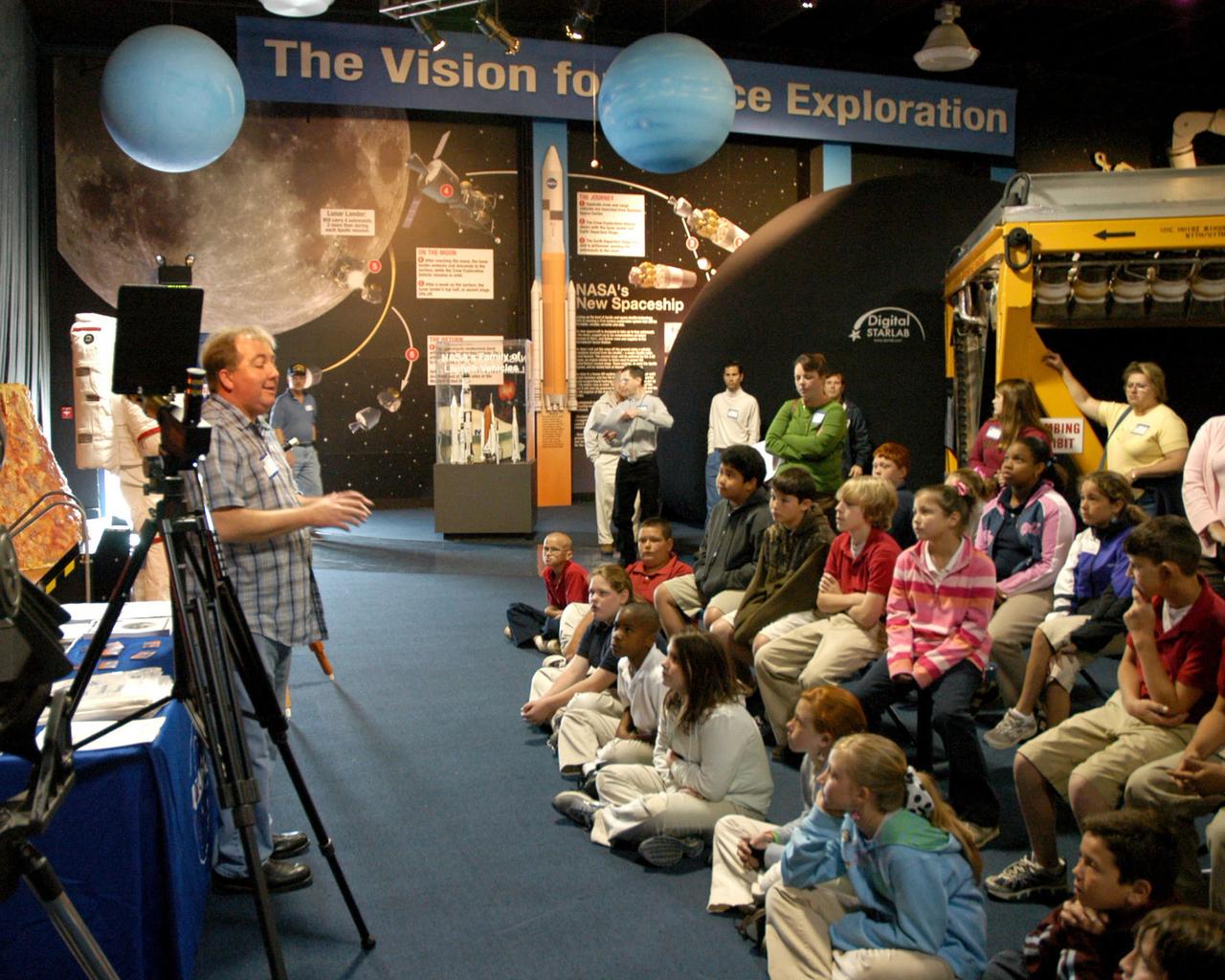
Michael Sandras, a member of the Pontchartrain Astronomical Society, explains his solar telescope to students of Second Street in Bay St. Louis, Hancock County and Nicholson elementary schools in StenniSphere's Millennium Hall on April 10. The students participated in several hands-on activities at Stennis Space Center's Sun-Earth Day celebration.
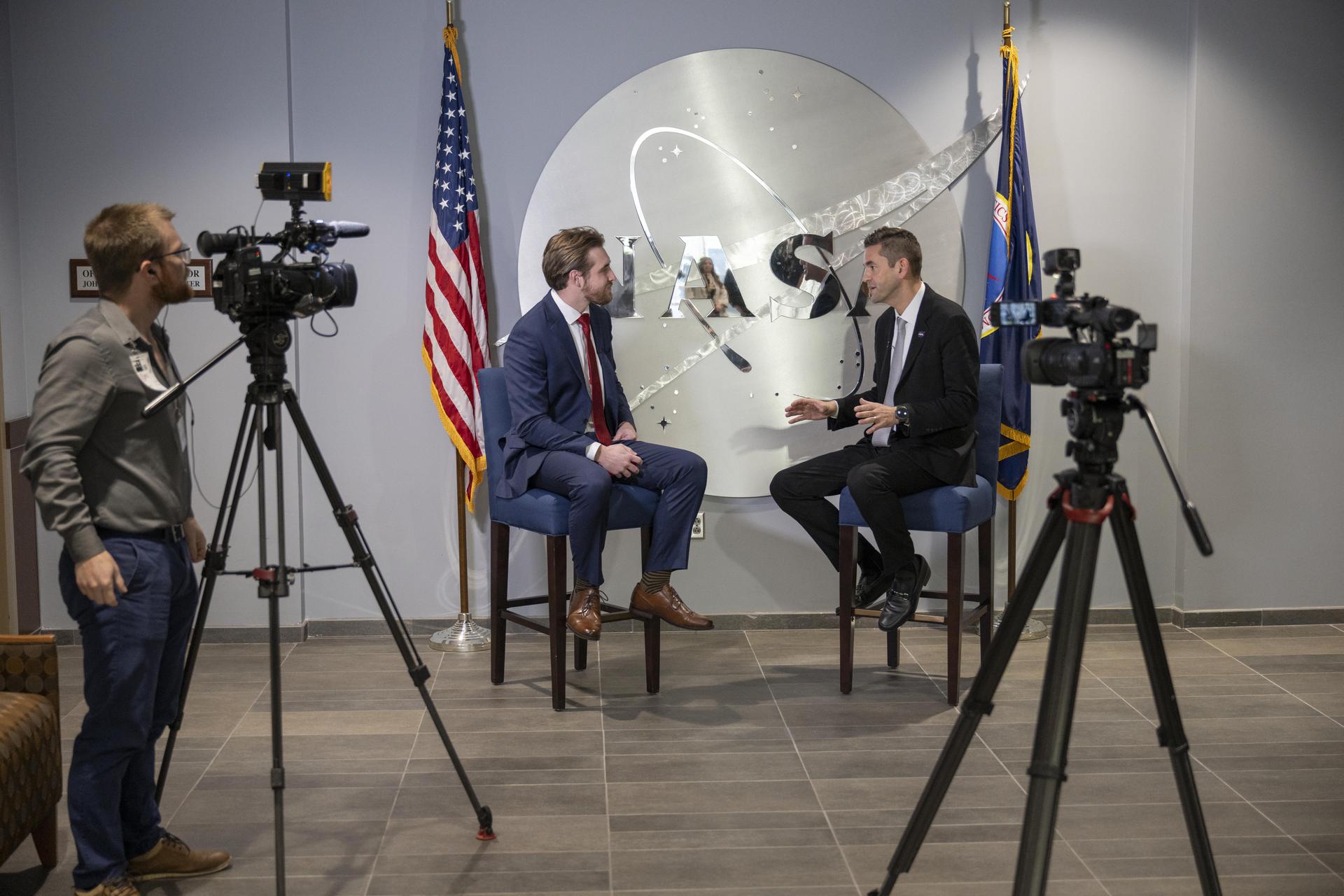
NASA Administrator Jared Isaacman, right, speaks with Tyler Bell, multimedia journalist at WLOX-TV, during an interview at NASA’s Stennis Space Center near Bay St. Louis, Mississippi, on Jan. 15, 2026. Isaacman, NASA’s 15th administrator, began visiting the agency’s centers after his appointment on Dec. 17, 2025.
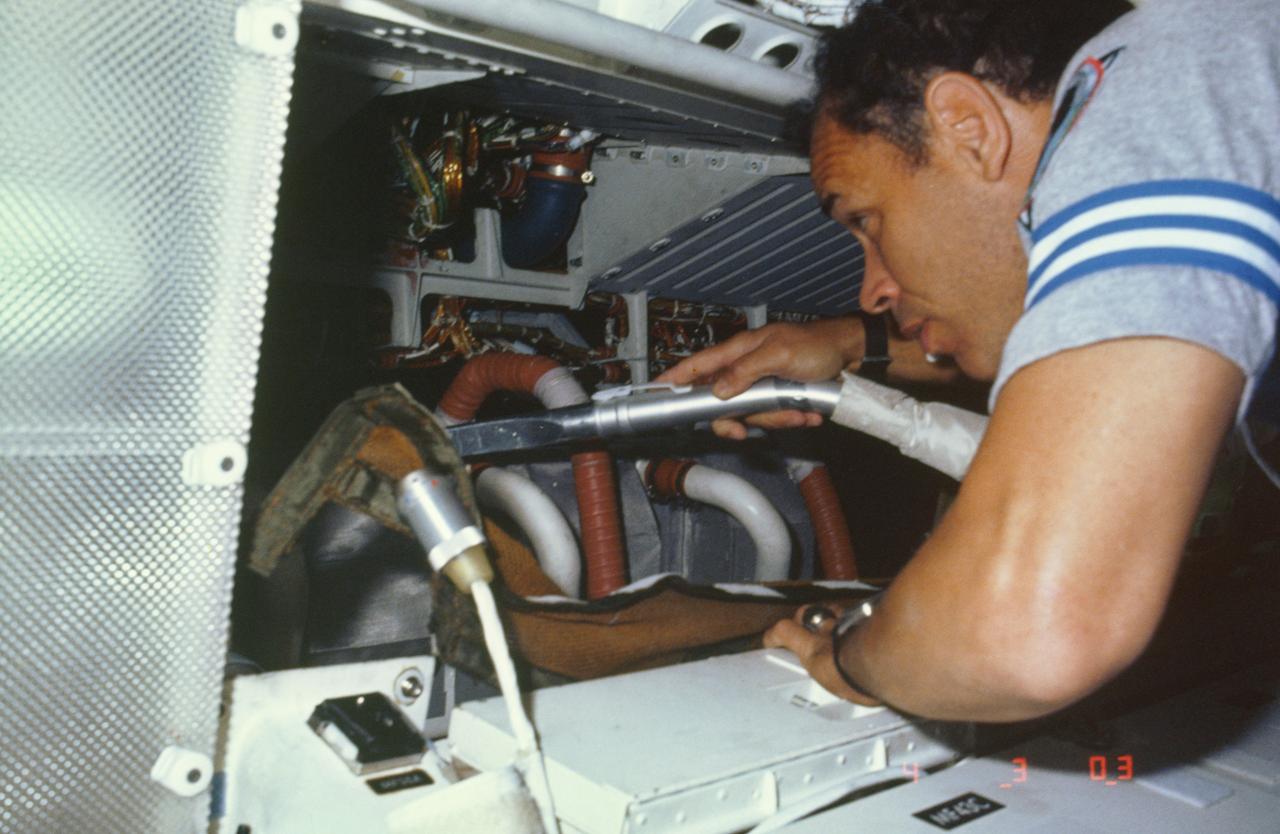
51B-13-008 (29 April-6 May 1985) --- Astronaut Frederick D. Gregory vacuums air filters in avionics bay. The 51-B pilot is physically located in the overhead area of the middeck on Challenger, but his activity is only a few meters away from the flight deck.
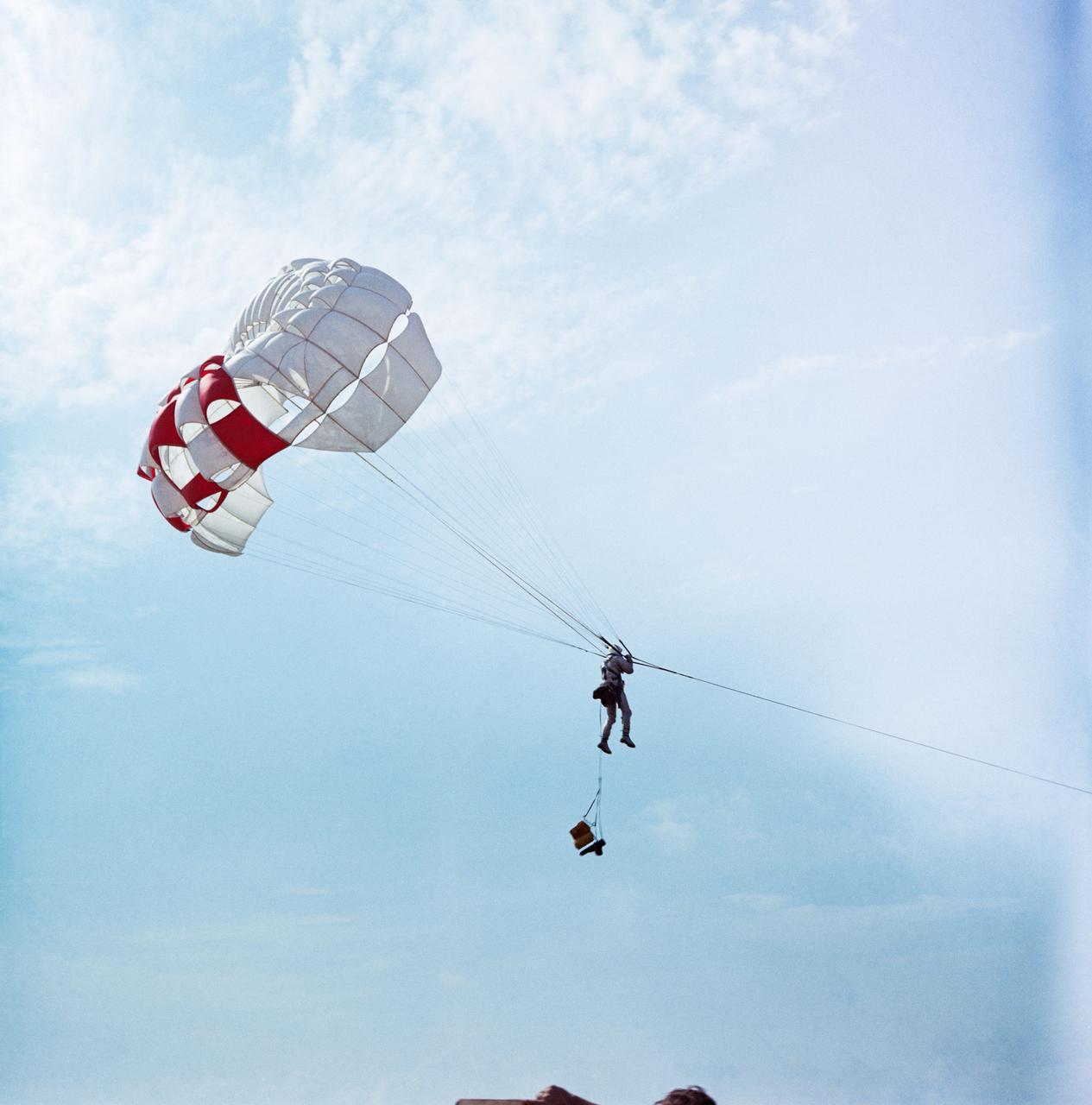
S65-51958 (23 Aug. 1965) --- Astronaut Thomas P. Stafford, Gemini-6 prime crew pilot, sails over Galveston Bay during parasail training. His water survival gear hangs below him. Photo credit: NASA or National Aeronautics and Space Administration

Vice President Mike Pence, second from left, tours the Blue Origin Manufacturing Facility near NASA's Kennedy Space Center in Florida, on Feb. 20, 2018. To his left is his wife, Karen Pence. To his right are Blue Origin CEO Robert Smith, and acting NASA Administrator Robert Lightfoot. Vice President Pence viewed the flown New Shepard Booster and Crew Capsule. The booster was the first launch vehicle with a successful vertical takeoff and vertical landing to demonstrate reusability. During his visit, Pence will chair a meeting of the National Space Council on Feb. 21, 2018 in the high bay of NASA Kennedy Space Center's Space Station Processing Facility. The council's role is to advise the president regarding national space policy and strategy, and review the nation's long-range goals for space activities.
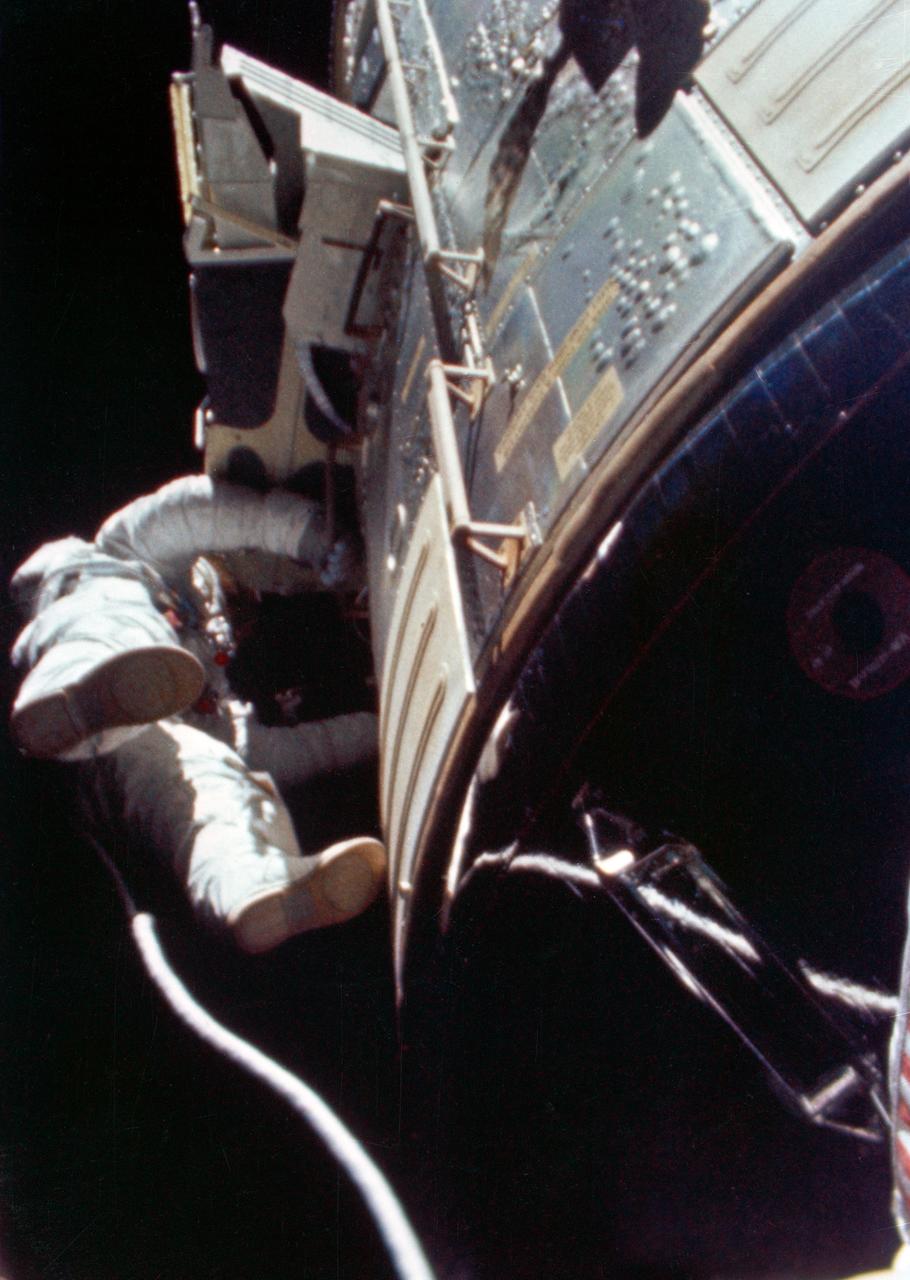
S71-43202 (5 Aug. 1971) --- Astronaut Alfred M. Worden, command module pilot of the Apollo 15 lunar landing mission, floats in space outside the spacecraft during his trans-Earth extravehicular activity (EVA). This photograph was taken from a frame of motion picture film exposed by the 16mm Maurer camera mounted in the hatch of the Command Module (CM). During his EVA, Worden made an inspection of the Service Module's (SM) Scientific Instrument Module (SIM) bay and retrieved the film cassettes from the Panoramic Camera and the Mapping Camera. The SIM bay holds eight orbital science experiments. The EVA occurred when the spacecraft was homeward bound approximately 171,000 nautical miles from Earth.
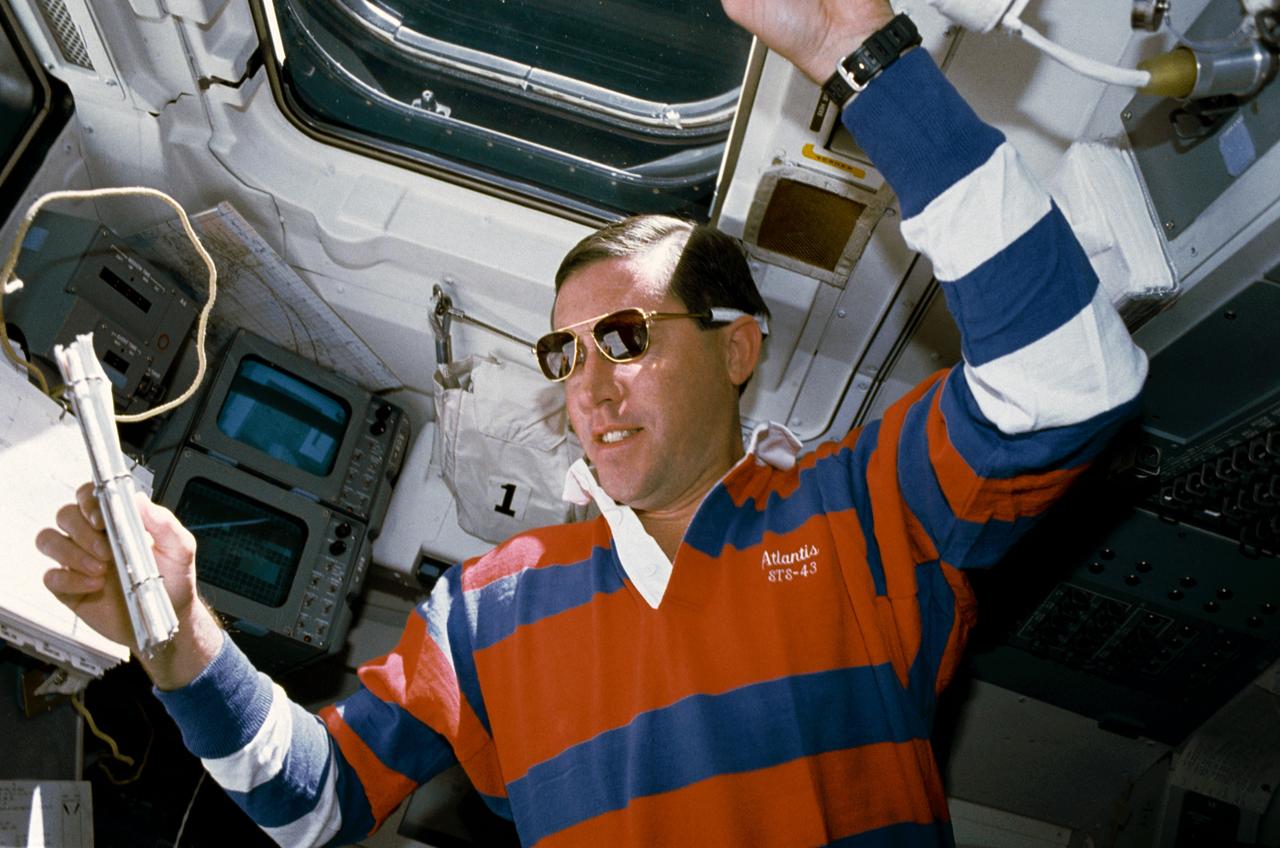
STS043-04-032 (11 Aug 1991) --- STS-43 Pilot Michael A. Baker, wearing sunglasses, reviews a checklist on the aft flight deck of Atlantis, Orbiter Vehicle (OV) 104. He is monitoring data associated with the Space Station Heat Pipe Advanced Radiator Element II (SHARE-II) located in OV-104's payload bay (PLB) from his position in front of the aft flight deck viewing windows. Behind Baker are the closed circuit television (CCTV) monitors and above his head is overhead window W8.
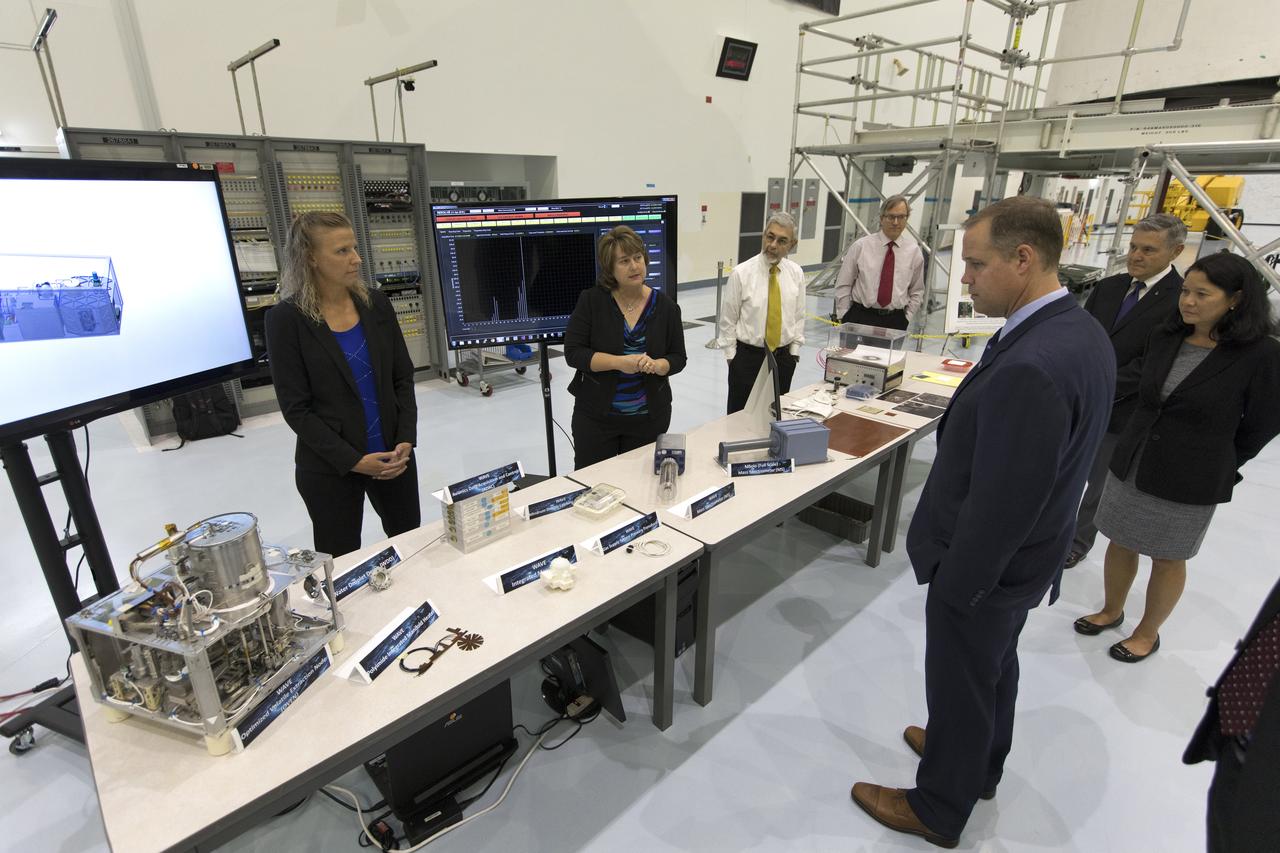
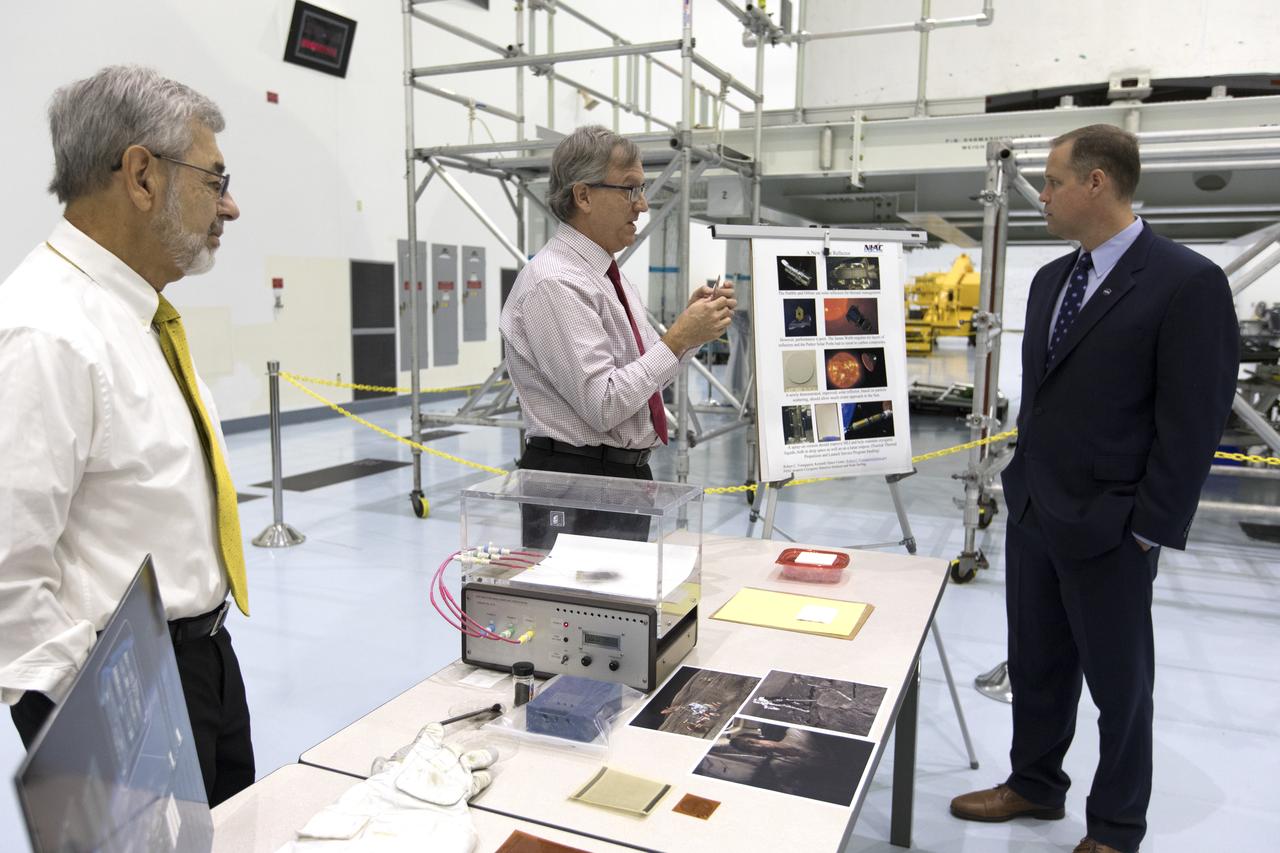
NASA Administrator Jim Bridenstine, at right, tours the high bay inside the Space Station Processing Facility (SSPF) at NASA's Kennedy Space Center in Florida, on Aug. 7, 2018. To his right are Josie Burnett, director of Exploration Research and Technology, and Kennedy Space Center Director Bob Cabana. Behind the exhibit table, from left, are Dr. Janine Captain, a chemist in the Applied Physics Laboratory; Dr. Jackie Quinn, environmental engineer; Carlos Calle, lead scientist in the Electrostatic and Surface Physics Laboratory; and Dr. Robert Youngquist, lead, Applied Physics Laboratory. Bridenstine received updates on research and technology accomplishments during his visit to the SSPF.
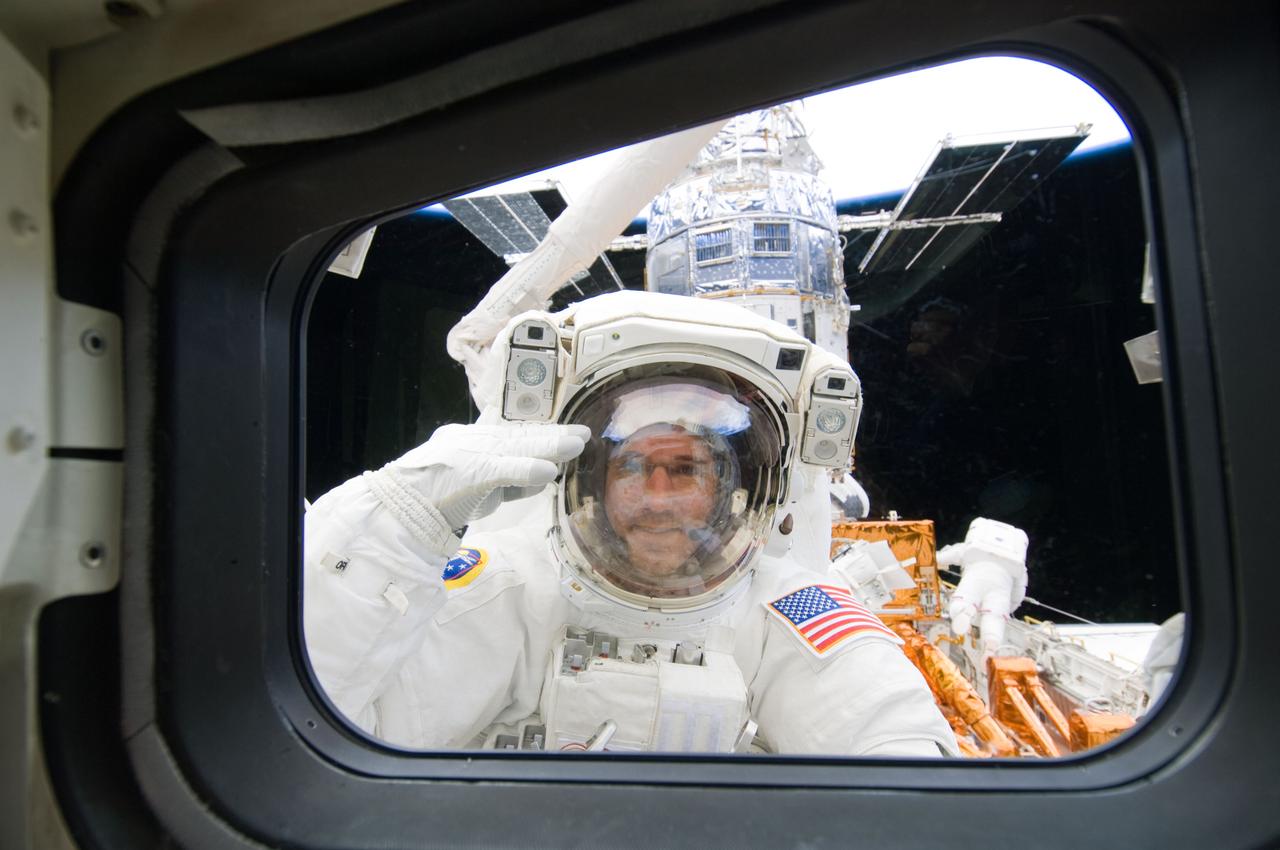
S125-E-007595 (15 May 2009) --- While standing on the end of Atlantis' remote manipulator system arm, astronaut Michael Good, STS-125 mission specialist, pays tribute to his commander and all his crewmates with a military-style salute. Astronauts Good and Mike Massimino (working in the right background), mission specialist, are continuing work on the Hubble Space Telescope, locked down in the orbiter's cargo bay. After their May 15 tasks were completed, three more sessions of extravehicular activity, on back to back to back days, awaited the seven-person crew.
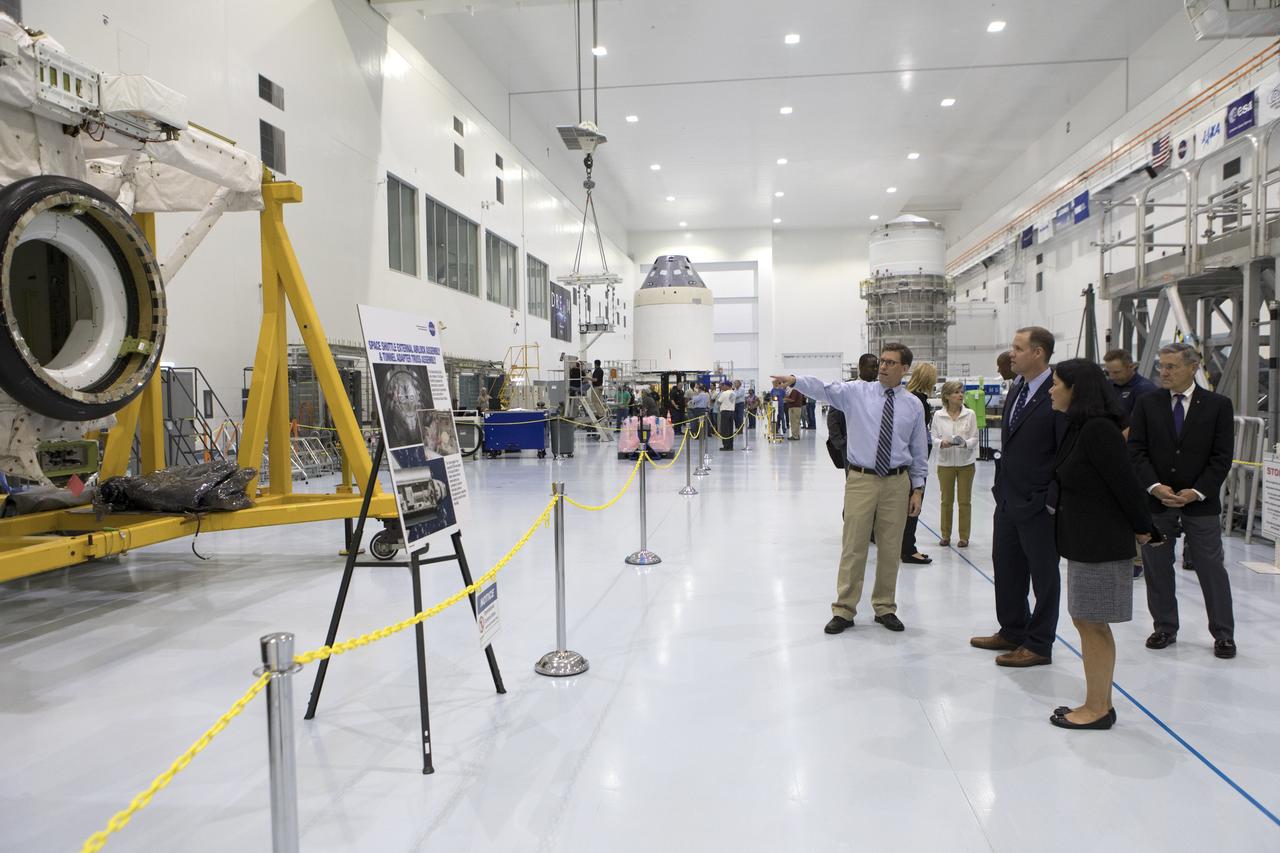
NASA Administrator Jim Bridenstine, second from right, views space hardware in the high bay inside the Space Station Processing Facility (SSPF), on Aug. 7, 2018, at NASA's Kennedy Space Center in Florida. To his right is Josie Burnett, director of Exploration Research and Technology. Behind them, at right is the Interim Cryogenic Propulsion Stage, which will connect between the Orion spacecraft and the upper part of NASA's Space Launch System. In the center is a mockup of the Orion spacecraft. Bridenstine received updates on research and technology accomplishments during his visit to the SSPF.
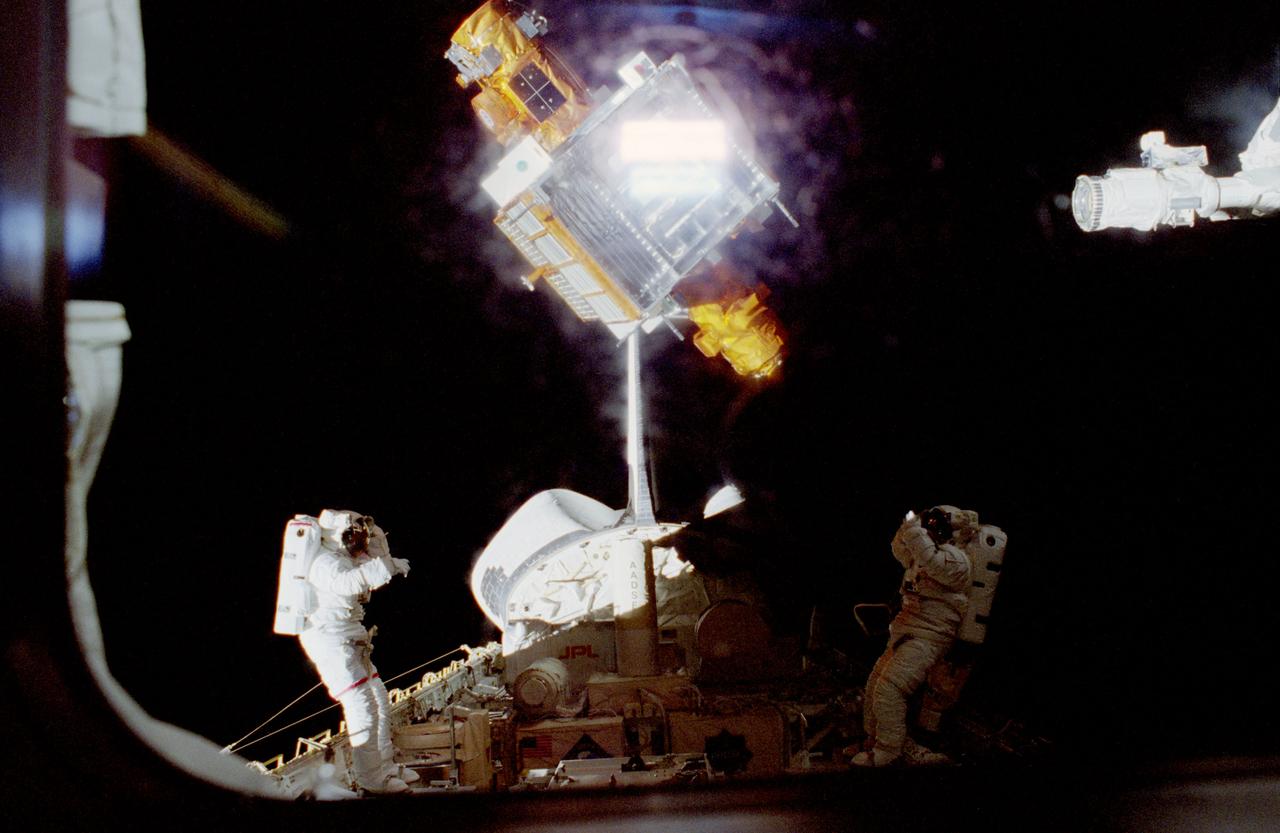
STS087-320-025 (19 November – 5 December 1997) --- Astronauts Winston E. Scott (left) and Takao Doi (partially obscured by his location in the dark shadows), await the right opportunity to grab onto the Spartan satellite. Later, when the Space Shuttle Columbia had moved closer to Spartan, the two mission specialists were able to successfully grab the satellite manually and berth it in Columbia's cargo bay. The end effector of Columbia's Remote Manipulator System (RMS), with its video camera recording the activities, is in the upper right corner. Winston E. Scott was making his second space flight and his second extravehicular activity (EVA). Takao Doi, an international mission specialist stationed at the Johnson Space Center (JSC), represents the Japan’s National Space Development Agency (NASDA).
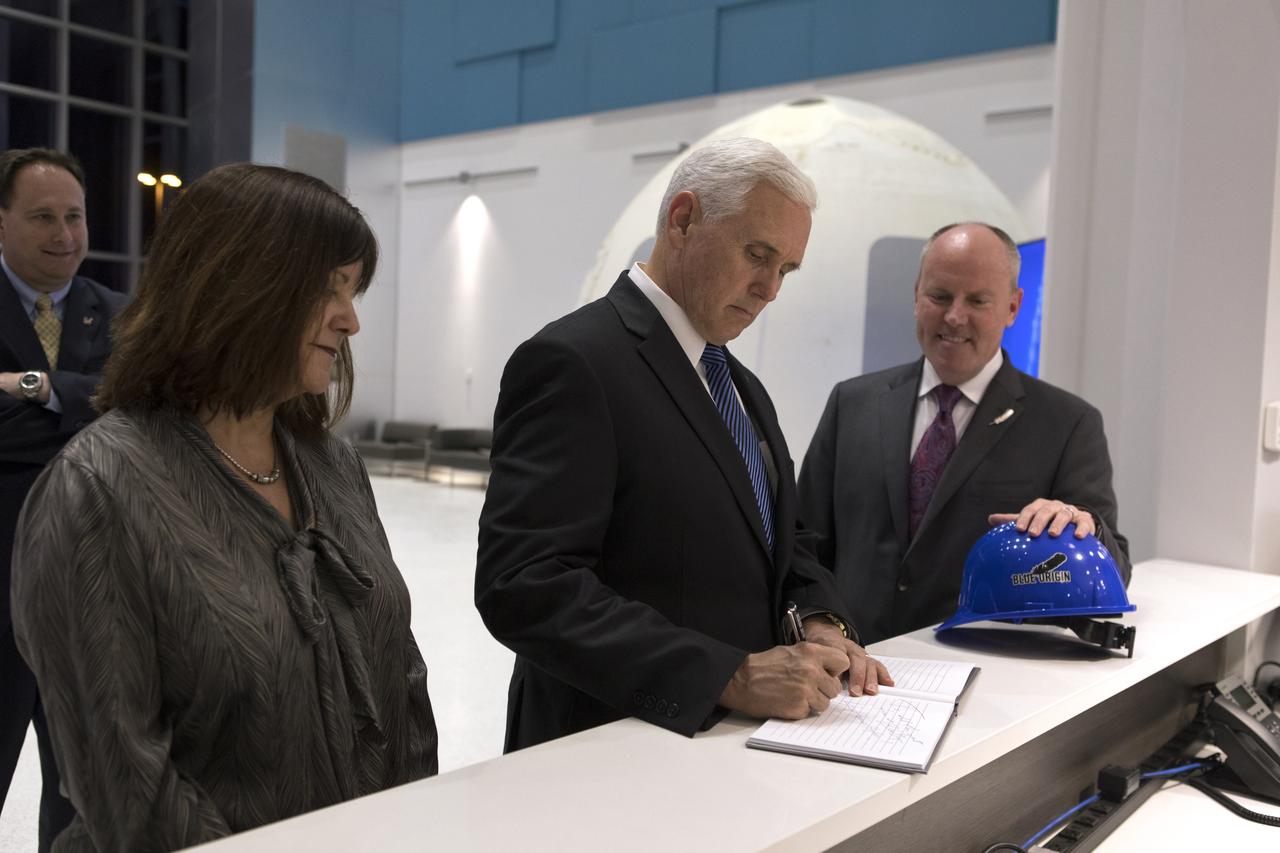
Vice President Mike Pence, center, signs a guest book during his tour of the Blue Origin Manufacturing Facility near NASA's Kennedy Space Center in Florida, on Feb. 20, 2018. At left is the vice president's wife, Karen Pence. To his right is Blue Origin CEO Robert Smith. Behind them is acting NASA Administrator Robert Lightfoot. Vice President Pence viewed the flown New Shepard Booster and Crew Capsule. The booster was the first launch vehicle with a successful vertical takeoff and vertical landing to demonstrate reusability. During his visit, Pence will chair a meeting of the National Space Council on Feb. 21, 2018 in the high bay of NASA Kennedy Space Center's Space Station Processing Facility. The council's role is to advise the president regarding national space policy and strategy, and review the nation's long-range goals for space activities.
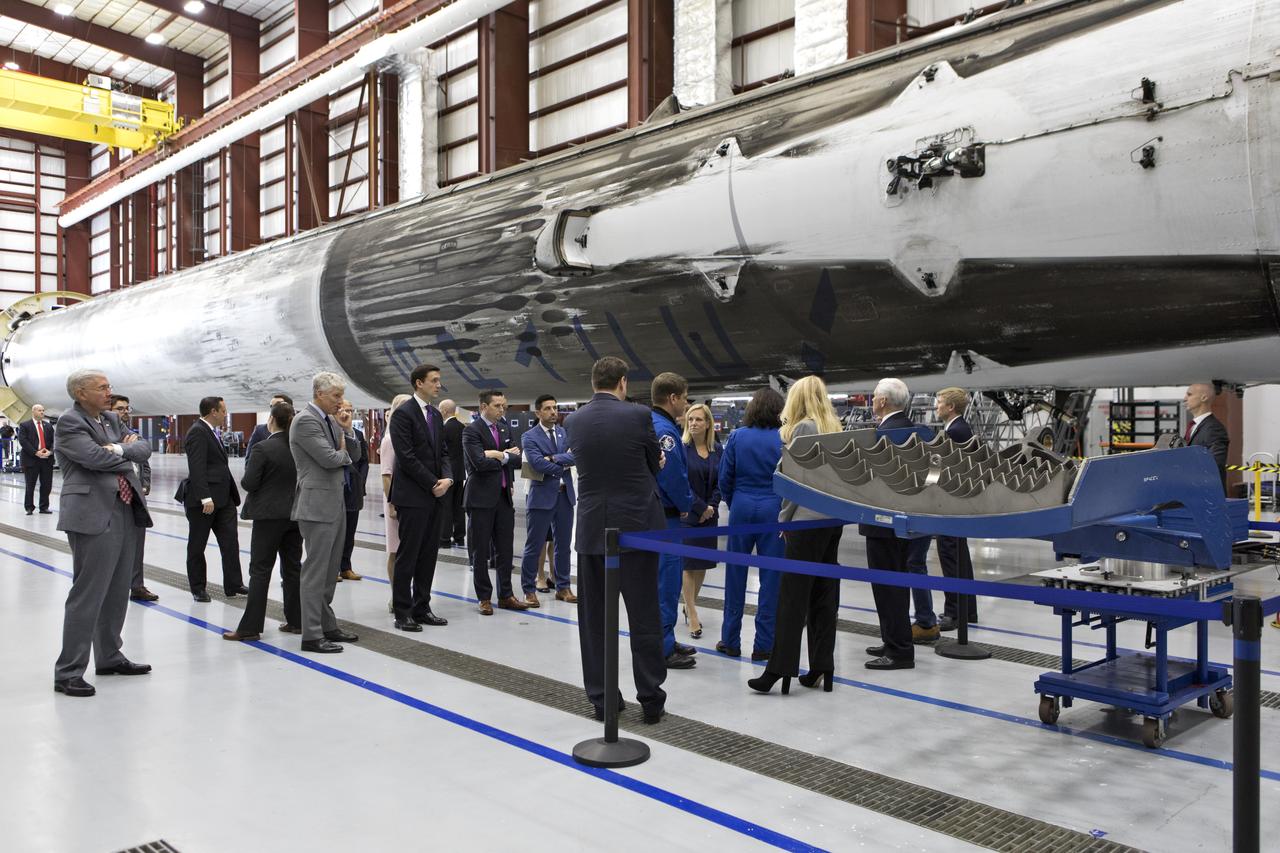
Vice President Mike Pence tours the SpaceX hangar at Launch Complex 39A, at NASA's Kennedy Space Center in Florida, on Feb. 21, 2018. The group is getting a close-up look at a previously flown Falcon 9 rocket. During his visit, Pence chaired a meeting of the National Space Council in the high bay of the center's Space Station Processing Facility. The council's role is to advise the president regarding national space policy and strategy, and review the nation's long-range goals for space activities.
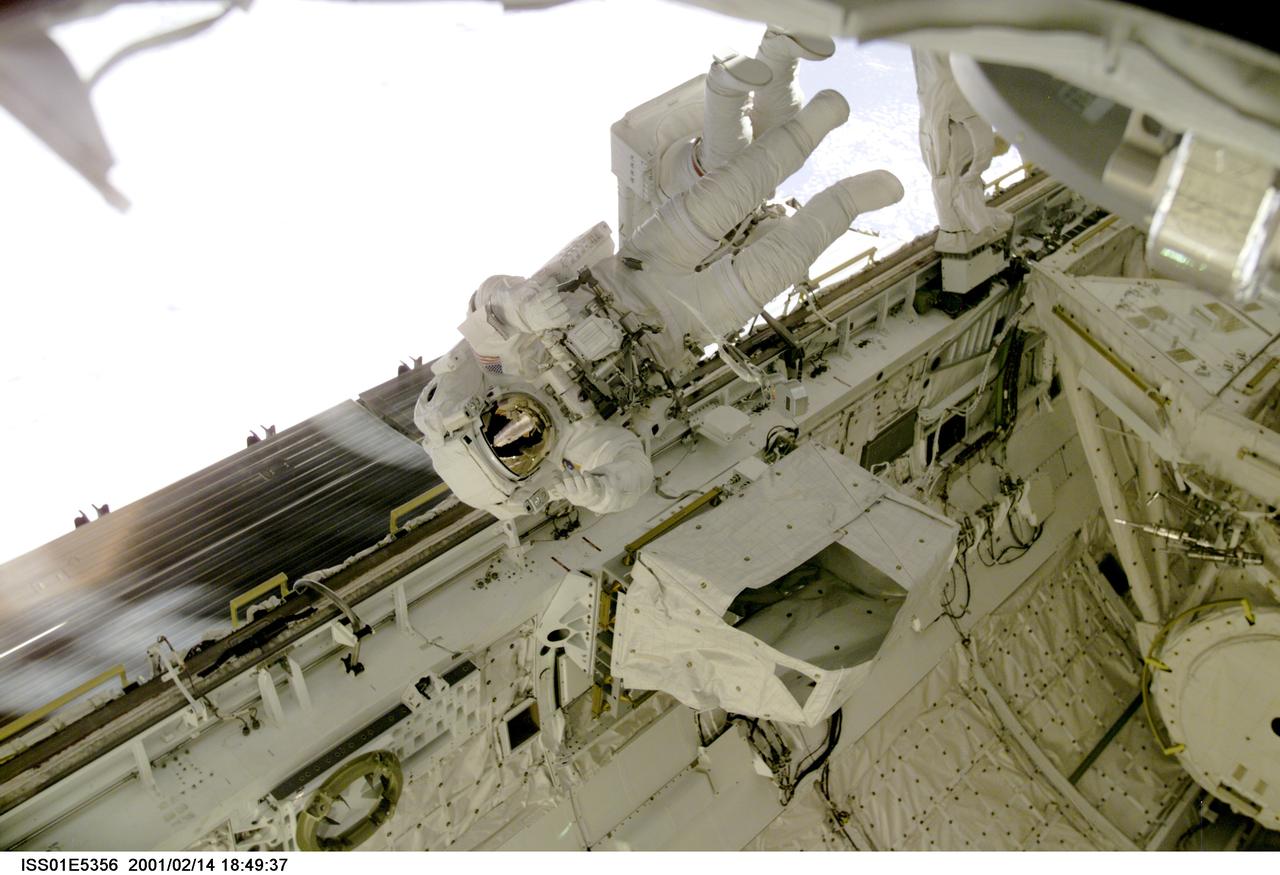
ISS01-E-5356 (14 February 2001) --- Astronaut Robert L. Curbeam, STS-98 mission specialist, floats above the longerons of the cargo bay on the Space Shuttle Atlantis during the final of three STS-98/5a space walks. Partially obscured behind Curbeam is astronaut Thomas D. Jones, his colleague and partner for all three walks. The scene was recorded with a digital still camera.
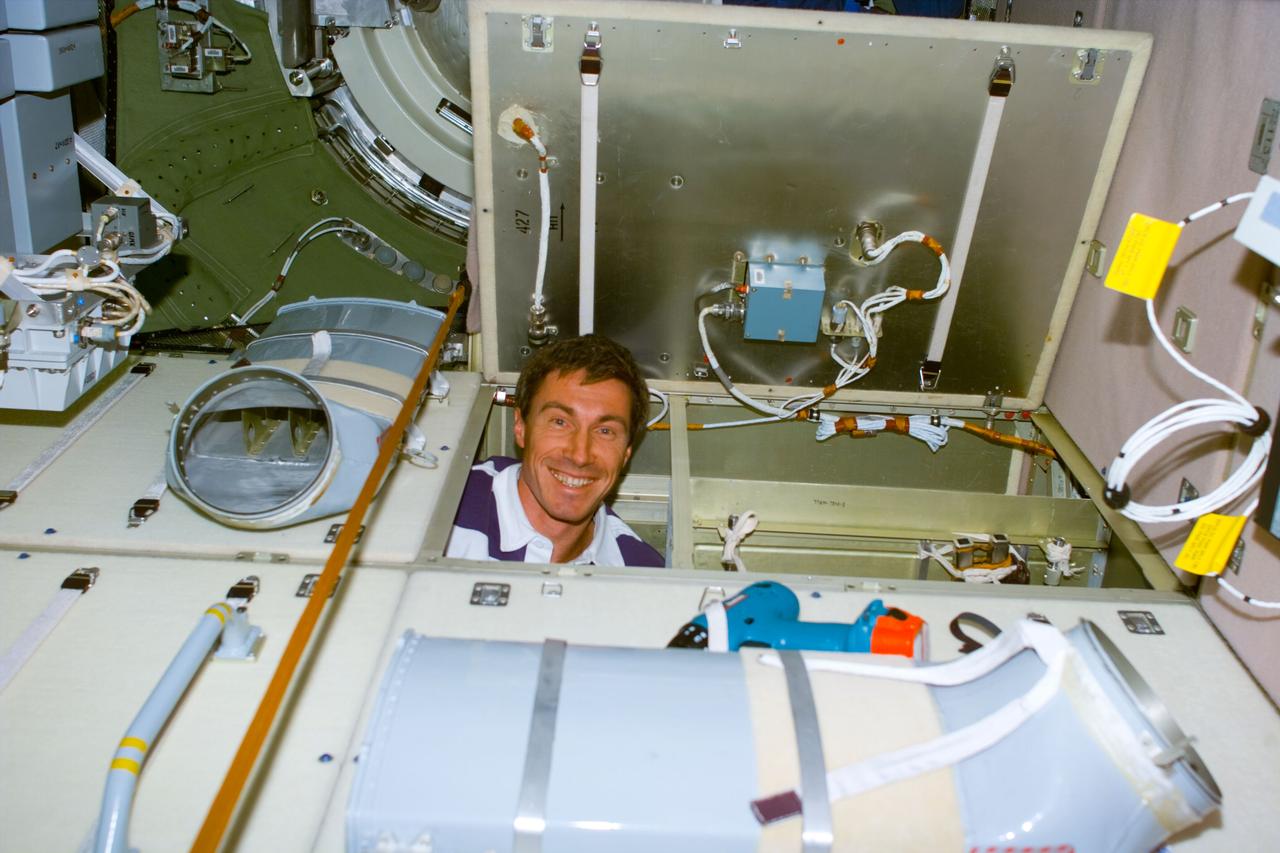
S88-E-5086 (12-11-98) --- Sergei Krikalev, mission specialist representing the Russian Space Agency (RSA), pokes his head up from inside one of the bays inside the walls on the Russian-built Zarya module. Krikalev and astronaut Nancy J. Currie replaced a faulty unit which controls the discharging of stored energy from one of Zarya's six batteries. The photo was taken with an electronic still camera (ESC) at 05:41:18 GMT, Dec. 11.
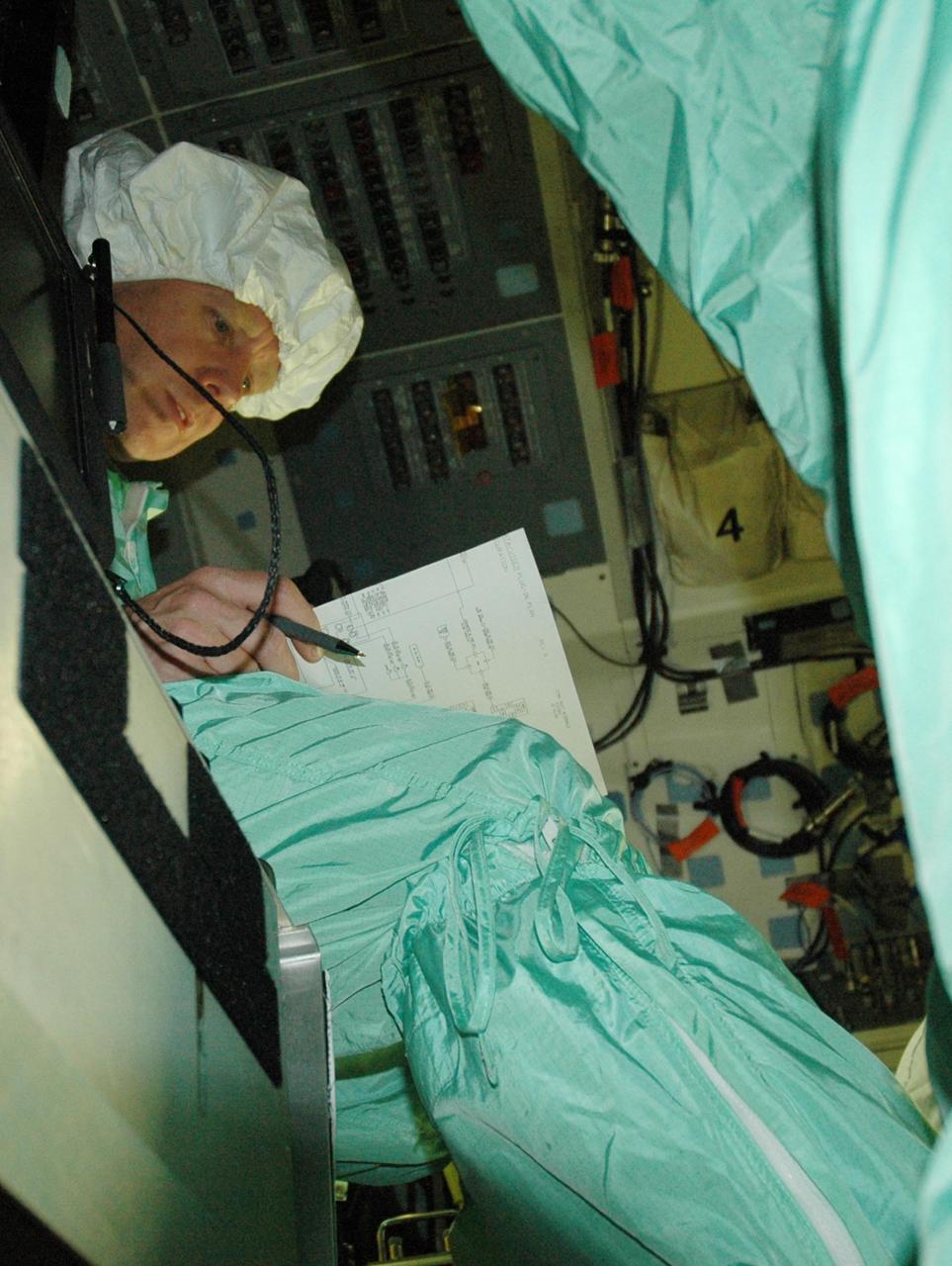
KENNEDY SPACE CENTER, FLA. - In NASA Kennedy Space Center's Orbiter Processing Facility bay 3, STS-121 Commander Steve Lindsey prepares for his upcoming mission inside Space Shuttle Discovery. The crew is at Kennedy to take part in the crew equipment interface test, which provides hands-on experience with equipment to be used on-orbit. Launch of Space Shuttle Discovery on mission STS-121, the second return-to-flight mission, is scheduled no earlier than May.
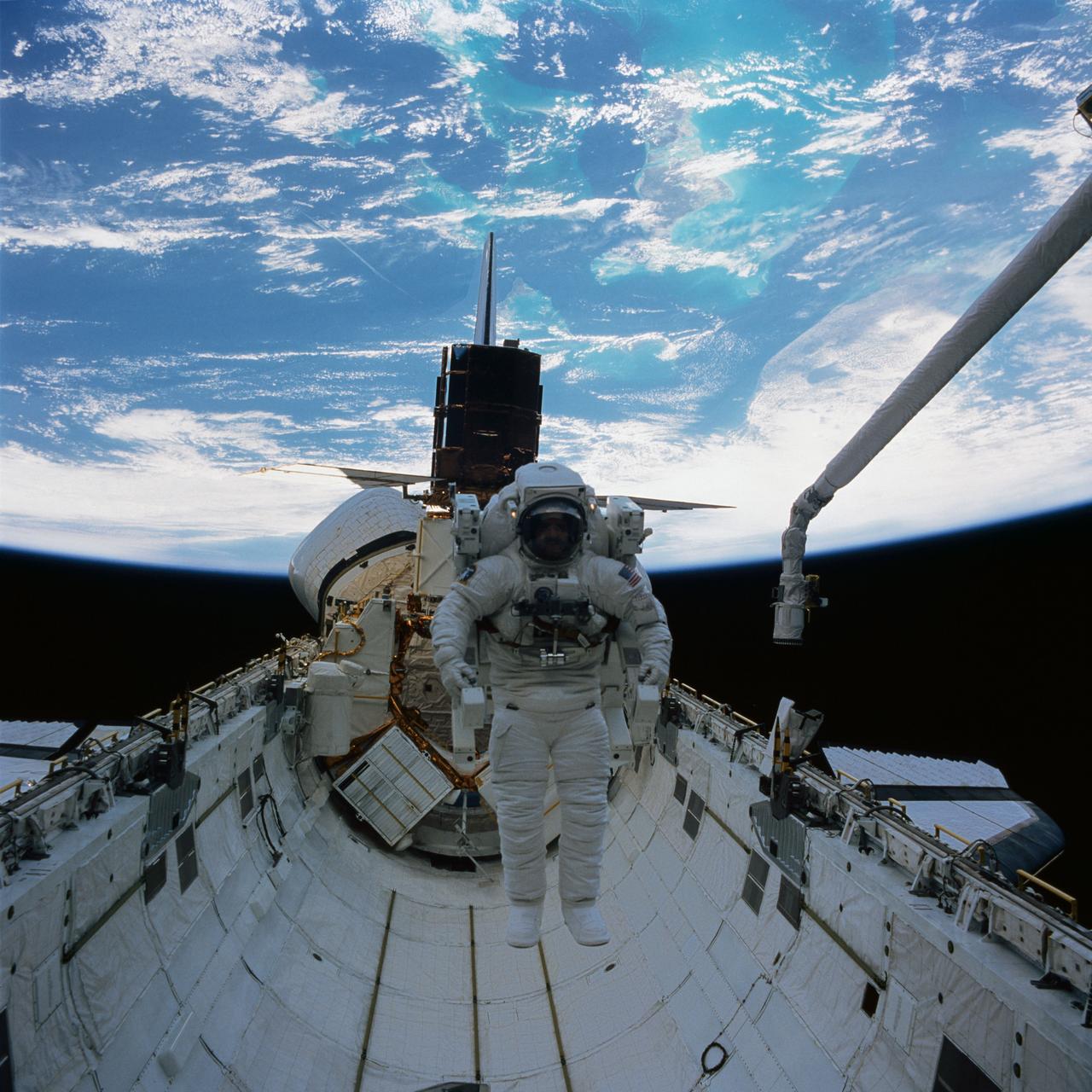
41C-37-1718 (11 April 1984) --- Astronaut James D. van Hoften and a repaired satellite are captured by a Hasselblad camera aimed through Challenger's aft cabin windows toward the cargo bay of the Earth orbiting Challenger. Dr. van Hoften is getting in his first "field" test of the manned maneuvering unit (MMU) after months of training in an underwater facility and in a simulator on Earth. The Solar Maximum Mission Satellite (SMMS), revived and almost ready for release into space once more, is docked at the flight support system (FSS).
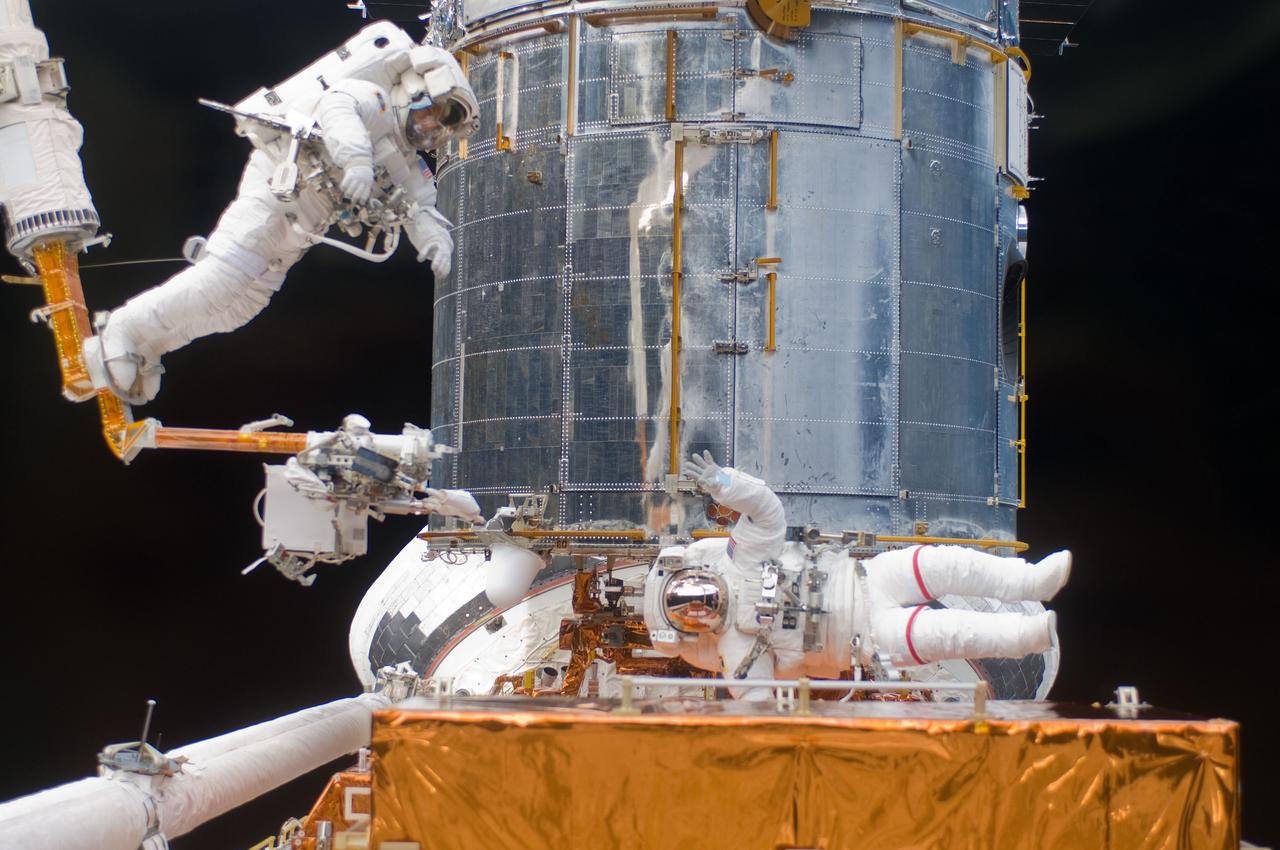
S125-E-007853 (16 May 2009) --- Astronaut Andrew Feustel, STS-125 mission specialist, navigates near the Hubble Space Telescope on the end of the remote manipulator system arm, controlled from inside Atlantis? crew cabin. Astronaut John Grunsfeld signals to his crewmate from just a few feet away. Astronauts Feustel and Grunsfeld were continuing servicing work on the giant observatory, locked down in the cargo bay of the shuttle.
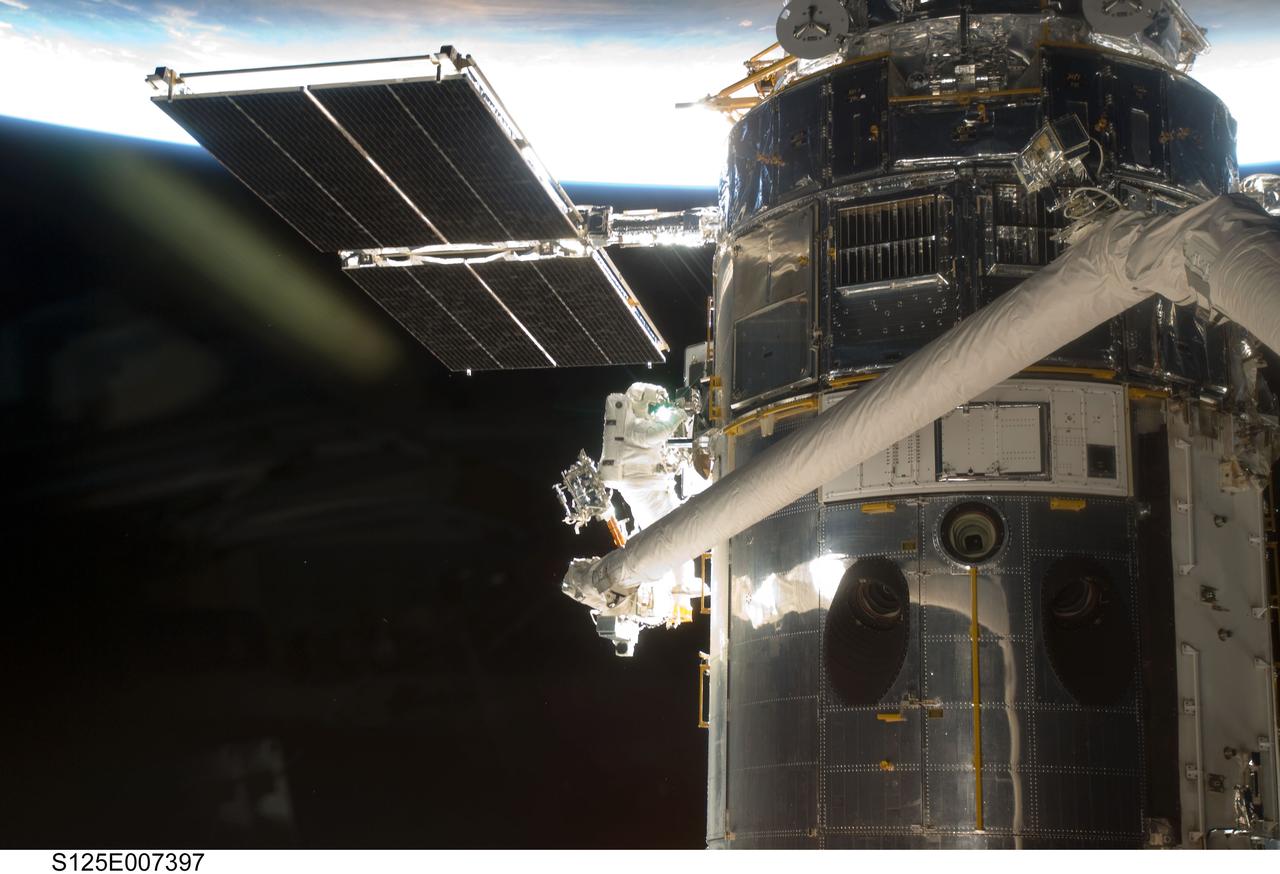
S125-E-007397 (14 May 2009) --- Astronaut Andrew Feustel, perched alone on the end of the Space Shuttle Atlantis? remote manipulator system arm, participates in the first of five STS-125 spacewalks to perform work on the Hubble Space Telescope, temporarily locked down in the cargo bay of the Earth-orbiting shuttle. Out of frame is his space-walking colleague, veteran astronaut John Grunsfeld. The two mission specialists are also assigned to two of the remaining four sessions of extravehicular activity for the Atlantis crew.
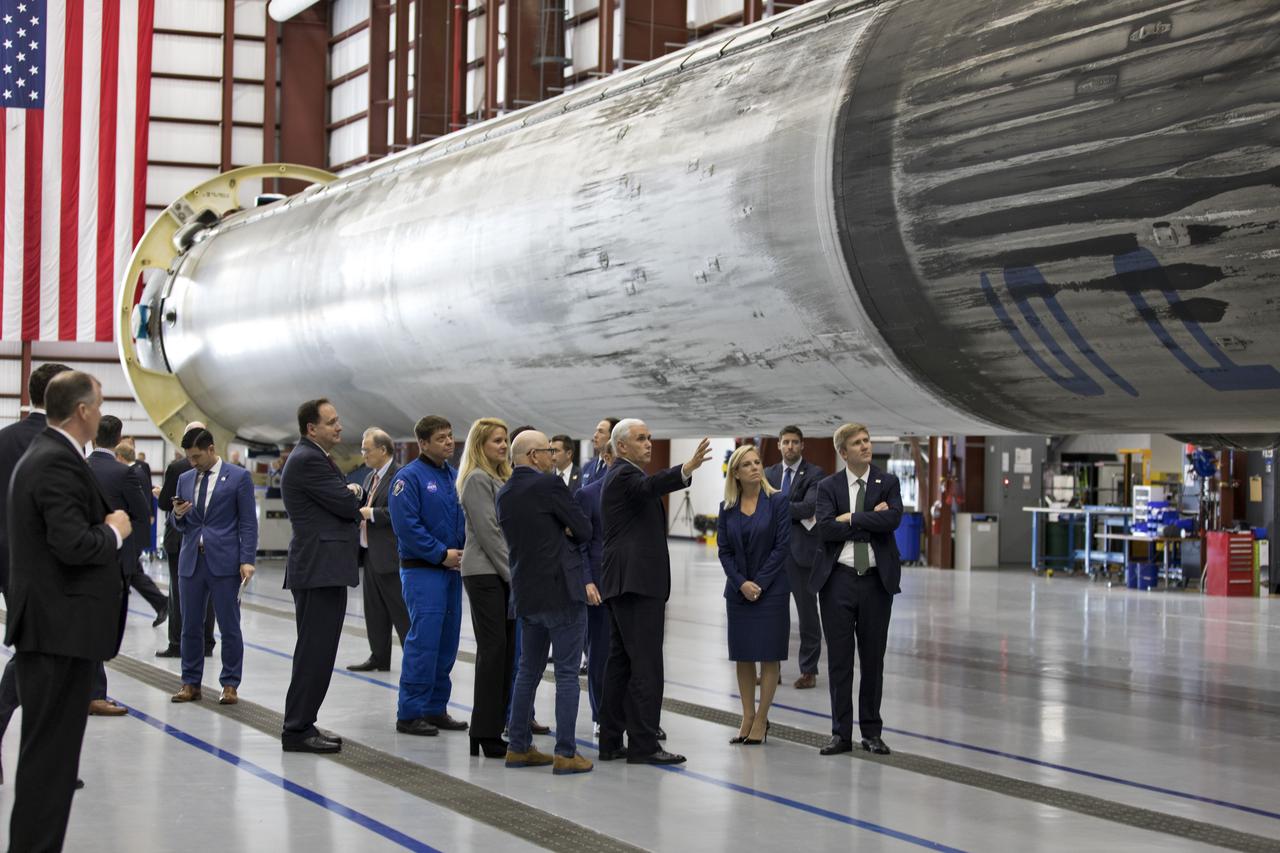
Vice President Mike Pence, pointing, tours the SpaceX hangar at Launch Complex 39A, at NASA's Kennedy Space Center in Florida, on Feb. 21, 2018. The group is getting a close-up look at a previously flown Falcon 9 rocket. During his visit, Pence chaired a meeting of the National Space Council in the high bay of the center's Space Station Processing Facility. The council's role is to advise the president regarding national space policy and strategy, and review the nation's long-range goals for space activities.
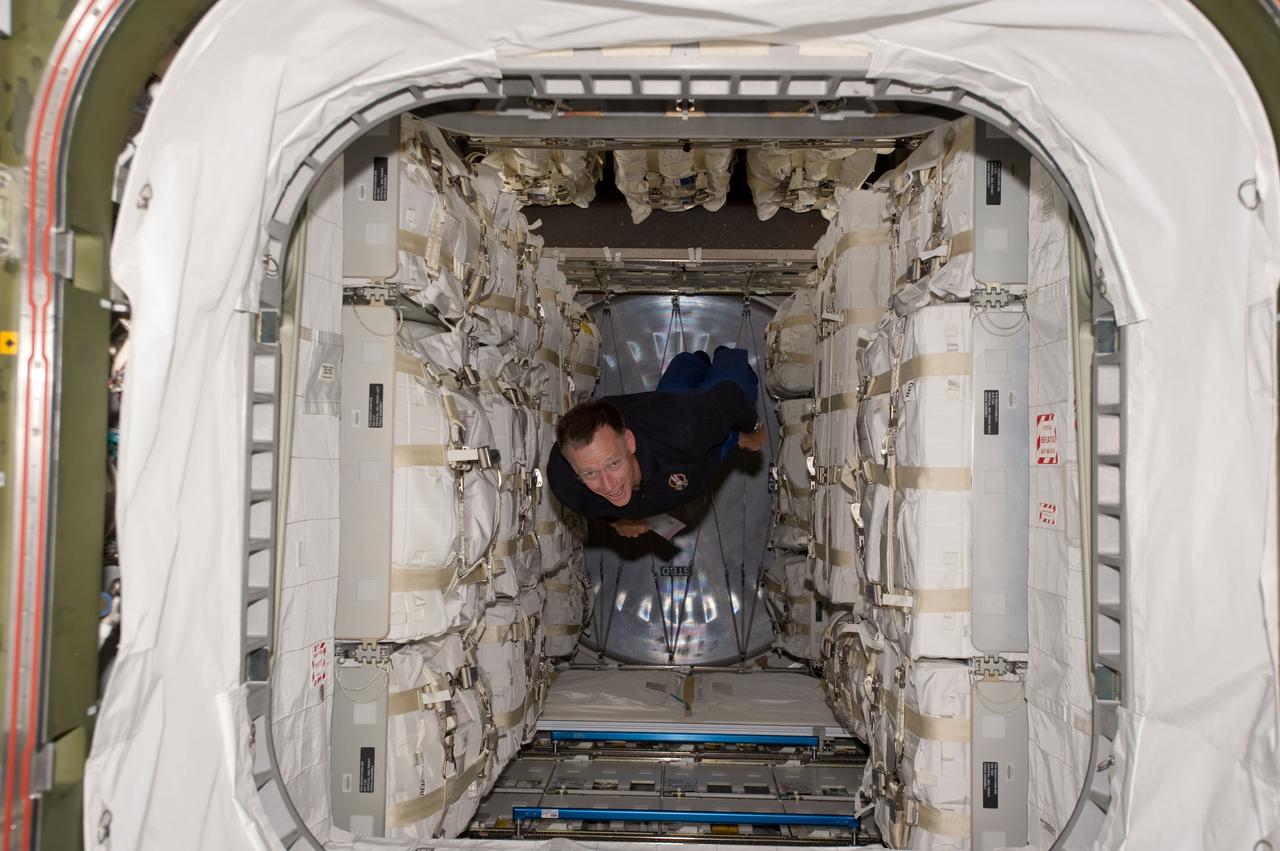
S135-E-007426 (11 July 2011) --- NASA astronaut Chris Ferguson, STS-135 commander, floats through the Raffaello multi-purpose logistics module packed with supplies and spare parts for the International Space Station. Ferguson and his three crewmates carried the module in Atlantis' cargo bay on their trip to link up with the orbital outpost. Photo credit: NASA
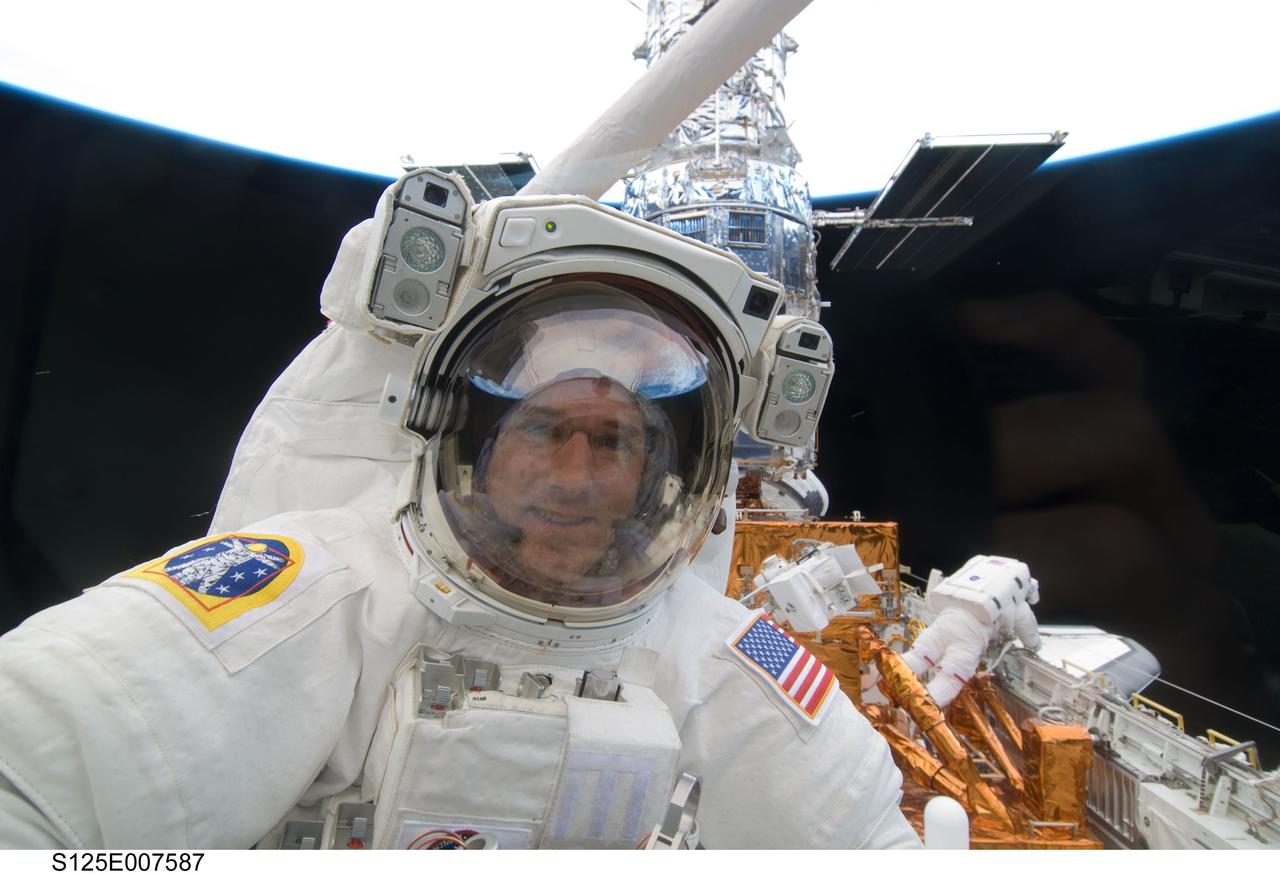
S125-E-007587 (15 May 2009) --- Astronaut Michael Good, STS-125 mission specialist, peers through a window toward Atlantis' crew cabin interior, where his shirt-sleeved support team members busy themselves to aid the flight's second of five sessions of extravehicular activity to perform work on the Hubble Space Telescope. Astronaut Mike Massimino can be seen in the background at work on the port side of the shuttle's cargo bay.
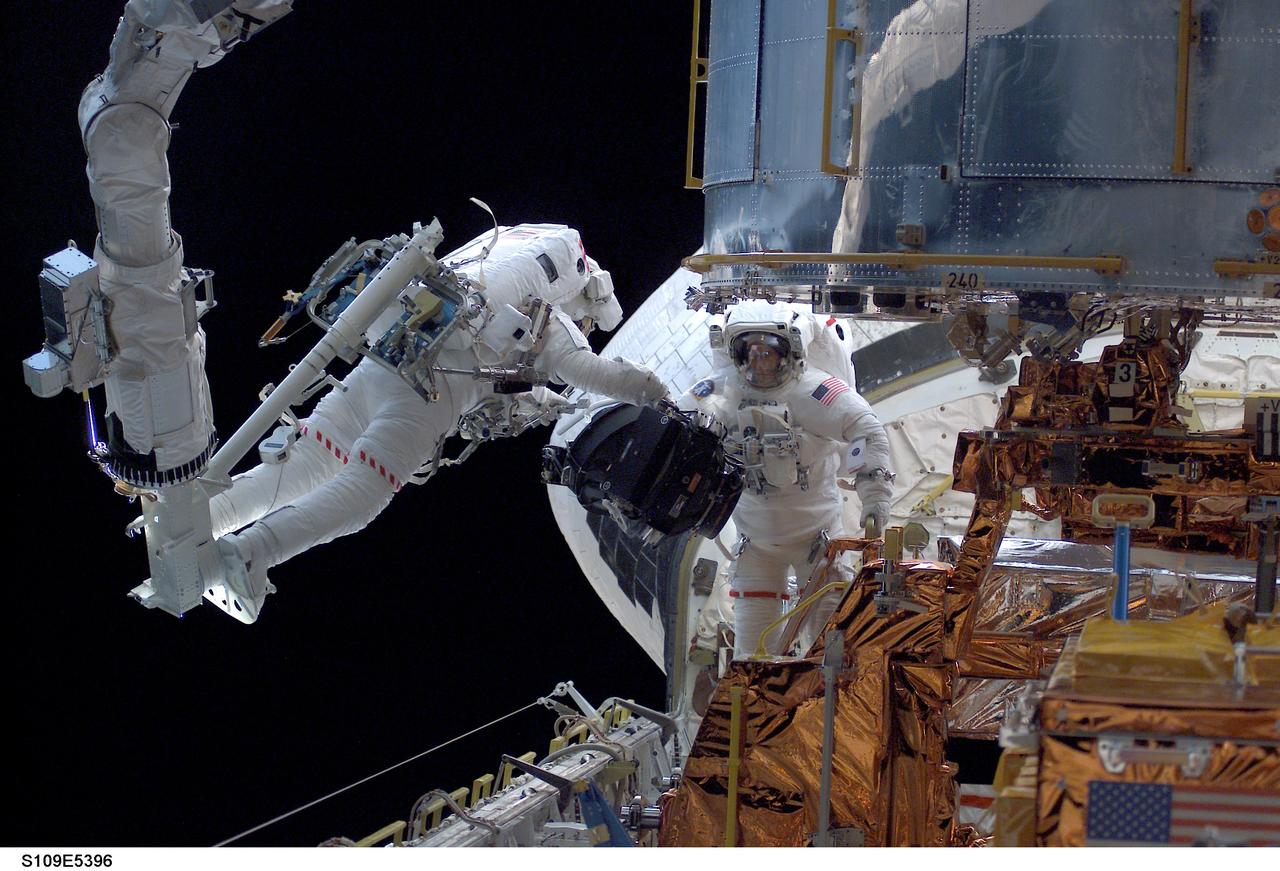
With his feet secured on a platform connected to the remote manipulator system (RMS) robotic arm of the Space Shuttle Columbia, astronaut Michael J. Massimino, mission specialist, hovers over the shuttle's cargo bay while working in tandem with astronaut James H. Newman, mission specialist, to replace the Reaction Wheel Assembly in the Hubble Space Telescope (HST) during the STS-109 mission's second day of extravehicular activity (EVA).
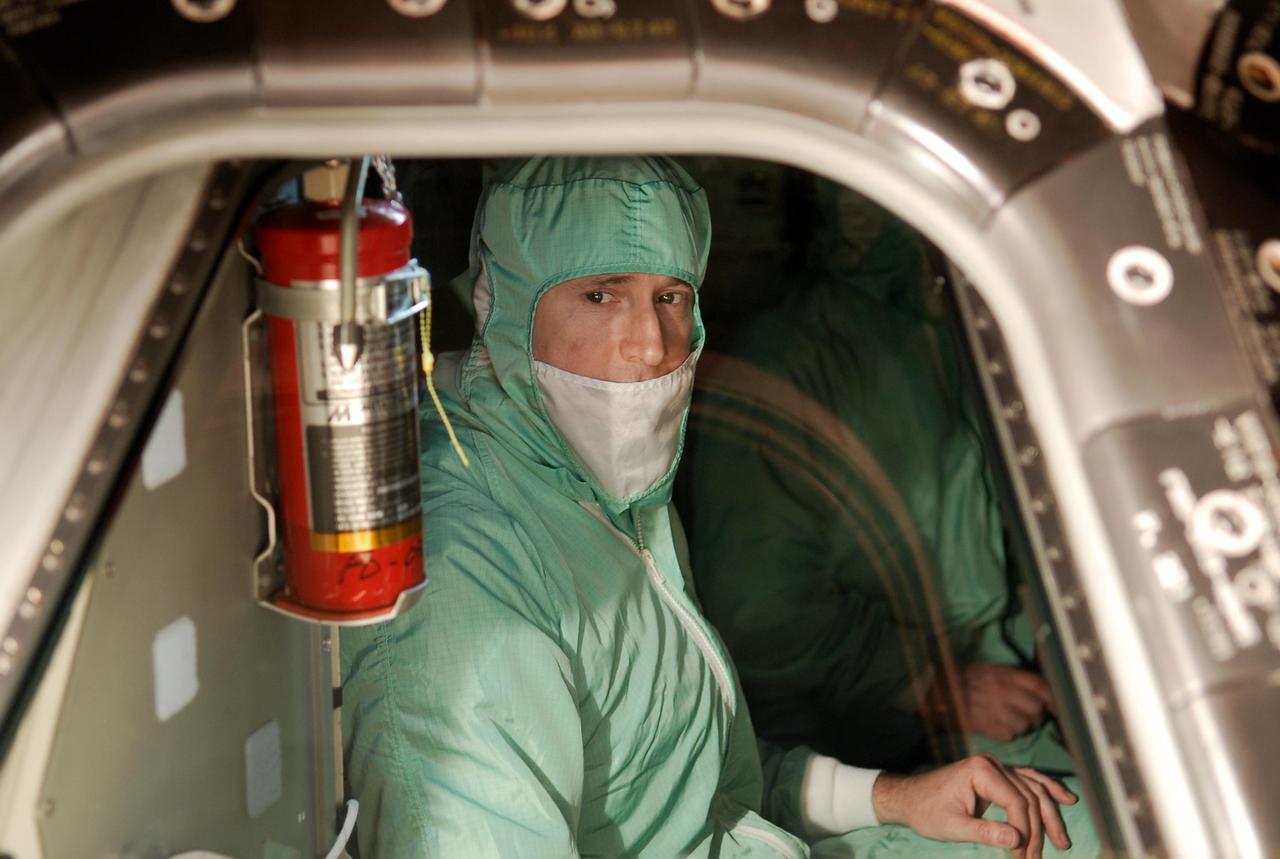
KENNEDY SPACE CENTER, FLA. -- During a crew equipment interface test in the Orbiter Processing Facility bay 3 at NASA's Kennedy Space Center, STS-124 Pilot Kenneth Ham examines the area around his seat in the cockpit of space shuttle Discovery. The shuttle will transport the Kibo Japanese Experiment Module - Pressurized Module (JEM-PM) and the Japanese Remote Manipulator System (JEM-RMS) to the International Space Station to complete the Kibo laboratory. The launch of Discovery is targeted for April 24. Photo credit: NASA/Kim Shiflett
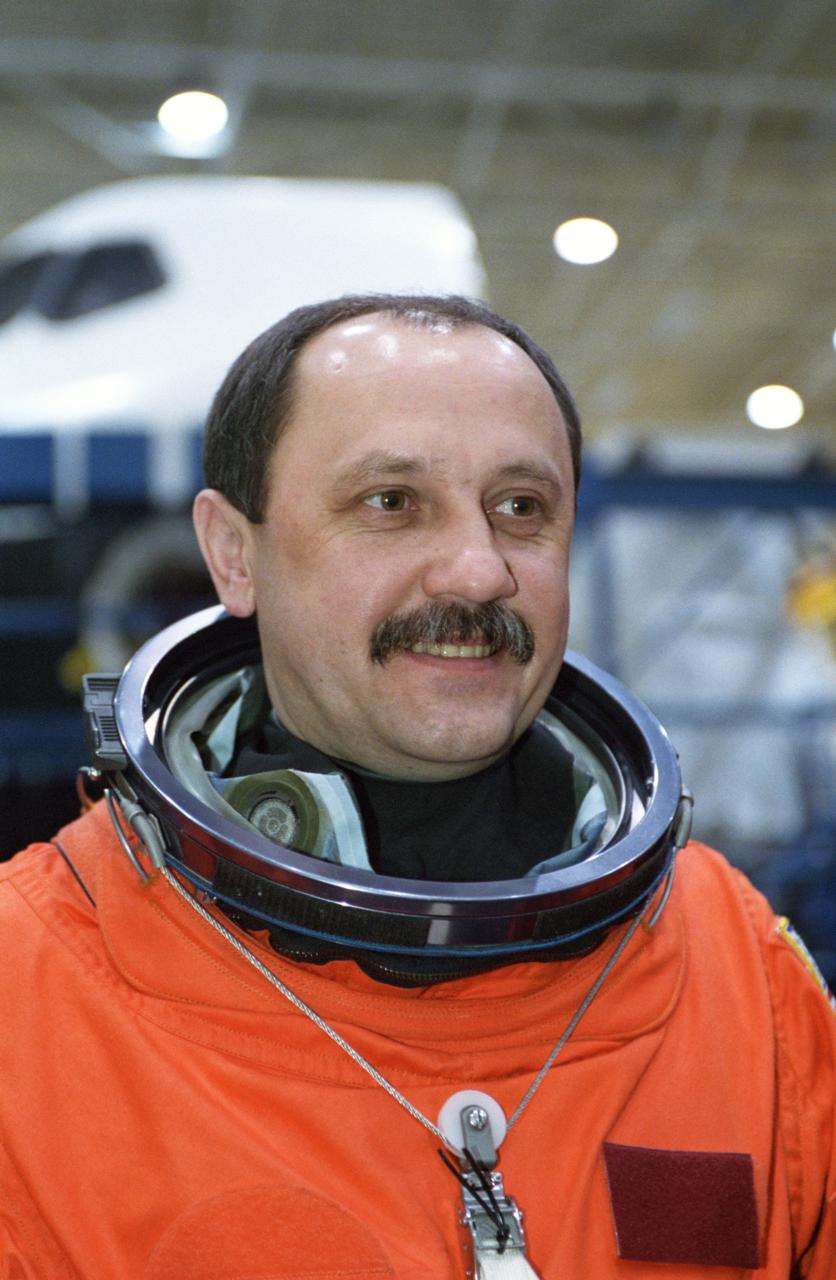
JSC2000-07445 (6 December 2000) --- Cosmonaut Yury V. Usachev, Expedition Two mission commander, talks to nearby astronauts (out of frame) during a joint Expedition Two/STS-102 training session in the Systems Integration Facility at the Johnson Space Center (JSC). The Russian Aviation and Space Agency representative, along with two astronauts on his crew and the four STS-102 crew members, later simulated procedures for a nominal countdown in the crew compartment trainer (CCT-2) in the high bay area of this facility.
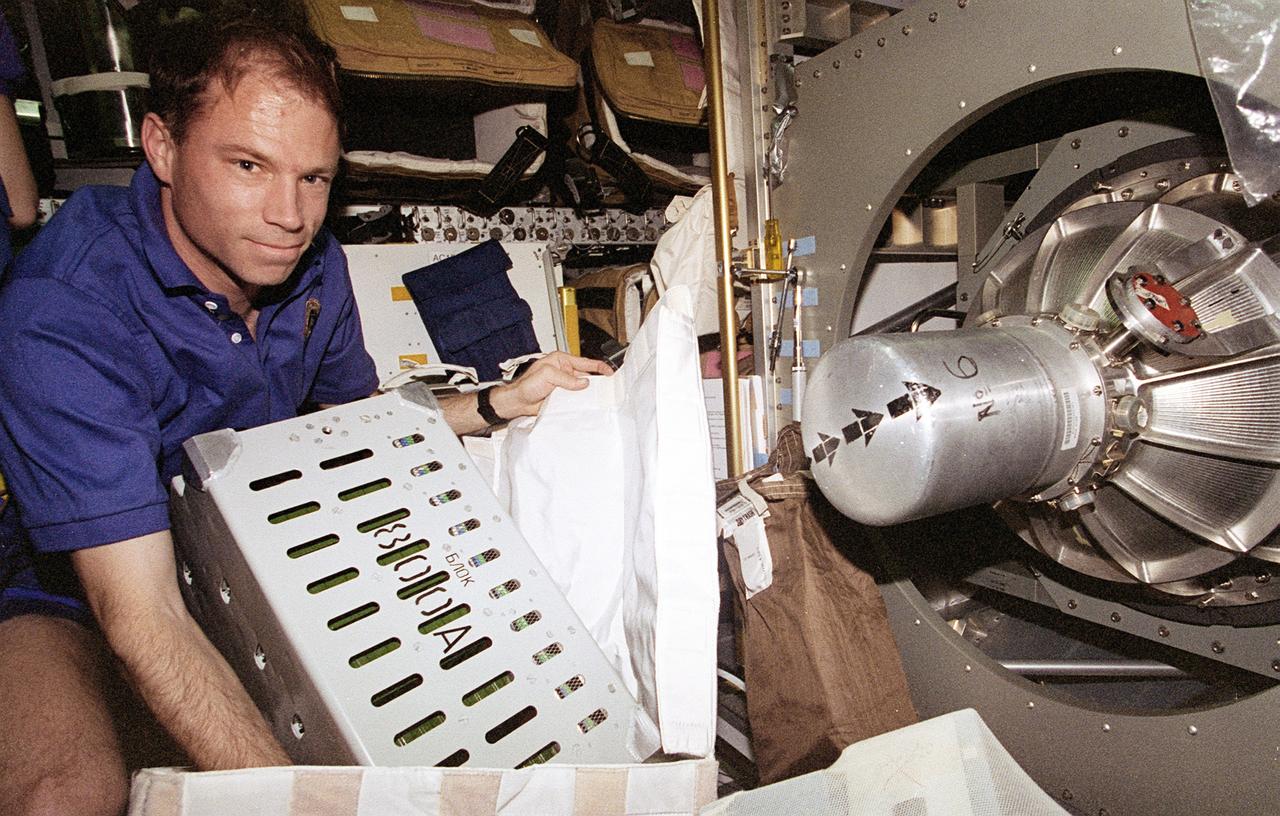
STS076-345-019 (22 - 31 March 1996) --- Onboard the Spacehab Module in the cargo bay of the Earth-orbiting Space Shuttle Atlantis, astronaut Richard A. Searfoss fetches a battery which is to be transferred to Russia's Mir Space Station. The pilot and his crew mates docked with Mir on March 23, 1996, and remained linked until March 28, 1996. At right is a stowed gyrodyne, which earlier had been replaced on Mir with a new one brought up from the ground by the STS-76 crew.
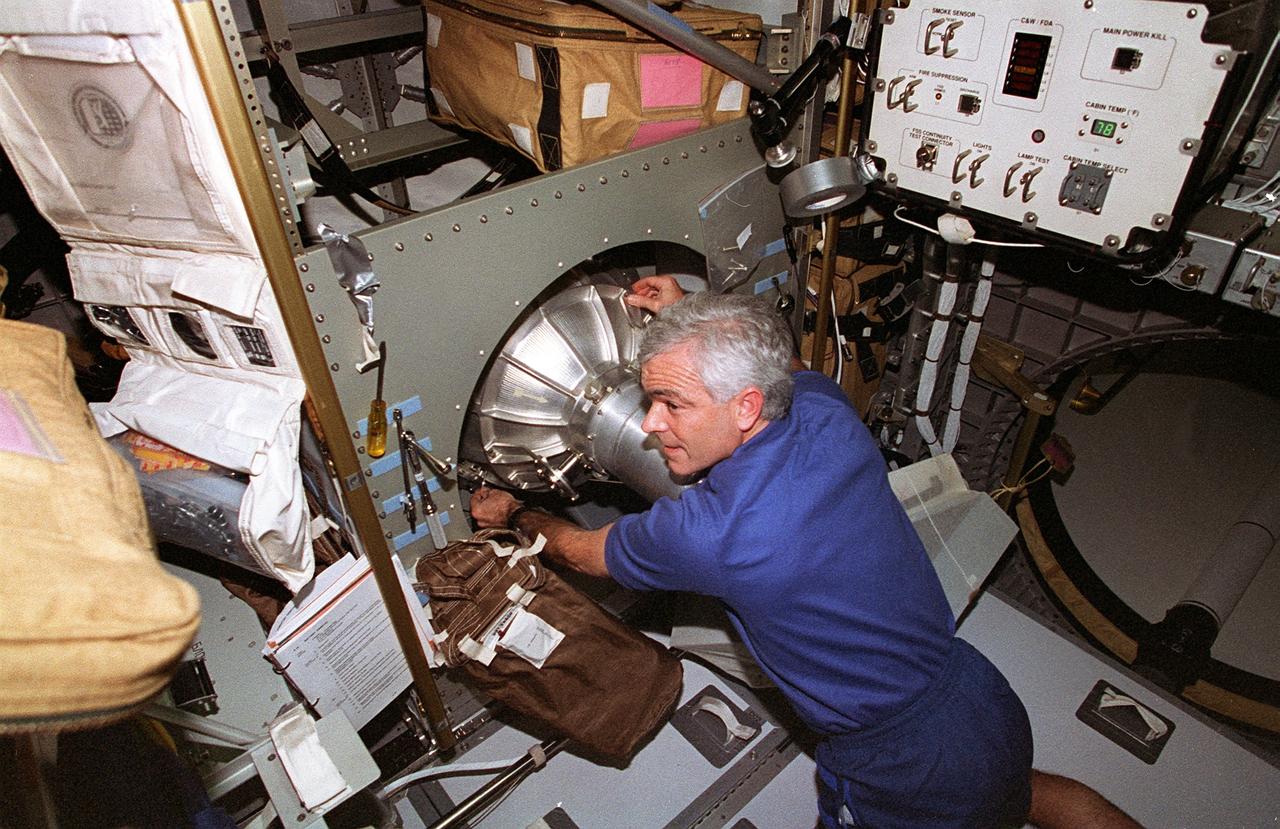
STS076-345-017 (22 - 31 March 1996) --- Onboard the Spacehab module in the cargo bay of the Earth-orbiting Space Shuttle Atlantis, astronaut Michael R. (Rich) Clifford secures a stowed gyrodyne. The stabilizing instrument earlier had been replaced on Russia's Mir Space Station with a new one brought up from the ground by the crew. The mission specialist and his crew mates docked with Mir on March 23, 1996 and remained linked until March 28, 1996.
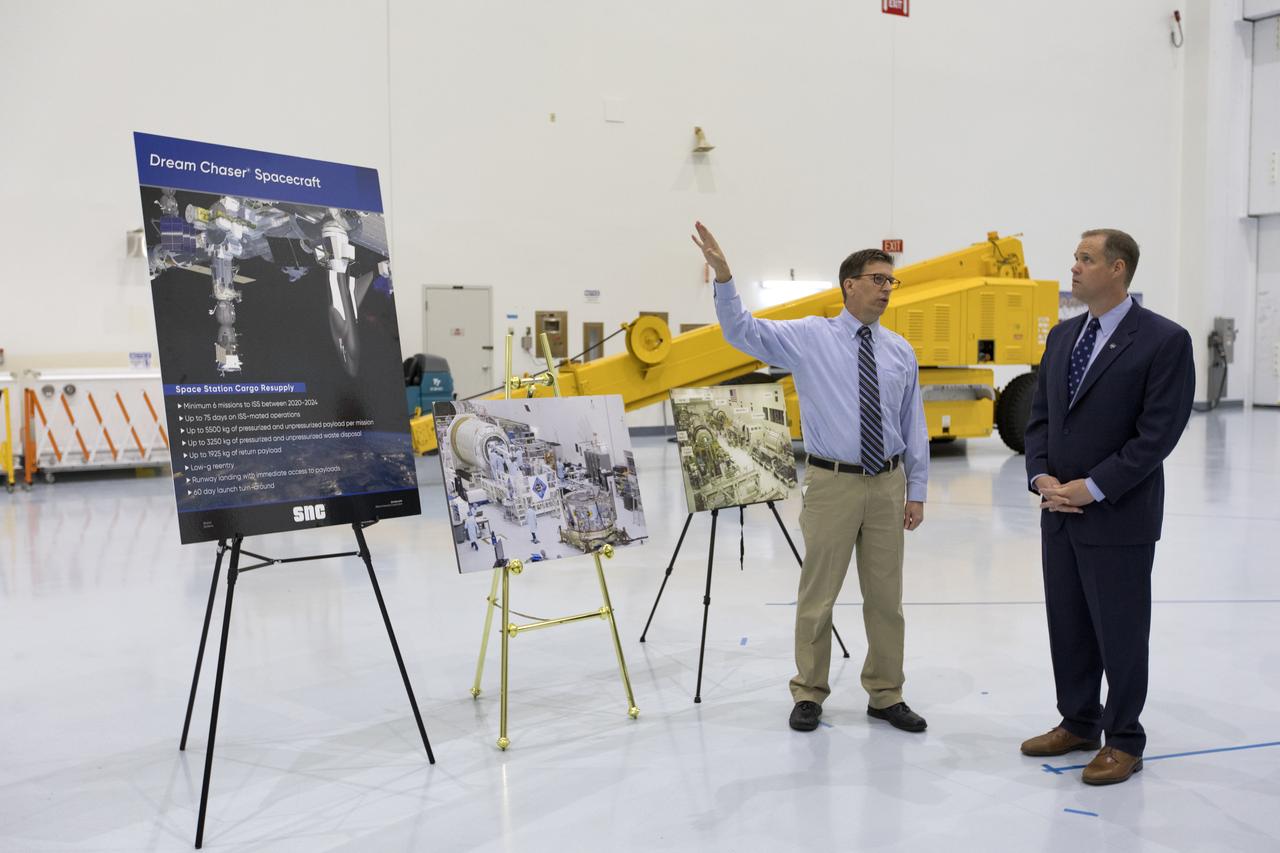
During a tour of the high bay in the Space Station Processing Facility (SSPF) at NASA's Kennedy Space Center in Florida, on Aug. 7, 2018, NASA Administrator Jim Bridenstine, hears about progress made on Sierra Nevada Corporation's Dream Chaser spacecraft. Dream Chaser will take cargo to the International Space Station. Bridenstine also received updates on research and technology accomplishments during his visit to the SSPF.
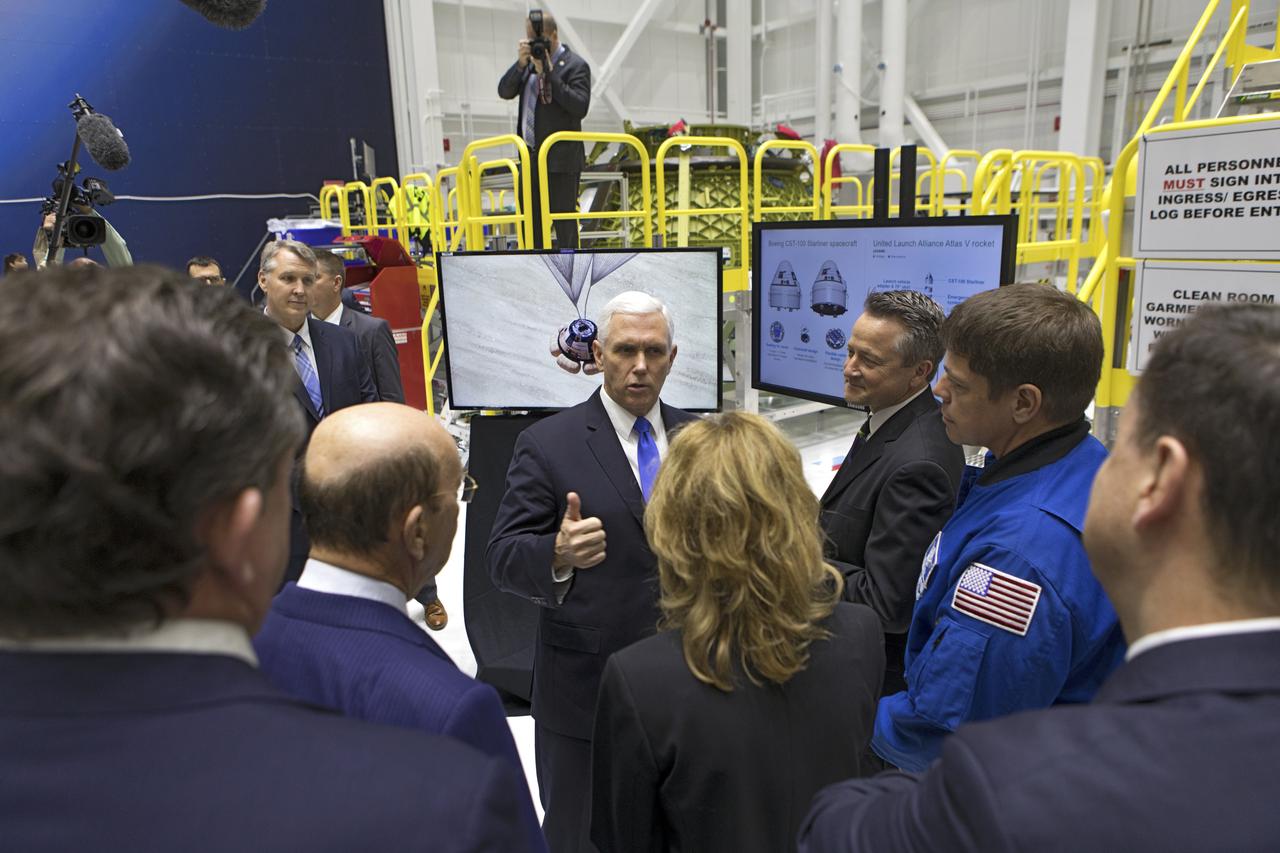
Vice President Mike Pence, center, speaks to Boeing executives and members of the National Space Council during a tour of the Boeing Commercial Crew and Cargo Processing Facility at NASA's Kennedy Space Center in Florida, on Feb. 21, 2018. During his visit, Pence chaired a meeting of the council in the high bay of the center's Space Station Processing Facility. The council's role is to advise the president regarding national space policy and strategy, and review the nation's long-range goals for space activities.
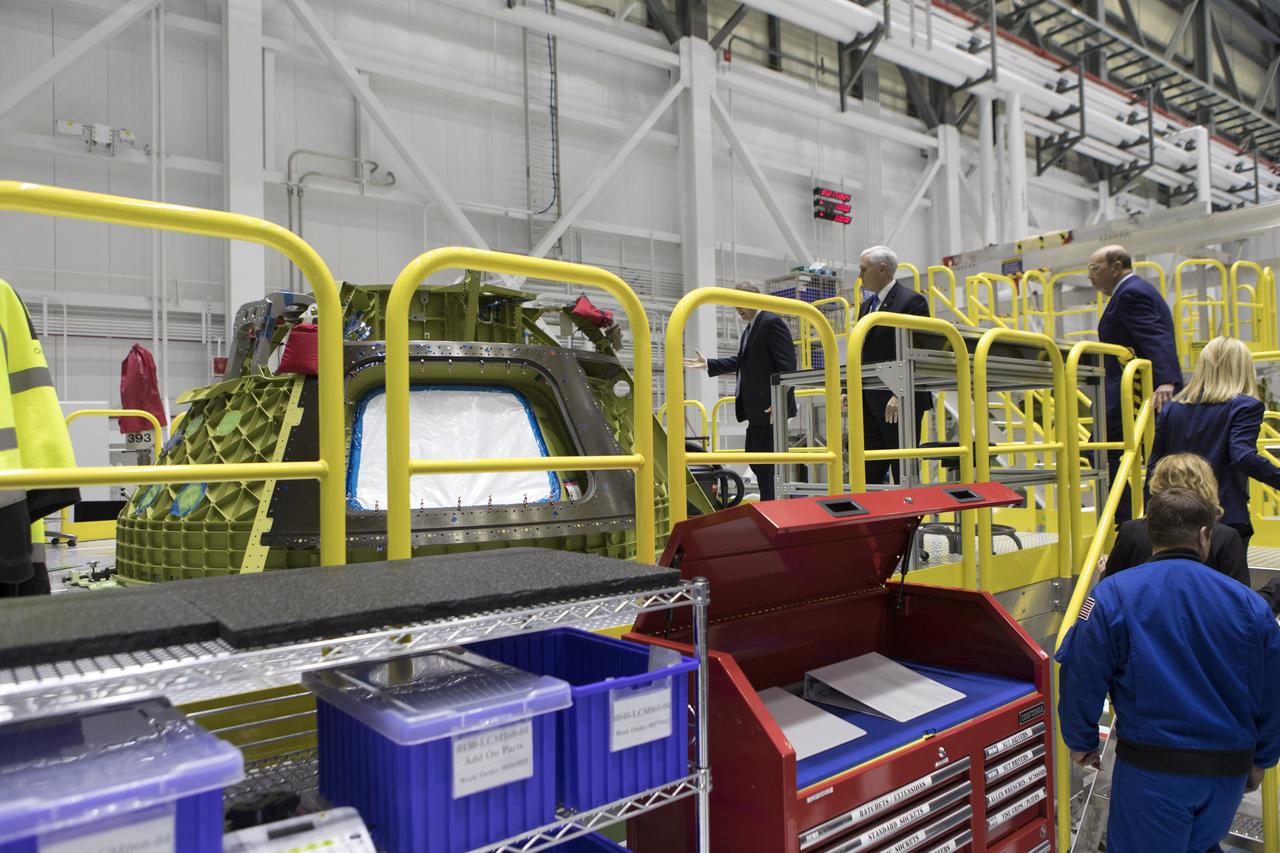
Vice President Mike Pence views Boeing’s Starliner spacecraft for the Crew Flight Test during a tour of the company’s Commercial Crew and Cargo Processing Facility at NASA's Kennedy Space Center in Florida, on Feb. 21, 2018. During his visit, Pence chaired a meeting of the National Space Council in the high bay of the center's Space Station Processing Facility. The council's role is to advise the president regarding national space policy and strategy, and review the nation's long-range goals for space activities.
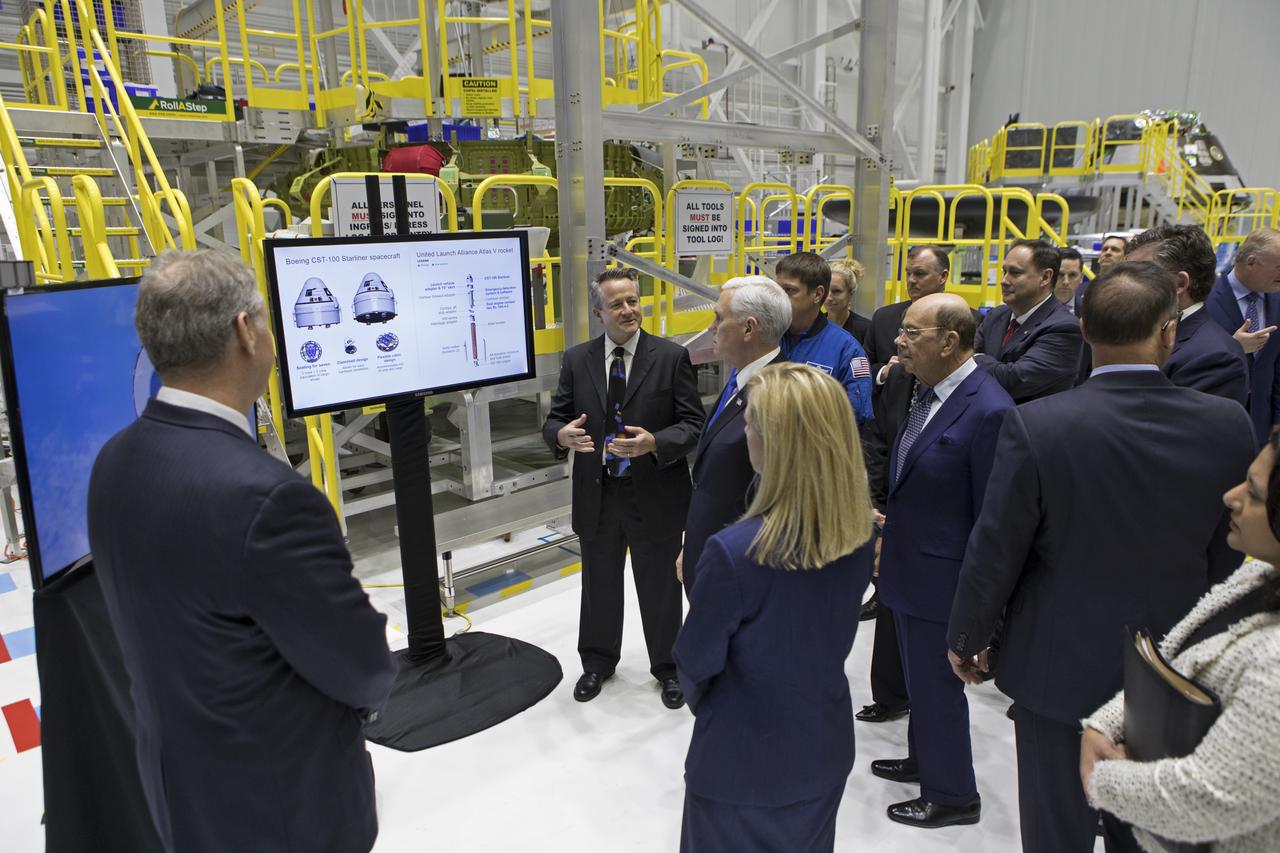
Vice President Mike Pence, center, and members of the National Space Council hear from a Boeing employee during a tour of the Boeing Commercial Crew and Cargo Processing Facility at NASA's Kennedy Space Center in Florida, on Feb. 21, 2018. During his visit, Pence chaired a meeting of the council in the high bay of the center's Space Station Processing Facility. The council's role is to advise the president regarding national space policy and strategy, and review the nation's long-range goals for space activities.
NASA Administrator Jim Bridenstine, at right, tours the high bay inside the Space Station Processing Facility (SSPF), on Aug. 7, 2018, at NASA's Kennedy Space Center in Florida. From left, Carlos Calle, lead scientist in the Electrostatic and Surface Physics Laboratory, and Dr. Robert Youngquist, lead, Applied Physics Laboratory, explain electrostatic dust shield technology. Bridenstine also received updates on research and technology accomplishments during his visit to the SSPF.
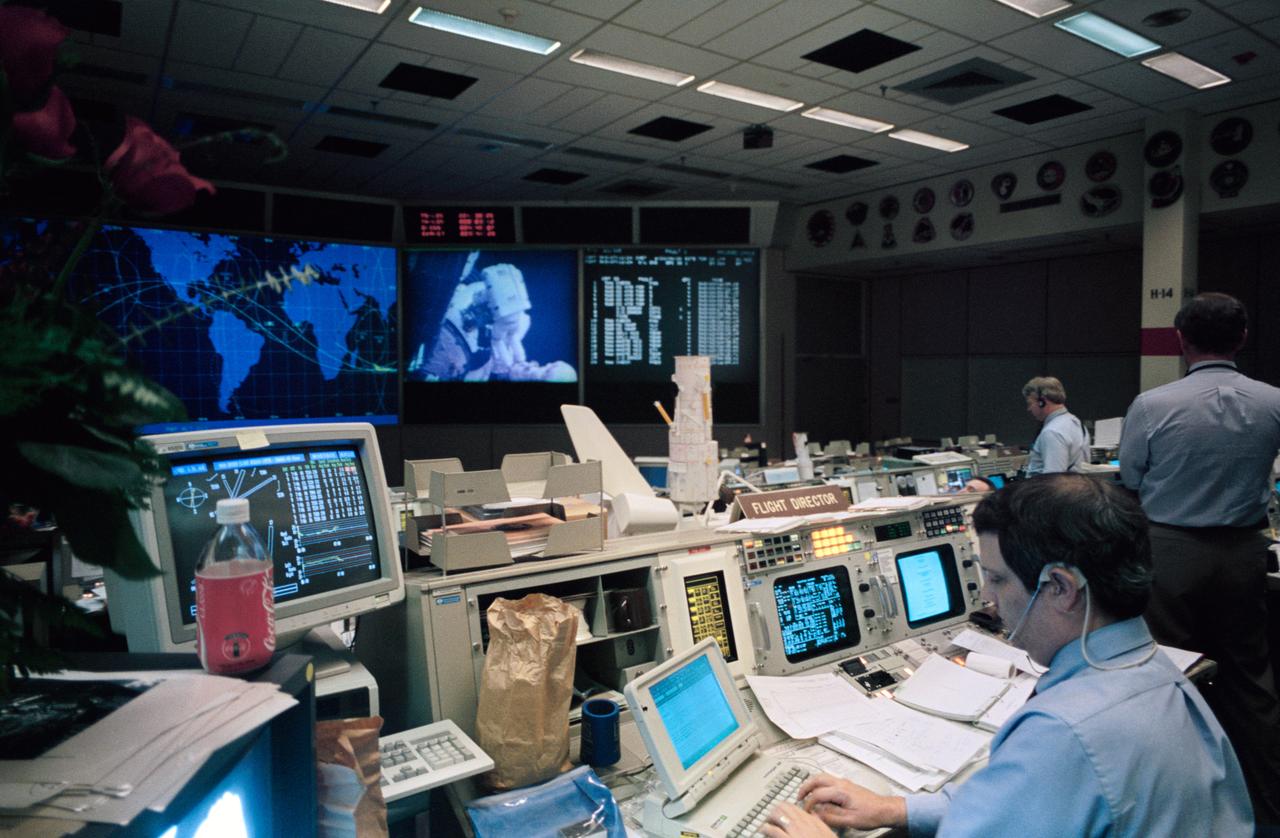
STS061-S-103 (2-13 DEC 1993) --- Flight director Robert E. Castle uses a lap top computer to aid his busy tasks during one of the five space walks performed to service the Hubble Space Telescope (HST) temporarily berthed in the Space Shuttle Endeavour's cargo bay. STS-61 lead flight director Milt Heflin is at right edge of frame.
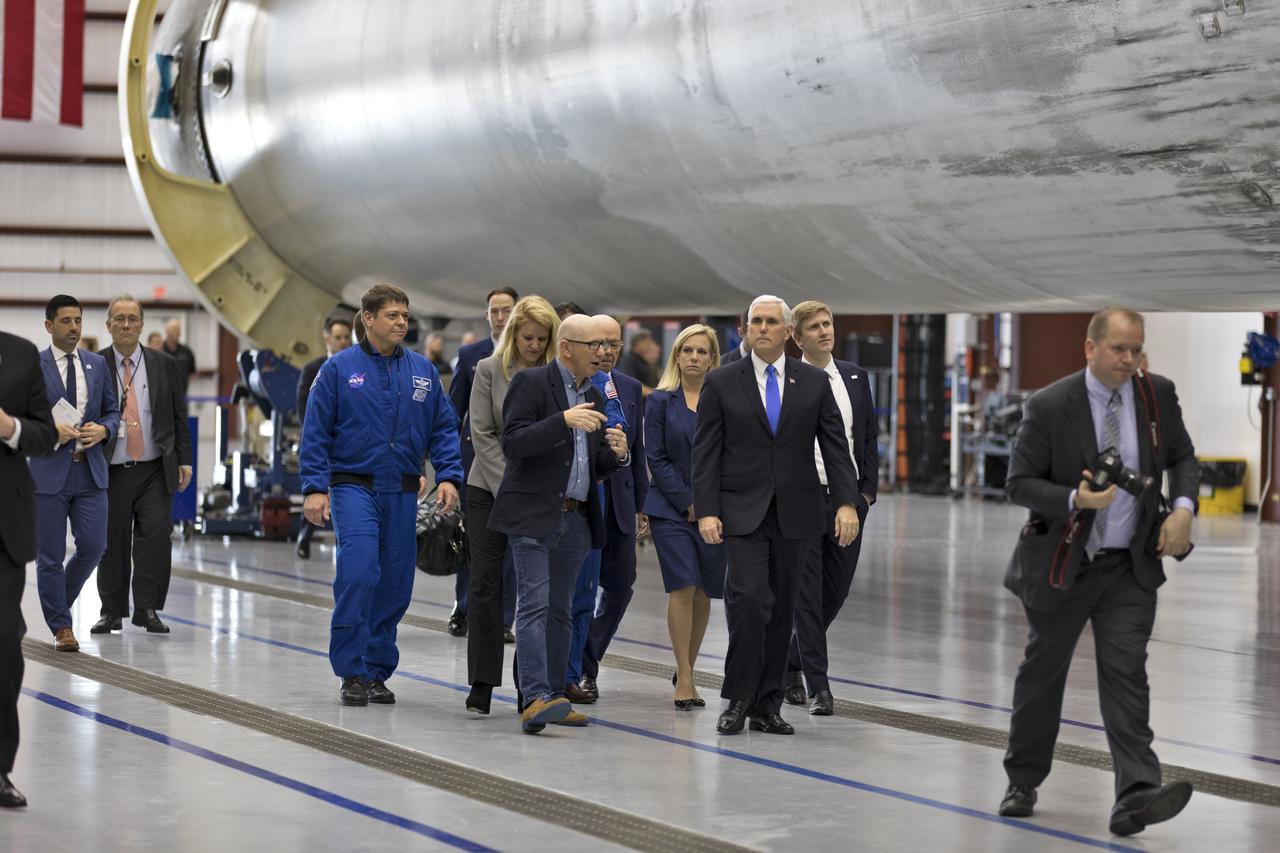
Vice President Mike Pence tours the SpaceX hangar at Launch Complex 39A, at NASA's Kennedy Space Center in Florida, on Feb. 21, 2018. The group is getting a close-up look at a previously flown Falcon 9 rocket. During his visit, Pence chaired a meeting of the National Space Council in the high bay of the center's Space Station Processing Facility. The council's role is to advise the president regarding national space policy and strategy, and review the nation's long-range goals for space activities.
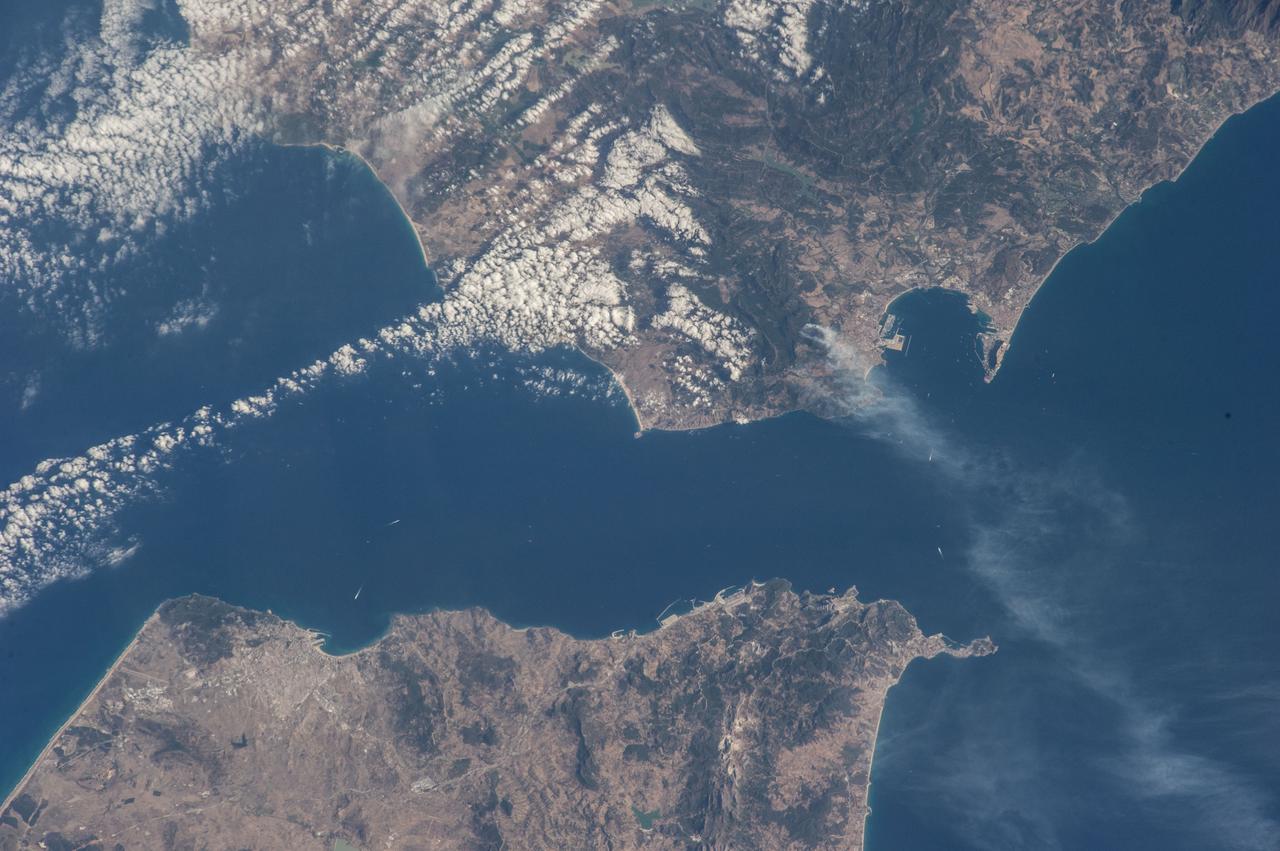
ISS040-E-081001 (25 July 2014) --- One of the Expedition 40 crew members aboard the Earth-orbiting International Space Station was aiming his camera almost straight down when he recorded this view of parts of Spain (top), Morocco (bottom) and the Strait of Gibraltar (center) at 08:04:35 GMT on July 25, 2014. Gibraltar and the Alboran Sea are on the right side of the frame. Cadiz, Spain is almost under clouds on the Bay of Cadiz above and to the left of frame center.
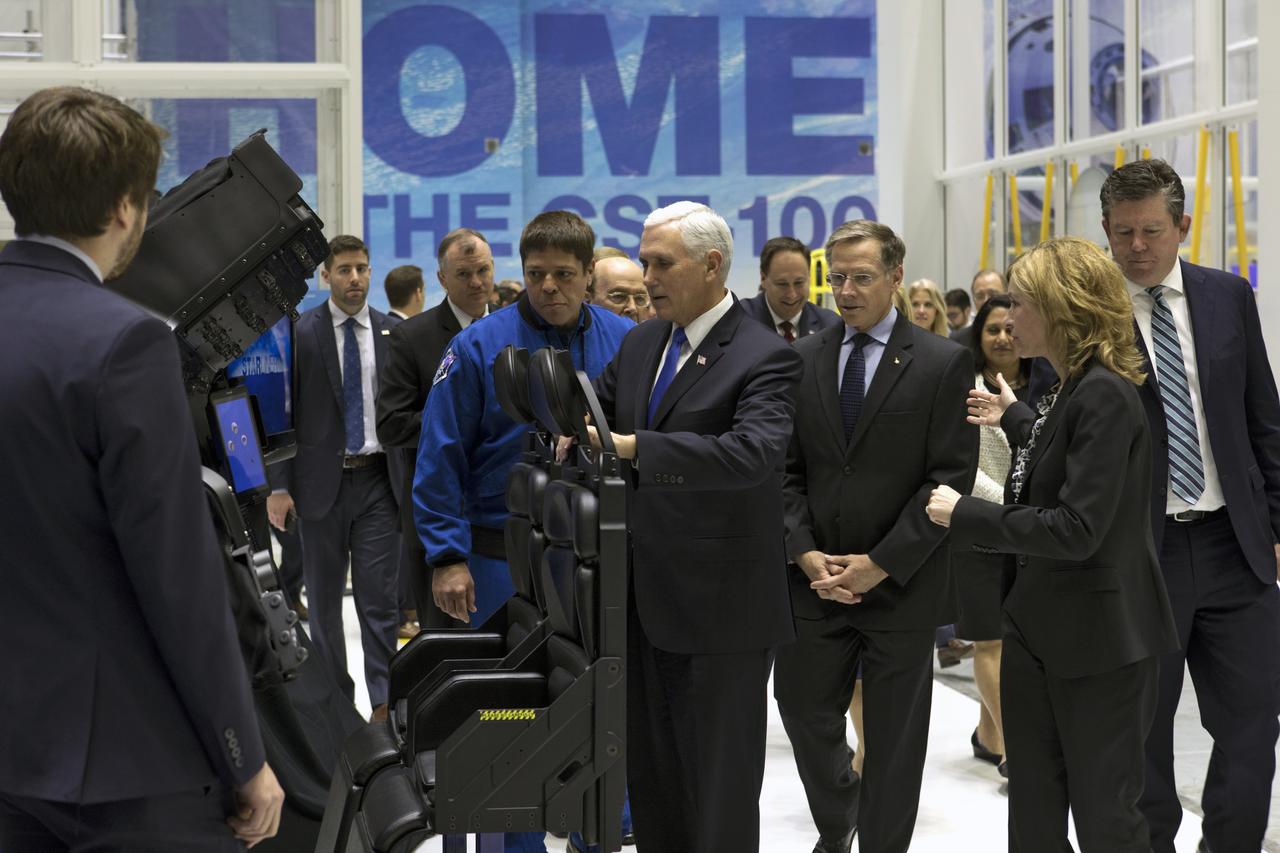
Vice President Mike Pence, center, NASA astronaut Bob Behnken, left, and Chris Ferguson, Boeing’s director of Crew and Mission Systems, tour the company’s Commercial Crew and Cargo Processing Facility at NASA's Kennedy Space Center in Florida, on Feb. 21, 2018. During his visit, Pence chaired a meeting of the National Space Council in the high bay of the center's Space Station Processing Facility. The council's role is to advise the president regarding national space policy and strategy, and review the nation's long-range goals for space activities.
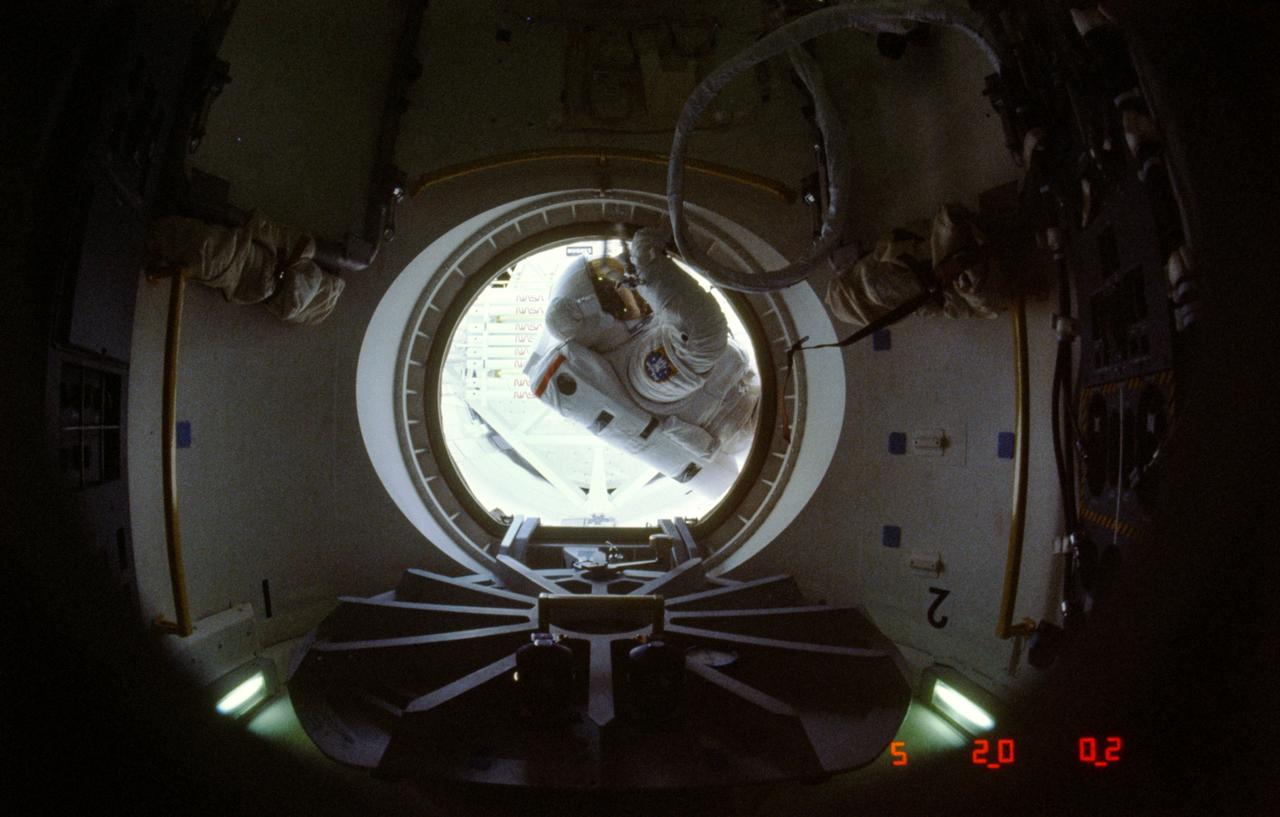
61B-08-026 (1 Dec 1985) --- Astronaut Jerry L. Ross was photographed by astronaut Bryan D. O'Connor through Atlantis's airlock as the mission specialist, fully equipped with his red-striped, white extravehicular mobility unit (EMU), moved out into the cargo bay to begin one of two lengthy extravehicular activities (EVA) on the week-long STS 61-B mission.
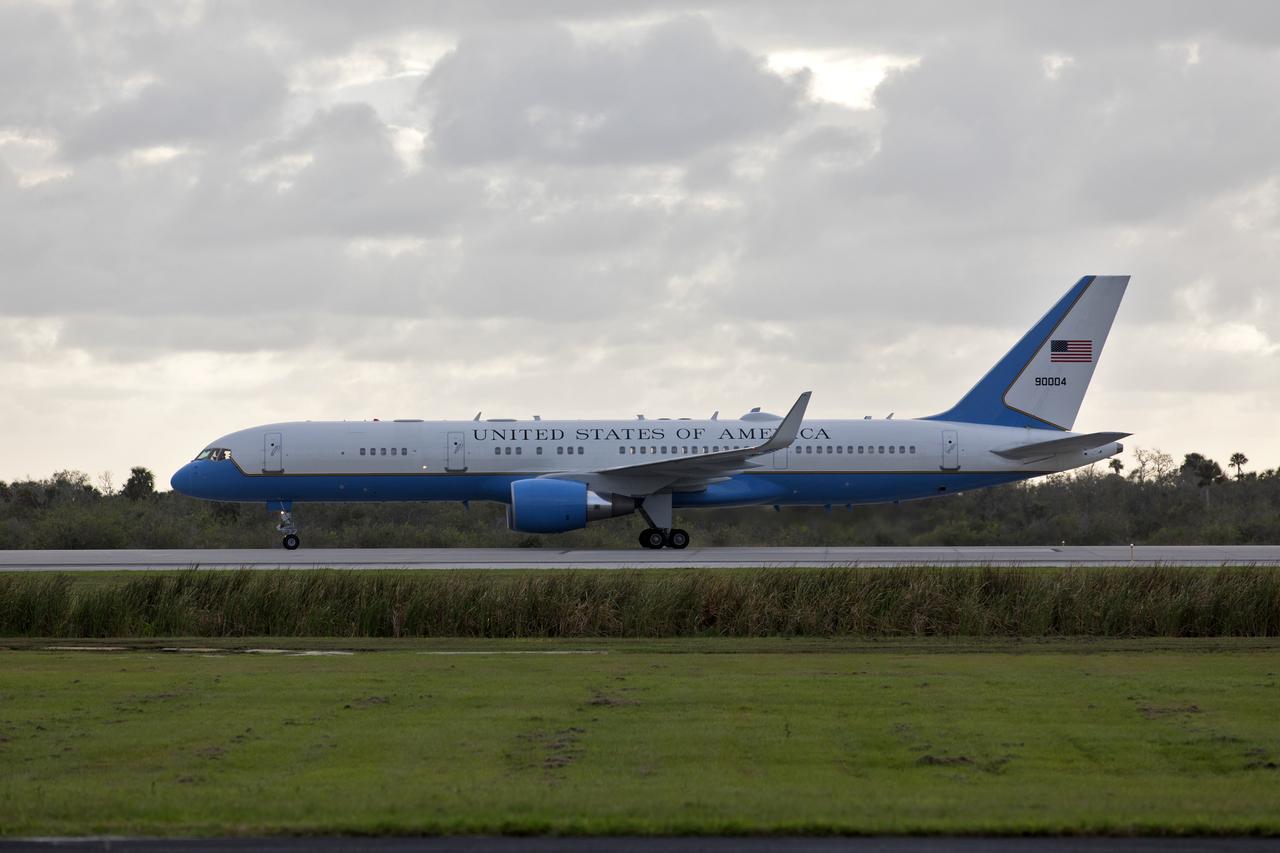
Air Force Two, carrying Vice President Mike Pence, taxis on the Shuttle Landing Facility at NASA's Kennedy Space Center in Florida, on Feb. 20, 2018. During his visit, Pence will chair a meeting of the National Space Council in the high bay of the center's Space Station Processing Facility. The council's role is to advise the president regarding national space policy and strategy, and review the nation's long-range goals for space activities.
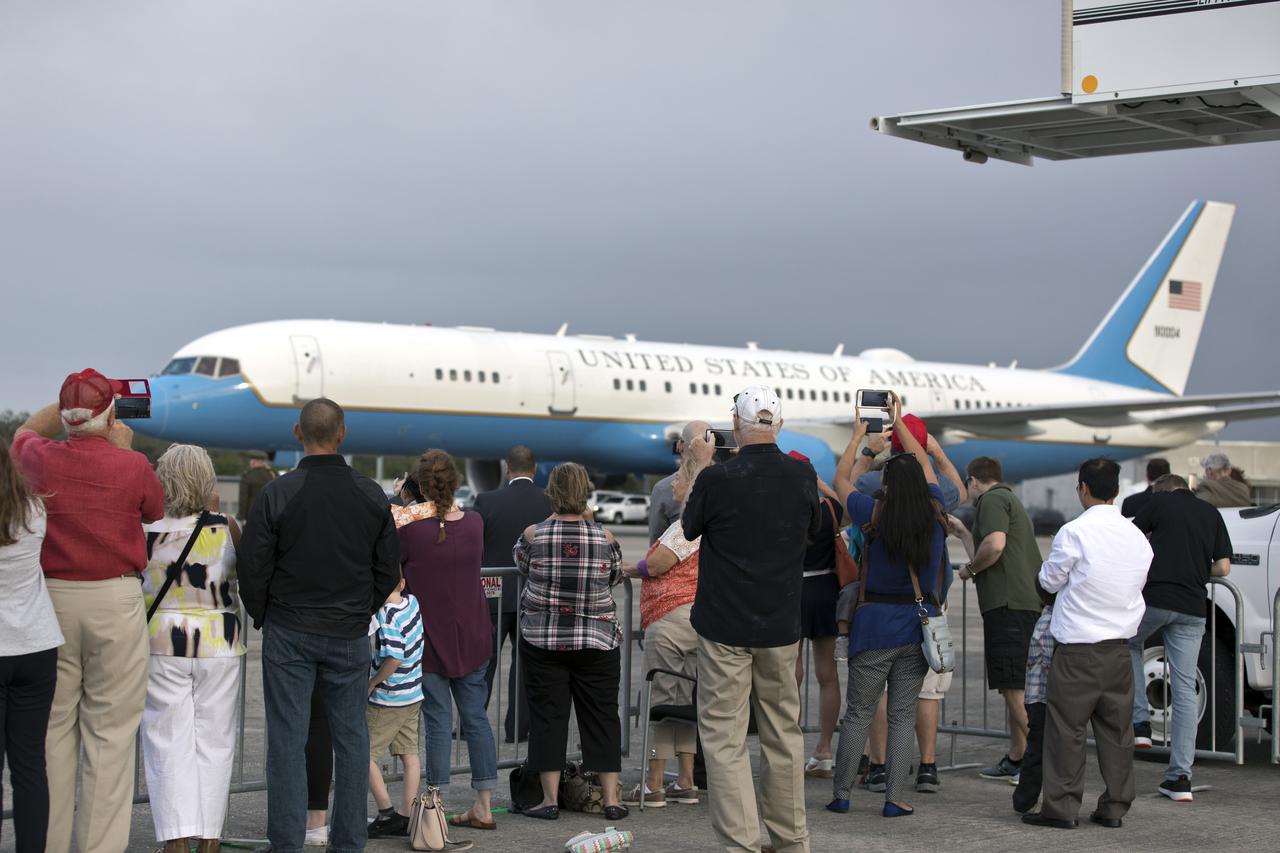
Spectators watch as Air Force Two, carrying Vice President Mike Pence, taxis on the Shuttle Landing Facility at NASA's Kennedy Space Center in Florida, on Feb. 20, 2018. During his visit, Pence will chair a meeting of the National Space Council in the high bay of the center's Space Station Processing Facility. The council's role is to advise the president regarding national space policy and strategy, and review the nation's long-range goals for space activities.
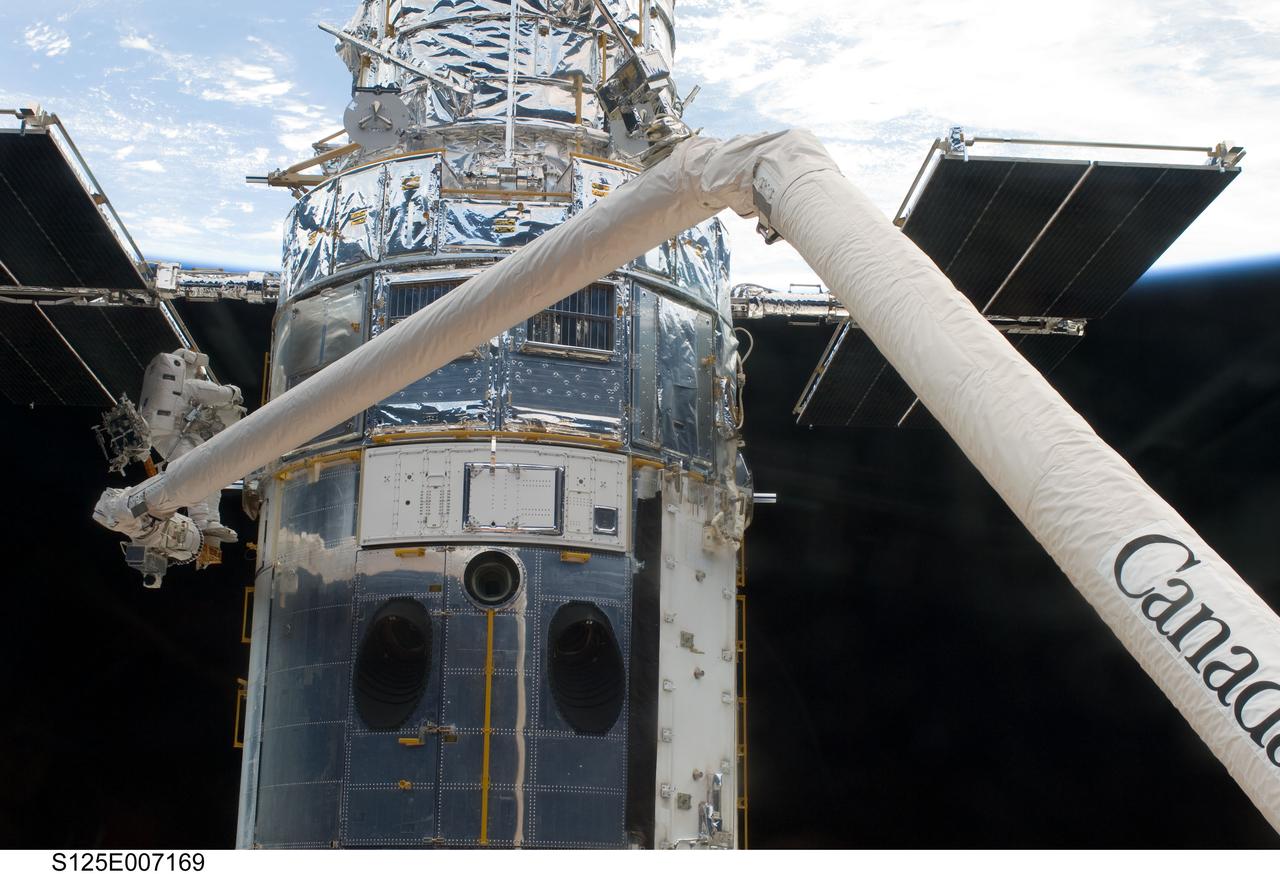
S125-E-007169 (14 May 2009) --- Astronaut Andrew Feustel, perched alone on the end of the Space Shuttle Atlantis? remote manipulator system arm, participates in the first of five STS-125 spacewalks to perform work on the Hubble Space Telescope, temporarily locked down in the cargo bay of the Earth-orbiting shuttle. Out of frame is his space-walking colleague, veteran astronaut John Grunsfeld. The two mission specialists are also assigned to two of the remaining four sessions of extravehicular activity for the Atlantis crew.
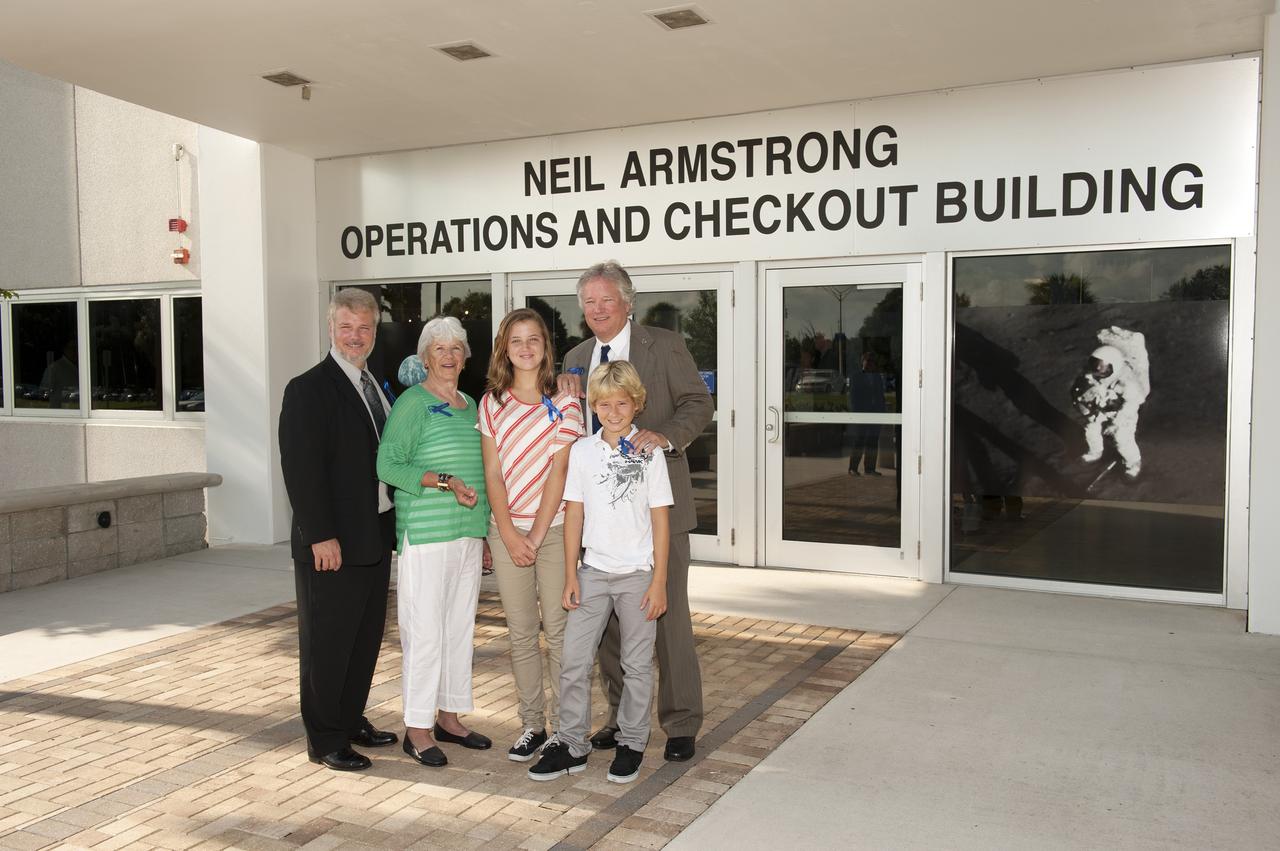
CAPE CANAVERAL, Fla. -- At the Kennedy Space Center in Florida, the family of Neil Armstrong poses for a group portrait in front of the refurbished Operations and Checkout Building. From left are Armstrong's son Mark, his former wife Janet, his granddaughter Lily, his son Rick and his grandson Bryce. Armstrong, an Apollo 11 astronaut, was the first person to set foot on the moon and for whom the facility is newly named. The building's high bay is being used to support the agency's new Orion spacecraft, which will lift off atop the Space Launch System rocket. Orion is designed to take humans farther than they’ve ever gone before, serving as the exploration vehicle that will carry astronauts to deep space and sustain the crew during travel to destinations such as an asteroid or Mars. The visit of the former astronauts was part of NASA's 45th anniversary celebration of the Apollo 11 moon landing. As the world watched, Neil Armstrong and Aldrin landed in the moon's Sea of Tranquility aboard the lunar module Eagle on July 20, 1969. Meanwhile, crewmate Collins orbited above in the command module Columbia. For more, visit http://www.nasa.gov/press/2014/july/nasa-honors-historic-first-moon-landing-eyes-first-mars-mission. Photo credit: NASA/Kevin O'Connell
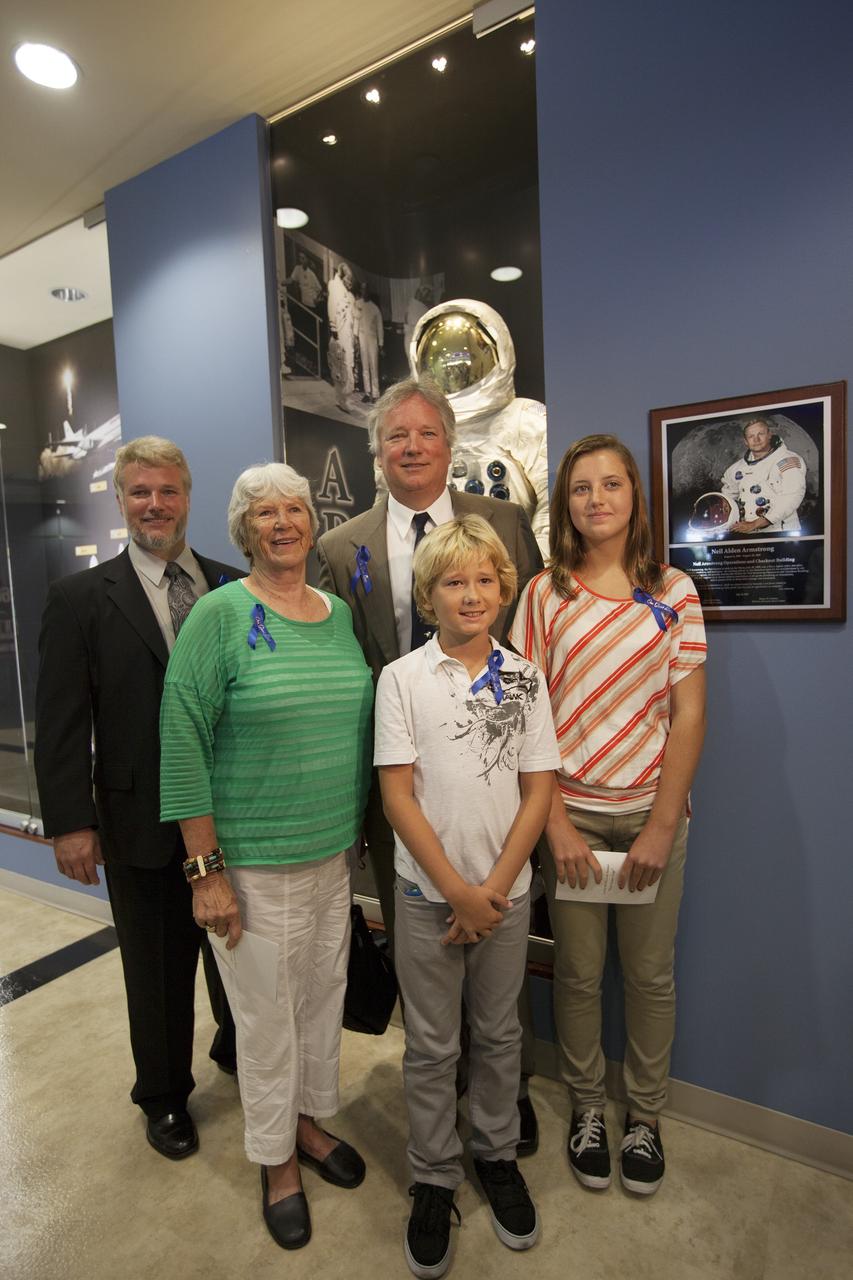
CAPE CANAVERAL, Fla. -- At the Kennedy Space Center in Florida, members of the Armstrong family pose beside a plaque following its unveiling in the lobby of the newly named Neil Armstrong Operations and Checkout Building. The facility has been renamed for Apollo 11 astronaut Neil Armstrong, the first person to set foot on the moon. From left are Armstrong's son Mark, his former wife Janet, his son Rick, his grandson Bryce, and his granddaughter Lily. The building's high bay is being used to support the agency's new Orion spacecraft and is the same spaceport facility where the Apollo 11 command/service module and lunar module were prepped for the first lunar landing mission in 1969. Orion is designed to take humans farther than they’ve ever gone before, serving as the exploration vehicle that will carry astronauts to deep space and sustain the crew during travel to destinations such as an asteroid or Mars. The unveiling was part of NASA's 45th anniversary celebration of the Apollo 11 moon landing. As the world watched, Apollo 11 astronauts landed in the moon's Sea of Tranquility aboard the lunar module, Eagle, on July 20, 1969, as the command module, Columbia, orbited overhead. For more: http://www.nasa.gov/press/2014/july/nasa-honors-historic-first-moon-landing-eyes-first-mars-mission/ Photo credit: NASA/Kim Shiflett
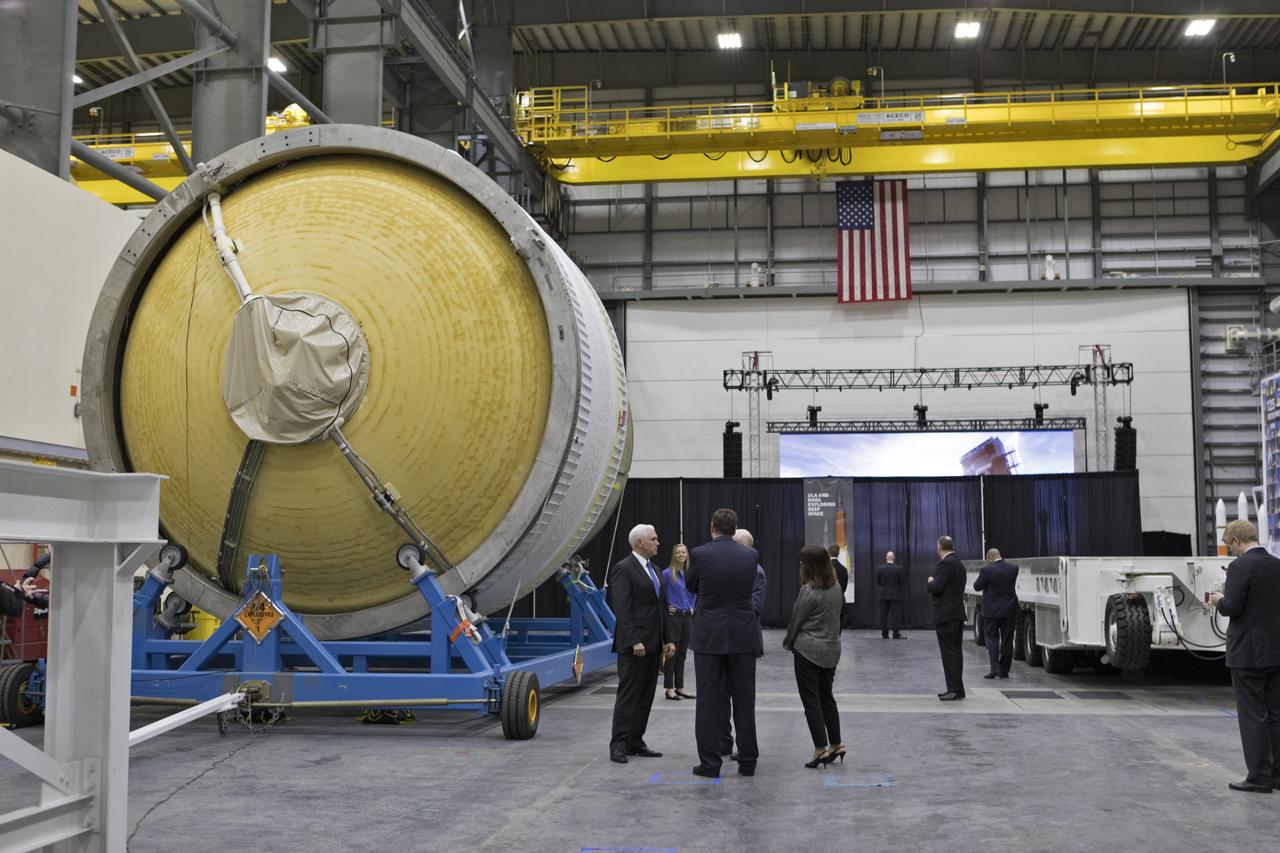
United Launch Alliance (ULA) president and CEO Tory Bruno leads a tour for Vice President Mike Pence, his wife, Karen Pence, and NASA Acting Administrator Robert Lightfoot on Feb. 20, 2018. They are in the ULA Horizontal Integration Facility (HIF), at Cape Canaveral Air Force Station in Florida. The HIF is where the Delta IV Heavy boosters are being processed for NASA’s upcoming Parker Solar Probe mission. During his visit, Pence will chair a meeting of the National Space Council on Feb. 21, 2018 in the high bay of NASA Kennedy Space Center’s Space Station Processing Facility. The council's role is to advise the president regarding national space policy and strategy, and review the nation's long-range goals for space activities.
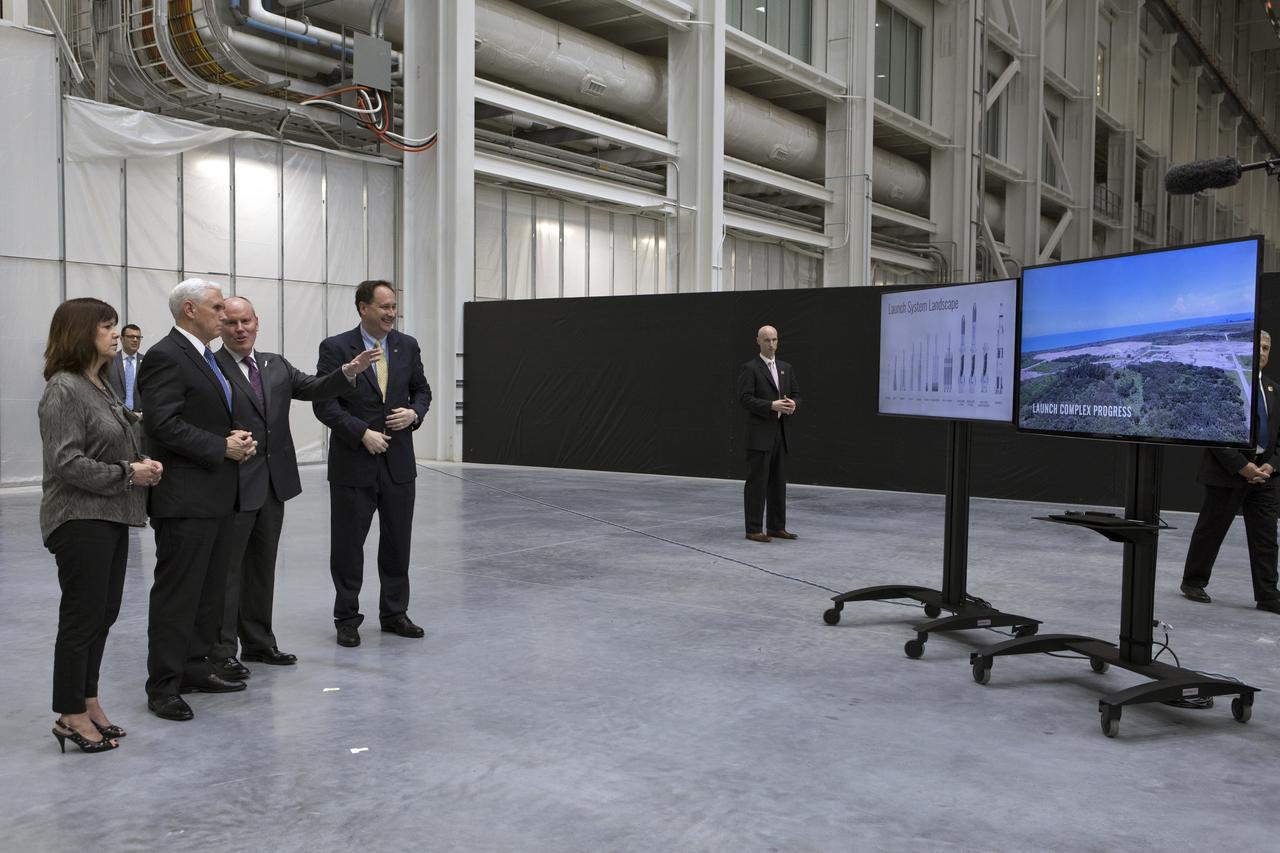
Vice President Mike Pence, second from left, tours the Blue Origin Manufacturing Facility near NASA's Kennedy Space Center in Florida, on Feb. 20, 2018. At left is the vice president's wife, Karen Pence. To his right are Blue Origin CEO Robert Smith, and acting NASA Administrator Robert Lightfoot. Vice President Pence viewed the flown New Shepard Booster and Crew Capsule. The booster was the first launch vehicle with a successful vertical takeoff and vertical landing to demonstrate reusability. During his visit, Pence will chair a meeting of the National Space Council on Feb. 21, 2018 in the high bay of NASA Kennedy Space Center's Space Station Processing Facility. The council's role is to advise the president regarding national space policy and strategy, and review the nation's long-range goals for space activities.
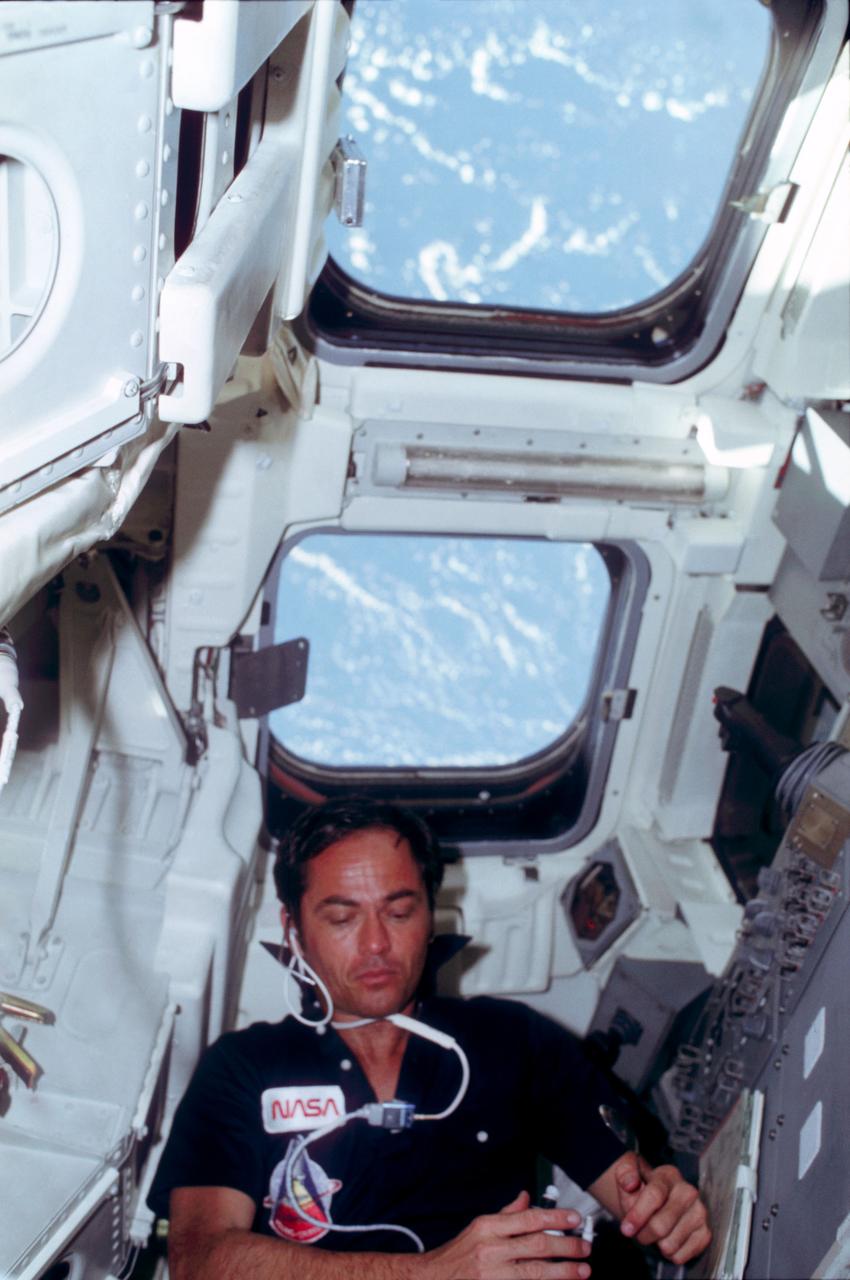
STS001-06-481 (April 1981) --- Astronaut Robert L. Crippen, STS-1 pilot, is behind his station in the flight deck of Columbia. He has a spoon in his hand. The windows prominent in the scene are the ones through which a number of Earth scenes were photographed with a 70mm camera by the two astronauts. Clouds over water can be seen through them. Just inches away from the top windows, not quite so obvious at top of the frame (if held horizontally) are the two aft cabin windows through which the crew viewed the cargo bay and the aft end of the craft, including the orbital maneuvering system (OMS) pods. Astronaut John W. Young, commander, took this photo with a 35mm camera. Photo credit: NASA
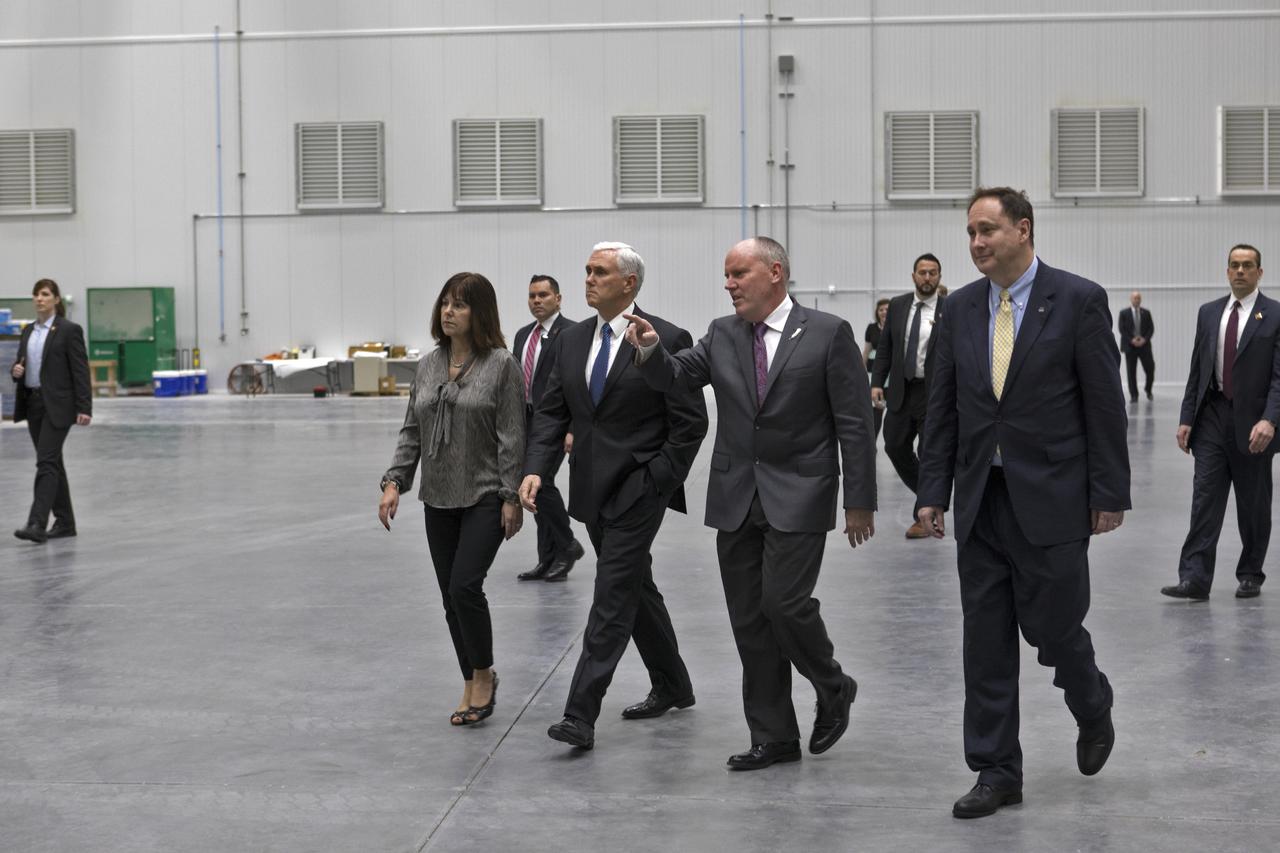
Vice President Mike Pence, second from left, tours the Blue Origin Manufacturing Facility near NASA's Kennedy Space Center in Florida, on Feb. 20, 2018. At left is the vice president's wife, Karen Pence. To his right are Blue Origin CEO Robert Smith, and acting NASA Administrator Robert Lightfoot. Vice President Pence viewed the flown New Shepard Booster and Crew Capsule. The booster was the first launch vehicle with a successful vertical takeoff and vertical landing to demonstrate reusability. During his visit, Pence will chair a meeting of the National Space Council on Feb. 21, 2018 in the high bay of NASA Kennedy Space Center's Space Station Processing Facility. The council's role is to advise the president regarding national space policy and strategy, and review the nation's long-range goals for space activities.
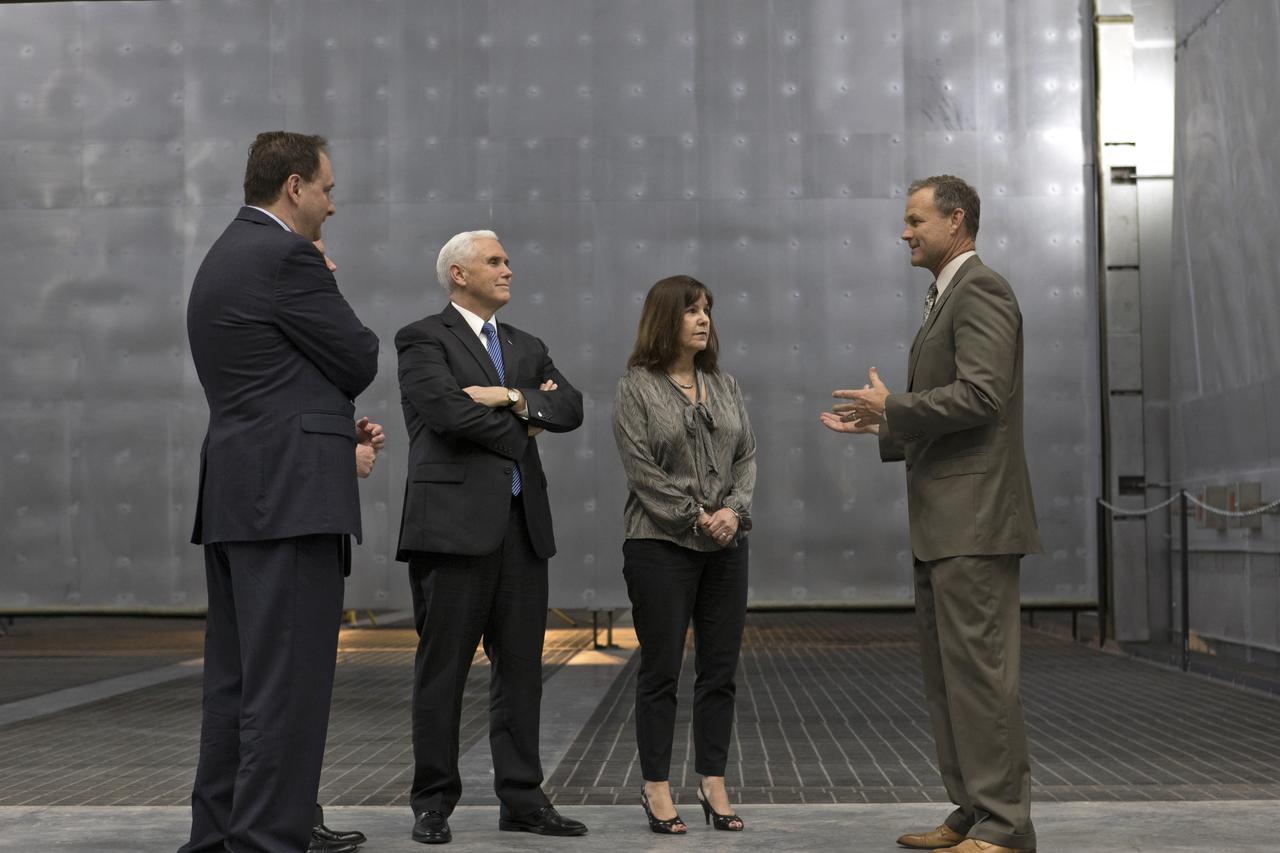
Vice President Mike Pence, second from left, tours the Blue Origin Manufacturing Facility near NASA's Kennedy Space Center in Florida, on Feb. 20, 2018. To his left is acting NASA Administrator Robert Lightfoot. At right is the vice president's wife, Karen Pence. At far right is Scott Henderson, Blue Origin director of Test and Flight Operations. Vice President Pence viewed the flown New Shepard Booster and Crew Capsule. The booster was the first launch vehicle with a successful vertical takeoff and vertical landing to demonstrate reusability. During his visit, Pence will chair a meeting of the National Space Council on Feb. 21, 2018 in the high bay of NASA Kennedy Space Center's Space Station Processing Facility. The council's role is to advise the president regarding national space policy and strategy, and review the nation's long-range goals for space activities.
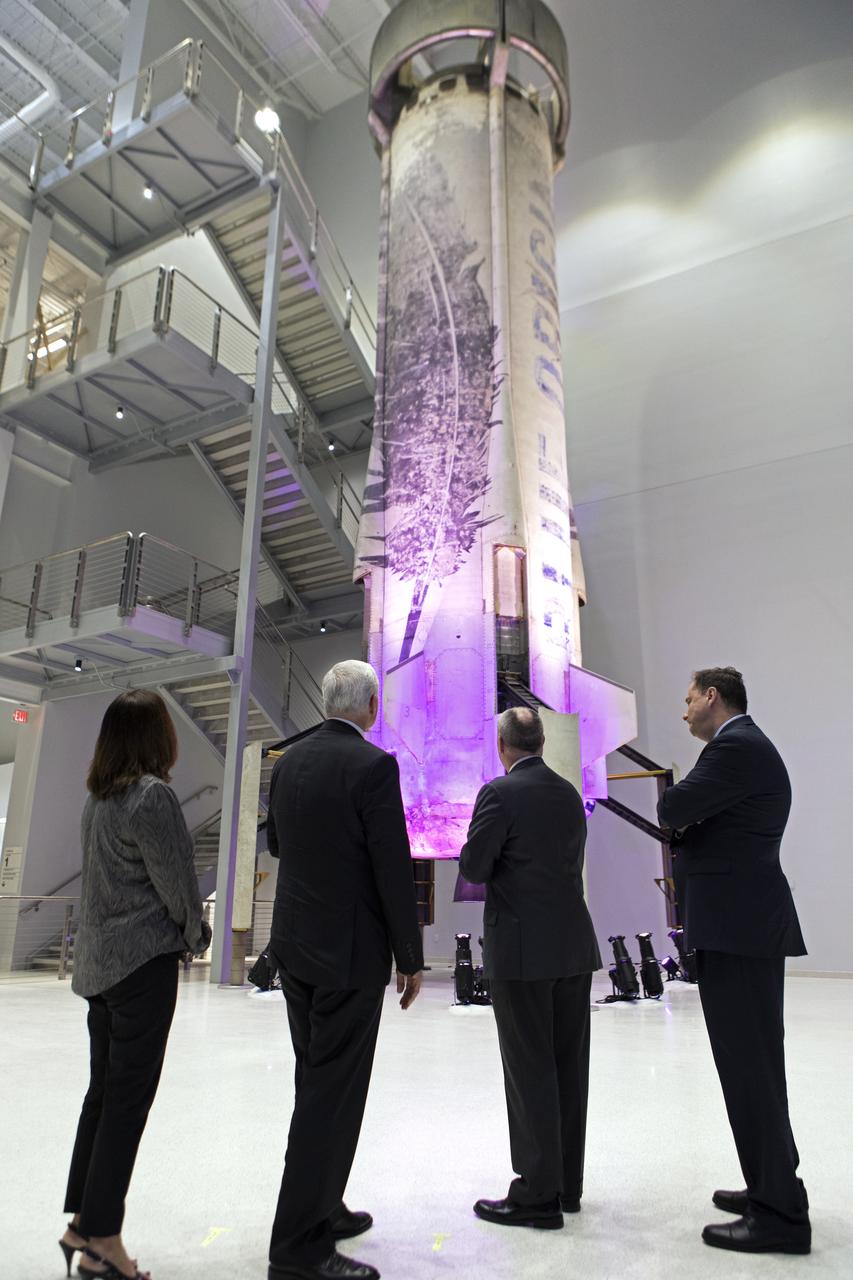
Vice President Mike Pence, second from left, tours the Blue Origin Manufacturing Facility near NASA's Kennedy Space Center in Florida, on Feb. 20, 2018. At left is the vice president's wife, Karen Pence. To his right are Blue Origin CEO Robert Smith, and acting NASA Administrator Robert Lightfoot. Vice President Pence viewed the flown New Shepard Booster and Crew Capsule. The booster was the first launch vehicle with a successful vertical takeoff and vertical landing to demonstrate reusability. During his visit, Pence will chair a meeting of the National Space Council on Feb. 21, 2018 in the high bay of NASA Kennedy Space Center's Space Station Processing Facility. The council's role is to advise the president regarding national space policy and strategy, and review the nation's long-range goals for space activities.
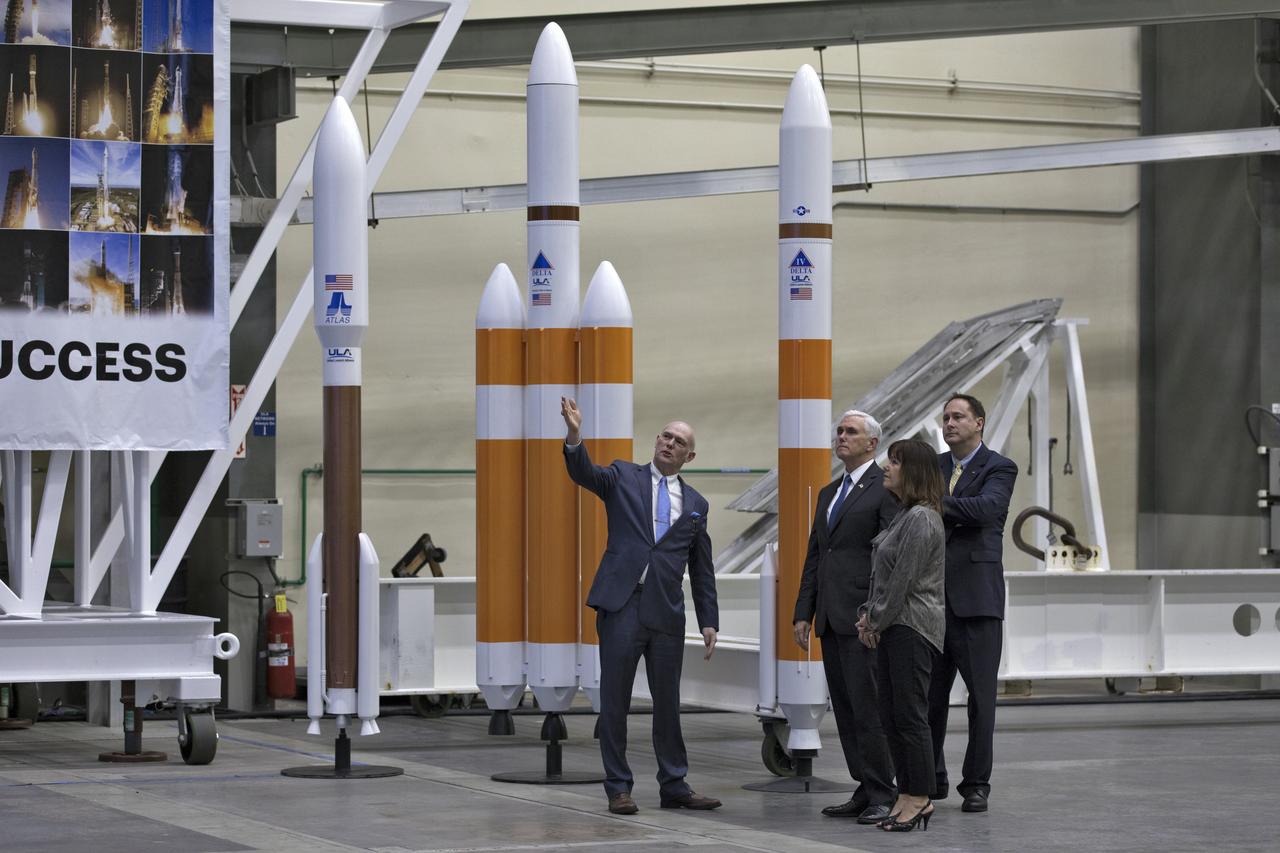
From the left, United Launch Alliance (ULA) president and CEO Tory Bruno leads a tour for Vice President Mike Pence, his wife, Karen Pence, and NASA Acting Administrator Robert Lightfoot on Feb. 20, 2018. They are in the ULA Horizontal Integration Facility (HIF), at Cape Canaveral Air Force Station in Florida. The HIF is where the Delta IV Heavy boosters are being processed for NASA’s upcoming Parker Solar Probe mission. During his visit, Pence will chair a meeting of the National Space Council on Feb. 21, 2018 in the high bay of NASA Kennedy Space Center’s Space Station Processing Facility. The council's role is to advise the president regarding national space policy and strategy, and review the nation's long-range goals for space activities.
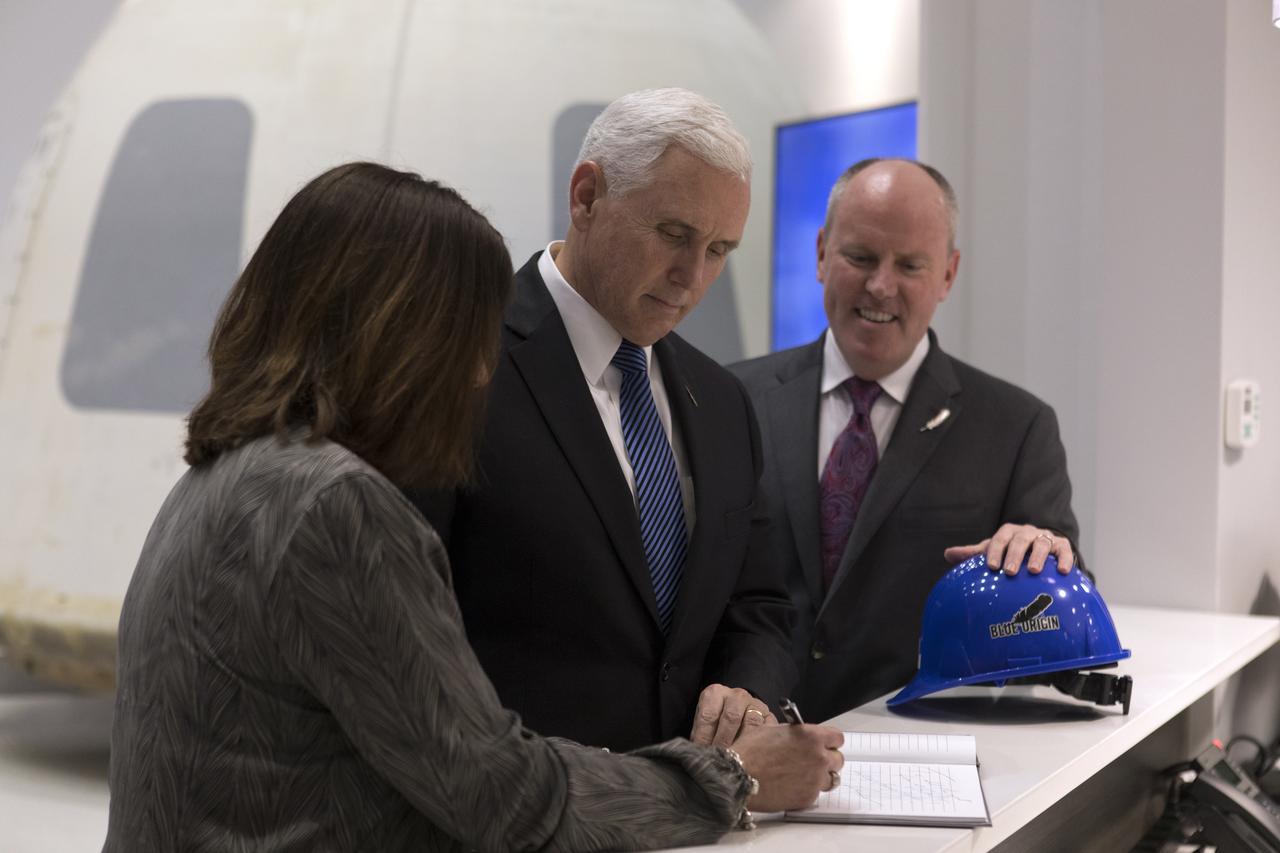
Vice President Mike Pence, center, and his wife, Karen Pence, sign a guest book during a tour of the Blue Origin Manufacturing Facility near NASA's Kennedy Space Center in Florida, on Feb. 20, 2018. At right is Blue Origin CEO Robert Smith. Vice President Pence viewed the flown New Shepard Booster and Crew Capsule. The booster was the first launch vehicle with a successful vertical takeoff and vertical landing to demonstrate reusability. During his visit, Pence will chair a meeting of the National Space Council on Feb. 21, 2018 in the high bay of NASA Kennedy Space Center's Space Station Processing Facility. The council's role is to advise the president regarding national space policy and strategy, and review the nation's long-range goals for space activities.
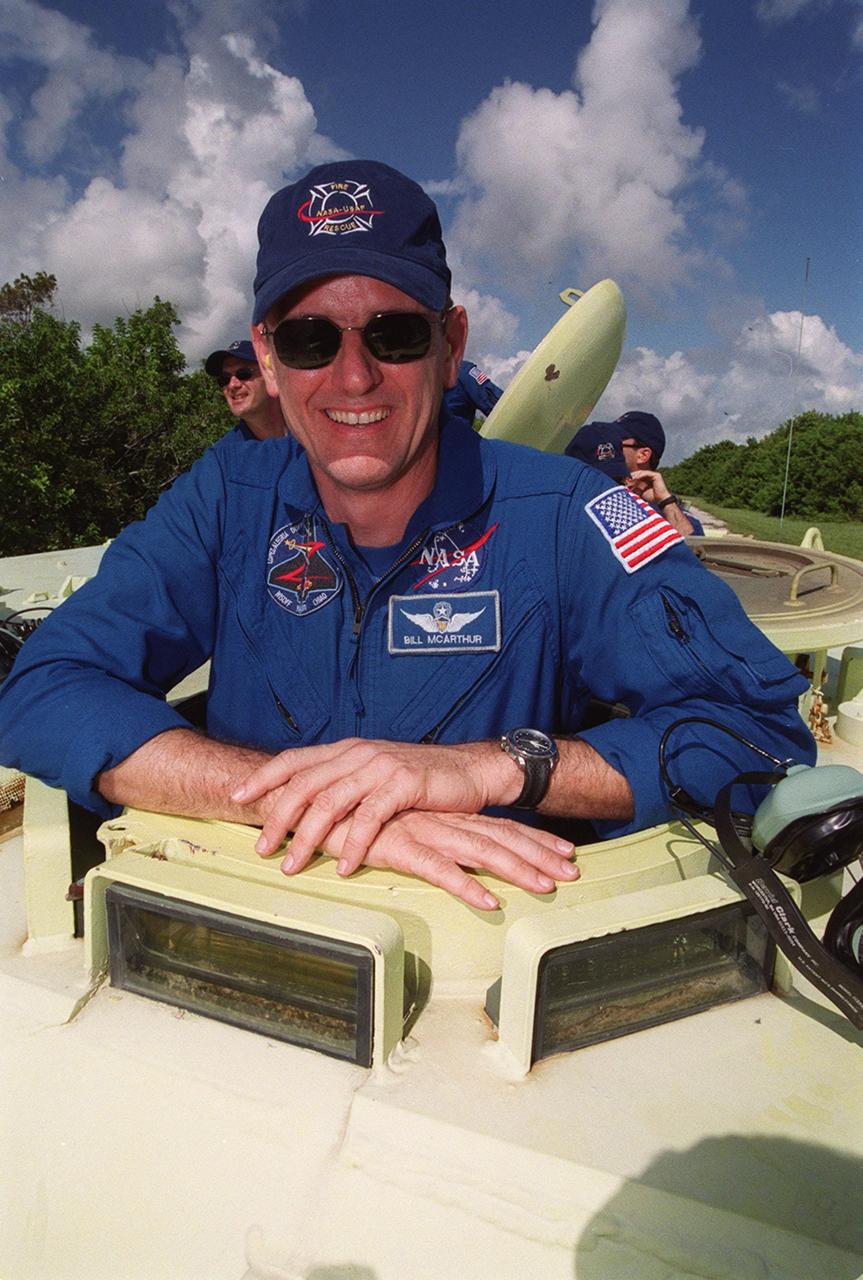
STS-92 Mission Specialist Bill McArthur gets ready to take his turn at driving the M-113, part of emergency egress training during Terminal Countdown Demonstration Test (TCDT) activities. Behind him (left) is Mission Specialist Jeff Wisoff, waiting his turn to drive along with other unidentified crew members.; The tracked vehicle could be used by the crew in the event of an emergency at the pad during which the crew must make a quick exit from the area. The TCDT also provides simulated countdown exercises and opportunities to inspect the mission payloads in the orbiter’s payload bay. STS-92 is scheduled to launch Oct. 5 at 9:30 p.m. EDT on the fifth flight to the International Space Station. It will carry two elements of the Space Station, the Integrated Truss Structure Z1 and the third Pressurized Mating Adapter. The mission is also the 100th flight in the Shuttle program
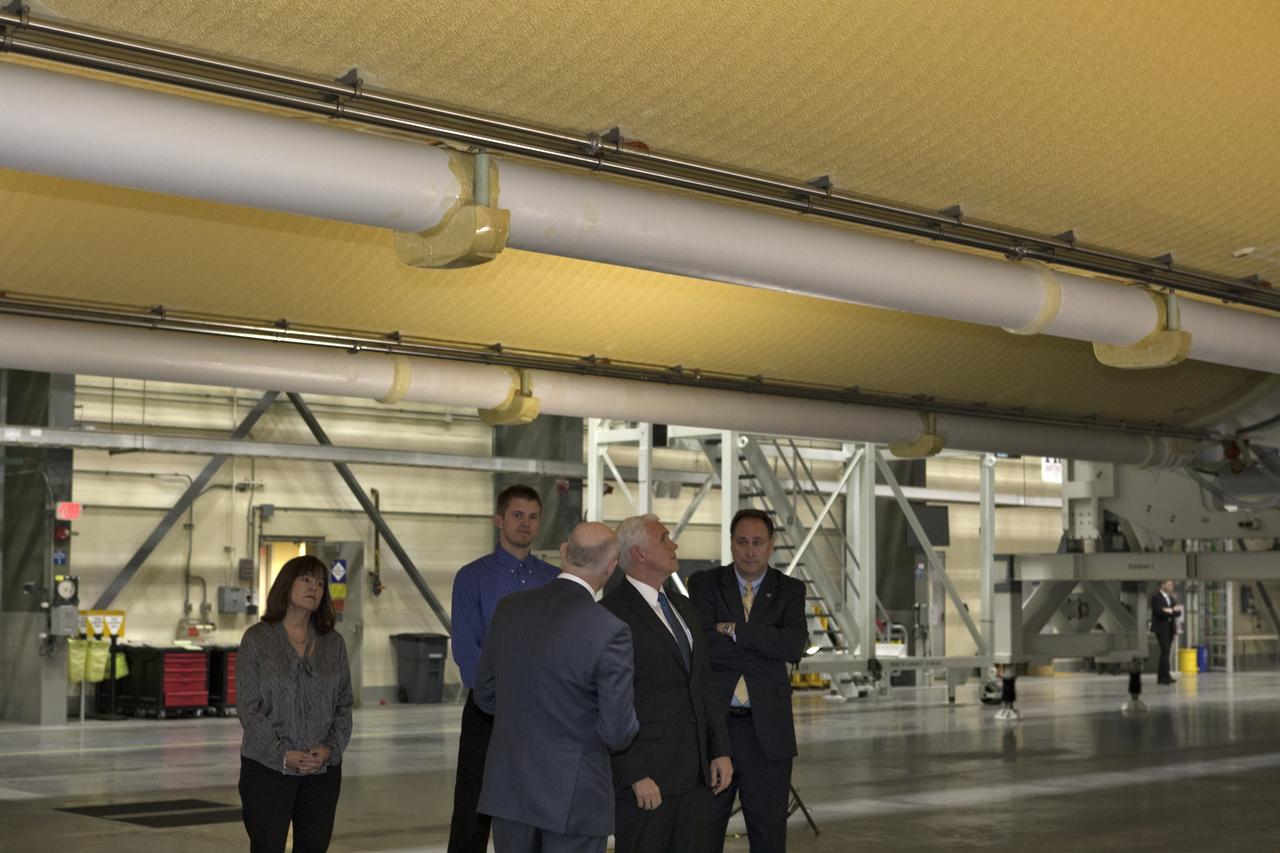
United Launch Alliance (ULA) president and CEO Tory Bruno leads a tour for Vice President Mike Pence, his wife, Karen Pence, and NASA Acting Administrator Robert Lightfoot on Feb. 20, 2018. They are in the ULA Horizontal Integration Facility (HIF), at Cape Canaveral Air Force Station in Florida. The HIF is where the Delta IV Heavy boosters are being processed for NASA’s upcoming Parker Solar Probe mission. During his visit, Pence will chair a meeting of the National Space Council on Feb. 21, 2018 in the high bay of NASA Kennedy Space Center’s Space Station Processing Facility. The council's role is to advise the president regarding national space policy and strategy, and review the nation's long-range goals for space activities.
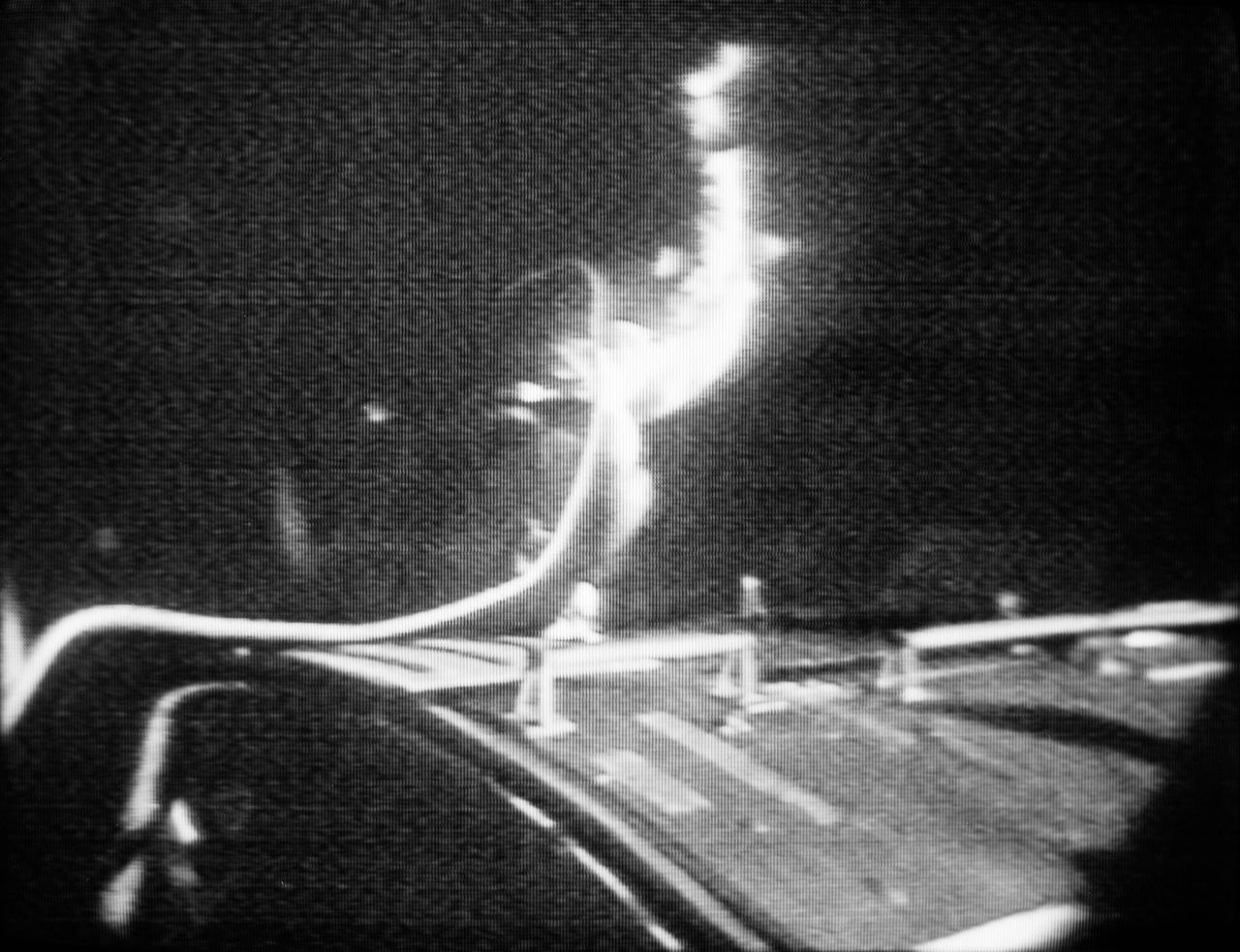
S72-35900 (25 April 1972) --- Astronaut Thomas K. (Ken) Mattingly II, command module pilot of the Apollo 16 lunar landing mission, floats in space outside the spacecraft during his trans-Earth extravehicular activity (EVA), as seen in this reproduction taken from a color television transmission made by a color TV camera mounted on the Command Module (CM) hatch. Mattingly used hand-holds and a foot restraint to hold himself in position, and he was secured to the spacecraft by an umbilical tether line. During his EVA, Mattingly made an inspection of the Service Module's (SM) Scientific Instrument Module (SIM) bay, and retrieved film cassettes from the Panoramic Camera and the Mapping Camera. The trans-Earth EVA occurred at ground elapsed time of 242:55, and 2:49 p.m. (CST), Tuesday, April 25, 1972.
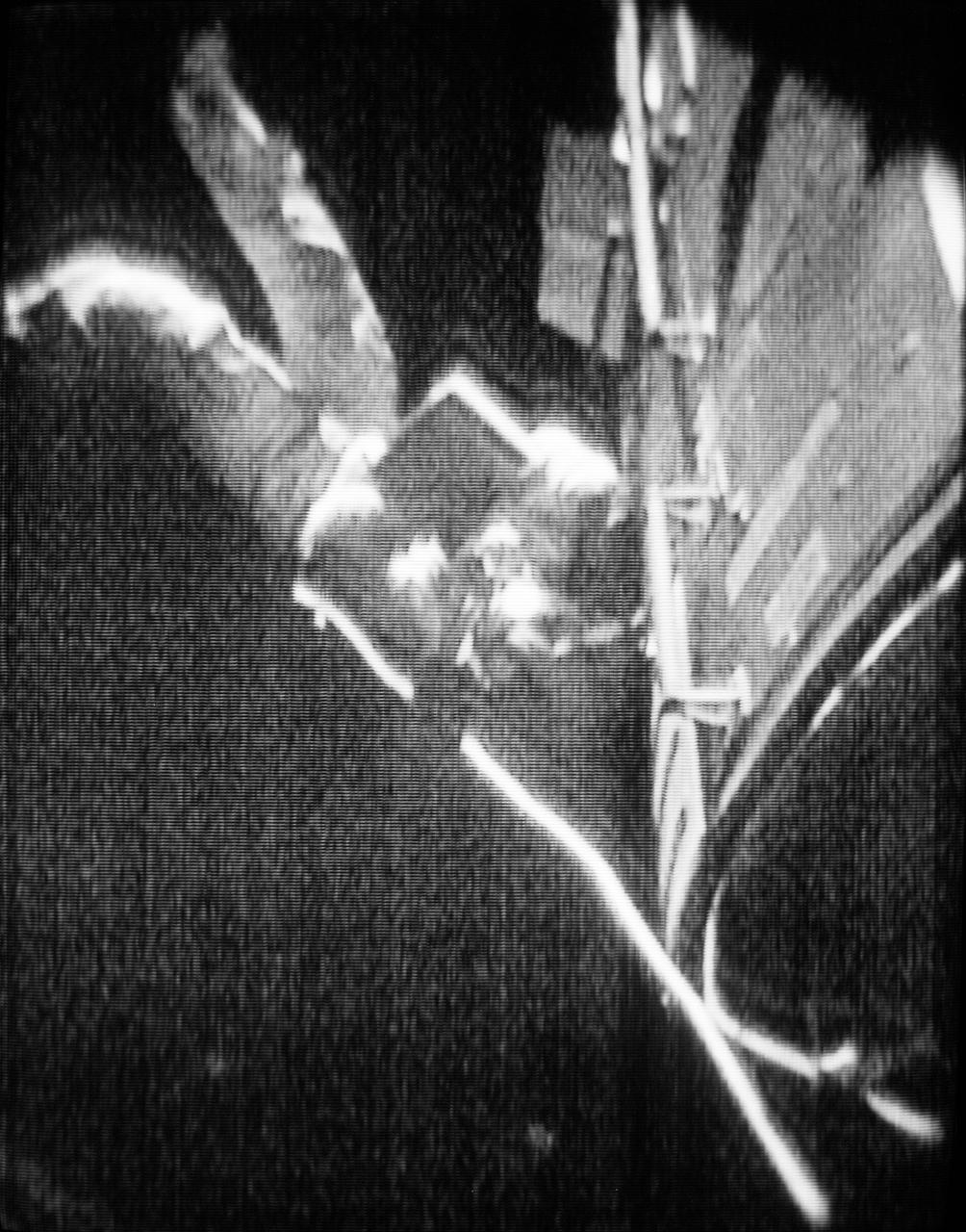
S72-35901 (25 April 1972) --- Astronaut Thomas K. (Ken) Mattingly II, command module pilot of the Apollo 16 lunar landing mission, floats in space outside the spacecraft during his trans-Earth extravehicular activity (EVA), as seen in this reproduction taken from a color television transmission made by a color TV camera mounted on the Command Module (CM) hatch. Mattingly used hand-holds and a foot restraint to hold himself in position, and he was secured to the spacecraft by an umbilical tether line. During his EVA, Mattingly made an inspection of the Service Module's (SM) Scientific Instrument Module (SIM) bay, and retrieved film cassettes from the Panoramic Camera and the Mapping Camera. The trans-Earth EVA occurred at ground elapsed time of 242:55, and 2:49 p.m. (CST), Tuesday, April 25, 1972.
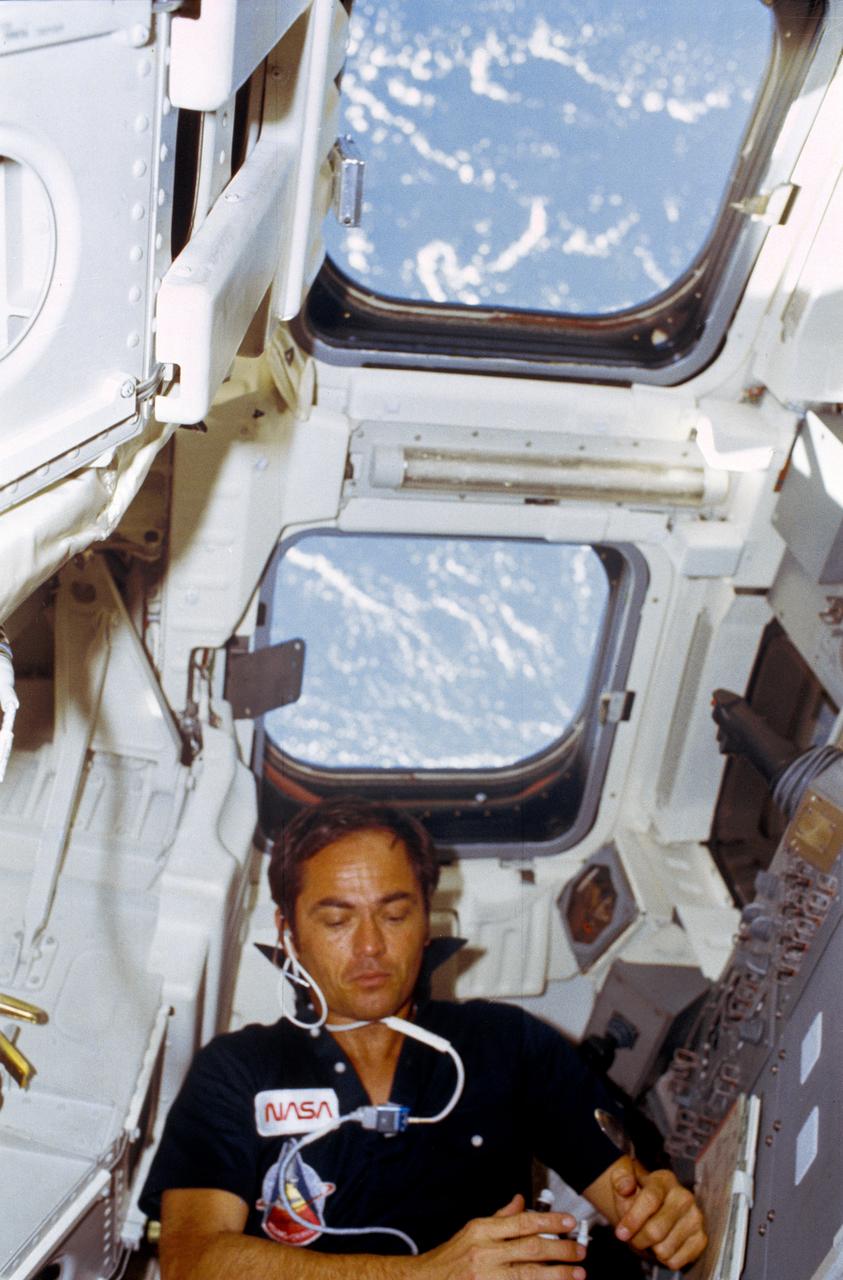
STS001-06-481 (April 1981) --- Astronaut Robert L. Crippen, STS-1 pilot, is behind his station in the flight deck of Columbia. He has a spoon in his hand. The windows prominent in the scene are the ones through which a number of Earth scenes were photographed with a 70mm camera by the two astronauts. Clouds over water can be seen through them. Just inches away from the top windows, not quite so obvious at top of the frame (if held horizontally) are the two aft cabin windows through which the crew viewed the cargo bay and the aft end of the craft, including the orbital maneuvering system (OMS) pods. Astronaut John W. Young, commander, took this photo with a 35mm camera. Photo credit: NASA
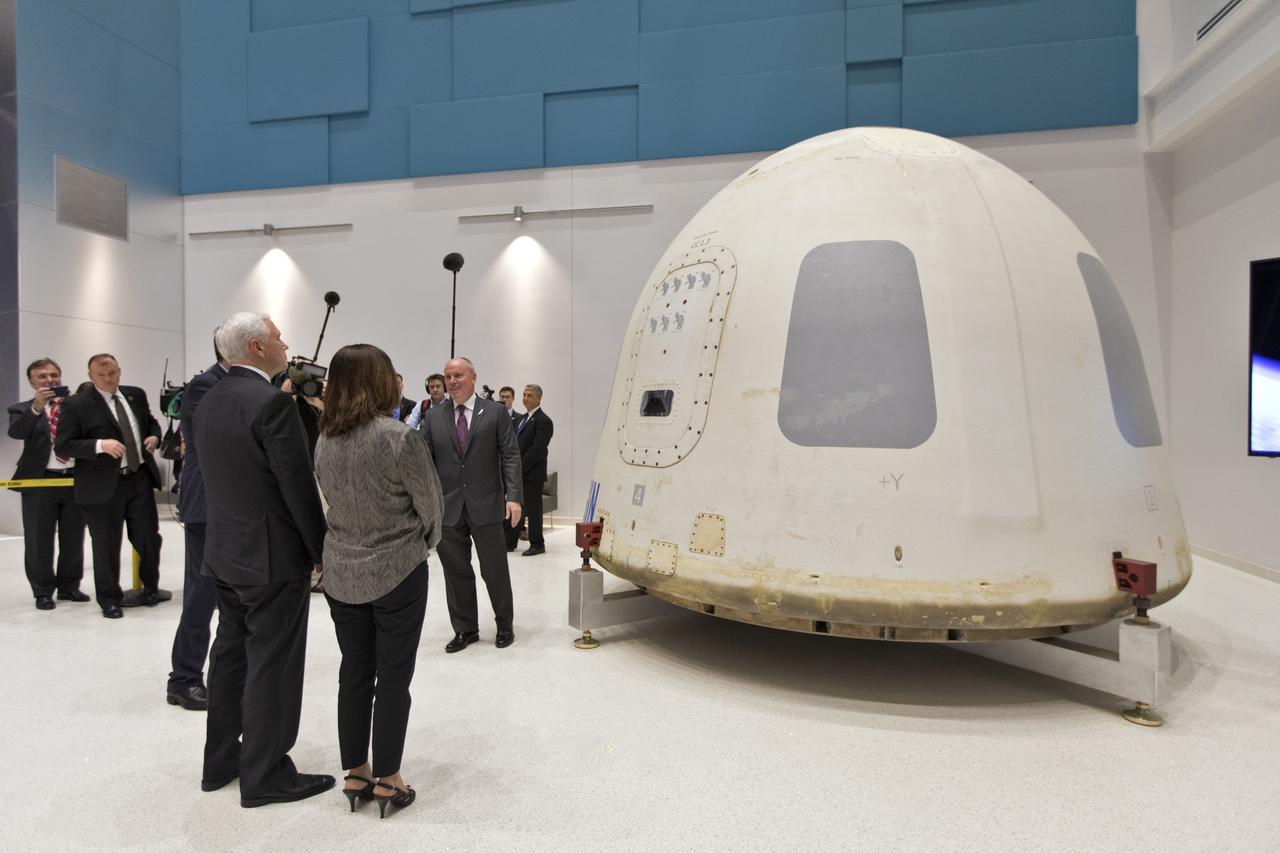
Vice President Mike Pence, second from right, and his wife, Karen Pence, tour the Blue Origin Manufacturing Facility near NASA's Kennedy Space Center in Florida, on Feb. 20, 2018. Vice President Pence viewed the flown New Shepard Booster and Crew Capsule. The Crew Capsule, in view, flew seven times, including a pad abort test and an escape test at maximum dynamic pressure. During his visit, Pence will chair a meeting of the National Space Council on Feb. 21, 2018 in the high bay of NASA Kennedy Space Center's Space Station Processing Facility. The council's role is to advise the president regarding national space policy and strategy, and review the nation's long-range goals for space activities.
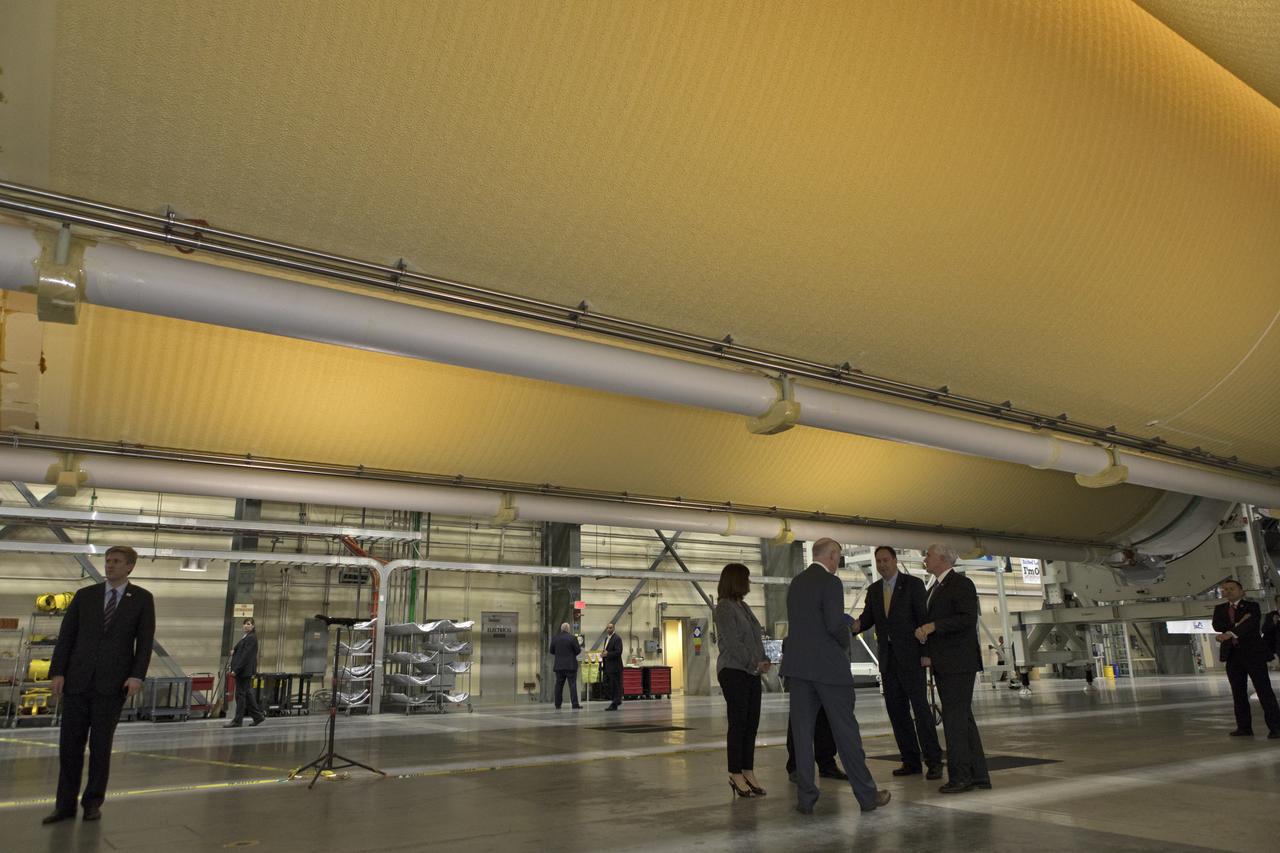
United Launch Alliance (ULA) president and CEO Tory Bruno leads a tour for Vice President Mike Pence, his wife, Karen Pence, and NASA Acting Administrator Robert Lightfoot on Feb. 20, 2018. They are in the ULA Horizontal Integration Facility (HIF), at Cape Canaveral Air Force Station in Florida. The HIF is where the Delta IV Heavy boosters are being processed for NASA’s upcoming Parker Solar Probe mission. During his visit, Pence will chair a meeting of the National Space Council on Feb. 21, 2018 in the high bay of NASA Kennedy Space Center’s Space Station Processing Facility. The council's role is to advise the president regarding national space policy and strategy, and review the nation's long-range goals for space activities.
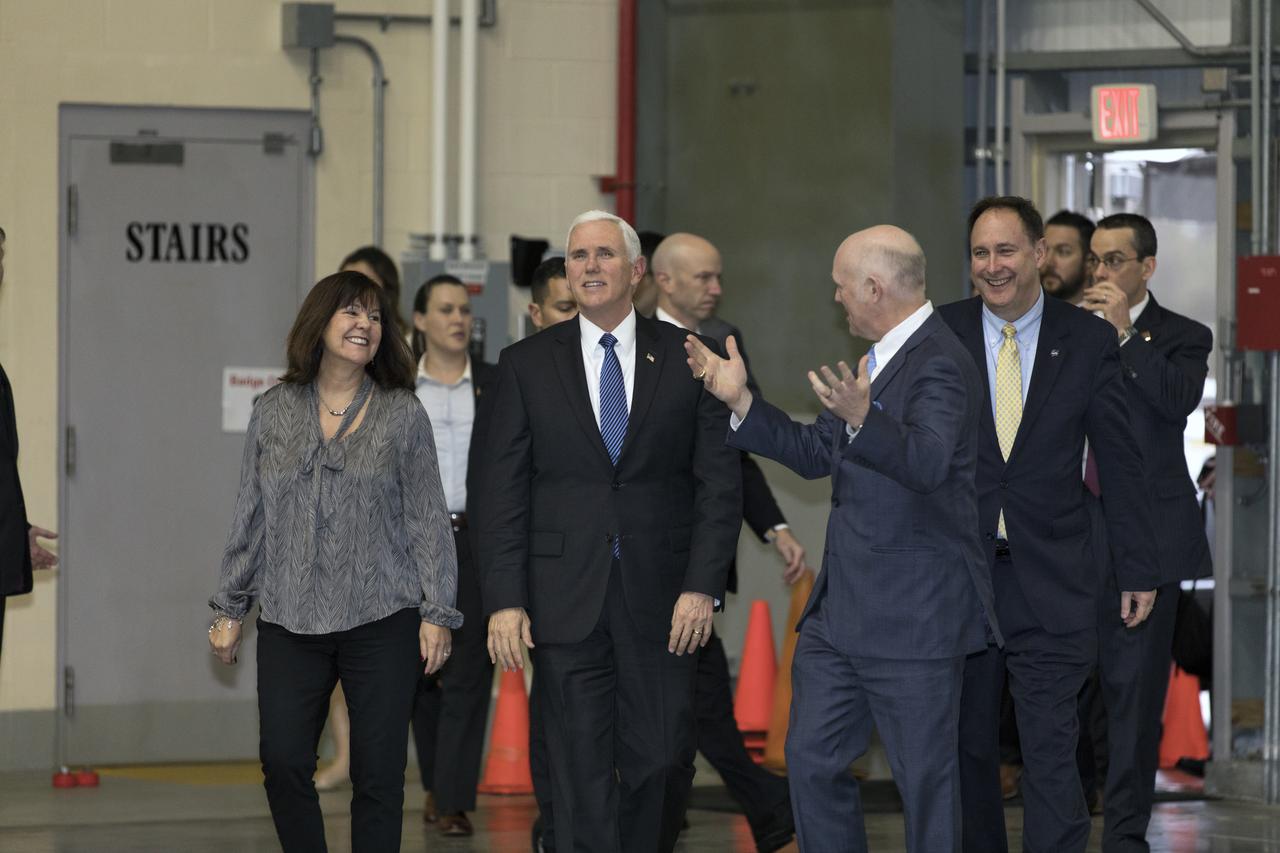
United Launch Alliance (ULA) president and CEO Tory Bruno leads a tour for Vice President Mike Pence, his wife, Karen Pence, and NASA Acting Administrator Robert Lightfoot on Feb. 20, 2018. They are in the ULA Horizontal Integration Facility (HIF), at Cape Canaveral Air Force Station in Florida. The HIF is where the Delta IV Heavy boosters are being processed for NASA’s upcoming Parker Solar Probe mission. During his visit, Pence will chair a meeting of the National Space Council on Feb. 21, 2018 in the high bay of NASA Kennedy Space Center’s Space Station Processing Facility. The council's role is to advise the president regarding national space policy and strategy, and review the nation's long-range goals for space activities.
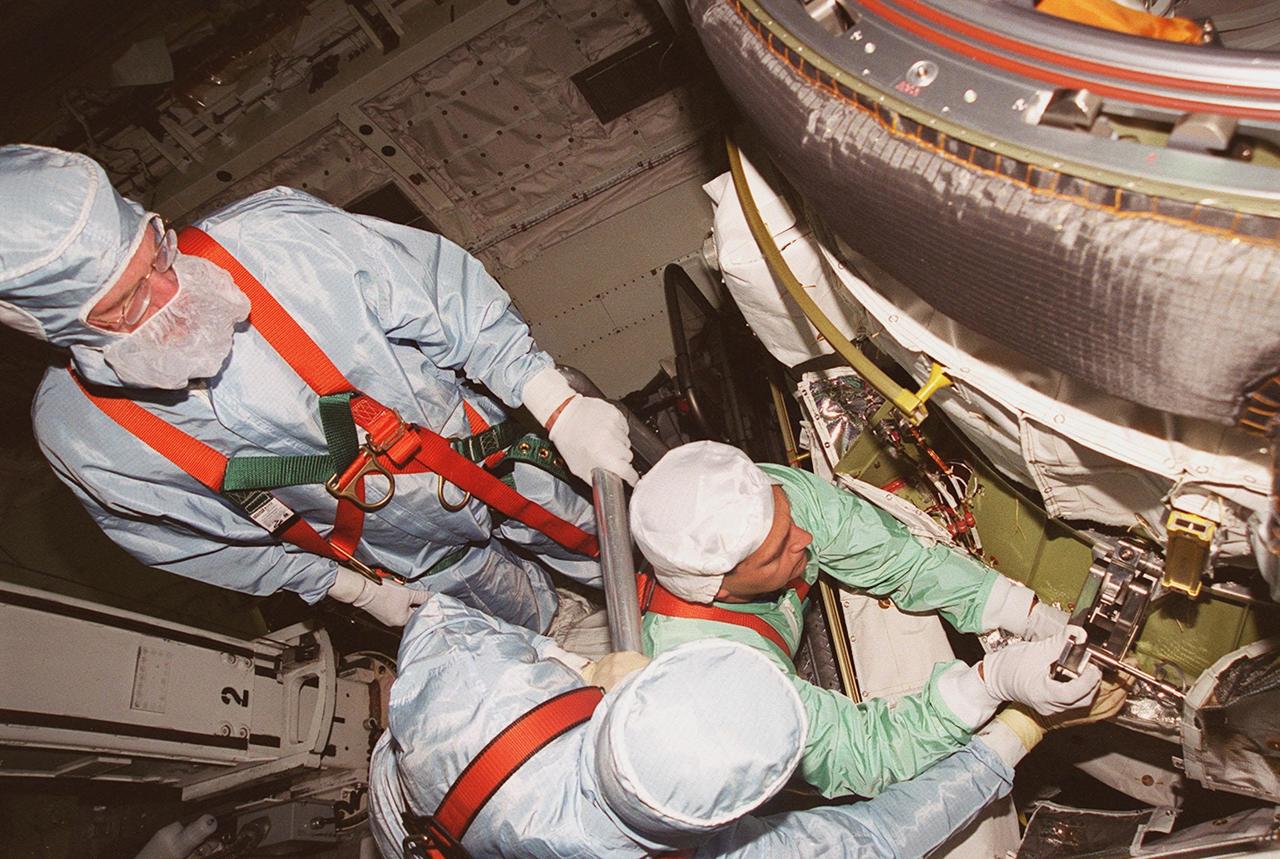
KENNEDY SPACE CENTER, FLA. -- In Orbiter Processing Facility (OPF) bay 2 during Crew Equipment Interface Test (CEIT), members of the STS-97 crew look over the Orbital Docking System (ODS) in Endeavour’s payload bay. At left, standing, is Mission Specialist Joe Tanner. At right is Mission Specialist Carlos Noriega, with his hands on the ODS. The others are workers in the OPF. The CEIT provides an opportunity for crew members to check equipment and facilities that will be on board the orbiter during their mission. The STS-97 mission will be the sixth construction flight to the International Space Station. The payload includes a photovoltaic (PV) module, providing solar power to the Station. STS-97 is scheduled to launch Nov. 30 from KSC for the 10-day mission
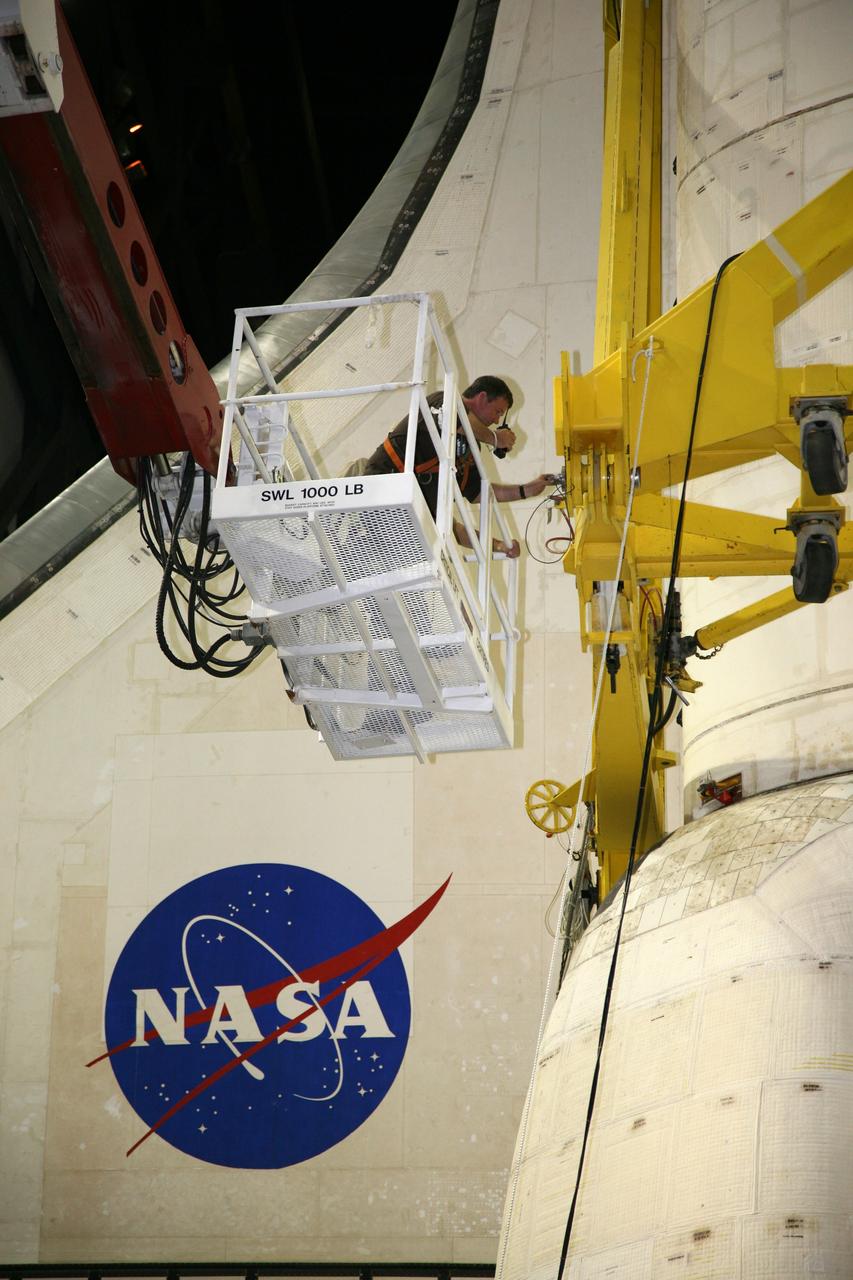
CAPE CANAVERAL, Fla. – In the transfer aisle of the Vehicle Assembly Building at NASA's Kennedy Space Center in Florida, a United Space Alliance technician communicates with his co-workers regarding the readiness of space shuttle Endeavour to be lifted. Next, Endeavour will be hoisted over a transom and lowered into High Bay 1, where it will be attached to its external fuel tank and solid rocket boosters. Rollout of the shuttle stack to Kennedy’s Launch Pad 39A, a significant milestone in launch processing activities, is planned for early January 2010. The Italian-built Tranquility module, the primary payload for Endeavour's STS-130 mission, will be installed in the payload bay after the shuttle arrives at the pad. Launch is targeted for early February. For information on the STS-130 mission and crew, visit http://www.nasa.gov/mission_pages/shuttle/shuttlemissions/sts130/index.html. Photo credit: NASA/Dimitri Gerondidakis