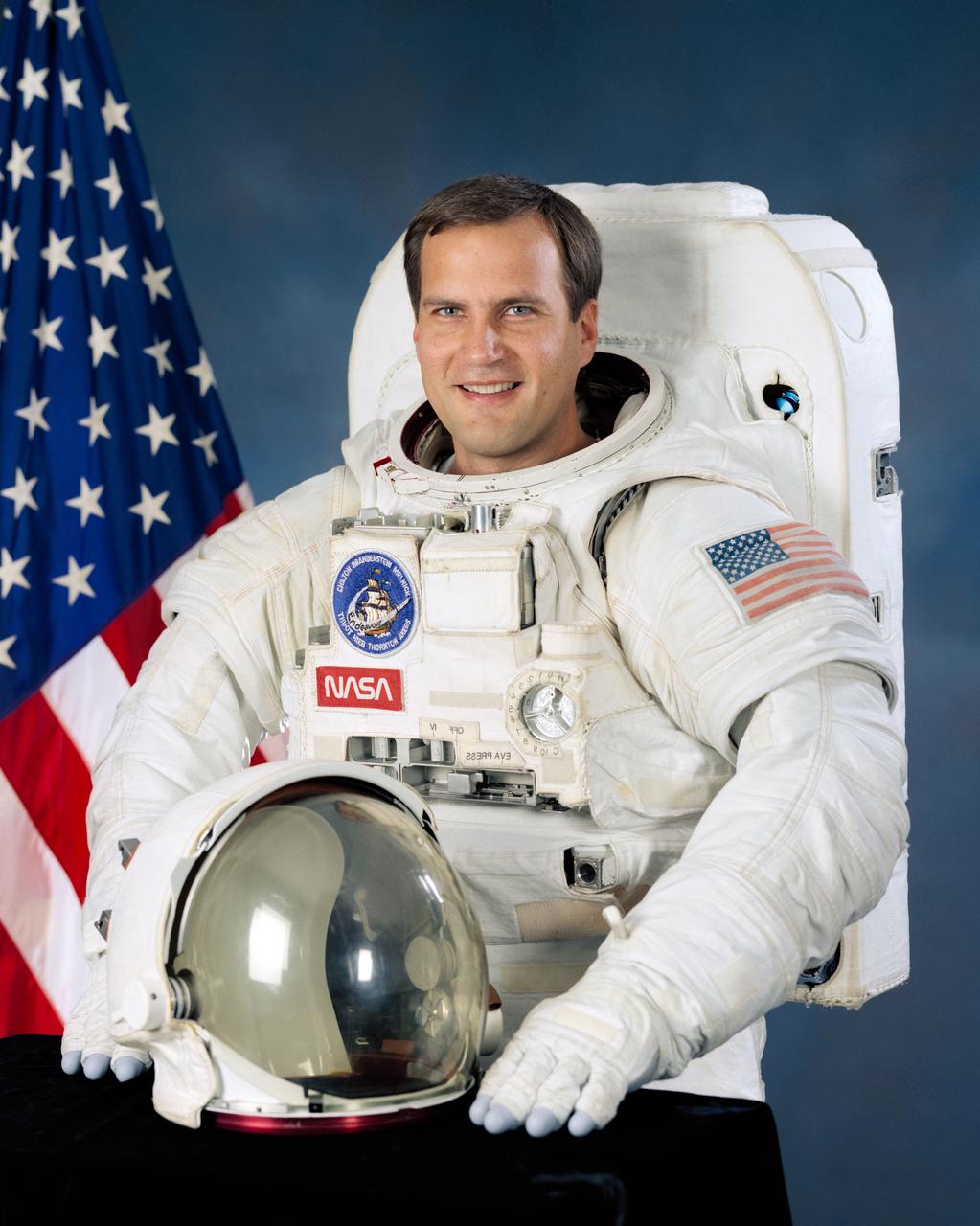
S92-41511 (1992) --- Astronaut Richard J. Hieb.
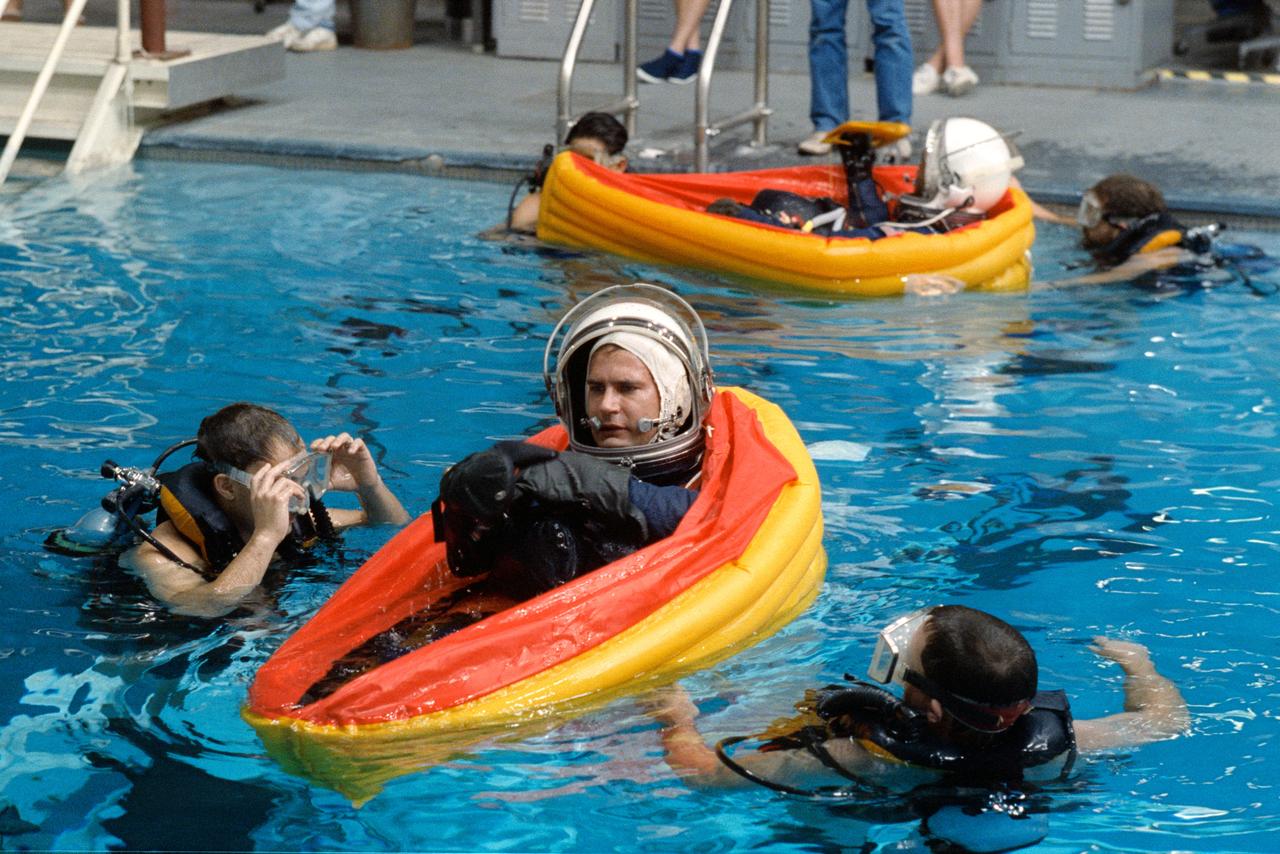
S90-54754 (13 Dec 1990) --- Astronaut Richard J. Hieb, STS-39 mission specialist, wearing launch and entry suit (LES) and launch and entry helmet (LEH), floats in single person life raft after landing in JSC's Weightless Environment Training Facility (WETF) Bldg 29 pool. During emergency egress bailout procedures, Hieb practiced procedures necessary for a water landing. Divers monitor Hieb's activity.
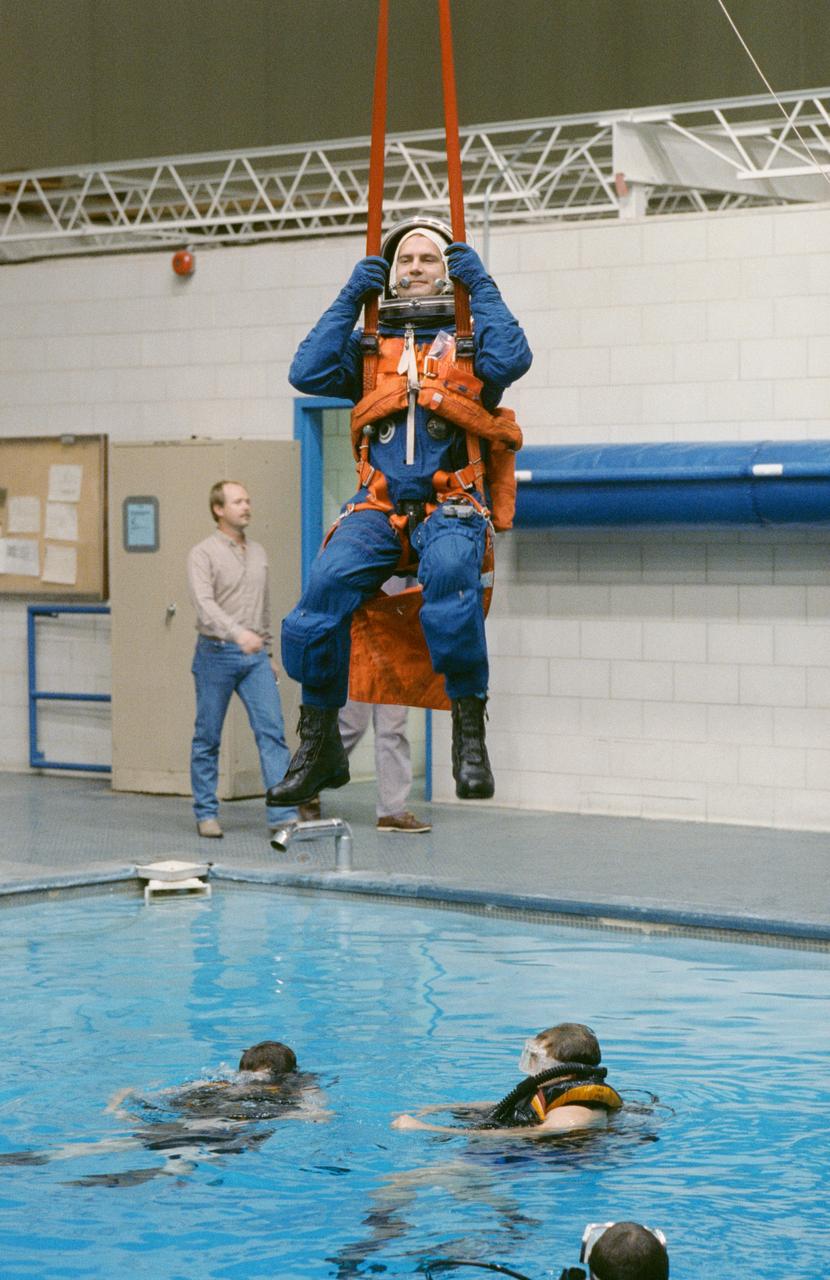
S90-54760 (7 Dec 1990) --- Astronaut Richard J. Hieb, mission specialist, participates in emergency egress training. Hieb and six fellow STS 39 astronauts were in JSC's weightless environment training facility (WET-F). This type training uses the WET-F's 25 ft. deep pool to simulate an ocean parachute landing. A number of SCUBA-equipped divers assist in the training session.
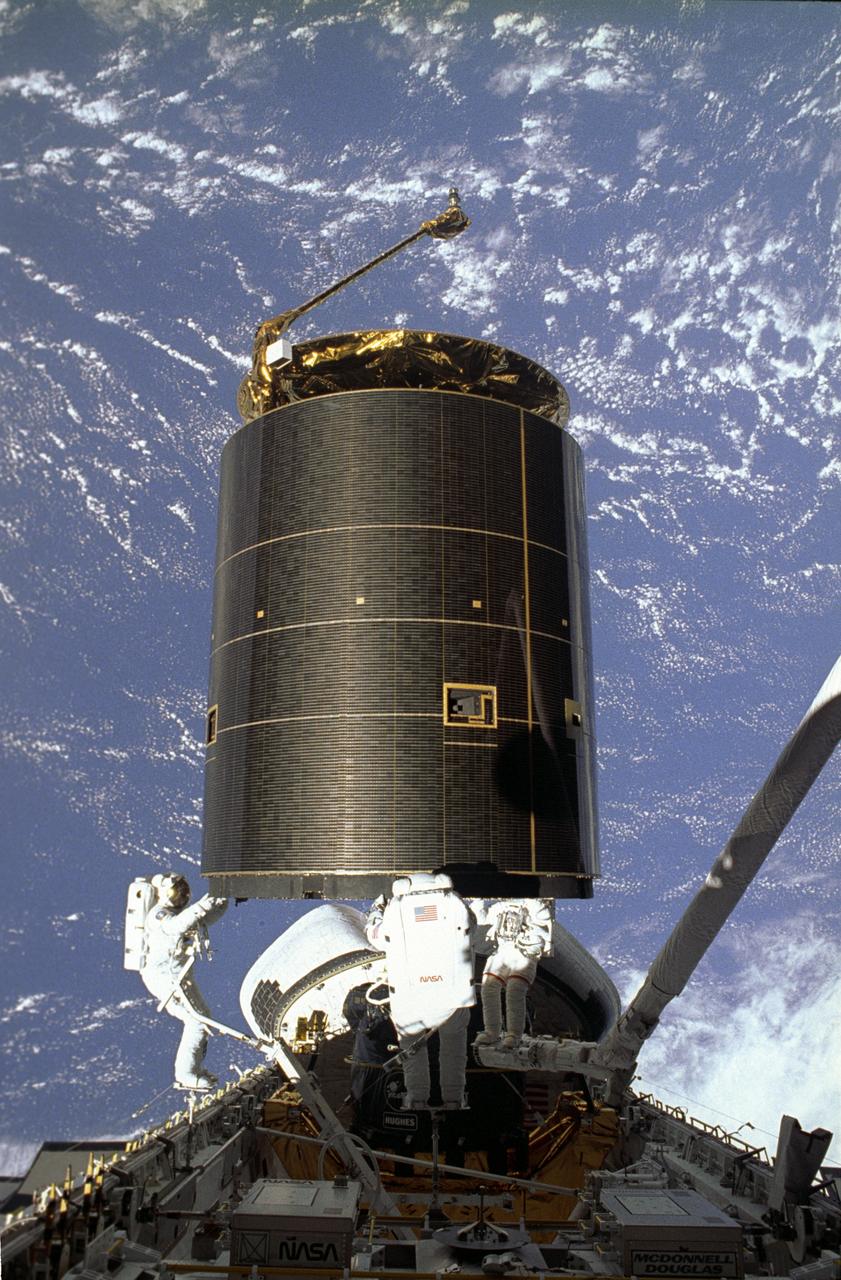
STS-49, the first flight of the Space Shuttle Orbiter Endeavour, lifted off from launch pad 39B on May 7, 1992 at 6:40 pm CDT. The STS-49 mission was the first U.S. orbital flight to feature 4 extravehicular activities (EVAs), and the first flight to involve 3 crew members working simultaneously outside of the spacecraft. The primary objective was the capture and redeployment of the INTELSAT VI (F-3), a communication satellite for the International Telecommunication Satellite organization, which was stranded in an unusable orbit since its launch aboard the Titan rocket in March 1990. In this onboard photo, astronauts Hieb, Akers, and Thuot have handholds on the satellite.
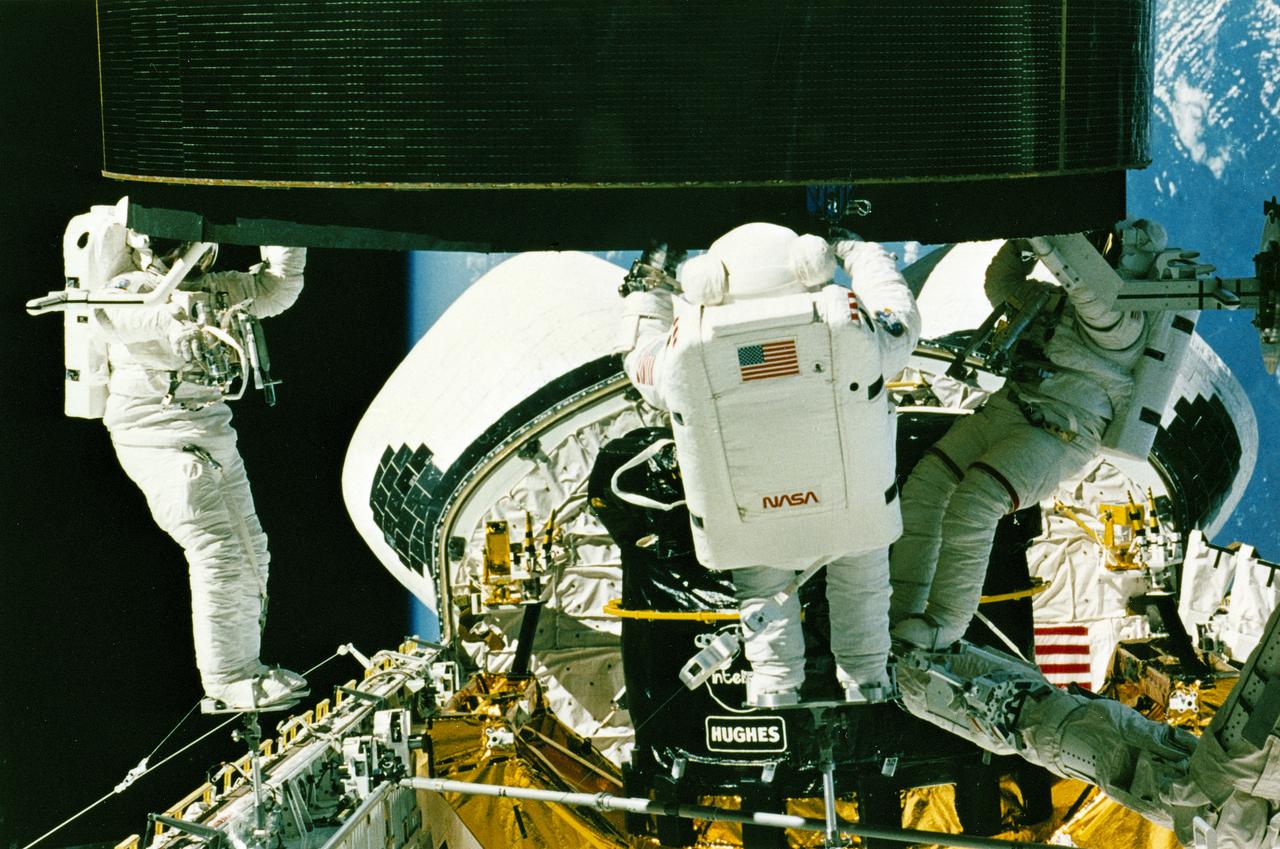
STS-49, the first flight of the Space Shuttle Orbiter Endeavour, lifted off from launch pad 39B on May 7, 1992 at 6:40 pm CDT. The STS-49 mission was the first U.S. orbital flight to feature 4 extravehicular activities (EVAs), and the first flight to involve 3 crew members working simultaneously outside of the spacecraft. The primary objective was the capture and redeployment of the INTELSAT VI (F-3), a communication satellite for the International Telecommunication Satellite organization, which was stranded in an unusable orbit since its launch aboard the Titan rocket in March 1990. In this onboard photo, astronauts Hieb, Akers, and Thuot have handholds on the satellite.

STS049-S-218 (8 May 1992) --- Astronaut Richard J. Hieb, on Endeavour's middeck, changes batteries on the electronic still camera to begin a series of snapshots with the experiment, a detailed test objective. DTO 648 is making its fourth flight into space. At various times during the week-long mission, crewmembers will downlink images from the camera. The scene was recorded at 16:51:15:05 GMT, May 8, 1992.
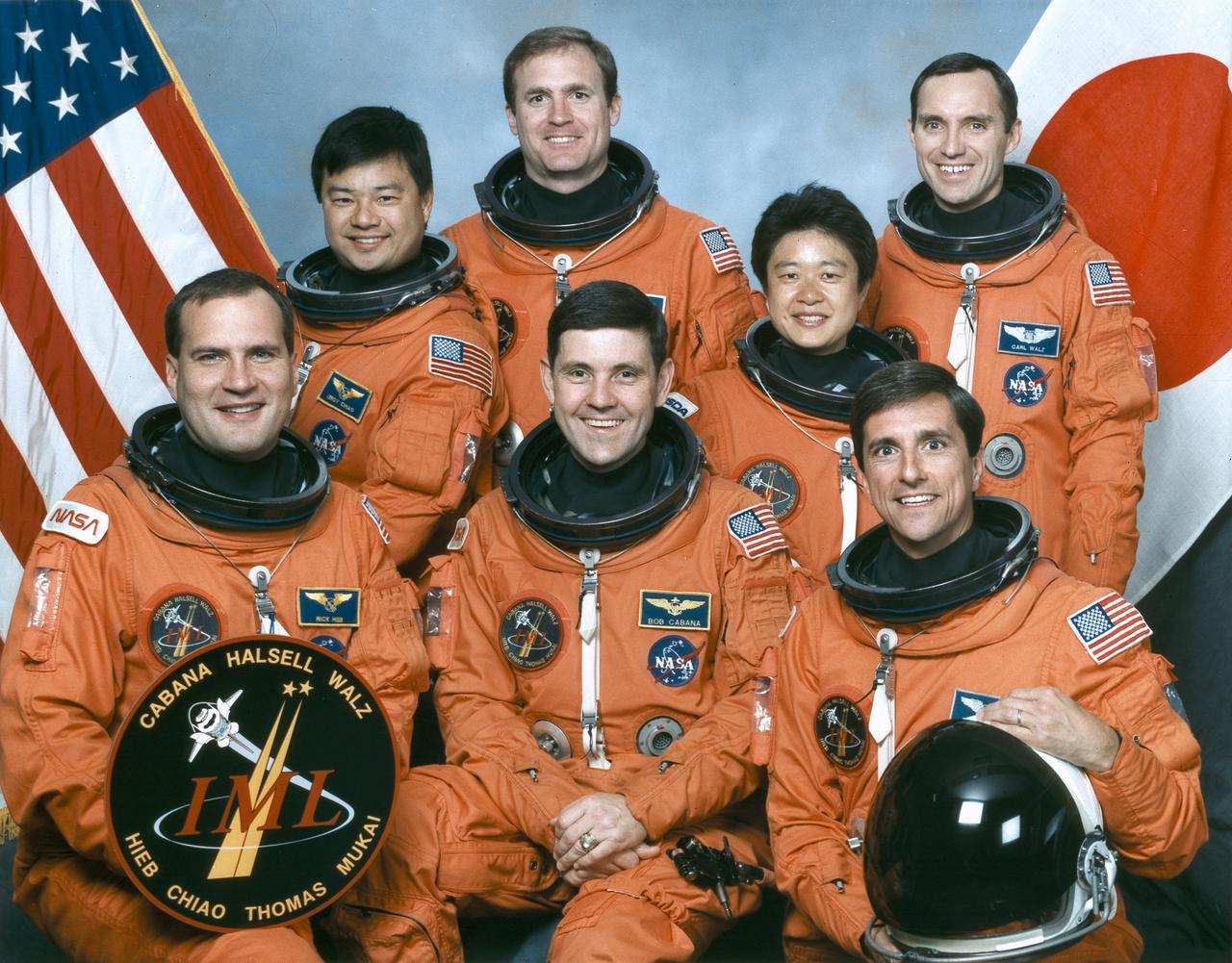
The crew assigned to the STS-65 mission included (seated left to right) Richard J. (Rick) Hieb, payload commander; Robert D. (Bob) Cabana, commander; and Donald A. Thomas, mission specialist. Standing, from left to right, are Leroy Chiao, mission specialist; James D. Halsell, pilot; Chiaki Naito-Mukai, payload specialist; and Carl E. Walz, mission specialist. Launched aboard the Space Shuttle Columbia on July 8, 1994 at 12:43:00 pm (EDT), the STS-64 mission marked the second flight of the International Microgravity Laboratory (IML-2) and the first flight of a female Japanese crew member.
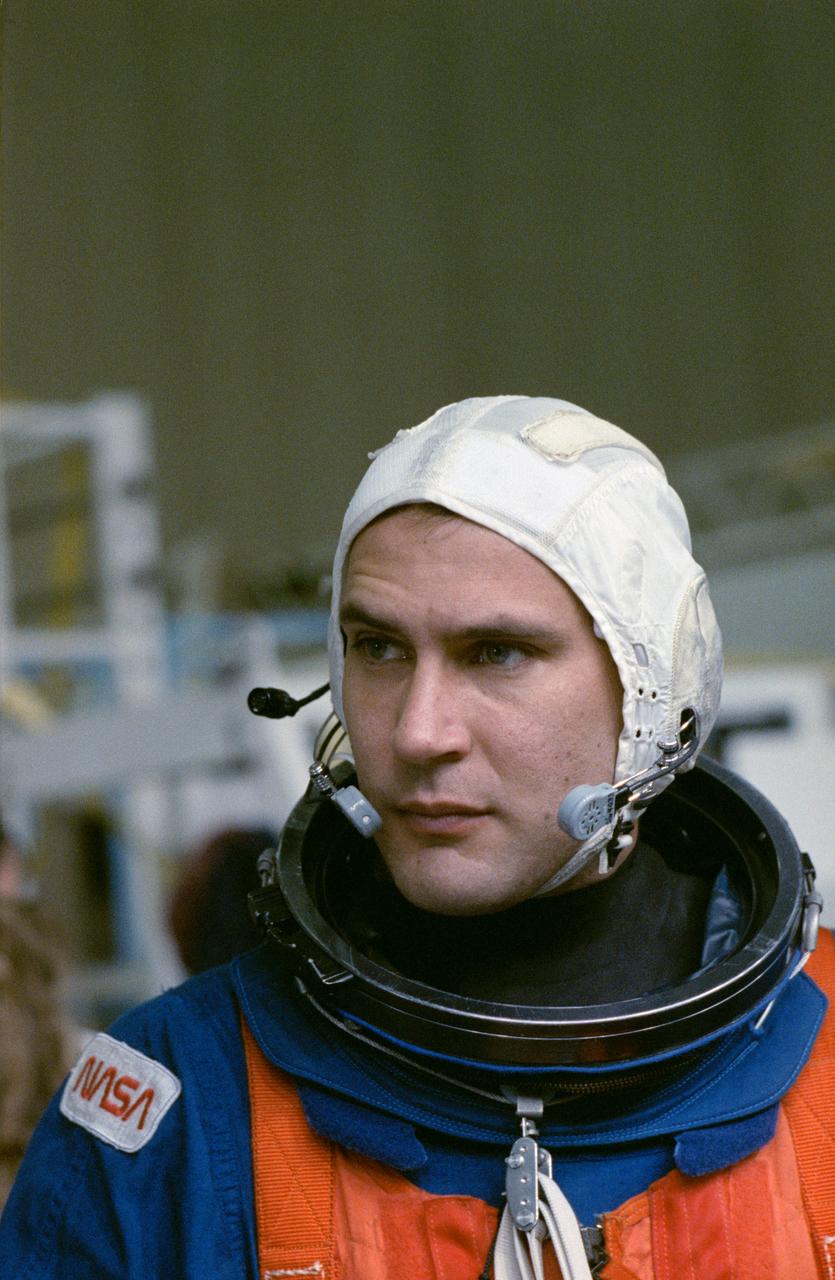
S90-54750 (7 Dec 1990) --- Astronaut Richard J. Hieb, mission specialist, listens attentively as a trainer (out of frame) briefs the STS-39 crewmembers on emergency egress measures. The seven astronauts were in JSC's weightless environment training facility (WET-F). This type training uses the WET-F's 25 ft. deep pool to simulate an ocean parachute landing.
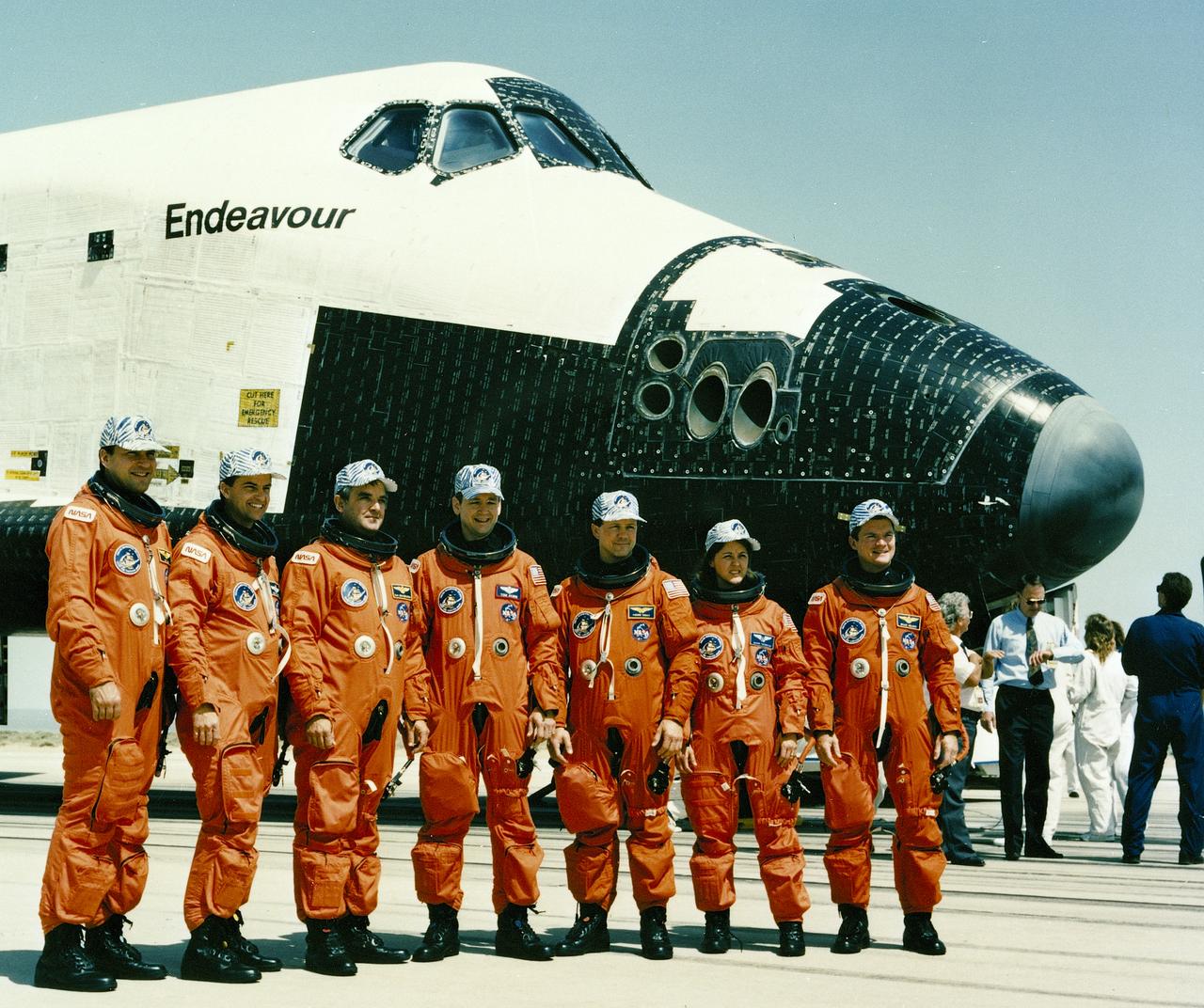
The STS-49 crew members pose near Endeavour after landing. Pictured left to right are: Richard J. Hieb, mission specialist; Kevin P. Chiltin, pilot; Daniel C. Brandenstein, commander; and mission specialists Thomas D. Akers, Pierre J. Thuot, Kathryn C. Thornton, and Bruce E. Melnick. Launched on May 7, 1992 at 7:40:00 pm (EDT), the crew of seven was the first to fly aboard the Space Shuttle Endeavor. The mission was the first US orbital flight to feature 4 extravehicular activities (EVAs), and the first flight to involve 3 crew members simultaneously working outside of the spacecraft. The primary objective was the capture and redeployment of the INTELSAT VI (F-3) which was stranded in an unusable orbit since its launch aboard the Titan rocket in March 1990.
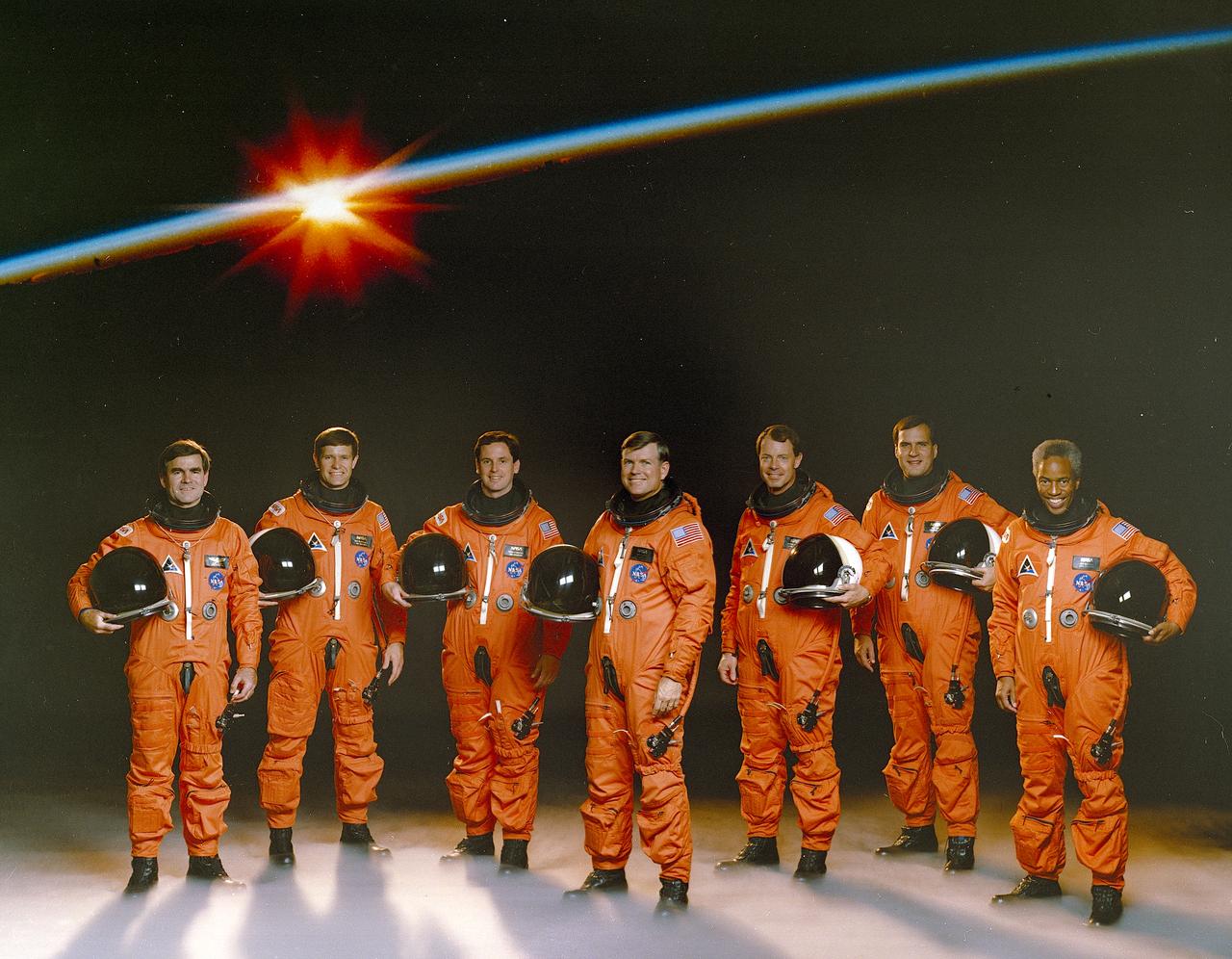
The STS-39 crew portrait includes 7 astronauts. Pictured are Charles L. Veach, mission specialist 5; Michael L. Coats, commander; Gregory J. Harbaugh, mission specialist 2; Donald R. McMonagle, mission specialist 4; L. Blaine Hammond, pilot; Richard J. Hieb, mission specialist 3; and Guion S. Buford, Jr., mission specialist 1. Launched aboard the Space Shuttle Discovery on April 28, 1991 at 7:33:14 am (EDT), STS-39 was a Department of Defense (DOD) mission. The primary unclassified payload included the Air Force Program 675 (AFP-675), the Infrared Background Signature Survey (IBSS), and the Shuttle Pallet Satellite II (SPAS II).
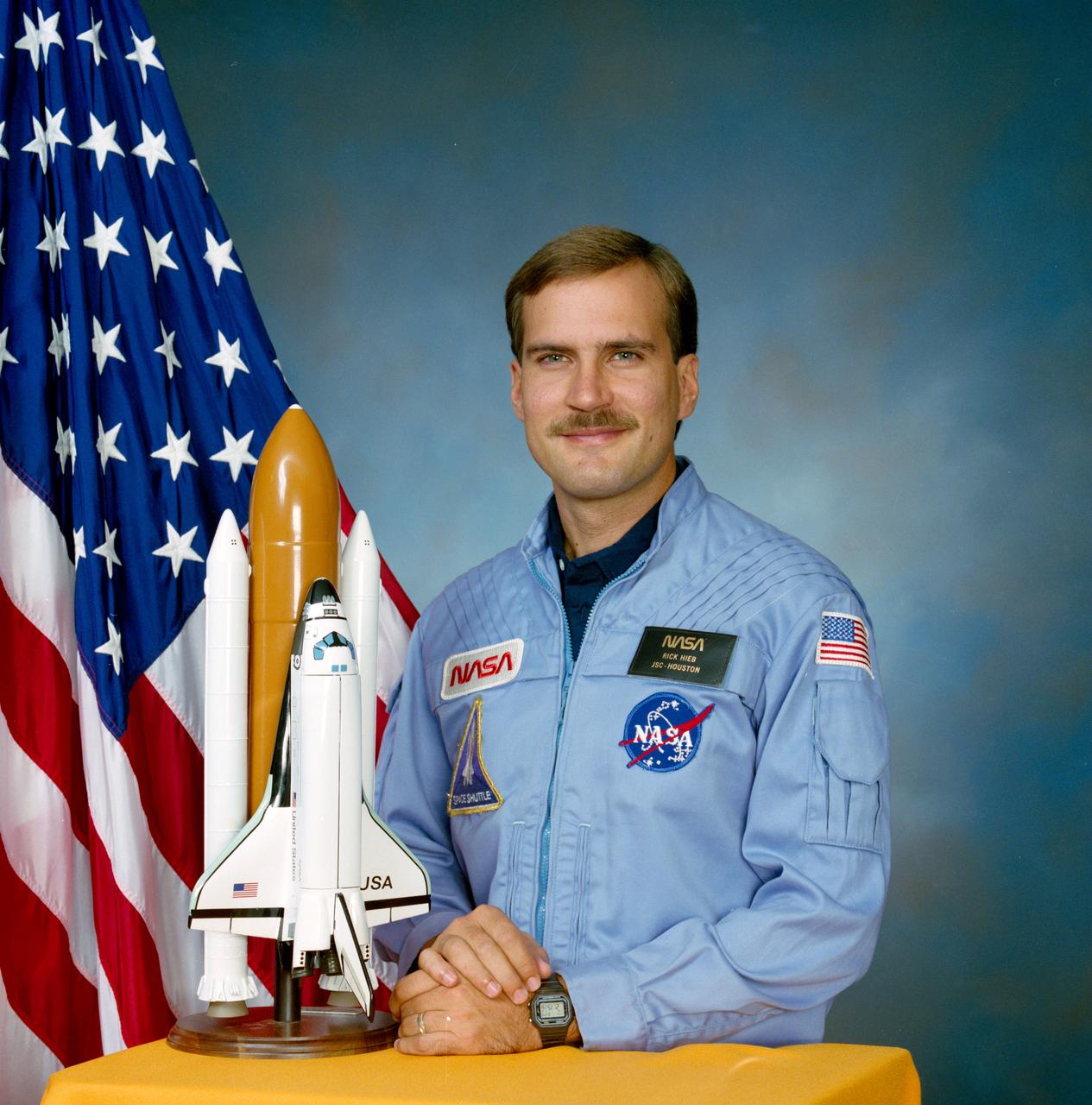
S85-41893 (Oct 1985) --- Astronaut Richard J. Hieb.
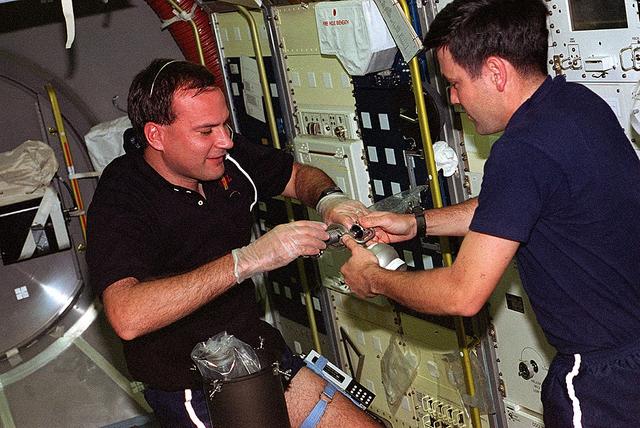
Space Shuttle Columbia (STS-65) onboard photo of Payload specialist Richard J. Hieb (right) and Shuttle Pilot James D. Halsell Jr. working on experiments in the Spacelab in the International Microgravity Laboratory (IML-2).
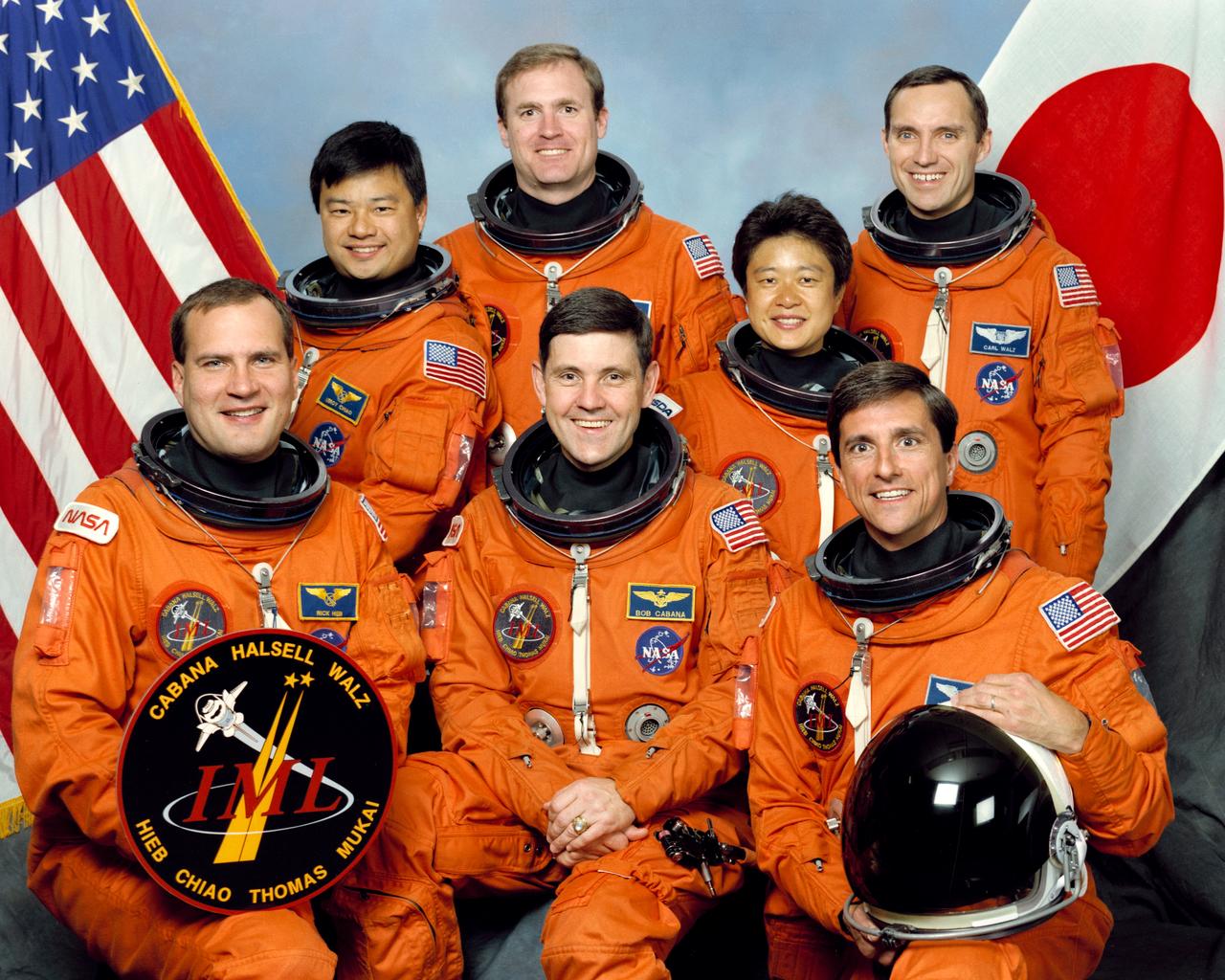
STS065-S-002 (April 1994) --- Six NASA astronauts and a Japanese payload specialist take a break from training to pose for their crew portrait. Left to right are Richard J. Hieb, Leroy Chiao, James D. Halsell Jr., Robert D. Cabana, Dr. Chiaki Mukai, Donald A. Thomas and Carl E. Walz. Cabana is mission commander, and Halsell has been assigned as pilot. Hieb is payload commander, with Walz, Thomas and Chiao serving as mission specialist. Dr. Mukai represents the National Space Development Agency (NASDA) of Japan as payload specialist on the International Microgravity Laboratory (IML) mission.
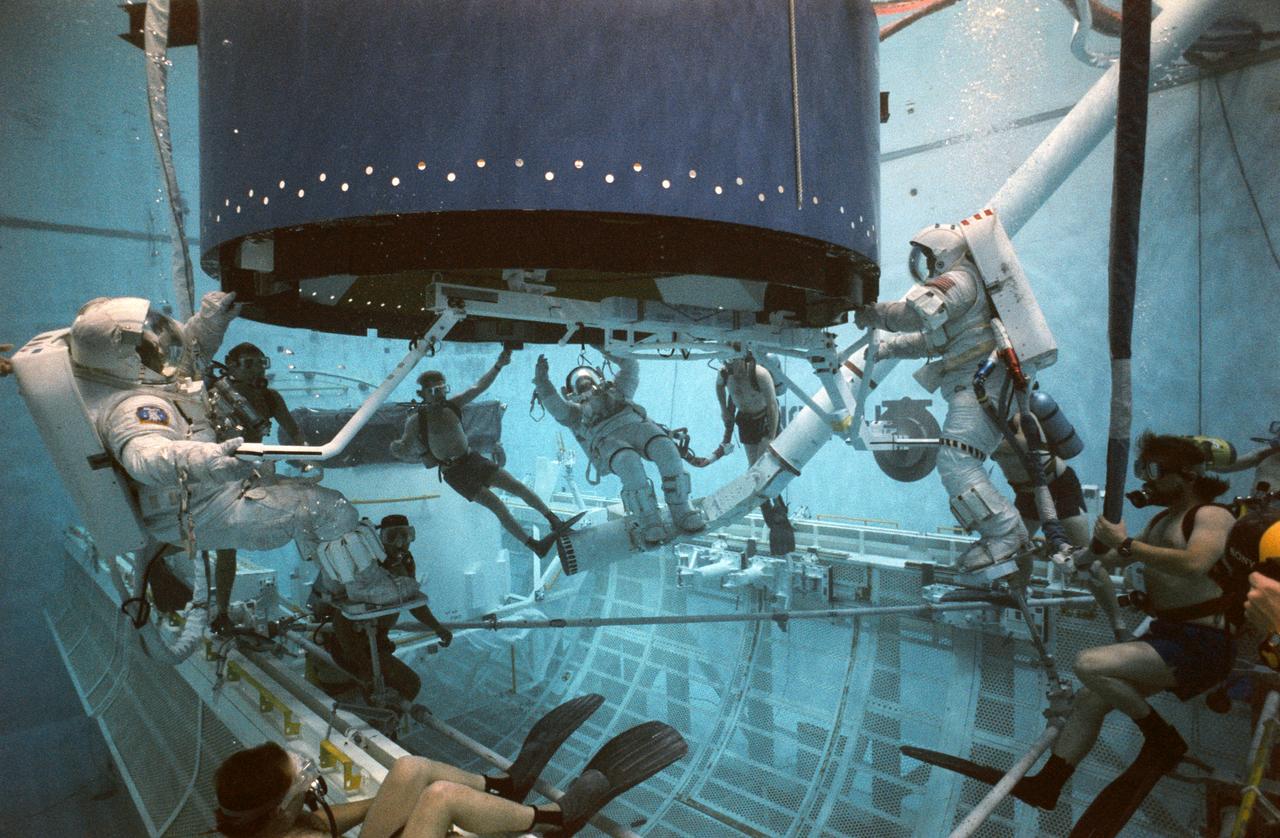
S92-35764 (12 May 1992) --- Wearing extravehicular mobility units (EMU's) and fitted with weights for neutral buoyancy are three trouble-shooting astronauts. The astronauts practiced techniques for capturing Intelsat, and climbing into the airlock mockup in the Weightless Environment Training Facility (WETF). No apparent problems were identified in placing three astronauts in the airlock at one time. Left to right are, Michael R. (Rich) Clifford, Story Musgrave, and James S. Voss. Three Endeavour astronauts, Pierre J. Thuot, Richard J. Hieb and Thomas D. Akers, will attempt to capture Intelsat again on May 13. Clifford played the role of Hieb, Musgrave for Thuot, and Voss, Akers.
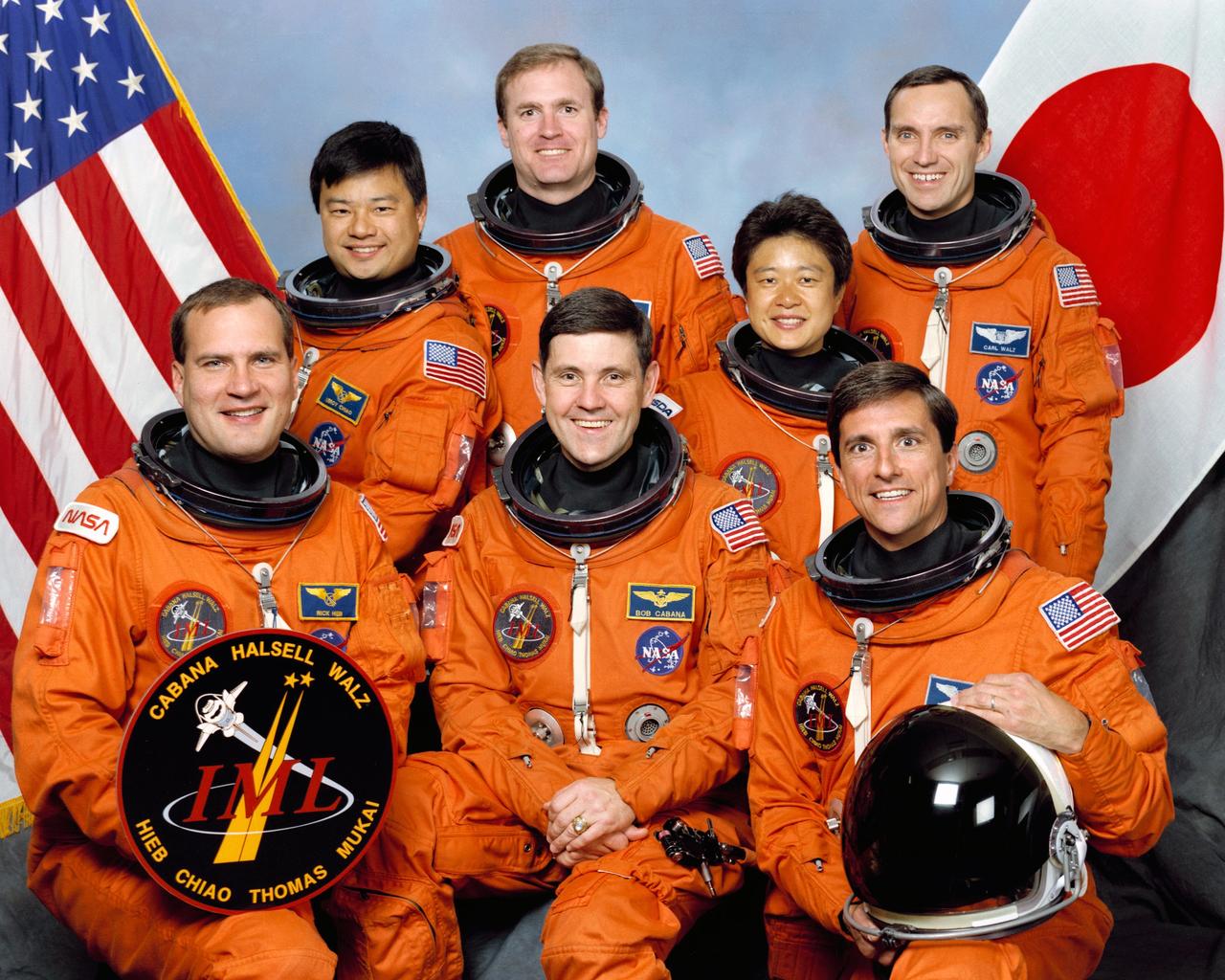
JOHNSON SPACE CENTER, Houston, Texas -- -- STS065(S)002 -- STS-65 Official Crew Portrait --- Six NASA astronauts and a Japanese payload specialist take a break from STS-65 training to pose for their crew portrait. Left to right are Richard J. Hieb, Leroy Chiao, James D. Halsell Jr., Robert D. Cabana, Dr. Chiaki Mukai, Donald A. Thomas and Carl E. Walz. Cabana is mission commander, and Halsell has been assigned as pilot. Hieb is payload commander, with Walz, Thomas and Chiao serving as mission specialists. Dr. Mukai represents the National Space Development Agency (NASDA) of Japan as payload specialist on the International Microgravity Laboratory (IML) mission.
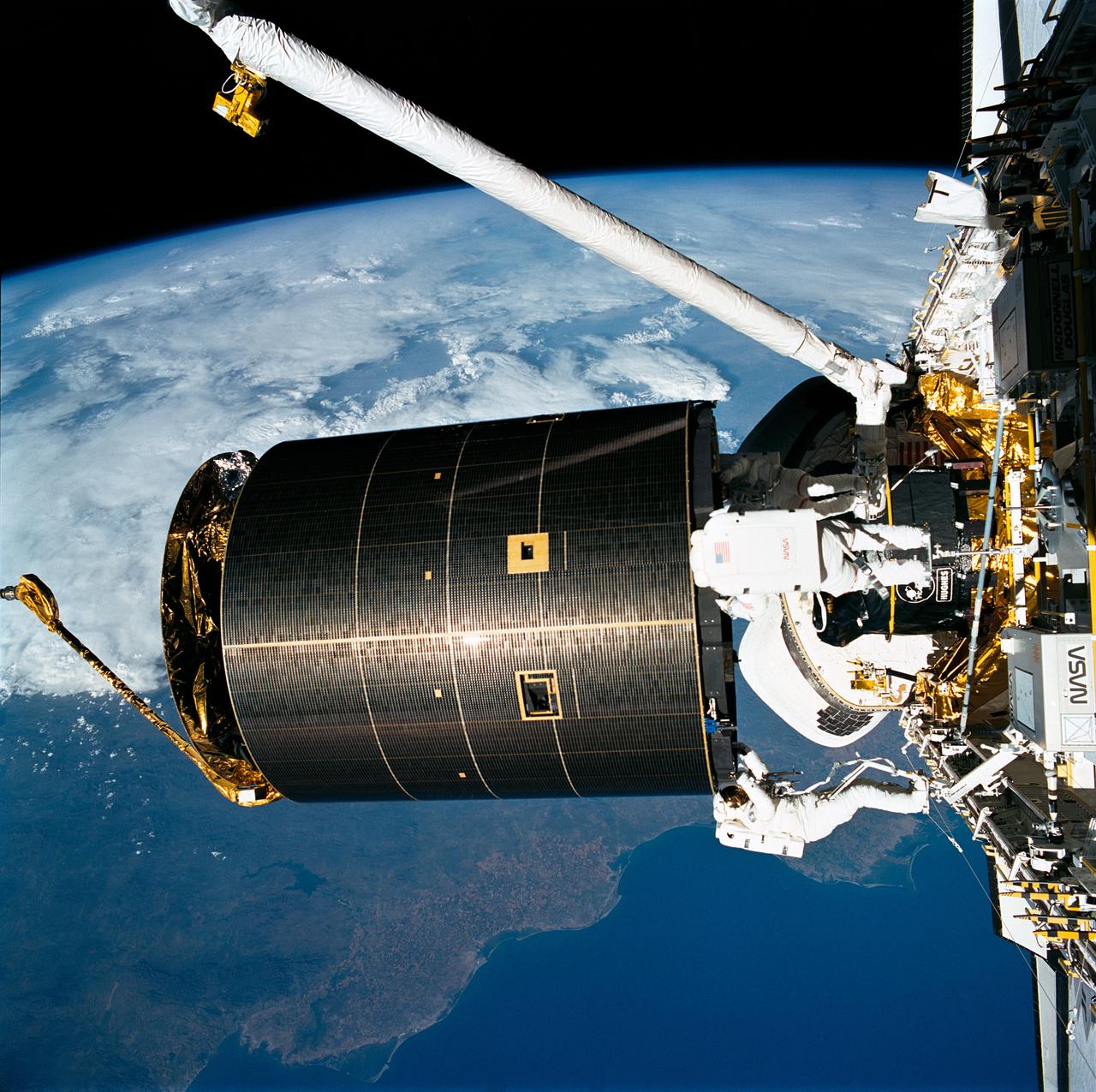
STS049-91-020 (13 May 1992) --- The successful capture of Intelsat VI satellite is recorded over Mexico on this 70mm frame, from inside the Space Shuttle Endeavour's cabin. Left to right, astronauts Richard J. Hieb, Thomas D. Akers and Pierre J. Thuot have handholds on the satellite. Ground coverage in the frame includes an area from Hermosillo, Sonara to Los Mochis in the state of Sinaloa. The nine-day mission accomplished the capture of the Intelsat, subsequent mating of the satellite to a booster and its eventual deployment, as well as a Space Station Freedom preview Extravehicular Activity (EVA). Endeavour's crew members were astronauts Daniel C. Brandenstein, mission commander; Kevin P. Chilton, pilot; and Thomas D. Akers, Richard J. Hieb, Bruce E. Melnick, Kathryn C. Thornton and Pierre J. Thuot, all mission specialists.
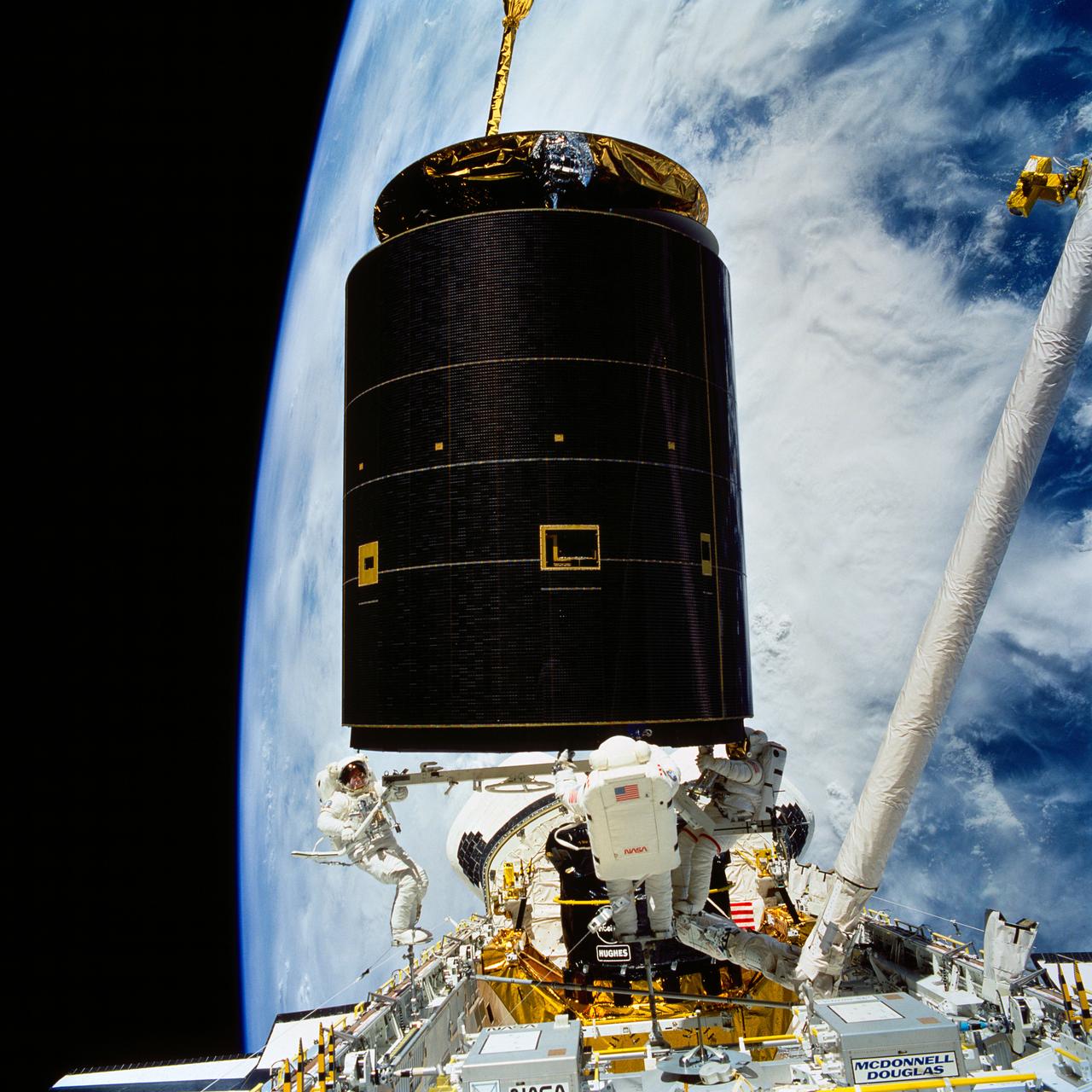
STS049-91-029 (13 May 1992) --- Following the successful capture of Intelsat VI satellite, three astronauts continue their chores toward moving the 4.5 ton communications satellite into the space shuttle Endeavour's cargo bay. A fellow crew member recorded this 70mm still frame from inside Endeavour's cabin. Left to right, astronauts Richard J. Hieb, Thomas D. Akers and Pierre J. Thuot, cooperate on the effort to attach a specially designed grapple bar underneath the satellite. Thuot stands on the end of the Remote Manipulator System's (RMS) arm while Hieb and Akers are on Portable Foot Restraints (PFR) affixed to Endeavour's portside and the Multipurpose Support Structure (MPESS), respectively. The sections of Earth which form the backdrop for the scene are blanketed with thousands of square miles of clouds. Photo credit: NASA
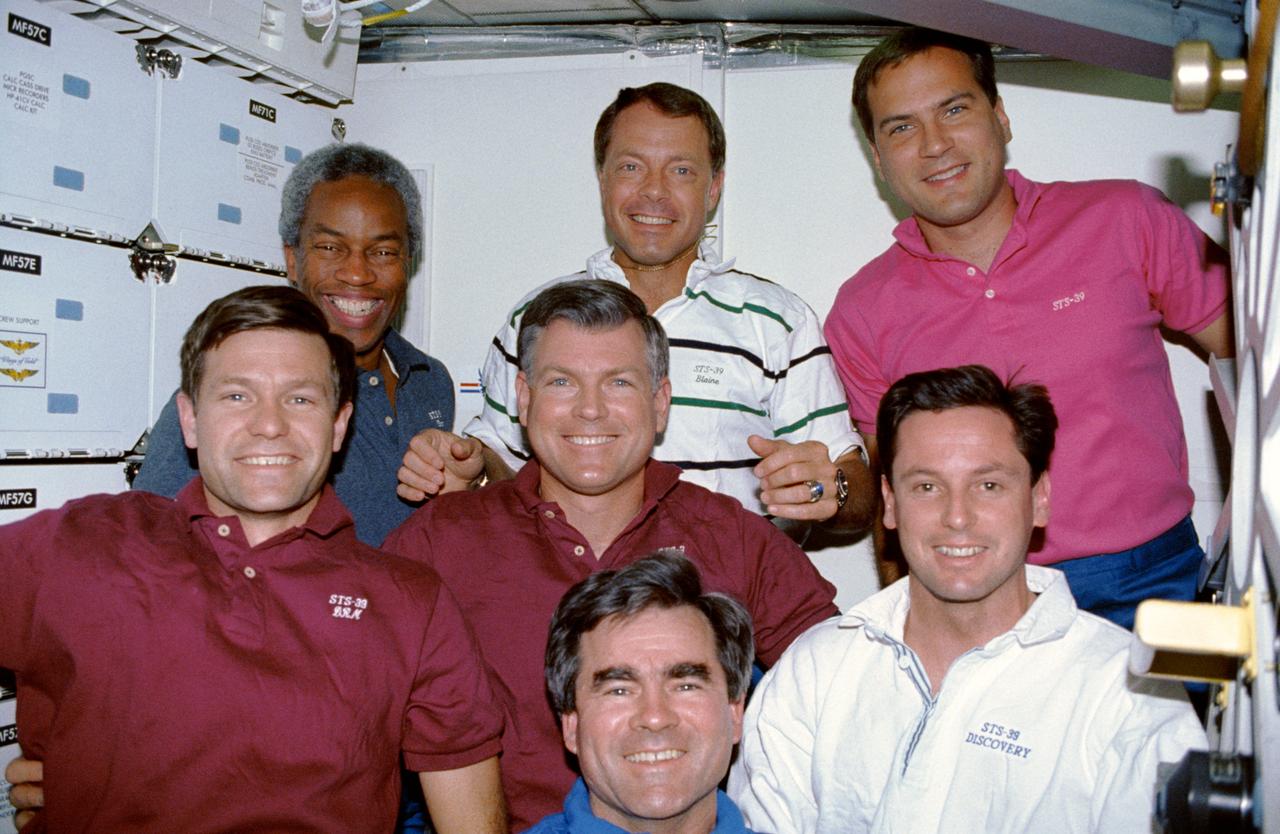
STS039-07-017 (28 April - 6 May 1991) --- The seven member astronaut crew for the STS-39 mission poses on the middeck of the Earth-orbiting space shuttle Discovery for an in-flight crew portrait. Left to right (front) are astronauts Donald R. McMonagle, Michael L. Coats, Charles L. (Lacy) Veach and Gregory J. Harbaugh; and left to right (rear) are astronauts Guion S. Bluford Jr., L. Blaine Hammond and Richard J. Hieb. Photo credit: NASA

S90-52756 (December 1990) --- NASA's STS-39 crew members, wearing their partial pressure launch and entry suits, pose for traditional portrait. Left to right are astronauts Charles L. (Lacy) Veach, Donald R. McMonagle, Gregory J. Harbaugh, Michael L. Coats, L. Blaine Hammond Jr., Richard J. Hieb and Guion S. Bluford Jr. Coats is mission commander; Hammond, pilot, and the others are mission specialists. Photo credit: NASA
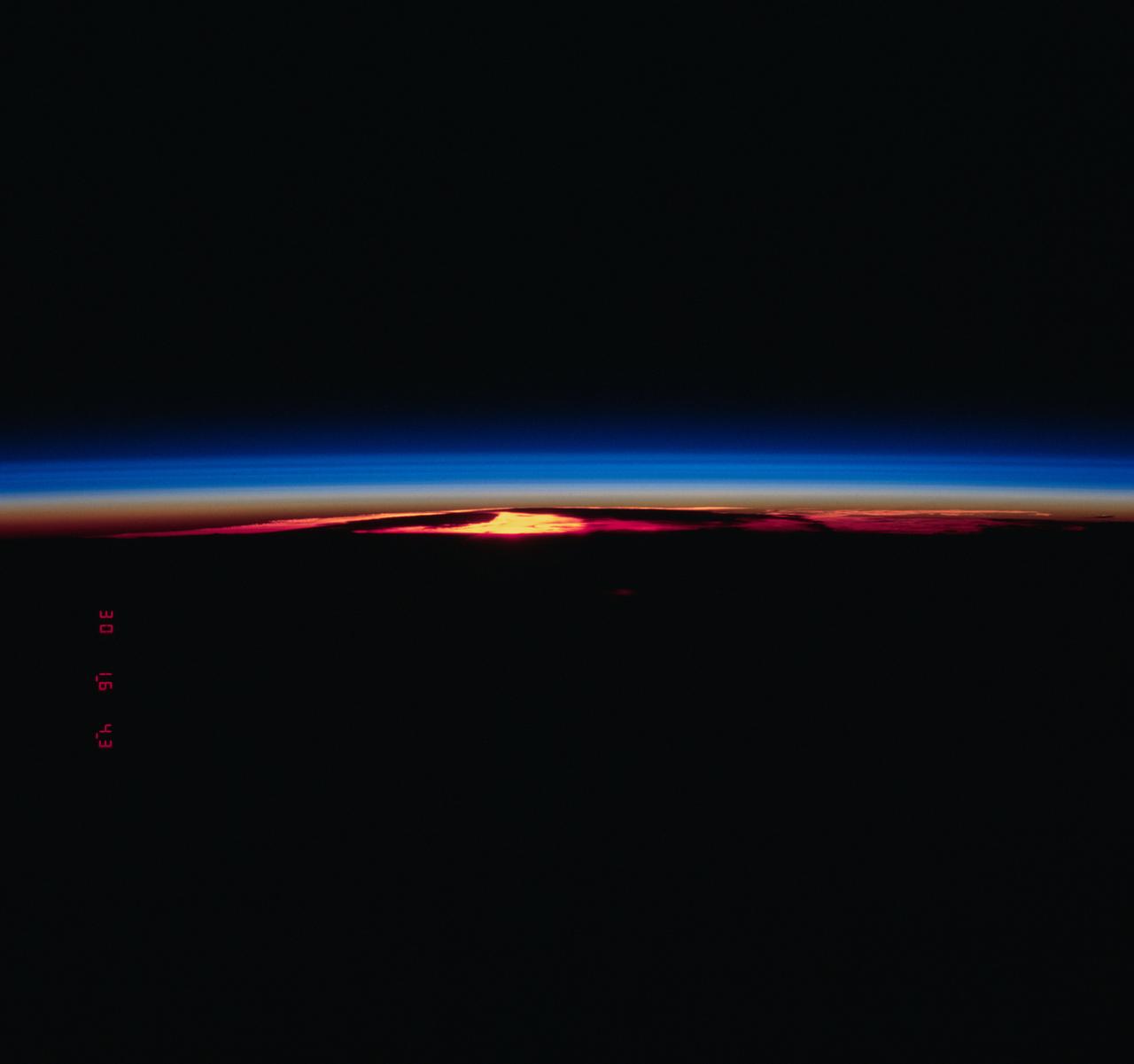
STS039-610-037 (28 April-6 May 1991) --- Numerous atmospheric scattering layers over Earth are apparent in this frame. The layers consist of fine particles suspended in very stable layers of the atmosphere. This photo was taken with a 70mm Rolliflex camera during the Space Shuttle Discovery's eight day mission. Crew members onboard were astronauts Michael L. Coats, L. Blaine Hammond, Guion S. Bluford, Richard J. Hieb, Gregory J. Harbaugh, Donald R. McMonagle and Charles L. (Lacy) Veach.
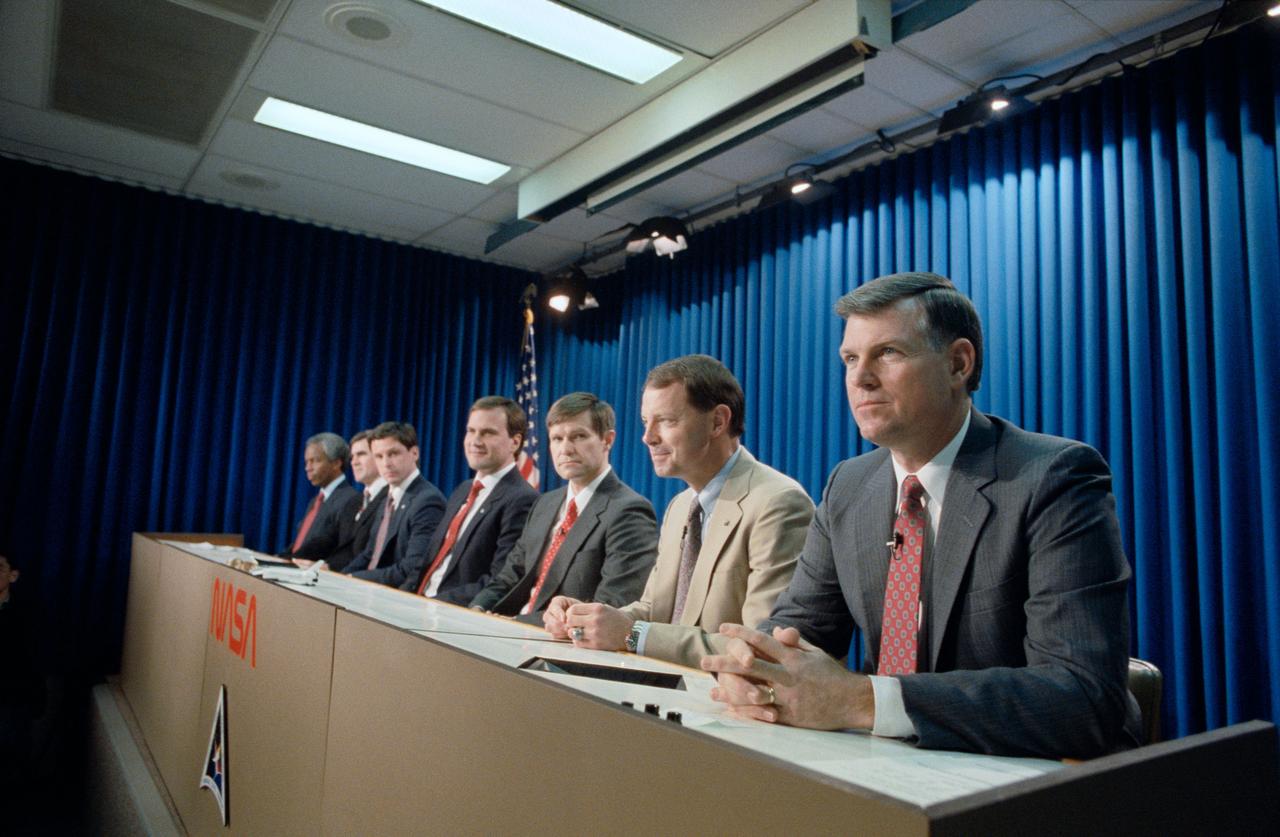
S91-26674 (23 Jan 1991) --- Astronaut Michael L. Coats, mission commander, listens attentively as a news media representative (out of frame) queries the STS-39 crewmembers during a pre-flight press briefing. The others, pictured left to right, are Astronauts Guion (Guy) S. Bluford, C. Lacy Veach, Gregory J. Harbaugh, Richard J. Hieb, Donald R. McMonagle and L. Blaine Hammond Jr.

STS049-S-002 (16 Jan. 1992) --- These seven NASA astronauts are currently training for the first flight of the Space Shuttle Endeavour, seen in the background. Daniel C. Brandenstein, center, is mission commander; and Kevin P. Chilton, third from right, is pilot. Mission specialists are, left to right, Kathryn C. Thornton, Bruce E. Melnick, Pierre J. Thout, Thomas D. Akers and Richard J. Hieb.

STS049-S-269 (16 May 1992) --- The seven crewmembers of STS-49 pose near Endeavour for a post-flight shot soon after getting their feet on terra firma following nine days in Earth orbit. Left to right are astronauts Richard J. Hieb, Kevin P. Chilton, Daniel C. Brandenstein, Thomas D. Akers, Pierre J. Thuot, Kathryn C. Thornton and Bruce E. Melnick. Brandenstein was mission commander; Chilton, pilot; and the others, mission specialists.
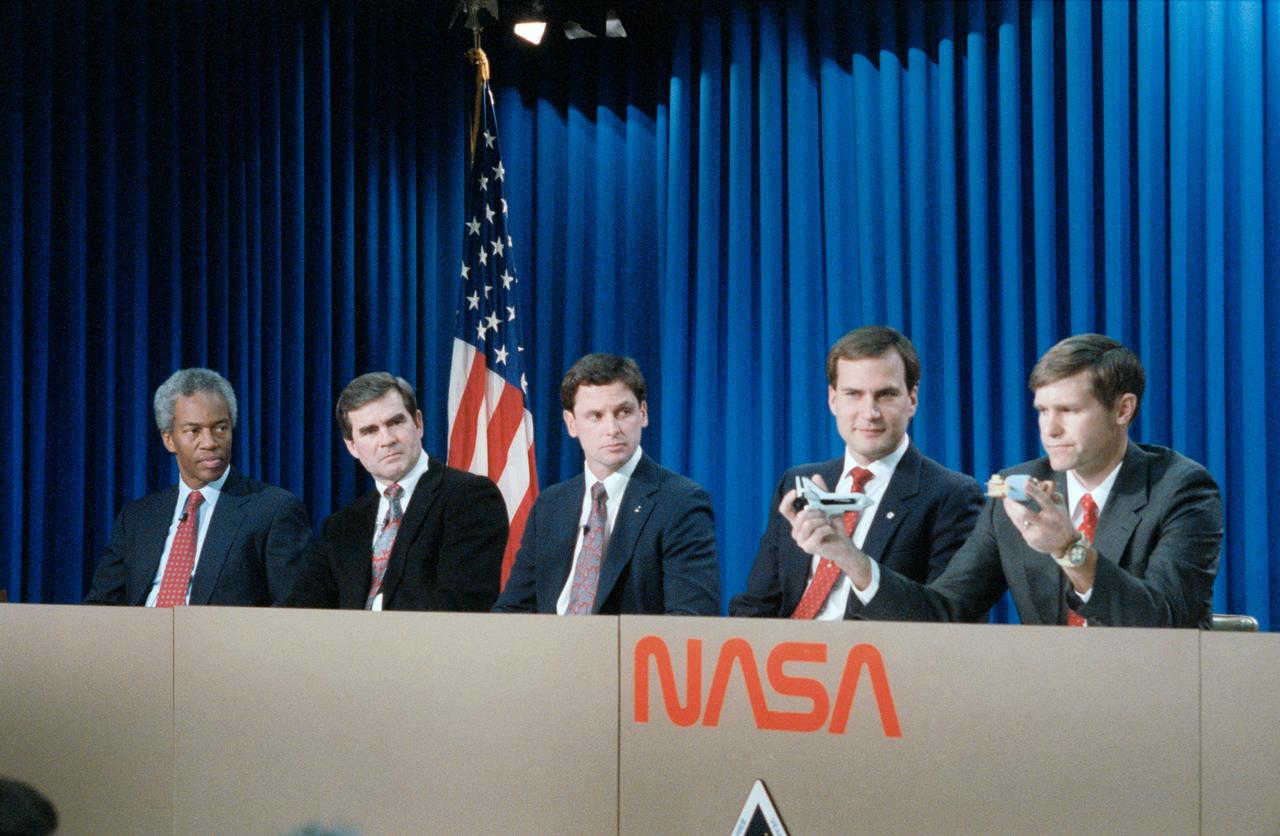
S91-26676 (23 Jan 1991) --- The five mission specialists assigned to the STS-39 Shuttle mission are pictured during a pre-flight press briefing. Pictured left to right are Astronauts Guion (Guy) S. Bluford, C. Lacy Veach, Gregory J. Harbaugh, Richard J. Hieb and Donald R. McMonagle. McMonagle uses models to demonstrate deployment of the infrared background signature survey (IBSS) satellite. Astronauts Michael L. Coats, mission commander, and L. Blaine Hammond Jr., pilot, are out of frame at right.
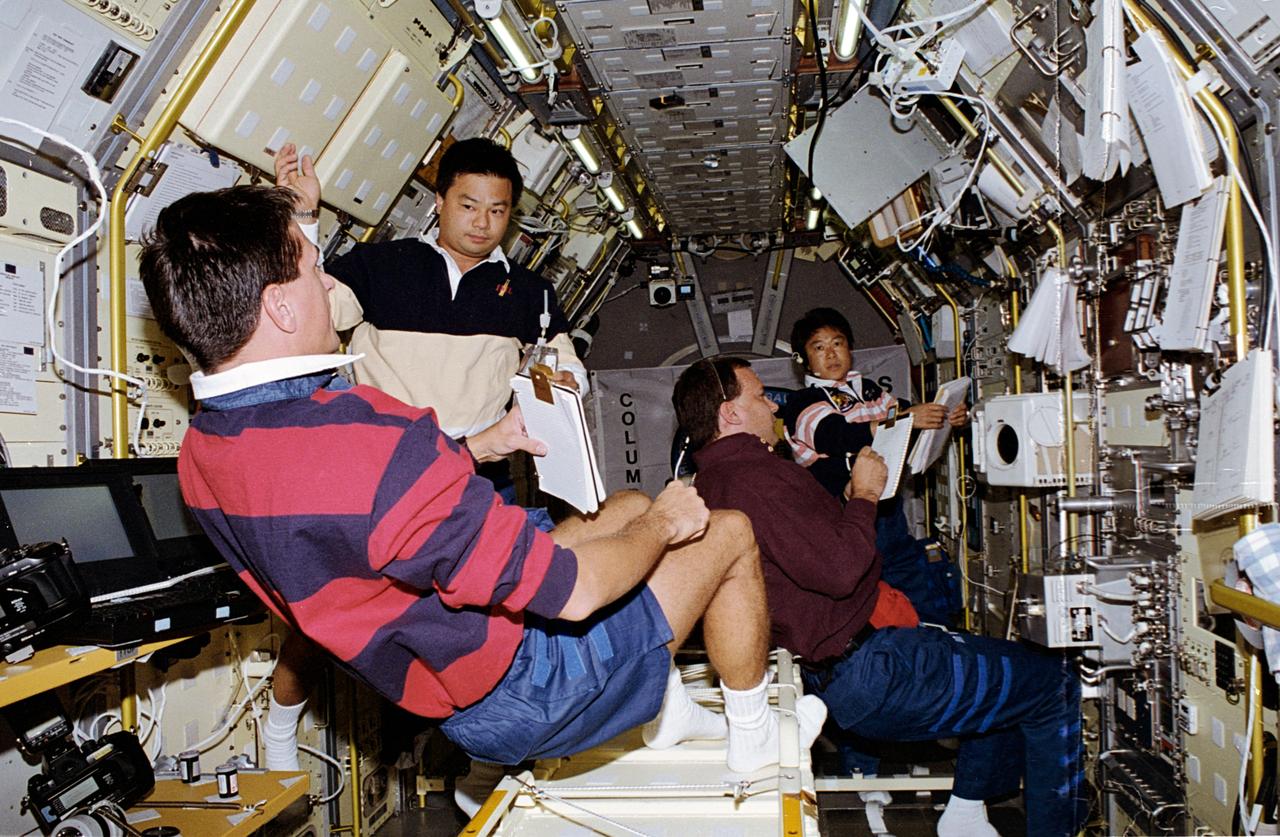
STS065-05-037 (8-23 July 1994) --- In the science module aboard the Space Shuttle Columbia, four members of the crew busy themselves with experiments in support of the second International Microgravity Laboratory (IML-2) mission. Left to right are Donald A. Thomas and Leroy Chiao, both mission specialists; Richard J. Hieb, payload commander, and Dr. Chiaki Mukai of NASDA, payload specialist.
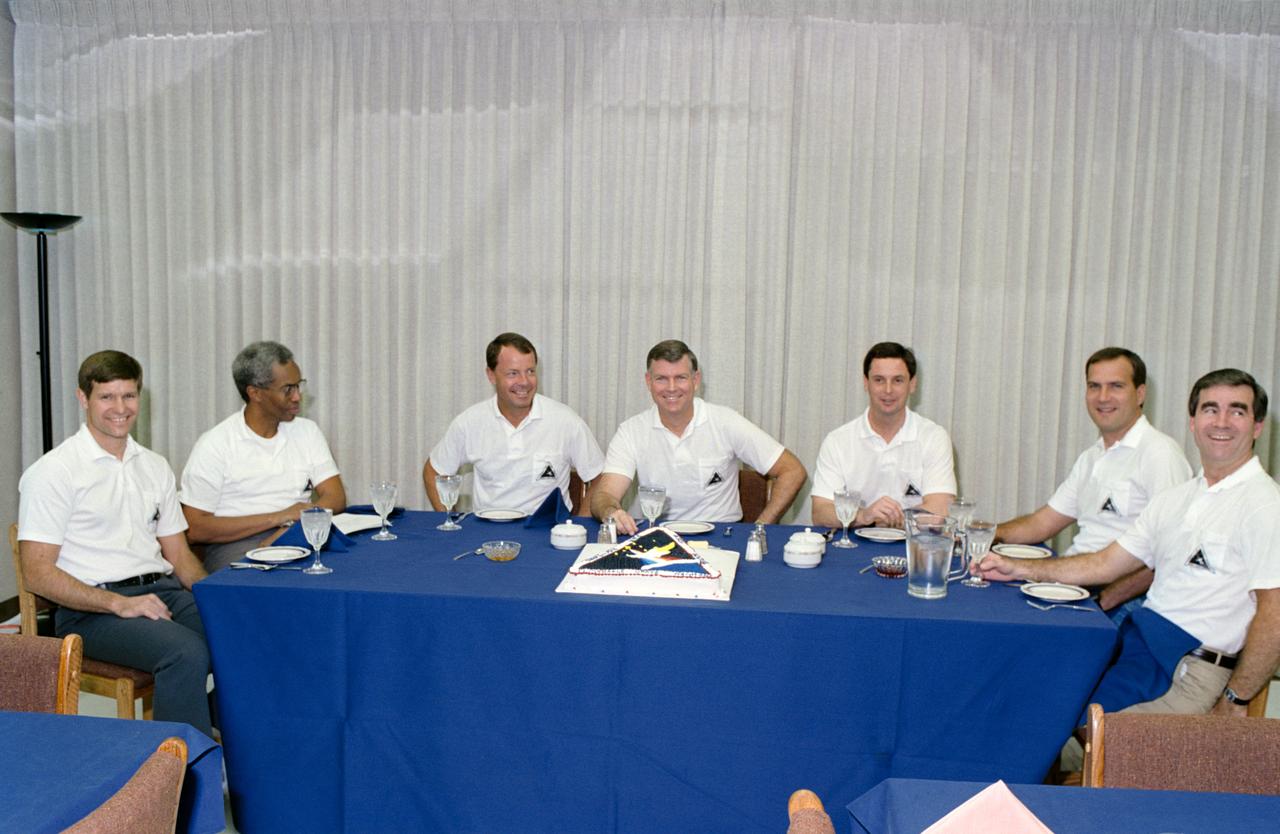
STS039-S-051 (28 April 1991) --- In KSC's Operations and Checkout Building, a very light breakfast is shared by the seven members of the STS-39 flight crew prior to their April 28, 1991 launch. Left to right are astronauts Donald R. McMonagle, Guion S. Bluford Jr., L. Blaine Hammond, Michael L. Coats, Gregory J. Harbaugh, Richard J. Hieb and Charles L. (Lacy) Veach. Launch occurred at 7:33:14 a.m. (EDT), April 28, 1991.
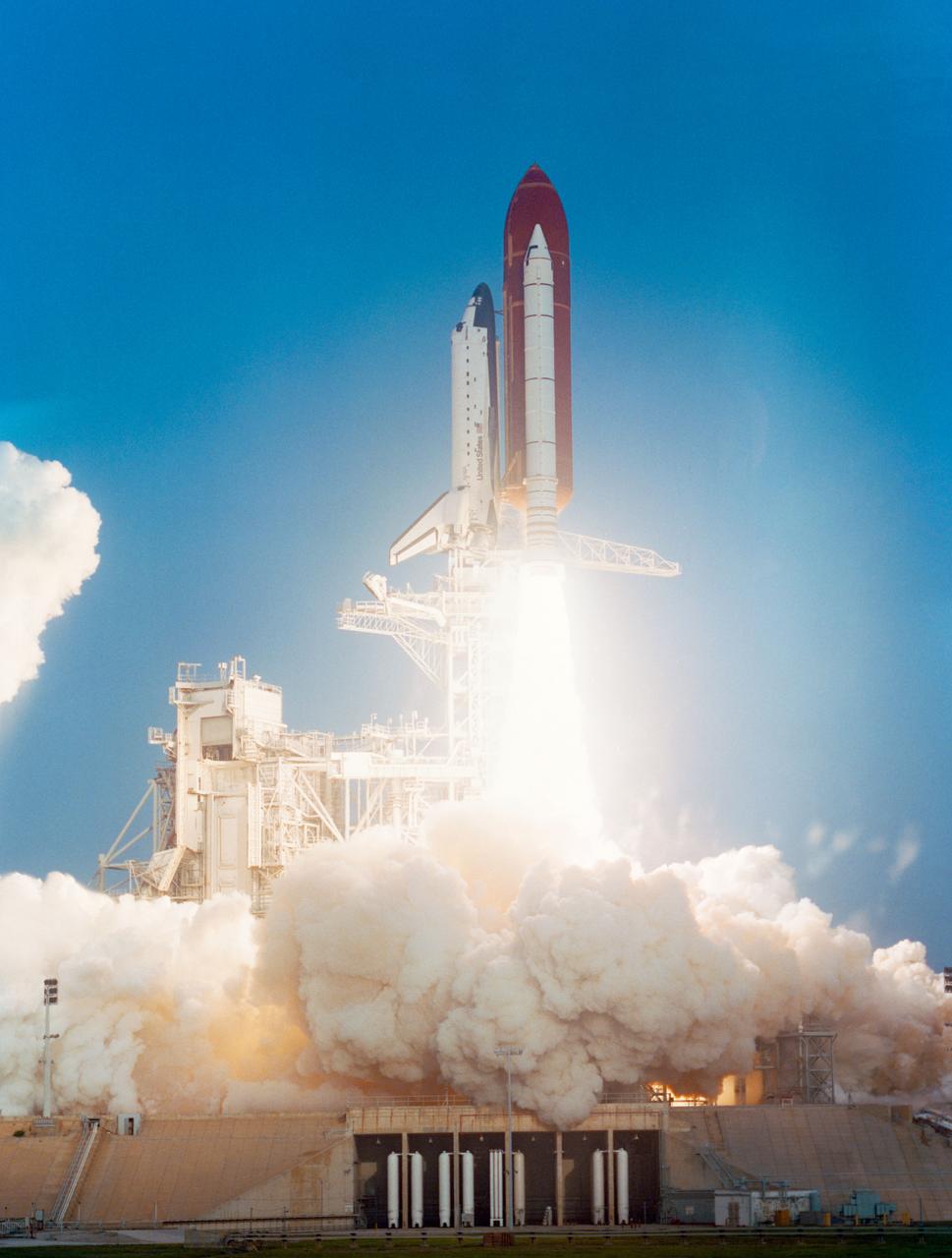
STS039-S-048 (28 April 1991)--- This side view of liftoff of the Space Shuttle Discovery was provided by a pre-set camera at KSC's Launch Pad 39A. Launch occurred at 7:33:14 a.m. (EDT), April 28, 1991. Onboard were astronauts Michael L. Coats, L. Blaine Hammond, Guion S. Bluford Jr., Charles L. (Lacy) Veach, Richard J. Hieb, Gregory J. Harbaugh and Donald R. McMonagle.
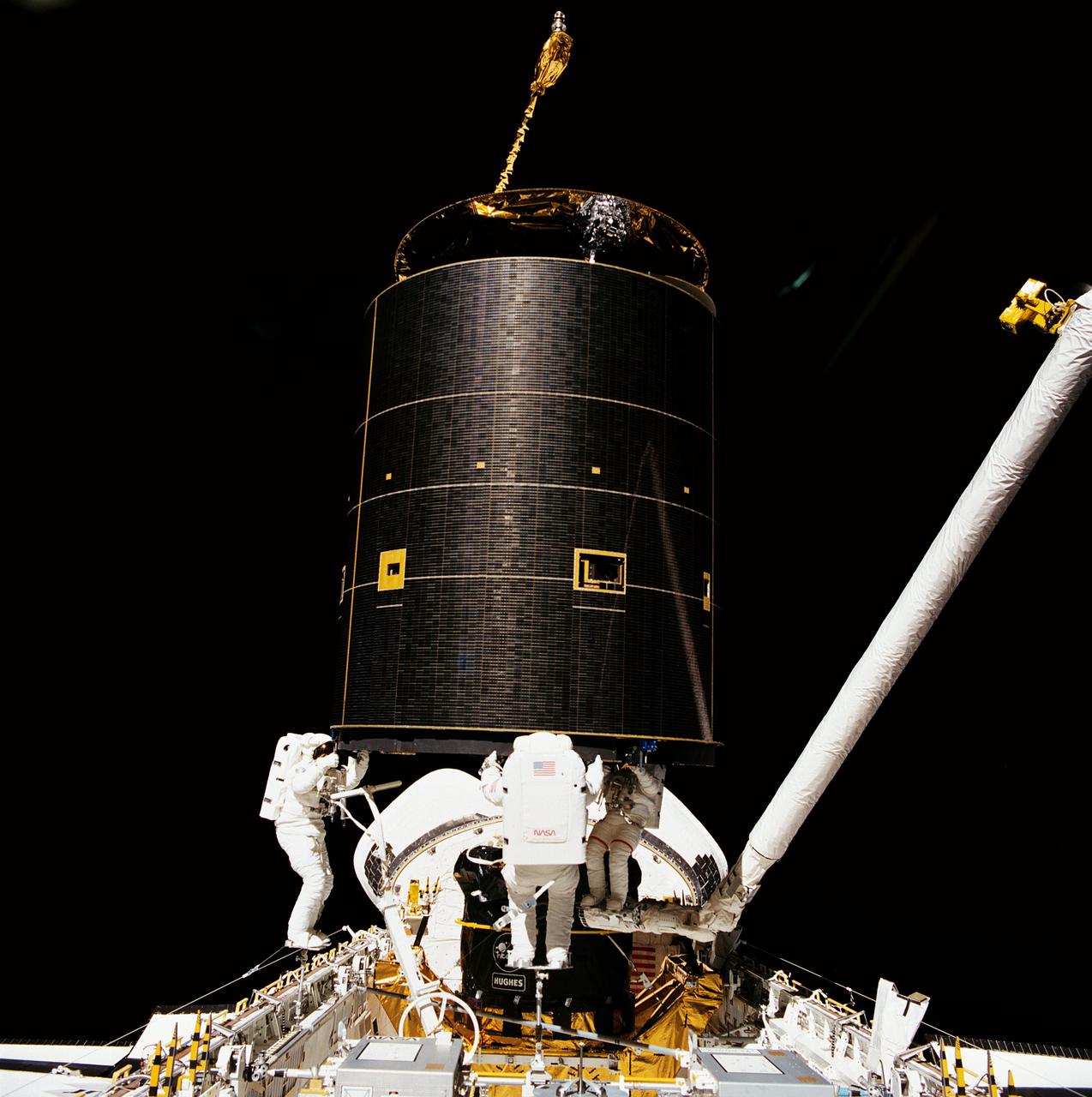
STS049-91-026 (13 May 1992) --- Three astronauts hold onto the 4.5-ton Intelsat VI satellite after a six-handed "capture" was made minutes earlier. Left to right are astronauts Richard J. Hieb, Thomas D. Akers and Pierre J. Thuot. Thuot stands on the end of the remote manipulator system arm, from which he had made two earlier unsuccessful grapple attempts on two-person extravehicular activity sessions. Ground controllers and crew members agreed that a third attempt, using three mission specialists in the cargo bay of the space shuttle Endeavour, was the effort needed to accomplish the capture feat.
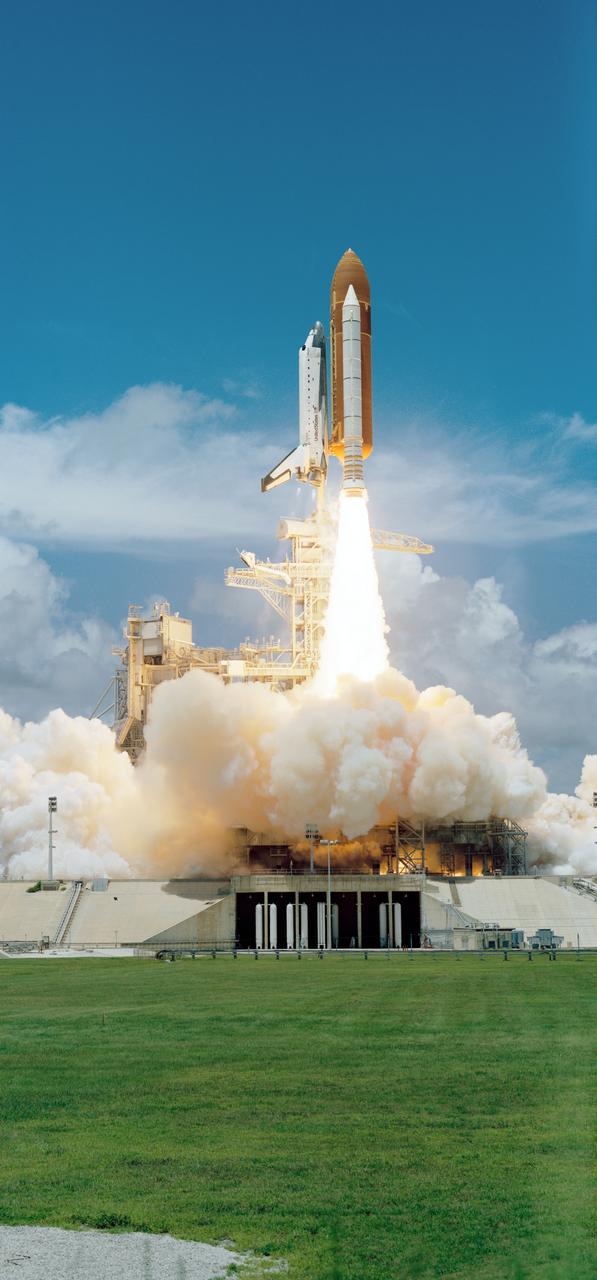
STS065-S-048 (8 July 1994) --- The Space Shuttle Columbia, with six NASA astronauts and a Japanese payload specialist aboard, heads toward Earth-orbit. A short time later, the crew began setting up the science module for two weeks of experimentation in support of the second International Microgravity Laboratory (IML-2). Launch occurred at 12:43 p.m. (EDT), July 8, 1994. Onboard were astronauts Robert D. Cabana, James D. Halsell, Jr., Richard J. Hieb, Carl E. Walz, Leroy Chiao, and Donald A. Thomas along with NASDA payload specialist Dr. Chiaki Mukai.
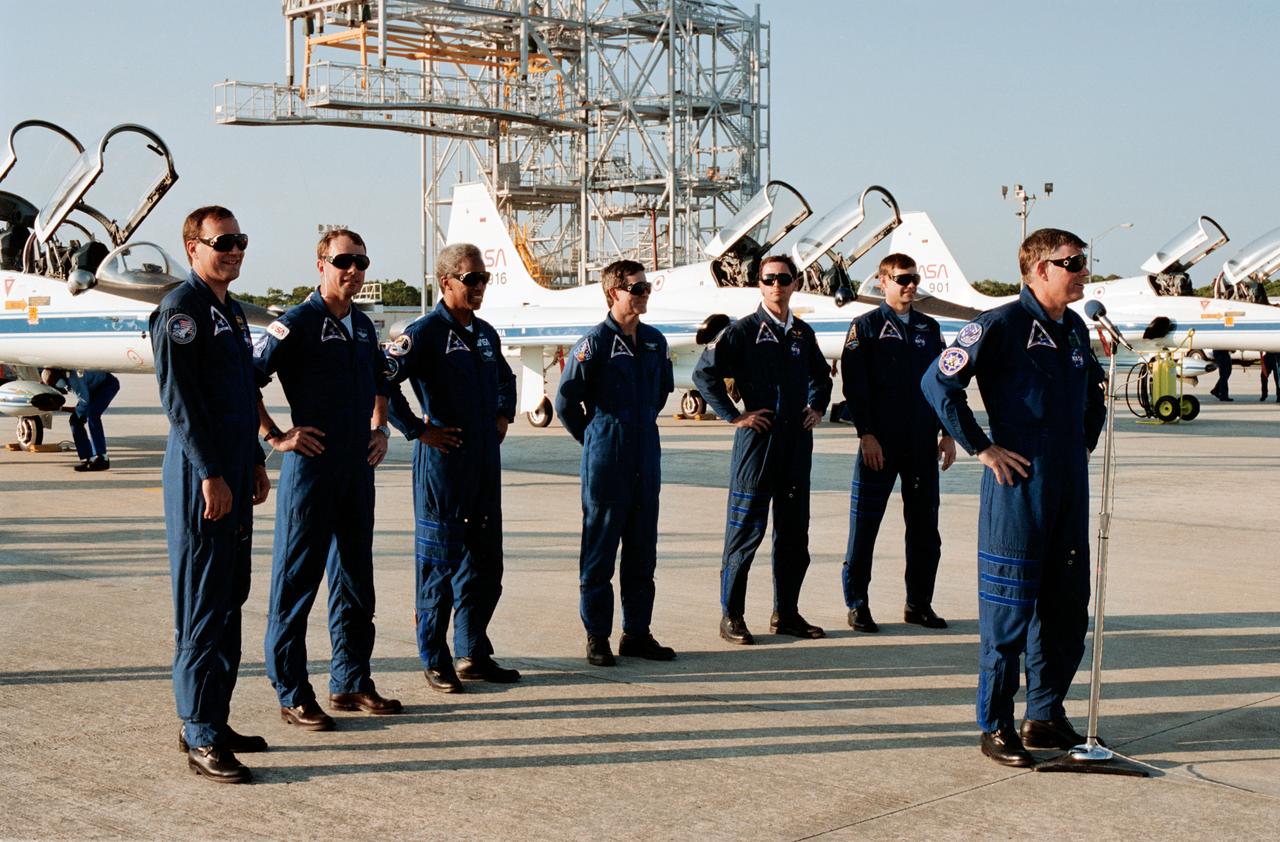
STS039-S-003 (20 April 1991) --- Astronaut Michael L. Coats (right) addresses the news media after arriving at the Shuttle Landing Facility along with his six fellow crewmembers. From left are astronauts Richard J. Hieb, L. Blaine Hammond, Guion S. Bluford, Charles L. (Lacy) Veach, Gregory J. Harbaugh and Donald R. McMonagle. The Space Shuttle mate/demate stand is seen in the background. Note: The STS-39 launch of Discovery occurred at 7:33:14 a.m. (EDT), April 28, 1991.
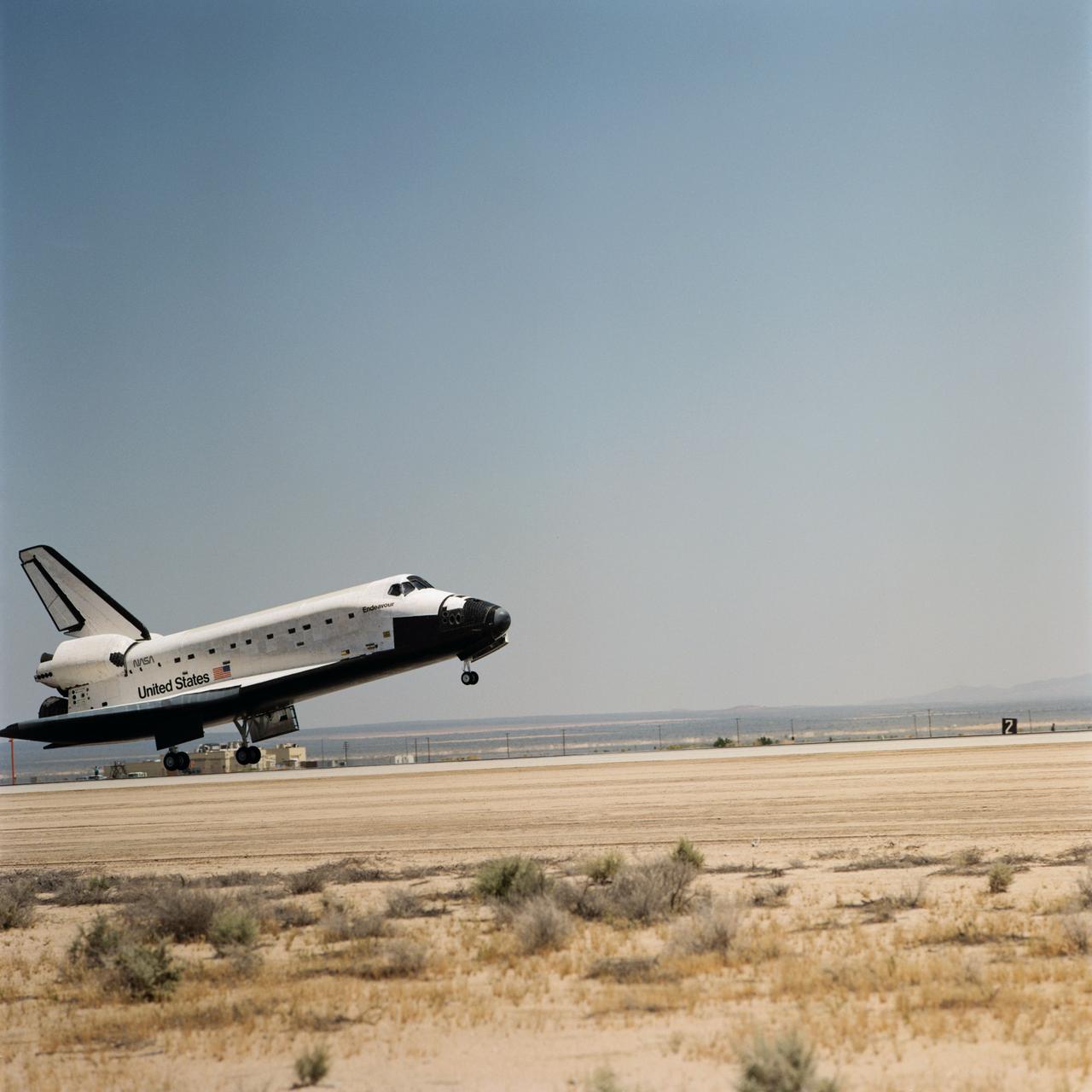
STS049-S-325 (16 May 1992) --- The main landing gear of Endeavour is just about to touch down at Edwards Air Force Base to draw to an end NASA's nine-day STS-49 mission. Crewmembers onboard were astronauts Daniel C. Brandenstein, mission commander; Kevin P. Chilton, pilot; and Thomas D. Akers, Richard J. Hieb, Bruce E. Melnick, Kathryn C. Thornton and Pierre J. Thout, all mission specialists. Landing occurred at 1:36:38 p.m. (PDT), May 16, 1992.
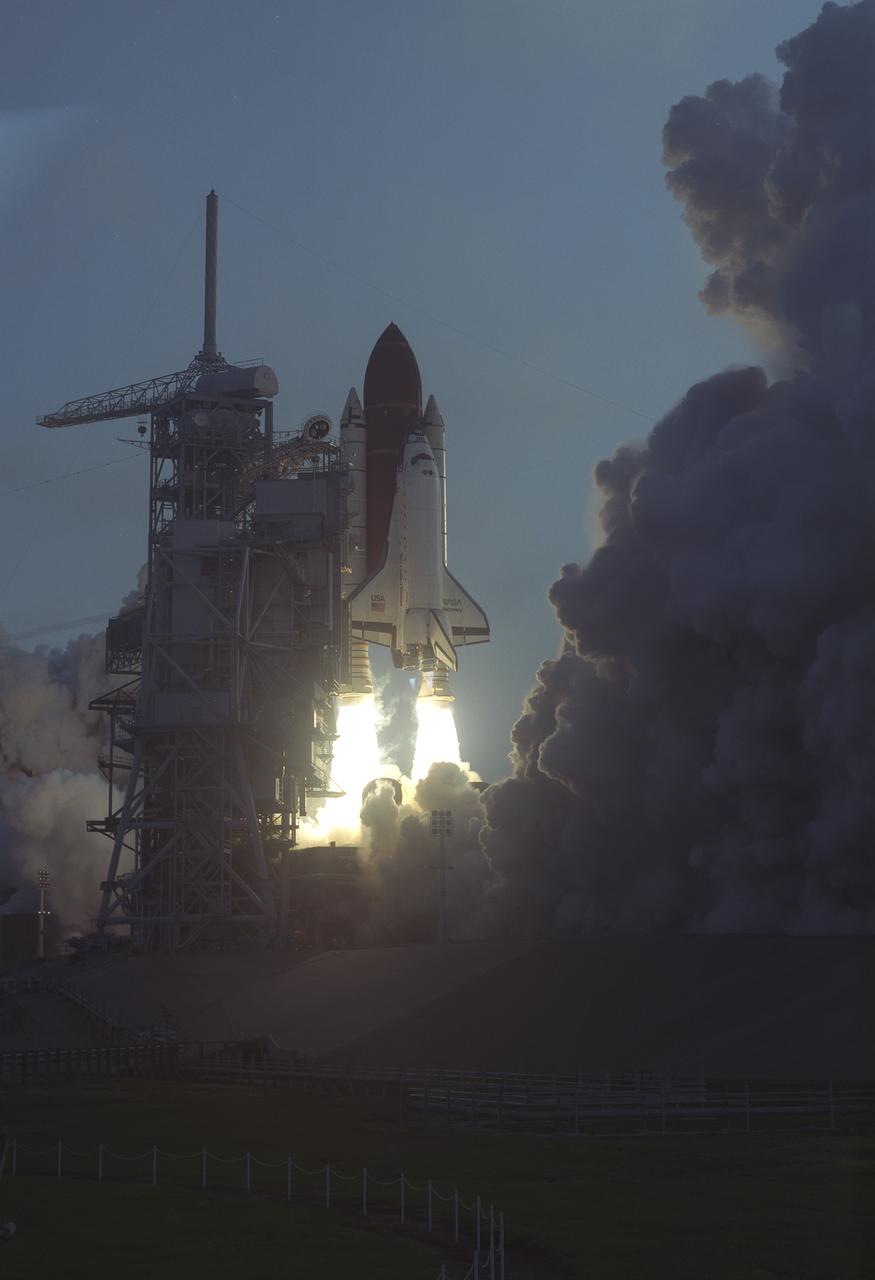
Launched aboard the Space Shuttle Discovery on April 28, 1991 at 7:33:14 am (EDT), STS-39 was a Department of Defense (DOD) mission. The crew included seven astronauts: Michael L. Coats, commander; L. Blaine Hammond, pilot; Guion S. Buford, Jr., mission specialist 1; Gregory J. Harbaugh, mission specialist 2; Richard J. Hieb, mission specialist 3; Donald R. McMonagle, mission specialist 4; and Charles L. Veach, mission specialist 5. The primary unclassified payload included the Air Force Program 675 (AFP-675), the Infrared Background Signature Survey (IBSS), and the Shuttle Pallet Satellite II (SPAS II).
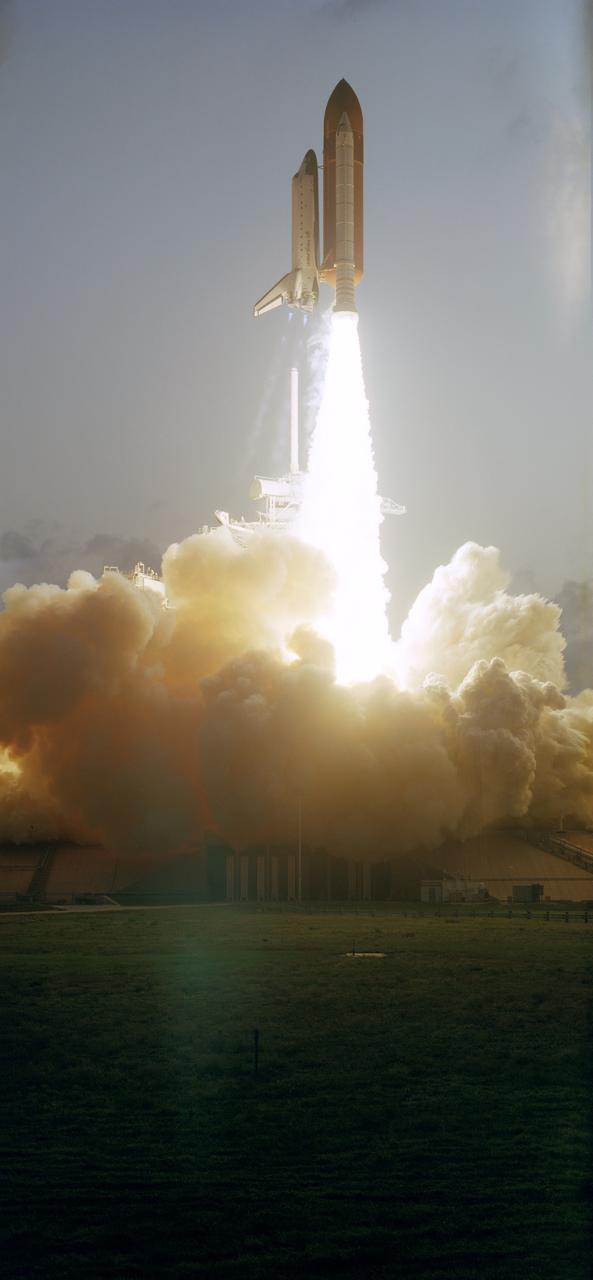
STS049-S-251 (7 May 1992) --- The Space Shuttle Endeavour soars toward Earth orbit where a crew of seven NASA astronauts will spend at least a week. Endeavour, the newest orbiter in NASA's Space Shuttle fleet, lifted off from Pad 39B at 7:40 p.m. (EDT), May 7, 1992. A diamond shock effect can be seen beneath the three main engines. Onboard are astronauts Daniel C. Brandenstein, mission commander; Kevin P. Chilton, pilot; and Richard J. Hieb, Bruce E. Melnick, Pierre J. Thuot, Kathryn C. Thornton and Thomas D. Akers, all mission specialists.
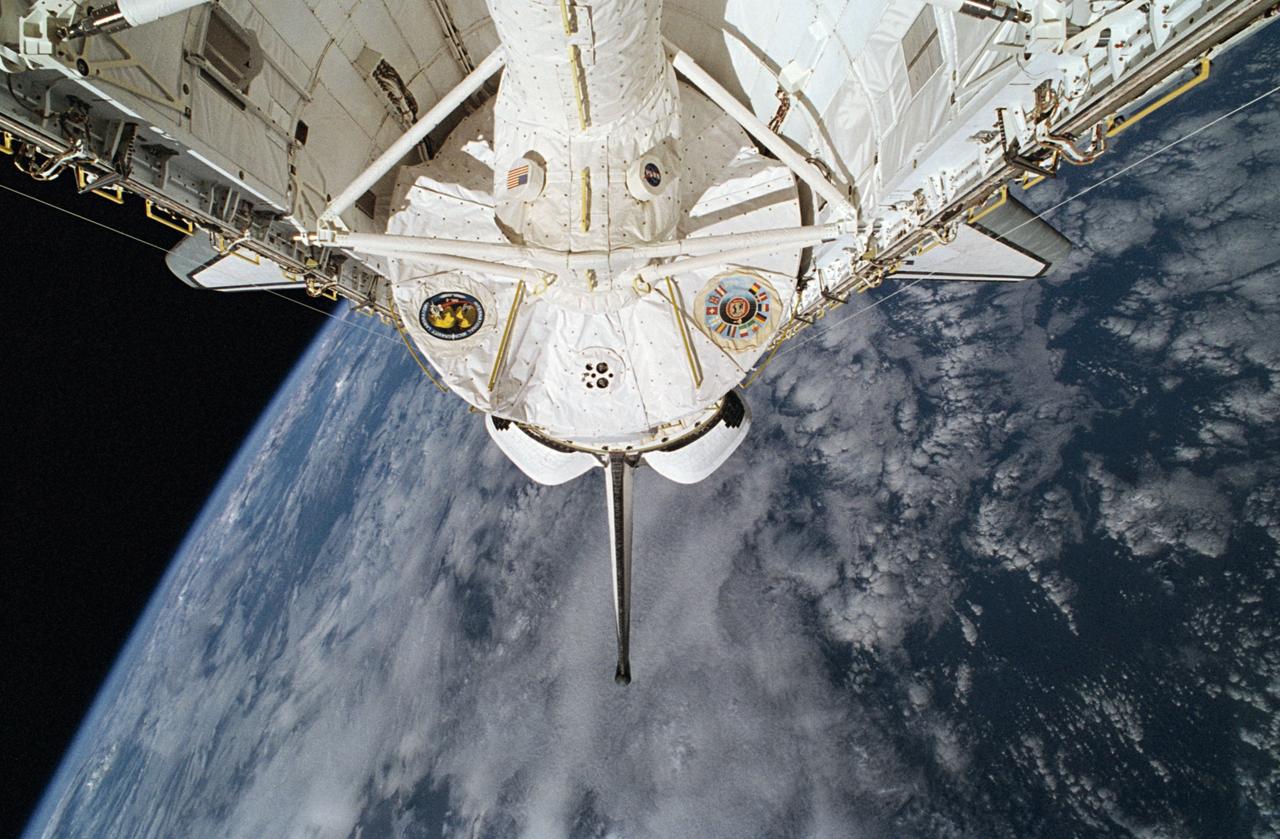
STS065-34-016 (8-23 July 1994) --- Clouds over the ocean form the backdrop for this scene of the International Microgravity Laboratory (IML-2) science module in the Space Shuttle Columbia's cargo bay during the two-week mission. Part of the tunnel that served as passageway for the seven crew members to and from the lab is seen in center foreground. Onboard Columbia were astronauts Robert D. Cabana, James D. Halsell, Jr., Richard J. Hieb, Carl E. Walz, Donald A. Thomas and Leroy Chiao, along with (NASDA) Japanese payload specialist Dr. Chiaki Naito-Mukai.
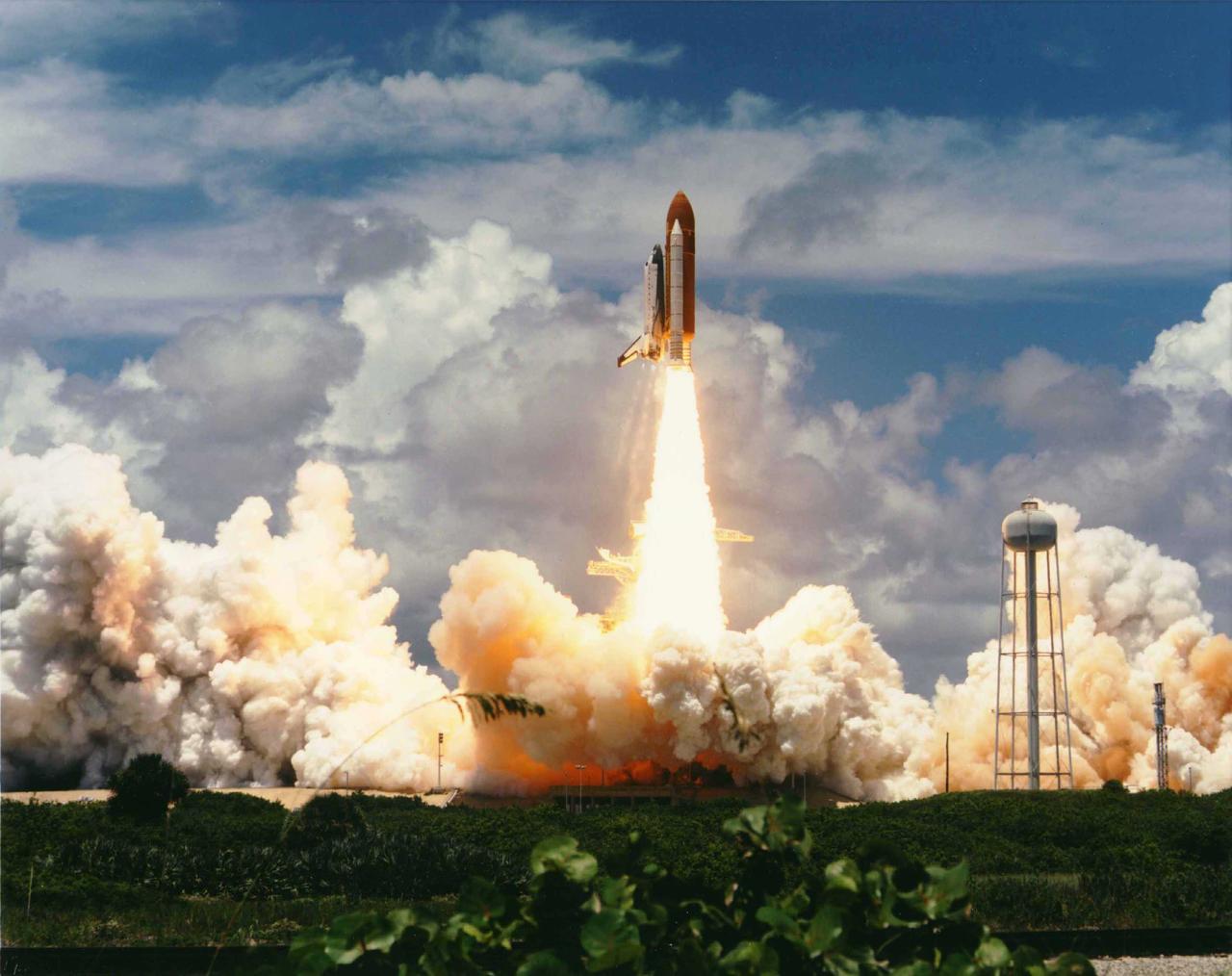
KENNEDY SPACE CENTER, FLA. - The second International Microgravity Laboratory-2 (IML-2) is off to an ontime start as the Space Shuttle Columbia lifts off from Launch Pad 39A at 12:43:00 p.m. EDT. On board are a crew of seven and more than 80 investigations developed by more than 200 scientists from 13 countries. The IML-2 complement includes materials science, bioprocessing, space and radiation biology, and human physiology experiments that will be carried out over the course of the 14-day flight. The commander of Space Shuttle Mission STS-65 is Robert D. Cabana. James D. Halsell Jr. is the pilot; the payload commander is Richard J. Hieb; the three mission specialists are Carl E. Walz, Leroy Chiao and Donald A. Thomas. Dr. Chiaki Mukai, representing NASDA, the National Space Development Agency of Japan, is the payload specialist. Mukai becomes the first Japanese woman to fly into space.
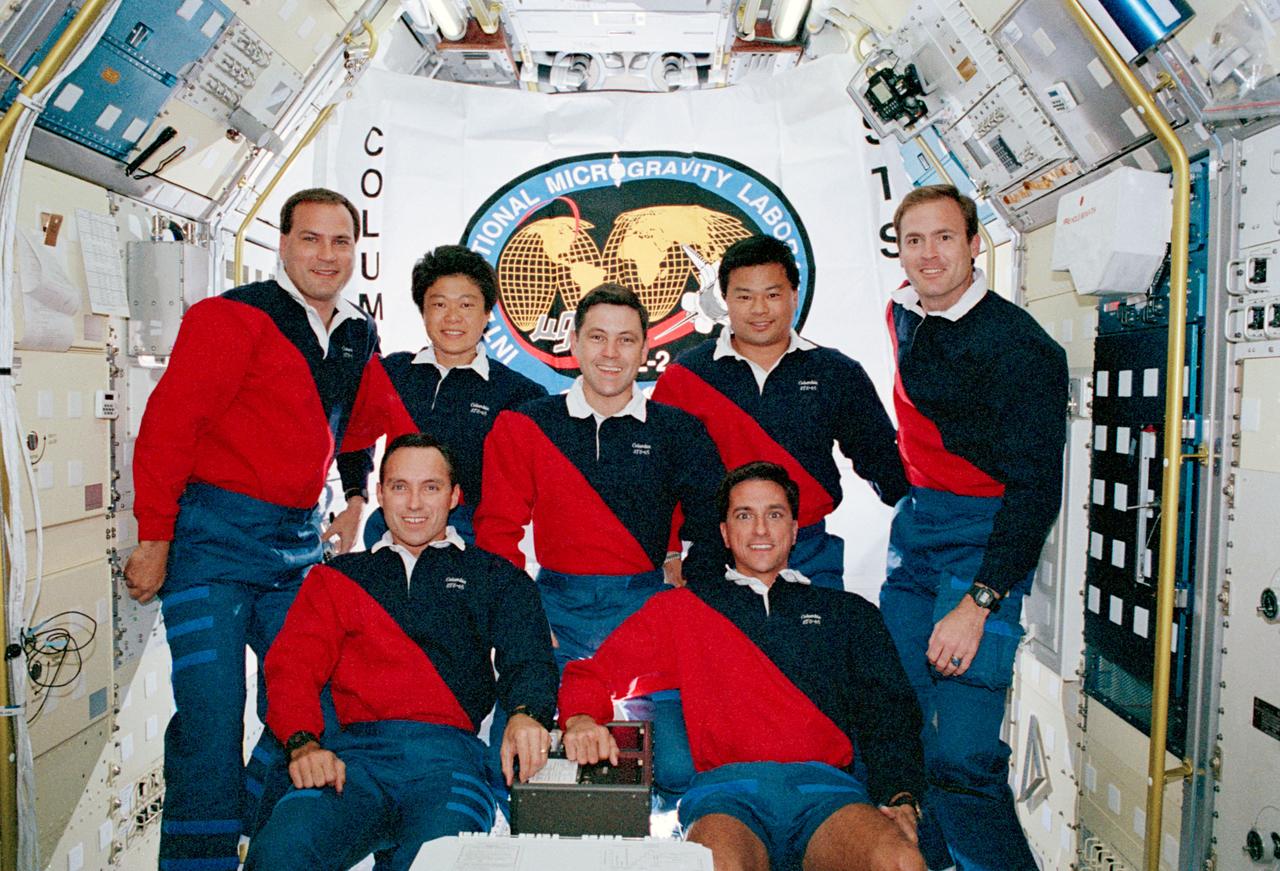
In the spacelab science module aboard the Space Shuttle Columbia, Orbiter Vehicle (OV) 102, the seven crewmembers pose for the traditional onboard (inflight) crew portrait. Displayed in the background is a flag with the International Microgravity Laboratory 2 (IML-2) insignia and Columbia inscribed along the edge. In the front row (left to right) are Mission Specialist (MS) Carl E. Walz and MS Donald A. Thomas. Behind them (left to right) are Payload Commander (PLC) Richard J. Hieb, Payload Specialist Chiaki Mukai, Commander Robert D. Cabana, MS Leroy Chiao, and Pilot James D. Halsell, Jr. Mukai represents the National Space Development Agency (NASDA) of Japan. Crewmembers are wearing their mission polo shirts for the portrait. Inside this module, the crew conducted experiments in support of the IML-2 mission.

STS065-214-037 (8-23 July 1994) --- Ready to begin one of her busy twelve hour shifts, payload specialist Dr. Chiaki Naito-Mukai enters the International Microgravity Laboratory (IML-2) science module in the cargo bay via the tunnel connecting it to the Space Shuttle Columbia's cabin. Dr. Mukai joined six NASA astronauts for more than two weeks of experimenting in Earth orbit. This photo was among the first released by NASA following IML-2. Also onboard were NASA astronauts Robert D. Cabana, James D. Halsell, Jr., Richard J. Hieb, Carl E. Walz, Donald A. Thomas and Leroy Chiao. Dr. Mukai represented the National Space Development Agency (NASDA) of Japan.
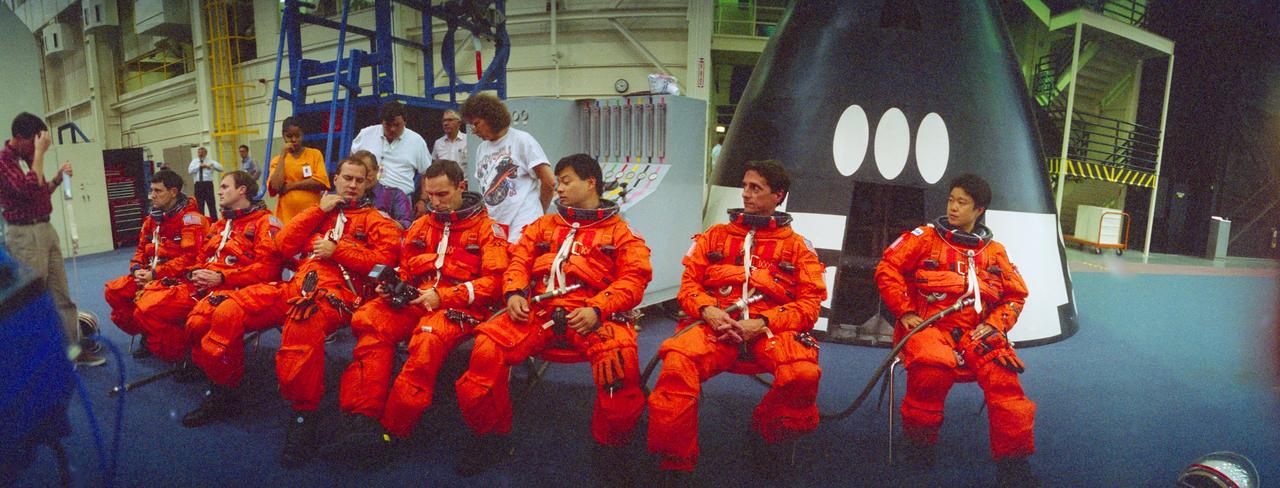
S94-31388 (25 Mar 1994) --- Six NASA astronauts and a Japanese payload specialist listen to a briefing by a crew training staffer. From the left are astronauts Robert D. Cabana, mission commander; James D. Halsell Jr., pilot; Richard J. Hieb, payload commander; and Carl E. Walz, Leroy Chiao and Donald A. Thomas, all mission specialists; along with Dr. Chiaki Mukai, payload specialist. Dr. Mukai represents the National Space Development Agency (NASDA) of Japan. The STS-65 crew was in the Johnson Space Center's (JSC) Shuttle mockup and integration laboratory for crew egress training. The full fuselage trainer, used for the rehearsals, is just out of frame. The seven-member crew will support the International Microgravity Laboratory (IML-2) mission aboard the Space Shuttle Columbia later this year.
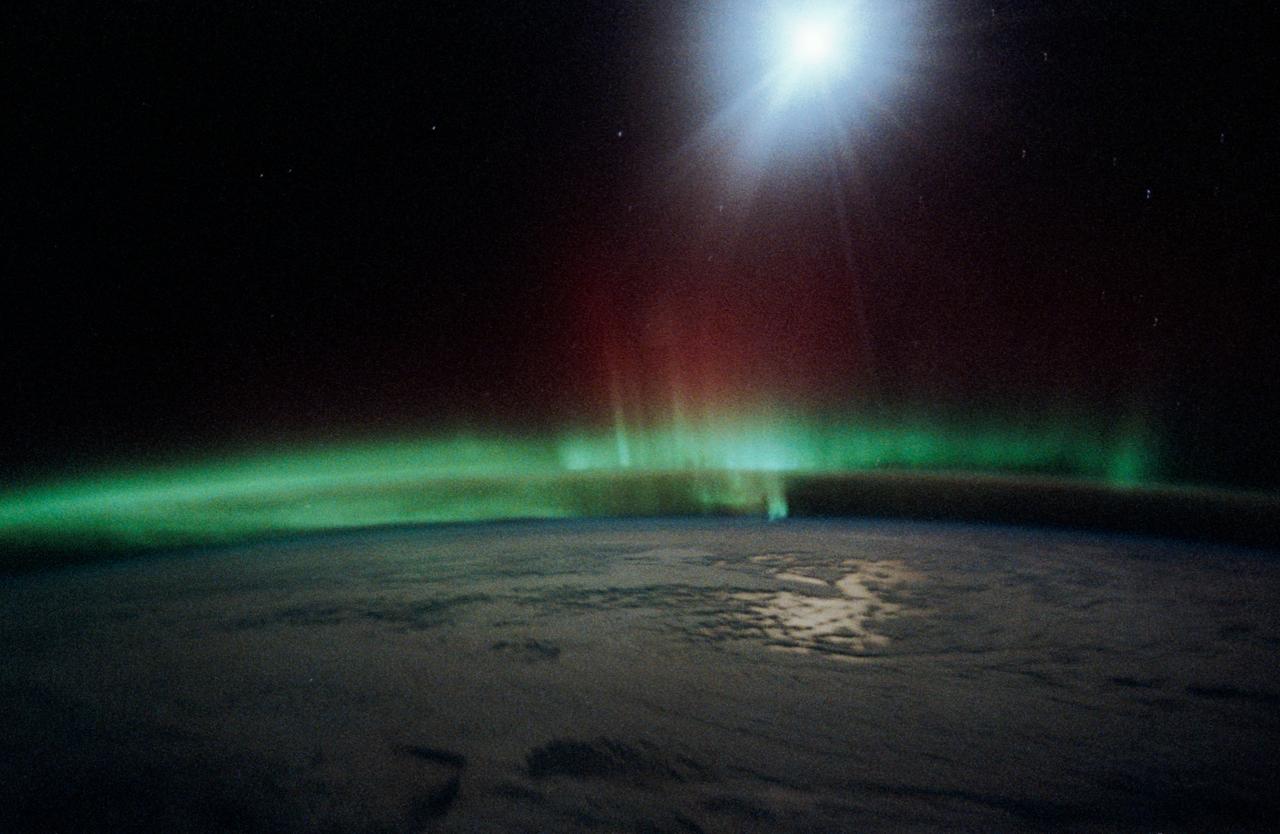
STS039-377-013 (28 April-6 May 1991) --- Moonlight saturates the high speed film used for auroral photography. Moon glint is visible in the open ocean and the cloud patterns are well illuminated. This frame was taken with a handheld 35mm camera from inside the Space Shuttle Discovery's crew cabin. This is one of 25 visuals used by the STS-39 crew at its May 17, 1991 Post Flight Press Conference (PFPC). Discovery's flight of eight days duration, launched April 28, 1991 from Kennedy Space Center (KSC) and completed on May 6, 1991 at the KSC landing facility, was dedicated to the Department of Defense (DOD). Crew members were astronauts Michael L. Coats, L. Blaine Hammond, Guion S. Bluford, Richard J. Hieb, Gregory J. Harbaugh, Donald R. McMonagle and Charles L. (Lacy) Veach.
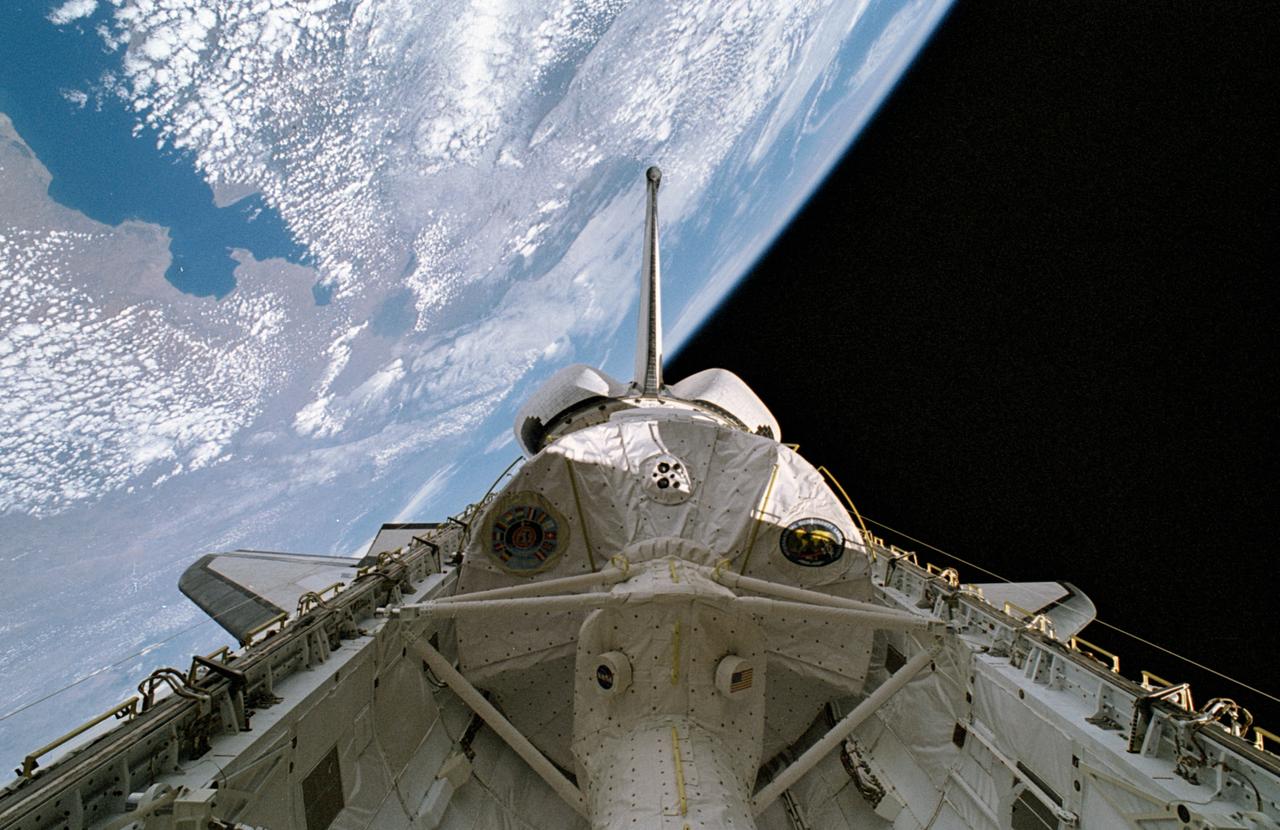
STS065-42-017 (8-23 July 1994) --- This 35mm panorama shows the science module, for the second International Microgravity Laboratory (IML-2) and the Space Shuttle Columbia's cargo bay, backdropped against the darkness of space over part of Africa, on Earth's horizon. Lake Nyasa in Malawi can easily be delineated. Also visible are part of the country of Mozambique and the Indian Ocean. Six NASA astronauts and a Japanese payload specialist spent more than two weeks of experimenting in Earth-orbit. Onboard were NASA astronauts Robert D. Cabana, James D. Halsell, Jr., Richard J. Hieb, Carl E. Walz, Donald A. Thomas and Leroy Chiao along with payload specialist Dr. Chiaki Mukai, representing the National Space Development Agency (NASDA) of Japan.
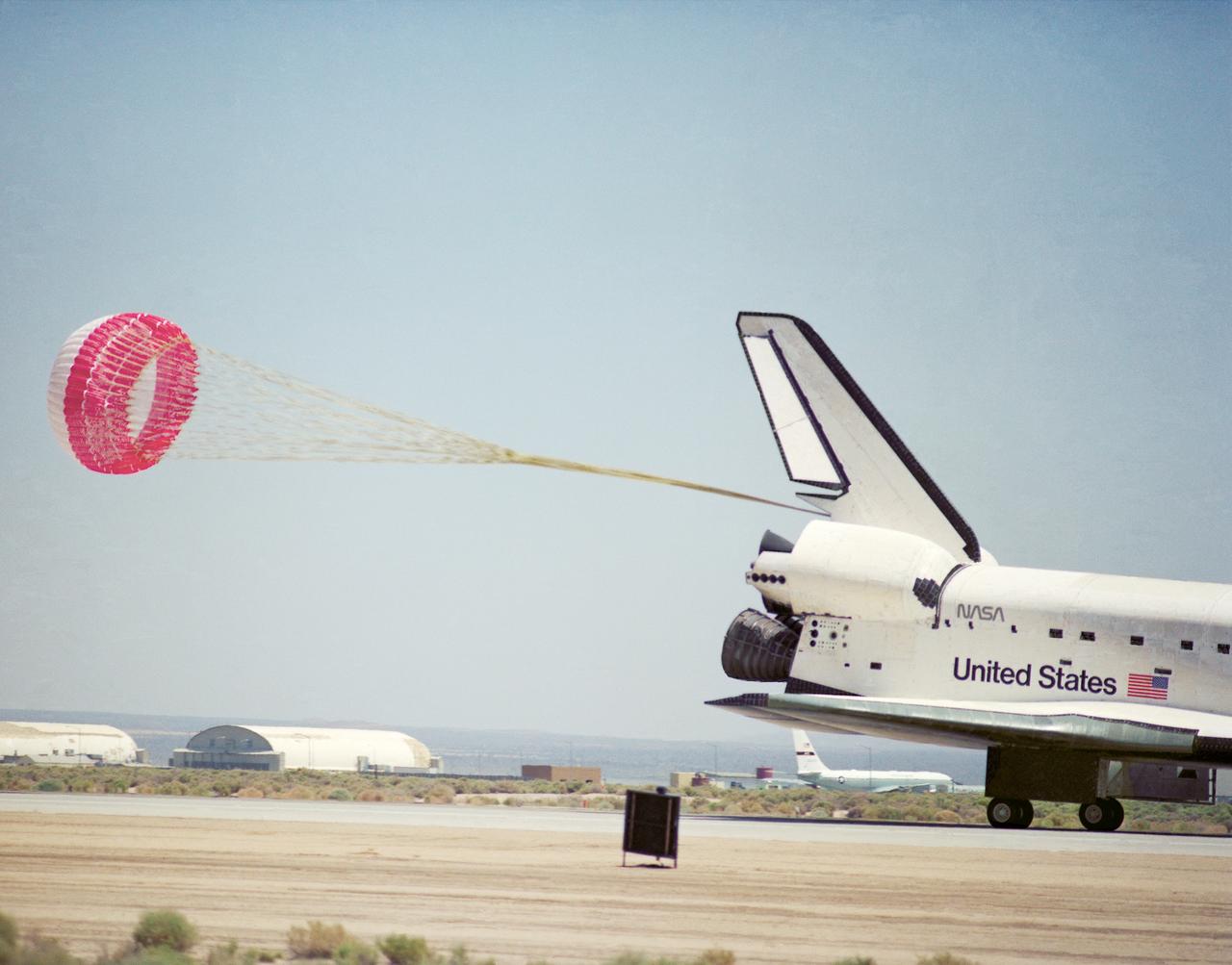
The Space Shuttle Endeavour concludes mission STS-49 at NASA's Ames-Dryden Flight Research Facility (later redesignated Dryden Flight Research Center), Edwards, California, with a 1:57 p.m. (PDT) landing 16 May on Edward's concrete runway 22. The planned 7-day mission, which began with a launch from Kennedy Space Center, Florida, at 4:41 p.m. (PFT), 7 May, was extended two days to allow extra time to rescue the Intelsat VI satellite and complete Space Station assembly techniques originally planned. After a perfect rendezvous in orbit and numerous attempts to grab the satellite, space walking astronauts Pierre Thuot, Rick Hieb and Tom Akers successfully rescued it by hand on the third space walk with the support of mission specialists Kathy Thornton and Bruce Melnick. The three astronauts, on a record space walk, took hold of the satellite and directed it to the shuttle where a booster motor was attached to launch it to its proper orbit. Commander Dan Brandenstein and Pilot Kevin Chilton brought Endeavours's record setting maiden voyage to a perfect landing at Edwards AFB with the first deployment of a drag chute on a shuttle mission.
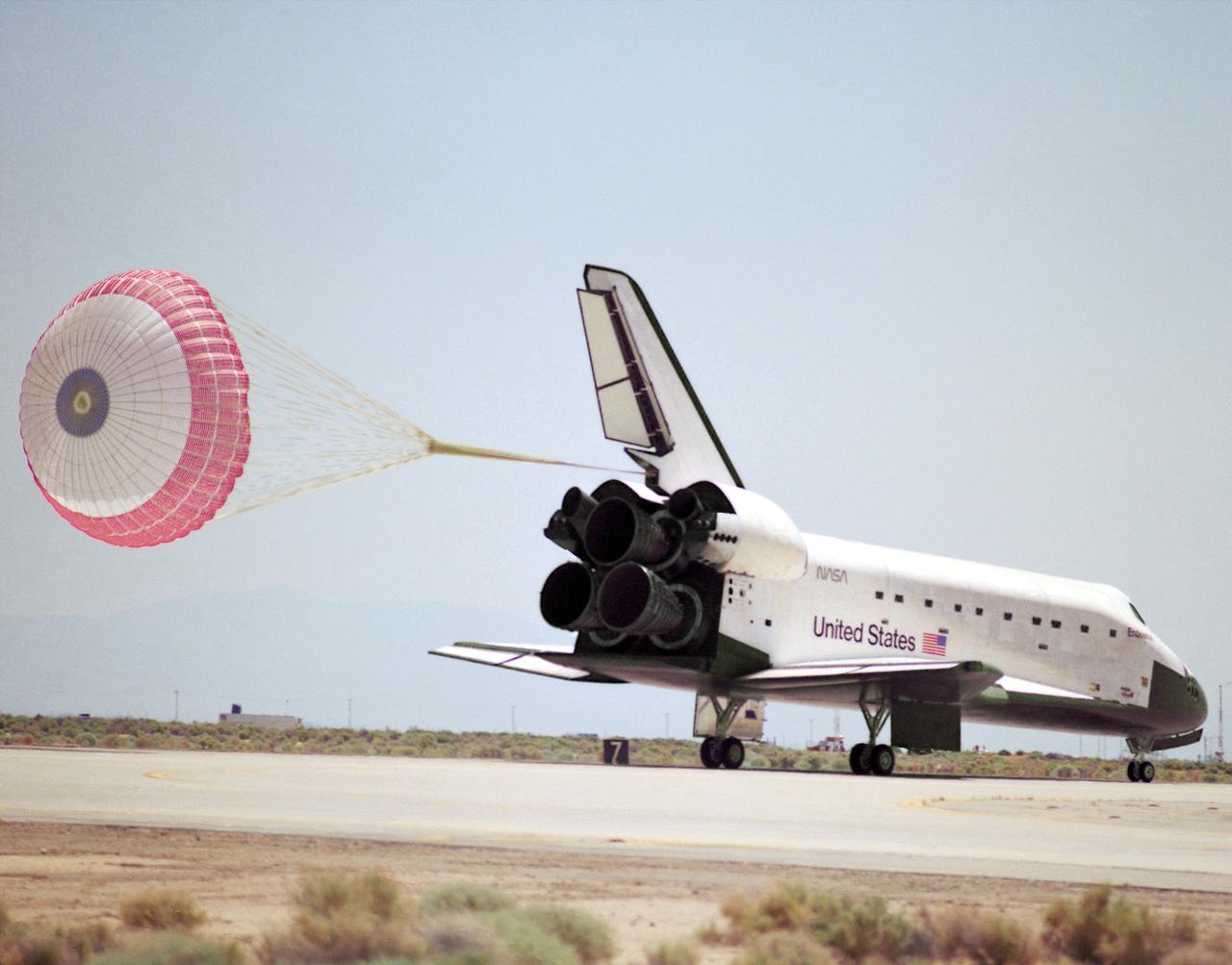
The Space Shuttle Endeavour concludes mission STS-49 at NASA's Ames-Dryden Flight Research Facility (later redesignated Dryden Flight Research Center), Edwards, California, with a 1:57 p.m. (PDT) landing May 16 on Edward's concrete runway 22. The planned 7-day mission, which began with a launch from Kennedy Space Center, Florida, at 4:41 p.m. (PFT), 7 May, was extended two days to allow extra time to rescue the Intelsat VI satellite and complete Space Station assembly techniques originally planned. After a perfect rendezvous in orbit and numerous attempts to grab the satellite, space walking astronauts Pierre Thuot, Rick Hieb and Tom Akers successfully rescued it by hand on the third space walk with the support of mission specialists Kathy Thornton and Bruce Melnick. The three astronauts, on a record space walk, took hold of the satellite and directed it to the shuttle where a booster motor was attached to launch it to its proper orbit. Commander Dan Brandenstein and Pilot Kevin Chilton brought Endeavours's record setting maiden voyage to a perfect landing at Edwards with the first deployment of a drag chute on a shuttle mission.