
Teams with NASA’s Exploration Ground Systems lower the agency’s 212-foot-tall SLS (Space Launch System) core stage into High Bay 2 at the Vehicle Assembly Building at NASA’s Kennedy Space Center in Florida on Wednesday, Dec. 11, 2024. The one-of-a kind lifting beam is designed to lift the core stage from the transfer aisle to High Bay 2 where it will remain while teams stack the two solid rocket boosters on top of mobile launcher 1 for the SLS core stage. Boeing and their sub-contractor Futuramic refurbished High Bay 2 to increase efficiencies while processing core stages for Artemis II and beyond.

Teams with NASA’s Exploration Ground Systems lower the agency’s 212-foot-tall SLS (Space Launch System) core stage into High Bay 2 at the Vehicle Assembly Building at NASA’s Kennedy Space Center in Florida on Wednesday, Dec. 11, 2024. The one-of-a kind lifting beam is designed to lift the core stage from the transfer aisle to High Bay 2 where it will remain while teams stack the two solid rocket boosters on top of mobile launcher 1 for the SLS core stage. Boeing and their sub-contractor Futuramic refurbished High Bay 2 to increase efficiencies while processing core stages for Artemis II and beyond.

Teams with NASA’s Exploration Ground Systems lower the agency’s 212-foot-tall SLS (Space Launch System) core stage into High Bay 2 at the Vehicle Assembly Building at NASA’s Kennedy Space Center in Florida on Wednesday, Dec. 11, 2024. The one-of-a kind lifting beam is designed to lift the core stage from the transfer aisle to High Bay 2 where it will remain while teams stack the two solid rocket boosters on top of mobile launcher 1 for the SLS core stage. Boeing and their sub-contractor Futuramic refurbished High Bay 2 to increase efficiencies while processing core stages for Artemis II and beyond.

Teams with NASA’s Exploration Ground Systems lower the agency’s 212-foot-tall SLS (Space Launch System) core stage into High Bay 2 at the Vehicle Assembly Building at NASA’s Kennedy Space Center in Florida on Wednesday, Dec. 11, 2024. The one-of-a kind lifting beam is designed to lift the core stage from the transfer aisle to High Bay 2 where it will remain while teams stack the two solid rocket boosters on top of mobile launcher 1 for the SLS core stage. Boeing and their sub-contractor Futuramic refurbished High Bay 2 to increase efficiencies while processing core stages for Artemis II and beyond.

Teams with NASA’s Exploration Ground Systems lower the agency’s 212-foot-tall SLS (Space Launch System) core stage into High Bay 2 at the Vehicle Assembly Building at NASA’s Kennedy Space Center in Florida on Wednesday, Dec. 11, 2024. The one-of-a kind lifting beam is designed to lift the core stage from the transfer aisle to High Bay 2 where it will remain while teams stack the two solid rocket boosters on top of mobile launcher 1 for the SLS core stage. Boeing and their sub-contractor Futuramic refurbished High Bay 2 to increase efficiencies while processing core stages for Artemis II and beyond.

Teams with NASA’s Exploration Ground Systems lower the agency’s 212-foot-tall SLS (Space Launch System) core stage into High Bay 2 at the Vehicle Assembly Building at NASA’s Kennedy Space Center in Florida on Wednesday, Dec. 11, 2024. The one-of-a kind lifting beam is designed to lift the core stage from the transfer aisle to High Bay 2 where it will remain while teams stack the two solid rocket boosters on top of mobile launcher 1 for the SLS core stage. Boeing and their sub-contractor Futuramic refurbished High Bay 2 to increase efficiencies while processing core stages for Artemis II and beyond.

Teams with NASA’s Exploration Ground Systems lower the agency’s 212-foot-tall SLS (Space Launch System) core stage into High Bay 2 at the Vehicle Assembly Building at NASA’s Kennedy Space Center in Florida on Wednesday, Dec. 11, 2024. The one-of-a kind lifting beam is designed to lift the core stage from the transfer aisle to High Bay 2 where it will remain while teams stack the two solid rocket boosters on top of mobile launcher 1 for the SLS core stage. Boeing and their sub-contractor Futuramic refurbished High Bay 2 to increase efficiencies while processing core stages for Artemis II and beyond.

Teams with NASA’s Exploration Ground Systems transport the agency’s 212-foot-tall SLS (Space Launch System) core stage into High Bay 2 at the Vehicle Assembly Building at NASA’s Kennedy Space Center in Florida on Wednesday, Dec. 11, 2024. The one-of-a kind lifting beam is designed to lift the core stage from the transfer aisle to High Bay 2 where it will remain while teams stack the two solid rocket boosters on top of mobile launcher 1 for the SLS core stage.
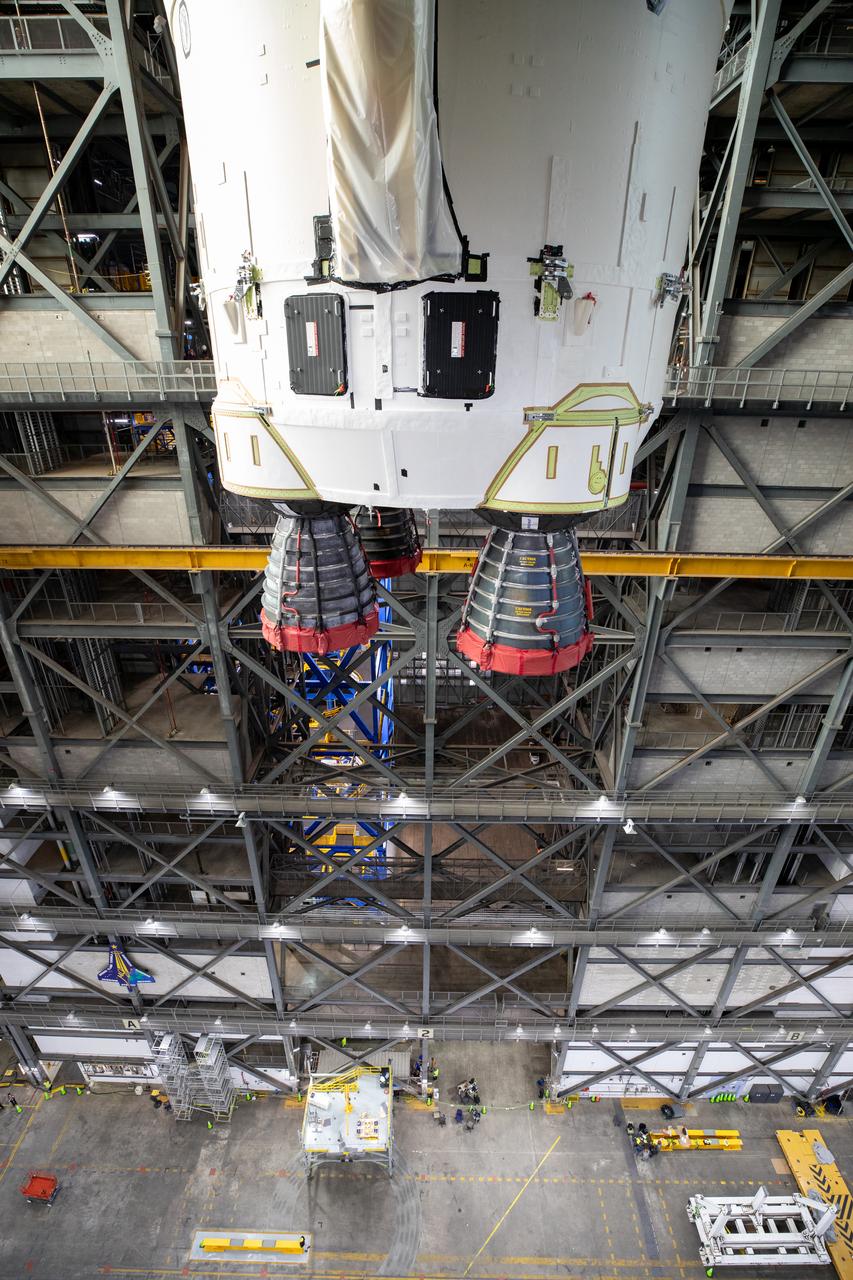
Teams with NASA’s Exploration Ground Systems transport the agency’s 212-foot-tall SLS (Space Launch System) core stage into High Bay 2 at the Vehicle Assembly Building at NASA’s Kennedy Space Center in Florida on Wednesday, Dec. 11, 2024. The one-of-a kind lifting beam is designed to lift the core stage from the transfer aisle to High Bay 2 where it will remain while teams stack the two solid rocket boosters on top of mobile launcher 1 for the SLS core stage.
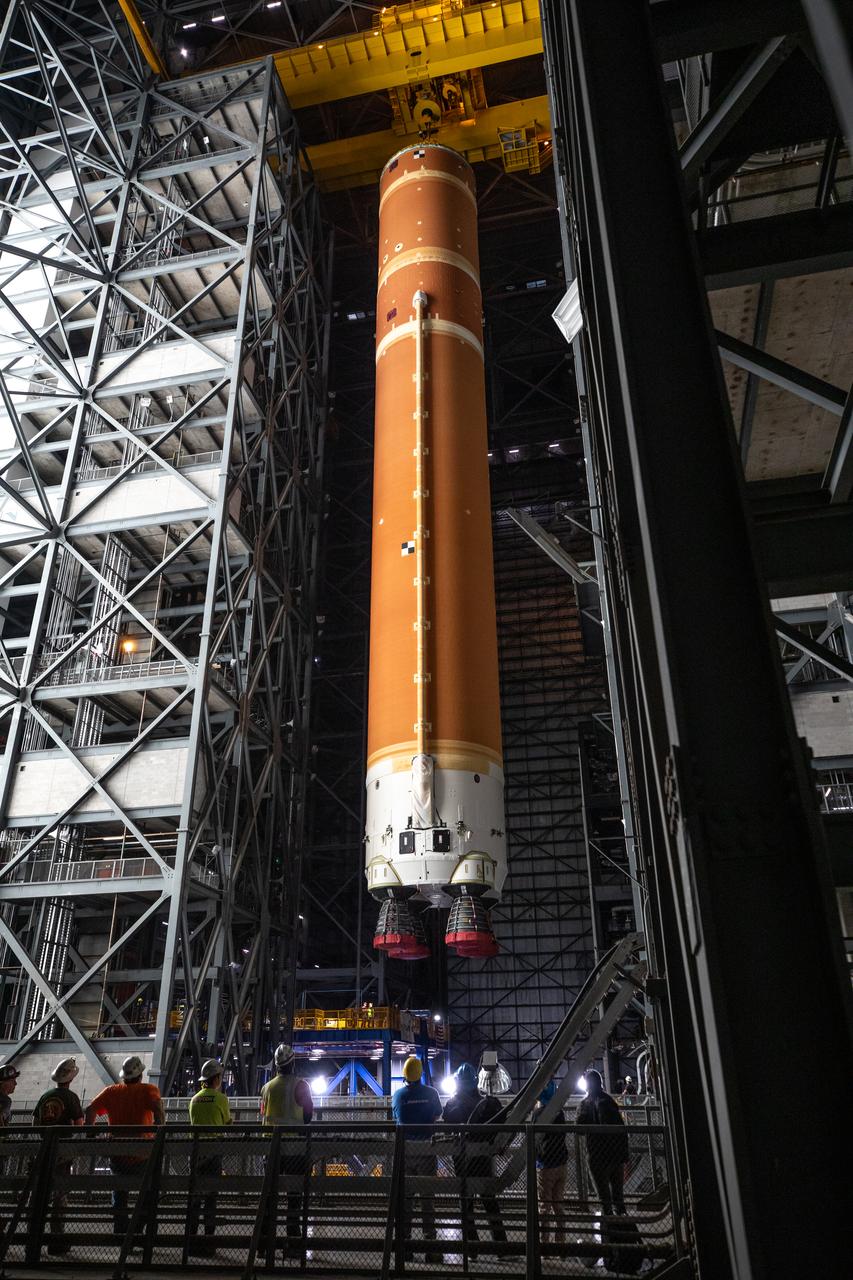
Teams with NASA’s Exploration Ground Systems transport the agency’s 212-foot-tall SLS (Space Launch System) core stage into High Bay 2 at the Vehicle Assembly Building at NASA’s Kennedy Space Center in Florida on Wednesday, Dec. 11, 2024. The one-of-a kind lifting beam is designed to lift the core stage from the transfer aisle to High Bay 2 where it will remain while teams stack the two solid rocket boosters on top of mobile launcher 1 for the SLS core stage.
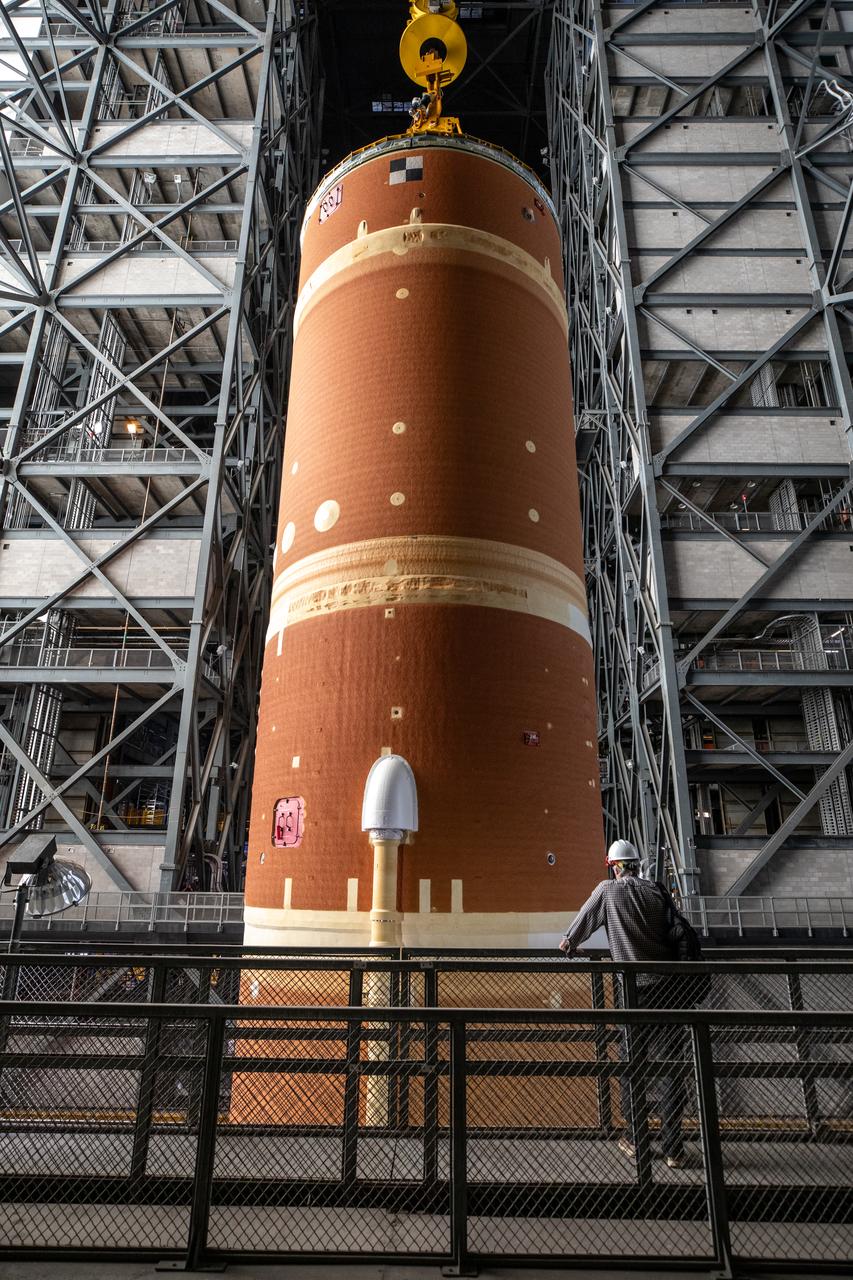
Teams with NASA’s Exploration Ground Systems transport the agency’s 212-foot-tall SLS (Space Launch System) core stage into High Bay 2 at the Vehicle Assembly Building at NASA’s Kennedy Space Center in Florida on Wednesday, Dec. 11, 2024. The one-of-a kind lifting beam is designed to lift the core stage from the transfer aisle to High Bay 2 where it will remain while teams stack the two solid rocket boosters on top of mobile launcher 1 for the SLS core stage.
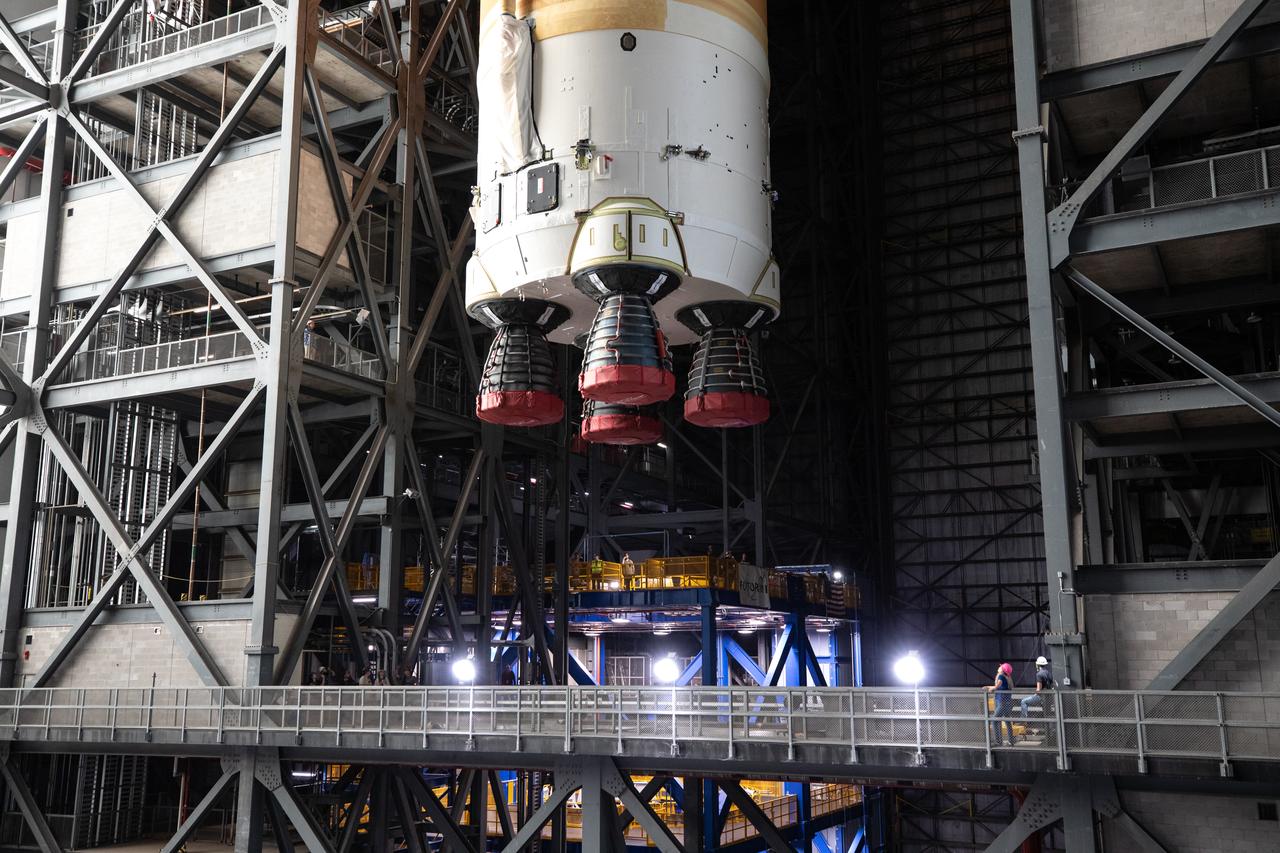
Teams with NASA’s Exploration Ground Systems transport the agency’s 212-foot-tall SLS (Space Launch System) core stage into High Bay 2 at the Vehicle Assembly Building at NASA’s Kennedy Space Center in Florida on Wednesday, Dec. 11, 2024. The one-of-a kind lifting beam is designed to lift the core stage from the transfer aisle to High Bay 2 where it will remain while teams stack the two solid rocket boosters on top of mobile launcher 1 for the SLS core stage.
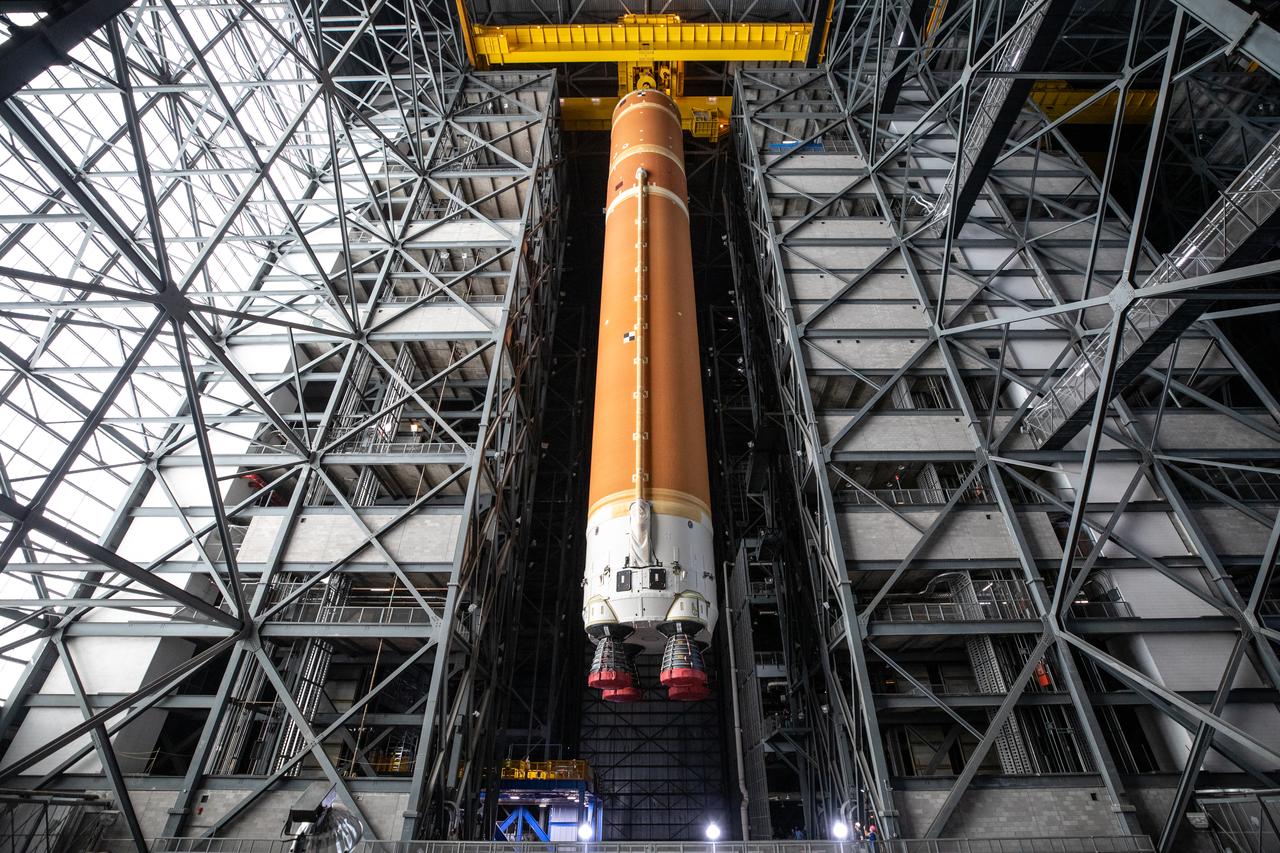
Teams with NASA’s Exploration Ground Systems transport the agency’s 212-foot-tall SLS (Space Launch System) core stage into High Bay 2 at the Vehicle Assembly Building at NASA’s Kennedy Space Center in Florida on Wednesday, Dec. 11, 2024. The one-of-a kind lifting beam is designed to lift the core stage from the transfer aisle to High Bay 2 where it will remain while teams stack the two solid rocket boosters on top of mobile launcher 1 for the SLS core stage.
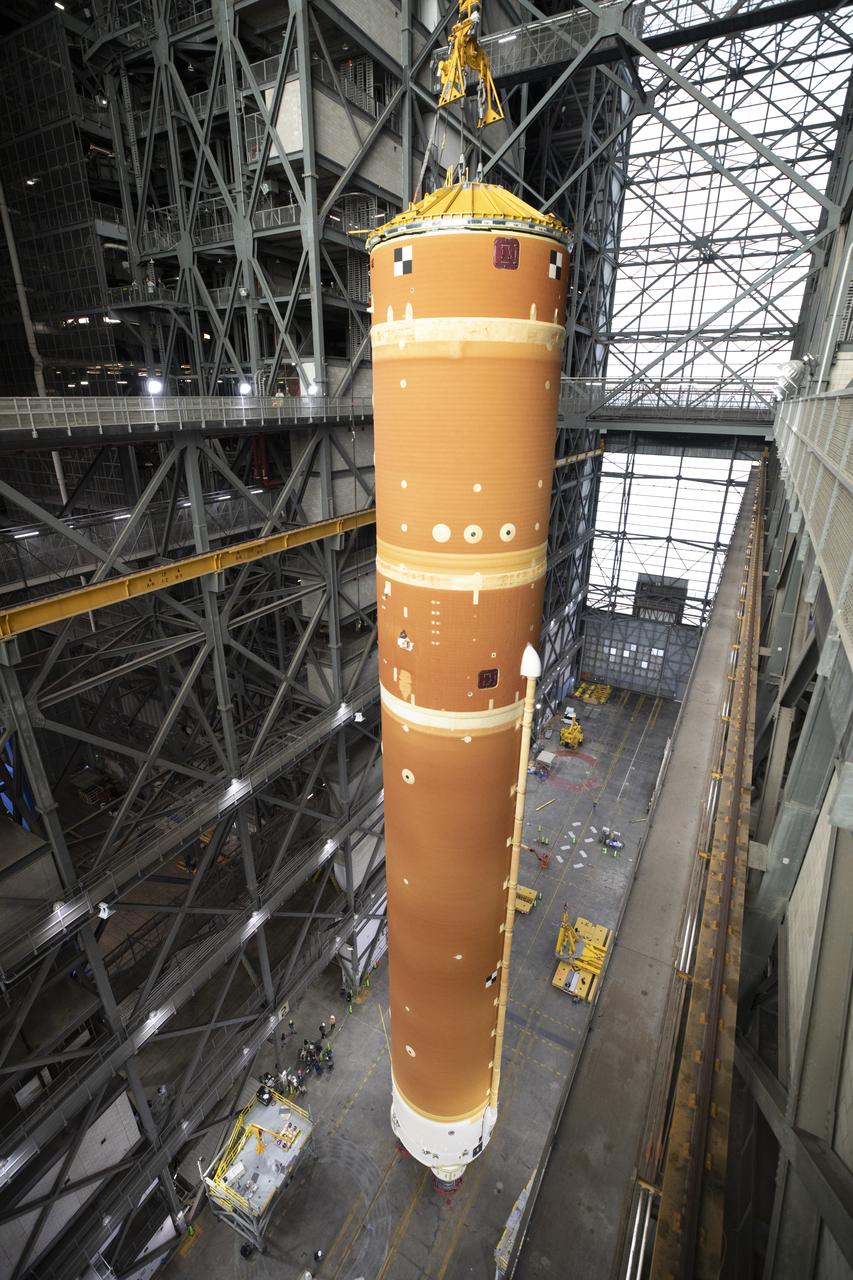
Teams with NASA’s Exploration Ground Systems Program lift the agency’s SLS (Space Launch System) core stage inside the transfer aisle at the Vehicle Assembly Building at NASA’s Kennedy Space Center in Florida on Wednesday, Dec. 11, 2024. The one-of-a kind lifting beam is designed to move the core stage from the transfer aisle to High Bay 2 where it will remain while teams stack the two solid rocket boosters for the SLS core stage.

Teams from Kennedy lift NASA’s integrated Artemis III SLS (Space Launch System) core stage engine section with its boat-tail inside the center’s Vehicle Assembly Building at NASA’s Kennedy Space Center in Florida on Wednesday, Aug. 13, 2025. Shown inside the facility’s High Bay 2 for processing, the engine section is one the most complex and intricate parts of the rocket stage that will help power the Artemis missions to the Moon.
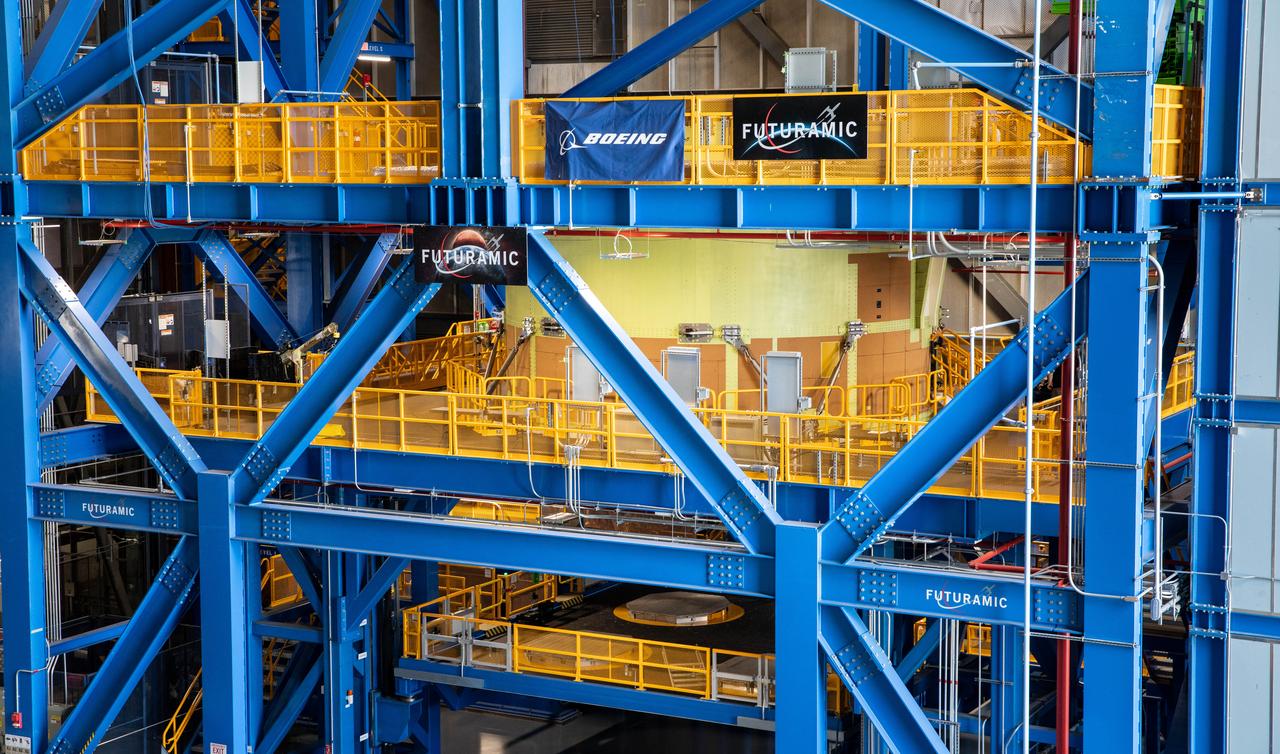
Teams from Kennedy lift NASA’s integrated Artemis III SLS (Space Launch System) core stage engine section with its boat-tail inside the center’s Vehicle Assembly Building at NASA’s Kennedy Space Center in Florida on Wednesday, Aug. 13, 2025. Shown inside the facility’s High Bay 2 for processing, the engine section is one the most complex and intricate parts of the rocket stage that will help power the Artemis missions to the Moon.
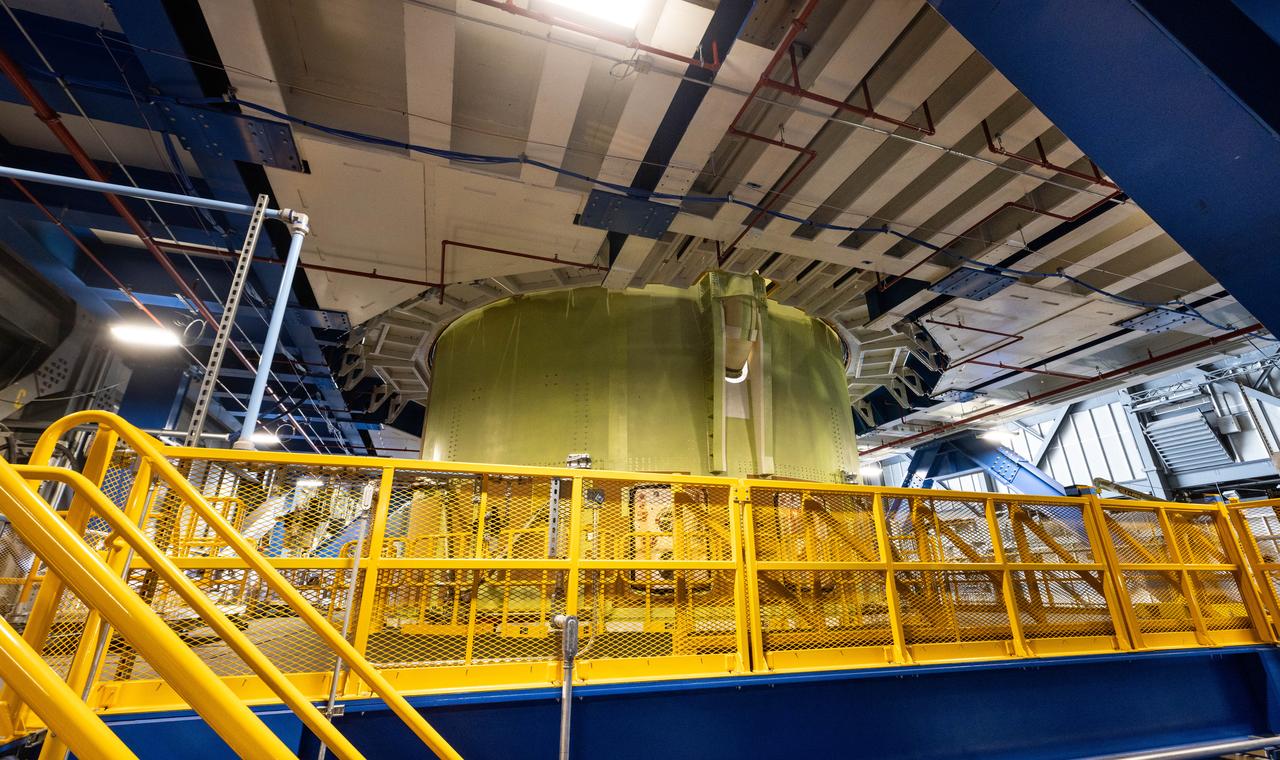
Teams from Kennedy lift NASA’s integrated Artemis III SLS (Space Launch System) core stage engine section with its boat-tail inside the center’s Vehicle Assembly Building at NASA’s Kennedy Space Center in Florida on Wednesday, Aug. 13, 2025. Shown inside the facility’s High Bay 2 for processing, the engine section is one the most complex and intricate parts of the rocket stage that will help power the Artemis missions to the Moon.

Teams from Kennedy lift NASA’s integrated Artemis III SLS (Space Launch System) core stage engine section with its boat-tail inside the center’s Vehicle Assembly Building at NASA’s Kennedy Space Center in Florida on Wednesday, Aug. 13, 2025. Shown inside the facility’s High Bay 2 for processing, the engine section is one the most complex and intricate parts of the rocket stage that will help power the Artemis missions to the Moon.
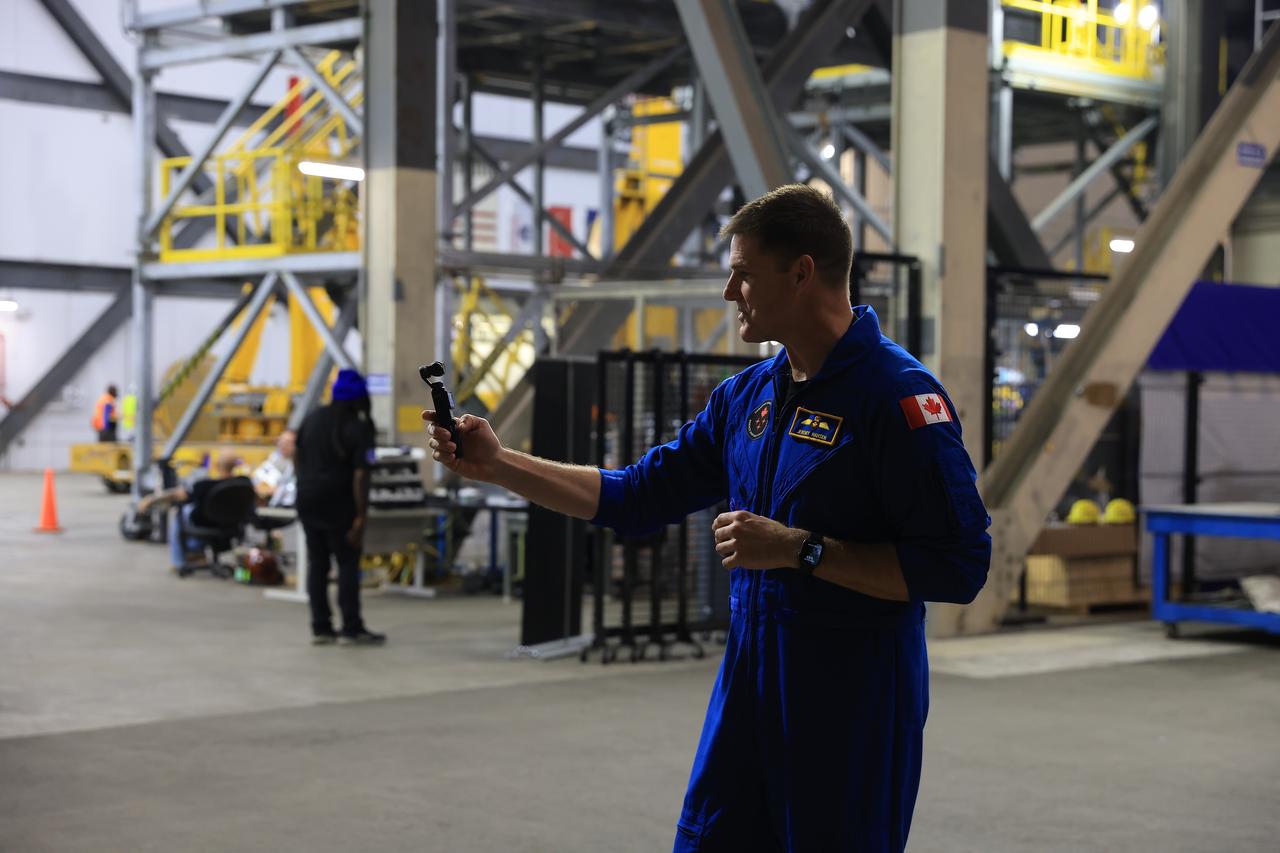
Artemis II crew member CSA (Canadian Space Agency) astronaut Jeremy Hansen participates in a media day event on Monday, Dec. 16, 2024, inside the Vehicle Assembly Building at the agency’s Kennedy Space Center in Florida. The Artemis II crew and backup crew participated in the event days after teams with NASA’s Exploration Ground Systems transport lifted the agency’s 212-foot-tall SLS (Space Launch System) core stage from the facility’s transfer aisle into High Bay 2 where it will remain while teams stack the two solid rocket boosters on top of mobile launcher 1.
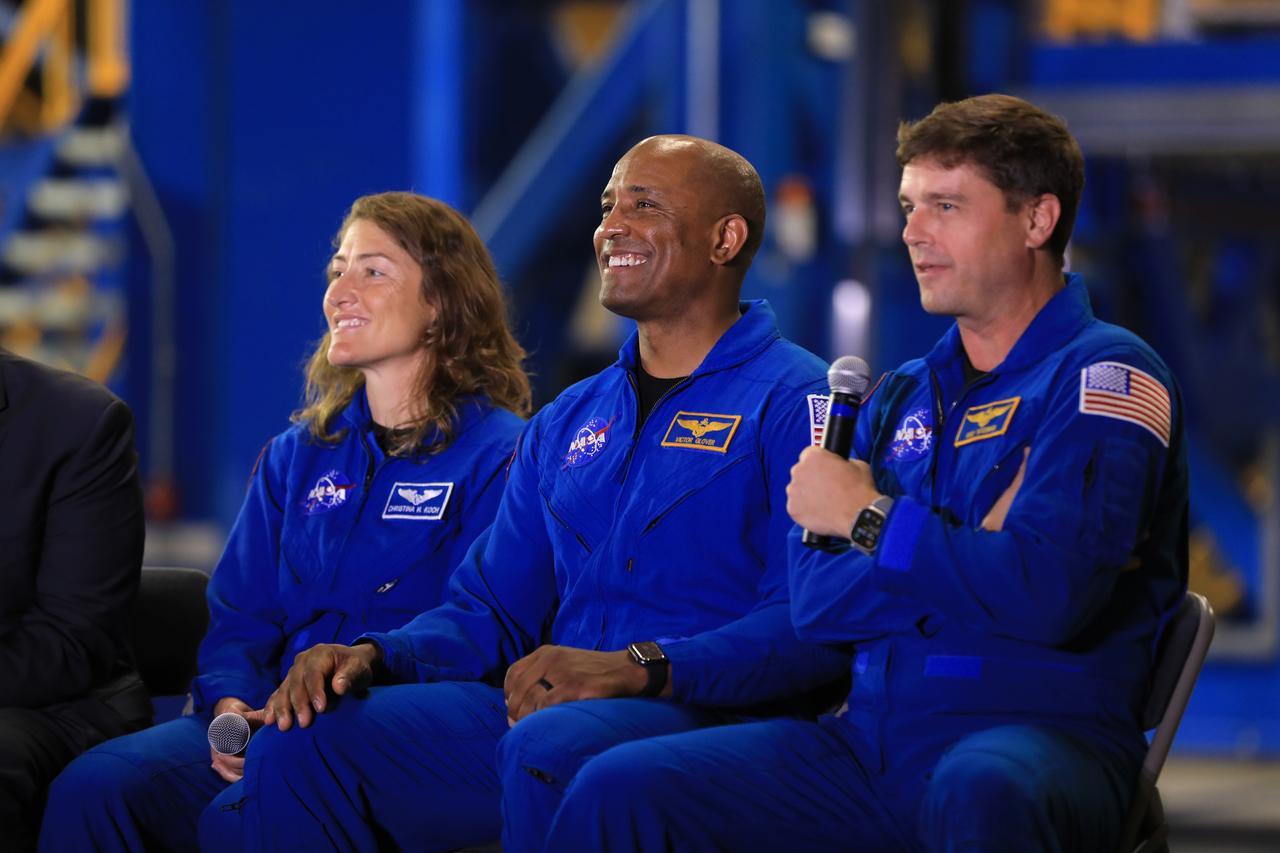
From left, Artemis II NASA astronauts Christina Koch, Victor Glover, and Reid Wiseman participate in a media day event on Monday, Dec. 16, 2024, inside the Vehicle Assembly Building at the agency’s Kennedy Space Center in Florida. The crew participated in the event days after teams with NASA’s Exploration Ground Systems transport lifted the agency’s 212-foot-tall SLS (Space Launch System) core stage from the facility’s transfer aisle into High Bay 2 where it will remain while teams stack the two solid rocket boosters on top of mobile launcher 1.
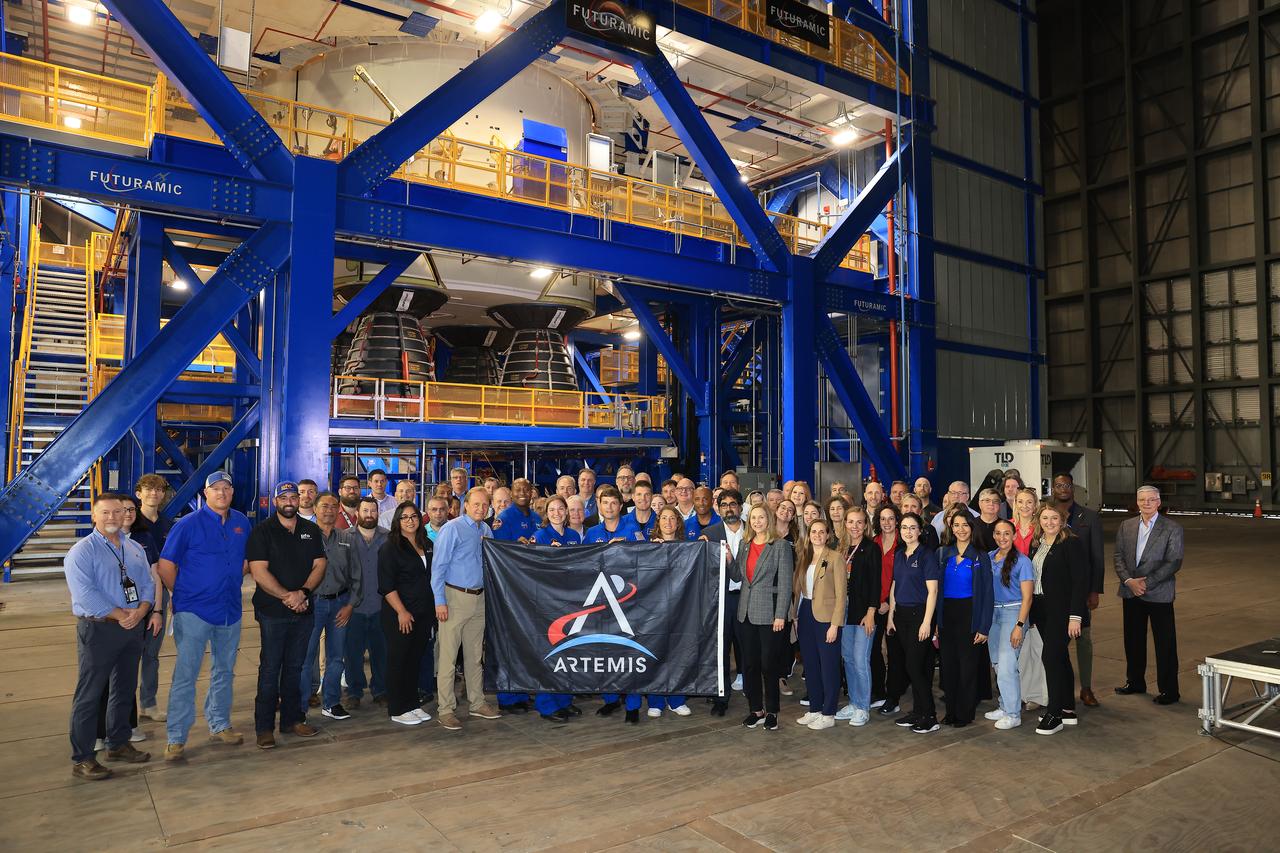
Artemis II crew and backup crew hold a banner with NASA and industry leaders during a supplier and media day event on Monday, Dec. 16, 2024, inside the Vehicle Assembly Building at the agency’s Kennedy Space Center in Florida. The Artemis II crew and backup crew participated in the event days after teams with NASA’s Exploration Ground Systems transport lifted the agency’s 212-foot-tall SLS (Space Launch System) core stage from the facility’s transfer aisle into High Bay 2 where it will remain while teams stack the two solid rocket boosters on top of mobile launcher 1.
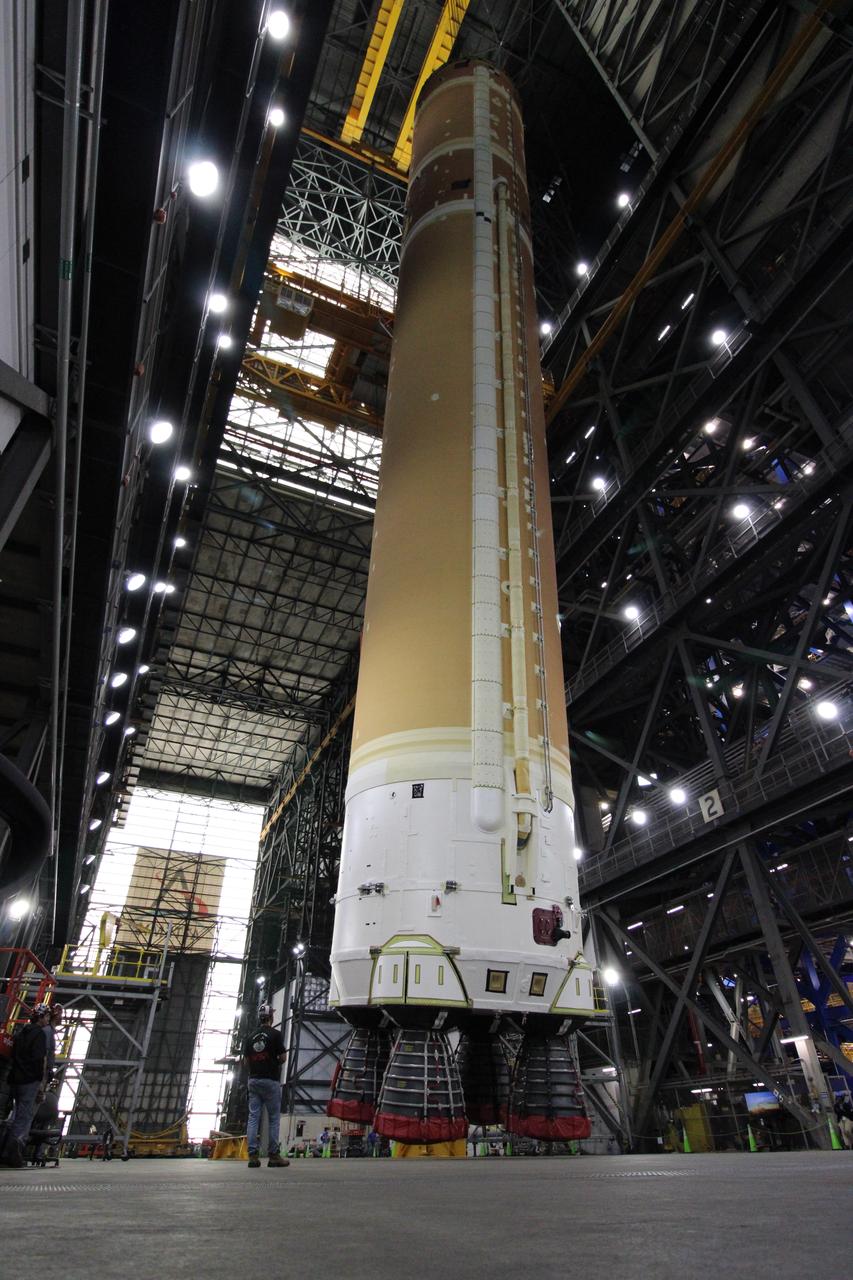
Teams with NASA’s Exploration Ground Systems Program lift the agency’s SLS (Space Launch System) core stage for the Artemis II mission from horizonal to vertical inside the transfer aisle at the Vehicle Assembly Building at NASA’s Kennedy Space Center in Florida on Tuesday, Dec. 10, 2024. The one-of-a kind lifting beam is designed to move the core stage from the transfer aisle to High Bay 2 where it will remain while teams stack the two solid rocket boosters for the SLS core stage.
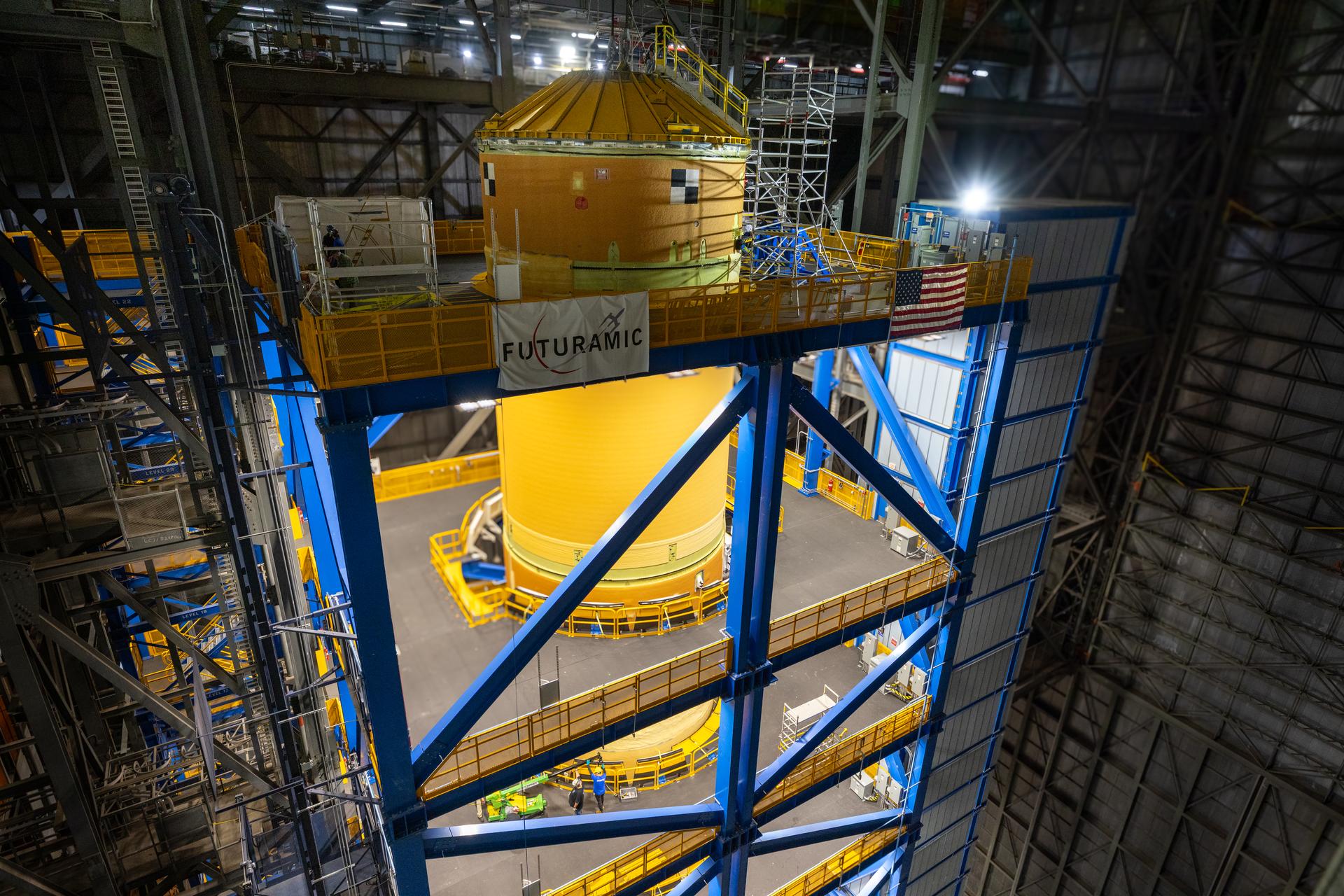
Technicians at NASA’s Kennedy Space Center in Florida complete operations of lifting and lowering the agency’s Artemis III SLS (Space Launch System) core stage into High Bay 2 in the Vehicle Assembly Building at NASA Kennedy on Monday, May 4, 2026. Using a one-of-a kind lifting beam designed to lift the core stage from the transfer aisle to High Bay 2 for additional assembly, teams will connect the core stage to the engine section. This marks the first time core stage assembly operations being conducted at the spaceport for future Artemis missions.

Technicians at NASA’s Kennedy Space Center in Florida complete operations of lifting and lowering the agency’s Artemis III SLS (Space Launch System) core stage into High Bay 2 in the Vehicle Assembly Building at NASA Kennedy on Monday, May 4, 2026. Using a one-of-a kind lifting beam designed to lift the core stage from the transfer aisle to High Bay 2 for additional assembly, teams will connect the core stage to the engine section. This marks the first time core stage assembly operations being conducted at the spaceport for future Artemis missions.

Technicians at NASA’s Kennedy Space Center in Florida complete operations of lifting and lowering the agency’s Artemis III SLS (Space Launch System) core stage into High Bay 2 in the Vehicle Assembly Building at NASA Kennedy on Monday, May 4, 2026. Using a one-of-a kind lifting beam designed to lift the core stage from the transfer aisle to High Bay 2 for additional assembly, teams will connect the core stage to the engine section. This marks the first time core stage assembly operations being conducted at the spaceport for future Artemis missions.
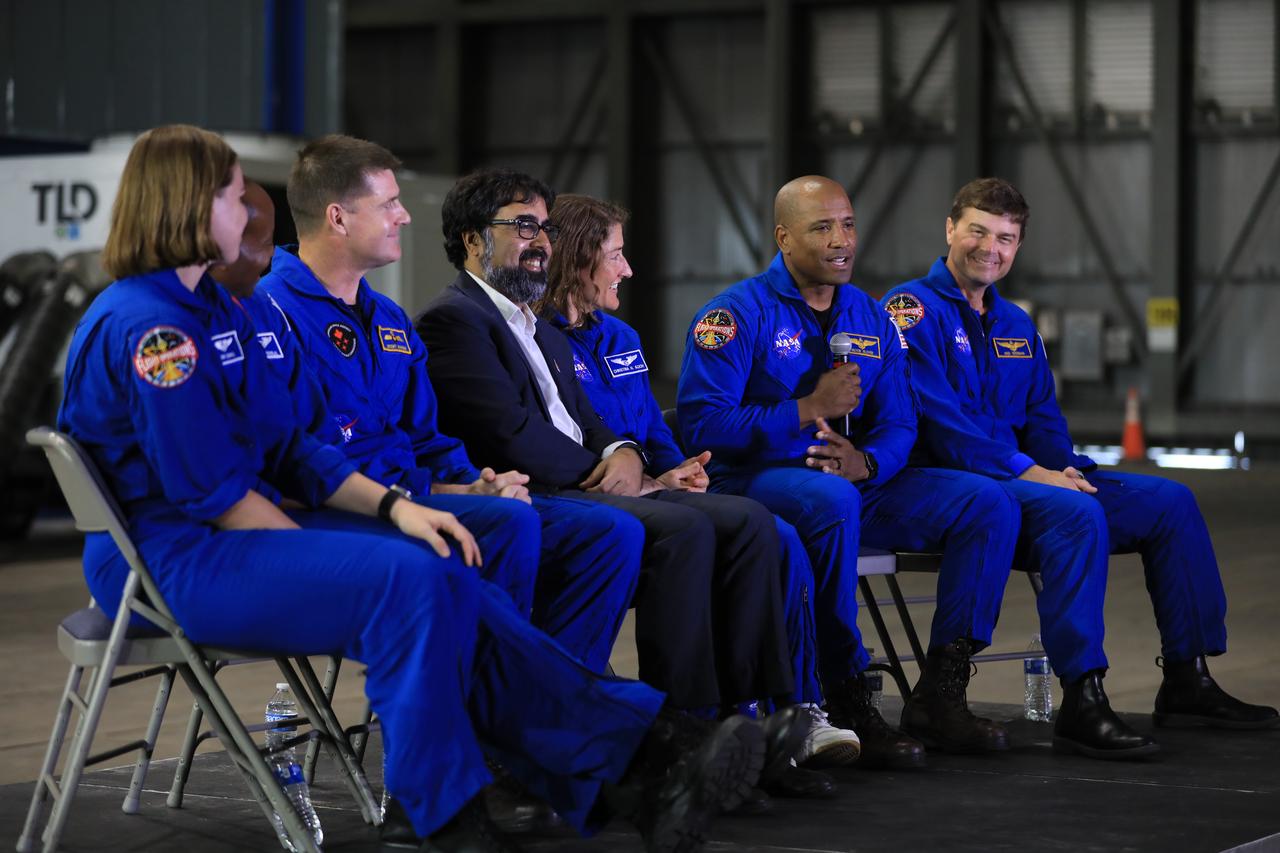
From left, CSA (Canadian Space Agency) astronaut Jenni Gibbons, NASA astronaut Andre Douglas, CSA astronaut Jeremy Hansen, NASA Moon to Mars Program Deputy Associate Administrator Amit Kshatriya, and NASA astronauts Christina Koch, Victor Glover, and Reid Wiseman participate in a media day event on Monday, Dec. 16, 2024, inside the Vehicle Assembly Building at the agency’s Kennedy Space Center in Florida. The Artemis II crew and backup crew participated in the event days after teams with NASA’s Exploration Ground Systems transport lifted the agency’s 212-foot-tall SLS (Space Launch System) core stage from the facility’s transfer aisle into High Bay 2 where it will remain while teams stack the two solid rocket boosters on top of mobile launcher 1.
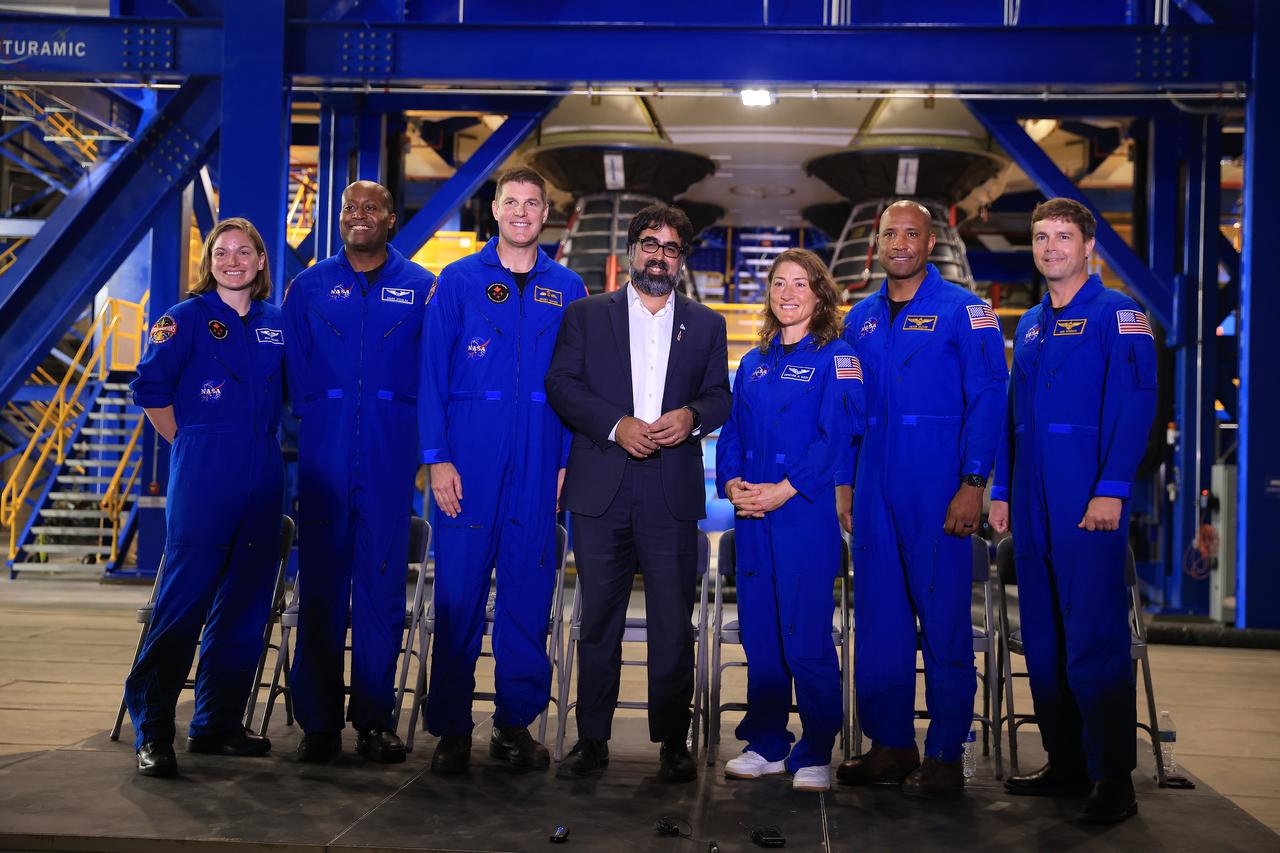
From left, CSA (Canadian Space Agency) astronaut Jenni Gibbons, NASA astronaut Andre Douglas, CSA astronaut Jeremy Hansen, NASA Moon to Mars Program Deputy Associate Administrator Amit Kshatriya, and NASA astronauts Christina Koch, Victor Glover, and Reid Wiseman participate in a media day event on Monday, Dec. 16, 2024, inside the Vehicle Assembly Building at the agency’s Kennedy Space Center in Florida. The Artemis II crew and backup crew participated in the event days after teams with NASA’s Exploration Ground Systems transport lifted the agency’s 212-foot-tall SLS (Space Launch System) core stage from the facility’s transfer aisle into High Bay 2 where it will remain while teams stack the two solid rocket boosters on top of mobile launcher 1.
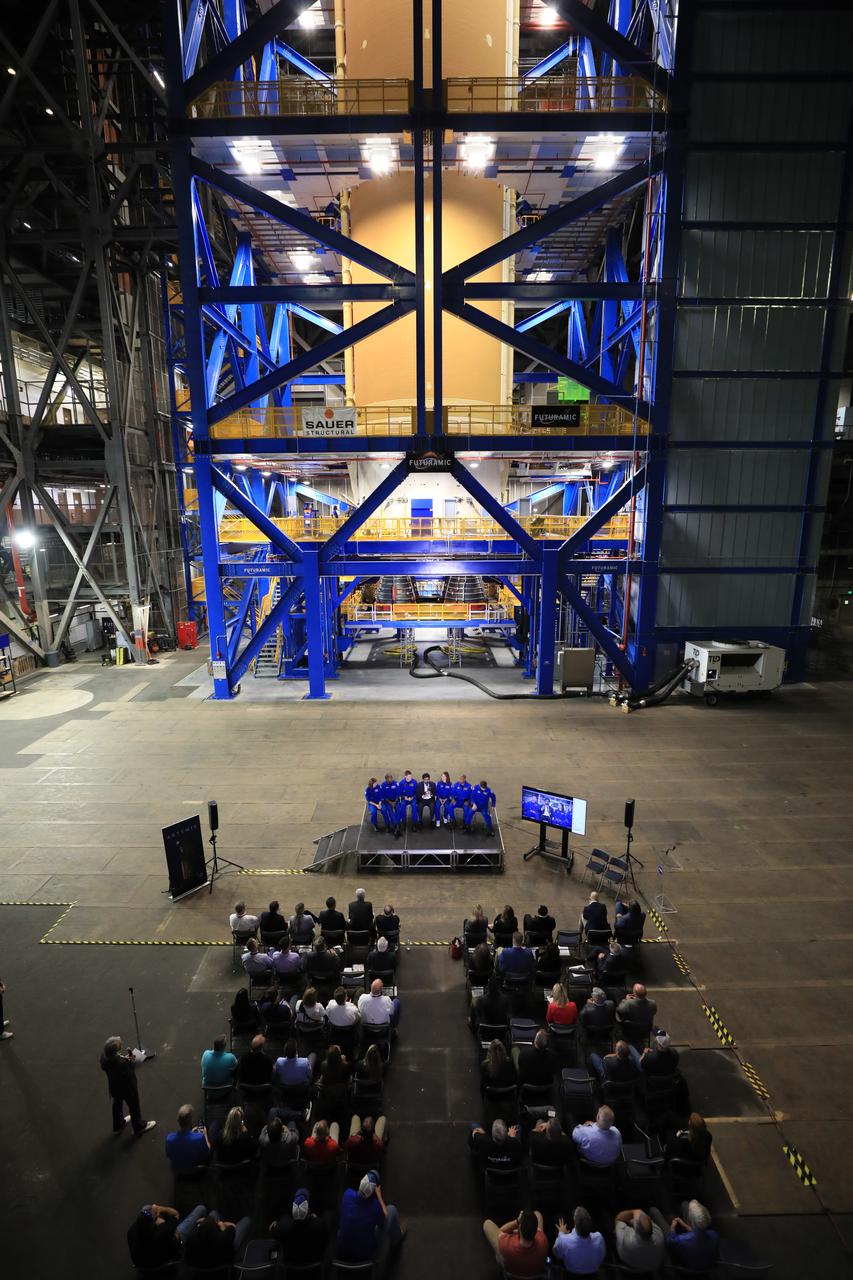
From left, CSA (Canadian Space Agency) astronaut Jenni Gibbons, NASA astronaut Andre Douglas, CSA astronaut Jeremy Hansen, NASA Moon to Mars Program Deputy Associate Administrator Amit Kshatriya, and NASA astronauts Christina Koch, Victor Glover, and Reid Wiseman participate in a media day event on Monday, Dec. 16, 2024, inside the Vehicle Assembly Building at the agency’s Kennedy Space Center in Florida. The Artemis II crew and backup crew participated in the event days after teams with NASA’s Exploration Ground Systems transport lifted the agency’s 212-foot-tall SLS (Space Launch System) core stage from the facility’s transfer aisle into High Bay 2 where it will remain while teams stack the two solid rocket boosters on top of mobile launcher 1.
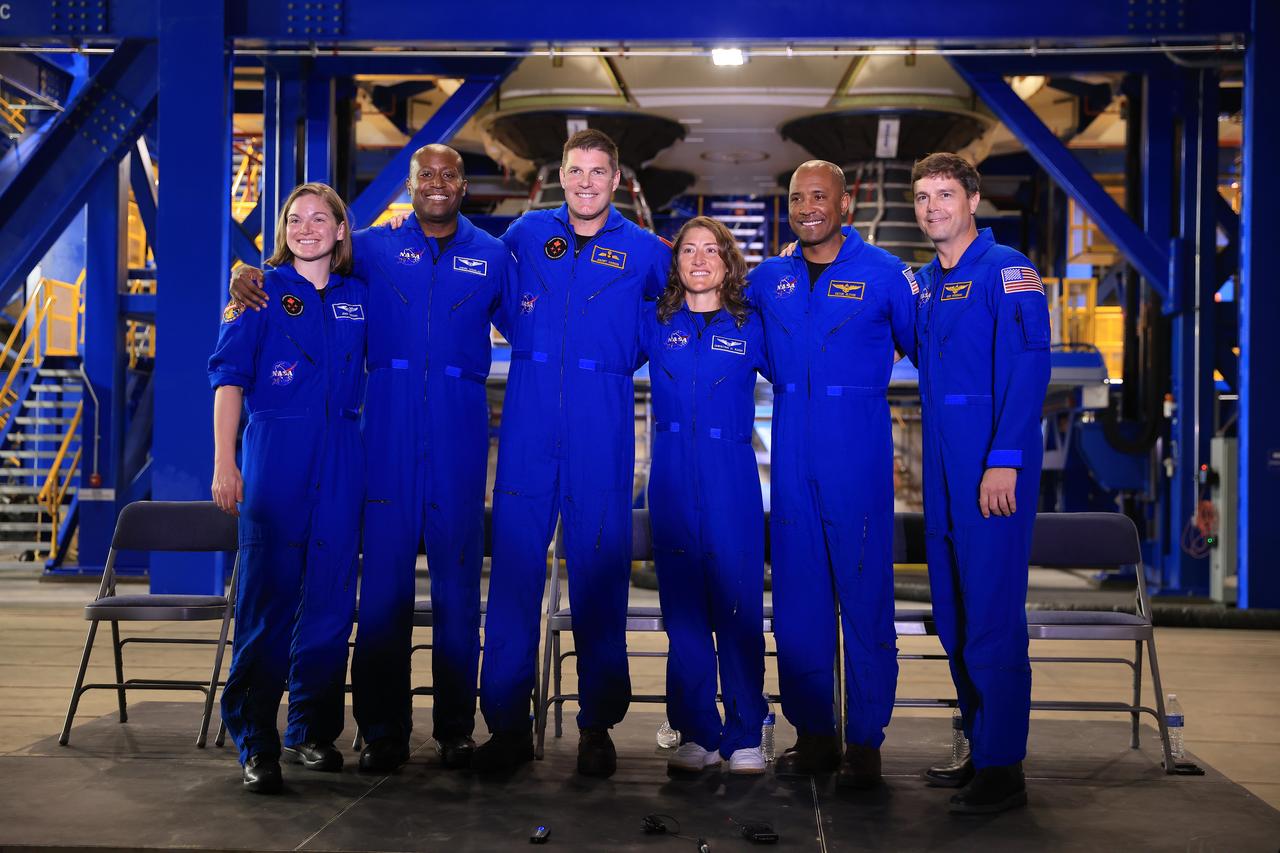
From left, CSA (Canadian Space Agency) astronaut Jenni Gibbons, NASA astronaut Andre Douglas, CSA astronaut Jeremy Hansen, and NASA astronauts Christina Koch, Victor Glover, and Reid Wiseman participate in a media day event on Monday, Dec. 16, 2024, inside the Vehicle Assembly Building at the agency’s Kennedy Space Center in Florida. The Artemis II crew and backup crew participated in the event days after teams with NASA’s Exploration Ground Systems transport lifted the agency’s 212-foot-tall SLS (Space Launch System) core stage from the facility’s transfer aisle into High Bay 2 where it will remain while teams stack the two solid rocket boosters on top of mobile launcher 1.
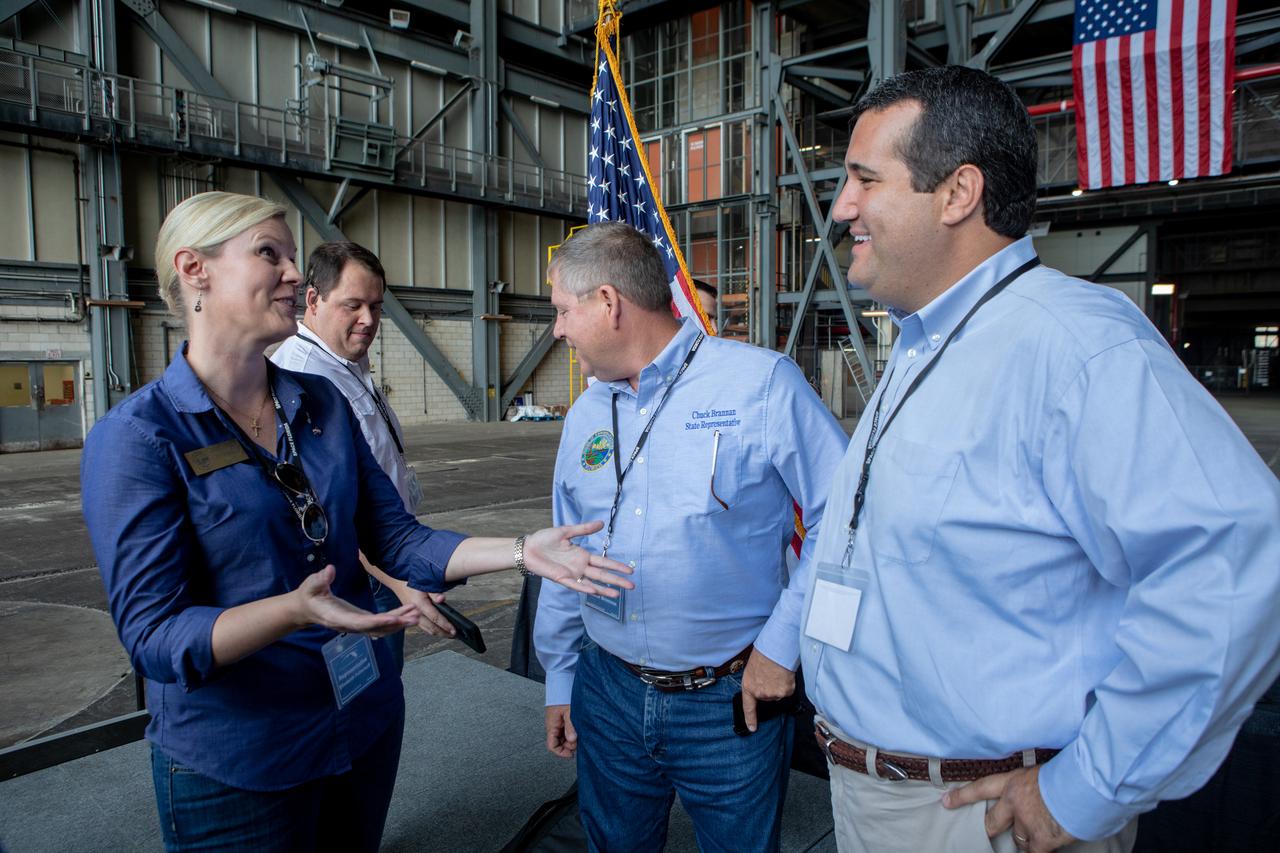
Elected officials and guests visit after a ribbon cutting ceremony on Aug. 16, 2019, in High Bay 2 of the Vehicle Assembly Building (VAB) at NASA’s Kennedy Space Center in Florida. The VAB is getting its first commercial tenant. Northrop Grumman signed a Reimbursable Space Act Agreement with NASA for use of the facilities. The company will assemble and test its new OmegA rocket inside the massive facility’s High Bay 2. The company also will modify mobile launcher platform-3 to serve as the launch vehicle’s assembly and launch platform. Northrop Grumman is developing the OmegA rocket, an intermediate/heavy-class launch vehicle, as part of a launch services agreement with the U.S. Air Force.
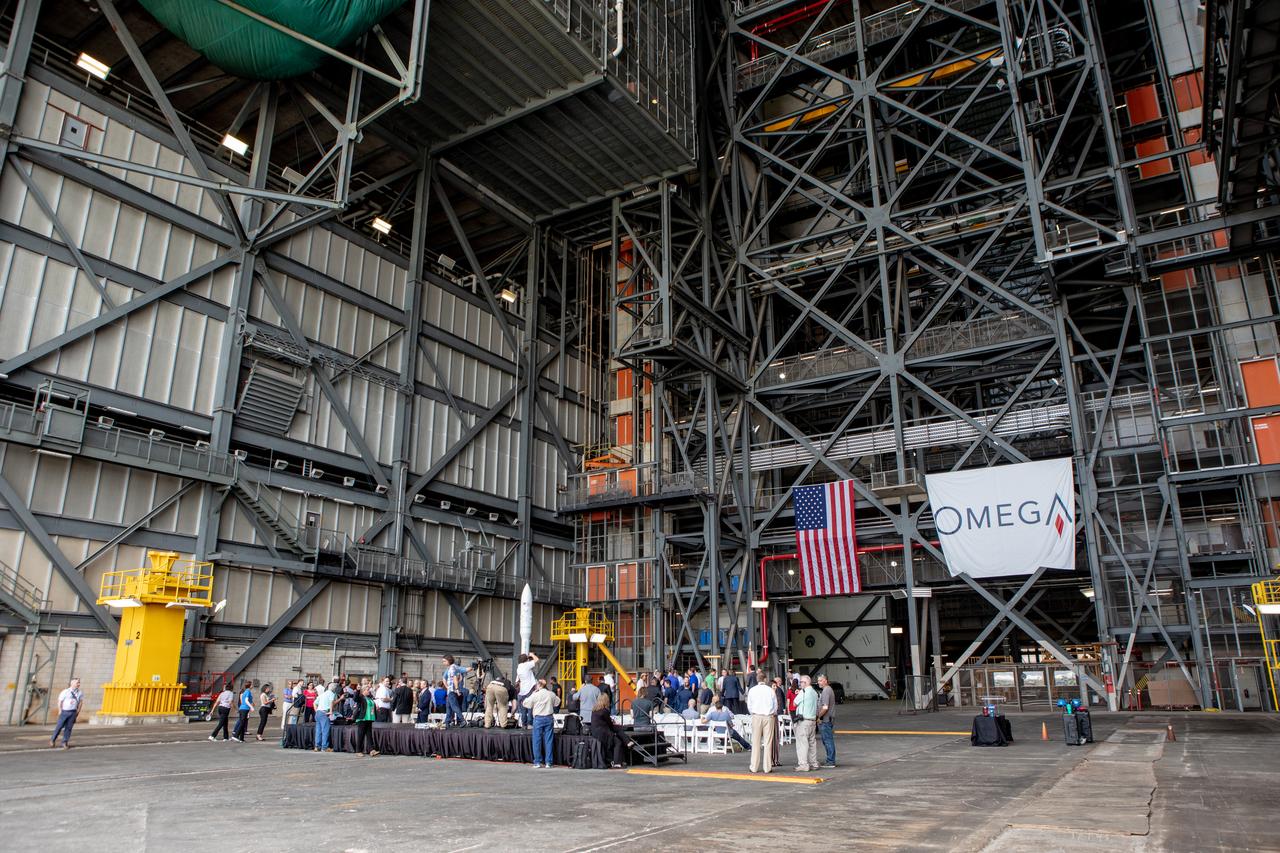
Legislators, invited guests and members of the media attend a ribbon cutting ceremony on Aug. 16, 2019, in High Bay 2 of the Vehicle Assembly Building (VAB) at NASA’s Kennedy Space Center in Florida. The VAB is getting its first commercial tenant. Northrop Grumman signed a Reimbursable Space Act Agreement with NASA for use of the facilities. The company will assemble and test its new OmegA rocket inside the massive facility’s High Bay 2. The company also will modify MLP-3 to serve as the launch vehicle’s assembly and launch platform. Northrop Grumman is developing the OmegA rocket, an intermediate/heavy-class launch vehicle, as part of a launch services agreement with the U.S. Air Force.
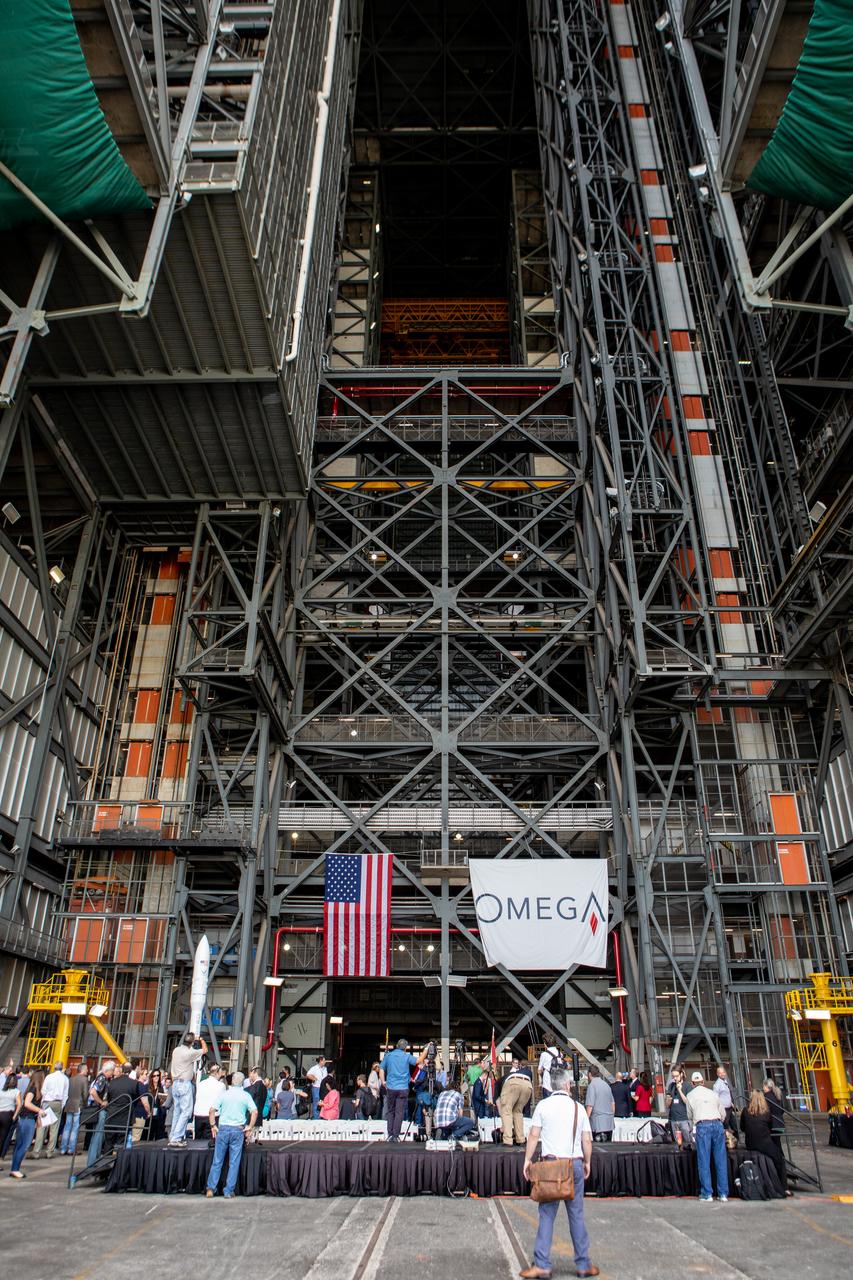
Legislators, invited guests and members of the media attend a ribbon cutting ceremony on Aug. 16, 2019, in High Bay 2 of the Vehicle Assembly Building (VAB) at NASA’s Kennedy Space Center in Florida. The VAB is getting its first commercial tenant. Northrop Grumman signed a Reimbursable Space Act Agreement with NASA for use of the facilities. The company will assemble and test its new OmegA rocket inside the massive facility’s High Bay 2. The company also will modify MLP-3 to serve as the launch vehicle’s assembly and launch platform. Northrop Grumman is developing the OmegA rocket, an intermediate/heavy-class launch vehicle, as part of a launch services agreement with the U.S. Air Force.
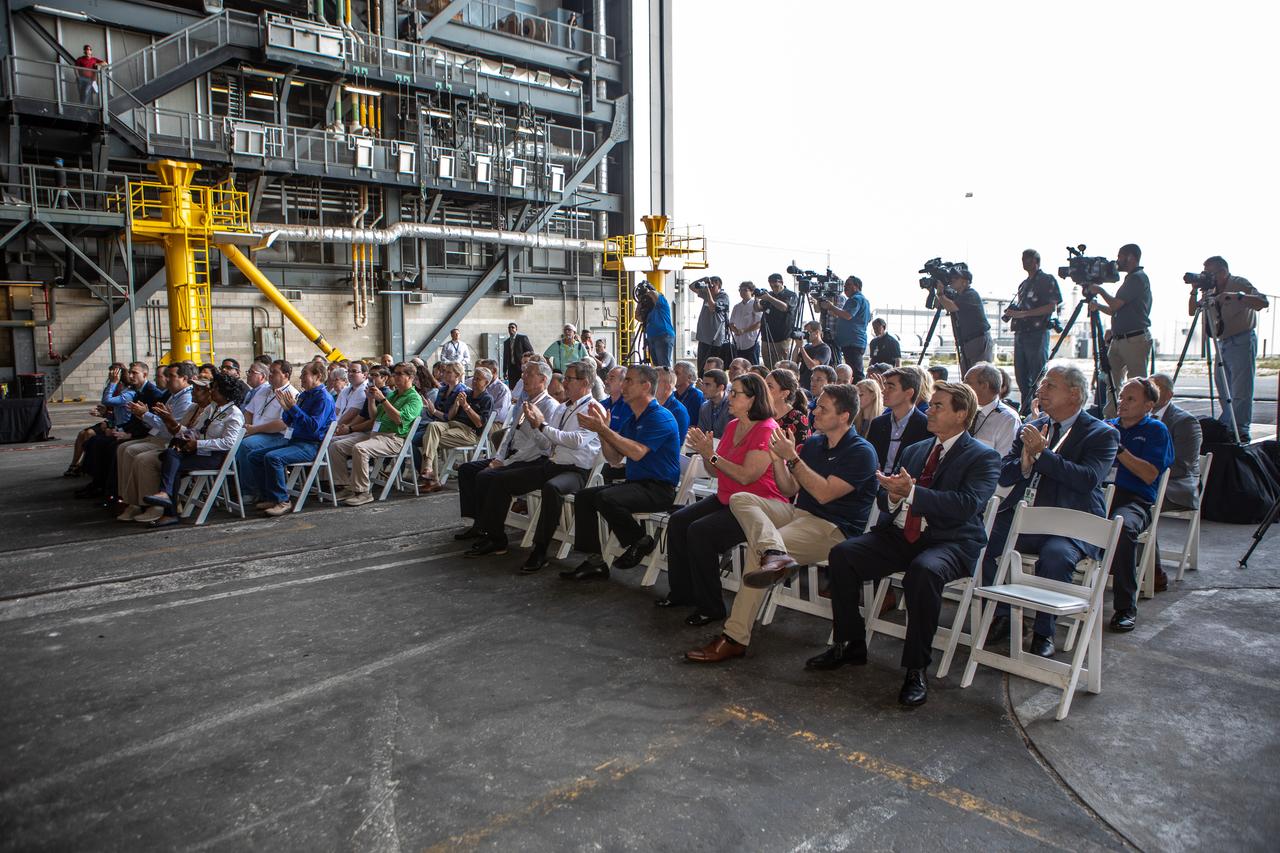
Legislators and invited guests clap during a ribbon cutting ceremony on Aug. 16, 2019, in High Bay 2 of the Vehicle Assembly Building (VAB) at NASA’s Kennedy Space Center in Florida. The VAB is getting its first commercial tenant. Northrop Grumman signed a Reimbursable Space Act Agreement with NASA for use of the facilities. The company will assemble and test its new OmegA rocket inside the massive facility’s High Bay 2. The company also will modify mobile launcher platform-3 to serve as the launch vehicle’s assembly and launch platform. Northrop Grumman is developing the OmegA rocket, an intermediate/heavy-class launch vehicle, as part of a launch services agreement with the U.S. Air Force.
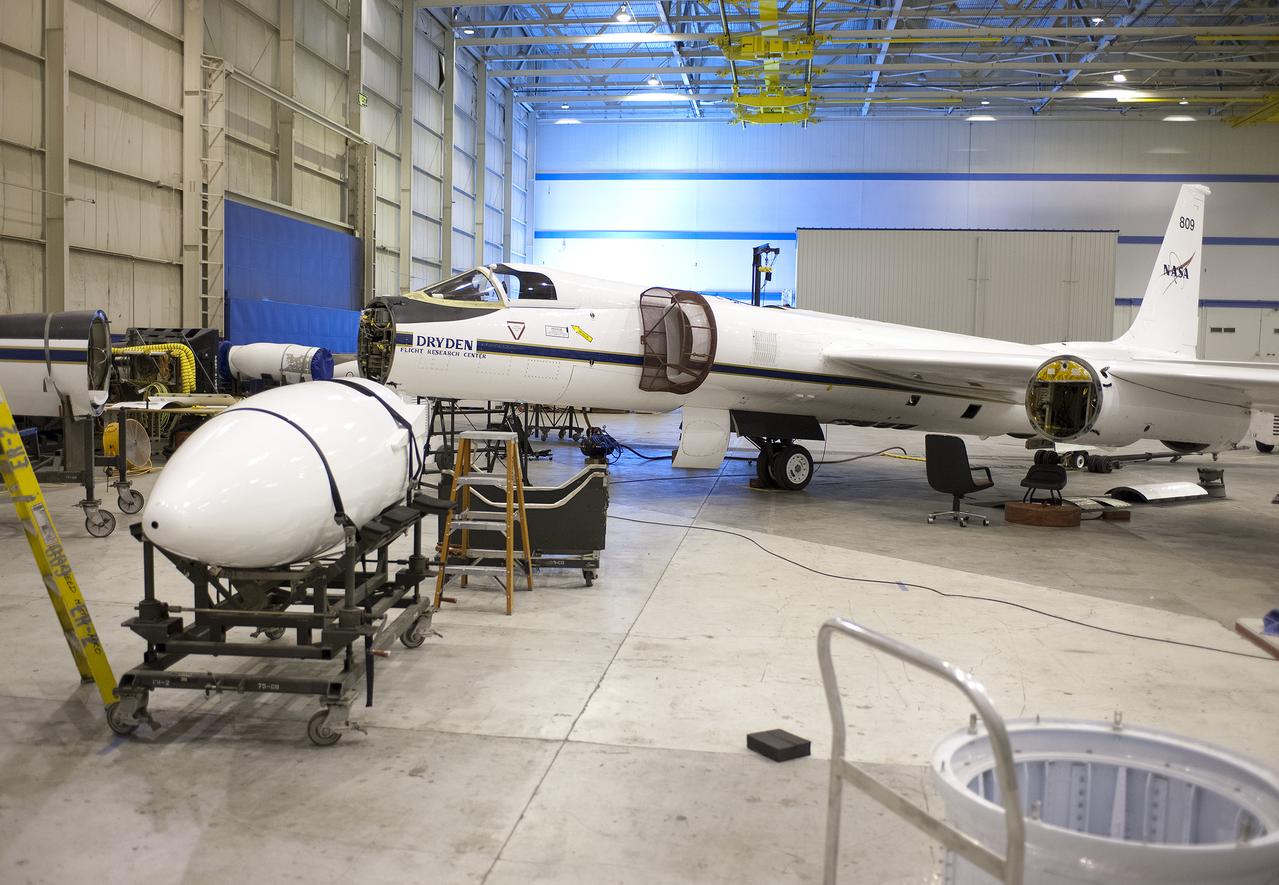
The equipment bays and wing pods of NASA's high-altitude ER-2 will carry 15 specialized instruments to study how the vertical convection of air pollution and natural emissions affect climate change.
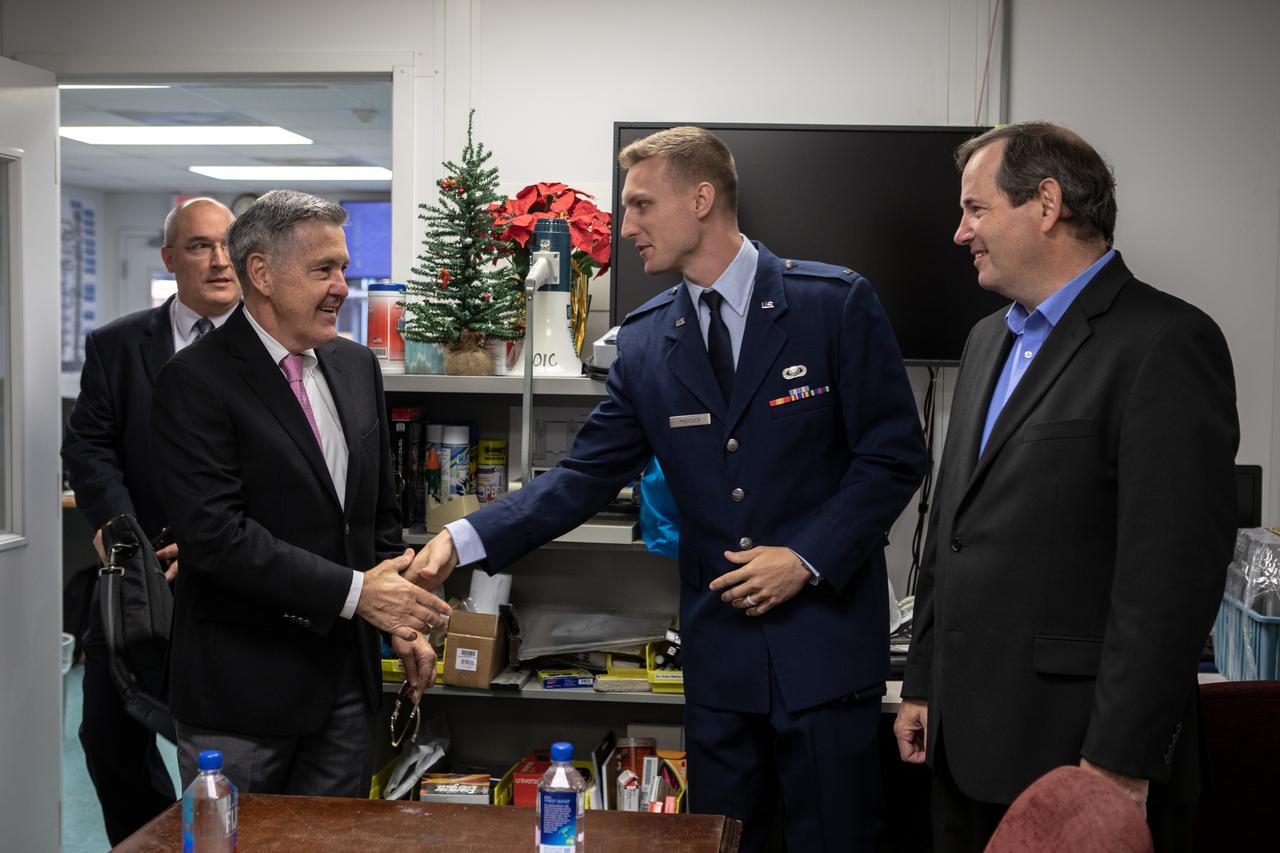
Just before a ribbon cutting ceremony on Aug. 16, 2019, in High Bay 2 of the Vehicle Assembly (VAB) at NASA’s Kennedy Space Center in Florida, Center Director Bob Cabana, at left, shakes hands with First Lieutenant Alex Priesser, U.S. Air Force, 45th Space Wing. At far right is Jim Williams, director of media operations, 45th Space Wing. The VAB is getting its first commercial tenant. Northrop Grumman signed a Reimbursable Space Act Agreement with NASA for use of the facilities. The company will assemble and test its new OmegA rocket inside the massive facility’s High Bay 2. The company also will modify the space shuttle-era mobile launcher platform-3 to serve as the launch vehicle’s assembly and launch platform. Northrop Grumman is developing the OmegA rocket, an intermediate/heavy-class launch vehicle, as part of a launch services agreement with the U.S. Air Force.
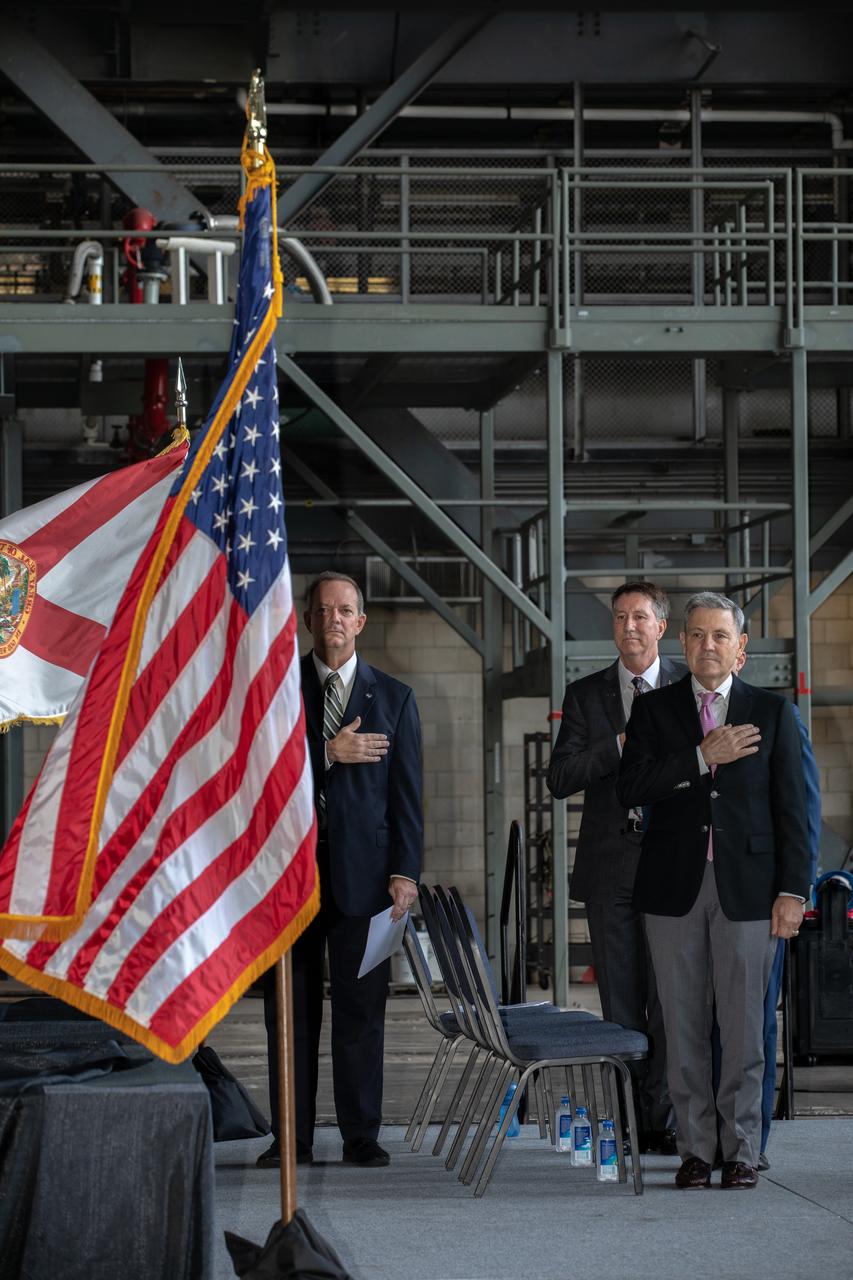
The National Anthem is sung during a ribbon cutting ceremony on Aug. 16, 2019, in High Bay 2 of the Vehicle Assembly Building (VAB) at NASA’s Kennedy Space Center in Florida. From left are Tom Engler, director of Kennedy’s Center Planning and Development Office; Kent Rominger, Northrop Grumman’s vice president and capture lead for the OmegA launch system; and Kennedy’s Center Director Bob Cabana. The VAB is getting its first commercial tenant. Northrop Grumman signed a Reimbursable Space Act Agreement with NASA for use of the facilities. The company will assemble and test its new OmegA rocket inside the massive facility’s High Bay 2. The company also will modify mobile launcher platform-3 to serve as the launch vehicle’s assembly and launch platform. Northrop Grumman is developing the OmegA rocket, an intermediate/heavy-class launch vehicle, as part of a launch services agreement with the U.S. Air Force.
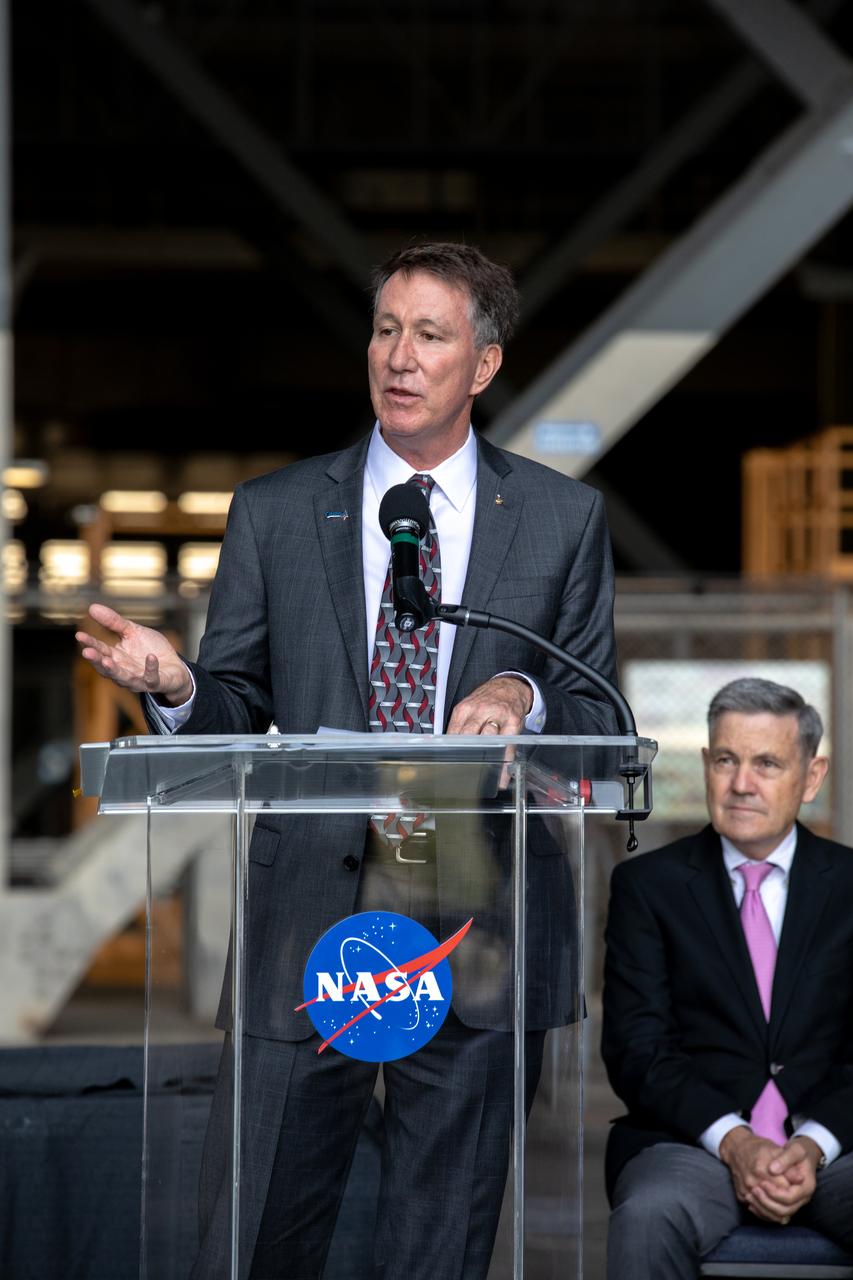
During a ribbon cutting ceremony on Aug. 16, 2019, in High Bay 2 of the Vehicle Assembly Building (VAB) at NASA’s Kennedy Space Center in Florida, Kent Rominger, Northrop Grumman’s vice president and capture lead for the OmegA launch system, speaks to legislators and guests. Seated behind him is Kennedy Center Director Bob Cabana. The VAB is getting its first commercial tenant. Northrop Grumman signed a Reimbursable Space Act Agreement with NASA for use of the facilities. The company will assemble and test its new OmegA rocket inside the massive facility’s High Bay 2. The company also will modify mobile launcher platform-3 to serve as the launch vehicle’s assembly and launch platform. Northrop Grumman is developing the OmegA rocket, an intermediate/heavy-class launch vehicle, as part of a launch services agreement with the U.S. Air Force.
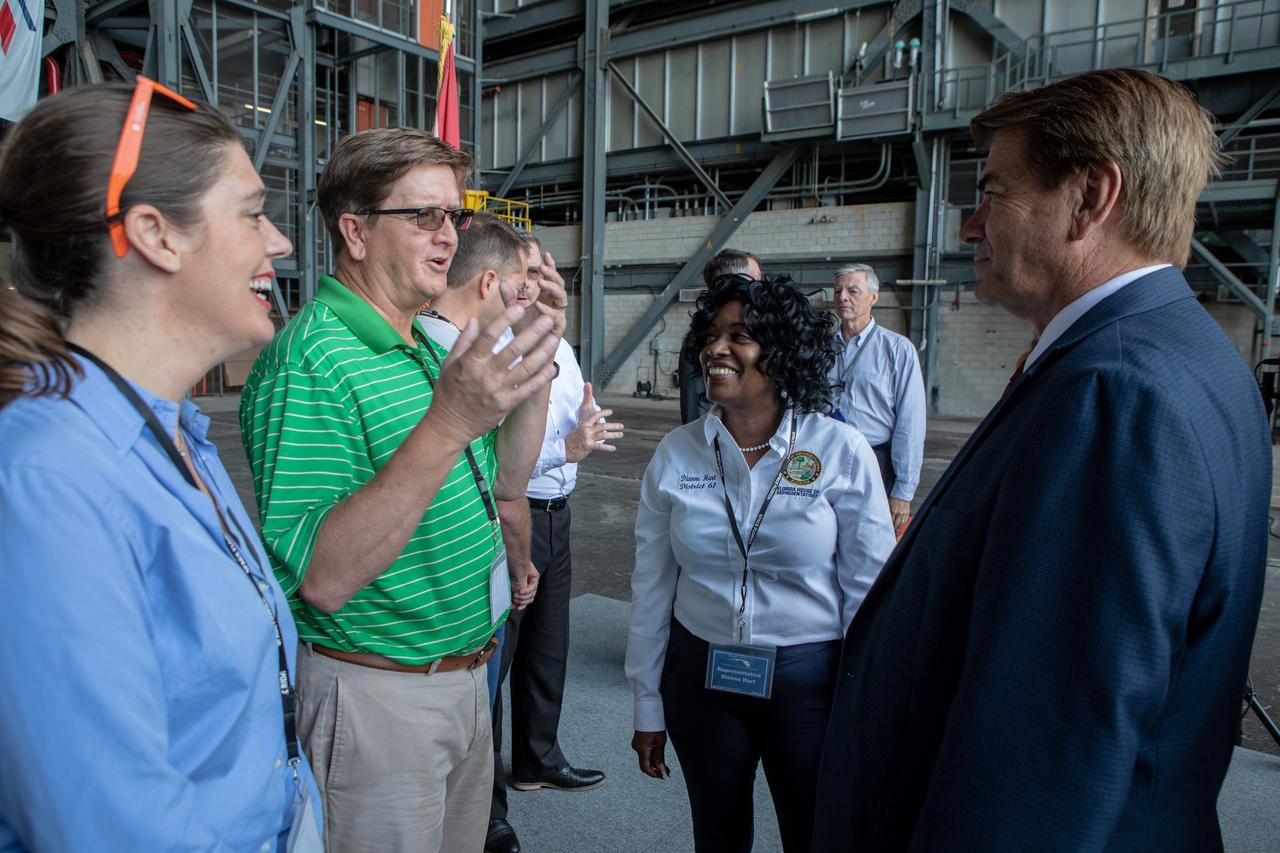
Elected officials and guests visit after a ribbon cutting ceremony on Aug. 16, 2019, in High Bay 2 of the Vehicle Assembly Building (VAB) at NASA’s Kennedy Space Center in Florida. At far right is Florida State Senator Thad Altman. The VAB is getting its first commercial tenant. Northrop Grumman signed a Reimbursable Space Act Agreement with NASA for use of the facilities. The company will assemble and test its new OmegA rocket inside the massive facility’s High Bay 2. The company also will modify mobile launcher platform-3 to serve as the launch vehicle’s assembly and launch platform. Northrop Grumman is developing the OmegA rocket, an intermediate/heavy-class launch vehicle, as part of a launch services agreement with the U.S. Air Force.
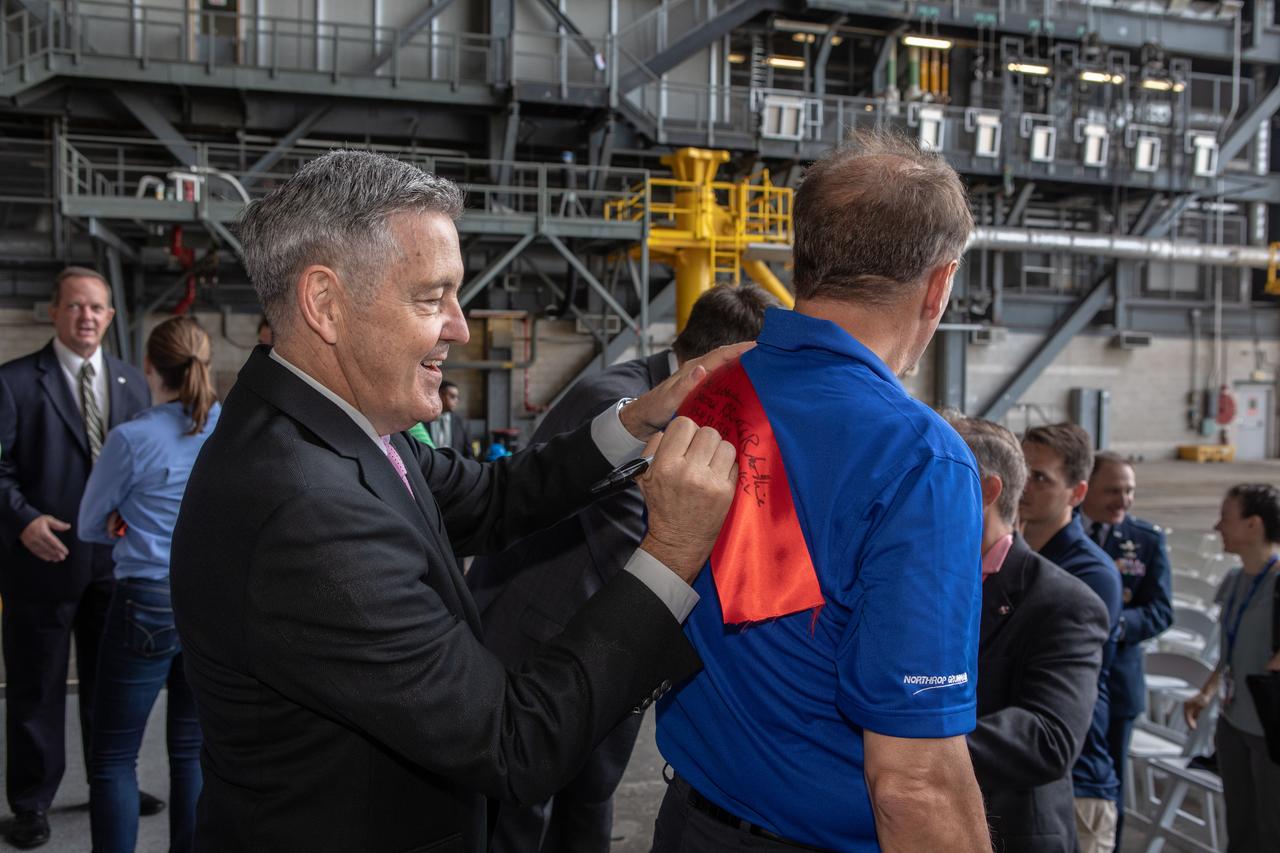
Legislators, invited guests and members of the media attend a ribbon cutting ceremony on Aug. 16, 2019, in High Bay 2 of the Vehicle Assembly Building (VAB) at NASA’s Kennedy Space Center in Florida. Kennedy Center Director Bob Cabana autographs a portion of the ribbon for a guest. In view, at far left, is Tom Engler, director of Kennedy’s Center Planning and Development Office. The VAB is getting its first commercial tenant. Northrop Grumman signed a Reimbursable Space Act Agreement with NASA for use of the facilities. The company will assemble and test its new OmegA rocket inside the massive facility’s High Bay 2. The company also will modify mobile launcher platform-3 to serve as the launch vehicle’s assembly and launch platform. Northrop Grumman is developing the OmegA rocket, an intermediate/heavy-class launch vehicle, as part of a launch services agreement with the U.S. Air Force.
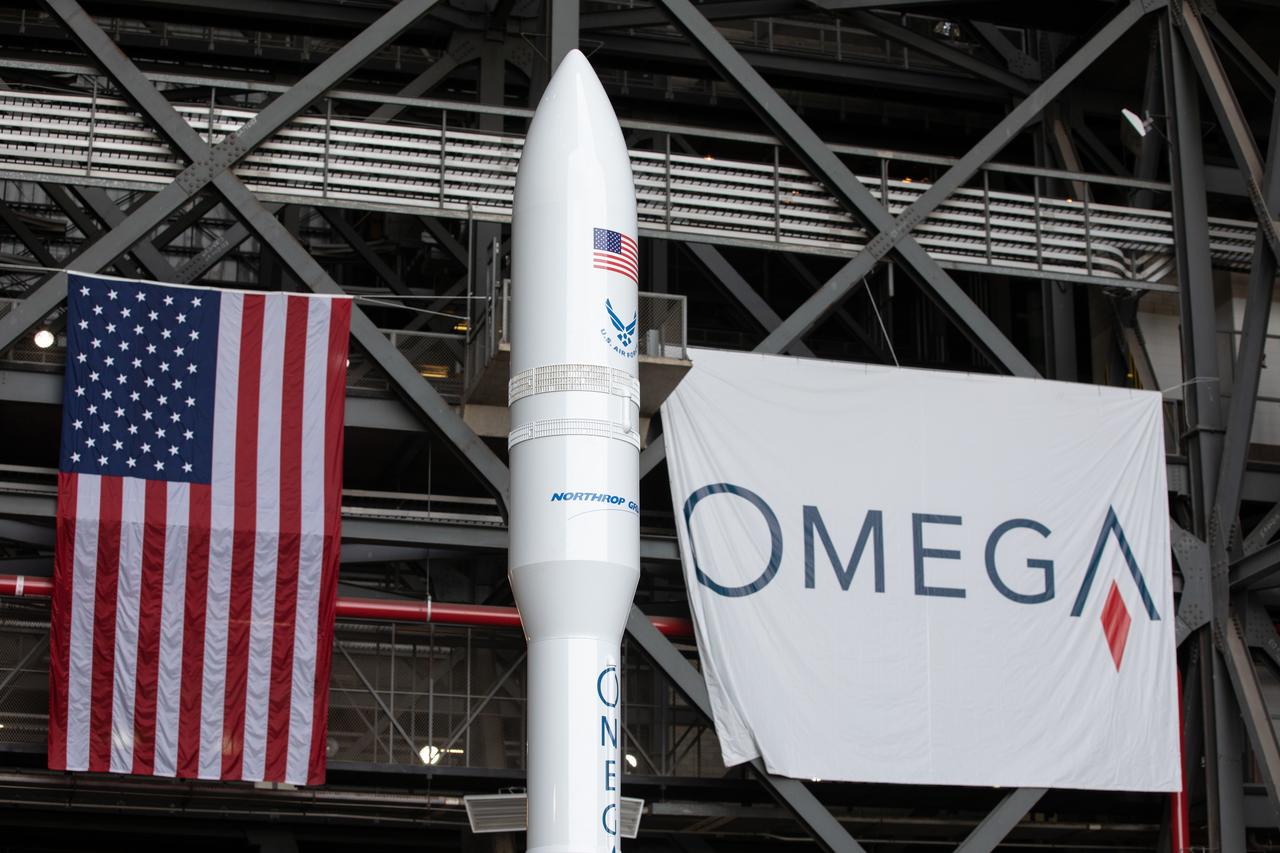
During a ribbon cutting ceremony on Aug. 16, 2019, in High Bay 2 of the Vehicle Assembly Building (VAB) at NASA’s Kennedy Space Center in Florida, a scale model of the Northrop Grumman OmegA launch system is in view. The VAB is getting its first commercial tenant. Northrop Grumman signed a Reimbursable Space Act Agreement with NASA for use of the facilities. The company will assemble and test its new OmegA rocket inside the massive facility’s High Bay 2. The company also will modify mobile launcher platform-3 to serve as the launch vehicle’s assembly and launch platform. Northrop Grumman is developing the OmegA rocket, an intermediate/heavy-class launch vehicle, as part of a launch services agreement with the U.S. Air Force.
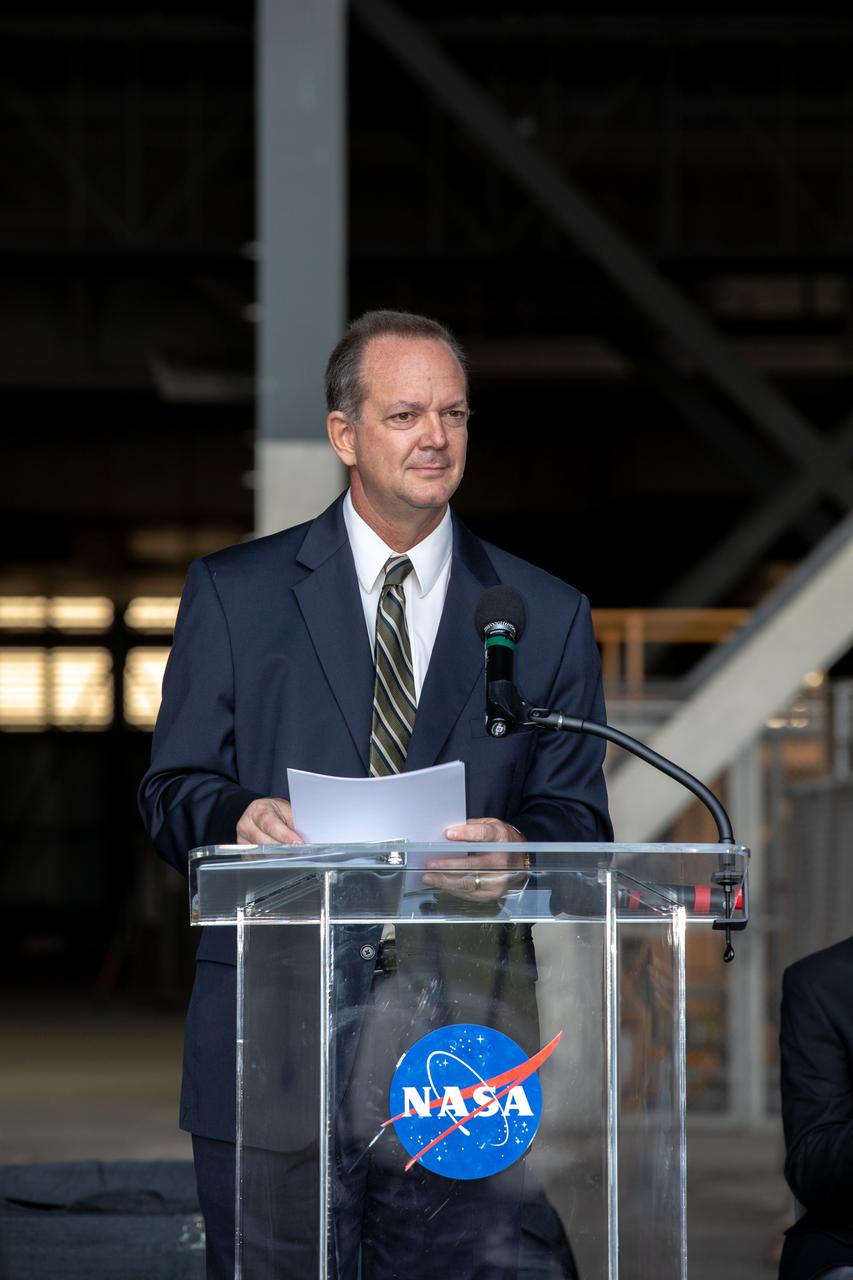
During a ribbon cutting ceremony on Aug. 16, 2019, in High Bay 2 of the Vehicle Assembly Building (VAB) at NASA’s Kennedy Space Center in Florida, Tom Engler, director of Kennedy’s Center Planning and Development Office, welcomes legislators and guests. The VAB is getting its first commercial tenant. Northrop Grumman signed a Reimbursable Space Act Agreement with NASA for use of the facilities. The company will assemble and test its new OmegA rocket inside the massive facility’s High Bay 2. The company also will modify MLP-3 to serve as the launch vehicle’s assembly and launch platform. Northrop Grumman is developing the OmegA rocket, an intermediate/heavy-class launch vehicle, as part of a launch services agreement with the U.S. Air Force.
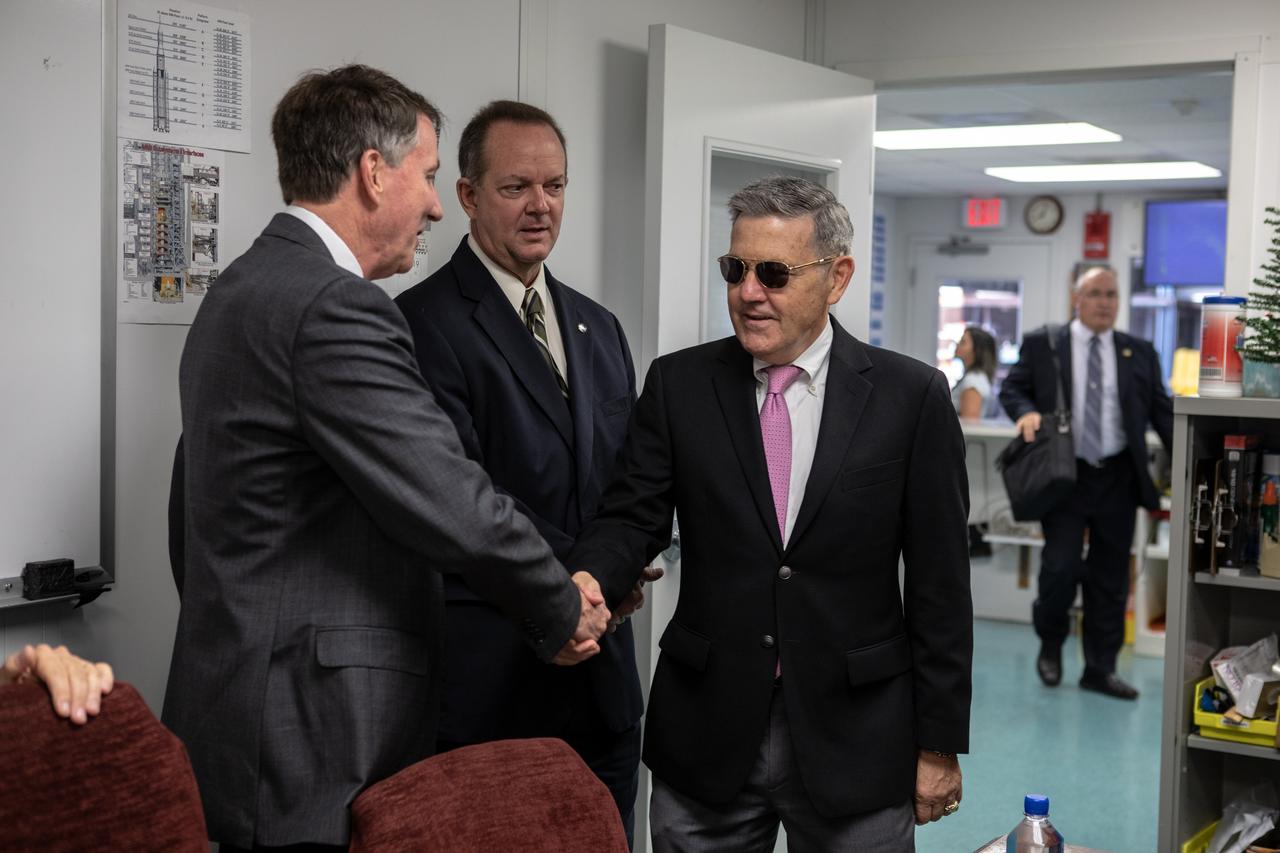
Just before a ribbon cutting ceremony on Aug. 16, 2019, in High Bay 2 of the Vehicle Assembly (VAB) at NASA’s Kennedy Space Center in Florida, Center Director Bob Cabana, at right, shakes hands with Kent Rominger, Northrop Grumman’s vice president and capture lead for the OmegA launch system. In the center is Tom Engler, director of the Center Planning and Development Office at Kennedy. The VAB is getting its first commercial tenant. Northrop Grumman signed a Reimbursable Space Act Agreement with NASA for use of the facilities. The company will assemble and test its new OmegA rocket inside the massive facility’s High Bay 2. The company also will modify the space shuttle-era mobile launcher platform-3 to serve as the launch vehicle’s assembly and launch platform. Northrop Grumman is developing the OmegA rocket, an intermediate/heavy-class launch vehicle, as part of a launch services agreement with the U.S. Air Force.
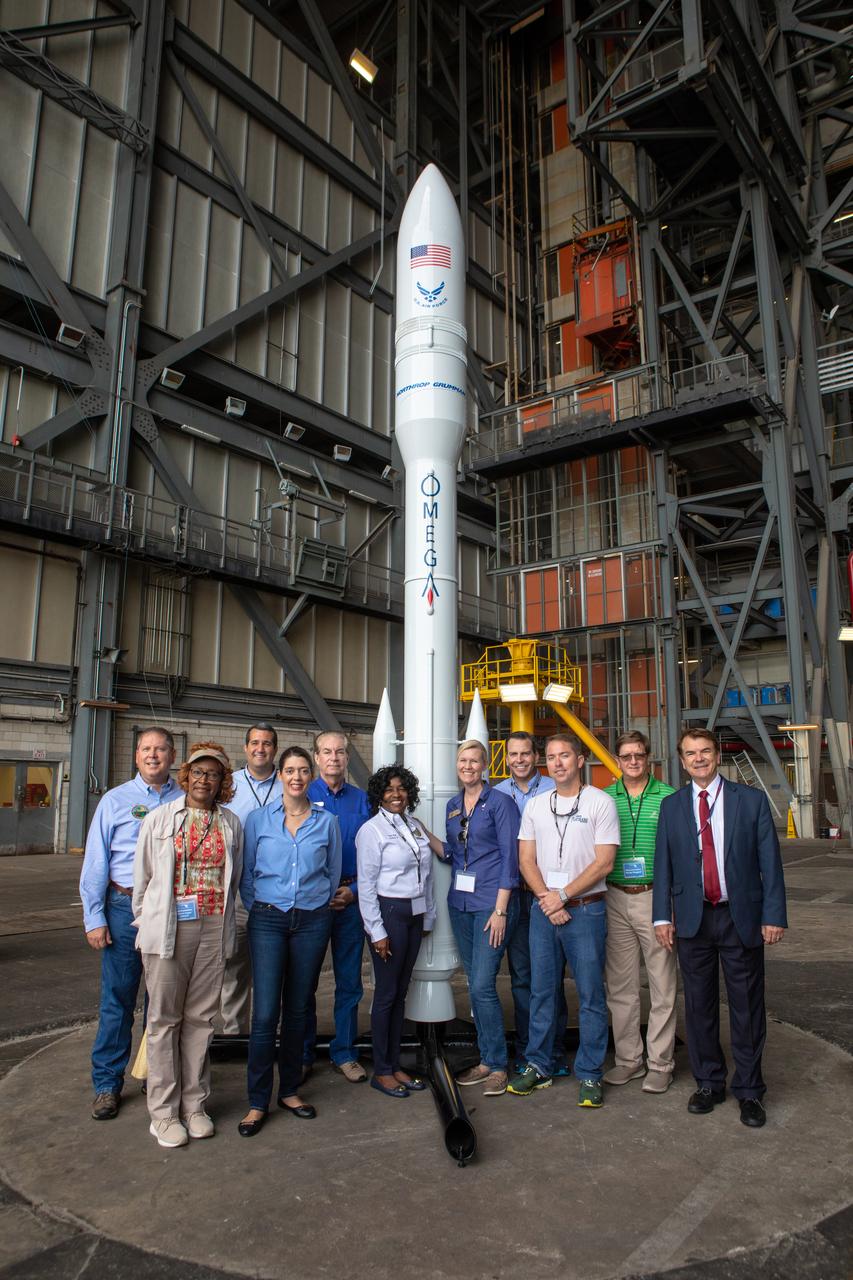
Legislators and invited guests attend a ribbon cutting ceremony on Aug. 16, 2019, in High Bay 2 of the Vehicle Assembly Building (VAB) at NASA’s Kennedy Space Center in Florida. At far right is Florida State Senator Thad Altman. Behind the group is a scale model of the Northrop Grumman OmegA launch vehicle. The VAB is getting its first commercial tenant. Northrop Grumman signed a Reimbursable Space Act Agreement with NASA for use of the facilities. The company will assemble and test its new OmegA rocket inside the massive facility’s High Bay 2. The company also will modify mobile launcher platform-3 to serve as the launch vehicle’s assembly and launch platform. Northrop Grumman is developing the OmegA rocket, an intermediate/heavy-class launch vehicle, as part of a launch services agreement with the U.S. Air Force.
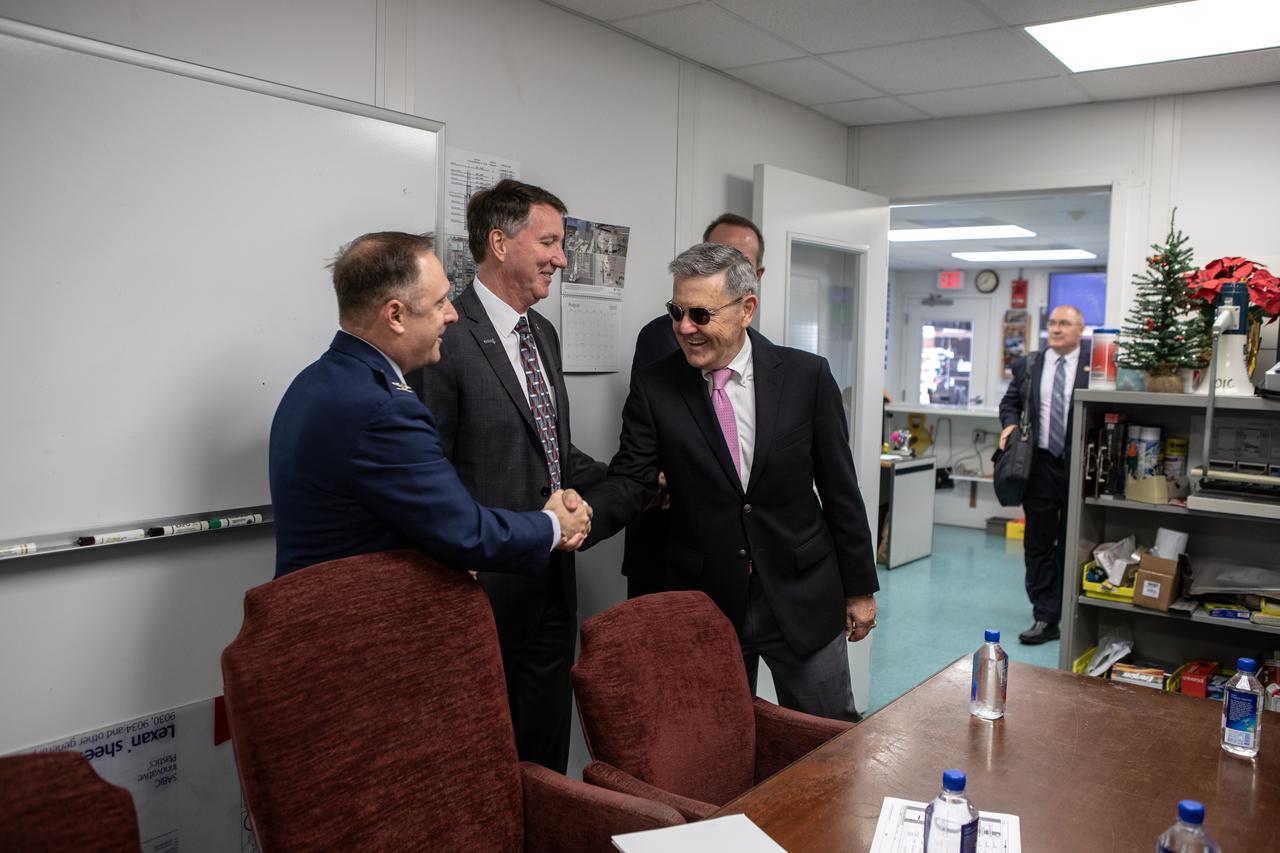
Just before a ribbon cutting ceremony on Aug. 16, 2019, in High Bay 2 of the Vehicle Assembly (VAB) at NASA’s Kennedy Space Center in Florida, Center Director Bob Cabana, at right, shakes hands with Col. Thomas Ste. Marie, vice commander, U.S. Air Force, 45th Space Wing. In the center is Kent Rominger, Northrop Grumman’s vice president and capture lead for the OmegA launch system. The VAB is getting its first commercial tenant. Northrop Grumman signed a Reimbursable Space Act Agreement with NASA for use of the facilities. The company will assemble and test its new OmegA rocket inside the massive facility’s High Bay 2. The company also will modify the space shuttle-era mobile launcher platform-3 to serve as the launch vehicle’s assembly and launch platform. Northrop Grumman is developing the OmegA rocket, an intermediate/heavy-class launch vehicle, as part of a launch services agreement with the U.S. Air Force.
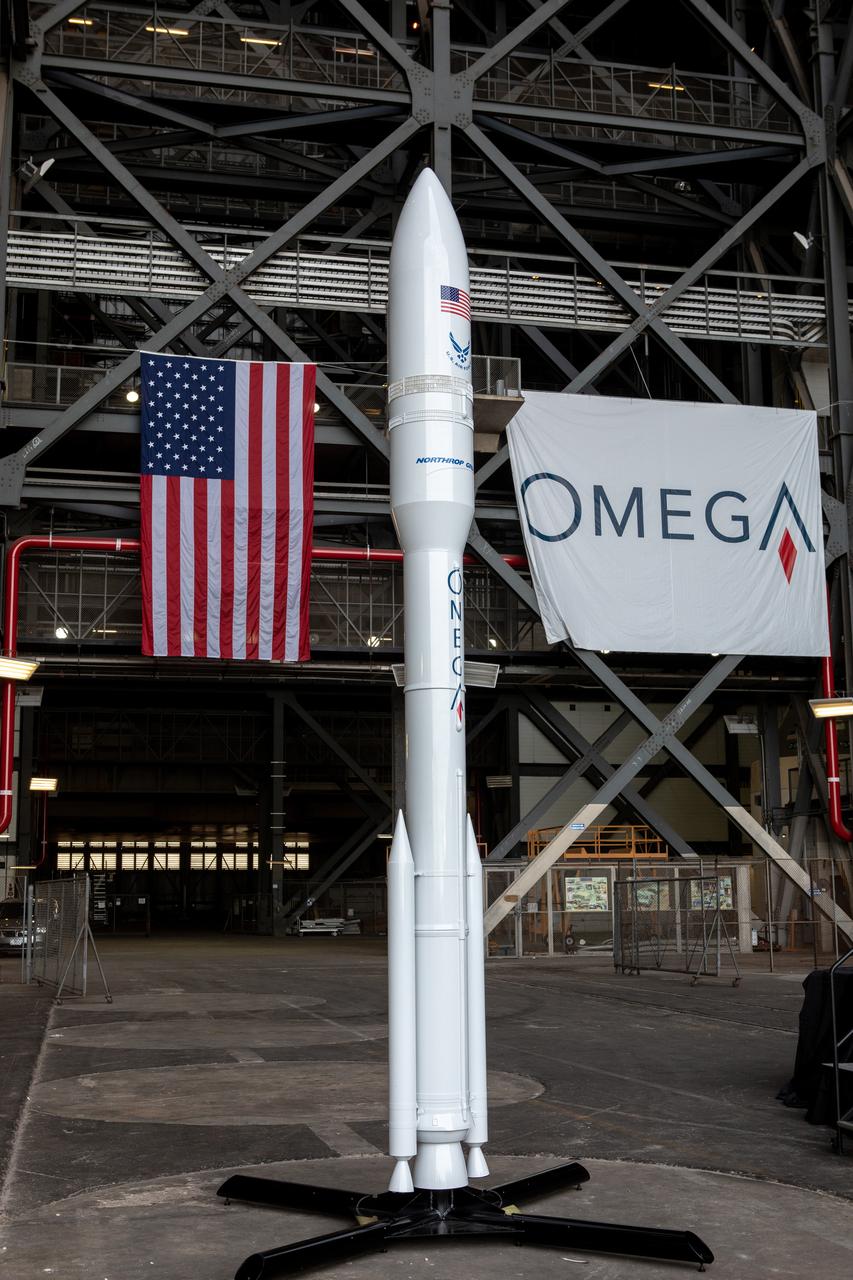
During a ribbon cutting ceremony on Aug. 16, 2019, in High Bay 2 of the Vehicle Assembly Building (VAB) at NASA’s Kennedy Space Center in Florida, a scale model of the Northrop Grumman OmegA launch system is on display. The VAB is getting its first commercial tenant. Northrop Grumman signed a Reimbursable Space Act Agreement with NASA for use of the facilities. The company will assemble and test its new OmegA rocket inside the massive facility’s High Bay 2. The company also will modify mobile launcher platform-3 to serve as the launch vehicle’s assembly and launch platform. Northrop Grumman is developing the OmegA rocket, an intermediate/heavy-class launch vehicle, as part of a launch services agreement with the U.S. Air Force.
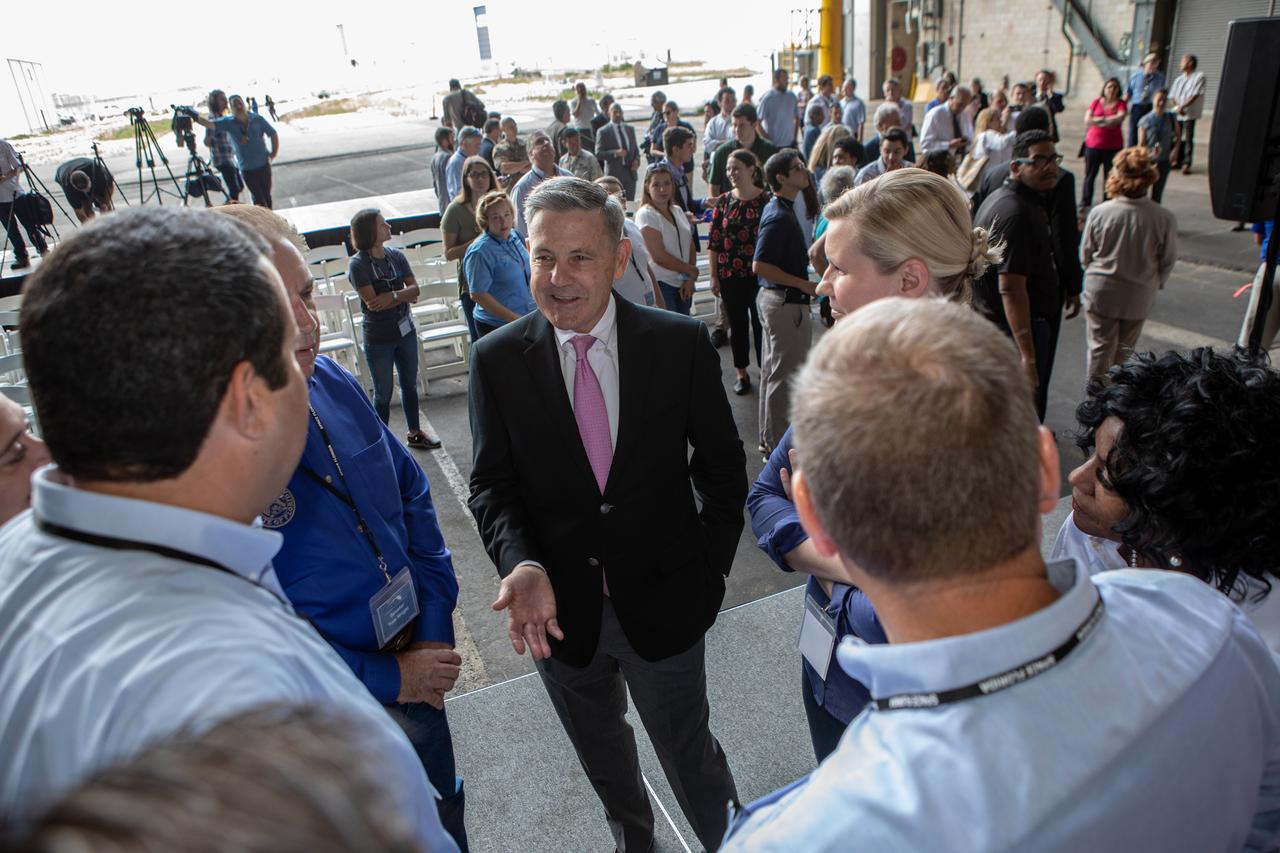
Kennedy Space Center Director Bob Cabana speaks with guests after a ribbon cutting ceremony on Aug. 16, 2019, in High Bay 2 of the Vehicle Assembly Building (VAB) at NASA’s Kennedy Space Center in Florida. The VAB is getting its first commercial tenant. Northrop Grumman signed a Reimbursable Space Act Agreement with NASA for use of the facilities. The company will assemble and test its new OmegA rocket inside the massive facility’s High Bay 2. The company also will modify mobile launcher platform-3 to serve as the launch vehicle’s assembly and launch platform. Northrop Grumman is developing the OmegA rocket, an intermediate/heavy-class launch vehicle, as part of a launch services agreement with the U.S. Air Force.

During a ribbon cutting ceremony on Aug. 16, 2019, in High Bay 2 of the Vehicle Assembly Building (VAB) at NASA’s Kennedy Space Center in Florida, Col. Thomas Ste. Marie, vice commander, U.S. Air Force, 45th Space Wing, speaks to legislators and guests. The VAB is getting its first commercial tenant. Northrop Grumman signed a Reimbursable Space Act Agreement with NASA for use of the facilities. The company will assemble and test its new OmegA rocket inside the massive facility’s High Bay 2. The company also will modify mobile launcher platform-3 to serve as the launch vehicle’s assembly and launch platform. Northrop Grumman is developing the OmegA rocket, an intermediate/heavy-class launch vehicle, as part of a launch services agreement with the U.S. Air Force.

During a ribbon cutting ceremony on Aug. 16, 2019, in High Bay 2 of the Vehicle Assembly Building (VAB) at NASA’s Kennedy Space Center in Florida, Col. Thomas Ste. Marie, vice commander, U.S. Air Force, 45th Space Wing, speaks to legislators and guests. Seated behind him, from left, are Kennedy Center Director Bob Cabana; Kent Rominger, Northrop Grumman’s vice president and capture lead for the OmegA launch system; and Tom Engler, director of Kennedy’s Center Planning and Development Office. The VAB is getting its first commercial tenant. Northrop Grumman signed a Reimbursable Space Act Agreement with NASA for use of the facilities. The company will assemble and test its new OmegA rocket inside the massive facility’s High Bay 2. The company also will modify mobile launcher platform-3 to serve as the launch vehicle’s assembly and launch platform. Northrop Grumman is developing the OmegA rocket, an intermediate/heavy-class launch vehicle, as part of a launch services agreement with the U.S. Air Force.
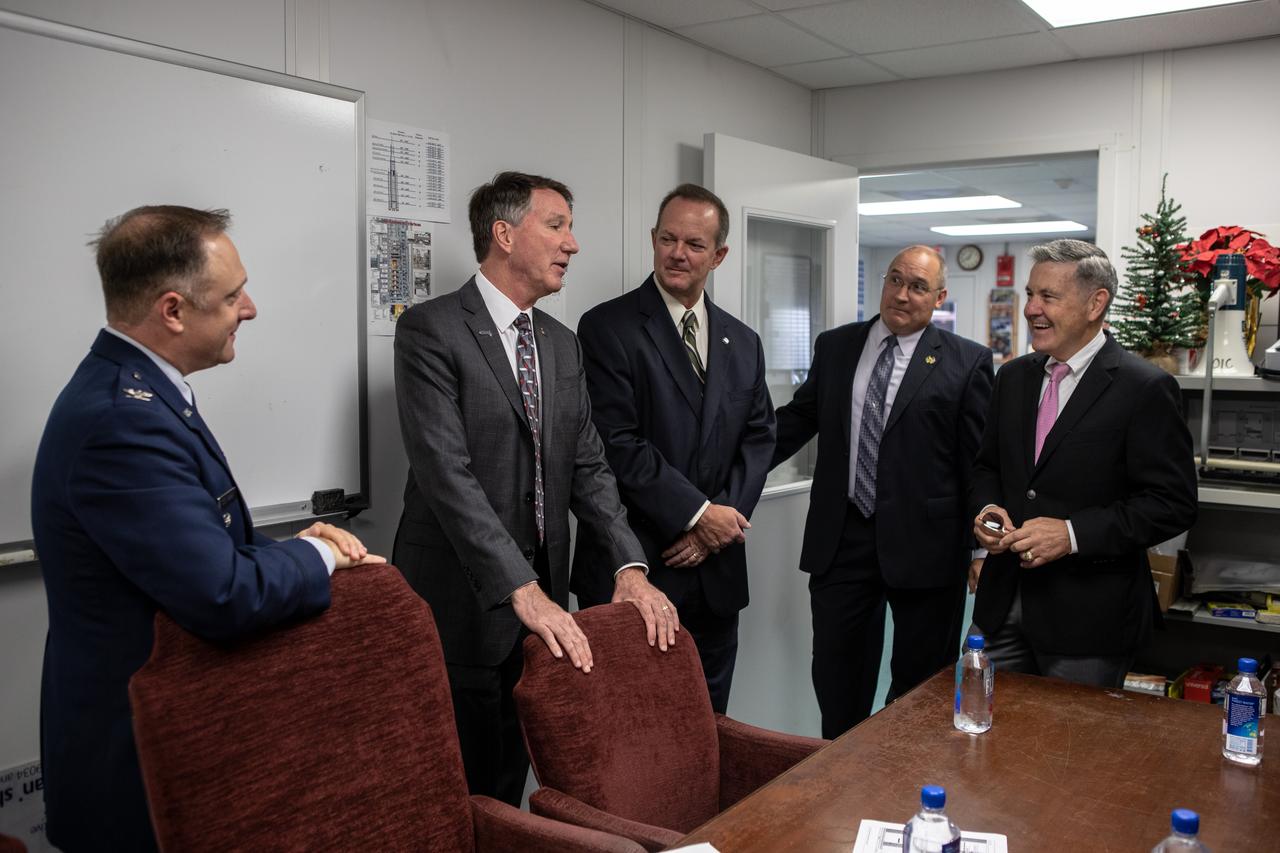
Just before a ribbon cutting ceremony on Aug. 16, 2019, in High Bay 2 of the Vehicle Assembly (VAB) at NASA’s Kennedy Space Center in Florida, Center Director Bob Cabana, at right, visits with, from left, Col. Thomas Ste. Marie, vice commander, U.S. Air Force, 45th Space Wing; Kurt Rominger, Northrop Grumman’s vice president and capture lead for the OmegA launch system; Tom Engler, director of Kennedy’s Center Planning and Development Office; and Greg Harland, NASA communications. The VAB is getting its first commercial tenant. Northrop Grumman signed a Reimbursable Space Act Agreement with NASA for use of the facilities. The company will assemble and test its new OmegA rocket inside the massive facility’s High Bay 2. The company also will modify the space shuttle-era mobile launcher platform-3 to serve as the launch vehicle’s assembly and launch platform. Northrop Grumman is developing the OmegA rocket, an intermediate/heavy-class launch vehicle, as part of a launch services agreement with the U.S. Air Force.
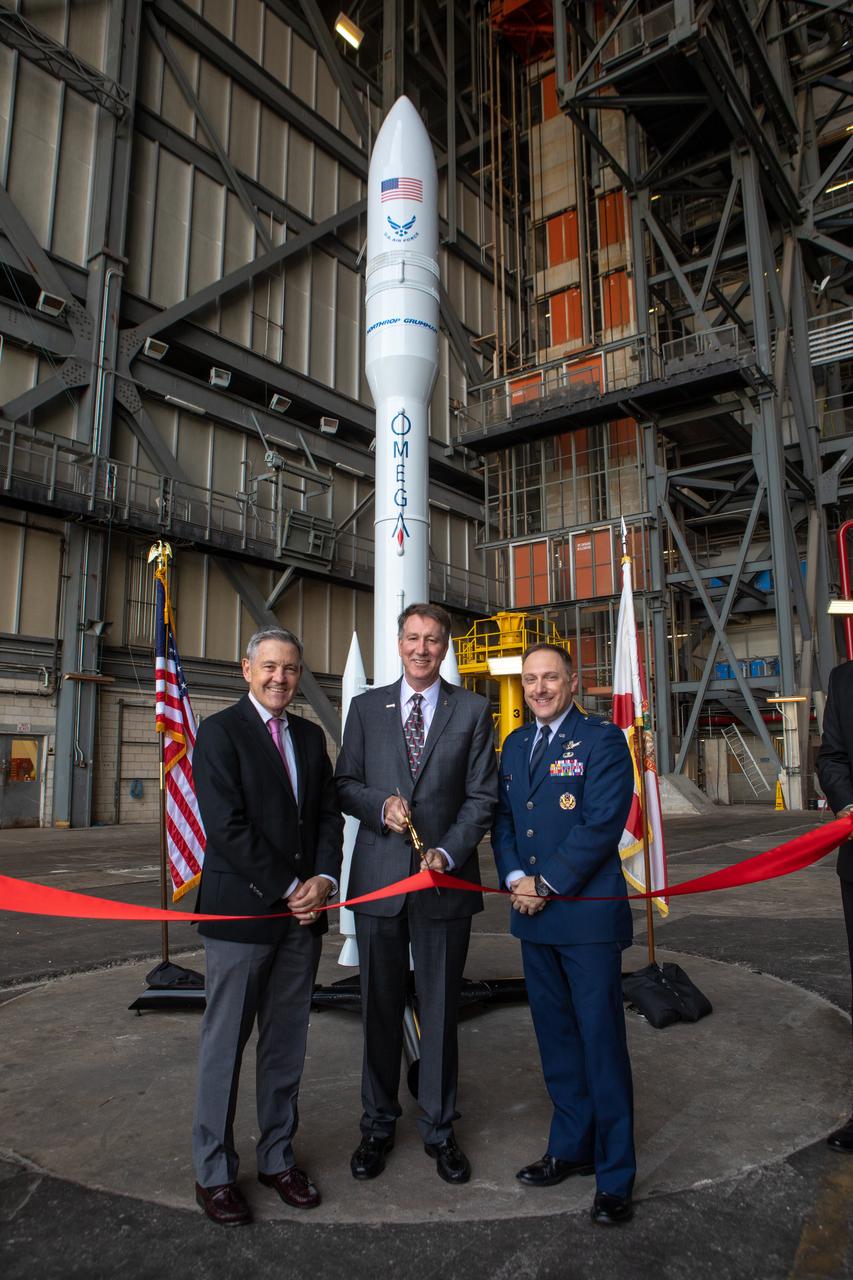
A ribbon cutting ceremony took place on Aug. 16, 2019, in High Bay 2 of the Vehicle Assembly Building (VAB) at NASA’s Kennedy Space Center in Florida. From left are Kennedy Center Director Bob Cabana; Kent Rominger, Northrop Grumman’s vice president and capture lead for the OmegA launch system; and Col. Thomas Ste. Marie, vice commander, U.S. Air Force, 45th Space Wing. Behind them is a scale model of the OmegA launch system. The VAB is getting its first commercial tenant. Northrop Grumman signed a Reimbursable Space Act Agreement with NASA for use of the facilities. The company will assemble and test its new OmegA rocket inside the massive facility’s High Bay 2. The company also will modify mobile launcher platform-3 to serve as the launch vehicle’s assembly and launch platform. Northrop Grumman is developing the OmegA rocket, an intermediate/heavy-class launch vehicle, as part of a launch services agreement with the U.S. Air Force.
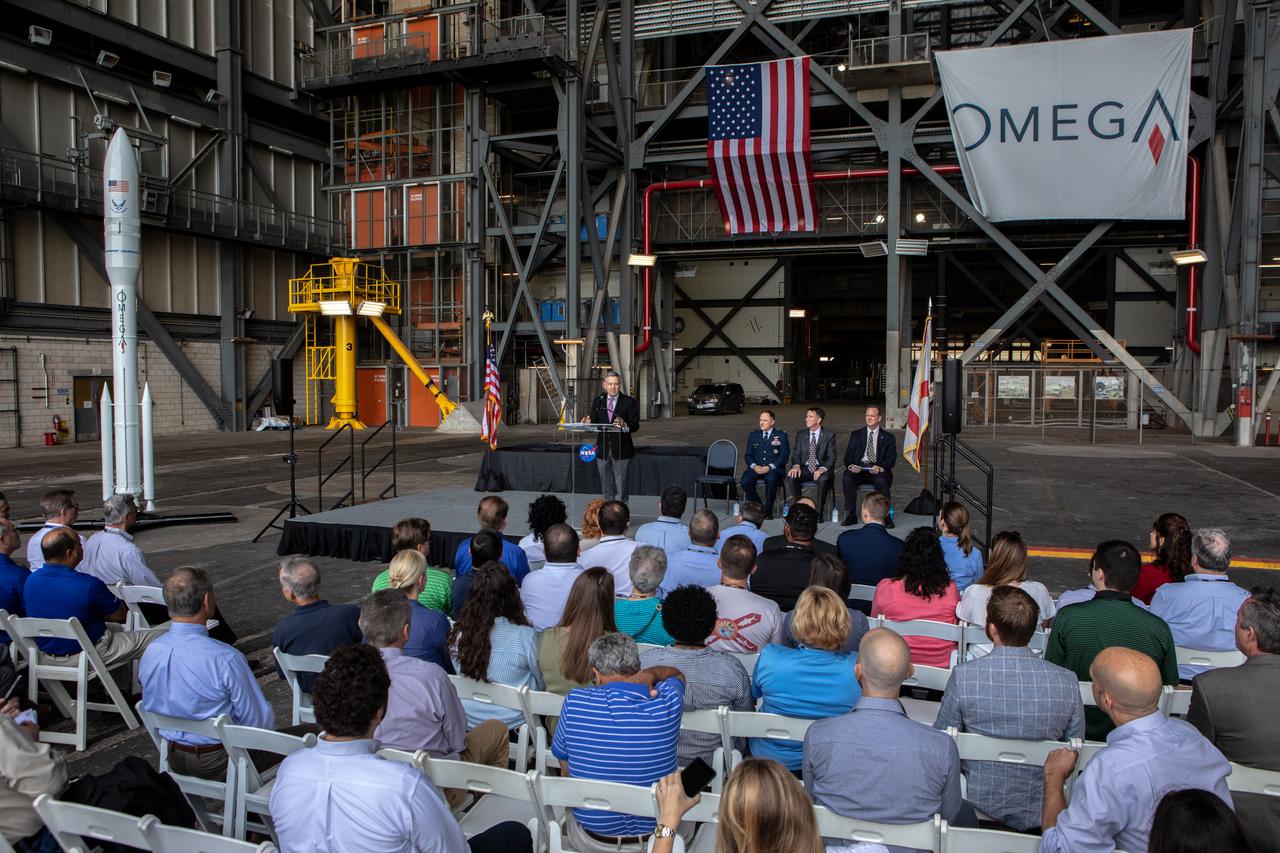
During a ribbon cutting ceremony on Aug. 16, 2019, in High Bay 2 of the Vehicle Assembly Building (VAB) at NASA’s Kennedy Space Center in Florida, Kennedy Center Director Bob Cabana speaks to legislators and guests. Seated from left, are Col. Thomas Ste. Marie, vice commander, U.S. Air Force, 45th Space Wing; Kent Rominger, Northrop Grumman’s vice president and capture lead for the OmegA launch system; and Tom Engler, director of Kennedy’s Center Planning and Development Office. The VAB is getting its first commercial tenant. Northrop Grumman signed a Reimbursable Space Act Agreement with NASA for use of the facilities. The company will assemble and test its new OmegA rocket inside the massive facility’s High Bay 2. The company also will modify mobile launcher platform-3 to serve as the launch vehicle’s assembly and launch platform. Northrop Grumman is developing the OmegA rocket, an intermediate/heavy-class launch vehicle, as part of a launch services agreement with the U.S. Air Force.
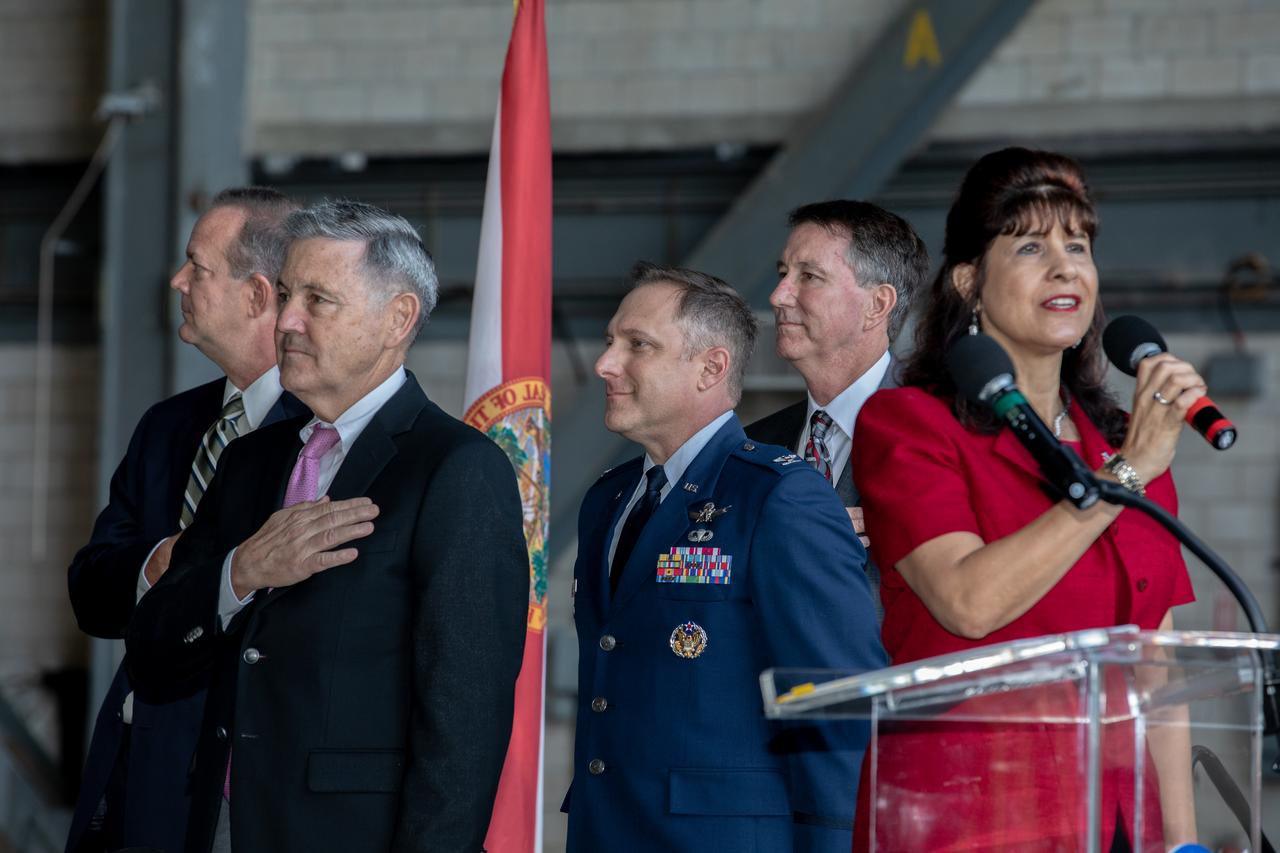
The National Anthem is sung by Suzy Cunningham, NASA Strategy and Integration manager, during a ribbon cutting ceremony on Aug. 16, 2019, in High Bay 2 of the Vehicle Assembly Building (VAB) at NASA’s Kennedy Space Center in Florida. From left are Tom Engler, director of Kennedy’s Center Planning and Development Office; Kennedy’s Center Director Bob Cabana; Col. Thomas Ste. Marie, vice commander, U.S. Air Force, 45th Space Wing; and Kent Rominger, Northrop Grumman’s vice president and capture lead for the OmegA launch system. The VAB is getting its first commercial tenant. Northrop Grumman signed a Reimbursable Space Act Agreement with NASA for use of the facilities. The company will assemble and test its new OmegA rocket inside the massive facility’s High Bay 2. The company also will modify mobile launcher platform-3 to serve as the launch vehicle’s assembly and launch platform. Northrop Grumman is developing the OmegA rocket, an intermediate/heavy-class launch vehicle, as part of a launch services agreement with the U.S. Air Force.
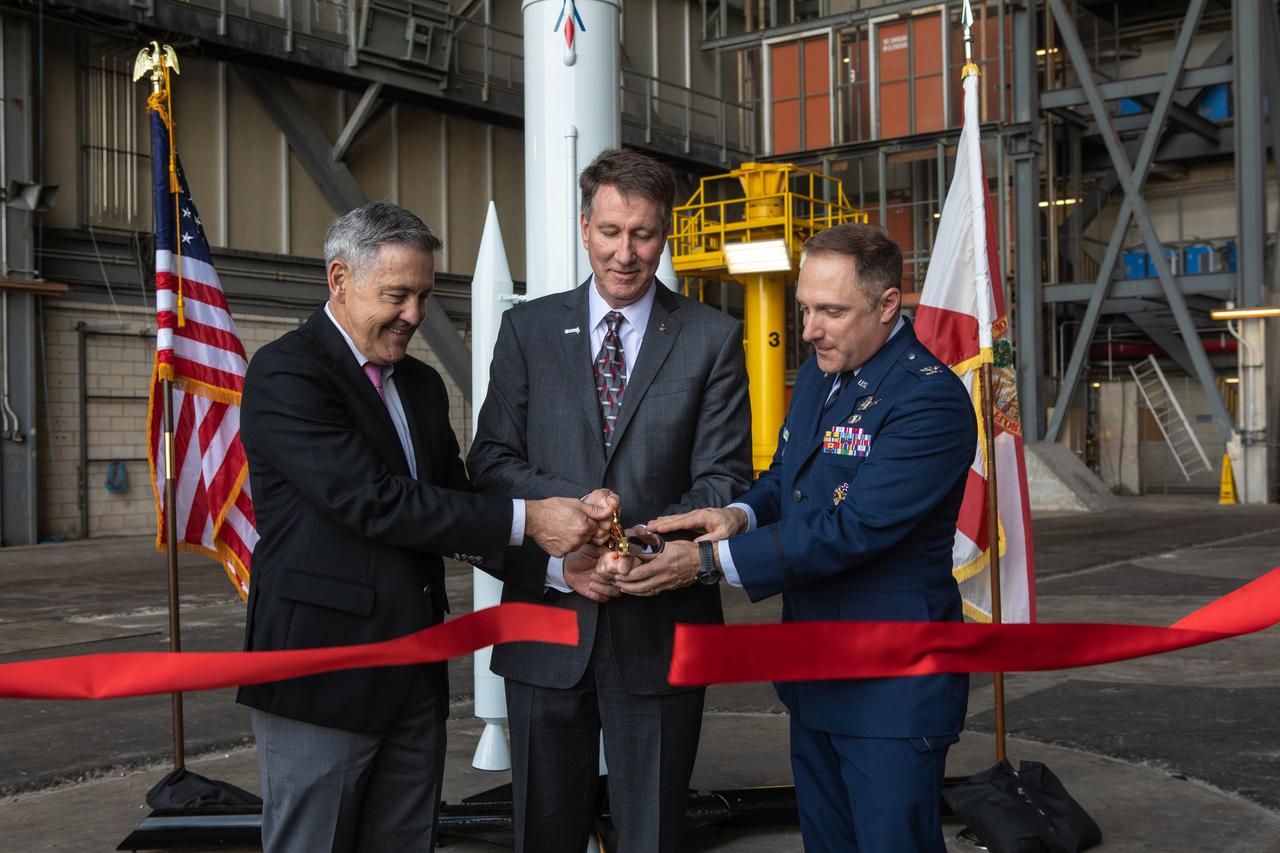
A ribbon cutting ceremony took place on Aug. 16, 2019, in High Bay 2 of the Vehicle Assembly Building (VAB) at NASA’s Kennedy Space Center in Florida. From left are Kennedy Center Director Bob Cabana; Kent Rominger, Northrop Grumman’s vice president and capture lead for the OmegA launch system; and Col. Thomas Ste. Marie, vice commander, U.S. Air Force, 45th Space Wing. Behind them is a scale model of the OmegA launch system. The VAB is getting its first commercial tenant. Northrop Grumman signed a Reimbursable Space Act Agreement with NASA for use of the facilities. The company will assemble and test its new OmegA rocket inside the massive facility’s High Bay 2. The company also will modify mobile launcher platform-3 to serve as the launch vehicle’s assembly and launch platform. Northrop Grumman is developing the OmegA rocket, an intermediate/heavy-class launch vehicle, as part of a launch services agreement with the U.S. Air Force.
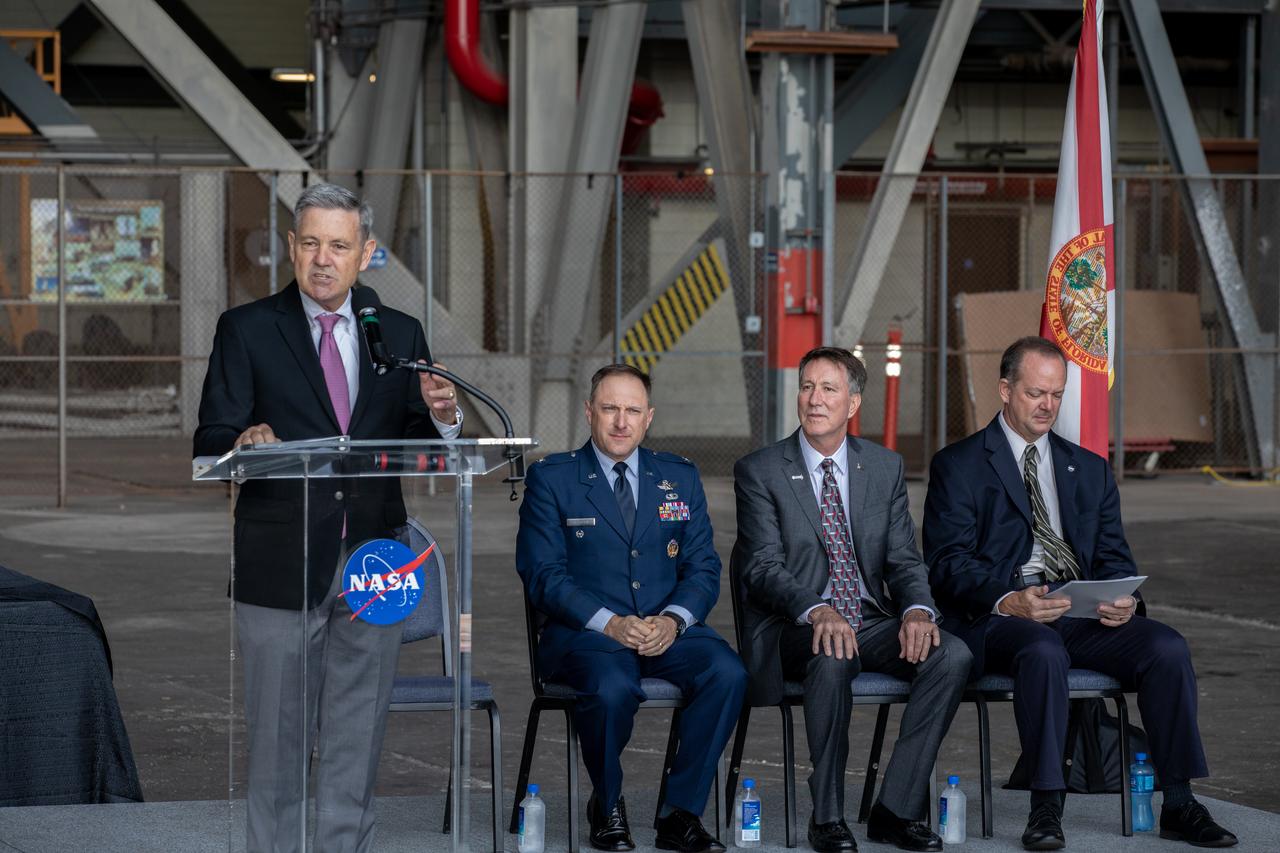
During a ribbon cutting ceremony on Aug. 16, 2019, in High Bay 2 of the Vehicle Assembly Building (VAB) at NASA’s Kennedy Space Center in Florida, Center Director Bob Cabana speaks to legislators and guests. Seated behind him, from left, are Col. Thomas St. Marie, vice commander, U.S. Air Force, 45th Space Wing; Kent Rominger, Northrop Grumman’s vice president and capture lead for the OmegA launch system; and Tom Engler, director of Kennedy’s Center Planning and Development Office. The VAB is getting its first commercial tenant. Northrop Grumman signed a Reimbursable Space Act Agreement with NASA for use of the facilities. The company will assemble and test its new OmegA rocket inside the massive facility’s High Bay 2. The company also will modify mobile launcher platform-3 to serve as the launch vehicle’s assembly and launch platform. Northrop Grumman is developing the OmegA rocket, an intermediate/heavy-class launch vehicle, as part of a launch services agreement with the U.S. Air Force.

A ribbon cutting ceremony took place on Aug. 16, 2019, in High Bay 2 of the Vehicle Assembly Building (VAB) at NASA’s Kennedy Space Center in Florida. Attendees included legislators and invited guests. In the center is Florida State Senator Thad Altman. In the front row, far left, is Kennedy Center Director Bob Cabana. In the front row, far right, is Col. Thomas Ste. Marie, vice commander, U.S. Air Force, 45th Space Wing. In the back row, far right, is Kent Rominger, Northrop Grumman’s vice president and capture lead for the OmegA launch system. The VAB is getting its first commercial tenant. Northrop Grumman signed a Reimbursable Space Act Agreement with NASA for use of the facilities. The company will assemble and test its new OmegA rocket inside the massive facility’s High Bay 2. The company also will modify mobile launcher platform-3 to serve as the launch vehicle’s assembly and launch platform. Northrop Grumman is developing the OmegA rocket, an intermediate/heavy-class launch vehicle, as part of a launch services agreement with the U.S. Air Force.
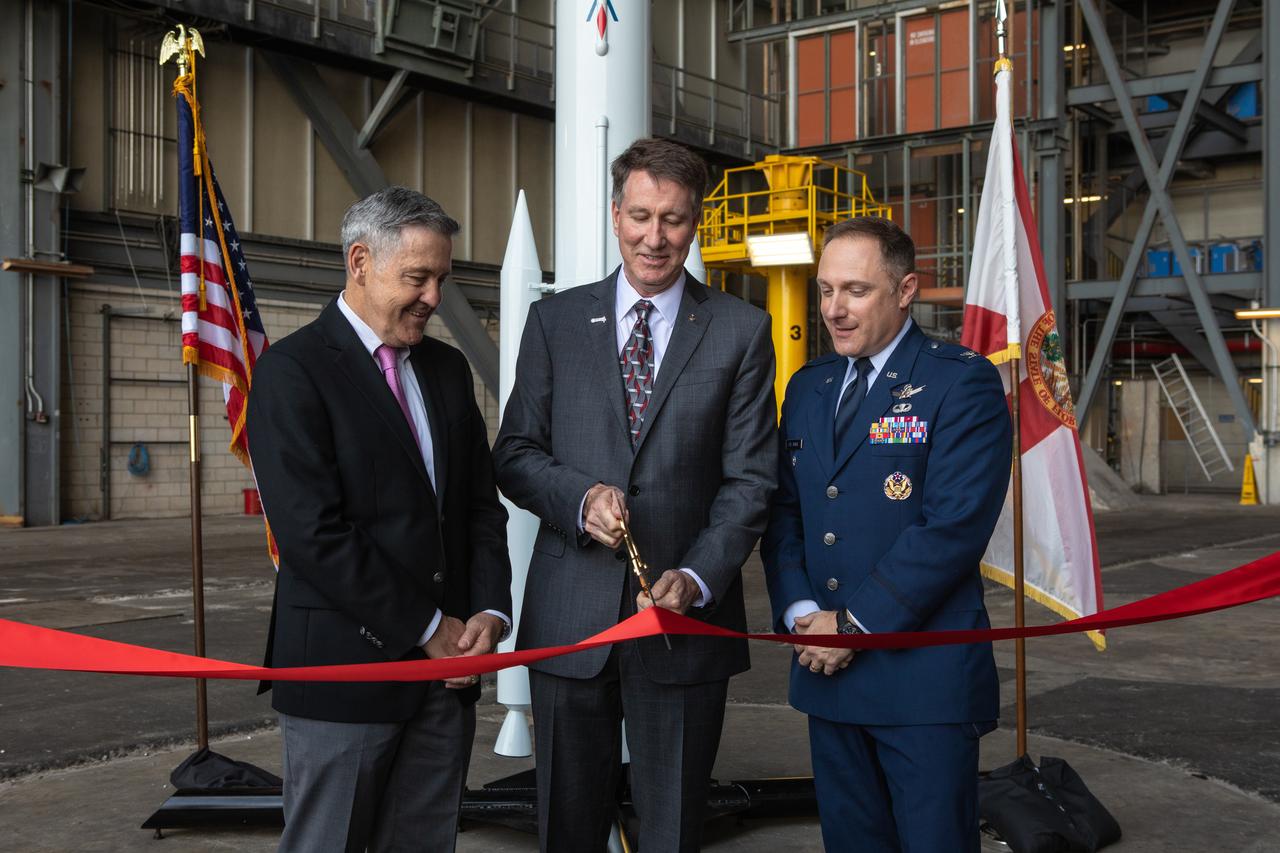
A ribbon cutting ceremony took place on Aug. 16, 2019, in High Bay 2 of the Vehicle Assembly Building (VAB) at NASA’s Kennedy Space Center in Florida. From left are Kennedy Center Director Bob Cabana; Kent Rominger, Northrop Grumman’s vice president and capture lead for the OmegA launch system; and Col. Thomas Ste. Marie, vice commander, U.S. Air Force, 45th Space Wing. Behind them is a scale model of the OmegA launch system. The VAB is getting its first commercial tenant. Northrop Grumman signed a Reimbursable Space Act Agreement with NASA for use of the facilities. The company will assemble and test its new OmegA rocket inside the massive facility’s High Bay 2. The company also will modify mobile launcher platform-3 to serve as the launch vehicle’s assembly and launch platform. Northrop Grumman is developing the OmegA rocket, an intermediate/heavy-class launch vehicle, as part of a launch services agreement with the U.S. Air Force.

A ribbon cutting ceremony took place on Aug. 16, 2019, in High Bay 2 of the Vehicle Assembly Building (VAB) at NASA’s Kennedy Space Center in Florida. From left are Kennedy Center Director Bob Cabana; Kent Rominger, Northrop Grumman’s vice president and capture lead for the OmegA launch system; and Col. Thomas Ste. Marie, vice commander, U.S. Air Force, 45th Space Wing. Behind them is a scale model of the OmegA launch system. The VAB is getting its first commercial tenant. Northrop Grumman signed a Reimbursable Space Act Agreement with NASA for use of the facilities. The company will assemble and test its new OmegA rocket inside the massive facility’s High Bay 2. The company also will modify mobile launcher platform-3 to serve as the launch vehicle’s assembly and launch platform. Northrop Grumman is developing the OmegA rocket, an intermediate/heavy-class launch vehicle, as part of a launch services agreement with the U.S. Air Force.
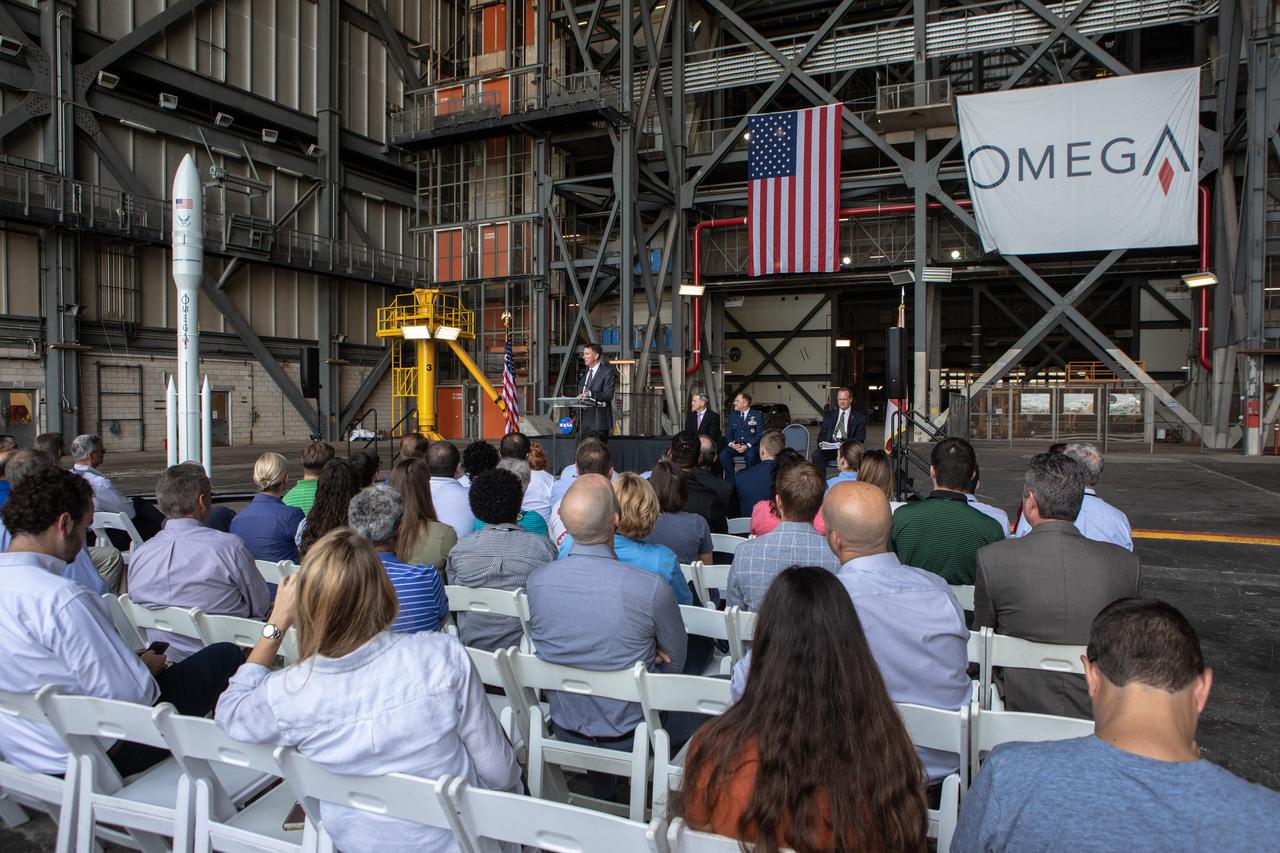
During a ribbon cutting ceremony on Aug. 16, 2019, in High Bay 2 of the Vehicle Assembly Building (VAB) at NASA’s Kennedy Space Center in Florida, Kent Rominger, Northrop Grumman’s vice president and capture lead for the OmegA launch system, speaks to legislators and guests. Seated behind him, from left, are Kennedy Center Director Bob Cabana; Col. Thomas Ste. Marie, vice commander, U.S. Air Force, 45th Space Wing; and Tom Engler, director of Kennedy’s Center Planning and Development Office. The VAB is getting its first commercial tenant. Northrop Grumman signed a Reimbursable Space Act Agreement with NASA for use of the facilities. The company will assemble and test its new OmegA rocket inside the massive facility’s High Bay 2. The company also will modify mobile launcher platform-3 to serve as the launch vehicle’s assembly and launch platform. Northrop Grumman is developing the OmegA rocket, an intermediate/heavy-class launch vehicle, as part of a launch services agreement with the U.S. Air Force.
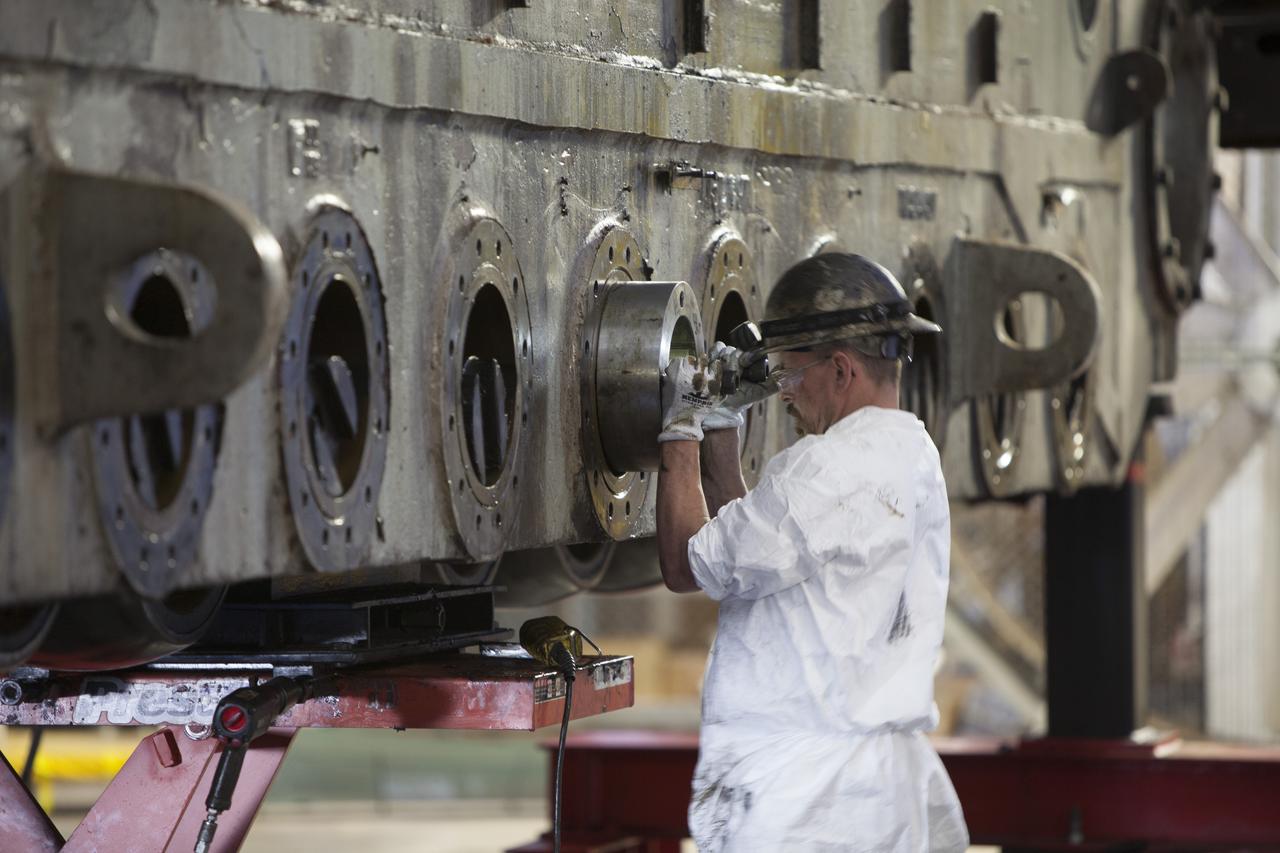
CAPE CANAVERAL, Fla. – Inside the Vehicle Assembly Building at NASA’s Kennedy Space Center in Florida, a ground support technician assists with removal of a bearing from the B truck tread of crawler-transporter 2, or CT-2. New roller bearing assemblies will be installed. Work continues in high bay 2 to upgrade CT-2. The modifications are designed to ensure CT-2’s ability to transport launch vehicles currently in development, such as the agency’s Space Launch System, to the launch pad. The Ground Systems Development and Operations Program office at Kennedy is overseeing the upgrades. For more than 45 years the crawler-transporters were used to transport the mobile launcher platform and the Apollo-Saturn V rockets and, later, space shuttles to Launch Pads 39A and B. For more information, visit: http://www.nasa.gov/exploration/systems/ground/crawler-transporter. Photo credit: NASA/Dimitri Gerondidakis
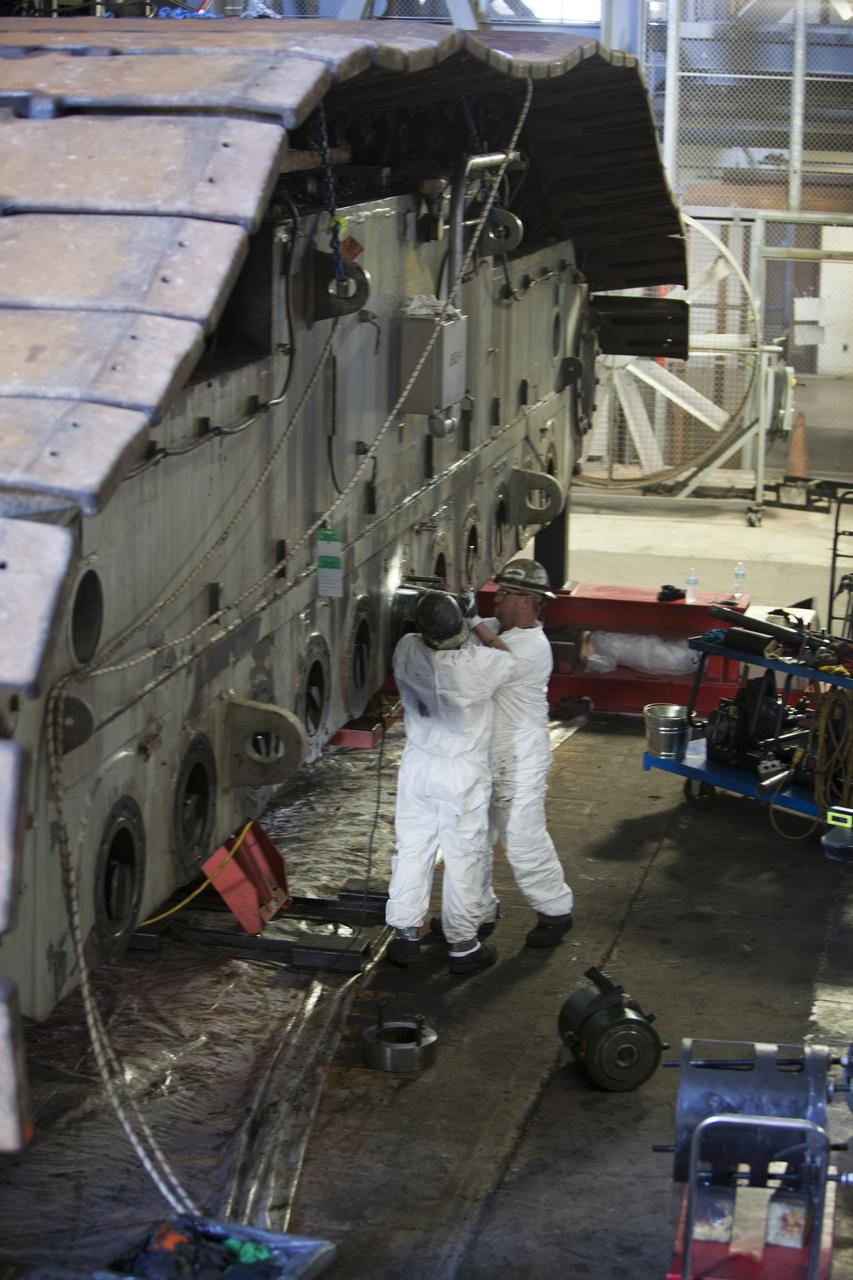
CAPE CANAVERAL, Fla. – Inside the Vehicle Assembly Building at NASA’s Kennedy Space Center in Florida, ground support technicians assist with removal of bearings from the B truck tread of crawler-transporter 2, or CT-2. New roller bearing assemblies will be installed. Work continues in high bay 2 to upgrade CT-2. The modifications are designed to ensure CT-2’s ability to transport launch vehicles currently in development, such as the agency’s Space Launch System, to the launch pad. The Ground Systems Development and Operations Program office at Kennedy is overseeing the upgrades. For more than 45 years the crawler-transporters were used to transport the mobile launcher platform and the Apollo-Saturn V rockets and, later, space shuttles to Launch Pads 39A and B. For more information, visit: http://www.nasa.gov/exploration/systems/ground/crawler-transporter. Photo credit: NASA/Dimitri Gerondidakis
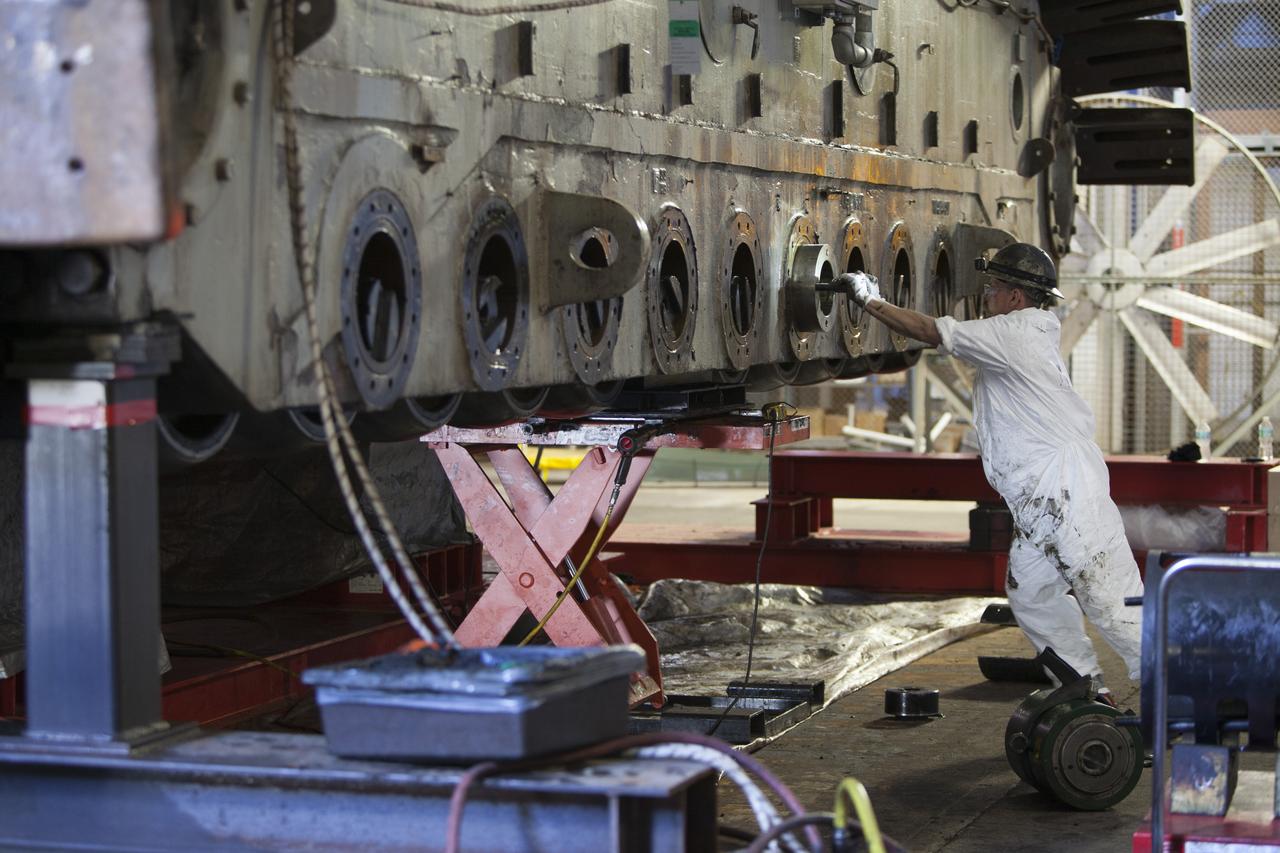
CAPE CANAVERAL, Fla. – Inside the Vehicle Assembly Building at NASA’s Kennedy Space Center in Florida, a ground support technician assists with removal of bearings from the B truck tread of crawler-transporter 2, or CT-2. New roller bearing assemblies will be installed. Work continues in high bay 2 to upgrade CT-2. The modifications are designed to ensure CT-2’s ability to transport launch vehicles currently in development, such as the agency’s Space Launch System, to the launch pad. The Ground Systems Development and Operations Program office at Kennedy is overseeing the upgrades. For more than 45 years the crawler-transporters were used to transport the mobile launcher platform and the Apollo-Saturn V rockets and, later, space shuttles to Launch Pads 39A and B. For more information, visit: http://www.nasa.gov/exploration/systems/ground/crawler-transporter. Photo credit: NASA/Dimitri Gerondidakis
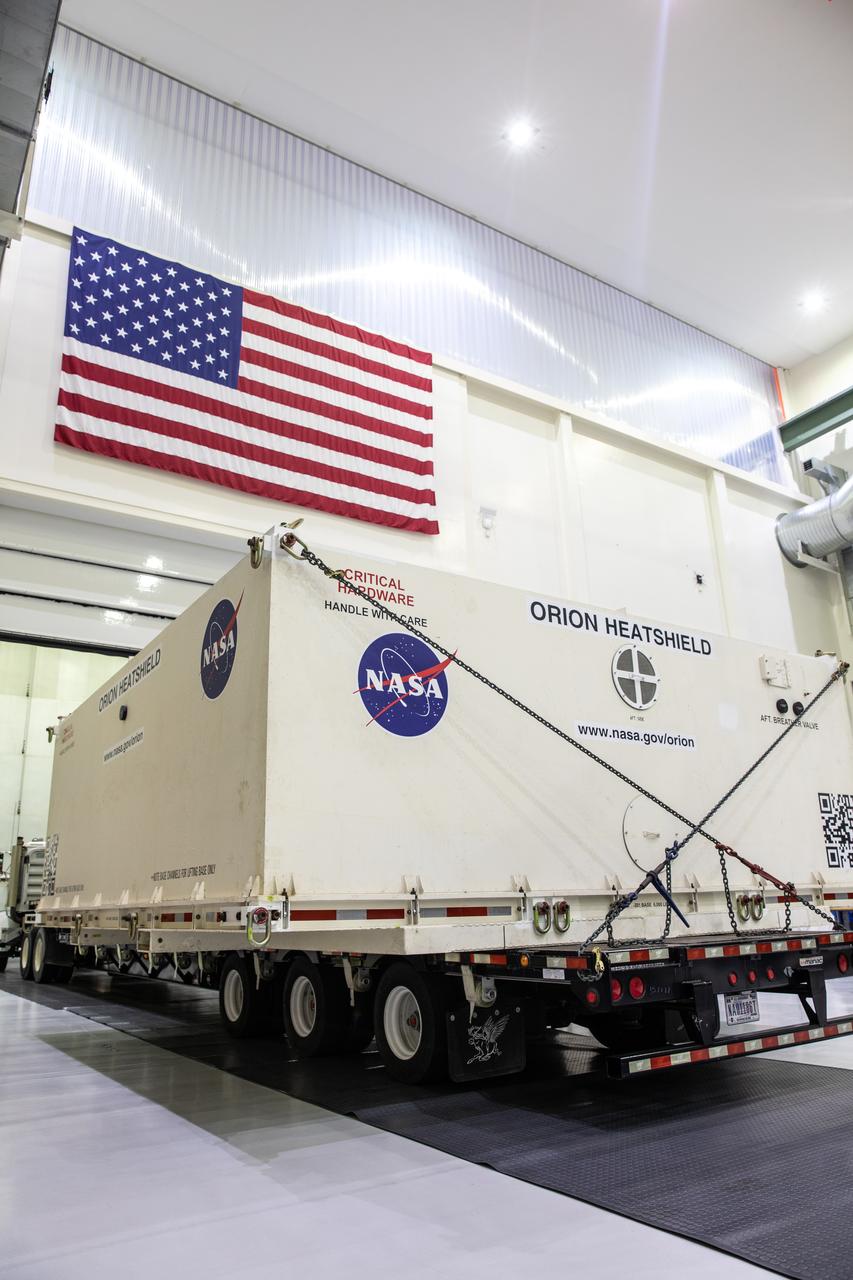
A flatbed truck with the shipping container carrying the heat shield for Orion’s Artemis 2 mission, NASA’s first crewed mission, moves into the Neil Armstrong Operations and Checkout Building high bay at the agency’s Kennedy Space Center in Florida on July 9, 2019. The heat shield, measuring roughly 16 feet in diameter, will protect astronauts upon re-entry on the second mission of Artemis. The heat shield arrived from Lockheed Martin’s manufacturing facility near Denver aboard NASA’s Super Guppy Aircraft. The heat shield is a base titanium truss structure. Over the next several months, technicians will apply Avcoat, an ablative material that will provide the thermal protection. Artemis 2 will confirm all of the spacecraft’s systems operate as designed in the actual environment of deep space with astronauts aboard.
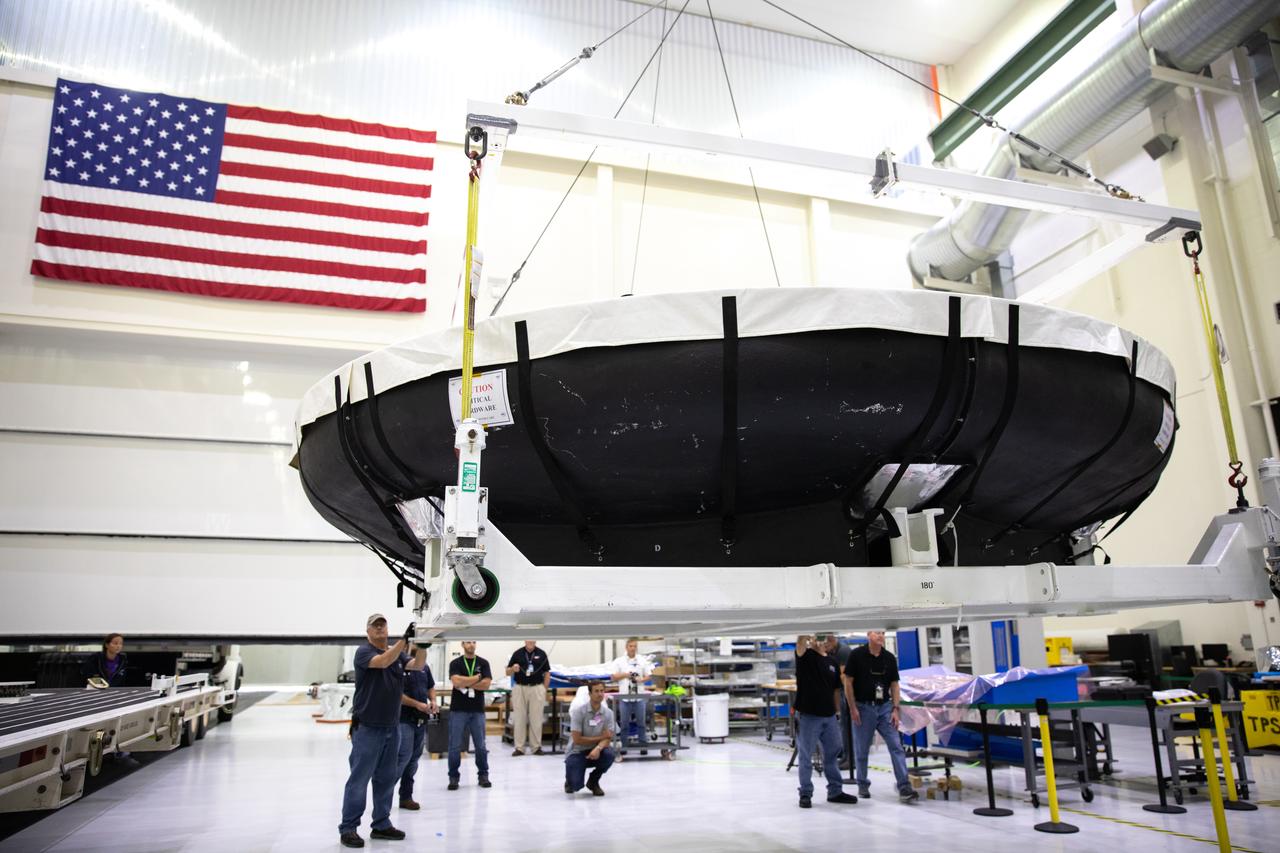
The heat shield for Orion’s Artemis 2 mission, NASA’s first crewed mission, is uncrated in the Neil Armstrong Operations and Checkout Building high bay at the agency’s Kennedy Space Center in Florida on July 9, 2019. The heat shield, measuring roughly 16 feet in diameter, will protect astronauts upon re-entry on the second mission of Artemis. The heat shield arrived from Lockheed Martin’s manufacturing facility near Denver aboard NASA’s Super Guppy Aircraft. The heat shield is a base titanium truss structure. Over the next several months, technicians will apply Avcoat, an ablative material that will provide the thermal protection. Artemis 2 will confirm all of the spacecraft’s systems operate as designed in the actual environment of deep space with astronauts aboard.
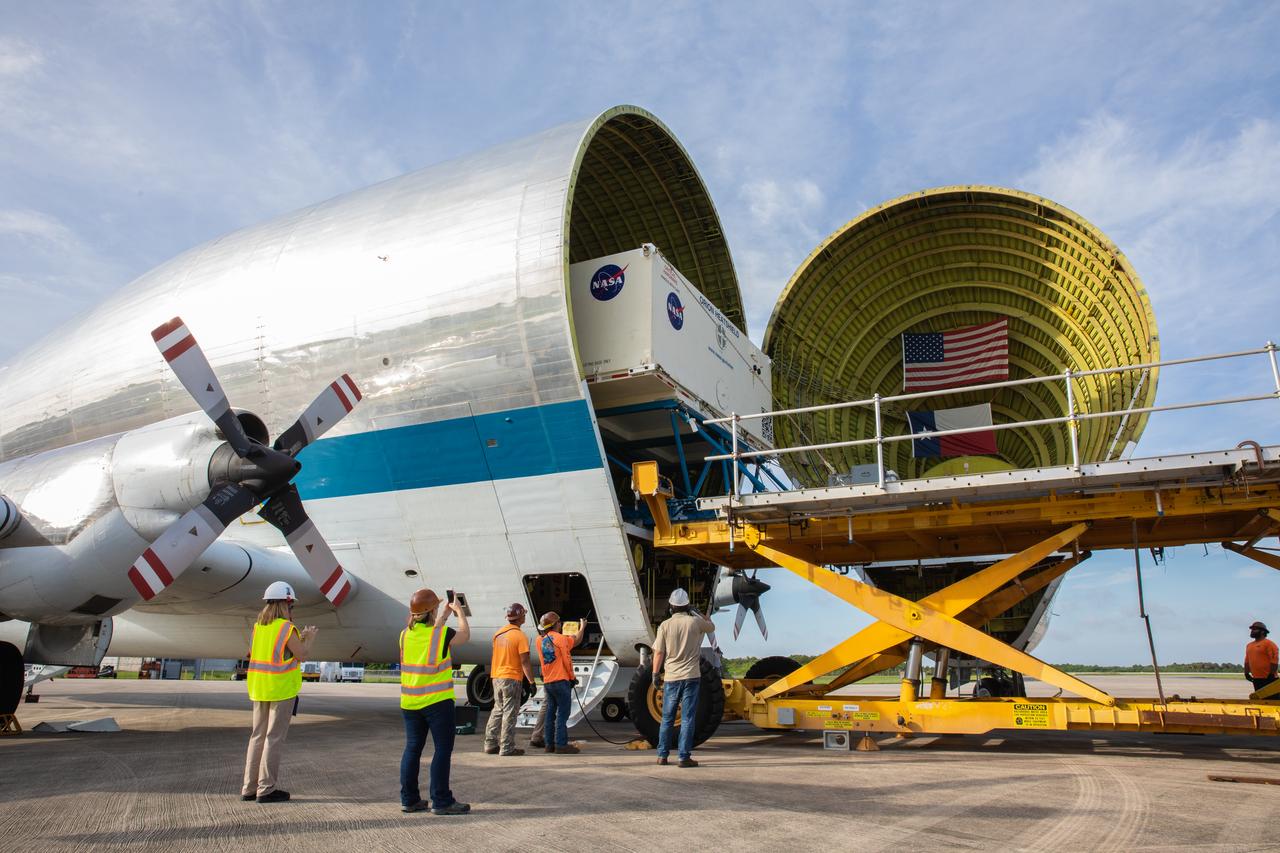
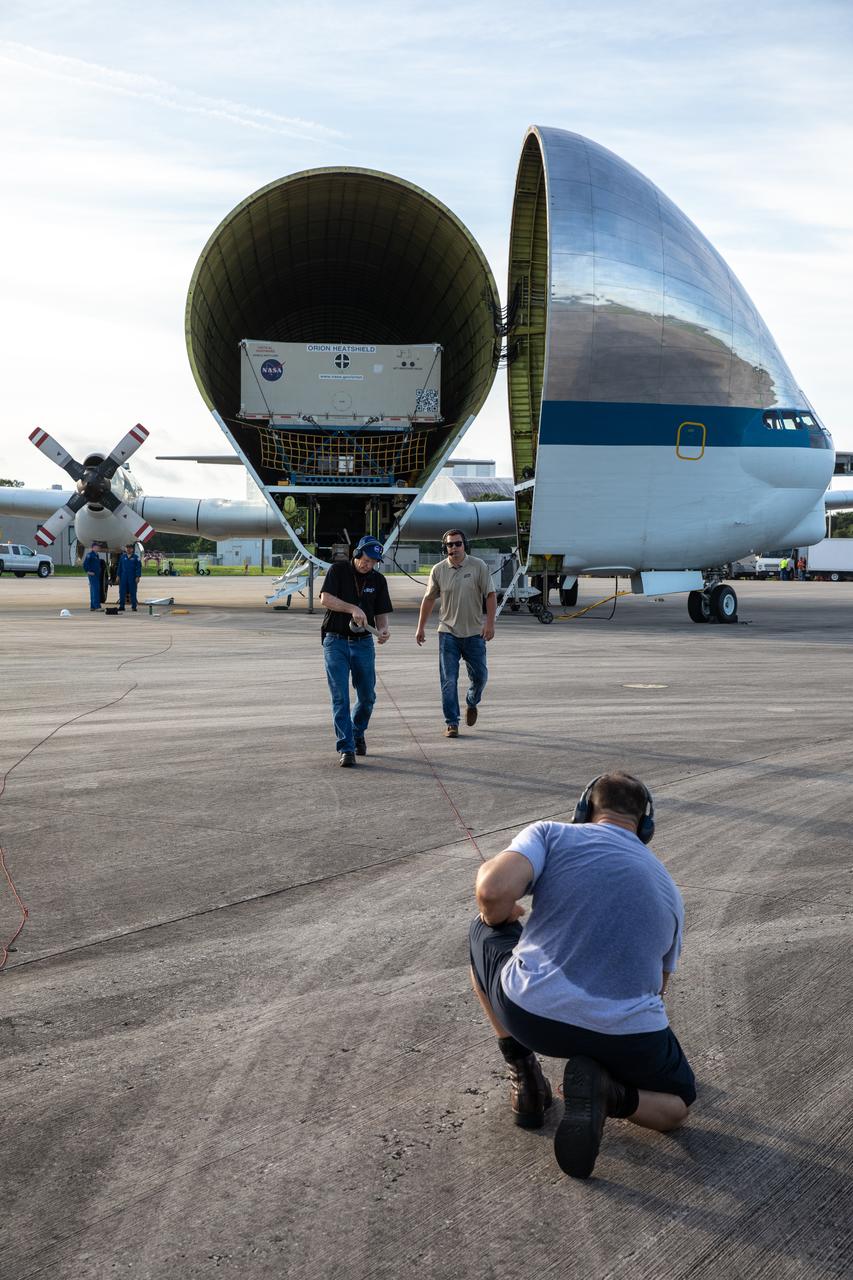
Preparations are underway to unload the heat shield for Orion’s Artemis 2 mission, NASA’s first crewed mission, in its shipping container from NASA’s Super Guppy aircraft at the agency’s Kennedy Space Center Shuttle Landing Facility in Florida on July 9, 2019. The heat shield, measuring roughly 16 feet in diameter, will protect astronauts upon re-entry on the second mission of Artemis. The heat shield arrived from Lockheed Martin’s manufacturing facility near Denver. It will be delivered to the Neil Armstrong Operations and Checkout facility high bay. The heat shield is a base titanium truss structure. Over the next several months, technicians will apply Avcoat, an ablative material that will provide the thermal protection. Artemis 2 will confirm all of the spacecraft’s systems operate as designed in the actual environment of deep space with astronauts aboard.
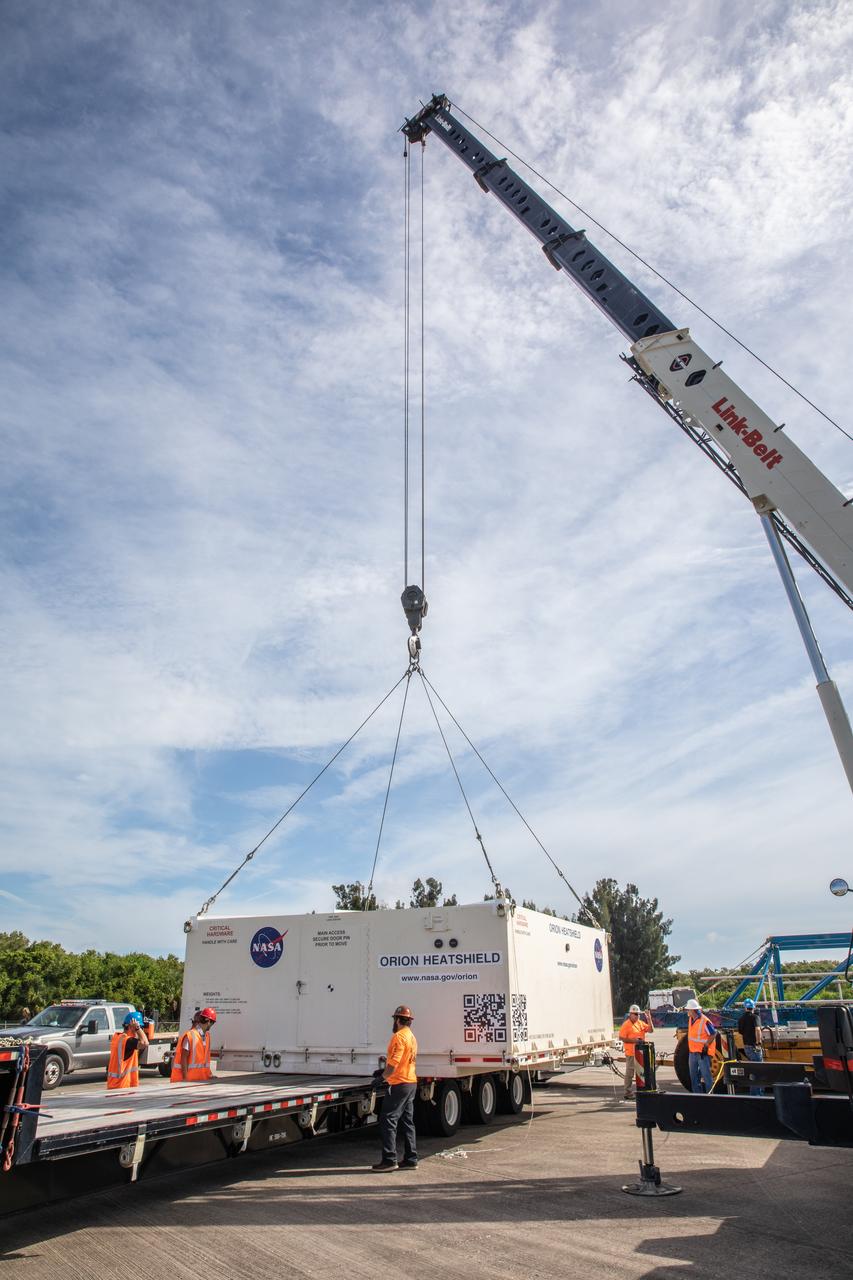
Technicians help secure the shipping container carrying the heat shield for Orion’s Artemis 2 mission, NASA’s first crewed mission, onto a transporter at the agency’s Kennedy Space Center Shuttle Landing Facility in Florida on July 9, 2019. The heat shield, measuring roughly 16 feet in diameter, will protect astronauts upon re-entry on the second mission of Artemis. The heat shield arrived from Lockheed Martin’s manufacturing facility near Denver aboard NASA’s Super Guppy Aircraft. It will be delivered to the Neil Armstrong Operations and Checkout facility high bay. The heat shield is a base titanium truss structure. Over the next several months, technicians will apply Avcoat, an ablative material that will provide the thermal protection. Artemis 2 will confirm all of the spacecraft’s systems operate as designed in the actual environment of deep space with astronauts aboard.
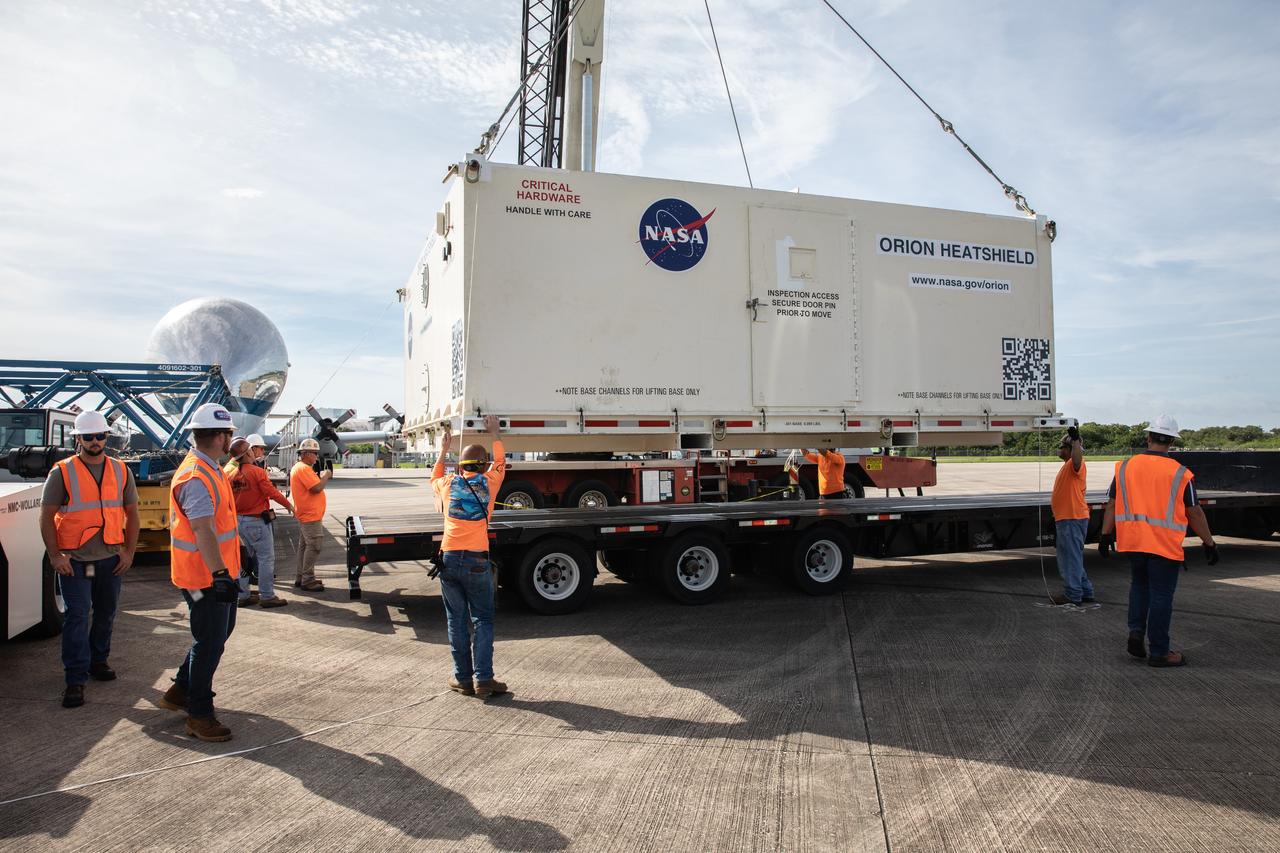
Technicians help secure the shipping container carrying the heat shield for Orion’s Artemis 2 mission, NASA’s first crewed mission, onto a transporter at the agency’s Kennedy Space Center Shuttle Landing Facility in Florida on July 9, 2019. The heat shield, measuring roughly 16 feet in diameter, will protect astronauts upon re-entry on the second mission of Artemis. The heat shield arrived from Lockheed Martin’s manufacturing facility near Denver aboard NASA’s Super Guppy Aircraft. It will be delivered to the Neil Armstrong Operations and Checkout facility high bay. The heat shield is a base titanium truss structure. Over the next several months, technicians will apply Avcoat, an ablative material that will provide the thermal protection. Artemis 2 will confirm all of the spacecraft’s systems operate as designed in the actual environment of deep space with astronauts aboard.
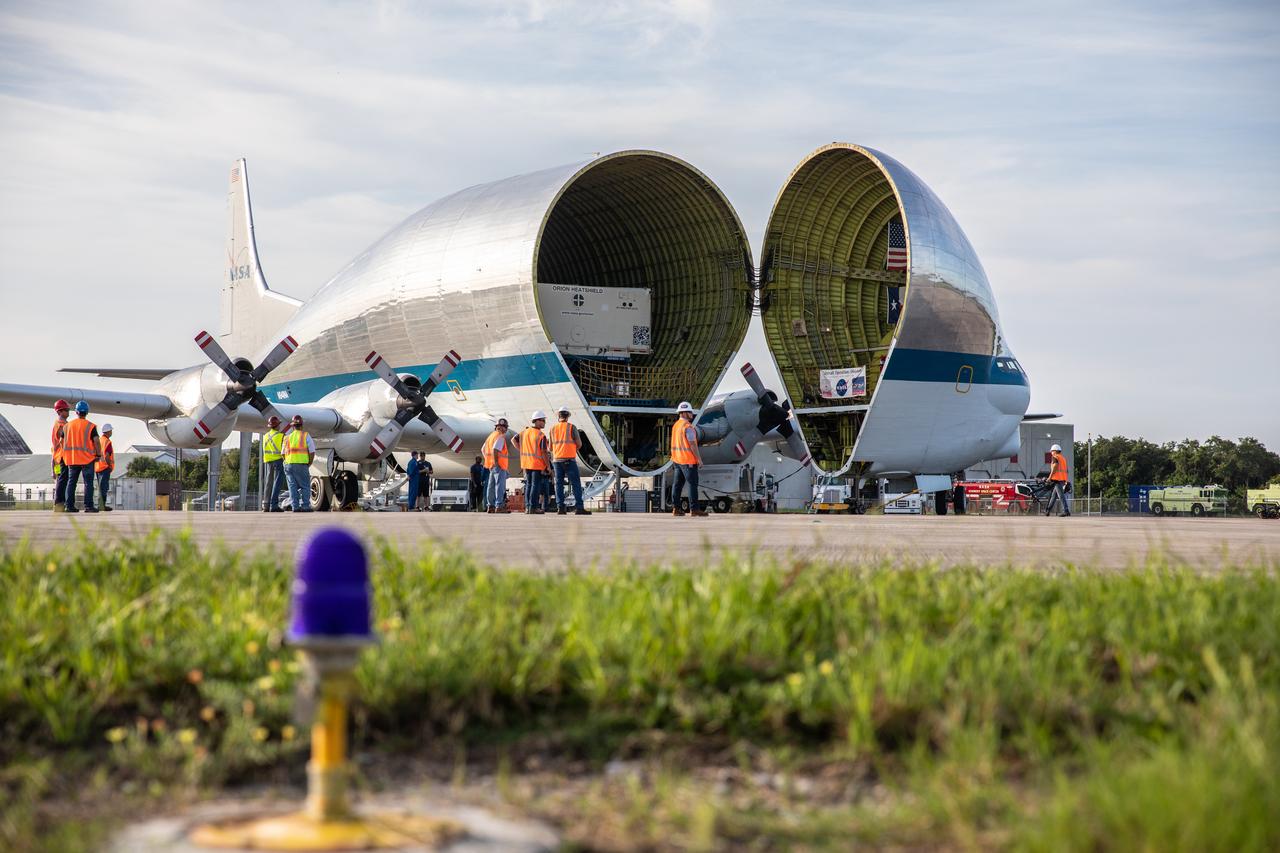
The heat shield for Orion’s Artemis 2 mission, NASA’s first crewed mission, arrives in its shipping container aboard NASA’s Super Guppy aircraft at the agency’s Kennedy Space Center Shuttle Landing Facility in Florida on July 9, 2019. The heat shield, measuring roughly 16 feet in diameter, will protect astronauts upon re-entry on the second mission of Artemis. The heat shield arrived from Lockheed Martin’s manufacturing facility near Denver. It will be offloaded and delivered to the Neil Armstrong Operations and Checkout facility high bay. The heat shield is a base titanium truss structure. Over the next several months, technicians will apply Avcoat, an ablative material that will provide the thermal protection. Artemis 2 will confirm all of the spacecraft’s systems operate as designed in the actual environment of deep space with astronauts aboard.
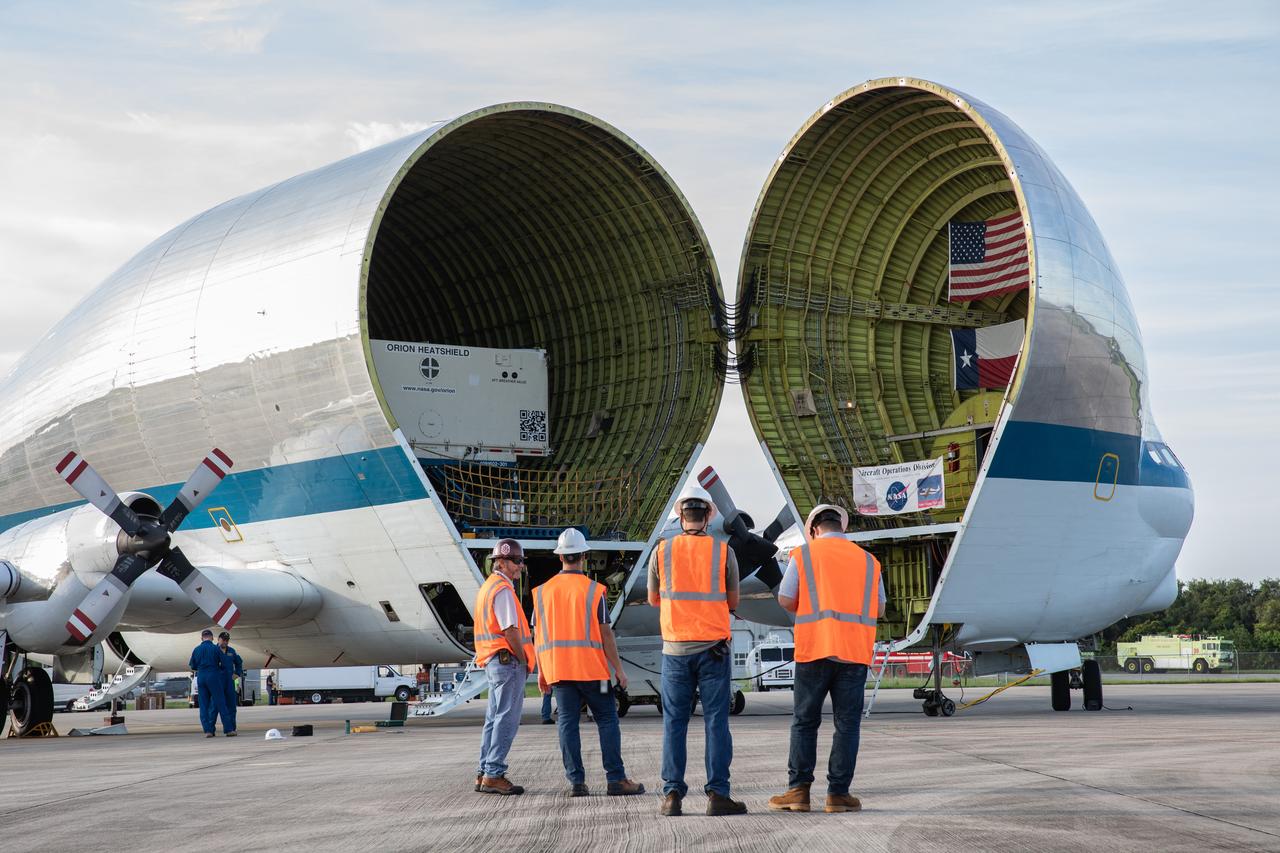
The heat shield for Orion’s Artemis 2 mission, NASA’s first crewed mission, arrives in its shipping container aboard NASA’s Super Guppy aircraft at the agency’s Kennedy Space Center Shuttle Landing Facility in Florida on July 9, 2019. The heat shield, measuring roughly 16 feet in diameter, will protect astronauts upon re-entry on the second mission of Artemis. The heat shield arrived from Lockheed Martin’s manufacturing facility near Denver. It will be offloaded and delivered to the Neil Armstrong Operations and Checkout facility high bay. The heat shield is a base titanium truss structure. Over the next several months, technicians will apply Avcoat, an ablative material that will provide the thermal protection. Artemis 2 will confirm all of the spacecraft’s systems operate as designed in the actual environment of deep space with astronauts aboard.
The heat shield for Orion’s Artemis 2 mission, NASA’s first crewed mission, arrives in its shipping container aboard NASA’s Super Guppy aircraft at the agency’s Kennedy Space Center Shuttle Landing Facility in Florida on July 9, 2019. The heat shield, measuring roughly 16 feet in diameter, will protect astronauts upon re-entry on the second mission of Artemis. The heat shield arrived from Lockheed Martin’s manufacturing facility near Denver. It will be offloaded and delivered to the Neil Armstrong Operations and Checkout facility high bay. The heat shield is a base titanium truss structure. Over the next several months, technicians will apply Avcoat, an ablative material that will provide the thermal protection. Artemis 2 will confirm all of the spacecraft’s systems operate as designed in the actual environment of deep space with astronauts aboard.
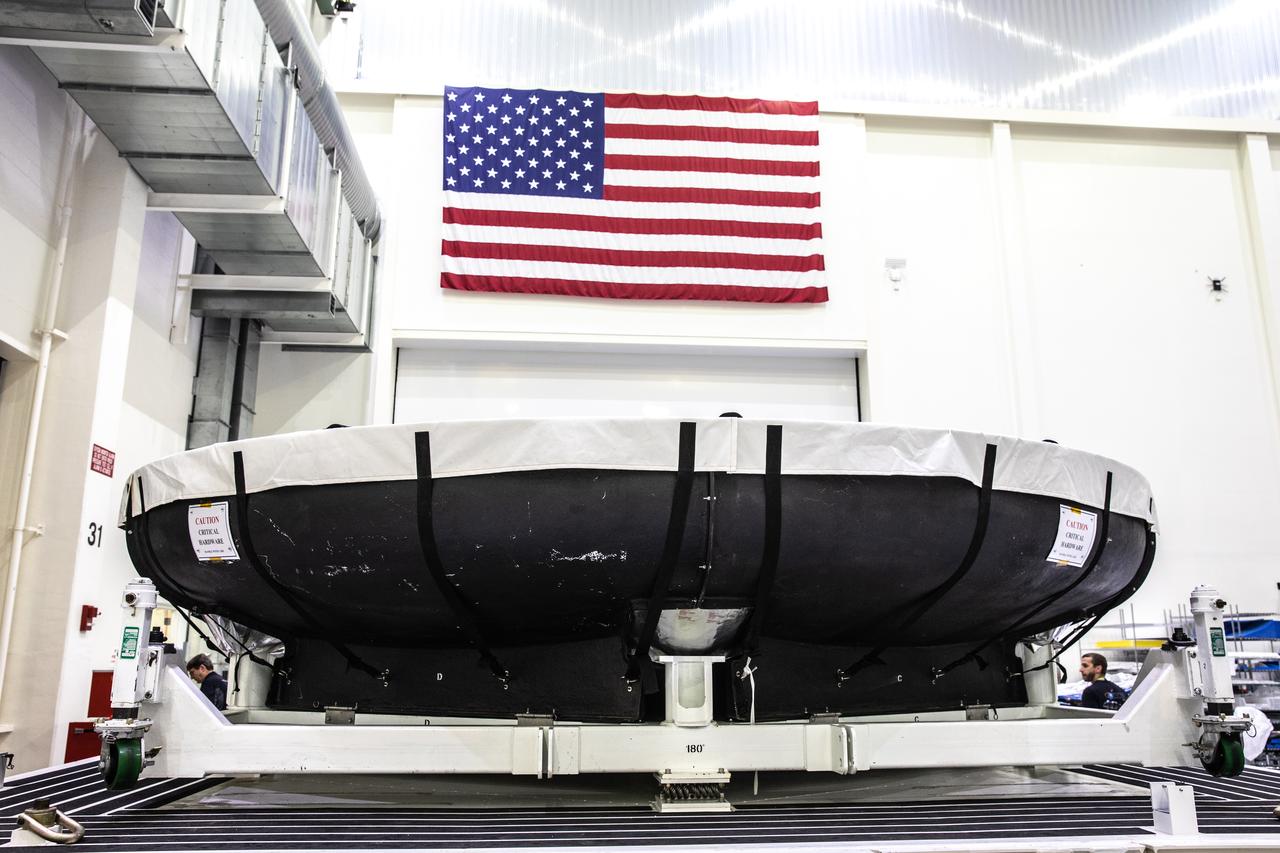
The heat shield for Orion’s Artemis 2 mission, NASA’s first crewed mission, is uncrated in the Neil Armstrong Operations and Checkout Building high bay at the agency’s Kennedy Space Center in Florida on July 9, 2019. The heat shield, measuring roughly 16 feet in diameter, will protect astronauts upon re-entry on the second mission of Artemis. The heat shield arrived from Lockheed Martin’s manufacturing facility near Denver aboard NASA’s Super Guppy Aircraft. The heat shield is a base titanium truss structure. Over the next several months, technicians will apply Avcoat, an ablative material that will provide the thermal protection. Artemis 2 will confirm all of the spacecraft’s systems operate as designed in the actual environment of deep space with astronauts aboard.
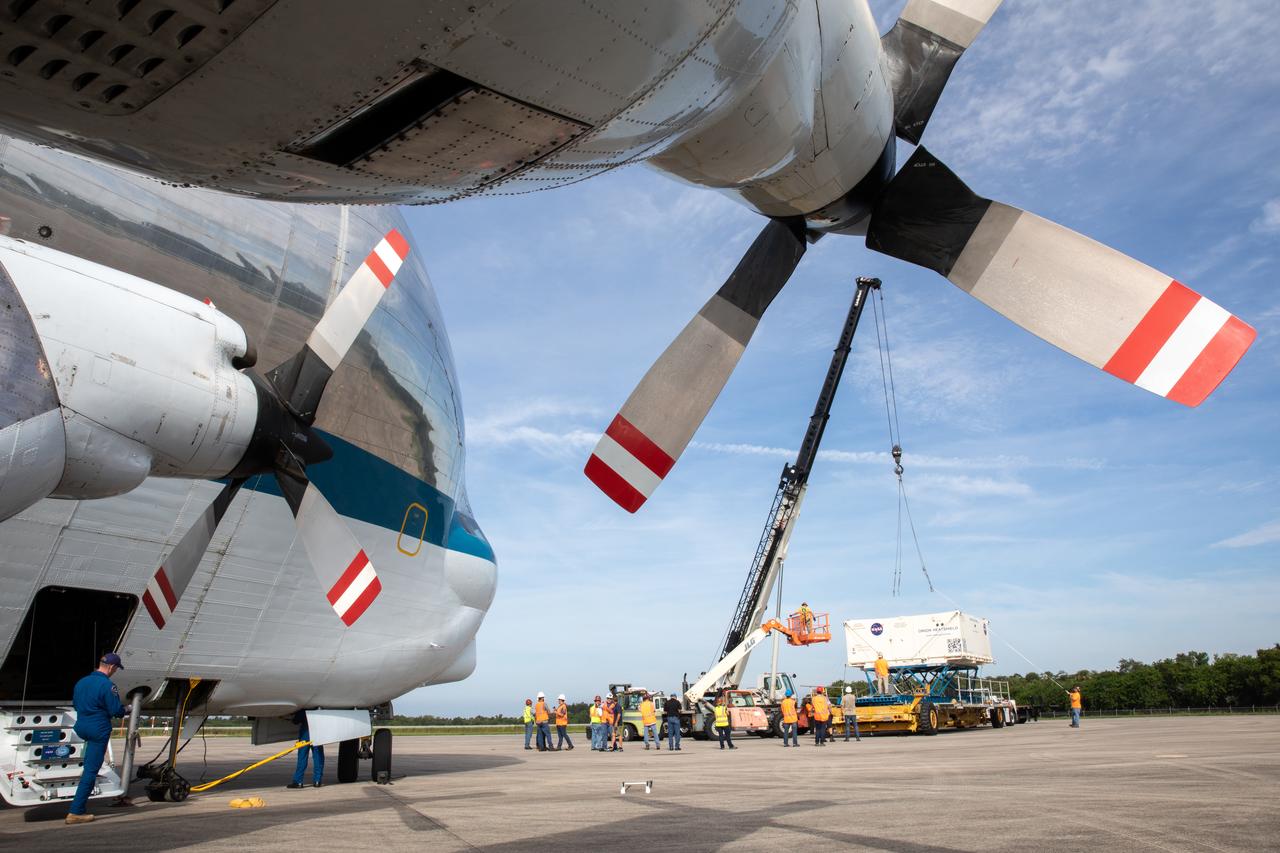
The shipping container carrying the heat shield for Orion’s Artemis 2 mission, NASA’s first crewed mission, has been unloaded from NASA’s Super Guppy aircraft at the agency’s Kennedy Space Center Shuttle Landing Facility in Florida on July 9, 2019. The heat shield, measuring roughly 16 feet in diameter, will protect astronauts upon re-entry on the second mission of Artemis. The heat shield arrived from Lockheed Martin’s manufacturing facility near Denver. It will be delivered to the Neil Armstrong Operations and Checkout facility high bay. The heat shield is a base titanium truss structure. Over the next several months, technicians will apply Avcoat, an ablative material that will provide the thermal protection. Artemis 2 will confirm all of the spacecraft’s systems operate as designed in the actual environment of deep space with astronauts aboard.
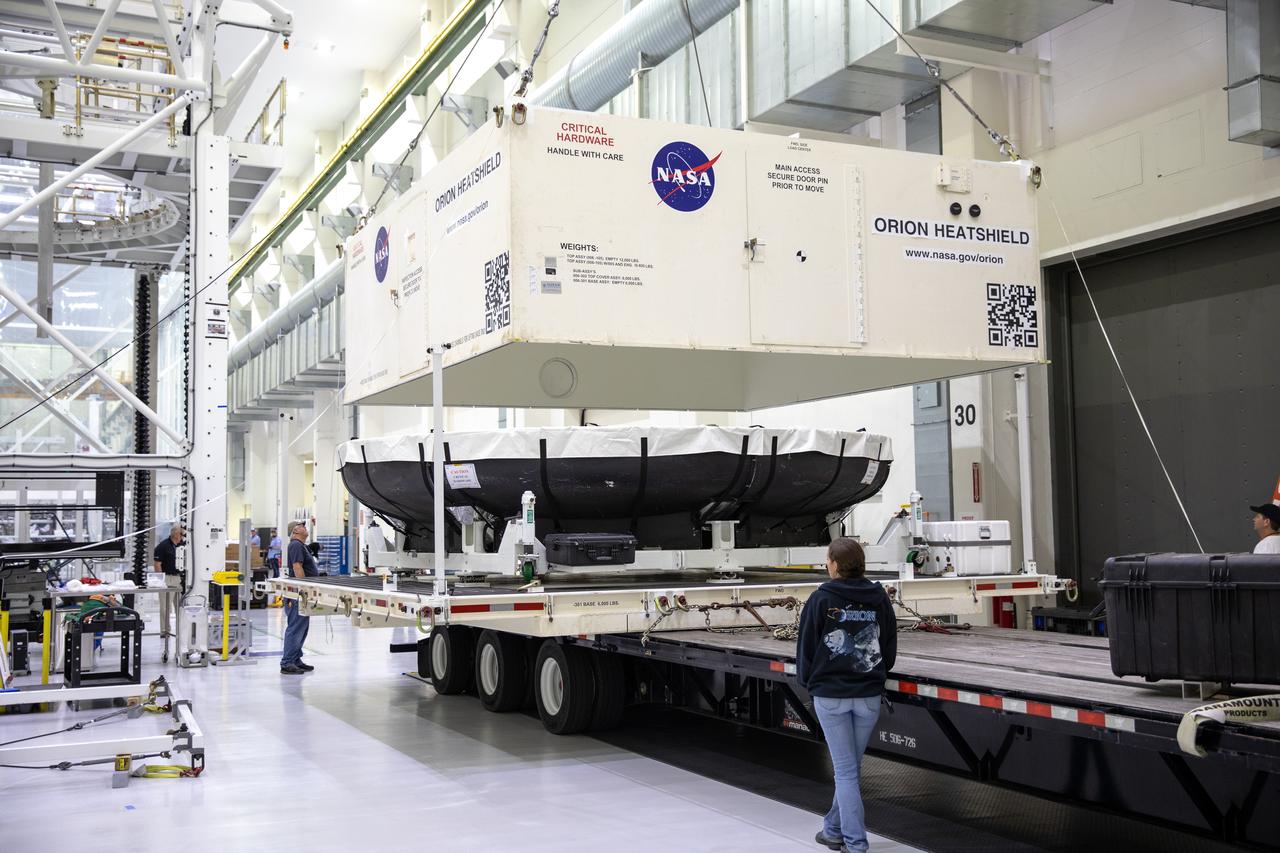
The cover of the shipping container carrying the heat shield for Orion’s Artemis 2 mission, NASA’s first crewed mission, is lifted up inside the Neil Armstrong Operations and Checkout Building high bay at the agency’s Kennedy Space Center in Florida on July 10, 2019. The heat shield, measuring roughly 16 feet in diameter, will protect astronauts upon re-entry on the second mission of Artemis. The heat shield arrived from Lockheed Martin’s manufacturing facility near Denver aboard NASA’s Super Guppy Aircraft. The heat shield is a base titanium truss structure. Over the next several months, technicians will apply Avcoat, an ablative material that will provide the thermal protection. Artemis 2 will confirm all of the spacecraft’s systems operate as designed in the actual environment of deep space with astronauts aboard.
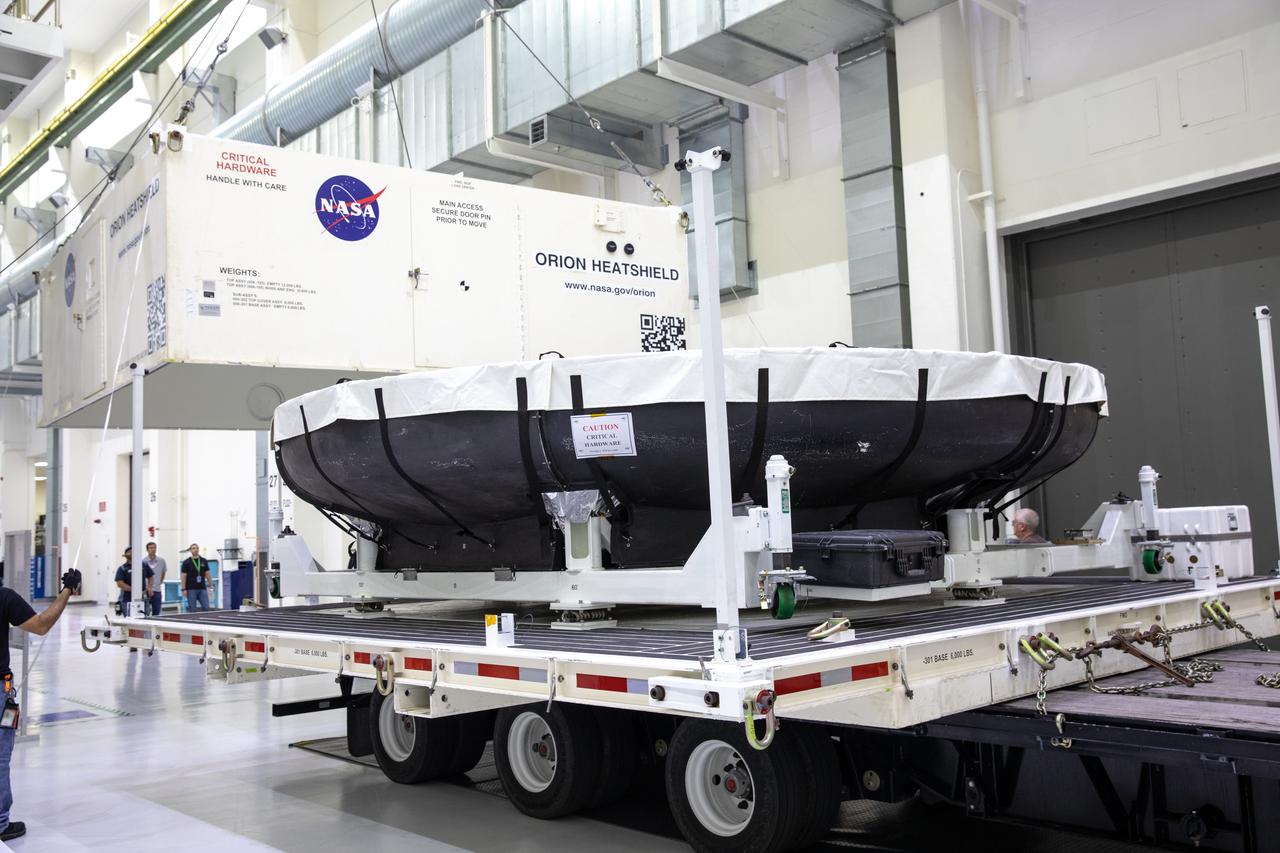
The heat shield for Orion’s Artemis 2 mission, NASA’s first crewed mission, is uncrated from its shipping container inside the Neil Armstrong Operations and Checkout Building high bay at the agency’s Kennedy Space Center in Florida on July 10, 2019. The heat shield, measuring roughly 16 feet in diameter, will protect astronauts upon re-entry on the second mission of Artemis. The heat shield arrived from Lockheed Martin’s manufacturing facility near Denver aboard NASA’s Super Guppy Aircraft. The heat shield is a base titanium truss structure. Over the next several months, technicians will apply Avcoat, an ablative material that will provide the thermal protection. Artemis 2 will confirm all of the spacecraft’s systems operate as designed in the actual environment of deep space with astronauts aboard.
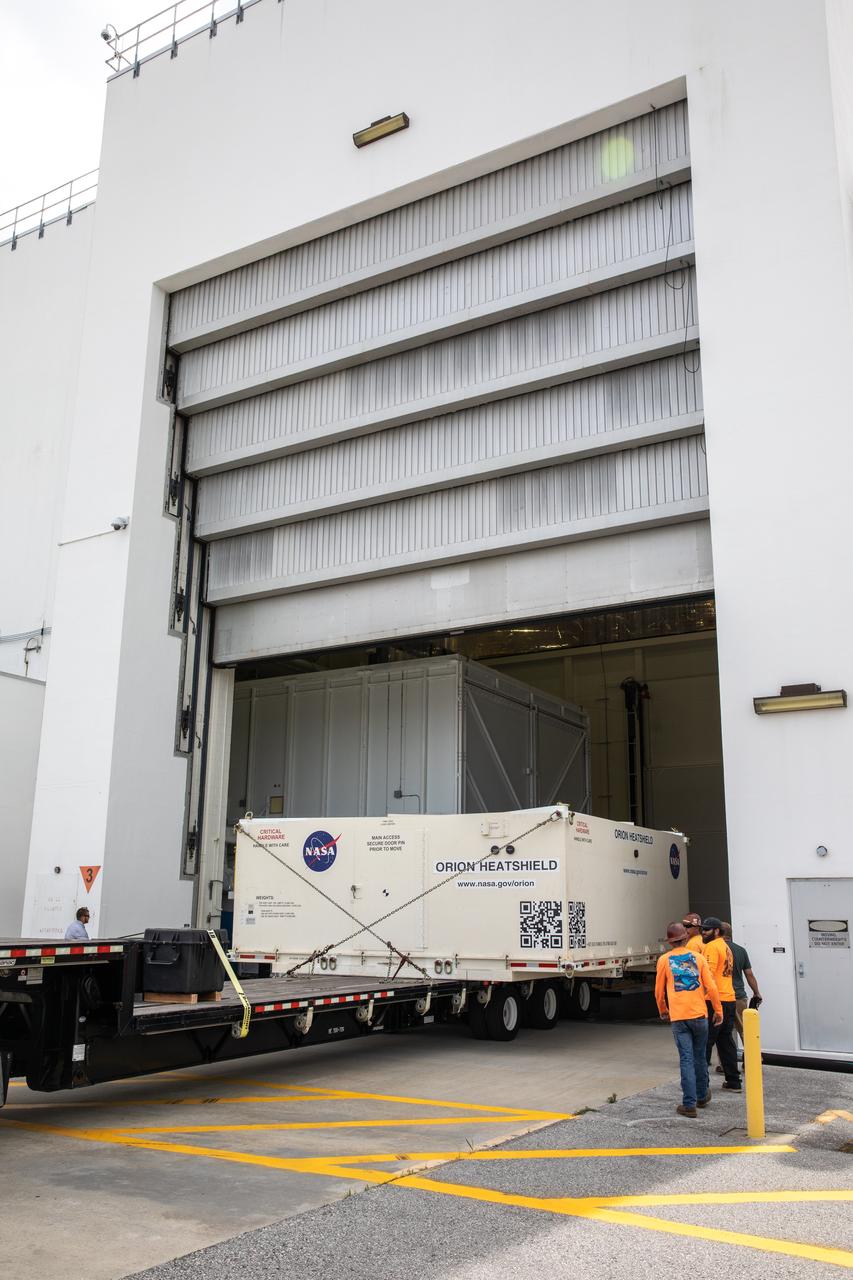
A flatbed truck with the shipping container carrying the heat shield for Orion’s Artemis 2 mission, NASA’s first crewed mission, arrives at the Neil Armstrong Operations and Checkout Building high bay entrance at the agency’s Kennedy Space Center in Florida on July 9, 2019. The heat shield, measuring roughly 16 feet in diameter, will protect astronauts upon re-entry on the second mission of Artemis. The heat shield arrived from Lockheed Martin’s manufacturing facility near Denver aboard NASA’s Super Guppy Aircraft. The heat shield is a base titanium truss structure. Over the next several months, technicians will apply Avcoat, an ablative material that will provide the thermal protection. Artemis 2 will confirm all of the spacecraft’s systems operate as designed in the actual environment of deep space with astronauts aboard.
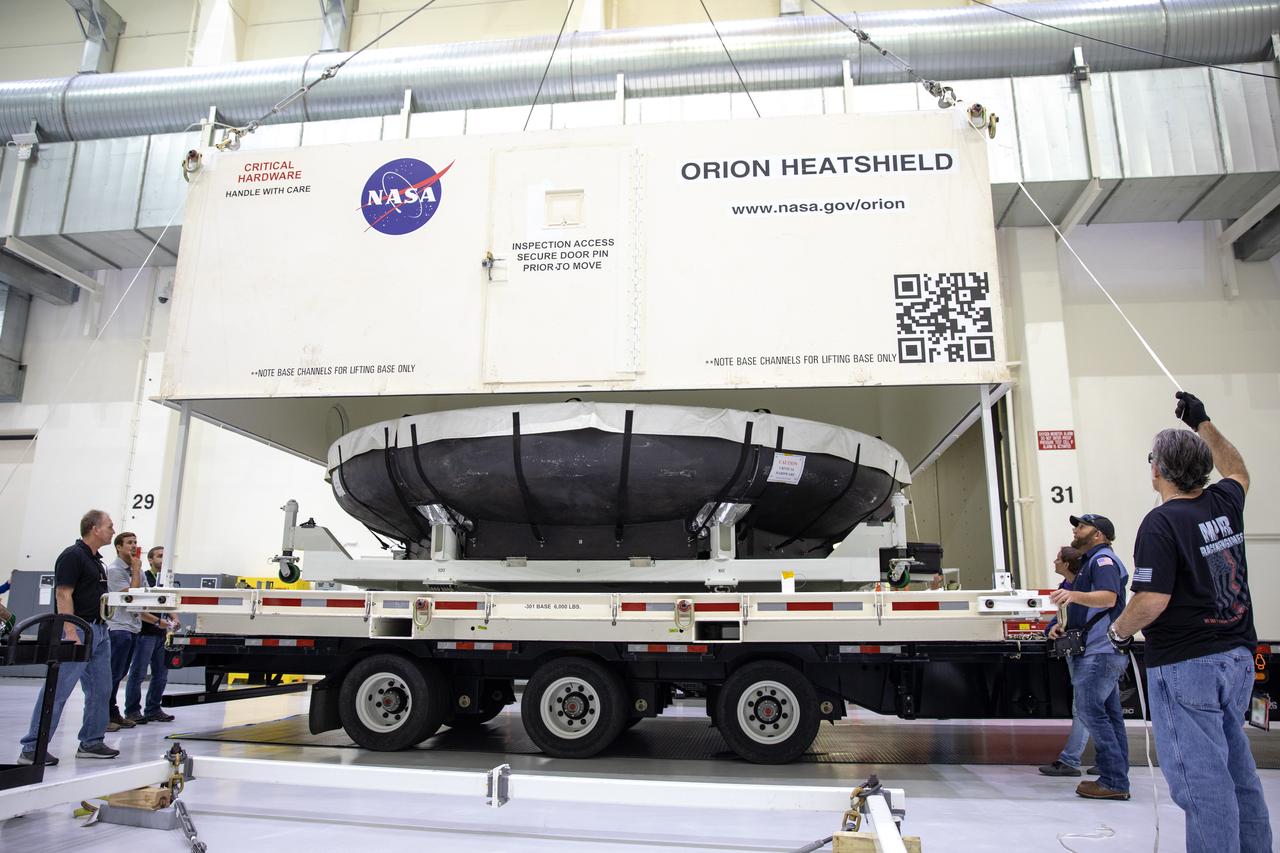
The cover of the shipping container carrying the heat shield for Orion’s Artemis 2 mission, NASA’s first crewed mission, is lifted up inside the Neil Armstrong Operations and Checkout Building high bay at the agency’s Kennedy Space Center in Florida on July 10, 2019. The heat shield, measuring roughly 16 feet in diameter, will protect astronauts upon re-entry on the second mission of Artemis. The heat shield arrived from Lockheed Martin’s manufacturing facility near Denver aboard NASA’s Super Guppy Aircraft. The heat shield is a base titanium truss structure. Over the next several months, technicians will apply Avcoat, an ablative material that will provide the thermal protection. Artemis 2 will confirm all of the spacecraft’s systems operate as designed in the actual environment of deep space with astronauts aboard.
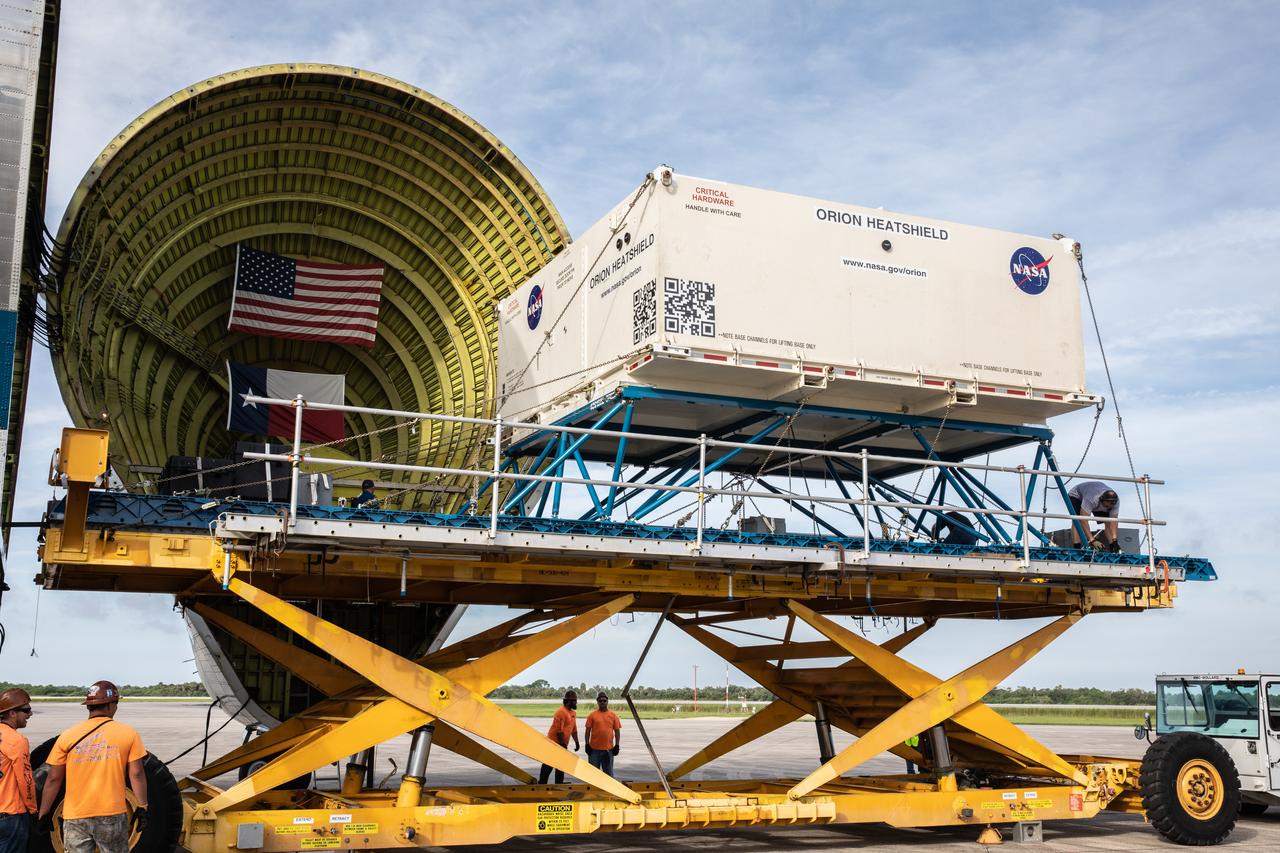
The shipping container carrying the heat shield for Orion’s Artemis 2 mission, NASA’s first crewed mission, is unloaded from NASA’s Super Guppy aircraft at the agency’s Kennedy Space Center Shuttle Landing Facility in Florida on July 9, 2019. The heat shield, measuring roughly 16 feet in diameter, will protect astronauts upon re-entry on the second mission of Artemis. The heat shield arrived from Lockheed Martin’s manufacturing facility near Denver. It will be delivered to the Neil Armstrong Operations and Checkout facility high bay. The heat shield is a base titanium truss structure. Over the next several months, technicians will apply Avcoat, an ablative material that will provide the thermal protection. Artemis 2 will confirm all of the spacecraft’s systems operate as designed in the actual environment of deep space with astronauts aboard.
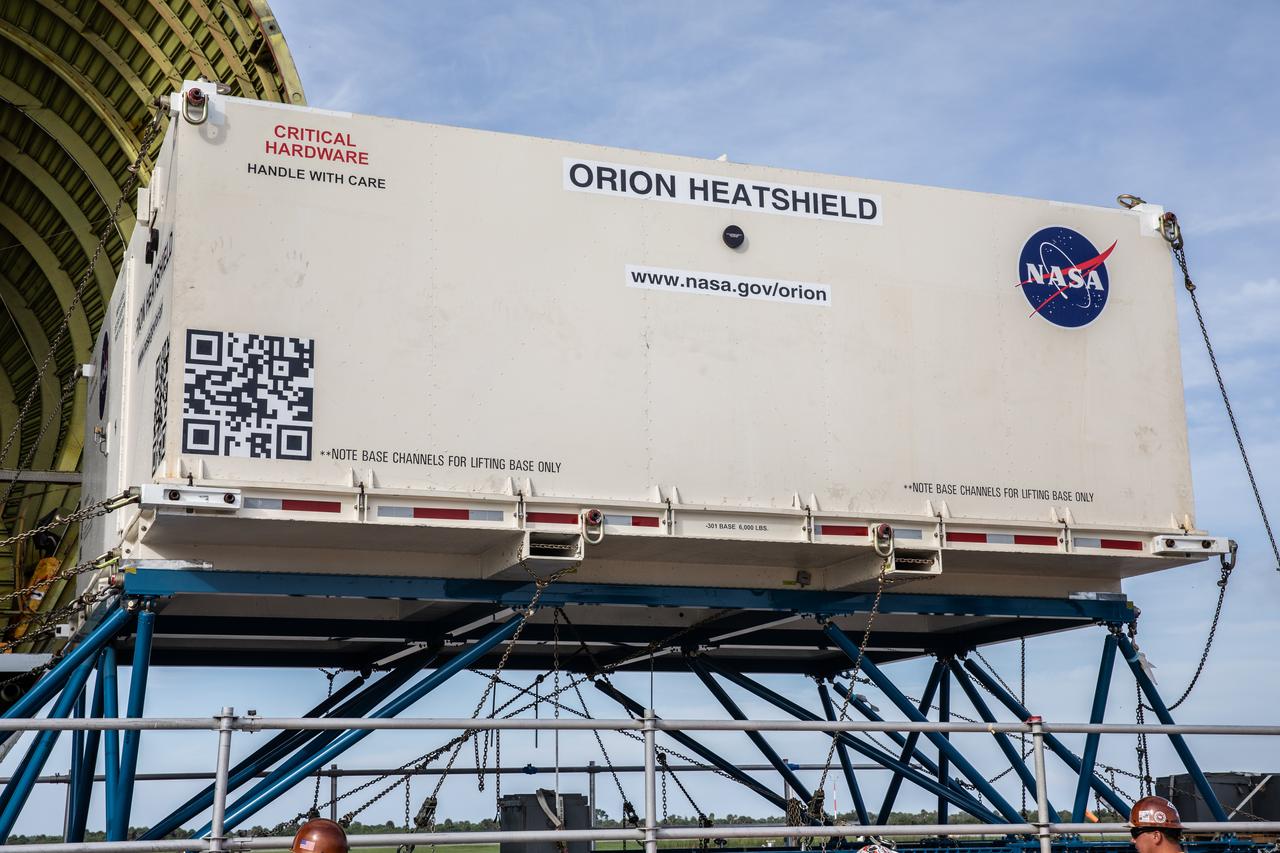
The shipping container carrying the heat shield for Orion’s Artemis 2 mission, NASA’s first crewed mission, is unloaded from NASA’s Super Guppy aircraft at the agency’s Kennedy Space Center Shuttle Landing Facility in Florida on July 9, 2019. The heat shield, measuring roughly 16 feet in diameter, will protect astronauts upon re-entry on the second mission of Artemis. The heat shield arrived from Lockheed Martin’s manufacturing facility near Denver. It will be delivered to the Neil Armstrong Operations and Checkout facility high bay. The heat shield is a base titanium truss structure. Over the next several months, technicians will apply Avcoat, an ablative material that will provide the thermal protection. Artemis 2 will confirm all of the spacecraft’s systems operate as designed in the actual environment of deep space with astronauts aboard.
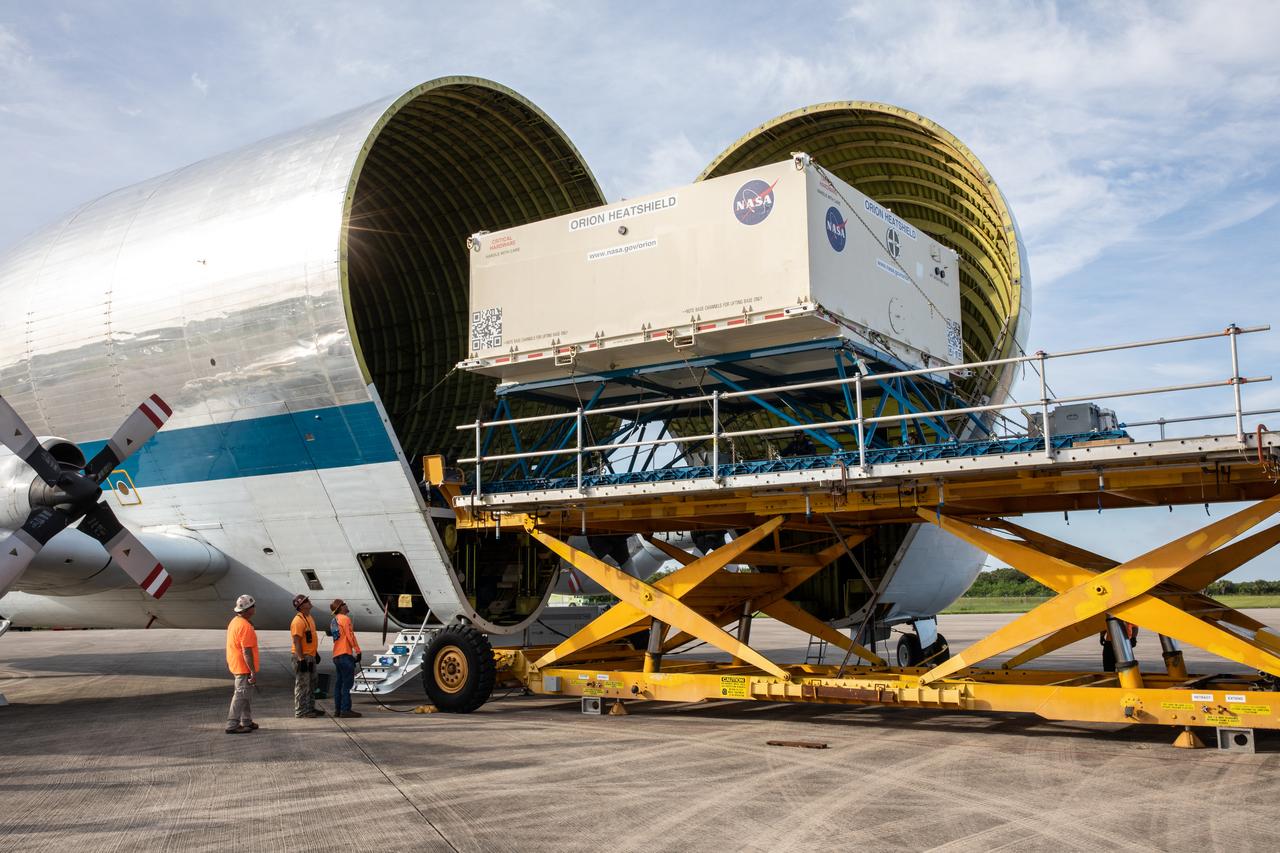
The shipping container carrying the heat shield for Orion’s Artemis 2 mission, NASA’s first crewed mission, is unloaded from NASA’s Super Guppy aircraft at the agency’s Kennedy Space Center Shuttle Landing Facility in Florida on July 9, 2019. The heat shield, measuring roughly 16 feet in diameter, will protect astronauts upon re-entry on the second mission of Artemis. The heat shield arrived from Lockheed Martin’s manufacturing facility near Denver. It will be delivered to the Neil Armstrong Operations and Checkout facility high bay. The heat shield is a base titanium truss structure. Over the next several months, technicians will apply Avcoat, an ablative material that will provide the thermal protection. Artemis 2 will confirm all of the spacecraft’s systems operate as designed in the actual environment of deep space with astronauts aboard.
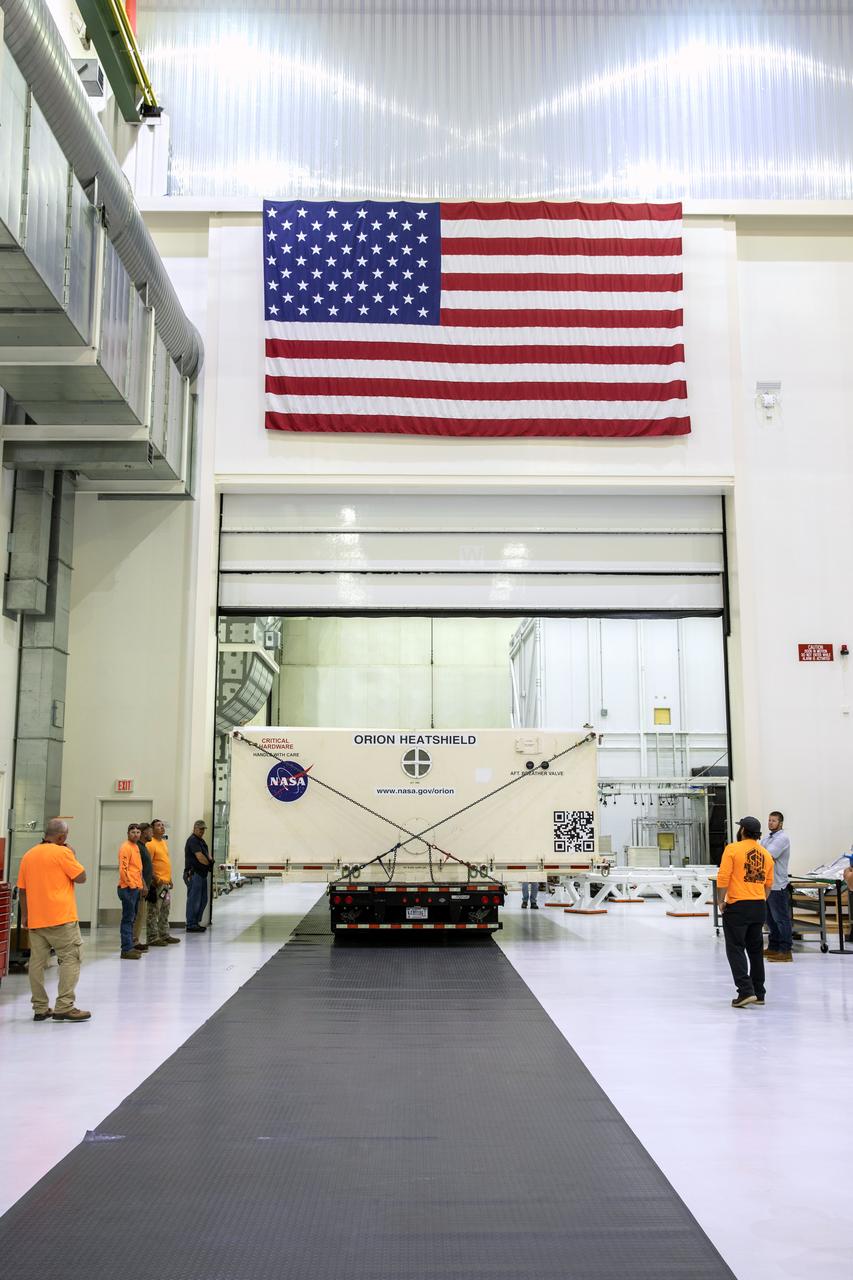
A flatbed truck with the shipping container carrying the heat shield for Orion’s Artemis 2 mission, NASA’s first crewed mission, moves into the Neil Armstrong Operations and Checkout Building high bay at the agency’s Kennedy Space Center in Florida on July 9, 2019. The heat shield, measuring roughly 16 feet in diameter, will protect astronauts upon re-entry on the second mission of Artemis. The heat shield arrived from Lockheed Martin’s manufacturing facility near Denver aboard NASA’s Super Guppy Aircraft. The heat shield is a base titanium truss structure. Over the next several months, technicians will apply Avcoat, an ablative material that will provide the thermal protection. Artemis 2 will confirm all of the spacecraft’s systems operate as designed in the actual environment of deep space with astronauts aboard.
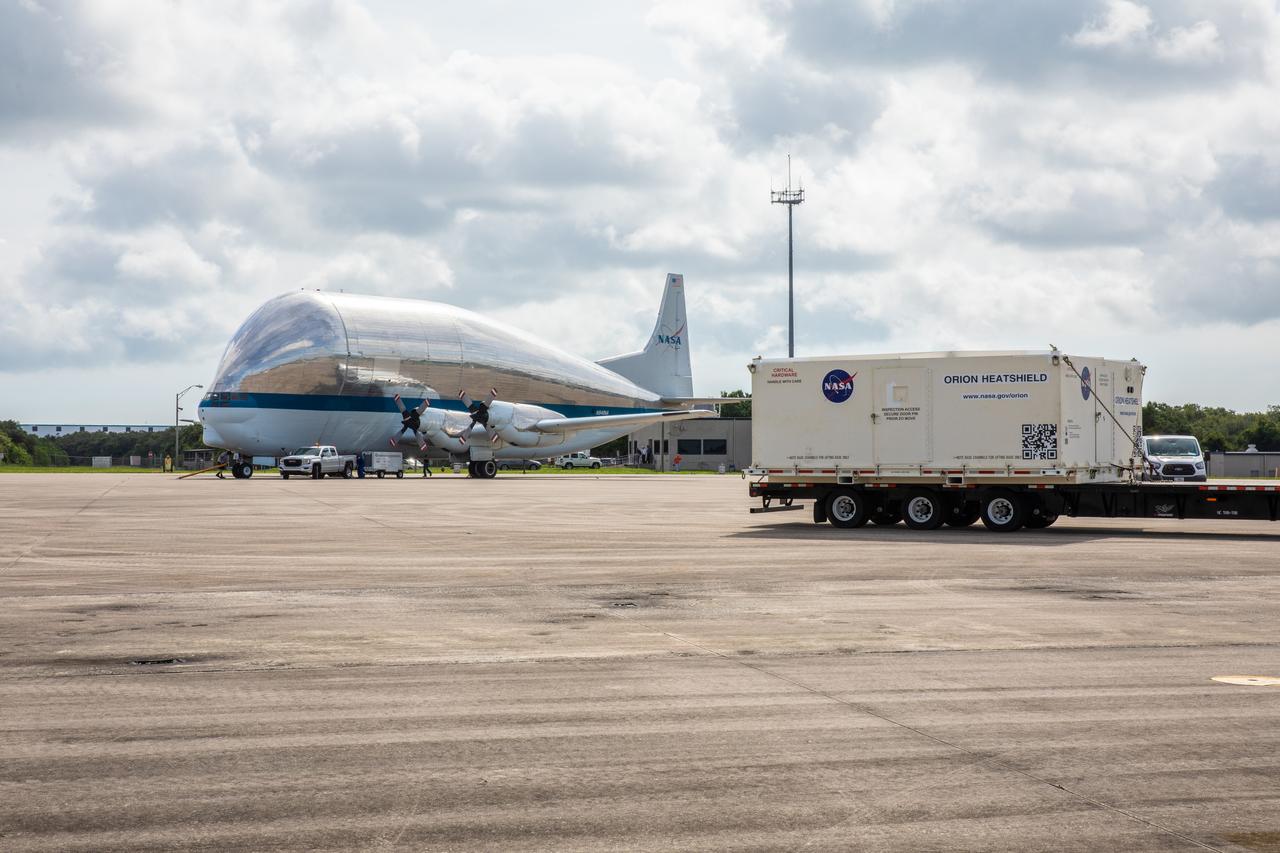
The shipping container carrying the heat shield for Orion’s Artemis 2 mission, NASA’s first crewed mission, is secured on a flatbed truck at the agency’s Kennedy Space Center Shuttle Landing Facility in Florida on July 9, 2019. The heat shield, measuring roughly 16 feet in diameter, will protect astronauts upon re-entry on the second mission of Artemis. The heat shield arrived from Lockheed Martin’s manufacturing facility near Denver aboard NASA’s Super Guppy Aircraft. It will be delivered to the Neil Armstrong Operations and Checkout facility high bay. The heat shield is a base titanium truss structure. Over the next several months, technicians will apply Avcoat, an ablative material that will provide the thermal protection. Artemis 2 will confirm all of the spacecraft’s systems operate as designed in the actual environment of deep space with astronauts aboard.
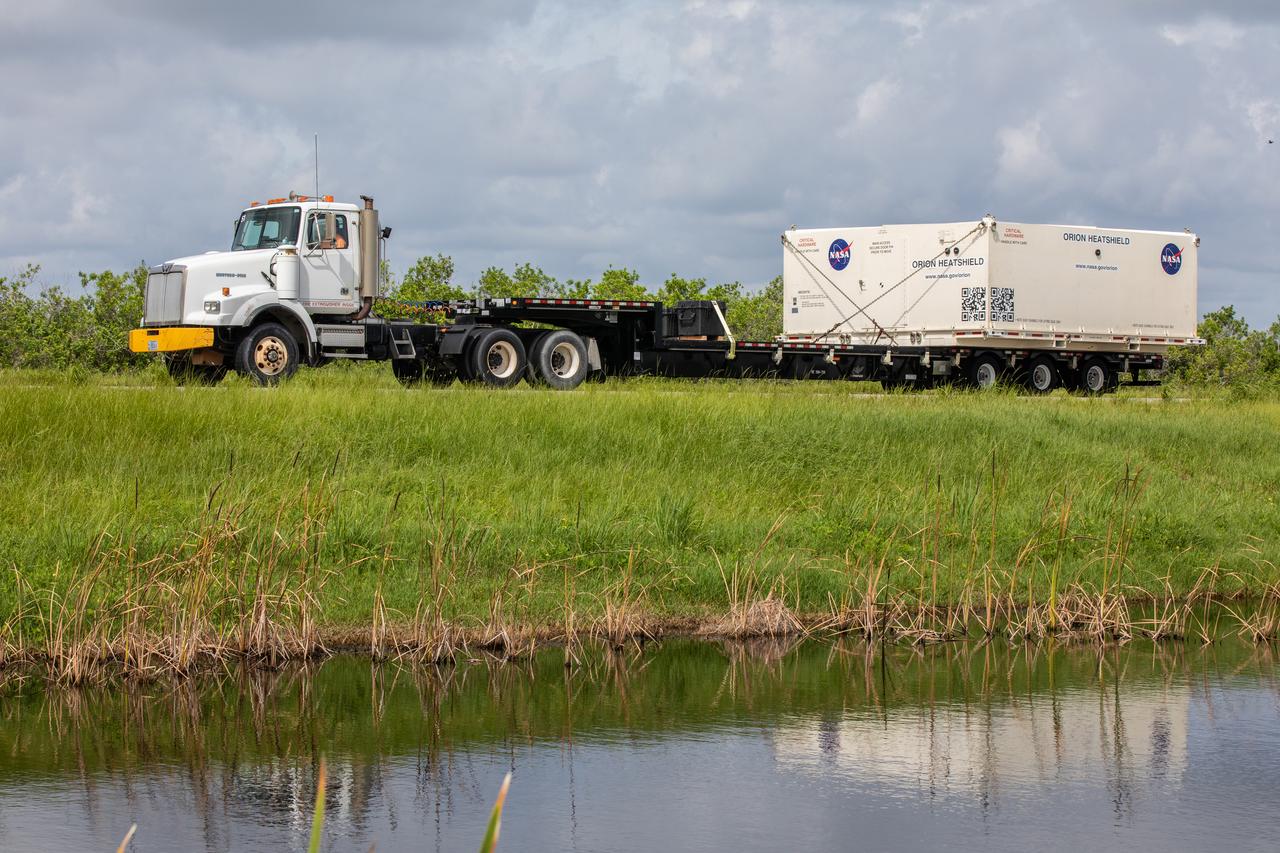
A flatbed truck with the shipping container carrying the heat shield for Orion’s Artemis 2 mission, NASA’s first crewed mission, departs the agency’s Kennedy Space Center Shuttle Landing Facility in Florida on July 9, 2019. The heat shield, measuring roughly 16 feet in diameter, will protect astronauts upon re-entry on the second mission of Artemis. The heat shield arrived from Lockheed Martin’s manufacturing facility near Denver aboard NASA’s Super Guppy Aircraft. It will be delivered to the Neil Armstrong Operations and Checkout facility high bay. The heat shield is a base titanium truss structure. Over the next several months, technicians will apply Avcoat, an ablative material that will provide the thermal protection. Artemis 2 will confirm all of the spacecraft’s systems operate as designed in the actual environment of deep space with astronauts aboard.
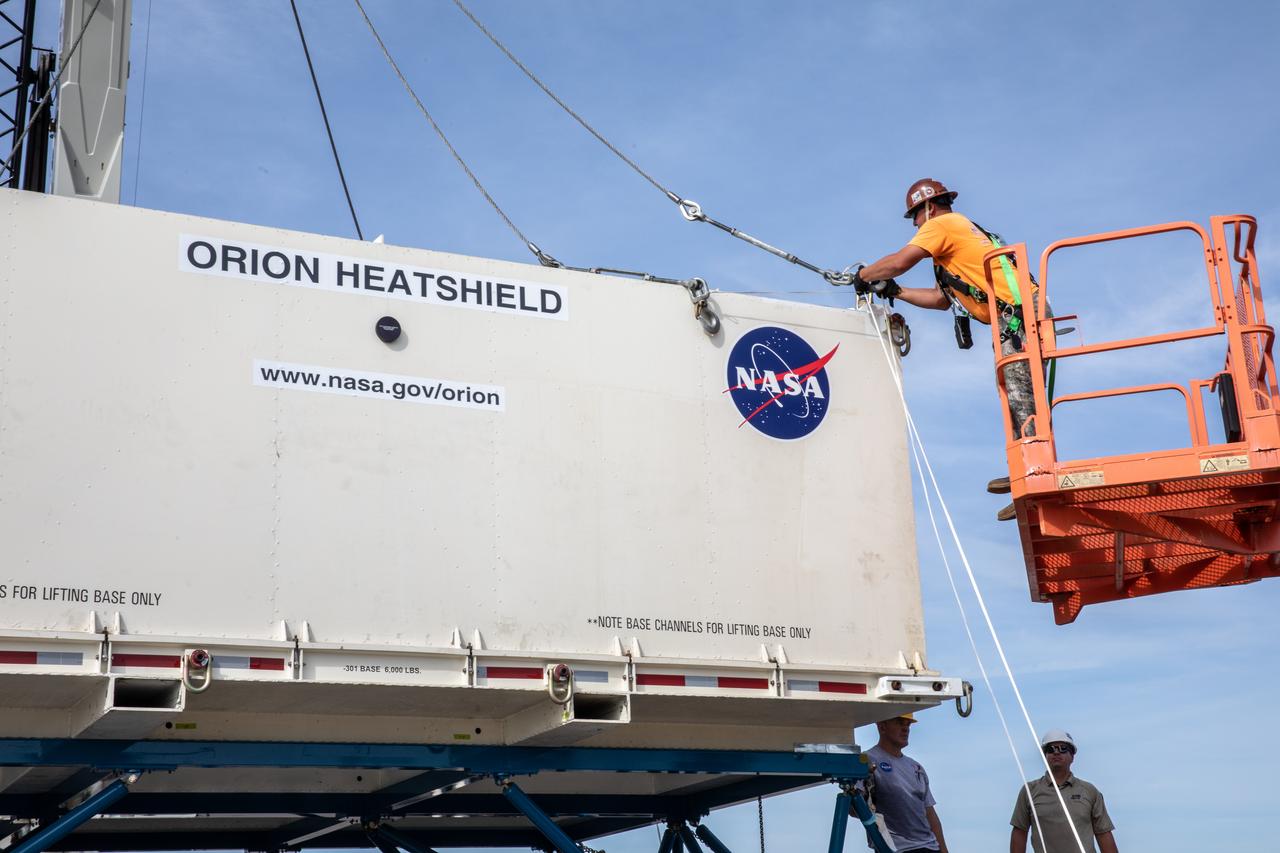
Technicians help secure the shipping container carrying the heat shield for Orion’s Artemis 2 mission, NASA’s first crewed mission, onto a transporter at the agency’s Kennedy Space Center Shuttle Landing Facility in Florida on July 9, 2019. The heat shield, measuring roughly 16 feet in diameter, will protect astronauts upon re-entry on the second mission of Artemis. The heat shield arrived from Lockheed Martin’s manufacturing facility near Denver aboard NASA’s Super Guppy Aircraft. It will be delivered to the Neil Armstrong Operations and Checkout facility high bay. The heat shield is a base titanium truss structure. Over the next several months, technicians will apply Avcoat, an ablative material that will provide the thermal protection. Artemis 2 will confirm all of the spacecraft’s systems operate as designed in the actual environment of deep space with astronauts aboard.

The shipping container carrying the heat shield for Orion’s Artemis 2 mission, NASA’s first crewed mission, is unloaded from NASA’s Super Guppy aircraft at the agency’s Kennedy Space Center Shuttle Landing Facility in Florida on July 9, 2019. The heat shield, measuring roughly 16 feet in diameter, will protect astronauts upon re-entry on the second mission of Artemis. The heat shield arrived from Lockheed Martin’s manufacturing facility near Denver. It will be delivered to the Neil Armstrong Operations and Checkout facility high bay. The heat shield is a base titanium truss structure. Over the next several months, technicians will apply Avcoat, an ablative material that will provide the thermal protection. Artemis 2 will confirm all of the spacecraft’s systems operate as designed in the actual environment of deep space with astronauts aboard.
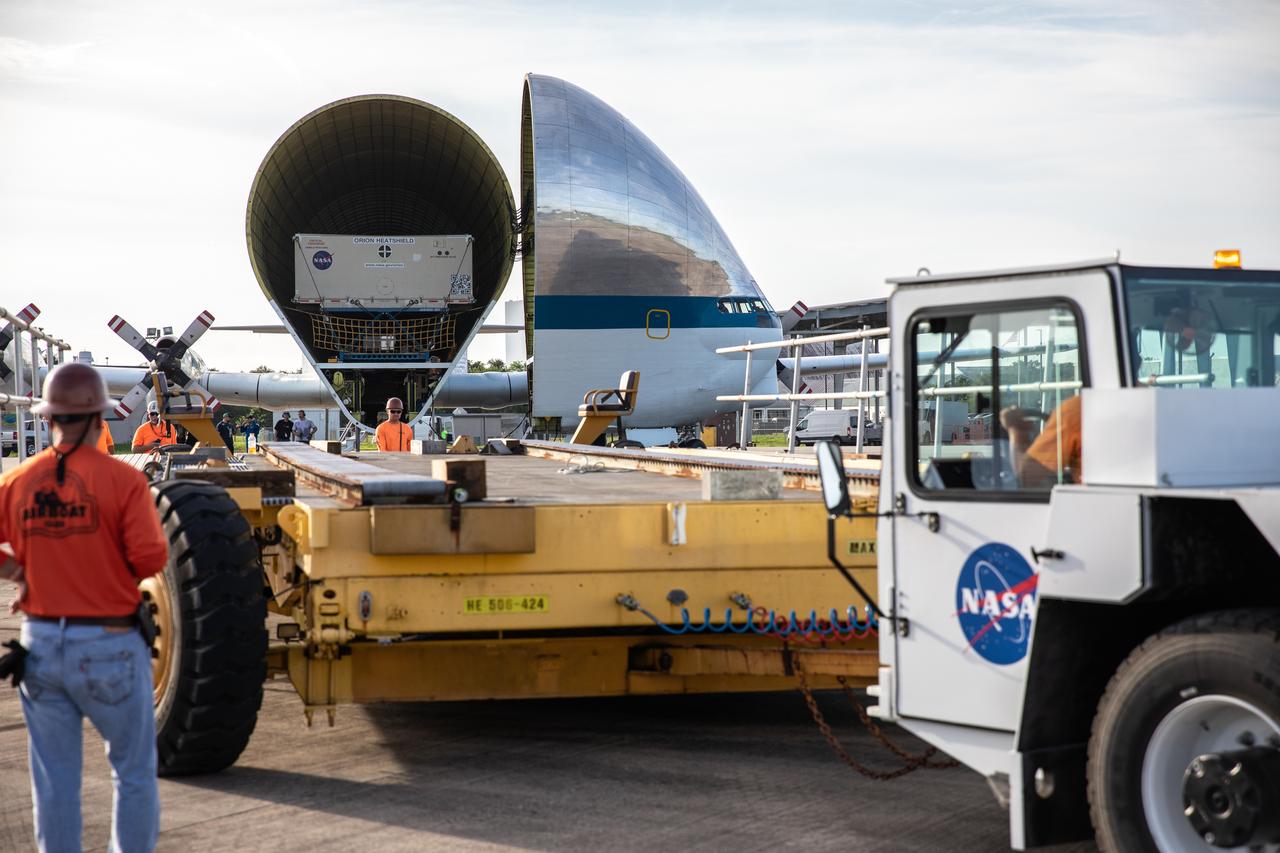
Preparations are underway to unload the heat shield for Orion’s Artemis 2 mission, NASA’s first crewed mission, in its shipping container from NASA’s Super Guppy aircraft at the agency’s Kennedy Space Center Shuttle Landing Facility in Florida on July 9, 2019. The heat shield, measuring roughly 16 feet in diameter, will protect astronauts upon re-entry on the second mission of Artemis. The heat shield arrived from Lockheed Martin’s manufacturing facility near Denver. It will be delivered to the Neil Armstrong Operations and Checkout facility high bay. The heat shield is a base titanium truss structure. Over the next several months, technicians will apply Avcoat, an ablative material that will provide the thermal protection. Artemis 2 will confirm all of the spacecraft’s systems operate as designed in the actual environment of deep space with astronauts aboard.
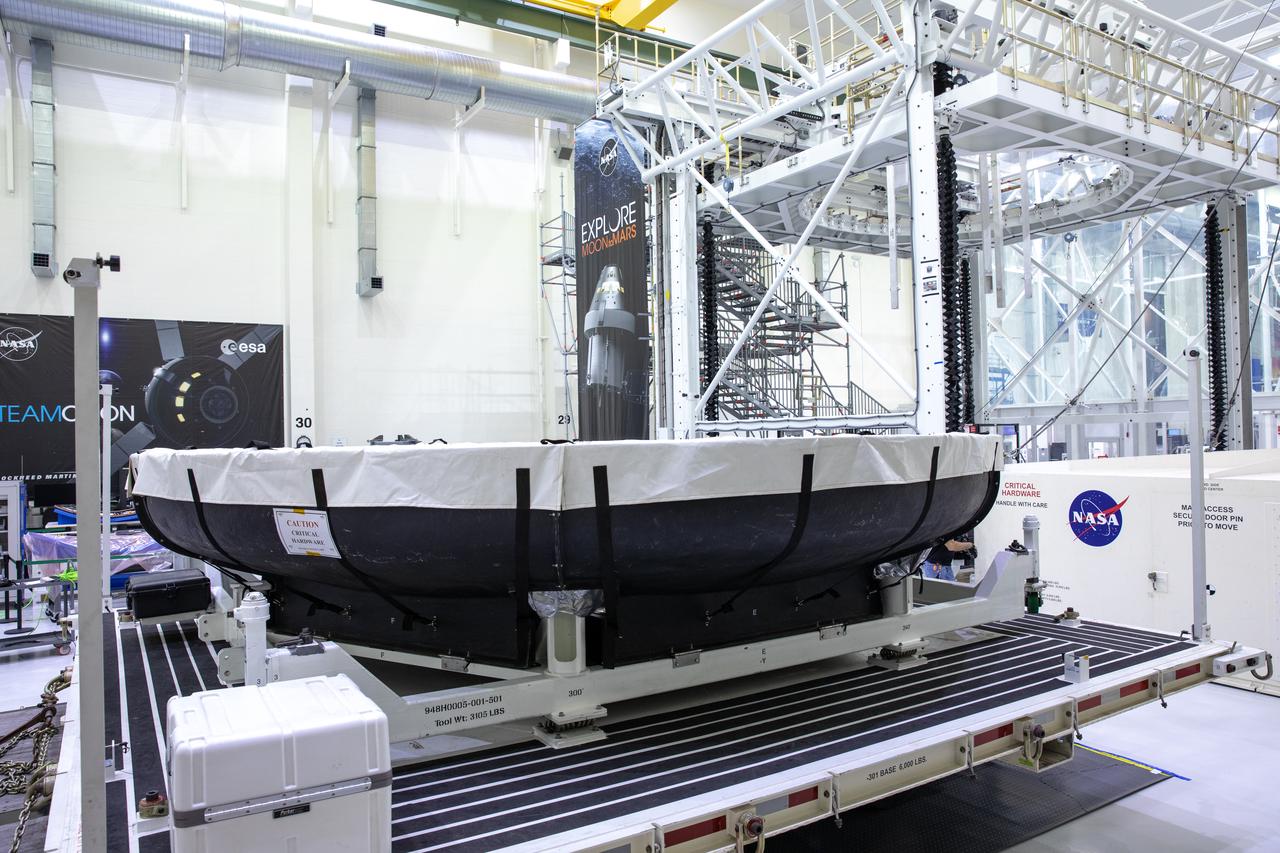
The heat shield for Orion’s Artemis 2 mission, NASA’s first crewed mission, is uncrated from its shipping container inside the Neil Armstrong Operations and Checkout Building high bay at the agency’s Kennedy Space Center in Florida on July 10, 2019. The heat shield, measuring roughly 16 feet in diameter, will protect astronauts upon re-entry on the second mission of Artemis. The heat shield arrived from Lockheed Martin’s manufacturing facility near Denver aboard NASA’s Super Guppy Aircraft. The heat shield is a base titanium truss structure. Over the next several months, technicians will apply Avcoat, an ablative material that will provide the thermal protection. Artemis 2 will confirm all of the spacecraft’s systems operate as designed in the actual environment of deep space with astronauts aboard.
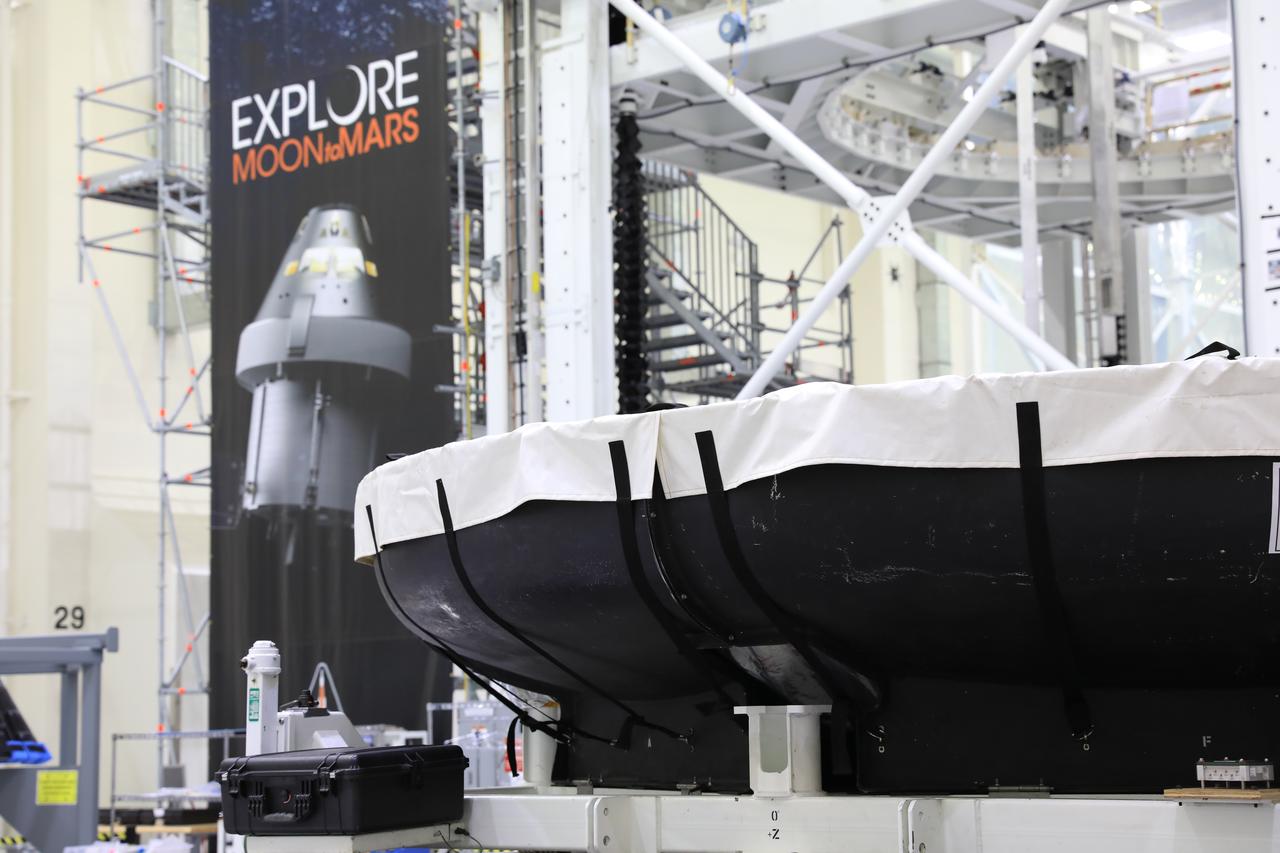
The heat shield for Orion’s Artemis 2 mission, NASA’s first crewed mission, is uncrated from its shipping container inside the Neil Armstrong Operations and Checkout Building high bay at the agency’s Kennedy Space Center in Florida on July 10, 2019. The heat shield, measuring roughly 16 feet in diameter, will protect astronauts upon re-entry on the second mission of Artemis. The heat shield arrived from Lockheed Martin’s manufacturing facility near Denver aboard NASA’s Super Guppy Aircraft. The heat shield is a base titanium truss structure. Over the next several months, technicians will apply Avcoat, an ablative material that will provide the thermal protection. Artemis 2 will confirm all of the spacecraft’s systems operate as designed in the actual environment of deep space with astronauts aboard.
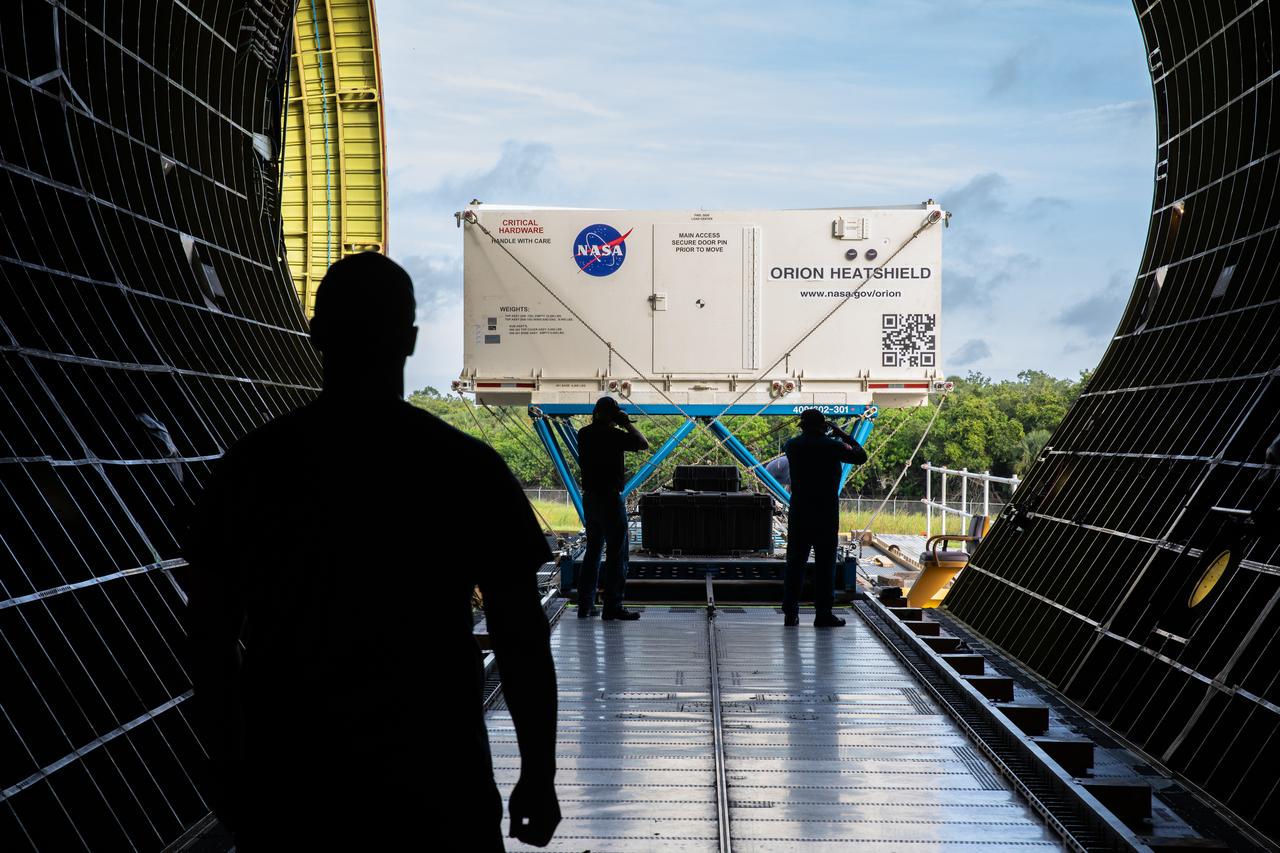
In this view from inside NASA’s Super Guppy aircraft, the shipping container carrying the heat shield for Orion’s Artemis 2 mission, NASA’s first crewed mission, is unloaded from NASA’s Super Guppy aircraft at the agency’s Kennedy Space Center Shuttle Landing Facility in Florida on July 9, 2019. The heat shield, measuring roughly 16 feet in diameter, will protect astronauts upon re-entry on the second mission of Artemis. The heat shield arrived from Lockheed Martin’s manufacturing facility near Denver. It will be delivered to the Neil Armstrong Operations and Checkout facility high bay. The heat shield is a base titanium truss structure. Over the next several months, technicians will apply Avcoat, an ablative material that will provide the thermal protection. Artemis 2 will confirm all of the spacecraft’s systems operate as designed in the actual environment of deep space with astronauts aboard.
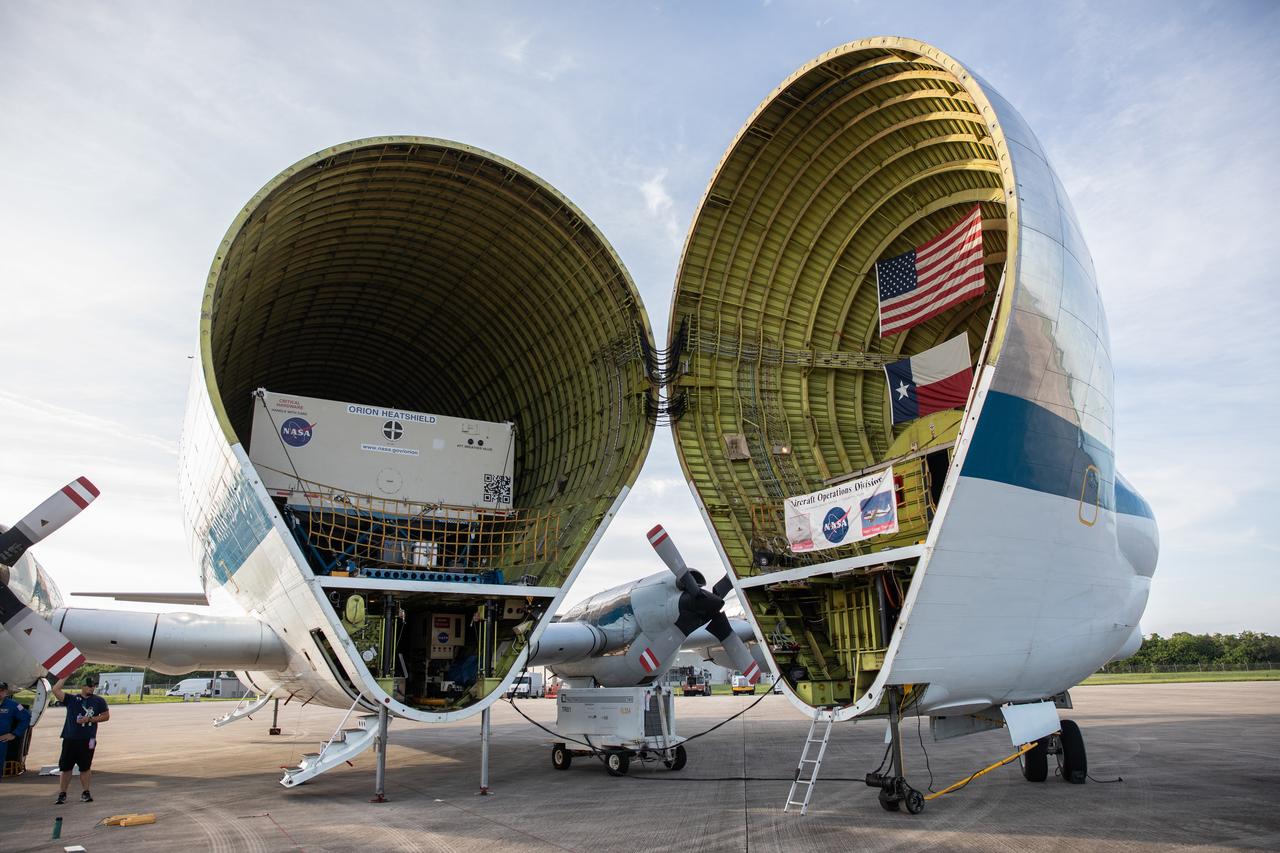
The heat shield for Orion’s Artemis 2 mission, NASA’s first crewed mission, arrives in its shipping container aboard NASA’s Super Guppy aircraft at the agency’s Kennedy Space Center Shuttle Landing Facility in Florida on July 9, 2019. The heat shield, measuring roughly 16 feet in diameter, will protect astronauts upon re-entry on the second mission of Artemis. The heat shield arrived from Lockheed Martin’s manufacturing facility near Denver. It will be offloaded and delivered to the Neil Armstrong Operations and Checkout facility high bay. The heat shield is a base titanium truss structure. Over the next several months, technicians will apply Avcoat, an ablative material that will provide the thermal protection. Artemis 2 will confirm all of the spacecraft’s systems operate as designed in the actual environment of deep space with astronauts aboard.
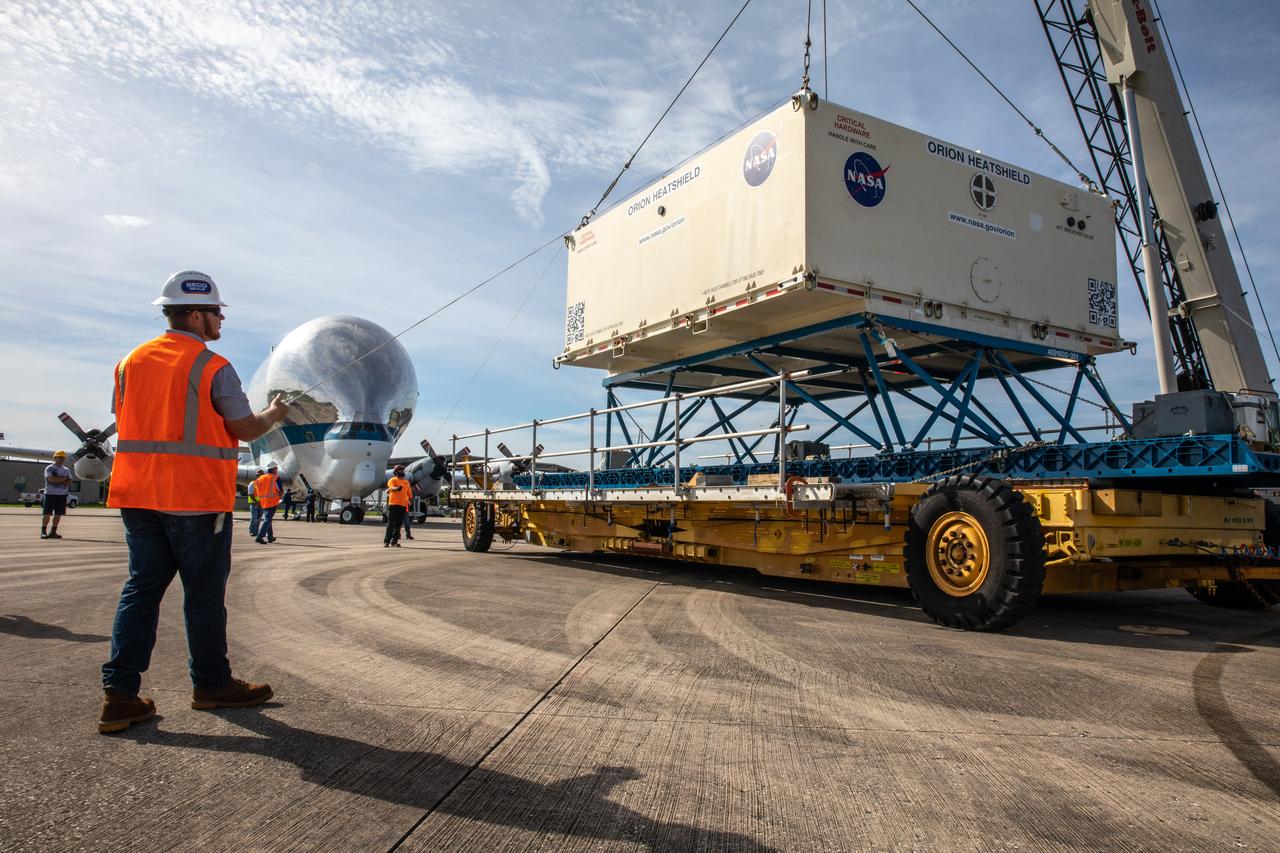
The shipping container carrying the heat shield for Orion’s Artemis 2 mission, NASA’s first crewed mission, is secured onto a transporter at the agency’s Kennedy Space Center Shuttle Landing Facility in Florida on July 9, 2019. The heat shield, measuring roughly 16 feet in diameter, will protect astronauts upon re-entry on the second mission of Artemis. The heat shield arrived from Lockheed Martin’s manufacturing facility near Denver aboard NASA’s Super Guppy Aircraft. It will be delivered to the Neil Armstrong Operations and Checkout facility high bay. The heat shield is a base titanium truss structure. Over the next several months, technicians will apply Avcoat, an ablative material that will provide the thermal protection. Artemis 2 will confirm all of the spacecraft’s systems operate as designed in the actual environment of deep space with astronauts aboard.
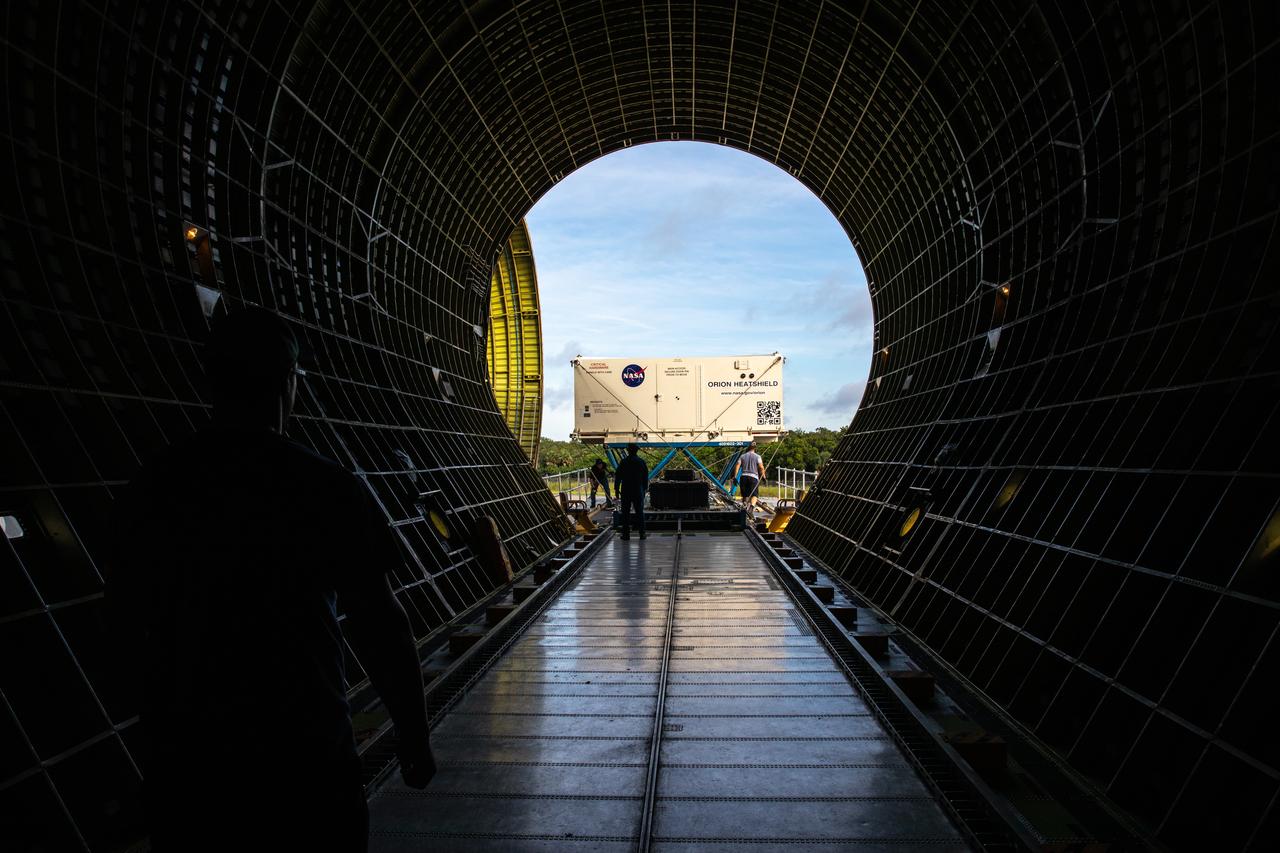
In this view from inside NASA’s Super Guppy aircraft, the shipping container carrying the heat shield for Orion’s Artemis 2 mission, NASA’s first crewed mission, is unloaded from NASA’s Super Guppy aircraft at the agency’s Kennedy Space Center Shuttle Landing Facility in Florida on July 9, 2019. The heat shield, measuring roughly 16 feet in diameter, will protect astronauts upon re-entry on the second mission of Artemis. The heat shield arrived from Lockheed Martin’s manufacturing facility near Denver. It will be delivered to the Neil Armstrong Operations and Checkout facility high bay. The heat shield is a base titanium truss structure. Over the next several months, technicians will apply Avcoat, an ablative material that will provide the thermal protection. Artemis 2 will confirm all of the spacecraft’s systems operate as designed in the actual environment of deep space with astronauts aboard.
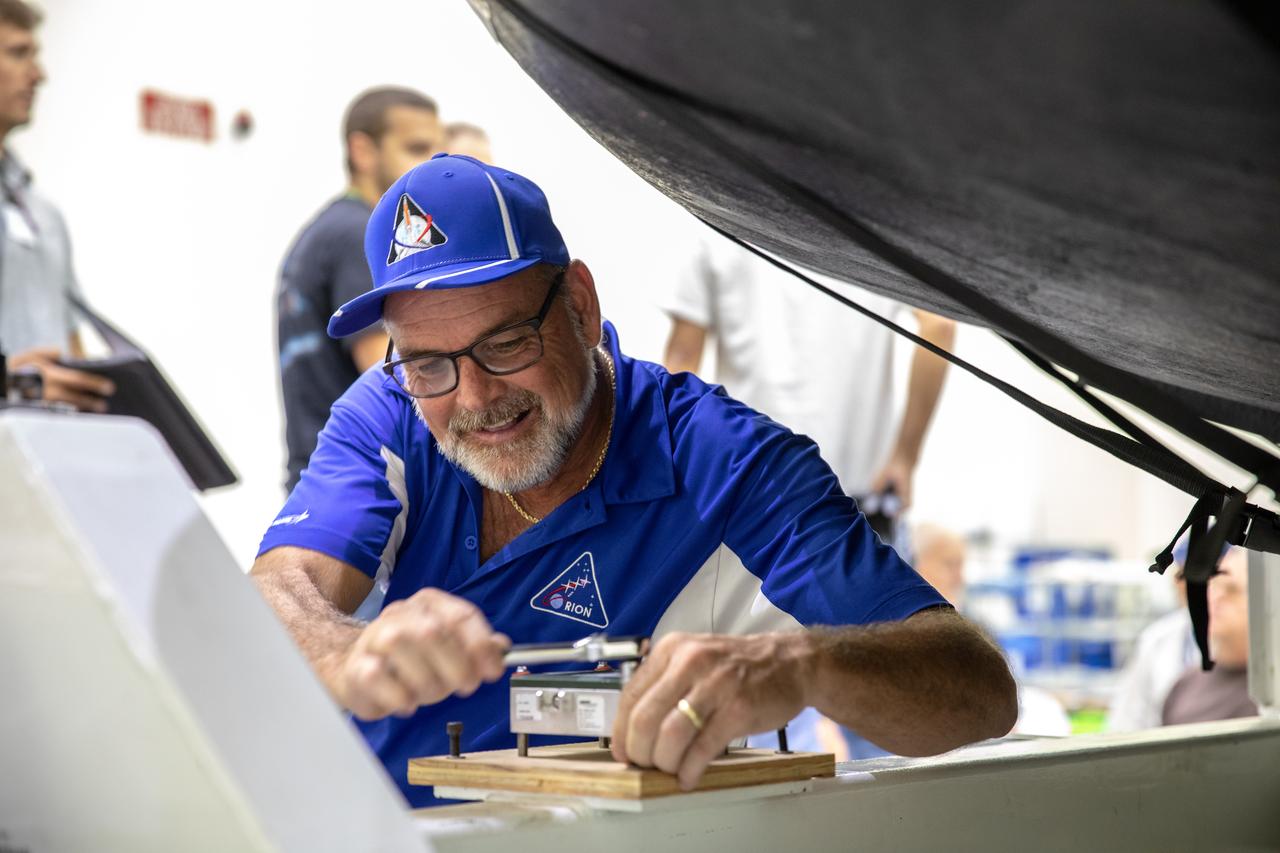
A Lockheed Martin technician works to remove a bolt that holds the heat shield for Orion’s Artemis 2 mission, NASA’s first crewed mission, on its shipping platform inside the Neil Armstrong Operations and Checkout Building high bay at the agency’s Kennedy Space Center in Florida on July 10, 2019. The heat shield, measuring roughly 16 feet in diameter, will protect astronauts upon re-entry on the second mission of Artemis. The heat shield arrived from Lockheed Martin’s manufacturing facility near Denver aboard NASA’s Super Guppy Aircraft. The heat shield is a base titanium truss structure. Over the next several months, technicians will apply Avcoat, an ablative material that will provide the thermal protection. Artemis 2 will confirm all of the spacecraft’s systems operate as designed in the actual environment of deep space with astronauts aboard.
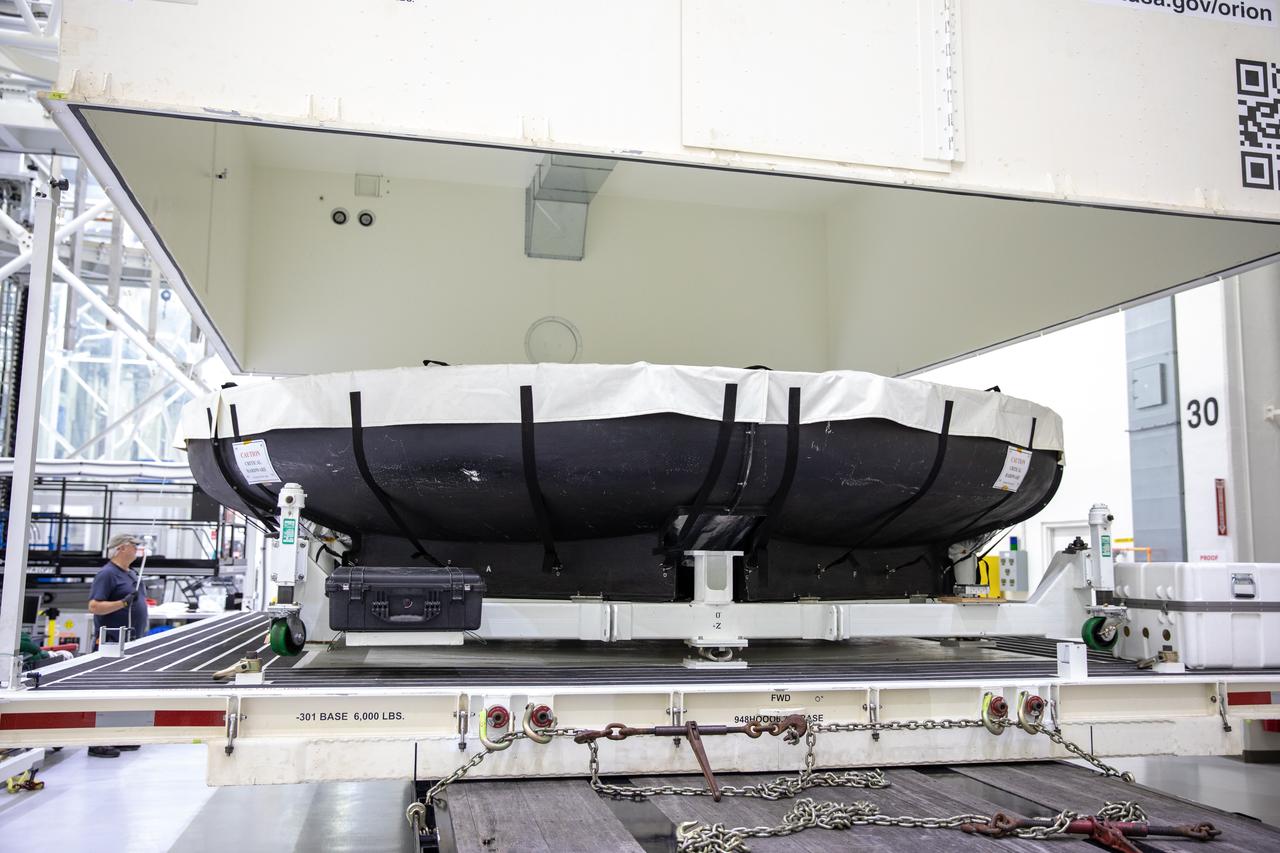
The cover of the shipping container carrying the heat shield for Orion’s Artemis 2 mission, NASA’s first crewed mission, is lifted up inside the Neil Armstrong Operations and Checkout Building high bay at the agency’s Kennedy Space Center in Florida on July 10, 2019. The heat shield, measuring roughly 16 feet in diameter, will protect astronauts upon re-entry on the second mission of Artemis. The heat shield arrived from Lockheed Martin’s manufacturing facility near Denver aboard NASA’s Super Guppy Aircraft. The heat shield is a base titanium truss structure. Over the next several months, technicians will apply Avcoat, an ablative material that will provide the thermal protection. Artemis 2 will confirm all of the spacecraft’s systems operate as designed in the actual environment of deep space with astronauts aboard.
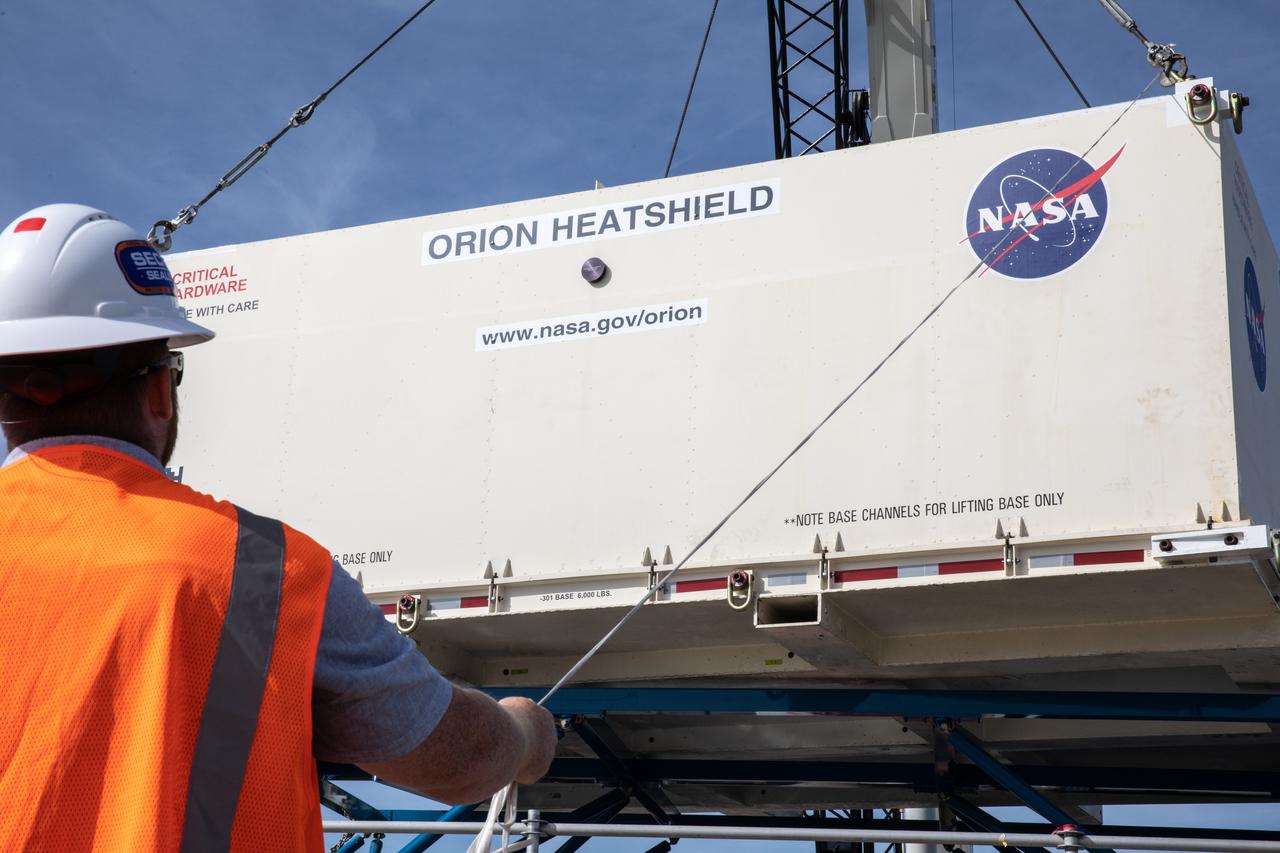
Technicians help secure the shipping container carrying the heat shield for Orion’s Artemis 2 mission, NASA’s first crewed mission, onto a transporter at the agency’s Kennedy Space Center Shuttle Landing Facility in Florida on July 9, 2019. The heat shield, measuring roughly 16 feet in diameter, will protect astronauts upon re-entry on the second mission of Artemis. The heat shield arrived from Lockheed Martin’s manufacturing facility near Denver aboard NASA’s Super Guppy Aircraft. It will be delivered to the Neil Armstrong Operations and Checkout facility high bay. The heat shield is a base titanium truss structure. Over the next several months, technicians will apply Avcoat, an ablative material that will provide the thermal protection. Artemis 2 will confirm all of the spacecraft’s systems operate as designed in the actual environment of deep space with astronauts aboard.
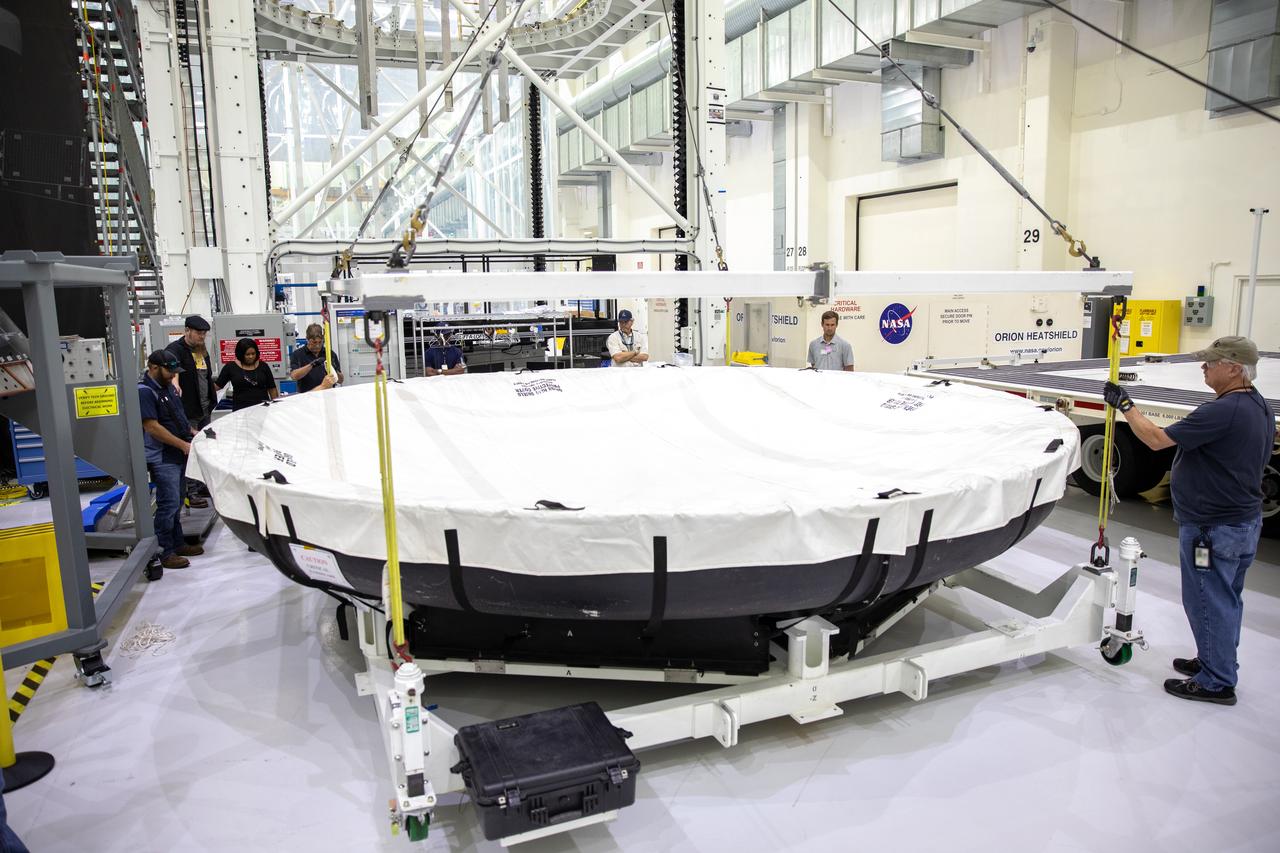
The heat shield for Orion’s Artemis 2 mission, NASA’s first crewed mission, is now uncrated from its shipping container inside the Neil Armstrong Operations and Checkout Building high bay at the agency’s Kennedy Space Center in Florida on July 10, 2019. The heat shield, measuring roughly 16 feet in diameter, will protect astronauts upon re-entry on the second mission of Artemis. The heat shield arrived from Lockheed Martin’s manufacturing facility near Denver aboard NASA’s Super Guppy Aircraft. The heat shield is a base titanium truss structure. Over the next several months, technicians will apply Avcoat, an ablative material that will provide the thermal protection. Artemis 2 will confirm all of the spacecraft’s systems operate as designed in the actual environment of deep space with astronauts aboard.
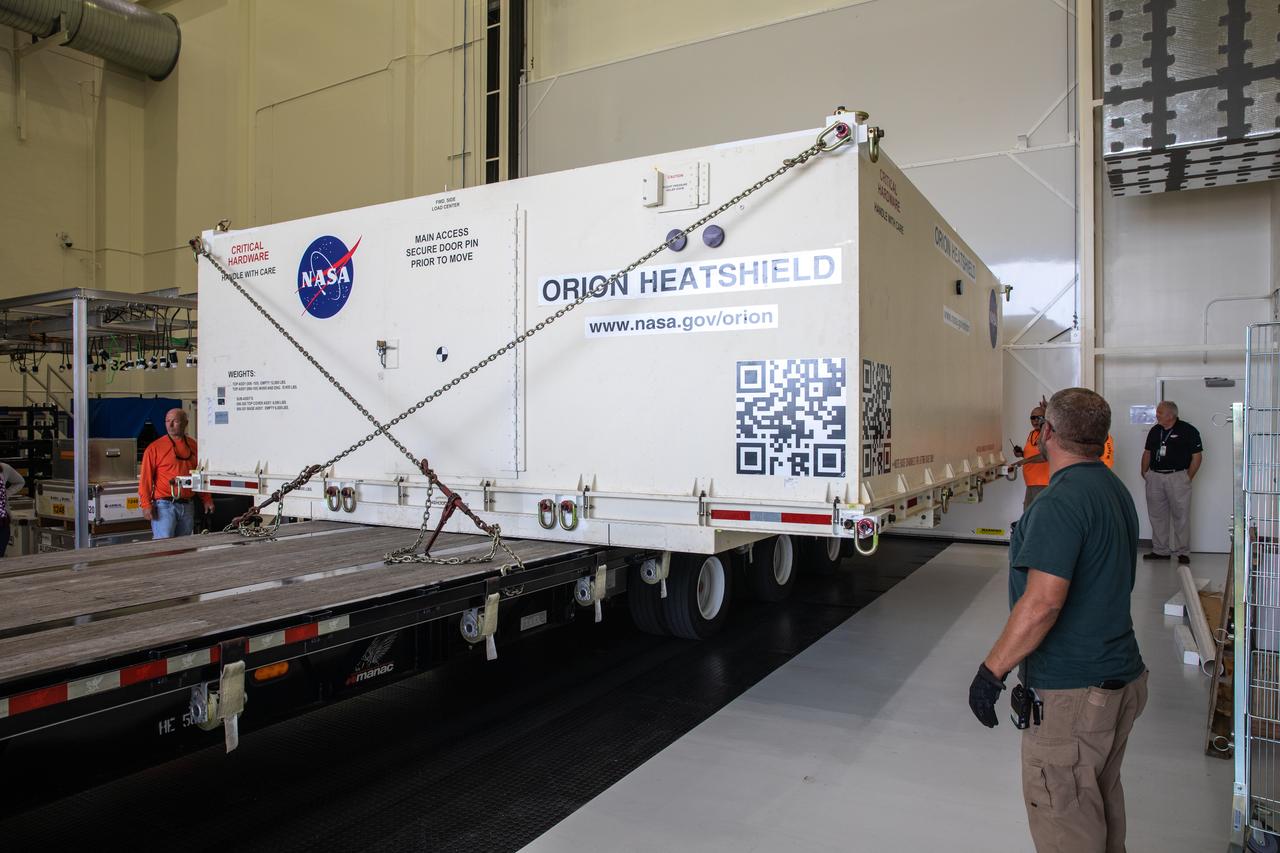
A flatbed truck with the shipping container carrying the heat shield for Orion’s Artemis 2 mission, NASA’s first crewed mission, arrives at the Neil Armstrong Operations and Checkout Building high bay entrance at the agency’s Kennedy Space Center in Florida on July 9, 2019. The heat shield, measuring roughly 16 feet in diameter, will protect astronauts upon re-entry on the second mission of Artemis. The heat shield arrived from Lockheed Martin’s manufacturing facility near Denver aboard NASA’s Super Guppy Aircraft. The heat shield is a base titanium truss structure. Over the next several months, technicians will apply Avcoat, an ablative material that will provide the thermal protection. Artemis 2 will confirm all of the spacecraft’s systems operate as designed in the actual environment of deep space with astronauts aboard.
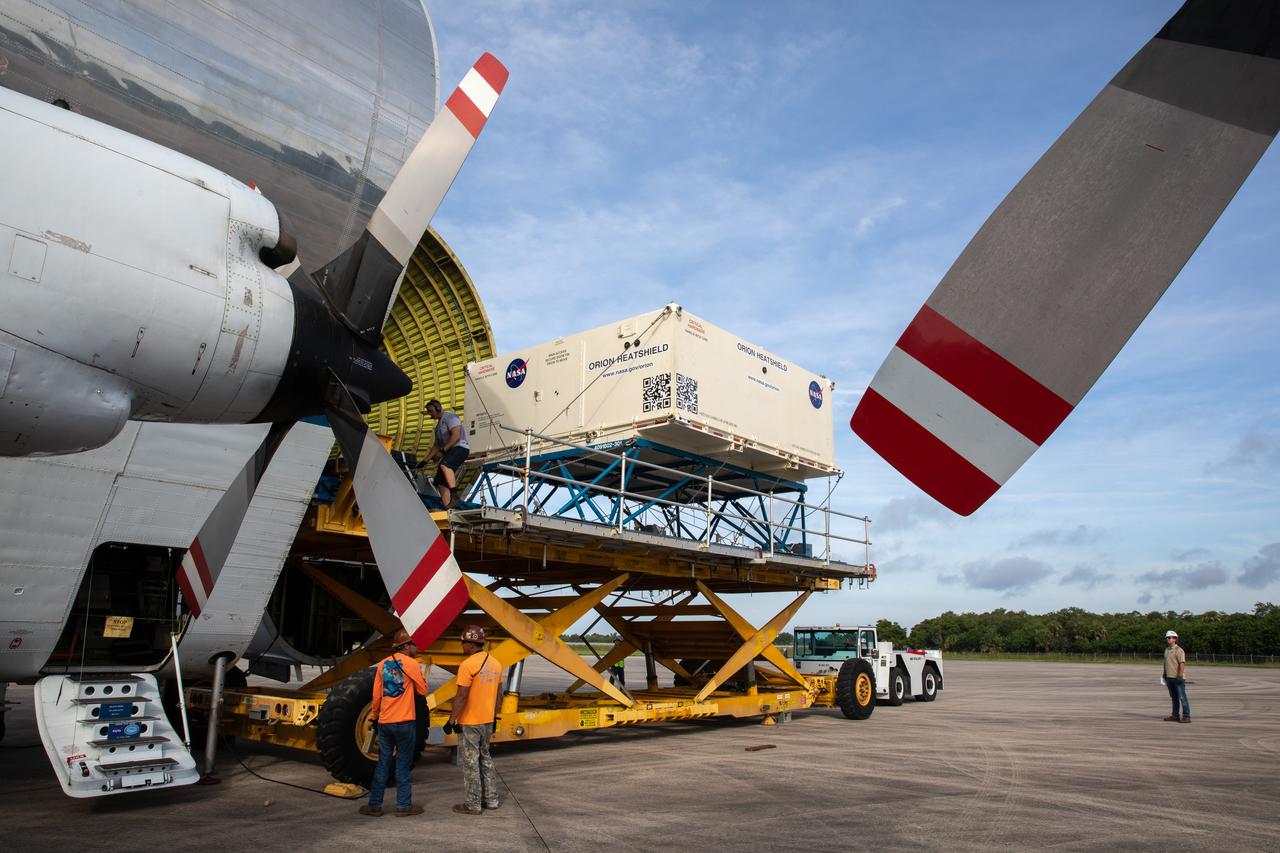
The shipping container carrying the heat shield for Orion’s Artemis 2 mission, NASA’s first crewed mission, is unloaded from NASA’s Super Guppy aircraft at the agency’s Kennedy Space Center Shuttle Landing Facility in Florida on July 9, 2019. The heat shield, measuring roughly 16 feet in diameter, will protect astronauts upon re-entry on the second mission of Artemis. The heat shield arrived from Lockheed Martin’s manufacturing facility near Denver. It will be delivered to the Neil Armstrong Operations and Checkout facility high bay. The heat shield is a base titanium truss structure. Over the next several months, technicians will apply Avcoat, an ablative material that will provide the thermal protection. Artemis 2 will confirm all of the spacecraft’s systems operate as designed in the actual environment of deep space with astronauts aboard.
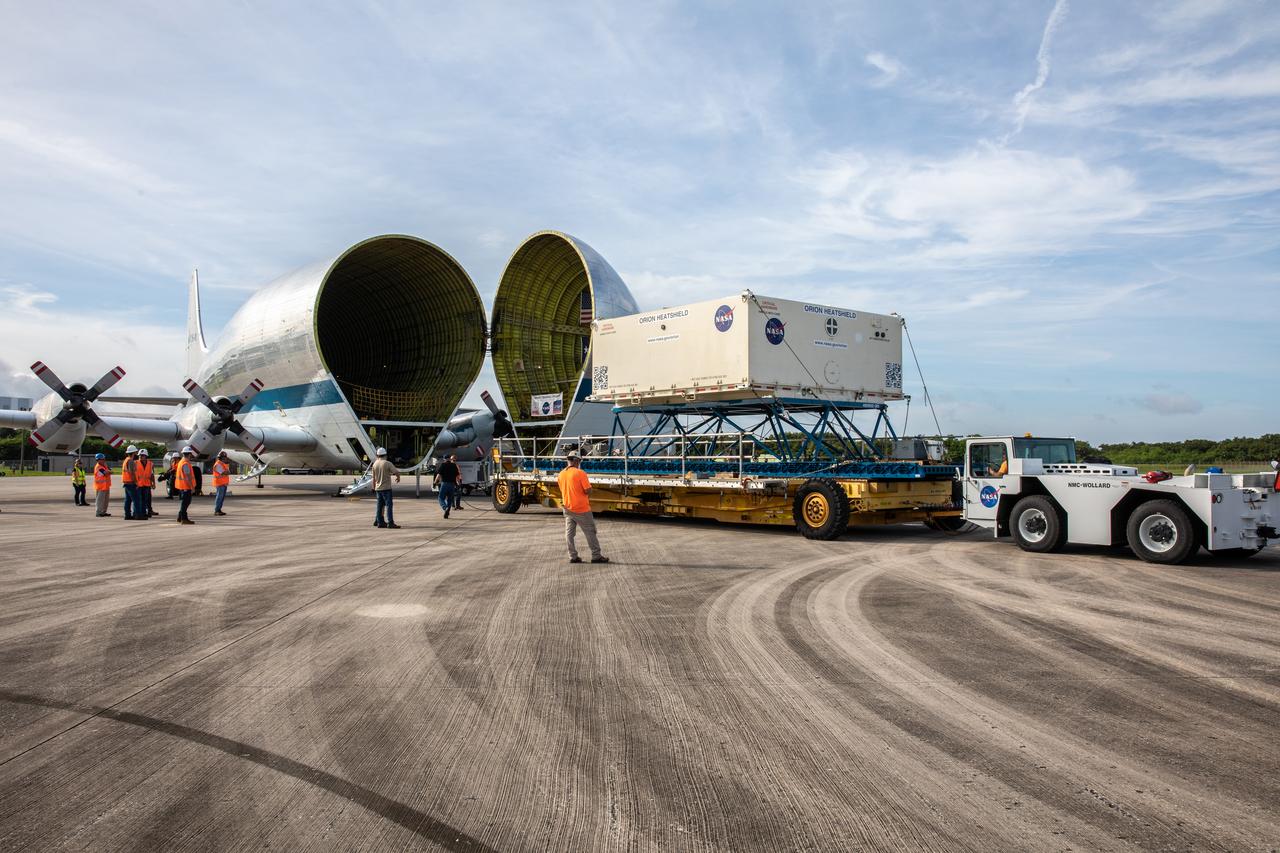
The shipping container carrying the heat shield for Orion’s Artemis 2 mission, NASA’s first crewed mission, is unloaded from NASA’s Super Guppy aircraft at the agency’s Kennedy Space Center Shuttle Landing Facility in Florida on July 9, 2019. The heat shield, measuring roughly 16 feet in diameter, will protect astronauts upon re-entry on the second mission of Artemis. The heat shield arrived from Lockheed Martin’s manufacturing facility near Denver. It will be delivered to the Neil Armstrong Operations and Checkout facility high bay. The heat shield is a base titanium truss structure. Over the next several months, technicians will apply Avcoat, an ablative material that will provide the thermal protection. Artemis 2 will confirm all of the spacecraft’s systems operate as designed in the actual environment of deep space with astronauts aboard.
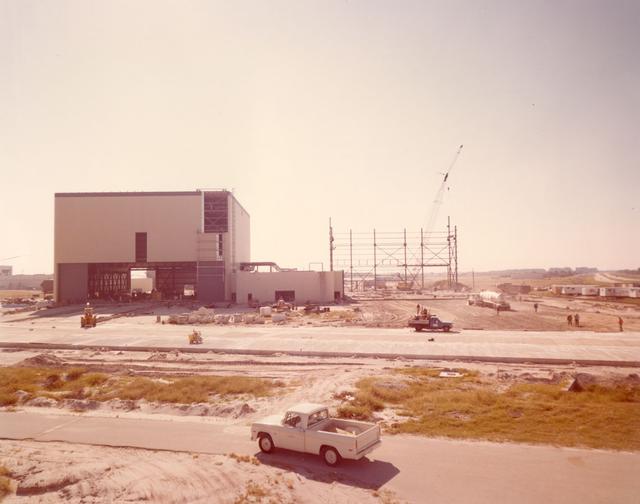
View of OPF High Bay No. 2 construction, 1976
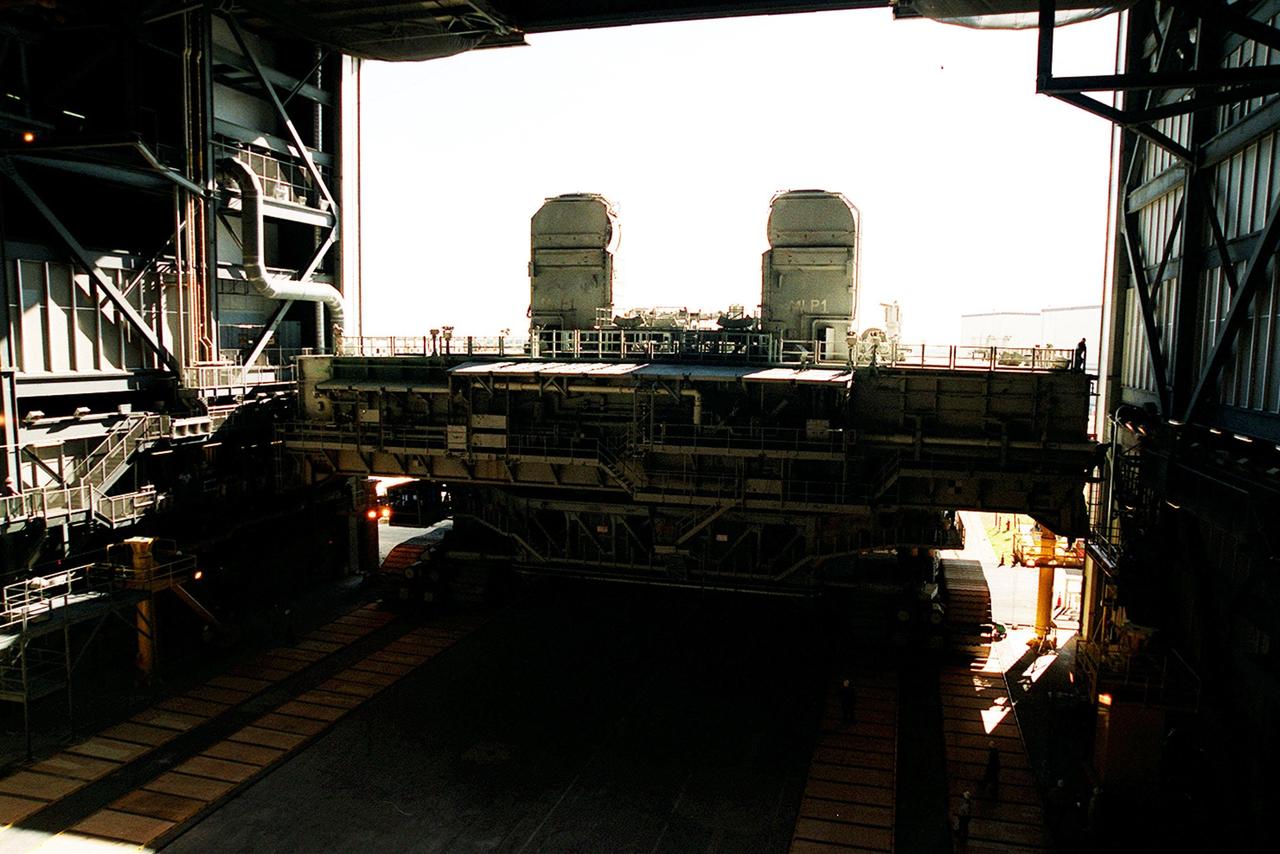
KENNEDY SPACE CENTER, FLA. -- From inside the VAB high bay 2, a mobile launcher platform atop a crawler transporter is viewed as it rolls through the doorway using the recently restored crawlerway. As part of the Safe Haven project, a once-buried portion of the crawlerway was restored to enable rollout of a Shuttle from high bay 2. The primary goal of the Safe Haven construction project was to strengthen readiness for hurricane season by expanding the VAB’s storage capacity. The new area, in high bay 2, will allow NASA to preassemble stacks and still have room in the VAB to pull a Shuttle back from the pad if severe weather threatens. Potential rollouts of the Space Shuttle to the launch pad from high bay 2 will involve making a turn around the north side of the VAB in contrast to the straight rollouts from high bays 1 and 3, on the east side of the VAB facing the launch pads
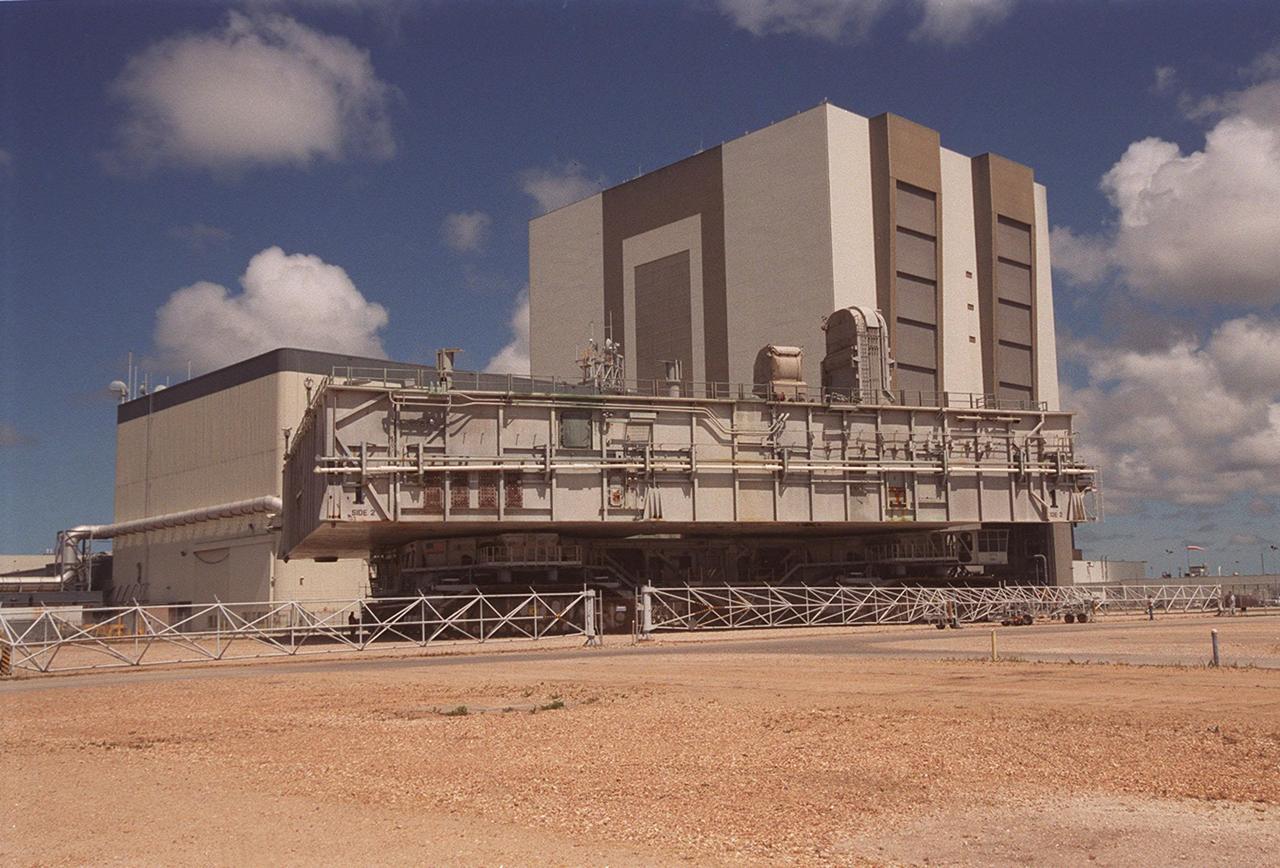
KENNEDY SPACE CENTER, FLA. -- A crawler-transporter with mobile launcher platform on top tests the buried portion of the Apollo-era crawlerway leading to the Vehicle Assembly Building (VAB) high bay 2 on the southwest side. The road was restored as part of KSC’s Safe Haven project. High bay 2 provides a third stacking area. The primary goal of the Safe Haven construction project was to strengthen readiness for hurricane season by expanding the VAB’s storage capacity. The new area, in high bay 2, will allow NASA to preassemble stacks and still have room in the VAB to pull a Shuttle back from the pad if severe weather threatens. Potential rollouts of the Space Shuttle to the launch pad from high bay 2 will involve making a turn around the north side of the VAB in contrast to the straight rollouts from high bays 1 and 3, on the east side of the VAB facing the launch pads