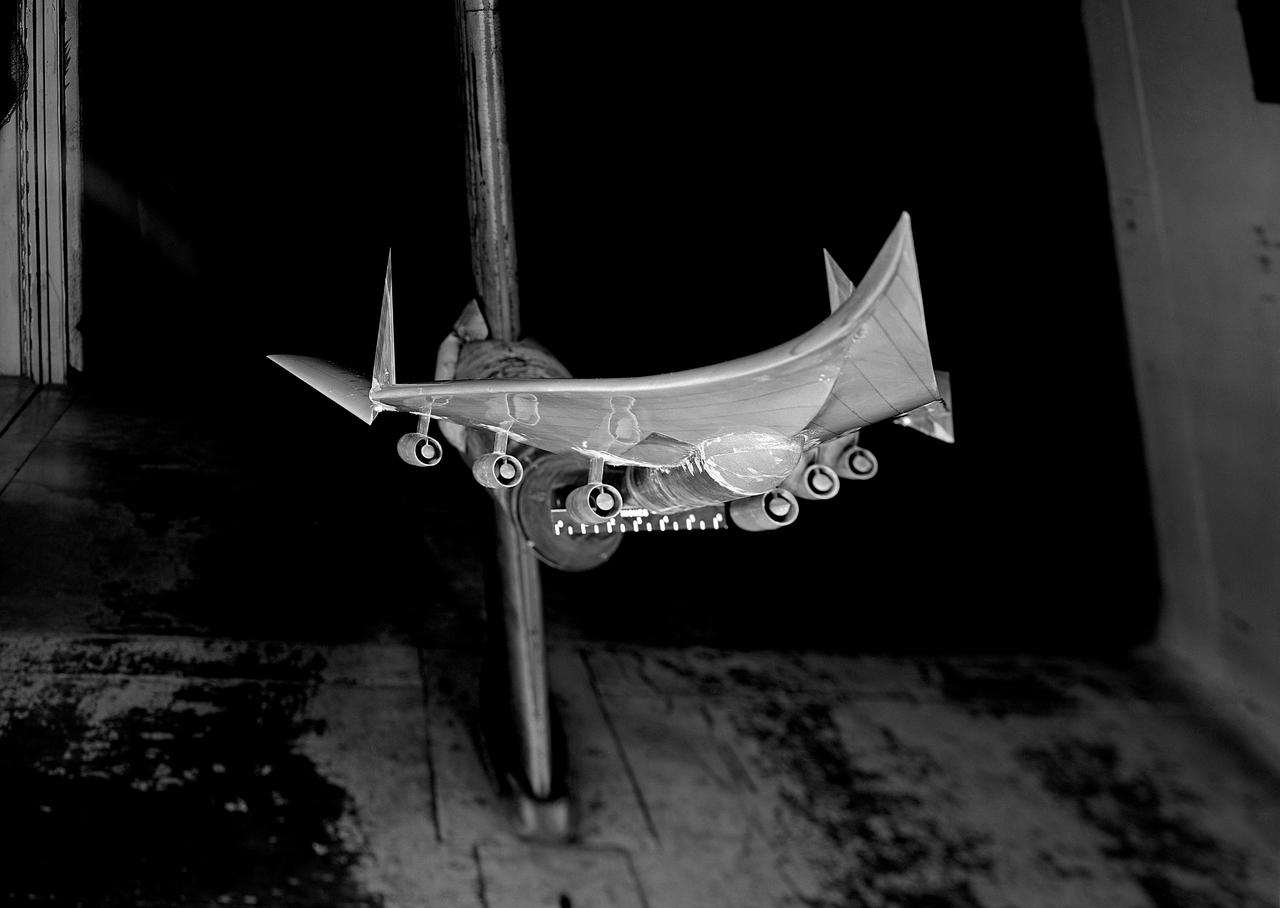
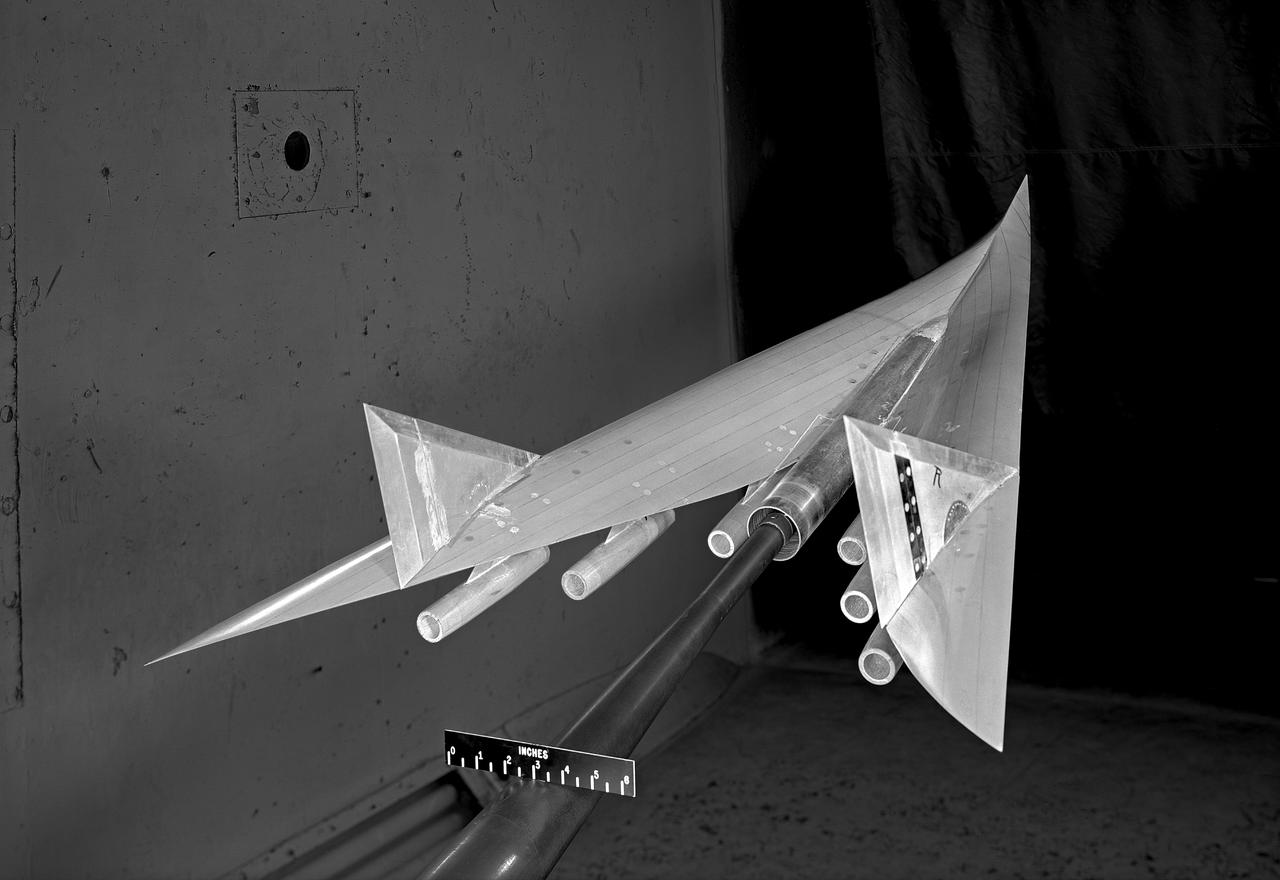
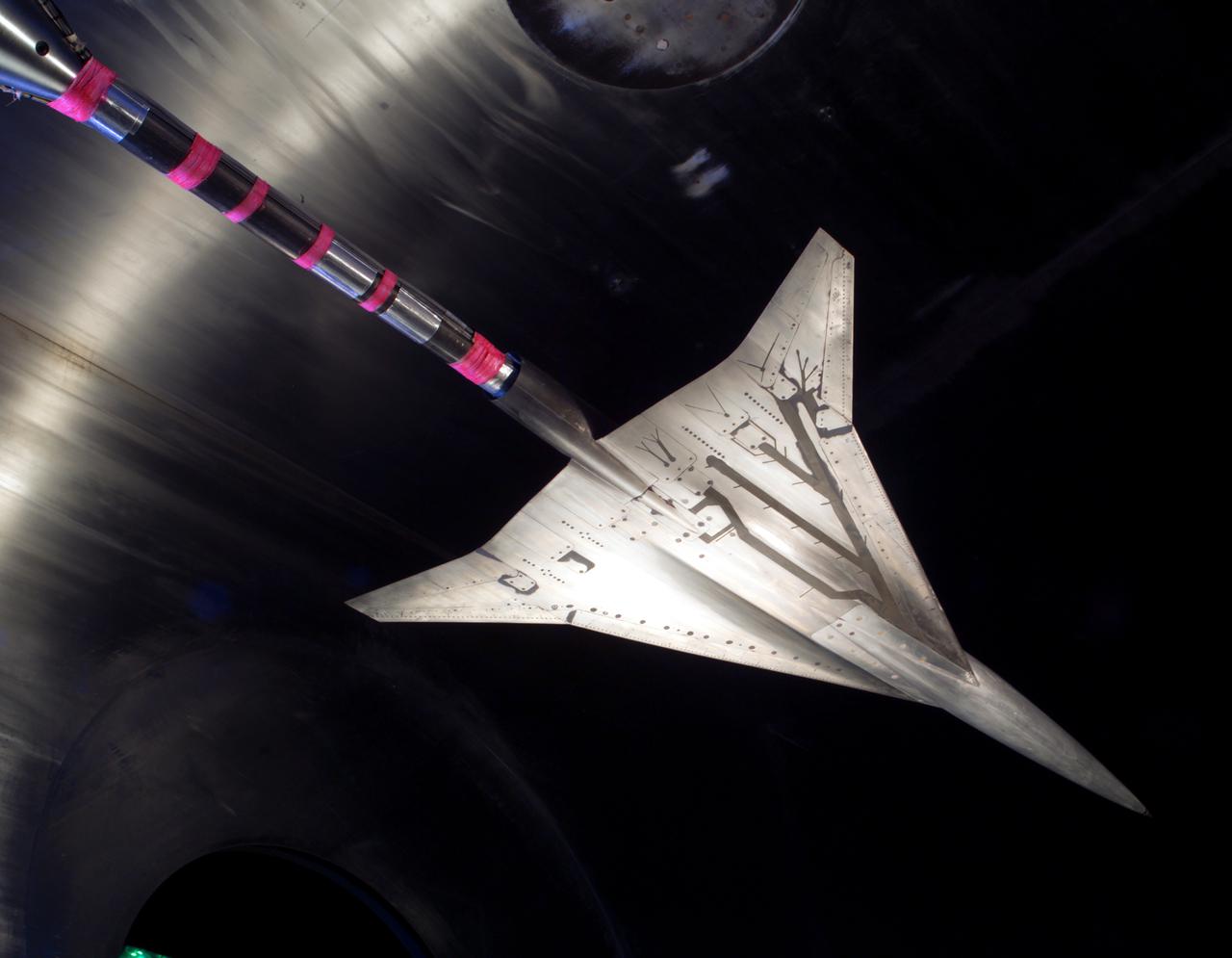
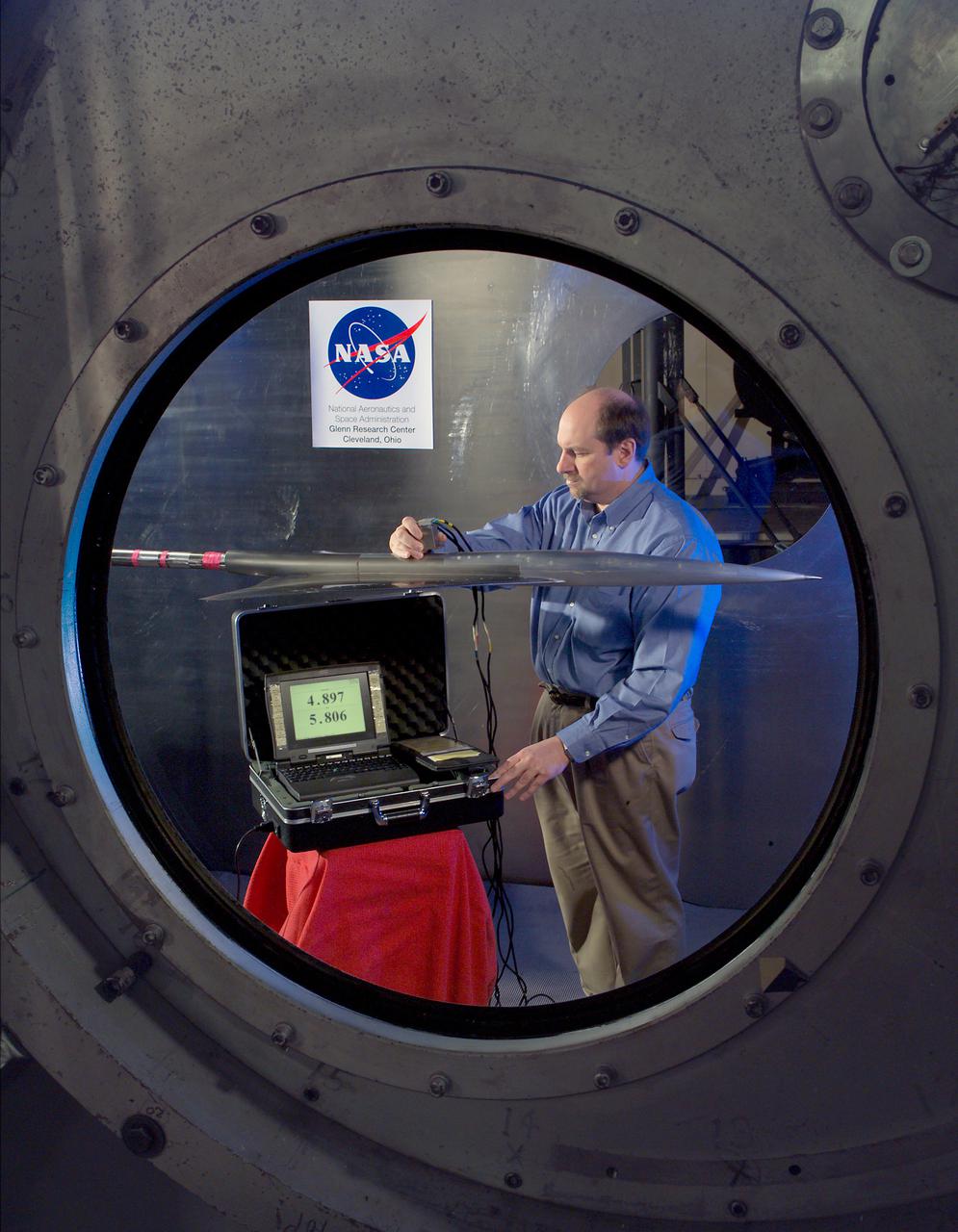
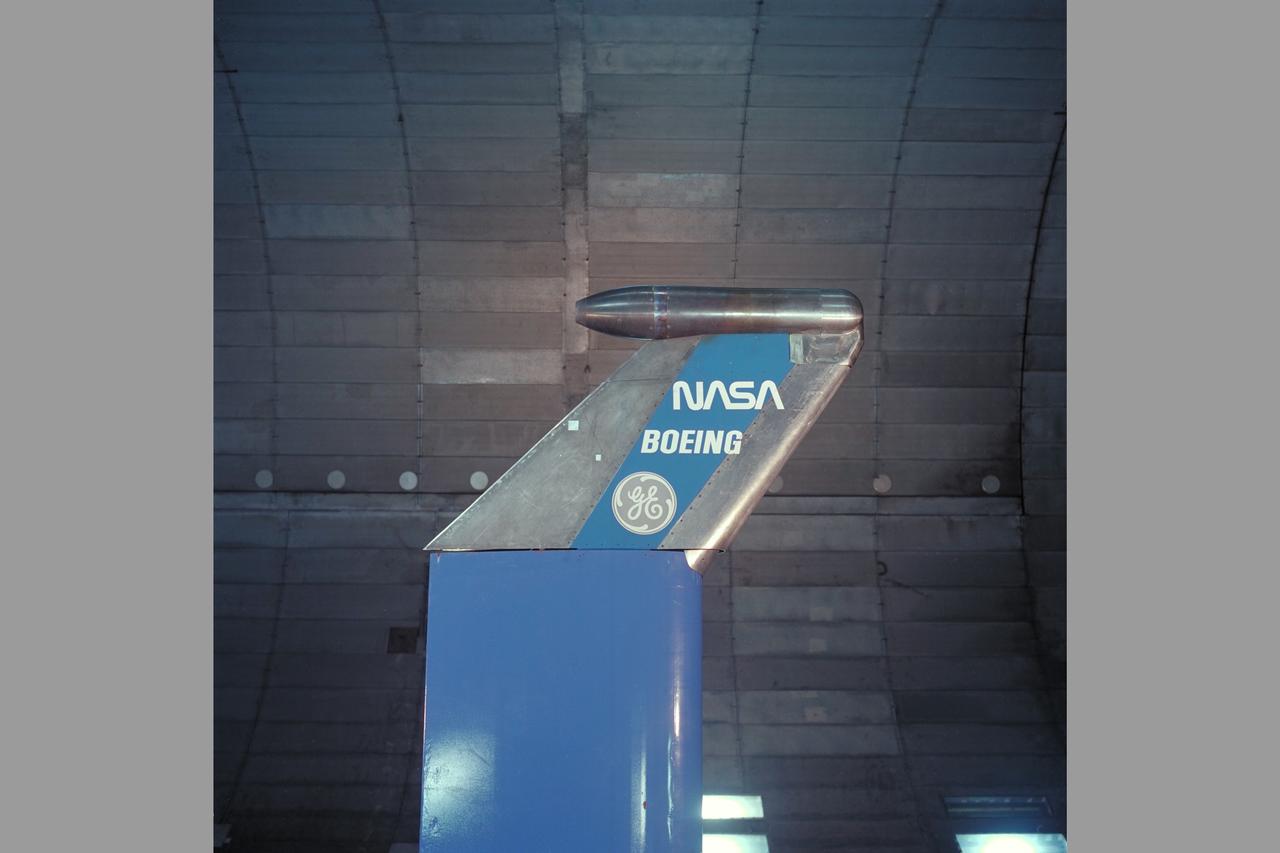
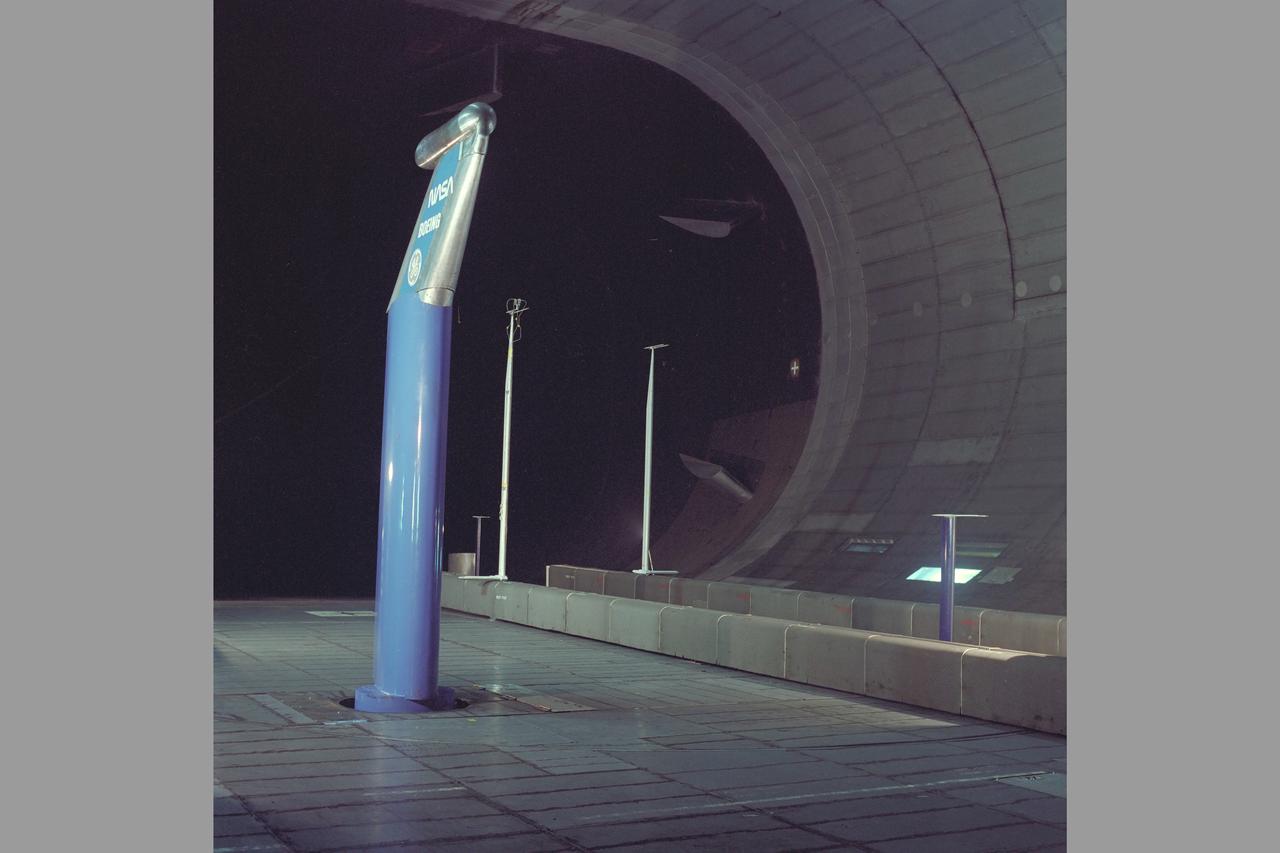
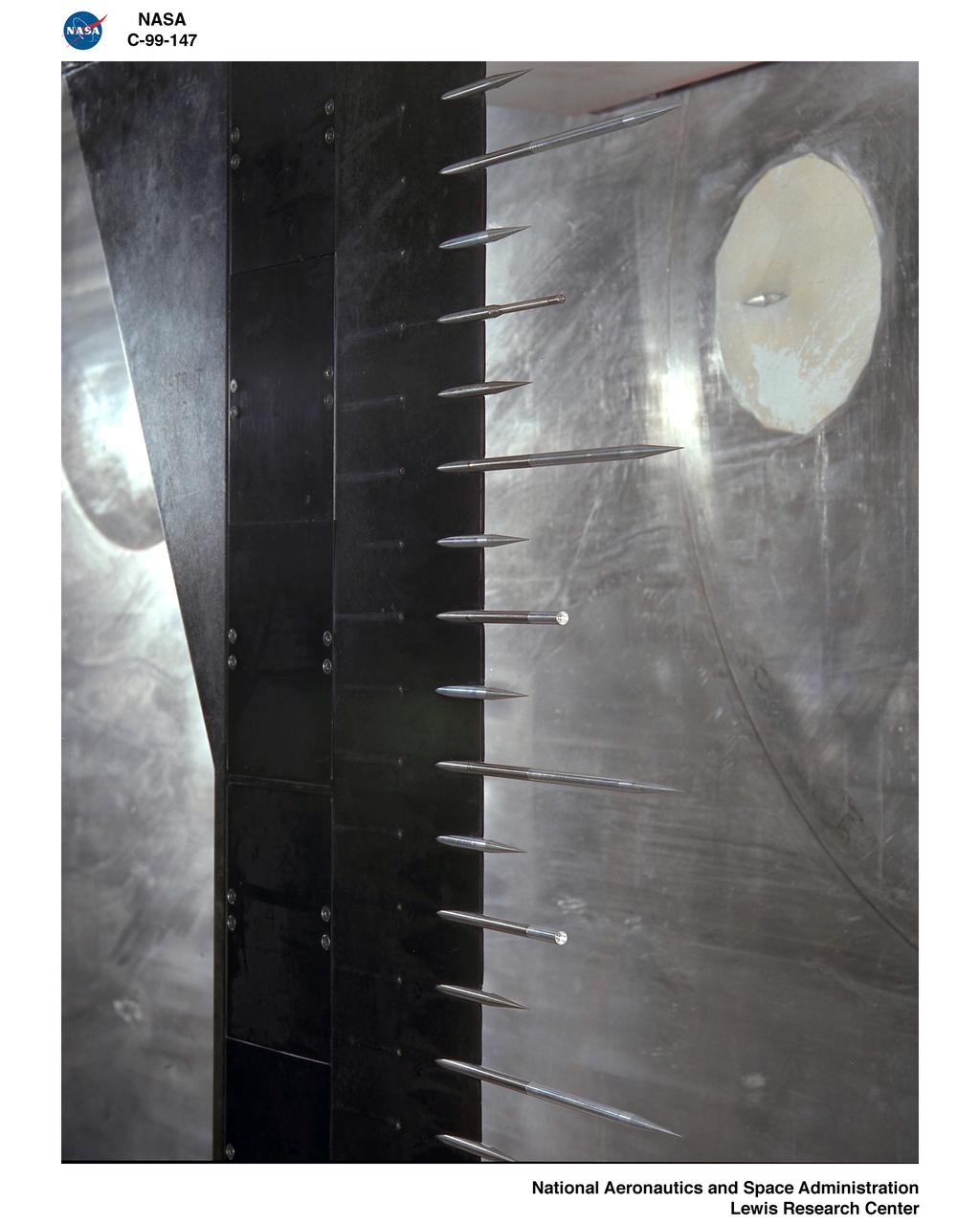
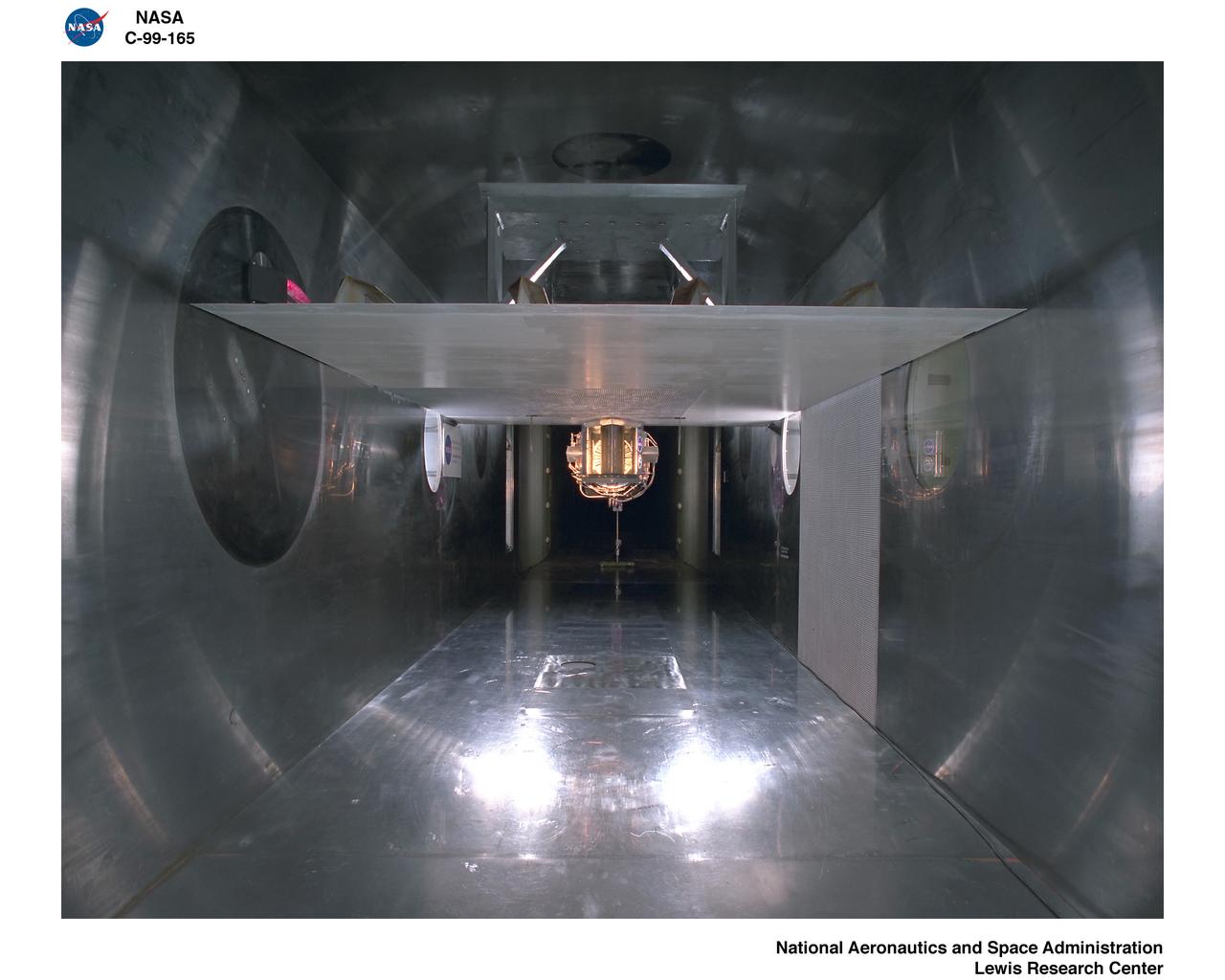
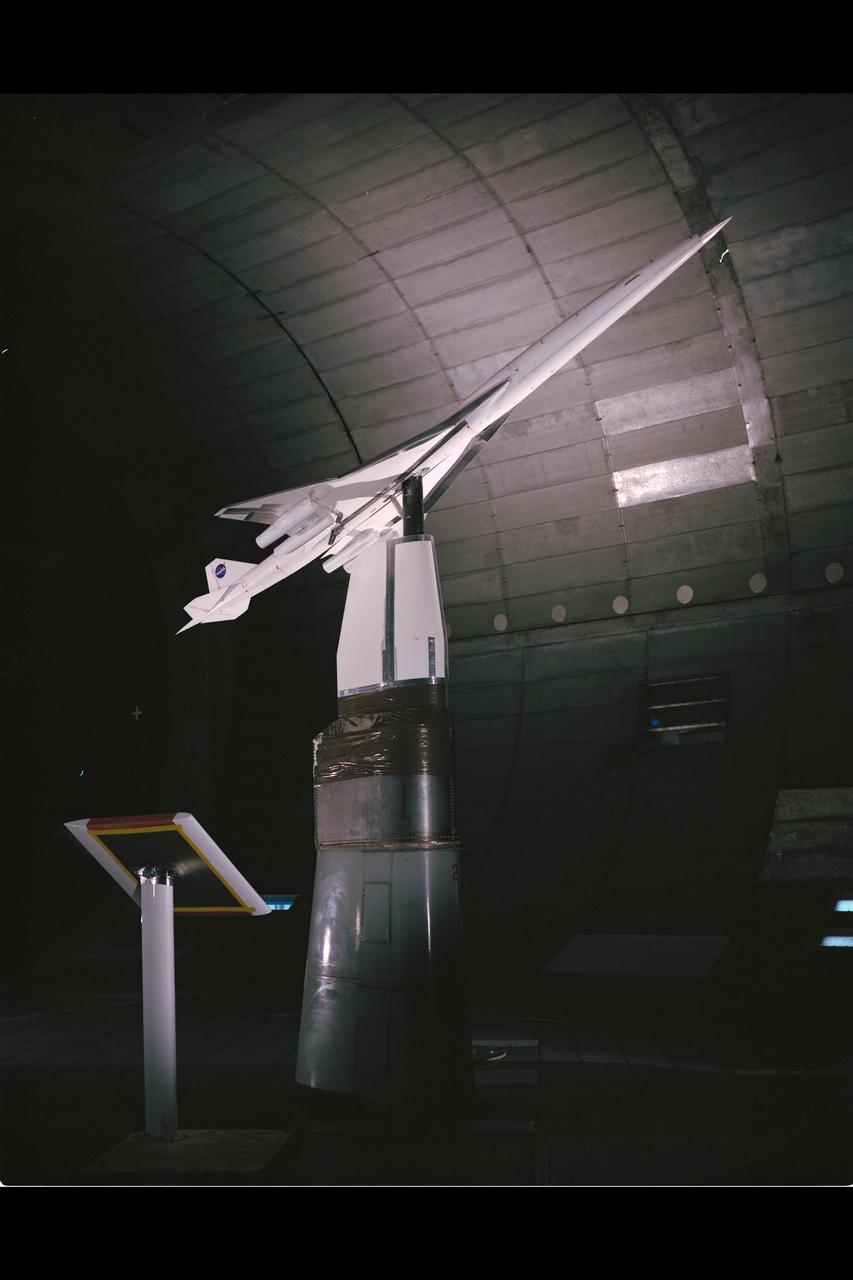
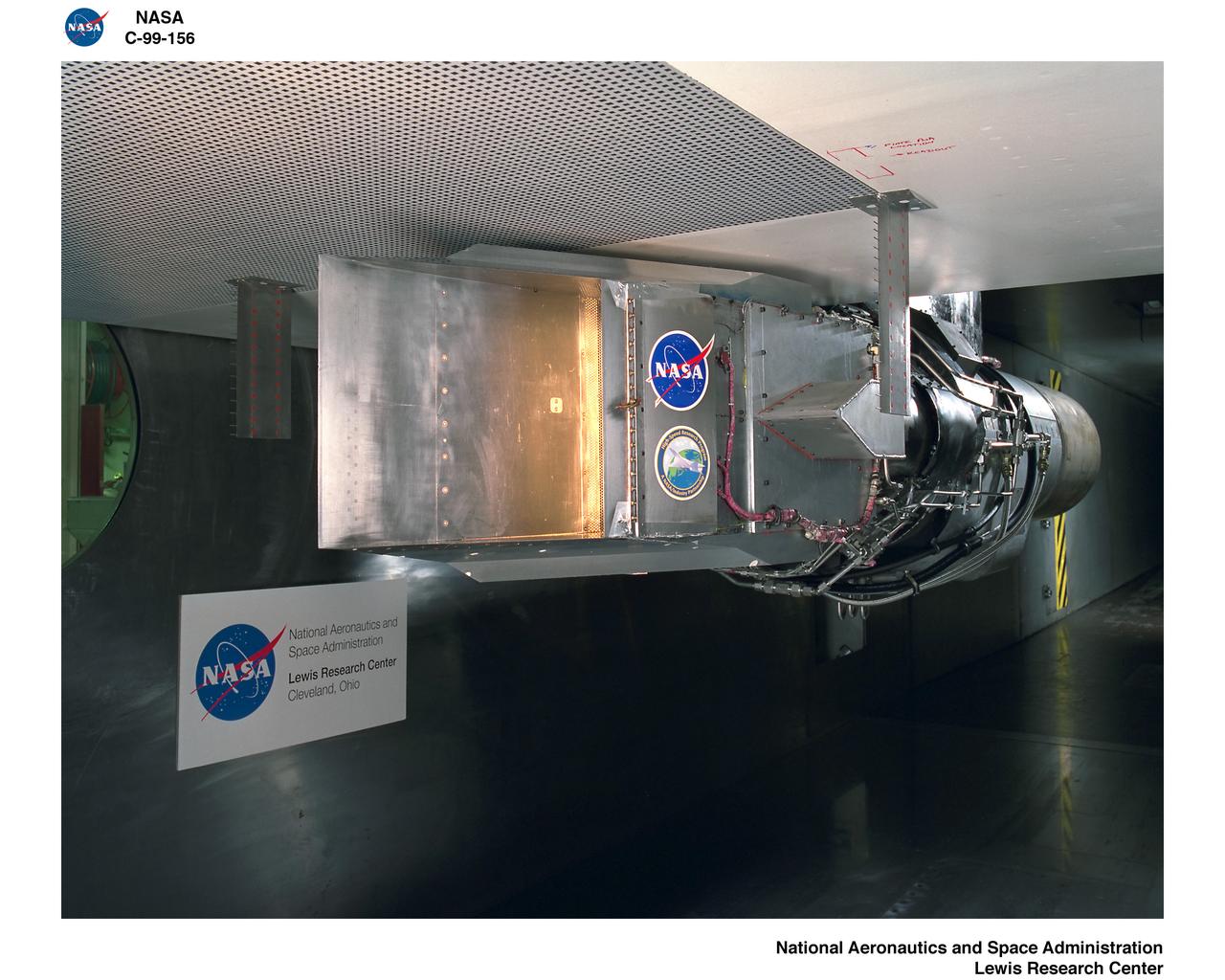
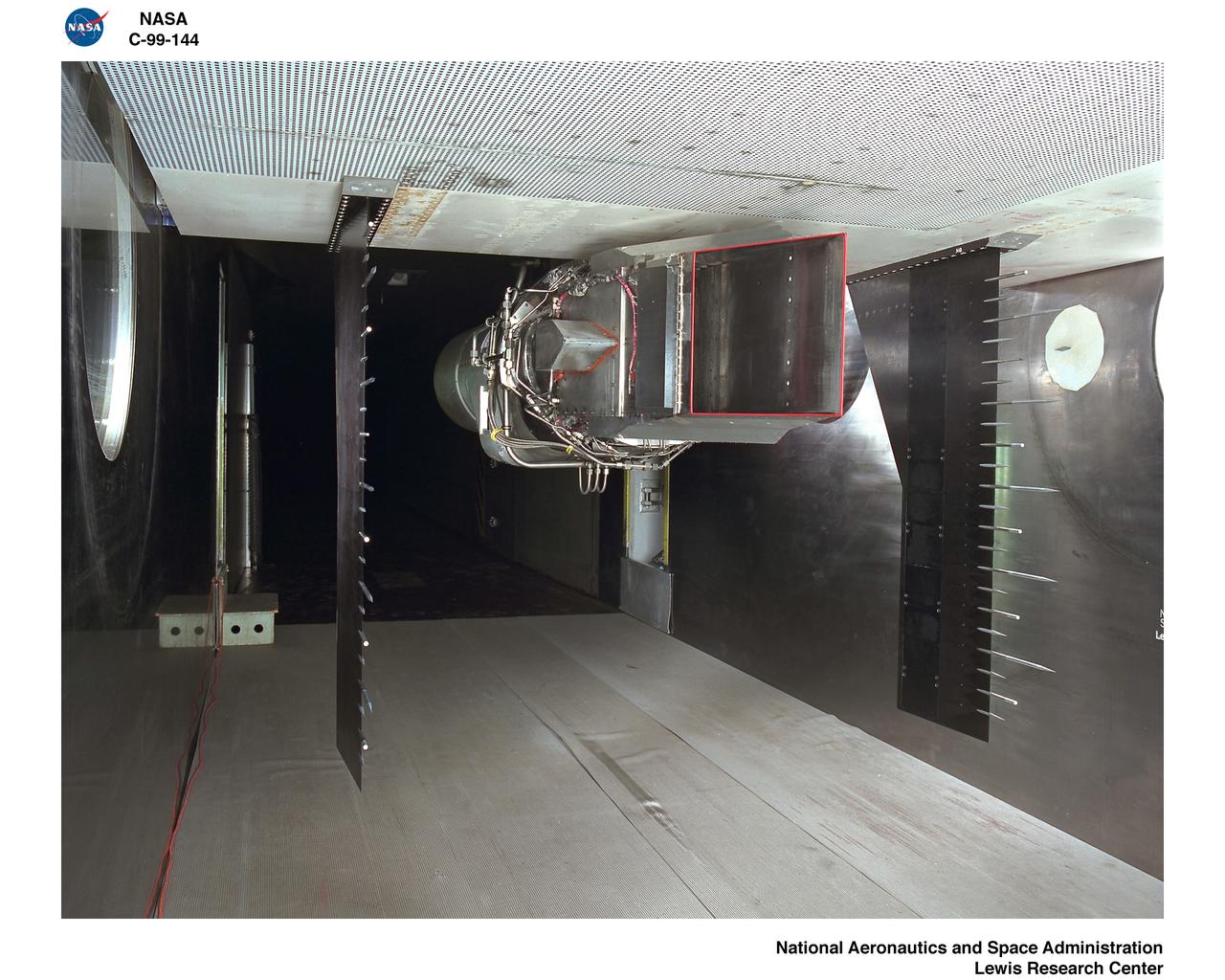
Research Model in the 7x10 High Speed Tunnel  Building 1212B 300 mph tunnel
Research Model in the 7x10 High Speed Tunnel
Research Model in the 7x10 High Speed Tunnel  Building 1212B 300 mph tunnel
Research Model in the 7x10 High Speed Tunnel
Research Model in the 7x10 High Speed Tunnel  Building 1212B 300 mph tunnel
Research Model in the 7x10 High Speed Tunnel
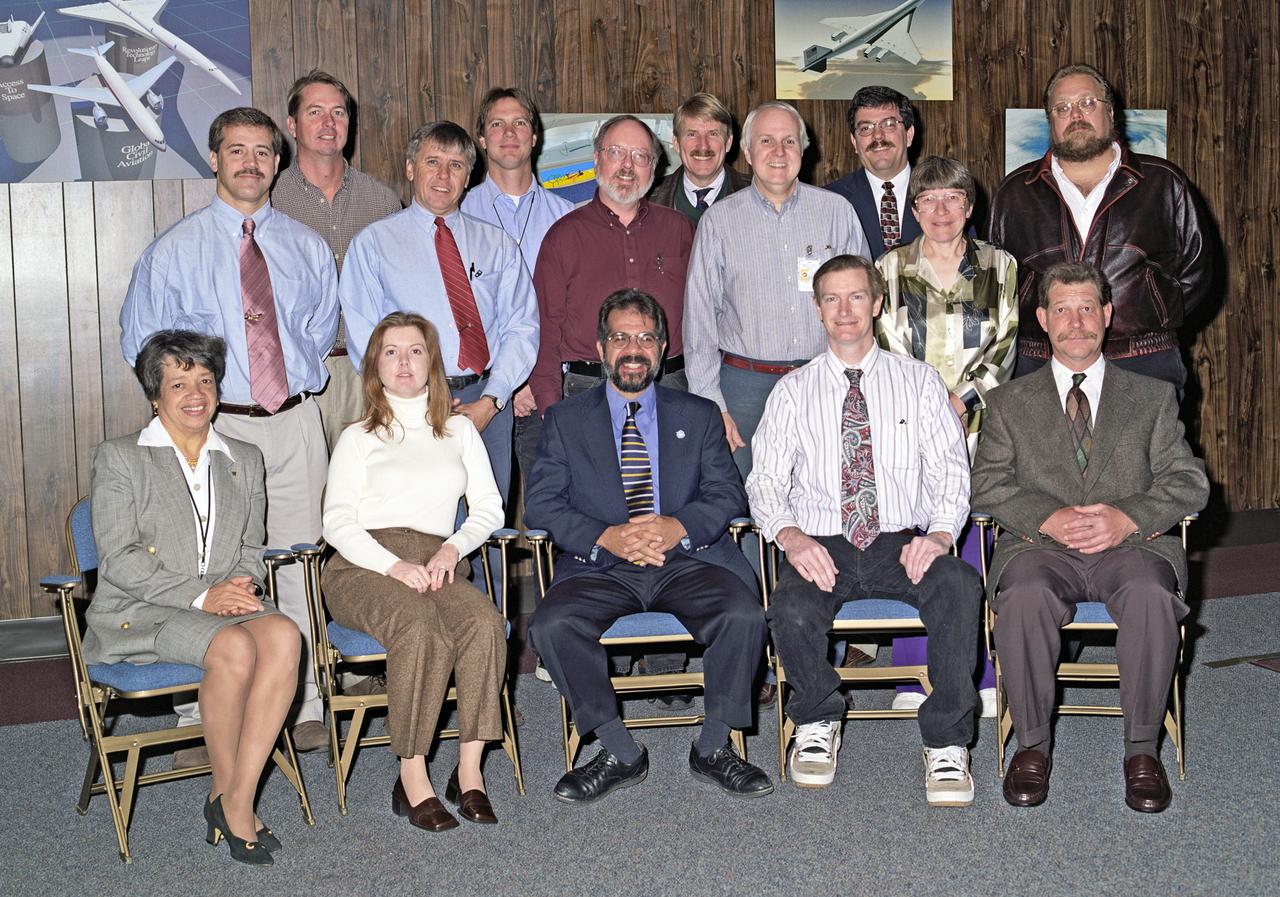
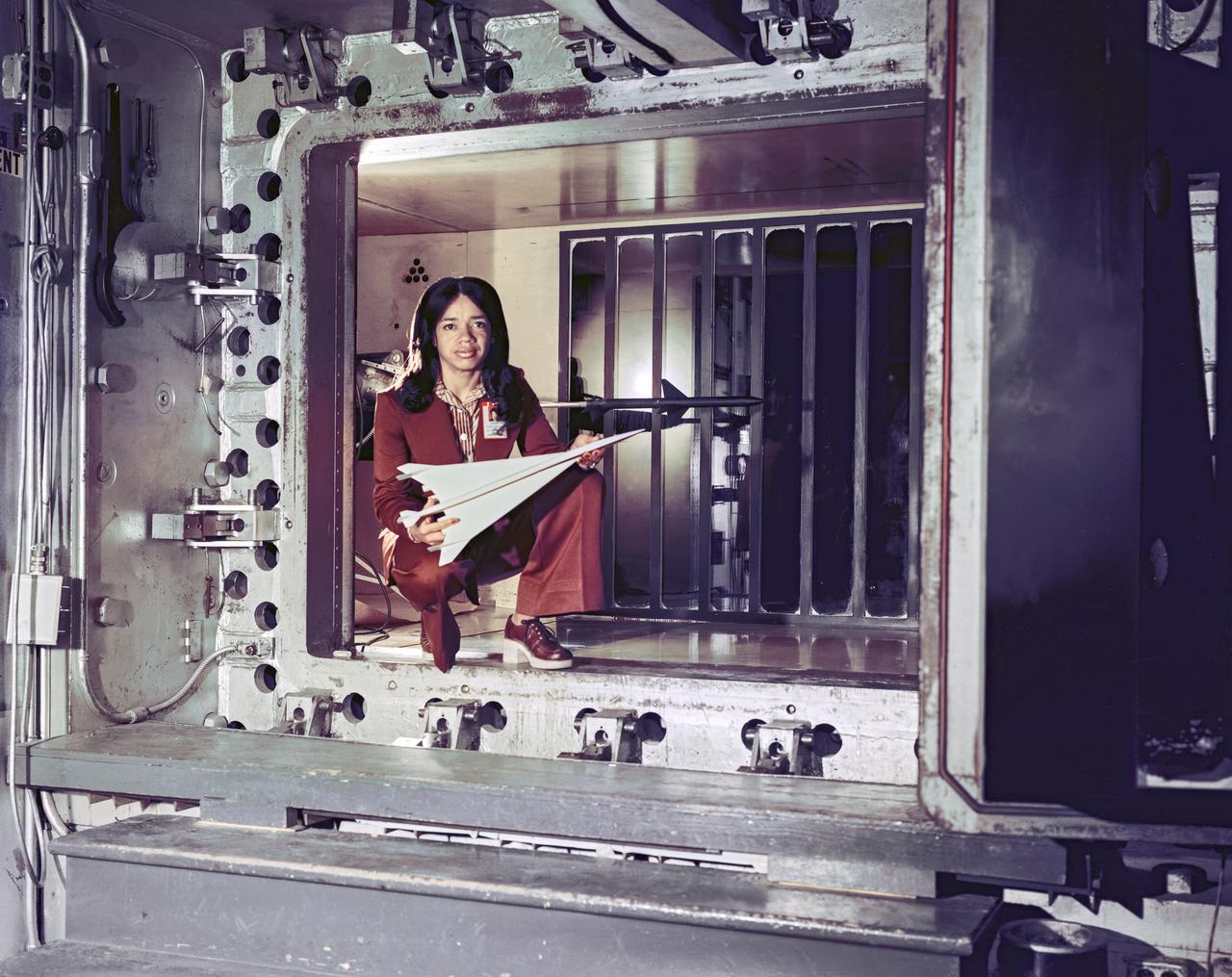
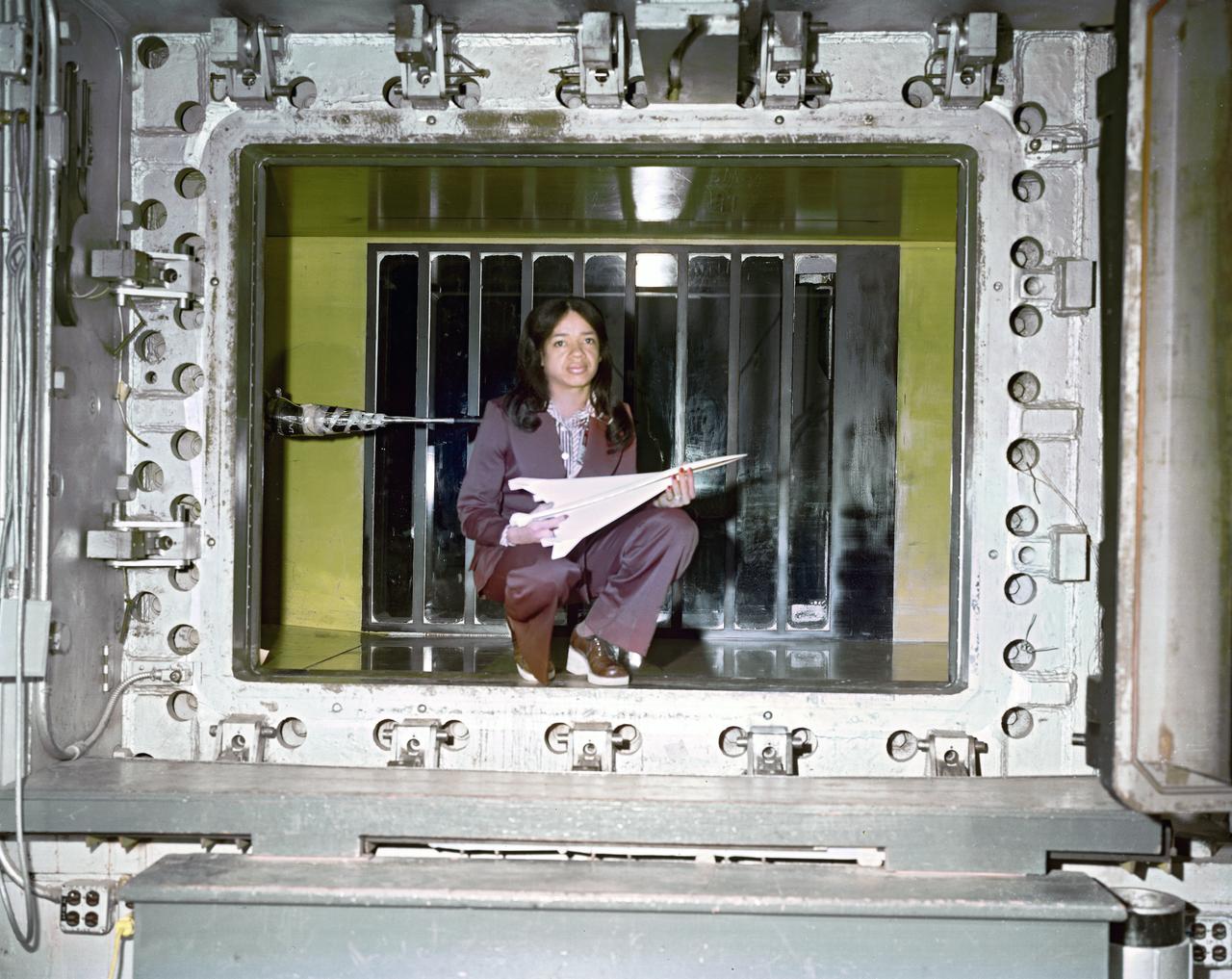
High Speed Research Program/Tu-144 Project Team. Christine Darden in front row first person on the left.
High Speed Research Program/Tu-144 Project Team.
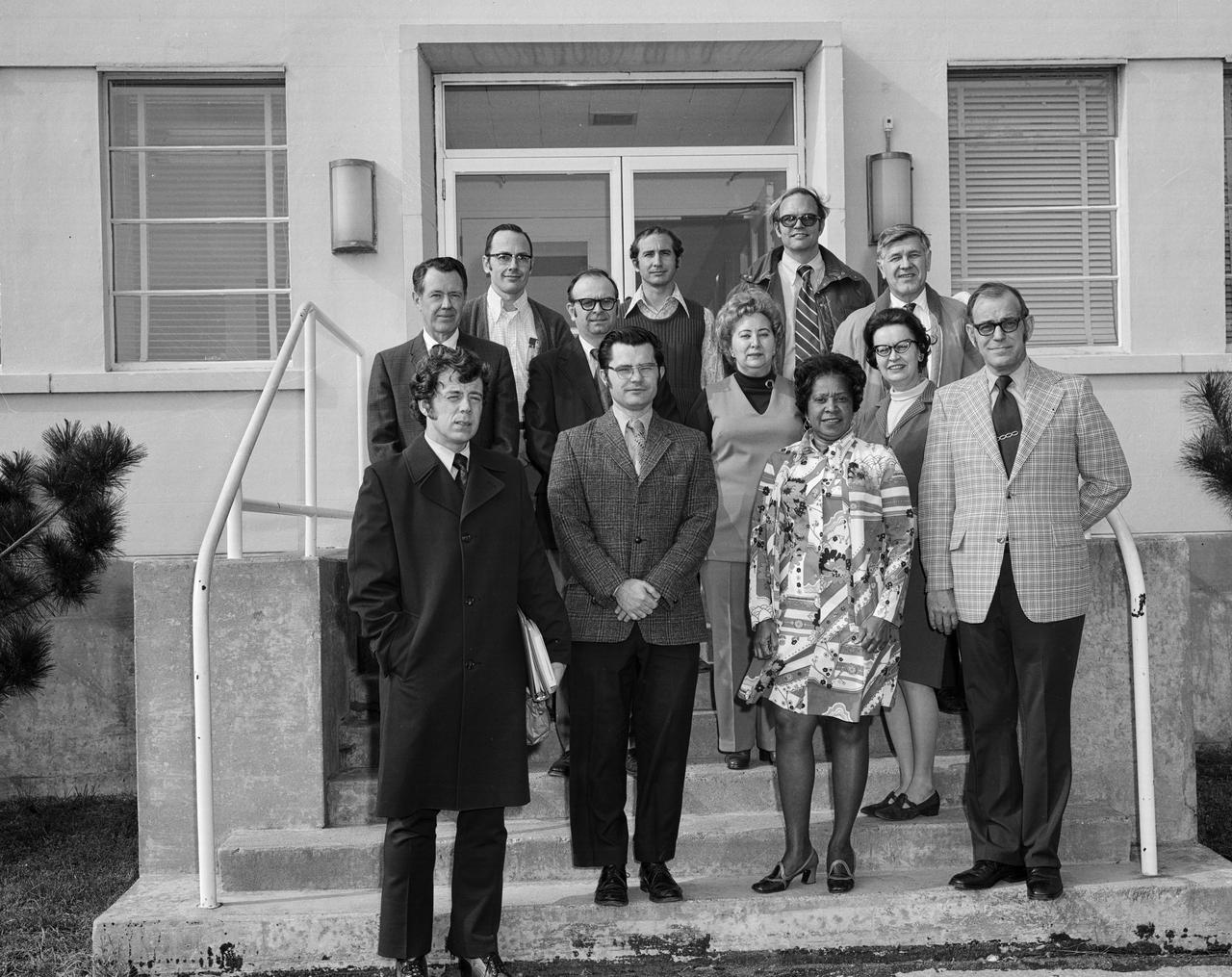
Photograph taken February 06, 1974.  High Speed Aircraft Division Personnel, Mary Jackson is one of the people in the front row of this group.  Mary Jackson belonged to the Theoretical Performance Group, High Speed Aircraft Division, Office of Director for Aeronautics at time of photo. First row: Steve Wornom, Dick Barnwell, Mary Jackson, and Bud Bobbitt; Second row: Bernie Klunker, Perry Newman, Branch secretary, Frances Keeter, and Ruby Davis, Branch mathematician; Third row: Dennis Allison, Jim Keller, Jerry South, and Cas Czarnecki.
High Speed Aircraft Division and Branch Personnel
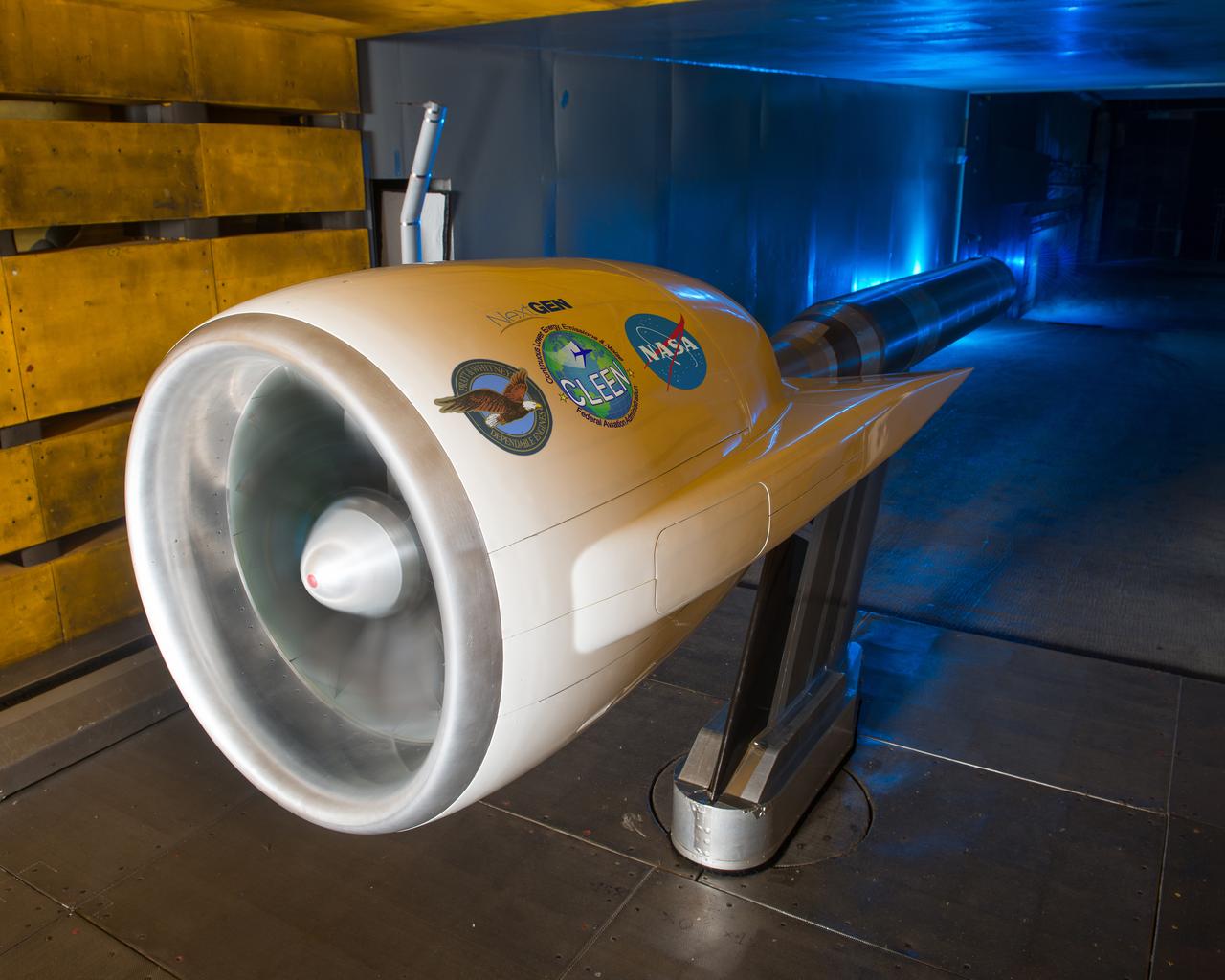
Ultra High Bypass Integrated System Test Testing of an Ultra High Bypass Ratio Turbofan model in the 9-by 15-Foot Low Speed Wind Tunnel. Pratt & Whitney designed the experimental engine to meet new efficiency and noise reduction targets for commercial aircraft set by NASA and the Federal Aviation Administration. The 9-by 15 tests analyzed two noise reduction technologies.
Ultra High Bypass Ratio Turbofan model in the 9-by 15-Foot Low Speed Wind Tunnel
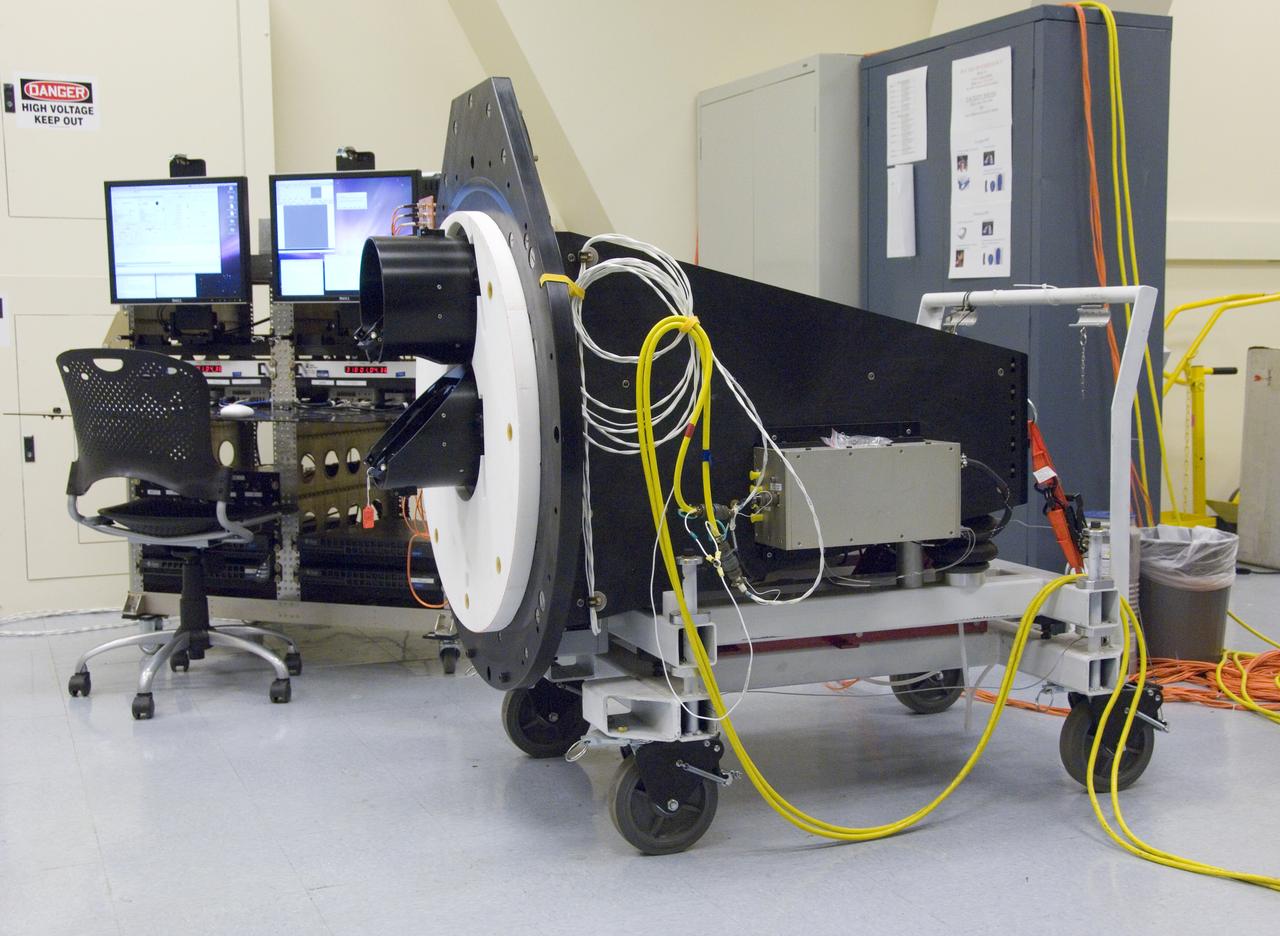
The Lowell Observatory's High-speed Imaging Photometer for Occultation rests on its dolly in the lab prior to installation on the SOFIA airborne observatory.
The Lowell Observatory's High-speed Imaging Photometer for Occultation rests on its dolly in the lab prior to installation on the SOFIA airborne observatory
Environmental Portrait of Christine M. Darden.  Sonic boom researcher, HSR, High Speed Research
Environmental Portrait of Christine M. Darden
Environmental Portrait of Christine M. Darden. Sonic boom researcher, HSR, High Speed Research
Environmental Portrait of Christine M. Darden
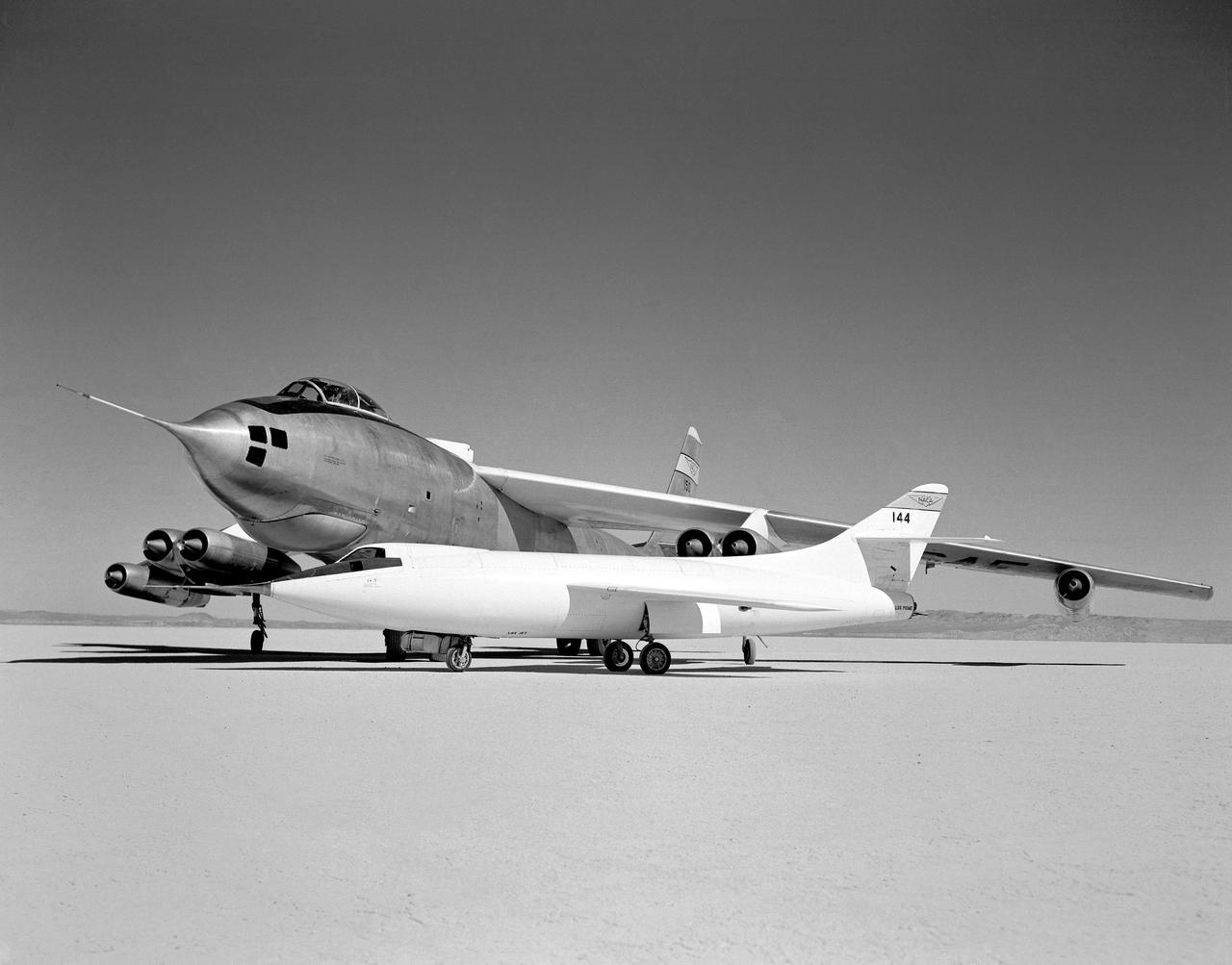
In 1954 this photo of two swept wing airplanes was taken on the ramp of NACA High-Speed Flight Research Station. The Douglas D-558-ll is a research aircraft while the Boeing B-47A Stratojet is a production bomber and very different in size. Both contributed to the studies for swept back wing research.
E-1433
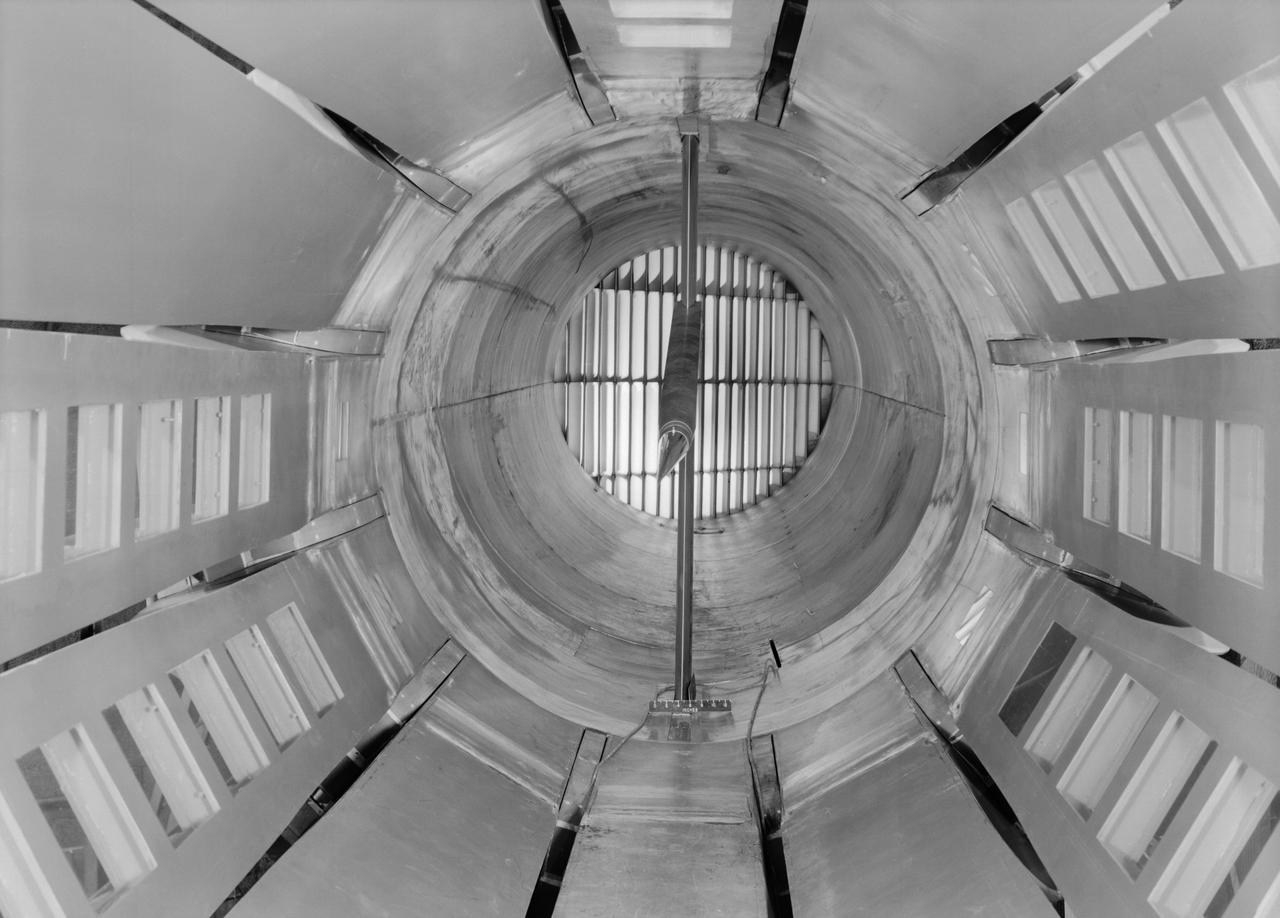
 Interior view of the slotted throat test section installed in the 8-Foot High Speed Tunnel (HST) in 1950.  The slotted region is about 160 inches in length. In this photograph, the sting-type model support is seen straight on. In a NASA report, the test section is described as follows:  The test section of the Langley 8-foot transonic tunnel is dodecagonal in cross section and has a cross-sectional area of about 43 square feet. Longitudinal slots are located between each of the 12 wall panels to allow continuous operation through the transonic speed range. The slots contain about 11 percent of the total periphery of the test section. Six of the twelve panels have windows in them to allow for schlieren observations. The entire test section is enclosed in a hemispherical shaped chamber.  John Becker noted that the tunnel s  final achievement was the development and use in routine operations of the first transonic slotted throat. The investigations of wing-body shapes in this tunnel led to Whitcomb s discovery of the transonic area rule.  James Hansen described the origins of the the slotted throat as follows:  In 1946 Langley physicist Ray H. Wright conceived a way to do transonic research effectively in a wind tunnel by placing slots in the throat of the test section. The concept for what became known as the slotted-throat or slotted-wall tunnel came to Wright not as a solution to the chronic transonic problem, but as a way to get rid of wall interference (i.e., the mutual effect of two or more meeting waves or vibrations of any kind caused by solid boundaries) at subsonic speeds.  For most of the year before Wright came up with this idea, he had been trying to develop a theoretical understanding of wall interference in the 8-Foot HST, which was then being repowered for Mach 1 capability.  When Wright presented these ideas to John Stack, the response was enthusiastic but neither Wright nor Stack thought of slotted-throats as a solution to the transonic problem, only the wall interference problem.  It was an accidental discovery which showed that slotted throats might solve the transonic problem. Most engineers were skeptical but Stack persisted. Initially, plans were to modify the 16-Foot tunnel but in the spring of 1948, Stack announced that the 8-Foot HST would also be modified. As Hansen notes:  The 8-Foot HST began regular transonic operations for research purposes on 6 October 1950.  The concept was a success and led to plans for a new wind tunnel which would be known as the 8-Foot Transonic Pressure Tunnel. -- Published in U.S., National Advisory Committee for Aeronautics,  Characteristics of Nine Research Wind Tunnels of the Langley Aeronautical Laboratory,  1957, pp. 17, 22  James R. Hansen, Engineer in Charge, NASA SP-4305, p. 454 and Chapter 11,  The Slotted Tunnel and the Area Rule.
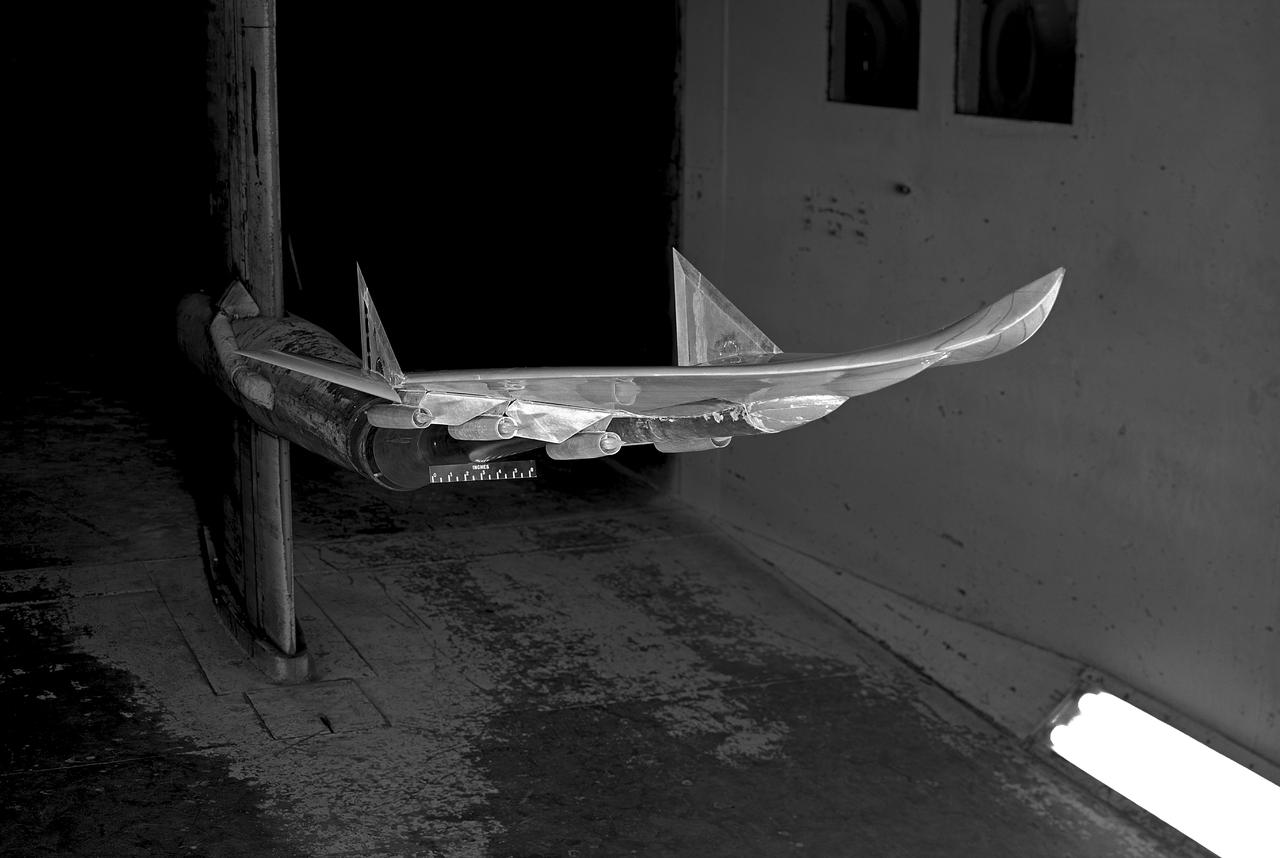
8-Foot High Speed Tunnel (HST)
NASA GLENN/NASA LANGLEY LOADS COMPARISON TEST WITH 6 COMPONENT FORCE/MOMENT BALANCE AND 1.7% HIGH SPEED RESEARCH MODEL 5.
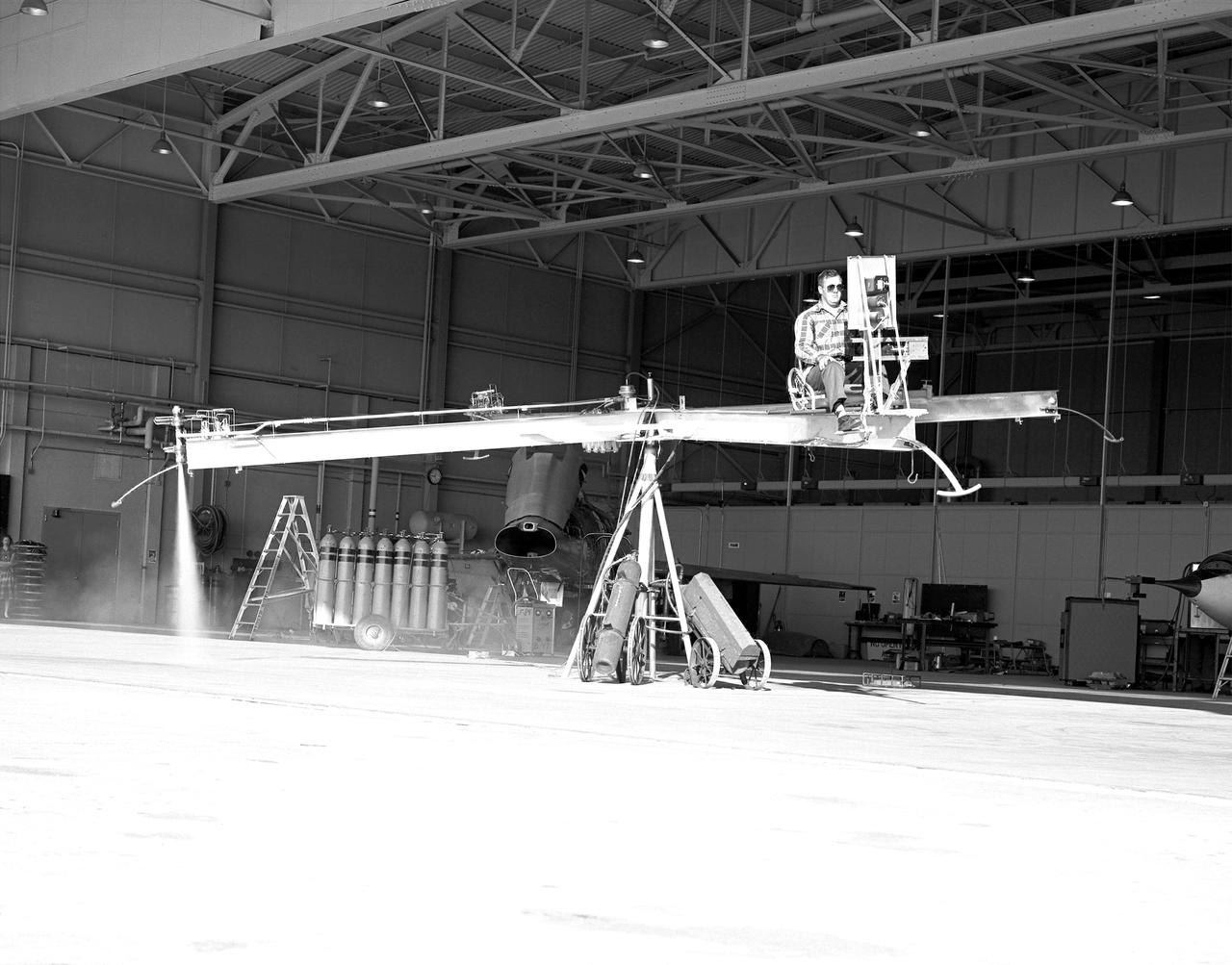
NACA High-Speed Flight Station test pilot Stan Butchart flying the Iron Cross, the mechanical reaction control simulator. High-pressure nitrogen gas expanded selectively, by the pilot, through the small reaction control thrusters maneuvered the Iron Cross through the three axes. The exhaust plume can be seen from the aft thruster. The tanks containing the gas can be seen on the cart at the base of the pivot point of the Iron Cross. NACA technicians built the iron-frame simulator, which matched the inertia ratios of the Bell X-1B airplane, installing six jet nozzles to control the movement about the three axes of pitch, roll, and yaw.
E-2578
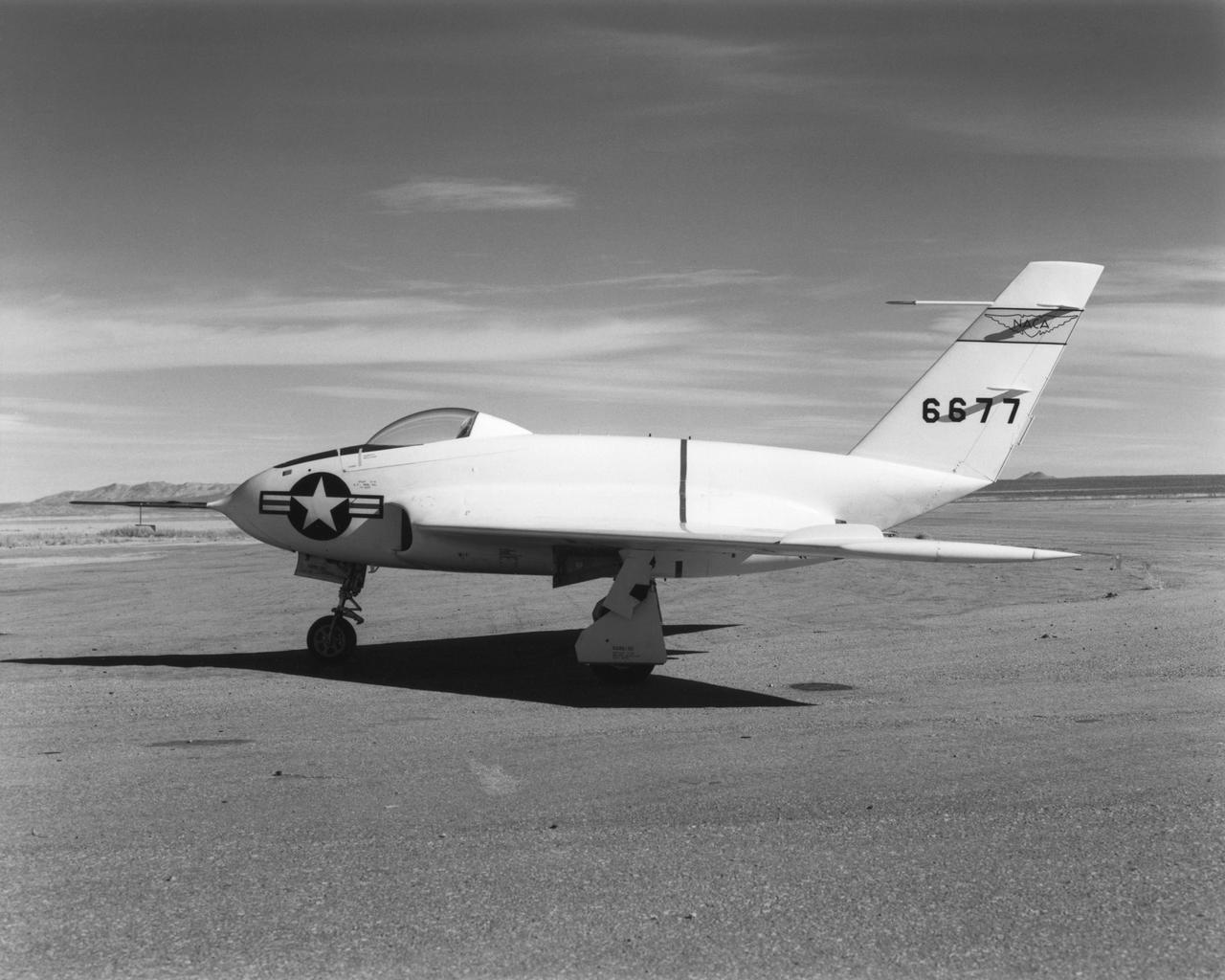
In this 1950 view of the left side of the NACA High-Speed Flight Research Station's X-4 research aircraft, the low swept wing and horizontal taillest design are seen. The X-4 Bantam, a single-place, low swept-wing, semi-tailless aircraft, was designed and built by Northrop Aircraft, Inc. It had no horizontal tail surfaces and its mission was to obtain in-flight data on the stability and control of semi-tailless aircraft at high subsonic speeds.
Side view of Northrop X-4 ship 2
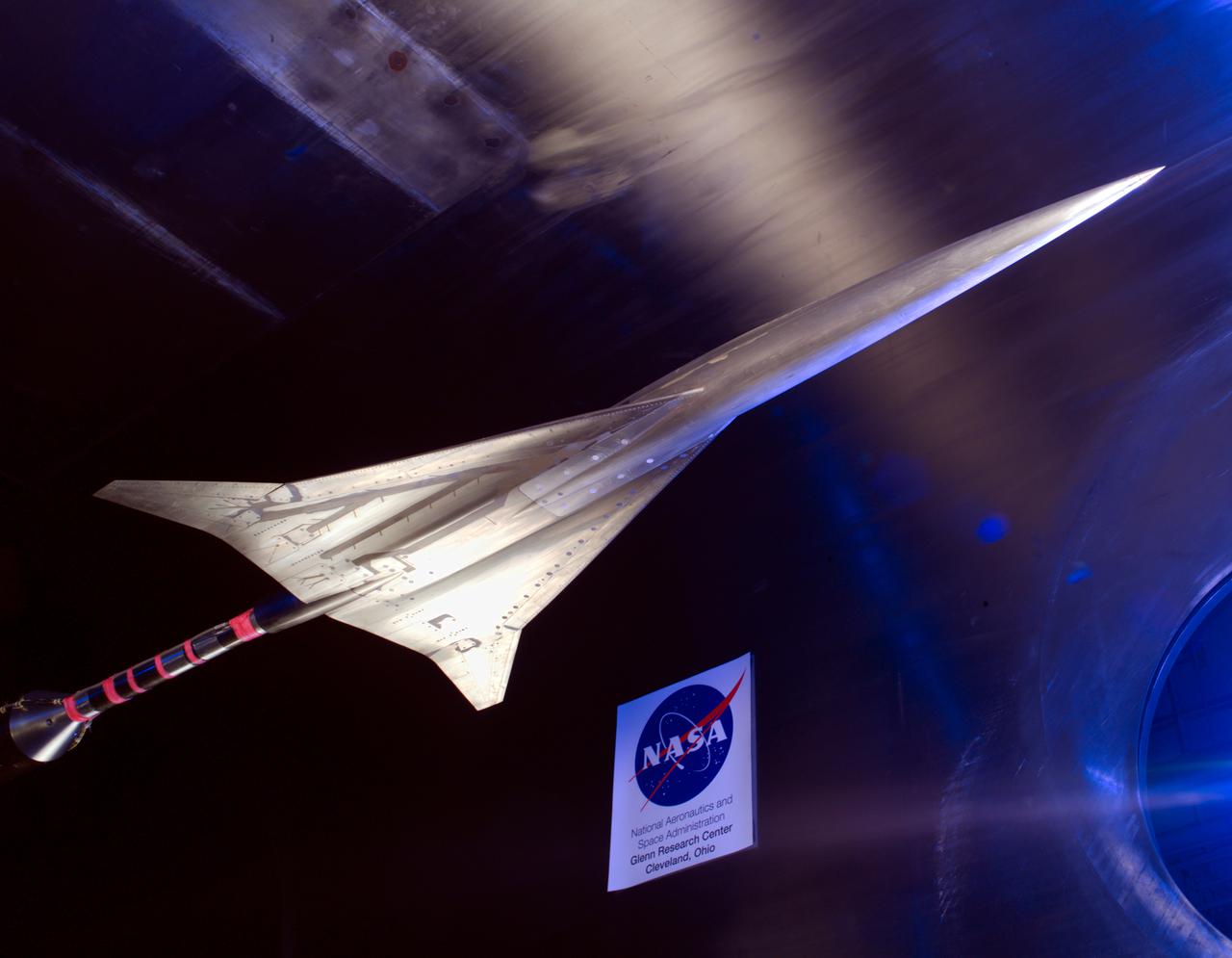
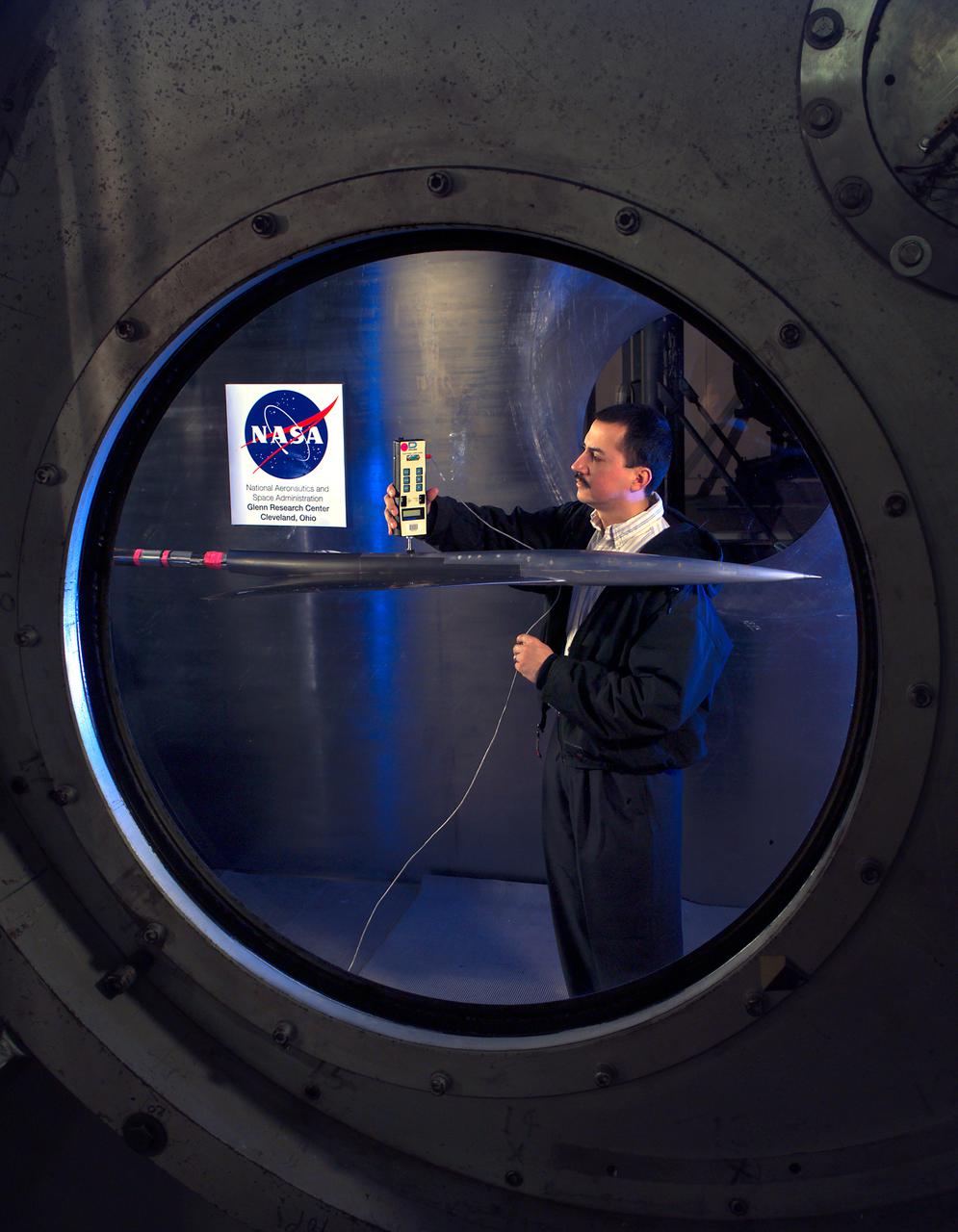
NASA Glenn/NASA Langley, Loads Comparison Test With 6 Component Force/Moment Balance and 1.7% High Speed Research, HSR Model 5. In the Glenn Research Center 10x10 Foot Supersonic Wind Tunnel, SWT
NASA Glenn/NASA Langley Loads Comparison Test with 6 Component Force/Moment Balance and 1.7% High Speed Research, HSR Model 5
NASA GLENN/NASA LANGLEY LOADS COMPARISON TEST WITH 6 COMPONENT FORCE/MOMENT BALANCE AND 1.7% HIGH SPEED RESEARCH MODEL 5. in the 10x10 super sonic wind tunnel
NASA GLENN/NASA LANGLEY LOADS COMPARISON TEST WITH 6 COMPONENT FORCE/MOMENT BALANCE AND 1.7% HIGH SPEED RESEARCH MODEL 5.
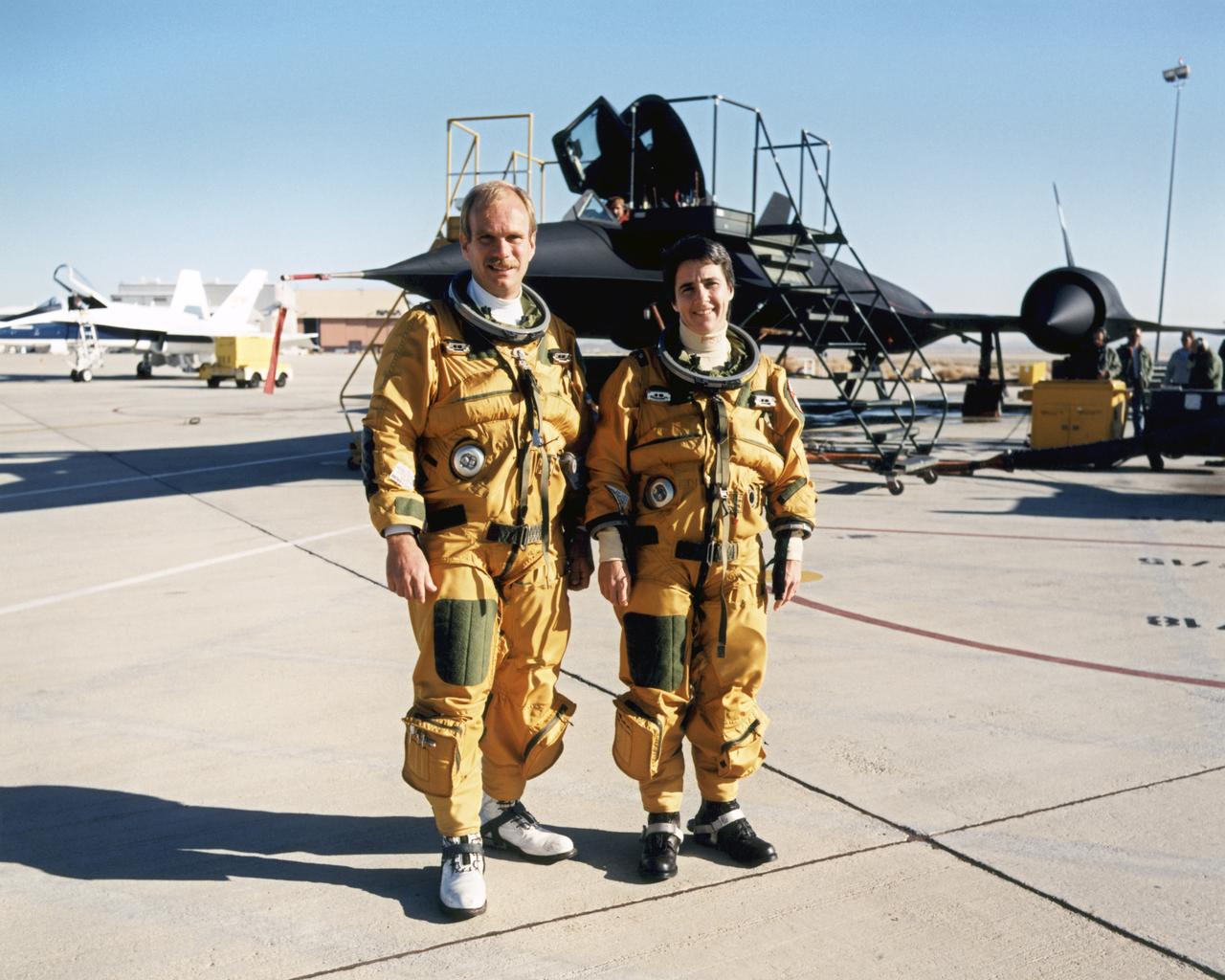
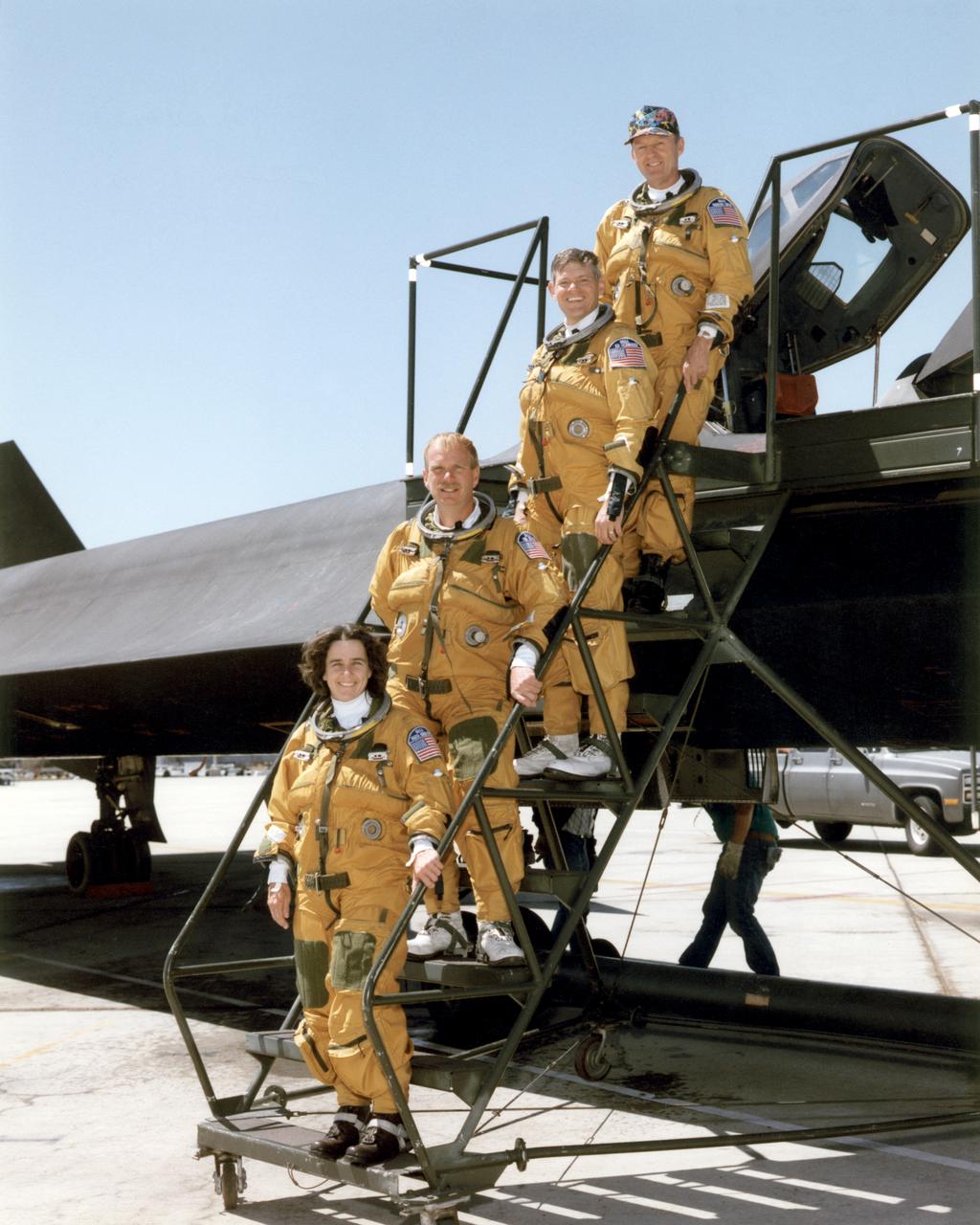
The husband-and-wife team of Bob Meyer and Marta Bohn-Meyer flew as flight test engineers on high-speed experiments flown on the triple-sonic SR-71 at NASA Dryden.
The husband-and-wife team of Bob Meyer and Marta Bohn-Meyer flew as flight test engineers on high-speed experiments flown on the SR-71 at NASA Dryden.
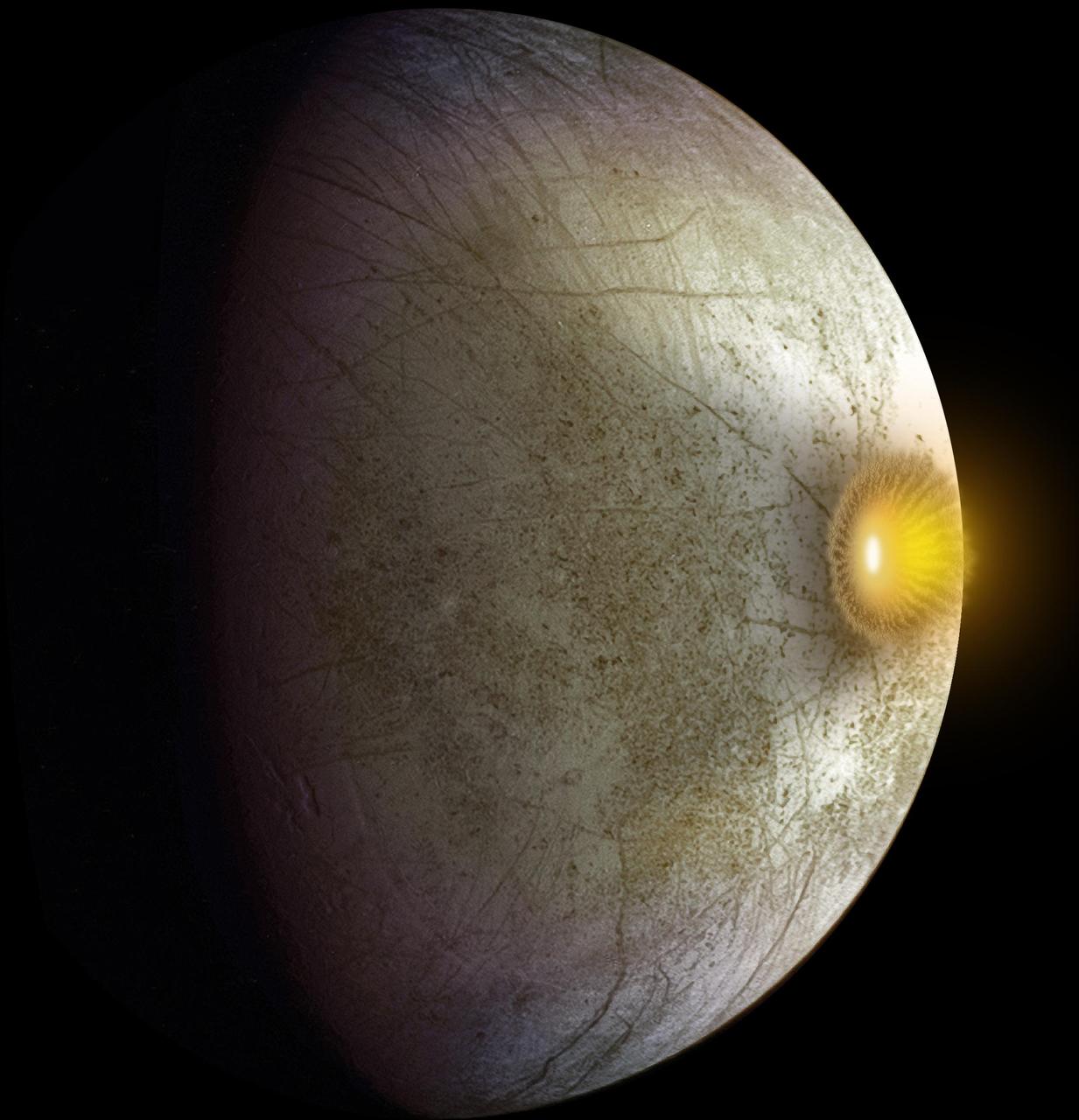
This artist concept shows a possible explosion resulting from a high-speed collision between a space rock and Jupiter moon Europa.
Hit Hard: Possible Collision at Europa Artist Concept
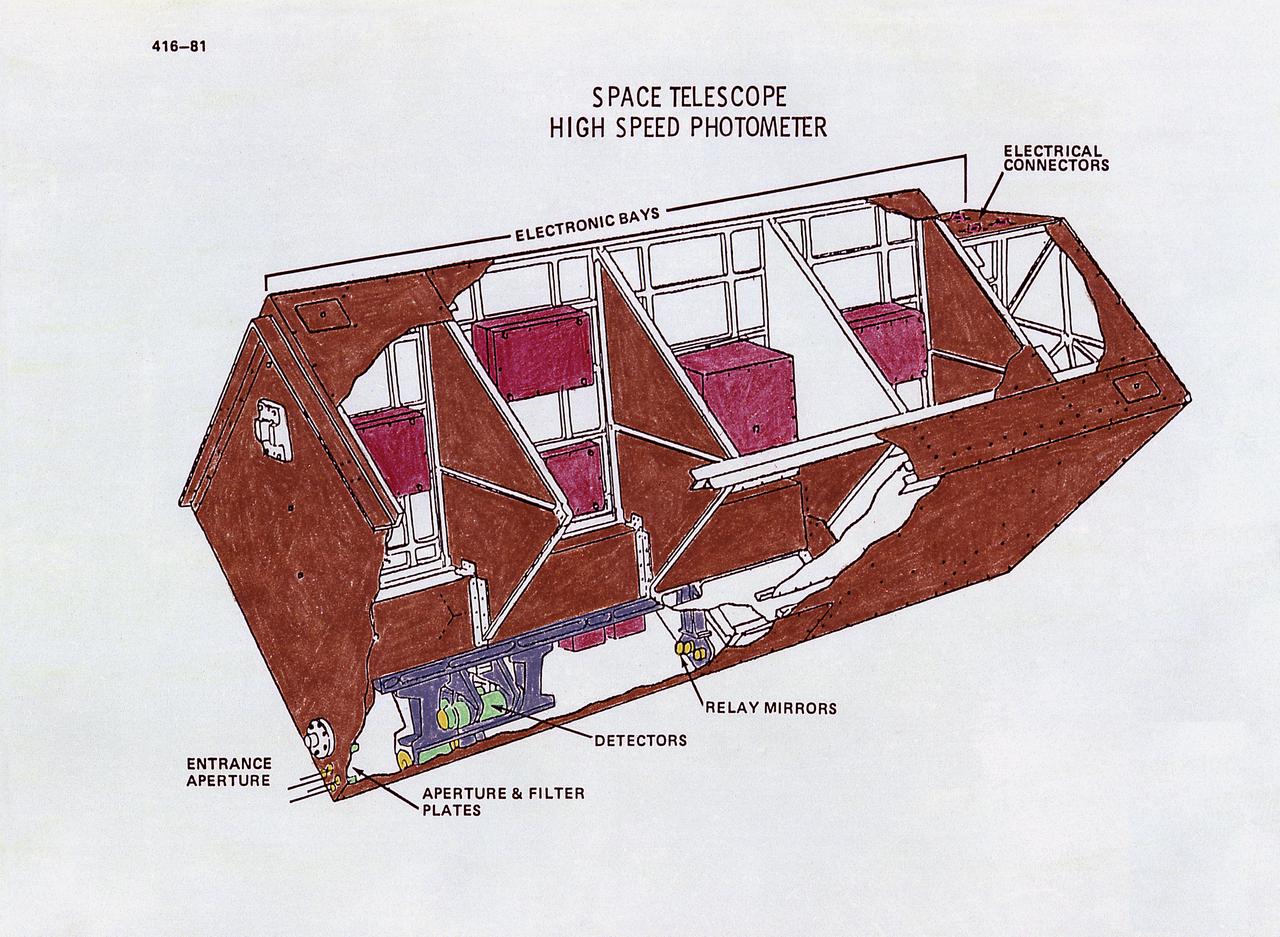
This drawing illustrates the Hubble Space Telescope's (HST's) High Speed Photometer (HSP). The HSP measures the intensity of starlight (brightness), which will help determine astronomical distances. Its principal use will be to measure extremely-rapid variations or pulses in light from celestial objects, such as pulsating stars. The HSP produces brightness readings. Light passes into one of four special signal-multiplying tubes that record the data. The HSP can measure energy fluctuations from objects that pulsate as rapidly as once every 10 microseconds. From HSP data, astronomers expect to learn much about such mysterious objects as pulsars, black holes, and quasars. The purpose of the HST, the most complex and sensitive optical telescope ever made, is to study the cosmos from a low-Earth orbit. By placing the telescope in space, astronomers are able to collect data that is free of the Earth's atmosphere. The HST views galaxies, stars, planets, comets, possibly other solar systems, and even unusual phenomena such as quasars, with 10 times the clarity of ground-based telescopes. The HST was deployed from the Space Shuttle Discovery (STS-31 mission) into Earth orbit in April 1990. The Marshall Space Flight Center had responsibility for design, development, and construction of the HST. The Perkin-Elmer Corporation, in Danbury, Cornecticut, developed the optical system and guidance sensors.
History of Hubble Space Telescope (HST)
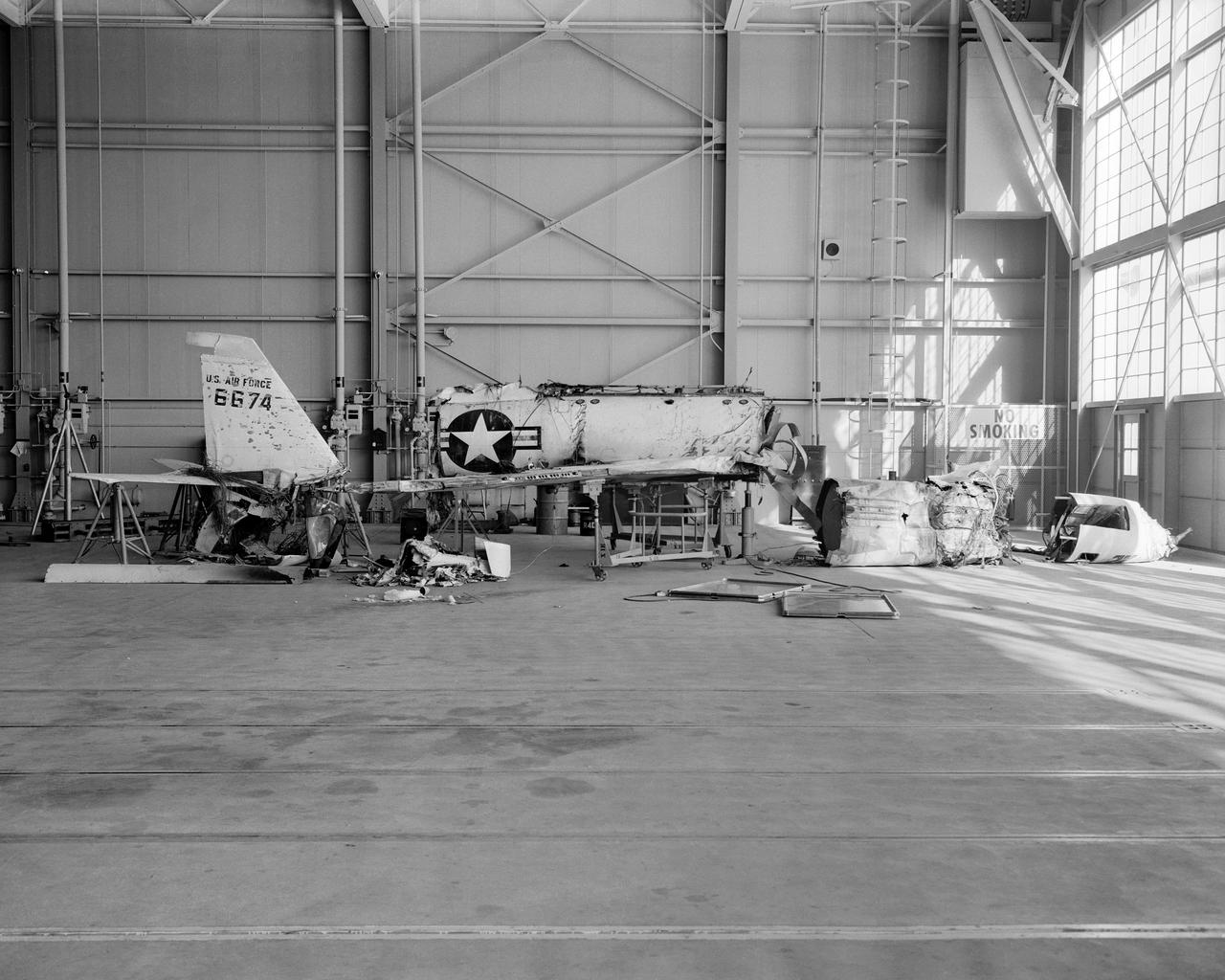
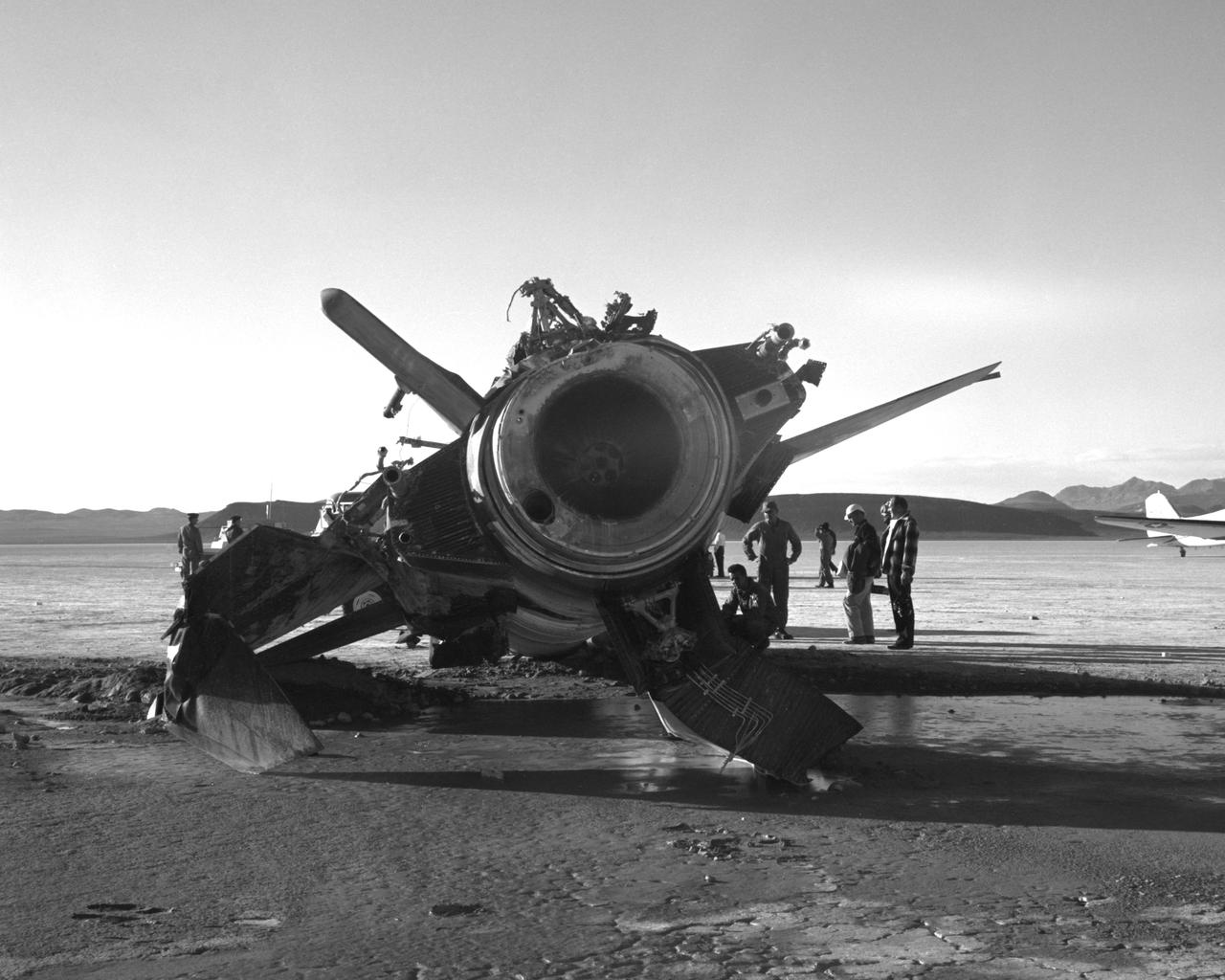
The X-2, initially an Air Force program, was scheduled to be transferred to the civilian National Advisory Committee for Aeronautics (NACA) for scientific research. The Air Force delayed turning the aircraft over to the NACA in the hope of attaining Mach 3 in the airplane. The service requested and received a two-month extension to qualify another Air Force test pilot, Capt. Miburn "Mel" Apt, in the X-2 and attempt to exceed Mach 3. After several ground briefings in the simulator, Apt (with no previous rocket plane experience) made his flight on 27 September 1956. Apt raced away from the B-50 under full power, quickly outdistancing the F-100 chase planes. At high altitude, he nosed over, accelerating rapidly. The X-2 reached Mach 3.2 (2,094 mph) at 65,000 feet. Apt became the first man to fly more than three times the speed of sound.  Still above Mach 3, he began an abrupt turn back to Edwards. This maneuver proved fatal as the X-2 began a series of diverging rolls and tumbled out of control. Apt tried to regain control of the aircraft. Unable to do so, Apt separated the escape capsule. Too late, he attempted to bail out and was killed when the capsule impacted on the Edwards bombing range. The rest of the X-2 crashed five miles away.  The wreckage of the X-2 rocket plane was later taken to NACA's High Speed Flight Station for analysis following the crash.
Wreckage of the X-2 rocket plane was taken to NACA's High Speed Flight Station for analysis following the 1956 crash that killed Air Force pilot Capt. Mel Apt
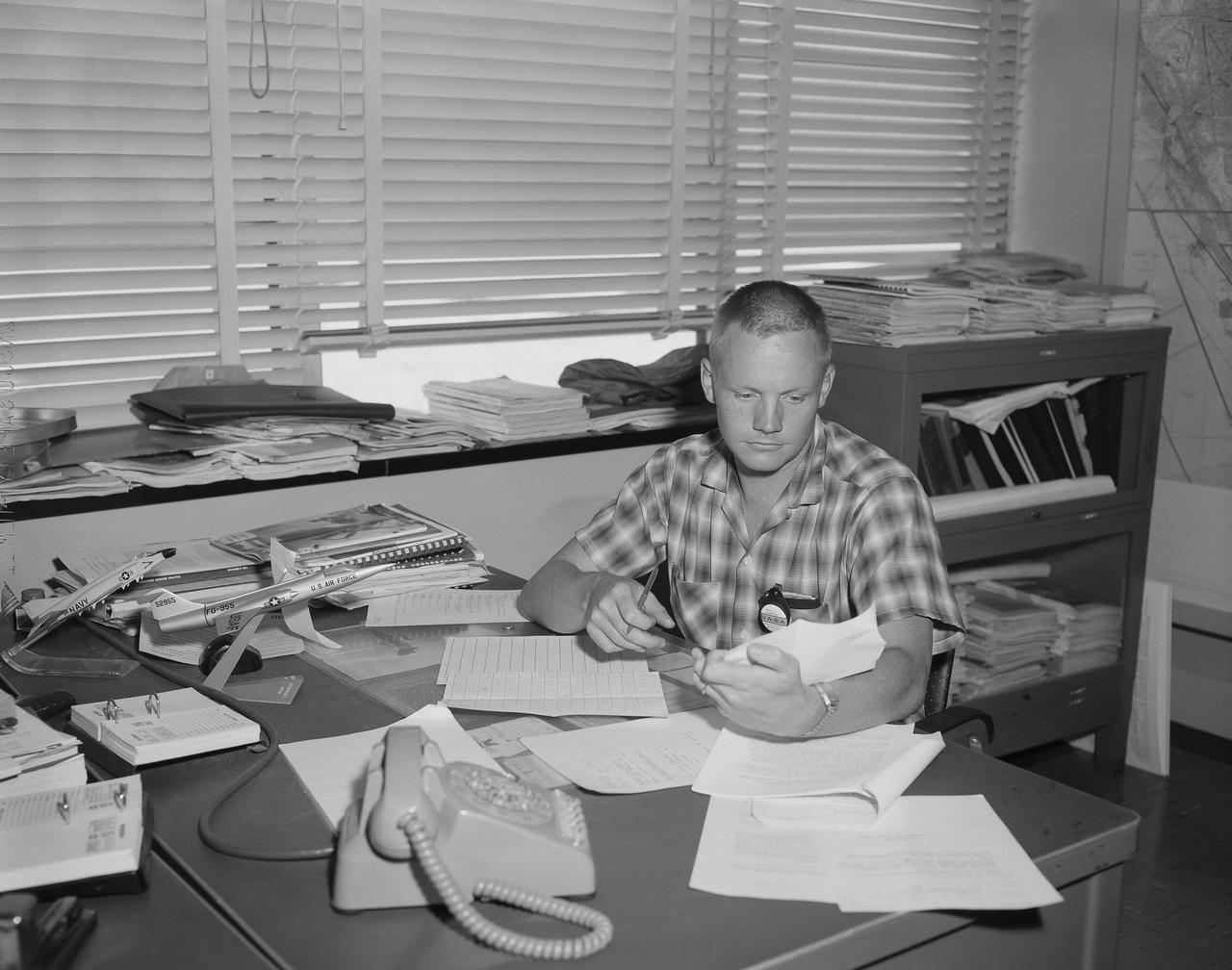
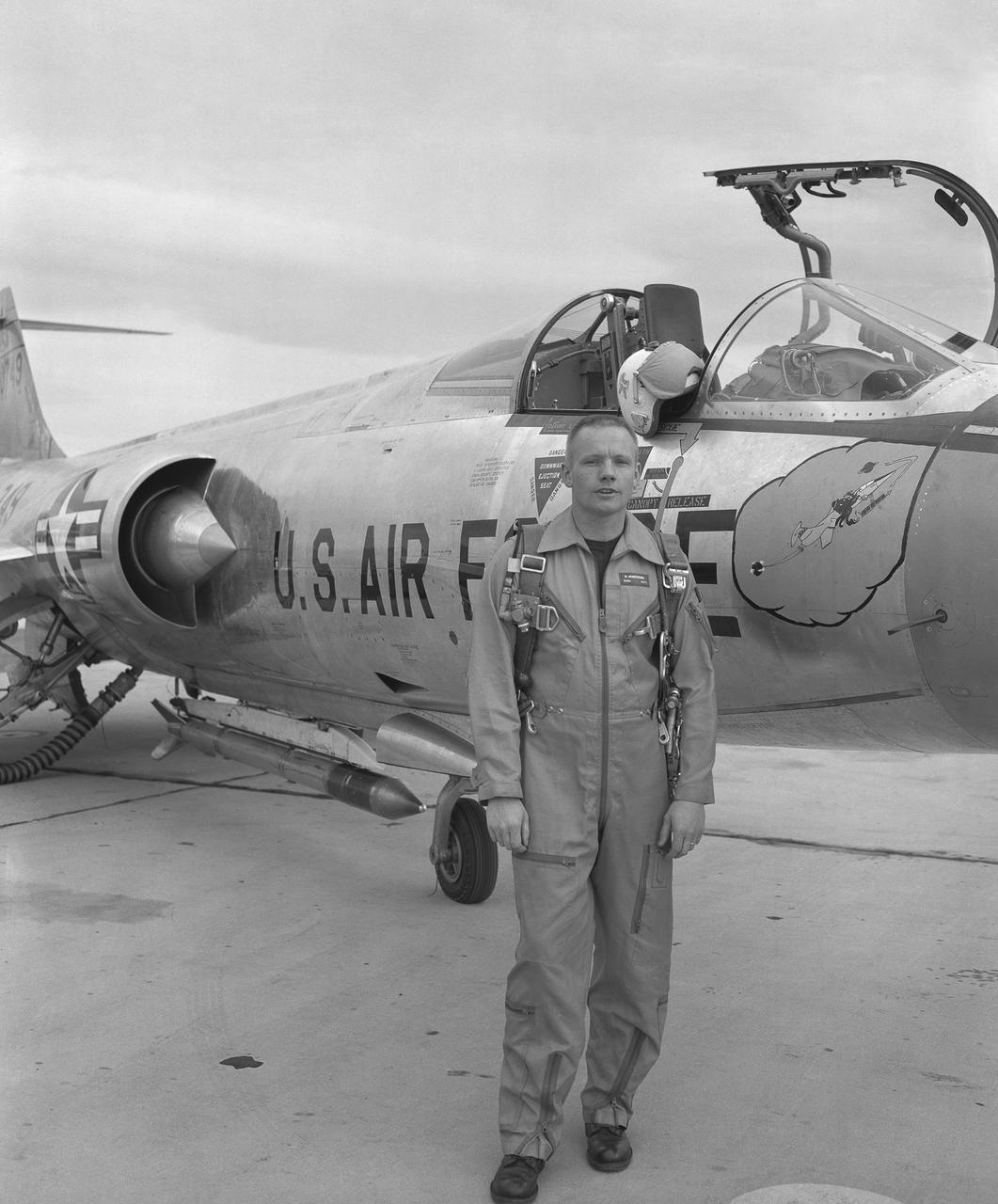
Famed astronaut Neil A. Armstrong – the first person to set foot on the Moon during the historic Apollo 11 mission in July 1969 – spent seven years as a research pilot at the NACA-NASA High-Speed Flight Station, now NASA’s Armstrong Flight Research Center in Edwards, California, before joining the space program. During his tenure, Armstrong was actively engaged in both the piloting and engineering aspects of numerous NASA programs and projects.
Neil Armstrong’s Years as a NASA Pilot
Flight engineers Marta Bohn-Meyer and Bob Meyer and pilots Ed Schneider and Rogers Smith flew the triple-sonic SR-71 in high-speed research experiments at NASA Dryden.
Flight engineers Marta Bohn-Meyer and Bob Meyer and pilots Eddie Schneider and Rogers Smith flew the SR-71 in high-speed research experiments at NASA Dryden.
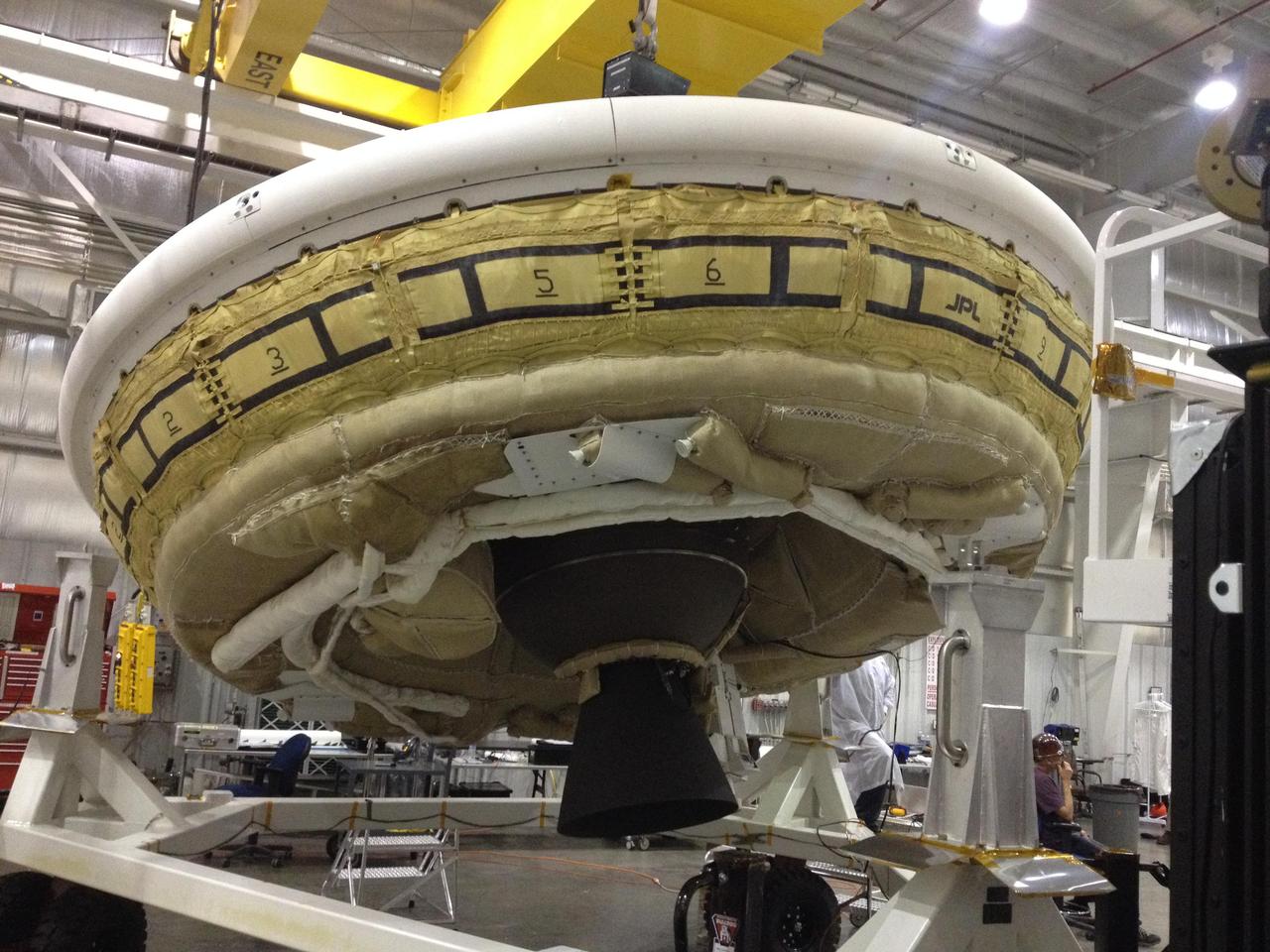
NASA Low-Density Supersonic Decelerator project, will test an inflatable decelerator and a parachute at high altitudes and speeds over the Pacific Missile Range this June.
Preparing for a Supersonic Test
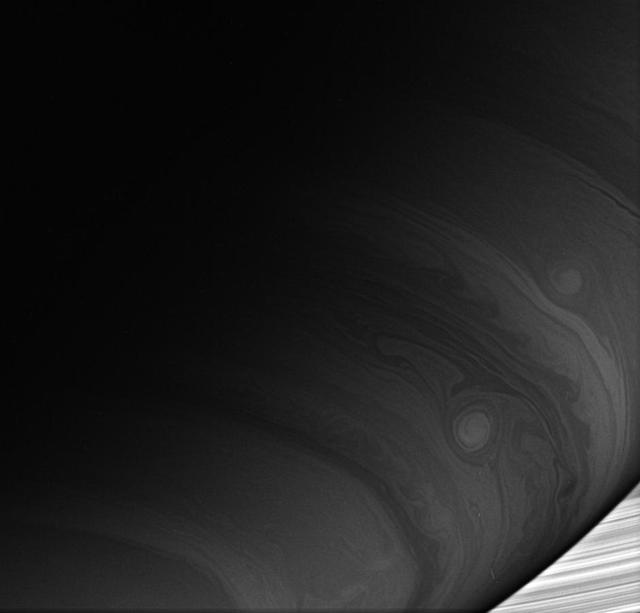
Two bright vortices roll across the cloud-lined face of Saturn, where winds howl at high speeds never experienced on Earth
Agitators of the Atmosphere
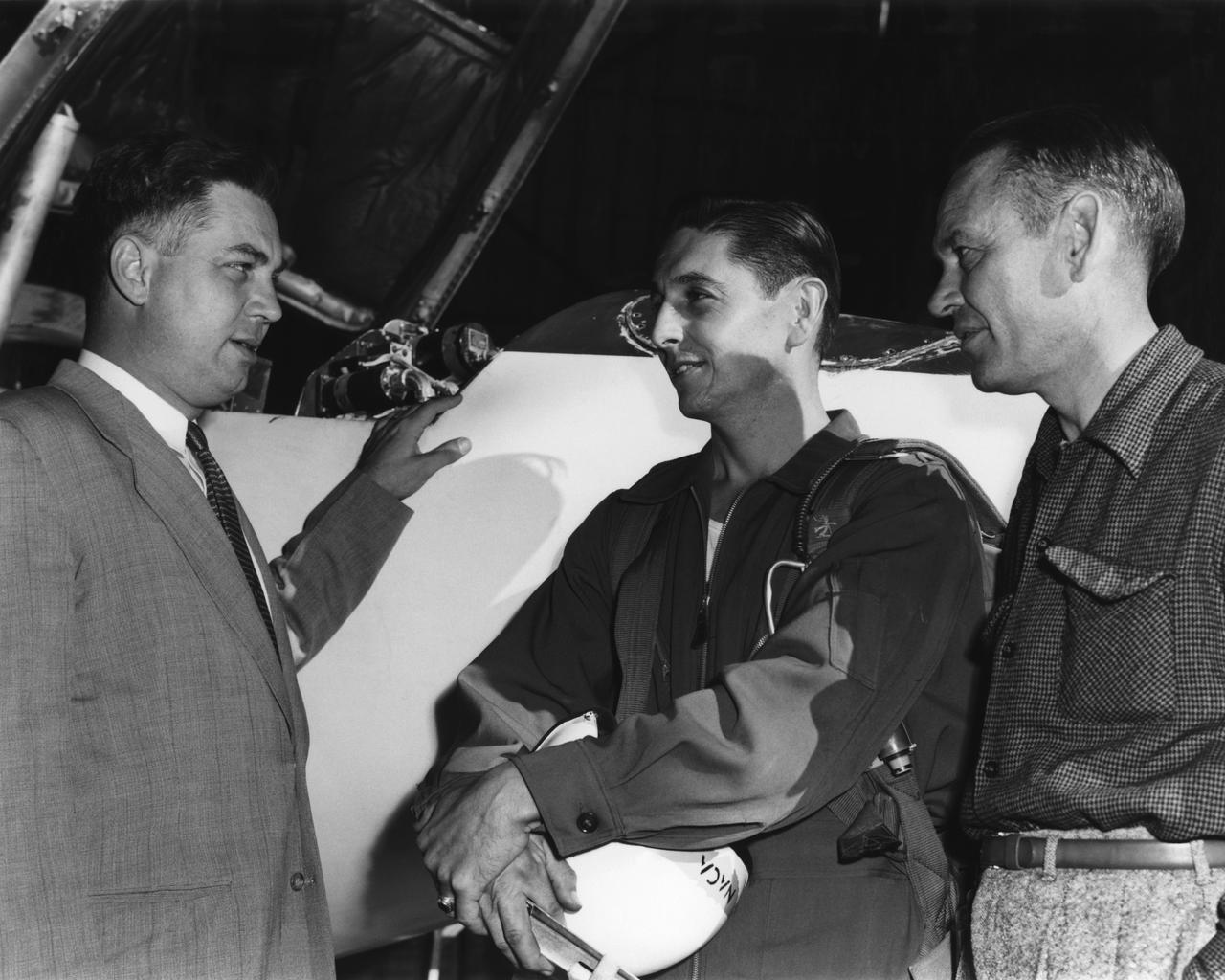
High-Speed Research Station Director Walter C. Williams, NACA pilot A. Scott Crossfield, and Director of Flight Operations Joe Vensel in front of the Douglas D-558-2 after the first Mach 2 flight.
E53-1096
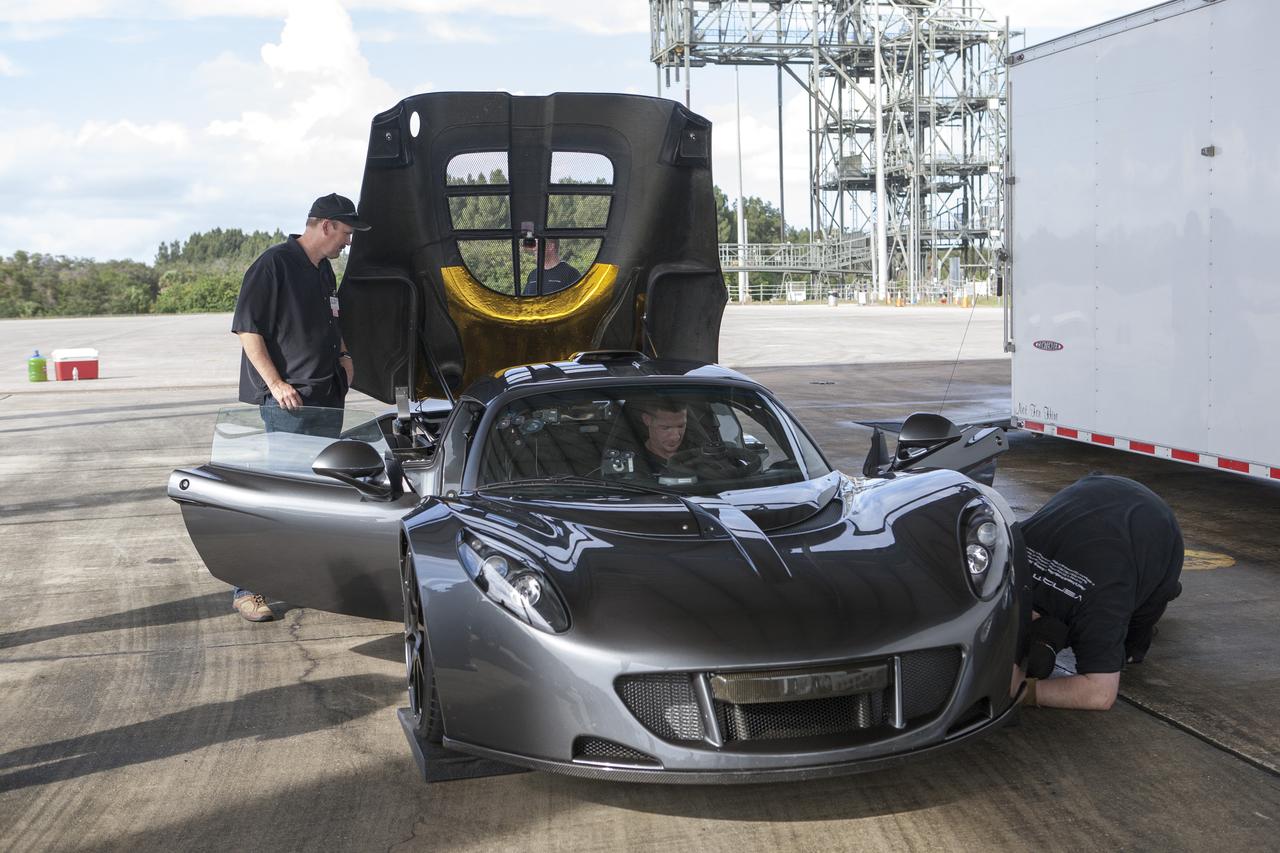
CAPE CANAVERAL, Fla. - An engineer readies a Hennessey Venom GT for test runs on the 3.5-mile long runway at the Shuttle Landing Facility at NASA's Kennedy Space Center in Florida. The flat concrete runway is one of the few places in the world where high performance automobiles can be tested for aerodynamic and safety designs. Hennessey Performance of Sealy, Texas, worked with Performance Power Racing in West Palm Beach to arrange use of the NASA facility. Performance Power Racing has conducted numerous engineering tests on the runway with a variety of vehicles. Photo credit: NASA/Kim Shiflett
High Speed Prototype Car Test
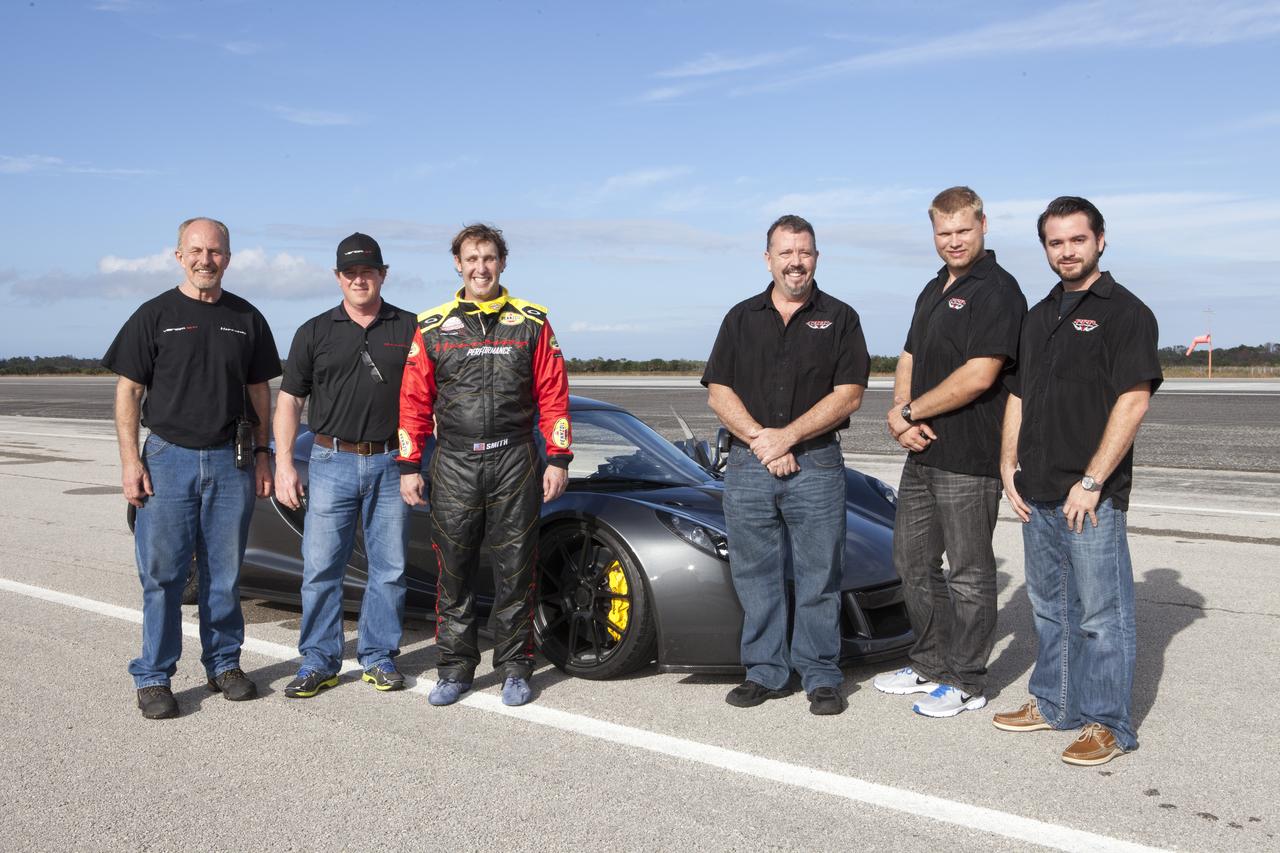
CAPE CANAVERAL, Fla. - The Performance Power Racing and Hennessey Performance teams pose with a Hennessey Venom GT at the 3.5-mile long runway at the Shuttle Landing Facility at NASA's Kennedy Space Center in Florida. The teams are, from left, Hennessey's John Heinricy, John Hennessey, Brian Smith, Performance Power Racing's Johnny Bohmer, Matt Lundy and Jeff McEachran. The flat concrete runway is one of the few places in the world where high performance automobiles can be tested for aerodynamic and safety designs. Hennessey Performance of Sealy, Texas, worked with Performance Power Racing in West Palm Beach to arrange use of the NASA facility. Performance Power Racing has conducted numerous engineering tests on the runway with a variety of vehicles.
High Speed Prototype Car Test
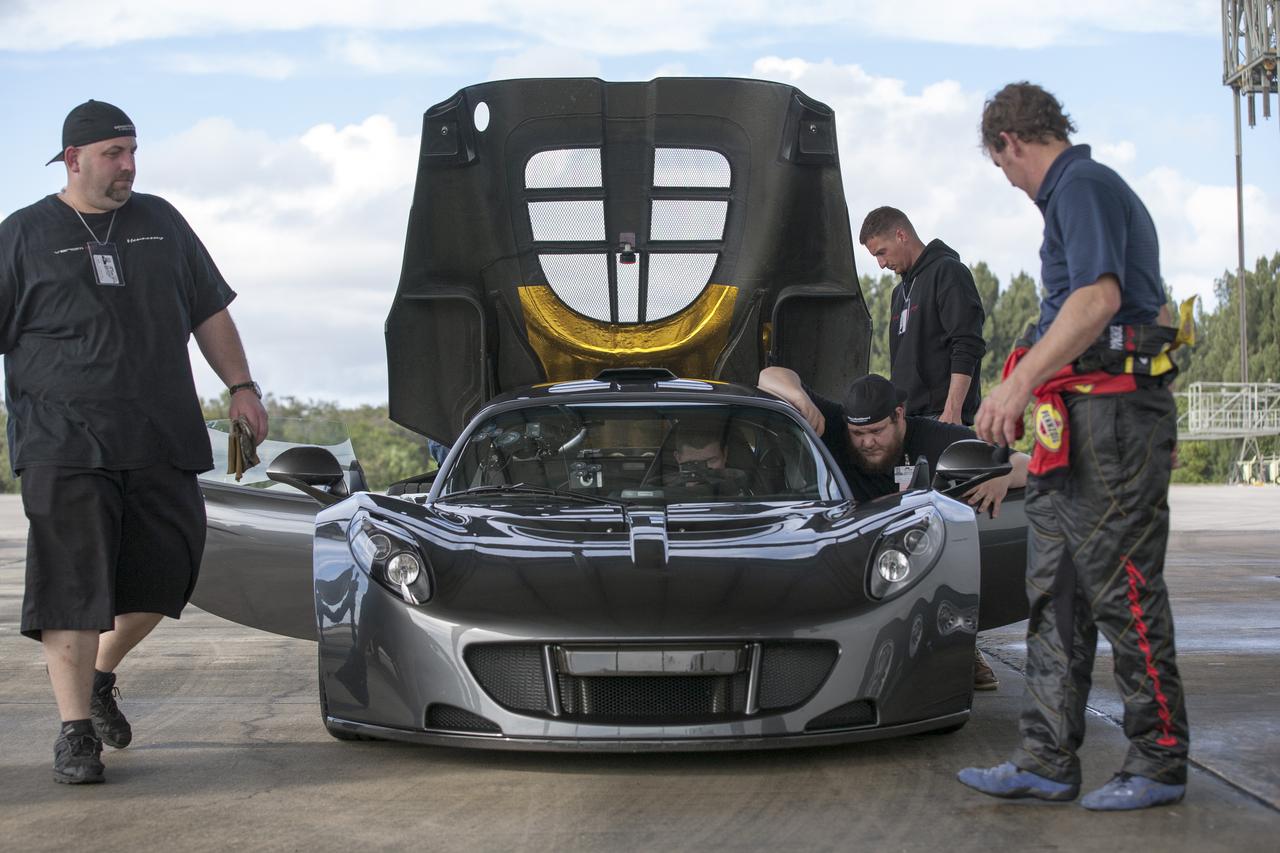
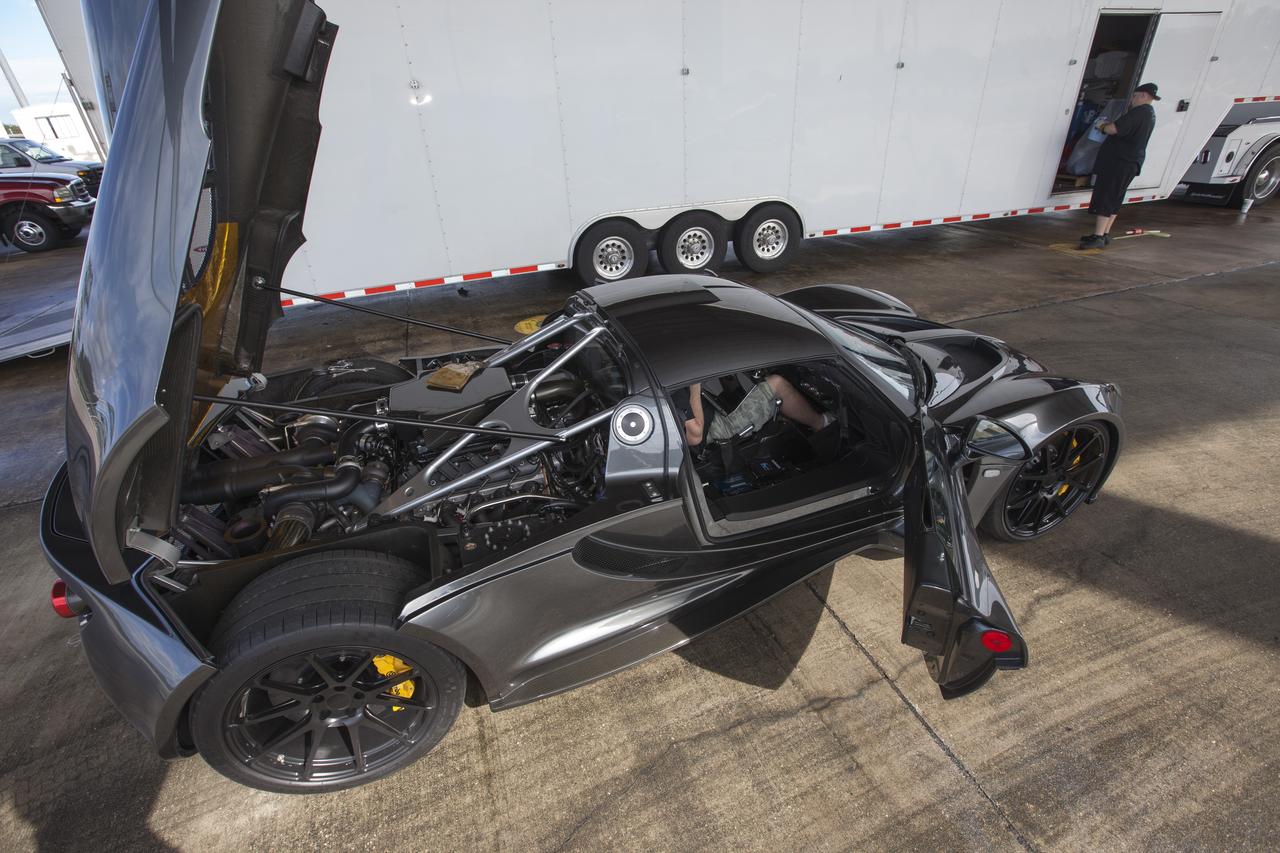
CAPE CANAVERAL, Fla. - Mechanics, engineers and Driver Brian Smith, in jumpsuit, ready a Hennessey Venom GT for test runs on the 3.5-mile long runway at the Shuttle Landing Facility at NASA's Kennedy Space Center in Florida. The flat concrete runway is one of the few places in the world where high performance automobiles can be tested for aerodynamic and safety designs. Hennessey Performance of Sealy, Texas, worked with Performance Power Racing in West Palm Beach to arrange use of the NASA facility. Performance Power Racing has conducted numerous engineering tests on the runway with a variety of vehicles. Photo credit: NASA/Kim Shiflett
High Speed Prototype Car Test
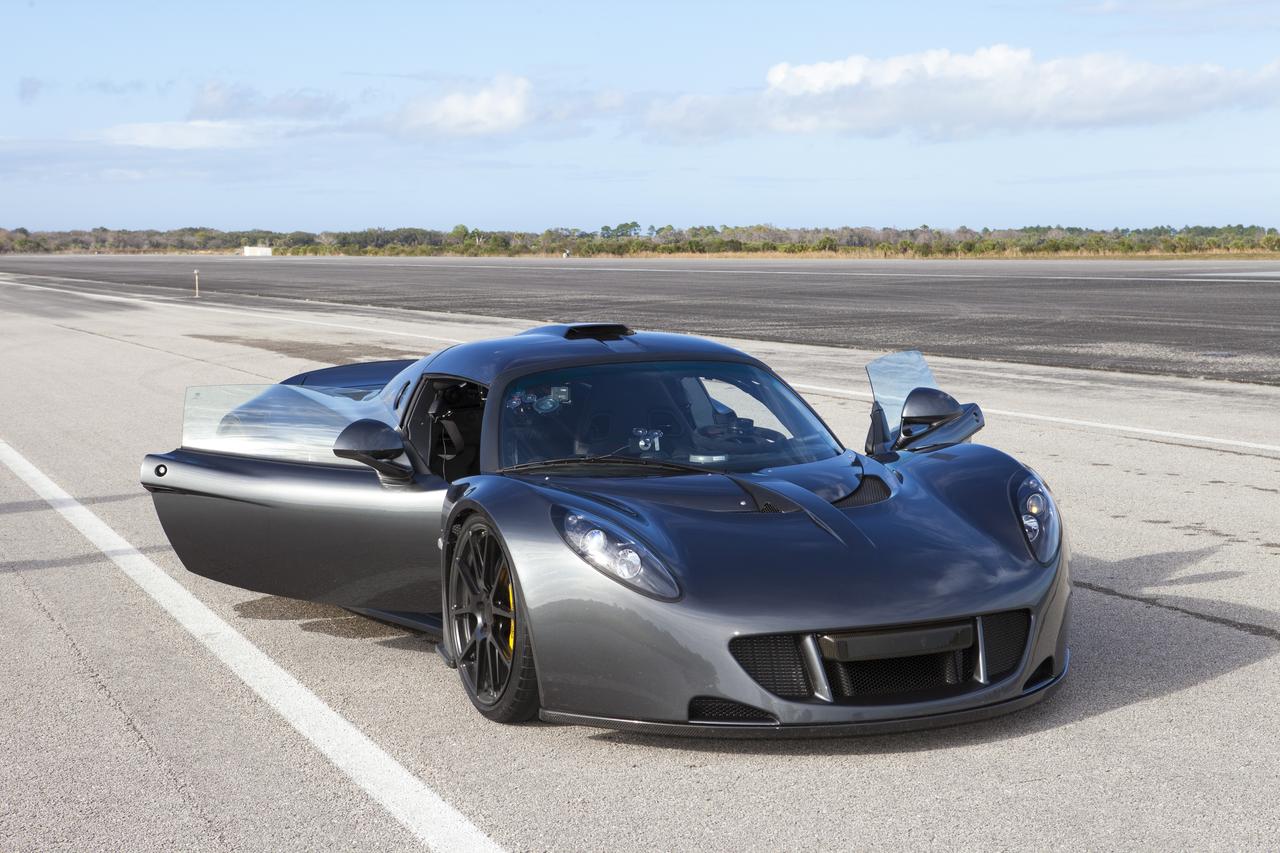
CAPE CANAVERAL, Fla. - A Hennessey Venom GT stands on the 3.5-mile long runway between test runs at the Shuttle Landing Facility at NASA's Kennedy Space Center in Florida. The flat concrete runway is one of the few places in the world where high performance automobiles can be tested for aerodynamic and safety designs. Hennessey Performance of Sealy, Texas, worked with Performance Power Racing in West Palm Beach to arrange use of the NASA facility. Performance Power Racing has conducted numerous engineering tests on the runway with a variety of vehicles. Photo credit: NASA/Kim Shiflett
High Speed Prototype Car Test
CAPE CANAVERAL, Fla. - Mechanics and engineers ready a Hennessey Venom GT for test runs on the 3.5-mile long runway at the Shuttle Landing Facility at NASA's Kennedy Space Center in Florida. The flat concrete runway is one of the few places in the world where high performance automobiles can be tested for aerodynamic and safety designs. Hennessey Performance of Sealy, Texas, worked with Performance Power Racing in West Palm Beach to arrange use of the NASA facility. Performance Power Racing has conducted numerous engineering tests on the runway with a variety of vehicles. Photo credit: NASA/Kim Shiflett
High Speed Prototype Car Test
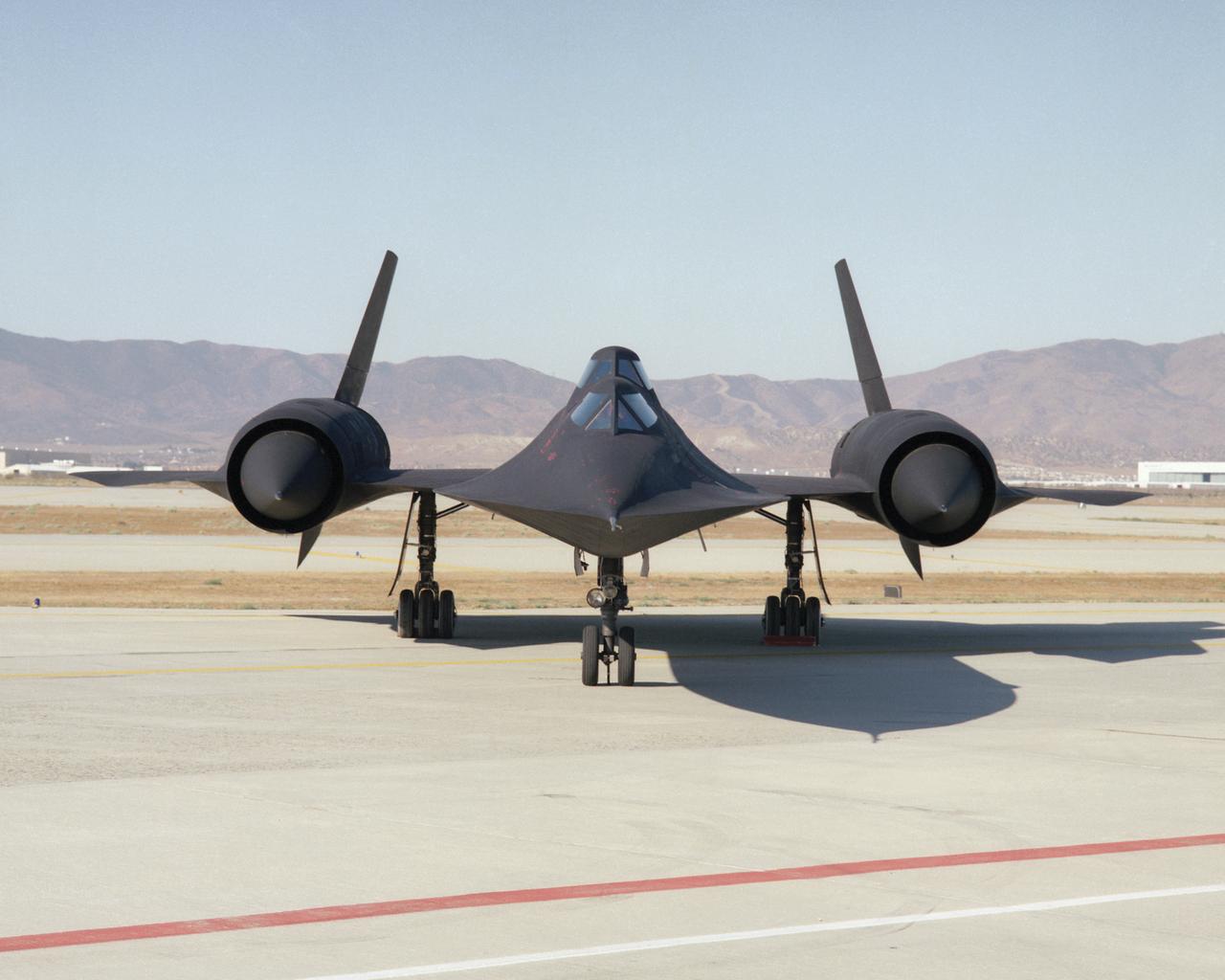
This photo shows a head-on view of NASA's SR-71B, used for pilot proficiency and training, on the ramp at the Air Force's Plant 42 in Palmdale, California, shortly before delivery to the Ames-Dryden Flight Research Facility (later, Dryden Flight Research Center) at Edwards, California. NASA operated two of these unique aircraft, an SR-71A, for high-speed, high altitude research, and this SR- 71B pilot trainer for most of the decade of the 1990s. The "B" model is special because of its raised rear cockpit, which provided a second pilot position so a trainer and an experienced pilot could both see what was going on during flights.  The SR-71 was designed and built by the Lockheed Skunk Works, now the Lockheed Martin Skunk Works. Studies have shown that less than 20 percent of the total thrust used to fly at Mach 3 is produced by the basic engine itself. The balance of the total thrust is produced by the unique design of the engine inlet and "moveable spike" system at the front of the engine nacelles, and by the ejector nozzles at the exhaust which burn air compressed in the engine bypass system.  Data from the SR-71 high speed research program will be used to aid designers of future supersonic/hypersonic aircraft and propulsion systems, including a high speed civil transport.
This photo shows a head-on view of NASA's SR-71B on the ramp at the Air Force's Plant 42 in Palmdale, California, shortly before delivery to DFRC
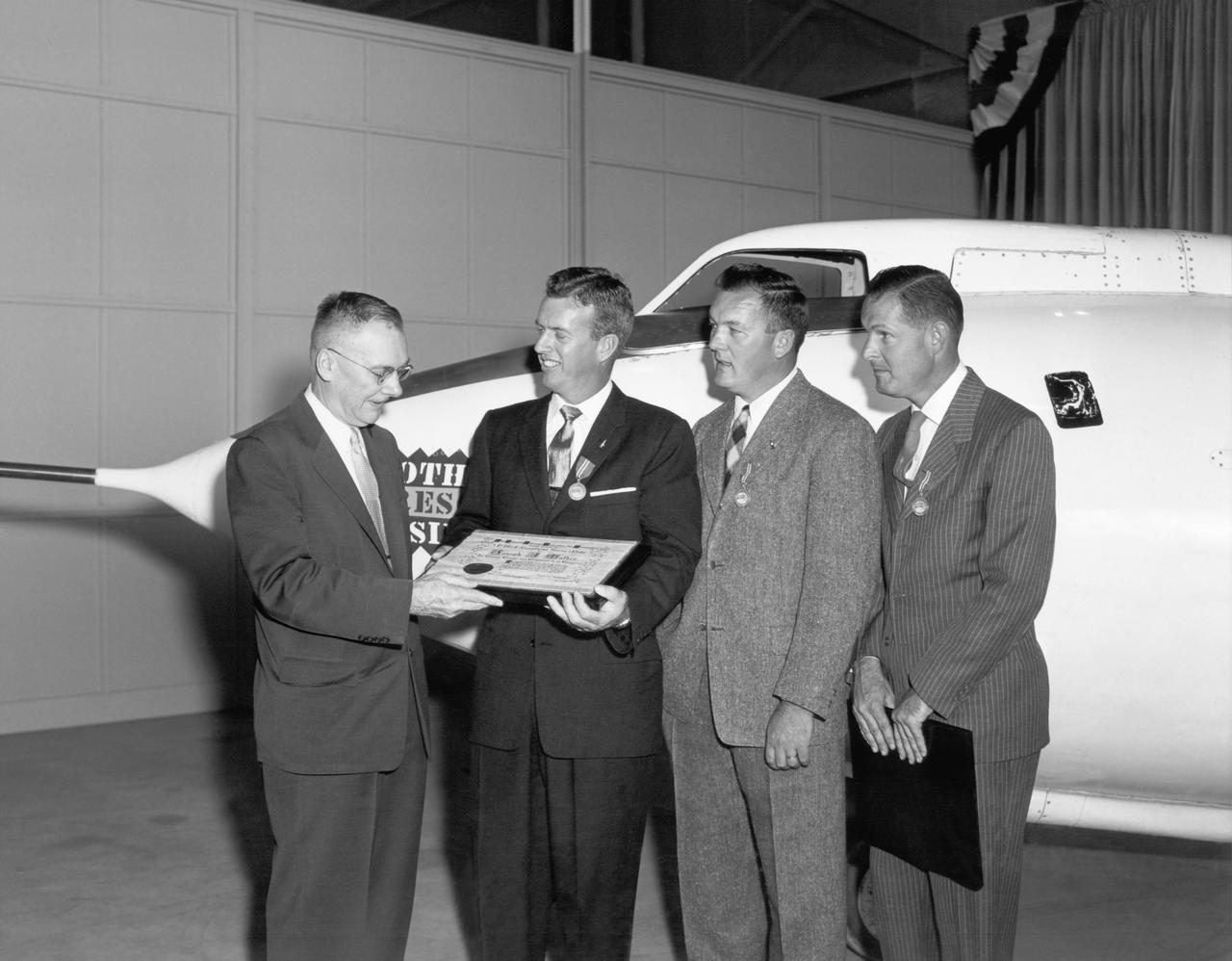
Hugh Dryden (far left) presents the NACA Exceptional Service Medal award at the NACA High Speed Flight Station. He awarded (L-R) Joe Walker (X-1A research pilot), Stan Butchart (pilot of the B-29 mothership),and Richard Payne (X-1A crew chief) in recognition of their research extending knowledge of swept wing flight.
The NACA Exceptional Service Medal presented at the NACA High Speed Flight Station. L-R: Hugh Dryden, Joe Walker, Stan Butchart, Richard Payne
This artist concept shows a celestial body about the size of our moon slamming at great speed into a body the size of Mercury. NASA Spitzer found evidence that a high-speed collision of this sort occurred a few thousand years ago around a young star.
Planetary Demolition Derby Artist Concept
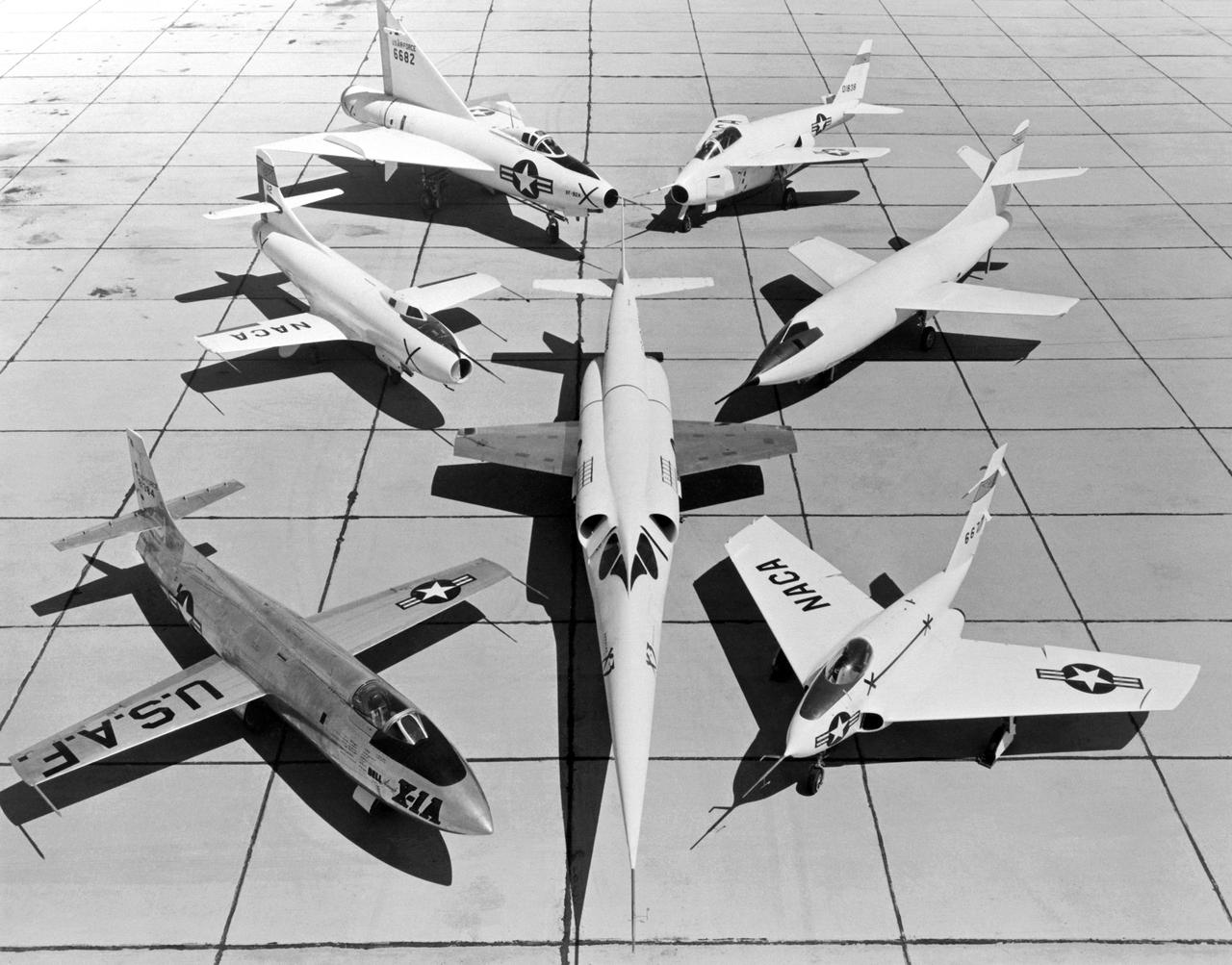
A 1953 photo of some of the research aircraft at the NACA High-Speed Flight Research Station (now known as the the Dryden Flight Research Center). The photo shows the X-3 (center) and, clockwise from left: X-1A (Air Force serial number 48-1384), the third D-558-1 (NACA tail number 142), XF-92A, X-5, D-558-2, and X-4.
E-2889
Famed astronaut Neil A. Armstrong – the first person to set foot on the Moon during the historic Apollo 11 mission in July 1969 – spent seven years as a research pilot at the NACA-NASA High-Speed Flight Station, now NASA’s Armstrong Flight Research Center in Edwards, California, before joining the space program. During his time there, he served as a project pilot on the F-100A, F-100C, F-101, and F-104A (pictured here).
Neil Armstrong’s Path to the Moon Began at Edwards
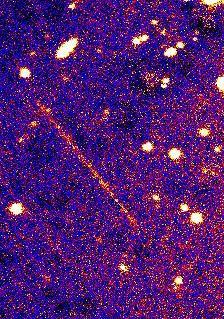
The high speed of NASA Deep Impact spacecraft causes it to appear as a long streak across the sky in the constellation Virgo during the 10-minute exposure time of this photograph taken by Mr. Palomar 200-inch telescope.
Deep Impact on Its Way
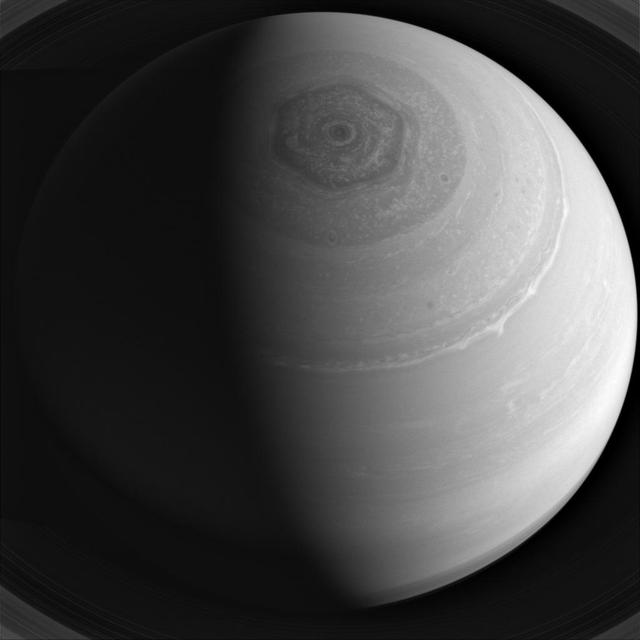
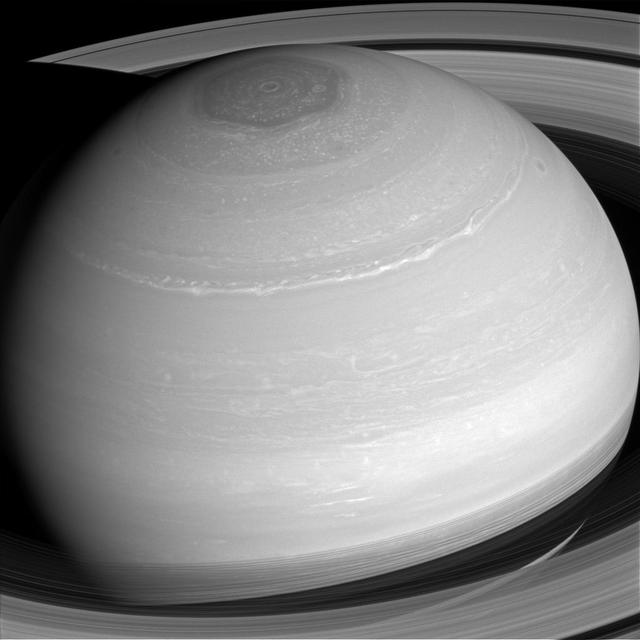
Saturn winds race furiously around the planet, blowing at high speeds which form distinct belts and zones which encircle the planet pole, as well as its famous hexagon as seen in this image from NASA Cassini spacecraft.
Circles on Saturn
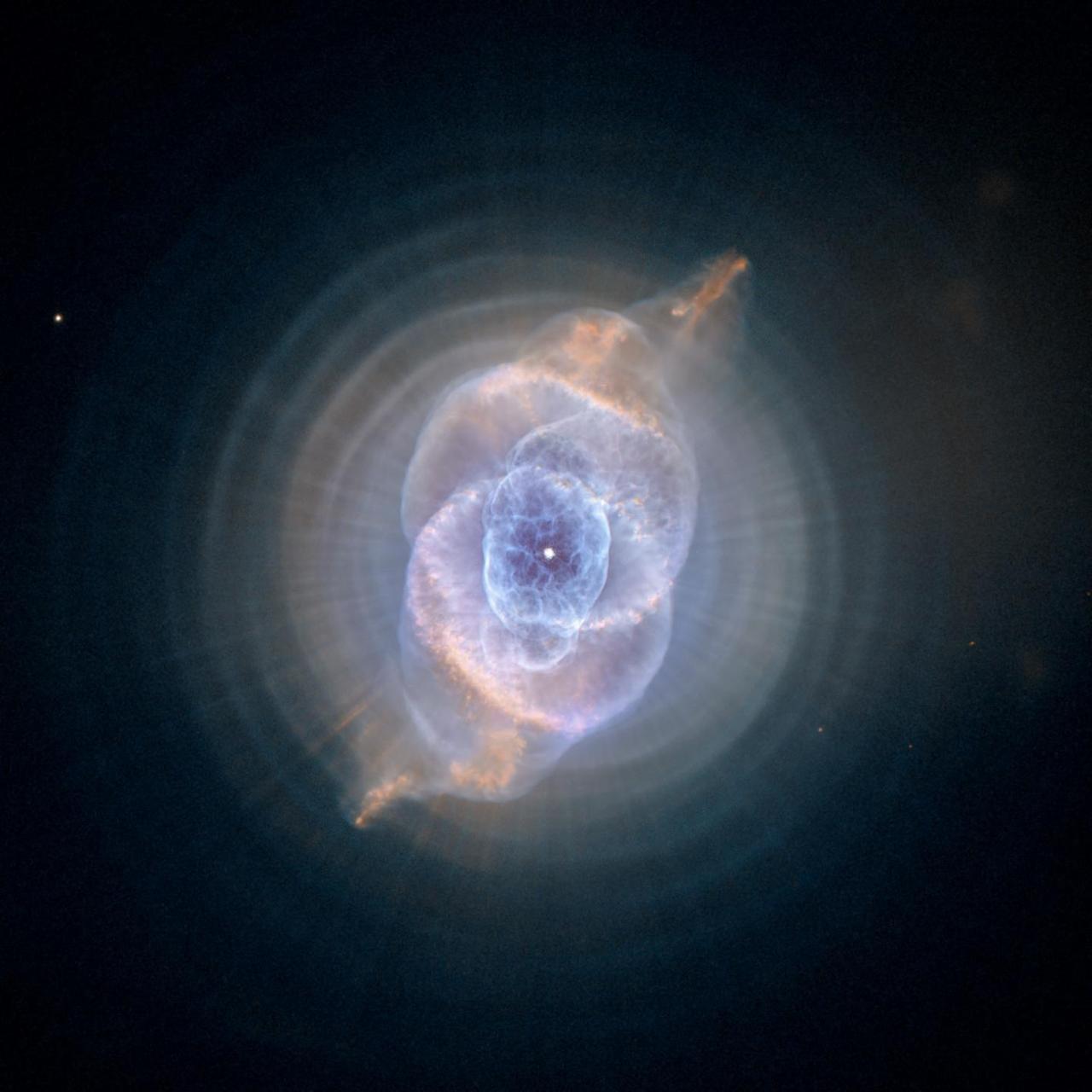
This detailed view of NGC 6543, the Cat Eye Nebula, from NASA Hubble Space Telescope includes intricate structures, including concentric gas shells, jets of high-speed gas, and unusual shock-induced knots of gas.
Dying Star Creates Fantasy-like Sculpture of Gas and Dust
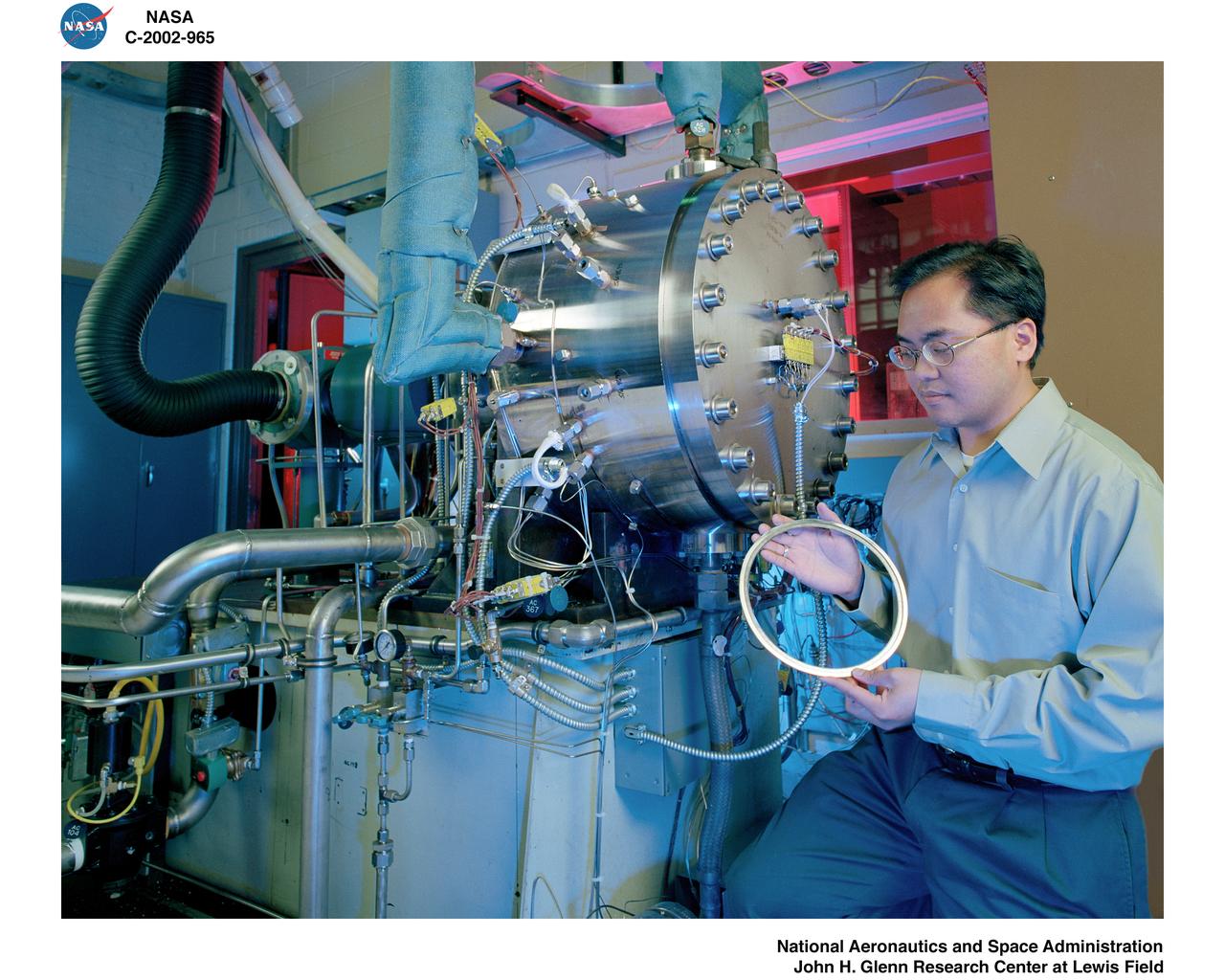
HIGH TEMP HIGH SPEED TURBINE SEAL TEST RIG
GRC-2002-C-00965
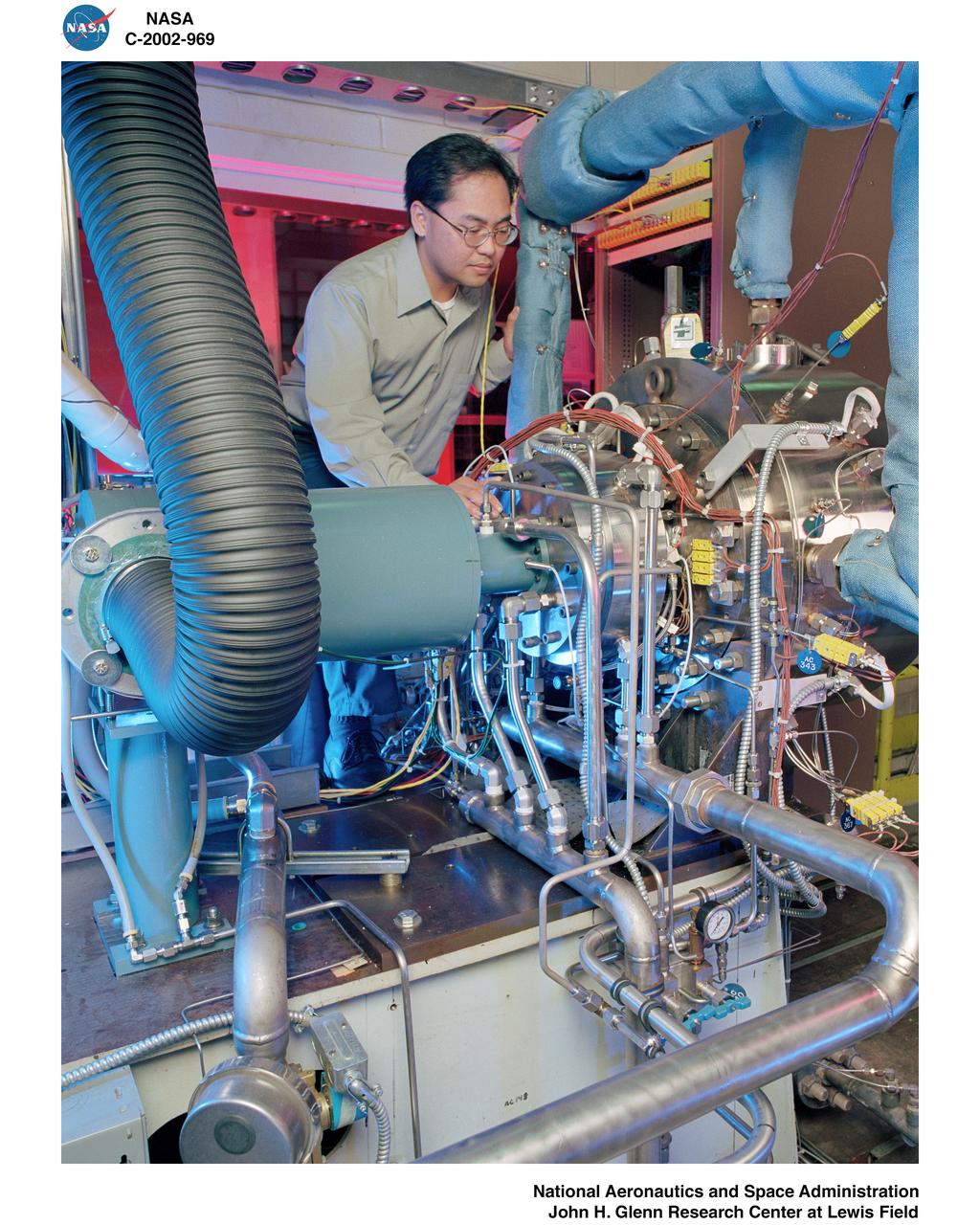
HIGH TEMP HIGH SPEED TURBINE SEAL TEST RIG
GRC-2002-C-00969
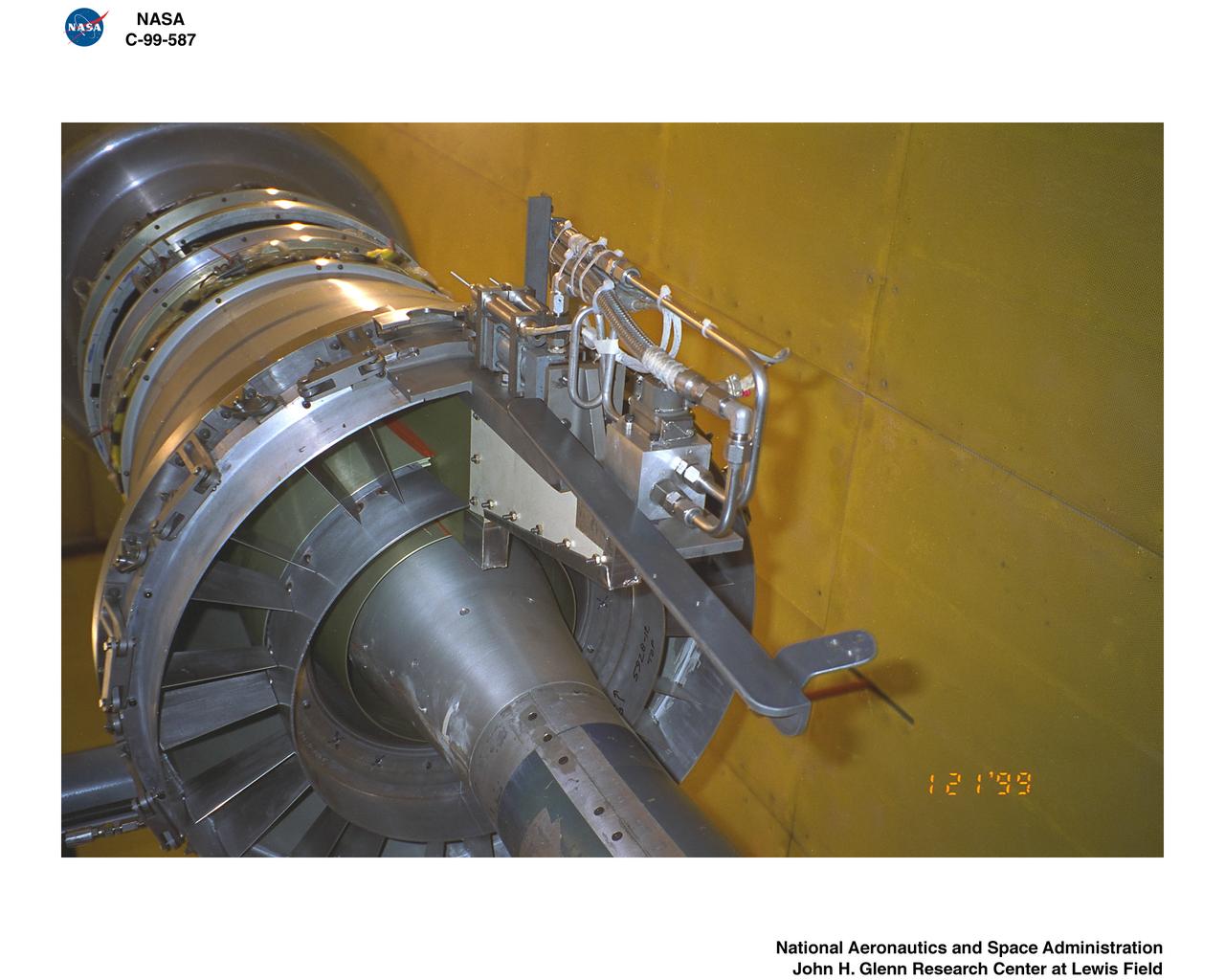
GENERAL ELECTRIC HIGH SPEED FAN
GRC-1999-C-00587
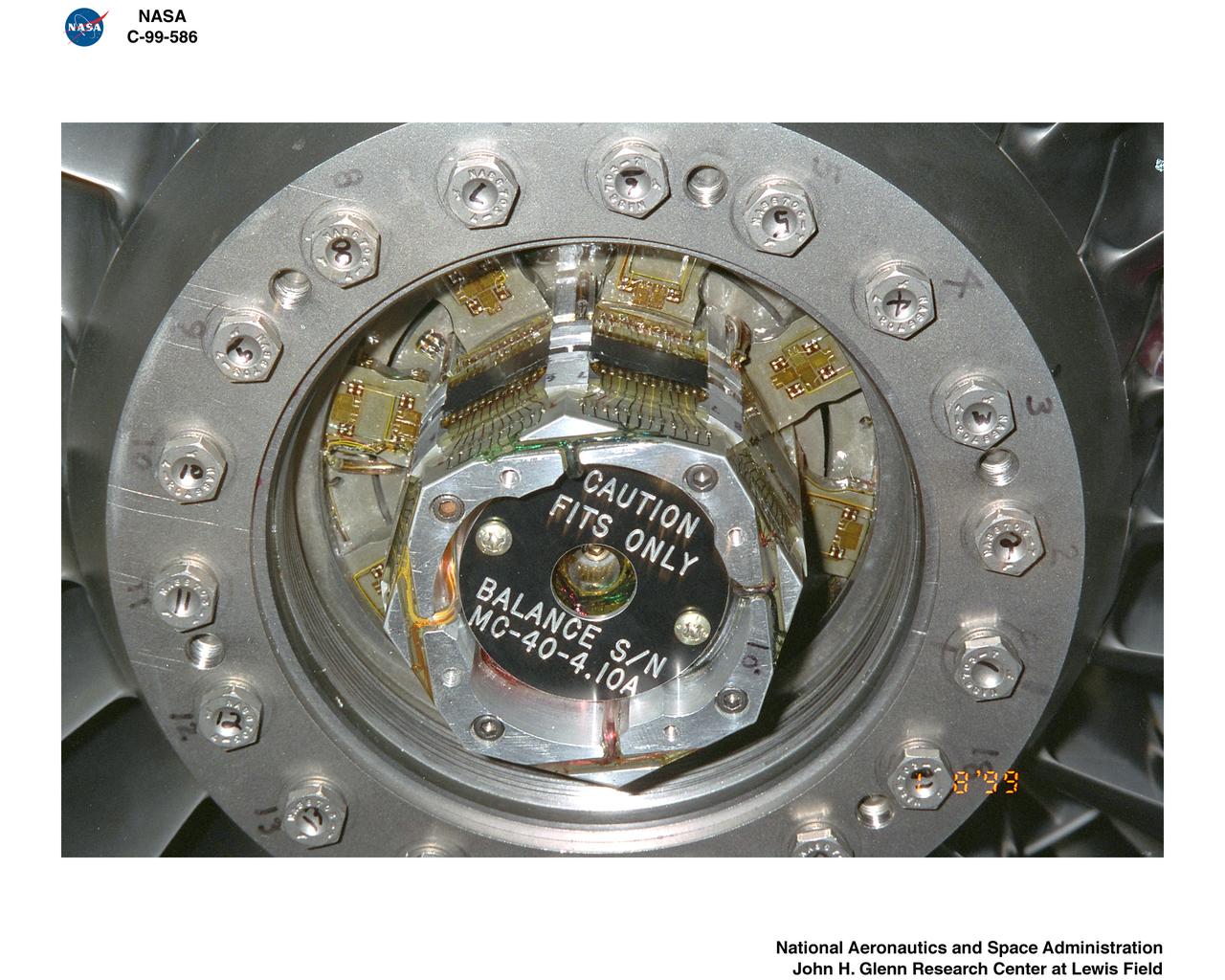
GENERAL ELECTRIC HIGH SPEED FAN
GRC-1999-C-00586
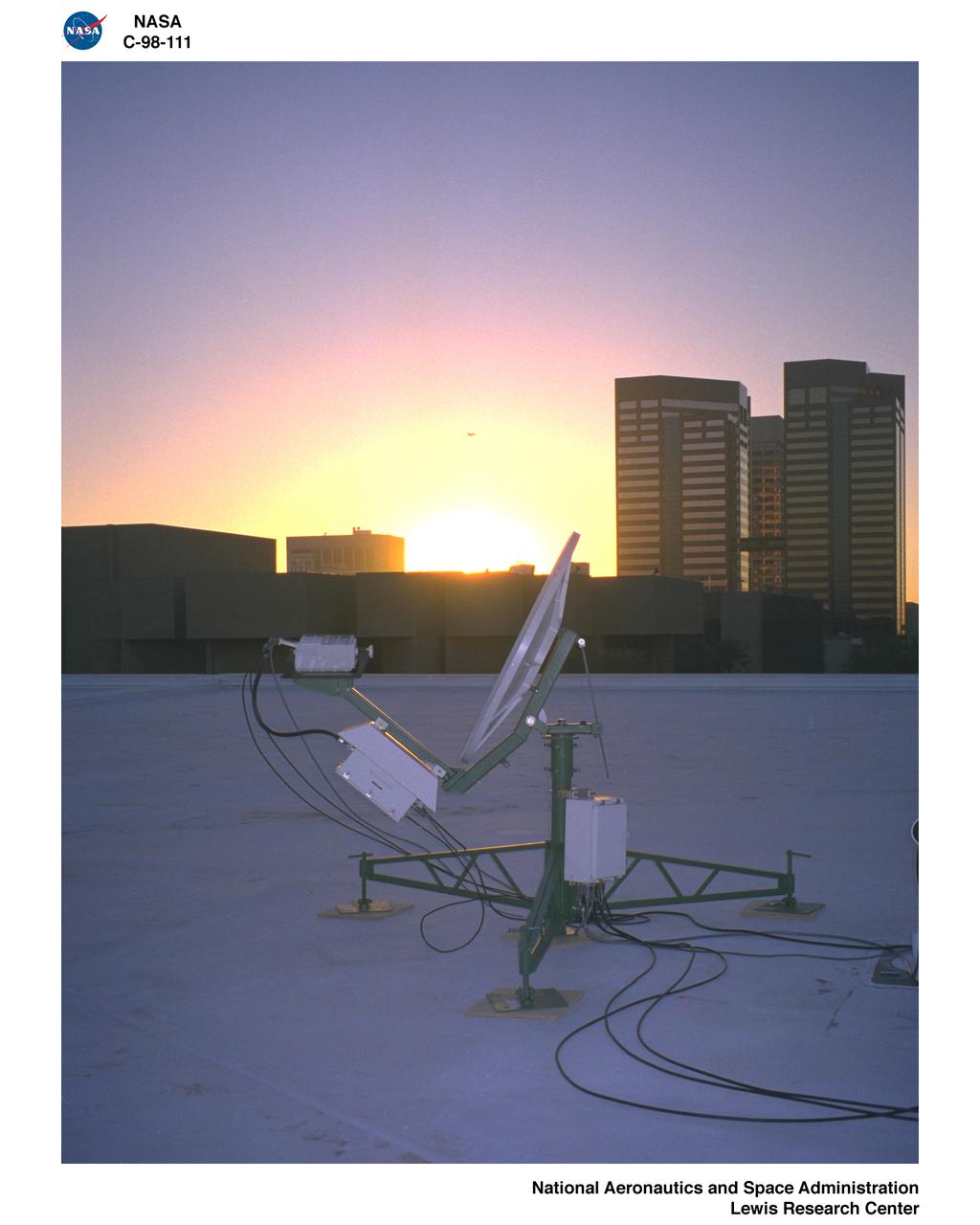
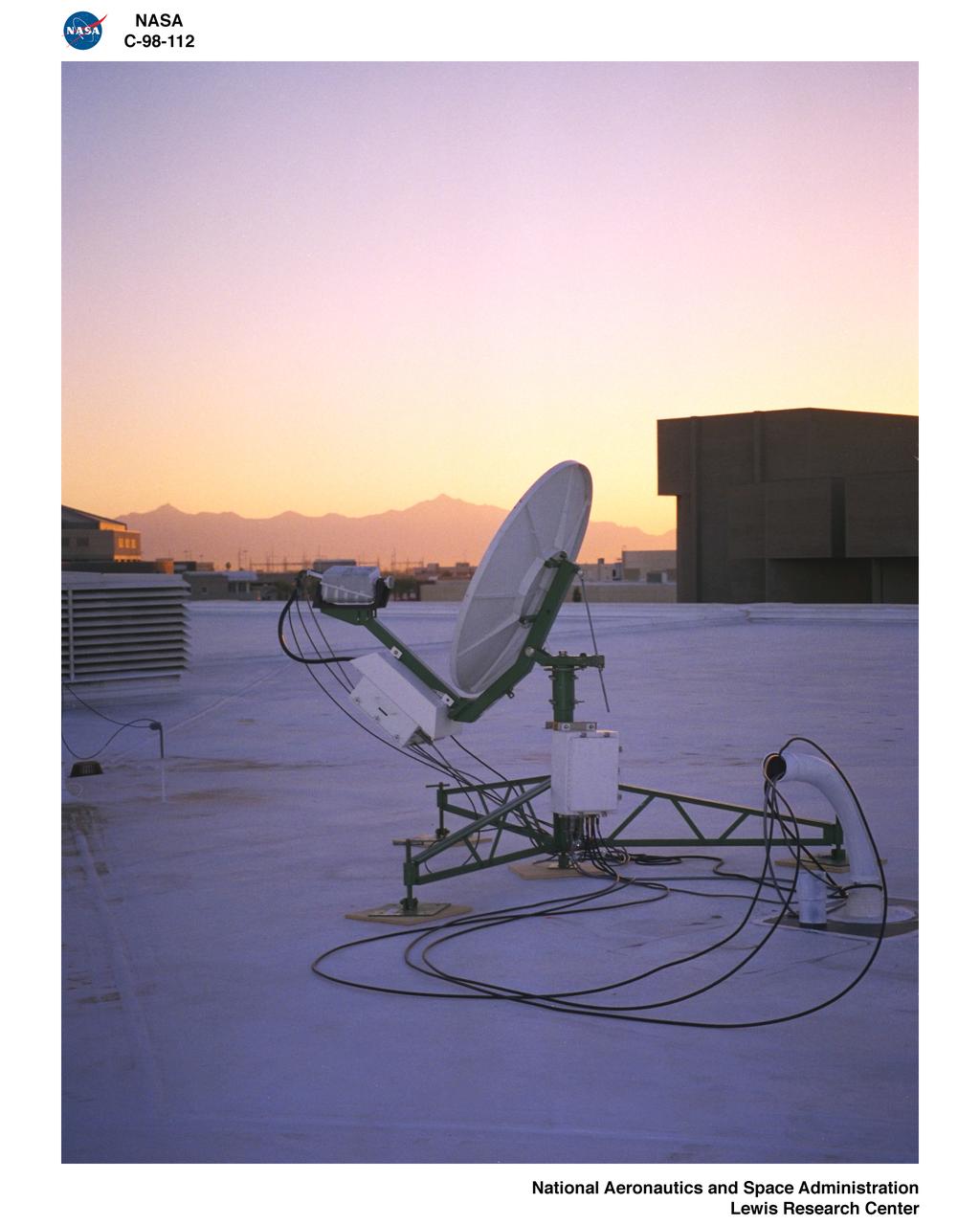
HIGH SPEED VERY SMALL APERATURE TERMINAL VSAT
GRC-1998-C-00111
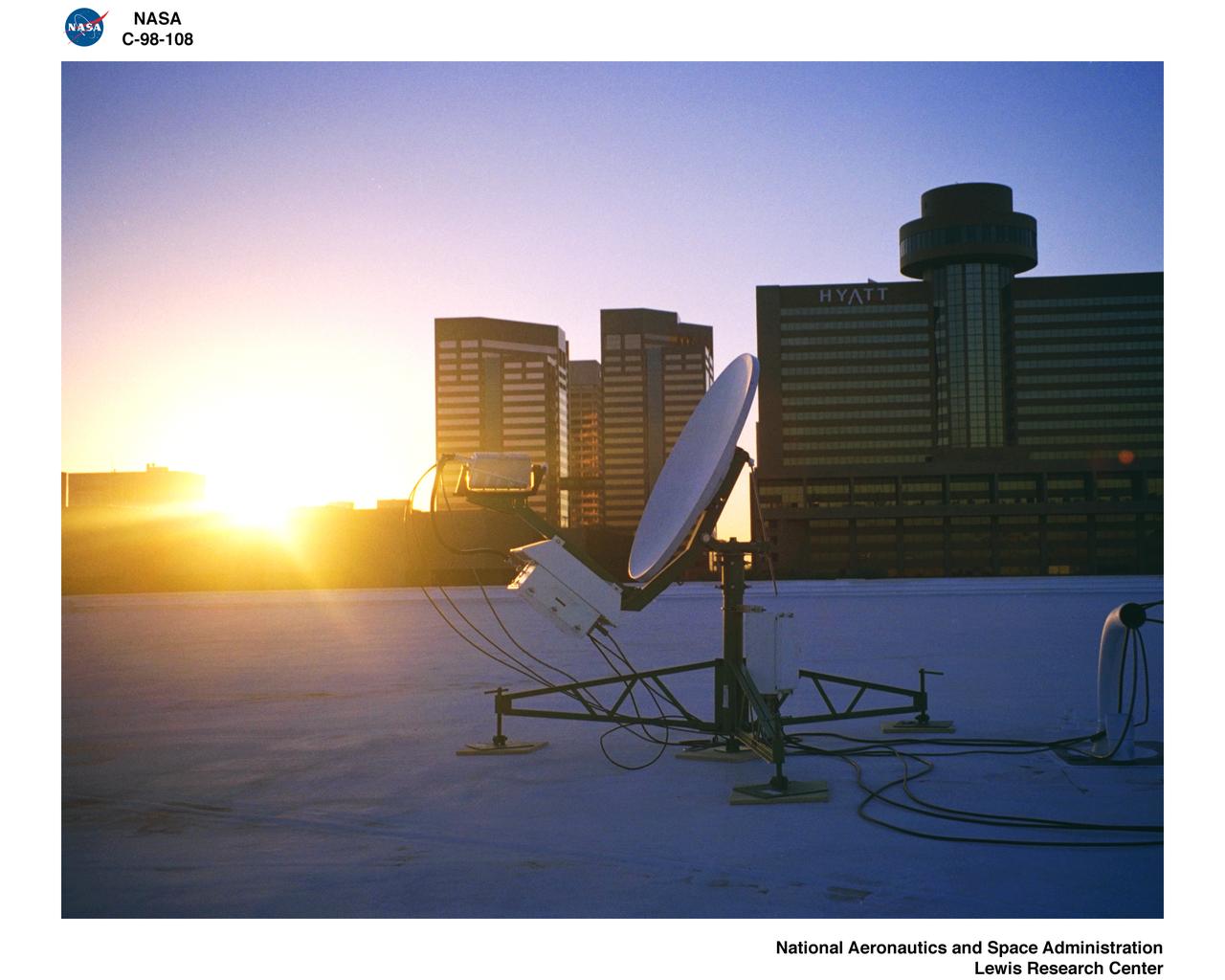
HIGH SPEED VERY SMALL APERATURE TERMINAL VSAT
GRC-1998-C-00108
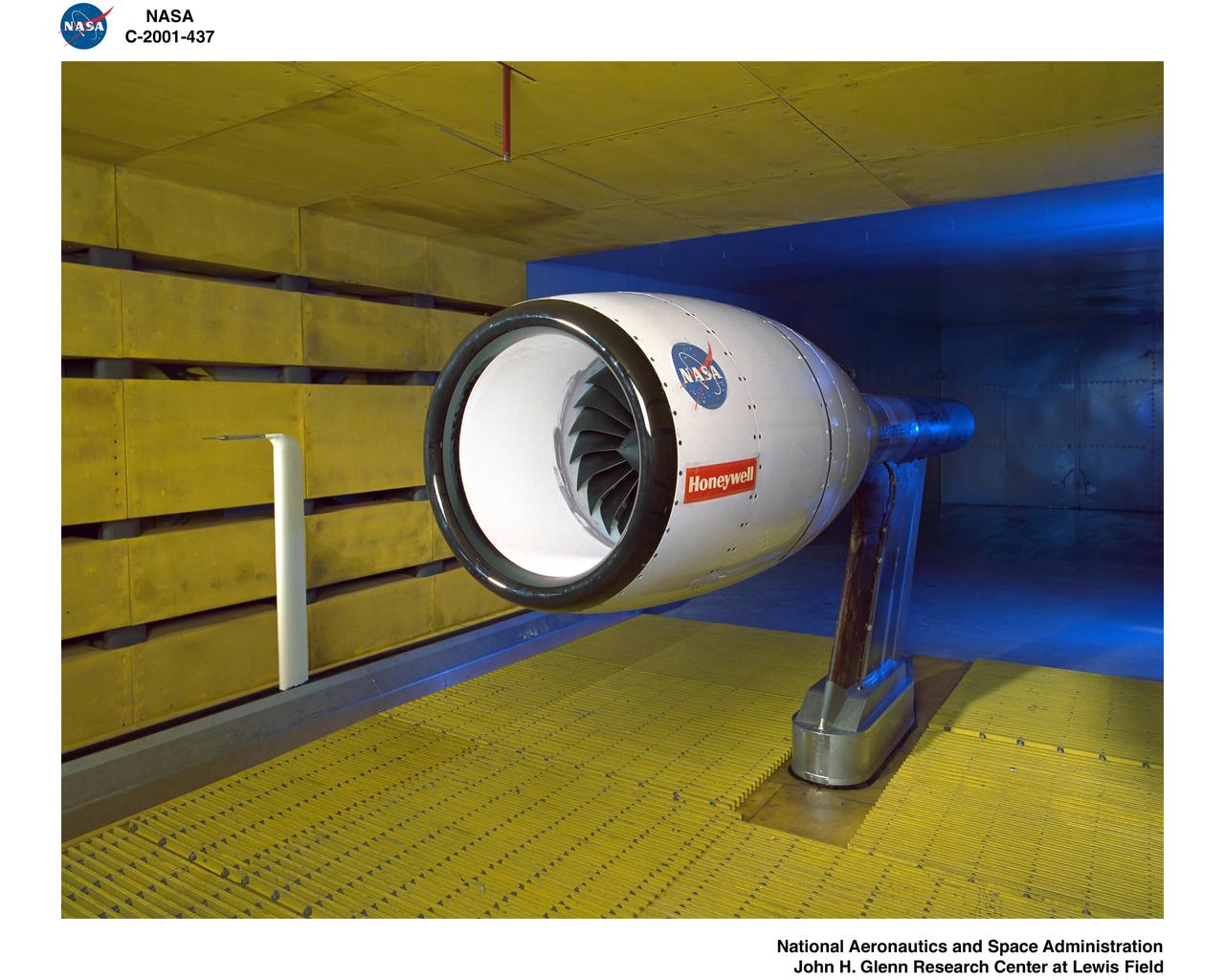
NASA HONEYWELL QUIET HIGH SPEED FAN TEST
GRC-2001-C-00437
HIGH SPEED VERY SMALL APERATURE TERMINAL VSAT
GRC-1998-C-00112
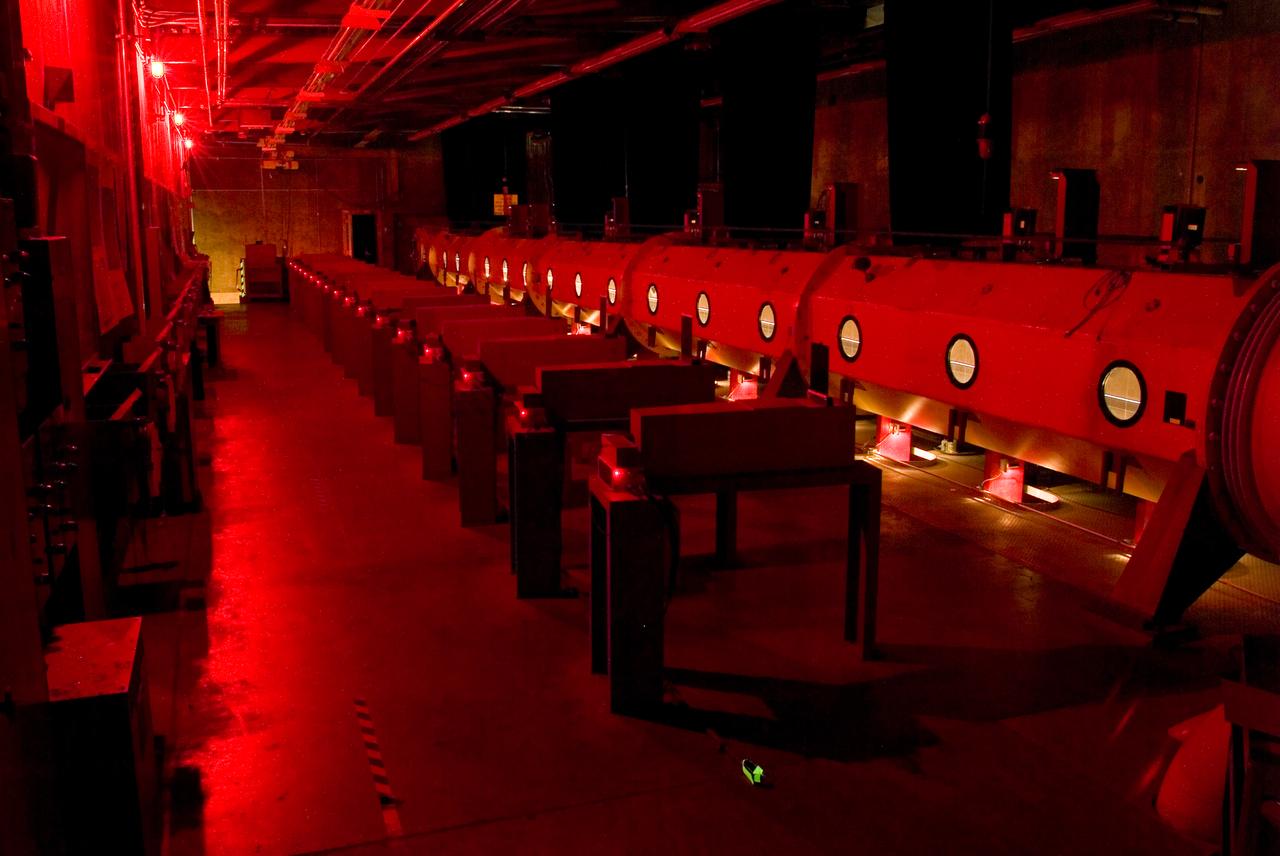
Ames Hypersonic Free Flight Aerodynamic Facility is used for research on gas dynamic problems of atmospheric entry. High relative speeds are achieved by launching models (in sabots if necessary) from high-speed guns into a countercurrent hypersonic air stream (14,000 ft/sec) driven by combustion-powered shock tube.
ARC-2006-ACD06-0177-011
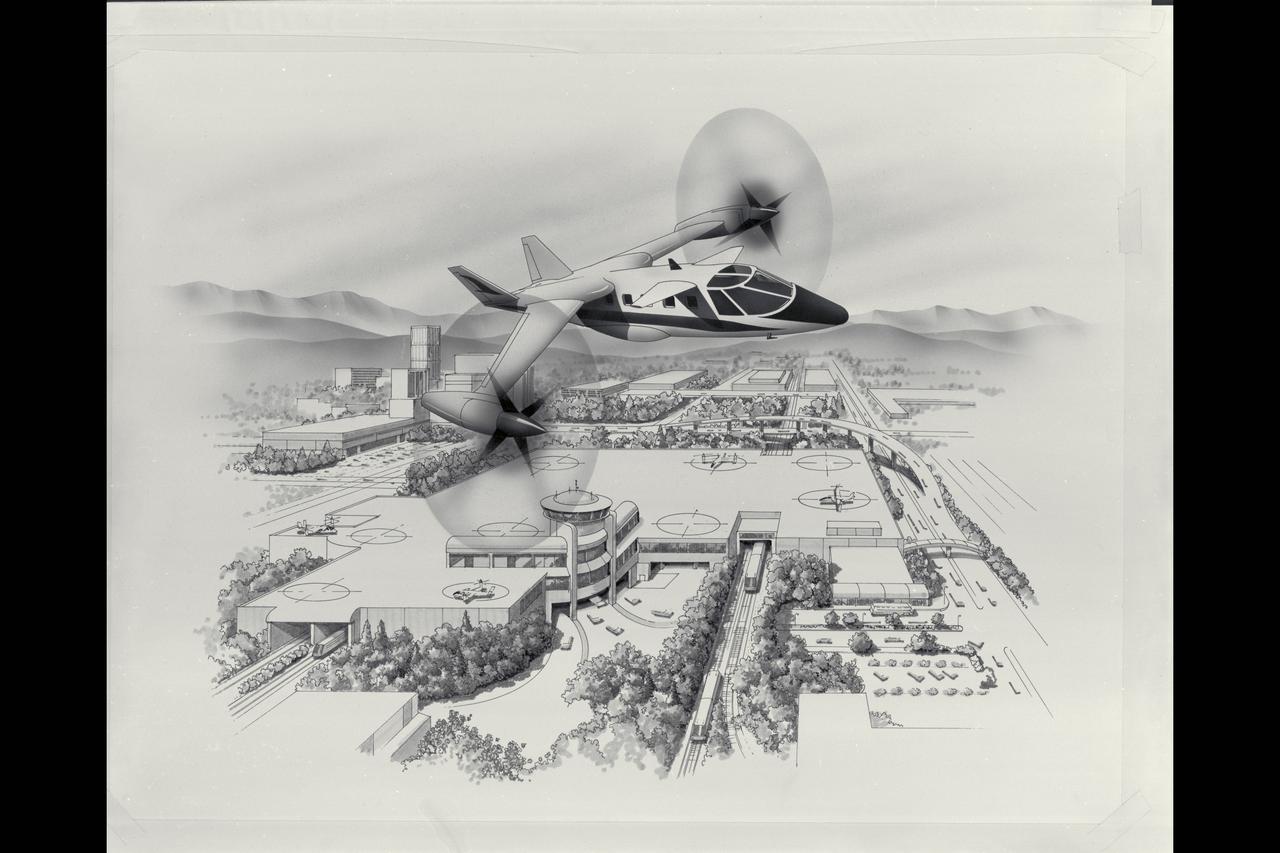
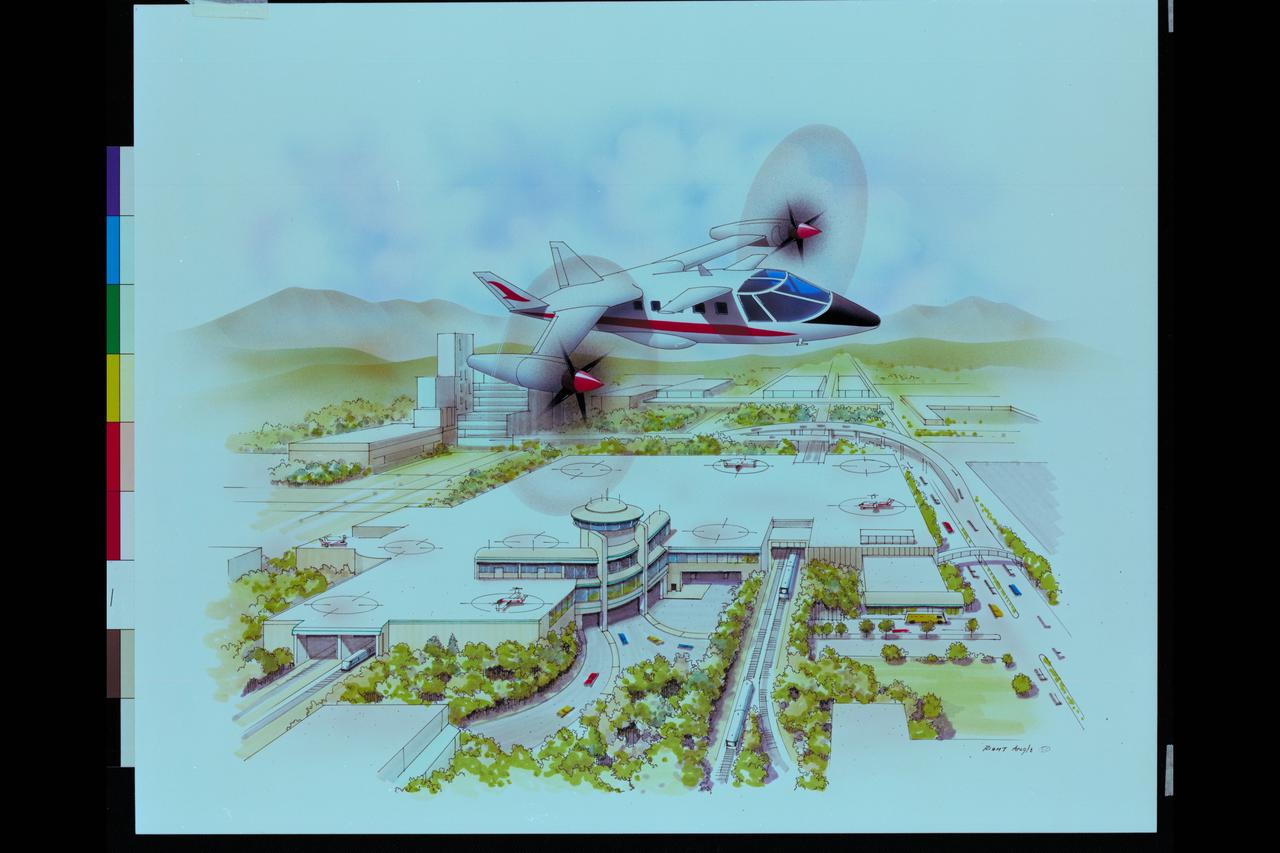
Artwork High Speed Rotorcraft concept varibale diameter Tiltrotor
ARC-1991-A91-0067-3
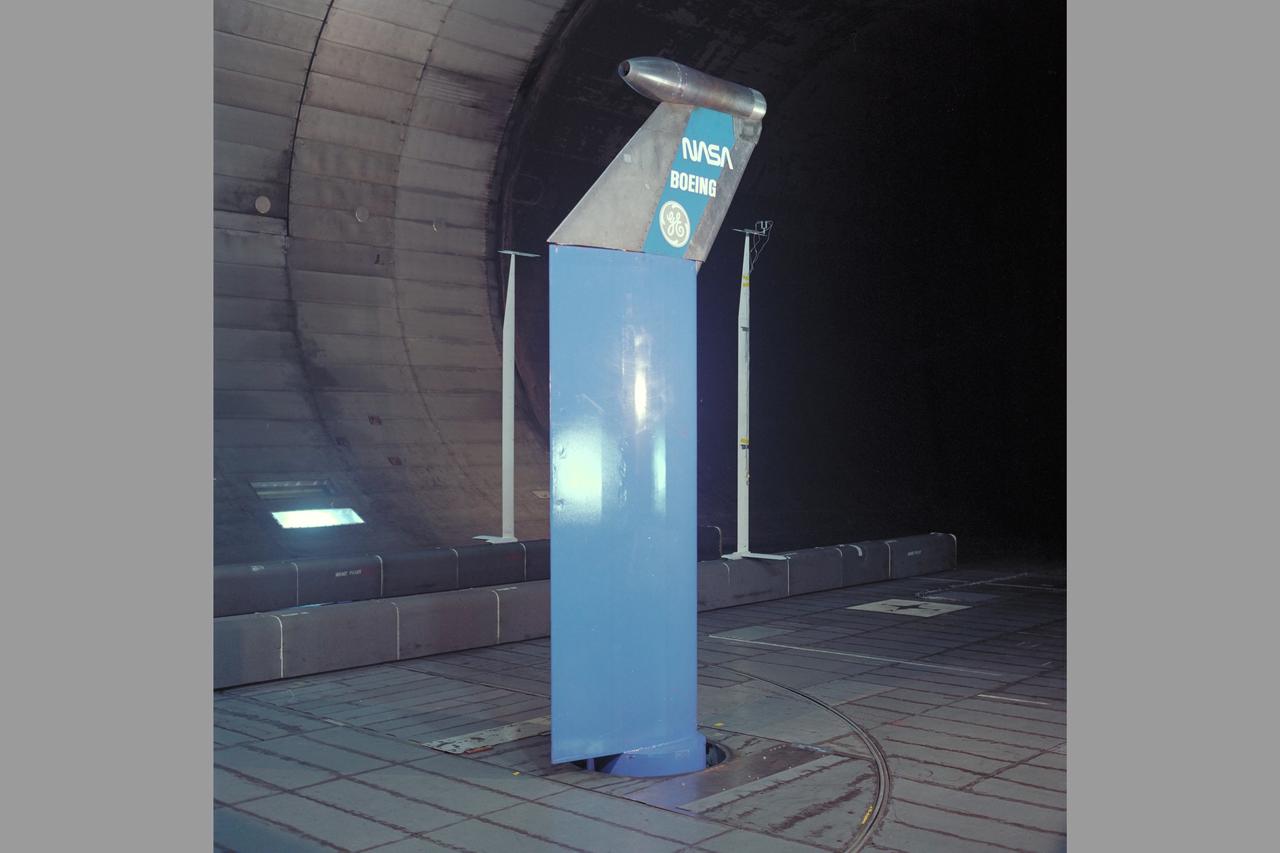
High Speed Research (HSR) Source Noise Test-592, 40x80ft w.t.
ARC-1994-AC94-0029-3
artwork High Speed Rotorcraft concept varibale diameter Tiltrotor
ARC-1991-A91-0067-4
High Speed Research (HSR) Source Noise Test-592, 40x80ft w.t.
ARC-1994-AC94-0029-1
High Speed Research (HSR) Source Noise Test-592, 40x80ft w.t.
ARC-1994-AC94-0029-4
Saturn many cloud patterns, swept along by high-speed winds, look as if they were painted on by some eager alien artist in this image from NASA Cassini spacecraft.  With no real surface features to slow them down, wind speeds on Saturn can top 1,100 mph (1,800 kph), more than four times the top speeds on Earth.  This view looks toward the sunlit side of the rings from about 29 degrees above the ringplane. The image was taken with the Cassini spacecraft wide-angle camera on April 4, 2014 using a spectral filter which preferentially admits wavelengths of near-infrared light centered at 752 nanometers.  The view was obtained at a distance of approximately 1.1 million miles (1.8 million kilometers) from Saturn. Image scale is 68 miles (109 kilometers) per pixel.  http://photojournal.jpl.nasa.gov/catalog/PIA18280
Painted Saturn
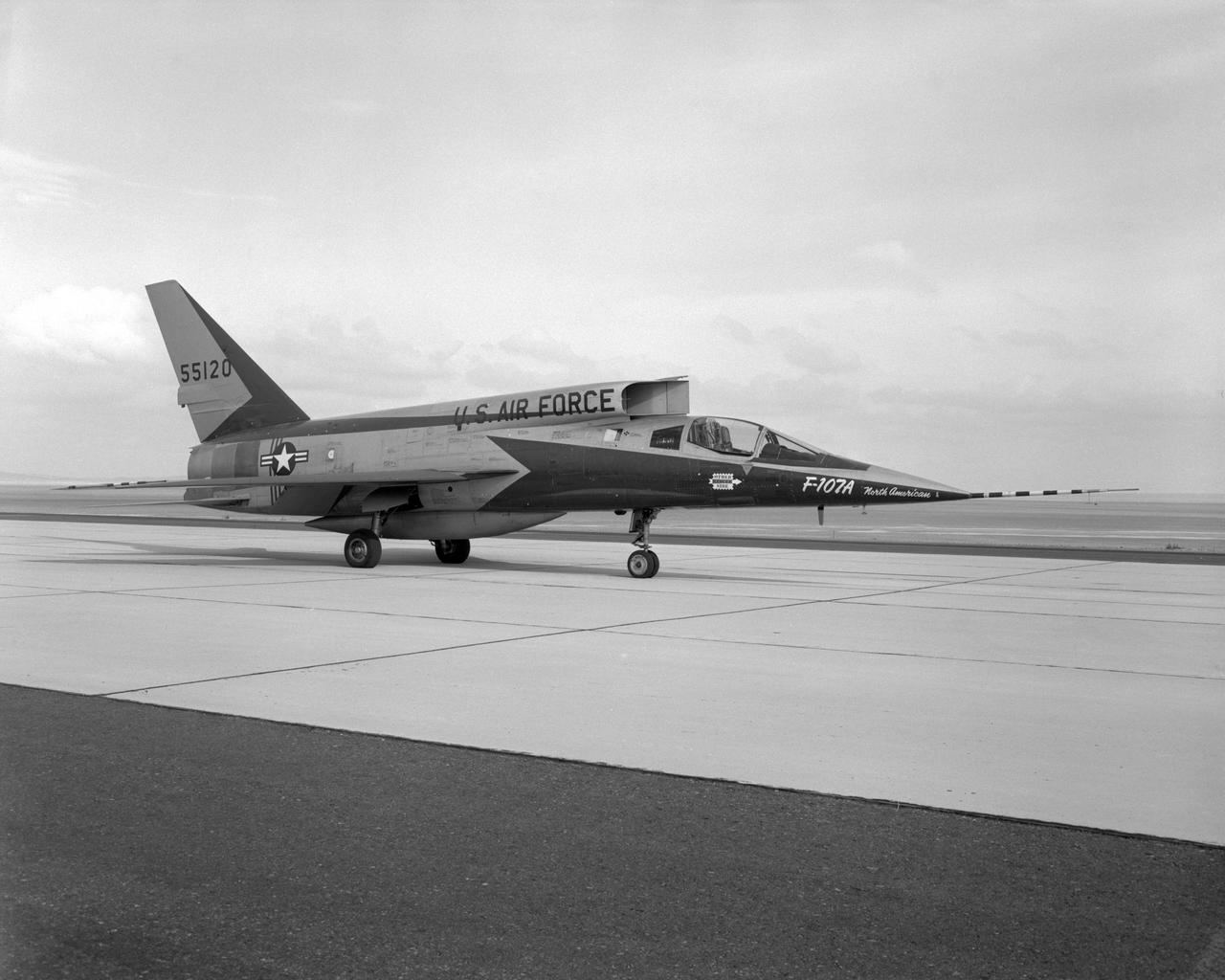
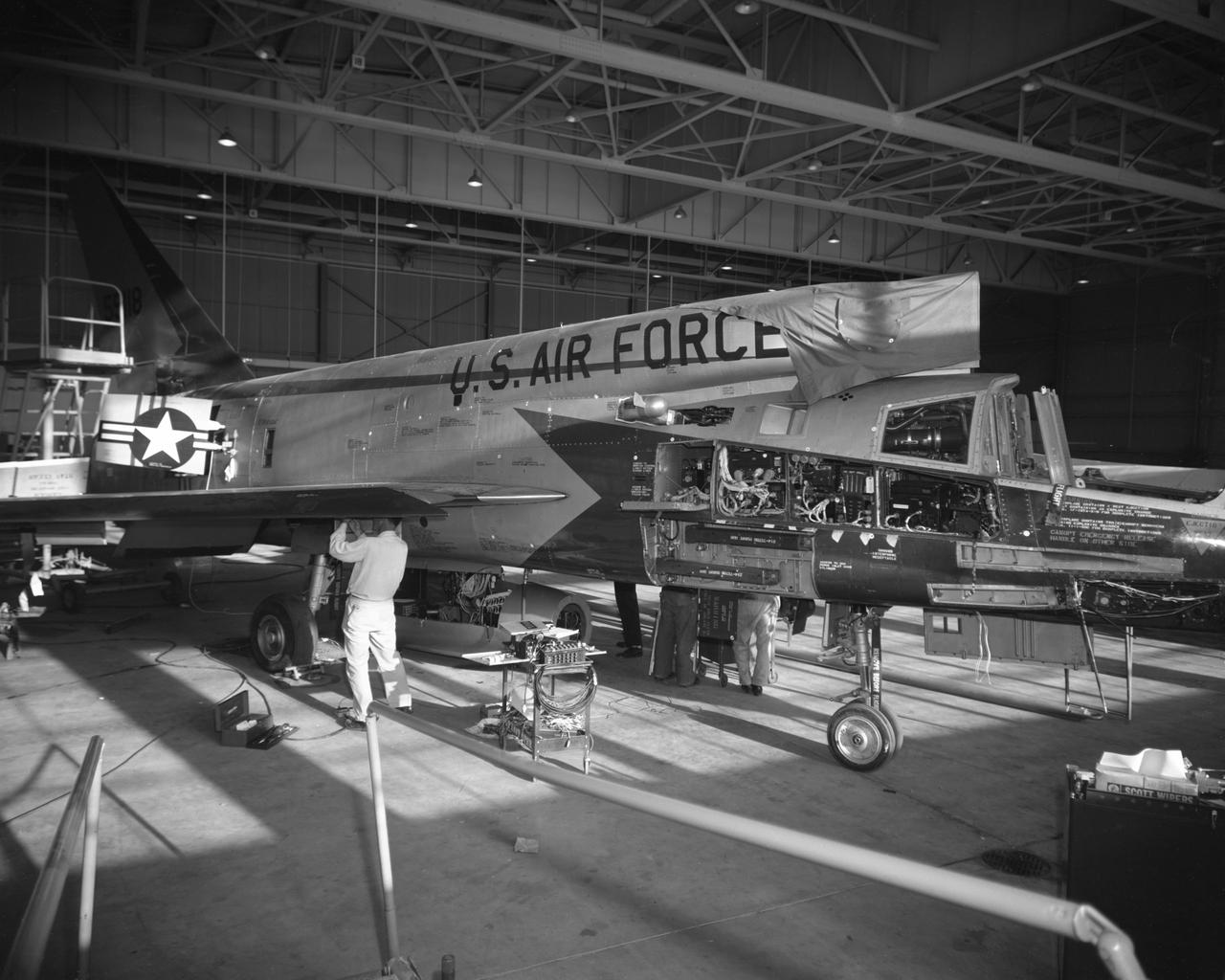
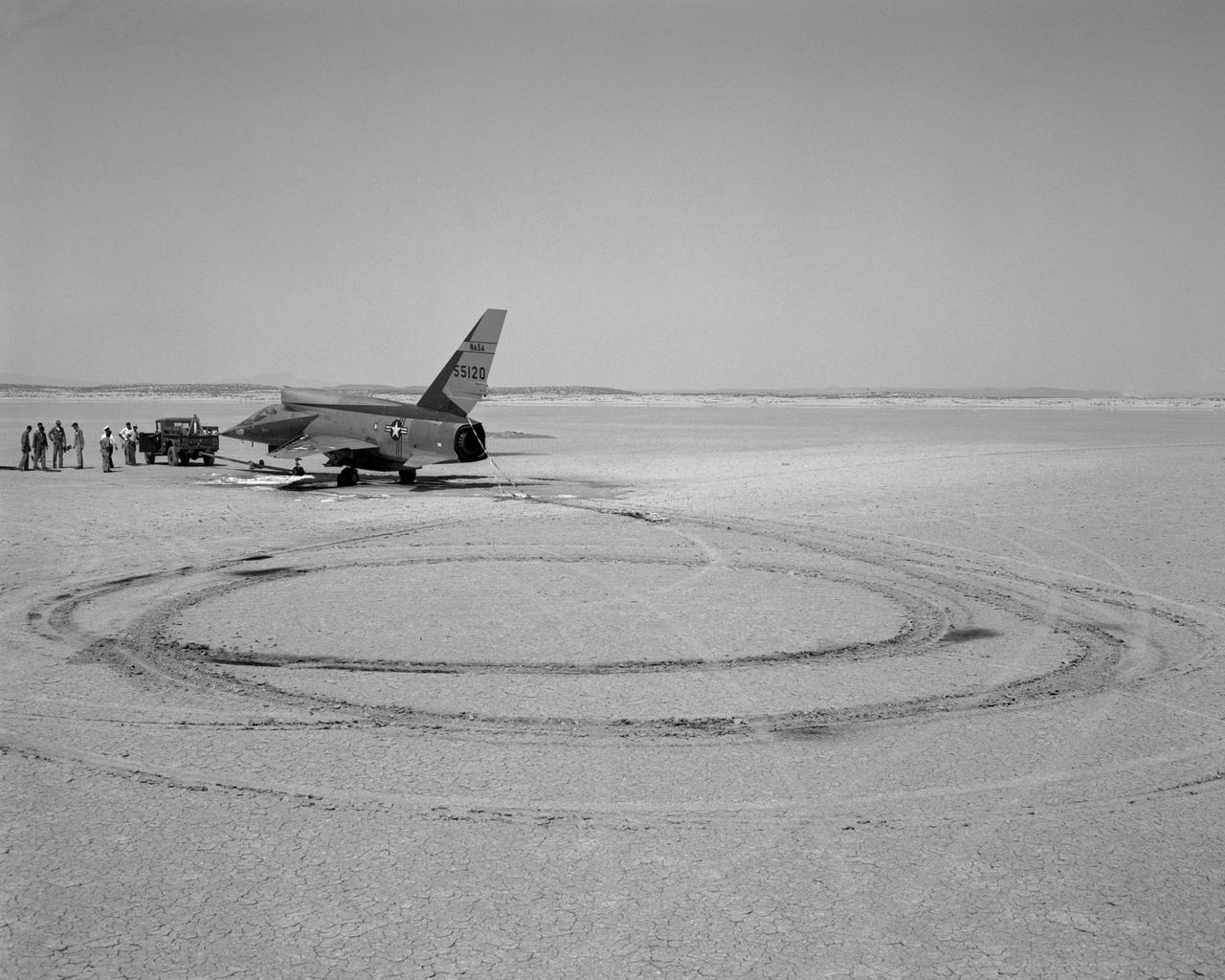
Maintanence on the first F-107A. Apr. 9, 1958
E58-03687B
The third F-107A parked on the ramp at the Flight Research Center. Jan. 7, 1959
E59-04384
F-107A ground loop landing mishap. Sept. 1, 1959
E59-04916
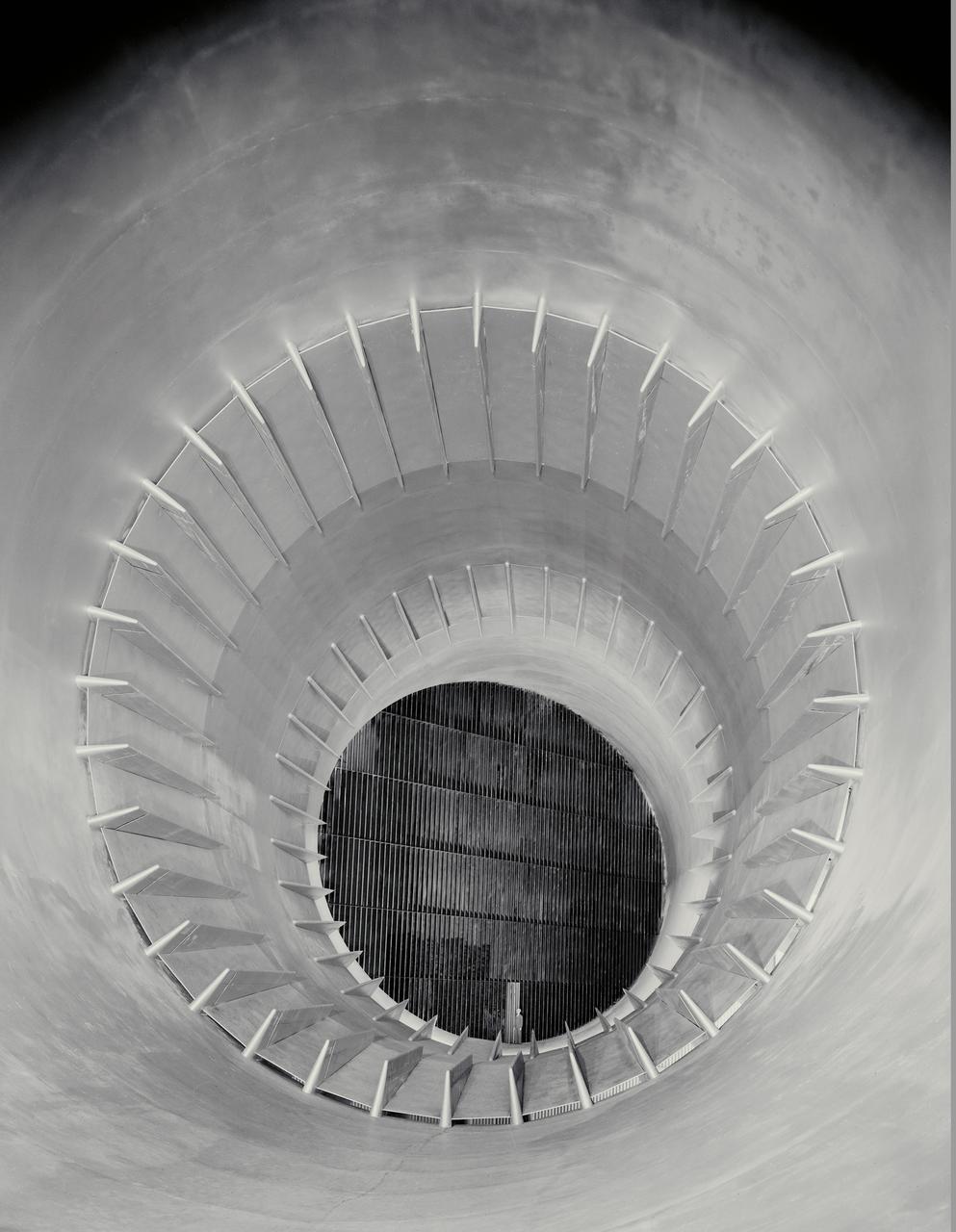
UNSTART PROGRAM - 10X10 FOOT SUPERSONIC WIND TUNNEL AS PART OF THE HIGH SPEED RESEARCH PROGRAM
GRC-1999-C-00165
UNSTART PROGRAM - 10X10 FOOT SUPERSONIC WIND TUNNEL AS PART OF THE HIGH SPEED RESEARCH PROGRAM
GRC-1999-C-00134
UNSTART PROGRAM - 10X10 FOOT SUPERSONIC WIND TUNNEL AS PART OF THE HIGH SPEED RESEARCH PROGRAM
GRC-1999-C-00156
UNSTART PROGRAM - 10X10 FOOT SUPERSONIC WIND TUNNEL AS PART OF THE HIGH SPEED RESEARCH PROGRAM
GRC-1999-C-00147
UNSTART PROGRAM - 10X10 FOOT SUPERSONIC WIND TUNNEL AS PART OF THE HIGH SPEED RESEARCH PROGRAM
GRC-1999-C-00146
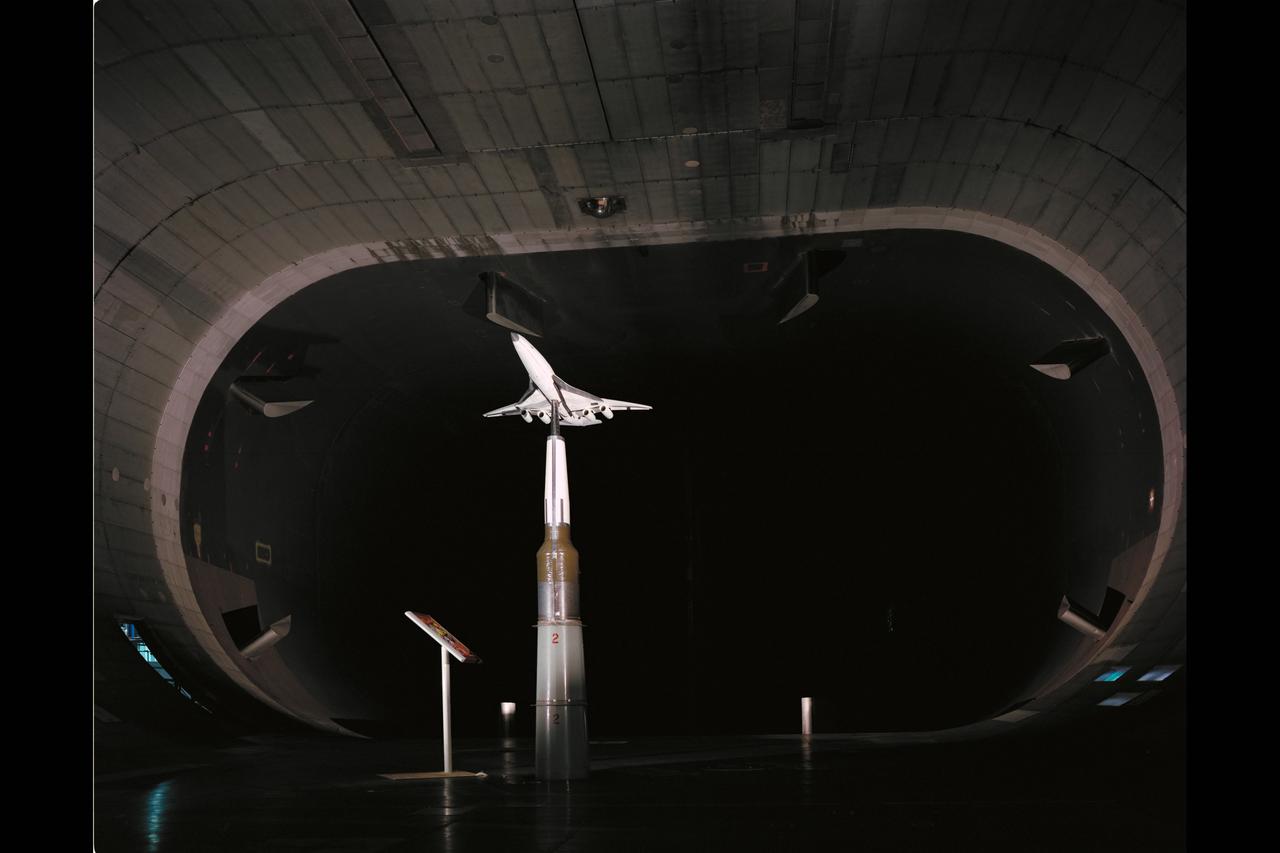
HSCT (High Speed Civil Transport) Ref-H Model test-594 in 40x80ft w.t.
ARC-1994-AC94-0034-52
UNSTART PROGRAM - 10X10 FOOT SUPERSONIC WIND TUNNEL AS PART OF THE HIGH SPEED RESEARCH PROGRAM
GRC-1999-C-00144
NACA Photographer - 16ft High Speed Wind Tunnel downstream view through cooling tower section
ARC-1942-AAL-1854
HSCT (High Speed Civil Transport) Ref-H Model test-594 in 40x80ft w.t.
ARC-1994-AC94-0034-53
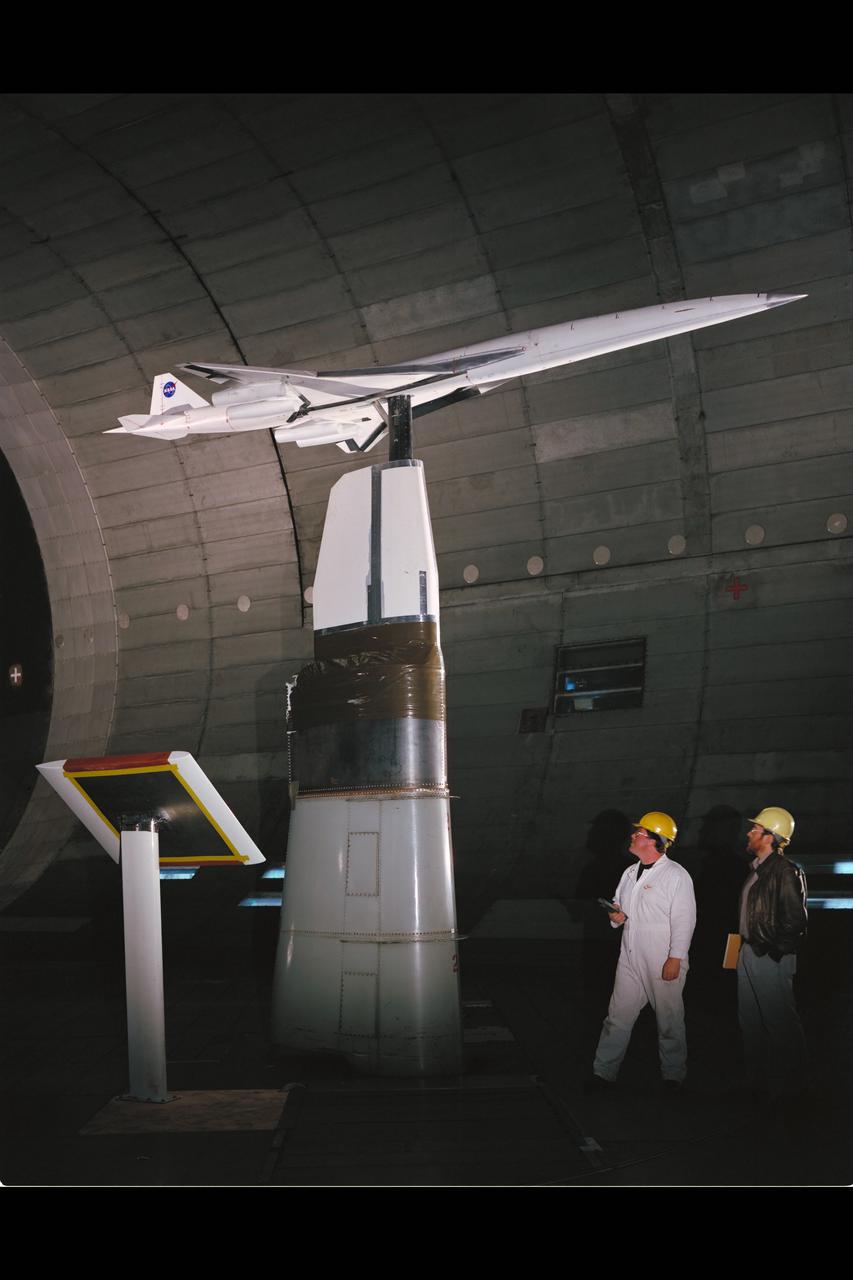
HSCT (High Speed Civil Transport) Ref-H Model test-594 in 40x80ft w.t. with Jim Ross & Boeing Engineer
ARC-1994-AC94-0034-51
UNSTART PROGRAM - 10X10 FOOT SUPERSONIC WIND TUNNEL AS PART OF THE HIGH SPEED RESEARCH PROGRAM
GRC-1999-C-00166
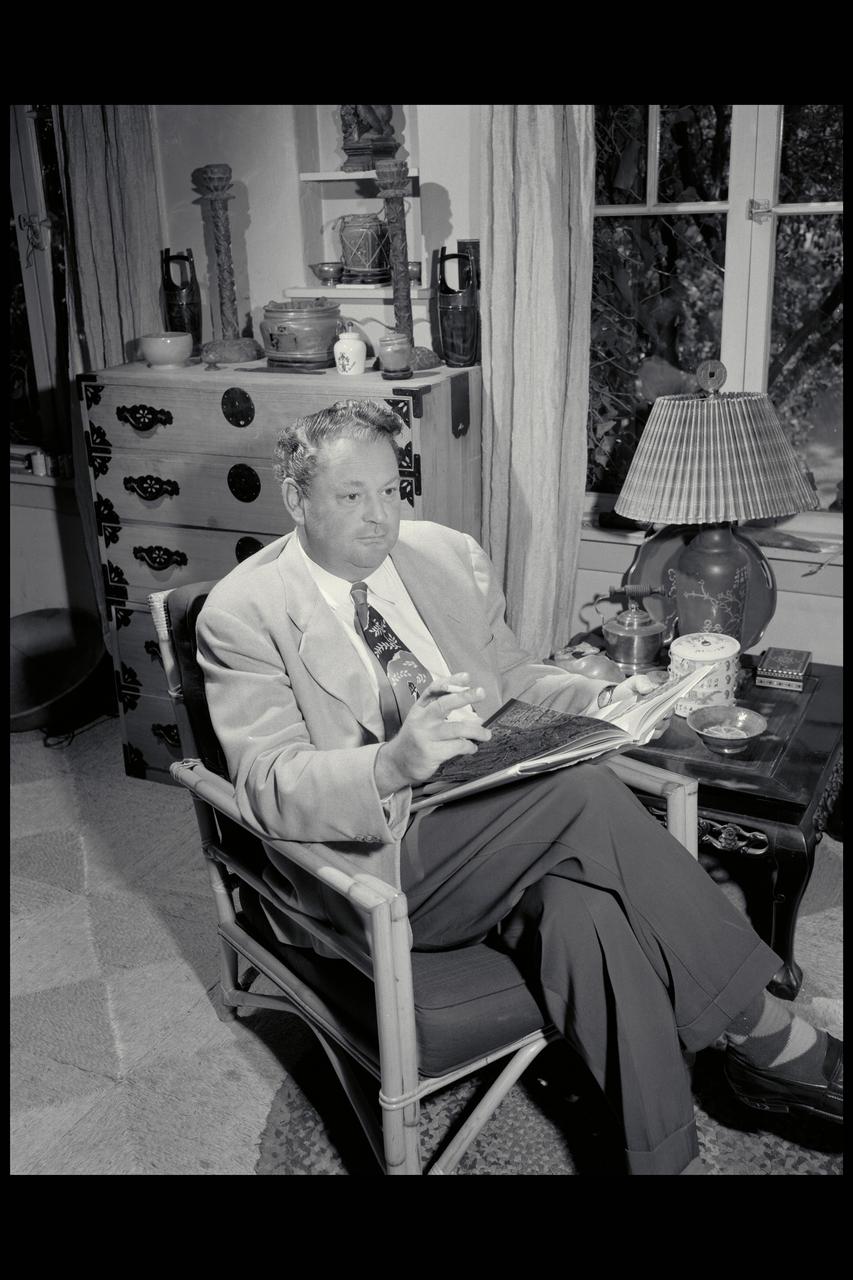
Harvey Allen, Chief of the High-Speed Research Division at NASA Ames Research Center, in his home.
Harvey Allen in his Home.
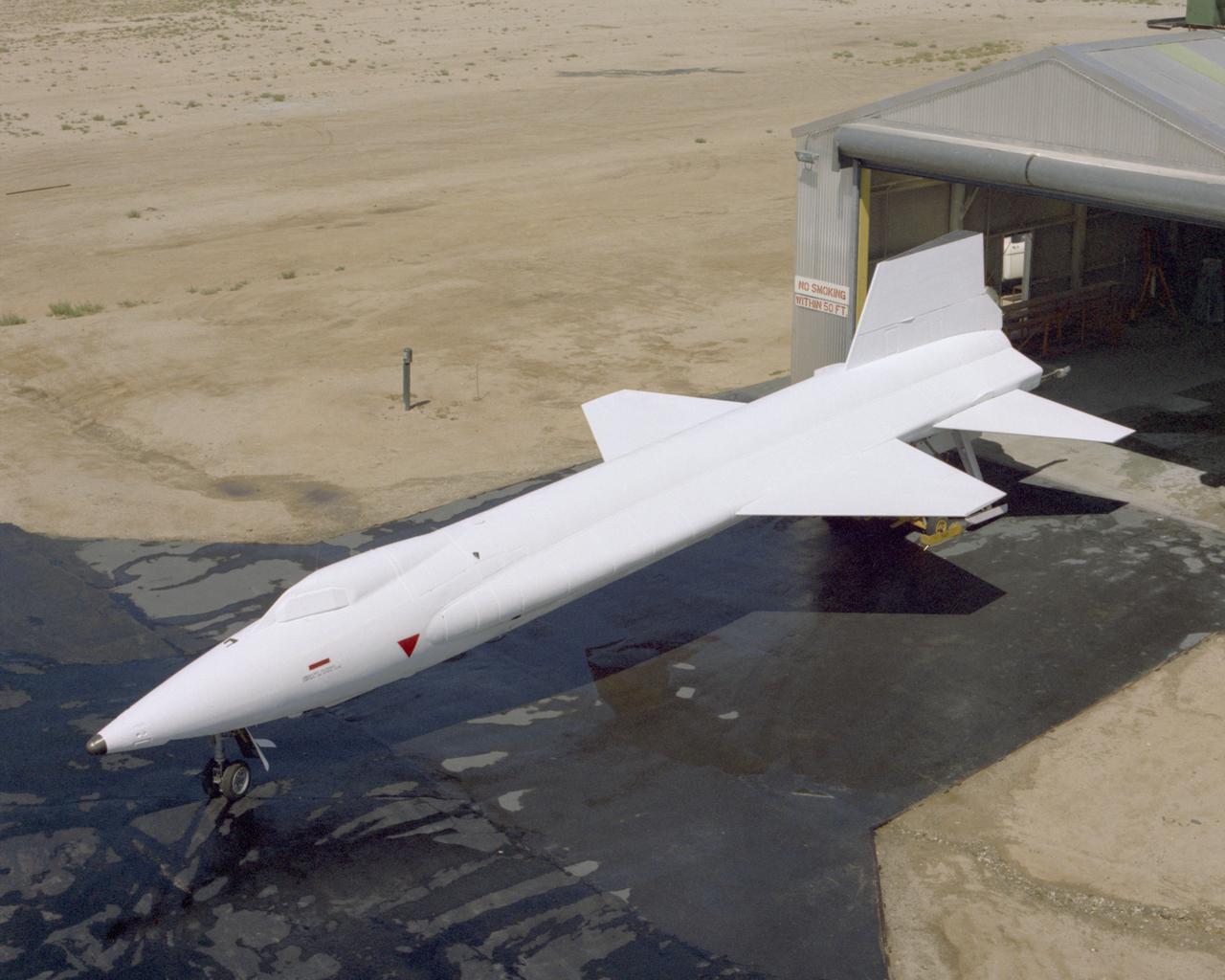
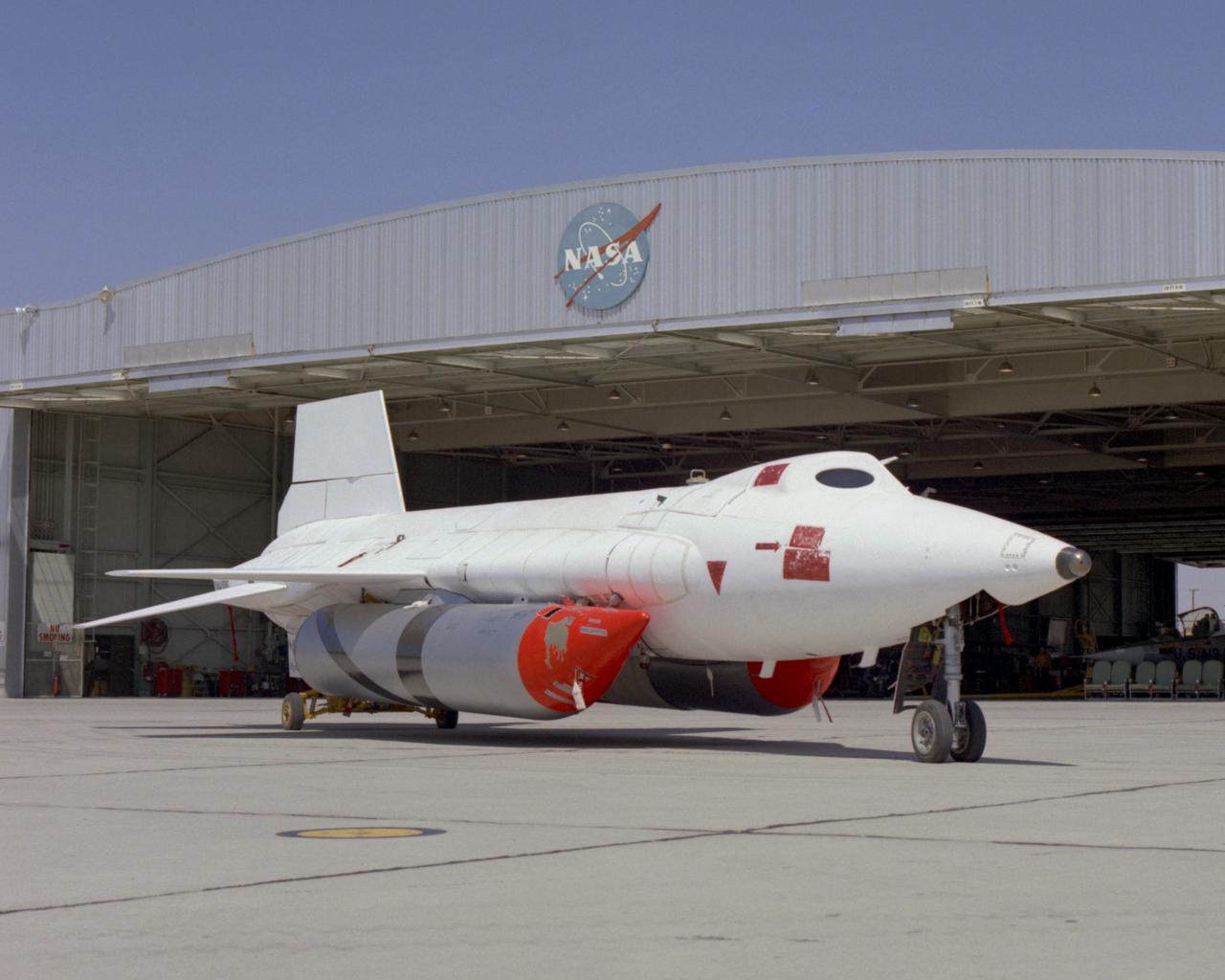
X-15A-2 with full scale ablative and external tanks installed parked in front of hangar. In June 1967, the X-15A-2 rocket-powered research aircraft received a full-scale ablative coating to protect the craft from the high temperatures associated with hypersonic flight (above Mach 5). This pink eraser-like substance, applied to the X-15A-2 aircraft (56-6671), was then covered with a white sealant coat before flight. This coating would help the #2 aircraft reach the record speed of 4,520 mph (Mach 6.7).
X-15A-2 with full scale ablative and external tanks installed parked in front of hangar
X-15A-2 is rolled out of the paint shop after having the full scale ablative applied. In June 1967, the X-15A-2 rocket-powered research aircraft received a full-scale ablative coating to protect the craft from the high temperatures associated with hypersonic flight (above Mach 5). This pink eraser-like substance, applied to the X-15A-2 aircraft (56-6671), was then covered with a white sealant coat before flight. This coating would help the #2 aircraft reach the record speed of 4,520 mph (Mach 6.7).
X-15A-2 is rolled out of the paint shop after having the full scale ablative applied
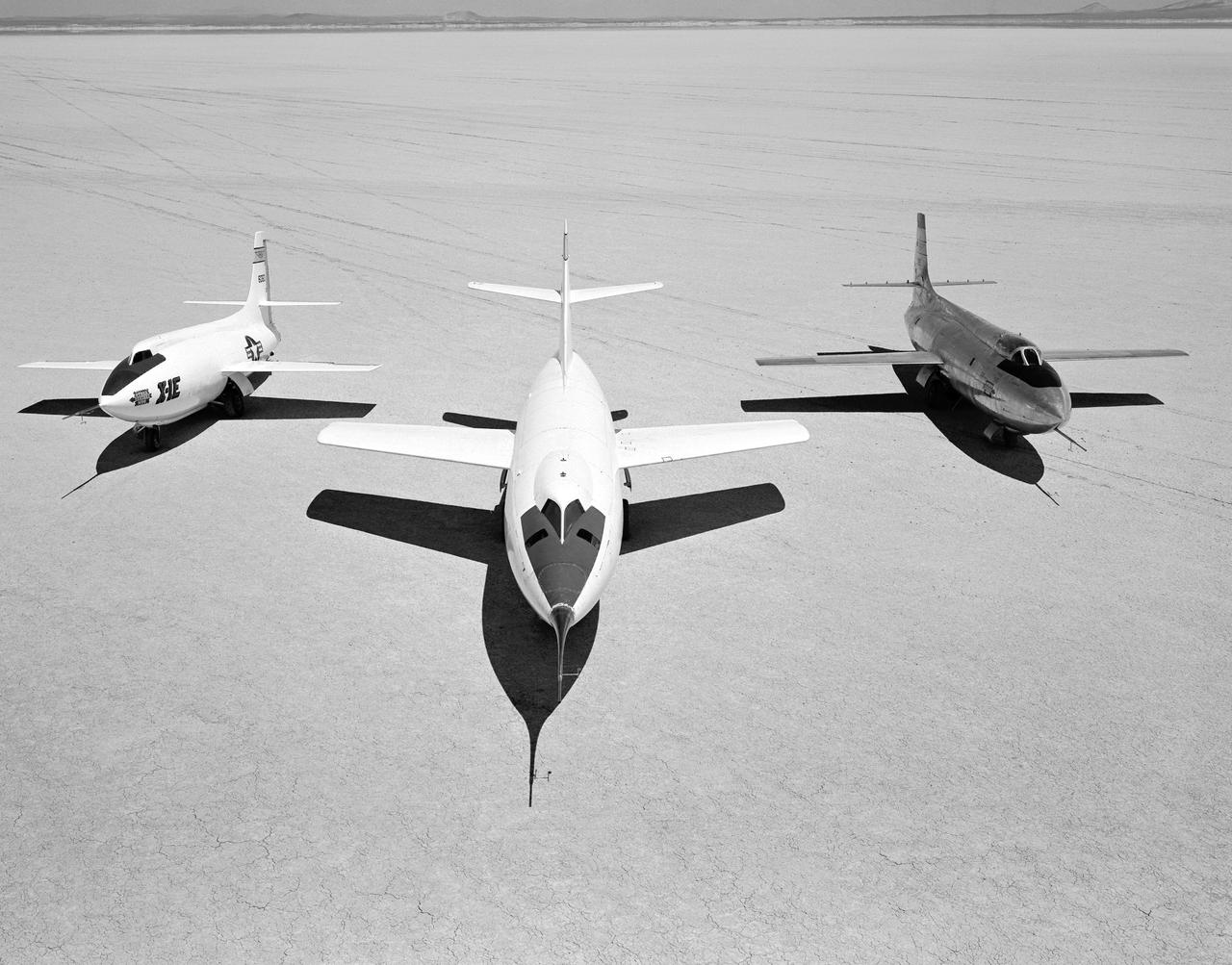
Early NACA research aircraft on the lakebed at the High Speed Research Station in 1955: Left to right: X-1E, D-558-II, X-1B
E-1914
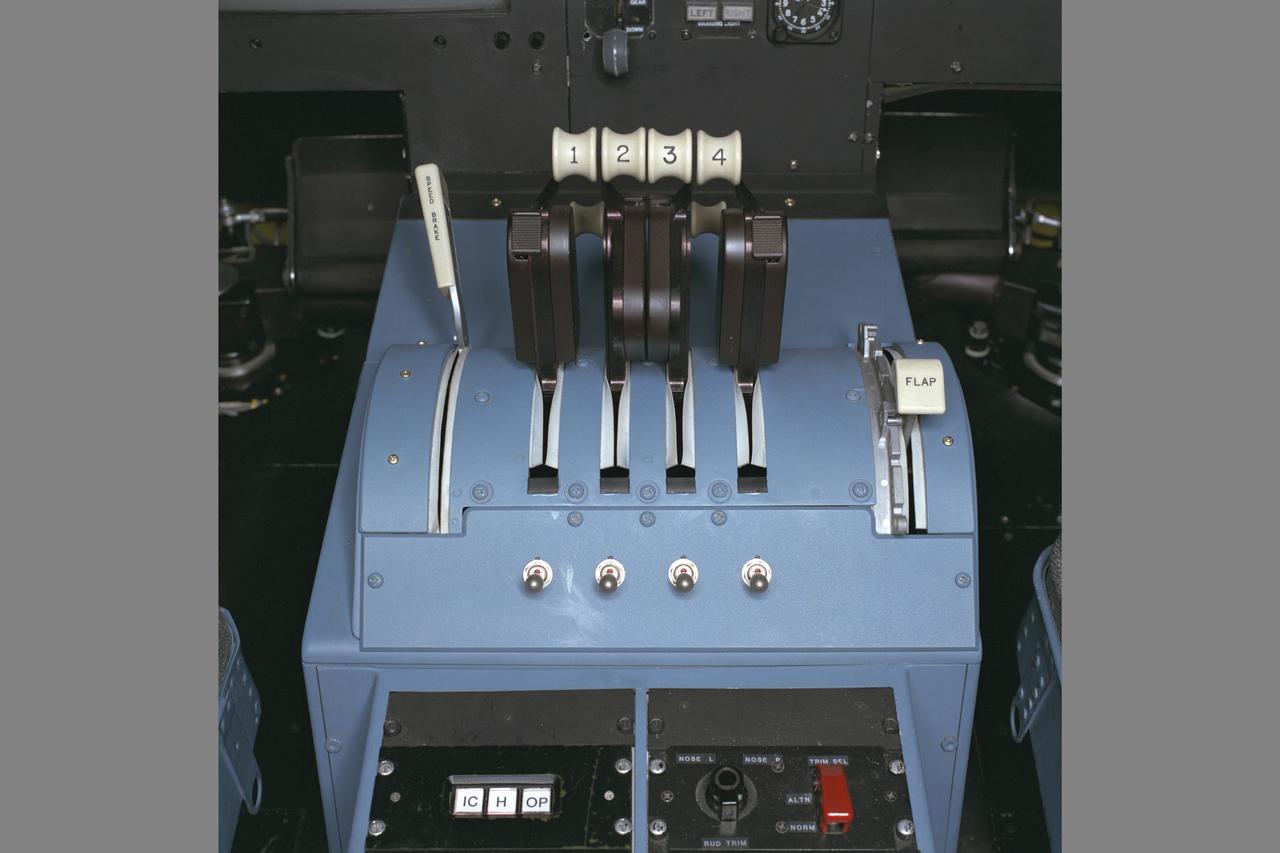
N-243 NASA Ames VMS (Vertical Motion simulator) S-Cab: HSCT (High Speed Civil Transport) Simulation Throttles
ARC-1995-AC95-0421-2
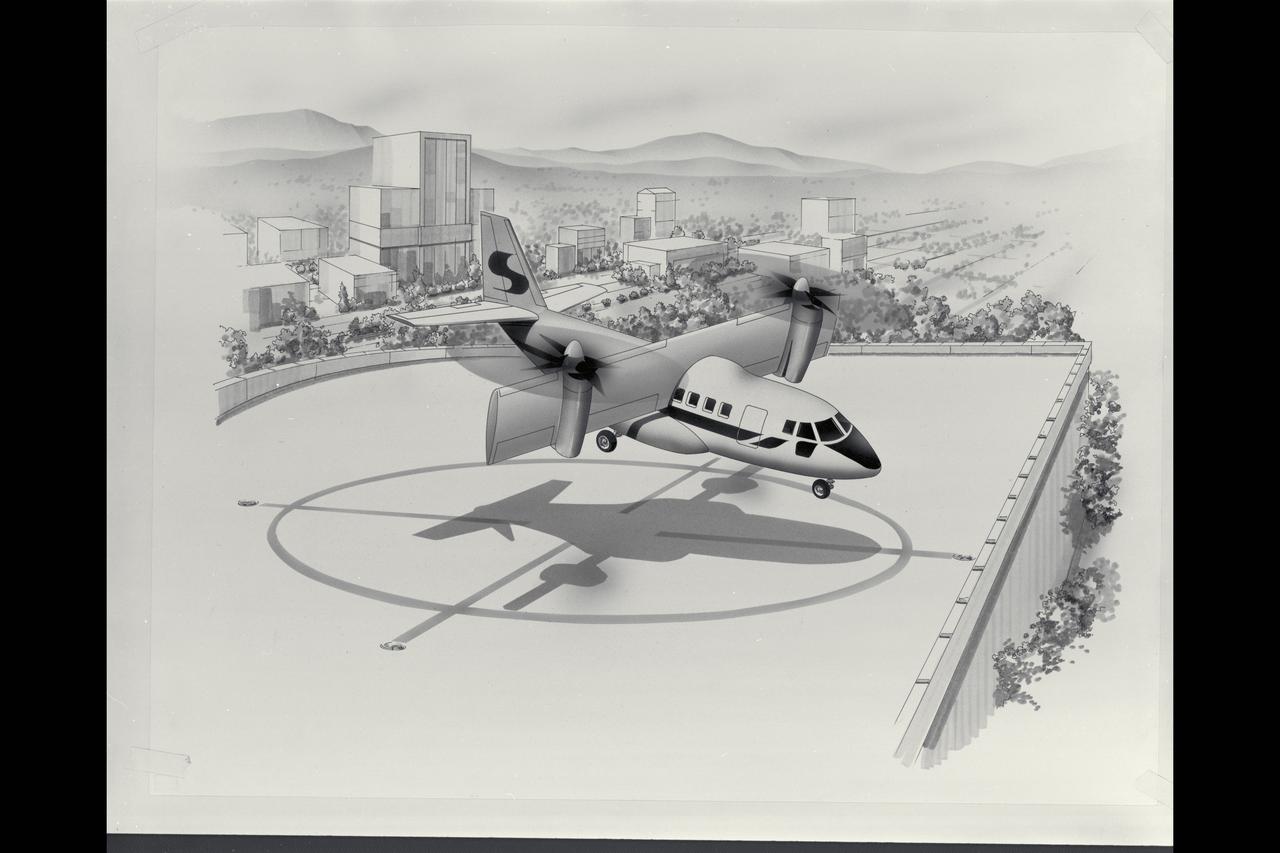
Artwork - Artist unknown High Speed Rotorcraft Concept Variable Diameter Civil Tilt-Rotor Artwork depicting vertiport take off/landing (40 passenger)
ARC-1991-AC91-0067-2
Artwork - Artist unknown High Speed Rotorcraft Concept Variable Diameter Civil Tilt-Rotor Artwork depicting vertiport (6-9 passenger)
ARC-1991-AC91-0067-1
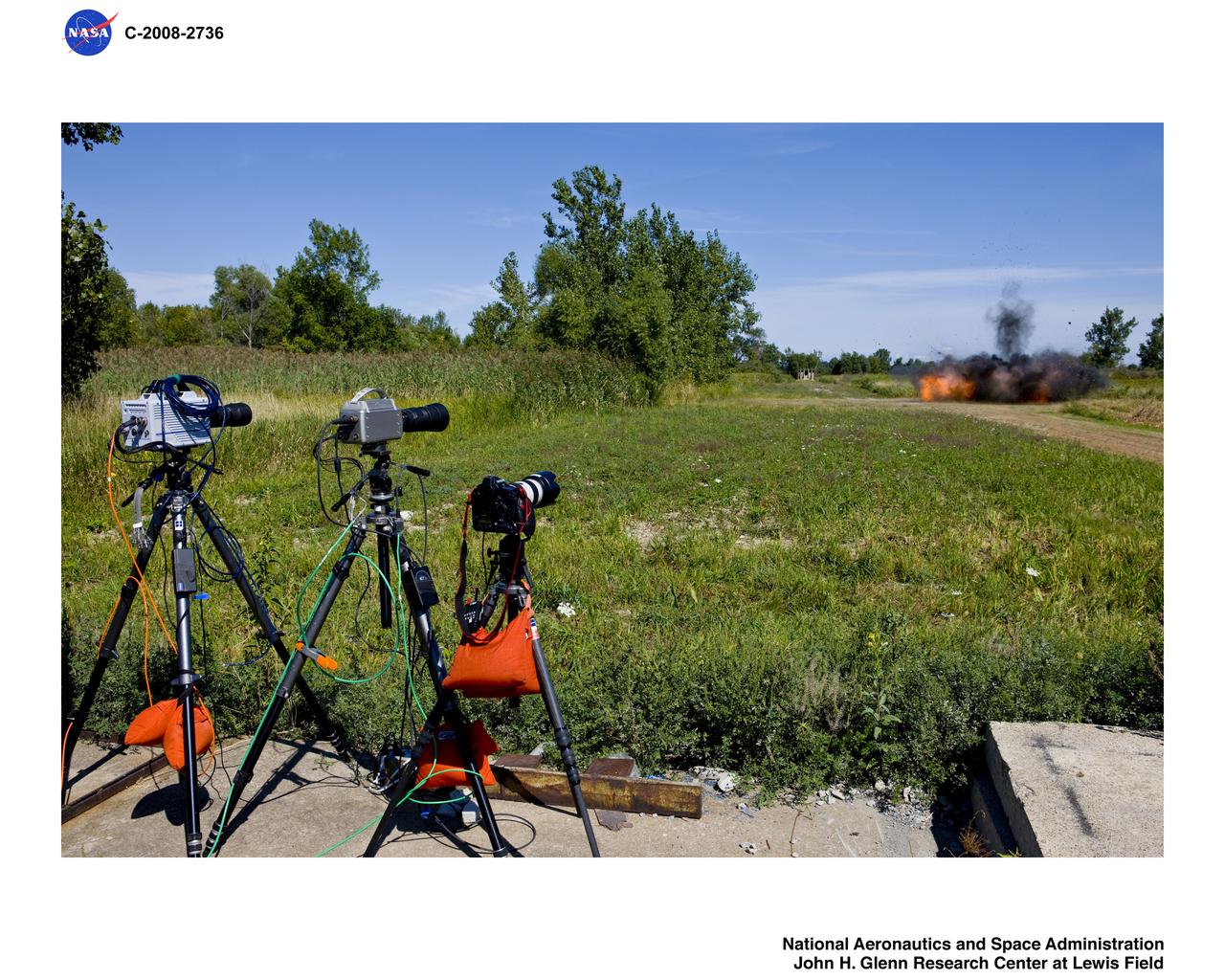
Documentation of explosives detonation at ARES of 10lbs. of C-4 Aerostat Video Program with 2 high speed cameras and digital still camera in foreground
GRC-2008-C-02736
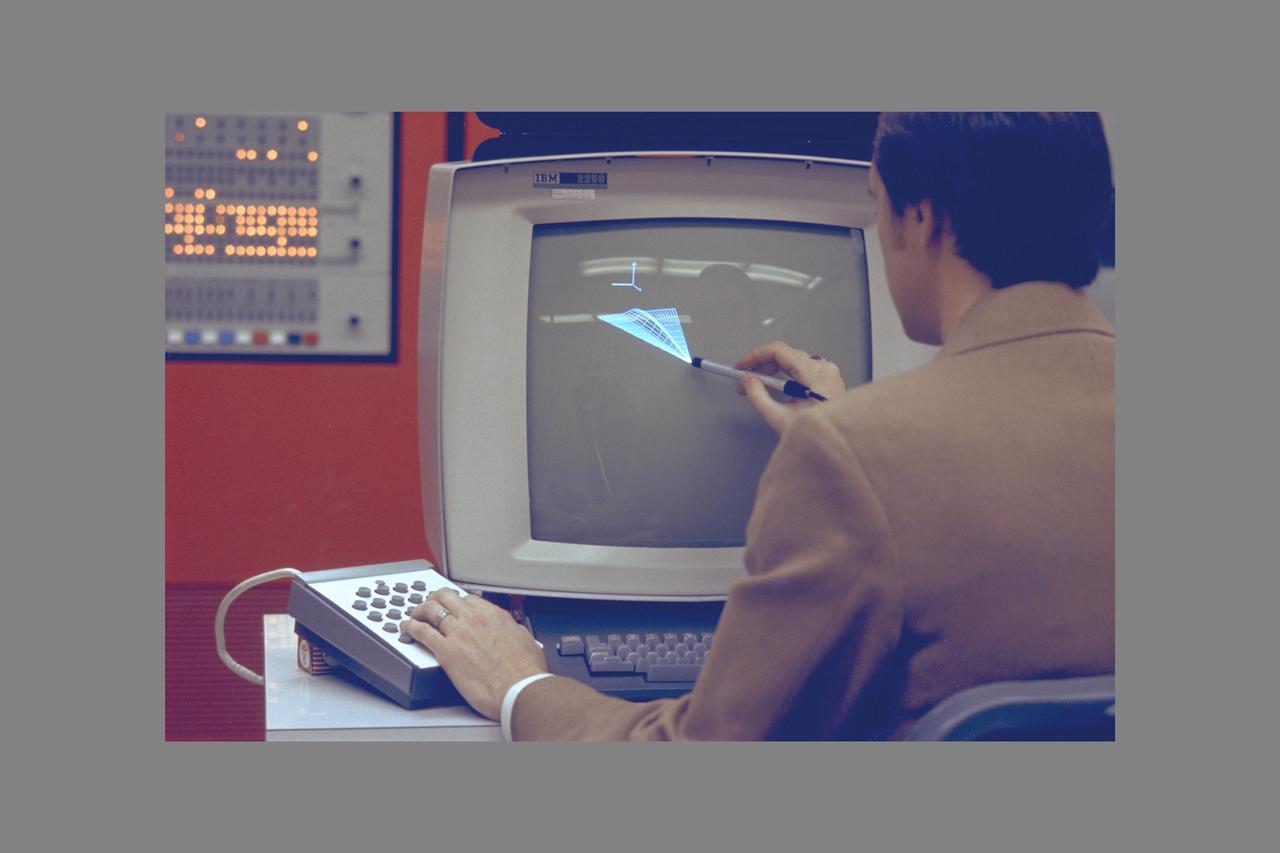
Dr. Paul Kutler, Computational Fluid Dynamics, at IBM terminal - developing ways to better predict the flow of air at high speeds around aerodynamic bodies.
ARC-1978-AC71-2763
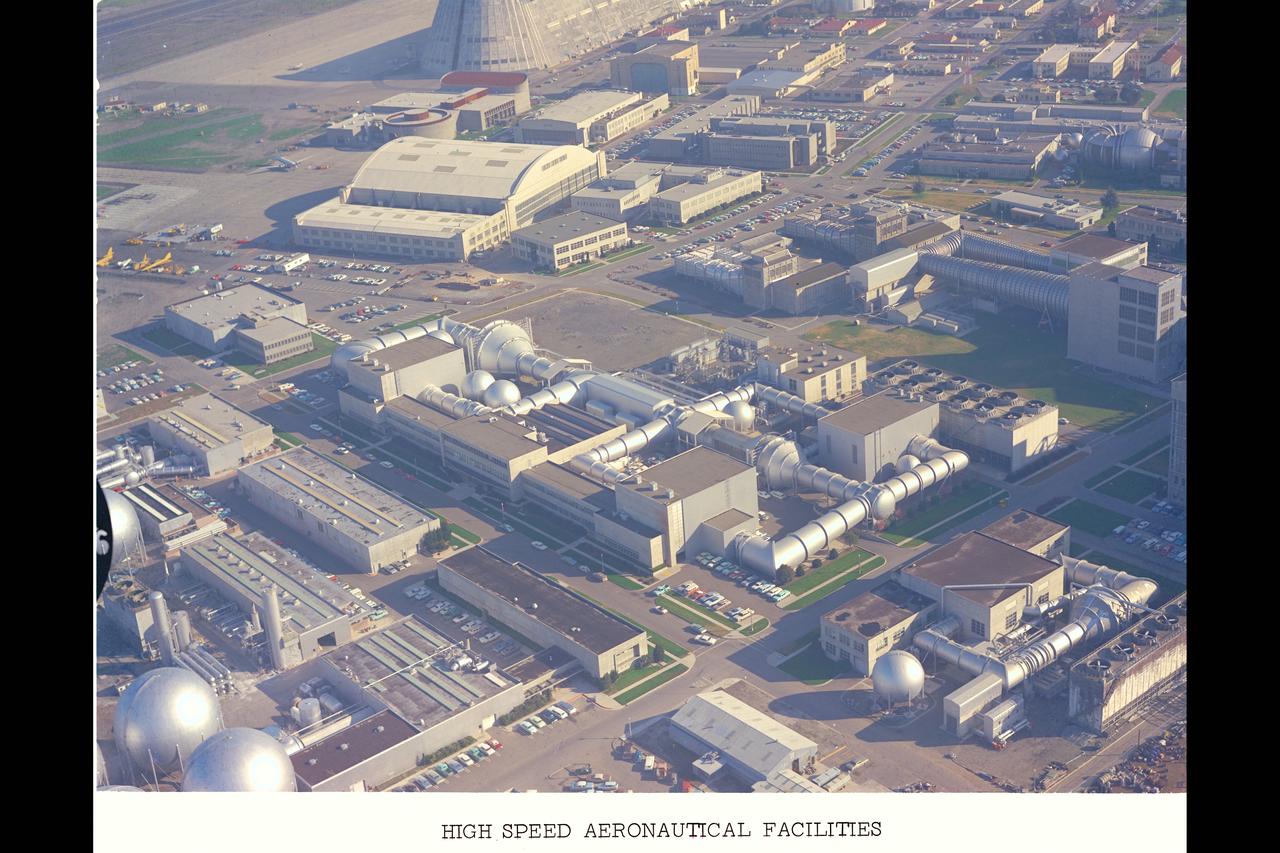
Aerial Survey of Ames Research Center centered on the Unitary Plan Wind Tunnel Complex and High Speed Aerodynamic Facilities (used in Bicentennial)
ARC-1967-AC-38286-2
Date: Dec 6, 1951  NACA Photographer North American YF-93 with submerged divergent-wall engine-air inlet. Maximum high-speed capability of Mach 1.03 was obtained with afterbrner on. Tests were conducted to compare high-speed performance of the YF-93 NACA-139 airplane with different inlet configurations. (Mar 1953)
ARC-1969-A-16712
When imaged by NASA Cassini spacecraft at infrared wavelengths that pierce the planet upper haze layer, the high-speed winds of Saturn atmosphere produce watercolor-like patterns.  With no solid surface creating atmospheric drag, winds on Saturn can reach speeds of more than 1,100 miles per hour (1,800 kilometers per hour) -- some of the fastest in the solar system.  This view was taken from a vantage point about 28 degrees above Saturn's equator. The image was taken with the Cassini spacecraft wide-angle camera on Dec. 2, 2016, with a combination of spectral filters which preferentially admits wavelengths of near-infrared light centered at 728 nanometers.  The view was acquired at a distance of approximately 592,000 miles (953,000 kilometers) from Saturn. Image scale is 35 miles (57 kilometers) per pixel.  https://photojournal.jpl.nasa.gov/catalog/PIA20528
Watercolor World
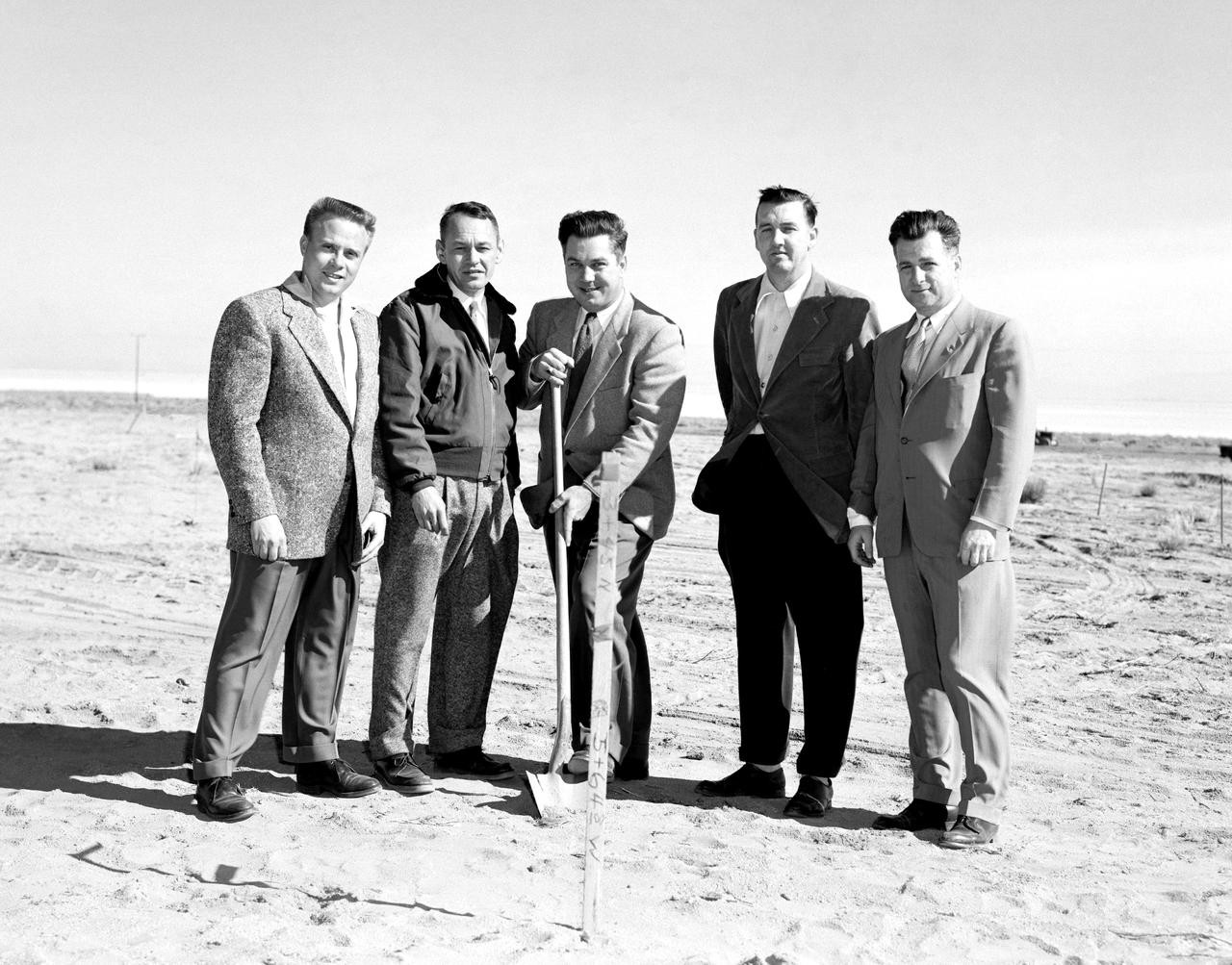
The NACA High-Speed Flight Research Station, had initially been subordinate to the Langley Memorial Aeronautical Laboratory near Hampton, Virginia, but as the flight research in the Mojave Desert increasingly proved its worth after 1946, it made sense to make the Flight Research Station a separate entity reporting directly to the headquarters of the National Advisory Committee for Aeronautics. But an autonomous center required all the trappings of a major research facility, including good quarters. With the adoption of the Edwards “Master Plan,” the Air Force had committed itself to moving from its old South Base to a new location midway between the South and North Bases. The NACA would have to move also--so why not take advantage of the situation and move into a full-blown research facility. The Air Force issued a lease to NACA for a location on the northwestern shore of the Roger Dry Lake. Construction started on the NACA station in early February 1953. On a windy day, January 27, 1953, at a groundbreaking ceremony stood left to right: Gerald Truszynski, Head of Instrumentation Division; Joseph Vensel, Head of the Operations Branch; Walter Williams, Head of the Station, scooping the first shovel full of dirt; Marion Kent, Head of Personnel; and California state official Arthur Samet.
NACA Groundbreaking Ceremony
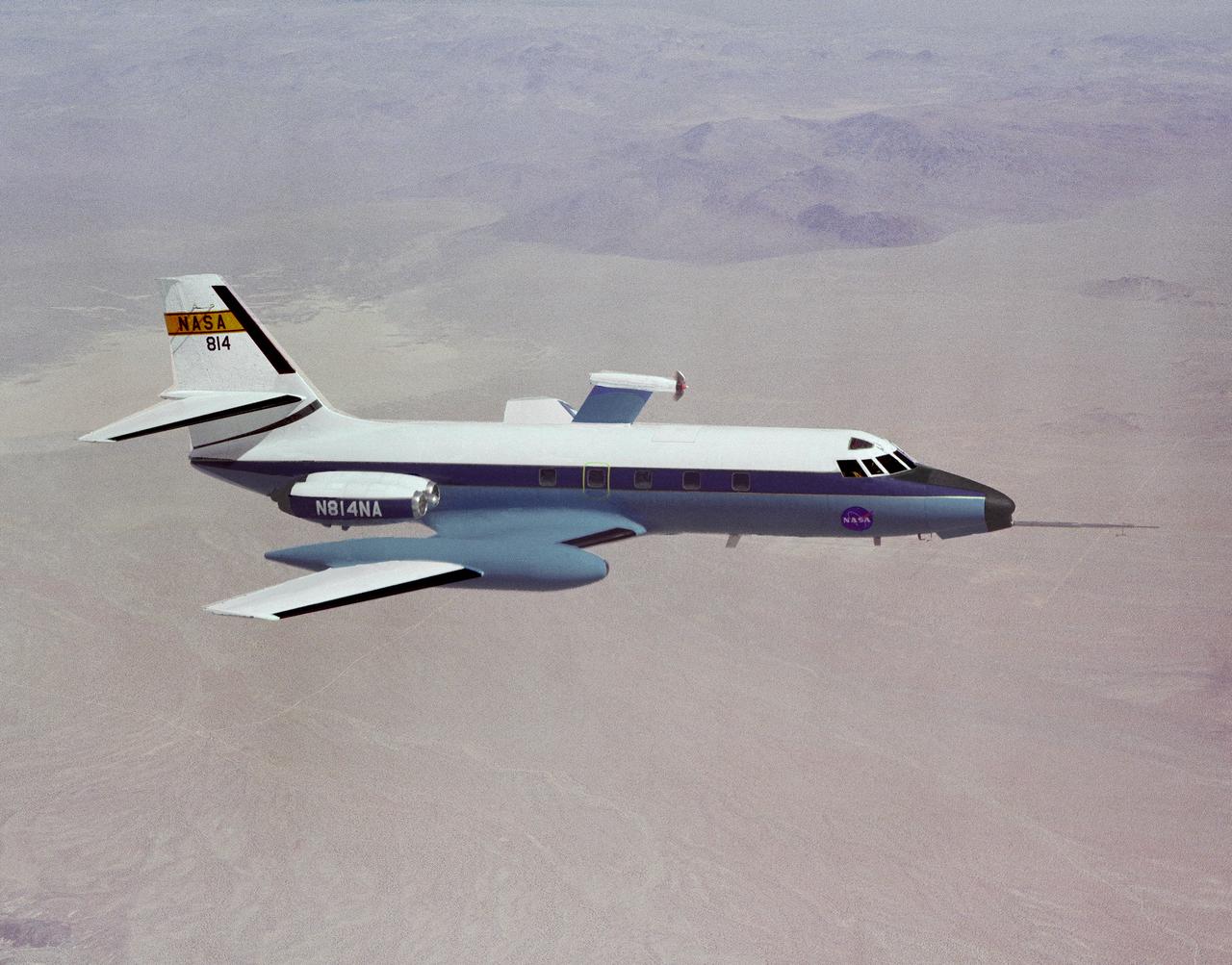
In this photograph, the C-140 JetStar is fitted with a model of a high-speed propeller. Three different designs were tested at NASA's Dryden Flight Research Facility in 1981-1982. Their swept-back blades were intended to increase the speed and fuel efficiency of turboprop aircraft. Speeds of Mach 0.8 were thought possible, while using 20 to 30 percent less fuel than standard jet engines.
ECN-15655
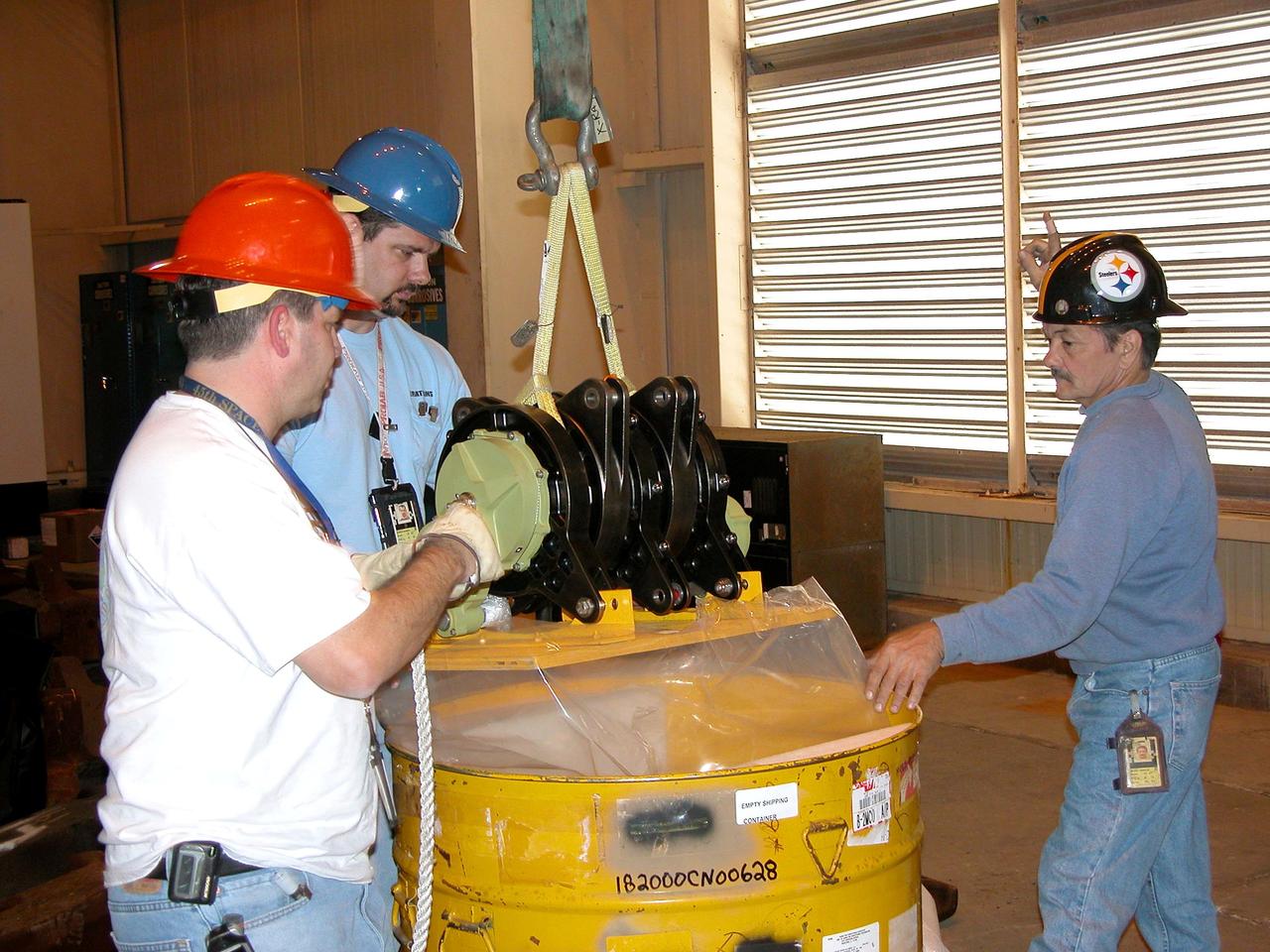
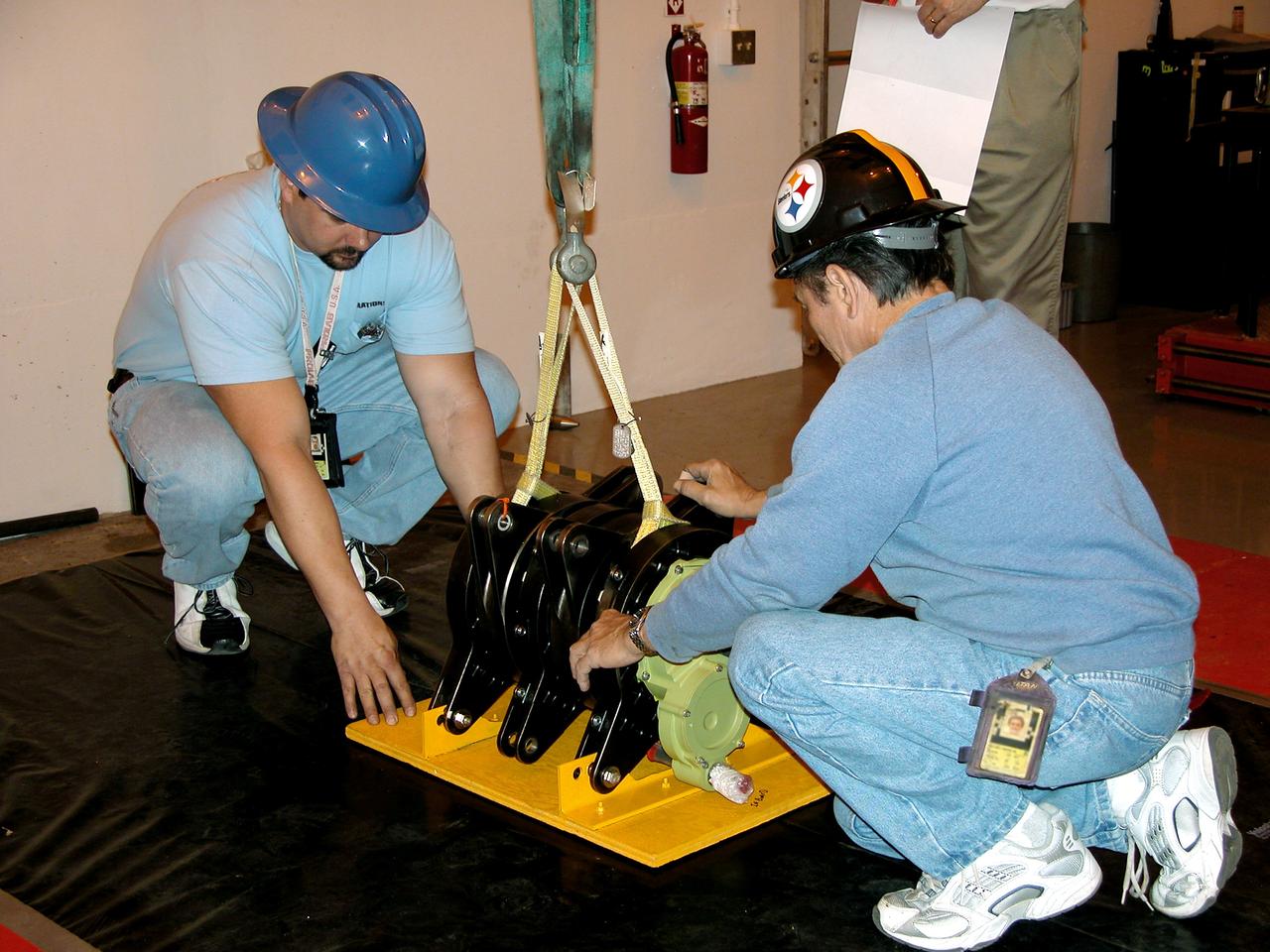
KENNEDY SPACE CENTER, FLA. -  Workers at Cape Canaveral Air Force Station place one of four rudder speed brake actuators onto a pallet for X-ray.  The actuators, to be installed on the orbiter Discovery, are being X-rayed at the Radiographic High-Energy X-ray Facility to determine if the gears were installed correctly. Discovery has been assigned to the first Return to Flight mission, STS-114, a logistics flight to the International Space Station.
KENNEDY SPACE CENTER, FLA. - Workers at Cape Canaveral Air Force Station place one of four rudder speed brake actuators onto a pallet for X-ray. The actuators, to be installed on the orbiter Discovery, are being X-rayed at the Radiographic High-Energy X-ray Facility to determine if the gears were installed correctly. Discovery has been assigned to the first Return to Flight mission, STS-114, a logistics flight to the International Space Station.
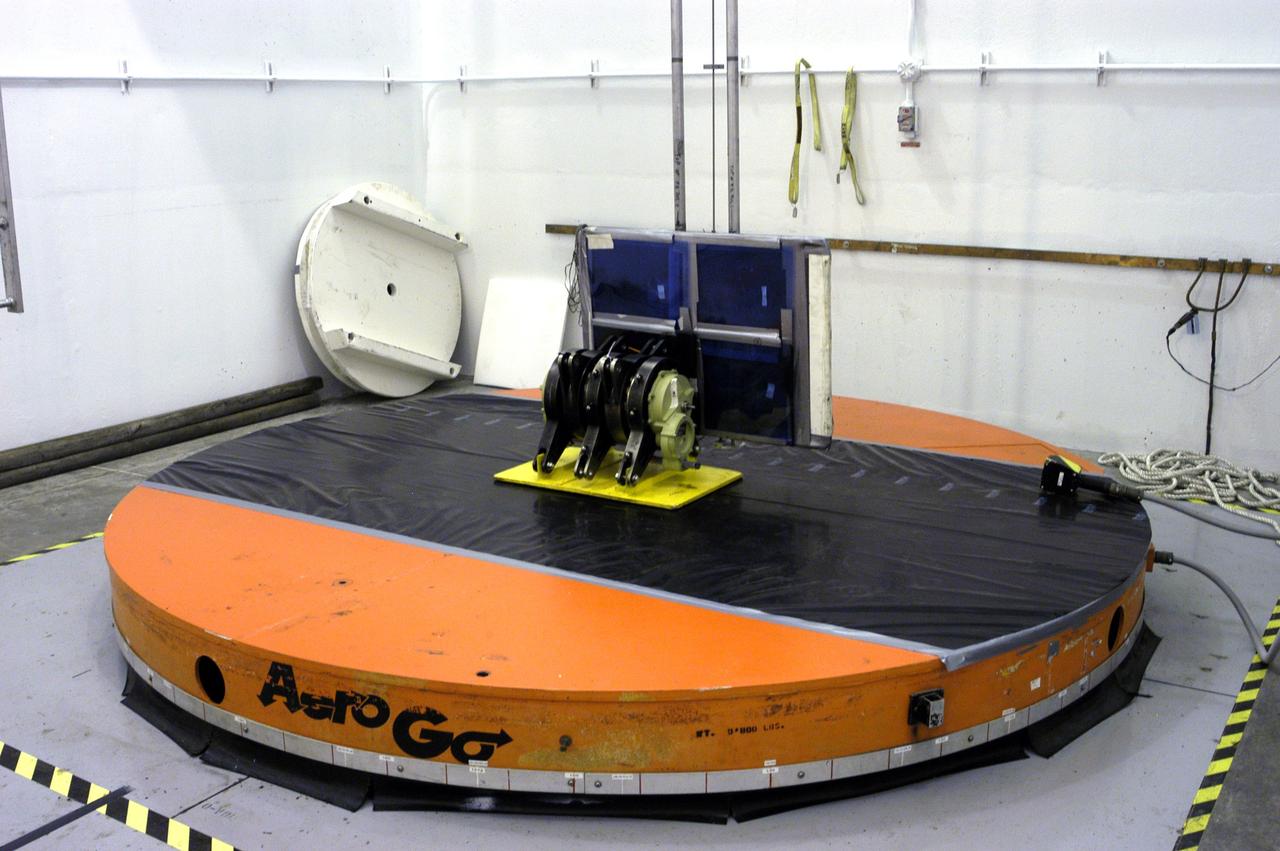
KENNEDY SPACE CENTER, FLA. -  A rudder speed brake actuator sits on an air-bearing pallet to undergo X-raying.  Four actuators to be installed on the orbiter Discovery are being X-rayed at the Radiographic High-Energy X-ray Facility to determine if the gears were installed correctly. Discovery has been assigned to the first Return to Flight mission, STS-114, a logistics flight to the International Space Station.
KENNEDY SPACE CENTER, FLA. - A rudder speed brake actuator sits on an air-bearing pallet to undergo X-raying. Four actuators to be installed on the orbiter Discovery are being X-rayed at the Radiographic High-Energy X-ray Facility to determine if the gears were installed correctly. Discovery has been assigned to the first Return to Flight mission, STS-114, a logistics flight to the International Space Station.
KENNEDY SPACE CENTER, FLA. -  One of four rudder speed brake actuators arrives at Cape Canaveral Air Force Station.  The actuators, to be installed on the orbiter Discovery, are being X-rayed at the Radiographic High-Energy X-ray Facility to determine if the gears were installed correctly. Discovery has been assigned to the first Return to Flight mission, STS-114, a logistics flight to the International Space Station.
KENNEDY SPACE CENTER, FLA. - One of four rudder speed brake actuators arrives at Cape Canaveral Air Force Station. The actuators, to be installed on the orbiter Discovery, are being X-rayed at the Radiographic High-Energy X-ray Facility to determine if the gears were installed correctly. Discovery has been assigned to the first Return to Flight mission, STS-114, a logistics flight to the International Space Station.
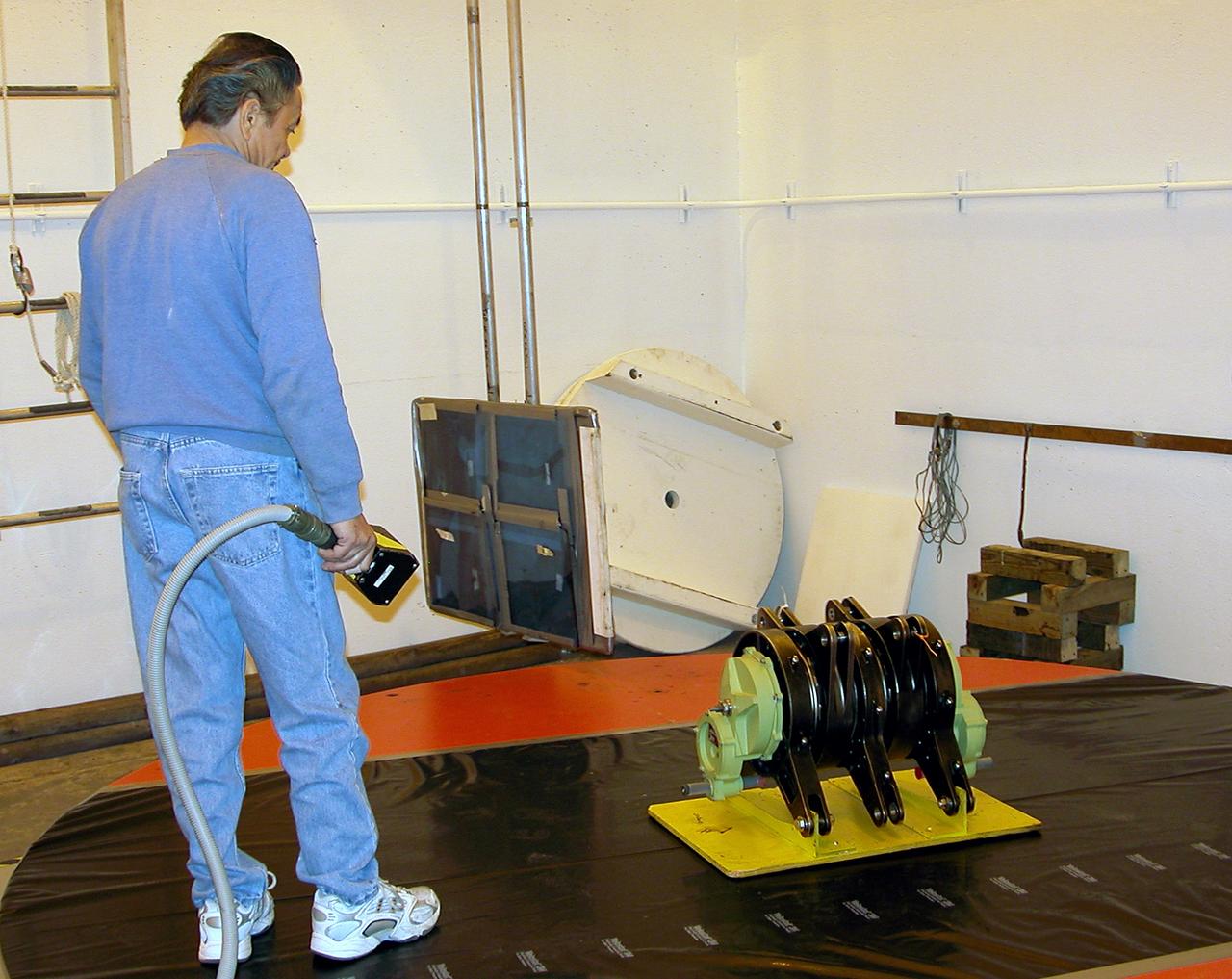
KENNEDY SPACE CENTER, FLA. -  An X-ray machine is in place to take images of four rudder speed brake actuators to be installed on the orbiter Discovery.  The actuators are being X-rayed at the Cape Canaveral Air Force Station’s Radiographic High-Energy X-ray Facility to determine if the gears were installed correctly. Discovery has been assigned to the first Return to Flight mission, STS-114, a logistics flight to the International Space Station.
KENNEDY SPACE CENTER, FLA. - An X-ray machine is in place to take images of four rudder speed brake actuators to be installed on the orbiter Discovery. The actuators are being X-rayed at the Cape Canaveral Air Force Station’s Radiographic High-Energy X-ray Facility to determine if the gears were installed correctly. Discovery has been assigned to the first Return to Flight mission, STS-114, a logistics flight to the International Space Station.
KENNEDY SPACE CENTER, FLA. -  A rudder speed brake actuator sits on an air-bearing pallet to undergo X-raying.  Four actuators to be installed on the orbiter Discovery are being X-rayed at the Radiographic High-Energy X-ray Facility to determine if the gears were installed correctly. Discovery has been assigned to the first Return to Flight mission, STS-114, a logistics flight to the International Space Station.
KENNEDY SPACE CENTER, FLA. - A rudder speed brake actuator sits on an air-bearing pallet to undergo X-raying. Four actuators to be installed on the orbiter Discovery are being X-rayed at the Radiographic High-Energy X-ray Facility to determine if the gears were installed correctly. Discovery has been assigned to the first Return to Flight mission, STS-114, a logistics flight to the International Space Station.
The Bell Aircraft Corporation X-1-2 aircraft on the ramp at NACA High Speed Flight Research Station located on the South Base of Muroc Army Air Field in 1947. The X-1-2 flew until October 23, 1951, completing 74 glide and powered flights with nine different pilots. The aircraft has white paint and the NACA tail band. The black Xs are reference markings for tracking purposes. They were widely used on NACA aircraft in the early 1950s.
Right side view of Bell X-1 #6063
NASA research pilot Jack McKay was injured in a crash landing of the X-15 #2 on November 9, 1962. Following the launch from the B-52 to begin flight 2-31-52, he started the X-15's rocket engine, only to discover that it produced just 30 percent of its maximum thrust. He had to make a high-speed emergency landing on Mud Lake, NV, without flaps but with a significant amount of fuel still in the aircraft. As the X-15 slid across the lakebed, the left skid collapsed; the aircraft turned sideways and flipped onto its back. McKay suffered back injuries but was eventually able to resume X-15 pilot duties, making 22 more flights. The X-15 was sent back to North American Aviation and rebuilt into the X-15A-2.
X-15 #2 landing accident at Mud Lake, Nevada on November 9, 1962 after flight 2-31-52
3/4 front view of model with flaps up.  V/STOL Aircraft:  Wind tunnel investigation of rotating cylinder applied to training edge flaps for high lift & low-speed control.
ARC-1965-A-34557
Artwork: Bell Textron Co. Bell Textron Tilt Rotor folding swept wing and Forward Swept Wing Configurations (Bell-030355 Military High Speed Tilt Rotor)
ARC-1987-AC87-0038-3
NACA High Speed Flight Station aircraft at South Base. Clockwise from far left: D-558-II, XF-92A, X-5, X-1, X-4, and D-558-I.
E-842
3/4 rear view of model with flaps down with Cecil E. MacDonald.  V/STOL Aircraft:  Wind tunnel investigation of rotating cylinder applied to training edge flaps for high lift & low-speed control.
ARC-1965-A-34561
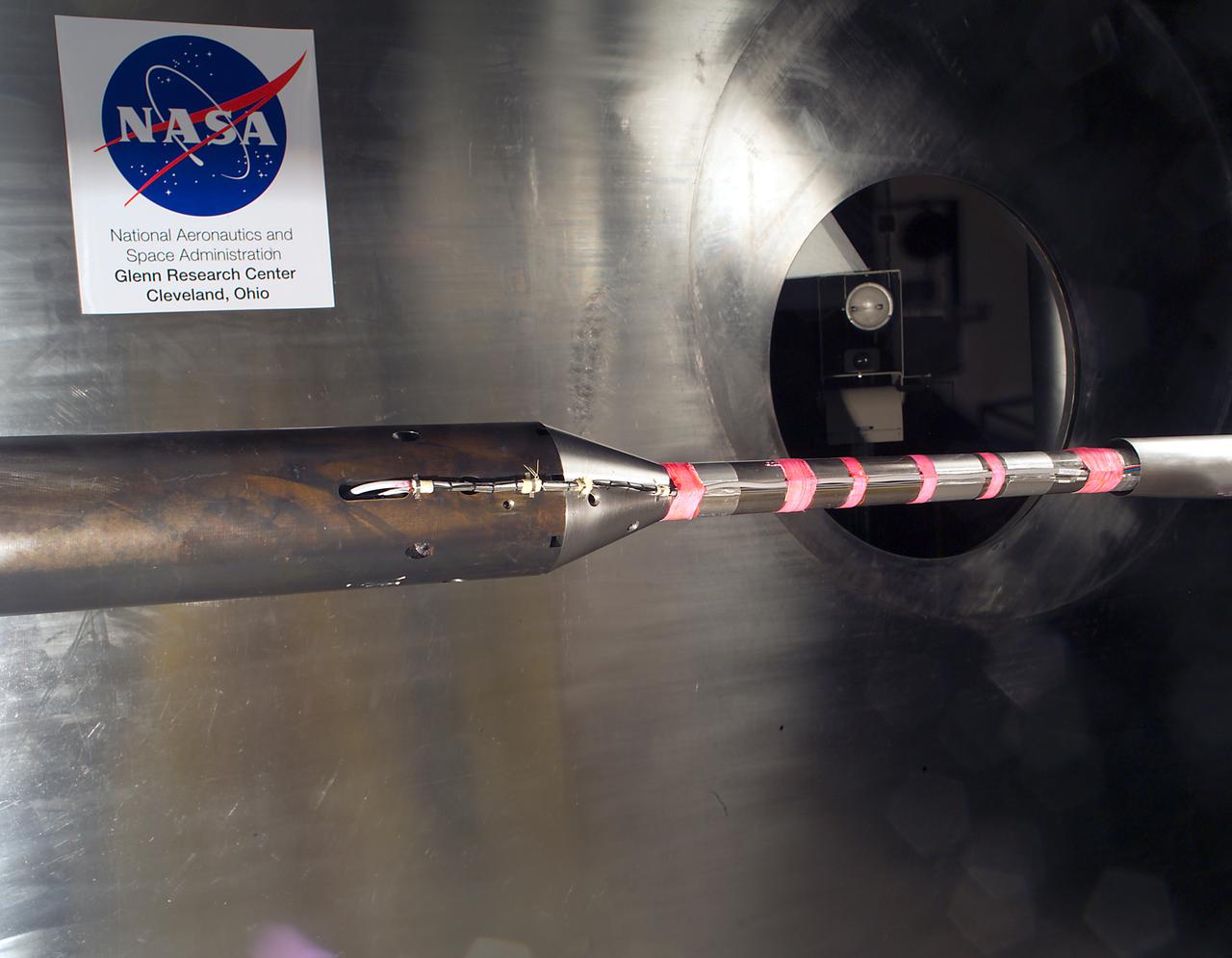
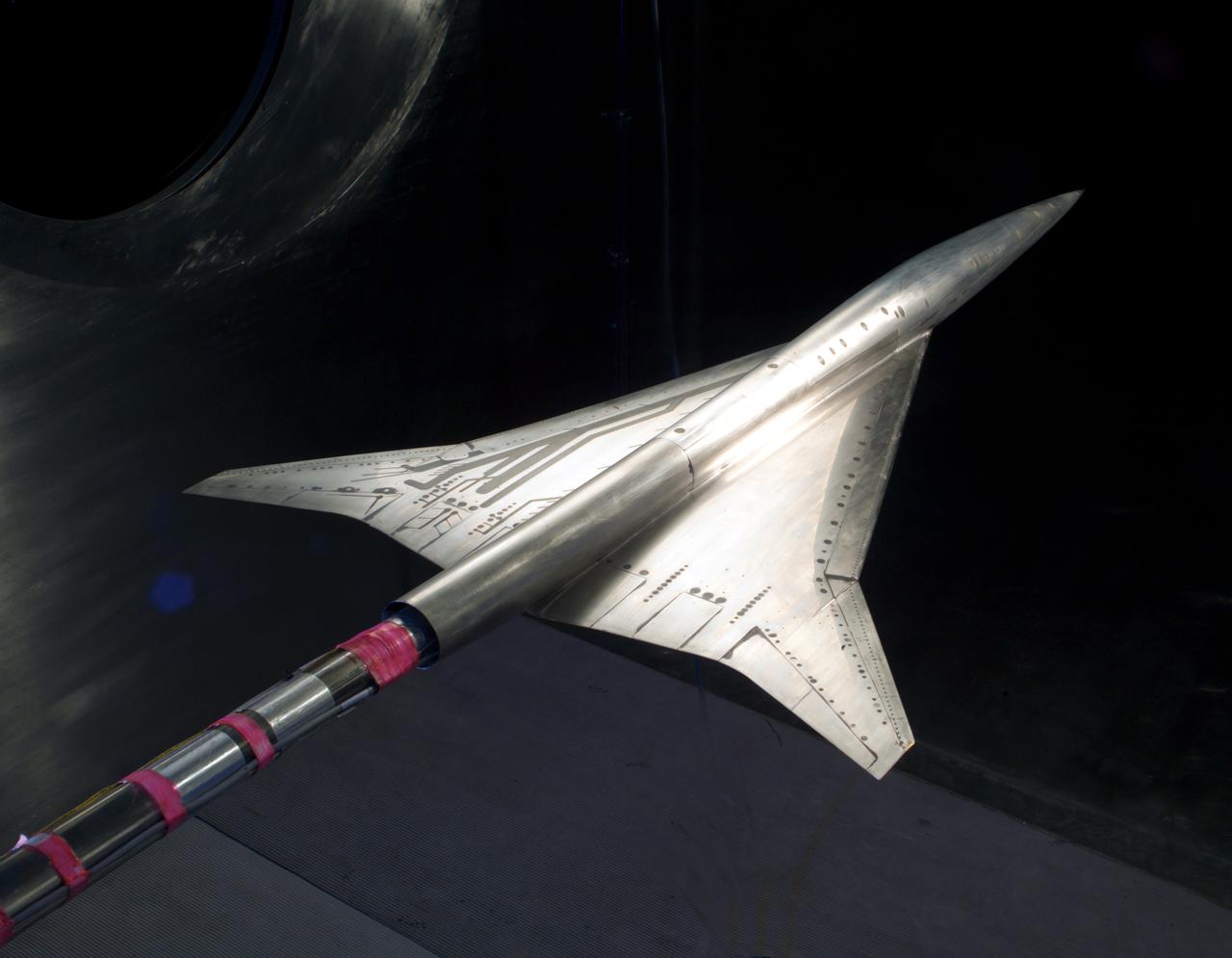
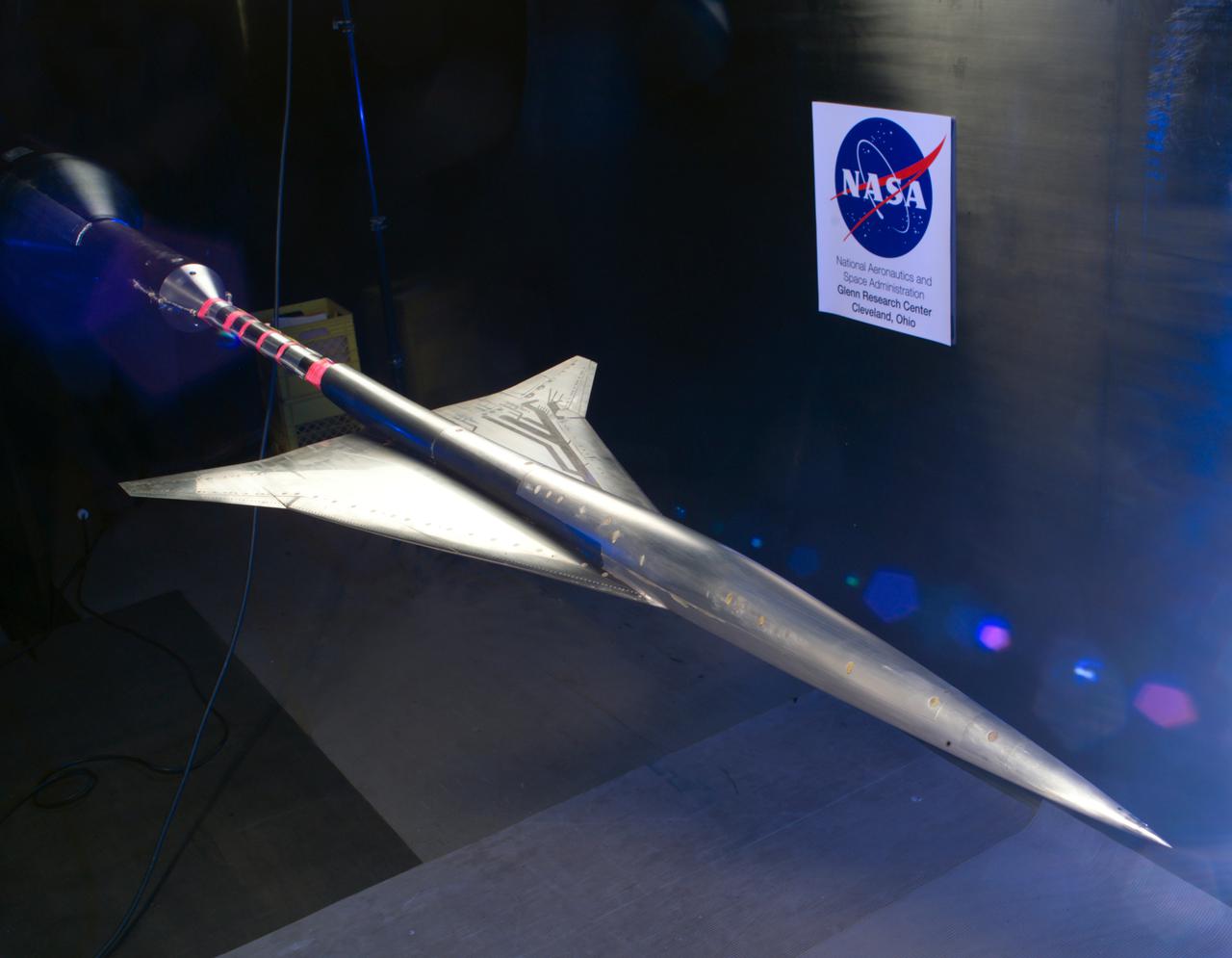
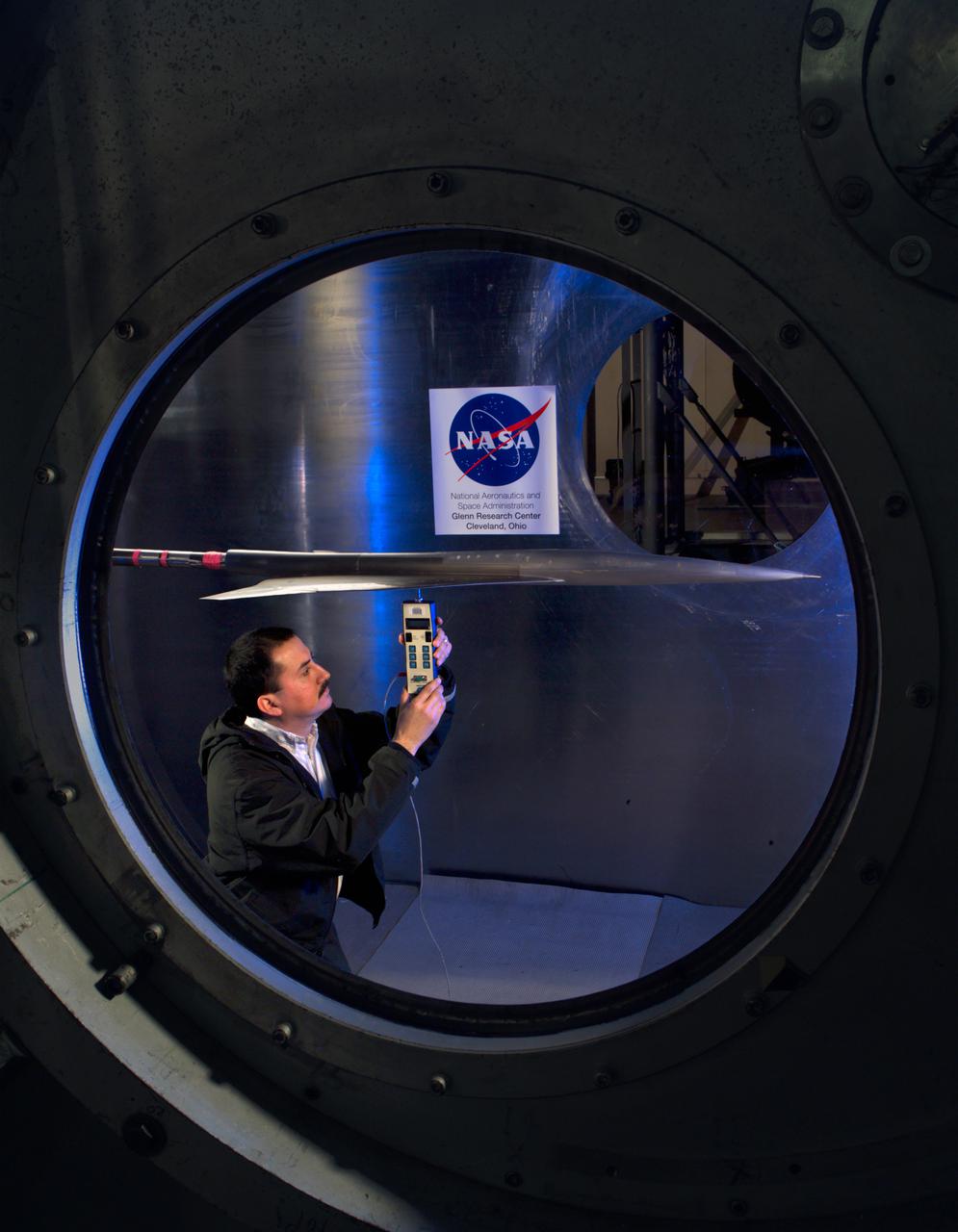
Mechanical technician Dan Pitts prepares a scale model of Lockheed Martin's Quiet Supersonic Technology (QueSST) X-plane preliminary design for its first high-speed wind tunnel tests at NASA's Glenn Research Center.
Quiet Supersonic Technology (QueSST)
The North American Aviation XB-70 triple-sonic bomber prototype aircraft No. 1. NASA used the pre-production bomber for high-speed research in the mid-1960s.
XB-70 Triple-Sonic Bomber