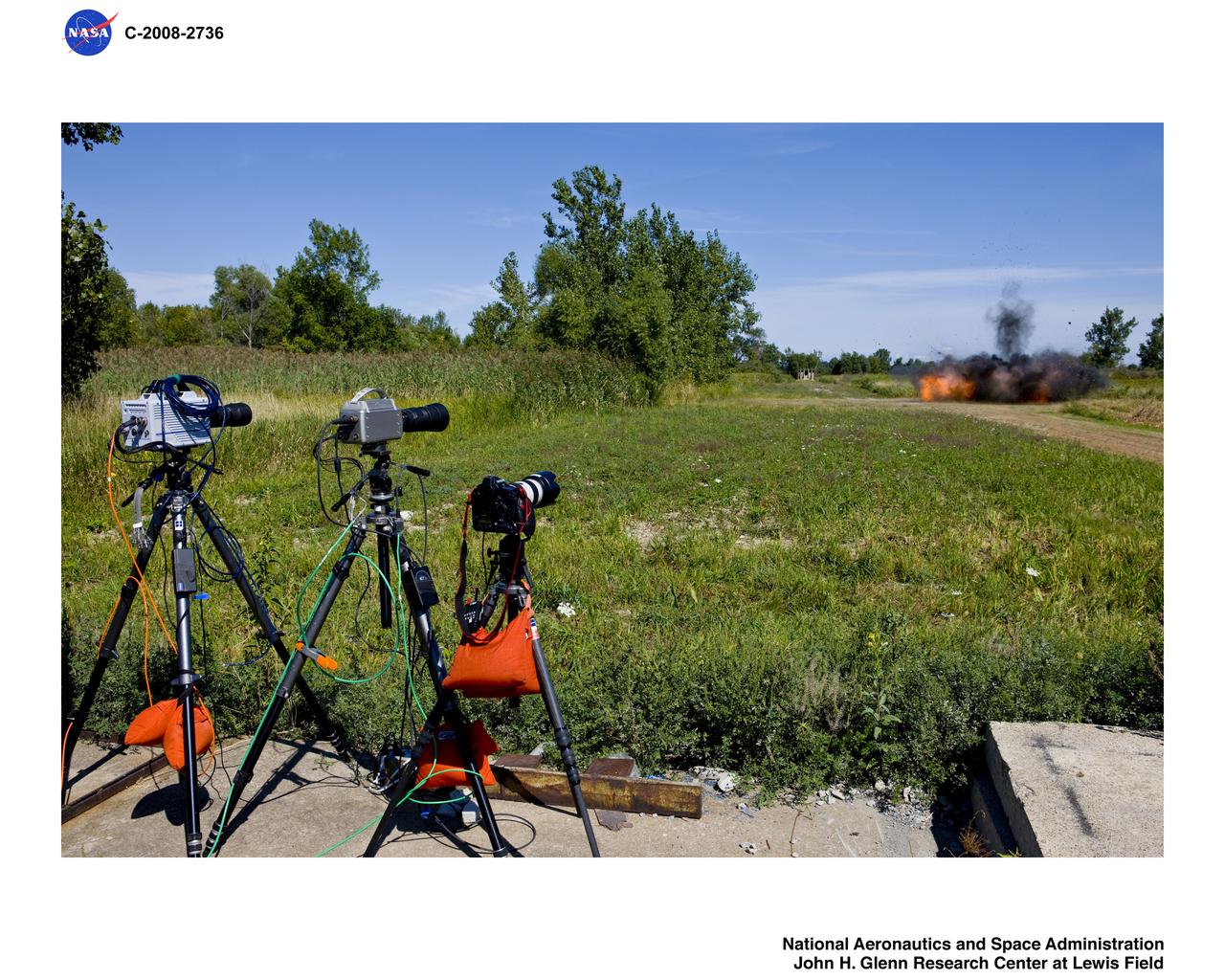
Documentation of explosives detonation at ARES of 10lbs. of C-4 Aerostat Video Program with 2 high speed cameras and digital still camera in foreground
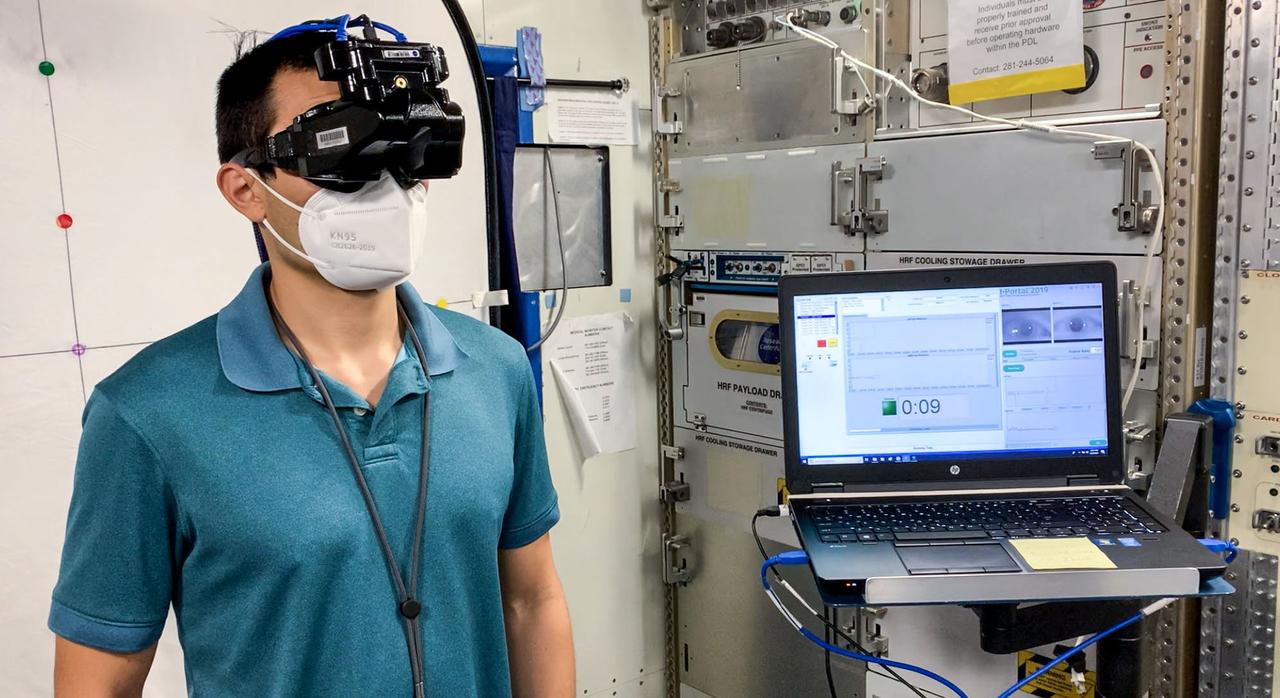
jsc2022e083571 (11/2/2022) --- The Falcon Goggles being worn as part of training development classes at NASA's Johnson Space Center. This image shows the configuration donned with the goggles cover. The Falcon Goggles, based on the Neurolign DX Falcon™, provide a system for capturing detailed high-speed video of the eyes to collect precise data on ocular alignment and crew balance. Image courtesy of NASA.

KENNEDY SPACE CENTER, FLA. -- Johnson Controls operator Rick Wetherington checks out one of the recently acquired Contraves-Goerz Kineto Tracking Mounts (KTM). There are 10 KTMs certified for use on the Eastern Range. The KTM, which is trailer-mounted with an electric drive tracking mount, includes a two-camera, camera control unit that will be used during launches. The KTM is designed for remotely controlled operations and offers a combination of film, shuttered and high-speed digital video, and FLIR cameras configured with 20-inch to 150-inch focal length lenses. The KTMs are generally placed in the field and checked out the day before a launch and manned 3 hours prior to liftoff.
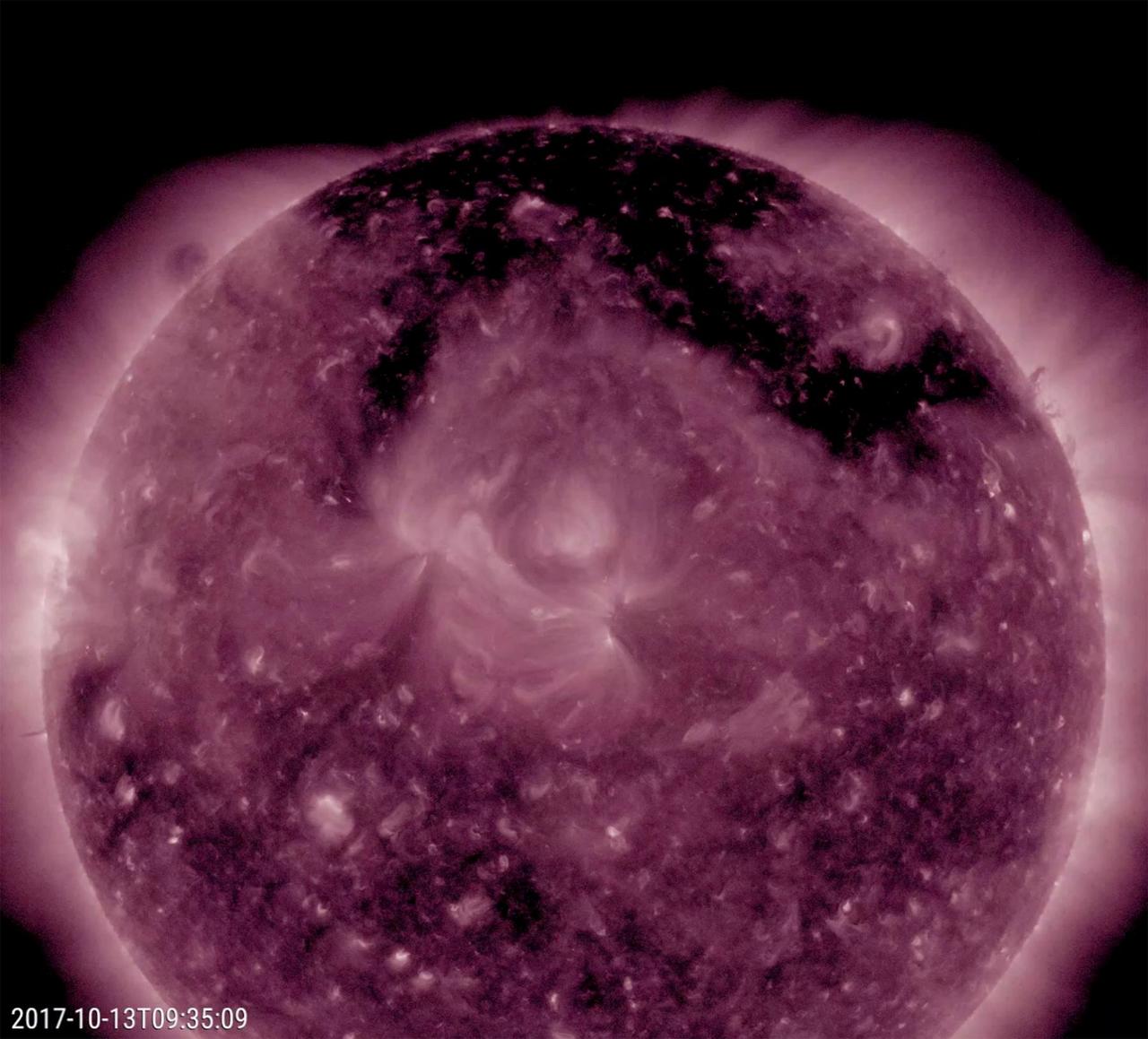
A large coronal hole stands out as the most obvious feature on the sun this week (Oct. 12-13, 2017). The dark structure, shaped kind of like the Pi symbol, spreads across much of the top of the sun. Though one cannot tell from this image and video clip in false-color extreme ultraviolet light, it is spewing high-speed solar wind particles into space and has been doing this all week. It is likely that these charged particles have been interacting with Earth's atmosphere and generating many aurora displays in regions near the poles the past several days. Animations are available at https://photojournal.jpl.nasa.gov/catalog/PIA22047
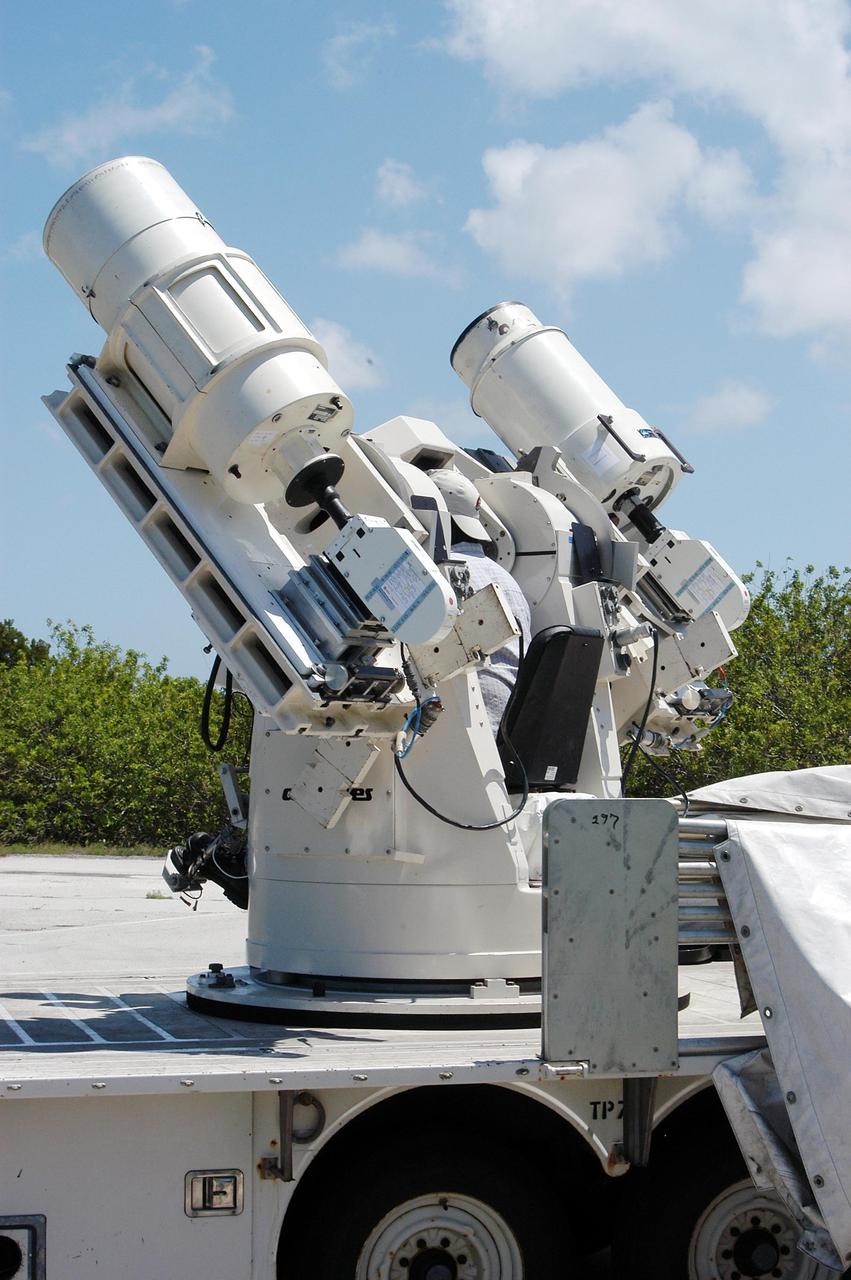
KENNEDY SPACE CENTER, FLA. -- Johnson Controls operator Kenny Allen checks out one of the recently acquired Contraves-Goerz Kineto Tracking Mounts (KTM). There are 10 KTMs certified for use on the Eastern Range. The KTM, which is trailer-mounted with an electric drive tracking mount, includes a two-camera, camera control unit that will be used during launches. The KTM is designed for remotely controlled operations and offers a combination of film, shuttered and high-speed digital video, and FLIR cameras configured with 20-inch to 150-inch focal length lenses. The KTMs are generally placed in the field and checked out the day before a launch and manned 3 hours prior to liftoff.
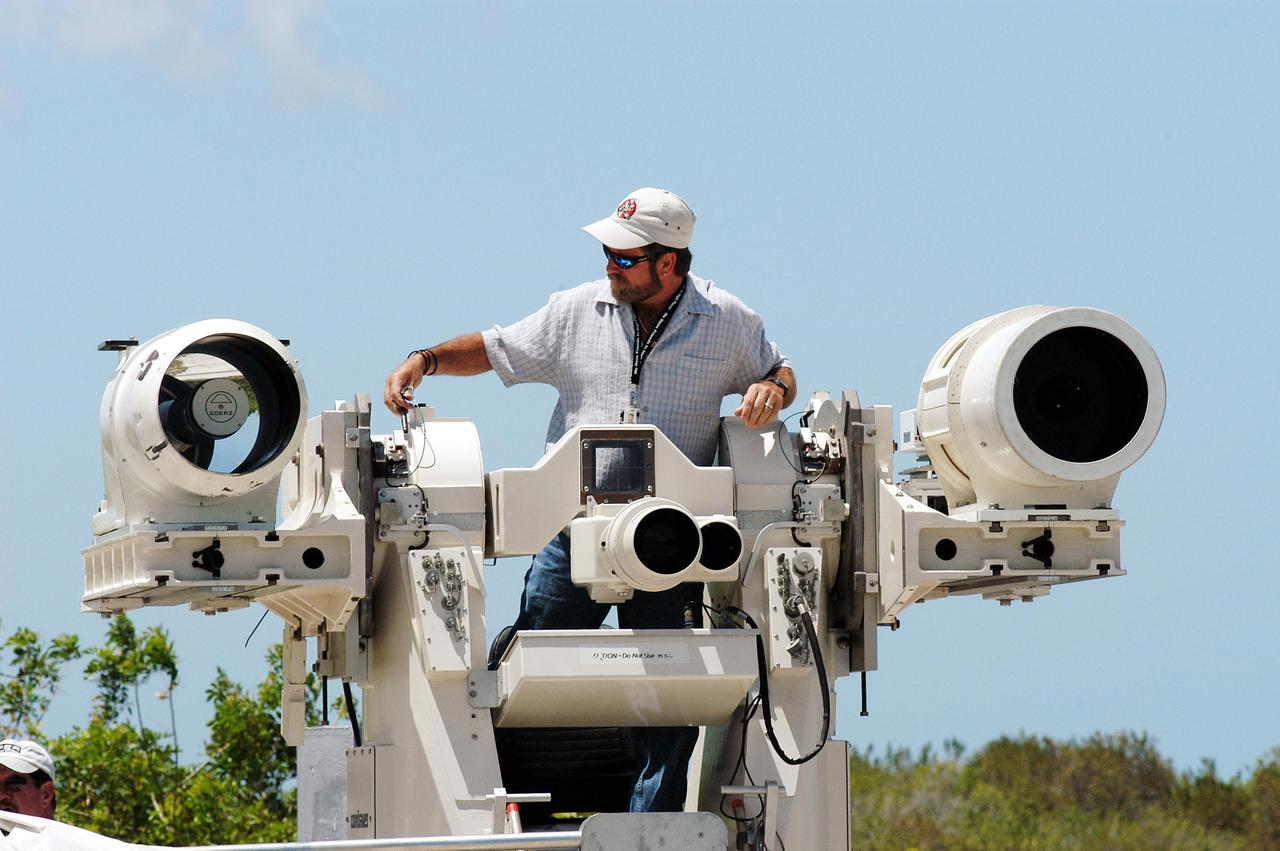
KENNEDY SPACE CENTER, FLA. -- Johnson Controls operator Kenny Allen works on the recently acquired Contraves-Goerz Kineto Tracking Mount (KTM). Trailer-mounted with a center console/seat and electric drive tracking mount, the KTM includes a two-camera, camera control unit that will be used during launches. The KTM is designed for remotely controlled operations and offers a combination of film, shuttered and high-speed digital video, and FLIR cameras configured with 20-inch to 150-inch focal length lenses. The KTMs are generally placed in the field and checked out the day before a launch and manned 3 hours prior to liftoff. There are 10 KTMs certified for use on the Eastern Range.

jsc2024e043916 (3/29/2024) ---The Packed Bed Reactor Experiment – Water Recovery (PBRE-WR) completed a series of tests in the Microgravity Science Glovebox on the International Space Station. Image of PBRE-WR during low flow conditions. Bubbles and voids (darker spots) are captured using a high-speed video camera at 10 fps. They are measured to determine gas holdup during various test conditions. In this image, the liquid flow was 20 kg/hr and the gas flow was 100 gr/hr. Scientists aim to learn more about how reduced gravity affects the performance and reliability of various filtration systems.

KENNEDY SPACE CENTER, FLA. -- Johnson Controls operator Rick Wetherington sits in the center console seat of one of the recently acquired Contraves-Goerz Kineto Tracking Mounts (KTM). There are 10 KTMs certified for use on the Eastern Range. The KTM, which is trailer-mounted with an electric drive tracking mount, includes a two-camera, camera control unit that will be used during launches. The KTM is designed for remotely controlled operations and offers a combination of film, shuttered and high-speed digital video, and FLIR cameras configured with 20-inch to 150-inch focal length lenses. The KTMs are generally placed in the field and checked out the day before a launch and manned 3 hours prior to liftoff.
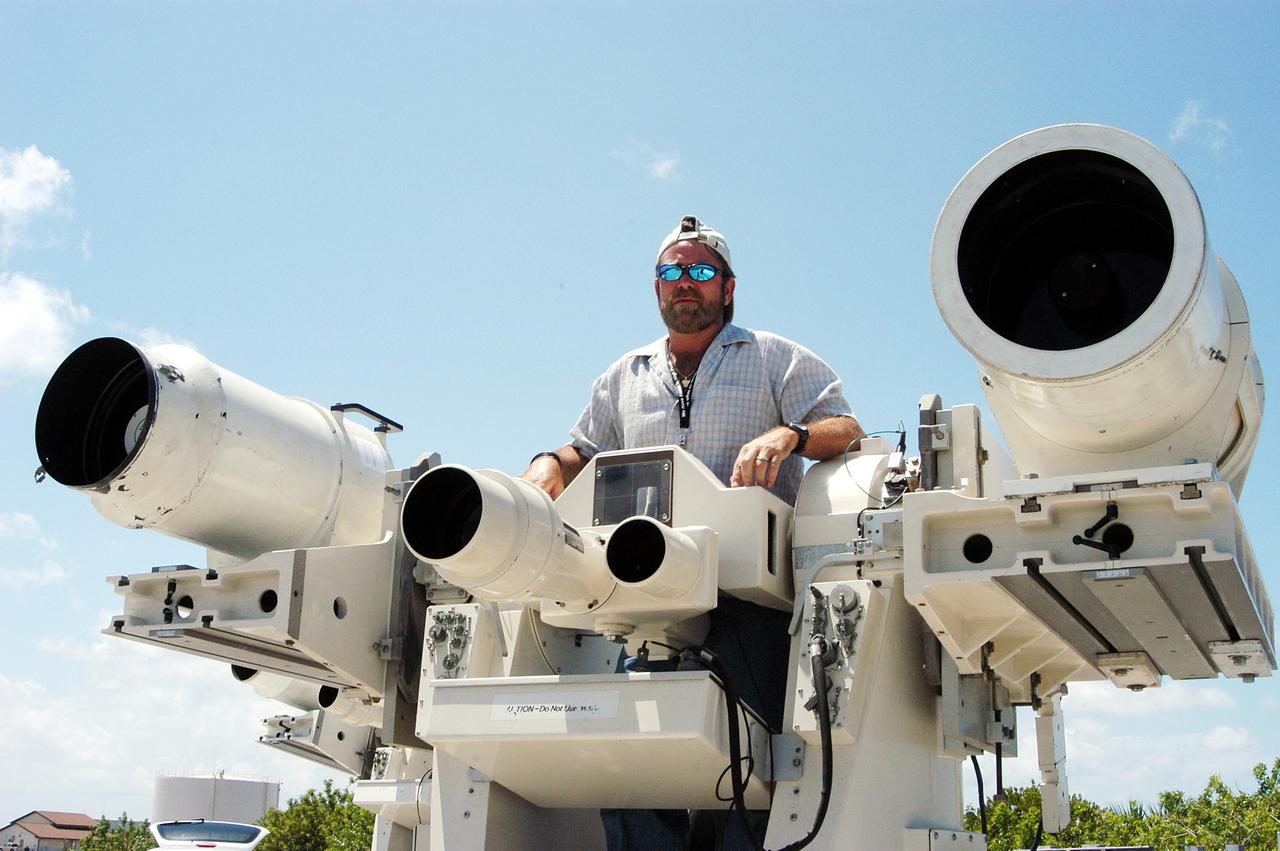
KENNEDY SPACE CENTER, FLA. -- Johnson Controls operator Kenny Allen stands in the center console area of one of the recently acquired Contraves-Goerz Kineto Tracking Mounts (KTM). There are 10 KTMs certified for use on the Eastern Range. The KTM, which is trailer-mounted with an electric-drive tracking mount, includes a two-camera, camera control unit that will be used during launches. The KTM is designed for remotely controlled operations and offers a combination of film, shuttered and high-speed digital video, and FLIR cameras configured with 20-inch to 150-inch focal length lenses. The KTMs are generally placed in the field and checked out the day before a launch and manned 3 hours prior to liftoff.
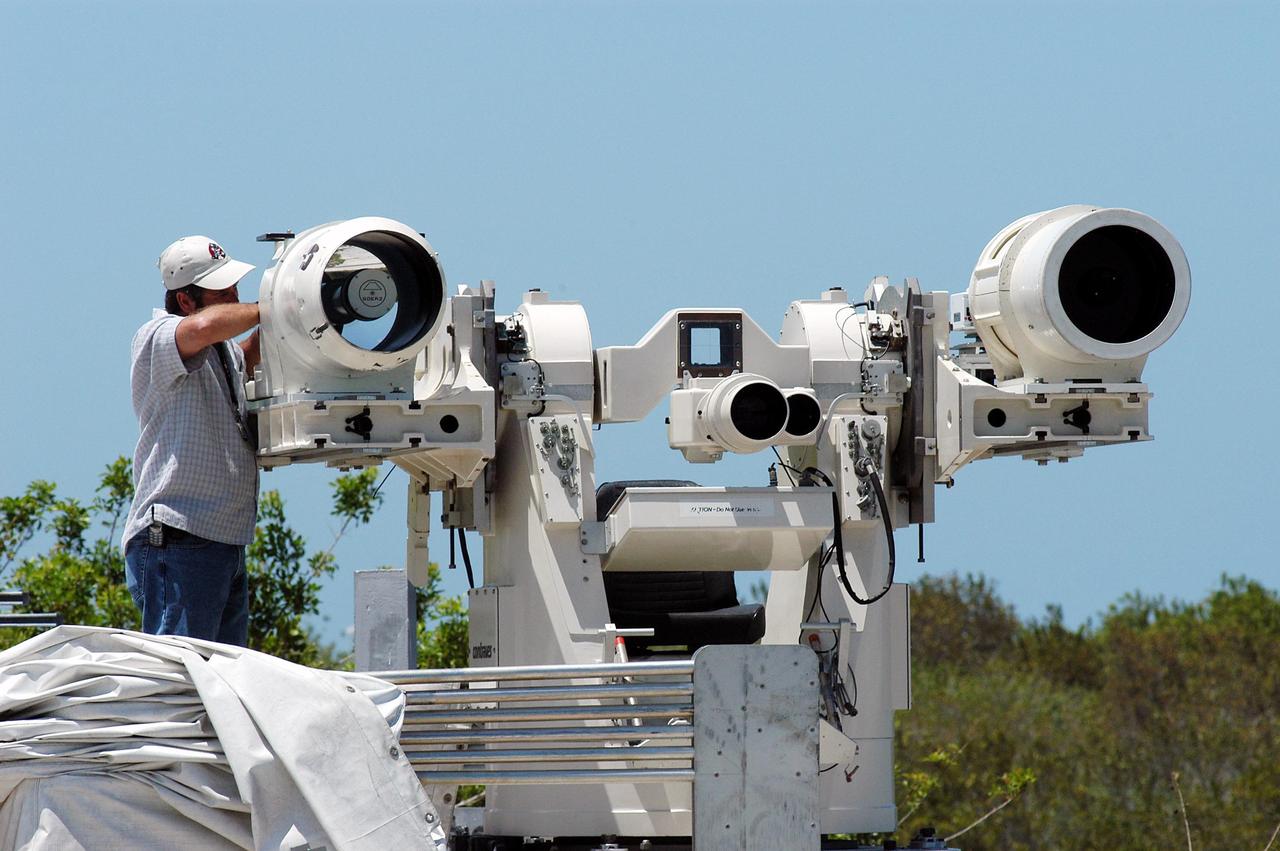
KENNEDY SPACE CENTER, FLA. -- Johnson Controls operator Kenny Allen works on the recently acquired Contraves-Goerz Kineto Tracking Mount (KTM). Trailer-mounted with a center console/seat and electric drive tracking mount, the KTM includes a two-camera, camera control unit that will be used during launches. The KTM is designed for remotely controlled operations and offers a combination of film, shuttered and high-speed digital video, and FLIR cameras configured with 20-inch to 150-inch focal length lenses. The KTMs are generally placed in the field and checked out the day before a launch and manned 3 hours prior to liftoff. There are 10 KTMs certified for use on the Eastern Range.

KENNEDY SPACE CENTER, FLA. -- Johnson Controls operator Kenny Allen makes adjustments on one of the recently acquired Contraves-Goerz Kineto Tracking Mounts (KTM). There are 10 KTMs certified for use on the Eastern Range. The KTM, which is trailer-mounted with a center console/seat and electric drive tracking mount, includes a two-camera, camera control unit that will be used during launches. The KTM is designed for remotely controlled operations and offers a combination of film, shuttered and high-speed digital video, and FLIR cameras configured with 20-inch to 150-inch focal length lenses. The KTMs are generally placed in the field and checked out the day before a launch and manned 3 hours prior to liftoff.
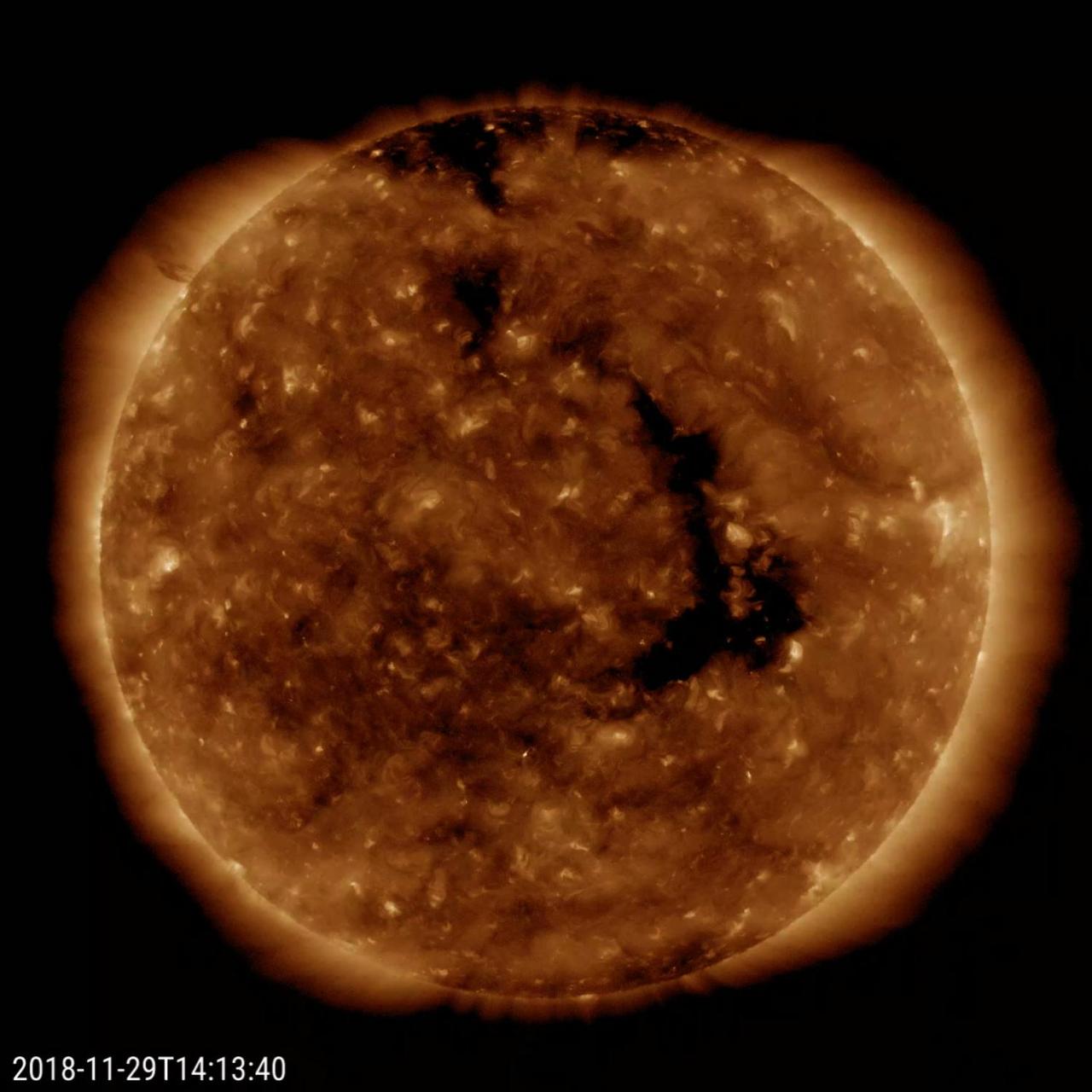
A long-lasting coronal hole has again rotated around to face the Earth (Nov. 28-30, 2018). This persistent hole - the elongated dark region seen in the still image - first appeared in July and has been observed each rotation of the Sun since. Coronal holes are the source of high-speed solar wind; when this one faced Earth, it sparked outbursts of aurora some of which were observed in our northern tier states. Coronal holes are magnetically open regions on the Sun that can last from days to months, although this one has lasted longer than most. The time-lapse video, taken in a wavelength of extreme ultraviolet light, covers about two days of activity. Movies available at https://photojournal.jpl.nasa.gov/catalog/PIA18144
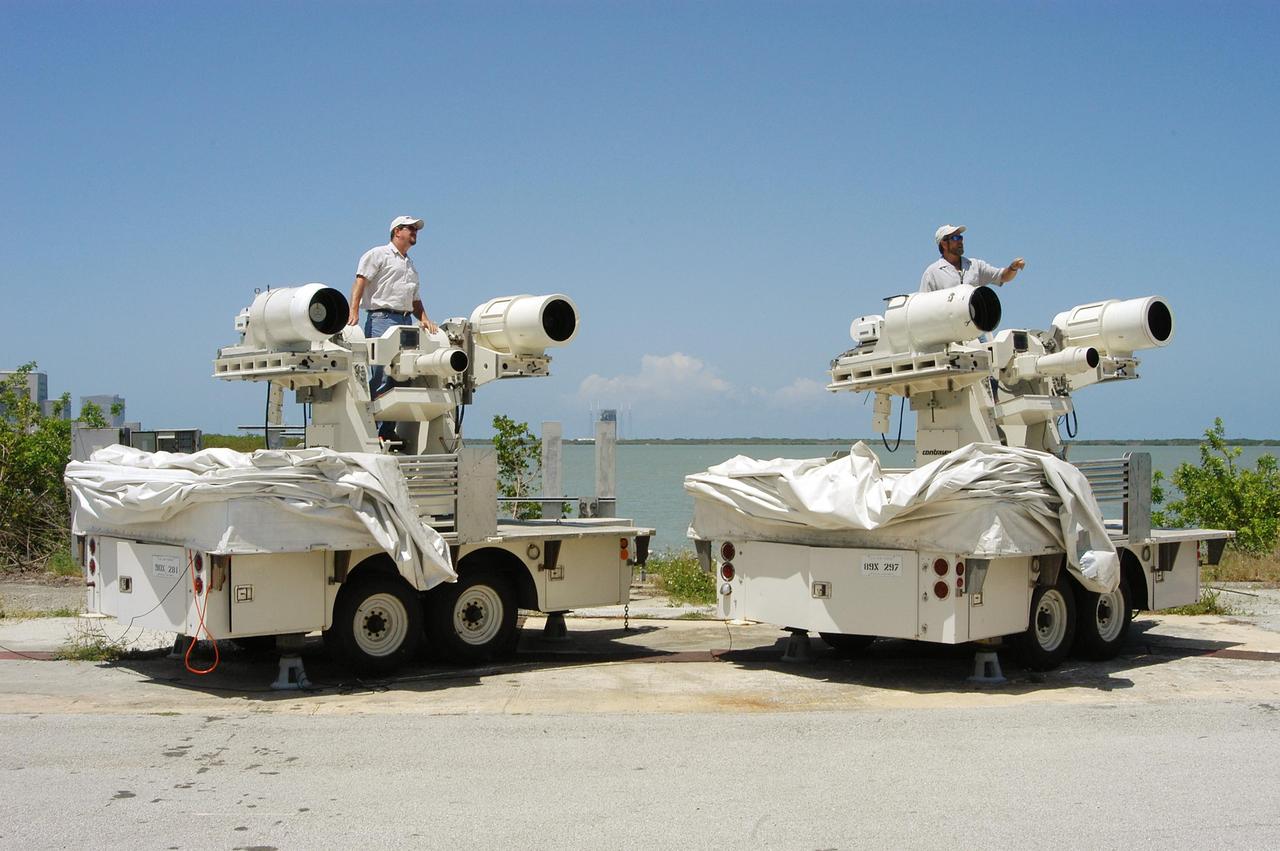
KENNEDY SPACE CENTER, FLA. -- Johnson Controls operators Rick Wetherington (left) and Kenny Allen work on two of the recently acquired Contraves-Goerz Kineto Tracking Mounts (KTM). There are 10 KTMs certified for use on the Eastern Range. The KTM, which is trailer-mounted with a center console/seat and electric drive tracking mount, includes a two-camera, camera control unit that will be used during launches. The KTM is designed for remotely controlled operations and offers a combination of film, shuttered and high-speed digital video, and FLIR cameras configured with 20-inch to 150-inch focal length lenses. The KTMs are generally placed in the field and checked out the day before a launch and manned 3 hours prior to liftoff.
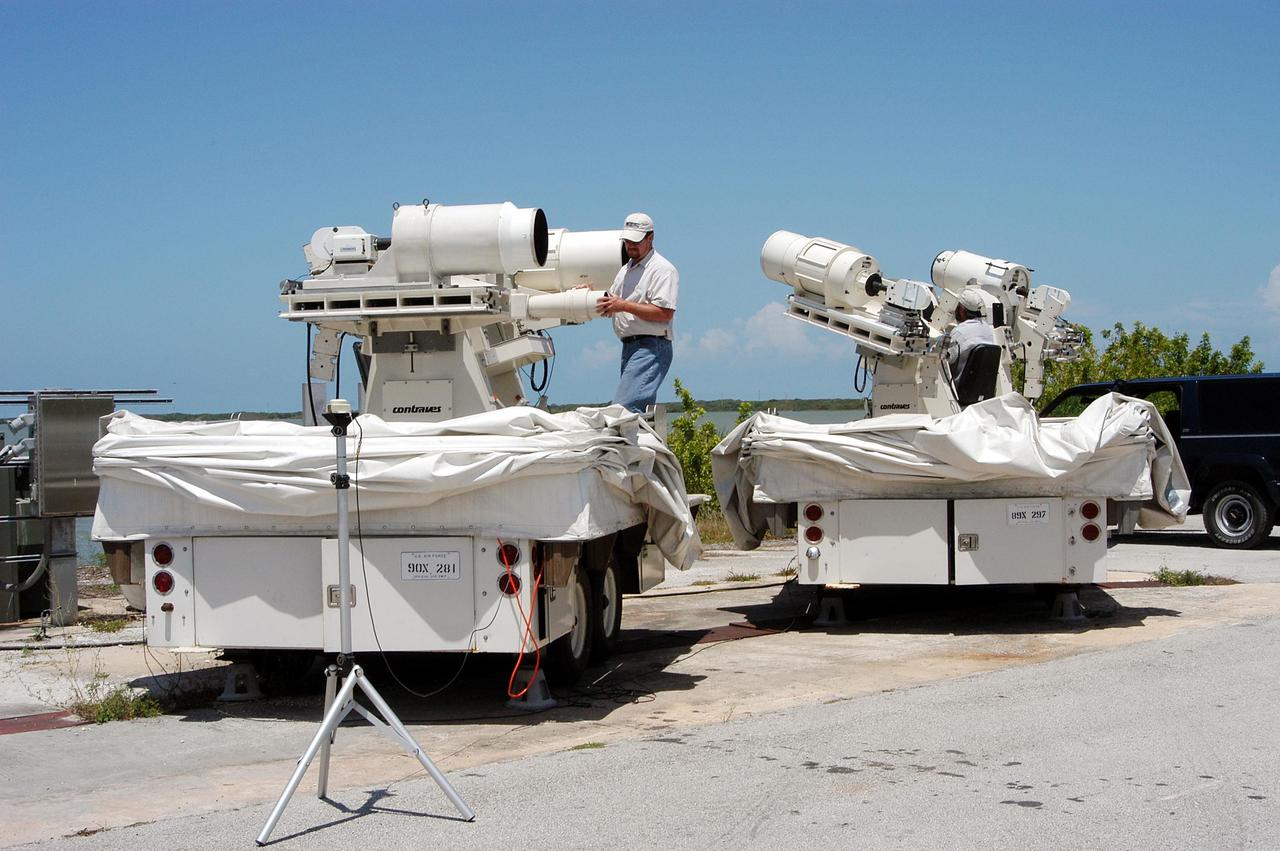
KENNEDY SPACE CENTER, FLA. -- Johnson Controls operators Rick Worthington (left) and Kenny Allen work on one of the recently acquired Contraves-Goerz Kineto Tracking Mounts (KTM). There are 10 KTMs certified for use on the Eastern Range. The KTM, which is trailer-mounted with a center console/seat and electric drive tracking mount, includes a two-camera, camera control unit that will be used during launches. The KTM is designed for remotely controlled operations and offers a combination of film, shuttered and high-speed digital video, and FLIR cameras configured with 20-inch to 150-inch focal length lenses. The KTMs are generally placed in the field and checked out the day before a launch and manned 3 hours prior to liftoff.
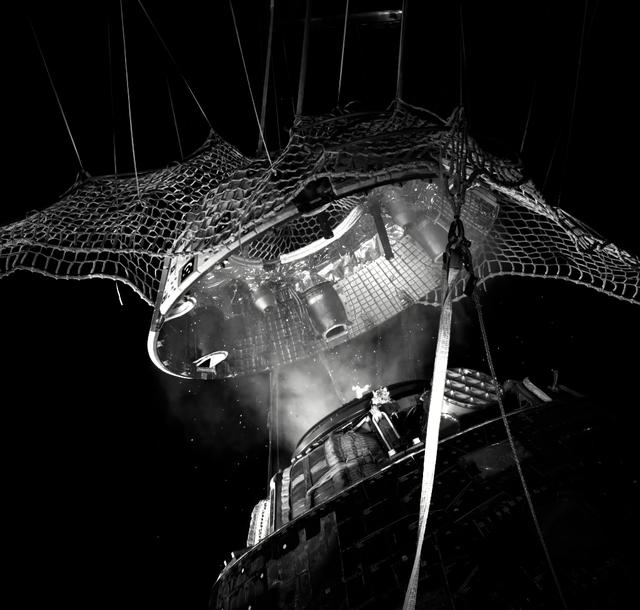
The Orion Crew Module, also known as the Orion Environmental Test Article (ETA), returned to NASA’s Neil Armstrong Test Facility in Sandusky, Ohio, in January 2024 and completed an 11-month test campaign necessary for the safety and success of Artemis II. In November 2024, experts completed the Forward Bay Cover jettison test, which is the last piece that must eject right before parachutes deploy.
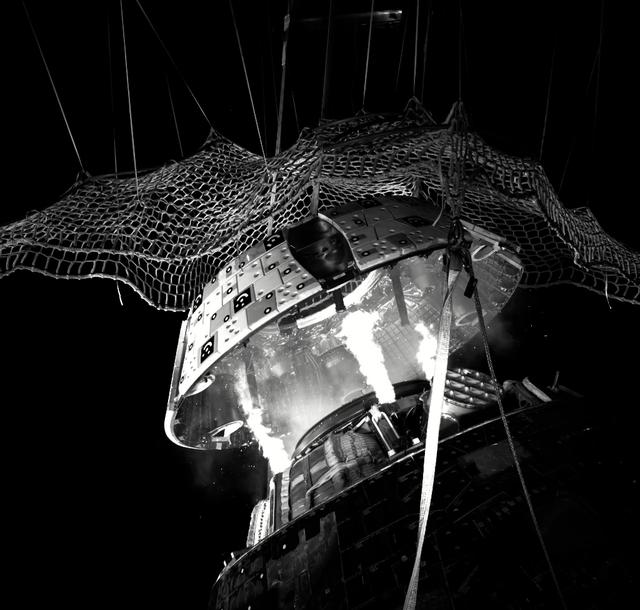
The Orion Crew Module, also known as the Orion Environmental Test Article (ETA), returned to NASA’s Neil Armstrong Test Facility in Sandusky, Ohio, in January 2024 and completed an 11-month test campaign necessary for the safety and success of Artemis II. In November 2024, experts completed the Forward Bay Cover jettison test, which is the last piece that must eject right before parachutes deploy. Photo Credit: (NASA/Quentin Schwinn and Jordan Salkin)
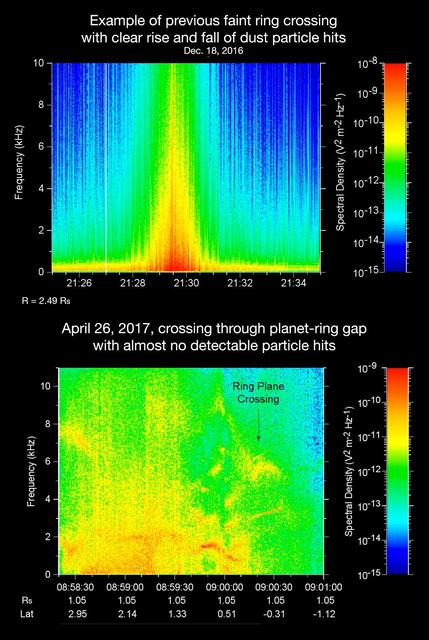
The sounds and spectrograms in these two videos represent data collected by the Radio and Plasma Wave Science, or RPWS, instrument on NASA's Cassini spacecraft, as it crossed the plane of Saturn's rings on two separate orbits. As tiny, dust-sized particles strike Cassini and the three 33-foot-long (10-meter-long), RPWS antennas, the particles are vaporized into tiny clouds of plasma, or electrically excited gas. These tiny explosions make a small electrical signal (a voltage impulse) that RPWS can detect. Researchers on the RPWS team convert the data into visible and audio formats, like those seen here, for analysis. Ring particle hits sound like pops and cracks in the audio. The first video (top image in the montage) was made using RPWS data from a ring plane crossing on Dec. 18, 2016, when the spacecraft passed through the faint, dusty Janus-Epimetheus ring (see PIA08328 for an image that features this ring). This was during Cassini's 253rd orbit of Saturn, known as Rev 253. As is typical for this sort of ring crossing, the number of audible pops and cracks rises to a maximum around the time of a ring crossing and trails off afterward. The peak of the ring density is obvious in the colored display at the red spike. The second video (bottom image in the montage) was made using data RPWS collected as Cassini made the first dive through the gap between Saturn and its rings as part of the mission's Grand Finale, on April 26, 2017. Very few pops and cracks are audible in this data at all. In comparing the two data sets, it is apparent that while Cassini detected many ring-particles striking Cassini when passing through the Janus-Epimetheus ring, the first Grand Finale crossing -- in stark contrast -- was nearly particle free. The unexpected finding that the gap is so empty is a new mystery that scientists are eager to understand. On April 26, 2017, Cassini dove through the previously unexplored ring-planet gap at speeds approaching 75,000 mph (121,000 kph), using its large, dish-shaped high-gain antenna (or HGA) as a shield to protect the rest of the spacecraft and its instruments from potential impacts by small, icy ring particles. Two of Cassini's instruments, the magnetometer and RPWS, extend beyond the protective antenna dish, and were exposed to the particle environment during the dive. The Cassini team used this data from RPWS, along with inputs from other components on the spacecraft, to make the decision of whether the HGA would be needed as a shield on most future Grand Finale dives through the planet-ring gap. Based on these inputs the team determined this protective measure would not be needed, allowing the team's preferred mode of science operations to proceed, with Cassini able to point its science instruments in any direction necessary to obtain scientists' desired observations. (Four of the 21 remaining dives pass through the inner D ring. The mission had already planned to use the HGA as a shield for those passes.) The colors on the spectrogram indicate the emitted power of the radio waves, with red as the most powerful. Time is on the x-axis, and frequency of the radio waves is on the y-axis. The audible whistle in the April 26 data, just before ring plane crossing, is due to a type of plasma wave that will be the subject of further study. In addition, there is an abrupt change beginning at the 09:00:00 mark on the spectrogram that represents a change in the RPWS antenna's operational configuration (from monopole mode to dipole mode). The videos can be viewed at https://photojournal.jpl.nasa.gov/catalog/PIA21446
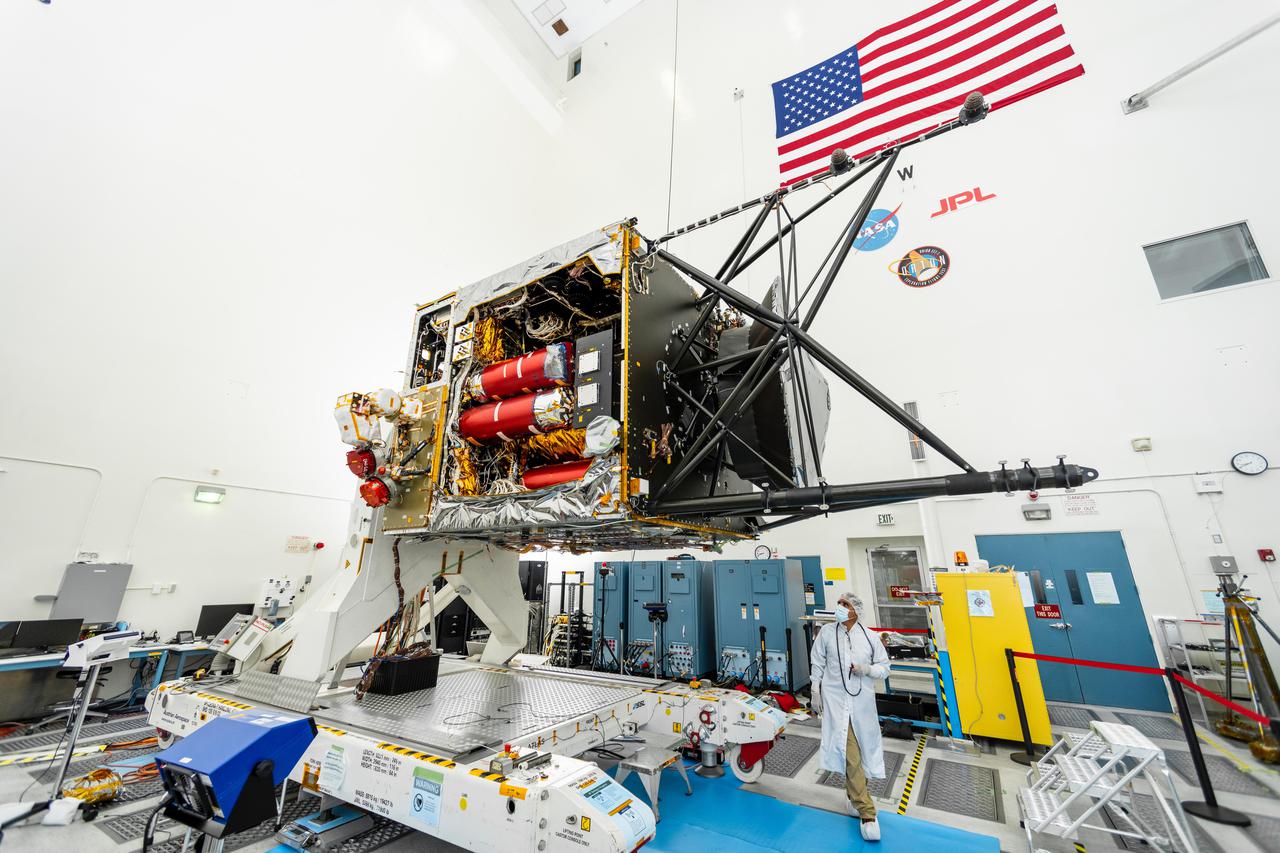
NASA's Psyche spacecraft is captured here on August 18, 2021, in a clean room at the agency's Jet Propulsion Laboratory in Southern California – in the midst of system integration and test. The mission's launch period opens August 1, 2022. The nitrogen tanks are visible in the center of the spacecraft chassis, encased in red protective "remove before flight" covers. Mounted on the right is the strut tower, which will host the sensors for two of the science instruments – the magnetometer and the Gamma Ray and Neutron Spectrometer (GRNS). By spring of 2022, the fully assembled Psyche spacecraft will ship from JPL to NASA's Kennedy Space Center for launch. In early 2026, the spacecraft will arrive at its target, an asteroid of the same name in the main asteroid belt between Mars and Jupiter. Scientists believe asteroid Psyche, which is about 140 miles (226 kilometers) wide, is made largely of iron and nickel and could be the core of an early planet. The spacecraft will spend 21 months orbiting the asteroid and gathering science data. Besides the magnetometer and the GRNS, Psyche will carry a multispectral imager. The mission also will test a sophisticated new laser communications technology, recently completed by JPL, called Deep Space Optical Communications (DSOC). The technology demonstration will focus on using lasers to enhance communications speeds and prepare for data-intensive transmissions, which could potentially include livestream videos for future missions. Arizona State University leads the mission. JPL is responsible for the mission's overall management, system engineering, integration and testing, and mission operations. Maxar Technologies is providing a high-power solar electric propulsion spacecraft chassis. Psyche is the 14th mission selected as part of NASA's Discovery Program. https://photojournal.jpl.nasa.gov/catalog/PIA24787