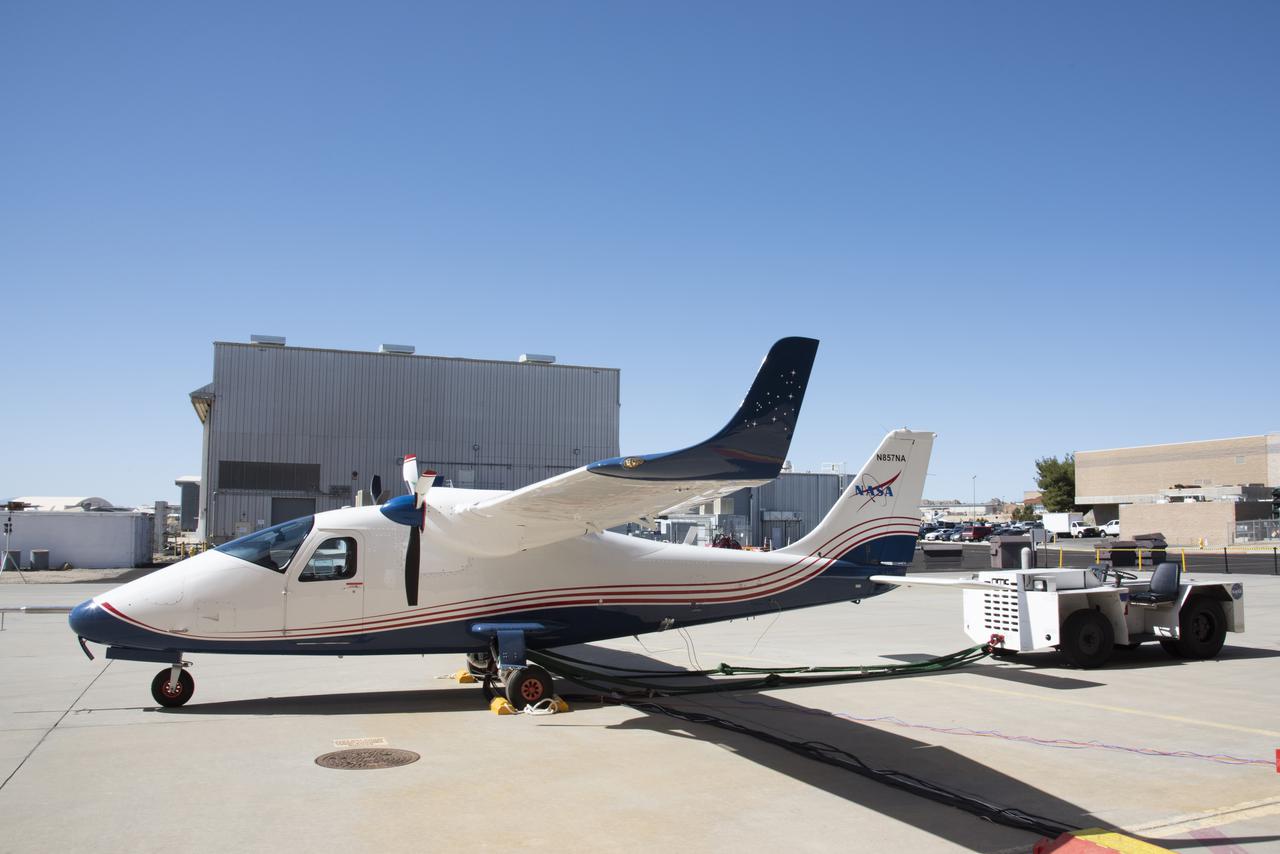
NASA's all-electric X-57 Maxwell aircraft undergoes high voltage ground testing at NASA's Armstrong Flight Research Center in California. A goal of the X-57 project is to help the Federal Aviation Administration set certification standards for emerging electric aircraft markets.
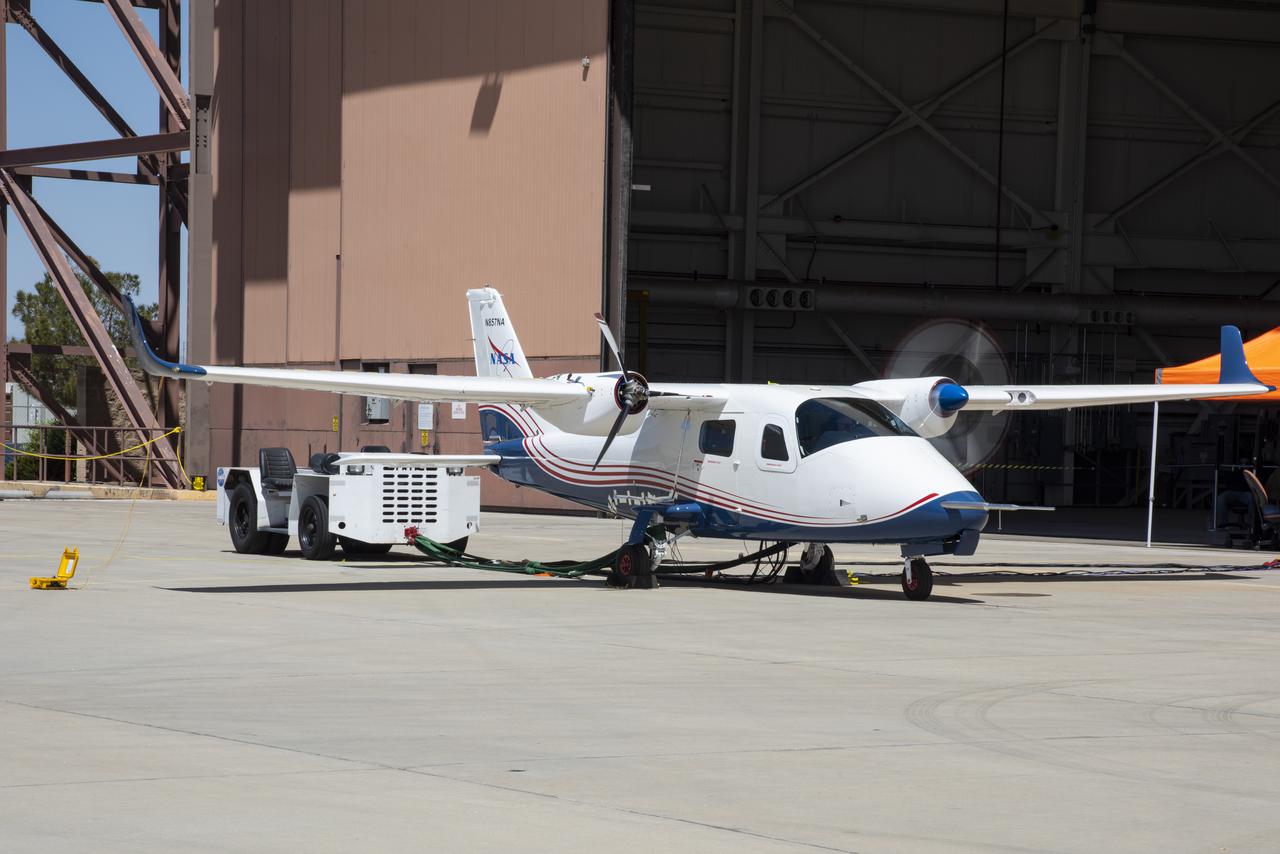
NASA's all-electric X-57 Maxwell continues to undergo high-voltage ground testing with successful spinning of the propellers under electric power at NASA's Armstrong Flight Research Center in California. The principal goals of the X-57 Project are to share the X-57 design and airworthiness process with regulators and standards organizations; and to establish the X-57 as a reference platform for integrated approaches of distributed electric propulsion technologies.
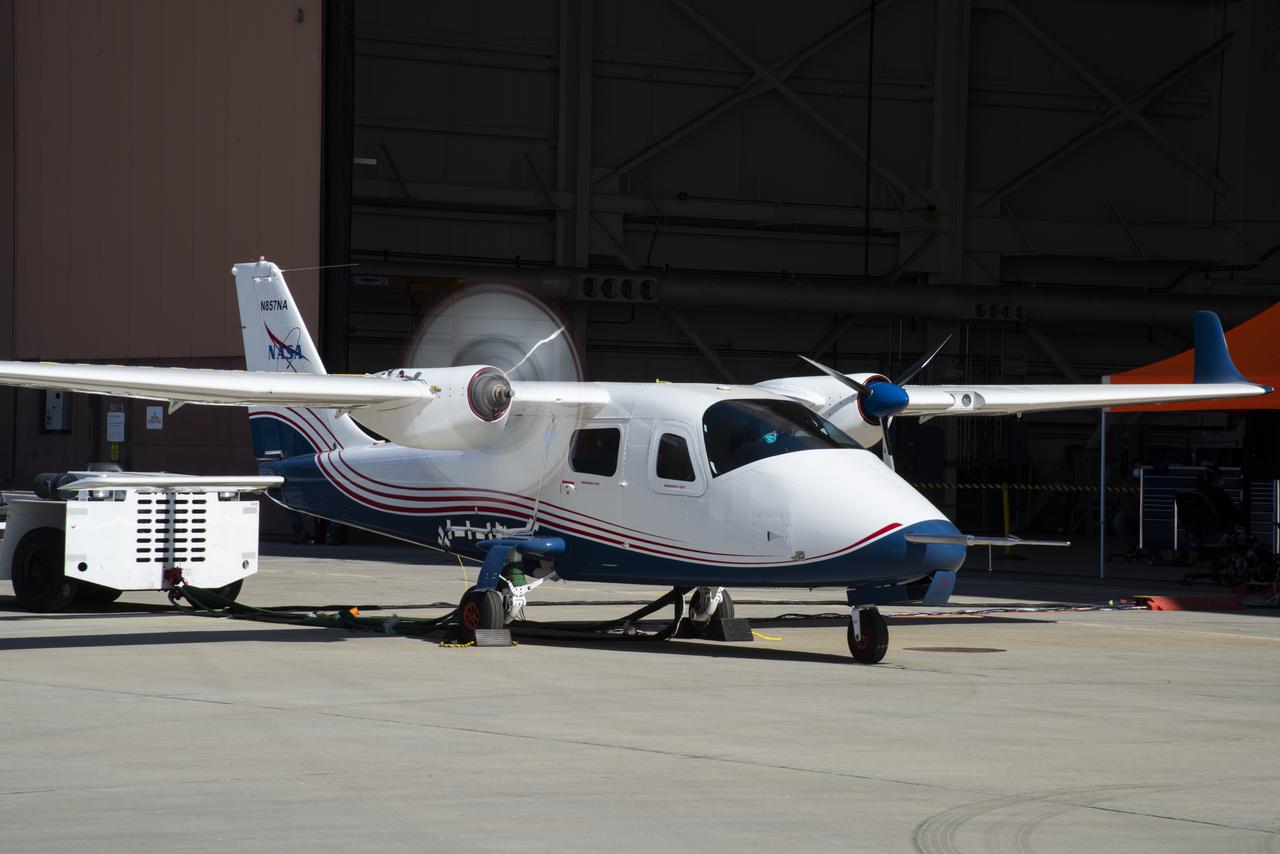
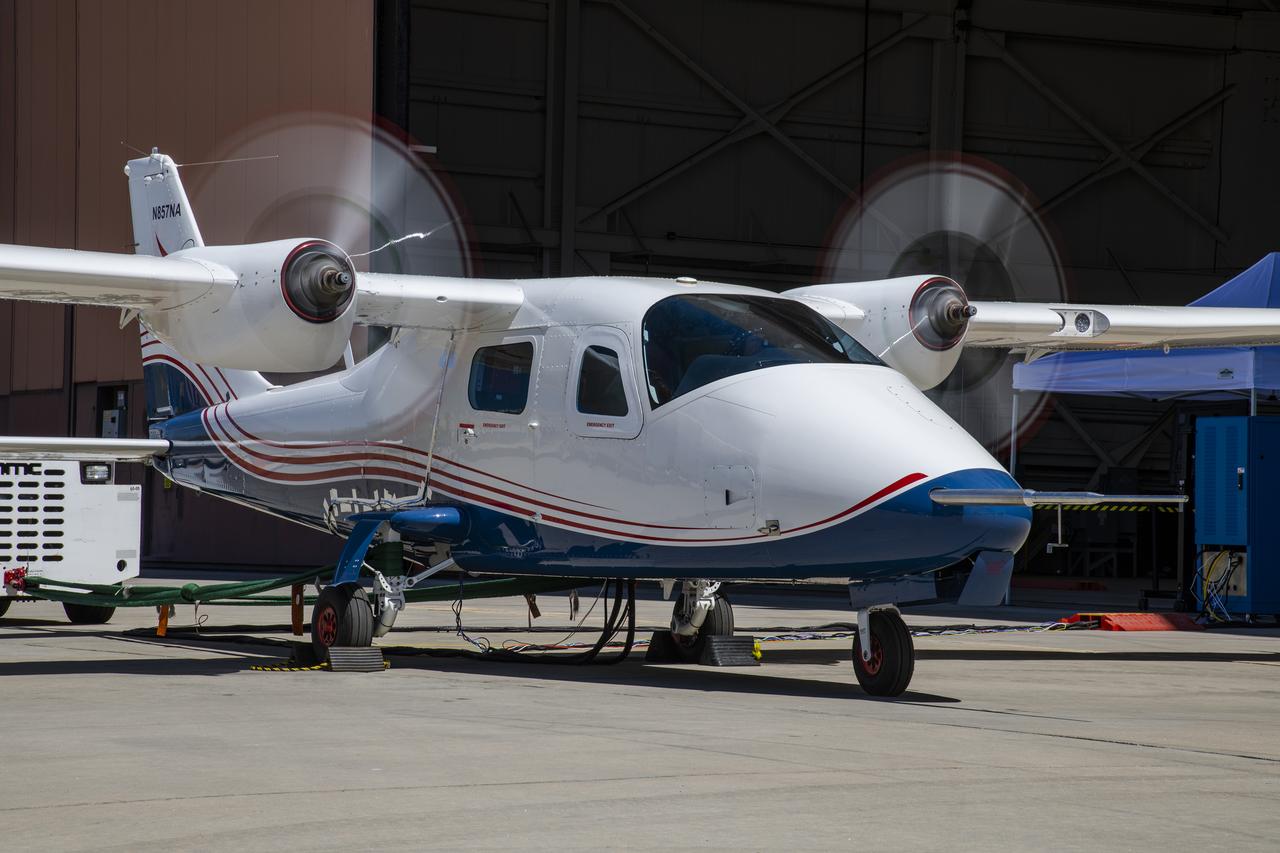
NASA's all-electric X-57 Maxwell continues to undergo high-voltage ground testing with successful spinning of the propellers under electric power at NASA's Armstrong Flight Research Center in California. The principal goals of the X-57 Project are to share the X-57 design and airworthiness process with regulators and standards organizations; and to establish the X-57 as a reference platform for integrated approaches of distributed electric propulsion technologies.

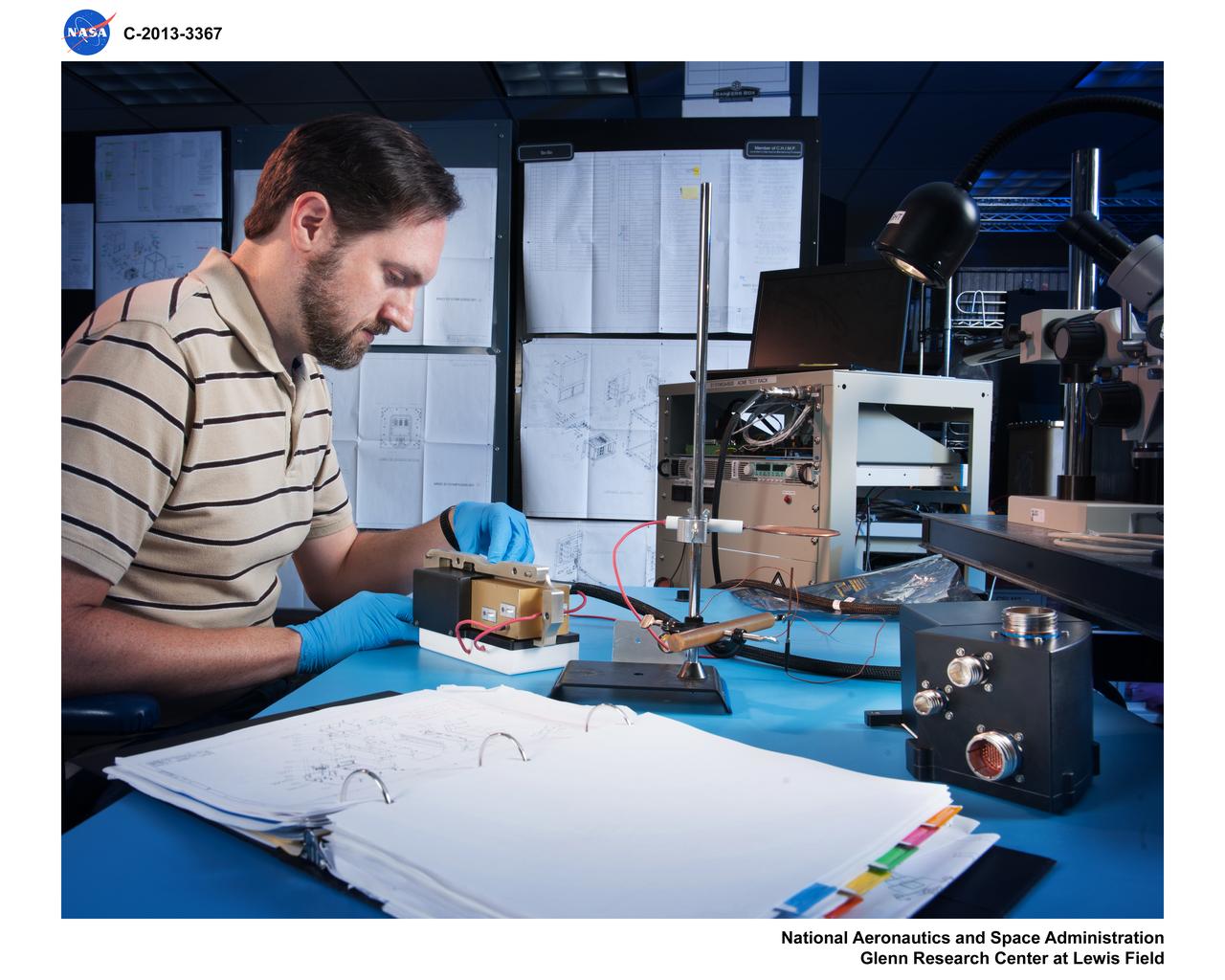
Mechanical Engineer Adrian Drake inspects engineering model hardware built to generate a high-voltage electric field for the Electric-Field Effects on Laminar Diffusion Flames (E-FIELD Flames) experiment of the Advanced Combustion via Microgravity Experiments (ACME) project. ACME’s small computer (i.e., the Cube) for data acquisition and control within the CIR combustion chamber is seen in the right foreground. The E-FIELD Flames tests were conducted in the Combustion Integrated Rack (CIR) on the International Space Station (ISS) in 2018.
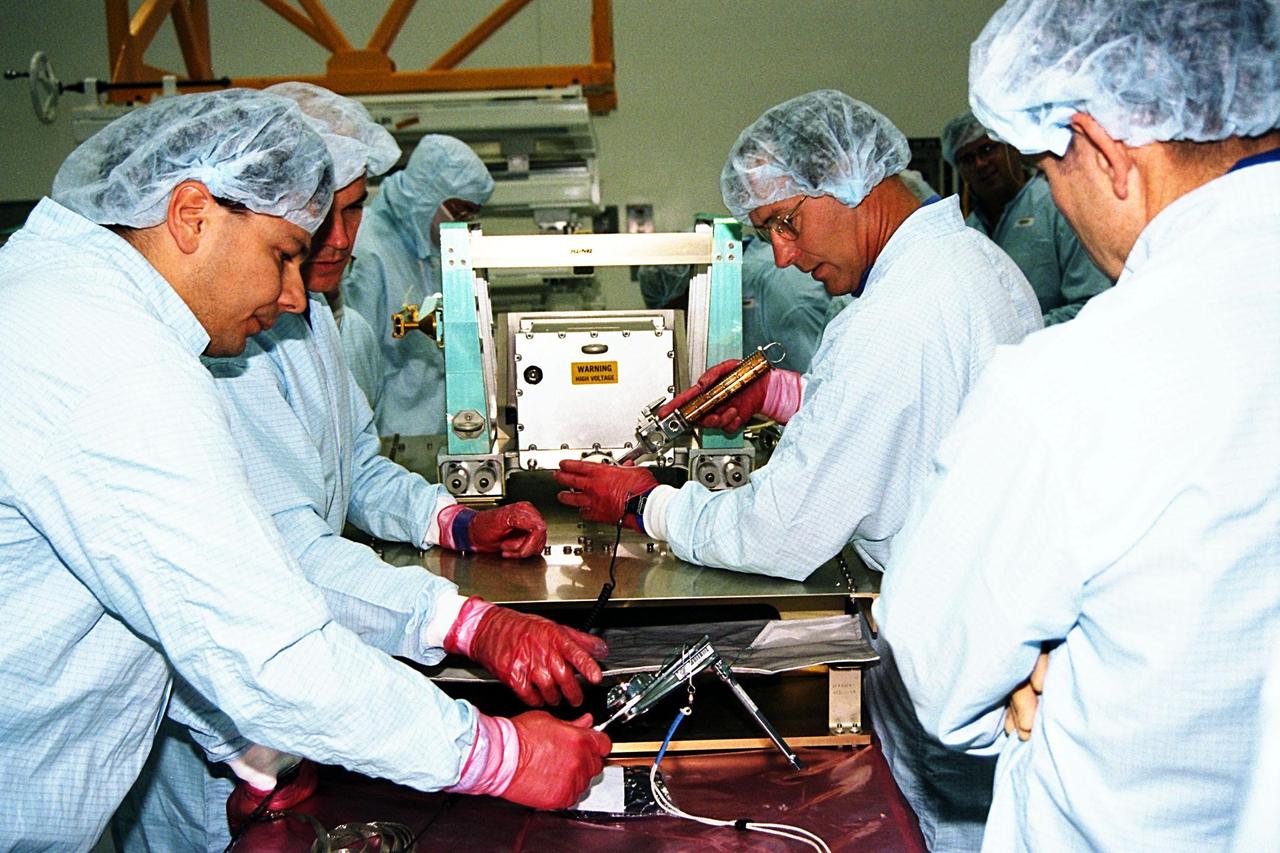
STS-88 crew members participate in the Crew Equipment Interface Test (CEIT) in KSC's Space Station Processing Facility. Working on a high voltage box for electrical connections for the International Space Station (ISS) are, left to right, a technician, Pilot Rick Sturckow, Mission Specialist Jerry Ross (with glasses), and Commander Bob Cabana (back to camera). The CEIT gives astronauts an opportunity to get a hands-on look at the payloads with which they will be working on-orbit. STS-88, the first ISS assembly flight, is targeted for launch in July 1998 aboard Space Shuttle Endeavour
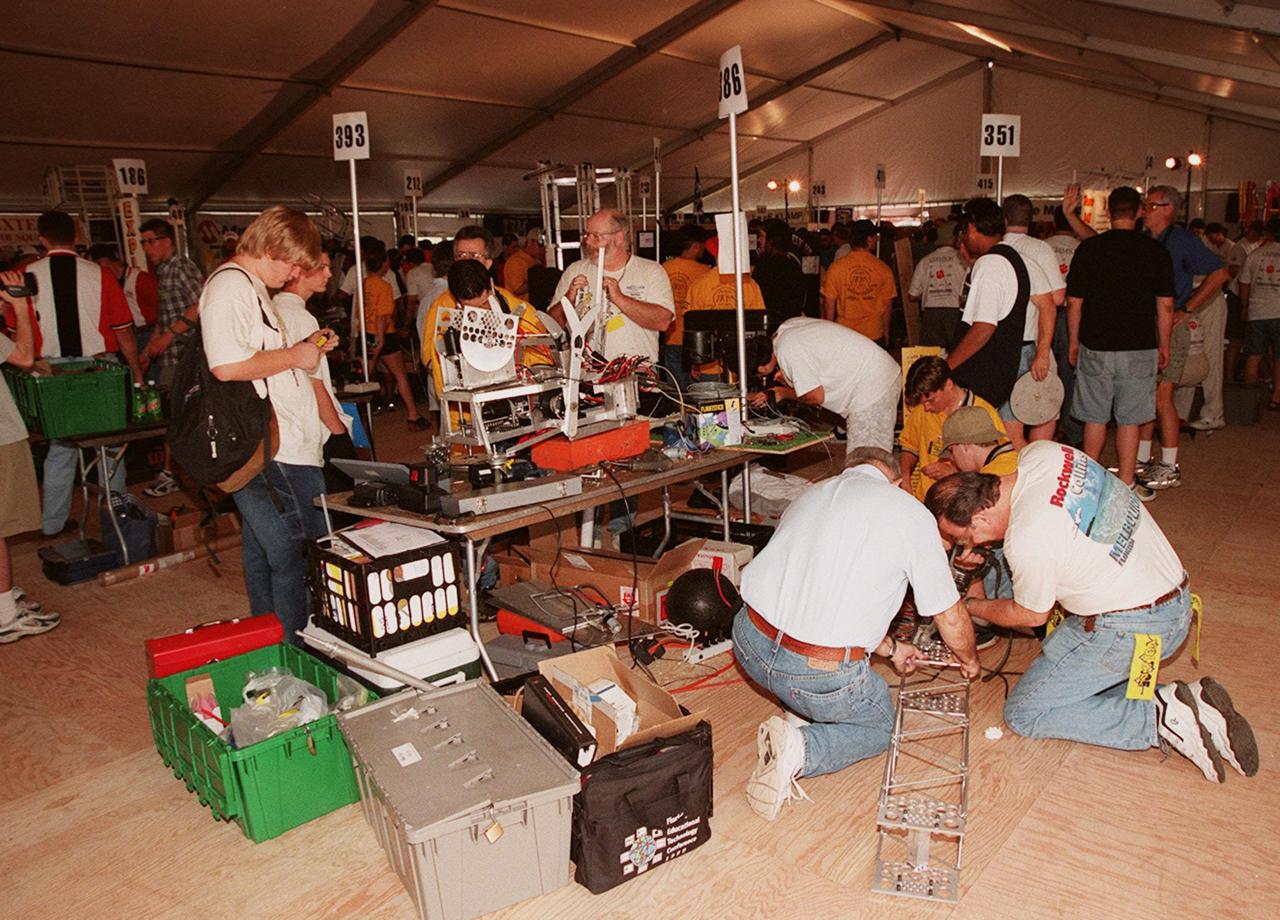
Team 393 from Morristown, Ind., sets up its robot on a table to prepare it for the FIRST (For Inspiration and Recognition of Science and Technology) Southeast Regional competition March 9-11 at the KSC Visitor Complex. KSC is co-sponsoring the team, The Bee Bots, from Morristown Junior and Senior High Schools. On the floor at right is team 386, known as Voltage: The South Brevard First Team. This team is made up of students from Eau Gallie, Satellite, Palm Bay, Melbourne, Bayside and Melbourne Central Catholic High Schools. They are sponsored by KSC as well as Harris Corp., Intersil Corp., Interface & Control Systems. Inc. and Rockwell Collins. Teams of high school students are testing the limits of their imagination using robots they have designed, with the support of business and engineering professionals and corporate sponsors, to compete in a technological battle against other schools' robots. Of the 30 high school teams competing at KSC, 16 are Florida teams co-sponsored by NASA and KSC contractors. Local high schools participating are Astronaut, Bayside, Cocoa Beach, Eau Gallie, Melbourne, Melbourne Central Catholic, Palm Bay, Rockledge, Satellite, and Titusville
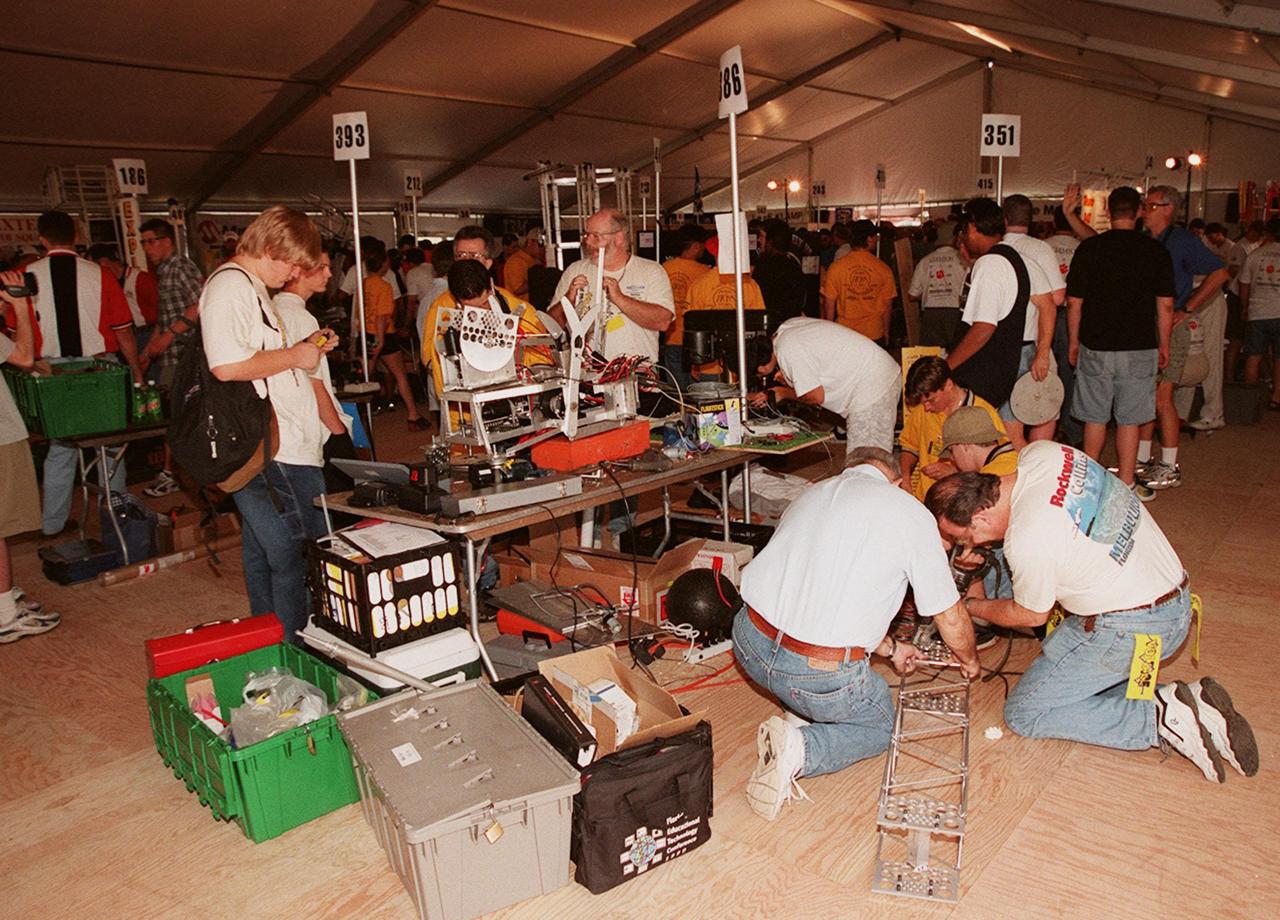
Team 393 from Morristown, Ind., sets up its robot on a table to prepare it for the FIRST (For Inspiration and Recognition of Science and Technology) Southeast Regional competition March 9-11 at the KSC Visitor Complex. KSC is co-sponsoring the team, The Bee Bots, from Morristown Junior and Senior High Schools. On the floor at right is team 386, known as Voltage: The South Brevard First Team. This team is made up of students from Eau Gallie, Satellite, Palm Bay, Melbourne, Bayside and Melbourne Central Catholic High Schools. They are sponsored by KSC as well as Harris Corp., Intersil Corp., Interface & Control Systems. Inc. and Rockwell Collins. Teams of high school students are testing the limits of their imagination using robots they have designed, with the support of business and engineering professionals and corporate sponsors, to compete in a technological battle against other schools' robots. Of the 30 high school teams competing at KSC, 16 are Florida teams co-sponsored by NASA and KSC contractors. Local high schools participating are Astronaut, Bayside, Cocoa Beach, Eau Gallie, Melbourne, Melbourne Central Catholic, Palm Bay, Rockledge, Satellite, and Titusville
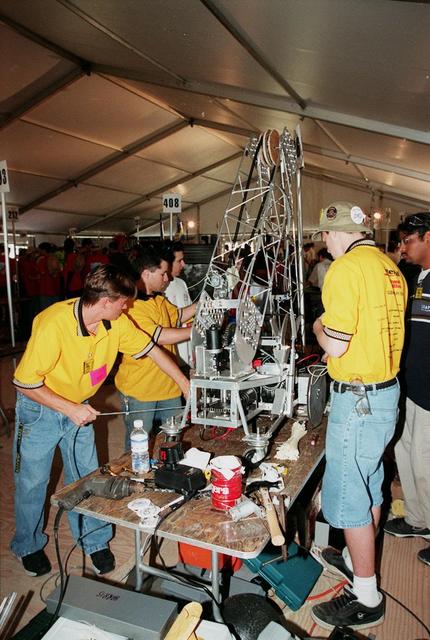
Voltage: The South Brevard FIRST Team (386) works on their robot, Sparky. The team of students from Eau Gallie, Satellite, Palm Bay, Melbourne, Bayside and Melbourne Central Catholic high schools was co-sponsored by Intersil Corp., Harris Corp., NASA Kennedy Space Center, Rockwell Collins and Interface & Control Systems, Inc. Students from all over the country are at the KSC Visitor Complex for the FIRST (For Inspiration and Recognition of Science and Technology) Southeast Regional competition March 9-11 in the Rocket Garden. Teams of high school students are testing the limits of their imagination using robots they have designed, with the support of business and engineering professionals and corporate sponsors, to compete in a technological battle against other schools' robots. Of the 30 high school teams competing, 16 are Florida teams co-sponsored by NASA and KSC contractors. Local high schools participating are Astronaut, Bayside, Cocoa Beach, Eau Gallie, Melbourne, Melbourne Central Catholic, Palm Bay, Rockledge, Satellite, and Titusville
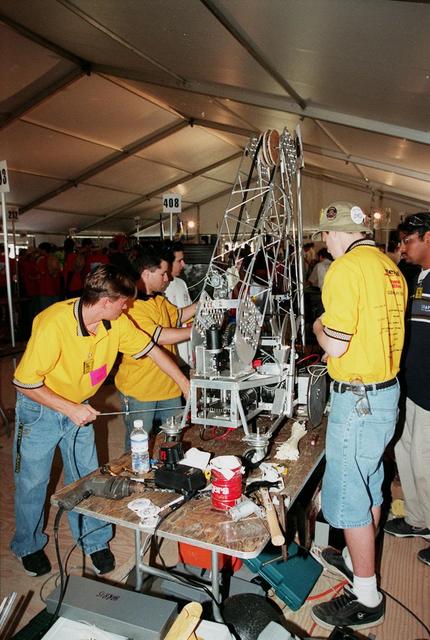
Voltage: The South Brevard FIRST Team (386) works on their robot, Sparky. The team of students from Eau Gallie, Satellite, Palm Bay, Melbourne, Bayside and Melbourne Central Catholic high schools was co-sponsored by Intersil Corp., Harris Corp., NASA Kennedy Space Center, Rockwell Collins and Interface & Control Systems, Inc. Students from all over the country are at the KSC Visitor Complex for the FIRST (For Inspiration and Recognition of Science and Technology) Southeast Regional competition March 9-11 in the Rocket Garden. Teams of high school students are testing the limits of their imagination using robots they have designed, with the support of business and engineering professionals and corporate sponsors, to compete in a technological battle against other schools' robots. Of the 30 high school teams competing, 16 are Florida teams co-sponsored by NASA and KSC contractors. Local high schools participating are Astronaut, Bayside, Cocoa Beach, Eau Gallie, Melbourne, Melbourne Central Catholic, Palm Bay, Rockledge, Satellite, and Titusville
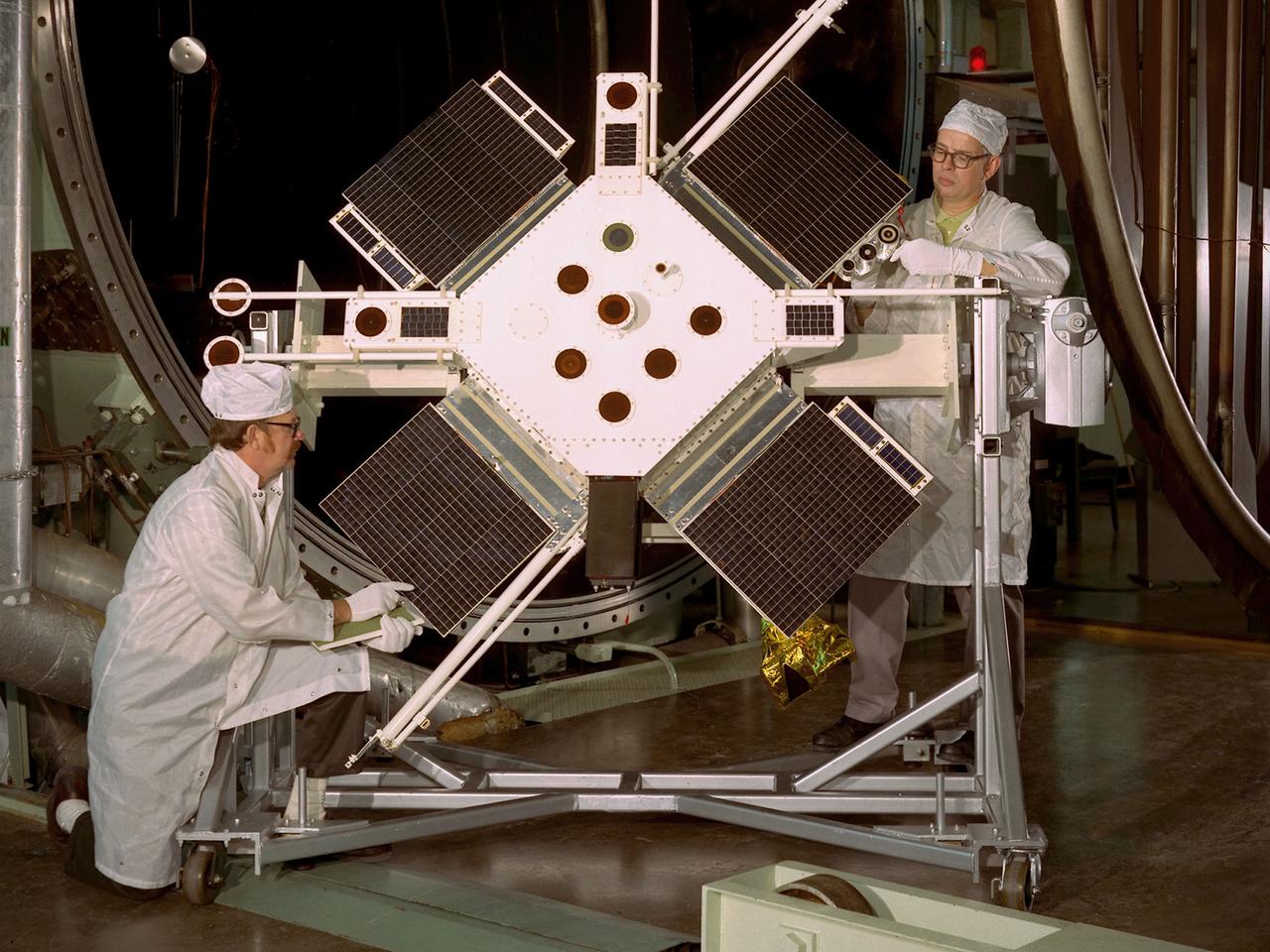
Researchers examine the Space Plasma-High Voltage Interaction Experiment (SPHINX) satellite in the Electric Propulsion Laboratory at the National Aeronautics and Space Administration (NASA) Lewis Research Center. Lewis’ Spacecraft Technology Division designed SPHINX to study the electrical interaction of its experimental surfaces with space plasma. They sought to determine if higher orbits would improve the transmission quality of communications satellites. Robert Lovell, the Project Manager, oversaw vibrational and plasma simulation testing of the satellite in the Electric Propulsion Laboratory, seen here. SPHINX was an add-on payload for the first Titan/Centaur proof launch in early 1974. Lewis successfully managed the Centaur Program since 1962, but this would be the first Centaur launch with a Titan booster. Since the proof test did not have a scheduled payload, the Lewis-designed SPHINX received a free ride. The February 11, 1974 launch, however, proved to be one of the Launch Vehicle Division’s lowest days. Twelve minutes after the vehicle departed the launch pad, the booster and Centaur separated as designed, but Centaur’s two RL-10 engines failed to ignite. The launch pad safety officer destroyed the vehicle, and SPHINX never made it into orbit. Overall Centaur has an excellent success rate, but the failed SPHINX launch attempt caused deep disappointment across the center.

New staff member Paul Margosian inspects a cluster of ion engines in the Electric Propulsion Laboratory’s 25-foot diameter vacuum tank at the National Aeronautics and Space Administration (NASA) Lewis Research Center. Lewis researchers had been studying different methods of electric rocket propulsion since the mid-1950s. Harold Kaufman created the first successful engine, the electron bombardment ion engine, in the early 1960s. These engines used electric power to create and accelerate small particles of propellant material to high exhaust velocities. Electric engines have a very small thrust, and but can operate for long periods of time. The ion engines are often clustered together to provide higher levels of thrust. The Electric Propulsion Laboratory contained two large vacuum tanks capable of simulating the space environment. The tanks were designed especially for testing ion and plasma thrusters and spacecraft. The larger 25-foot diameter tank was intended for testing electric thrusters with condensable propellants. The tank’s test compartment, seen here, was 10 feet in diameter. Margosian joined Lewis in late 1962 during a major NASA hiring phase. The Agency reorganized in 1961 and began expanding its ranks through a massive recruiting effort. Lewis personnel increased from approximately 2,700 in 1961 to over 4,800 in 1966. Margosian, who worked with Bill Kerslake in the Electromagnetic Propulsion Division’s Propulsion Systems Section, wrote eight technical reports on mercury and electron bombardment thrusters, thermoelectrostatic generators, and a high voltage insulator.