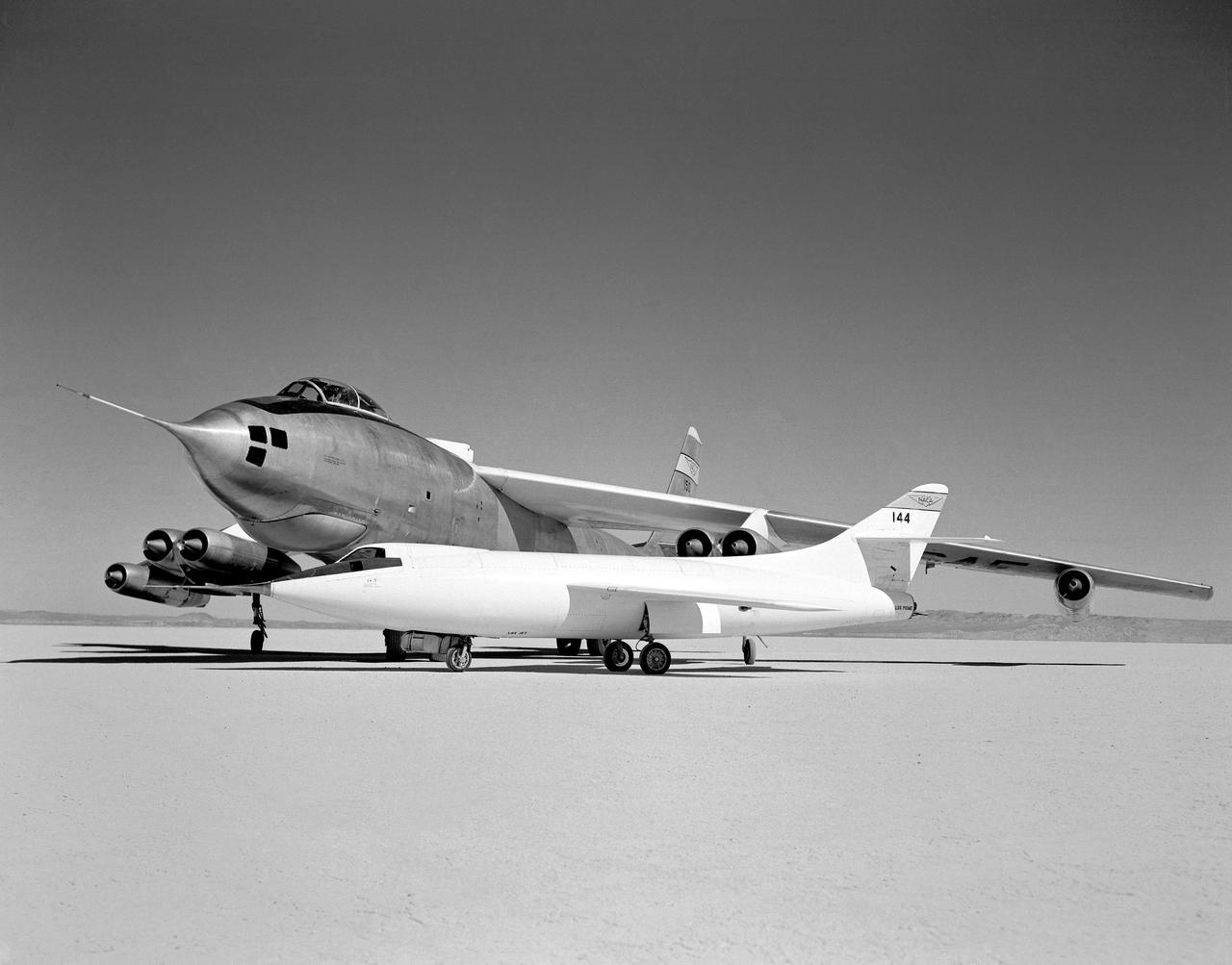
In 1954 this photo of two swept wing airplanes was taken on the ramp of NACA High-Speed Flight Research Station. The Douglas D-558-ll is a research aircraft while the Boeing B-47A Stratojet is a production bomber and very different in size. Both contributed to the studies for swept back wing research.
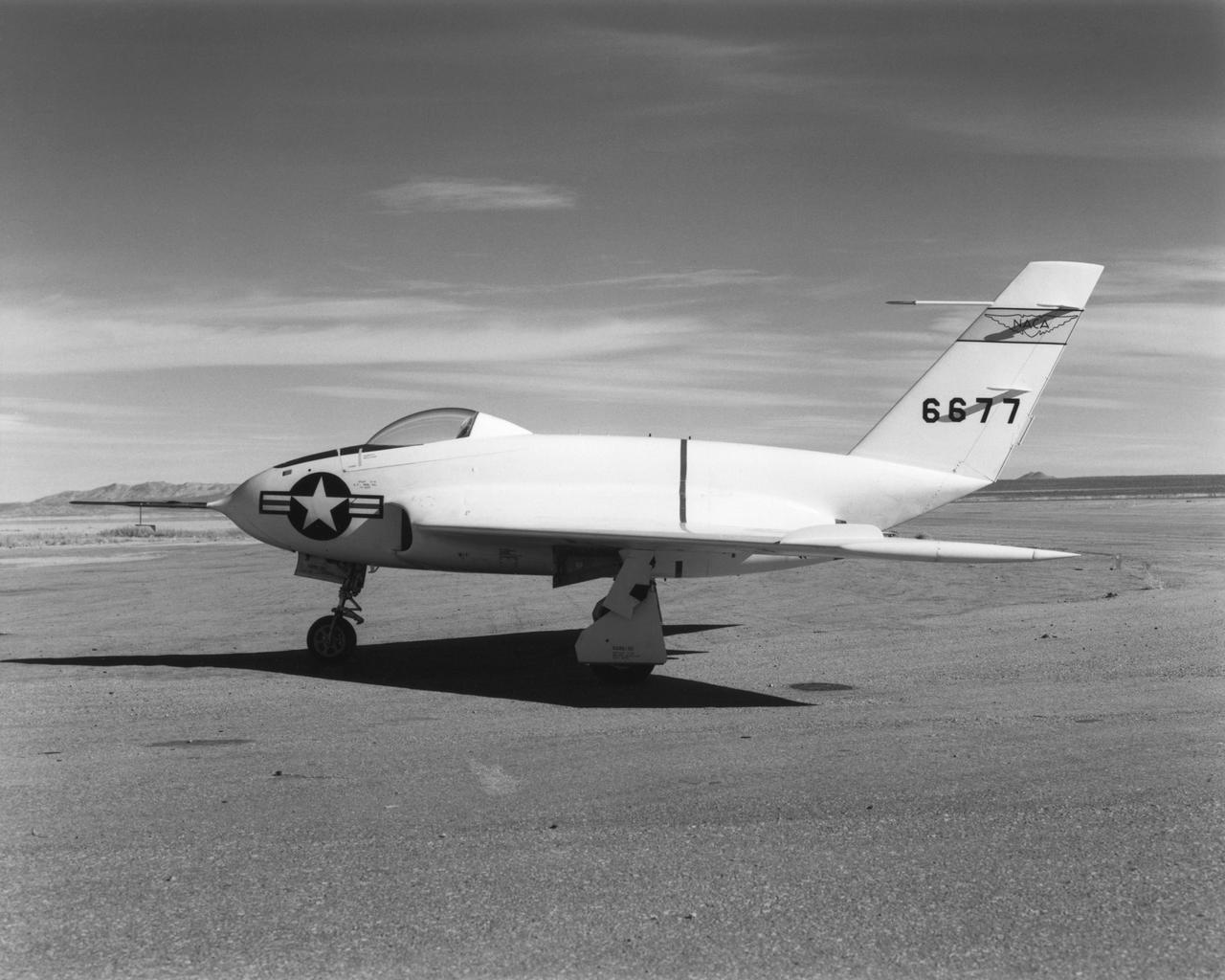
In this 1950 view of the left side of the NACA High-Speed Flight Research Station's X-4 research aircraft, the low swept wing and horizontal taillest design are seen. The X-4 Bantam, a single-place, low swept-wing, semi-tailless aircraft, was designed and built by Northrop Aircraft, Inc. It had no horizontal tail surfaces and its mission was to obtain in-flight data on the stability and control of semi-tailless aircraft at high subsonic speeds.
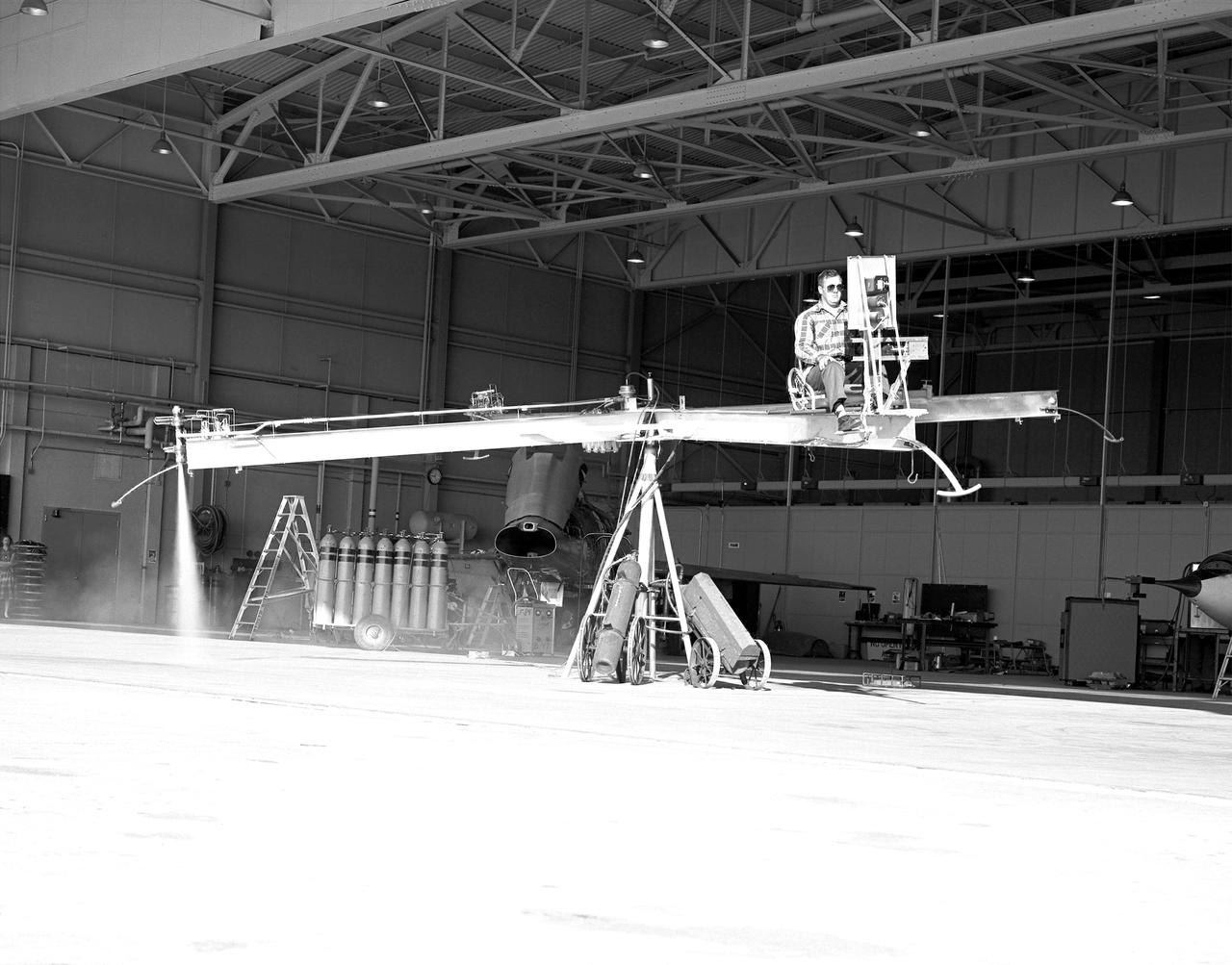
NACA High-Speed Flight Station test pilot Stan Butchart flying the Iron Cross, the mechanical reaction control simulator. High-pressure nitrogen gas expanded selectively, by the pilot, through the small reaction control thrusters maneuvered the Iron Cross through the three axes. The exhaust plume can be seen from the aft thruster. The tanks containing the gas can be seen on the cart at the base of the pivot point of the Iron Cross. NACA technicians built the iron-frame simulator, which matched the inertia ratios of the Bell X-1B airplane, installing six jet nozzles to control the movement about the three axes of pitch, roll, and yaw.
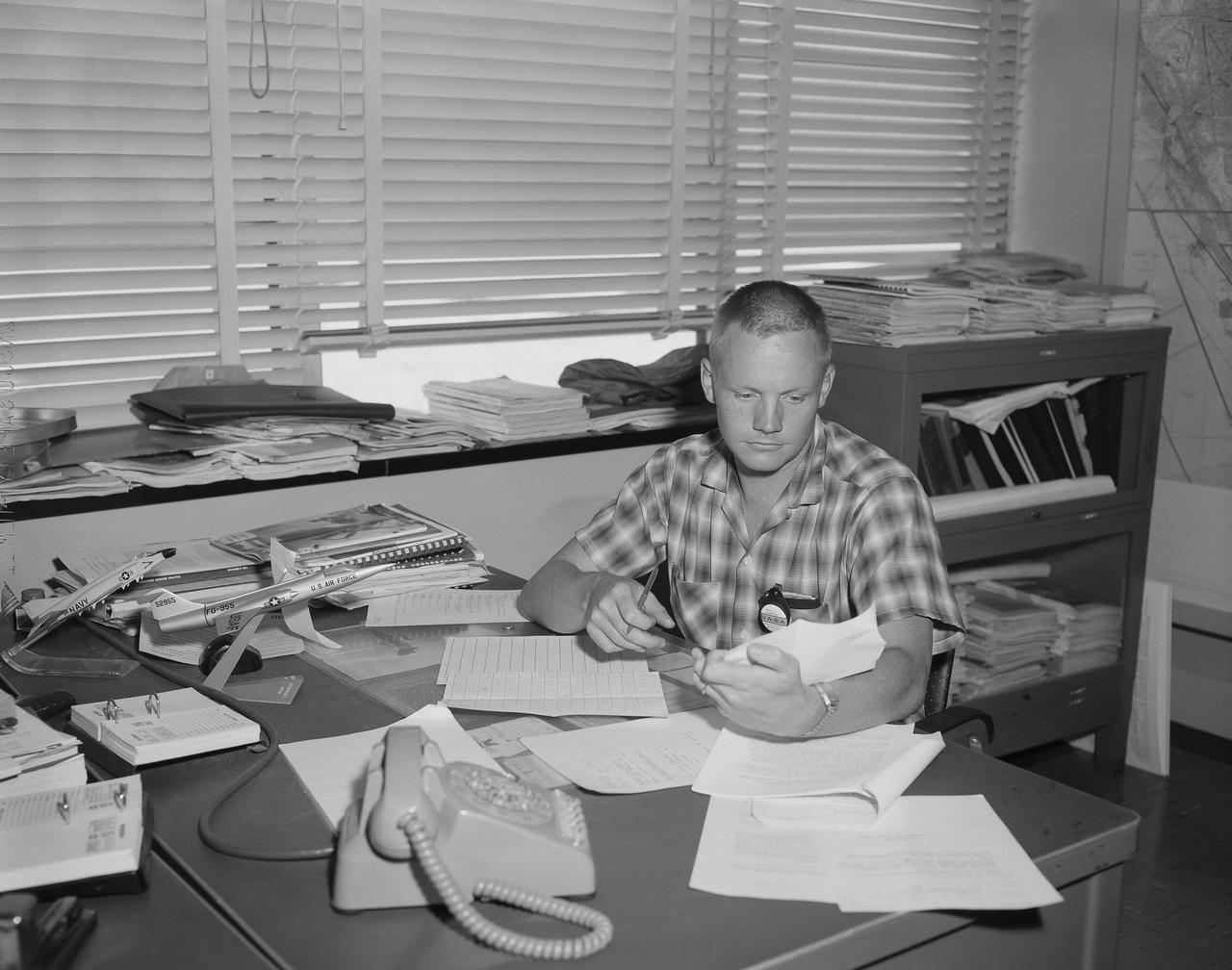
Famed astronaut Neil A. Armstrong – the first person to set foot on the Moon during the historic Apollo 11 mission in July 1969 – spent seven years as a research pilot at the NACA-NASA High-Speed Flight Station, now NASA’s Armstrong Flight Research Center in Edwards, California, before joining the space program. During his tenure, Armstrong was actively engaged in both the piloting and engineering aspects of numerous NASA programs and projects.
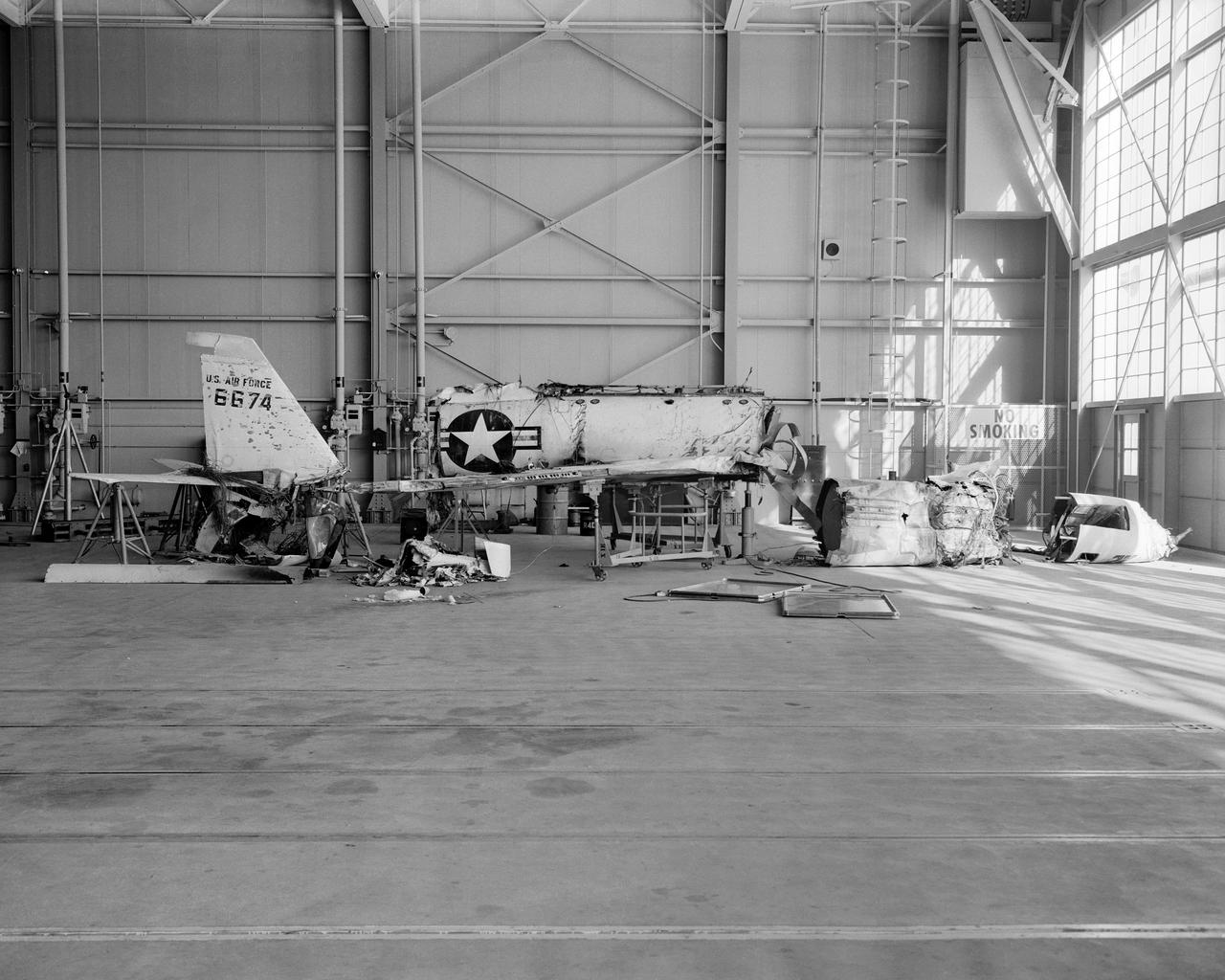
The X-2, initially an Air Force program, was scheduled to be transferred to the civilian National Advisory Committee for Aeronautics (NACA) for scientific research. The Air Force delayed turning the aircraft over to the NACA in the hope of attaining Mach 3 in the airplane. The service requested and received a two-month extension to qualify another Air Force test pilot, Capt. Miburn "Mel" Apt, in the X-2 and attempt to exceed Mach 3. After several ground briefings in the simulator, Apt (with no previous rocket plane experience) made his flight on 27 September 1956. Apt raced away from the B-50 under full power, quickly outdistancing the F-100 chase planes. At high altitude, he nosed over, accelerating rapidly. The X-2 reached Mach 3.2 (2,094 mph) at 65,000 feet. Apt became the first man to fly more than three times the speed of sound. Still above Mach 3, he began an abrupt turn back to Edwards. This maneuver proved fatal as the X-2 began a series of diverging rolls and tumbled out of control. Apt tried to regain control of the aircraft. Unable to do so, Apt separated the escape capsule. Too late, he attempted to bail out and was killed when the capsule impacted on the Edwards bombing range. The rest of the X-2 crashed five miles away. The wreckage of the X-2 rocket plane was later taken to NACA's High Speed Flight Station for analysis following the crash.
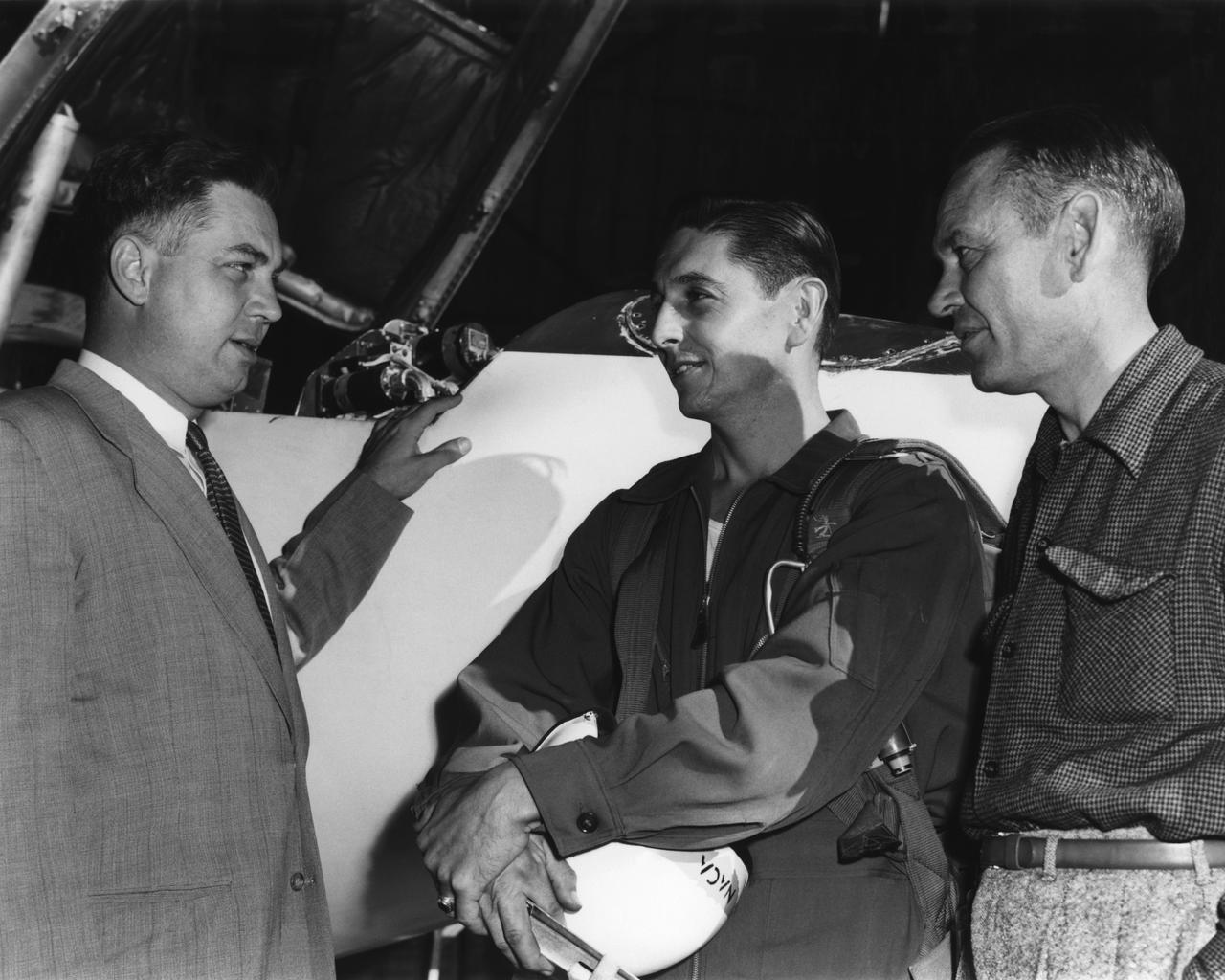
High-Speed Research Station Director Walter C. Williams, NACA pilot A. Scott Crossfield, and Director of Flight Operations Joe Vensel in front of the Douglas D-558-2 after the first Mach 2 flight.
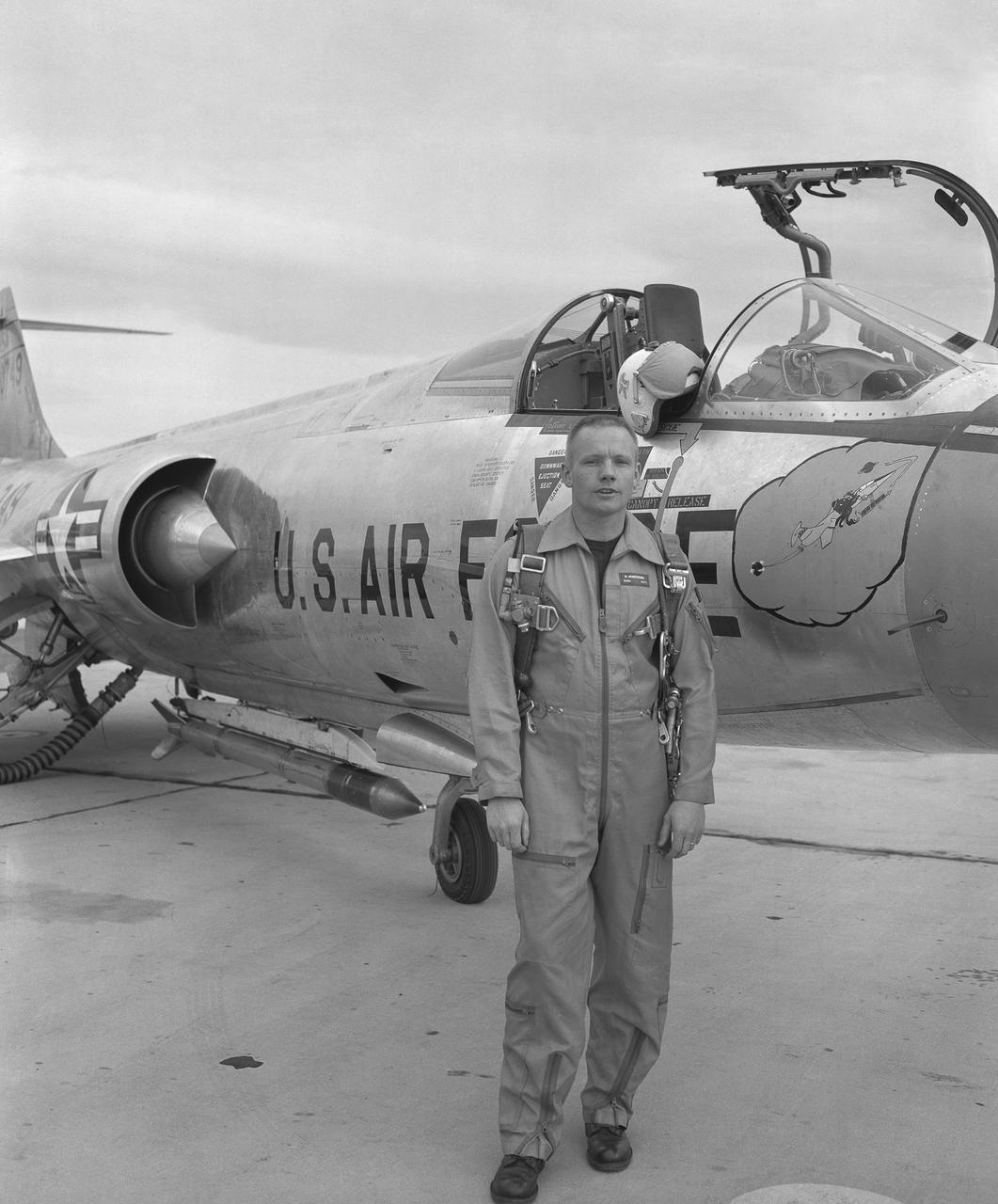
Famed astronaut Neil A. Armstrong – the first person to set foot on the Moon during the historic Apollo 11 mission in July 1969 – spent seven years as a research pilot at the NACA-NASA High-Speed Flight Station, now NASA’s Armstrong Flight Research Center in Edwards, California, before joining the space program. During his time there, he served as a project pilot on the F-100A, F-100C, F-101, and F-104A (pictured here).
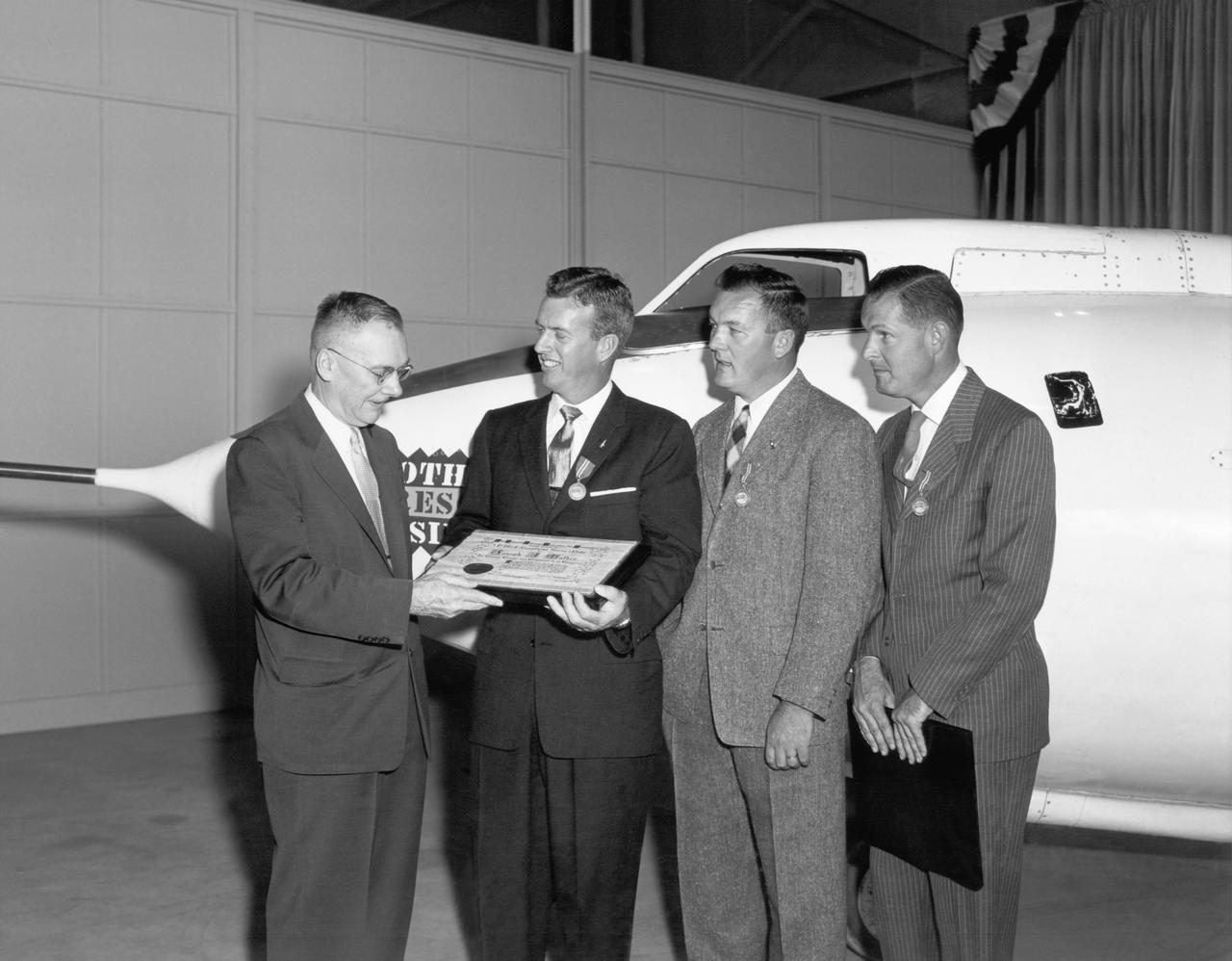
Hugh Dryden (far left) presents the NACA Exceptional Service Medal award at the NACA High Speed Flight Station. He awarded (L-R) Joe Walker (X-1A research pilot), Stan Butchart (pilot of the B-29 mothership),and Richard Payne (X-1A crew chief) in recognition of their research extending knowledge of swept wing flight.
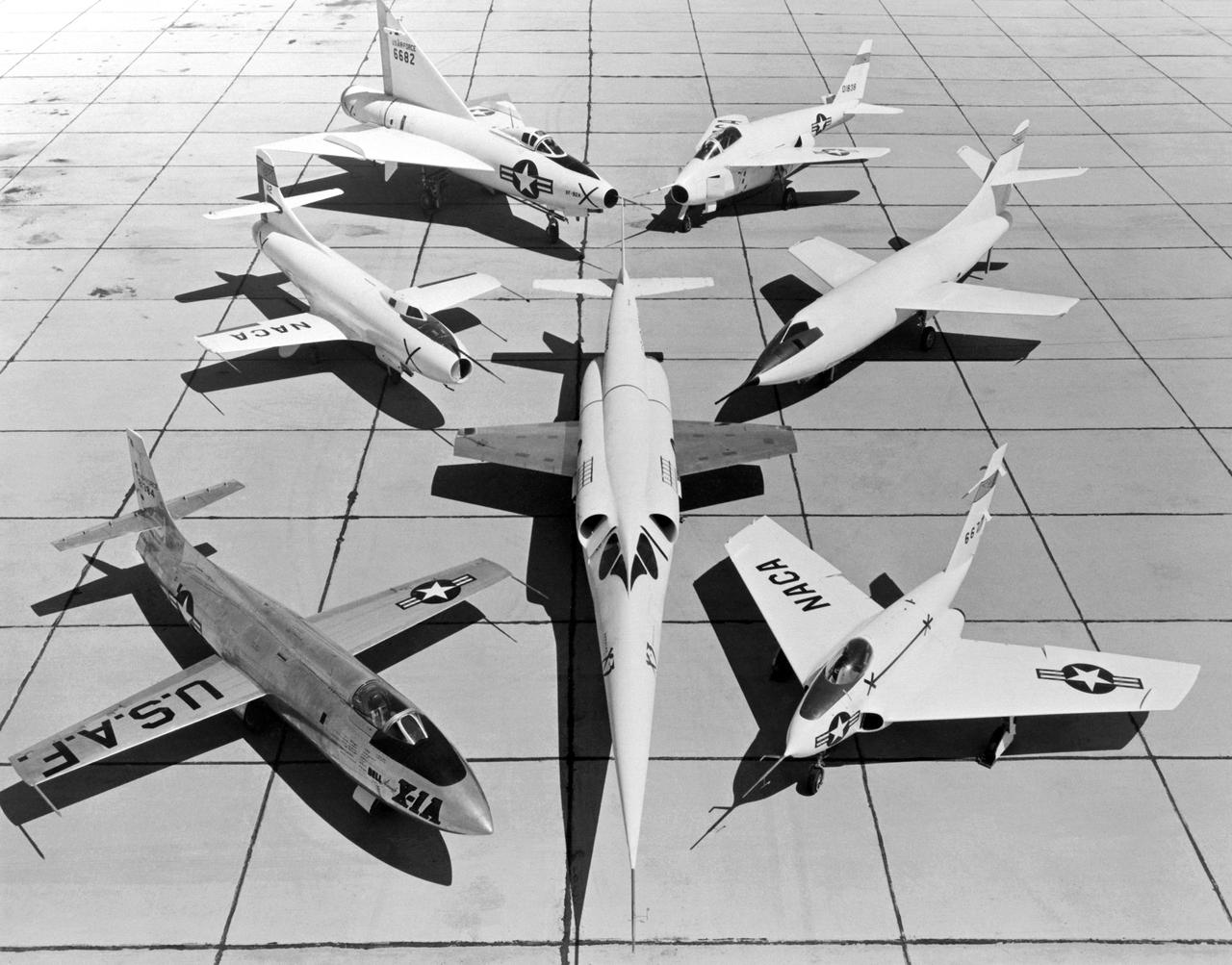
A 1953 photo of some of the research aircraft at the NACA High-Speed Flight Research Station (now known as the the Dryden Flight Research Center). The photo shows the X-3 (center) and, clockwise from left: X-1A (Air Force serial number 48-1384), the third D-558-1 (NACA tail number 142), XF-92A, X-5, D-558-2, and X-4.
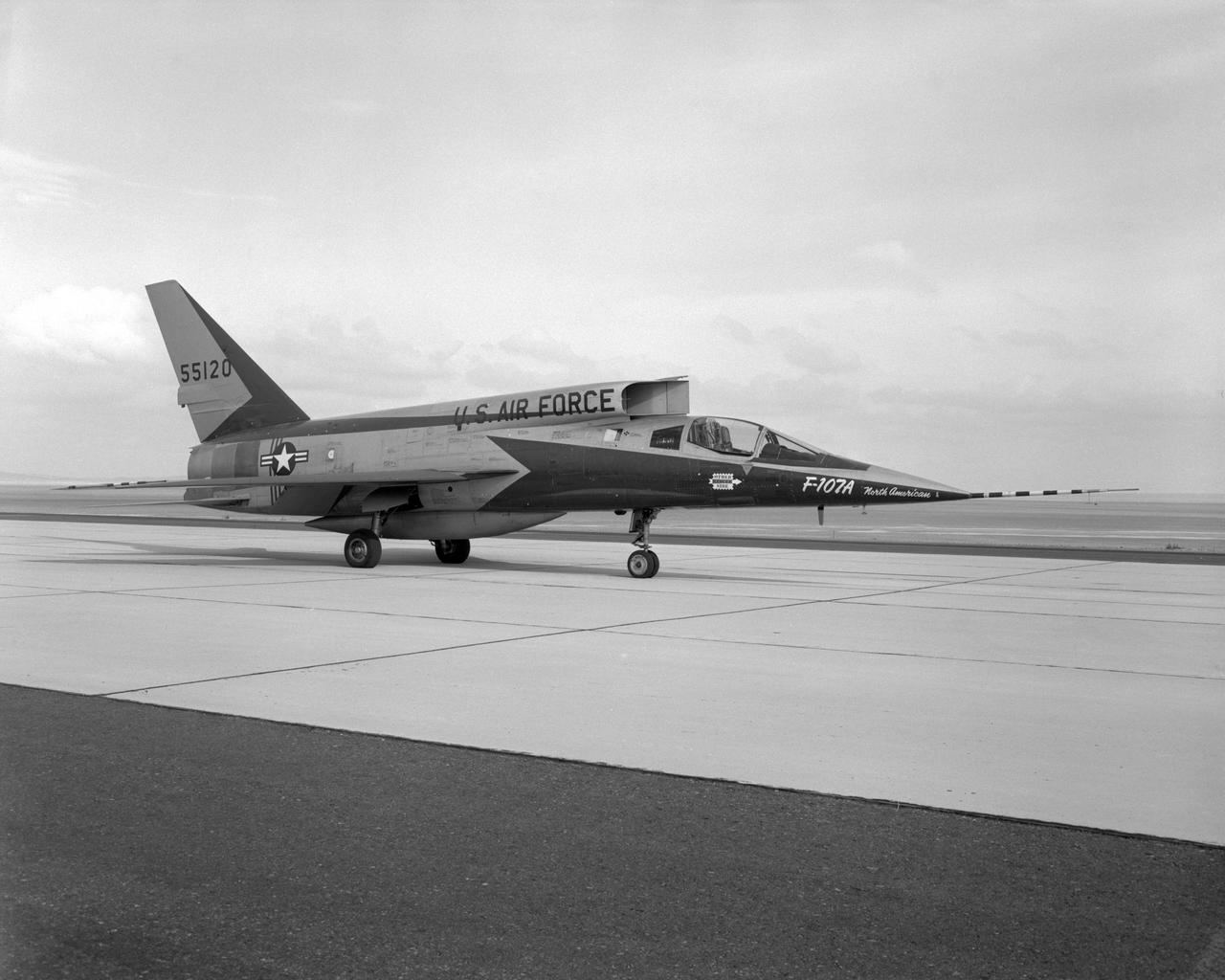
The third F-107A parked on the ramp at the Flight Research Center. Jan. 7, 1959
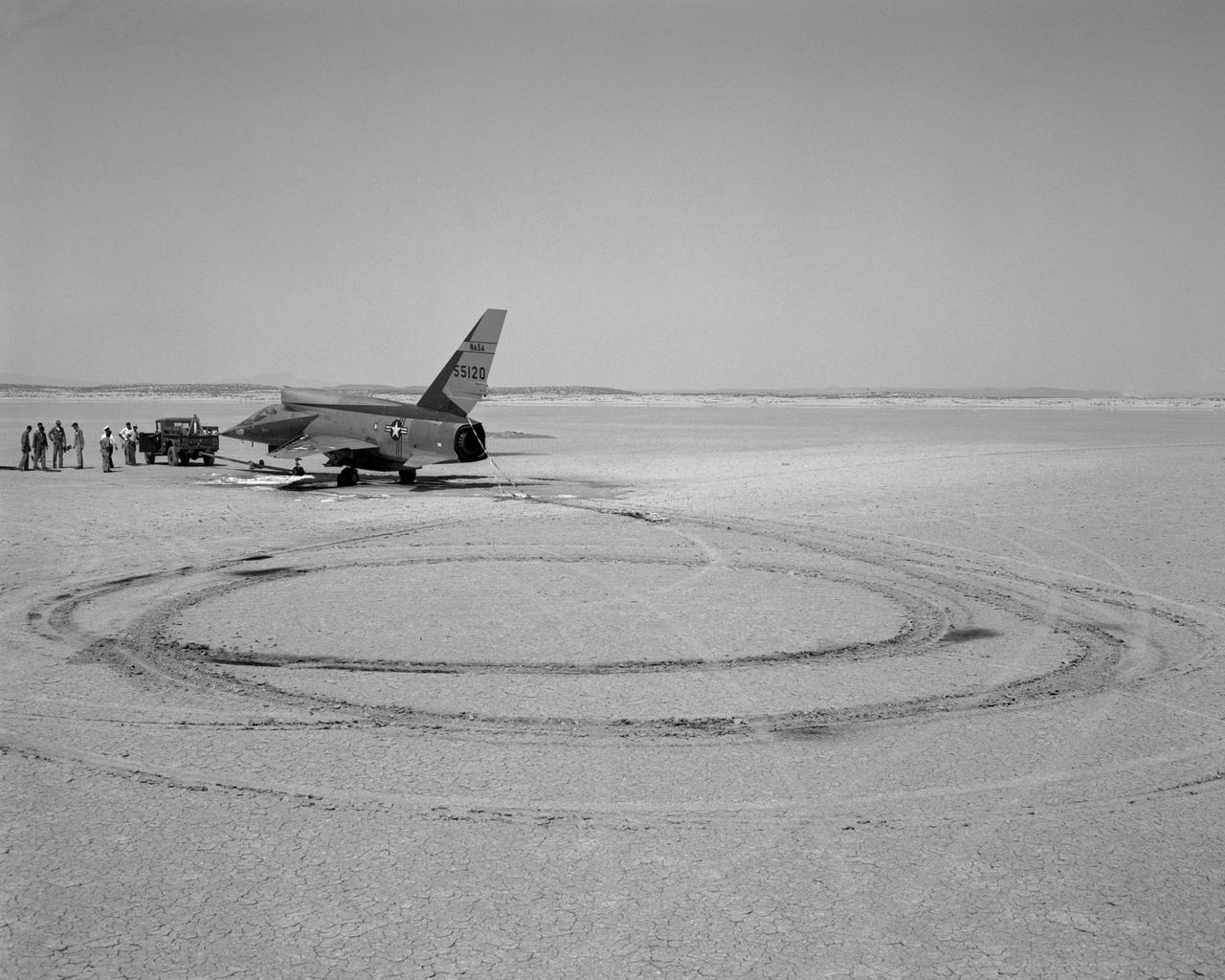
F-107A ground loop landing mishap. Sept. 1, 1959
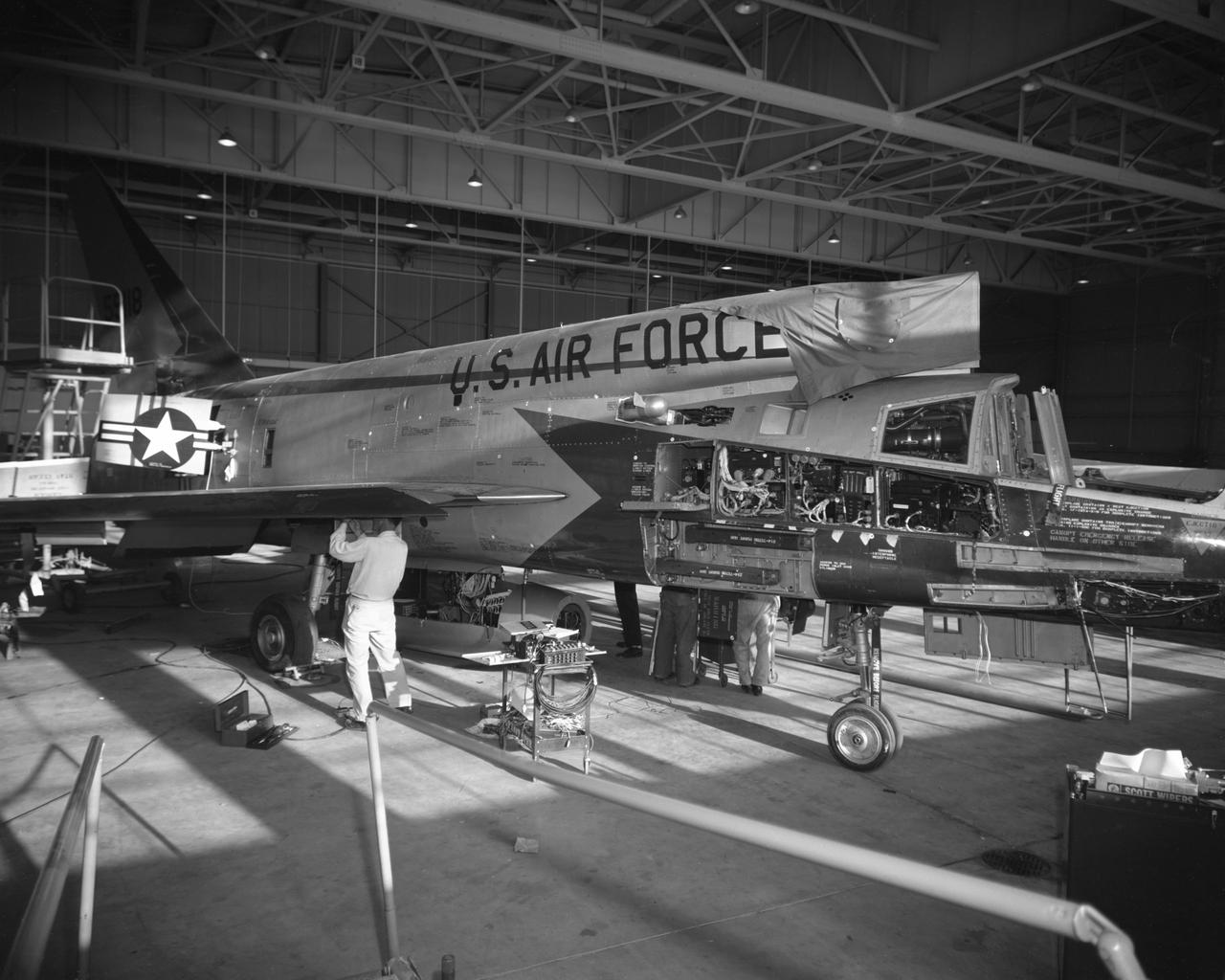
Maintanence on the first F-107A. Apr. 9, 1958
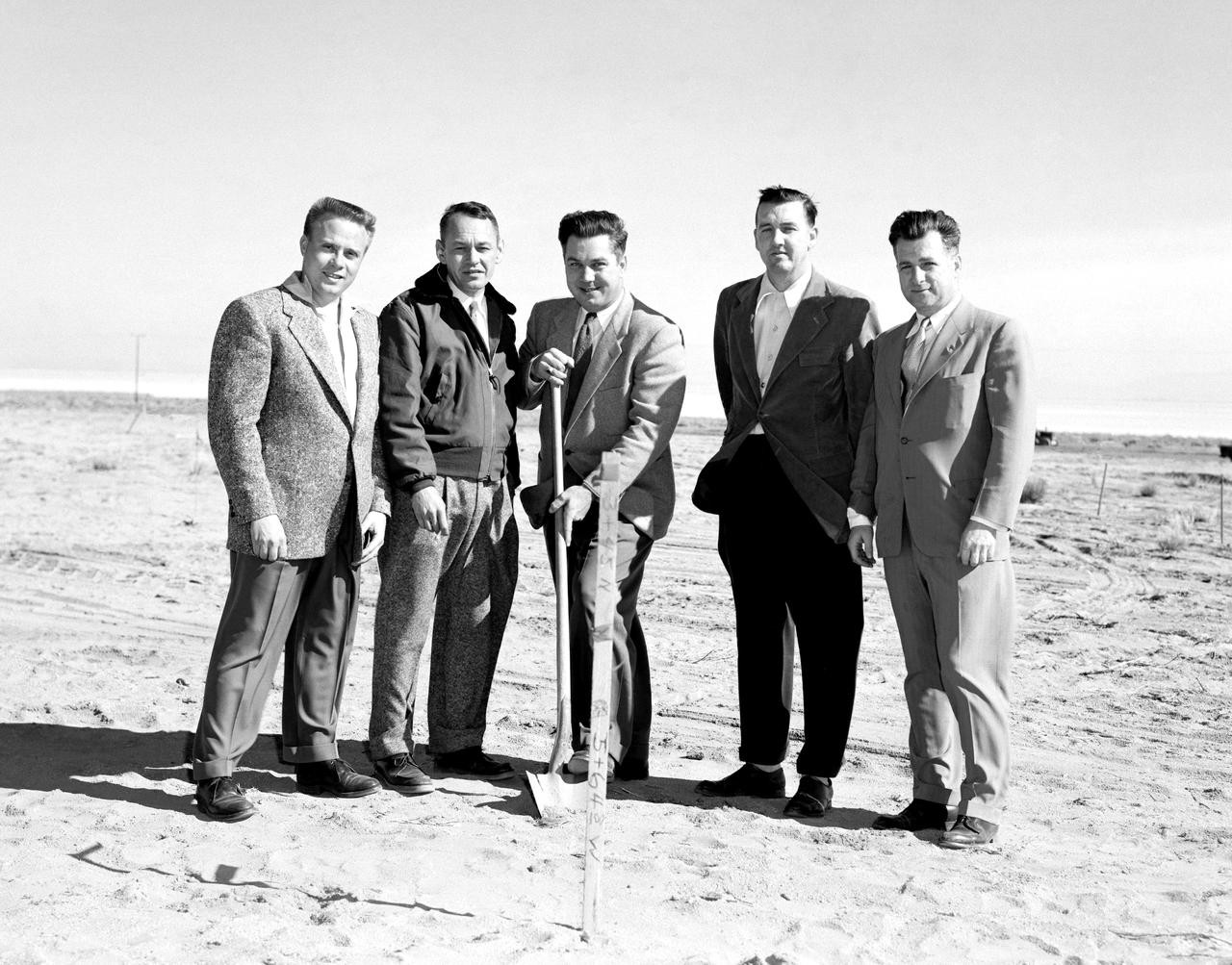
The NACA High-Speed Flight Research Station, had initially been subordinate to the Langley Memorial Aeronautical Laboratory near Hampton, Virginia, but as the flight research in the Mojave Desert increasingly proved its worth after 1946, it made sense to make the Flight Research Station a separate entity reporting directly to the headquarters of the National Advisory Committee for Aeronautics. But an autonomous center required all the trappings of a major research facility, including good quarters. With the adoption of the Edwards “Master Plan,” the Air Force had committed itself to moving from its old South Base to a new location midway between the South and North Bases. The NACA would have to move also--so why not take advantage of the situation and move into a full-blown research facility. The Air Force issued a lease to NACA for a location on the northwestern shore of the Roger Dry Lake. Construction started on the NACA station in early February 1953. On a windy day, January 27, 1953, at a groundbreaking ceremony stood left to right: Gerald Truszynski, Head of Instrumentation Division; Joseph Vensel, Head of the Operations Branch; Walter Williams, Head of the Station, scooping the first shovel full of dirt; Marion Kent, Head of Personnel; and California state official Arthur Samet.
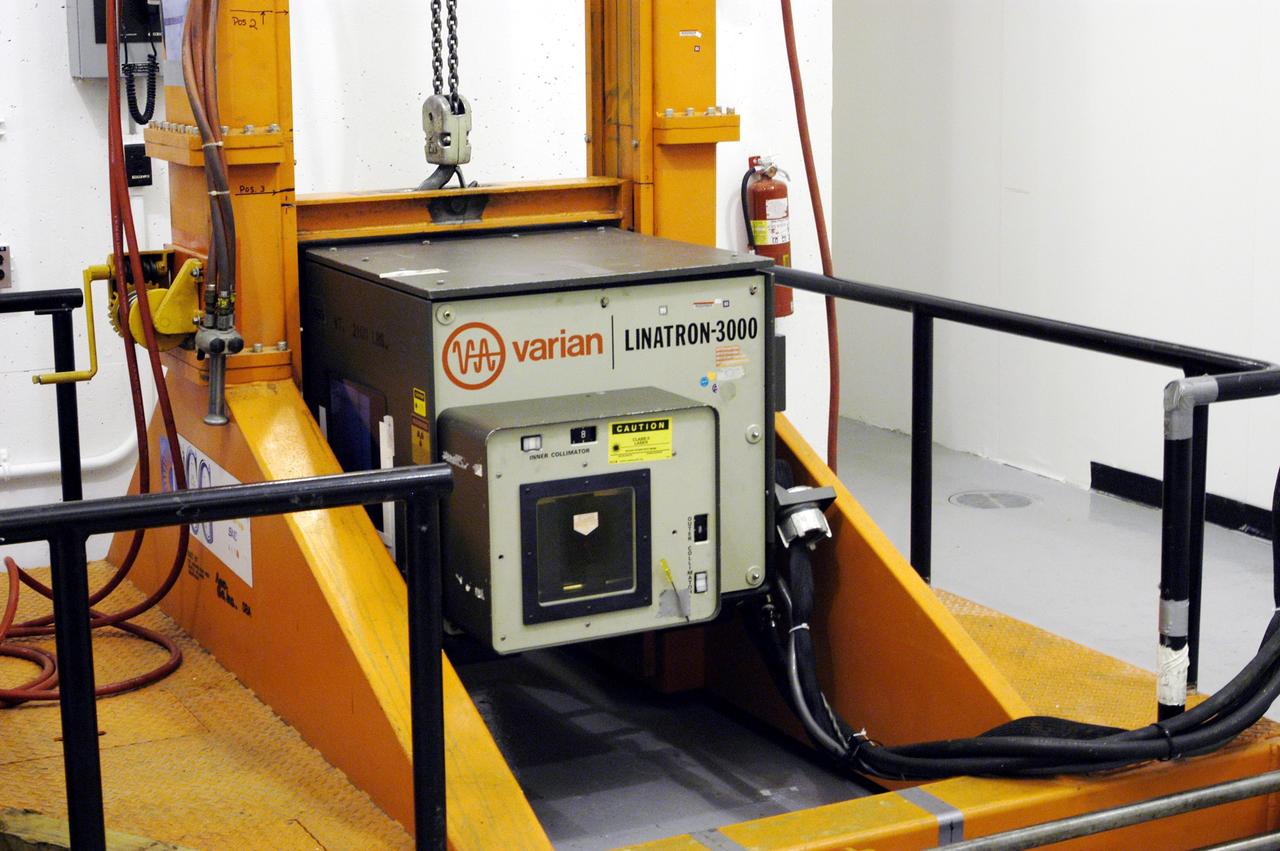
KENNEDY SPACE CENTER, FLA. - An X-ray machine is in place to take images of four rudder speed brake actuators to be installed on the orbiter Discovery. The actuators are being X-rayed at the Cape Canaveral Air Force Station’s Radiographic High-Energy X-ray Facility to determine if the gears were installed correctly. Discovery has been assigned to the first Return to Flight mission, STS-114, a logistics flight to the International Space Station.
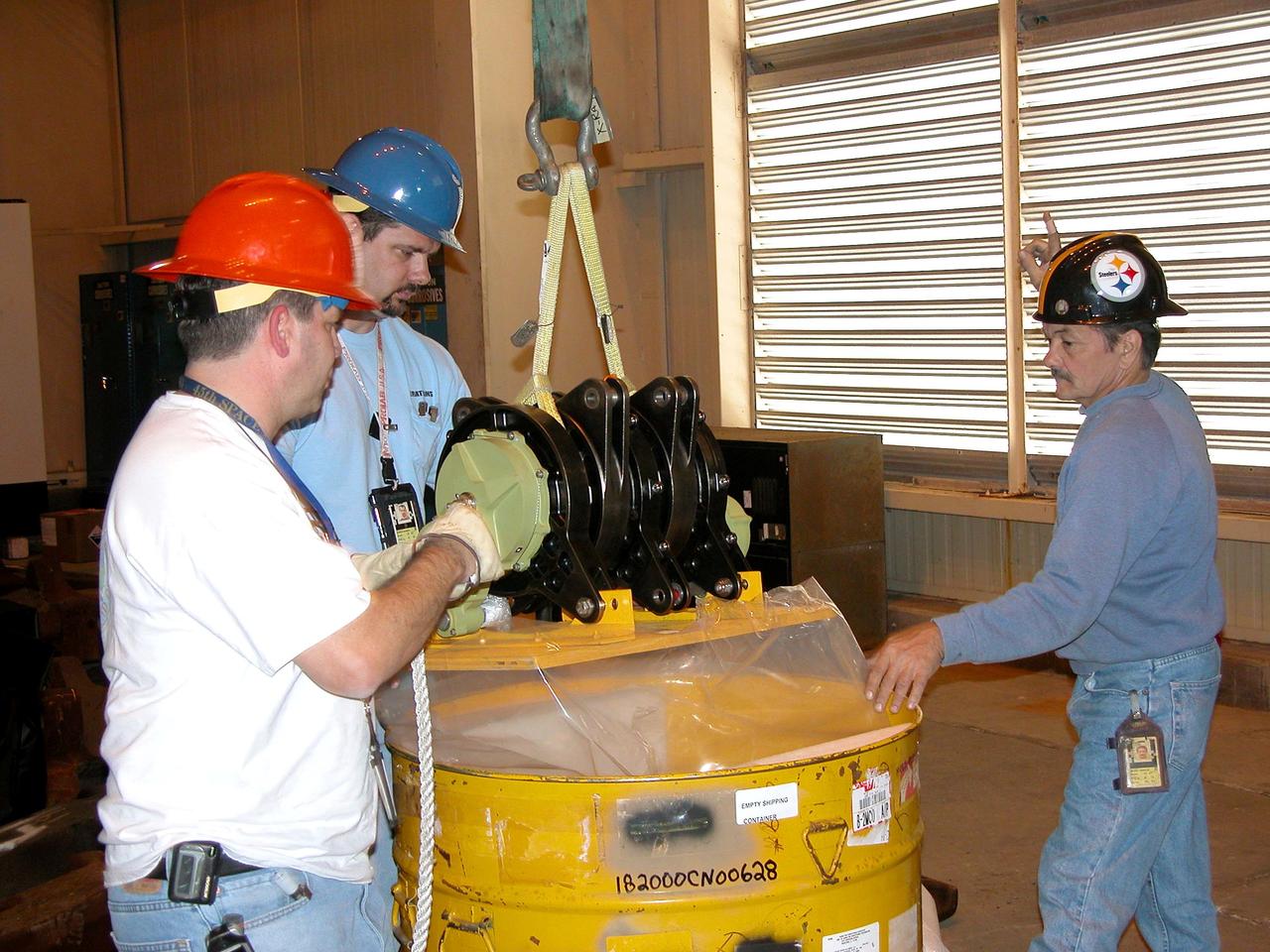
KENNEDY SPACE CENTER, FLA. - One of four rudder speed brake actuators arrives at Cape Canaveral Air Force Station. The actuators, to be installed on the orbiter Discovery, are being X-rayed at the Radiographic High-Energy X-ray Facility to determine if the gears were installed correctly. Discovery has been assigned to the first Return to Flight mission, STS-114, a logistics flight to the International Space Station.
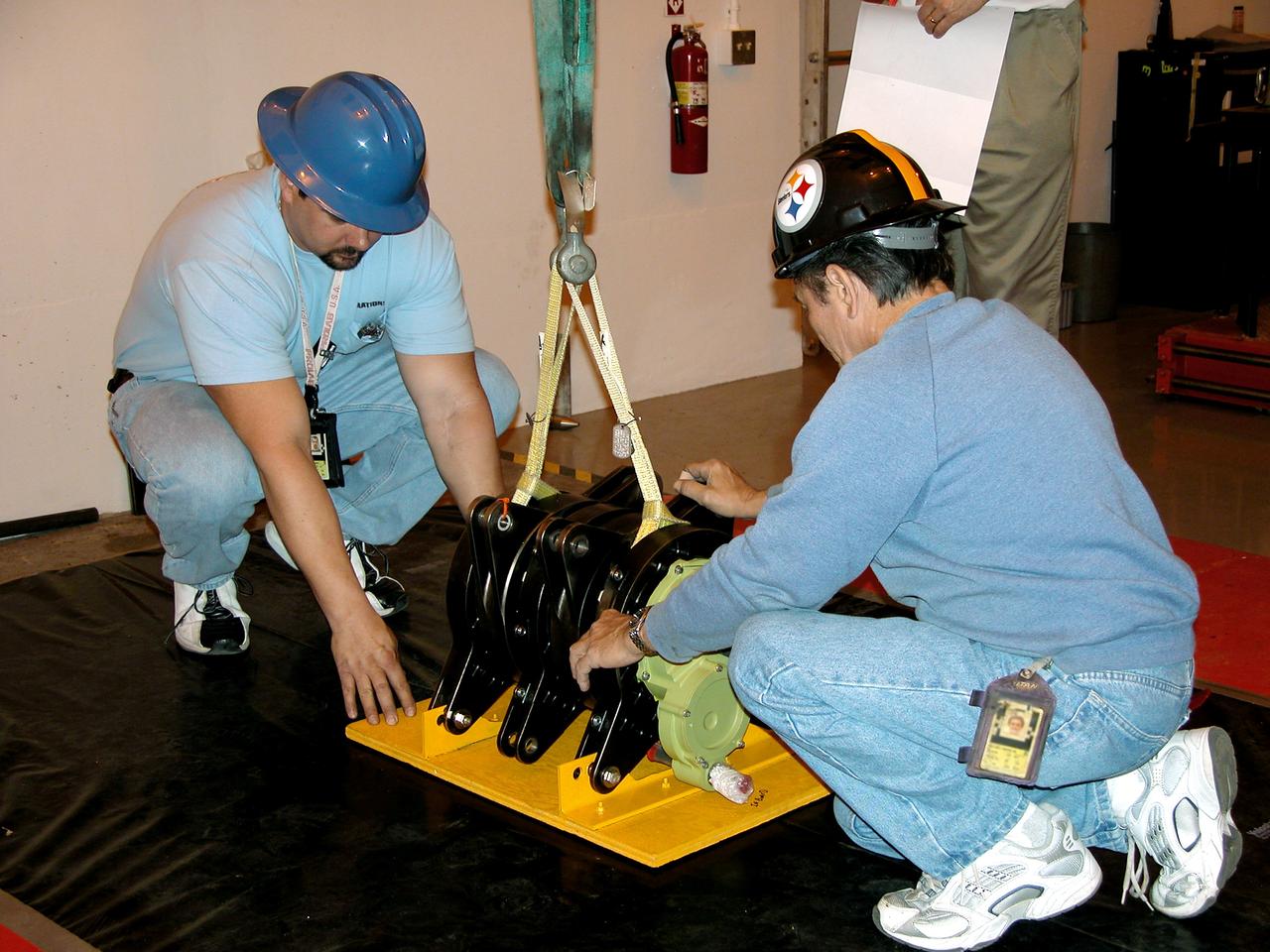
KENNEDY SPACE CENTER, FLA. - Workers at Cape Canaveral Air Force Station place one of four rudder speed brake actuators onto a pallet for X-ray. The actuators, to be installed on the orbiter Discovery, are being X-rayed at the Radiographic High-Energy X-ray Facility to determine if the gears were installed correctly. Discovery has been assigned to the first Return to Flight mission, STS-114, a logistics flight to the International Space Station.
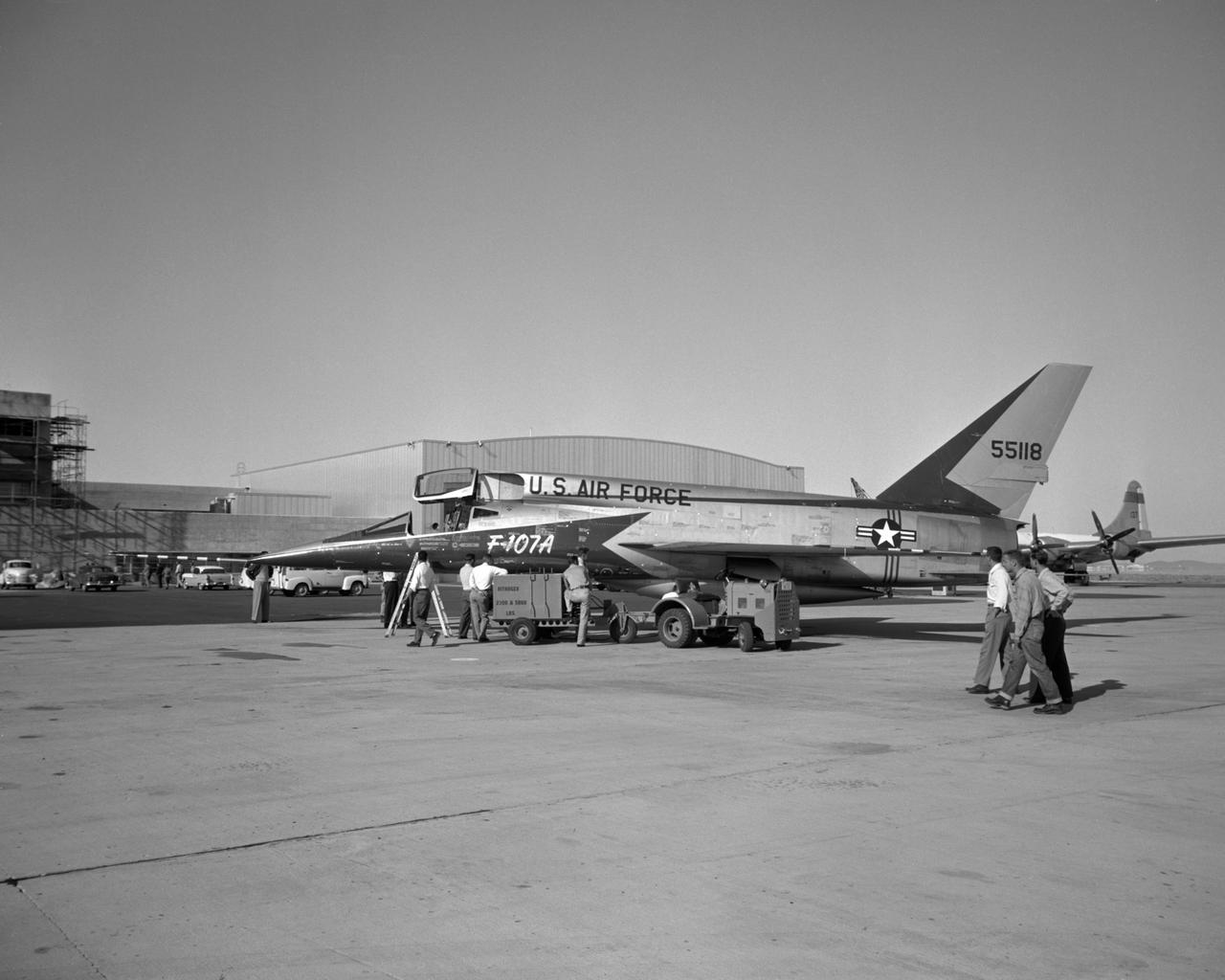
Arrival of first F-107A #118 (later NACA 207) to NASA FRC
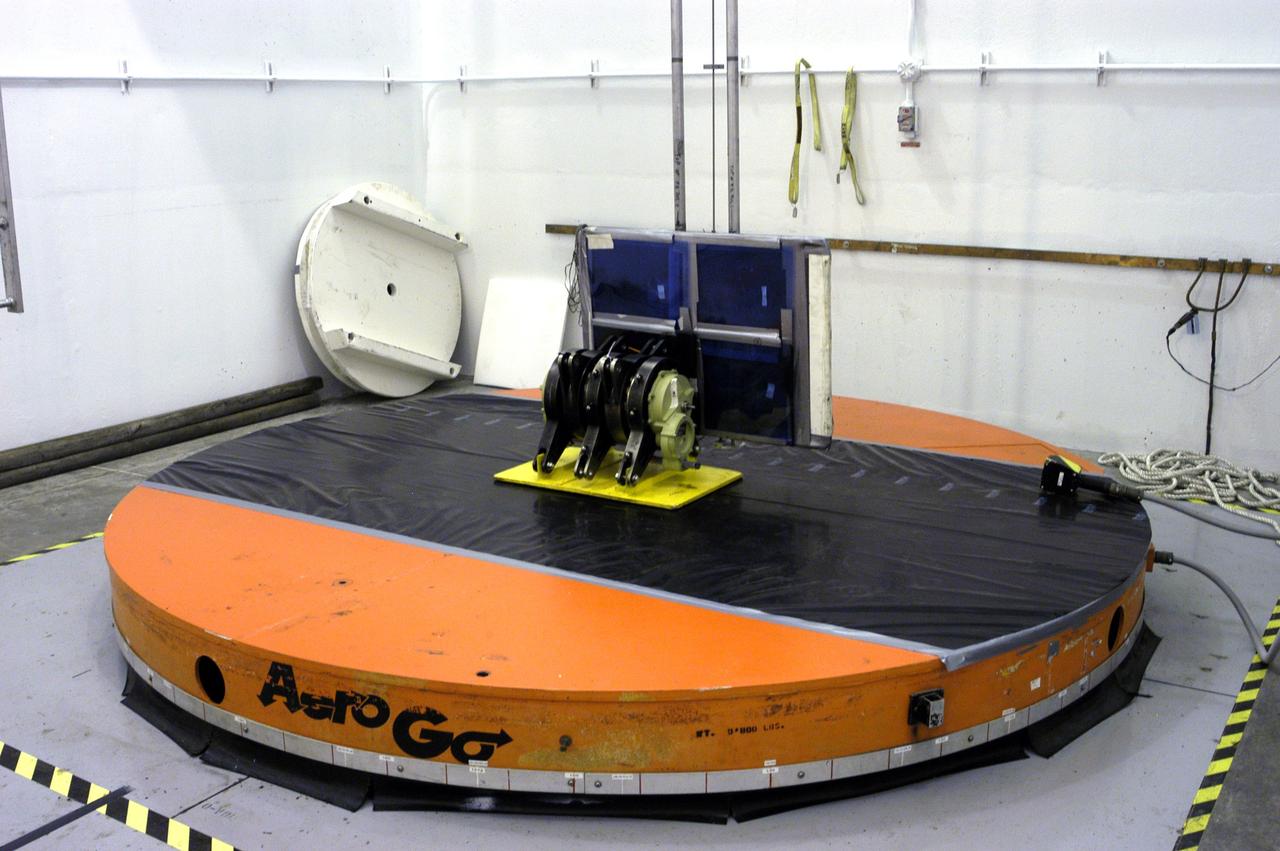
KENNEDY SPACE CENTER, FLA. - A rudder speed brake actuator sits on an air-bearing pallet to undergo X-raying. Four actuators to be installed on the orbiter Discovery are being X-rayed at the Radiographic High-Energy X-ray Facility to determine if the gears were installed correctly. Discovery has been assigned to the first Return to Flight mission, STS-114, a logistics flight to the International Space Station.
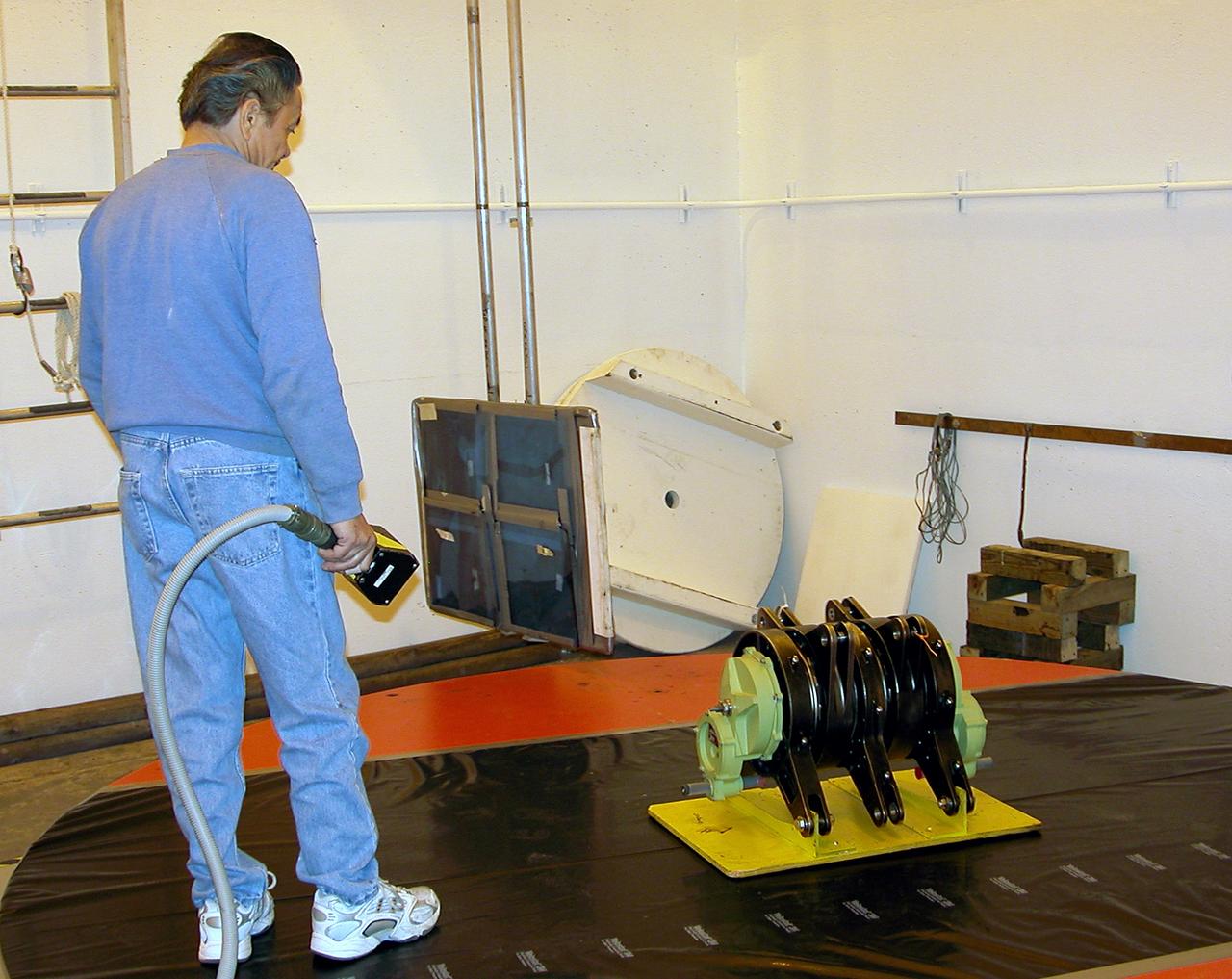
KENNEDY SPACE CENTER, FLA. - A rudder speed brake actuator sits on an air-bearing pallet to undergo X-raying. Four actuators to be installed on the orbiter Discovery are being X-rayed at the Radiographic High-Energy X-ray Facility to determine if the gears were installed correctly. Discovery has been assigned to the first Return to Flight mission, STS-114, a logistics flight to the International Space Station.

The Bell Aircraft Corporation X-1-2 aircraft on the ramp at NACA High Speed Flight Research Station located on the South Base of Muroc Army Air Field in 1947. The X-1-2 flew until October 23, 1951, completing 74 glide and powered flights with nine different pilots. The aircraft has white paint and the NACA tail band. The black Xs are reference markings for tracking purposes. They were widely used on NACA aircraft in the early 1950s.
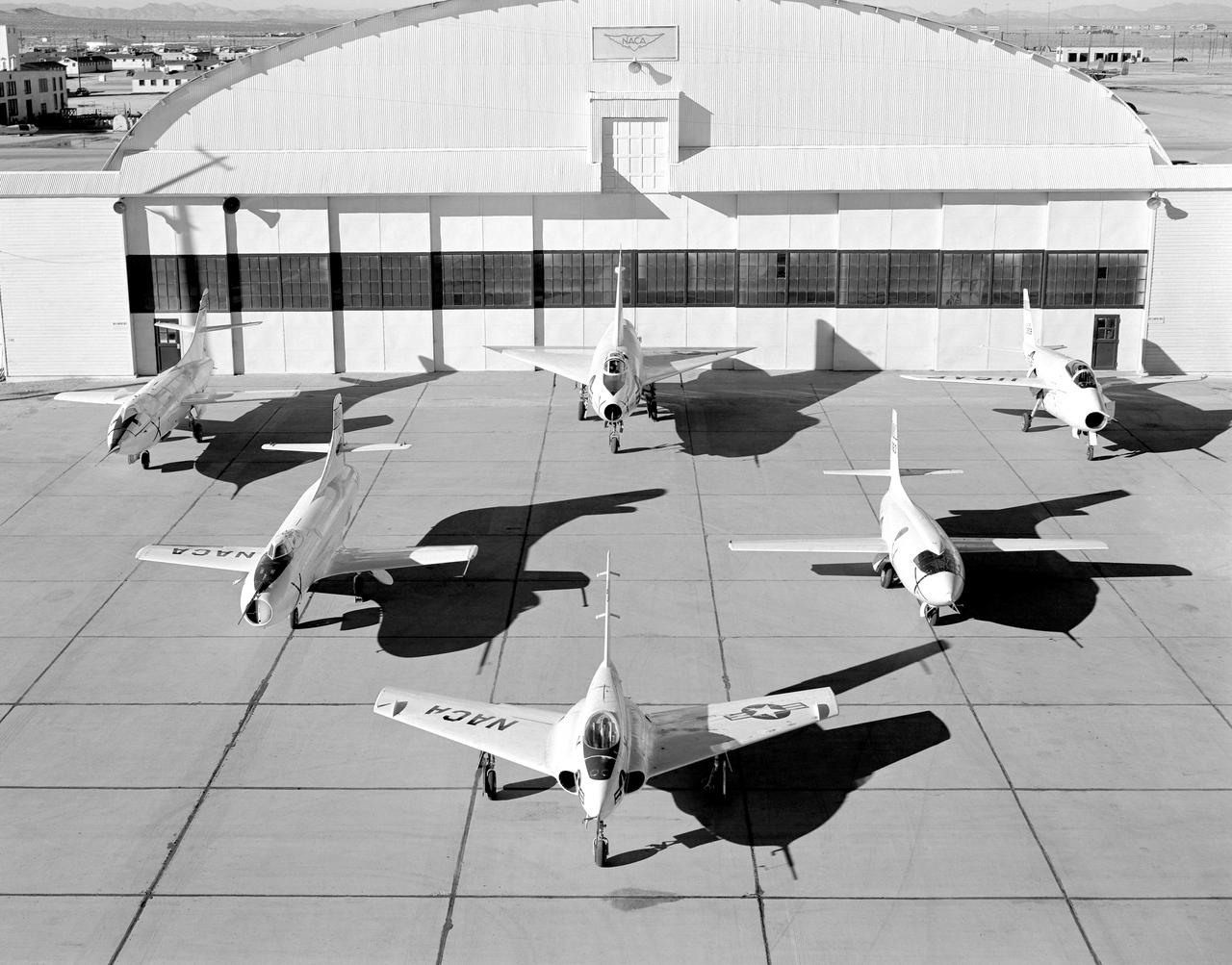
NACA High Speed Flight Station aircraft at South Base. Clockwise from far left: D-558-II, XF-92A, X-5, X-1, X-4, and D-558-I.
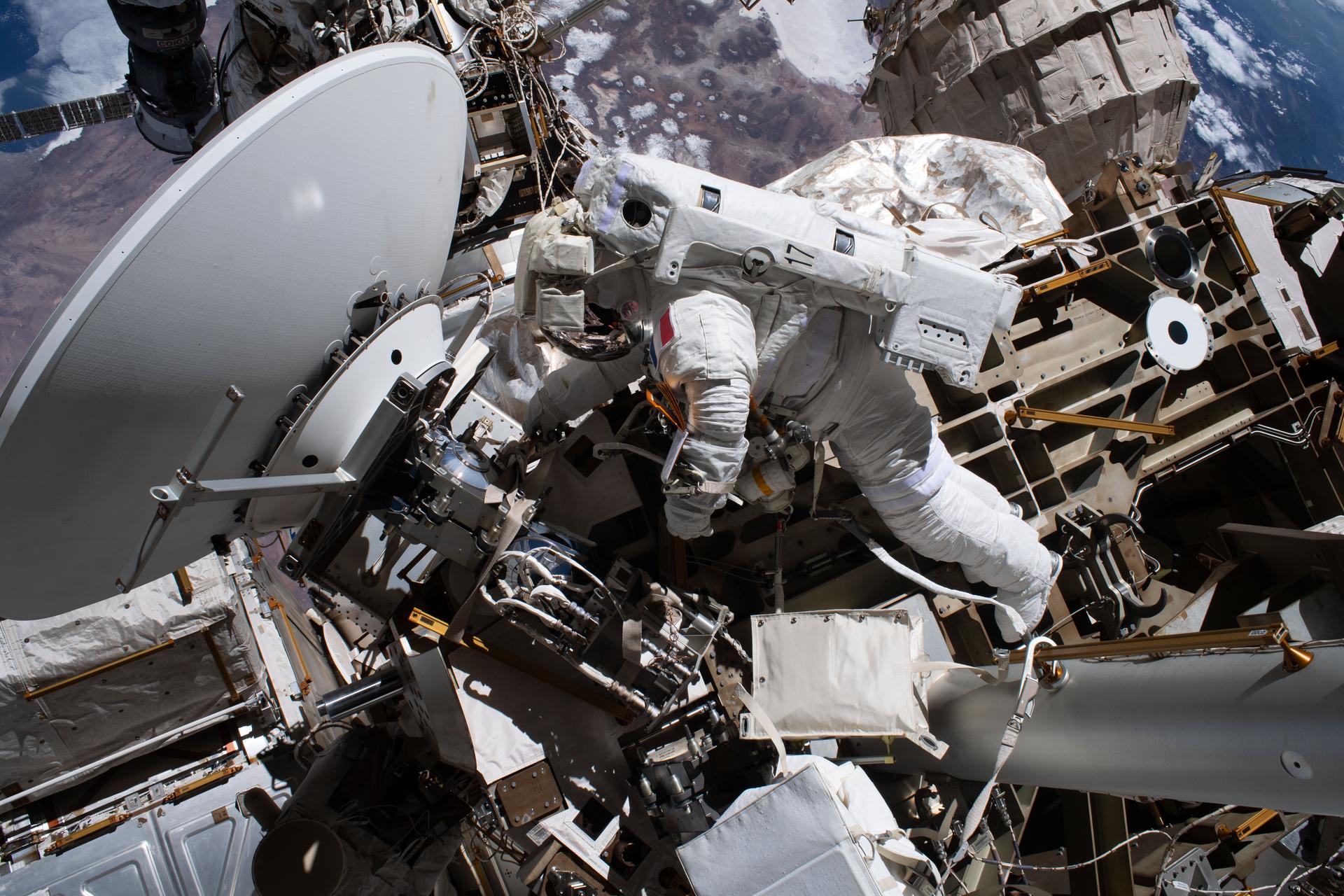
iss075e0069016 (Aug. 25, 2026) --- ESA (European Space Agency) astronaut and Expedition 75 flight engineer Sophie Adenot is tethered to the International Space Station during a spacewalk to install a high-speed space-to-ground antenna on the Z1 truss segment above the Unity module. Adenot and NASA astronaut and Expedition 75 flight engineer Anil Menon (out of frame) spent six hours and 30 minutes replacing a failed antenna with a spare and making the precise connections needed to activate it for high-speed transmissions with mission control. Credit: NASA/Anil Menon
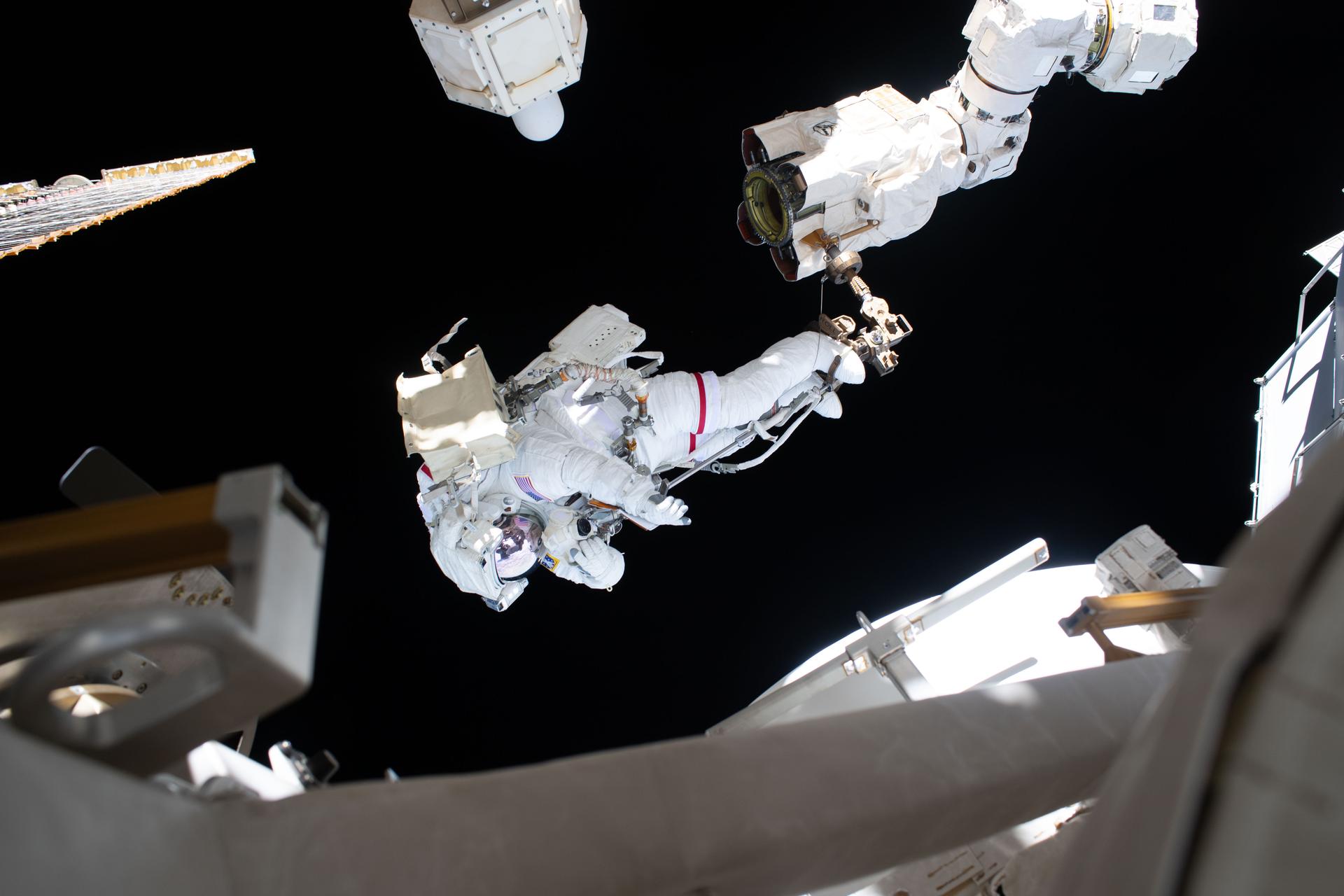
iss075e0070083 (Aug. 25, 2026) --- NASA astronaut and Expedition 75 flight engineer Anil Menon is attached to the Canadarm2 robotic arm’s latching end effector during a spacewalk to install a high-speed space-to-ground antenna on the International Space Station’s Z1 truss segment above the Unity module. Menon and ESA (European Space Agency) astronaut and Expedition 75 flight engineer Sophie Adenot (out of frame) spent six hours and 30 minutes replacing a failed antenna with a spare and making the precise connections needed to activate it for high-speed transmissions with mission control. Credit: NASA
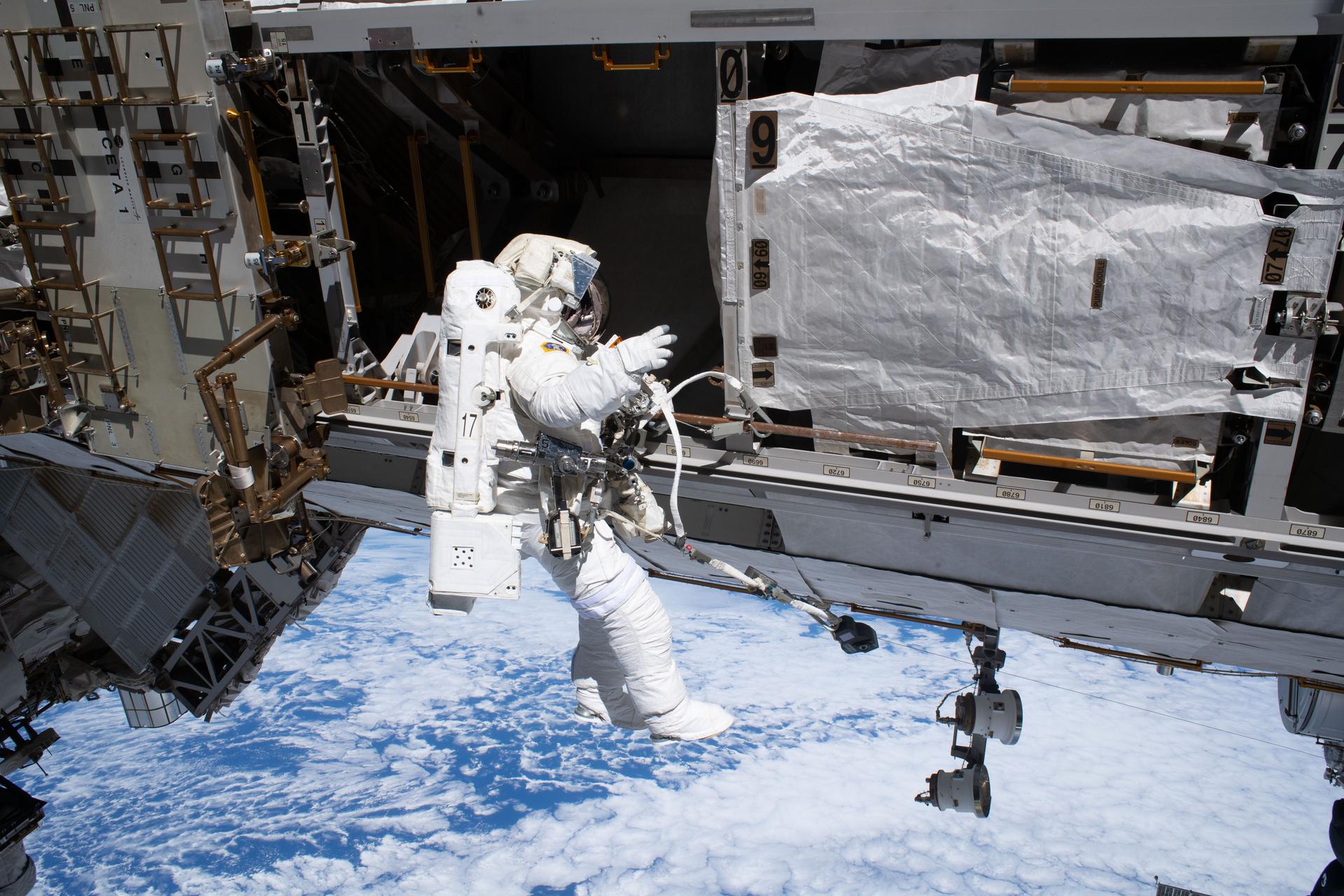
iss075e0069902 (Aug. 25, 2026) --- ESA (European Space Agency) astronaut and Expedition 75 flight engineer Sophie Adenot is tethered to the International Space Station during a spacewalk to install a high-speed space-to-ground antenna on the Z1 truss segment above the Unity module. Adenot and NASA astronaut and Expedition 75 flight engineer Anil Menon (out of frame) spent six hours and 30 minutes replacing a failed antenna with a spare and making the precise connections needed to activate it for high-speed transmissions with mission control. Credit: NASA/Anil Menon
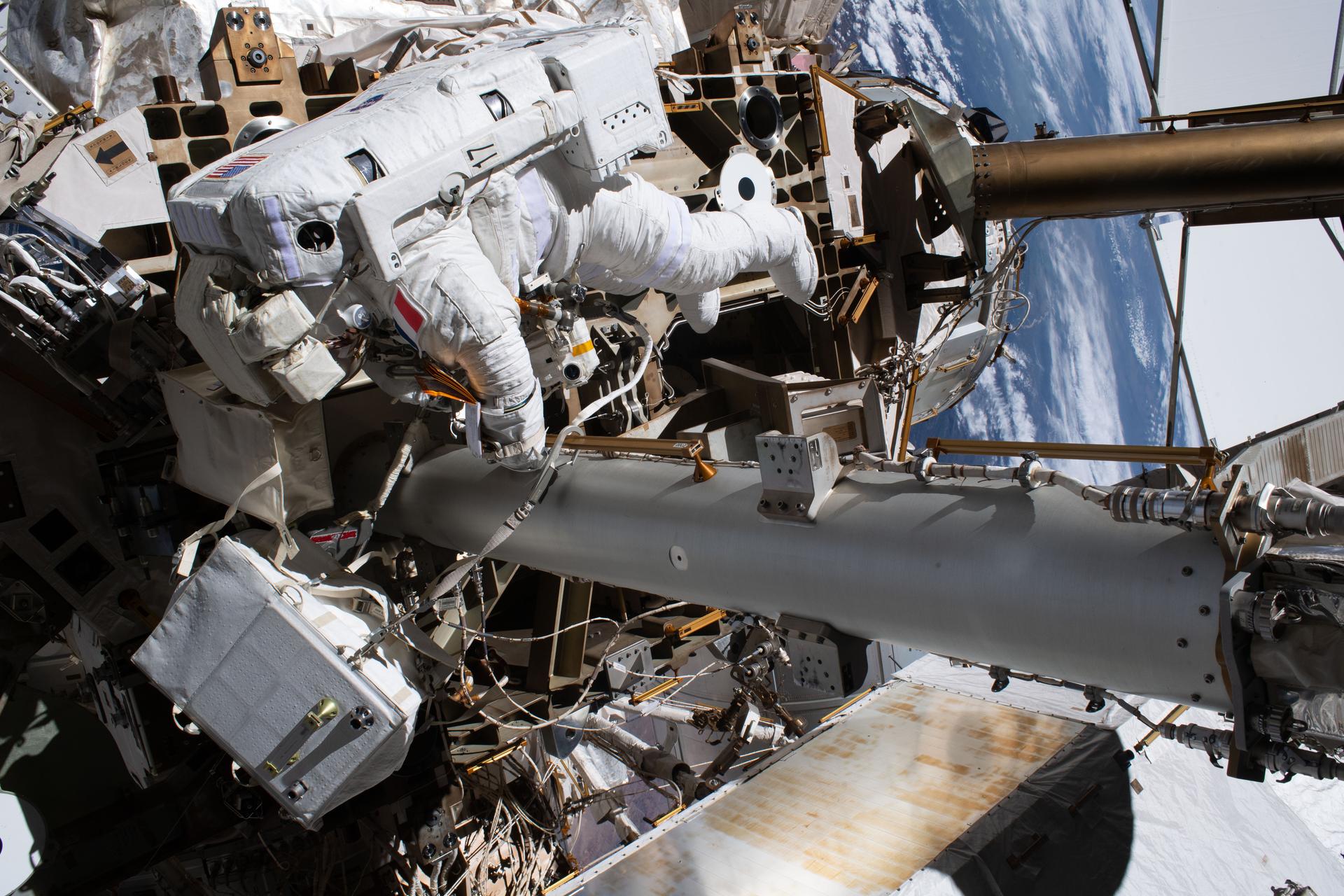
iss075e0068985 (Aug. 25, 2026) --- ESA (European Space Agency) astronaut and Expedition 75 flight engineer Sophie Adenot is tethered to the International Space Station during a spacewalk to install a high-speed space-to-ground antenna on the Z1 truss segment above the Unity module. Adenot and NASA astronaut and Expedition 75 flight engineer Anil Menon (out of frame) spent six hours and 30 minutes replacing a failed antenna with a spare and making the precise connections needed to activate it for high-speed transmissions with mission control. Credit: NASA/Anil Menon
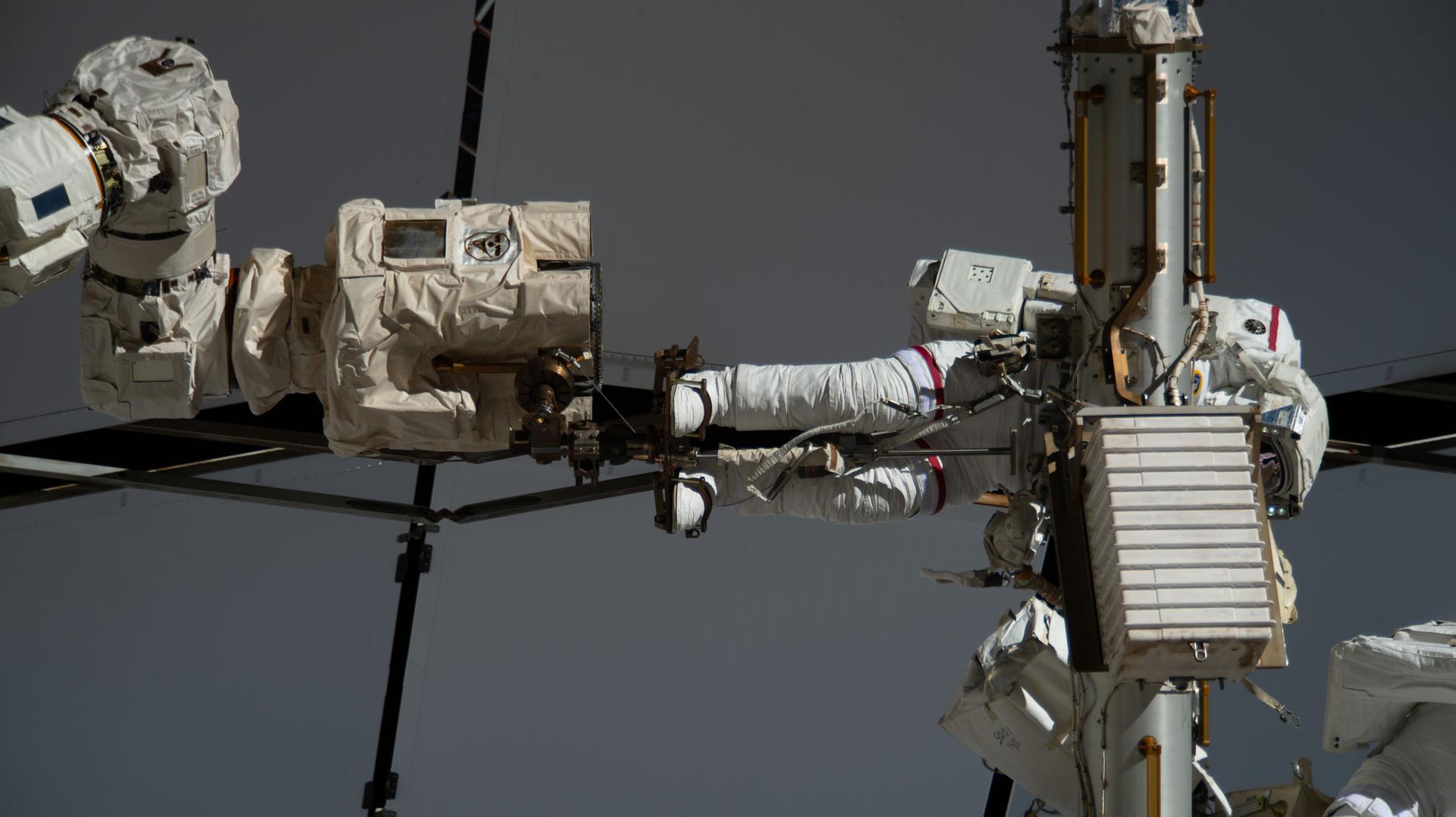
iss075e0068385 (Aug. 25, 2026) --- NASA astronaut and Expedition 75 flight engineer Anil Menon is attached to the Canadarm2 robotic arm’s latching end effector during a spacewalk to install a high-speed space-to-ground antenna on the International Space Station’s Z1 truss segment above the Unity module. Menon and ESA (European Space Agency) astronaut and Expedition 75 flight engineer Sophie Adenot (out of frame) spent six hours and 30 minutes replacing a failed antenna with a spare and making the precise connections needed to activate it for high-speed transmissions with mission control. Credit: NASA

The X-1E research aircraft provides a striking view at the entrance of NASA's Dryden Flight Research Center, Edwards, California. The X-1E, one of the three original X-1 aircraft modified with a raised cockpit canopy and an ejection seat, was flown at the facility between 1953 and 1958 to investigate speeds at twice that of sound, and also to evaluate a thin wing designed for high-speed flight. The Dryden complex was originally established in 1946 as a small high-speed flight station to support the X-1 program. The X-1 was the first aircraft to fly at supersonic speeds. The main administrative building is to the rear of the X-1E and is the center of a research installation that has grown to more than 450 government employees and nearly 400 civilian contractors. Located on the northwest "shore" of Rogers Dry Lake, the Dryden Center was built around the original administrative-hangar building constructed in 1954 at a cost of $3.8 million. Since then many additional support and operational facilities have been built including a number of unique test facilities such as the Thermalstructures Research Facility, Flow Visualization Facility, and the newest addition, the Integrated Test Facility.
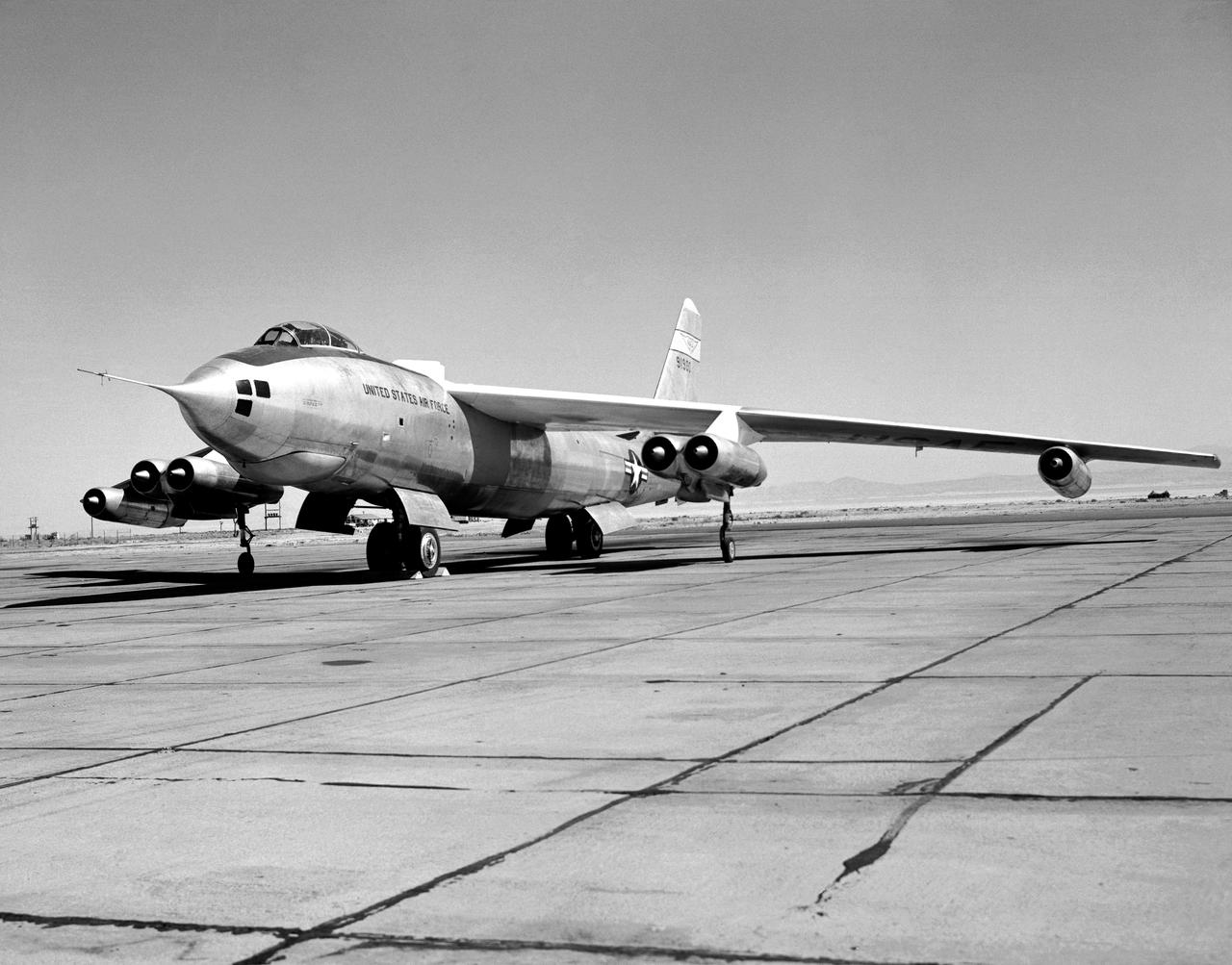
B-47A on ramp
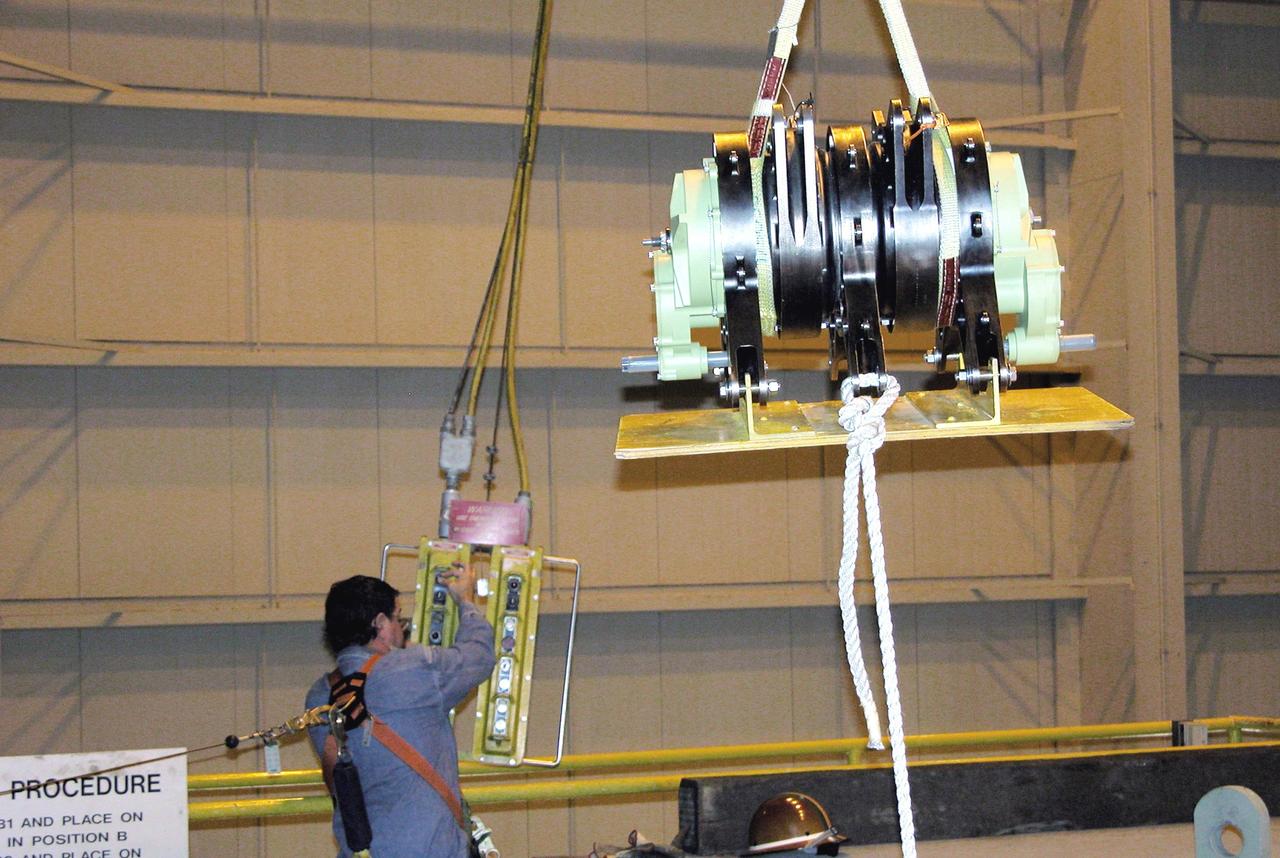
KENNEDY SPACE CENTER, FLA. - One of four rudder speed brake actuators is lifted for transfer to a pallet where it will be X-rayed. The actuators, to be installed on the orbiter Discovery, are being X-rayed at the Radiographic High-Energy X-ray Facility at Cape Canaveral Air Force Station to determine if the gears were installed correctly. Discovery has been assigned to the first Return to Flight mission, STS-114, a logistics flight to the International Space Station.
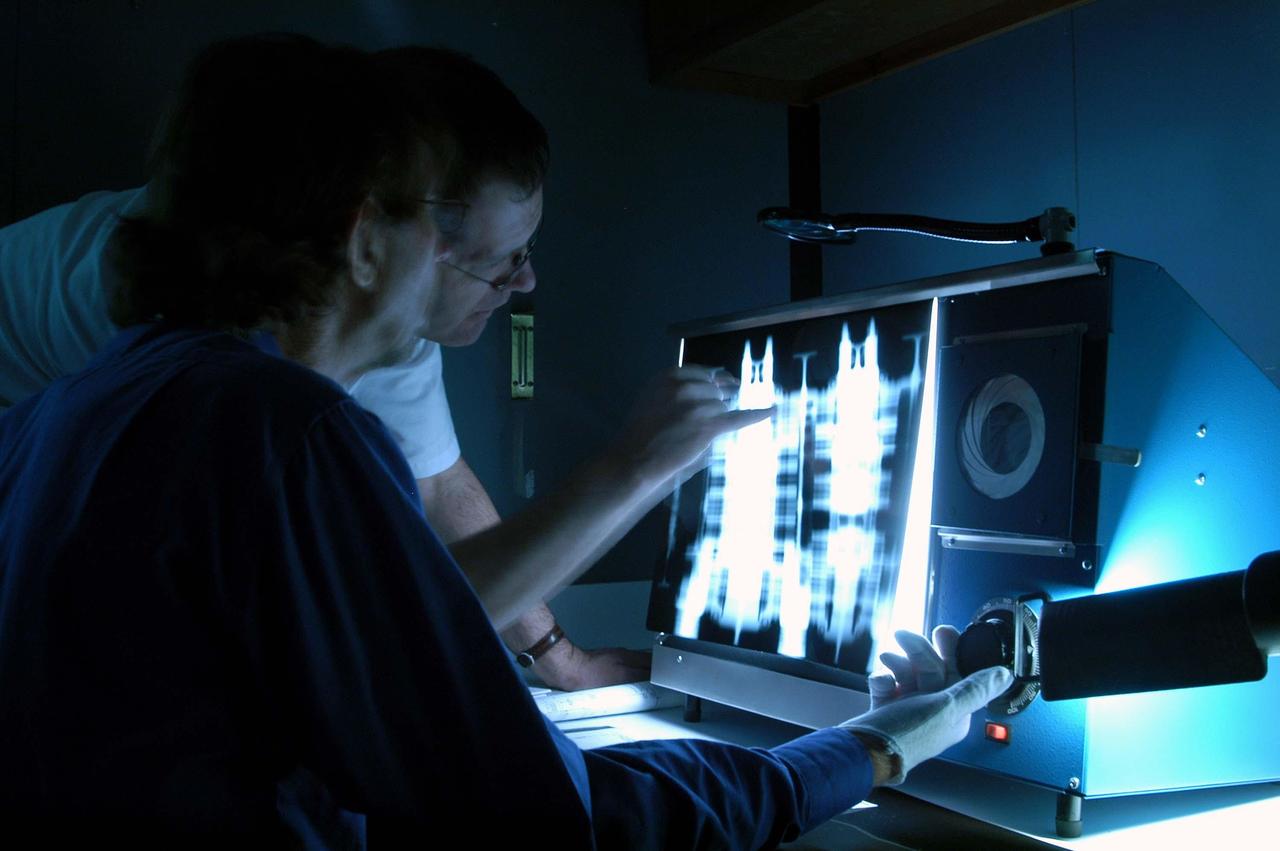
KENNEDY SPACE CENTER, FLA. - - While adjusting the image, technicians at Cape Canaveral Air Force Station’s Radiographic High-Energy X-ray Facility look at X-rays taken of one of the rudder speed brake actuators to be installed on the orbiter Discovery. The four actuators are being X-rayed to determine if the gears were installed correctly. Discovery has been assigned to the first Return to Flight mission, STS-114, a logistics flight to the International Space Station.
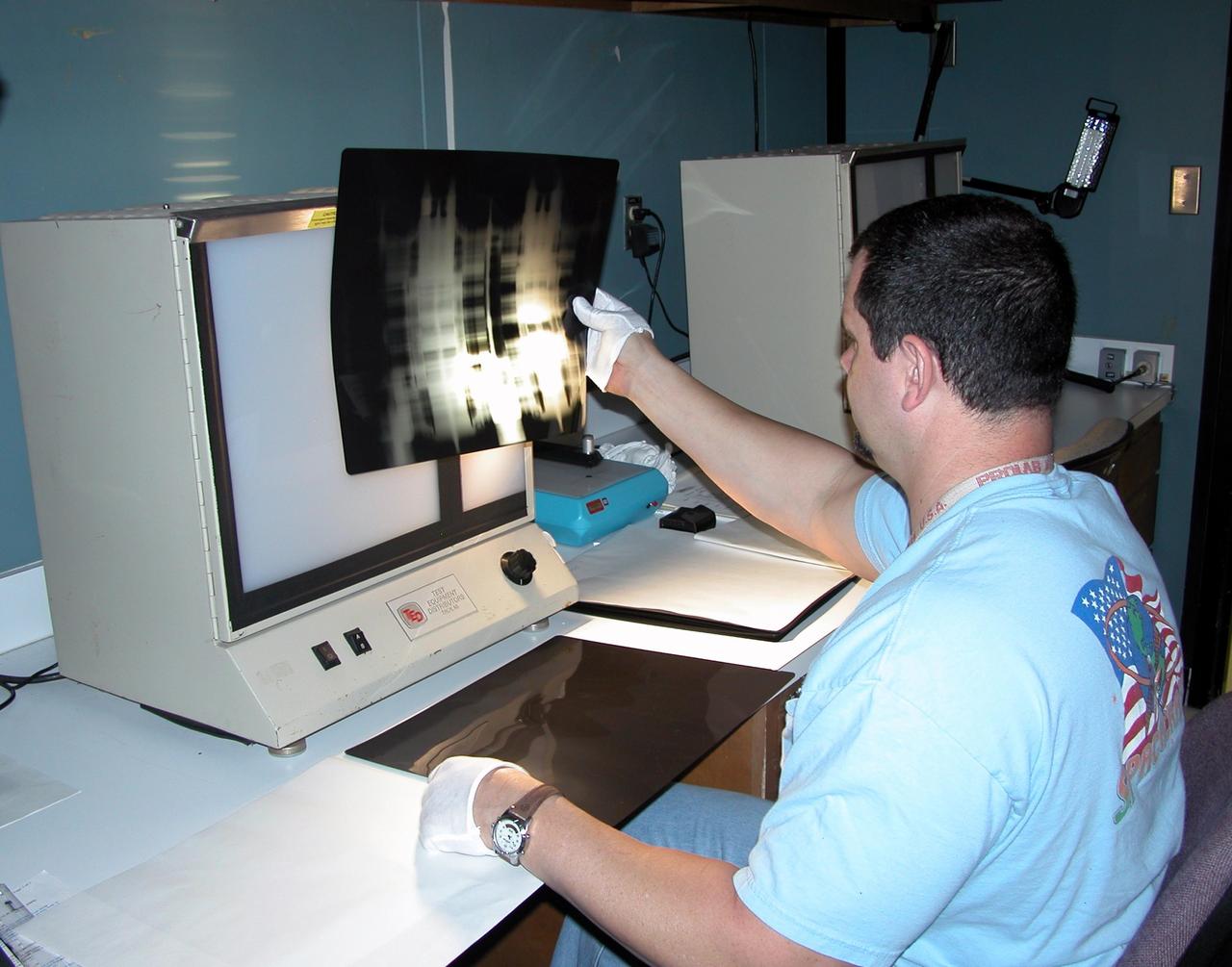
KENNEDY SPACE CENTER, FLA. - A technician at Cape Canaveral Air Force Station’s Radiographic High-Energy X-ray Facility looks at an X-ray of one of the four rudder speed brake actuators to be installed on the orbiter Discovery. The actuators are being X-rayed to determine if the gears were installed correctly. Discovery has been assigned to the first Return to Flight mission, STS-114, a logistics flight to the International Space Station.
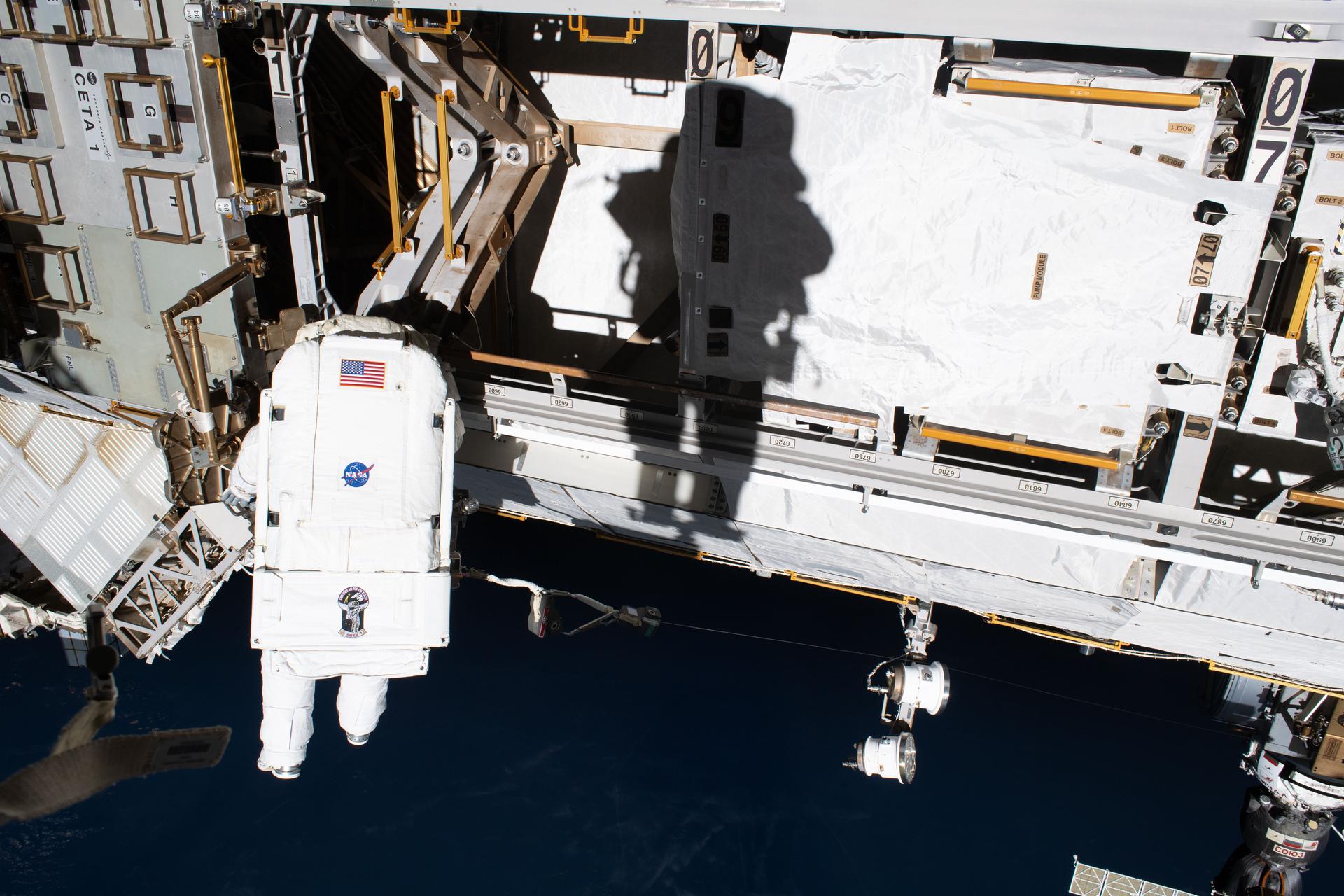
iss075e0068475 (Aug. 25, 2026) --- ESA (European Space Agency) astronaut and Expedition 75 flight engineer Sophie Adenot is pictured tethered to the International Space Station, while the shadow of NASA astronaut and Expedition 75 flight engineer Anil Menon is cast on a truss segment. Menon took this photograph with the sun at his back during a six-hour and 30-minute spacewalk to install a high-speed space-to-ground antenna on the orbital outpost. Credit: NASA/Anil Menon
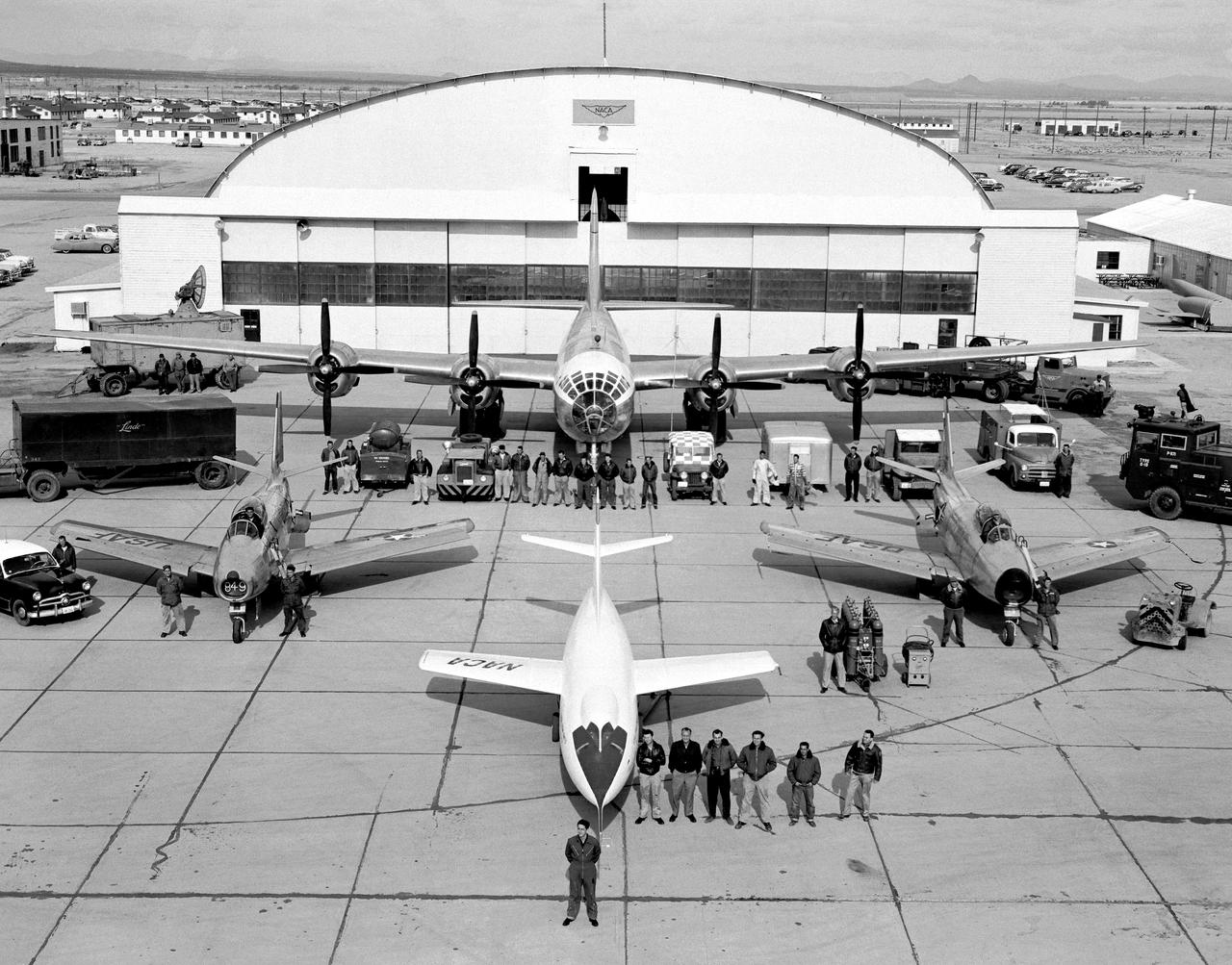
These people and this equipment supported the flight of the NACA D-558-2 Skyrocket at the High-Speed Flight Station at South Base, Edwards AFB. Note the two Sabre chase planes, the P2B-1S launch aircraft, and the profusion of ground support equipment, including communications, tracking, maintenance, and rescue vehicles. Research pilot A. Scott Crossfield stands in front of the Skyrocket.
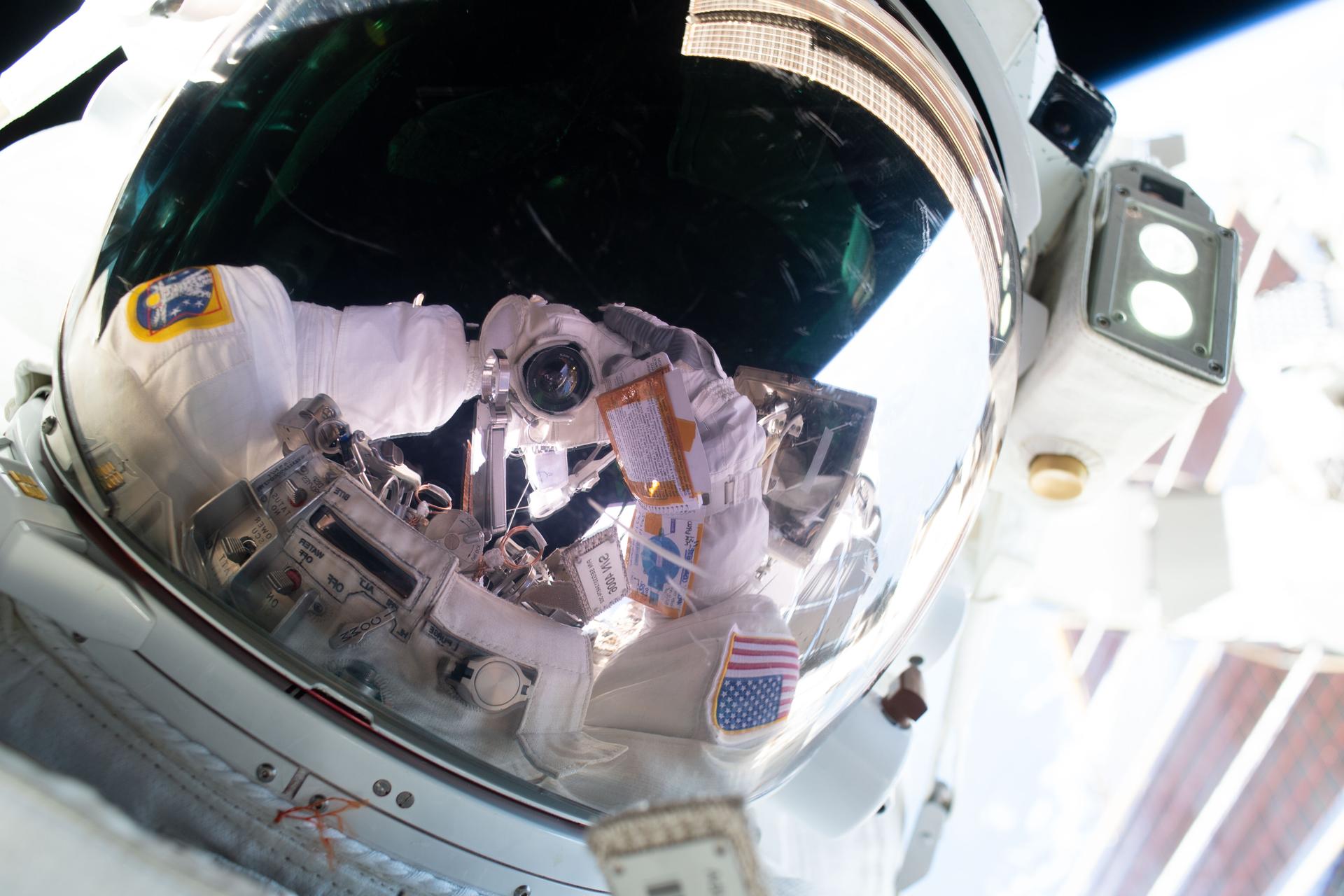
iss075e0068637 (Aug. 25, 2026) --- NASA astronaut and Expedition 75 flight engineer Anil Menon points his camera toward his spacesuit’s helmet visor and takes an out-of-this-world “space selfie.” Menon participated in a six-hour and 30-minute spacewalk with ESA (European Space Agency) astronaut and Expedition 75 flight engineer Sophie Adenot (out of frame) to install a high-speed space-to-ground antenna outside the International Space Station. Credit: NASA/Anil Menon
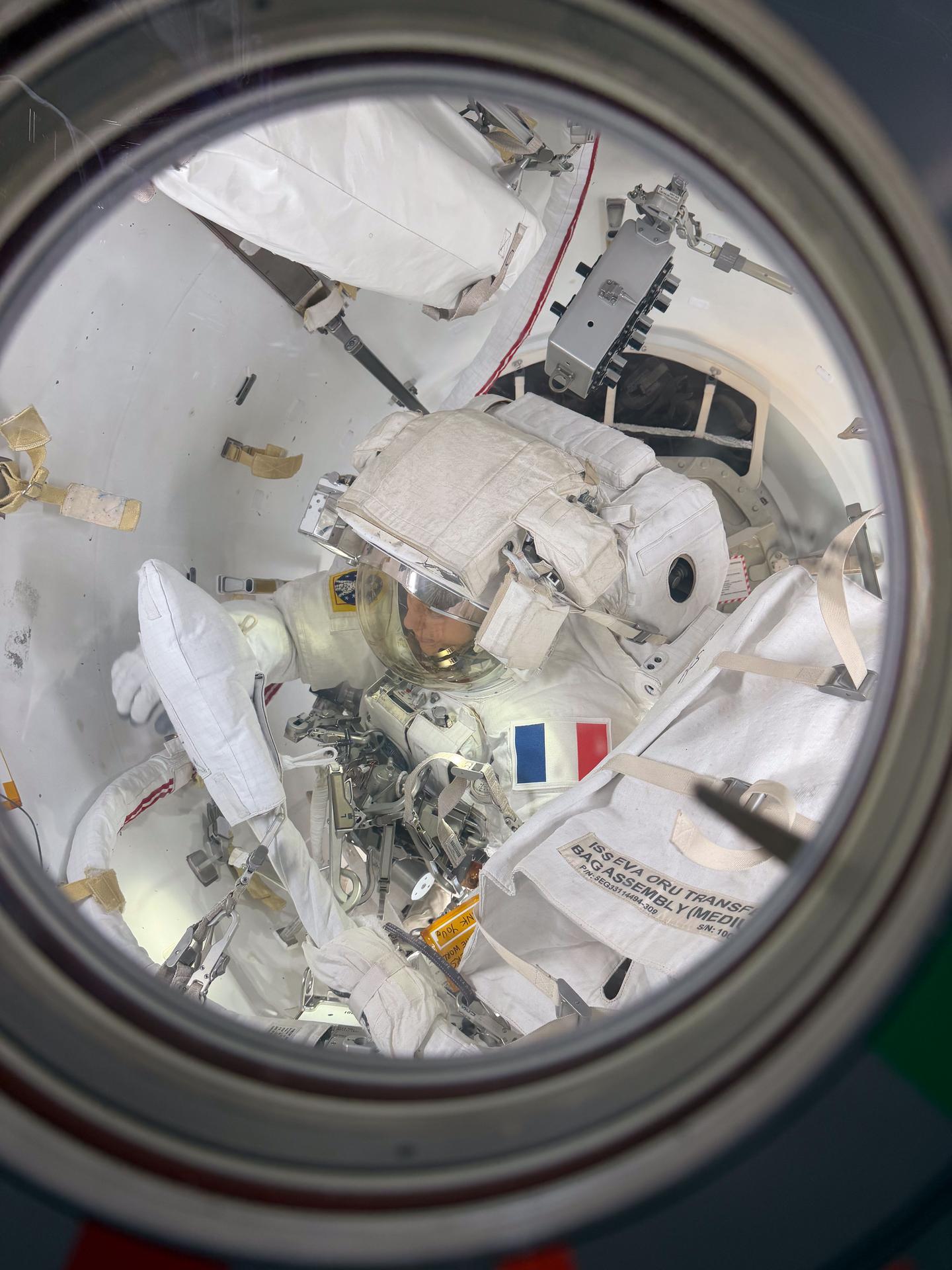
iss075e0047252 (Aug. 18. 2026) --- ESA (European Space Agency) astronaut and Expedition 75 flight engineer Sophie Adenot is pictured inside the International Space Station's Quest airlock as she nears the end of a six‑hour, 23‑minute spacewalk. Adenot and Expedition 75 flight engineer Anil Menon of NASA (out of frame) worked together to disconnect a failed high‑speed antenna and secure it with a long‑duration tie‑down on the orbital outpost’s Z1 truss segment. Credit: NASA/Jack Hathaway
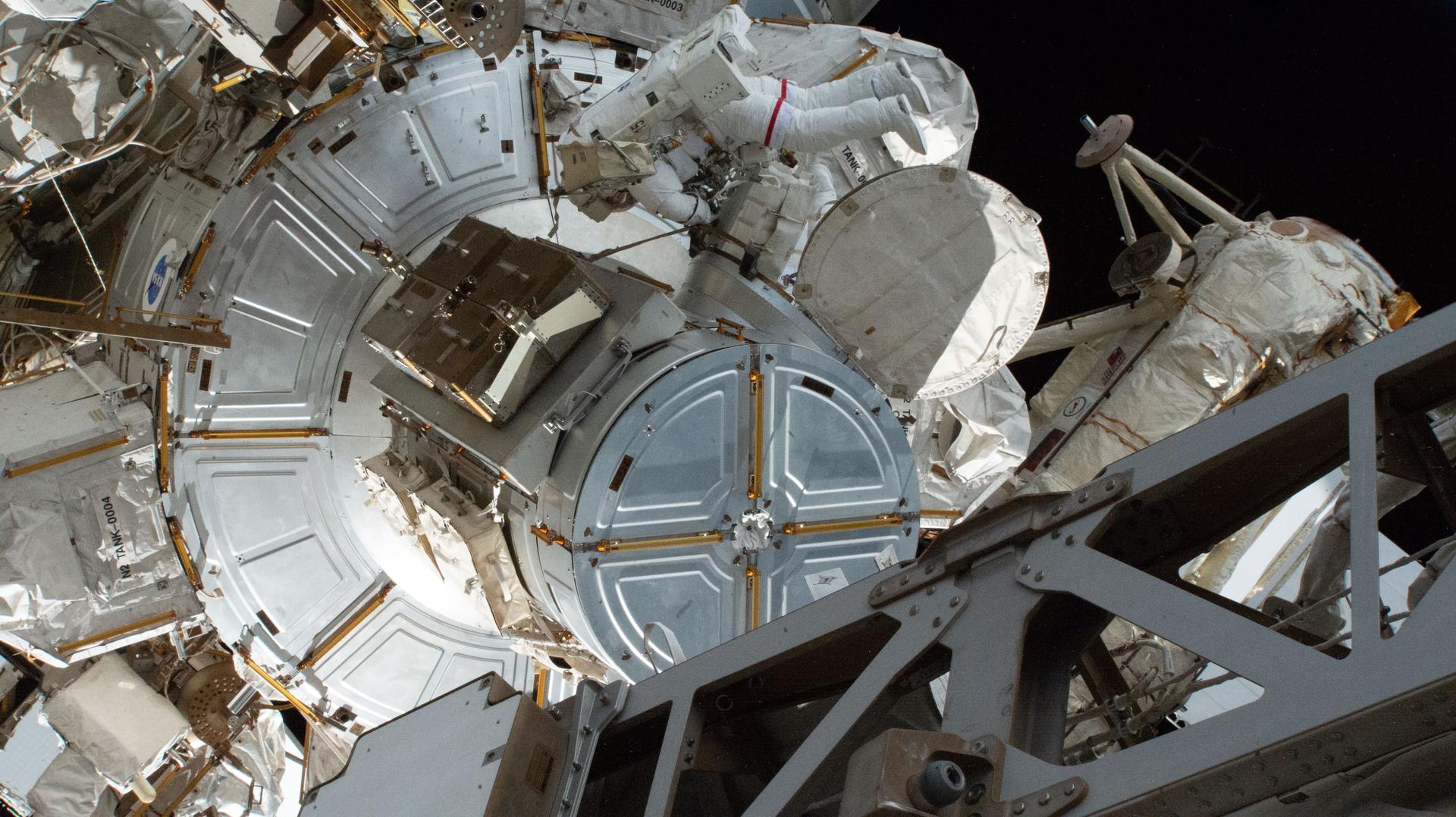
iss075e0041132 (Aug. 18, 2026) --- Expedition 75 flight engineer Anil Menon of NASA exits the International Space Station’s Quest airlock after beginning a six‑hour and 23‑minute spacewalk. Menon and Expedition 75 flight engineer Sophie Adenot of ESA (European Space Agency) disconnected a failed high‑speed antenna and then secured it with a long‑duration tie‑down on the orbital outpost’s Z1 truss segment. A spare antenna will be installed in its place on the Z1 during a future spacewalk. Credit: NASA
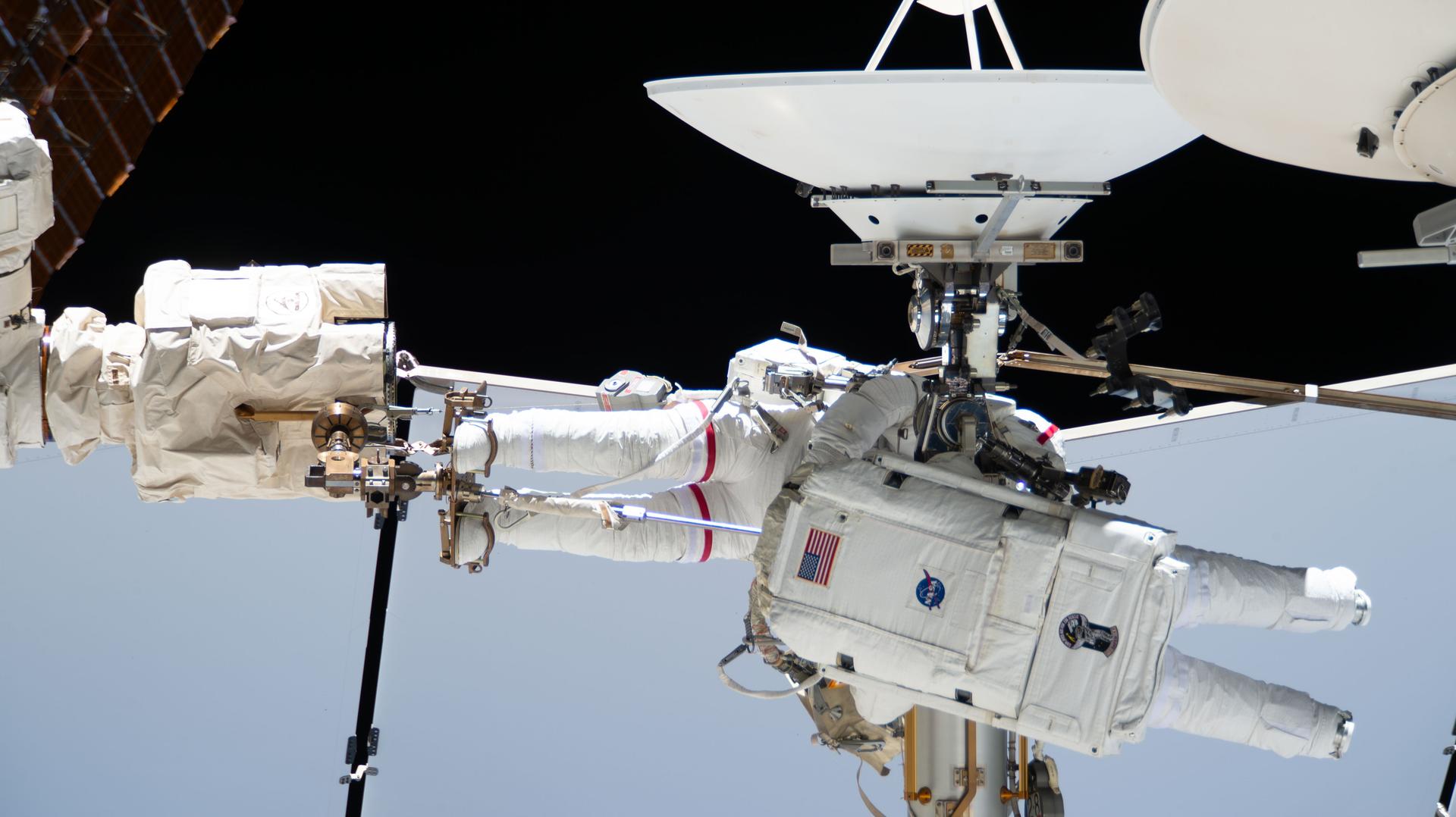
iss075e0042854 (Aug. 18, 2026) --- From left, Expedition 75 flight engineers Anil Menon of NASA (partially obscured and wearing the spacesuit with a red stripe on the legs) and Sophie Adenot of ESA (European Space Agency) work together during a six‑hour and 23‑minute spacewalk outside the International Space Station. The duo disconnected a failed high‑speed antenna and secured it with a long‑duration tie‑down on the orbital outpost’s Z1 truss segment. A spare antenna will be installed on the Z1 truss during a future spacewalk. Credit: NASA
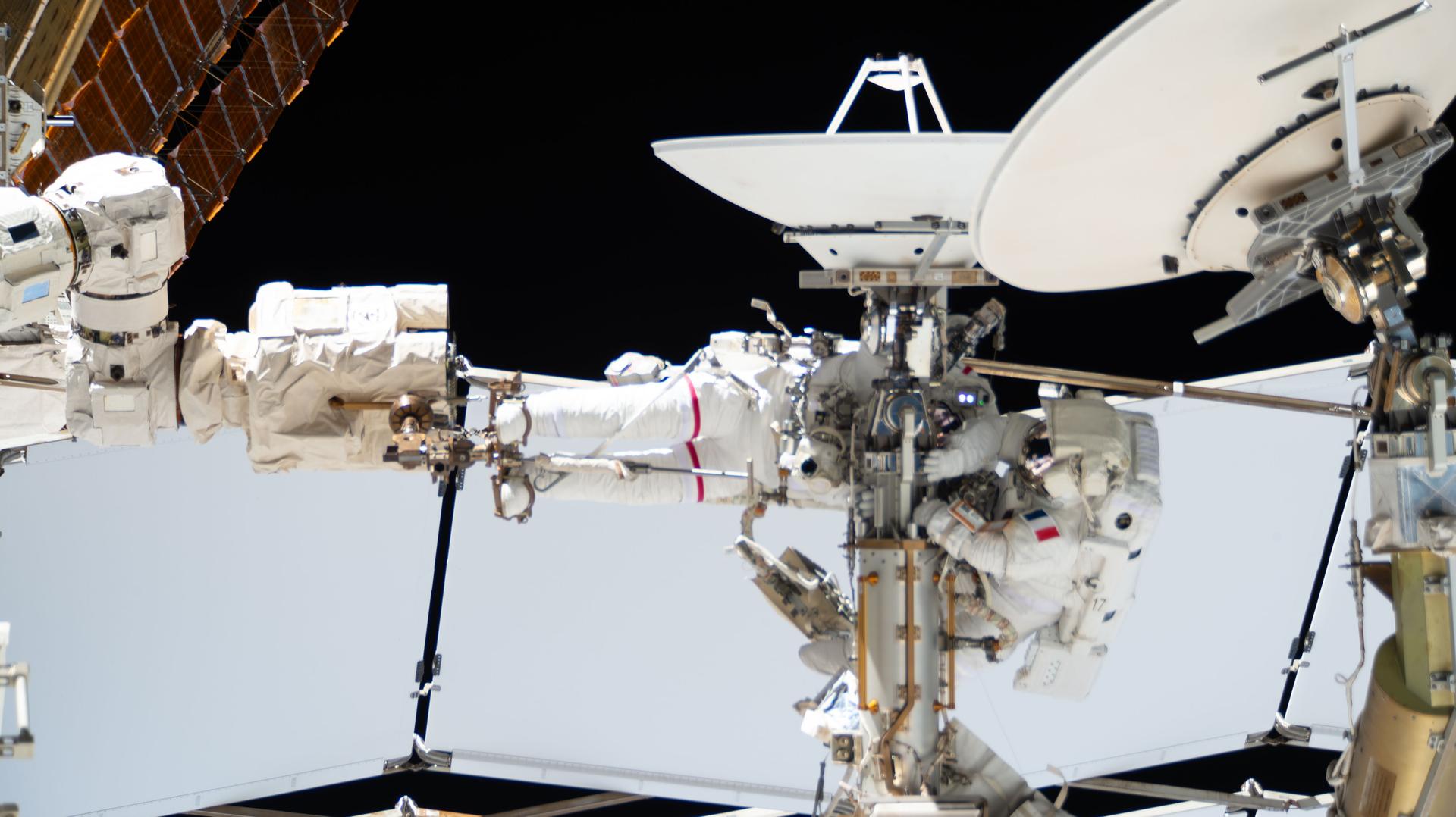
iss075e0042853 (Aug. 18, 2026) --- From left, Expedition 75 flight engineers Anil Menon of NASA (partially obscured and wearing the spacesuit with a red stripe on the legs) and Sophie Adenot of ESA (European Space Agency) work together during a six‑hour and 23‑minute spacewalk outside the International Space Station. The duo disconnected a failed high‑speed antenna and secured it with a long‑duration tie‑down on the orbital outpost’s Z1 truss segment. A spare antenna will be installed on the Z1 truss during a future spacewalk. Credit: NASA
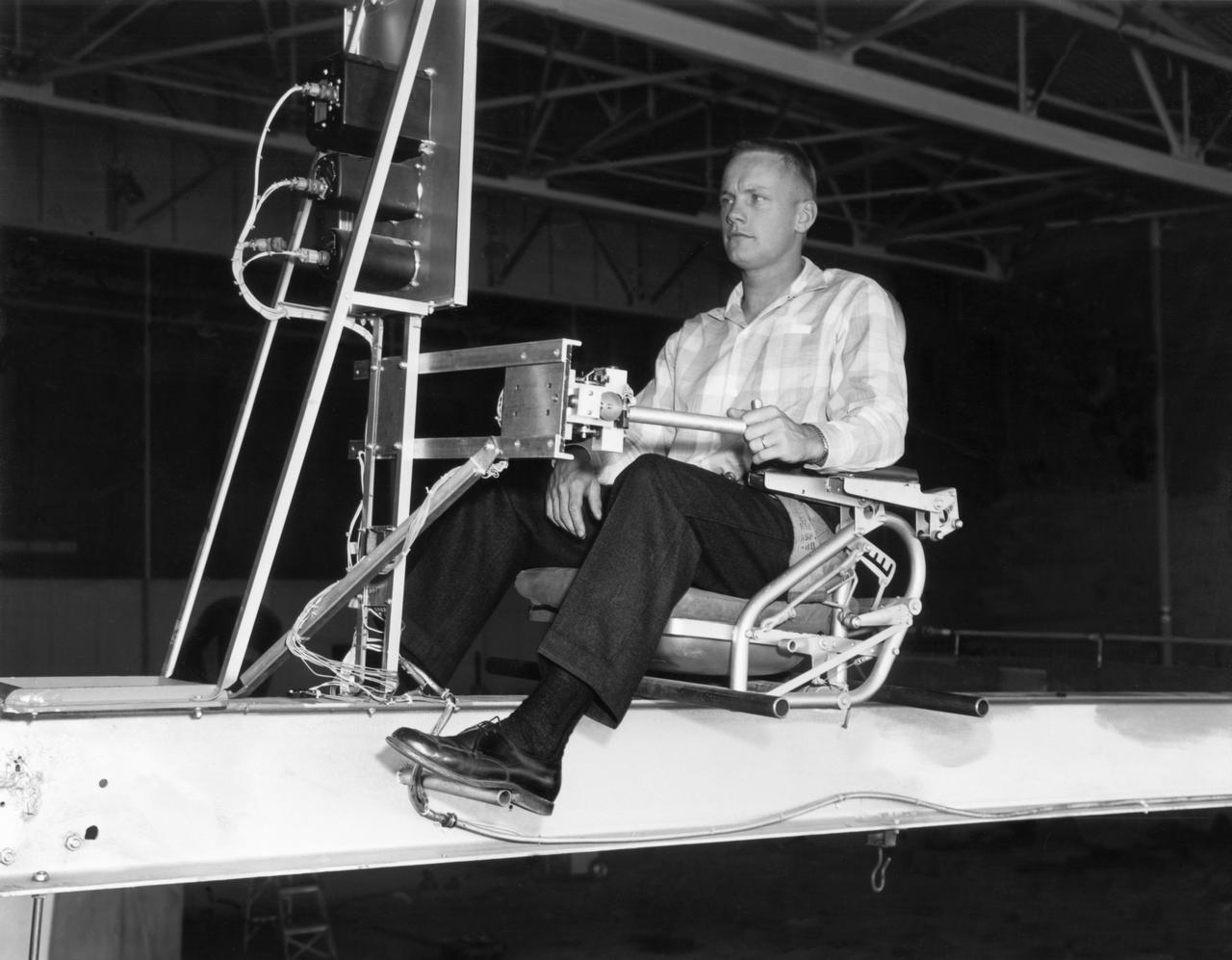
Famed astronaut Neil A. Armstrong, the first man to set foot on the moon during the historic Apollo 11 space mission in July 1969, served for seven years as a research pilot at the NACA-NASA High-Speed Flight Station, now the Dryden Flight Research Center, at Edwards, California, before he entered the space program. Armstrong joined the National Advisory Committee for Aeronautics (NACA) at the Lewis Flight Propulsion Laboratory (later NASA's Lewis Research Center, Cleveland, Ohio, and today the Glenn Research Center) in 1955. Later that year, he transferred to the High-Speed Flight Station at Edwards as an aeronautical research scientist and then as a pilot, a position he held until becoming an astronaut in 1962. He was one of nine NASA astronauts in the second class to be chosen. As a research pilot Armstrong served as project pilot on the F-100A and F-100C aircraft, F-101, and the F-104A. He also flew the X-1B, X-5, F-105, F-106, B-47, KC-135, and Paresev. He left Dryden with a total of over 2450 flying hours. He was a member of the USAF-NASA Dyna-Soar Pilot Consultant Group before the Dyna-Soar project was cancelled, and studied X-20 Dyna-Soar approaches and abort maneuvers through use of the F-102A and F5D jet aircraft. Armstrong was actively engaged in both piloting and engineering aspects of the X-15 program from its inception. He completed the first flight in the aircraft equipped with a new flow-direction sensor (ball nose) and the initial flight in an X-15 equipped with a self-adaptive flight control system. He worked closely with designers and engineers in development of the adaptive system, and made seven flights in the rocket plane from December 1960 until July 1962. During those fights he reached a peak altitude of 207,500 feet in the X-15-3, and a speed of 3,989 mph (Mach 5.74) in the X-15-1. Armstrong has a total of 8 days and 14 hours in space, including 2 hours and 48 minutes walking on the Moon. In March 1966 he was commander of the Gemini 8 or
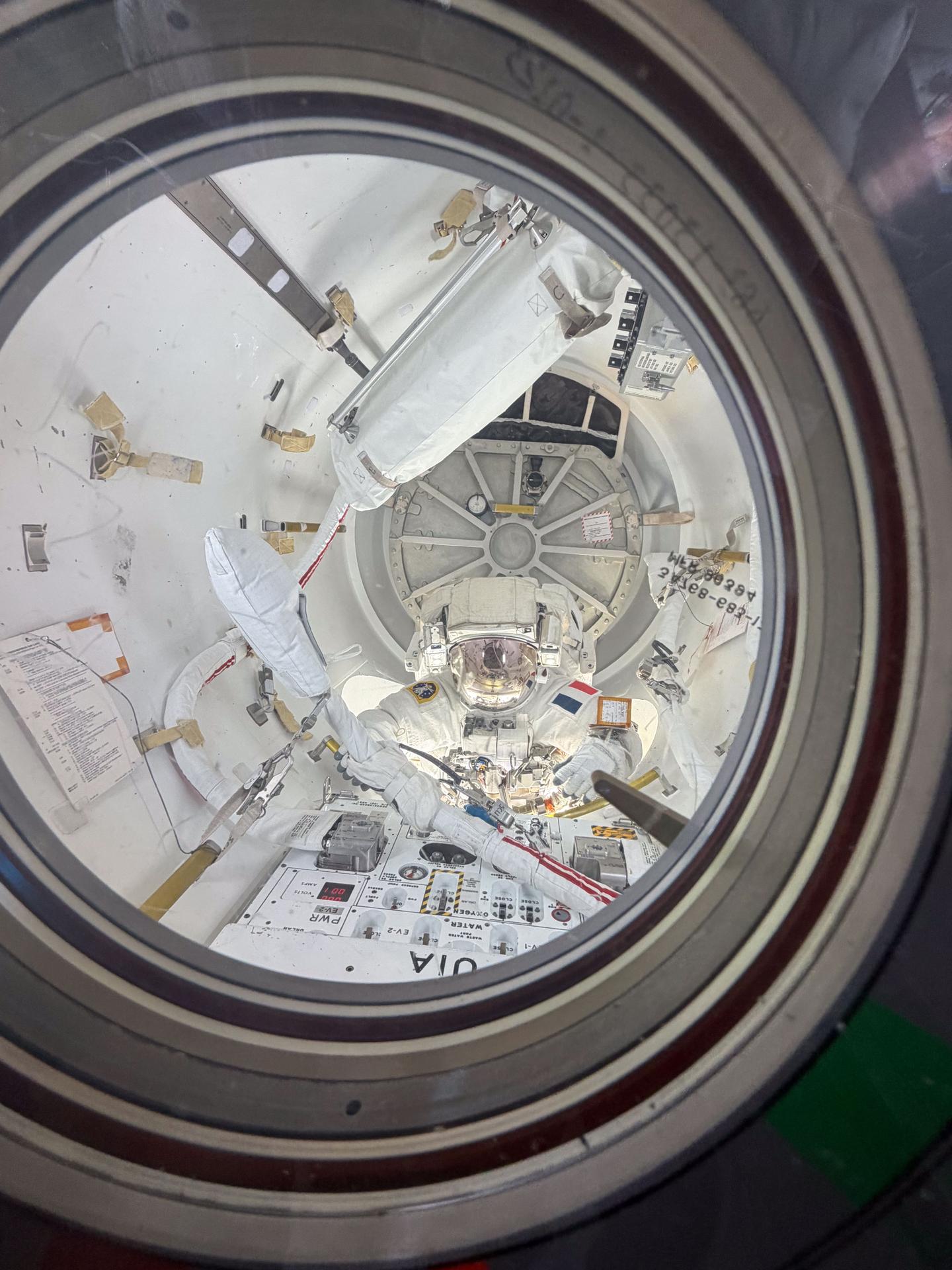
iss075e0047220 (Aug. 18. 2026) --- ESA (European Space Agency) astronaut and Expedition 75 flight engineer Sophie Adenot is pictured inside the International Space Station's Quest airlock with her helmet visor down as she nears the end of a six‑hour, 23‑minute spacewalk. Adenot and Expedition 75 flight engineer Anil Menon of NASA (out of frame) worked together to disconnect a failed high‑speed antenna and secure it with a long‑duration tie‑down on the orbital outpost’s Z1 truss segment. Credit: NASA/Jack Hathaway
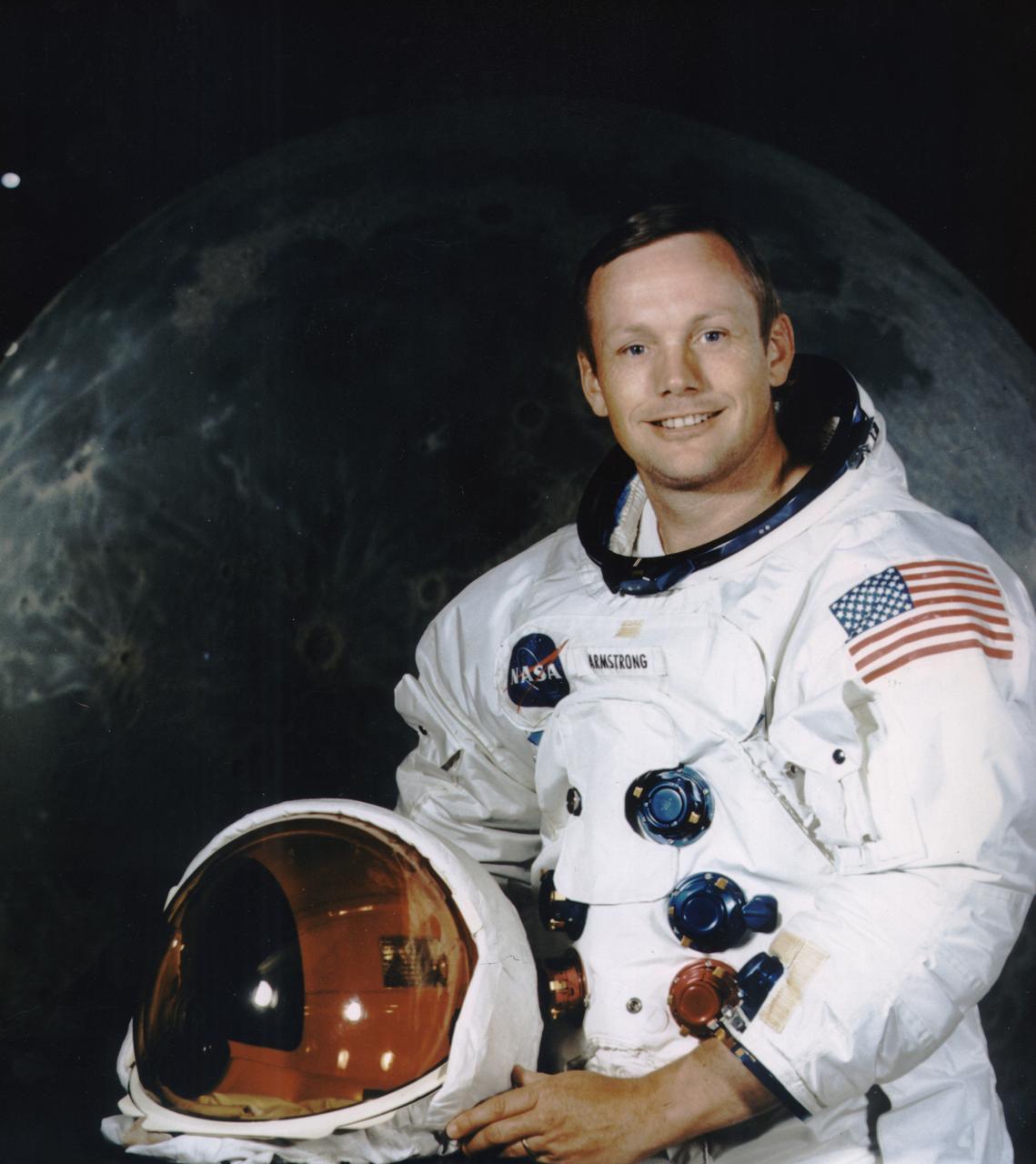
Neil Armstrong, donned in his space suit, poses for his official Apollo 11 portrait. Armstrong began his flight career as a naval aviator. He flew 78 combat missions during the Korean War. Armstrong joined the NASA predecessor, NACA (National Advisory Committee for Aeronautics), as a research pilot at the Lewis Laboratory in Cleveland and later transferred to the NACA High Speed Flight Station at Edwards AFB, California. He was a project pilot on many pioneering high speed aircraft, including the 4,000 mph X-15. He has flown over 200 different models of aircraft, including jets, rockets, helicopters, and gliders. In 1962, Armstrong was transferred to astronaut status. He served as command pilot for the Gemini 8 mission, launched March 16, 1966, and performed the first successful docking of two vehicles in space. In 1969, Armstrong was commander of Apollo 11, the first manned lunar landing mission, and gained the distinction of being the first man to land a craft on the Moon and the first man to step on its surface. Armstrong subsequently held the position of Deputy Associate Administrator for Aeronautics, NASA Headquarters Office of Advanced Research and Technology, from 1970 to 1971. He resigned from NASA in 1971.
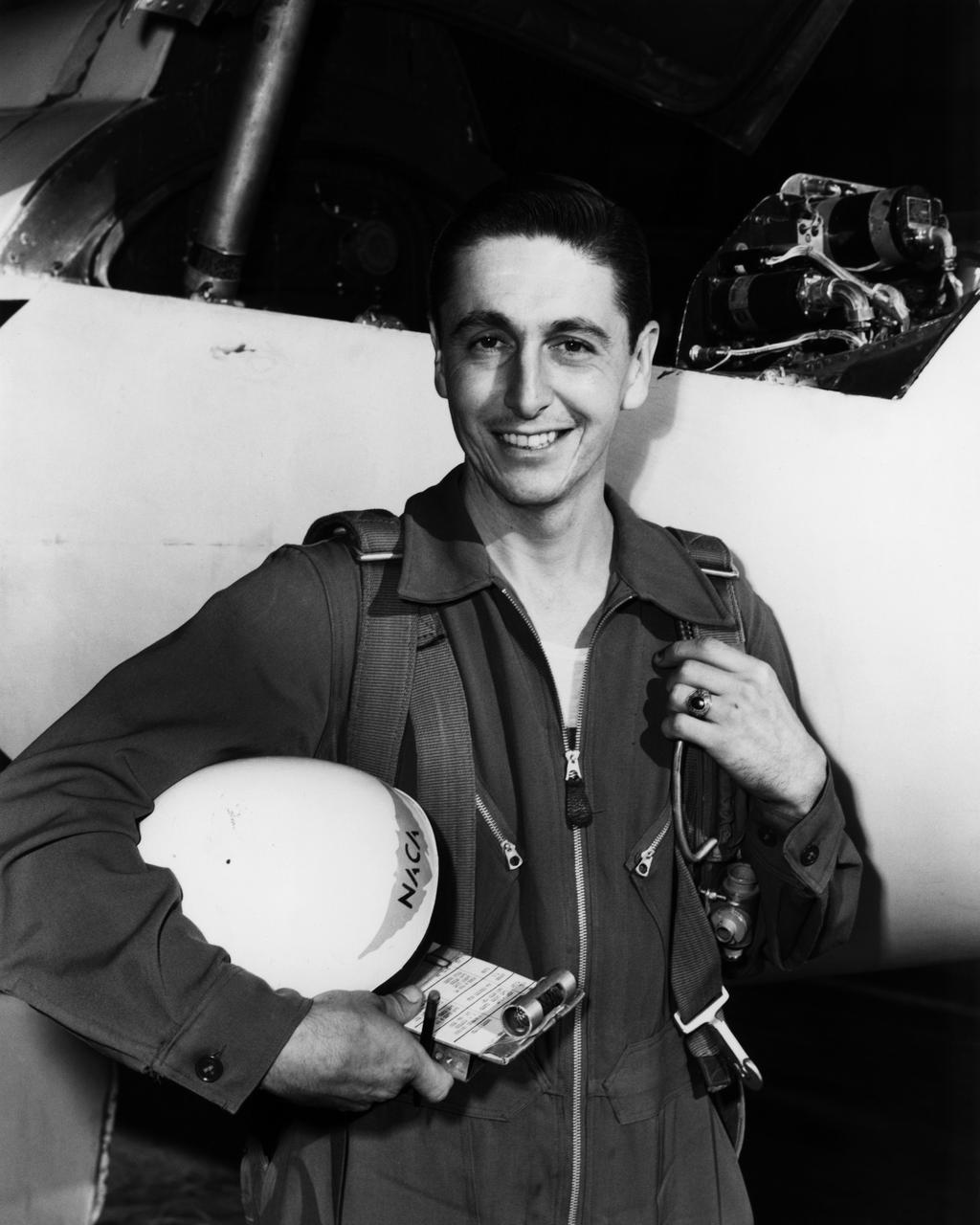
NACA pilot A. Scott Crossfield next to the D-558-2 after first Mach 2 flight.
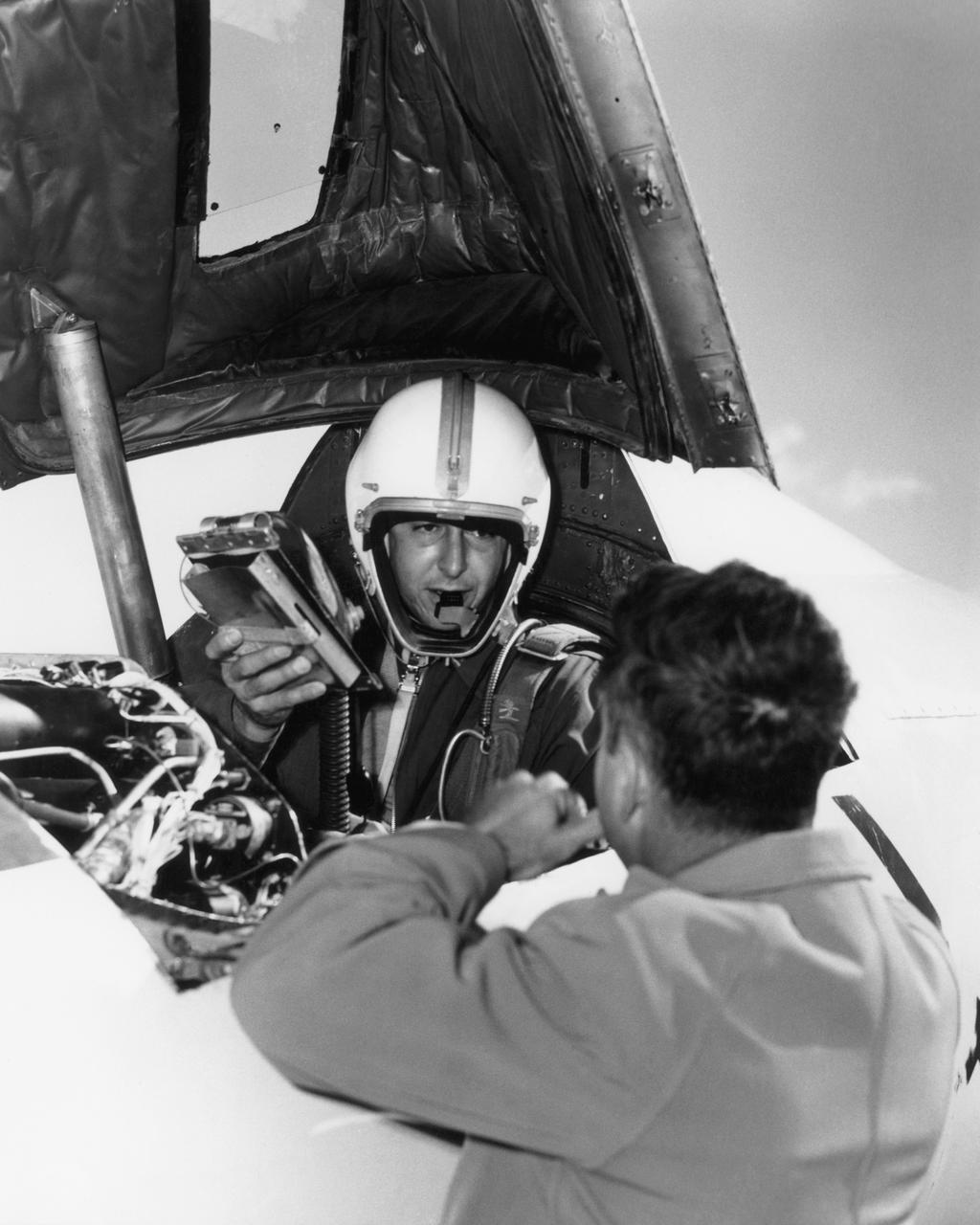
Scott Crossfield in cockpit of the Douglas D-558-2 after first Mach 2 flight.
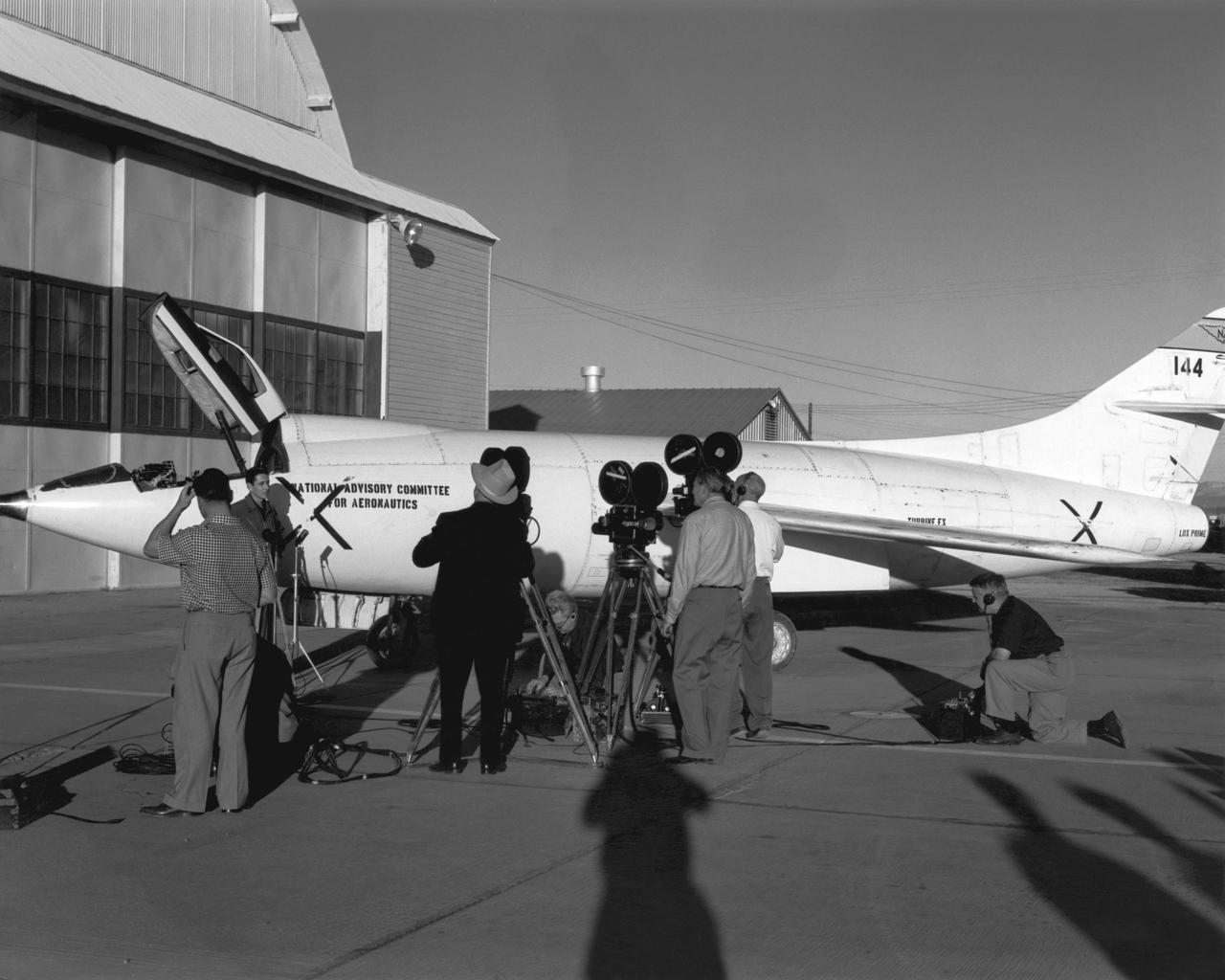
Scott Crossfield talks to newsmen in front of NACA South Base hangar after his first flight to Mach 2 in the Douglas D-558-2.
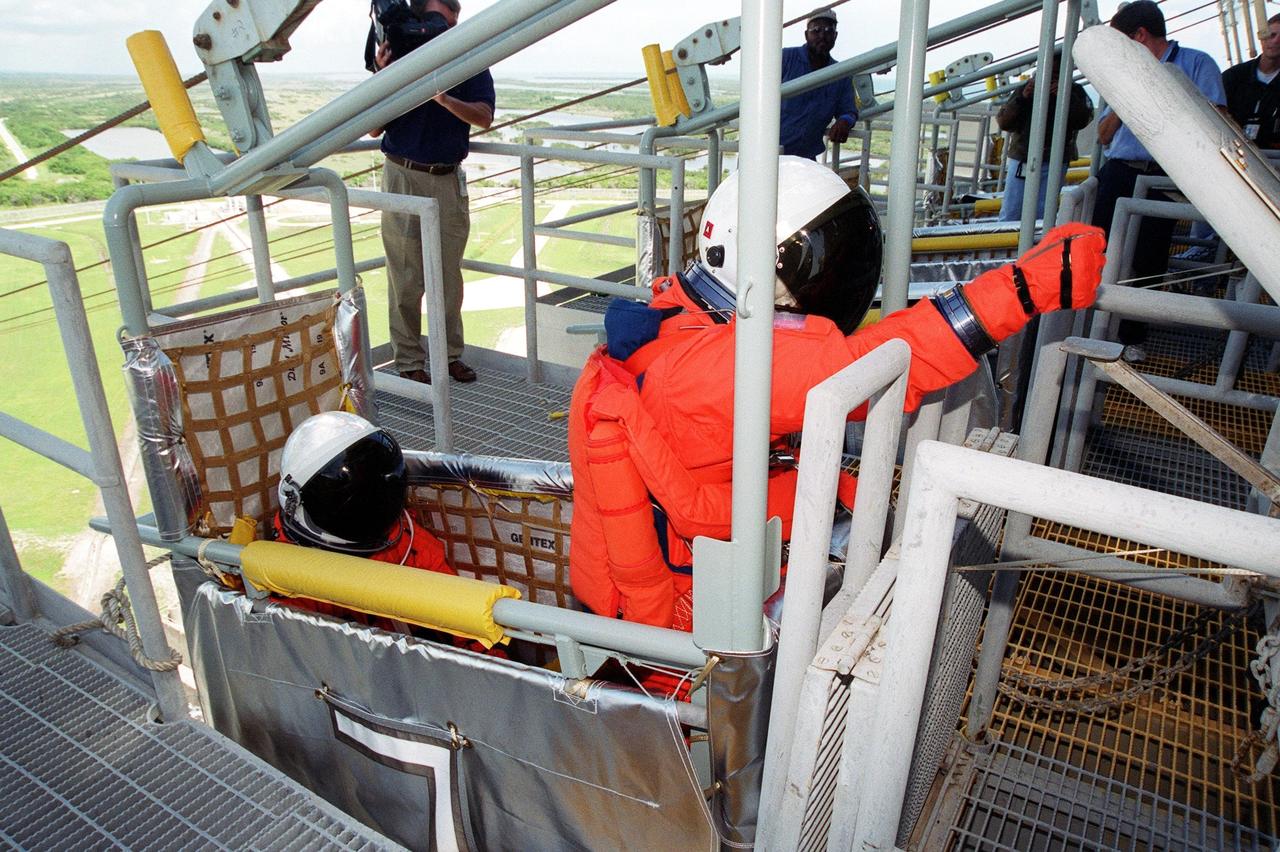
KENNEDY SPACE CENTER, Fla. -- On Launch Pad 39B, STS-104 Commander Steven W. Lindsey (right) reaches for the lever that will send the slidewire basket he is in speeding to the landing field below. Seated behind Lindsey is Pilot Charles O. Hobaugh. They and other crew members are taking part in Terminal Countdown Demonstration Test activities, which include this emergency egress training and a simulated countdown exercise. The launch of Atlantis on mission STS-104 is scheduled July 12. The mission is the 10th flight to the International Space Station and carries the Joint Airlock Module and High Pressure Gas Assembly
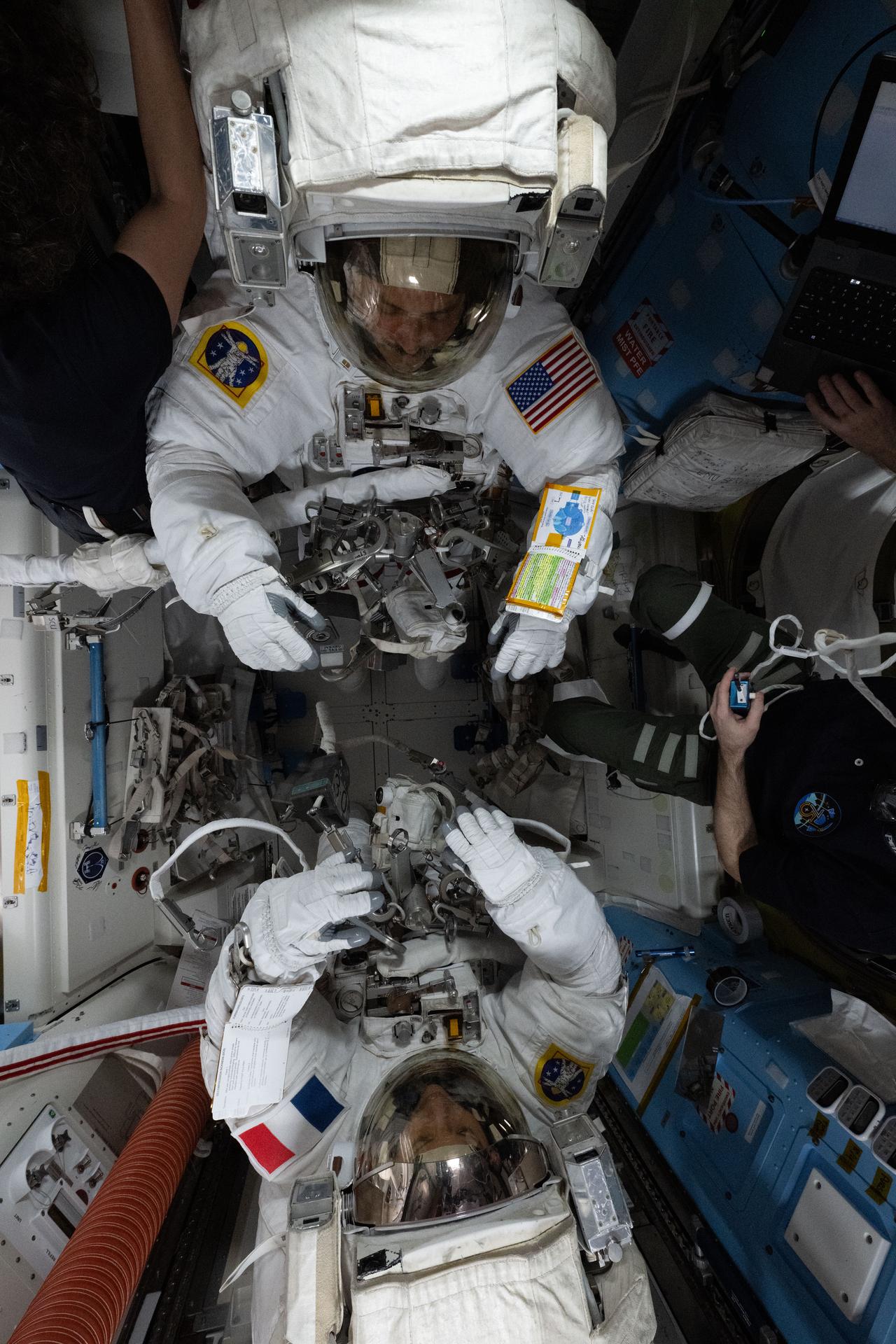
iss075e0042791 (Aug. 18, 2026) --- From top, Expedition 75 flight engineers Anil Menon of NASA and Sophie Adenot of ESA (European Space Agency) are suited up inside the International Space Station’s Quest airlock preparing for a spacewalk. The duo spent six hours and 23 minutes in the vacuum of space disconnecting a failed high‑speed antenna and then securing it with a long‑duration tie‑down on the orbital outpost’s Z1 truss segment. A spare antenna will be installed in its place on the Z1 during a future spacewalk. Credit: NASA/Jessica Meir
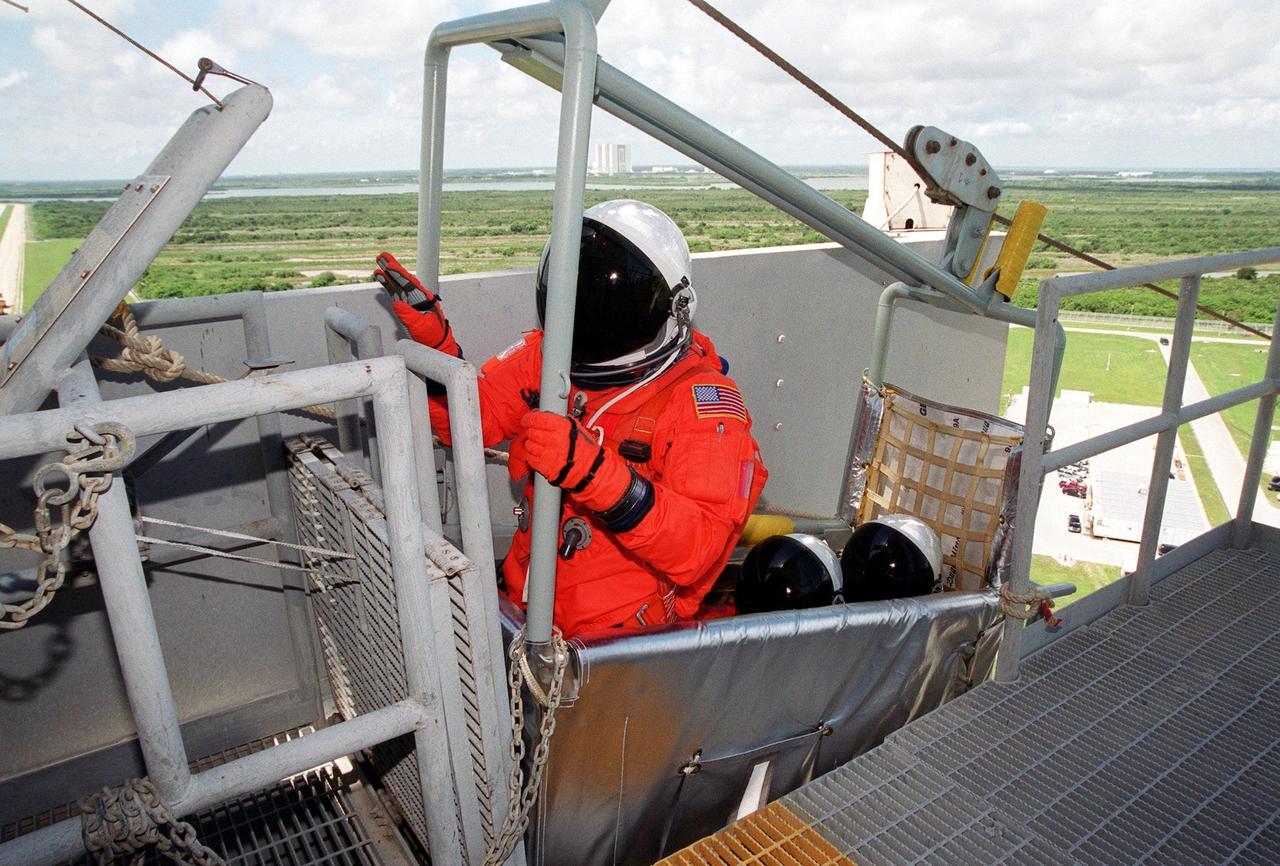
KENNEDY SPACE CENTER, Fla. -- On Launch Pad 39B, STS-104 Mission Specialist James F. Reilly reaches for the lever that will send the slidewire basket he is in speeding to the landing field below. Seated behind Reilly are Mission Specialists Janet Lynn Kavandi and Michael L. Gernhardt. They and other crew members are taking part in Terminal Countdown Demonstration Test activities, which include the emergency egress training and a simulated countdown exercise. The launch of Atlantis on mission STS-104 is scheduled July 12. The mission is the 10th flight to the International Space Station and carries the Joint Airlock Module and High Pressure Gas Assembly
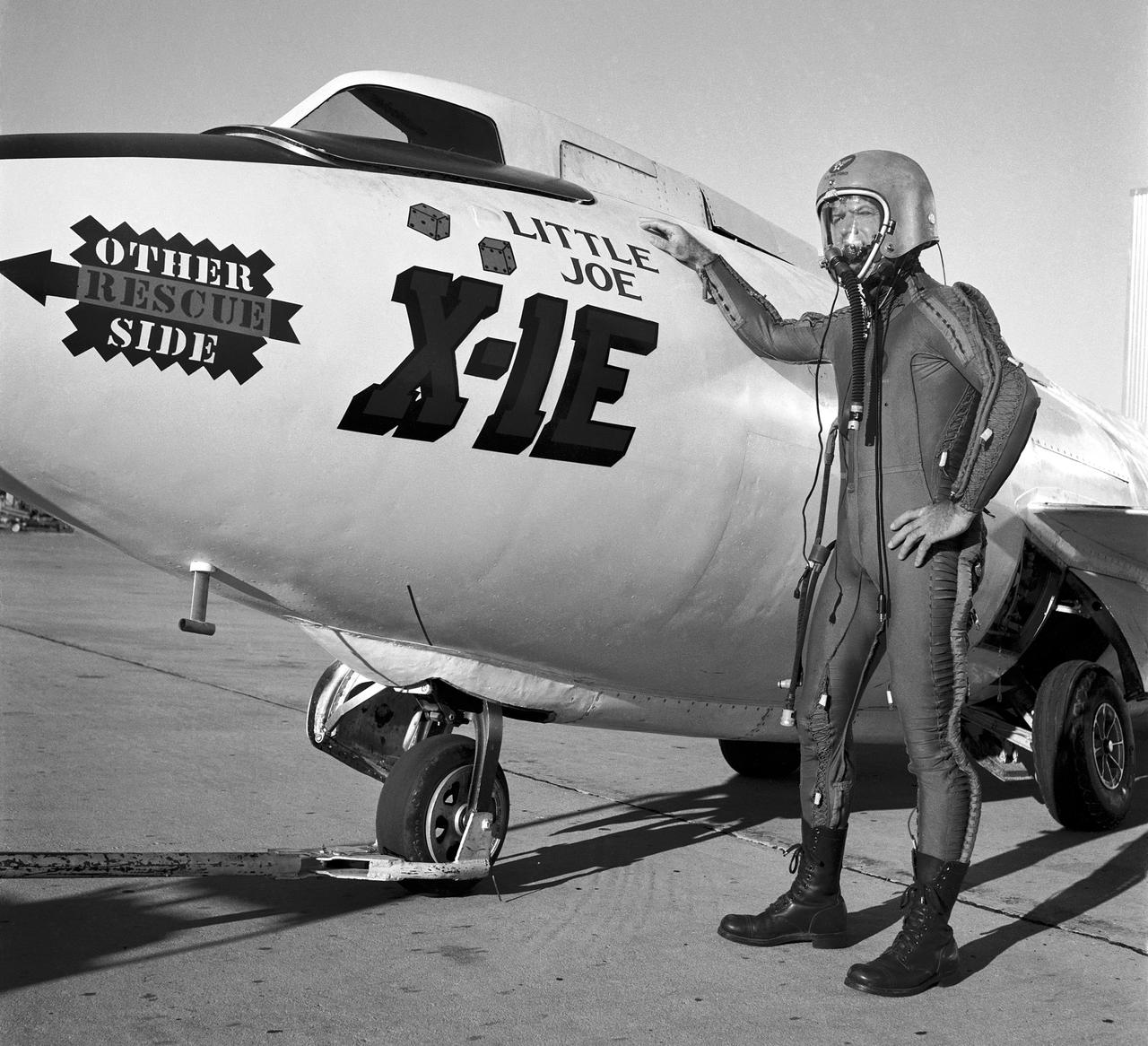
Joe Walker in a pressure suit beside the X-1E at the NASA High-Speed Flight Station, Edwards,California. The dice and "Little Joe" are prominently displayed under the cockpit area. (Little Joe is a dice players slang term for two deuces.) Walker is shown in the photo wearing an early Air Force partial pressure suit. This protected the pilot if cockpit pressure was lost above 50,000 feet. Similar suits were used in such aircraft as B-47s, B-52s, F-104s, U-2s, and the X-2 and D-558-II research aircraft. Five years later, Walker reached 354,200 feet in the X-15. Similar artwork - reading "Little Joe the II" - was applied for the record flight. These cases are two of the few times that research aircraft carried such nose art.
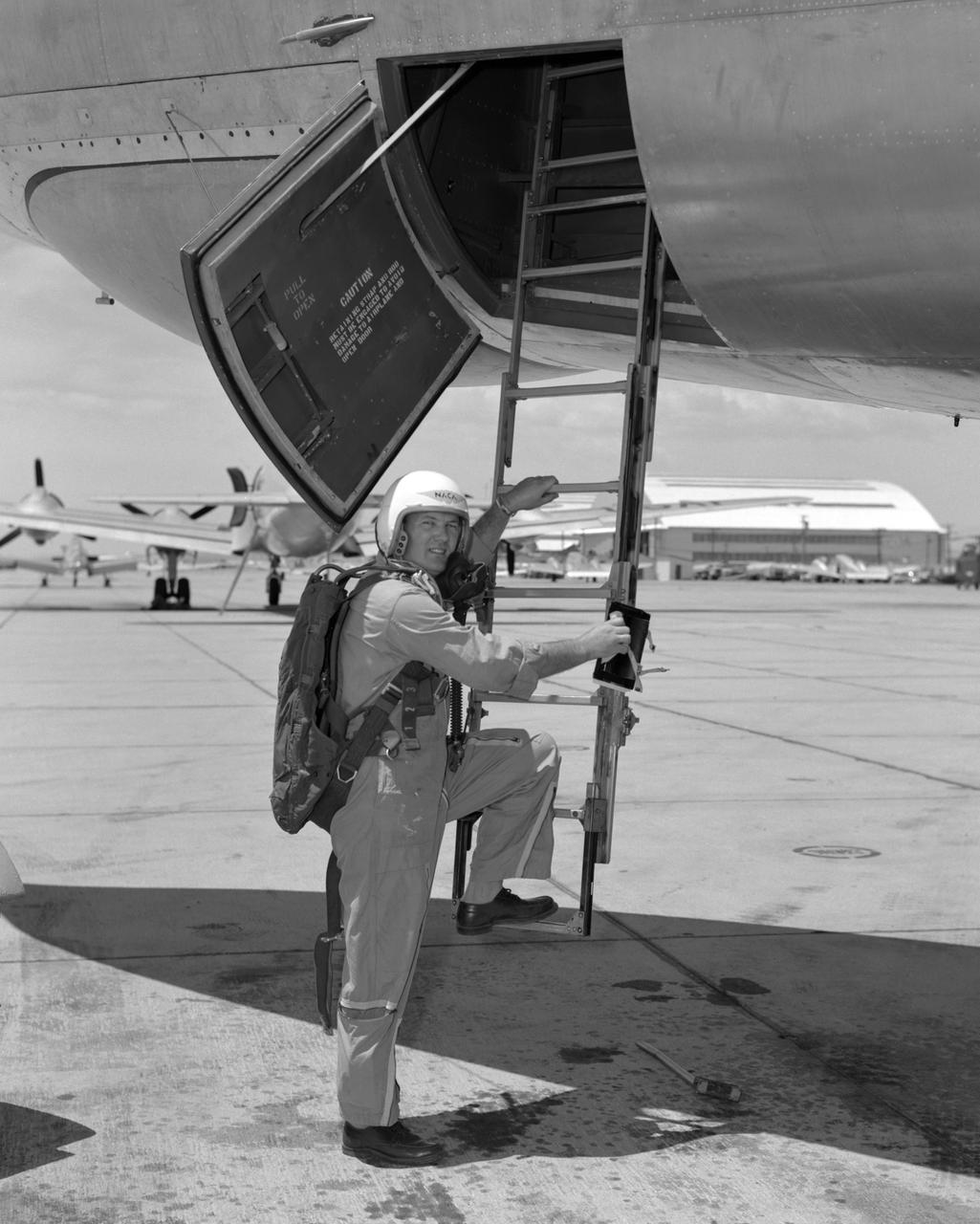
From December 10, 1966, until his retirement on February 27, 1976, Stanley P. Butchart served as Chief (later, Director) of Flight Operations at NASA's Flight Research Center (renamed on March 26, 1976, the Hugh L. Dryden Flight Research Center). Initially, his responsibilities in this position included the Research Pilots Branch, a Maintenance and Manufacturing Branch, and an Operations Engineering Branch, the last of which not only included propulsion and electrical/electronic sections but project engineers for the X-15 and lifting bodies. During his tenure, however, the responsibilities of his directorate came to include not only Flight Test Engineering Support but Flight Systems and Loads laboratories. Before becoming Chief of Flight Operations, Butchart had served since June of 1966 as head of the Research Pilots Branch (Chief Pilot) and then as acting chief of Flight Operations. He had joined the Center (then known as the National Advisory Committee for Aeronautics' High-Speed Flight Research Station) as a research pilot on May 10, 1951. During his career as a research pilot, he flew a great variety of research and air-launch aircraft including the D-558-I, D-558-II, B-29 (plus its Navy version, the P2B), X-4, X-5, KC-135, CV-880, CV-990, B-47, B-52, B-747, F-100A, F-101, F-102, F-104, PA-30 Twin Comanche, JetStar, F-111, R4D, B-720, and B-47. Although previously a single-engine pilot, he became the Center's principal multi-engine pilot during a period of air-launches in which the pilot of the air-launch aircraft (B-29 or P2B) basically directed the operations. It was he who called for the chase planes before each drop, directed the positioning of fire rescue vehicles, and released the experimental aircraft after ensuring that all was ready for the drop. As pilot of the B-29 and P2B, Butchart launched the X-1A once, the X-1B 13 times, the X-1E 22 times, and the D-558-II 102 times. In addition, he towed the M2-F1 lightweight lifting body 14 times behind an R4
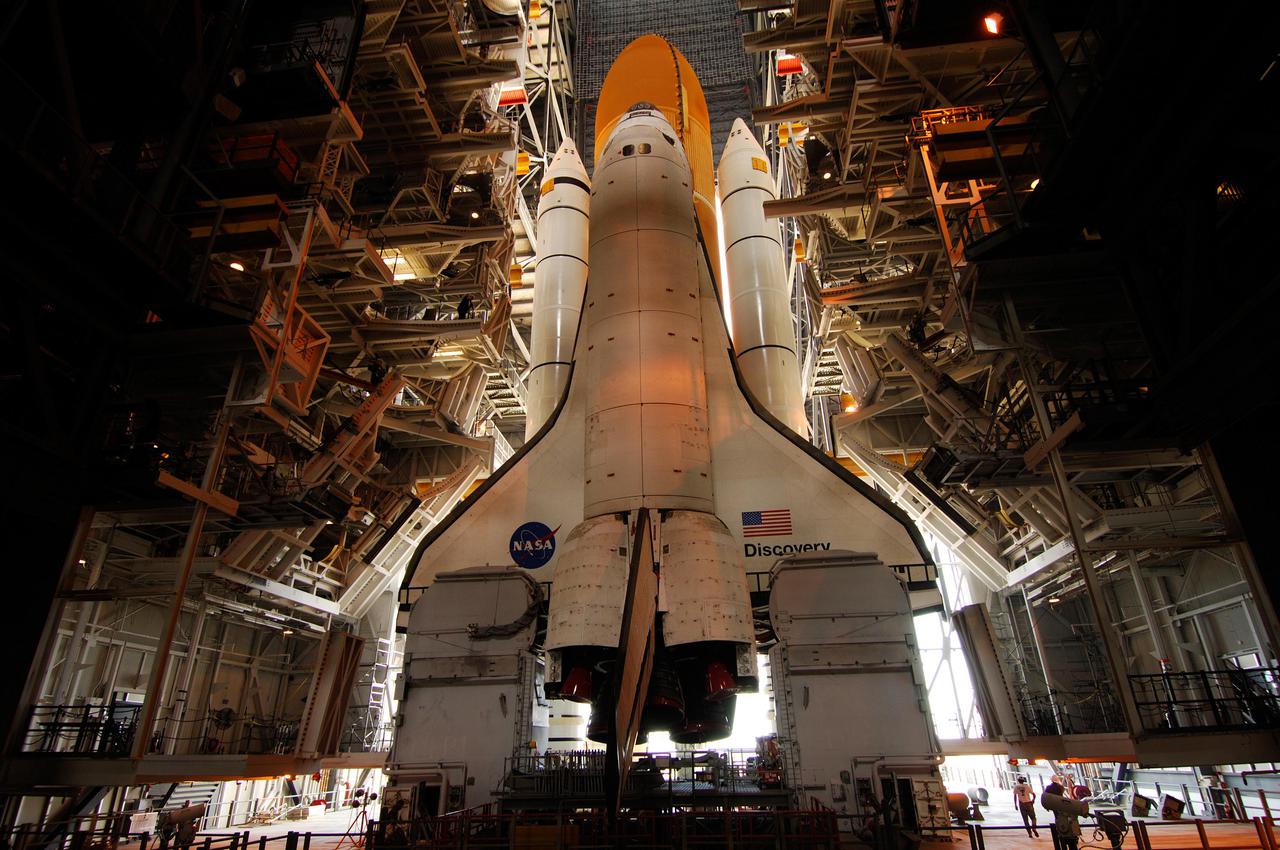
KENNEDY SPACE CENTER, FLA. - Daylight entering through the open doors of the Vehicle Assembly Building (VAB) illuminates the Space Shuttle Discovery in the high bay where it was mated to its External Tank (ET) and twin Solid Rocket Boosters (SRBs). First motion on its long, slow journey to Launch Pad 39B was at 2:04 p.m. EDT. The Space Shuttle rests on a Mobile Launcher Platform, which is moved by a Crawler-Transporter underneath. Loaded with the Space Shuttle, the Crawler can move at a maximum speed of approximately 1 mile an hour. Launch of Discovery on its Return to Flight mission, STS-114, is targeted for May 15 with a launch window that extends to June 3. During its 12-day mission, Discovery’s seven-member crew will test new hardware and techniques to improve Shuttle safety, as well as deliver supplies to the International Space Station. Photo courtesy of Scott Andrews.
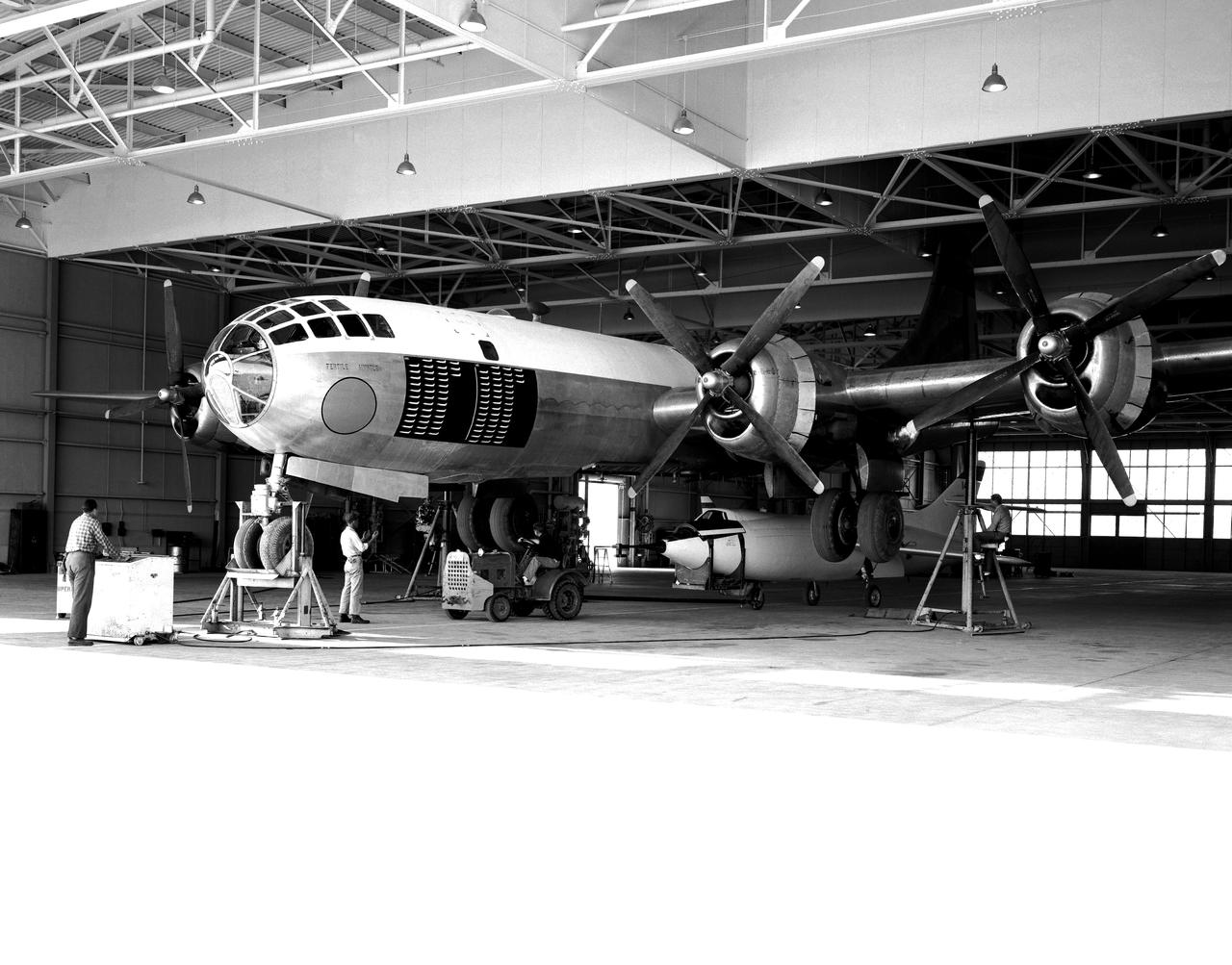
D-558-2 being mounted to P2B-1S launch aircraft in hangar.
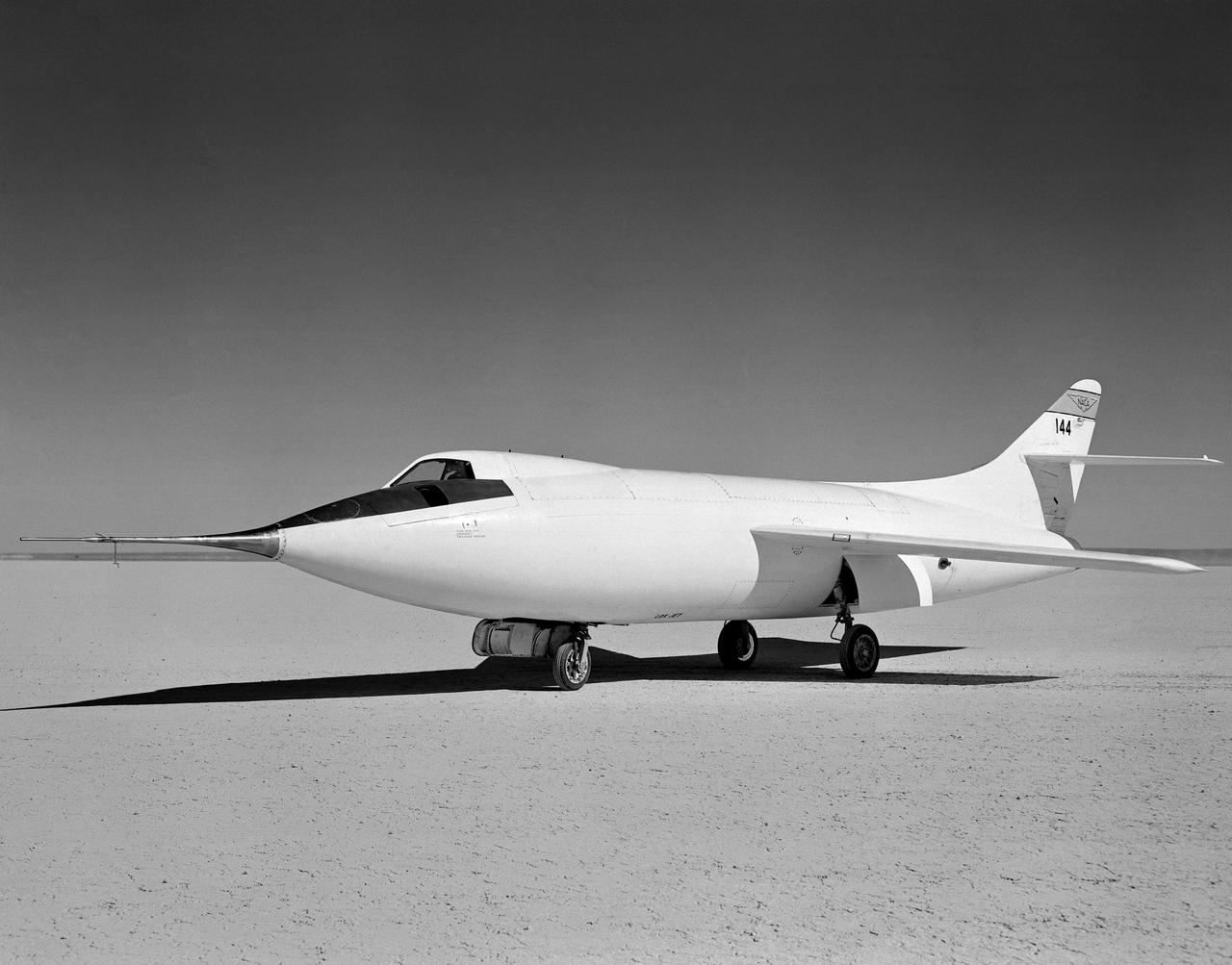
D-558-2 Aircraft on lakebed
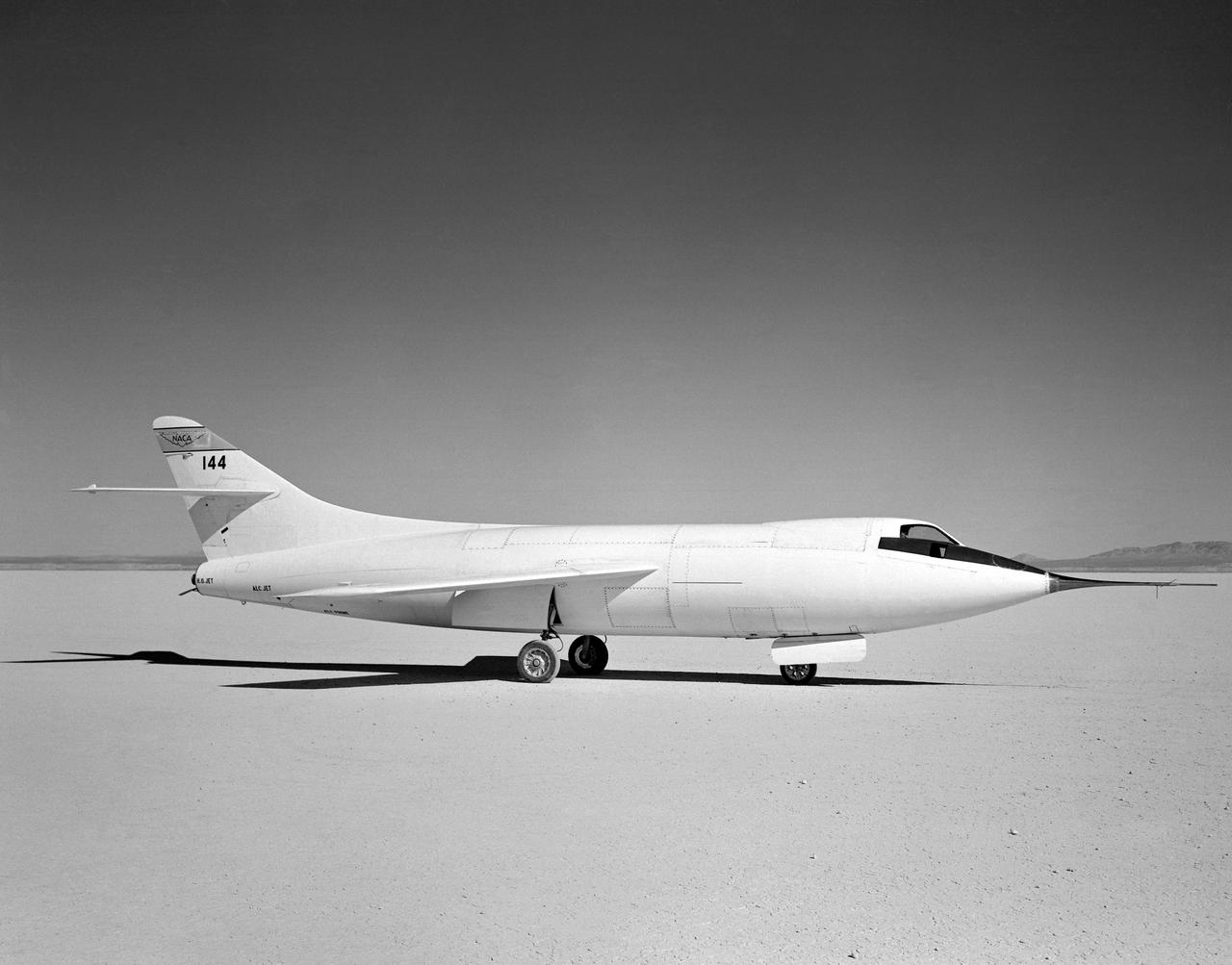
D-558-2 Aircraft on lakebed
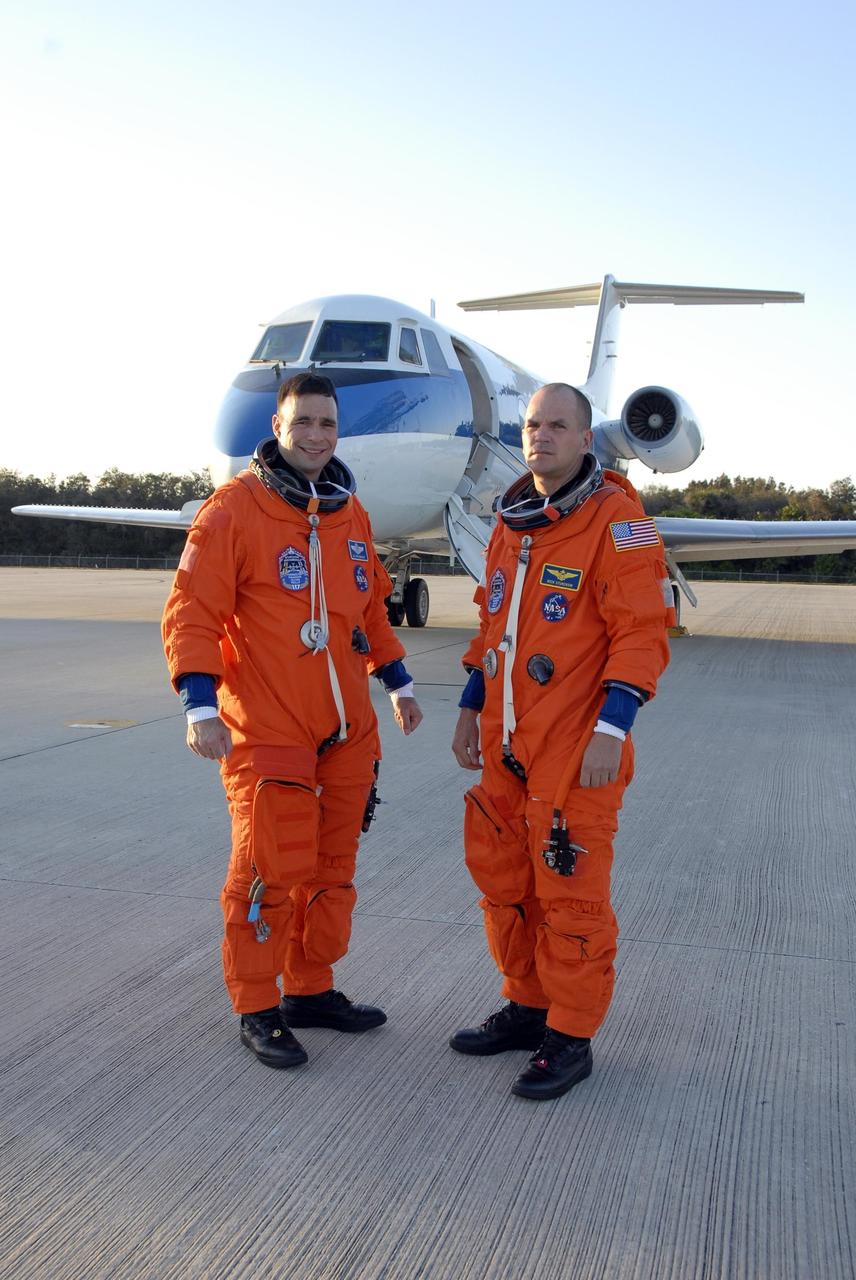
KENNEDY SPACE CENTER, FLA. -- Mission STS-117 Commander Rick Sturckow (left) and Pilot Lee Archambault, dressed in their launch suits, arrive at the Shuttle Landing Facility to begin practice flights on the shuttle training aircraft (STA) during Terminal Countdown Demonstration Test (TCDT) activities. The STA is a Grumman American Aviation-built Gulf Stream II jet that was modified to simulate an orbiter's cockpit, motion and visual cues, and handling qualities. In flight, the STA duplicates the orbiter's atmospheric descent trajectory from approximately 35,000 feet altitude to landing on a runway. Because the orbiter is unpowered during re-entry and landing, its high-speed glide must be perfectly executed the first time. The mission payload aboard Space Shuttle Atlantis is the S3/S4 integrated truss structure, along with a third set of solar arrays and batteries. The crew of six astronauts will install the truss to continue assembly of the International Space Station. STS-117 is the 118th space shuttle flight and the 21st flight to the station. Photo credit: NASA/Kim Shiflett

KENNEDY SPACE CENTER, FLA. -- Mission STS-117 Commander Rick Sturckow (left) and Pilot Lee Archambault arrive at the Shuttle Landing Facility to begin practice flights on the shuttle training aircraft (STA) during Terminal Countdown Demonstration Test (TCDT) activities. The STA is a Grumman American Aviation-built Gulf Stream II jet that was modified to simulate an orbiter's cockpit, motion and visual cues, and handling qualities. In flight, the STA duplicates the orbiter's atmospheric descent trajectory from approximately 35,000 feet altitude to landing on a runway. Because the orbiter is unpowered during re-entry and landing, its high-speed glide must be perfectly executed the first time. The mission payload aboard Space Shuttle Atlantis is the S3/S4 integrated truss structure, along with a third set of solar arrays and batteries. The crew of six astronauts will install the truss to continue assembly of the International Space Station. STS-117 is the 118th space shuttle flight and the 21st flight to the station. Photo credit: NASA/Kim Shiflett

KENNEDY SPACE CENTER, FLA. -- The shuttle training aircraft (STA) sits on the tarmac at the Shuttle Landing Facility, ready for practice flights by Mission STS-117 Commander Rick Sturckow and Pilot Lee Archambault. The STA is a Grumman American Aviation-built Gulf Stream II jet that was modified to simulate an orbiter's cockpit, motion and visual cues, and handling qualities. In flight, the STA duplicates the orbiter's atmospheric descent trajectory from approximately 35,000 feet altitude to landing on a runway. Because the orbiter is unpowered during re-entry and landing, its high-speed glide must be perfectly executed the first time. The mission payload aboard Space Shuttle Atlantis is the S3/S4 integrated truss structure, along with a third set of solar arrays and batteries. The crew of six astronauts will install the truss to continue assembly of the International Space Station. STS-117 is the 118th space shuttle flight and the 21st flight to the station. Photo credit: NASA/Kim Shiflett
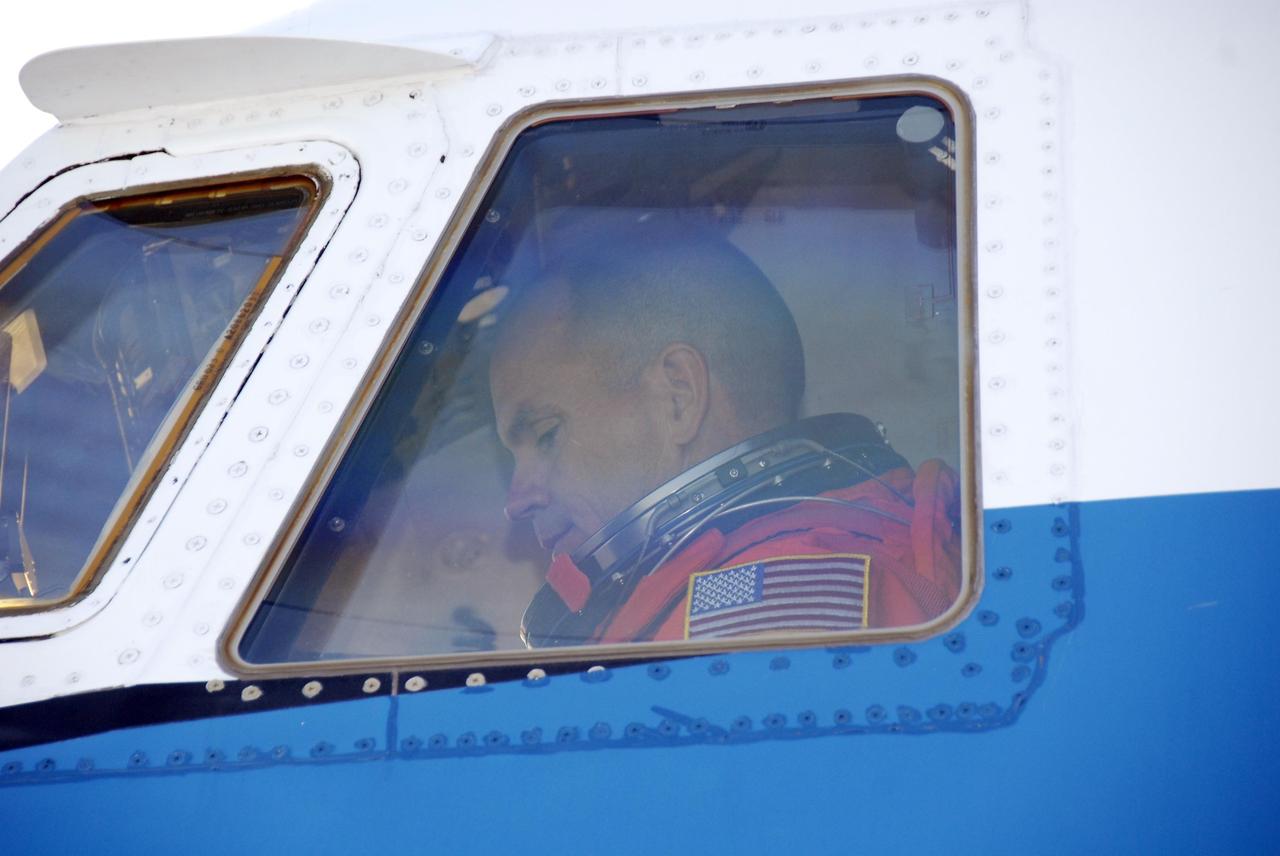
KENNEDY SPACE CENTER, FLA. -- At the Shuttle Landing Facility, Mission STS-117 Commander Rick Sturckow sits in the cockpit of the shuttle training aircraft (STA) ready to begin practice flights as part of the Terminal Countdown Demonstration Test (TCDT) activities. The STA is a Grumman American Aviation-built Gulf Stream II jet that was modified to simulate an orbiter's cockpit, motion and visual cues, and handling qualities. In flight, the STA duplicates the orbiter's atmospheric descent trajectory from approximately 35,000 feet altitude to landing on a runway. Because the orbiter is unpowered during re-entry and landing, its high-speed glide must be perfectly executed the first time. The mission payload aboard Space Shuttle Atlantis is the S3/S4 integrated truss structure, along with a third set of solar arrays and batteries. The crew of six astronauts will install the truss to continue assembly of the International Space Station. STS-117 is the 118th space shuttle flight and the 21st flight to the station. Photo credit: NASA/Kim Shiflett
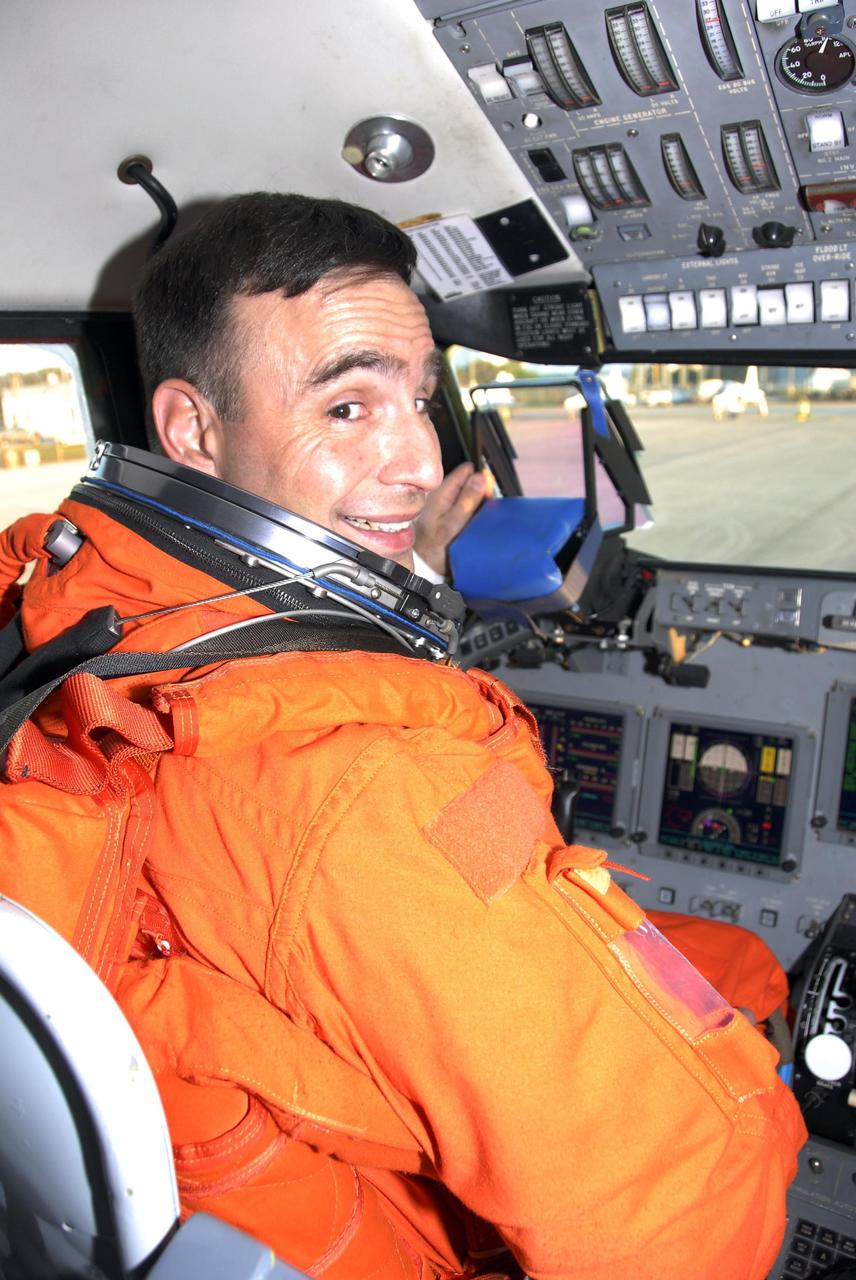
KENNEDY SPACE CENTER, FLA. -- At the Shuttle Landing Facility, Mission STS-117 Pilot Lee Archambault sits in the cockpit of the shuttle training aircraft (STA) ready to begin practice flights as part of the Terminal Countdown Demonstration Test (TCDT) activities. The STA is a Grumman American Aviation-built Gulf Stream II jet that was modified to simulate an orbiter's cockpit, motion and visual cues, and handling qualities. In flight, the STA duplicates the orbiter's atmospheric descent trajectory from approximately 35,000 feet altitude to landing on a runway. Because the orbiter is unpowered during re-entry and landing, its high-speed glide must be perfectly executed the first time. The mission payload aboard Space Shuttle Atlantis is the S3/S4 integrated truss structure, along with a third set of solar arrays and batteries. The crew of six astronauts will install the truss to continue assembly of the International Space Station. STS-117 is the 118th space shuttle flight and the 21st flight to the station. Photo credit: NASA/Kim Shiflett
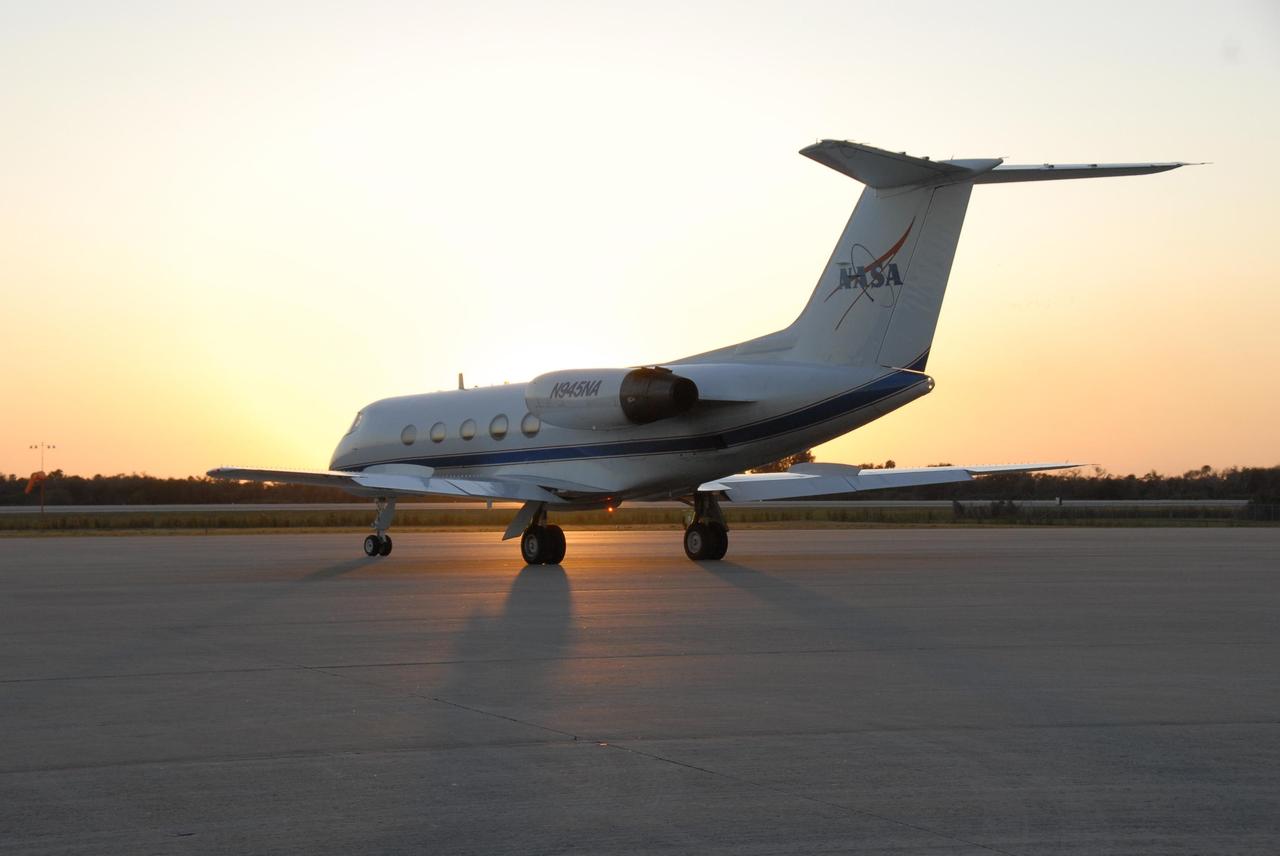
KENNEDY SPACE CENTER, FLA. -- With the sun just peaking above the horizon, the shuttle training aircraft (STA) sits on the tarmac at the Shuttle Landing Facility, ready for practice flights by Mission STS-117 Commander Rick Sturckow and Pilot Lee Archambault. The STA is a Grumman American Aviation-built Gulf Stream II jet that was modified to simulate an orbiter's cockpit, motion and visual cues, and handling qualities. In flight, the STA duplicates the orbiter's atmospheric descent trajectory from approximately 35,000 feet altitude to landing on a runway. Because the orbiter is unpowered during re-entry and landing, its high-speed glide must be perfectly executed the first time. The mission payload aboard Space Shuttle Atlantis is the S3/S4 integrated truss structure, along with a third set of solar arrays and batteries. The crew of six astronauts will install the truss to continue assembly of the International Space Station. STS-117 is the 118th space shuttle flight and the 21st flight to the station. Photo credit: NASA/Kim Shiflett
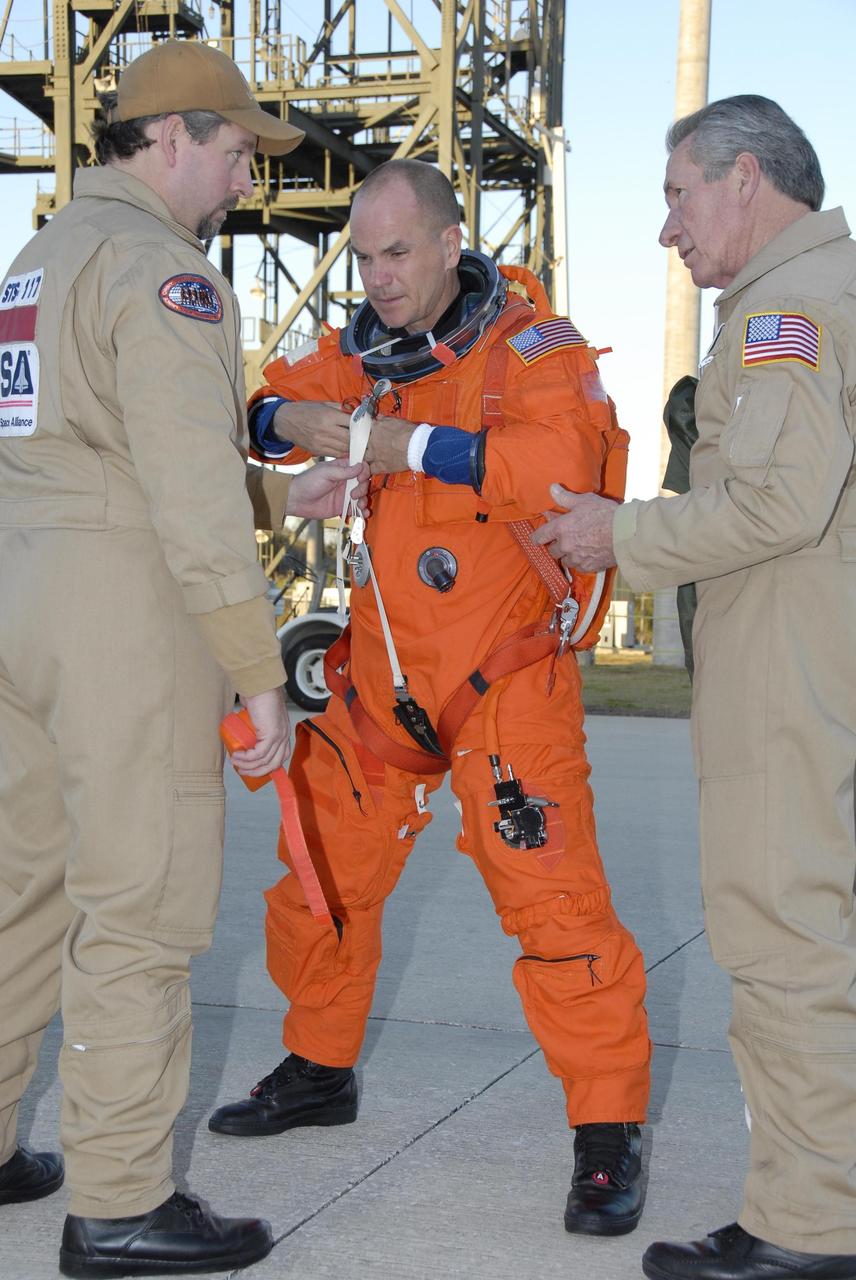
KENNEDY SPACE CENTER, FLA. -- Mission STS-117 Commander Rick Sturckow, dressed in his launch suit, prepares to begin practice flights on the shuttle training aircraft (STA) at the Shuttle Landing Facility during Terminal Countdown Demonstration Test (TCDT) activities. The STA is a Grumman American Aviation-built Gulf Stream II jet that was modified to simulate an orbiter's cockpit, motion and visual cues, and handling qualities. In flight, the STA duplicates the orbiter's atmospheric descent trajectory from approximately 35,000 feet altitude to landing on a runway. Because the orbiter is unpowered during re-entry and landing, its high-speed glide must be perfectly executed the first time. The mission payload aboard Space Shuttle Atlantis is the S3/S4 integrated truss structure, along with a third set of solar arrays and batteries. The crew of six astronauts will install the truss to continue assembly of the International Space Station. STS-117 is the 118th space shuttle flight and the 21st flight to the station. Photo credit: NASA/Kim Shiflett
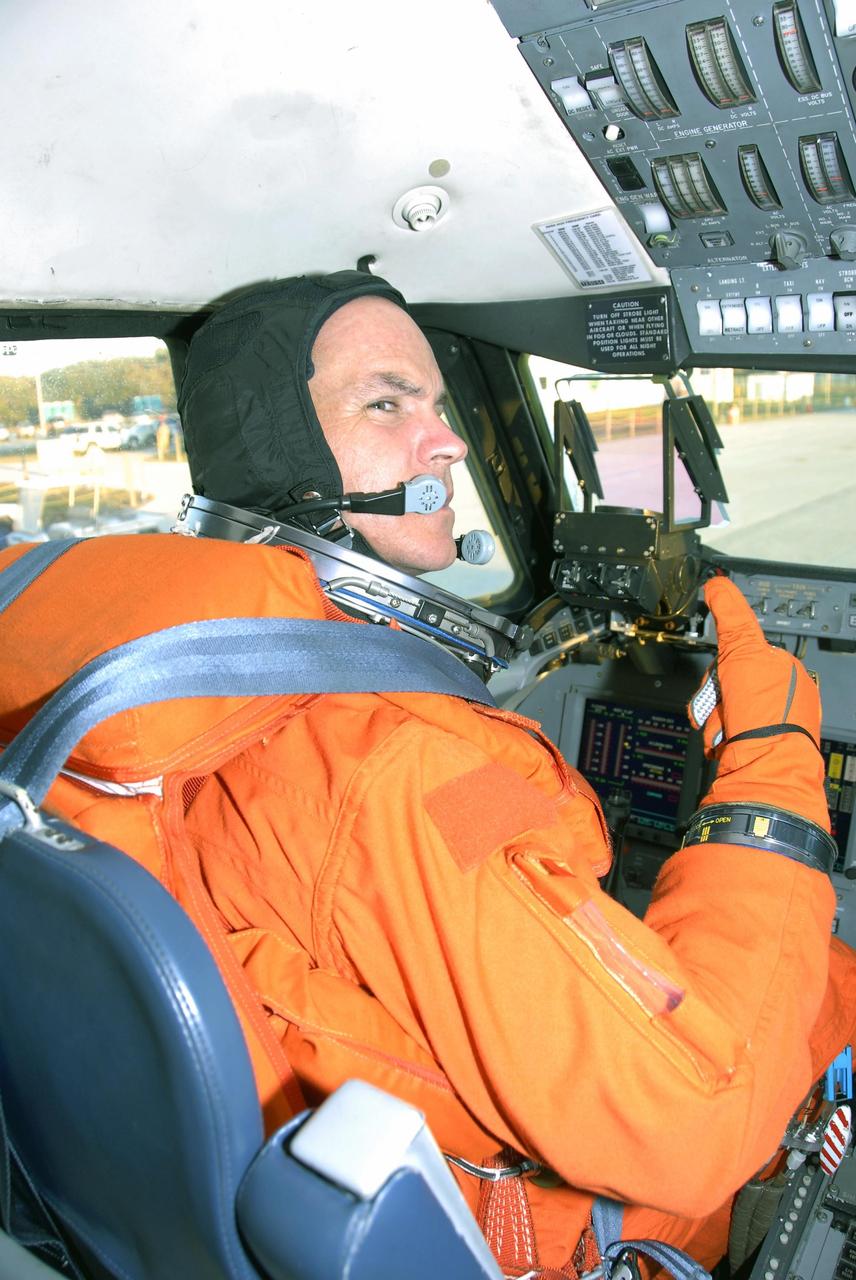
KENNEDY SPACE CENTER, FLA. -- At the Shuttle Landing Facility, Mission STS-117 Commander Rick Sturckow sits in the cockpit of the shuttle training aircraft (STA) ready to begin practice flights as part of the Terminal Countdown Demonstration Test (TCDT) activities. The STA is a Grumman American Aviation-built Gulf Stream II jet that was modified to simulate an orbiter's cockpit, motion and visual cues, and handling qualities. In flight, the STA duplicates the orbiter's atmospheric descent trajectory from approximately 35,000 feet altitude to landing on a runway. Because the orbiter is unpowered during re-entry and landing, its high-speed glide must be perfectly executed the first time. The mission payload aboard Space Shuttle Atlantis is the S3/S4 integrated truss structure, along with a third set of solar arrays and batteries. The crew of six astronauts will install the truss to continue assembly of the International Space Station. STS-117 is the 118th space shuttle flight and the 21st flight to the station. Photo credit: NASA/Kim Shiflett
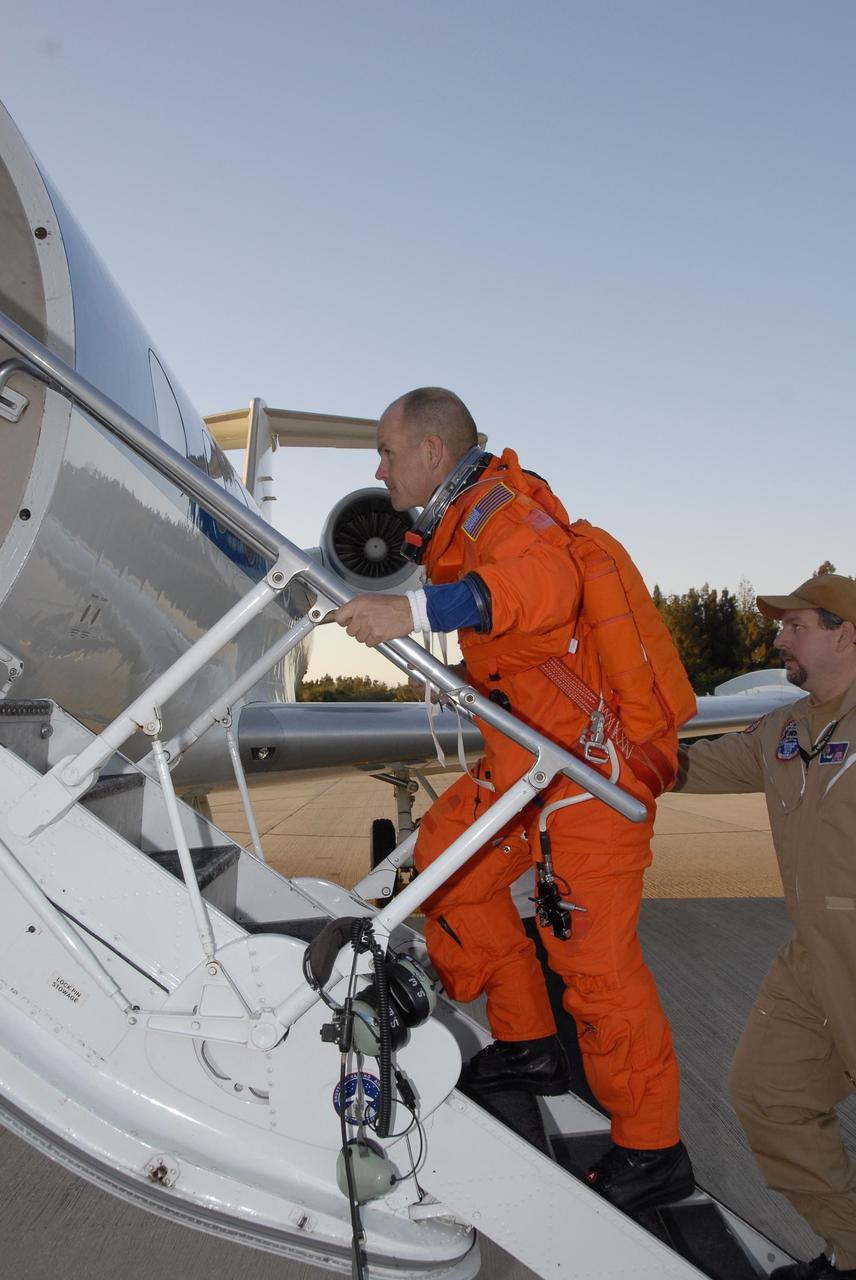
KENNEDY SPACE CENTER, FLA. -- At the Shuttle Landing Facility, Mission STS-117 Commander Rick Sturckow is ready to begin practice flights on the shuttle training aircraft (STA) during Terminal Countdown Demonstration Test (TCDT) Activities. The STA is a Grumman American Aviation-built Gulf Stream II jet that was modified to simulate an orbiter's cockpit, motion and visual cues, and handling qualities. In flight, the STA duplicates the orbiter's atmospheric descent trajectory from approximately 35,000 feet altitude to landing on a runway. Because the orbiter is unpowered during re-entry and landing, its high-speed glide must be perfectly executed the first time. The mission payload aboard Space Shuttle Atlantis is the S3/S4 integrated truss structure, along with a third set of solar arrays and batteries. The crew of six astronauts will install the truss to continue assembly of the International Space Station. STS-117 is the 118th space shuttle flight and the 21st flight to the station. Photo credit: NASA/Kim Shiflett
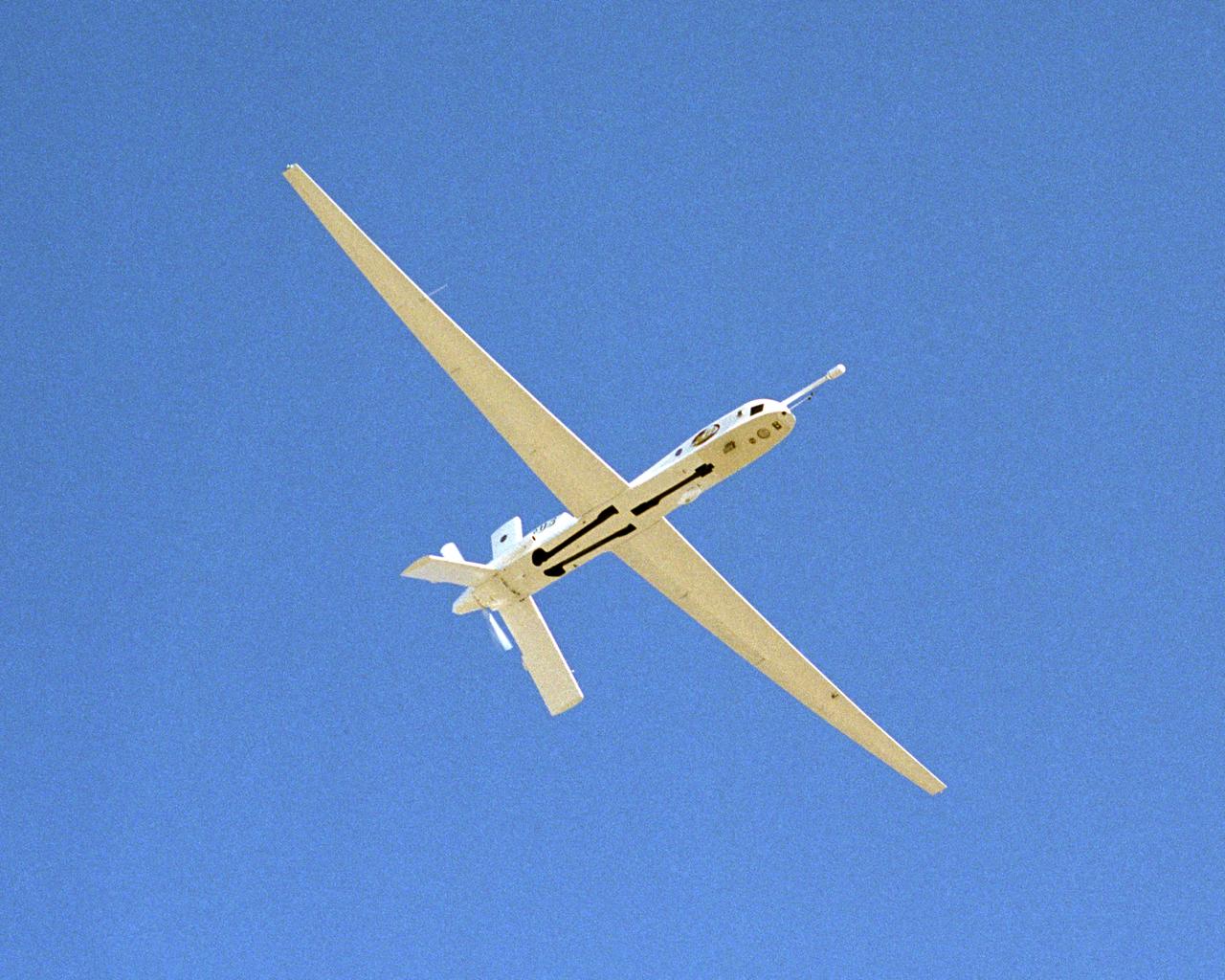
A NASA team studying the causes of electrical storms and their effects on our home planet achieved a milestone on August 21, 2002, completing the study's longest-duration research flight and monitoring four thunderstorms in succession. Based at the Naval Air Station Key West, Florida, researchers with the Altus Cumulus Electrification Study (ACES) used the Altus II remotely piloted aircraft to study thunderstorms in the Atlantic Ocean off Key West and the west of the Everglades. The ACES lightning study used the Altus II twin turbo uninhabited aerial vehicle, built by General Atomics Aeronautical Systems, Inc. of San Diego. The Altus II was chosen for its slow flight speed of 75 to 100 knots (80 to 115 mph), long endurance, and high-altitude flight (up to 65,000 feet). These qualities gave the Altus II the ability to fly near and around thunderstorms for long periods of time, allowing investigations to be conducted over the entire life cycle of storms. The vehicle has a wing span of 55 feet and a payload capacity of over 300 lbs. With dual goals of gathering weather data safely and testing the adaptability of the uninhabited aircraft, the ACES study is a collaboration among the Marshall Space Flight Center, the University of Alabama in Huntsville, NASA's Goddard Space Flight Center in Greenbelt, Maryland, Pernsylvania State University in University Park, and General Atomics Aeronautical Systems, Inc.
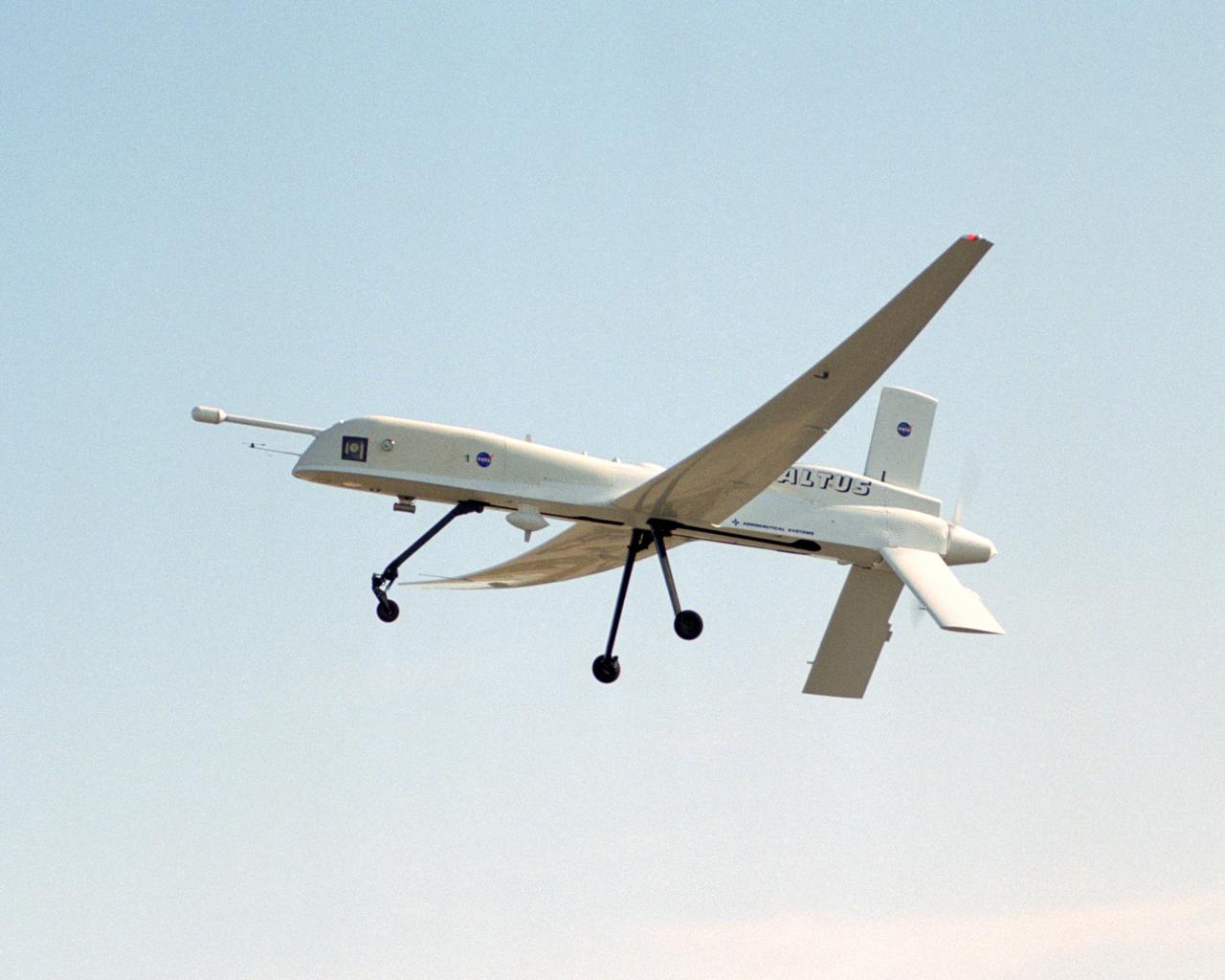
A NASA team studying the causes of electrical storms and their effects on our home planet achieved a milestone on August 21, 2002, completing the study's longest-duration research flight and monitoring four thunderstorms in succession. Based at the Naval Air Station Key West, Florida, researchers with the Altus Cumulus Electrification Study (ACES) used the Altus II remotely-piloted aircraft to study thunderstorms in the Atlantic Ocean off Key West and the west of the Everglades. The ACES lightning study used the Altus II twin turbo uninhabited aerial vehicle, built by General Atomics Aeronautical Systems, Inc. of San Diego. The Altus II was chosen for its slow flight speed of 75 to 100 knots (80 to 115 mph), long endurance, and high-altitude flight (up to 65,000 feet). These qualities gave the Altus II the ability to fly near and around thunderstorms for long periods of time, allowing investigations to be to be conducted over the entire life cycle of storms. The vehicle has a wing span of 55 feet and a payload capacity of over 300 lbs. With dual goals of gathering weather data safely and testing the adaptability of the uninhabited aircraft, the ACES study is a collaboration among the Marshall Space Flight Center, the University of Alabama in Huntsville, NASA,s Goddard Space Flight Center in Greenbelt, Maryland, Pernsylvania State University in University Park, and General Atomics Aeronautical Systems, Inc.
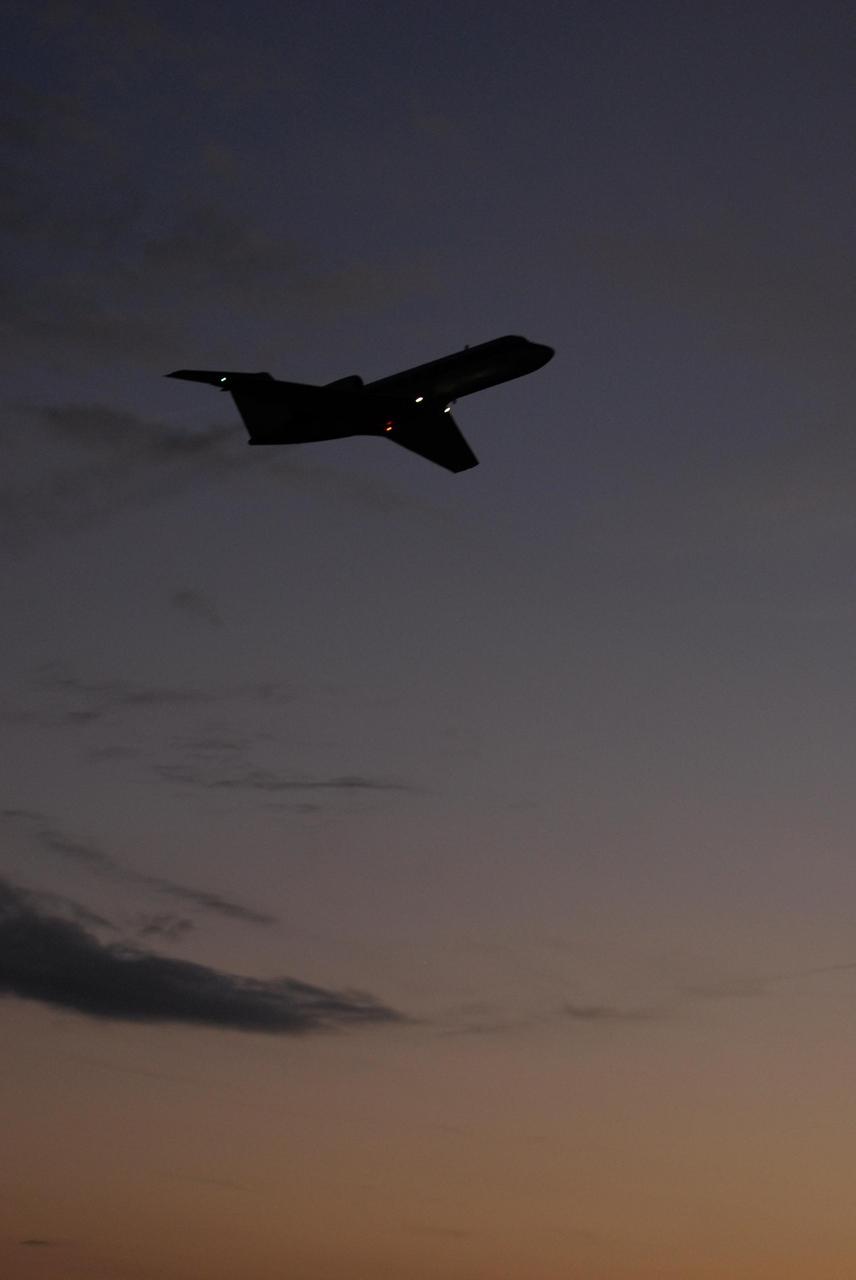
KENNEDY SPACE CENTER, FLA. -- A shuttle training aircraft, or STA, takes off from Kennedy Space Center's Shuttle Landing Facility at dusk. The STA is being used for practice flights by space shuttle Atlantis STS-122 Commander Steve Frick and Pilot Alan Poindexter. The STA is a Grumman American Aviation-built Gulf Stream II jet that was modified to simulate an orbiter's cockpit, motion and visual cues, and handling qualities. In flight, the STA duplicates the orbiter's atmospheric descent trajectory from approximately 35,000 feet altitude to landing on a runway. Because the orbiter is unpowered during re-entry and landing, its high-speed glide must be perfectly executed the first time. The training is part of terminal countdown demonstration test, or TCDT, activities. The TCDT provides astronauts and ground crews with equipment familiarization, emergency egress training and a simulated launch countdown. On mission STS-122, Atlantis will deliver the European Space Agency's Columbus module to the International Space Station. Columbus is a multifunctional, pressurized laboratory that will be permanently attached to U.S. Node 2, called Harmony, and will expand the research facilities aboard the station. Launch is targeted for Dec. 6. Photo credit: NASA/Kim Shiflett
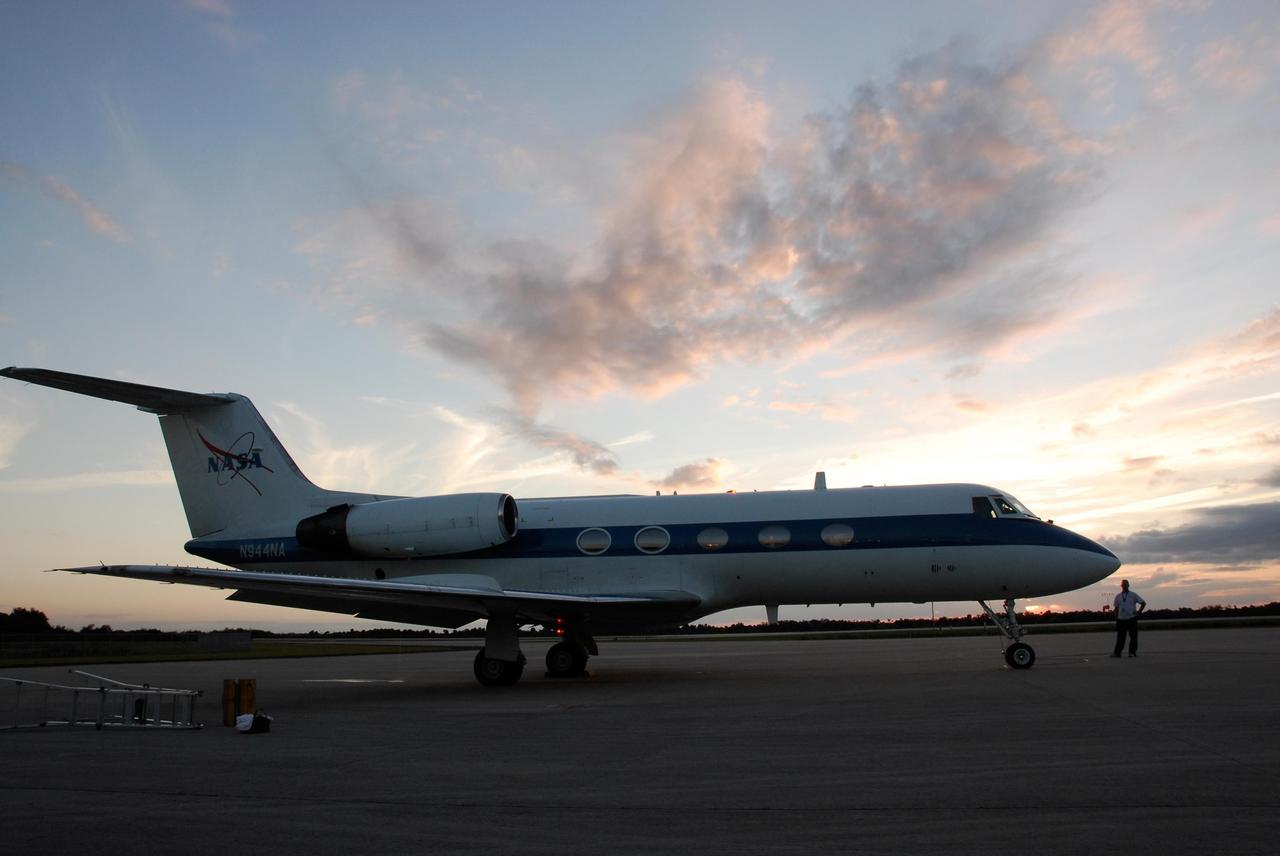
KENNEDY SPACE CENTER, FLA. -- A shuttle training aircraft, or STA, sits on the tarmac at Kennedy Space Center's Shuttle Landing Facility at dusk, ready for practice flights by space shuttle Atlantis STS-122 Commander Steve Frick and Pilot Alan Poindexter. The STA is a Grumman American Aviation-built Gulf Stream II jet that was modified to simulate an orbiter's cockpit, motion and visual cues, and handling qualities. In flight, the STA duplicates the orbiter's atmospheric descent trajectory from approximately 35,000 feet altitude to landing on a runway. Because the orbiter is unpowered during re-entry and landing, its high-speed glide must be perfectly executed the first time. The training is part of terminal countdown demonstration test, or TCDT, activities. The TCDT provides astronauts and ground crews with equipment familiarization, emergency egress training and a simulated launch countdown. On mission STS-122, Atlantis will deliver the European Space Agency's Columbus module to the International Space Station. Columbus is a multifunctional, pressurized laboratory that will be permanently attached to U.S. Node 2, called Harmony, and will expand the research facilities aboard the station. Launch is targeted for Dec. 6. Photo credit: NASA/Kim Shiflett
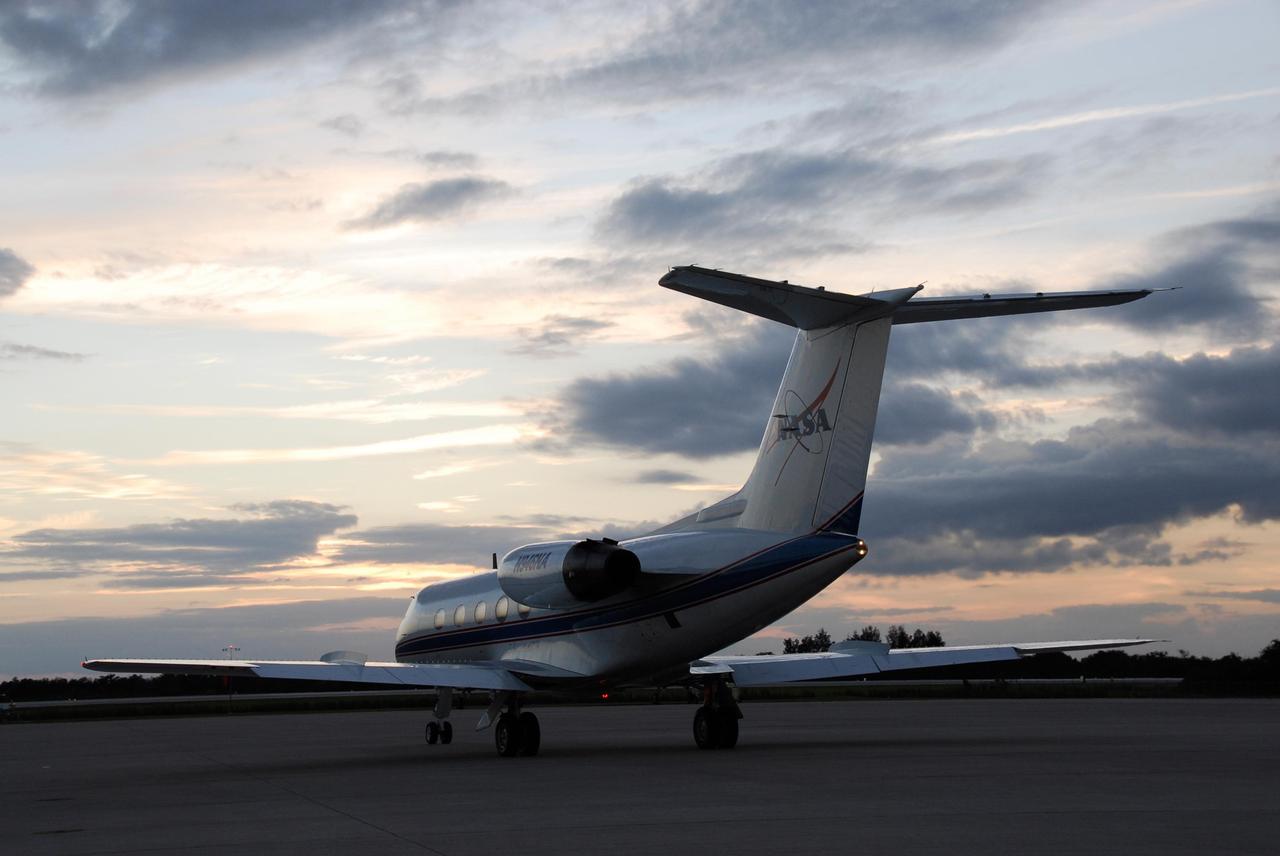
KENNEDY SPACE CENTER, FLA. -- A shuttle training aircraft, or STA, prepares for takeoff from Kennedy Space Center's Shuttle Landing Facility at dusk. The STA is being used for practice flights by space shuttle Atlantis STS-122 Commander Steve Frick and Pilot Alan Poindexter. The STA is a Grumman American Aviation-built Gulf Stream II jet that was modified to simulate an orbiter's cockpit, motion and visual cues, and handling qualities. In flight, the STA duplicates the orbiter's atmospheric descent trajectory from approximately 35,000 feet altitude to landing on a runway. Because the orbiter is unpowered during re-entry and landing, its high-speed glide must be perfectly executed the first time. The training is part of terminal countdown demonstration test, or TCDT, activities. The TCDT provides astronauts and ground crews with equipment familiarization, emergency egress training and a simulated launch countdown. On mission STS-122, Atlantis will deliver the European Space Agency's Columbus module to the International Space Station. Columbus is a multifunctional, pressurized laboratory that will be permanently attached to U.S. Node 2, called Harmony, and will expand the research facilities aboard the station. Launch is targeted for Dec. 6. Photo credit: NASA/Kim Shiflett
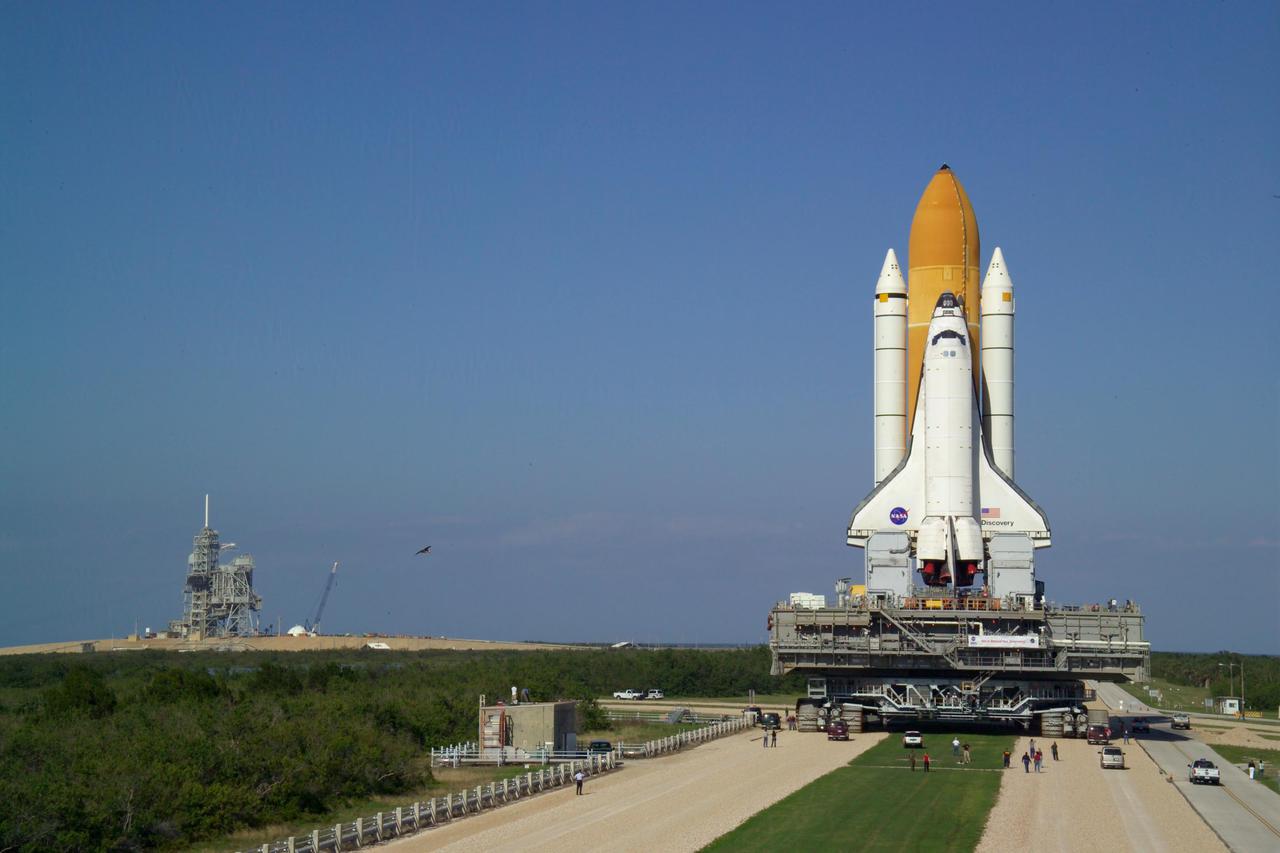
KENNEDY SPACE CENTER, FLA. - Blue sky blends with the blue Atlantic Ocean as Space Shuttle Discovery, atop the Mobile Launcher Platform (MLP), crawls toward Launch Complex 39A, on its way to Pad 39B. First motion out of the Vehicle Assembly Building occurred at 2:04 p.m. EDT. The rollout marks a major milestone in the Space Shuttle Program’s Return to Flight. The MLP is moved by the Crawler-Transporter underneath, which stands 20 feet high, 131 feet long and 114 feet wide. It moves on eight tracks, each containing 57 shoes, or cleats, weighing one ton each. Loaded with the Space Shuttle, the Crawler can move at a maximum speed of approximately 1 mile an hour. A leveling system in the Crawler keeps the Shuttle vertical while negotiating the 5 percent grade leading to the top of the launch pad. Launch of Discovery on its Return to Flight mission, STS-114, is targeted for May 15 with a launch window that extends to June 3. During its 12-day mission, Discovery’s seven-person crew will test new hardware and techniques to improve Shuttle safety, as well as deliver supplies to the International Space Station.
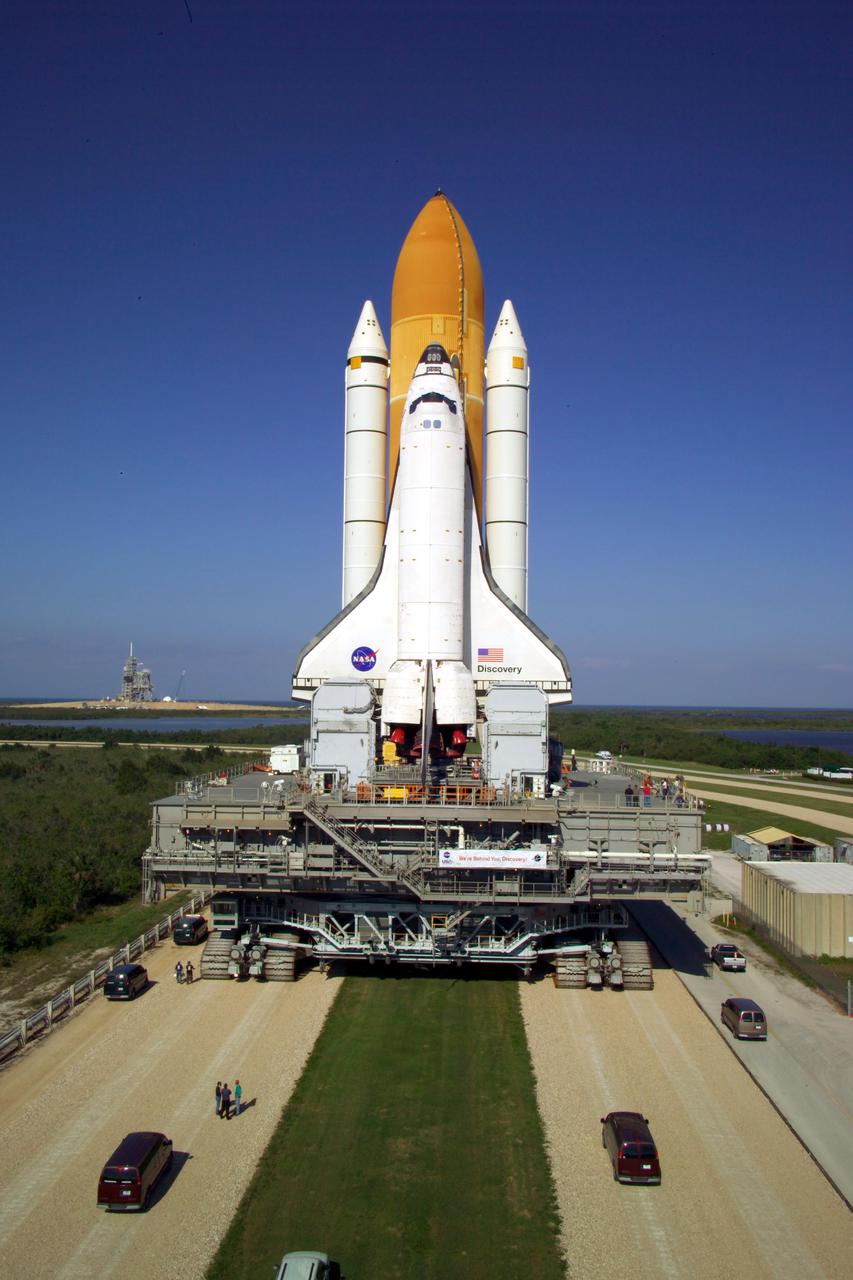
KENNEDY SPACE CENTER, FLA. - At NASA’s Kennedy Space Center, Space Shuttle Discovery, atop the Mobile Launcher Platform (MLP), crawls toward Launch Complex 39B. First motion out of the Vehicle Assembly Building occurred at 2:04 p.m. EDT. The rollout marks a major milestone in the Space Shuttle Program’s Return to Flight. The MLP is moved by the Crawler-Transporter underneath, which stands 20 feet high, 131 feet long and 114 feet wide. It moves on eight tracks, each containing 57 shoes, or cleats, weighing one ton each. Loaded with the Space Shuttle, the Crawler can move at a maximum speed of approximately 1 mile an hour. A leveling system in the Crawler keeps the Shuttle vertical while negotiating the 5 percent grade leading to the top of the launch pad. Launch of Discovery on its Return to Flight mission, STS-114, is targeted for May 15 with a launch window that extends to June 3. During its 12-day mission, Discovery’s seven-person crew will test new hardware and techniques to improve Shuttle safety, as well as deliver supplies to the International Space Station.
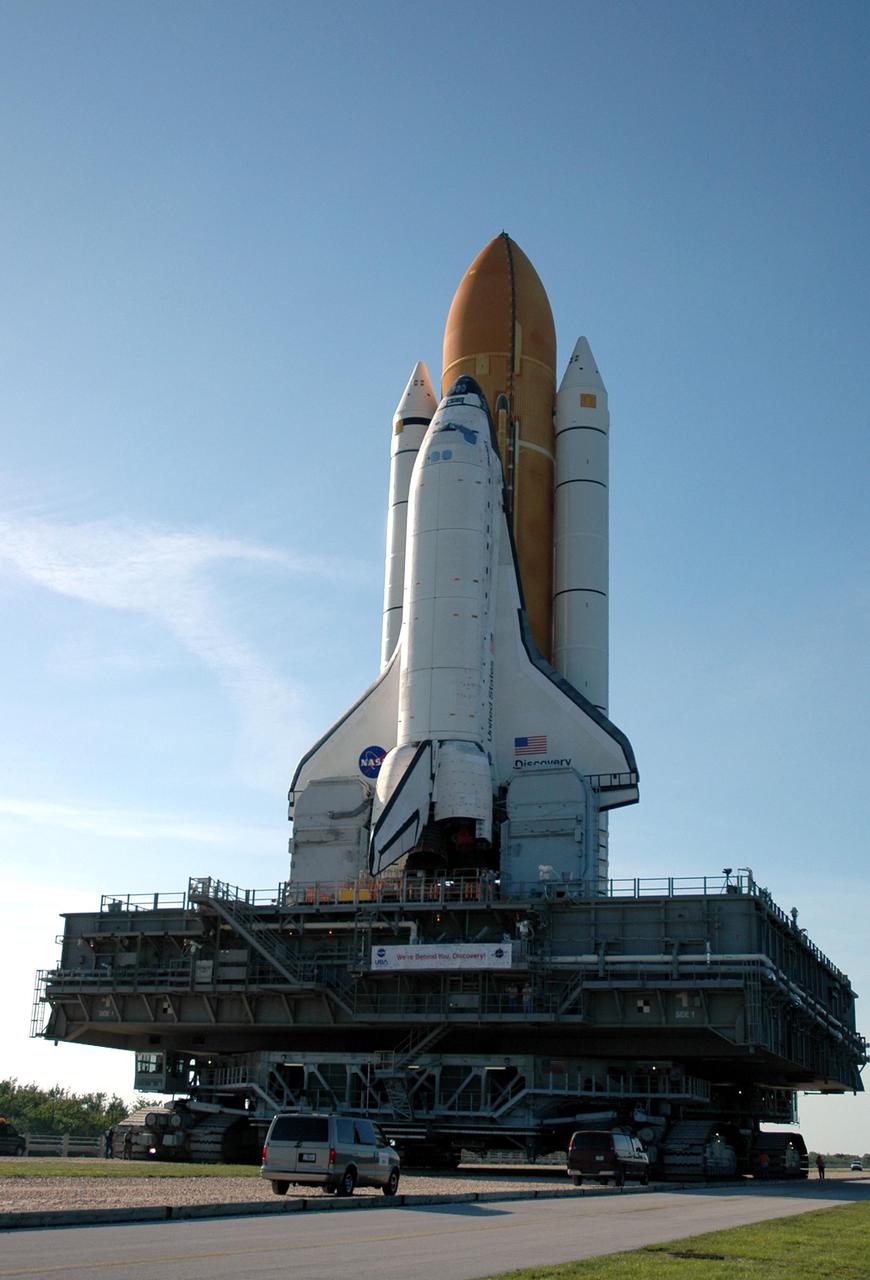
KENNEDY SPACE CENTER, FLA. - Space Shuttle Discovery, atop a Mobile Launcher Platform (MLP), crawls toward Launch Complex 39B. First motion out of the Vehicle Assembly Building occurred at 2:04 p.m. EDT. The rollout marks a major milestone in the Space Shuttle Program’s Return to Flight. The MLP is moved by the Crawler-Transporter underneath, which stands 20 feet high, 131 feet long and 114 feet wide. It moves on eight tracks, each containing 57 shoes, or cleats, weighing one ton each. Loaded with the Space Shuttle, the Crawler can move at a maximum speed of approximately 1 mile an hour. A leveling system in the Crawler keeps the Shuttle vertical while negotiating the 5 percent grade leading to the top of the launch pad. Launch of Discovery on its Return to Flight mission, STS-114, is targeted for May 15 with a launch window that extends to June 3. During its 12-day mission, Discovery’s seven-person crew will test new hardware and techniques to improve Shuttle safety, as well as deliver supplies to the International Space Station.
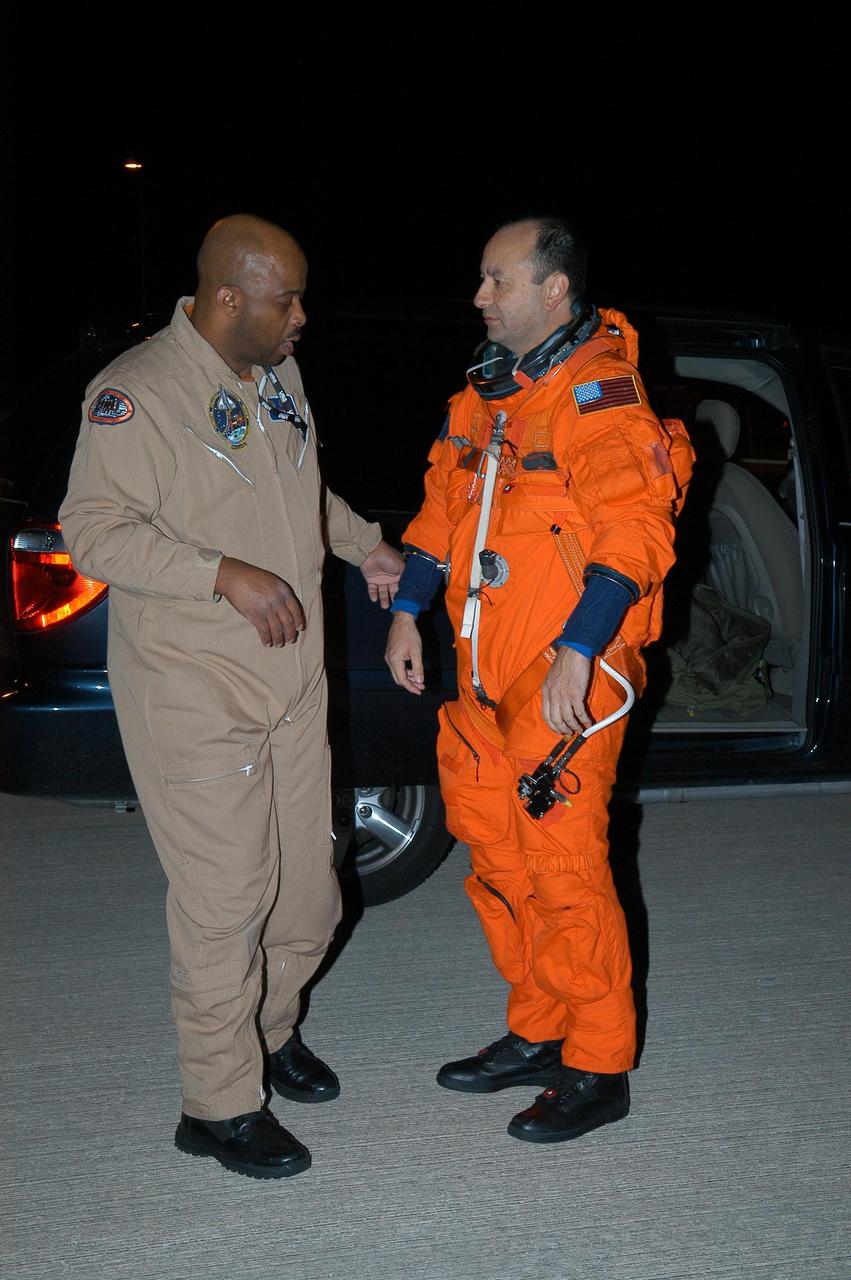
KENNEDY SPACE CENTER, FLA. -- STS-116 Commander Mark Polansky is ready to begin practice flights on the shuttle training aircraft (STA) three days before launch. The STA is a Grumman American Aviation-built Gulf Stream II jet that was modified to simulate an orbiter's cockpit, motion and visual cues, and handling qualities. In flight, the STA duplicates the orbiter's atmospheric descent trajectory from approximately 35,000 feet altitude to landing on a runway. Because the orbiter is unpowered during re-entry and landing, its high-speed glide must be perfectly executed the first time. Launch of Space Shuttle Discovery on mission STS-116 is scheduled for 9:35 p.m. Dec. 7. On the mission, the STS-116 crew will deliver truss segment, P5, to the International Space Station and begin the intricate process of reconfiguring and redistributing the power generated by two pairs of U.S. solar arrays. The P5 will be mated to the P4 truss that was delivered and attached during the STS-115 mission in September. Photo credit: NASA/Kim Shiflett
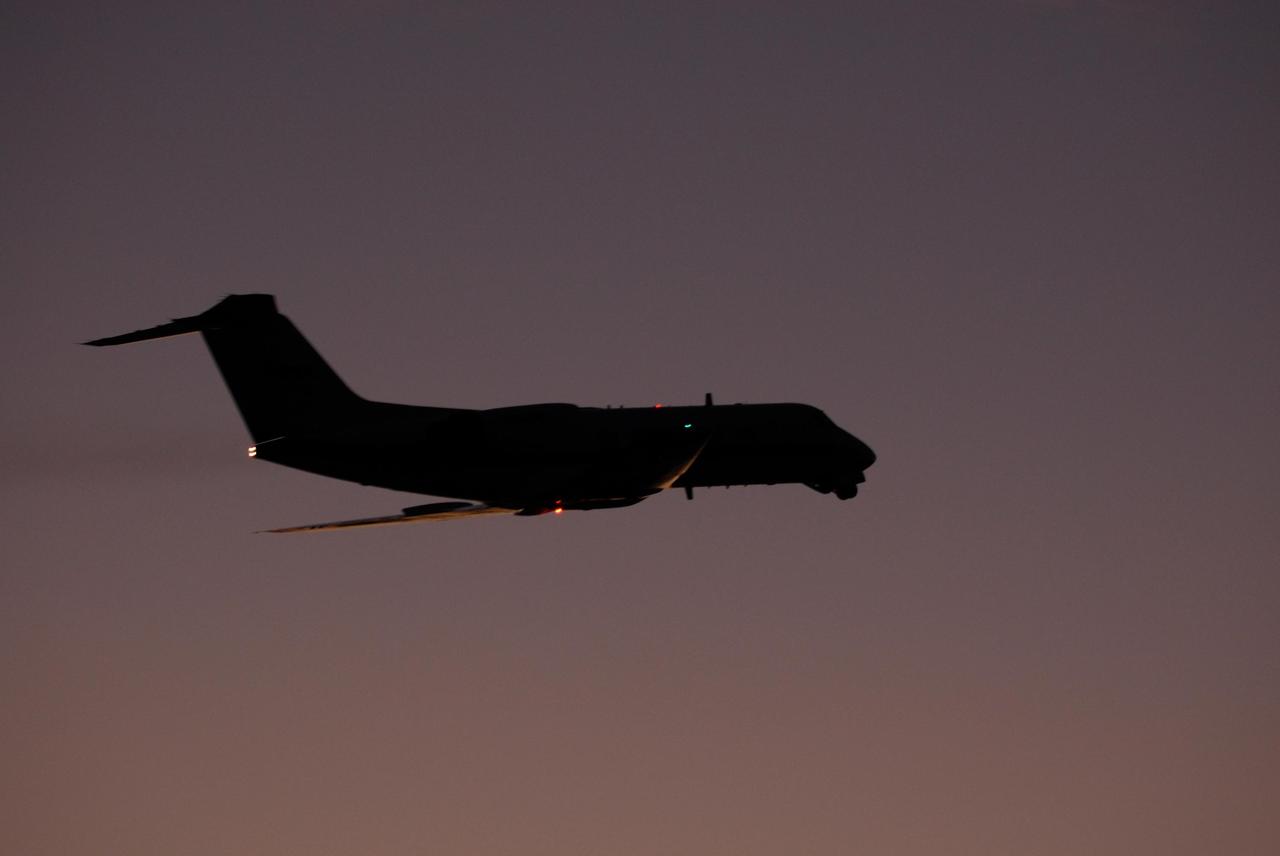
KENNEDY SPACE CENTER, FLA. -- At NASA Kennedy Space Center's Shuttle Landing Facility, a Shuttle Training Aircraft, or STA, takes flight for practice space shuttle landings. The STA is a Grumman American Aviation-built Gulf Stream II jet that was modified to simulate an orbiter's cockpit, motion and visual cues, and handling qualities. In flight, the STA duplicates the orbiter's atmospheric descent trajectory from approximately 35,000 feet altitude to landing on a runway. Because the orbiter is unpowered during re-entry and landing, its high-speed glide must be perfectly executed the first time. The crew for space shuttle Endeavour's STS-123 mission is at Kennedy for a full launch dress rehearsal, known as the terminal countdown demonstration test or TCDT. The terminal countdown demonstration test provides astronauts and ground crews with an opportunity to participate in various simulated countdown activities, including equipment familiarization and emergency training. Endeavour is targeted to launch March 11 at 2:28 a.m. EDT on a 16-day mission to the International Space Station. On the mission, Endeavour and its crew will deliver the first section of the Japan Aerospace Exploration Agency's Kibo laboratory and the Canadian Space Agency's two-armed robotic system, Dextre. Photo credit: NASA/Kim Shiflett
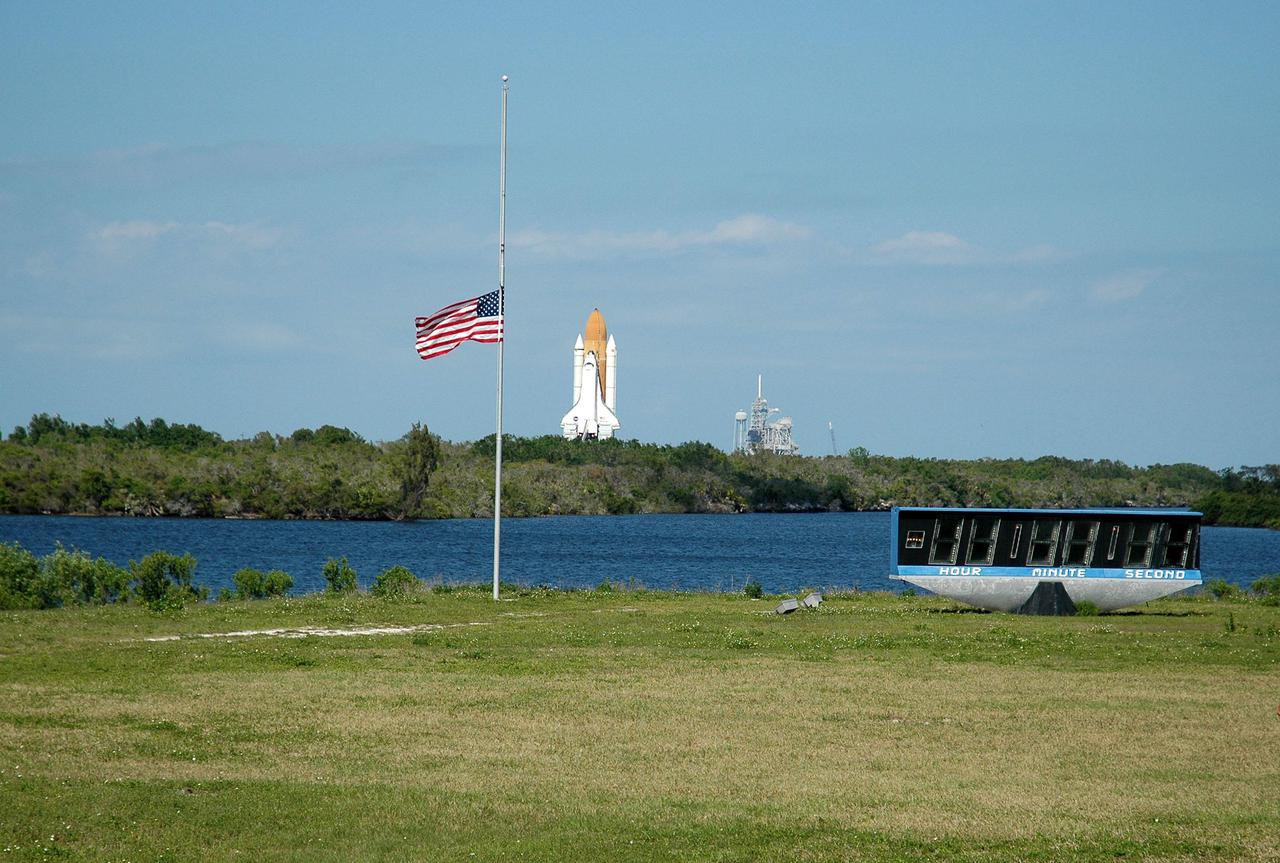
KENNEDY SPACE CENTER, FLA. - A KSC employee stands at the Press Site watching Space Shuttle Discovery mark a major milestone for Return to Flight, rolling out to Launch Pad 39B. First motion out of the Vehicle Assembly Building was at 2:04 p.m. EDT. The Shuttle sits atop the Mobile Launcher Platform, which is moved by the Crawler-Transporter underneath. The Crawler is 20 feet high, 131 feet long and 114 feet wide. It moves on eight tracks, each containing 57 shoes, or cleats, weighing one ton each. Loaded with the Space Shuttle, the Crawler can move at a maximum speed of approximately 1 mile an hour. A leveling system in the Crawler keeps the Shuttle vertical while negotiating the 5 percent grade leading to the top of the launch pad. Launch of Discovery on its Return to Flight mission, STS-114, is targeted for May 15 with a launch window that extends to June 3. During its 12-day mission, Discovery’s seven-person crew will test new hardware and techniques to improve Shuttle safety, as well as deliver supplies to the International Space Station. Discovery was moved on March 29 from the Orbiter Processing Facility to the VAB and attached to its propulsion elements, a redesigned ET and twin SRBs.
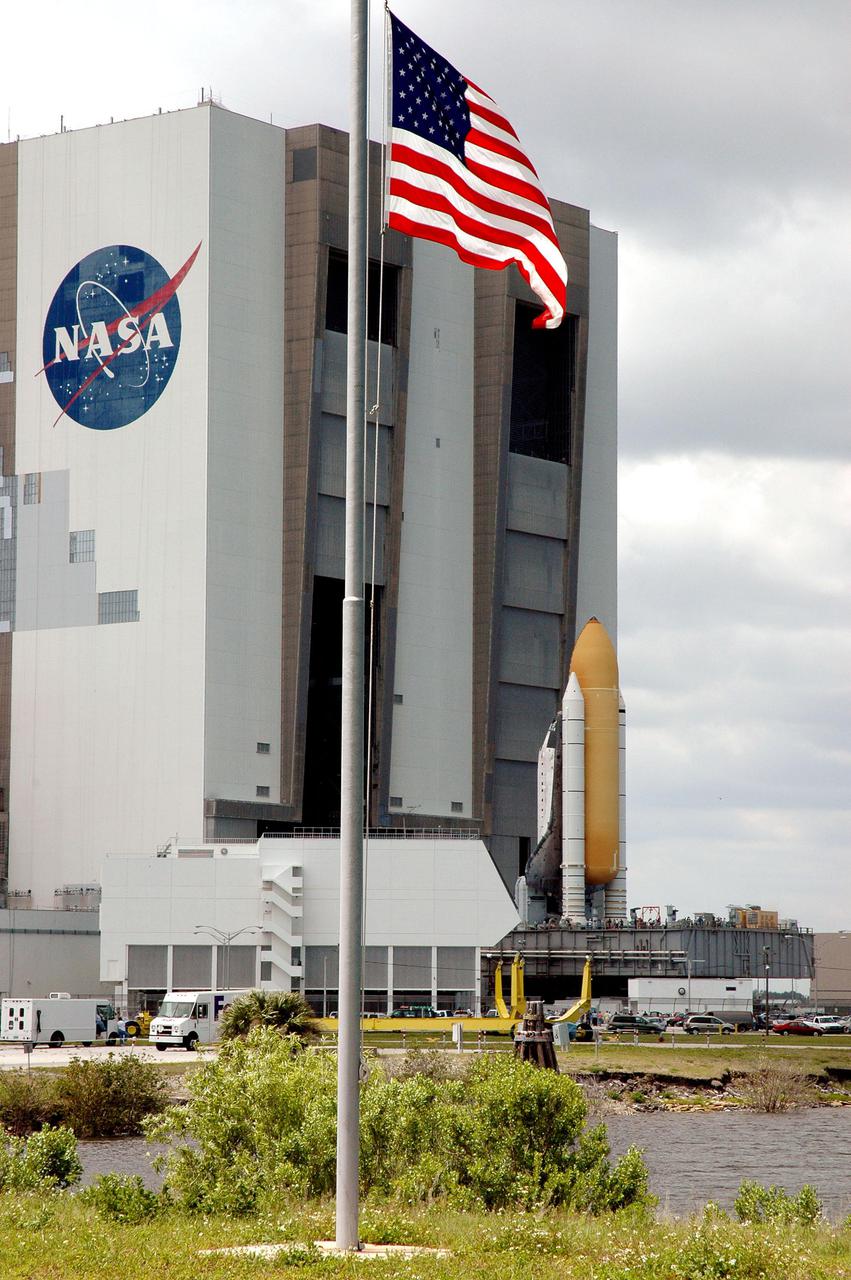
KENNEDY SPACE CENTER, FLA. - — Looking from the Press Site across the Turn Basin at NASA’s Kennedy Space Center, the American flag appears to salute Space Shuttle Discovery as she marks a major milestone for Return to Flight, rolling out to Launch Pad 39B. First motion out of the Vehicle Assembly Building, behind the flag, was at 2:04 p.m. EDT. The Shuttle sits atop the Mobile Launcher Platform, which is moved by the Crawler-Transporter underneath. The Crawler is 20 feet high, 131 feet long and 114 feet wide. It moves on eight tracks, each containing 57 shoes, or cleats, weighing one ton each. Loaded with the Space Shuttle, the Crawler can move at a maximum speed of approximately 1 mile an hour. A leveling system in the Crawler keeps the Shuttle vertical while negotiating the 5 percent grade leading to the top of the launch pad. Launch of Discovery on its Return to Flight mission, STS-114, is targeted for May 15 with a launch window that extends to June 3. During its 12-day mission, Discovery’s seven-person crew will test new hardware and techniques to improve Shuttle safety, as well as deliver supplies to the International Space Station. Discovery was moved on March 29 from the Orbiter Processing Facility to the VAB and attached to its propulsion elements, a redesigned ET and twin SRBs.
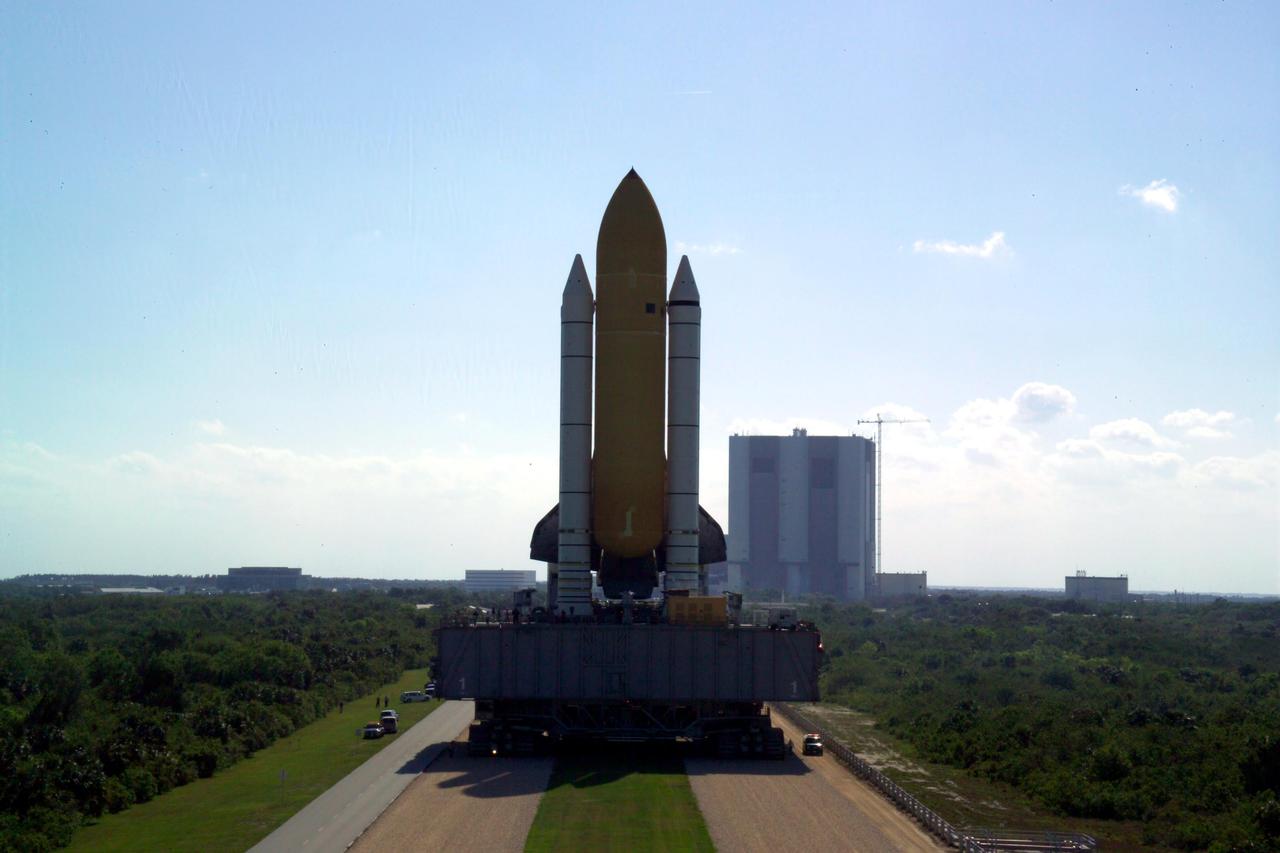
KENNEDY SPACE CENTER, FLA. - At NASA’s Kennedy Space Center, Space Shuttle Discovery, atop the Mobile Launcher Platform (MLP), casts a shadow on the crawlerway as it makes its way east to Launch Complex 39B close to sunset. In the background is the Vehicle Assembly Building (VAB) where Discovery began the rollout at 2:04 p.m. EDT. The rollout marks a major milestone in the Space Shuttle Program’s Return to Flight. The MLP is moved by the Crawler-Transporter underneath, which stands 20 feet high, 131 feet long and 114 feet wide. It moves on eight tracks, each containing 57 shoes, or cleats, weighing one ton each. Loaded with the Space Shuttle, the Crawler can move at a maximum speed of approximately 1 mile an hour. A leveling system in the Crawler keeps the Shuttle vertical while negotiating the 5 percent grade leading to the top of the launch pad. Launch of Discovery on its Return to Flight mission, STS-114, is targeted for May 15 with a launch window that extends to June 3. During its 12-day mission, Discovery’s seven-person crew will test new hardware and techniques to improve Shuttle safety, as well as deliver supplies to the International Space Station.
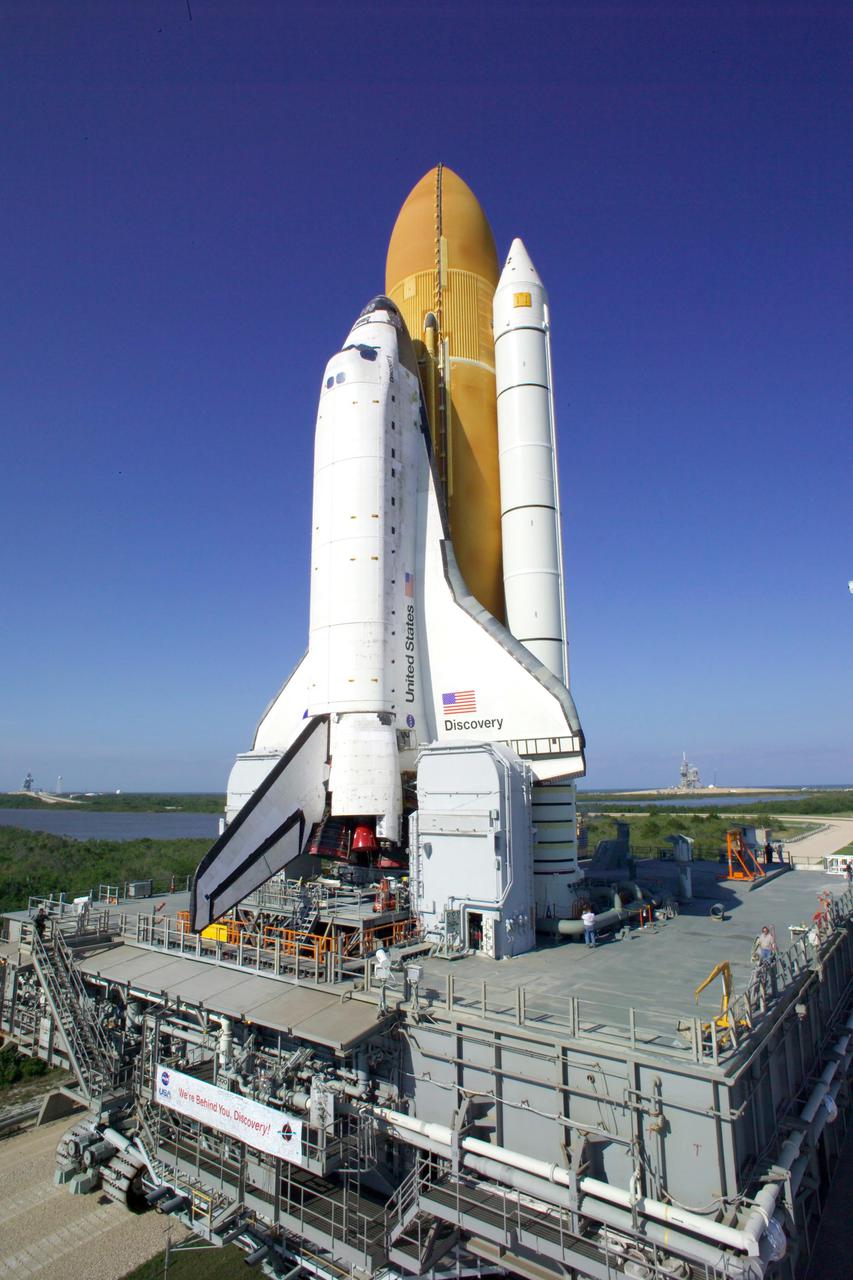
KENNEDY SPACE CENTER, FLA. - At NASA’s Kennedy Space Center, Space Shuttle Discovery, atop the Mobile Launcher Platform (MLP), crawls toward Launch Complex 39B. Barely visible on the horizon at right is Pad 39A. First motion out of the Vehicle Assembly Building occurred at 2:04 p.m. EDT. The rollout marks a major milestone in the Space Shuttle Program’s Return to Flight. The MLP is moved by the Crawler-Transporter underneath, which stands 20 feet high, 131 feet long and 114 feet wide. It moves on eight tracks, each containing 57 shoes, or cleats, weighing one ton each. Loaded with the Space Shuttle, the Crawler can move at a maximum speed of approximately 1 mile an hour. A leveling system in the Crawler keeps the Shuttle vertical while negotiating the 5 percent grade leading to the top of the launch pad. Launch of Discovery on its Return to Flight mission, STS-114, is targeted for May 15 with a launch window that extends to June 3. During its 12-day mission, Discovery’s seven-person crew will test new hardware and techniques to improve Shuttle safety, as well as deliver supplies to the International Space Station.
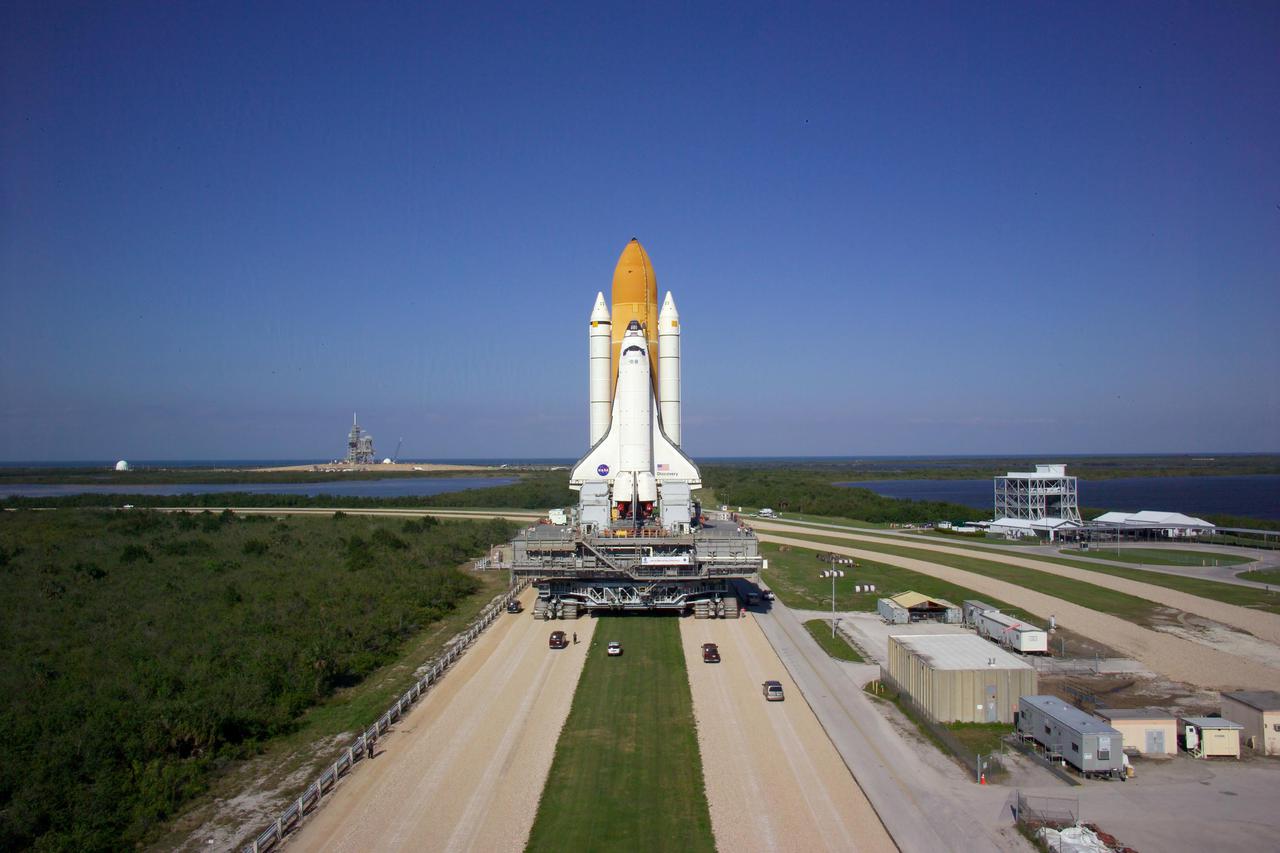
KENNEDY SPACE CENTER, FLA. - Blue sky blends with the blue Atlantic Ocean as Space Shuttle Discovery, atop the Mobile Launcher Platform (MLP), crawls toward Launch Complex 39B. First motion out of the Vehicle Assembly Building occurred at 2:04 p.m. EDT. The rollout marks a major milestone in the Space Shuttle Program’s Return to Flight. The MLP is moved by the Crawler-Transporter underneath, which stands 20 feet high, 131 feet long and 114 feet wide. It moves on eight tracks, each containing 57 shoes, or cleats, weighing one ton each. Loaded with the Space Shuttle, the Crawler can move at a maximum speed of approximately 1 mile an hour. A leveling system in the Crawler keeps the Shuttle vertical while negotiating the 5 percent grade leading to the top of the launch pad. Launch of Discovery on its Return to Flight mission, STS-114, is targeted for May 15 with a launch window that extends to June 3. During its 12-day mission, Discovery’s seven-person crew will test new hardware and techniques to improve Shuttle safety, as well as deliver supplies to the International Space Station.
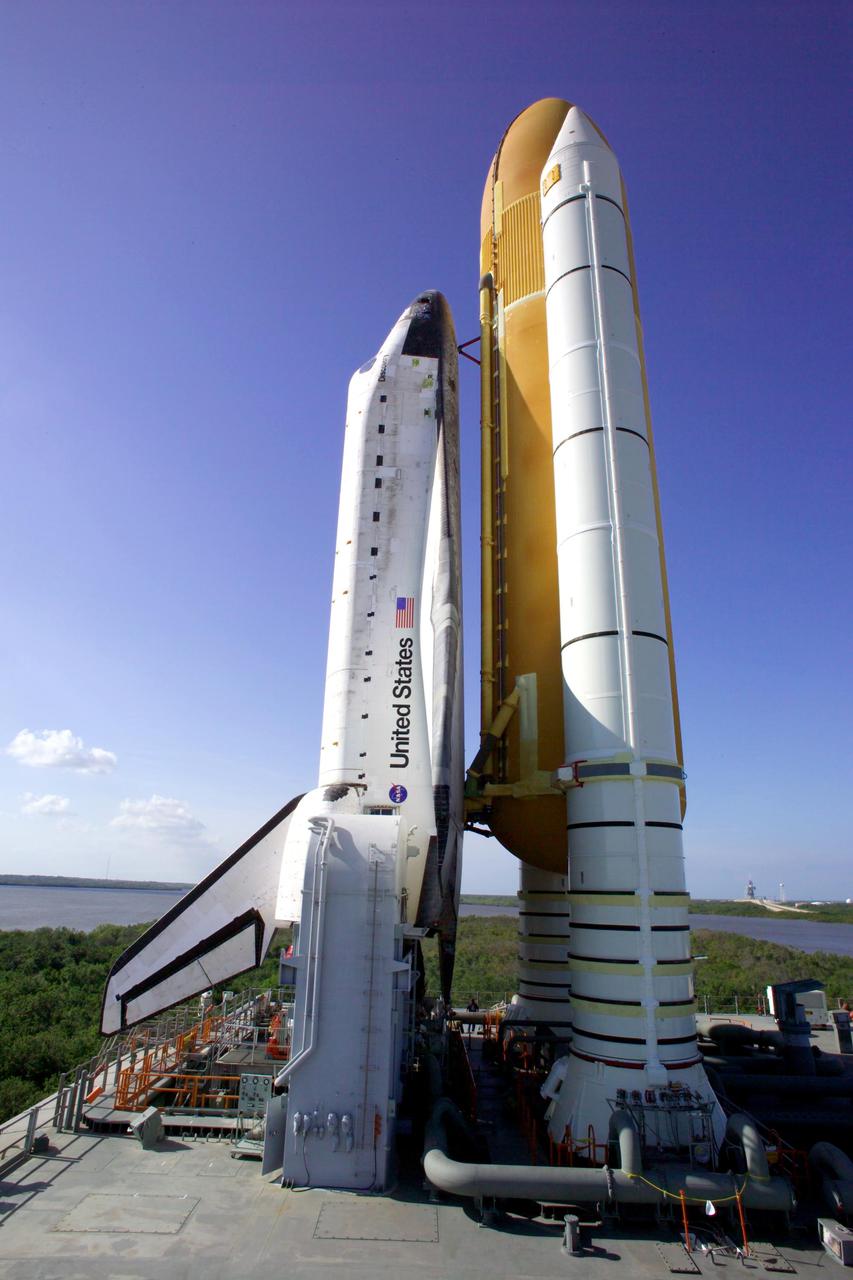
KENNEDY SPACE CENTER, FLA. - At NASA’s Kennedy Space Center, Space Shuttle Discovery is viewed from the side as it sits atop the Mobile Launcher Platform (MLP) rolling out to Launch Complex 39B. First motion out of the Vehicle Assembly Building occurred at 2:04 p.m. EDT. The rollout marks a major milestone in the Space Shuttle Program’s Return to Flight. The MLP is moved by the Crawler-Transporter underneath, which stands 20 feet high, 131 feet long and 114 feet wide. It moves on eight tracks, each containing 57 shoes, or cleats, weighing one ton each. Loaded with the Space Shuttle, the Crawler can move at a maximum speed of approximately 1 mile an hour. A leveling system in the Crawler keeps the Shuttle vertical while negotiating the 5 percent grade leading to the top of the launch pad. Launch of Discovery on its Return to Flight mission, STS-114, is targeted for May 15 with a launch window that extends to June 3. During its 12-day mission, Discovery’s seven-person crew will test new hardware and techniques to improve Shuttle safety, as well as deliver supplies to the International Space Station.
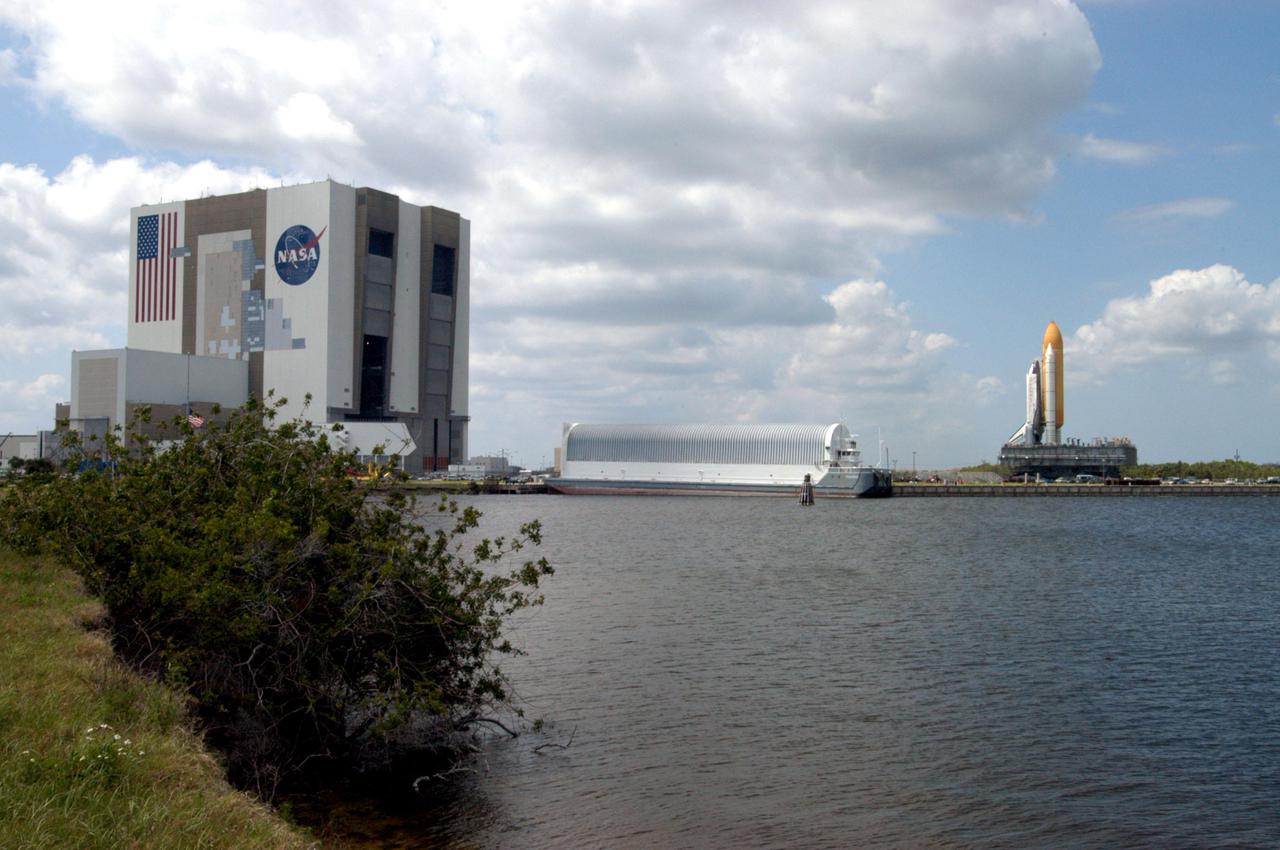
KENNEDY SPACE CENTER, FLA. - Across the Turn Basin is seen the Vehicle Assembly Building (VAB (at left), the Launch Control Center (middle), and Space Shuttle Discovery (at right). First motion of the Shuttle out of the VAB was at 2:04 p.m. EDT. Atop the Mobile Launcher Platform, the Shuttle is on its way to Launch Pad 39B, marking a major milestone in Return to Flight. The Mobile Launcher Platform is moved by the Crawler-Transporter underneath. The Crawler is 20 feet high, 131 feet long and 114 feet wide. It moves on eight tracks, each containing 57 shoes, or cleats, weighing one ton each. Loaded with the Space Shuttle, the Crawler can move at a maximum speed of approximately 1 mile an hour. A leveling system in the Crawler keeps the Shuttle vertical while negotiating the 5 percent grade leading to the top of the launch pad. Launch of Discovery on its Return to Flight mission, STS-114, is targeted for May 15 with a launch window that extends to June 3. During its 12-day mission, Discovery’s seven-person crew will test new hardware and techniques to improve Shuttle safety, as well as deliver supplies to the International Space Station. Discovery was moved on March 29 from the Orbiter Processing Facility to the VAB and attached to its propulsion elements, a redesigned ET and twin SRBs.
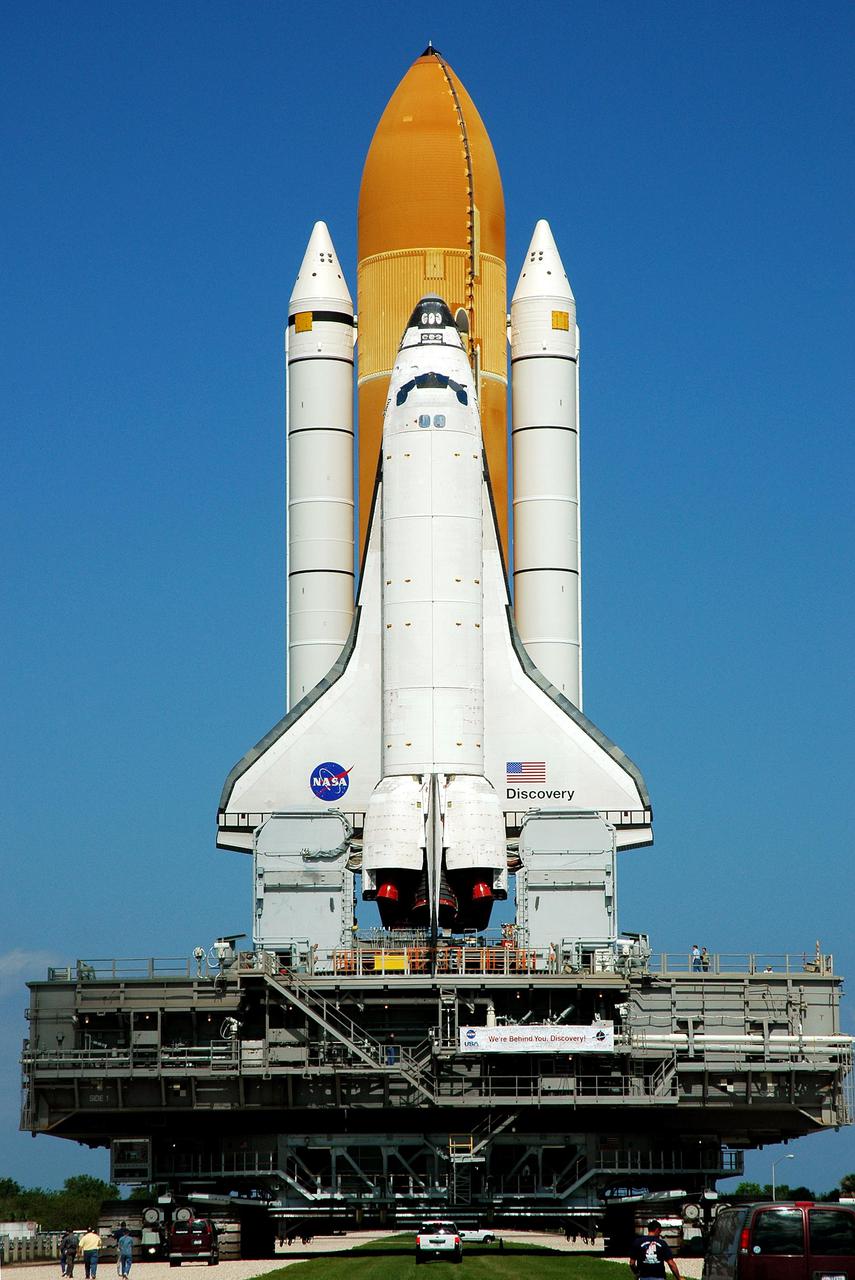
KENNEDY SPACE CENTER, FLA. -- Space Shuttle Discovery, atop a Mobile Launcher Platform (MLP), crawls toward Launch Complex 39B. First motion out of the Vehicle Assembly Building occurred at 2:04 p.m. EDT. The rollout marks a major milestone in the Space Shuttle Program’s Return to Flight. The MLP is moved by the Crawler-Transporter underneath, which stands 20 feet high, 131 feet long and 114 feet wide. It moves on eight tracks, each containing 57 shoes, or cleats, weighing one ton each. Loaded with the Space Shuttle, the Crawler can move at a maximum speed of approximately 1 mile an hour. A leveling system in the Crawler keeps the Shuttle vertical while negotiating the 5 percent grade leading to the top of the launch pad. Launch of Discovery on its Return to Flight mission, STS-114, is targeted for May 15 with a launch window that extends to June 3. During its 12-day mission, Discovery’s seven-person crew will test new hardware and techniques to improve Shuttle safety, as well as deliver supplies to the International Space Station.
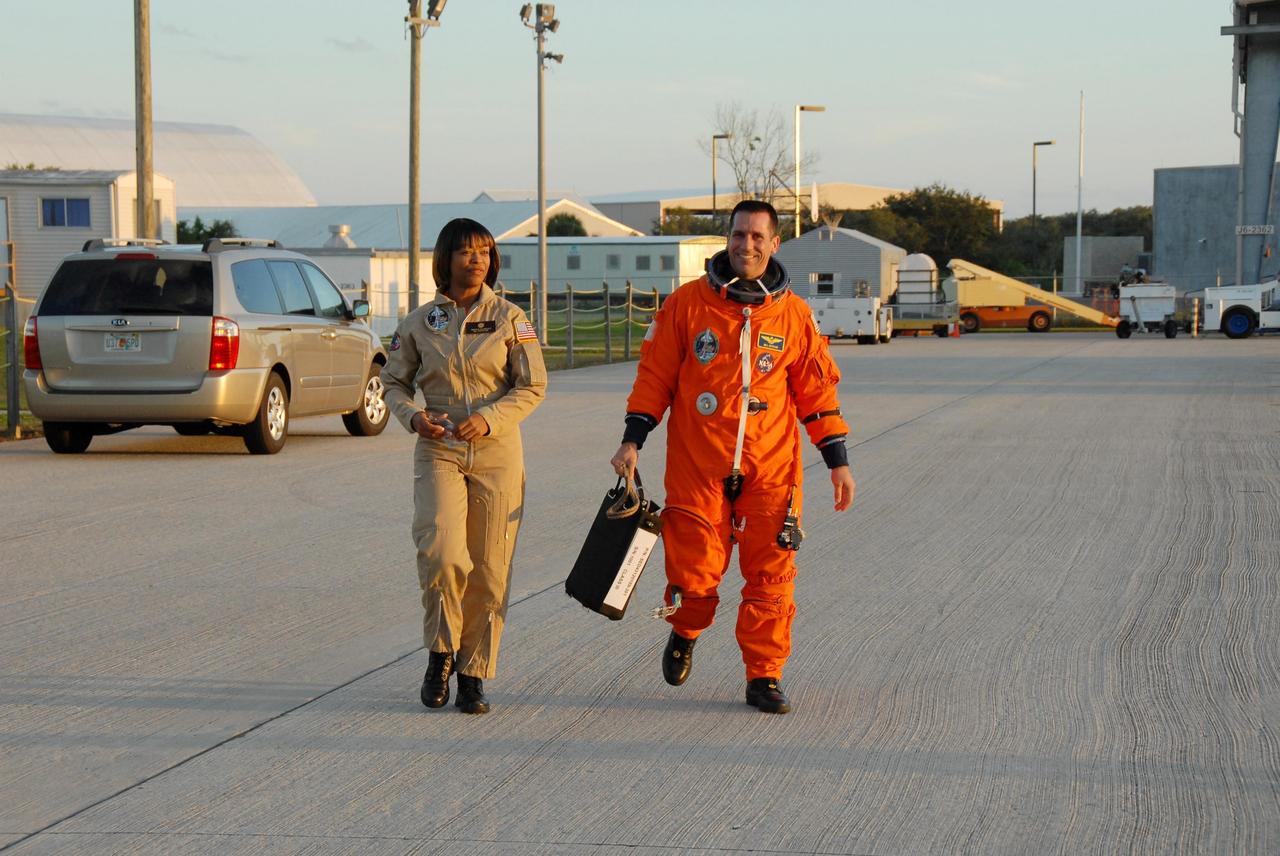
KENNEDY SPACE CENTER, FLA. -- STS-116 Pilot William Oefelein (right) is suited and ready to begin practice flights on the shuttle training aircraft (STA) two days before launch. The STA is a Grumman American Aviation-built Gulf Stream II jet that was modified to simulate an orbiter's cockpit, motion and visual cues, and handling qualities. In flight, the STA duplicates the orbiter's atmospheric descent trajectory from approximately 35,000 feet altitude to landing on a runway. Because the orbiter is unpowered during re-entry and landing, its high-speed glide must be perfectly executed the first time. Launch of Space Shuttle Discovery on mission STS-116 is scheduled for 9:35 p.m. Dec. 7. On the mission, the STS-116 crew will deliver truss segment, P5, to the International Space Station and begin the intricate process of reconfiguring and redistributing the power generated by two pairs of U.S. solar arrays. The P5 will be mated to the P4 truss that was delivered and attached during the STS-115 mission in September. Photo credit: NASA/Kim Shiflett
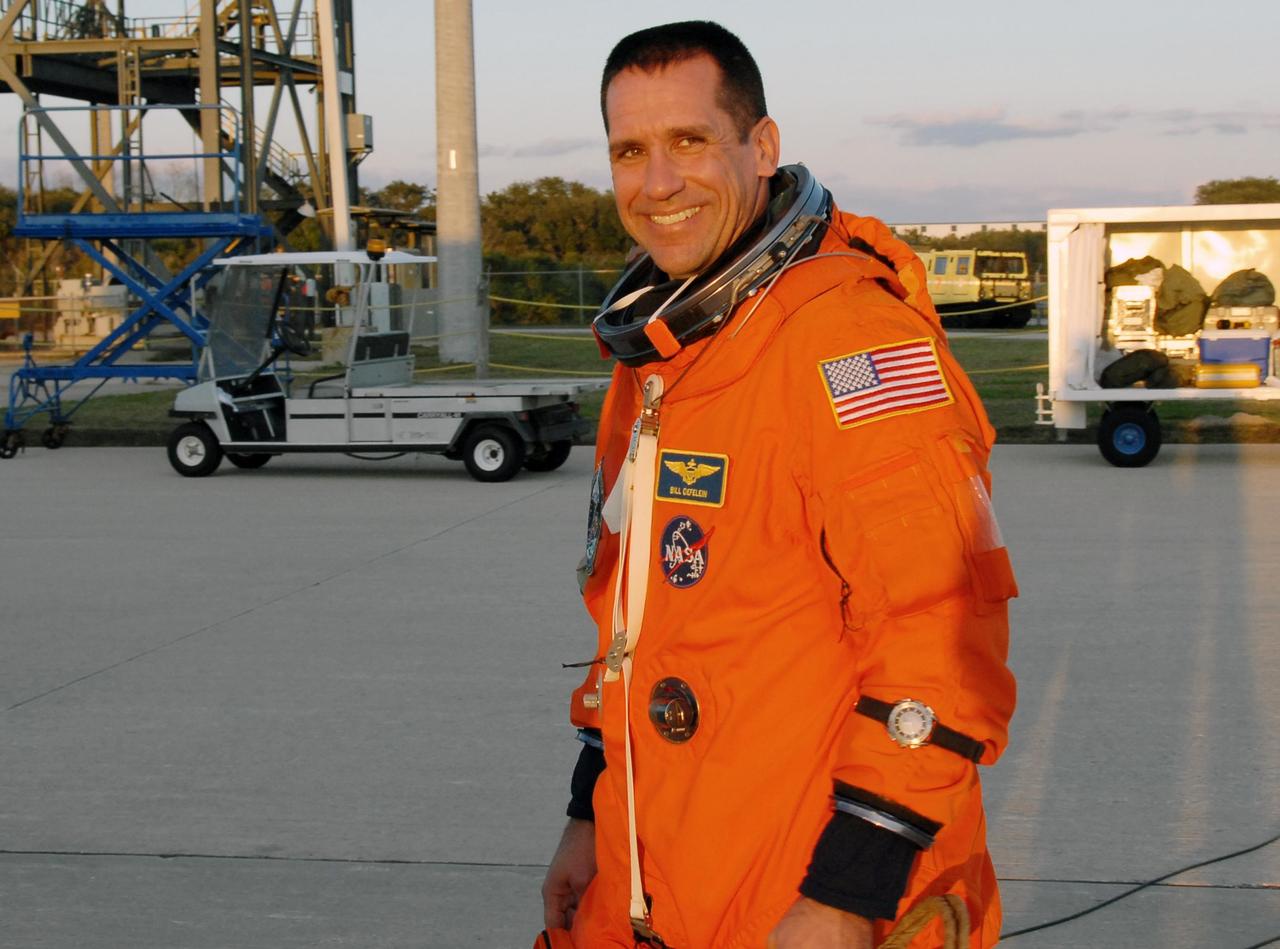
KENNEDY SPACE CENTER, FLA. -- STS-116 Pilot William Oefelein is suited and ready to begin practice flights on the shuttle training aircraft (STA) two days before launch. The STA is a Grumman American Aviation-built Gulf Stream II jet that was modified to simulate an orbiter's cockpit, motion and visual cues, and handling qualities. In flight, the STA duplicates the orbiter's atmospheric descent trajectory from approximately 35,000 feet altitude to landing on a runway. Because the orbiter is unpowered during re-entry and landing, its high-speed glide must be perfectly executed the first time. Launch of Space Shuttle Discovery on mission STS-116 is scheduled for 9:35 p.m. Dec. 7. On the mission, the STS-116 crew will deliver truss segment, P5, to the International Space Station and begin the intricate process of reconfiguring and redistributing the power generated by two pairs of U.S. solar arrays. The P5 will be mated to the P4 truss that was delivered and attached during the STS-115 mission in September. Photo credit: NASA/Kim Shiflett
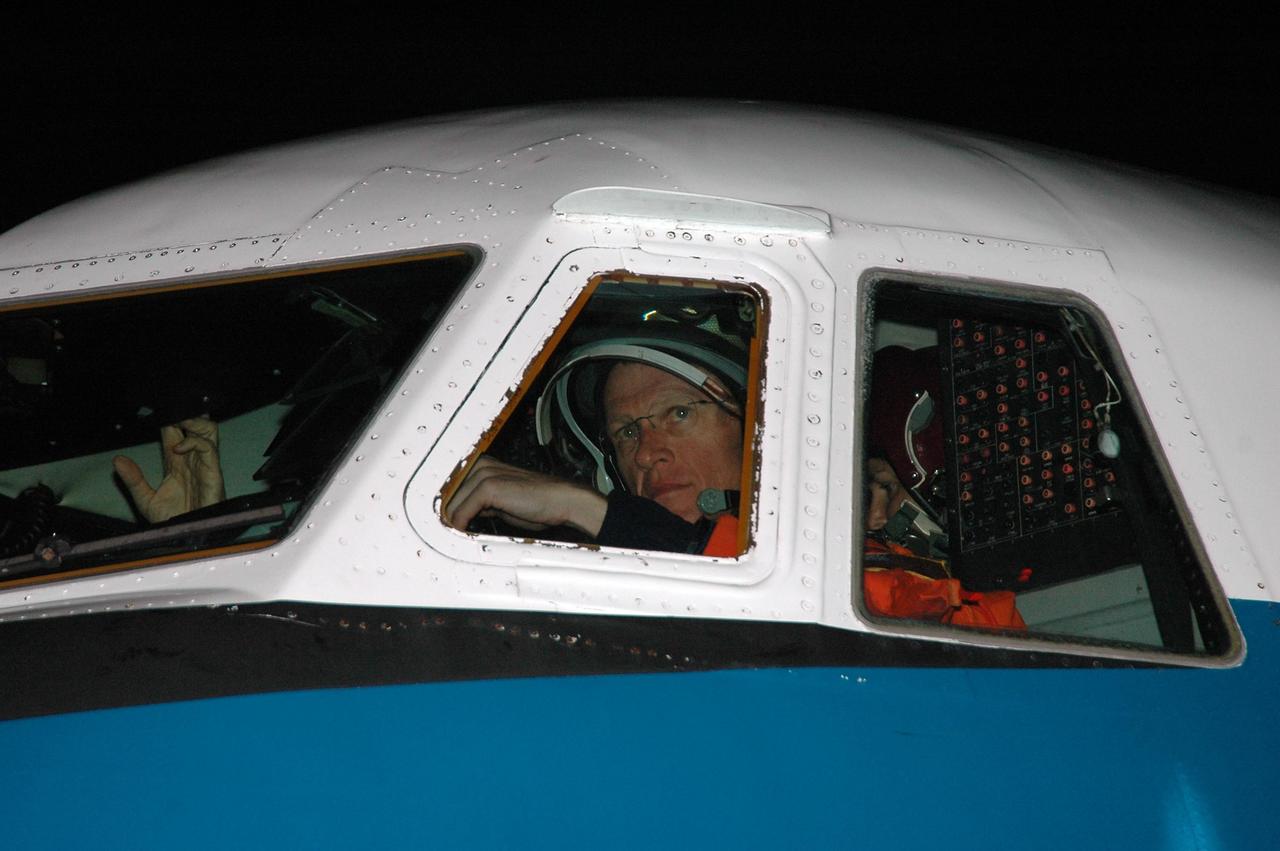
KENNEDY SPACE CENTER, FLA. - STS-115 Commander Brent Jett is seen at the controls of the Shuttle Training Aircraft which he will fly to practice landing the shuttle. STA practice is part of launch preparations. The STA is a Grumman American Aviation-built Gulf Stream II jet that was modified to simulate an orbiter’s cockpit, motion and visual cues, and handling qualities. In flight, the STA duplicates the orbiter’s atmospheric descent trajectory from approximately 35,000 feet altitude to landing on a runway. Because the orbiter is unpowered during re-entry and landing, its high-speed glide must be perfectly executed the first time. Mission STS-115 is scheduled to lift off about 4:30 p.m. Aug. 27. The crew will deliver and install the P3/P4 segment to the port side of the integrated truss system on the International Space Station. The truss includes a new set of photovoltaic solar arrays. When unfurled to their full length of 240 feet, the arrays will provide additional power for the station in preparation for the delivery of international science modules over the next two years. The mission is expected to last 11 days and includes three scheduled spacewalks. Photo credit: NASA/Kim Shiflett
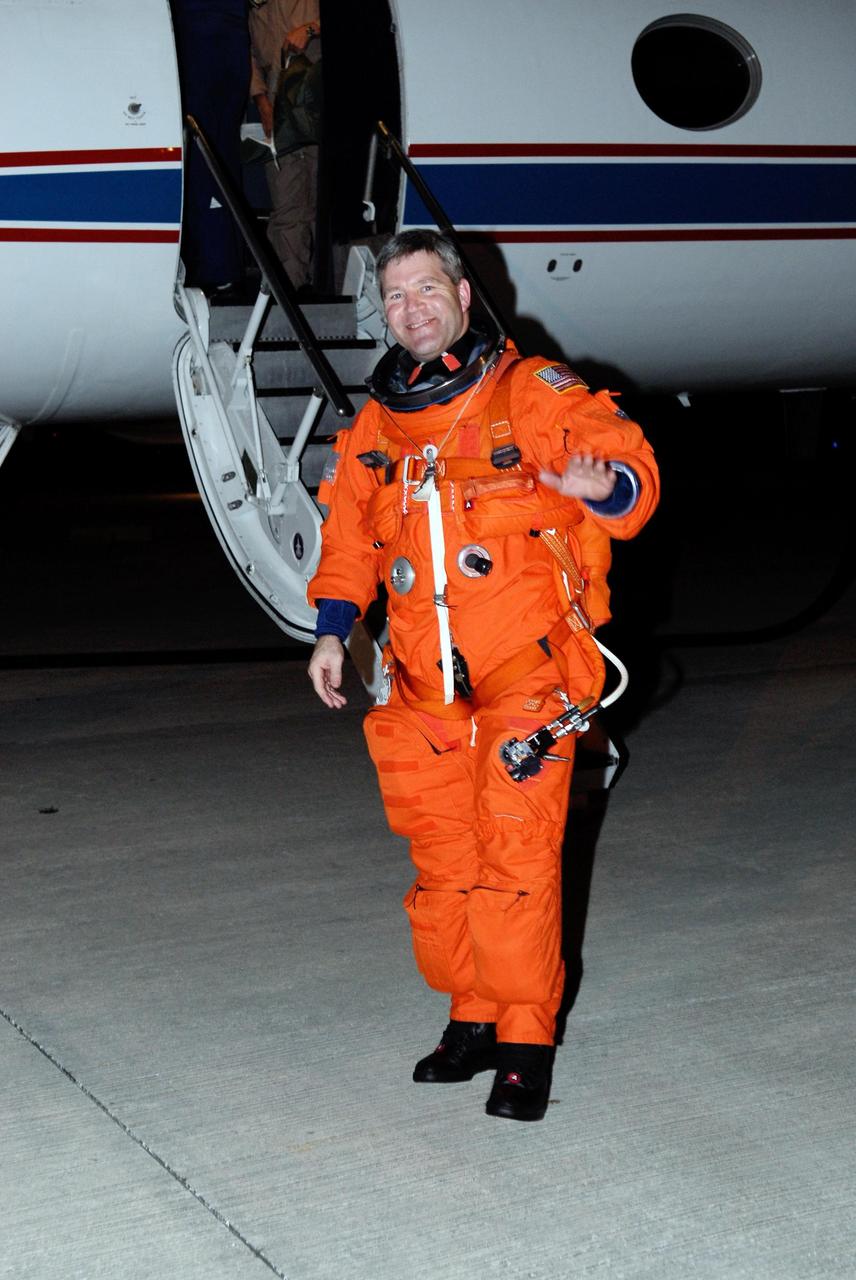
KENNEDY SPACE CENTER, FLA. -- Space shuttle Atlantis STS-122 Commander Steve Frick seems pleased with the practice session he has just completed aboard a shuttle training aircraft, or STA, at Kennedy Space Center's Shuttle Landing Facility. He and STS-122 Pilot Alan Poindexter were practicing landing the STA in preparation for their upcoming mission. The STA is a Grumman American Aviation-built Gulf Stream II jet that was modified to simulate an orbiter's cockpit, motion and visual cues, and handling qualities. In flight, the STA duplicates the orbiter's atmospheric descent trajectory from approximately 35,000 feet altitude to landing on a runway. Because the orbiter is unpowered during re-entry and landing, its high-speed glide must be perfectly executed the first time. The training is part of terminal countdown demonstration test, or TCDT, activities. The TCDT provides astronauts and ground crews with equipment familiarization, emergency egress training and a simulated launch countdown. On mission STS-122, Atlantis will deliver the European Space Agency's Columbus module to the International Space Station. Columbus is a multifunctional, pressurized laboratory that will be permanently attached to U.S. Node 2, called Harmony, and will expand the research facilities aboard the station. Launch is targeted for Dec. 6. Photo credit: NASA/Kim Shiflett
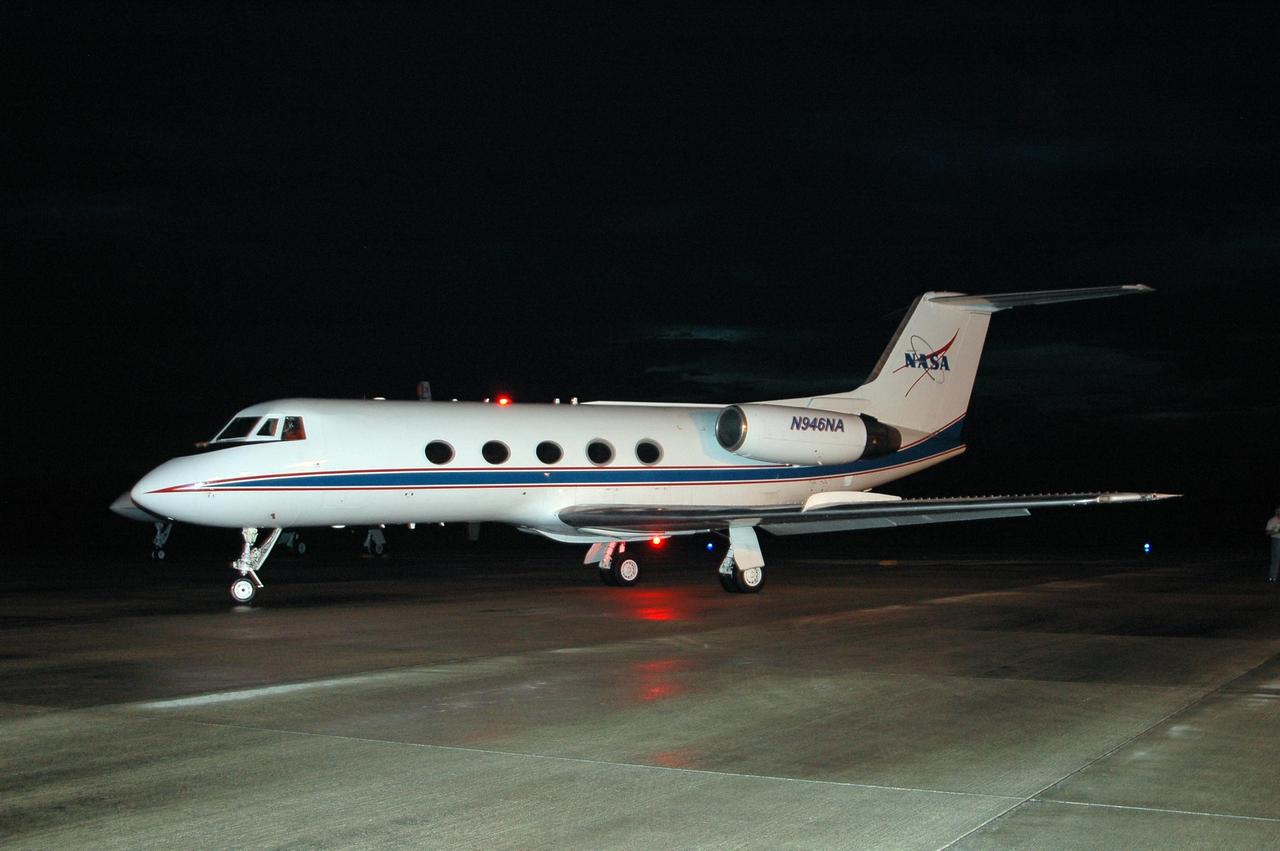
KENNEDY SPACE CENTER, FLA. - On NASA Kennedy Space Center's Shuttle Landing Facility, the Shuttle Training Aircraft taxis onto the runway. In the specially configured aircraft, STS-115 Commander Brent Jett and Pilot Christopher Ferguson will practice landing the shuttle. STA practice is part of launch preparations. The STA is a Grumman American Aviation-built Gulf Stream II jet that was modified to simulate an orbiter’s cockpit, motion and visual cues, and handling qualities. In flight, the STA duplicates the orbiter’s atmospheric descent trajectory from approximately 35,000 feet altitude to landing on a runway. Because the orbiter is unpowered during re-entry and landing, its high-speed glide must be perfectly executed the first time. Mission STS-115 is scheduled to lift off about 4:30 p.m. Aug. 27. The crew will deliver and install the P3/P4 segment to the port side of the integrated truss system on the International Space Station. The truss includes a new set of photovoltaic solar arrays. When unfurled to their full length of 240 feet, the arrays will provide additional power for the station in preparation for the delivery of international science modules over the next two years. The mission is expected to last 11 days and includes three scheduled spacewalks. Photo credit: NASA/Kim Shiflett
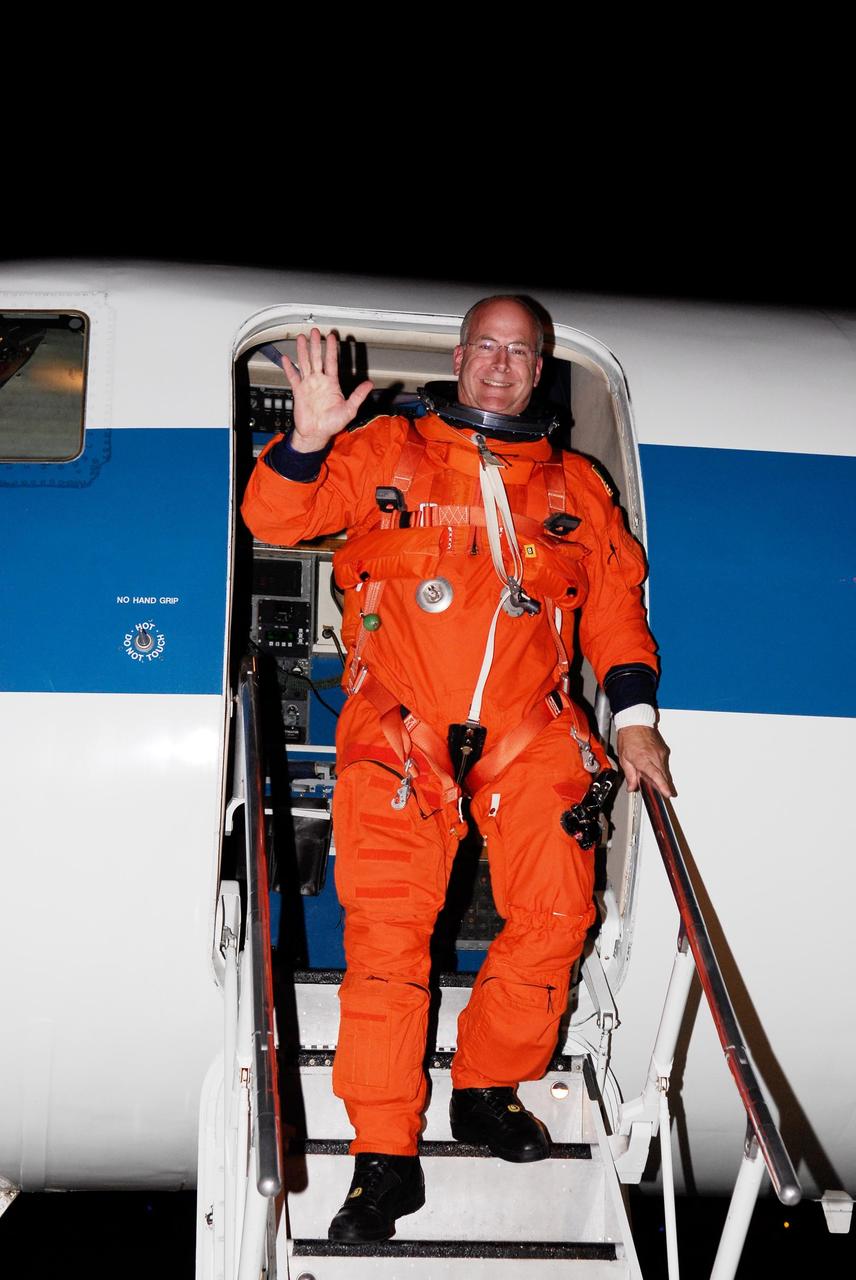
KENNEDY SPACE CENTER, FLA. -- Space shuttle Atlantis STS-122 Pilot Alan Poindexter disembarks from a shuttle training aircraft, or STA, at Kennedy Space Center's Shuttle Landing Facility. He and STS-122 Commander Steve Frick have just completed a practice session landing the STA. The STA is a Grumman American Aviation-built Gulf Stream II jet that was modified to simulate an orbiter's cockpit, motion and visual cues, and handling qualities. In flight, the STA duplicates the orbiter's atmospheric descent trajectory from approximately 35,000 feet altitude to landing on a runway. Because the orbiter is unpowered during re-entry and landing, its high-speed glide must be perfectly executed the first time. The training is part of terminal countdown demonstration test, or TCDT, activities. The TCDT provides astronauts and ground crews with equipment familiarization, emergency egress training and a simulated launch countdown. On mission STS-122, Atlantis will deliver the European Space Agency's Columbus module to the International Space Station. Columbus is a multifunctional, pressurized laboratory that will be permanently attached to U.S. Node 2, called Harmony, and will expand the research facilities aboard the station. Launch is targeted for Dec. 6. Photo credit: NASA/Kim Shiflett
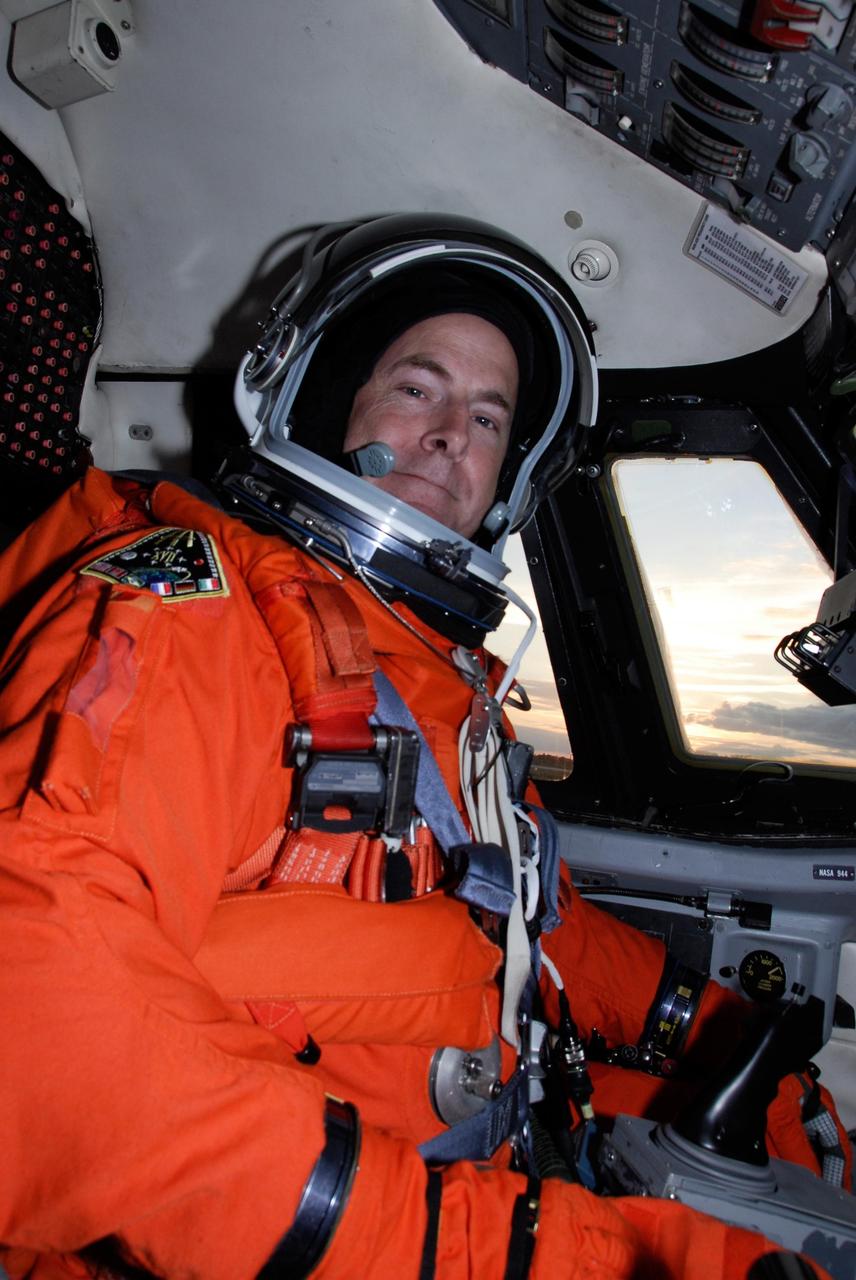
KENNEDY SPACE CENTER, FLA. -- Space shuttle Atlantis STS-122 Pilot Alan Poindexter prepares to practice shuttle landings. He is getting settled in the cockpit of a shuttle training aircraft, or STA, at Kennedy Space Center's Shuttle Landing Facility. The STA is a Grumman American Aviation-built Gulf Stream II jet that was modified to simulate an orbiter's cockpit, motion and visual cues, and handling qualities. In flight, the STA duplicates the orbiter's atmospheric descent trajectory from approximately 35,000 feet altitude to landing on a runway. Because the orbiter is unpowered during re-entry and landing, its high-speed glide must be perfectly executed the first time. The training is part of terminal countdown demonstration test, or TCDT, activities. The TCDT provides astronauts and ground crews with equipment familiarization, emergency egress training and a simulated launch countdown. On mission STS-122, Atlantis will deliver the European Space Agency's Columbus module to the International Space Station. Columbus is a multifunctional, pressurized laboratory that will be permanently attached to U.S. Node 2, called Harmony, and will expand the research facilities aboard the station. Launch is targeted for Dec. 6. Photo credit: NASA/Kim Shiflett
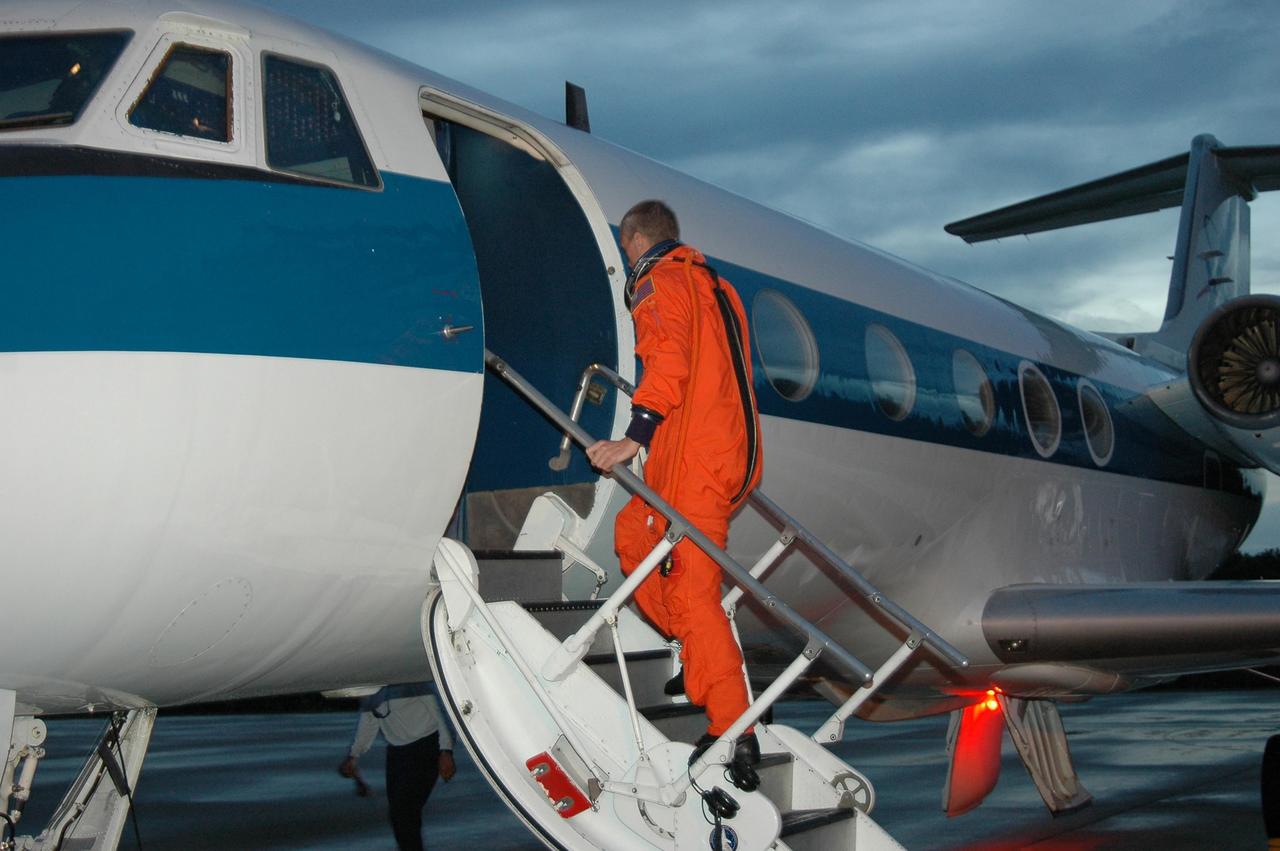
KENNEDY SPACE CENTER, FLA. - On NASA Kennedy Space Center's Shuttle Landing Facility, STS-115 Commander Brent Jett boards the Shuttle Training Aircraft to practice landing the shuttle. STA practice is part of launch preparations. The STA is a Grumman American Aviation-built Gulf Stream II jet that was modified to simulate an orbiter’s cockpit, motion and visual cues, and handling qualities. In flight, the STA duplicates the orbiter’s atmospheric descent trajectory from approximately 35,000 feet altitude to landing on a runway. Because the orbiter is unpowered during re-entry and landing, its high-speed glide must be perfectly executed the first time. Mission STS-115 is scheduled to lift off about 4:30 p.m. Aug. 27. The crew will deliver and install the P3/P4 segment to the port side of the integrated truss system on the International Space Station. The truss includes a new set of photovoltaic solar arrays. When unfurled to their full length of 240 feet, the arrays will provide additional power for the station in preparation for the delivery of international science modules over the next two years. The mission is expected to last 11 days and includes three scheduled spacewalks. Photo credit: NASA/Kim Shiflett
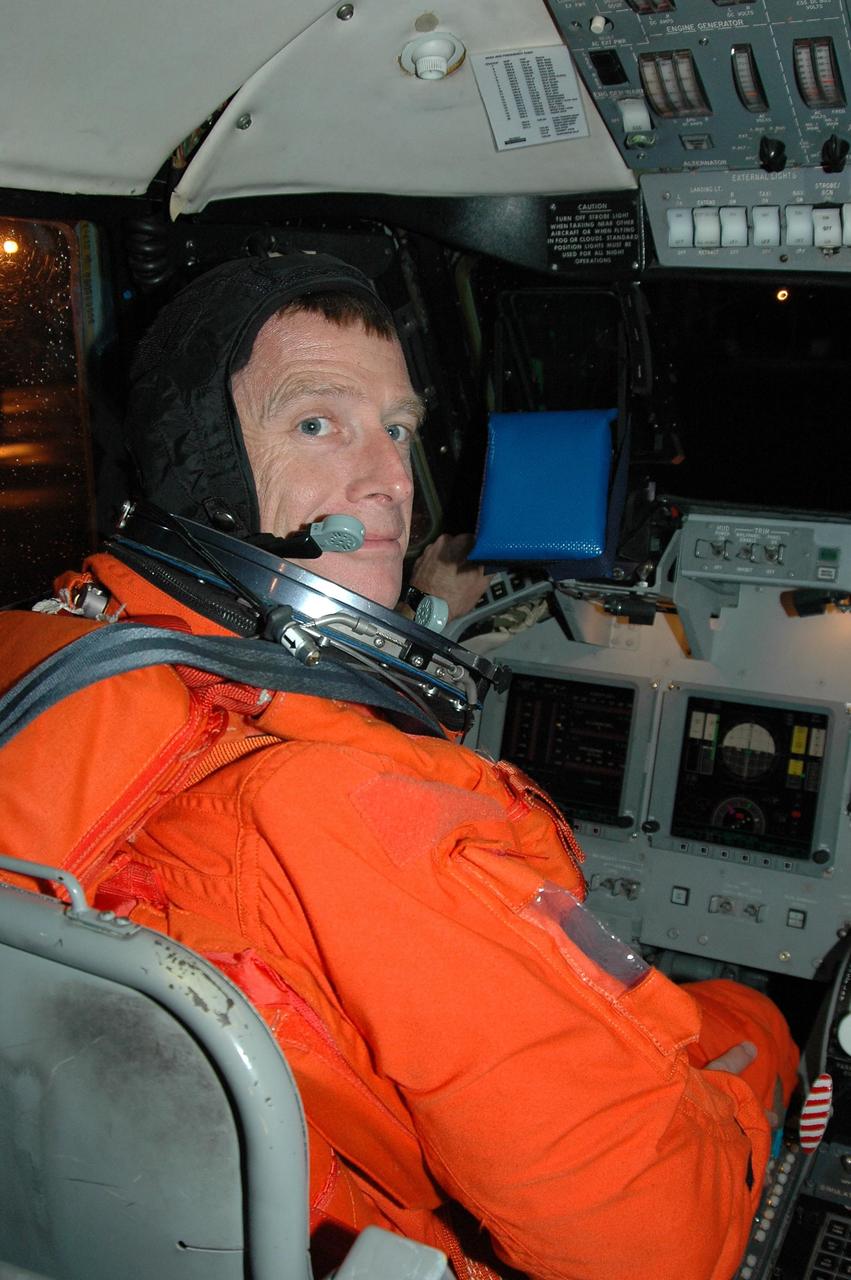
KENNEDY SPACE CENTER, FLA. - STS-115 Pilot Christopher Ferguson settles in the cockpit of the Shuttle Training Aircraft to practice landing the shuttle. STA practice is part of launch preparations. The STA is a Grumman American Aviation-built Gulf Stream II jet that was modified to simulate an orbiter’s cockpit, motion and visual cues, and handling qualities. In flight, the STA duplicates the orbiter’s atmospheric descent trajectory from approximately 35,000 feet altitude to landing on a runway. Because the orbiter is unpowered during re-entry and landing, its high-speed glide must be perfectly executed the first time. Mission STS-115 is scheduled to lift off about 4:30 p.m. Aug. 27. The crew will deliver and install the P3/P4 segment to the port side of the integrated truss system on the International Space Station. The truss includes a new set of photovoltaic solar arrays. When unfurled to their full length of 240 feet, the arrays will provide additional power for the station in preparation for the delivery of international science modules over the next two years. The mission is expected to last 11 days and includes three scheduled spacewalks. Photo credit: NASA/Kim Shiflett
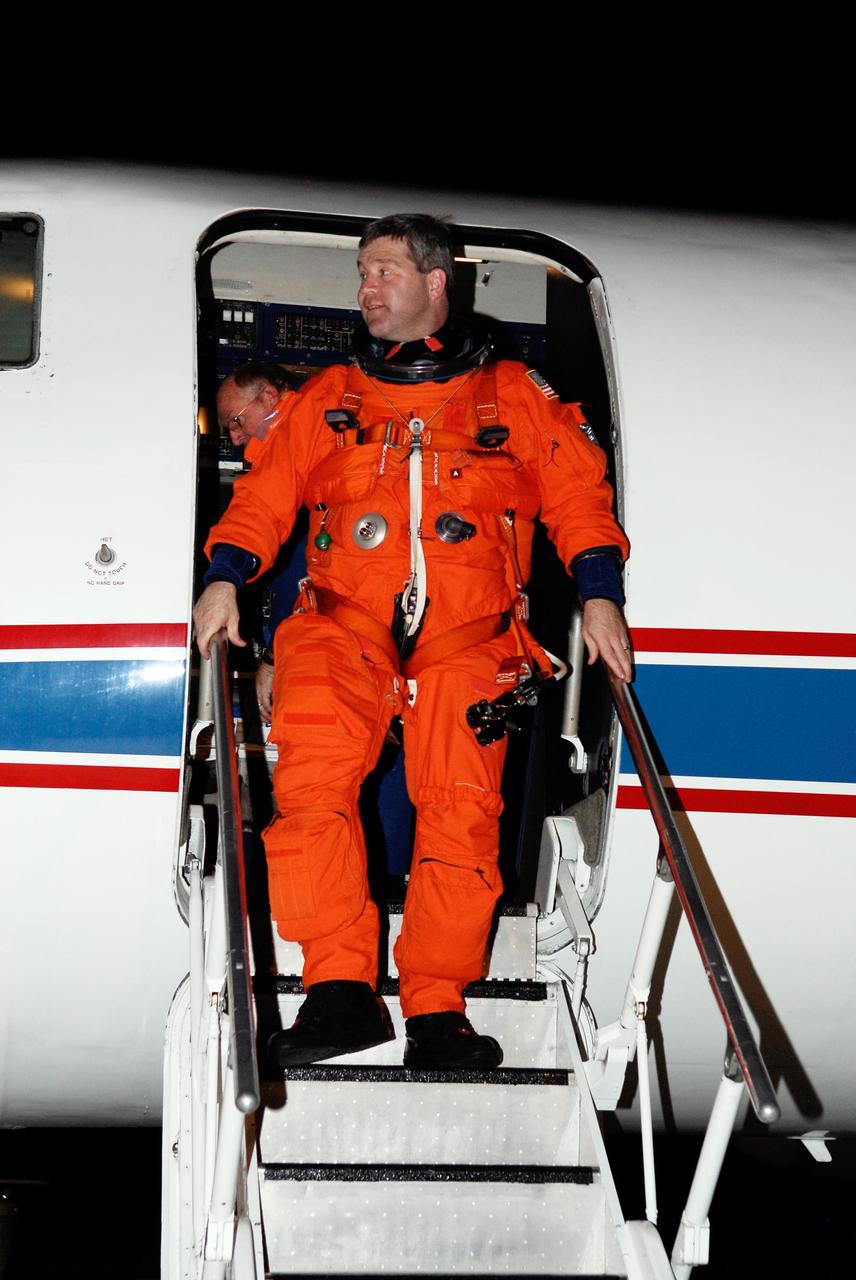
KENNEDY SPACE CENTER, FLA. -- Space shuttle Atlantis STS-122 Commander Steve Frick disembarks from a shuttle training aircraft, or STA, at Kennedy Space Center's Shuttle Landing Facility. He and STS-122 Pilot Alan Poindexter have just completed a practice session landing the STA. The STA is a Grumman American Aviation-built Gulf Stream II jet that was modified to simulate an orbiter's cockpit, motion and visual cues, and handling qualities. In flight, the STA duplicates the orbiter's atmospheric descent trajectory from approximately 35,000 feet altitude to landing on a runway. Because the orbiter is unpowered during re-entry and landing, its high-speed glide must be perfectly executed the first time. The training is part of terminal countdown demonstration test, or TCDT, activities. The TCDT provides astronauts and ground crews with equipment familiarization, emergency egress training and a simulated launch countdown. On mission STS-122, Atlantis will deliver the European Space Agency's Columbus module to the International Space Station. Columbus is a multifunctional, pressurized laboratory that will be permanently attached to U.S. Node 2, called Harmony, and will expand the research facilities aboard the station. Launch is targeted for Dec. 6. Photo credit: NASA/Kim Shiflett
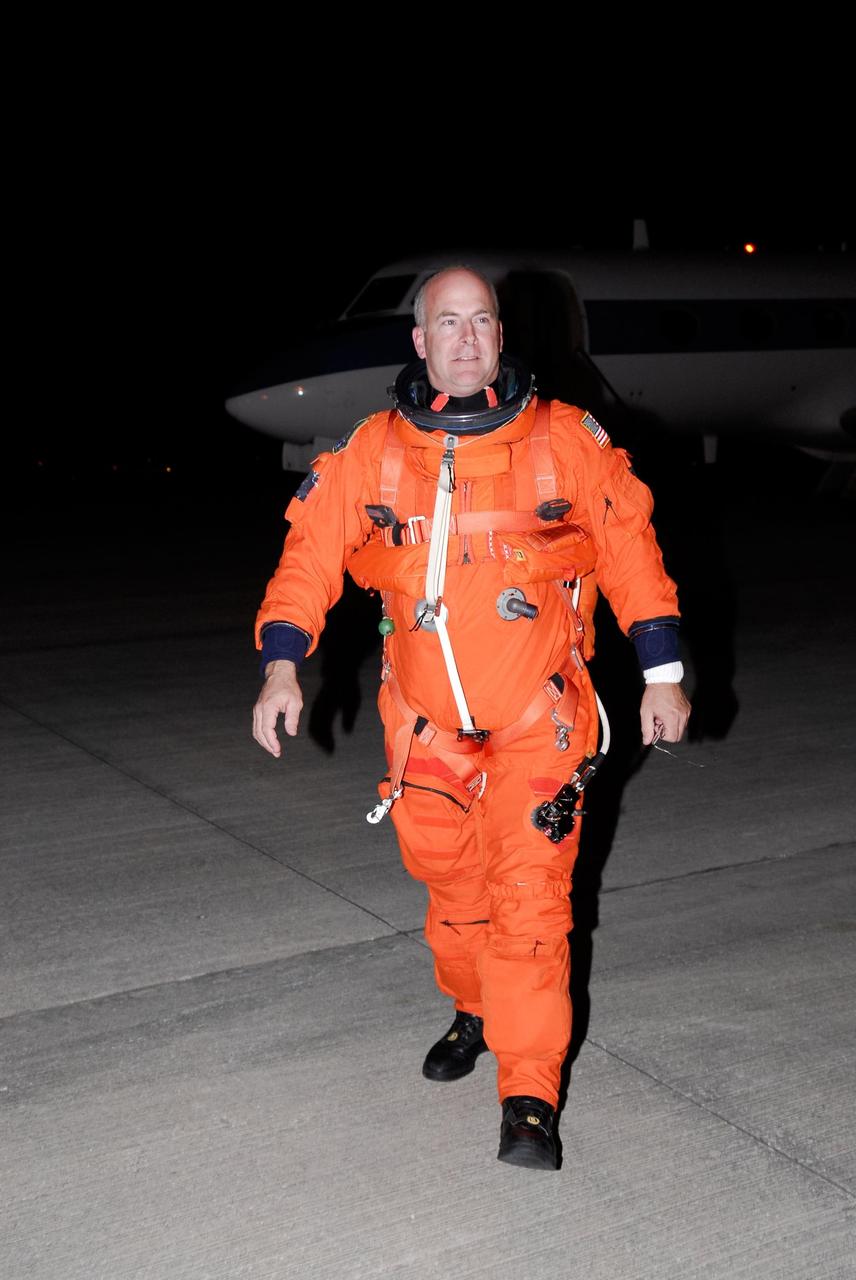
KENNEDY SPACE CENTER, FLA. -- Space shuttle Atlantis STS-122 Pilot Alan Poindexter seems satisfied with the practice session he has just completed aboard a shuttle training aircraft, or STA, at Kennedy Space Center's Shuttle Landing Facility. He and STS-122 Commander Steve Frick were practicing landing the STA in preparation for their upcoming mission. The STA is a Grumman American Aviation-built Gulf Stream II jet that was modified to simulate an orbiter's cockpit, motion and visual cues, and handling qualities. In flight, the STA duplicates the orbiter's atmospheric descent trajectory from approximately 35,000 feet altitude to landing on a runway. Because the orbiter is unpowered during re-entry and landing, its high-speed glide must be perfectly executed the first time. The training is part of terminal countdown demonstration test, or TCDT, activities. The TCDT provides astronauts and ground crews with equipment familiarization, emergency egress training and a simulated launch countdown. On mission STS-122, Atlantis will deliver the European Space Agency's Columbus module to the International Space Station. Columbus is a multifunctional, pressurized laboratory that will be permanently attached to U.S. Node 2, called Harmony, and will expand the research facilities aboard the station. Launch is targeted for Dec. 6. Photo credit: NASA/Kim Shiflett
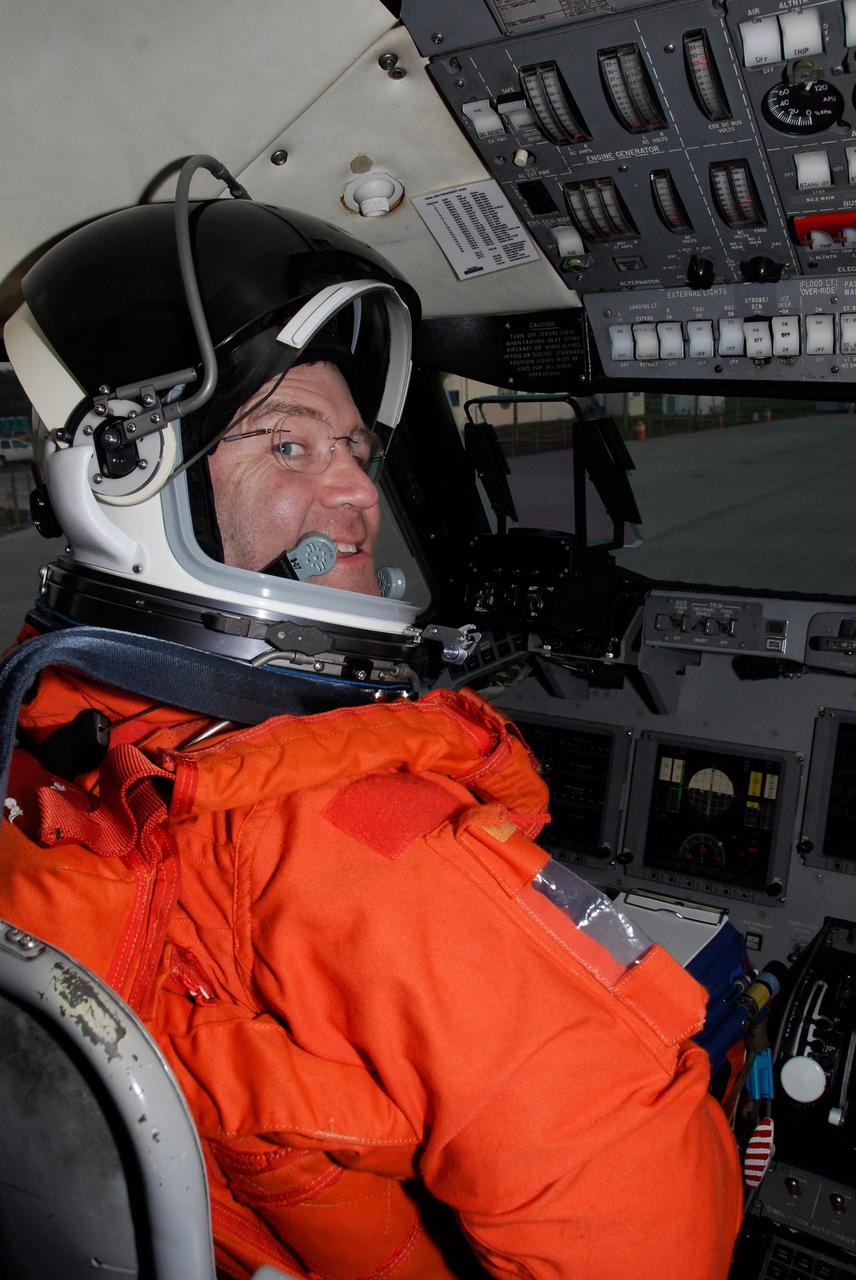
KENNEDY SPACE CENTER, FLA. -- Space shuttle Atlantis STS-122 Commander Steve Frick prepares to practice shuttle landings. He is sitting in the cockpit of a shuttle training aircraft, or STA, at Kennedy Space Center's Shuttle Landing Facility. The STA is a Grumman American Aviation-built Gulf Stream II jet that was modified to simulate an orbiter's cockpit, motion and visual cues, and handling qualities. In flight, the STA duplicates the orbiter's atmospheric descent trajectory from approximately 35,000 feet altitude to landing on a runway. Because the orbiter is unpowered during re-entry and landing, its high-speed glide must be perfectly executed the first time. The training is part of terminal countdown demonstration test, or TCDT, activities. The TCDT provides astronauts and ground crews with equipment familiarization, emergency egress training and a simulated launch countdown. On mission STS-122, Atlantis will deliver the European Space Agency's Columbus module to the International Space Station. Columbus is a multifunctional, pressurized laboratory that will be permanently attached to U.S. Node 2, called Harmony, and will expand the research facilities aboard the station. Launch is targeted for Dec. 6. Photo credit: NASA/Kim Shiflett
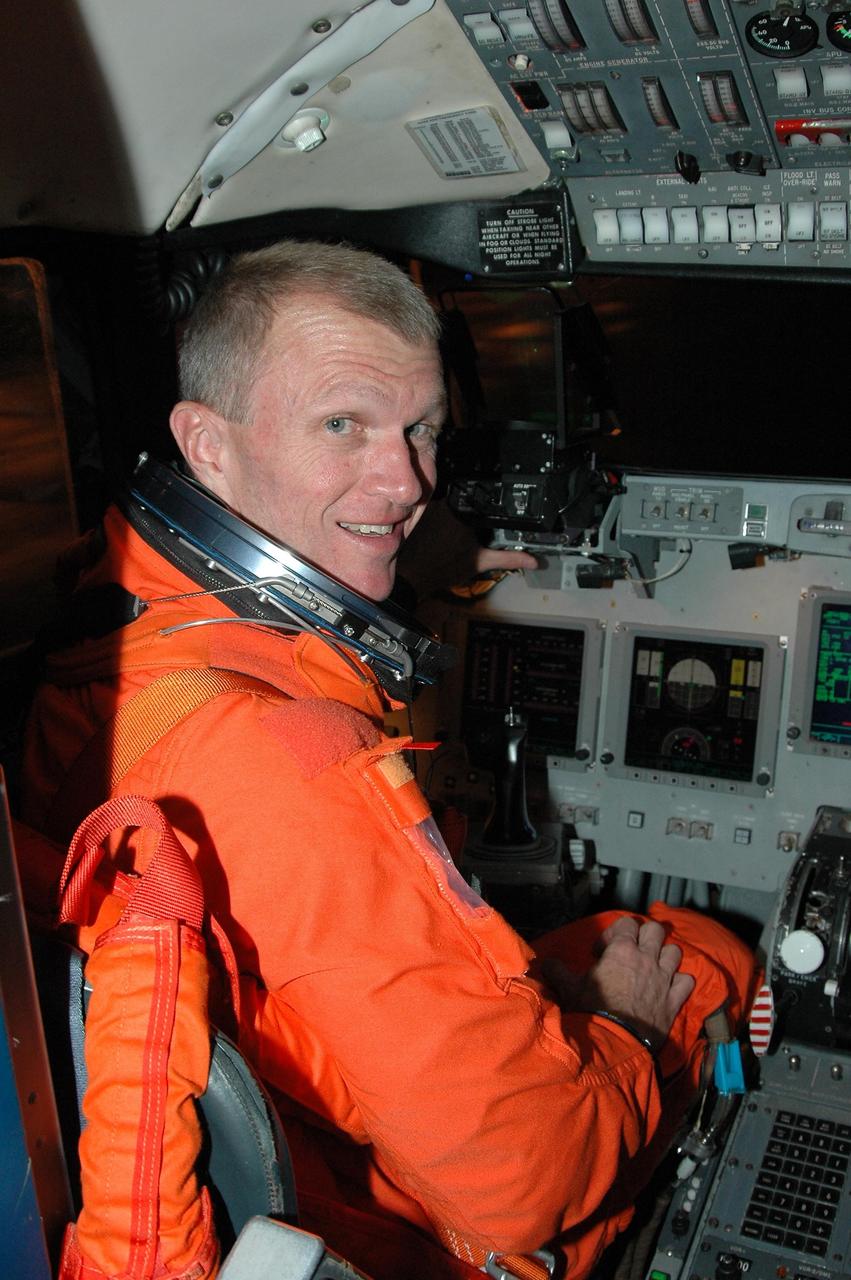
KENNEDY SPACE CENTER, FLA. - STS-115 Commander Brent Jett settles in the cockpit of the Shuttle Training Aircraft to practice landing the shuttle. STA practice is part of launch preparations. The STA is a Grumman American Aviation-built Gulf Stream II jet that was modified to simulate an orbiter’s cockpit, motion and visual cues, and handling qualities. In flight, the STA duplicates the orbiter’s atmospheric descent trajectory from approximately 35,000 feet altitude to landing on a runway. Because the orbiter is unpowered during re-entry and landing, its high-speed glide must be perfectly executed the first time. Mission STS-115 is scheduled to lift off about 4:30 p.m. Aug. 27. The crew will deliver and install the P3/P4 segment to the port side of the integrated truss system on the International Space Station. The truss includes a new set of photovoltaic solar arrays. When unfurled to their full length of 240 feet, the arrays will provide additional power for the station in preparation for the delivery of international science modules over the next two years. The mission is expected to last 11 days and includes three scheduled spacewalks. Photo credit: NASA/Kim Shiflett
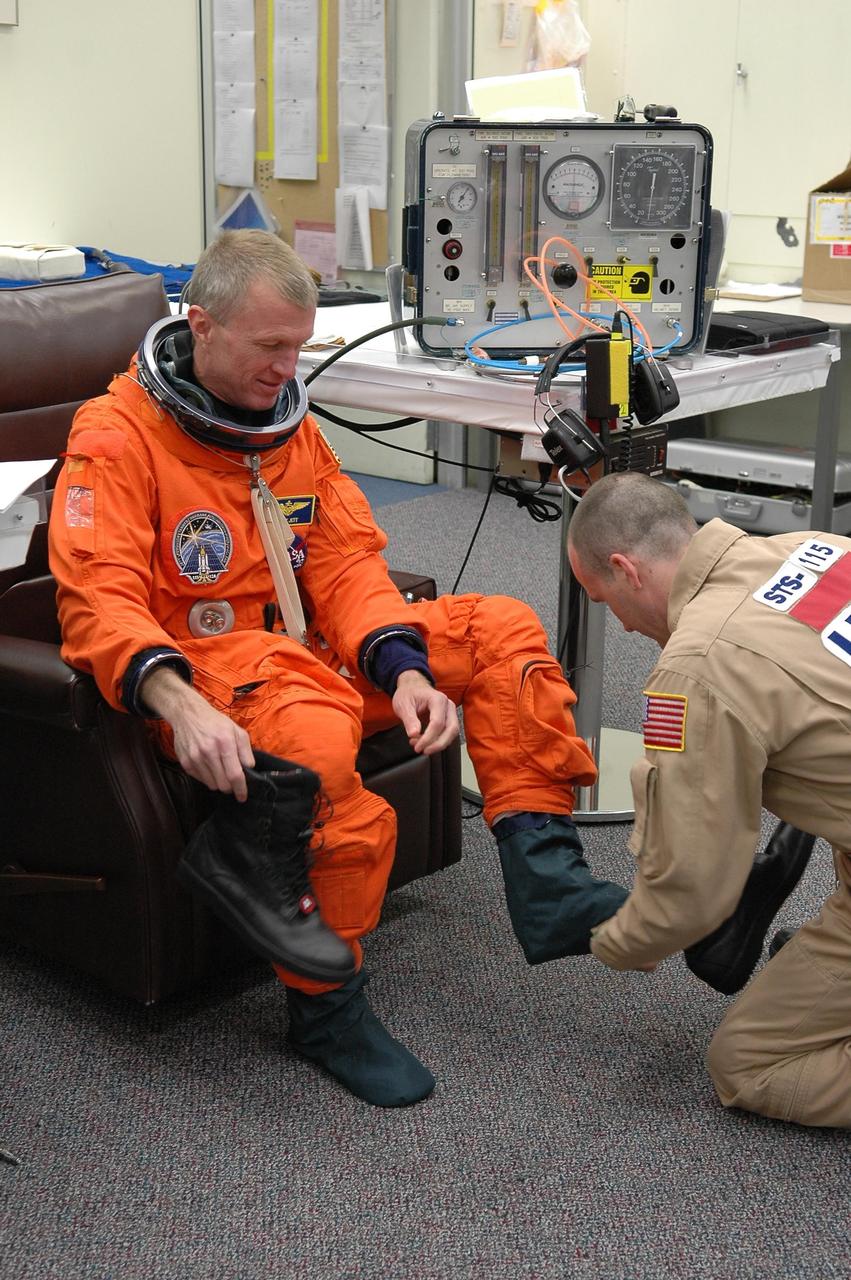
KENNEDY SPACE CENTER, FLA. - STS-115 Commander Brent Jett is helped donning his launch suit before flying the Shuttle Training Aircraft to practice landing the shuttle. STA practice is part of launch preparations. The STA is a Grumman American Aviation-built Gulf Stream II jet that was modified to simulate an orbiter’s cockpit, motion and visual cues, and handling qualities. In flight, the STA duplicates the orbiter’s atmospheric descent trajectory from approximately 35,000 feet altitude to landing on a runway. Because the orbiter is unpowered during re-entry and landing, its high-speed glide must be perfectly executed the first time. Mission STS-115 is scheduled to lift off about 4:30 p.m. Aug. 27. The crew will deliver and install the P3/P4 segment to the port side of the integrated truss system on the International Space Station. The truss includes a new set of photovoltaic solar arrays. When unfurled to their full length of 240 feet, the arrays will provide additional power for the station in preparation for the delivery of international science modules over the next two years. The mission is expected to last 11 days and includes three scheduled spacewalks. Photo credit: NASA/Kim Shiflett
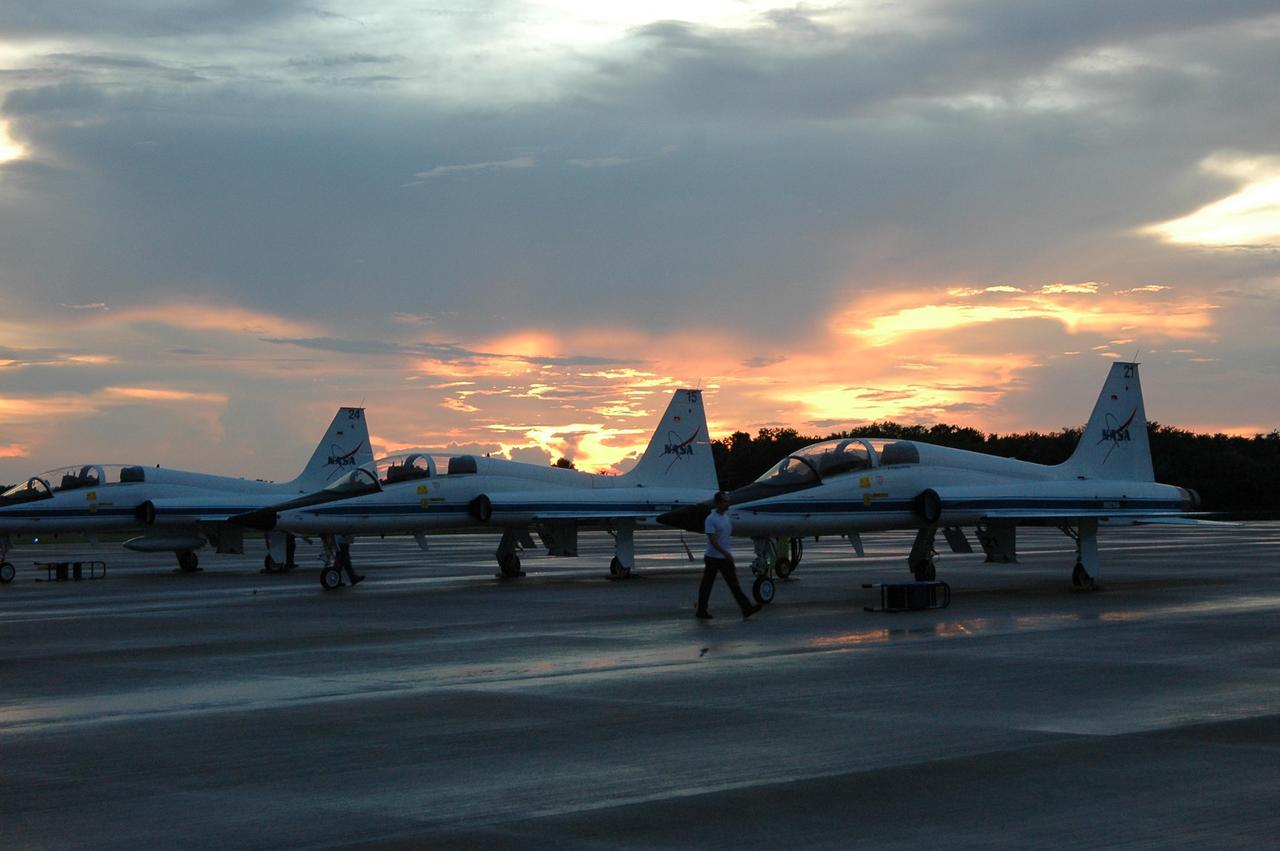
KENNEDY SPACE CENTER, FLA. - Under cloudy skies at sunset, T-38 jet aircraft are lined up on the NASA Kennedy Space Center's Shuttle Landing Facility where STS-115 Commander Brent Jett and Pilot Christopher Ferguson will be climbing aboard the Shuttle Training Aircraft to practice landing the shuttle. STA practice is part of launch preparations. The STA is a Grumman American Aviation-built Gulf Stream II jet that was modified to simulate an orbiter’s cockpit, motion and visual cues, and handling qualities. In flight, the STA duplicates the orbiter’s atmospheric descent trajectory from approximately 35,000 feet altitude to landing on a runway. Because the orbiter is unpowered during re-entry and landing, its high-speed glide must be perfectly executed the first time. Mission STS-115 is scheduled to lift off about 4:30 p.m. Aug. 27. The crew will deliver and install the P3/P4 segment to the port side of the integrated truss system on the International Space Station. The truss includes a new set of photovoltaic solar arrays. When unfurled to their full length of 240 feet, the arrays will provide additional power for the station in preparation for the delivery of international science modules over the next two years. The mission is expected to last 11 days and includes three scheduled spacewalks. Photo credit: NASA/Kim Shiflett
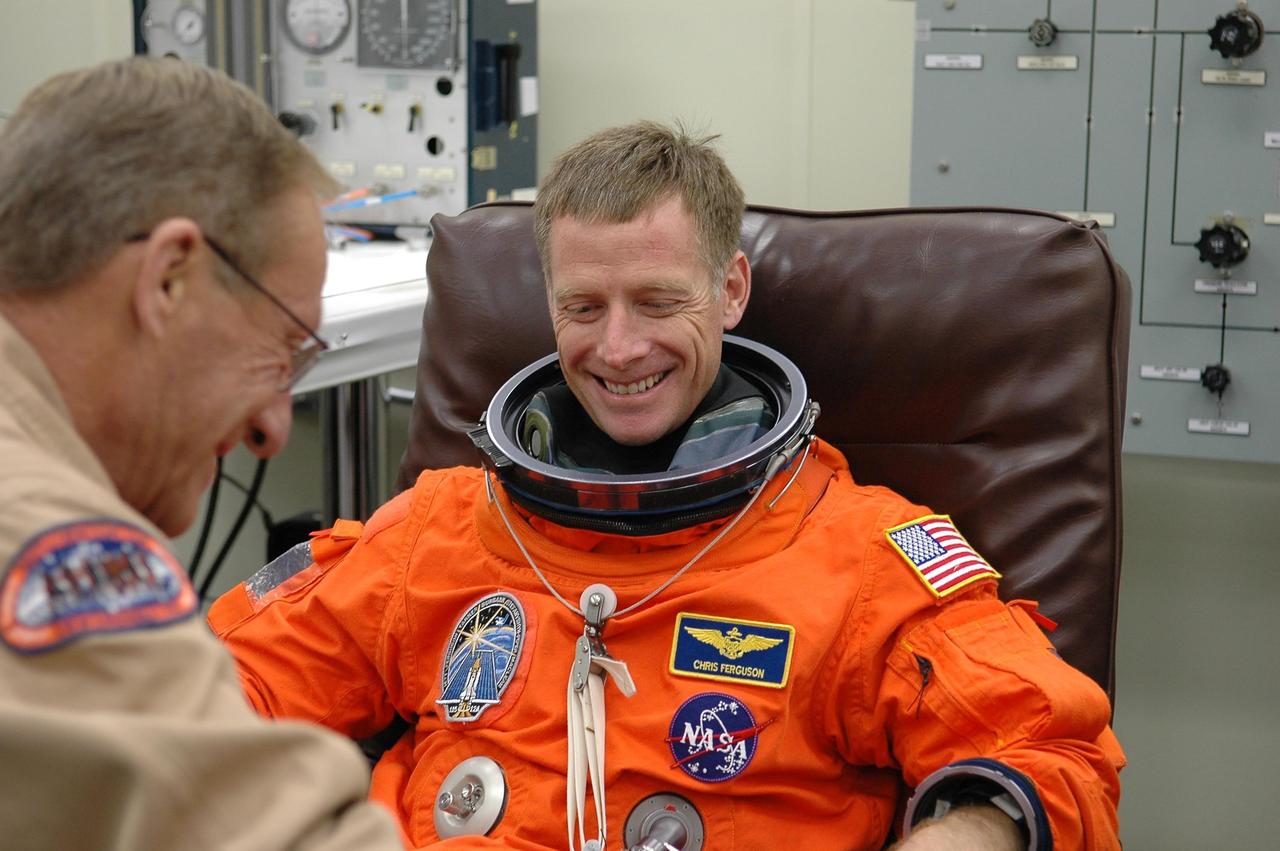
KENNEDY SPACE CENTER, FLA. - STS-115 Pilot Christopher Ferguson is helped donning his launch suit before flying the Shuttle Training Aircraft to practice landing the shuttle. STA practice is part of launch preparations. The STA is a Grumman American Aviation-built Gulf Stream II jet that was modified to simulate an orbiter’s cockpit, motion and visual cues, and handling qualities. In flight, the STA duplicates the orbiter’s atmospheric descent trajectory from approximately 35,000 feet altitude to landing on a runway. Because the orbiter is unpowered during re-entry and landing, its high-speed glide must be perfectly executed the first time. Mission STS-115 is scheduled to lift off about 4:30 p.m. Aug. 27. The crew will deliver and install the P3/P4 segment to the port side of the integrated truss system on the International Space Station. The truss includes a new set of photovoltaic solar arrays. When unfurled to their full length of 240 feet, the arrays will provide additional power for the station in preparation for the delivery of international science modules over the next two years. The mission is expected to last 11 days and includes three scheduled spacewalks. Photo credit: NASA/Kim Shiflett
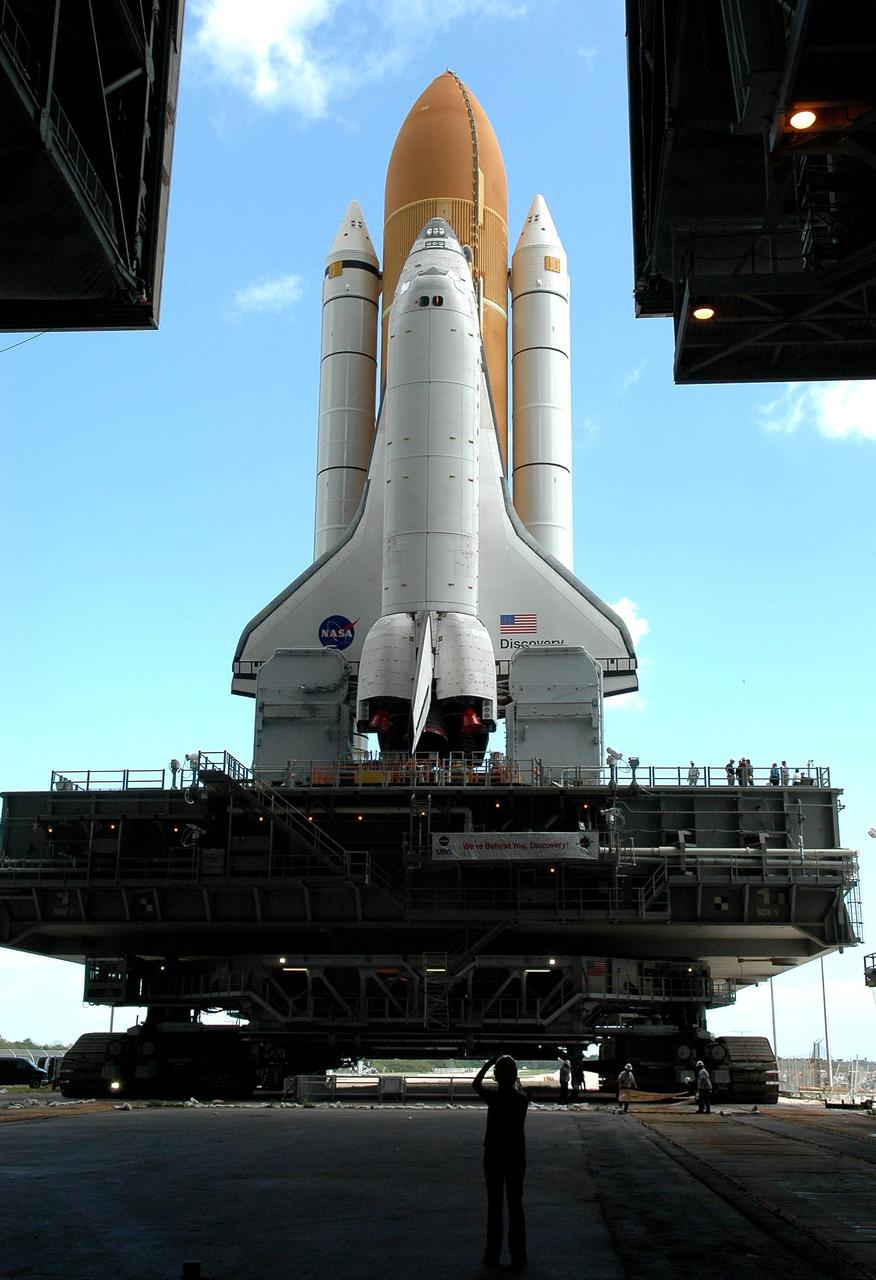
KENNEDY SPACE CENTER, FLA. - Framed in the open doors of the Vehicle Assembly Building (VAB) at NASA’s Kennedy Space Center, Space Shuttle Discovery is bathed in light as it begins its long, slow journey to Launch Pad 39B. The Space Shuttle rests on the Mobile Launcher Platform, which is moved by the Crawler-Transporter underneath. The Crawler is 20 feet high, 131 feet long and 114 feet wide. It moves on eight tracks, each containing 57 shoes, or cleats, weighing one ton each. Loaded with the Space Shuttle, the Crawler can move at a maximum speed of approximately 1 mile an hour. A leveling system in the Crawler keeps the Shuttle vertical while negotiating the 5 percent grade leading to the top of the launch pad. Launch of Discovery on its Return to Flight mission, STS-114, is targeted for May 15 with a launch window that extends to June 3. During its 12-day mission, Discovery’s seven-person crew will test new hardware and techniques to improve Shuttle safety, as well as deliver supplies to the International Space Station. Discovery was moved on March 29 from the Orbiter Processing Facility to the VAB and attached to its propulsion elements, a redesigned ET and twin SRBs.
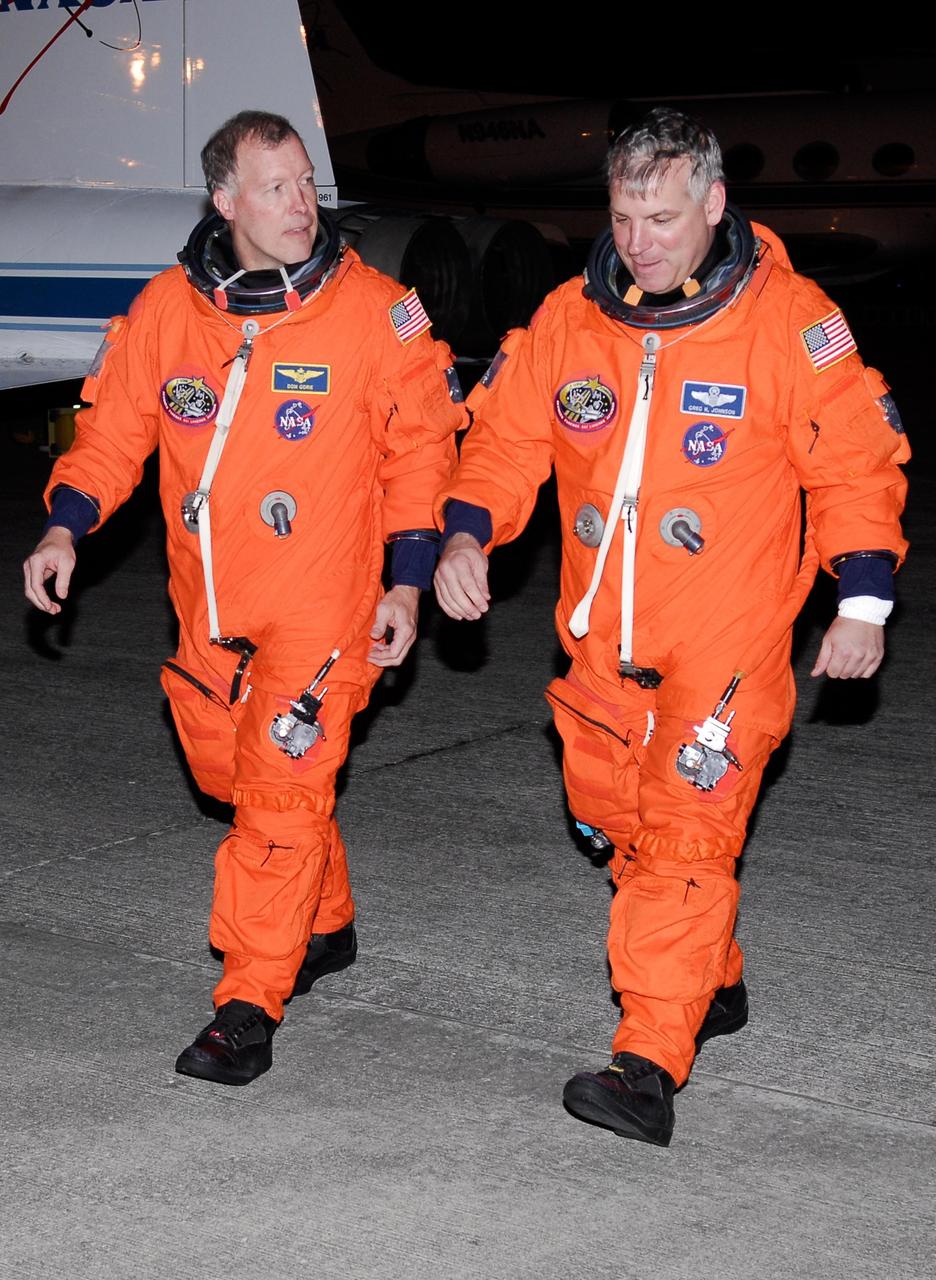
KENNEDY SPACE CENTER, FLA. -- At NASA Kennedy Space Center's Shuttle Landing Facility, STS-123 Commander Dominic Gorie , left, and Pilot Gregory H. Johnson head for crew quarters following a practice session of space shuttle landings aboard NASA's Shuttle Training Aircraft, or STAs. The STA is a Grumman American Aviation-built Gulf Stream II jet that was modified to simulate an orbiter's cockpit, motion and visual cues, and handling qualities. In flight, the STA duplicates the orbiter's atmospheric descent trajectory from approximately 35,000 feet altitude to landing on a runway. Because the orbiter is unpowered during re-entry and landing, its high-speed glide must be perfectly executed the first time. The crew for space shuttle Endeavour's STS-123 mission is at Kennedy for a full launch dress rehearsal, known as the terminal countdown demonstration test or TCDT. The terminal countdown demonstration test provides astronauts and ground crews with an opportunity to participate in various simulated countdown activities, including equipment familiarization and emergency training. Endeavour is targeted to launch March 11 at 2:28 a.m. EDT on a 16-day mission to the International Space Station. On the mission, Endeavour and its crew will deliver the first section of the Japan Aerospace Exploration Agency's Kibo laboratory and the Canadian Space Agency's two-armed robotic system, Dextre. Photo credit: NASA/Kim Shiflett
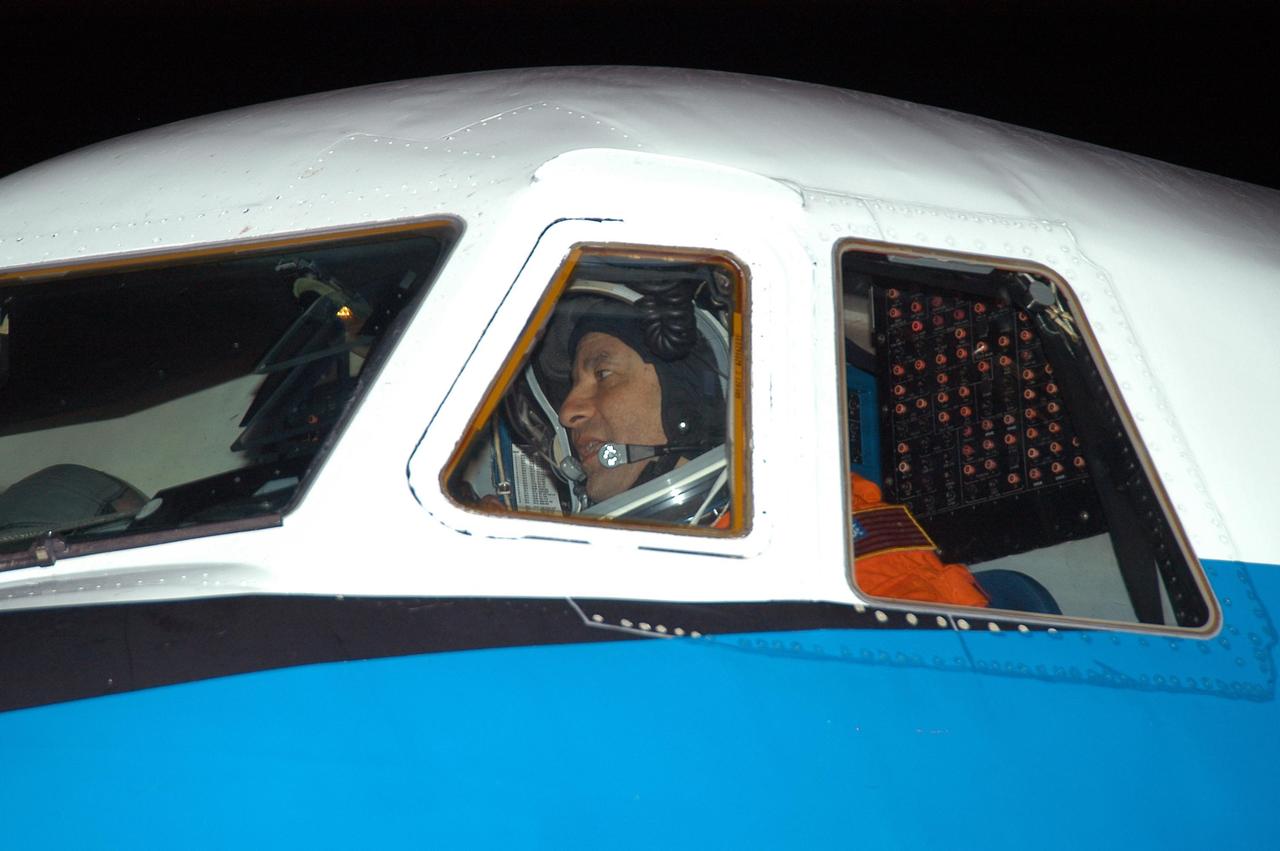
KENNEDY SPACE CENTER, FLA. -- STS-116 Commander Mark Polansky gets ready to take off in the shuttle training aircraft (STA) to practice landing the orbiter. The STA is a Grumman American Aviation-built Gulf Stream II jet that was modified to simulate an orbiter's cockpit, motion and visual cues, and handling qualities. In flight, the STA duplicates the orbiter's atmospheric descent trajectory from approximately 35,000 feet altitude to landing on a runway. Because the orbiter is unpowered during re-entry and landing, its high-speed glide must be perfectly executed the first time. Launch of Space Shuttle Discovery on mission STS-116 is scheduled for 9:35 p.m. Dec. 7. On the mission, the STS-116 crew will deliver truss segment, P5, to the International Space Station and begin the intricate process of reconfiguring and redistributing the power generated by two pairs of U.S. solar arrays. The P5 will be mated to the P4 truss that was delivered and attached during the STS-115 mission in September. Photo credit: NASA/Kim Shiflett
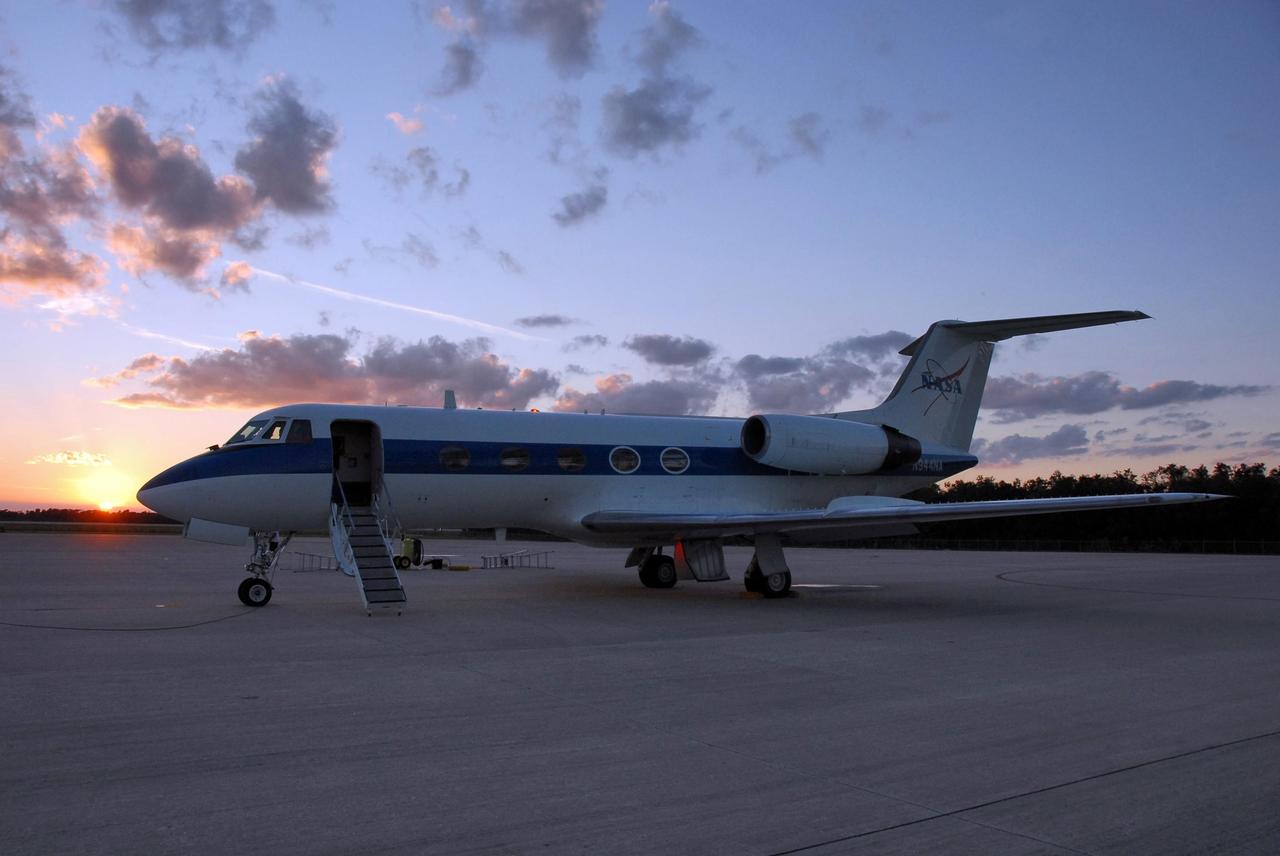
KENNEDY SPACE CENTER, FLA. -- Just at sunset, the shuttle training aircraft (STA), with STS-116 Pilot William Oefelein in the pilot's seat, waits on the Shuttle Landing Facility for the right moment to take off for orbiter landing practice. The STA is a Grumman American Aviation-built Gulf Stream II jet that was modified to simulate an orbiter's cockpit, motion and visual cues, and handling qualities. In flight, the STA duplicates the orbiter's atmospheric descent trajectory from approximately 35,000 feet altitude to landing on a runway. Because the orbiter is unpowered during re-entry and landing, its high-speed glide must be perfectly executed the first time. Launch of Space Shuttle Discovery on mission STS-116 is scheduled for 9:35 p.m. Dec. 7. On the mission, the STS-116 crew will deliver truss segment, P5, to the International Space Station and begin the intricate process of reconfiguring and redistributing the power generated by two pairs of U.S. solar arrays. The P5 will be mated to the P4 truss that was delivered and attached during the STS-115 mission in September. Photo credit: NASA/Kim Shiflett