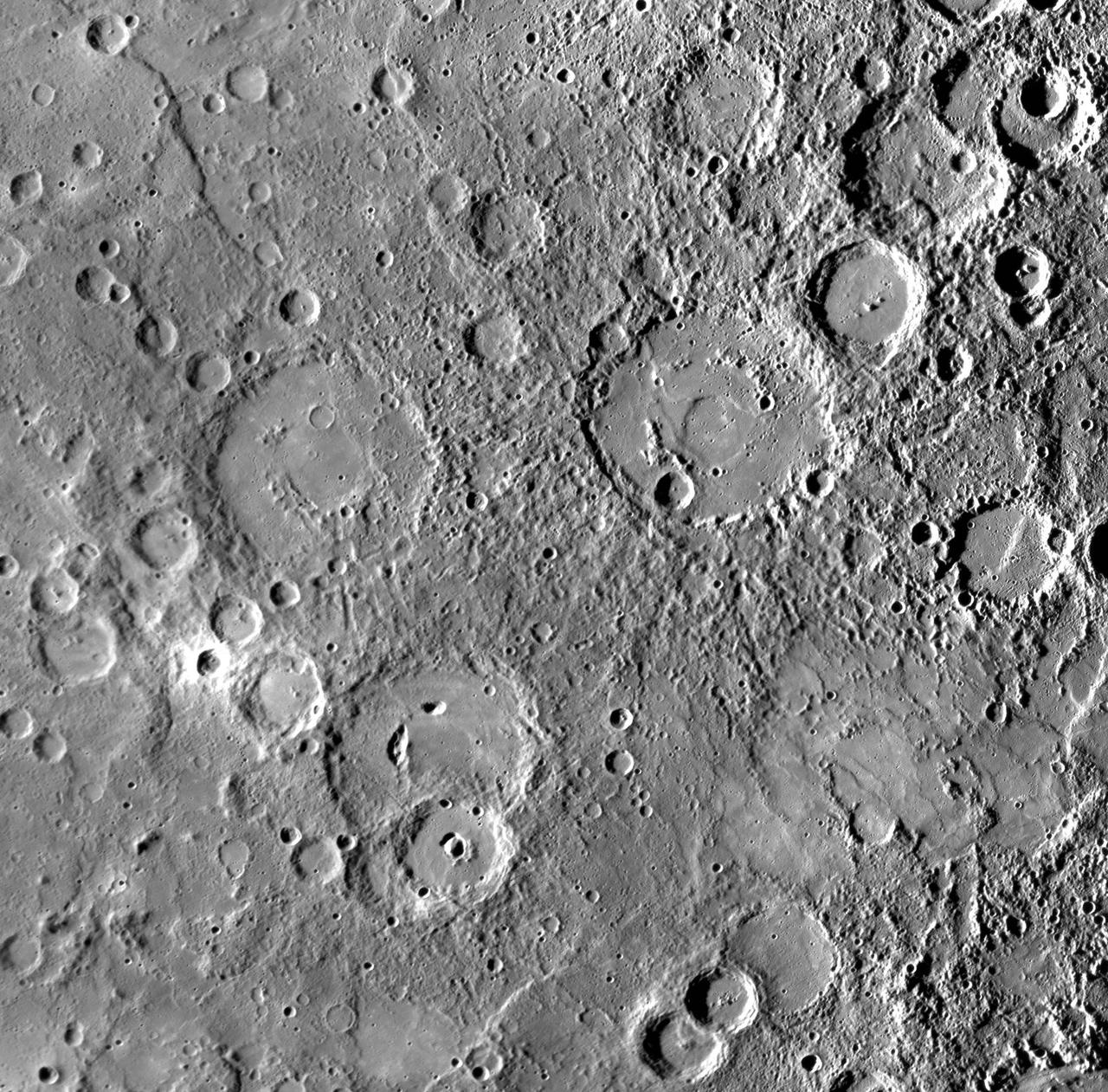
Highlighting the Craters Kipling and Steichen
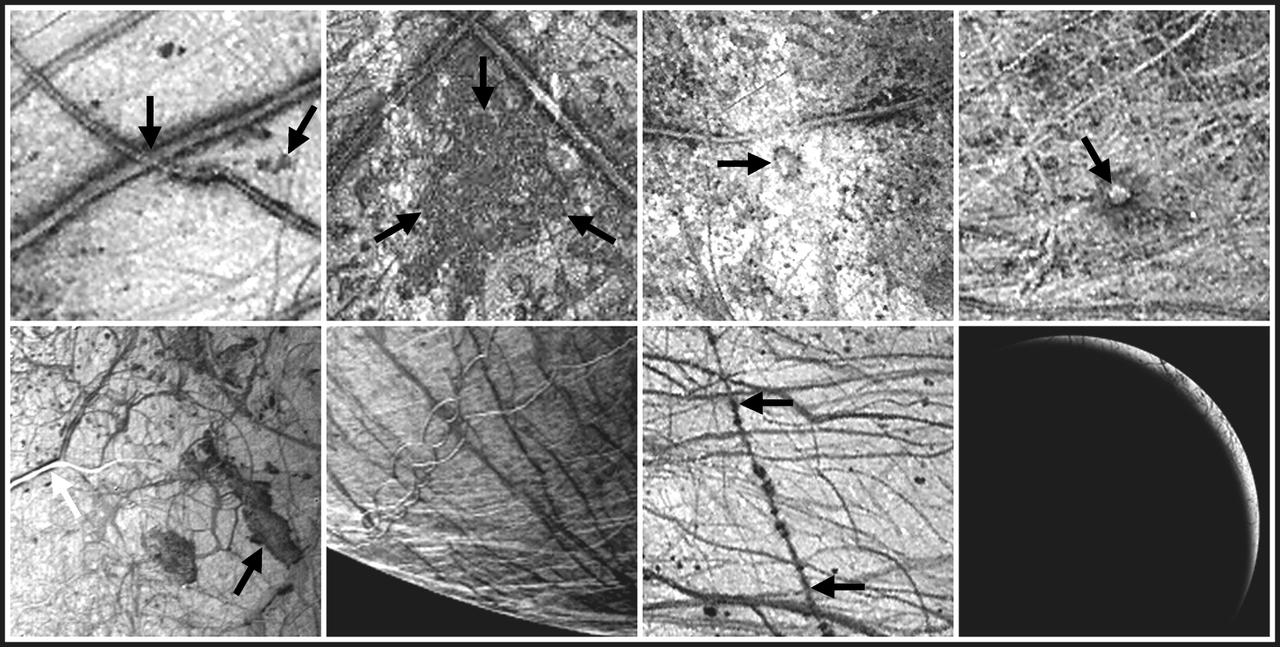
Europa Imaging Highlights During GEM
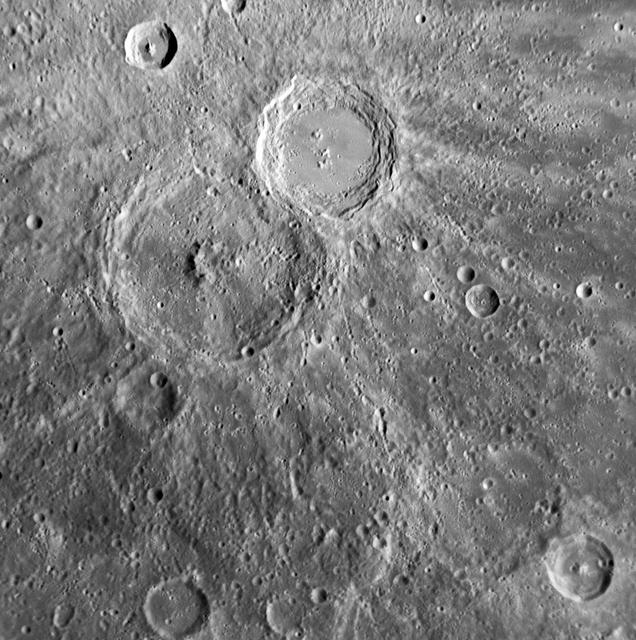
Highlighting the Newly Named Crater Eastman
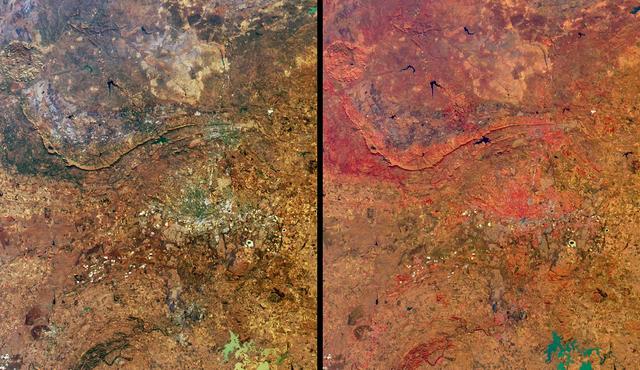
These views from NASA Terra satellite highlight a number of the land use, vegetation, and geological features found Johannesburg, Gauteng Province, South Africa.
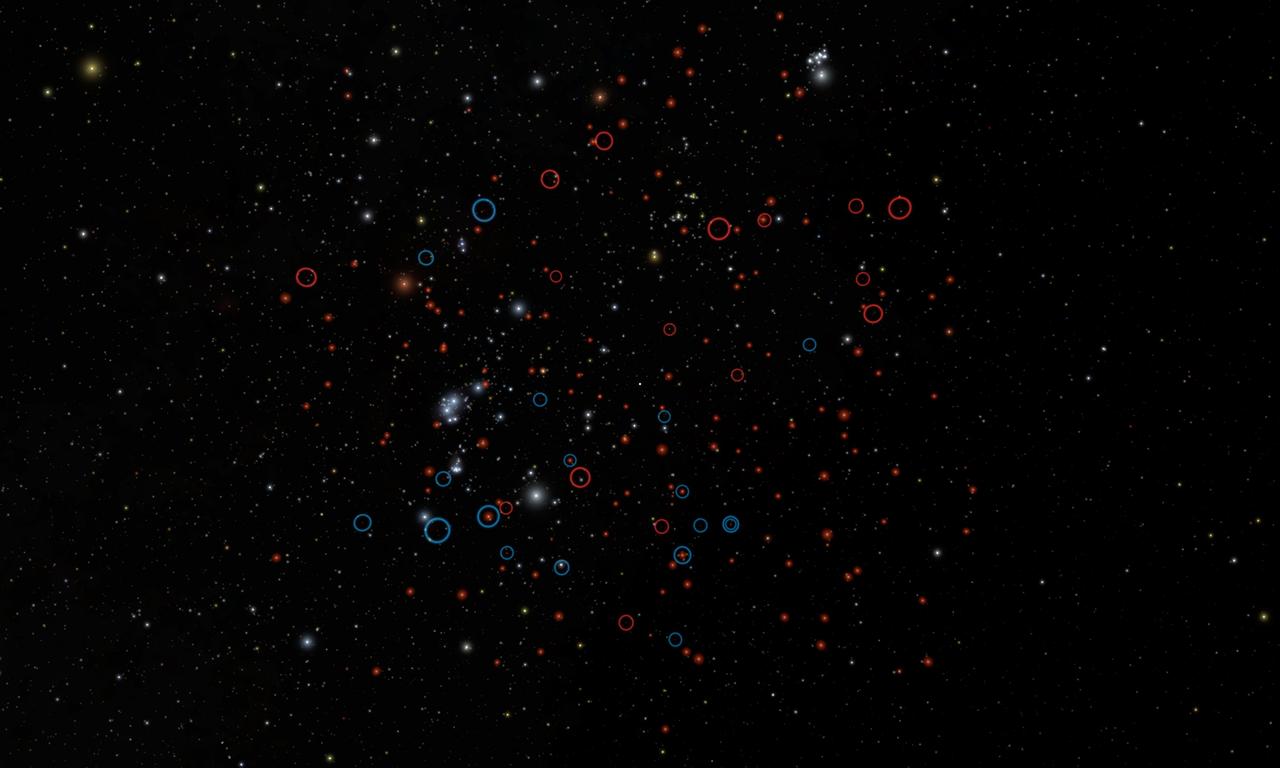
This image shows our own back yard, astronomically speaking, from a vantage point about 30 light-years away from the sun. It highlights the population of tiny brown dwarfs recently discovered by NASA WISE. The image simulates actual positions of stars.
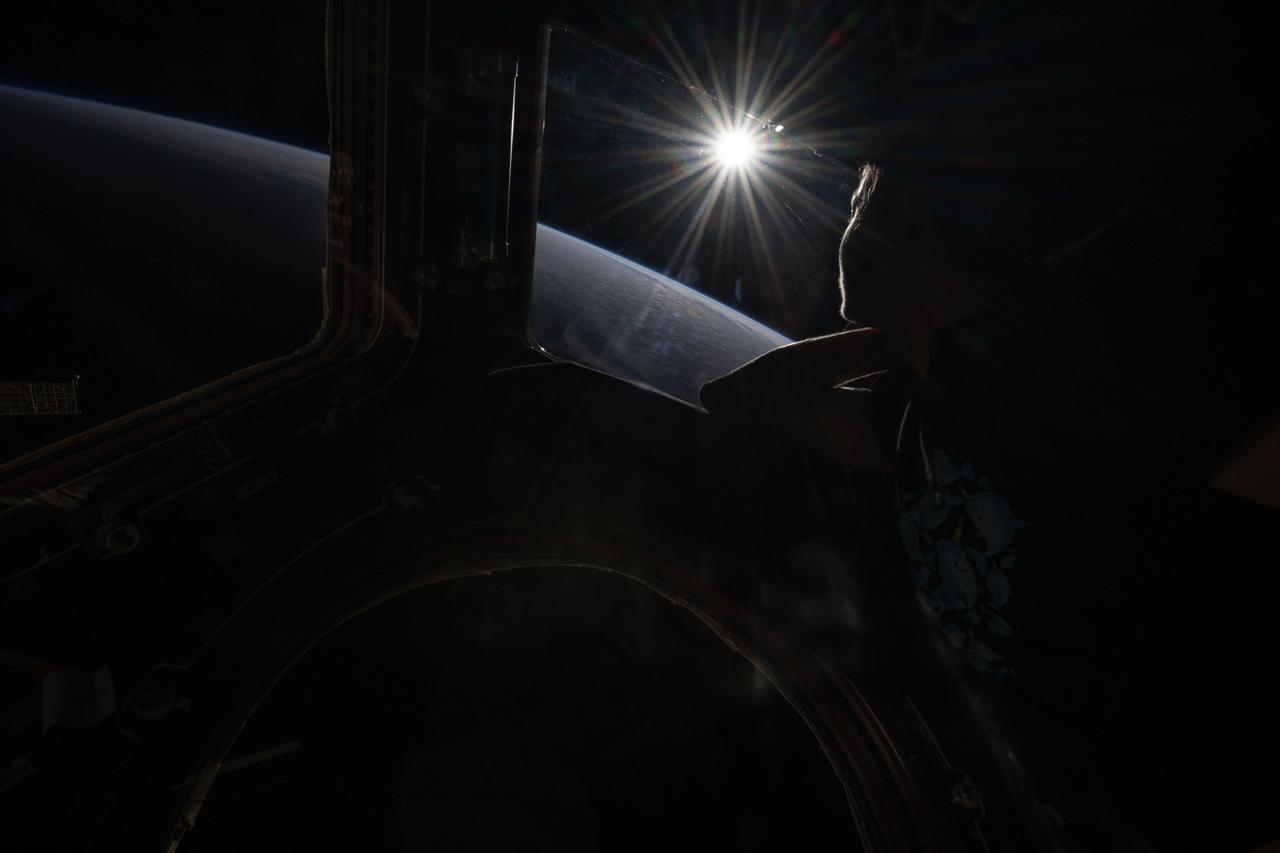
iss071e581260_alt (Sept. 1, 2024) --- The setting sun highlights Earth's horizon and reveals NASA astronaut Tracy C. Dyson's profile as she looks out the cupola, the International Space Station's "window to the world," while soaring 262 miles above the South Atlantic Ocean.

This mosaic taken by NASA's Mars Curiosity rover looks uphill at Mount Sharp, which Curiosity has been climbing. Highlighted in white is an area with clay-bearing rocks that scientists are eager to explore; it could shed additional light on the role of water in creating Mount Sharp. The mosaic was assembled from dozens of images taken by Curiosity's Mast Camera (Mastcam). It was taken on Sol 1931 back in January. Mount Sharp stands in the middle of Gale Crater, which is 96 miles (154 kilometers) in diameter. This mound, which Curiosity has been climbing since 2014, likely formed in the presence of water at various points of time in Mars ancient history. That makes it an ideal place to study how water influenced the habitability of Mars billions of years ago. The scene has been white-balanced so the colors of the rock materials resemble how they would appear under daytime lighting conditions on Earth. https://photojournal.jpl.nasa.gov/catalog/PIA22312
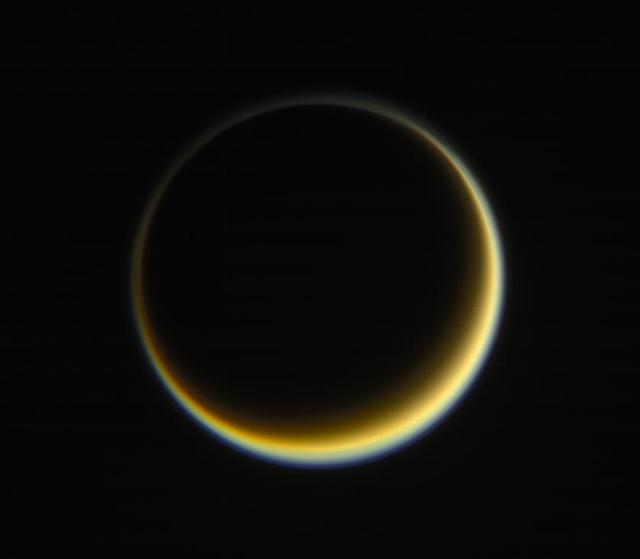
NASA's Cassini spacecraft looks toward the night side of Saturn's moon Titan in a view that highlights the extended, hazy nature of the moon's atmosphere. During its long mission at Saturn, Cassini has frequently observed Titan at viewing angles like this, where the atmosphere is backlit by the Sun, in order to make visible the structure of the hazes. Titan's high-altitude haze layer appears blue here, whereas the main atmospheric haze is orange. The difference in color could be due to particle sizes in the haze. The blue haze likely consists of smaller particles than the orange haze. Images taken using red, green and blue spectral filters were combined to create this natural-color view. The image was taken with the Cassini spacecraft narrow-angle camera on May 29, 2017. The view was acquired at a distance of approximately 1.2 million miles (2 million kilometers) from Titan. Image scale is 5 miles (9 kilometers) per pixel. https://photojournal.jpl.nasa.gov/catalog/PIA21625

Marshall Deputy Director Jody Singer Highlights SLS Progress at National Space Club

Brian Steinert, Deputy Element Discipline Lead Engineer, highlights production floor work areas at Michoud Assembly Facility where Stages hardware is being integrated and assembled.
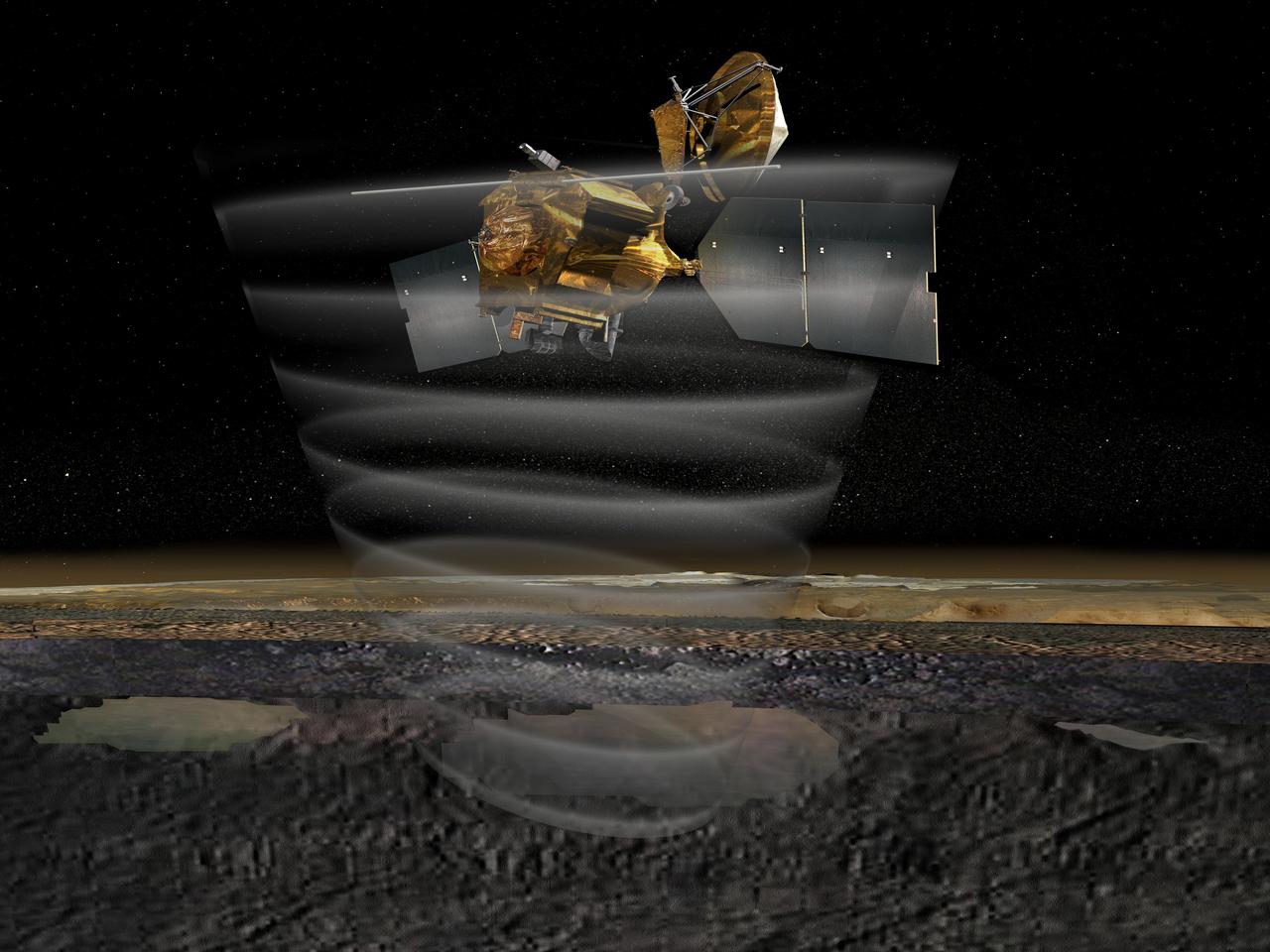
This artist concept of NASA Mars Reconnaissance Orbiter highlights the spacecraft radar capability.

jsc2024e055771 (July 26, 2024) -- Dr. Jon Olansen engages the audience at the Theater in the Woods during "The Historic Artemis II Mission" forum held at EAA AirVenture Oshkosh 2024. As the Gateway Program Manager, Olansen highlights Gateway's pivotal role in supporting the Artemis era of lunar exploration. Photo Credit: NASA/Andrew Carlsen
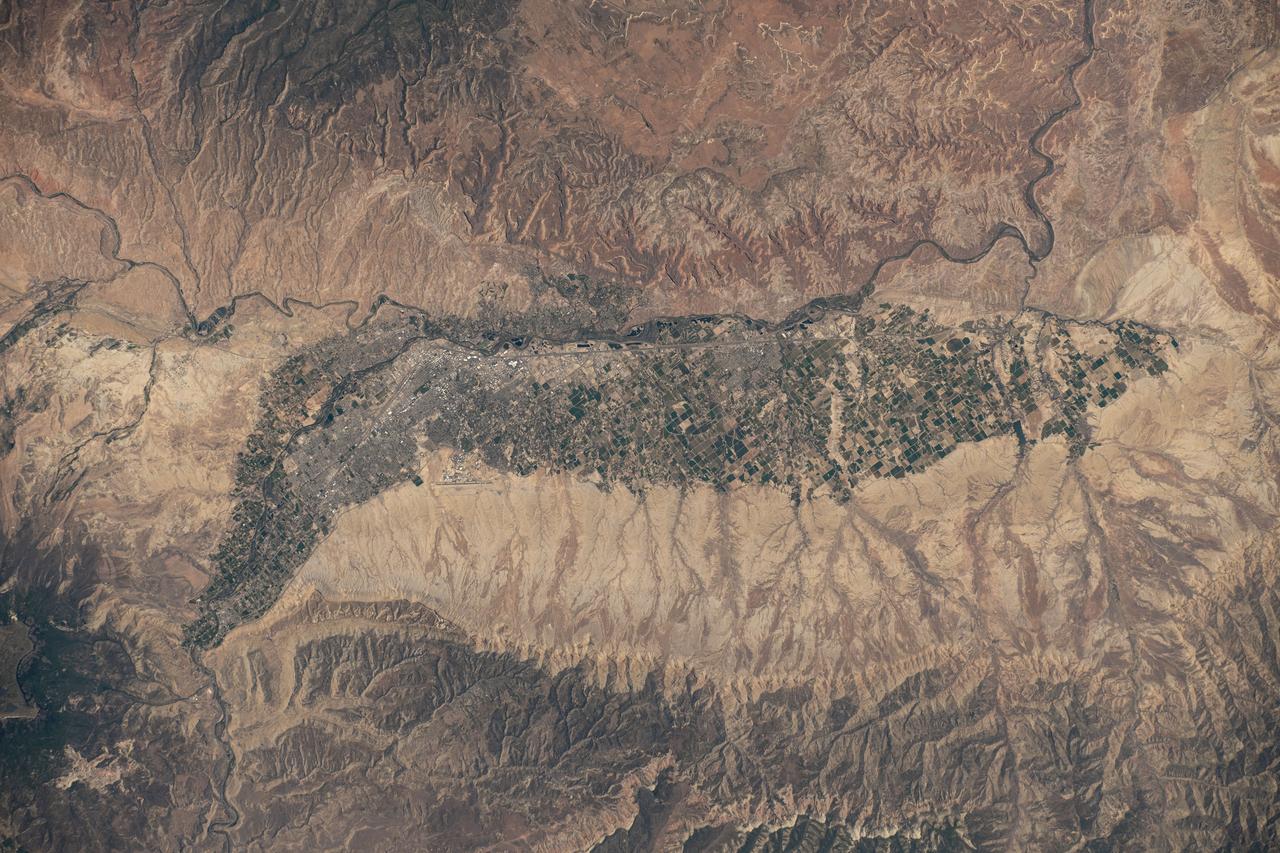
iss073e0429954 (June 21, 2025) --- Colorado's Western Slope region, highlighted by the city of Grand Junction and its surrounding suburbs (at center), is pictured from the International Space Station as it orbited 261 miles above the Centennial State. The municipality's economy is primarily supported by the agribusiness industry, including cattle ranching and fruit cultivation.
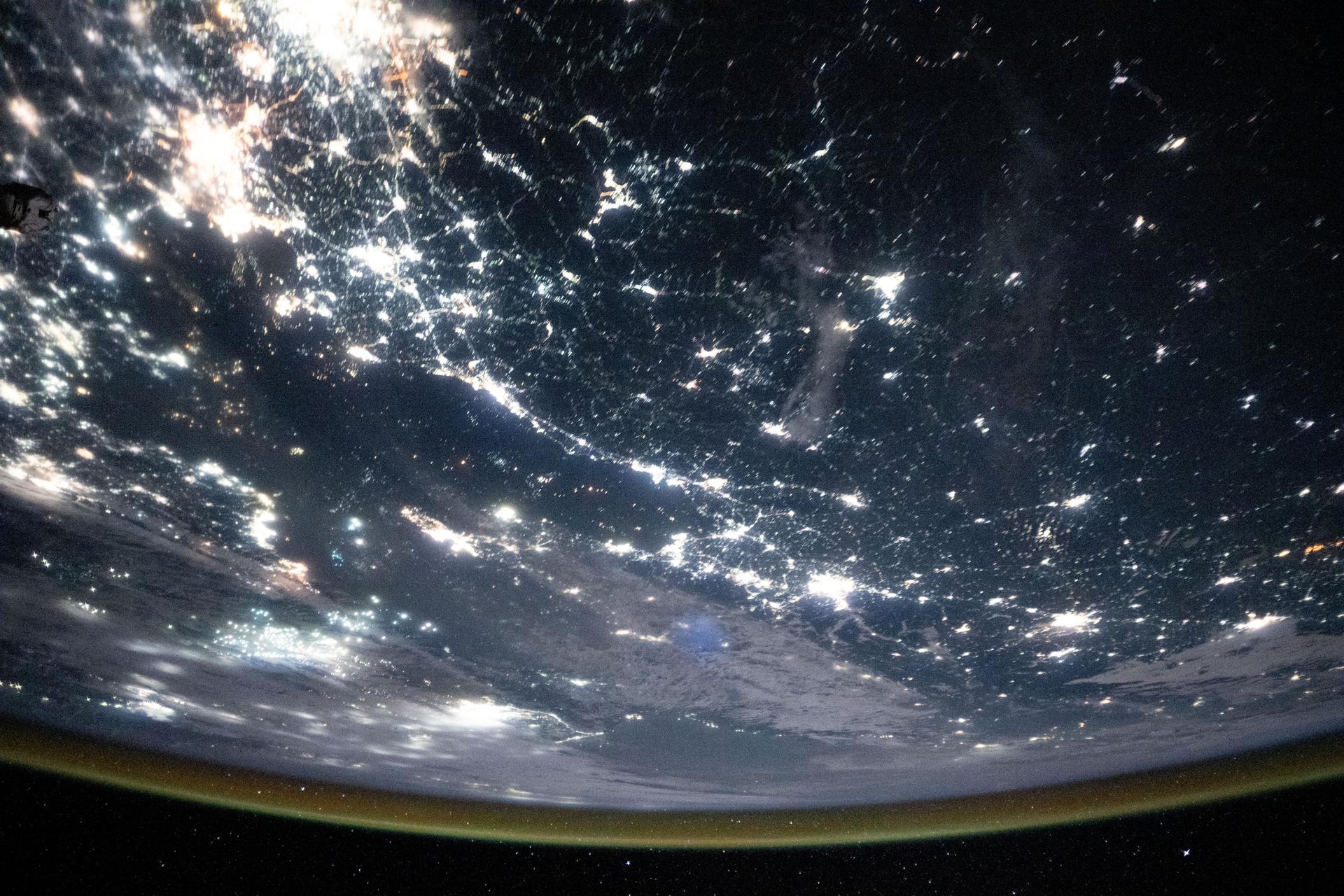
iss073e0824130 (Sept. 14, 2025) --- The Korean Peninsula—highlighted by Seoul, South Korea (bottom left)—and Northeast China—illuminated by the Beijing Municipality (top left)—are pictured from the International Space Station as it orbited 262 miles above Asia at approximately 12:42 a.m. local time.
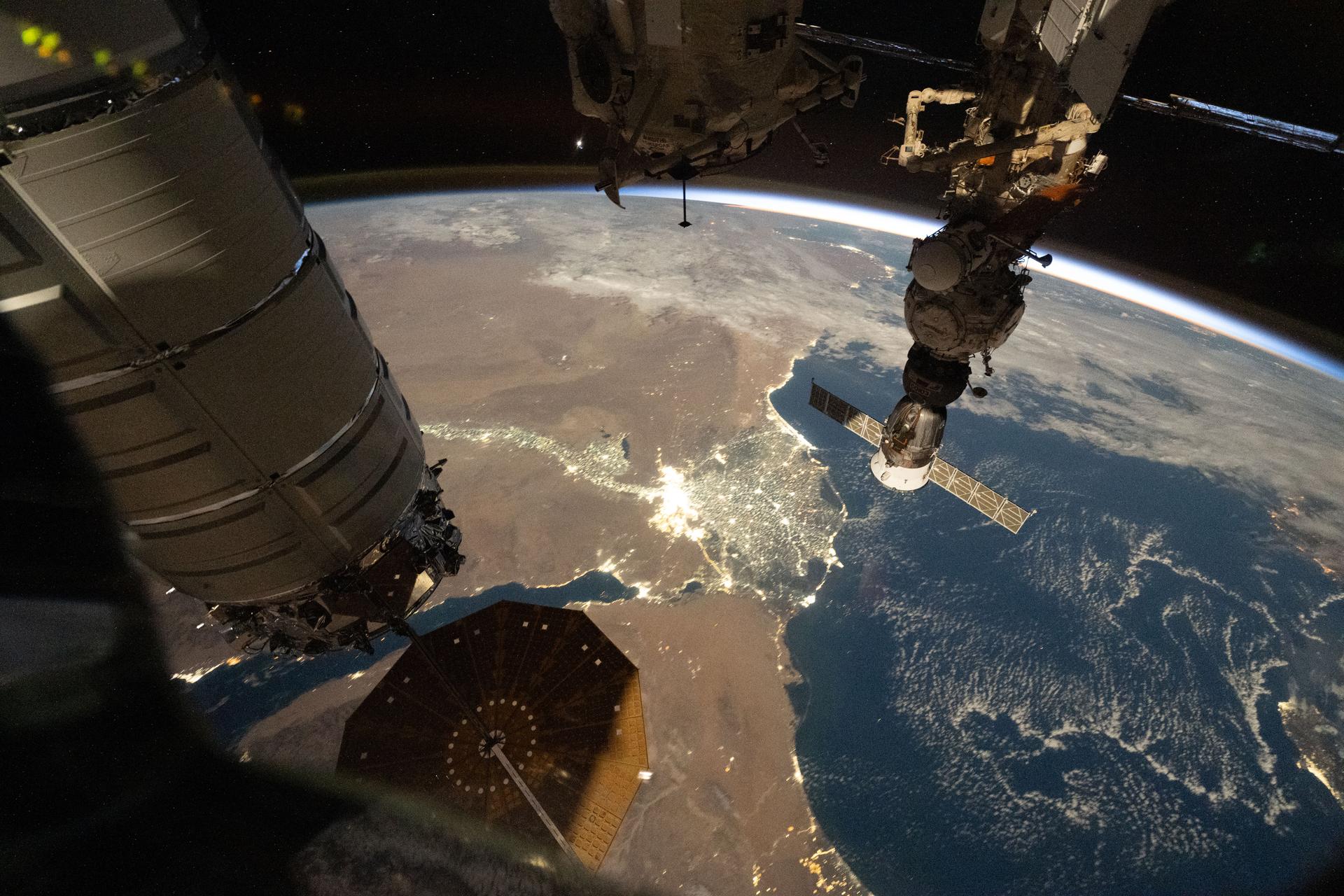
iss075e0155946 (Sept. 26, 2026) --- City lights outline Egypt's Nile River and highlight its delta as it empties into the Mediterranean Sea in this photograph taken at approximately 9:04 p.m. local time from the International Space Station as it orbited above Earth. Credit: ESA/Sophie Adenot
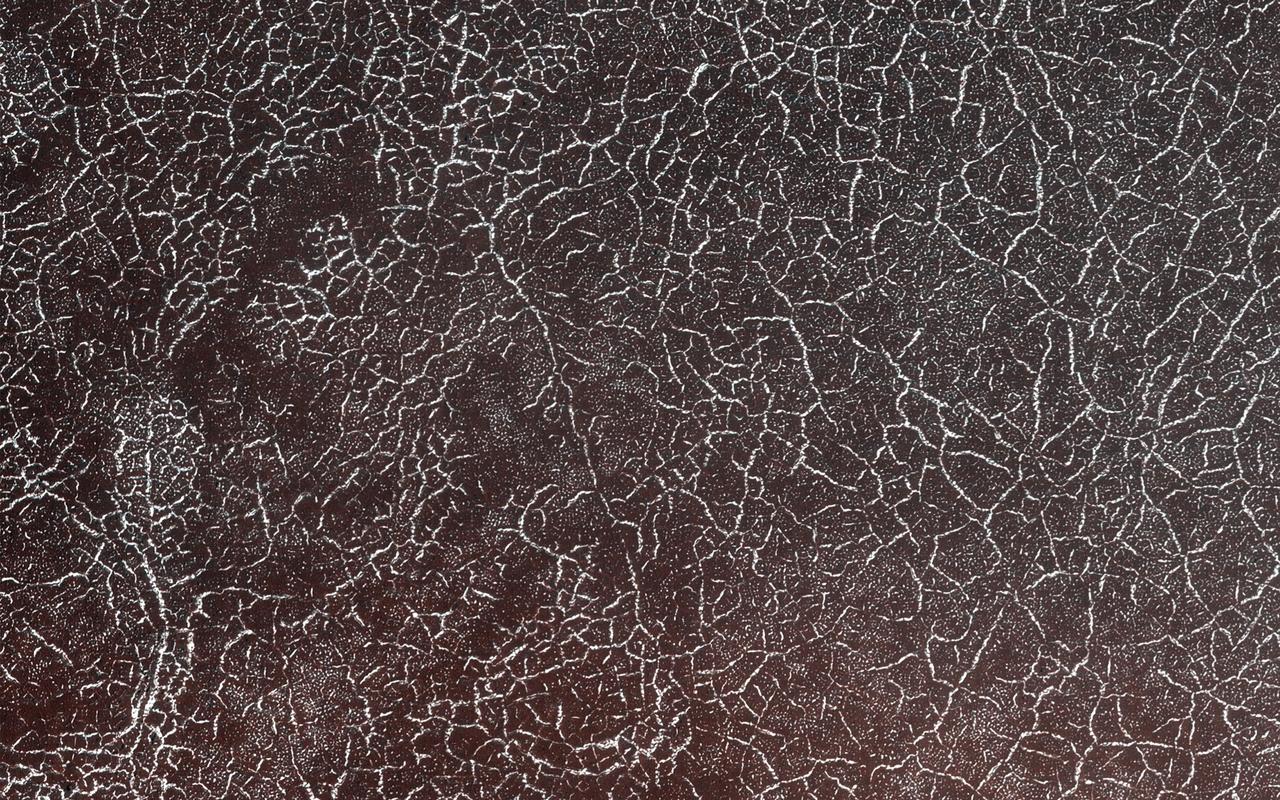
It's spring in the Northern Hemisphere of Mars (when this image was taken), and this area was recently completely covered by the seasonal frost cap. Here, we see polygonal patterns that are highlighted by carbon dioxide frost that has not entirely sublimed away. These organized patterns are likely caused by differences in the soil (regolith) characteristics such as grain size, density, even grain-shape and orientation in the underlying landforms and geologic materials. Variations in these characteristics strongly influence the strength of the ice-rich permafrost. This gives a preferred orientation to the stress field that produces the polygonal patterns. In this case, there appears to have been a meander in a fluvial channel in which sediments that differ from the native soil were deposited. The physical properties of these sediments probably change near the channel banks where flow rate drops off. Additionally, a high ice content might have resulted from a sediment-rich slurry flow that froze in place. Higher ice content will produce a weaker stress field and larger polygons, more so than just changes in grain size or orientation. https://photojournal.jpl.nasa.gov/catalog/PIA23581

An illustration of the planet Mars, highlighting NASA's Mars Perseverance rover mission. https://photojournal.jpl.nasa.gov/catalog/PIA24348

iss074e0417599 (March 27, 2026) --- The West African coast, highlighting the nations of Senegal, The Gambia, and Guinea‑Bissau, transitions from arid plains to swampy coastal lowlands. The Gambia River (top center), which flows through the middle of the tiny nation of The Gambia, supports a wide array of wildlife including migratory birds, chimpanzees, hippos, crocodiles, and manatees. It is also important for transportation and agriculture throughout the Senegambia region. Credit: NASA

High Pressure Microgravity Combustion Experiment, HPMC, subjects liquid fuel droplets to high pressures and temperatures to study the ignition process in engine conditions, with a goal of improving fuel efficiency. In this configuration, the experiment is capable of testing droplet combustion at up to 100 atm of pressure, testing the droplet deployment system, which inserts the fuel droplet into the experiment.
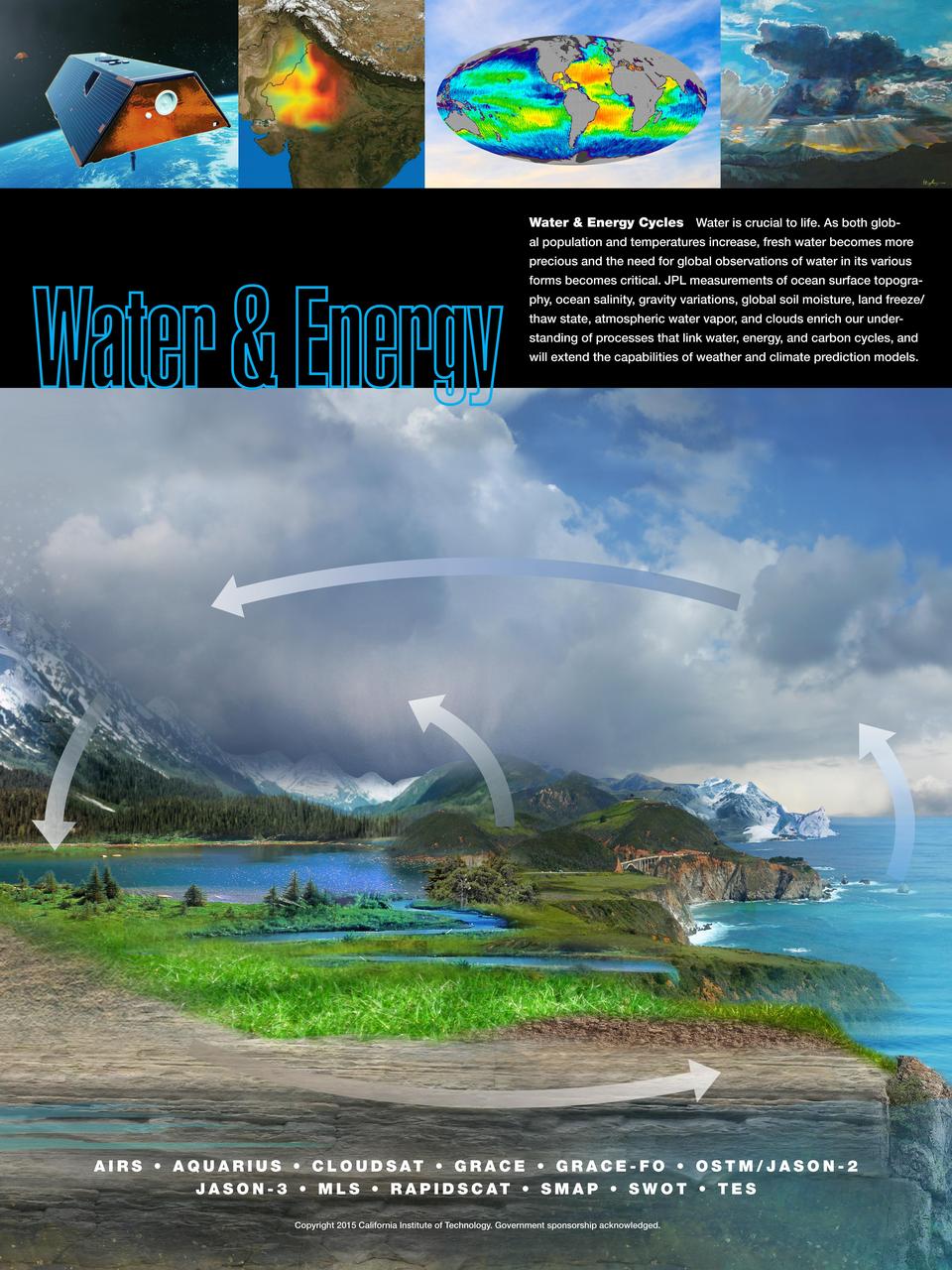
This poster highlights NASA JPL missions that provide important inputs to research on global and regional water resources. Water is crucial to life.
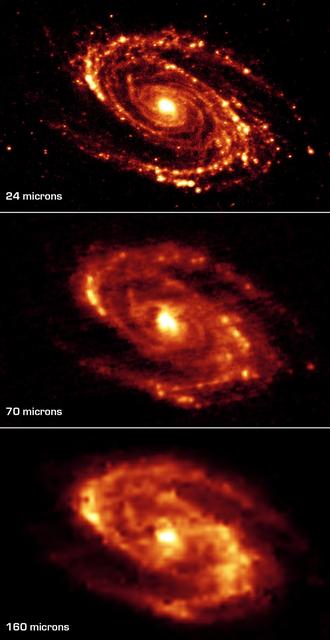
The magnificent and dusty spiral arms of the nearby galaxy Messier 81 are highlighted in these NASA Spitzer Space Telescope images.
An illustration of the planet Mars, highlighting NASA's Mars Perseverance rover and future human explorers. https://photojournal.jpl.nasa.gov/catalog/PIA24347
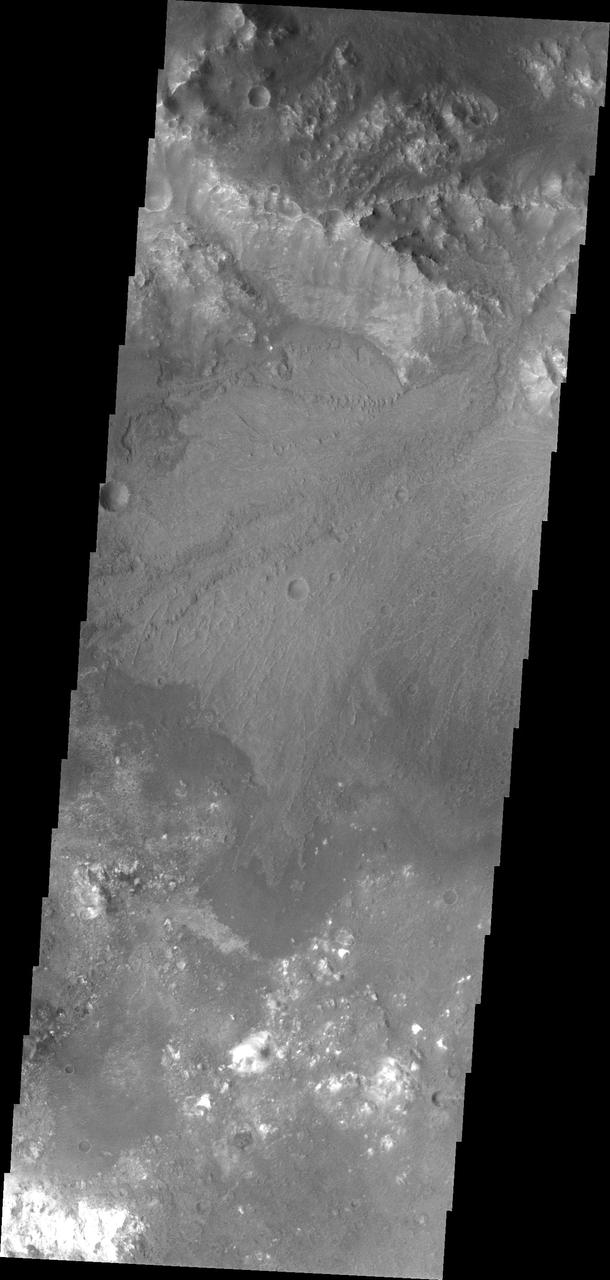
A beautiful delta deposit in Harris Crater is the highlighted feature in this image captured by NASA 2001 Mars Odyssey.

This poster highlights NASA JPL missions that provide important inputs to research on volcanoes, fires, earthquakes, droughts, tsunamis, floods and hurricanes.
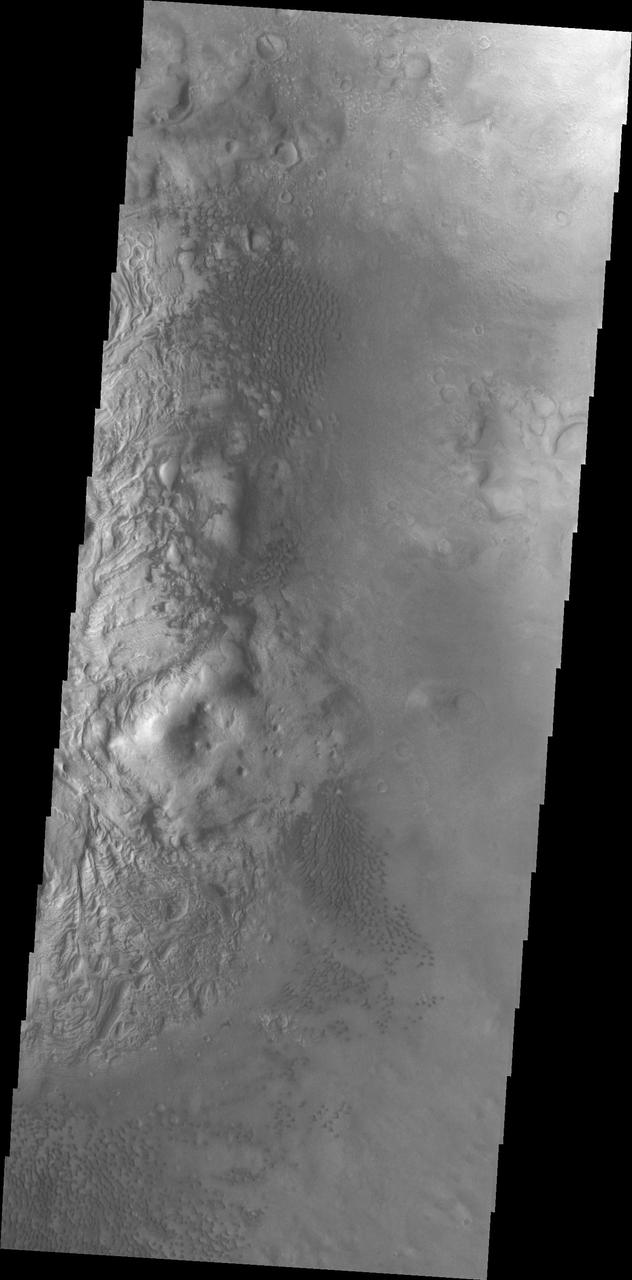
This image from NASA 2001 Mars Odyssey highlights individual dunes located on the floor of Moreaux Crater.
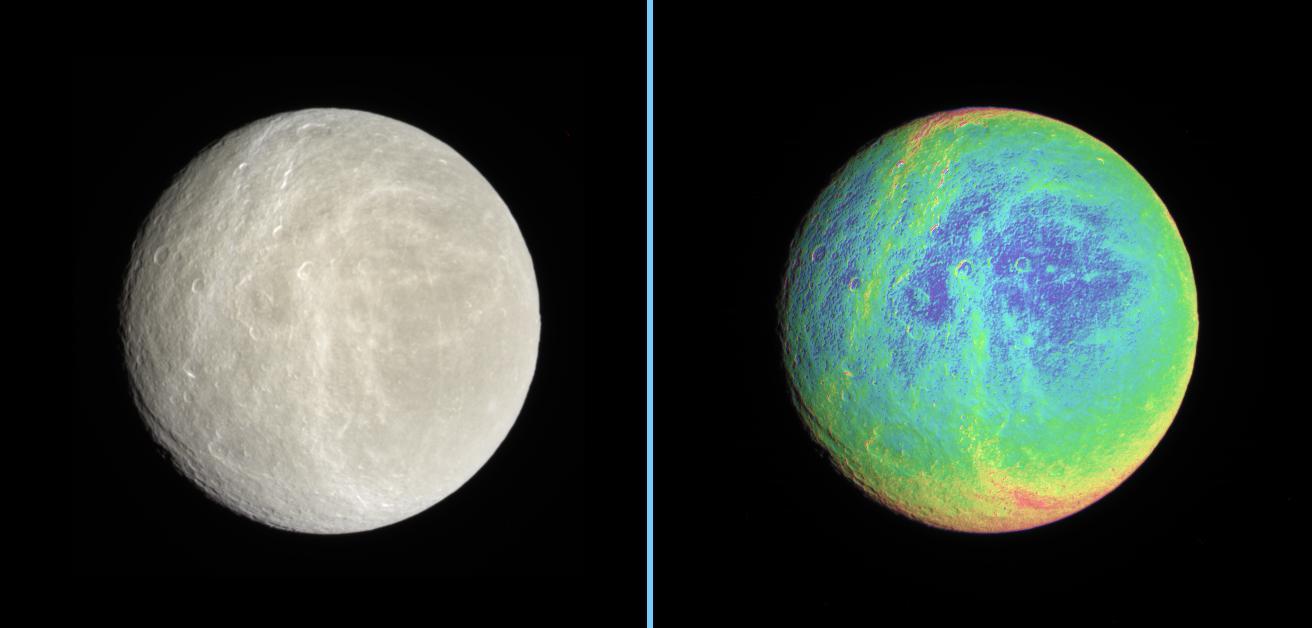
Side-by-side natural color and false-color views highlight the wispy terrain on Rhea trailing hemisphere
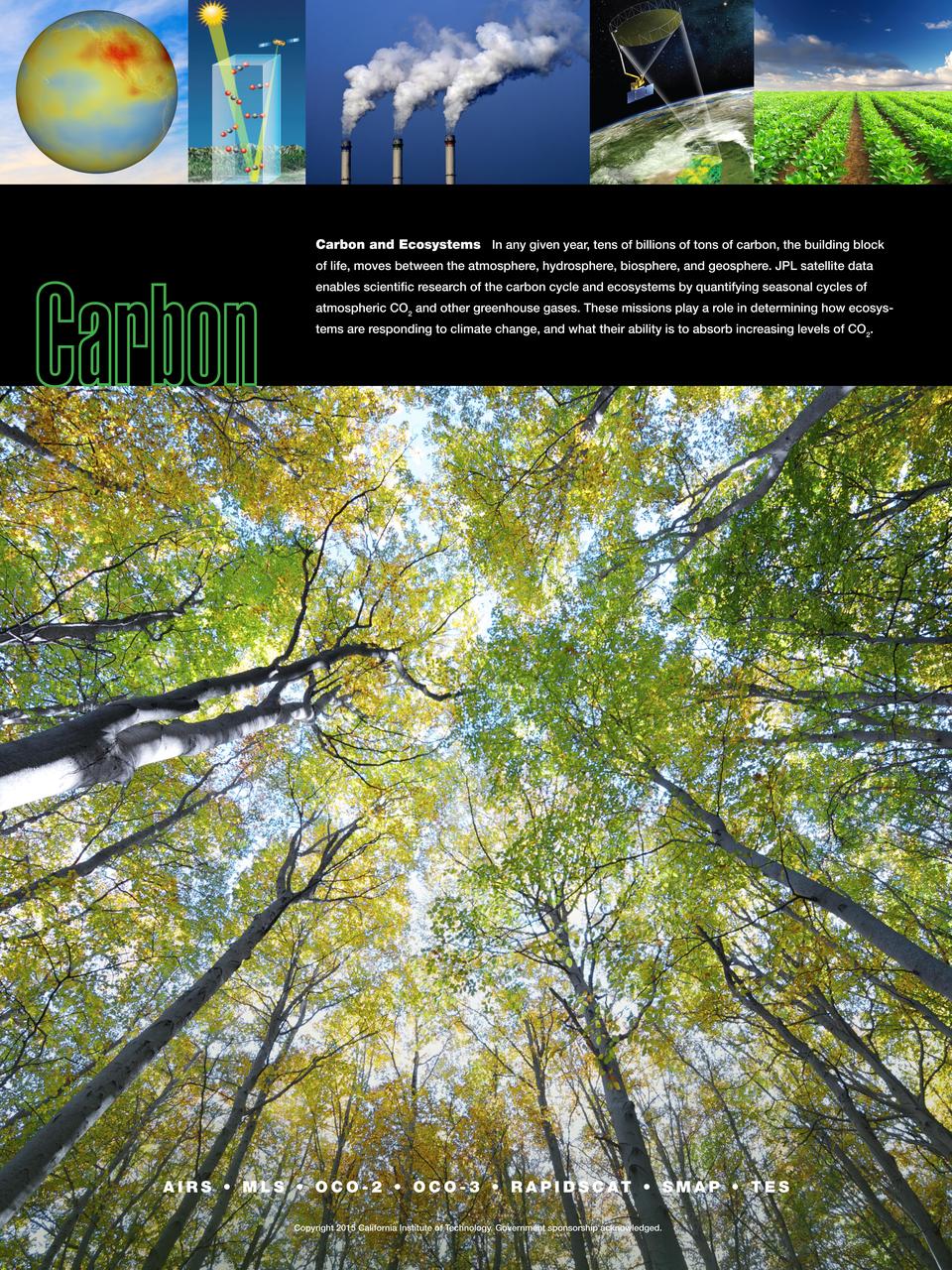
This poster highlights the JPL missions that provide important inputs to research on the carbon cycle and ecosystem interactions as measured from space.
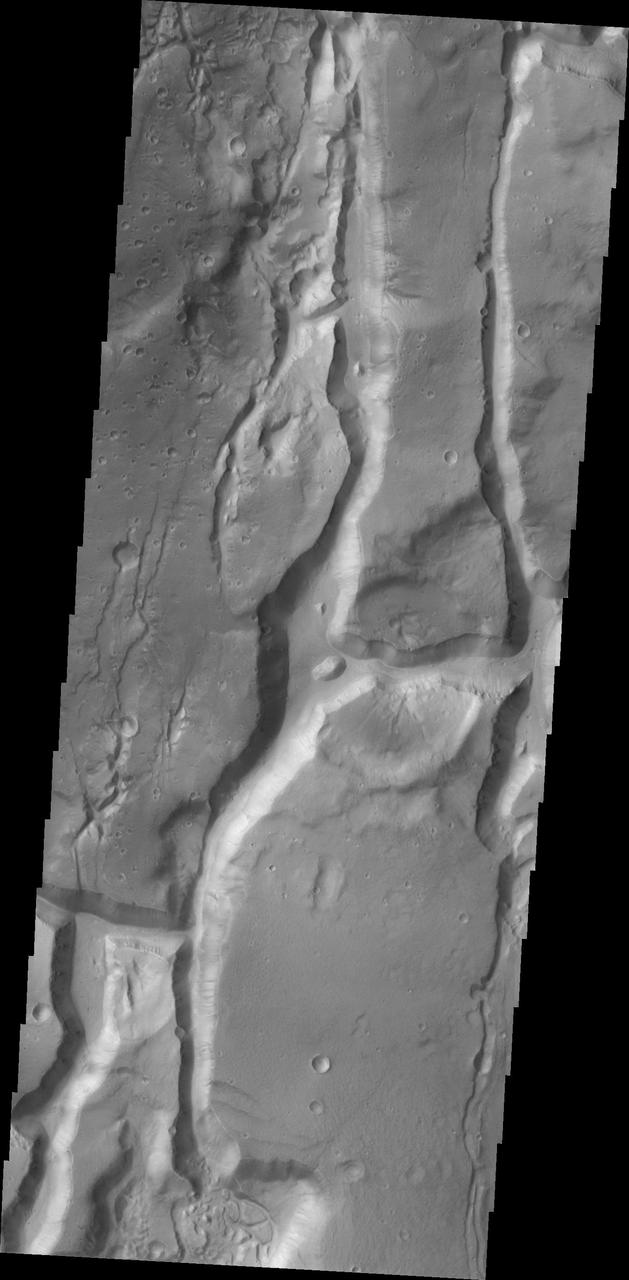
This image from NASA 2001 Mars Odyssey highlights the fractured region of a portion of Cydonai Mensae.
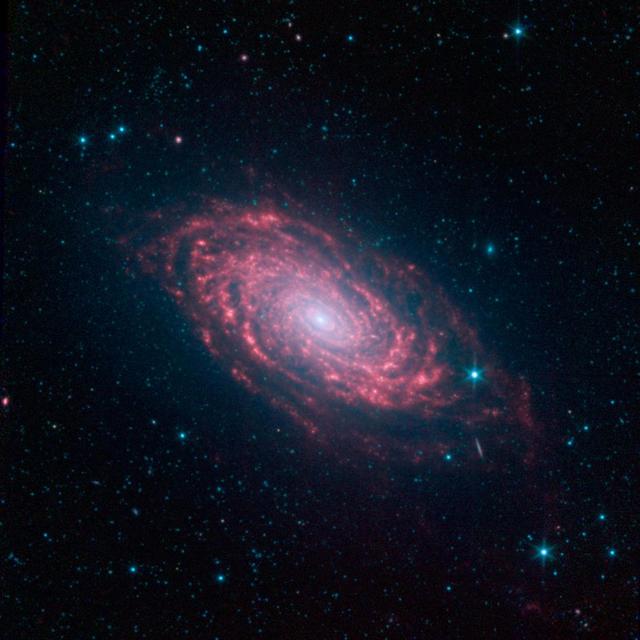
This view of the Sunflower galaxy highlights a variety of infrared wavelengths captured by NASA Spitzer Space Telescope.
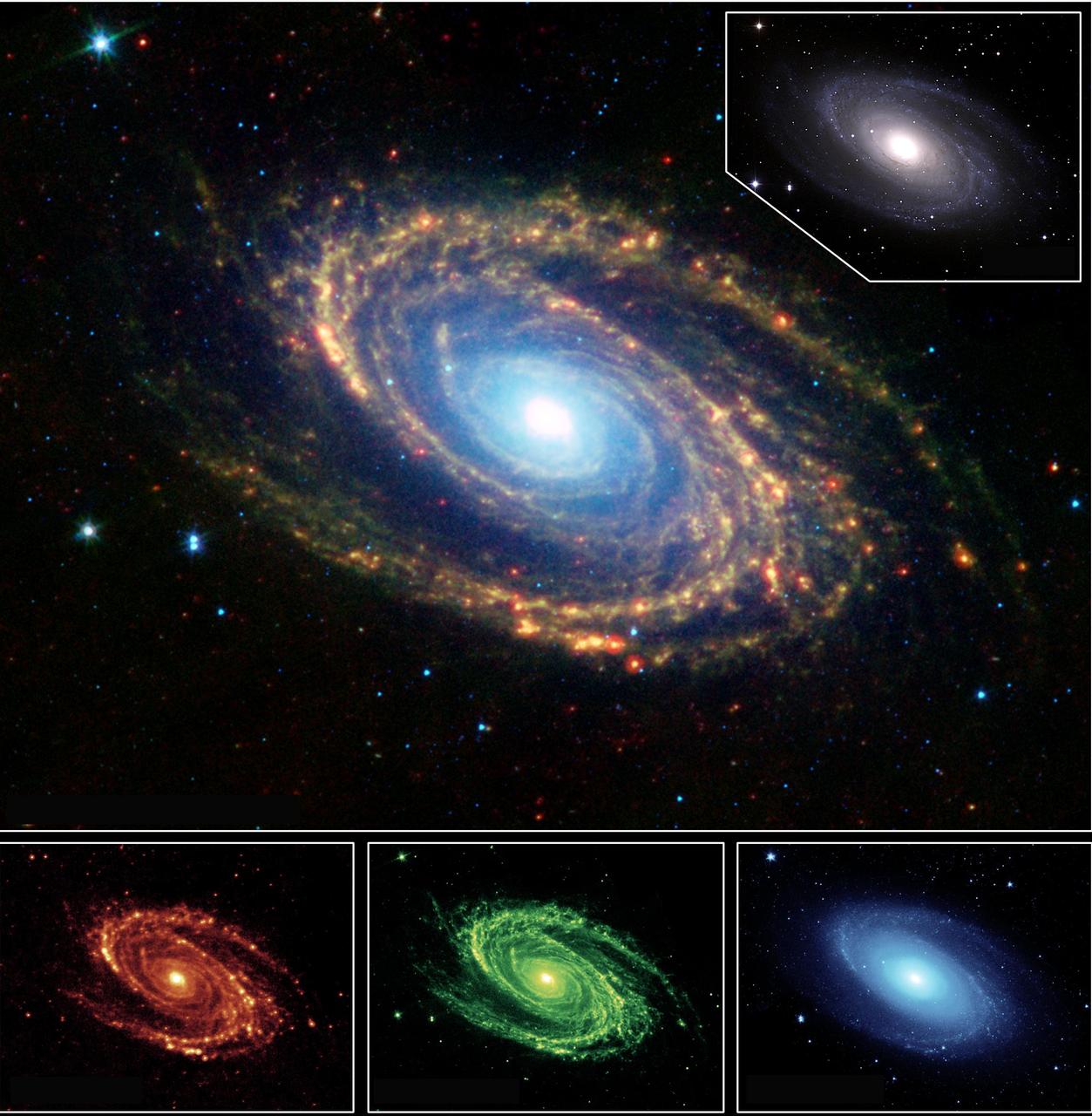
The magnificent spiral arms of the nearby galaxy Messier 81 are highlighted in this image from NASA Spitzer Space Telescope.
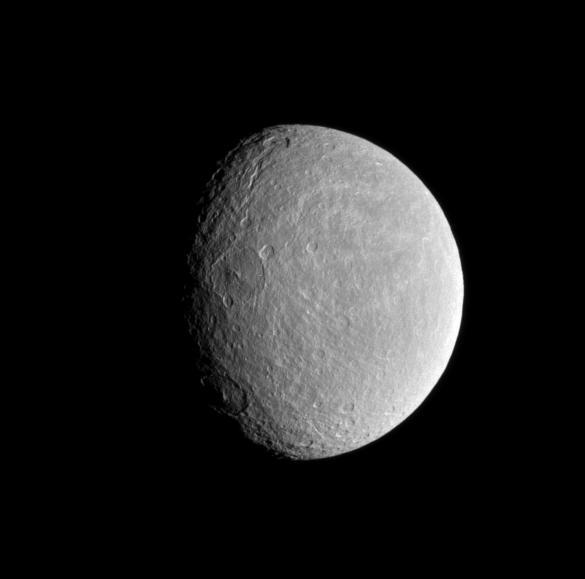
The sun low angle near the terminator highlights the topography of craters within Rhea wispy terrain
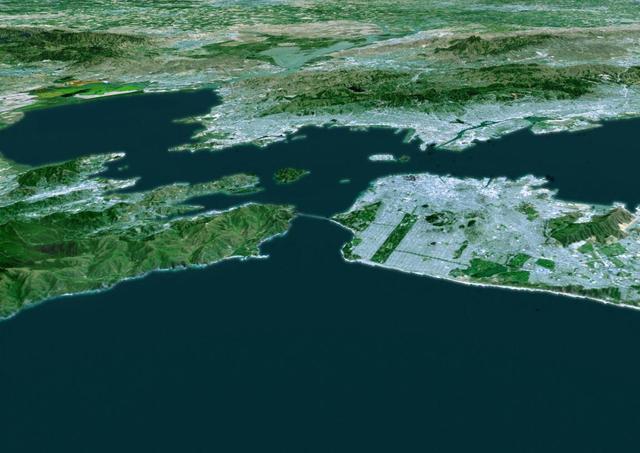
The cities of San Francisco and the East Bay are highlighted in this computer-generated perspective viewed from west of the Golden Gate.
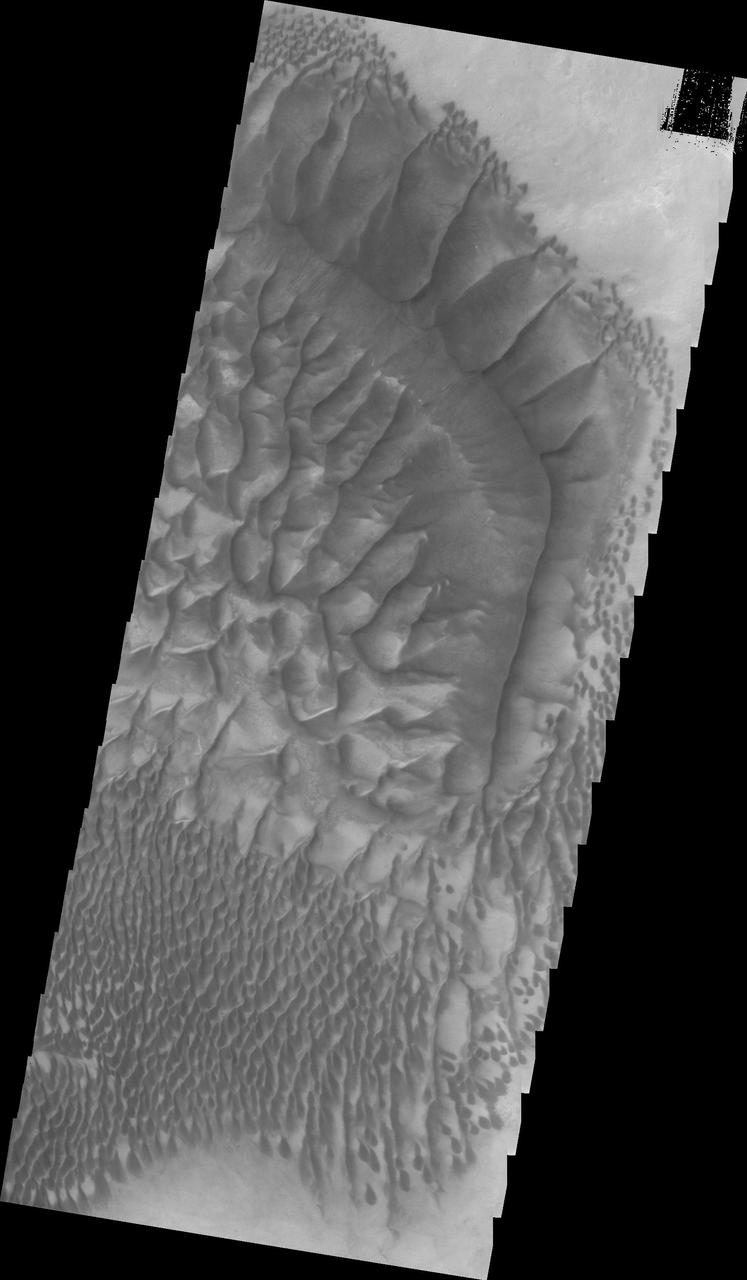
The Thermal Emission Imaging System aboard NASA Mars Odyssey highlights the complexity and variety of dune forms on the floor of Russell Crater.
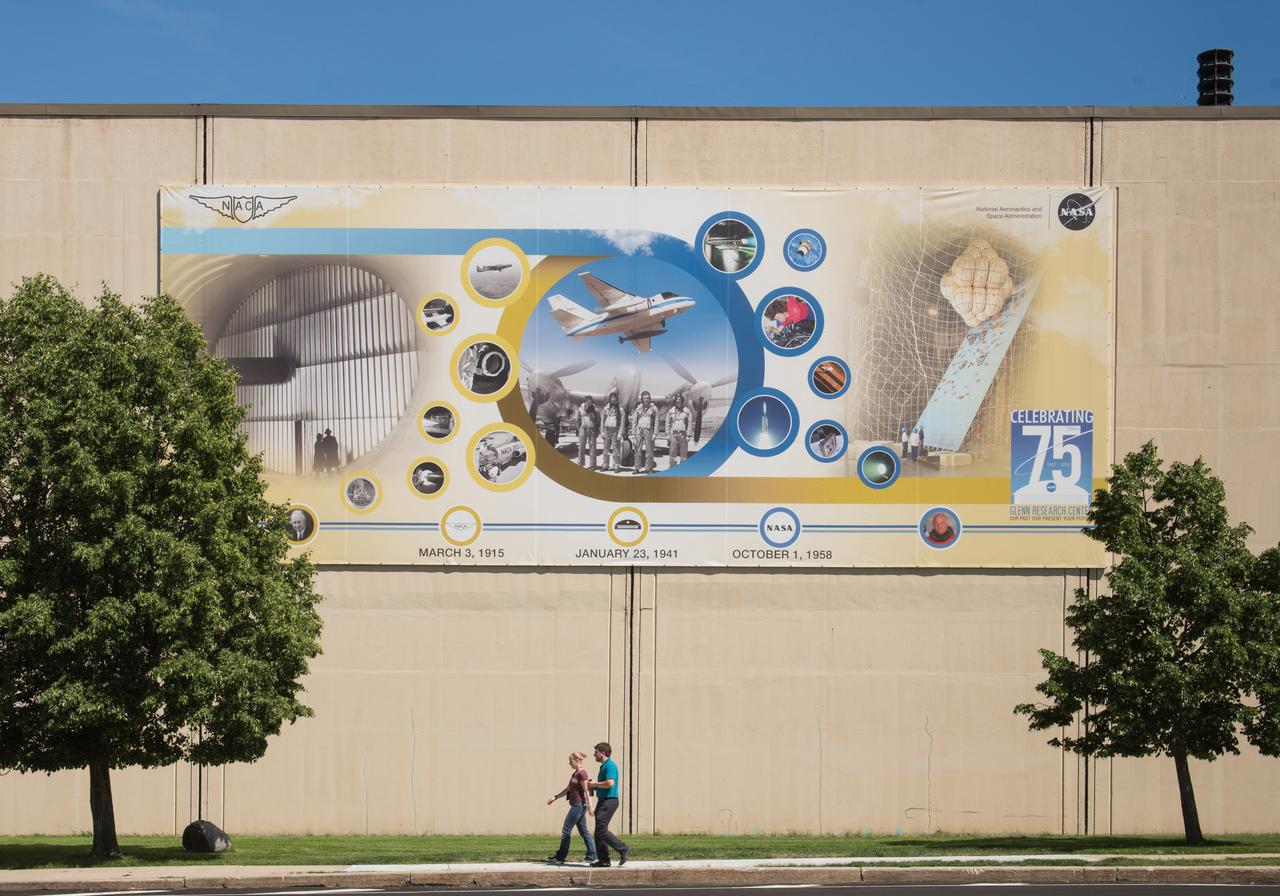
Glenn Research Center 75th Anniversary Sign

This illustration highlights key events in the launch of NASA Orbiting Carbon Observatory-2, beginning with its liftoff from Vandenberg Air Force Base in central California.
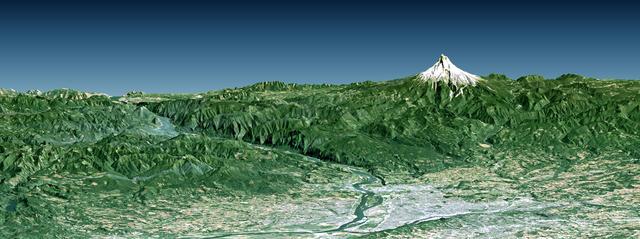
Portland, the largest city in Oregon, is located on the Columbia River at the northern end of the Willamette Valley. On clear days, Mount Hood highlights the Cascade Mountains backdrop to the east.
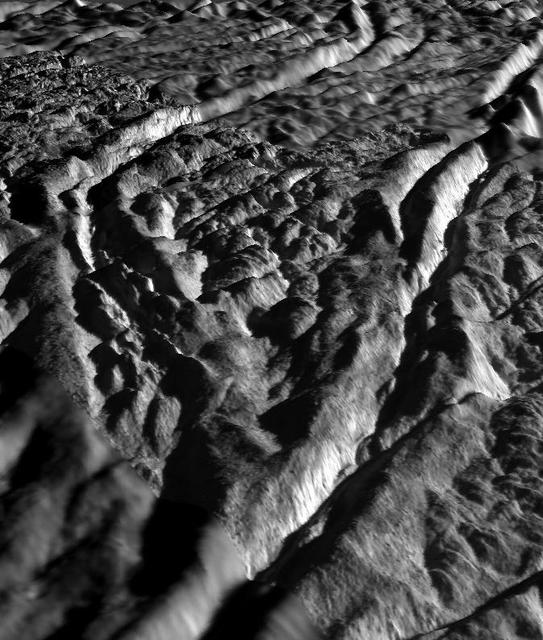
This perspective view, generated from high resolution images acquired by NASA Cassini orbiter, highlights one of the wall scarps of the medial trough of Baghdad Sulcus on Enceladus.
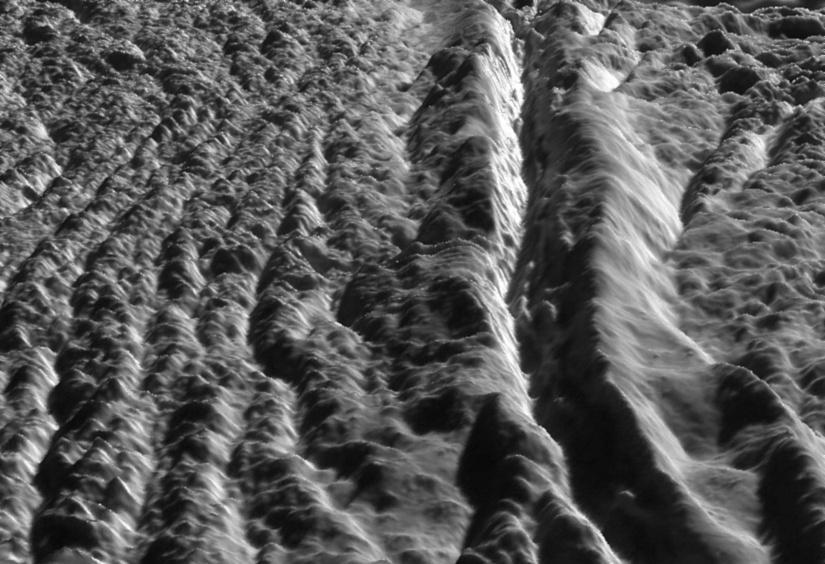
This perspective view, generated from high resolution images acquired by NASA Cassini orbiter, highlights one of the wall scarps of the medial trough of Damascus Sulcus on Enceladus.

This poster highlights NASA JPL missions that provide important inputs to research in sea level rise and variability -- key measures of ocean circulation and global climate change.

This poster highlights the JPL cubesat missions. NASA CubeSat Programs provide opportunities for small satellite systems to fly as auxiliary payloads on planned missions.
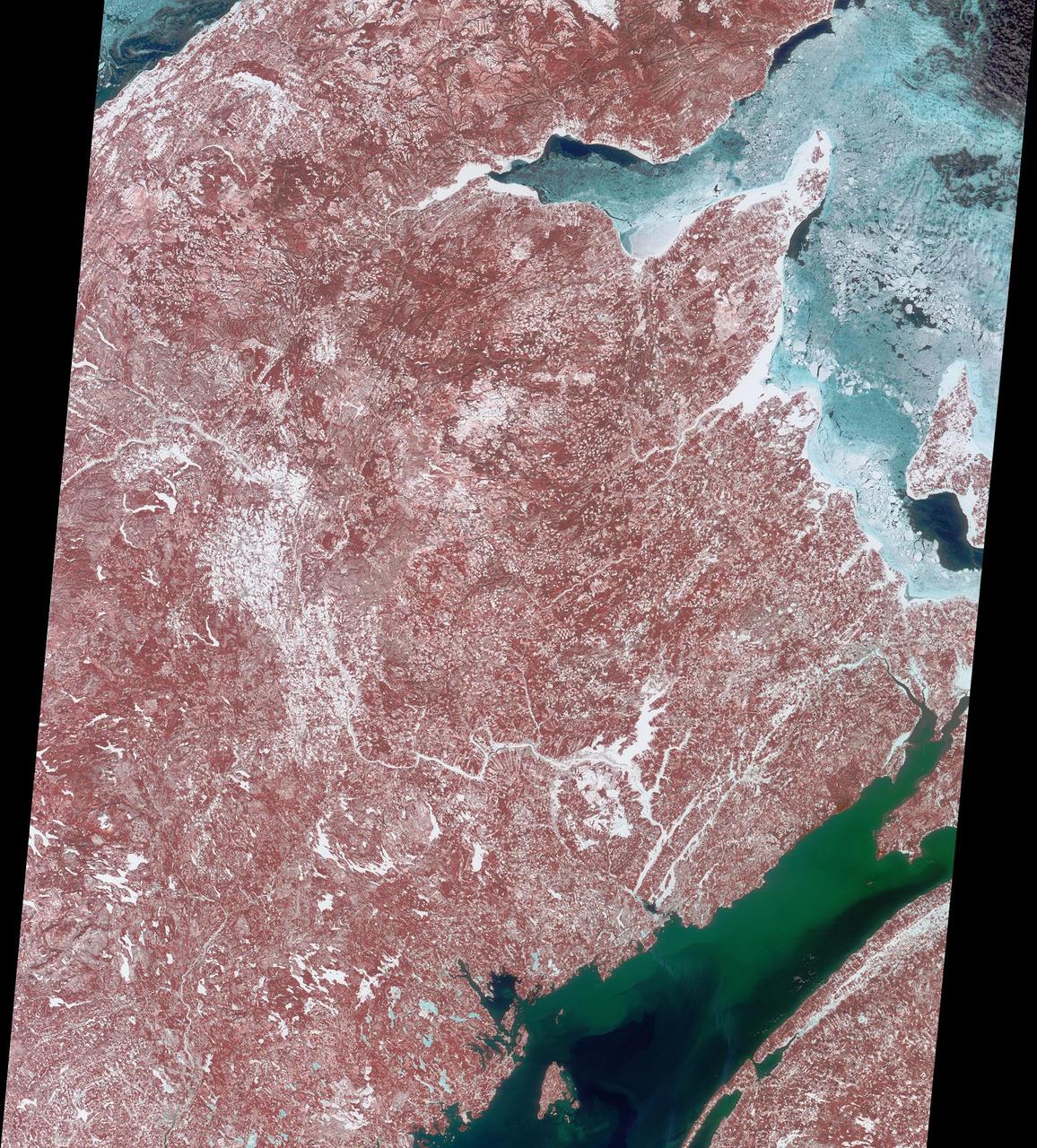
Decked out in reds, greens, blues and whites, this image captured by NASA Terra satellite March 8, 2001 highlights the Canadian province of New Brunswick.
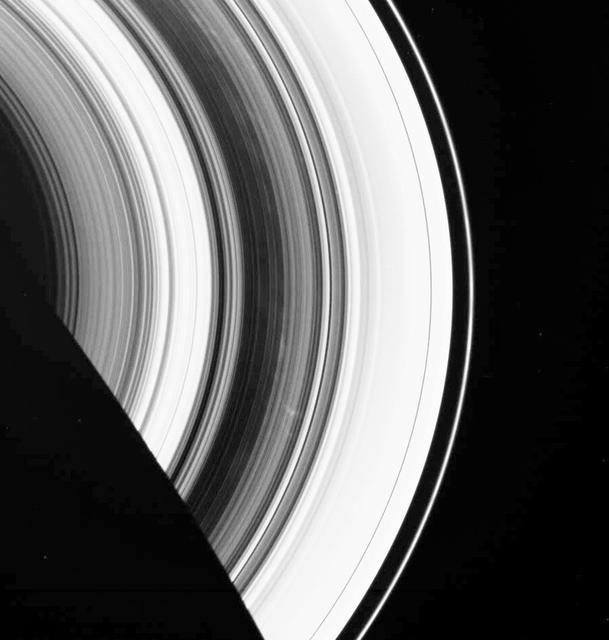
The dark B ring of Saturn is highlighted here by numerous faint spokes. The two most prominent spokes are seen below and to the right of center
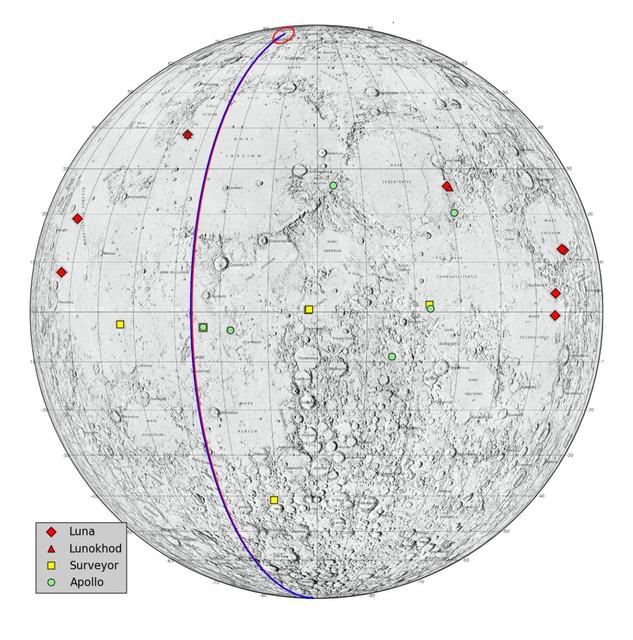
This graphic highlights locations on the moon NASA considers lunar heritage sites and the path NASA Gravity Recovery and Interior Laboratory spacecraft will take on their final flight.
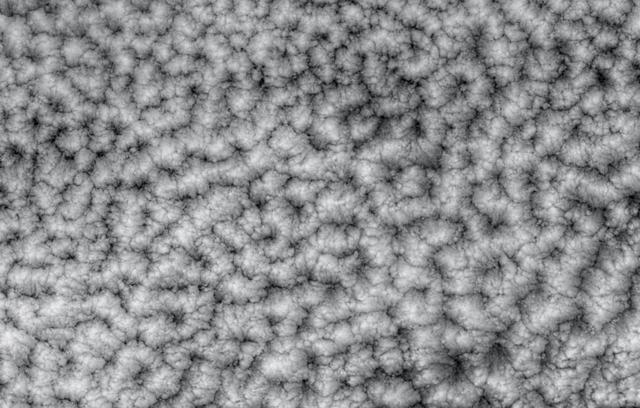
The structure of tightly packed closed cells in a layer of marine stratocumulus over the southeastern Pacific Ocean are highlighted in these views from NASA Terra satellite.
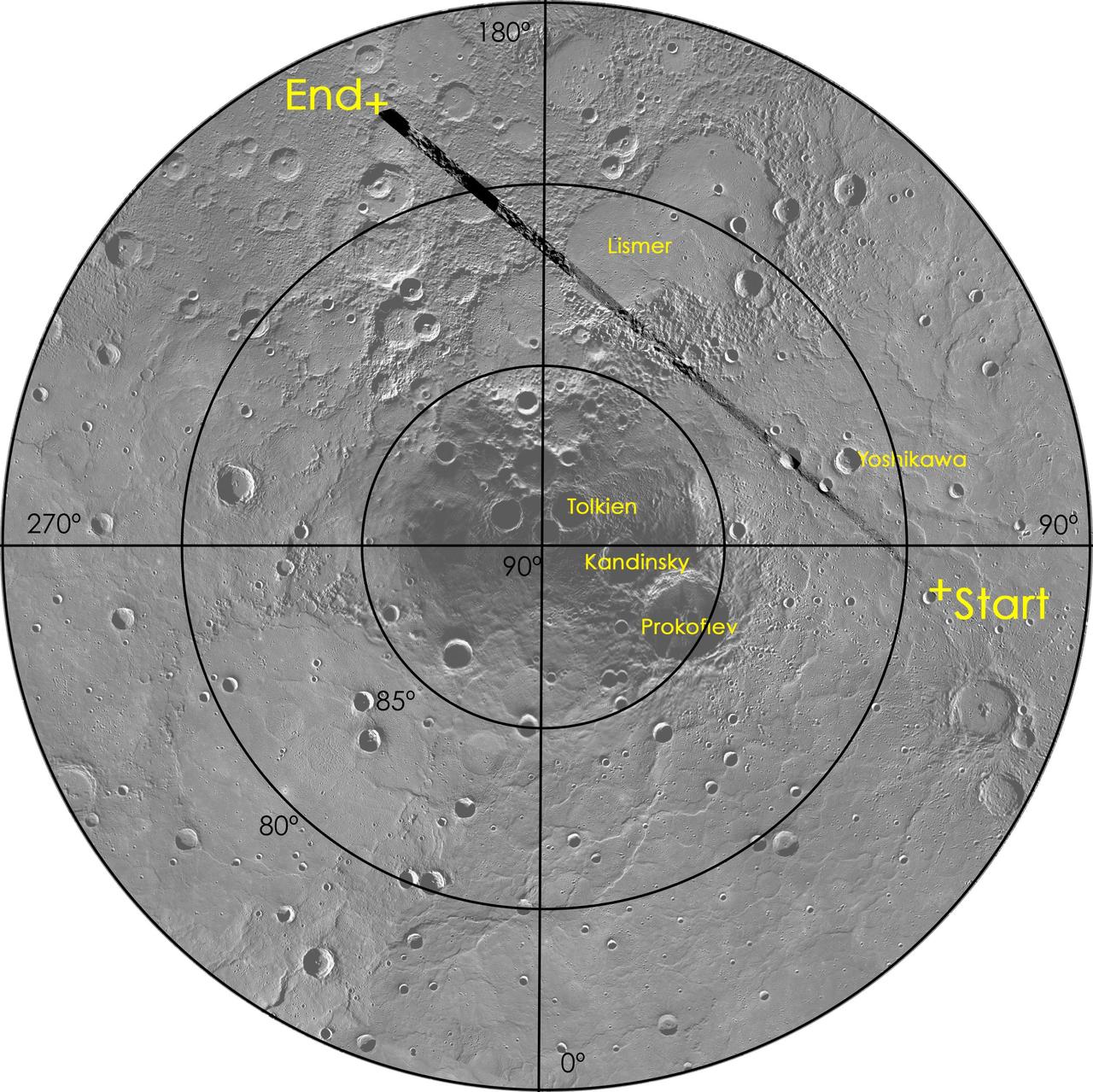
A View of MESSENGER Flight Path. This figure highlights the flight path of NASA MESSENGER during its acquisition of images used in its flyover movie.
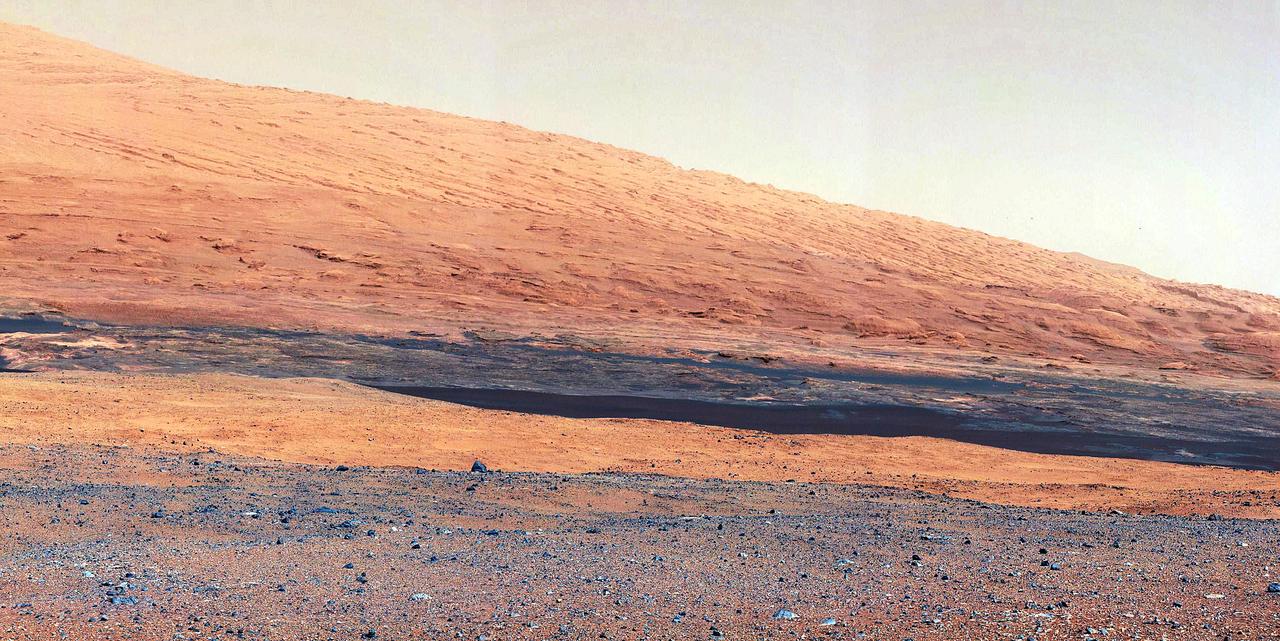
This image taken by the Mast Camera MastCam on NASA Curiosity rover highlights the interesting geology of Mount Sharp, a mountain inside Gale Crater, where the rover landed.
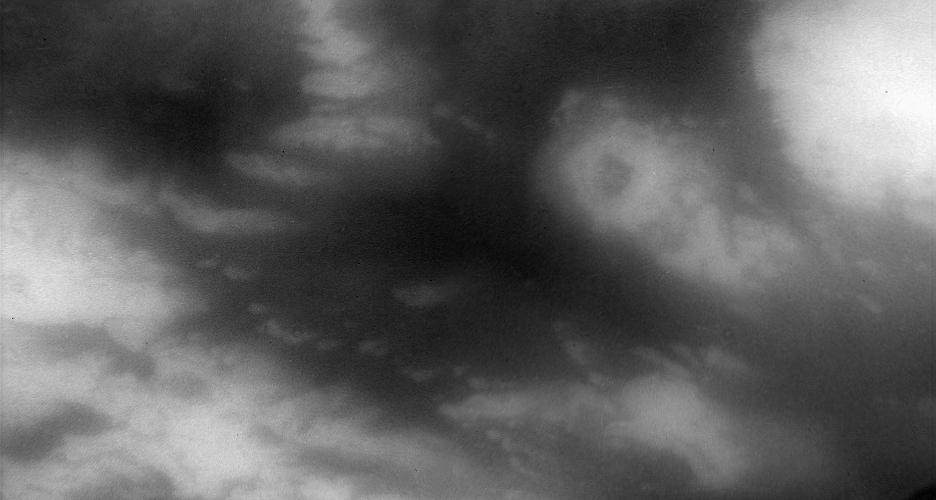
This view of Titan surface highlights northwestern Shangri-la -- a large, equatorial dark region revealed by radar observations to be covered in longitudinal dune fields
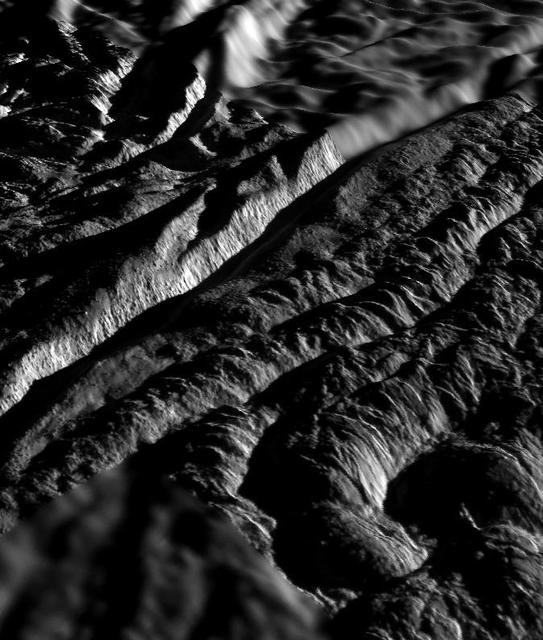
This perspective view, generated from high resolution images acquired by NASA Cassini orbiter, highlights one of the wall scarps of the medial trough of Cairo Sulcus on Enceladus.
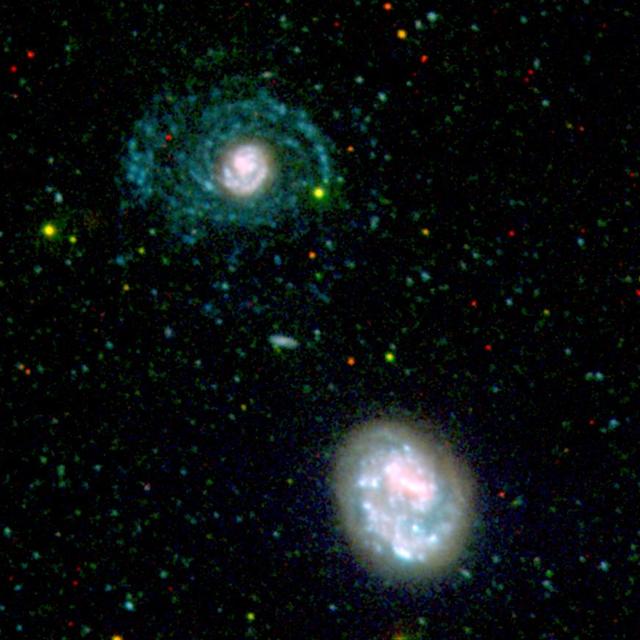
This image highlights the hidden spiral arms blue that were discovered around the nearby galaxy NGC 4625 by the ultraviolet eyes of NASA Galaxy Evolution Explorer.
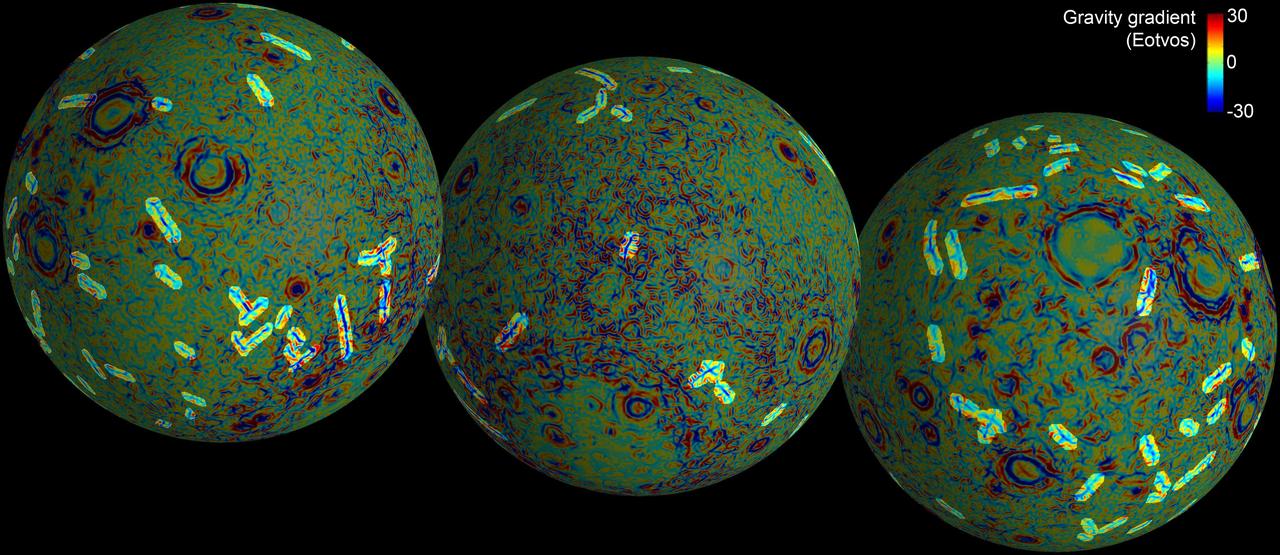
These maps of the near and far side of the moon show the gravity gradients as measured by NASA GRAIL mission, highlighting a population of linear gravity anomalies.

The sponge-like surface of Saturn moon Hyperion is highlighted in this portrait from NASA Cassini spacecraft, captured during the spacecraft flyby on Sept. 16, 2011.
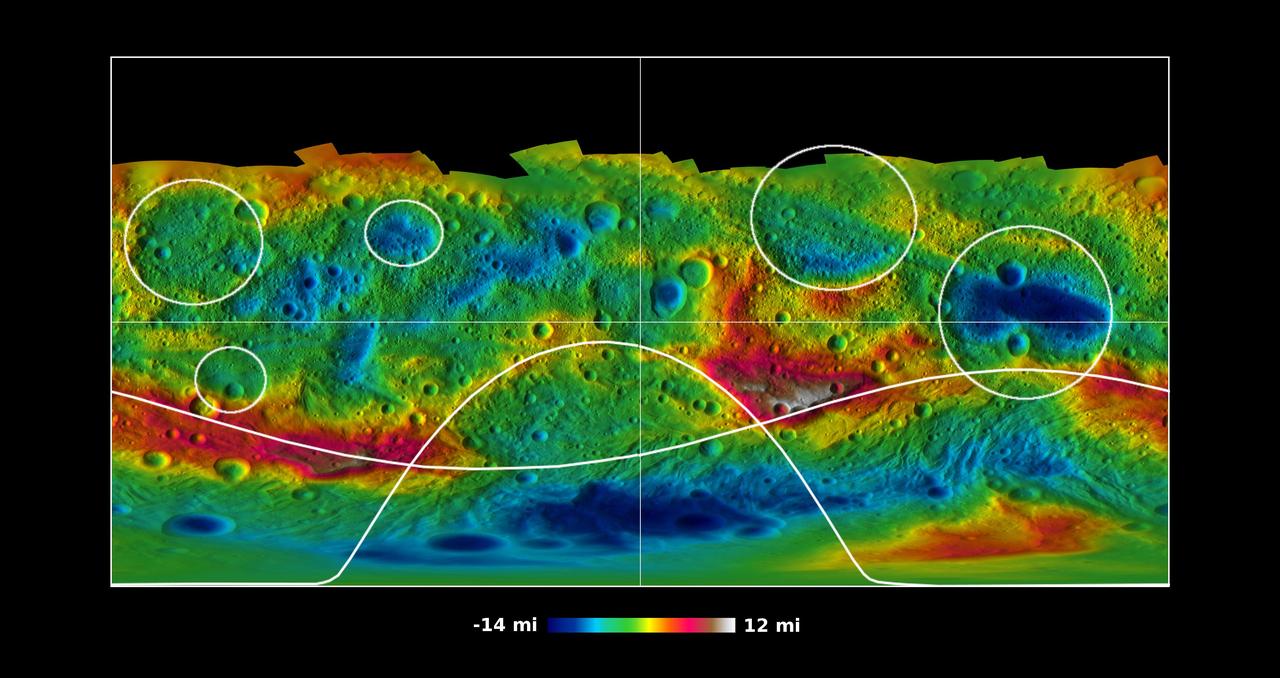
This global map from NASA Dawn mission shows the topography of the giant asteroid Vesta, with the seven most prominent impact basins highlighted.
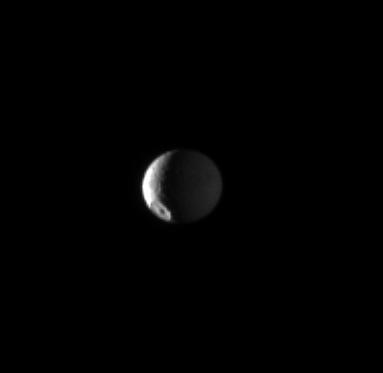
The Herschel crater dominates this view of Saturn moon Mimas.
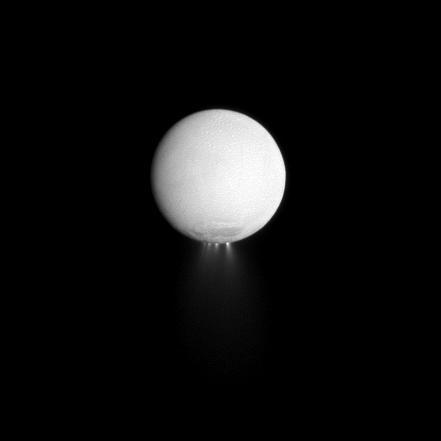
At least four distinct plumes of water ice spew out from the south polar region of Saturn moon Enceladus in this dramatically illuminated image. Light reflected off Saturn is illuminating the surface of the moon while the sun backlights the plumes.
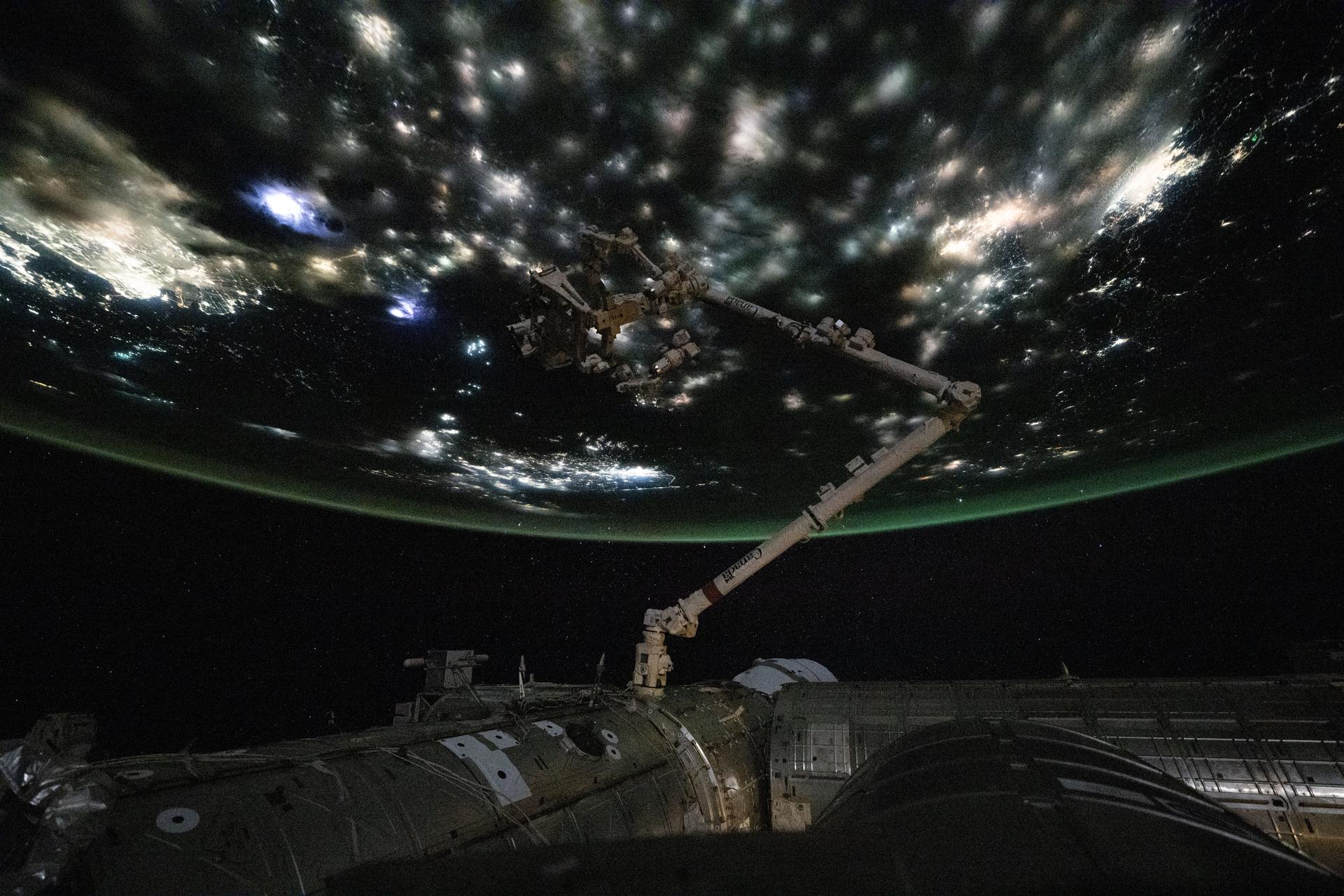
iss073e0742298 (Aug. 30, 2025) --- City lights beneath the clouds highlight the North China Plain near the Yellow Sea, where concentrated points of light mark fishing boats using illumination to attract anchovies, squid, sardines, and other species. Across the Yellow Sea, urban areas in South Korea are visible beneath a diffuse atmospheric glow near the horizon. In the foreground, the Canadarm2 robotic arm extends from a grapple fixture on the International Space Station's Harmony module.
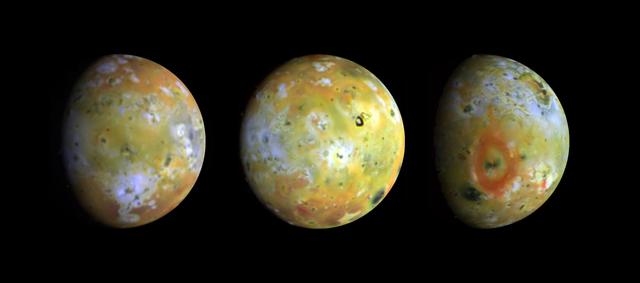
Three full-disk color views of Jupiter volcanic moon Io as seen by NASA Galileo spacecraft are shown in enhanced color to highlight details of the surface. http://photojournal.jpl.nasa.gov/catalog/PIA00292
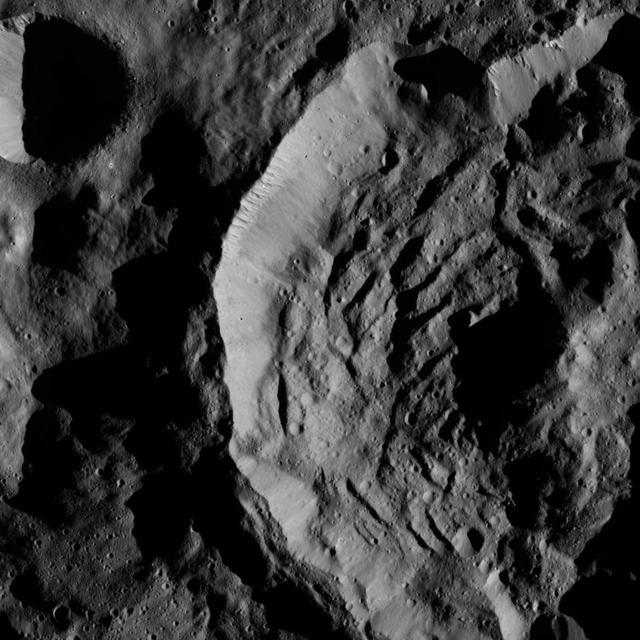
This view from NASA Dawn spacecraft shows part of the crater named Sekhet on Ceres. Prominent shadows within the crater highlight Sekhet central peak and mounds of material that have slumped downward from its walls.
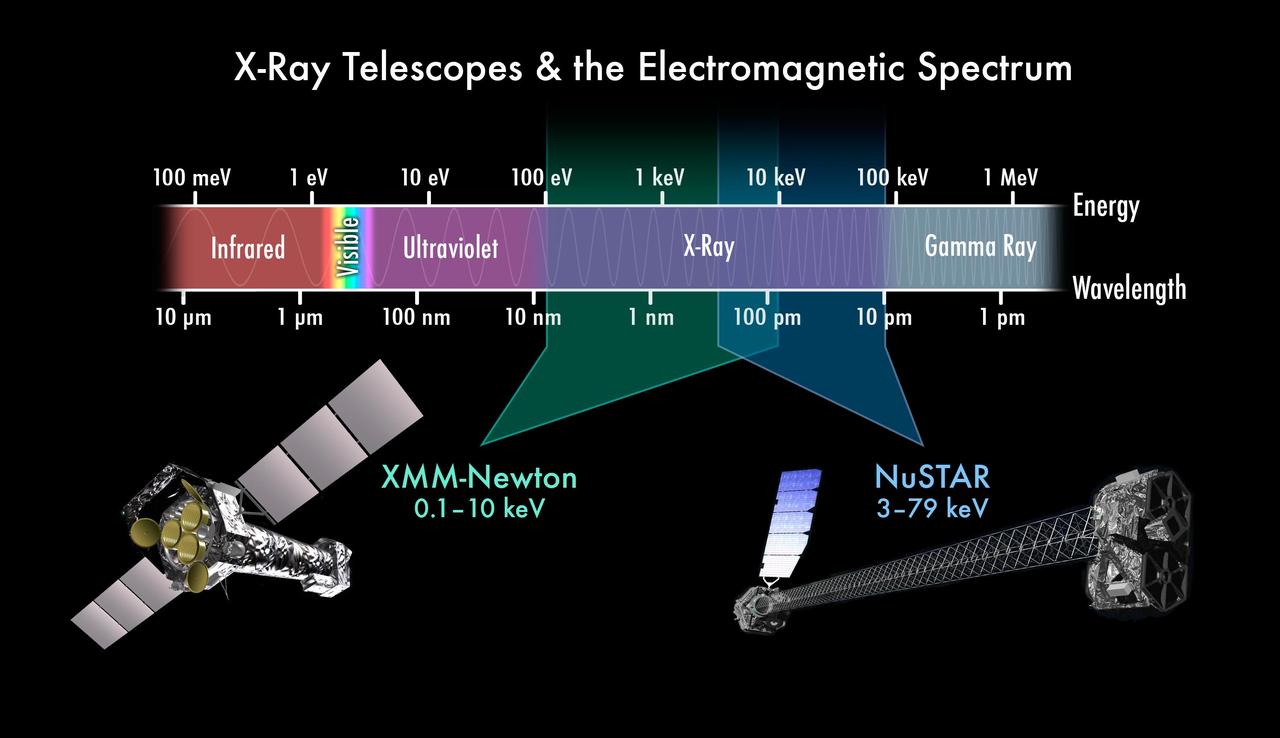
This chart depicts the electromagnetic spectrum, highlighting the X-ray portion. NASA NuSTAR and ESA XMM-Newton telescope complement each other by seeing different colors of X-ray light.
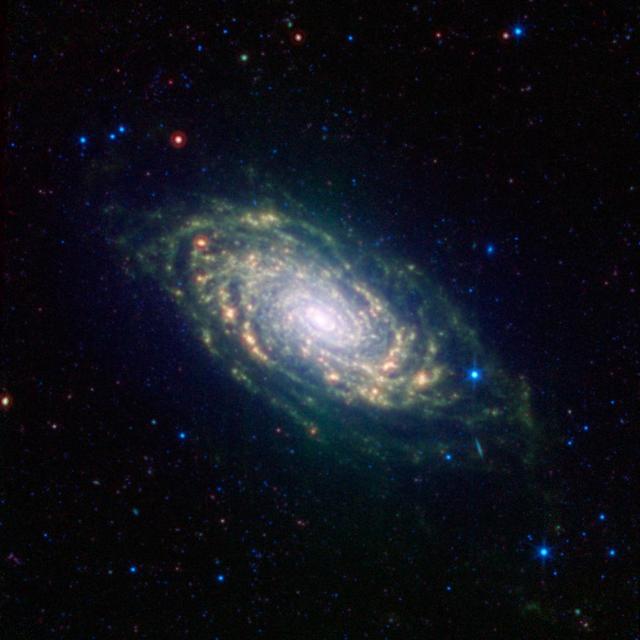
This image from NASA Spitzer Space Telescope shows infrared light from the Sunflower galaxy, otherwise known as Messier 63. Spitzer view highlights the galaxy dusty spiral arms.

This 360-degree three dimensional anaglyph view from NASA Mars Exploration Rover Spirit highlights Gusev crater on sol 148. 3D glasses are necessary to view this image.
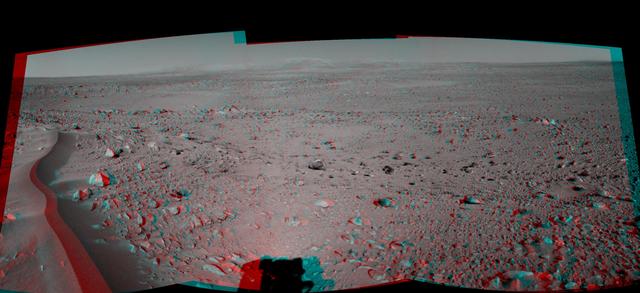
This 120-degree three dimensional anaglyph view from NASA Mars Exploration Rover Spirit highlights a crater approximately 70 meters 230 feet in diameter informally named Lahontan. 3D glasses are necessary to view this image.
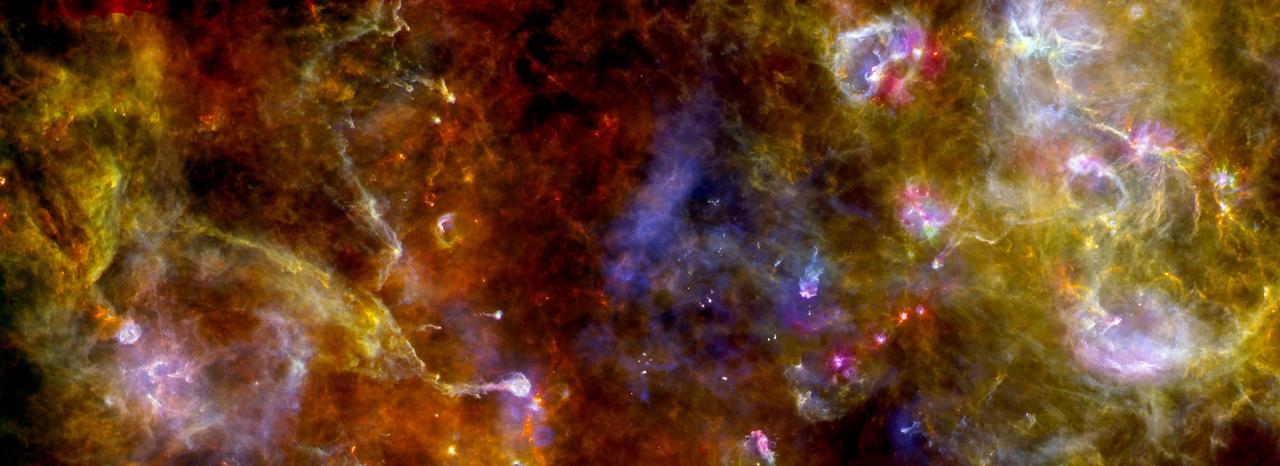
This new view of the Cygnus-X star-formation region by ESA Herschel Space Observatory highlights chaotic networks of dust and gas that point to sites of massive star formation.
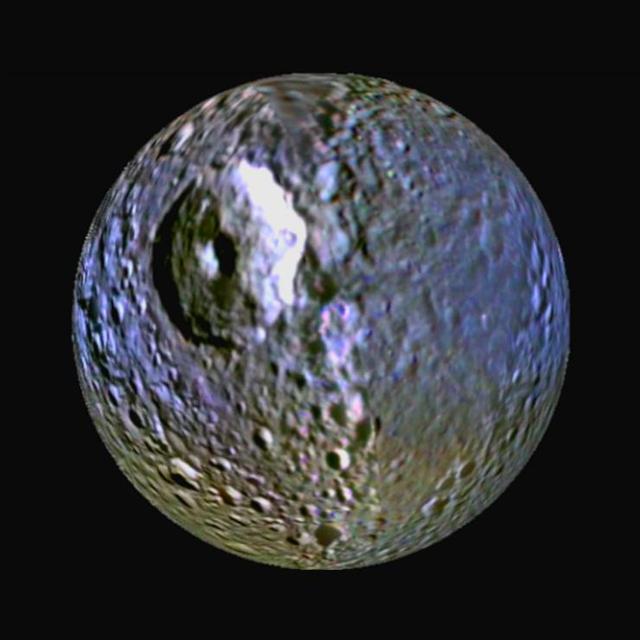
This enhanced-color view of Saturn moon Mimas was made from images obtained by NASA Cassini spacecraft. It highlights the bluish band around the icy moon equator. The large round gouge on the surface is Herschel Crater.
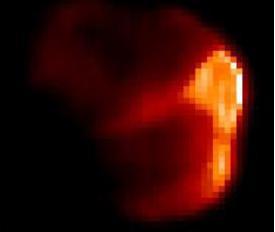
This image composite shows comet Tempel 1 in infrared light . The infrared picture highlights the warm, or sunlit, side of the comet, where NASA Deep Impact probe later hit.
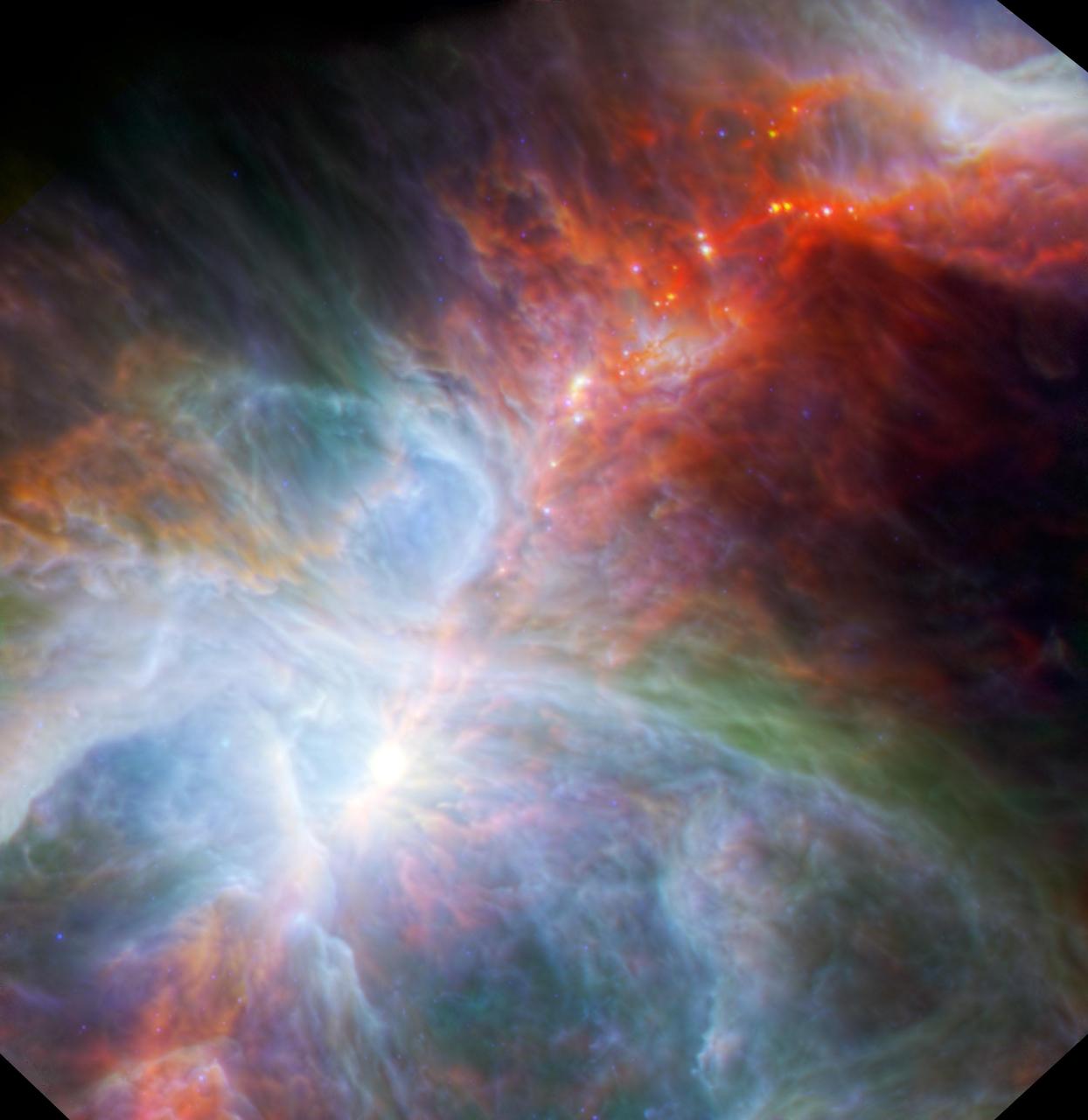
NASA Spitzer Space Telescope and ESA Herschel mission combined to show this view of the Orion nebula, found below the three belt stars in the famous constellation of Orion the Hunter, highlights fledgling stars hidden in the gas and clouds.
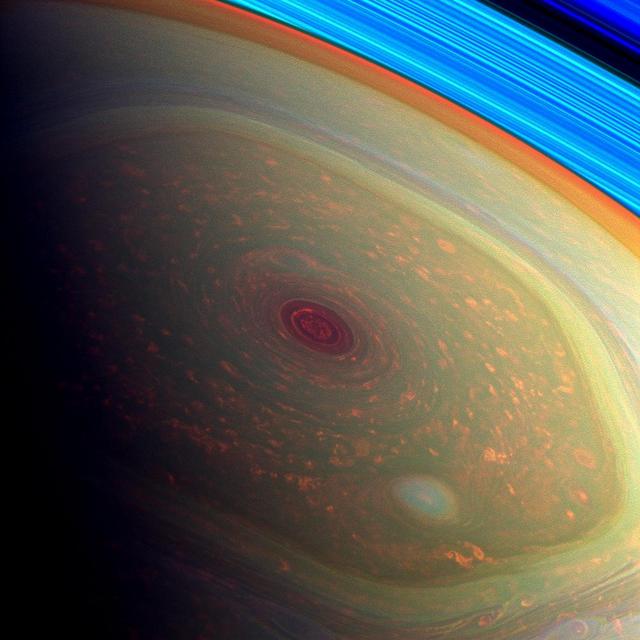
This spectacular, vertigo inducing, false-color image from NASA Cassini mission highlights the storms at Saturn north pole. The angry eye of a hurricane-like storm appears dark red.

This image from NASA Terra spacecraft highlights the epicenter of a powerful magnitude 6.6 earthquake which struck Sichuan Province in southwest China on April 20, 2013. Vegetation is displayed in red; clouds and snow are in white.
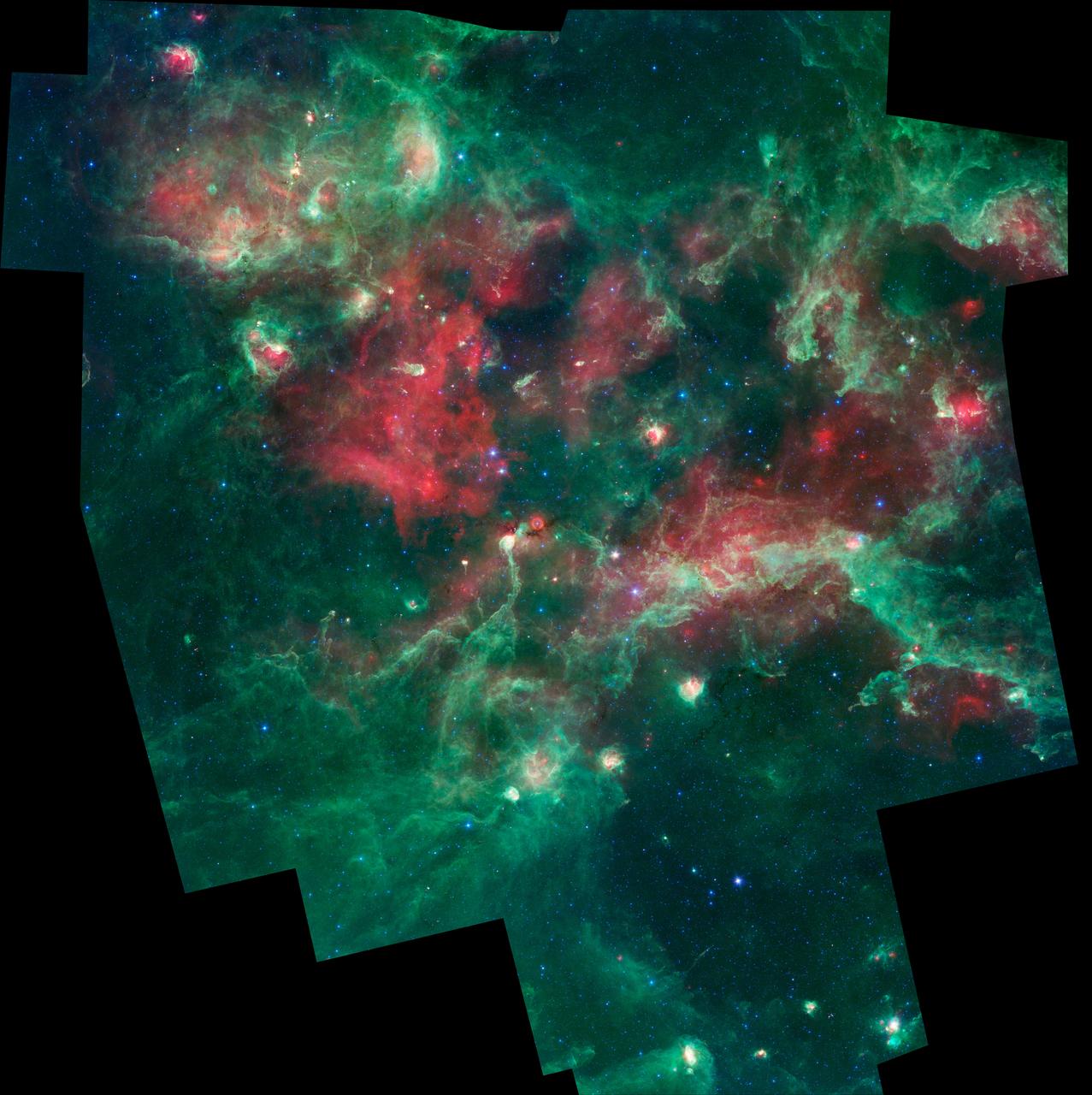
A bubbling cauldron of star birth is highlighted in this image from NASA Spitzer Space Telescope. Massive stars have blown bubbles, or cavities, in the dust and gas -- a violent process that triggers both the death and birth of stars.
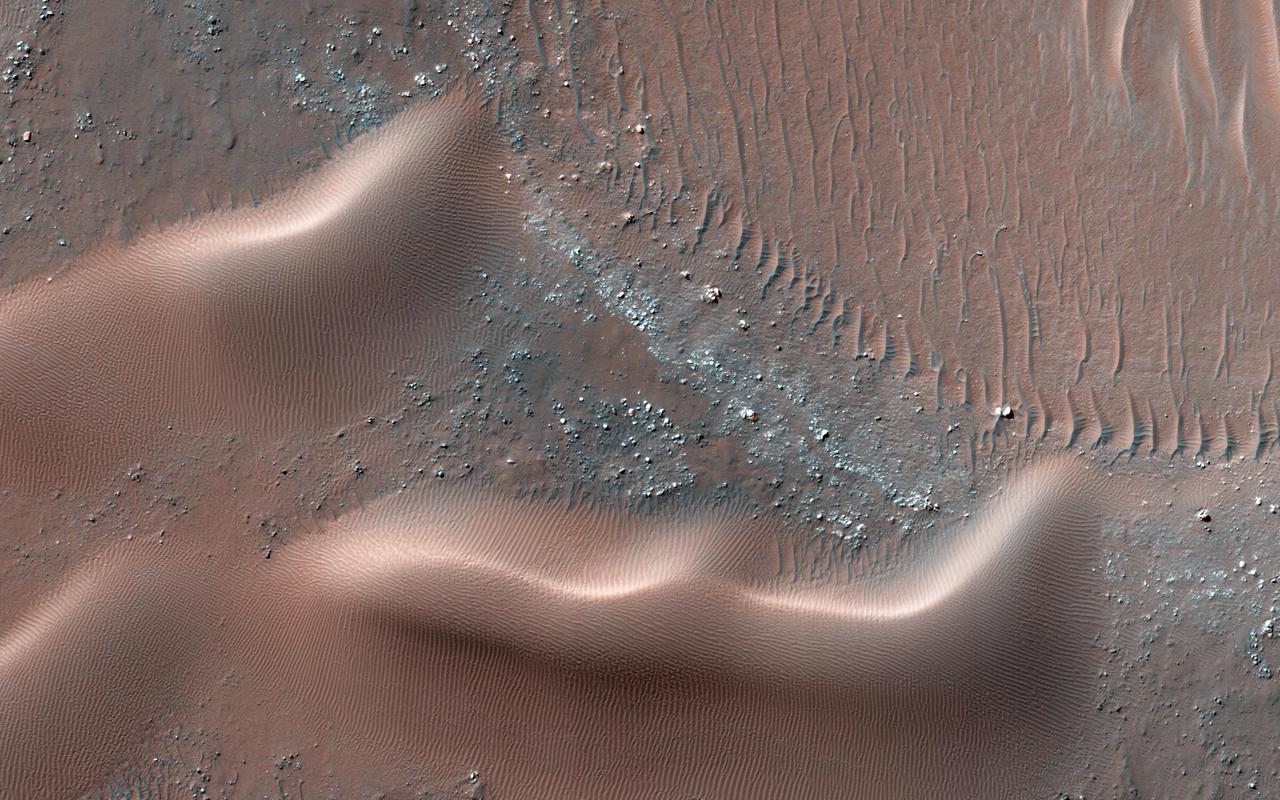
This observation from NASA Mars Reconnaissance Orbiter is of one many that highlights new discoveries; one of these is that many sand dunes and ripples are moving, some at rates of several meters per year.
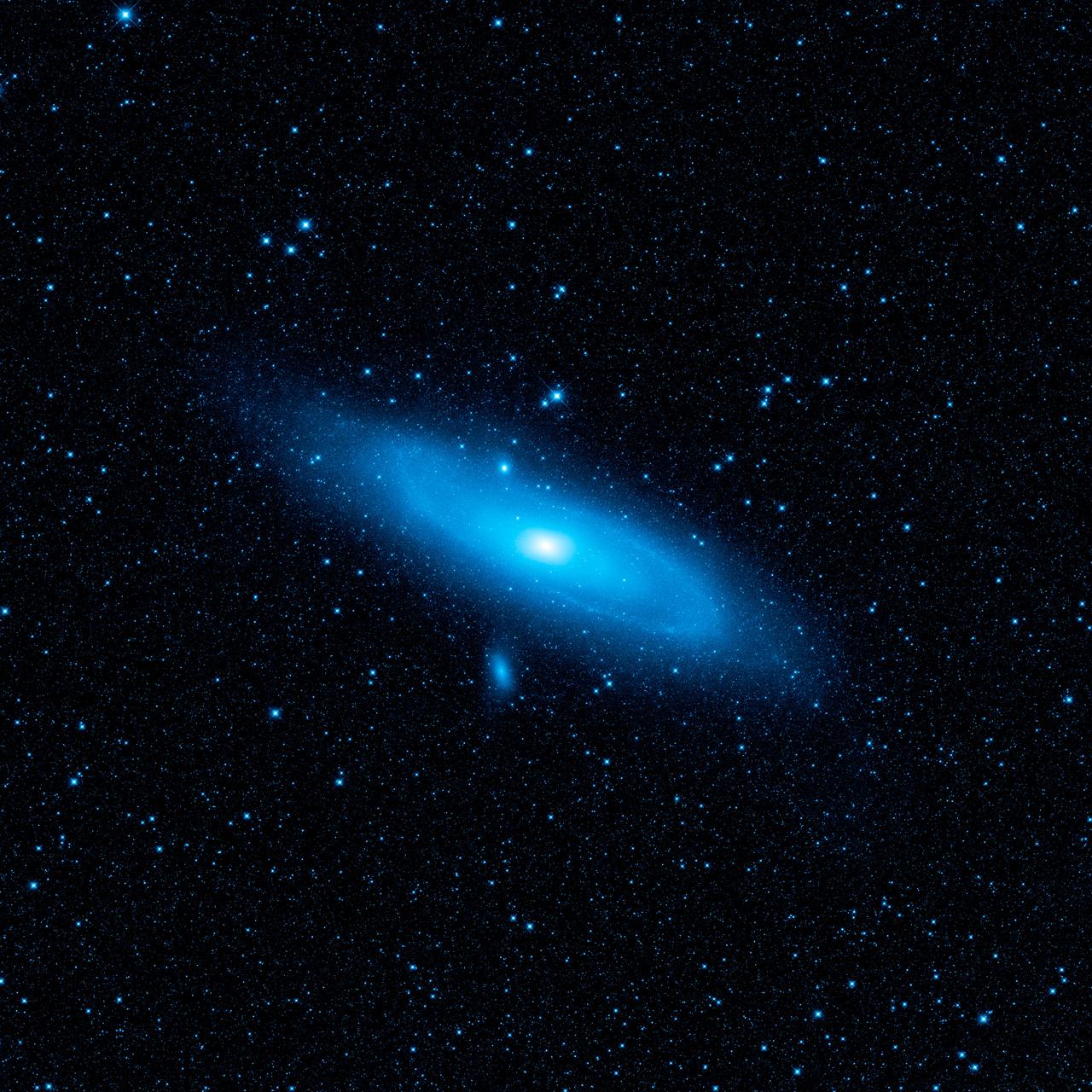
This image from NASA Wide-field Infrared Survey Explorer highlights the Andromeda galaxy older stellar population in blue. A pronounced warp in the disk of the galaxy, the aftermath of a collision with another galaxy, can be seen in the spiral arm.

Large plumes of smoke rising from devastating wildfires burning near Los Angeles and San Diego on Sunday, October 26, 2003, are highlighted in this set of images from NASA Terra spacecraft.
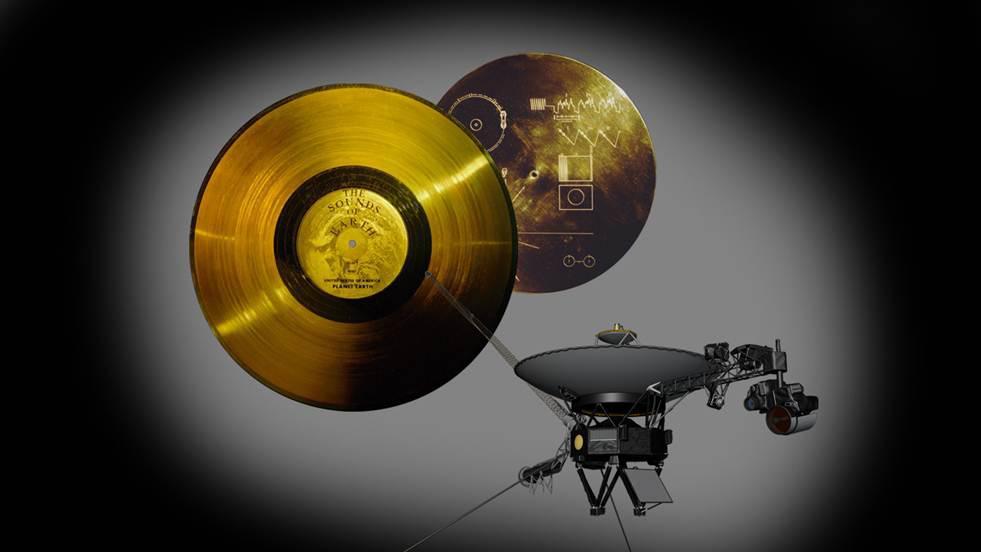
This image highlights the special cargo onboard NASA Voyager spacecraft: the Golden Record. Each of the two Voyager spacecraft launched in 1977 carry a 12-inch gold-plated phonograph record with images and sounds from Earth.
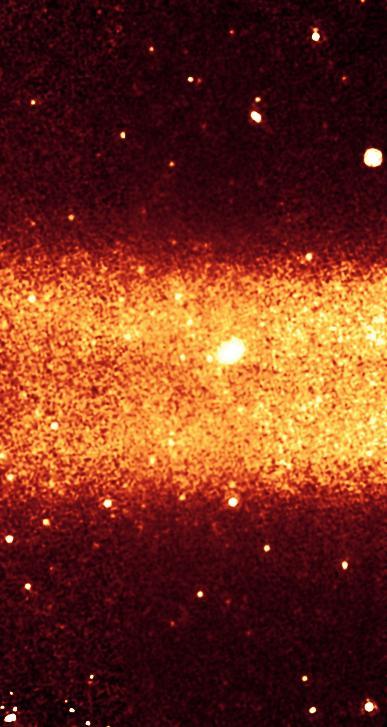
This picture highlights a slice of Saturn largest ring. The ring red band was discovered by NASA Spitzer Space Telescope, which detected infrared light, or heat, from the dusty ring material.
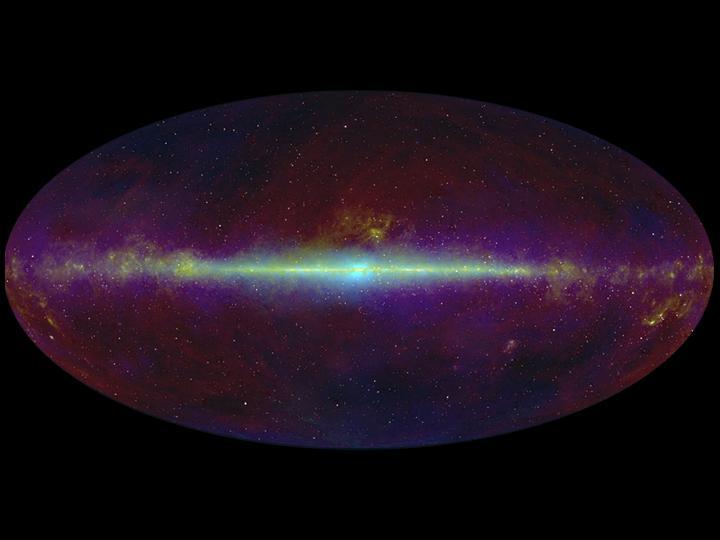
This infrared view of the whole sky highlights the flat plane of our Milky Way galaxy line across middle of image. NASA WISE, will take a similar infrared census of the whole sky, only with much improved resolution and sensitivity.
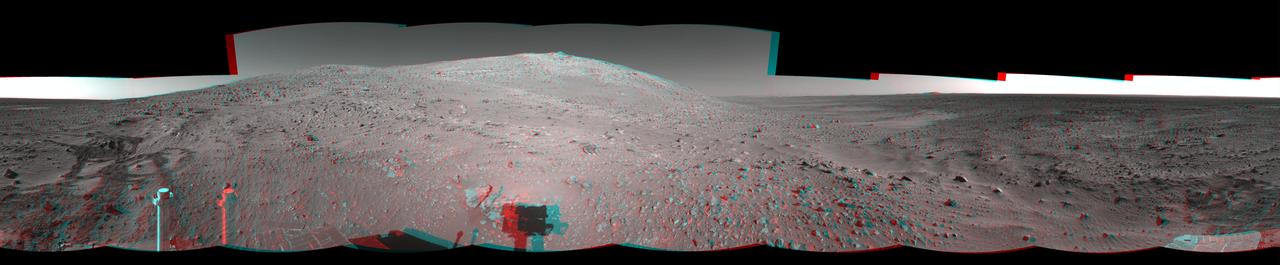
NASA Mars Exploration Rover took the images that make up this 360-degree mosaic anaglyph highlighting Spirit arrival at the base of the Columbia Hills. 3D glasses are necessary to view this image.
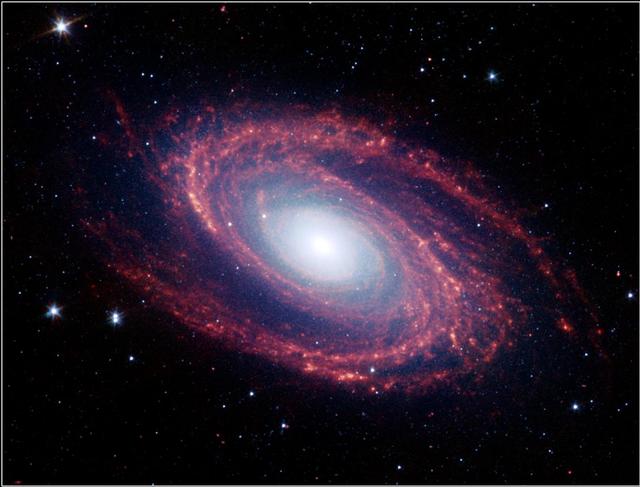
The magnificent spiral arms of the nearby galaxy Messier 81 are highlighted in this NASA Spitzer Space Telescope image. Located in the northern constellation of Ursa Major which also includes the Big Dipper.
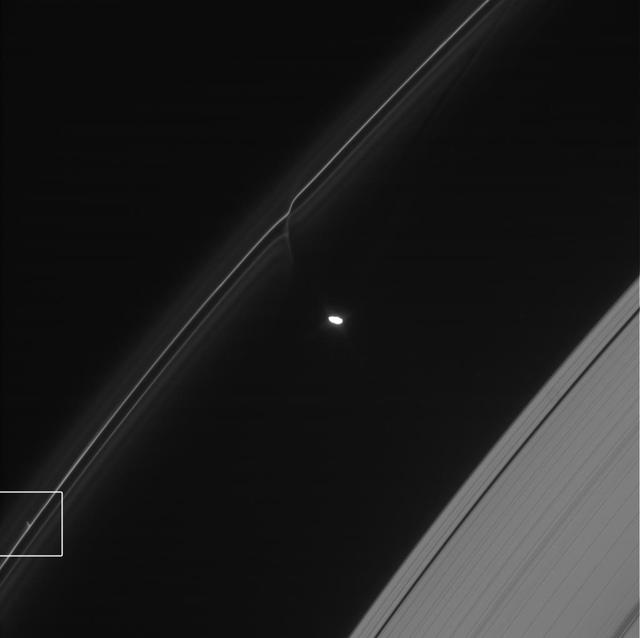
One of the glittering trails caused by small objects punching through Saturn F ring is highlighted in this image from NASA Cassini spacecraft. These trails show how the F ring, the outermost of Saturn main rings, is constantly changing.
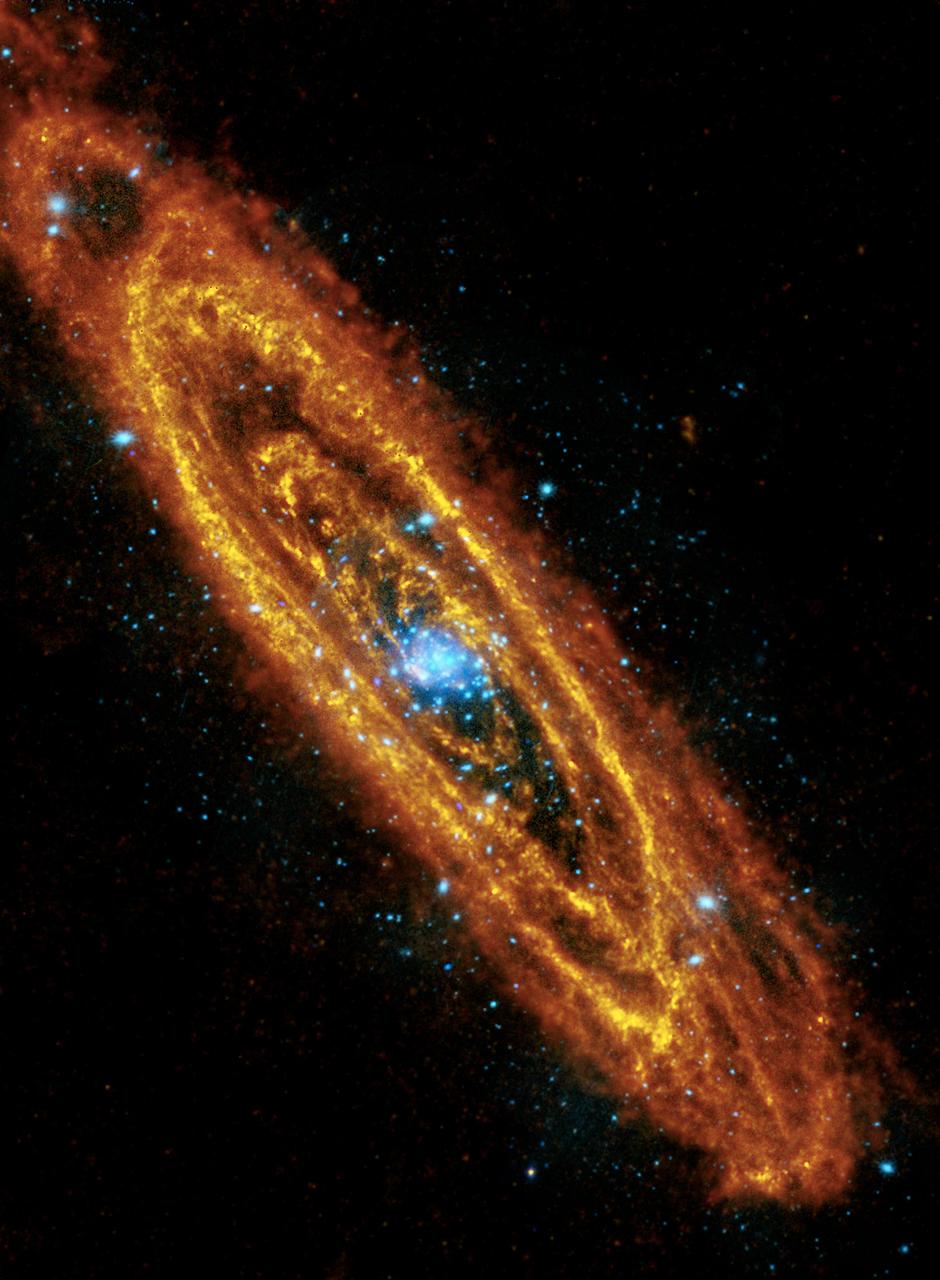
This mosaic of the Andromeda spiral galaxy highlights explosive stars in its interior, and cooler, dusty stars forming in its many rings. This is a combination of observations from the Herschel Space Observatory and the XMM-Newton telescope.

This 360-degree three dimensional anaglyph view from NASA Mars Exploration Rover Spirit highlights Gusev crater on sol 142. 3D glasses are necessary to view this image.
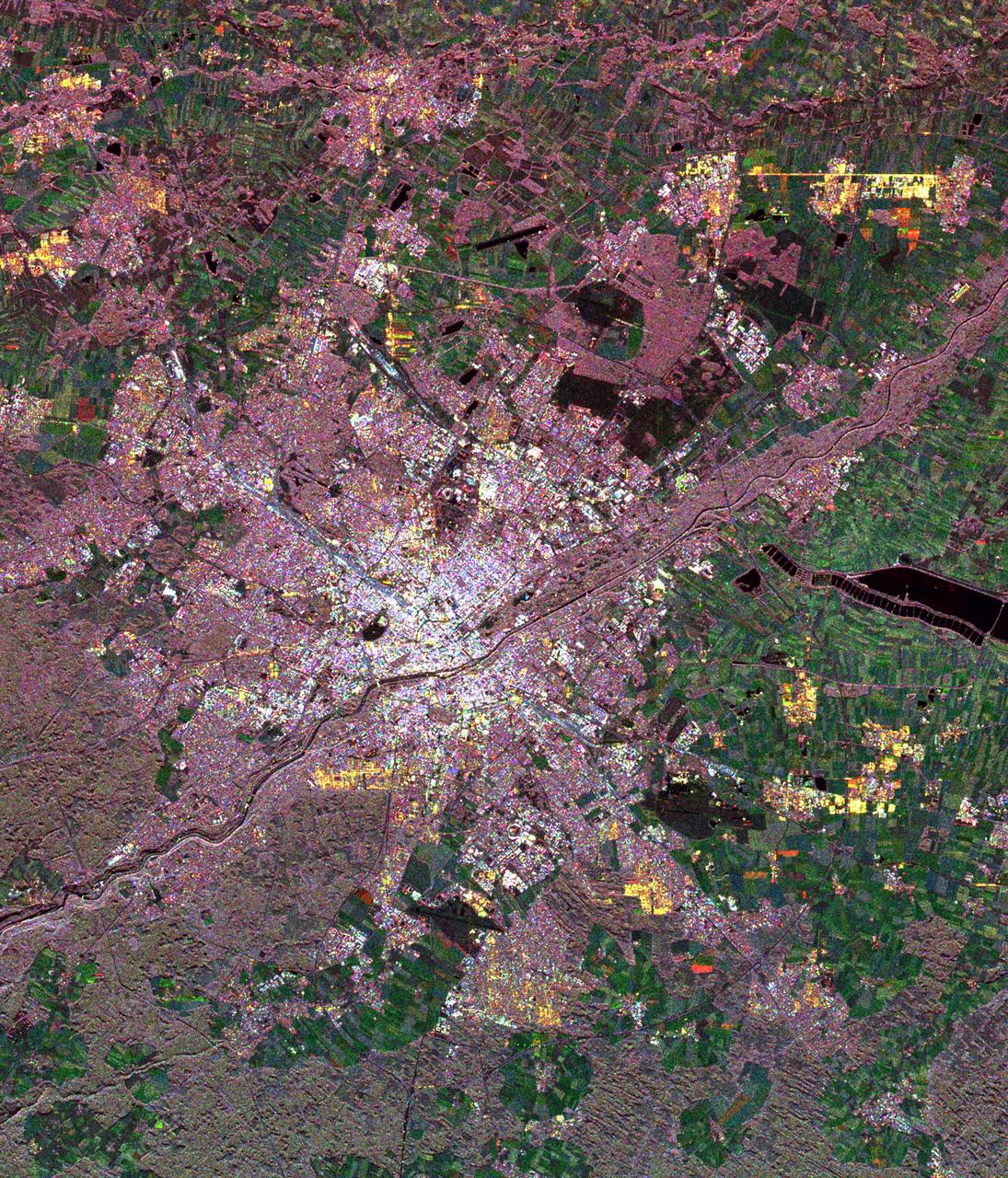
This spaceborne radar image of Munich, Germany illustrates the capability of a multi-frequency radar system to highlight different land use patterns in the area surrounding Bavaria largest city.
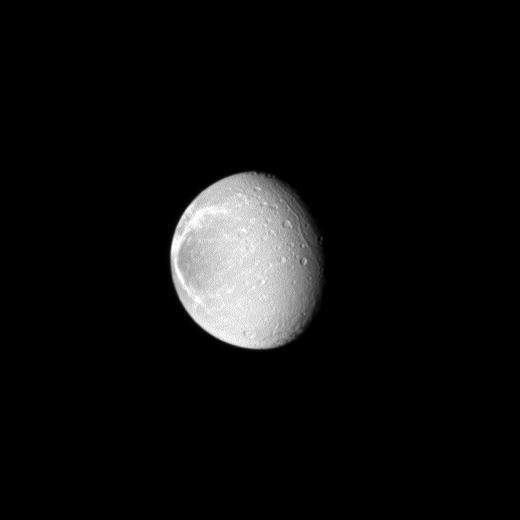
Sunlight highlights the bright, wispy features on the trailing hemisphere of Saturn moon Dione as seen by NASA Cassini spacecraft. These wispy features are a system of braided canyons with bright walls caused by fractures.
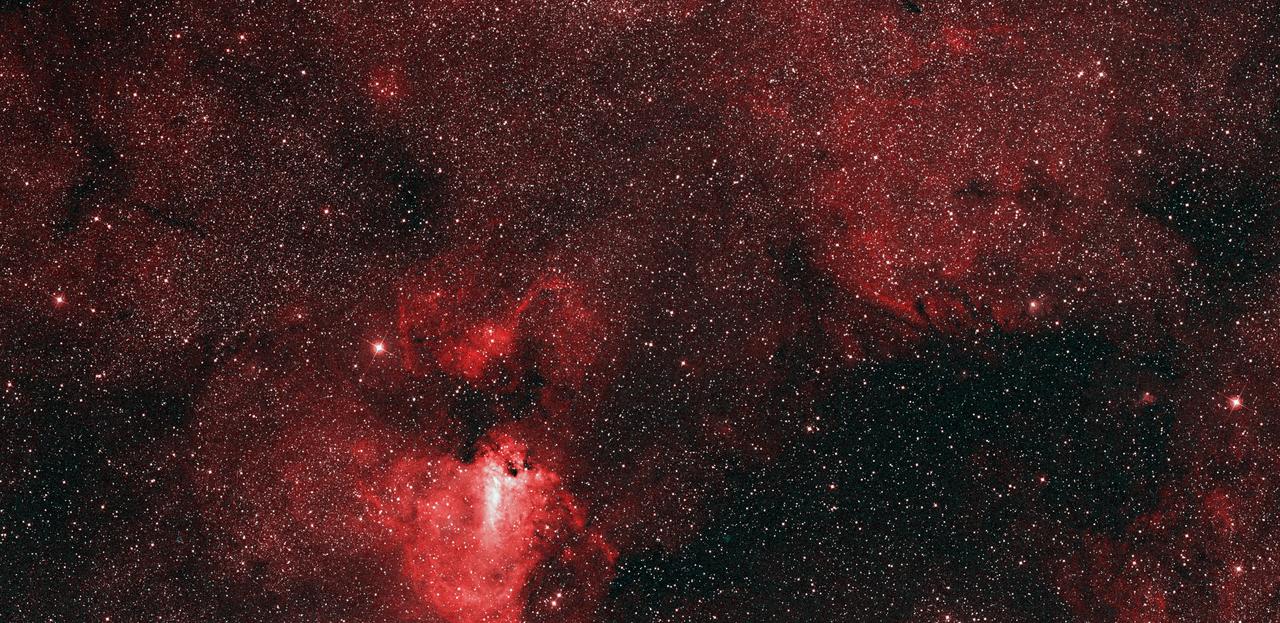
This visible-light view from from NASA Spitzer Space Telescope highlights the bright M17 nebula, as well as the glowing hot gas filling the bubble to its left.
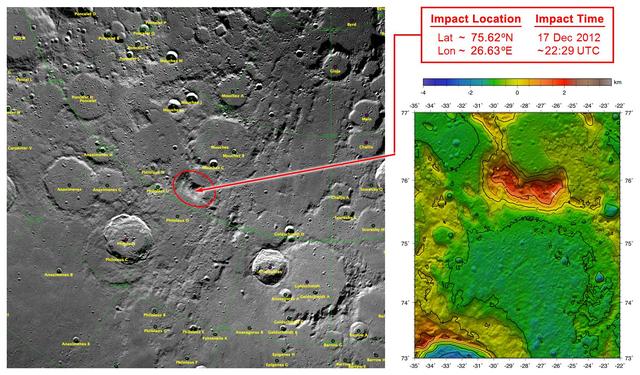
These maps of Earth moon highlight the region where the twin spacecraft of NASA Gravity Recovery and Interior Laboratory GRAIL mission will impact on Dec. 17, marking the end of its successful endeavor to map the moon gravity.
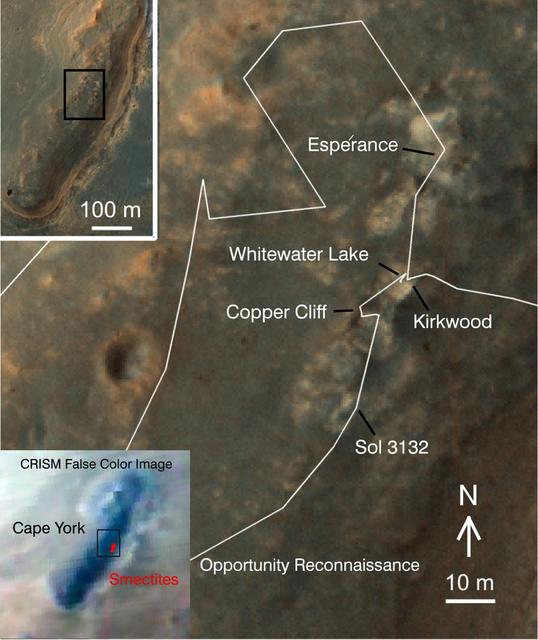
A region known as Cape York on the western rim of Endeavour Crater, where the Opportunity rover worked for 20 months, is highlighted in these images from NASA Mars Reconnaissance Orbiter.

This 360-degree three dimensional anaglyph view from NASA Mars Exploration Rover Spirit highlights Gusev crater on sol 147. 3D glasses are necessary to view this image.
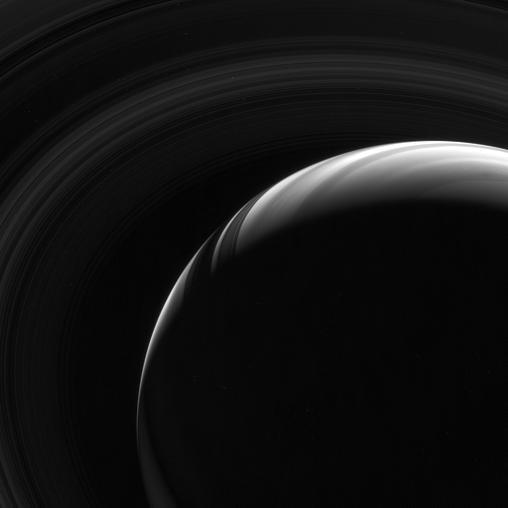
This infrared view from high above Saturn ringplane highlights the contrast in the cloud bands, the dimly glowing rings and their shadows on the gas giant planet. The overall effect is stirring
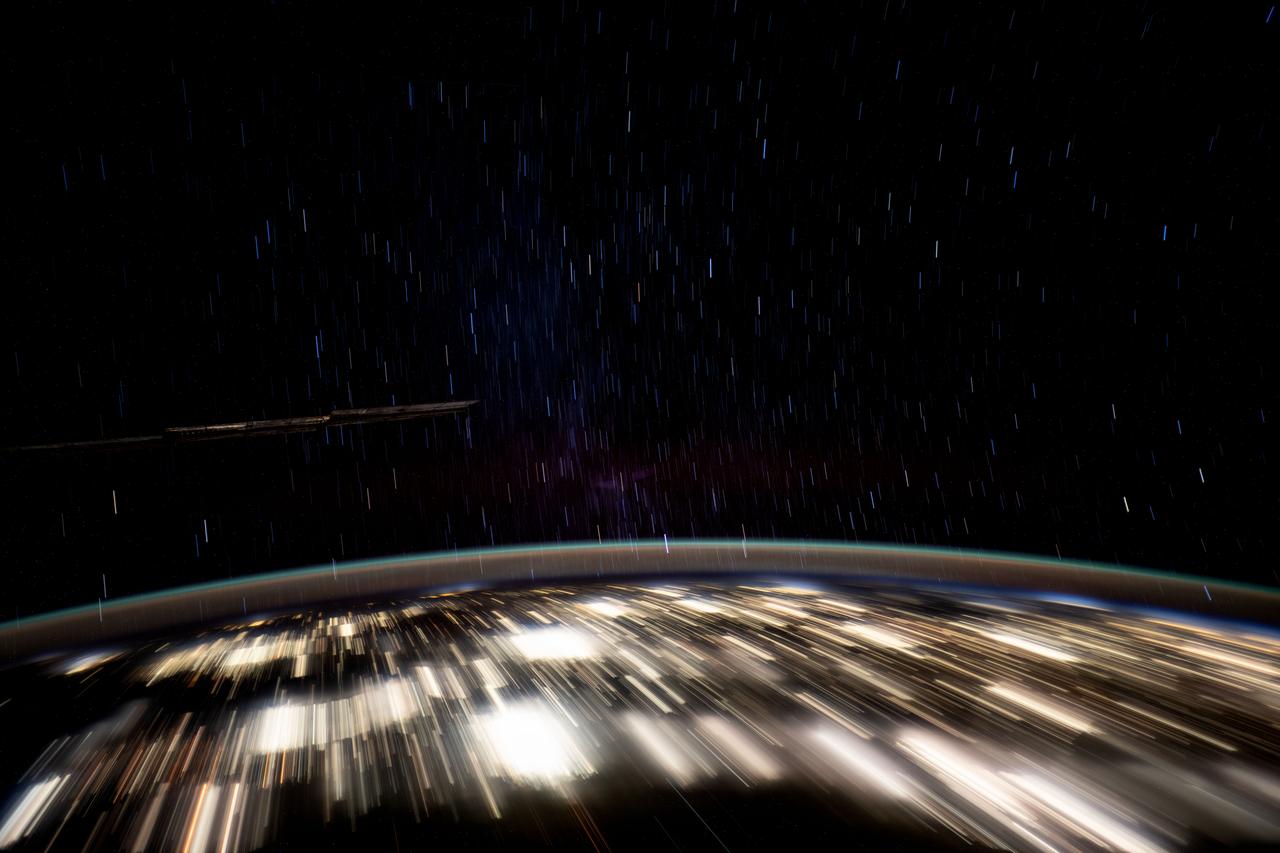
iss072e518202 (Jan. 23, 2025) --- This long-duration photograph highlights the city lights of Mexico's Yucatan peninsula, Earth's atmospheric glow, and star trails above taken from the International Space Station as it orbited 258 miles above.
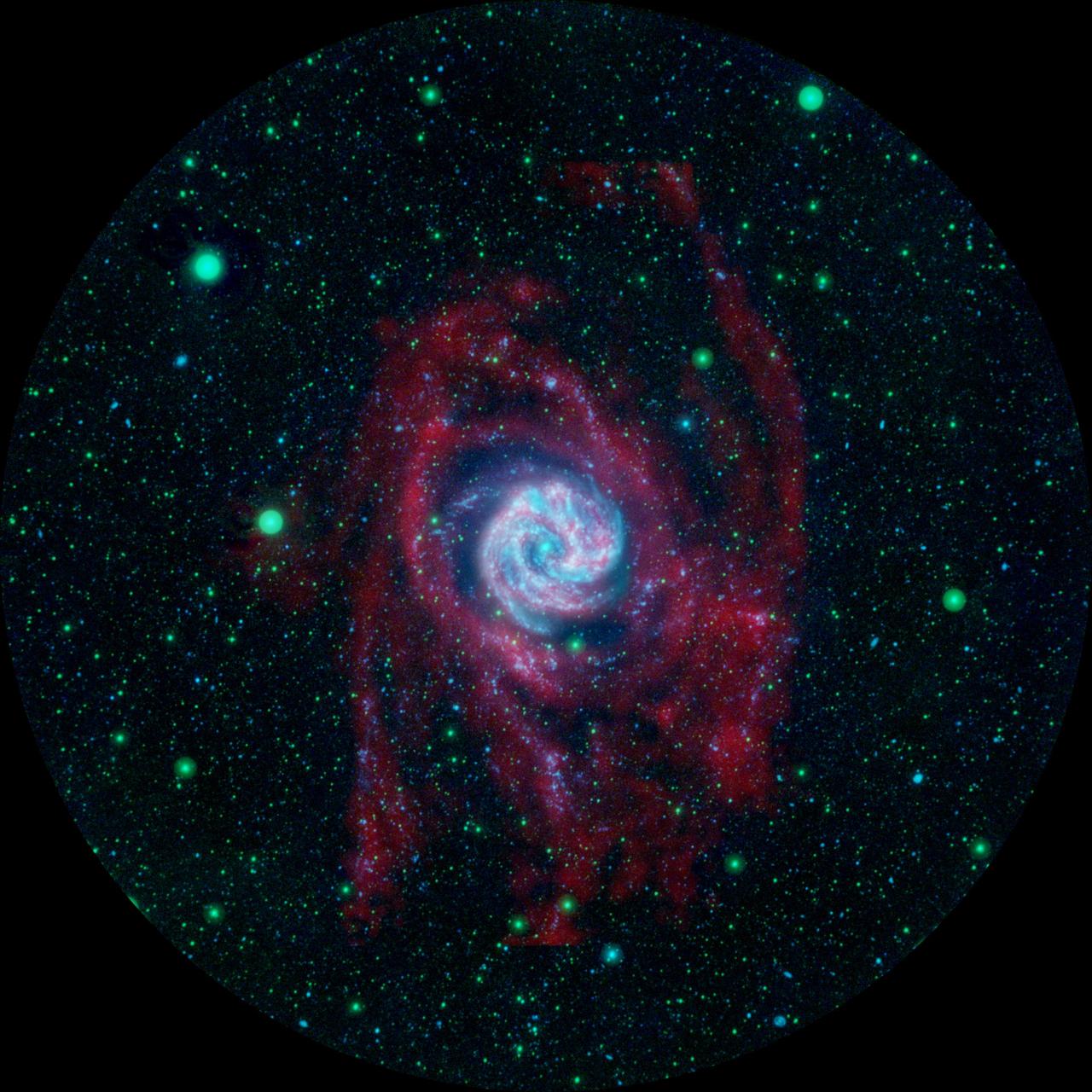
The outlying regions around the Southern Pinwheel galaxy, or M83, are highlighted in this composite image from NASA Galaxy Evolution Explorer and the National Science Foundation Very Large Array in New Mexico.
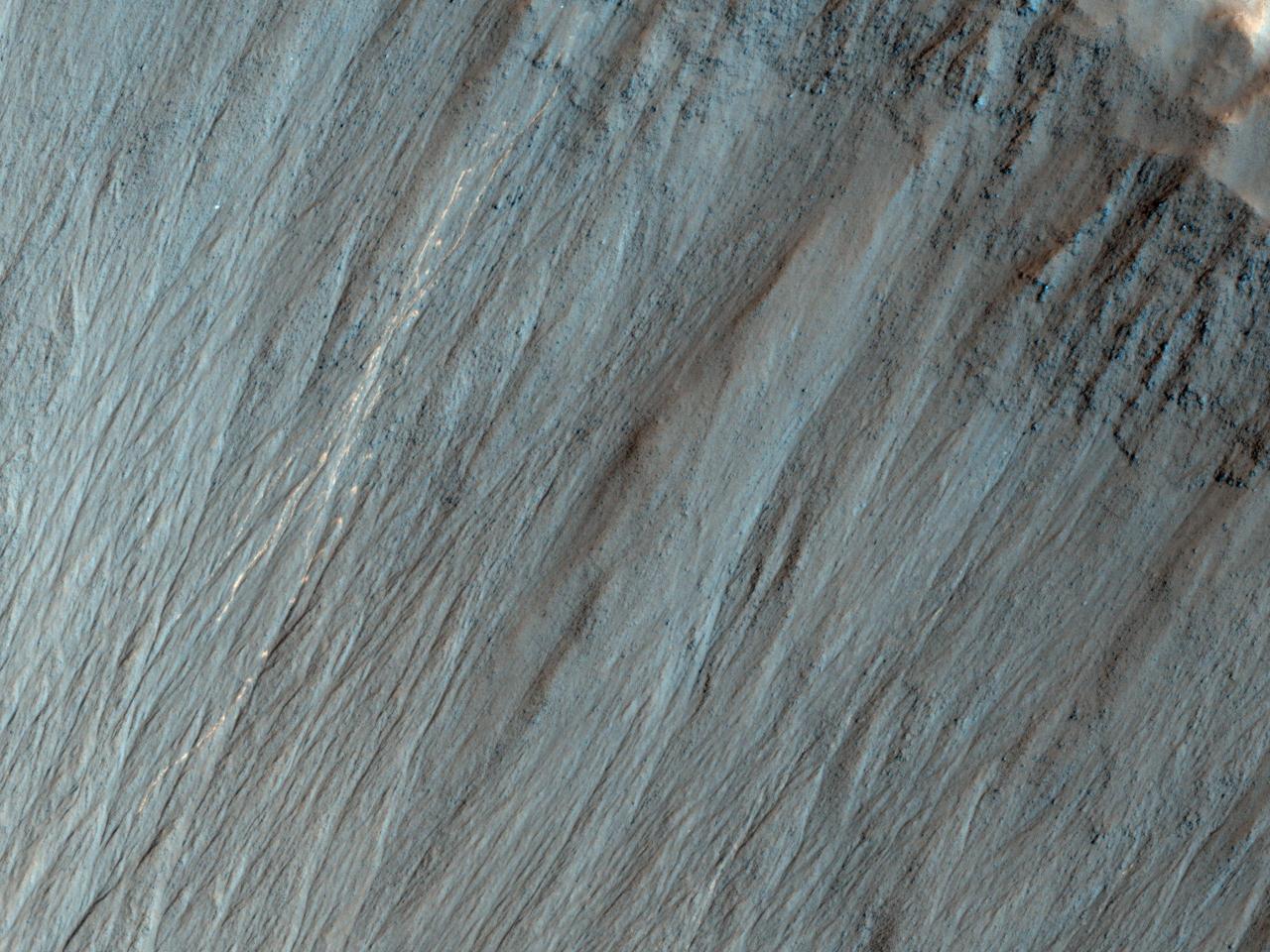
This image from NASA Mars Reconnaissance Orbiter shows a well-preserved impact crater. A closeup view highlights distinctive bright lines and spots on the steep slope on the north side.
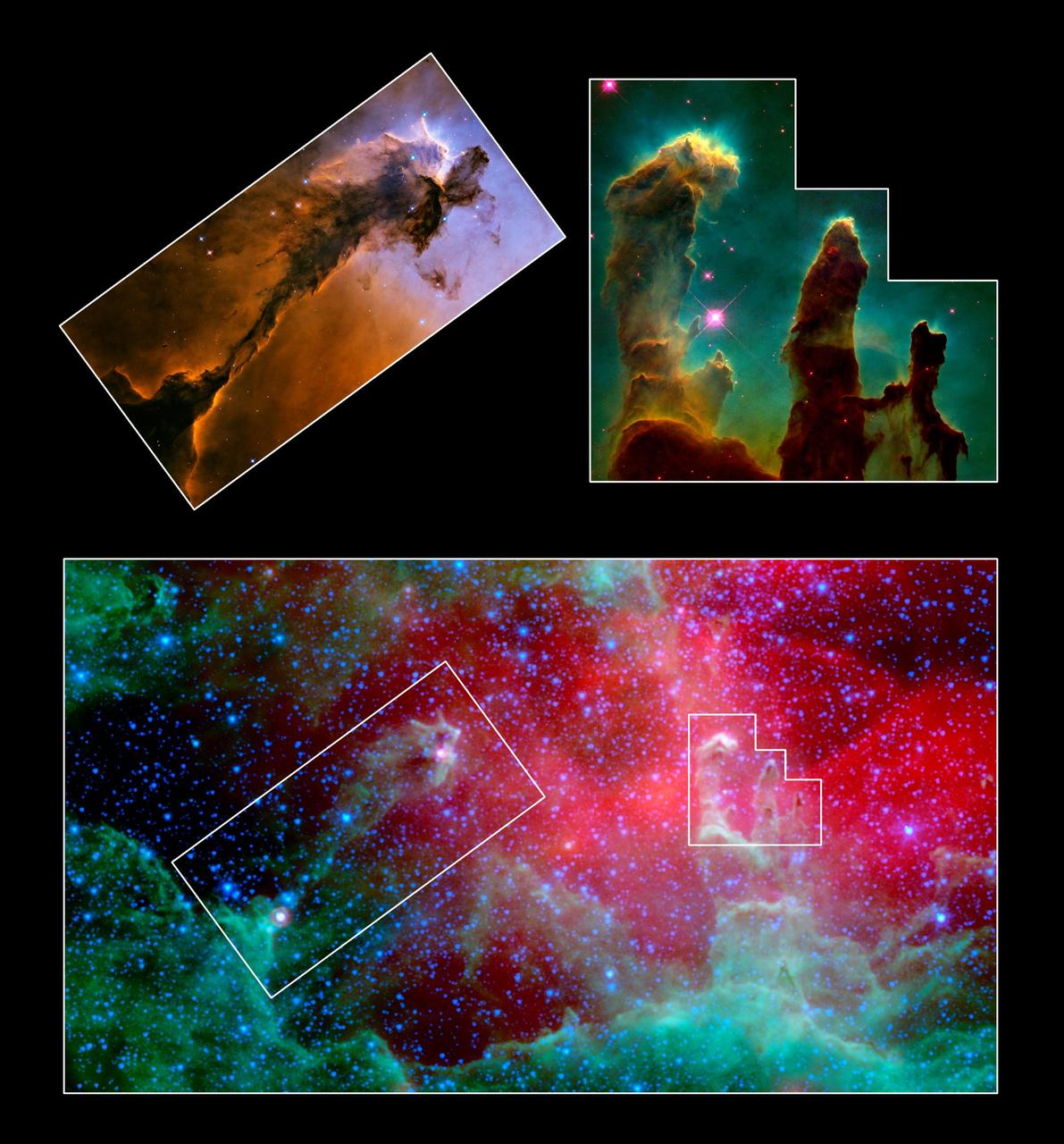
This image composite highlights the pillars of the Eagle nebula, as seen in infrared light by NASA Spitzer Space Telescope bottom and visible light by NASA Hubble Space Telescope top insets.
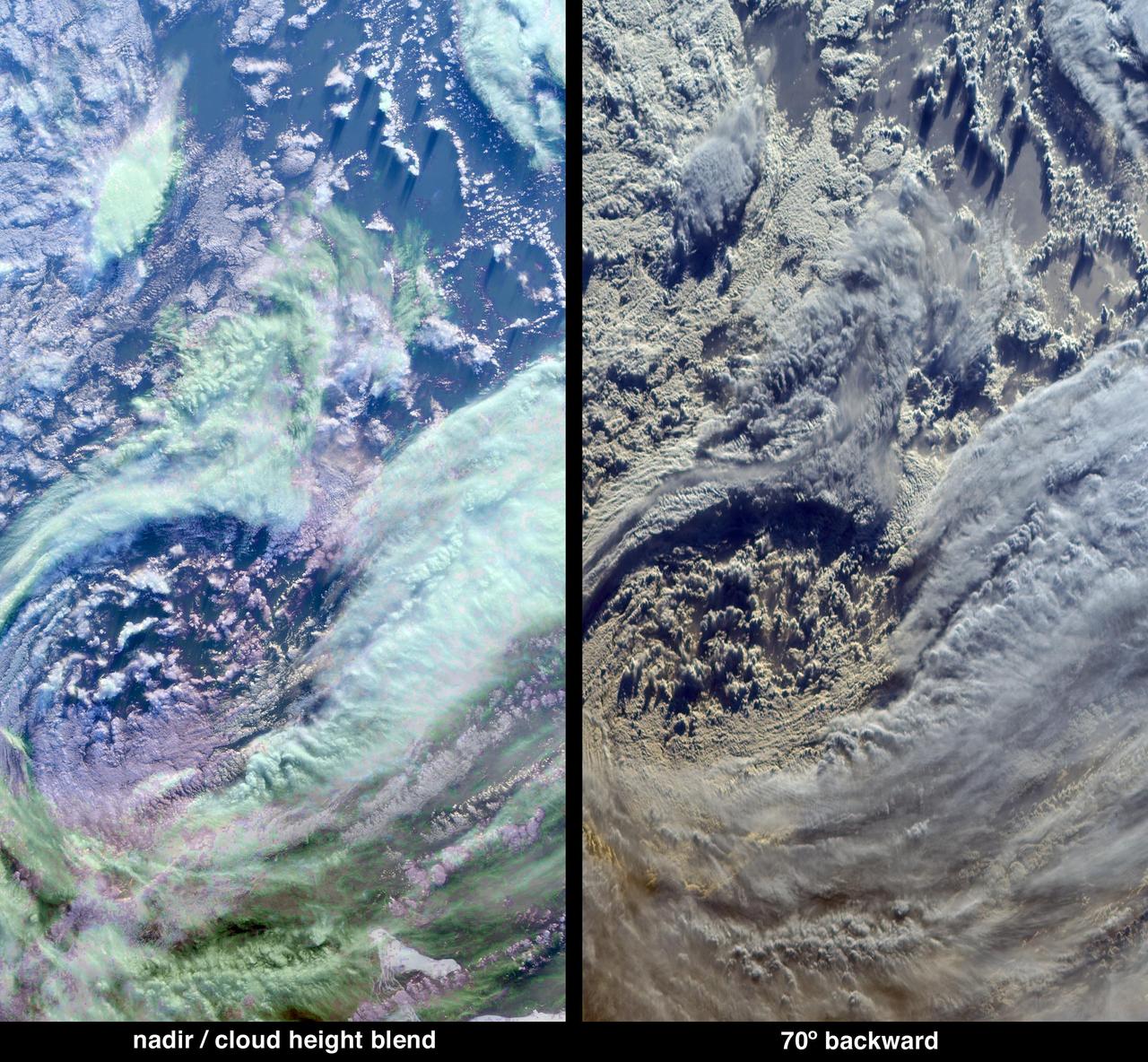
The complex structure and beauty of polar clouds are highlighted by these images acquired by NASA Terra spacecraft on April 23, 2003. These clouds occur at multiple altitudes and exhibit a noticeable cyclonic circulation over the Southern Indian Ocean,
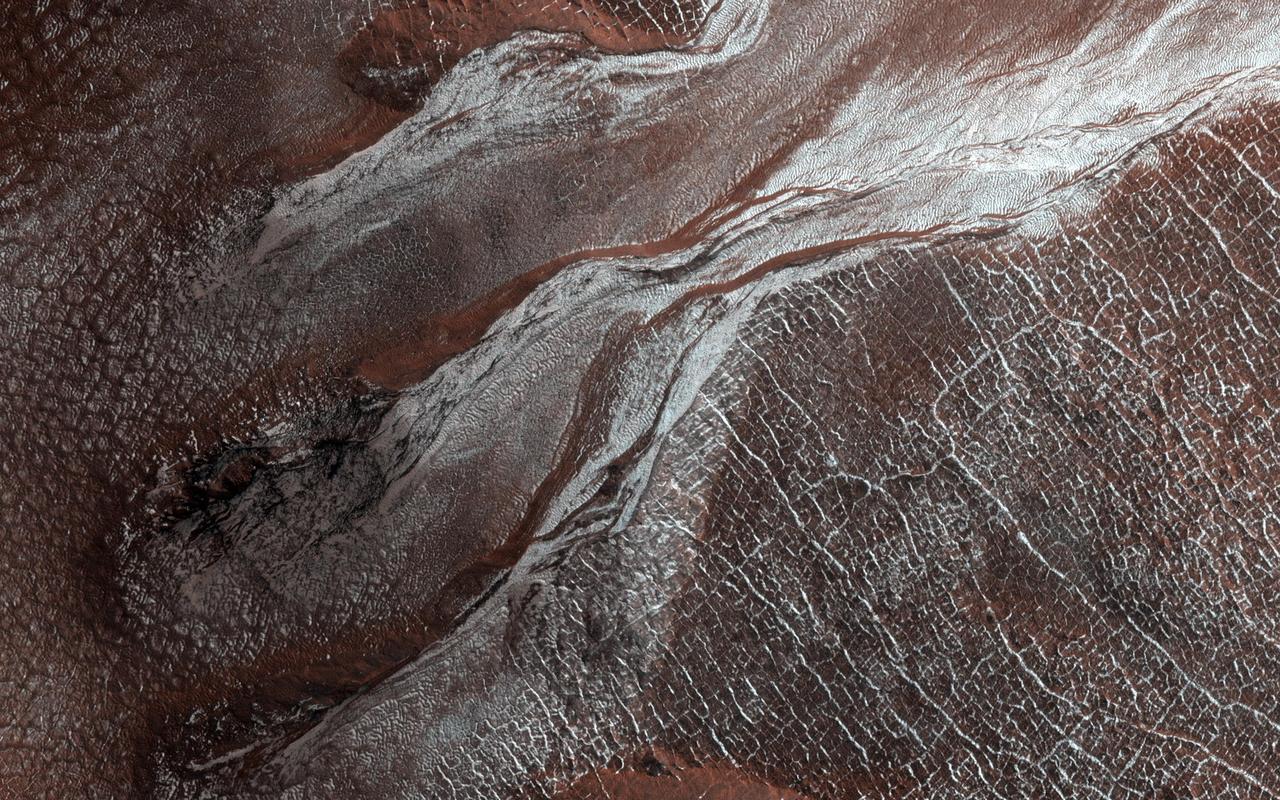
This image of a crater rim strikingly shows what appear to be bright white flows coming from gullies in the crater wall. However, HiRISE has been watching these gullies for some time (going all the way back to our first observation in 2012) and the flow features have been there for years. The new aspect is the bright white coloration, which is frost. This is the earliest in the springtime that this area has been observed, and just like some winter mornings here on Earth, the conditions on Mars can be just right for frost to form. The interesting thing is that the frost appears on the gully deposits and not as much on the surrounding rock, indicating the physical properties of the gully deposits are different. https://photojournal.jpl.nasa.gov/catalog/PIA23451
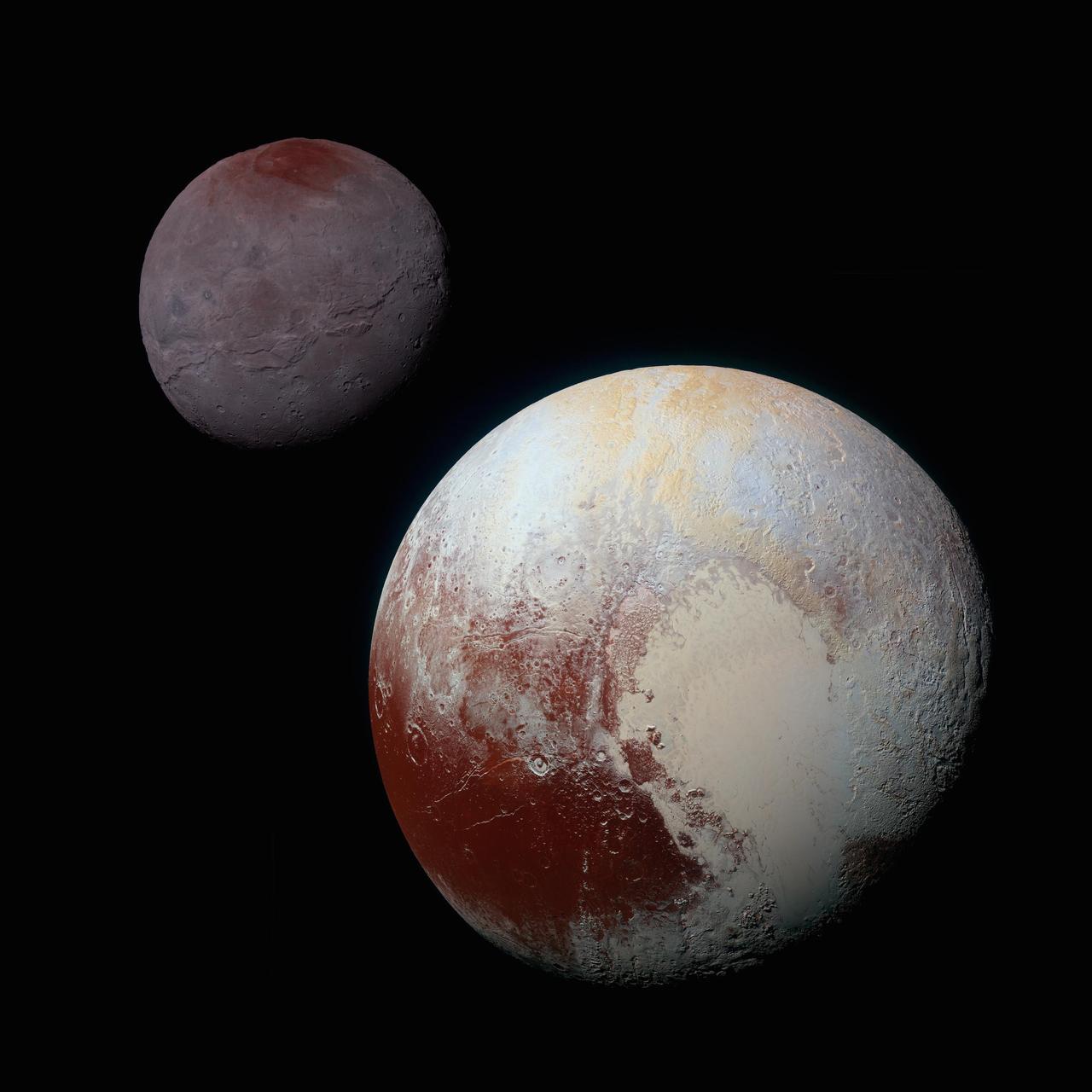
A composite of enhanced color images of Pluto (lower right) and Charon (upper left), taken by NASA's New Horizons spacecraft as it passed through the Pluto system on July 14, 2015. This image highlights the striking differences between Pluto and Charon. The color and brightness of both Pluto and Charon have been processed identically to allow direct comparison of their surface properties, and to highlight the similarity between Charon's polar red terrain and Pluto's equatorial red terrain. Pluto and Charon are shown with approximately correct relative sizes, but their true separation is not to scale. The image combines blue, red and infrared images taken by the spacecraft's Ralph/Multispectral Visual Imaging Camera (MVIC). http://photojournal.jpl.nasa.gov/catalog/PIA19966
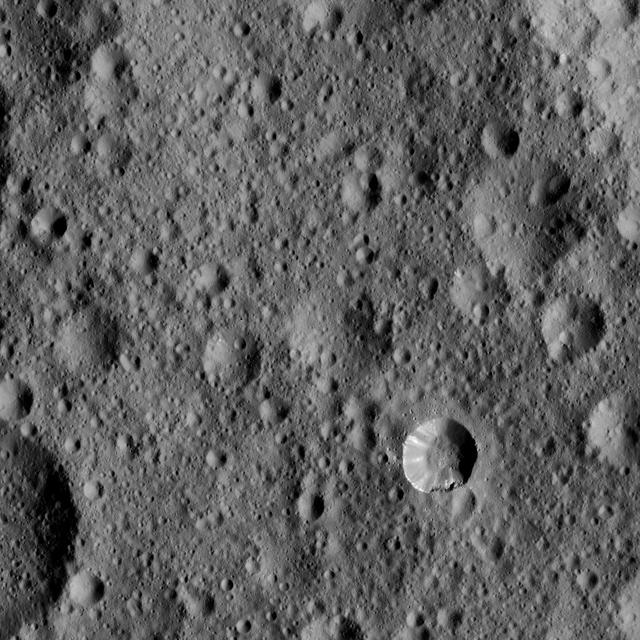
This view from NASA's Dawn spacecraft shows cratered terrain typical of Ceres, with a small bright crater highlighting the scene at lower right. The view is centered at approximately 37 degrees north latitude, 349 degrees east longitude. Dawn acquired this image on Feb. 9, 2016, from its low-altitude mapping orbit, at a distance of about 240 miles (385 kilometers) from the surface. The image resolution is 120 feet (35 meters) per pixel. http://photojournal.jpl.nasa.gov/catalog/PIA20556
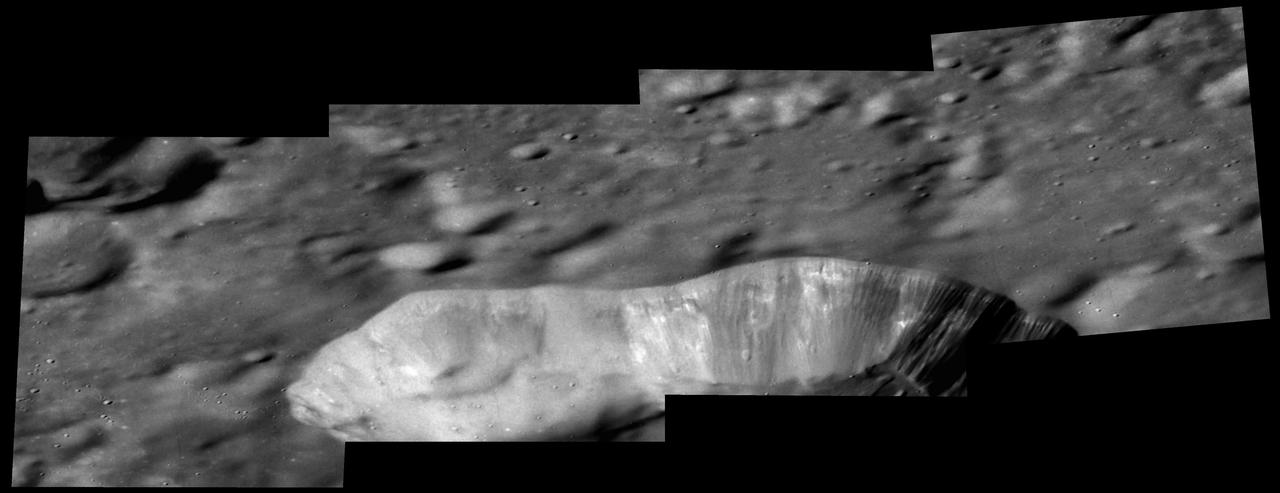
This series of oblique images highlight the wall and exterior of the beautiful volcanic vent located to the northeast of Rachmaninoff basin and west of Copland crater. Layering can be seen along a portion of the wall and the exterior is smooth due to a blanket of fine particles of lava that were ejected explosively from the vent in a pyroclastic eruption. This vent is deeper than Earth's Grand Canyon. http://photojournal.jpl.nasa.gov/catalog/PIA19282
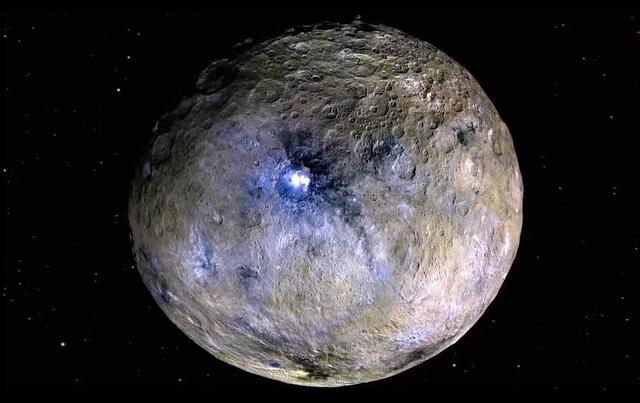
This frame from a video from NASA's Dawn mission shows dwarf planet Ceres in false-color renderings, which highlight differences in surface materials. Images were used to create a movie of Ceres rotating, followed by a flyover view of Occator Crater, home of Ceres' brightest area. A video is available at http://photojournal.jpl.nasa.gov/catalog/PIA20182
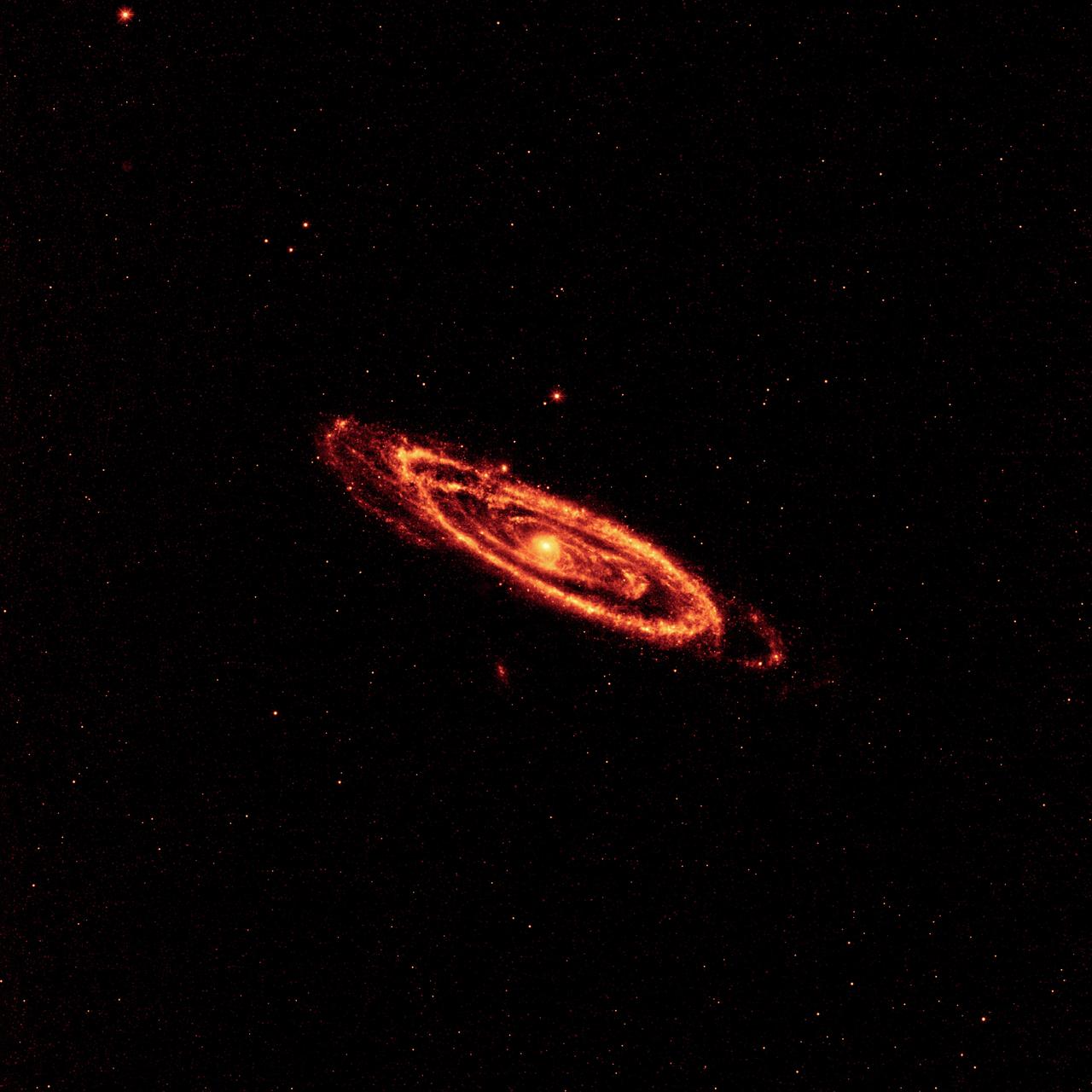
This image from NASA Wide-field Infrared Survey Explorer highlights the dust that speckles the Andromeda galaxy spiral arms. The hot dust, which is being heated by newborn stars, traces the spidery arms all the way to the center of the galaxy.
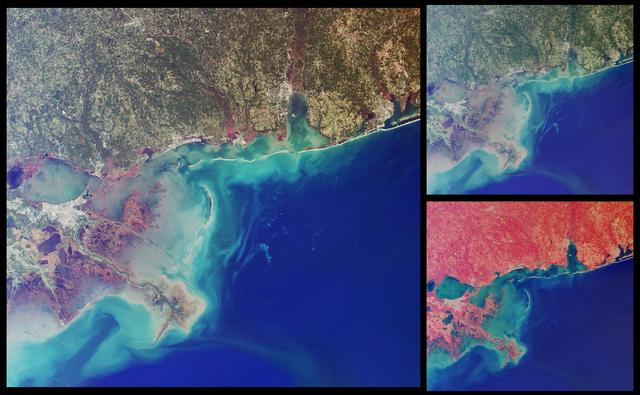
This set of images from NASA Terra satellit highlights coastal areas of four states along the Gulf of Mexico: Louisiana, Mississippi, Alabama and part of the Florida panhandle. The images were acquired on October 15, 2001 Terra orbit 9718.
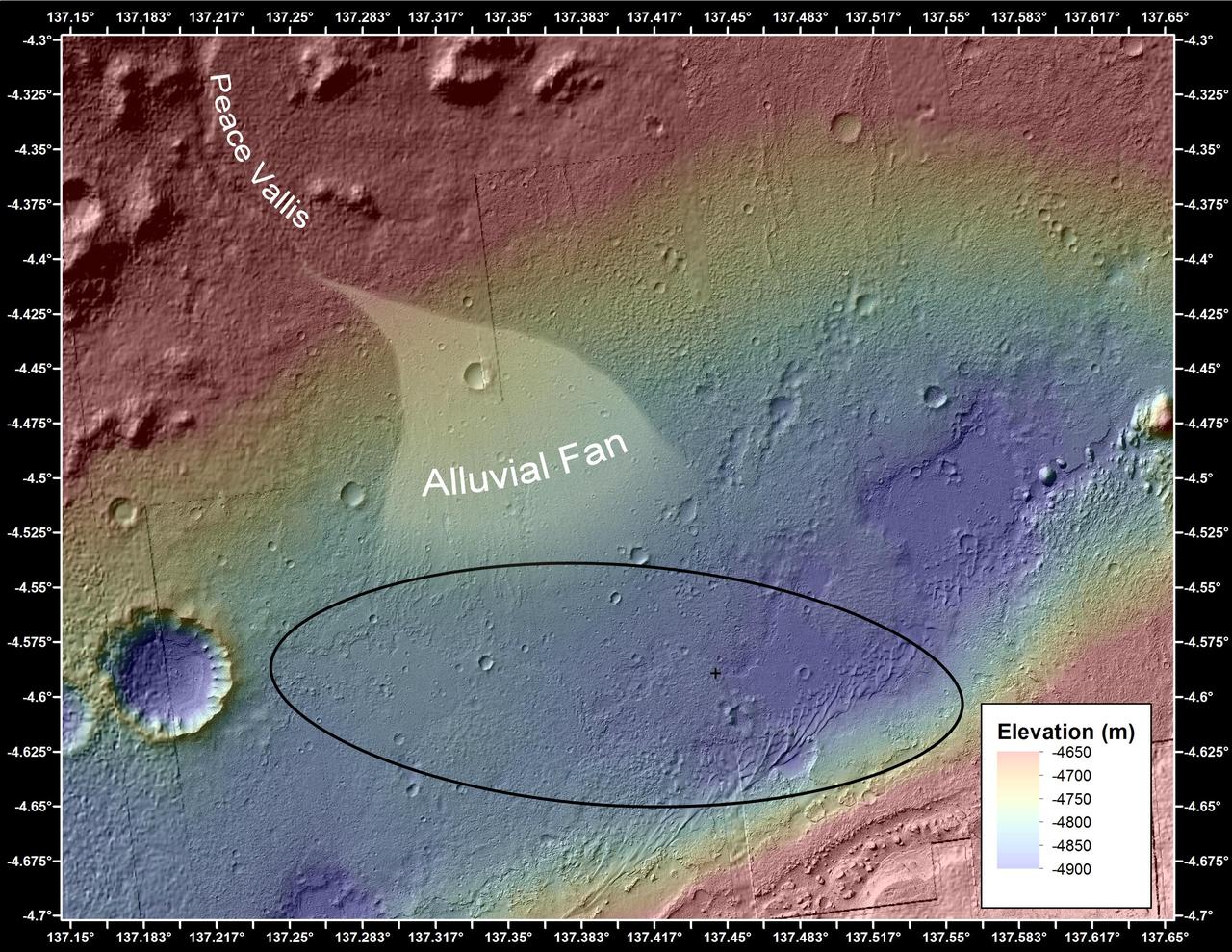
This image shows the topography, with shading added, around the area where NASA Curiosity rover landed. An alluvial fan, or fan-shaped deposit where debris spreads out downslope, has been highlighted in lighter colors for better viewing.
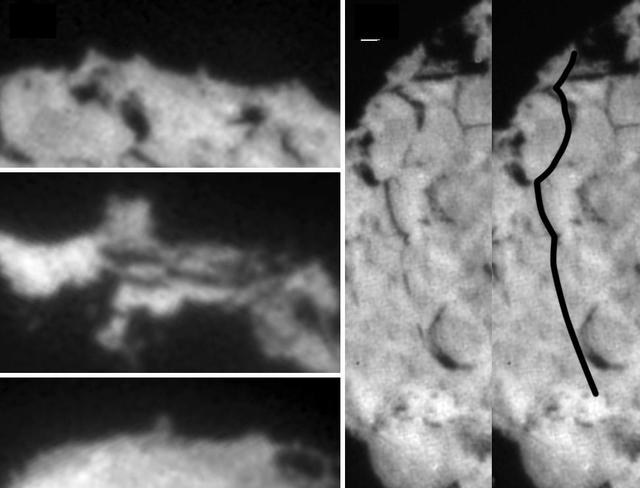
These images taken by NASA's Stardust spacecraft highlight the diverse features that make up the surface of comet Wild 2, showing a variety of small pinnacles and mesas seen on the limb of the comet and the location of a 2-kilometer (1.2-mile) series of aligned scarps, or cliffs, that are best seen in the stereo images. http://photojournal.jpl.nasa.gov/catalog/PIA06284