
Historic Merger of Storms on Jupiter
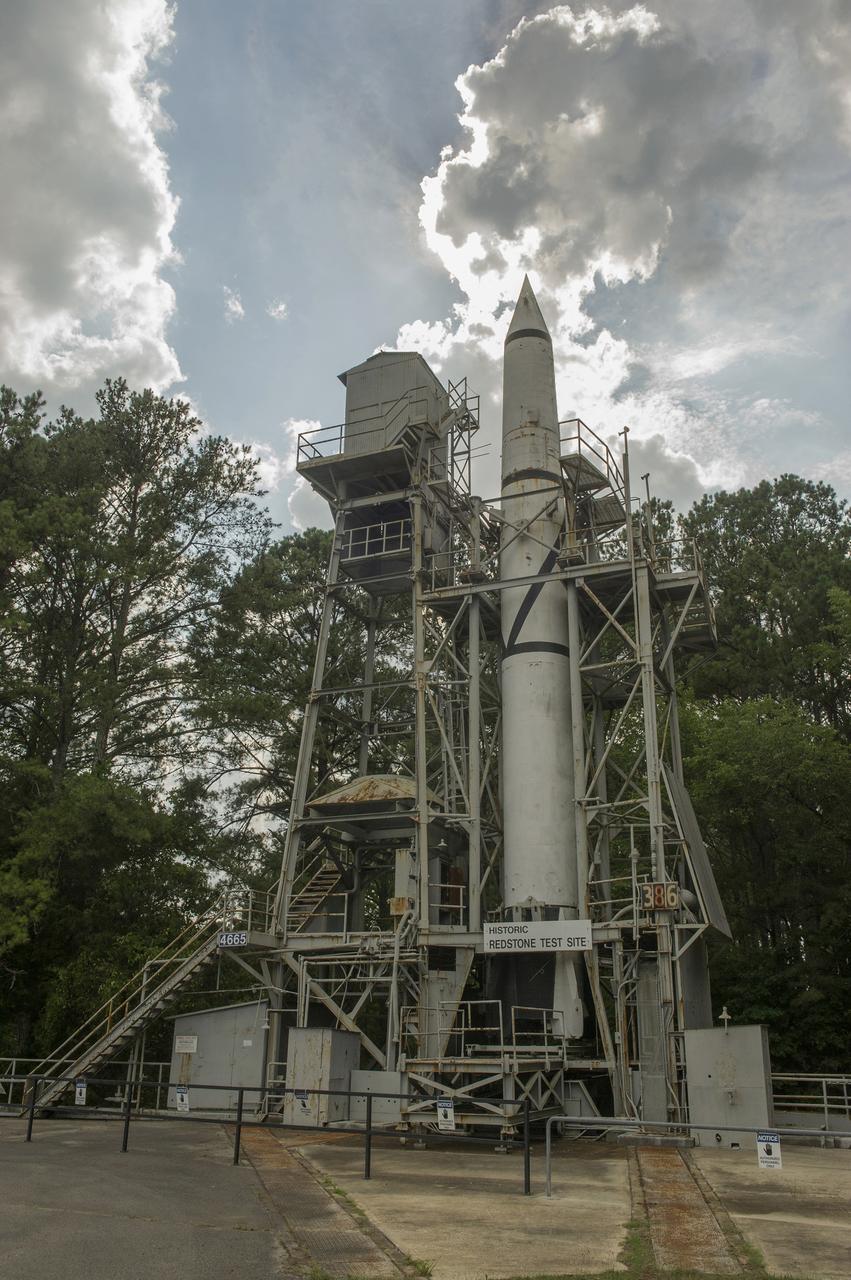
HISTORIC REDSTONE TEST SITE-TEST STAND 4665
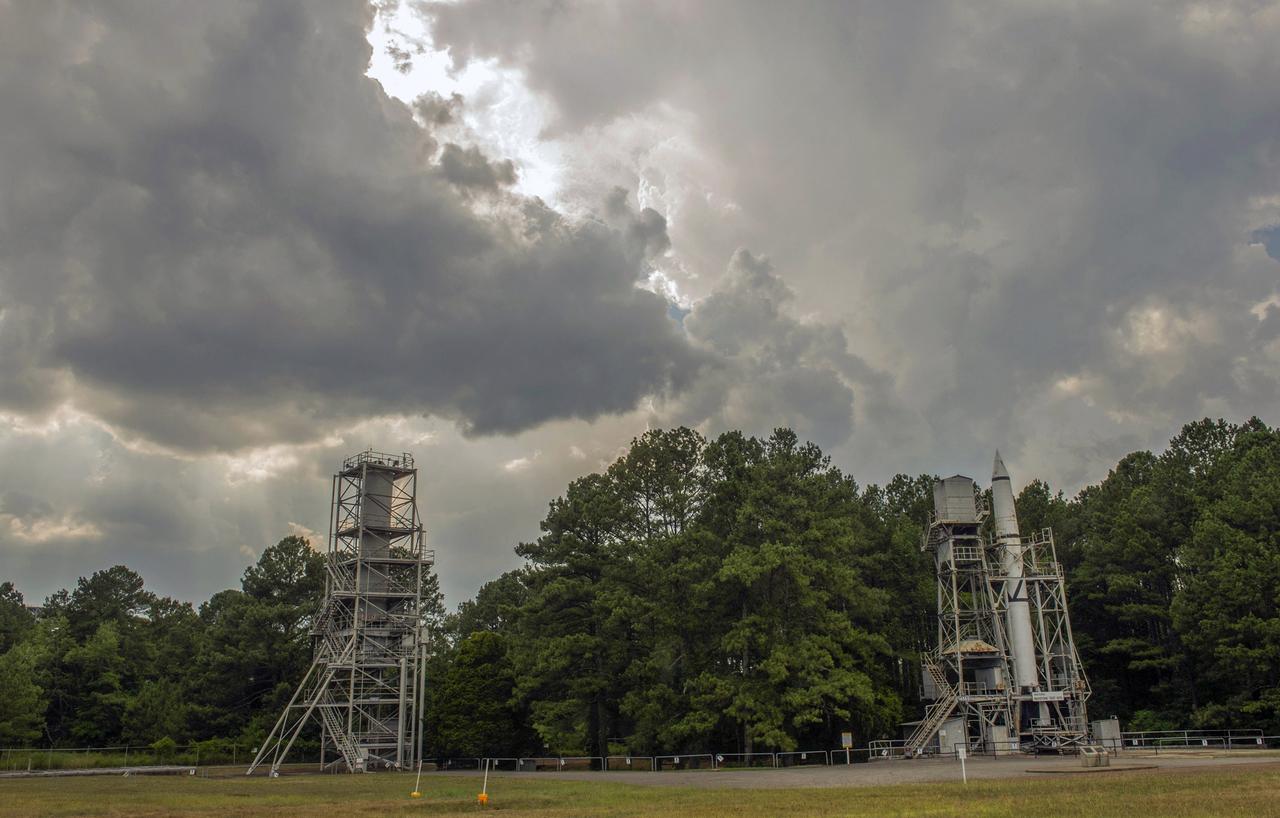
HISTORIC REDSTONE TEST SITE-TEST STAND 4665 (R), AND TEST STAND 4665A (L)
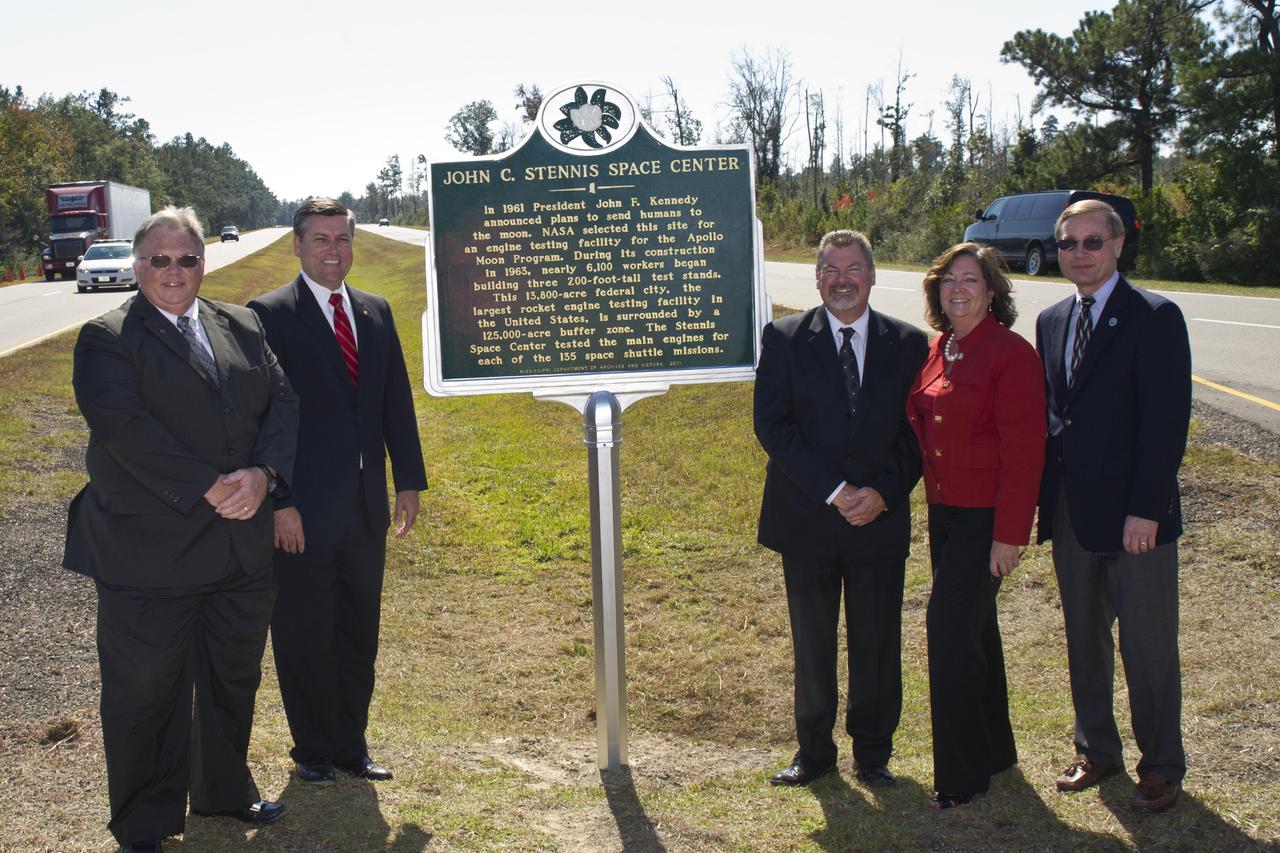
Stennis Space Center Director Patrick Scheuermann (second from left) stands at the historical marker erected by the state of Mississippi in honor of the 50th anniversary of the NASA facility. Joining Scheuermann are: (l to r) Ron Magee, Al Watkins, Tish Williams and Ken P'Pool.
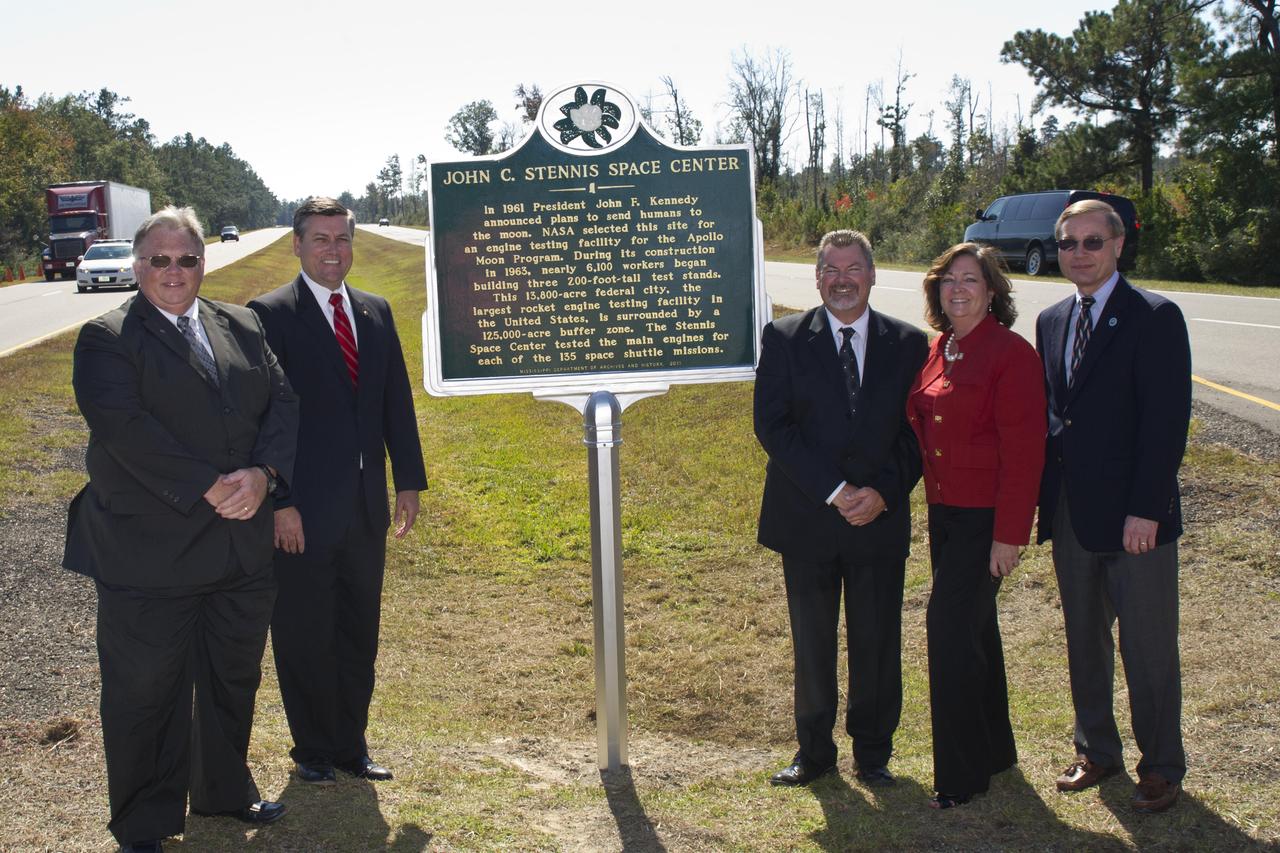
Stennis Space Center Director Patrick Scheuermann (second from left) stands at the historical marker erected by the state of Mississippi in honor of the 50th anniversary of the NASA facility. Joining Scheuermann are: (l to r) Ron Magee, Al Watkins, Tish Williams and Ken P'Pool.
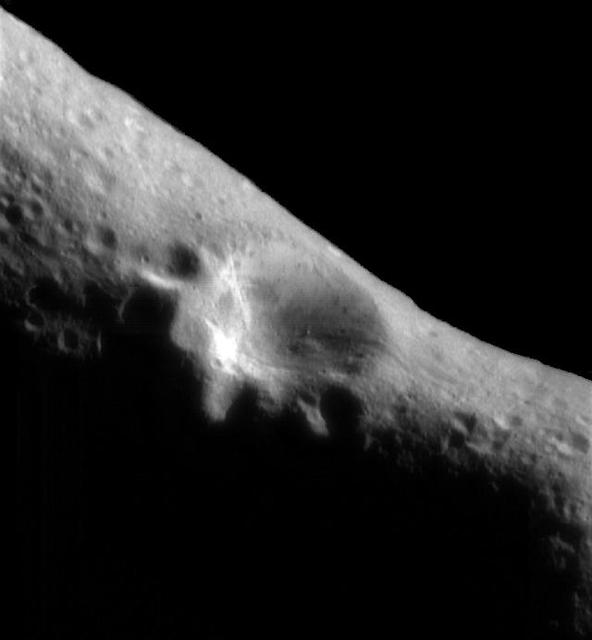
NEAR Historic First Image from Eros Orbit
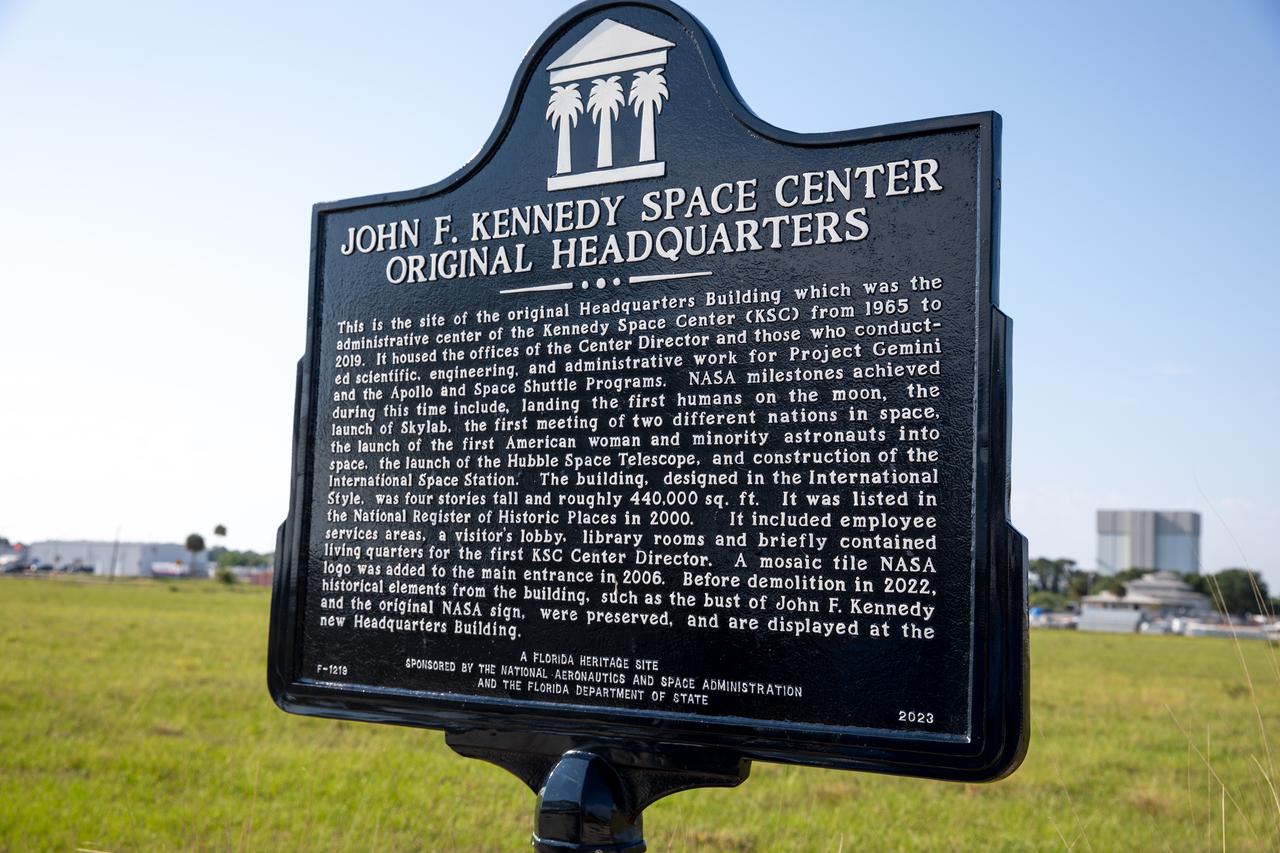
A large bronze historical marker plaque is unveiled Tuesday, May 28, 2024, at the location of NASA Kennedy Space Center’s original headquarters building. Approved in April 2023 as part of the State of Florida’s Historical Markers program in celebration of National Historic Preservation Month, the marker commemorates the early days of space exploration and is displayed permanently just west of the seven-story, 200,000 square foot Central Campus Headquarters Building, which replaced the old building in 2019.
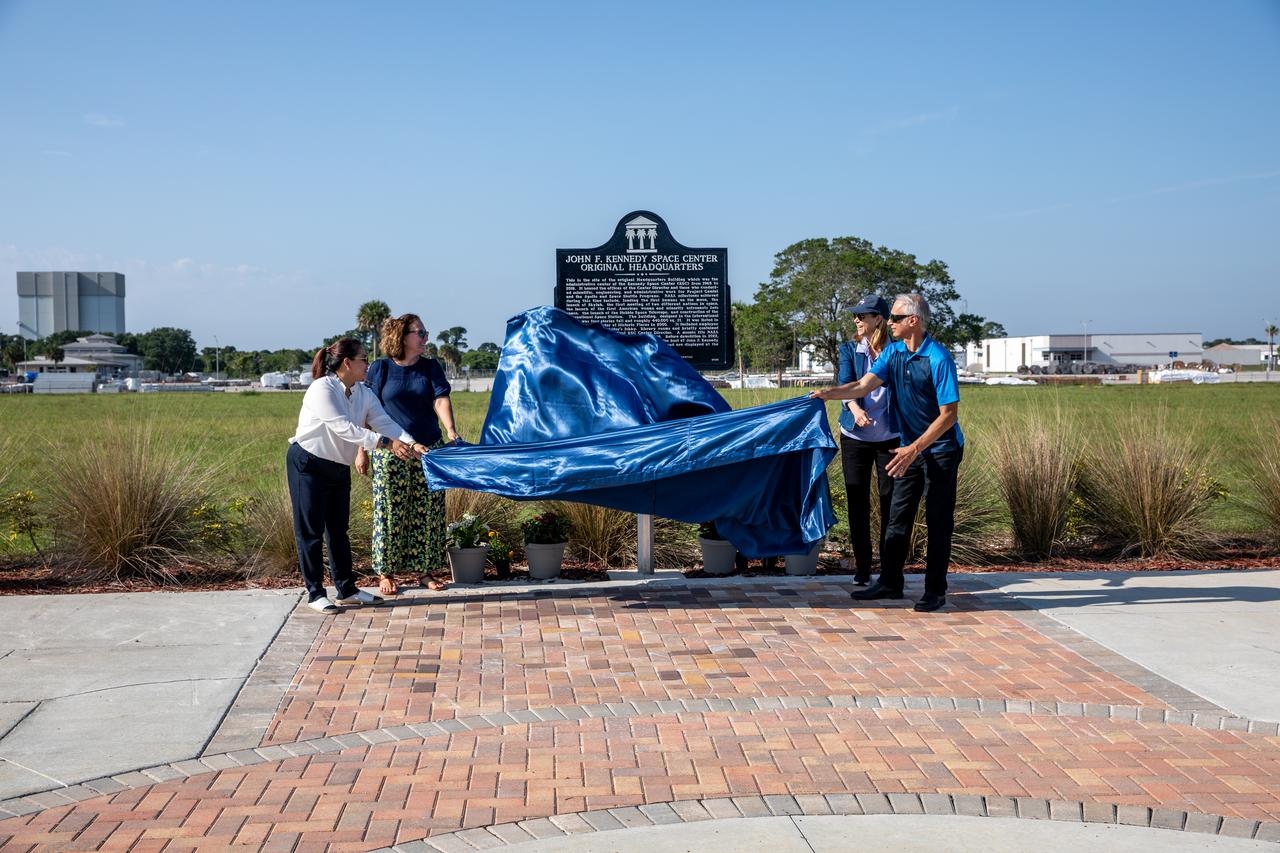
From the left, NASA Kennedy Space Center’s, Maui Dalton, project manager, engineering; Katherine Zeringue, cultural resources manager; Janet Petro, NASA Kennedy Space Center director; and Ismael Otero, project manager, engineering, unveil a large bronze historical marker plaque at the location of NASA Kennedy’s original headquarters building on Tuesday, May 28, 2024. Approved in April 2023 as part of the State of Florida’s Historical Markers program in celebration of National Historic Preservation Month, the marker commemorates the early days of space exploration and is displayed permanently just west of the seven-story, 200,000 square foot Central Campus Headquarters Building, which replaced the old building in 2019.
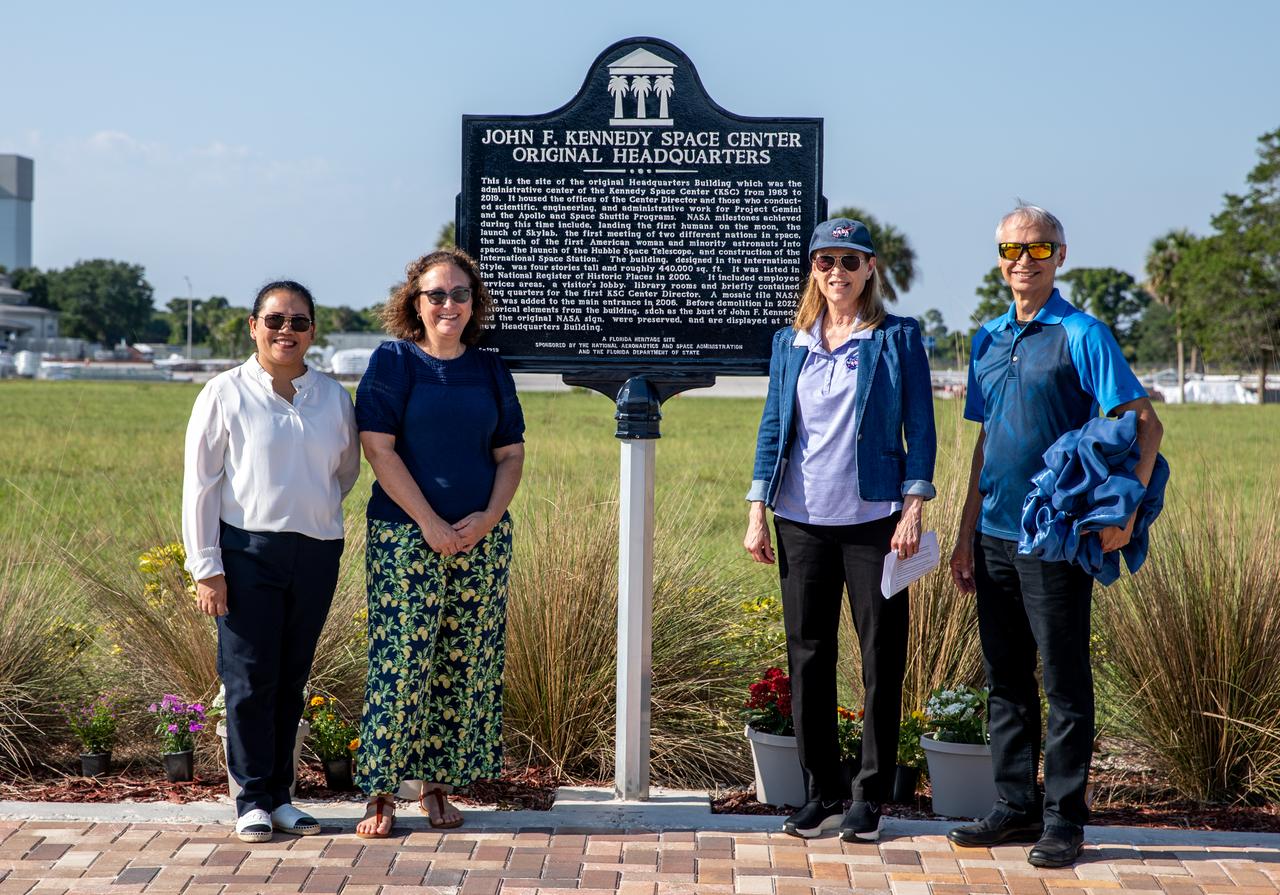
From the left, NASA Kennedy Space Center’s, Maui Dalton, project manager, engineering; Katherine Zeringue, cultural resources manager; Janet Petro, NASA Kennedy Space Center director; and Ismael Otero, project manager, engineering, present a large bronze historical marker plaque at the location of NASA Kennedy’s original headquarters building on Tuesday, May 28, 2024. Approved in April 2023 as part of the State of Florida’s Historical Markers program in celebration of National Historic Preservation Month, the marker commemorates the early days of space exploration and is displayed permanently just west of the seven-story, 200,000 square foot Central Campus Headquarters Building, which replaced the old building in 2019.
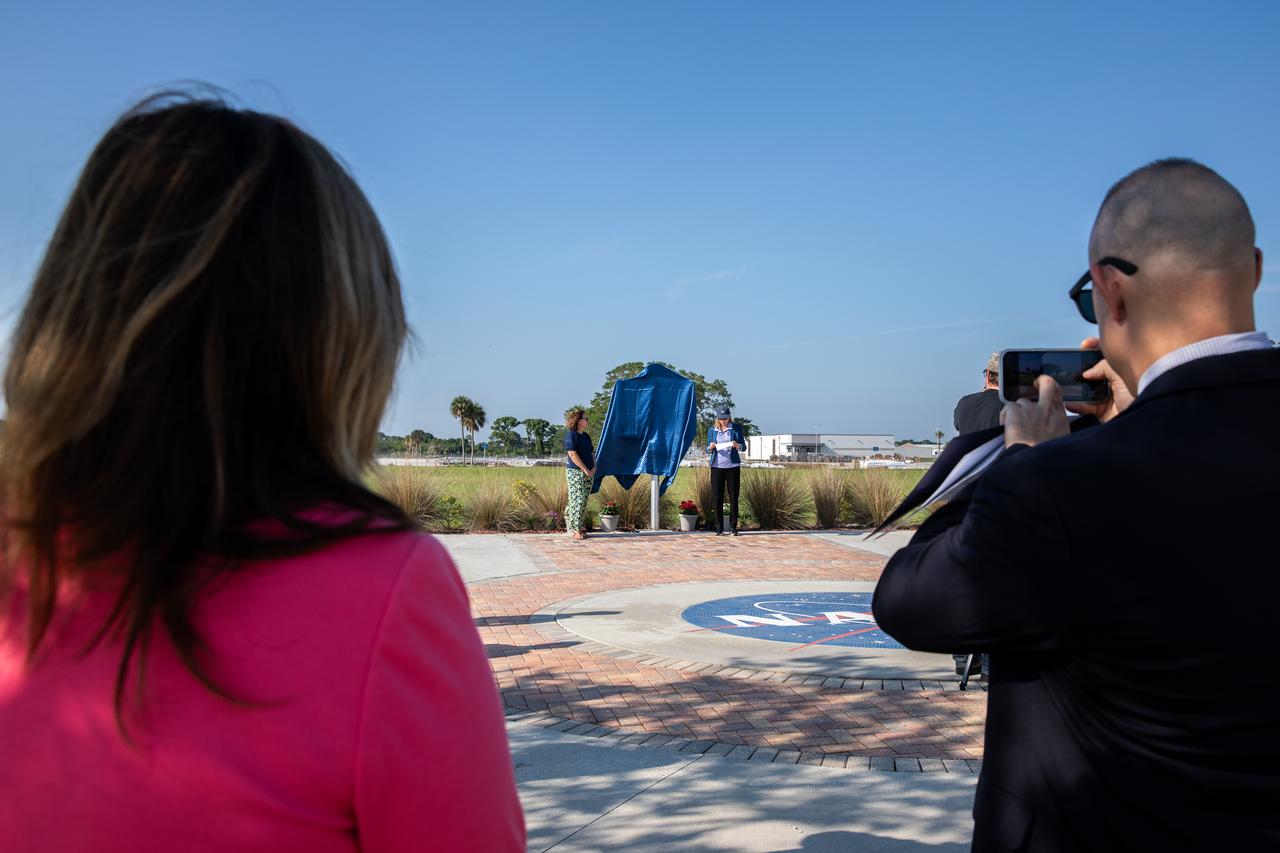
From the left, Katherine Zeringue, cultural resources manager, NASA’s Kennedy Space Center, is joined by Janet Petro, NASA Kennedy Space Center director, at a ceremony attended by NASA employees held Tuesday, May 28, 2024, to unveil a large bronze historical marker plaque at the location of NASA Kennedy’s original headquarters building. Approved in April 2023 as part of the State of Florida’s Historical Markers program in celebration of National Historic Preservation Month, the marker commemorates the early days of space exploration and is displayed permanently just west of the seven-story, 200,000 square foot Central Campus Headquarters Building, which replaced the old building in 2019.
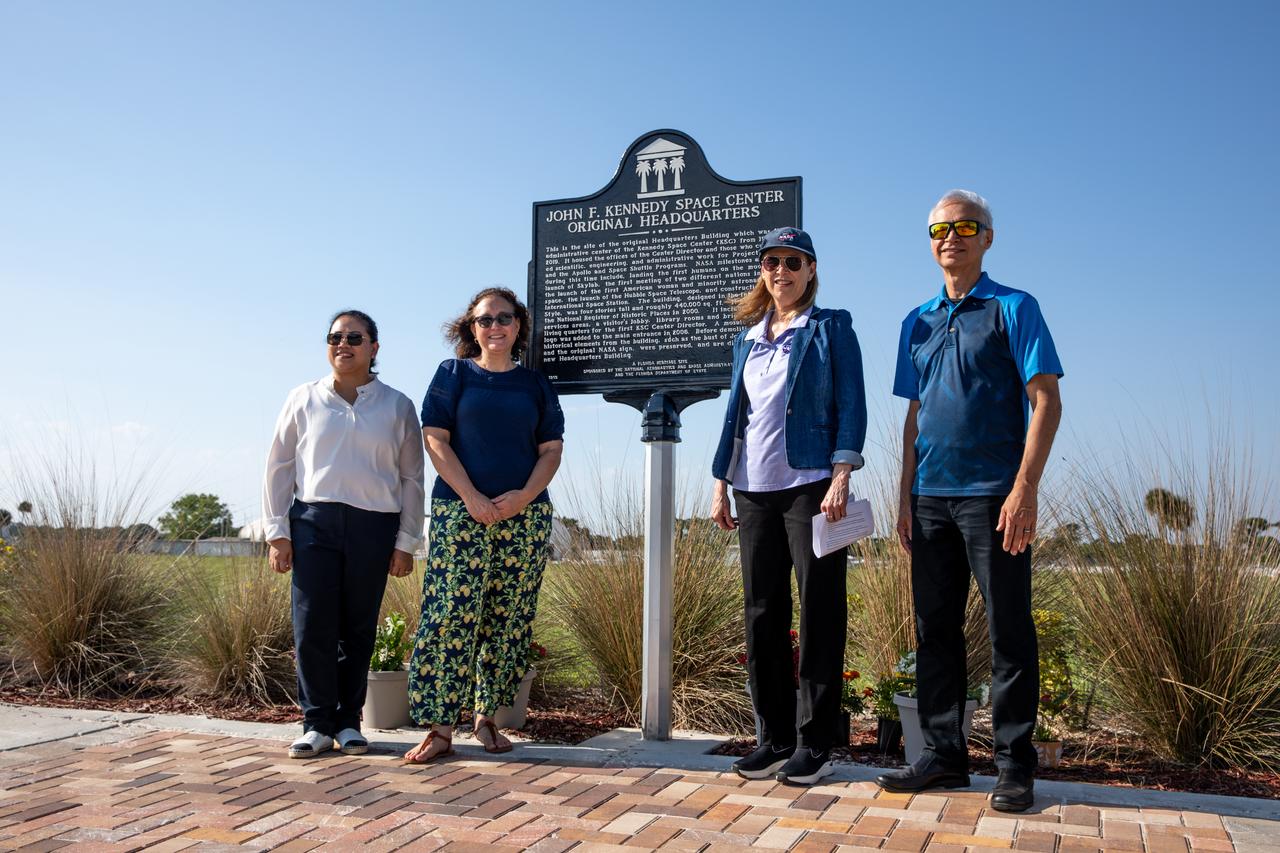
From the left, NASA Kennedy Space Center’s, Maui Dalton, project manager, engineering; Katherine Zeringue, cultural resources manager; Janet Petro, NASA Kennedy Space Center director; and Ismael Otero, project manager, engineering, present a large bronze historical marker plaque at the location of NASA Kennedy’s original headquarters building on Tuesday, May 28, 2024. Approved in April 2023 as part of the State of Florida’s Historical Markers program in celebration of National Historic Preservation Month, the marker commemorates the early days of space exploration and is displayed permanently just west of the seven-story, 200,000 square foot Central Campus Headquarters Building, which replaced the old building in 2019.
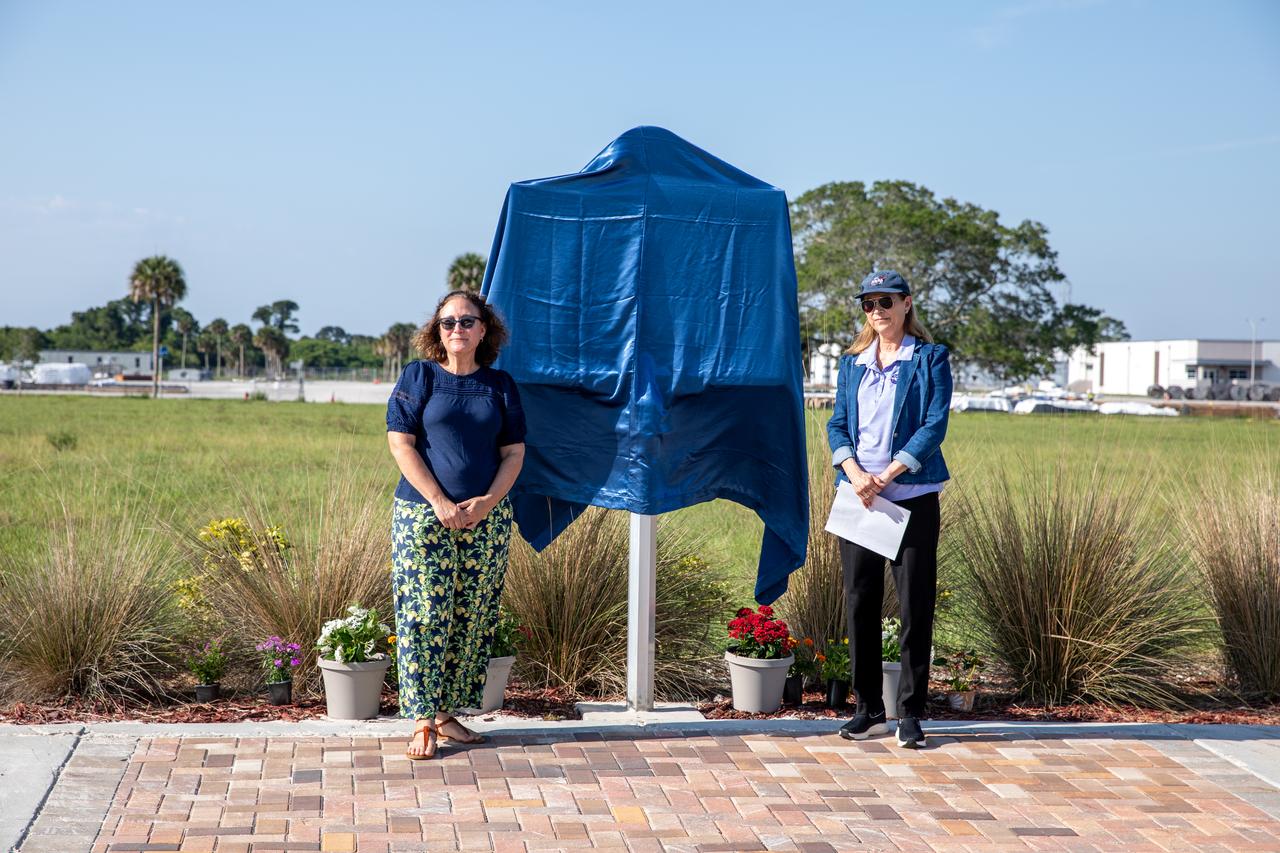
From the left, Katherine Zeringue, cultural resources manager, NASA’s Kennedy Space Center, is joined by Janet Petro, NASA Kennedy Space Center director, at a ceremony held Tuesday, May 28, 2024, to unveil a large bronze historical marker plaque at the location of NASA Kennedy’s original headquarters building. Approved in April 2023 as part of the State of Florida’s Historical Markers program in celebration of National Historic Preservation Month, the marker commemorates the early days of space exploration and is displayed permanently just west of the seven-story, 200,000 square foot Central Campus Headquarters Building, which replaced the old building in 2019.
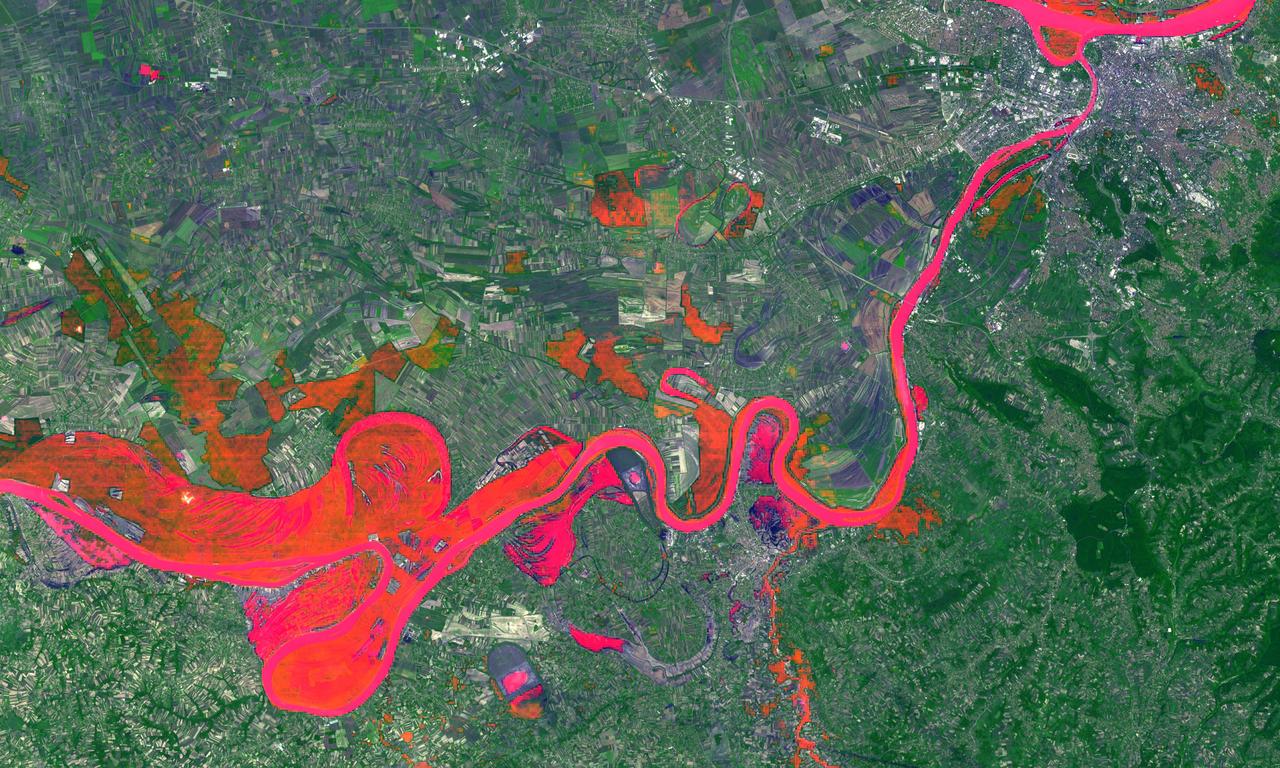
In May 2014, historic floods inundated Serbia and neighboring countries, causing major population displacements and property destruction. This image was acquired by NASA Terra spacecraft.

Representatives of the state of Alabama, academia, and industry listen and take part in a panel discussion led by NASA Marshall Space Flight Center's Ruth Jones as part of the first Alabama Historically Black Colleges and Universities Roundtable Discussion. The event focused on drawing more minorities, specifically women, into academic fields and careers in science, technology, engineering and mathematics.
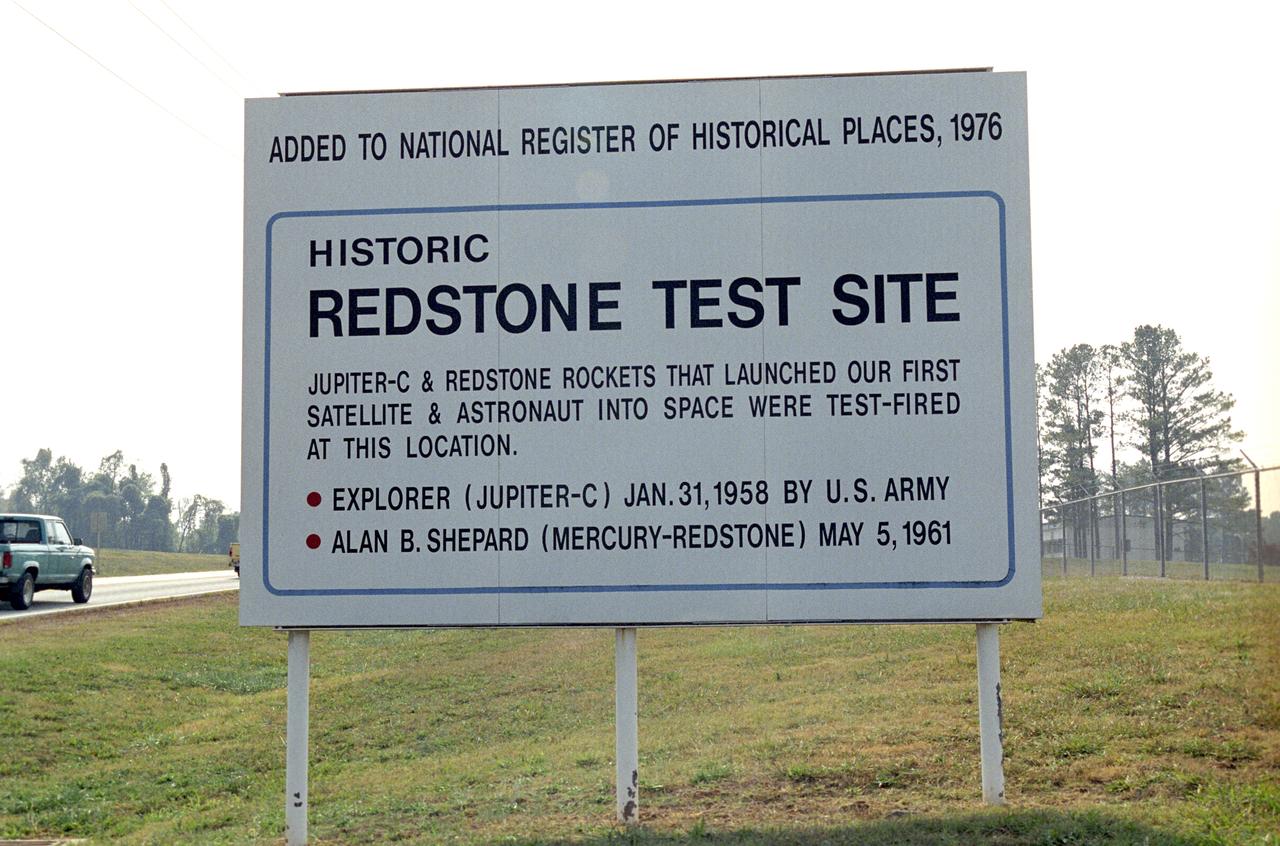
This sign, displayed on the grounds of Marshall Space Flight Center in Huntsville, Alabama, commemorates the designation of the Redstone Test Site as a National Historic Landmark. The site was inducted into the National Register of Historical Places in 1976.
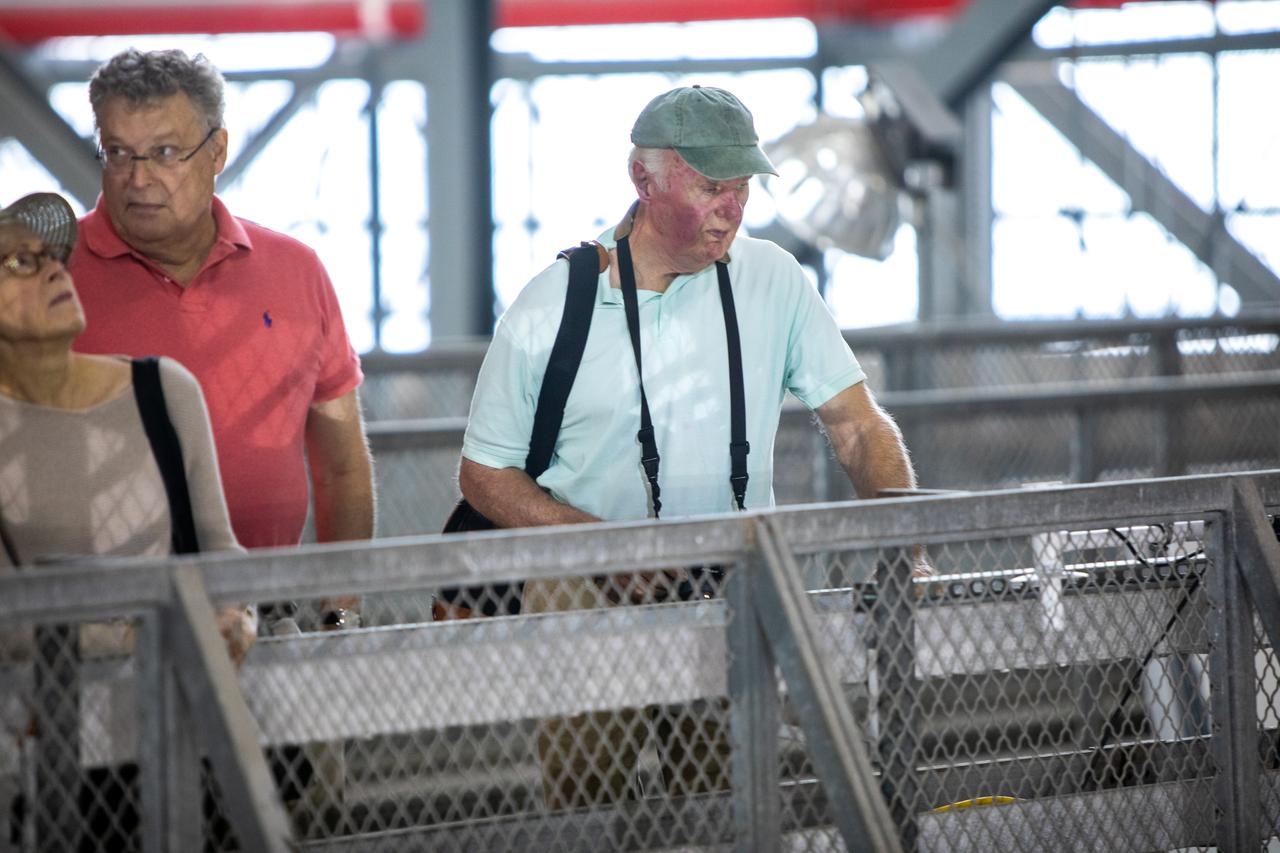
Dick Bergmann, at right, original lead designer for the Vehicle Assembly Building, tours the iconic facility on Nov. 22, 2019 at NASA’s Kennedy Space Center in Florida. Vehicle Assembly Building with the National Historic Civil Engineering Landmark award. The Florida Section American Society of Civil Engineers bestowed its National Historic Civil Engineering Landmark award during a ceremony on Jan. 10, 2020. The VAB is the first building at Kennedy Space Center to earn this distinction. At the time of its completion, the 129-million-cubic-foot structure was the largest building in the world. Originally designed and built to accommodate the Saturn V/Apollo used in Project Apollo, the VAB was later modified for its role in the Space Shuttle Program.
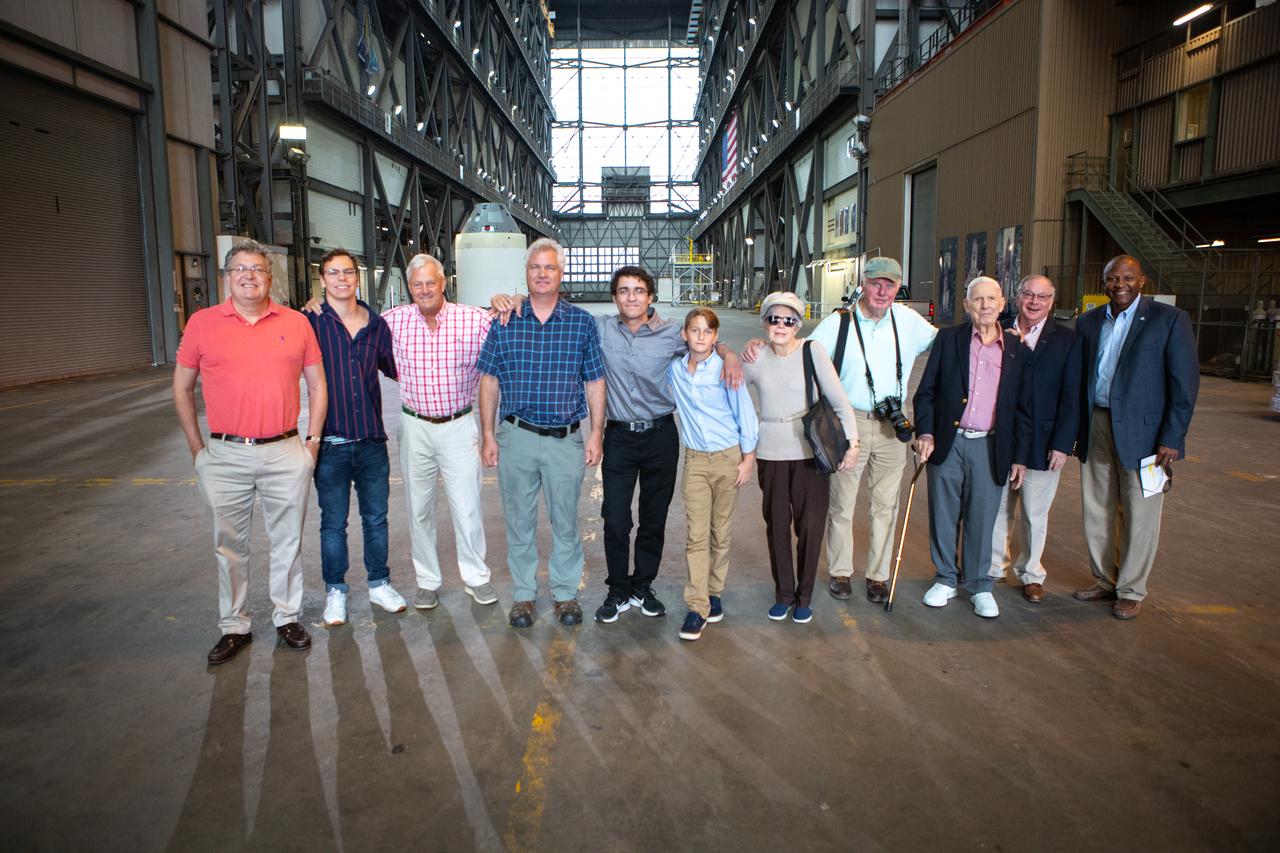
Phil Moyer, third from right, original project lead for the Vehicle Assembly Building (VAB); and Dick Bergmann, fourth from right, original lead designer for the VAB, tour the iconic facility with the families of the original architect on Nov. 22, 2019 at NASA’s Kennedy Space Center in Florida. At far right is Kelvin Manning, Kennedy’s associate director, technical. The Florida Section American Society of Civil Engineers bestowed the historic building with its National Historic Civil Engineering Landmark award during a ceremony on Jan. 10, 2020. The VAB is the first building at Kennedy Space Center to earn this distinction. At the time of its completion, the 129-million-cubic-foot structure was the largest building in the world. Originally designed and built to accommodate the Saturn V/Apollo used in Project Apollo, the VAB was later modified for its role in the Space Shuttle Program.
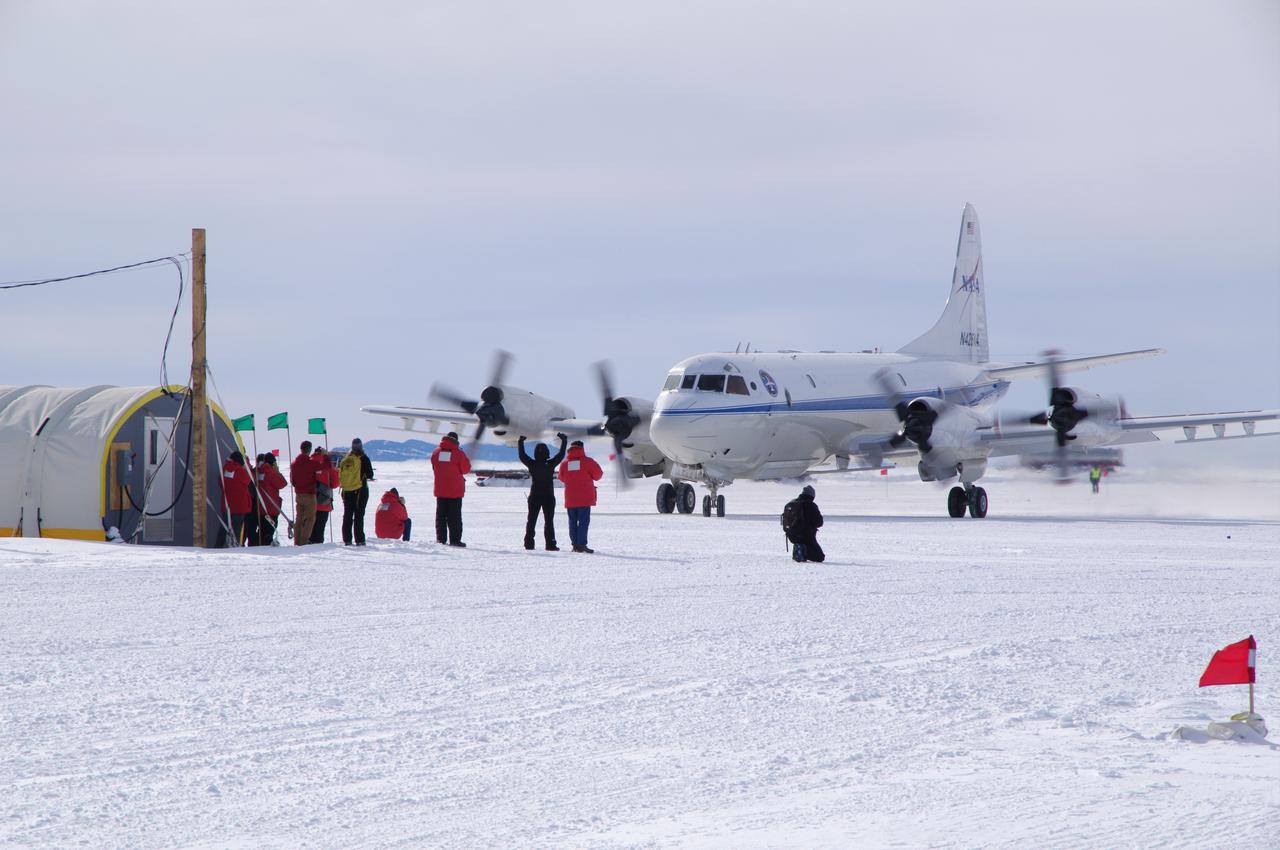
NASA's first ever historic P-3B landing in McMurdo Station, Antarctica on the sea ice runway, which occurred on Nov. 16, 2013. It took the craft 5 days to reach Antarctica from the NASA Wallops Flight Facility in Wallops Island, Virginia. You can see the IceBridge Team waiting to greet the flight crew as they taxied for the very first time right up to the IceBridge team tents. Credit: NASA/Justin Miller/Indiana University <b><a href="http://www.nasa.gov/audience/formedia/features/MP_Photo_Guidelines.html" rel="nofollow">NASA image use policy.</a></b> <b><a href="http://www.nasa.gov/centers/goddard/home/index.html" rel="nofollow">NASA Goddard Space Flight Center</a></b> enables NASA’s mission through four scientific endeavors: Earth Science, Heliophysics, Solar System Exploration, and Astrophysics. Goddard plays a leading role in NASA’s accomplishments by contributing compelling scientific knowledge to advance the Agency’s mission. <b>Follow us on <a href="http://twitter.com/NASA_GoddardPix" rel="nofollow">Twitter</a></b> <b>Like us on <a href="http://www.facebook.com/pages/Greenbelt-MD/NASA-Goddard/395013845897?ref=tsd" rel="nofollow">Facebook</a></b> <b>Find us on <a href="http://instagram.com/nasagoddard?vm=grid" rel="nofollow">Instagram</a></b>
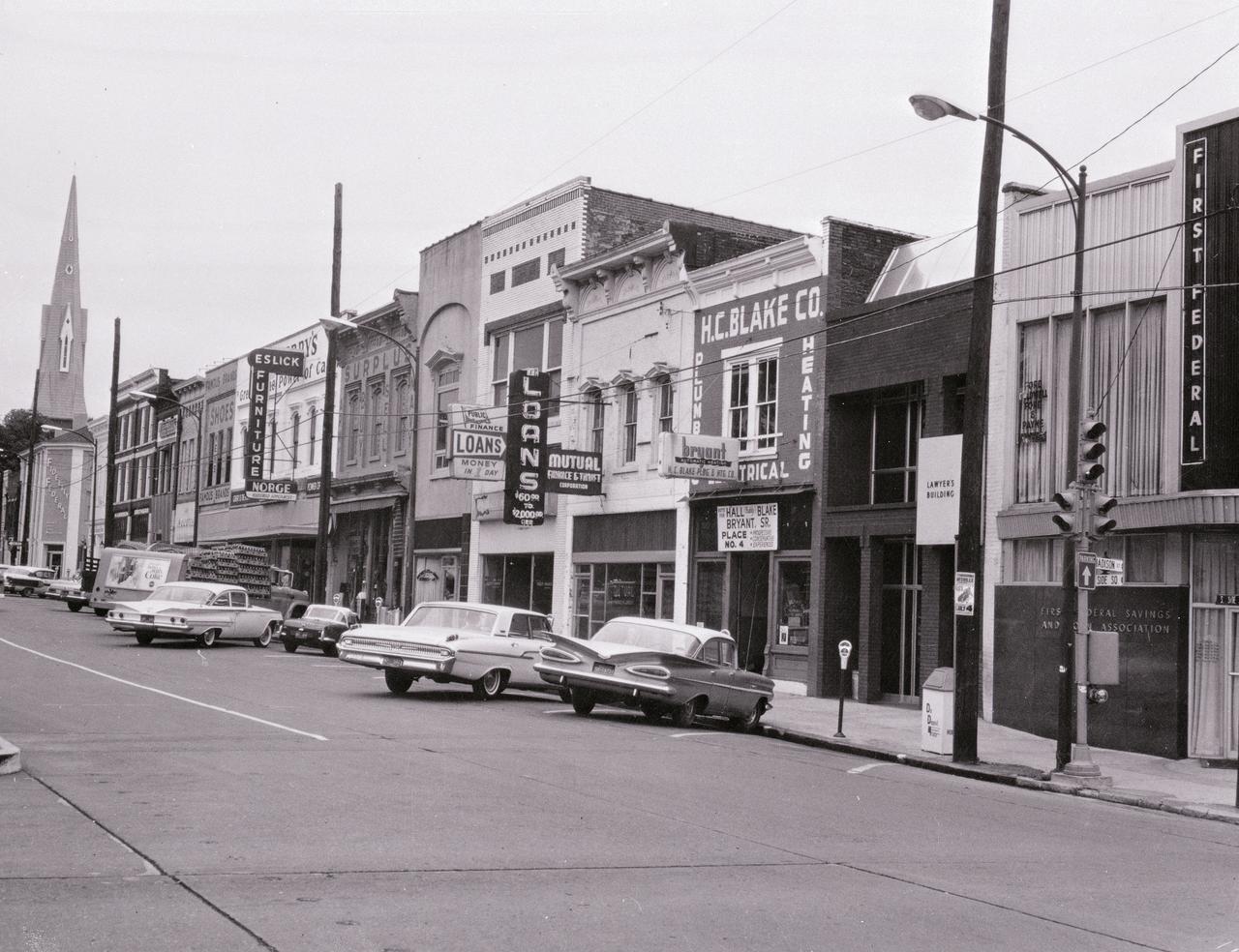
This historical photo of the South side of Square in downtown Huntsville, Alabama was taken in 1965. (Courtesy of Huntsville/Madison County Public Library)
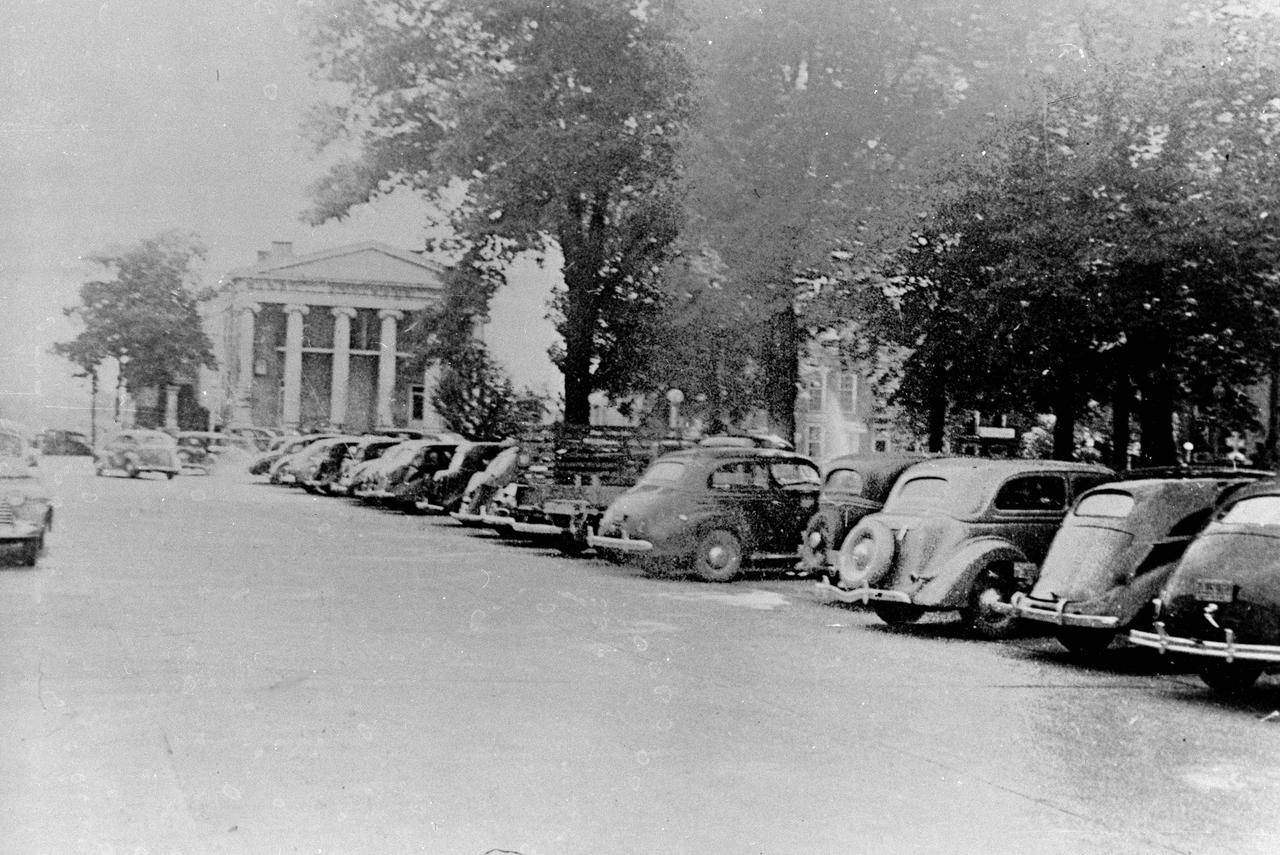
This 1940s photo of the South side of Square in downtown Huntsville, Alabama, looking west, shows a historical bank in the background with cars parked just South of the Courthouse (not shown in photo). (Courtesy of Huntsville/Madison County Public Library)
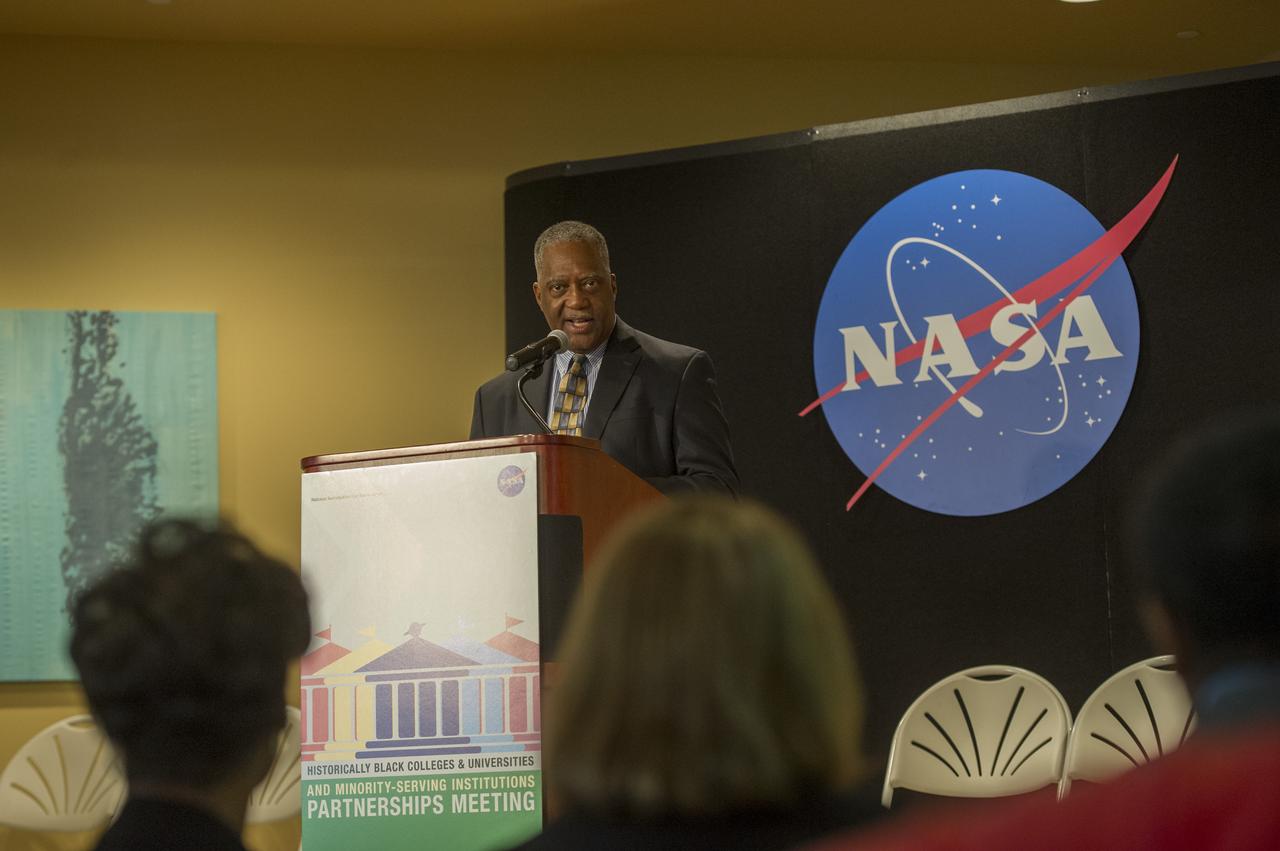
RONALD BLAKELY, ASSOCIATE DIRECTOR FOR THE WHITE HOUSE INITIATIVE ON HISTORICALLY BLACK COLLEGES AND UNIVERSITIES, SPEAKS DURING NASA’S FIRST PARTNERSHIPS MEETING FOR HISTORICALLY BLACK COLLEGES AND UNIVERSITIES AND MINORITY SERVING INSTITUTIONS. NASA’S OFFICE OF SMALL BUSINESS PROGRAMS HOSTED THE EVENT, WHICH ALLOWED REPRESENTATIVES FROM 30 NATIONWIDE UNIVERSITIES AND NASA PRIME CONTRACTORS TO DISCUSS POTENTIAL SUBCONTRACTING OPPORTUNITIES
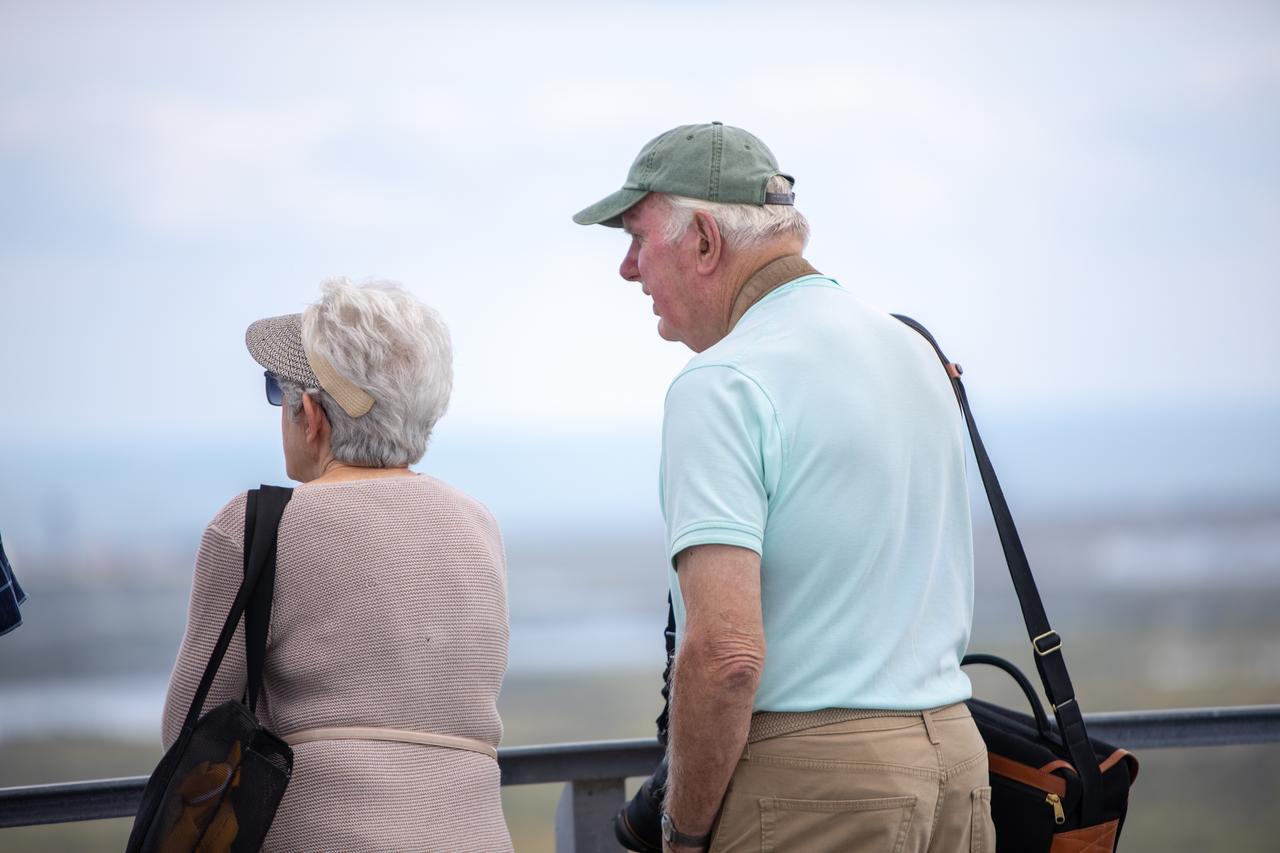
Dick Bergmann, at right, original lead designer for the Vehicle Assembly Building, stands on the roof of the iconic facility during a tour on Nov. 22, 2019 at NASA’s Kennedy Space Center in Florida. The VAB was recognized with the National Historic Civil Engineering Landmark award by the Florida Section American Society of Civil Engineers during a ceremony on Jan. 10, 2020. The VAB is the first building at Kennedy Space Center to earn this distinction. At the time of its completion, the 129-million-cubic-foot structure was the largest building in the world. Originally designed and built to accommodate the Saturn V/Apollo used in Project Apollo, the VAB was later modified for its role in the Space Shuttle Program.

Phil Moyer, original project lead for the Vehicle Assembly Building (VAB), tours the Vehicle Assembly Building on Nov. 22, 2019 at NASA’s Kennedy Space Center in Florida. The VAB was recognized with the National Historic Civil Engineering Landmark award by the Florida Section American Society of Civil Engineers during a ceremony on Jan. 10, 2020. The VAB is the first building at Kennedy Space Center to earn this distinction. At the time of its completion, the 129-million-cubic-foot structure was the largest building in the world. Originally designed and built to accommodate the Saturn V/Apollo used in Project Apollo, the VAB was later modified for its role in the Space Shuttle Program.
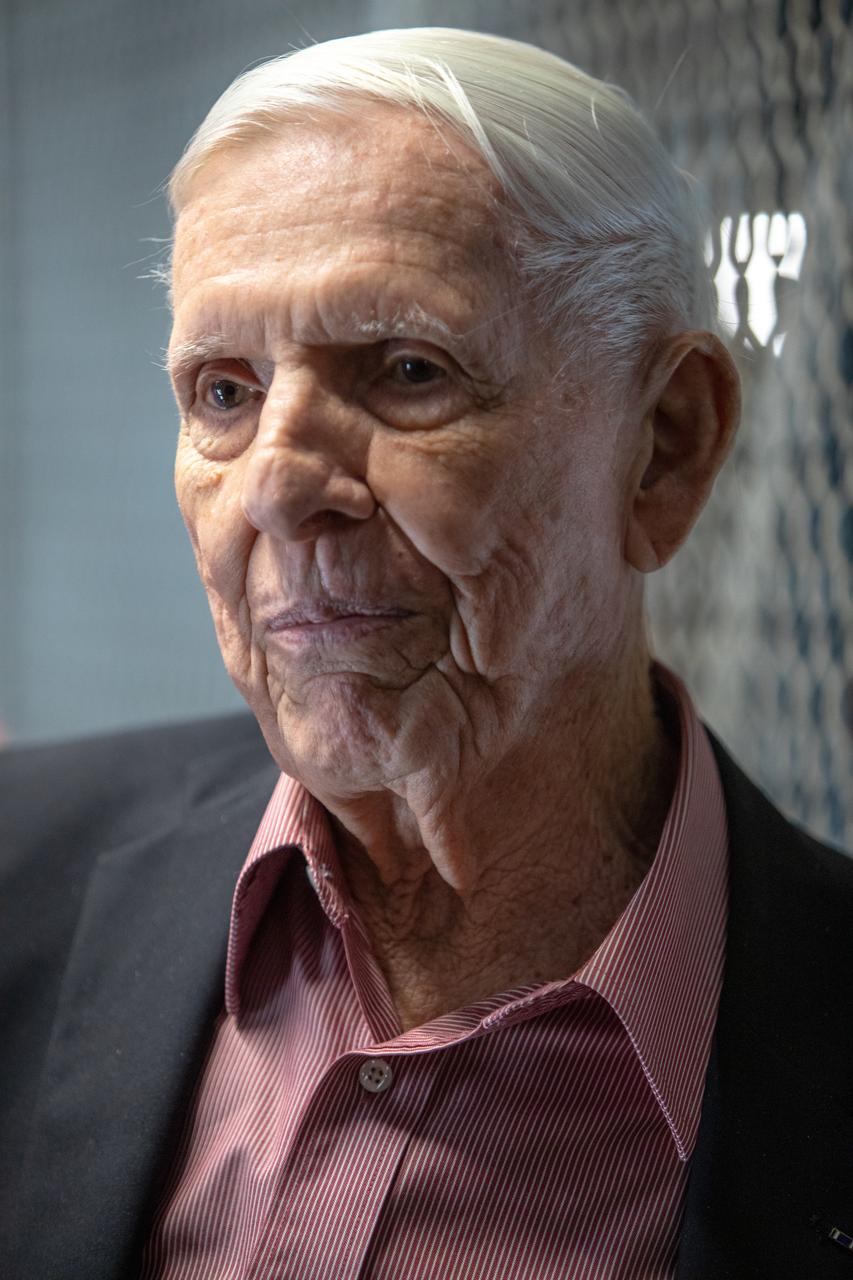
Phil Moyer, original project lead for the Vehicle Assembly Building (VAB), tours the Vehicle Assembly Building on Nov. 22, 2019 at NASA’s Kennedy Space Center in Florida. The VAB was recognized with the National Historic Civil Engineering Landmark award by the Florida Section American Society of Civil Engineers during a ceremony on Jan. 10, 2020. The VAB is the first building at Kennedy Space Center to earn this distinction. At the time of its completion, the 129-million-cubic-foot structure was the largest building in the world. Originally designed and built to accommodate the Saturn V/Apollo used in Project Apollo, the VAB was later modified for its role in the Space Shuttle Program.
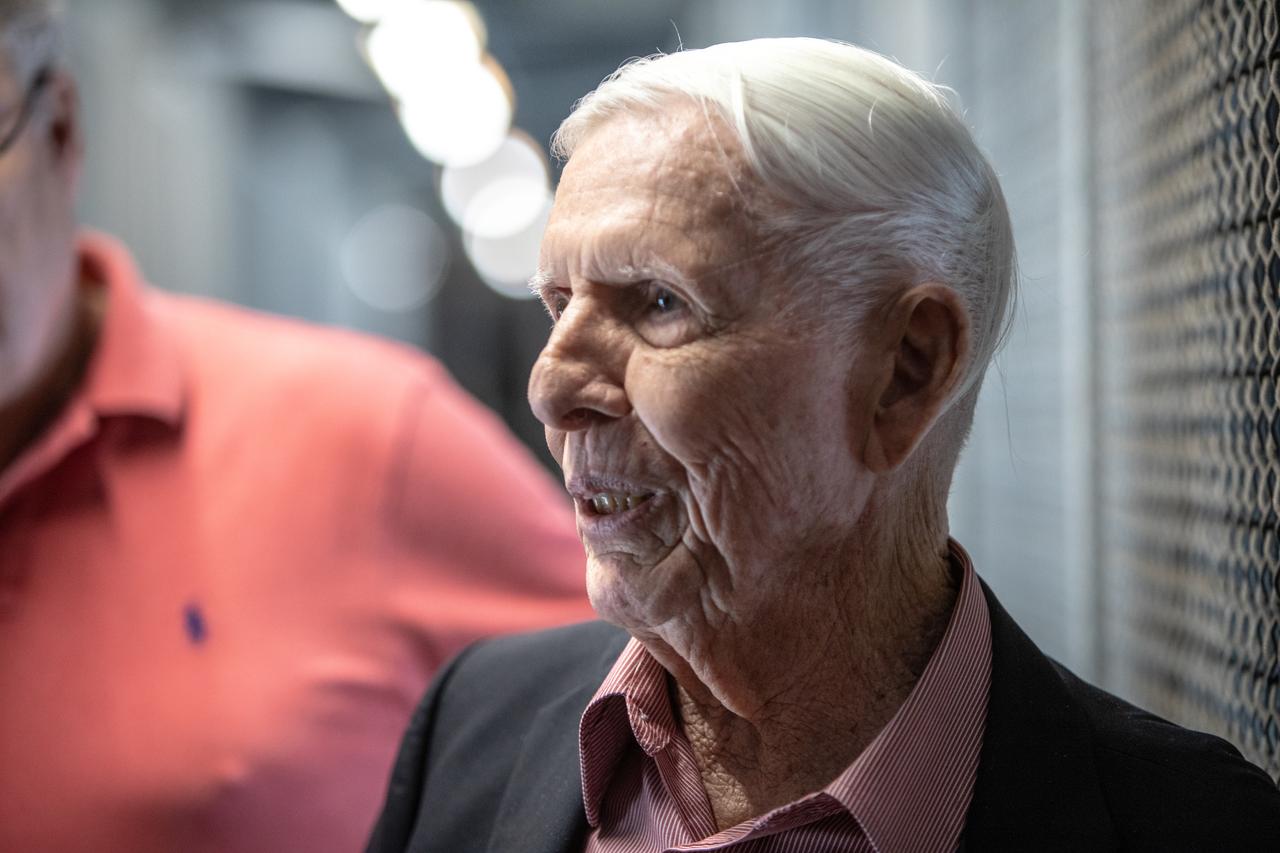
Phil Moyer, original project lead for the Vehicle Assembly Building (VAB), tours the Vehicle Assembly Building on Nov. 22, 2019 at NASA’s Kennedy Space Center in Florida. The VAB was recognized with the National Historic Civil Engineering Landmark award by the Florida Section American Society of Civil Engineers during a ceremony on Jan. 10, 2020. The VAB is the first building at Kennedy Space Center to earn this distinction. At the time of its completion, the 129-million-cubic-foot structure was the largest building in the world. Originally designed and built to accommodate the Saturn V/Apollo used in Project Apollo, the VAB was later modified for its role in the Space Shuttle Program.
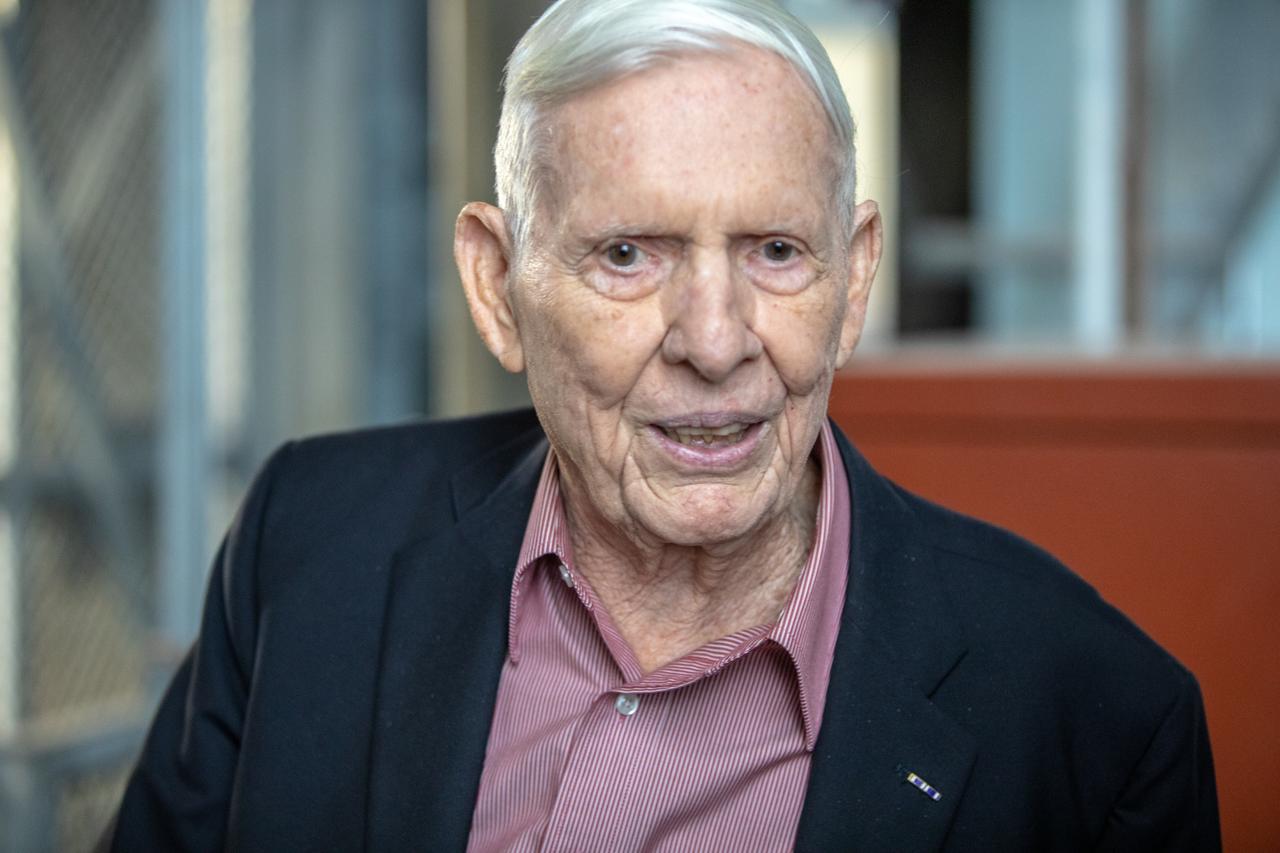
Phil Moyer, original project lead for the Vehicle Assembly Building (VAB), tours the Vehicle Assembly Building on Nov. 22, 2019 at NASA’s Kennedy Space Center in Florida. The VAB was recognized with the National Historic Civil Engineering Landmark award by the Florida Section American Society of Civil Engineers during a ceremony on Jan. 10, 2020. The VAB is the first building at Kennedy Space Center to earn this distinction. At the time of its completion, the 129-million-cubic-foot structure was the largest building in the world. Originally designed and built to accommodate the Saturn V/Apollo used in Project Apollo, the VAB was later modified for its role in the Space Shuttle Program.
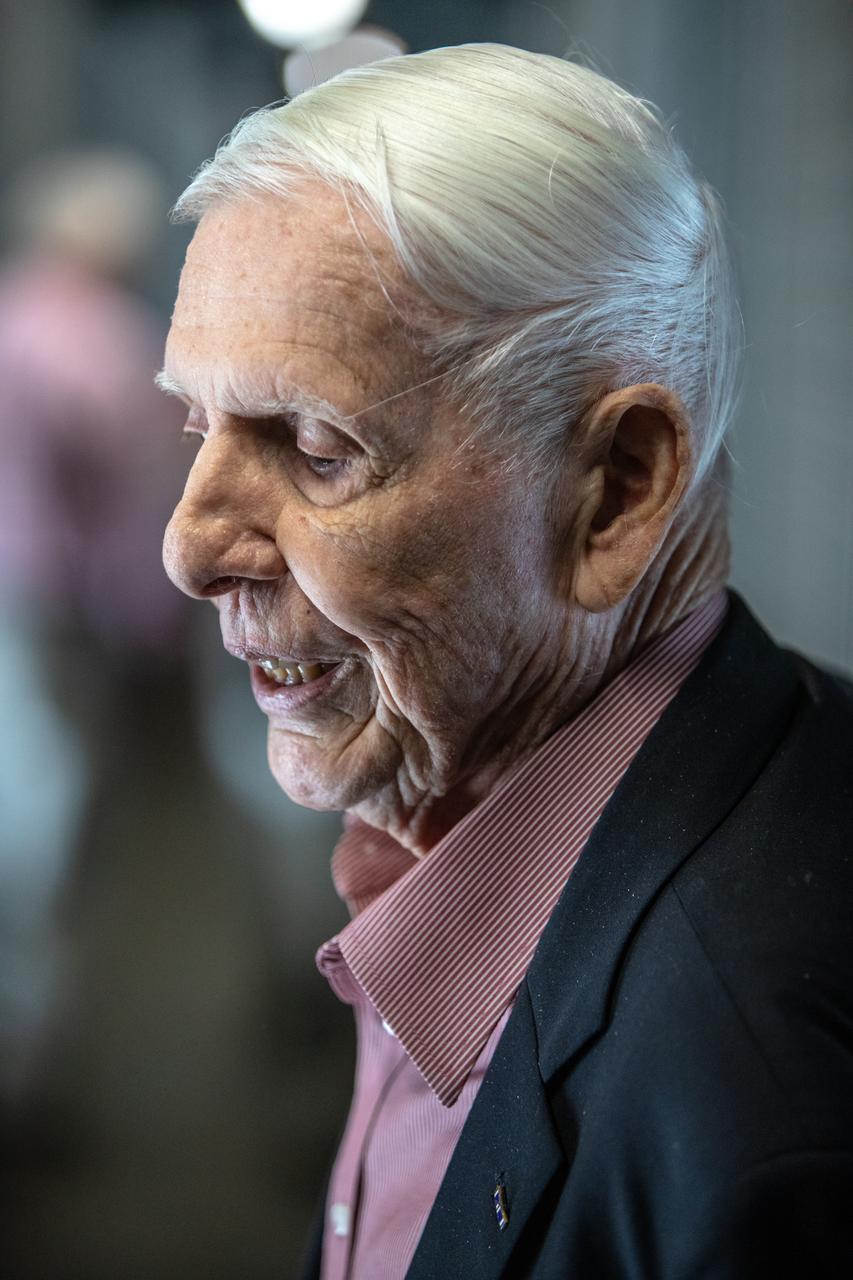
Phil Moyer, original project lead for the Vehicle Assembly Building (VAB), tours the Vehicle Assembly Building on Nov. 22, 2019 at NASA’s Kennedy Space Center in Florida. The VAB was recognized with the National Historic Civil Engineering Landmark award by the Florida Section American Society of Civil Engineers during a ceremony on Jan. 10, 2020. The VAB is the first building at Kennedy Space Center to earn this distinction. At the time of its completion, the 129-million-cubic-foot structure was the largest building in the world. Originally designed and built to accommodate the Saturn V/Apollo used in Project Apollo, the VAB was later modified for its role in the Space Shuttle Program.
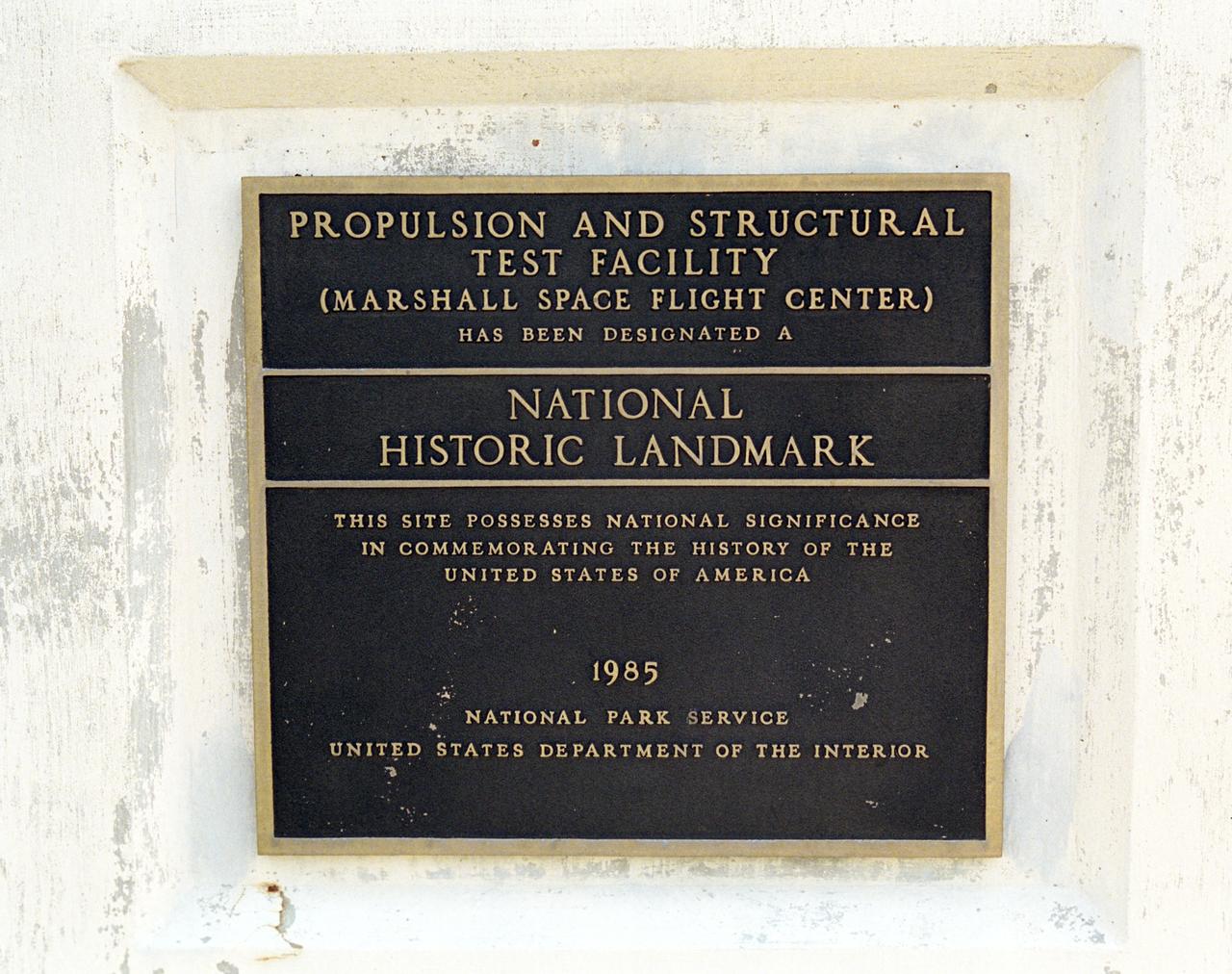
This plaque, displayed on the grounds of Marshall Space Flight Center in Huntsville, Alabama, commemorates the designation of the Propulsion and Structural Test Facility as a National Historic Landmark by the National Park Service of the United States Interior. The site was designated as a landmark in 1985.
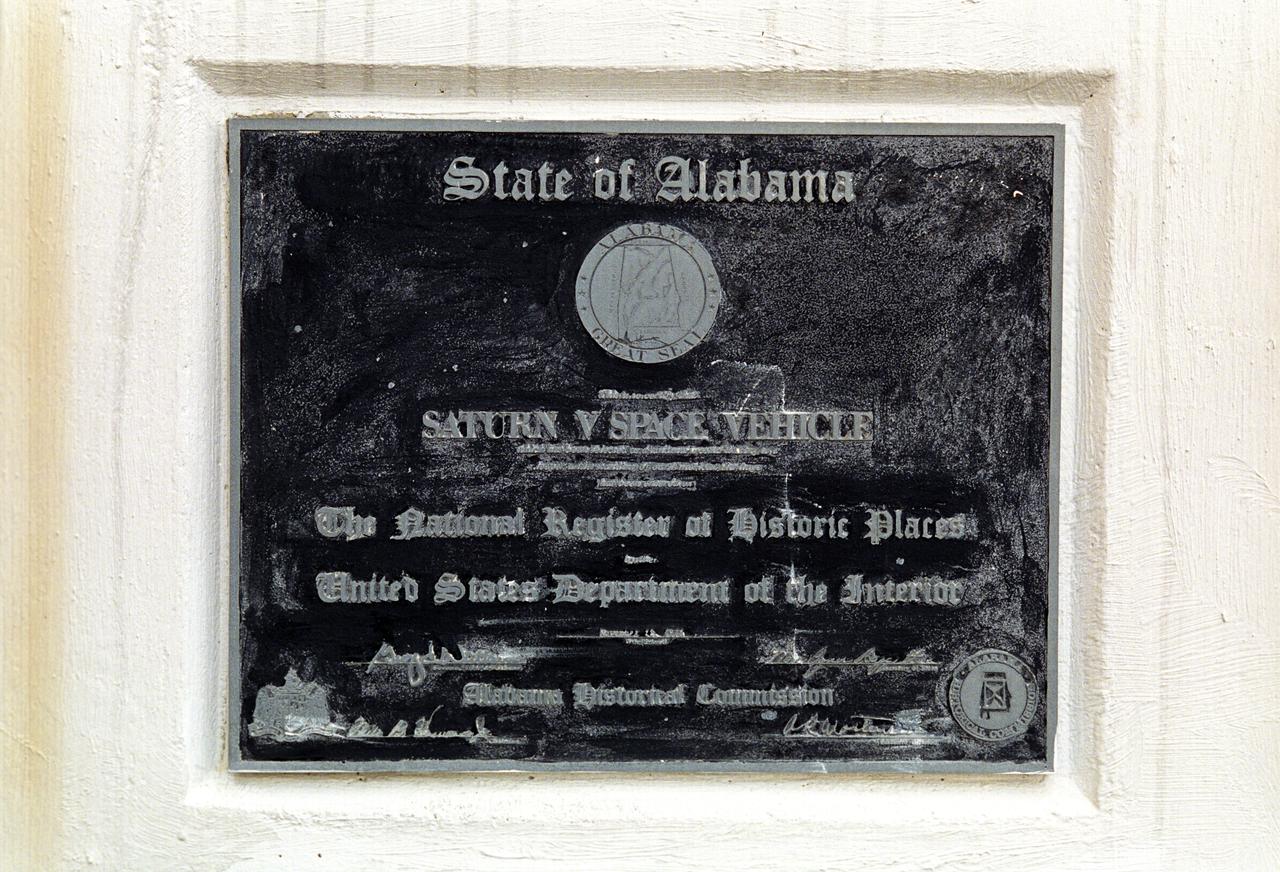
This plaque, displayed on the grounds of Marshall Space Flight Center in Huntsville, Alabama, commemorates the Saturn V Space Vehicle’s induction into the National Register of Historic Places by the United States Department of the Interior.
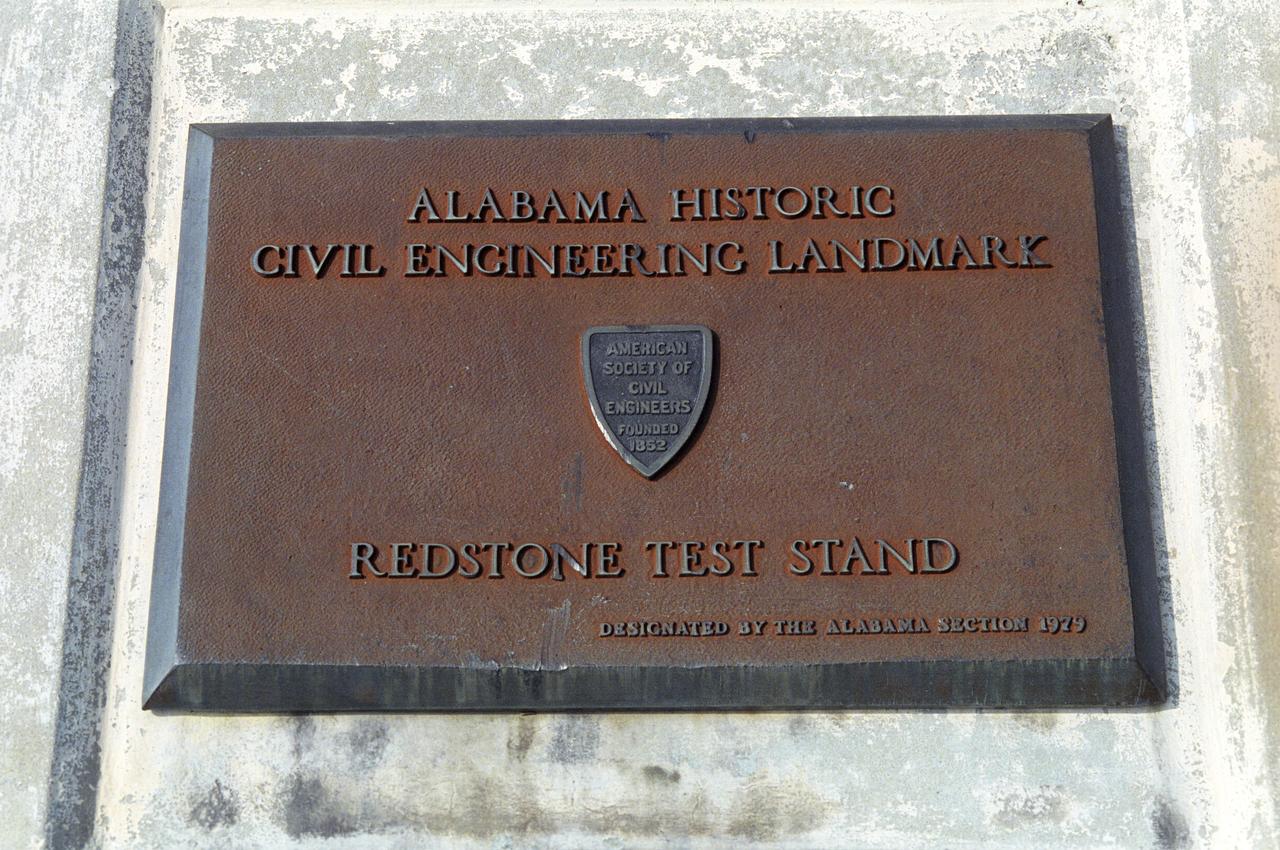
This plaque, displayed on the grounds of Marshall Space Flight Center in Huntsville, Alabama, commemorates the Redstone Test Stand as an Alabama Historic Civil Engineering Landmark. The site was desinated as such in 1979.
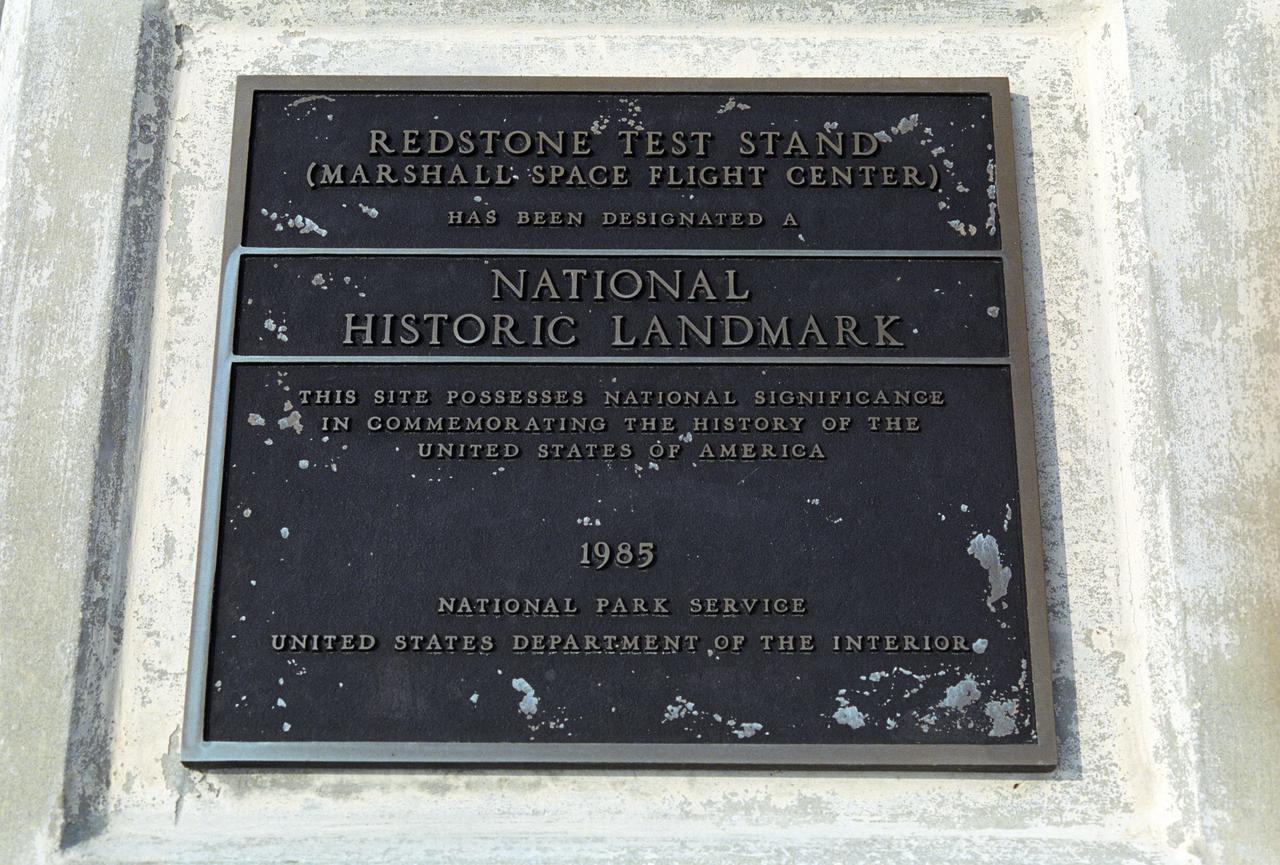
This plaque, displayed on the grounds of Marshall Space Flight Center in Huntsville, Alabama, commemorates the Redstone Test Stand as a National Historic Landmark. The site was designated as such in 1985 by the National Park Service of the United States Department of the Interior.
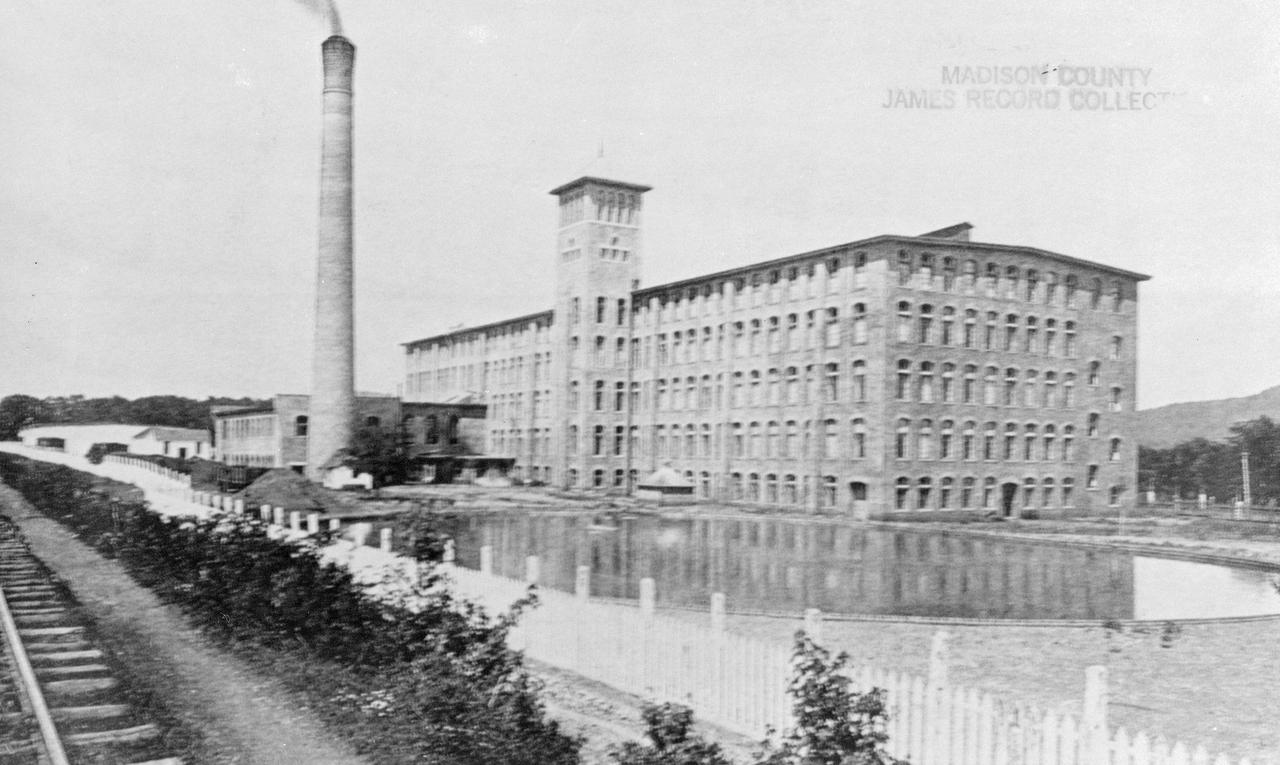
Years before Huntsville, Alabama got its start in missiles and space, the community was known as the State's leading cotton producer. This is a historical photo of the Dallas Cotton Mills printed in "The Huntsville Post" December 27, 1900. (Courtesy of Huntsville/Madison County Public Library)
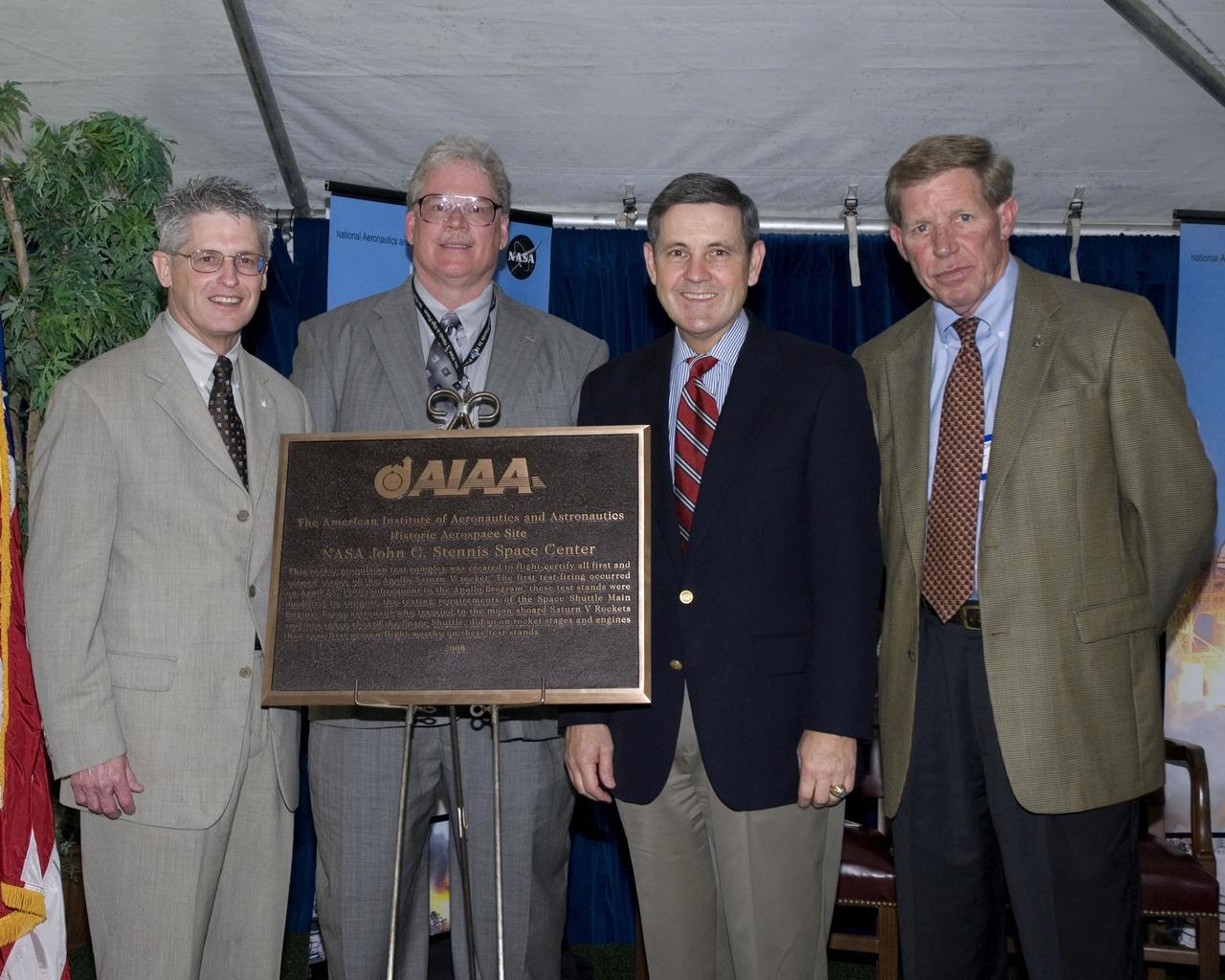
Picured (left to right) American Institute of Aeronautics and Astronautics (AIAA) representative David Throckmorton presents a plaque designating NASA's John C. Stennis Space Center as a historical aerospace site during an April 10 ceremony. Joining Throckmorton for the presentation were AIAA Greater New Orleans Chapter Chair Mark Hughes, Stennis Space Center Director Bob Cabana and Pratt & Whitney Rocketdyne Vice President John Plowden.
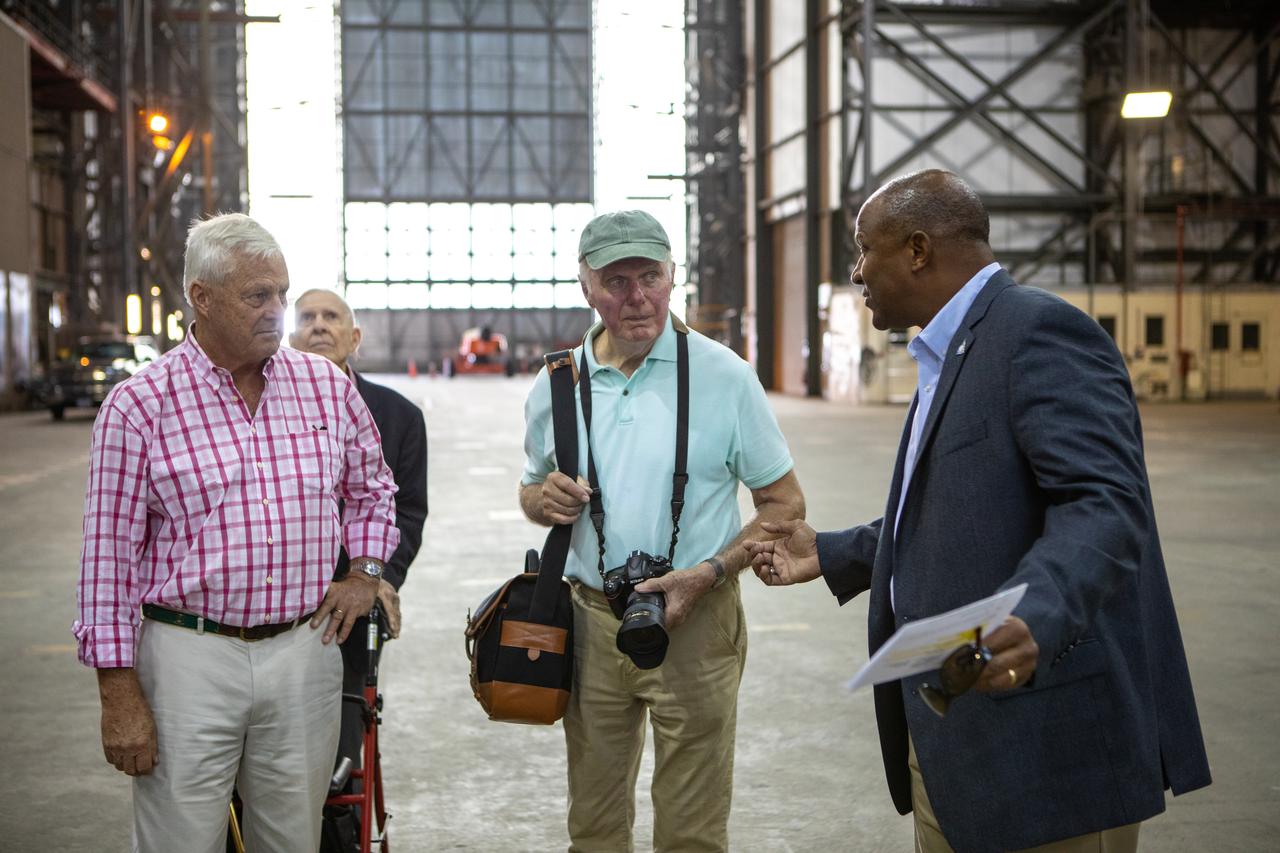
Kelvin Manning, at right, Kennedy Space Center’s associate director, technical, speaks to Dick Bergmann, center, original lead designer for the Vehicle Assembly (VAB), during a tour of the iconic facility on Nov. 22, 2019, at NASA’s Kennedy Space Center in Florida. The VAB was recognized with the National Historic Civil Engineering Landmark award by the Florida Section American Society of Civil Engineers during a ceremony on Jan. 10, 2020. The VAB is the first building at Kennedy to earn this distinction. At the time of its completion, the 129-million-cubic-foot structure was the largest building in the world. Originally designed and built to accommodate the Saturn V/Apollo used in Project Apollo, the VAB was later modified for its role in the Space Shuttle Program.
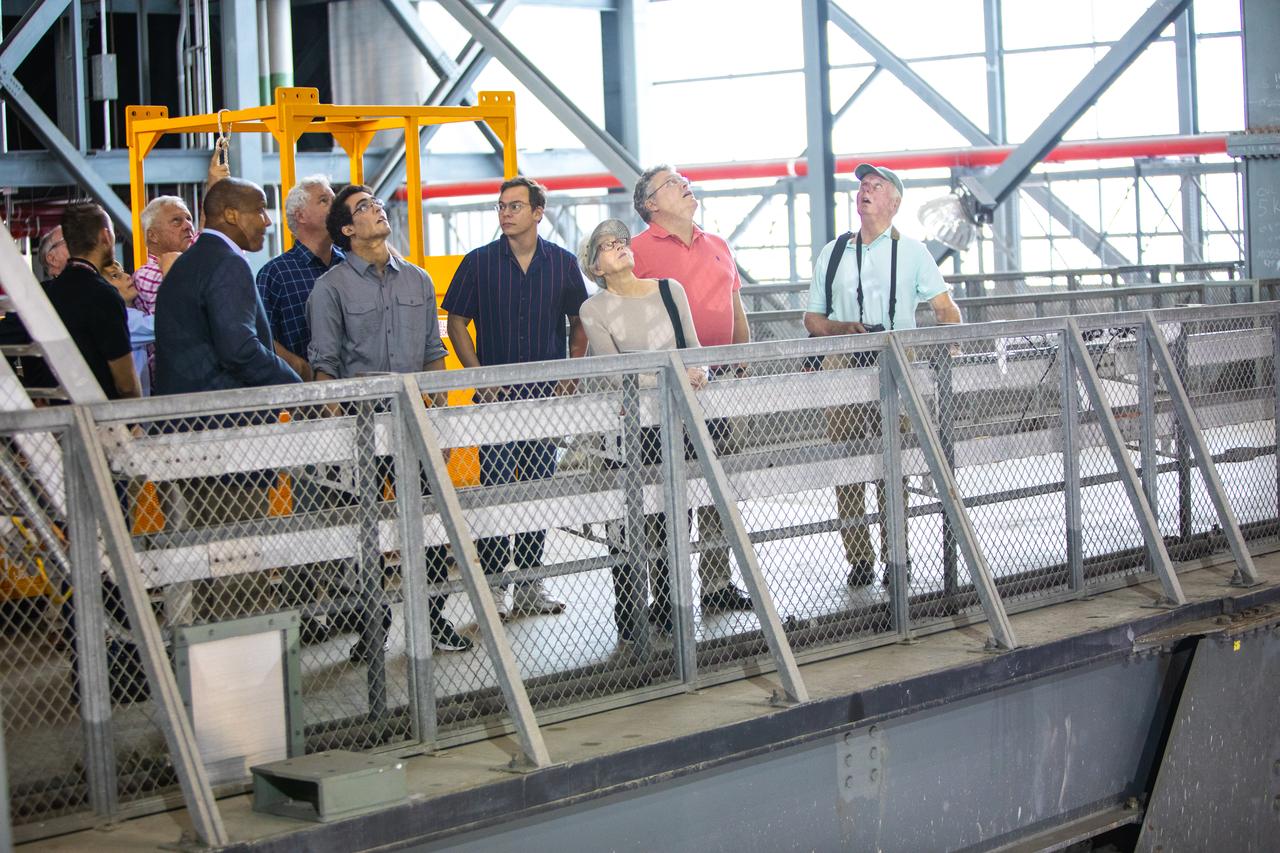
Family members of the original Vehicle Assembly Building (VAB) architect tour the iconic facility on Nov. 22, 2019 at NASA’s Kennedy Space Center in Florida. Among the visitors are Dick Bergmann, far right, original lead designer for the VAB. In view, far left, is Kelvin Manning, Kennedy’s associate director, technical. The Florida Section American Society of Civil Engineers bestowed its National Historic Civil Engineering Landmark award to the facility. The VAB is the first building at Kennedy Space Center to earn this distinction. At the time of its completion, the 129-million-cubic-foot structure was the largest building in the world. Originally designed and built to accommodate the Saturn V/Apollo used in Project Apollo, the VAB was later modified for its role in the Space Shuttle Program.
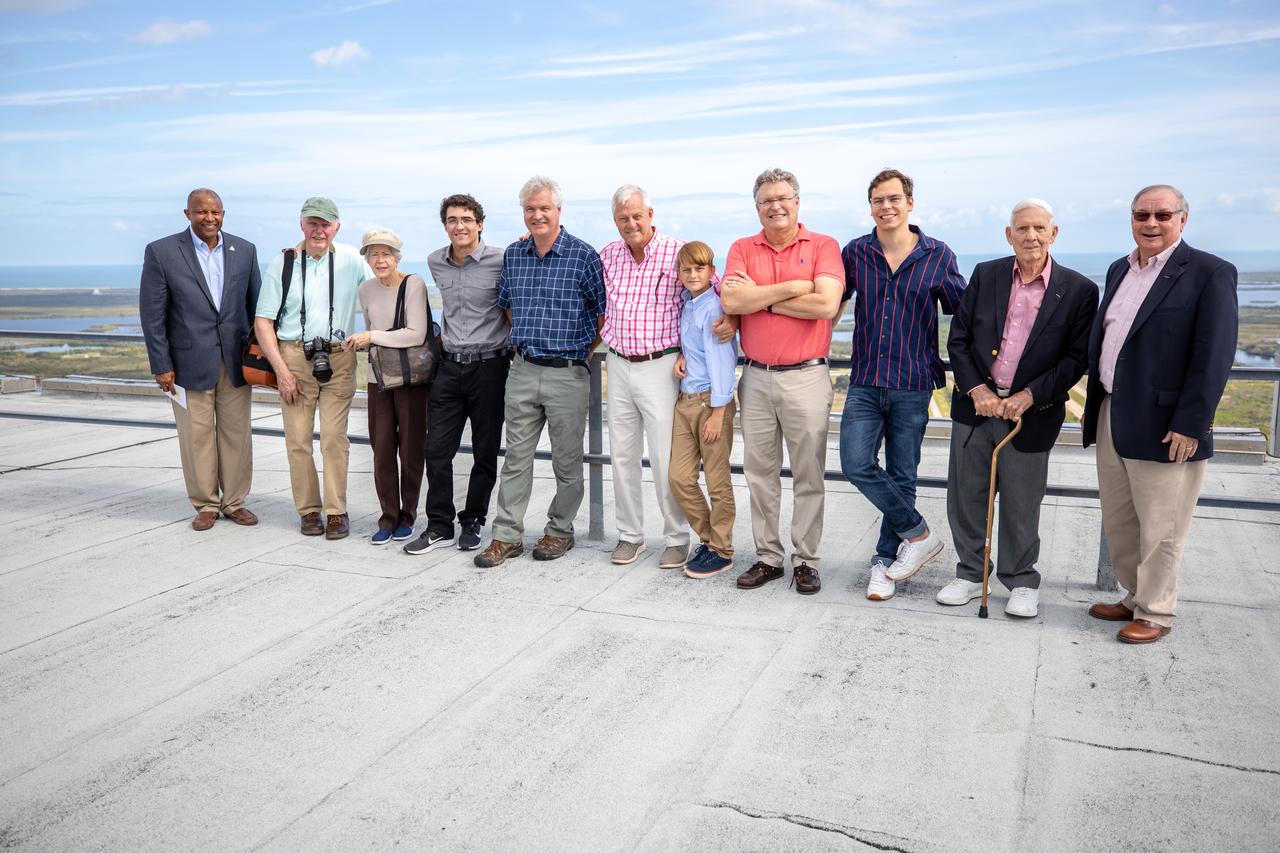
Dick Bergmann, second from left, original lead designer for the Vehicle Assembly Building (VAB), and Phil Moyer, second from right, original project lead, are on the roof of the VAB during a tour of Kennedy Space Center in Florida with descendants of Max Urbahn, the original architect, on Nov. 22, 2019. At far left is Kelvin Manning, Kennedy associate director, technical. The Florida Section American Society of Civil Engineers bestowed its National Historic Civil Engineering Landmark award to the facility. The VAB is the first building at Kennedy Space Center to earn this distinction. At the time of its completion, the 129-million-cubic-foot structure was the largest building in the world. Originally designed and built to accommodate the Saturn V/Apollo used in Project Apollo, the VAB was later modified for its role in the Space Shuttle Program.
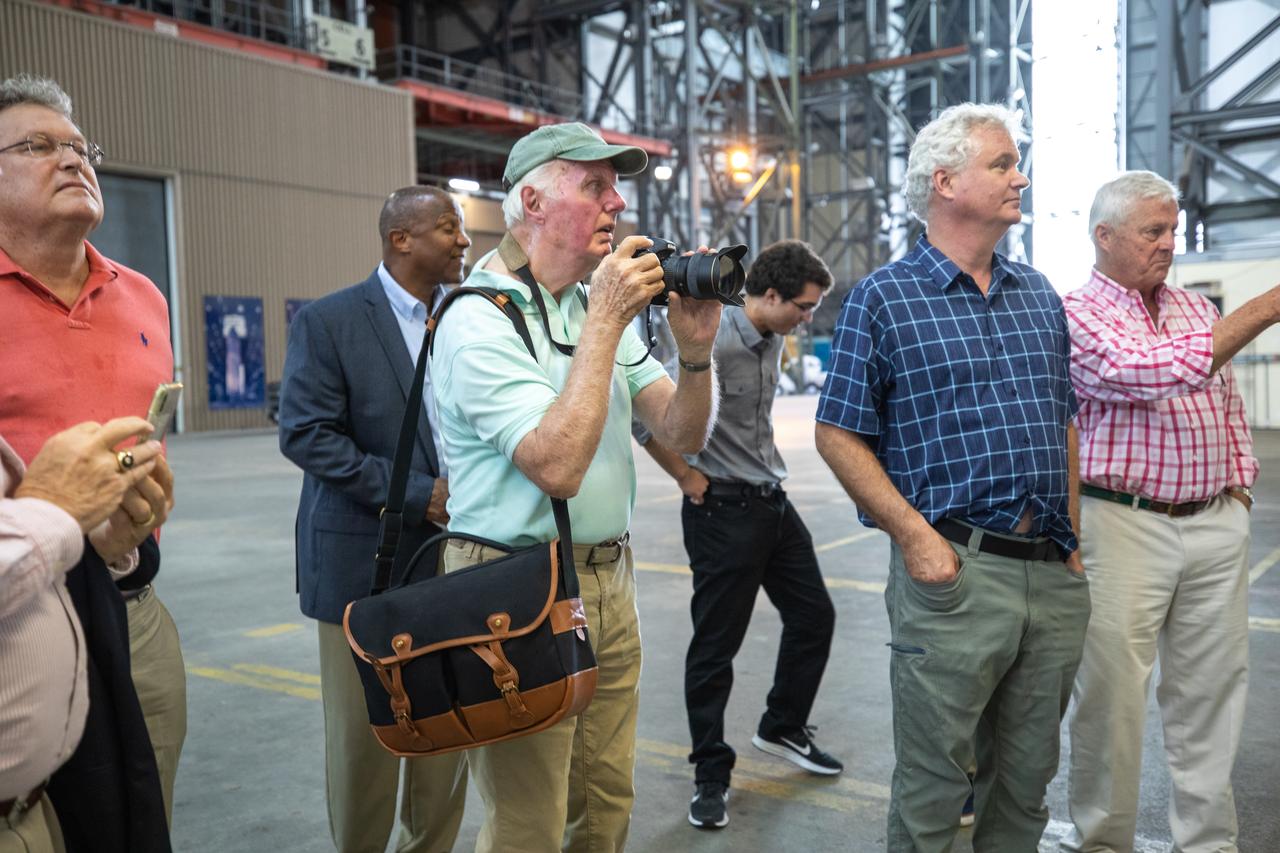
Dick Bergmann, far left in front, original lead designer for the Vehicle Assembly Building (VAB), tours the iconic facility at Kennedy Space Center in Florida with descendants of Max Urbahn, the original architect, on Nov. 22, 2019. Behind Bergmann is Kelvin Manning, Kennedy associate director, technical. The Florida Section American Society of Civil Engineers bestowed its National Historic Civil Engineering Landmark award to the facility. The VAB is the first building at Kennedy Space Center to earn this distinction. At the time of its completion, the 129-million-cubic-foot structure was the largest building in the world. Originally designed and built to accommodate the Saturn V/Apollo used in Project Apollo, the VAB was later modified for its role in the Space Shuttle Program.
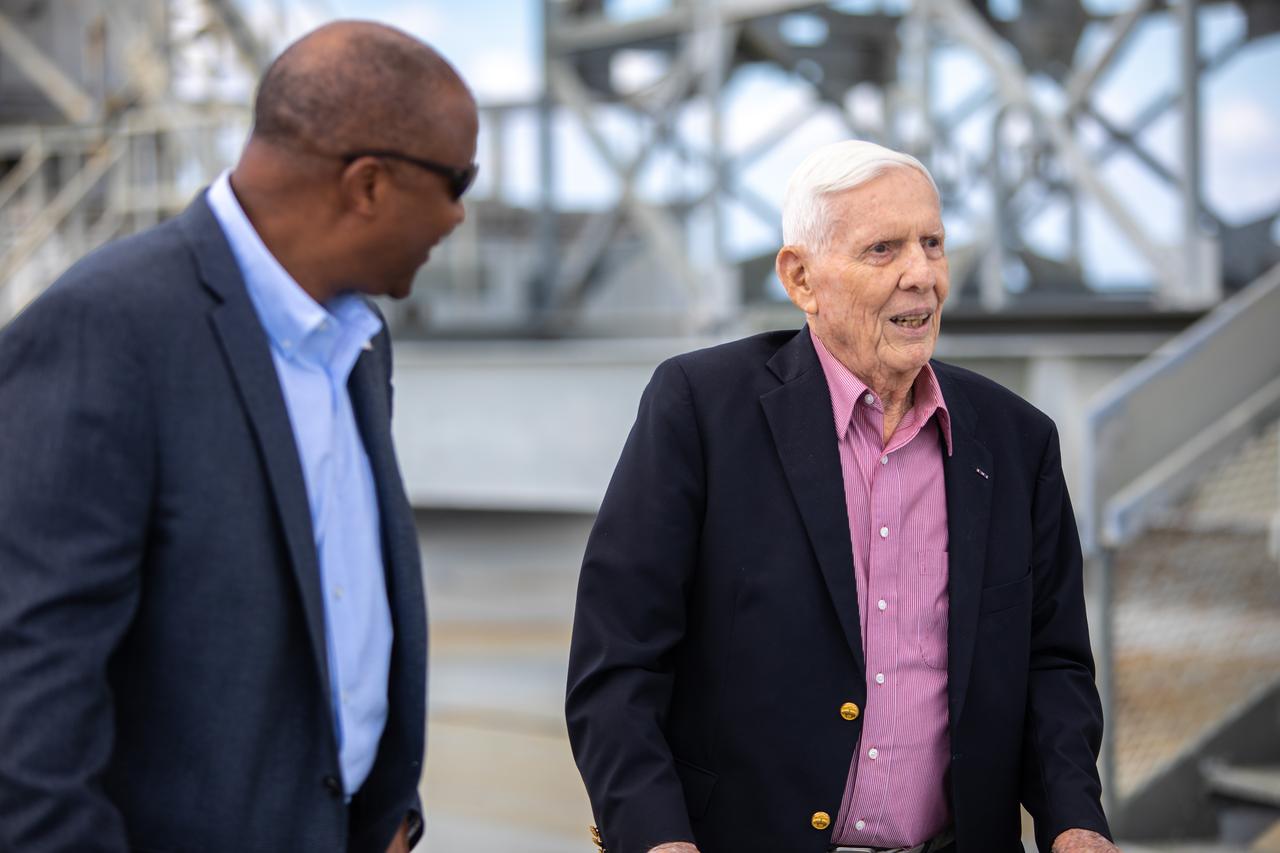
Phil Moyer, at right, original project lead for the Vehicle Assembly Building (VAB), tours the iconic facility on Nov. 22, 2019 at NASA’s Kennedy Space Center in Florida. At left is Kelvin Manning, Kennedy’s associate director, technical. The VAB was recognized with the National Historic Civil Engineering Landmark award by the Florida Section American Society of Civil Engineers during a ceremony on Jan. 10, 2020. The VAB is the first building at Kennedy Space Center to earn this distinction. At the time of its completion, the 129-million-cubic-foot structure was the largest building in the world. Originally designed and built to accommodate the Saturn V/Apollo used in Project Apollo, the VAB was later modified for its role in the Space Shuttle Program.
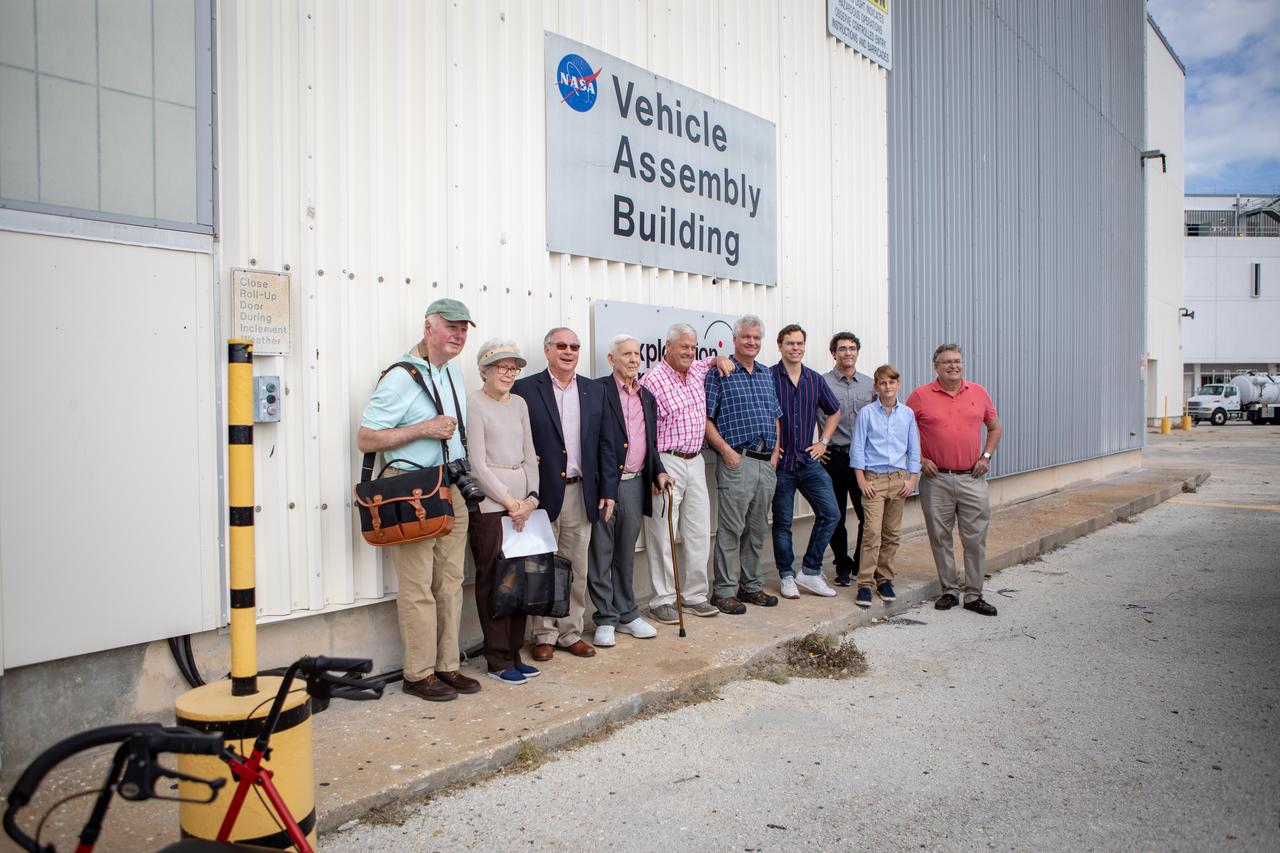
Dick Bergmann, far left, original lead designer for the Vehicle Assembly Building (VAB); and Phil Moyer, fourth from left, original project lead for the VAB, tour the iconic facility at Kennedy Space Center in Florida with descendants of Max Urbahn, the original architect, on Nov. 22, 2019. The Florida Section American Society of Civil Engineers bestowed its National Historic Civil Engineering Landmark award to the facility. The VAB is the first building at Kennedy Space Center to earn this distinction. At the time of its completion, the 129-million-cubic-foot structure was the largest building in the world. Originally designed and built to accommodate the Saturn V/Apollo used in Project Apollo, the VAB was later modified for its role in the Space Shuttle Program.

Family members of the original Vehicle Assembly Building (VAB) architect ride in an elevator during a tour of the iconic facility on Nov. 22, 2019 at NASA’s Kennedy Space Center in Florida. Among the visitors are Phil Moyer, in front, original project lead for the VAB; and Dick Bergmann, in the light green shirt, original lead designer for the VAB. The Florida Section American Society of Civil Engineers bestowed its National Historic Civil Engineering Landmark award to the facility. The VAB is the first building at Kennedy Space Center to earn this distinction. At the time of its completion, the 129-million-cubic-foot structure was the largest building in the world. Originally designed and built to accommodate the Saturn V/Apollo used in Project Apollo, the VAB was later modified for its role in the Space Shuttle Program.
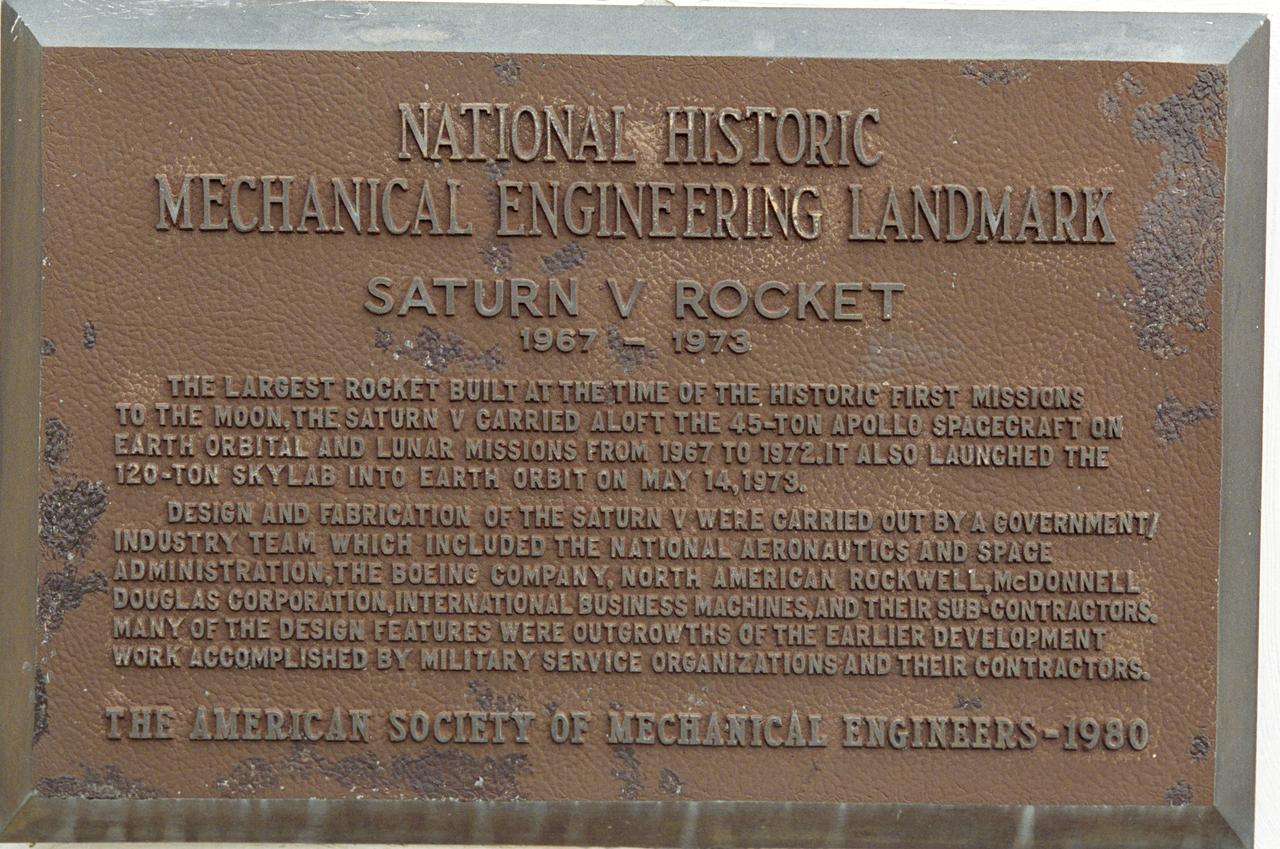
This plaque, located on the grounds of Marshall Space Flight Center in Huntsville, Alabama,commemorates the designation of the Saturn V Rocket as a National Historic Mechanical Engineering Landmark by the American Society of Mechanical Engineers in 1980.
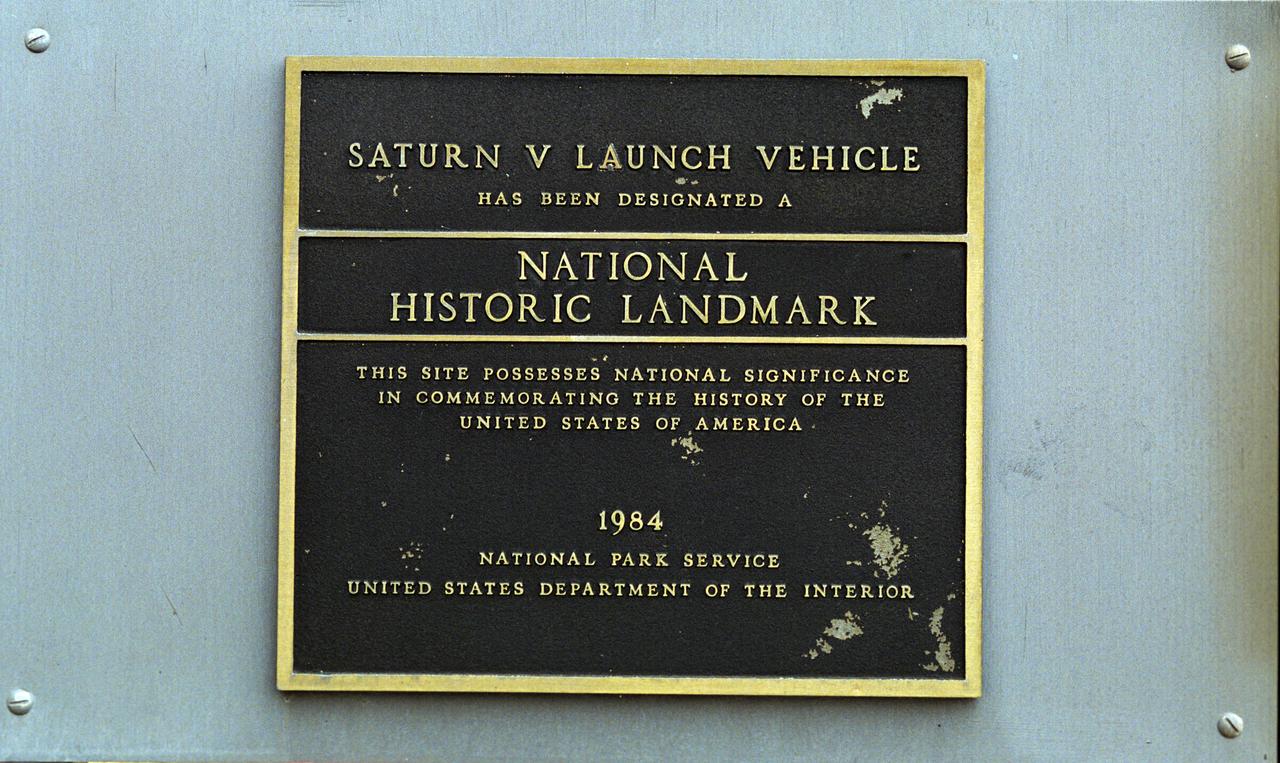
This plaque, displayed on the grounds of Marshall Space Flight Center in Huntsville, Alabama, commemorates the Saturn V Launch Vehicle as a National Historic Landmark. The site was designated as such in 1984 by the National Park Service of the United States Department of the Interior.
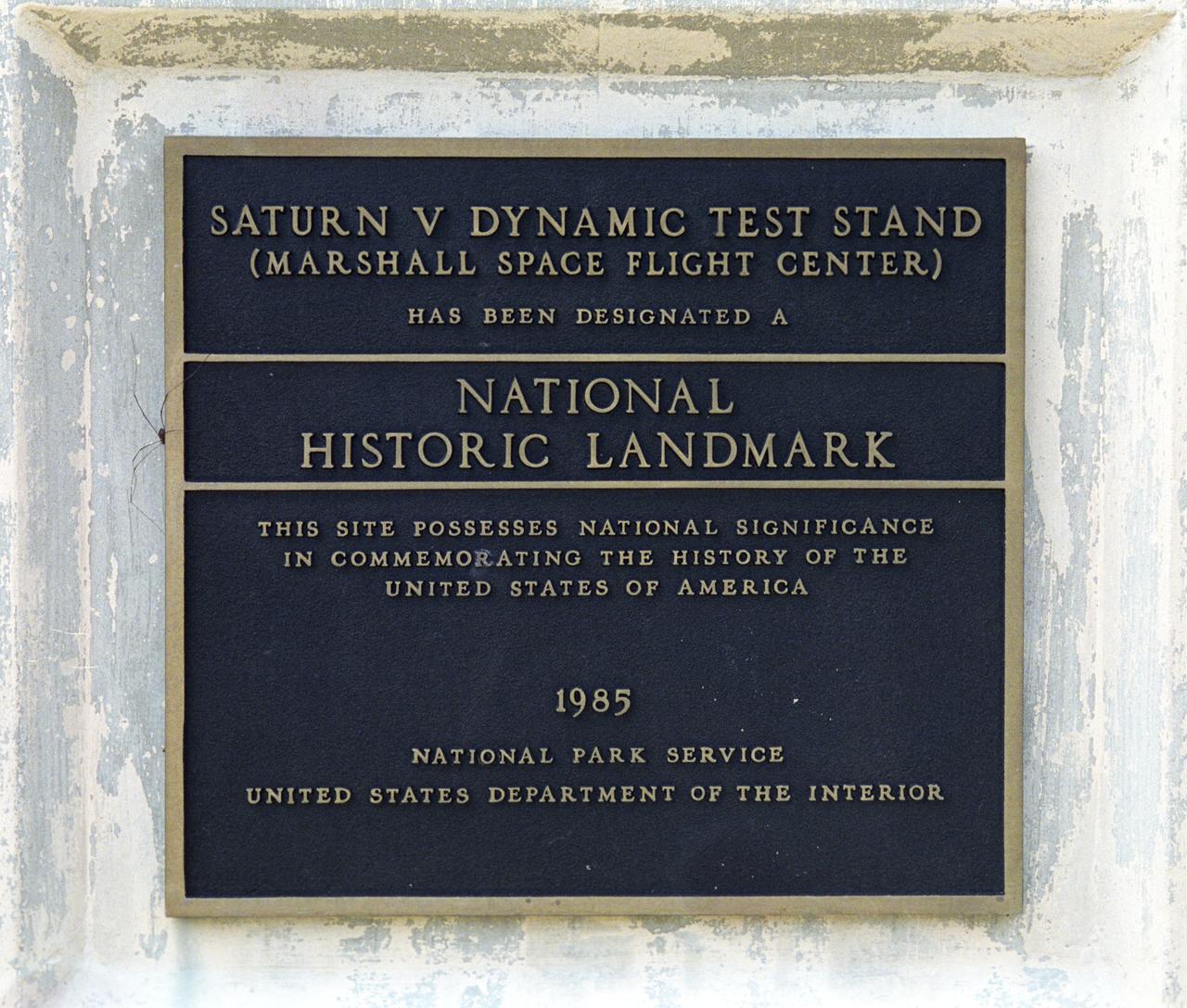
This plaque, displayed on the grounds of Marshall Space Flight Center in Huntsville, Alabama, commemorates the Saturn V Dynamic Test Stand as a National Historic Landmark. The site was designated as such in 1985 by the National Park Service of the United States Department of the Interior.
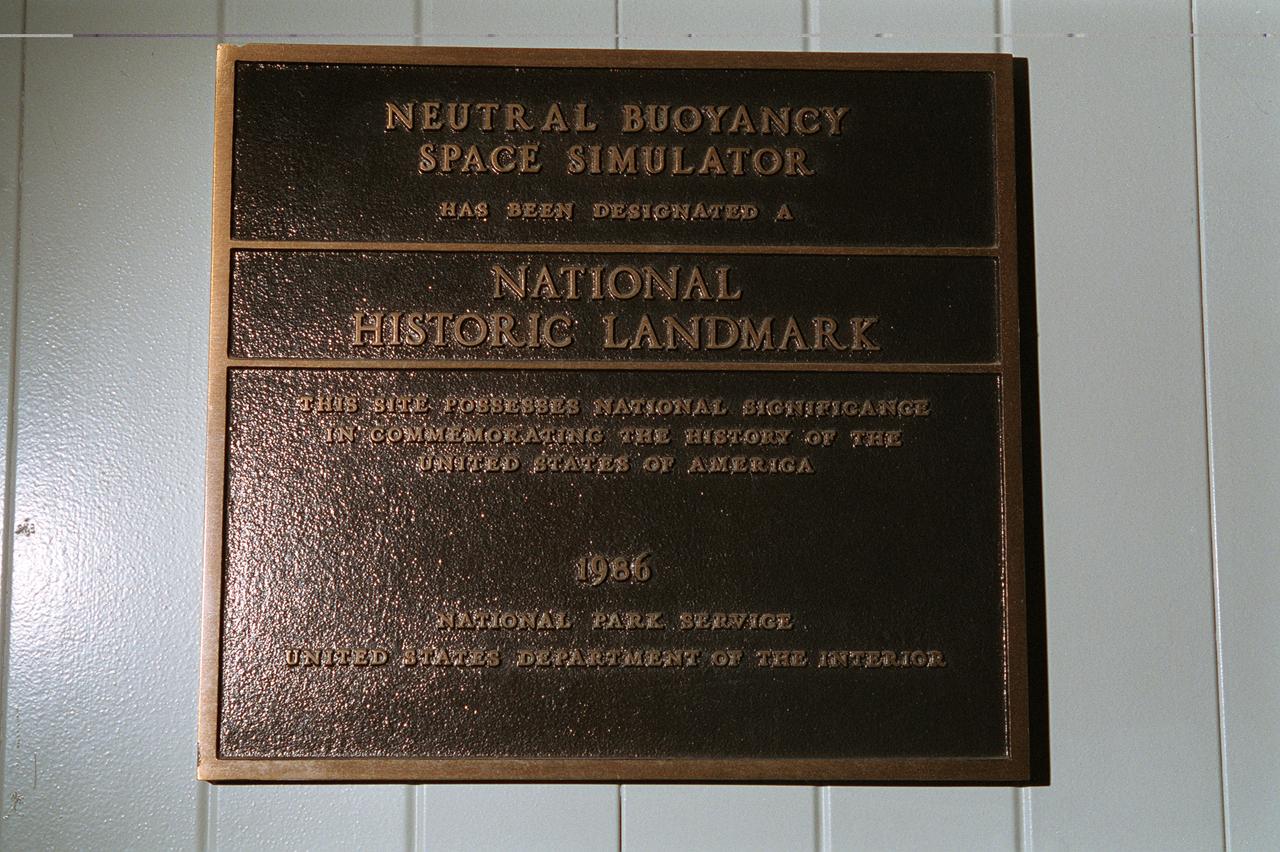
This plaque, displayed on the grounds of Marshall Space Flight Center in Huntsville, Alabama commemorates the Neutral Buoyancy Space Simulator as a National Historic Landmark. The site was designated as such in 1986 by the National Park Service of the United States Department of the Interior.

Retired Marshall scientist, Jeanette Scissum-Mickens, was honored by Alabama Governor Kay Ivey at the Alabama Historically Black Colleges and Universities Roundtable Discussion: Minority Women in STEM event held at the University of Alabama A&M in Huntsville, Alabama. Scissum-Mickens was honored as the “Hidden Figure of Alabama A&M.” She was the first African-American mathematician hired by Marshall in 1964.
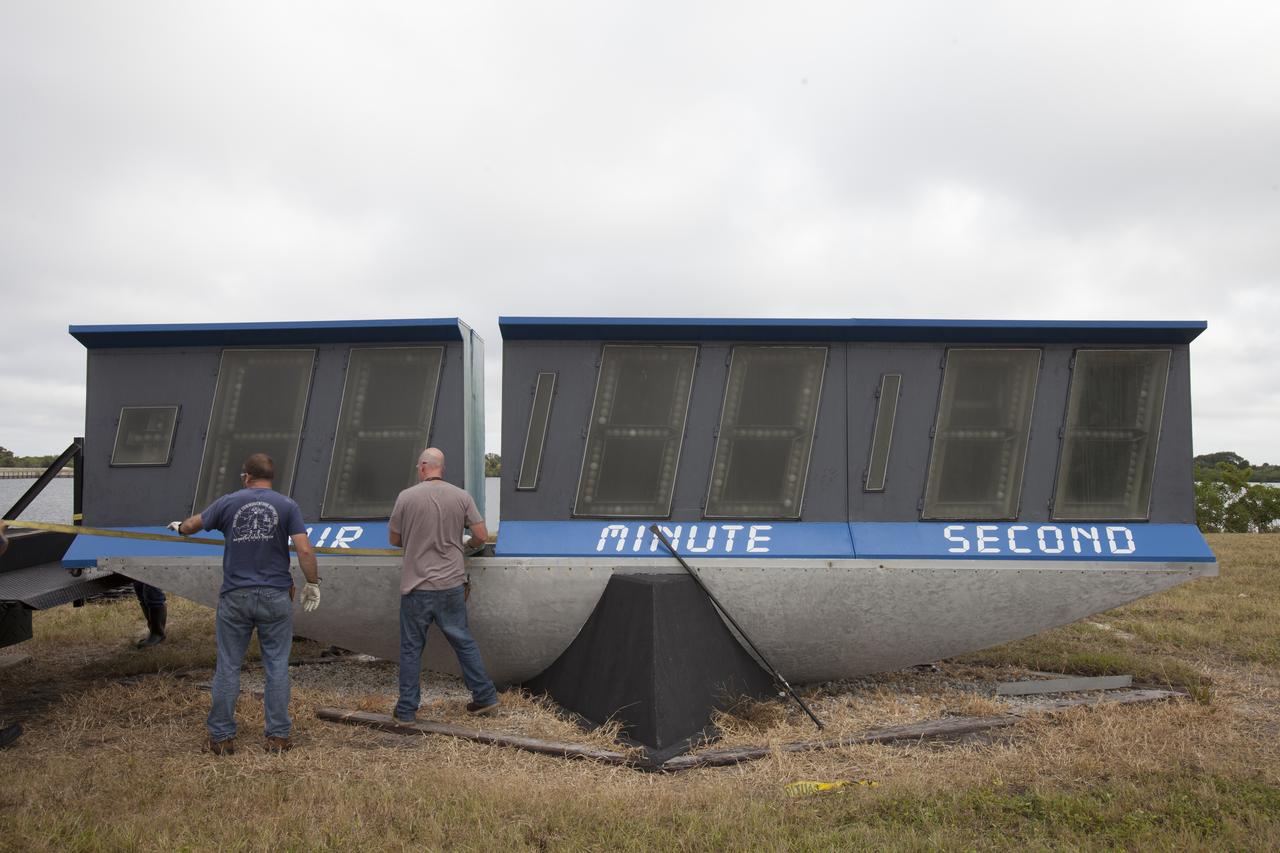
At NASA's Kennedy Space Center in Florida, the historic countdown clock at the spaceport's Press Site is disassembled for removal. Kennedy has requested to acquire the countdown clock from the agency’s Artifact Working Group at NASA Headquarters for likely display at the Kennedy Space Center Visitor Complex. A new modern multimedia display soon will be installed, similar to the screens seen at sporting venues, is in the works. The new screen will be nearly 26 feet wide by 7 feet high. The old timepiece was designed by Kennedy engineers and built by Kennedy technicians in 1969. Not including the triangular concrete and aluminum base, the famous landmark is nearly six feet high, 26 feet wide and 3 feet deep. The new display will be similar in size, with the screen being nearly 26 feet wide by seven feet high.
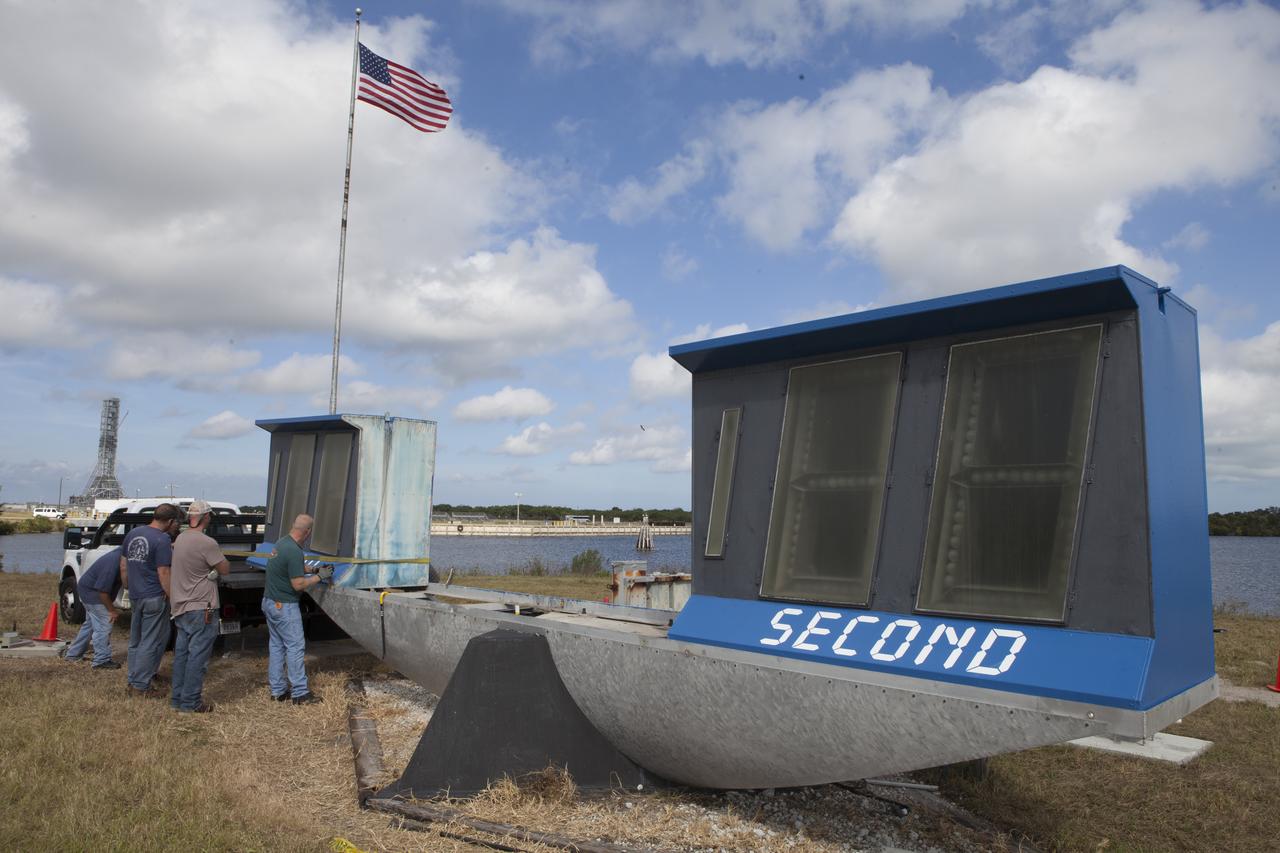
At NASA's Kennedy Space Center in Florida, the historic countdown clock at the spaceport's Press Site is disassembled for removal. Kennedy has requested to acquire the countdown clock from the agency’s Artifact Working Group at NASA Headquarters for likely display at the Kennedy Space Center Visitor Complex. A new modern multimedia display soon will be installed, similar to the screens seen at sporting venues, is in the works. The new screen will be nearly 26 feet wide by 7 feet high. The old timepiece was designed by Kennedy engineers and built by Kennedy technicians in 1969. Not including the triangular concrete and aluminum base, the famous landmark is nearly six feet high, 26 feet wide and 3 feet deep. The new display will be similar in size, with the screen being nearly 26 feet wide by seven feet high.
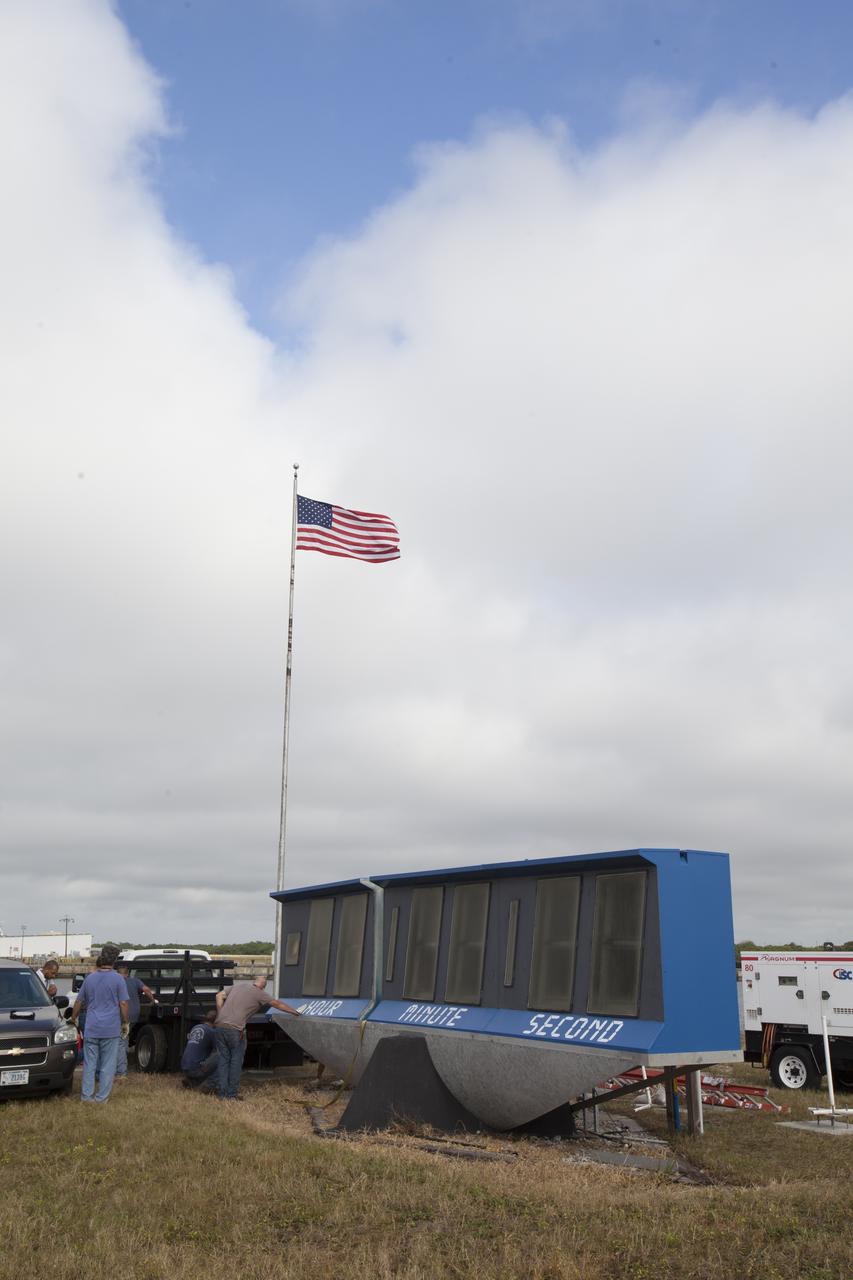
At NASA's Kennedy Space Center in Florida, the historic countdown clock at the spaceport's Press Site is disassembled for removal. Kennedy has requested to acquire the countdown clock from the agency’s Artifact Working Group at NASA Headquarters for likely display at the Kennedy Space Center Visitor Complex. A new modern multimedia display soon will be installed, similar to the screens seen at sporting venues, is in the works. The new screen will be nearly 26 feet wide by 7 feet high. The old timepiece was designed by Kennedy engineers and built by Kennedy technicians in 1969. Not including the triangular concrete and aluminum base, the famous landmark is nearly six feet high, 26 feet wide and 3 feet deep. The new display will be similar in size, with the screen being nearly 26 feet wide by seven feet high.
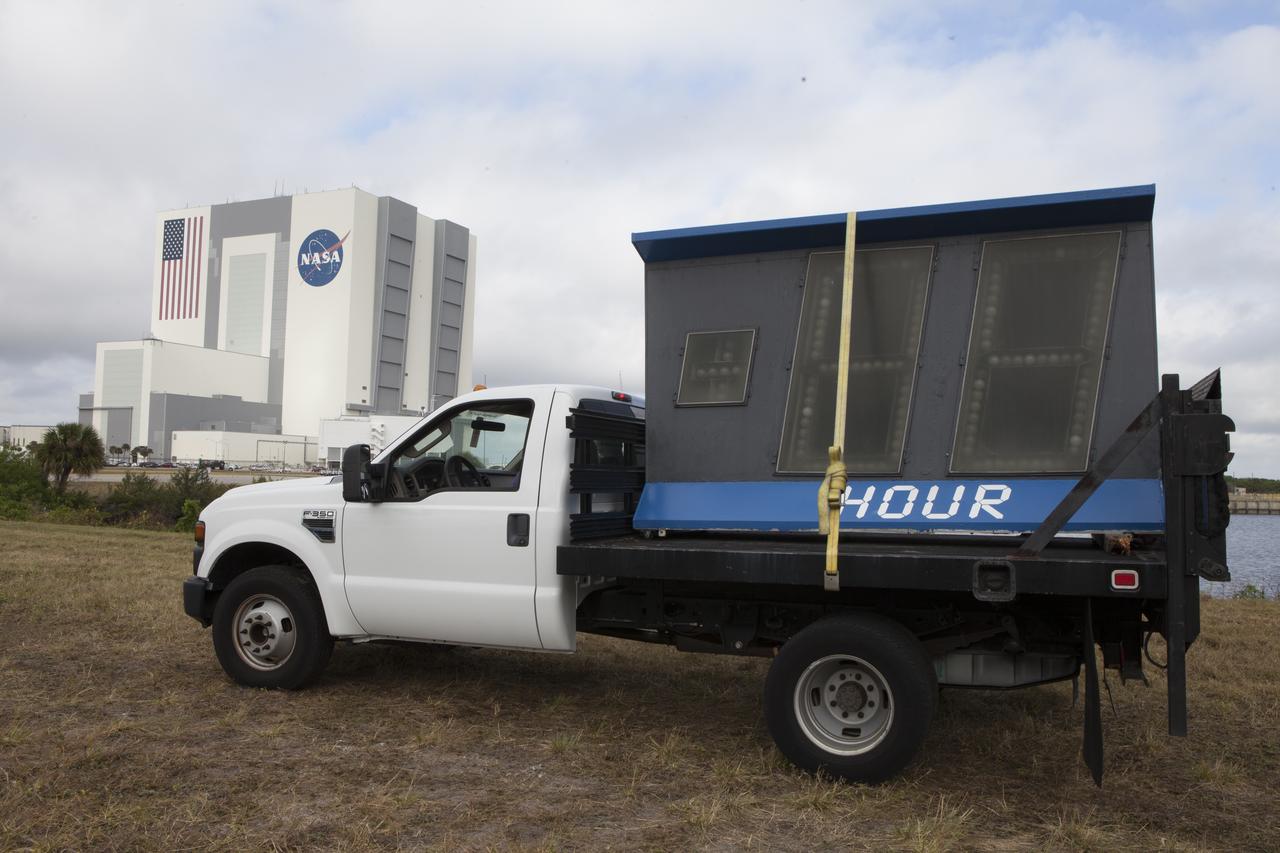
At NASA's Kennedy Space Center in Florida, the historic countdown clock at the spaceport's Press Site is disassembled for removal. Kennedy has requested to acquire the countdown clock from the agency’s Artifact Working Group at NASA Headquarters for likely display at the Kennedy Space Center Visitor Complex. A new modern multimedia display soon will be installed, similar to the screens seen at sporting venues, is in the works. The new screen will be nearly 26 feet wide by 7 feet high. The old timepiece was designed by Kennedy engineers and built by Kennedy technicians in 1969. Not including the triangular concrete and aluminum base, the famous landmark is nearly six feet high, 26 feet wide and 3 feet deep. The new display will be similar in size, with the screen being nearly 26 feet wide by seven feet high.
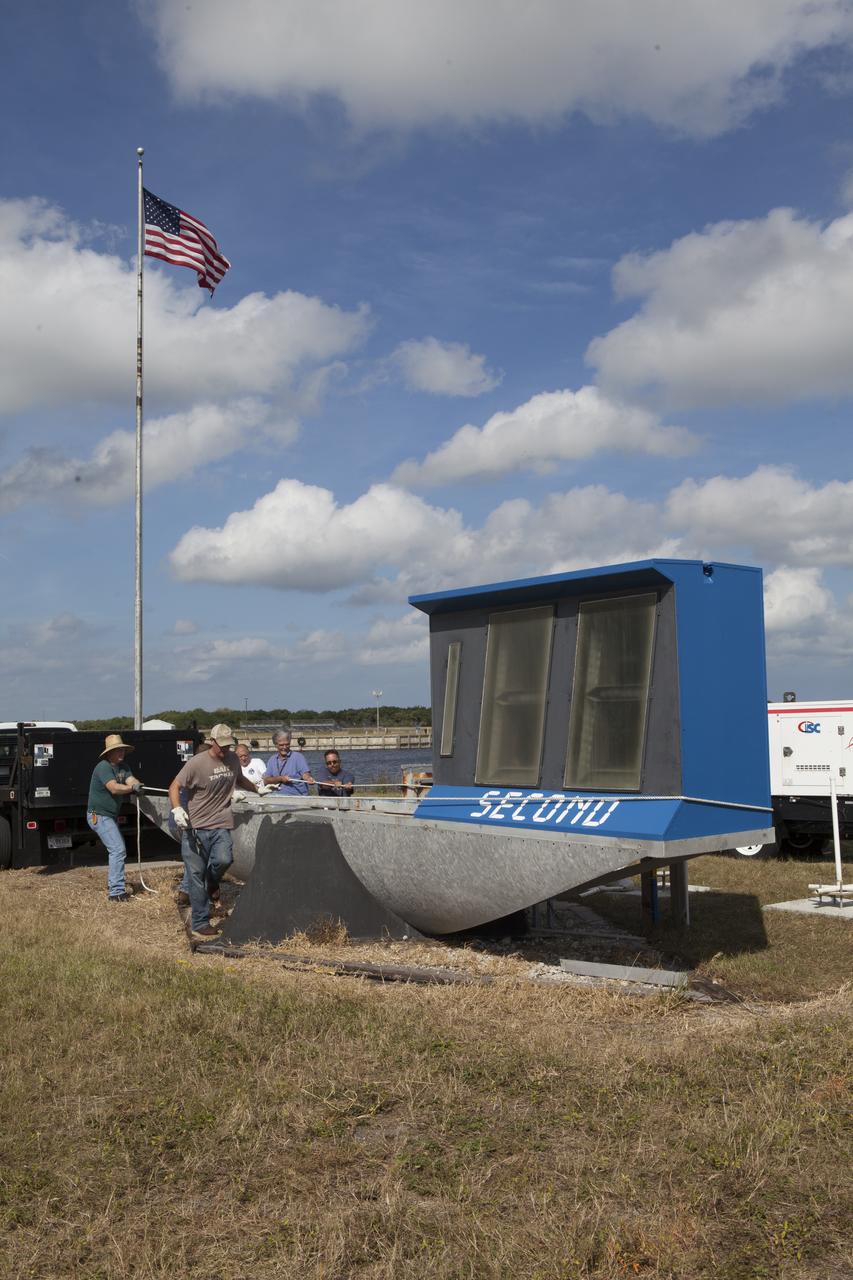
At NASA's Kennedy Space Center in Florida, the historic countdown clock at the spaceport's Press Site is disassembled for removal. Kennedy has requested to acquire the countdown clock from the agency’s Artifact Working Group at NASA Headquarters for likely display at the Kennedy Space Center Visitor Complex. A new modern multimedia display soon will be installed, similar to the screens seen at sporting venues, is in the works. The new screen will be nearly 26 feet wide by 7 feet high. The old timepiece was designed by Kennedy engineers and built by Kennedy technicians in 1969. Not including the triangular concrete and aluminum base, the famous landmark is nearly six feet high, 26 feet wide and 3 feet deep. The new display will be similar in size, with the screen being nearly 26 feet wide by seven feet high.
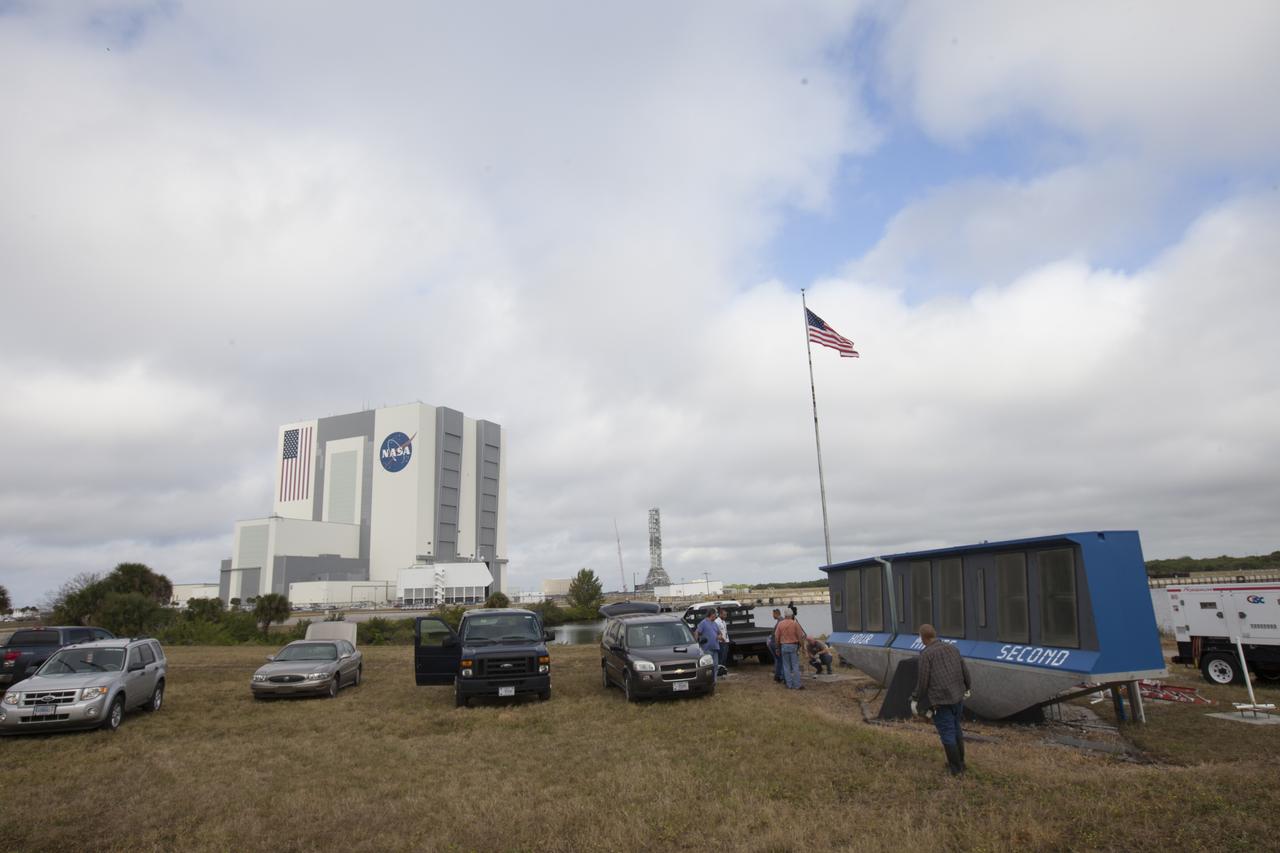
At NASA's Kennedy Space Center in Florida, the historic countdown clock at the spaceport's Press Site is disassembled for removal. Kennedy has requested to acquire the countdown clock from the agency’s Artifact Working Group at NASA Headquarters for likely display at the Kennedy Space Center Visitor Complex. A new modern multimedia display soon will be installed, similar to the screens seen at sporting venues, is in the works. The new screen will be nearly 26 feet wide by 7 feet high. The old timepiece was designed by Kennedy engineers and built by Kennedy technicians in 1969. Not including the triangular concrete and aluminum base, the famous landmark is nearly six feet high, 26 feet wide and 3 feet deep. The new display will be similar in size, with the screen being nearly 26 feet wide by seven feet high.
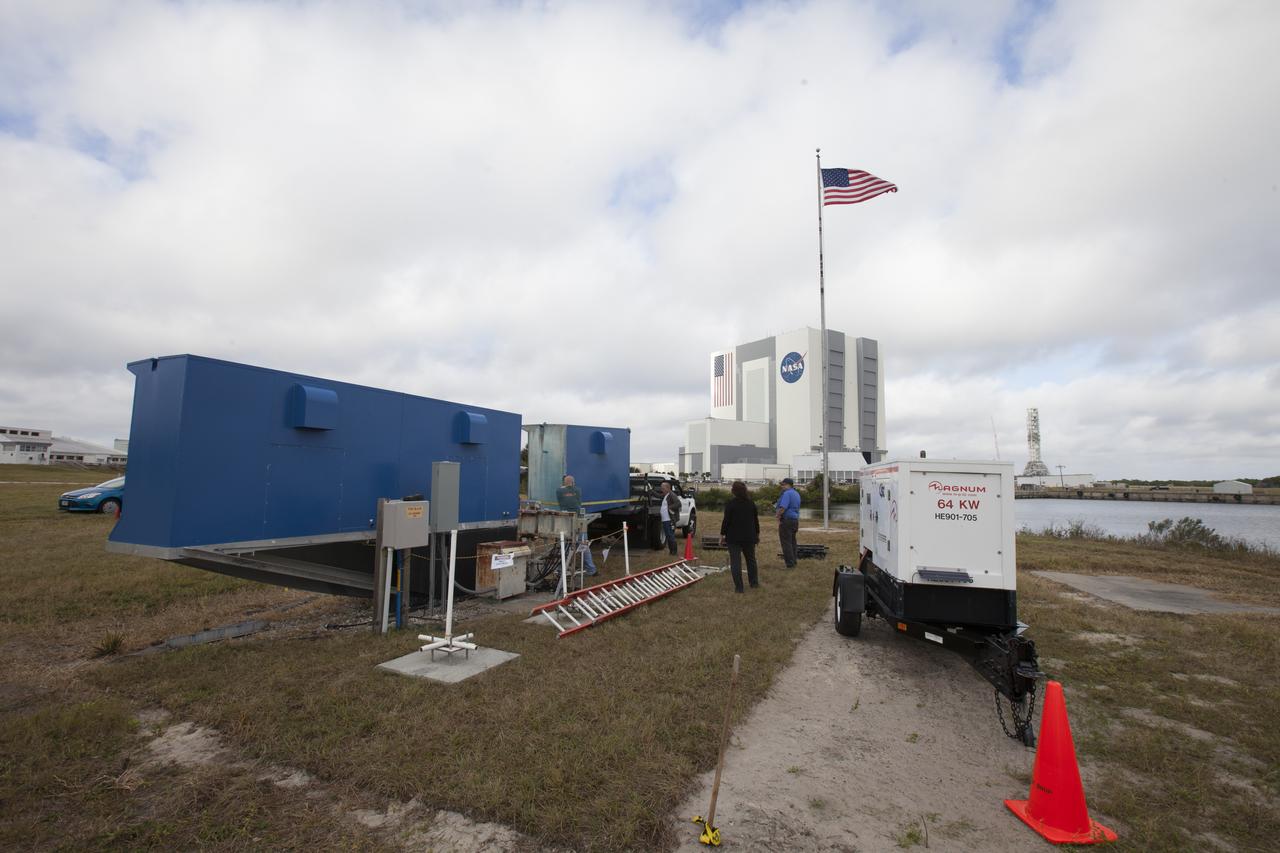
At NASA's Kennedy Space Center in Florida, the historic countdown clock at the spaceport's Press Site is disassembled for removal. Kennedy has requested to acquire the countdown clock from the agency’s Artifact Working Group at NASA Headquarters for likely display at the Kennedy Space Center Visitor Complex. A new modern multimedia display soon will be installed, similar to the screens seen at sporting venues, is in the works. The new screen will be nearly 26 feet wide by 7 feet high. The old timepiece was designed by Kennedy engineers and built by Kennedy technicians in 1969. Not including the triangular concrete and aluminum base, the famous landmark is nearly six feet high, 26 feet wide and 3 feet deep. The new display will be similar in size, with the screen being nearly 26 feet wide by seven feet high.
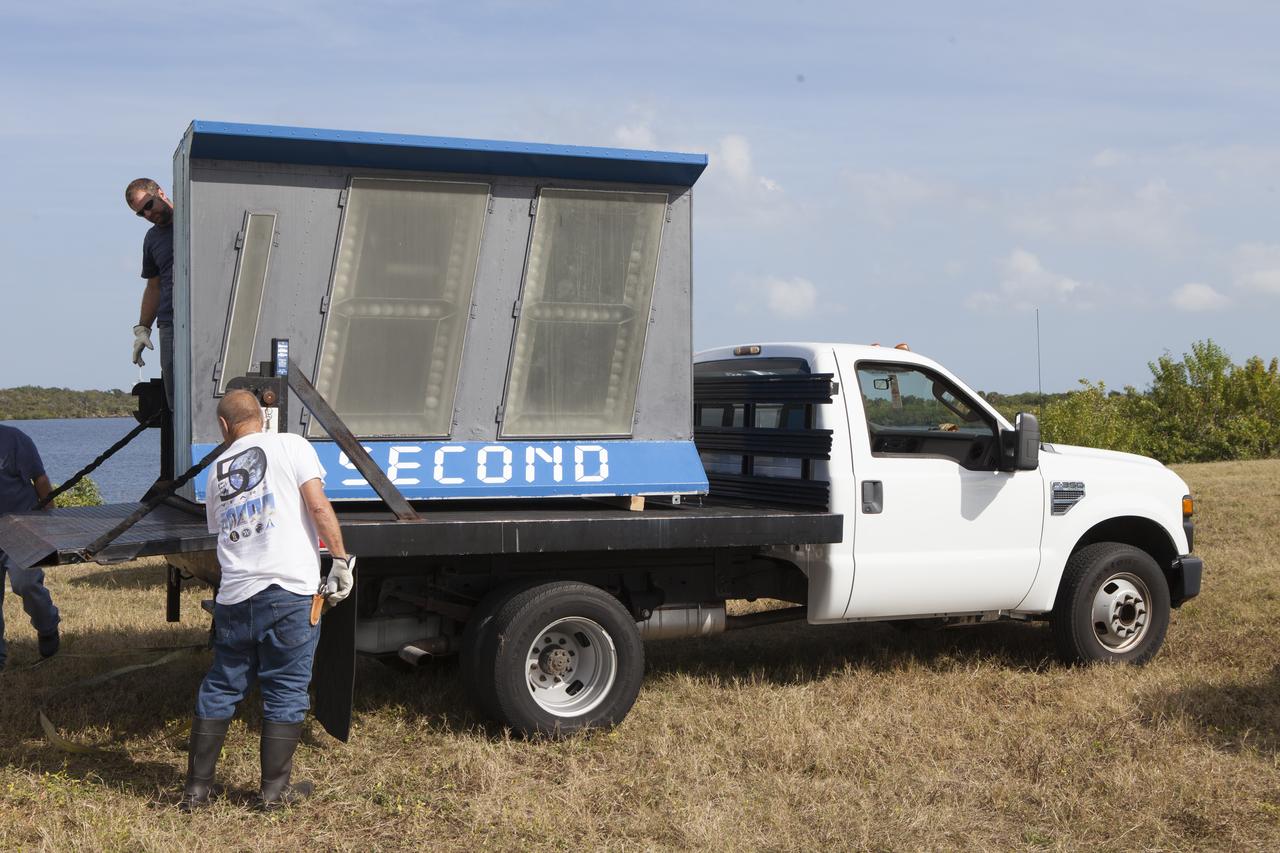
At NASA's Kennedy Space Center in Florida, the historic countdown clock at the spaceport's Press Site is disassembled for removal. Kennedy has requested to acquire the countdown clock from the agency’s Artifact Working Group at NASA Headquarters for likely display at the Kennedy Space Center Visitor Complex. A new modern multimedia display soon will be installed, similar to the screens seen at sporting venues, is in the works. The new screen will be nearly 26 feet wide by 7 feet high. The old timepiece was designed by Kennedy engineers and built by Kennedy technicians in 1969. Not including the triangular concrete and aluminum base, the famous landmark is nearly six feet high, 26 feet wide and 3 feet deep. The new display will be similar in size, with the screen being nearly 26 feet wide by seven feet high.
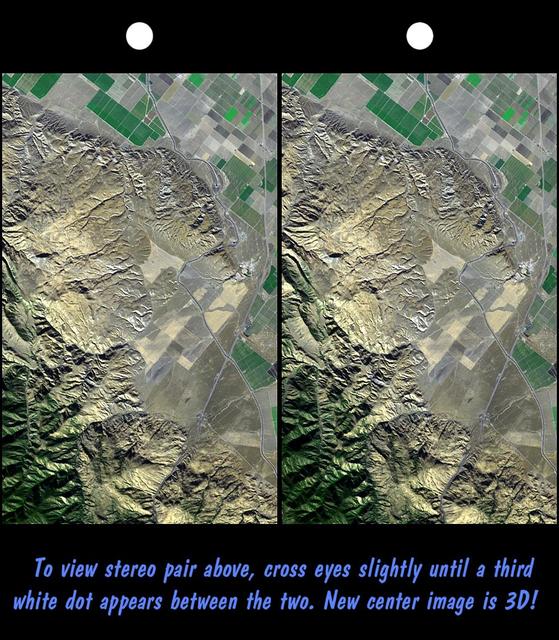
Wheeler Ridge and vicinity, California, is a site of major tectonic activity, both historically and over recent geologic time.
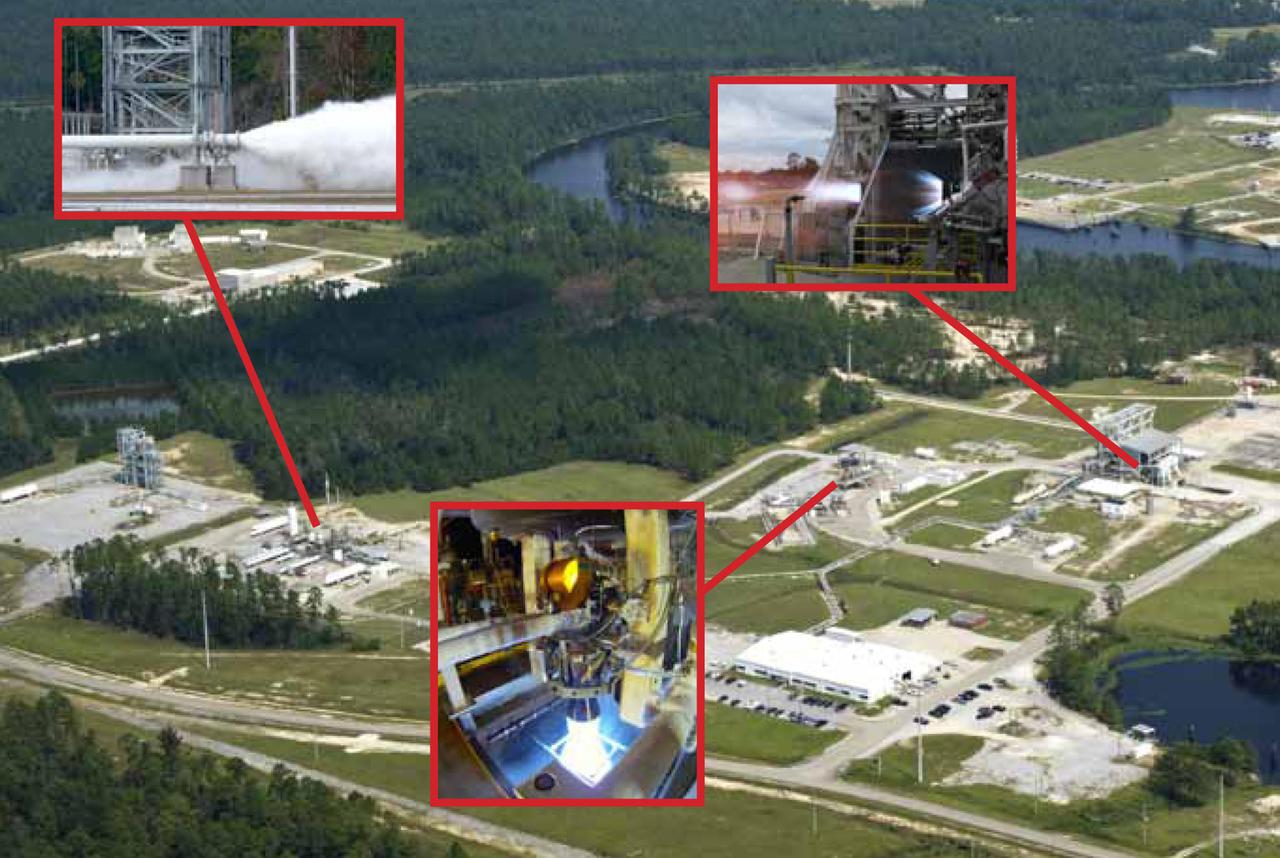
NASA recorded a historic week Nov. 5-9, conducting tests on all three stands in the E Test Complex at John C. Stennis Space Center. Inset images show the types of tests conducted on the E-1 Test Stand (right), the E-2 Test Stand (left) and the E-3 Test Stand (center). The E-1 photo is from an early October test and is provided courtesy of Blue Origin. Other photos are from tests conducted the week of Nov. 5.
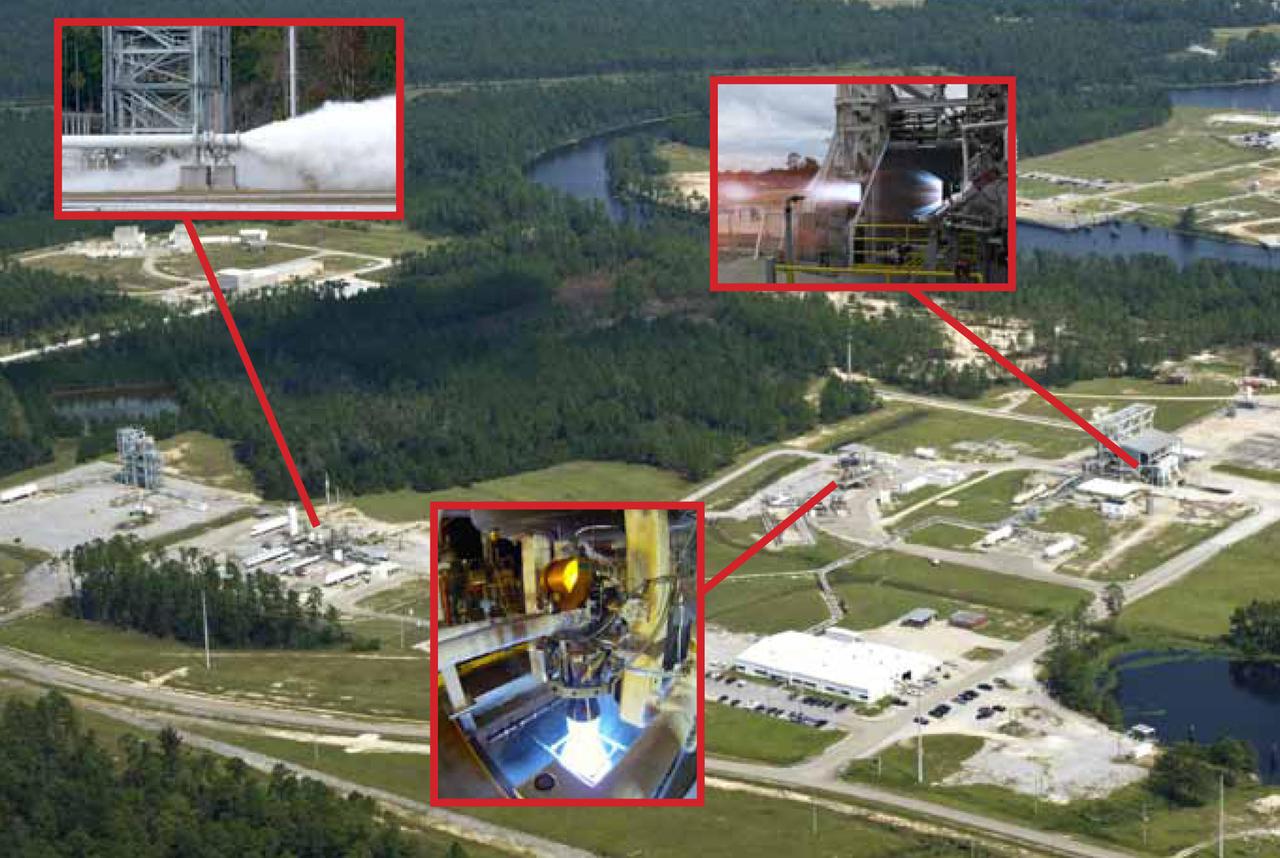
NASA recorded a historic week Nov. 5-9, conducting tests on all three stands in the E Test Complex at John C. Stennis Space Center. Inset images show the types of tests conducted on the E-1 Test Stand (right), the E-2 Test Stand (left) and the E-3 Test Stand (center). The E-1 photo is from an early October test and is provided courtesy of Blue Origin. Other photos are from tests conducted the week of Nov. 5.
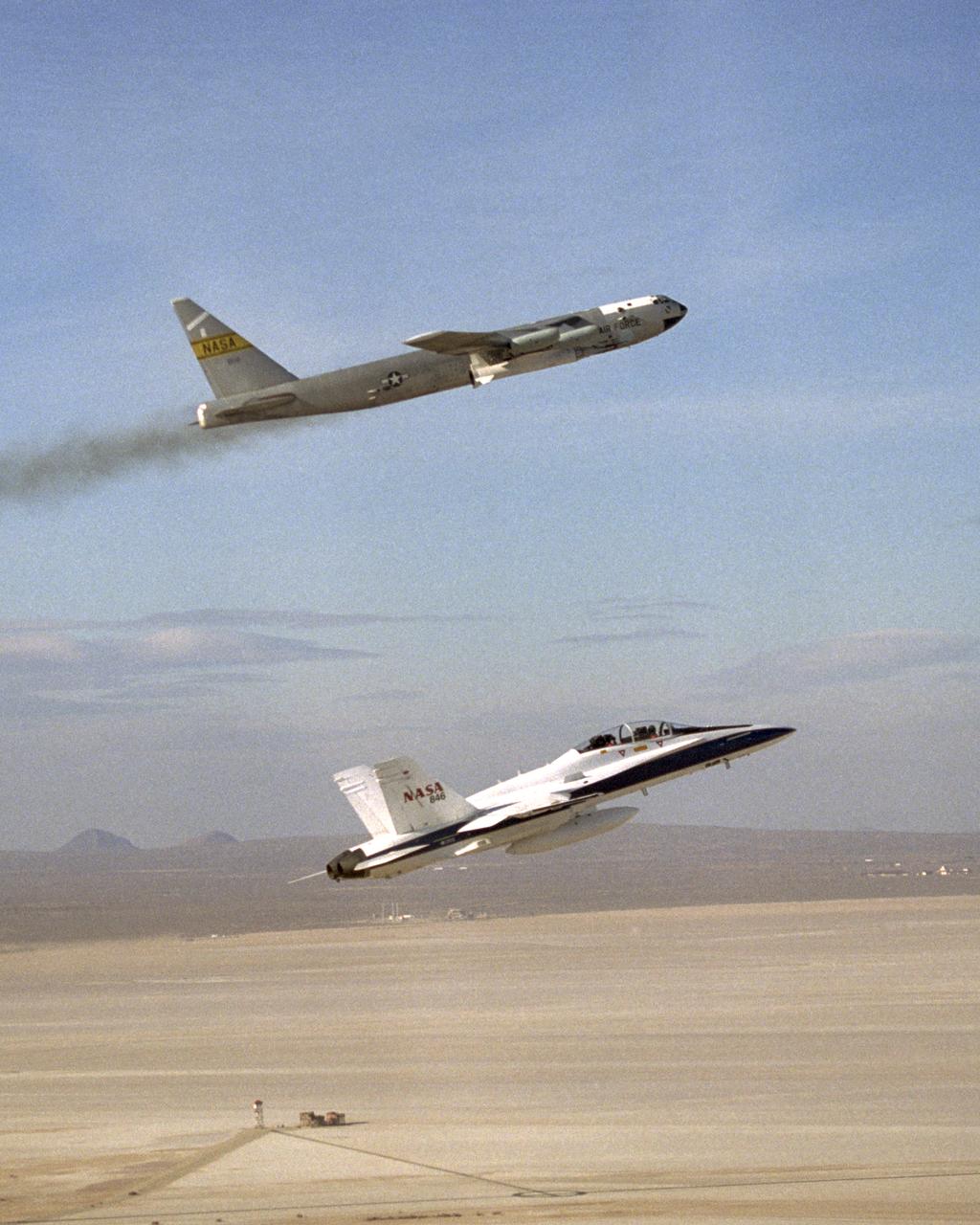
NASA's historic B-52 mothership carried the X-43A and its Pegasus booster rocket on a captive carry flight from Edwards Air Force Base.
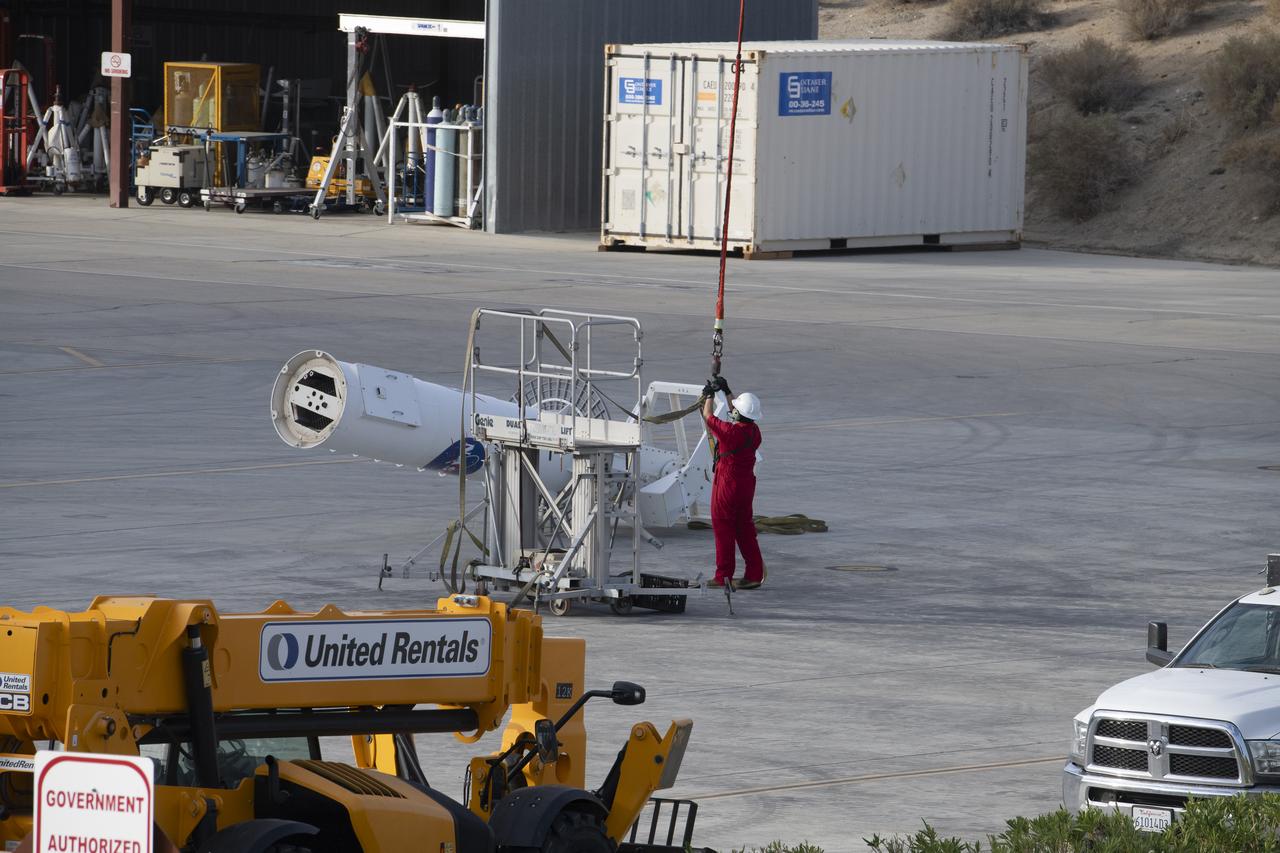
A pedestal carried by a helicopter is positioned for a gentle placement on the ground. The helicopter removed the pedestal from the rooftop of Building 4800 at NASA’s Armstrong Flight Research Center in Edwards, California, on Oct. 4, 2024. The pedestal was used since the 1950s to 2015 to house different telemetry dishes to collect data from research aircraft.
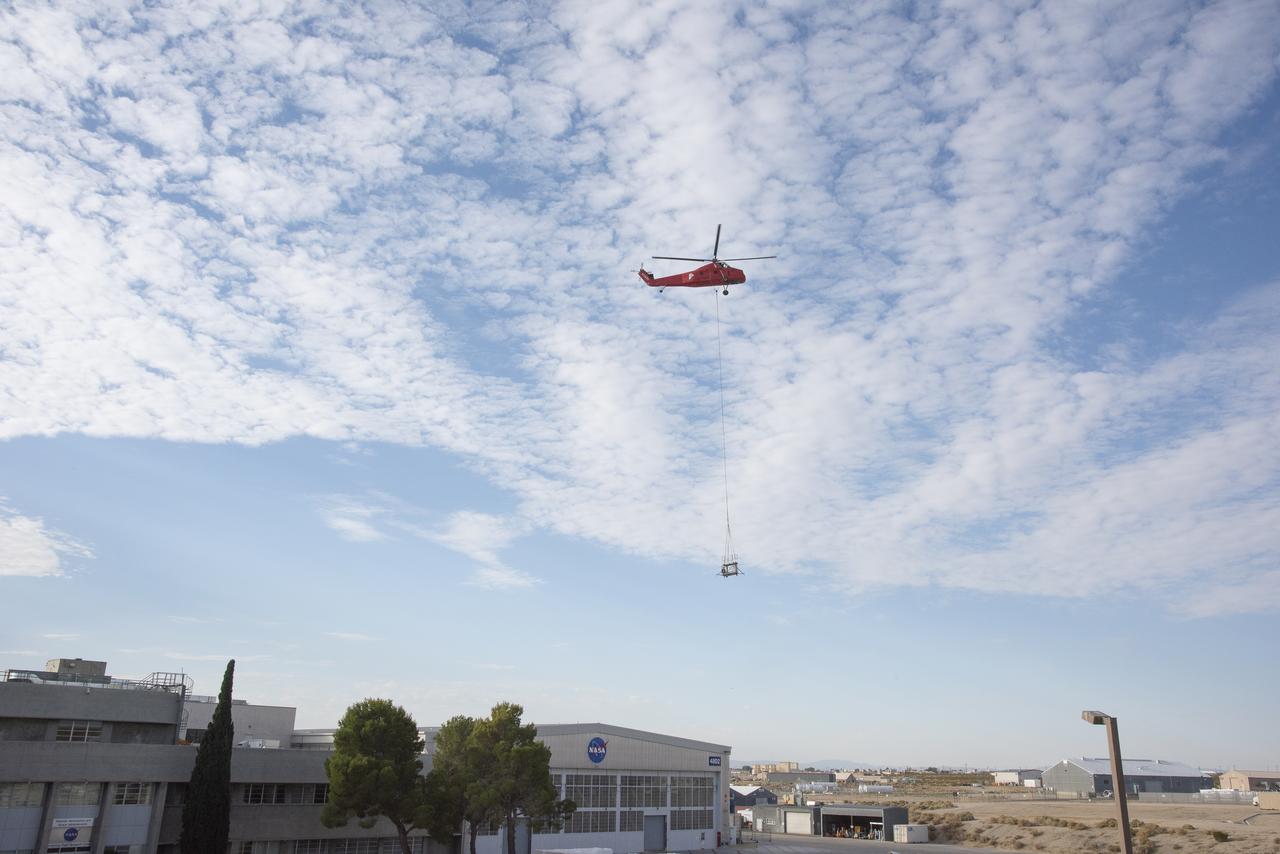
A helicopter carries a rooftop pedestal it removed from Building 4800 at NASA’s Armstrong Flight Research Center in Edwards, California, on Oct. 4, 2024. The pedestal was used since the 1950s to 2015 to house different telemetry dishes to collect data from research aircraft.
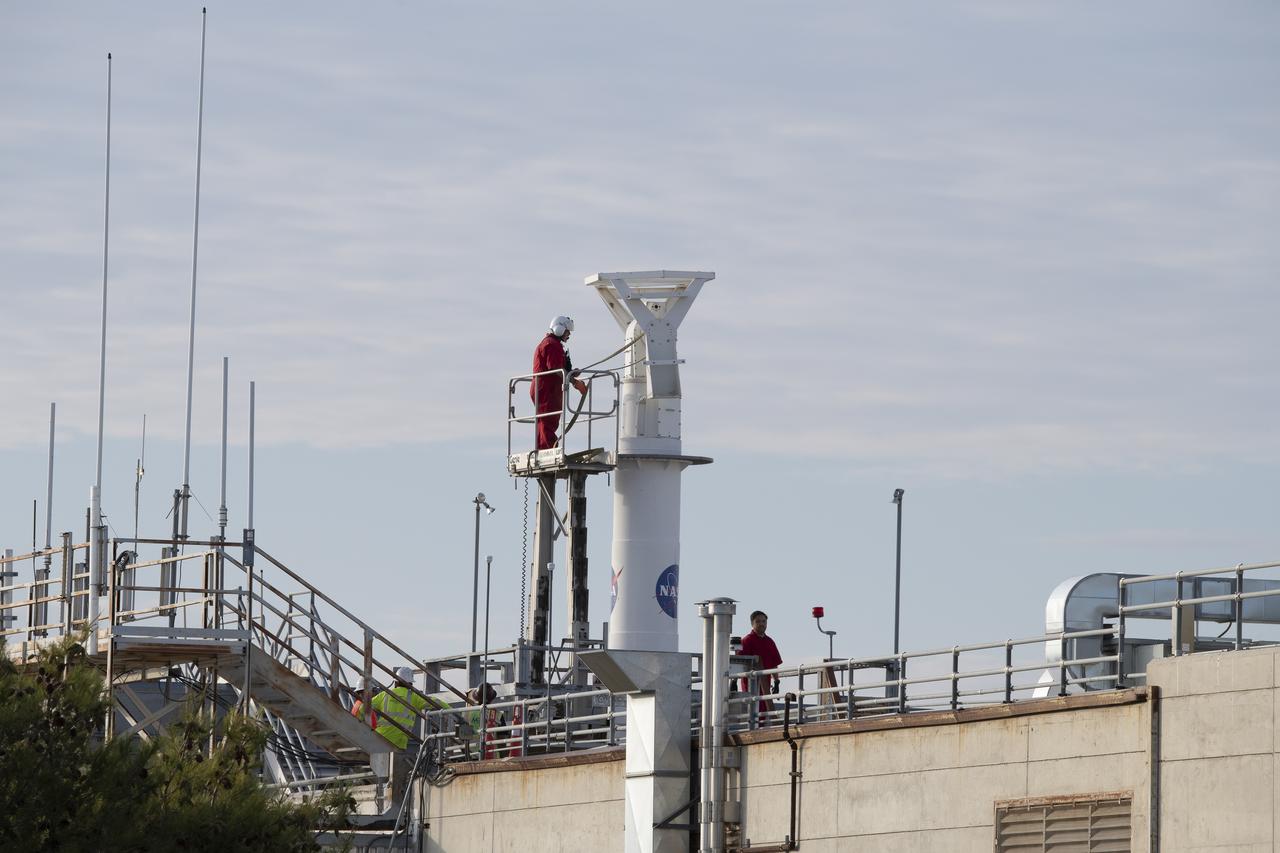
A cable is secured on a rooftop pedestal located on Building 4800 at NASA’s Armstrong Flight Research Center in Edwards, California, on Oct. 4, 2024. The pedestal, which was prepared for a helicopter lift to remove it from the roof, was used since the 1950s until 2015 to enable different telemetry dishes to collect data from research aircraft.
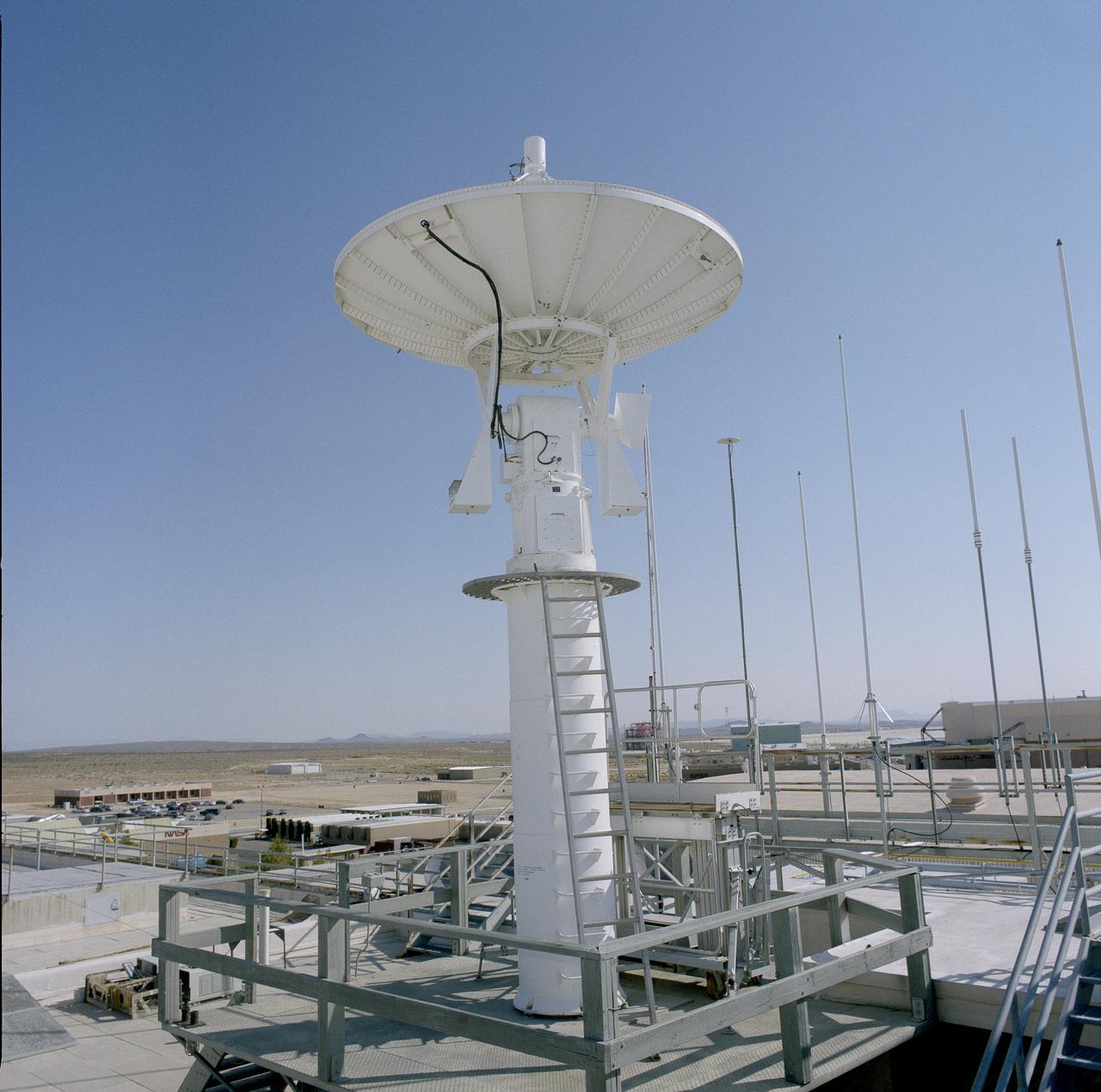
A rooftop pedestal and telemetry dish gathered information from research aircraft at Building 4800 at NASA’s Armstrong Flight Research Center in Edwards, California. The pedestal was used since the 1950s to 2015 to house different dishes to collect data from research aircraft. On Oct. 4, 2024, a helicopter was used to remove the pedestal from the roof.
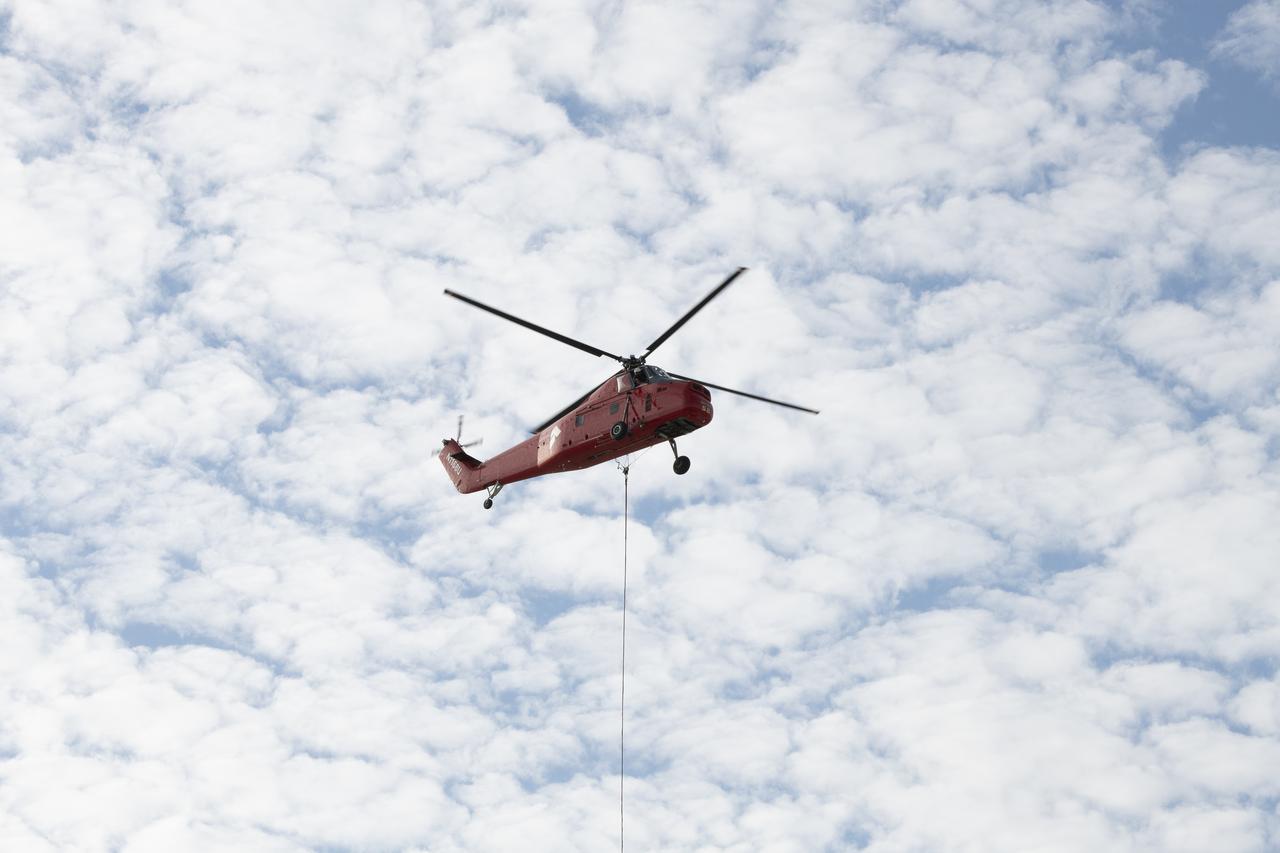
A helicopter is positioned to remove a rooftop pedestal from Building 4800 at NASA’s Armstrong Flight Research Center in Edwards, California, on Oct. 4, 2024. The pedestal was used since the 1950s to 2015 to house different telemetry dishes to collect data from research aircraft.
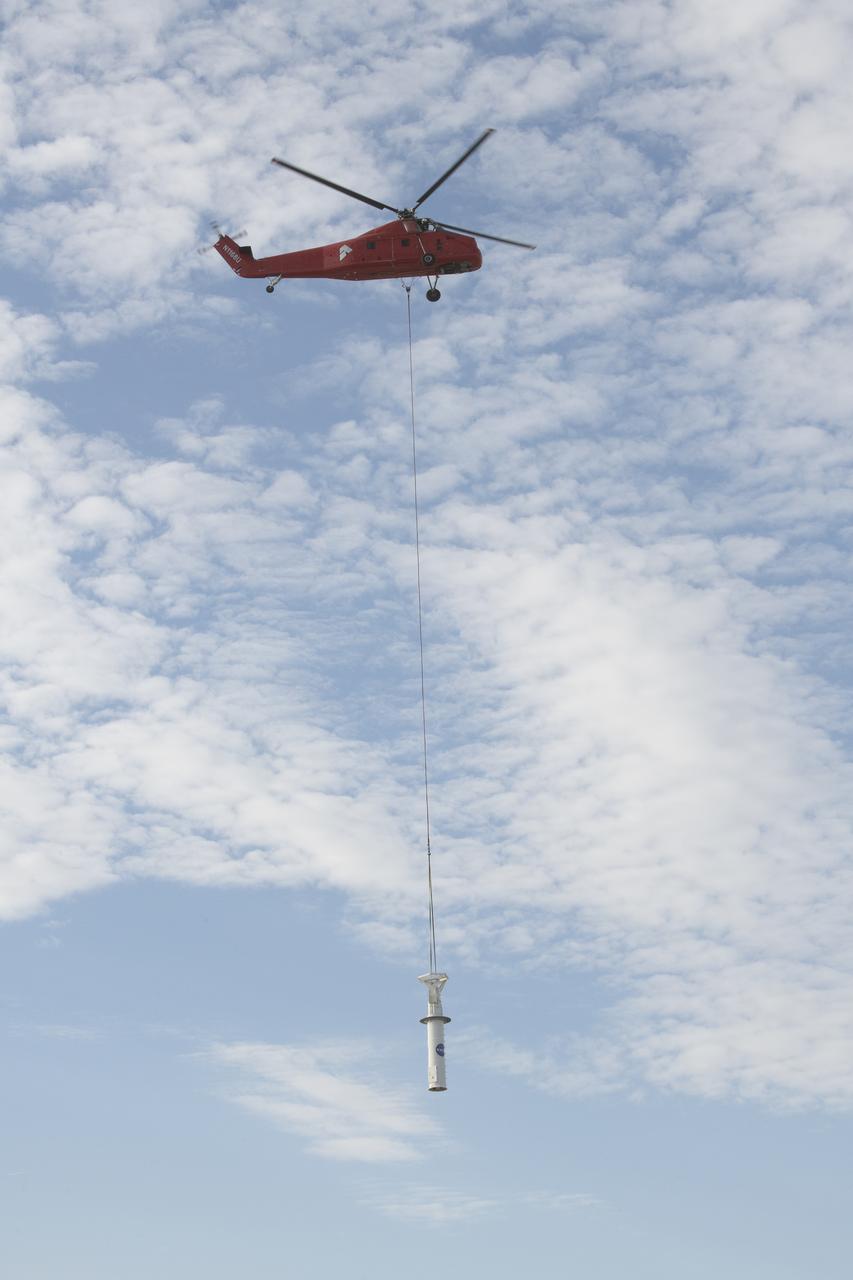
A helicopter carries a rooftop pedestal it removed from Building 4800 at NASA’s Armstrong Flight Research Center in Edwards, California, on Oct. 4, 2024. The pedestal was used since the 1950s to 2015 to house different telemetry dishes to collect data from research aircraft.
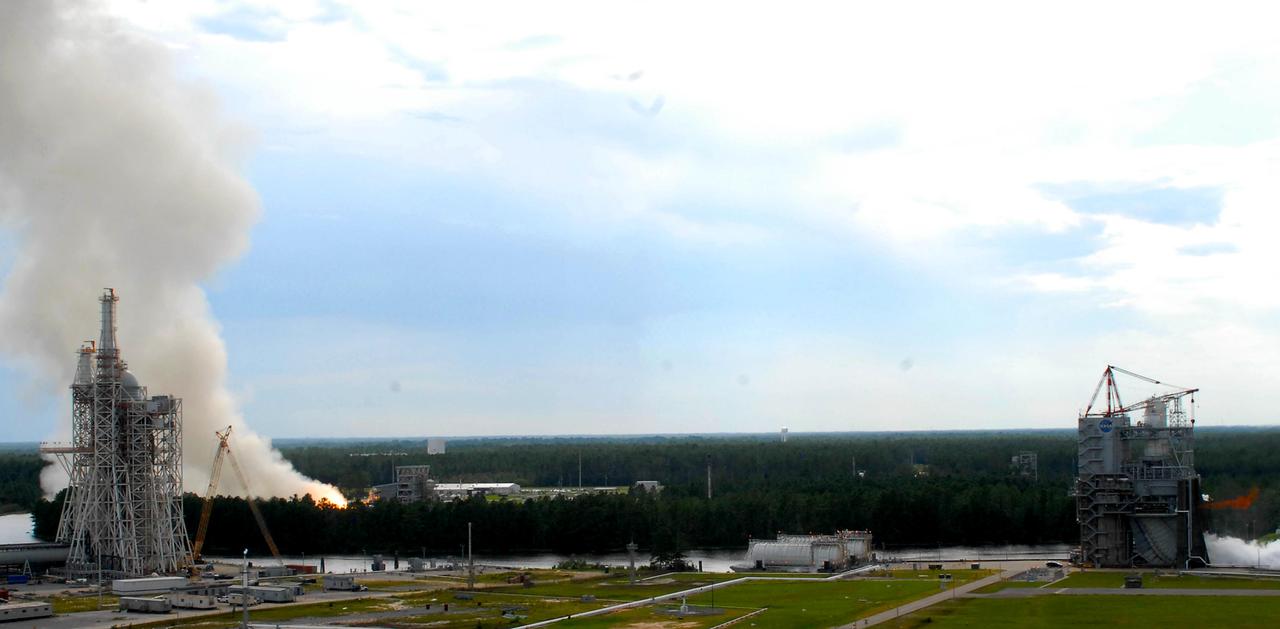
Two large-engine tests were conducted simultaneously for the first time at Stennis Space Center on Aug. 16. A plume on the left indicates a test on the facility's E-1 Test Stand. On the right, a finger of fire indicates a test under way on the A-1 Test Stand. In another first, both tests were conducted by female engineers. The image was taken from atop the facility's A-2 Test Stand, offering a panoramic view that includes the new A-3 Test Stand under construction to the left.
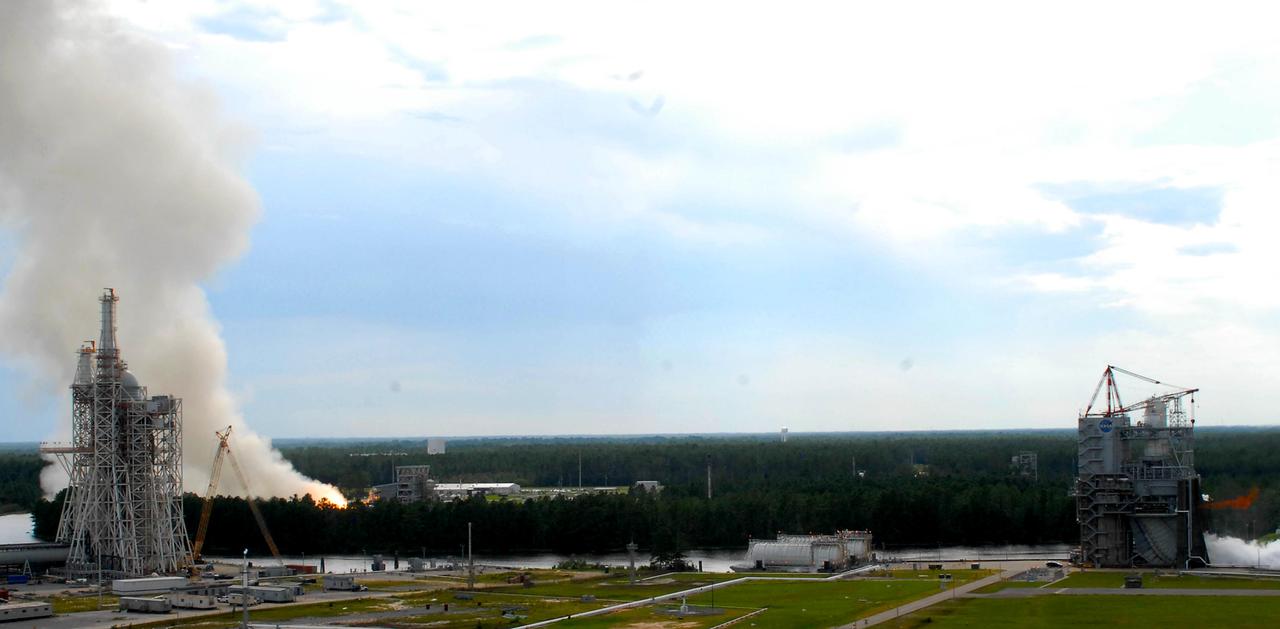
Two large-engine tests were conducted simultaneously for the first time at Stennis Space Center on Aug. 16. A plume on the left indicates a test on the facility's E-1 Test Stand. On the right, a finger of fire indicates a test under way on the A-1 Test Stand. In another first, both tests were conducted by female engineers. The image was taken from atop the facility's A-2 Test Stand, offering a panoramic view that includes the new A-3 Test Stand under construction to the left.
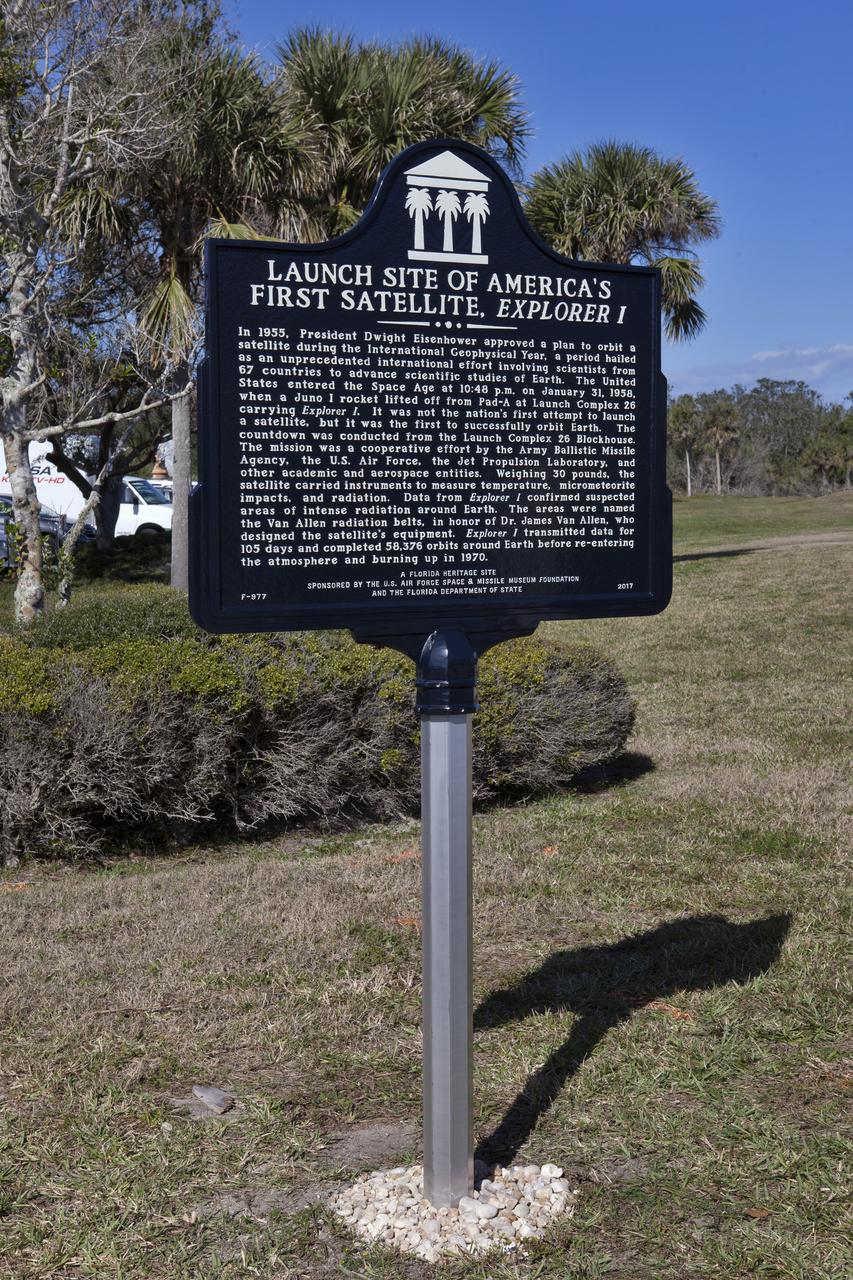
During a ceremony at Cape Canaveral Air Force Station's Space launch Complex 26 a historical marker has been unveiled noting the launch of America's first satellite, Explorer 1. The satellite was launched atop a Jupiter C rocket on Jan. 31, 1958. During operation, the satellite's cosmic ray detector discovered radiation belts around Earth which were named for Dr. James Van Allen, principal investigator for the satellite.
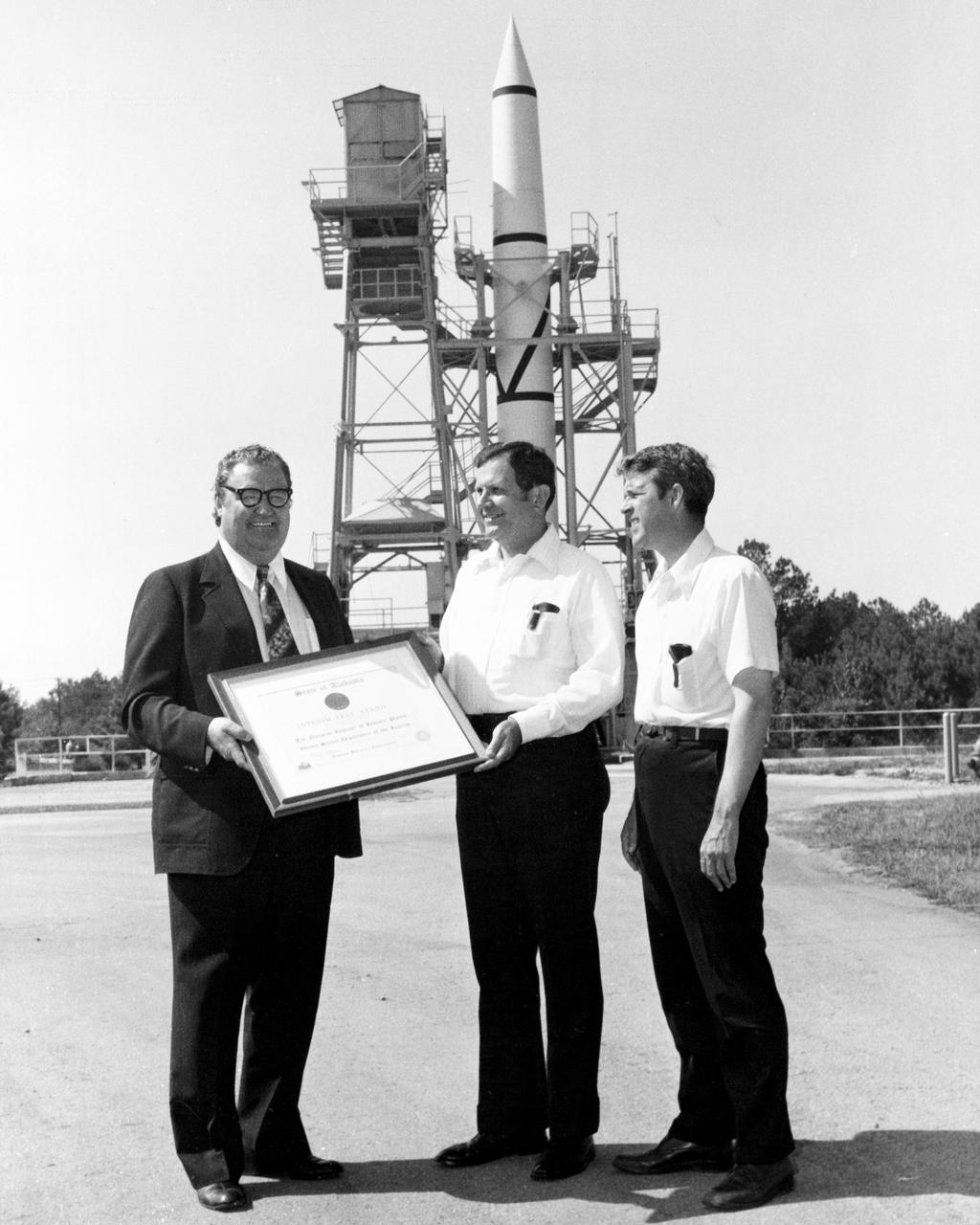
On October 02, 1976, Marshall Space Flight Center’s (MSFC) Redstone test stand was received into the National Registry of Historical Places. Photographed in front of the Redstone test stand are Dr. William R. Lucas, MSFC Center Director from June 15, 1974 until July 3, 1986, as he is accepting a certificate of registration from Madison County Commission Chairman James Record, and Huntsville architect Harvie Jones.
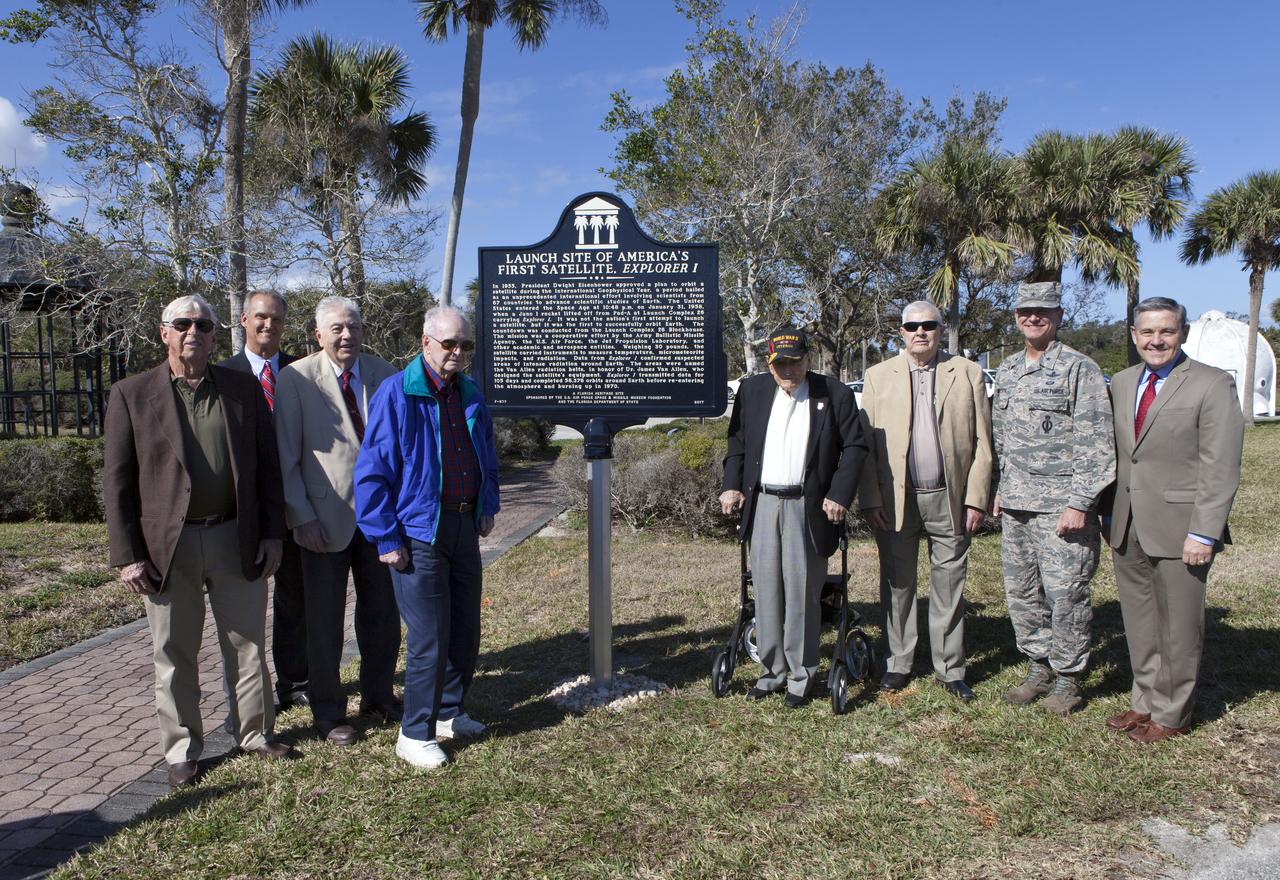
Launch team members who supported the launch of America's first satellite, Explorer 1, pose at a newly unveiled historical marker with Ray Sands, chairman of the Air Force Space and Missile Foundation -- sponsor of the marker, Brig. Gen. Wayne Monteith, 45th Space Wing commander and director of the Eastern Range, and Kennedy Space Center Director Bob Cabana. The event tool place at the site of the launch 60 years ago, Space Launch Complex 26 at Cape Canaveral Air Force Station.
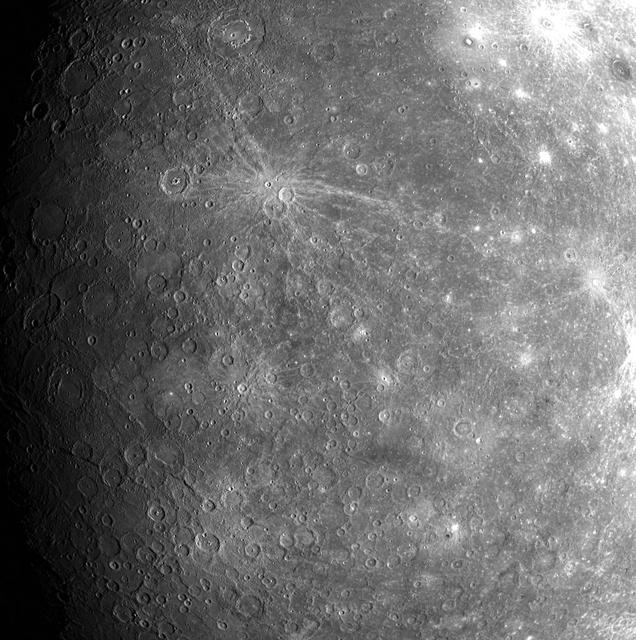
On January 14, 2008, NASA MESSENGER became the first spacecraft to see the side of Mercury shown in this image -- the historic first look at the previously unseen side.
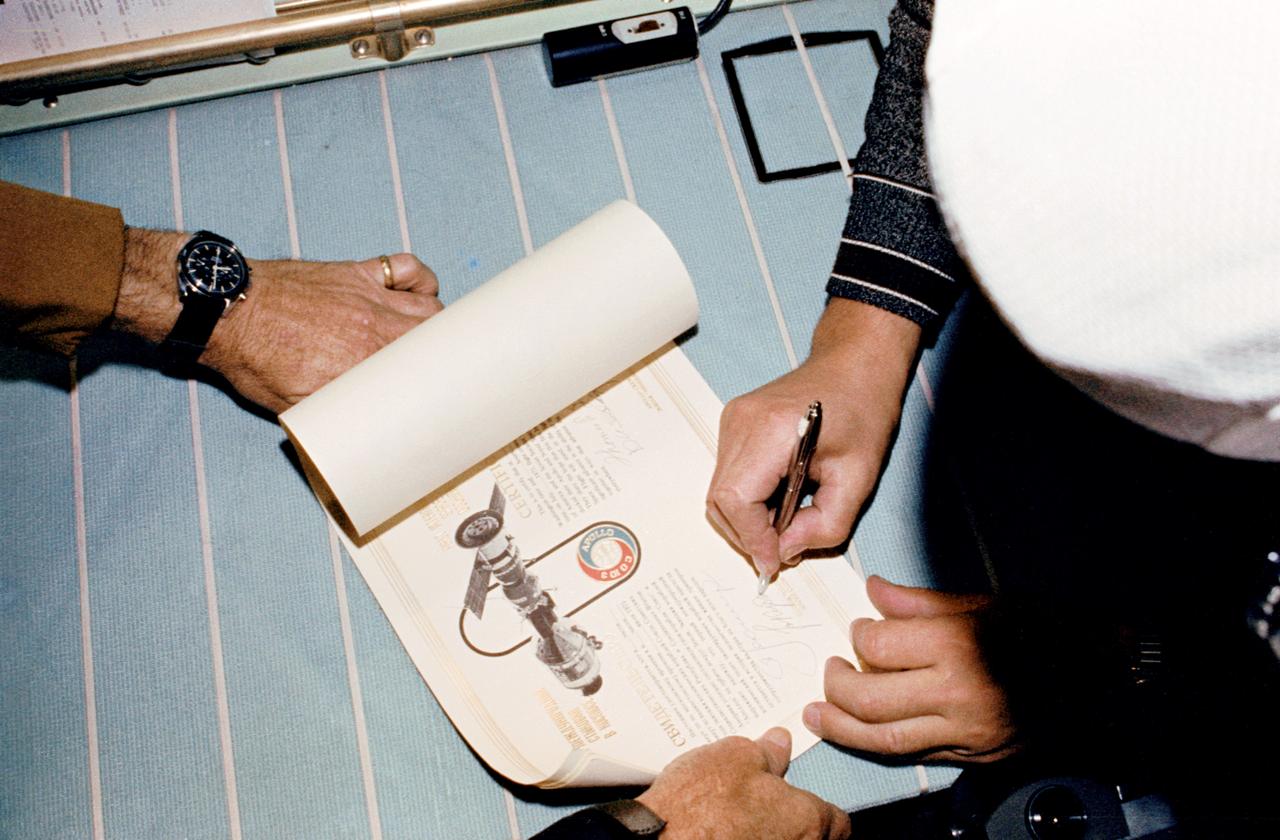
AST-03-171 (17 July 1975) --- The hands of cosmonaut Valerly N. Kubasov are seen as the ASTP engineer adds his name to the signature on the Soviet side of the official joint certificate marking an historical moment during the rendezvous day of the Apollo-Soyuz Test Project. The left hand of astronaut Donald K. Slayton, NASA's docking module pilot, is seen at left. The certificate had earlier been signed by astronauts Thomas P. Stafford, American crew commander; Slayton and cosmonaut Aleksey A. Leonov, Soviet crew commander, and it awaits the signature of astronaut Vance D. Brand, NASA's command module pilot who remained in the CM while the others signed in the Soviet Orbital Module of the Soyuz.

Veterans of the X-15 flight research program, most of them now retired, reunited at Dryden on the 40th anniversary of the last X-15 flight on Oct. 24, 1968 for a historical colloquium on the X-15 by noted aerospace historian and author Dennis Jenkins on Oct. 24, 2008. Gathered in front of the replica of X-15 #3 the were (from left) Johnny Armstrong, Betty Love, Paul Reukauf, Bob Hoey, Dave Stoddard, Dean Webb, Vince Capasso, Bill Dana (who flew the last flight), John McTigue and T.D. Barnes. Jenkins, the author of "X-15: Extending the Frontiers of Flight," maintained during his presentation that despite setbacks, the X-15 program became the most successful of all the X-plane research programs due to the can-do, fix-the-problem and go-fly-again attitude of the X-15's cadre of engineers and technicians.

This image was taken by GOES East at 1445Z on October 23, 2015. Credit: NASA/NOAA via <b><a href="www.nnvl.noaa.gov/" rel="nofollow"> NOAA Environmental Visualization Laboratory</a></b> <b><a href="http://www.nasa.gov/audience/formedia/features/MP_Photo_Guidelines.html" rel="nofollow">NASA image use policy.</a></b> <b><a href="http://www.nasa.gov/centers/goddard/home/index.html" rel="nofollow">NASA Goddard Space Flight Center</a></b> enables NASA’s mission through four scientific endeavors: Earth Science, Heliophysics, Solar System Exploration, and Astrophysics. Goddard plays a leading role in NASA’s accomplishments by contributing compelling scientific knowledge to advance the Agency’s mission. <b>Follow us on <a href="http://twitter.com/NASAGoddardPix" rel="nofollow">Twitter</a></b> <b>Like us on <a href="http://www.facebook.com/pages/Greenbelt-MD/NASA-Goddard/395013845897?ref=tsd" rel="nofollow">Facebook</a></b> <b>Find us on <a href="http://instagrid.me/nasagoddard/?vm=grid" rel="nofollow">Instagram</a></b>
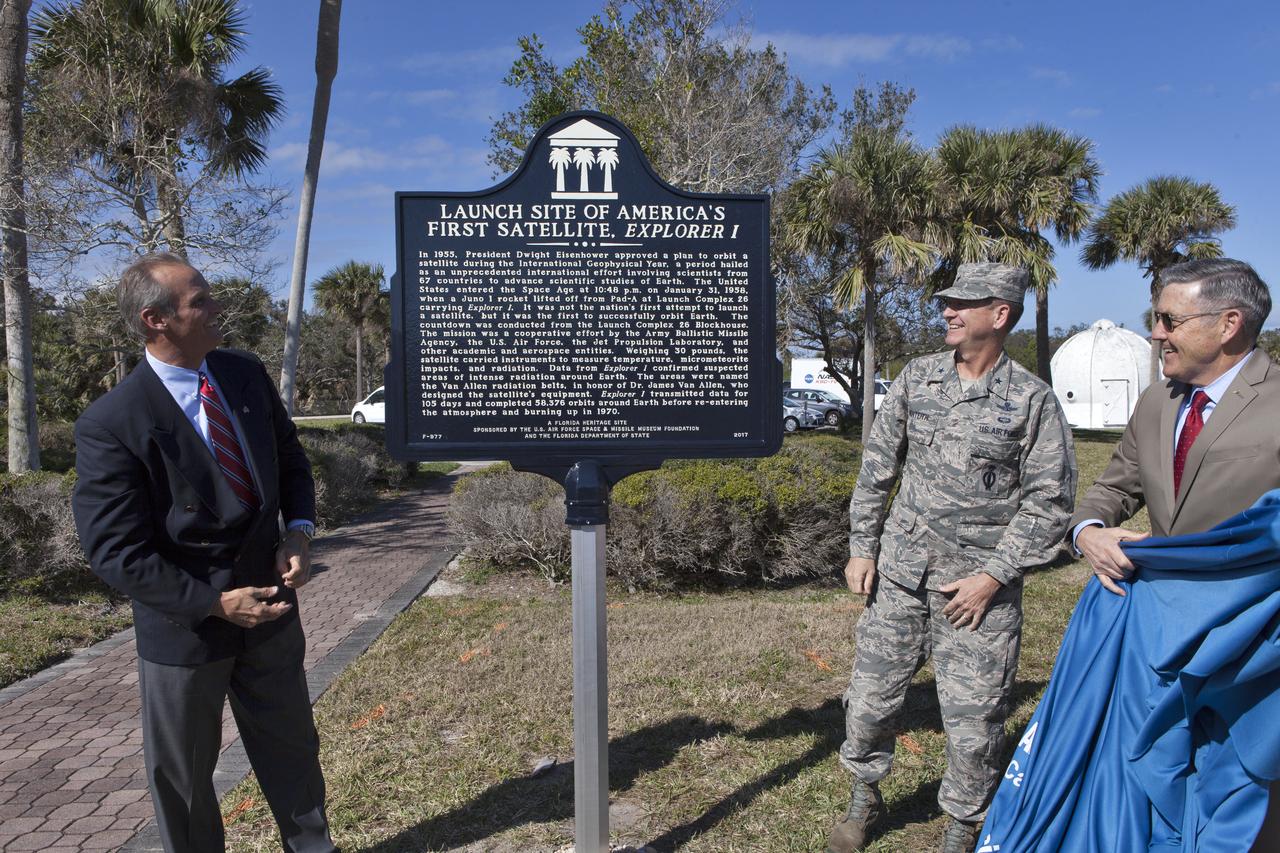
During a ceremony at Cape Canaveral Air Force Station's Space Launch Complex 26 a historical marker is unveiled noting the launch of America's first satellite, Explorer 1. From the left, Ray Sands, chairman of the Air Force Space and Missile Foundation -- sponsor of the marker, Brig. Gen. Wayne Monteith, 45th Space Wing commander and director of the Eastern Range and Kennedy Space Center Director Bob Cabana. The Explorer 1 satellite was launched atop a Jupiter C rocket on Jan. 31, 1958. During operation, the satellite's cosmic ray detector discovered radiation belts around Earth which were named for Dr. James Van Allen, principal investigator for the satellite.
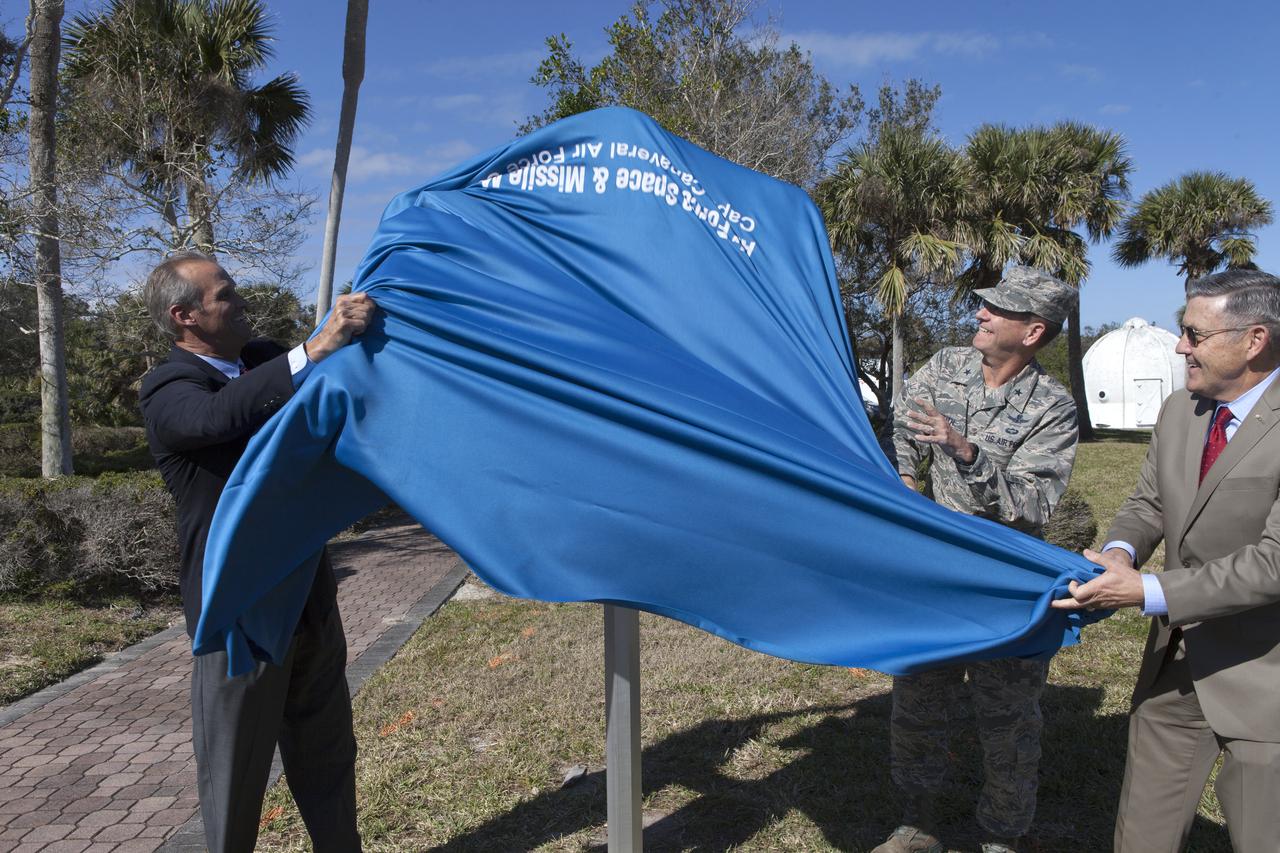
During a ceremony at Cape Canaveral Air Force Station's Space Launch Complex 26 a historical marker is unveiled noting the launch of America's first satellite, Explorer 1. From the left, Ray Sands, chairman of the Air Force Space and Missile Foundation -- sponsor of the marker, Brig. Gen. Wayne Monteith, 45th Space Wing commander and director of the Eastern Range and Kennedy Space Center Director Bob Cabana. The Explorer 1 satellite was launched atop a Jupiter C rocket on Jan. 31, 1958. During operation, the satellite's cosmic ray detector discovered radiation belts around Earth which were named for Dr. James Van Allen, principal investigator for the satellite.

The instrument enclosure of NASA's Near-Earth Object Surveyor is prepared for critical environmental tests inside the historic Chamber A at the Space Environment Simulation Laboratory at the agency's Johnson Space Center in Houston in December 2024. Wrapped in silver thermal blanketing, the 12-foot-long (3.7-meter-long) angular structure was subjected to the frigid, airless conditions that the spacecraft will experience when in deep space. The cavernous thermal-vacuum test facility is famous for testing the Apollo spacecraft that traveled to the Moon in the 1960s and '70s. The instrument enclosure is designed to protect the spacecraft's infrared telescope while also removing heat from it during operations. After environmental testing was completed, the enclosure returned to NASA's Jet Propulsion Laboratory in Southern California for further work, after which it will ship to the Space Dynamics Laboratory (SDL) in Logan, Utah, and be joined to the telescope. Both the instrument enclosure and telescope were assembled at JPL. As NASA's first space-based detection mission specifically designed for planetary defense, NEO Surveyor will seek out, measure, and characterize the hardest-to-find asteroids and comets that might pose a hazard to Earth. While many near-Earth objects don't reflect much visible light, they glow brightly in infrared light due to heating by the Sun. The spacecraft's telescope, which has an aperture of nearly 20 inches (50 centimeters), features detectors sensitive to two infrared wavelengths in which near-Earth objects re-radiate solar heat. Targeting launch in late 2027, the NEO Surveyor mission is led by Prof. Amy Mainzer at UCLA for NASA's Planetary Defense Coordination Office and is being managed by JPL for the Planetary Missions Program Office at NASA's Marshall Space Flight Center in Huntsville, Alabama. BAE Systems, SDL, and Teledyne are among the companies that were contracted to build the spacecraft and its instrumentation. The Laboratory for Atmospheric and Space Physics at the University of Colorado Boulder will support operations, and Caltech/IPAC in Pasadena, California, is responsible for producing some of the mission's data products. Caltech manages JPL for NASA. https://photojournal.jpl.nasa.gov/catalog/PIA26583
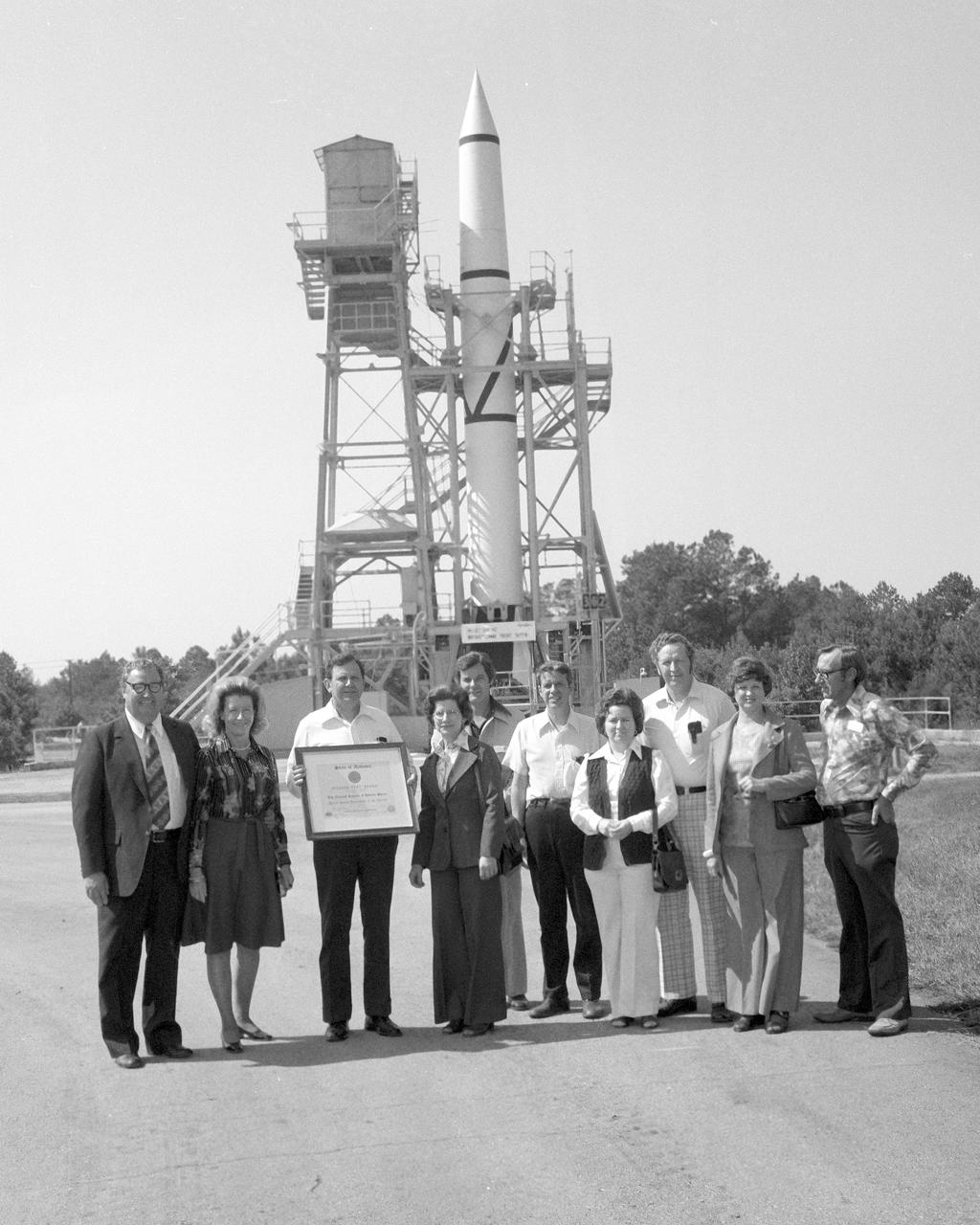
On October 02, 1976, Marshall Space Flight Center’s (MSFC) Redstone test stand was received into the National Registry of Historical Places. Photographed in front of the Redstone test stand along with their wives are (left to right), Madison County Commission Chairman James Record, Dr. William R. Lucas, MSFC Center Director from June 15, 1974 until July 3, 1986, (holding certificate), Ed, Buckbee, Space and Rocket Center Director; Harvie Jones, Huntsville Architect; Dick Smith; and Joe Jones.
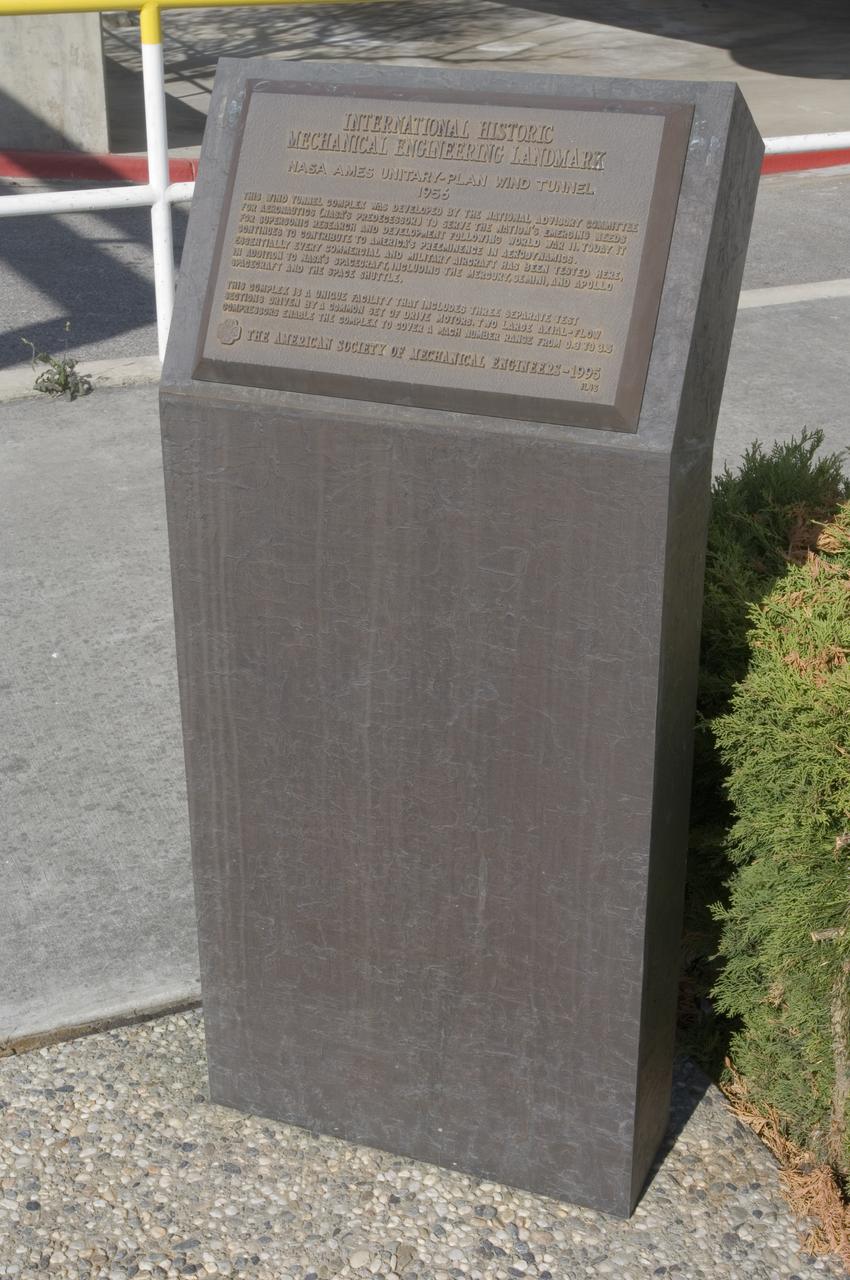
Ames and Moffett Field (MFA) historical sites and memorials Unitary Plan Wind Tunned plaza; display and historical site plaques with the NASA logo on the Wind Tunnel valve as a backdrop. shown is the Unitary International Historic Mechanical Engineering Landmark Dedication plaque (American Society of Mechanical Engineers) May 5, 1995
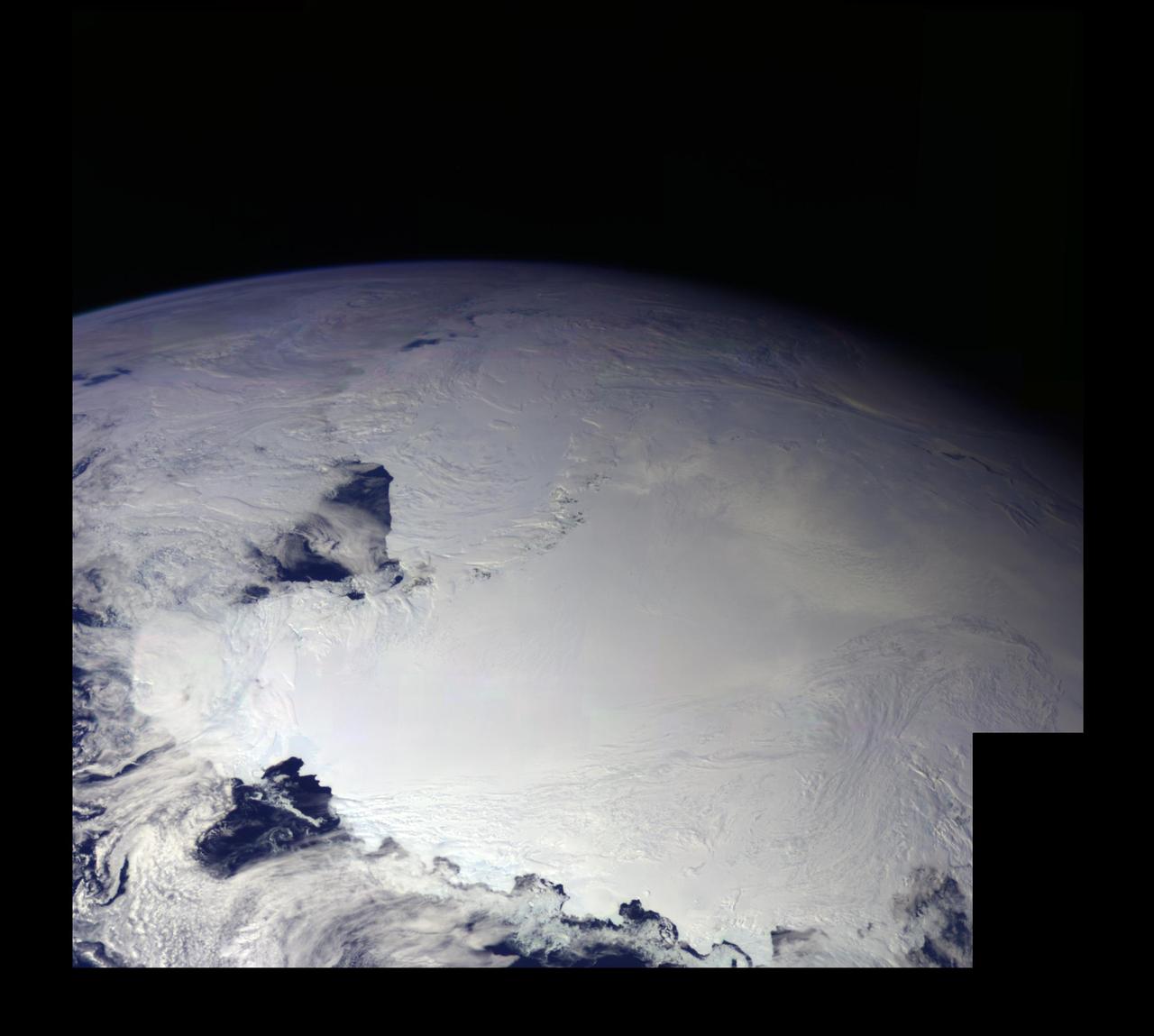
This color picture of Antarctica is one part of a mosaic of pictures covering the entire Antarctic continent taken during the hours following NASA's Galileo historic first encounter with its home planet. http://photojournal.jpl.nasa.gov/catalog/PIA00117
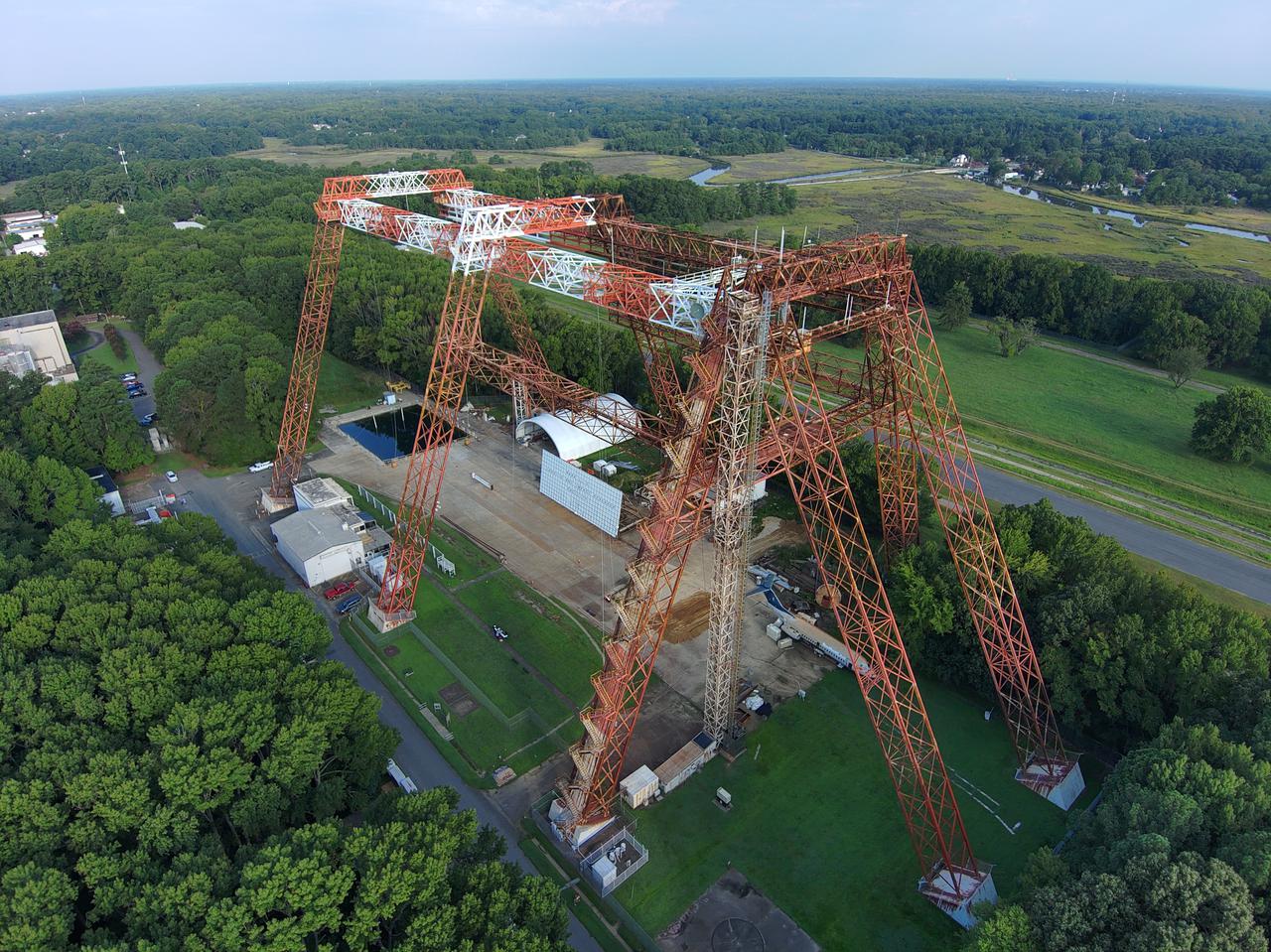
Langley’s historic Impact Dynamics Facility for full-scale aircraft crash testing stands on the western corner of the NASA Langley campus. In its original configuration, the “gantry” was used to train the Mercury 7
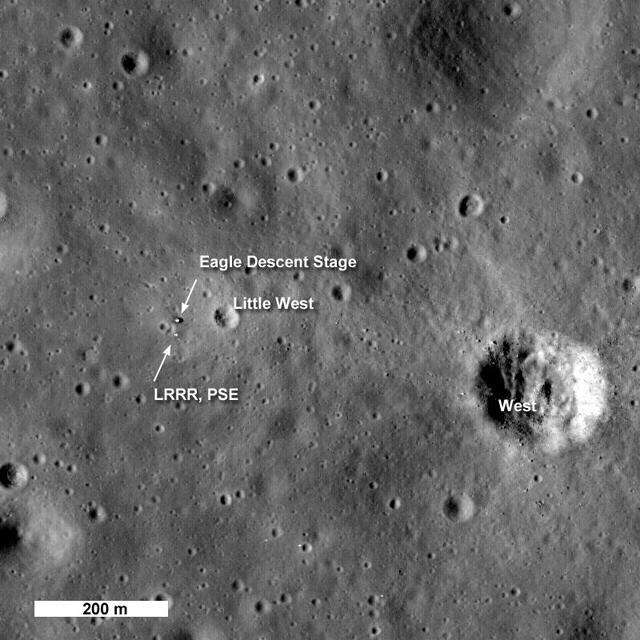
One month after its first image of the Apollo 11 landing site was acquired, NASA Lunar Reconnaissance Orbiter passed over the site again providing a new view of the historic site.
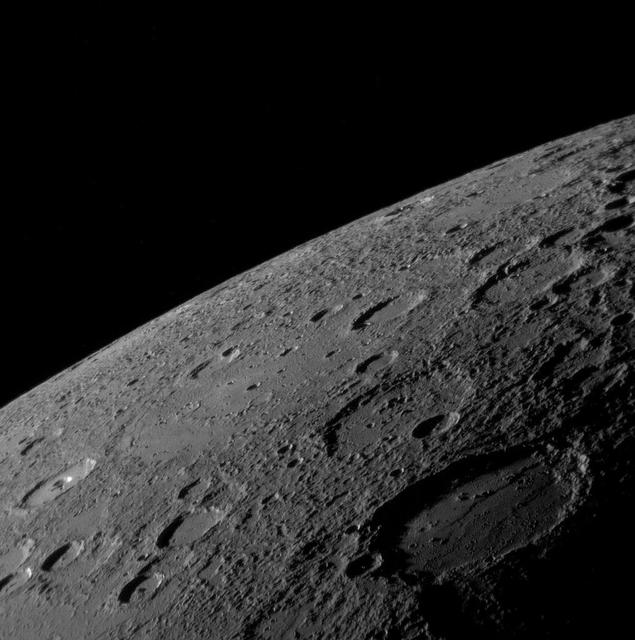
As NASA MESSENGER spacecraft drew closer to Mercury for its historic first flyby, the spacecraft Narrow Angle Camera NAC on the Mercury Dual Imaging System MDIS acquired an image mosaic of the sunlit portion of the planet.

This space radar image shows the area surrounding the Dead Sea along the West Bank between Israel and Jordan. This region is of major cultural and historical importance to millions of Muslims, Jews and Christians who consider it the Holy Land.

Two satellite images acquired by NASA Terra spacecraft, obtained about 10 years apart, clearly illustrate the effects of the near-historic drought conditions in southwestern Kansas. Farmers are among the hardest hit.

The world largest solar power tower recently began operating outside Seville, Spain -- and it marks a historic moment in the saga of renewable energy. This image was acquired by NASA Terra spacecraft.
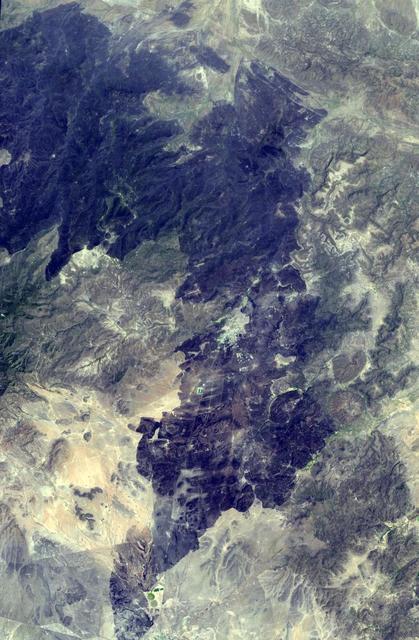
This image, acquired by NASA Terra spacecraft on May 1, 2011, shows more than 314,000 acres burned in west Texas. The 2011 fire season in Texas is of historic proportions.
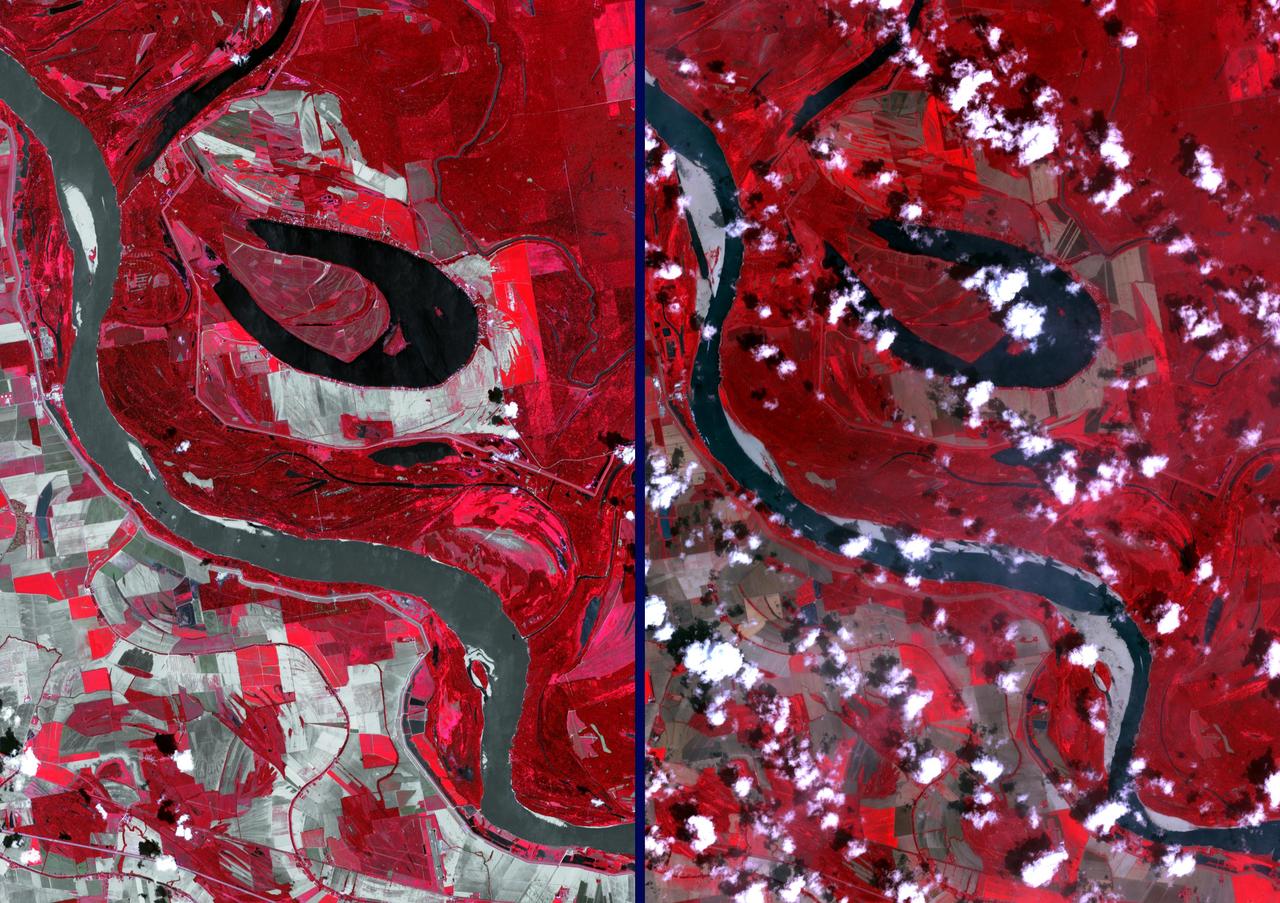
NASA Terra spacecraft acquired this image on Aug. 24, 2012, 13 miles 20 kilometers north of Vicksburg, Miss., as drought continued to afflict the U.S. Midwest, water levels of the Mississippi River approached historic lows.
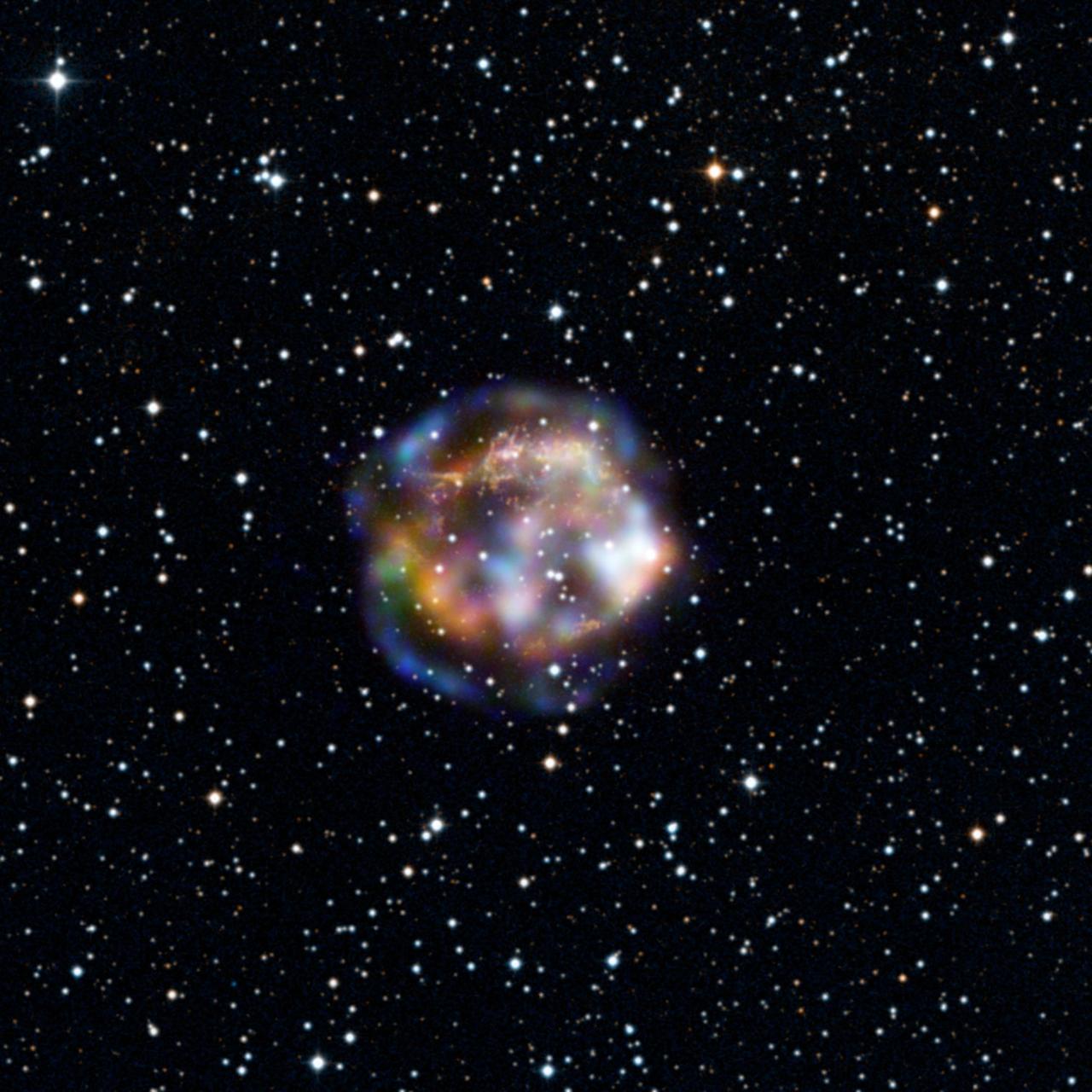
This new view of the historical supernova remnant Cassiopeia A, located 11,000 light-years away, was taken by NASA Nuclear Spectroscopic Telescope Array, or NuSTAR. While the star is long dead, its remains are still bursting with action.
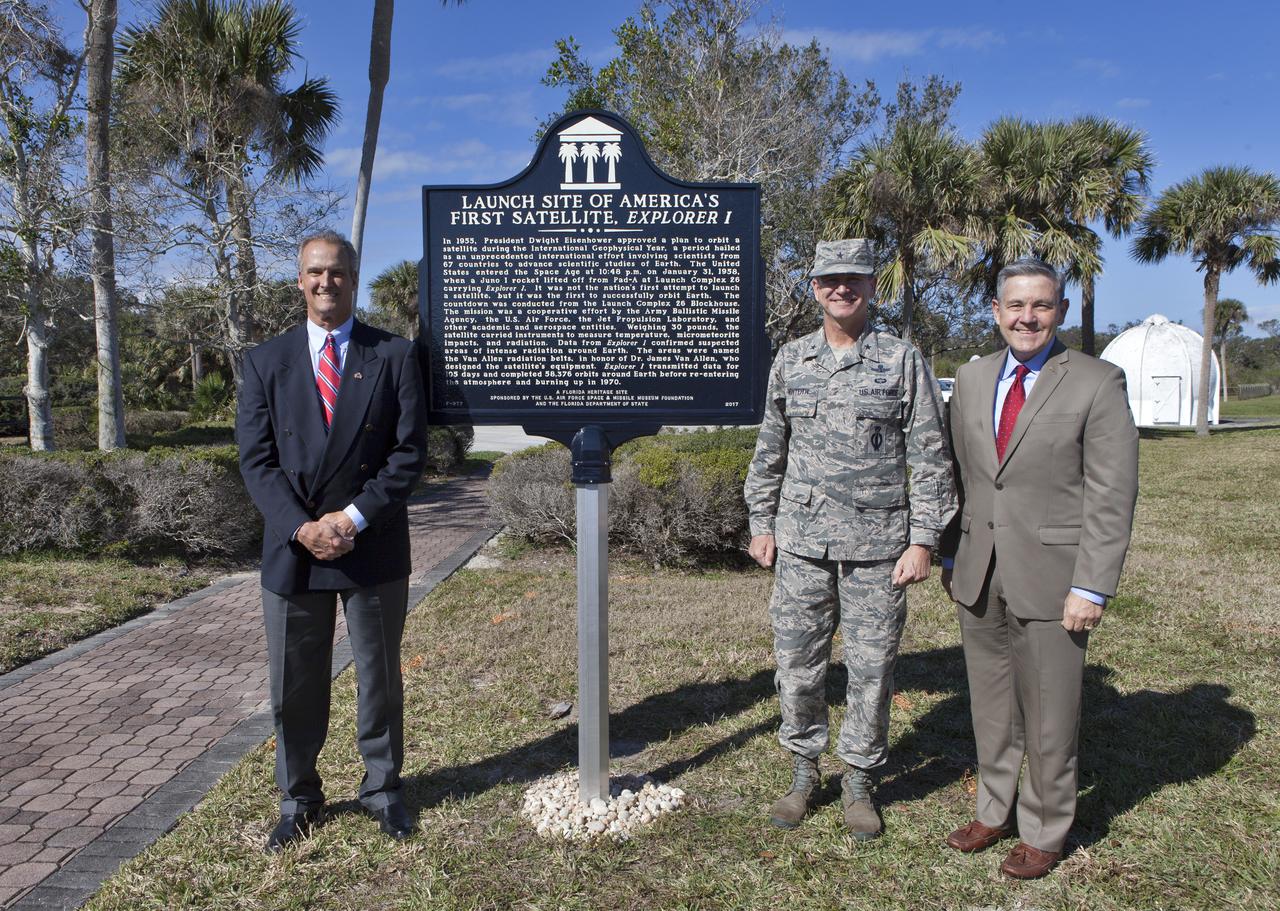
During a ceremony at Cape Canaveral Air Force Station's Space Launch Complex 26 a historical marker has been unveiled noting the launch of America's first satellite, Explorer 1. From the left, Ray Sands, chairman of the Air Force Space and Missile Foundation -- sponsor of the marker, Brig. Gen. Wayne Monteith, 45th Space Wing commander and director of the Eastern Range and Kennedy Space Center Director Bob Cabana. The Explorer 1 satellite was launched atop a Jupiter C rocket on Jan. 31, 1958. During operation, the satellite's cosmic ray detector discovered radiation belts around Earth which were named for Dr. James Van Allen, principal investigator for the satellite.

Ames and Moffett Field (MFA) historical sites and memorials Unitary Plan Wind Tunned plaza; display and historical site plaques with the NASA logo on the Wind Tunnel valve as a backdrop.
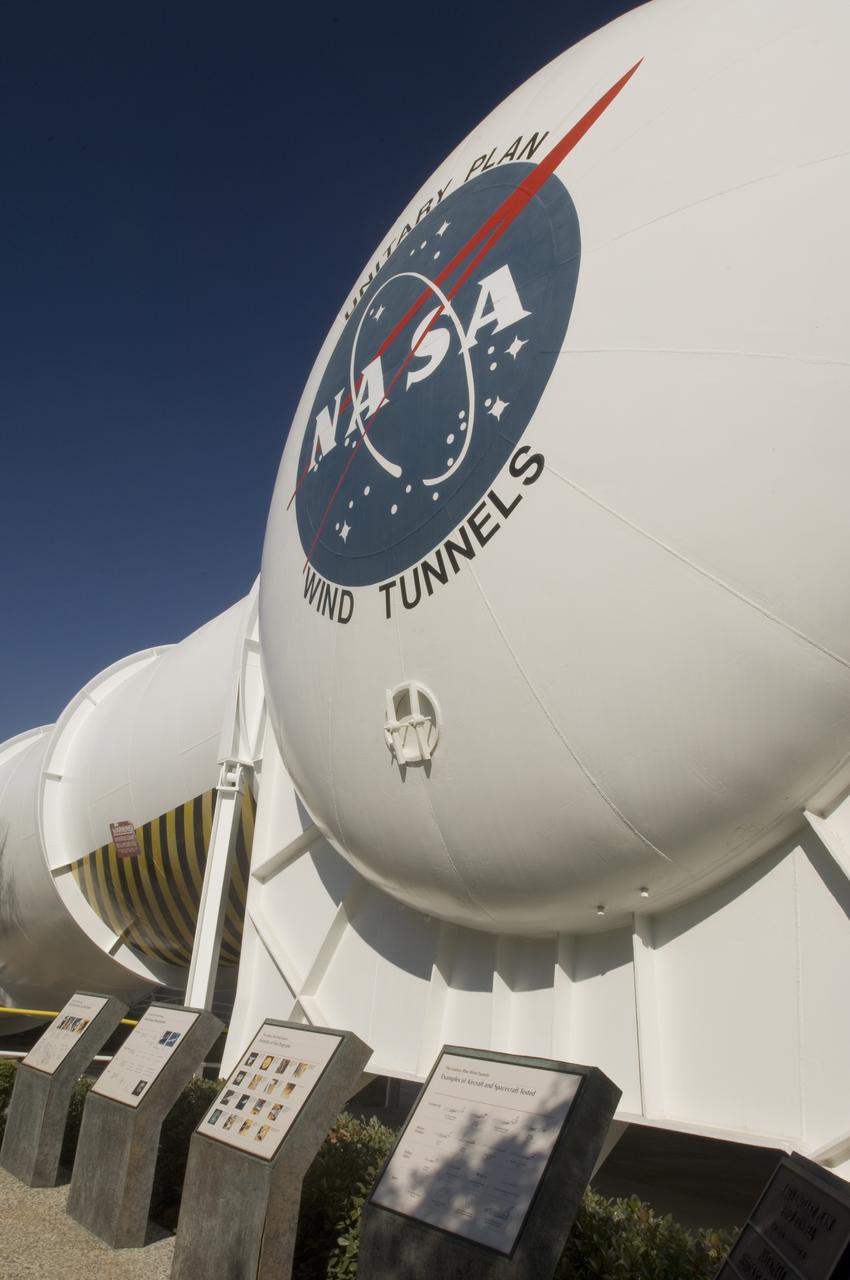
Ames and Moffett Field (MFA) historical sites and memorials Unitary Plan Wind Tunned plaza; display and historical site plaques with the NASA logo on the Wind Tunnel valve as a backdrop.
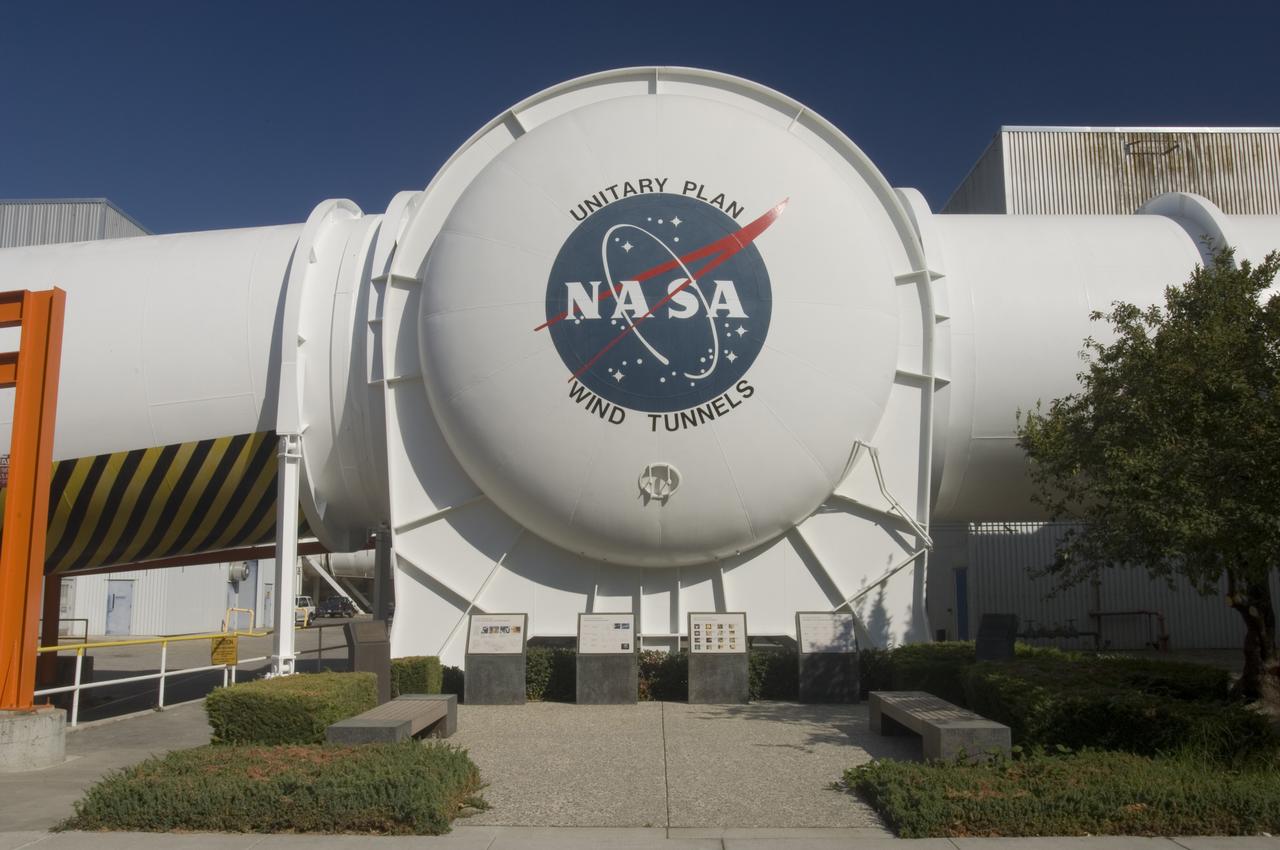
Ames and Moffett Field (MFA) historical sites and memorials Unitary Plan Wind Tunned plaza; display and historical site plaques with the NASA logo on the Wind Tunnel valve as a backdrop.
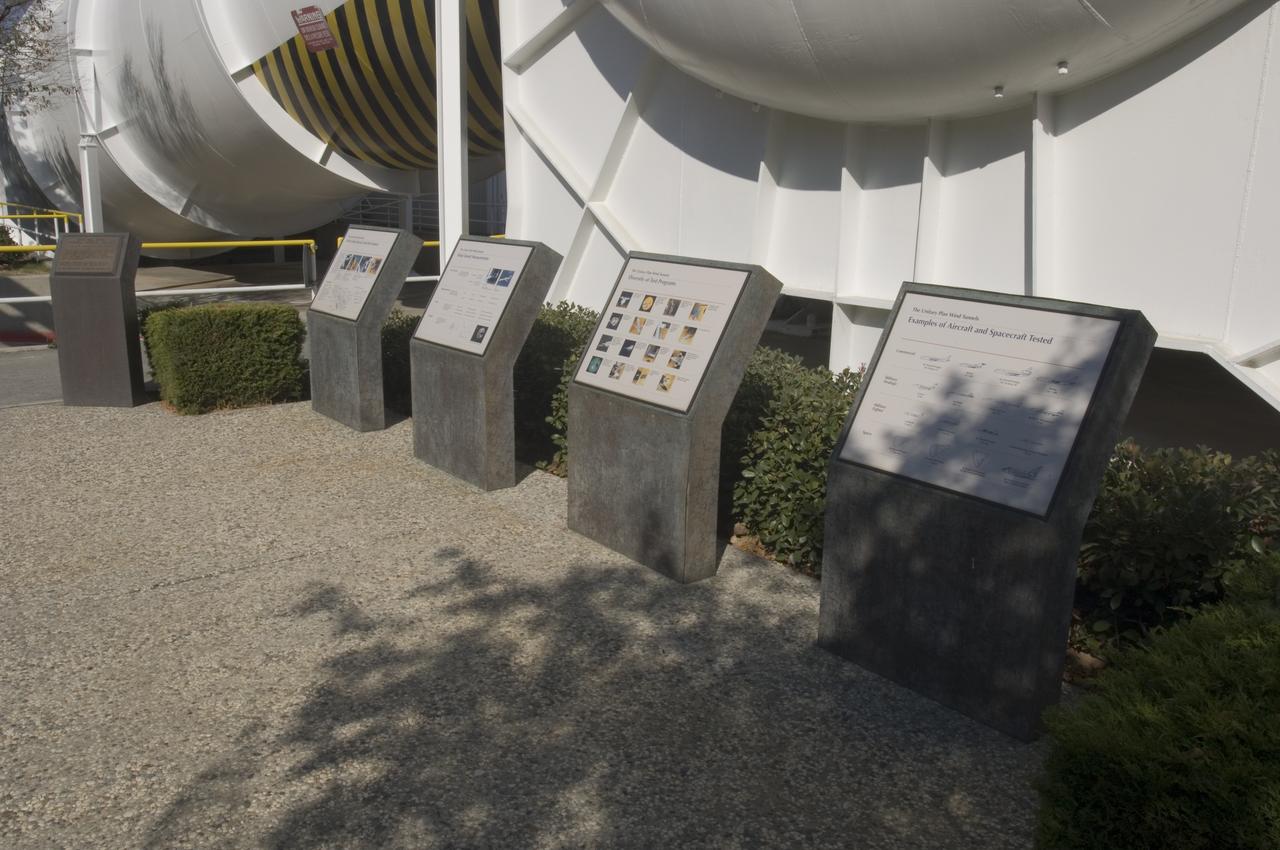
Ames and Moffett Field (MFA) historical sites and memorials Unitary Plan Wind Tunned plaza; display and historical site plaques with the NASA logo on the Wind Tunnel valve as a backdrop.
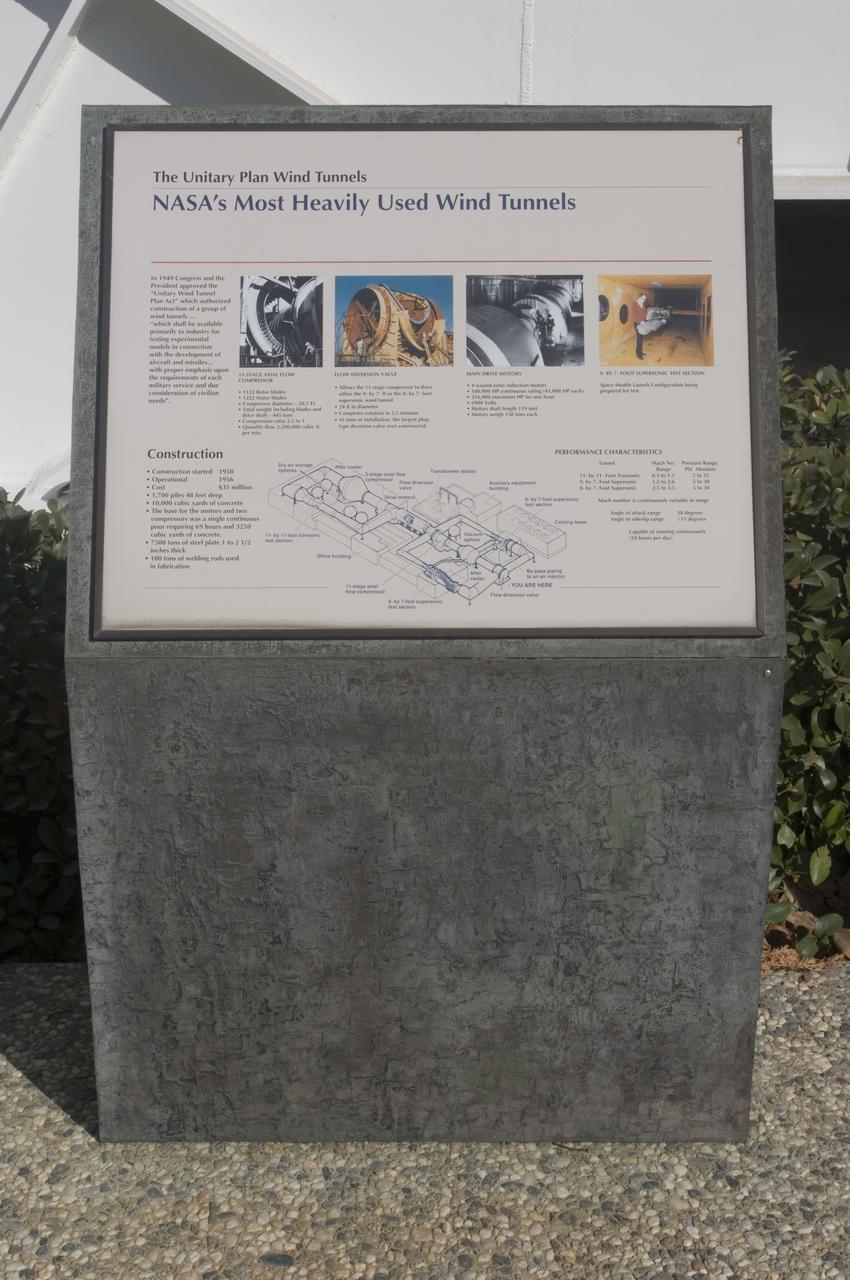
Ames and Moffett Field (MFA) historical sites and memorials Unitary Plan Wind Tunned plaza; display and historical site plaques with the NASA logo on the Wind Tunnel valve as a backdrop.
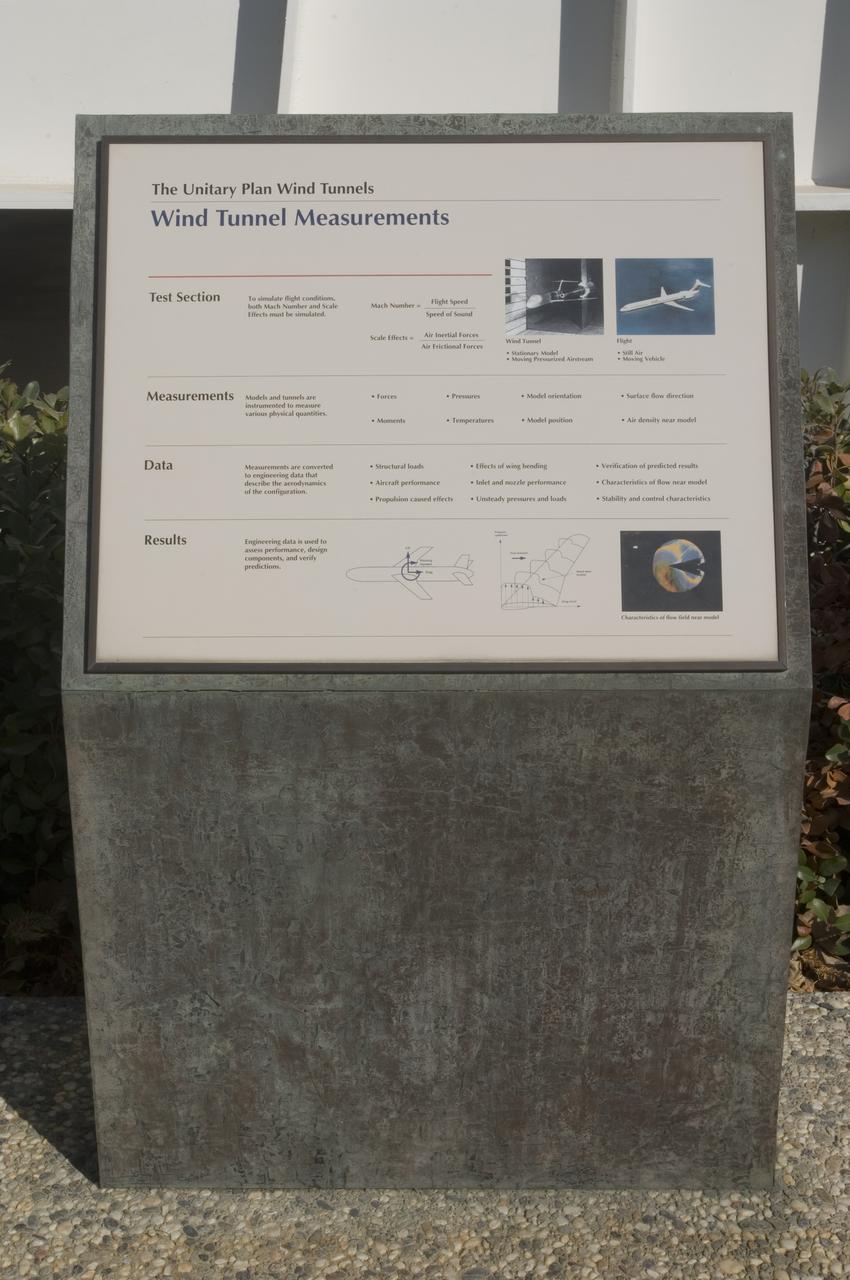
Ames and Moffett Field (MFA) historical sites and memorials Unitary Plan Wind Tunned plaza; display and historical site plaques with the NASA logo on the Wind Tunnel valve as a backdrop.
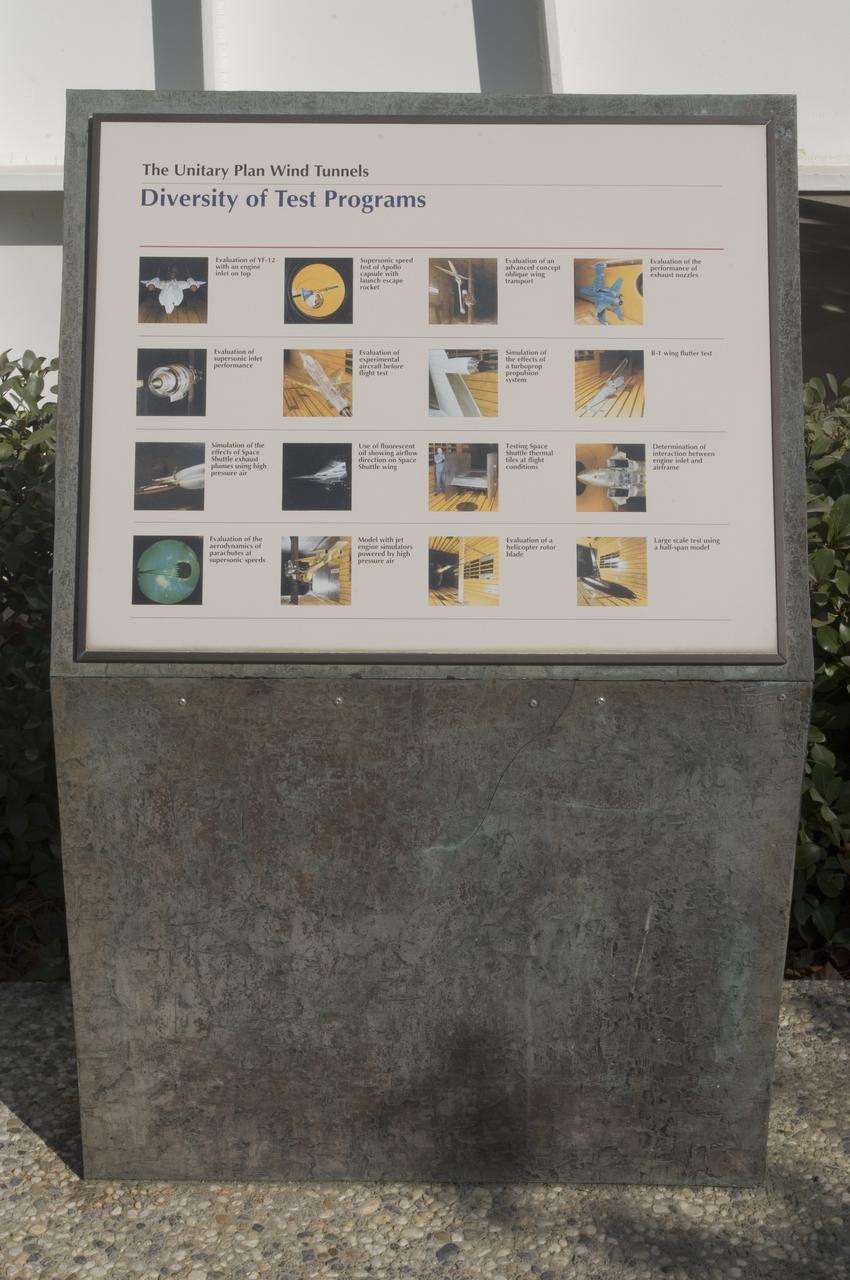
Ames and Moffett Field (MFA) historical sites and memorials Unitary Plan Wind Tunned plaza; display and historical site plaques with the NASA logo on the Wind Tunnel valve as a backdrop.
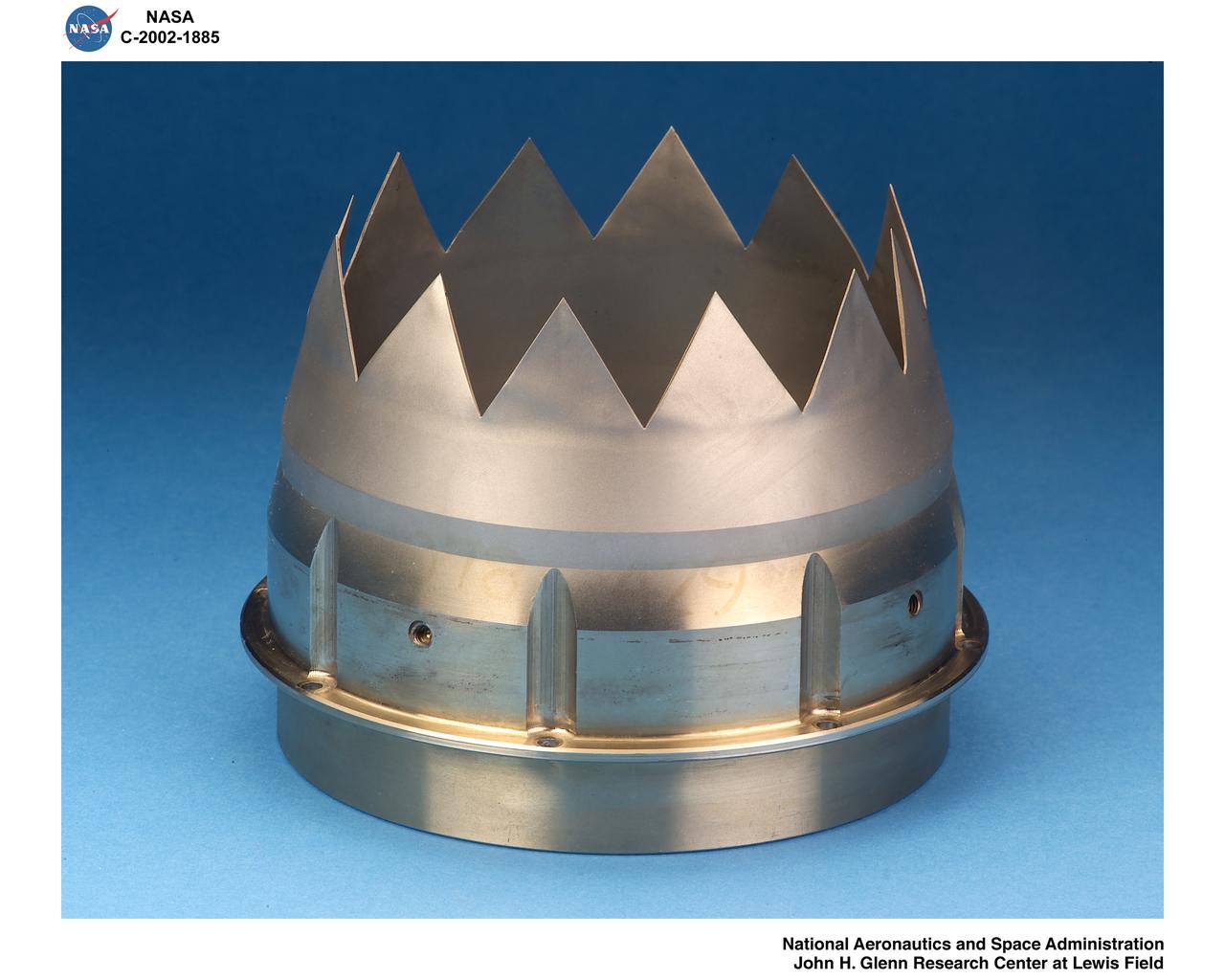
HISTORIC AERONAUTICS ARTIFACTS, CHEVRON NOZZLE
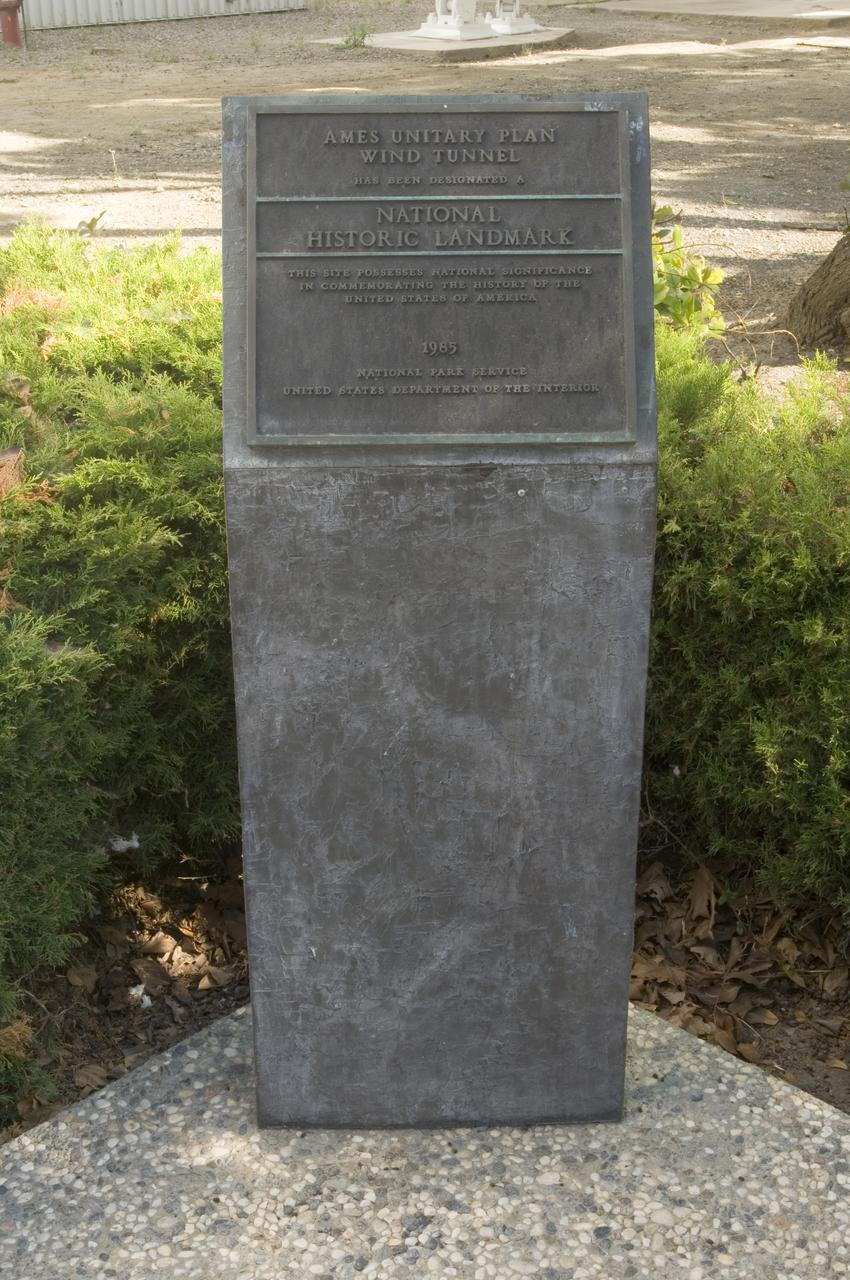
Ames and Moffett Field (MFA) historical sites and memorials Unitary Plan Wind Tunned plaza; display and historical site plaques with the NASA logo on the Wind Tunnel valve as a backdrop. Plaque depicts that Ames Unitary Plan Wind Tunnel has been designated a National Historic Landmark by the National Park Service, United States Department of the Interior 1985 The plaque reads; This site possesses national significance in commemorating the history of the United States of America. That ceremony took place on September 12, 1990
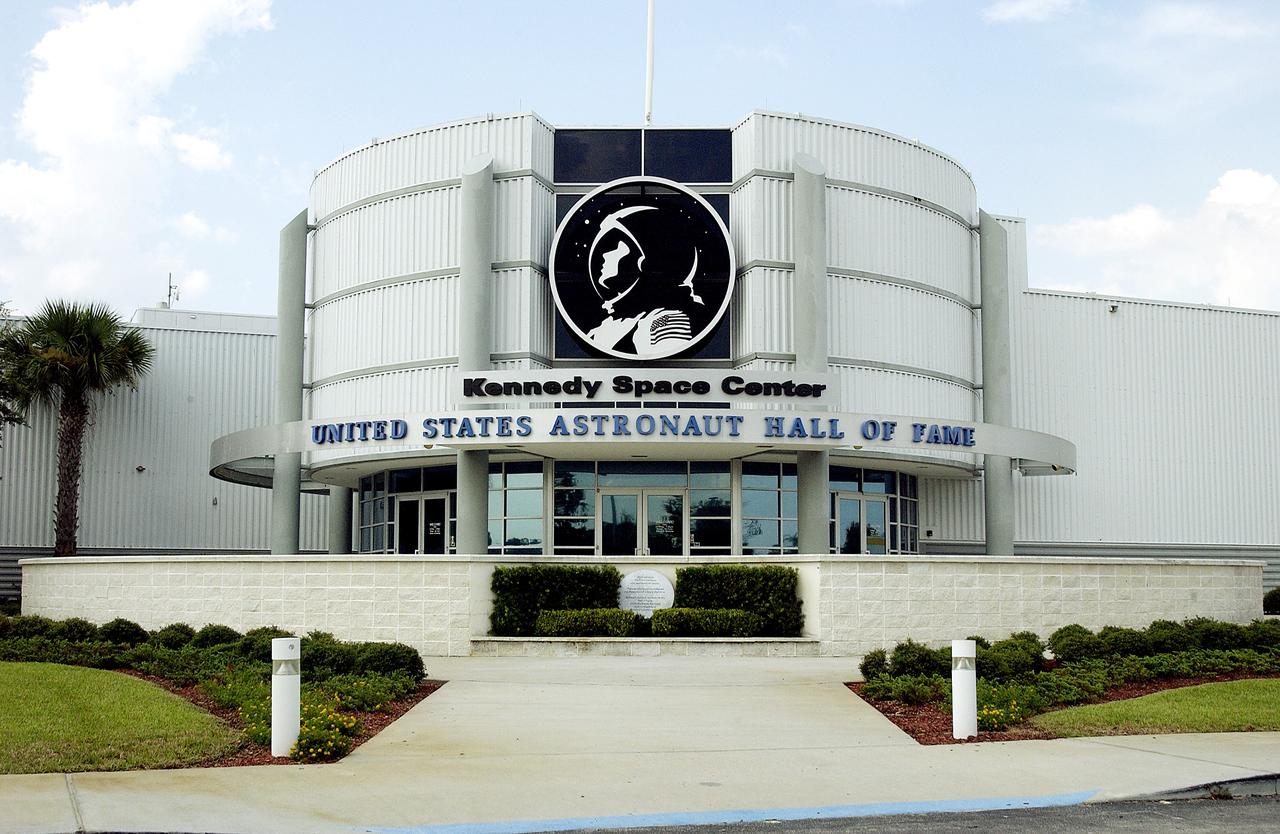
KENNEDY SPACE CENTER, FLA. The Astronaut Hall of Fame is dedicated to telling the stories of America’s astronauts. It features the world’s largest collection of personal astronaut mementos plus historic spacecrafts and training simulators. The Hall of Fame is part of the KSC Visitor Complex.
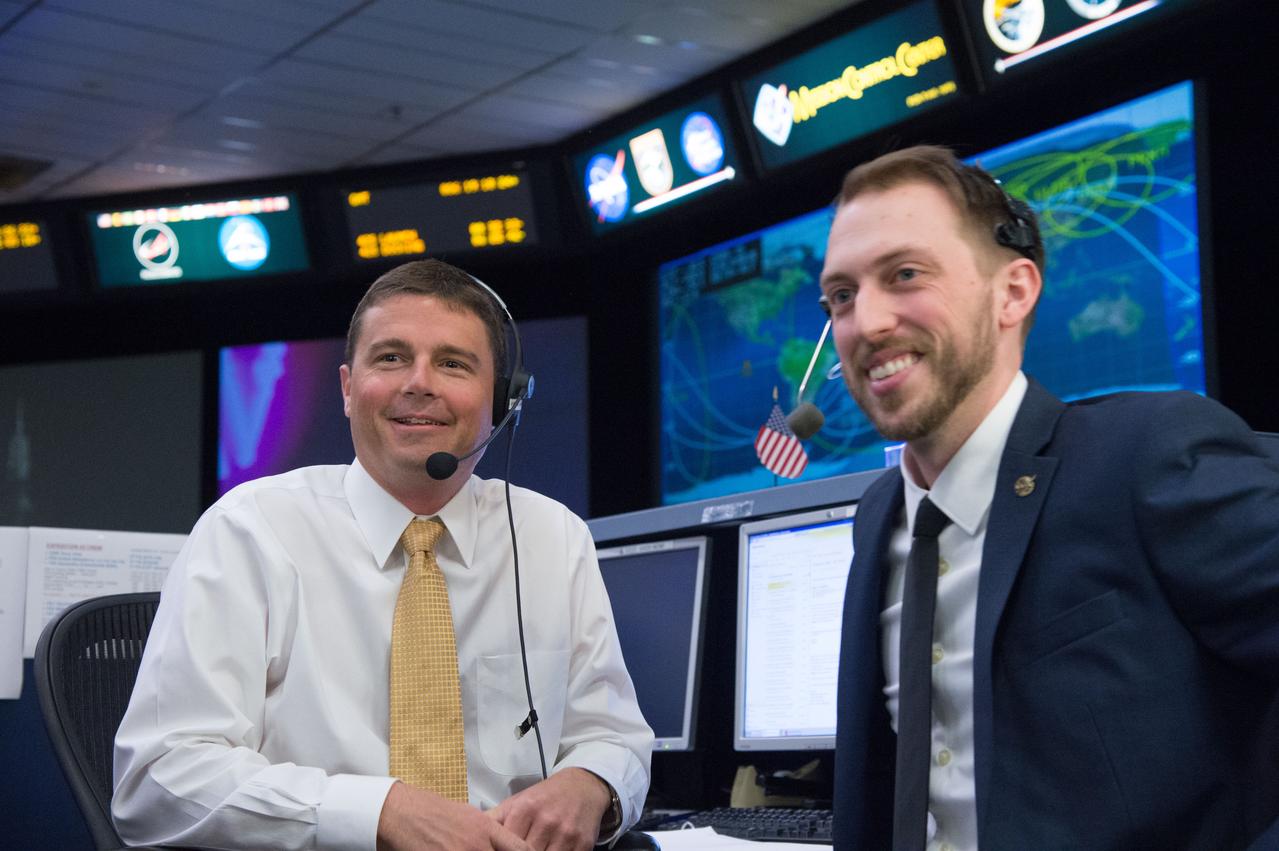
DATE: 3-27-15 LOCATION: Building 30 - ISS FCR-1 SUBJECT: Flight controllers during the launch of Scott Kelly and Cosmonaut Mikhail Kornienko for their historic one-year mission aboard the ISS. PHOTOGRAPHER: Lauren Harnett

KENNEDY SPACE CENTER, FLA. - A replica of a Space Shuttle orbiter is on exhibit outside the Astronaut Hall of Fame, which features the world’s largest collection of personal astronaut mementos plus historic spacecrafts and training simulators. The Hall of Fame is part of the KSC Visitor Complex.