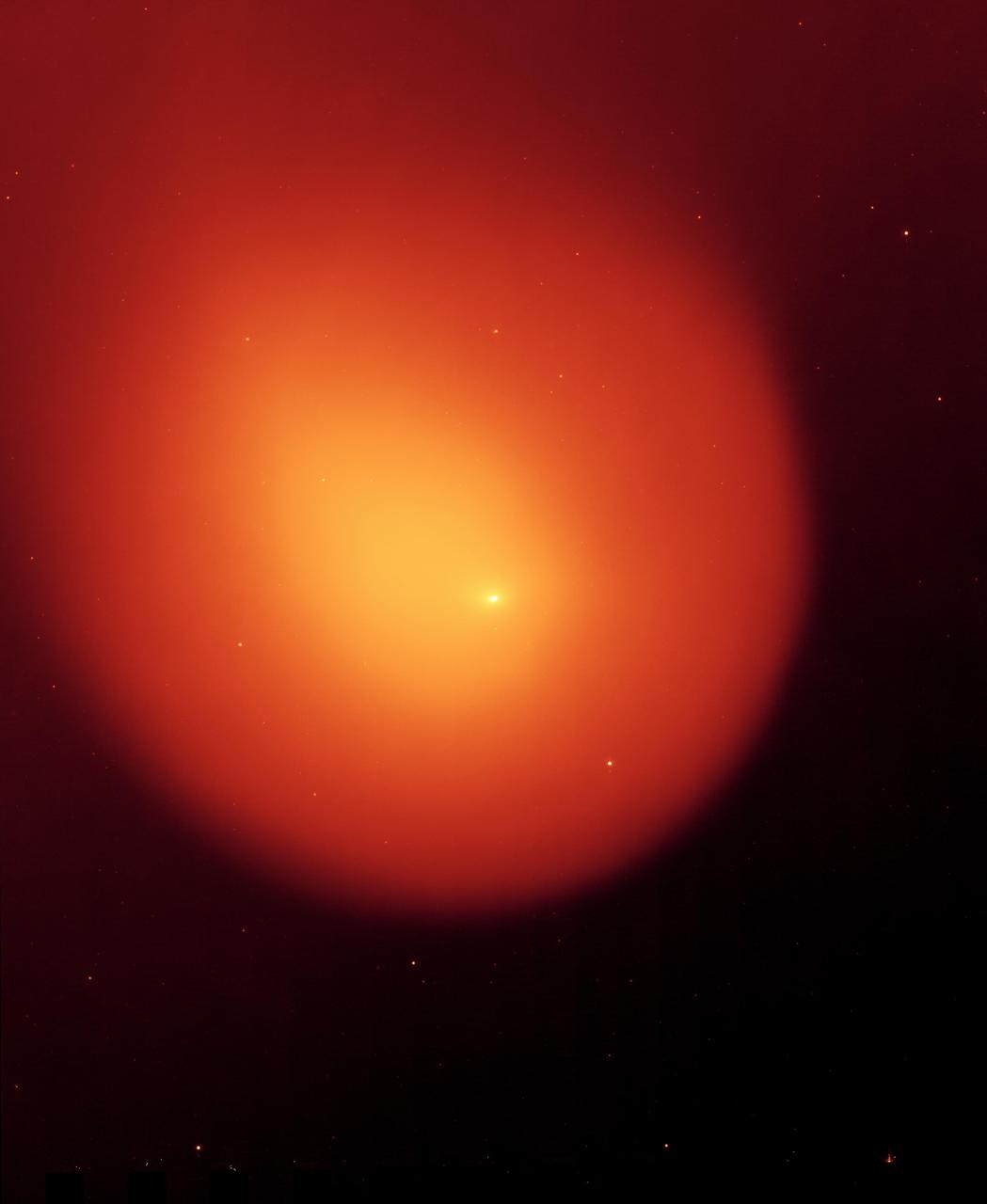
NASA Spitzer Space Telescope captured this picture of comet Holmes in March 2008, five months after the comet suddenly erupted and brightened a millionfold overnight.

These views from NASA Terra spacecraft portray the Lutzow-Holm Bay region of Queen Maud Land, East Antarctica, on September 5, 2002.

NASA officials from Headquarters and the astronauts often met with Dr. von Braun in Huntsville, Alabama. This photograph was taken in September 1962 during one such visit. From left to right are Elliot See, Tom Stafford, Wally Schirra, John Glenn, Brainerd Holmes, Dr. von Braun, and Jim Lovell.

Members of Marshall's Facilities Operations and Maintenance Office team, including, clockwise from left, Robert Drane, Jeremy Holmes, Don Davis, team foreman Dusty Crouch, Wesley Brook and Lucas Broadway, gather to inspect and replace a pipe fitting.
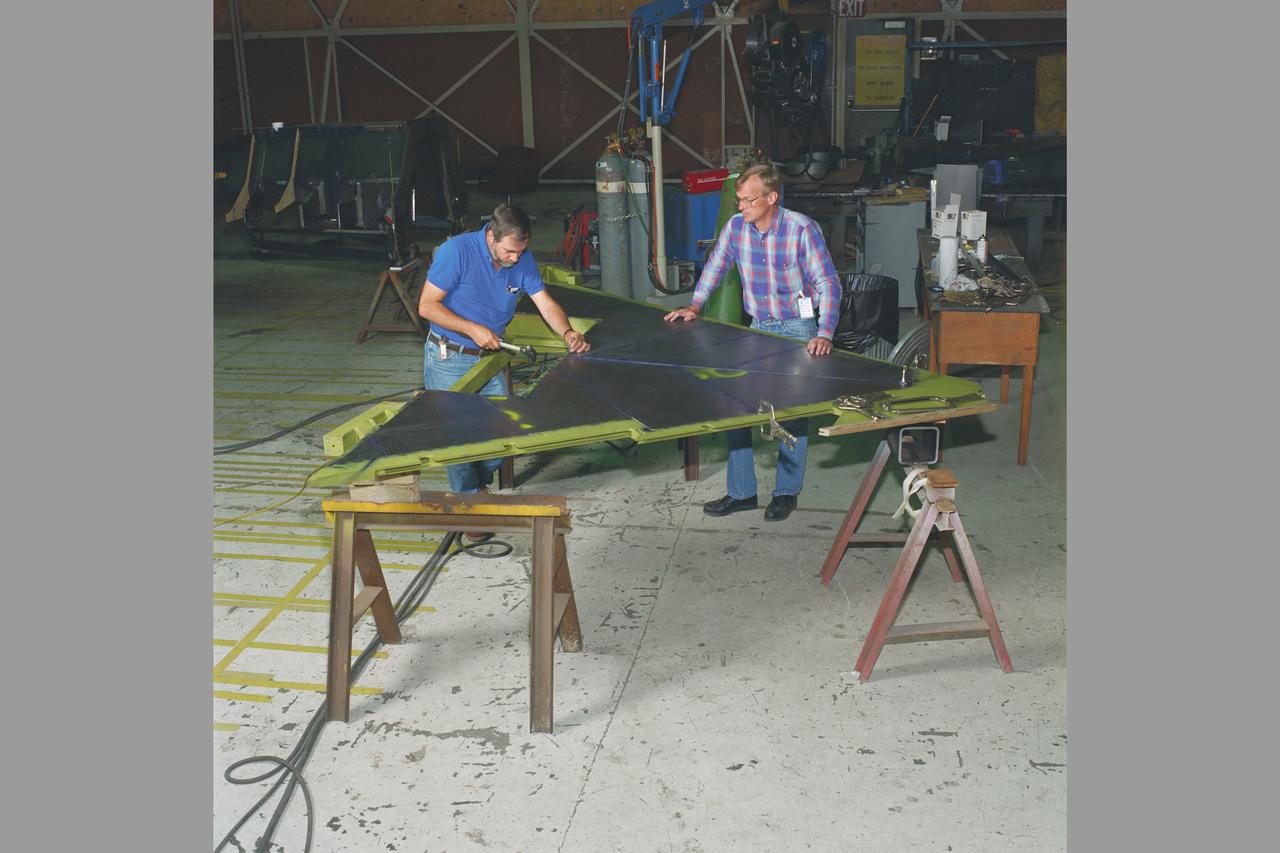
FLAC (USAF 55% Scale) Model, Machine Shop N-220 . fitting wing panels (with Jerry Holmes & Bill Moreland)

iss066e136836 (Feb. 5, 2022) --- Lake Powell with Mount Ellsworth and Mount Holmes at center, and the snow-capped Mount Hillers at right, are pictured from the International Space Station as it orbited 259 miles above the state of Utah.
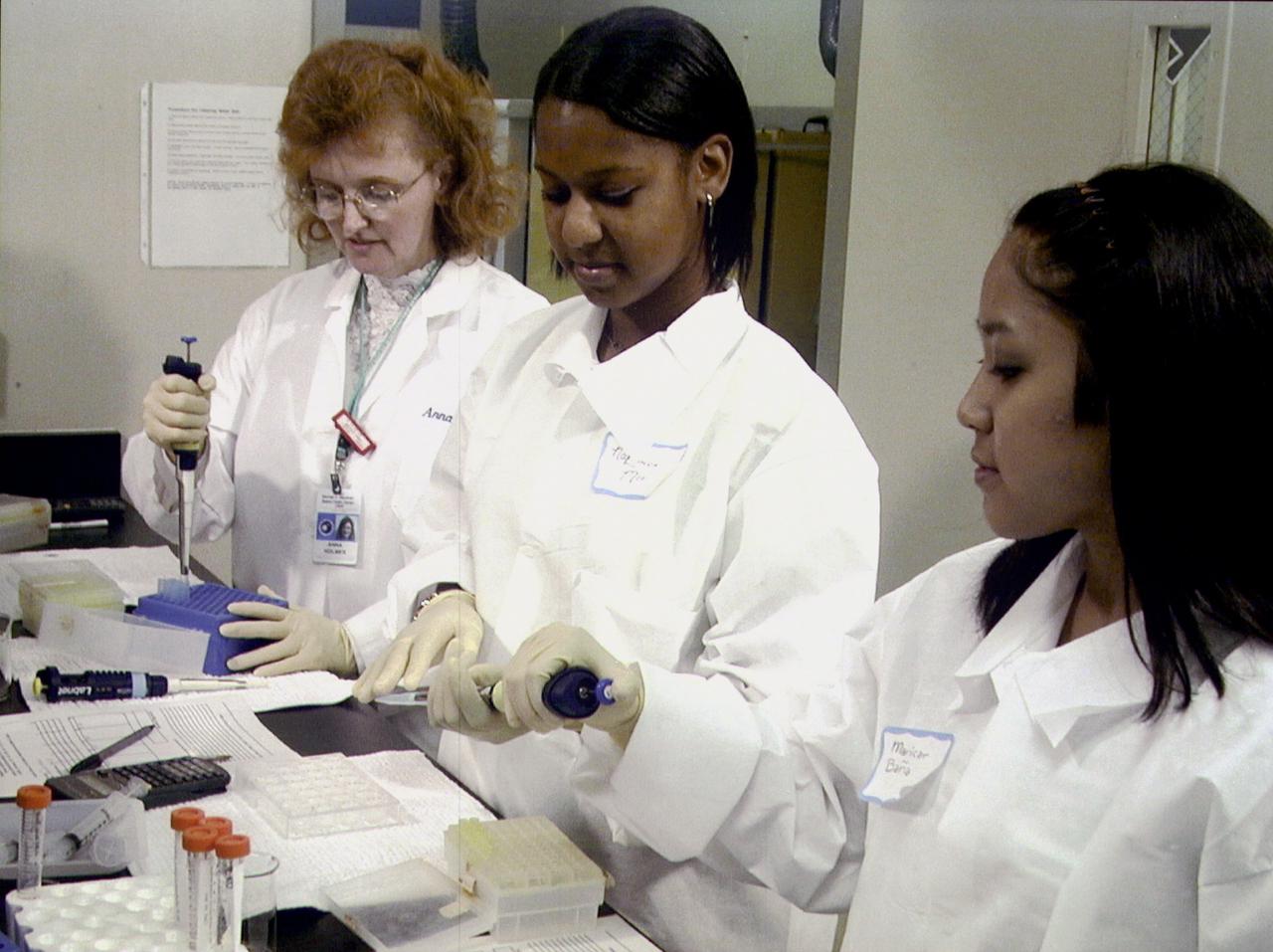
Chemist Arna Holmes, left, from the University of Alabama in Huntsville, teaches NaLonda Moorer, center, and Maricar Bana, right, both from Terry Parker High School in Jacksonville, Fl, procedures for preparing protein crystal growth samples for flight aboard the International Space Station (ISS). NASA/Marshall Space Flight Center in Huntsville, AL, is a sponsor for this educational activity. The proteins are placed in plastic tubing that is heat-sealed at the ends, then flash-frozen and preserved in a liquid nitrogen Dewar. Aborad the ISS, the nitrogen will be allowed to evaporated so the samples thaw and then slowly crystallize. They will be analyzed after return to Earth. Photo credit: NASA/Marshall Space Flight Center (MSFC)
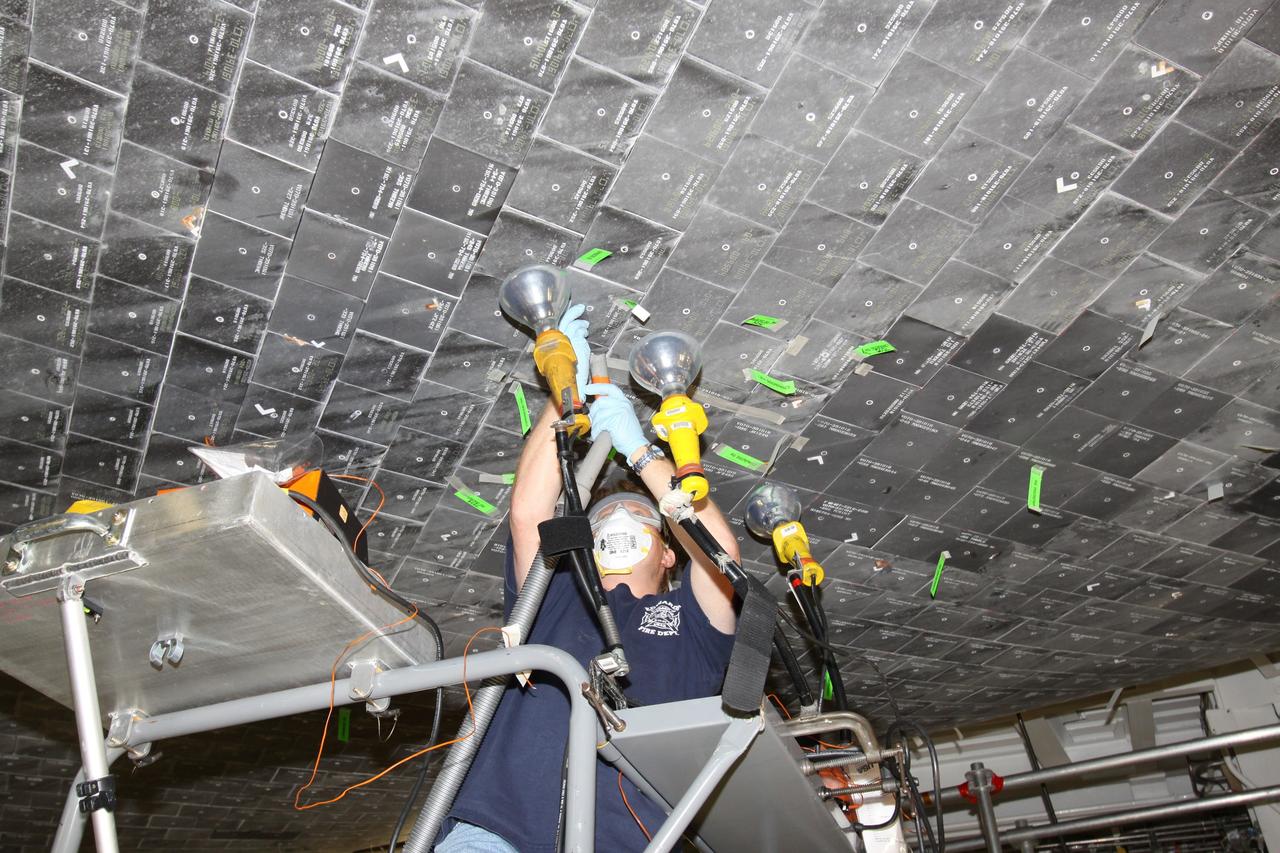
CAPE CANAVERAL, Fla. - In Orbiter Processing Facility Bay 1 at NASA's Kennedy Space Center in Florida, heat lamps assist United Space Alliance technician Jeff Holmes in a putty repair on some of the high-temperature reusable surface insulation tiles, or HRSI tiles, on the lower forward fuselage of space shuttle Atlantis. An average of 125 tiles are replaced after each mission either due to handling damage or accumulated repairs. These black tiles are optimized for maximum emissivity, which means they lose heat faster than white tiles. This property is required to maximize heat rejection during the hot phase of reentry. Atlantis next is slated to deliver an Integrated Cargo Carrier and Russian-built Mini Research Module to the International Space Station on the STS-132 mission. Launch is targeted for May 14, 2010. Photo credit: NASA/Jack Pfaller
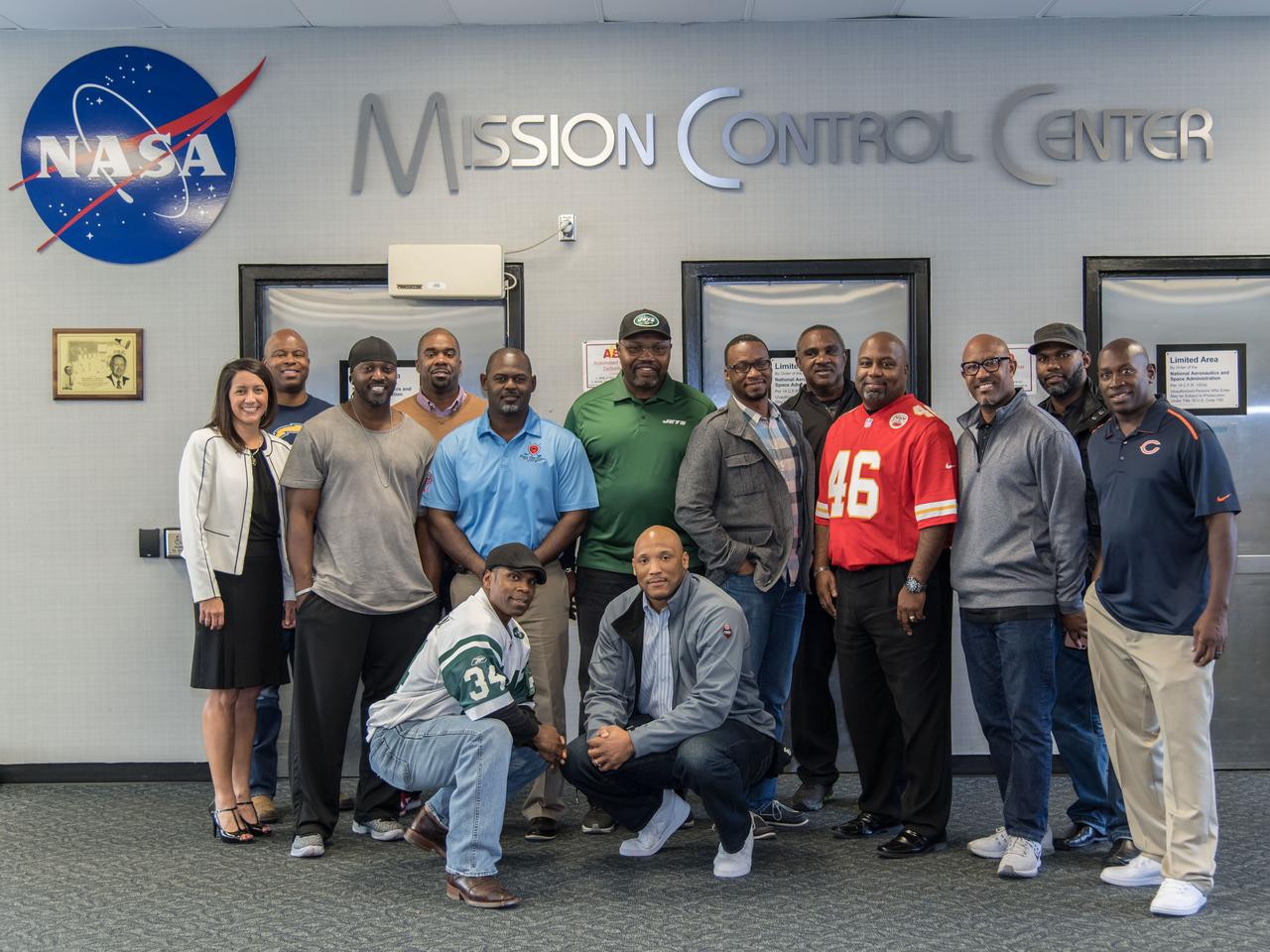
jsc2017e009735 (01/26/2017) --- Former NFL players on tour of the Johnson Space Center (JSC) as part of the Centers Super Bowl tailgate event gathered together in front of JSC's Mission Control. The former players toured JSC in the week before the Super Bowl game. Kneeling front left: Kerry Henderson (NY Jets), Joe Wesley (49ers, Jaguars), First standing row, left: Ronald Humphrey (IN Colts), James Williams (Saints, Jag, 49ers, Browns), Emanuel McNeil (NY Jets), Sammy Davis (Chargers, 49ers, Buccaneers), Daryl Gaines (KC Chiefs, Cris Calloway (Giants, Steelers, Falcons, Patriots), Lemanual Stinson (Bears & Falcons). Back row left: Ginger Kerrrick (JSC Staff), Jermaine Fazonde (Chargers), Michael Holmes (49ers), Kevin Williams (Vikings, Seahawks, Saints). NASA PHOTOGRAPHER: Lauren Harnett
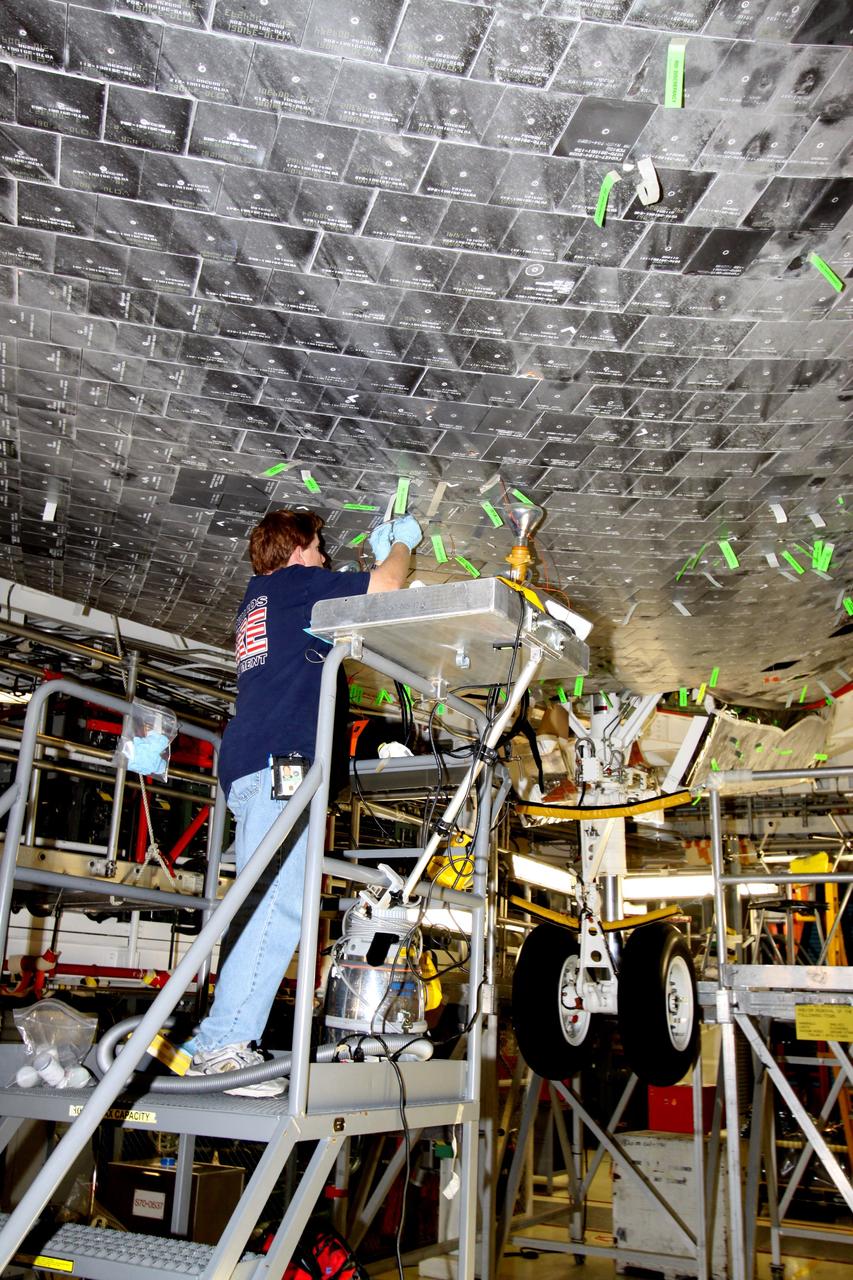
CAPE CANAVERAL, Fla. - In Orbiter Processing Facility Bay 1 at NASA's Kennedy Space Center in Florida, United Space Alliance technician Jeff Holmes makes a putty repair on some of the high-temperature reusable surface insulation tiles, or HRSI tiles, on the lower forward fuselage of space shuttle Atlantis. An average of 125 tiles are replaced after each mission either due to handling damage or accumulated repairs. These black tiles are optimized for maximum emissivity, which means they lose heat faster than white tiles. This property is required to maximize heat rejection during the hot phase of reentry. Atlantis next is slated to deliver an Integrated Cargo Carrier and Russian-built Mini Research Module to the International Space Station on the STS-132 mission. Launch is targeted for May 14, 2010. Photo credit: NASA/Jack Pfaller

This labyrinth – with a silhouette of the fictional detective Sherlock Holmes at its center – is used as a calibration target for the cameras and laser that are part of SHERLOC (Scanning Habitable Environments with Raman & Luminescence for Organics and Chemicals), one of the instruments aboard NASA's Perseverance Mars rover. The image was captured by the Autofocus and Context Imager on SHERLOC on May 11, 2024, the 1,147th day, or sol, of the mission, as the rover team sought to confirm it had successfully addressed an issue with a stuck lens cover. A key objective for Perseverance's mission on Mars is astrobiology, including the search for signs of ancient microbial life. The rover is also characterizing the planet's geology and past climate, which paves the way for human exploration of the Red Planet. JPL, which is managed for NASA by Caltech in Pasadena, California, built and manages operations of the Perseverance rover. https://photojournal.jpl.nasa.gov/catalog/PIA26337
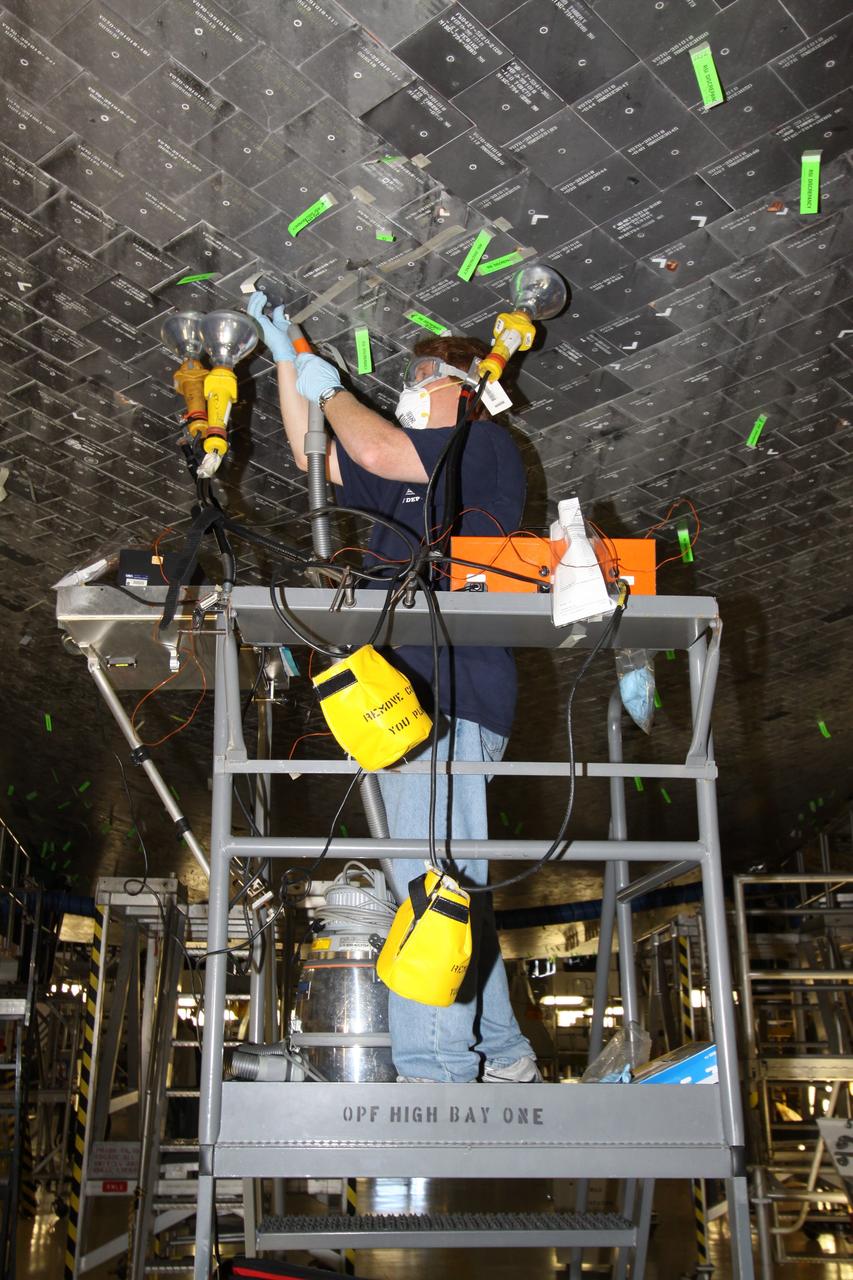
CAPE CANAVERAL, Fla. - In Orbiter Processing Facility Bay 1 at NASA's Kennedy Space Center in Florida, United Space Alliance technician Jeff Holmes uses heat lamps in a putty repair on some of the high-temperature reusable surface insulation tiles, or HRSI tiles, on the lower forward fuselage of space shuttle Atlantis. An average of 125 tiles are replaced after each mission either due to handling damage or accumulated repairs. These black tiles are optimized for maximum emissivity, which means they lose heat faster than white tiles. This property is required to maximize heat rejection during the hot phase of reentry. Atlantis next is slated to deliver an Integrated Cargo Carrier and Russian-built Mini Research Module to the International Space Station on the STS-132 mission. Launch is targeted for May 14, 2010. Photo credit: NASA/Jack Pfaller
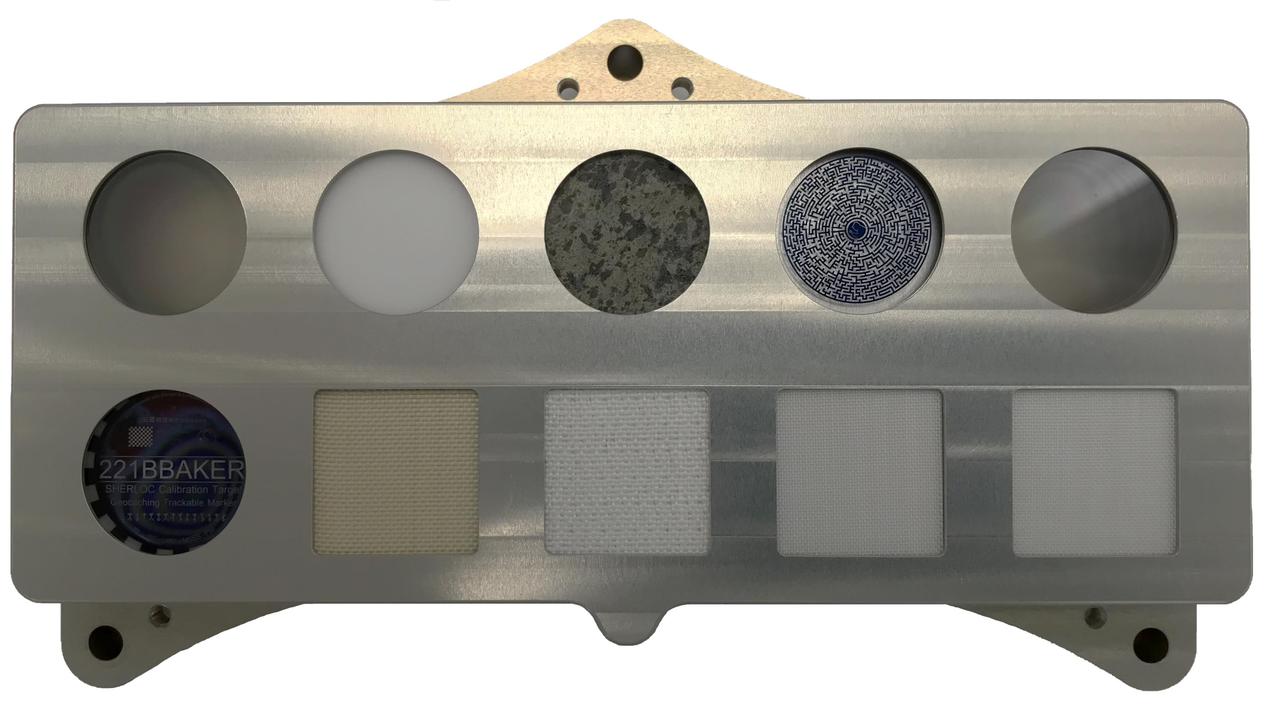
The calibration target for SHERLOC (Scanning Habitable Environments with Raman & Luminescence for Organics & Chemicals) an instrument on the end of the Perseverance Mars rover's 7-foot-long (3-meter-long) robotic arm, includes a geocaching target, spacesuit materials, and a slice of a Martian meteorite. Scientists rely on calibration targets to fine-tune instrument settings using materials with known properties. The bottom row of this target features spacesuit materials that scientists will observe to see how they react over time to the irradiated Martian atmosphere. The first sample at left is polycarbonate for use in a helmet visor; inscribed with the address of the fictional detective Sherlock Holmes, it doubles as a geochache for the public. Other materials in the bottom row, from left: Vectran; Ortho-Fabric; Teflon; coated Teflon. Top row, from left: aluminum gallium nitride on sapphire; a quartz diffuser; a slice of Martian meteorite; a maze for testing laser intensity; a separate aluminum gallium nitride on sapphire with different properties. https://photojournal.jpl.nasa.gov/catalog/PIA24261