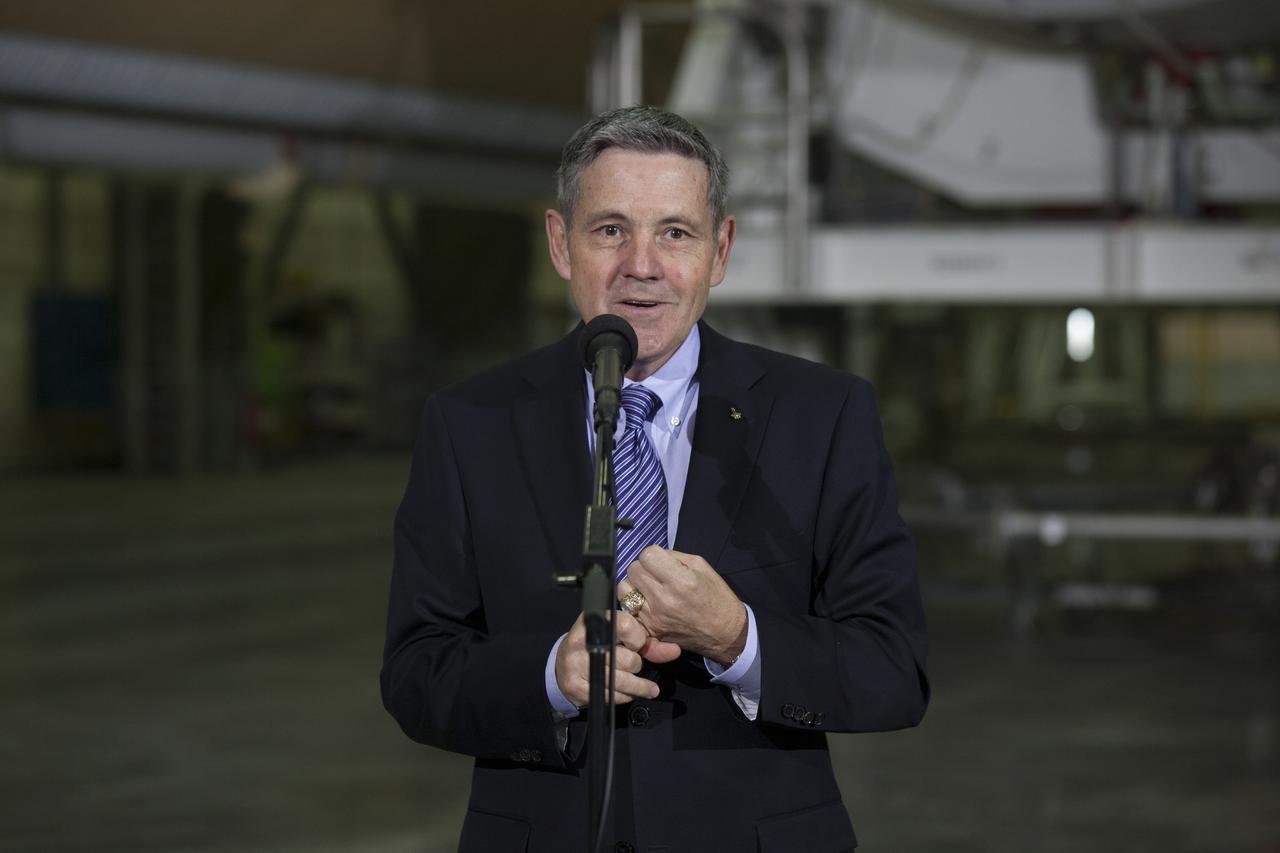
CAPE CANAVERAL, Fla. – During a media event inside the Horizontal Integration Facility at Launch Complex 37 at Cape Canaveral Air Force Station in Florida, Kennedy Space Center Director Bob Cabana speaks to members of the media. Behind him are two of the United Launch Alliance Delta IV boosters for the Orion Exploration Flight Test-1, or EFT-1, mission. Orion is the exploration spacecraft designed to carry astronauts to destinations not yet explored by humans, including an asteroid and Mars. It will have emergency abort capability, sustain the crew during space travel and provide safe re-entry from deep space return velocities. The first unpiloted test flight of Orion, EFT-1, is scheduled to launch in 2014 atop a Delta IV rocket and in 2017 on NASA’s Space Launch System rocket. For more information, visit http://www.nasa.gov/orion. Photo credit: NASA/Kim Shiflett
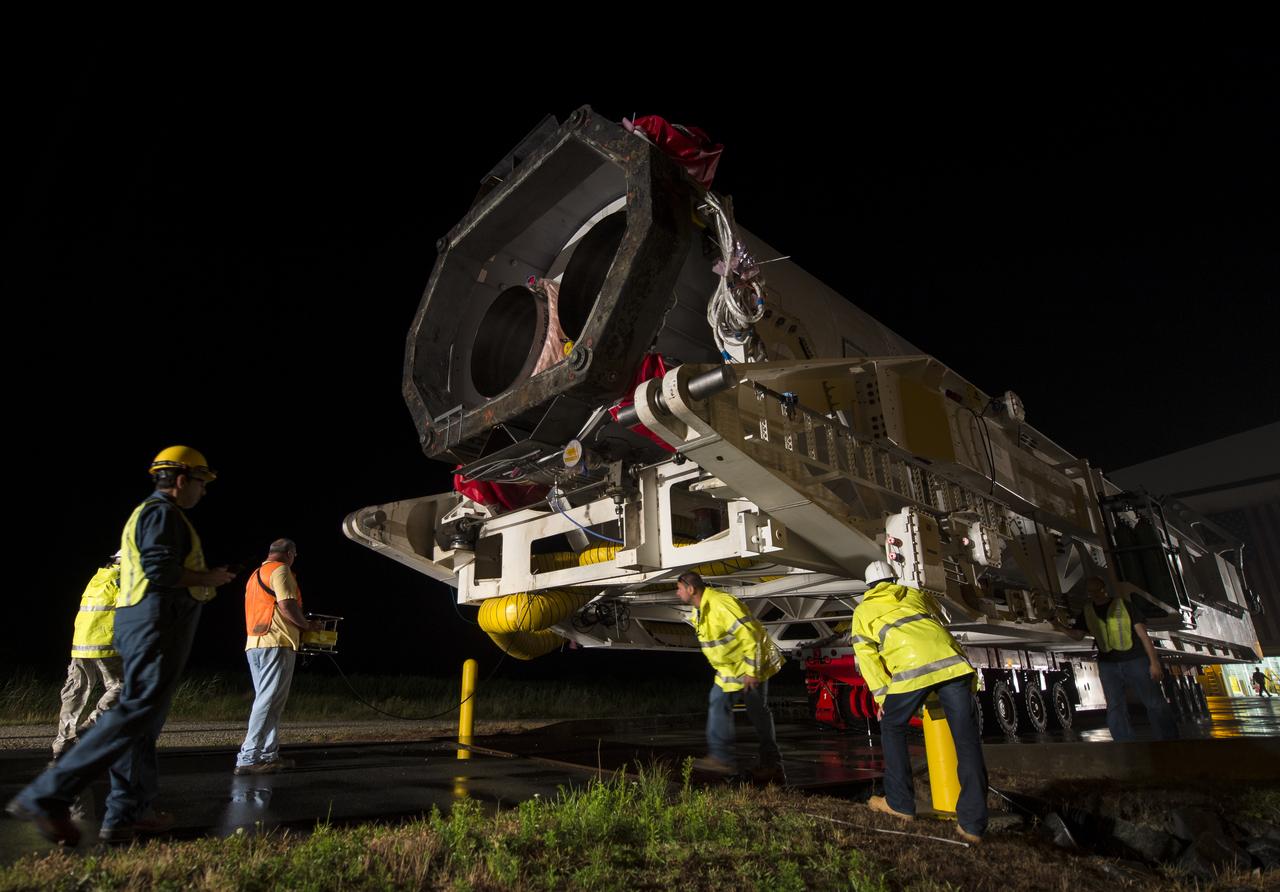
The Orbital Sciences Corporation Antares rocket, with the Cygnus spacecraft onboard, is rolled out of the Horizontal Integration Facility (HIF) to begin the approximately half-mile journey to launch Pad-0A, Thursday, July 10, 2014, at NASA's Wallops Flight Facility in Virginia. The Antares will launch with the Cygnus spacecraft filled with over 3,000 pounds of supplies for the International Space Station, including science experiments, experiment hardware, spare parts, and crew provisions. The Orbital-2 mission is Orbital Sciences' second contracted cargo delivery flight to the space station for NASA. Photo Credit: (NASA/Bill Ingalls)
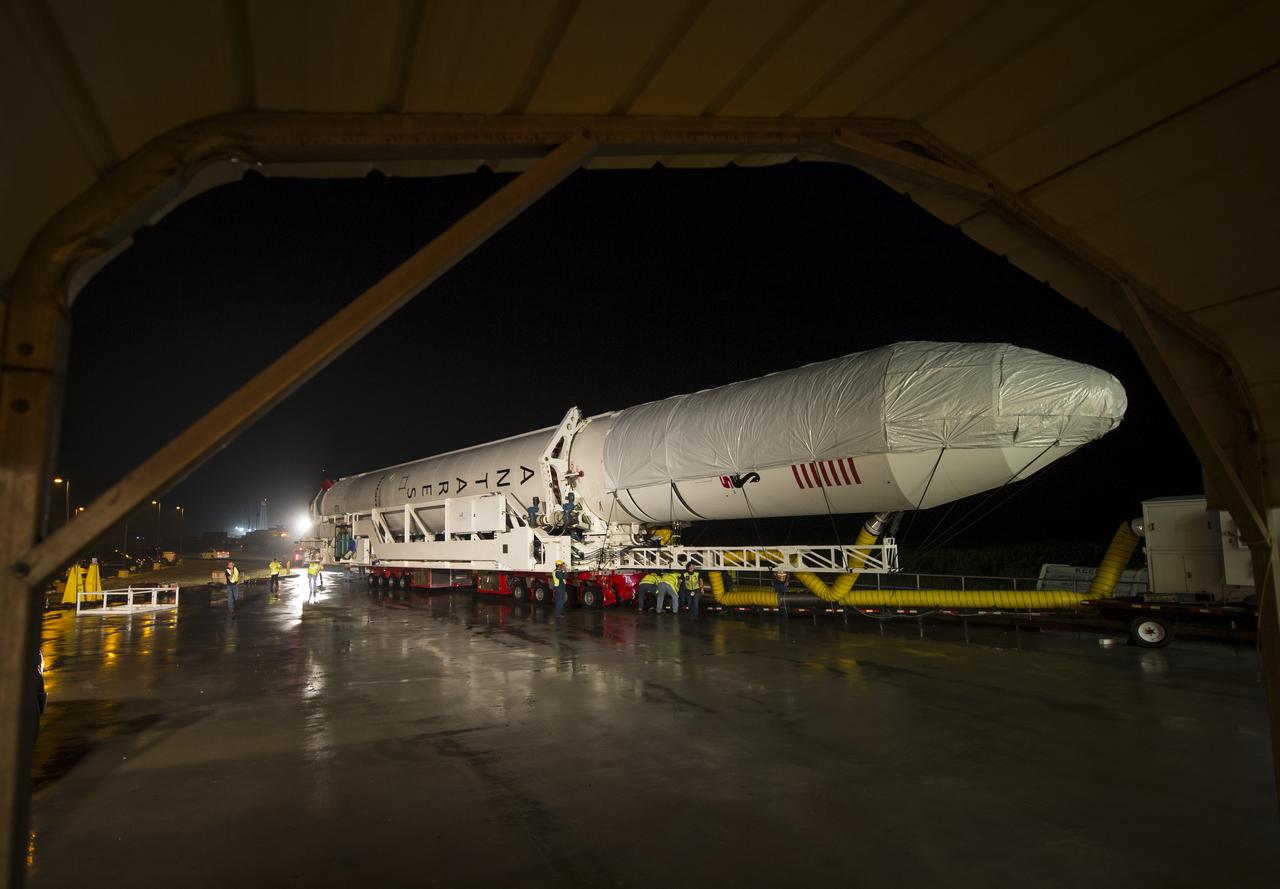
The Orbital Sciences Corporation Antares rocket, with the Cygnus spacecraft onboard, is rolled out of the Horizontal Integration Facility (HIF) to begin the approximately half-mile journey to launch Pad-0A, Thursday, July 10, 2014, at NASA's Wallops Flight Facility in Virginia. The Antares will launch with the Cygnus spacecraft filled with over 3,000 pounds of supplies for the International Space Station, including science experiments, experiment hardware, spare parts, and crew provisions. The Orbital-2 mission is Orbital Sciences' second contracted cargo delivery flight to the space station for NASA. Photo Credit: (NASA/Bill Ingalls)
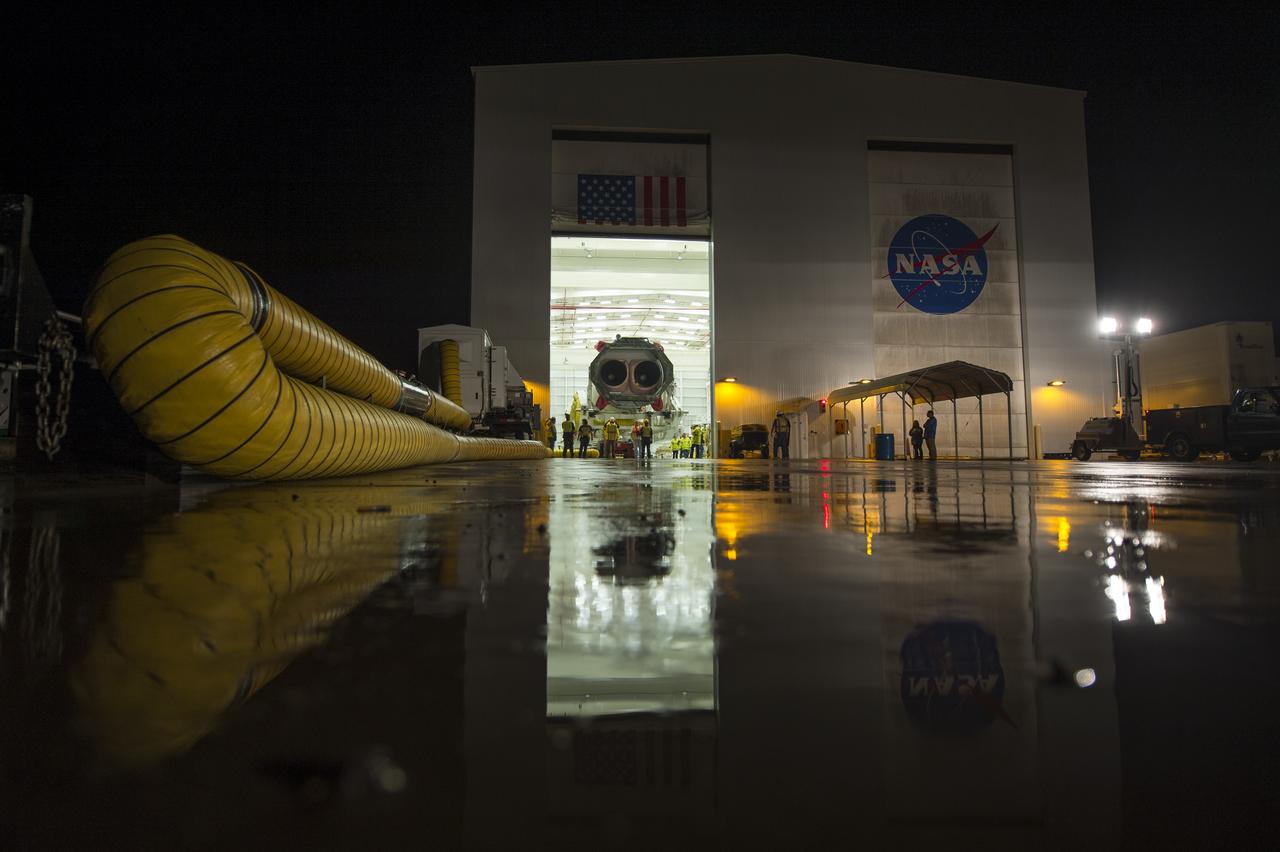
The Orbital Sciences Corporation Antares rocket, with the Cygnus spacecraft onboard, is rolled out of the Horizontal Integration Facility (HIF) to begin the approximately half-mile journey to launch Pad-0A, Thursday, July 10, 2014, at NASA's Wallops Flight Facility in Virginia. The Antares will launch with the Cygnus spacecraft filled with over 3,000 pounds of supplies for the International Space Station, including science experiments, experiment hardware, spare parts, and crew provisions. The Orbital-2 mission is Orbital Sciences' second contracted cargo delivery flight to the space station for NASA. Photo Credit: (NASA/Bill Ingalls)
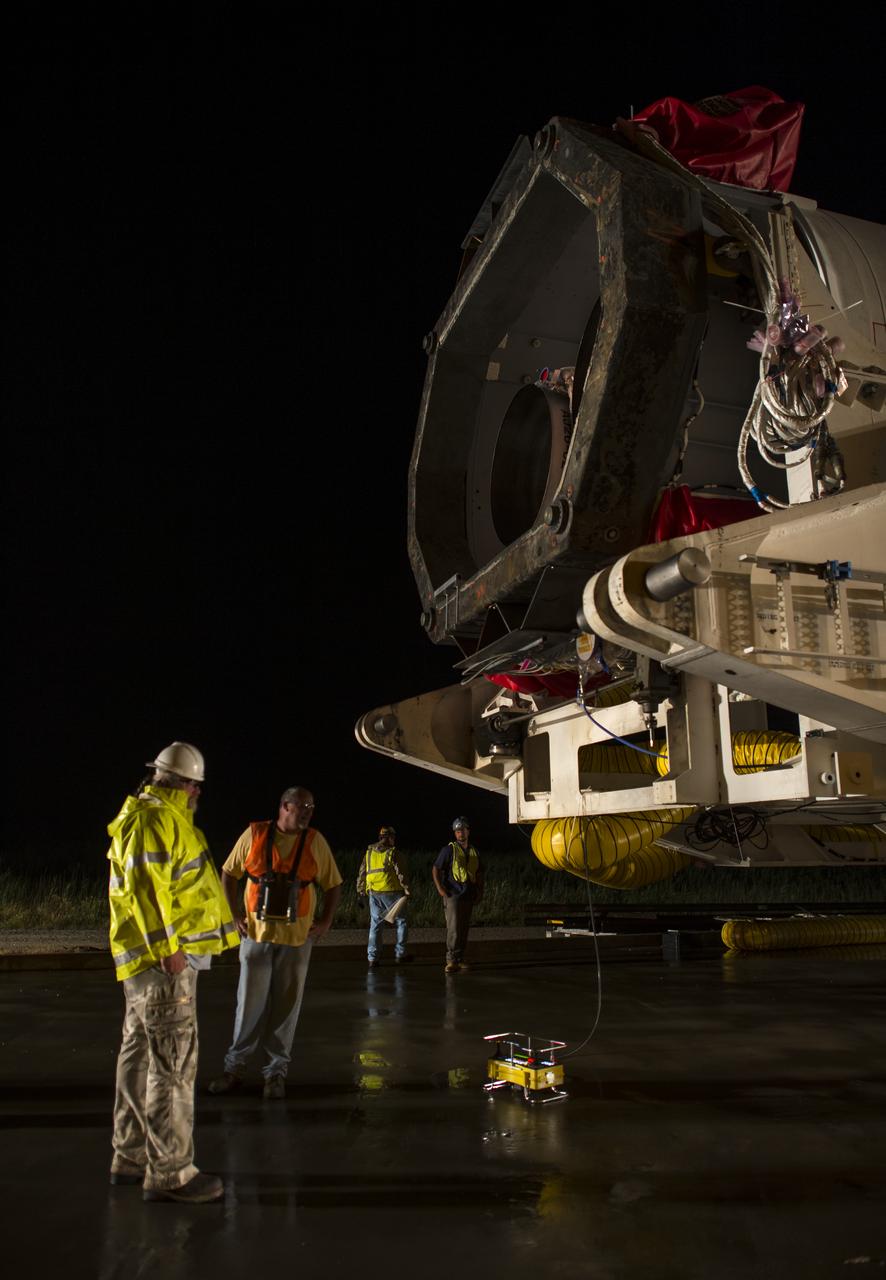
Workers prepare to drive the Orbital Sciences Corporation Antares rocket, with the Cygnus spacecraft onboard, from the Horizontal Integration Facility (HIF) to launch Pad-0A, Thursday, July 10, 2014, at NASA's Wallops Flight Facility in Virginia. The Antares will launch with the Cygnus spacecraft filled with over 3,000 pounds of supplies for the International Space Station, including science experiments, experiment hardware, spare parts, and crew provisions. The Orbital-2 mission is Orbital Sciences' second contracted cargo delivery flight to the space station for NASA. Photo Credit: (NASA/Bill Ingalls)
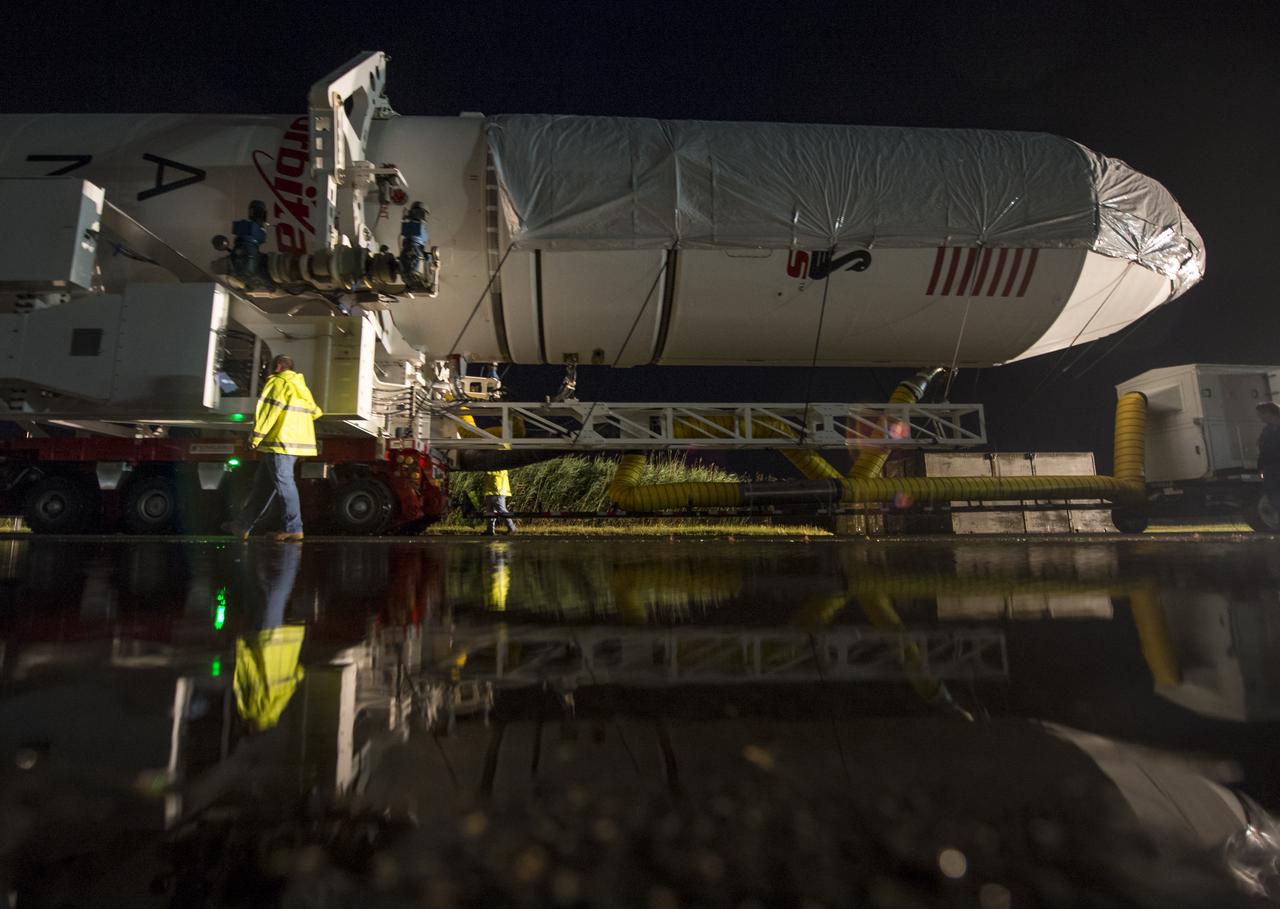
The Orbital Sciences Corporation Antares rocket, with the Cygnus spacecraft onboard, rolls from the Horizontal Integration Facility (HIF) to launch Pad-0A, Thursday, July 10, 2014, at NASA's Wallops Flight Facility in Virginia. The Antares will launch with the Cygnus spacecraft filled with over 3,000 pounds of supplies for the International Space Station, including science experiments, experiment hardware, spare parts, and crew provisions. The Orbital-2 mission is Orbital Sciences' second contracted cargo delivery flight to the space station for NASA. Photo Credit: (NASA/Bill Ingalls)
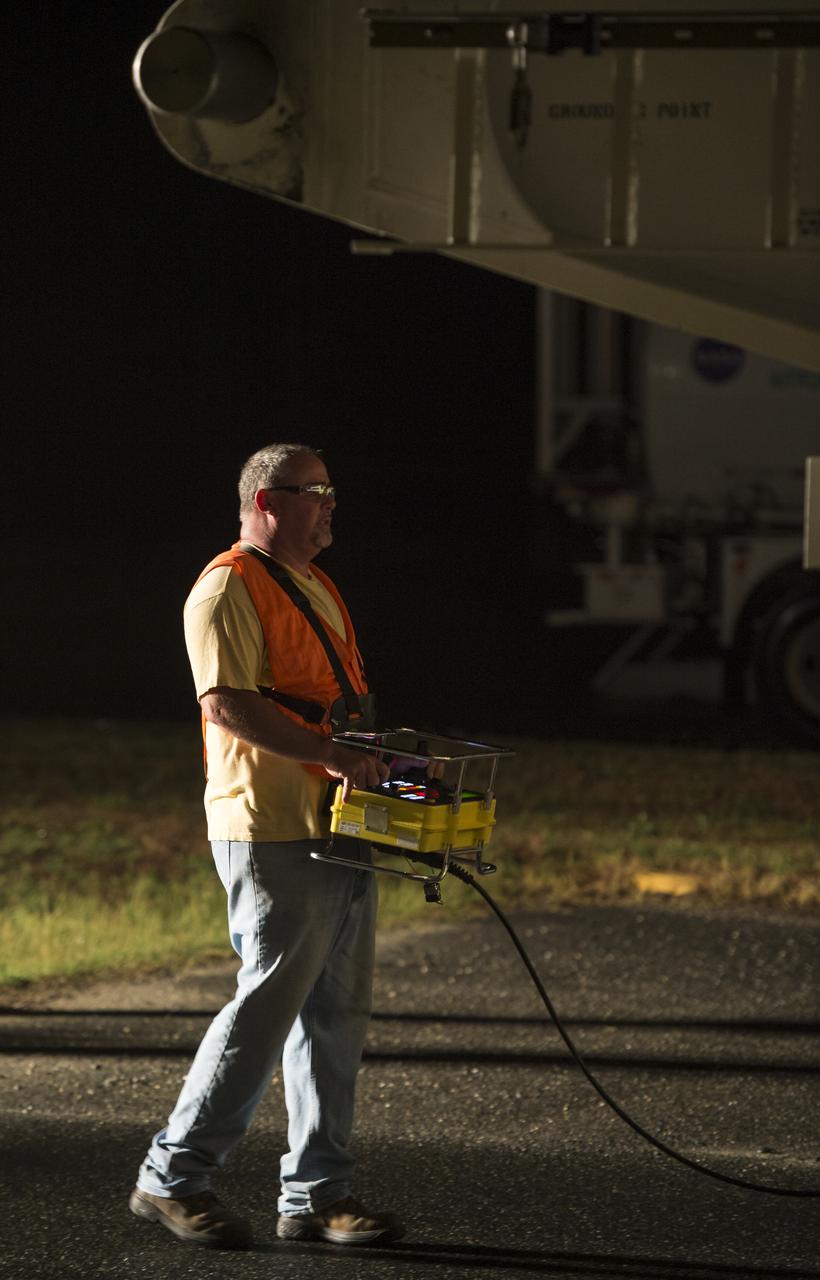
Chris McDonald with Orbital Sciences, drives the Antares rocket, with the Cygnus spacecraft onboard, from the Horizontal Integration Facility (HIF) to launch Pad-0A, Thursday, July 10, 2014, at NASA's Wallops Flight Facility in Virginia. The Antares will launch with the Cygnus spacecraft filled with over 3,000 pounds of supplies for the International Space Station, including science experiments, experiment hardware, spare parts, and crew provisions. The Orbital-2 mission is Orbital Sciences' second contracted cargo delivery flight to the space station for NASA. Photo Credit: (NASA/Bill Ingalls)
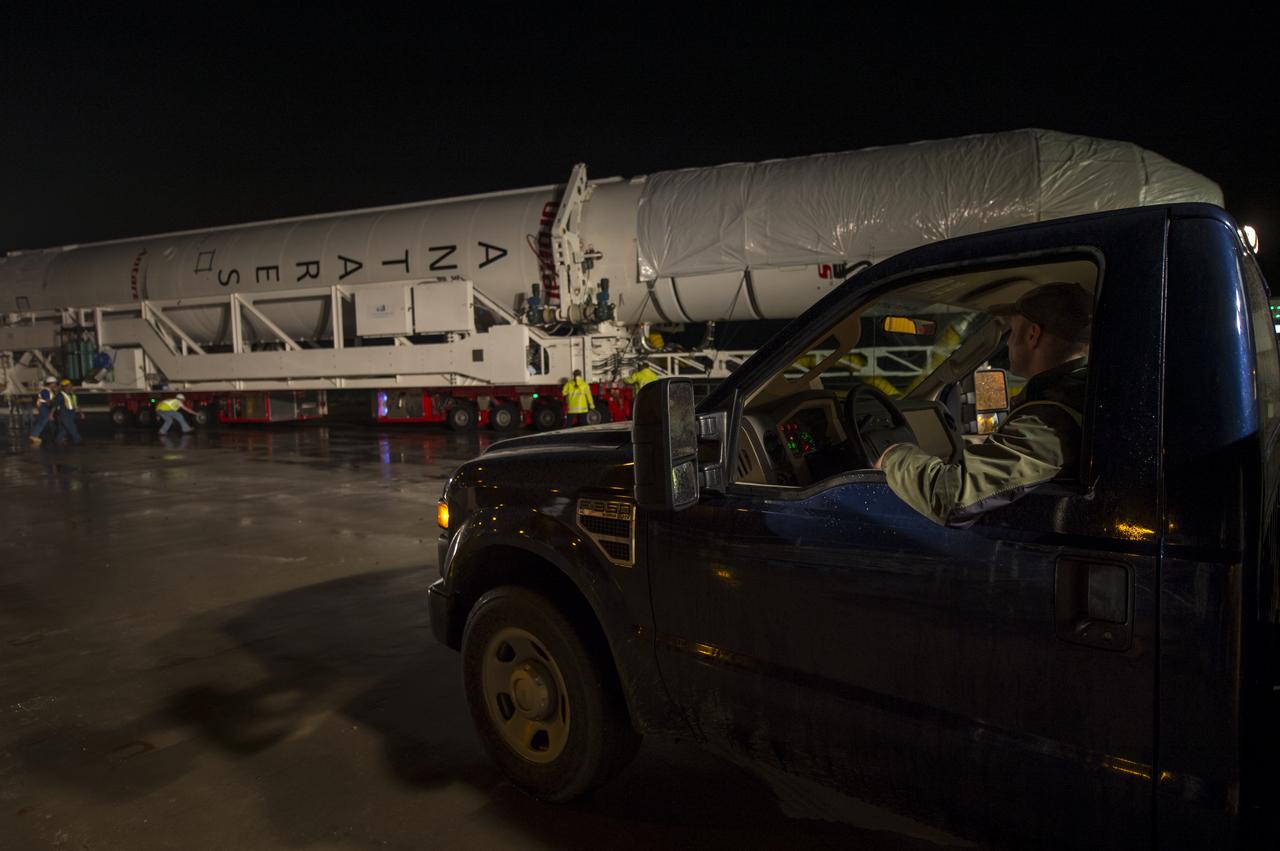
The Orbital Sciences Corporation Antares rocket, with the Cygnus spacecraft onboard, is rolled out of the Horizontal Integration Facility (HIF) to begin the approximately half-mile journey to launch Pad-0A, Thursday, July 10, 2014, at NASA's Wallops Flight Facility in Virginia. The Antares will launch with the Cygnus spacecraft filled with over 3,000 pounds of supplies for the International Space Station, including science experiments, experiment hardware, spare parts, and crew provisions. The Orbital-2 mission is Orbital Sciences' second contracted cargo delivery flight to the space station for NASA. Photo Credit: (NASA/Bill Ingalls)
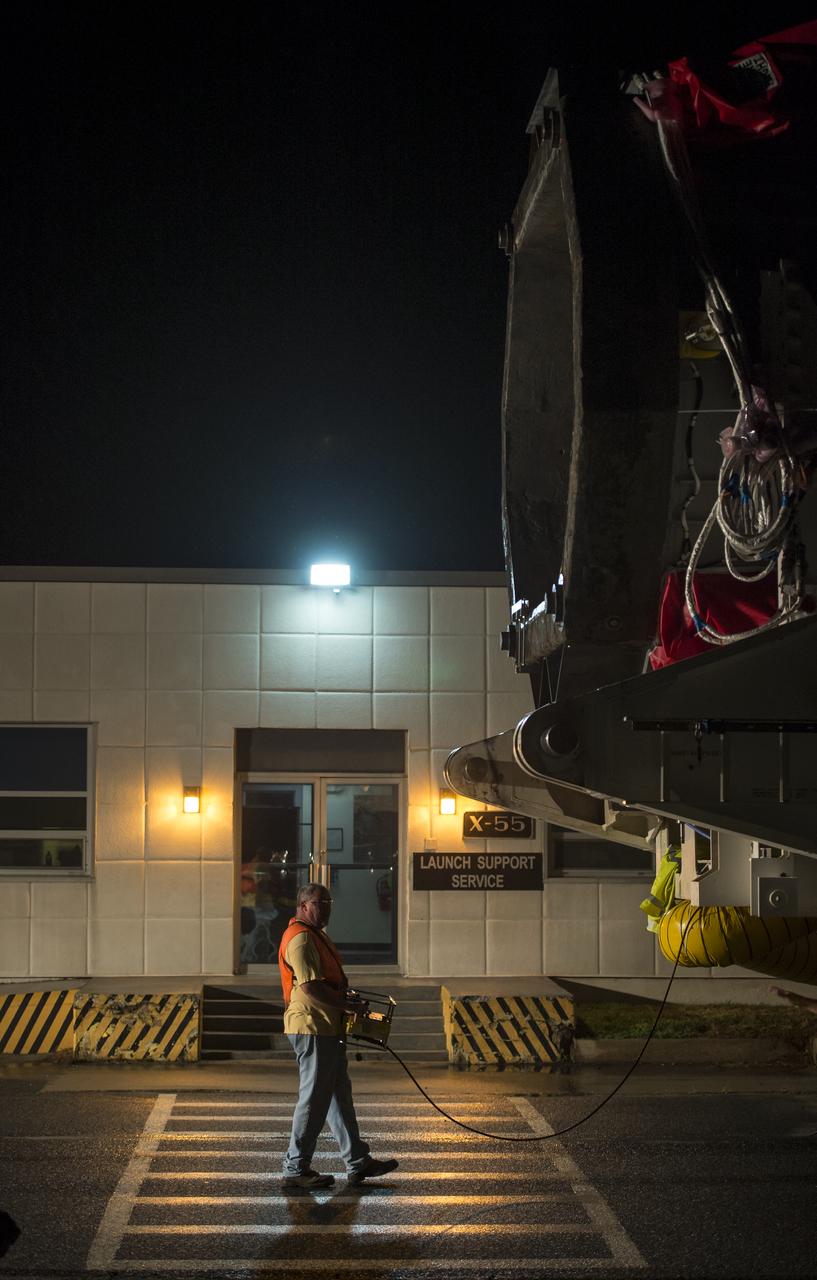
Chris McDonald with Orbital Sciences, drives the Antares rocket, with the Cygnus spacecraft onboard, from the Horizontal Integration Facility (HIF) to launch Pad-0A, Thursday, July 10, 2014, at NASA's Wallops Flight Facility in Virginia. The Antares will launch with the Cygnus spacecraft filled with over 3,000 pounds of supplies for the International Space Station, including science experiments, experiment hardware, spare parts, and crew provisions. The Orbital-2 mission is Orbital Sciences' second contracted cargo delivery flight to the space station for NASA. Photo Credit: (NASA/Bill Ingalls)
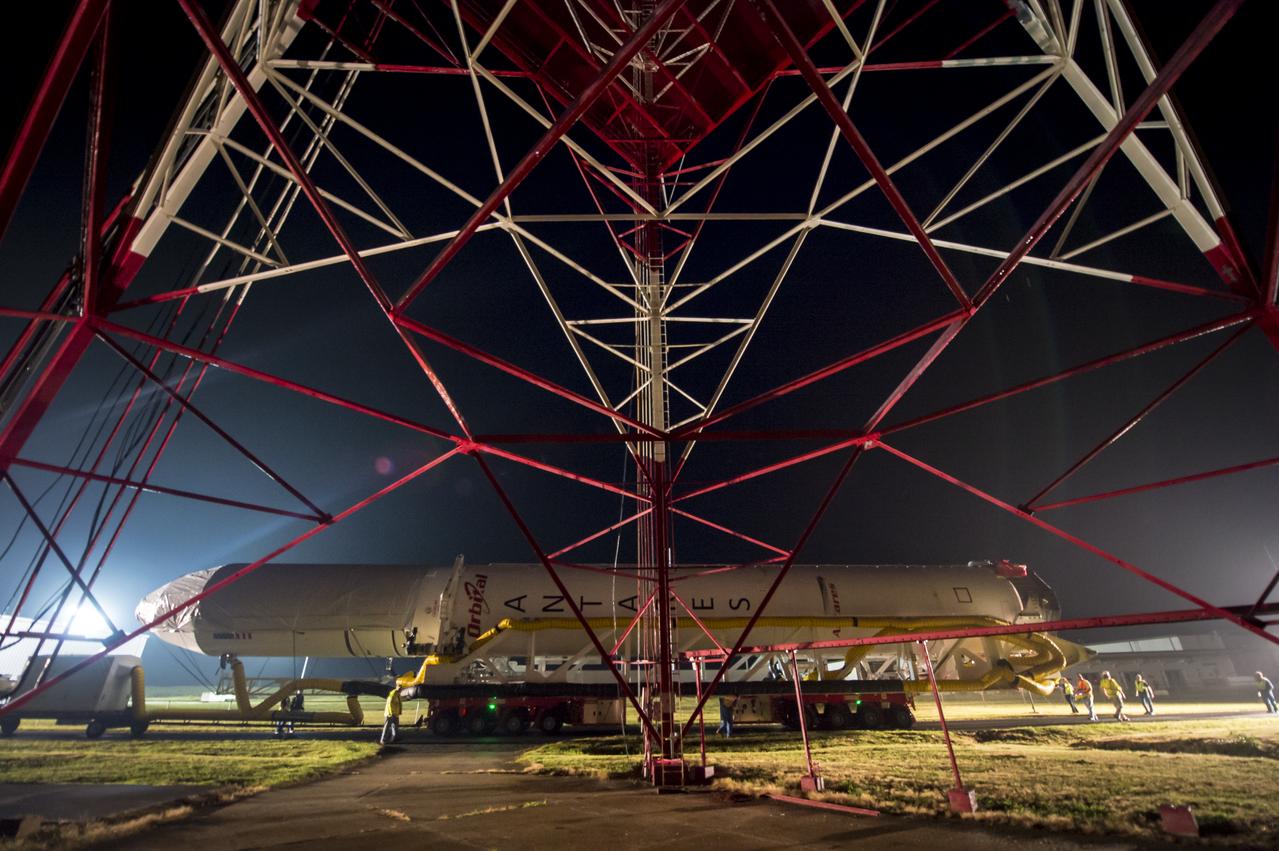
The Orbital Sciences Corporation Antares rocket, with the Cygnus spacecraft onboard, rolls from the Horizontal Integration Facility (HIF) to launch Pad-0A, Thursday, July 10, 2014, at NASA's Wallops Flight Facility in Virginia. The Antares will launch with the Cygnus spacecraft filled with over 3,000 pounds of supplies for the International Space Station, including science experiments, experiment hardware, spare parts, and crew provisions. The Orbital-2 mission is Orbital Sciences' second contracted cargo delivery flight to the space station for NASA. Photo Credit: (NASA/Bill Ingalls)
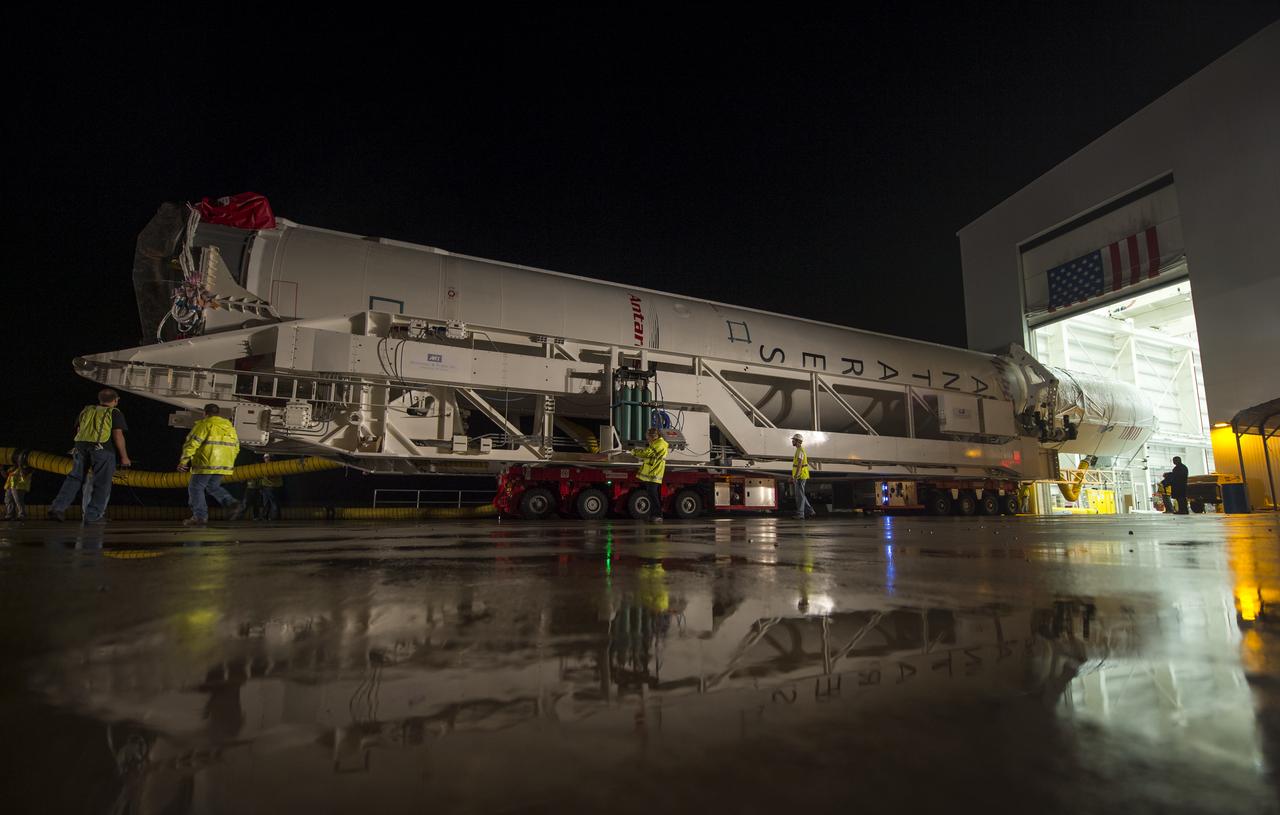
The Orbital Sciences Corporation Antares rocket, with the Cygnus spacecraft onboard, is rolled out of the Horizontal Integration Facility (HIF) to begin the approximately half-mile journey to launch Pad-0A, Thursday, July 10, 2014, at NASA's Wallops Flight Facility in Virginia. The Antares will launch with the Cygnus spacecraft filled with over 3,000 pounds of supplies for the International Space Station, including science experiments, experiment hardware, spare parts, and crew provisions. The Orbital-2 mission is Orbital Sciences' second contracted cargo delivery flight to the space station for NASA. Photo Credit: (NASA/Bill Ingalls)
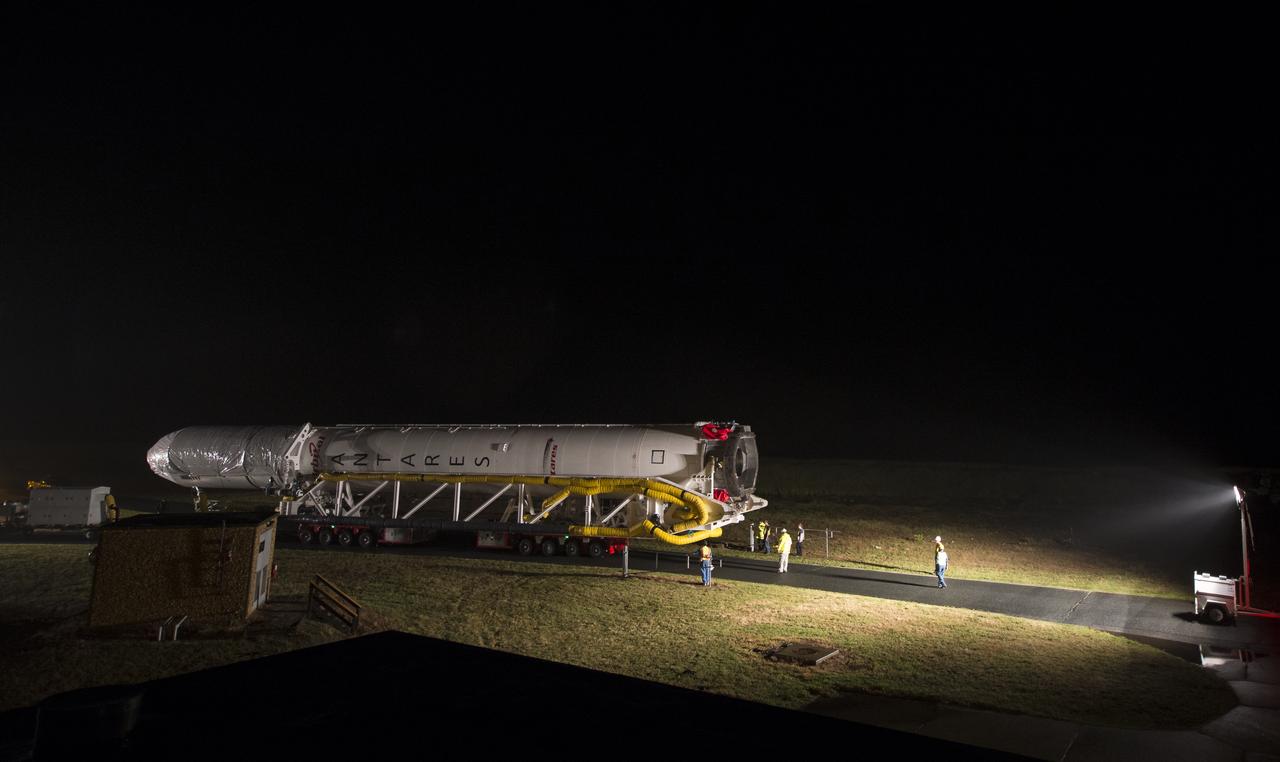
The Orbital Sciences Corporation Antares rocket, with the Cygnus spacecraft onboard, rolls from the Horizontal Integration Facility (HIF) to launch Pad-0A, Thursday, July 10, 2014, at NASA's Wallops Flight Facility in Virginia. The Antares will launch with the Cygnus spacecraft filled with over 3,000 pounds of supplies for the International Space Station, including science experiments, experiment hardware, spare parts, and crew provisions. The Orbital-2 mission is Orbital Sciences' second contracted cargo delivery flight to the space station for NASA. Photo Credit: (NASA/Bill Ingalls)
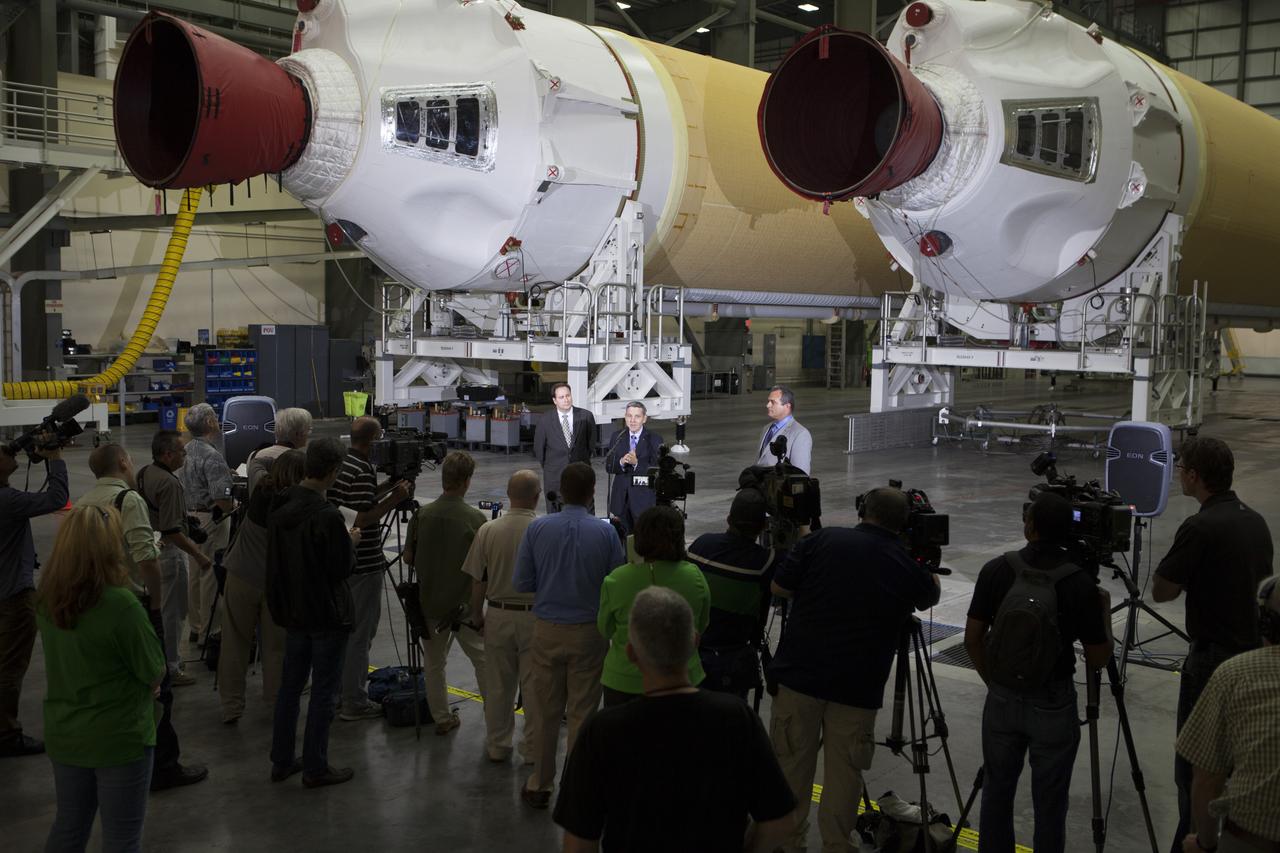
CAPE CANAVERAL, Fla. – During a media event inside the Horizontal Integration Facility at Launch Complex 37 at Cape Canaveral Air Force Station in Florida, Kennedy Space Center Director Bob Cabana speaks to members of the media. To his right is Tony Taliancich, director of East Coast Launch Operations with United Launch Alliance, or ULA. To his left is NASA Associate Administrator Robert Lightfoot. The event was held to showcase two of the ULA Delta IV boosters for the Orion Exploration Flight Test-1, or EFT-1, mission. Orion is the exploration spacecraft designed to carry astronauts to destinations not yet explored by humans, including an asteroid and Mars. It will have emergency abort capability, sustain the crew during space travel and provide safe re-entry from deep space return velocities. The first unpiloted test flight of Orion, EFT-1, is scheduled to launch in 2014 atop a Delta IV rocket and in 2017 on NASA’s Space Launch System rocket. For more information, visit http://www.nasa.gov/orion. Photo credit: NASA/Kim Shiflett

CAPE CANAVERAL, Fla. – During a media event inside the Horizontal Integration Facility at Launch Complex 37 at Cape Canaveral Air Force Station in Florida, Tony Taliancich, director of East Coast Launch Operations with United Launch Alliance, or ULA, speaks to members of the media. Also with him at the briefing were Kennedy Space Center Director Bob Cabana and NASA Associate Administrator Robert Lightfoot. The event was held to showcase two of the ULA Delta IV boosters for the Orion Exploration Flight Test-1, or EFT-1, mission. Orion is the exploration spacecraft designed to carry astronauts to destinations not yet explored by humans, including an asteroid and Mars. It will have emergency abort capability, sustain the crew during space travel and provide safe re-entry from deep space return velocities. The first unpiloted test flight of Orion, EFT-1, is scheduled to launch in 2014 atop a Delta IV rocket and in 2017 on NASA’s Space Launch System rocket. For more information, visit http://www.nasa.gov/orion. Photo credit: NASA/Kim Shiflett
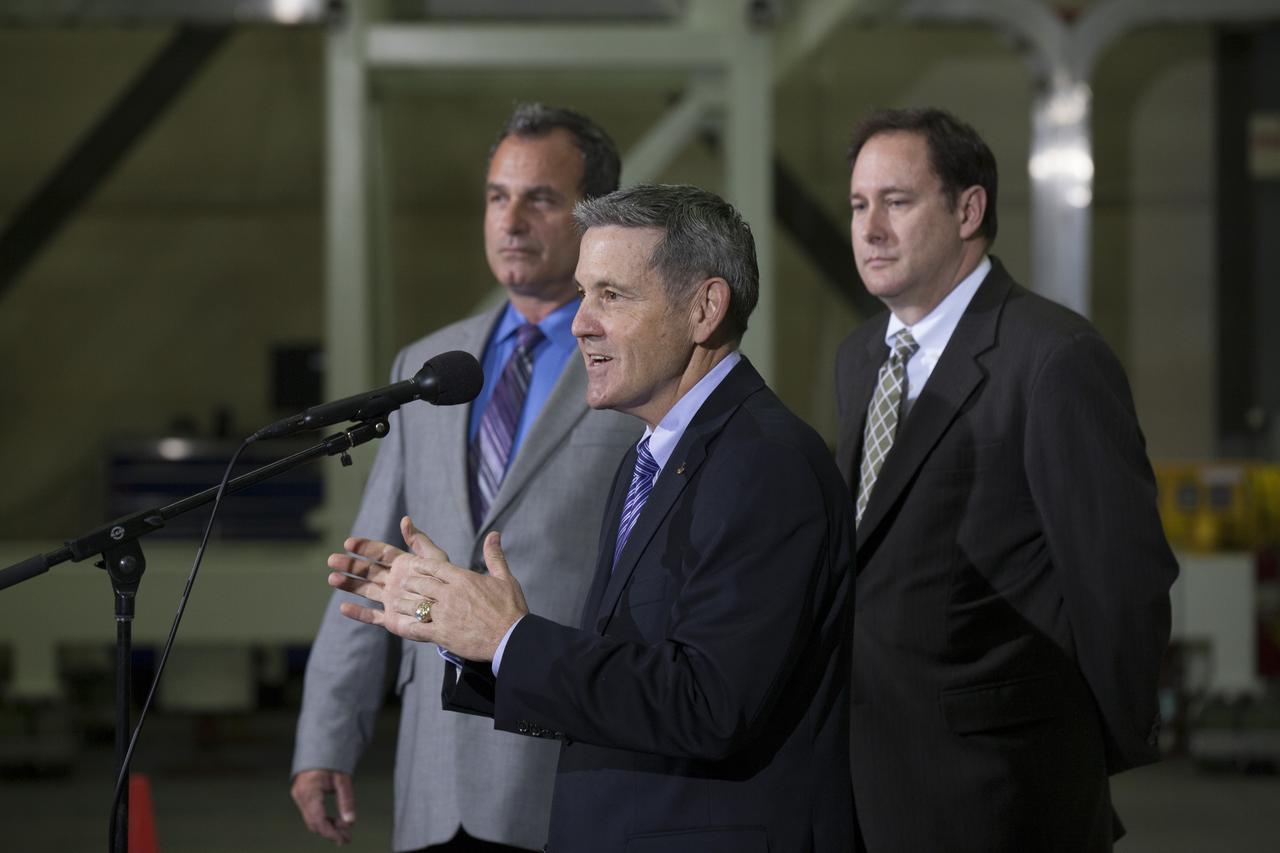
CAPE CANAVERAL, Fla. – During a media event inside the Horizontal Integration Facility at Launch Complex 37 at Cape Canaveral Air Force Station in Florida, Kennedy Space Center Director Bob Cabana speaks to members of the media. To his left is Tony Taliancich, director of East Coast Launch Operations with United Launch Alliance, or ULA. To the right is NASA Associate Administrator Robert Lightfoot. The event was held to showcase two of the ULA Delta IV boosters for the Orion Exploration Flight Test-1, or EFT-1, mission. Orion is the exploration spacecraft designed to carry astronauts to destinations not yet explored by humans, including an asteroid and Mars. It will have emergency abort capability, sustain the crew during space travel and provide safe re-entry from deep space return velocities. The first unpiloted test flight of Orion, EFT-1, is scheduled to launch in 2014 atop a Delta IV rocket and in 2017 on NASA’s Space Launch System rocket. For more information, visit http://www.nasa.gov/orion. Photo credit: NASA/Kim Shiflett
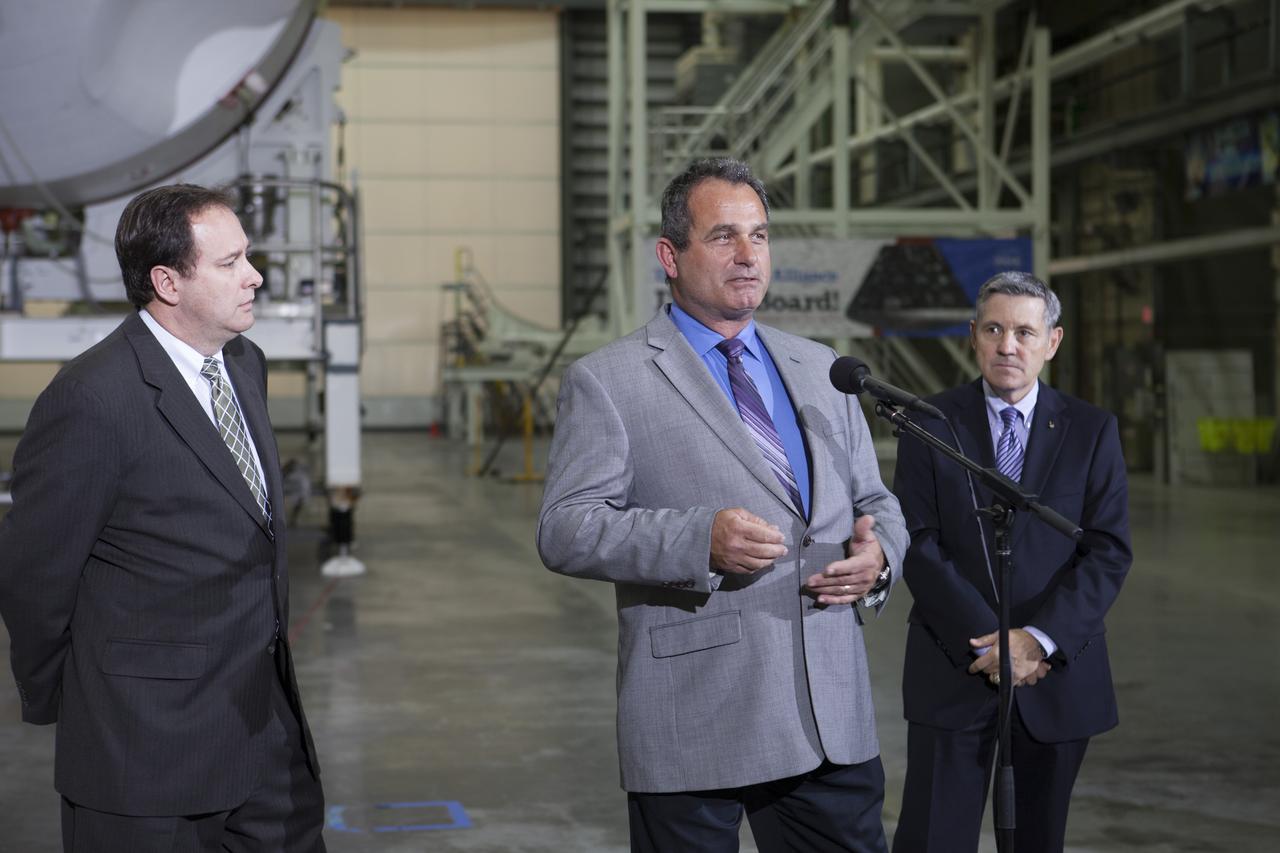
CAPE CANAVERAL, Fla. – During a media event inside the Horizontal Integration Facility at Launch Complex 37 at Cape Canaveral Air Force Station in Florida, NASA Associate Administrator Robert Lightfoot answers questions. To his right is Tony Taliancich, director of East Coast Launch Operations with United Launch Alliance, or ULA. Also participating in the event was Kennedy Space Center Director Bob Cabana. The event was held to showcase two of the ULA Delta IV boosters for the Orion Exploration Flight Test-1, or EFT-1, mission. Orion is the exploration spacecraft designed to carry astronauts to destinations not yet explored by humans, including an asteroid and Mars. It will have emergency abort capability, sustain the crew during space travel and provide safe re-entry from deep space return velocities. The first unpiloted test flight of Orion, EFT-1, is scheduled to launch in 2014 atop a Delta IV rocket and in 2017 on NASA’s Space Launch System rocket. For more information, visit http://www.nasa.gov/orion. Photo credit: NASA/Kim Shiflett
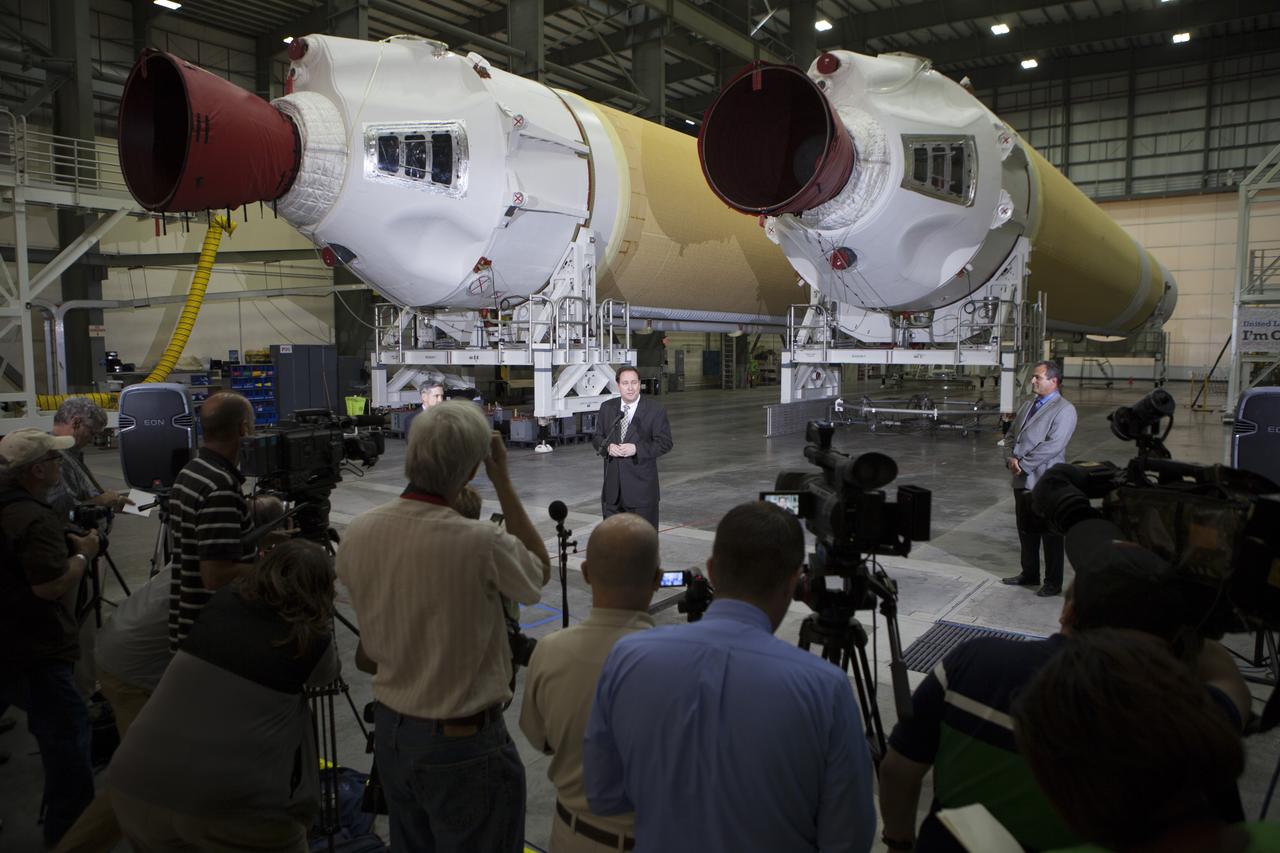
CAPE CANAVERAL, Fla. – During a media event inside the Horizontal Integration Facility at Launch Complex 37 at Cape Canaveral Air Force Station in Florida, Tony Taliancich, director of East Coast Launch Operations with United Launch Alliance, or ULA, speaks to members of the media. Also with Taliancich at the briefing were Kennedy Space Center Director Bob Cabana, at right, and NASA Associate Administrator Robert Lightfoot. The event was held to showcase two of the ULA Delta IV boosters for the Orion Exploration Flight Test-1, or EFT-1, mission. Orion is the exploration spacecraft designed to carry astronauts to destinations not yet explored by humans, including an asteroid and Mars. It will have emergency abort capability, sustain the crew during space travel and provide safe re-entry from deep space return velocities. The first unpiloted test flight of Orion, EFT-1, is scheduled to launch in 2014 atop a Delta IV rocket and in 2017 on NASA’s Space Launch System rocket. For more information, visit http://www.nasa.gov/orion. Photo credit: NASA/Kim Shiflett
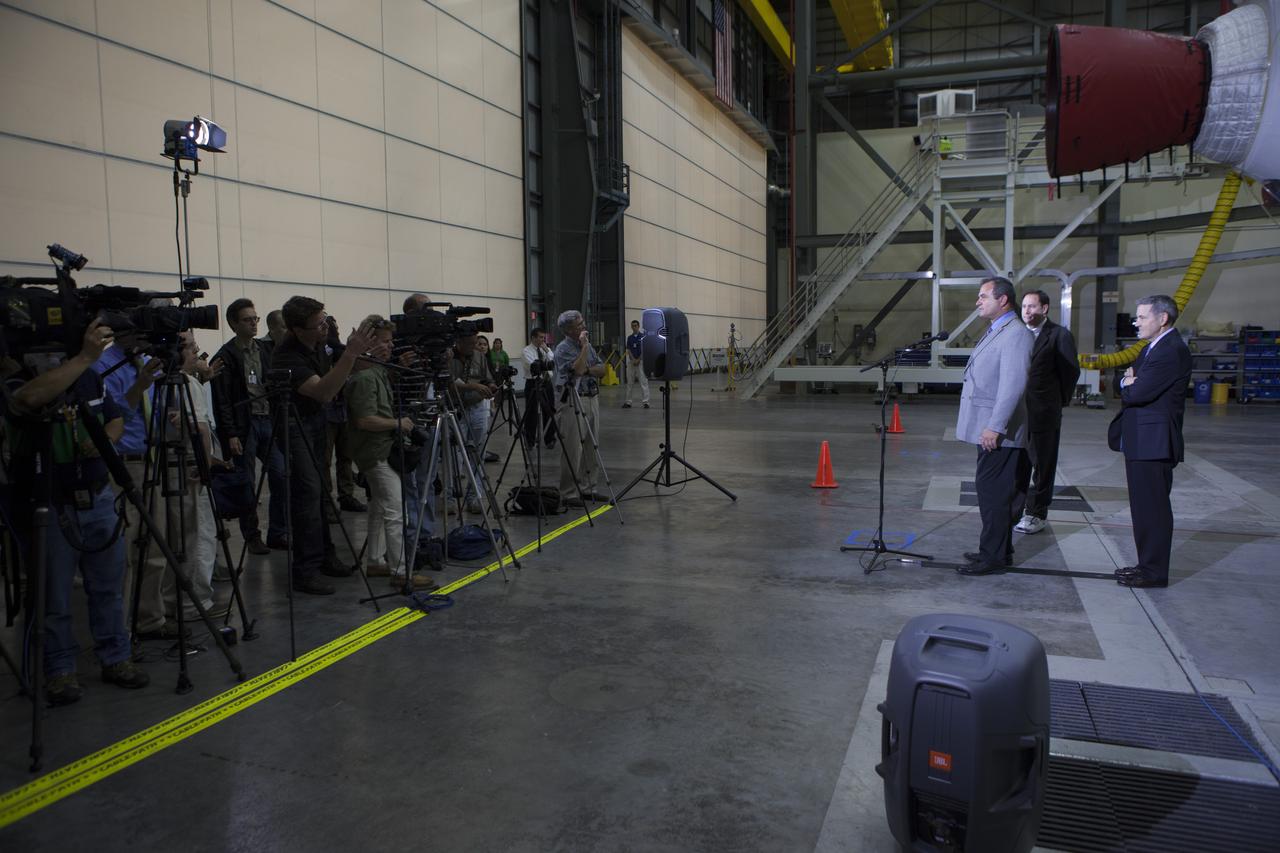
CAPE CANAVERAL, Fla. – During a media event inside the Horizontal Integration Facility at Launch Complex 37 at Cape Canaveral Air Force Station in Florida, Tony Taliancich, director of East Coast Launch Operations with United Launch Alliance, or ULA, speaks to members of the media. Also with Taliancich at the briefing were Kennedy Space Center Director Bob Cabana, at right, and NASA Associate Administrator Robert Lightfoot. The event was held to showcase two of the ULA Delta IV boosters for the Orion Exploration Flight Test-1, or EFT-1, mission. Orion is the exploration spacecraft designed to carry astronauts to destinations not yet explored by humans, including an asteroid and Mars. It will have emergency abort capability, sustain the crew during space travel and provide safe re-entry from deep space return velocities. The first unpiloted test flight of Orion, EFT-1, is scheduled to launch in 2014 atop a Delta IV rocket and in 2017 on NASA’s Space Launch System rocket. For more information, visit http://www.nasa.gov/orion. Photo credit: NASA/Kim Shiflett
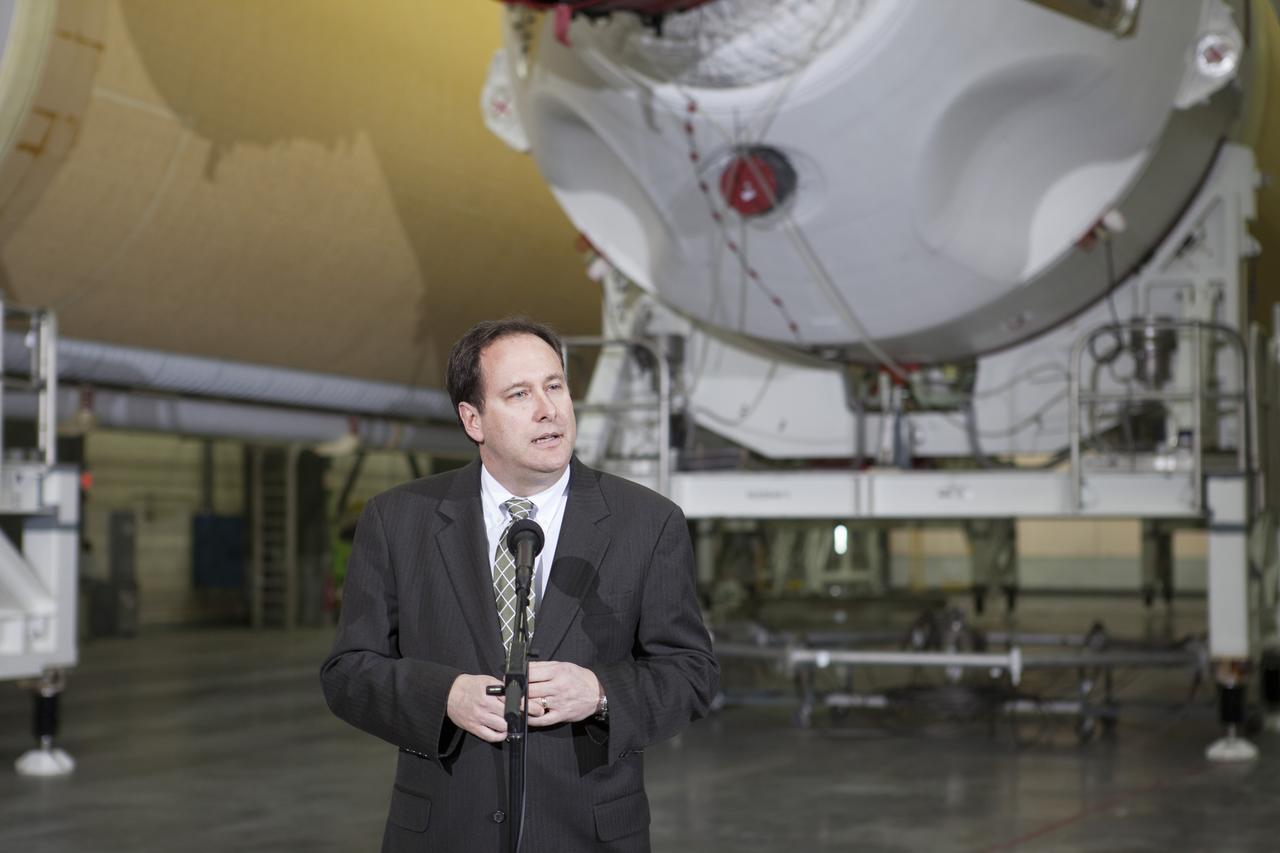
CAPE CANAVERAL, Fla. – During a media event inside the Horizontal Integration Facility at Launch Complex 37 at Cape Canaveral Air Force Station in Florida, NASA Associate Administrator Robert Lightfoot speaks to members of the media. Also attending the briefing were Kennedy Space Center Director Bob Cabana and Tony Taliancich, director of East Coast Launch Operations with United Launch Alliance, or ULA. The event was held to showcase two of the ULA Delta IV boosters for the Orion Exploration Flight Test-1, or EFT-1, mission. Orion is the exploration spacecraft designed to carry astronauts to destinations not yet explored by humans, including an asteroid and Mars. It will have emergency abort capability, sustain the crew during space travel and provide safe re-entry from deep space return velocities. The first unpiloted test flight of Orion, EFT-1, is scheduled to launch in 2014 atop a Delta IV rocket and in 2017 on NASA’s Space Launch System rocket. For more information, visit http://www.nasa.gov/orion. Photo credit: NASA/Kim Shiflett
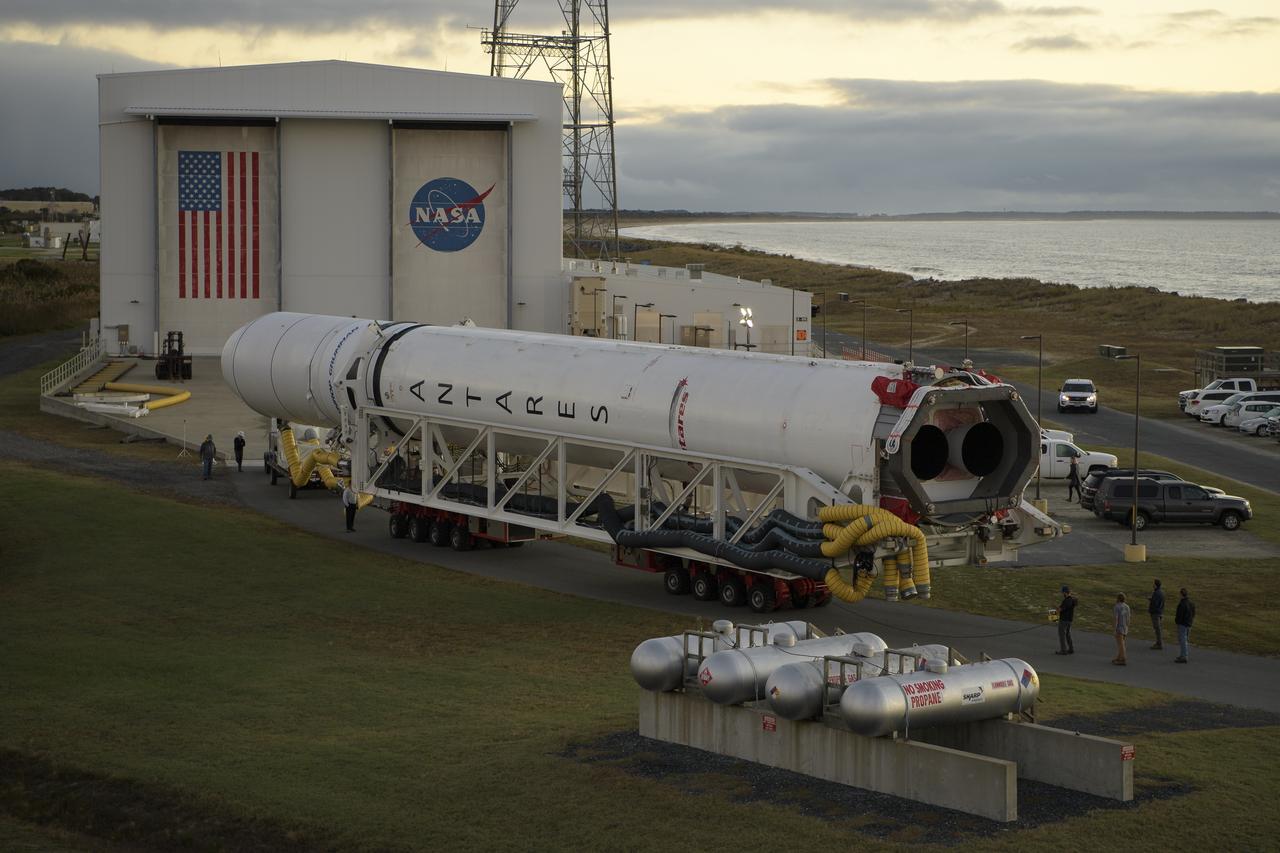
A Northrop Grumman Antares rocket is seen as it is rolled out of the Horizontal Integration Facility to launch Pad-0A, Tuesday, Oct. 29, 2019, at NASA's Wallops Flight Facility in Virginia. Northrop Grumman’s 12th contracted cargo resupply mission with NASA to the International Space Station will deliver about 8,200 pounds of science and research, crew supplies and vehicle hardware to the orbital laboratory and its crew. Launch is scheduled for 9:59 a.m. EDT Saturday, Nov. 2. Photo Credit: (NASA/Bill Ingalls)
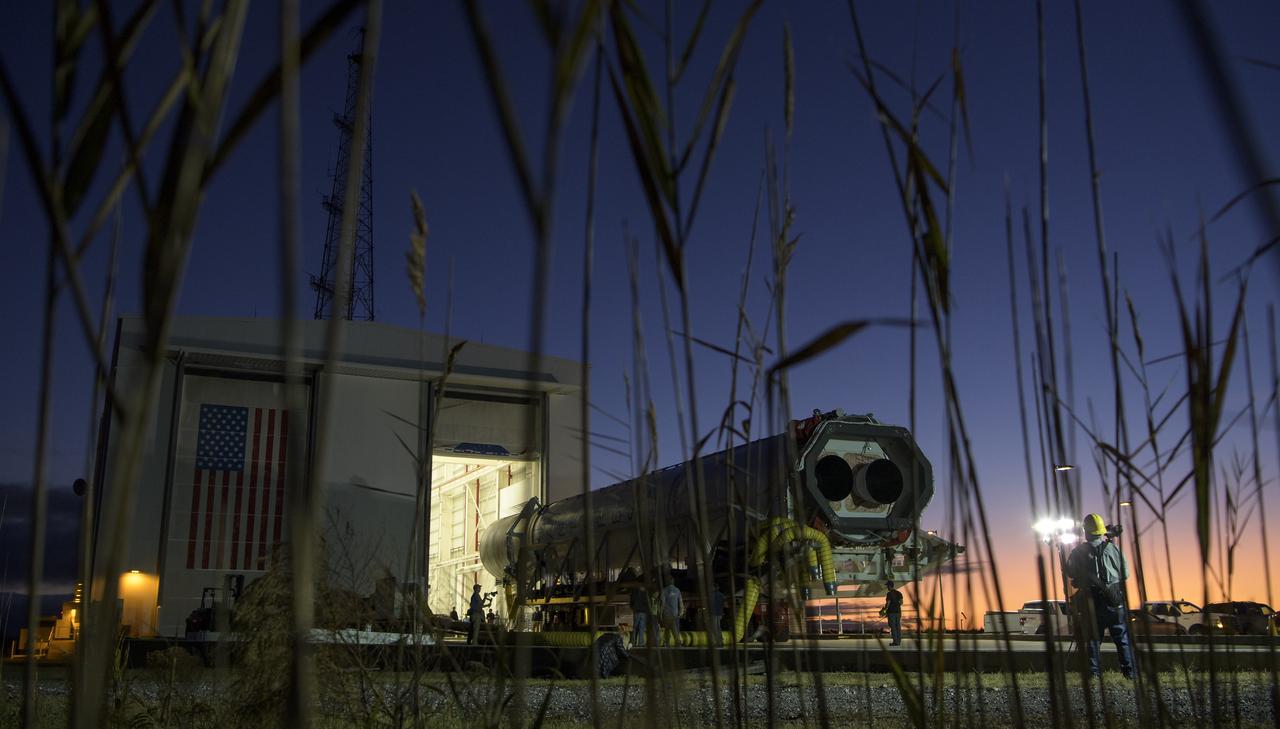
A Northrop Grumman Antares rocket is seen as it is rolled out of the Horizontal Integration Facility to launch Pad-0A, Tuesday, Oct. 29, 2019, at NASA's Wallops Flight Facility in Virginia. Northrop Grumman’s 12th contracted cargo resupply mission with NASA to the International Space Station will deliver about 8,200 pounds of science and research, crew supplies and vehicle hardware to the orbital laboratory and its crew. Launch is scheduled for 9:59 a.m. EDT Saturday, Nov. 2. Photo Credit: (NASA/Bill Ingalls)
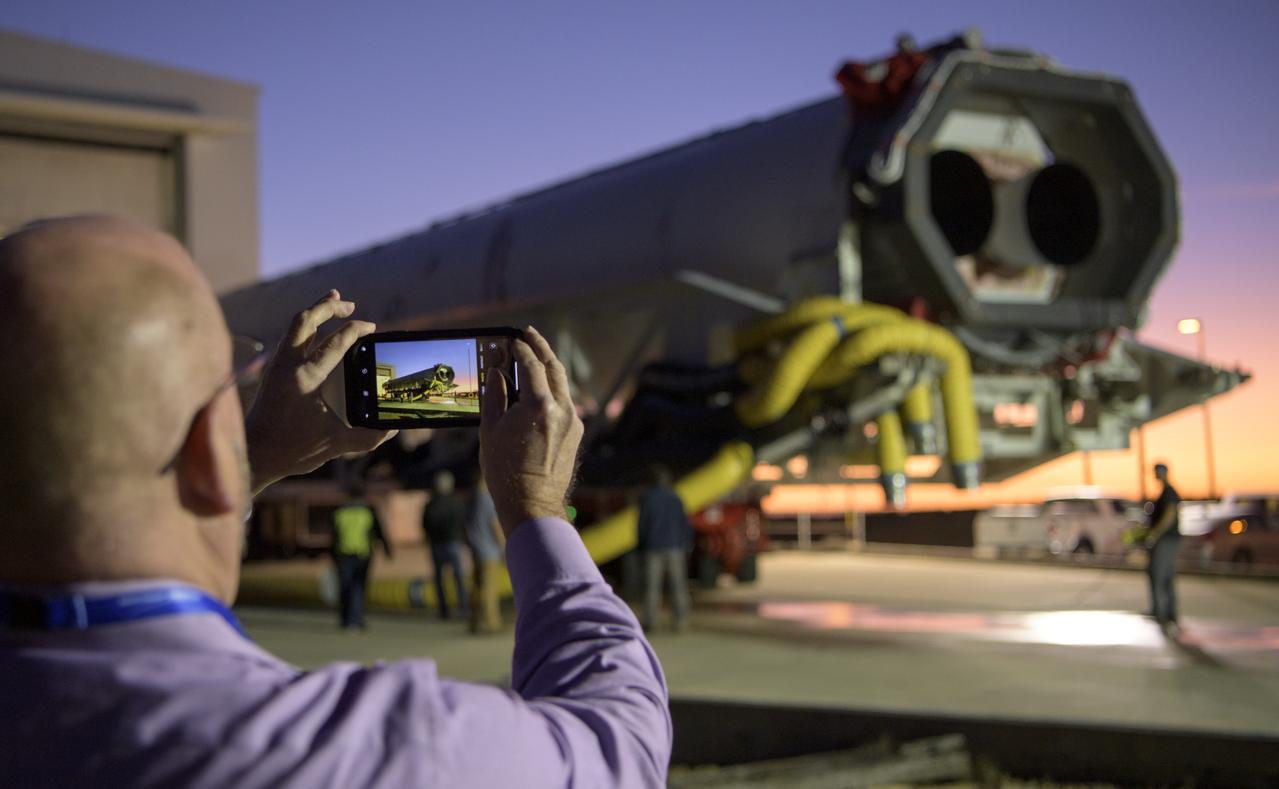
A Northrop Grumman Antares rocket is seen as it is rolled out of the Horizontal Integration Facility to launch Pad-0A, Tuesday, Oct. 29, 2019, at NASA's Wallops Flight Facility in Virginia. Northrop Grumman’s 12th contracted cargo resupply mission with NASA to the International Space Station will deliver about 8,200 pounds of science and research, crew supplies and vehicle hardware to the orbital laboratory and its crew. Launch is scheduled for 9:59 a.m. EDT Saturday, Nov. 2. Photo Credit: (NASA/Bill Ingalls)
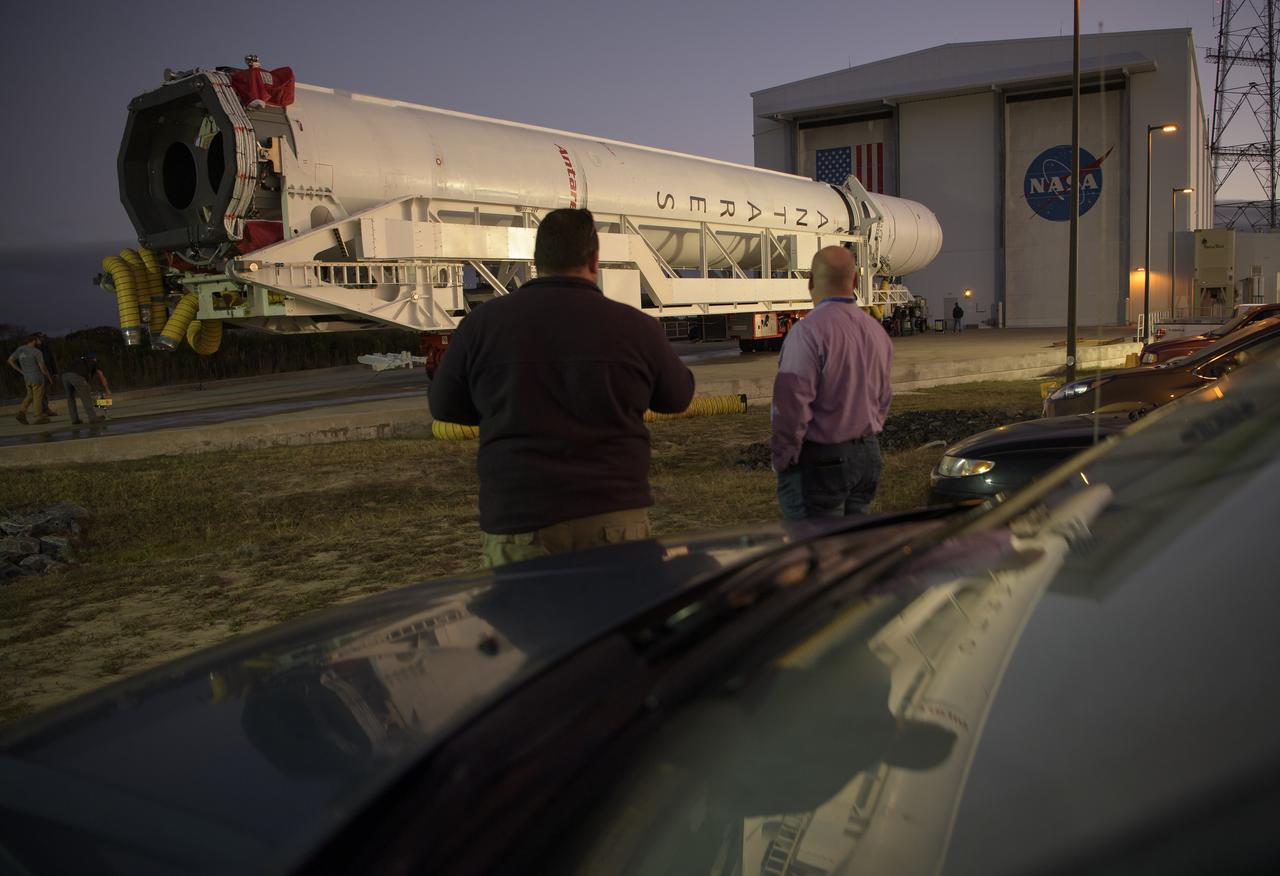
A Northrop Grumman Antares rocket is seen as it is rolled out of the Horizontal Integration Facility to launch Pad-0A, Tuesday, Oct. 29, 2019, at NASA's Wallops Flight Facility in Virginia. Northrop Grumman’s 12th contracted cargo resupply mission with NASA to the International Space Station will deliver about 8,200 pounds of science and research, crew supplies and vehicle hardware to the orbital laboratory and its crew. Launch is scheduled for 9:59 a.m. EDT Saturday, Nov. 2. Photo Credit: (NASA/Bill Ingalls)

A Northrop Grumman Antares rocket is seen as it is rolled out of the Horizontal Integration Facility to launch Pad-0A, Tuesday, Oct. 29, 2019, at NASA's Wallops Flight Facility in Virginia. Northrop Grumman’s 12th contracted cargo resupply mission with NASA to the International Space Station will deliver about 8,200 pounds of science and research, crew supplies and vehicle hardware to the orbital laboratory and its crew. Launch is scheduled for 9:59 a.m. EDT Saturday, Nov. 2. Photo Credit: (NASA/Bill Ingalls)
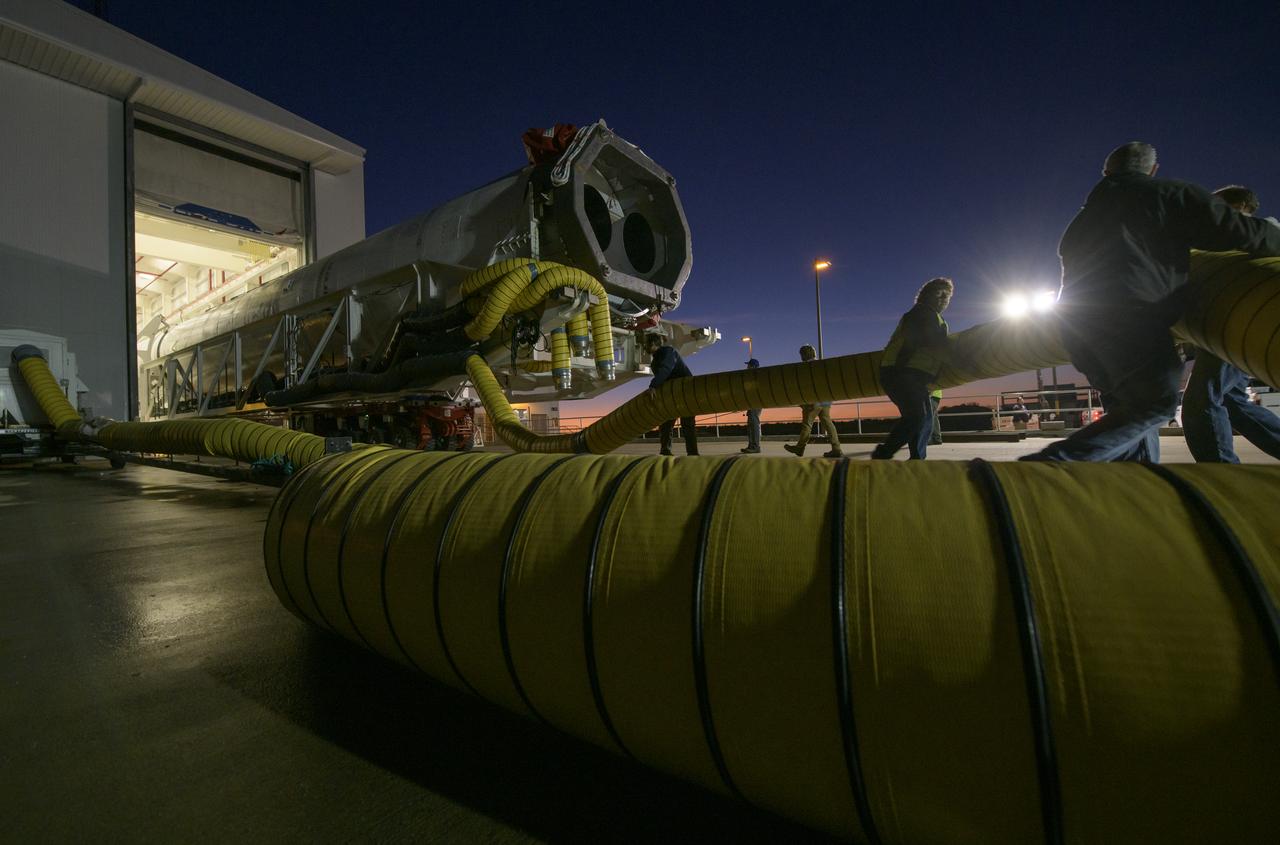
A Northrop Grumman Antares rocket is seen as it is rolled out of the Horizontal Integration Facility to launch Pad-0A, Tuesday, Oct. 29, 2019, at NASA's Wallops Flight Facility in Virginia. Northrop Grumman’s 12th contracted cargo resupply mission with NASA to the International Space Station will deliver about 8,200 pounds of science and research, crew supplies and vehicle hardware to the orbital laboratory and its crew. Launch is scheduled for 9:59 a.m. EDT Saturday, Nov. 2. Photo Credit: (NASA/Bill Ingalls)
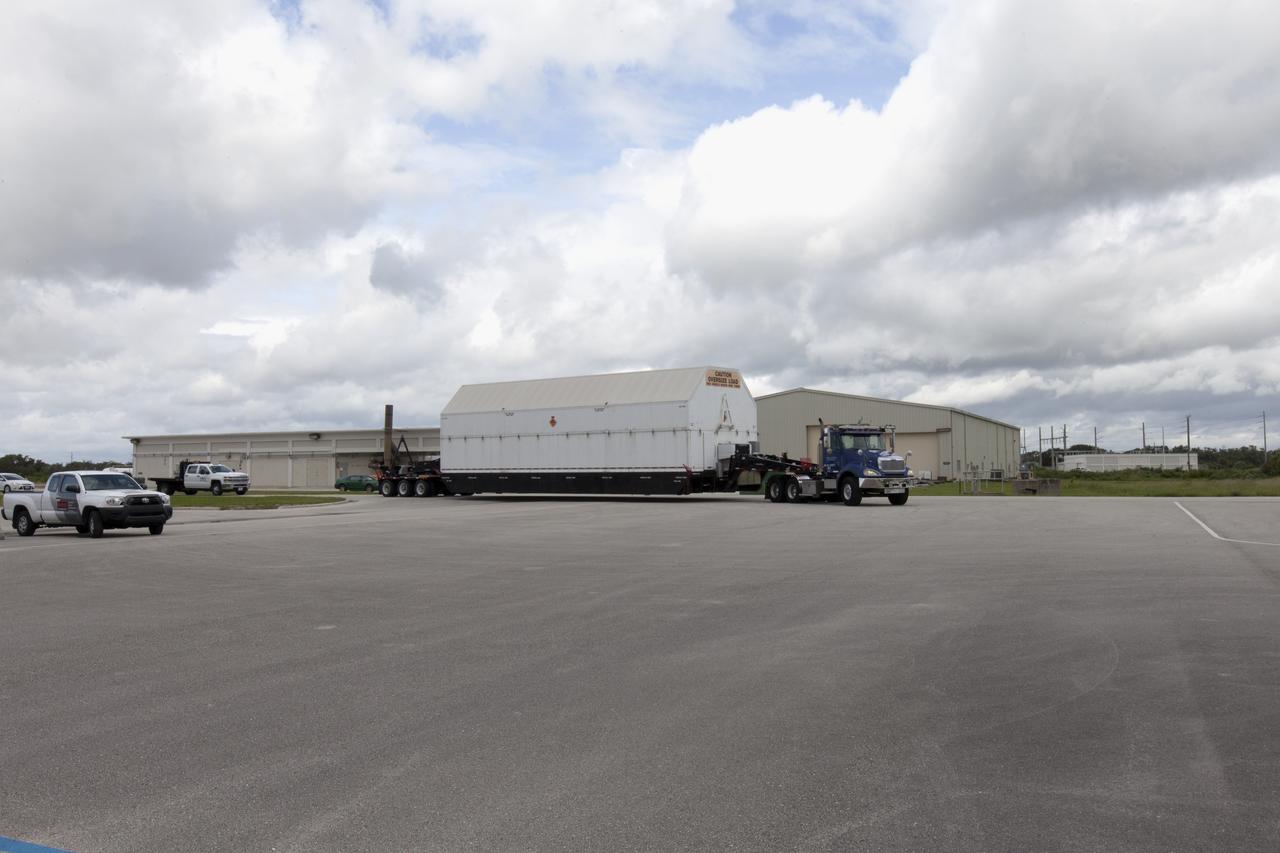
A United Launch Alliance Delta IV Heavy second stage, packaged in its shipping container, arrives at the Horizontal Integration Facility at Cape Canaveral Air Force Station for preflight processing. The Delta IV Heavy will launch NASA's upcoming Parker Solar Probe mission. The mission will perform the closest-ever observations of a star when it travels through the Sun's atmosphere, called the corona. The probe will rely on measurements and imaging to revolutionize our understanding of the corona and the Sun-Earth connection. Liftoff atop the Delta IV Heavy rocket is scheduled to take place from Cape Canaveral's Space Launch Complex 37 in summer 2018.
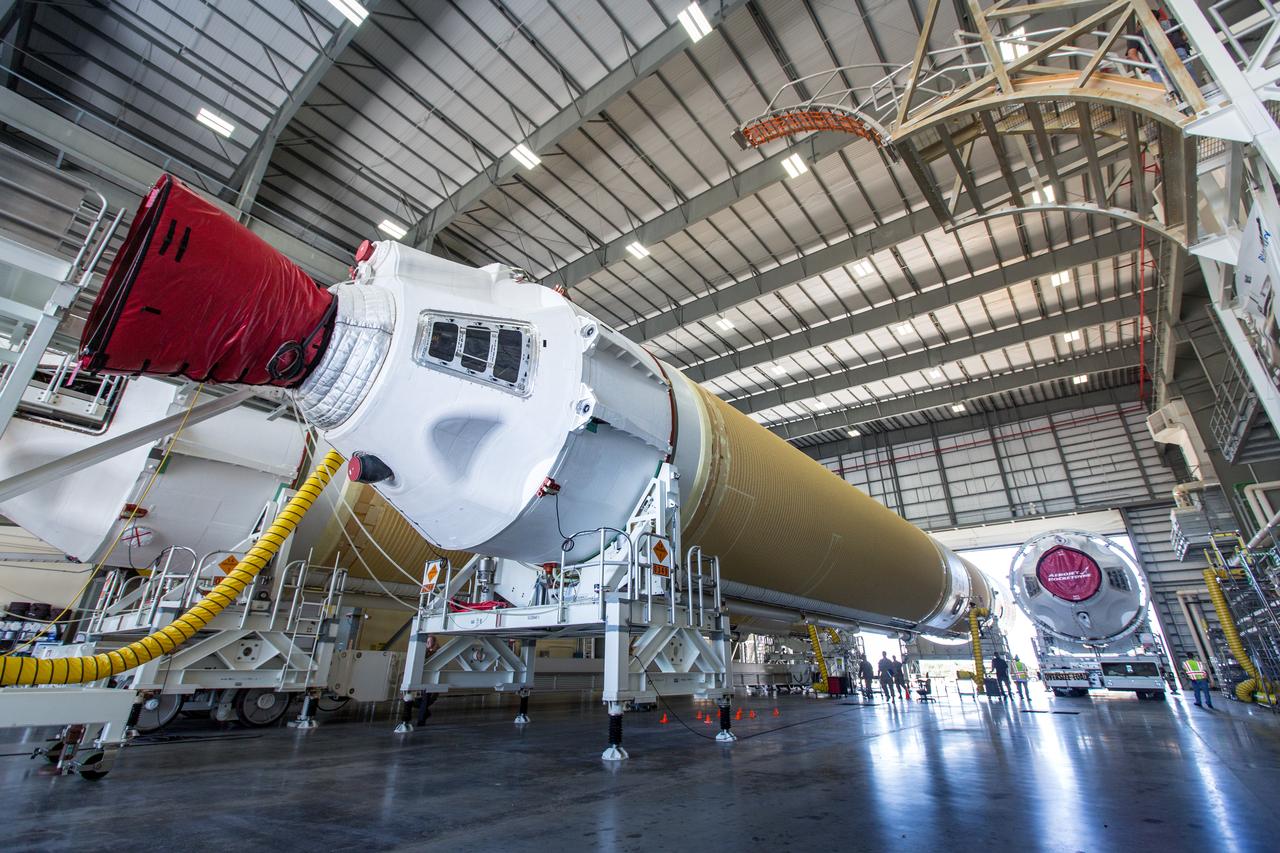
A United Launch Alliance Delta IV Heavy common booster core arrives at the Horizontal Integration Facility at Cape Canaveral Air Force Station for preflight processing. The Delta IV Heavy will launch NASA's upcoming Parker Solar Probe mission. The mission will perform the closest-ever observations of a star when it travels through the Sun's atmosphere, called the corona. The probe will rely on measurements and imaging to revolutionize our understanding of the corona and the Sun-Earth connection. Liftoff atop the Delta IV Heavy rocket is scheduled to take place from Cape Canaveral's Space Launch Complex 37 in summer 2018.
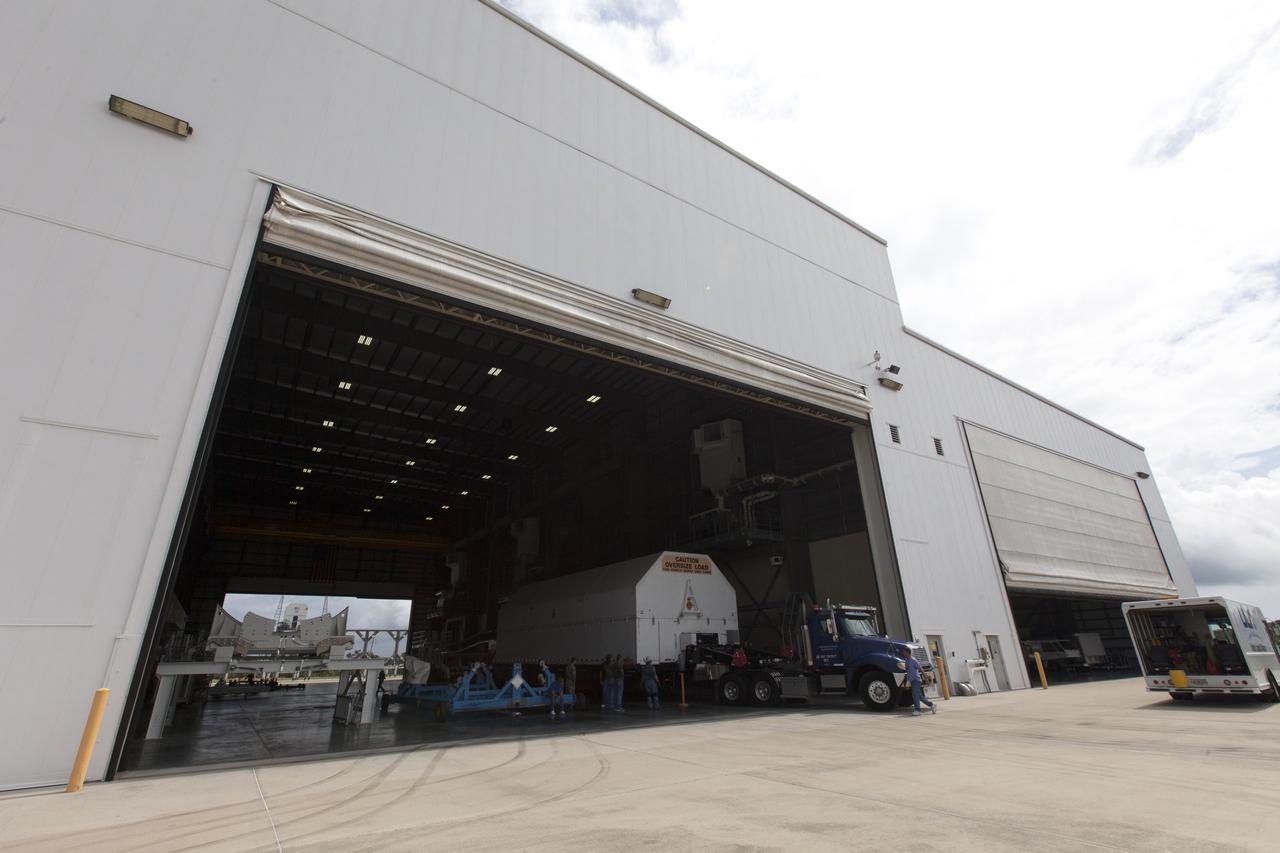
A United Launch Alliance Delta IV Heavy second stage, packaged in its shipping container, arrives at the Horizontal Integration Facility at Cape Canaveral Air Force Station for preflight processing. The Delta IV Heavy will launch NASA's upcoming Parker Solar Probe mission. The mission will perform the closest-ever observations of a star when it travels through the Sun's atmosphere, called the corona. The probe will rely on measurements and imaging to revolutionize our understanding of the corona and the Sun-Earth connection. Liftoff atop the Delta IV Heavy rocket is scheduled to take place from Cape Canaveral's Space Launch Complex 37 in summer 2018.
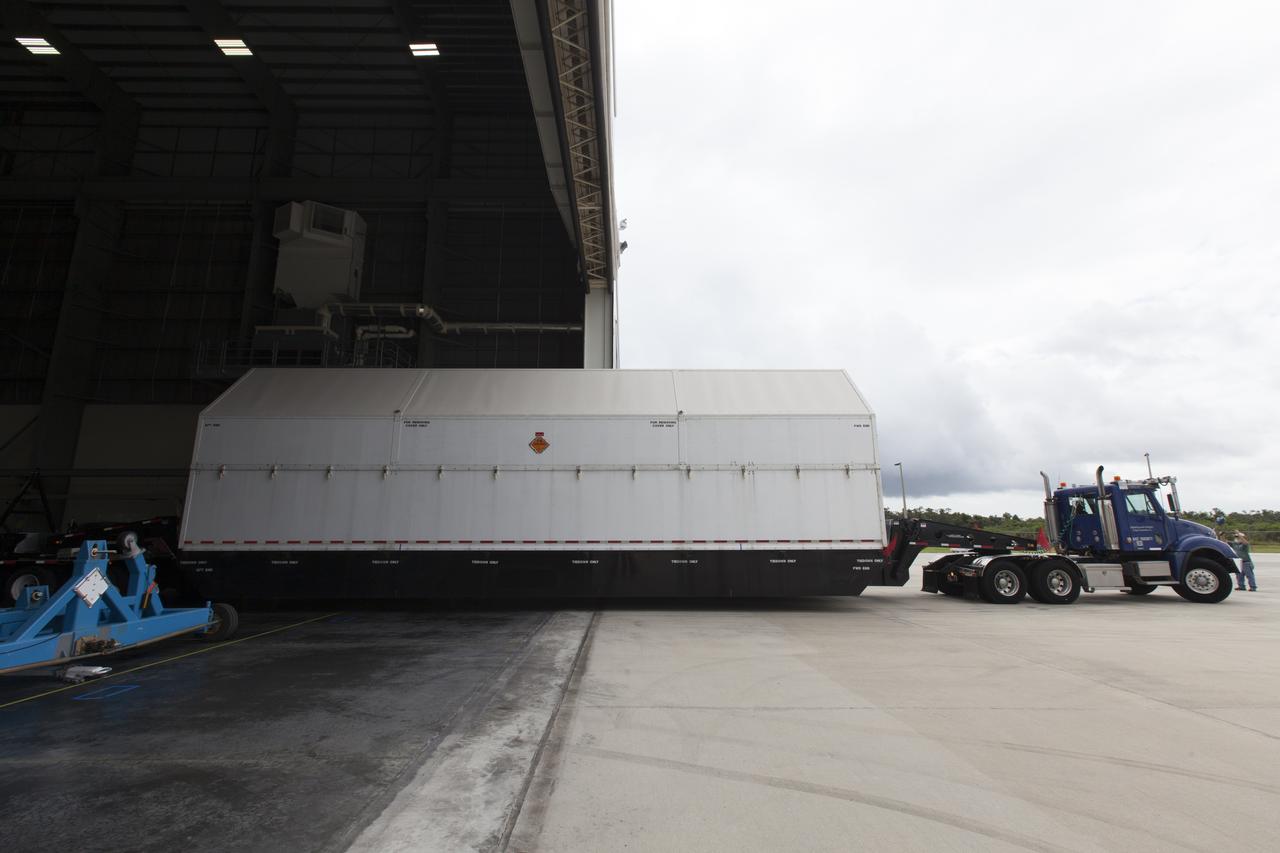
A United Launch Alliance Delta IV Heavy second stage, packaged in its shipping container, arrives at the Horizontal Integration Facility at Cape Canaveral Air Force Station for preflight processing. The Delta IV Heavy will launch NASA's upcoming Parker Solar Probe mission. The mission will perform the closest-ever observations of a star when it travels through the Sun's atmosphere, called the corona. The probe will rely on measurements and imaging to revolutionize our understanding of the corona and the Sun-Earth connection. Liftoff atop the Delta IV Heavy rocket is scheduled to take place from Cape Canaveral's Space Launch Complex 37 in summer 2018.
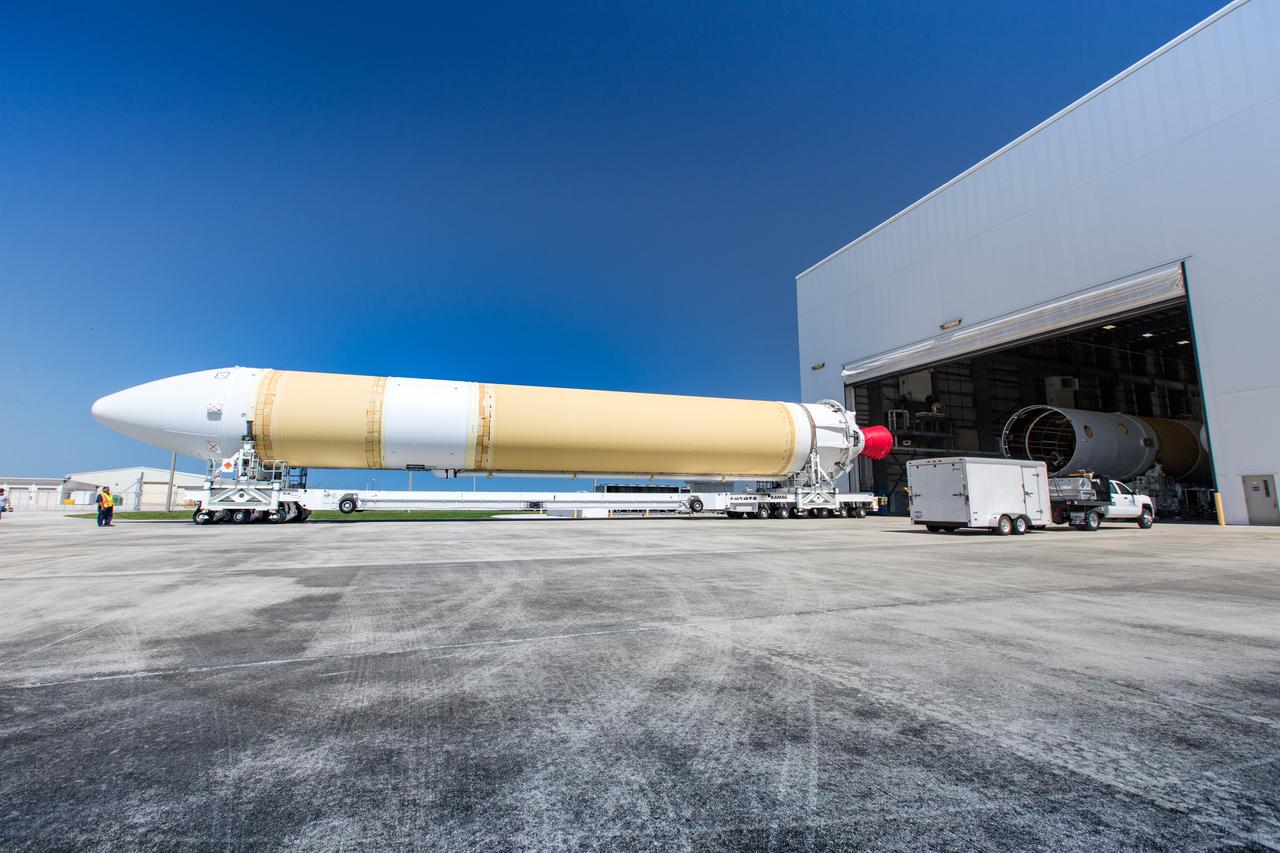
A United Launch Alliance Delta IV Heavy common booster core arrives at the Horizontal Integration Facility at Cape Canaveral Air Force Station for preflight processing. The Delta IV Heavy will launch NASA's upcoming Parker Solar Probe mission. The mission will perform the closest-ever observations of a star when it travels through the Sun's atmosphere, called the corona. The probe will rely on measurements and imaging to revolutionize our understanding of the corona and the Sun-Earth connection. Liftoff atop the Delta IV Heavy rocket is scheduled to take place from Cape Canaveral's Space Launch Complex 37 in summer 2018.
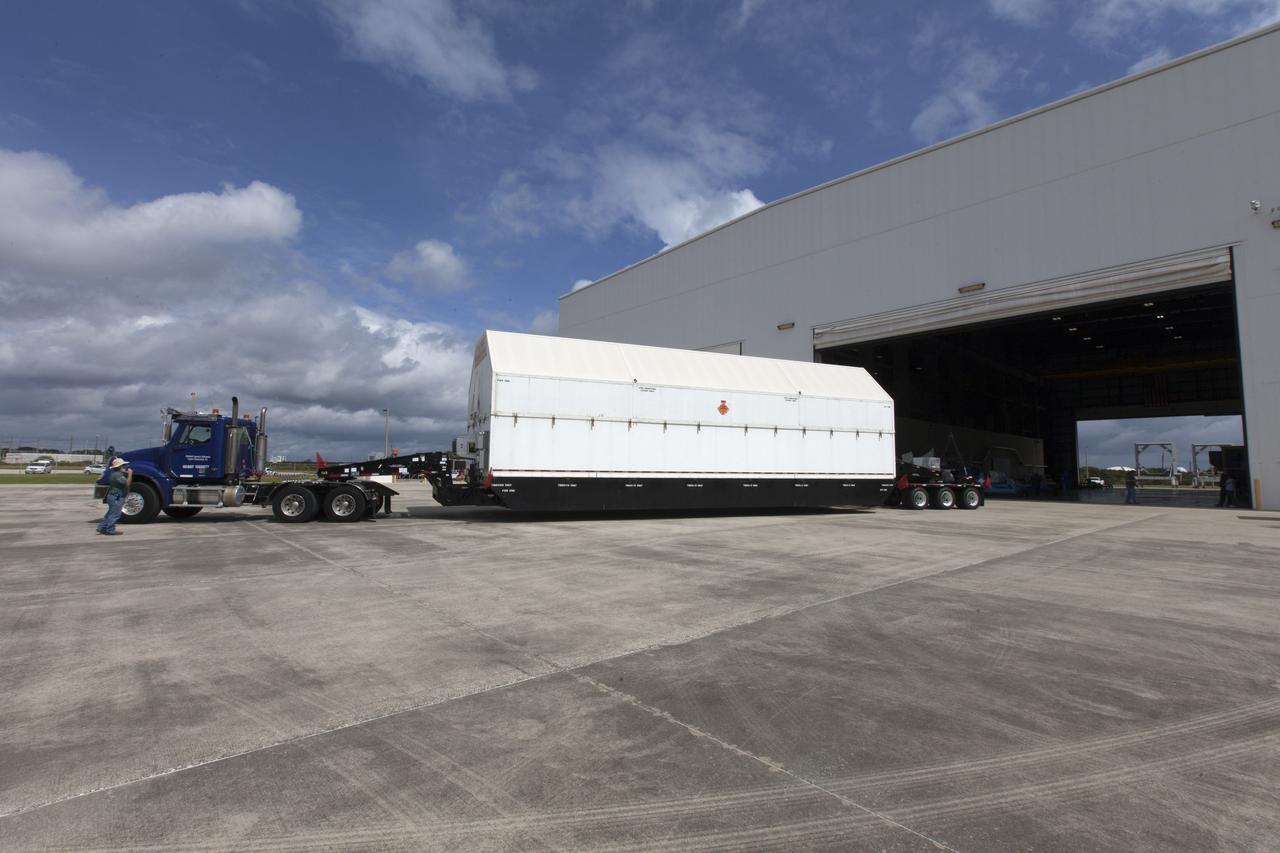
A United Launch Alliance Delta IV Heavy second stage, packaged in its shipping container, arrives at the Horizontal Integration Facility at Cape Canaveral Air Force Station for preflight processing. The Delta IV Heavy will launch NASA's upcoming Parker Solar Probe mission. The mission will perform the closest-ever observations of a star when it travels through the Sun's atmosphere, called the corona. The probe will rely on measurements and imaging to revolutionize our understanding of the corona and the Sun-Earth connection. Liftoff atop the Delta IV Heavy rocket is scheduled to take place from Cape Canaveral's Space Launch Complex 37 in summer 2018.
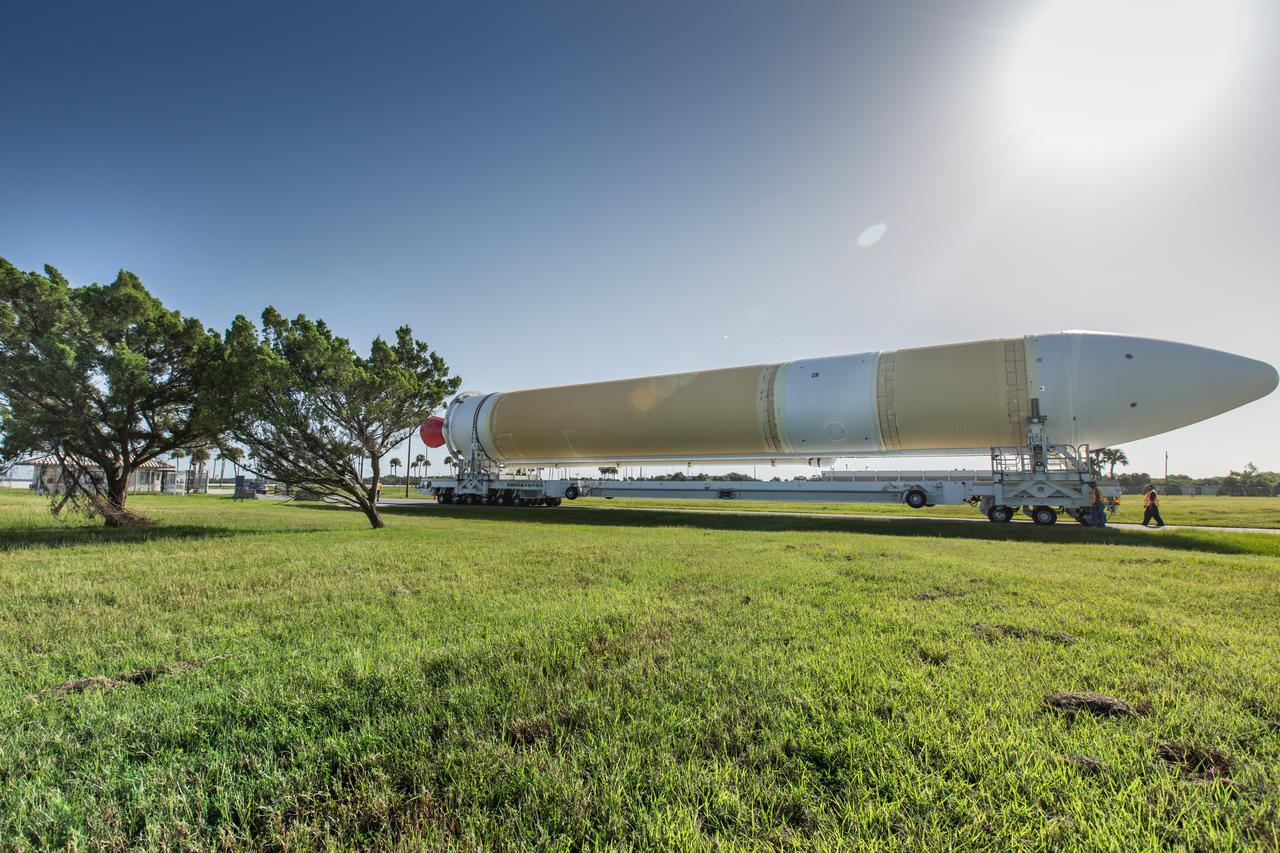
A United Launch Alliance Delta IV Heavy common booster core is transported to the Horizontal Integration Facility at Cape Canaveral Air Force Station for preflight processing. The Delta IV Heavy will launch NASA's upcoming Parker Solar Probe mission. The mission will perform the closest-ever observations of a star when it travels through the Sun's atmosphere, called the corona. The probe will rely on measurements and imaging to revolutionize our understanding of the corona and the Sun-Earth connection. Liftoff atop the Delta IV Heavy rocket is scheduled to take place from Cape Canaveral's Space Launch Complex 37 in summer 2018.
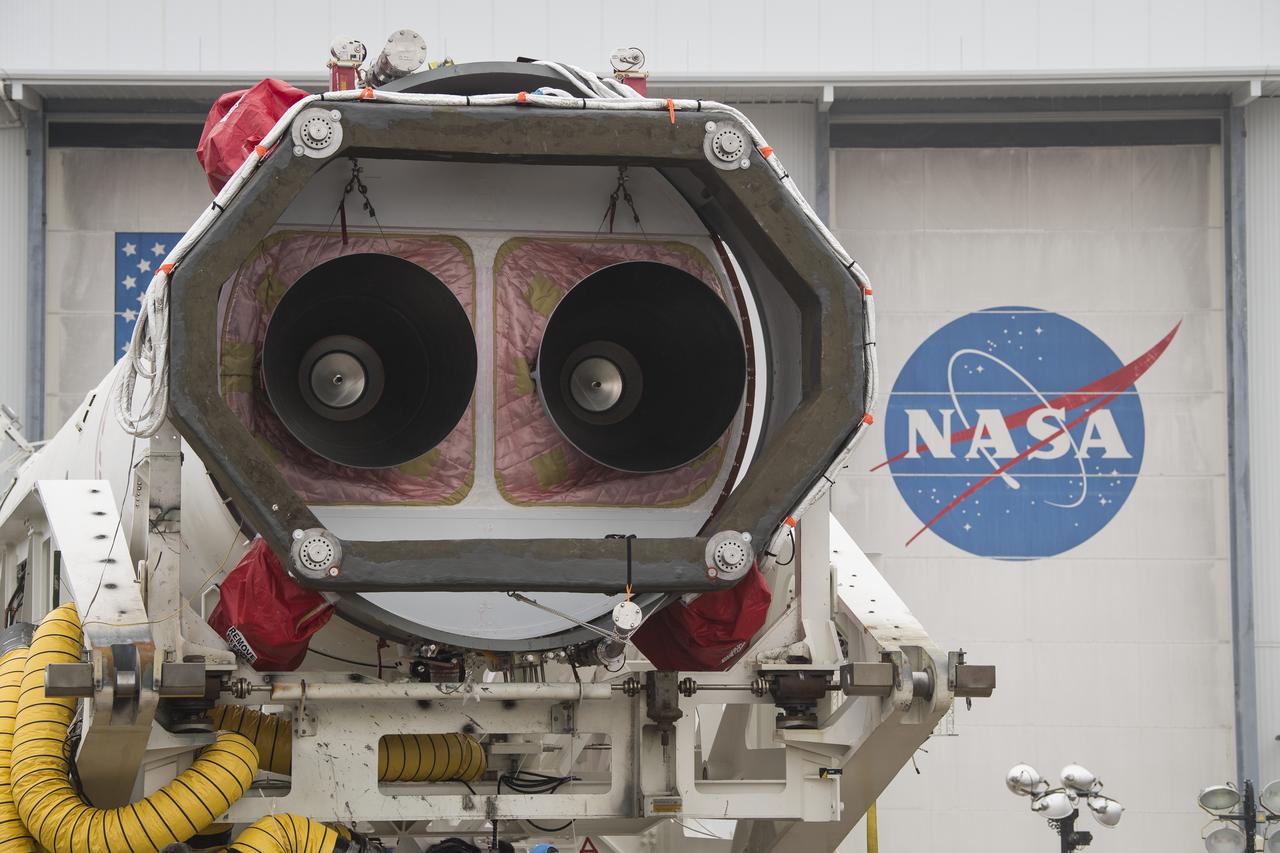
A Northrop Grumman Antares rocket is seen as it is rolled out of the Horizontal Integration Facility to launch Pad-0A, Wednesday, Feb. 5, 2020, at NASA's Wallops Flight Facility in Virginia. Northrop Grumman’s 13th contracted cargo resupply mission with NASA to the International Space Station will deliver more than 7,500 pounds of science and research, crew supplies and vehicle hardware to the orbital laboratory and its crew. The CRS-13 Cygnus spacecraft is named after the first African American astronaut, Major Robert Henry Lawrence Jr., and is scheduled to launch at 5:39pm EST Sunday, Feb. 9. Photo Credit: (NASA/Aubrey Gemignani)
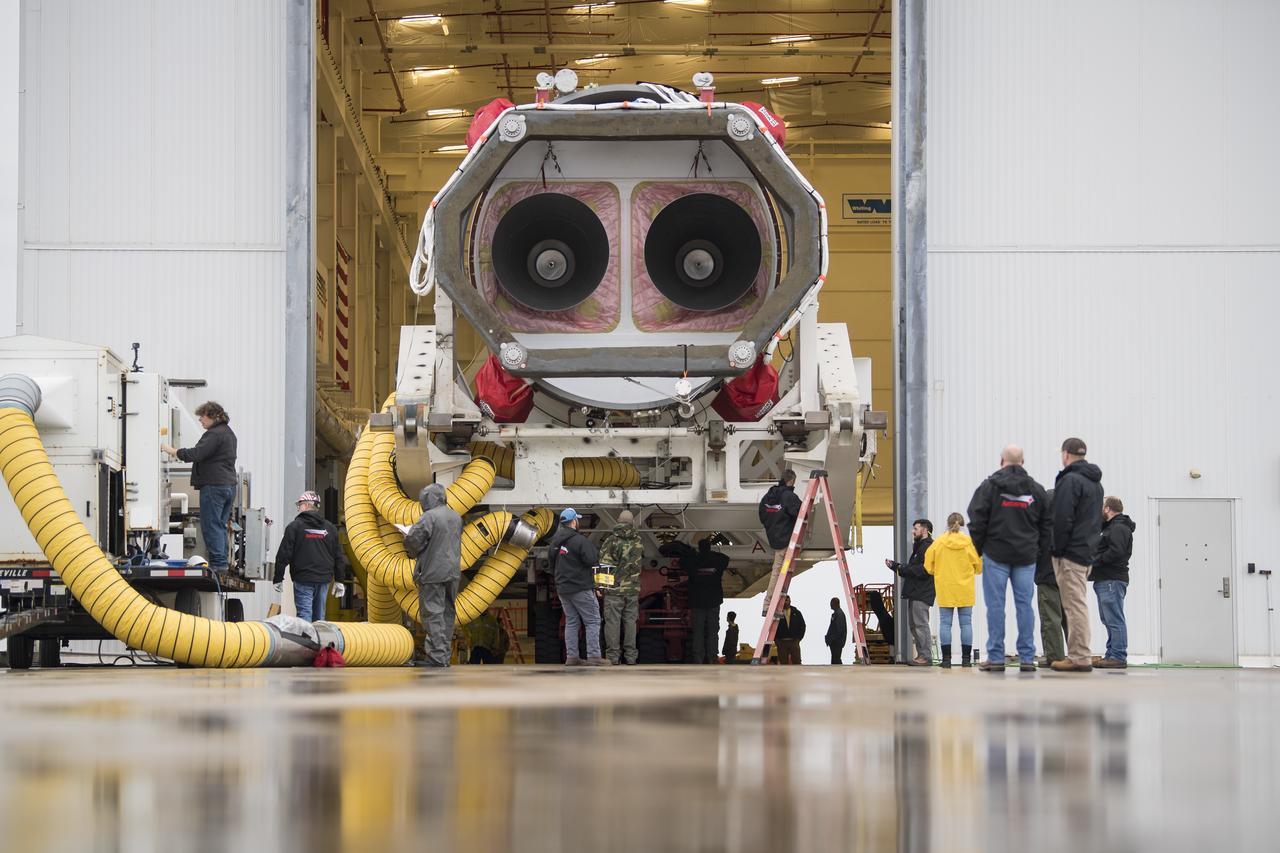
A Northrop Grumman Antares rocket is seen as it is rolled out of the Horizontal Integration Facility to launch Pad-0A, Wednesday, Feb. 5, 2020, at NASA's Wallops Flight Facility in Virginia. Northrop Grumman’s 13th contracted cargo resupply mission with NASA to the International Space Station will deliver more than 7,500 pounds of science and research, crew supplies and vehicle hardware to the orbital laboratory and its crew. The CRS-13 Cygnus spacecraft is named after the first African American astronaut, Major Robert Henry Lawrence Jr., and is scheduled to launch at 5:39pm EST Sunday, Feb. 9. Photo Credit: (NASA/Aubrey Gemignani)
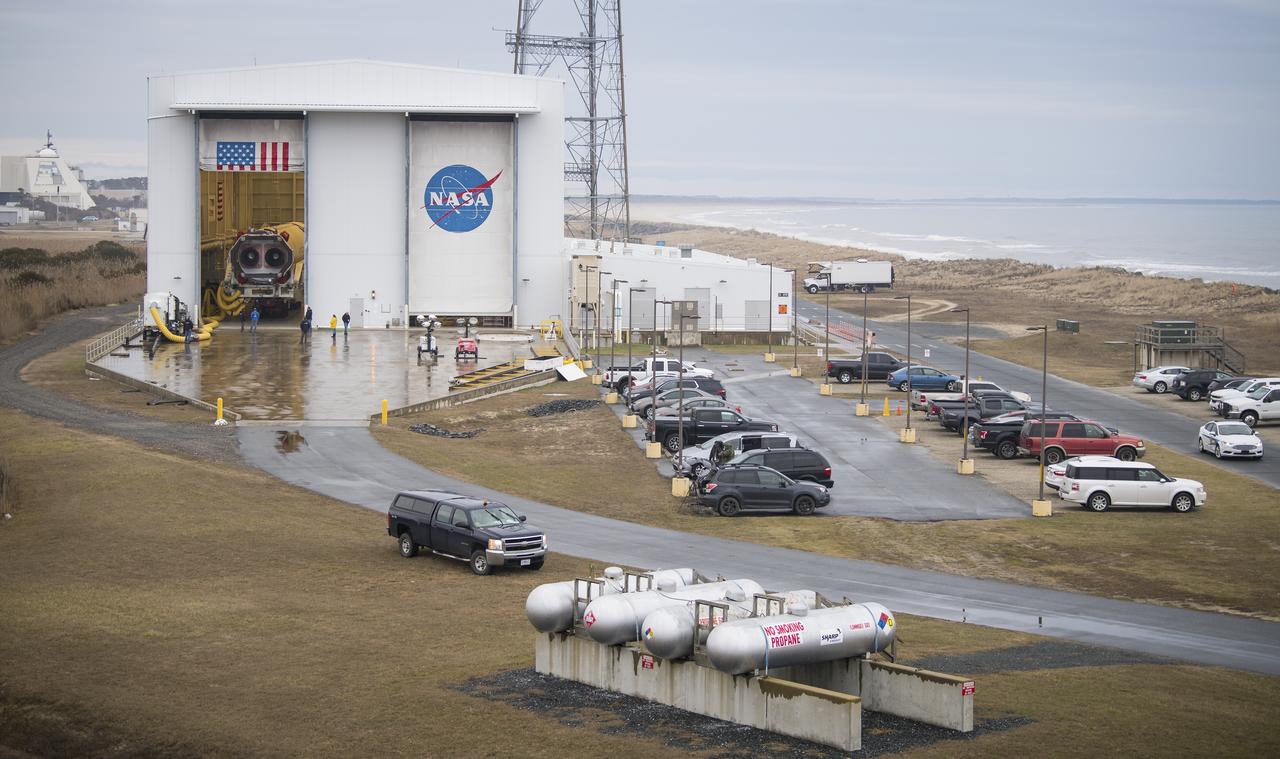
A Northrop Grumman Antares rocket is seen as it is rolled out of the Horizontal Integration Facility to launch Pad-0A, Wednesday, Feb. 5, 2020, at NASA's Wallops Flight Facility in Virginia. Northrop Grumman’s 13th contracted cargo resupply mission with NASA to the International Space Station will deliver more than 7,500 pounds of science and research, crew supplies and vehicle hardware to the orbital laboratory and its crew. The CRS-13 Cygnus spacecraft is named after the first African American astronaut, Major Robert Henry Lawrence Jr., and is scheduled to launch at 5:39pm EST Sunday, Feb. 9. Photo Credit: (NASA/Aubrey Gemignani)
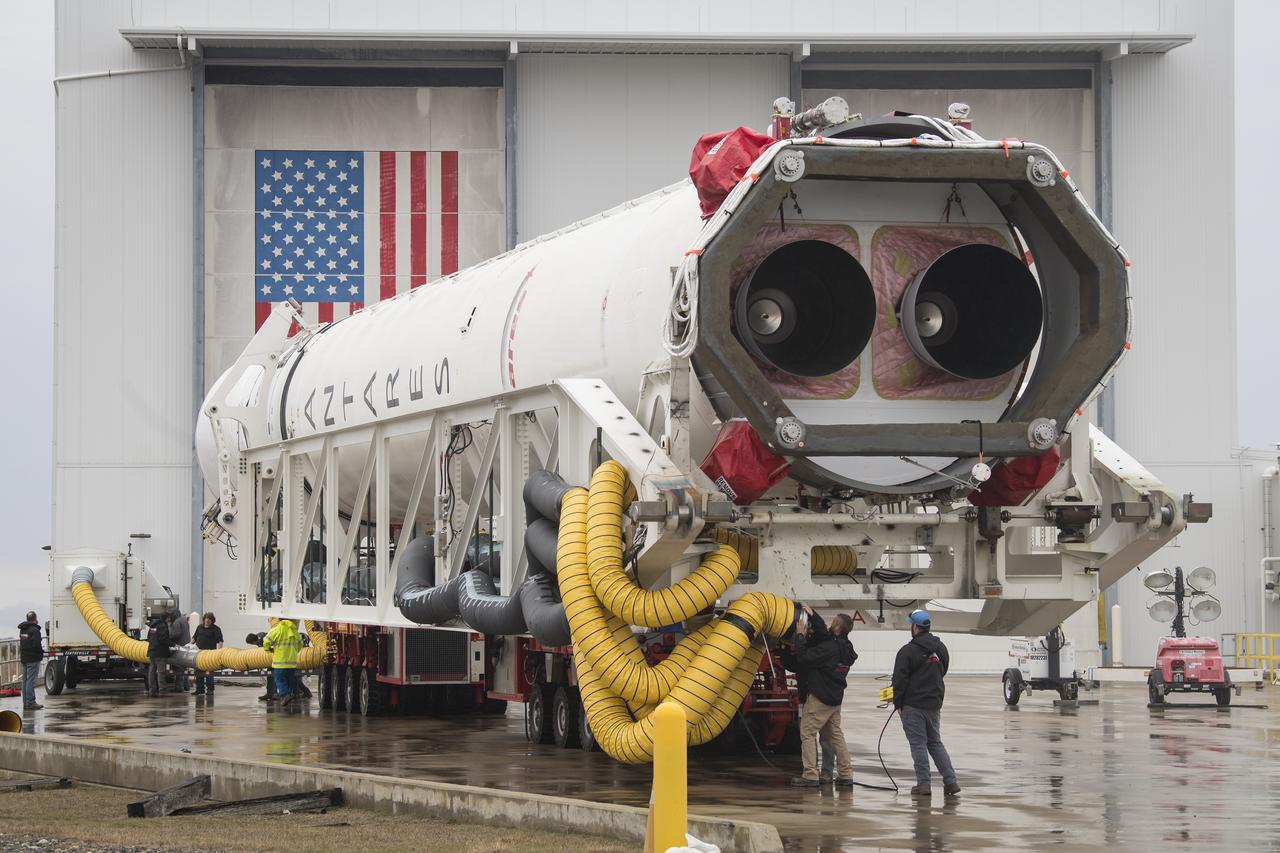
A Northrop Grumman Antares rocket is seen as it is rolled out of the Horizontal Integration Facility to launch Pad-0A, Wednesday, Feb. 5, 2020, at NASA's Wallops Flight Facility in Virginia. Northrop Grumman’s 13th contracted cargo resupply mission with NASA to the International Space Station will deliver more than 7,500 pounds of science and research, crew supplies and vehicle hardware to the orbital laboratory and its crew. The CRS-13 Cygnus spacecraft is named after the first African American astronaut, Major Robert Henry Lawrence Jr., and is scheduled to launch at 5:39pm EST Sunday, Feb. 9. Photo Credit: (NASA/Aubrey Gemignani)
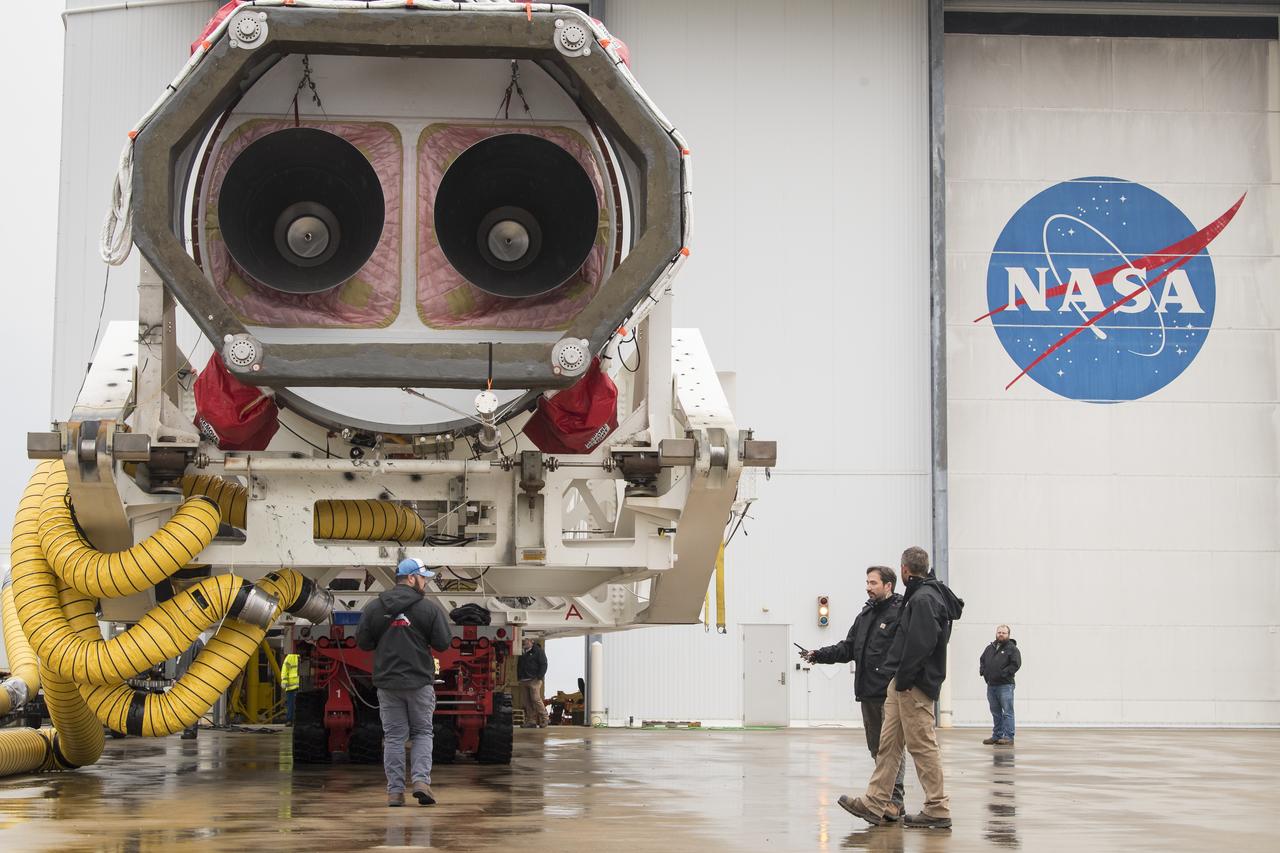
A Northrop Grumman Antares rocket is seen as it is rolled out of the Horizontal Integration Facility to launch Pad-0A, Wednesday, Feb. 5, 2020, at NASA's Wallops Flight Facility in Virginia. Northrop Grumman’s 13th contracted cargo resupply mission with NASA to the International Space Station will deliver more than 7,500 pounds of science and research, crew supplies and vehicle hardware to the orbital laboratory and its crew. The CRS-13 Cygnus spacecraft is named after the first African American astronaut, Major Robert Henry Lawrence Jr., and is scheduled to launch at 5:39pm EST Sunday, Feb. 9. Photo Credit: (NASA/Aubrey Gemignani)
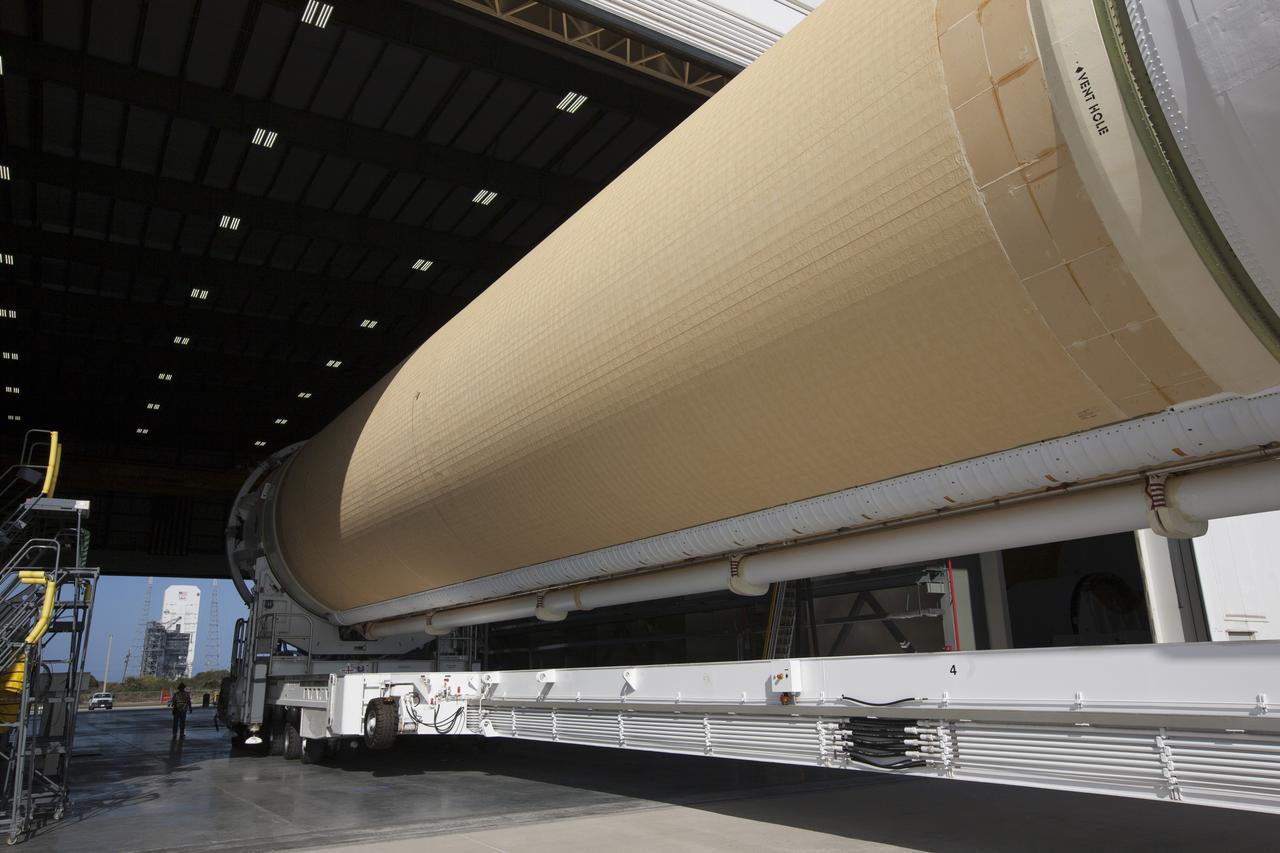
CAPE CANAVERAL, Fla. – The core booster for the United Launch Alliance Delta IV heavy for NASA’s upcoming Exploration Flight Test-1, or EFT-1, mission with the Orion spacecraft, was transported to the Horizontal Integration Facility, or HIF, at Space Launch Complex 37 on Cape Canaveral Air Force Station in Florida. The core booster and starboard booster arrived by barge at the U.S. Army Outpost wharf at Port Canaveral. The port booster and the upper stage are planned to be shipped to Cape Canaveral in April. At the HIF, all three boosters will be processed and checked out before being moved to the nearby launch pad and hoisted into position. During the EFT-1 mission, Orion will travel farther into space than any human spacecraft has gone in more than 40 years. The data gathered during the flight will influence design decisions, validate existing computer models and innovative new approaches to space systems development, as well as reduce overall mission risks and costs for later Orion flights. Liftoff of Orion on EFT-1 is planned for fall 2014. Photo credit: NASA/Kim Shiflett
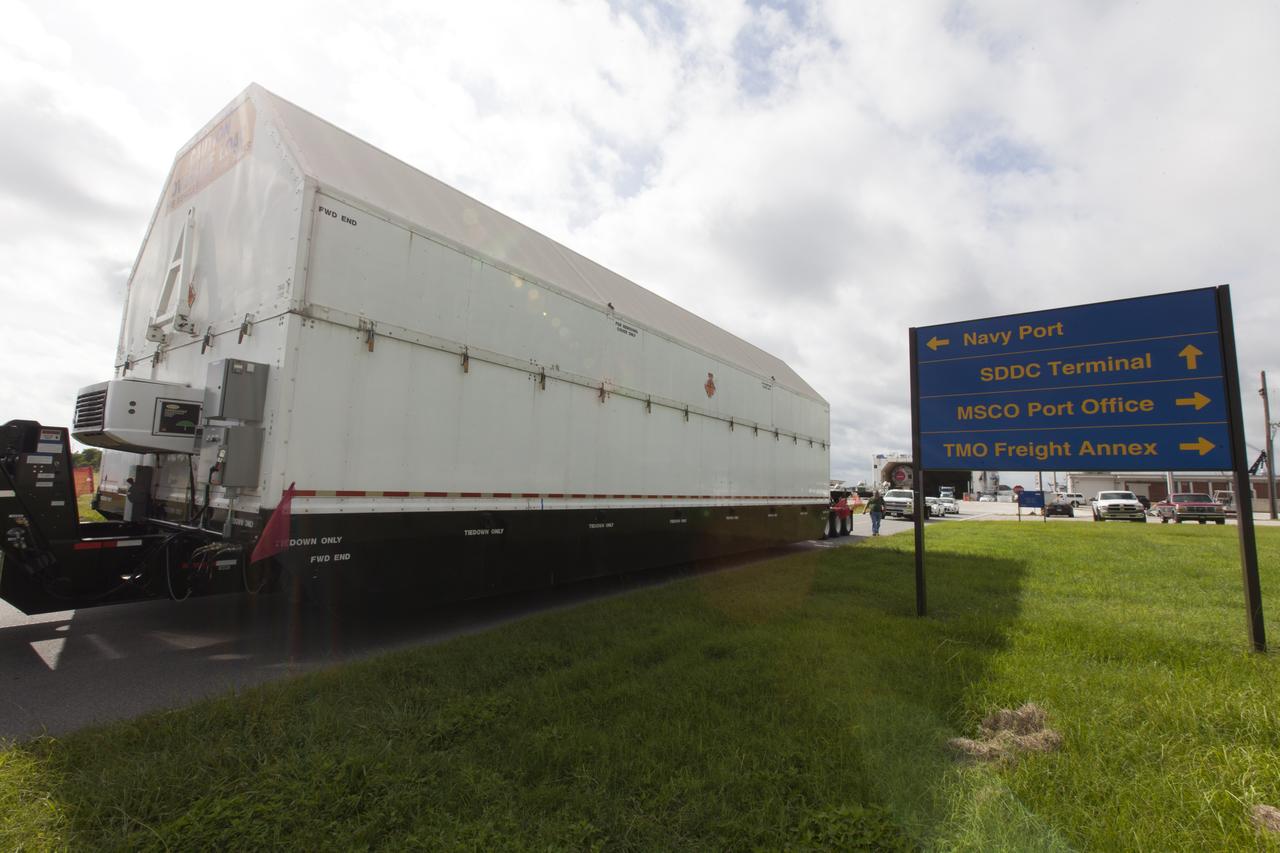
A United Launch Alliance Delta IV Heavy second stage, packaged in its shipping container, has been offloaded from the company's Mariner ship at Port Canaveral in Florida. It will be transported to the Horizontal Integration Facility at Cape Canaveral Air Force Station for preflight processing. The Delta IV Heavy will launch NASA's upcoming Parker Solar Probe mission. The mission will perform the closest-ever observations of a star when it travels through the Sun's atmosphere, called the corona. The probe will rely on measurements and imaging to revolutionize our understanding of the corona and the Sun-Earth connection. Liftoff atop the Delta IV Heavy rocket is scheduled to take place from Cape Canaveral's Space Launch Complex 37 in summer 2018.
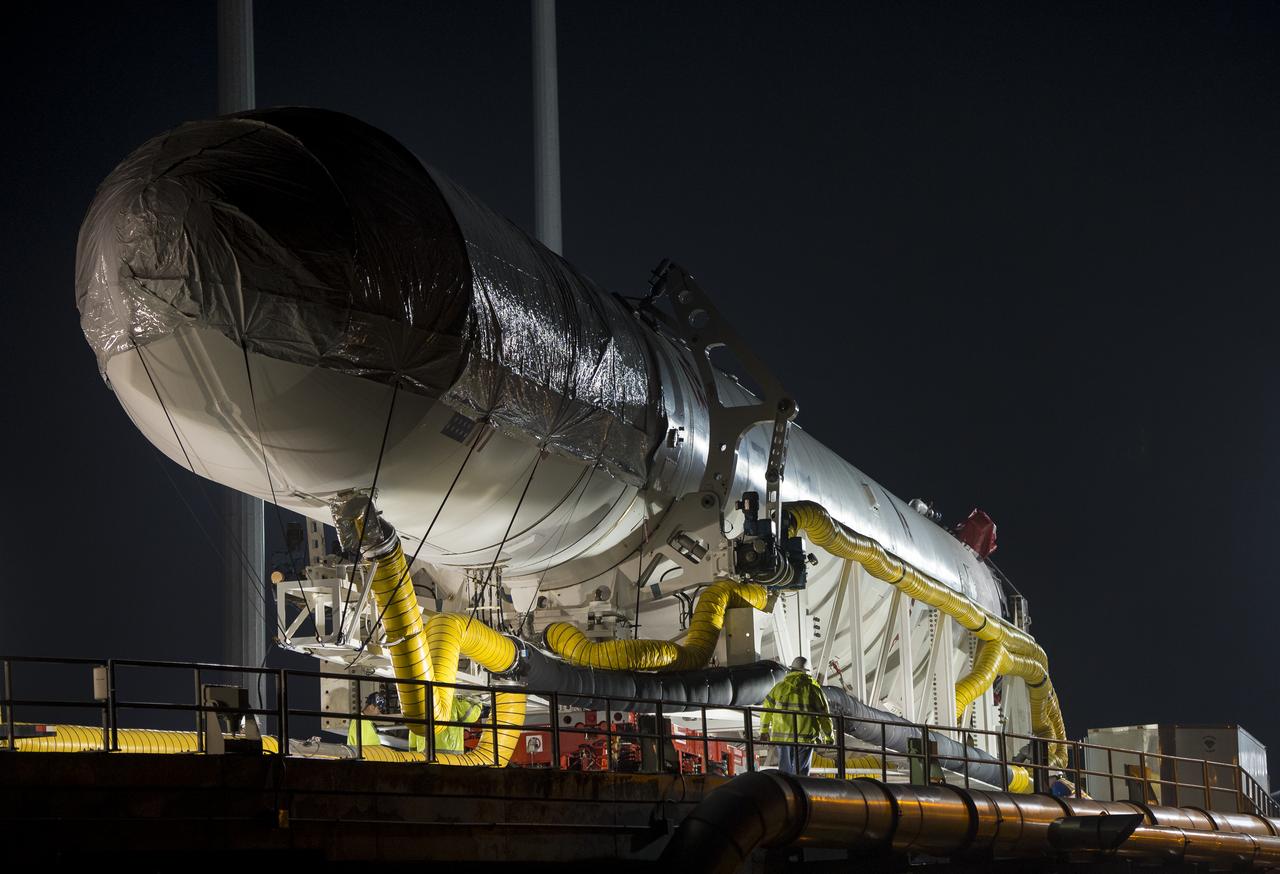
The Orbital Sciences Corporation Antares rocket, with the Cygnus spacecraft onboard, arrives at launch Pad-0A, Thursday, July 10, 2014, at NASA's Wallops Flight Facility in Virginia. The Antares will launch with the Cygnus spacecraft filled with over 3,000 pounds of supplies for the International Space Station, including science experiments, experiment hardware, spare parts, and crew provisions. The Orbital-2 mission is Orbital Sciences' second contracted cargo delivery flight to the space station for NASA. Photo Credit: (NASA/Bill Ingalls)
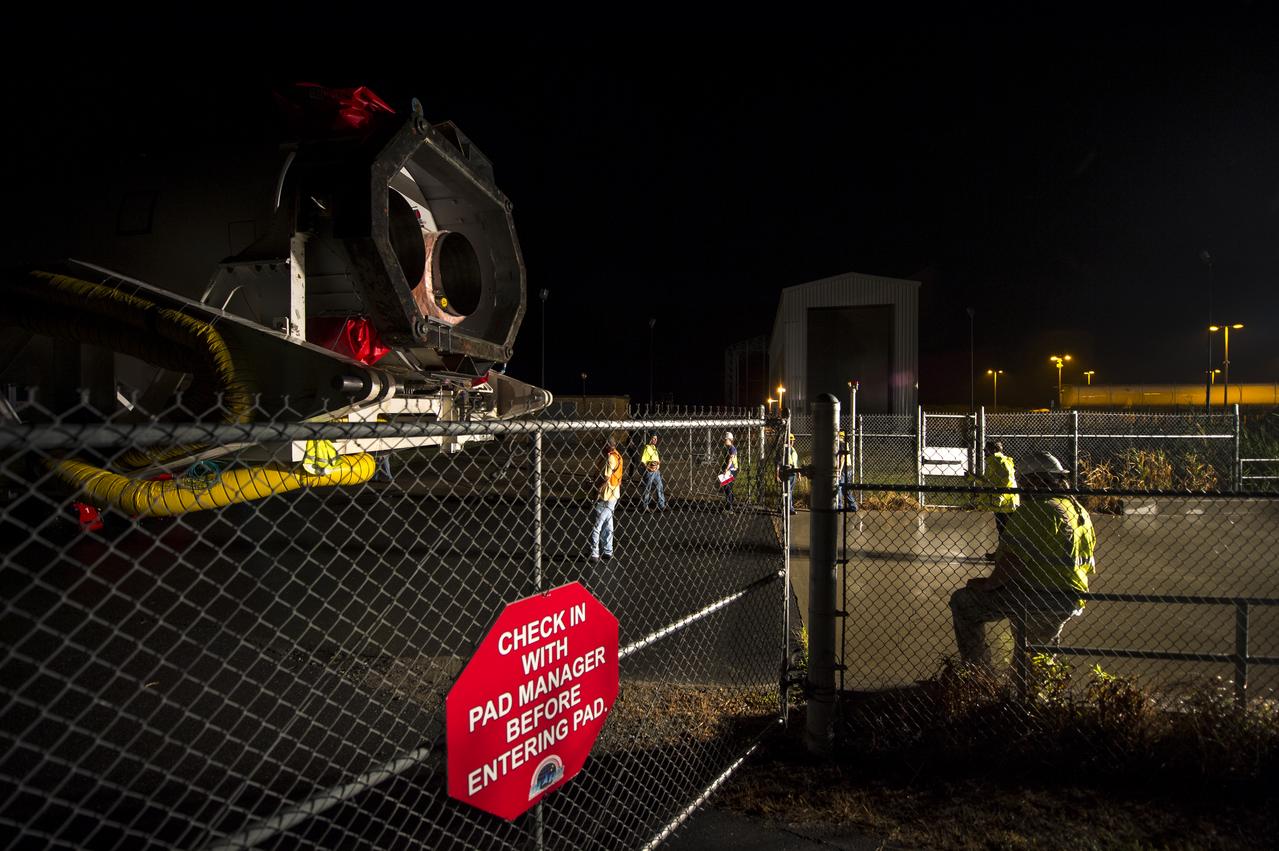
The Orbital Sciences Corporation Antares rocket, with the Cygnus spacecraft onboard, arrives at launch Pad-0A, Thursday, July 10, 2014, at NASA's Wallops Flight Facility in Virginia. The Antares will launch with the Cygnus spacecraft filled with over 3,000 pounds of supplies for the International Space Station, including science experiments, experiment hardware, spare parts, and crew provisions. The Orbital-2 mission is Orbital Sciences' second contracted cargo delivery flight to the space station for NASA. Photo Credit: (NASA/Bill Ingalls)
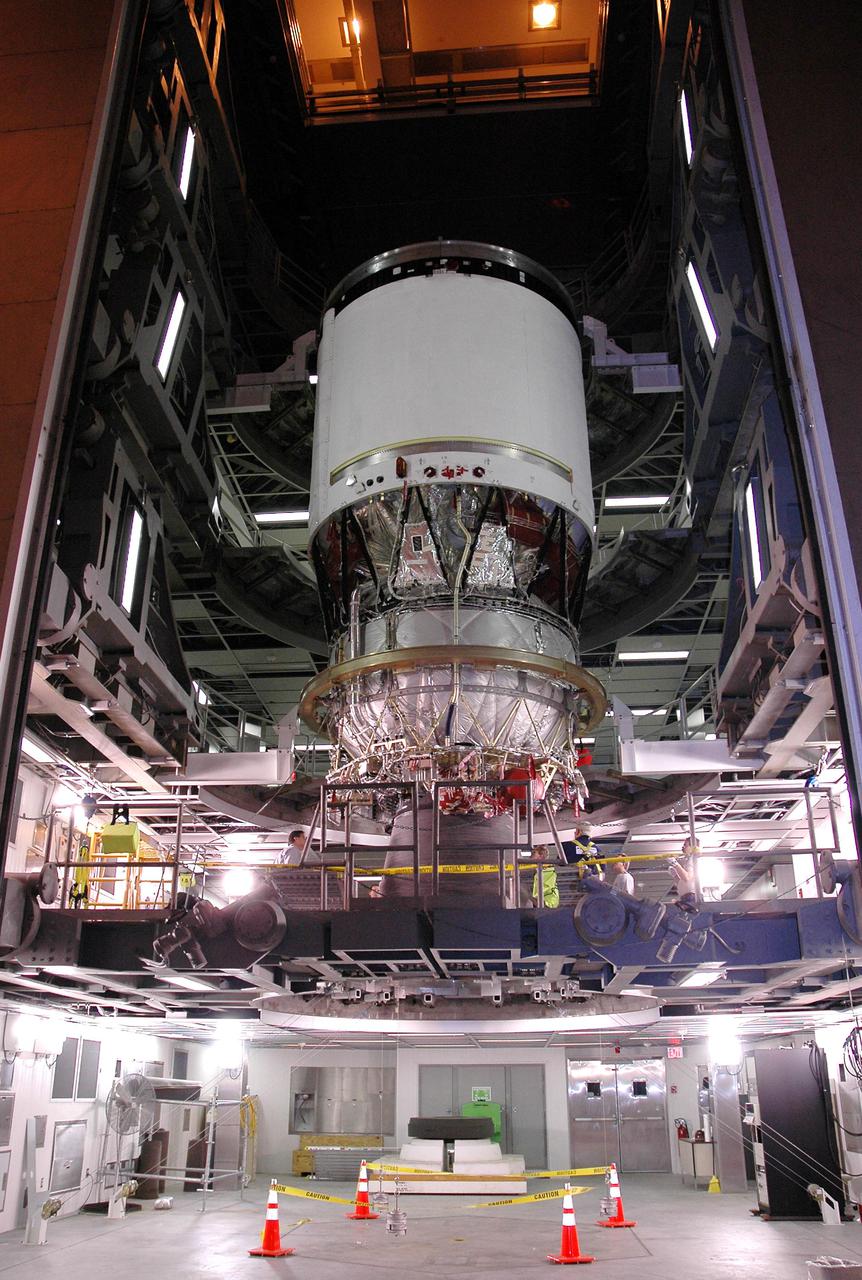
KENNEDY SPACE CENTER, FLA. - At the Delta Operations Center in Cape Canaveral, Fla., the Boeing Delta IV second stage is going to be prepared for a transfer to the Horizontal Integration Facility for further processing. The element is going to be transferred to the Horizontal Integration Facility for further processing. The Delta IV is the launch vehicle for the GOES-N satellite. Geostationary Operational Environmental Satellites (GOES) are sponsored by the National Aeronautics and Space Administration (NASA) and the National Oceanic and Atmospheric Administration (NOAA). GOES-N is the first in the next series of GOES satellites, N-P. The multi-mission GOES series N-P will be a vital contributor to weather, solar and space operations and science. The GOES N-P series will aid activities ranging from severe storm warnings to resource management and advances in science. GOES-N is scheduled to launch May 4 from Cape Canaveral Air Force Station, Fla.
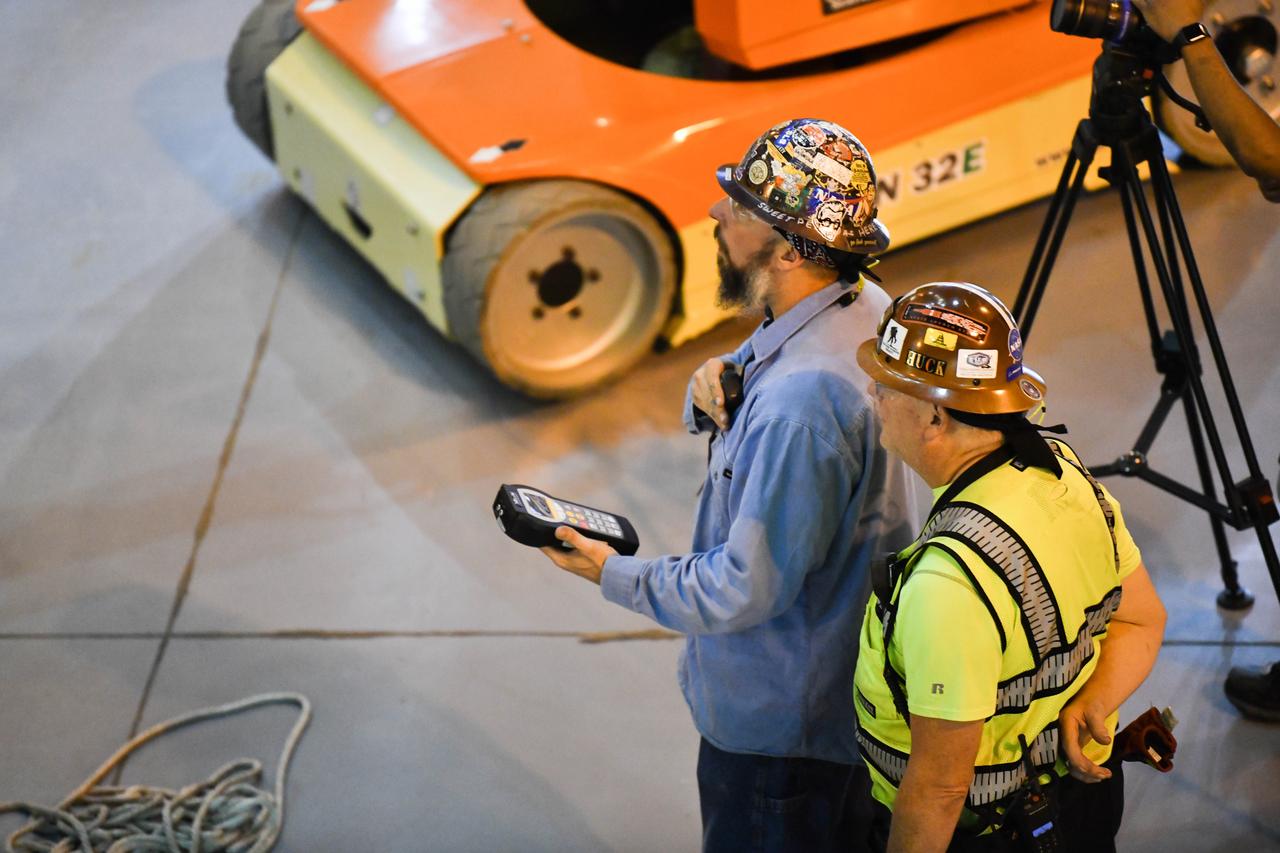
Technicians at NASA’s Michoud Assembly Facility in New Orleans rotated the engine section for NASA’s Space Launch System rocket from a vertical to horizontal position to prepare it for joining to the rest of the rocket’s core stage on Sept. 13. The engine section, which comprises the lowest portion of the 212-foot-tall stage, is the last major component to be horizontally integrated to the core stage. Michoud crews completed assembly on the flight hardware that will be used for Artemis I, the first lunar mission of SLS and NASA’s Orion spacecraft, on Aug. 29. The core stage’s two liquid propellant tanks and four RS-25 engines will produce more than 2 million pounds of thrust to send the SLS rocket and Orion on the Artemis lunar missions. The engine section houses the four RS-25 engines and includes vital systems for mounting, controlling and delivering fuel form the propellant tanks to the rocket’s engines.
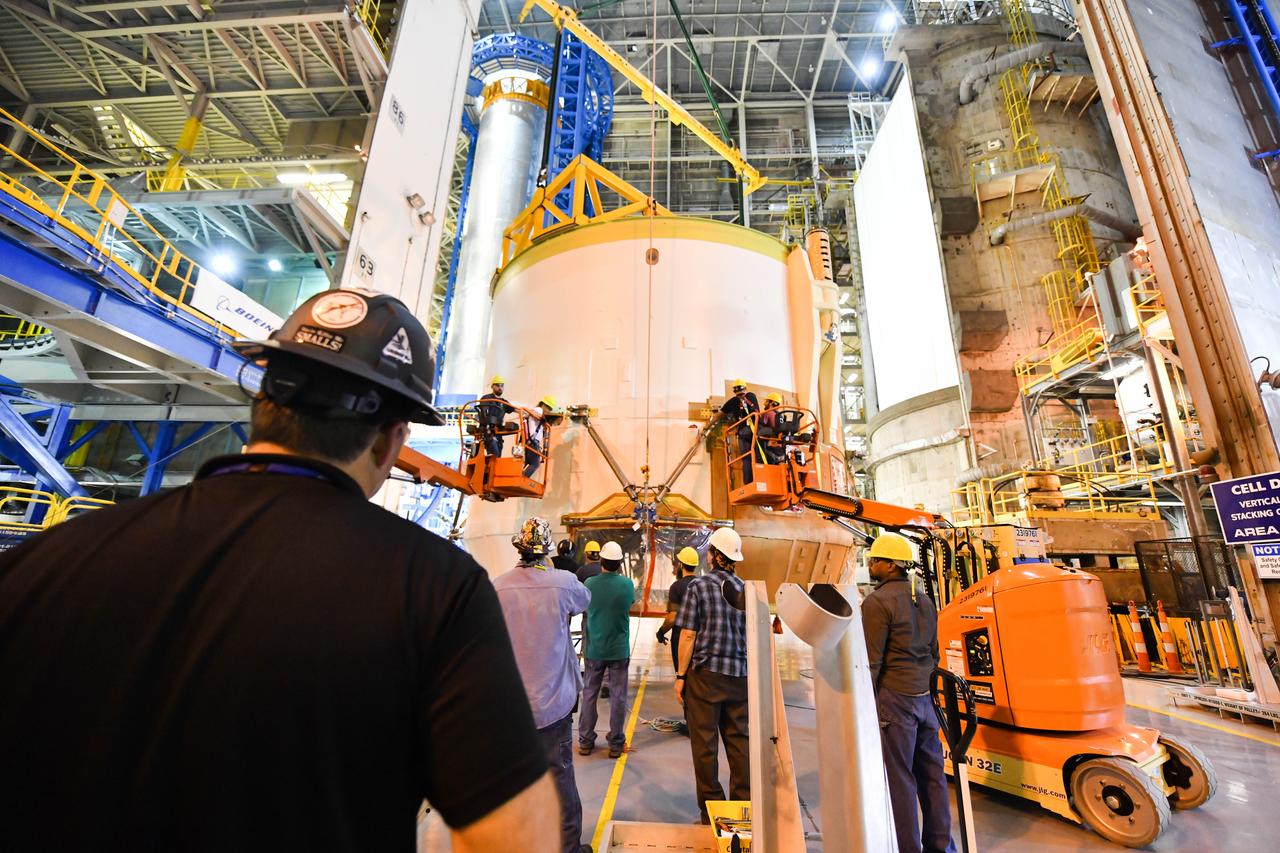
Technicians at NASA’s Michoud Assembly Facility in New Orleans rotated the engine section for NASA’s Space Launch System rocket from a vertical to horizontal position to prepare it for joining to the rest of the rocket’s core stage on Sept. 13. The engine section, which comprises the lowest portion of the 212-foot-tall stage, is the last major component to be horizontally integrated to the core stage. Michoud crews completed assembly on the flight hardware that will be used for Artemis I, the first lunar mission of SLS and NASA’s Orion spacecraft, on Aug. 29. The core stage’s two liquid propellant tanks and four RS-25 engines will produce more than 2 million pounds of thrust to send the SLS rocket and Orion on the Artemis lunar missions. The engine section houses the four RS-25 engines and includes vital systems for mounting, controlling and delivering fuel form the propellant tanks to the rocket’s engines.
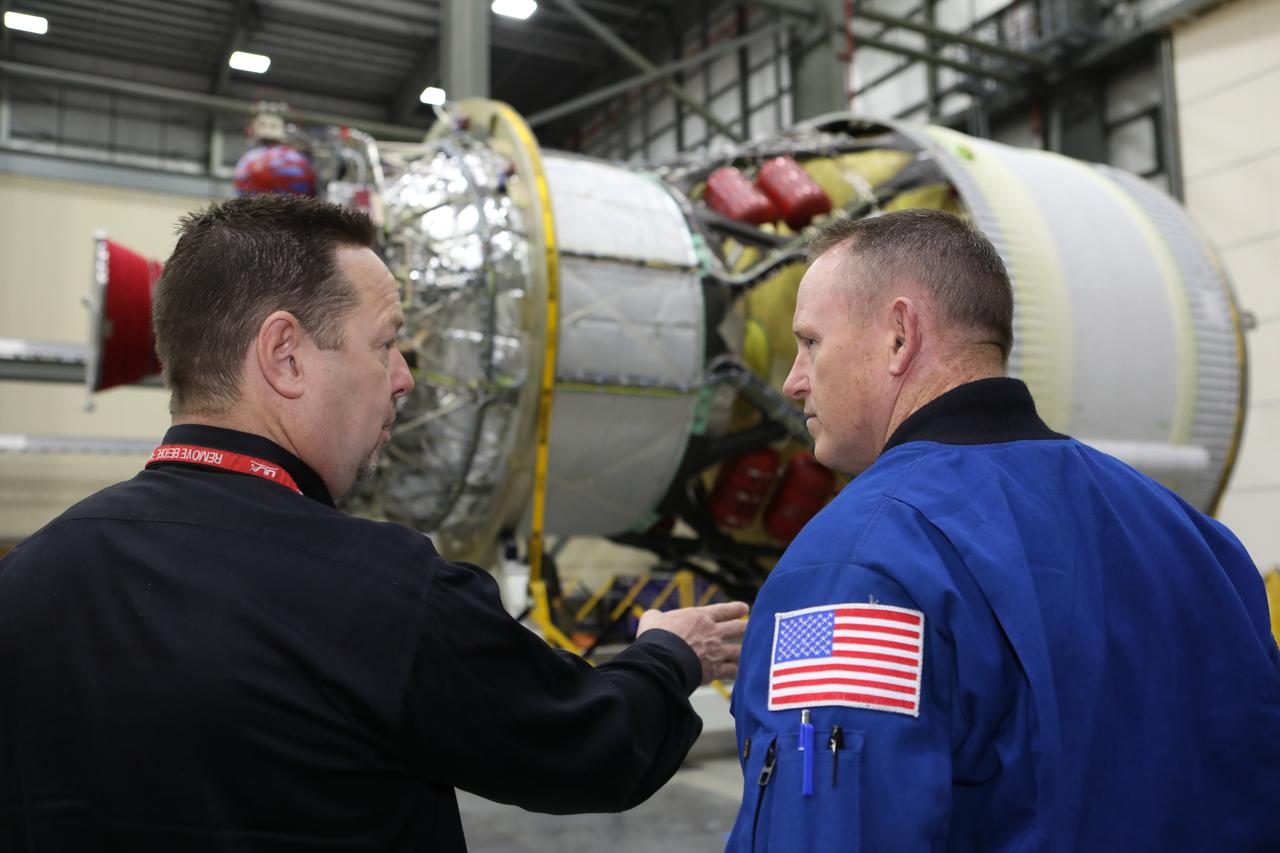
Inside the United Launch Alliance Horizontal Integration Facility at Cape Canaveral Air Force Station in Florida, NASA astronaut Barry "Butch" Wilmore views the first integrated piece of flight hardware for NASA's Space Launch System (SLS) rocket, the Interim Cryogenic Propulsion Stage (ICPS). The ICPS is the in-space stage that is located toward the top of the rocket, between the Launch Vehicle Stage Adapter and the Orion Spacecraft Adapter. It will provide some of the in-space propulsion during Orion's first flight test atop the SLS on Exploration Mission 1.
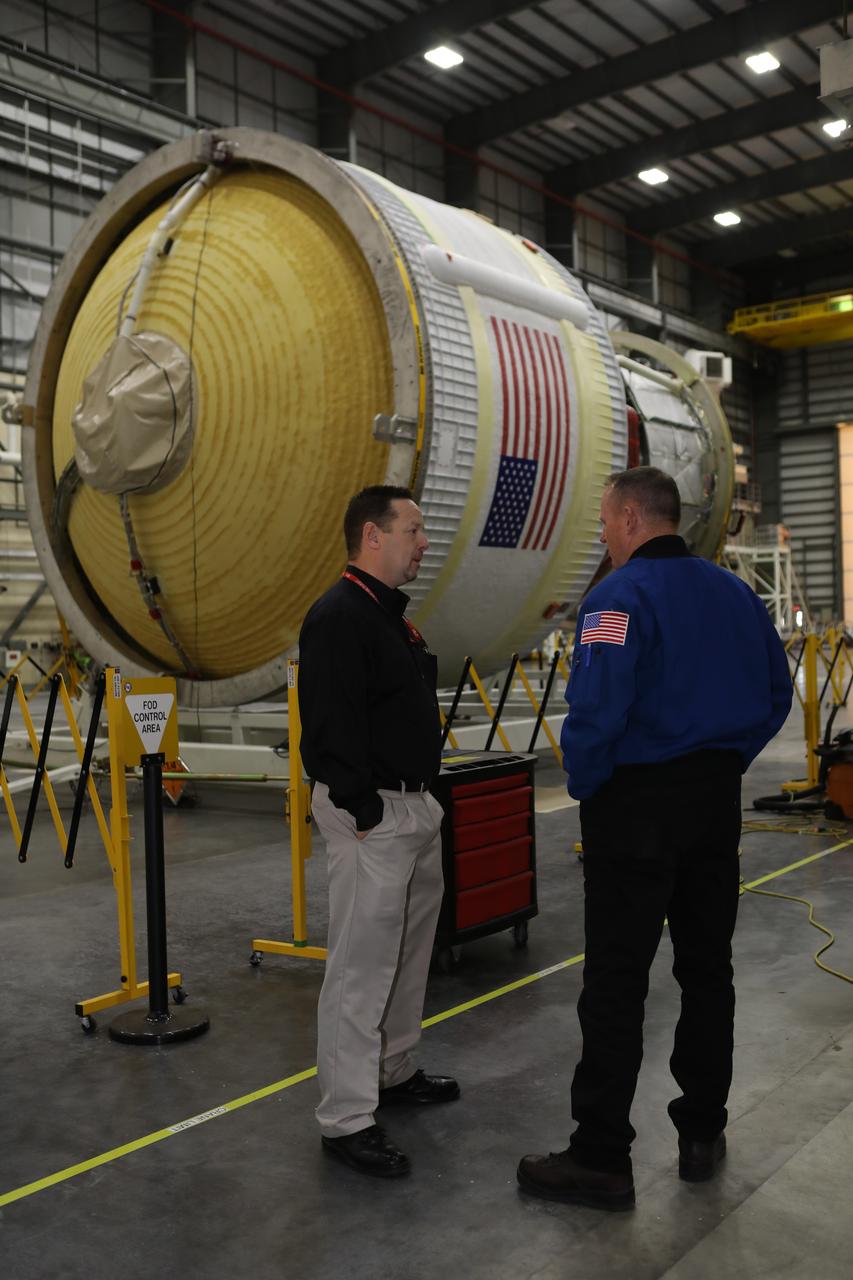
Inside the United Launch Alliance Horizontal Integration Facility at Cape Canaveral Air Force Station in Florida, NASA astronaut Barry "Butch" Wilmore views the first integrated piece of flight hardware for NASA's Space Launch System (SLS) rocket, the Interim Cryogenic Propulsion Stage (ICPS). The ICPS is the in-space stage that is located toward the top of the rocket, between the Launch Vehicle Stage Adapter and the Orion Spacecraft Adapter. It will provide some of the in-space propulsion during Orion's first flight test atop the SLS on Exploration Mission 1.
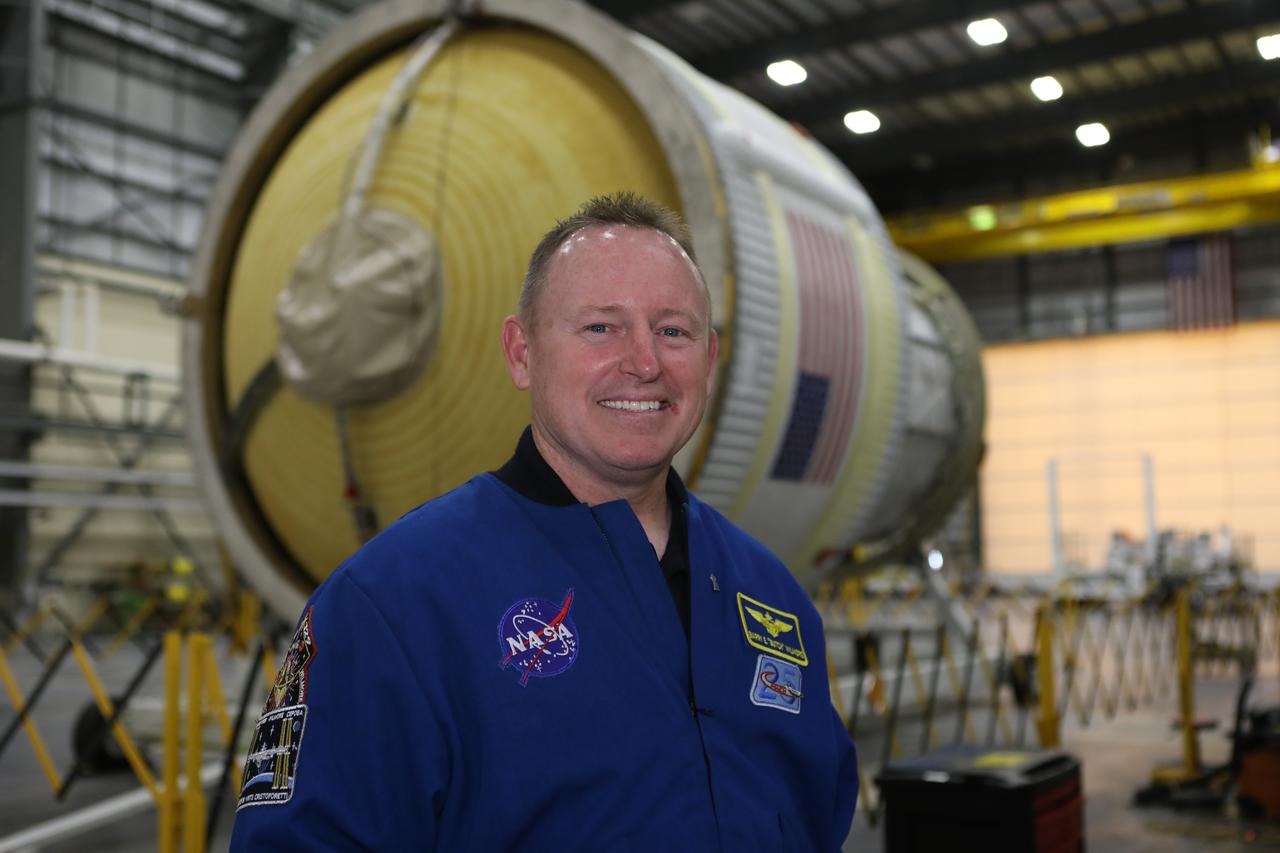
Inside the United Launch Alliance Horizontal Integration Facility at Cape Canaveral Air Force Station in Florida, NASA astronaut Barry "Butch" Wilmore views the first integrated piece of flight hardware for NASA's Space Launch System (SLS) rocket, the Interim Cryogenic Propulsion Stage (ICPS). The ICPS is the in-space stage that is located toward the top of the rocket, between the Launch Vehicle Stage Adapter and the Orion Spacecraft Adapter. It will provide some of the in-space propulsion during Orion's first flight test atop the SLS on Exploration Mission 1.
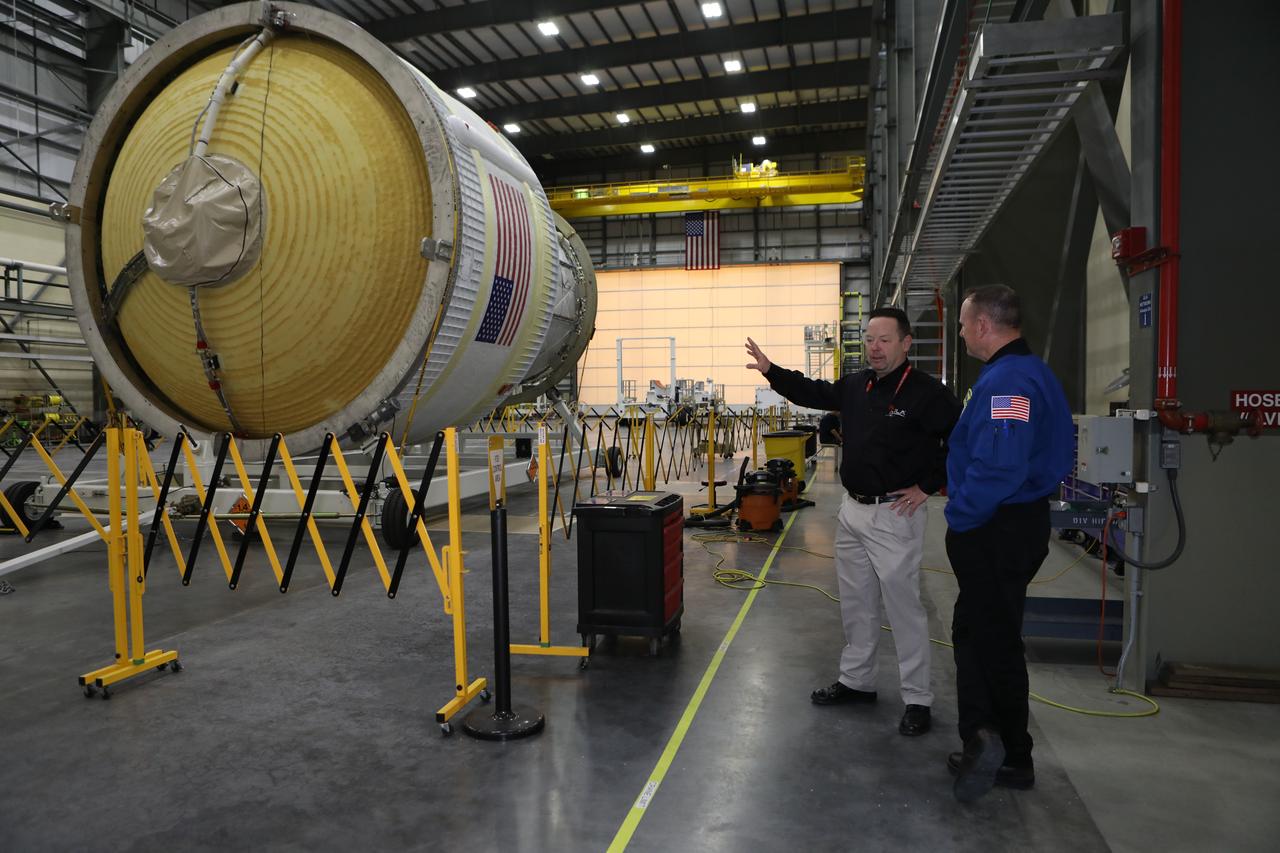
Inside the United Launch Alliance Horizontal Integration Facility at Cape Canaveral Air Force Station in Florida, NASA astronaut Barry "Butch" Wilmore views the first integrated piece of flight hardware for NASA's Space Launch System (SLS) rocket, the Interim Cryogenic Propulsion Stage (ICPS). The ICPS is the in-space stage that is located toward the top of the rocket, between the Launch Vehicle Stage Adapter and the Orion Spacecraft Adapter. It will provide some of the in-space propulsion during Orion's first flight test atop the SLS on Exploration Mission 1.
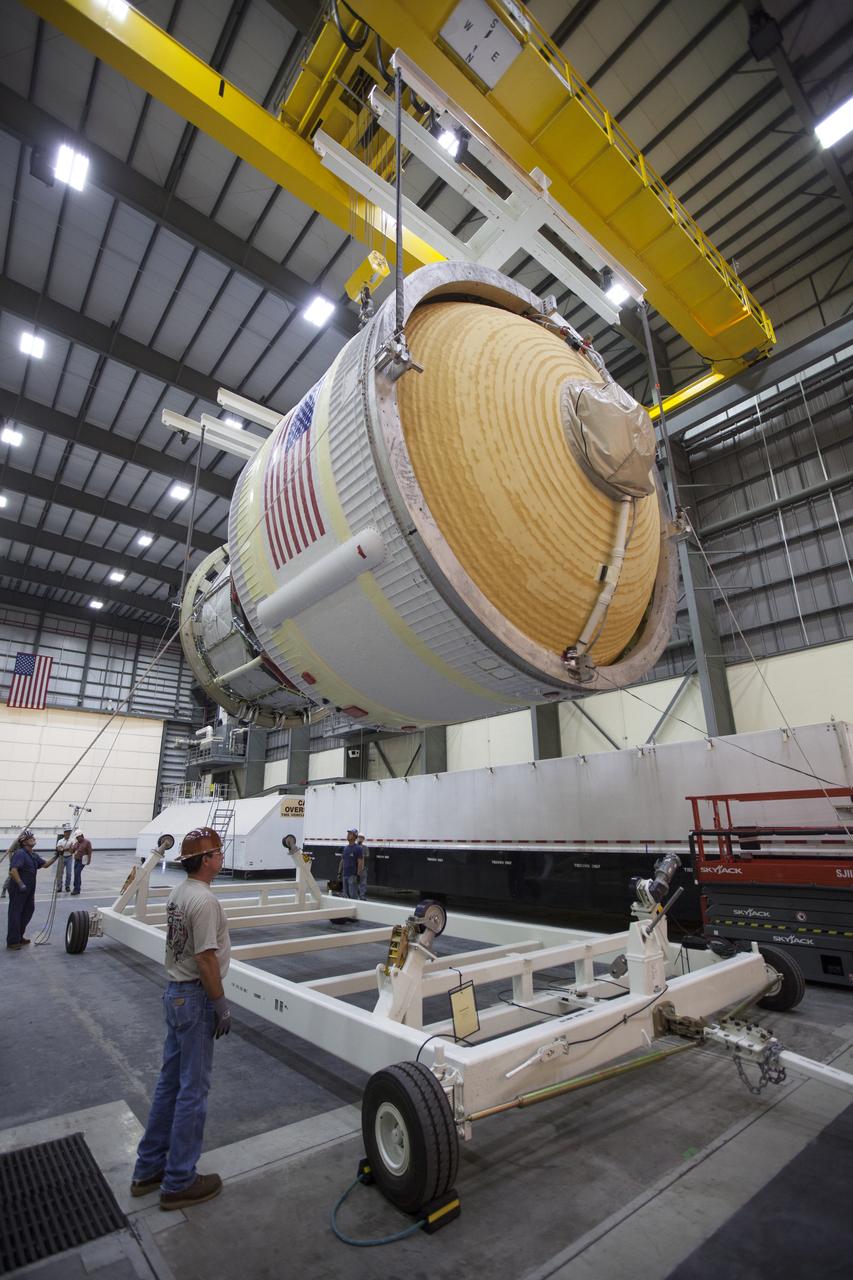
Inside the United Launch Alliance (ULA) Horizontal Integration Facility at Cape Canaveral Air Force Station in Florida, technicians monitor the progress as a crane lowers the Interim Cryogenic Propulsion Stage (ICPS) for NASA's Space Launch System rocket to a movable transport stand. The ICPS is the first integrated piece of flight hardware to arrive for the SLS. The ICPS arrived from the ULA facility in Decatur, Alabama. The ICPS is the in-space stage that is located toward the top of the rocket, between the Launch Vehicle Stage Adapter and the Orion Spacecraft Adapter. It will provide some of the in-space propulsion during Orion's first flight test atop the SLS on Exploration Mission 1.
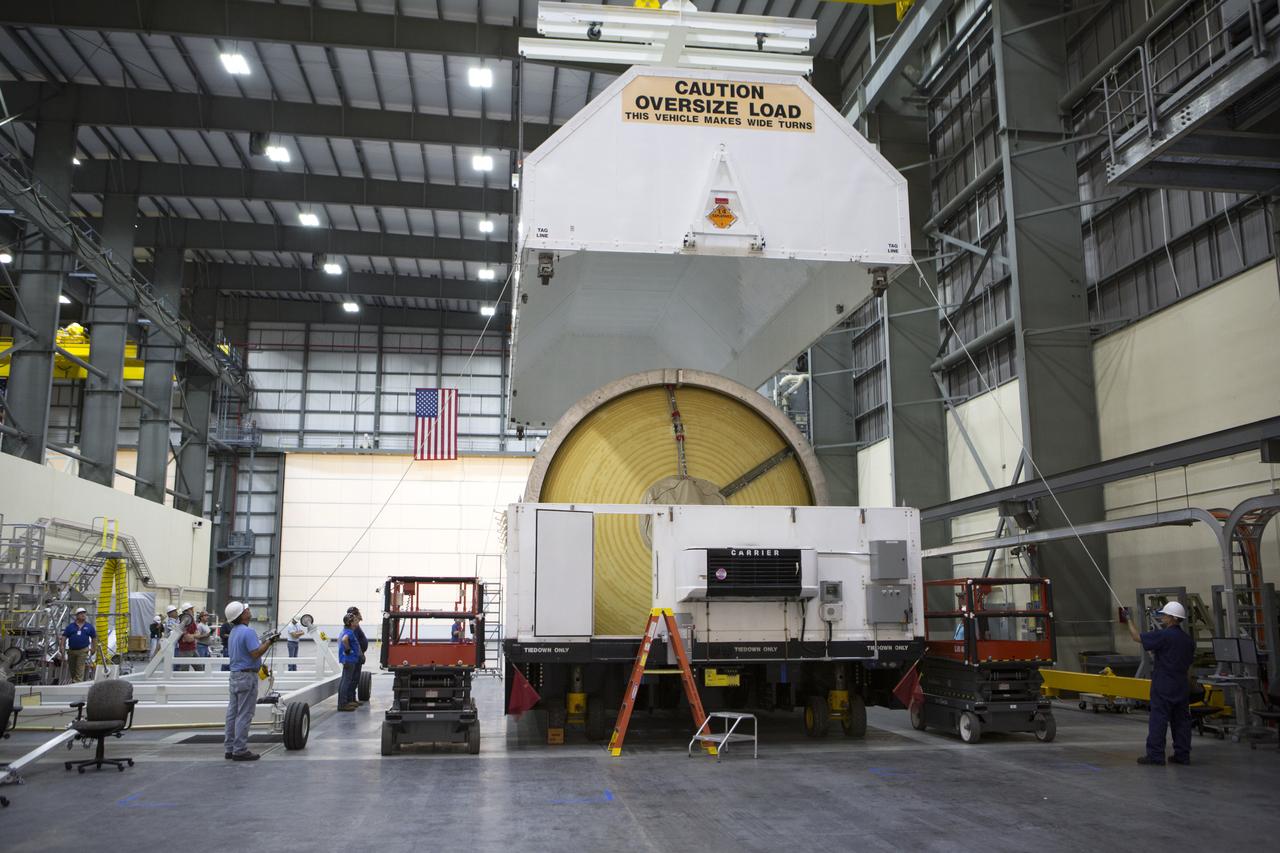
Inside the United Launch Alliance (ULA) Horizontal Integration Facility at Cape Canaveral Air Force Station in Florida, technicians assists as a crane lifts the shipping container cover away from the Interim Cryogenic Propulsion Stage (ICPS) for NASA's Space Launch System rocket. The ICPS is the first integrated piece of flight hardware to arrive for the SLS. The ICPS arrived from the ULA facility in Decatur, Alabama. The ICPS is the in-space stage that is located toward the top of the rocket, between the Launch Vehicle Stage Adapter and the Orion Spacecraft Adapter. It will provide some of the in-space propulsion during Orion's first flight test atop the SLS on Exploration Mission 1.

The Mariner barge is docked at Cape Canaveral Air Force Station in Florida, with the first integrated piece of flight hardware for NASA's Space Launch System (SLS) rocket, the Interim Cryogenic Propulsion Stage (ICPS) inside, at right. The ICPS was shipped from the United Launch Alliance (ULA) facility in Decatur, Alabama. The ICPS will be offloaded and transported to the ULA Horizontal Integration Facility where it will be removed from its flight case. The ICPS is the in-space stage that is located toward the top of the rocket, between the Launch Vehicle Stage Adapter and the Orion Spacecraft Adapter. It will provide some of the in-space propulsion during Orion's first flight test atop the SLS on Exploration Mission 1.
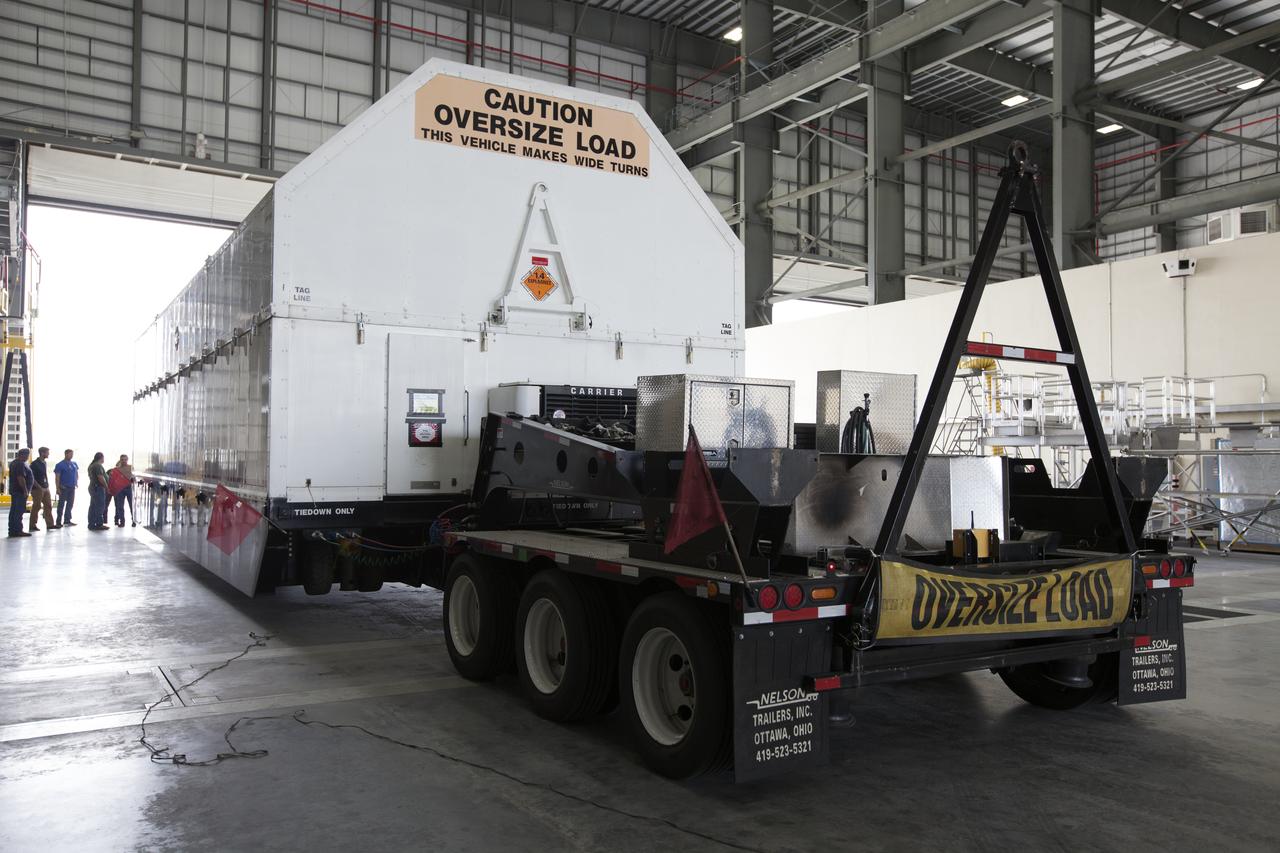
The first integrated piece of flight hardware for NASA's Space Launch System (SLS) rocket, the Interim Cryogenic Propulsion Stage (ICPS) was offloaded from the Mariner barge at Cape Canaveral Air Force Station in Florida, and transported to the United Launch Alliance (ULA) Horizontal Integration Facility where it will be removed from its flight case. The ICPS was shipped from the United Launch Alliance (ULA) facility in Decatur, Alabama. The ICPS is the in-space stage that is located toward the top of the rocket, between the Launch Vehicle Stage Adapter and the Orion Spacecraft Adapter. It will provide some of the in-space propulsion during Orion's first flight test atop the SLS on Exploration Mission 1.
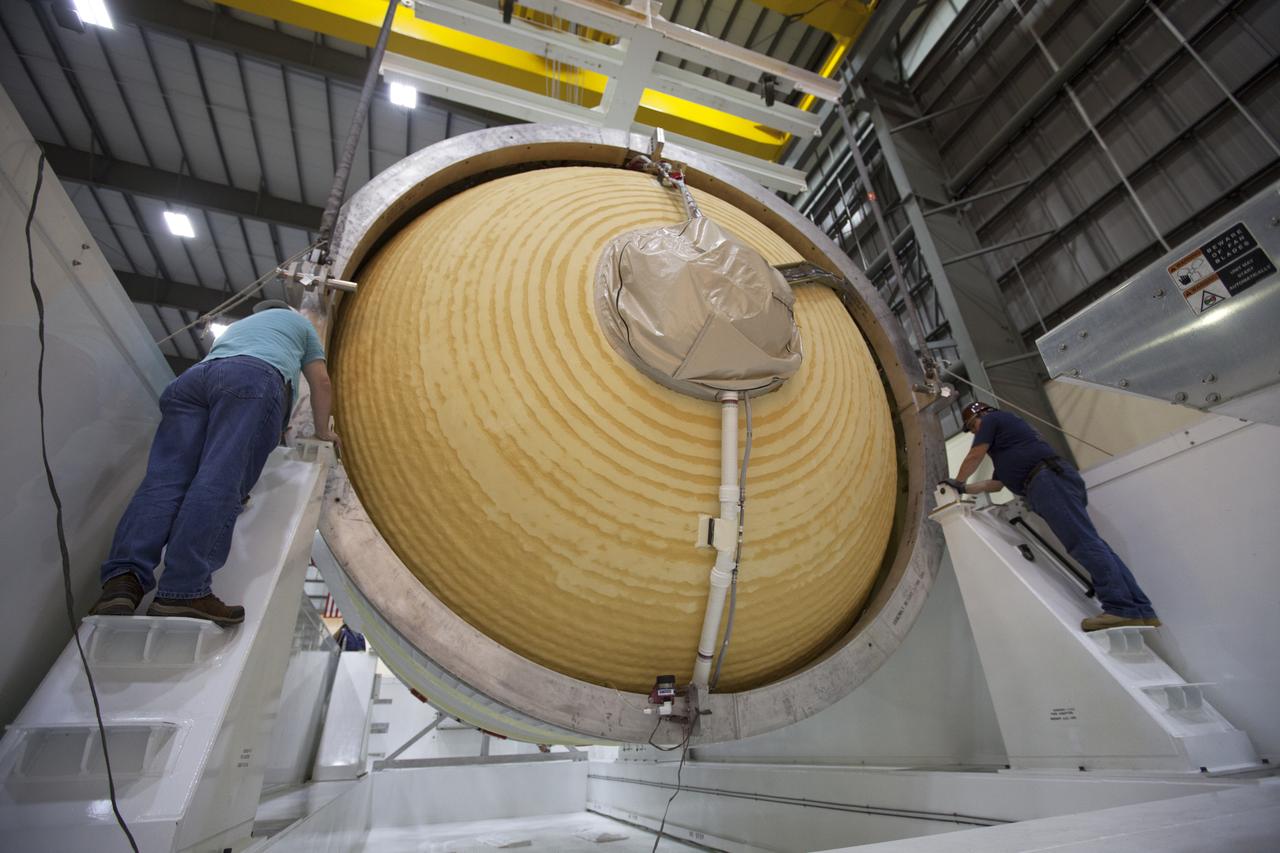
Inside the United Launch Alliance (ULA) Horizontal Integration Facility at Cape Canaveral Air Force Station in Florida, technicians attach a crane to the Interim Cryogenic Propulsion Stage (ICPS) for NASA's Space Launch System rocket. The ICPS is the first integrated piece of flight hardware to arrive for the SLS. The ICPS arrived from the ULA facility in Decatur, Alabama. The ICPS is the in-space stage that is located toward the top of the rocket, between the Launch Vehicle Stage Adapter and the Orion Spacecraft Adapter. It will provide some of the in-space propulsion during Orion's first flight test atop the SLS on Exploration Mission 1.

The first integrated piece of flight hardware for NASA's Space Launch System (SLS) rocket, the Interim Cryogenic Propulsion Stage (ICPS) arrives at the United Launch Alliance (ULA) Horizontal Integration Facility at Cape Canaveral Air Force Station in Florida, where it will be removed from its flight case. The ICPS was shipped aboard the Mariner barge from the ULA facility in Decatur, Alabama. The ICPS is the in-space stage that is located toward the top of the rocket, between the Launch Vehicle Stage Adapter and the Orion Spacecraft Adapter. It will provide some of the in-space propulsion during Orion's first flight test atop the SLS on Exploration Mission 1.
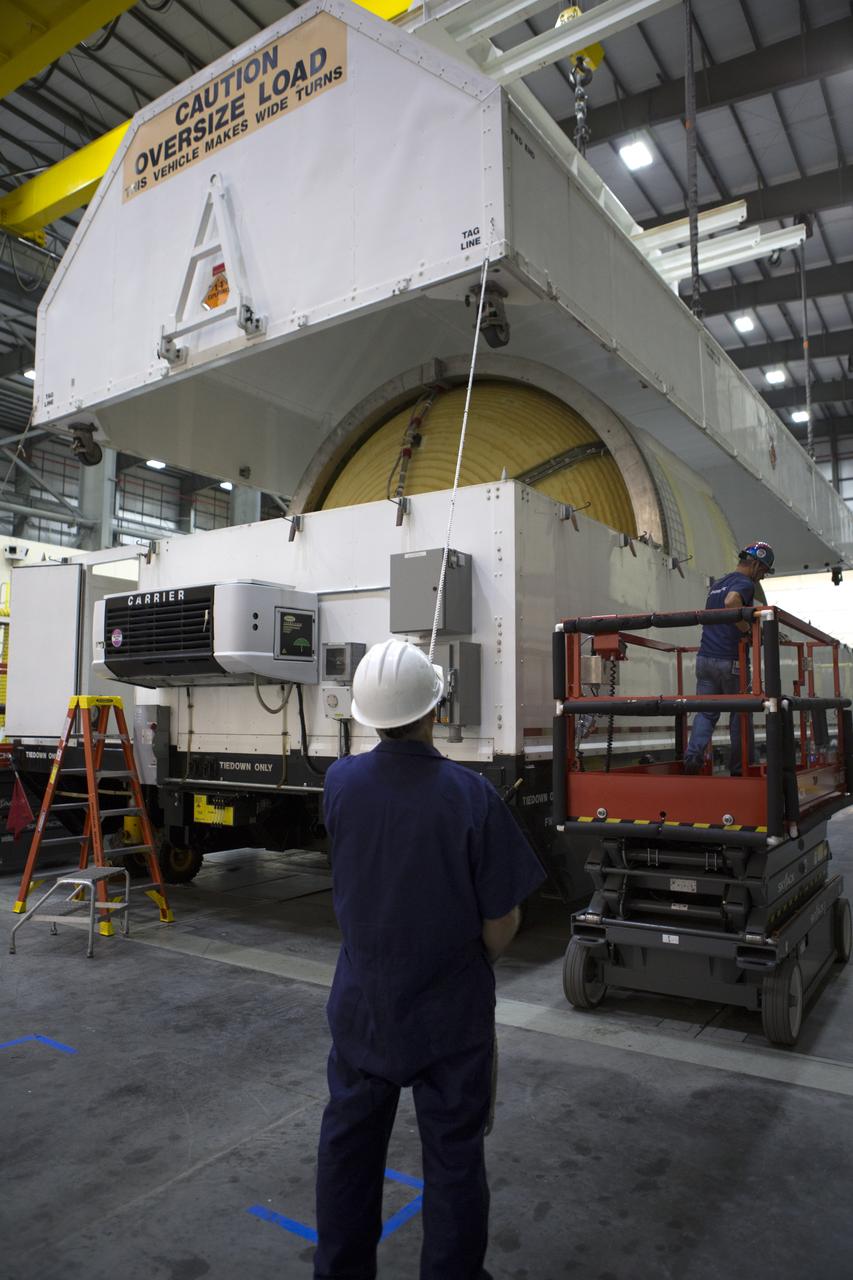
Inside the United Launch Alliance (ULA) Horizontal Integration Facility at Cape Canaveral Air Force Station in Florida, a technician assists as a crane lifts the top of the shipping container cover away from the Interim Cryogenic Propulsion Stage (ICPS) for NASA's Space Launch System rocket. The ICPS is the first integrated piece of flight hardware to arrive for the SLS. The ICPS arrived from the ULA facility in Decatur, Alabama. The ICPS is the in-space stage that is located toward the top of the rocket, between the Launch Vehicle Stage Adapter and the Orion Spacecraft Adapter. It will provide some of the in-space propulsion during Orion's first flight test atop the SLS on Exploration Mission 1.
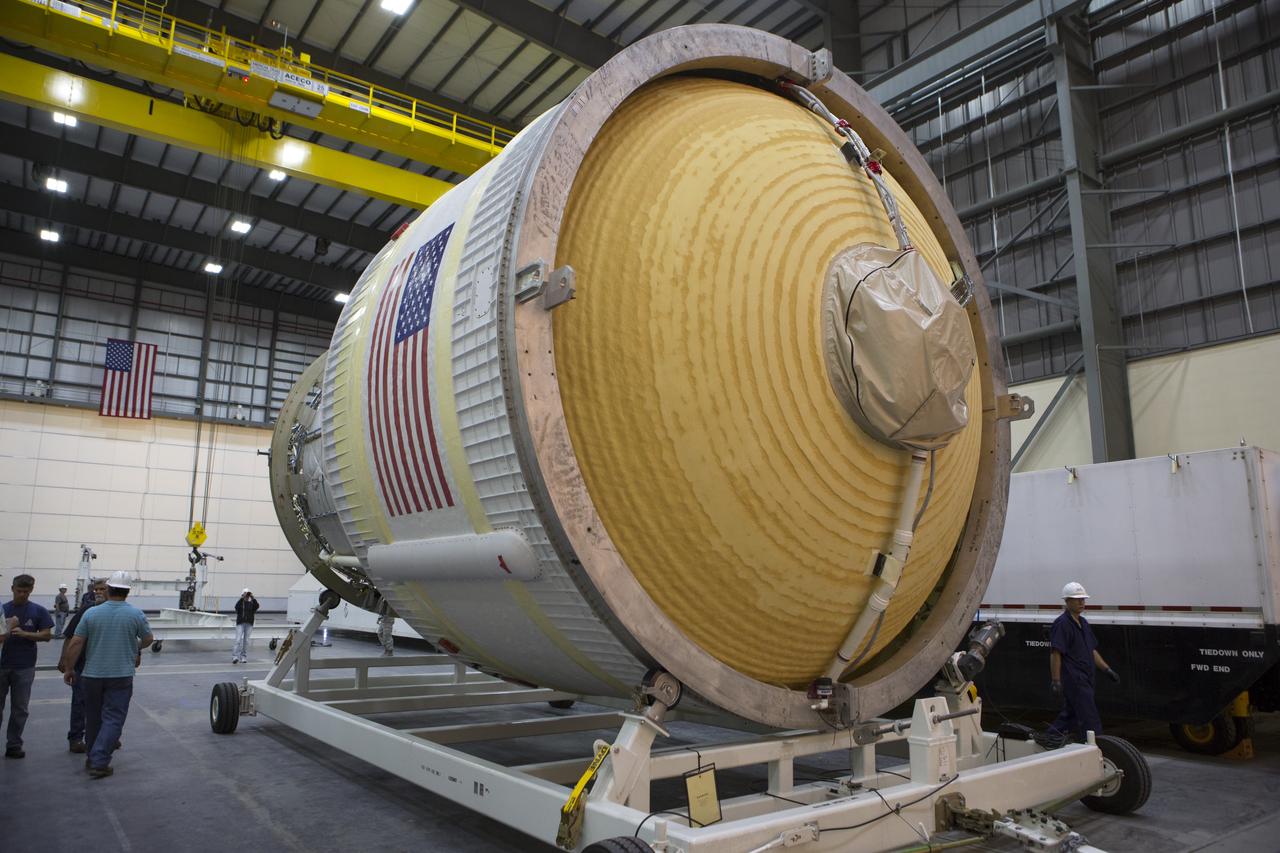
Inside the United Launch Alliance (ULA) Horizontal Integration Facility at Cape Canaveral Air Force Station in Florida, the Interim Cryogenic Propulsion Stage (ICPS) for NASA's Space Launch System rocket is secured on a movable transport stand. The ICPS is the first integrated piece of flight hardware to arrive for the SLS. The ICPS arrived from the ULA facility in Decatur, Alabama. The ICPS is the in-space stage that is located toward the top of the rocket, between the Launch Vehicle Stage Adapter and the Orion Spacecraft Adapter. It will provide some of the in-space propulsion during Orion's first flight test atop the SLS on Exploration Mission 1.
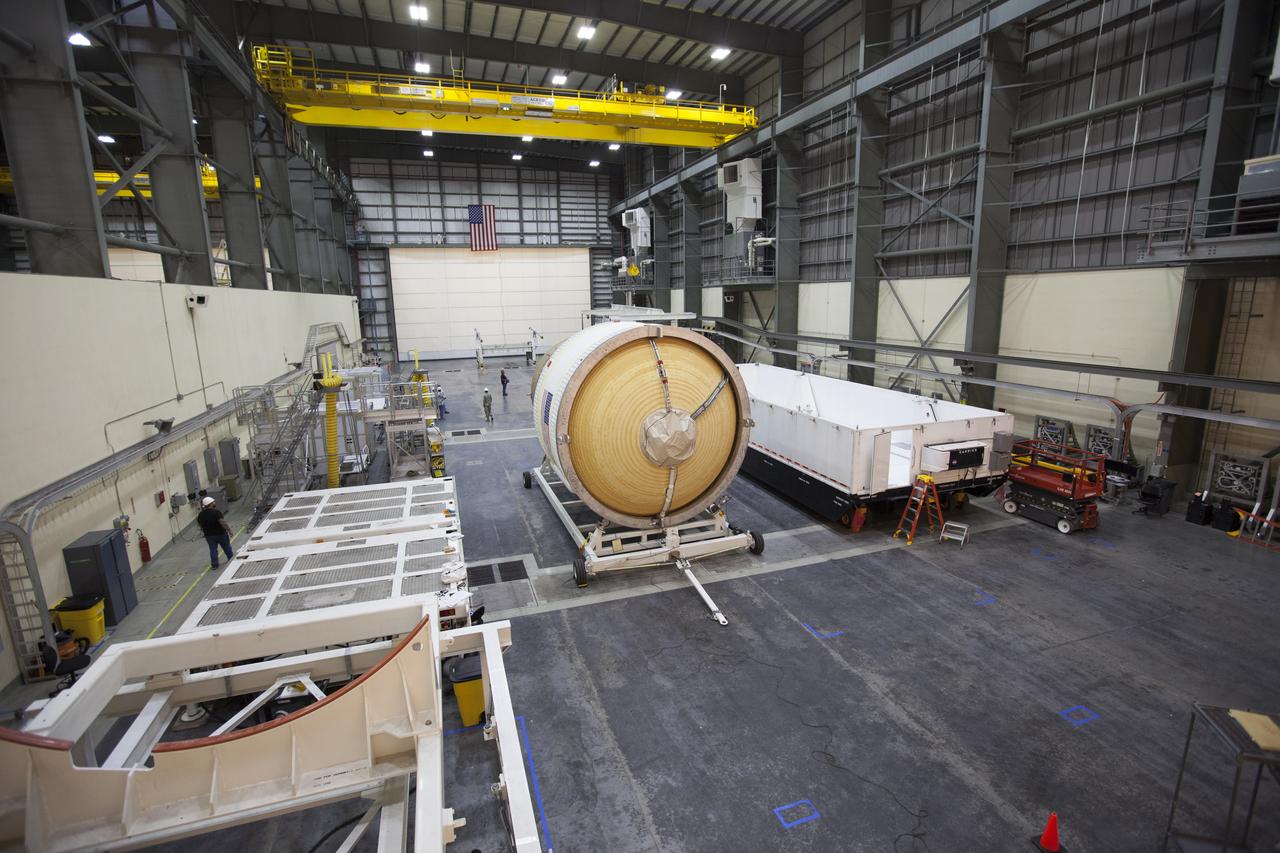
Inside the United Launch Alliance (ULA) Horizontal Integration Facility at Cape Canaveral Air Force Station in Florida, the Interim Cryogenic Propulsion Stage (ICPS) for NASA's Space Launch System rocket was removed from its shipping container and then lowered and secured onto a movable transport stand. The ICPS is the first integrated piece of flight hardware to arrive for the SLS. The ICPS arrived from the ULA facility in Decatur, Alabama. The ICPS is the in-space stage that is located toward the top of the rocket, between the Launch Vehicle Stage Adapter and the Orion Spacecraft Adapter. It will provide some of the in-space propulsion during Orion's first flight test atop the SLS on Exploration Mission 1.
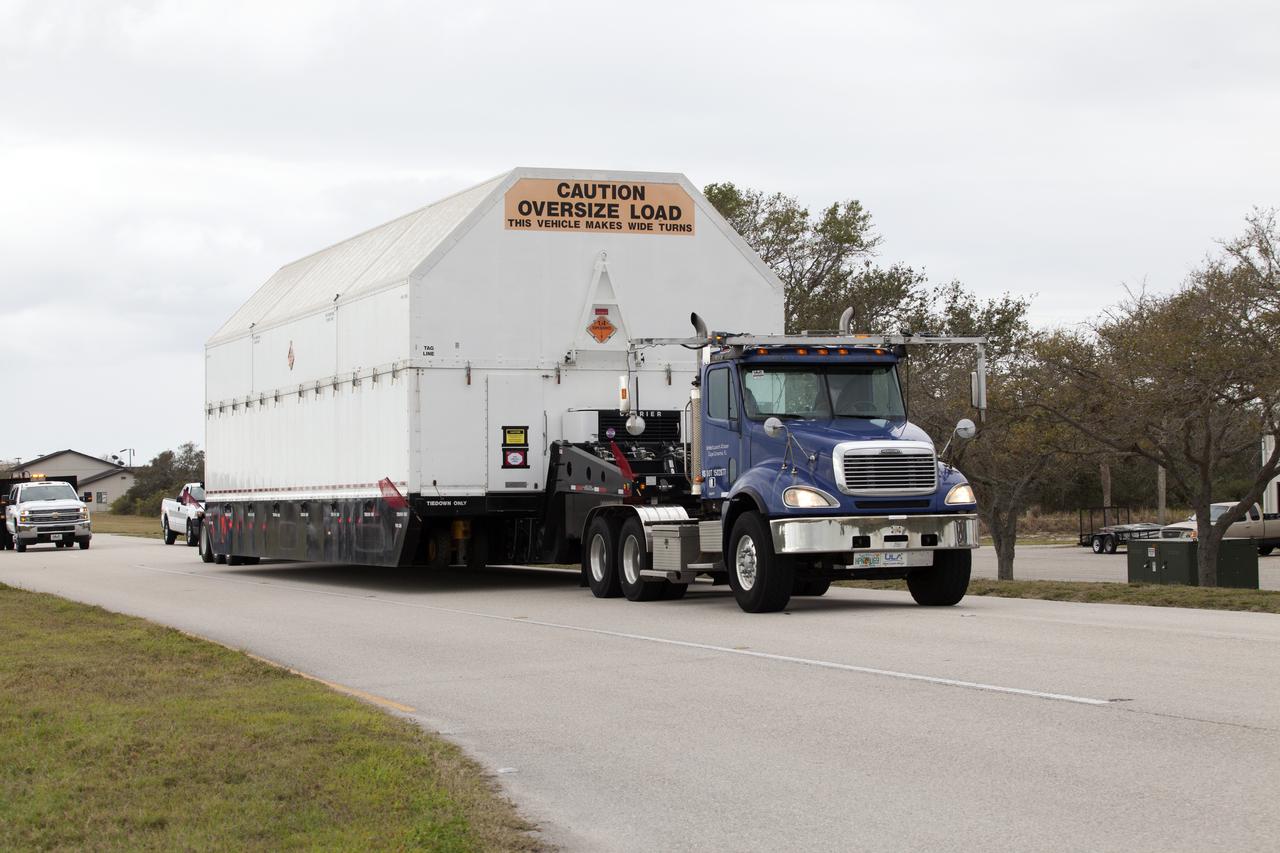
The first integrated piece of flight hardware for NASA's Space Launch System (SLS) rocket, the Interim Cryogenic Propulsion Stage (ICPS) was offloaded from the Mariner barge at Cape Canaveral Air Force Station in Florida, and is being transported to the United Launch Alliance (ULA) Horizontal Integration Facility where it will be removed from its flight case. The ICPS was shipped from the ULA facility in Decatur, Alabama. The ICPS is the in-space stage that is located toward the top of the rocket, between the Launch Vehicle Stage Adapter and the Orion Spacecraft Adapter. It will provide some of the in-space propulsion during Orion's first flight test atop the SLS on Exploration Mission 1.
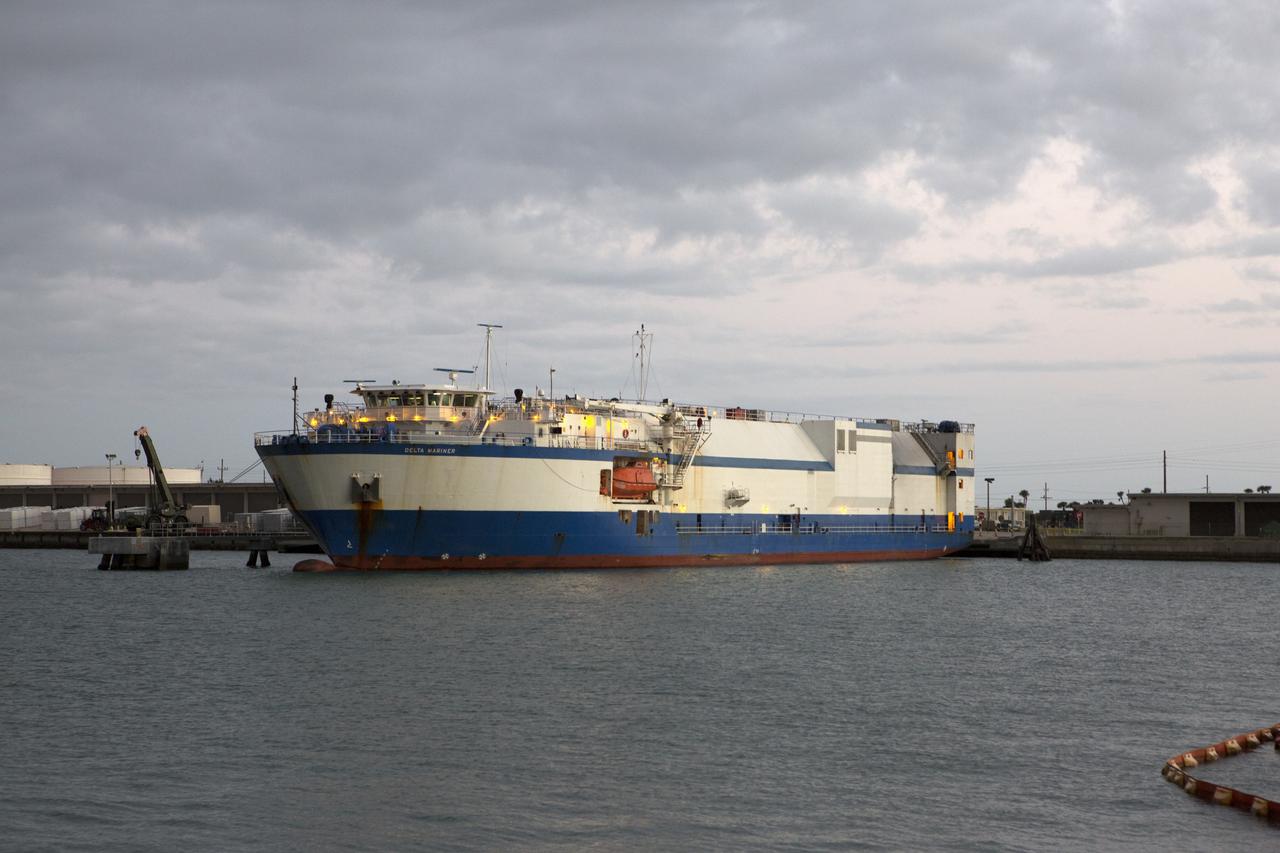
The Mariner barge arrives at Cape Canaveral Air Force Station in Florida, carrying the first integrated piece of flight hardware for NASA's Space Launch System (SLS) rocket, the Interim Cryogenic Propulsion Stage (ICPS). The ICPS was shipped from the United Launch Alliance (ULA) facility in Decatur, Alabama. The ICPS will be offloaded and transported to the ULA Horizontal Integration Facility where it will be removed from its flight case. The ICPS is the in-space stage that is located toward the top of the rocket, between the Launch Vehicle Stage Adapter and the Orion Spacecraft Adapter. It will provide some of the in-space propulsion during Orion's first flight test atop the SLS on Exploration Mission 1.
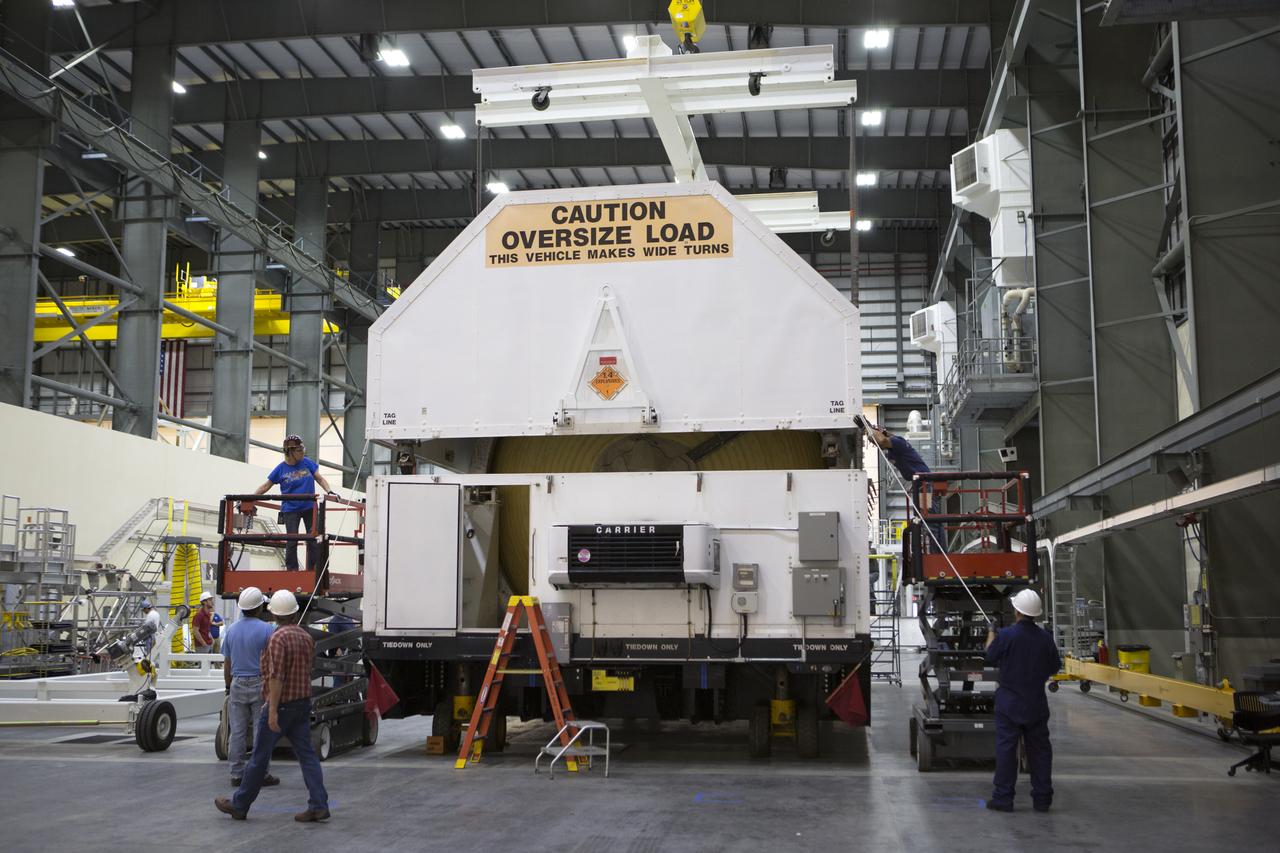
Inside the United Launch Alliance (ULA) Horizontal Integration Facility at Cape Canaveral Air Force Station in Florida, technicians prepare to remove the Interim Cryogenic Propulsion Stage (ICPS) for NASA's Space Launch System rocket from its shipping container. The ICPS is the first integrated piece of flight hardware to arrive for the SLS. The ICPS arrived from the ULA facility in Decatur, Alabama. The ICPS is the in-space stage that is located toward the top of the rocket, between the Launch Vehicle Stage Adapter and the Orion Spacecraft Adapter. It will provide some of the in-space propulsion during Orion's first flight test atop the SLS on Exploration Mission 1.
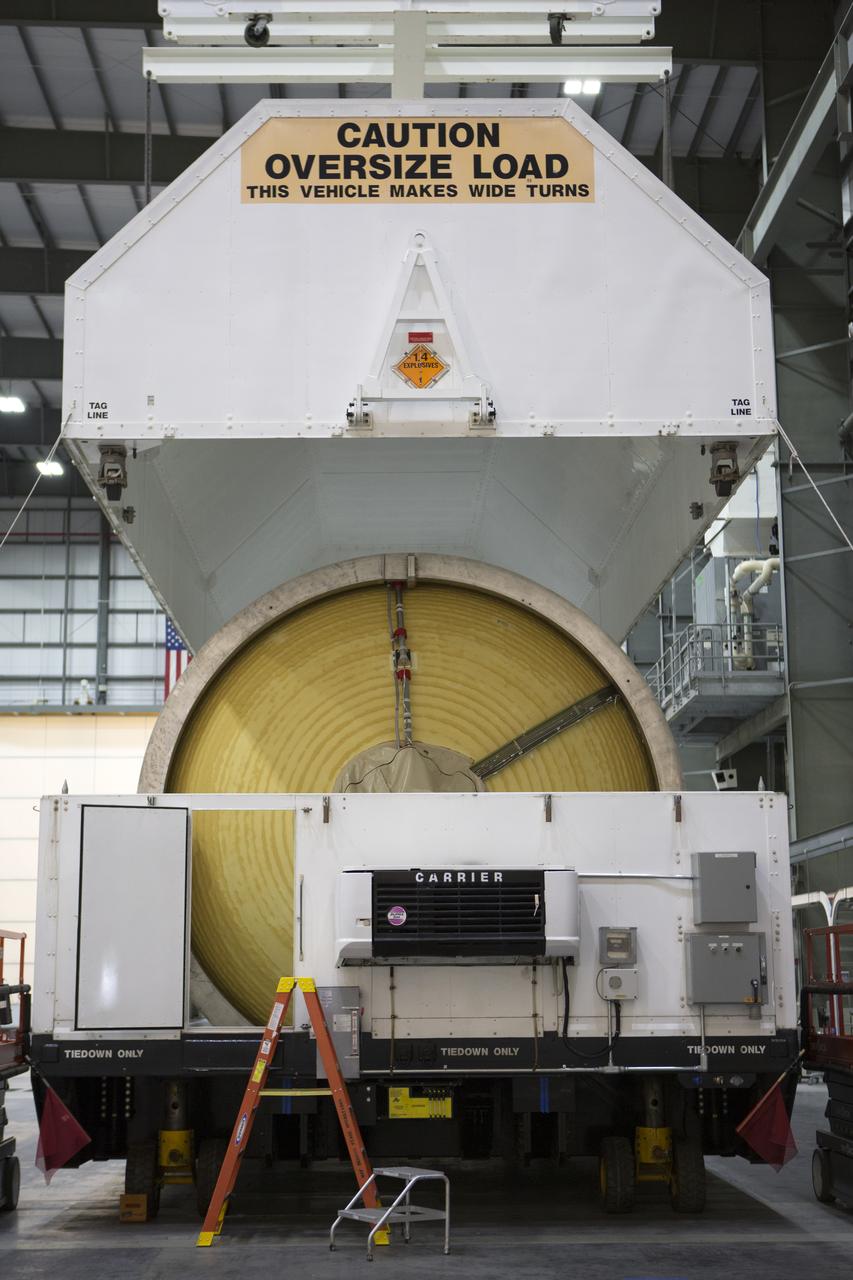
Inside the United Launch Alliance (ULA) Horizontal Integration Facility at Cape Canaveral Air Force Station in Florida, a technician assists as a crane lifts the container cover off of the Interim Cryogenic Propulsion Stage (ICPS) for NASA's Space Launch System rocket. The ICPS is the first integrated piece of flight hardware to arrive for the SLS. The ICPS arrived from the ULA facility in Decatur, Alabama. The ICPS is the in-space stage that is located toward the top of the rocket, between the Launch Vehicle Stage Adapter and the Orion Spacecraft Adapter. It will provide some of the in-space propulsion during Orion's first flight test atop the SLS on Exploration Mission 1.
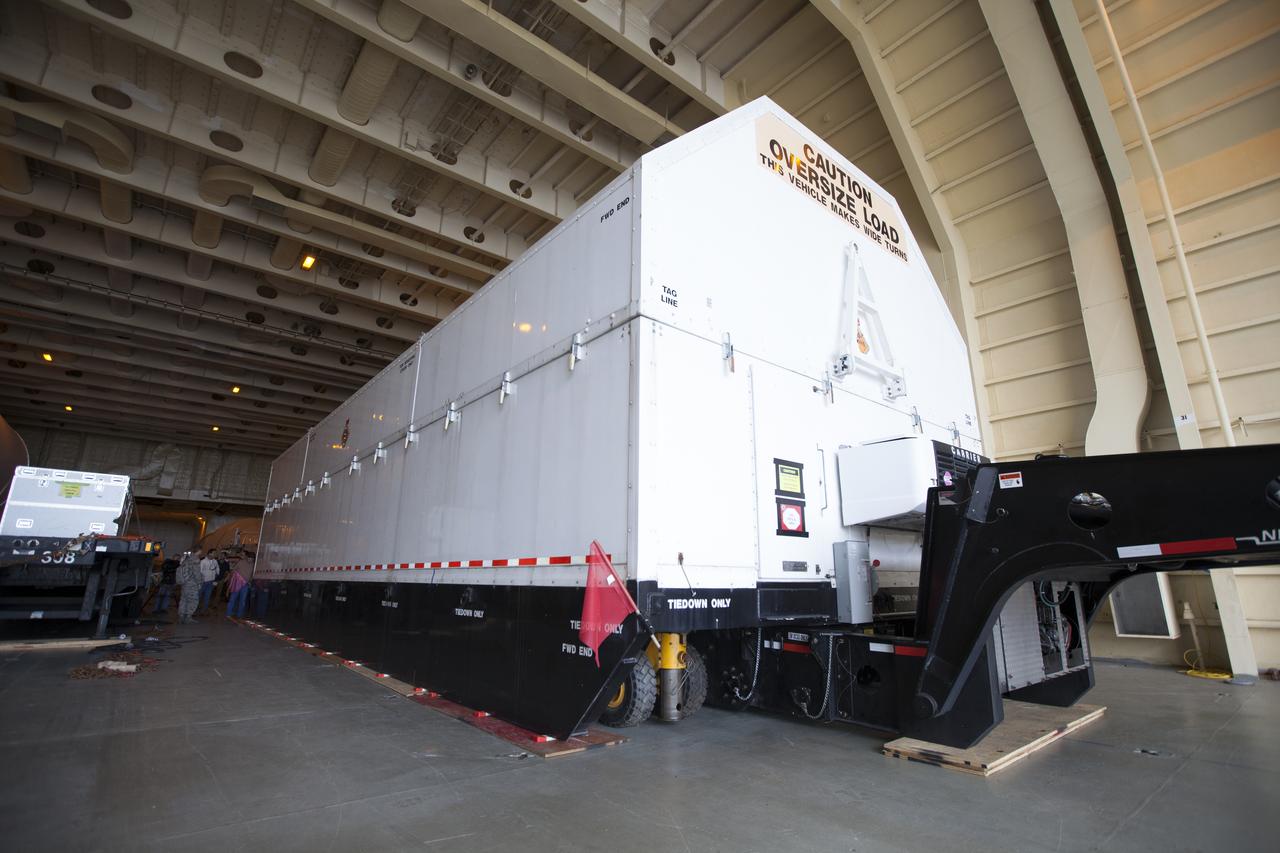
The first integrated piece of flight hardware for NASA's Space Launch System (SLS) rocket, the Interim Cryogenic Propulsion Stage (ICPS) has arrived aboard the Mariner barge at Cape Canaveral Air Force Station in Florida. The ICPS was shipped from the United Launch Alliance (ULA) facility in Decatur, Alabama. Preparations are underway to offload the ICPS and transport it to the ULA Horizontal Integration Facility where it will be removed from its flight case. The ICPS is the in-space stage that is located toward the top of the rocket, between the Launch Vehicle Stage Adapter and the Orion Spacecraft Adapter. It will provide some of the in-space propulsion during Orion's first flight test atop the SLS on Exploration Mission 1.
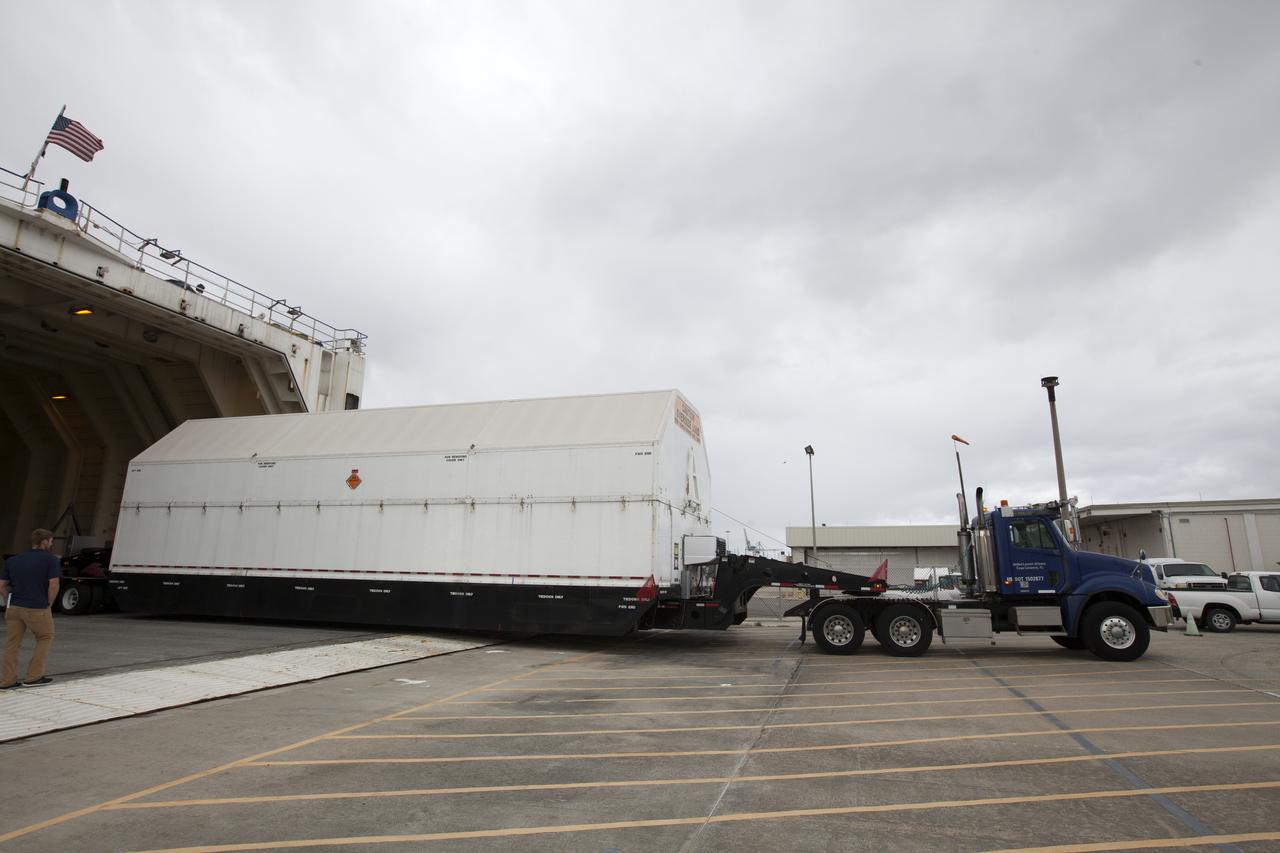
The first integrated piece of flight hardware for NASA's Space Launch System (SLS) rocket, the Interim Cryogenic Propulsion Stage (ICPS) is offloaded from the Mariner barge at Cape Canaveral Air Force Station in Florida. The ICPS was shipped from the United Launch Alliance (ULA) facility in Decatur, Alabama. The ICPS will be transported to the ULA Horizontal Integration Facility where it will be removed from its flight case. The ICPS is the in-space stage that is located toward the top of the rocket, between the Launch Vehicle Stage Adapter and the Orion Spacecraft Adapter. It will provide some of the in-space propulsion during Orion's first flight test atop the SLS on Exploration Mission 1.
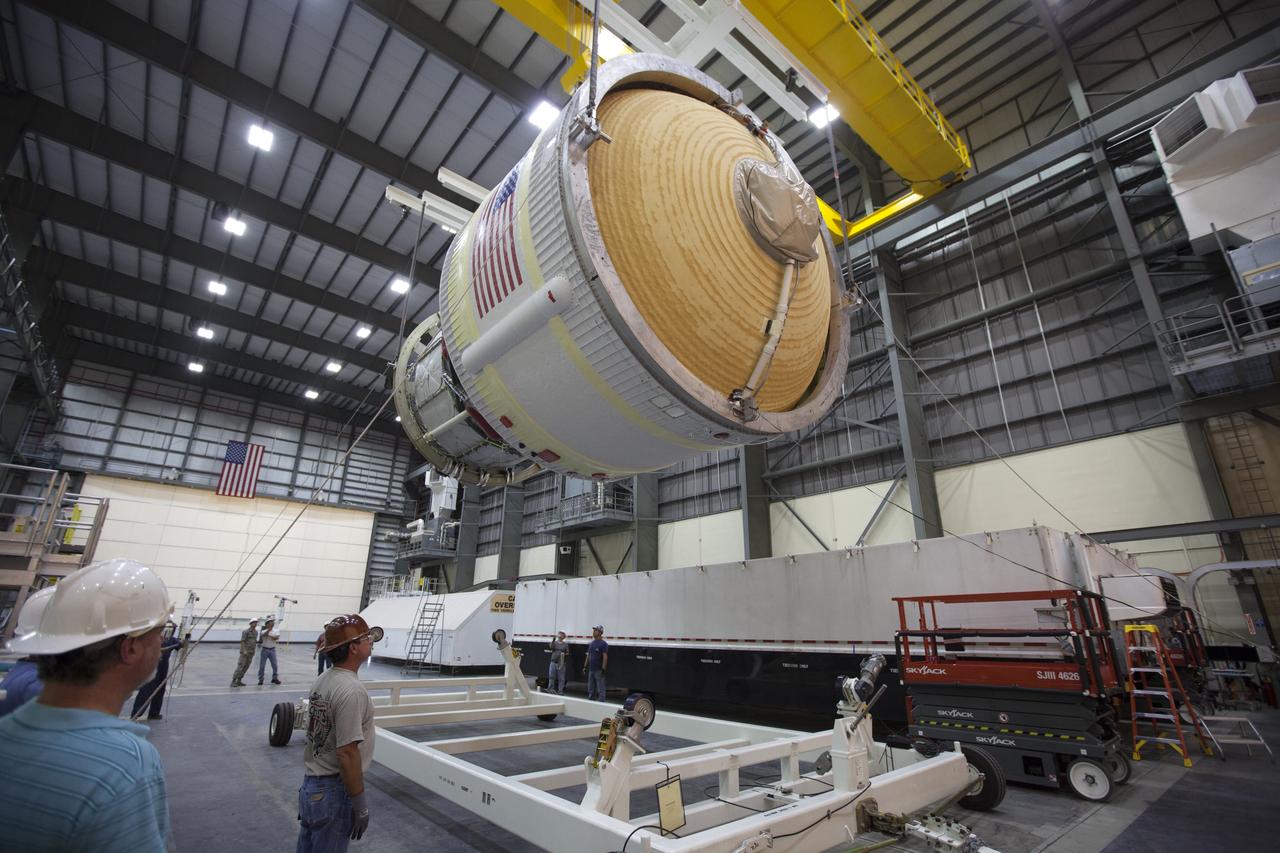
Inside the United Launch Alliance (ULA) Horizontal Integration Facility at Cape Canaveral Air Force Station in Florida, a crane lifts the Interim Cryogenic Propulsion Stage (ICPS) for NASA's Space Launch System rocket away from the base of its shipping container. The ICPS is the first integrated piece of flight hardware to arrive for the SLS. The ICPS arrived from the ULA facility in Decatur, Alabama. The ICPS is the in-space stage that is located toward the top of the rocket, between the Launch Vehicle Stage Adapter and the Orion Spacecraft Adapter. It will provide some of the in-space propulsion during Orion's first flight test atop the SLS on Exploration Mission 1.
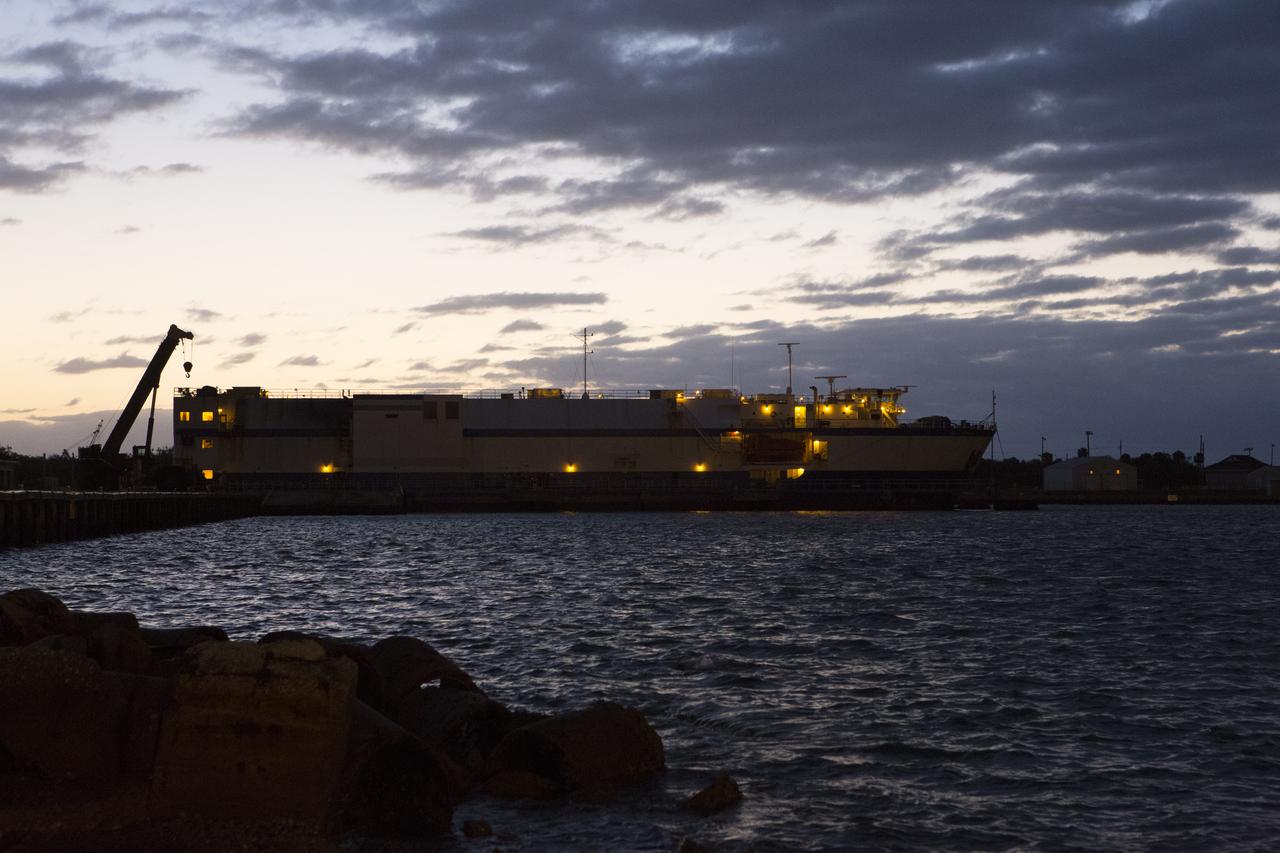
The Mariner barge arrives at Cape Canaveral Air Force Station in Florida, carrying the first integrated piece of flight hardware for NASA's Space Launch System (SLS) rocket, the Interim Cryogenic Propulsion Stage (ICPS). The ICPS was shipped from the United Launch Alliance (ULA) facility in Decatur, Alabama. The ICPS will be offloaded and transported to the ULA Horizontal Integration Facility where it will be removed from its flight case. The ICPS is the in-space stage that is located toward the top of the rocket, between the Launch Vehicle Stage Adapter and the Orion Spacecraft Adapter. It will provide some of the in-space propulsion during Orion's first flight test atop the SLS on Exploration Mission 1.
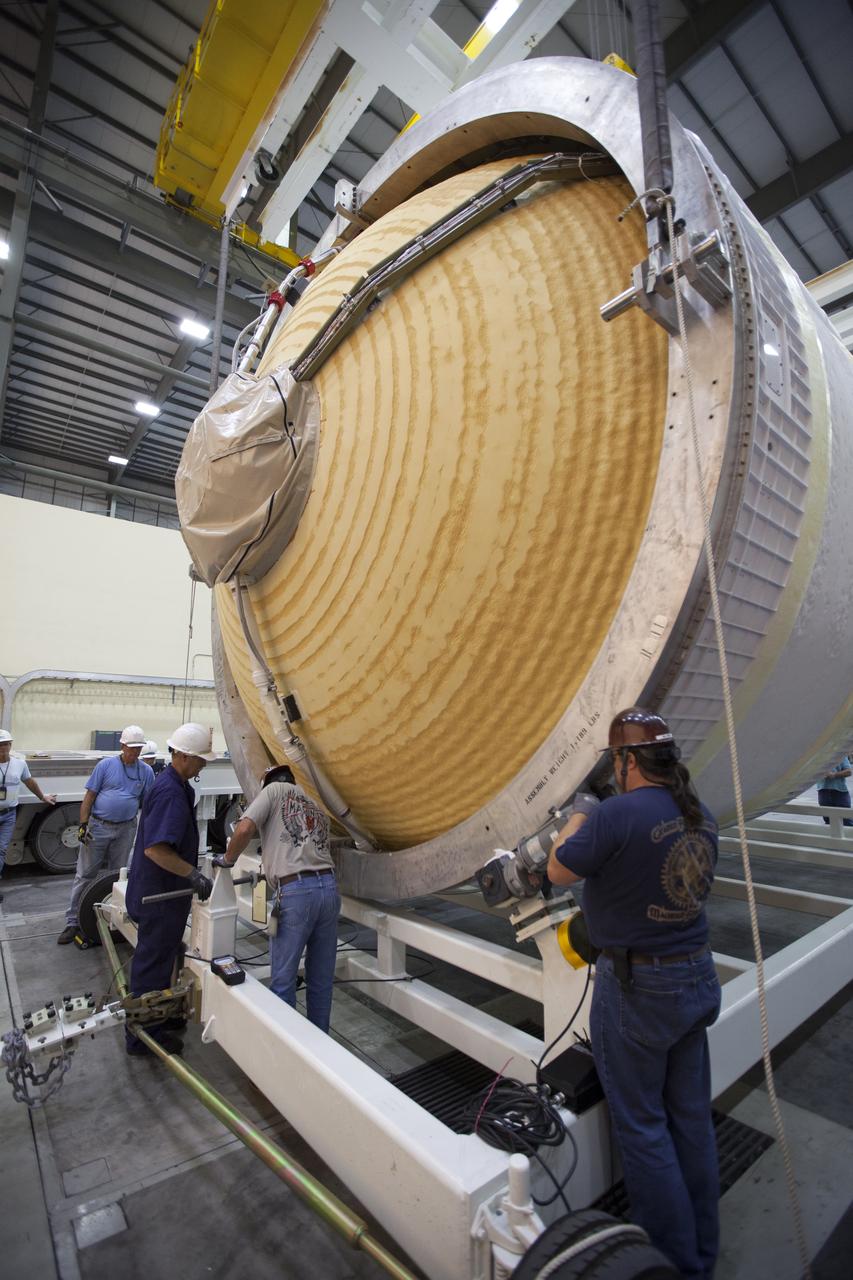
Inside the United Launch Alliance (ULA) Horizontal Integration Facility at Cape Canaveral Air Force Station in Florida, technicians help to secure the Interim Cryogenic Propulsion Stage (ICPS) for NASA's Space Launch System rocket onto a movable transport stand. The ICPS is the first integrated piece of flight hardware to arrive for the SLS. The ICPS arrived from the ULA facility in Decatur, Alabama. The ICPS is the in-space stage that is located toward the top of the rocket, between the Launch Vehicle Stage Adapter and the Orion Spacecraft Adapter. It will provide some of the in-space propulsion during Orion's first flight test atop the SLS on Exploration Mission 1.
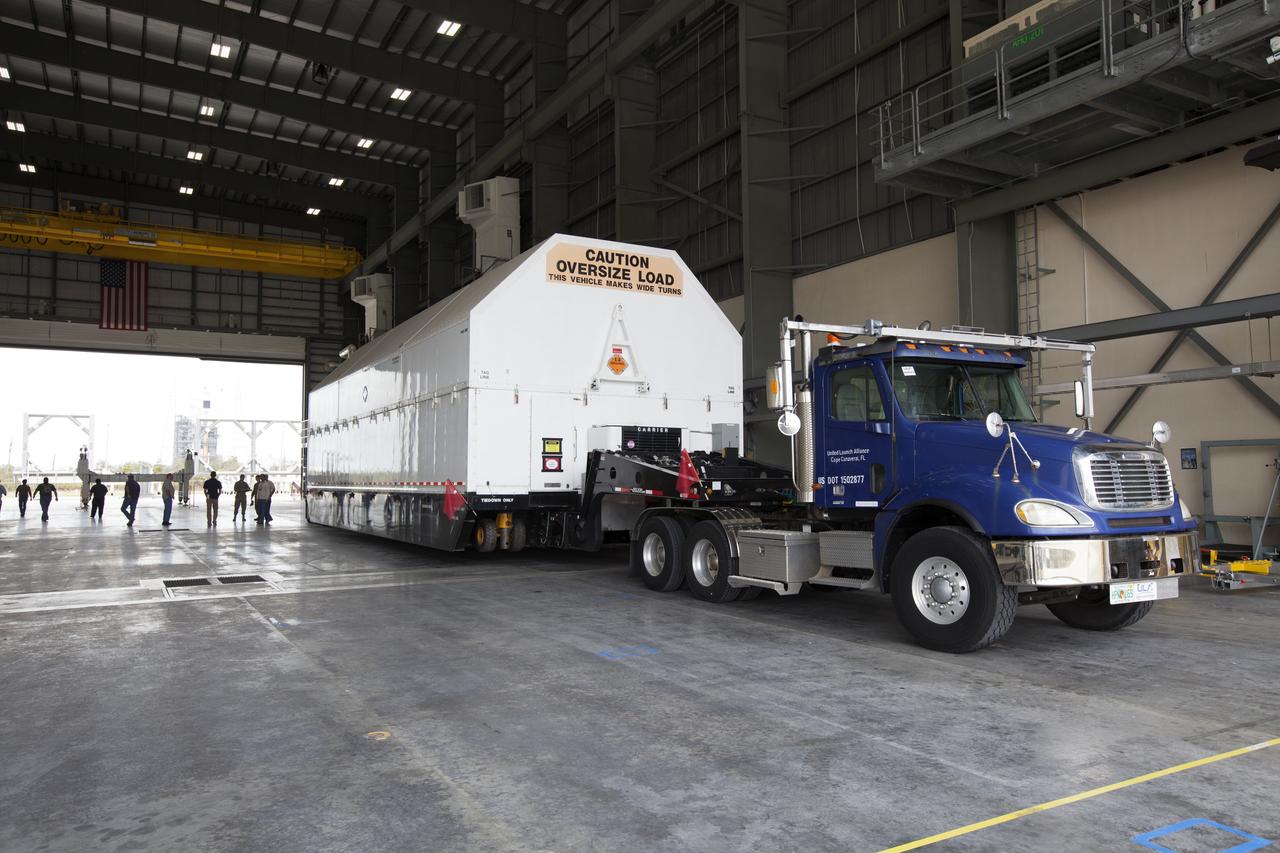
The first integrated piece of flight hardware for NASA's Space Launch System (SLS) rocket, the Interim Cryogenic Propulsion Stage (ICPS) arrives at the United Launch Alliance (ULA) Horizontal Integration Facility at Cape Canaveral Air Force Station in Florida, where it will be removed from its flight case. The ICPS arrived aboard the Mariner barge from the ULA facility in Decatur, Alabama. The ICPS is the in-space stage that is located toward the top of the rocket, between the Launch Vehicle Stage Adapter and the Orion Spacecraft Adapter. It will provide some of the in-space propulsion during Orion's first flight test atop the SLS on Exploration Mission 1.
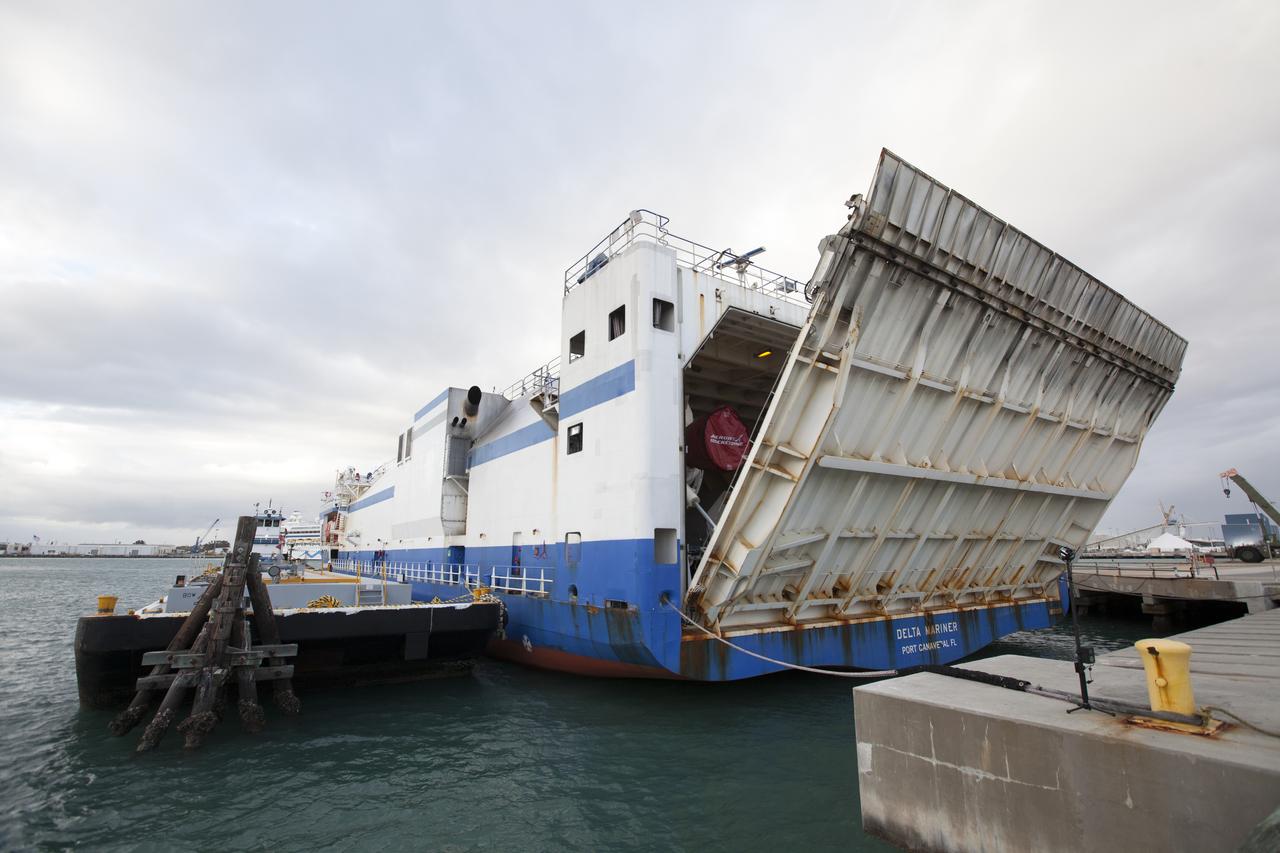
The Mariner barge arrives at a dock at Cape Canaveral Air Force Station in Florida, carrying the first integrated piece of flight hardware for NASA's Space Launch System (SLS) rocket, the Interim Cryogenic Propulsion Stage (ICPS). The ICPS was shipped from the United Launch Alliance (ULA) facility in Decatur, Alabama. The ICPS will be offloaded and transported to the ULA Horizontal Integration Facility where it will be removed from its flight case. The ICPS is the in-space stage that is located toward the top of the rocket, between the Launch Vehicle Stage Adapter and the Orion Spacecraft Adapter. It will provide some of the in-space propulsion during Orion's first flight test atop the SLS on Exploration Mission 1.
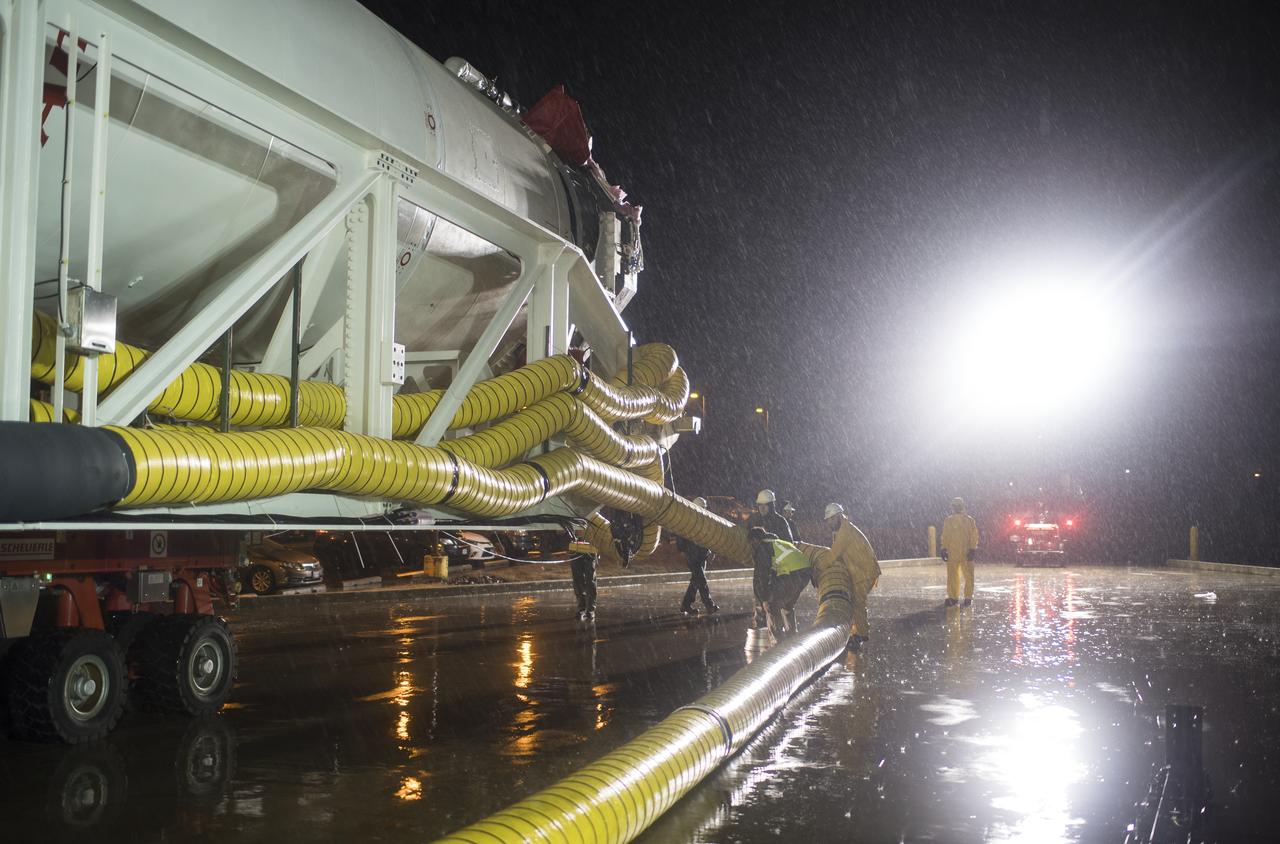
A Northrop Grumman Antares rocket is seen as it is rolled from the Horizontal Integration Facility (HIF) to Pad-0A, Monday, Nov. 12, 2018 at NASA's Wallops Flight Facility in Virginia. Northrop Grumman's 10th contracted cargo resupply mission for NASA to the International Space Station will deliver about 7,500 pounds of science and research, crew supplies and vehicle hardware to the orbital laboratory and its crew. Launch is scheduled for Nov. 15 at 4:49 a.m. EST. Photo Credit: (NASA/Joel Kowsky)
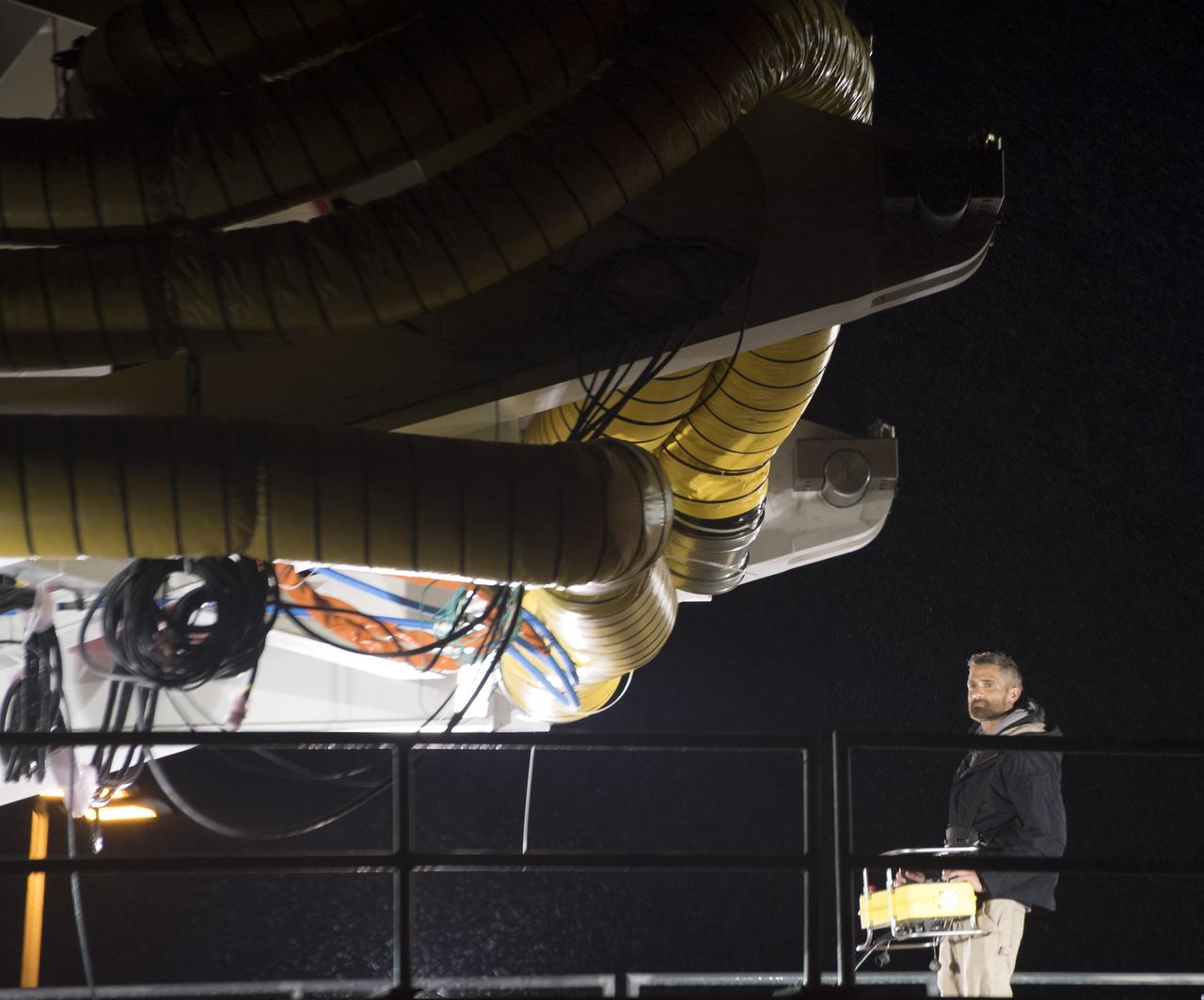
Orbital ATK Mechanical Technician Phil Kauthen drives the transporter with the Antares rocket aboard from the Horizontal Integration Facility to launch Pad-0A, Thursday, Nov. 9, 2017 at NASA's Wallops Flight Facility in Virginia. Orbital ATK’s eighth contracted cargo resupply mission with NASA to the International Space Station will deliver over 7,400 pounds of science and research, crew supplies and vehicle hardware to the orbital laboratory and its crew. Photo Credit: (NASA/Bill Ingalls)
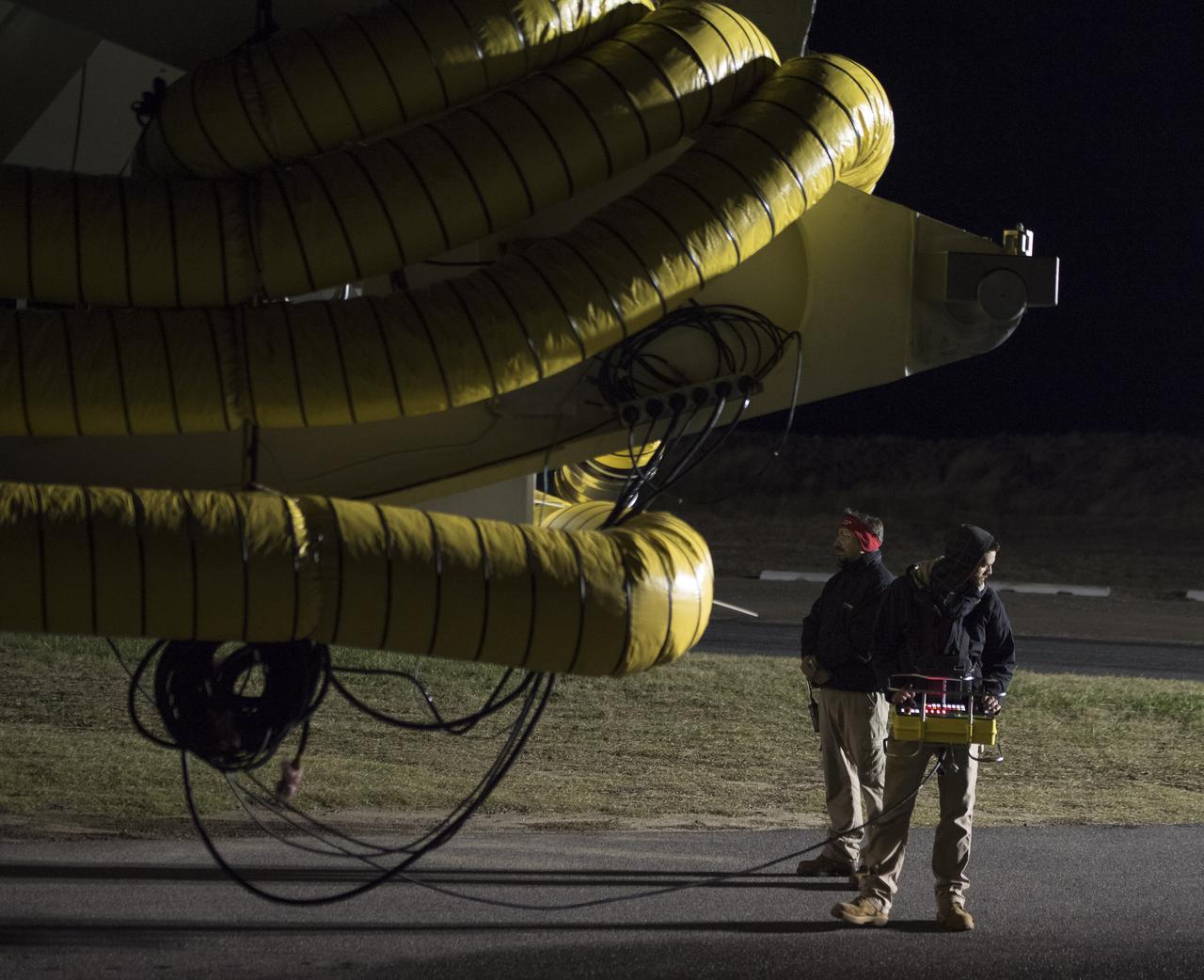
Orbital ATK Mechanical Technician Phil Kauthen drives the transporter with the Antares rocket aboard from the Horizontal Integration Facility to launch Pad-0A, Thursday, Nov. 9, 2017 at NASA's Wallops Flight Facility in Virginia. Orbital ATK’s eighth contracted cargo resupply mission with NASA to the International Space Station will deliver over 7,400 pounds of science and research, crew supplies and vehicle hardware to the orbital laboratory and its crew. Photo Credit: (NASA/Bill Ingalls)
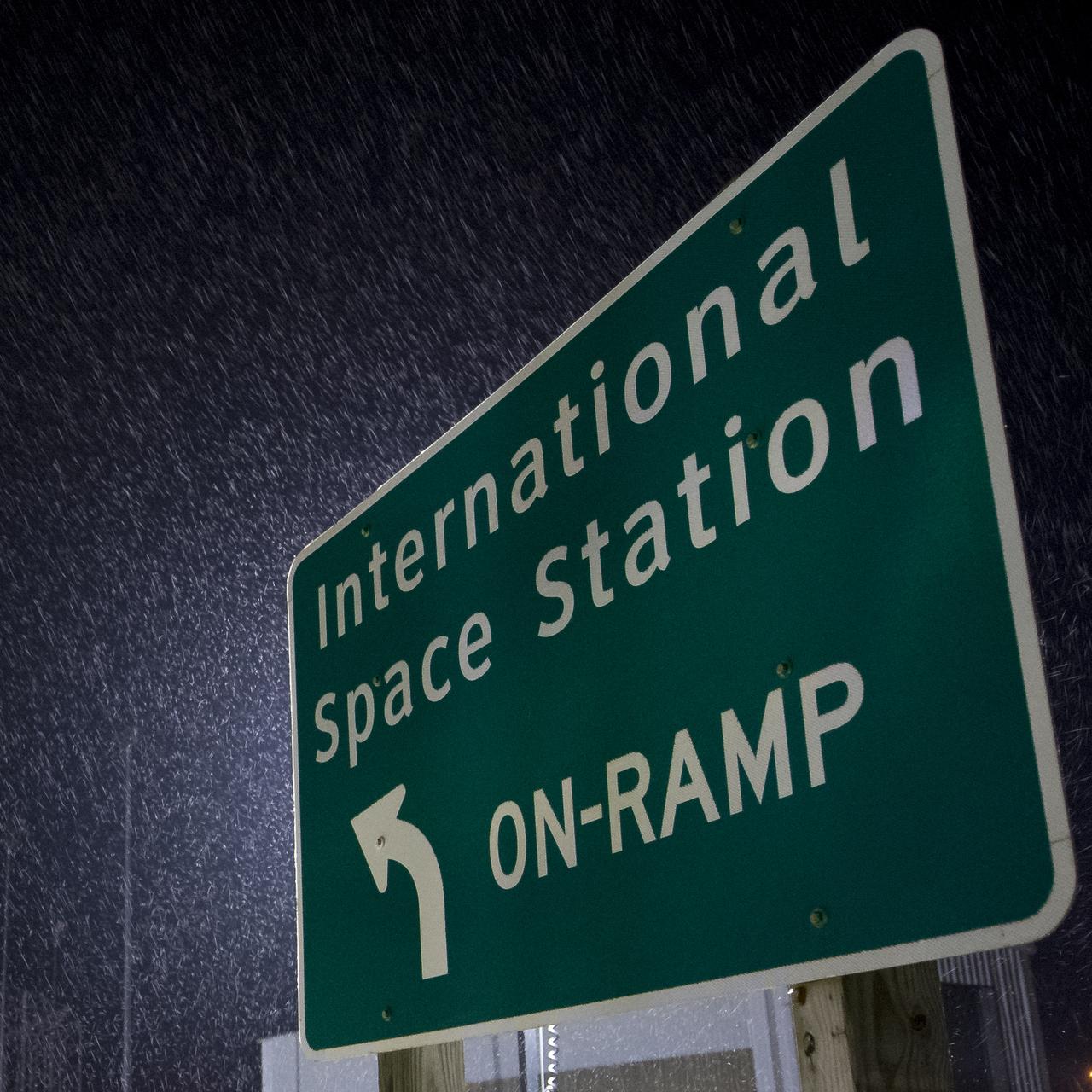
A sign at the entrance launch Pad-0A is seen as the Orbital ATK Antares rocket is rolled from the Horizontal Integration Facility (HIF) to the pad, Thursday, Nov. 9, 2017 at NASA's Wallops Flight Facility in Virginia. Orbital ATK’s eighth contracted cargo resupply mission with NASA to the International Space Station will deliver over 7,400 pounds of science and research, crew supplies and vehicle hardware to the orbital laboratory and its crew. Photo Credit: (NASA/Bill Ingalls)
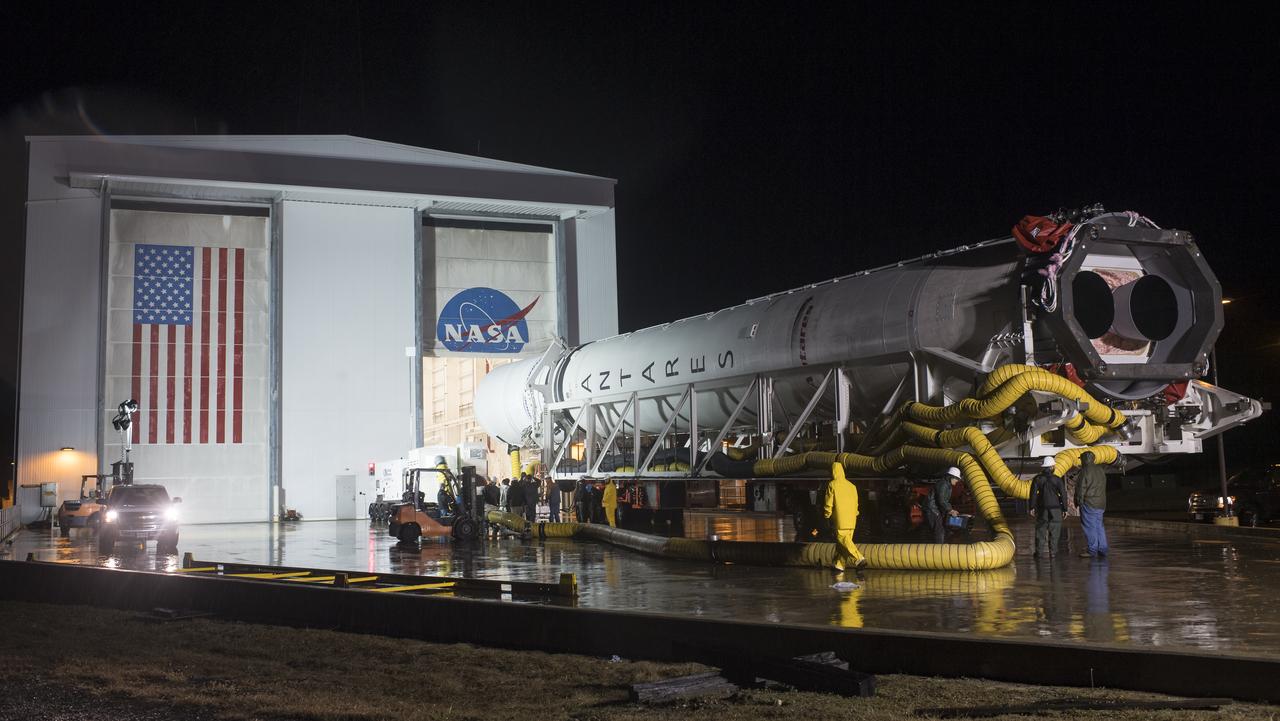
A Northrop Grumman Antares rocket is seen as it is rolled from the Horizontal Integration Facility (HIF) to Pad-0A, Monday, Nov. 12, 2018 at NASA's Wallops Flight Facility in Virginia. Northrop Grumman's 10th contracted cargo resupply mission for NASA to the International Space Station will deliver about 7,500 pounds of science and research, crew supplies and vehicle hardware to the orbital laboratory and its crew. Launch is scheduled for Nov. 15 at 4:49 a.m. EST. Photo Credit: (NASA/Joel Kowsky)
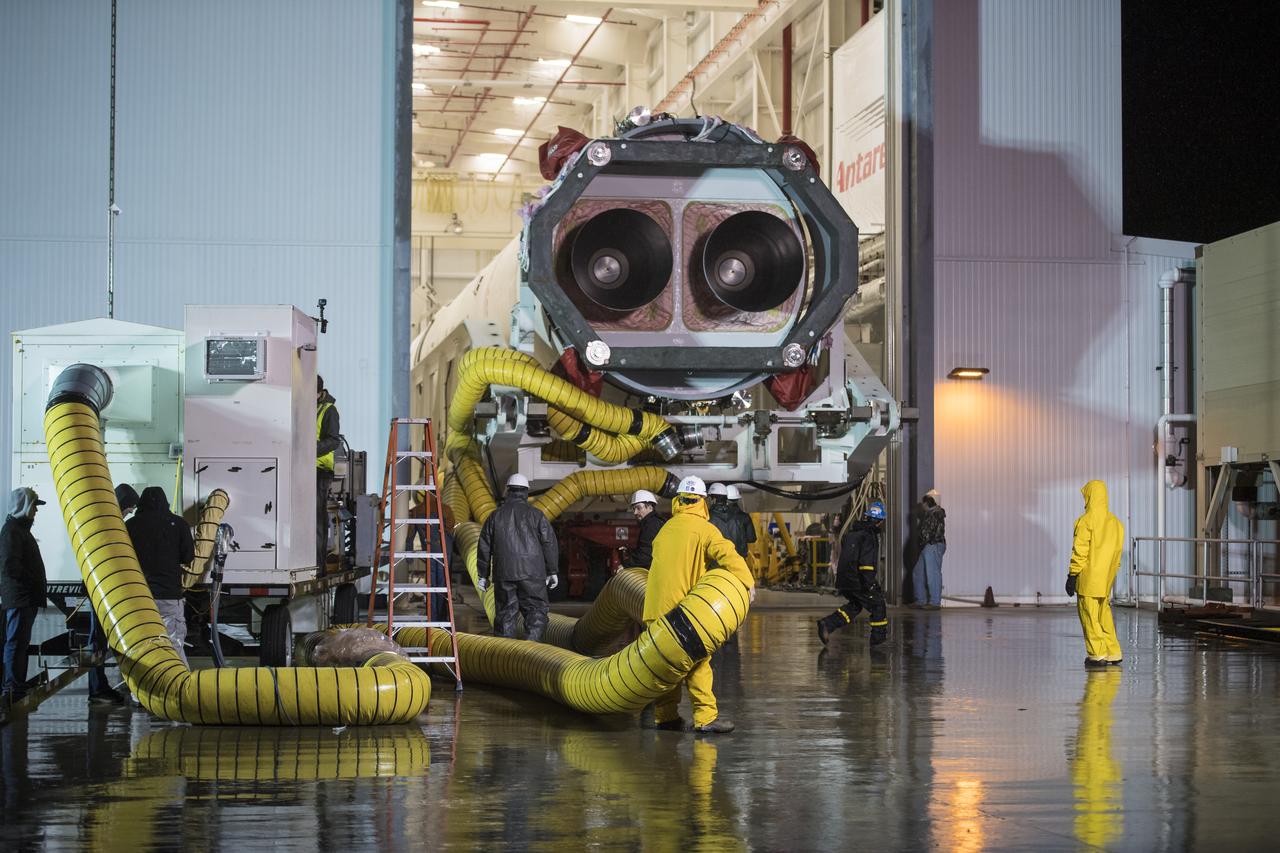
A Northrop Grumman Antares rocket is seen as it is rolled from the Horizontal Integration Facility (HIF) to Pad-0A, Monday, Nov. 12, 2018 at NASA's Wallops Flight Facility in Virginia. Northrop Grumman's 10th contracted cargo resupply mission for NASA to the International Space Station will deliver about 7,500 pounds of science and research, crew supplies and vehicle hardware to the orbital laboratory and its crew. Launch is scheduled for Nov. 15 at 4:49 a.m. EST. Photo Credit: (NASA/Joel Kowsky)
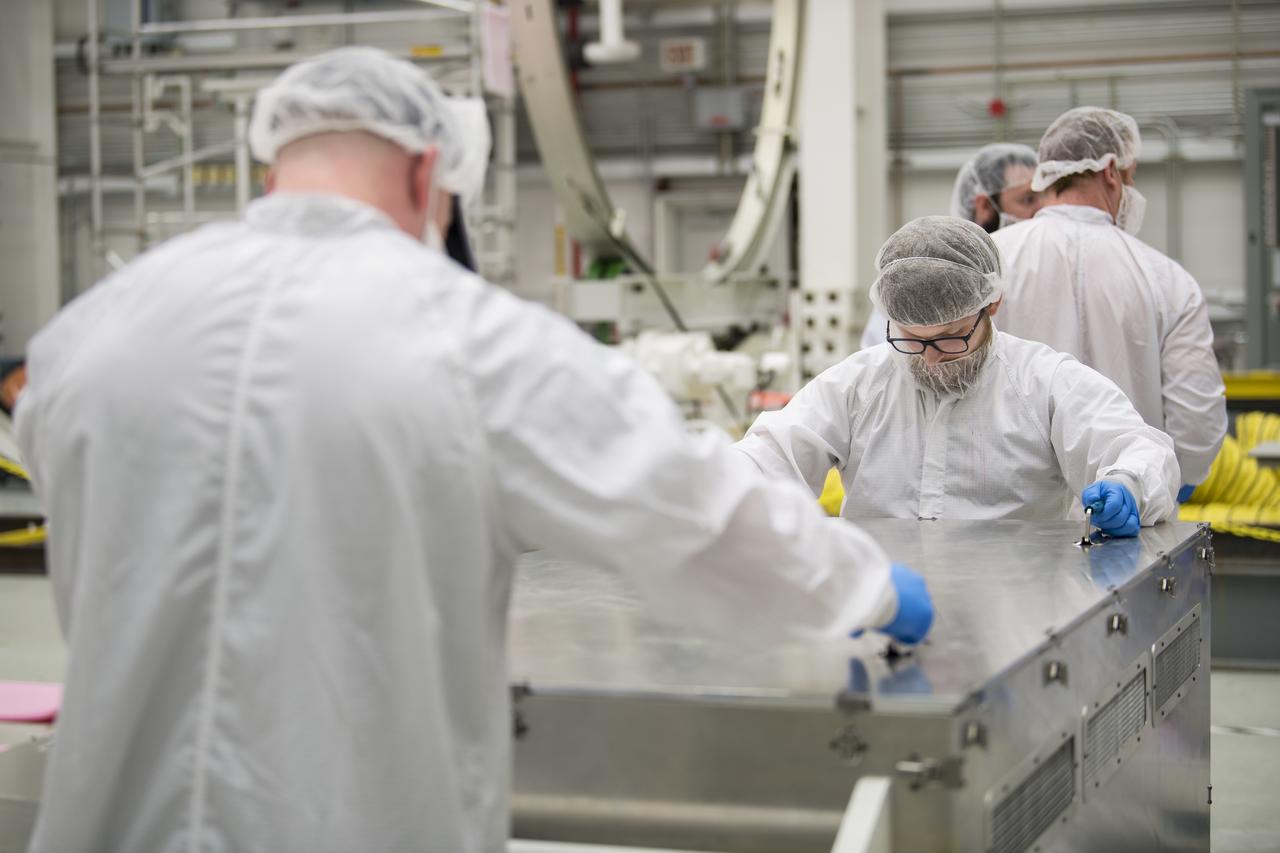
Mission engineers receive and prepare science and research and food items for the final cargo load into the Cygnus resupply spacecraft onboard the Northrop Grumman Antares rocket, Saturday, Feb. 8, 2020 at the Horizontal Integration Facility (HIF) of NASA's Wallops Flight Facility in Virginia. Northrop Grumman’s 13th contracted cargo resupply mission with NASA to the International Space Station will deliver more than 7,500 pounds of science and research, crew supplies and vehicle hardware to the orbital laboratory and its crew. Photo Credit: (NASA/Aubrey Gemignani)
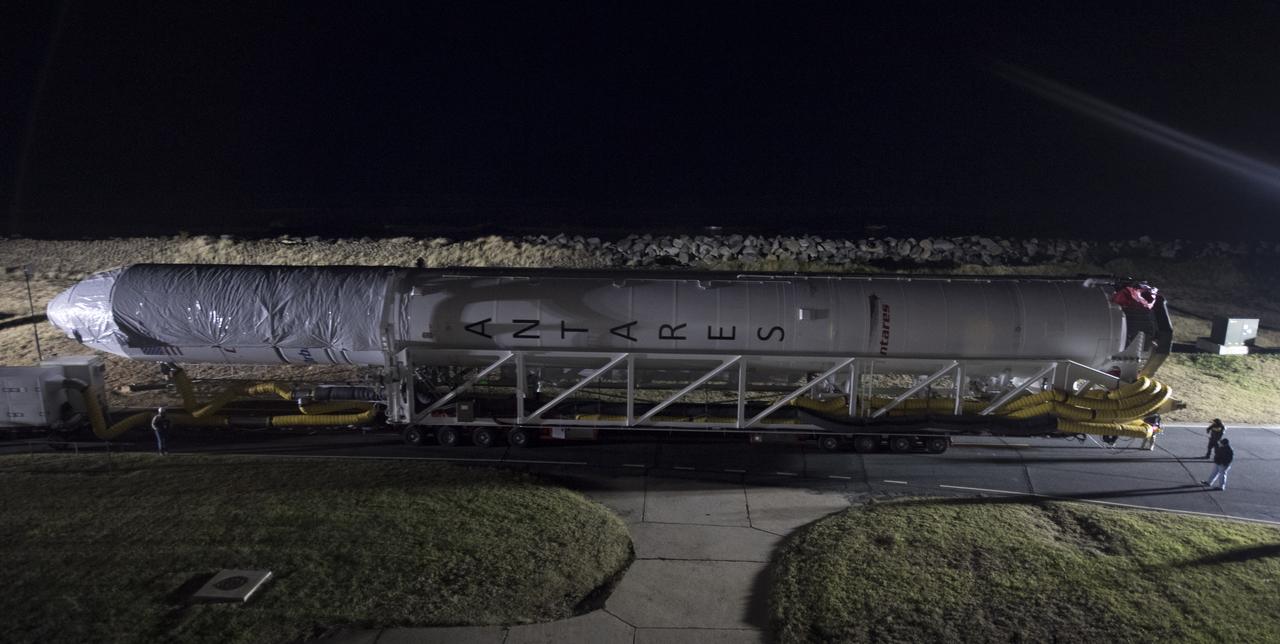
The Orbital ATK Antares rocket is rolled from the Horizontal Integration Facility (HIF) to launch Pad-0A, Thursday, Nov. 9, 2017 at NASA's Wallops Flight Facility in Virginia. Orbital ATK’s eighth contracted cargo resupply mission with NASA to the International Space Station will deliver over 7,400 pounds of science and research, crew supplies and vehicle hardware to the orbital laboratory and its crew. Photo Credit: (NASA/Bill Ingalls)
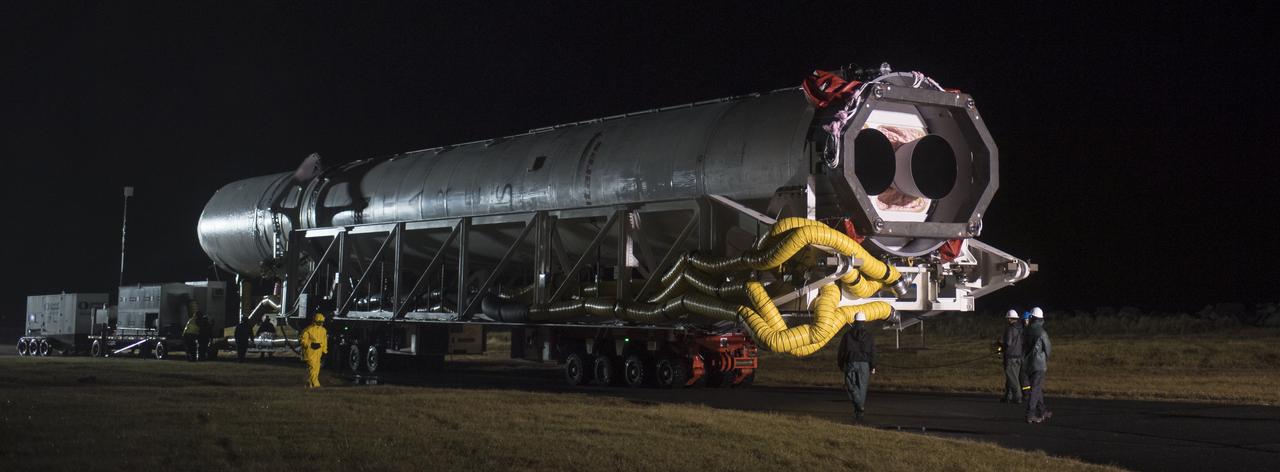
A Northrop Grumman Antares rocket is seen as it is rolled from the Horizontal Integration Facility (HIF) to Pad-0A, Monday, Nov. 12, 2018 at NASA's Wallops Flight Facility in Virginia. Northrop Grumman's 10th contracted cargo resupply mission for NASA to the International Space Station will deliver about 7,500 pounds of science and research, crew supplies and vehicle hardware to the orbital laboratory and its crew. Launch is scheduled for Nov. 15 at 4:49 a.m. EST. Photo Credit: (NASA/Joel Kowsky)
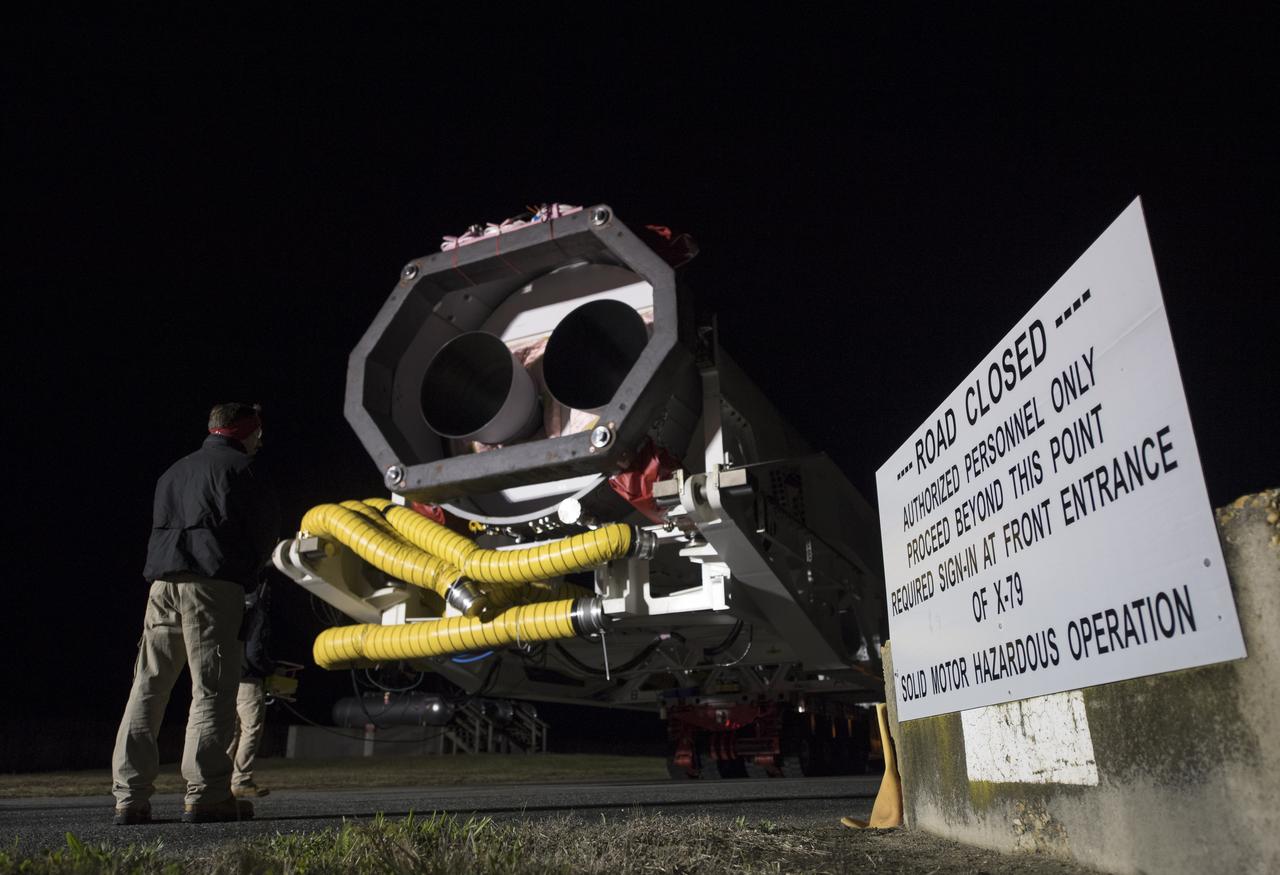
The Orbital ATK Antares rocket is rolled from the Horizontal Integration Facility (HIF) to launch Pad-0A, Thursday, Nov. 9, 2017 at NASA's Wallops Flight Facility in Virginia. Orbital ATK’s eighth contracted cargo resupply mission with NASA to the International Space Station will deliver over 7,400 pounds of science and research, crew supplies and vehicle hardware to the orbital laboratory and its crew. Photo Credit: (NASA/Bill Ingalls)
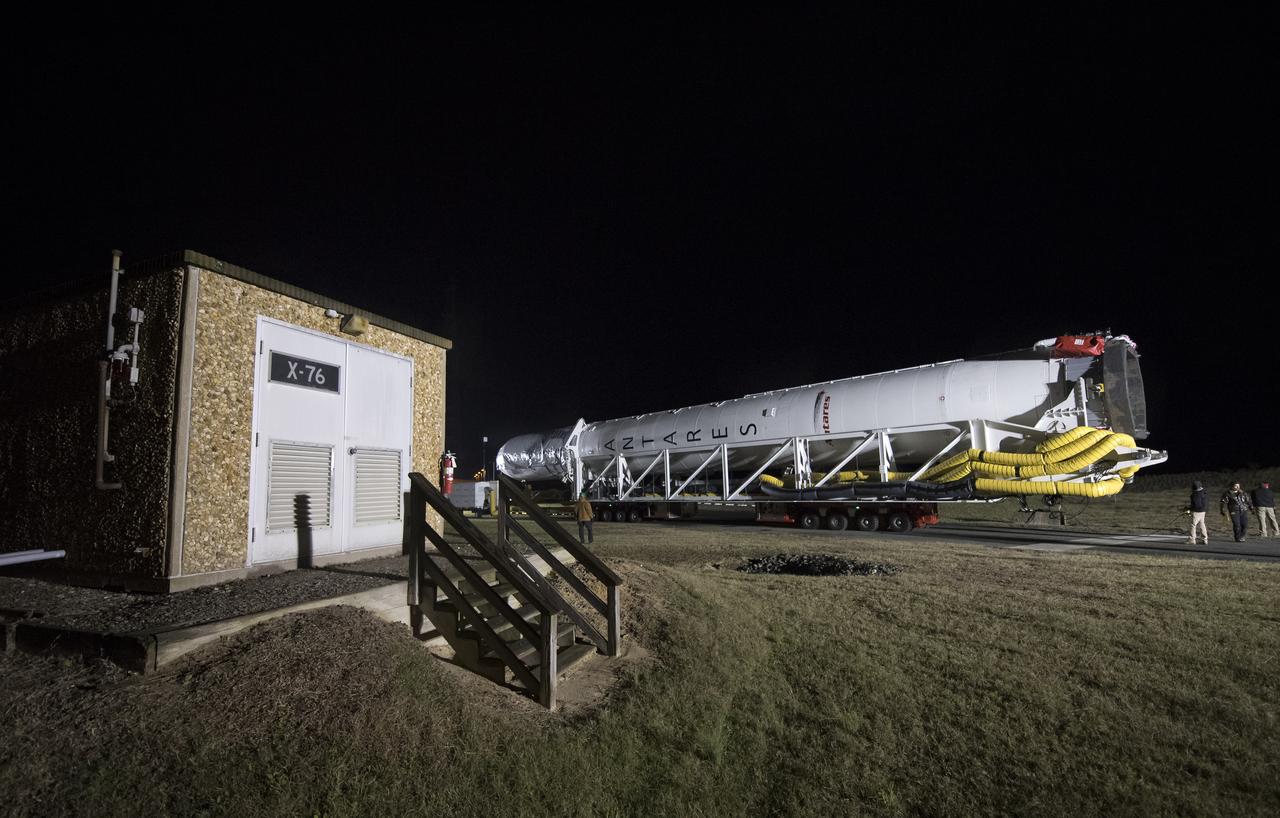
The Orbital ATK Antares rocket is rolled from the Horizontal Integration Facility (HIF) to launch Pad-0A, Thursday, Nov. 9, 2017 at NASA's Wallops Flight Facility in Virginia. Orbital ATK’s eighth contracted cargo resupply mission with NASA to the International Space Station will deliver over 7,400 pounds of science and research, crew supplies and vehicle hardware to the orbital laboratory and its crew. Photo Credit: (NASA/Bill Ingalls)
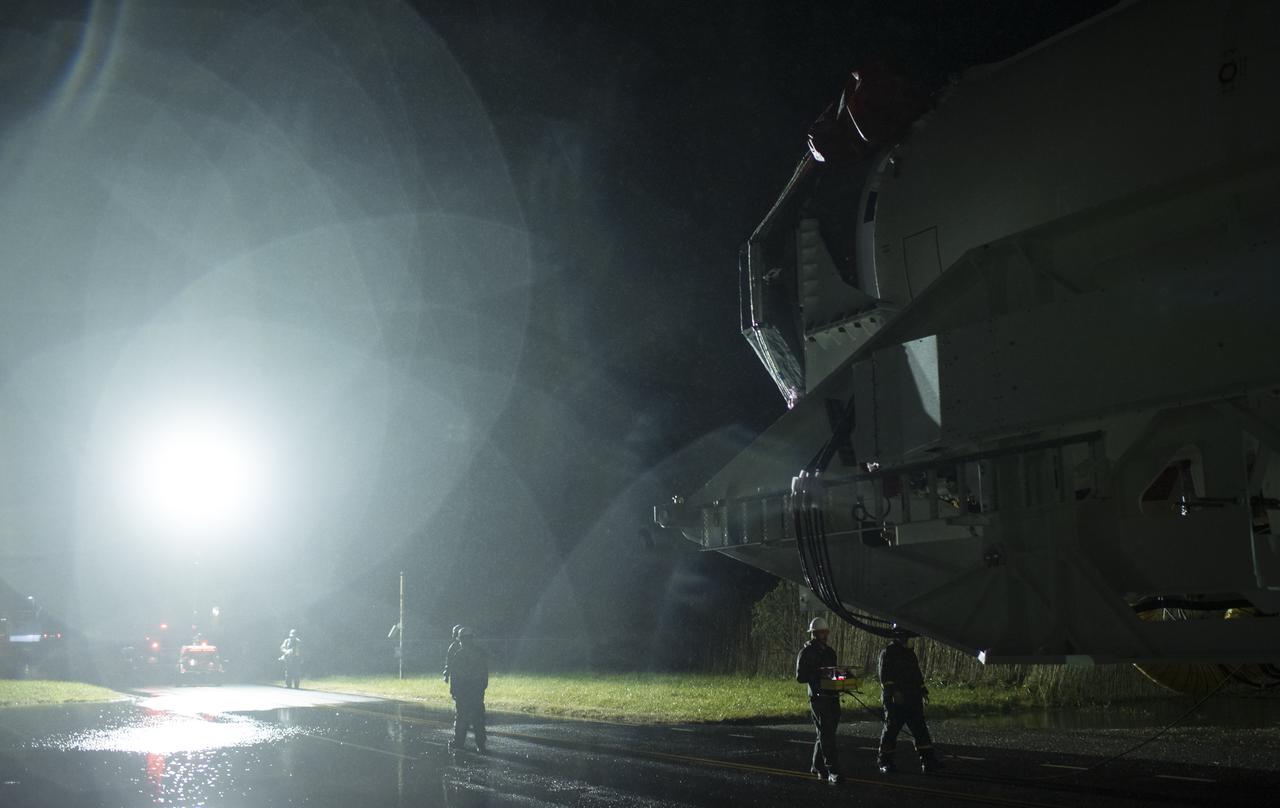
A Northrop Grumman Antares rocket is seen as it is rolled from the Horizontal Integration Facility (HIF) to Pad-0A, Monday, Nov. 12, 2018 at NASA's Wallops Flight Facility in Virginia. Northrop Grumman's 10th contracted cargo resupply mission for NASA to the International Space Station will deliver about 7,500 pounds of science and research, crew supplies and vehicle hardware to the orbital laboratory and its crew. Launch is scheduled for Nov. 15 at 4:49 a.m. EST. Photo Credit: (NASA/Joel Kowsky)
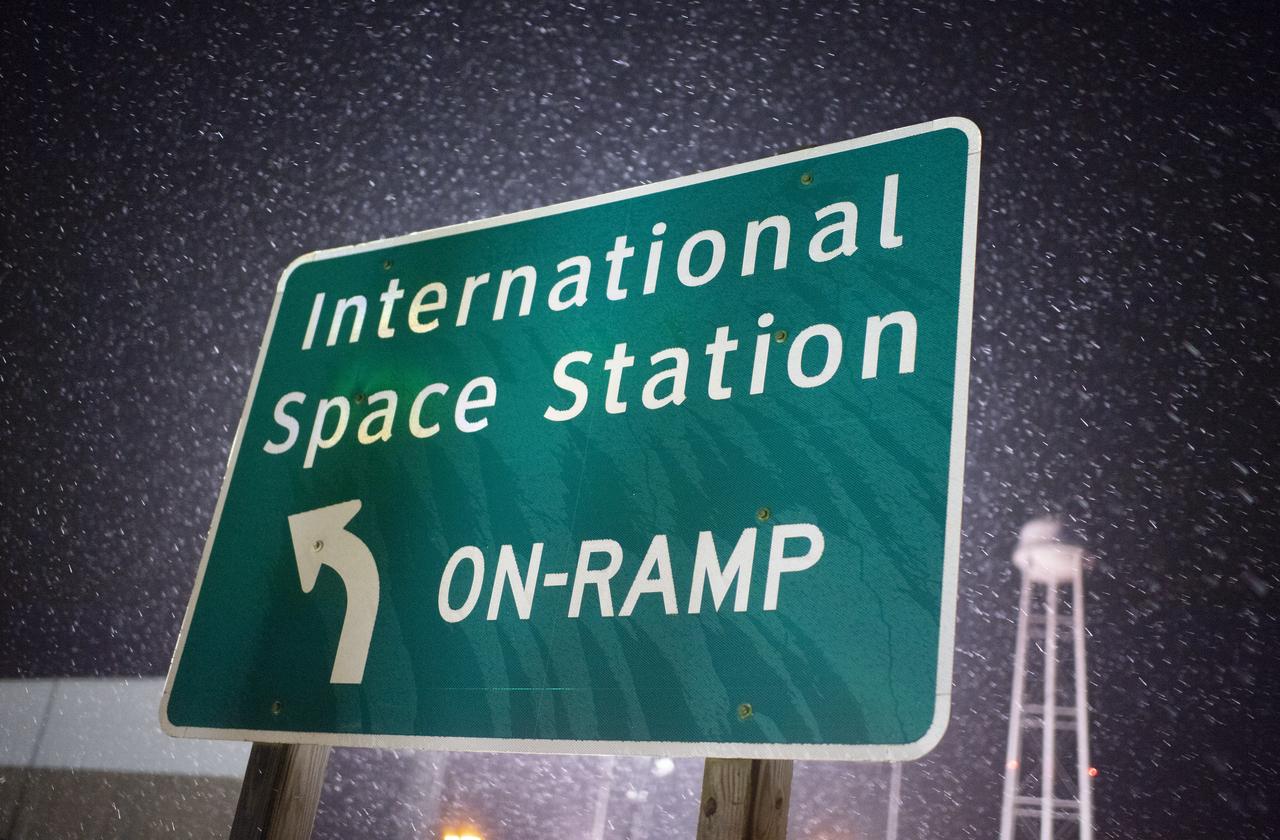
A sign at the entrance to Pad-0A is seen as the Northrop Grumman Antares rocket is rolled from the Horizontal Integration Facility (HIF) to Pad-0A, Monday, Nov. 12, 2018 at NASA's Wallops Flight Facility in Virginia. Northrop Grumman's 10th contracted cargo resupply mission for NASA to the International Space Station will deliver about 7,500 pounds of science and research, crew supplies and vehicle hardware to the orbital laboratory and its crew. Launch is scheduled for Nov. 15 at 4:49 a.m. EST. Photo Credit: (NASA/Joel Kowsky)
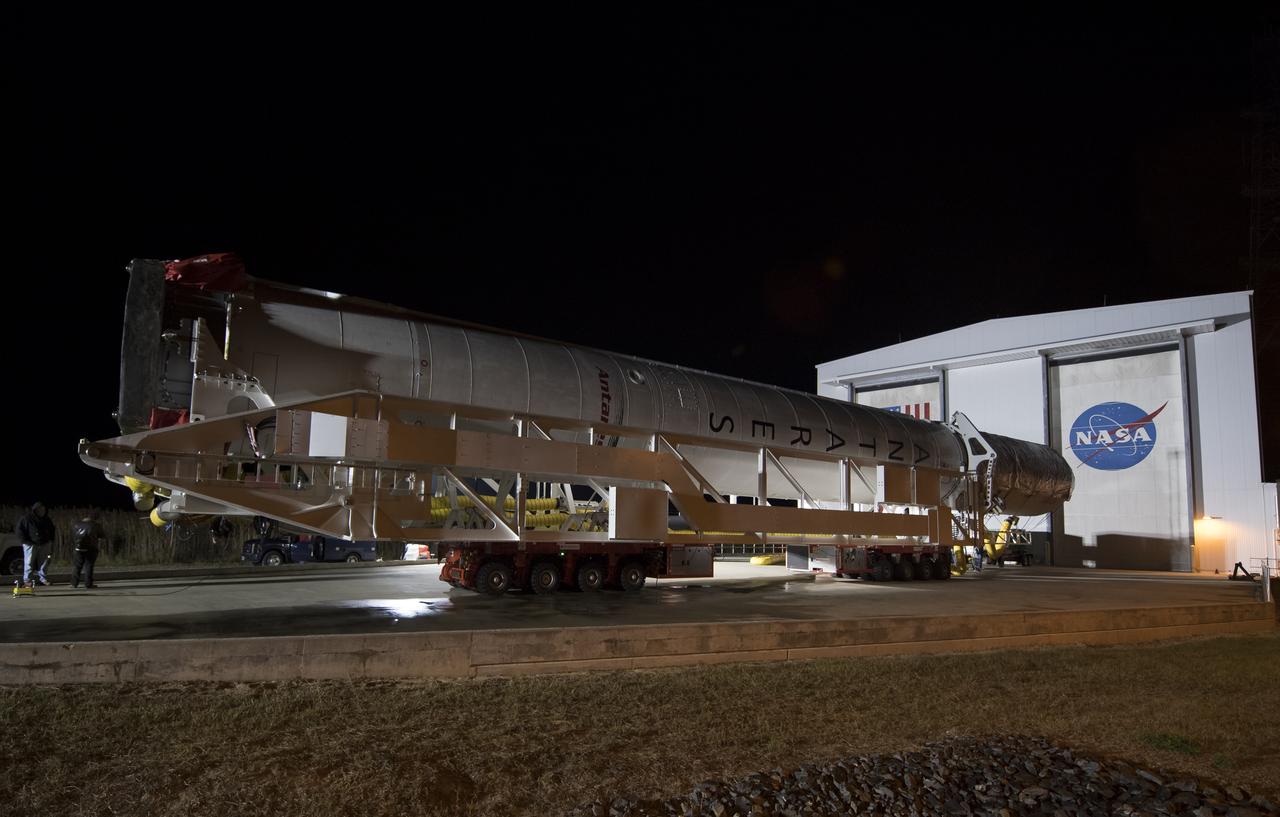
The Orbital ATK Antares rocket is rolled from the Horizontal Integration Facility (HIF) to launch Pad-0A, Thursday, Nov. 9, 2017 at NASA's Wallops Flight Facility in Virginia. Orbital ATK’s eighth contracted cargo resupply mission with NASA to the International Space Station will deliver over 7,400 pounds of science and research, crew supplies and vehicle hardware to the orbital laboratory and its crew. Photo Credit: (NASA/Bill Ingalls)
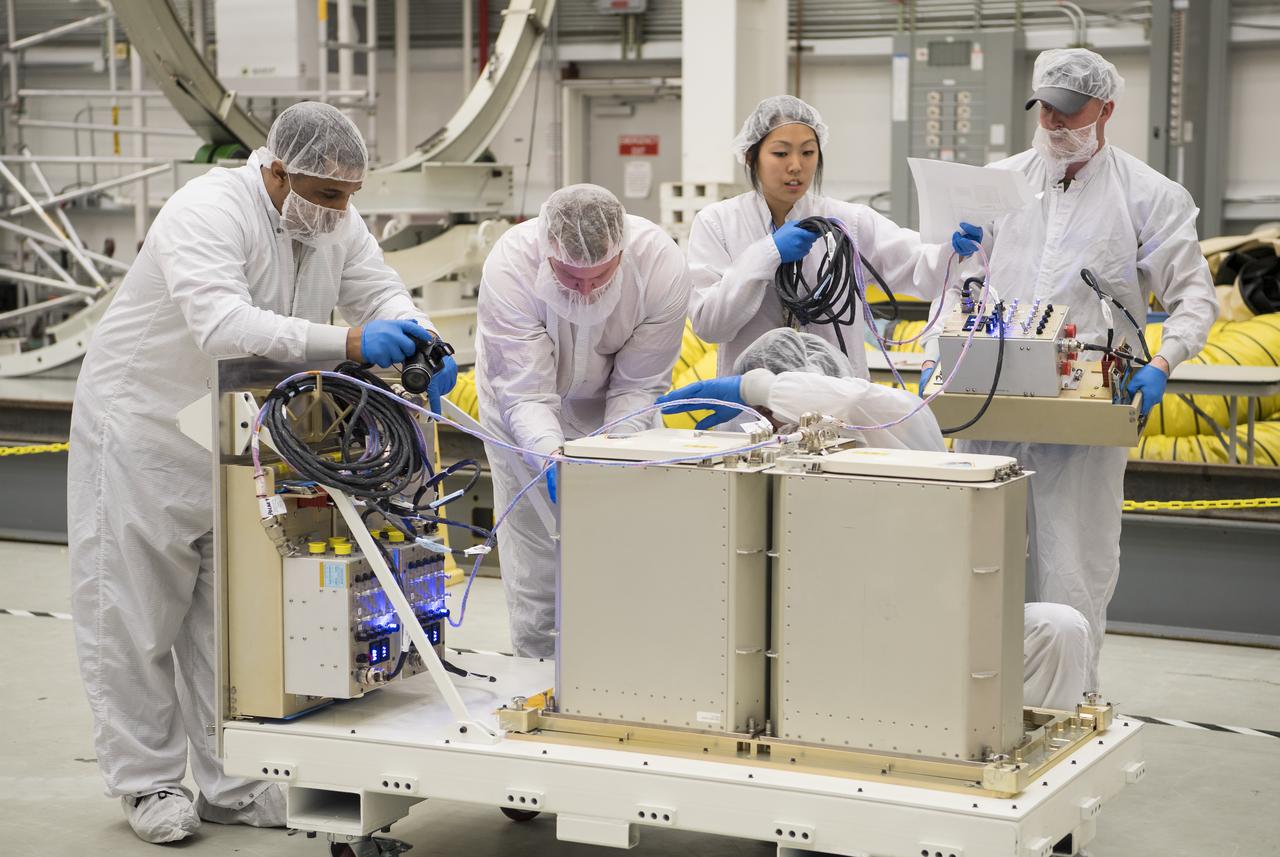
Mission engineers receive and prepare science and research and food items for the final cargo load into the Cygnus resupply spacecraft onboard the Northrop Grumman Antares rocket, Saturday, Feb. 8, 2020 at the Horizontal Integration Facility (HIF) of NASA's Wallops Flight Facility in Virginia. Northrop Grumman’s 13th contracted cargo resupply mission with NASA to the International Space Station will deliver more than 7,500 pounds of science and research, crew supplies and vehicle hardware to the orbital laboratory and its crew. Photo Credit: (NASA/Aubrey Gemignani)
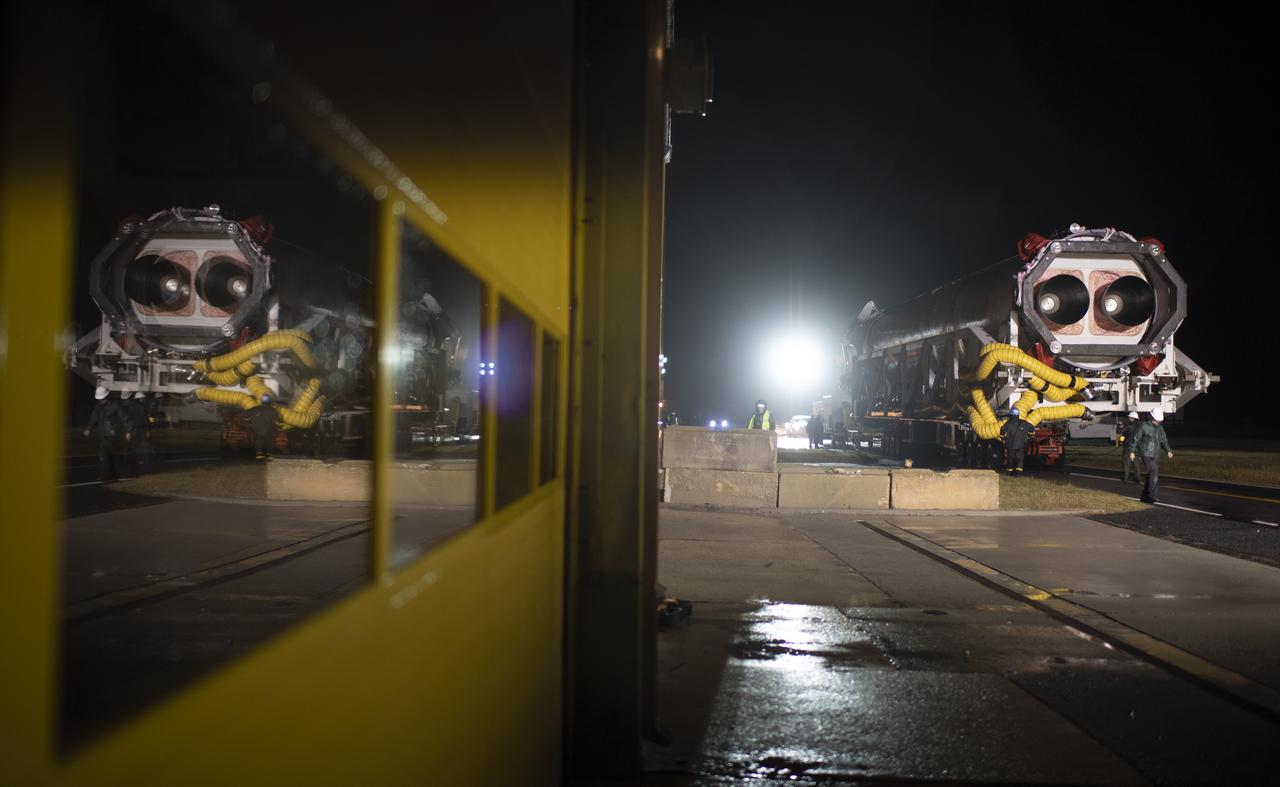
A Northrop Grumman Antares rocket is seen as it is rolled from the Horizontal Integration Facility (HIF) to Pad-0A, Monday, Nov. 12, 2018 at NASA's Wallops Flight Facility in Virginia. Northrop Grumman's 10th contracted cargo resupply mission for NASA to the International Space Station will deliver about 7,500 pounds of science and research, crew supplies and vehicle hardware to the orbital laboratory and its crew. Launch is scheduled for Nov. 15 at 4:49 a.m. EST. Photo Credit: (NASA/Joel Kowsky)
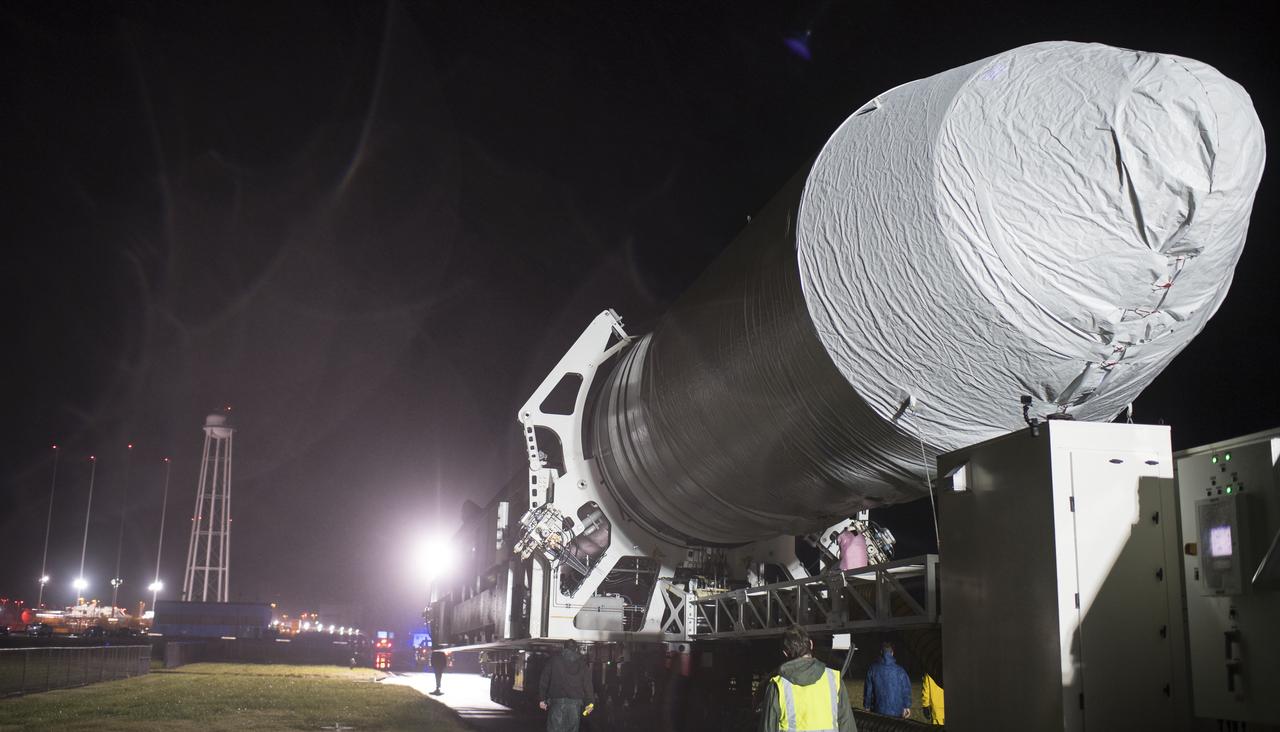
A Northrop Grumman Antares rocket is seen as it is rolled from the Horizontal Integration Facility (HIF) to Pad-0A, Monday, Nov. 12, 2018 at NASA's Wallops Flight Facility in Virginia. Northrop Grumman's 10th contracted cargo resupply mission for NASA to the International Space Station will deliver about 7,500 pounds of science and research, crew supplies and vehicle hardware to the orbital laboratory and its crew. Launch is scheduled for Nov. 15 at 4:49 a.m. EST. Photo Credit: (NASA/Joel Kowsky)
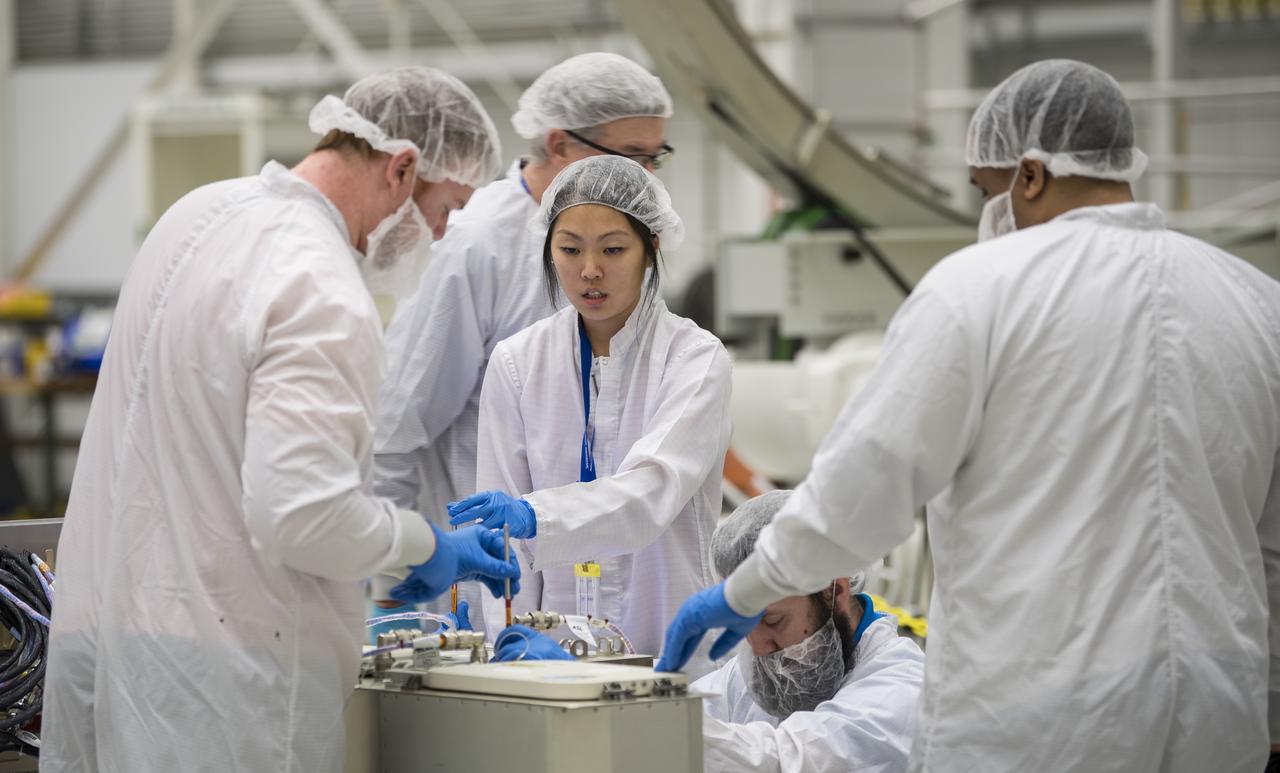
Mission engineers receive and prepare science and research and food items for the final cargo load into the Cygnus resupply spacecraft onboard the Northrop Grumman Antares rocket, Saturday, Feb. 8, 2020 at the Horizontal Integration Facility (HIF) of NASA's Wallops Flight Facility in Virginia. Northrop Grumman’s 13th contracted cargo resupply mission with NASA to the International Space Station will deliver more than 7,500 pounds of science and research, crew supplies and vehicle hardware to the orbital laboratory and its crew. Photo Credit: (NASA/Aubrey Gemignani)
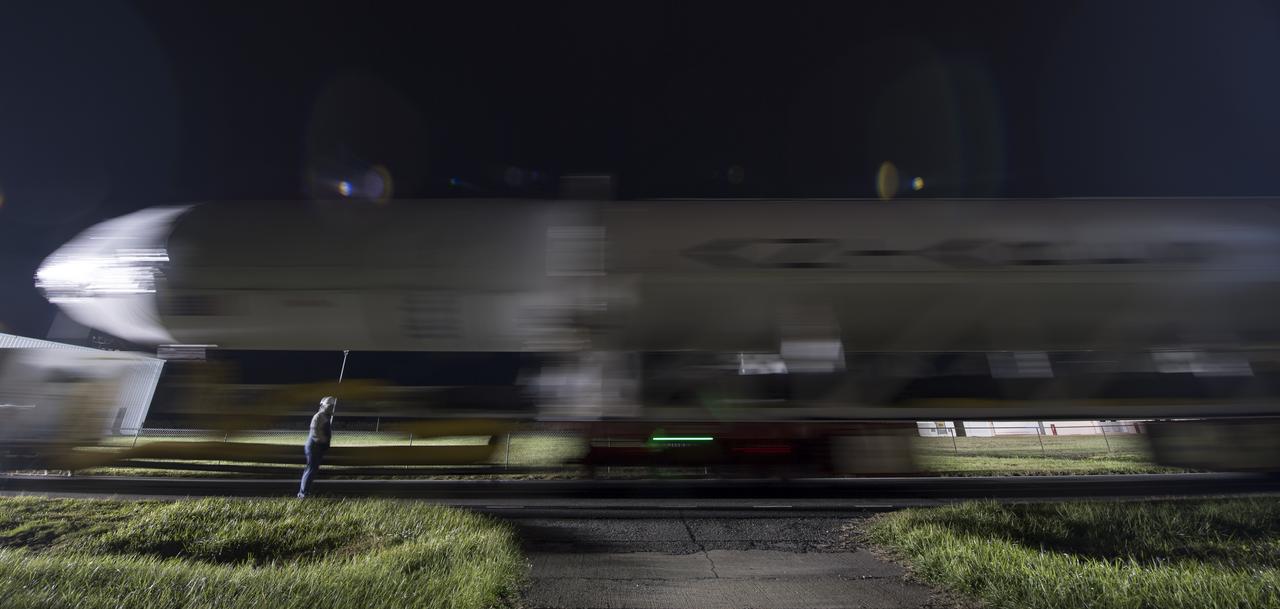
The Orbital ATK Antares rocket is rolled from the Horizontal Integration Facility (HIF) to launch Pad-0A, Thursday, Nov. 9, 2017 at NASA's Wallops Flight Facility in Virginia. Orbital ATK’s eighth contracted cargo resupply mission with NASA to the International Space Station will deliver over 7,400 pounds of science and research, crew supplies and vehicle hardware to the orbital laboratory and its crew. Photo Credit: (NASA/Bill Ingalls)
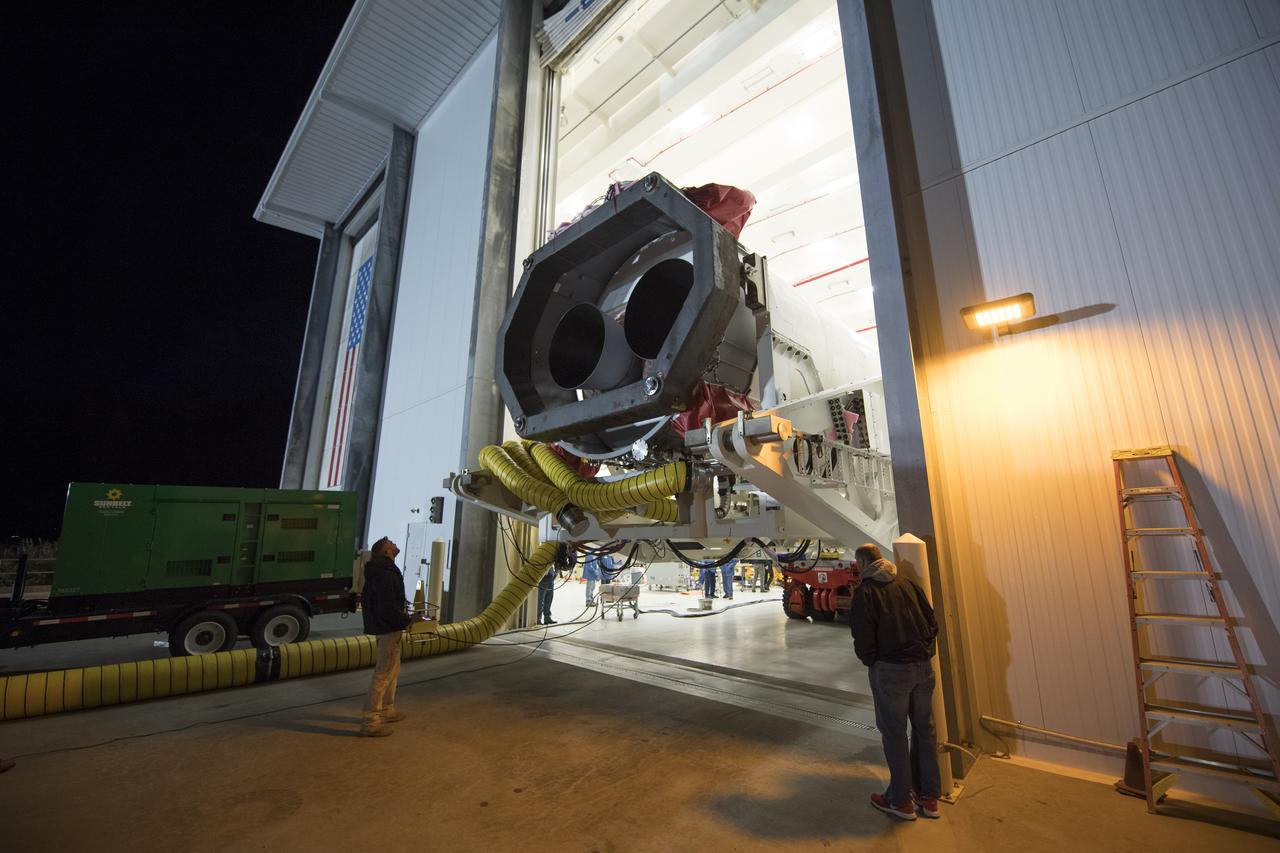
Orbital ATK Mechanical Technician Phil Kauthen drives the transporter with the Antares rocket aboard from the Horizontal Integration Facility to launch Pad-0A, Thursday, Nov. 9, 2017 at NASA's Wallops Flight Facility in Virginia. Orbital ATK’s eighth contracted cargo resupply mission with NASA to the International Space Station will deliver over 7,400 pounds of science and research, crew supplies and vehicle hardware to the orbital laboratory and its crew. Photo Credit: (NASA/Bill Ingalls)
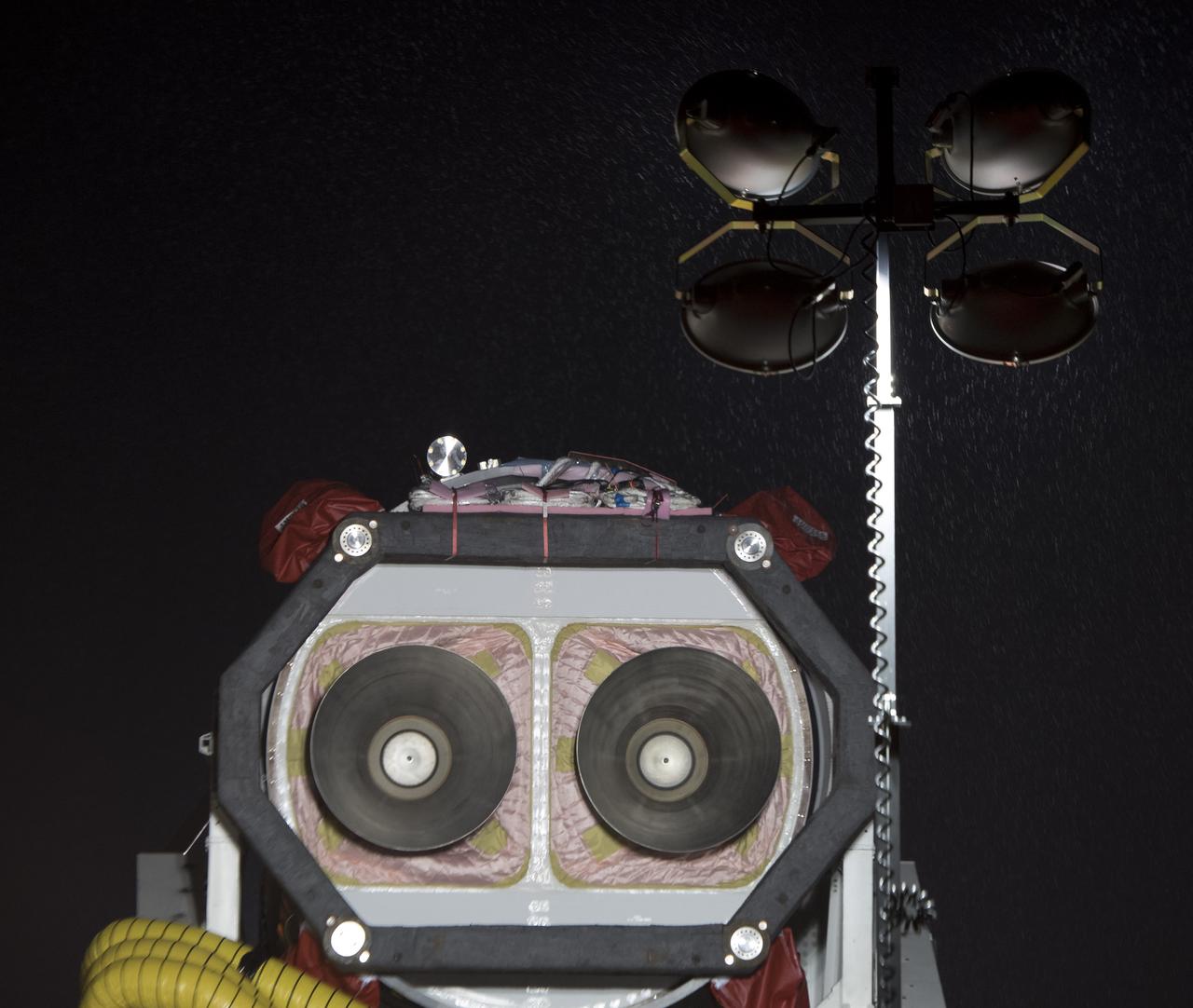
The Orbital ATK Antares rocket is rolled from the Horizontal Integration Facility (HIF) to launch Pad-0A, Thursday, Nov. 9, 2017 at NASA's Wallops Flight Facility in Virginia. Orbital ATK’s eighth contracted cargo resupply mission with NASA to the International Space Station will deliver over 7,400 pounds of science and research, crew supplies and vehicle hardware to the orbital laboratory and its crew. Photo Credit: (NASA/Bill Ingalls)
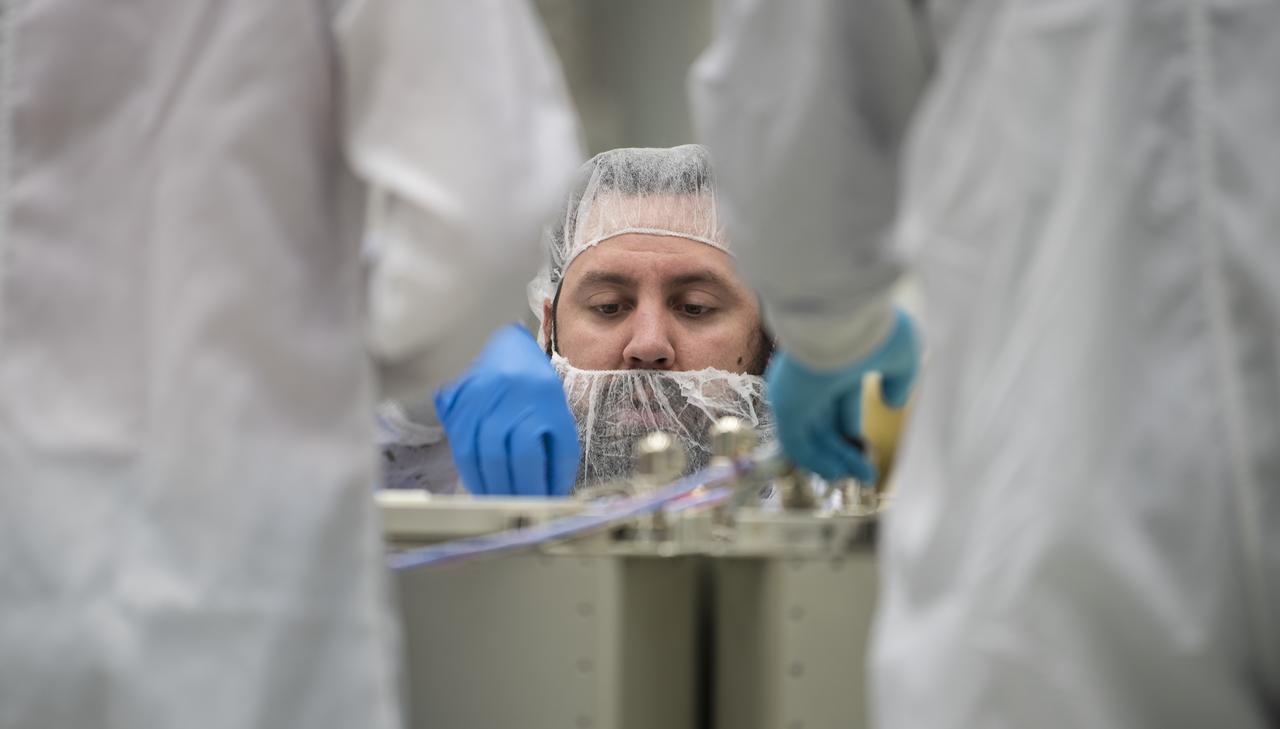
Mission engineers receive and prepare science and research and food items for the final cargo load into the Cygnus resupply spacecraft onboard the Northrop Grumman Antares rocket, Saturday, Feb. 8, 2020 at the Horizontal Integration Facility (HIF) of NASA's Wallops Flight Facility in Virginia. Northrop Grumman’s 13th contracted cargo resupply mission with NASA to the International Space Station will deliver more than 7,500 pounds of science and research, crew supplies and vehicle hardware to the orbital laboratory and its crew. Photo Credit: (NASA/Aubrey Gemignani)
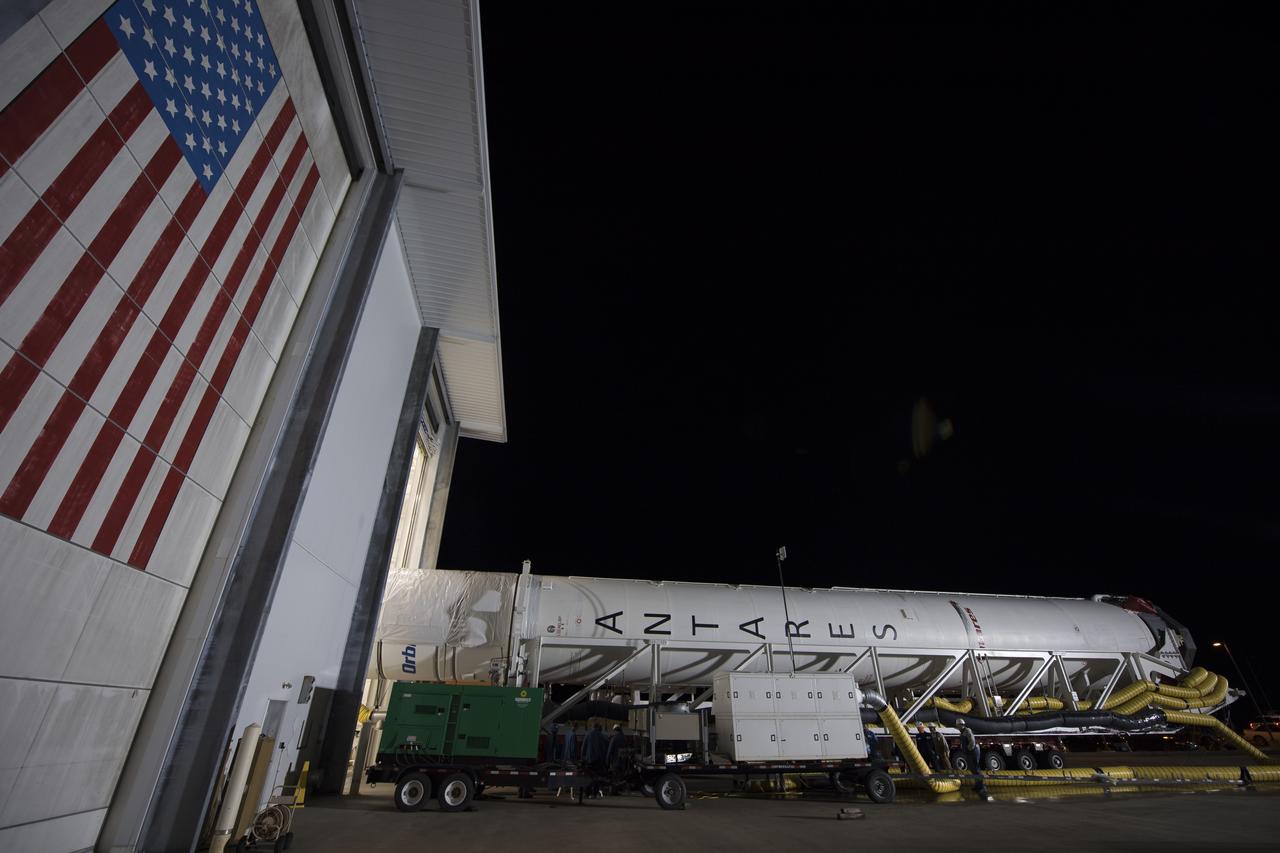
The Orbital ATK Antares rocket is rolled from the Horizontal Integration Facility (HIF) to launch Pad-0A, Thursday, Nov. 9, 2017 at NASA's Wallops Flight Facility in Virginia. Orbital ATK’s eighth contracted cargo resupply mission with NASA to the International Space Station will deliver over 7,400 pounds of science and research, crew supplies and vehicle hardware to the orbital laboratory and its crew. Photo Credit: (NASA/Bill Ingalls)
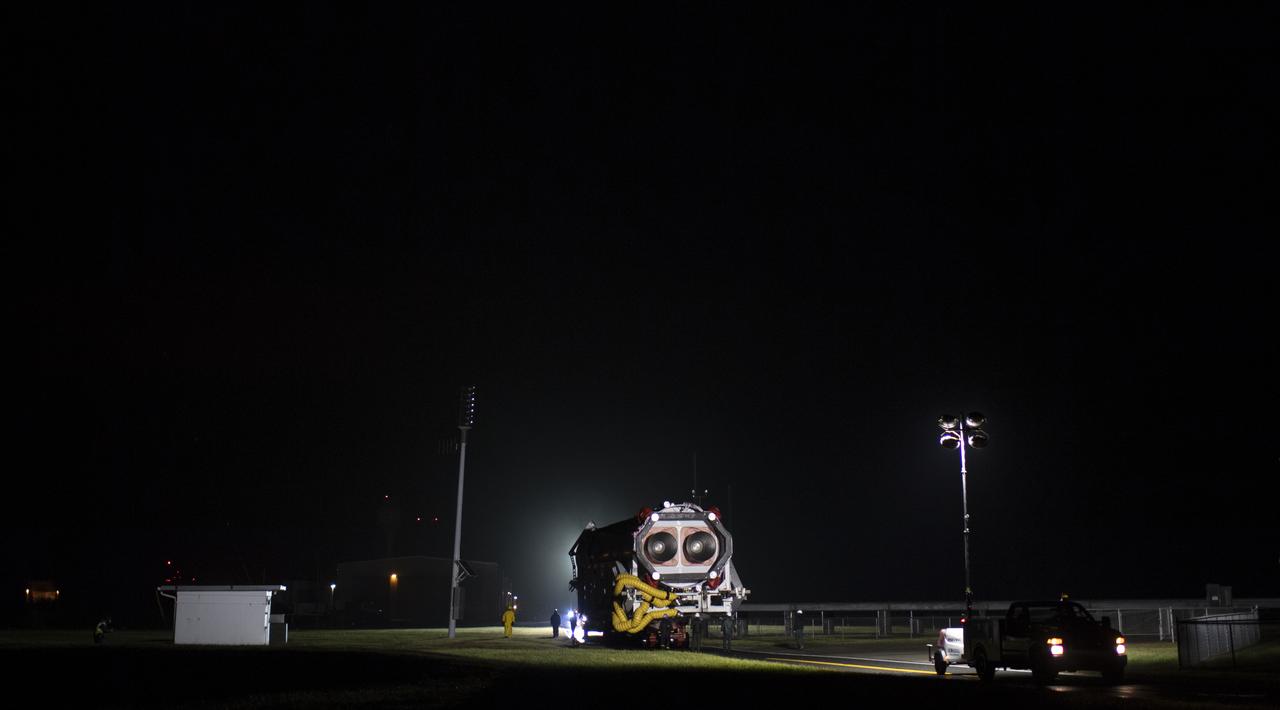
A Northrop Grumman Antares rocket is seen as it is rolled from the Horizontal Integration Facility (HIF) to Pad-0A, Monday, Nov. 12, 2018 at NASA's Wallops Flight Facility in Virginia. Northrop Grumman's 10th contracted cargo resupply mission for NASA to the International Space Station will deliver about 7,500 pounds of science and research, crew supplies and vehicle hardware to the orbital laboratory and its crew. Launch is scheduled for Nov. 15 at 4:49 a.m. EST. Photo Credit: (NASA/Joel Kowsky)
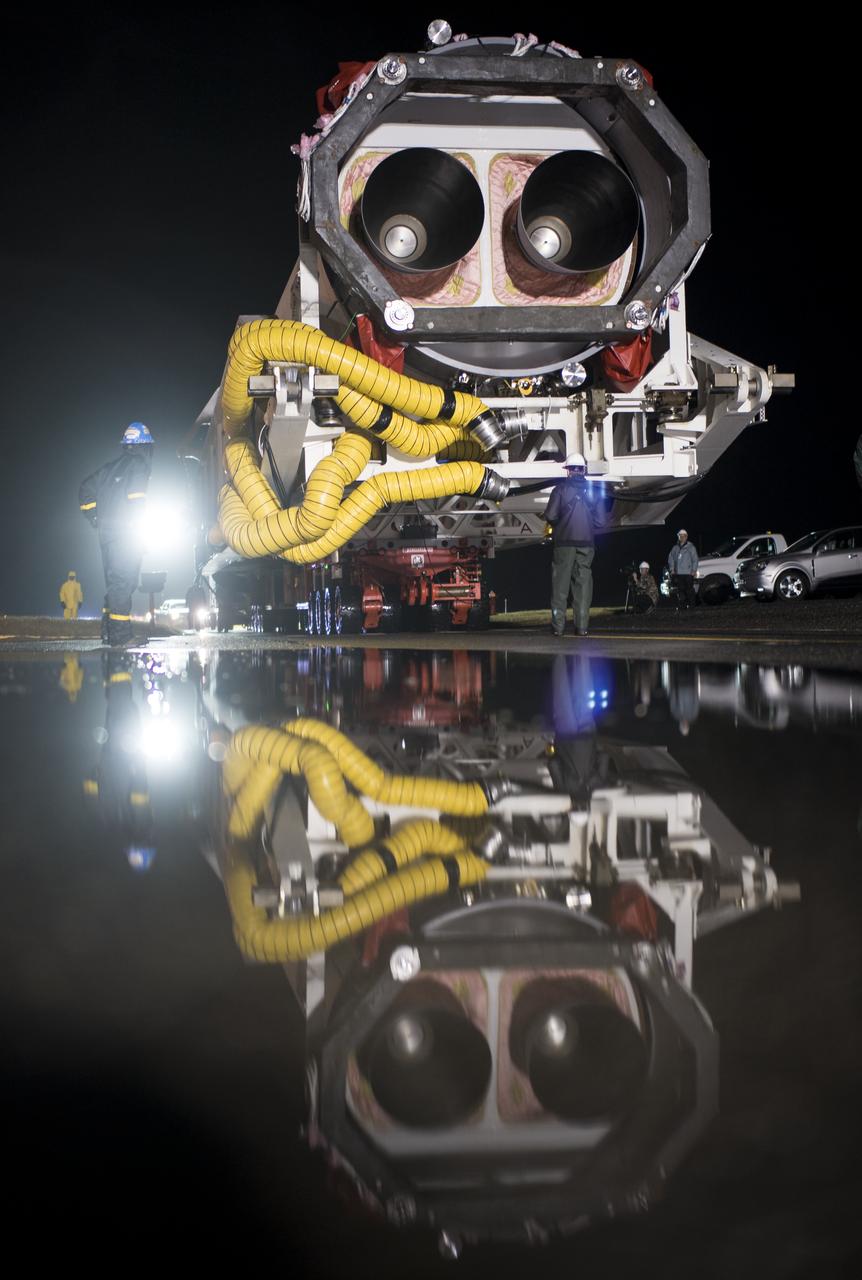
A Northrop Grumman Antares rocket is seen as it is rolled from the Horizontal Integration Facility (HIF) to Pad-0A, Monday, Nov. 12, 2018 at NASA's Wallops Flight Facility in Virginia. Northrop Grumman's 10th contracted cargo resupply mission for NASA to the International Space Station will deliver about 7,500 pounds of science and research, crew supplies and vehicle hardware to the orbital laboratory and its crew. Launch is scheduled for Nov. 15 at 4:49 a.m. EST. Photo Credit: (NASA/Joel Kowsky)
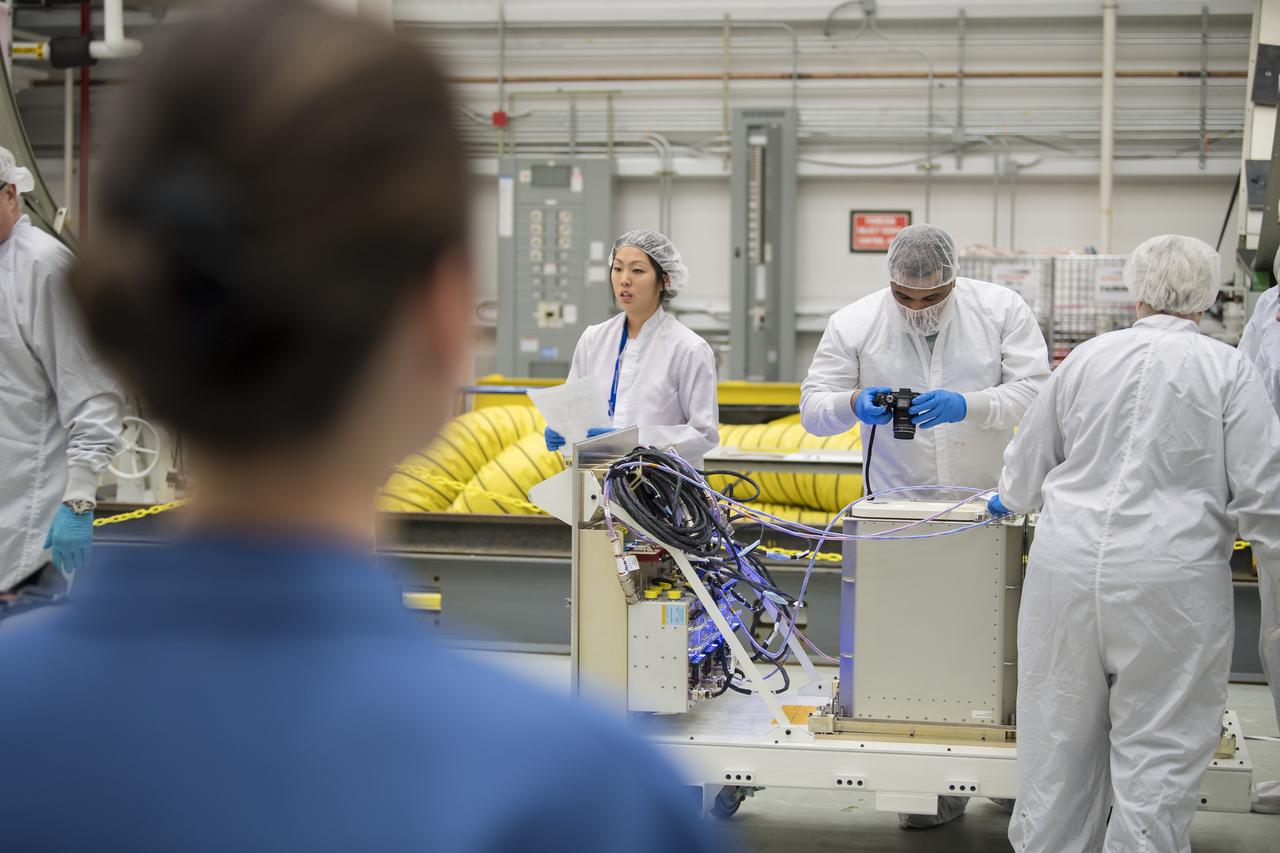
Mission engineers receive and prepare science and research and food items for the final cargo load into the Cygnus resupply spacecraft onboard the Northrop Grumman Antares rocket, Saturday, Feb. 8, 2020 at the Horizontal Integration Facility (HIF) of NASA's Wallops Flight Facility in Virginia. Northrop Grumman’s 13th contracted cargo resupply mission with NASA to the International Space Station will deliver more than 7,500 pounds of science and research, crew supplies and vehicle hardware to the orbital laboratory and its crew. Photo Credit: (NASA/Aubrey Gemignani)
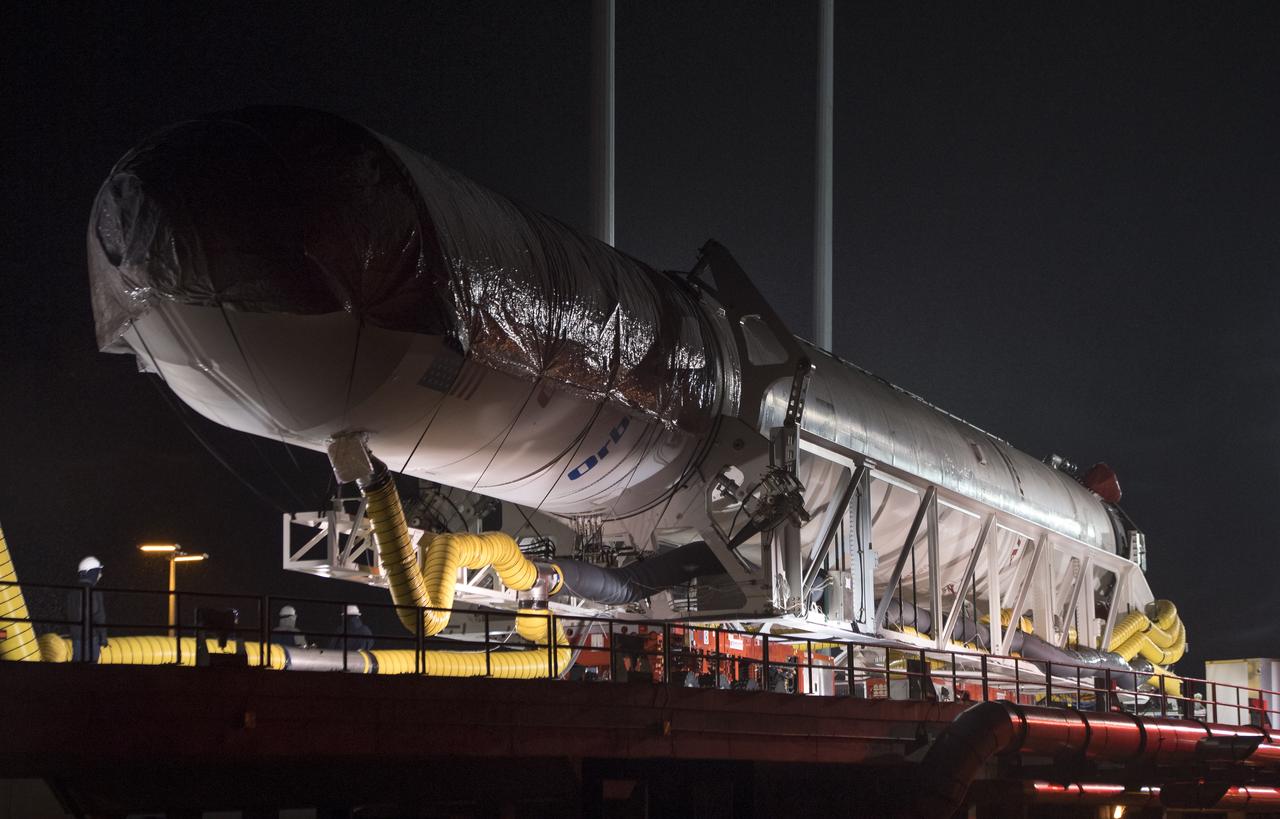
The Orbital ATK Antares rocket is rolled from the Horizontal Integration Facility (HIF) to launch Pad-0A, Thursday, Nov. 9, 2017 at NASA's Wallops Flight Facility in Virginia. Orbital ATK’s eighth contracted cargo resupply mission with NASA to the International Space Station will deliver over 7,400 pounds of science and research, crew supplies and vehicle hardware to the orbital laboratory and its crew. Photo Credit: (NASA/Bill Ingalls)
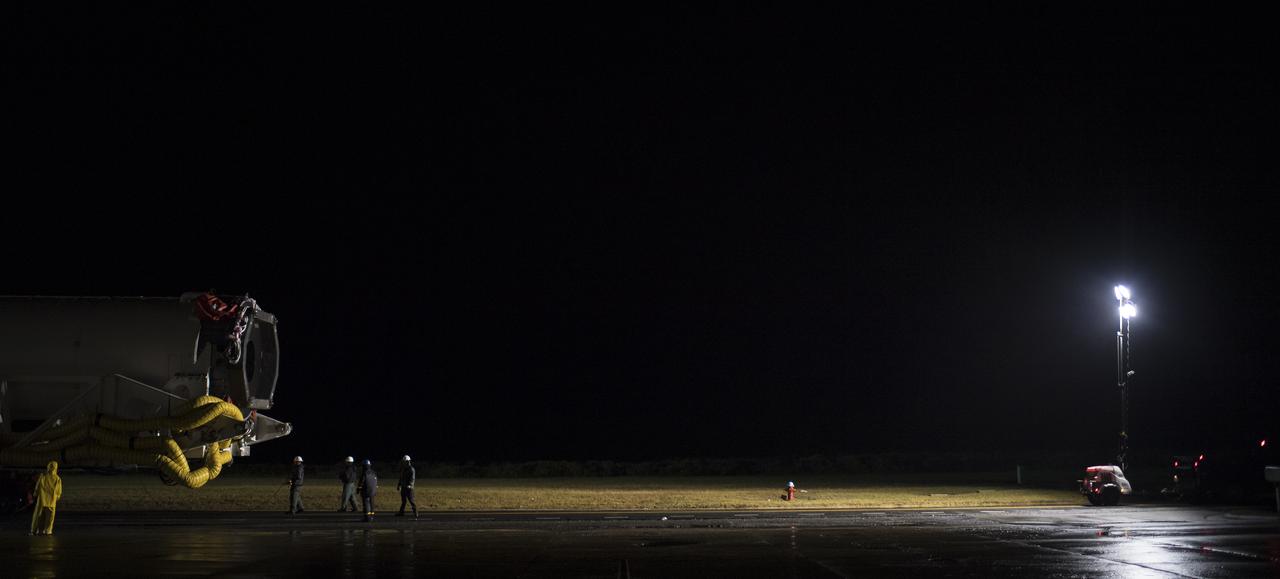
A Northrop Grumman Antares rocket is seen as it is rolled from the Horizontal Integration Facility (HIF) to Pad-0A, Monday, Nov. 12, 2018 at NASA's Wallops Flight Facility in Virginia. Northrop Grumman's 10th contracted cargo resupply mission for NASA to the International Space Station will deliver about 7,500 pounds of science and research, crew supplies and vehicle hardware to the orbital laboratory and its crew. Launch is scheduled for Nov. 15 at 4:49 a.m. EST. Photo Credit: (NASA/Joel Kowsky)
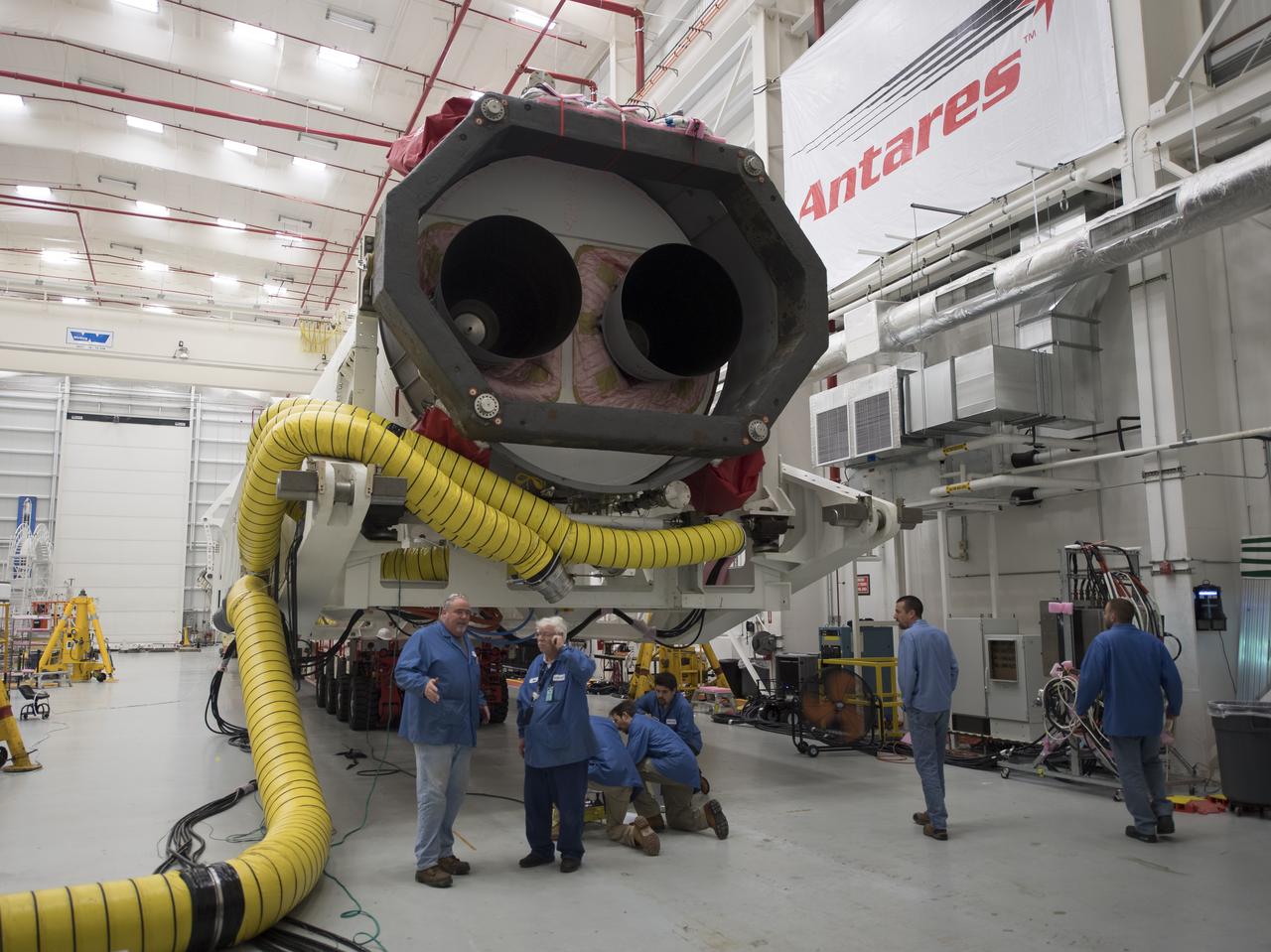
The Orbital ATK Antares rocket is rolled from the Horizontal Integration Facility (HIF) to launch Pad-0A, Thursday, Nov. 9, 2017 at NASA's Wallops Flight Facility in Virginia. Orbital ATK’s eighth contracted cargo resupply mission with NASA to the International Space Station will deliver over 7,400 pounds of science and research, crew supplies and vehicle hardware to the orbital laboratory and its crew. Photo Credit: (NASA/Bill Ingalls)
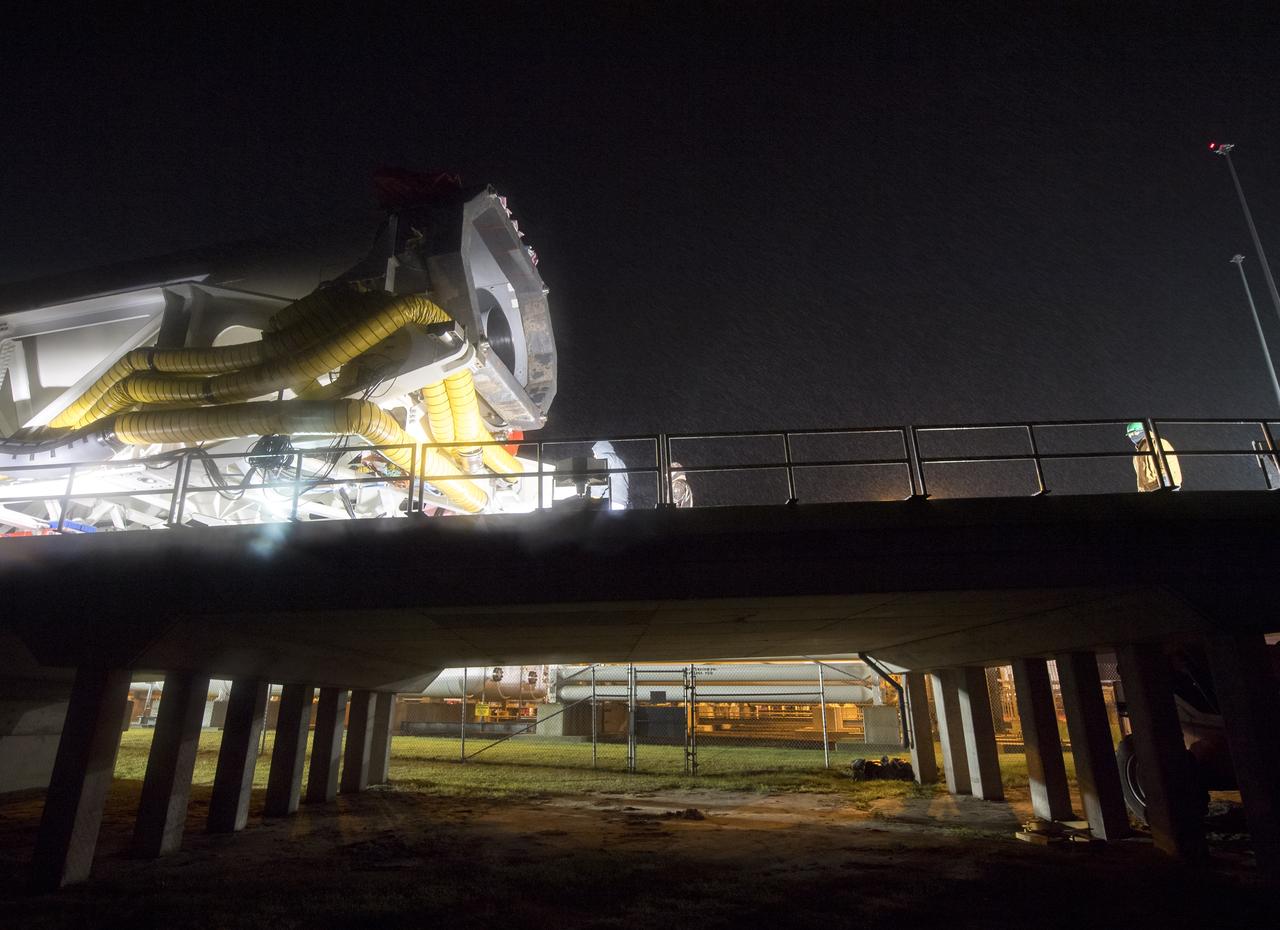
The Orbital ATK Antares rocket is rolled from the Horizontal Integration Facility (HIF) to launch Pad-0A, Thursday, Nov. 9, 2017 at NASA's Wallops Flight Facility in Virginia. Orbital ATK’s eighth contracted cargo resupply mission with NASA to the International Space Station will deliver over 7,400 pounds of science and research, crew supplies and vehicle hardware to the orbital laboratory and its crew. Photo Credit: (NASA/Bill Ingalls)
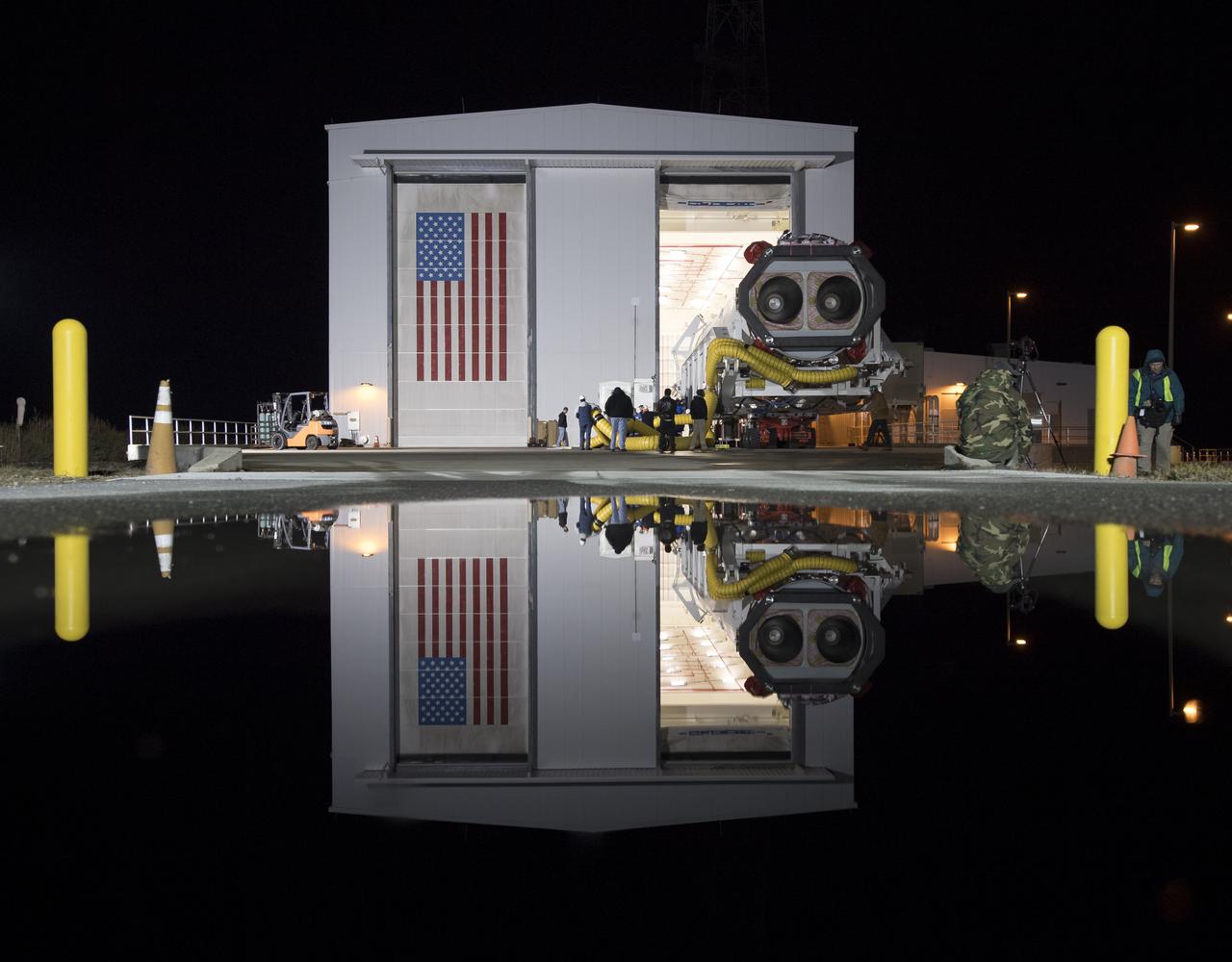
The Orbital ATK Antares rocket is rolled from the Horizontal Integration Facility (HIF) to launch Pad-0A, Thursday, Nov. 9, 2017 at NASA's Wallops Flight Facility in Virginia. Orbital ATK’s eighth contracted cargo resupply mission with NASA to the International Space Station will deliver over 7,400 pounds of science and research, crew supplies and vehicle hardware to the orbital laboratory and its crew. Photo Credit: (NASA/Bill Ingalls)
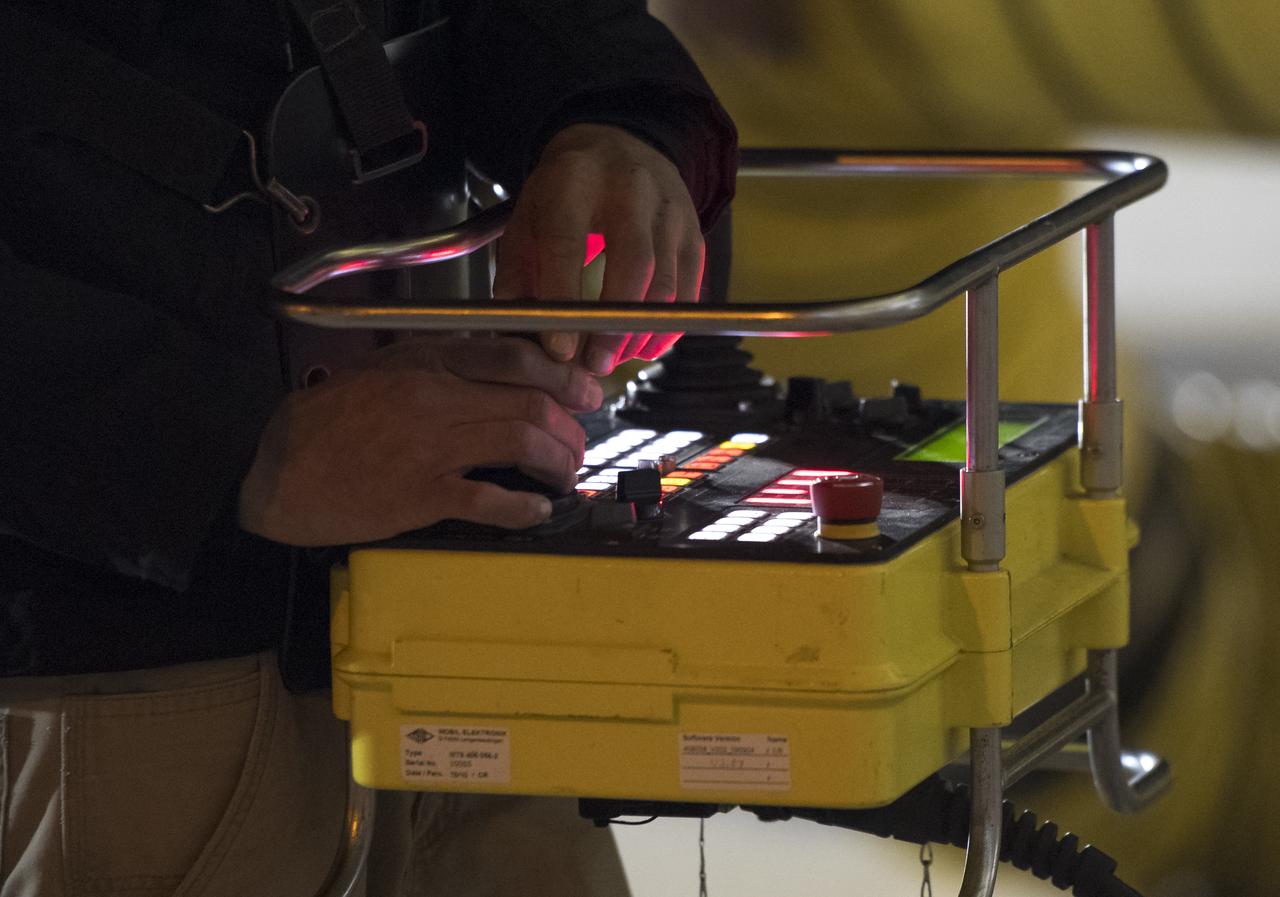
Orbital ATK Mechanical Technician Phil Kauthen drives the transporter with the Antares rocket aboard from the Horizontal Integration Facility to launch Pad-0A, Thursday, Nov. 9, 2017 at NASA's Wallops Flight Facility in Virginia. Orbital ATK’s eighth contracted cargo resupply mission with NASA to the International Space Station will deliver over 7,400 pounds of science and research, crew supplies and vehicle hardware to the orbital laboratory and its crew. Photo Credit: (NASA/Bill Ingalls)