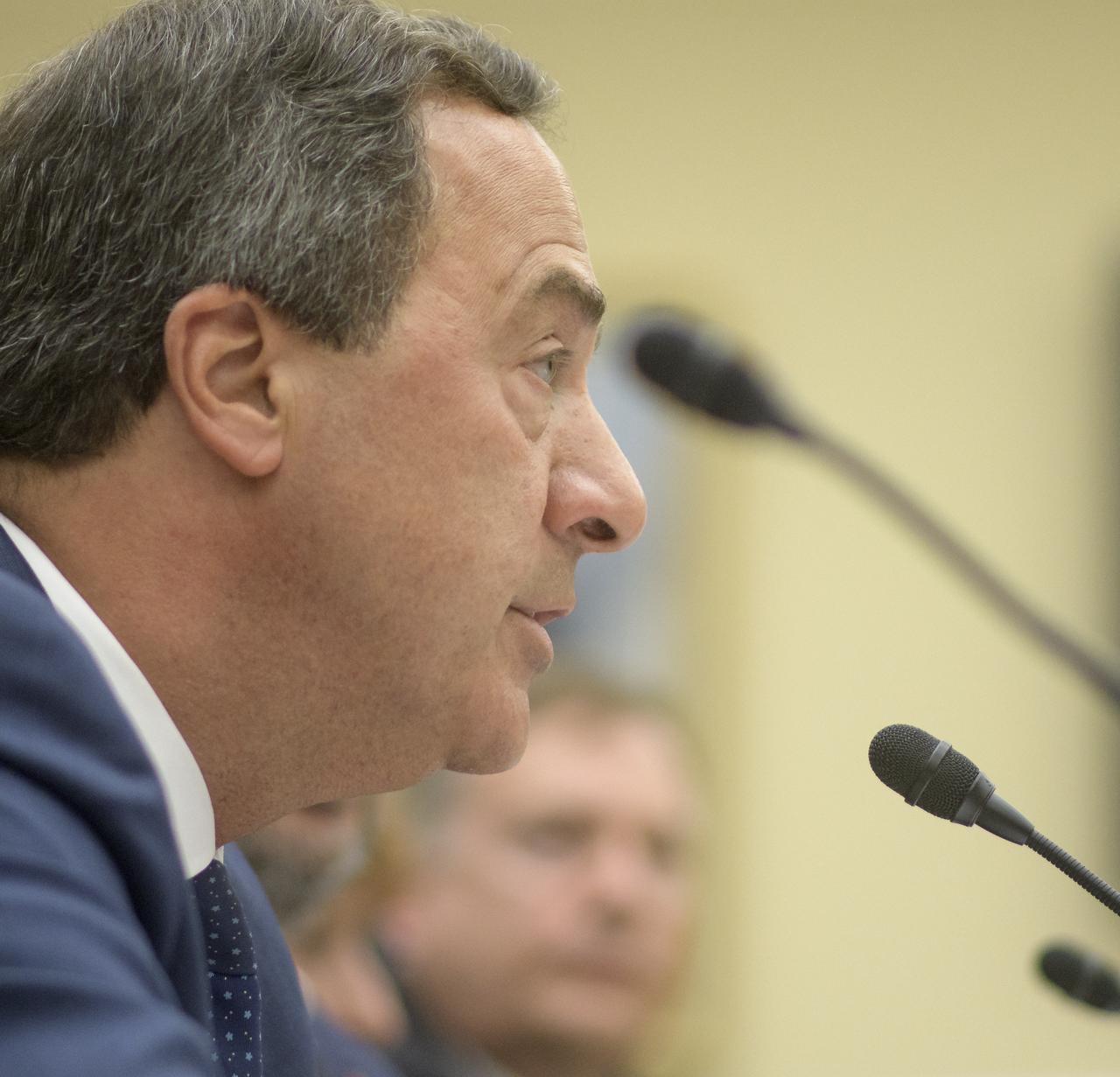
NASA Special Assistant to the Administrator Mark Sirangelo testifies during the House Subcommittee on Space and Aeronautics hearing titled "Keeping our sights on Mars: A Review of NASA's Deep Space Exploration Programs and Lunar Proposal", Wednesday, May 8, 2019 at the Rayburn House Office Building in Washington. Photo Credit: (NASA/Bill Ingalls)
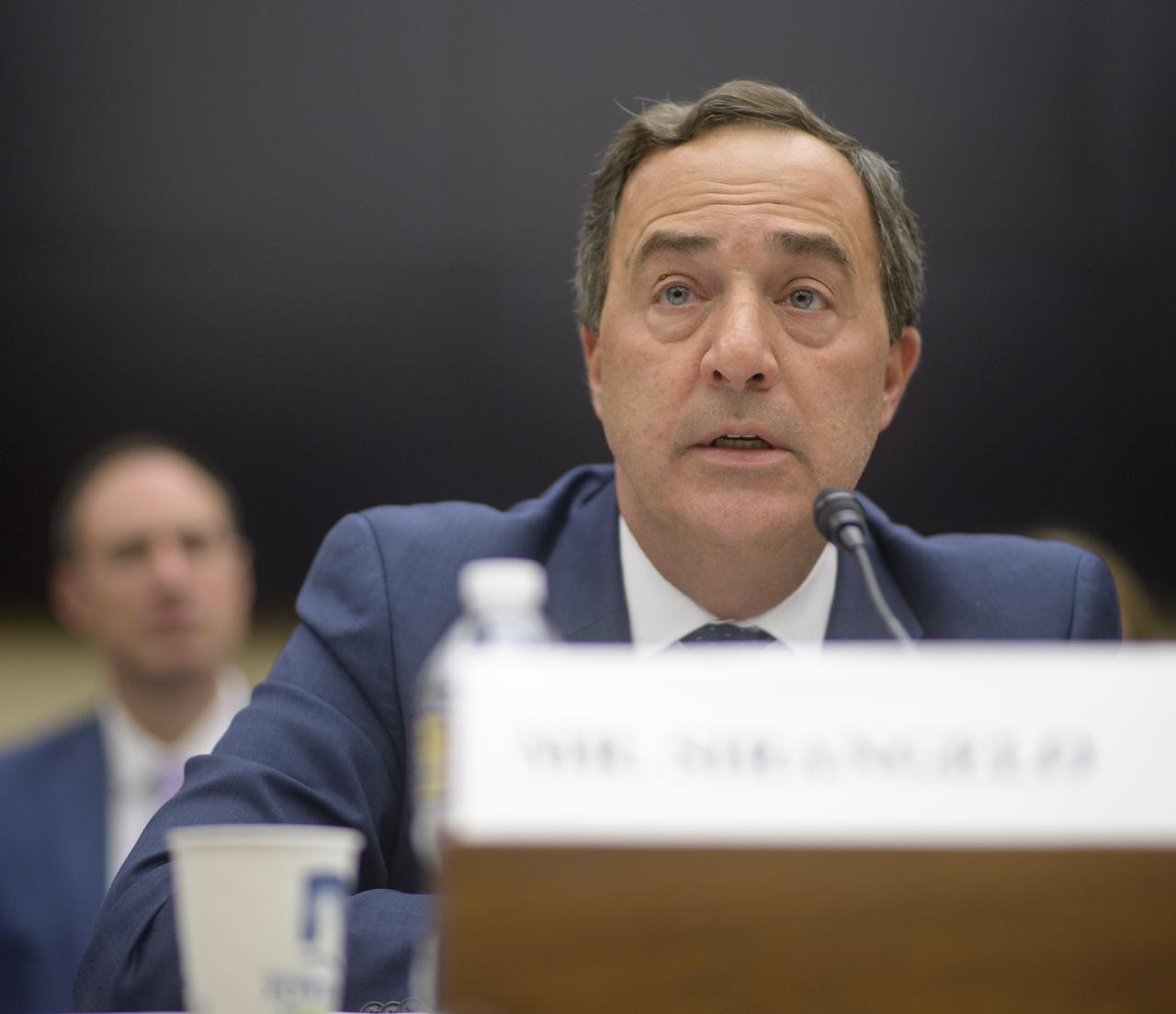
NASA Special Assistant to the Administrator Mark Sirangelo testifies during the House Subcommittee on Space and Aeronautics hearing titled "Keeping our sights on Mars: A Review of NASA's Deep Space Exploration Programs and Lunar Proposal", Wednesday, May 8, 2019 at the Rayburn House Office Building in Washington. Photo Credit: (NASA/Bill Ingalls)
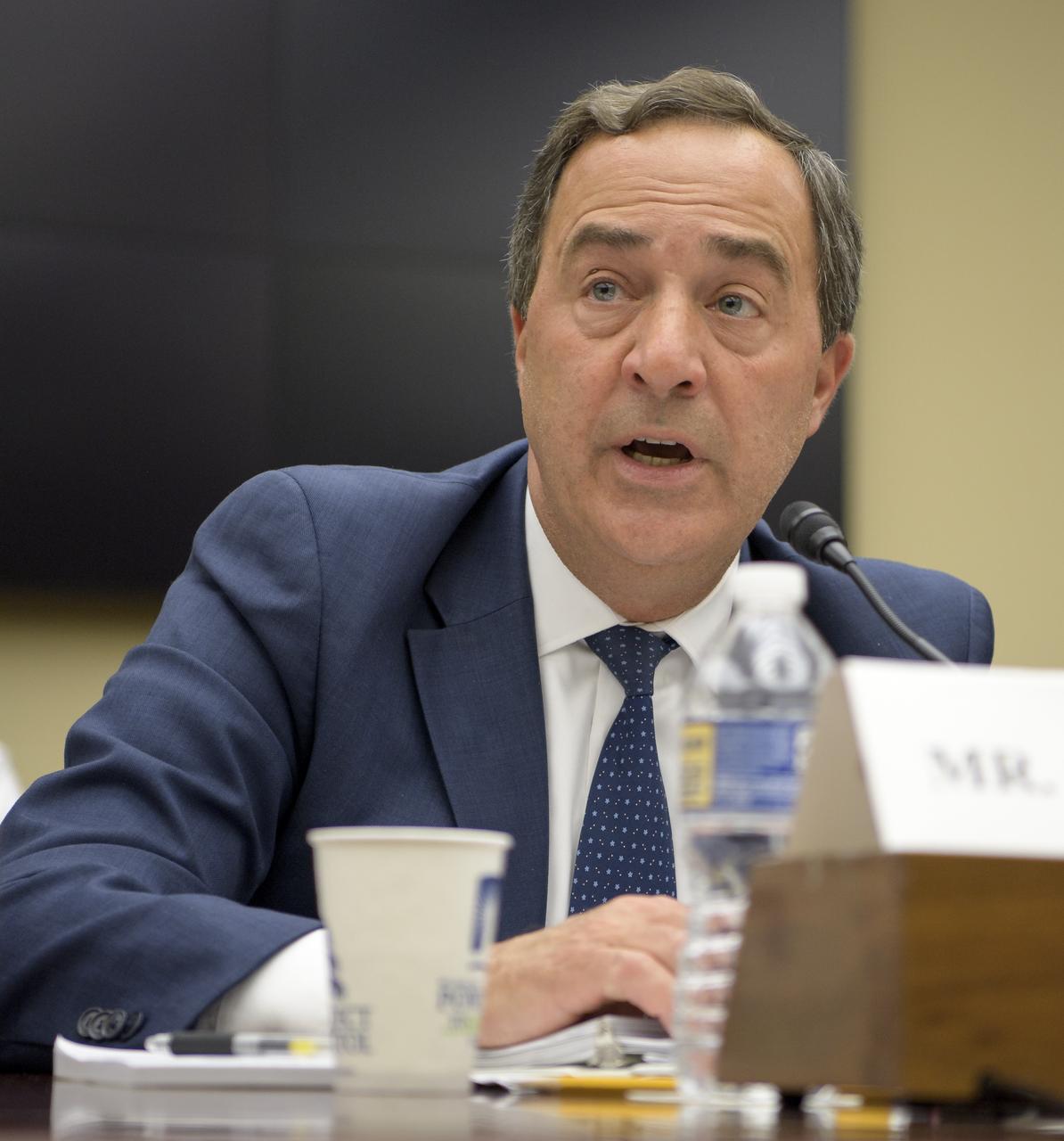
NASA Special Assistant to the Administrator Mark Sirangelo testifies during the House Subcommittee on Space and Aeronautics hearing titled "Keeping our sights on Mars: A Review of NASA's Deep Space Exploration Programs and Lunar Proposal", Wednesday, May 8, 2019 at the Rayburn House Office Building in Washington. Photo Credit: (NASA/Bill Ingalls)
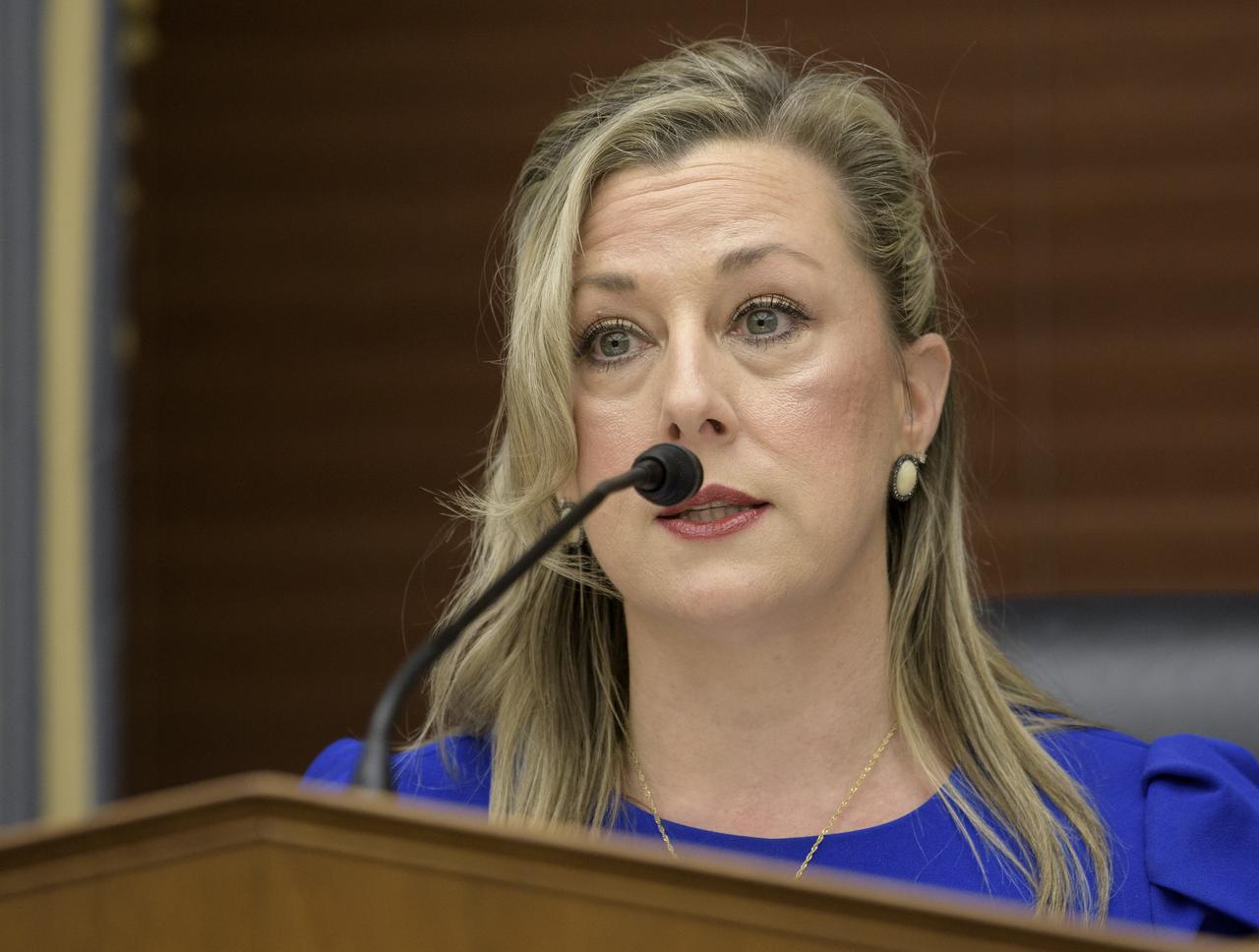
Chair Kendra Horn, D-OK., opens the House Subcommittee on Space and Aeronautics hearing titled "Keeping our sights on Mars: A Review of NASA's Deep Space Exploration Programs and Lunar Proposal", Wednesday, May 8, 2019 at the Rayburn House Office Building in Washington. Photo Credit: (NASA/Bill Ingalls)
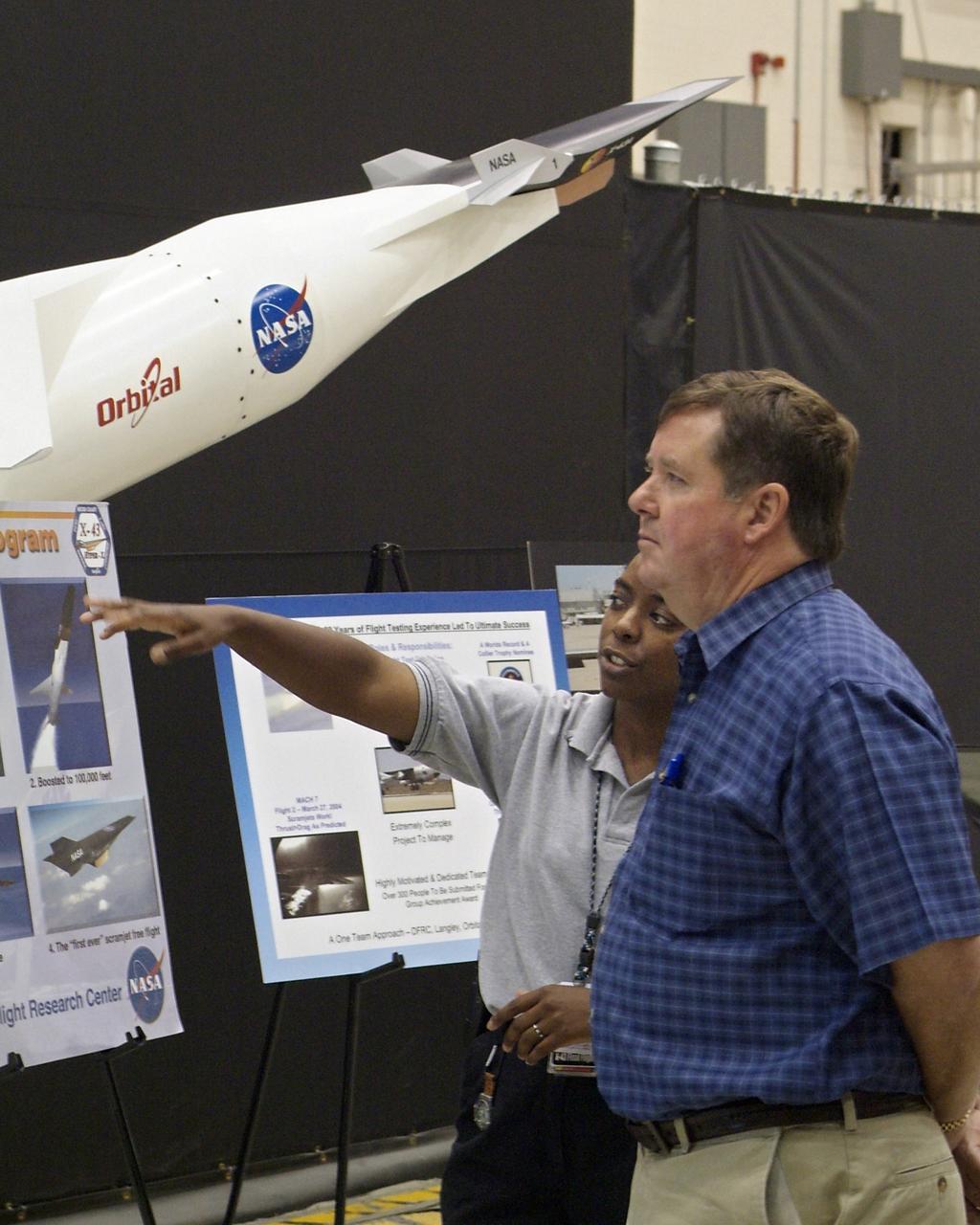
Rep. Ken Calvert, (R-Calif.), chairman of the House Subcommittee on Space and Aeronautics, received an update on the mission of NASA's Dryden Flight Research Center during a visit on June 2, 2005. Rep. Calvert, accompanied by several staff members, was briefed by center management on the Dryden's role as a flight research institution, and then reviewed some of the center's recent, current and upcoming flight research projects during a tour of the facility. During the afternoon, Rep. Calvert received similar briefings on a variety of projects at several aerospace development firms at the Civilian Flight Test Center in Mojave. Rep. Calvert's tour of NASA Dryden was the second in a series of visits to all 10 NASA field centers to better acquaint him with the roles and responsibilities of each center.
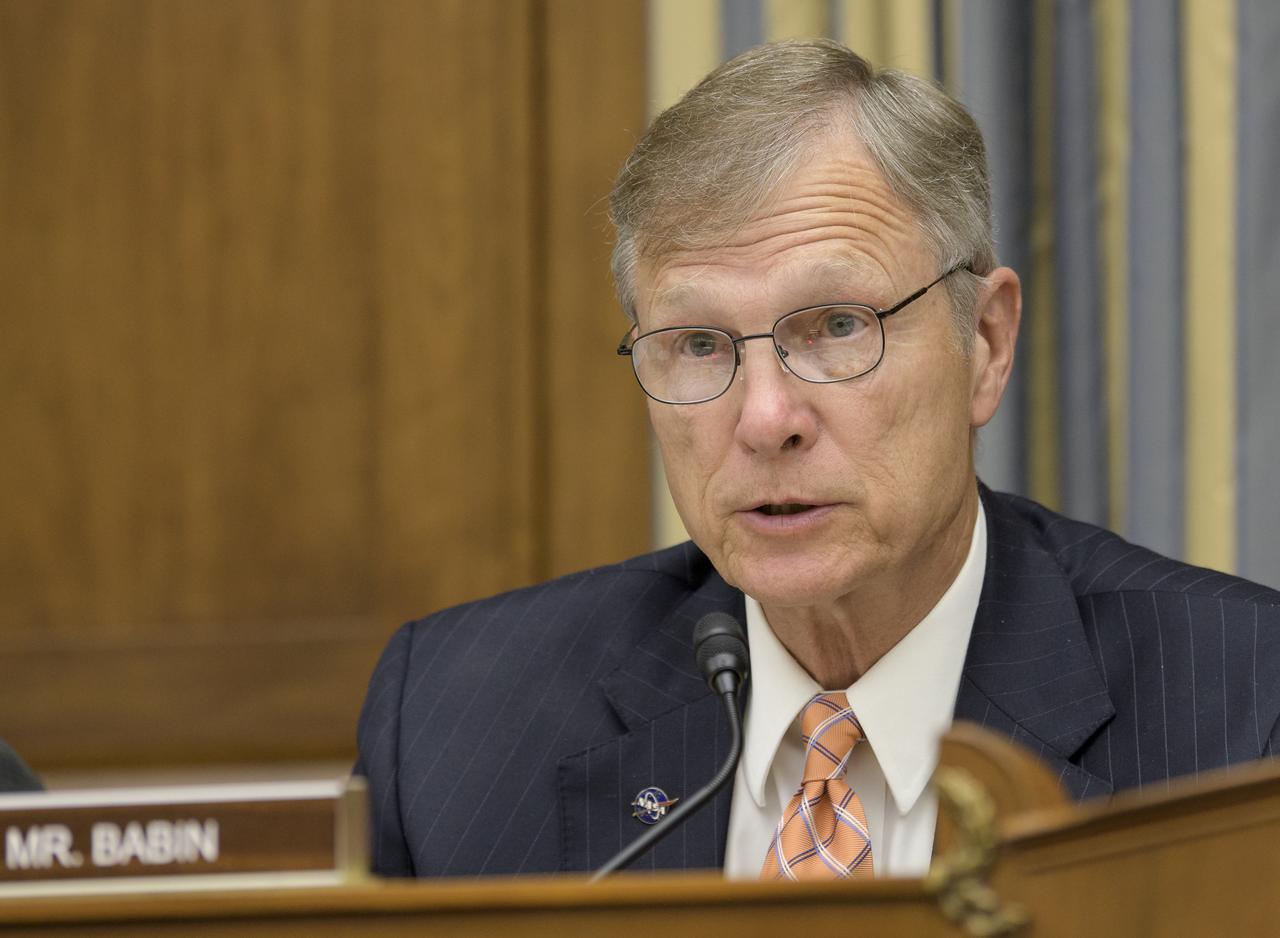
Rep. Brian Babin, R - Texas, gives opening remarks during the House Subcommittee on Space and Aeronautics hearing titled "Keeping our sights on Mars: A Review of NASA's Deep Space Exploration Programs and Lunar Proposal", Wednesday, May 8, 2019 at the Rayburn House Office Building in Washington. Photo Credit: (NASA/Bill Ingalls)
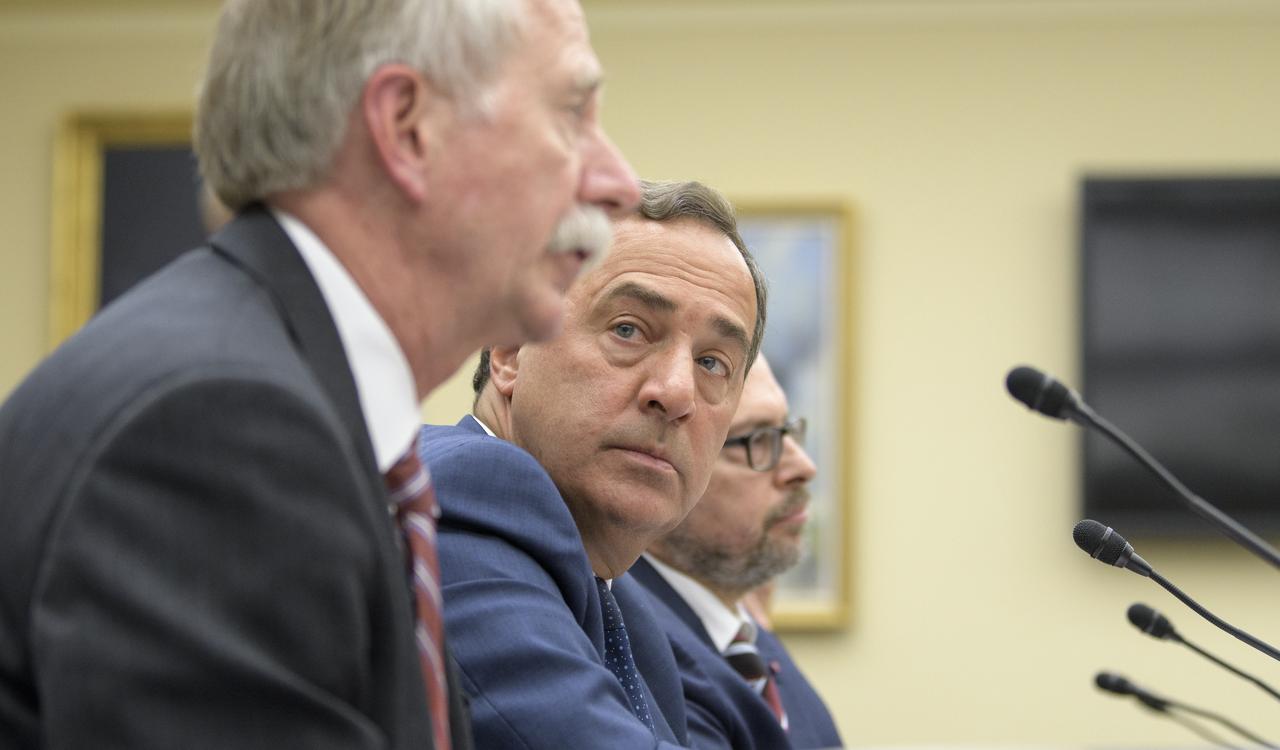
NASA Special Assistant to the Administrator Mark Sirangelo listens as NASA Associate Administrator, Human Exploration and Operations William Gerstenmaier testifies during the House Subcommittee on Space and Aeronautics hearing titled "Keeping our sights on Mars: A Review of NASA's Deep Space Exploration Programs and Lunar Proposal", Wednesday, May 8, 2019 at the Rayburn House Office Building in Washington. Photo Credit: (NASA/Bill Ingalls)
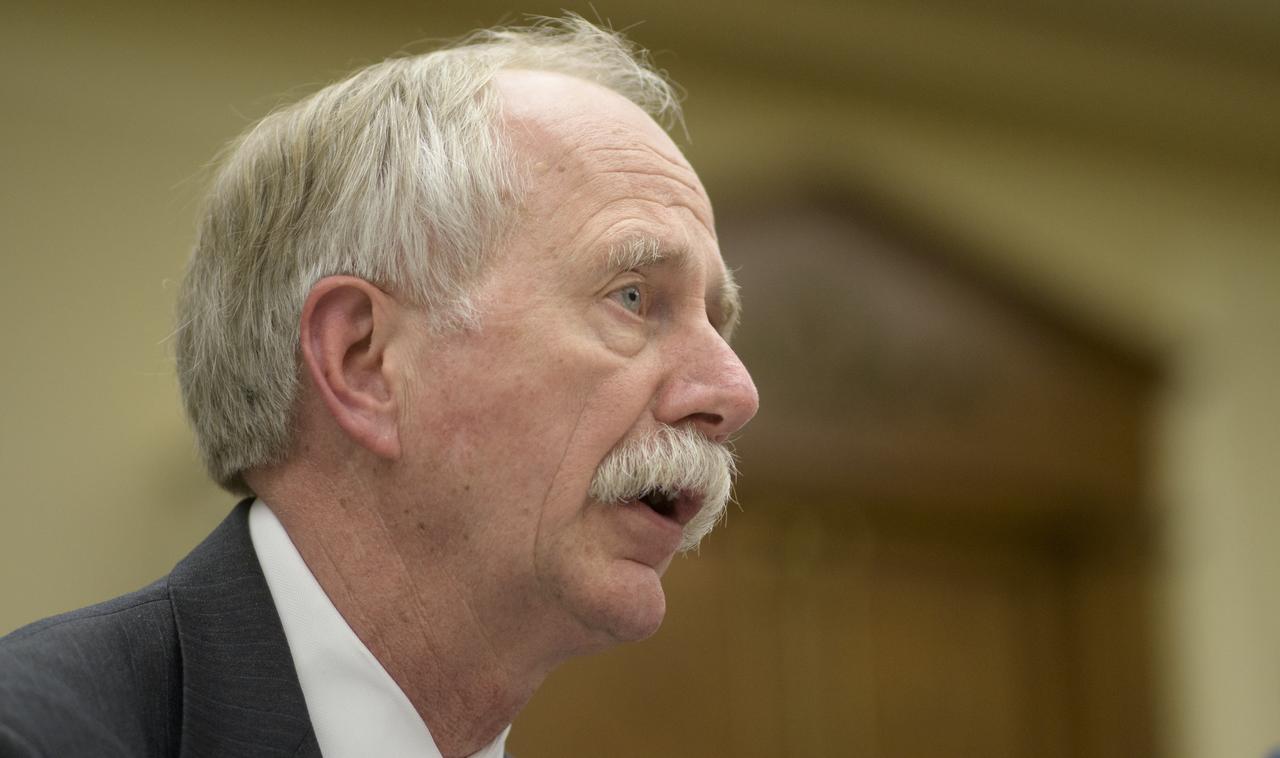
NASA Associate Administrator, Human Exploration and Operations William Gerstenmaier testifies during the House Subcommittee on Space and Aeronautics hearing titled "Keeping our sights on Mars: A Review of NASA's Deep Space Exploration Programs and Lunar Proposal", Wednesday, May 8, 2019 at the Rayburn House Office Building in Washington. Photo Credit: (NASA/Bill Ingalls)
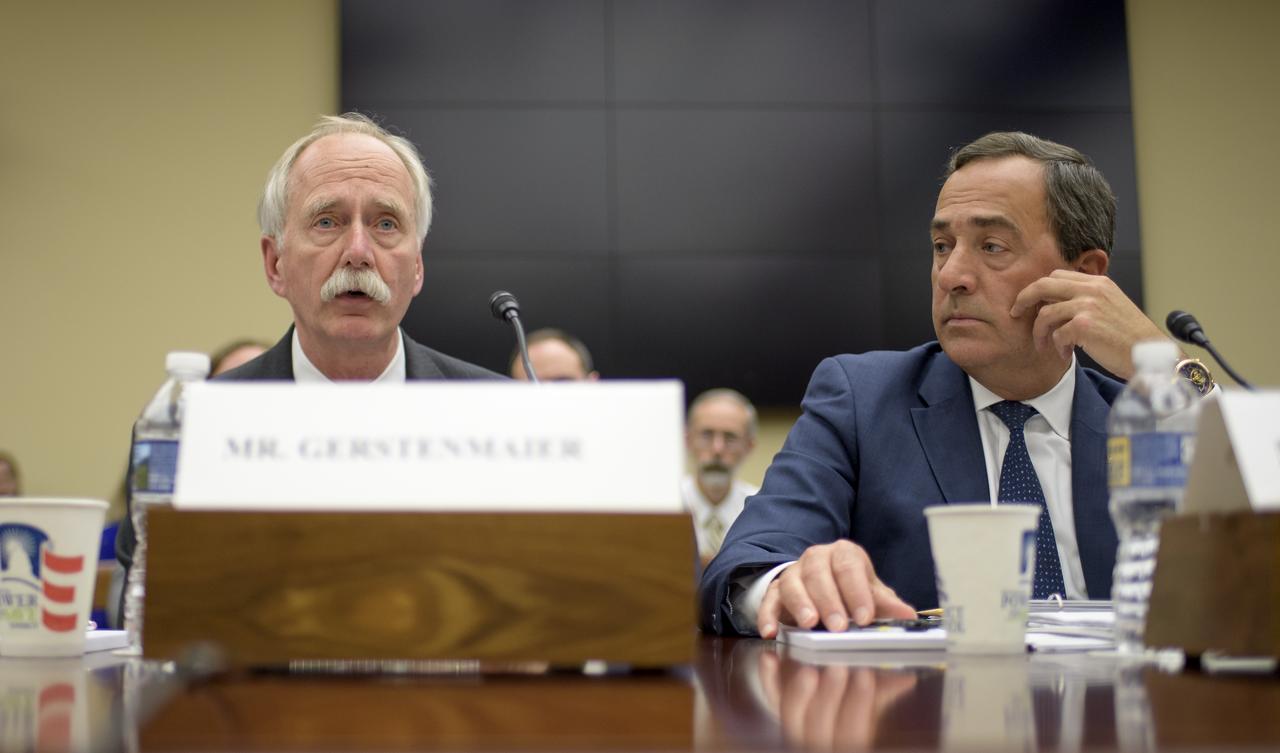
NASA Associate Administrator, Human Exploration and Operations William Gerstenmaier, left, and NASA Special Assistant to the Administrator Mark Sirangelo, testify during the House Subcommittee on Space and Aeronautics hearing titled "Keeping our sights on Mars: A Review of NASA's Deep Space Exploration Programs and Lunar Proposal", Wednesday, May 8, 2019 at the Rayburn House Office Building in Washington. Photo Credit: (NASA/Bill Ingalls)
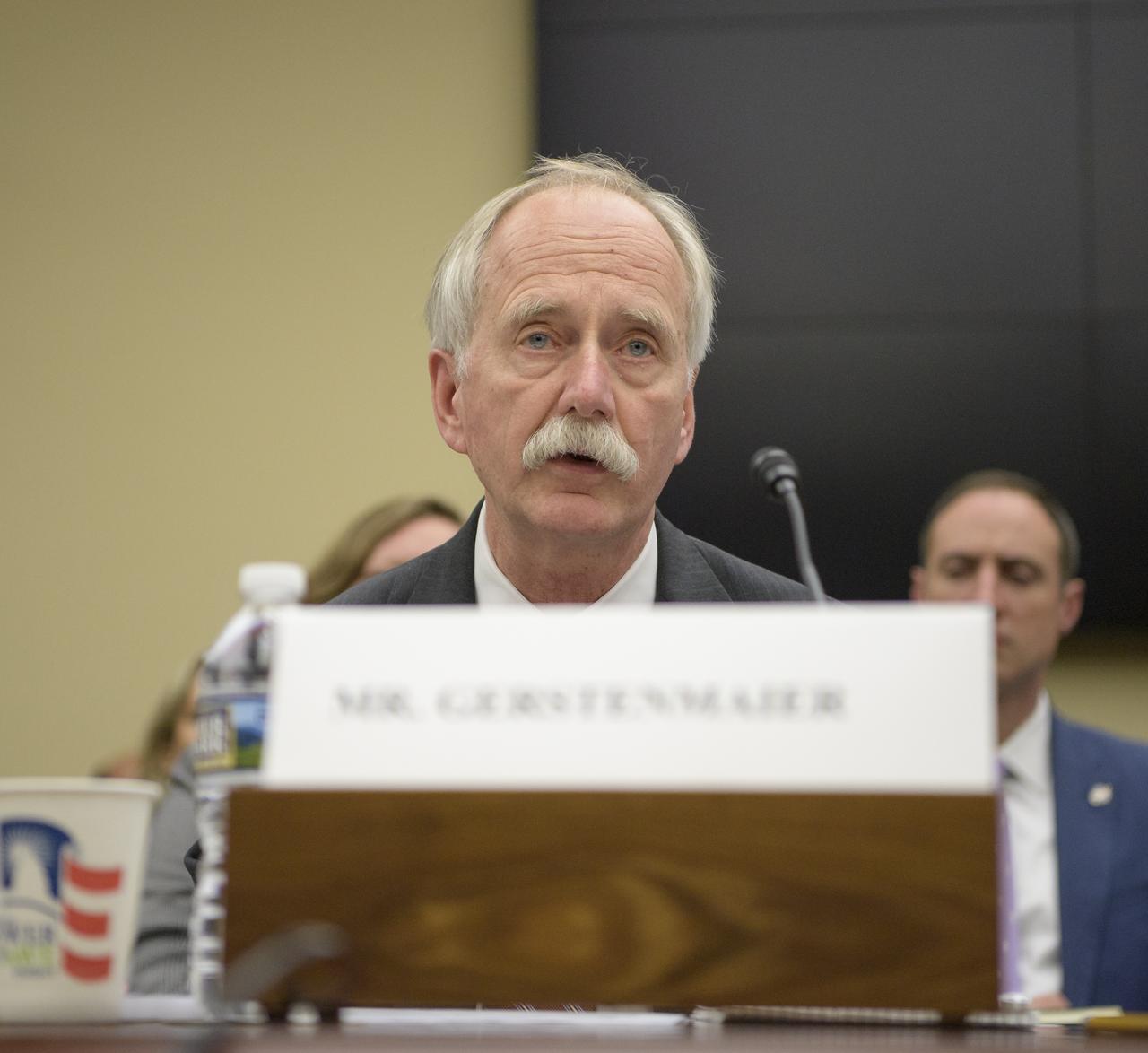
NASA Associate Administrator, Human Exploration and Operations William Gerstenmaier testifies during the House Subcommittee on Space and Aeronautics hearing titled "Keeping our sights on Mars: A Review of NASA's Deep Space Exploration Programs and Lunar Proposal", Wednesday, May 8, 2019 at the Rayburn House Office Building in Washington. Photo Credit: (NASA/Bill Ingalls)
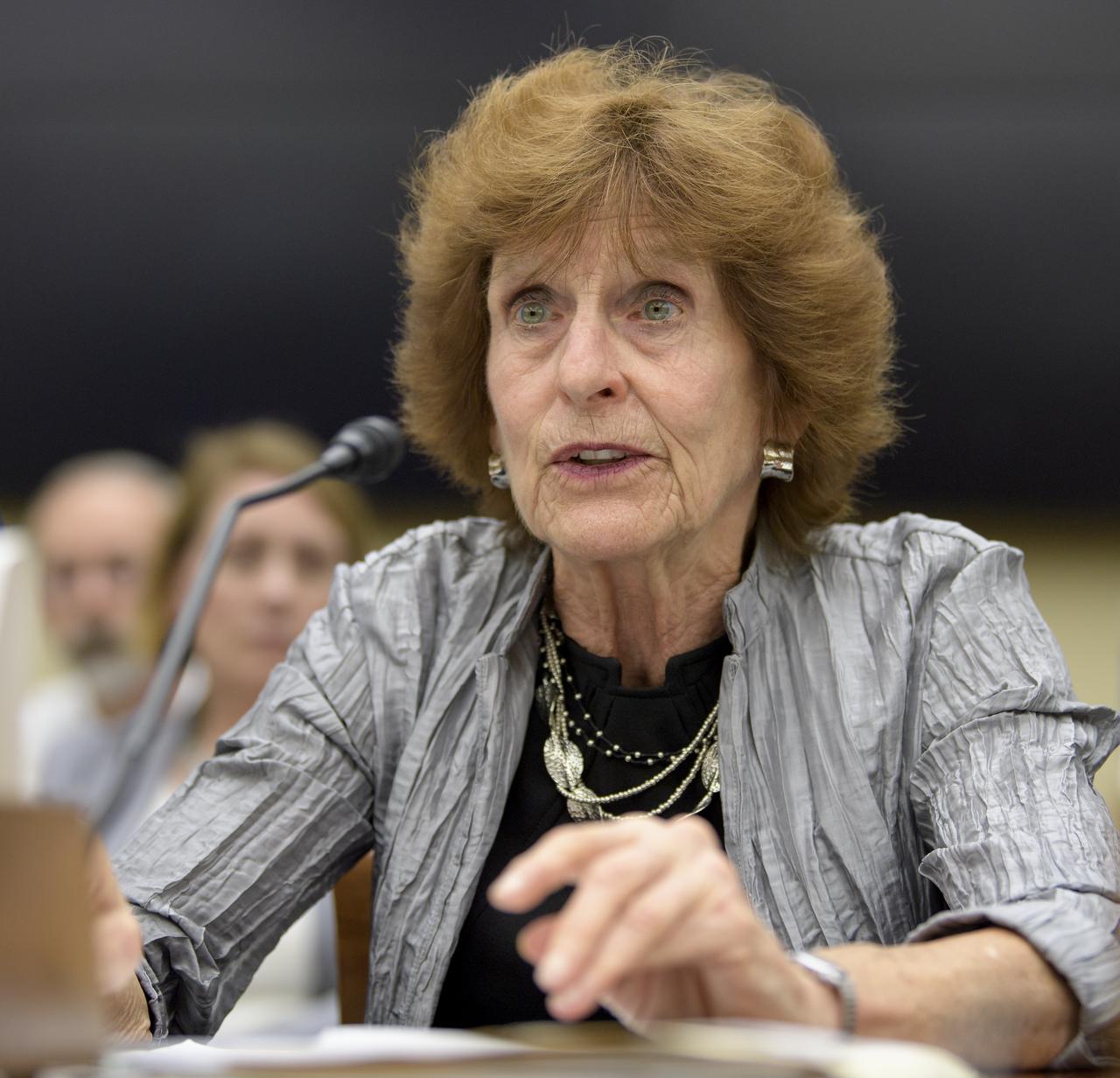
Dr. Patricia Sanders, Chair, Aerospace Safety Advisory Panel testifies during the House Subcommittee on Space and Aeronautics hearing titled "Keeping our sights on Mars: A Review of NASA's Deep Space Exploration Programs and Lunar Proposal", Wednesday, May 8, 2019 at the Rayburn House Office Building in Washington. Photo Credit: (NASA/Bill Ingalls)
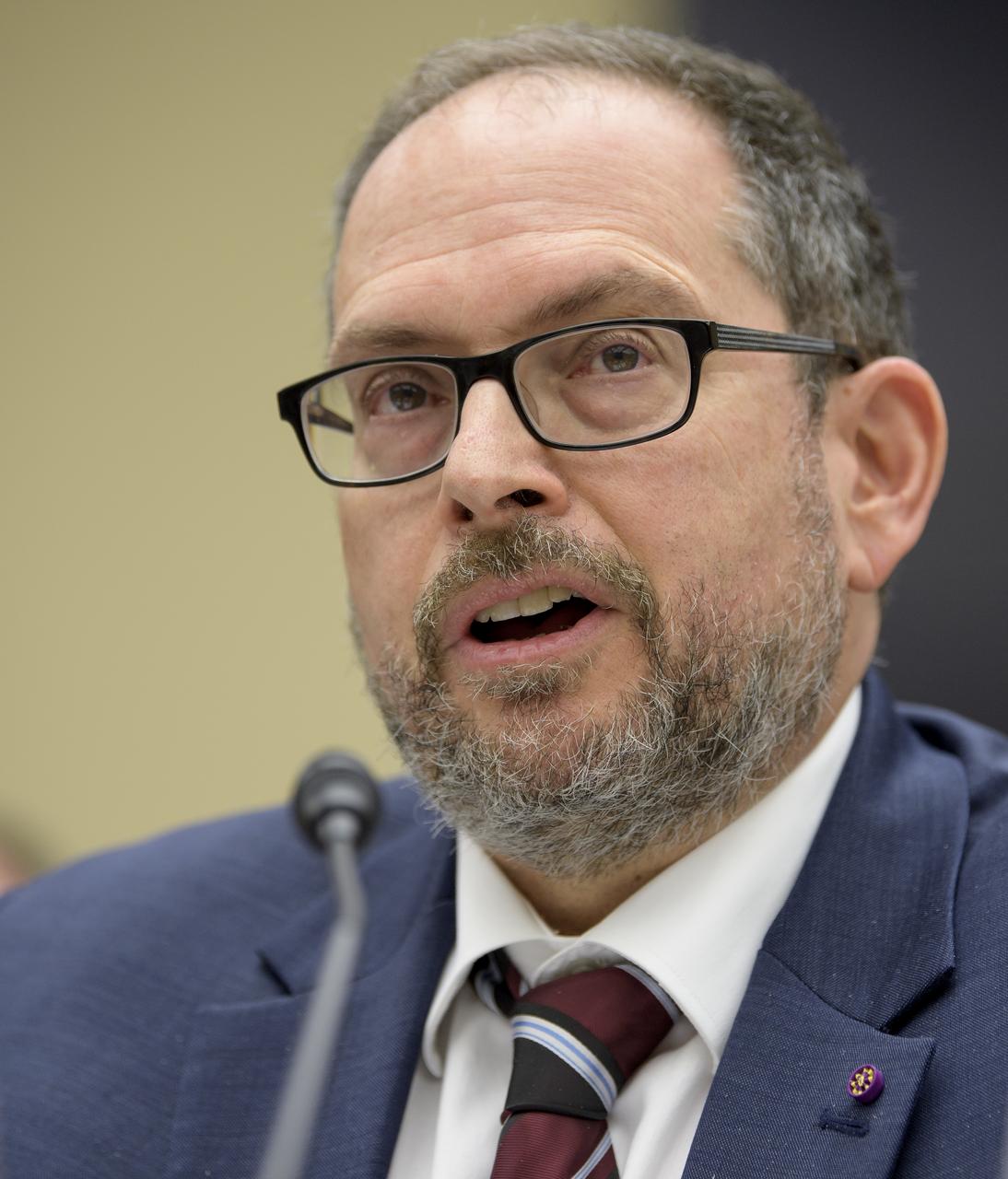
Dr. Jonathan Lunine, Director, Cornell Center for Astrophysics and Planetary Science, Co-Chair of the Former Committee on Human Spaceflight, National Academies of Sciences, Engineering, and Medicine testifies during the House Subcommittee on Space and Aeronautics hearing titled "Keeping our sights on Mars: A Review of NASA's Deep Space Exploration Programs and Lunar Proposal", Wednesday, May 8, 2019 at the Rayburn House Office Building in Washington. Photo Credit: (NASA/Bill Ingalls)
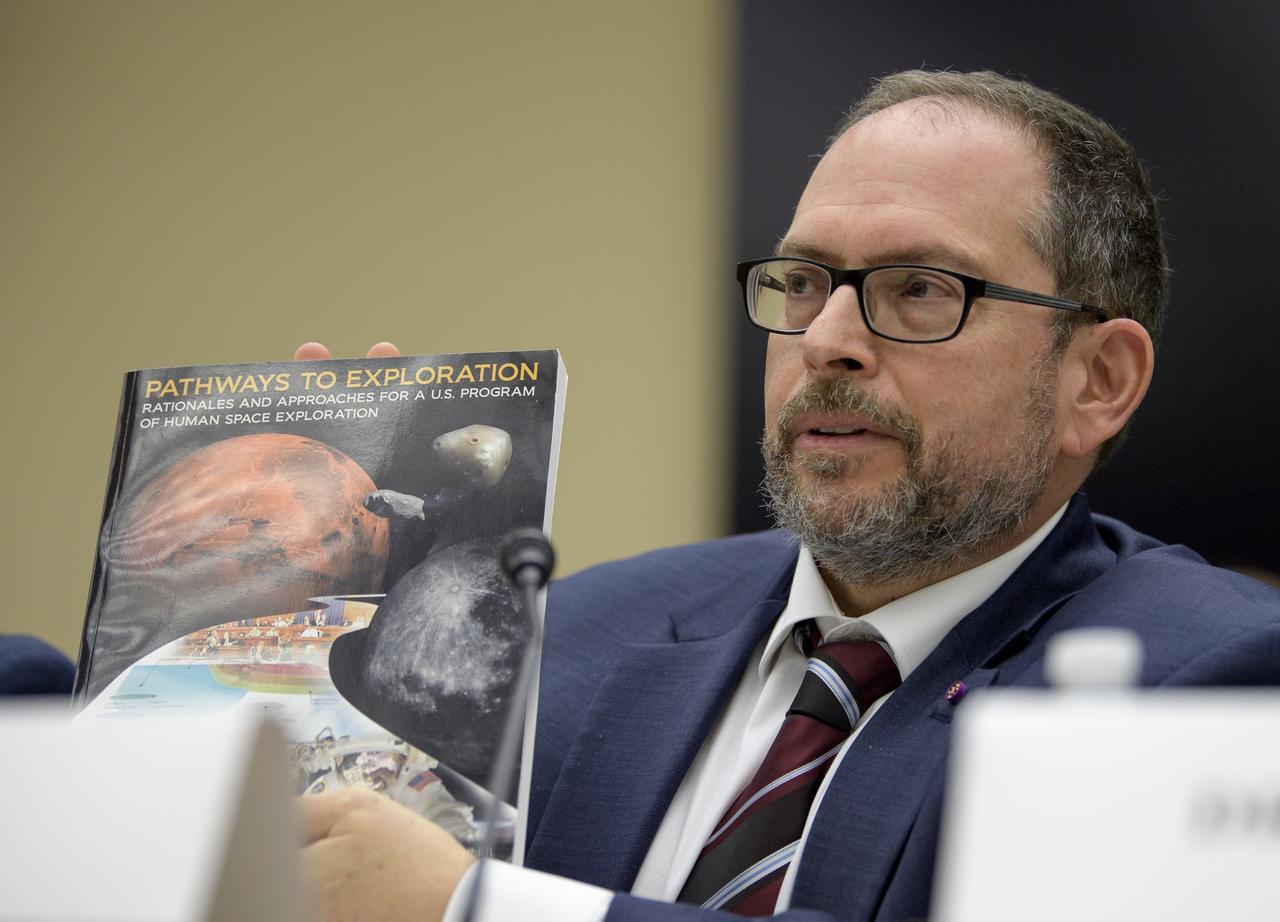
Dr. Jonathan Lunine, Director, Cornell Center for Astrophysics and Planetary Science, Co-Chair of the Former Committee on Human Spaceflight, National Academies of Sciences, Engineering, and Medicine testifies during the House Subcommittee on Space and Aeronautics hearing titled "Keeping our sights on Mars: A Review of NASA's Deep Space Exploration Programs and Lunar Proposal", Wednesday, May 8, 2019 at the Rayburn House Office Building in Washington. Photo Credit: (NASA/Bill Ingalls)
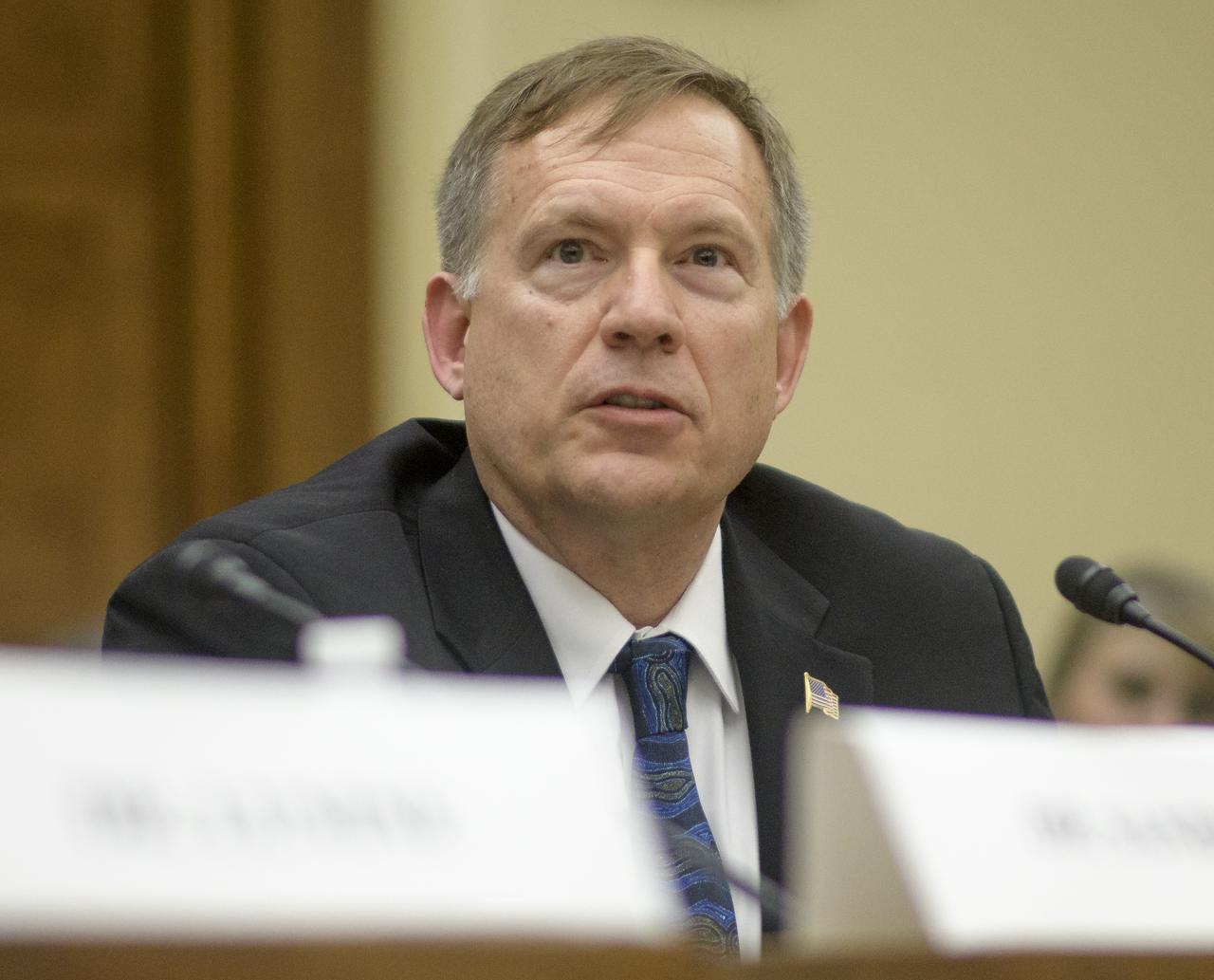
Mr. Walt Faulconer, President, Faulconer Consulting Group, LLC testifies during the House Subcommittee on Space and Aeronautics hearing titled "Keeping our sights on Mars: A Review of NASA's Deep Space Exploration Programs and Lunar Proposal", Wednesday, May 8, 2019 at the Rayburn House Office Building in Washington. Photo Credit: (NASA/Bill Ingalls)
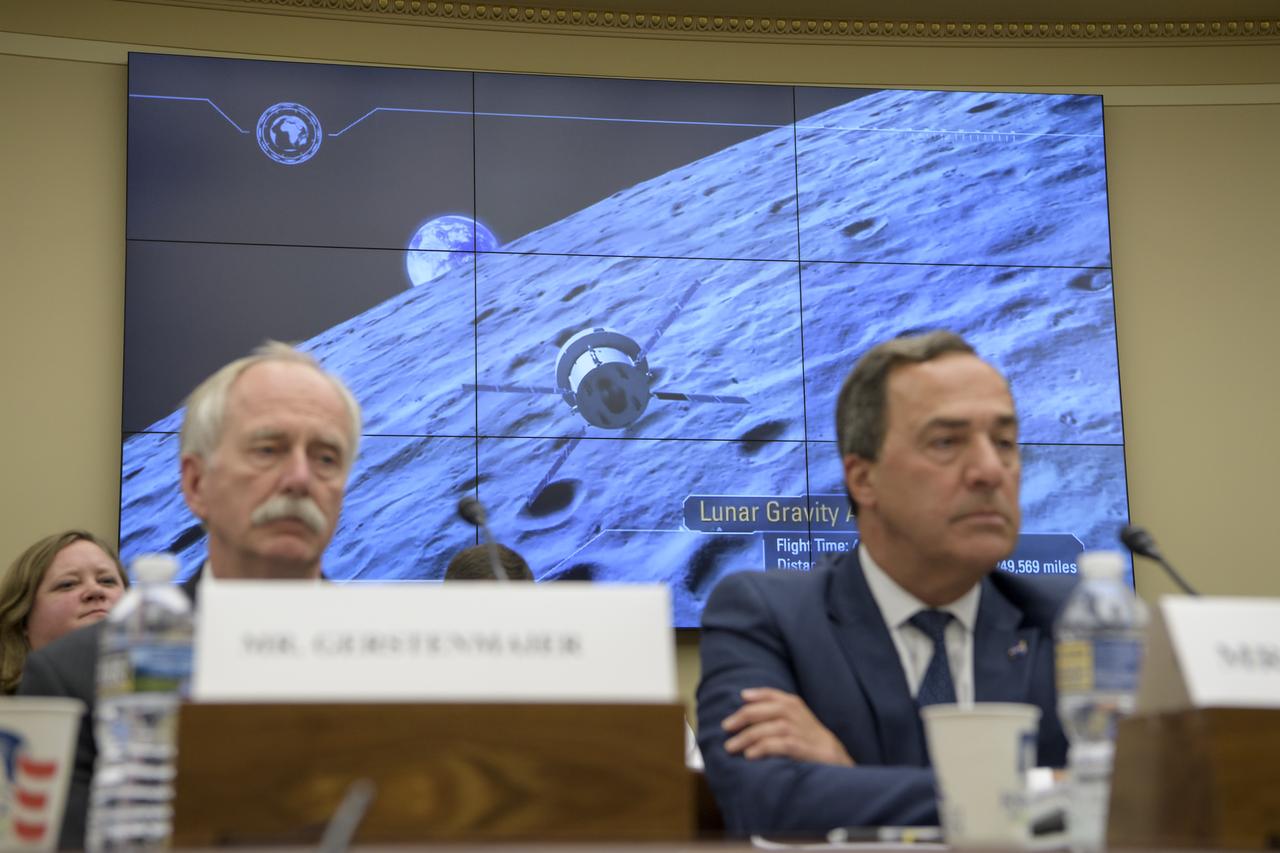
NASA Associate Administrator, Human Exploration and Operations William Gerstenmaier, left, and NASA Special Assistant to the Administrator Mark Sirangelo, watch as a video is played during the House Subcommittee on Space and Aeronautics hearing titled "Keeping our sights on Mars: A Review of NASA's Deep Space Exploration Programs and Lunar Proposal", Wednesday, May 8, 2019 at the Rayburn House Office Building in Washington. Photo Credit: (NASA/Bill Ingalls)
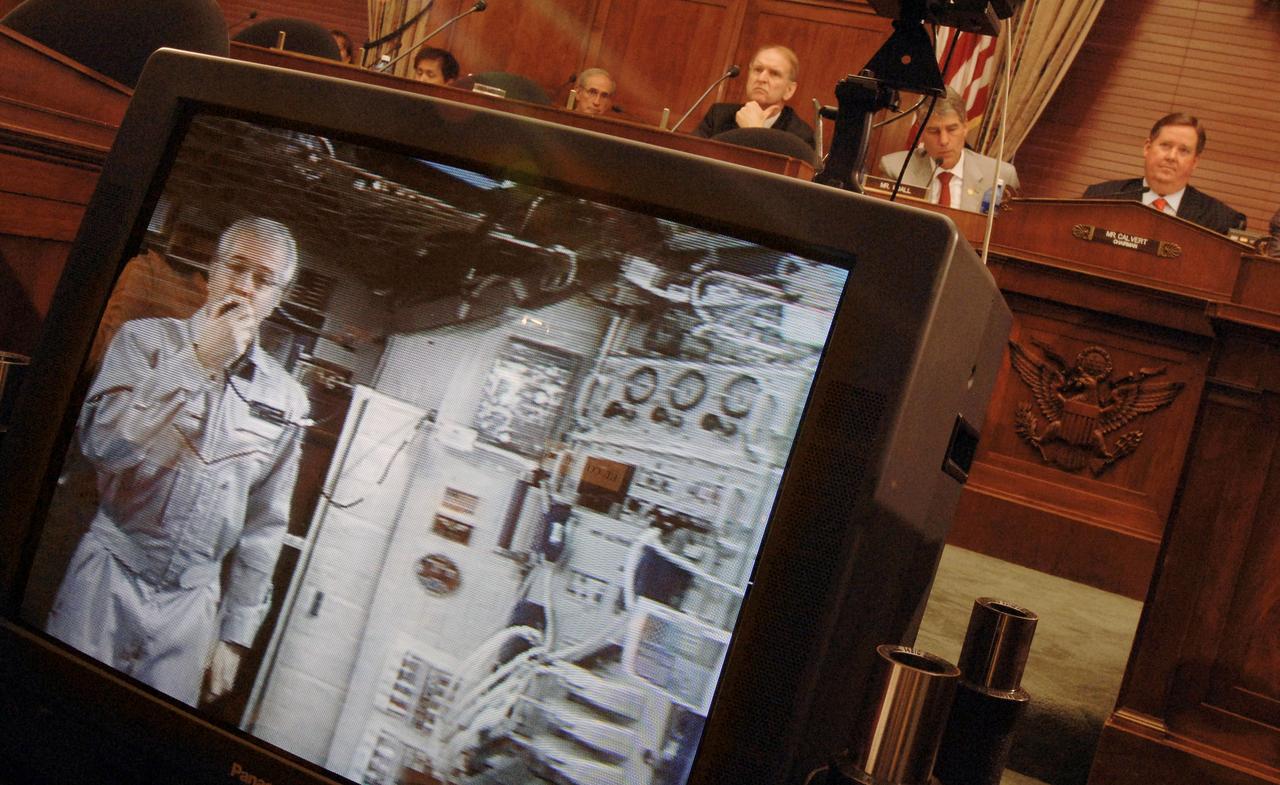
JSC2005-E-22364 (14 June 2005) --- Astronaut John L. Phillips, Expedition 11 NASA ISS science officer and flight engineer, testifies via video screen before the House Subcommittee on Space and Aeronautics chaired by Rep. Ken Calvert (R-Calif.), as he orbited Earth onboard the International Space Station (ISS) at a speed of five miles a second. Phillips was approximately 220 statute miles above Earth, but his radio transmissions were routed to a Tracking and Data Relay Satellite (TDRS) in geostationary orbit at an altitude of about 22,300 miles. Photo credit: NASA/Bill Ingalls.
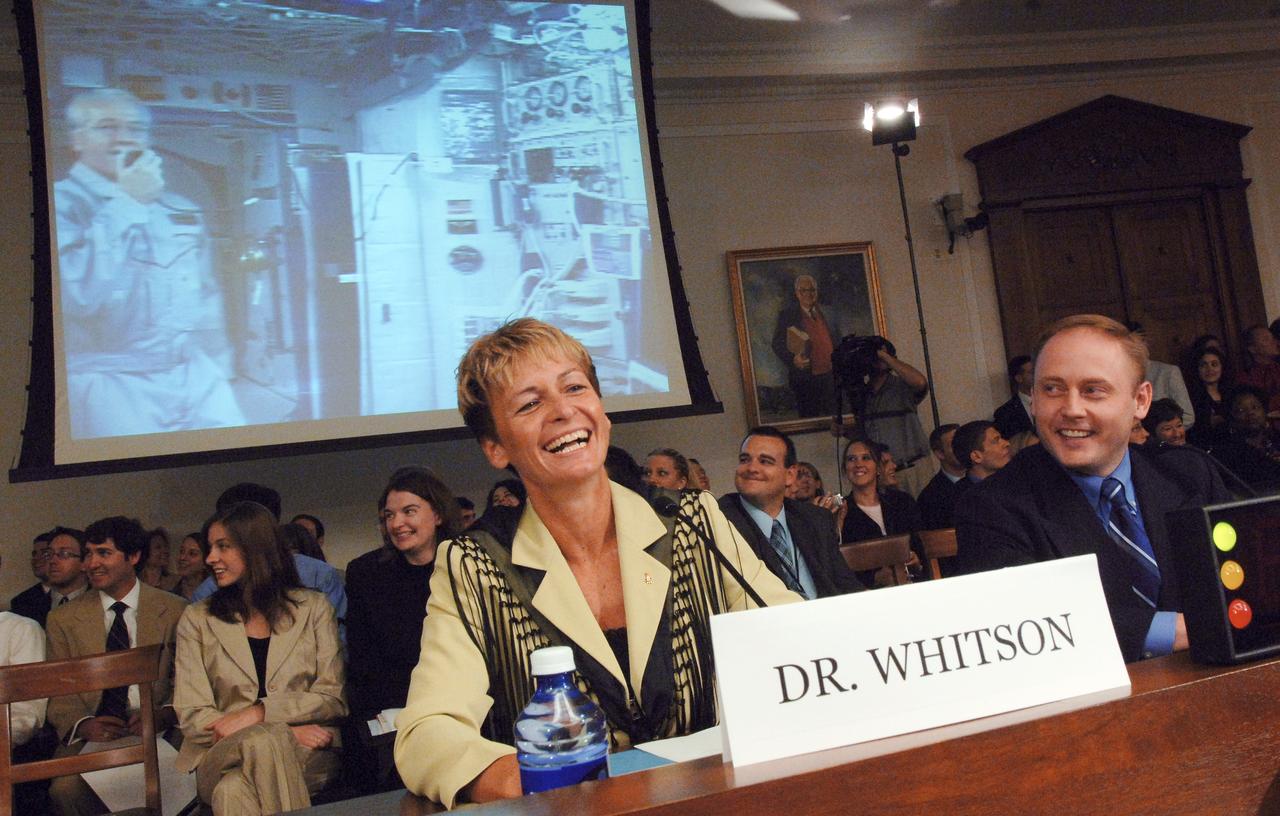
JSC2005-E-22363 (14 June 2005) --- Astronauts Peggy A. Whitson (left) and Edward M. (Mike) Fincke, former Station residents, share a laugh during the House Subcommittee on Space and Aeronautics hearing chaired by Rep. Ken Calvert (R-Calif.), as current Station astronaut John L. Phillips, Expedition 11 NASA ISS science officer and flight engineer, testifies via video screen in the background. Phillips was approximately 220 statute miles above Earth, but his radio transmissions were routed to a Tracking and Data Relay Satellite (TDRS) in geostationary orbit at an altitude of about 22,300 miles. Photo credit: NASA/Bill Ingalls.
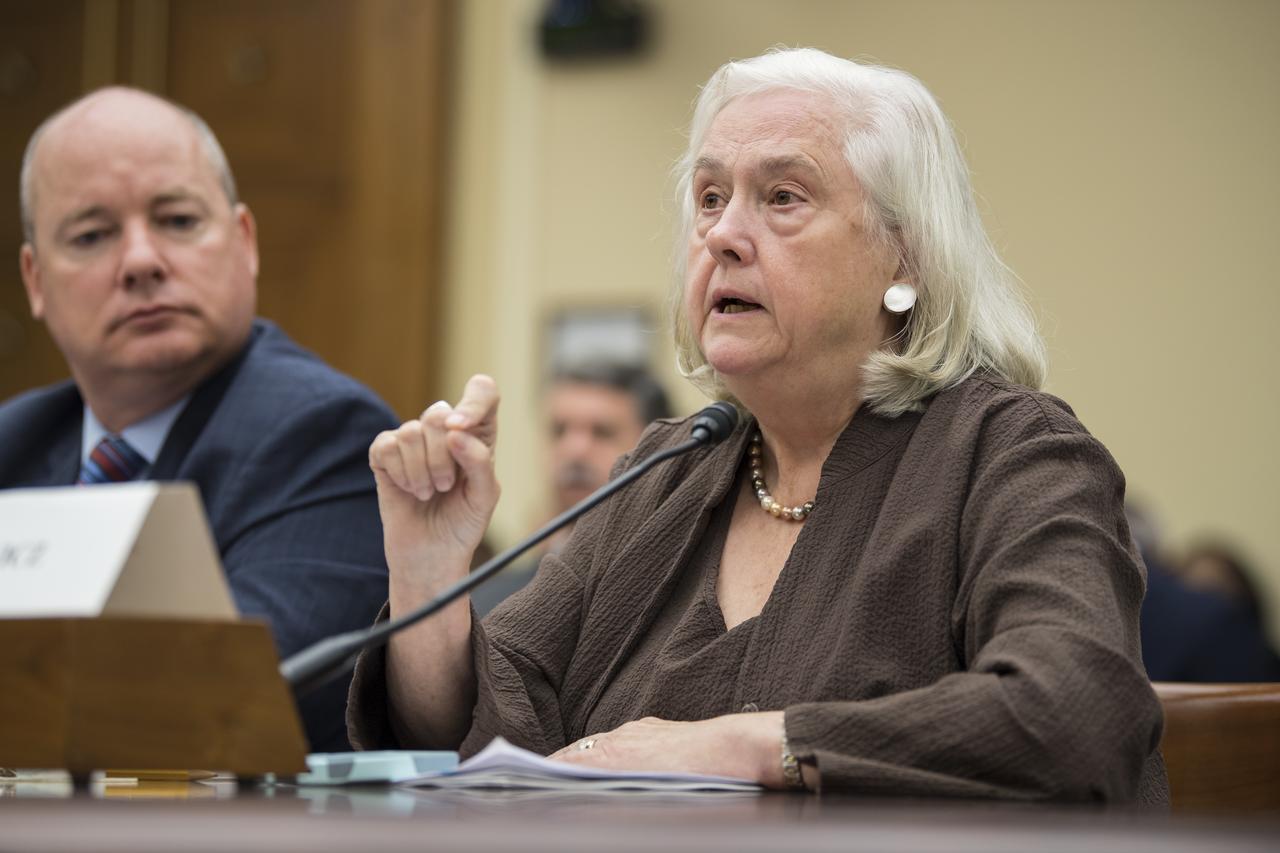
University of Mississippi Professor Emerita and Editor in Chief of the Journal of Space Law, Joanne Gabrynowicz, testifies during a Space and Aeronautics Subcommittee of the House Science, Space, and Technology Committee hearing titled, “A Review of NASA’s Plans for the International Space Station and Future Activities in Low Earth Orbit," Wednesday, July 10, 2019 at the Rayburn House Office Building in Washington. Photo Credit: (NASA/Aubrey Gemignani)
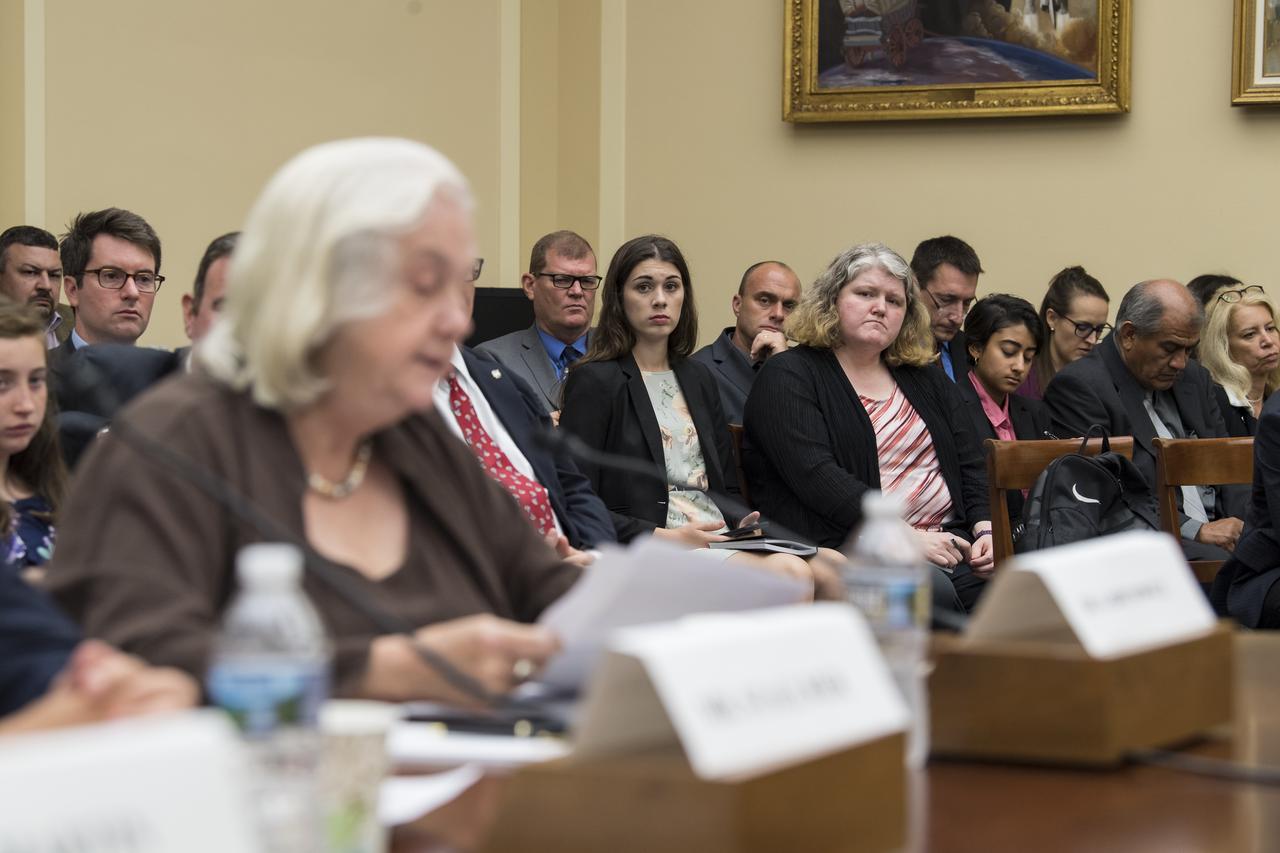
Audience members listen as University of Mississippi Professor Emerita and Editor in Chief of the Journal of Space Law, Joanne Gabrynowicz, testifies during a Space and Aeronautics Subcommittee of the House Science, Space, and Technology Committee hearing titled, “A Review of NASA’s Plans for the International Space Station and Future Activities in Low Earth Orbit," Wednesday, July 10, 2019 at the Rayburn House Office Building in Washington. Photo Credit: (NASA/Aubrey Gemignani)
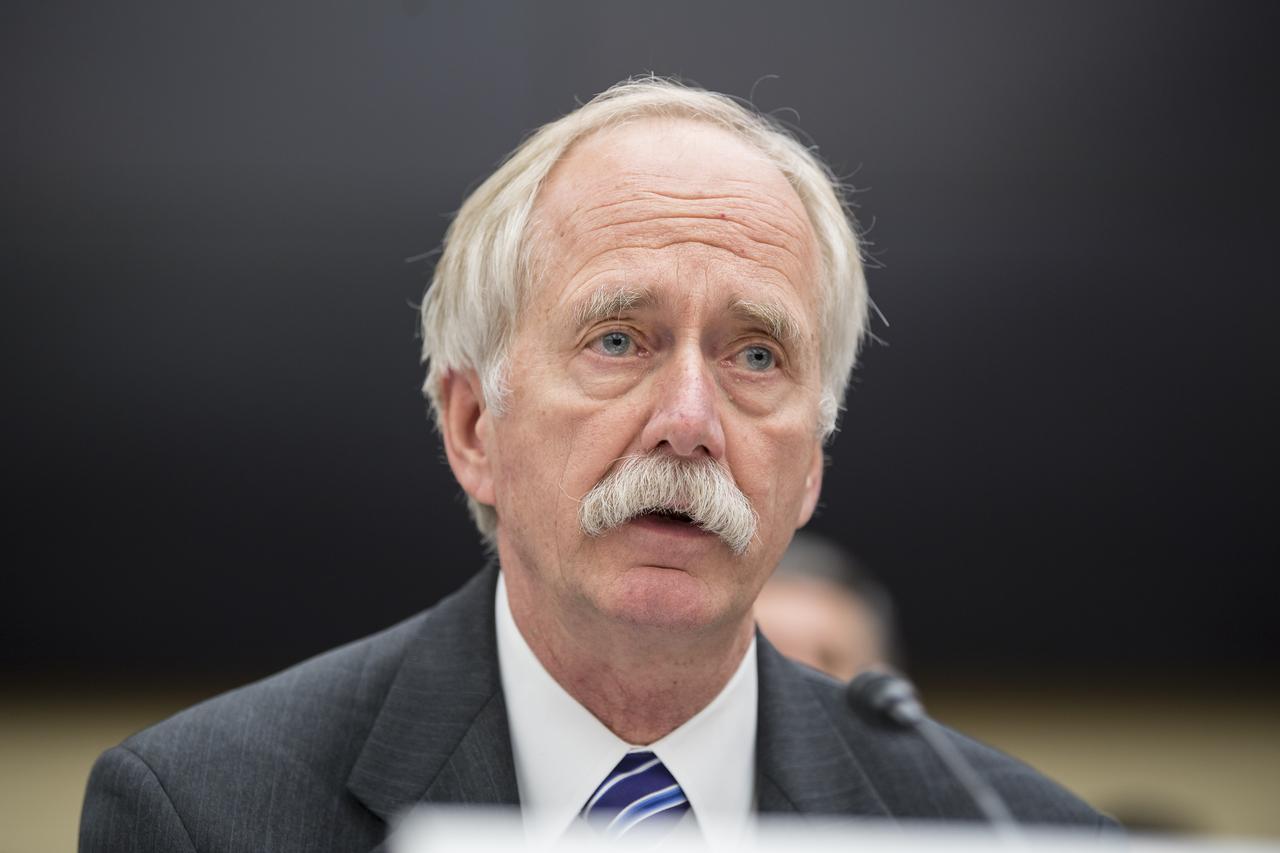
NASA Associate Administrator, Human Exploration and Operations, Bill Gerstenmaier, testifies during a Space and Aeronautics Subcommittee of the House Science, Space, and Technology Committee hearing titled, “A Review of NASA’s Plans for the International Space Station and Future Activities in Low Earth Orbit," Wednesday, July 10, 2019 at the Rayburn House Office Building in Washington. Photo Credit: (NASA/Aubrey Gemignani)
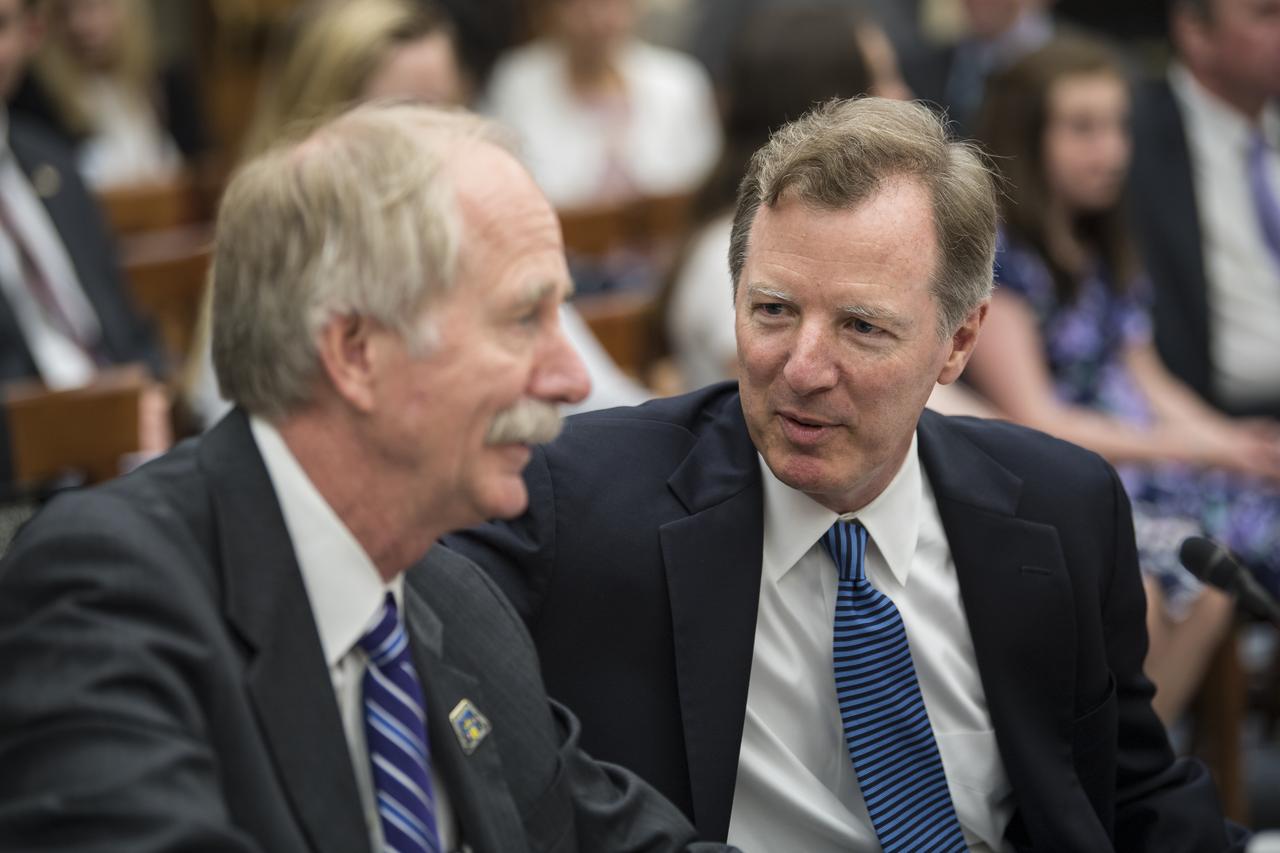
The Honorable Paul Martin, inspector general, NASA, speaks to Bill Gerstenmaier, associate administrator, Human Exploration and Operations, NASA, before they testify during a Space and Aeronautics Subcommittee of the House Science, Space, and Technology Committee hearing titled, “A Review of NASA’s Plans for the International Space Station and Future Activities in Low Earth Orbit," Wednesday, July 10, 2019 at the Rayburn House Office Building in Washington. Photo Credit: (NASA/Aubrey Gemignani)
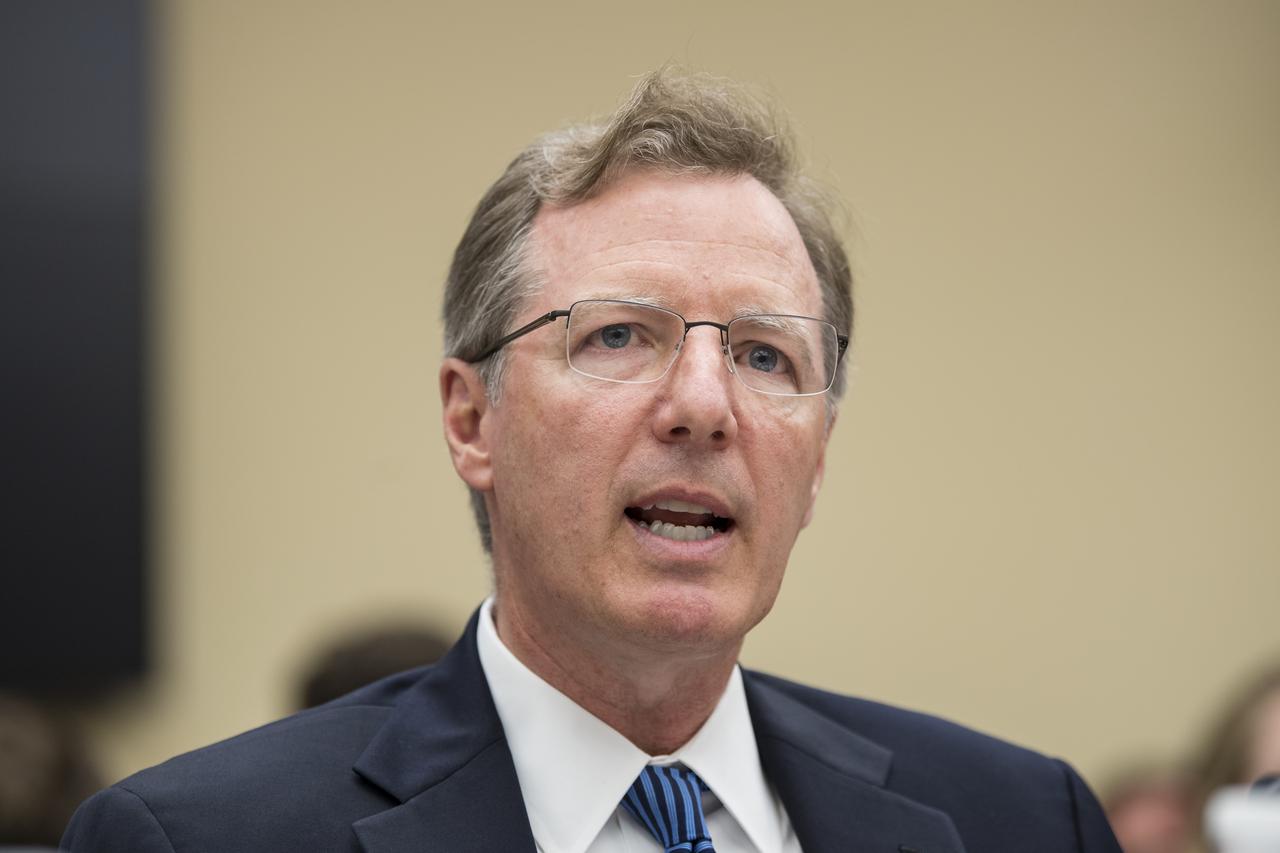
The Honorable Paul Martin, inspector general, NASA, testifies during a Space and Aeronautics Subcommittee of the House Science, Space, and Technology Committee hearing titled, “A Review of NASA’s Plans for the International Space Station and Future Activities in Low Earth Orbit," Wednesday, July 10, 2019 at the Rayburn House Office Building in Washington. Photo Credit: (NASA/Aubrey Gemignani)
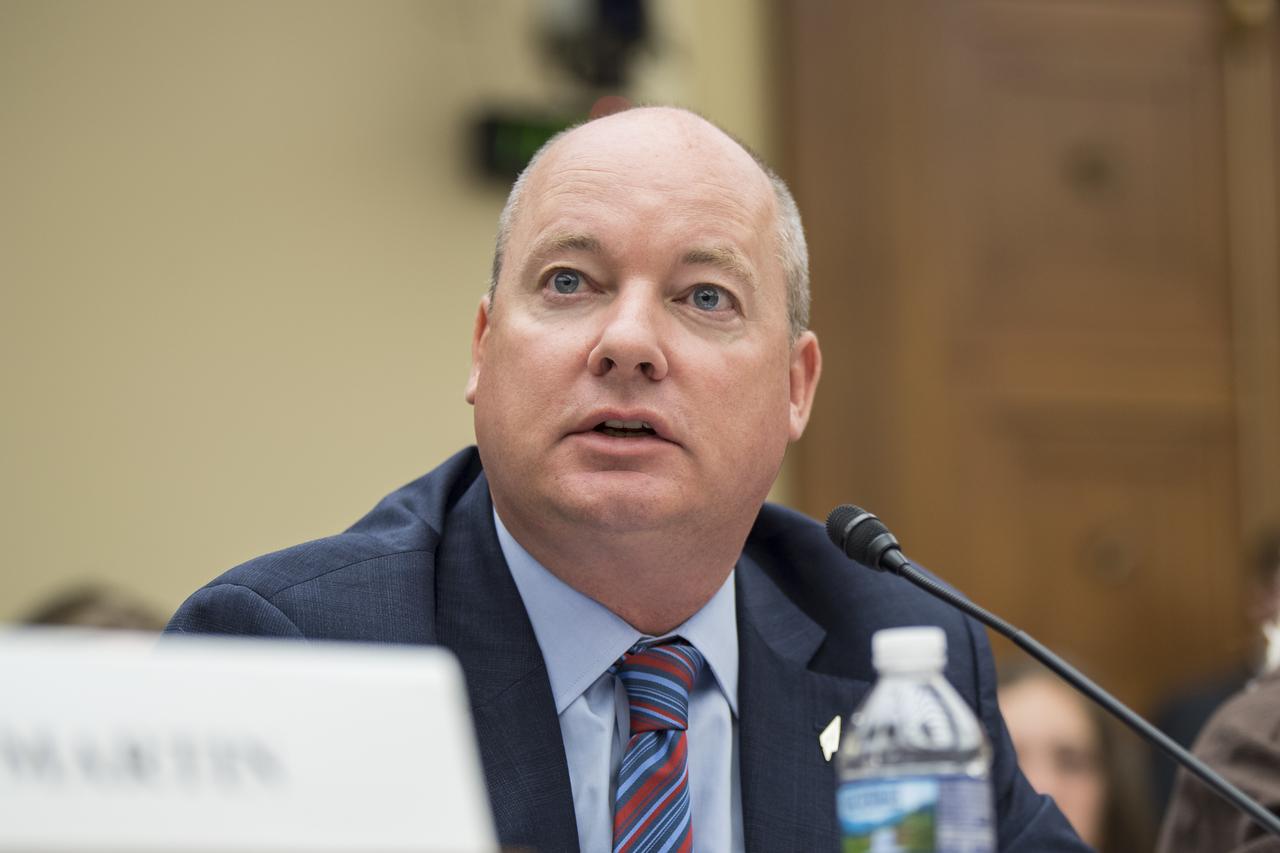
Commercial Spaceflight Federation President, Eric Stallmer, testifies during a Space and Aeronautics Subcommittee of the House Science, Space, and Technology Committee hearing titled, “A Review of NASA’s Plans for the International Space Station and Future Activities in Low Earth Orbit," Wednesday, July 10, 2019 at the Rayburn House Office Building in Washington. Photo Credit: (NASA/Aubrey Gemignani)
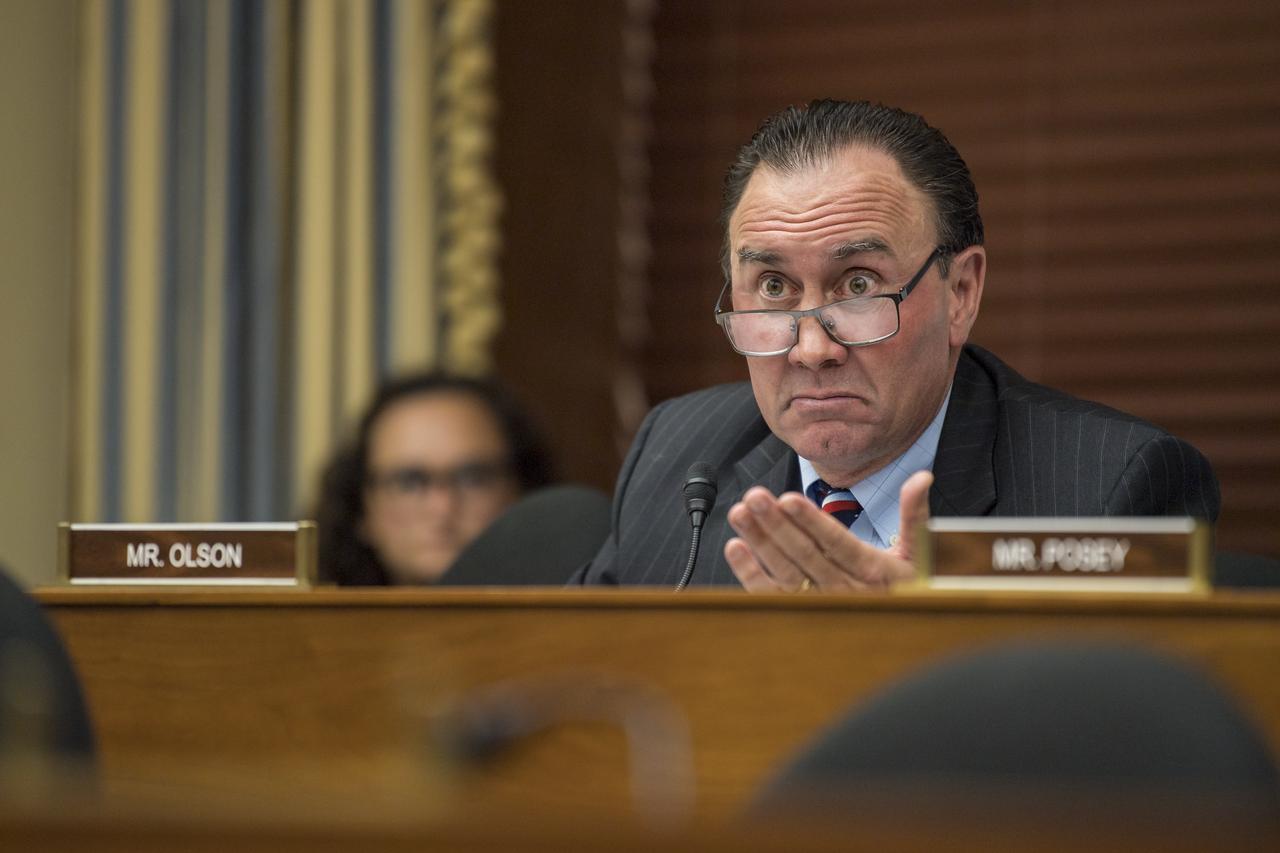
Congressman Pete Olson, R-Texas, asks NASA Associate Administrator, Human Exploration and Operations, Bill Gerstenmaier, a question during a Space and Aeronautics Subcommittee of the House Science, Space, and Technology Committee hearing titled, “A Review of NASA’s Plans for the International Space Station and Future Activities in Low Earth Orbit," Wednesday, July 10, 2019 at the Rayburn House Office Building in Washington. Photo Credit: (NASA/Aubrey Gemignani)
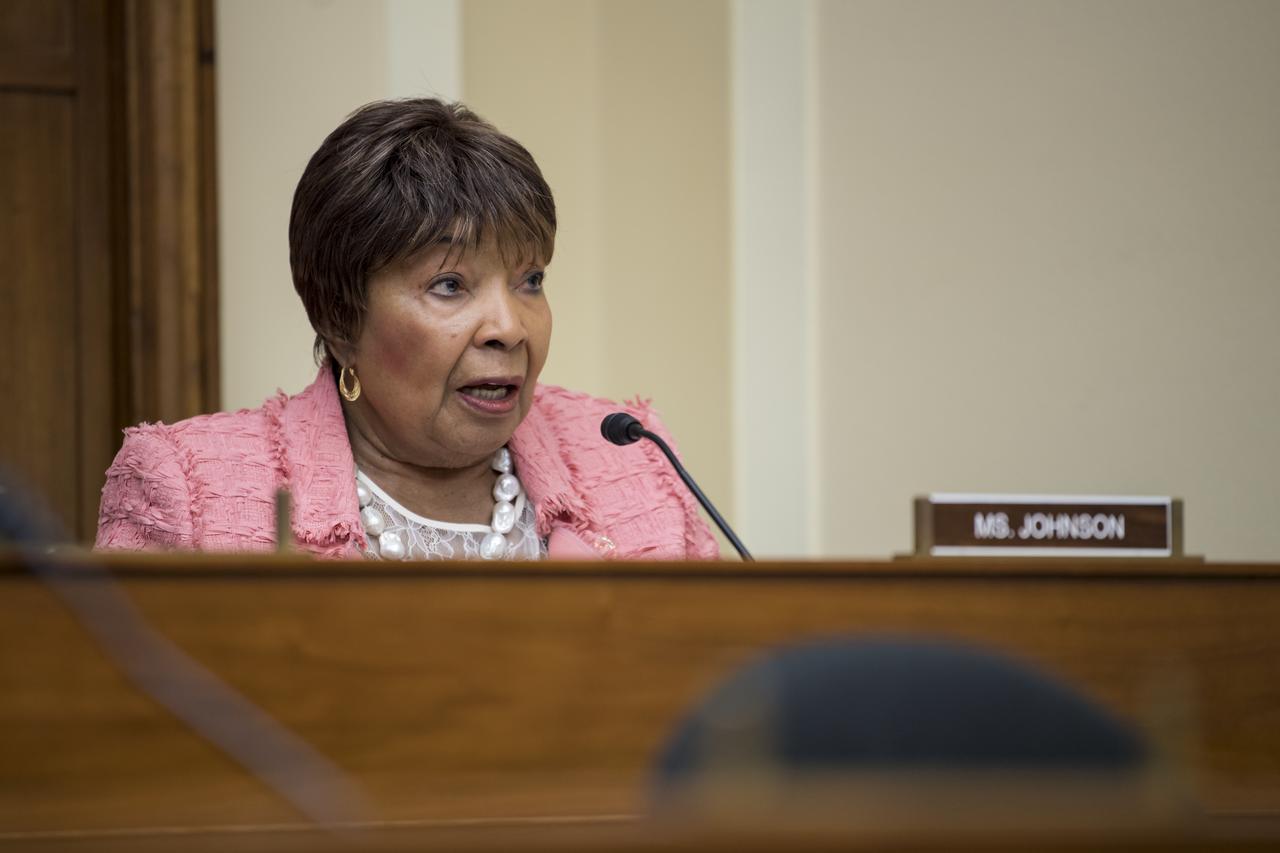
U.S. Representative Eddie Johnson, D-Texas, asks a question during a Space and Aeronautics Subcommittee of the House Science, Space, and Technology Committee hearing titled, “A Review of NASA’s Plans for the International Space Station and Future Activities in Low Earth Orbit," Wednesday, July 10, 2019 at the Rayburn House Office Building in Washington. Photo Credit: (NASA/Aubrey Gemignani)
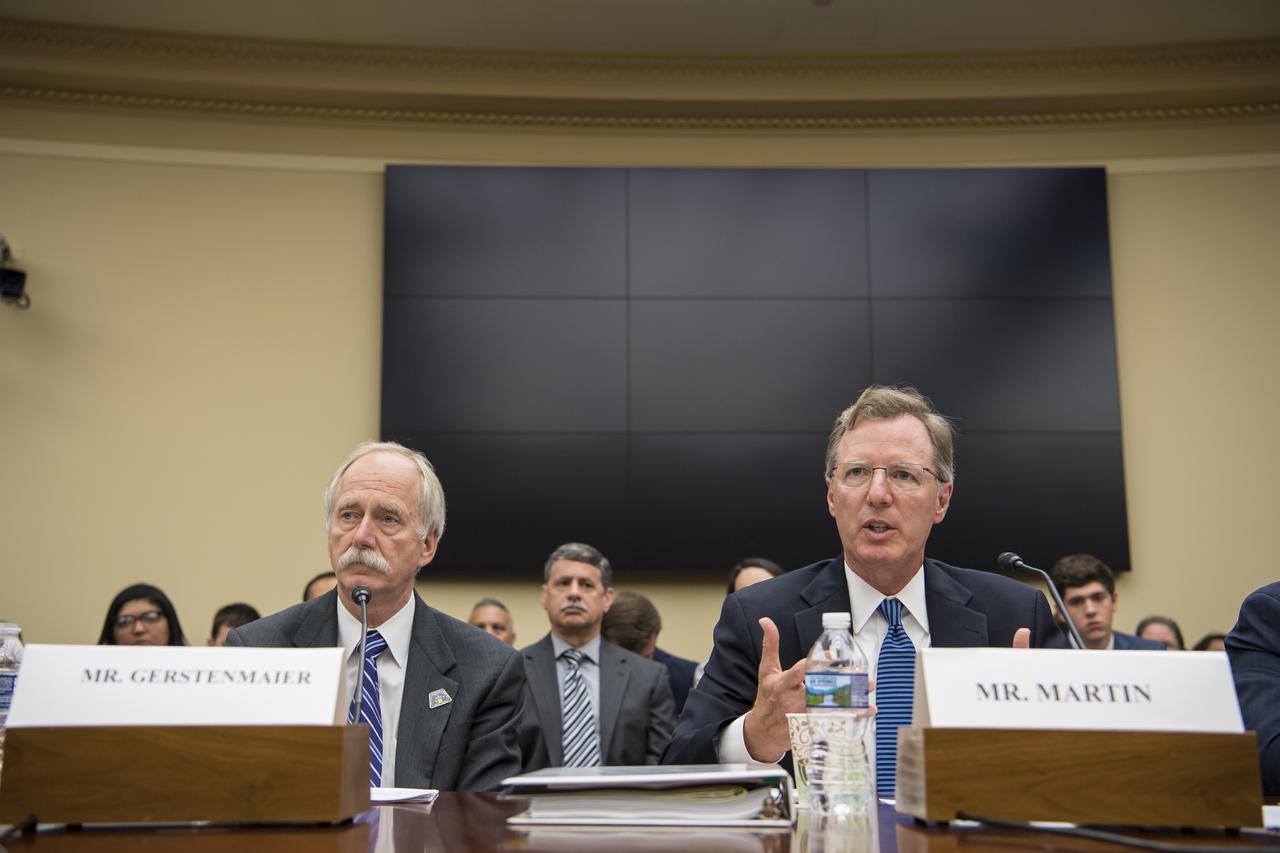
The Honorable Paul Martin, inspector general, NASA, testifies during a Space and Aeronautics Subcommittee of the House Science, Space, and Technology Committee hearing titled, “A Review of NASA’s Plans for the International Space Station and Future Activities in Low Earth Orbit," Wednesday, July 10, 2019 at the Rayburn House Office Building in Washington. Photo Credit: (NASA/Aubrey Gemignani)
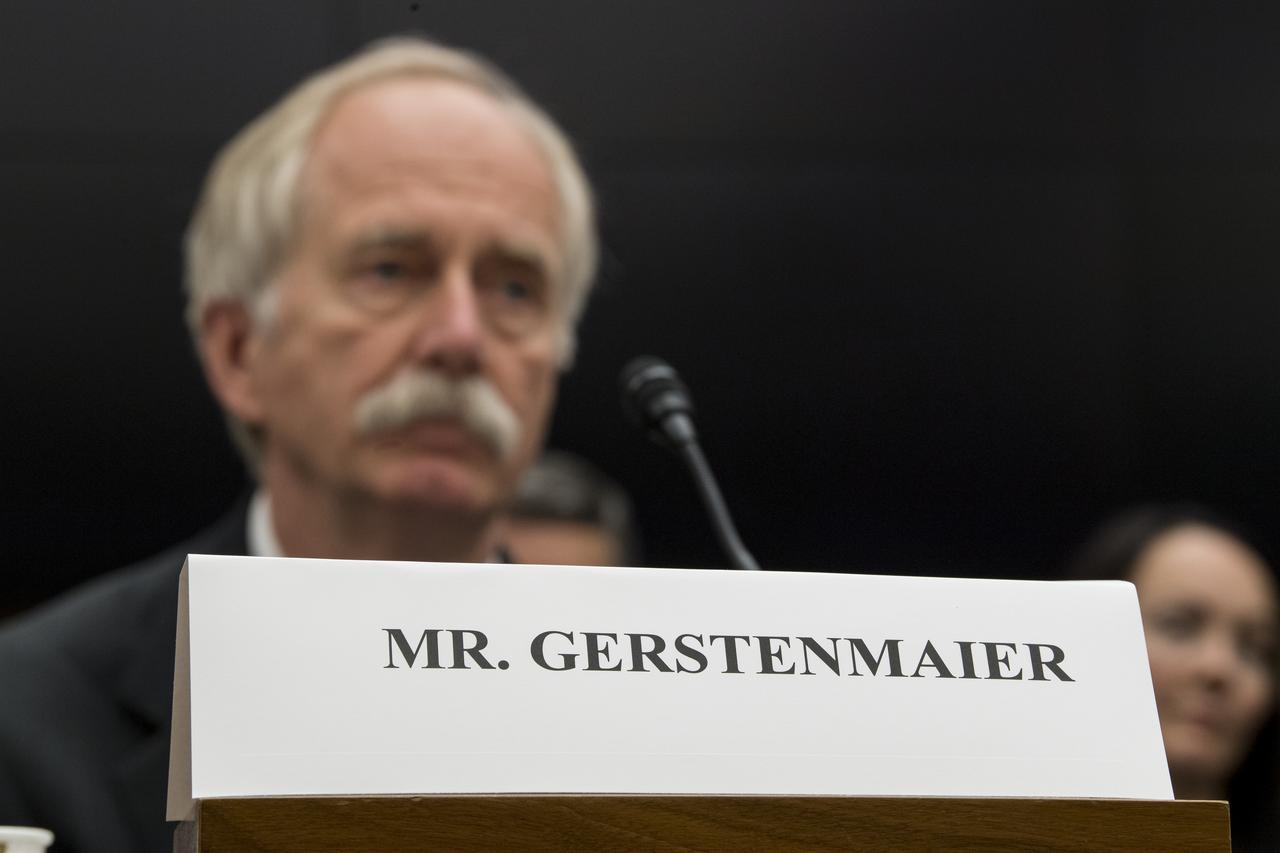
NASA Associate Administrator, Human Exploration and Operations, Bill Gerstenmaier, testifies during a Space and Aeronautics Subcommittee of the House Science, Space, and Technology Committee hearing titled, “A Review of NASA’s Plans for the International Space Station and Future Activities in Low Earth Orbit," Wednesday, July 10, 2019 at the Rayburn House Office Building in Washington. Photo Credit: (NASA/Aubrey Gemignani)
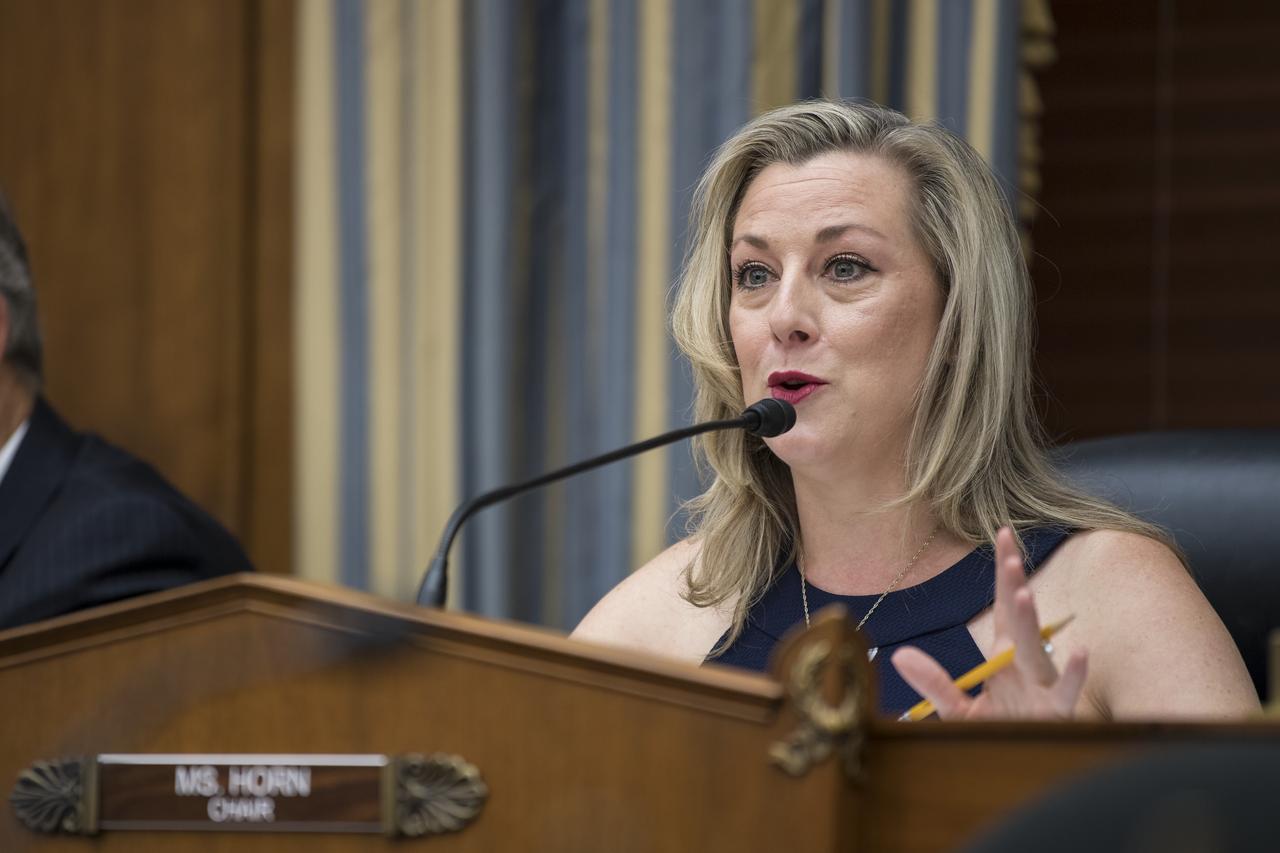
Chair of the Space and Aeronautics Subcommittee, Kendra Horn, D-Okla., speaks during a House Science, Space, and Technology Committee hearing titled, “A Review of NASA’s Plans for the International Space Station and Future Activities in Low Earth Orbit," where NASA Associate Administrator, Human Exploration and Operations, Bill Gerstenmaier, and NASA Inspector General, Paul Martin testified, Wednesday, July 10, 2019 at the Rayburn House Office Building in Washington. Photo Credit: (NASA/Aubrey Gemignani)
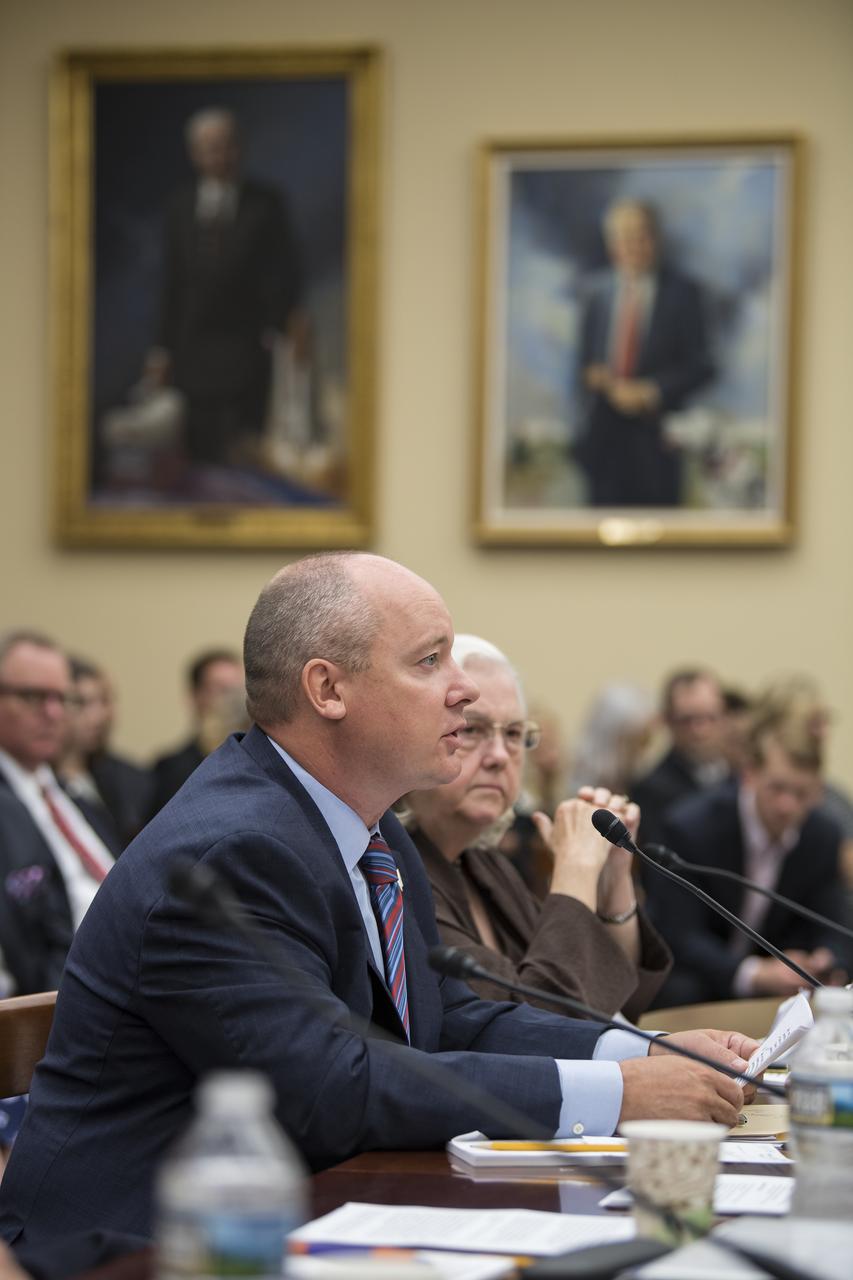
Commercial Spaceflight Federation President, Eric Stallmer, testifies during a Space and Aeronautics Subcommittee of the House Science, Space, and Technology Committee hearing titled, “A Review of NASA’s Plans for the International Space Station and Future Activities in Low Earth Orbit," Wednesday, July 10, 2019 at the Rayburn House Office Building in Washington. Photo Credit: (NASA/Aubrey Gemignani)
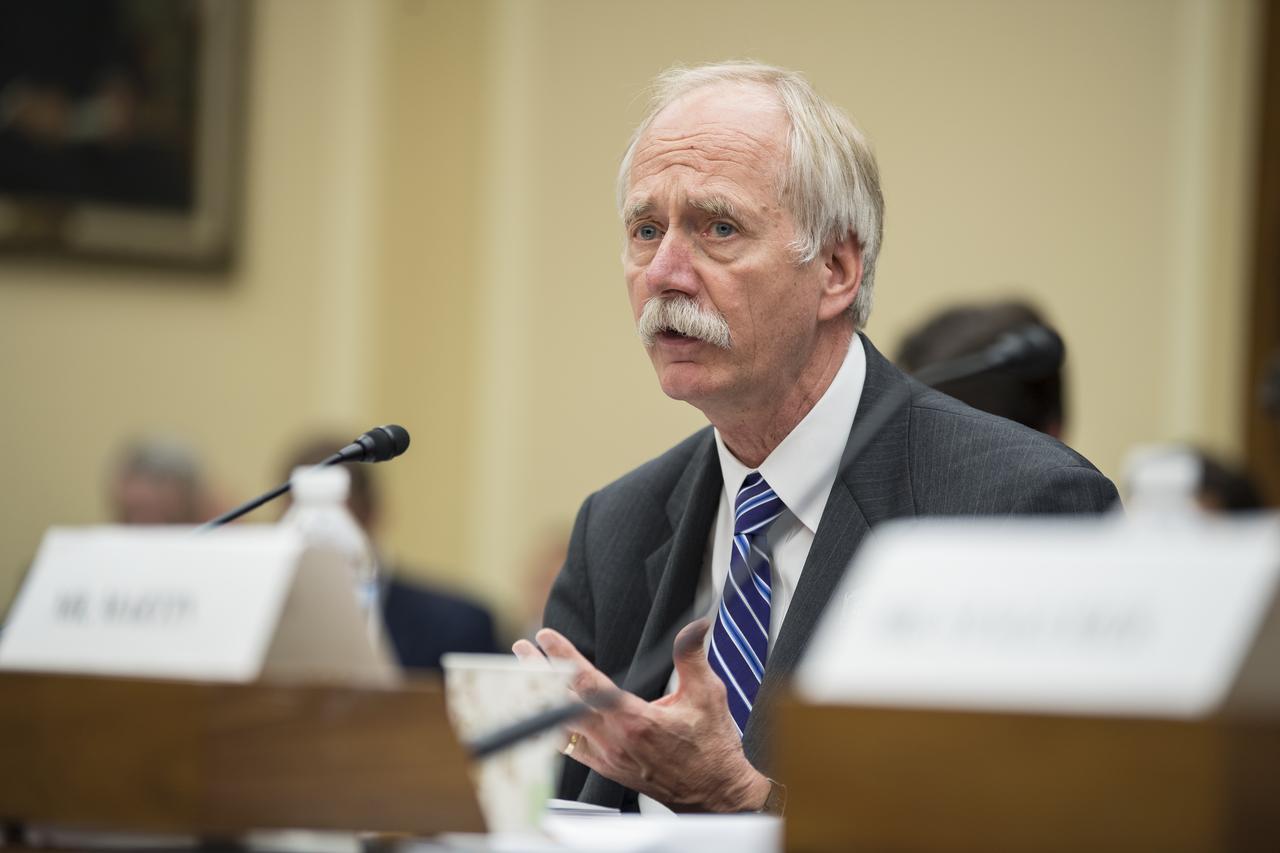
NASA Associate Administrator, Human Exploration and Operations, Bill Gerstenmaier, testifies during a Space and Aeronautics Subcommittee of the House Science, Space, and Technology Committee hearing titled, “A Review of NASA’s Plans for the International Space Station and Future Activities in Low Earth Orbit," Wednesday, July 10, 2019 at the Rayburn House Office Building in Washington. Photo Credit: (NASA/Aubrey Gemignani)
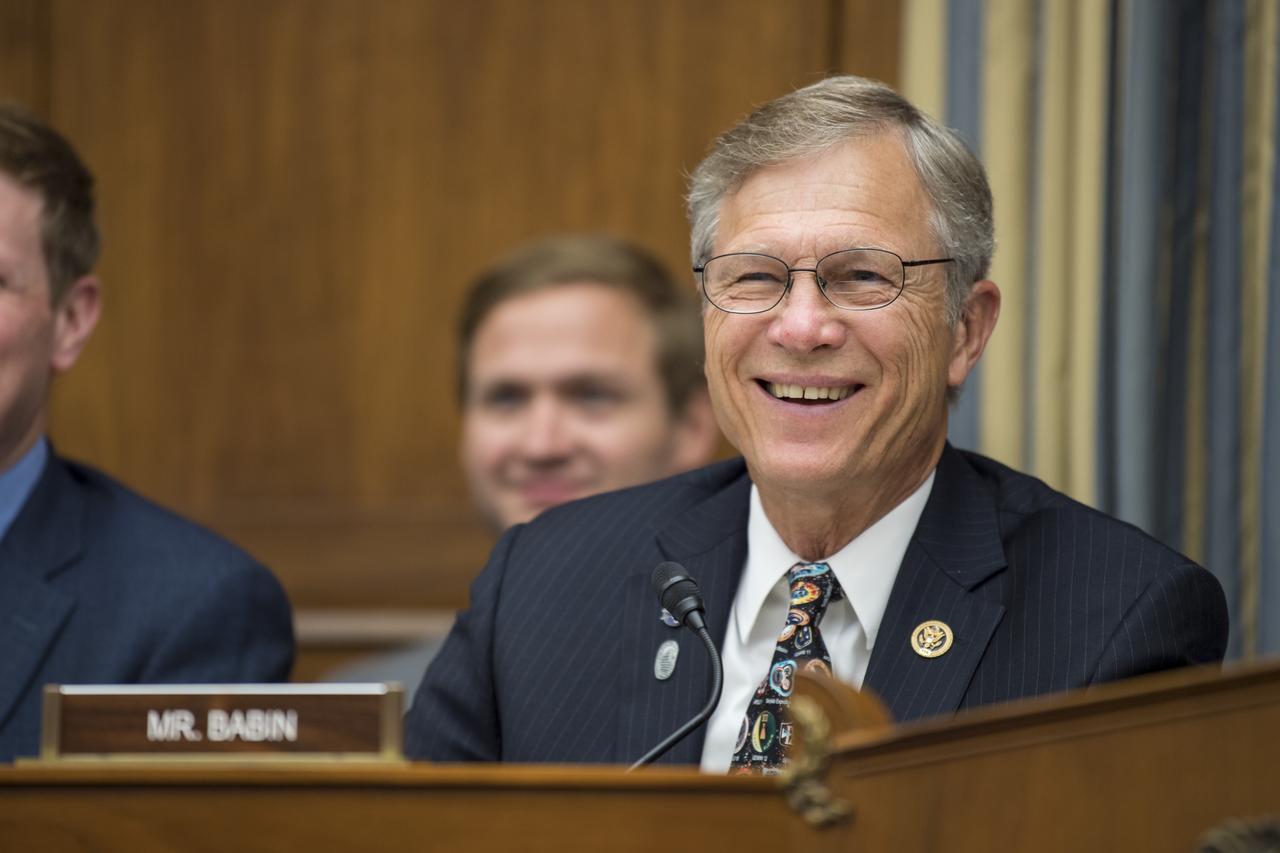
Congressman Brian Babin, R-Texas, reacts during a Space and Aeronautics Subcommittee of the House Science, Space, and Technology Committee hearing titled, “A Review of NASA’s Plans for the International Space Station and Future Activities in Low Earth Orbit," Wednesday, July 10, 2019 at the Rayburn House Office Building in Washington. Photo Credit: (NASA/Aubrey Gemignani)
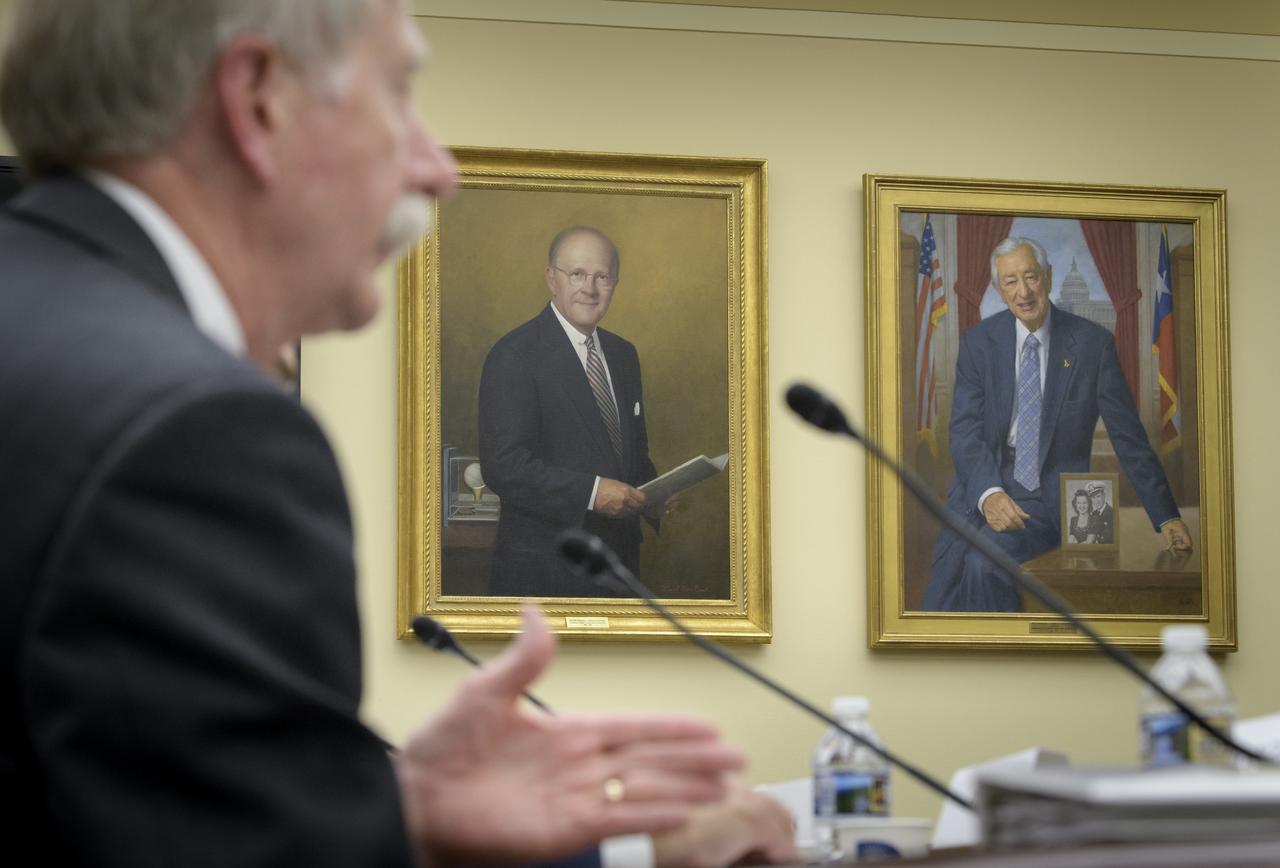
Portraits of past House Science and Technology Committee Chairmen, Sherwood Boehlert, left, and Ralph Hall are seen as NASA Associate Administrator, Human Exploration and Operations William Gerstenmaier testifies during a House Subcommittee on Space and Aeronautics hearing titled "Keeping our sights on Mars: A Review of NASA's Deep Space Exploration Programs and Lunar Proposal", Wednesday, May 8, 2019 at the Rayburn House Office Building in Washington. Photo Credit: (NASA/Bill Ingalls)
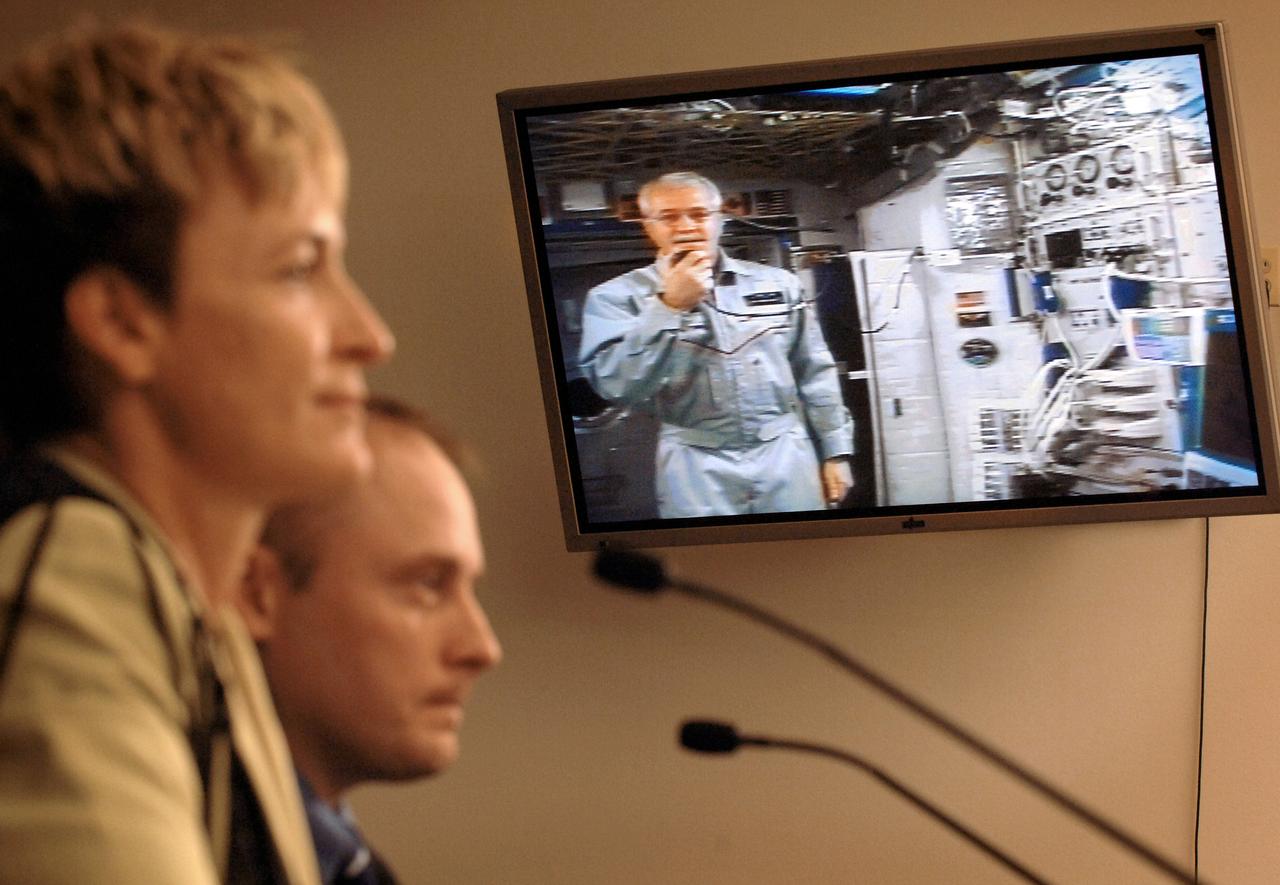
JSC2005-E-22365 (14 June 2005) --- Astronaut John L. Phillips, Expedition 11 NASA space station science officer and flight engineer, testifies via video screen before the House Subcommittee on Space and Aeronautics chaired by Rep. Ken Calvert (R-Calif.), as he orbited Earth onboard the international space station at a speed of five miles a second. Phillips was approximately 220 statute miles above Earth, but his radio transmissions were routed to a Tracking and Data Relay Satellite (TDRS) in geostationary orbit at an altitude of about 22,300 miles. Astronauts Peggy A. Whitson and Edward M. (Mike) Fincke, former station residents, are visible at left. Photo credit: NASA/Bill Ingalls.
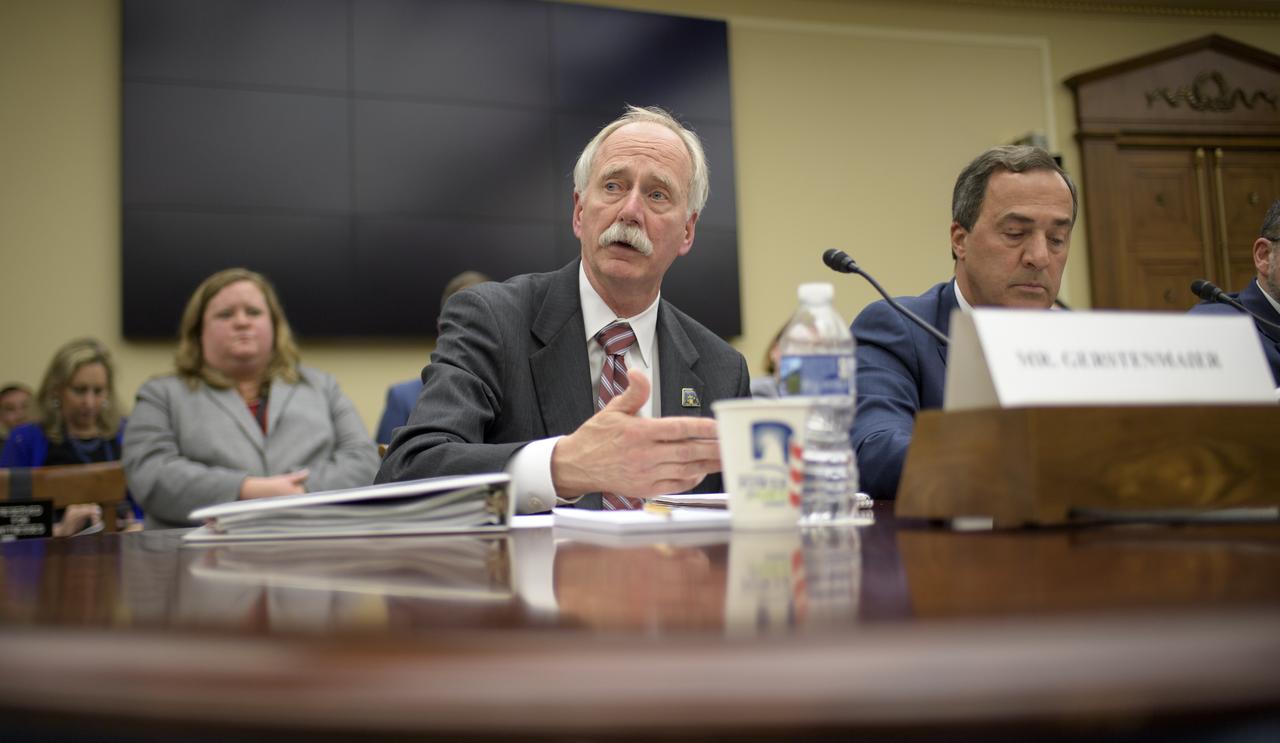
NASA Associate Administrator, Human Exploration and Operations William Gerstenmaier testifies during the House Subcommittee on Space and Aeronautics hearing titled "Keeping our sights on Mars: A Review of NASA's Deep Space Exploration Programs and Lunar Proposal", Wednesday, May 8, 2019 at the Rayburn House Office Building in Washington. Photo Credit: (NASA/Bill Ingalls)
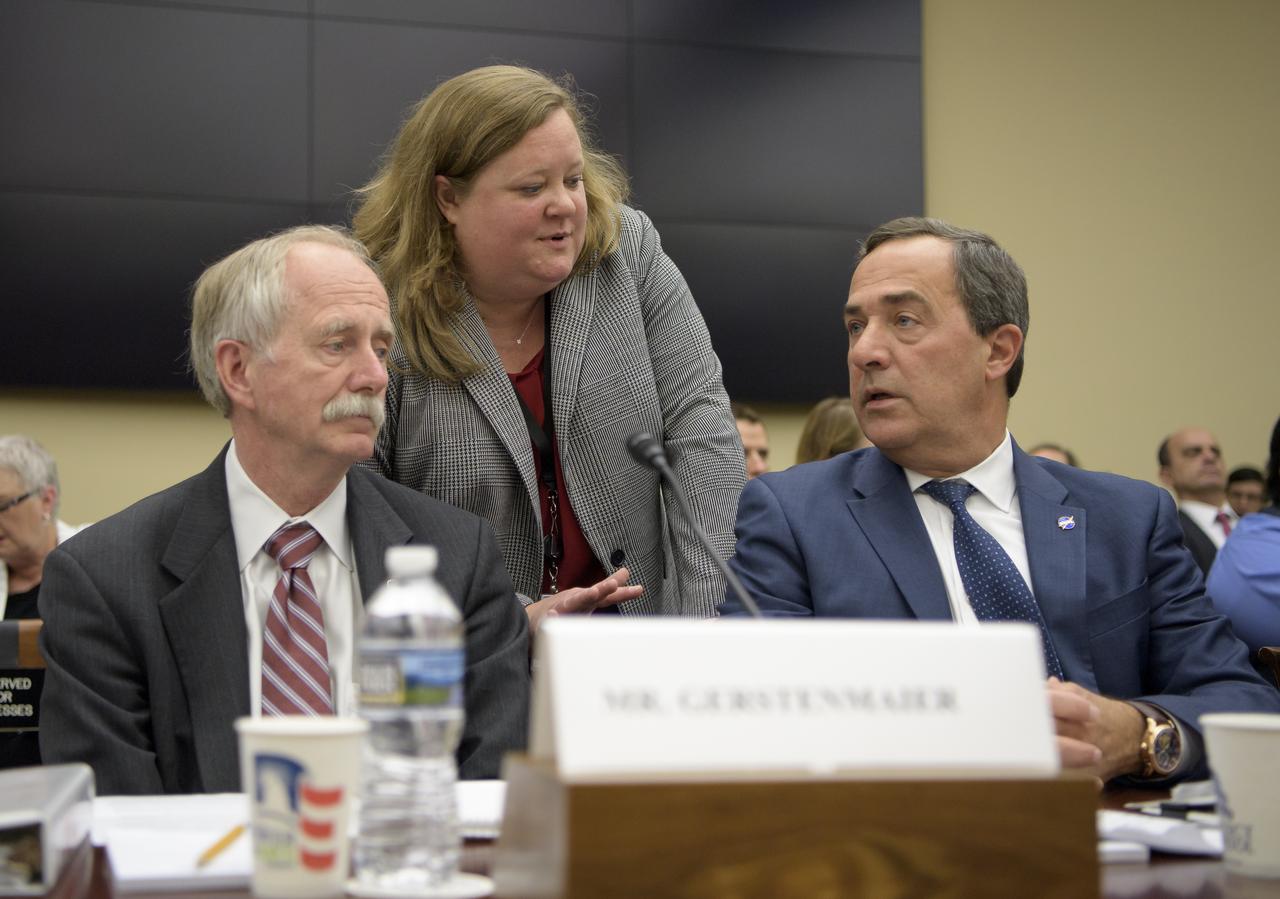
NASA Associate Administrator, Human Exploration and Operations William Gerstenmaier, left, NASA Associate Administrator for Legislative Affairs Suzanne Gillen, center, and NASA Special Assistant to the Administrator Mark Sirangelo, confer prior to the start of the House Subcommittee on Space and Aeronautics hearing titled "Keeping our sights on Mars: A Review of NASA's Deep Space Exploration Programs and Lunar Proposal", Wednesday, May 8, 2019 at the Rayburn House Office Building in Washington. Photo Credit: (NASA/Bill Ingalls)
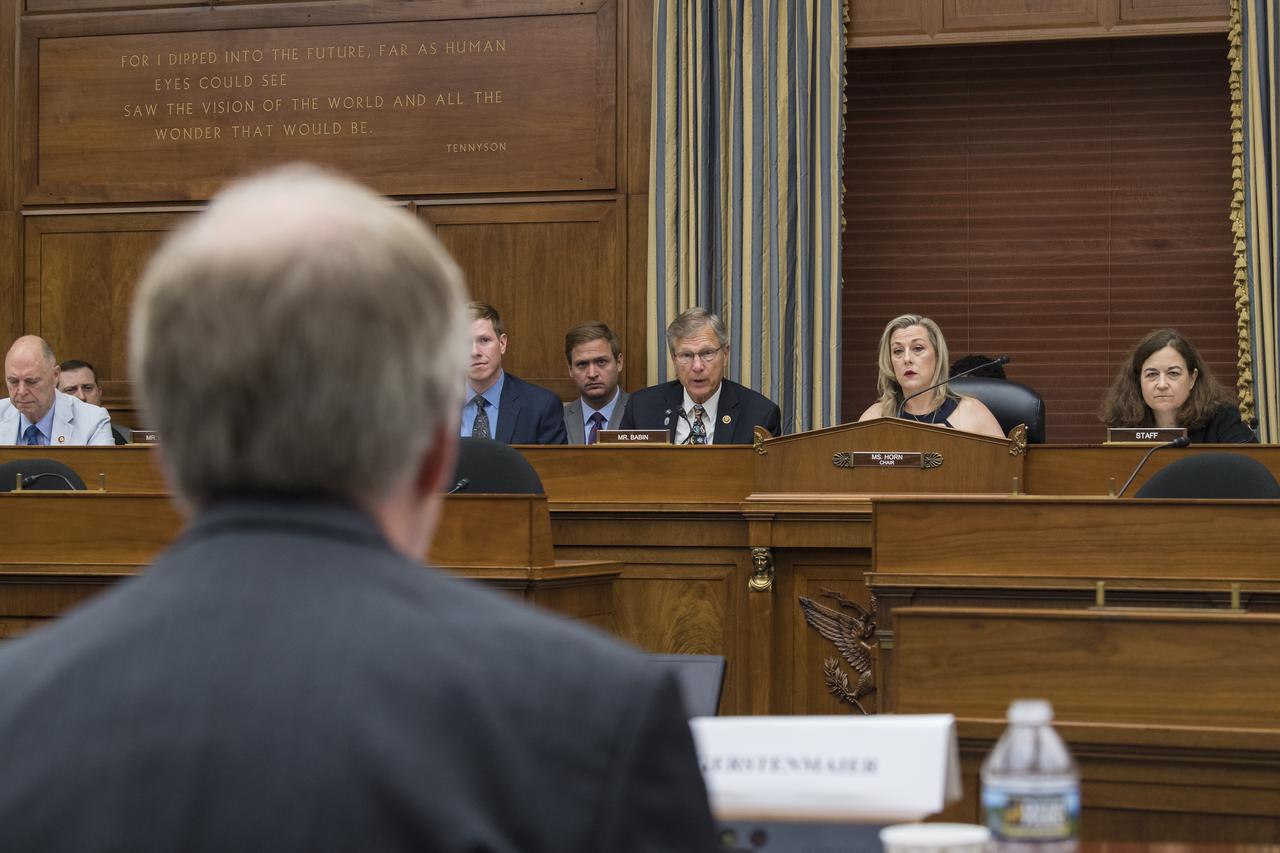
Congressman Brian Babin, R-Texas, asks NASA Associate Administrator, Human Exploration and Operations, Bill Gerstenmaier, a question during a Space and Aeronautics Subcommittee of the House Science, Space, and Technology Committee hearing titled, “A Review of NASA’s Plans for the International Space Station and Future Activities in Low Earth Orbit," Wednesday, July 10, 2019 at the Rayburn House Office Building in Washington. Photo Credit: (NASA/Aubrey Gemignani)

NASA Associate Administrator, Human Exploration and Operations, Bill Gerstenmaier, right, speaks with Chair of the Space and Aeronautics Subcommittee, Congresswoman Kendra Horn, D-Okla., second from left, after he testified during a House Science, Space, and Technology Committee hearing titled, “A Review of NASA’s Plans for the International Space Station and Future Activities in Low Earth Orbit," Wednesday, July 10, 2019 at the Rayburn House Office Building in Washington. Photo Credit: (NASA/Aubrey Gemignani)
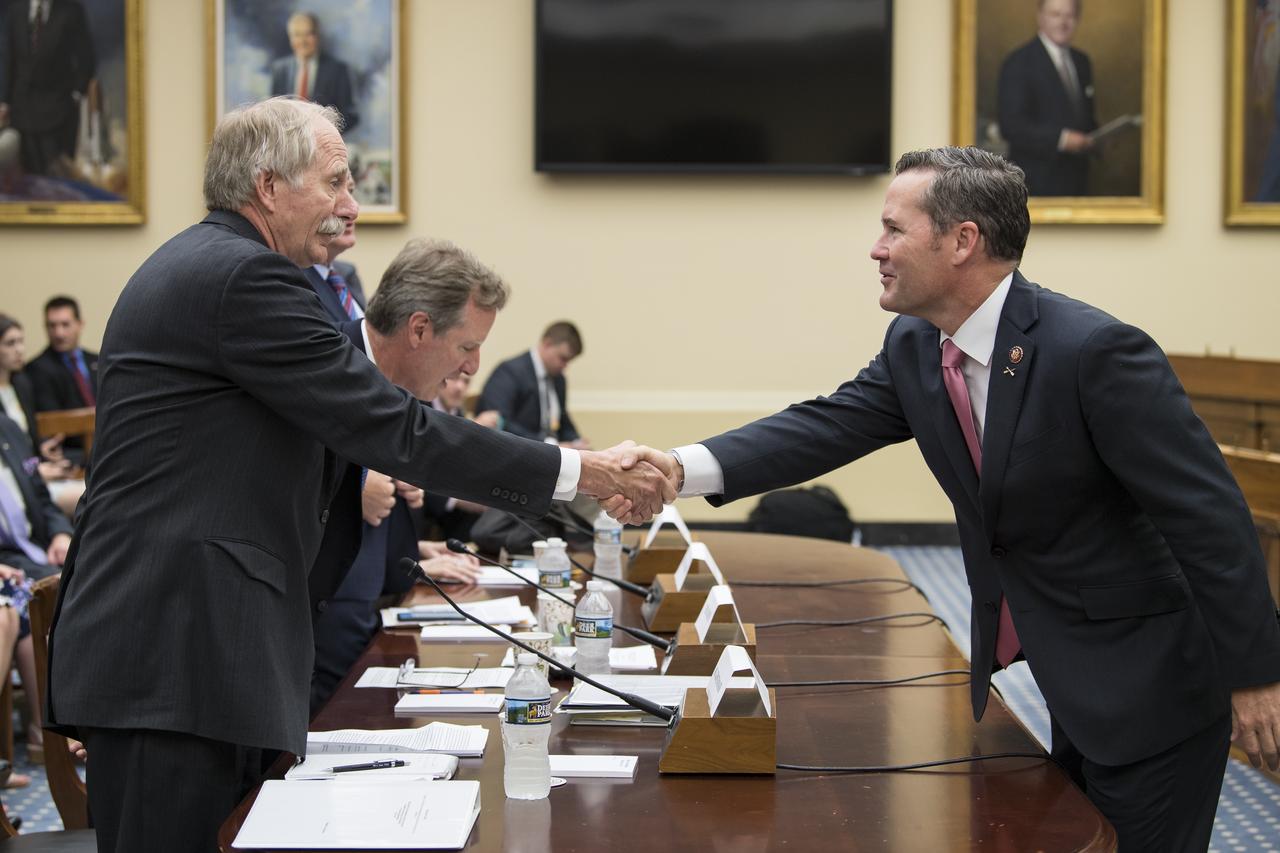
NASA Associate Administrator, Human Exploration and Operations, Bill Gerstenmaier, left, shakes hands with Congressman Michael Waltz, R-Fla., before testifying during a Space and Aeronautics Subcommittee of the House Science, Space, and Technology Committee hearing titled, “A Review of NASA’s Plans for the International Space Station and Future Activities in Low Earth Orbit," Wednesday, July 10, 2019 at the Rayburn House Office Building in Washington. Photo Credit: (NASA/Aubrey Gemignani)
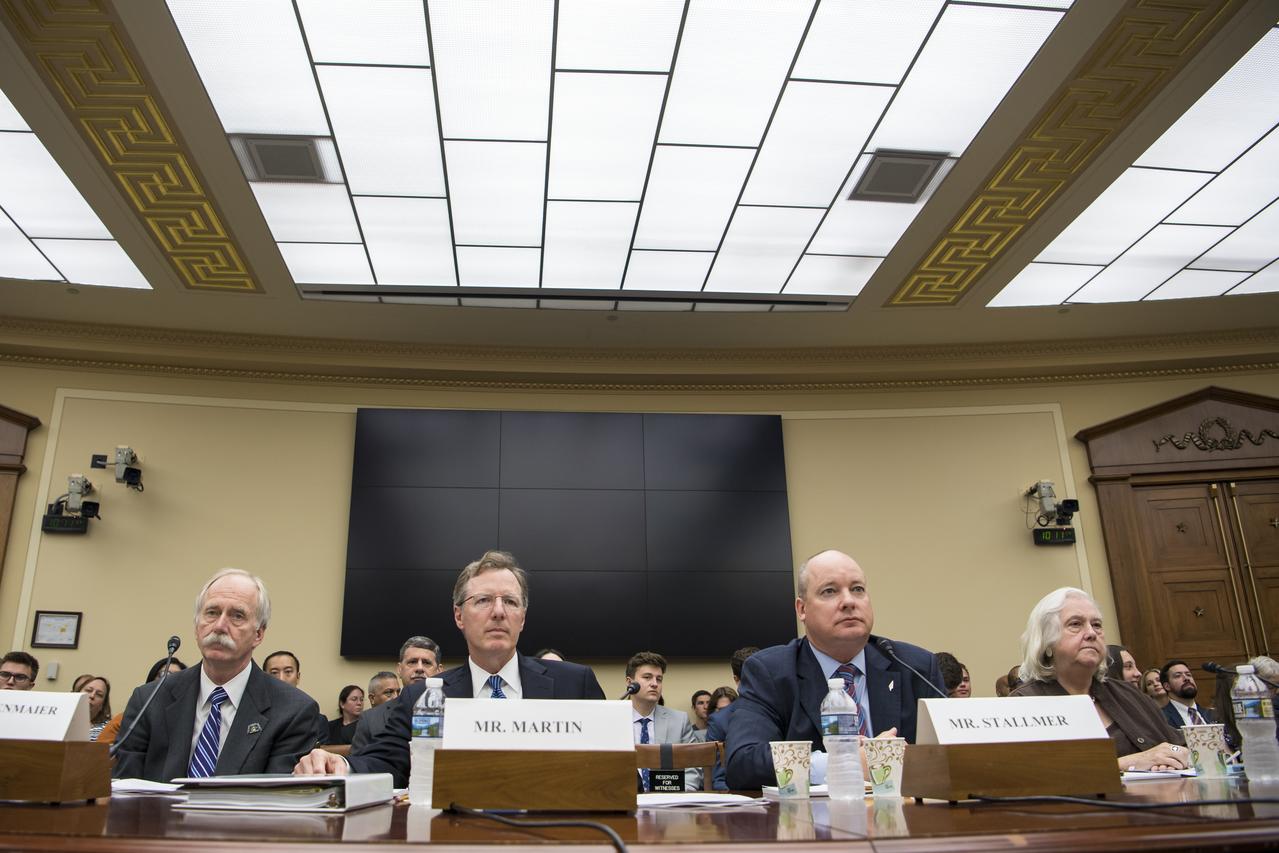
From left to right, NASA Associate Administrator, Human Exploration and Operations, Bill Gerstenmaier; NASA Inspector General, Paul Martin; Commercial Spaceflight Federation President, Eric Stallmer; and University of Mississippi Professor Emerita and Editor in Chief of the Journal of Space Law, Joanne Gabrynowicz testify during a Space and Aeronautics Subcommittee of the House Science, Space, and Technology Committee hearing titled, “A Review of NASA’s Plans for the International Space Station and Future Activities in Low Earth Orbit," Wednesday, July 10, 2019 at the Rayburn House Office Building in Washington. Photo Credit: (NASA/Aubrey Gemignani)
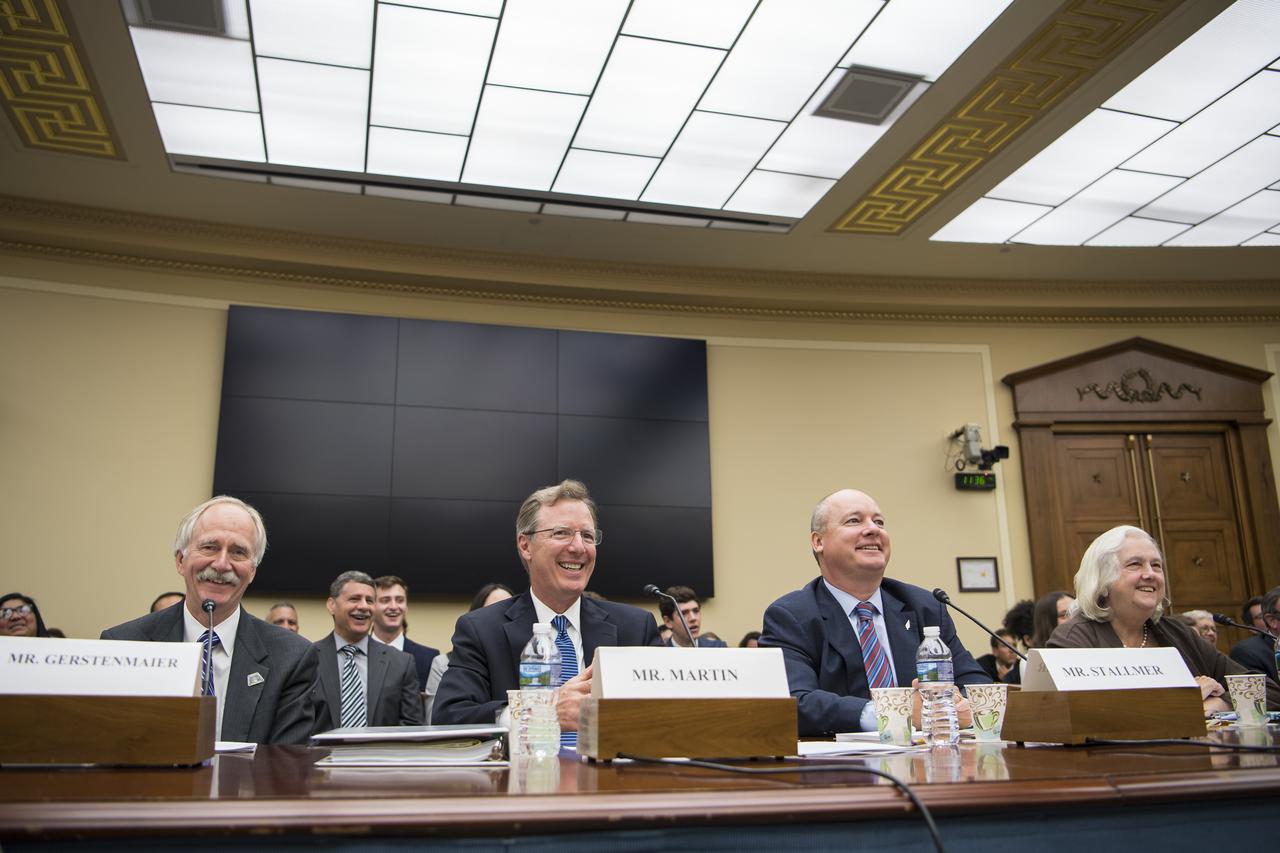
From left to right, NASA Associate Administrator, Human Exploration and Operations, Bill Gerstenmaier; NASA Inspector General, Paul Martin; Commercial Spaceflight Federation President, Eric Stallmer; and University of Mississippi Professor Emerita and Editor in Chief of the Journal of Space Law, Joanne Gabrynowicz react to a comment by Congressman Pete Olson (R-TX) during a Space and Aeronautics Subcommittee of the House Science, Space, and Technology Committee hearing titled, “A Review of NASA’s Plans for the International Space Station and Future Activities in Low Earth Orbit," Wednesday, July 10, 2019 at the Rayburn House Office Building in Washington. Photo Credit: (NASA/Aubrey Gemignani)
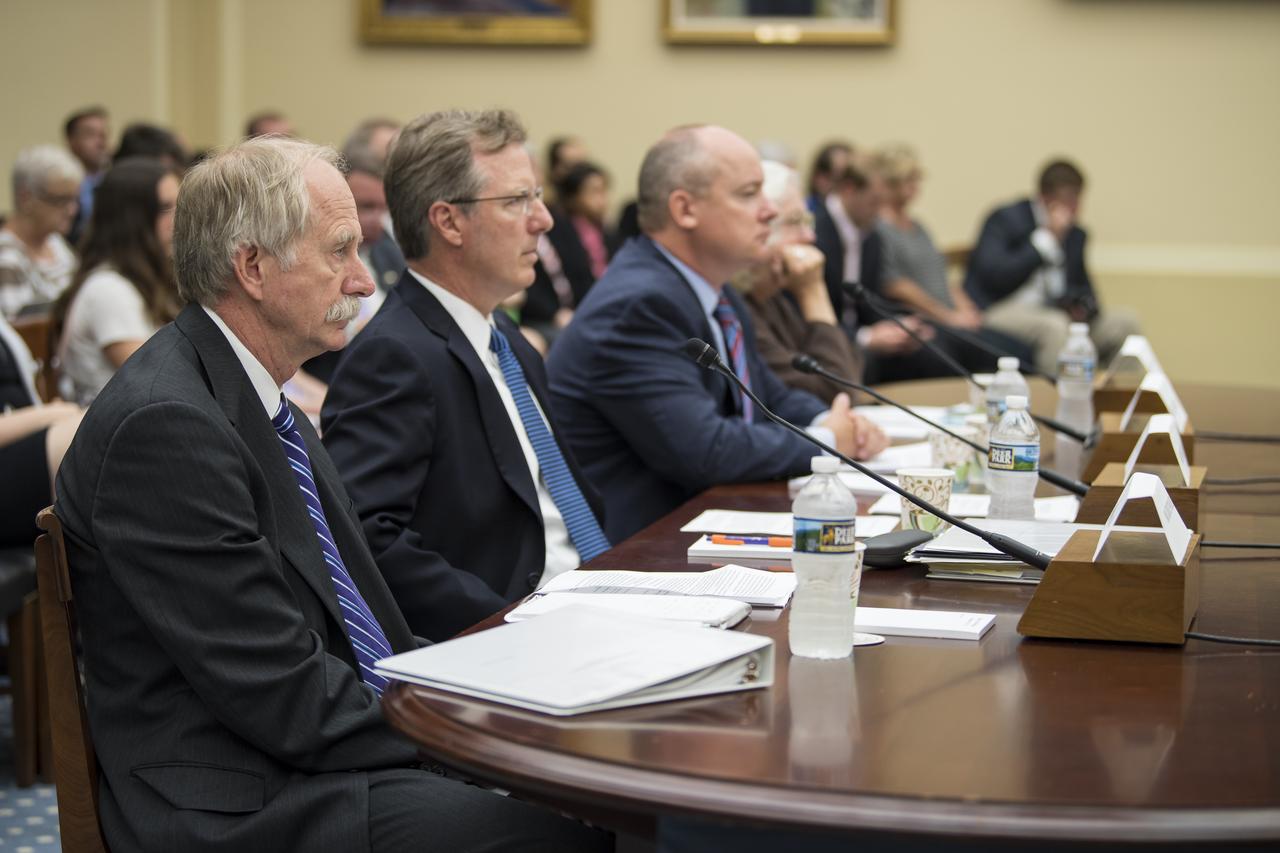
From left to right, NASA Associate Administrator, Human Exploration and Operations, Bill Gerstenmaier; NASA Inspector General, Paul Martin; Commercial Spaceflight Federation President, Eric Stallmer; and University of Mississippi Professor Emerita and Editor in Chief of the Journal of Space Law, Joanne Gabrynowicz testify during a Space and Aeronautics Subcommittee of the House Science, Space, and Technology Committee hearing titled, “A Review of NASA’s Plans for the International Space Station and Future Activities in Low Earth Orbit," Wednesday, July 10, 2019 at the Rayburn House Office Building in Washington. Photo Credit: (NASA/Aubrey Gemignani)
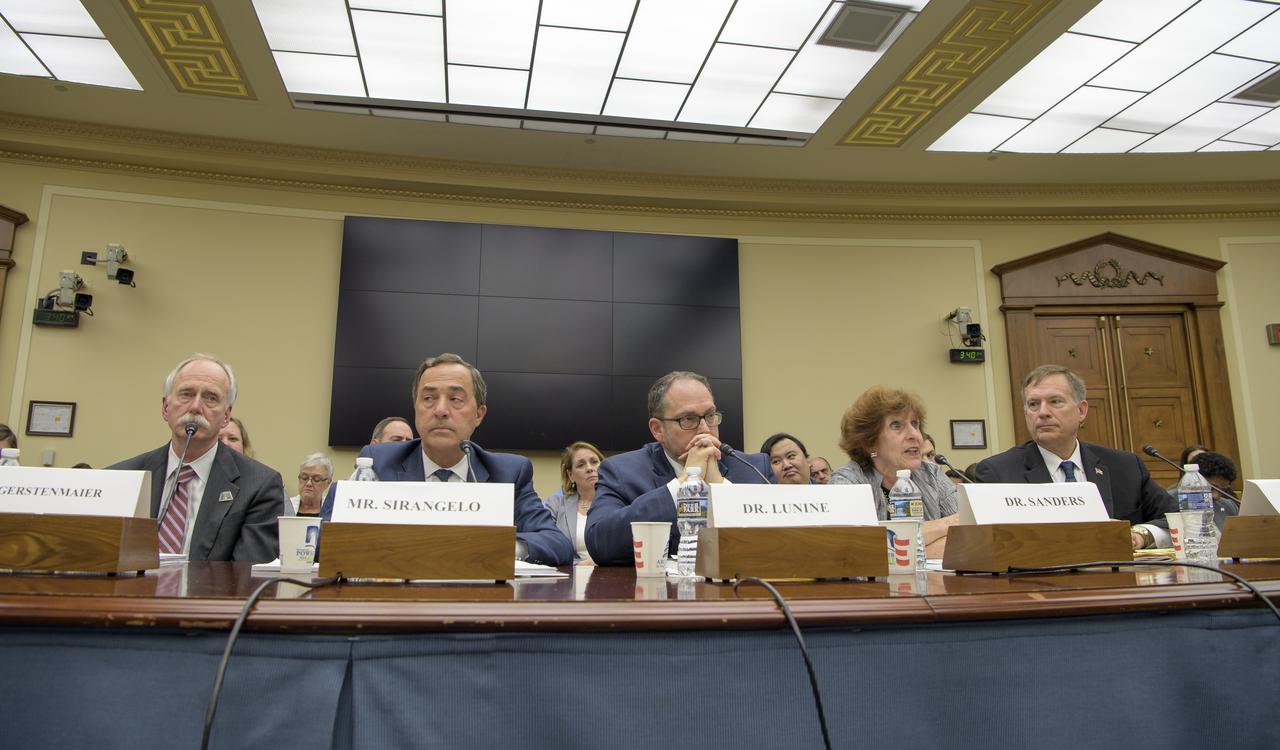
NASA Associate Administrator, Human Exploration and Operations William Gerstenmaier, left, NASA Special Assistant to the Administrator Mark Sirangelo, Director, Cornell Center for Astrophysics and Planetary Science, Co-Chair of the Former Committee on Human Spaceflight, National Academies of Sciences, Engineering, and Medicine Dr. Jonathan Lunine, Chair, Aerospace Safety Advisory Panel Dr. Patricia Sanders, and, President, Faulconer Consulting Group, LLC Mr. Walt Faulconer, right, are seen during a House Subcommittee on Space and Aeronautics hearing titled "Keeping our sights on Mars: A Review of NASA's Deep Space Exploration Programs and Lunar Proposal", Wednesday, May 8, 2019 at the Rayburn House Office Building in Washington. Photo Credit: (NASA/Bill Ingalls)
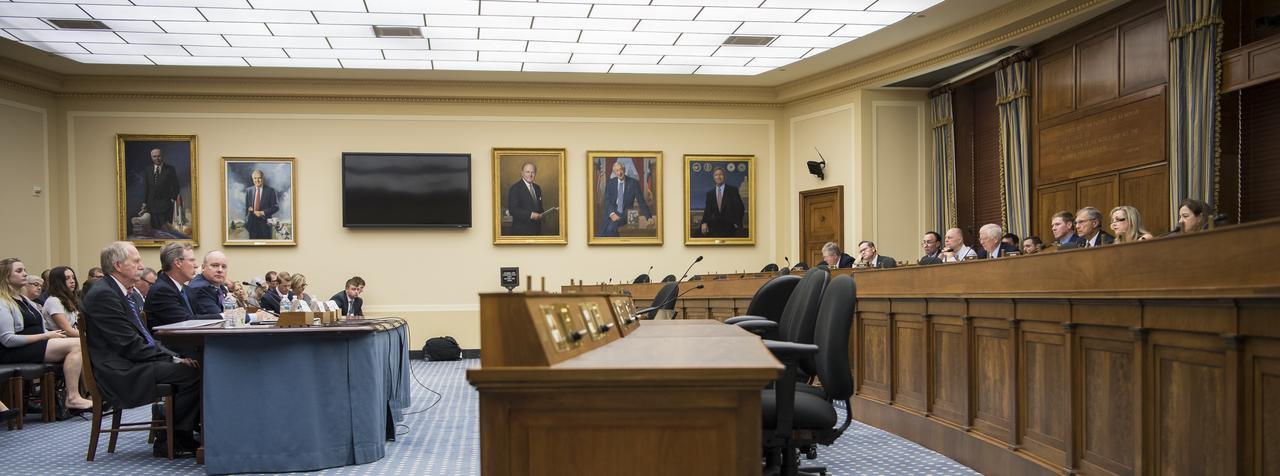
From left to right, NASA Associate Administrator, Human Exploration and Operations, Bill Gerstenmaier; NASA Inspector General, Paul Martin; Commercial Spaceflight Federation President, Eric Stallmer; and University of Mississippi Professor Emerita and Editor in Chief of the Journal of Space Law, Joanne Gabrynowicz testify during a Space and Aeronautics Subcommittee of the House Science, Space, and Technology Committee hearing titled, “A Review of NASA’s Plans for the International Space Station and Future Activities in Low Earth Orbit," Wednesday, July 10, 2019 at the Rayburn House Office Building in Washington. Photo Credit: (NASA/Aubrey Gemignani)
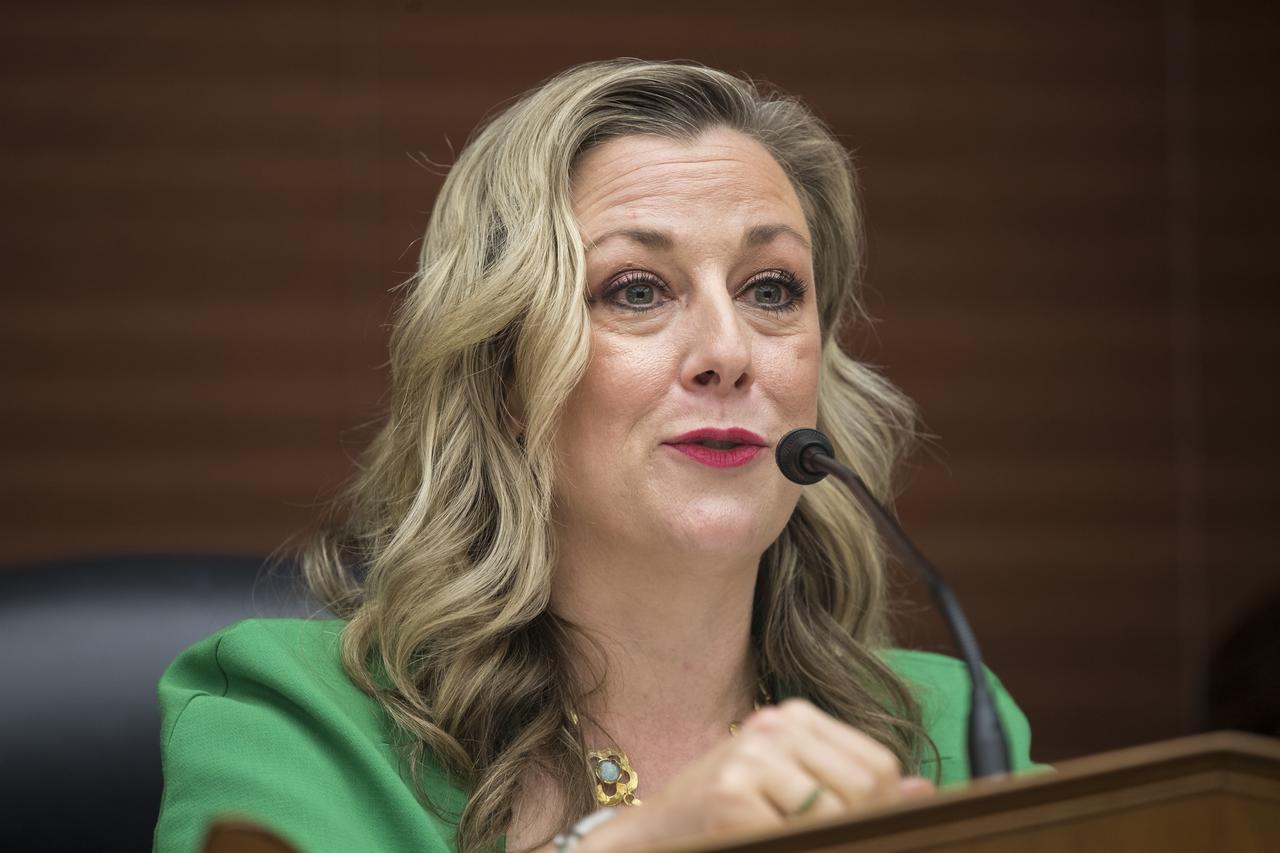
Chair of the Space and Aeronautics Subcommittee, Congresswoman Kendra Horn, D-Okla., speaks during a Space and Aeronautics Subcommittee of the House Science, Space, and Technology Committee hearing titled, “Developing Core Capabilities for Deep Space Exploration: An Update on NASA's SLS, Orion, and Exploration Ground Systems," Wednesday, September 18, 2019 at the Rayburn House Office Building in Washington. Photo Credit: (NASA/Aubrey Gemignani)
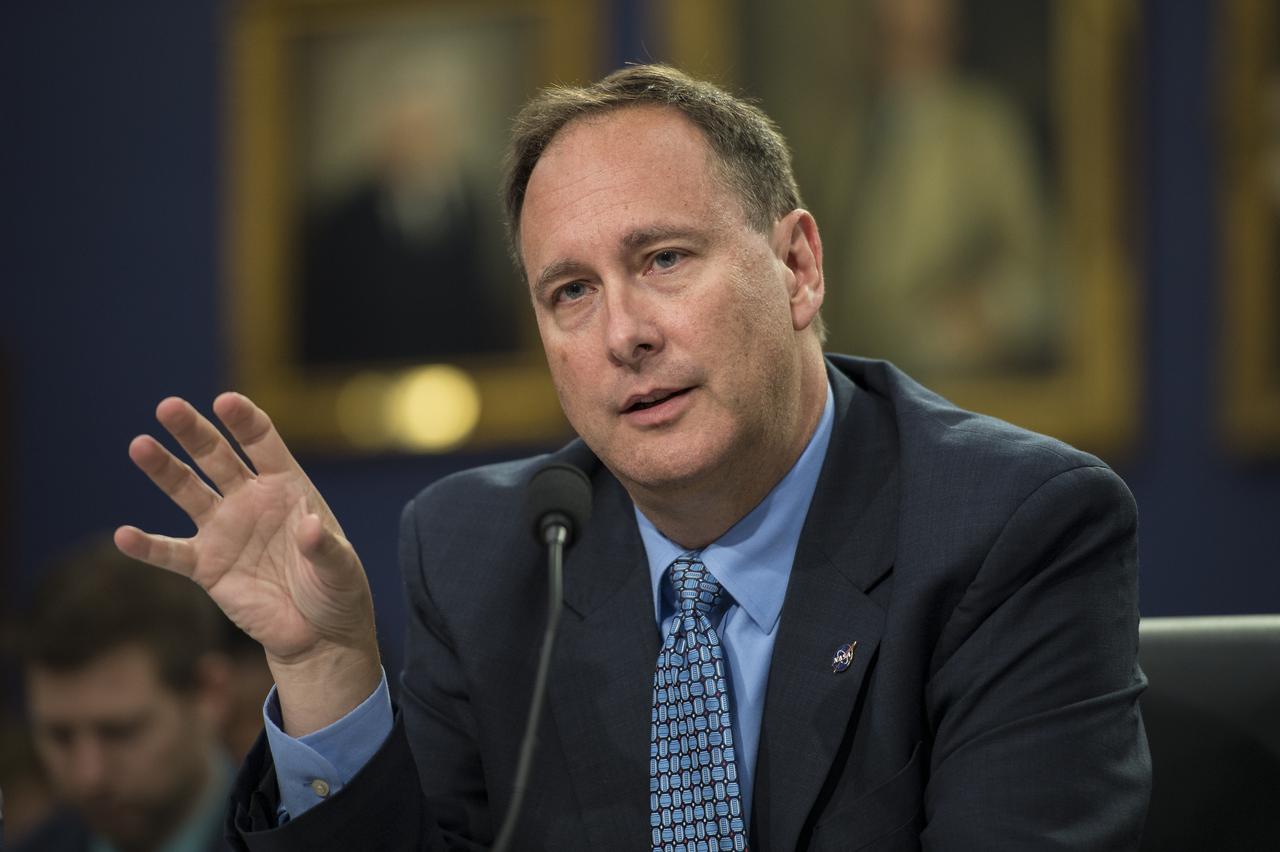
Acting NASA Administrator Robert Lightfoot testifies during a House Subcommittee on Commerce, Justice, Science, and Related Agencies hearing to review the Fiscal Year 2018 budget request for the National Aeronautics and Space Administration, Thursday, June 8, 2017 at the Rayburn House Office Building in Washington. Photo Credit: (NASA/Aubrey Gemignani)
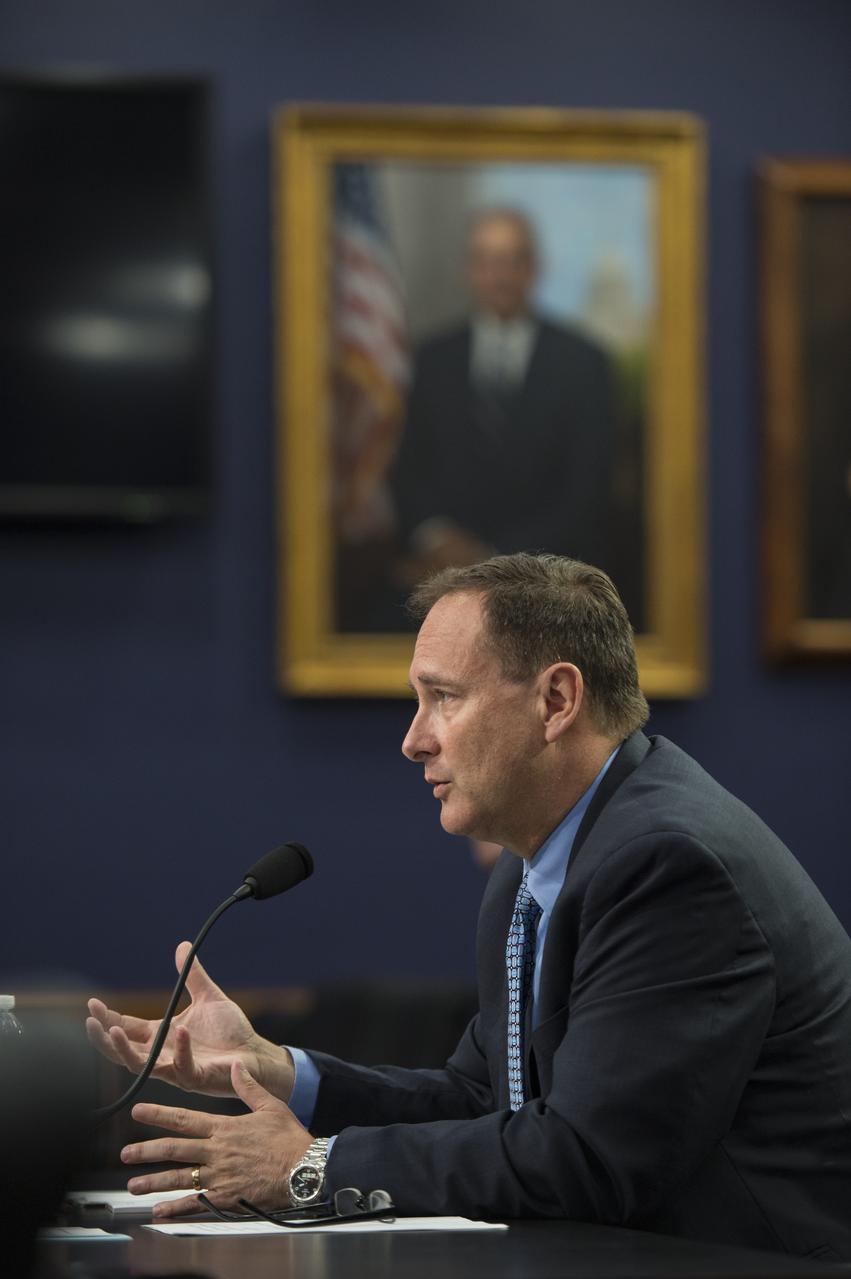
Acting NASA Administrator Robert Lightfoot testifies during a House Subcommittee on Commerce, Justice, Science, and Related Agencies hearing to review the Fiscal Year 2018 budget request for the National Aeronautics and Space Administration, Thursday, June 8, 2017 at the Rayburn House Office Building in Washington. Photo Credit: (NASA/Aubrey Gemignani)
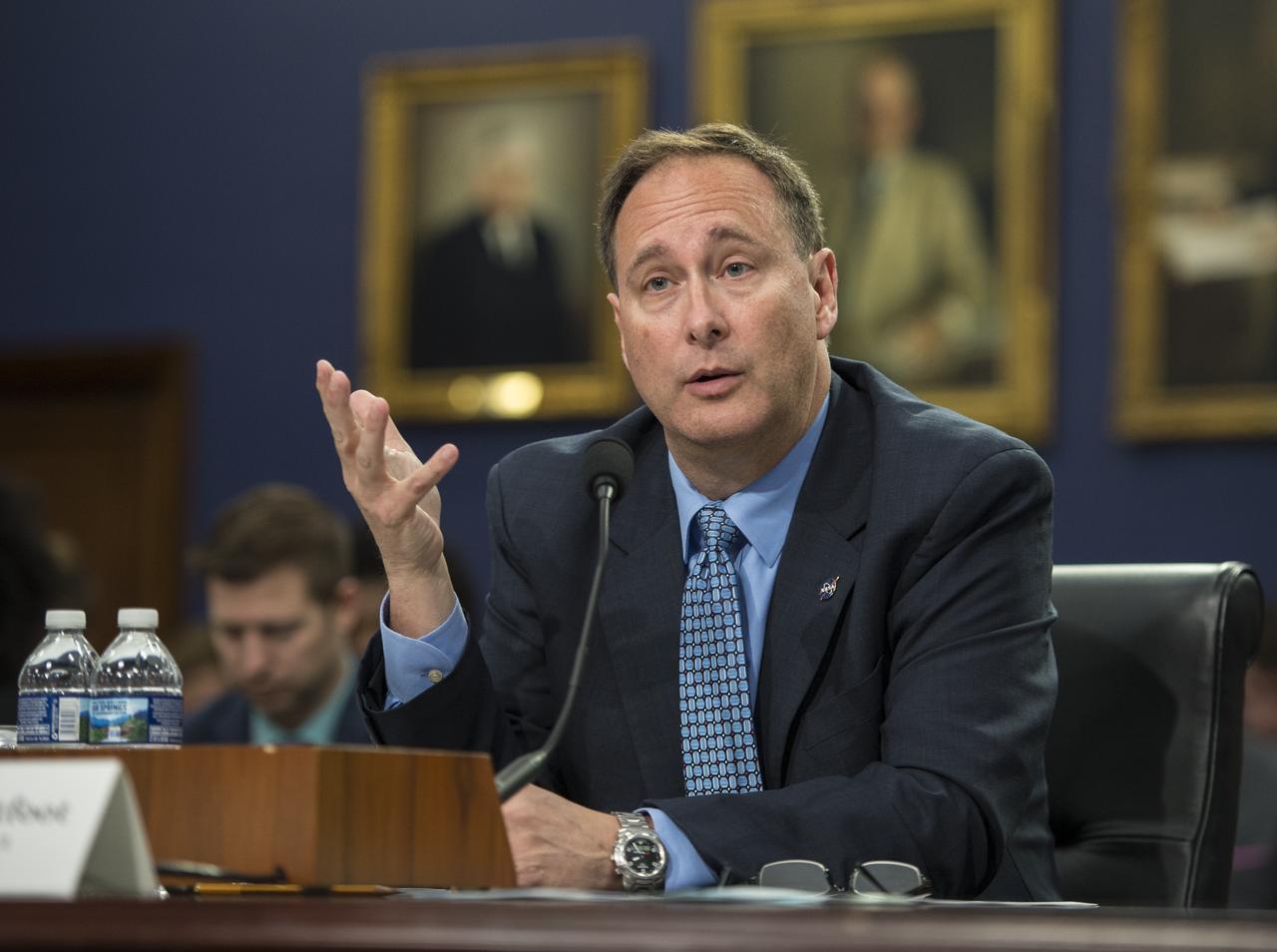
Acting NASA Administrator Robert Lightfoot testifies during a House Subcommittee on Commerce, Justice, Science, and Related Agencies hearing to review the Fiscal Year 2018 budget request for the National Aeronautics and Space Administration, Thursday, June 8, 2017 at the Rayburn House Office Building in Washington. Photo Credit: (NASA/Aubrey Gemignani)
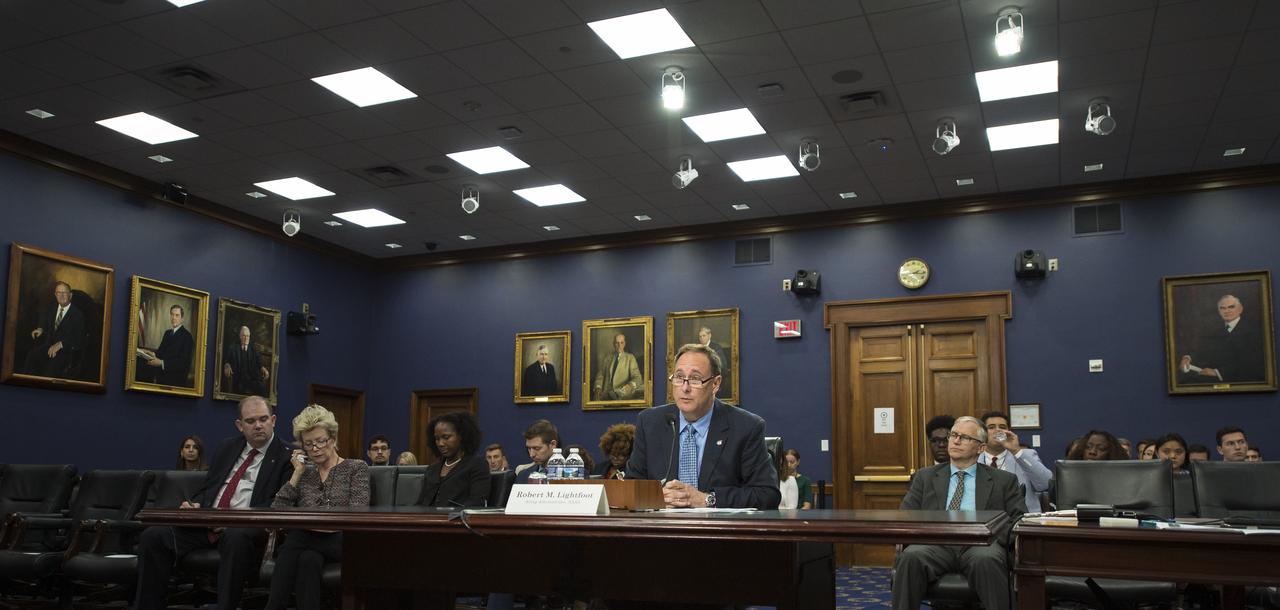
Acting NASA Administrator Robert Lightfoot testifies during a House Subcommittee on Commerce, Justice, Science, and Related Agencies hearing to review the Fiscal Year 2018 budget request for the National Aeronautics and Space Administration, Thursday, June 8, 2017 at the Rayburn House Office Building in Washington. Photo Credit: (NASA/Aubrey Gemignani)
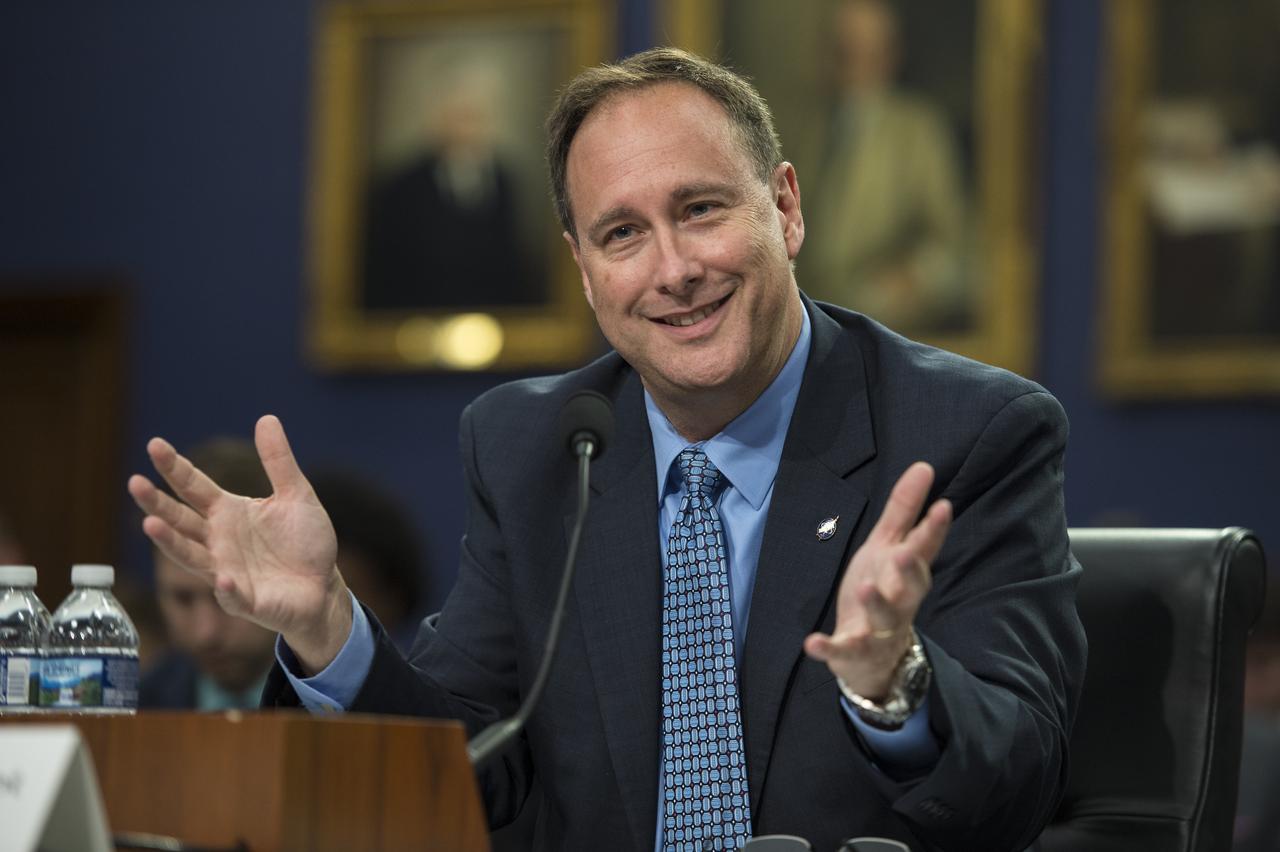
Acting NASA Administrator Robert Lightfoot testifies during a House Subcommittee on Commerce, Justice, Science, and Related Agencies hearing to review the Fiscal Year 2018 budget request for the National Aeronautics and Space Administration, Thursday, June 8, 2017 at the Rayburn House Office Building in Washington. Photo Credit: (NASA/Aubrey Gemignani)
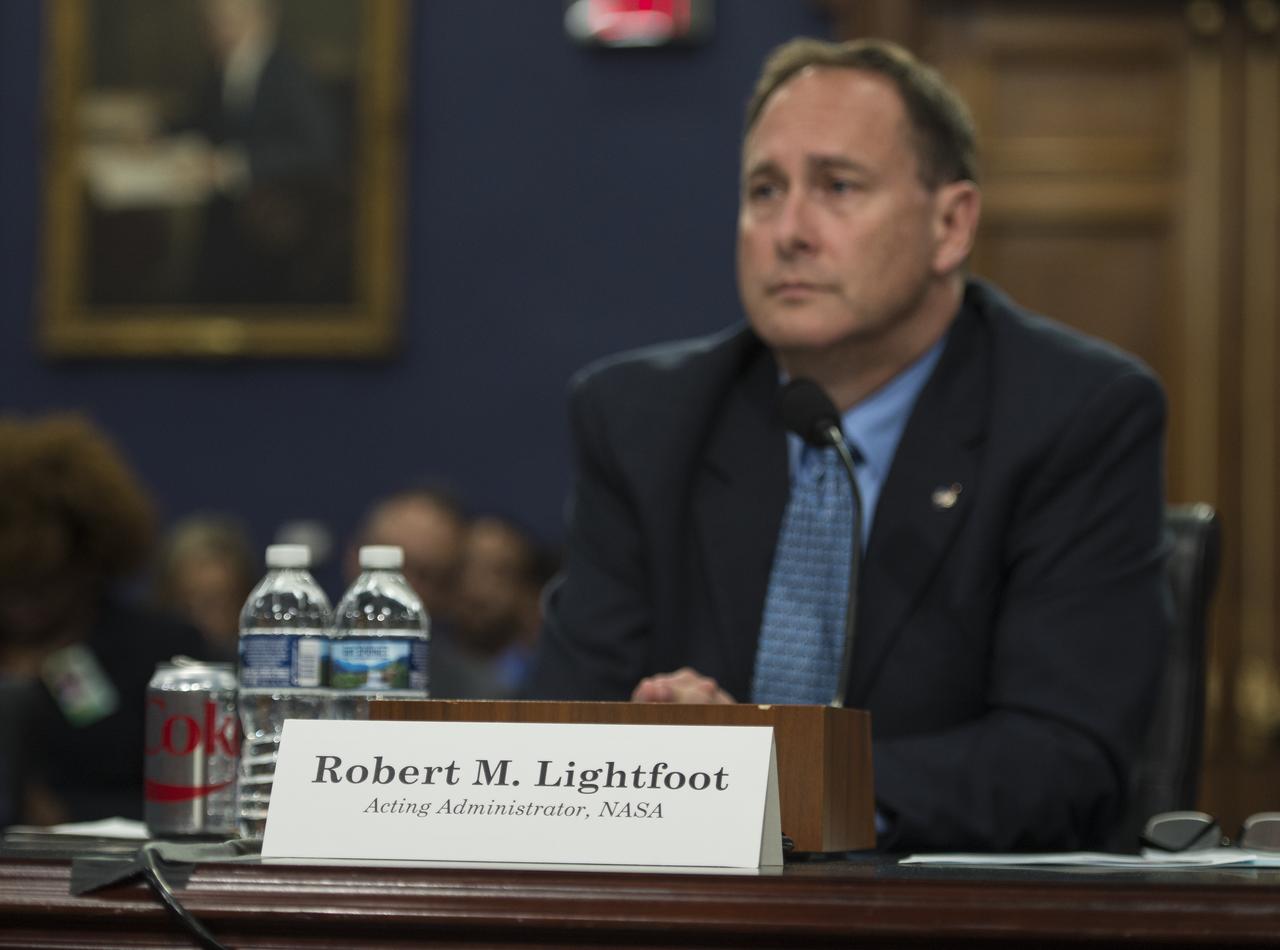
Acting NASA Administrator Robert Lightfoot testifies during a House Subcommittee on Commerce, Justice, Science, and Related Agencies hearing to review the Fiscal Year 2018 budget request for the National Aeronautics and Space Administration, Thursday, June 8, 2017 at the Rayburn House Office Building in Washington. Photo Credit: (NASA/Aubrey Gemignani)
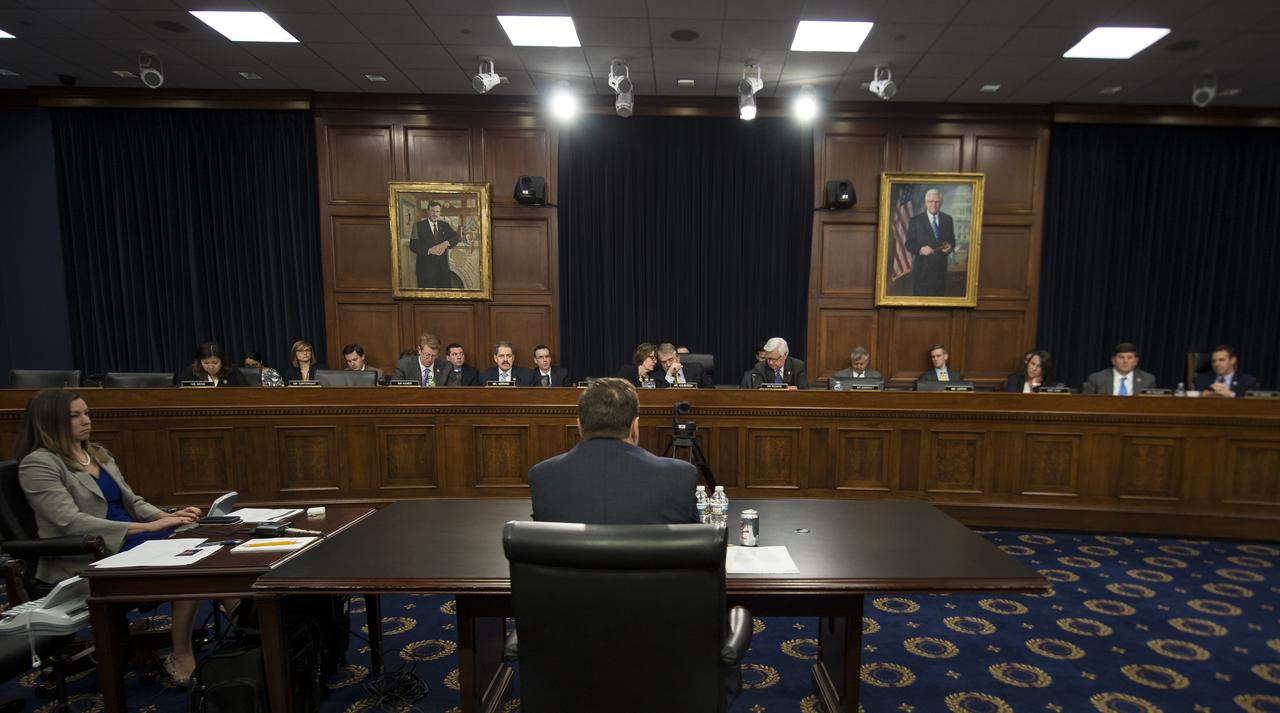
Acting NASA Administrator Robert Lightfoot testifies during a House Subcommittee on Commerce, Justice, Science, and Related Agencies hearing to review the Fiscal Year 2018 budget request for the National Aeronautics and Space Administration, Thursday, June 8, 2017 at the Rayburn House Office Building in Washington. Photo Credit: (NASA/Aubrey Gemignani)
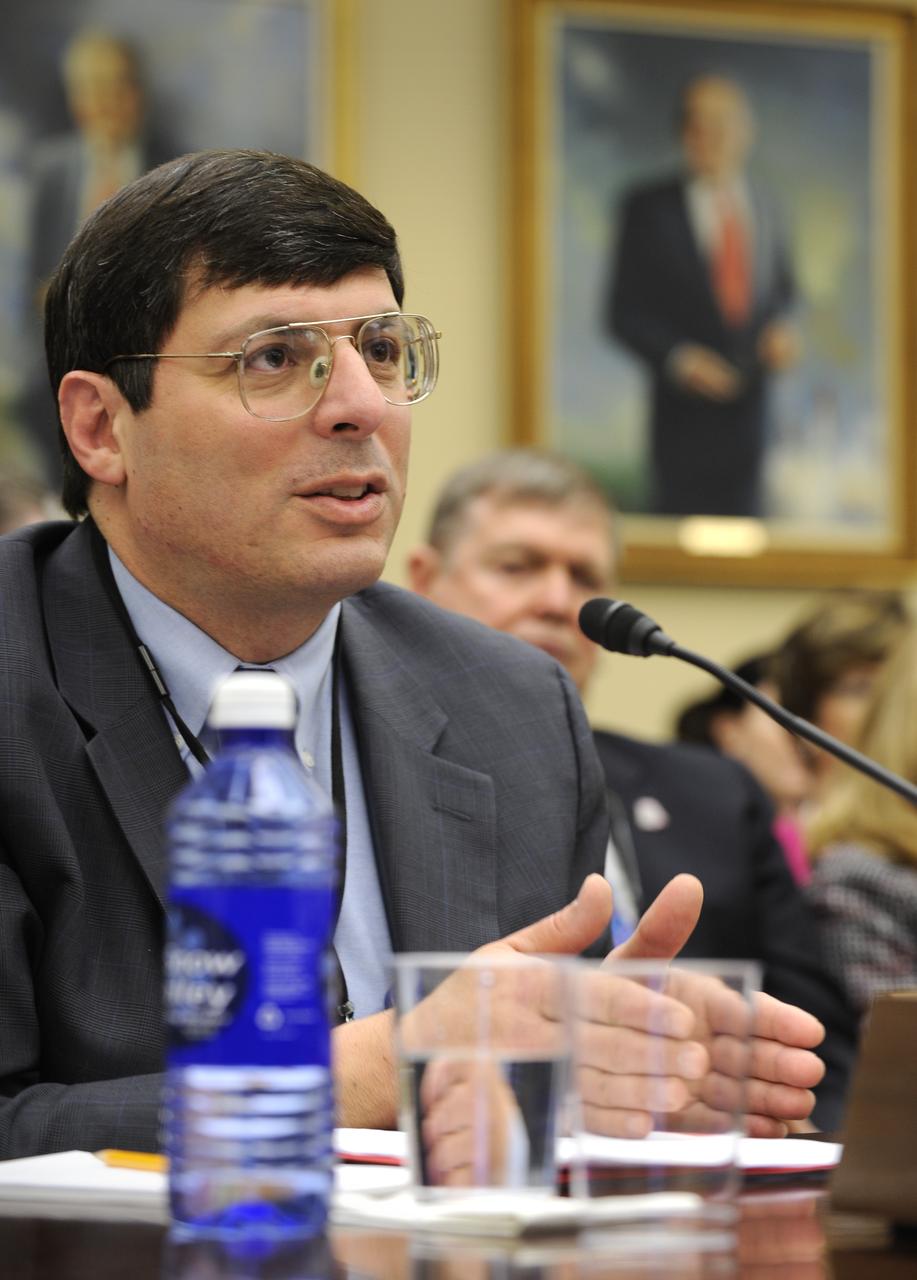
NASA's Acting Administrator, Christopher Scolese, responds to questions concerning NASA Cost and Contract Management during a hearing before the the House Subcommittee on Space and Aeronautics, Thursday, March 5, 2009, Rayburn Building, Washington. Photo Credit: (NASA/Bill Ingalls)
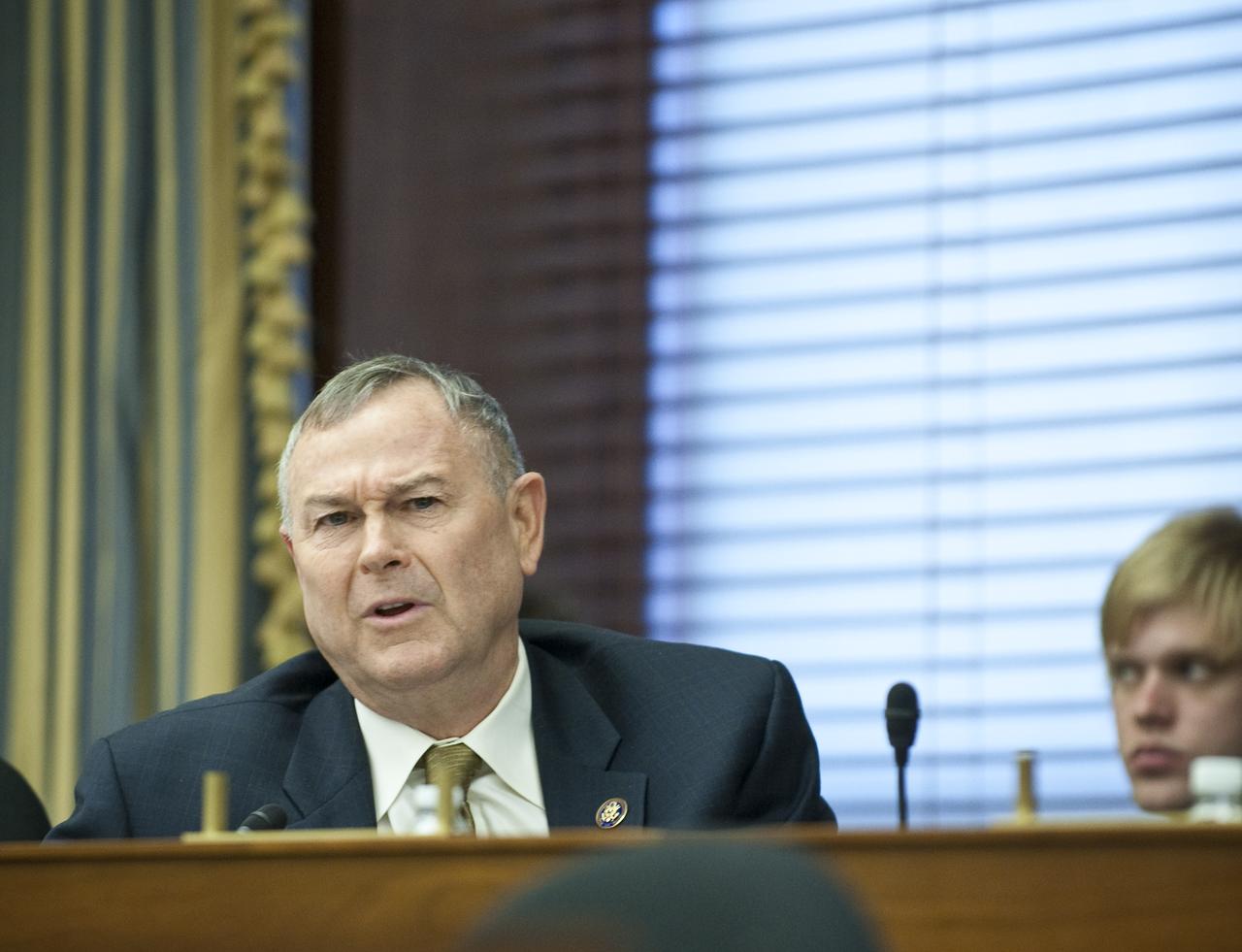
U.S. Congressman Dana Rohrabacher, R-CA, makes a point during the U.S. House of Representatives' Committee on Science and Technology, Subcommittee on Space and Aeronautics to discuss proposed changes to NASA's exploration program on Wednesday, March 24, 2010, on Capitol Hill in Washington. Photo Credit: (NASA/Carla Cioffi)
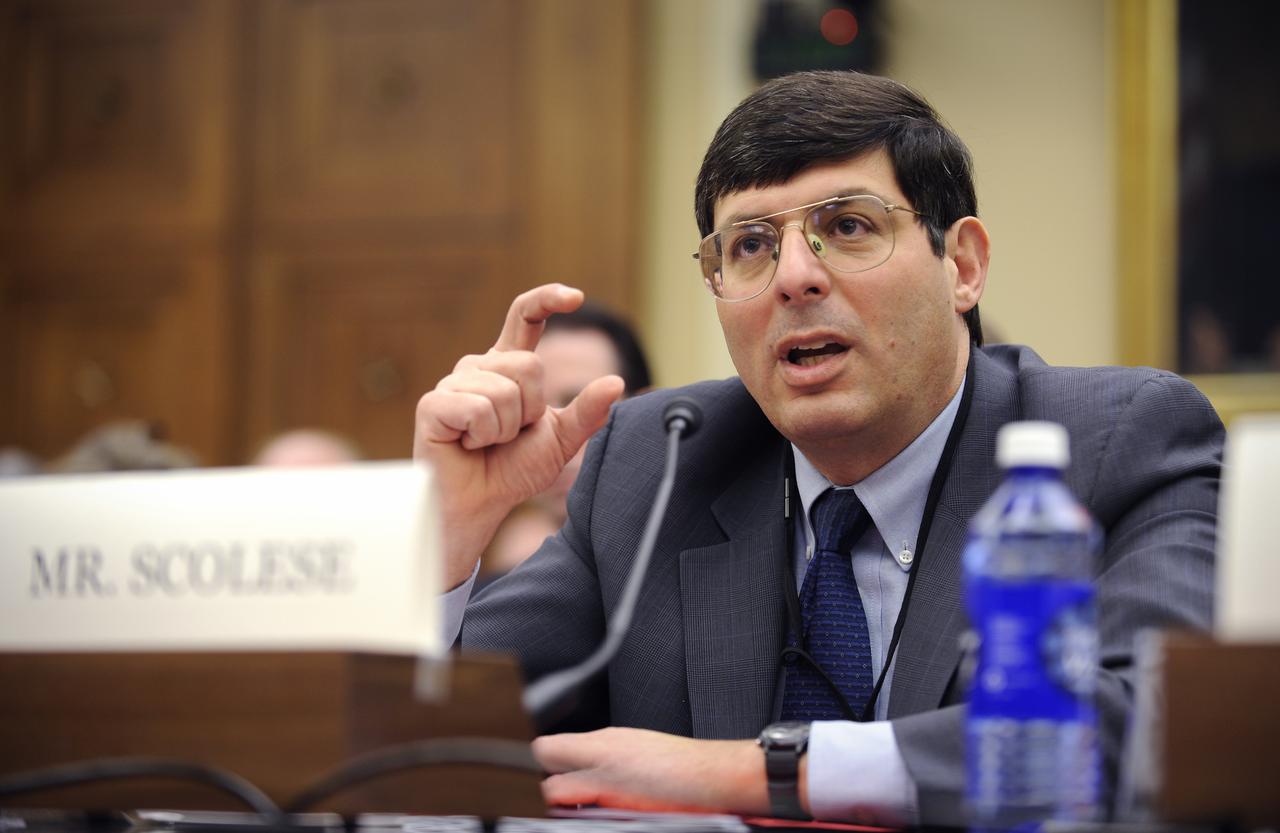
NASA's Acting Administrator, Christopher Scolese, responds to questions concerning NASA Cost and Contract Management during a hearing before the the House Subcommittee on Space and Aeronautics, Thursday, March 5, 2009, Rayburn Building, Washington. Photo Credit: (NASA/Bill Ingalls)
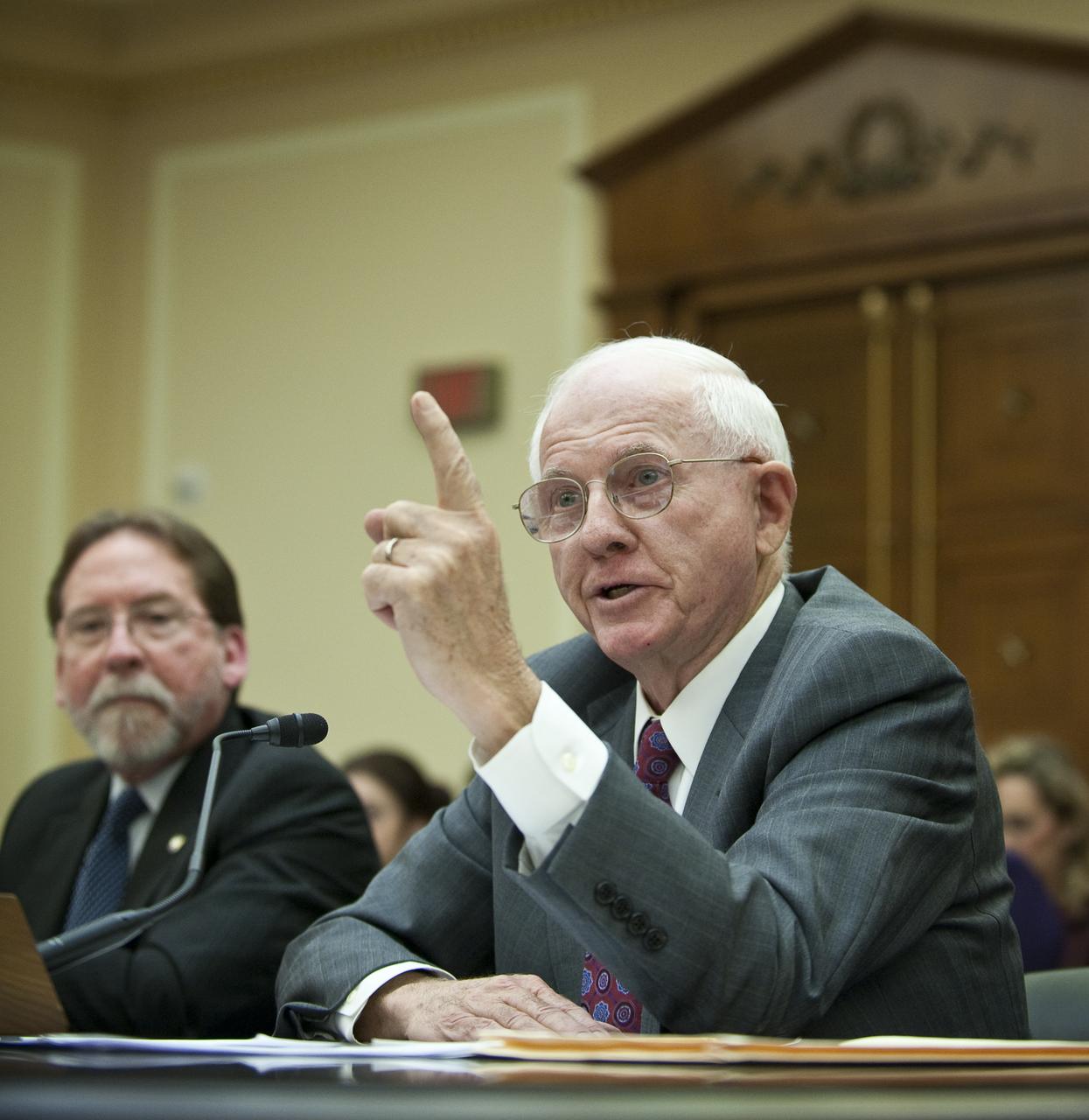
A. Thomas Young, right, retired Executive Vice President, Lockheed Martin, speaks before the U.S. House of Representatives' Committee on Science and Technology, Subcommittee on Space and Aeronautics to discuss proposed changes to NASA's exploration program on Wednesday, March 24, 2010, on Capitol Hill in Washington. Photo Credit: (NASA/Carla Cioffi)
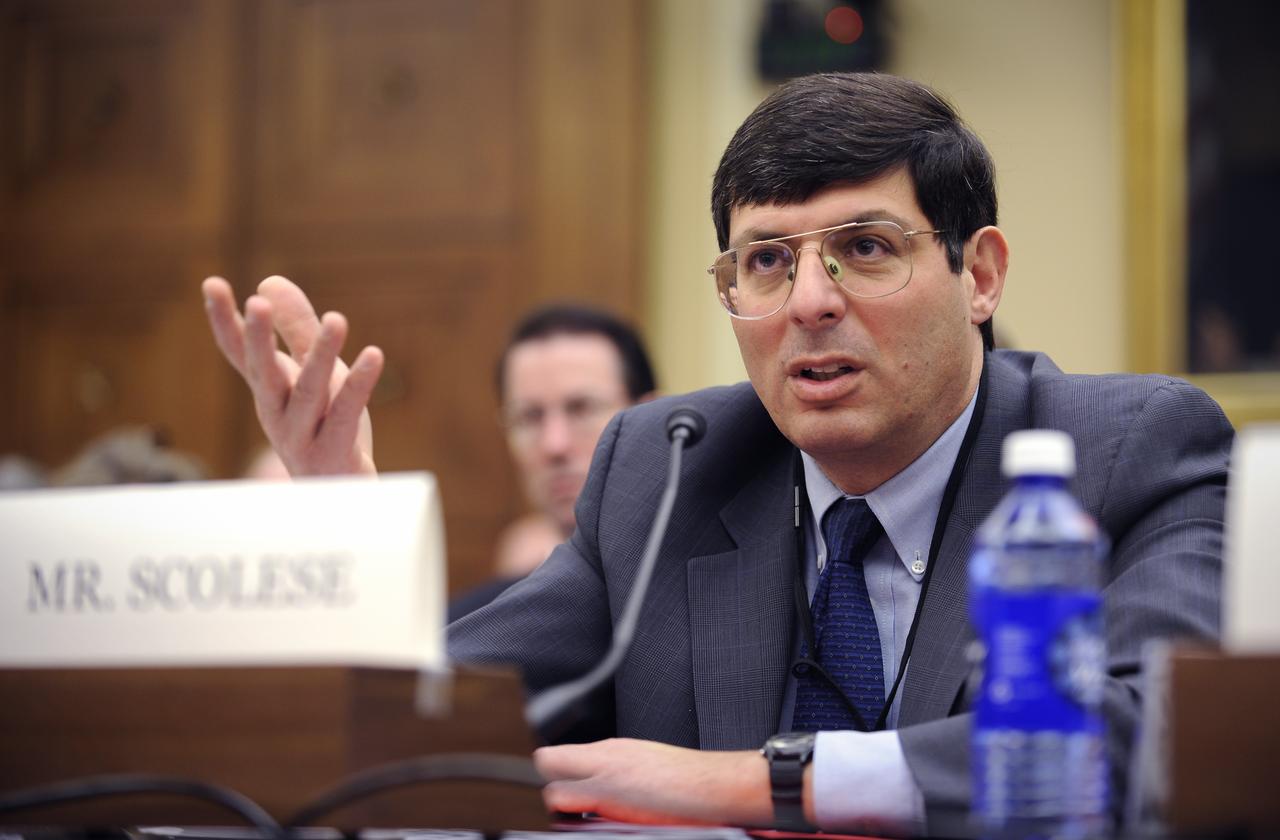
NASA's Acting Administrator, Christopher Scolese, responds to questions concerning NASA Cost and Contract Management during a hearing before the the House Subcommittee on Space and Aeronautics, Thursday, March 5, 2009, Rayburn Building, Washington. Photo Credit: (NASA/Bill Ingalls)
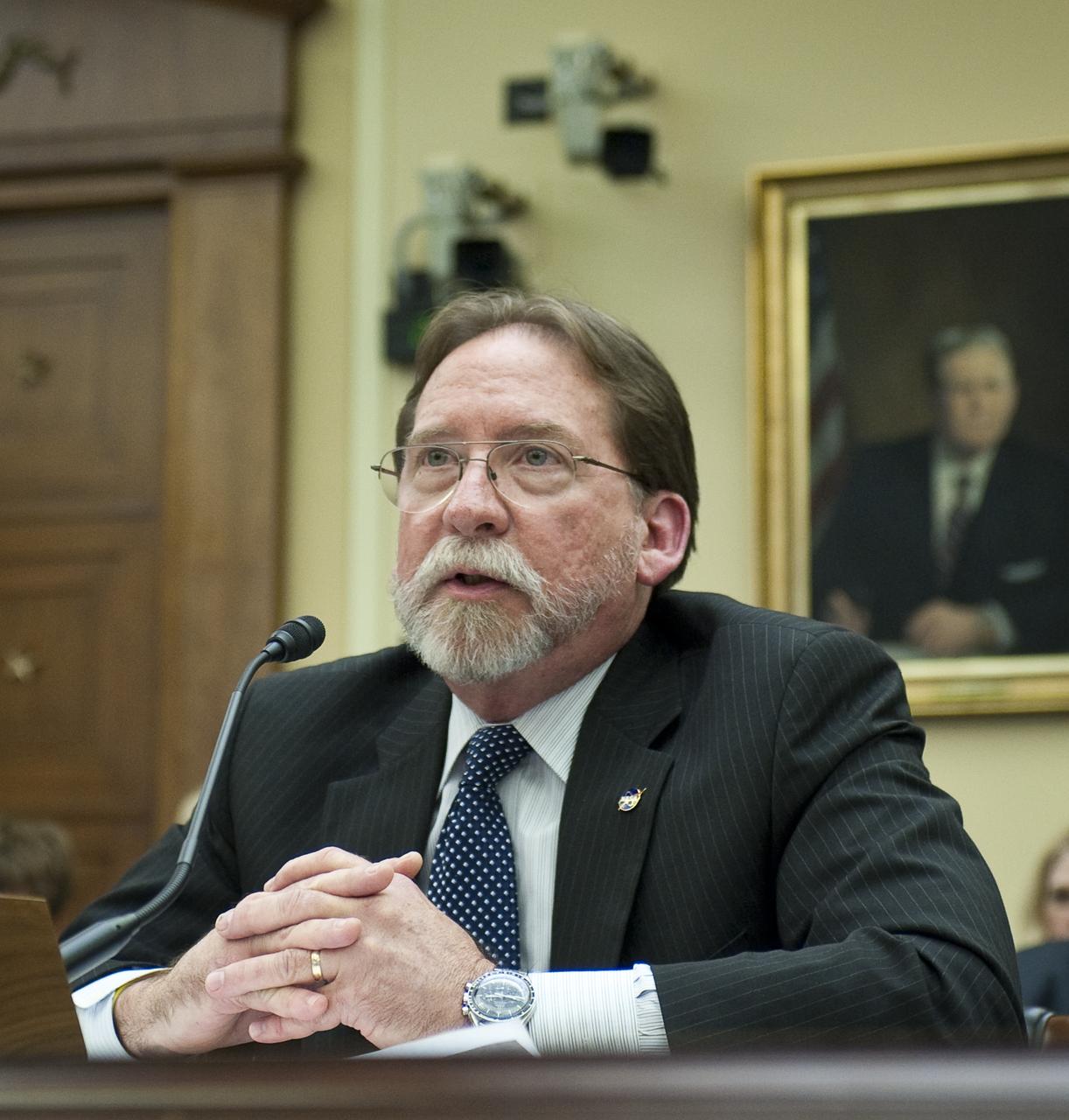
Douglas R. Cooke, NASA's Associate Administrator for Exploration Systems Mission Directorate (ESMD), appears before the U.S. House of Representatives' Committee on Science and Technology, Subcommittee on Space and Aeronautics to discuss proposed changes to NASA's exploration program on Wednesday, March 24, 2010, on Capitol Hill in Washington. Photo Credit: (NASA/Carla Cioffi)
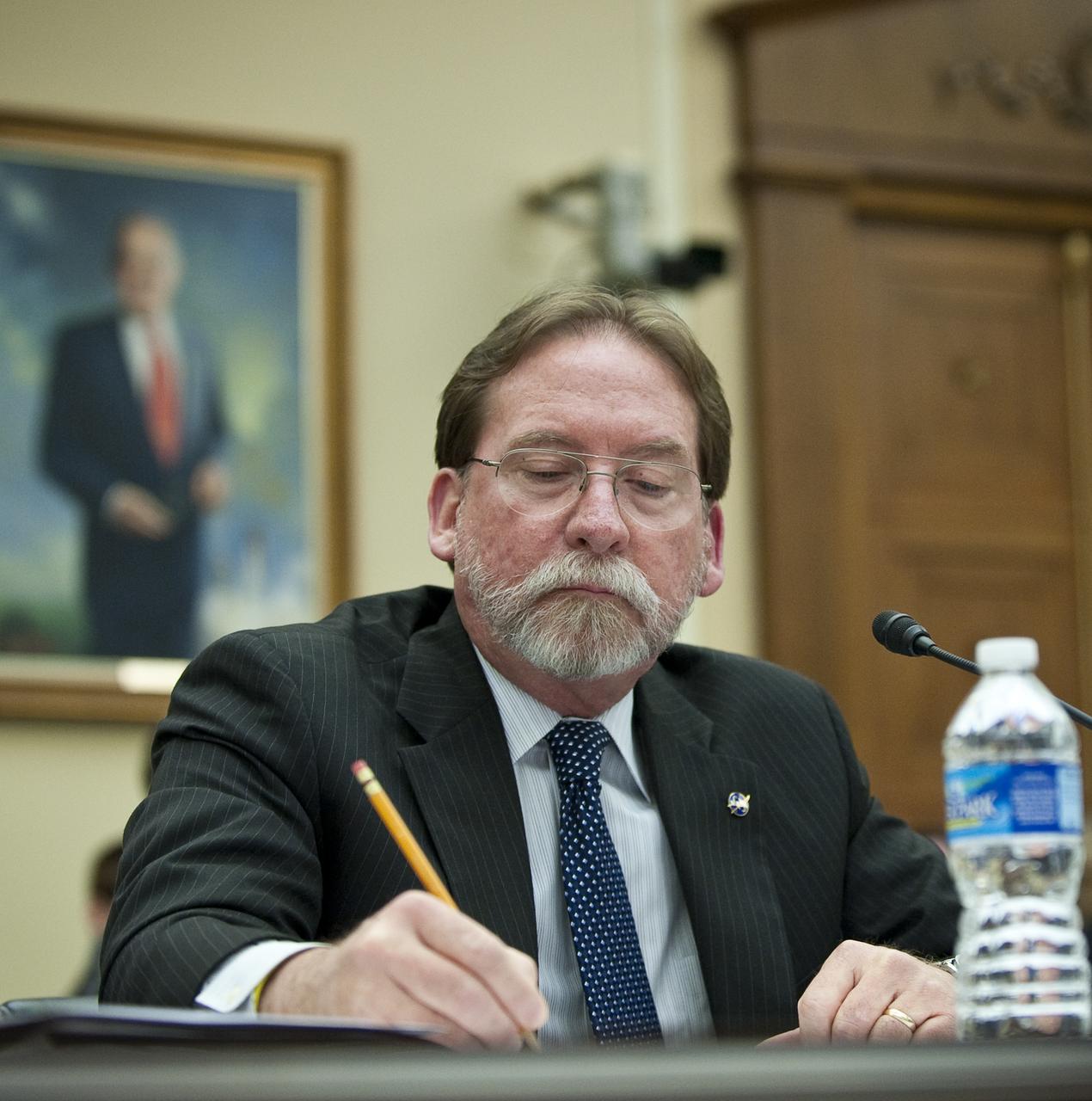
Douglas R. Cooke, NASA's Associate Administrator for Exploration Systems Mission Directorate (ESMD), appears before the U.S. House of Representatives' Committee on Science and Technology, Subcommittee on Space and Aeronautics to discuss proposed changes to NASA's exploration program on Wednesday, March 24, 2010, on Capitol Hill in Washington. Photo Credit: (NASA/Carla Cioffi)
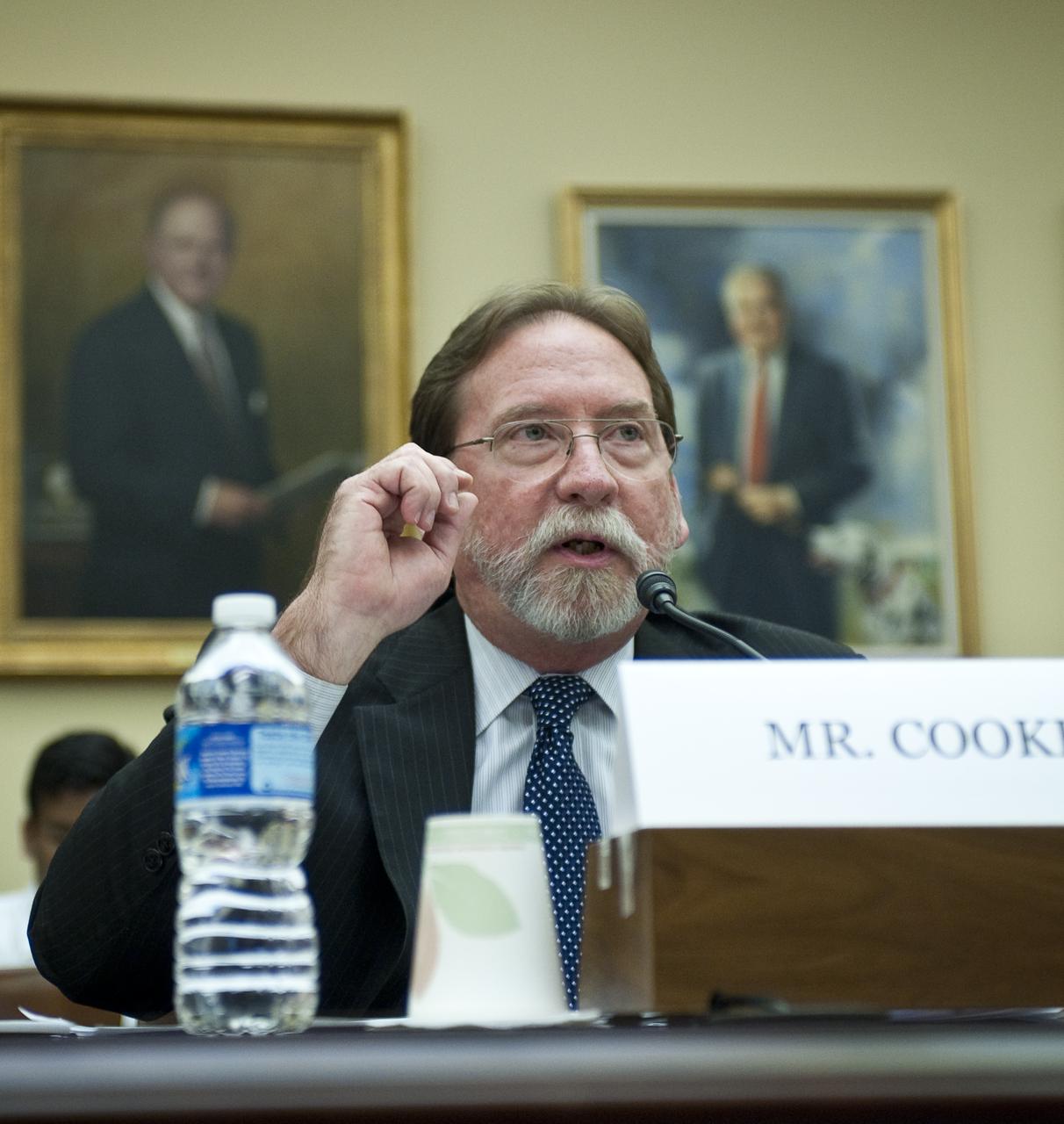
Douglas R. Cooke, NASA's Associate Administrator for Exploration Systems Mission Directorate (ESMD), appears before the U.S. House of Representatives' Committee on Science and Technology, Subcommittee on Space and Aeronautics to discuss proposed changes to NASA's exploration program on Wednesday, March 24, 2010, on Capitol Hill in Washington. Photo Credit: (NASA/Carla Cioffi)
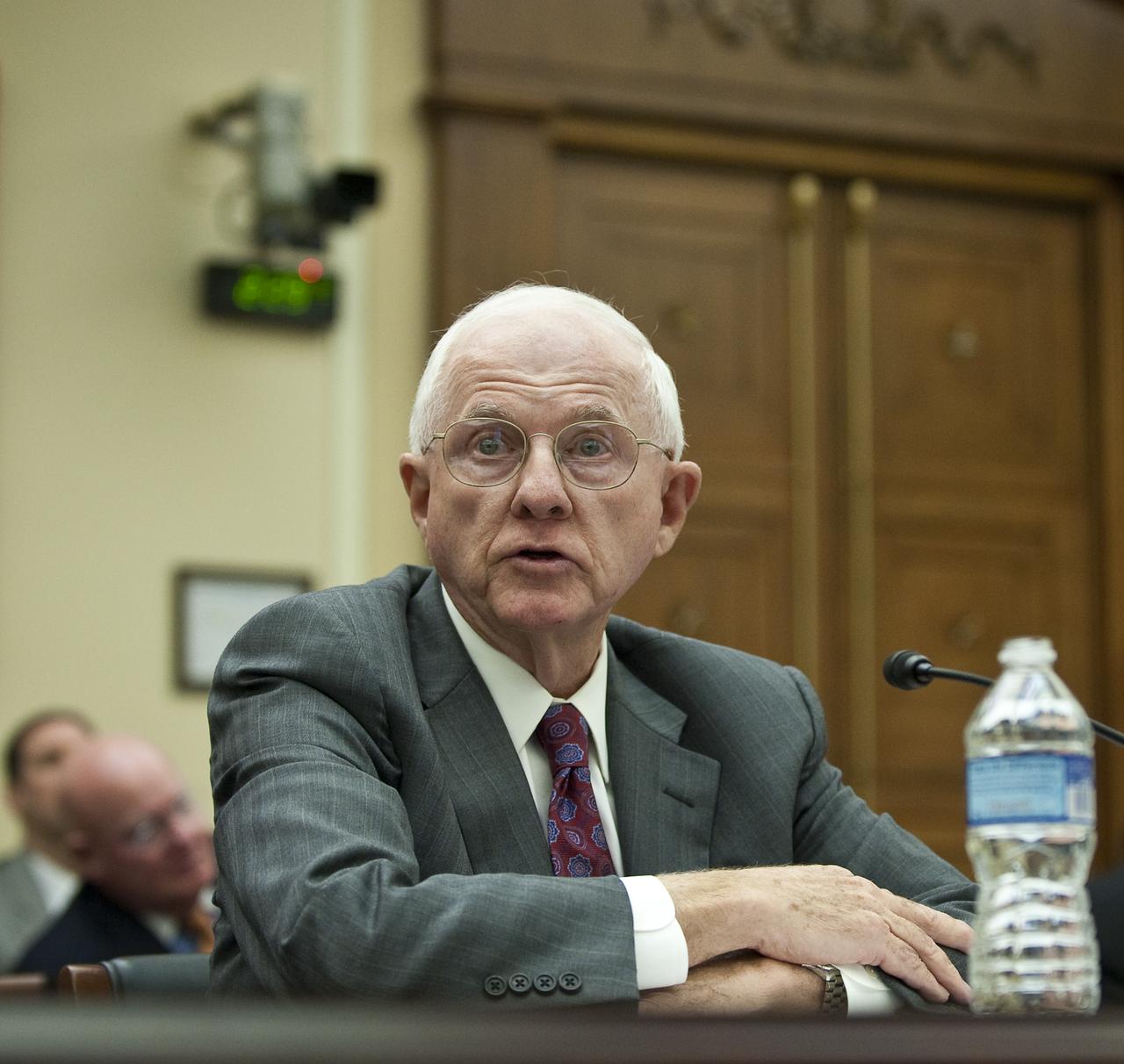
A. Thomas Young, retired Executive Vice President, Lockheed Martin, appears before the U.S. House of Representatives' Committee on Science and Technology, Subcommittee on Space and Aeronautics to discuss proposed changes to NASA's exploration program on Wednesday, March 24, 2010, on Capitol Hill in Washington. Photo Credit: (NASA/Carla Cioffi)
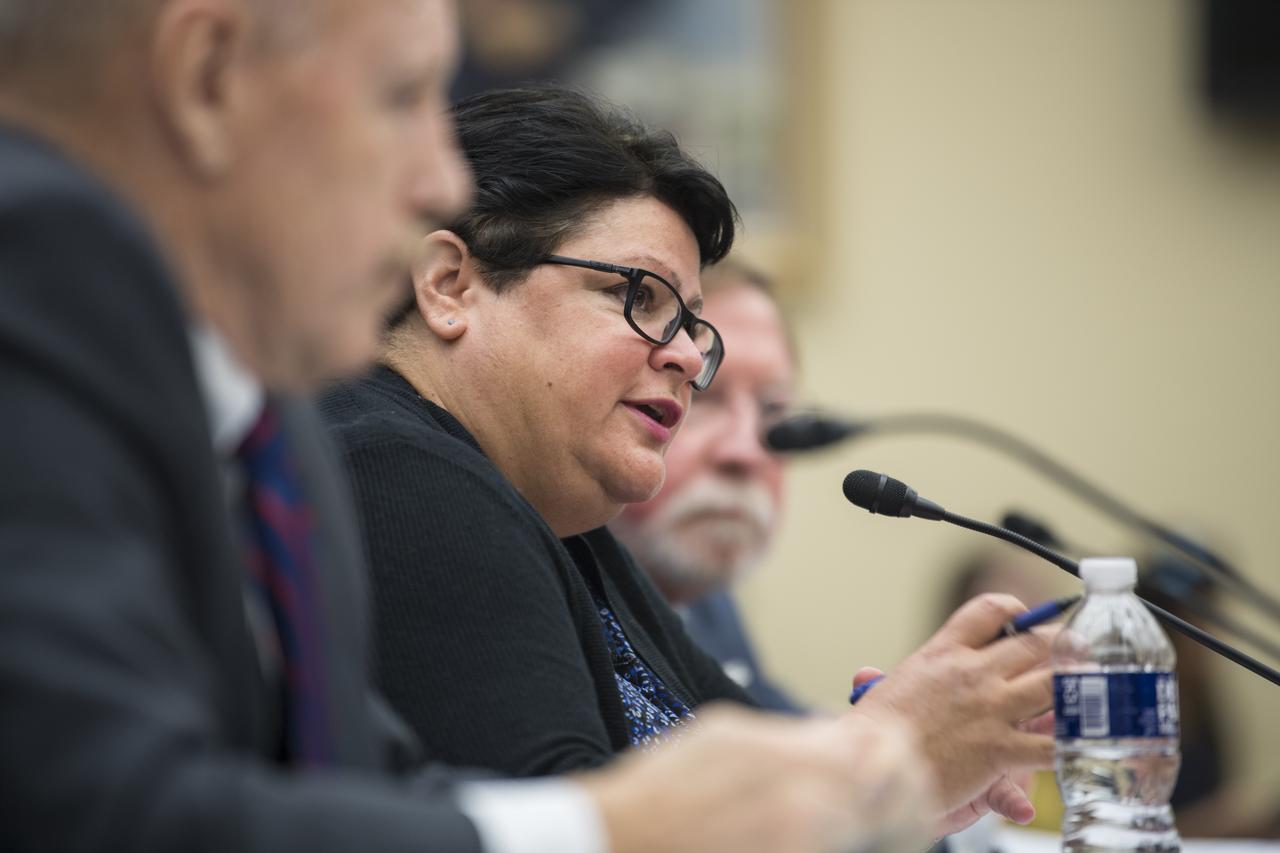
Cristina Chaplain, director, Contracting and National Security Acquisitions, U.S. Government Accountability Office (GAO), testifies during a Space and Aeronautics Subcommittee of the House Science, Space, and Technology Committee hearing titled, “Developing Core Capabilities for Deep Space Exploration: An Update on NASA's SLS, Orion, and Exploration Ground Systems," Wednesday, September 18, 2019 at the Rayburn House Office Building in Washington. Photo Credit: (NASA/Aubrey Gemignani)

Acting NASA Associate Administrator for Human Exploration and Operations, Ken Bowersox, testifies during a Space and Aeronautics Subcommittee of the House Science, Space, and Technology Committee hearing titled, “Developing Core Capabilities for Deep Space Exploration: An Update on NASA's SLS, Orion, and Exploration Ground Systems," Wednesday, September 18, 2019 at the Rayburn House Office Building in Washington. Photo Credit: (NASA/Aubrey Gemignani)

Acting NASA Associate Administrator for Human Exploration and Operations, Ken Bowersox, testifies during a Space and Aeronautics Subcommittee of the House Science, Space, and Technology Committee hearing titled, “Developing Core Capabilities for Deep Space Exploration: An Update on NASA's SLS, Orion, and Exploration Ground Systems," Wednesday, September 18, 2019 at the Rayburn House Office Building in Washington. Photo Credit: (NASA/Aubrey Gemignani)
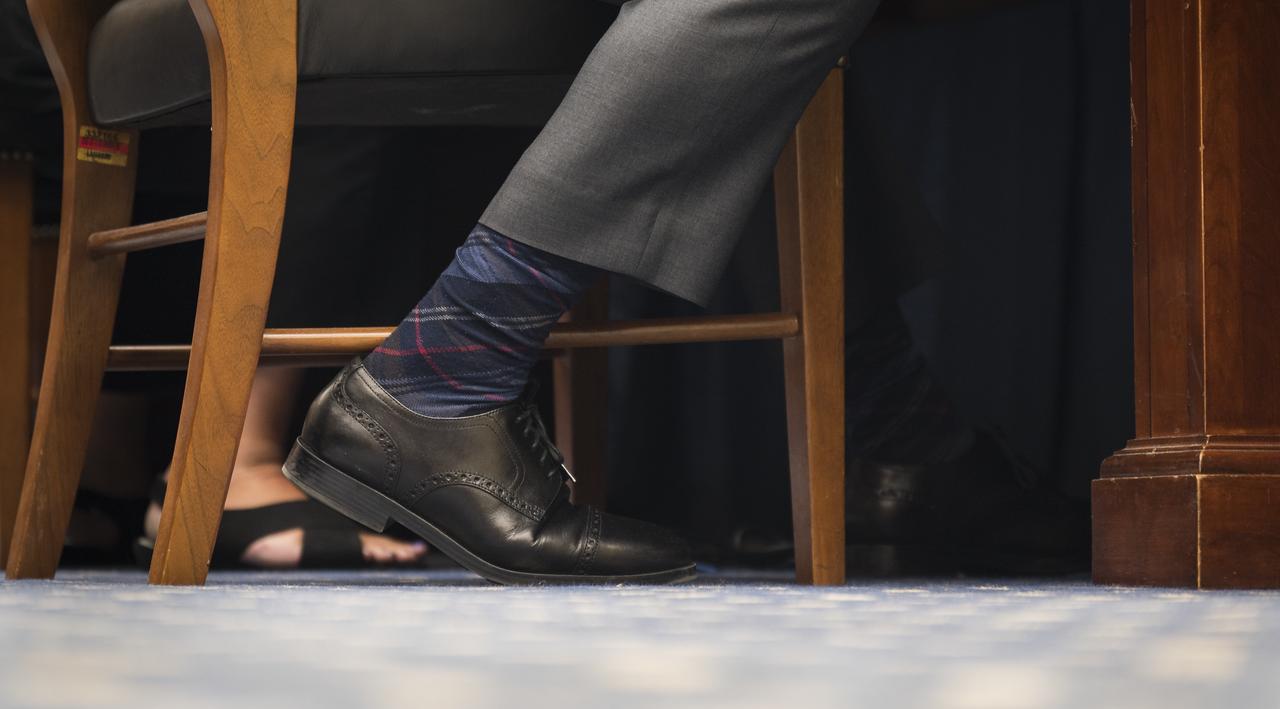
Acting NASA Associate Administrator for Human Exploration and Operations, Ken Bowersox, shoes are seen during a Space and Aeronautics Subcommittee of the House Science, Space, and Technology Committee hearing titled, “Developing Core Capabilities for Deep Space Exploration: An Update on NASA's SLS, Orion, and Exploration Ground Systems," Wednesday, September 18, 2019 at the Rayburn House Office Building in Washington. Photo Credit: (NASA/Aubrey Gemignani)
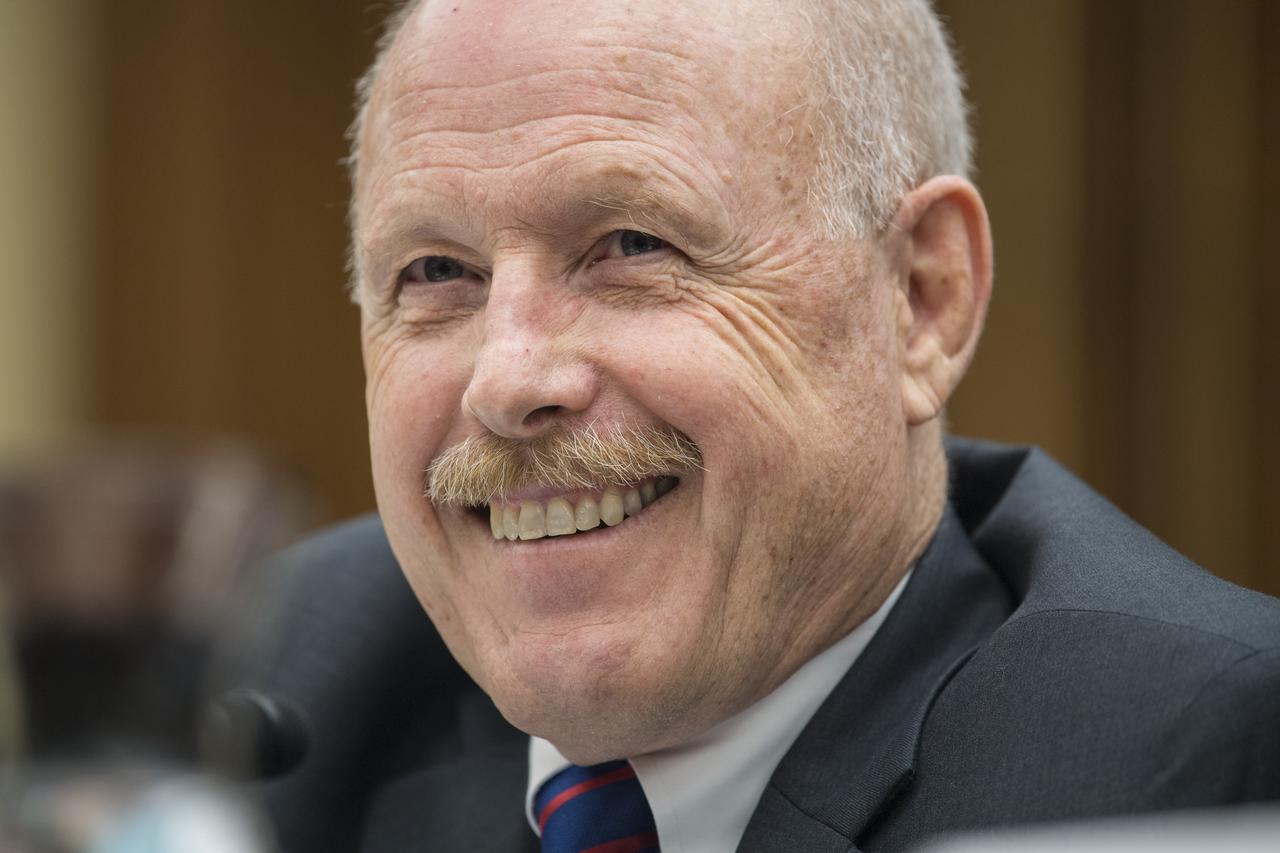
Acting NASA Associate Administrator for Human Exploration and Operations, Ken Bowersox, reacts during a Space and Aeronautics Subcommittee of the House Science, Space, and Technology Committee hearing titled, “Developing Core Capabilities for Deep Space Exploration: An Update on NASA's SLS, Orion, and Exploration Ground Systems," Wednesday, September 18, 2019 at the Rayburn House Office Building in Washington. Photo Credit: (NASA/Aubrey Gemignani)

Acting NASA Associate Administrator for Human Exploration and Operations, Ken Bowersox, testifies during a Space and Aeronautics Subcommittee of the House Science, Space, and Technology Committee hearing titled, “Developing Core Capabilities for Deep Space Exploration: An Update on NASA's SLS, Orion, and Exploration Ground Systems," Wednesday, September 18, 2019 at the Rayburn House Office Building in Washington. Photo Credit: (NASA/Aubrey Gemignani)
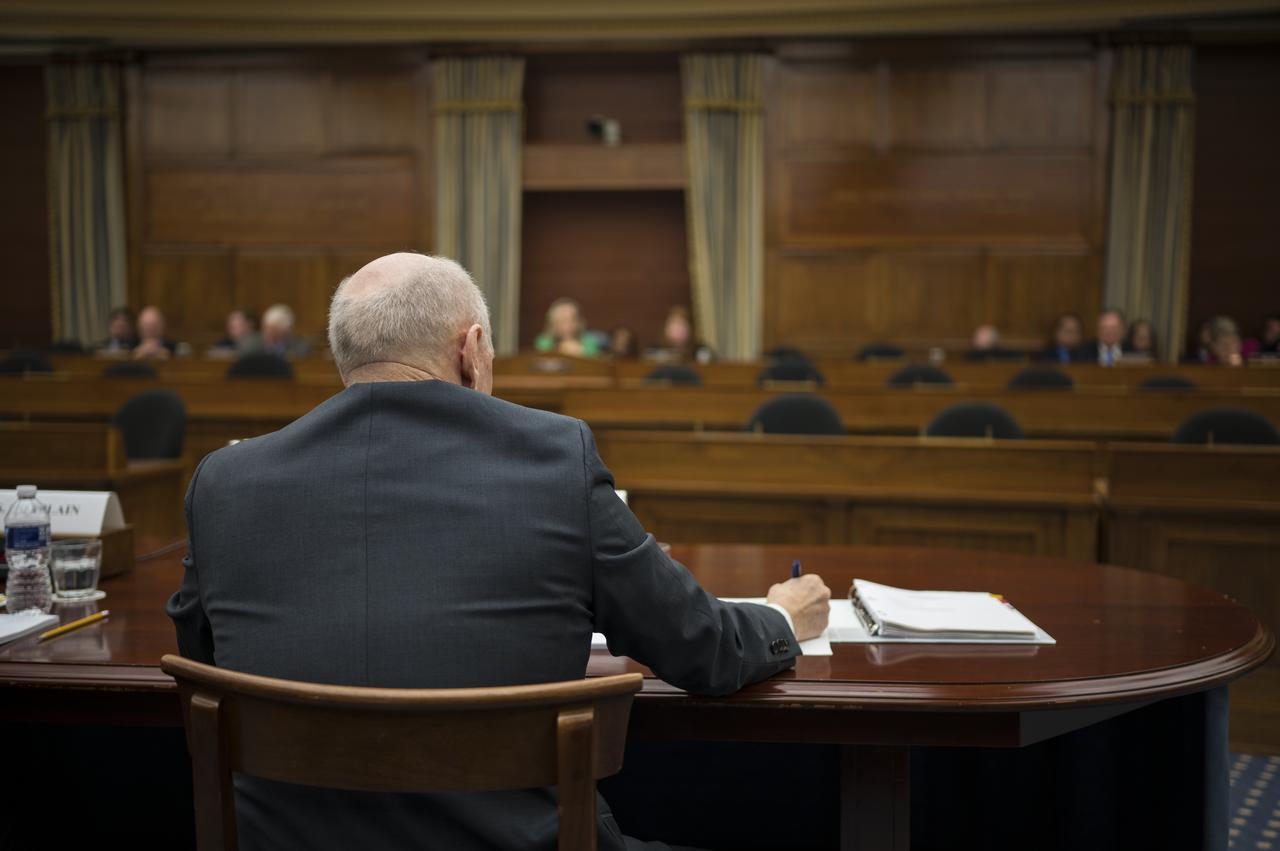
Acting NASA Associate Administrator for Human Exploration and Operations, Ken Bowersox, takes notes during a Space and Aeronautics Subcommittee of the House Science, Space, and Technology Committee hearing titled, “Developing Core Capabilities for Deep Space Exploration: An Update on NASA's SLS, Orion, and Exploration Ground Systems," Wednesday, September 18, 2019 at the Rayburn House Office Building in Washington. Photo Credit: (NASA/Aubrey Gemignani)

Acting NASA Associate Administrator for Human Exploration and Operations, Ken Bowersox, testifies during a Space and Aeronautics Subcommittee of the House Science, Space, and Technology Committee hearing titled, “Developing Core Capabilities for Deep Space Exploration: An Update on NASA's SLS, Orion, and Exploration Ground Systems," Wednesday, September 18, 2019 at the Rayburn House Office Building in Washington. Photo Credit: (NASA/Aubrey Gemignani)
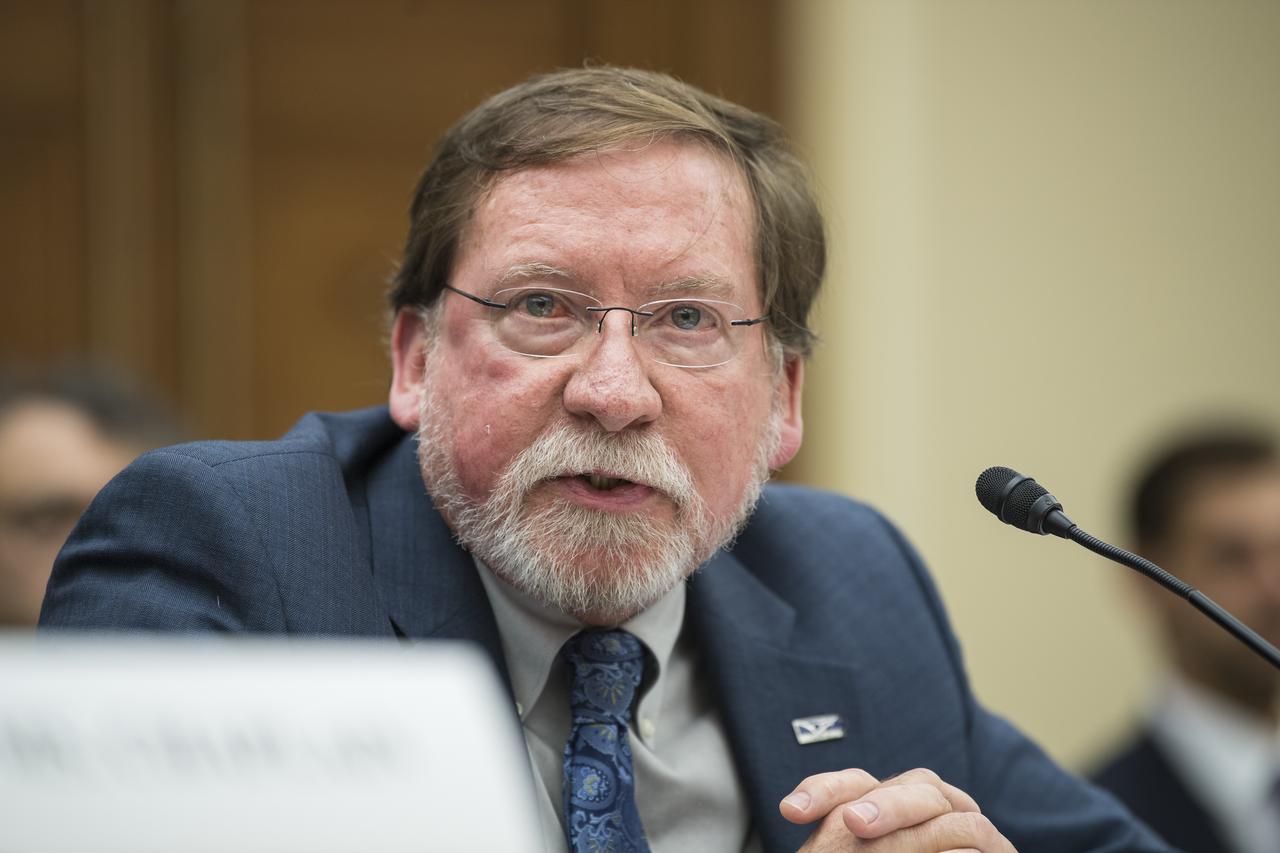
Doug Cooke, owner, Cooke Concepts and Solutions, testifies during a Space and Aeronautics Subcommittee of the House Science, Space, and Technology Committee hearing titled, “Developing Core Capabilities for Deep Space Exploration: An Update on NASA's SLS, Orion, and Exploration Ground Systems," Wednesday, September 18, 2019 at the Rayburn House Office Building in Washington. Photo Credit: (NASA/Aubrey Gemignani)
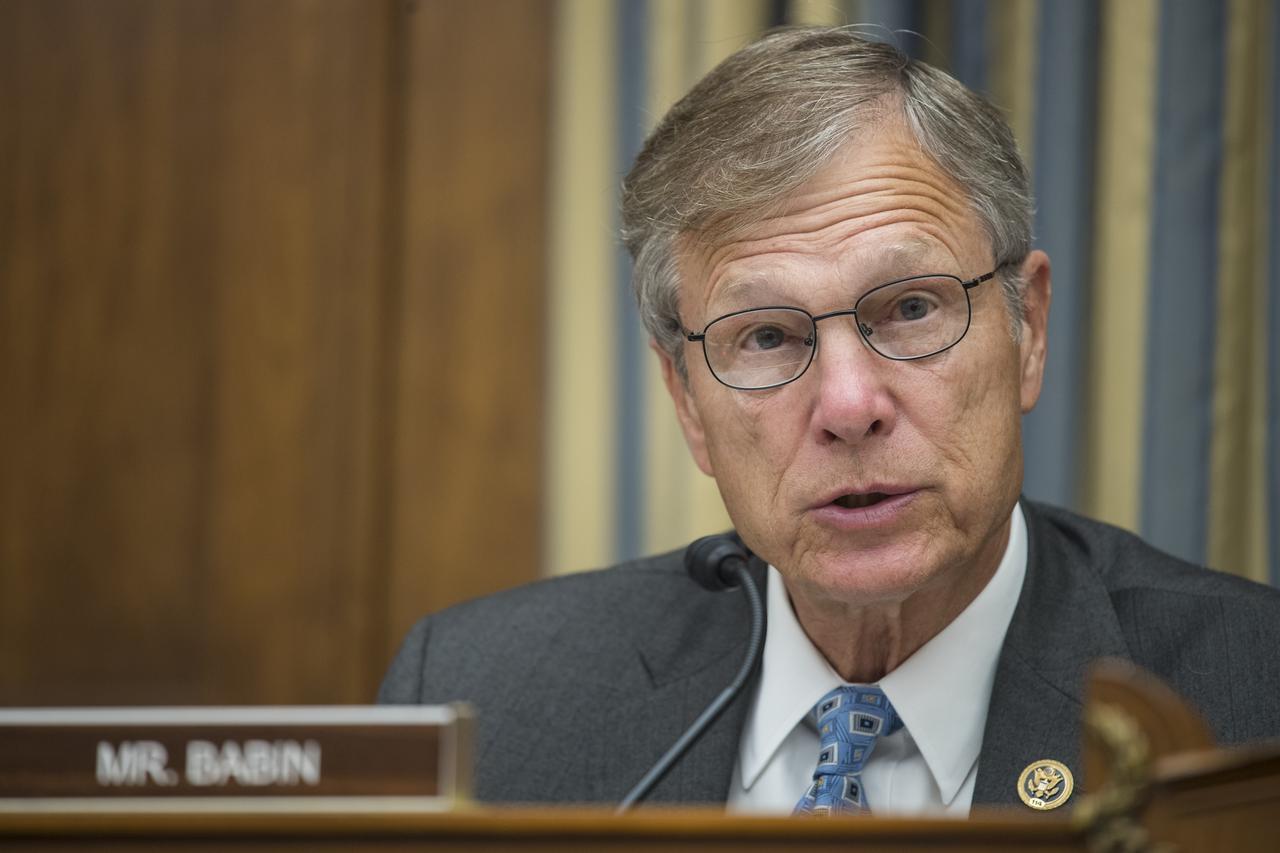
Congressman Brian Babin, R-Texas, asks a question during a Space and Aeronautics Subcommittee of the House Science, Space, and Technology Committee hearing titled, “Developing Core Capabilities for Deep Space Exploration: An Update on NASA's SLS, Orion, and Exploration Ground Systems," Wednesday, September 18, 2019 at the Rayburn House Office Building in Washington. Photo Credit: (NASA/Aubrey Gemignani)

Acting NASA Associate Administrator for Human Exploration and Operations, Ken Bowersox, testifies during a Space and Aeronautics Subcommittee of the House Science, Space, and Technology Committee hearing titled, “Developing Core Capabilities for Deep Space Exploration: An Update on NASA's SLS, Orion, and Exploration Ground Systems," Wednesday, September 18, 2019 at the Rayburn House Office Building in Washington. Photo Credit: (NASA/Aubrey Gemignani)
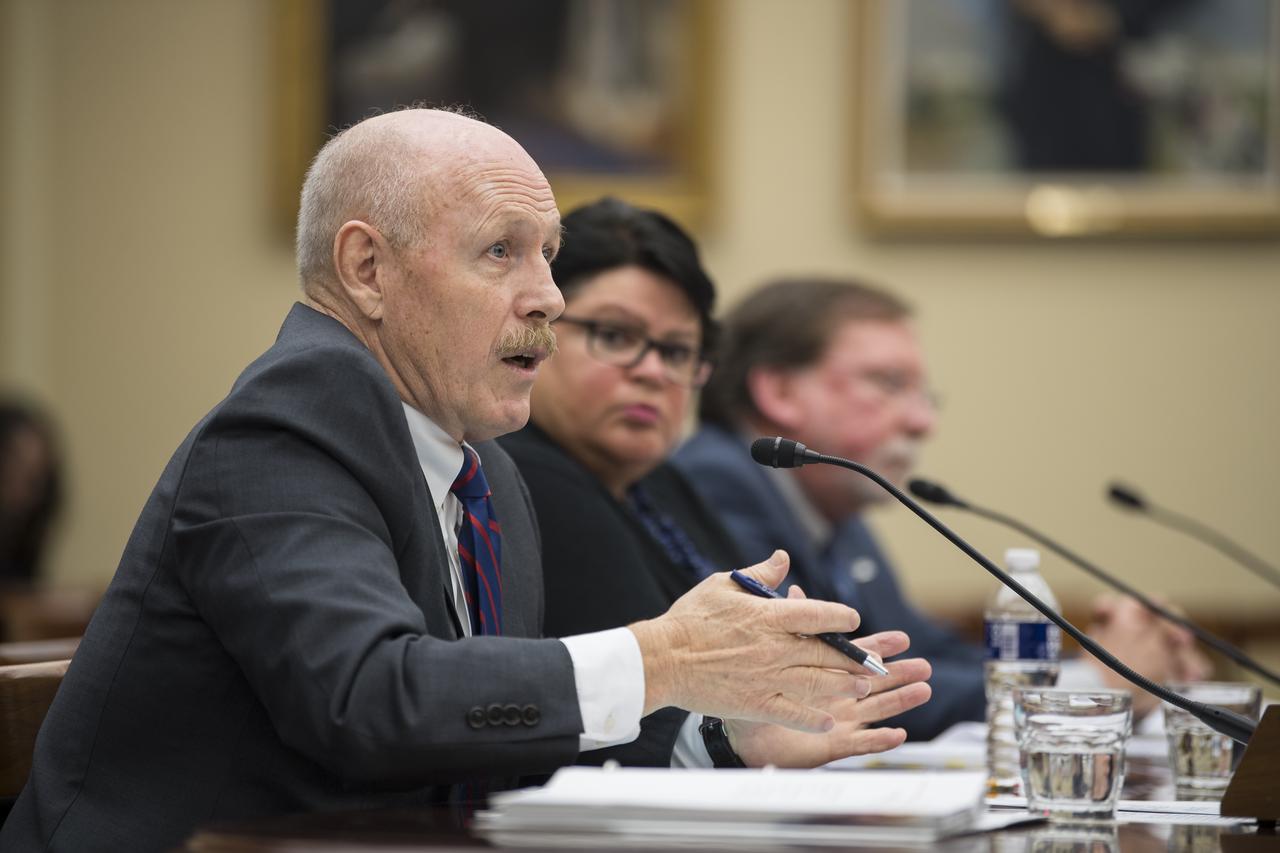
Acting NASA Associate Administrator for Human Exploration and Operations, Ken Bowersox, testifies during a Space and Aeronautics Subcommittee of the House Science, Space, and Technology Committee hearing titled, “Developing Core Capabilities for Deep Space Exploration: An Update on NASA's SLS, Orion, and Exploration Ground Systems," Wednesday, September 18, 2019 at the Rayburn House Office Building in Washington. Photo Credit: (NASA/Aubrey Gemignani)

Acting NASA Associate Administrator for Human Exploration and Operations, Ken Bowersox, testifies during a Space and Aeronautics Subcommittee of the House Science, Space, and Technology Committee hearing titled, “Developing Core Capabilities for Deep Space Exploration: An Update on NASA's SLS, Orion, and Exploration Ground Systems," Wednesday, September 18, 2019 at the Rayburn House Office Building in Washington. Photo Credit: (NASA/Aubrey Gemignani)

Acting NASA Associate Administrator for Human Exploration and Operations, Ken Bowersox, takes notes during a Space and Aeronautics Subcommittee of the House Science, Space, and Technology Committee hearing titled, “Developing Core Capabilities for Deep Space Exploration: An Update on NASA's SLS, Orion, and Exploration Ground Systems," Wednesday, September 18, 2019 at the Rayburn House Office Building in Washington. Photo Credit: (NASA/Aubrey Gemignani)
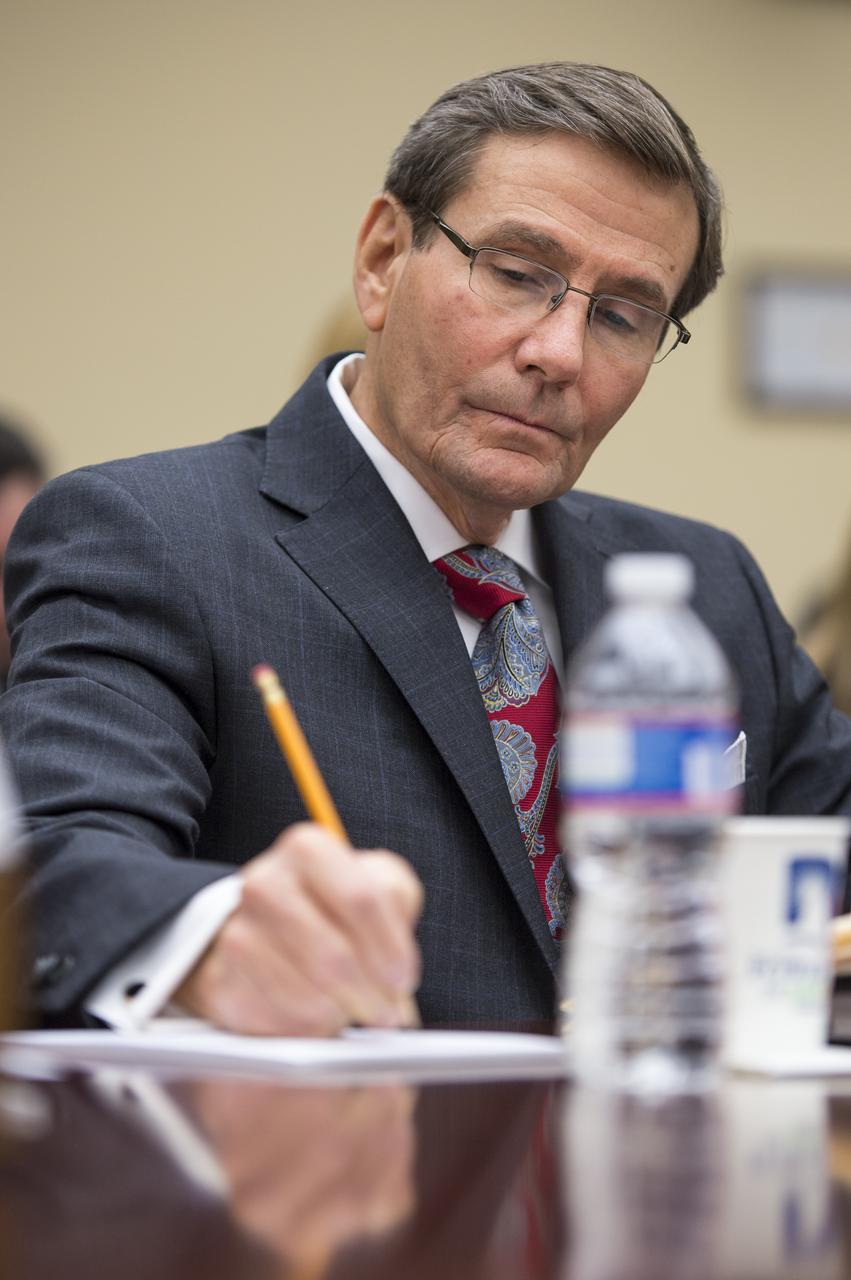
Dr. Edgar Waggoner, Director, Integrated Systems research Program Office, National Aeronautics and Space Administration (NASA), takes notes during a House Subcommittee on Oversight hearing titled "Operating Unmanned Aircraft Systems in the National Airspace System: Assessing Research and Development Efforts to Ensure Safety" on Friday, Feb. 15, 2013 at the Rayburn House Office Building in Washington. Photo Credit: (NASA/Bill Ingalls)
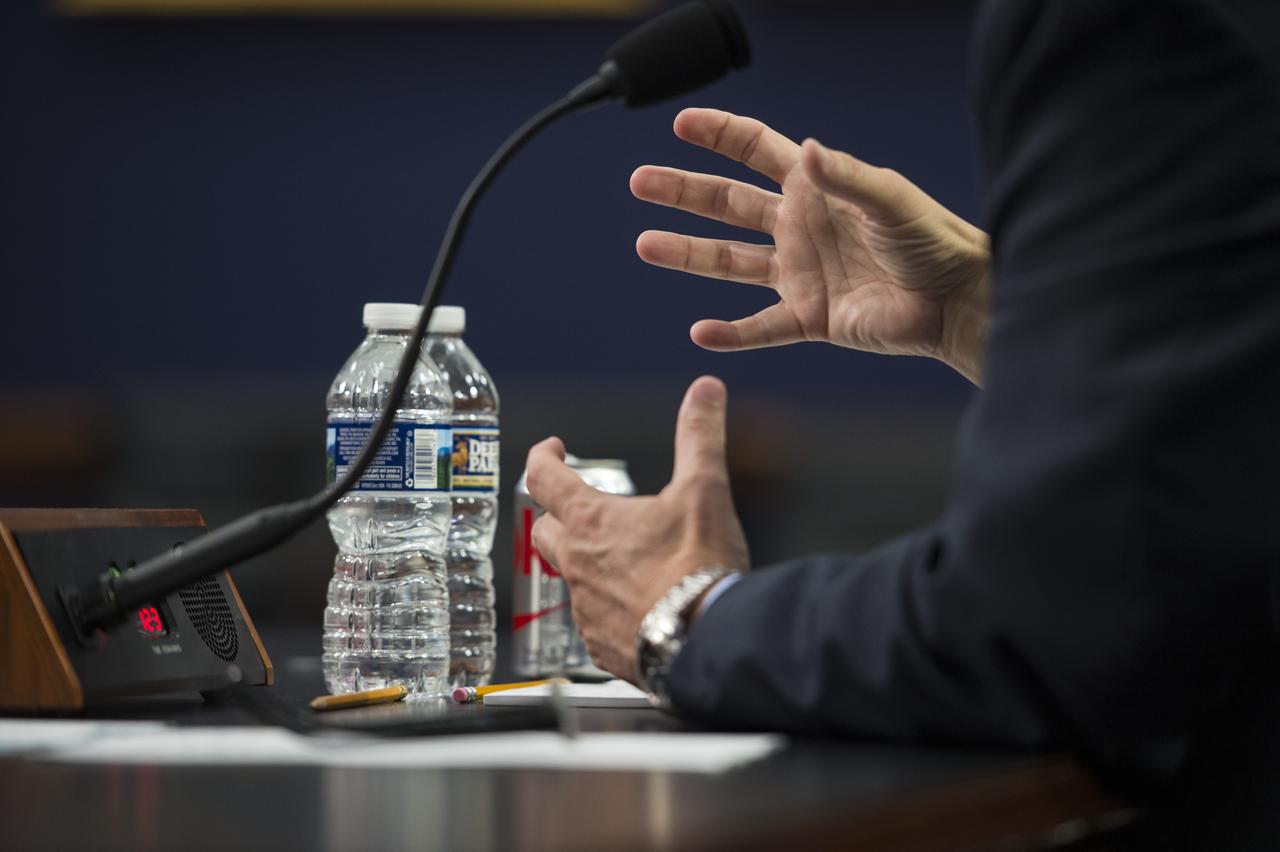
Acting NASA Administrator Robert Lightfoot gestures while testifying during a House Subcommittee on Commerce, Justice, Science, and Related Agencies hearing to review the Fiscal Year 2018 budget request for the National Aeronautics and Space Administration, Thursday, June 8, 2017 at the Rayburn House Office Building in Washington. Photo Credit: (NASA/Aubrey Gemignani)
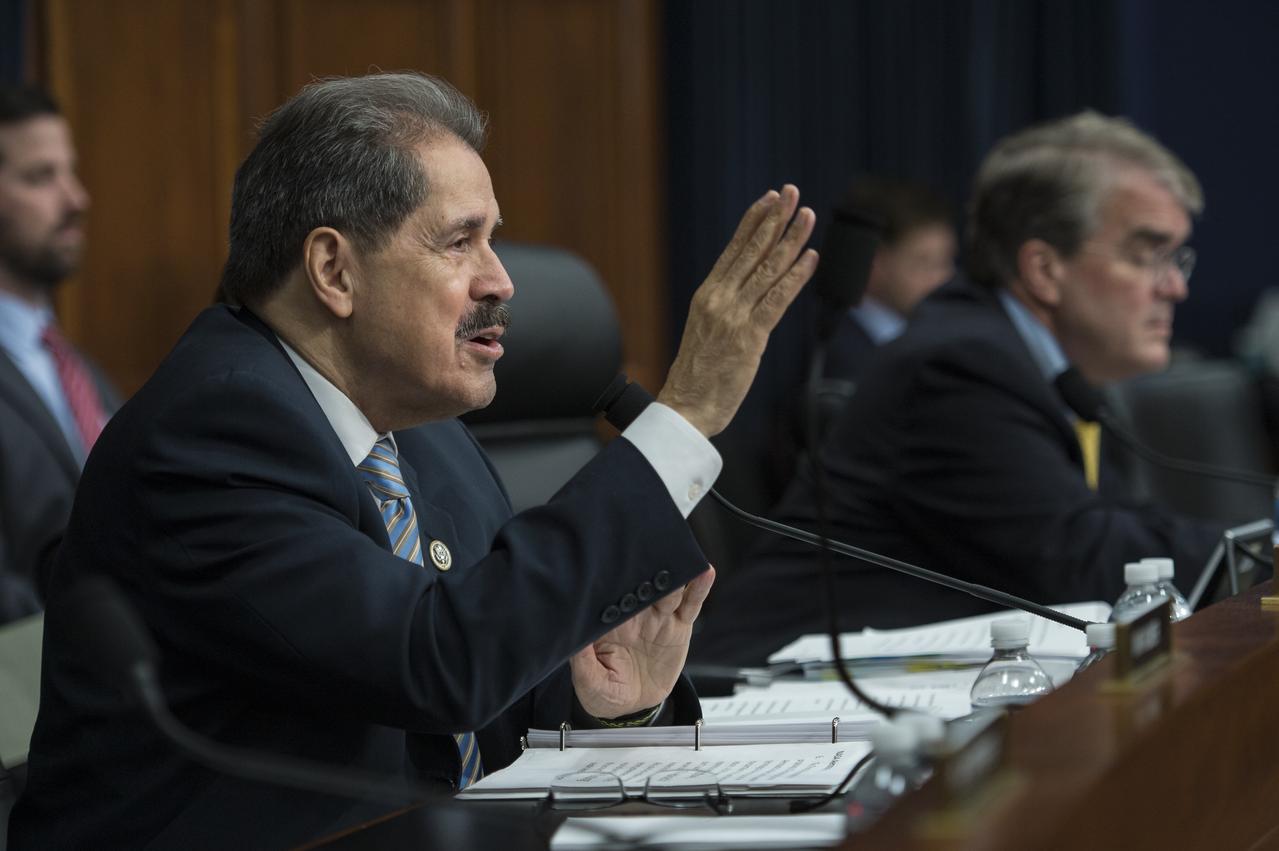
U.S. Representative José Serrano, D-New York, asks a question after acting NASA Administrator Robert Lightfoot testified during a House Subcommittee on Commerce, Justice, Science, and Related Agencies hearing to review the Fiscal Year 2018 budget request for the National Aeronautics and Space Administration, Thursday, June 8, 2017 at the Rayburn House Office Building in Washington. Photo Credit: (NASA/Aubrey Gemignani)
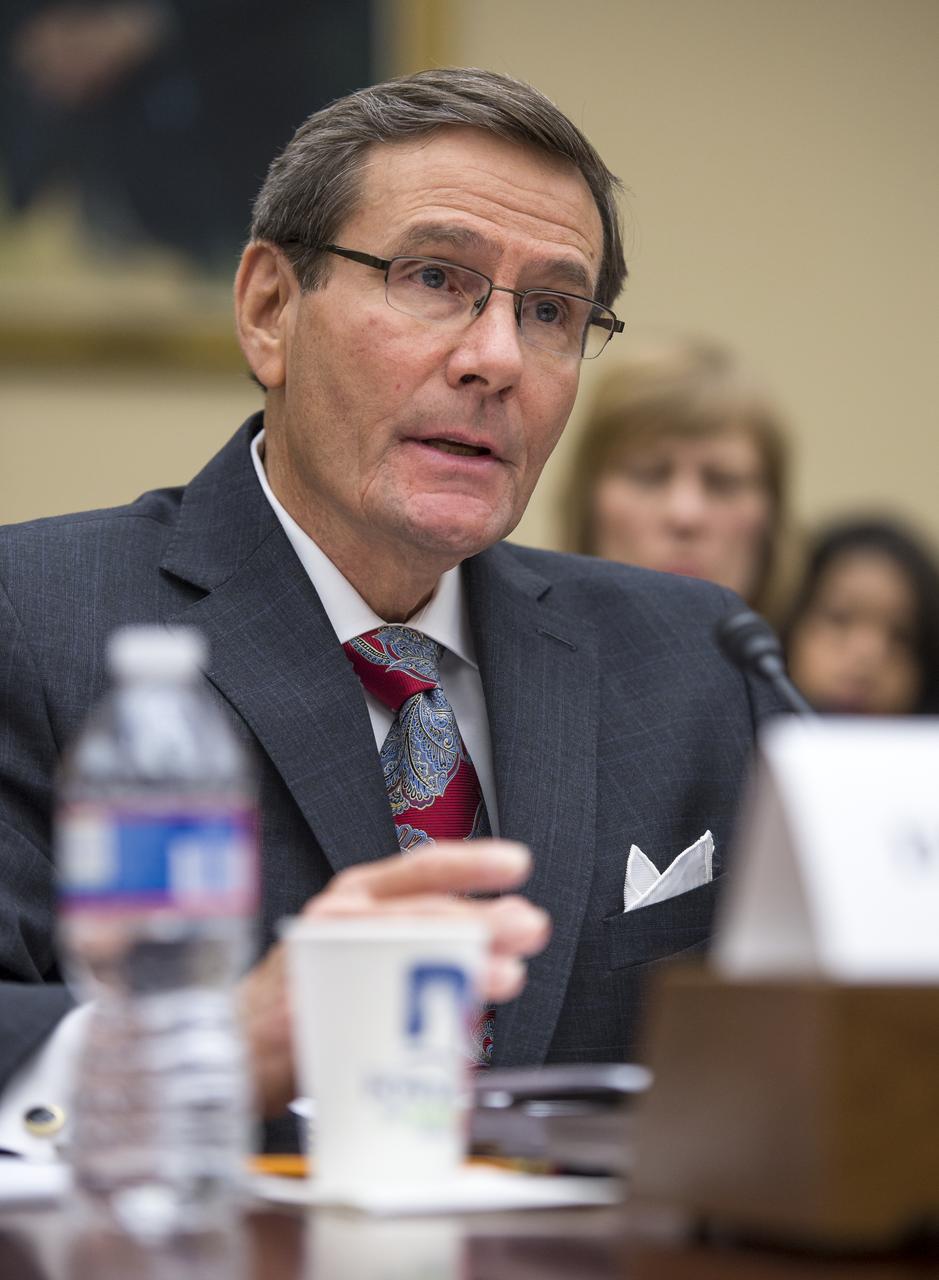
Dr. Edgar Waggoner, Director, Integrated Systems research Program Office, National Aeronautics and Space Administration (NASA), talks during a House Subcommittee on Oversight hearing titled "Operating Unmanned Aircraft Systems in the National Airspace System: Assessing Research and Development Efforts to Ensure Safety" on Friday, Feb. 15, 2013 at the Rayburn House Office Building in Washington. Photo Credit: (NASA/Bill Ingalls)
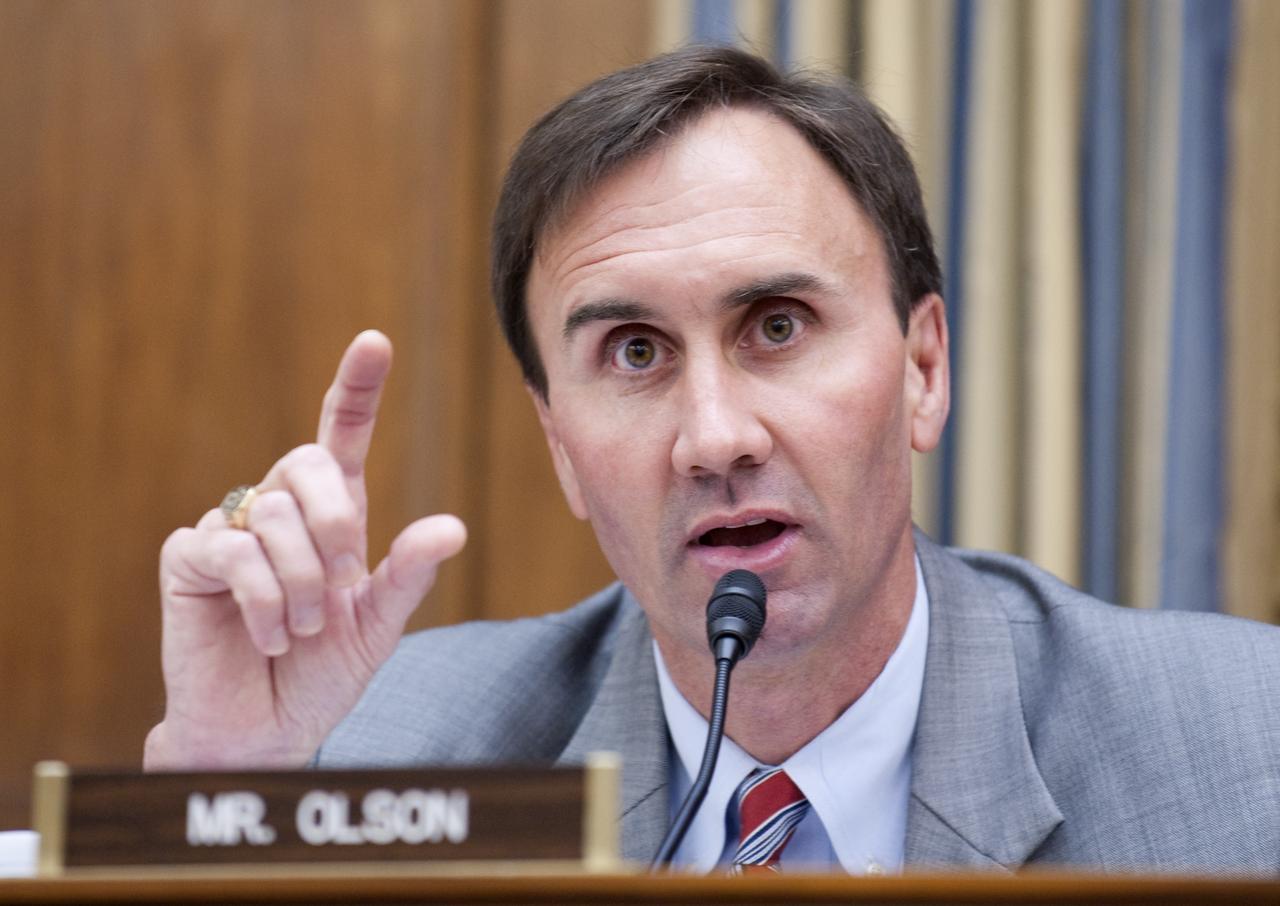
U.S. Rep. Pete Olson, R-Texas, speaks during a hearing before the House Subcommitte on Space and Aeronautics regarding Safety of Human Spaceflight on Capitol Hill, Wednesday, Dec. 2, 2009, in Washington. Photo Credit: (NASA/Bill Ingalls)
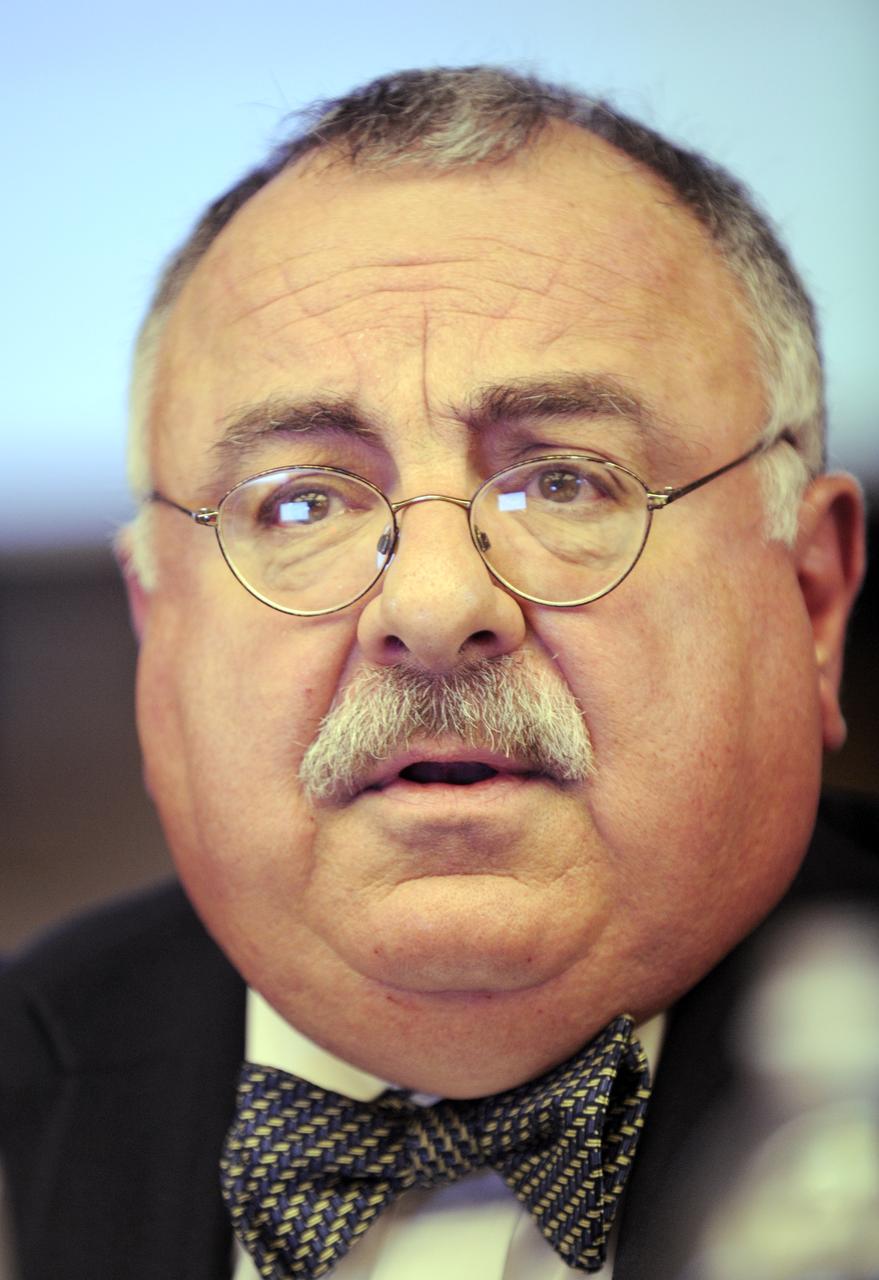
Dr. Joseph R. Fragola, Vice President, Valador, Inc., testifies during a hearing before the House Subcommitte on Space and Aeronautics regarding Safety of Human Spaceflight on Capitol Hill, Wednesday, Dec. 2, 2009, in Washington. Photo Credit: (NASA/Bill Ingalls)

Acting NASA Associate Administrator for Human Exploration and Operations, Ken Bowersox, left, Cristina Chaplain, director, Contracting and National Security Acquisitions, U.S. Government Accountability Office (GAO), center, and Doug Cooke, owner, Cooke Concepts and Solutions, right, testify during a Space and Aeronautics Subcommittee of the House Science, Space, and Technology Committee hearing titled, “Developing Core Capabilities for Deep Space Exploration: An Update on NASA's SLS, Orion, and Exploration Ground Systems," Wednesday, September 18, 2019 at the Rayburn House Office Building in Washington. Photo Credit: (NASA/Aubrey Gemignani)
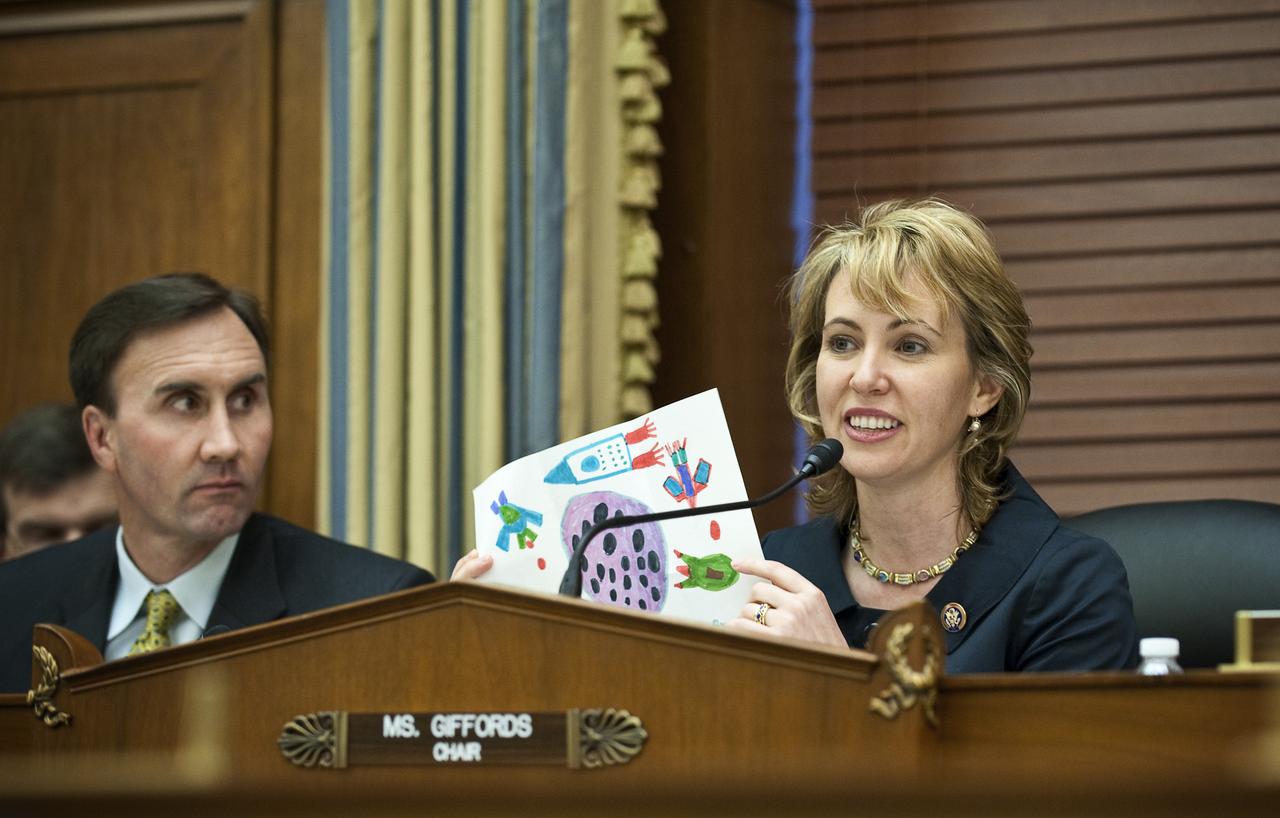
U.S. Congresswoman Gabrielle Giffords, D-AZ, left, shows a childs' drawing while U.S. Congressman Pete Olson, R-TX, looks on at the U.S. House of Representatives' Committee on Science and Technology, Subcommittee on Space and Aeronautics to discuss proposed changes to NASA's exploration program on Wednesday, March 24, 2010, on Capitol Hill in Washington. Photo Credit: (NASA/Carla Cioffi)
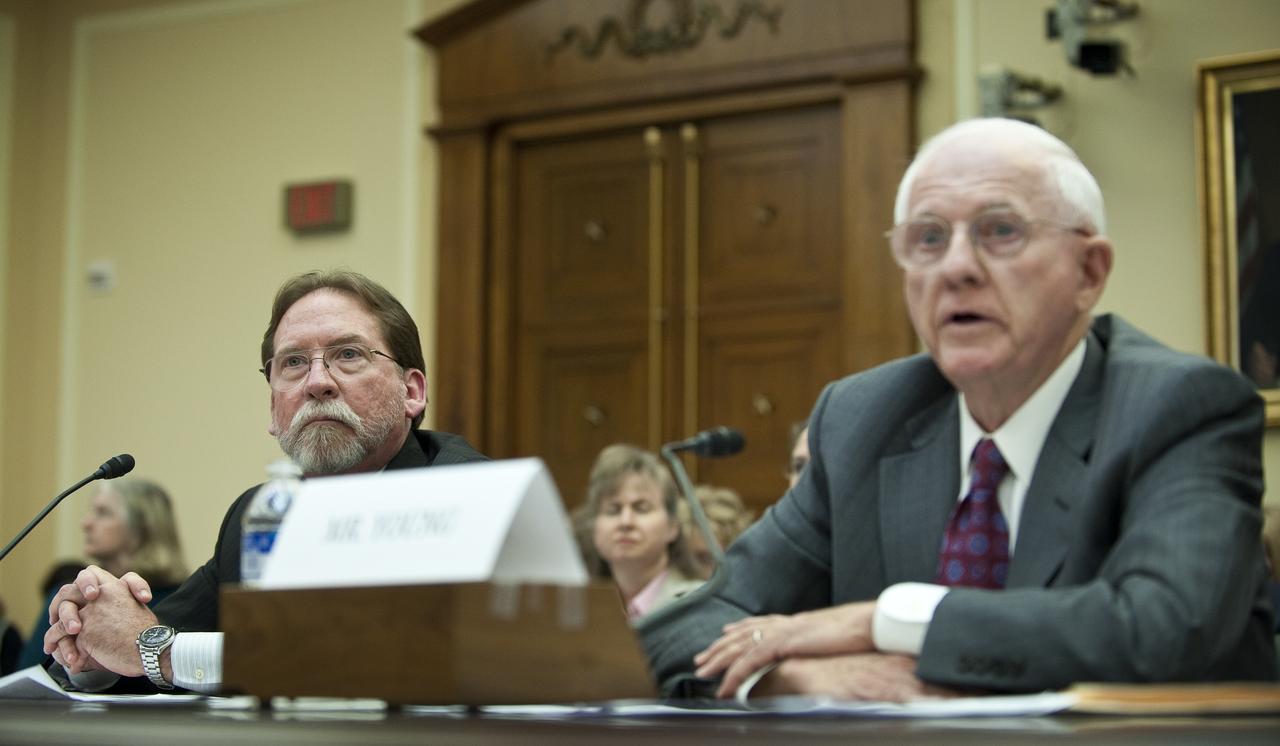
Douglas R. Cooke, left, NASA's Associate Administrator for Exploration Systems Mission Directorate (ESMD) and A. Thomas Young, retired Executive Vice President, Lockheed Martin appear before the U.S. House of Representatives' Committee on Science and Technology, Subcommittee on Space and Aeronautics to discuss proposed changes to NASA's exploration program on Wednesday, March 24, 2010, on Capitol Hill in Washington. Photo Credit: (NASA/Carla Cioffi)
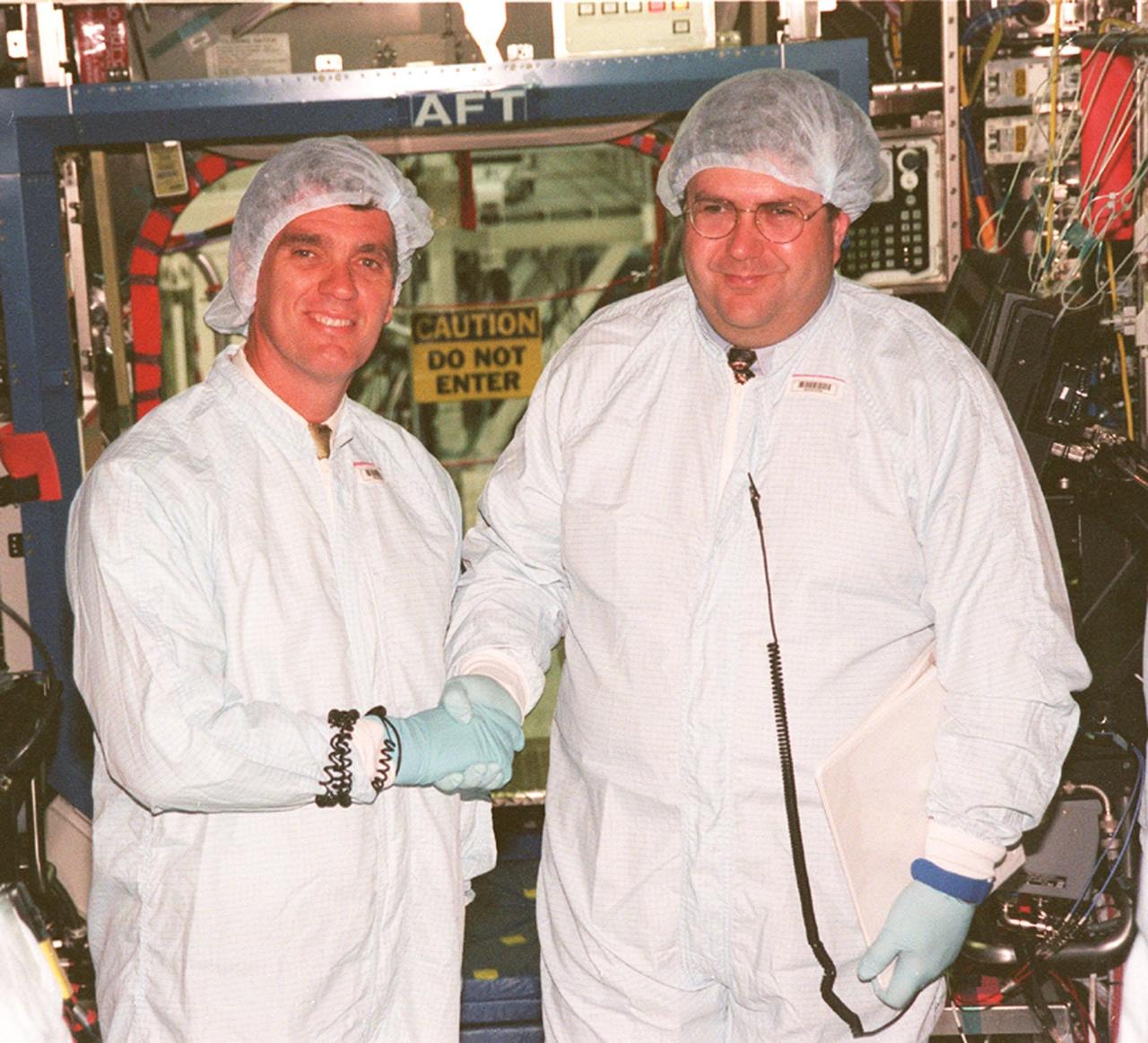
KENNEDY SPACE CENTER, FLA. -- Standing in front of the U.S. Lab, named Destiny, U.S. Rep. Dave Weldon (left) thanks Thomas R. "Randy" Galloway, with the Space Station Hardware Integration Office, for briefing him on the equipment inside the Lab. Weldon is on the House Science Committee and vice chairman of the Space and Aeronautics Subcommittee. Destiny is scheduled to be launched on Space Shuttle Endeavour in early 2000. It will become the centerpiece of scientific research on the ISS, with five equipment racks aboard to provide essential functions for station systems, including high data-rate communications, and to maintain the station's orientation using control gyroscopes launched earlier. Additional equipment and research racks will be installed in the laboratory on subsequent Shuttle flights
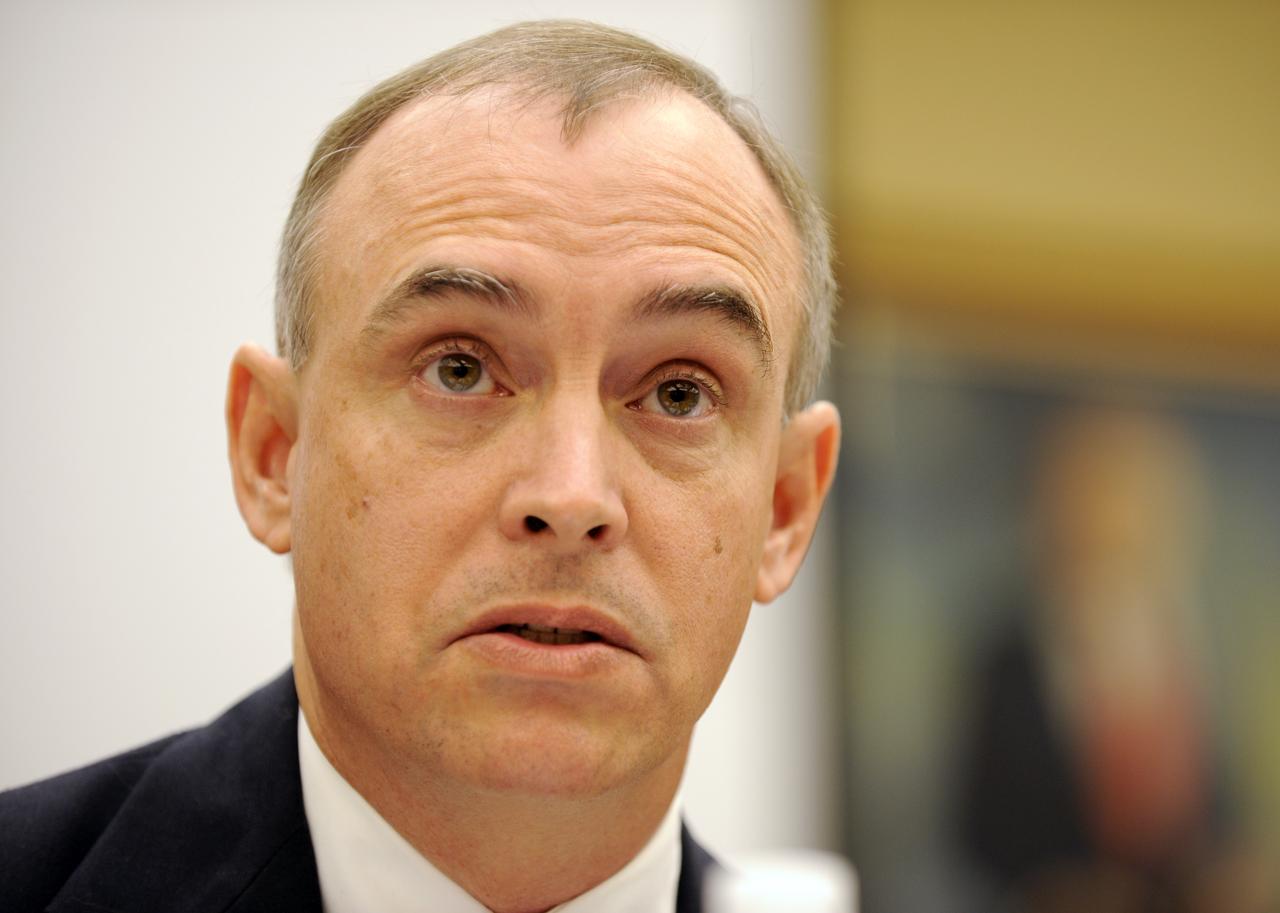
Constellation Program Manager Jeff Hanley testifies during a hearing before the House Subcommitte on Space and Aeronautics regarding Safety of Human Spaceflight on Capitol Hill, Wednesday, Dec. 2, 2009, in Washington. Photo Credit: (NASA/Bill Ingalls)
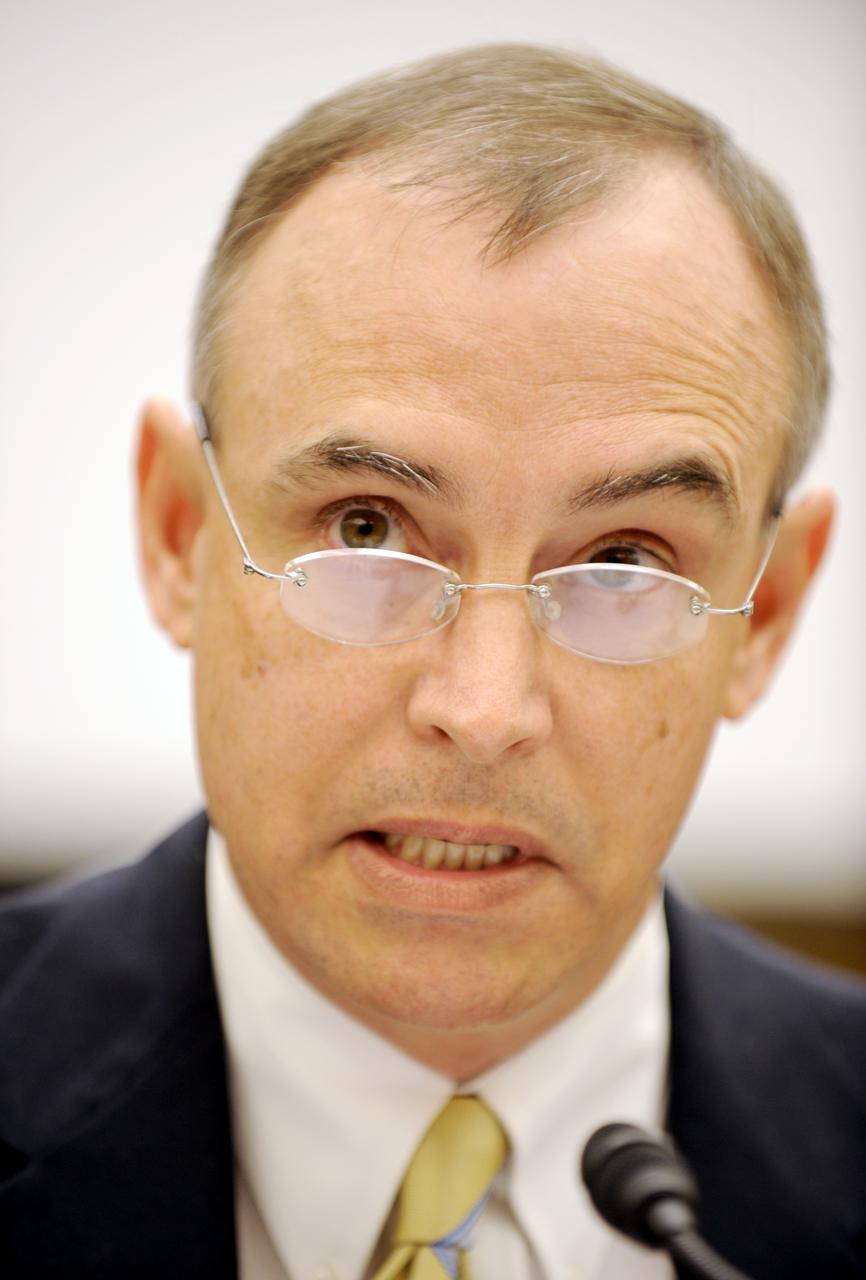
Jeff Hanley, Constellation Program Manager at NASA, testifies before a hearing before the House Subcommitte on Space and Aeronautics regarding Safety of Human Spaceflight on Capitol Hill, Wednesday, Dec. 2, 2009, in Washington. Photo Credit: (NASA/Bill Ingalls)
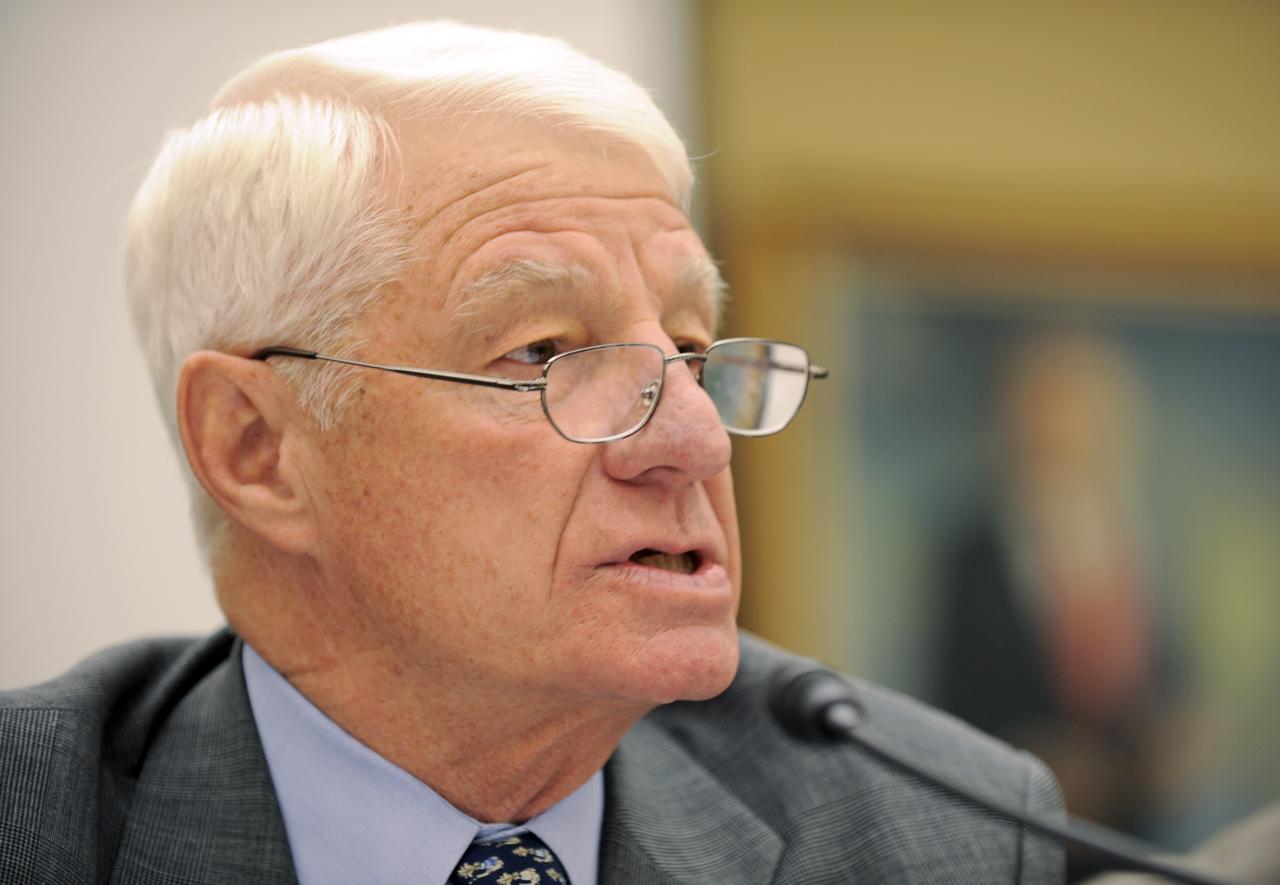
John Marshall, a member of the NASA Aerospace Safety Advisory Panel (ASAP), testifies during a hearing before the House Subcommitte on Space and Aeronautics regarding Safety of Human Spaceflight on Capitol Hill, Wednesday, Dec. 2, 2009, in Washington. Photo Credit: (NASA/Bill Ingalls)
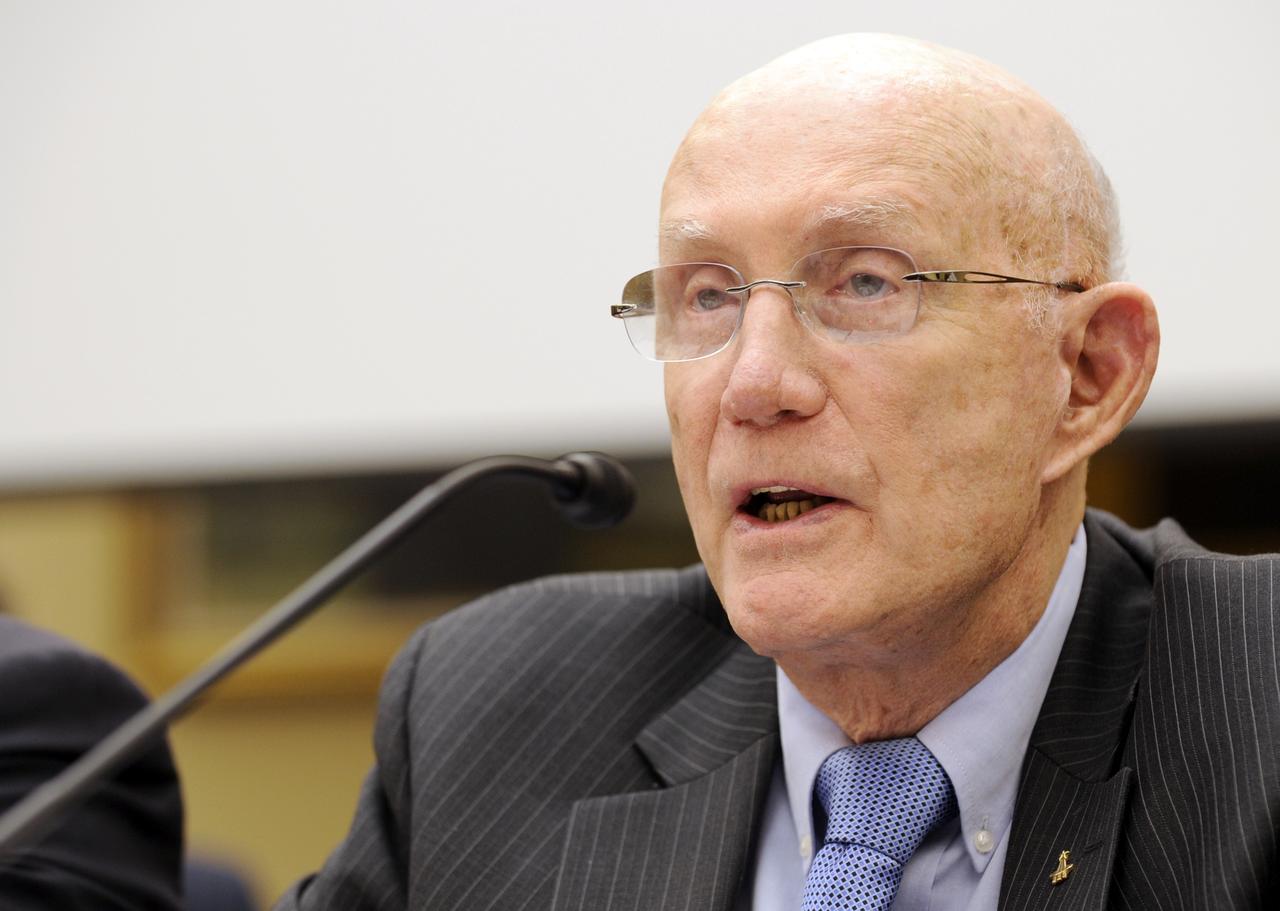
Reitred astronaut Lt. Gen. Thomas Stafford testifies during a hearing before the House Subcommitte on Space and Aeronautics regarding Safety of Human Spaceflight on Capitol Hill, Wednesday, Dec. 2, 2009, in Washington. Photo Credit: (NASA/Bill Ingalls)
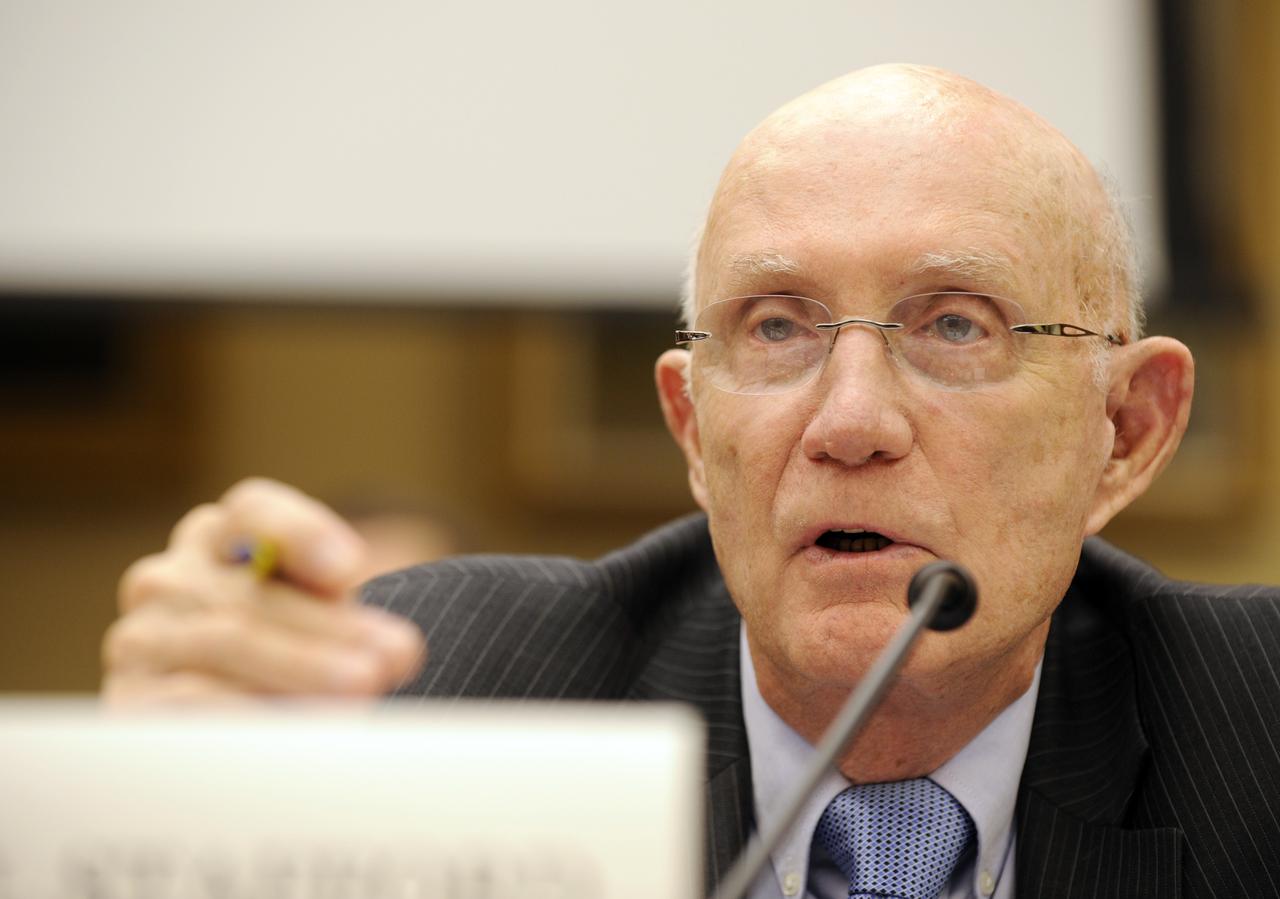
Reitred astronaut Lt. Gen. Thomas Stafford testifies during a hearing before the House Subcommitte on Space and Aeronautics regarding Safety of Human Spaceflight on Capitol Hill, Wednesday, Dec. 2, 2009, in Washington. Photo Credit: (NASA/Bill Ingalls)
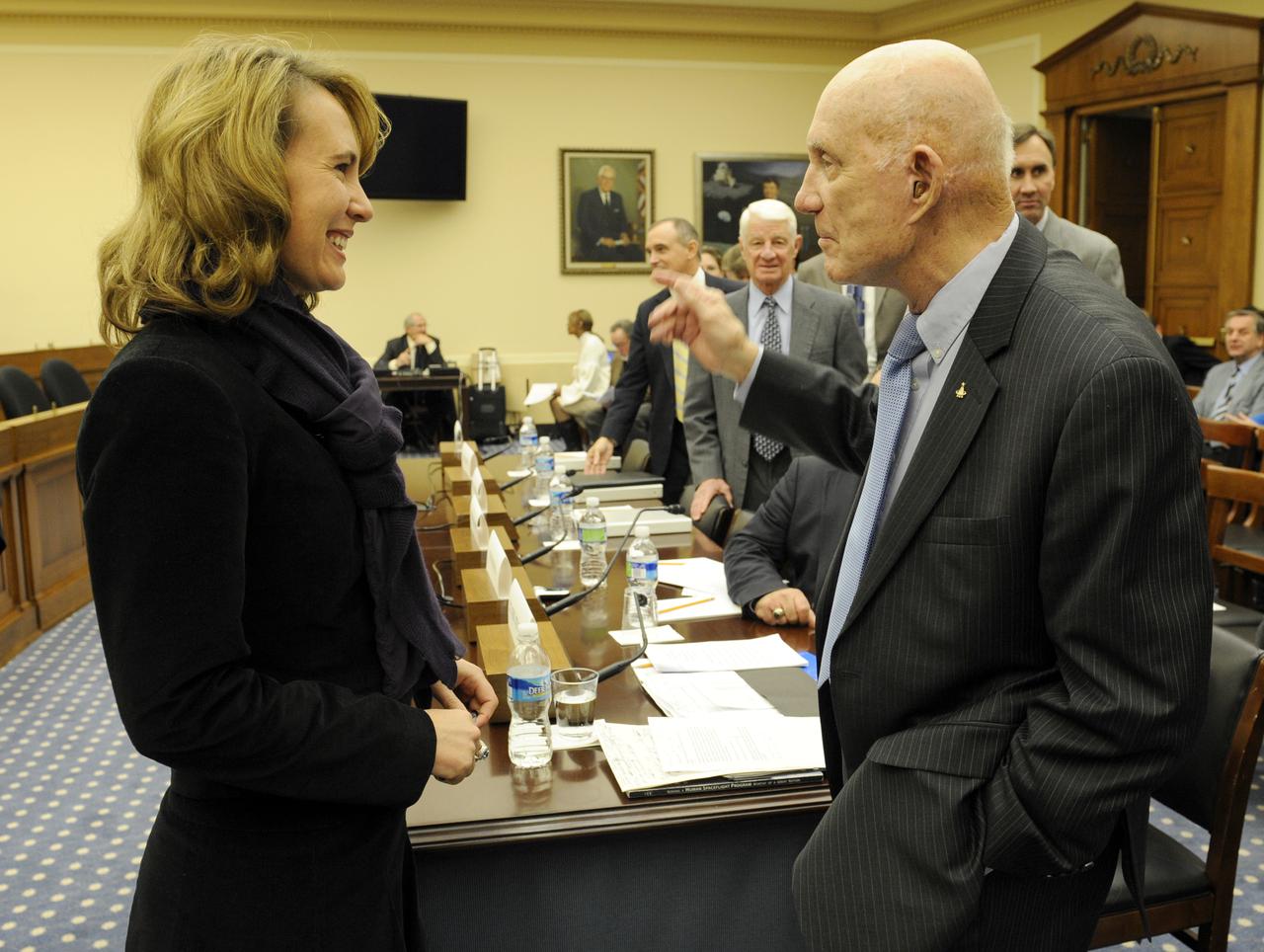
U.S. Rep. Gabrielle Giffords, D-Ariz., left, speaks with reitred astronaut Lt. Gen. Thomas Stafford prior to the start of a hearing before the House Subcommitte on Space and Aeronautics regarding Safety of Human Spaceflight on Capitol Hill, Wednesday, Dec. 2, 2009, in Washington. Photo Credit: (NASA/Bill Ingalls)
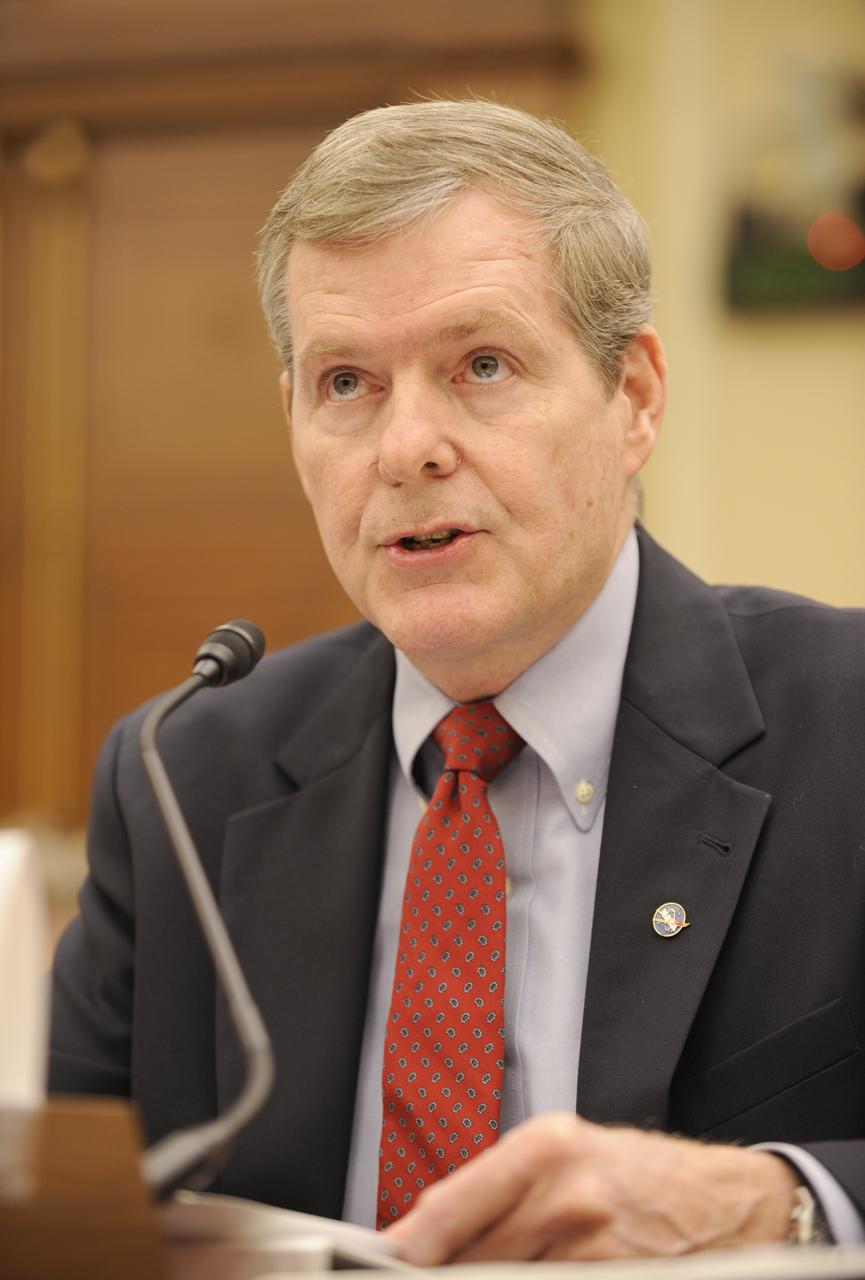
Bryan O'Connor, Chief of Safety and Mission Assurance at NASA, testifies before a hearing before the House Subcommitte on Space and Aeronautics regarding Safety of Human Spaceflight on Capitol Hill, Wednesday, Dec. 2, 2009, in Washington. Photo Credit: (NASA/Bill Ingalls)
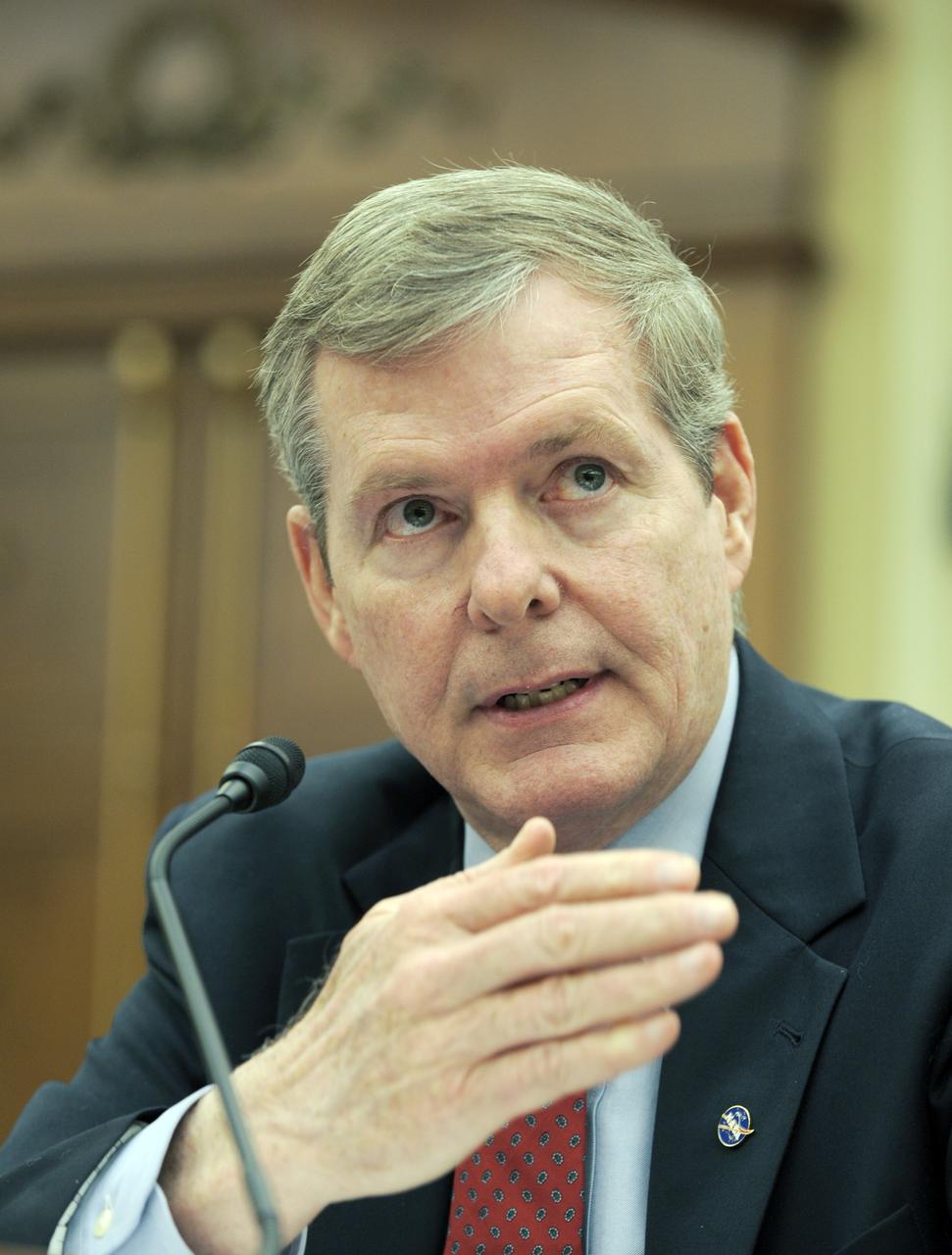
Bryan O'Connor, Chief of Safety and Mission Assurance at NASA, testifies during a hearing before the House Subcommitte on Space and Aeronautics regarding Safety of Human Spaceflight on Capitol Hill, Wednesday, Dec. 2, 2009, in Washington. Photo Credit: (NASA/Bill Ingalls)

Bretton Alexander, President of the Commercial Spaceflight Federation, testifies during a hearing before the House Subcommitte on Space and Aeronautics regarding Safety of Human Spaceflight on Capitol Hill, Wednesday, Dec. 2, 2009, in Washington. Photo Credit: (NASA/Bill Ingalls)
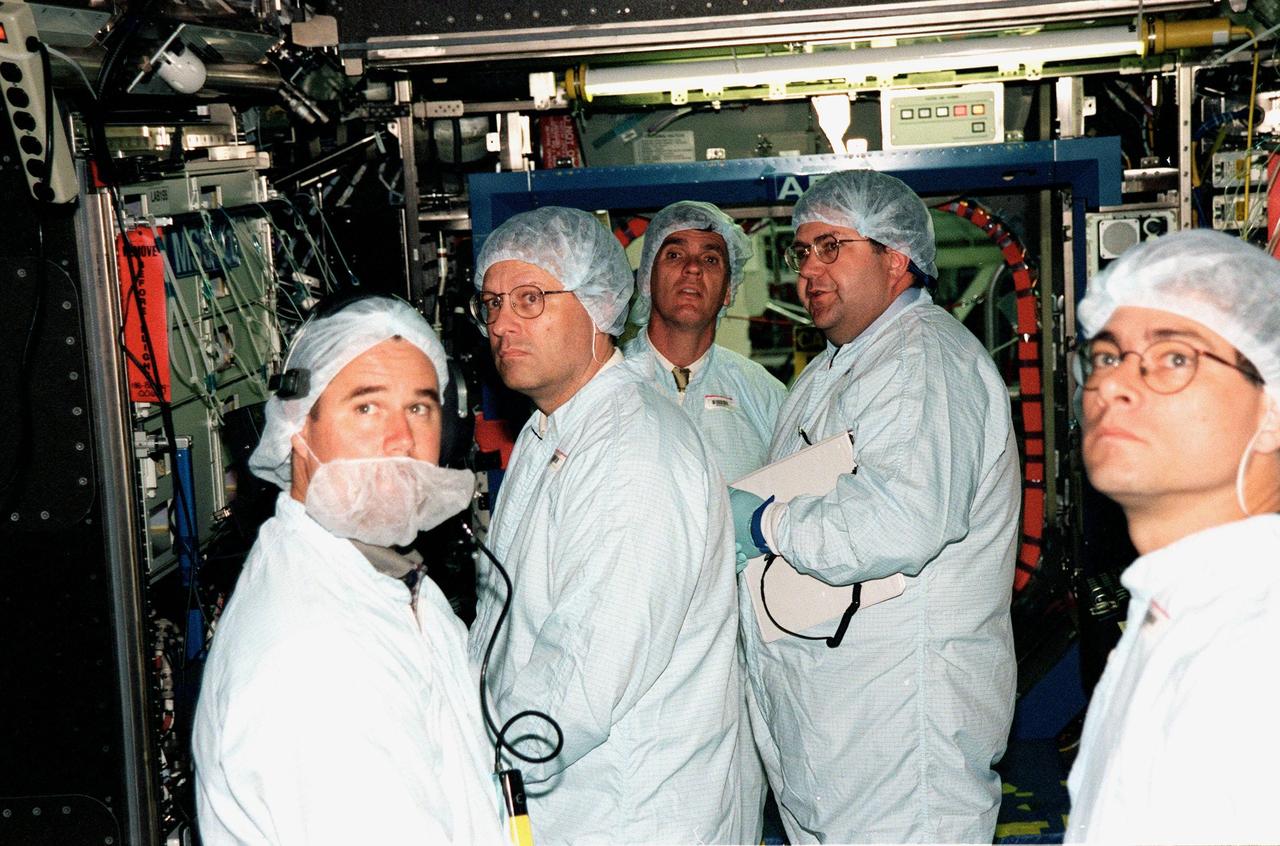
KENNEDY SPACE CENTER, FLA. -- In the Space Station Processing Facility, U.S. Rep. Dave Weldon (center) and his chief of staff Dana Gartzke (second from left) get a close-up look at the interior of the U.S. Lab, called "Destiny." Thomas R. "Randy" Galloway (second from right), with the Space Station Hardware Integration Office, helps with their familiarization of the equipment. They are joined (far left and right) by workers from Boeing. Weldon is on the House Science Committee and vice chairman of the Space and Aeronautics Subcommittee. Destiny is scheduled to be launched on Space Shuttle Endeavour in early 2000. It will become the centerpiece of scientific research on the ISS, with five equipment racks aboard to provide essential functions for station systems, including high data-rate communications, and to maintain the station's orientation using control gyroscopes launched earlier. Additional equipment and research racks will be installed in the laboratory on subsequent Shuttle flights
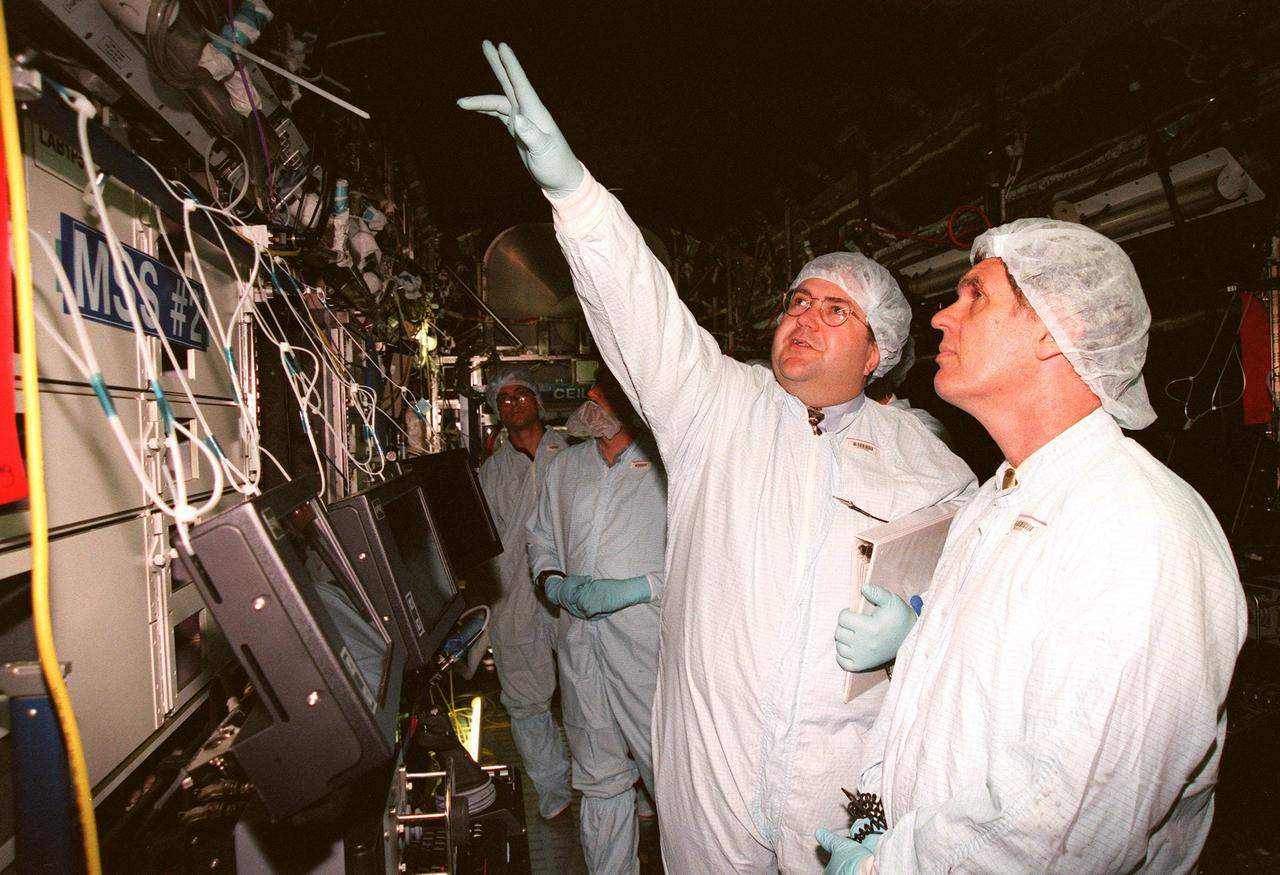
KENNEDY SPACE CENTER, FLA. -- In the Space Station Processing Facility, Thomas R. "Randy" Galloway, with the Space Station Hardware Integration Office, points out a feature to U.S. Rep. Dave Weldon (right) in the U.S. Lab, called "Destiny." In the far background is Dana Gartzke, the congressman's chief of staff. Weldon is on the House Science Committee and vice chairman of the Space and Aeronautics Subcommittee. Destiny is scheduled to be launched on Space Shuttle Endeavour in early 2000. It will become the centerpiece of scientific research on the ISS, with five equipment racks aboard to provide essential functions for station systems, including high data-rate communications, and to maintain the station's orientation using control gyroscopes launched earlier. Additional equipment and research racks will be installed in the laboratory on subsequent Shuttle flights
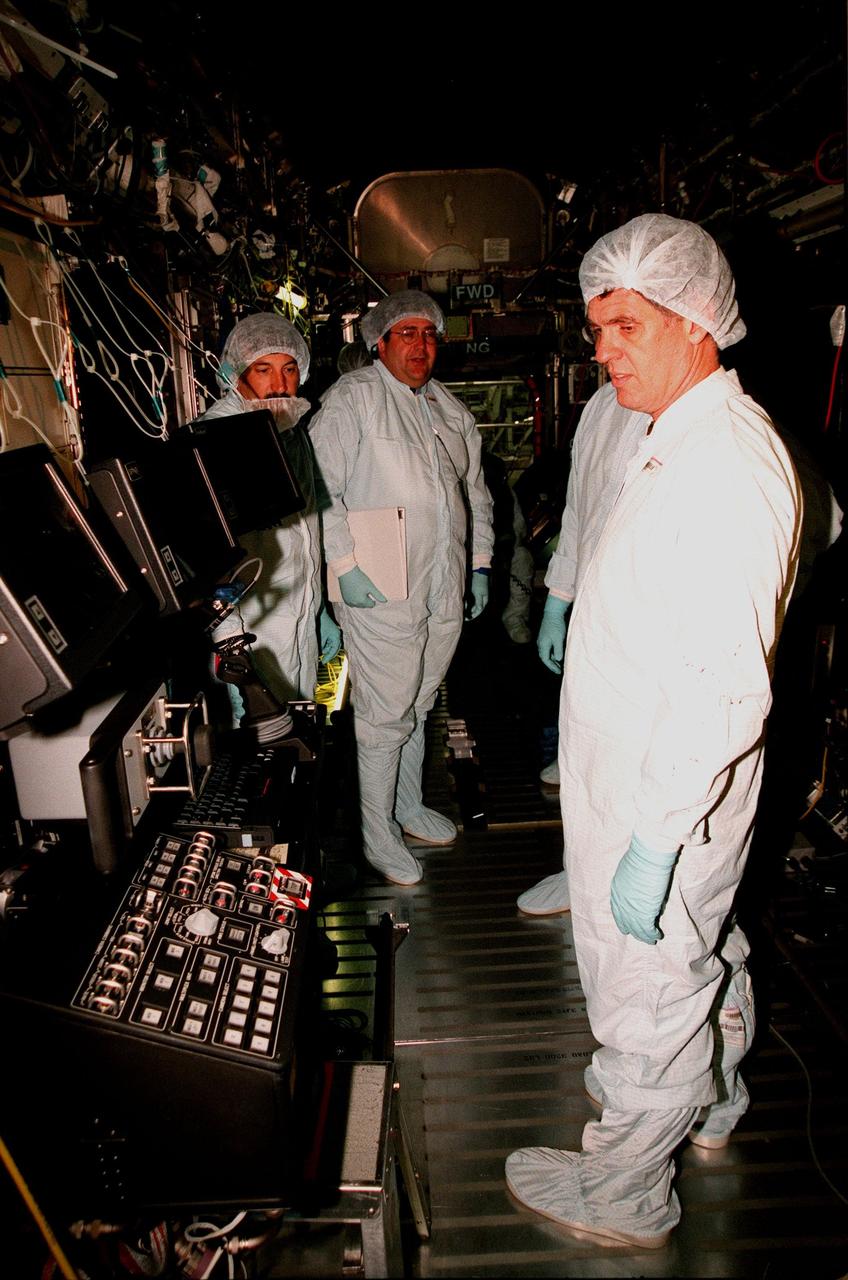
KENNEDY SPACE CENTER, FLA. -- Inside the U.S. Lab, called "Destiny," which is in the Space Station Processing Facility, U.S. Rep. Dave Weldon (right) looks over equipment. In the background (center) is Thomas R. "Randy" Galloway, with the Space Station Hardware Integration Office. Weldon is on the House Science Committee and vice chairman of the Space and Aeronautics Subcommittee. Destiny is scheduled to be launched on Space Shuttle Endeavour in early 2000. It will become the centerpiece of scientific research on the ISS, with five equipment racks aboard to provide essential functions for station systems, including high data-rate communications, and to maintain the station's orientation using control gyroscopes launched earlier. Additional equipment and research racks will be installed in the laboratory on subsequent Shuttle flights

KENNEDY SPACE CENTER, FLA. -- In the Space Station Processing Facility, U.S. Rep Dave Weldon (at left) looks at the U.S. Lab, called Destiny. With him are Thomas R. "Randy" Galloway, with the Space Station Hardware Integration Office, Dana Gartzke, the congressman's chief of staffm and Boeing workers. Weldon is on the House Science Committee and vice chairman of the Space and Aeronautics Subcommittee. Destiny is scheduled to be launched on Space Shuttle Endeavour in early 2000. It will become the centerpiece of scientific research on the ISS, with five equipment racks aboard to provide essential functions for station systems, including high data-rate communications, and to maintain the station's orientation using control gyroscopes launched earlier. Additional equipment and research racks will be installed in the laboratory on subsequent Shuttle flights
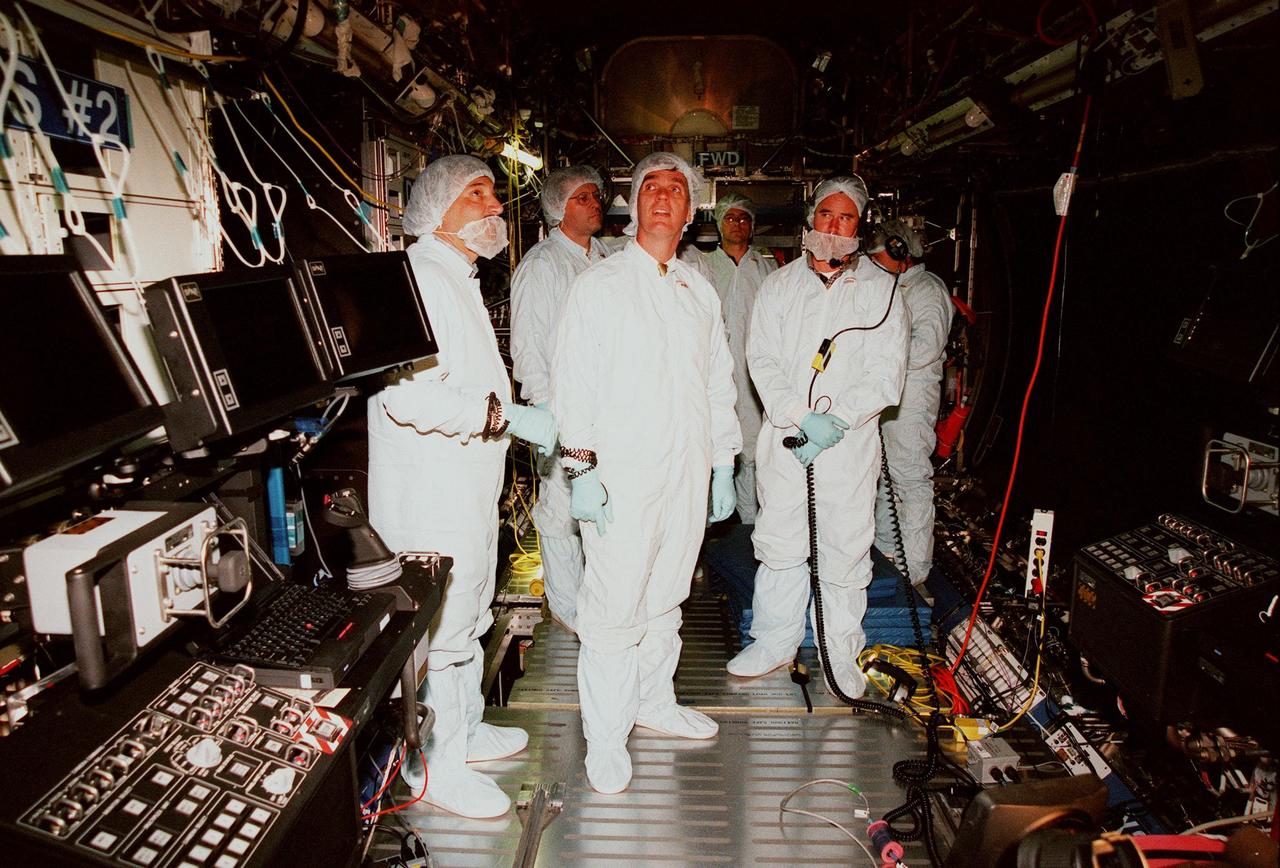
KENNEDY SPACE CENTER, FLA. -- In the Space Station Processing Facility, U.S. Rep. Dave Weldon (center) looks over the U.S. Laboratory, called "Destiny," with a group of Boeing workers. Behind (left) the congressman is Dana Gartzke, the congressman's chief of staff. Weldon is on the House Science Committee and vice chairman of the Space and Aeronautics Subcommittee. Destiny, which will become the centerpiece of scientific research on the ISS, will have five equipment racks aboard to provide essential functions for station systems, including high data-rate communications, and to maintain the station's orientation using control gyroscopes launched earlier. Additional equipment and research racks will be installed in the laboratory on subsequent Shuttle flights. Destiny is scheduled to be launched on Space Shuttle Endeavour in early 2000
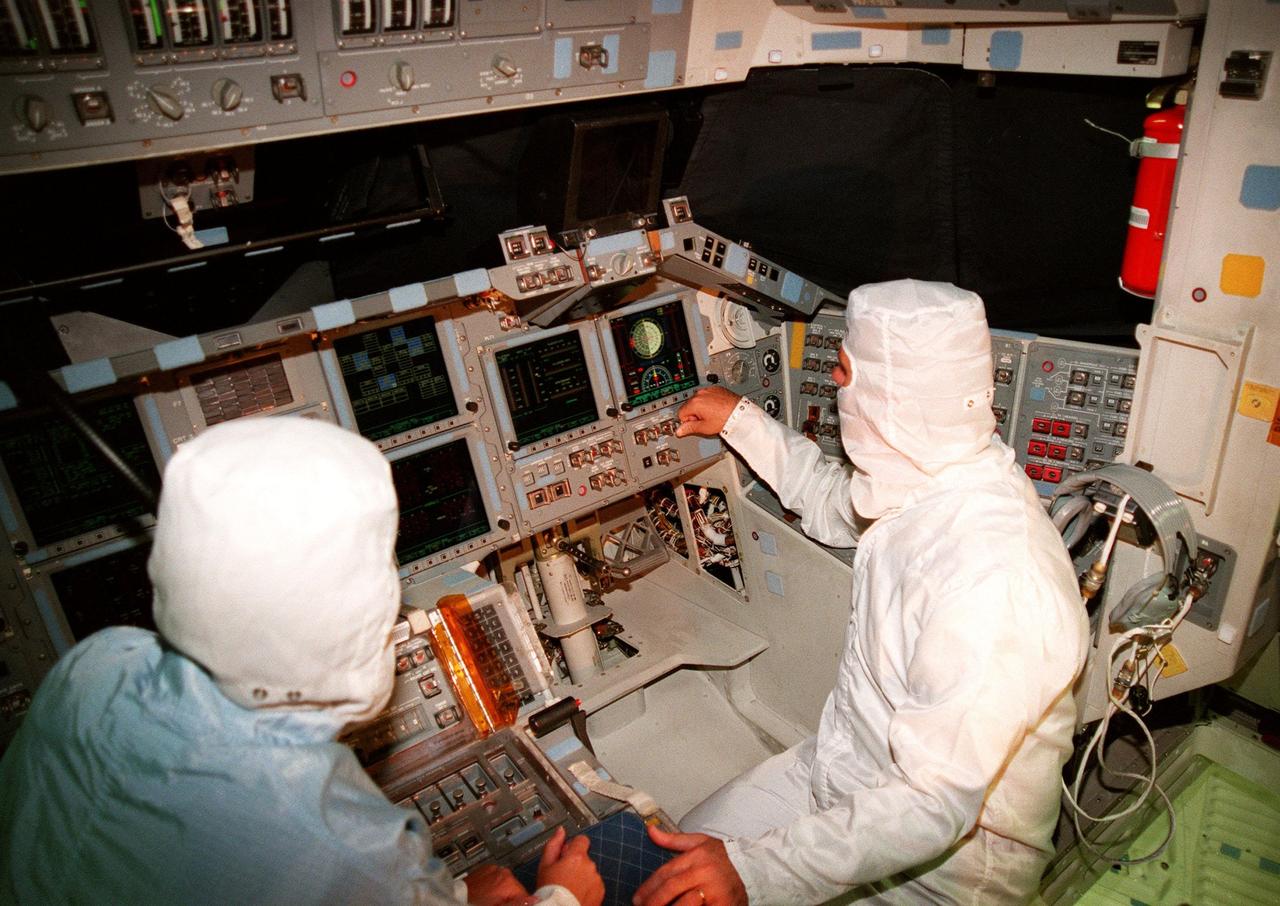
KENNEDY SPACE CENTER, FLA. -- In the cockpit of the orbiter Atlantis, which is in the Orbiter Processing Facility, U.S. Rep. Dave Weldon (right) looks at the newly installed Multifunction Electronic Display Subsystem (MEDS), known as the "glass cockpit." At left is Laural Patrick, a systems engineer with MEDS. Weldon is on the House Science Committee and vice chairman of the Space and Aeronautics Subcommittee. He was in Palmdale, Calif., when Atlantis underwent the modification and he wanted to see the final product. The full-color, flat-panel MEDS upgrade improves crew/orbiter interaction with easy-to-read, graphic portrayals of key flight indicators like attitude display and mach speed. The installation makes Atlantis the most modern orbiter in the fleet and equals the systems on current commercial jet airliners and military aircraft. Atlantis is scheduled to fly on mission STS-101 in early December
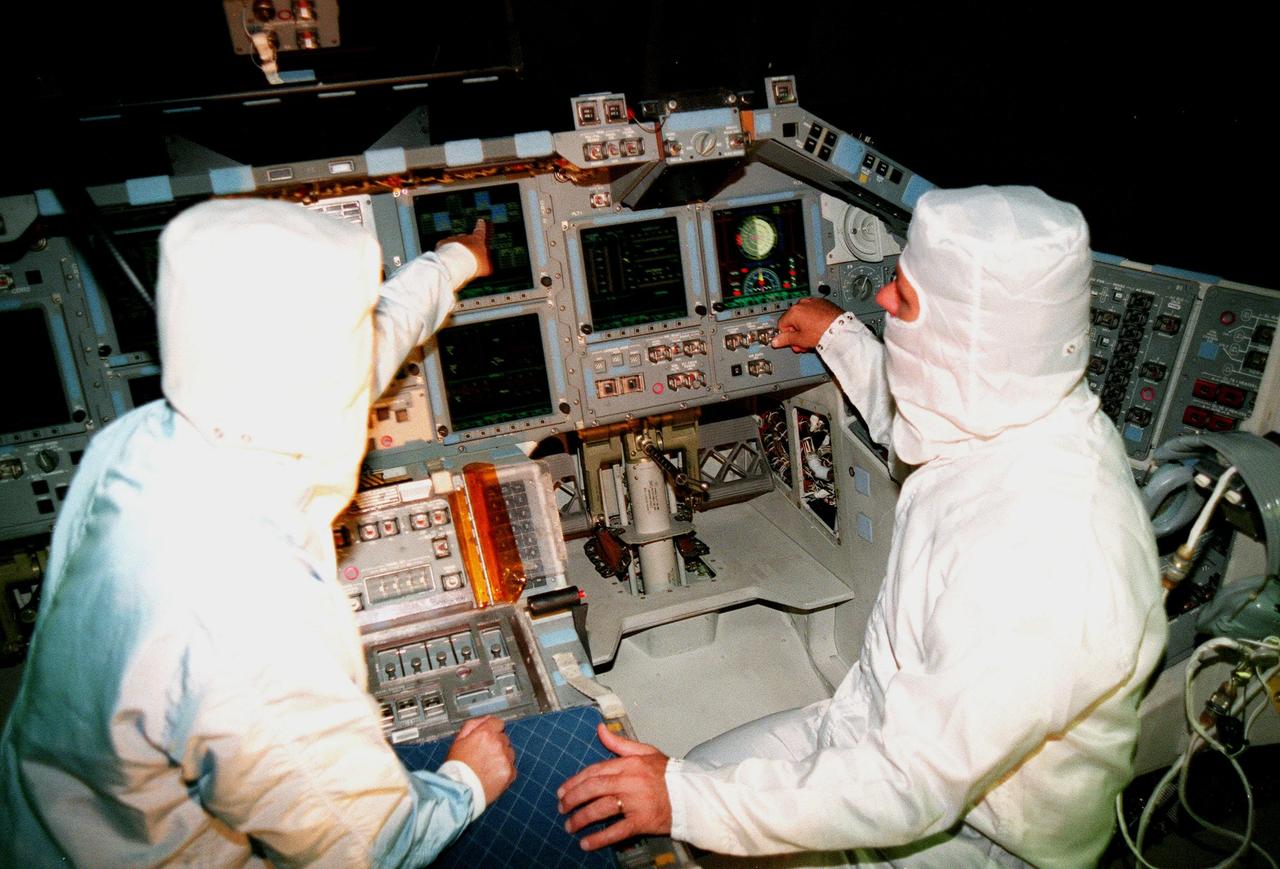
KENNEDY SPACE CENTER, FLA. -- In the cockpit of the orbiter Atlantis, which is in the Orbiter Processing Facility, Laural Patrick (left), a systems engineer with MEDS, points out a feature of the newly installed Multifunction Electronic Display Subsystem (MEDS), known as the "glass cockpit," to U.S. Rep. Dave Weldon. The congressman is on the House Science Committee and vice chairman of the Space and Aeronautics Subcommittee. He was in Palmdale, Calif., when Atlantis underwent the modification and he wanted to see the final product. The full-color, flat-panel MEDS upgrade improves crew/orbiter interaction with easy-to-read, graphic portrayals of key flight indicators like attitude display and mach speed. The installation makes Atlantis the most modern orbiter in the fleet and equals the systems on current commercial jet airliners and military aircraft. Atlantis is scheduled to fly on mission STS-101 in early December