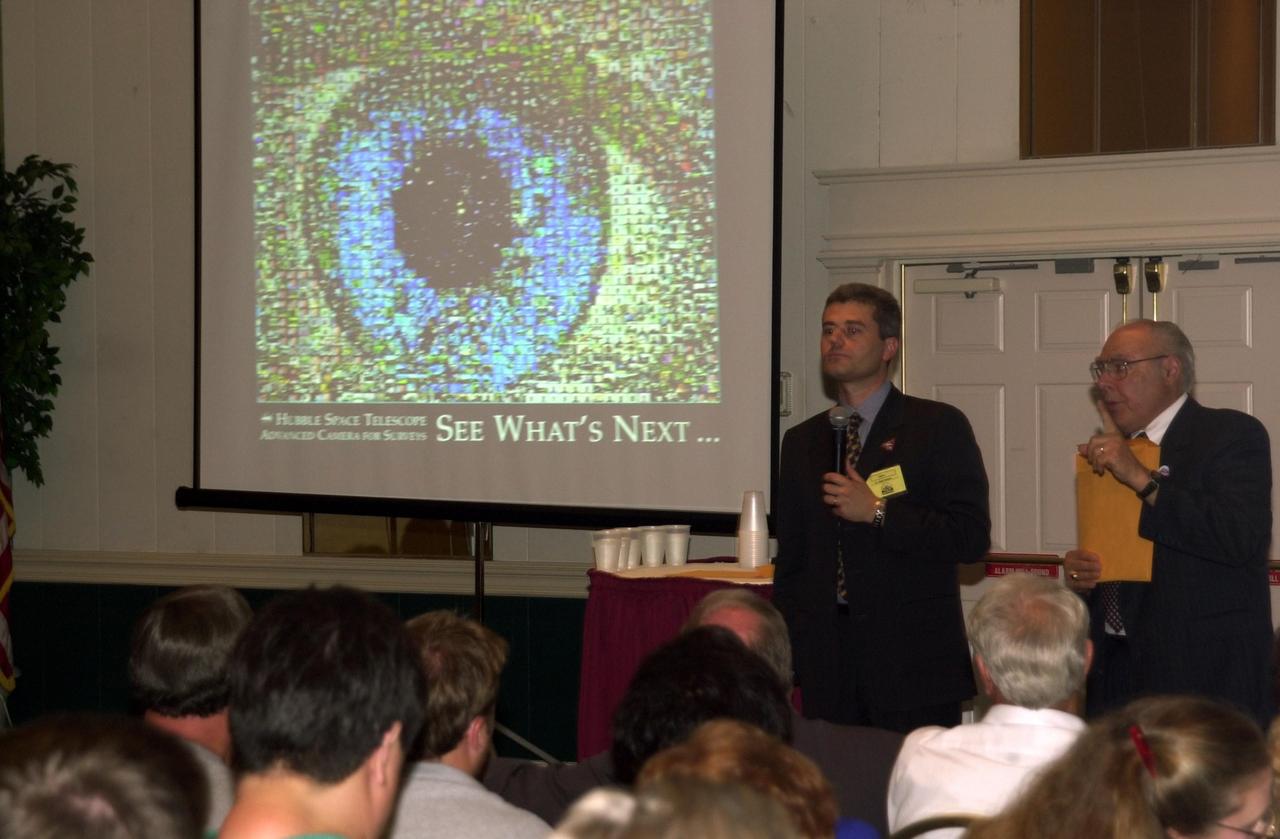
KENNEDY SPACE CENTER, FLA. -- At the 2002 Space Congress, Cape Canaveral, Fla., a presentation on "Hubble Discoveries" by Dr. Mark Clampin (with microphone), Advanced Camera for Surveys team, included an image of an eye (seen on the screen) comprising hundreds of photos of all the people who worked on Hubble. On the right is Frank Ceppolina, project manager, Hubble Space Telescope Development Project. The Space Congress is held annually to highlight military and space initiatives, new technologies, and Florida's role in programs and research. This year's theme is Beginning a New Era - Initiatives in Space. NASA presented several paper sessions, including Advancements in Technology. Space Congress is sponsored by the Canaveral Council of Technical Societies
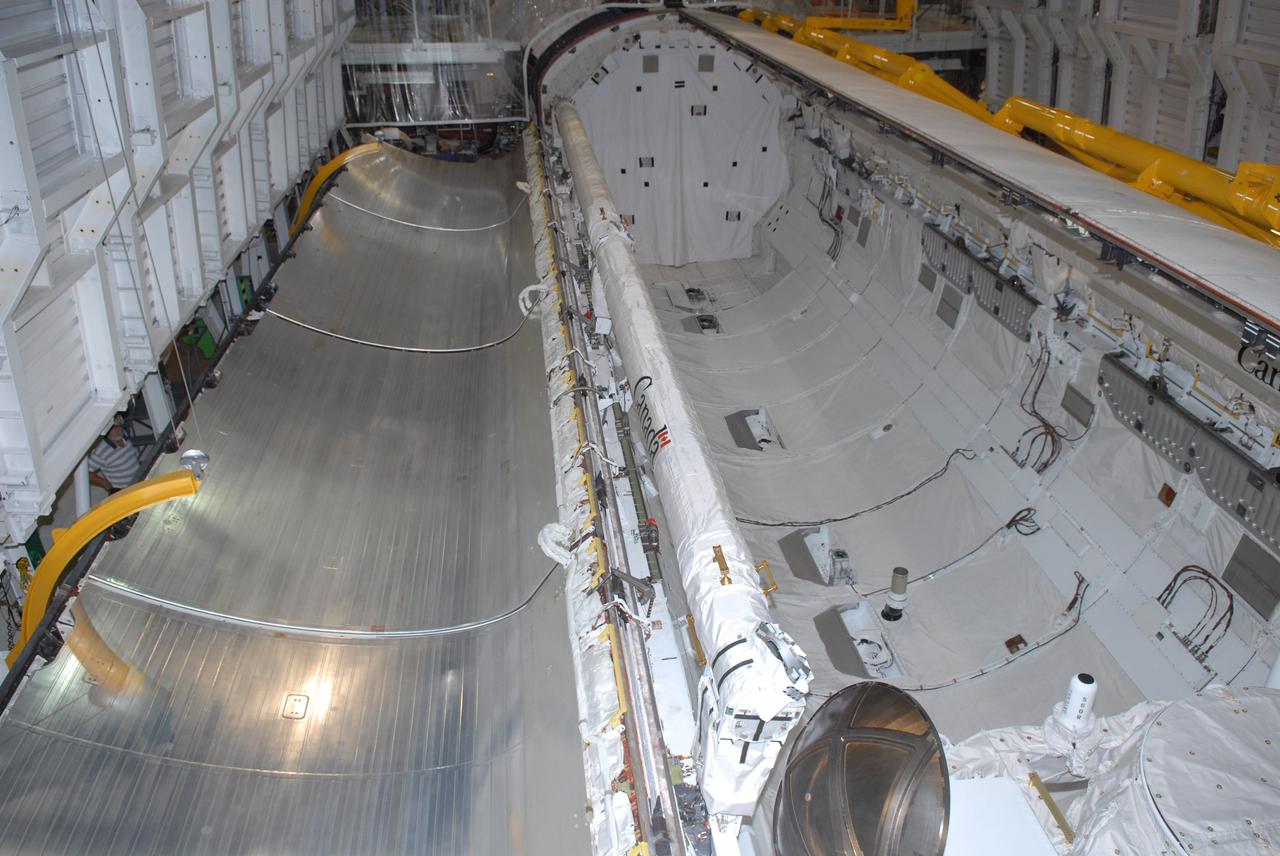
CAPE CANAVERAL, Fla. – In Orbiter Processing Facility 1 at NASA's Kennedy Space Center, space shuttle Atlantis' payload bay has been thoroughly cleaned and is ready to receive the carriers transporting the instruments and equipment needed to service the Hubble Space Telescope. Atlantis is targeted to launch Oct. 8 on the STS-125 mission to service Hubble. The mission crew will perform history-making, on-orbit “surgery” on two important science instruments aboard the telescope. After capturing the telescope, two teams of spacewalking astronauts will perform the repairs during five planned spacewalks. Photo credit: NASA/Jack Pfaller
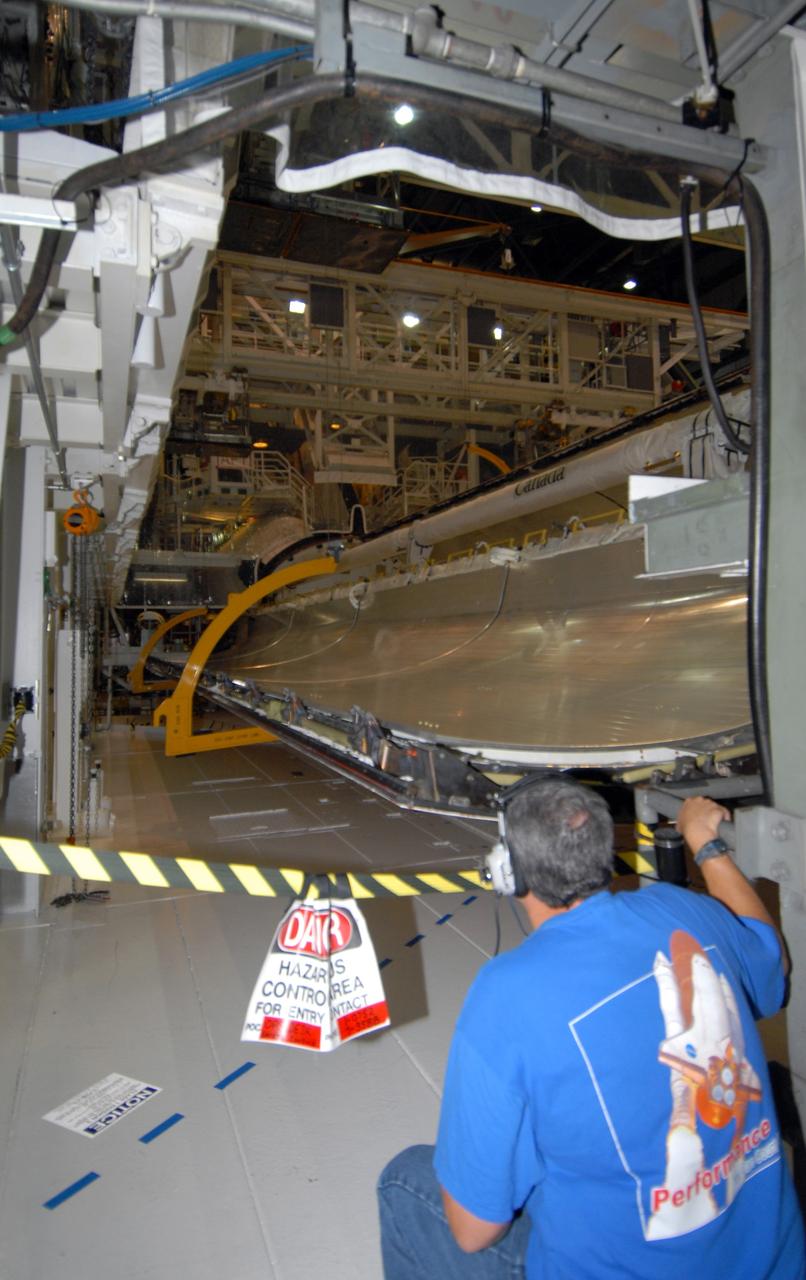
CAPE CANAVERAL, Fla. – In Orbiter Processing Facility 1 at NASA's Kennedy Space Center, a worker from United Space Alliance prepares to close the payload bay doors on space shuttle Atlantis. The payload bay has been thoroughly cleaned and is ready to receive the carriers transporting the instruments and equipment needed to service the Hubble Space Telescope. Atlantis is targeted to launch Oct. 8 on the STS-125 mission to service Hubble. The mission crew will perform history-making, on-orbit “surgery” on two important science instruments aboard the telescope. After capturing the telescope, two teams of spacewalking astronauts will perform the repairs during five planned spacewalks. Photo credit: NASA/Jack Pfaller
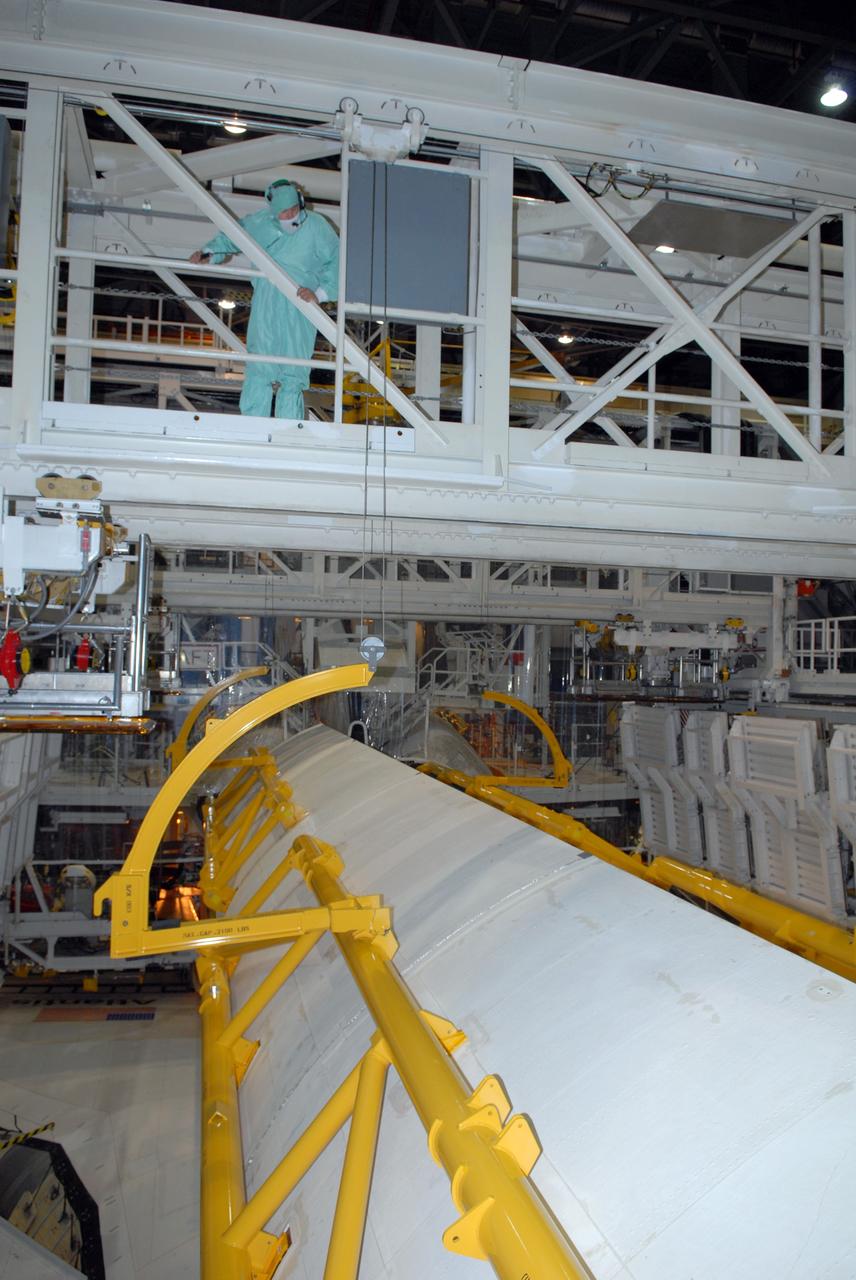
CAPE CANAVERAL, Fla. – In Orbiter Processing Facility 1 at NASA's Kennedy Space Center, a worker from United Space Alliance supervises the closure of the payload bay doors on space shuttle Atlantis. The payload bay has been thoroughly cleaned and is ready to receive the carriers transporting the instruments and equipment needed to service the Hubble Space Telescope. Atlantis is targeted to launch Oct. 8 on the STS-125 mission to service Hubble. The mission crew will perform history-making, on-orbit “surgery” on two important science instruments aboard the telescope. After capturing the telescope, two teams of spacewalking astronauts will perform the repairs during five planned spacewalks. Photo credit: NASA/Jack Pfaller
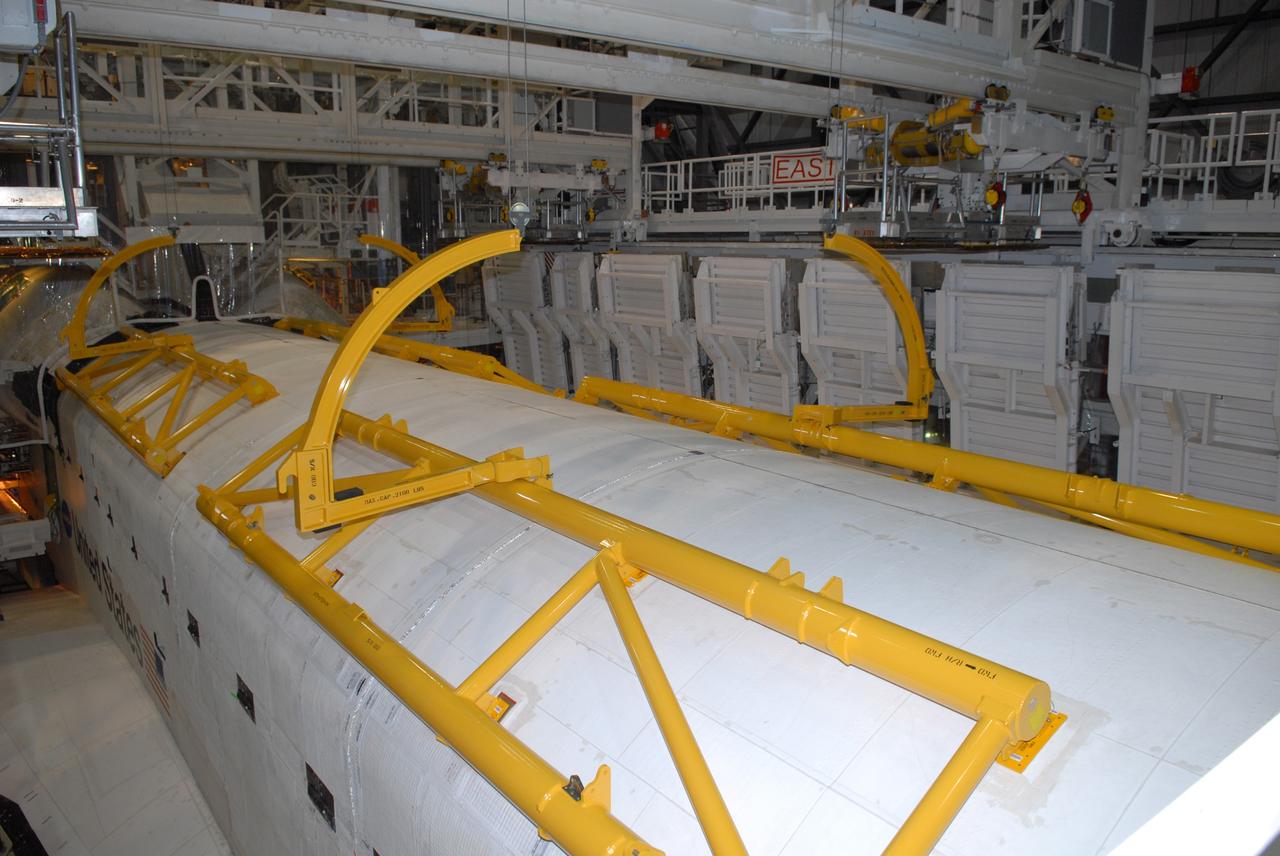
CAPE CANAVERAL, Fla. – In Orbiter Processing Facility 1 at NASA's Kennedy Space Center, the payload bay doors on space shuttle Atlantis are nearly closed. The payload bay has been thoroughly cleaned and is ready to receive the carriers transporting the instruments and equipment needed to service the Hubble Space Telescope. Atlantis is targeted to launch Oct. 8 on the STS-125 mission to service Hubble. The mission crew will perform history-making, on-orbit “surgery” on two important science instruments aboard the telescope. After capturing the telescope, two teams of spacewalking astronauts will perform the repairs during five planned spacewalks. Photo credit: NASA/Jack Pfaller
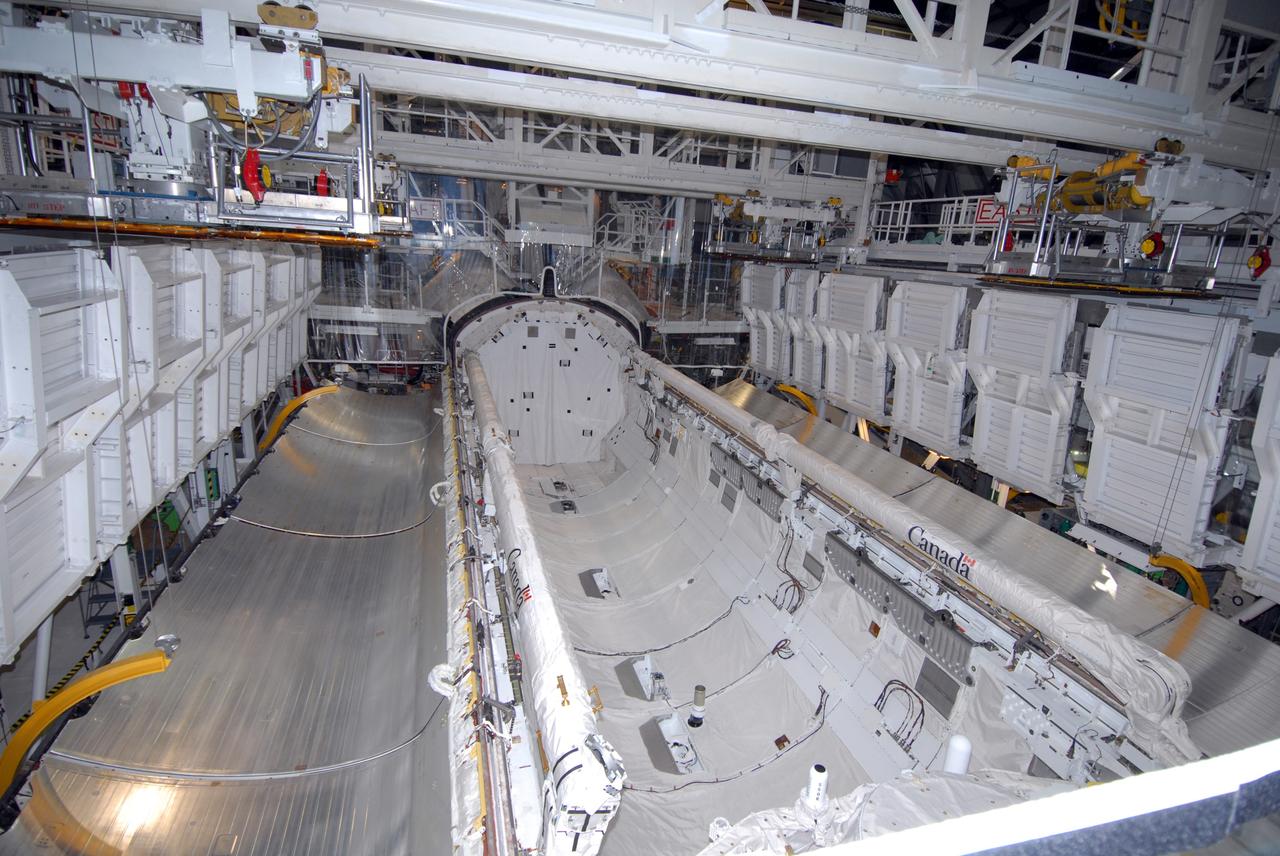
CAPE CANAVERAL, Fla. – In Orbiter Processing Facility 1 at NASA's Kennedy Space Center, space shuttle Atlantis' payload bay has been thoroughly cleaned and is ready to receive the carriers transporting the instruments and equipment needed to service the Hubble Space Telescope. Atlantis is targeted to launch Oct. 8 on the STS-125 mission to service Hubble. The mission crew will perform history-making, on-orbit “surgery” on two important science instruments aboard the telescope. After capturing the telescope, two teams of spacewalking astronauts will perform the repairs during five planned spacewalks. Photo credit: NASA/Jack Pfaller

CAPE CANAVERAL, Fla. – In Orbiter Processing Facility 1 at NASA's Kennedy Space Center, preparations are under way to close the payload bay doors on space shuttle Atlantis. The payload bay has been thoroughly cleaned and is ready to receive the carriers transporting the instruments and equipment needed to service the Hubble Space Telescope. Atlantis is targeted to launch Oct. 8 on the STS-125 mission to service Hubble. The mission crew will perform history-making, on-orbit “surgery” on two important science instruments aboard the telescope. After capturing the telescope, two teams of spacewalking astronauts will perform the repairs during five planned spacewalks. Photo credit: NASA/Jack Pfaller
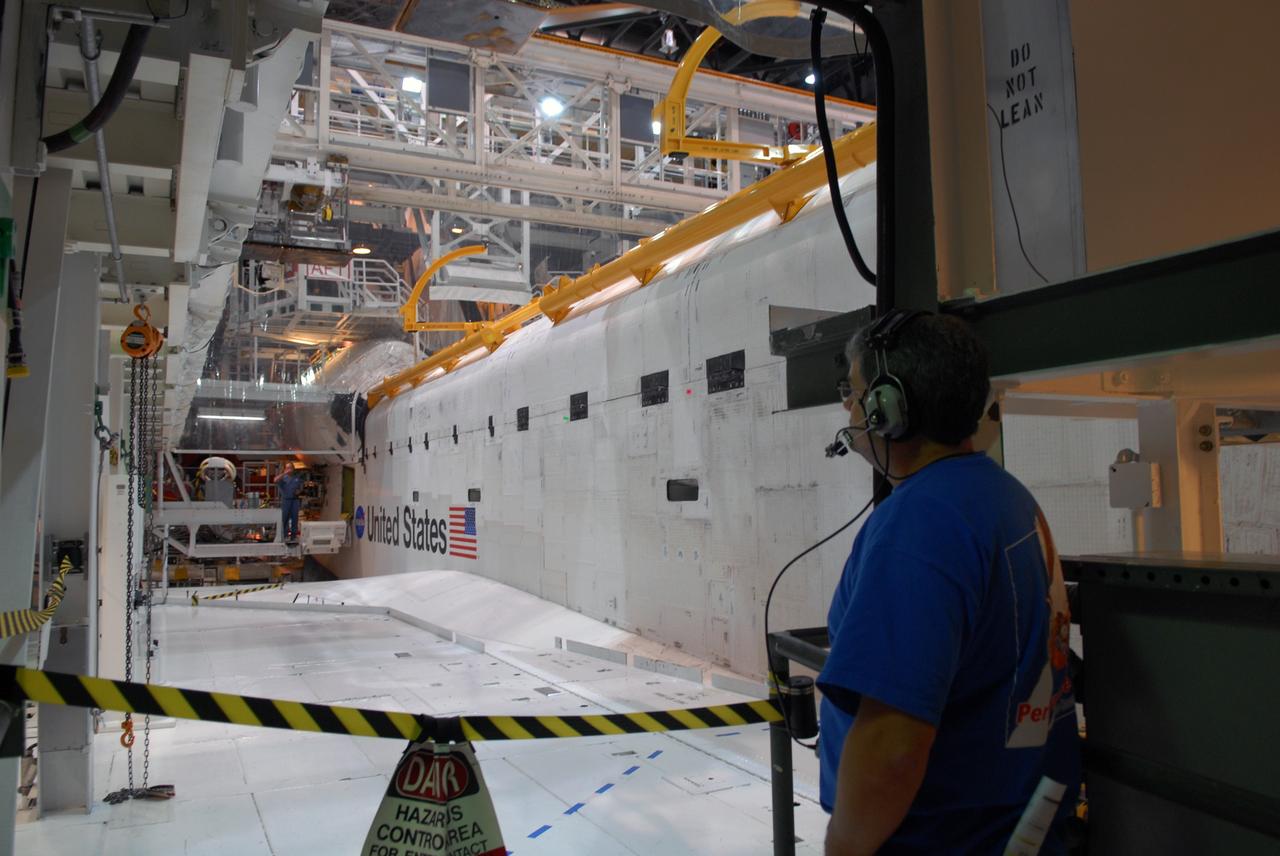
CAPE CANAVERAL, Fla. – In Orbiter Processing Facility 1 at NASA's Kennedy Space Center, a worker from United Space Alliance gives the signal that the payload bay doors on space shuttle Atlantis are closed. The payload bay has been thoroughly cleaned and is ready to receive the carriers transporting the instruments and equipment needed to service the Hubble Space Telescope. Atlantis is targeted to launch Oct. 8 on the STS-125 mission to service Hubble. The mission crew will perform history-making, on-orbit “surgery” on two important science instruments aboard the telescope. After capturing the telescope, two teams of spacewalking astronauts will perform the repairs during five planned spacewalks. Photo credit: NASA/Jack Pfaller
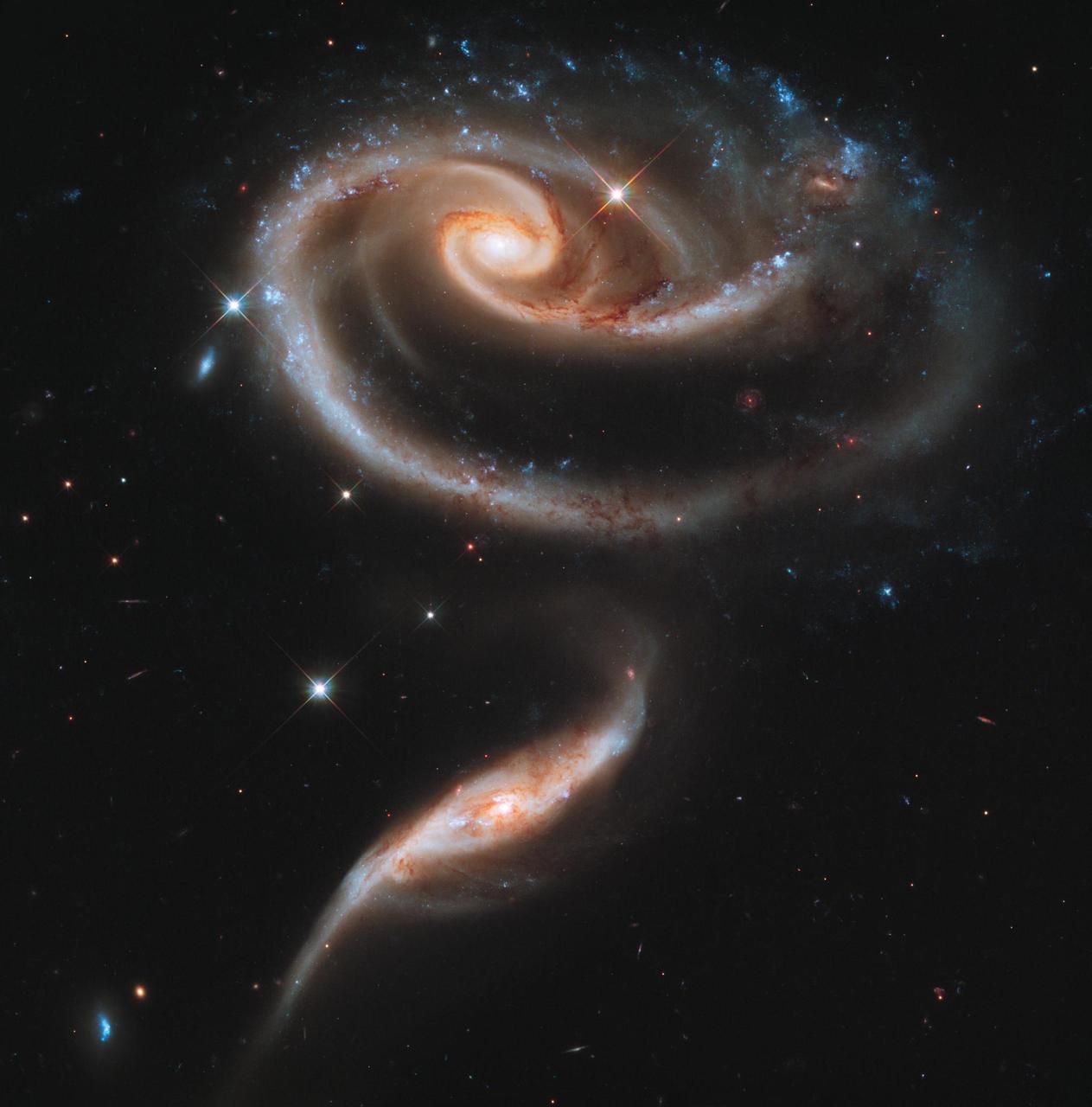
NASA image release April 20, 2011 To see a video of this image go here: <a href="http://www.flickr.com/photos/gsfc/5637796622">www.flickr.com/photos/gsfc/5637796622</a> To celebrate the 21st anniversary of the Hubble Space Telescope's deployment into space, astronomers at the Space Telescope Science Institute in Baltimore, Md., pointed Hubble's eye at an especially photogenic pair of interacting galaxies called Arp 273. The larger of the spiral galaxies, known as UGC 1810, has a disk that is distorted into a rose-like shape by the gravitational tidal pull of the companion galaxy below it, known as UGC 1813. This image is a composite of Hubble Wide Field Camera 3 data taken on December 17, 2010, with three separate filters that allow a broad range of wavelengths covering the ultraviolet, blue, and red portions of the spectrum. Hubble was launched April 24, 1990, aboard Discovery's STS-31 mission. Hubble discoveries revolutionized nearly all areas of current astronomical research from planetary science to cosmology. Credit: NASA, ESA, and the Hubble Heritage Team (STScI/AURA) To read more about this image go here: <a href="http://www.nasa.gov/mission_pages/hubble/science/hubble-rose.html" rel="nofollow">www.nasa.gov/mission_pages/hubble/science/hubble-rose.html</a> <b><a href="http://www.nasa.gov/centers/goddard/home/index.html" rel="nofollow">NASA Goddard Space Flight Center</a></b> enables NASA’s mission through four scientific endeavors: Earth Science, Heliophysics, Solar System Exploration, and Astrophysics. Goddard plays a leading role in NASA’s accomplishments by contributing compelling scientific knowledge to advance the Agency’s mission. <b>Follow us on <a href="http://twitter.com/NASA_GoddardPix" rel="nofollow">Twitter</a></b> <b>Join us on <a href="http://www.facebook.com/pages/Greenbelt-MD/NASA-Goddard/395013845897?ref=tsd" rel="nofollow">Facebook</a></b>

S103-E-5191 (21 Dec. 1999) --- Astronaut C. Michael Foale, STS-103 mission specialist, consults a reference manual on space shuttle Discovery's middeck just a few hours prior to the crew's capture of the Hubble Space Telescope (HST). Foale is part of the spacewalk team assigned to extravehicular activity (EVA) duty on the HST later in the week. The photo was recorded with an electronic still camera at 11:02:40 GMT, Dec. 21, 1999. Photo credit: NASA

To view a video of this story go to: <a href="http://www.flickr.com/photos/gsfc/8448332724">www.flickr.com/photos/gsfc/8448332724</a> Working with astronomical image processors at the Space Telescope Science Institute in Baltimore, Md., renowned astro-photographer Robert Gendler has taken science data from the Hubble Space Telescope (HST) archive and combined it with his own ground-based observations to assemble a photo illustration of the magnificent spiral galaxy M106. Gendler retrieved archival Hubble images of M106 to assemble a mosaic of the center of the galaxy. He then used his own and fellow astro-photographer Jay GaBany's observations of M106 to combine with the Hubble data in areas where there was less coverage, and finally, to fill in the holes and gaps where no Hubble data existed. The center of the galaxy is composed almost entirely of HST data taken by the Advanced Camera for Surveys, Wide Field Camera 3, and Wide Field Planetary Camera 2 detectors. The outer spiral arms are predominantly HST data colorized with ground-based data taken by Gendler's and GaBany's 12.5-inch and 20-inch telescopes, located at very dark remote sites in New Mexico. The image also reveals the optical component of the "anomalous arms" of M106, seen here as red, glowing hydrogen emission. To read more go to: <a href="http://www.nasa.gov/mission_pages/hubble/science/m106.html" rel="nofollow">www.nasa.gov/mission_pages/hubble/science/m106.html</a> Credit: NASA, ESA, the Hubble Heritage Team (STScI/AURA), R. Gendler (for the Hubble Heritage Team), and G. Bacon (STScI) <b><a href="http://www.nasa.gov/audience/formedia/features/MP_Photo_Guidelines.html" rel="nofollow">NASA image use policy.</a></b> <b><a href="http://www.nasa.gov/centers/goddard/home/index.html" rel="nofollow">NASA Goddard Space Flight Center</a></b> enables NASA’s mission through four scientific endeavors: Earth Science, Heliophysics, Solar System Exploration, and Astrophysics. Goddard plays a leading role in NASA’s accomplishments by contributing compelling scientific knowledge to advance the Agency’s mission. <b>Follow us on <a href="http://twitter.com/NASA_GoddardPix" rel="nofollow">Twitter</a></b> <b>Like us on <a href="http://www.facebook.com/pages/Greenbelt-MD/NASA-Goddard/395013845897?ref=tsd" rel="nofollow">Facebook</a></b> <b>Find us on <a href="http://instagrid.me/nasagoddard/?vm=grid" rel="nofollow">Instagram</a></b>
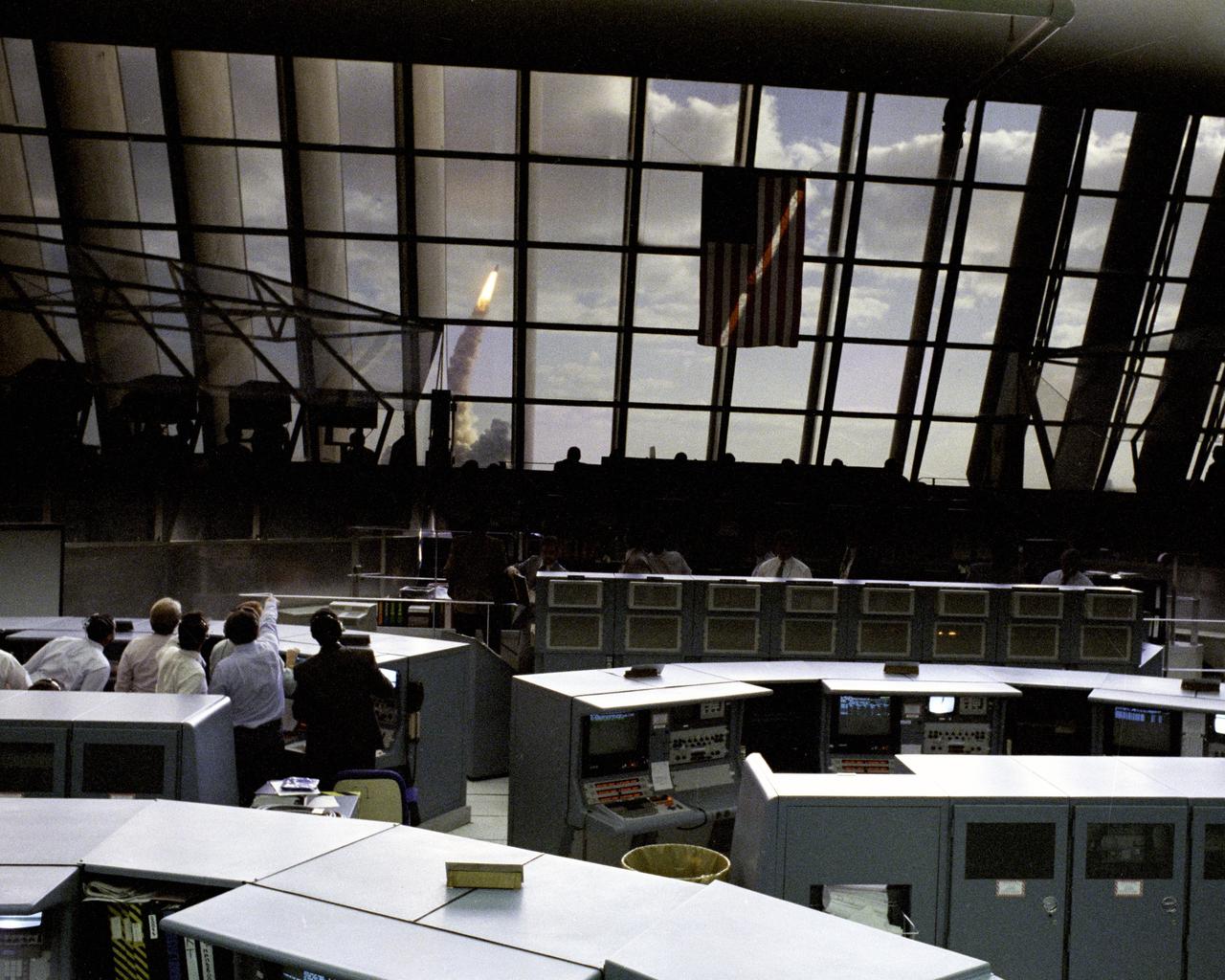
Through the large window panes of Firing Room 1, KSC launch team members reap the rewards of their work with a glimpse of the space shuttle Discovery soaring into the sky. Discovery was launched for the tenth time at 8:34 a.m. EDT on April 24 beginning the five-day STS-31 mission to deploy the Hubble Space Telescope. A ray of morning sunlight highlights the red and white stripes of Old Glory hanging high in the Firing Room. Launch team members overcame a last minute challenge in the STS-31 countdown when software detected a main propulsion system valve was out of position. The situation was quickly corrected and verified by the team from consoles in the Firing Room and the countdown was returned in a matter of minutes. Photo credit: NASA
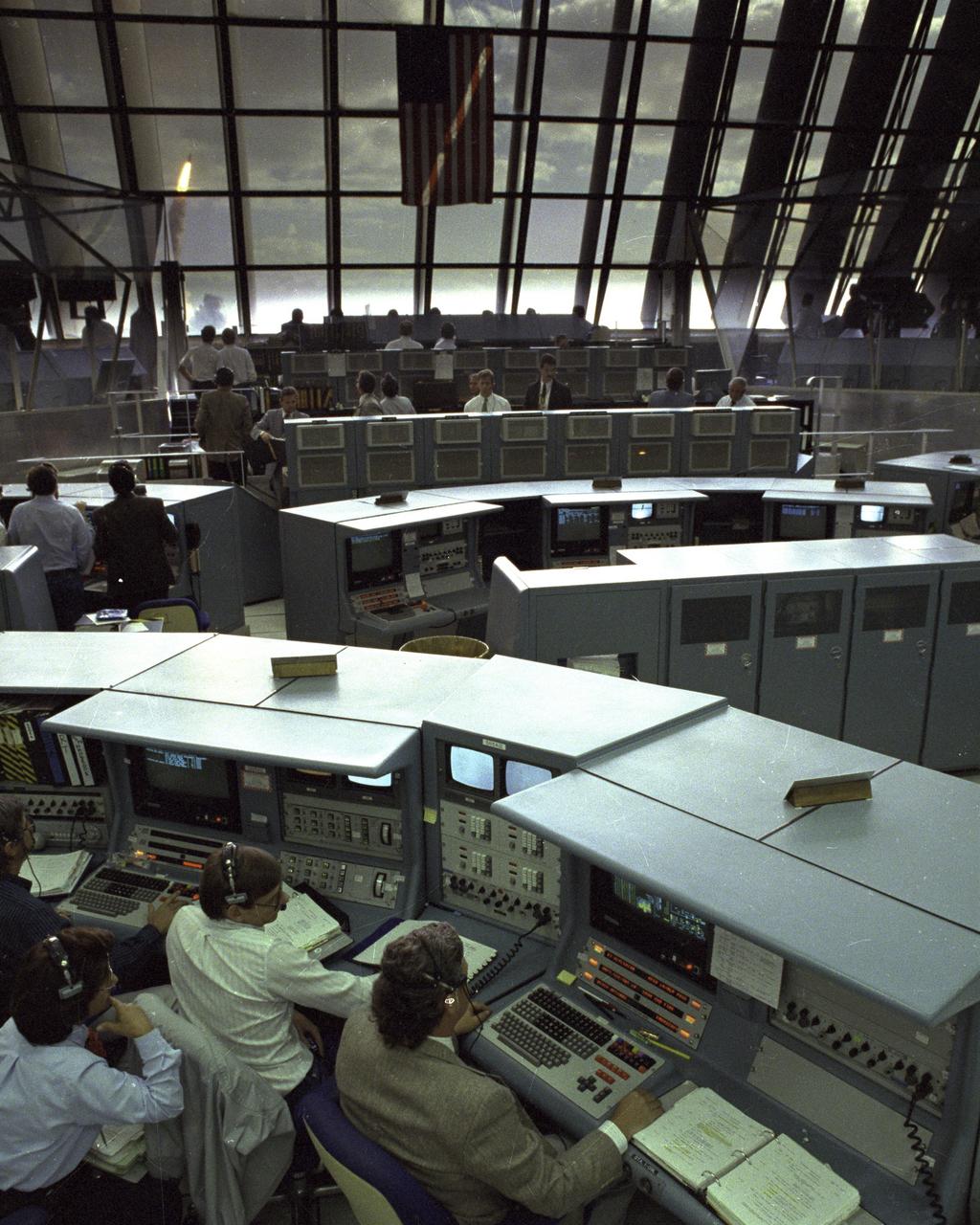
Through the large window panes of Firing Room 1, KSC launch team members reap the rewards of their work with a glimpse of the space shuttle Discovery soaring into the sky. Discovery was launched for the tenth time at 8:34 a.m. EDT on April 24 beginning the five-day STS-31 mission to deploy the Hubble Space Telescope. A ray of morning sunlight highlights the red and white stripes of Old Glory hanging high in the Firing Room. Launch team members overcame a last minute challenge in the STS-31 countdown when software detected a main propulsion system valve was out of position. The situation was quickly corrected and verified by the team from consoles in the Firing Room and the countdown was returned in a matter of minutes. Photo credit: NASA
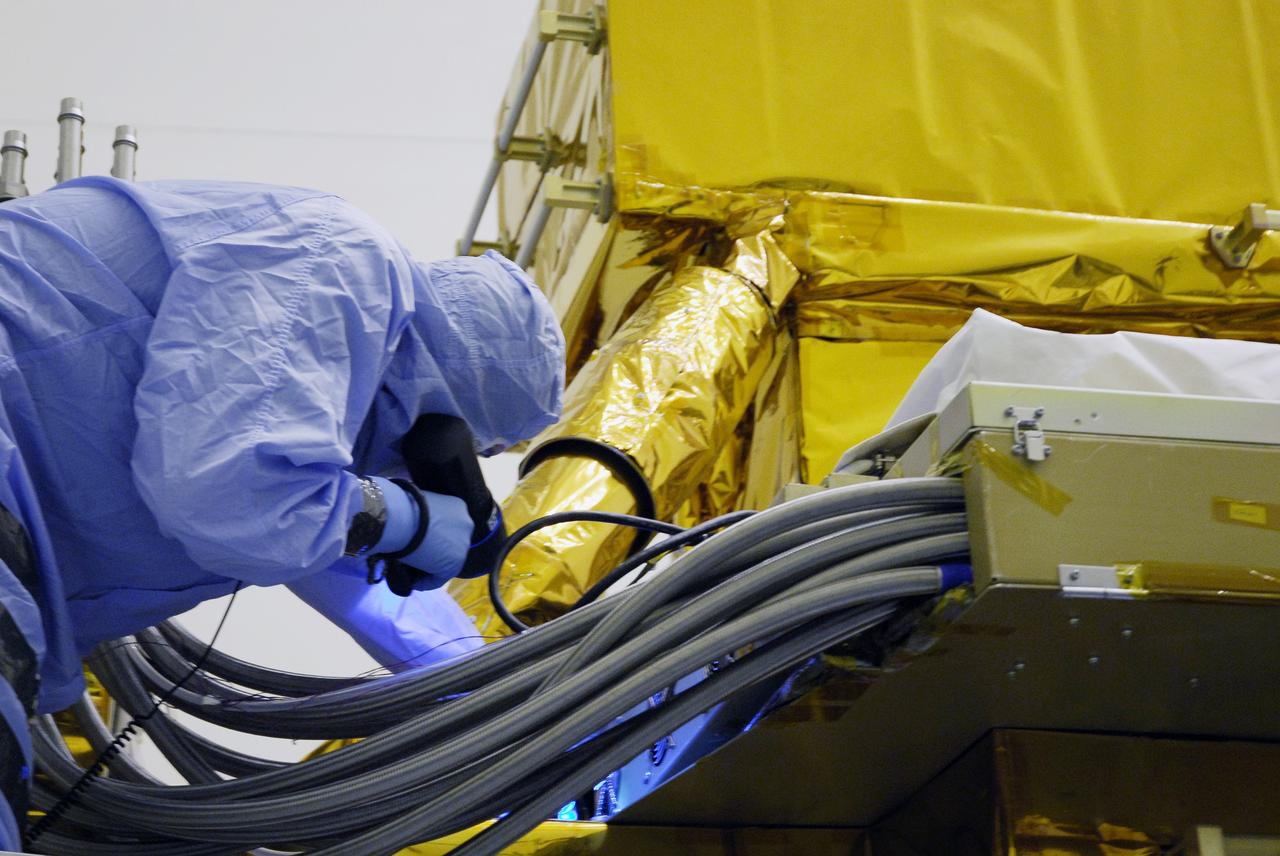
CAPE CANAVERAL, Fla. - In the Payload Hazardous Servicing Facility at NASA's Kennedy Space Center, a technician cleans contamination from the Super Lightweight Interchangeable Carrier, or SLIC. Contamination discovered Sept. 17 during preparations to deliver NASA's Hubble Space Telescope servicing payload to Launch Pad 39A. Cleanliness is extremely important for space shuttle Atlantis’ STS-125 mission to Hubble, and the teams have insured that the SLIC is ready to fly. The SLIC, which holds battery module assemblies, is built with state-of-the-art, lightweight, composite materials - carbon fiber with a cyanate ester resin and a titanium metal matrix composite. These composites have greater strength-to-mass ratios than the metals typically used in spacecraft design. The carrier is one of four being transferred to Launch Pad 39A. At the pad, the carriers will be loaded into Atlantis’ payload bay. Launch of Atlantis is targeted for Oct. 10. Photo credit: NASA/Jack Pfaller
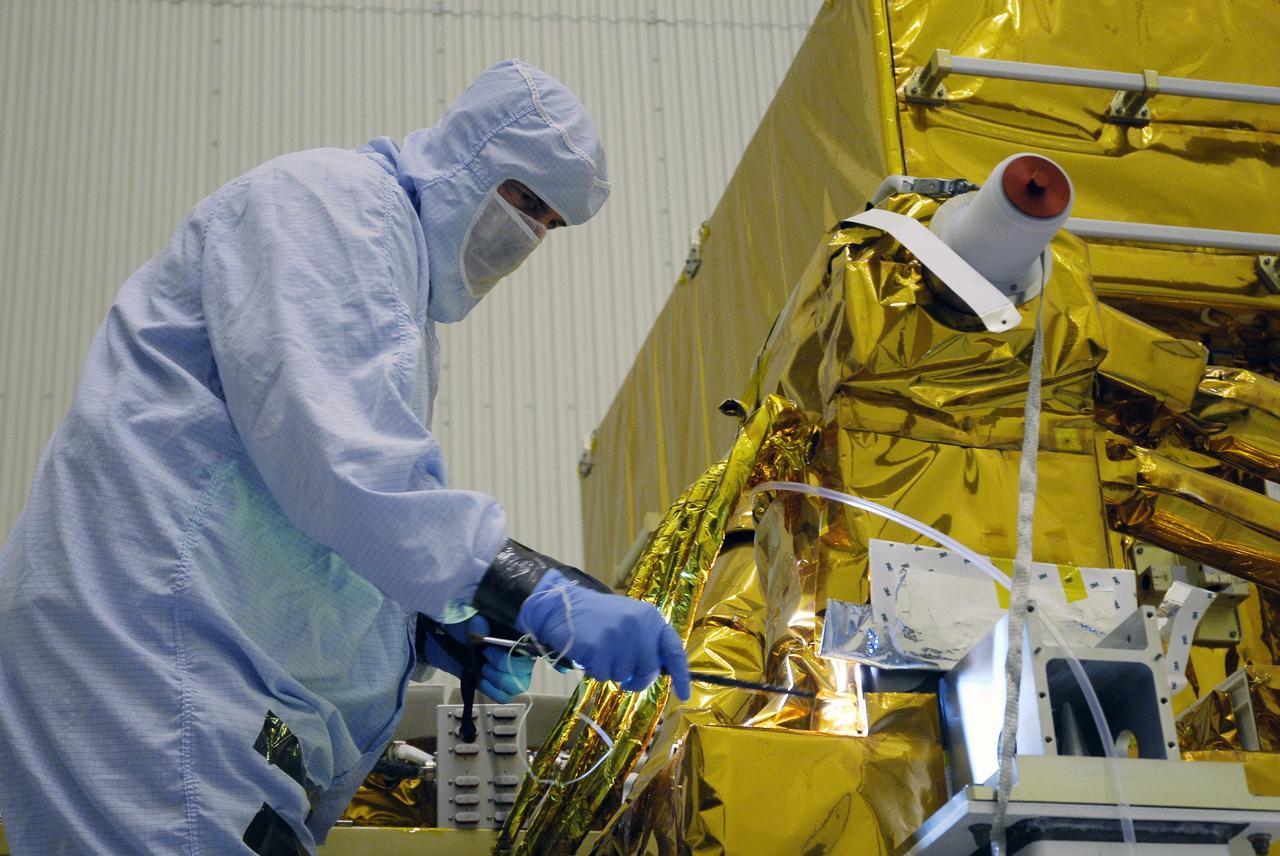
CAPE CANAVERAL, Fla. - In the Payload Hazardous Servicing Facility at NASA's Kennedy Space Center, a technician cleans contamination from the Super Lightweight Interchangeable Carrier, or SLIC. Contamination discovered Sept. 17 during preparations to deliver NASA's Hubble Space Telescope servicing payload to Launch Pad 39A. Cleanliness is extremely important for space shuttle Atlantis’ STS-125 mission to Hubble, and the teams have insured that the SLIC is ready to fly. The SLIC, which holds battery module assemblies, is built with state-of-the-art, lightweight, composite materials - carbon fiber with a cyanate ester resin and a titanium metal matrix composite. These composites have greater strength-to-mass ratios than the metals typically used in spacecraft design. The carrier is one of four being transferred to Launch Pad 39A. At the pad, the carriers will be loaded into Atlantis’ payload bay. Launch of Atlantis is targeted for Oct. 10. Photo credit: NASA/Jack Pfaller
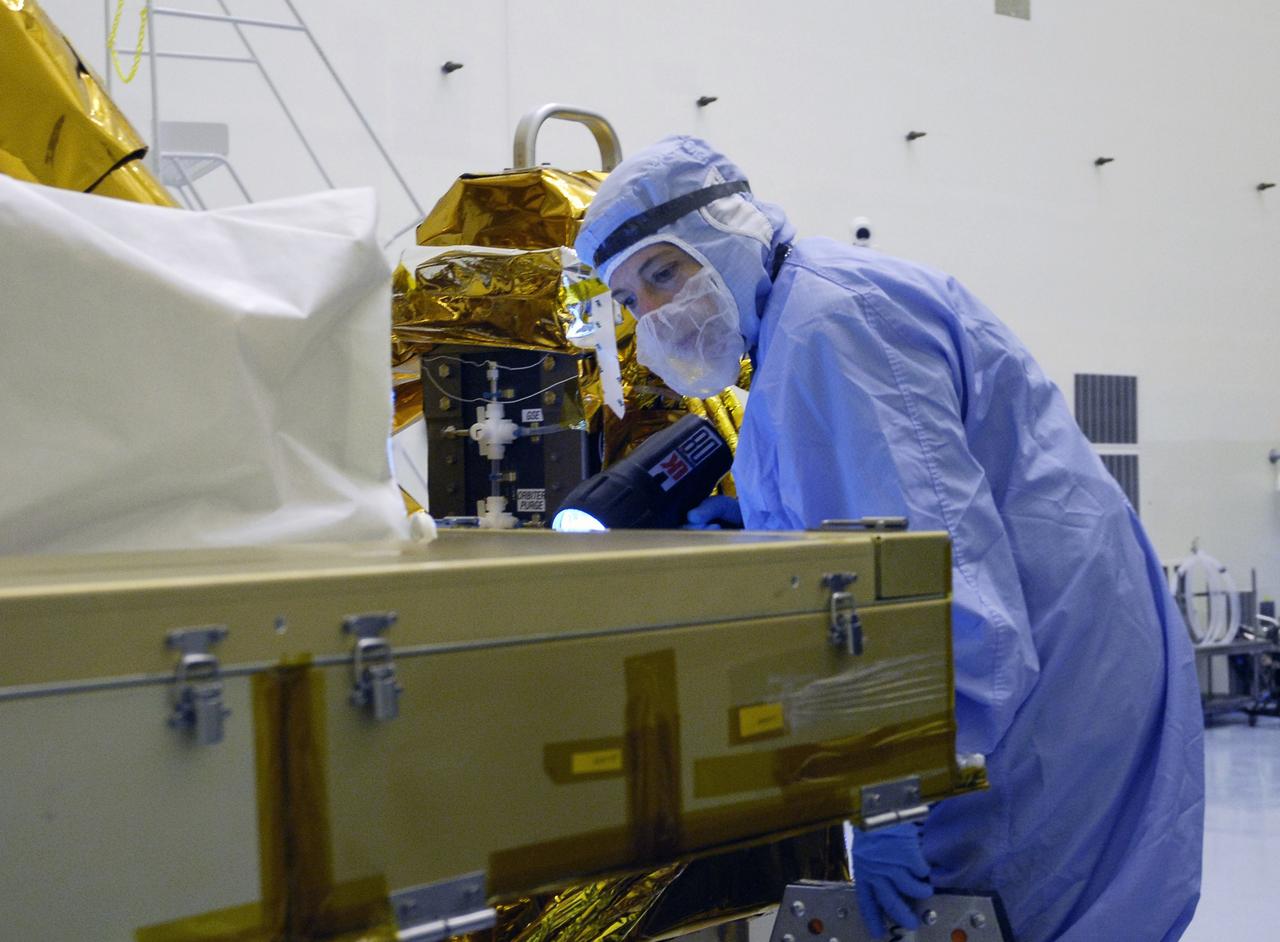
CAPE CANAVERAL, Fla. - In the Payload Hazardous Servicing Facility at NASA's Kennedy Space Center, a technician cleans contamination from the Super Lightweight Interchangeable Carrier, or SLIC. Contamination discovered Sept. 17 during preparations to deliver NASA's Hubble Space Telescope servicing payload to Launch Pad 39A. Cleanliness is extremely important for space shuttle Atlantis’ STS-125 mission to Hubble, and the teams have insured that the SLIC is ready to fly. The SLIC, which holds battery module assemblies, is built with state-of-the-art, lightweight, composite materials - carbon fiber with a cyanate ester resin and a titanium metal matrix composite. These composites have greater strength-to-mass ratios than the metals typically used in spacecraft design. The carrier is one of four being transferred to Launch Pad 39A. At the pad, the carriers will be loaded into Atlantis’ payload bay. Launch of Atlantis is targeted for Oct. 10. Photo credit: NASA/Jack Pfaller
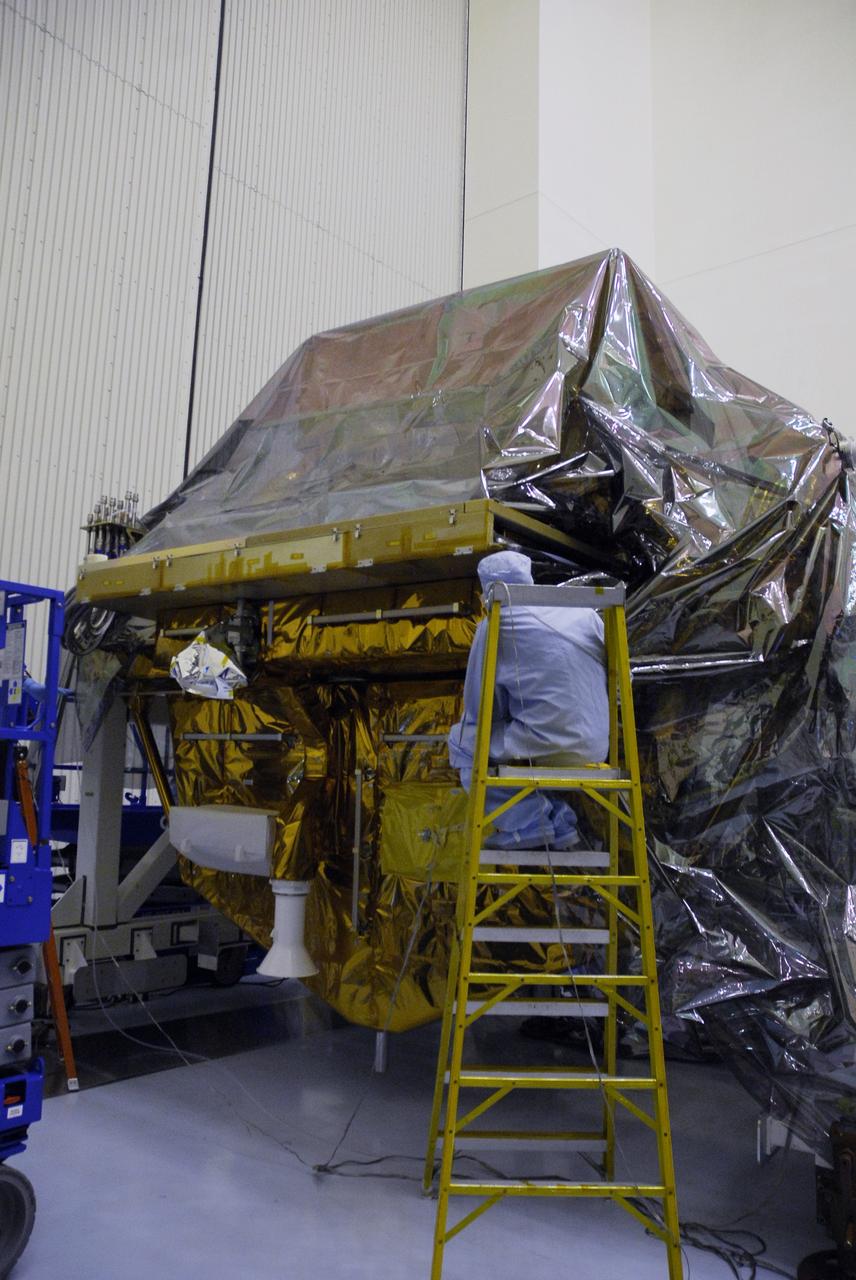
CAPE CANAVERAL, Fla. - In the Payload Hazardous Servicing Facility at NASA's Kennedy Space Center, the protective cover is being replaced on the Super Lightweight Interchangeable Carrier, or SLIC. The cover was removed to clean the carrier of contaminants found Sept. 17 during preparations to deliver NASA's Hubble Space Telescope servicing payload to Launch Pad 39A. Cleanliness is extremely important for space shuttle Atlantis’ STS-125 mission to Hubble, and the teams have insured that the SLIC is ready to fly. The SLIC, which holds battery module assemblies, is built with state-of-the-art, lightweight, composite materials - carbon fiber with a cyanate ester resin and a titanium metal matrix composite. These composites have greater strength-to-mass ratios than the metals typically used in spacecraft design. The carrier is one of four being transferred to Launch Pad 39A. At the pad, the carriers will be loaded into Atlantis’ payload bay. Launch of Atlantis is targeted for Oct. 10. Photo credit: NASA/Jack Pfaller
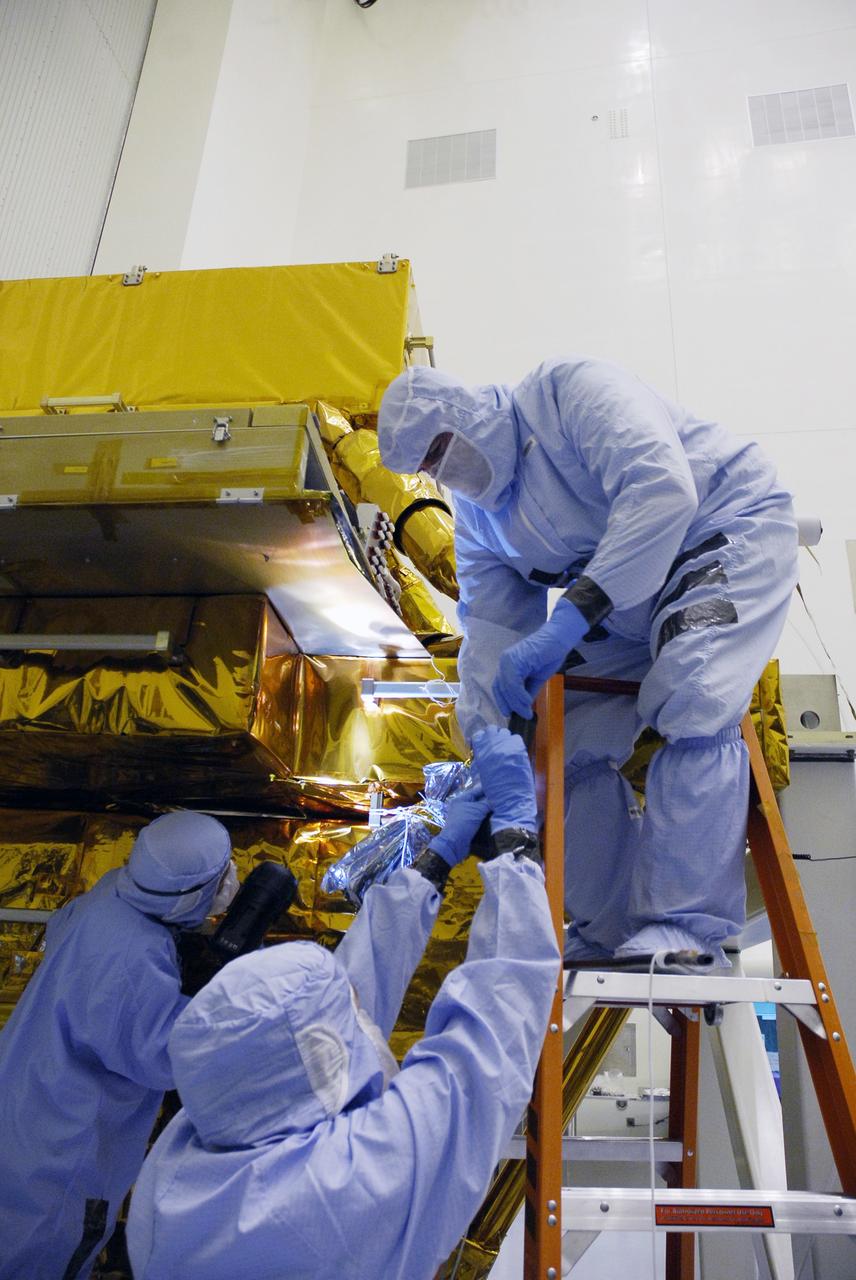
CAPE CANAVERAL, Fla. - In the Payload Hazardous Servicing Facility at NASA's Kennedy Space Center, technicians clean contamination from the Super Lightweight Interchangeable Carrier, or SLIC. Contamination discovered Sept. 17 during preparations to deliver NASA's Hubble Space Telescope servicing payload to Launch Pad 39A. Cleanliness is extremely important for space shuttle Atlantis’ STS-125 mission to Hubble, and the teams have insured that the SLIC is ready to fly. The SLIC, which holds battery module assemblies, is built with state-of-the-art, lightweight, composite materials - carbon fiber with a cyanate ester resin and a titanium metal matrix composite. These composites have greater strength-to-mass ratios than the metals typically used in spacecraft design. The carrier is one of four being transferred to Launch Pad 39A. At the pad, the carriers will be loaded into Atlantis’ payload bay. Launch of Atlantis is targeted for Oct. 10. Photo credit: NASA/Jack Pfaller
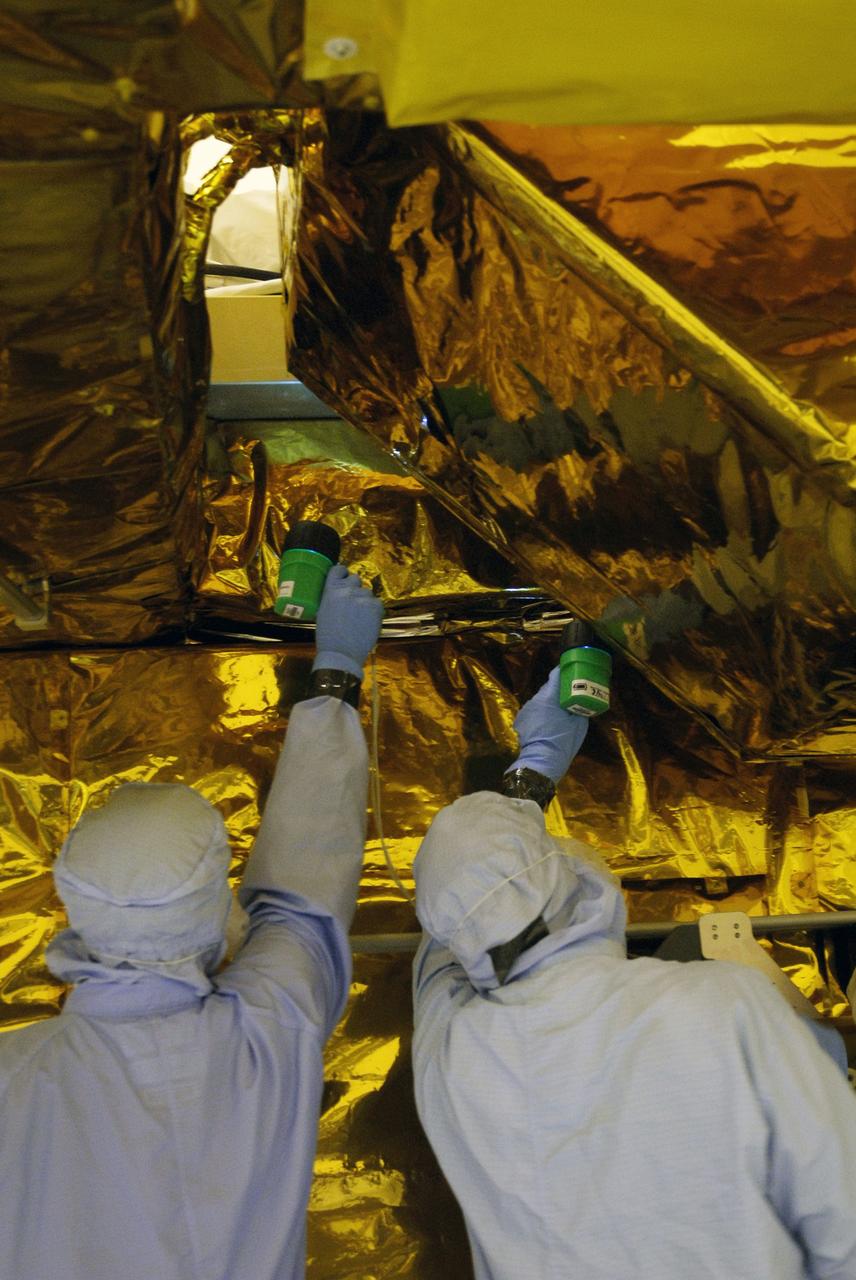
CAPE CANAVERAL, Fla. - In the Payload Hazardous Servicing Facility at NASA's Kennedy Space Center, technicians inspect areas of the Super Lightweight Interchangeable Carrier, or SLIC, for contamination. Contamination discovered Sept. 17 during preparations to deliver NASA's Hubble Space Telescope servicing payload to Launch Pad 39A will be removed. Cleanliness is extremely important for space shuttle Atlantis’ STS-125 mission to Hubble, and the teams have insured that the SLIC is ready to fly. The SLIC, which holds battery module assemblies for servicing of the Hubble Space Telescope on the STS-125 mission, is built with state-of-the-art, lightweight, composite materials - carbon fiber with a cyanate ester resin and a titanium metal matrix composite. These composites have greater strength-to-mass ratios than the metals typically used in spacecraft design. The carrier is one of four being transferred to Launch Pad 39A. At the pad, the carriers will be loaded into Atlantis’ payload bay. Launch of Atlantis is targeted for Oct. 10. Photo credit: NASA/Jack Pfaller
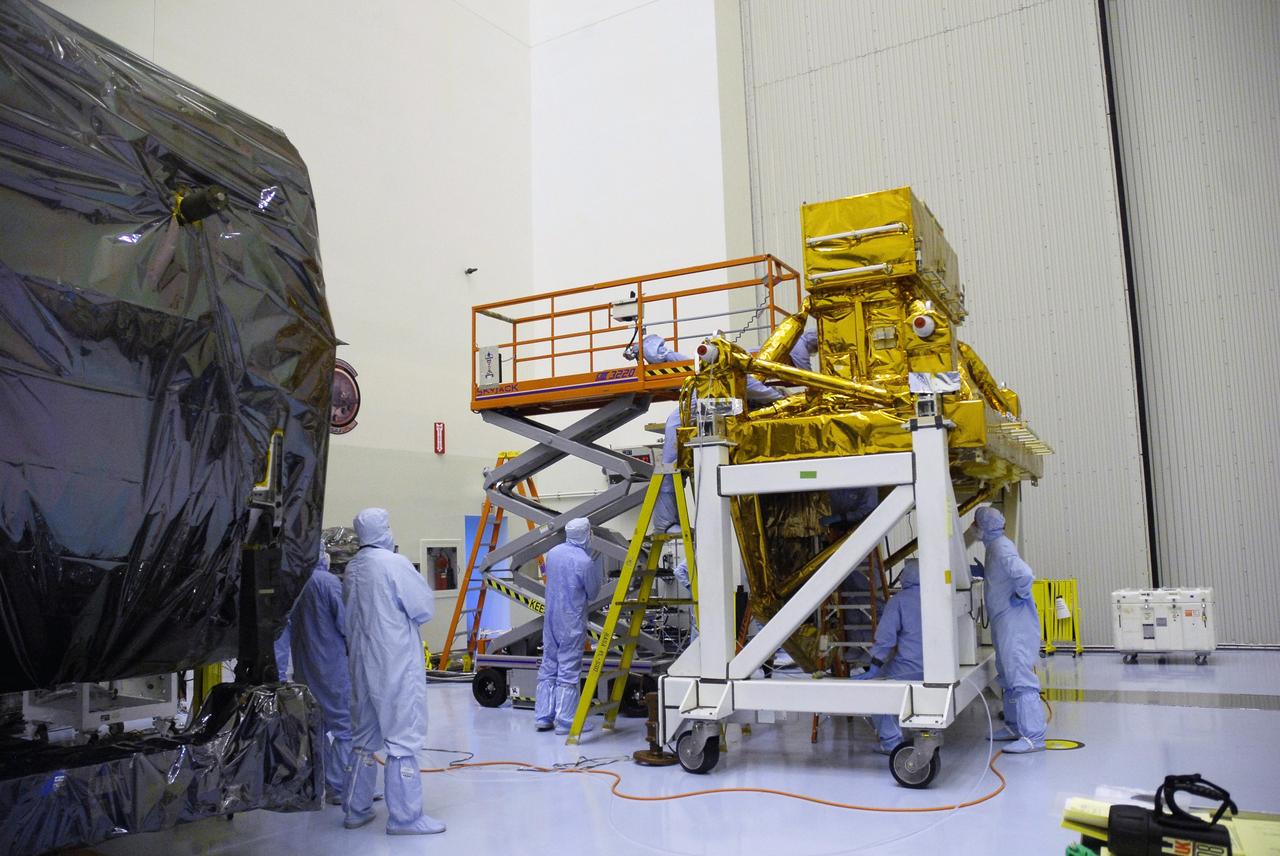
CAPE CANAVERAL, Fla. - In the Payload Hazardous Servicing Facility at NASA's Kennedy Space Center, technicians inspect areas of the Super Lightweight Interchangeable Carrier, or SLIC, for contamination. Contamination discovered Sept. 17 during preparations to deliver NASA's Hubble Space Telescope servicing payload to Launch Pad 39A will be removed. Cleanliness is extremely important for space shuttle Atlantis’ STS-125 mission to Hubble, and the teams have insured that the SLIC is ready to fly. The SLIC, which holds battery module assemblies for servicing of the Hubble Space Telescope on the STS-125 mission, is built with state-of-the-art, lightweight, composite materials - carbon fiber with a cyanate ester resin and a titanium metal matrix composite. These composites have greater strength-to-mass ratios than the metals typically used in spacecraft design. The carrier is one of four being transferred to Launch Pad 39A. At the pad, the carriers will be loaded into Atlantis’ payload bay. Launch of Atlantis is targeted for Oct. 10. Photo credit: NASA/Jack Pfaller
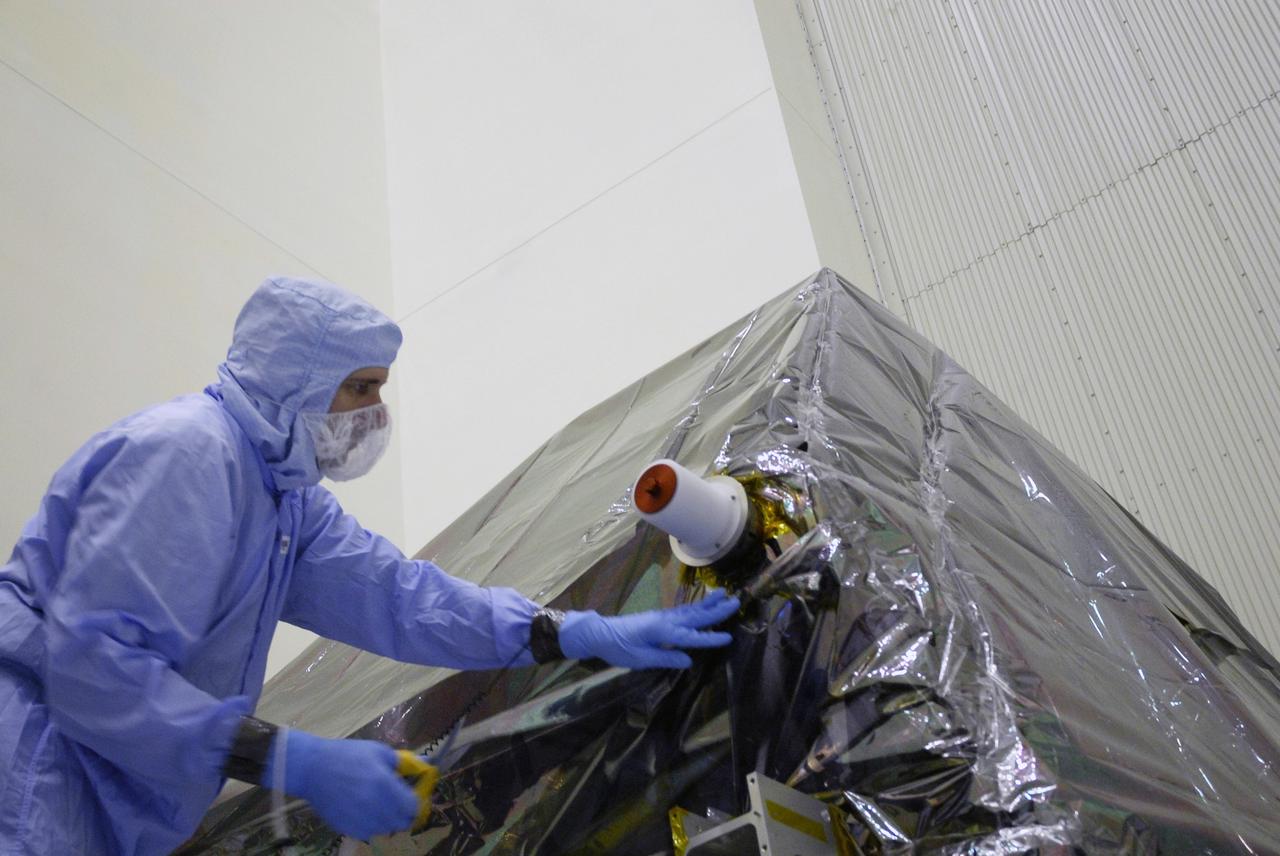
CAPE CANAVERAL, Fla. - In the Payload Hazardous Servicing Facility at NASA's Kennedy Space Center, a technician begins uncovering the Super Lightweight Interchangeable Carrier, or SLIC. Contamination discovered Sept. 17 during preparations to deliver NASA's Hubble Space Telescope servicing payload to Launch Pad 39A will be removed. Cleanliness is extremely important for space shuttle Atlantis’ STS-125 mission to Hubble, and the teams have insured that the SLIC is ready to fly. The SLIC, which holds battery module assemblies for servicing of the Hubble Space Telescope on the STS-125 mission, is built with state-of-the-art, lightweight, composite materials - carbon fiber with a cyanate ester resin and a titanium metal matrix composite. These composites have greater strength-to-mass ratios than the metals typically used in spacecraft design. The carrier is one of four being transferred to Launch Pad 39A. At the pad, the carriers will be loaded into Atlantis’ payload bay. Launch of Atlantis is targeted for Oct. 10. Photo credit: NASA/Jack Pfaller
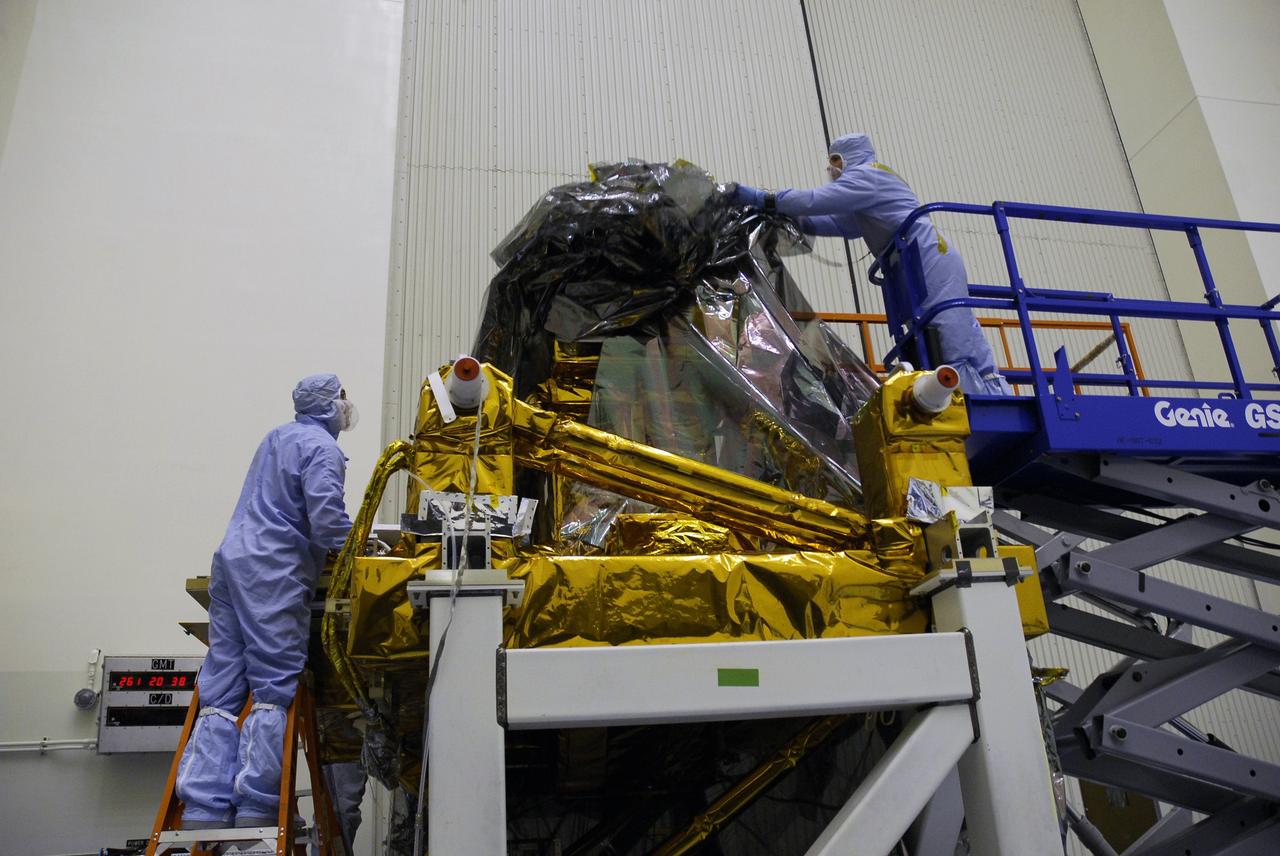
CAPE CANAVERAL, Fla. - In the Payload Hazardous Servicing Facility at NASA's Kennedy Space Center, a technician uncovers the Super Lightweight Interchangeable Carrier, or SLIC. Contamination discovered Sept. 17 during preparations to deliver NASA's Hubble Space Telescope servicing payload to Launch Pad 39A will be removed. Cleanliness is extremely important for space shuttle Atlantis’ STS-125 mission to Hubble, and the teams have insured that the SLIC is ready to fly. The SLIC, which holds battery module assemblies for servicing of the Hubble Space Telescope on the STS-125 mission, is built with state-of-the-art, lightweight, composite materials - carbon fiber with a cyanate ester resin and a titanium metal matrix composite. These composites have greater strength-to-mass ratios than the metals typically used in spacecraft design. The carrier is one of four being transferred to Launch Pad 39A. At the pad, the carriers will be loaded into Atlantis’ payload bay. Launch of Atlantis is targeted for Oct. 10. Photo credit: NASA/Jack Pfaller
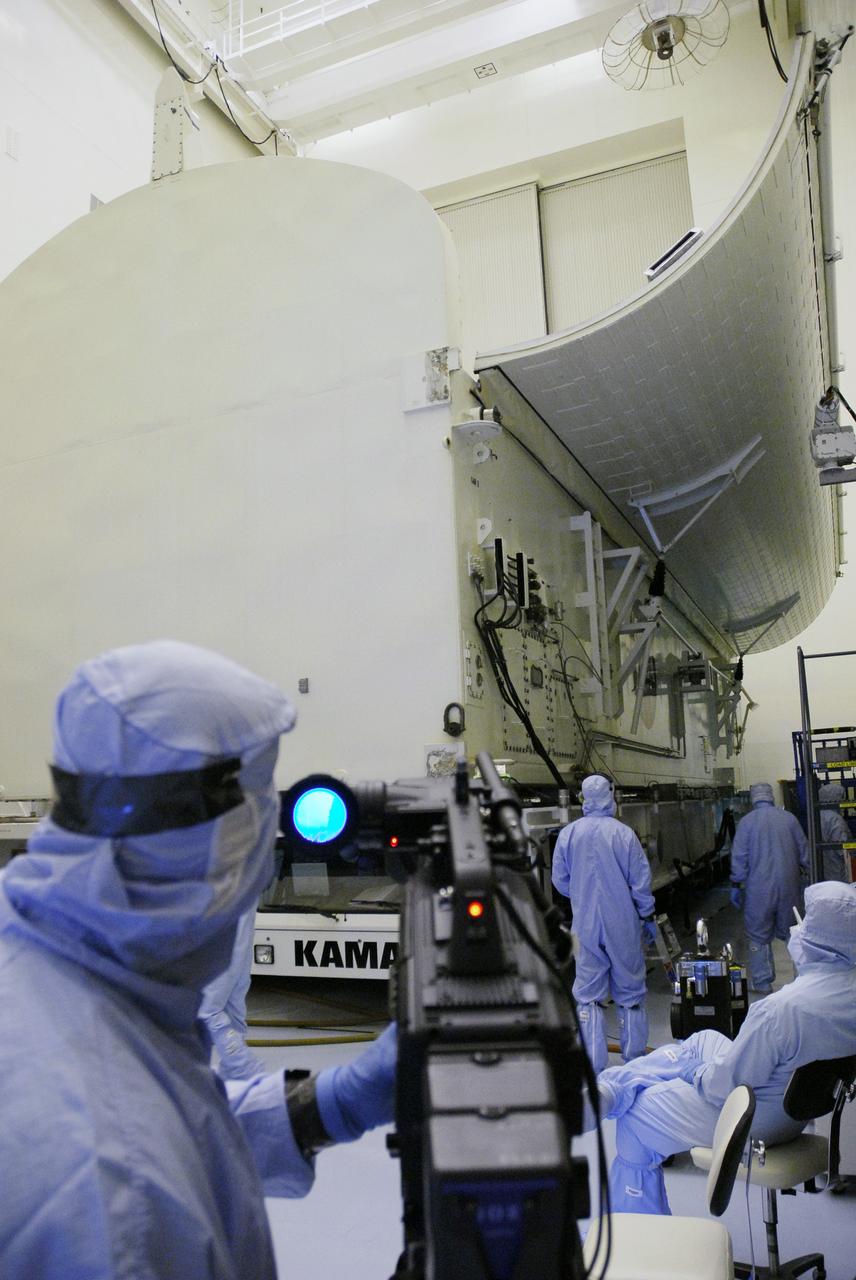
CAPE CANAVERAL, Fla. - In the Payload Hazardous Servicing Facility at NASA's Kennedy Space Center, the payload canister is moved on the floor for loading of the Super Lightweight Interchangeable Carrier, or SLIC. Contamination discovered Sept. 17 during preparations to deliver NASA's Hubble Space Telescope servicing payload to Launch Pad 39A will be removed. Cleanliness is extremely important for space shuttle Atlantis’ STS-125 mission to Hubble, and the teams have insured that the SLIC is ready to fly. The SLIC, which holds battery module assemblies for servicing of the Hubble Space Telescope on the STS-125 mission, is built with state-of-the-art, lightweight, composite materials - carbon fiber with a cyanate ester resin and a titanium metal matrix composite. These composites have greater strength-to-mass ratios than the metals typically used in spacecraft design. The carrier is one of four being transferred to Launch Pad 39A. At the pad, the carriers will be loaded into Atlantis’ payload bay. Launch of Atlantis is targeted for Oct. 10. Photo credit: NASA/Jack Pfaller

NASA image release April 22, 2010 This brand new Hubble photo is of a small portion of one of the largest seen star-birth regions in the galaxy, the Carina Nebula. Towers of cool hydrogen laced with dust rise from the wall of the nebula. The scene is reminiscent of Hubble's classic "Pillars of Creation" photo from 1995, but is even more striking in appearance. The image captures the top of a three-light-year-tall pillar of gas and dust that is being eaten away by the brilliant light from nearby bright stars. The pillar is also being pushed apart from within, as infant stars buried inside it fire off jets of gas that can be seen streaming from towering peaks like arrows sailing through the air. Credit: NASA, ESA, and M. Livio and the Hubble 20th Anniversary Team (STScI) To read learn more about this image go to: <a href="http://www.nasa.gov/mission_pages/hubble/science/hubble20th-img.html" rel="nofollow">www.nasa.gov/mission_pages/hubble/science/hubble20th-img....</a> <b><a href="http://www.nasa.gov/audience/formedia/features/MP_Photo_Guidelines.html" rel="nofollow">NASA image use policy.</a></b> <b><a href="http://www.nasa.gov/centers/goddard/home/index.html" rel="nofollow">NASA Goddard Space Flight Center</a></b> enables NASA’s mission through four scientific endeavors: Earth Science, Heliophysics, Solar System Exploration, and Astrophysics. Goddard plays a leading role in NASA’s accomplishments by contributing compelling scientific knowledge to advance the Agency’s mission. <b>Follow us on <a href="http://twitter.com/NASAGoddardPix" rel="nofollow">Twitter</a></b> <b>Like us on <a href="http://www.facebook.com/pages/Greenbelt-MD/NASA-Goddard/395013845897?ref=tsd" rel="nofollow">Facebook</a></b> <b>Find us on <a href="http://instagram.com/nasagoddard?vm=grid" rel="nofollow">Instagram</a></b>
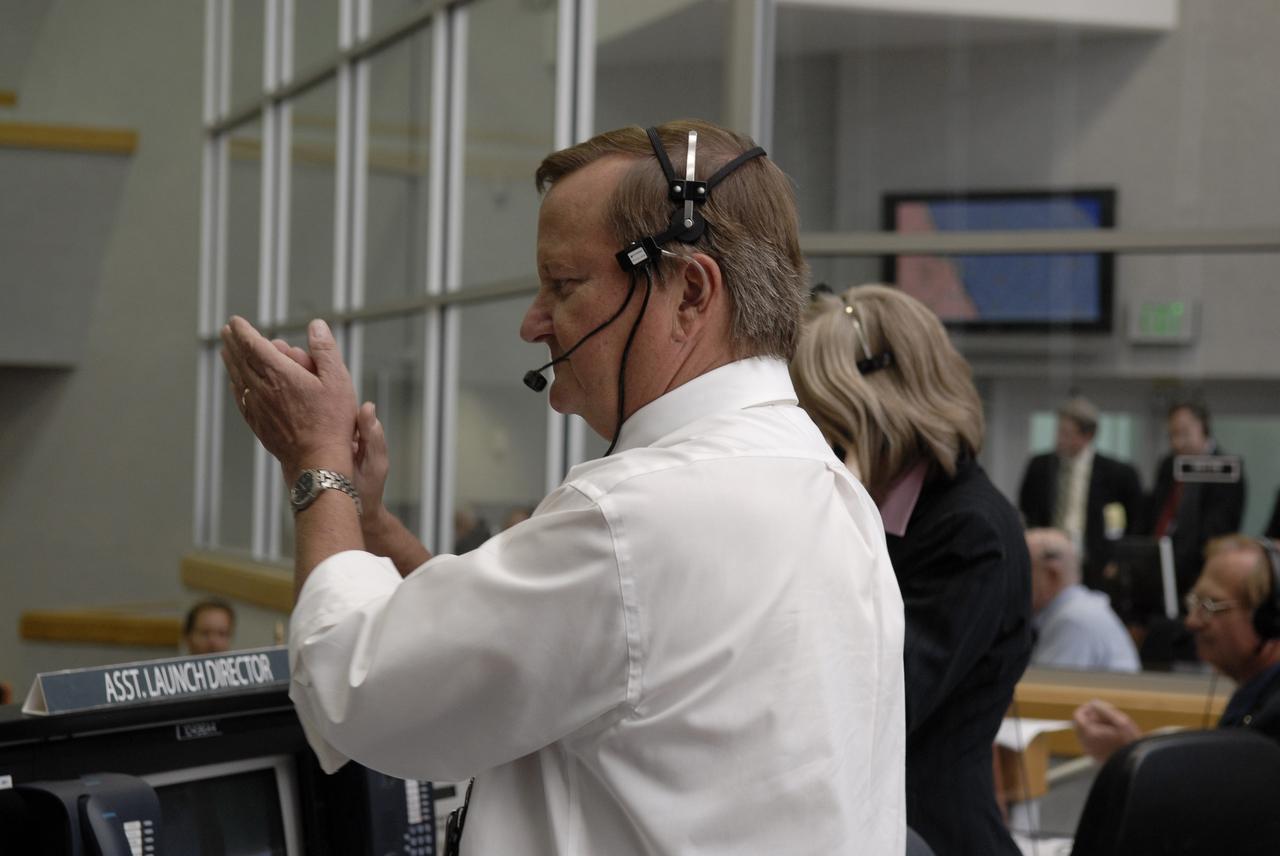
CAPE CANAVERAL, Fla. – In the Firing Room at NASA's Kennedy Space Center in Florida, Shuttle Launch Director Mike Leinbach congratulates the mission management team for the successful launch of space shuttle Atlantis. Liftoff was on time at 2:01 p.m. EDT. Atlantis' 11-day flight will include five spacewalks to refurbish and upgrade the telescope with state-of-the-art science instruments that will expand Hubble's capabilities and extend its operational lifespan through at least 2014. The payload includes a Wide Field Camera 3, fine guidance sensor and the Cosmic Origins Spectrograph. Photo credit: NASA/Kim Shiflett
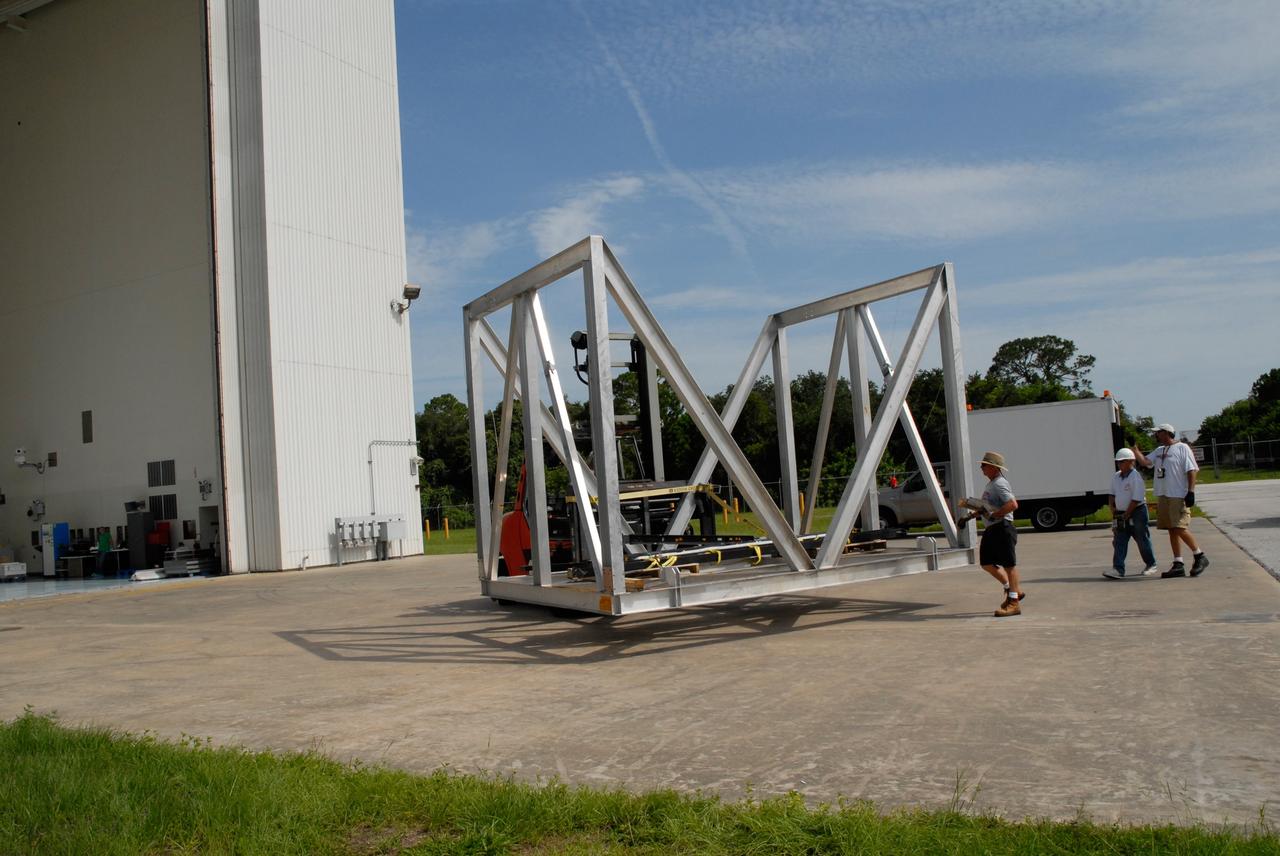
CAPE CANAVERAL, Fla. – The thermal vacuum fixture is transferred to a transporter in front of the Payload Hazardous Servicing Center at NASA's Kennedy Space Center. The fixture will be used to hold the carrier and flight support system for the STS-125 Hubble Space Telescope Servicing Mission 4. Space shuttle Atlantis is targeted to launch on the STS-125 mission Oct. 8. The mission crew will perform history-making, on-orbit “surgery” on two important science instruments aboard the telescope. After capturing the telescope, two teams of spacewalking astronauts will perform the repairs during five planned spacewalks. Photo credit: NASA/Jack Pfaller
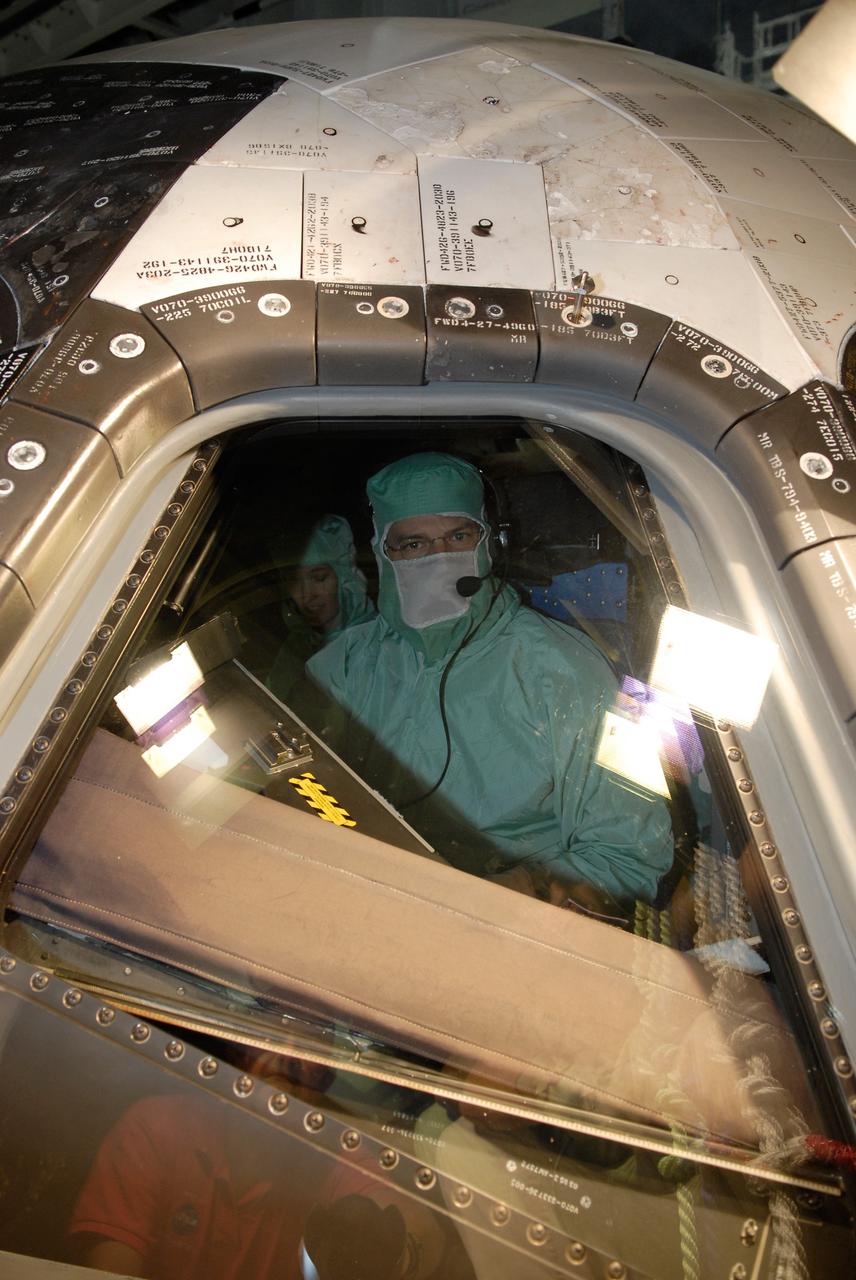
CAPE CANAVERAL, Fla. – In the Orbiter Processing Facility at NASA's Kennedy Space Center, STS-125 Commander Scott Altman examines the cockpit window on space shuttle Atlantis, checking for sharp edges. The inspection is part of the crew equipment interface test, which provides hands-on experience with hardware and equipment for the mission. Atlantis is targeted to launch Oct. 8 on the STS-125 mission to service the Hubble Space Telescope. The mission crew will perform history-making, on-orbit “surgery” on two important science instruments aboard the telescope. After capturing the telescope, two teams of spacewalking astronauts will perform the repairs during five planned spacewalks. Photo credit: NASA/Kim Shiflett
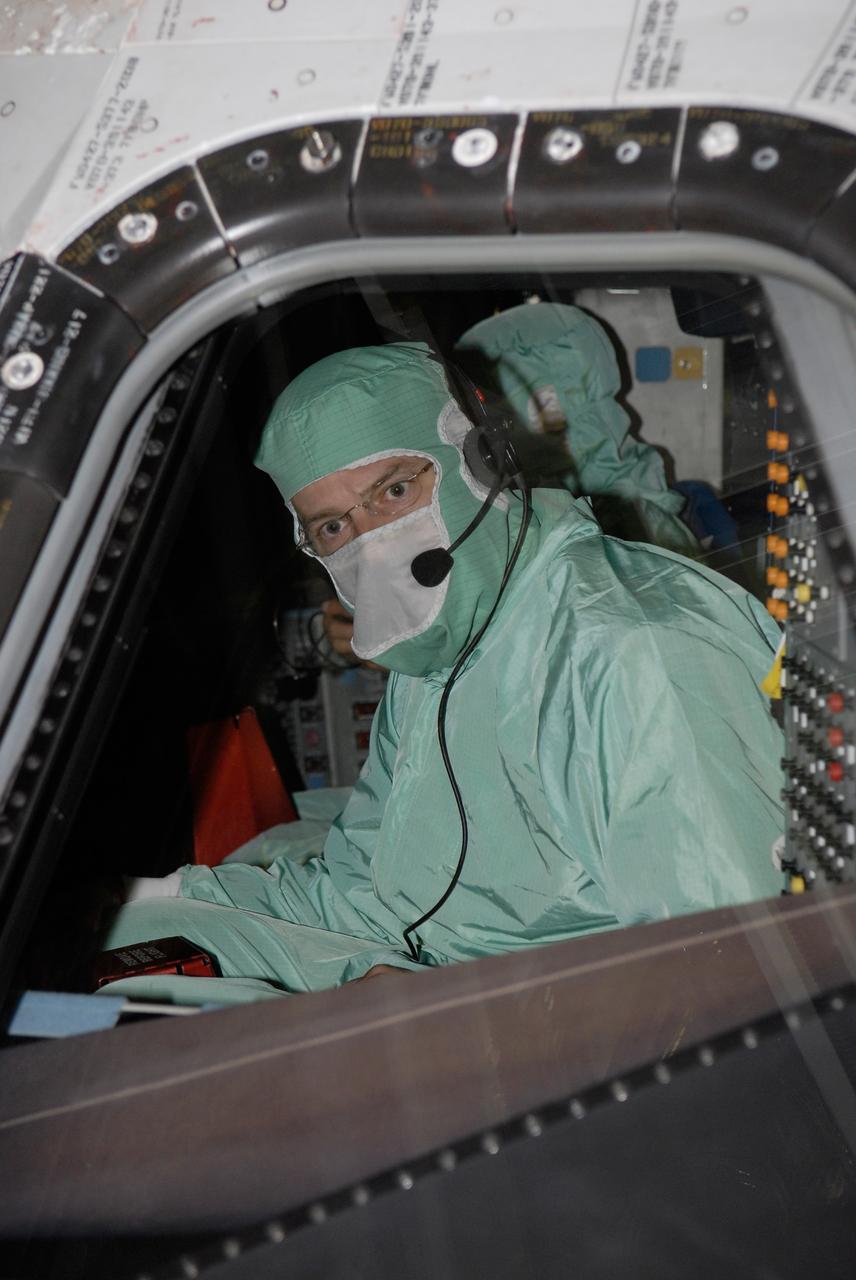
CAPE CANAVERAL, Fla. – In the Orbiter Processing Facility at NASA's Kennedy Space Center, STS-125 Commander Scott Altman examines the cockpit window on space shuttle Atlantis. The inspection is part of the crew equipment interface test, which provides hands-on experience with hardware and equipment for the mission. Atlantis is targeted to launch Oct. 8 on the STS-125 mission to service the Hubble Space Telescope. The mission crew will perform history-making, on-orbit “surgery” on two important science instruments aboard the telescope. After capturing the telescope, two teams of spacewalking astronauts will perform the repairs during five planned spacewalks. Photo credit: NASA/Kim Shiflett
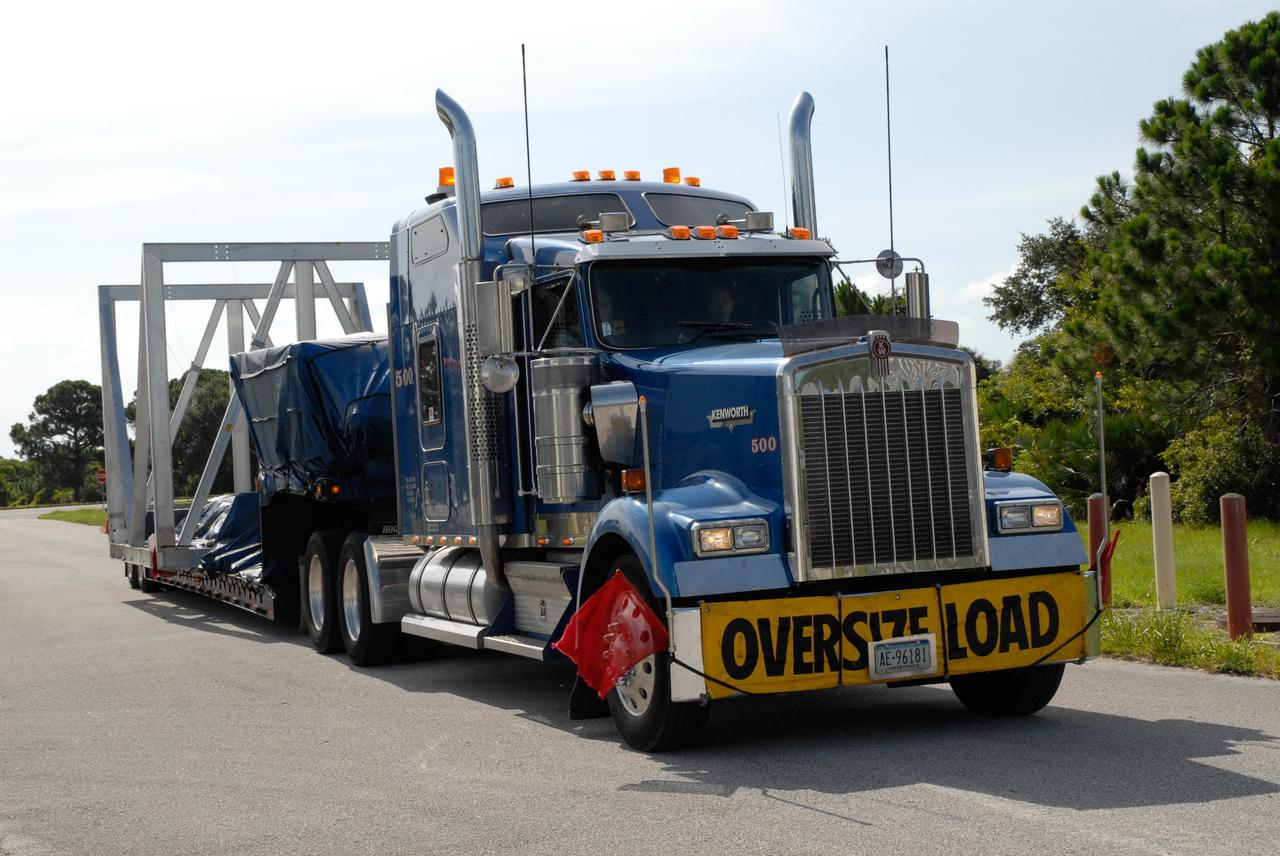
CAPE CANAVERAL, Fla. – The thermal vacuum fixture arrives at NASA's Kennedy Space Center. The fixture will be used to hold the carrier and flight support system for the STS-125 Hubble Space Telescope Servicing Mission 4. Space shuttle Atlantis is targeted to launch on the STS-125 mission Oct. 8. The mission crew will perform history-making, on-orbit “surgery” on two important science instruments aboard the telescope. After capturing the telescope, two teams of spacewalking astronauts will perform the repairs during five planned spacewalks. Photo credit: NASA/Jack Pfaller
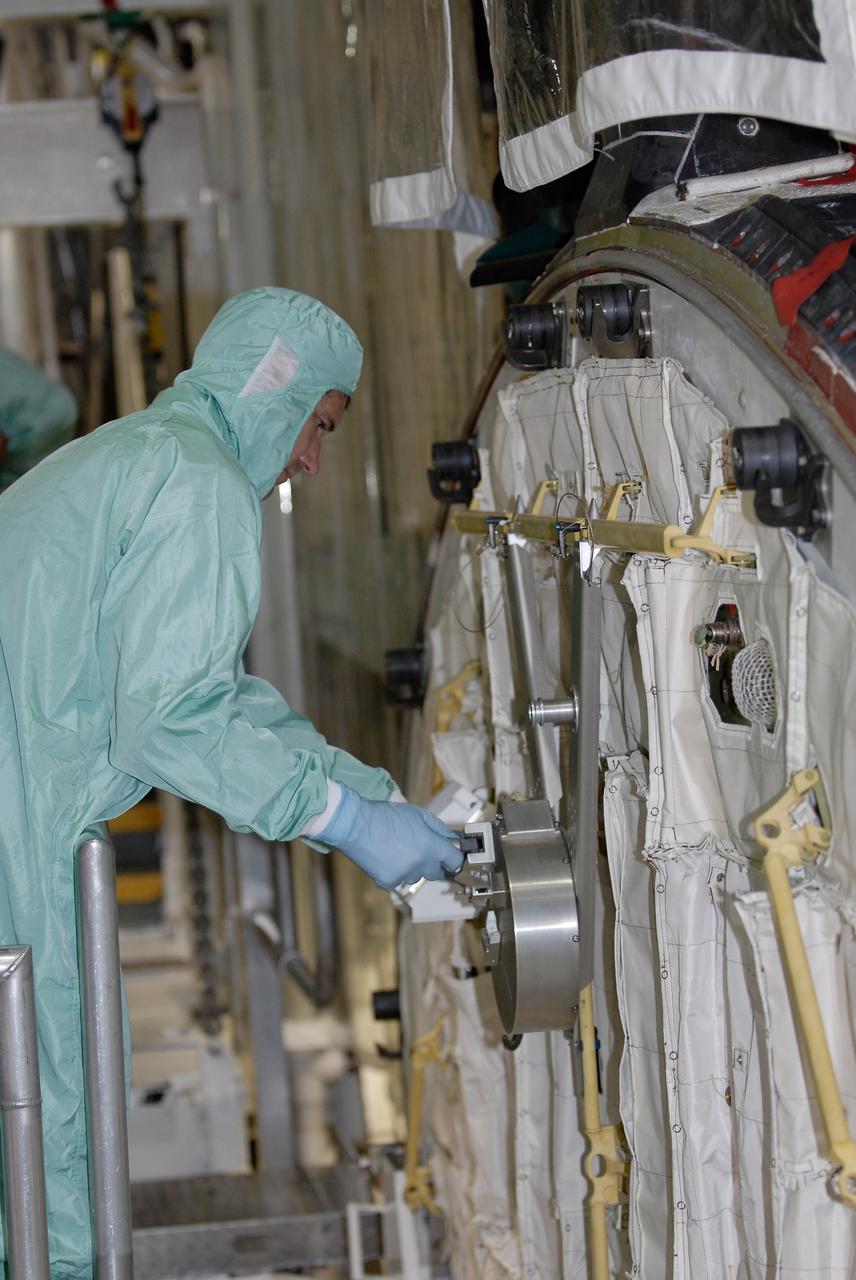
CAPE CANAVERAL, Fla. – In the Orbiter Processing Facility at NASA's Kennedy Space Center, STS-125 Mission Specialist Michael Good checks out part of the equipment in space shuttle Atlantis' payload bay. Equipment familiarization is part of the crew equipment interface test, which provides hands-on experience with hardware and equipment for the mission. Atlantis is targeted to launch Oct. 8 on the STS-125 mission to service the Hubble Space Telescope. The mission crew will perform history-making, on-orbit “surgery” on two important science instruments aboard the telescope. After capturing the telescope, two teams of spacewalking astronauts will perform the repairs during five planned spacewalks. Photo credit: NASA/Kim Shiflett
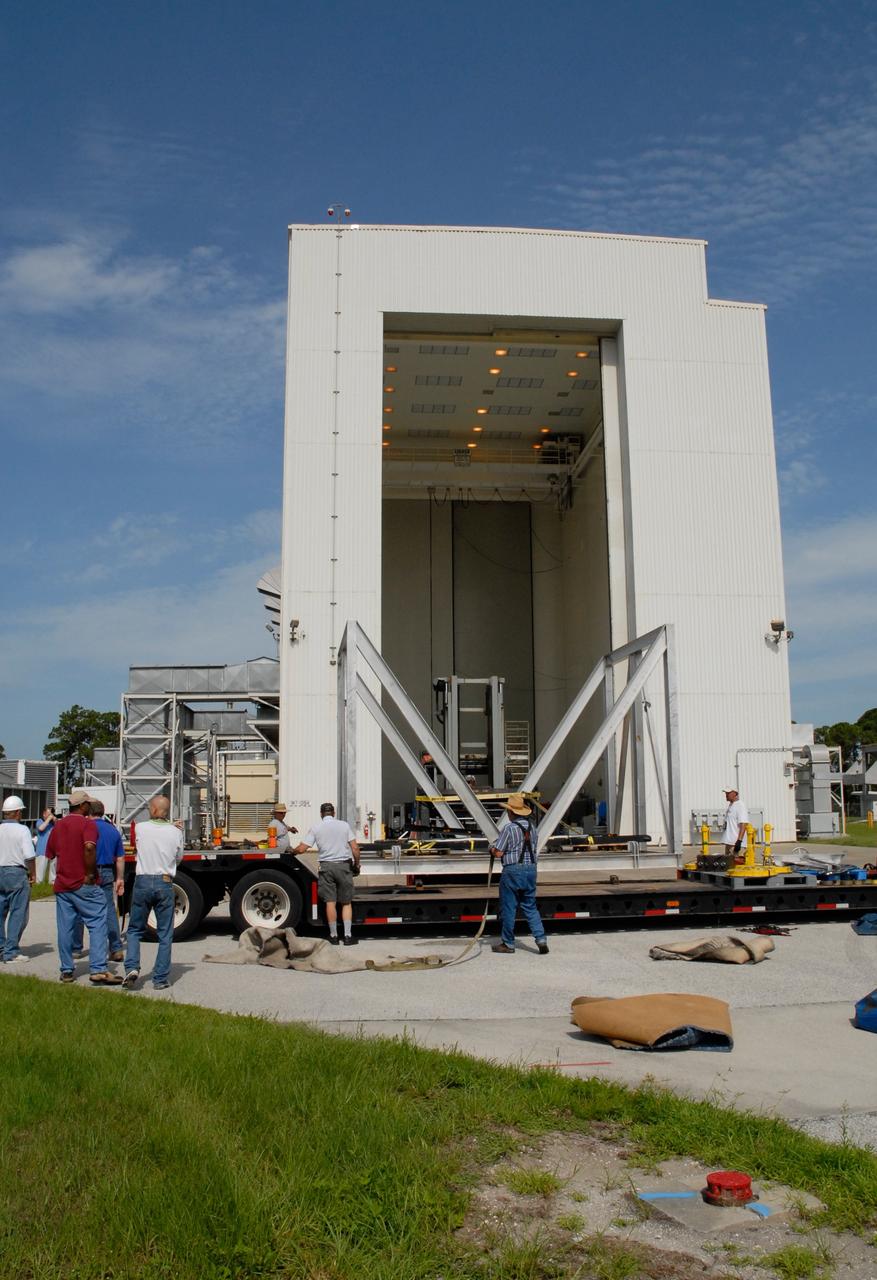
CAPE CANAVERAL, Fla. – The thermal vacuum fixture arrives at the Payload Hazardous Servicing Center at NASA's Kennedy Space Center. The fixture will be used to hold the carrier and flight support system for the STS-125 Hubble Space Telescope Servicing Mission 4. Space shuttle Atlantis is targeted to launch on the STS-125 mission Oct. 8. The mission crew will perform history-making, on-orbit “surgery” on two important science instruments aboard the telescope. After capturing the telescope, two teams of spacewalking astronauts will perform the repairs during five planned spacewalks. Photo credit: NASA/Jack Pfaller
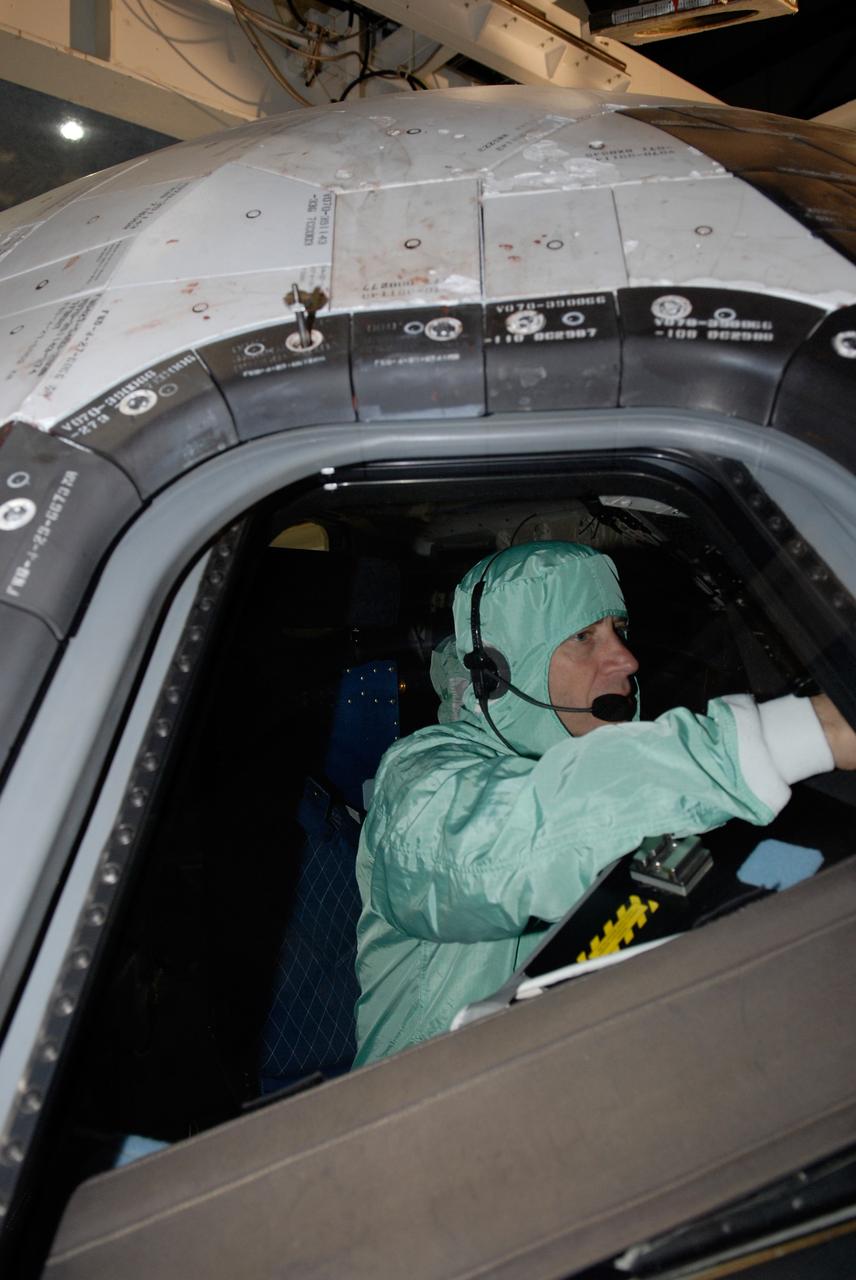
CAPE CANAVERAL, Fla. – In the Orbiter Processing Facility at NASA's Kennedy Space Center, STS-125 Pilot Gregory C. Johnson examines the cockpit window on space shuttle Atlantis, checking for sharp edges. The inspection is part of the crew equipment interface test, which provides hands-on experience with hardware and equipment for the mission. Atlantis is targeted to launch Oct. 8 on the STS-125 mission to service the Hubble Space Telescope. The mission crew will perform history-making, on-orbit “surgery” on two important science instruments aboard the telescope. After capturing the telescope, two teams of spacewalking astronauts will perform the repairs during five planned spacewalks. Photo credit: NASA/Kim Shiflett
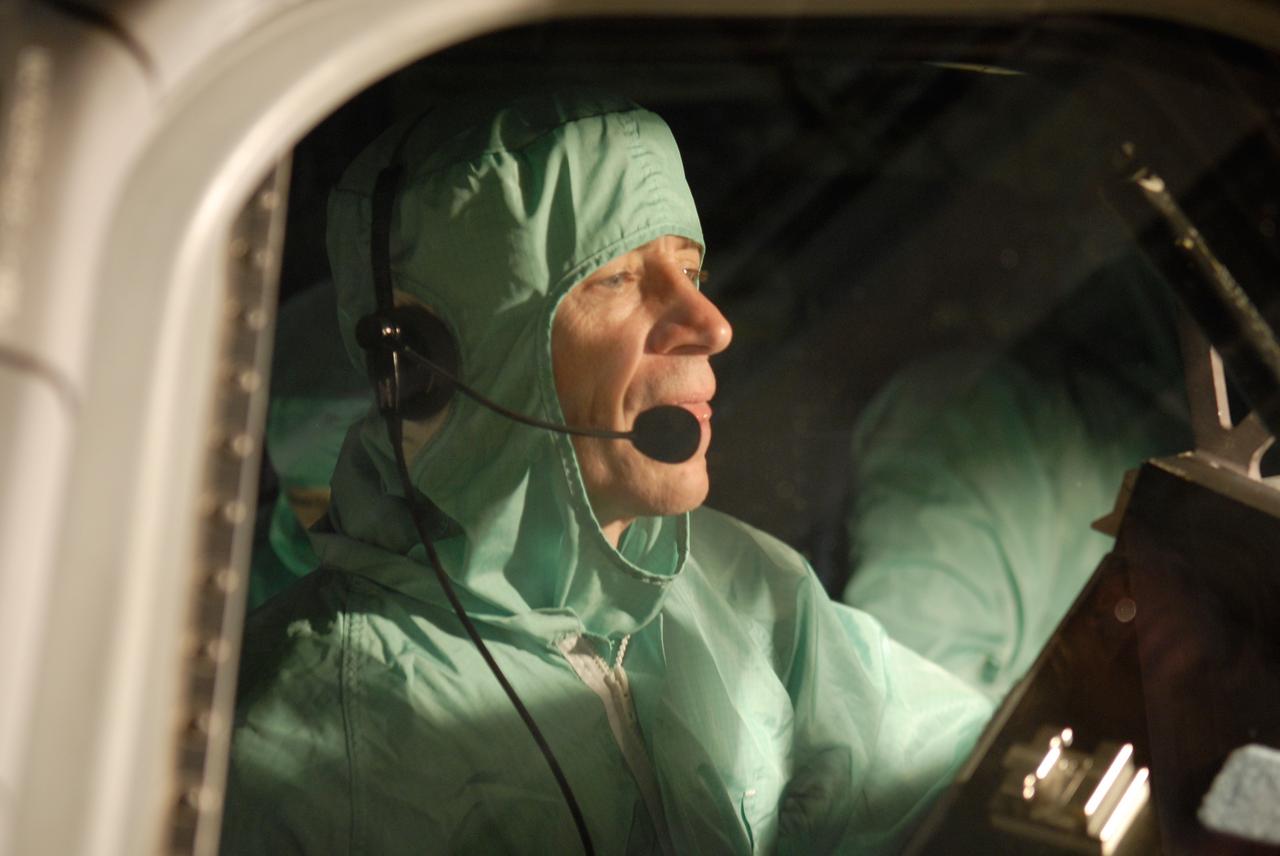
CAPE CANAVERAL, Fla. – In the Orbiter Processing Facility at NASA's Kennedy Space Center, STS-125 Pilot Gregory C. Johnson examines the cockpit window on space shuttle Atlantis, checking for sharp edges. The inspection is part of the crew equipment interface test, which provides hands-on experience with hardware and equipment for the mission. Atlantis is targeted to launch Oct. 8 on the STS-125 mission to service the Hubble Space Telescope. The mission crew will perform history-making, on-orbit “surgery” on two important science instruments aboard the telescope. After capturing the telescope, two teams of spacewalking astronauts will perform the repairs during five planned spacewalks. Photo credit: NASA/Kim Shiflett
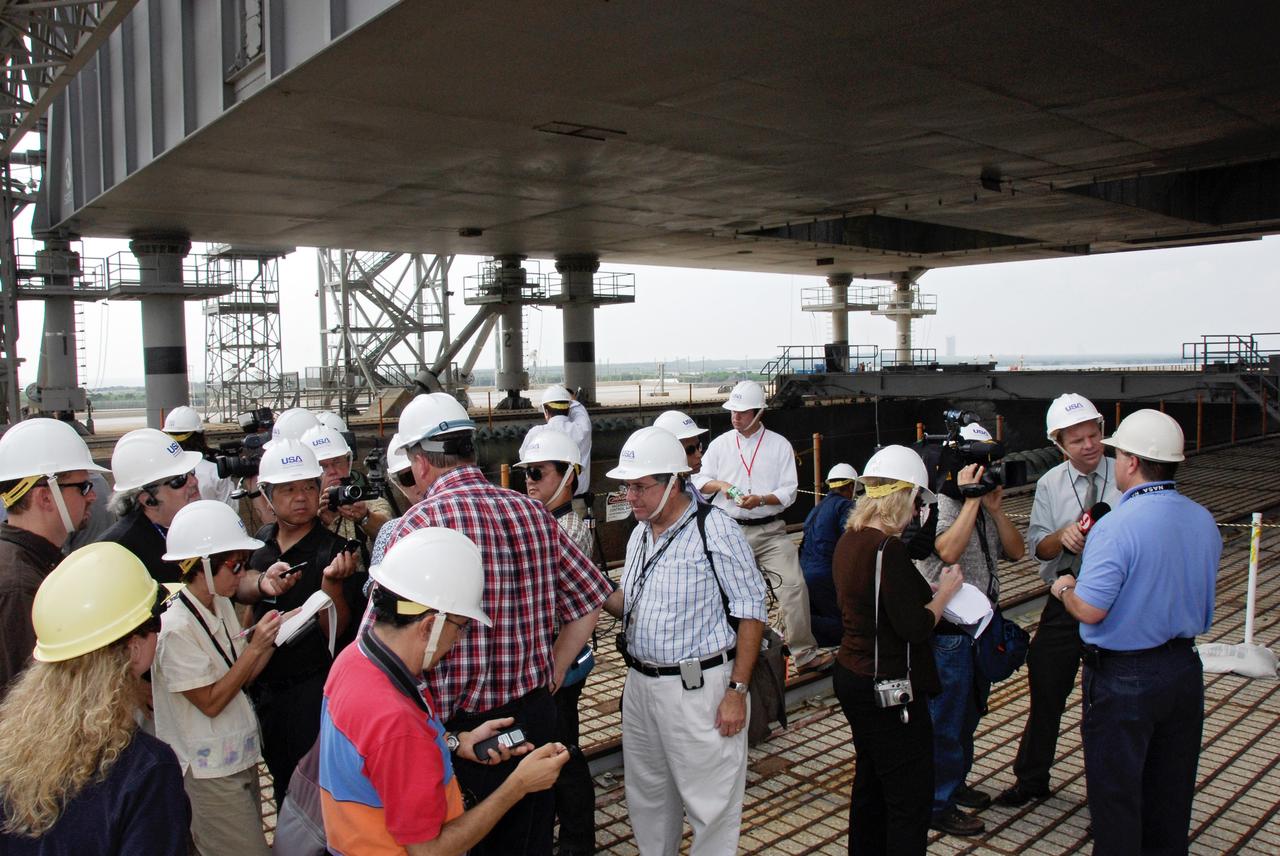
CAPE CANAVERAL, Fla. – The media gather on Launch Pad 39A at NASA's Kennedy Space Center to view the flame trench damaged during the May 31 launch of space shuttle Discovery. Reporters had the opportunity to ask questions of Ed Mango, deputy director of the shuttle program's launch vehicle processing, and Perry Becker, who is leading the launch pad engineering investigation team. Repairs are expected to be completed in time for space shuttle Atlantis' STS-125 mission to NASA's Hubble Space Telescope targeted for Oct. 8. Photo credit: NASA/Kim Shiflett
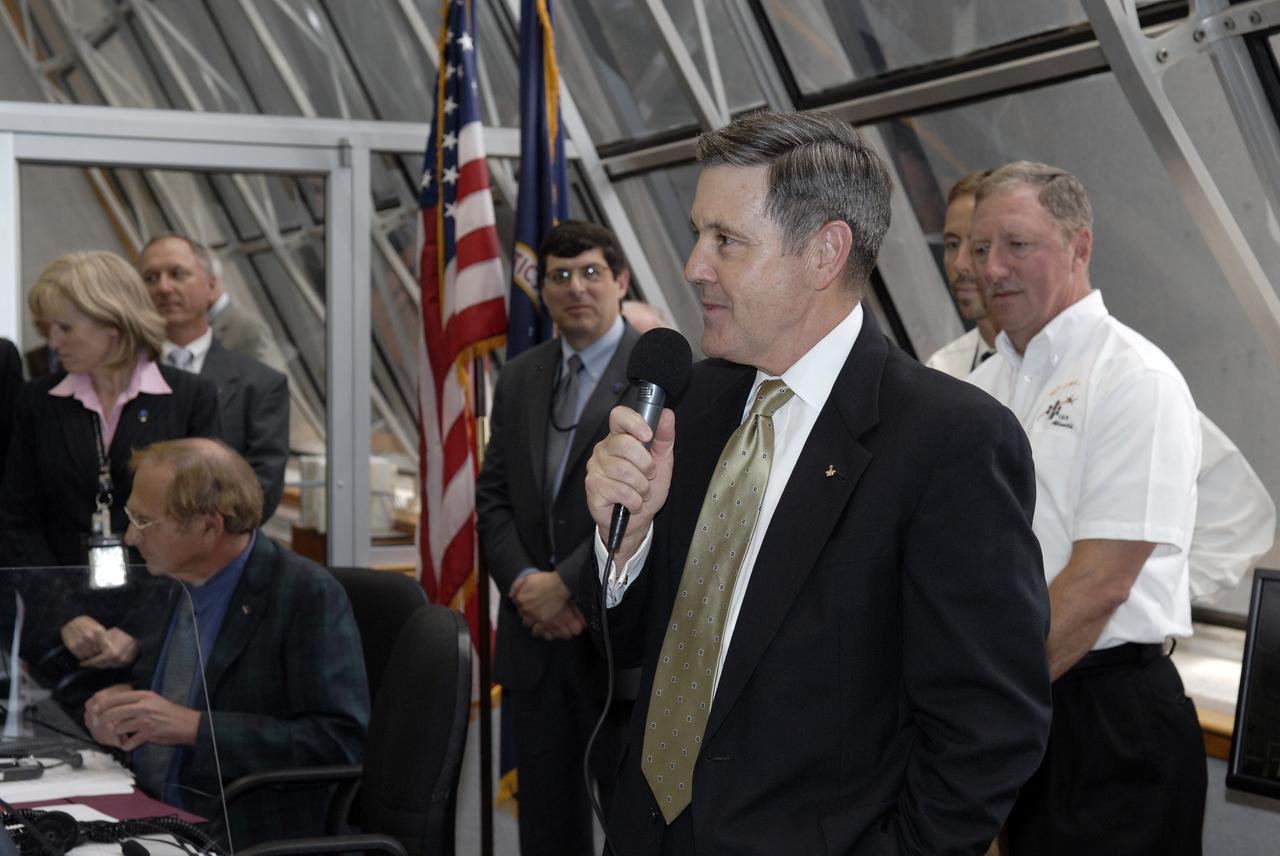
CAPE CANAVERAL, Fla. – In the Firing Room at NASA's Kennedy Space Center in Florida, Center Director Bob Cabana congratulates the mission management team for the successful launch of space shuttle Atlantis. Liftoff was on time at 2:01 p.m. EDT. Atlantis' 11-day flight will include five spacewalks to refurbish and upgrade the telescope with state-of-the-art science instruments that will expand Hubble's capabilities and extend its operational lifespan through at least 2014. The payload includes a Wide Field Camera 3, fine guidance sensor and the Cosmic Origins Spectrograph. Photo credit: NASA/Kim Shiflett

NASA image release September 25, 2012 Like photographers assembling a portfolio of best shots, astronomers have assembled a new, improved portrait of mankind's deepest-ever view of the universe. Called the eXtreme Deep Field, or XDF, the photo was assembled by combining 10 years of NASA Hubble Space Telescope photographs taken of a patch of sky at the center of the original Hubble Ultra Deep Field. The XDF is a small fraction of the angular diameter of the full moon. The Hubble Ultra Deep Field is an image of a small area of space in the constellation Fornax, created using Hubble Space Telescope data from 2003 and 2004. By collecting faint light over many hours of observation, it revealed thousands of galaxies, both nearby and very distant, making it the deepest image of the universe ever taken at that time. The new full-color XDF image is even more sensitive, and contains about 5,500 galaxies even within its smaller field of view. The faintest galaxies are one ten-billionth the brightness of what the human eye can see. To read more go to:http://www.nasa.gov/mission_pages/hubble/science/xdf.html Credit: NASA; ESA; G. Illingworth, D. Magee, and P. Oesch, University of California, Santa Cruz; R. Bouwens, Leiden University; and the HUDF09 Team <b><a href="http://www.nasa.gov/audience/formedia/features/MP_Photo_Guidelines.html" rel="nofollow">NASA image use policy.</a></b> <b><a href="http://www.nasa.gov/centers/goddard/home/index.html" rel="nofollow">NASA Goddard Space Flight Center</a></b> enables NASA’s mission through four scientific endeavors: Earth Science, Heliophysics, Solar System Exploration, and Astrophysics. Goddard plays a leading role in NASA’s accomplishments by contributing compelling scientific knowledge to advance the Agency’s mission. <b>Follow us on <a href="http://twitter.com/NASA_GoddardPix" rel="nofollow">Twitter</a></b> <b>Like us on <a href="http://www.facebook.com/pages/Greenbelt-MD/NASA-Goddard/395013845897?ref=tsd" rel="nofollow">Facebook</a></b> <b>Find us on <a href="http://instagrid.me/nasagoddard/?vm=grid" rel="nofollow">Instagram</a></b>

This image depicts a vast canyon of dust and gas in the Orion Nebula from a 3-D computer model based on observations by NASA's Hubble Space Telescope and created by science visualization specialists at the Space Telescope Science Institute (STScI) in Baltimore, Md. A 3-D visualization of this model takes viewers on an amazing four-minute voyage through the 15-light-year-wide canyon. Credit: NASA, G. Bacon, L. Frattare, Z. Levay, and F. Summers (STScI/AURA) Go here to learn more about Hubble 3D: <a href="http://www.nasa.gov/topics/universe/features/hubble_imax_premiere.html" rel="nofollow">www.nasa.gov/topics/universe/features/hubble_imax_premier...</a> or <a href="http://www.imax.com/hubble/" rel="nofollow">www.imax.com/hubble/</a> Take an exhilarating ride through the Orion Nebula, a vast star-making factory 1,500 light-years away. Swoop through Orion's giant canyon of gas and dust. Fly past behemoth stars whose brilliant light illuminates and energizes the entire cloudy region. Zoom by dusty tadpole-shaped objects that are fledgling solar systems. This virtual space journey isn't the latest video game but one of several groundbreaking astronomy visualizations created by specialists at the Space Telescope Science Institute (STScI) in Baltimore, the science operations center for NASA's Hubble Space Telescope. The cinematic space odysseys are part of the new Imax film "Hubble 3D," which opens today at select Imax theaters worldwide. The 43-minute movie chronicles the 20-year life of Hubble and includes highlights from the May 2009 servicing mission to the Earth-orbiting observatory, with footage taken by the astronauts. The giant-screen film showcases some of Hubble's breathtaking iconic pictures, such as the Eagle Nebula's "Pillars of Creation," as well as stunning views taken by the newly installed Wide Field Camera 3. While Hubble pictures of celestial objects are awe-inspiring, they are flat 2-D photographs. For this film, those 2-D images have been converted into 3-D environments, giving the audience the impression they are space travelers taking a tour of Hubble's most popular targets. "A large-format movie is a truly immersive experience," says Frank Summers, an STScI astronomer and science visualization specialist who led the team that developed the movie visualizations. The team labored for nine months, working on four visualization sequences that comprise about 12 minutes of the movie. "Seeing these Hubble images in 3-D, you feel like you are flying through space and not just looking at picture postcards," Summers continued. "The spacescapes are all based on Hubble images and data, though some artistic license is necessary to produce the full depth of field needed for 3-D." The most ambitious sequence is a four-minute voyage through the Orion Nebula's gas-and-dust canyon, about 15 light-years across. During the ride, viewers will see bright and dark, gaseous clouds; thousands of stars, including a grouping of bright, hefty stars called the Trapezium; and embryonic planetary systems. The tour ends with a detailed look at a young circumstellar disk, which is much like the structure from which our solar system formed 4.5 billion years ago. Based on a Hubble image of Orion released in 2006, the visualization was a collaborative effort between science visualization specialists at STScI, including Greg Bacon, who sculpted the Orion Nebula digital model, with input from STScI astronomer Massimo Roberto; the National Center for Supercomputing Applications at the University of Illinois at Urbana-Champaign; and the Spitzer Science Center at the California Institute of Technology in Pasadena. For some of the sequences, STScI imaging specialists developed new techniques for transforming the 2-D Hubble images into 3-D. STScI image processing specialists Lisa Frattare and Zolt Levay, for example, created methods of splitting a giant gaseous pillar in the Carina Nebula into multiple layers to produce a 3-D effect, giving the structure depth. The Carina Nebula is a nursery for baby stars. Frattare painstakingly removed the thousands of stars in the image so that Levay could separate the gaseous layers on the isolated Carina pillar. Frattare then replaced the stars into both foreground and background layers to complete the 3-D model. For added effect, the same separation was done for both visible and infrared Hubble images, allowing the film to cross-fade between wavelength views in 3-D. In another sequence viewers fly into a field of 170,000 stars in the giant star cluster Omega Centauri. STScI astronomer Jay Anderson used his stellar database to create a synthetic star field in 3-D that matches recent razor-sharp Hubble photos. The film's final four-minute sequence takes viewers on a voyage from our Milky Way Galaxy past many of Hubble's best galaxy shots and deep into space. Some 15,000 galaxies from Hubble's deepest surveys stretch billions of light-years across the universe in a 3-D sequence created by STScI astronomers and visualizers. The view dissolves into a cobweb that traces the universe's large-scale structure, the backbone from which galaxies were born. In addition to creating visualizations, STScI's education group also provided guidance on the "Hubble 3D" Educator Guide, which includes standards-based lesson plans and activities about Hubble and its mission. Students will use the guide before or after seeing the movie. "The guide will enhance the movie experience for students and extend the movie into classrooms," says Bonnie Eisenhamer, STScI's Hubble Formal Education manager. The Hubble Space Telescope is a project of international cooperation between NASA and the European Space Agency (ESA) and is managed by NASA’s Goddard Space Flight Center (GSFC) in Greenbelt, Md. The Space Telescope Science Institute (STScI) conducts Hubble science operations. The institute is operated for NASA by the Association of Universities for Research in Astronomy, Inc., Washington, D.C.
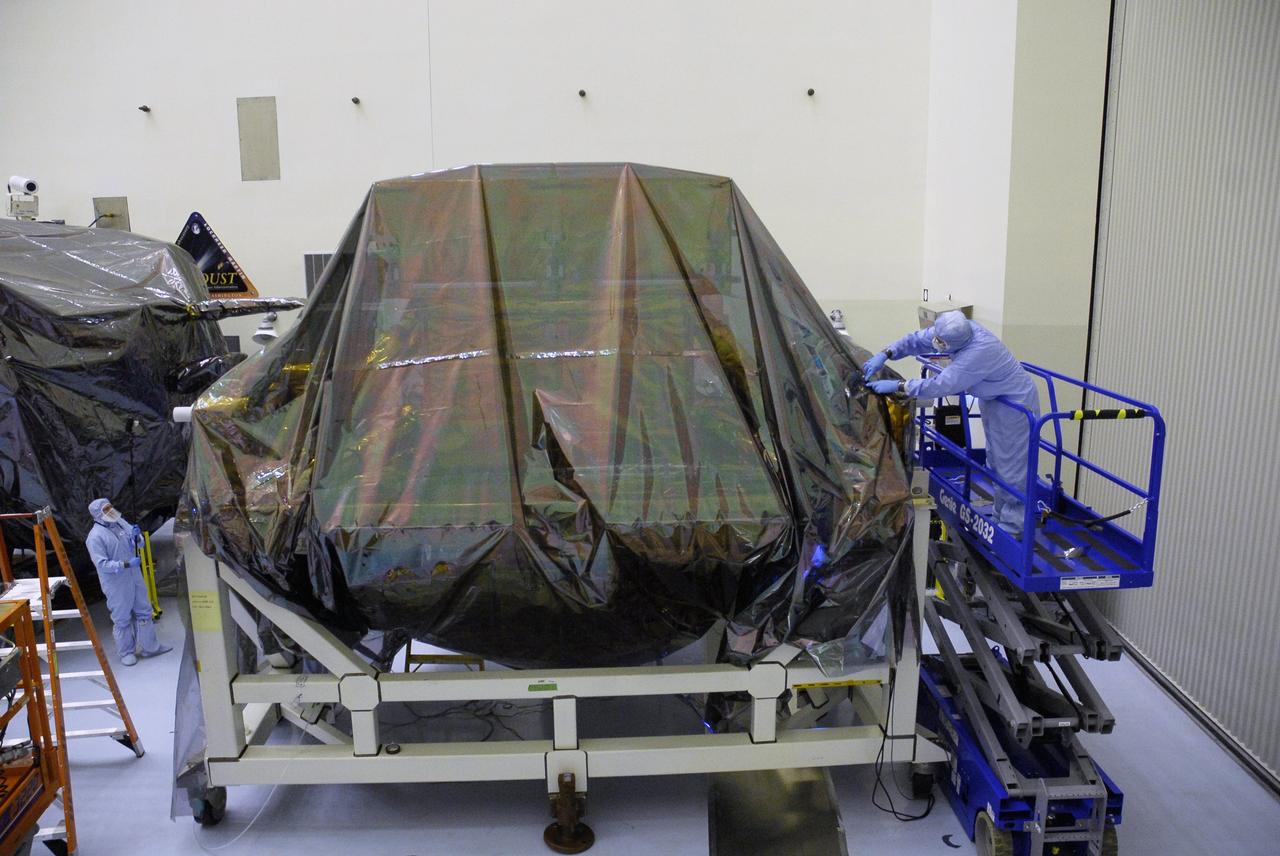
CAPE CANAVERAL, Fla. - In the Payload Hazardous Servicing Facility at NASA's Kennedy Space Center, technicians finish replacing the protective cover over the Super Lightweight Interchangeable Carrier, or SLIC. The cover was removed to clean the carrier of contaminants found Sept. 17 during preparations to deliver NASA's Hubble Space Telescope servicing payload to Launch Pad 39A. Cleanliness is extremely important for space shuttle Atlantis’ STS-125 mission to Hubble, and the teams have insured that the SLIC is ready to fly. The SLIC, which holds battery module assemblies, is built with state-of-the-art, lightweight, composite materials - carbon fiber with a cyanate ester resin and a titanium metal matrix composite. These composites have greater strength-to-mass ratios than the metals typically used in spacecraft design. The carrier is one of four being transferred to Launch Pad 39A. At the pad, the carriers will be loaded into Atlantis’ payload bay. Launch of Atlantis is targeted for Oct. 10. Photo credit: NASA/Jack Pfaller
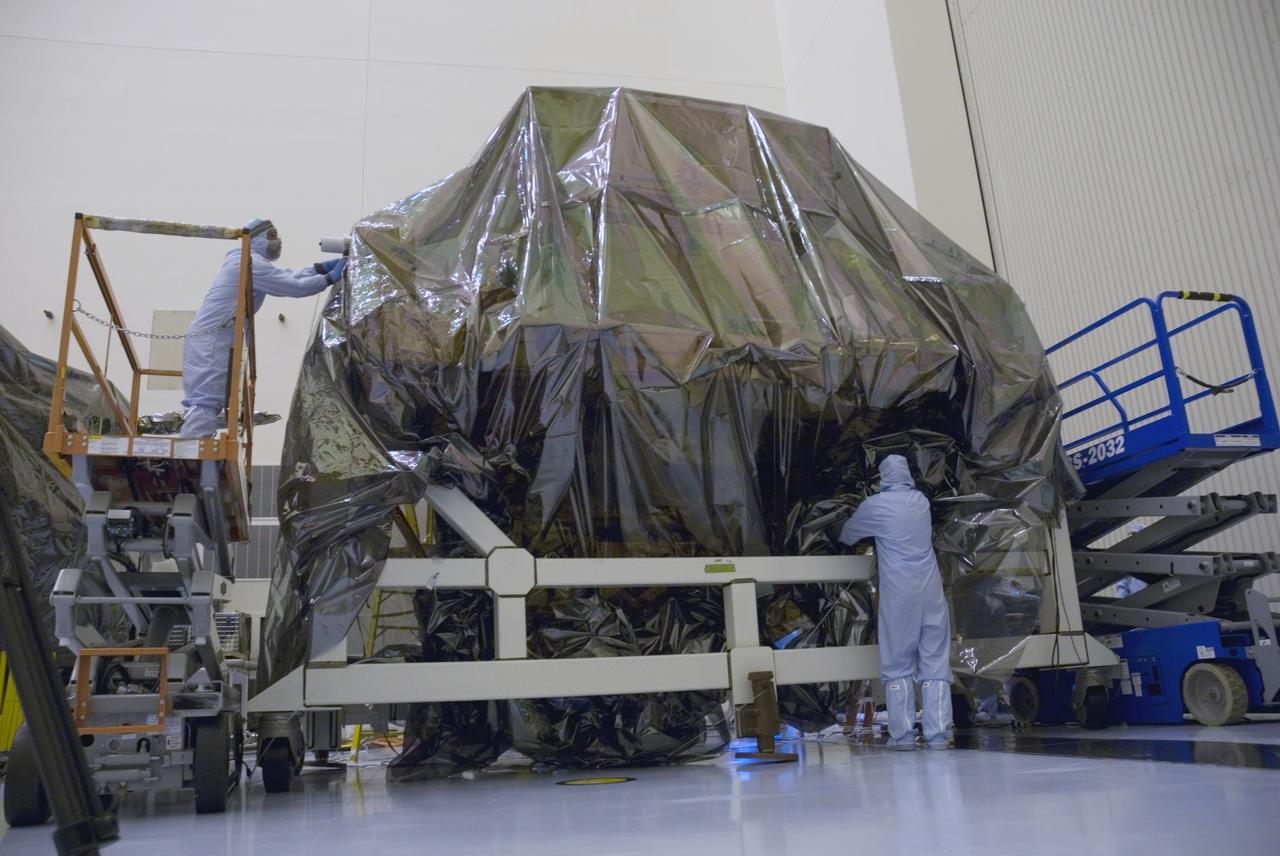
CAPE CANAVERAL, Fla. - In the Payload Hazardous Servicing Facility at NASA's Kennedy Space Center, technicians finish replacing the protective cover over the Super Lightweight Interchangeable Carrier, or SLIC. The cover was removed to clean the carrier of contaminants found Sept. 17 during preparations to deliver NASA's Hubble Space Telescope servicing payload to Launch Pad 39A. Cleanliness is extremely important for space shuttle Atlantis’ STS-125 mission to Hubble, and the teams have insured that the SLIC is ready to fly. The SLIC, which holds battery module assemblies, is built with state-of-the-art, lightweight, composite materials - carbon fiber with a cyanate ester resin and a titanium metal matrix composite. These composites have greater strength-to-mass ratios than the metals typically used in spacecraft design. The carrier is one of four being transferred to Launch Pad 39A. At the pad, the carriers will be loaded into Atlantis’ payload bay. Launch of Atlantis is targeted for Oct. 10. Photo credit: NASA/Jack Pfaller
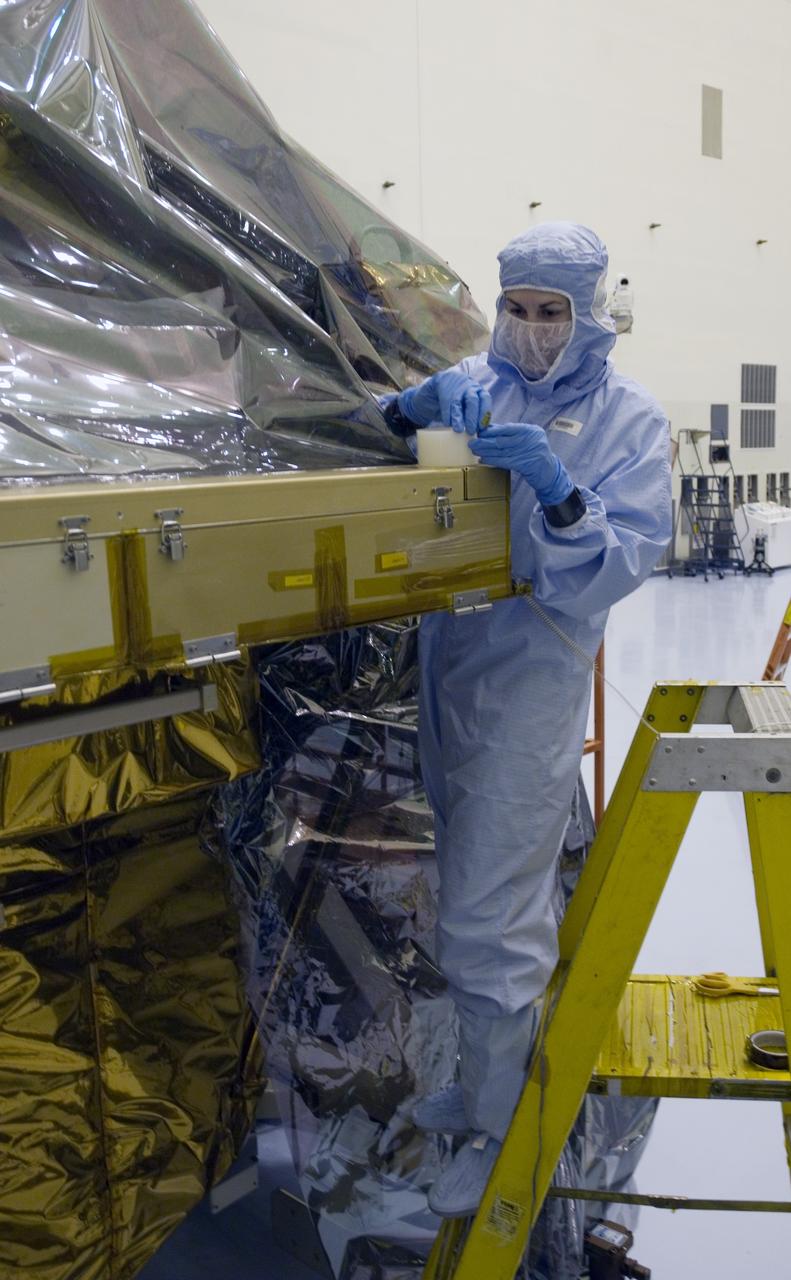
CAPE CANAVERAL, Fla. - In the Payload Hazardous Servicing Facility at NASA's Kennedy Space Center, a technician works to replace the protective cover on the Super Lightweight Interchangeable Carrier, or SLIC. The cover was removed to clean the carrier of contaminants found Sept. 17 during preparations to deliver NASA's Hubble Space Telescope servicing payload to Launch Pad 39A. Cleanliness is extremely important for space shuttle Atlantis’ STS-125 mission to Hubble, and the teams have insured that the SLIC is ready to fly. The SLIC, which holds battery module assemblies, is built with state-of-the-art, lightweight, composite materials - carbon fiber with a cyanate ester resin and a titanium metal matrix composite. These composites have greater strength-to-mass ratios than the metals typically used in spacecraft design. The carrier is one of four being transferred to Launch Pad 39A. At the pad, the carriers will be loaded into Atlantis’ payload bay. Launch of Atlantis is targeted for Oct. 10. Photo credit: NASA/Jack Pfaller
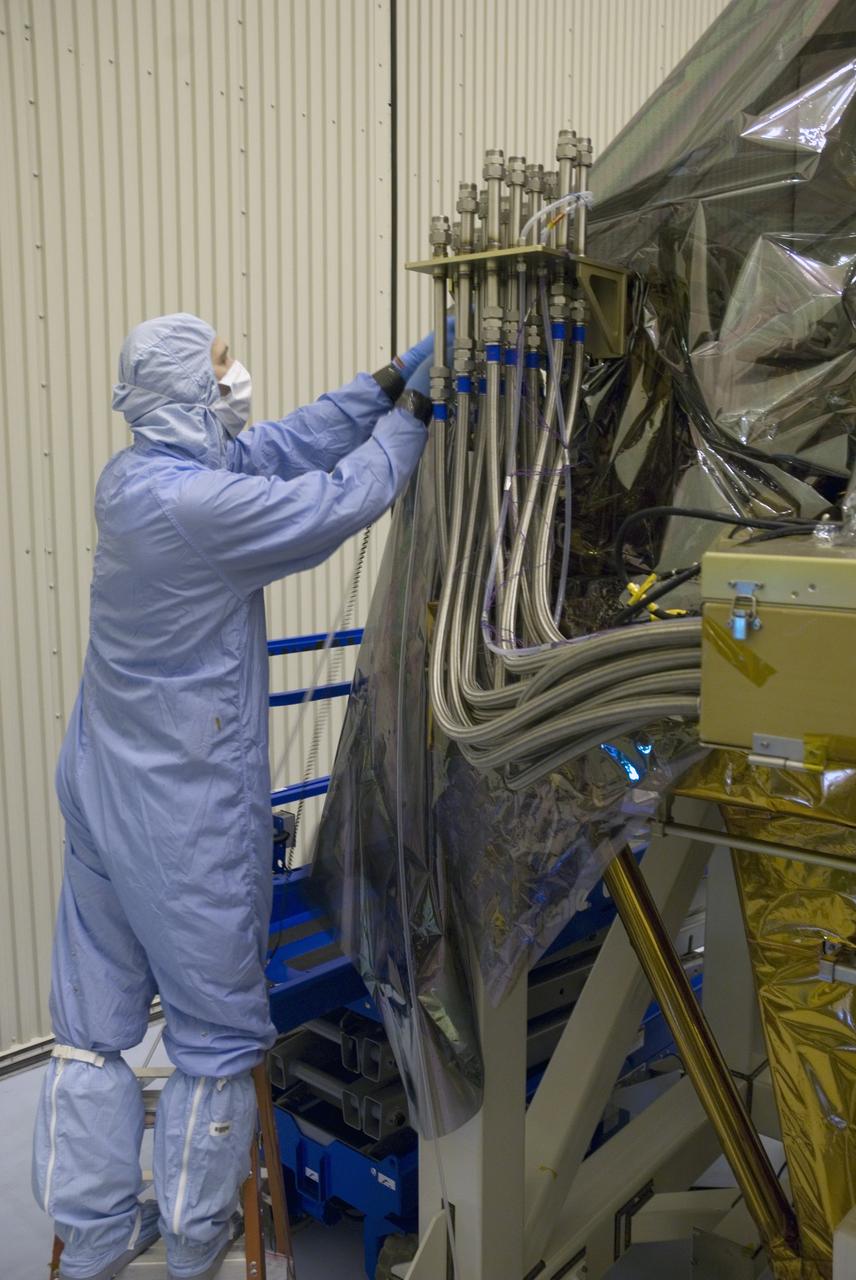
CAPE CANAVERAL, Fla. - In the Payload Hazardous Servicing Facility at NASA's Kennedy Space Center, a technician works to replace the protective cover on the Super Lightweight Interchangeable Carrier, or SLIC. The cover was removed to clean the carrier of contaminants found Sept. 17 during preparations to deliver NASA's Hubble Space Telescope servicing payload to Launch Pad 39A. Cleanliness is extremely important for space shuttle Atlantis’ STS-125 mission to Hubble, and the teams have insured that the SLIC is ready to fly. The SLIC, which holds battery module assemblies, is built with state-of-the-art, lightweight, composite materials - carbon fiber with a cyanate ester resin and a titanium metal matrix composite. These composites have greater strength-to-mass ratios than the metals typically used in spacecraft design. The carrier is one of four being transferred to Launch Pad 39A. At the pad, the carriers will be loaded into Atlantis’ payload bay. Launch of Atlantis is targeted for Oct. 10. Photo credit: NASA/Jack Pfaller
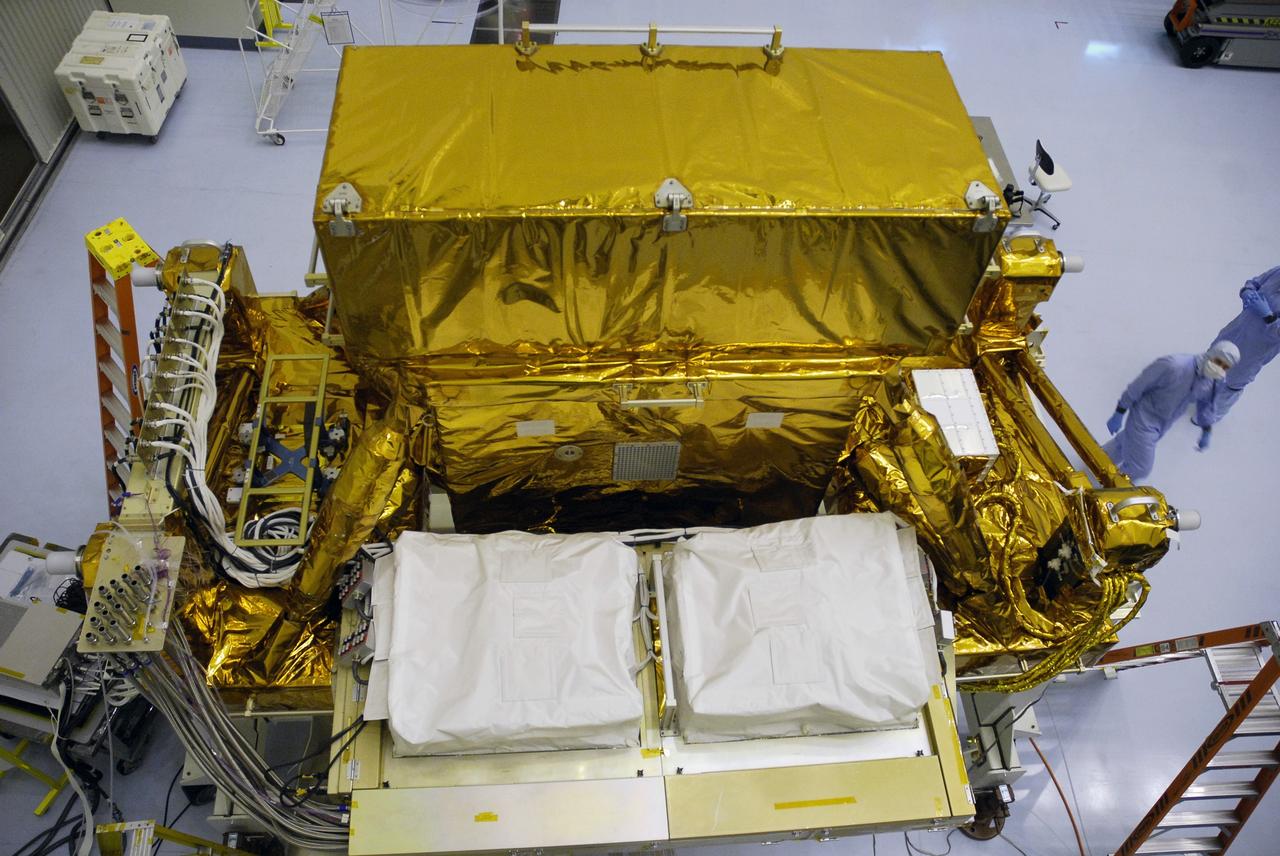
CAPE CANAVERAL, Fla. - In the Payload Hazardous Servicing Facility at NASA's Kennedy Space Center, the Super Lightweight Interchangeable Carrier, or SLIC, is uncovered so that technicians can clean contaminants found earlier. Contamination discovered Sept. 17 during preparations to deliver NASA's Hubble Space Telescope servicing payload to Launch Pad 39A will be removed. Cleanliness is extremely important for space shuttle Atlantis’ STS-125 mission to Hubble, and the teams have insured that the SLIC is ready to fly. The SLIC, which holds battery module assemblies, is built with state-of-the-art, lightweight, composite materials - carbon fiber with a cyanate ester resin and a titanium metal matrix composite. These composites have greater strength-to-mass ratios than the metals typically used in spacecraft design. The carrier is one of four being transferred to Launch Pad 39A. At the pad, the carriers will be loaded into Atlantis’ payload bay. Launch of Atlantis is targeted for Oct. 10. Photo credit: NASA/Jack Pfaller

CAPE CANAVERAL, Fla. – In the Orbiter Processing Facility at NASA's Kennedy Space Center, STS-125 crew members are lowered into space shuttle Atlantis' payload bay for a close look at the hardware. Equipment familiarization is part of the crew equipment interface test, which provides hands-on experience with hardware and equipment for the mission. Crew members are Commander Scott Altman, Pilot Gregory C. Johnson, and Mission Specialists Michael Good, Megan McArthur, John Grunsfeld, Mike Massimino and Andrew Feustel. Atlantis is targeted to launch Oct. 8 on the STS-125 mission to service the Hubble Space Telescope. The mission crew will perform history-making, on-orbit “surgery” on two important science instruments aboard the telescope. After capturing the telescope, two teams of spacewalking astronauts will perform the repairs during five planned spacewalks. Photo credit: NASA/Kim Shiflett
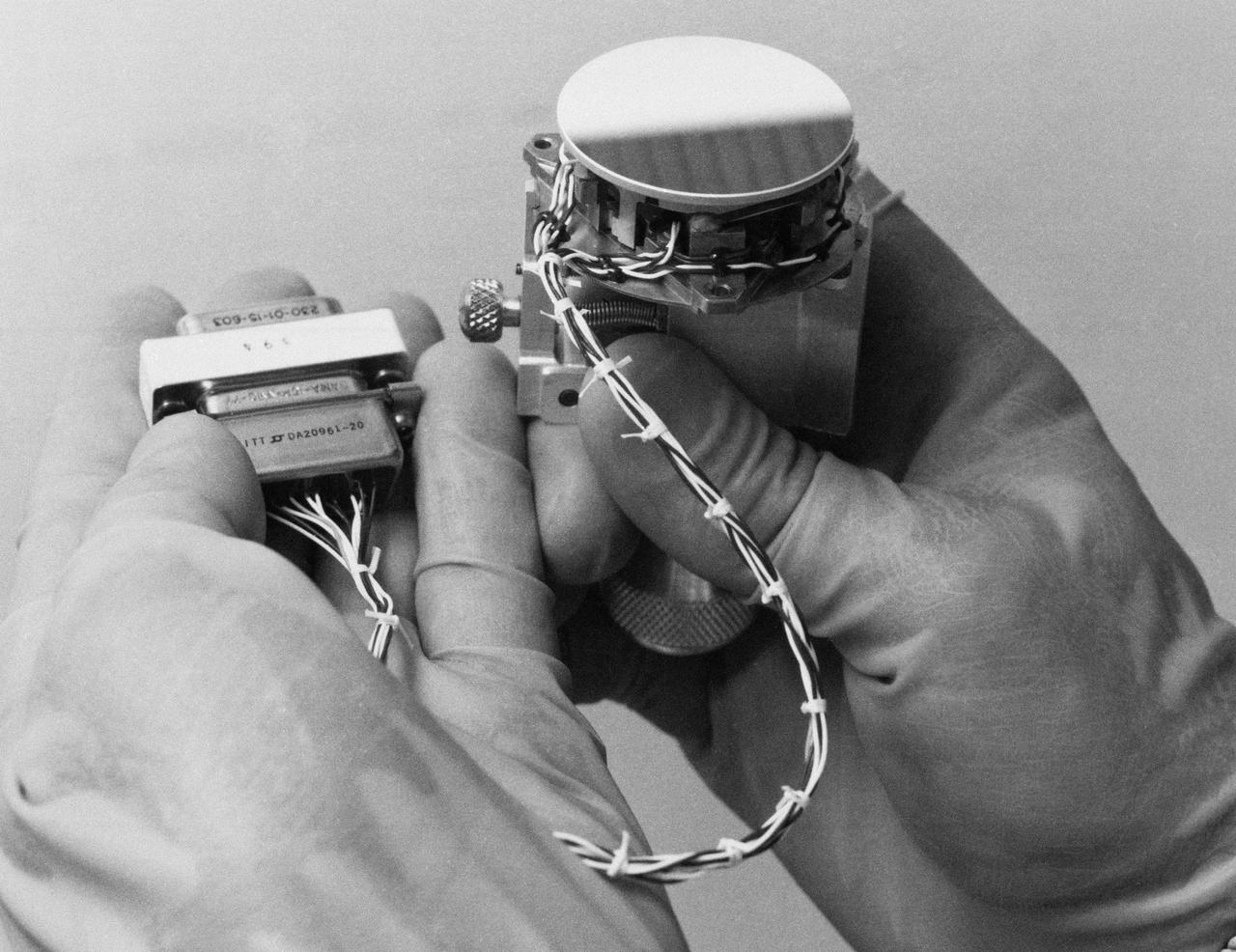
S93-33257 (15 Mar 1993) --- This close-up view features tiny articulating fold mirrors that will go into a replacement camera for the Wide Field\Planetary Camera (WF\PC-1) currently on the Hubble Space Telescope (HST). A team of NASA astronauts will pay a visit to the HST later this year, carrying with them the new WF/PC-2 to replace the one currently on the HST. The Jet Propulsion Laboratory (JPL) in Pasadena, California has been working on the replacement system for several months. See NASA photo S93-33258 for an optical schematic diagram of one of the four channels of the WF\PC-2 showing the path taken by beams from the HST before an image is formed at the camera's charge-coupled devices.
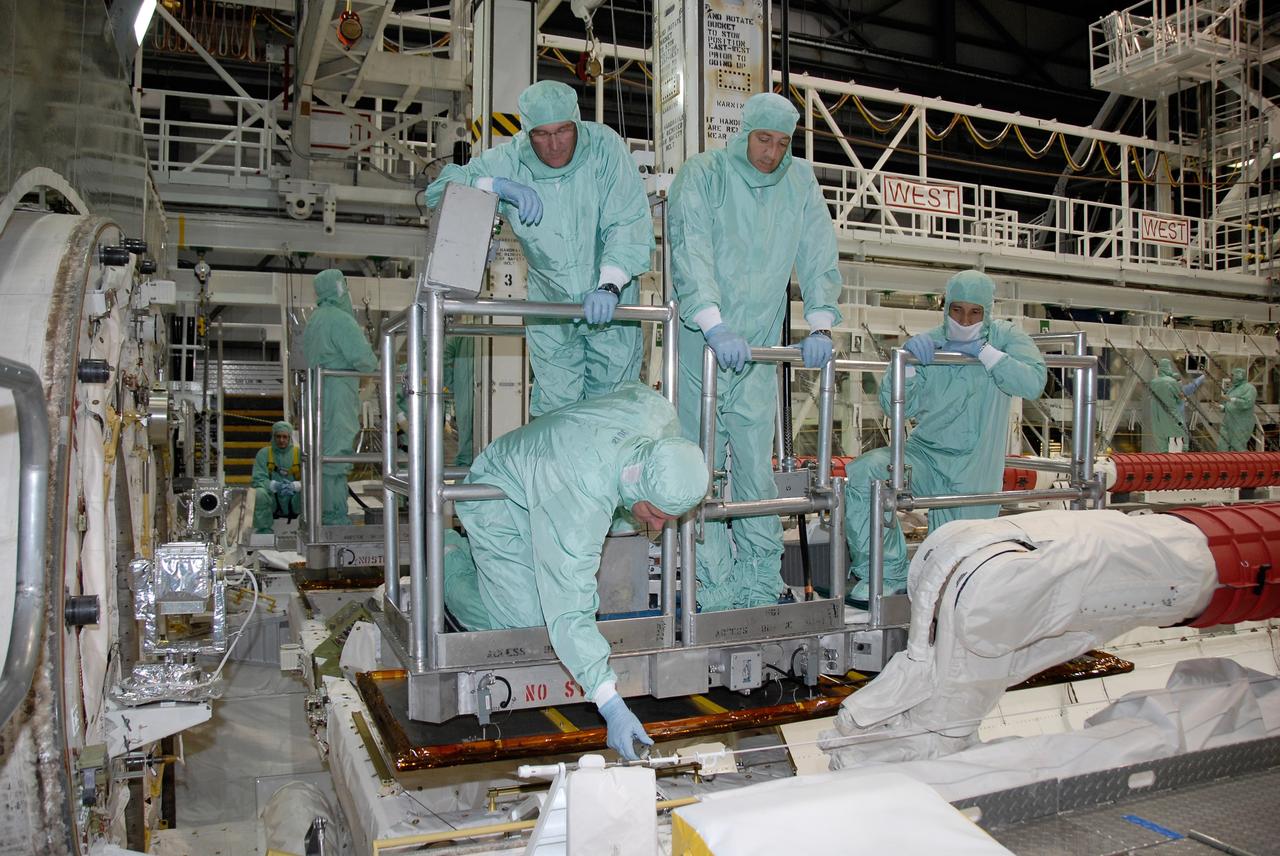
CAPE CANAVERAL, Fla. – In the Orbiter Processing Facility at NASA's Kennedy Space Center, STS-125 crew members are lowered into space shuttle Atlantis' payload bay for a close look at the hardware. Equipment familiarization is part of the crew equipment interface test, which provides hands-on experience with hardware and equipment for the mission. Crew members are Commander Scott Altman, Pilot Gregory C. Johnson, and Mission Specialists Michael Good, Megan McArthur, John Grunsfeld, Mike Massimino and Andrew Feustel. Atlantis is targeted to launch Oct. 8 on the STS-125 mission to service the Hubble Space Telescope. The mission crew will perform history-making, on-orbit “surgery” on two important science instruments aboard the telescope. After capturing the telescope, two teams of spacewalking astronauts will perform the repairs during five planned spacewalks. Photo credit: NASA/Kim Shiflett
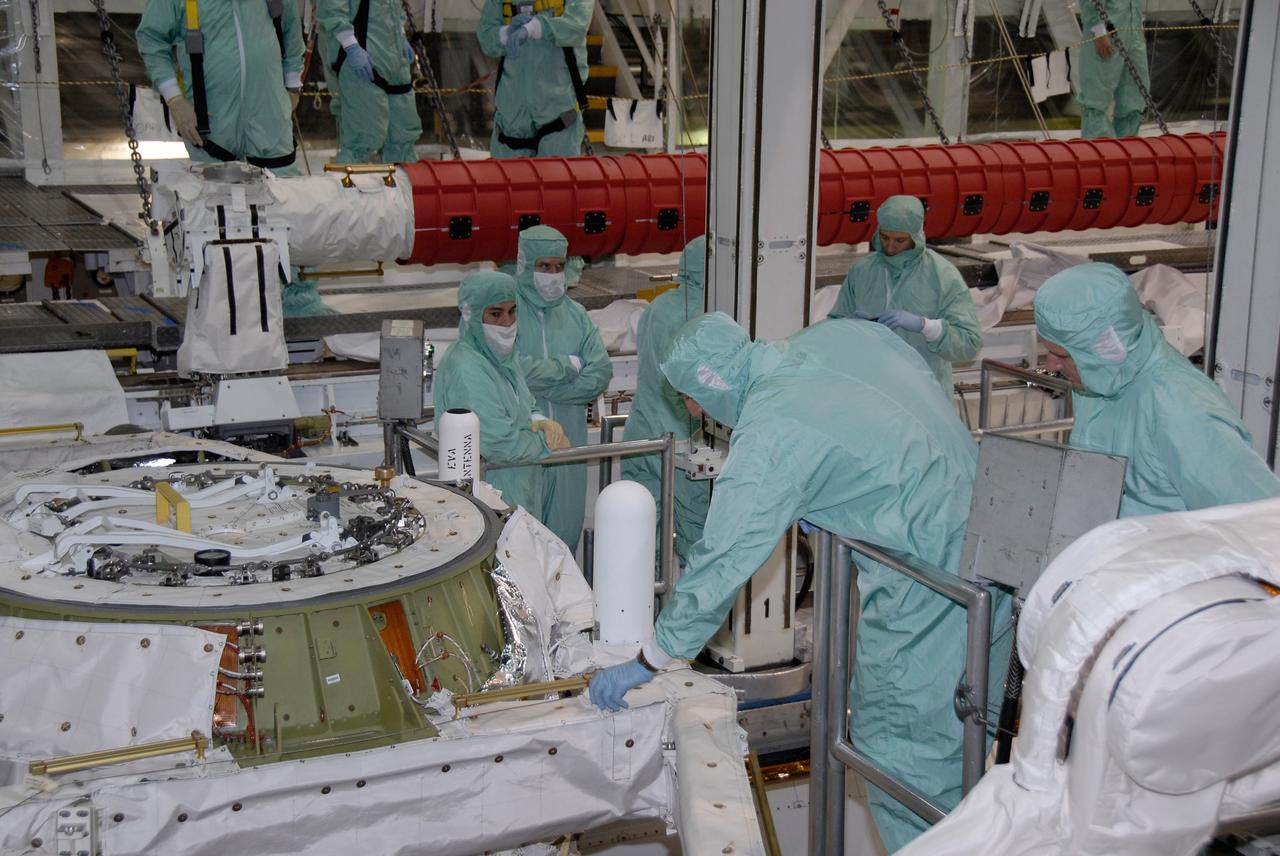
CAPE CANAVERAL, Fla. – In the Orbiter Processing Facility at NASA's Kennedy Space Center, STS-125 crew members are lowered into space shuttle Atlantis' payload bay for a close look at the hardware. Equipment familiarization is part of the crew equipment interface test, which provides hands-on experience with hardware and equipment for the mission. Crew members are Commander Scott Altman, Pilot Gregory C. Johnson, and Mission Specialists Michael Good, Megan McArthur, John Grunsfeld, Mike Massimino (reaching toward the airlock) and Andrew Feustel. Atlantis is targeted to launch Oct. 8 on the STS-125 mission to service the Hubble Space Telescope. The mission crew will perform history-making, on-orbit “surgery” on two important science instruments aboard the telescope. After capturing the telescope, two teams of spacewalking astronauts will perform the repairs during five planned spacewalks. Photo credit: NASA/Kim Shiflett
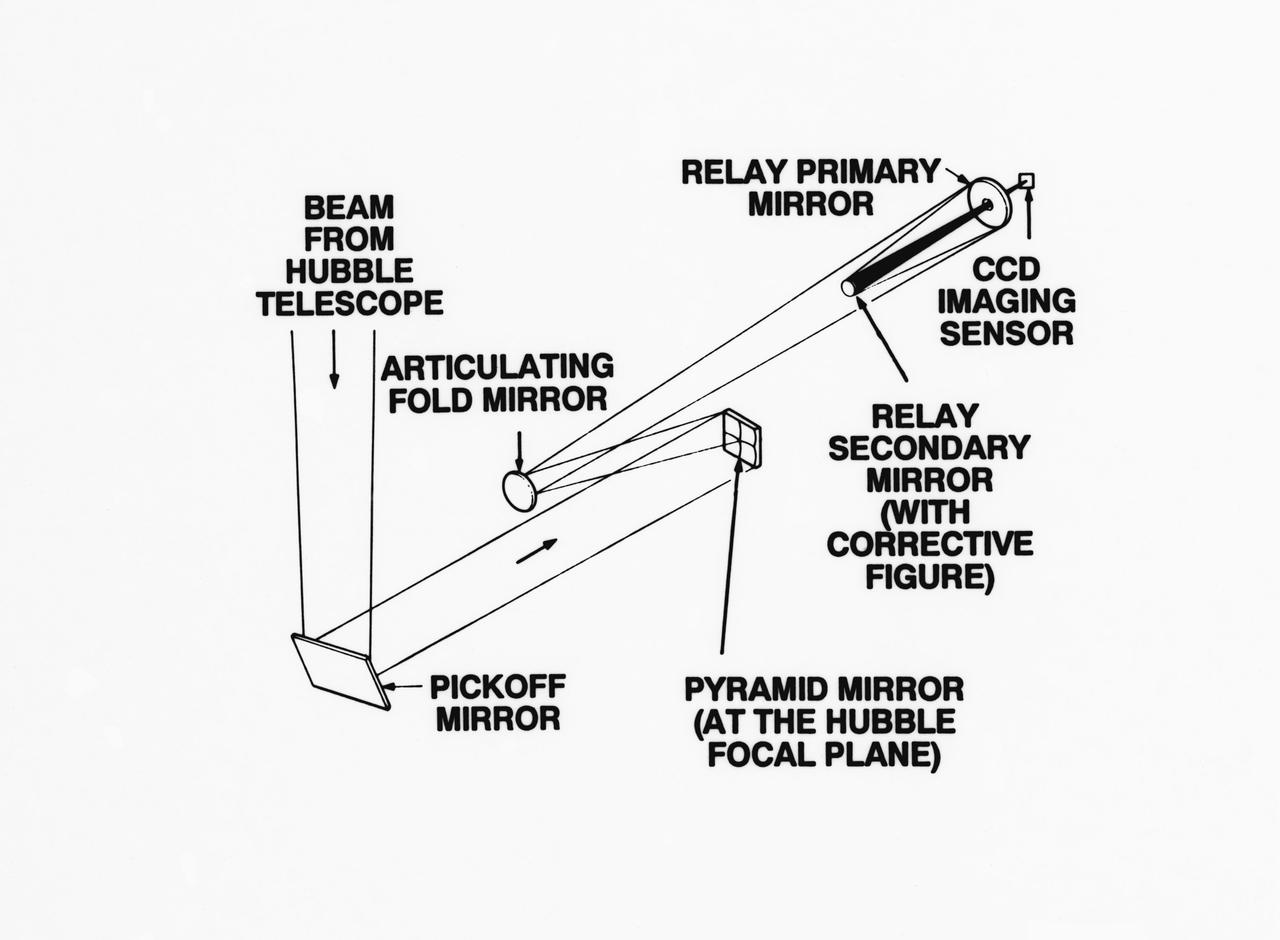
S93-33258 (15 Mar 1993) --- An optical schematic diagram of one of the four channels of the Wide Field\Planetary Camera-2 (WF\PC-2) shows the path taken by beams from the Hubble Space Telescope (HST) before an image is formed at the camera's charge-coupled devices. A team of NASA astronauts will pay a visit to the HST later this year, carrying with them the new WF/PC-2 to replace the one currently on the HST. The Jet Propulsion Laboratory in Pasadena, California has been working on the replacement system for several months. See NASA photo S93-33257 for a close-up view of tiny articulating mirrors designed to realign incoming light in order to make certain the beams fall precisely in the middle of the secondary mirrors.

CAPE CANAVERAL, Fla. – In the Orbiter Processing Facility at NASA's Kennedy Space Center, STS-125 Mission Specialists Mike Massimino (center) and Michael Good (right) check out equipment in space shuttle Atlantis' payload bay. Equipment familiarization is part of the crew equipment interface test, which provides hands-on experience with hardware and equipment for the mission. Atlantis is targeted to launch Oct. 8 on the STS-125 mission to service the Hubble Space Telescope. The mission crew will perform history-making, on-orbit “surgery” on two important science instruments aboard the telescope. After capturing the telescope, two teams of spacewalking astronauts will perform the repairs during five planned spacewalks. Photo credit: NASA/Kim Shiflett
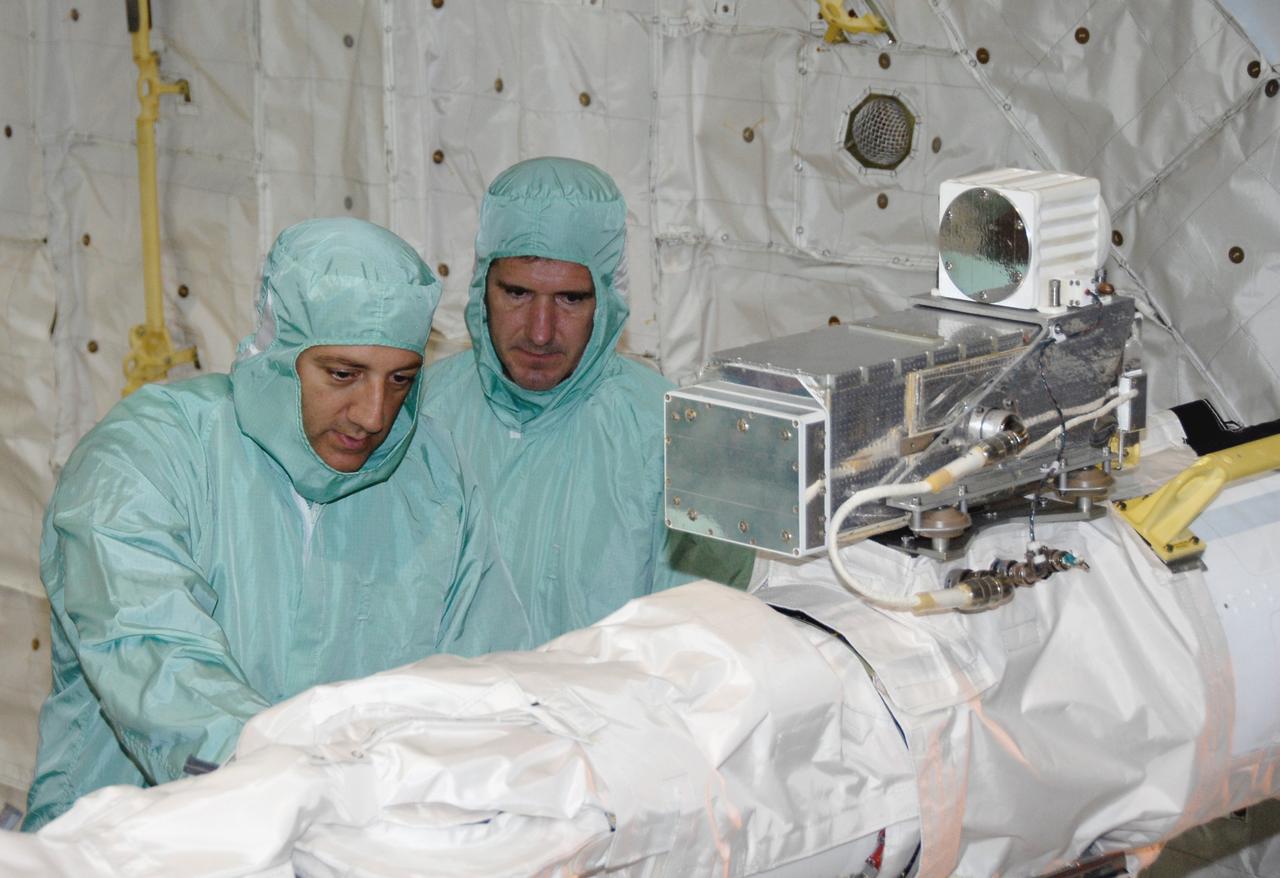
CAPE CANAVERAL, Fla. – In the Orbiter Processing Facility at NASA's Kennedy Space Center, STS-125 Mission Specialists Mike Massimino (left) and Michael Good (right) check out the orbiter boom sensor system and the attached camera in space shuttle Atlantis' payload bay. Equipment familiarization is part of the crew equipment interface test, which provides hands-on experience with hardware and equipment for the mission. Atlantis is targeted to launch Oct. 8 on the STS-125 mission to service the Hubble Space Telescope. The mission crew will perform history-making, on-orbit “surgery” on two important science instruments aboard the telescope. After capturing the telescope, two teams of spacewalking astronauts will perform the repairs during five planned spacewalks. Photo credit: NASA/Kim Shiflett
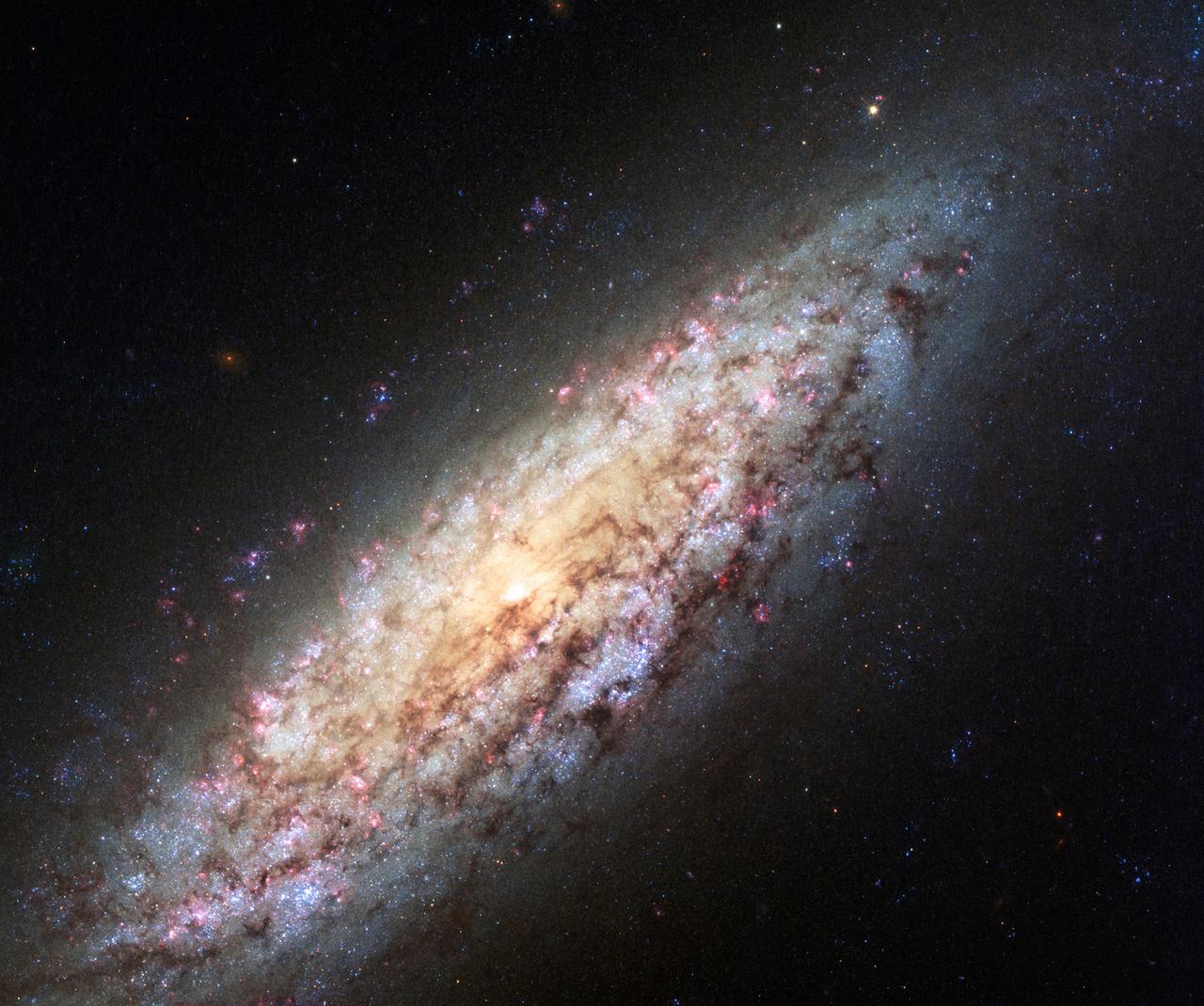
Most galaxies are clumped together in groups or clusters. A neighboring galaxy is never far away. But this galaxy, known as NGC 6503, has found itself in a lonely position, at the edge of a strangely empty patch of space called the Local Void. The Local Void is a huge stretch of space that is at least 150 million light-years across. It seems completely empty of stars or galaxies. The galaxy’s odd location on the edge of this never-land led stargazer Stephen James O’Meara to dub it the “Lost-In-Space galaxy” in his 2007 book, Hidden Treasures. NGC 6503 is 18 million light-years away from us in the northern circumpolar constellation of Draco. NGC 6503 spans some 30,000 light-years, about a third of the size of the Milky Way. This Hubble Space Telescope image shows NGC 6503 in striking detail and with a rich set of colors. Bright red patches of gas can be seen scattered through its swirling spiral arms, mixed with bright blue regions that contain newly forming stars. Dark brown dust lanes snake across the galaxy’s bright arms and center, giving it a mottled appearance. The Hubble Advanced Camera for Surveys data for NGC 6503 were taken in April 2003, and the Wide Field Camera 3 data were taken in August 2013. The Hubble Space Telescope is a project of international cooperation between NASA and the European Space Agency. NASA’s Goddard Space Flight Center in Greenbelt, Maryland, manages the telescope. The Space Telescope Science Institute (STScI) in Baltimore conducts Hubble science operations. STScI is operated for NASA by the Association of Universities for Research in Astronomy, Inc., in Washington, D.C. Photo Credit: NASA, ESA, D. Calzetti (University of Massachusetts), H. Ford (Johns Hopkins University), and the Hubble Heritage Team <b><a href="http://www.nasa.gov/audience/formedia/features/MP_Photo_Guidelines.html" rel="nofollow">NASA image use policy.</a></b> <b><a href="http://www.nasa.gov/centers/goddard/home/index.html" rel="nofollow">NASA Goddard Space Flight Center</a></b> enables NASA’s mission through four scientific endeavors: Earth Science, Heliophysics, Solar System Exploration, and Astrophysics. Goddard plays a leading role in NASA’s accomplishments by contributing compelling scientific knowledge to advance the Agency’s mission. <b>Follow us on <a href="http://twitter.com/NASAGoddardPix" rel="nofollow">Twitter</a></b> <b>Like us on <a href="http://www.facebook.com/pages/Greenbelt-MD/NASA-Goddard/395013845897?ref=tsd" rel="nofollow">Facebook</a></b> <b>Find us on <a href="http://instagrid.me/nasagoddard/?vm=grid" rel="nofollow">Instagram</a></b>
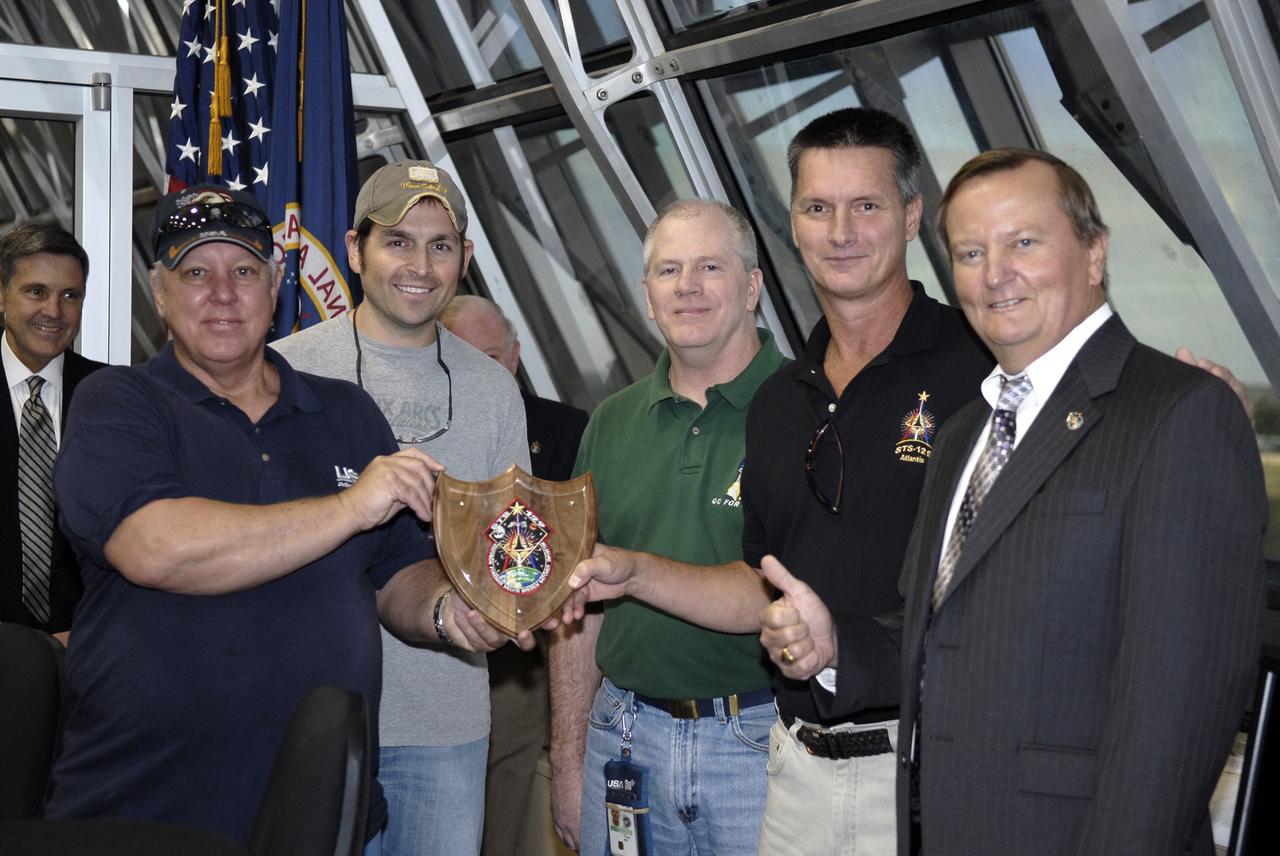
CAPE CANAVERAL, Fla. - In Firing Room 4 of NASA Kennedy Space Center's Launch Control Center, NASA's space shuttle launch director Michael Leinbach presents members of the United Space Alliance Midbody Team for space shuttle Atlantis with the Launch Director's Flow Award, a plaque emblazoned with the logo for Atlantis' STS-129 mission. The award recognizes the team's superior work in reconfiguring the shuttle's payload bay between STS-125, the last Hubble Space Telescope servicing mission, and the current STS-129 mission to the International Space Station. From left are midbody lead Jim Reed, midbody thermal control system technician Chris Oliver, midbody planner and payload operations representative for STS-129 Steve Durnin, Orbiter Processing Facility-1 midbody supervisor Bobby Pracek, and Leinbach. Liftoff of Atlantis from Launch Pad 39A on its STS-129 mission to the International Space Station came at 2:28 p.m. EST Nov. 16. For information on the STS-129 mission and crew, visit http://www.nasa.gov/mission_pages/shuttle/shuttlemissions/sts129/index.html. Photo credit: NASA/Kim Shiflett

NASA image release January 13, 2011 <b><a href="http://www.flickr.com/photos/gsfc/5352962836">These images</a></b> by NASA's Hubble Space Telescope show off two dramatically different face-on views of the spiral galaxy M51, dubbed the Whirlpool Galaxy. <b>The image above,</b> taken in visible light, highlights the attributes of a typical spiral galaxy, including graceful, curving arms, pink star-forming regions, and brilliant blue strands of star clusters. <b><a href="http://www.flickr.com/photos/gsfc/5352344517">In the image here,</a></b> most of the starlight has been removed, revealing the Whirlpool's skeletal dust structure, as seen in near-infrared light. This new image is the sharpest view of the dense dust in M51. The narrow lanes of dust revealed by Hubble reflect the galaxy's moniker, the Whirlpool Galaxy, as if they were swirling toward the galaxy's core. To map the galaxy's dust structure, researchers collected the galaxy's starlight by combining images taken in visible and near-infrared light. The visible-light image captured only some of the light; the rest was obscured by dust. The near-infrared view, however, revealed more starlight because near-infrared light penetrates dust. The researchers then subtracted the total amount of starlight from both images to see the galaxy's dust structure. The red color in the near-infrared image traces the dust, which is punctuated by hundreds of tiny clumps of stars, each about 65 light-years wide. These stars have never been seen before. The star clusters cannot be seen in visible light because dense dust enshrouds them. The image reveals details as small as 35 light-years across. Astronomers expected to see large dust clouds, ranging from about 100 light-years to more than 300 light-years wide. Instead, most of the dust is tied up in smooth and diffuse dust lanes. An encounter with another galaxy may have prevented giant clouds from forming. Probing a galaxy's dust structure serves as an important diagnostic tool for astronomers, providing invaluable information on how the gas and dust collapse to form stars. Although Hubble is providing incisive views of the internal structure of galaxies such as M51, the planned James Webb Space Telescope (JWST) is expected to produce even crisper images. Researchers constructed the image by combining visible-light exposures from Jan. 18 to 22, 2005, with the Advanced Camera for Surveys (ACS), and near-infrared light pictures taken in December 2005 with the Near Infrared Camera and Multi-Object Spectrometer (NICMOS). Credit: NASA, ESA, S. Beckwith (STScI), and the Hubble Heritage Team (STScI/AURA) The Hubble Space Telescope is a project of international cooperation between NASA and the European Space Agency. NASA's Goddard Space Flight Center manages the telescope. The Space Telescope Science Institute (STScI) conducts Hubble science operations. STScI is operated for NASA by the Association of Universities for Research in Astronomy, Inc., in Washington, D.C. <b><a href="http://www.nasa.gov/centers/goddard/home/index.html" rel="nofollow">NASA Goddard Space Flight Center</a></b> enables NASA’s mission through four scientific endeavors: Earth Science, Heliophysics, Solar System Exploration, and Astrophysics. Goddard plays a leading role in NASA’s accomplishments by contributing compelling scientific knowledge to advance the Agency’s mission. <b>Follow us on <a href="http://twitter.com/NASA_GoddardPix" rel="nofollow">Twitter</a></b> <b>Join us on <a href="http://www.facebook.com/pages/Greenbelt-MD/NASA-Goddard/395013845897?ref=tsd" rel="nofollow">Facebook</a></b>

Image release August 19, 2010 An international team of astronomers using gravitational lensing observations from the NASA/ESA Hubble Space Telescope has taken an important step forward in the quest to solve the riddle of dark energy, a phenomenon which mysteriously appears to power the Universe's accelerating expansion. Their results appear in the 20 August 2010 issue of the journal Science. This image shows the galaxy cluster Abell 1689, with the mass distribution of the dark matter in the gravitational lens overlaid (in purple). The mass in this lens is made up partly of normal (baryonic) matter and partly of dark matter. Distorted galaxies are clearly visible around the edges of the gravitational lens. The appearance of these distorted galaxies depends on the distribution of matter in the lens and on the relative geometry of the lens and the distant galaxies, as well as on the effect of dark energy on the geometry of the Universe. Credit: NASA, ESA, E. Jullo (JPL/LAM), P. Natarajan (Yale) and J-P. Kneib (LAM). To view a video of this image go to: <a href="http://www.flickr.com/photos/gsfc/4909967467">www.flickr.com/photos/gsfc/4909967467</a> <b><a href="http://www.nasa.gov/centers/goddard/home/index.html" rel="nofollow">NASA Goddard Space Flight Center</a></b> is home to the nation's largest organization of combined scientists, engineers and technologists that build spacecraft, instruments and new technology to study the Earth, the sun, our solar system, and the universe. <b>Follow us on <a href="http://twitter.com/NASA_GoddardPix" rel="nofollow">Twitter</a></b> <b>Join us on <a href="http://www.facebook.com/pages/Greenbelt-MD/NASA-Goddard/395013845897?ref=tsd" rel="nofollow">Facebook</a></b> To read more go to: <a href="http://www.spacetelescope.org/news/heic1014/?utm_source=feedburner&utm_medium=feed&utm_campaign=Feed:+hubble_news+(Hubble+News)" rel="nofollow">www.spacetelescope.org/news/heic1014/?utm_source=feedburn...</a>
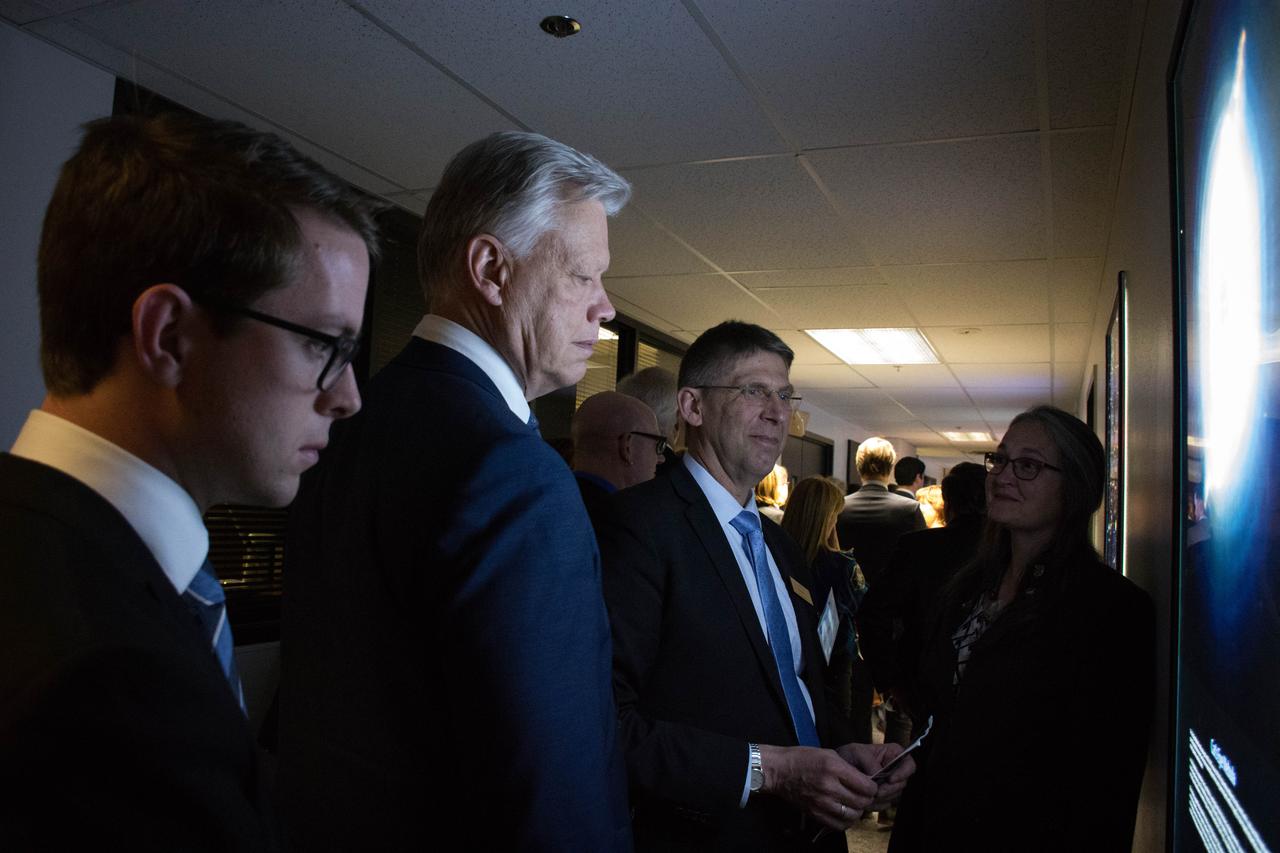
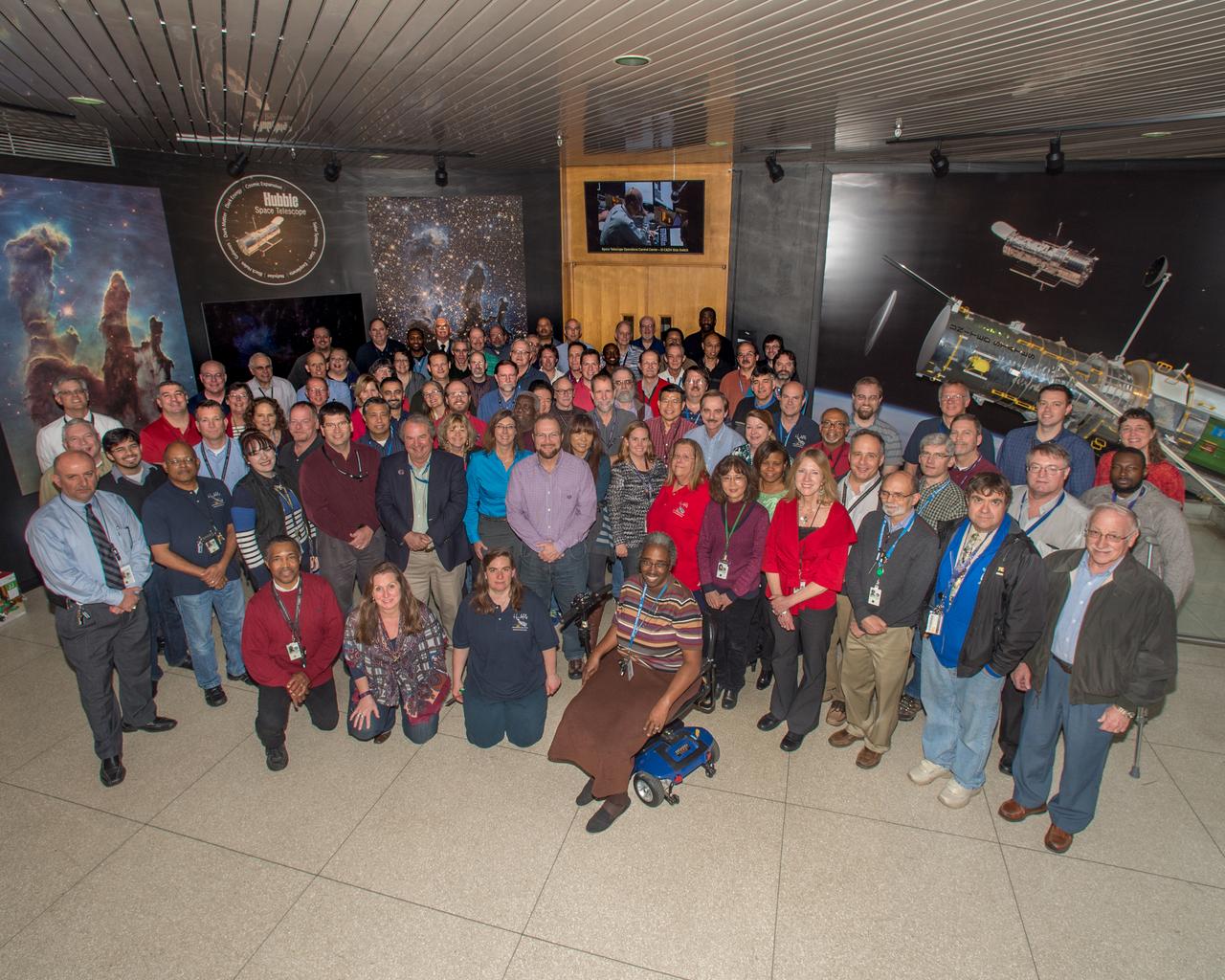
Swedish Delegation Visits GSFC – May 3, 2017 - Members of the Royal Swedish Academy of Engineering Sciences listen to members of the Hubble Space Telescope (HST) team talk about telescope operations just outside the HST control center at Goddard. Photo Credit: NASA/Goddard/Rebecca Roth Read more: <a href="https://go.nasa.gov/2p1rP0h" rel="nofollow">go.nasa.gov/2p1rP0h</a> <b><a href="http://www.nasa.gov/audience/formedia/features/MP_Photo_Guidelines.html" rel="nofollow">NASA image use policy.</a></b> <b><a href="http://www.nasa.gov/centers/goddard/home/index.html" rel="nofollow">NASA Goddard Space Flight Center</a></b> enables NASA’s mission through four scientific endeavors: Earth Science, Heliophysics, Solar System Exploration, and Astrophysics. Goddard plays a leading role in NASA’s accomplishments by contributing compelling scientific knowledge to advance the Agency’s mission. <b>Follow us on <a href="http://twitter.com/NASAGoddardPix" rel="nofollow">Twitter</a></b> <b>Like us on <a href="http://www.facebook.com/pages/Greenbelt-MD/NASA-Goddard/395013845897?ref=tsd" rel="nofollow">Facebook</a></b> <b>Find us on <a href="http://instagrid.me/nasagoddard/?vm=grid" rel="nofollow">Instagram</a></b>
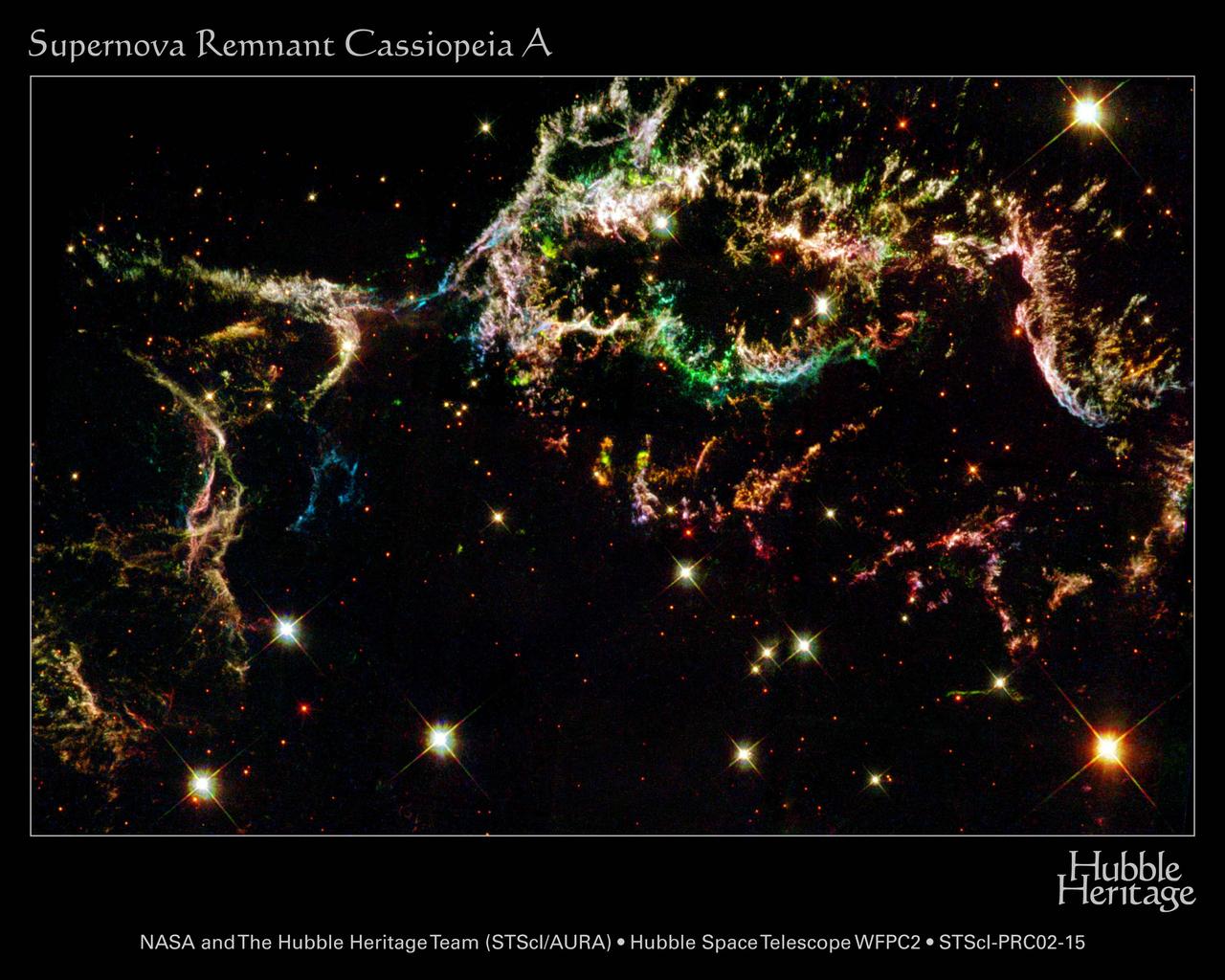
The colorful streamers that float across the sky in this photo taken by NASA's Hubble Space Telescope (HST) were created by the universe's biggest firecracker, the titanic supernova explosion of a massive star. The light from the exploding star reached Earth 320 years ago, nearly a century before the United States celebrated its birth with a bang. The dead star's shredded remains are called Cassiopeia A, or "Cas A" for short. Cas A is the youngest known supernova remnant in our Milky Way Galaxy and resides 10,000 light-years away in the constellation Cassiopeia, so the star actually blew up 10,000 years before the light reached Earth in the late 1600s. This HST image of Cas A shows for the first time that the debris is arranged into thousands of small, cooling knots of gas. This material eventually will be recycled into building new generations of stars and planets. Our own Sun and planets are constructed from the debris of supernovae that exploded billions of years ago. This photo shows the upper rim of the super nova remnant's expanding shell. Near the top of the image are dozens of tiny clumps of matter. Each small clump, originally just a small fragment of the star, is tens of times larger than the diameter of our solar system. The colors highlight parts of the debris where chemical elements are glowing. The dark blue fragments, for example, are richest in oxygen; the red material is rich in sulfur. The images were taken with the Wide Field and Planetary Camera 2 in January 2000 and January 2002. Image Credit: NASA and HST team (Stoics/AURA). Acknowledgment: R. Fesen (Darmouth) and J. Morse ( Univ. of Colorado).
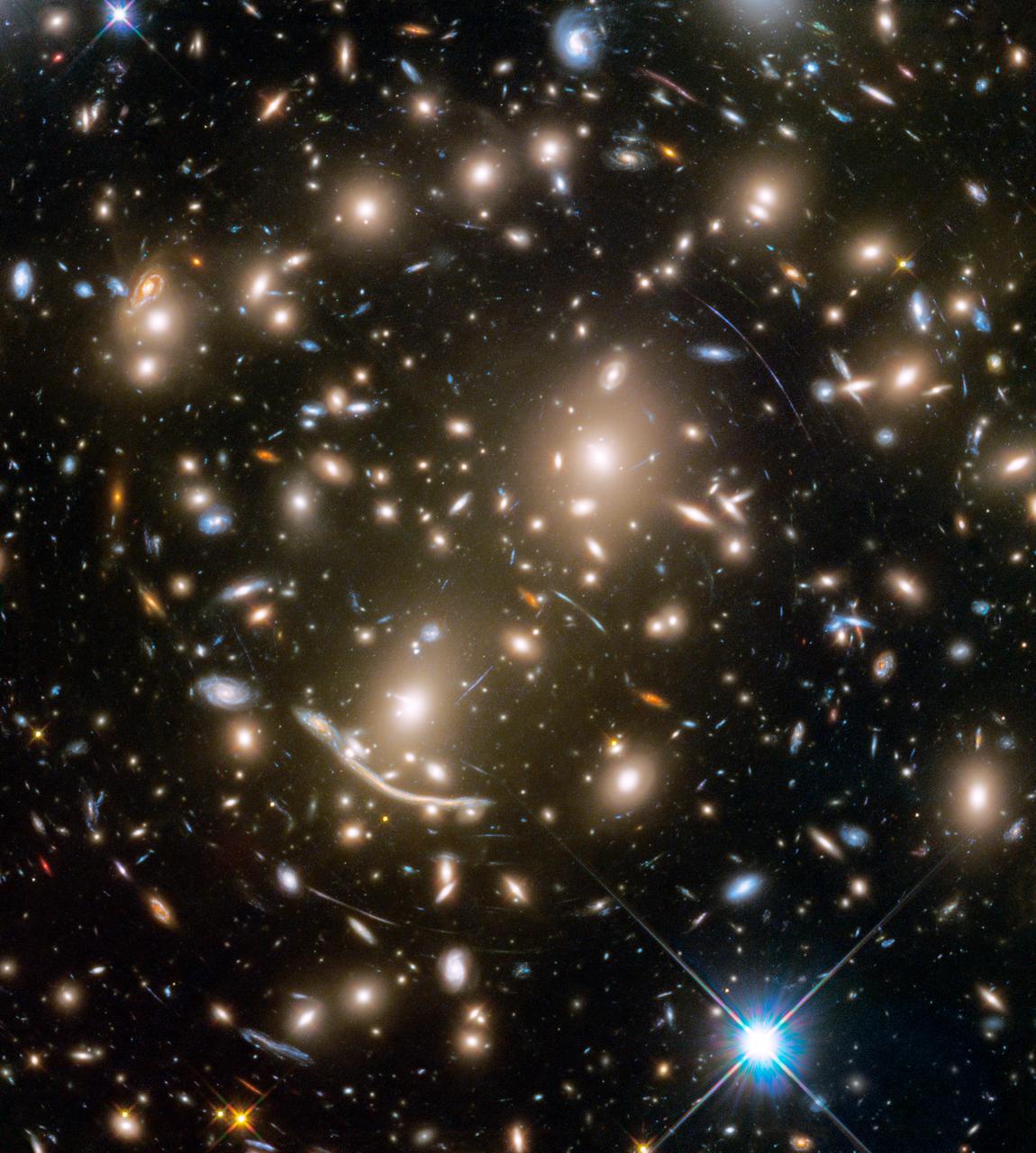
Much like the eclectic group of space rebels in the upcoming film Guardians of the Galaxy Vol. 2, NASA’s Hubble Space Telescope has some amazing superpowers, specifically when it comes to observing innumerable galaxies flung across time and space. A stunning example is a galaxy cluster called Abell 370 that contains an astounding assortment of several hundred galaxies tied together by the mutual pull of gravity. That’s a lot of galaxies to be guarding, and just in this one cluster! Read more: <a href="https://go.nasa.gov/2paAitl" rel="nofollow">go.nasa.gov/2paAitl</a> Photo caption: Galaxy cluster Abell 370 contains several hundred galaxies tied together by the mutual pull of gravity. Photographed in a combination of visible and near-infrared light, the brightest and largest galaxies are the yellow-white, massive, elliptical galaxies containing many hundreds of billions of stars each. Spiral galaxies have younger populations of stars and are bluish. Mysterious-looking arcs of blue light are distorted images of remote galaxies behind the cluster. The cluster acts as a huge lens in space that magnifies and stretches images of background galaxies like a funhouse mirror. Photo Credit: NASA, ESA, and J. Lotz and the HFF Team (STScI) <b><a href="http://www.nasa.gov/audience/formedia/features/MP_Photo_Guidelines.html" rel="nofollow">NASA image use policy.</a></b> <b><a href="http://www.nasa.gov/centers/goddard/home/index.html" rel="nofollow">NASA Goddard Space Flight Center</a></b> enables NASA’s mission through four scientific endeavors: Earth Science, Heliophysics, Solar System Exploration, and Astrophysics. Goddard plays a leading role in NASA’s accomplishments by contributing compelling scientific knowledge to advance the Agency’s mission. <b>Follow us on <a href="http://twitter.com/NASAGoddardPix" rel="nofollow">Twitter</a></b> <b>Like us on <a href="http://www.facebook.com/pages/Greenbelt-MD/NASA-Goddard/395013845897?ref=tsd" rel="nofollow">Facebook</a></b> <b>Find us on <a href="http://instagrid.me/nasagoddard/?vm=grid" rel="nofollow">Instagram</a></b>

NASA image release July 3, 2012 Caption: Resembling a Fourth of July skyrocket, Herbig-Haro 110 is a geyser of hot gas from a newborn star that splashes up against and ricochets off the dense core of a cloud of molecular hydrogen. Although the plumes of gas look like whiffs of smoke, they are actually billions of times less dense than the smoke from a July 4 firework. This Hubble Space Telescope photo shows the integrated light from plumes, which are light-years across. -- Herbig-Haro (HH) objects come in a wide array of shapes, but the basic configuration stays the same. Twin jets of heated gas, ejected in opposite directions away from a forming star, stream through interstellar space. Astronomers suspect that these outflows are fueled by gas accreting onto a young star surrounded by a disk of dust and gas. The disk is the "fuel tank," the star is the gravitational engine, and the jets are the exhaust. When these energetic jets slam into colder gas, the collision plays out like a traffic jam on the interstate. Gas within the shock front slows to a crawl, but more gas continues to pile up as the jet keeps slamming into the shock from behind. Temperatures climb sharply, and this curving, flared region starts to glow. These "bow shocks" are so named because they resemble the waves that form at the front of a boat. In the case of the single HH 110 jet, astronomers observe a spectacular and unusual permutation on this basic model. Careful study has repeatedly failed to find the source star driving HH 110, and there may be good reason for this: perhaps the HH 110 outflow is itself generated by another jet. Astronomers now believe that the nearby HH 270 jet grazes an immovable obstacle - a much denser, colder cloud core - and gets diverted off at about a 60-degree angle. The jet goes dark and then reemerges, having reinvented itself as HH 110. The jet shows that these energetic flows are like the erratic outbursts from a Roman candle. As fast-moving blobs of gas catch up and collide with slower blobs, new shocks arise along the jet's interior. The light emitted from excited gas in these hot blue ridges marks the boundaries of these interior collisions. By measuring the current velocity and positions of different blobs and hot ridges along the chain within the jet, astronomers can effectively "rewind" the outflow, extrapolating the blobs back to the moment when they were emitted. This technique can be used to gain insight into the source star's history of mass accretion. This image is a composite of data taken with Hubble's Advanced Camera for Surveys in 2004 and 2005 and the Wide Field Camera 3 in April 2011. Credit: NASA, ESA, and the Hubble Heritage Team (STScI/AURA) <b><a href="http://www.nasa.gov/audience/formedia/features/MP_Photo_Guidelines.html" rel="nofollow">NASA image use policy.</a></b> <b><a href="http://www.nasa.gov/centers/goddard/home/index.html" rel="nofollow">NASA Goddard Space Flight Center</a></b> enables NASA’s mission through four scientific endeavors: Earth Science, Heliophysics, Solar System Exploration, and Astrophysics. Goddard plays a leading role in NASA’s accomplishments by contributing compelling scientific knowledge to advance the Agency’s mission. <b>Follow us on <a href="http://twitter.com/NASA_GoddardPix" rel="nofollow">Twitter</a></b> <b>Like us on <a href="http://www.facebook.com/pages/Greenbelt-MD/NASA-Goddard/395013845897?ref=tsd" rel="nofollow">Facebook</a></b> <b>Find us on <a href="http://instagrid.me/nasagoddard/?vm=grid" rel="nofollow">Instagram</a></b>
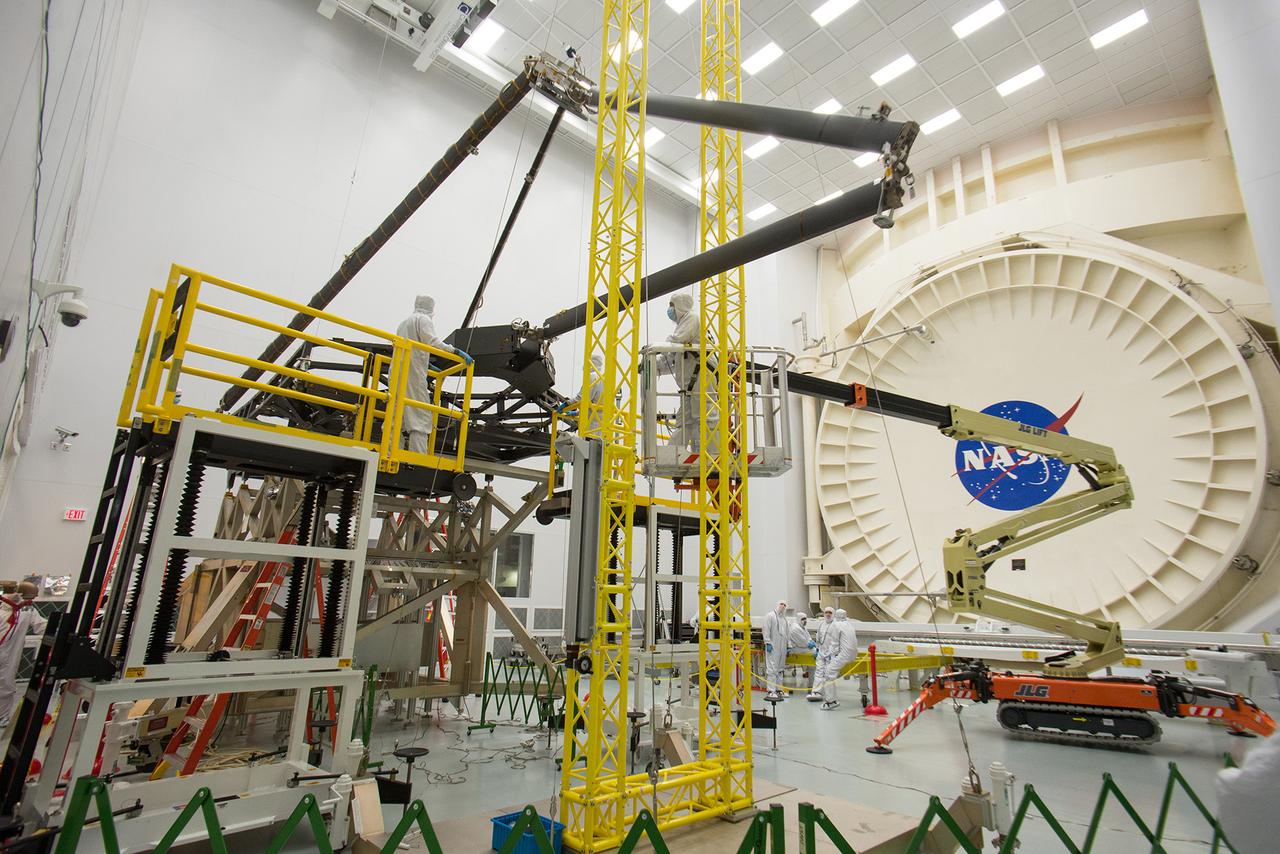
Engineers and technicians manually deployed the secondary mirror support structure (SMSS) of the James Webb Space Telescope's Pathfinder backplane test model, outside of a giant space simulation chamber called Chamber A, at NASA's Johnson Space Center in Houston. This historic test chamber was previously used in manned spaceflight missions and is being readied for a cryogenic test of a Webb telescope component. In the weightless environment of space, the SMSS is deployed by electric motors. On the ground, specially trained operators use a hand crank and a collection of mechanical ground support equipment to overcome the force of gravity. "This structure needs to be in the deployed configuration during the cryogenic test to see how the structure will operate in the frigid temperatures of space," said Will Rowland, senior mechanical test engineer for Northrop Grumman Aerospace Systems, Redondo Beach, California. "The test also demonstrates that the system works and can be successfully deployed." After the deployment was completed, Chamber A's circular door was opened and the rails (seen in the background of the photo) were installed so that the Pathfinder unit could be lifted, installed and rolled into the chamber on a cart. The team completed a fit check for the Pathfinder. Afterwards they readied the chamber for the cryogenic test, which will simulate the frigid temperatures the Webb telescope will encounter in space. “The team has been doing a great job keeping everything on schedule to getting our first optical test results, " said Lee Feinberg, NASA Optical Telescope Element Manager. The James Webb Space Telescope is the scientific successor to NASA's Hubble Space Telescope. It will be the most powerful space telescope ever built. Webb is an international project led by NASA with its partners, the European Space Agency and the Canadian Space Agency. Image credit: NASA/Desiree Stover Text credit: Laura Betz, NASA's Goddard Space Flight Center, Greenbelt, Maryland <b><a href="http://www.nasa.gov/audience/formedia/features/MP_Photo_Guidelines.html" rel="nofollow">NASA image use policy.</a></b> <b><a href="http://www.nasa.gov/centers/goddard/home/index.html" rel="nofollow">NASA Goddard Space Flight Center</a></b> enables NASA’s mission through four scientific endeavors: Earth Science, Heliophysics, Solar System Exploration, and Astrophysics. Goddard plays a leading role in NASA’s accomplishments by contributing compelling scientific knowledge to advance the Agency’s mission. <b>Follow us on <a href="http://twitter.com/NASAGoddardPix" rel="nofollow">Twitter</a></b> <b>Like us on <a href="http://www.facebook.com/pages/Greenbelt-MD/NASA-Goddard/395013845897?ref=tsd" rel="nofollow">Facebook</a></b> <b>Find us on <a href="http://instagrid.me/nasagoddard/?vm=grid" rel="nofollow">Instagram</a></b>