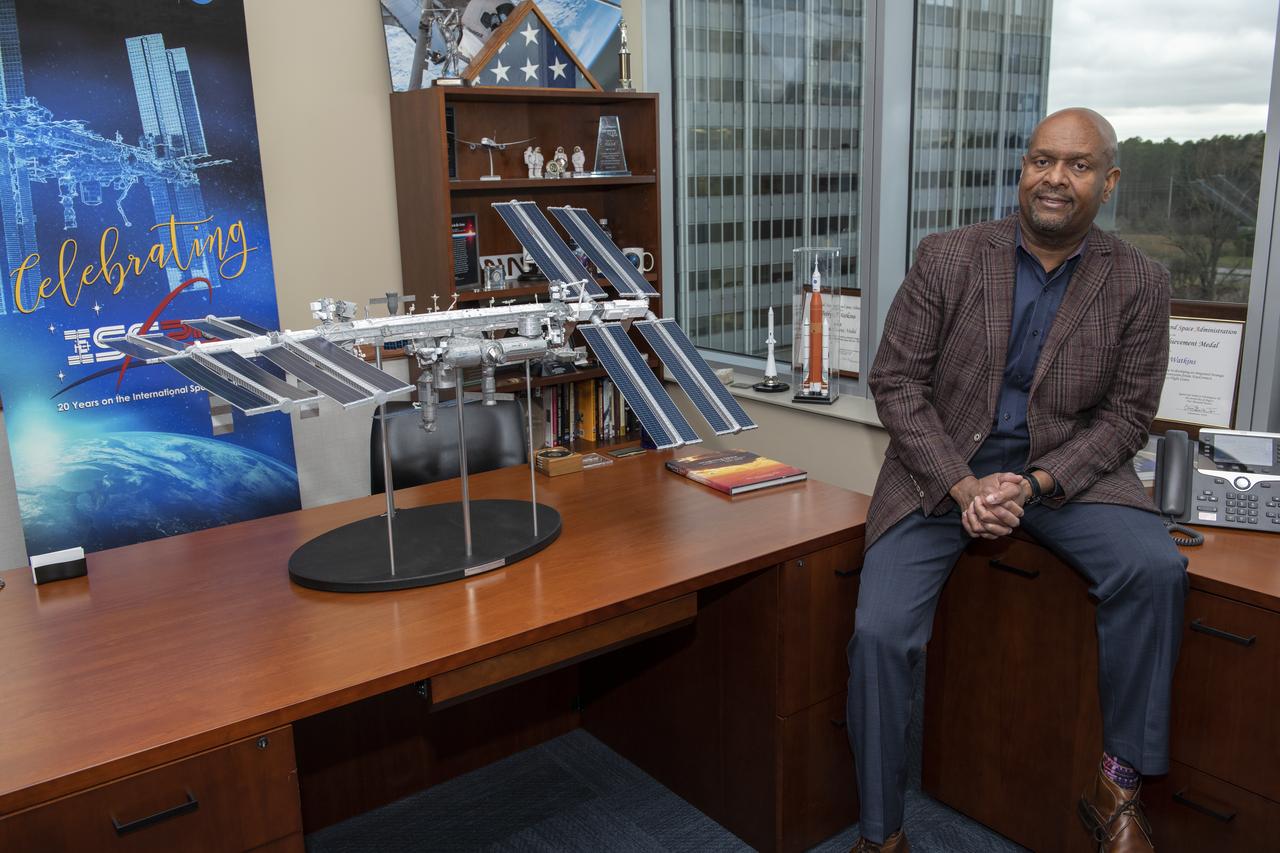
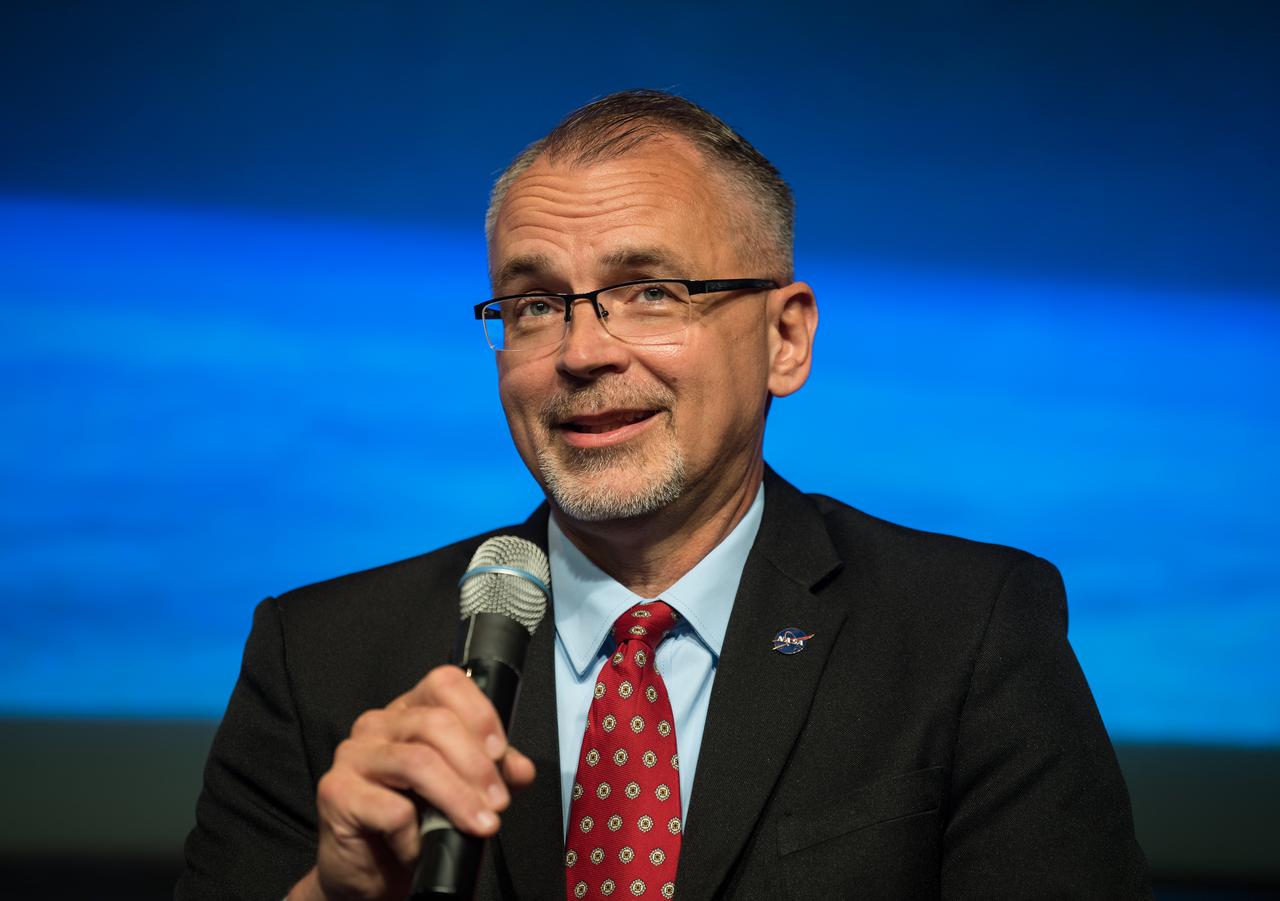
Bobby Watkins, manager of the Human Exploration Development & Operations Office at Marshall Space Flight Center.
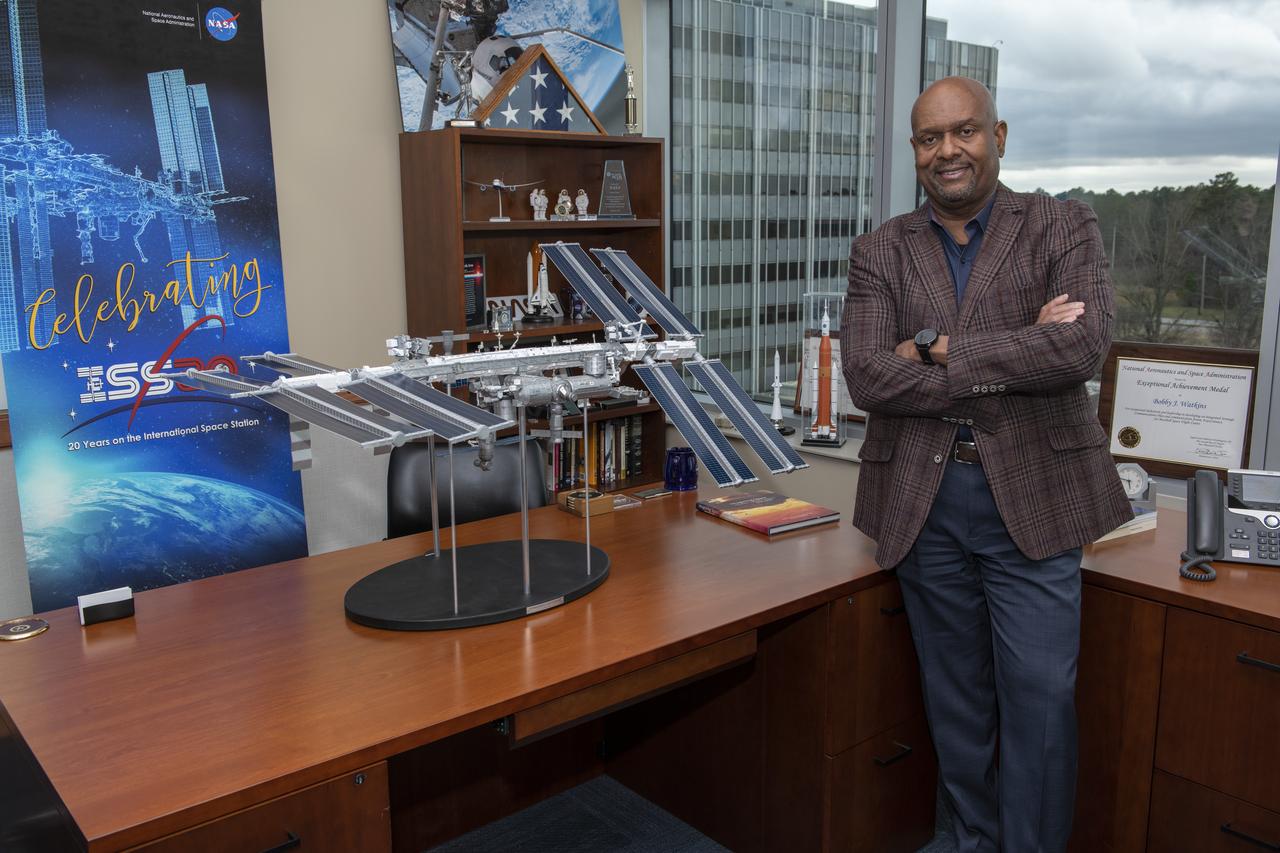
Bobby Watkins, manager of the Human Exploration Development & Operations Office at Marshall Space Flight Center.
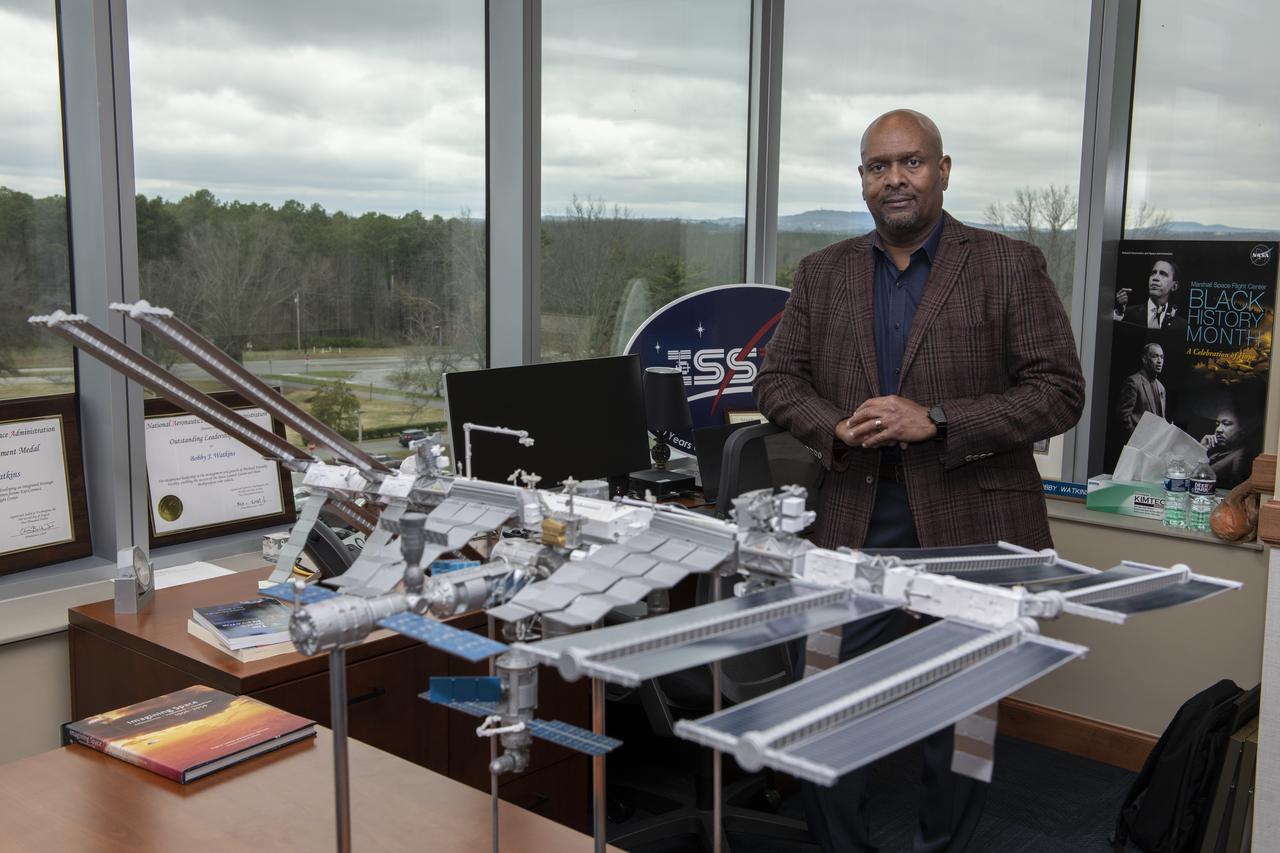
Bobby Watkins, manager of the Human Exploration Development & Operations Office at Marshall Space Flight Center.
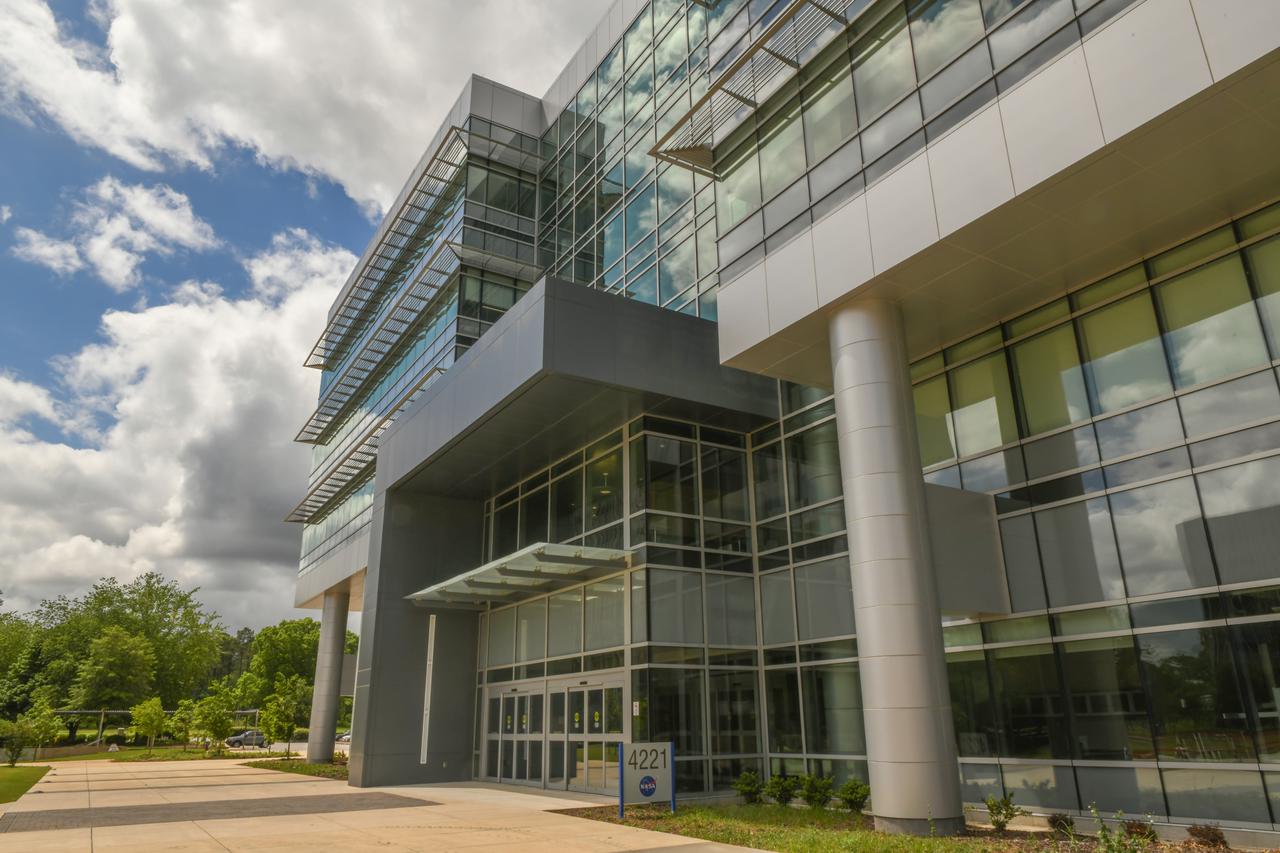
The newest building on Marshall Space Flight Center’s campus as of April 22, 2019, Building 4221 houses offices for the center’s top leaders, as well as the Human Exploration, Development and Operations Office; the Science Technology Office; the Engineering Directorate; the Human Landing Program Office; and the Office of Strategic Analysis and Communications.
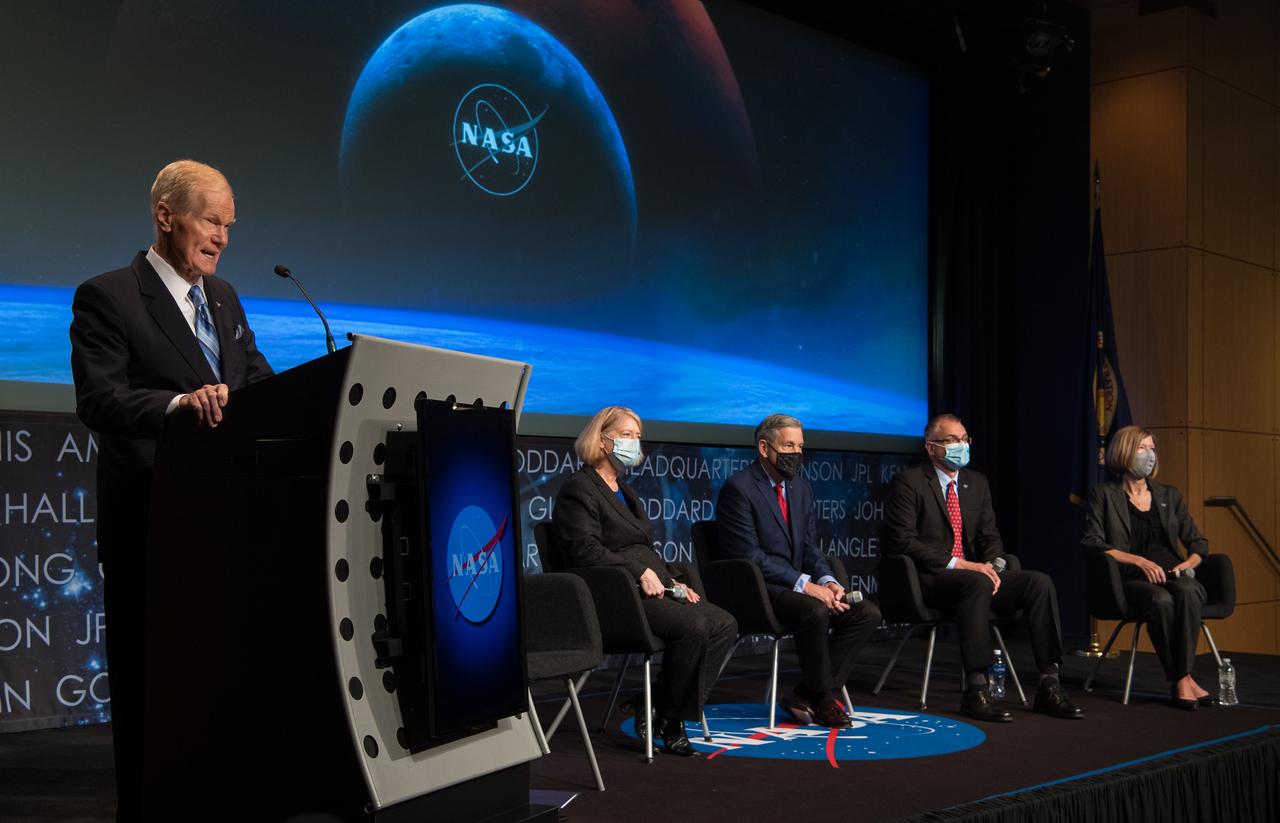
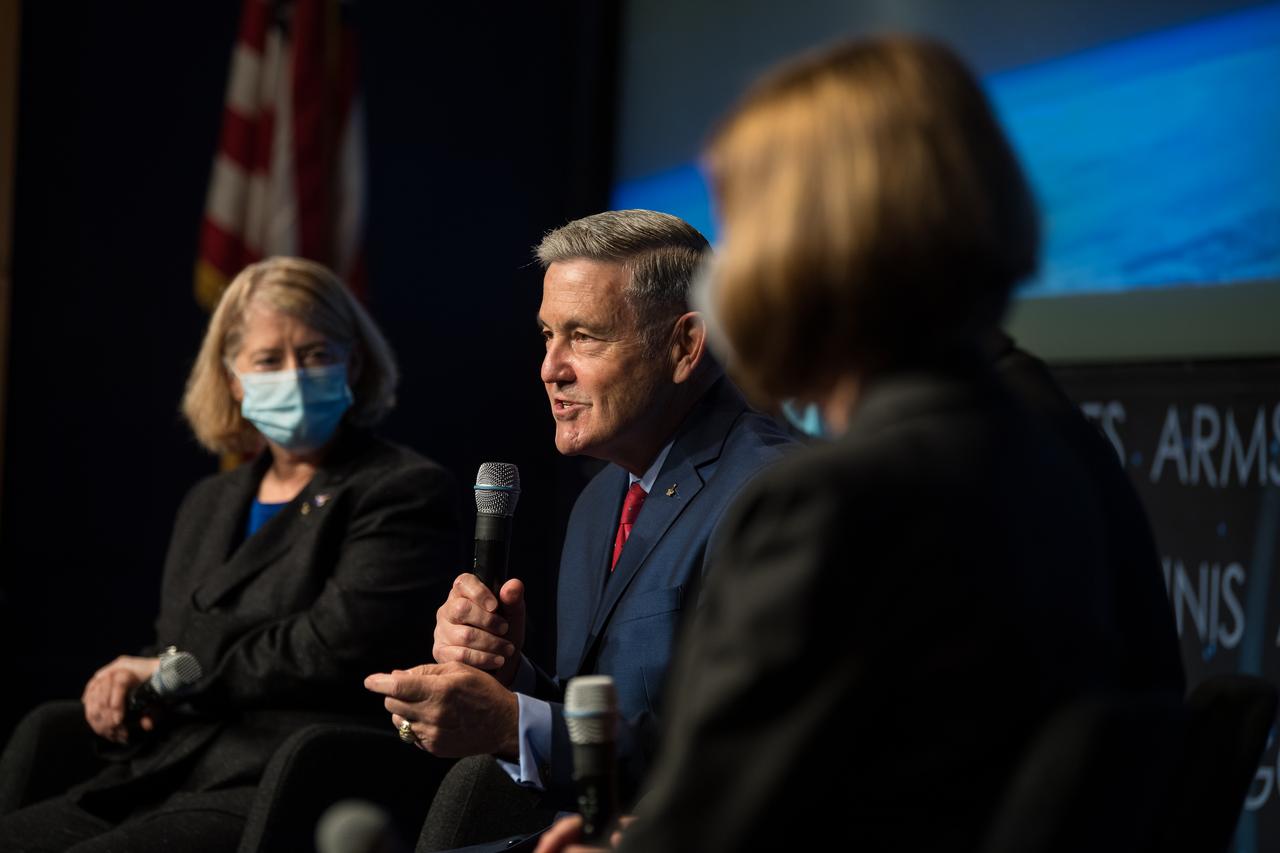
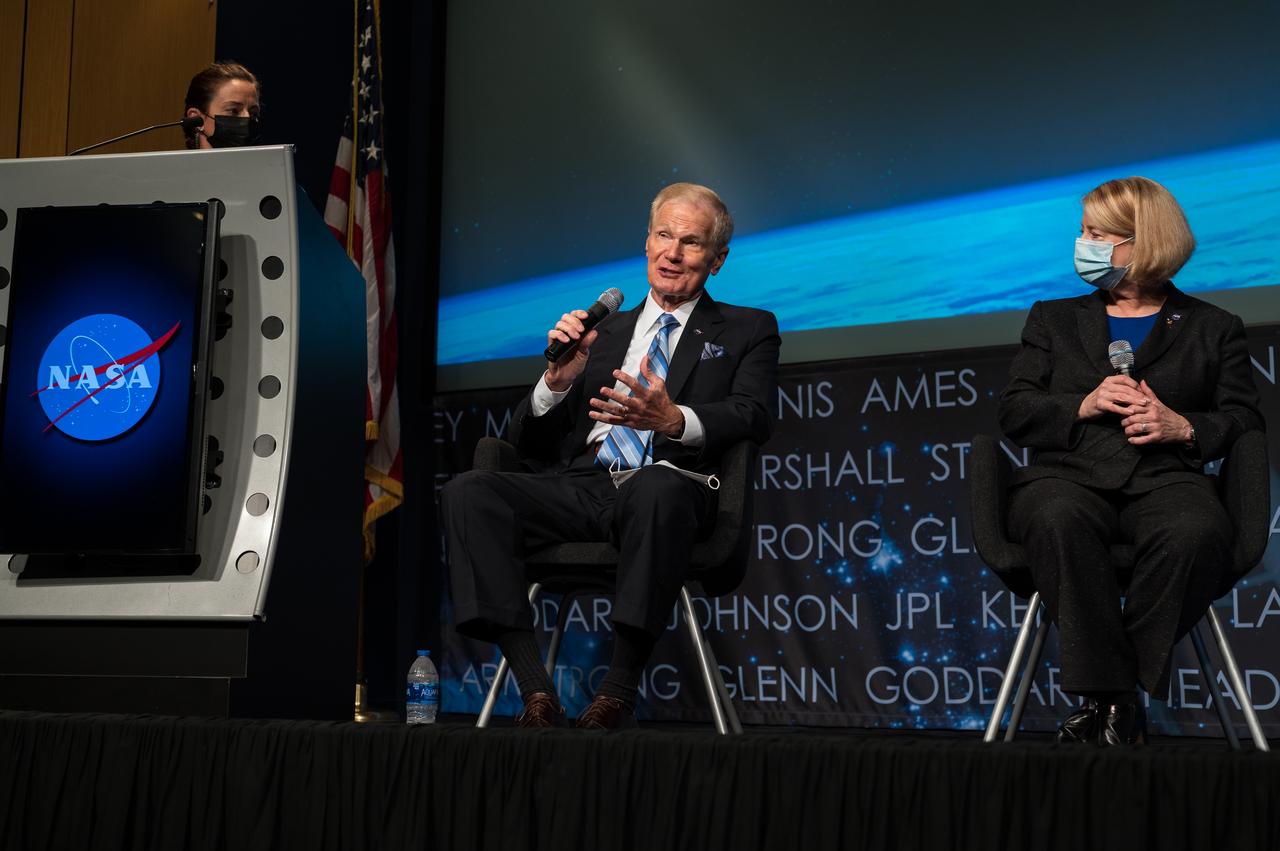
NASA Administrator Bill Nelson speaks during a NASA town hall to discuss the reorganization of the Human Exploration and Operations Mission Directorate into two mission directorates: Exploration Systems Development Mission Directorate (ESDMD) and Space Operations Mission Directorate (SpaceOps), Tuesday, Sept. 21, 2021 at the Mary W. Jackson NASA Headquarters building in Washington. Panelists were from left to right, NASA Deputy Administrator Pam Melroy; NASA Associate Administrator Bob Cabana; NASA Associate Administrator for the Exploration Systems Development Mission Directorate (ESDMD), Jim Free; and NASA Associate Administrator for the Space Operations Mission Directorate (SpaceOps), Kathy Lueders. Photo Credit: (NASA/Aubrey Gemignani)
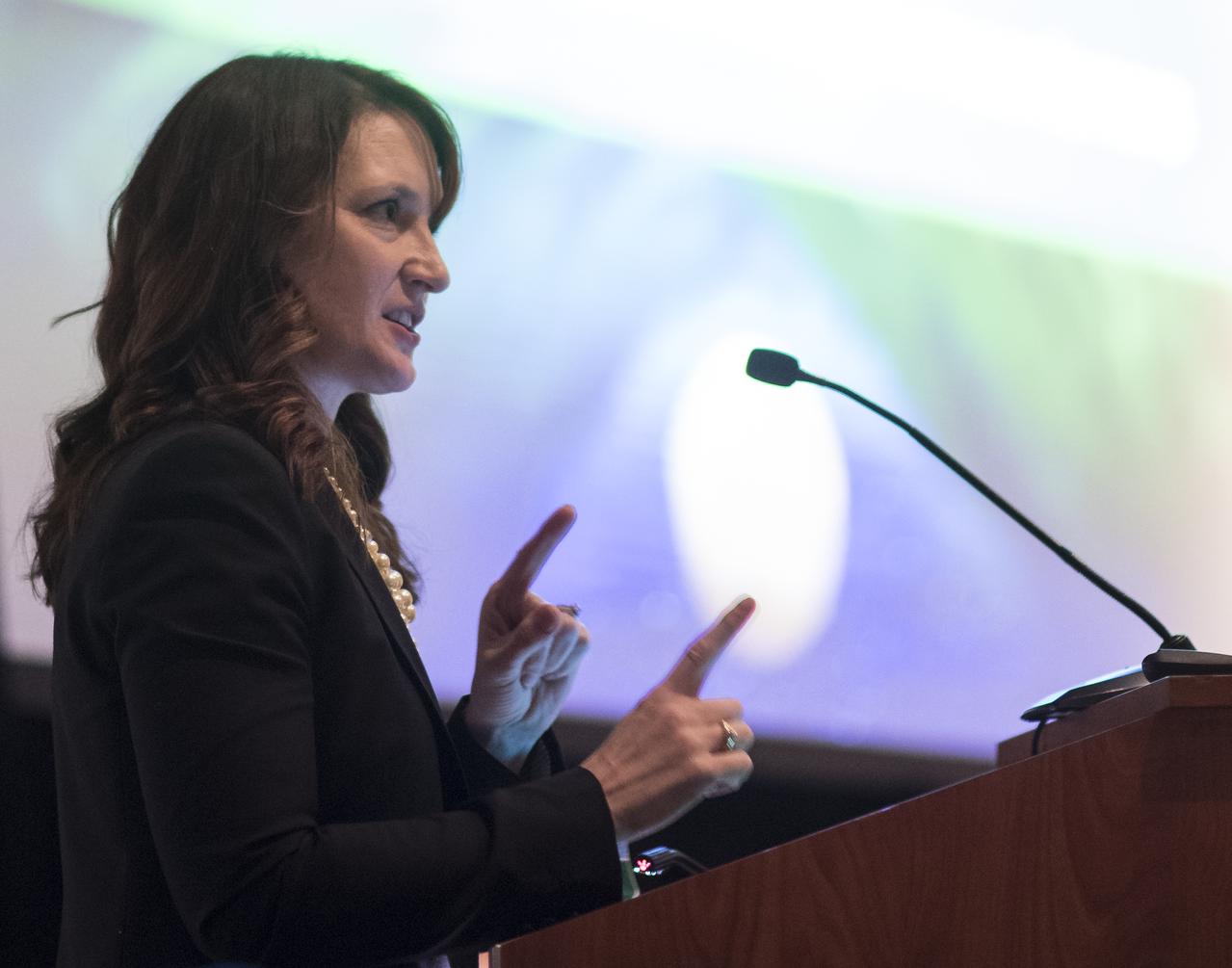
Kathleen Boggs, Systems and Technology Demonstration Manager in the International Space Station Division of NASA’s Human Exploration and Operations Mission Directorate, is seen a keynote titled “From LEO to the Moon, Mars, and Beyond: Shaping Capability Development Strategies for NASA’s Human Exploration Campaign” at the 70th International Astronautical Congress, Thursday, Oct. 24, 2019 at the Walter E. Washington Convention Center in Washington. Photo Credit: (NASA/Joel Kowsky)

Kathleen Boggs, Systems and Technology Demonstration Manager in the International Space Station Division of NASA’s Human Exploration and Operations Mission Directorate, is seen a keynote titled “From LEO to the Moon, Mars, and Beyond: Shaping Capability Development Strategies for NASA’s Human Exploration Campaign” at the 70th International Astronautical Congress, Thursday, Oct. 24, 2019 at the Walter E. Washington Convention Center in Washington. Photo Credit: (NASA/Joel Kowsky)

Kathleen Boggs, Systems and Technology Demonstration Manager in the International Space Station Division of NASA’s Human Exploration and Operations Mission Directorate, is seen a keynote titled “From LEO to the Moon, Mars, and Beyond: Shaping Capability Development Strategies for NASA’s Human Exploration Campaign” at the 70th International Astronautical Congress, Thursday, Oct. 24, 2019 at the Walter E. Washington Convention Center in Washington. Photo Credit: (NASA/Joel Kowsky)

Jody Singer, left, Marshall deputy director, and Bobby Watkins, director of Marshall's Human Exploration and Development Operations Office visit the POIC April 24 as new procedures increasing the efficiency of the facility were introduced in anticipation of doubling the science performed in orbit.
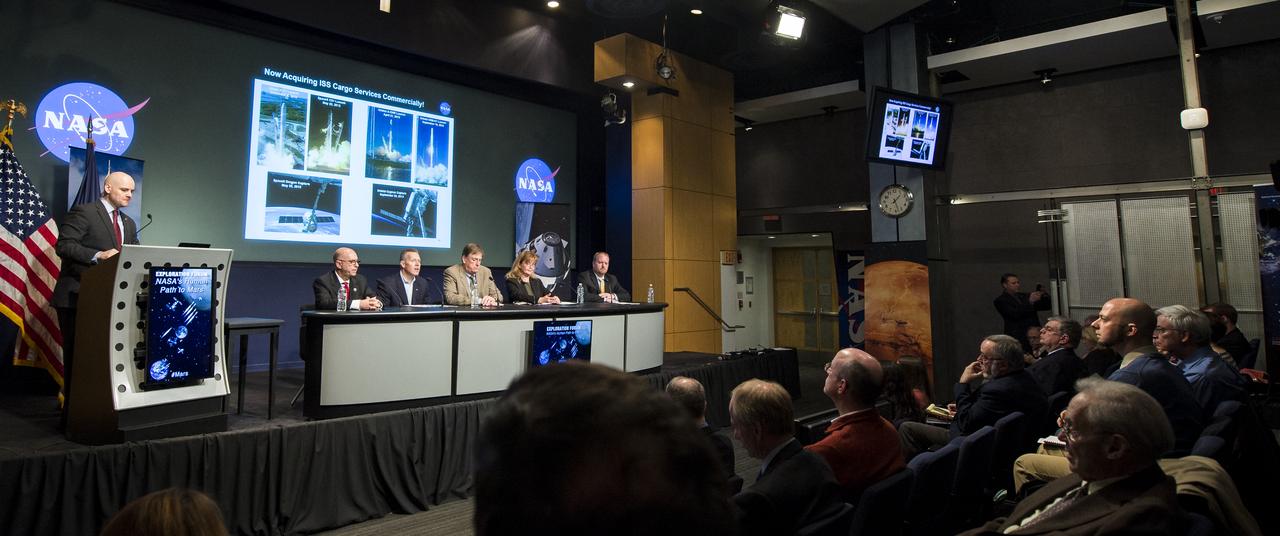
Sam Scimemi, Director of NASA's International Space Station Division, second from left, Phil McAlister, Director of NASA's Commercial Spaceflight Division, third from left, Dan Dumbacher, Deputy Associate Administrator of NASA's Exploration Systems Development, center, Michele Gates, Senior Technical Advisor of NASA's Human Exploration and Operations Mission Directorate, second from right, and Jason Crusan, Director of NASA's Advanced Exploration Systems Division, right, sit on a panel during an Exploration Forum showcasing NASA's human exploration path to Mars in the James E. Webb Auditorium at NASA Headquarters on Tuesday, April 29, 2014. Photo Credit: (NASA/Joel Kowsky)
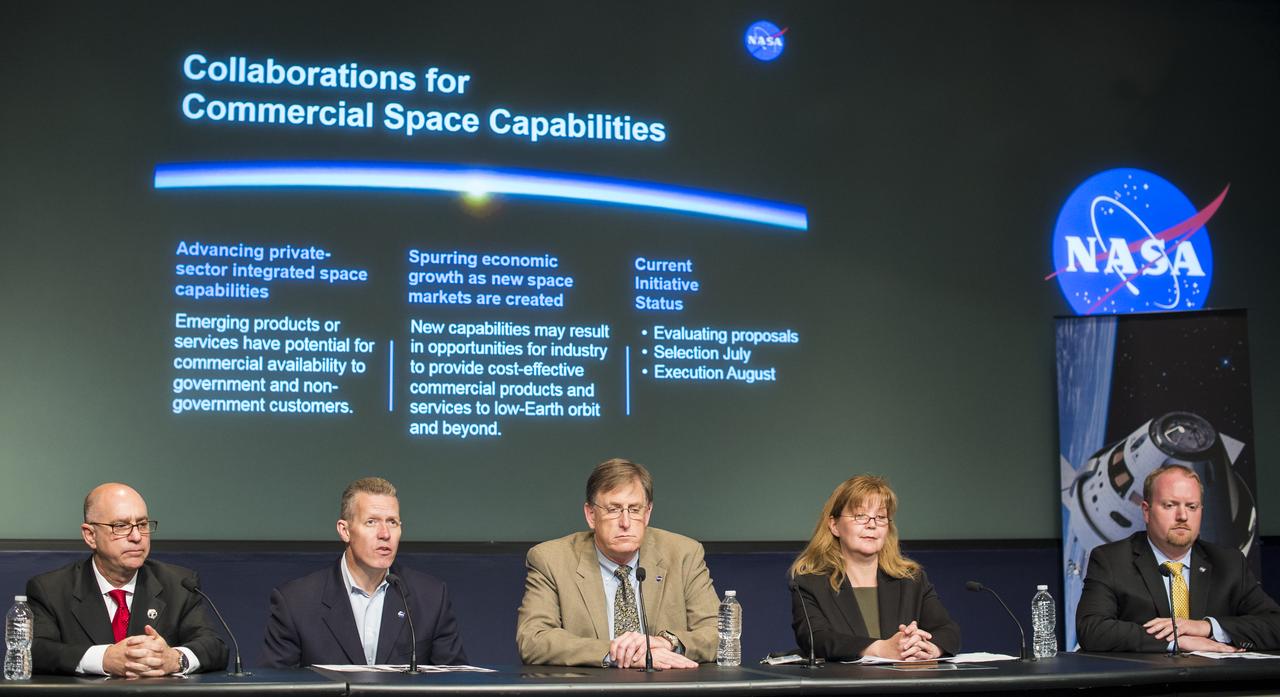
Sam Scimemi, Director of NASA's International Space Station Division, left, Phil McAlister, Director of NASA's Commercial Spaceflight Division, second from left, Dan Dumbacher, Deputy Associate Administrator of NASA's Exploration Systems Development, center, Michele Gates, Senior Technical Advisor of NASA's Human Exploration and Operations Mission Directorate, second from right, and Jason Crusan, Director of NASA's Advanced Exploration Systems Division, right, sit on a panel during an Exploration Forum showcasing NASA's human exploration path to Mars in the James E. Webb Auditorium at NASA Headquarters on Tuesday, April 29, 2014. Photo Credit: (NASA/Joel Kowsky)

NASA Associate Administrator for the Space Operations Mission Directorate (SpaceOps), Kathy Lueders, speaks during a NASA town hall to discuss the reorganization of the Human Exploration and Operations Mission Directorate into two mission directorates: SpaceOps and the Exploration Systems Development Mission Directorate (ESDMD), Tuesday, Sept. 21, 2021 at the Mary W. Jackson NASA Headquarters building in Washington. As head of SpaceOps, Kathy Lueders will lead launch and space operations including the International Space Station, the commercialization of low-Earth orbit, and eventually operations on and around the Moon. Associate Administrator of ESDMD, Jim Free, will lead efforts to define and manage systems development for programs critical to NASA’s Artemis program and the planning of NASA’s Moon to Mars exploration. Photo Credit: (NASA/Aubrey Gemignani)

NASA Deputy Administrator Pam Melroy speaks during a NASA town hall to discuss the reorganization of the Human Exploration and Operations Mission Directorate into two mission directorates: Exploration Systems Development Mission Directorate (ESDMD) and Space Operations Mission Directorate (SpaceOps), Tuesday, Sept. 21, 2021 at the Mary W. Jackson NASA Headquarters building in Washington. NASA Associate Administrator for SpaceOps, Kathy Lueders, will lead launch and space operations including the International Space Station, the commercialization of low-Earth orbit, and eventually operations on and around the Moon. NASA Associate Administrator for the ESDMD, Jim Free, will lead efforts to define and manage systems development for programs critical to NASA’s Artemis program and the planning of NASA’s Moon to Mars exploration. Photo Credit: (NASA/Aubrey Gemignani)
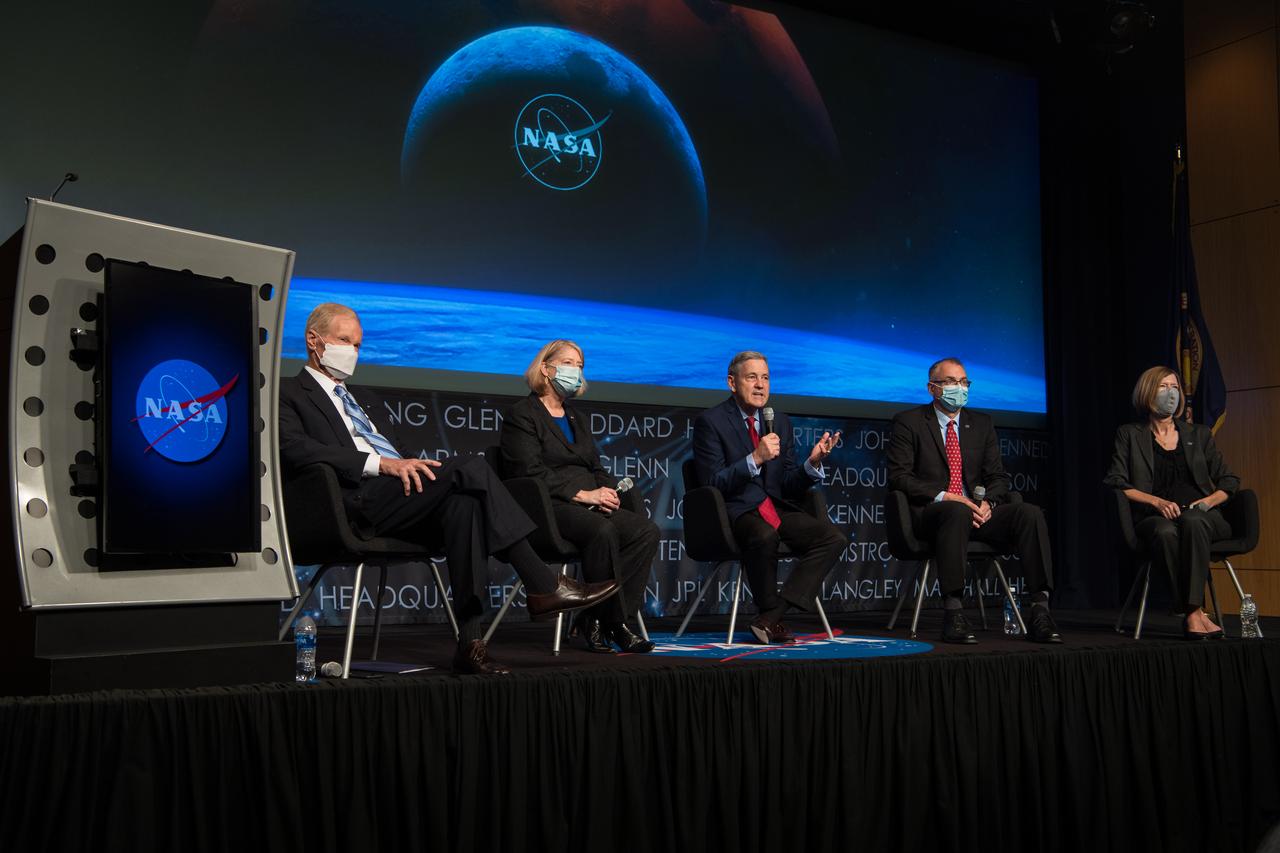
Panelists are seen from left to right, NASA Administrator Bill Nelson; NASA Deputy Administrator Pam Melroy; NASA Associate Administrator Bob Cabana; NASA Associate Administrator for the Exploration Systems Development Mission Directorate (ESDMD), Jim Free; and NASA Associate Administrator for the Space Operations Mission Directorate (SpaceOps), Kathy Lueders, during a NASA town hall to discuss the reorganization of the Human Exploration and Operations Mission Directorate into two mission directorates: ESDMD and SpaceOps, Tuesday, Sept. 21, 2021 at the Mary W. Jackson NASA Headquarters building in Washington. Kathy Lueders will lead SpaceOps in launch and space operations including the International Space Station, the commercialization of low-Earth orbit, and eventually operations on and around the Moon. Jim Free will lead ESDMD to define and manage systems development for programs critical to NASA’s Artemis program and in the planning of NASA’s Moon to Mars exploration. Photo Credit: (NASA/Aubrey Gemignani)
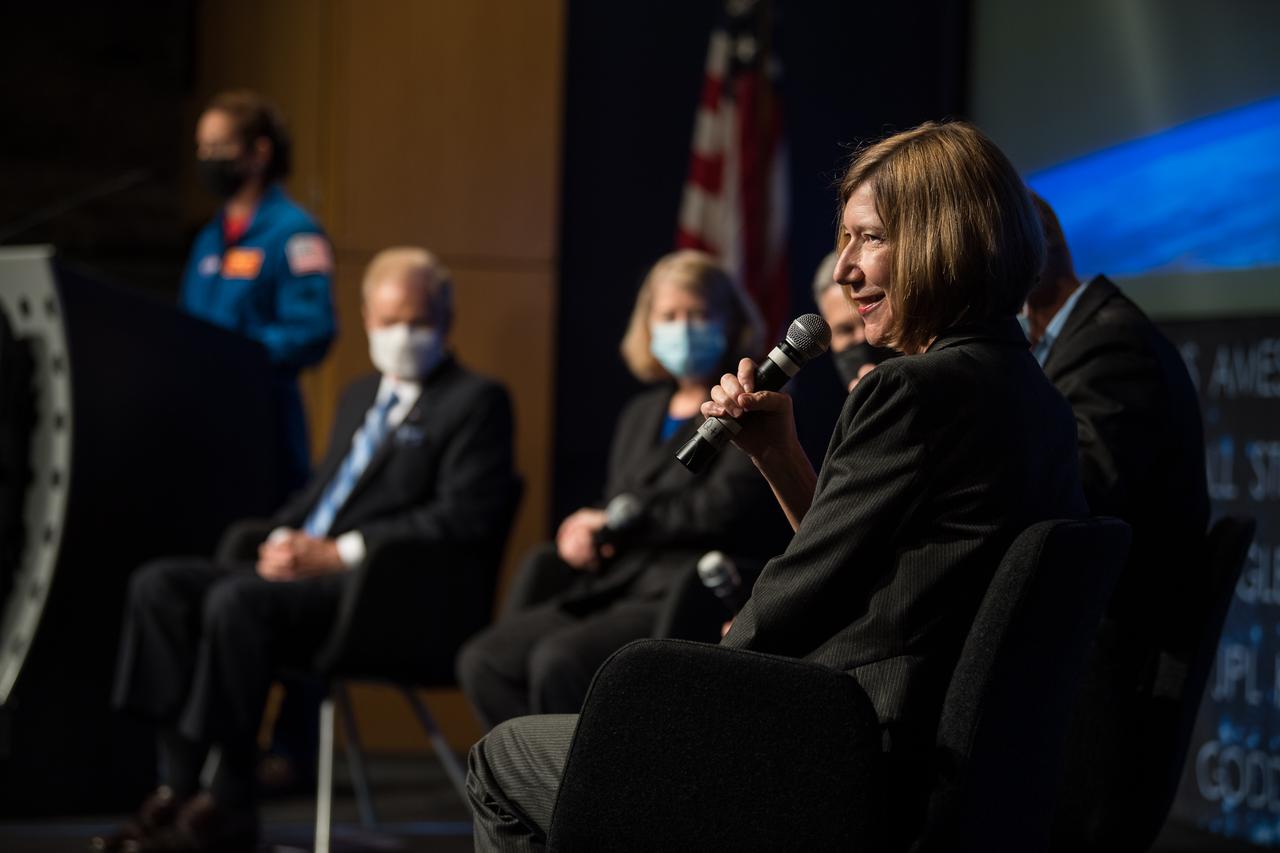
NASA Associate Administrator for the Space Operations Mission Directorate (SpaceOps), Kathy Lueders, speaks during a NASA town hall to discuss the reorganization of the Human Exploration and Operations Mission Directorate into two mission directorates: SpaceOps and the Exploration Systems Development Mission Directorate (ESDMD), Tuesday, Sept. 21, 2021 at the Mary W. Jackson NASA Headquarters building in Washington. As head of SpaceOps, Kathy Lueders will lead launch and space operations including the International Space Station, the commercialization of low-Earth orbit, and eventually operations on and around the Moon. Associate Administrator of ESDMD, Jim Free, will lead efforts to define and manage systems development for programs critical to NASA’s Artemis program and the planning of NASA’s Moon to Mars exploration. Photo Credit: (NASA/Aubrey Gemignani)
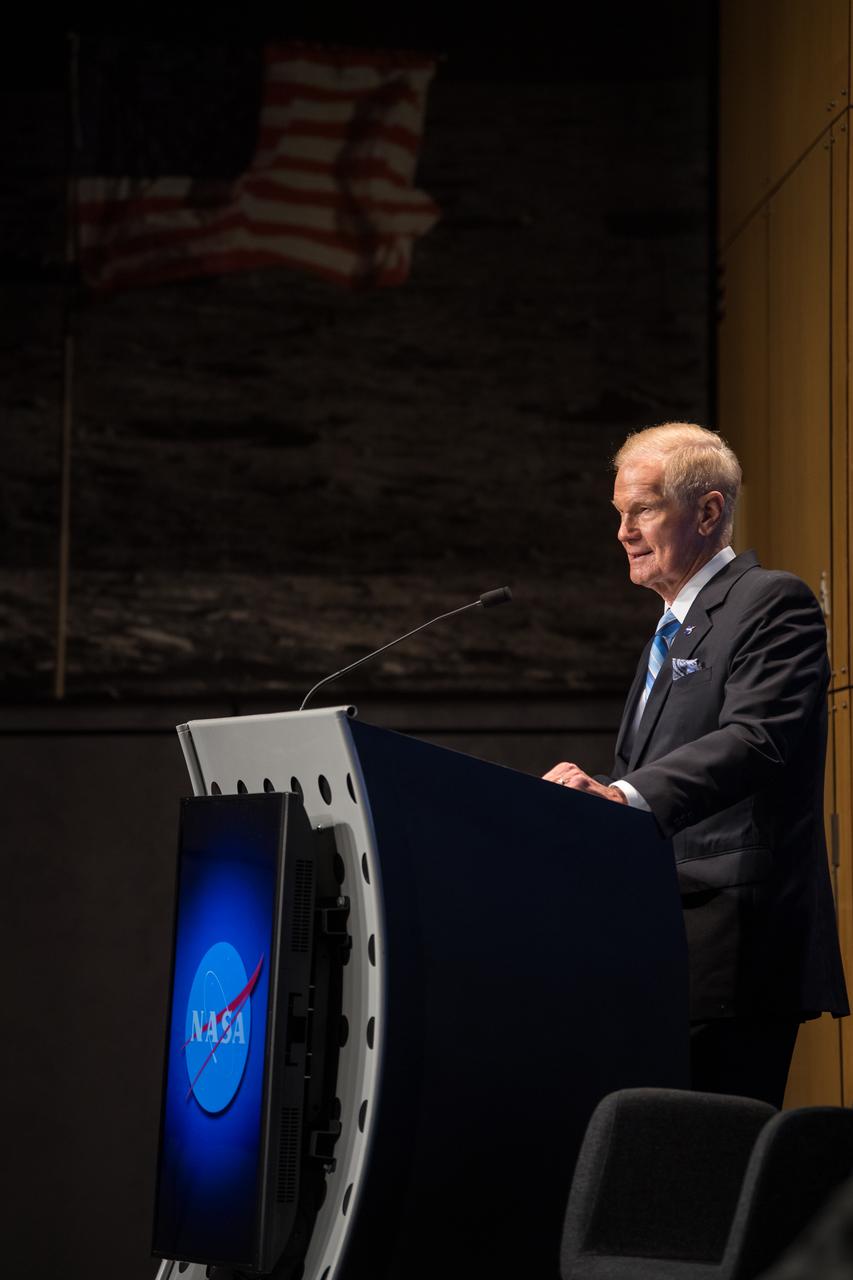
NASA Administrator Bill Nelson speaks during a NASA town hall to discuss the reorganization of the Human Exploration and Operations Mission Directorate into two mission directorates: Exploration Systems Development Mission Directorate (ESDMD) and Space Operations Mission Directorate (SpaceOps), Tuesday, Sept. 21, 2021 at the Mary W. Jackson NASA Headquarters building in Washington. NASA Associate Administrator for SpaceOps, Kathy Lueders, will lead launch and space operations including the International Space Station, the commercialization of low-Earth orbit, and eventually operations on and around the Moon. NASA Associate Administrator for the ESDMD, Jim Free, will lead efforts to define and manage systems development for programs critical to NASA’s Artemis program and the planning of NASA’s Moon to Mars exploration. Photo Credit: (NASA/Aubrey Gemignani)
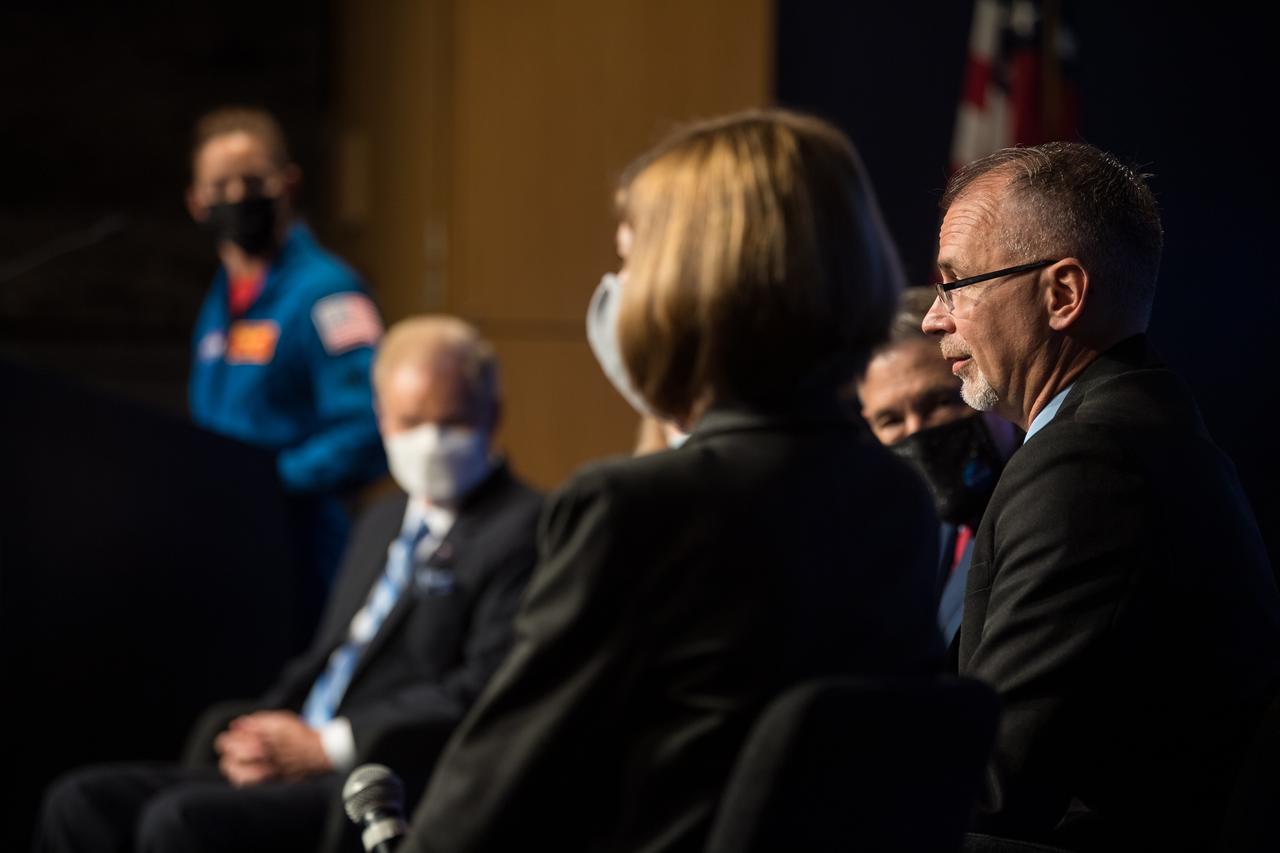
NASA Associate Administrator for the Exploration Systems Development Mission Directorate (ESDMD), Jim Free, speaks during a NASA town hall to discuss the reorganization of the Human Exploration and Operations Mission Directorate into two mission directorates: ESDMD and Space Operations Mission Directorate (SpaceOps), Tuesday, Sept. 21, 2021 at the Mary W. Jackson NASA Headquarters building in Washington. NASA Associate Administrator for SpaceOps, Kathy Lueders, will lead launch and space operations including the International Space Station, the commercialization of low-Earth orbit, and eventually operations on and around the Moon. Head of ESDMD, Jim Free, will lead efforts to define and manage systems development for programs critical to NASA’s Artemis program and the planning of NASA’s Moon to Mars exploration. Photo Credit: (NASA/Aubrey Gemignani)
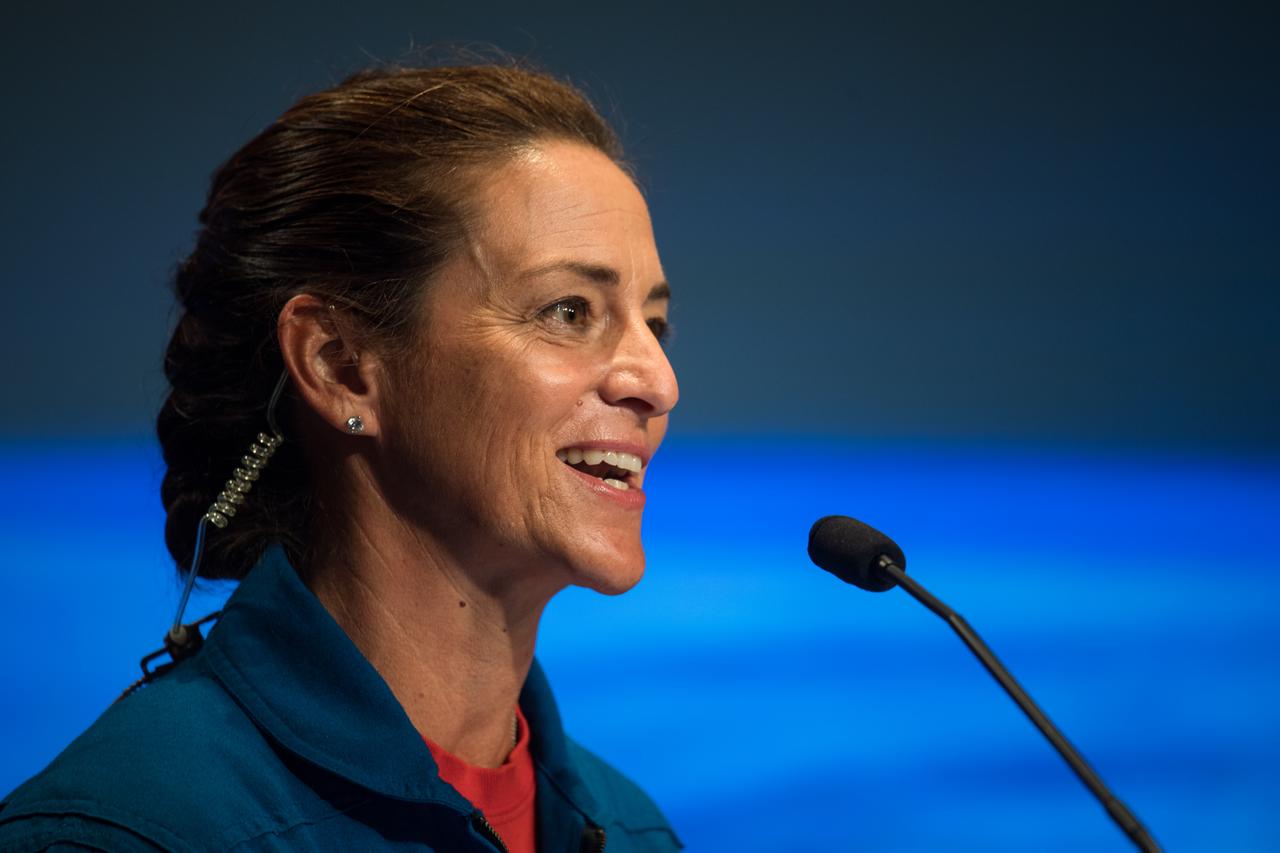
NASA astronaut Nicole Mann speaks during a NASA town hall to discuss the reorganization of the Human Exploration and Operations Mission Directorate into two mission directorates: Exploration Systems Development Mission Directorate (ESDMD) and Space Operations Mission Directorate (SpaceOps), Tuesday, Sept. 21, 2021 at the Mary W. Jackson NASA Headquarters building in Washington. NASA Associate Administrator for SpaceOps, Kathy Lueders, will lead launch and space operations including the International Space Station, the commercialization of low-Earth orbit, and eventually operations on and around the Moon. NASA Associate Administrator for the ESDMD, Jim Free, will lead efforts to define and manage systems development for programs critical to NASA’s Artemis program and the planning of NASA’s Moon to Mars exploration. Photo Credit: (NASA/Aubrey Gemignani)
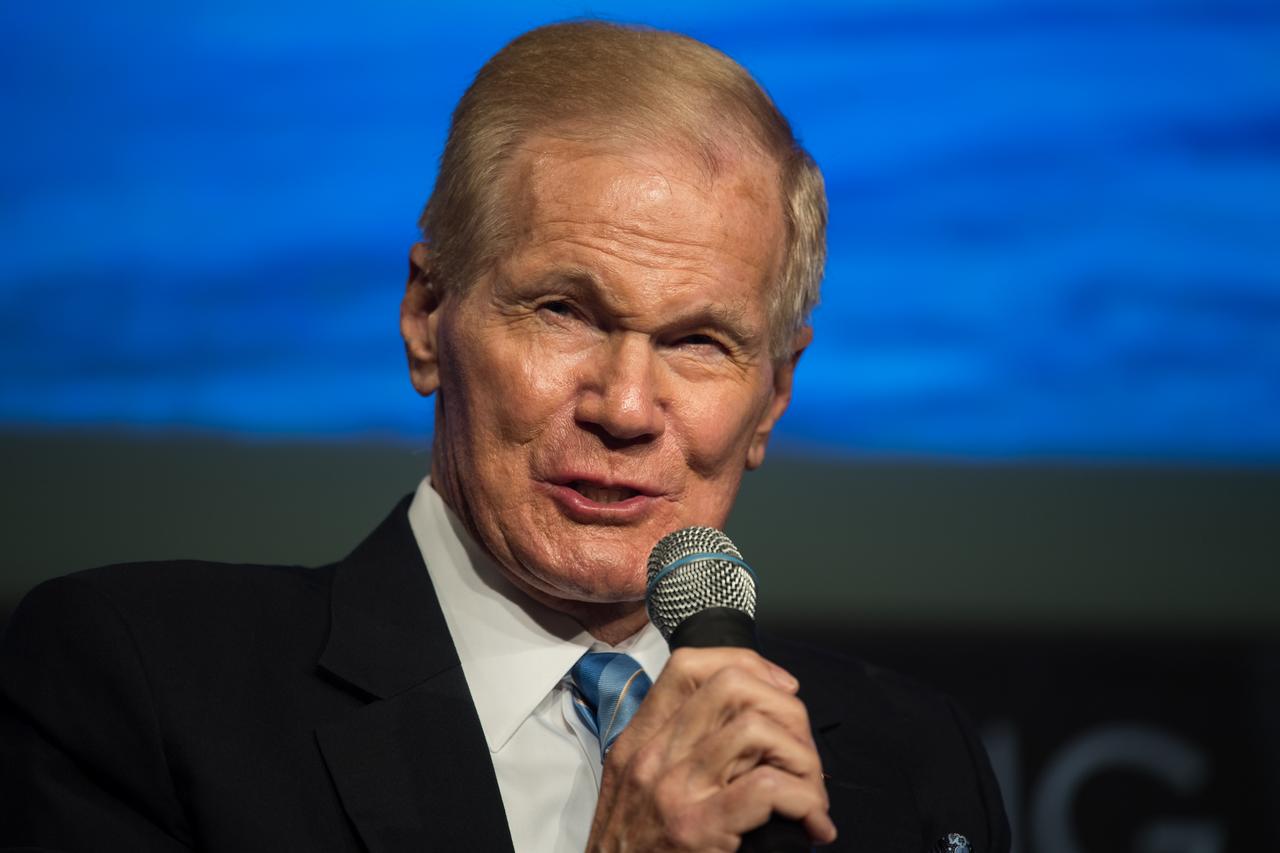
NASA Administrator Bill Nelson speaks during a NASA town hall to discuss the reorganization of the Human Exploration and Operations Mission Directorate into two mission directorates: Exploration Systems Development Mission Directorate (ESDMD) and Space Operations Mission Directorate (SpaceOps), Tuesday, Sept. 21, 2021 at the Mary W. Jackson NASA Headquarters building in Washington. NASA Associate Administrator for SpaceOps, Kathy Lueders, will lead launch and space operations including the International Space Station, the commercialization of low-Earth orbit, and eventually operations on and around the Moon. NASA Associate Administrator for the ESDMD, Jim Free, will lead efforts to define and manage systems development for programs critical to NASA’s Artemis program and the planning of NASA’s Moon to Mars exploration. Photo Credit: (NASA/Aubrey Gemignani)
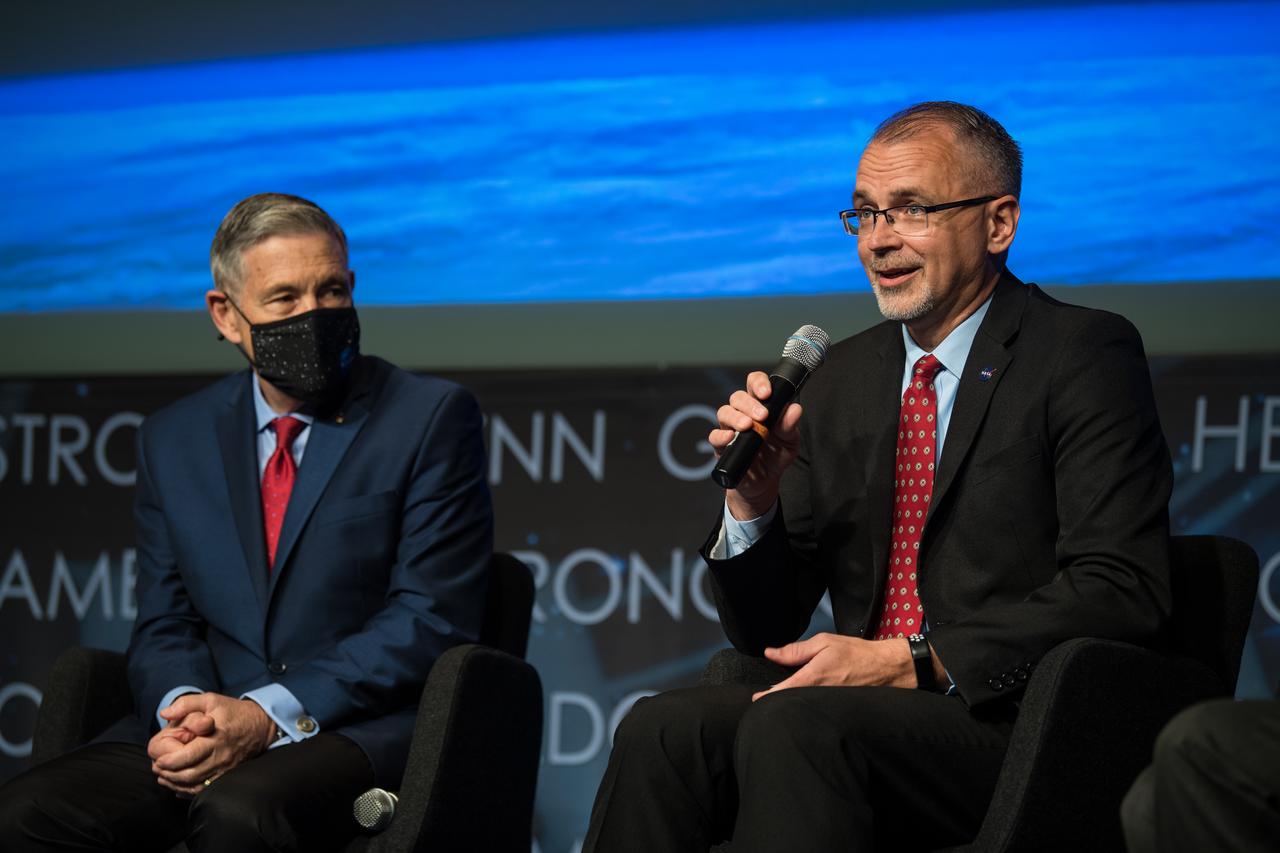
NASA Associate Administrator for the Exploration Systems Development Mission Directorate (ESDMD), Jim Free, speaks during a NASA town hall to discuss the reorganization of the Human Exploration and Operations Mission Directorate into two mission directorates: ESDMD and Space Operations Mission Directorate (SpaceOps), Tuesday, Sept. 21, 2021 at the Mary W. Jackson NASA Headquarters building in Washington. NASA Associate Administrator for SpaceOps, Kathy Lueders, will lead launch and space operations including the International Space Station, the commercialization of low-Earth orbit, and eventually operations on and around the Moon. Head of ESDMD, Jim Free, will lead efforts to define and manage systems development for programs critical to NASA’s Artemis program and the planning of NASA’s Moon to Mars exploration. Photo Credit: (NASA/Aubrey Gemignani)
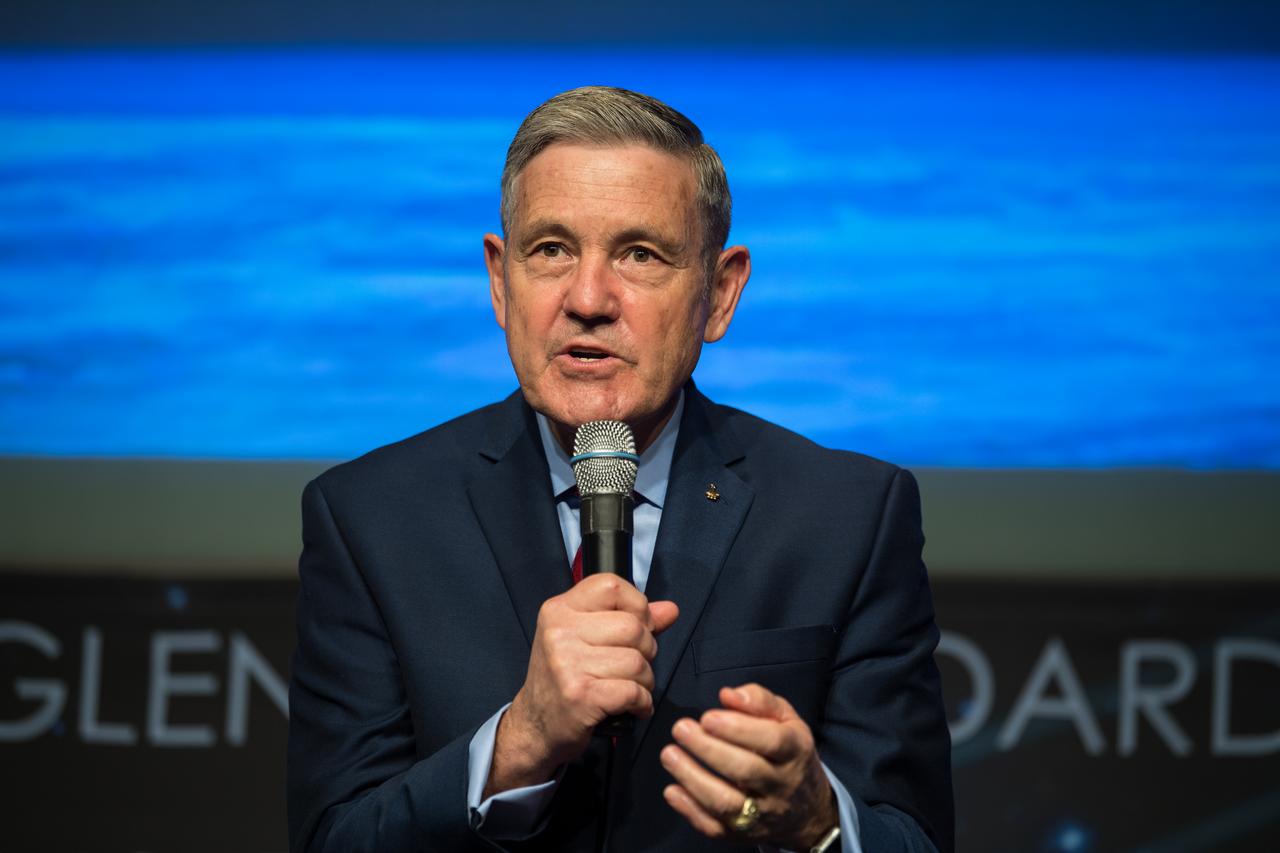
NASA Associate Administrator Bob Cabana speaks during a NASA town hall to discuss the reorganization of the Human Exploration and Operations Mission Directorate into two mission directorates: Exploration Systems Development Mission Directorate (ESDMD) and Space Operations Mission Directorate (SpaceOps), Tuesday, Sept. 21, 2021 at the Mary W. Jackson NASA Headquarters building in Washington. NASA Associate Administrator for SpaceOps, Kathy Lueders, will lead launch and space operations including the International Space Station, the commercialization of low-Earth orbit, and eventually operations on and around the Moon. NASA Associate Administrator for the ESDMD, Jim Free, will lead efforts to define and manage systems development for programs critical to NASA’s Artemis program and the planning of NASA’s Moon to Mars exploration. Photo Credit: (NASA/Aubrey Gemignani)
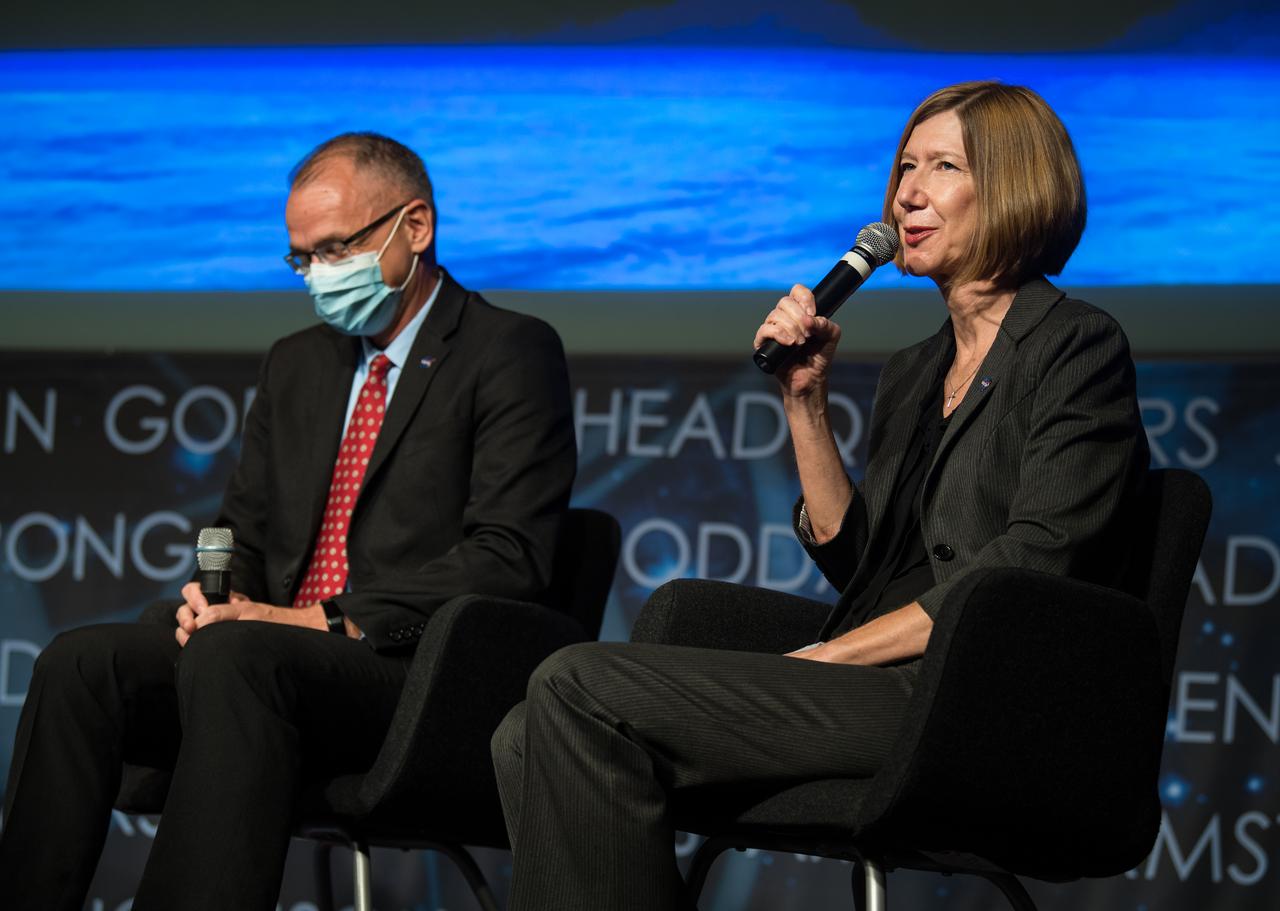
NASA Associate Administrator for the Space Operations Mission Directorate (SpaceOps), Kathy Lueders, right, speaks during a NASA town hall to discuss the reorganization of the Human Exploration and Operations Mission Directorate into two mission directorates: SpaceOps and the Exploration Systems Development Mission Directorate (ESDMD), Tuesday, Sept. 21, 2021 at the Mary W. Jackson NASA Headquarters building in Washington. As head of SpaceOps, Kathy Lueders will lead launch and space operations including the International Space Station, the commercialization of low-Earth orbit, and eventually operations on and around the Moon. Associate Administrator of ESDMD, Jim Free, left, will lead efforts to define and manage systems development for programs critical to NASA’s Artemis program and the planning of NASA’s Moon to Mars exploration. Photo Credit: (NASA/Aubrey Gemignani)
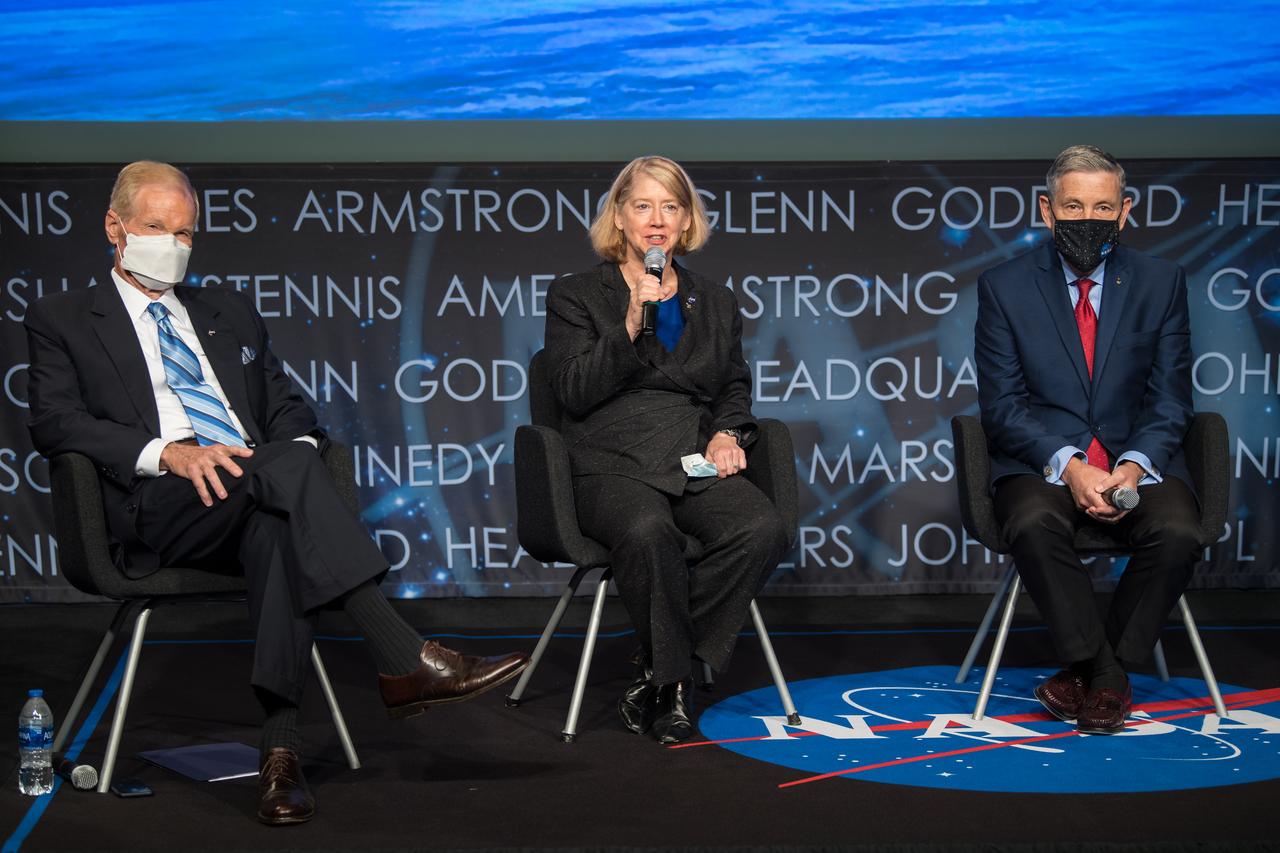
NASA Deputy Administrator Pam Melroy speaks alongside NASA Administrator Bill Nelson, left, and NASA Associate Administrator Bob Cabana, right, during a NASA town hall to discuss the reorganization of the Human Exploration and Operations Mission Directorate into two mission directorates: Exploration Systems Development Mission Directorate (ESDMD) and Space Operations Mission Directorate (SpaceOps), Tuesday, Sept. 21, 2021 at the Mary W. Jackson NASA Headquarters building in Washington. NASA Associate Administrator for SpaceOps, Kathy Lueders, will lead launch and space operations including the International Space Station, the commercialization of low-Earth orbit, and eventually operations on and around the Moon. NASA Associate Administrator for the ESDMD, Jim Free, will lead efforts to define and manage systems development for programs critical to NASA’s Artemis program and the planning of NASA’s Moon to Mars exploration. Photo Credit: (NASA/Aubrey Gemignani)
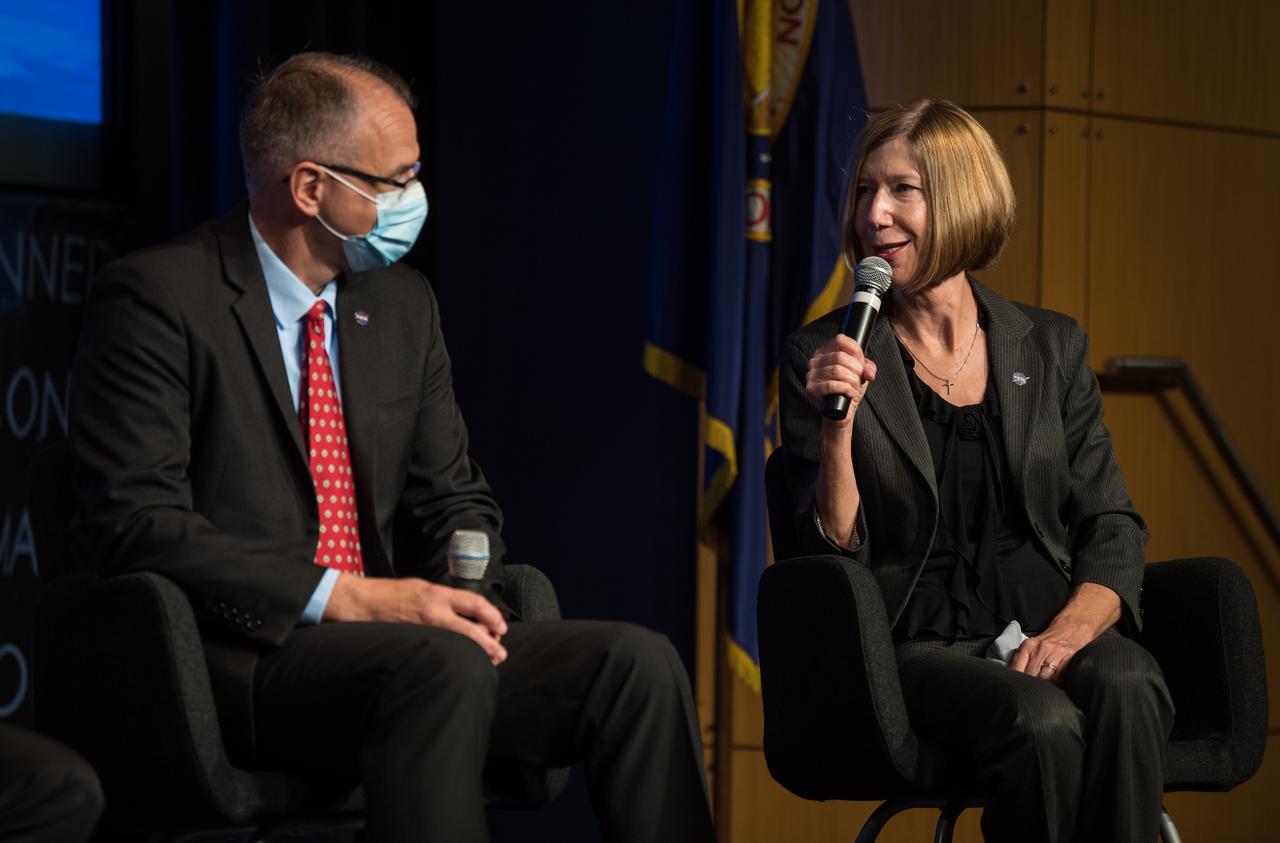
NASA Associate Administrator for the Space Operations Mission Directorate (SpaceOps), Kathy Lueders, right, speaks during a NASA town hall to discuss the reorganization of the Human Exploration and Operations Mission Directorate into two mission directorates: SpaceOps and the Exploration Systems Development Mission Directorate (ESDMD), Tuesday, Sept. 21, 2021 at the Mary W. Jackson NASA Headquarters building in Washington. As head of SpaceOps, Kathy Lueders will lead launch and space operations including the International Space Station, the commercialization of low-Earth orbit, and eventually operations on and around the Moon. Associate Administrator of ESDMD, Jim Free, left, will lead efforts to define and manage systems development for programs critical to NASA’s Artemis program and the planning of NASA’s Moon to Mars exploration. Photo Credit: (NASA/Aubrey Gemignani)
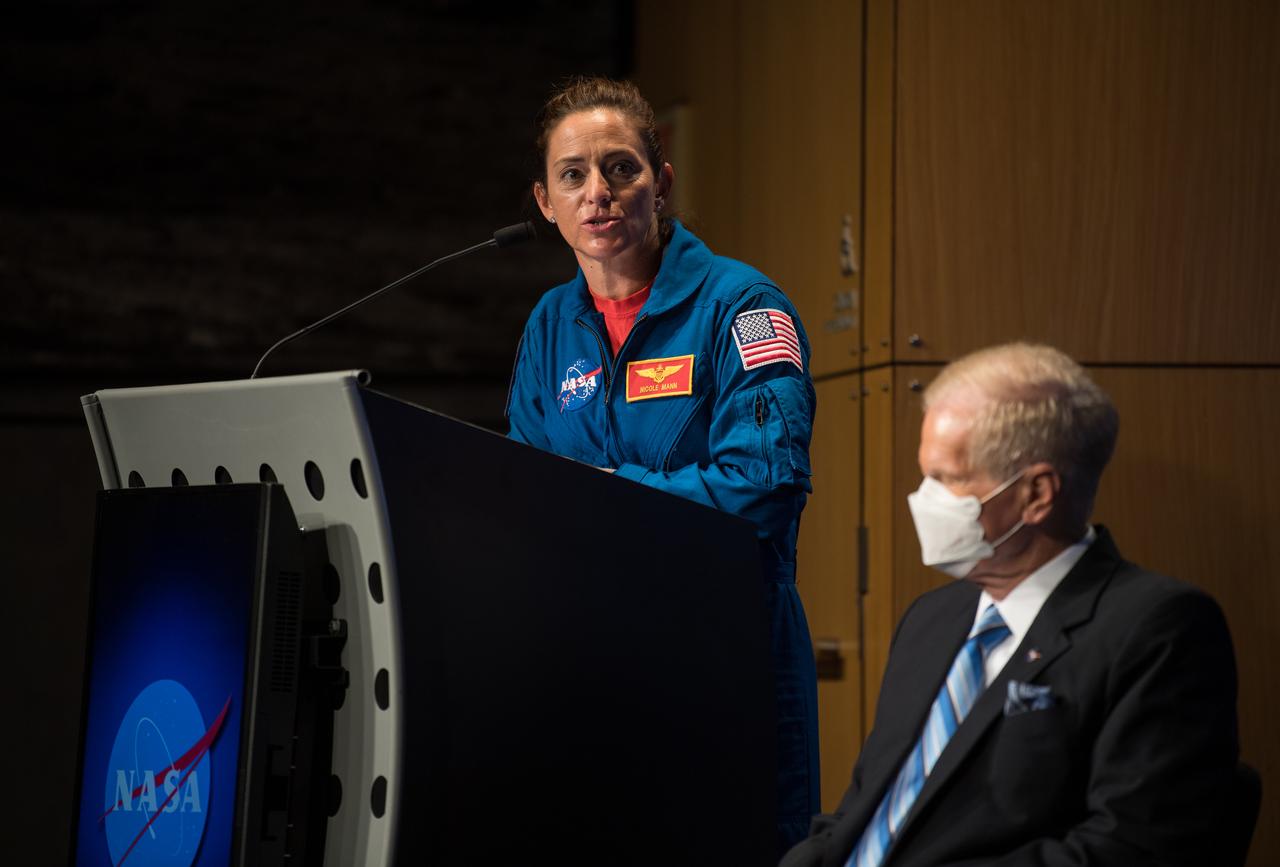
NASA astronaut Nicole Mann asks the panelists a question during a NASA town hall to discuss the reorganization of the Human Exploration and Operations Mission Directorate into two mission directorates: Exploration Systems Development Mission Directorate (ESDMD) and Space Operations Mission Directorate (SpaceOps), Tuesday, Sept. 21, 2021 at the Mary W. Jackson NASA Headquarters building in Washington. NASA Associate Administrator for SpaceOps, Kathy Lueders, will lead launch and space operations including the International Space Station, the commercialization of low-Earth orbit, and eventually operations on and around the Moon. NASA Associate Administrator for the ESDMD, Jim Free, will lead efforts to define and manage systems development for programs critical to NASA’s Artemis program and the planning of NASA’s Moon to Mars exploration. Photo Credit: (NASA/Aubrey Gemignani)

NASA Deputy Administrator Pam Melroy speaks during a NASA town hall to discuss the reorganization of the Human Exploration and Operations Mission Directorate into two mission directorates: Exploration Systems Development Mission Directorate (ESDMD) and Space Operations Mission Directorate (SpaceOps), Tuesday, Sept. 21, 2021 at the Mary W. Jackson NASA Headquarters building in Washington. NASA Associate Administrator for SpaceOps, Kathy Lueders, will lead launch and space operations including the International Space Station, the commercialization of low-Earth orbit, and eventually operations on and around the Moon. NASA Associate Administrator for the ESDMD, Jim Free, will lead efforts to define and manage systems development for programs critical to NASA’s Artemis program and the planning of NASA’s Moon to Mars exploration. Photo Credit: (NASA/Aubrey Gemignani)
NASA Associate Administrator for the Exploration Systems Development Mission Directorate (ESDMD), Jim Free, speaks during a NASA town hall to discuss the reorganization of the Human Exploration and Operations Mission Directorate into two mission directorates: ESDMD and Space Operations Mission Directorate (SpaceOps), Tuesday, Sept. 21, 2021 at the Mary W. Jackson NASA Headquarters building in Washington. NASA Associate Administrator for SpaceOps, Kathy Lueders, will lead launch and space operations including the International Space Station, the commercialization of low-Earth orbit, and eventually operations on and around the Moon. Head of ESDMD, Jim Free, will lead efforts to define and manage systems development for programs critical to NASA’s Artemis program and the planning of NASA’s Moon to Mars exploration. Photo Credit: (NASA/Aubrey Gemignani)
NASA Associate Administrator Bob Cabana speaks during a NASA town hall to discuss the reorganization of the Human Exploration and Operations Mission Directorate into two mission directorates: Exploration Systems Development Mission Directorate (ESDMD) and Space Operations Mission Directorate (SpaceOps), Tuesday, Sept. 21, 2021 at the Mary W. Jackson NASA Headquarters building in Washington. NASA Associate Administrator for SpaceOps, Kathy Lueders, will lead launch and space operations including the International Space Station, the commercialization of low-Earth orbit, and eventually operations on and around the Moon. NASA Associate Administrator for the ESDMD, Jim Free, will lead efforts to define and manage systems development for programs critical to NASA’s Artemis program and the planning of NASA’s Moon to Mars exploration. Photo Credit: (NASA/Aubrey Gemignani)
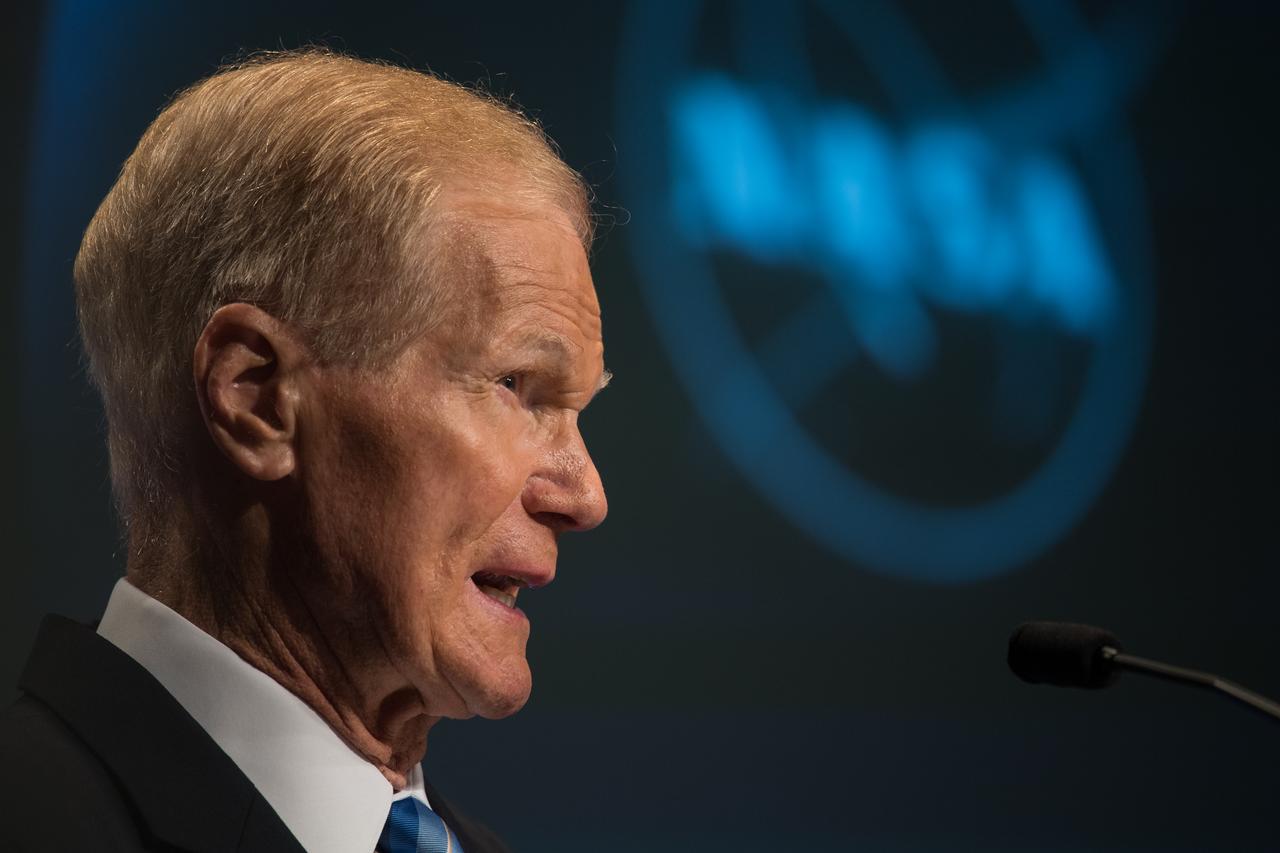
NASA Administrator Bill Nelson speaks during a NASA town hall to discuss the reorganization of the Human Exploration and Operations Mission Directorate into two mission directorates: Exploration Systems Development Mission Directorate (ESDMD) and Space Operations Mission Directorate (SpaceOps), Tuesday, Sept. 21, 2021 at the Mary W. Jackson NASA Headquarters building in Washington. NASA Associate Administrator for SpaceOps, Kathy Lueders, will lead launch and space operations including the International Space Station, the commercialization of low-Earth orbit, and eventually operations on and around the Moon. NASA Associate Administrator for the ESDMD, Jim Free, will lead efforts to define and manage systems development for programs critical to NASA’s Artemis program and the planning of NASA’s Moon to Mars exploration. Photo Credit: (NASA/Aubrey Gemignani)
NASA Administrator Bill Nelson speaks during a NASA town hall to discuss the reorganization of the Human Exploration and Operations Mission Directorate into two mission directorates: Exploration Systems Development Mission Directorate (ESDMD) and Space Operations Mission Directorate (SpaceOps), Tuesday, Sept. 21, 2021 at the Mary W. Jackson NASA Headquarters building in Washington. NASA Associate Administrator for SpaceOps, Kathy Lueders, will lead launch and space operations including the International Space Station, the commercialization of low-Earth orbit, and eventually operations on and around the Moon. NASA Associate Administrator for the ESDMD, Jim Free, will lead efforts to define and manage systems development for programs critical to NASA’s Artemis program and the planning of NASA’s Moon to Mars exploration. Photo Credit: (NASA/Aubrey Gemignani)
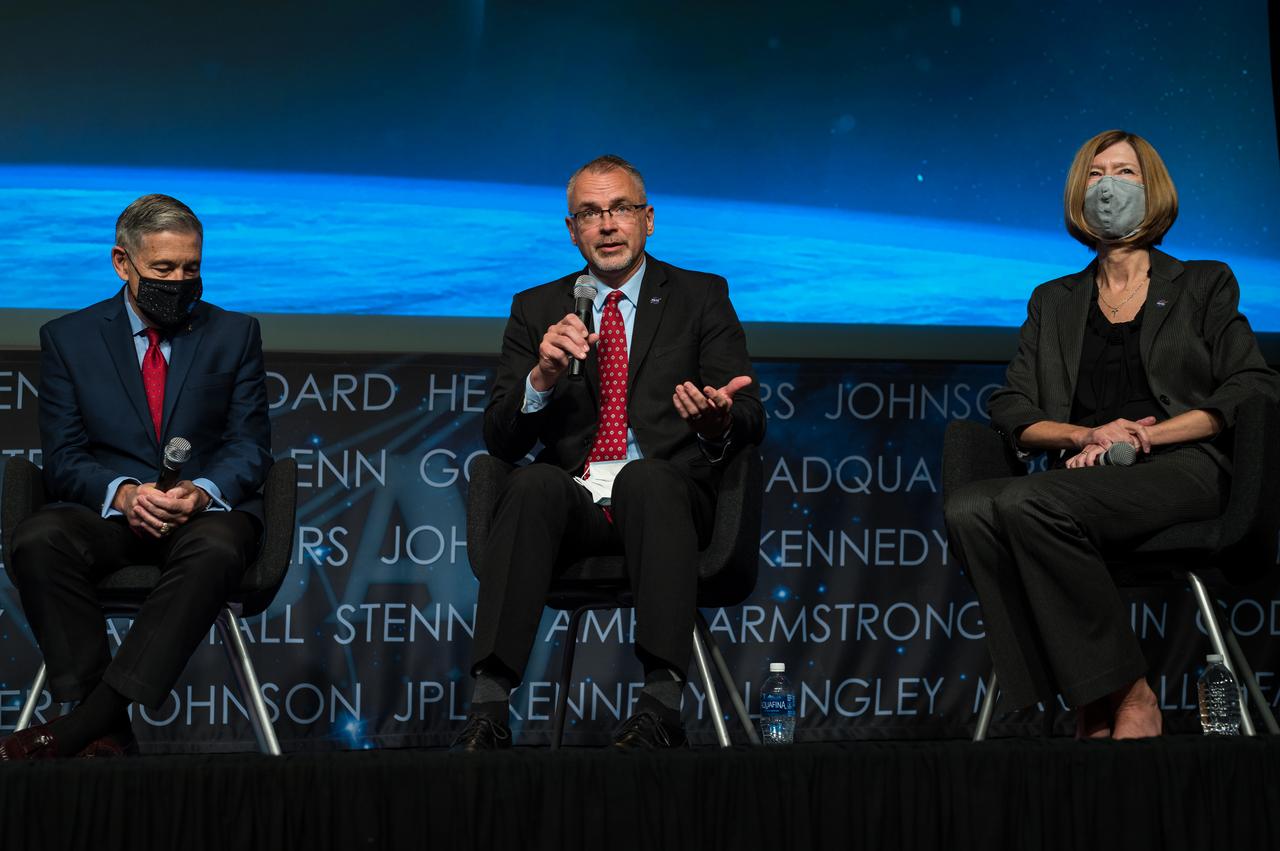
NASA Associate Administrator for the Exploration Systems Development Mission Directorate (ESDMD), Jim Free, speaks alongside NASA Associate Administrator Bob Cabana, left, and NASA Associate Administrator for Space Operations Mission Directorate (SpaceOps), Kathy Lueders, right, during a NASA town hall to discuss the reorganization of the Human Exploration and Operations Mission Directorate into two mission directorates: ESDMD and SpaceOps, Tuesday, Sept. 21, 2021 at the Mary W. Jackson NASA Headquarters building in Washington. Lueders will lead launch and space operations including the International Space Station, the commercialization of low-Earth orbit, and eventually operations on and around the Moon. Free will lead efforts to define and manage systems development for programs critical to NASA’s Artemis program and the planning of NASA’s Moon to Mars exploration. Photo Credit: (NASA/Aubrey Gemignani)

NASA Associate Administrator Bob Cabana speaks during a NASA town hall to discuss the reorganization of the Human Exploration and Operations Mission Directorate into two mission directorates: Exploration Systems Development Mission Directorate (ESDMD) and Space Operations Mission Directorate (SpaceOps), Tuesday, Sept. 21, 2021 at the Mary W. Jackson NASA Headquarters building in Washington. NASA Associate Administrator for SpaceOps, Kathy Lueders, will lead launch and space operations including the International Space Station, the commercialization of low-Earth orbit, and eventually operations on and around the Moon. NASA Associate Administrator for the ESDMD, Jim Free, will lead efforts to define and manage systems development for programs critical to NASA’s Artemis program and the planning of NASA’s Moon to Mars exploration. Photo Credit: (NASA/Aubrey Gemignani)

NASA Associate Administrator for the Space Operations Mission Directorate (SpaceOps), Kathy Lueders, speaks during a NASA town hall to discuss the reorganization of the Human Exploration and Operations Mission Directorate into two mission directorates: SpaceOps and the Exploration Systems Development Mission Directorate (ESDMD), Tuesday, Sept. 21, 2021 at the Mary W. Jackson NASA Headquarters building in Washington. As head of SpaceOps, Kathy Lueders will lead launch and space operations including the International Space Station, the commercialization of low-Earth orbit, and eventually operations on and around the Moon. Associate Administrator of ESDMD, Jim Free, will lead efforts to define and manage systems development for programs critical to NASA’s Artemis program and the planning of NASA’s Moon to Mars exploration. Photo Credit: (NASA/Aubrey Gemignani)
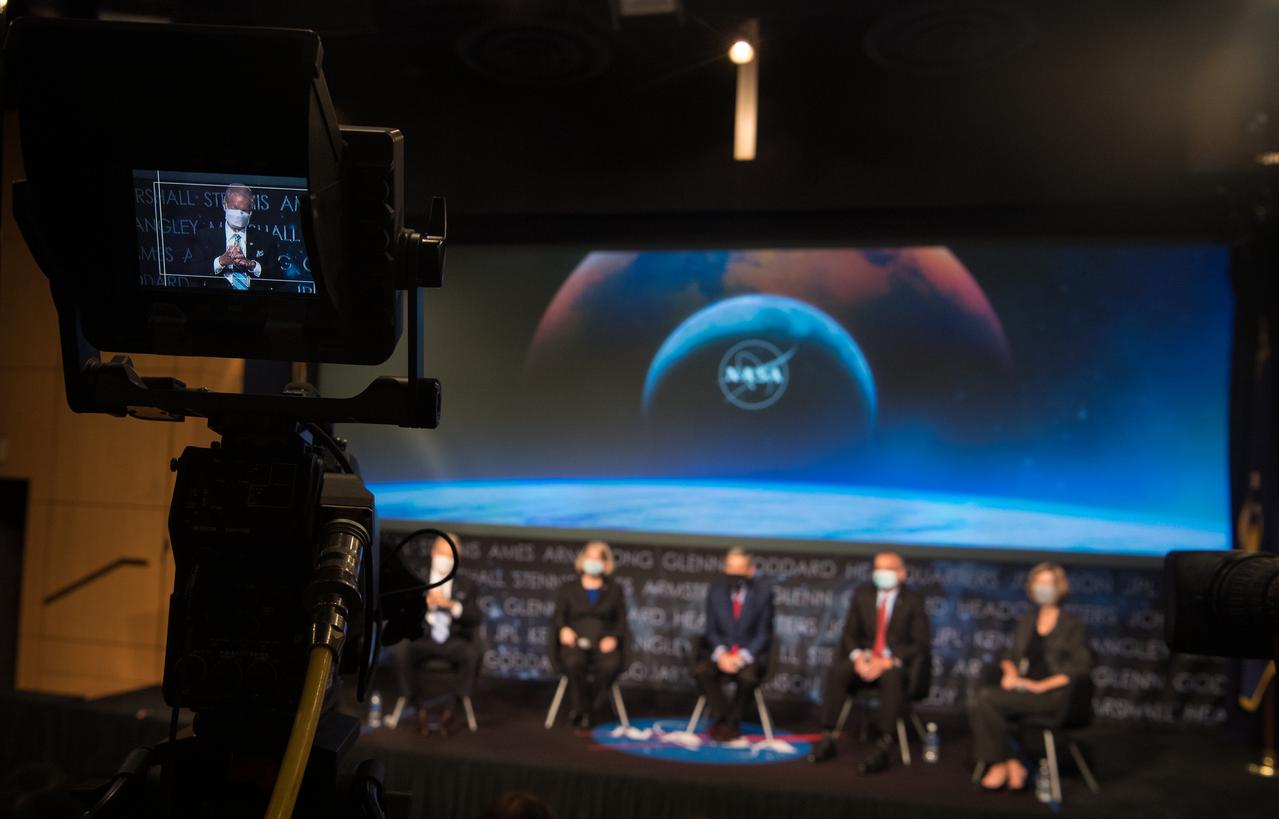
NASA Administrator Bill Nelson is seen through a video camera before a NASA town hall to discuss the reorganization of the Human Exploration and Operations Mission Directorate into two mission directorates: Exploration Systems Development Mission Directorate (ESDMD) and Space Operations Mission Directorate (SpaceOps), Tuesday, Sept. 21, 2021 at the Mary W. Jackson NASA Headquarters building in Washington. NASA Associate Administrator for SpaceOps, Kathy Lueders, will lead launch and space operations including the International Space Station, the commercialization of low-Earth orbit, and eventually operations on and around the Moon. NASA Associate Administrator for the ESDMD, Jim Free, will lead efforts to define and manage systems development for programs critical to NASA’s Artemis program and the planning of NASA’s Moon to Mars exploration. Photo Credit: (NASA/Aubrey Gemignani)
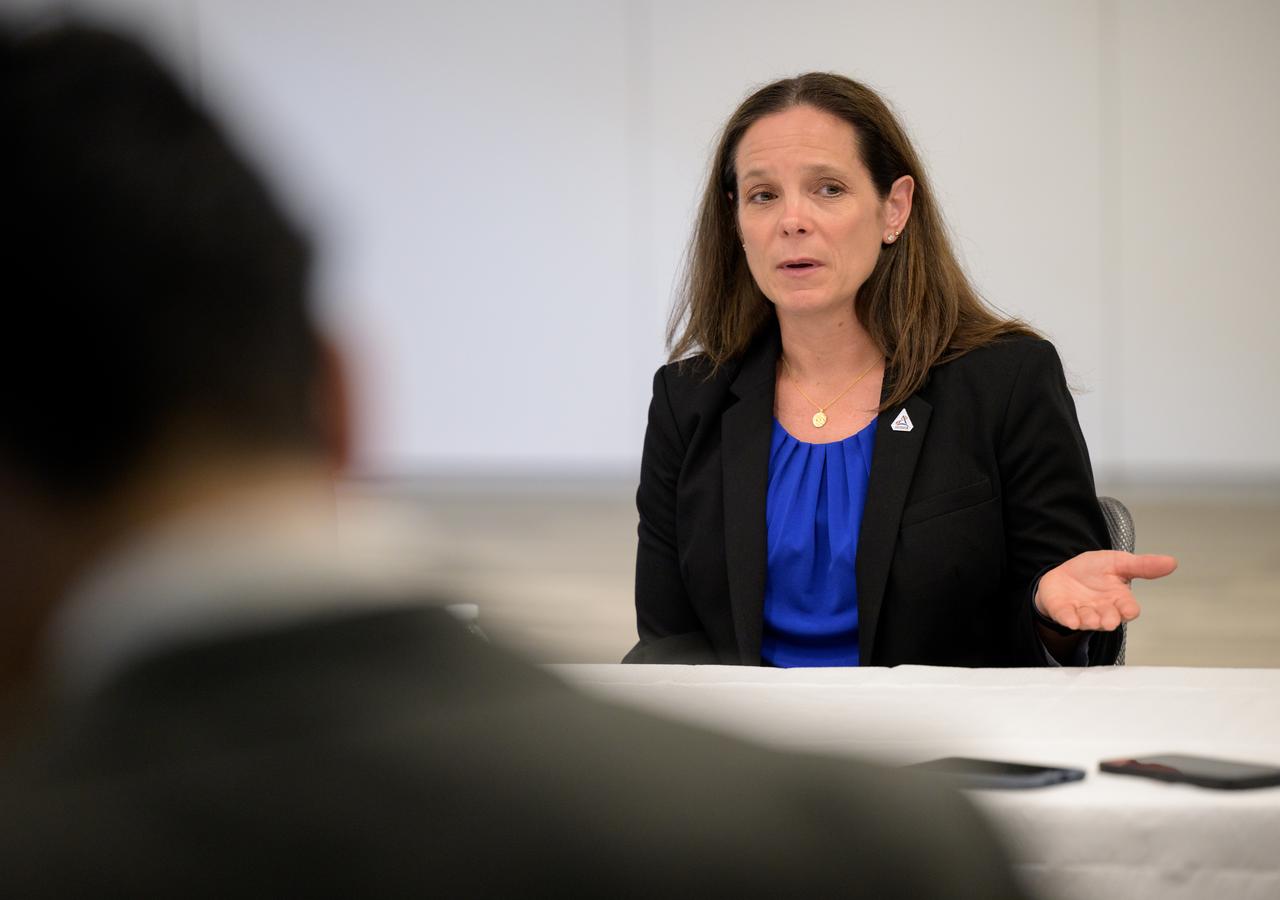
NASA Extravehicular Activity and Human Surface Mobility Program Lara Kearney discusses the historic agreement signed April 9th at NASA Headquarters, between the United States and Japan to advance sustainable human exploration of the Moon, Wednesday, April 10, 2024, at the Japan Aerospace Exploration Agency (JAXA) offices in Washington. Under the agreement, Japan will design, develop, and operate a pressurized rover for crewed and uncrewed exploration on the Moon. NASA will provide the launch and delivery of the rover to the Moon as well as two Japanese astronaut missions to the lunar surface. Photo Credit: Photo Credit: (NASA/Bill Ingalls)
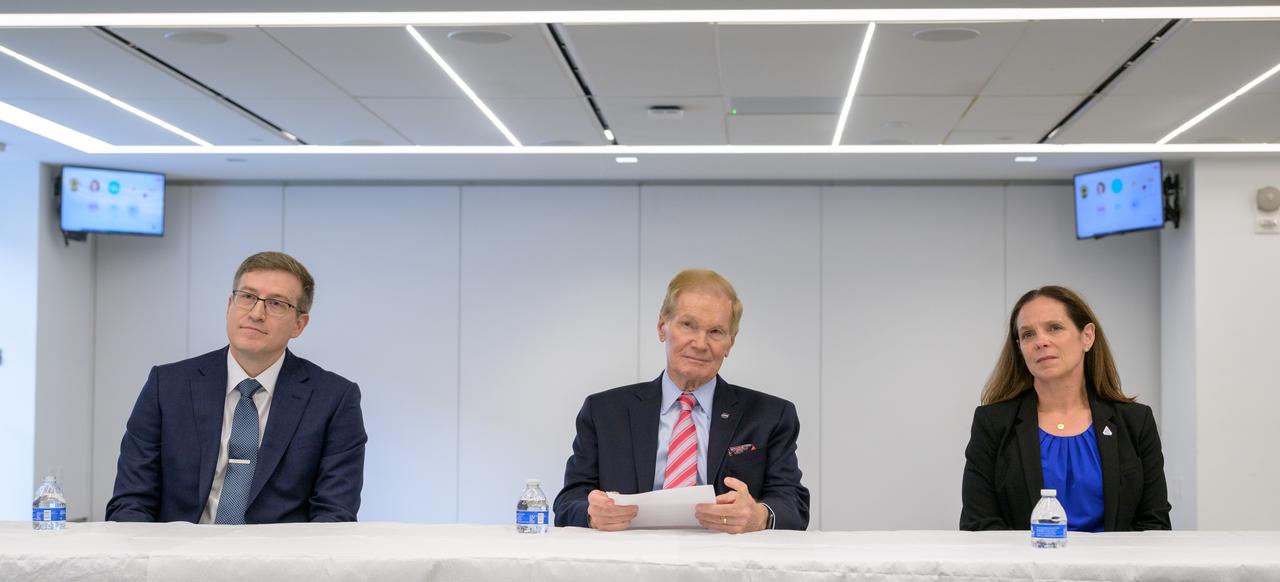
NASA Pressurized Rover Project Manager Danny Newswander, left, NASA Administrator Bill Nelson, and NASA Extravehicular Activity and Human Surface Mobility Program Lara Kearney, right, discuss the historic agreement signed April 9th at NASA Headquarters, between the United States and Japan to advance sustainable human exploration of the Moon, Wednesday, April 10, 2024, at the Japan Aerospace Exploration Agency (JAXA) offices in Washington. Under the agreement, Japan will design, develop, and operate a pressurized rover for crewed and uncrewed exploration on the Moon. NASA will provide the launch and delivery of the rover to the Moon as well as two Japanese astronaut missions to the lunar surface. Photo Credit: Photo Credit: (NASA/Bill Ingalls)
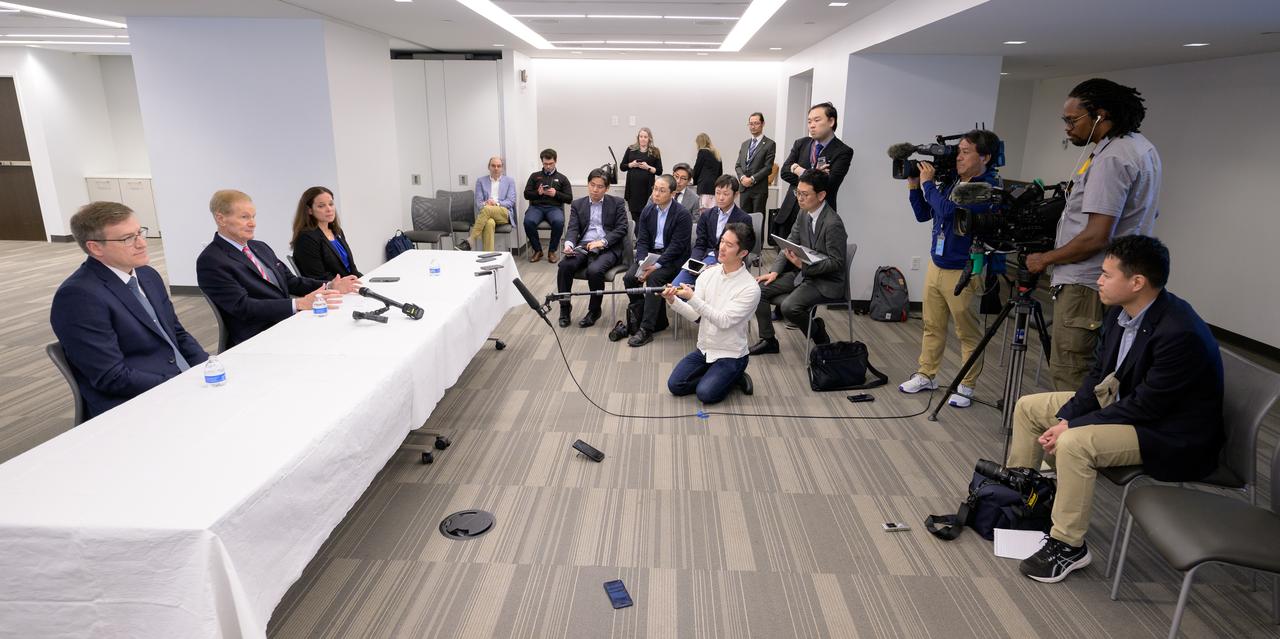
NASA Pressurized Rover Project Manager Danny Newswander, left, NASA Administrator Bill Nelson, and NASA Extravehicular Activity and Human Surface Mobility Program Lara Kearney, right, discuss the historic agreement signed April 9th at NASA Headquarters, between the United States and Japan to advance sustainable human exploration of the Moon, Wednesday, April 10, 2024, at the Japan Aerospace Exploration Agency (JAXA) offices in Washington. Under the agreement, Japan will design, develop, and operate a pressurized rover for crewed and uncrewed exploration on the Moon. NASA will provide the launch and delivery of the rover to the Moon as well as two Japanese astronaut missions to the lunar surface. Photo Credit: Photo Credit: (NASA/Bill Ingalls)

NASA Pressurized Rover Project Manager Danny Newswander, left, NASA Administrator Bill Nelson, and NASA Extravehicular Activity and Human Surface Mobility Program Lara Kearney, right, discuss the historic agreement signed April 9th at NASA Headquarters, between the United States and Japan to advance sustainable human exploration of the Moon, Wednesday, April 10, 2024, at the Japan Aerospace Exploration Agency (JAXA) offices in Washington. Under the agreement, Japan will design, develop, and operate a pressurized rover for crewed and uncrewed exploration on the Moon. NASA will provide the launch and delivery of the rover to the Moon as well as two Japanese astronaut missions to the lunar surface. Photo Credit: Photo Credit: (NASA/Bill Ingalls)

NASA Administrator Bill Nelson discusses the historic agreement signed April 9th at NASA Headquarters, between the United States and Japan to advance sustainable human exploration of the Moon, Wednesday, April 10, 2024, at the Japan Aerospace Exploration Agency (JAXA) offices in Washington. Under the agreement, Japan will design, develop, and operate a pressurized rover for crewed and uncrewed exploration on the Moon. NASA will provide the launch and delivery of the rover to the Moon as well as two Japanese astronaut missions to the lunar surface. Photo Credit: Photo Credit: (NASA/Bill Ingalls)
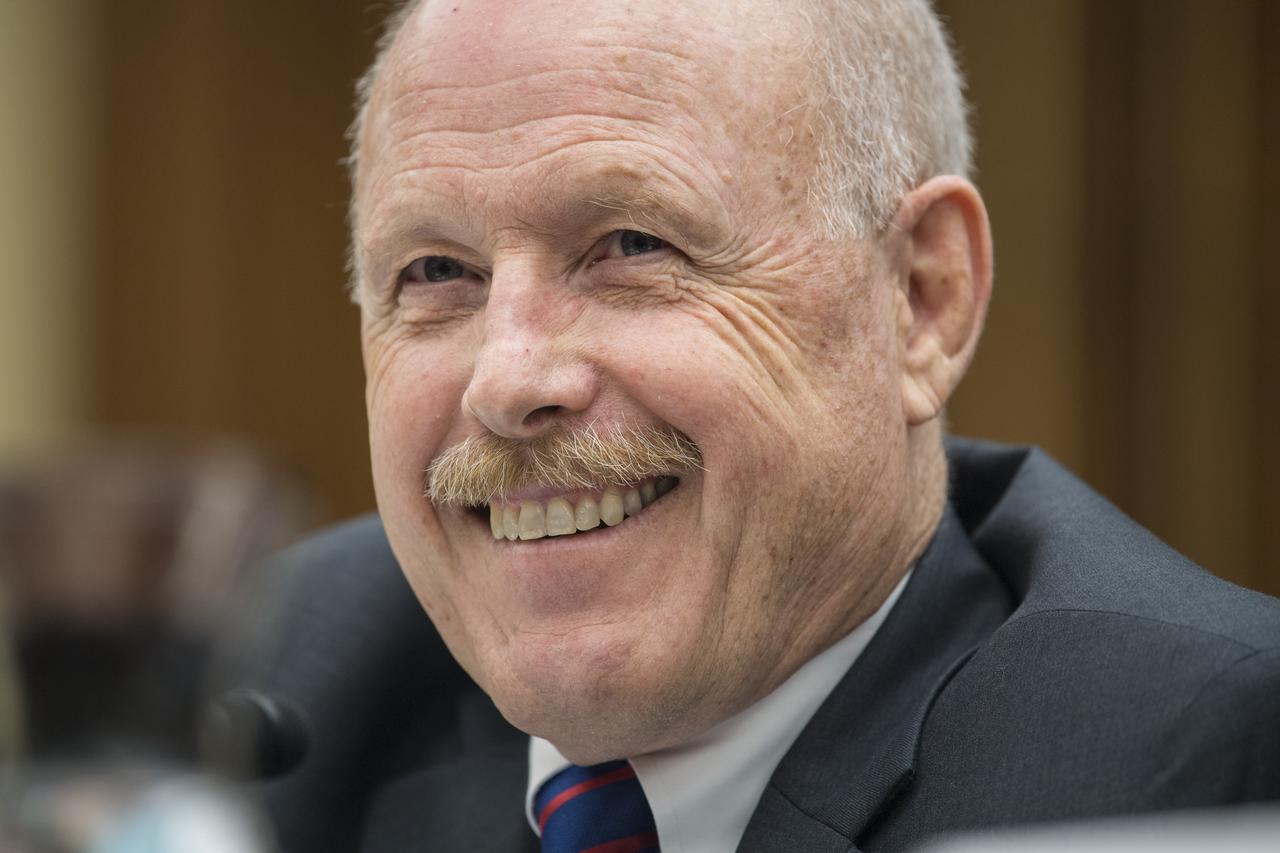
Acting NASA Associate Administrator for Human Exploration and Operations, Ken Bowersox, reacts during a Space and Aeronautics Subcommittee of the House Science, Space, and Technology Committee hearing titled, “Developing Core Capabilities for Deep Space Exploration: An Update on NASA's SLS, Orion, and Exploration Ground Systems," Wednesday, September 18, 2019 at the Rayburn House Office Building in Washington. Photo Credit: (NASA/Aubrey Gemignani)

Acting NASA Associate Administrator for Human Exploration and Operations, Ken Bowersox, testifies during a Space and Aeronautics Subcommittee of the House Science, Space, and Technology Committee hearing titled, “Developing Core Capabilities for Deep Space Exploration: An Update on NASA's SLS, Orion, and Exploration Ground Systems," Wednesday, September 18, 2019 at the Rayburn House Office Building in Washington. Photo Credit: (NASA/Aubrey Gemignani)

Acting NASA Associate Administrator for Human Exploration and Operations, Ken Bowersox, testifies during a Space and Aeronautics Subcommittee of the House Science, Space, and Technology Committee hearing titled, “Developing Core Capabilities for Deep Space Exploration: An Update on NASA's SLS, Orion, and Exploration Ground Systems," Wednesday, September 18, 2019 at the Rayburn House Office Building in Washington. Photo Credit: (NASA/Aubrey Gemignani)

Acting NASA Associate Administrator for Human Exploration and Operations, Ken Bowersox, testifies during a Space and Aeronautics Subcommittee of the House Science, Space, and Technology Committee hearing titled, “Developing Core Capabilities for Deep Space Exploration: An Update on NASA's SLS, Orion, and Exploration Ground Systems," Wednesday, September 18, 2019 at the Rayburn House Office Building in Washington. Photo Credit: (NASA/Aubrey Gemignani)

Acting NASA Associate Administrator for Human Exploration and Operations, Ken Bowersox, shoes are seen during a Space and Aeronautics Subcommittee of the House Science, Space, and Technology Committee hearing titled, “Developing Core Capabilities for Deep Space Exploration: An Update on NASA's SLS, Orion, and Exploration Ground Systems," Wednesday, September 18, 2019 at the Rayburn House Office Building in Washington. Photo Credit: (NASA/Aubrey Gemignani)

Acting NASA Associate Administrator for Human Exploration and Operations, Ken Bowersox, testifies during a Space and Aeronautics Subcommittee of the House Science, Space, and Technology Committee hearing titled, “Developing Core Capabilities for Deep Space Exploration: An Update on NASA's SLS, Orion, and Exploration Ground Systems," Wednesday, September 18, 2019 at the Rayburn House Office Building in Washington. Photo Credit: (NASA/Aubrey Gemignani)
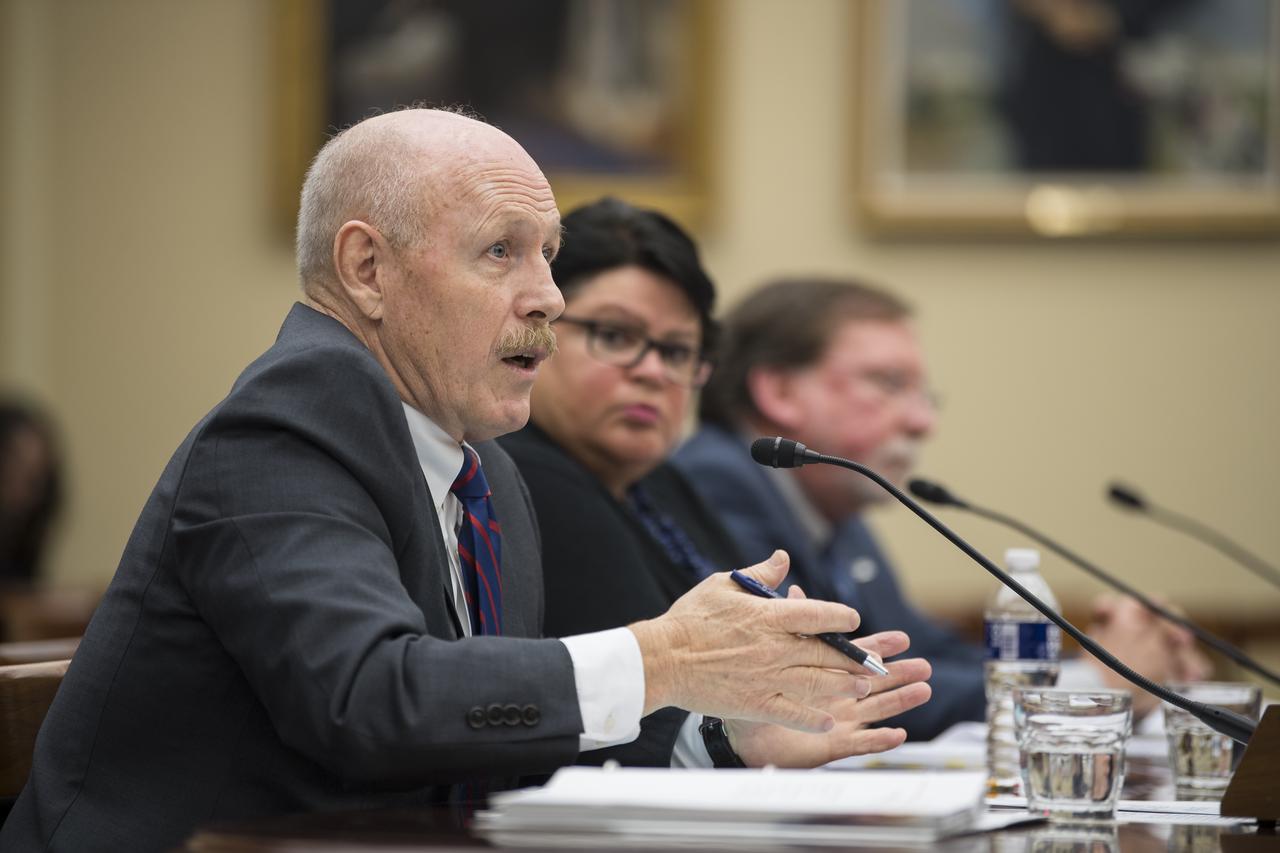
Acting NASA Associate Administrator for Human Exploration and Operations, Ken Bowersox, testifies during a Space and Aeronautics Subcommittee of the House Science, Space, and Technology Committee hearing titled, “Developing Core Capabilities for Deep Space Exploration: An Update on NASA's SLS, Orion, and Exploration Ground Systems," Wednesday, September 18, 2019 at the Rayburn House Office Building in Washington. Photo Credit: (NASA/Aubrey Gemignani)

NASA Administrator Bill Nelson discusses the historic agreement signed April 9th at NASA Headquarters, between the United States and Japan to advance sustainable human exploration of the Moon, Wednesday, April 10, 2024, at the Japan Aerospace Exploration Agency (JAXA) offices in Washington. Under the agreement, Japan will design, develop, and operate a pressurized rover for crewed and uncrewed exploration on the Moon. NASA will provide the launch and delivery of the rover to the Moon as well as two Japanese astronaut missions to the lunar surface. Photo Credit: Photo Credit: (NASA/Bill Ingalls)

Acting NASA Associate Administrator for Human Exploration and Operations, Ken Bowersox, takes notes during a Space and Aeronautics Subcommittee of the House Science, Space, and Technology Committee hearing titled, “Developing Core Capabilities for Deep Space Exploration: An Update on NASA's SLS, Orion, and Exploration Ground Systems," Wednesday, September 18, 2019 at the Rayburn House Office Building in Washington. Photo Credit: (NASA/Aubrey Gemignani)

NASA Administrator Bill Nelson discusses the historic agreement signed April 9th at NASA Headquarters, between the United States and Japan to advance sustainable human exploration of the Moon, Wednesday, April 10, 2024, at the Japan Aerospace Exploration Agency (JAXA) offices in Washington. Under the agreement, Japan will design, develop, and operate a pressurized rover for crewed and uncrewed exploration on the Moon. NASA will provide the launch and delivery of the rover to the Moon as well as two Japanese astronaut missions to the lunar surface. Photo Credit: Photo Credit: (NASA/Bill Ingalls)

Acting NASA Associate Administrator for Human Exploration and Operations, Ken Bowersox, testifies during a Space and Aeronautics Subcommittee of the House Science, Space, and Technology Committee hearing titled, “Developing Core Capabilities for Deep Space Exploration: An Update on NASA's SLS, Orion, and Exploration Ground Systems," Wednesday, September 18, 2019 at the Rayburn House Office Building in Washington. Photo Credit: (NASA/Aubrey Gemignani)

Acting NASA Associate Administrator for Human Exploration and Operations, Ken Bowersox, takes notes during a Space and Aeronautics Subcommittee of the House Science, Space, and Technology Committee hearing titled, “Developing Core Capabilities for Deep Space Exploration: An Update on NASA's SLS, Orion, and Exploration Ground Systems," Wednesday, September 18, 2019 at the Rayburn House Office Building in Washington. Photo Credit: (NASA/Aubrey Gemignani)

NASA Administrator Bill Nelson discusses the historic agreement signed April 9th at NASA Headquarters, between the United States and Japan to advance sustainable human exploration of the Moon, Wednesday, April 10, 2024, at the Japan Aerospace Exploration Agency (JAXA) offices in Washington. Under the agreement, Japan will design, develop, and operate a pressurized rover for crewed and uncrewed exploration on the Moon. NASA will provide the launch and delivery of the rover to the Moon as well as two Japanese astronaut missions to the lunar surface. Photo Credit: Photo Credit: (NASA/Bill Ingalls)

Acting NASA Associate Administrator for Human Exploration and Operations, Ken Bowersox, testifies during a Space and Aeronautics Subcommittee of the House Science, Space, and Technology Committee hearing titled, “Developing Core Capabilities for Deep Space Exploration: An Update on NASA's SLS, Orion, and Exploration Ground Systems," Wednesday, September 18, 2019 at the Rayburn House Office Building in Washington. Photo Credit: (NASA/Aubrey Gemignani)
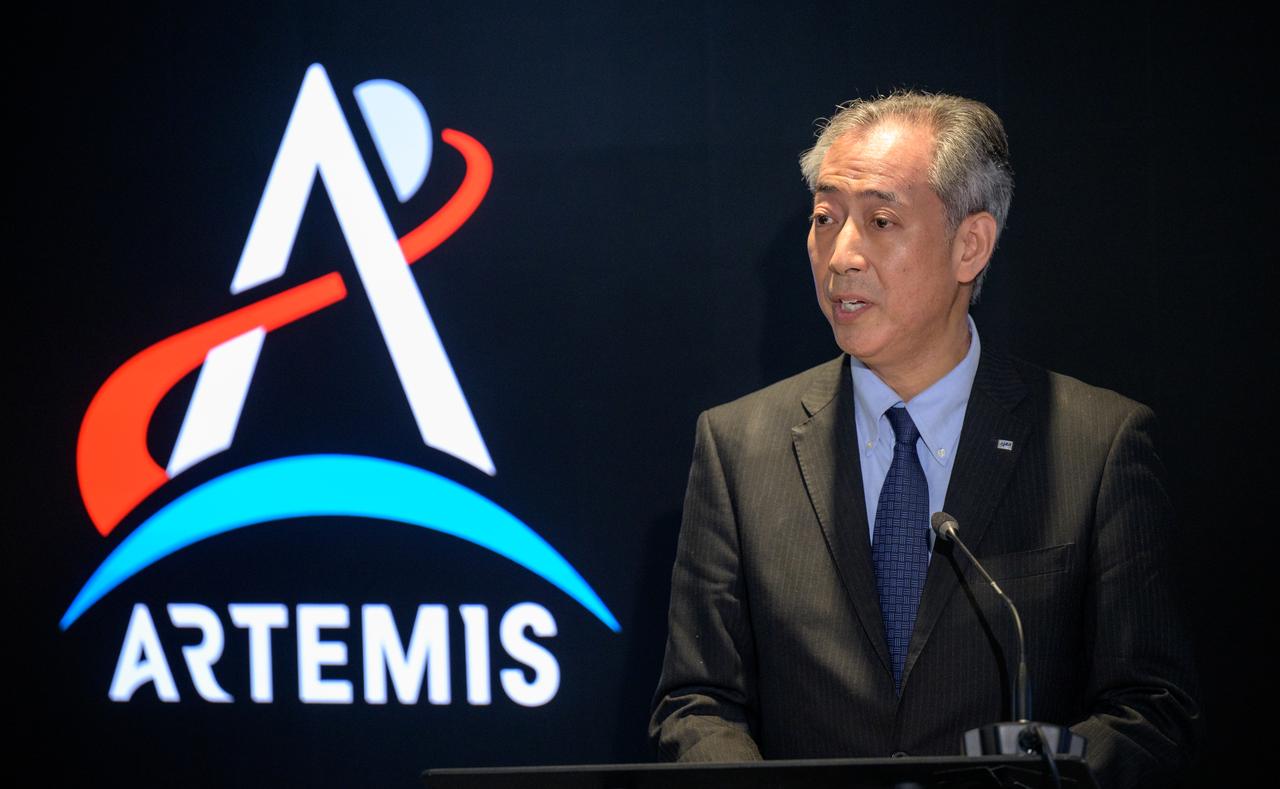
Japan Aerospace Exploration Agency (JAXA) President Hiroshi Yamakawa speaks after the signing of an historic agreement between the United States and Japan to advance sustainable human exploration of the Moon, Tuesday, April 9, 2024, at the NASA Headquarters Mary W. Jackson Building in Washington. Under the agreement, Japan will design, develop, and operate a pressurized rover for crewed and uncrewed exploration on the Moon. NASA will provide the launch and delivery of the rover to the Moon as well as two Japanese astronaut missions to the lunar surface. Photo Credit: (NASA/Bill Ingalls)
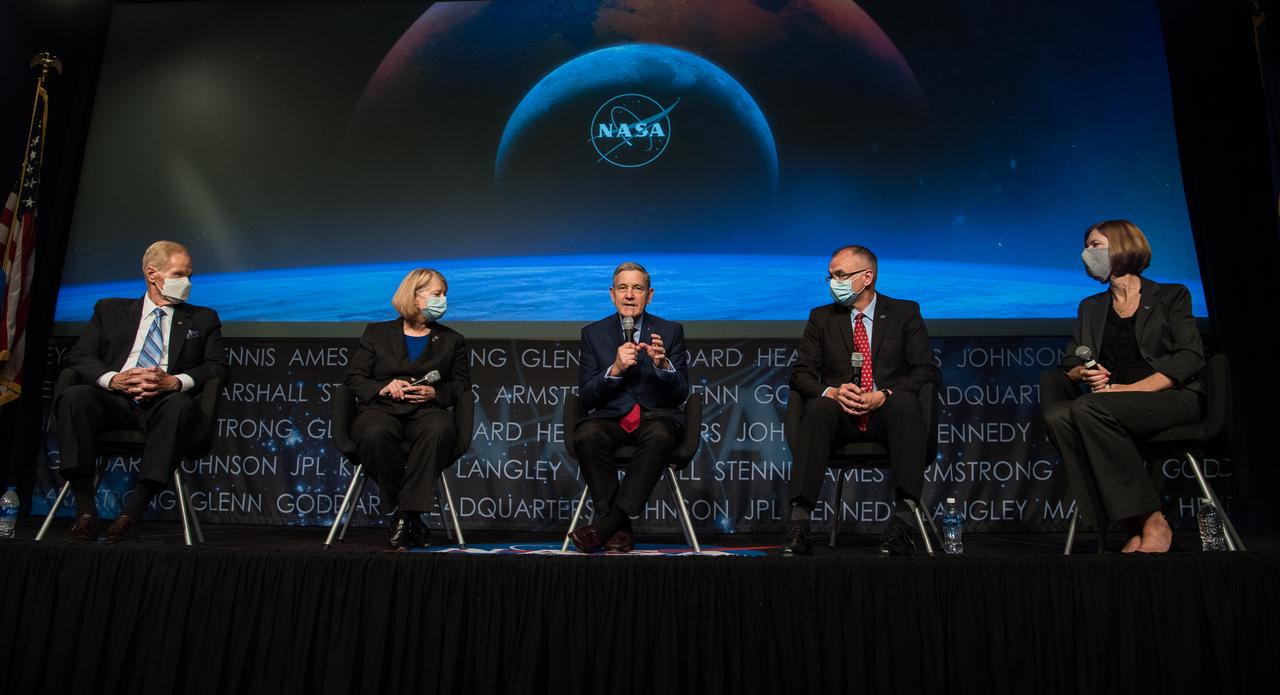
NASA Associate Administrator Bob Cabana speaks on a panel during a NASA town hall to discuss the reorganization of the Human Exploration and Operations Mission Directorate into two mission directorates: Exploration Systems Development Mission Directorate (ESDMD) and Space Operations Mission Directorate (SpaceOps), Tuesday, Sept. 21, 2021 at the Mary W. Jackson NASA Headquarters building in Washington. Panelists were, from left to right, NASA Administrator Bill Nelson; NASA Deputy Administrator Pam Melroy; Cabana; NASA Associate Administrator for the Exploration Systems Development Mission Directorate (ESDMD), Jim Free; and NASA Associate Administrator for the Space Operations Mission Directorate (SpaceOps), Kathy Lueders. Photo Credit: (NASA/Aubrey Gemignani)
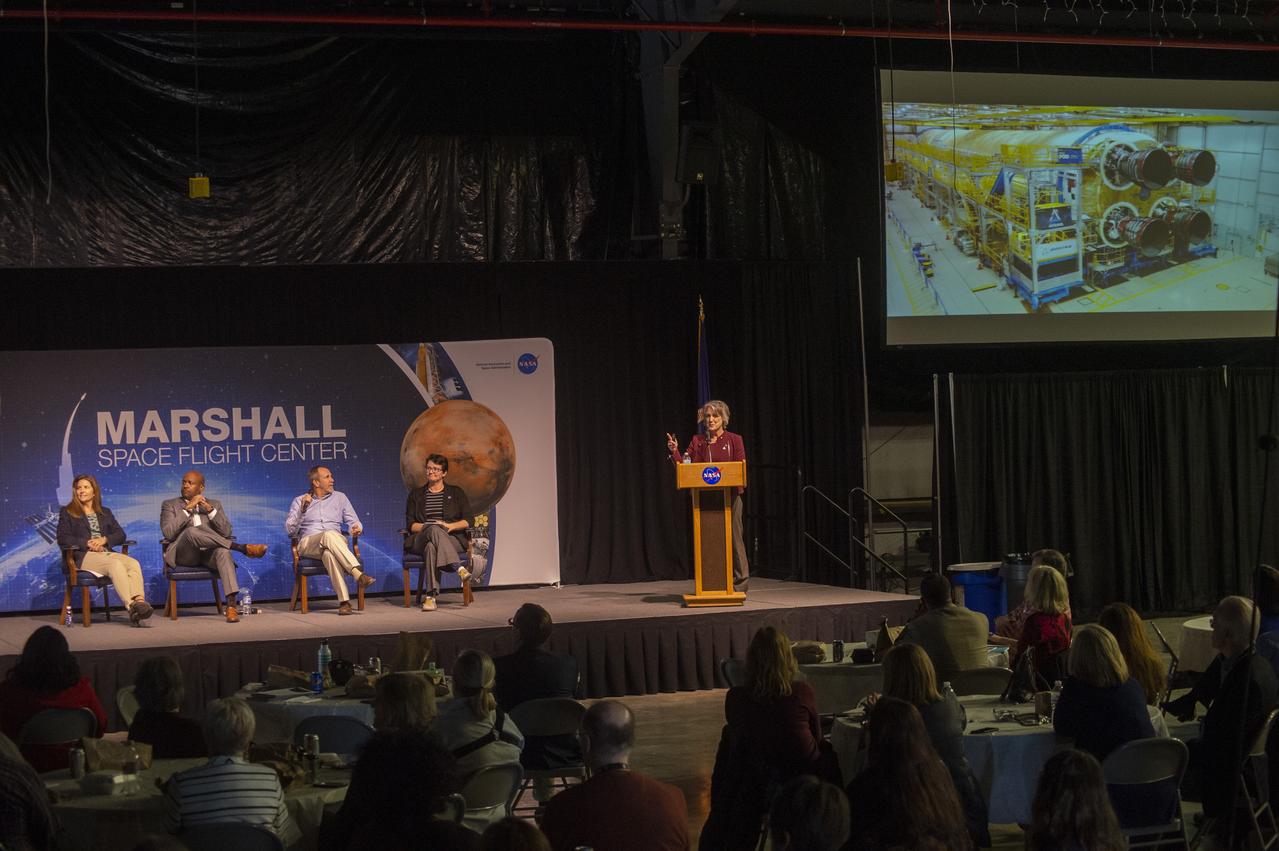
MARCIA LINDSTROM, AT PODIUM, FACILITATES ARTEMIS PROGRAM PANEL DISCUSSION AT NOVEMBER MARSHALL ASSOCIATION LUNCHEON. (L TO R), LISA WATSON-MORGAN, PROGRAM MANAGER, HUMAN LANDING SYSTEM; BOBBY WATKINS, DIRECTOR HUMAN EXPLORATION DEVELOPMENT & OPERATIONS OFFICE; DAVID BEAMAN, MANAGER, SYSTEMS ENGINEERING & INTEGRATION OFFICE, RENEE WEBER, ACTING CENTER CHIEF SCIENTIST
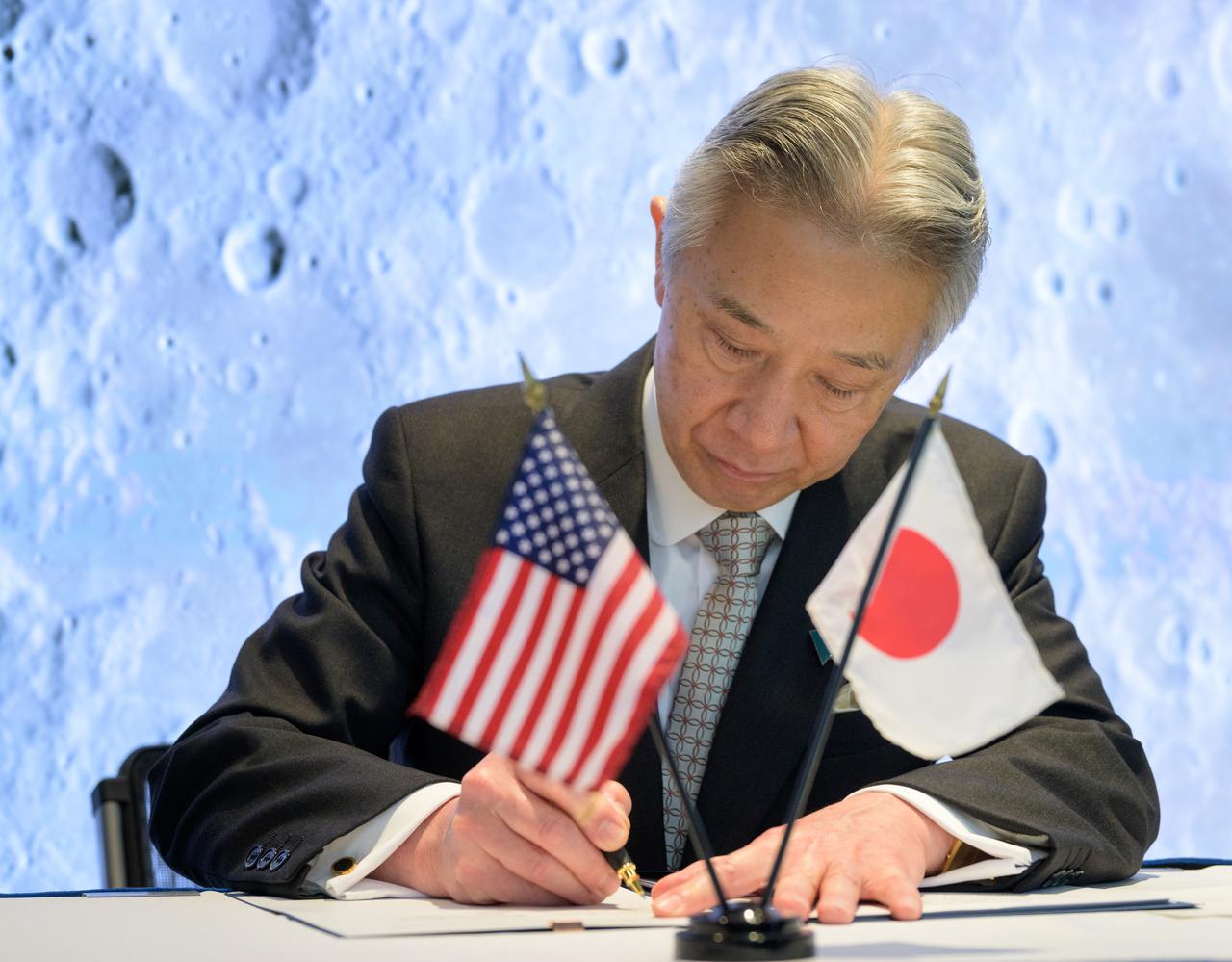
Japan’s Minister of Education, Culture, Sports, Science and Technology Masahito Moriyama, signs an historic agreement between the United States and Japan to advance sustainable human exploration of the Moon, Tuesday, April 9, 2024, at the NASA Headquarters Mary W. Jackson Building in Washington. Under the agreement, Japan will design, develop, and operate a pressurized rover for crewed and uncrewed exploration on the Moon. NASA will provide the launch and delivery of the rover to the Moon as well as two Japanese astronaut missions to the lunar surface. Photo Credit: (NASA/Bill Ingalls)
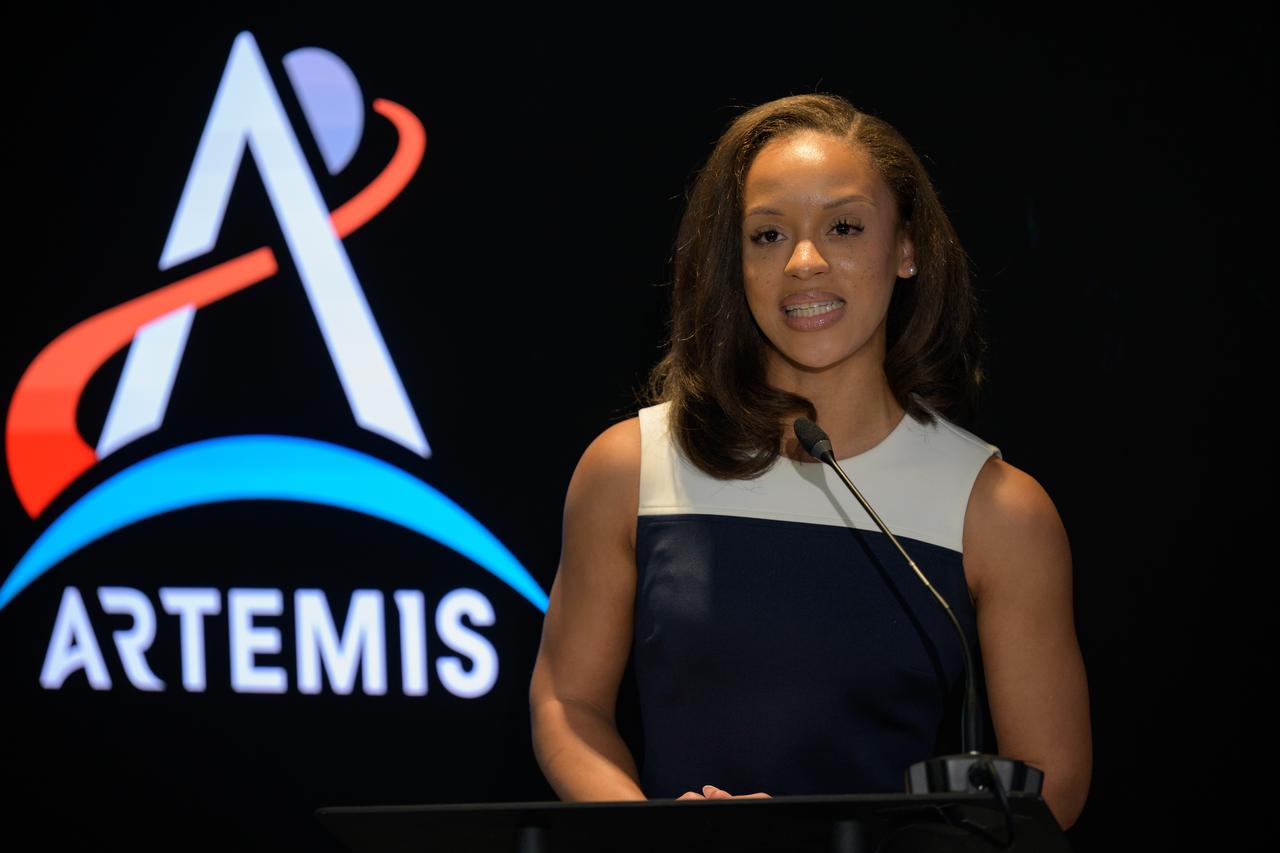
NASA Press Secretary Faith McKie moderates an event where an historic agreement is to be signed between the United States and Japan to advance sustainable human exploration of the Moon, Tuesday, April 9, 2024, at the NASA Headquarters Mary W. Jackson Building in Washington. Under the agreement, Japan will design, develop, and operate a pressurized rover for crewed and uncrewed exploration on the Moon. NASA will provide the launch and delivery of the rover to the Moon as well as two Japanese astronaut missions to the lunar surface. Photo Credit: (NASA/Bill Ingalls)

NASA Administrator Bill Nelson signs an historic agreement between the United States and Japan to advance sustainable human exploration of the Moon, Tuesday, April 9, 2024, at the NASA Headquarters Mary W. Jackson Building in Washington. Under the agreement, Japan will design, develop, and operate a pressurized rover for crewed and uncrewed exploration on the Moon. NASA will provide the launch and delivery of the rover to the Moon as well as two Japanese astronaut missions to the lunar surface. Photo Credit: (NASA/Bill Ingalls)

NASA Administrator Bill Nelson speaks prior to signing an historic agreement between the United States and Japan to advance sustainable human exploration of the Moon, Tuesday, April 9, 2024, at the NASA Headquarters Mary W. Jackson Building in Washington. Under the agreement, Japan will design, develop, and operate a pressurized rover for crewed and uncrewed exploration on the Moon. NASA will provide the launch and delivery of the rover to the Moon as well as two Japanese astronaut missions to the lunar surface. Photo Credit: (NASA/Bill Ingalls)
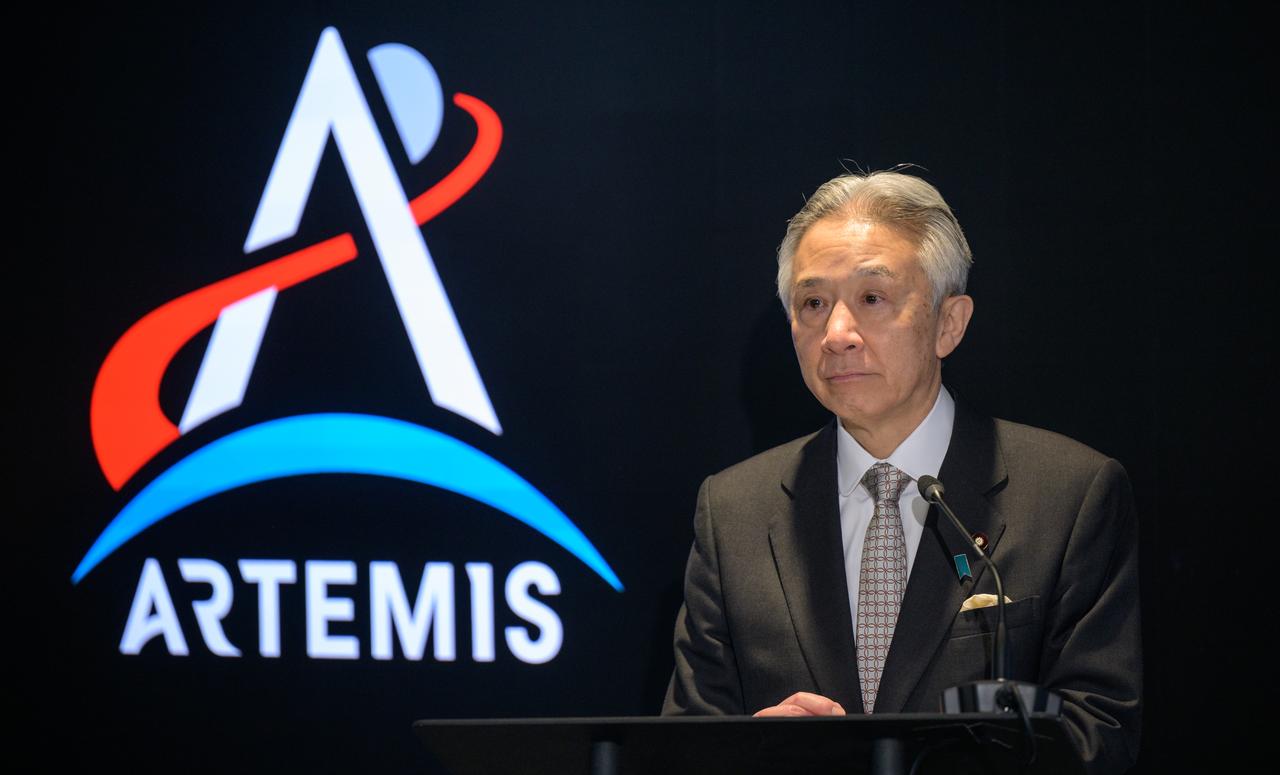
Japan’s Minister of Education, Culture, Sports, Science and Technology Masahito Moriyama speaks after signing an historic agreement between the United States and Japan to advance sustainable human exploration of the Moon, Tuesday, April 9, 2024, at the NASA Headquarters Mary W. Jackson Building in Washington. Under the agreement, Japan will design, develop, and operate a pressurized rover for crewed and uncrewed exploration on the Moon. NASA will provide the launch and delivery of the rover to the Moon as well as two Japanese astronaut missions to the lunar surface. Photo Credit: (NASA/Bill Ingalls)
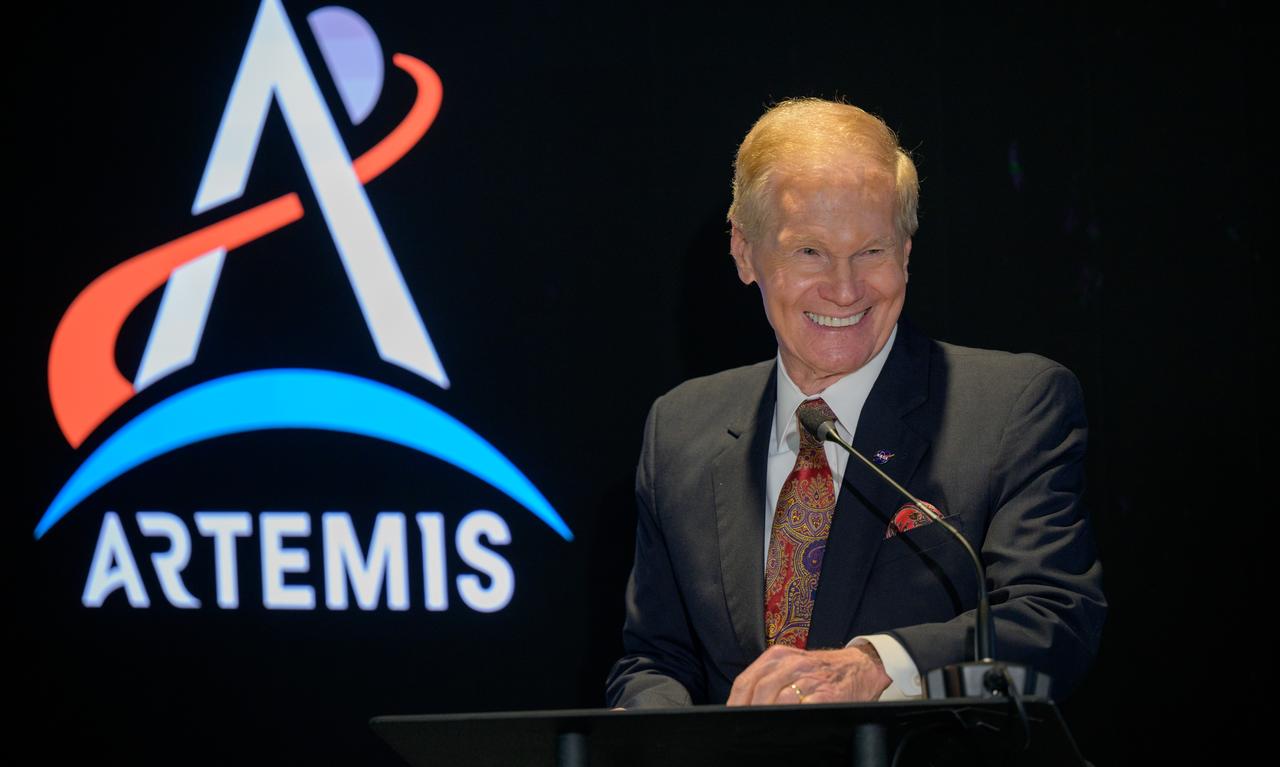
NASA Administrator Bill Nelson speaks prior to signing an historic agreement between the United States and Japan to advance sustainable human exploration of the Moon, Tuesday, April 9, 2024, at the NASA Headquarters Mary W. Jackson Building in Washington. Under the agreement, Japan will design, develop, and operate a pressurized rover for crewed and uncrewed exploration on the Moon. NASA will provide the launch and delivery of the rover to the Moon as well as two Japanese astronaut missions to the lunar surface. Photo Credit: (NASA/Bill Ingalls)
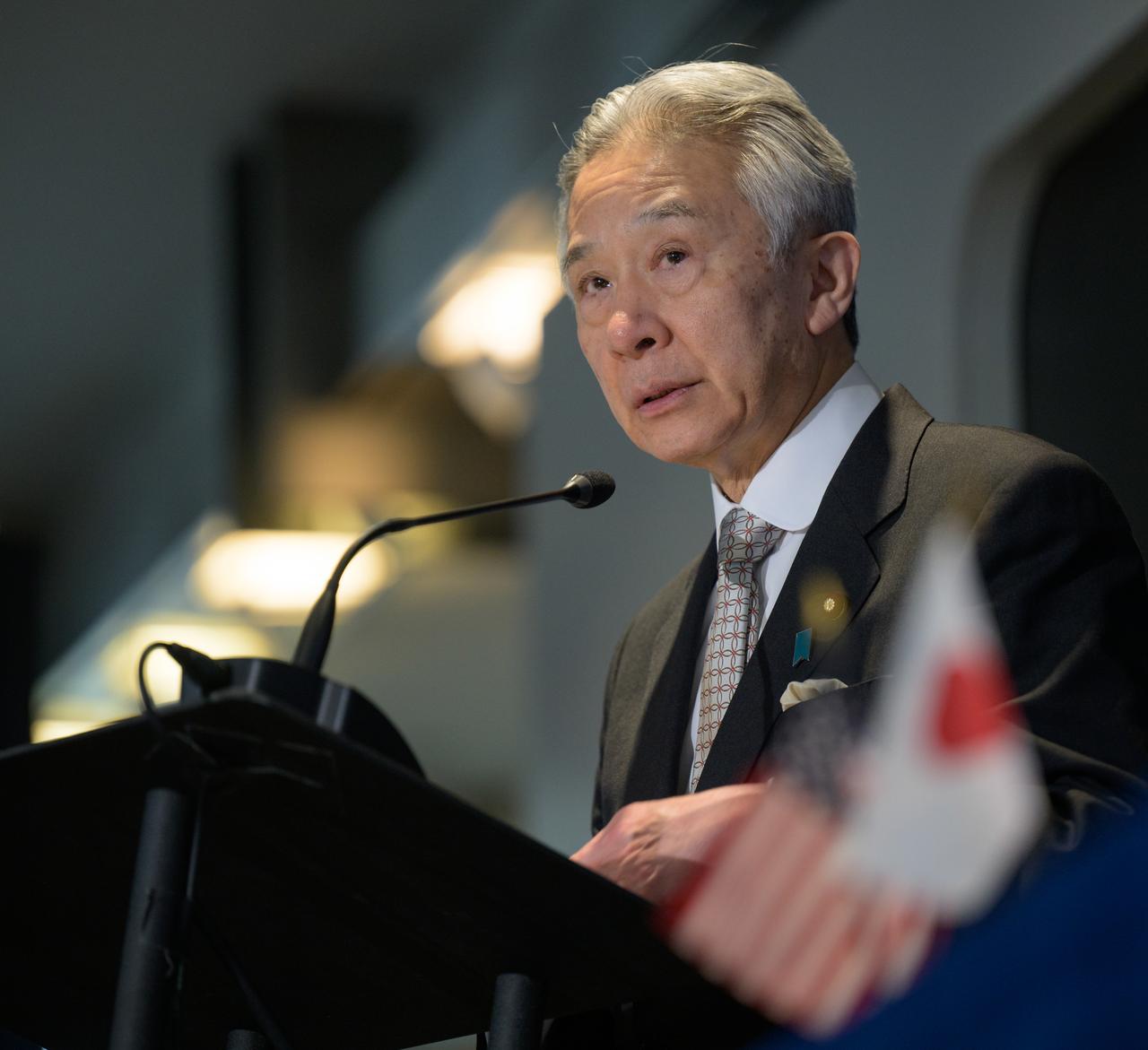
Japan’s Minister of Education, Culture, Sports, Science and Technology Masahito Moriyama speaks after signing an historic agreement between the United States and Japan to advance sustainable human exploration of the Moon, Tuesday, April 9, 2024, at the NASA Headquarters Mary W. Jackson Building in Washington. Under the agreement, Japan will design, develop, and operate a pressurized rover for crewed and uncrewed exploration on the Moon. NASA will provide the launch and delivery of the rover to the Moon as well as two Japanese astronaut missions to the lunar surface. Photo Credit: (NASA/Bill Ingalls)
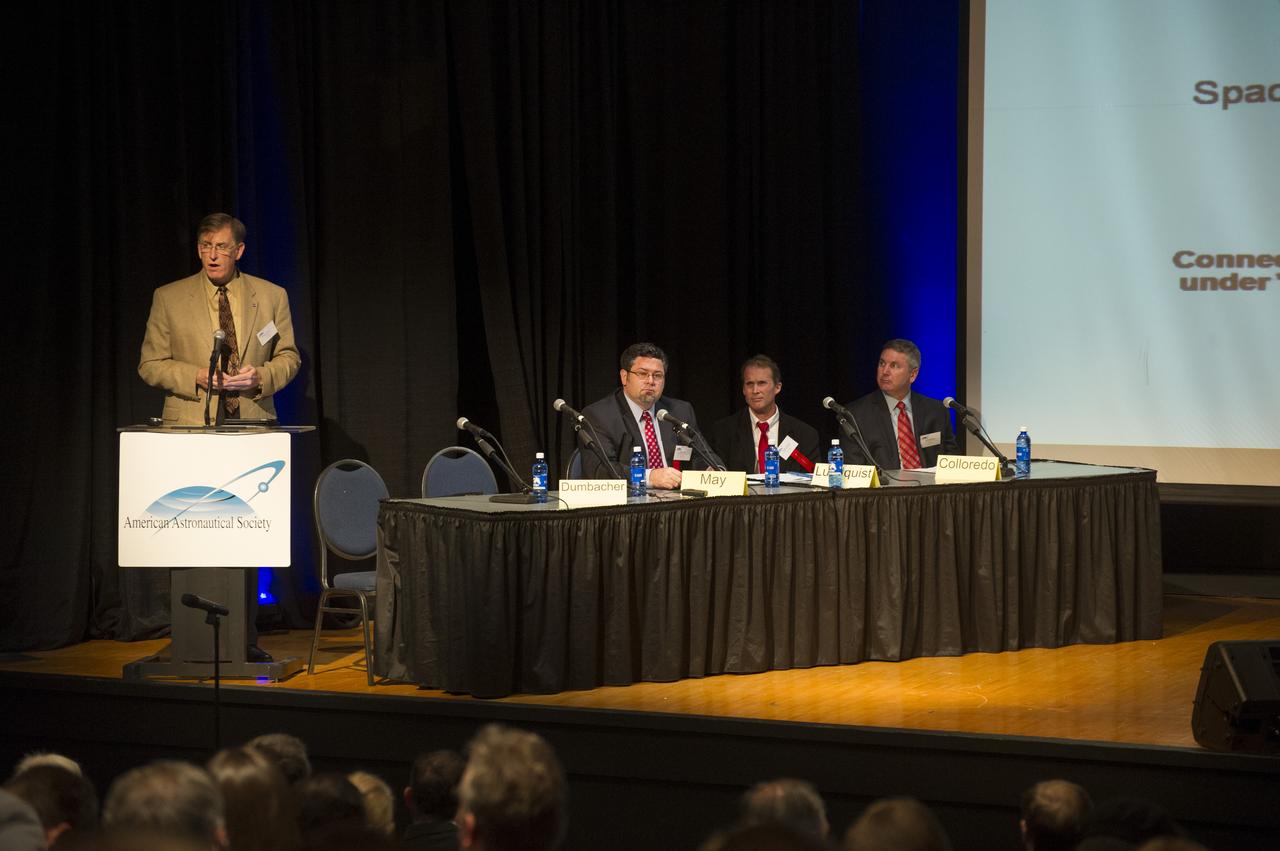
DAN DUMBACHER, LEFT, NASA'S DEPUTY ASSOCIATE ADMINISTRATOR FOR EXPLORATION SYSTEMS DEVELOPMENT, MODERATES A PANEL TITLED "NASA HUMAN SPACE EXPLORATION PLANS AND UPDATE" AT THE 5TH VON BRAUN MEMORIAL SYMPOSIUM AT THE UNIVERSITY OF ALABAMA IN HUNTSVILLE ON OCT. 16. FEATURED PANELISTS INCLUDED, SEATED FROM LEFT, SPACE LAUNCH SYSTEM PROGRAM MANAGER TODD MAY FROM THE MARSHALL SPACE FLIGHT CENTER, ORION CREW AND SERVICE MODULE MANAGER CHARLIE LUNDQUIST FROM THE JOHNSON SPACE CENTER, AND CHIEF ARCHITECT OF THE GROUND SYSTEMS DEVELOPMENT AND OPERATIONS PROGRAM SCOTT COLLOREDO FROM THE KENNEDYSPACE CENTER.

Jim Free, associate administrator for Exploration Systems Development Mission Directorate, NASA Headquarters, participates in a press conference on Aug. 29, 2022, at the agency’s NASA’s Kennedy Space Center in Florida, after waving-off of the launch of the Artemis I mission. The first in a series of increasingly complex missions, Artemis I will provide a foundation for human deep space exploration and demonstrate our commitment and capability to extend human presence to the Moon and beyond. The primary goal of Artemis I is to thoroughly test the integrated systems before crewed missions by operating the spacecraft in a deep space environment, testing Orion’s heat shield, and recovering the crew module after reentry, descent, and splashdown.

NASA holds a prelaunch media briefing on the role of industry in advancing human exploration on Aug. 26, 2022, at NASA’s Kennedy Space Center in Florida, as the agency prepares for launch of Artemis I scheduled for Aug. 29, at 8:33 a.m. EDT from Kennedy’s Launch Complex 39B. Participants, from left are Kathryn Hambleton, NASA Communications; Jim Free, association administrator, Exploration Systems Development Mission Directorate, NASA Headquarters; Randy Lycans, vice president/general manager of NASA Enterprise Solutions, Jacobs; Jeff Zotti, RS-25 program director, Aerojet Rocketdyne; Jennifer Boland-Masterson, director of operations, Michoud Assembly Facility, Boeing; Doug Hurley, senior director of business development, Northrop Grumman; Kelly DeFazio, director of Orion production, Lockheed Martin; and Ralf Zimmerman, head of Moon programs and Orion European Service Module, Airbus. The first in a series of increasingly complex missions, Artemis I will provide a foundation for human deep space exploration and demonstrate our commitment and capability to extend human presence to the Moon and beyond. The primary goal of Artemis I is to thoroughly test the integrated systems before crewed missions by operating the spacecraft in a deep space environment, testing Orion’s heat shield, and recovering the crew module after reentry, descent, and splashdown.

NASA holds a prelaunch media briefing on the role of industry in advancing human exploration on Aug. 26, 2022, at NASA’s Kennedy Space Center in Florida, as the agency prepares for launch of Artemis I scheduled for Aug. 29, at 8:33 a.m. EDT from Kennedy’s Launch Complex 39B. Participants, from left are Kathryn Hambleton, NASA Communications; Jim Free, association administrator, Exploration Systems Development Mission Directorate, NASA Headquarters; Randy Lycans, vice president/general manager of NASA Enterprise Solutions, Jacobs; Jeff Zotti, RS-25 program director, Aerojet Rocketdyne; Jennifer Boland-Masterson, director of operations, Michoud Assembly Facility, Boeing; Doug Hurley, senior director of business development, Northrop Grumman; Kelly DeFazio, director of Orion production, Lockheed Martin; and Ralf Zimmerman, head of Moon programs and Orion European Service Module, Airbus. The first in a series of increasingly complex missions, Artemis I will provide a foundation for human deep space exploration and demonstrate our commitment and capability to extend human presence to the Moon and beyond. The primary goal of Artemis I is to thoroughly test the integrated systems before crewed missions by operating the spacecraft in a deep space environment, testing Orion’s heat shield, and recovering the crew module after reentry, descent, and splashdown.
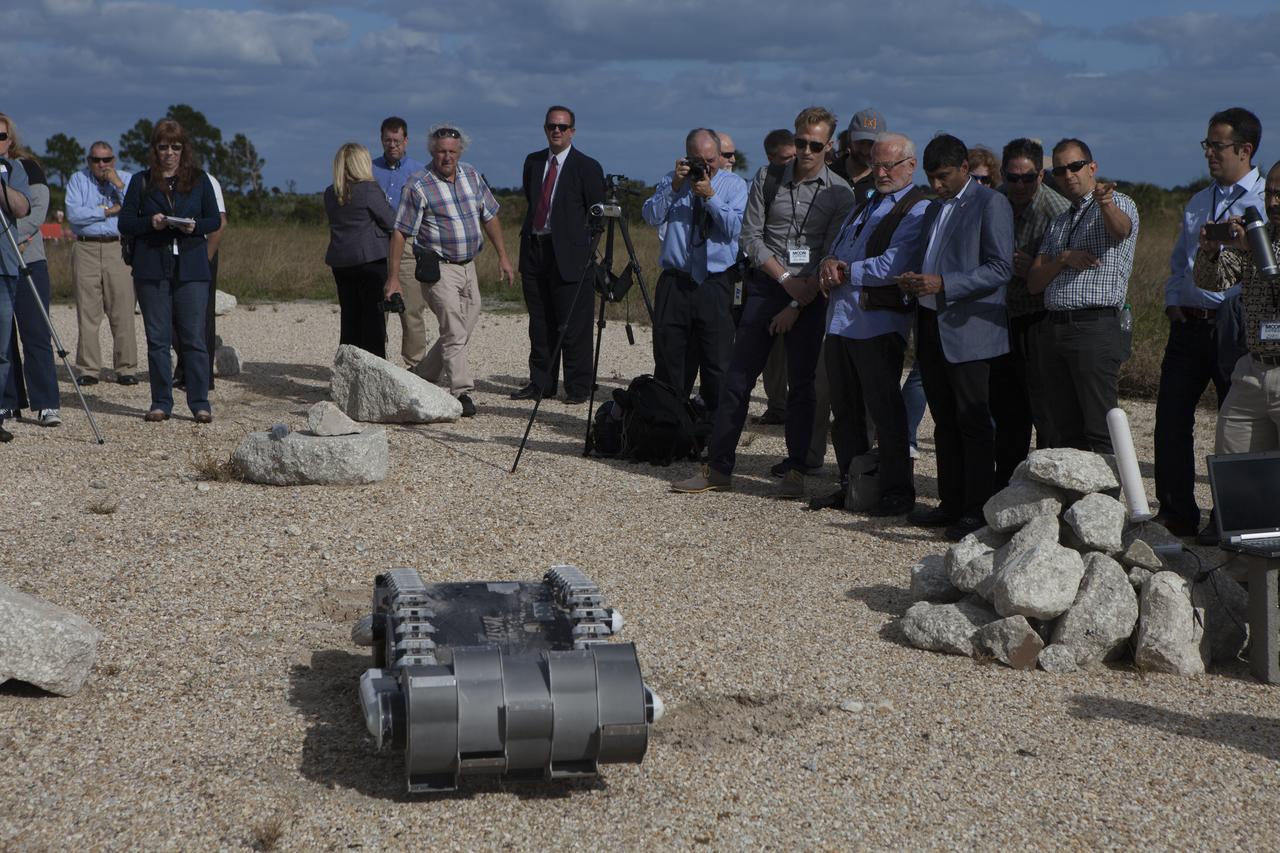
Members of the media watch a demonstration of the Regolith Advanced Surface System Operations Robot, or RASSOR, during a media event at the automated landing and hazard avoidance technology, or ALHAT, hazard field at the north end of the Shuttle Landing Facility at NASA's Kennedy Space Center in Florida. Tom Engler, center, in the suit, deputy director of Kennedy's Center Planning and Development, announced Moon Express Inc., of Moffett Field, California is selected to utilize Kennedy facilities for NASA's Lunar Cargo Transportation and Landing by Soft Touchdown, or Lunar CATALYST, initiative. Moon Express is developing a lander with capabilities that will enable delivery of payloads to the surface of the moon, as well as new science and exploration missions of interest to NASA and scientific and academic communities. Moon Express will base its activities at Kennedy and utilize the Morpheus ALHAT field and a hangar nearby for CATALYST testing. The Advanced Exploration Systems Division of NASA's Human Exploration and Operations Mission Directorate manages Lunar CATALYST.
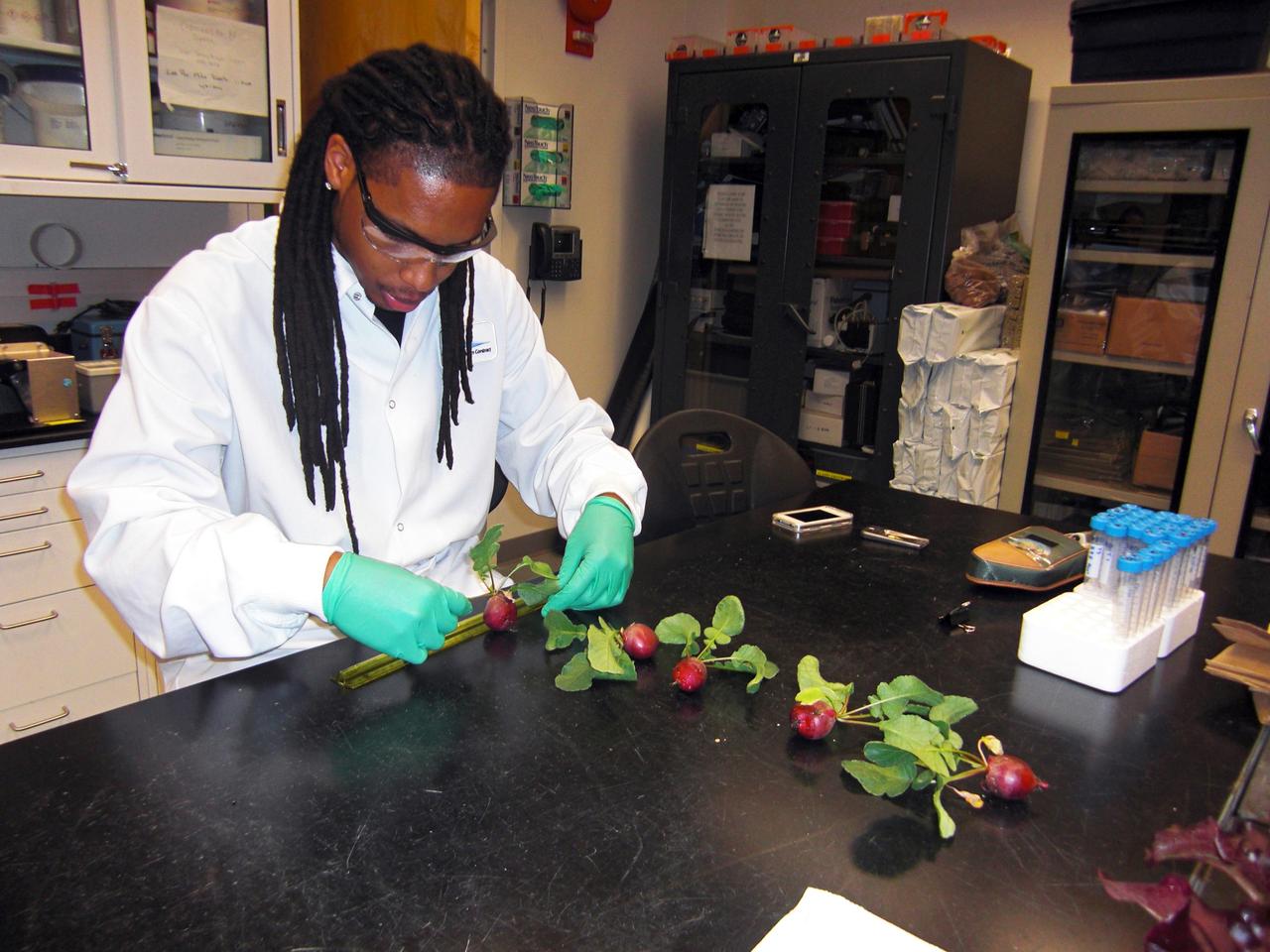
CAPE CANAVERAL, Fla. – Inside the Space Life Sciences Laboratory, or SLSL, at NASA’s Kennedy Space Center in Florida, Dr. Matthew Mickens, a plant biologist from North Carolina Agriculture and Technical State University in North Carolina, measures radish plants that were just harvested from a plant growth chamber. The plants were grown under red and blue LED lights. The plant experiment at Kennedy is part of the Advanced Exploration Systems, or AES, program in NASA’s Human Exploration and Operations Mission Directorate. This plant experiment studies the effects of different types of lighting on plants such as radishes and leaf lettuce. Results of these studies will help provide information on how to grow food sources for deep space exploration missions. AES projects pioneer new approaches for rapidly developing prototype systems, demonstrating key capabilities and validating operational concepts for future human missions beyond Earth orbit. Photo credit: NASA/Frank Ochoa-Gonzales

CAPE CANAVERAL, Fla. - NASA's Morpheus lander, a vertical test bed vehicle, is unloaded at the Kennedy Space Center in Florida. Morpheus is designed to demonstrate new green propellant propulsion systems and autonomous landing and an Autonomous Landing and Hazard Avoidance Technology, or ALHAT, system. Checkout of the prototype lander has been ongoing at NASA’s Johnson Space Center in Houston in preparation for its first free flight. The SLF site will provide the lander with the kind of field necessary for realistic testing. Project Morpheus is one of 20 small projects comprising the Advanced Exploration Systems, or AES, program in NASA’s Human Exploration and Operations Mission Directorate. AES projects pioneer new approaches for rapidly developing prototype systems, demonstrating key capabilities and validating operational concepts for future human missions beyond Earth orbit. For more information on Project Morpheus, visit http://www.nasa.gov/centers/johnson/exploration/morpheus/index.html Photo credit: NASA/ Charisse Nahser
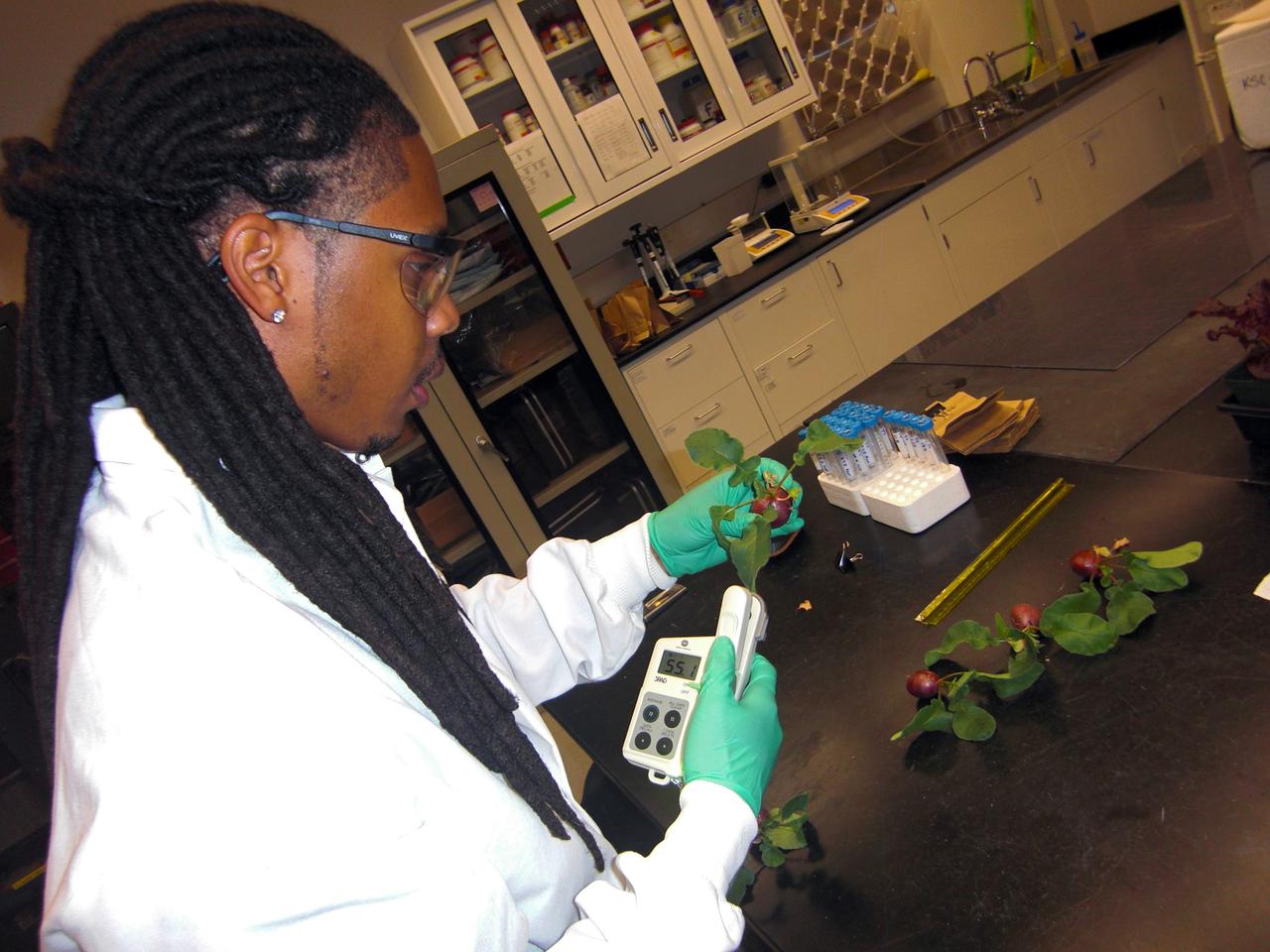
CAPE CANAVERAL, Fla. – Inside the Space Life Sciences Laboratory, or SLSL, at NASA’s Kennedy Space Center in Florida, Dr. Matthew Mickens, a plant biologist from North Carolina Agriculture and Technical State University in North Carolina, measures radish plants that were just harvested from a plant growth chamber. The plants were grown under red and blue LED lights. The plant experiment at Kennedy is part of the Advanced Exploration Systems, or AES, program in NASA’s Human Exploration and Operations Mission Directorate. This plant experiment studies the effects of different types of lighting on plants such as radishes and leaf lettuce. Results of these studies will help provide information on how to grow food sources for deep space exploration missions. AES projects pioneer new approaches for rapidly developing prototype systems, demonstrating key capabilities and validating operational concepts for future human missions beyond Earth orbit. Photo credit: NASA/Frank Ochoa-Gonzales
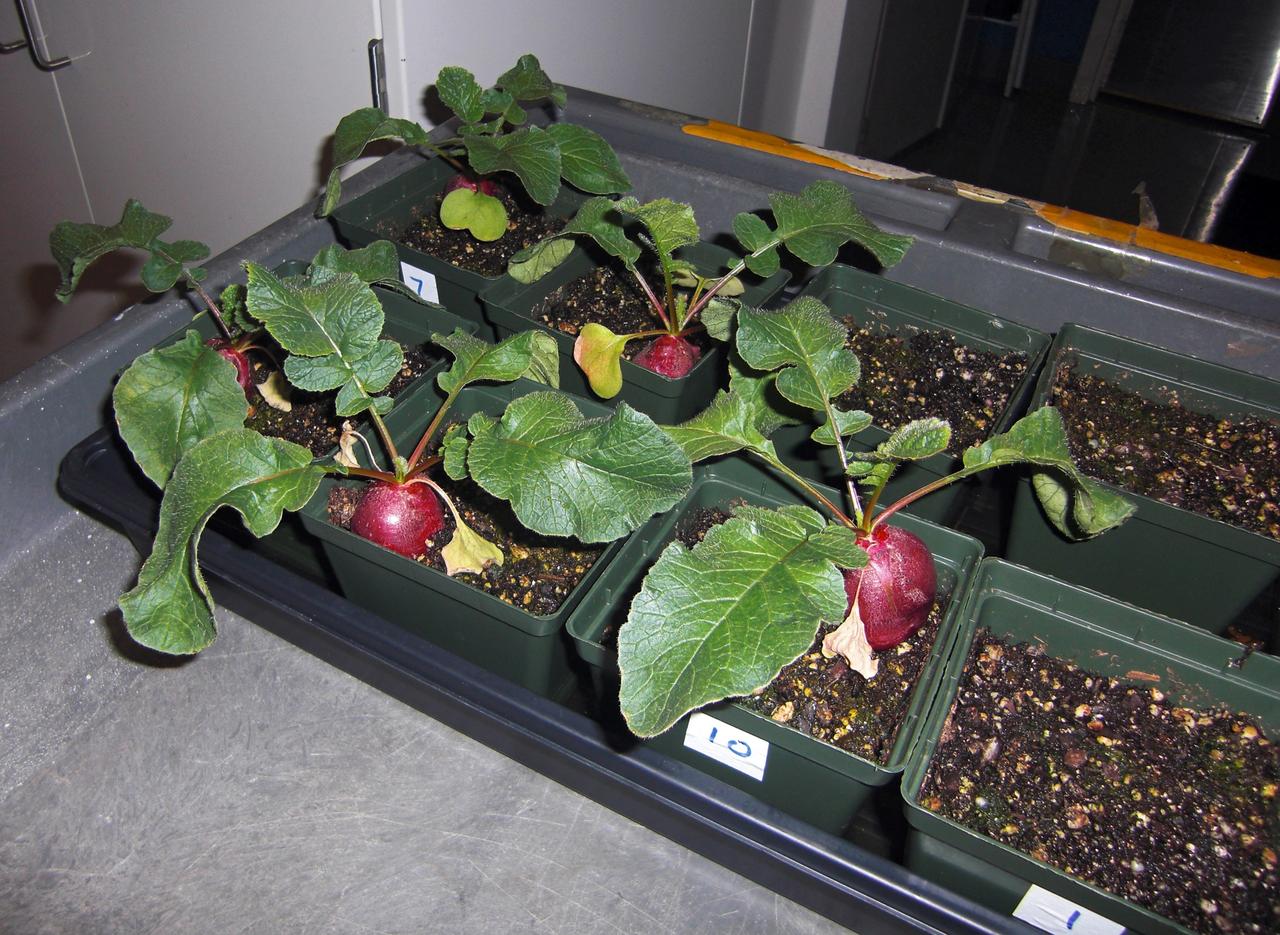
CAPE CANAVERAL, Fla. – Inside the Space Life Sciences Laboratory, or SLSL, at NASA’s Kennedy Space Center in Florida, radish plants are being harvested in a plant growth chamber. The plants were grown under red and blue LED lights. The plant experiment at Kennedy is part of the Advanced Exploration Systems, or AES, program in NASA’s Human Exploration and Operations Mission Directorate. This plant experiment studies the effects of different types of lighting on plants such as radishes and leaf lettuce. Results of these studies will help provide information on how to grow food sources for deep space exploration missions. AES projects pioneer new approaches for rapidly developing prototype systems, demonstrating key capabilities and validating operational concepts for future human missions beyond Earth orbit. Photo credit: NASA/Frank Ochoa-Gonzales
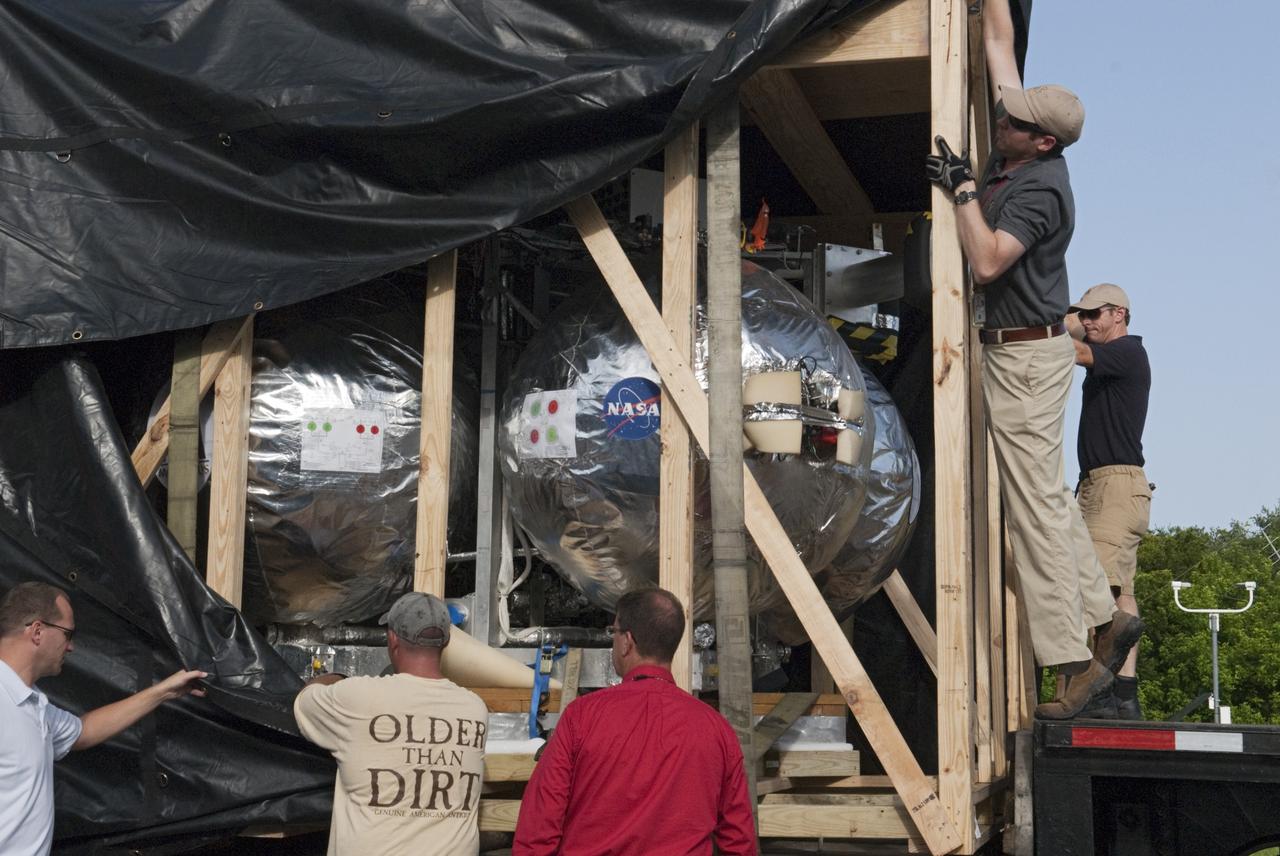
CAPE CANAVERAL, Fla. - NASA's Morpheus lander, a vertical test bed vehicle, is unloaded at the Kennedy Space Center in Florida. Morpheus is designed to demonstrate new green propellant propulsion systems and autonomous landing and an Autonomous Landing and Hazard Avoidance Technology, or ALHAT, system. Checkout of the prototype lander has been ongoing at NASA’s Johnson Space Center in Houston in preparation for its first free flight. The SLF site will provide the lander with the kind of field necessary for realistic testing. Project Morpheus is one of 20 small projects comprising the Advanced Exploration Systems, or AES, program in NASA’s Human Exploration and Operations Mission Directorate. AES projects pioneer new approaches for rapidly developing prototype systems, demonstrating key capabilities and validating operational concepts for future human missions beyond Earth orbit. For more information on Project Morpheus, visit http://www.nasa.gov/centers/johnson/exploration/morpheus/index.html Photo credit: NASA/ Charisse Nahser
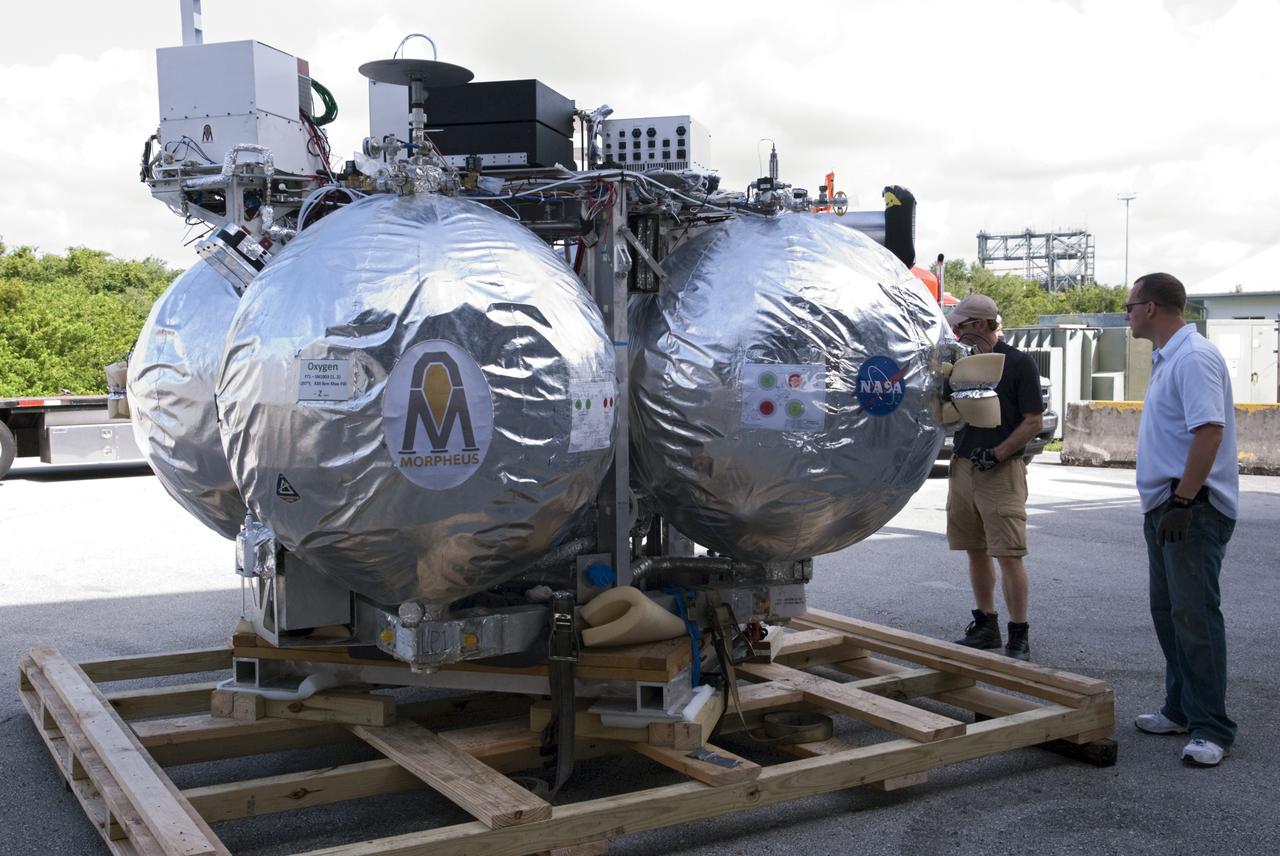
CAPE CANAVERAL, Fla. - NASA's Morpheus lander, a vertical test bed vehicle, is unloaded at the Kennedy Space Center in Florida. Morpheus is designed to demonstrate new green propellant propulsion systems and autonomous landing and an Autonomous Landing and Hazard Avoidance Technology, or ALHAT, system. Checkout of the prototype lander has been ongoing at NASA’s Johnson Space Center in Houston in preparation for its first free flight. The SLF site will provide the lander with the kind of field necessary for realistic testing. Project Morpheus is one of 20 small projects comprising the Advanced Exploration Systems, or AES, program in NASA’s Human Exploration and Operations Mission Directorate. AES projects pioneer new approaches for rapidly developing prototype systems, demonstrating key capabilities and validating operational concepts for future human missions beyond Earth orbit. For more information on Project Morpheus, visit http://www.nasa.gov/centers/johnson/exploration/morpheus/index.html Photo credit: NASA/ Charisse Nahser

CAPE CANAVERAL, Fla. – Inside the Space Life Sciences Laboratory, or SLSL, at NASA’s Kennedy Space Center in Florida, radish plants were harvested from a plant growth chamber. The plants were grown under red and blue LED lights. The plant experiment at Kennedy is part of the Advanced Exploration Systems, or AES, program in NASA’s Human Exploration and Operations Mission Directorate. This plant experiment studies the effects of different types of lighting on plants such as radishes and leaf lettuce. Results of these studies will help provide information on how to grow food sources for deep space exploration missions. AES projects pioneer new approaches for rapidly developing prototype systems, demonstrating key capabilities and validating operational concepts for future human missions beyond Earth orbit. Photo credit: NASA/Frank Ochoa-Gonzales
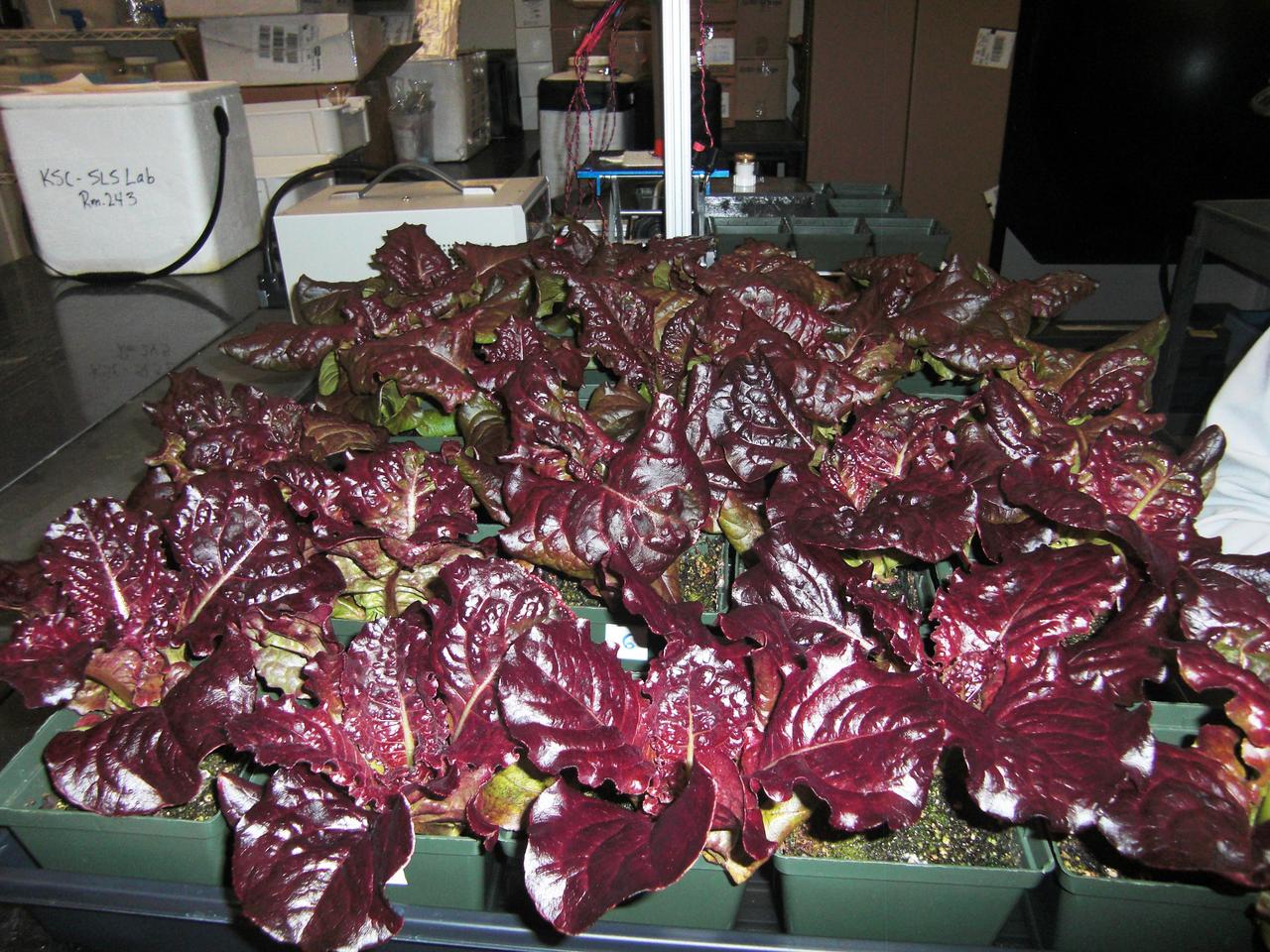
CAPE CANAVERAL, Fla. – Inside the Space Life Sciences Laboratory, or SLSL, at NASA’s Kennedy Space Center in Florida, red leaf lettuce plants were harvested from a plant growth chamber. The plants were grown under red and blue LED lights. The plant experiment at Kennedy is part of the Advanced Exploration Systems, or AES, program in NASA’s Human Exploration and Operations Mission Directorate. This plant experiment studies the effects of different types of lighting on plants such as radishes and leaf lettuce. Results of these studies will help provide information on how to grow food sources for deep space exploration missions. AES projects pioneer new approaches for rapidly developing prototype systems, demonstrating key capabilities and validating operational concepts for future human missions beyond Earth orbit. Photo credit: NASA/Frank Ochoa-Gonzales
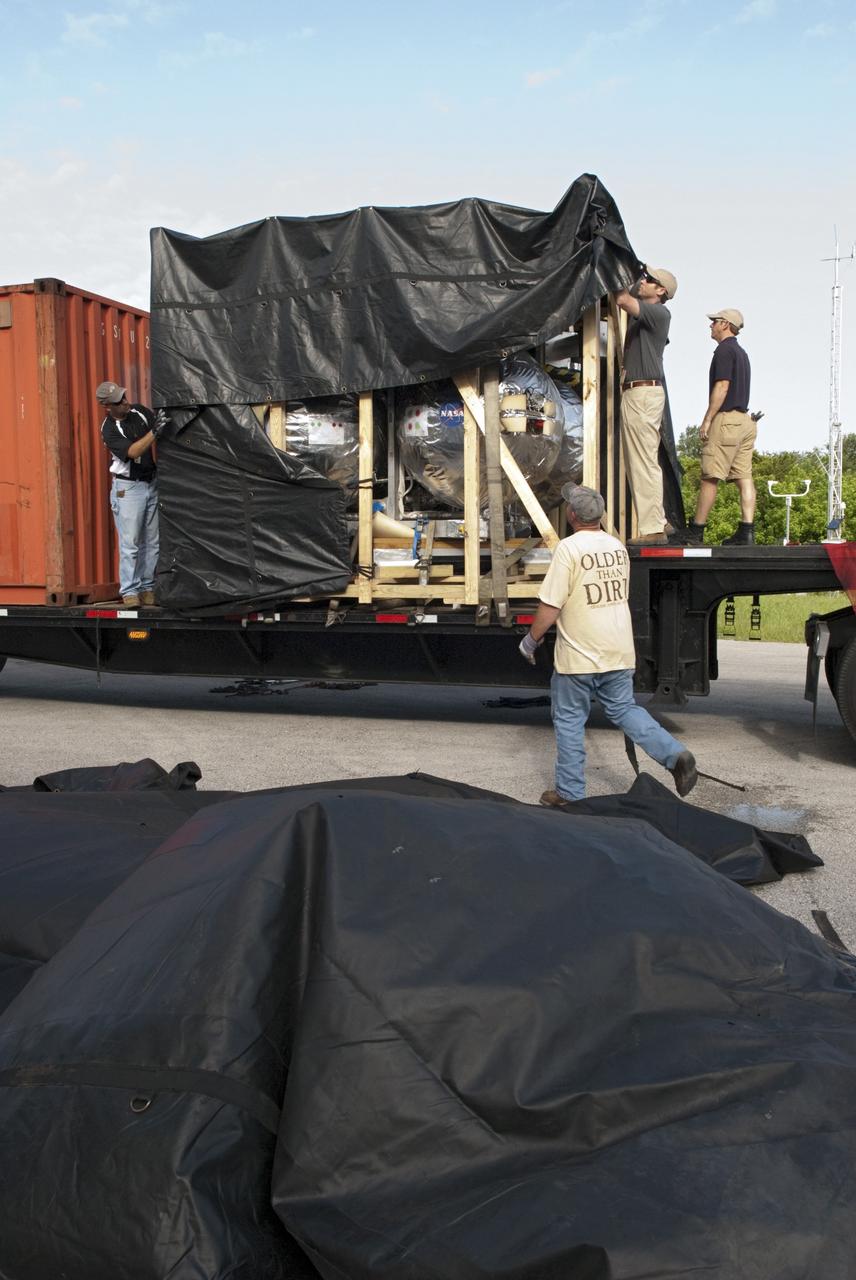
CAPE CANAVERAL, Fla. - NASA's Morpheus lander, a vertical test bed vehicle, is unloaded at the Kennedy Space Center in Florida. Morpheus is designed to demonstrate new green propellant propulsion systems and autonomous landing and an Autonomous Landing and Hazard Avoidance Technology, or ALHAT, system. Checkout of the prototype lander has been ongoing at NASA’s Johnson Space Center in Houston in preparation for its first free flight. The SLF site will provide the lander with the kind of field necessary for realistic testing. Project Morpheus is one of 20 small projects comprising the Advanced Exploration Systems, or AES, program in NASA’s Human Exploration and Operations Mission Directorate. AES projects pioneer new approaches for rapidly developing prototype systems, demonstrating key capabilities and validating operational concepts for future human missions beyond Earth orbit. For more information on Project Morpheus, visit http://www.nasa.gov/centers/johnson/exploration/morpheus/index.html Photo credit: NASA/ Charisse Nahser
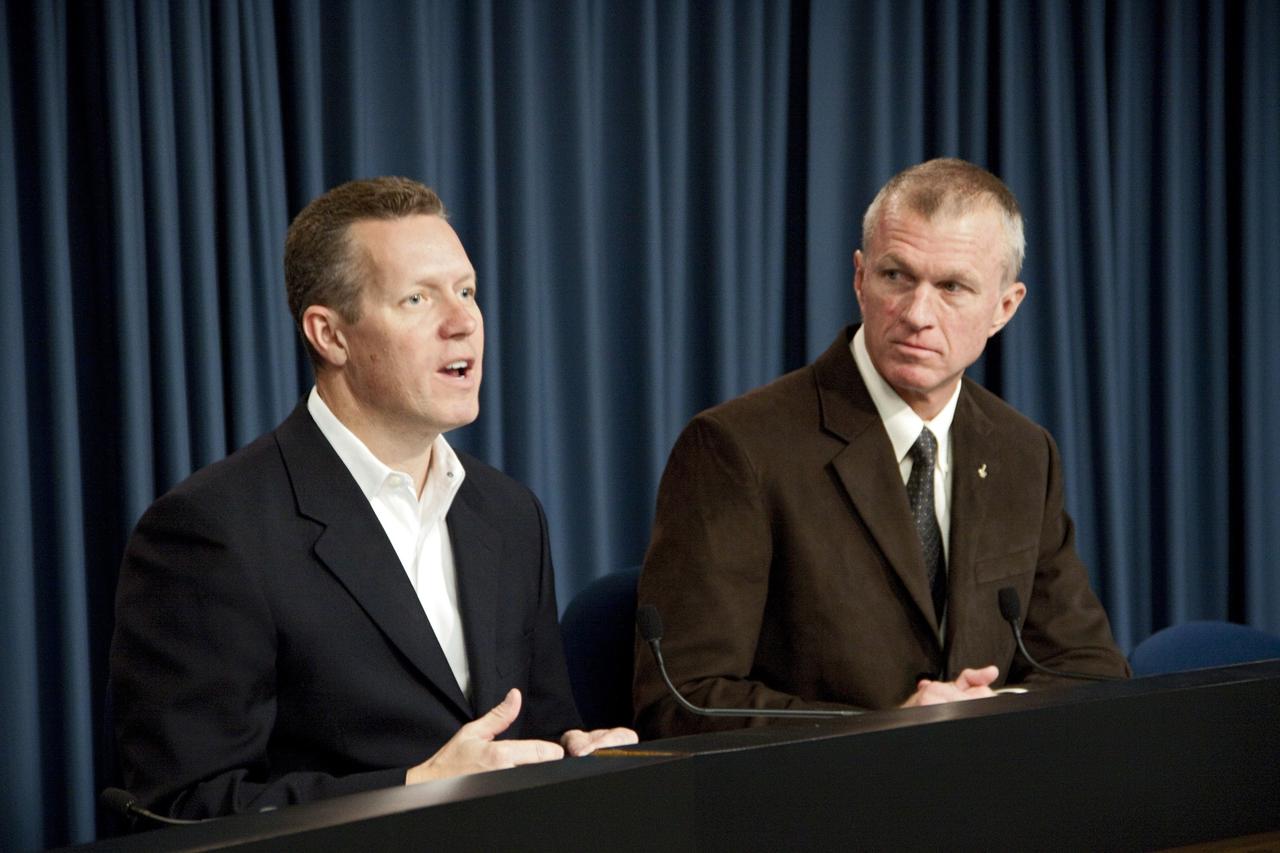
CAPE CANAVERAL, Fla. -- In the Press Site auditorium at NASA's Kennedy Space Center in Florida, Phil McAlister (left), director, Commercial Spaceflight Development in NASA’s Human Exploration and Operations Mission Directorate, and Brent Jeff, deputy director, Commercial Crew Program, brief representatives from aerospace industry partners and the media during a strategy forum on the next steps for NASA's Commercial Crew Program. The goal of the Commercial Crew Program is to have a commercially developed, human-capable, certified spacecraft safely flying astronauts into orbit and to the International Space Station by the middle of the decade. For more information about NASA's Commercial Crew Program, visit http://www.nasa.gov/exploration/commercial. Photo credit: NASA/Jim Grossmann
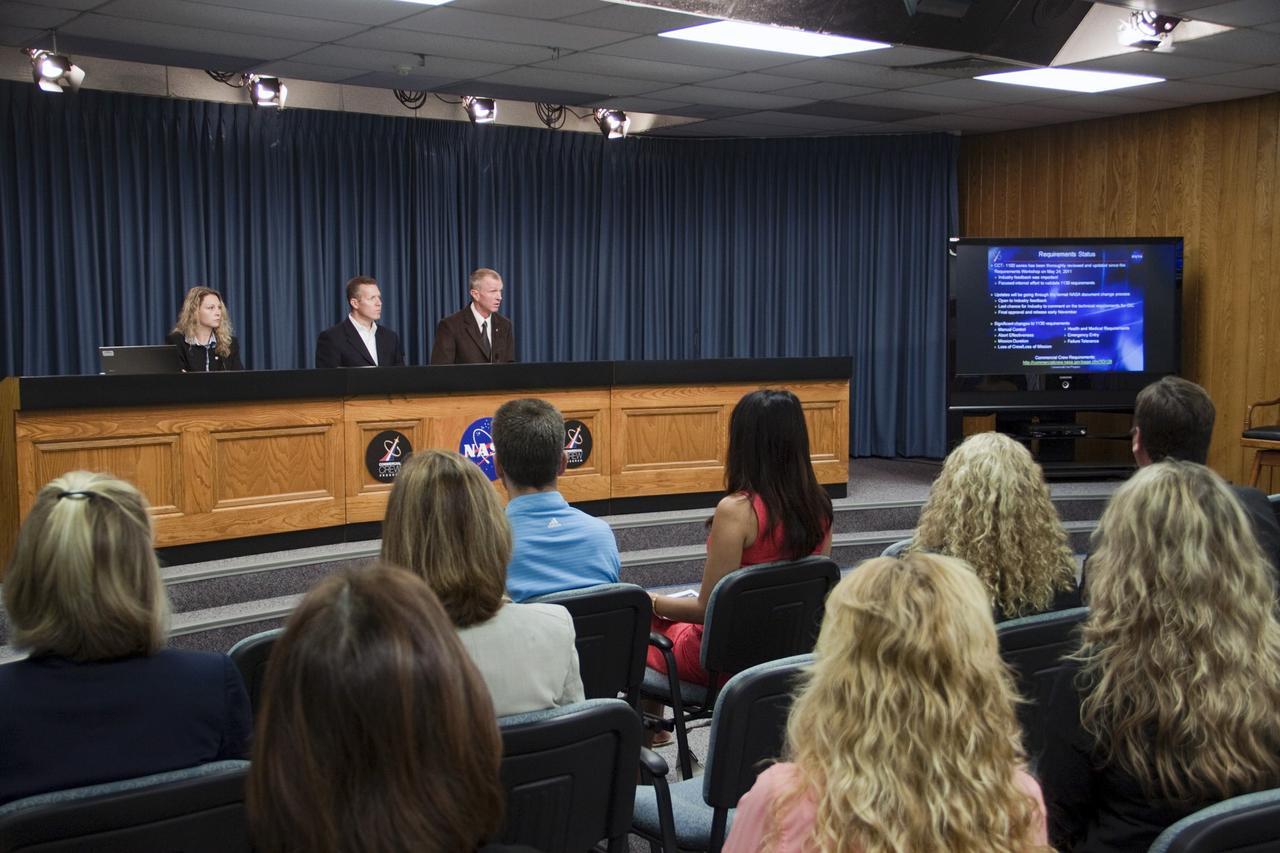
CAPE CANAVERAL, Fla. -- Representatives from aerospace industry partners and the media are given an overview on NASA's Commercial Crew Program's next steps during a strategy forum held in the Press Site auditorium at Kennedy Space Center in Florida. On the dais, from left, are Candrea Thomas, NASA Public Affairs; Phil McAlister, director, Commercial Spaceflight Development in NASA’s Human Exploration and Operations Mission Directorate, and Brent Jeff, deputy director, Commercial Crew Program. The goal of the Commercial Crew Program is to have a commercially developed, human-capable, certified spacecraft safely flying astronauts into orbit and to the International Space Station by the middle of the decade. For more information about NASA's Commercial Crew Program, visit http://www.nasa.gov/exploration/commercial. Photo credit: NASA/Jim Grossmann
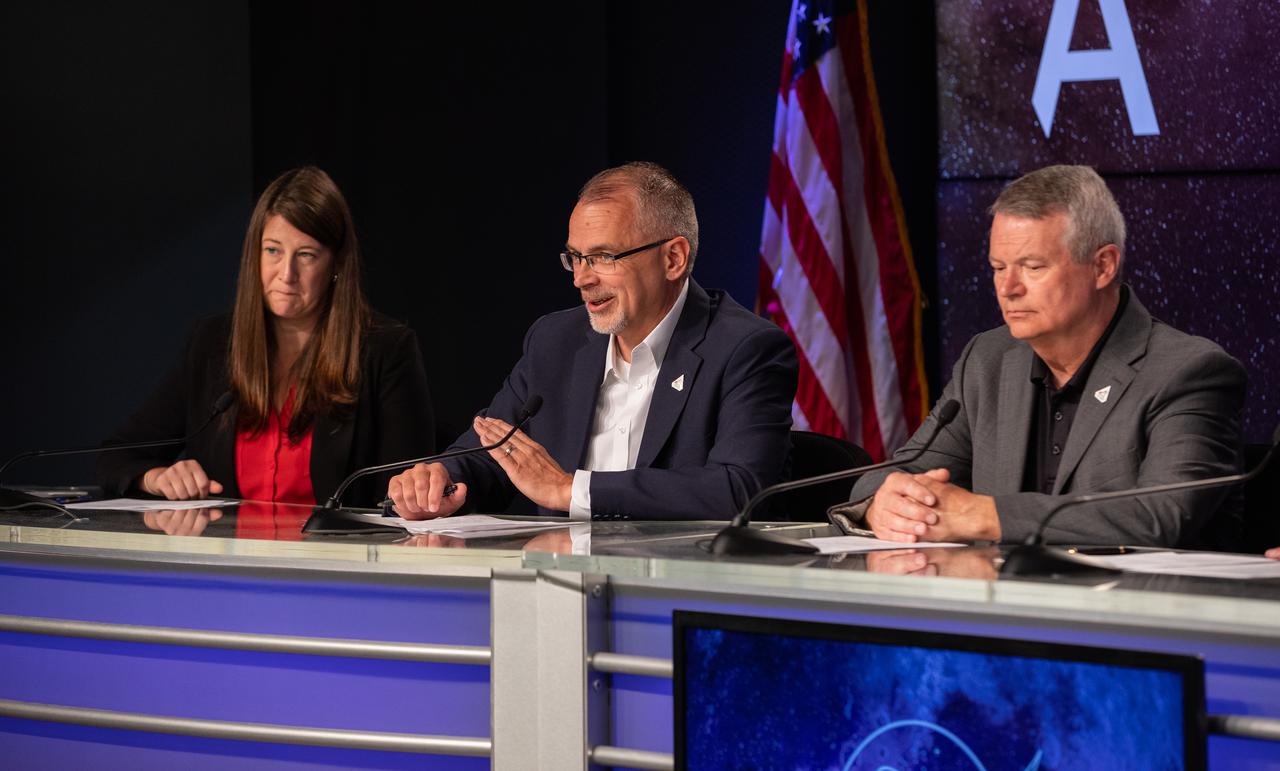
NASA holds a prelaunch media briefing on the role of industry in advancing human exploration on Aug. 26, 2022, at NASA’s Kennedy Space Center in Florida, as the agency prepares for launch of Artemis I scheduled for Aug. 29, at 8:33 a.m. EDT from Kennedy’s Launch Complex 39B. Participants, from left are Kathryn Hambleton, NASA Communications; Jim Free, association administrator, Exploration Systems Development Mission Directorate, NASA Headquarters; and Randy Lycans, vice president/general manager of NASA Enterprise Solutions, Jacobs. The first in a series of increasingly complex missions, Artemis I will provide a foundation for human deep space exploration and demonstrate our commitment and capability to extend human presence to the Moon and beyond. The primary goal of Artemis I is to thoroughly test the integrated systems before crewed missions by operating the spacecraft in a deep space environment, testing Orion’s heat shield, and recovering the crew module after reentry, descent, and splashdown.

Jim Free, association administrator, Exploration Systems Development Mission Directorate, NASA Headquarters, participates in a prelaunch media briefing on the role of industry in advancing human exploration on Aug. 26, 2022, at NASA’s Kennedy Space Center in Florida, as the agency prepares for launch of Artemis I scheduled for Aug. 29, at 8:33 a.m. EDT from Kennedy’s Launch Complex 39B. The first in a series of increasingly complex missions, Artemis I will provide a foundation for human deep space exploration and demonstrate our commitment and capability to extend human presence to the Moon and beyond. The primary goal of Artemis I is to thoroughly test the integrated systems before crewed missions by operating the spacecraft in a deep space environment, testing Orion’s heat shield, and recovering the crew module after reentry, descent, and splashdown.

Japan Aerospace Exploration Agency (JAXA) President Hiroshi Yamakawa discusses the historic agreement signed April 9th at NASA Headquarters, between the United States and Japan to advance sustainable human exploration of the Moon, Wednesday, April 10, 2024, at the Japan Aerospace Exploration Agency (JAXA) offices in Washington. Under the agreement, Japan will design, develop, and operate a pressurized rover for crewed and uncrewed exploration on the Moon. NASA will provide the launch and delivery of the rover to the Moon as well as two Japanese astronaut missions to the lunar surface. Photo Credit: Photo Credit: (NASA/Bill Ingalls)
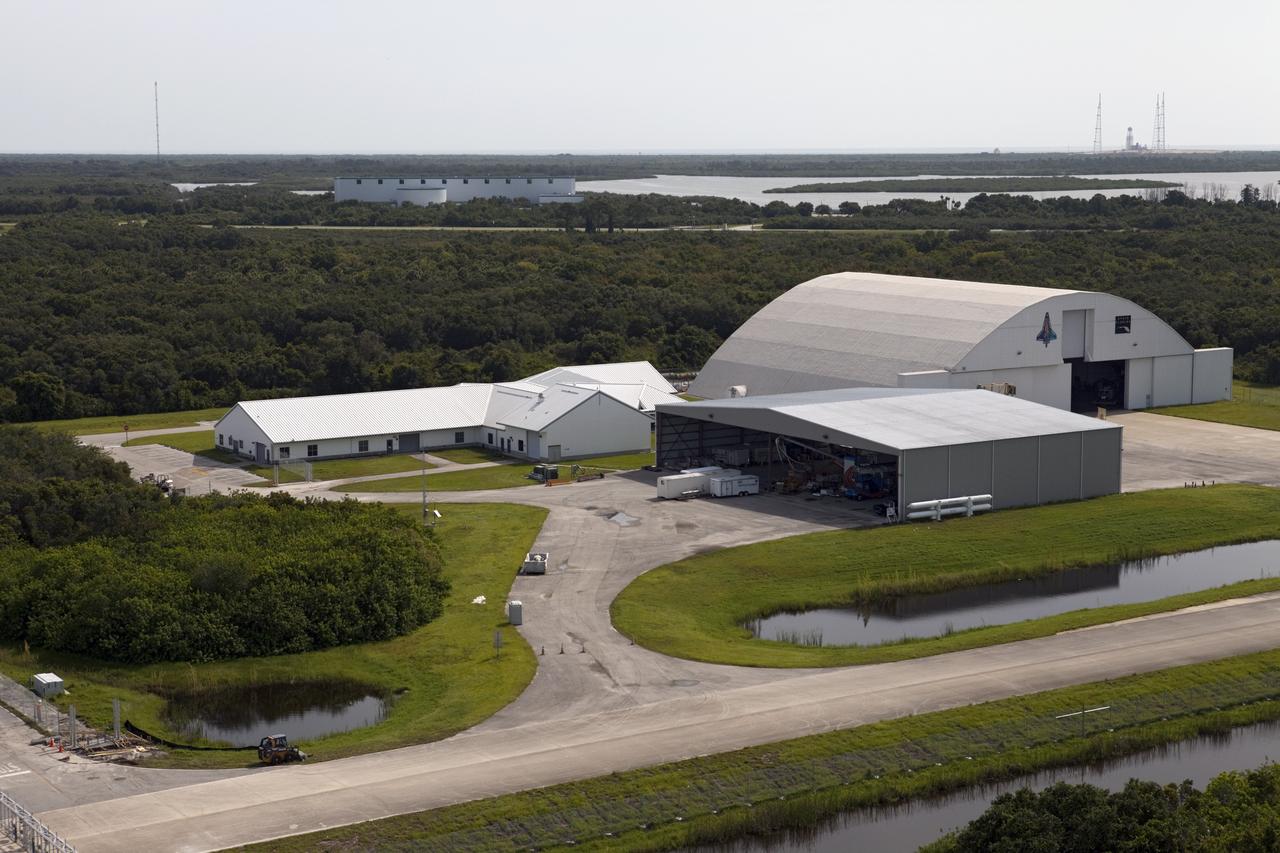
CAPE CANAVERAL, Fla. – This aerial view shows a 50,000-square-foot hangar located on the Shuttle Landing Facility at the Kennedy Space Center, Fla., providing shelter and storage for NASA and non-NASA aircraft and maintenance operations. Adjacent to the hangar is an operations building housing personnel who support operations at the 15,000-foot long concrete runway. At the north end of the runway, a rock and crater-filled planetary scape has been built so engineers can test the Autonomous Landing and Hazard Avoidance Technology, or ALHAT system on the Project Morpheus lander. Testing will demonstrate ALHAT’s ability to provide required navigation data negotiating the Morpheus lander away from risks during descent. Checkout of the prototype lander has been ongoing at NASA’s Johnson Space Center in Houston in preparation for its first free flight. The SLF site will provide the lander with the kind of field necessary for realistic testing. Project Morpheus is one of 20 small projects comprising the Advanced Exploration Systems, or AES, program in NASA’s Human Exploration and Operations Mission Directorate. AES projects pioneer new approaches for rapidly developing prototype systems, demonstrating key capabilities and validating operational concepts for future human missions beyond Earth orbit. For more information on Project Morpheus, visit http://www.nasa.gov/centers/johnson/exploration/morpheus/index.html Photo credit: NASA/Kim Shiflett

NASA Pressurized Rover Project Manager Danny Newswander discusses the historic agreement signed April 9th at NASA Headquarters, between the United States and Japan to advance sustainable human exploration of the Moon, Wednesday, April 10, 2024, at the Japan Aerospace Exploration Agency (JAXA) offices in Washington. Under the agreement, Japan will design, develop, and operate a pressurized rover for crewed and uncrewed exploration on the Moon. NASA will provide the launch and delivery of the rover to the Moon as well as two Japanese astronaut missions to the lunar surface. Photo Credit: Photo Credit: (NASA/Bill Ingalls)

A model of the Pressurized lunar rover is seen during a briefing discussing the historic agreement signed April 9th at NASA Headquarters, between the United States and Japan to advance sustainable human exploration of the Moon, Wednesday, April 10, 2024, at the Japan Aerospace Exploration Agency (JAXA) offices in Washington. Under the agreement, Japan will design, develop, and operate a pressurized rover for crewed and uncrewed exploration on the Moon. NASA will provide the launch and delivery of the rover to the Moon as well as two Japanese astronaut missions to the lunar surface. Photo Credit: Photo Credit: (NASA/Bill Ingalls)
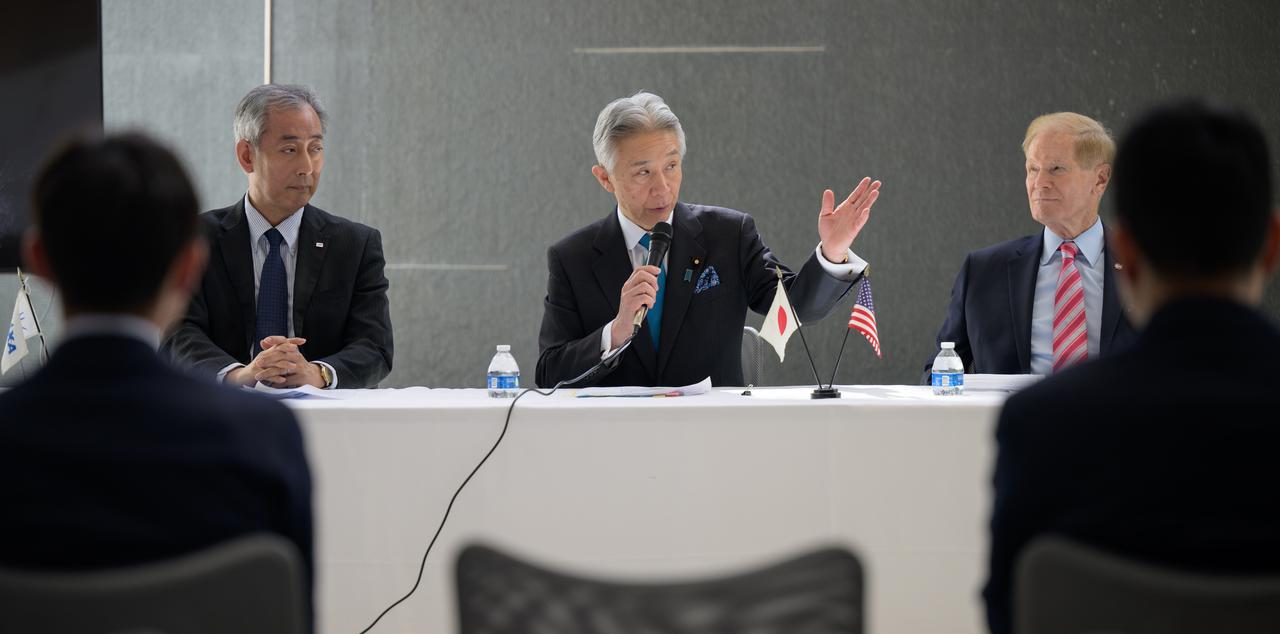
Japan’s Minister of Education, Culture, Sports, Science and Technology Masahito Moriyama, center, discusses the historic agreement signed April 9th at NASA Headquarters, between the United States and Japan to advance sustainable human exploration of the Moon, Wednesday, April 10, 2024, at the Japan Aerospace Exploration Agency (JAXA) offices in Washington. Under the agreement, Japan will design, develop, and operate a pressurized rover for crewed and uncrewed exploration on the Moon. NASA will provide the launch and delivery of the rover to the Moon as well as two Japanese astronaut missions to the lunar surface. Photo Credit: Photo Credit: (NASA/Bill Ingalls)
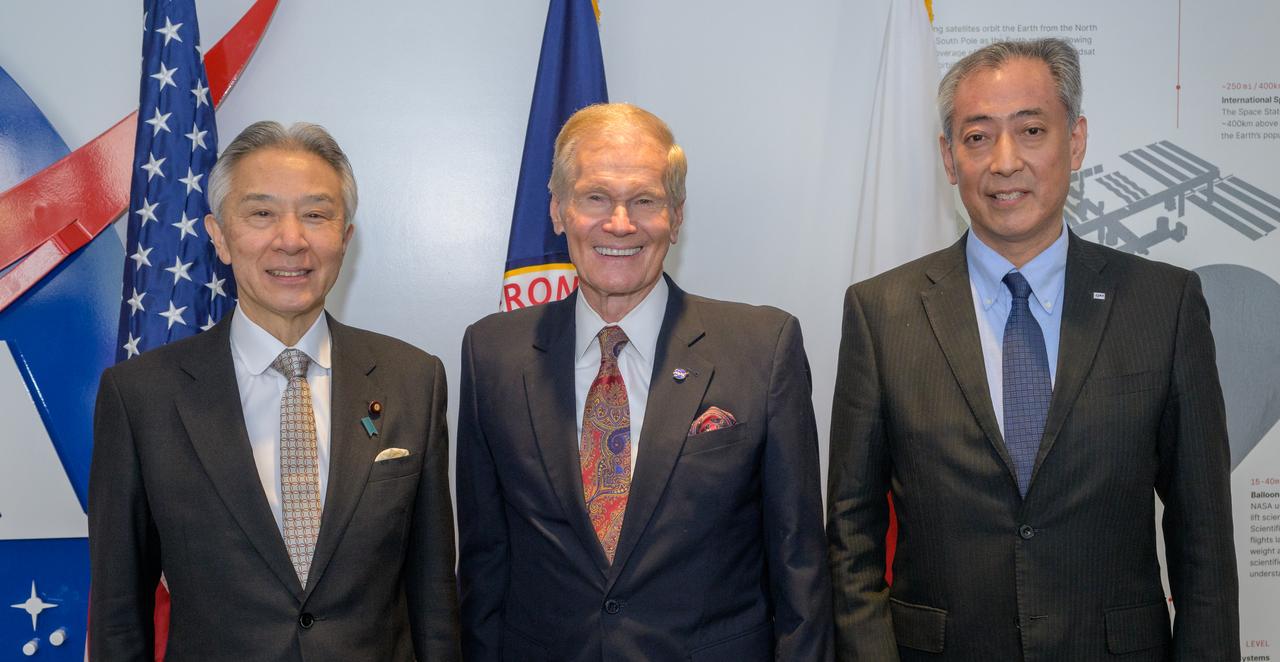
Japan’s Minister of Education, Culture, Sports, Science and Technology Masahito Moriyama, left, NASA Administrator Bill Nelson, and Japan Aerospace Exploration Agency (JAXA) President Hiroshi Yamakawa, right, pose for a photograph prior to the signing an historic agreement between the United States and Japan to advance sustainable human exploration of the Moon, Tuesday, April 9, 2024, at the NASA Headquarters Mary W. Jackson Building in Washington. Under the agreement, Japan will design, develop, and operate a pressurized rover for crewed and uncrewed exploration on the Moon. NASA will provide the launch and delivery of the rover to the Moon as well as two Japanese astronaut missions to the lunar surface. Photo Credit: (NASA/Bill Ingalls)

A model of the Pressurized lunar rover is seen during a briefing discussing the historic agreement signed April 9th at NASA Headquarters, between the United States and Japan to advance sustainable human exploration of the Moon, Wednesday, April 10, 2024, at the Japan Aerospace Exploration Agency (JAXA) offices in Washington. Under the agreement, Japan will design, develop, and operate a pressurized rover for crewed and uncrewed exploration on the Moon. NASA will provide the launch and delivery of the rover to the Moon as well as two Japanese astronaut missions to the lunar surface. Photo Credit: Photo Credit: (NASA/Bill Ingalls)

Acting NASA Associate Administrator for Human Exploration and Operations, Ken Bowersox, left, Cristina Chaplain, director, Contracting and National Security Acquisitions, U.S. Government Accountability Office (GAO), center, and Doug Cooke, owner, Cooke Concepts and Solutions, right, testify during a Space and Aeronautics Subcommittee of the House Science, Space, and Technology Committee hearing titled, “Developing Core Capabilities for Deep Space Exploration: An Update on NASA's SLS, Orion, and Exploration Ground Systems," Wednesday, September 18, 2019 at the Rayburn House Office Building in Washington. Photo Credit: (NASA/Aubrey Gemignani)
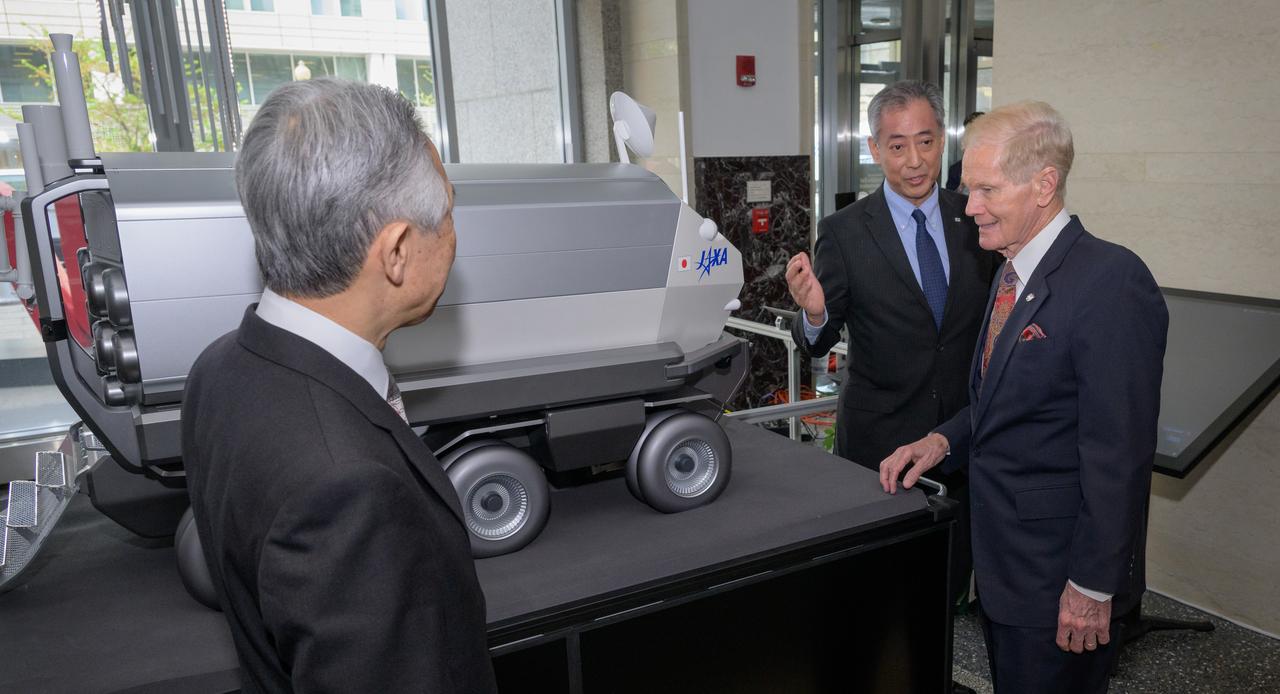
Japan’s Minister of Education, Culture, Sports, Science and Technology Masahito Moriyama, left, Japan Aerospace Exploration Agency (JAXA) President Hiroshi Yamakawa, and NASA Administrator Bill Nelson, right, look at a model of the Pressurized lunar rover, prior to the signing an historic agreement between the United States and Japan to advance sustainable human exploration of the Moon, Tuesday, April 9, 2024, at the NASA Headquarters Mary W. Jackson Building in Washington. Under the agreement, Japan will design, develop, and operate a pressurized rover for crewed and uncrewed exploration on the Moon. NASA will provide the launch and delivery of the rover to the Moon as well as two Japanese astronaut missions to the lunar surface. Photo Credit: (NASA/Bill Ingalls)

Japan’s Minister of Education, Culture, Sports, Science and Technology Masahito Moriyama discusses the historic agreement signed April 9th at NASA Headquarters, between the United States and Japan to advance sustainable human exploration of the Moon, Wednesday, April 10, 2024, at the Japan Aerospace Exploration Agency (JAXA) offices in Washington. Under the agreement, Japan will design, develop, and operate a pressurized rover for crewed and uncrewed exploration on the Moon. NASA will provide the launch and delivery of the rover to the Moon as well as two Japanese astronaut missions to the lunar surface. Photo Credit: Photo Credit: (NASA/Bill Ingalls)
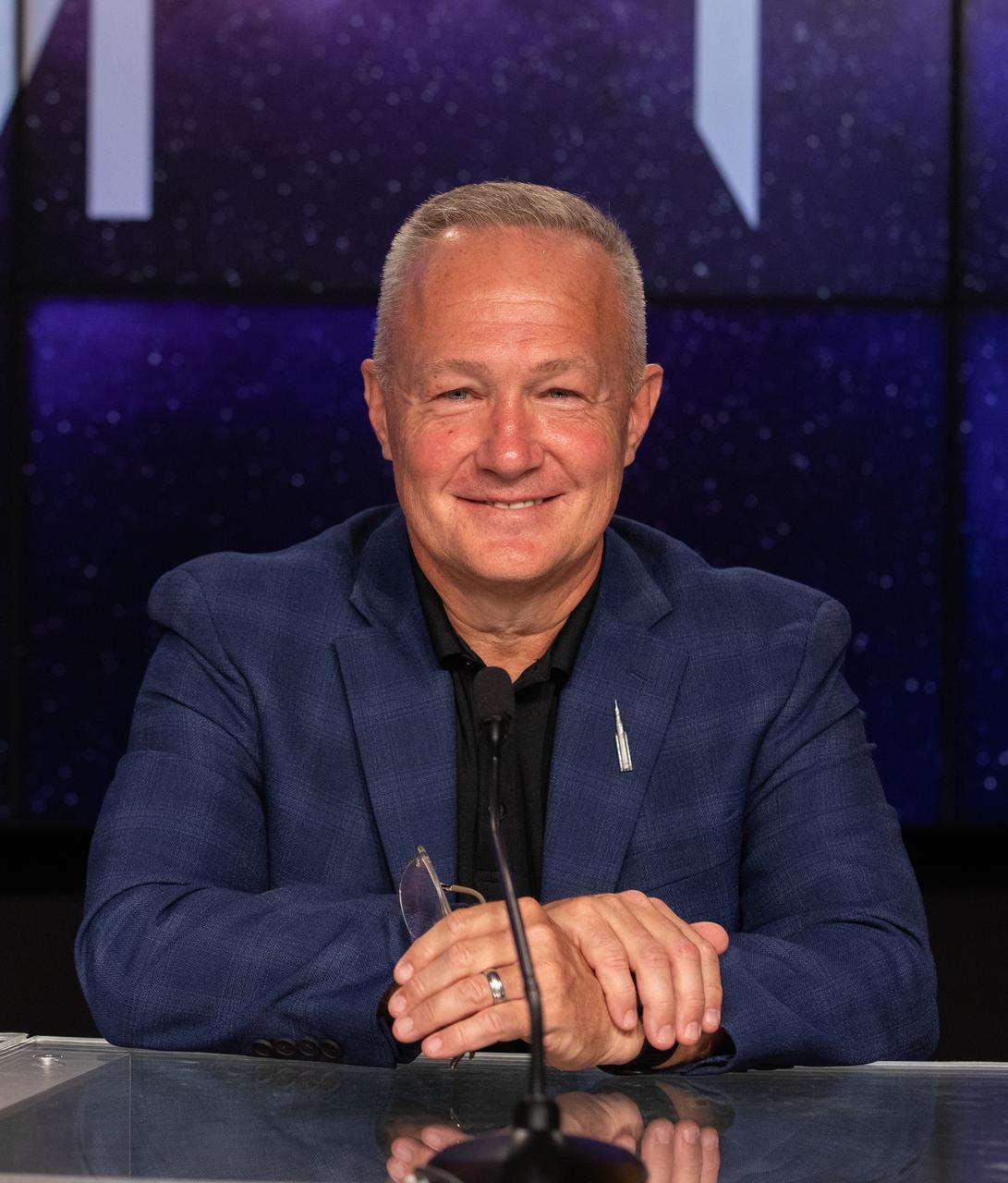
Doug Hurley, senior director of business development, Northrop Grumman, participates in a prelaunch media briefing on the role of industry in advancing human exploration on Aug. 26, 2022, at NASA’s Kennedy Space Center in Florida, as the agency prepares for launch of Artemis I scheduled for Aug. 29, at 8:33 a.m. EDT from Kennedy’s Launch Complex 39B. The first in a series of increasingly complex missions, Artemis I will provide a foundation for human deep space exploration and demonstrate our commitment and capability to extend human presence to the Moon and beyond. The primary goal of Artemis I is to thoroughly test the integrated systems before crewed missions by operating the spacecraft in a deep space environment, testing Orion’s heat shield, and recovering the crew module after reentry, descent, and splashdown.
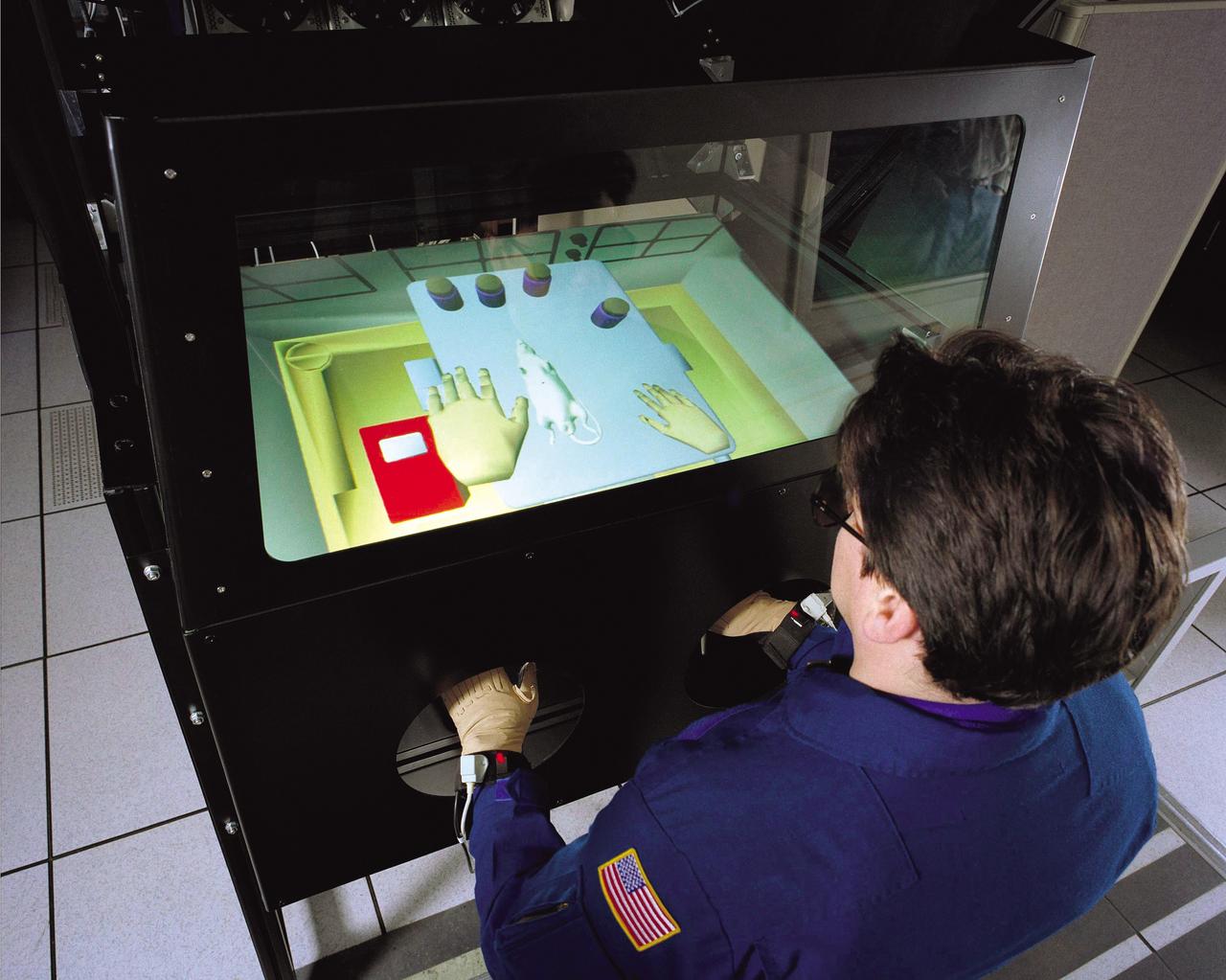
NASA’s Virtual Glovebox (VGX) was developed to allow astronauts on Earth to train for complex biology research tasks in space. The astronauts may reach into the virtual environment, naturally manipulating specimens, tools, equipment, and accessories in a simulated microgravity environment as they would do in space. Such virtual reality technology also provides engineers and space operations staff with rapid prototyping, planning, and human performance modeling capabilities. Other Earth based applications being explored for this technology include biomedical procedural training and training for disarming bio-terrorism weapons.
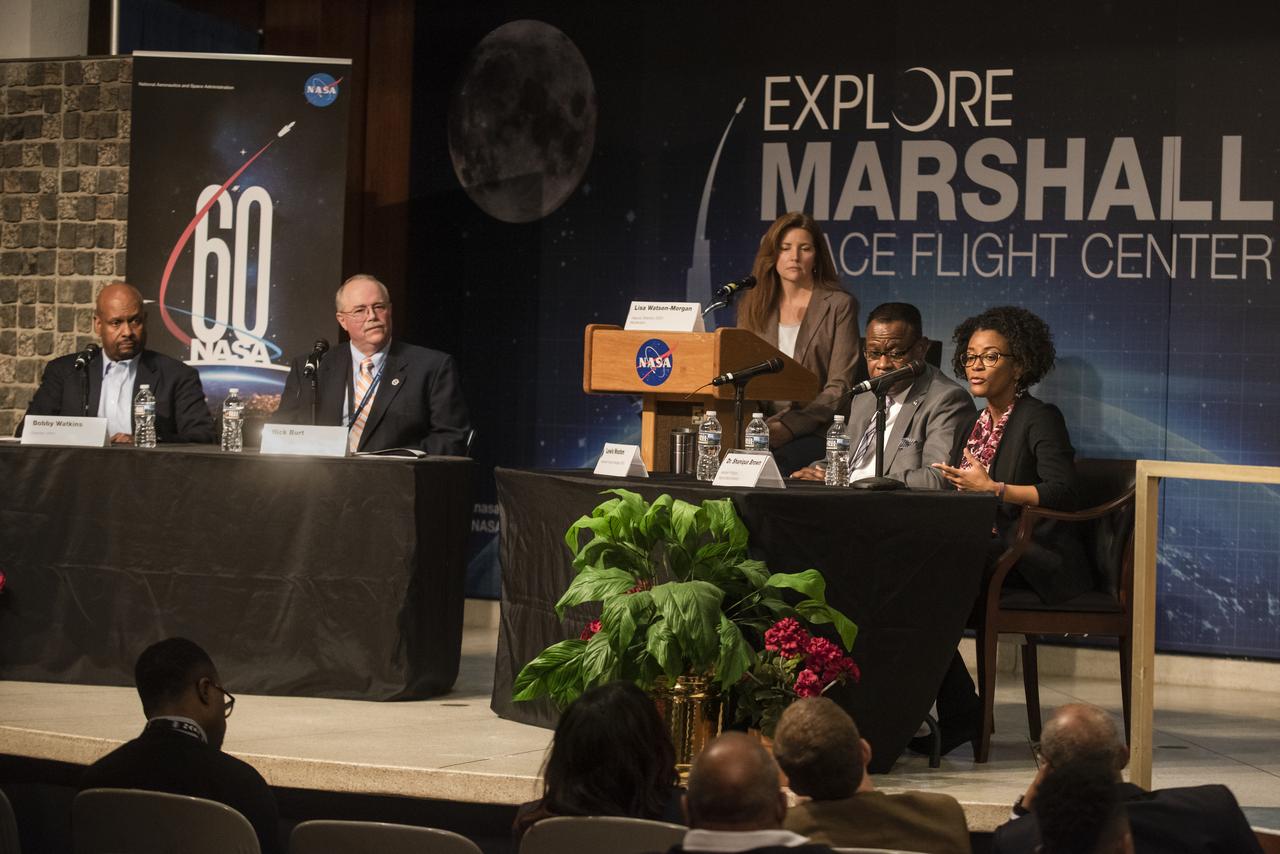
Wayne State University professor Shanique Brown, far right, takes part in a panel discussion on diversity and building strong, inclusive teams. She was joined by, from right, Lewis Wooten, associate program manager for the Space Launch System Program Office at Marshall; moderator Lisa Watson-Morgan, deputy director of Marshall's Engineering Directorate; Rick Burt, director of Marshall's Safety & Mission Assurance Directorate; and Bobby Watkins, director of the Human Exploration Development and Operations Office.
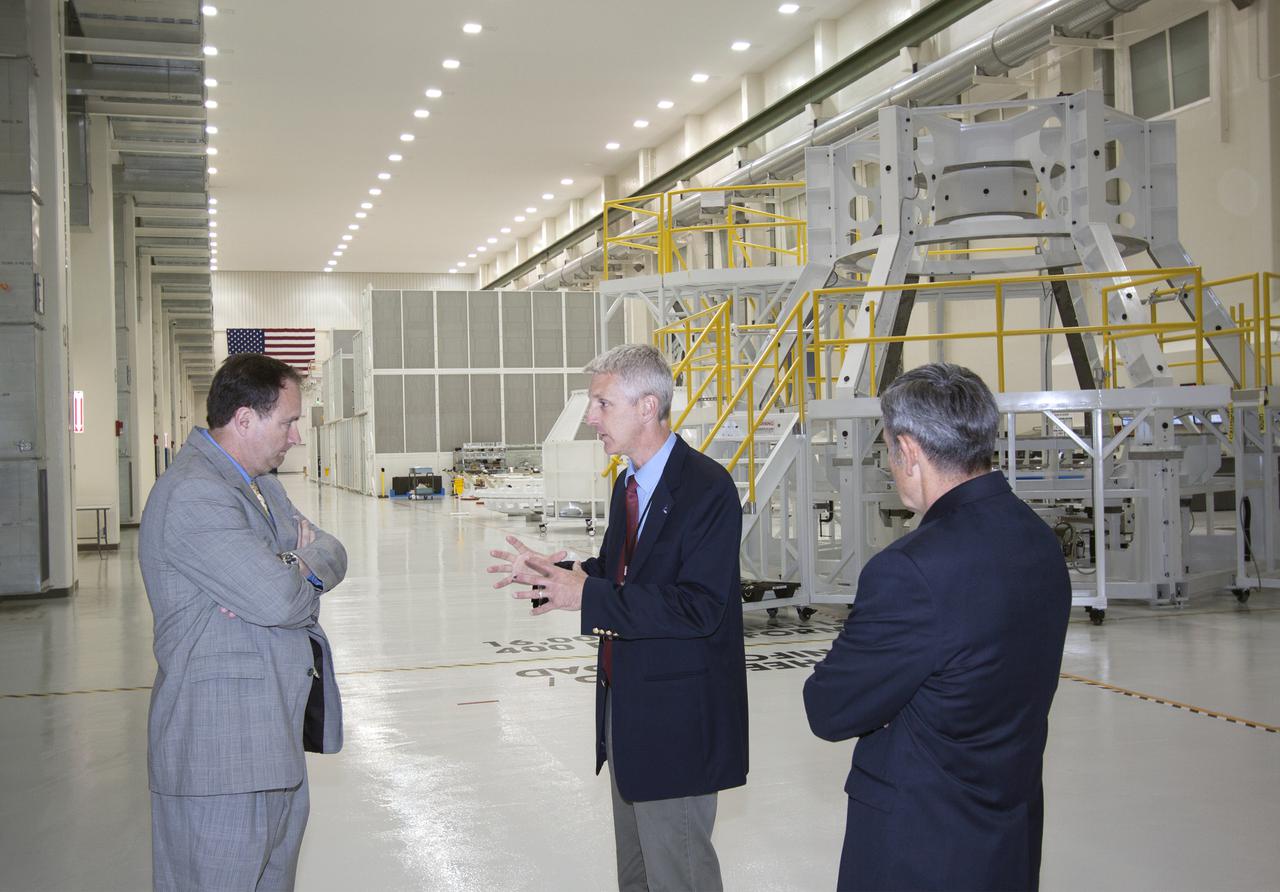
CAPE CANAVERAL, Fla. – During a visit to NASA's Kennedy Space Center in Florida, NASA Associate Administrator Robert Lightfoot tours the Operations and Checkout Building high bay where the first Orion capsule, NASA's multi-purpose crew vehicle, is being prepared for flight on Exploration Flight Test 1, or EFT-1, in 2014. From left are Lightfoot, Kennedy's manager of Orion Production Operations Scott Wilson, and Kennedy Director Bob Cabana. Orion is NASA's next-generation transport for astronauts to destinations beyond Earth orbit. NASA's FY2014 budget proposal includes a plan to robotically capture a small near-Earth asteroid and redirect it safely to a stable orbit in the Earth-moon system where astronauts can visit and explore it. Performing these elements for the proposed asteroid initiative integrates the best of NASA's science, technology and human exploration capabilities and draws on the innovation of America's brightest scientists and engineers. It uses current and developing capabilities to find both large asteroids that pose a hazard to Earth and small asteroids that could be candidates for the initiative, accelerates our technology development activities in high-powered solar electric propulsion and takes advantage of our hard work on the Space Launch System rocket and Orion spacecraft, helping to keep NASA on target to reach the President's goal of sending humans to Mars in the 2030s. Photo credit: NASA_Jim Grossmann
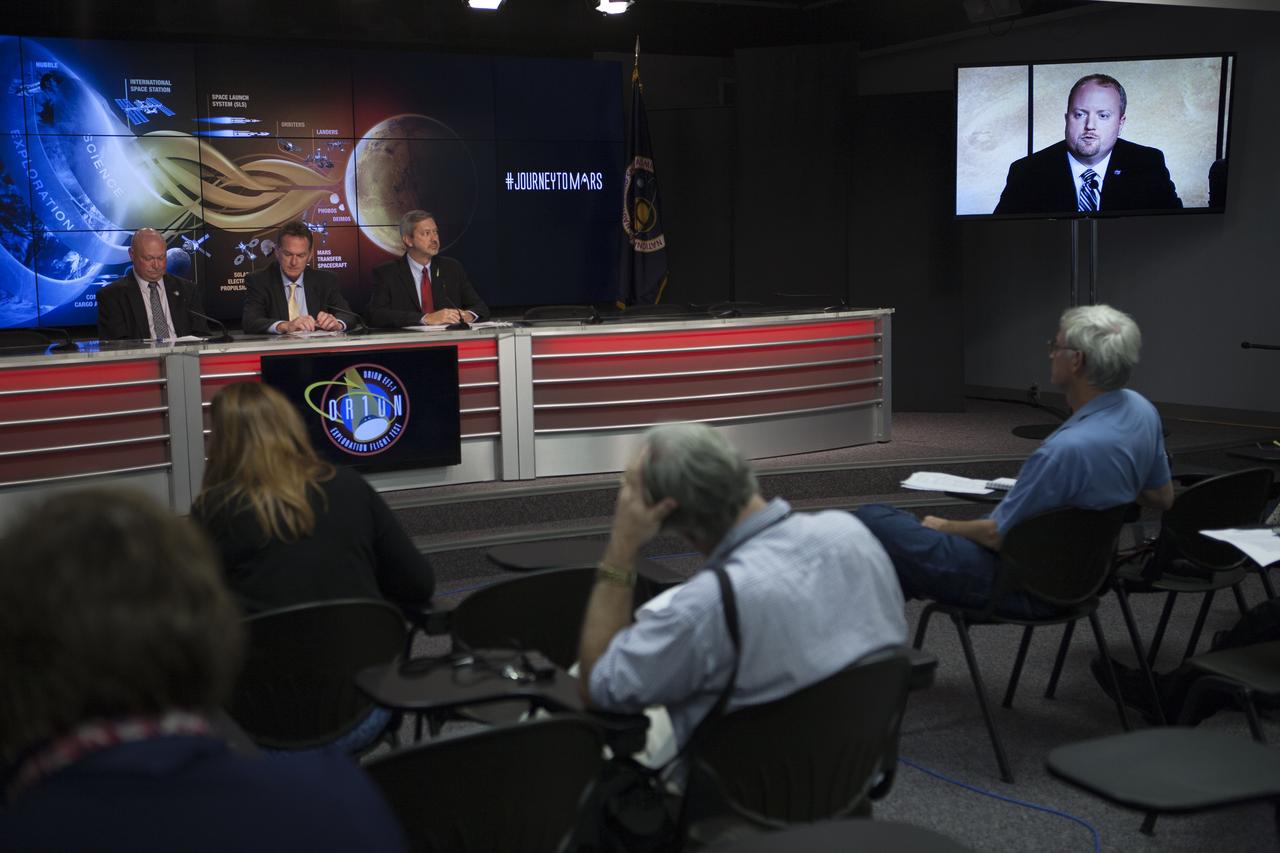
At NASA's Kennedy Space Center in Florida, NASA leaders spoke to members of the news media about how the first flight of the new Orion spacecraft is a first step in the agency's plans to send humans to Mars. At Kennedy's News Center auditorium from the left are: Mike Curie of NASA Public Affairs, Mike Bolger, program manager of Ground Systems Development and Operations Program, and Chris Crumbly, manager of Space Launch System Spacecraft/Payload Integration and Evolution. Participating via video from the agency's headquarters in Washington included Jason Crusan, director of Advanced Exploration Systems Division of Human Exploration and Operations Mission Directorate, seen on the monitor on the right. Orion is the exploration spacecraft designed to carry astronauts to destinations not yet explored by humans, including an asteroid and Mars. It will have emergency abort capability, sustain the crew during space travel and provide safe re-entry from deep space return velocities. The first unpiloted flight test of Orion is scheduled to launch Dec. 4, 2014 atop a United Launch Alliance Delta IV Heavy rocket, and in 2018 on NASA’s Space Launch System rocket.
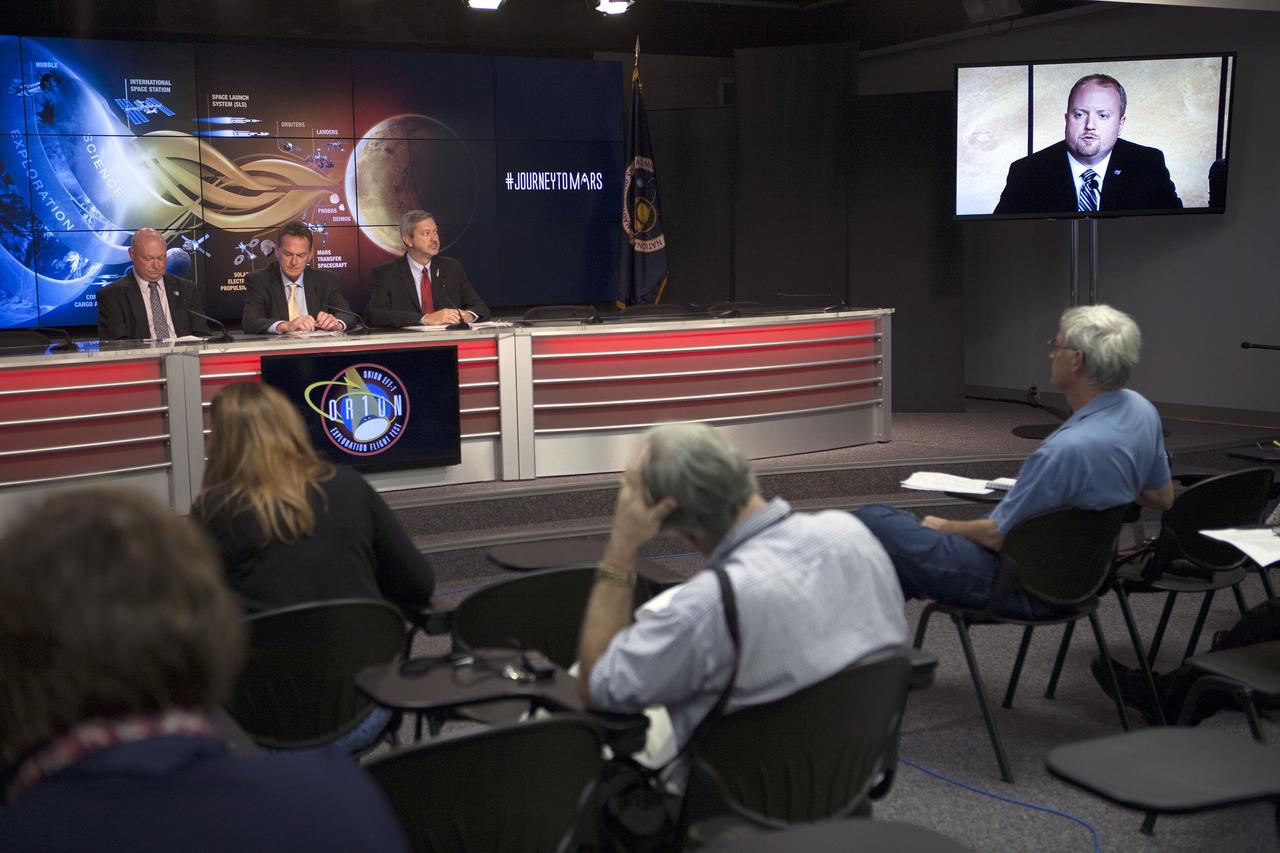
CAPE CANAVERAL, Fla. – At NASA's Kennedy Space Center in Florida, NASA leaders spoke to members of the news media about how the first flight of the new Orion spacecraft is a first step in the agency's plans to send humans to Mars. At Kennedy's News Center auditorium from the left are: Mike Curie of NASA Public Affairs, Mike Bolger, program manager of Ground Systems Development and Operations Program, and Chris Crumbly, manager of Space Launch System Spacecraft/Payload Integration and Evolution. Participating via video from the agency's headquarters in Washington included Jason Crusan, director of Advanced Exploration Systems Division of Human Exploration and Operations Mission Directorate, seen on the monitor on the right. Orion is the exploration spacecraft designed to carry astronauts to destinations not yet explored by humans, including an asteroid and Mars. It will have emergency abort capability, sustain the crew during space travel and provide safe re-entry from deep space return velocities. The first unpiloted flight test of Orion is scheduled to launch Dec. 4, 2014 atop a United Launch Alliance Delta IV Heavy rocket, and in 2018 on NASA’s Space Launch System rocket. For more information, visit www.nasa.gov/orion Photo credit: NASA/Kim Shiflett
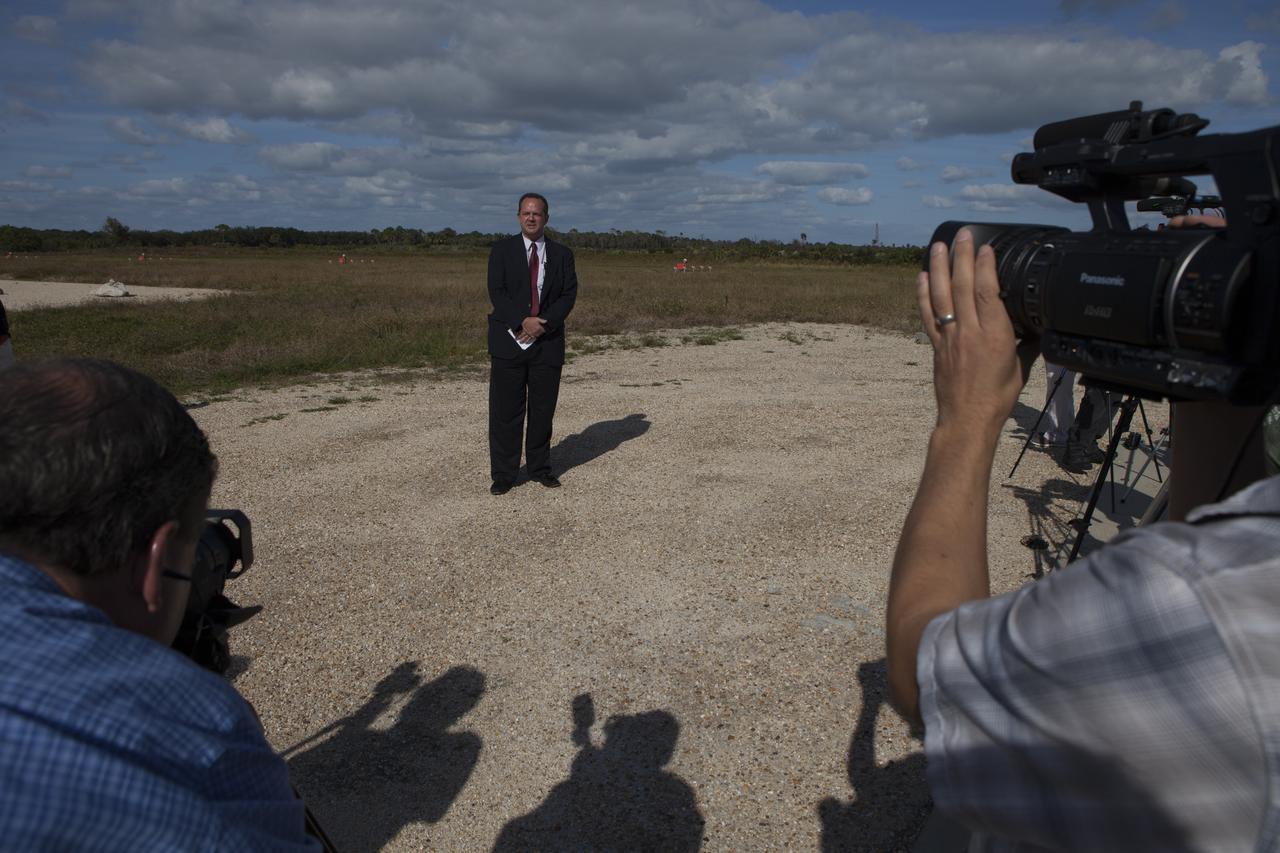
Tom Engler, deputy director of Center Planning and Development at NASA's Kennedy Space Center in Florida, speaks to members of the media during an event to announce the agency's Lunar Cargo Transportation and Landing by Soft Touchdown, or Lunar CATALYST, initiative and introduced one of the partners, Moon Express Inc. of Moffett Field, California. The event took place at Kennedy's automated landing and hazard avoidance technology, or ALHAT, hazard field at the north end of the Shuttle Landing Facility. Moon Express is developing a lander with capabilities that will enable delivery of payloads to the surface of the moon, as well as new science and exploration missions of interest to NASA and scientific and academic communities. Moon Express will base its activities at Kennedy and utilize the Morpheus ALHAT field and a hangar nearby for CATALYST testing. The Advanced Exploration Systems Division of NASA's Human Exploration and Operations Mission Directorate manages Lunar CATALYST.
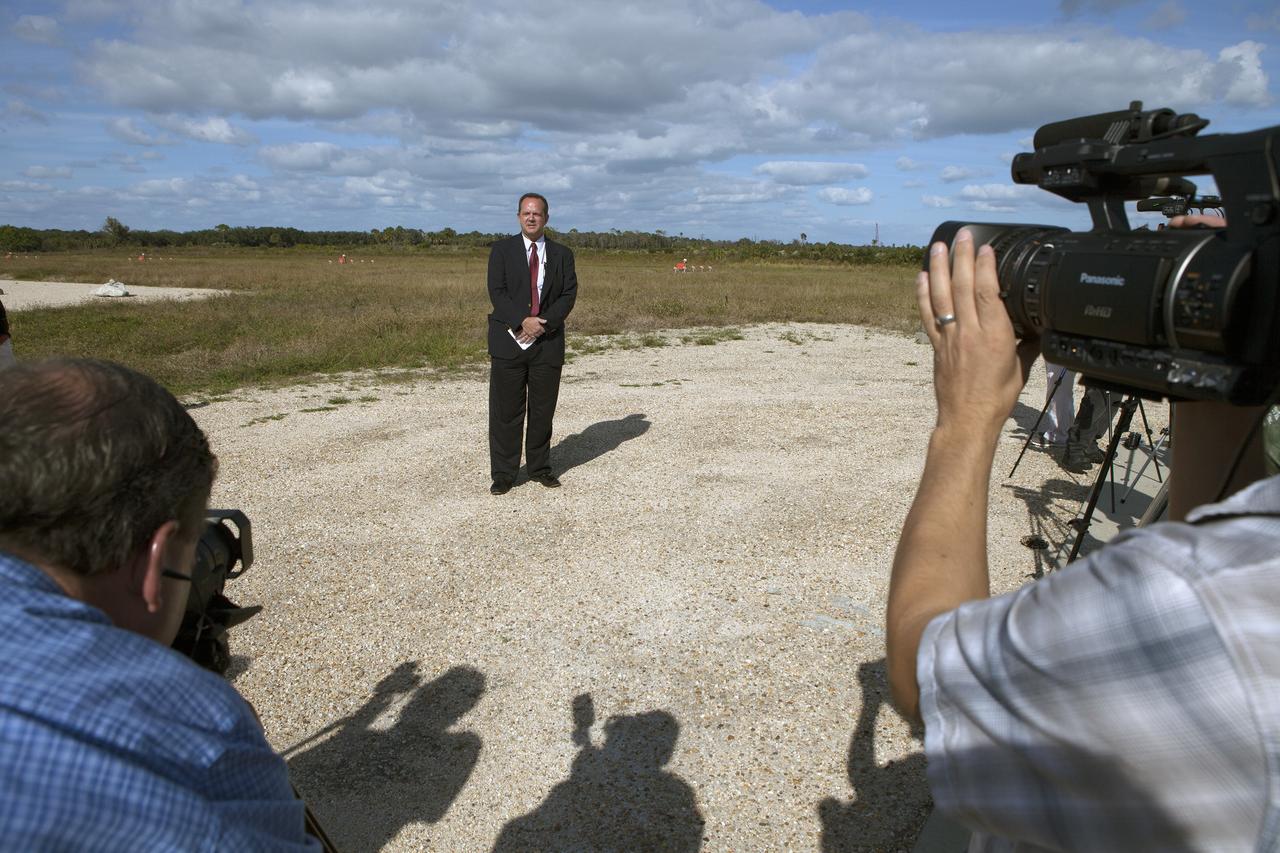
CAPE CANAVERAL, Fla. - Tom Engler, deputy director of Center Planning and Development at NASA's Kennedy Space Center in Florida, speaks to members of the media during an event to announce the agency's Lunar Cargo Transportation and Landing by Soft Touchdown, or Lunar CATALYST, initiative and introduced one of the partners, Moon Express Inc. of Moffett Field, California. The event took place at Kennedy's automated landing and hazard avoidance technology, or ALHAT, hazard field at the north end of the Shuttle Landing Facility. Moon Express is developing a lander with capabilities that will enable delivery of payloads to the surface of the moon, as well as new science and exploration missions of interest to NASA and scientific and academic communities. Moon Express will base its activities at Kennedy and utilize the Morpheus ALHAT field and a hangar nearby for CATALYST testing. The Advanced Exploration Systems Division of NASA's Human Exploration and Operations Mission Directorate manages Lunar CATALYST. Photo credit: NASA/Ben Smegelsky
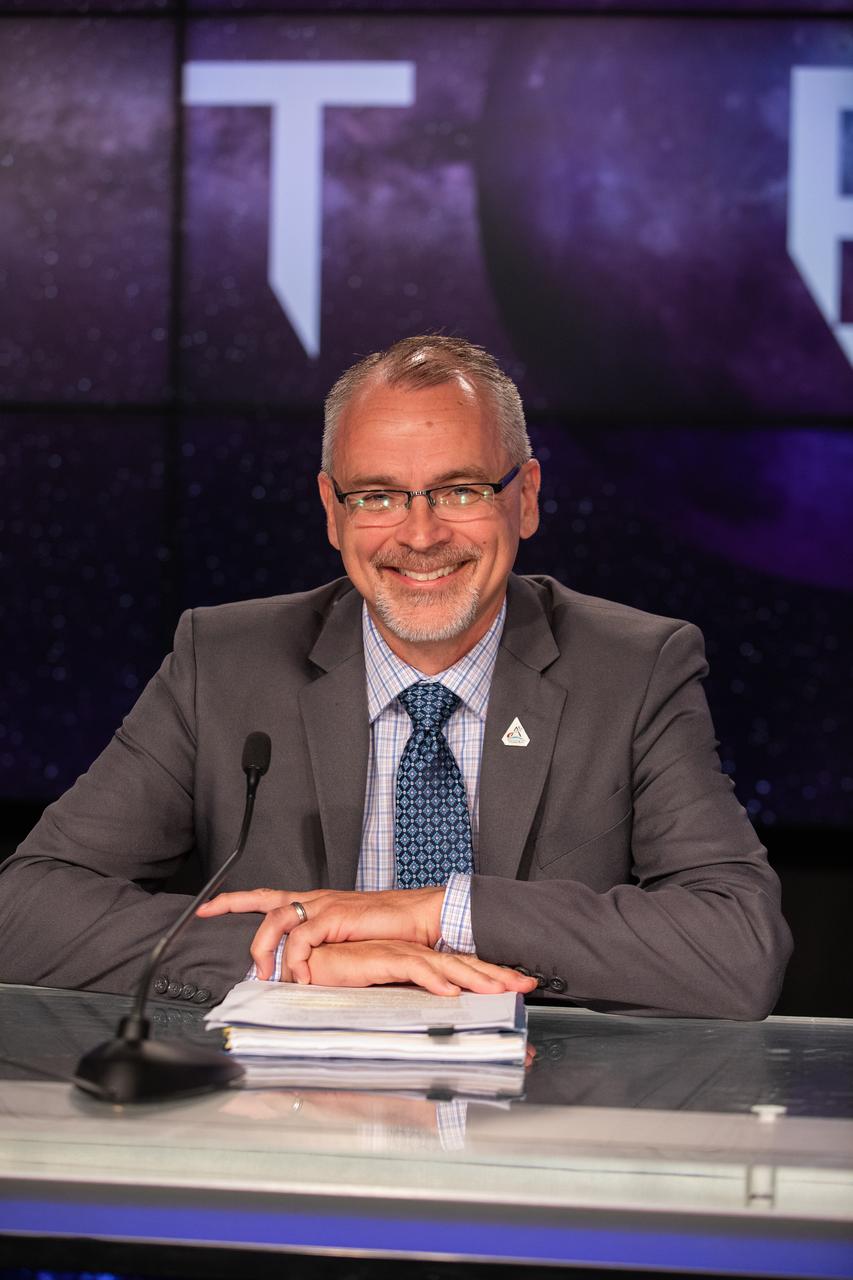
Jim Free, NASA associate administrator, Exploration Systems Development Mission Directorate, participates in a prelaunch media briefing on the agency’s Moon to Mars exploration plans on Aug. 27, 2022, at NASA’s Kennedy Space Center in Florida, as the clock counts down to the launch of Artemis I scheduled for Aug. 29, at 8:33 a.m. EDT from Kennedy’s Launch Complex 39B. The first in a series of increasingly complex missions, Artemis I will provide a foundation for human deep space exploration and demonstrate our commitment and capability to extend human presence to the Moon and beyond. The primary goal of Artemis I is to thoroughly test the integrated systems before crewed missions by operating the spacecraft in a deep space environment, testing Orion’s heat shield, and recovering the crew module after reentry, descent, and splashdown.