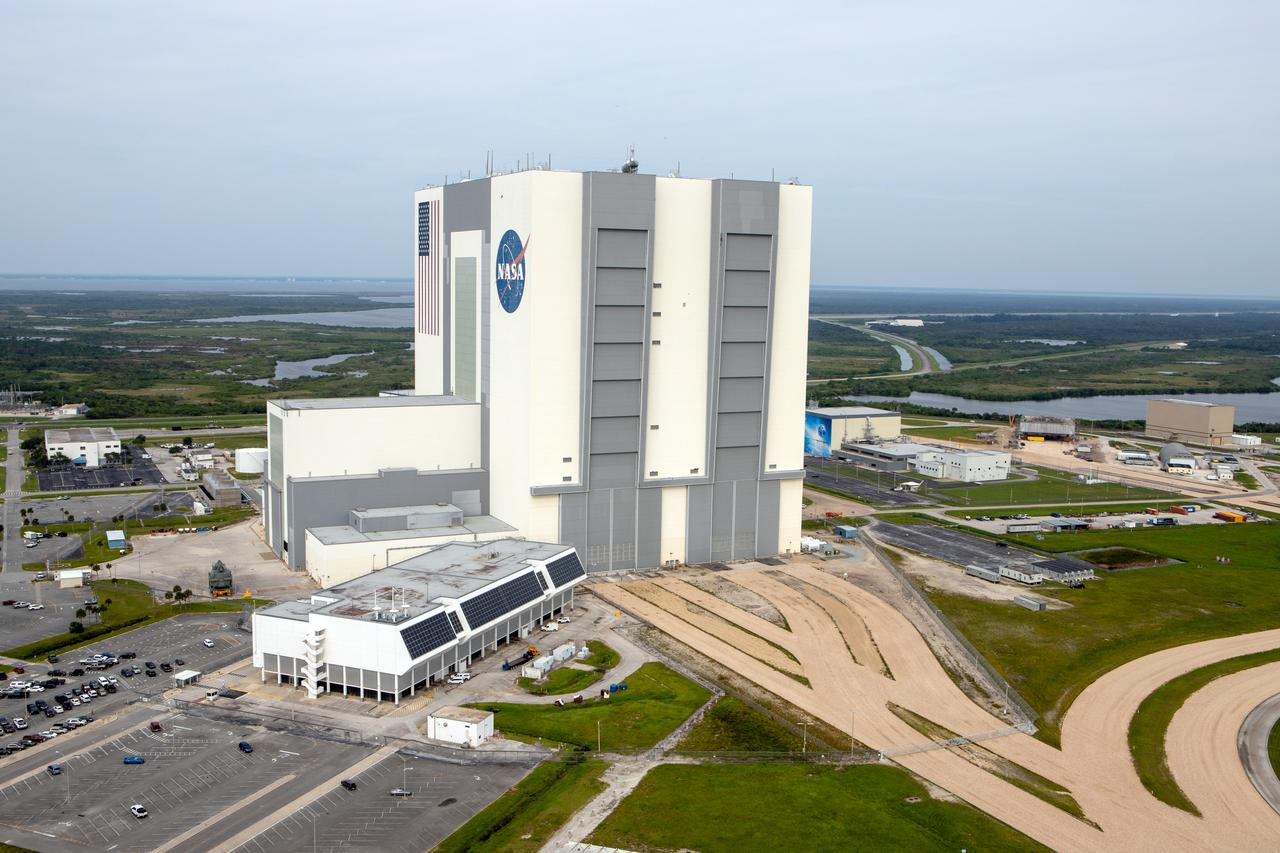
An aerial survey of NASA's Kennedy Space Center in Florida was conducted after Hurricane Dorian skirted the Space Coast area. The survey was performed to identify structures and facilities that may have sustained damage from Hurricane Dorian as the storm passed to the east of Kennedy on September 3 and 4, 2019. Officials determined that the center received some isolated damage and limited water intrusion. Beach erosion also occurred, although the storm surge was less than expected. NASA closed the center ahead of the storm’s onset and only a small team of specialists known as the Rideout Team was on the center as the storm approached and passed.
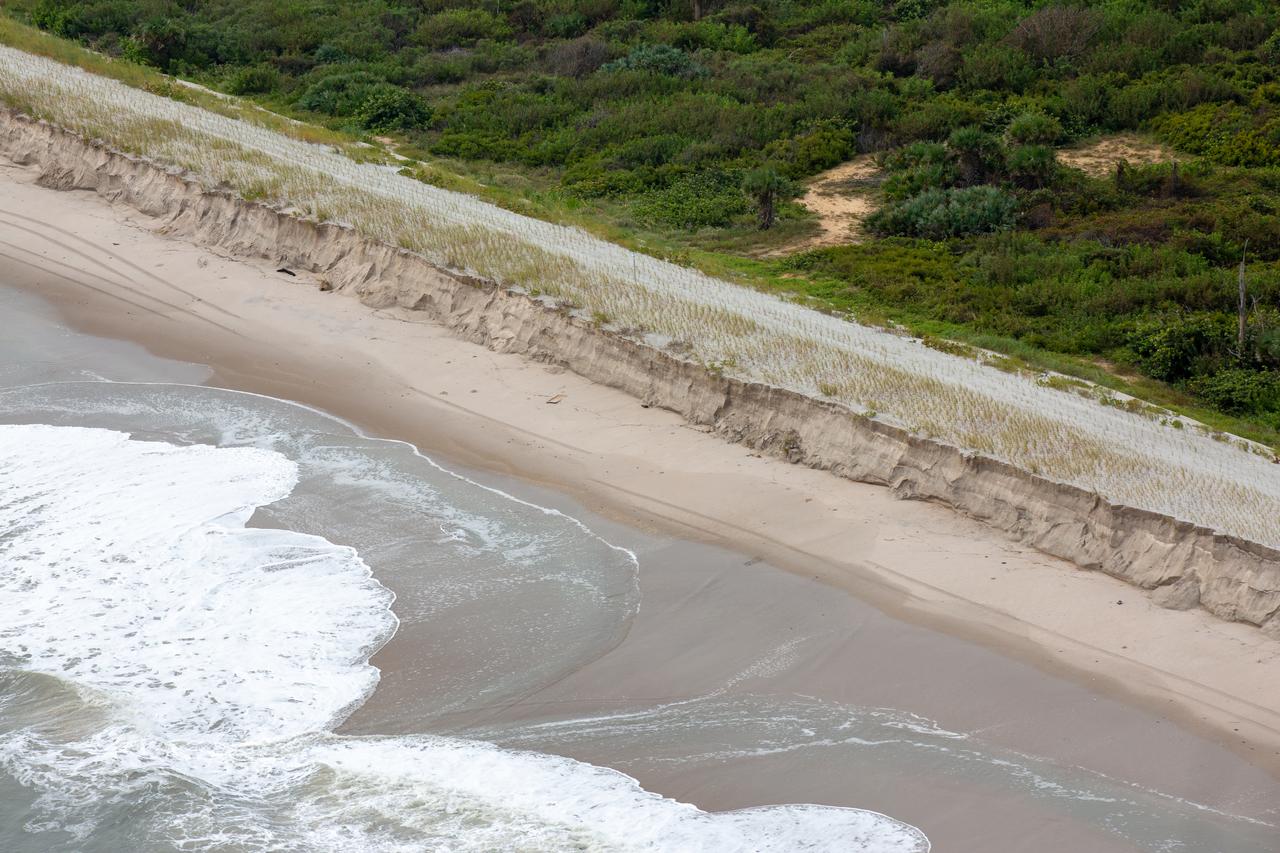
An aerial survey of NASA's Kennedy Space Center in Florida was conducted after Hurricane Dorian skirted the Space Coast area. The survey was performed to identify structures and facilities that may have sustained damage from Hurricane Dorian as the storm passed to the east of Kennedy on September 3 and 4, 2019. Officials determined that the center received some isolated damage and limited water intrusion. Beach erosion also occurred, although the storm surge was less than expected. NASA closed the center ahead of the storm’s onset and only a small team of specialists known as the Rideout Team was on the center as the storm approached and passed.
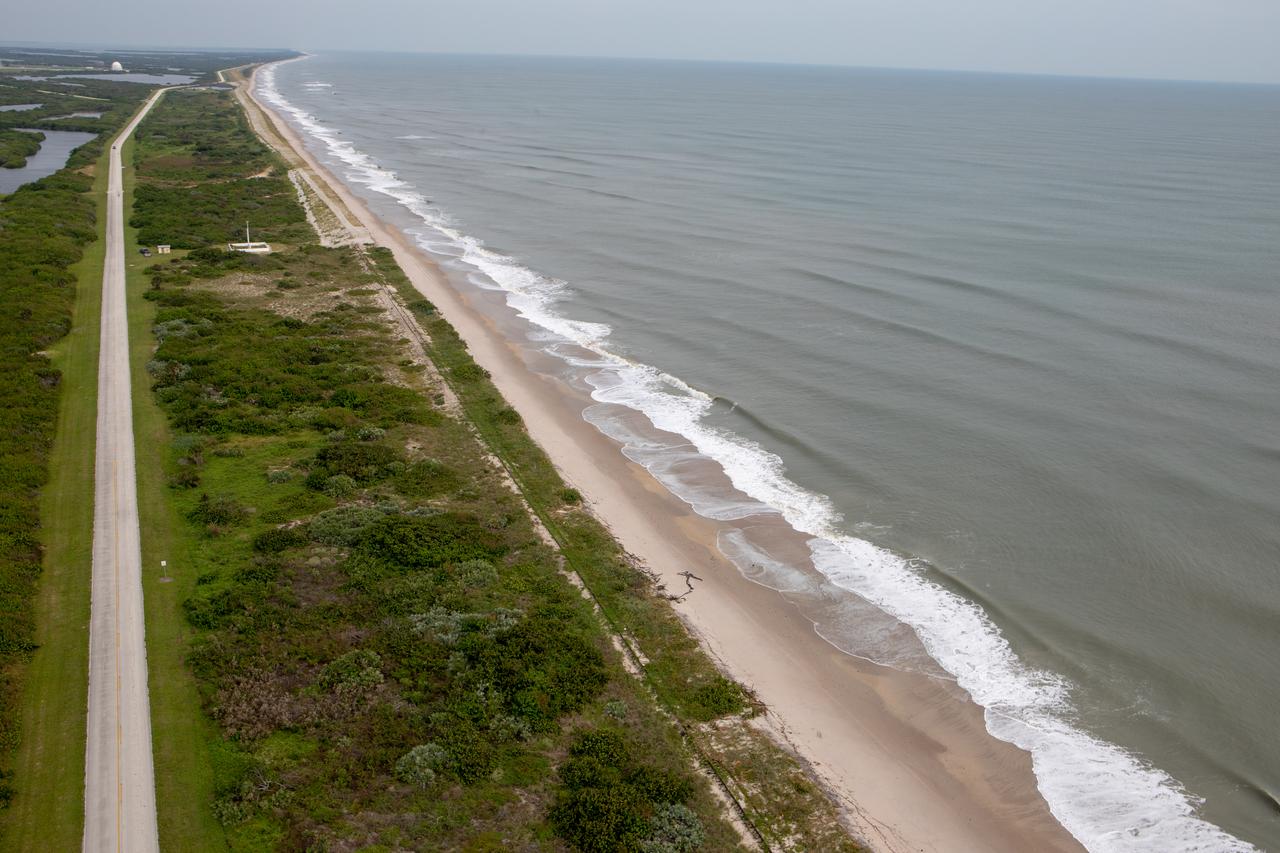
An aerial survey of NASA's Kennedy Space Center in Florida was conducted after Hurricane Dorian skirted the Space Coast area. The survey was performed to identify structures and facilities that may have sustained damage from Hurricane Dorian as the storm passed to the east of Kennedy on September 3 and 4, 2019. Officials determined that the center received some isolated damage and limited water intrusion. Beach erosion also occurred, although the storm surge was less than expected. NASA closed the center ahead of the storm’s onset and only a small team of specialists known as the Rideout Team was on the center as the storm approached and passed.
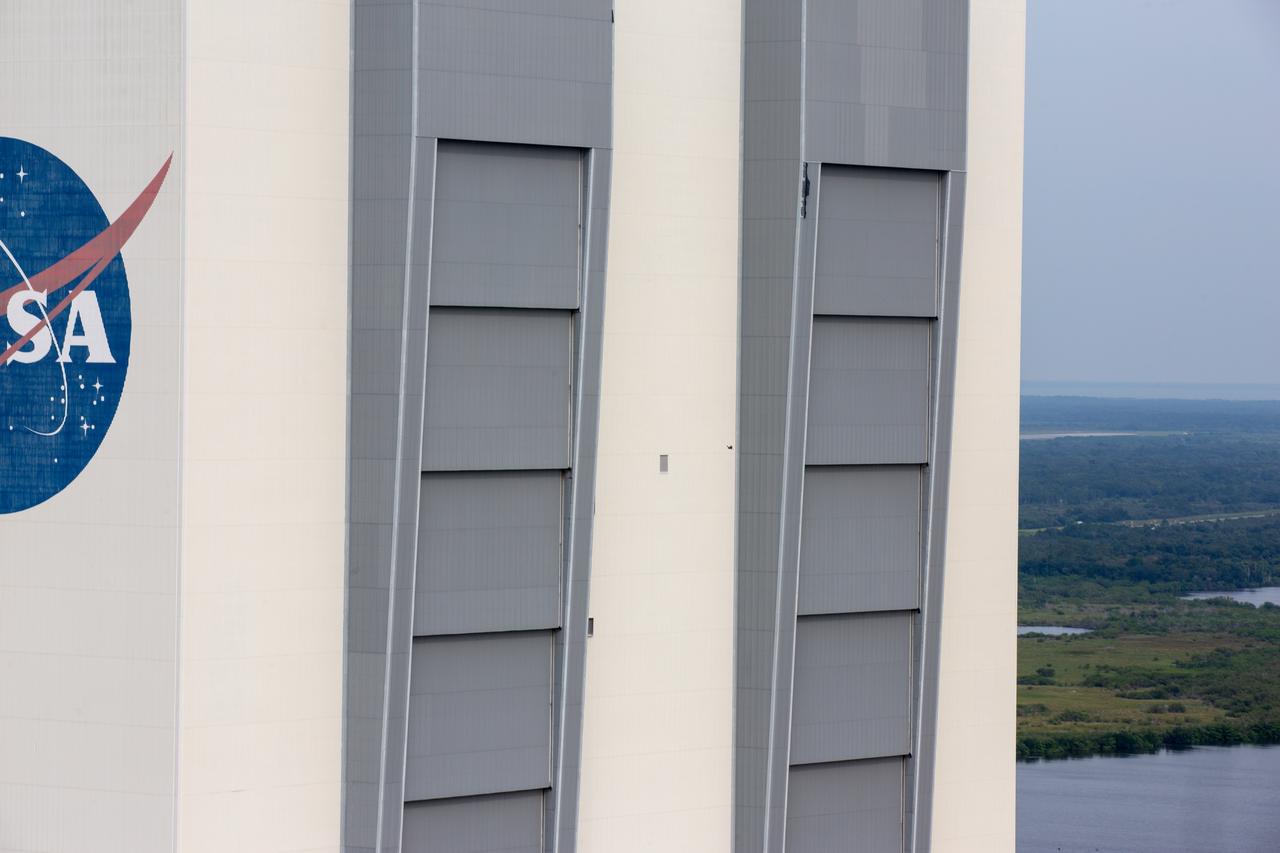
An aerial survey of NASA's Kennedy Space Center in Florida was conducted after Hurricane Dorian skirted the Space Coast area. The survey was performed to identify structures and facilities that may have sustained damage from Hurricane Dorian as the storm passed to the east of Kennedy on September 3 and 4, 2019. Officials determined that the center received some isolated damage and limited water intrusion. Beach erosion also occurred, although the storm surge was less than expected. NASA closed the center ahead of the storm’s onset and only a small team of specialists known as the Rideout Team was on the center as the storm approached and passed.
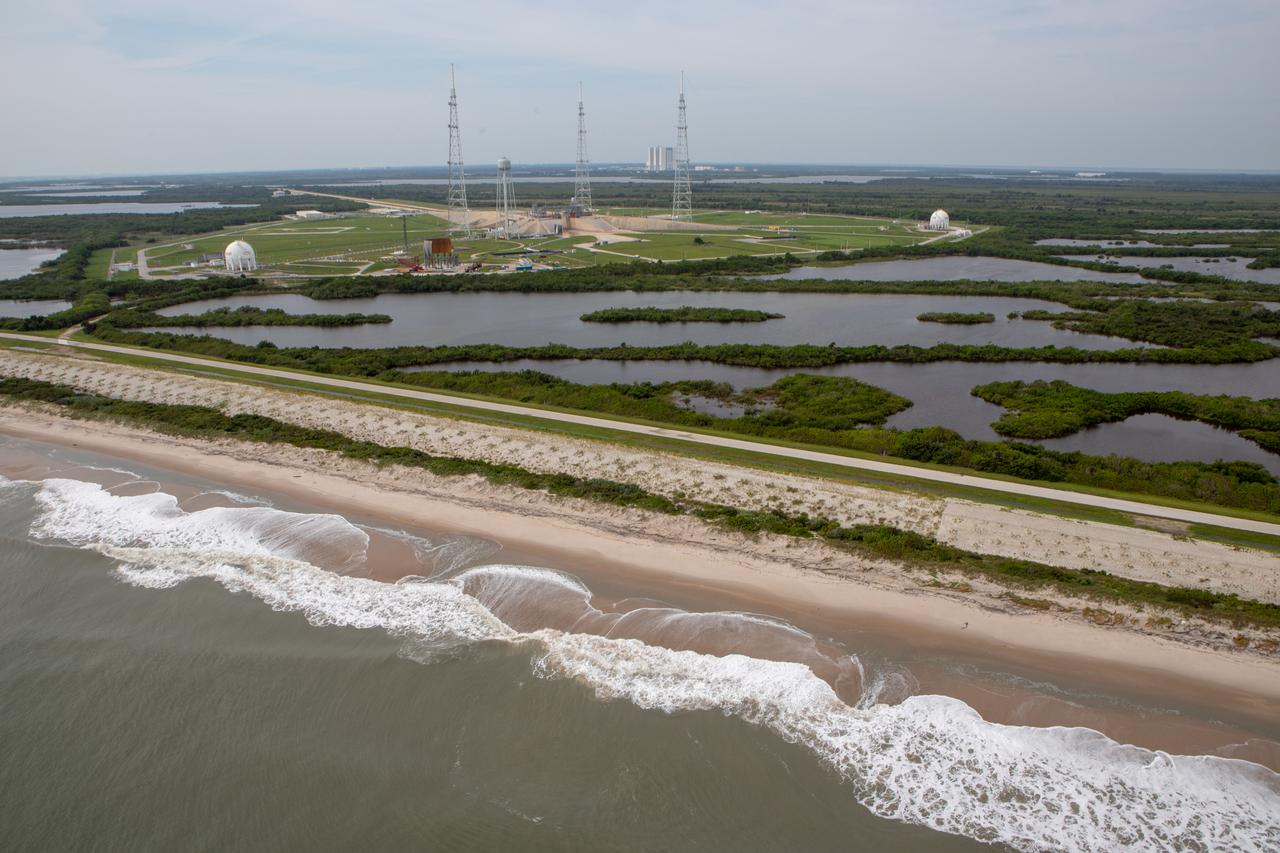
An aerial survey of NASA's Kennedy Space Center in Florida was conducted after Hurricane Dorian skirted the Space Coast area. The survey was performed to identify structures and facilities that may have sustained damage from Hurricane Dorian as the storm passed to the east of Kennedy on September 3 and 4, 2019. Officials determined that the center received some isolated damage and limited water intrusion. Beach erosion also occurred, although the storm surge was less than expected. NASA closed the center ahead of the storm’s onset and only a small team of specialists known as the Rideout Team was on the center as the storm approached and passed.
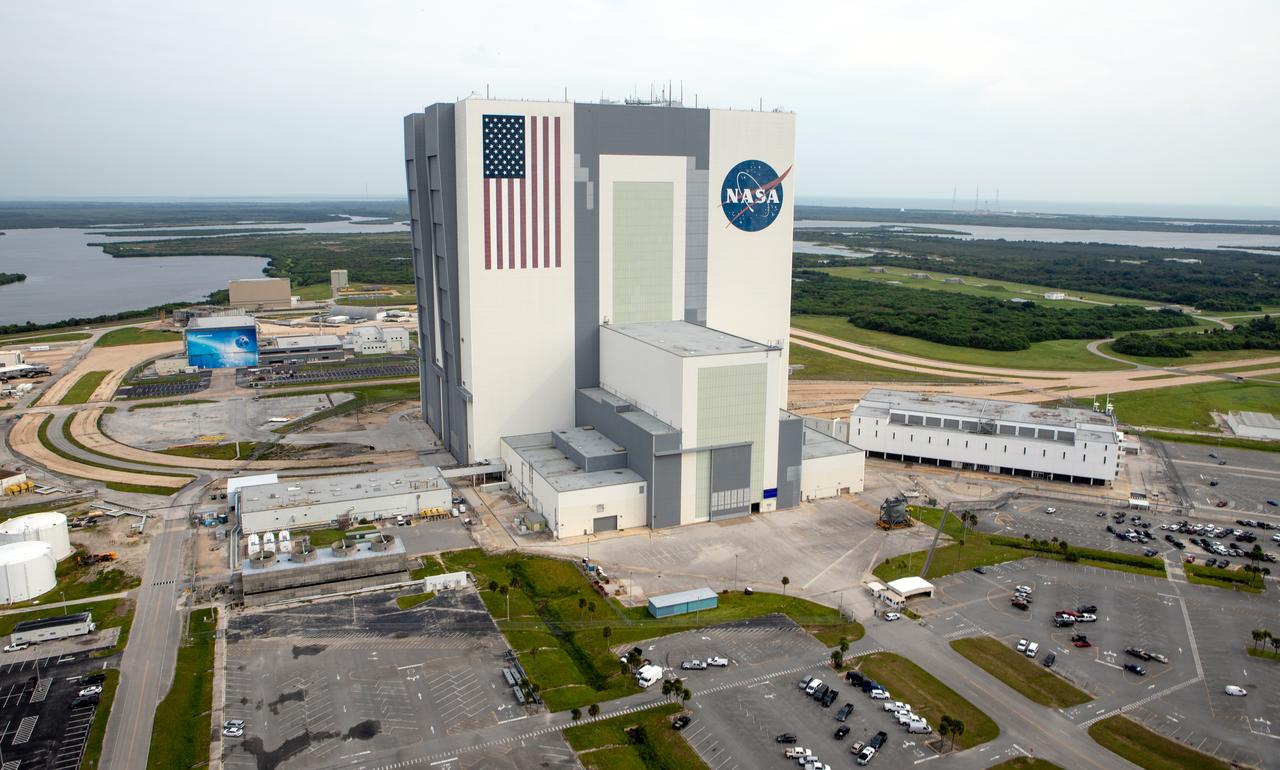
An aerial survey of NASA's Kennedy Space Center in Florida was conducted after Hurricane Dorian skirted the Space Coast area. The survey was performed to identify structures and facilities that may have sustained damage from Hurricane Dorian as the storm passed to the east of Kennedy on September 3 and 4, 2019. Officials determined that the center received some isolated damage and limited water intrusion. Beach erosion also occurred, although the storm surge was less than expected. NASA closed the center ahead of the storm’s onset and only a small team of specialists known as the Rideout Team was on the center as the storm approached and passed.
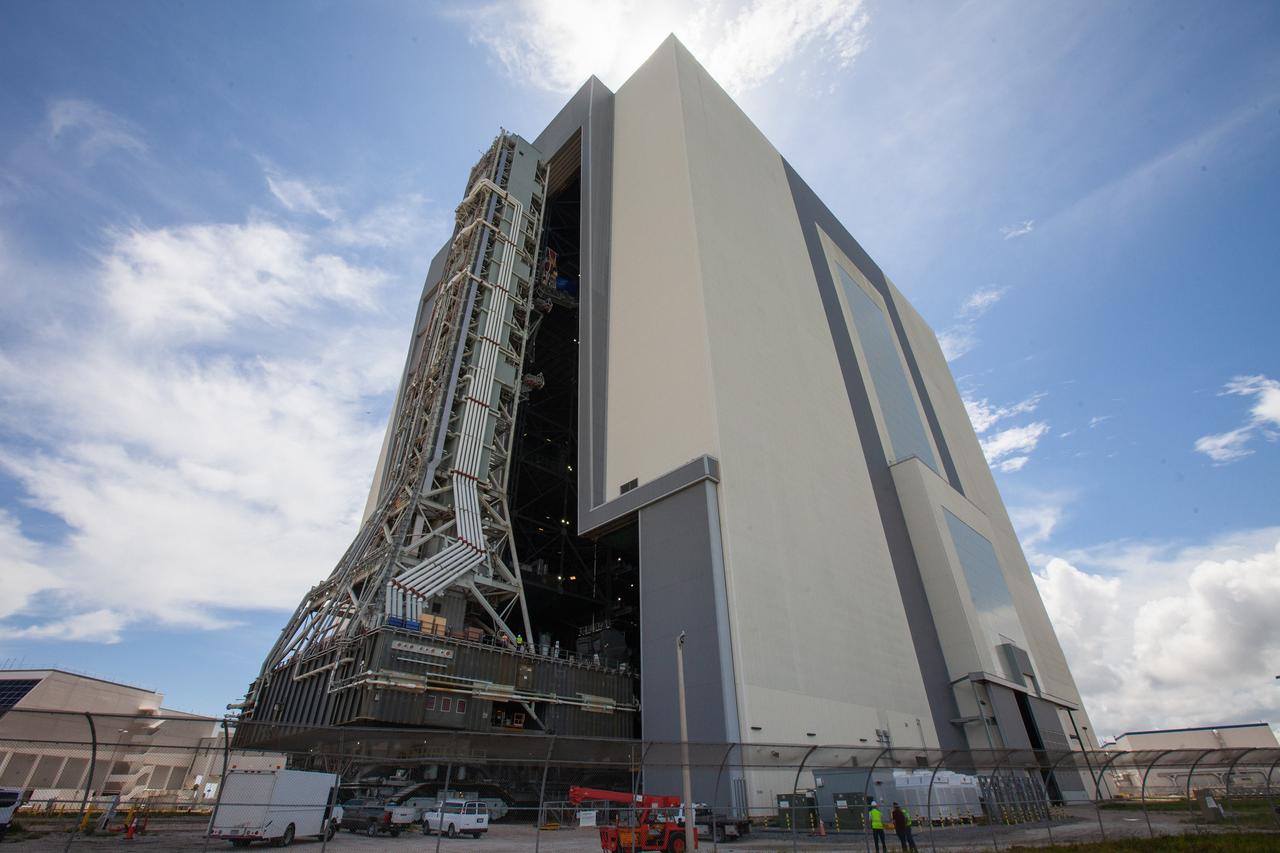
Exploration Ground Systems teams at NASA’s Kennedy Space Center in Florida take precautions to protect Artemis ground support equipment in advance of Hurricane Dorian. On Aug. 30, 2019, crawler-transporter 2 moved the mobile launcher (ML) from its current position at Launch Pad 39B to inside the Vehicle Assembly Building. In its final phases of development, the ML stands nearly 400 feet tall and is needed to assemble, process and launch NASA’s powerful Space Launch System rocket and Orion spacecraft on missions to the Moon and Mars.
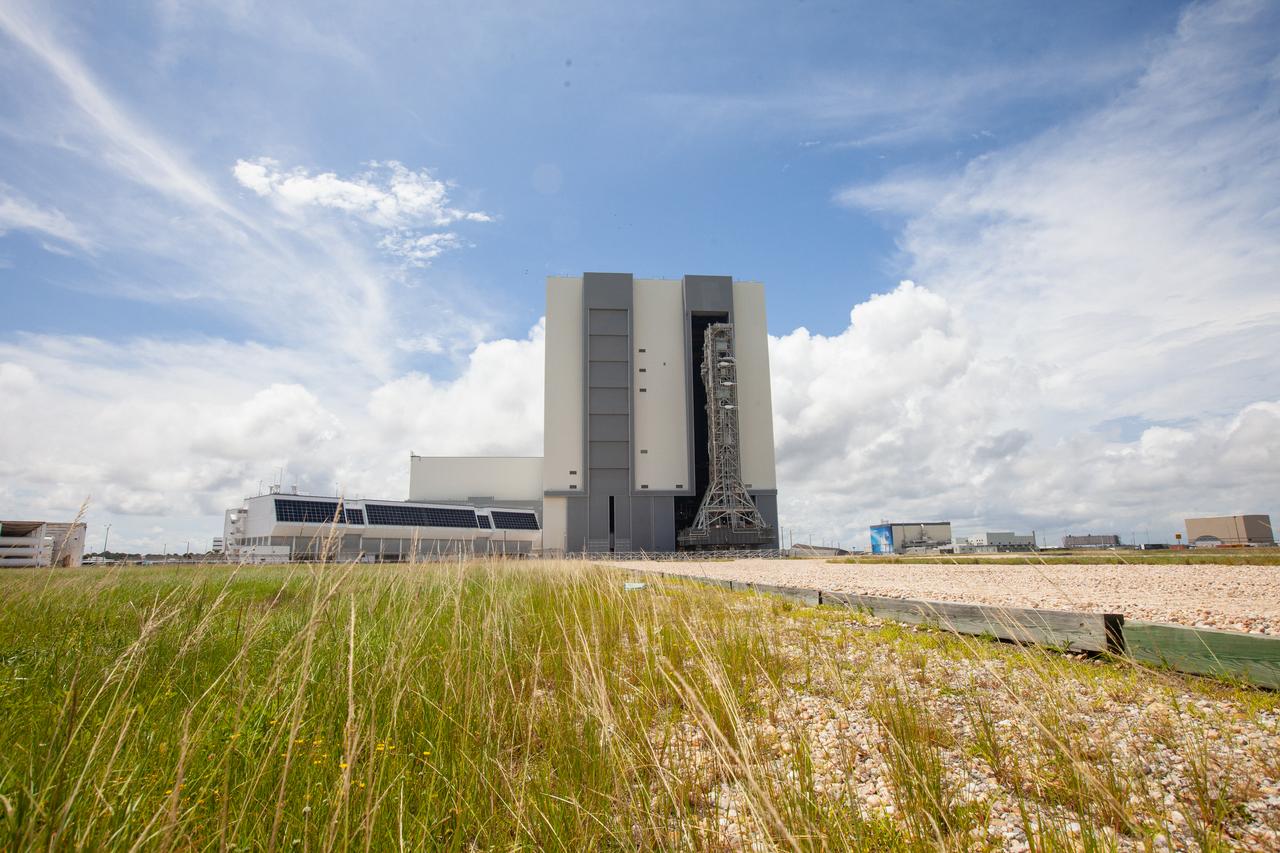
Exploration Ground Systems teams at NASA’s Kennedy Space Center in Florida take precautions to protect Artemis ground support equipment in advance of Hurricane Dorian. On Aug. 30, 2019, crawler-transporter 2 moved the mobile launcher (ML) from its current position at Launch Pad 39B to inside the Vehicle Assembly Building. In its final phases of development, the ML stands nearly 400 feet tall and is needed to assemble, process and launch NASA’s powerful Space Launch System rocket and Orion spacecraft on missions to the Moon and Mars.
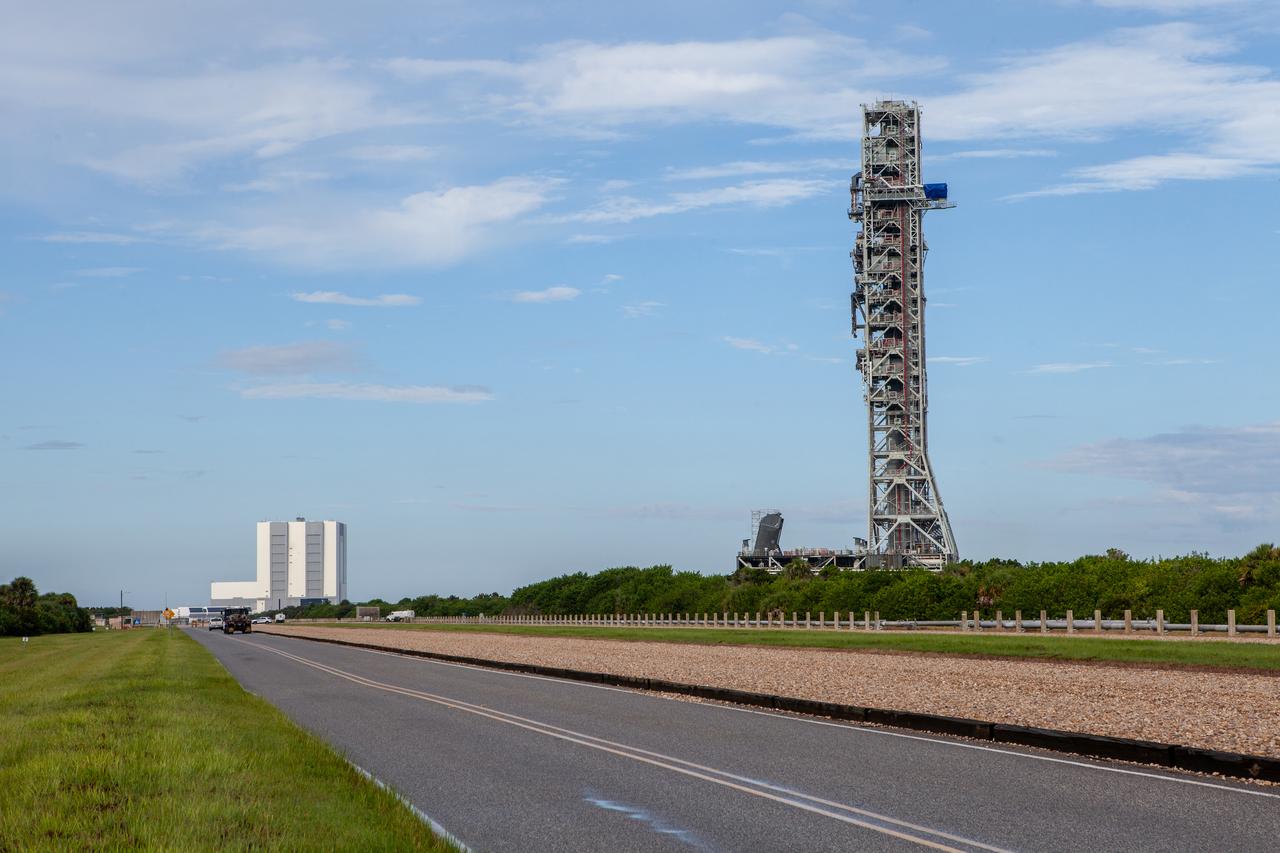
Exploration Ground Systems teams at NASA’s Kennedy Space Center in Florida take precautions to protect Artemis ground support equipment in advance of Hurricane Dorian. On Aug. 30, 2019, crawler-transporter 2 moved the mobile launcher (ML) from its current position at Launch Pad 39B to inside the Vehicle Assembly Building. In its final phases of development, the ML stands nearly 400 feet tall and is needed to assemble, process and launch NASA’s powerful Space Launch System rocket and Orion spacecraft on missions to the Moon and Mars.
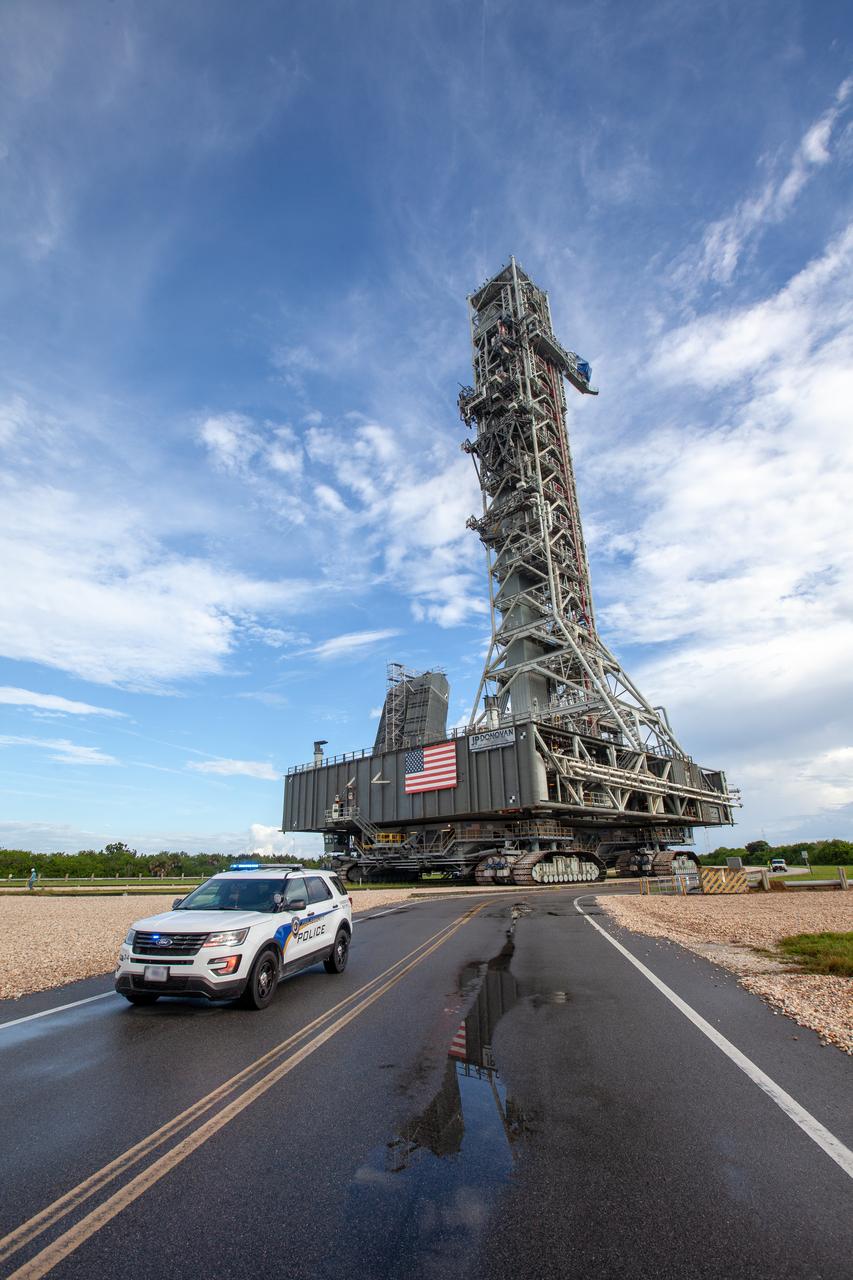
Exploration Ground Systems teams at NASA’s Kennedy Space Center in Florida take precautions to protect Artemis ground support equipment in advance of Hurricane Dorian. On Aug. 30, 2019, crawler-transporter 2 moved the mobile launcher (ML) from its current position at Launch Pad 39B to inside the Vehicle Assembly Building. In its final phases of development, the ML stands nearly 400 feet tall and is needed to assemble, process and launch NASA’s powerful Space Launch System rocket and Orion spacecraft on missions to the Moon and Mars.
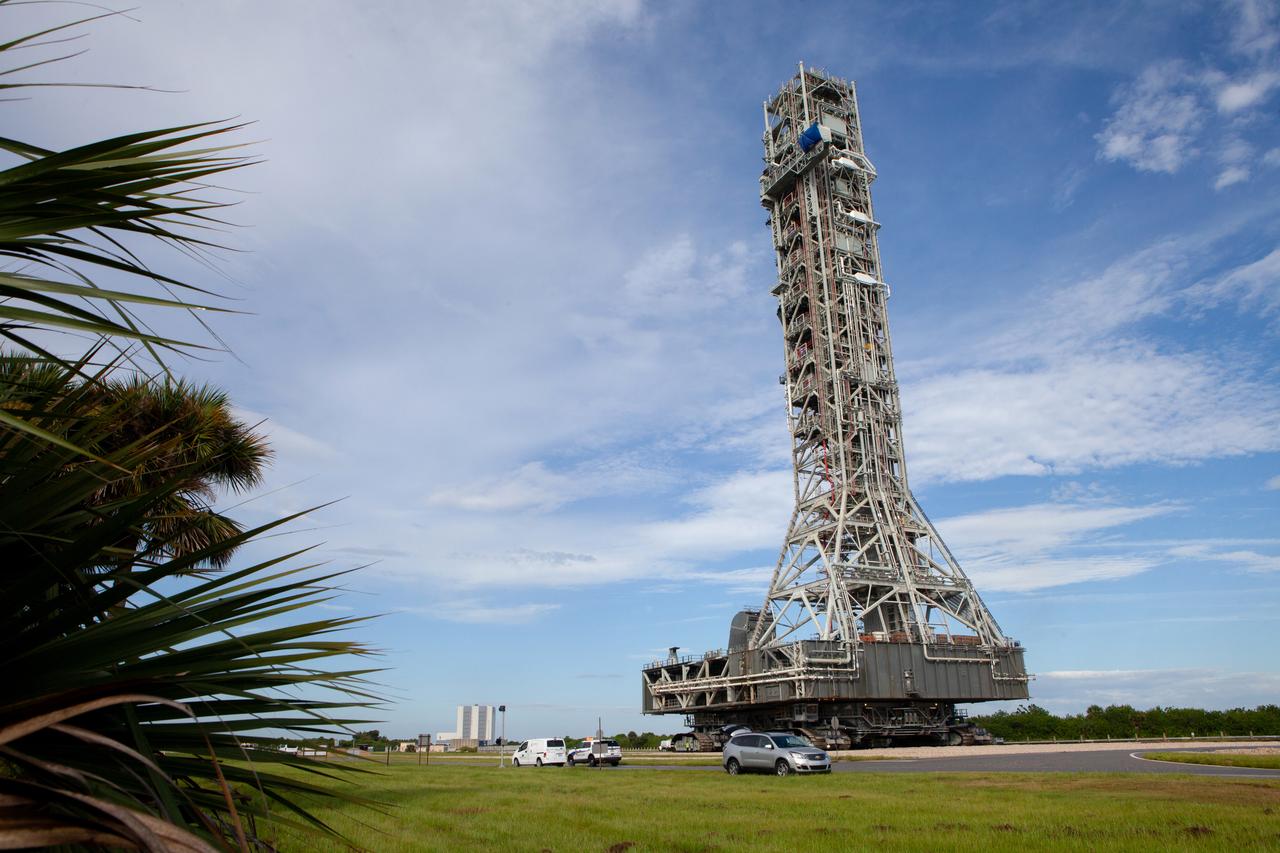
Exploration Ground Systems teams at NASA’s Kennedy Space Center in Florida take precautions to protect Artemis ground support equipment in advance of Hurricane Dorian. On Aug. 30, 2019, crawler-transporter 2 moved the mobile launcher (ML) from its current position at Launch Pad 39B to inside the Vehicle Assembly Building. In its final phases of development, the ML stands nearly 400 feet tall and is needed to assemble, process and launch NASA’s powerful Space Launch System rocket and Orion spacecraft on missions to the Moon and Mars.
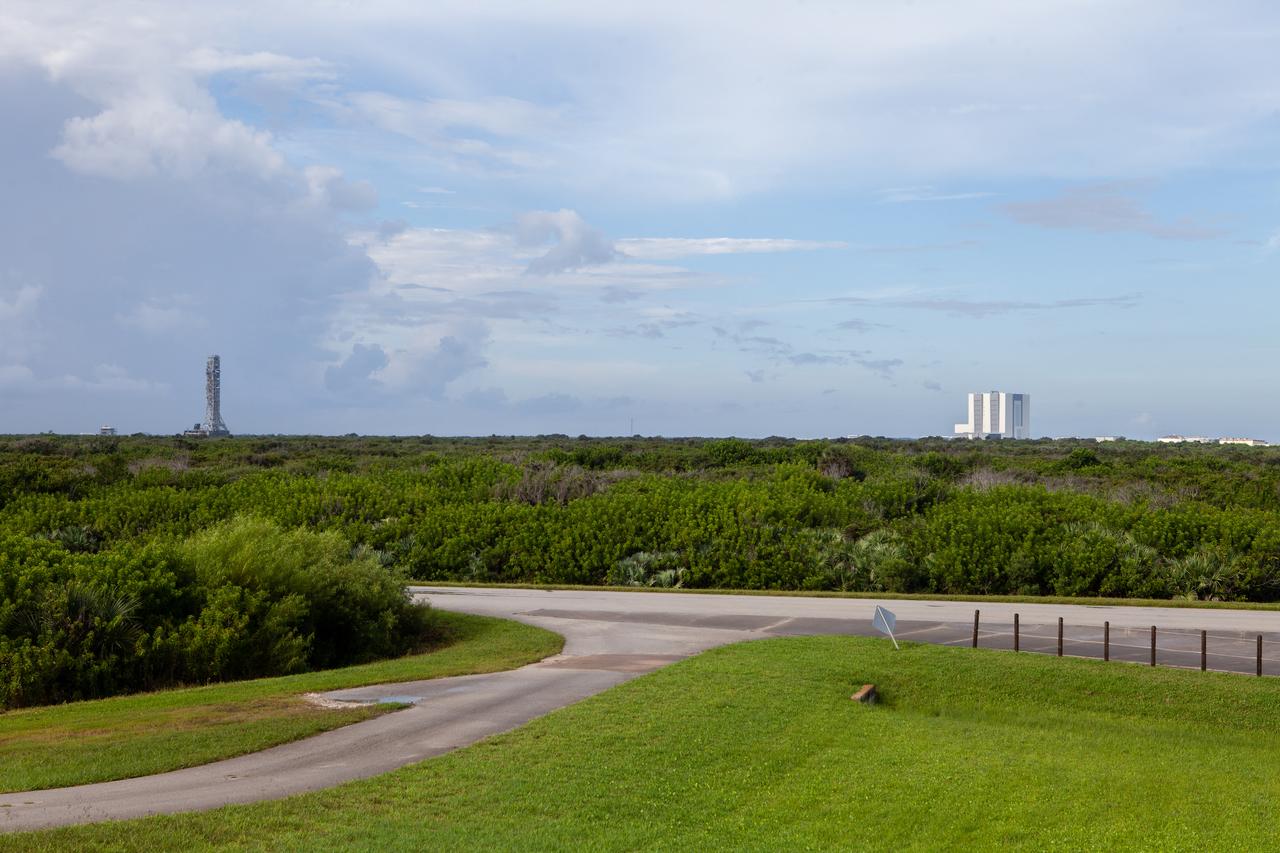
Exploration Ground Systems teams at NASA’s Kennedy Space Center in Florida take precautions to protect Artemis ground support equipment in advance of Hurricane Dorian. On Aug. 30, 2019, crawler-transporter 2 moved the mobile launcher (ML) from its current position at Launch Pad 39B to inside the Vehicle Assembly Building. In its final phases of development, the ML stands nearly 400 feet tall and is needed to assemble, process and launch NASA’s powerful Space Launch System rocket and Orion spacecraft on missions to the Moon and Mars.
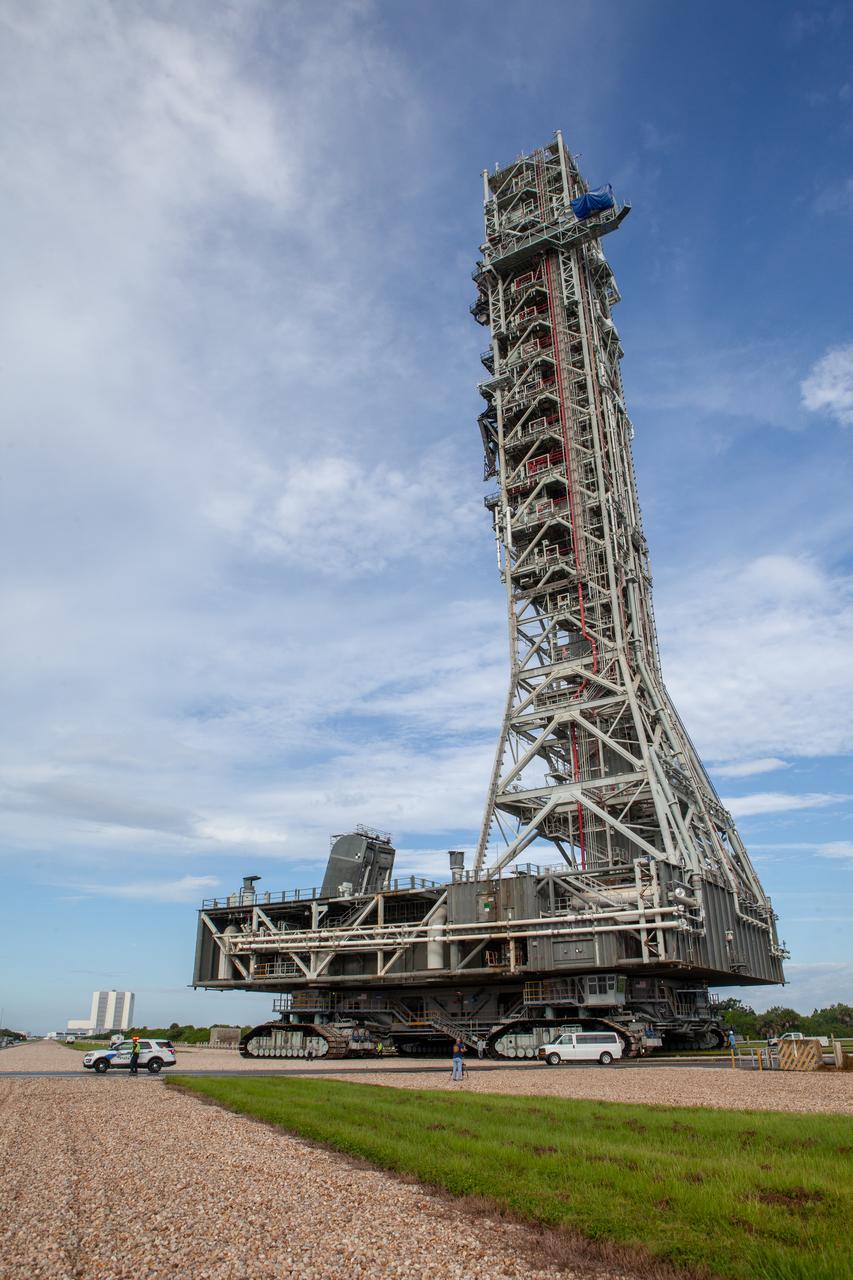
Exploration Ground Systems teams at NASA’s Kennedy Space Center in Florida take precautions to protect Artemis ground support equipment in advance of Hurricane Dorian. On Aug. 30, 2019, crawler-transporter 2 moved the mobile launcher (ML) from its current position at Launch Pad 39B to inside the Vehicle Assembly Building. In its final phases of development, the ML stands nearly 400 feet tall and is needed to assemble, process and launch NASA’s powerful Space Launch System rocket and Orion spacecraft on missions to the Moon and Mars.
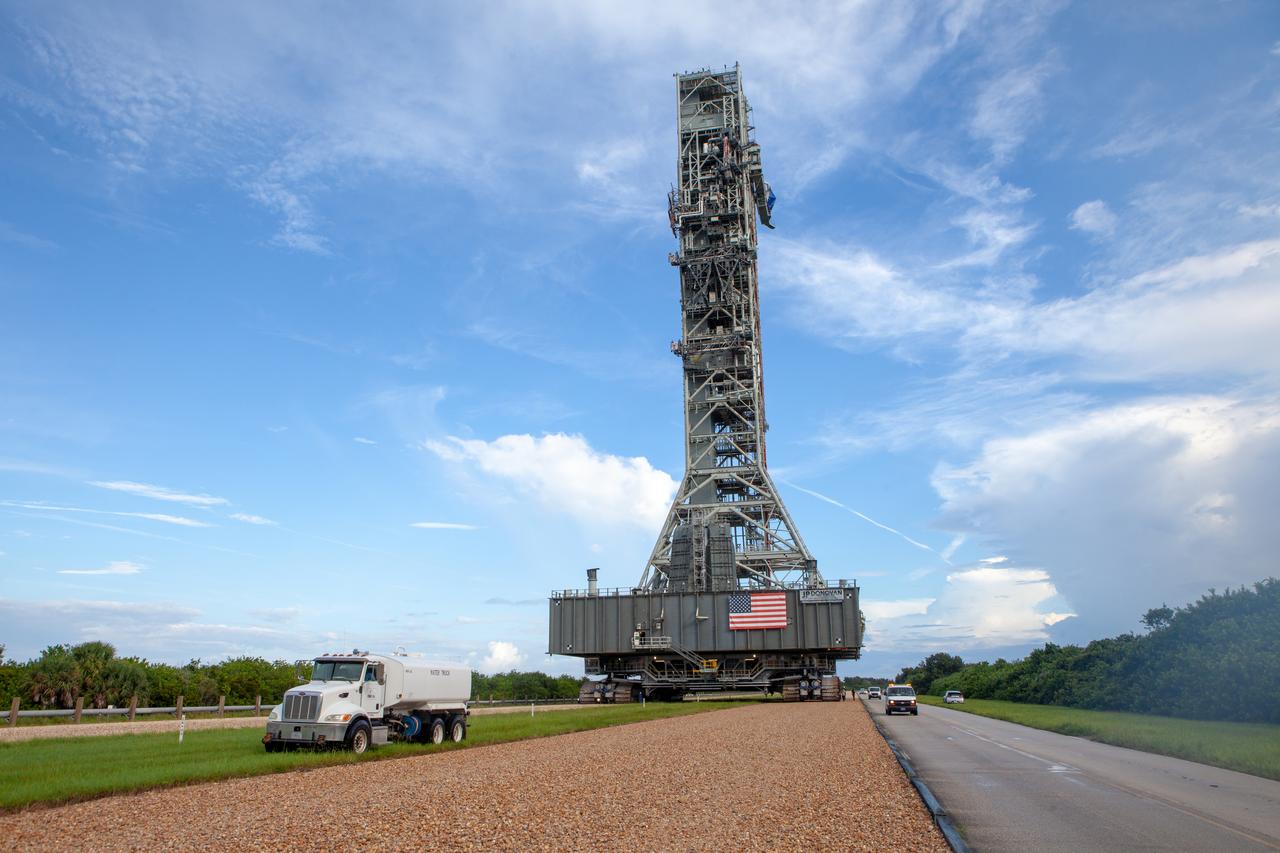
Exploration Ground Systems teams at NASA’s Kennedy Space Center in Florida take precautions to protect Artemis ground support equipment in advance of Hurricane Dorian. On Aug. 30, 2019, crawler-transporter 2 moved the mobile launcher (ML) from its current position at Launch Pad 39B to inside the Vehicle Assembly Building. In its final phases of development, the ML stands nearly 400 feet tall and is needed to assemble, process and launch NASA’s powerful Space Launch System rocket and Orion spacecraft on missions to the Moon and Mars.
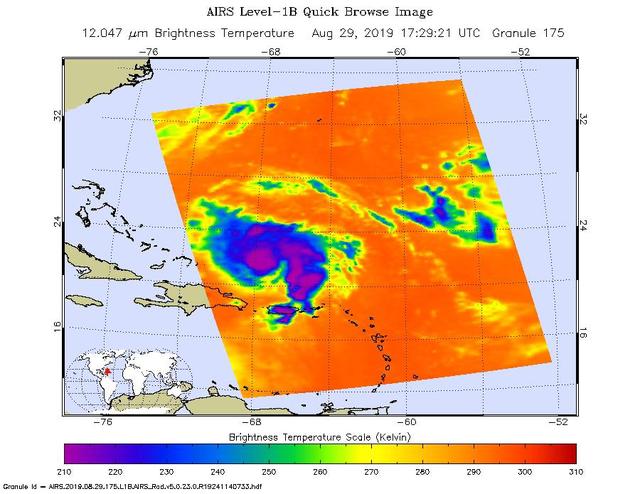
An infrared image of Hurricane Dorian, as seen by the AIRS instrument aboard NASA's Aqua satellite at 1:30 p.m. EDT (10:30 a.m. PDT) on Aug. 29, 2019. The large purple areas are cold clouds, carried high into the atmosphere by deep thunderstorms. Blue and green show warmer areas with less rain clouds, while orange and red represent mostly cloud-free air. https://photojournal.jpl.nasa.gov/catalog/PIA23358
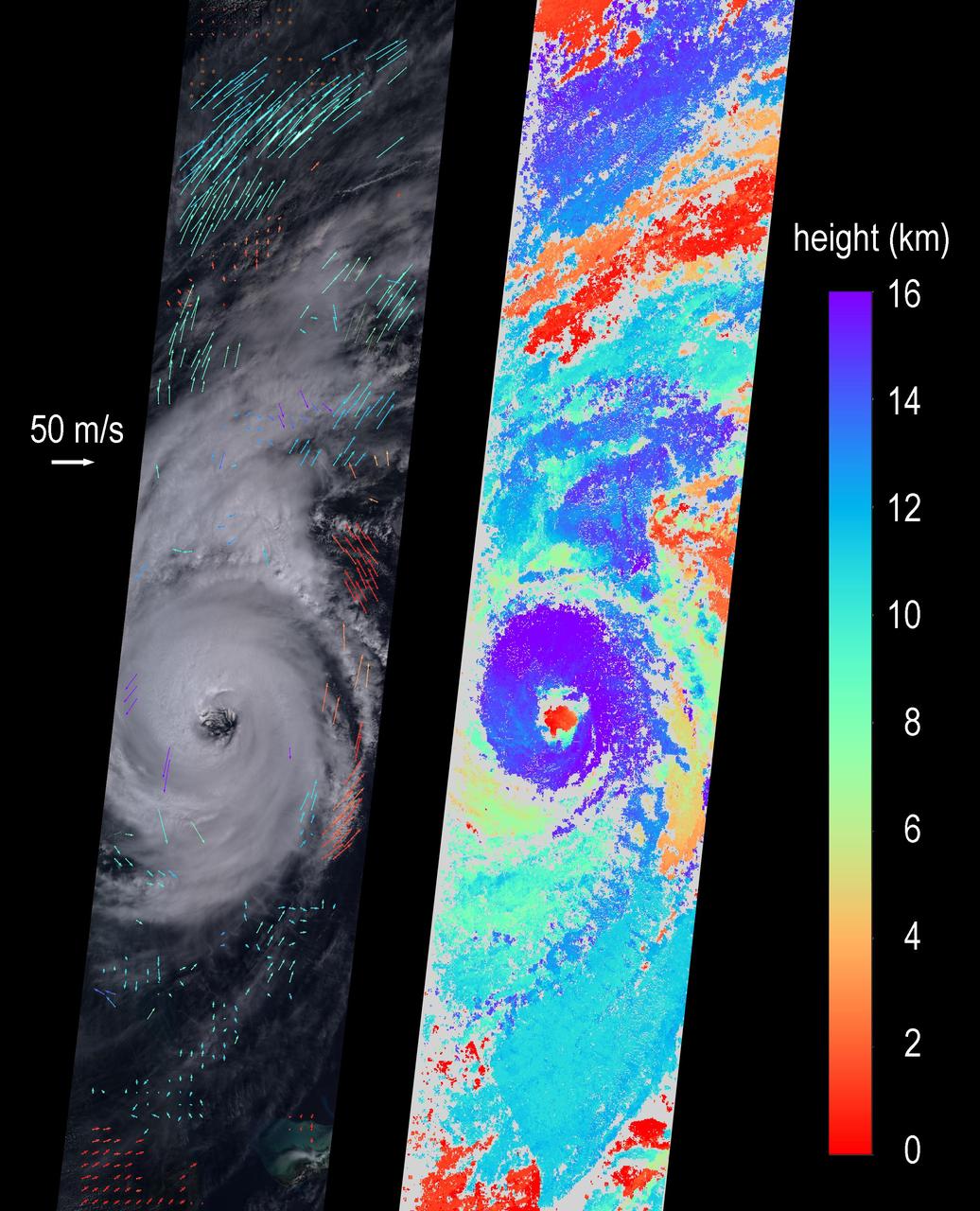
On Sept. 5, 2019 at about noon EDT, the Multi-angle Imaging SpectroRadiometer (MISR) instrument aboard NASA's Terra satellite passed over the eye of Hurricane Dorian as the storm tracked northeast along the Atlantic coast, about 50 miles from Charleston, South Carolina. During this time, Dorian was weakening from Category 3 to Category 2 following a second period of intensification. MISR carries nine cameras fixed at different angles, each of which viewed Dorian over a period of about seven minutes. The multi-camera views are used to calculate the heights of the cloud tops, and the motion of the clouds between the views provides information on wind speed and direction. The left side of the image shows the view from the downward-pointing (nadir) camera, with wind velocity vectors superimposed over it. The derived cloud-top heights are shown at the right, along with the color scale. The length of the wind arrows is proportional to wind speed and their colors show the altitude of the cloud tops in kilometers. MISR observed cyclonic (counterclockwise) wind speeds up to 35 meters per second (78 miles per hour) at altitudes of 3-4 kilometers (1.9 to 2.5 miles), consistent with maximal wind gusts reported by the National Hurricane Center based on data from local weather stations and buoys. At higher altitudes of 11-12 kms (6.8-7.5 miles), MISR observed anti-cyclonic (clockwise) wind speeds up to 55 meters per second (123 mph). The eye, spiral rainbands, and reversal of wind direction between low and high altitudes are typical features of a hurricane's anatomy. https://photojournal.jpl.nasa.gov/catalog/PIA23423
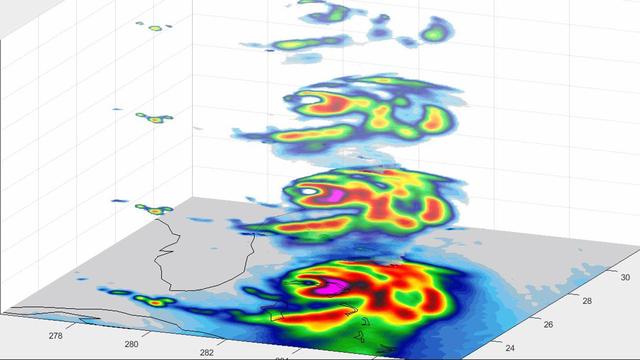
In this animation, TEMPEST-D — a weather-observing satellite the size of a cereal box — captured imagery of Hurricane Dorian off the coast of Florida at 2 a.m. EDT on Sep. 3, 2019 (11 p.m. PDT on Sept. 2, 2019). At a vantage point 250 miles (400 kilometers) above the storm, the CubeSat used its miniaturized radio-wave-based instrument to see through the clouds, revealing different depths of the hurricane with areas with heavy rainfall and moisture being pulled into the storm. The green colors indicate moisture spiraling into the storm's center, and the yellow, red and pink areas correspond to the most intense rainfall. TEMPEST-D — short for Temporal Experiment for Storms and Tropical Systems Demonstration — is an experiment in shrinking weather satellites to a size that makes them inexpensive enough to produce in multiples. The goal is eventual real-time storm coverage with many small satellites that can track storms around the world. Movie available at https://photojournal.jpl.nasa.gov/catalog/PIA23431
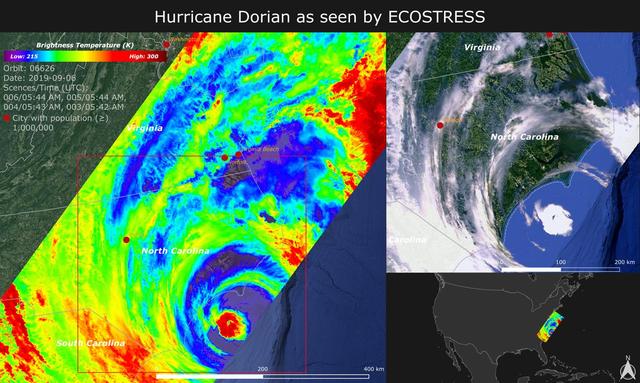
NASA's ECOsystem Spaceborne Thermal Radiometer Experiment on Space Station (ECOSTRESS) imaged the temperature of Hurricane Dorian from the International Space Station on Sept. 6, 2019 as the storm made landfall in North Carolina. ECOSTRESS senses the amount of emitted infrared radiation from Earth, which is converted into an equivalent temperature scale in units of degrees Kelvin. In the image, red colors such as the well-defined eye represent warmer temperatures while purple/blue represent the cooler cloud top temperatures of strong storm clouds with the potential of producing heavy rain. The temperature patterns reveal fine cloud structures that contribute to the formation of the larger hurricane. The width of the image (~400 km) is based on what ECOSTRESS sees as the Space Station flies over any given spot on Earth. ECOSTRESS launched to the space station in June 2018. It can measure variations in temperature to within a few tenths of a degree and is able to detect temperature changes at various times of day over areas as small as a football field. ECOSTRESS' primary mission is to detect plant health from space; however, its measurements can be used to detect other heat-related phenomena — including urban heat, fires, and volcanic activity — as well. Although disaster response is not one of its primary objectives, these highly detailed hurricane temperature estimates can be used to improve weather models. https://photojournal.jpl.nasa.gov/catalog/PIA23422
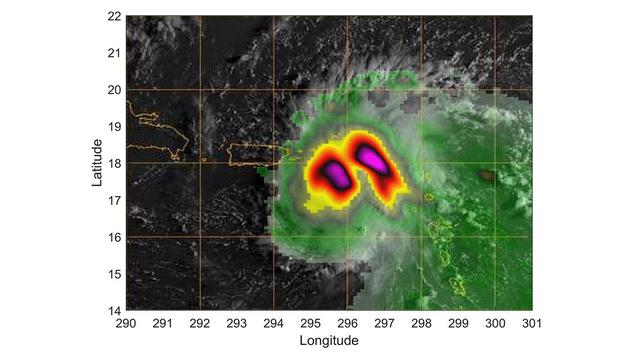
TEMPEST-D — a weather-observing satellite the size of a cereal box — captured imagery of Hurricane Dorian off the coast of Puerto Rico in the early morning hours (local time) of Aug. 28, 2019. At a vantage point 250 miles (400 kilometers) above the storm, the CubeSat used its miniaturized radio-wave-based instrument to see through the clouds, revealing areas with strong rain and moisture being pulled into the storm. The green colors show moisture spiraling into the storm's center, and the yellow to pink colors correspond to the most intense rainfall. TEMPEST-D — short for Temporal Experiment for Storms and Tropical Systems Demonstration — is an experiment in shrinking weather satellites to a size that makes them inexpensive enough to produce in multiples. The goal is eventual real-time storm coverage with many small satellites that can track storms around the world. https://photojournal.jpl.nasa.gov/catalog/PIA23414

iss060e050367 -- Expedition 60 flight engineer Christina Koch of NASA captured this image of Hurricane Dorian from the International Space Station on Sept. 2, 2019 as the storm churned over the northwestern Bahamas.
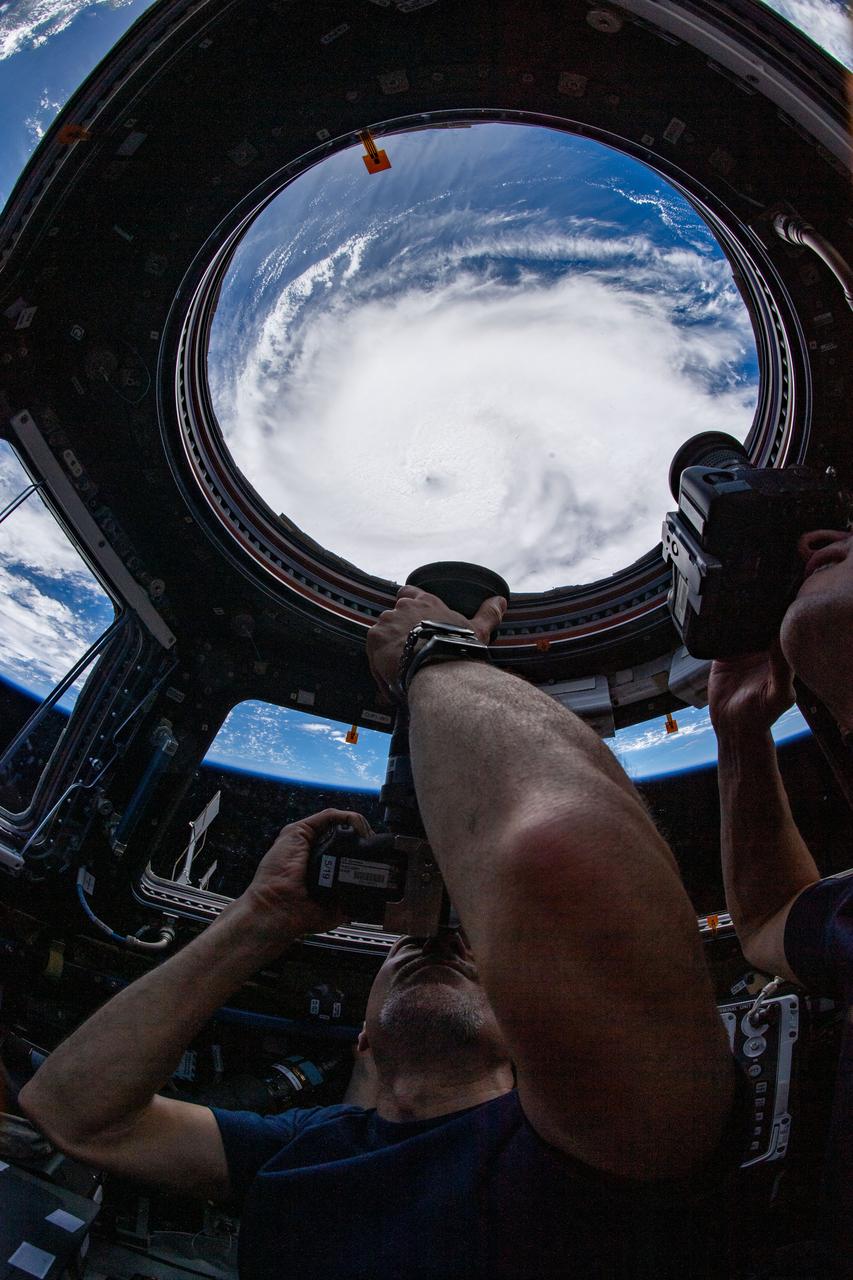
iss060e047724 -- Expedition 60 crewmembers take turns capturing images of rapidly intensifying Hurricane Dorian from the cupola inside the International Space Station on Aug. 30 as it churned over the Atlantic Ocean.

iss060e050390 -- Expedition 60 flight engineer Christina Koch of NASA captured this image of Hurricane Dorian from the International Space Station on Sept. 2, 2019 as the storm churned over the northwestern Bahamas.
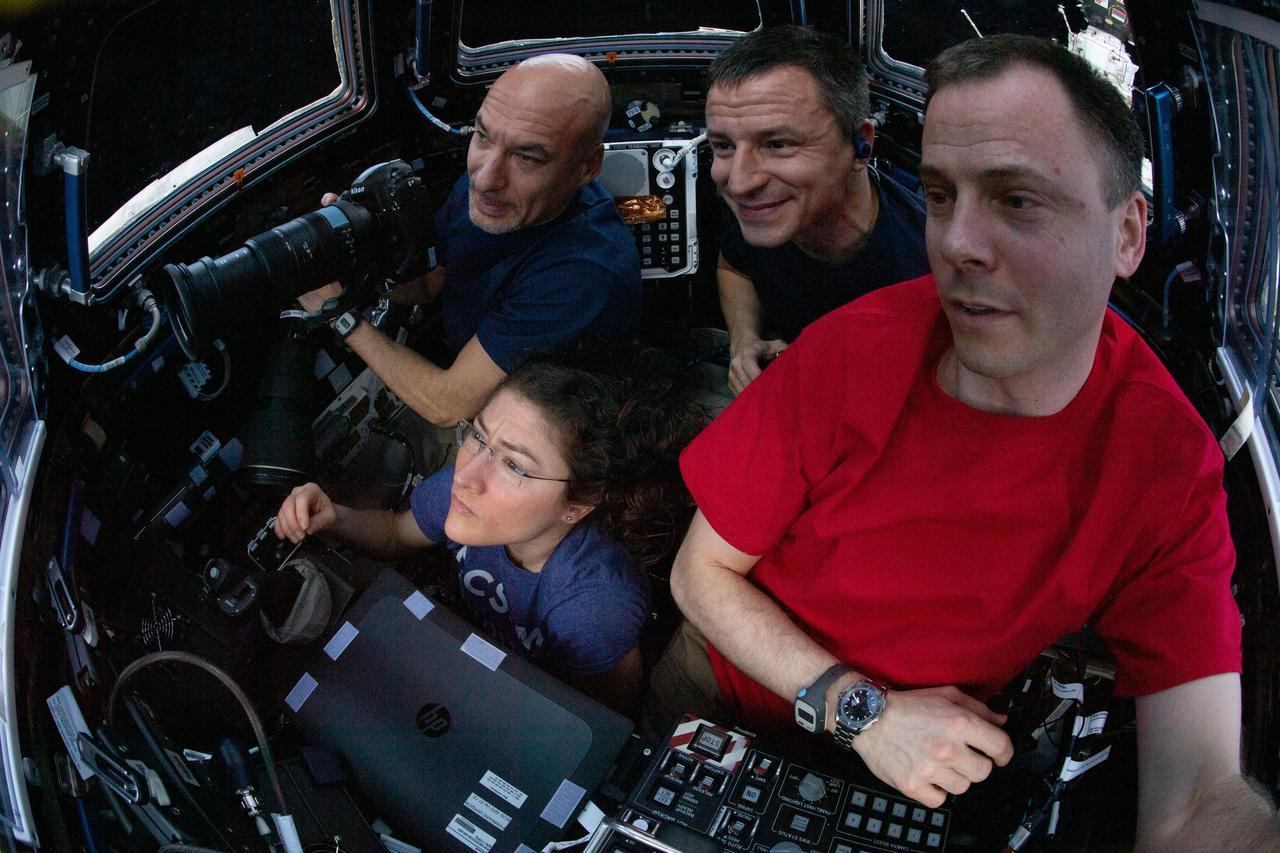
iss060e047699 -- Expedition 60 European Space Agency astronaut Luca Parmitano and NASA astronauts Christina Koch, Andrew Morgan and Nick Hague, take turns capturing images of rapidly intensifying Hurricane Dorian from the cupola inside the International Space Station on Aug. 30 as it churned over the Atlantic Ocean.

The Advanced Rapid Imaging and Analysis (ARIA) team at NASA's Jet Propulsion Laboratory in Pasadena, California, in collaboration with the Earth Observatory of Singapore (EOS), created this flood map depicting areas of the Bahamas that are likely flooded (shown by light blue pixels) as a result of Hurricane Dorian. The map was derived from synthetic aperture radar (SAR) data acquired on Sept. 2, 2019, by the European Union's Copernicus Sentinel-1 satellites operated by the European Space Agency (ESA). The map covers an area of 109 miles by 106 miles (176 kilometers by 170 kilometers) shown by the large red polygon. Each pixel measures about 32 yards (30 meters) across. This map can be used as guidance to identify areas that are likely flooded, and may be less reliable over urban and vegetated areas. The image contains modified Copernicus Sentinel data (2019) processed by ESA and analyzed by NASA, JPL-Caltech, ARIA, and EOS. This work was funded by NASA along with the Earth Observatory of Singapore and a Singapore National Research Foundation Investigatorship. https://photojournal.jpl.nasa.gov/catalog/PIA23360
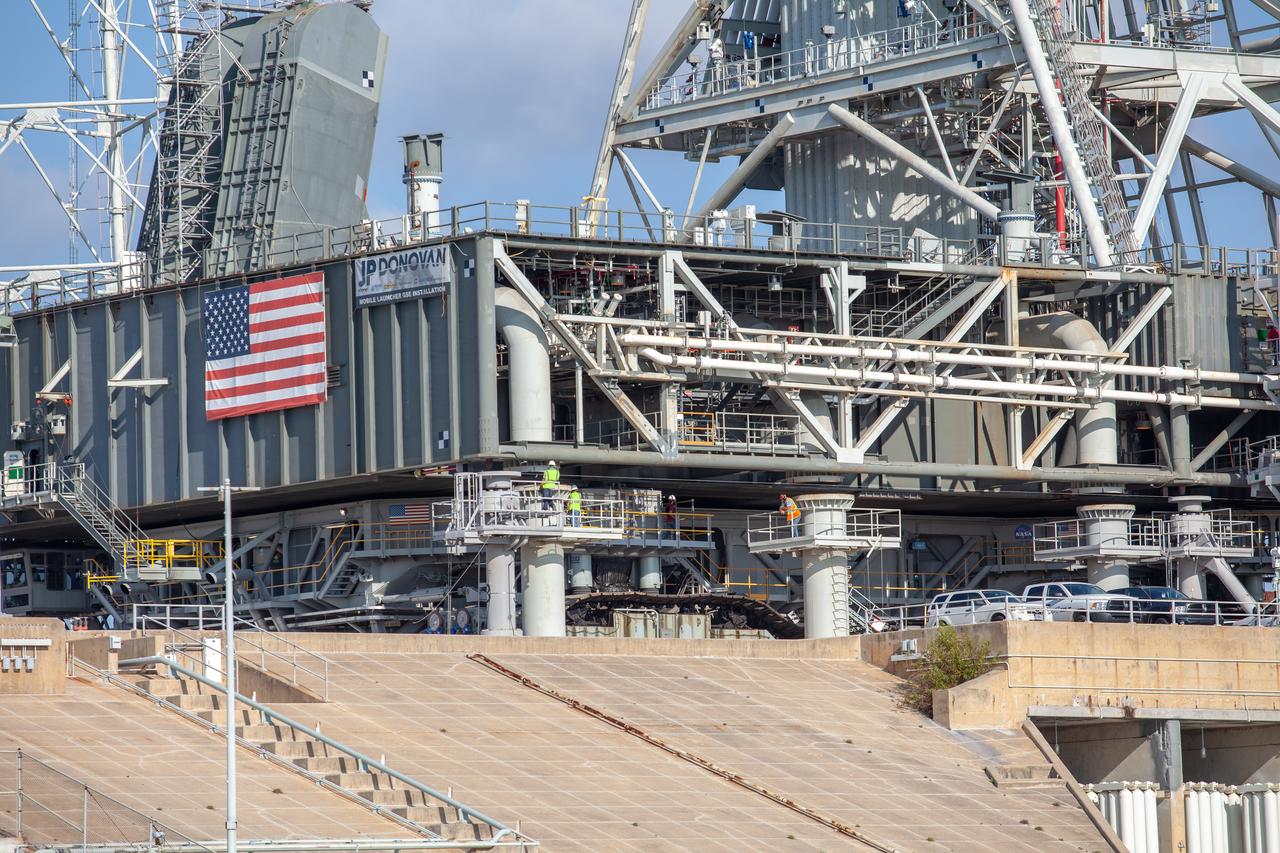
The mobile launcher for Artemis missions is at Launch Pad 39B on Sept. 11, 2019, at NASA’s Kennedy Space Center in Florida, after spending a week and a half inside the Vehicle Assembly Building (VAB) due to the approach of Hurricane Dorian. The nearly 400-foot-tall structure was moved from Launch Pad 39B to the VAB for safekeeping on Aug. 30. The storm passed about 70 miles east of the spaceport during the overnight hours Tuesday, Sept. 3, and Wednesday, Sept. 4. NASA’s Exploration Ground Systems moved the mobile launcher back to the launch pad, where teams will complete testing and checkout on the launcher in the coming weeks for the Artemis I mission.
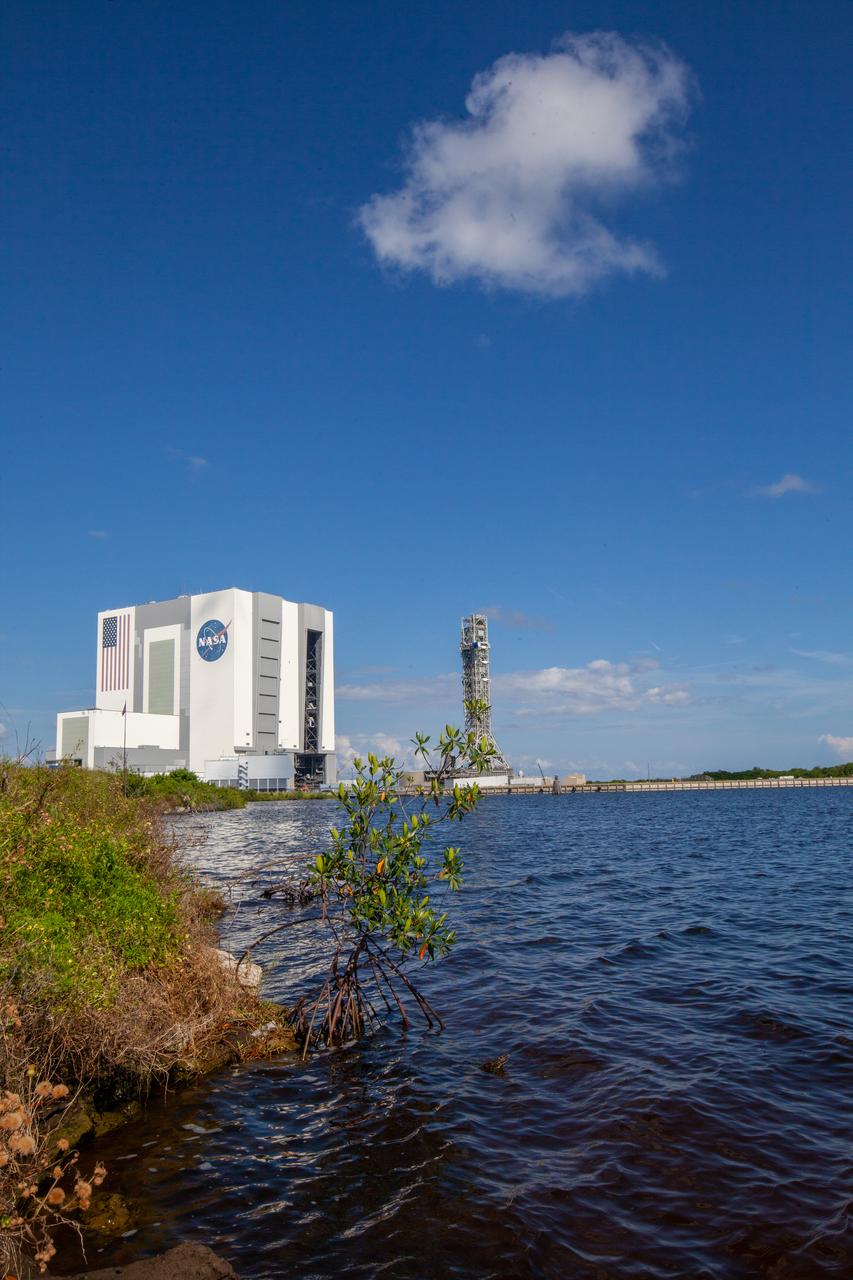
The mobile launcher for NASA’s Artemis missions rolls out of the Vehicle Assembly Building (VAB) at Kennedy Space Center in Florida on Sept. 10, 2019, after spending a week and a half inside due to the approach of Hurricane Dorian. The nearly 400-foot-tall structure was moved from Launch Pad 39B to the VAB for safekeeping on Aug. 30. The storm passed about 70 miles east of the spaceport during the overnight hours Tuesday, Sept. 3, and Wednesday, Sept. 4. NASA’s Exploration Ground Systems is moving the mobile launcher back to the launch pad, where teams will complete testing and checkout on the launcher in the coming weeks for the Artemis I mission.
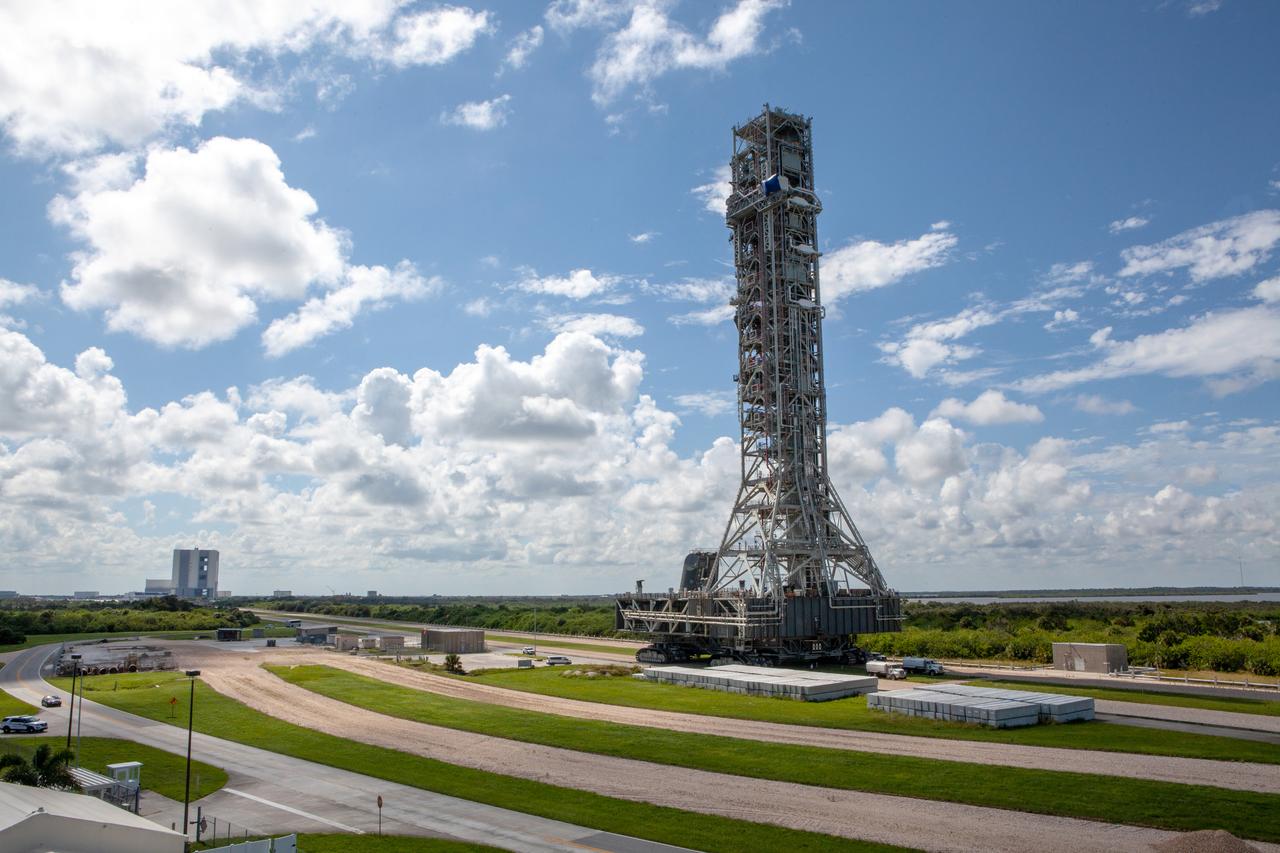
NASA’s mobile launcher (ML) atop crawler-transporter 2 moves along the crawlerway on Sept. 10, 2019, after spending a week and a half inside the Vehicle Assembly Building (VAB) at Kennedy Space Center in Florida due to the approach of Hurricane Dorian. The nearly 400-foot-tall structure was moved from Launch Pad 39B to the VAB for safekeeping on Aug. 30. The storm passed about 70 miles east of the spaceport during the overnight hours Tuesday, Sept. 3, and Wednesday, Sept. 4. NASA’s Exploration Ground Systems is moving the mobile launcher back to the launch pad, where teams will complete testing and checkout on the launcher in the coming weeks for the Artemis I mission.

The mobile launcher for Artemis missions is at Launch Pad 39B at NASA’s Kennedy Space Center in Florida on Sept. 11, 2019, after spending a week and a half inside the Vehicle Assembly Building (VAB) due to the approach of Hurricane Dorian. The nearly 400-foot-tall structure was moved from Launch Pad 39B to the VAB for safekeeping on Aug. 30. The storm passed about 70 miles east of the spaceport during the overnight hours Tuesday, Sept. 3, and Wednesday, Sept. 4. NASA’s Exploration Ground Systems moved the mobile launcher back to the launch pad, where teams will complete testing and checkout on the launcher in the coming weeks for the Artemis I mission.
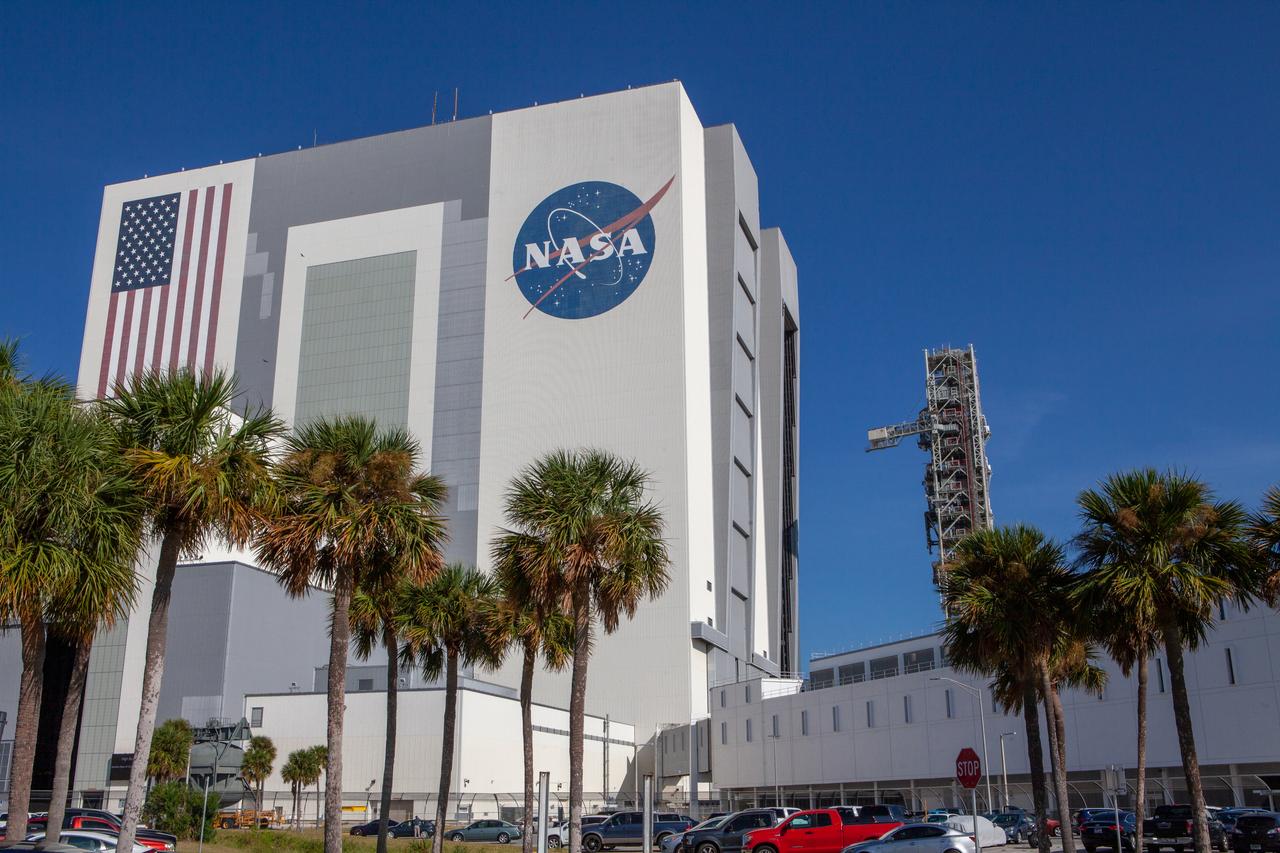
The mobile launcher for NASA’s Artemis missions rolls out of the Vehicle Assembly Building (VAB) and past the Launch Control Center at Kennedy Space Center in Florida on Sept. 10, 2019, after spending a week and a half inside due to the approach of Hurricane Dorian. The nearly 400-foot-tall structure was moved from Launch Pad 39B to the VAB for safekeeping on Aug. 30. The storm passed about 70 miles east of the spaceport during the overnight hours Tuesday, Sept. 3, and Wednesday, Sept. 4. NASA’s Exploration Ground Systems is moving the mobile launcher back to the launch pad, where teams will complete testing and checkout on the launcher in the coming weeks for the Artemis I mission.
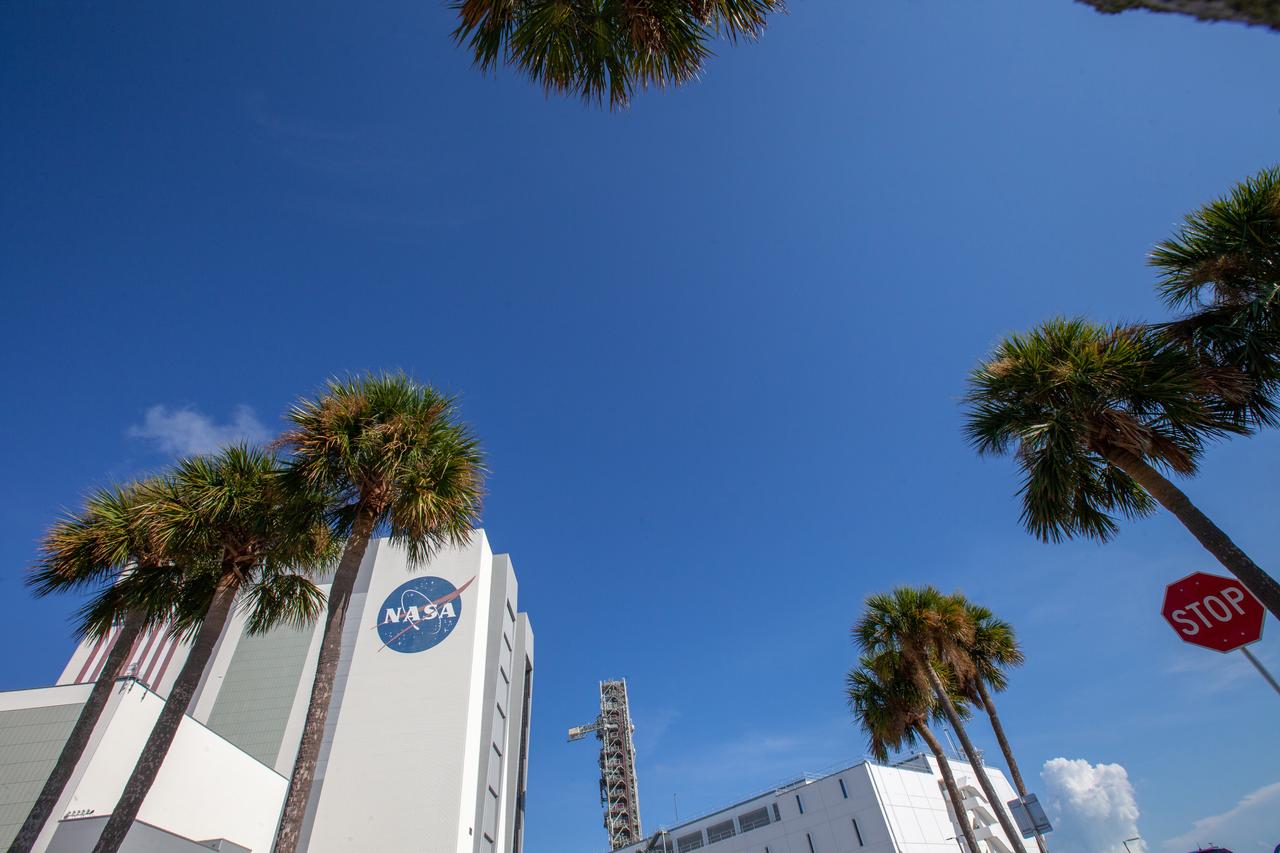
The mobile launcher for NASA’s Artemis missions rolls out of the Vehicle Assembly Building (VAB) at Kennedy Space Center in Florida on Sept. 10, 2019, after spending a week and a half inside due to the approach of Hurricane Dorian. The nearly 400-foot-tall structure was moved from Launch Pad 39B to the VAB for safekeeping on Aug. 30. The storm passed about 70 miles east of the spaceport during the overnight hours Tuesday, Sept. 3, and Wednesday, Sept. 4. NASA’s Exploration Ground Systems is moving the mobile launcher back to the launch pad, where teams will complete testing and checkout on the launcher in the coming weeks for the Artemis I mission.
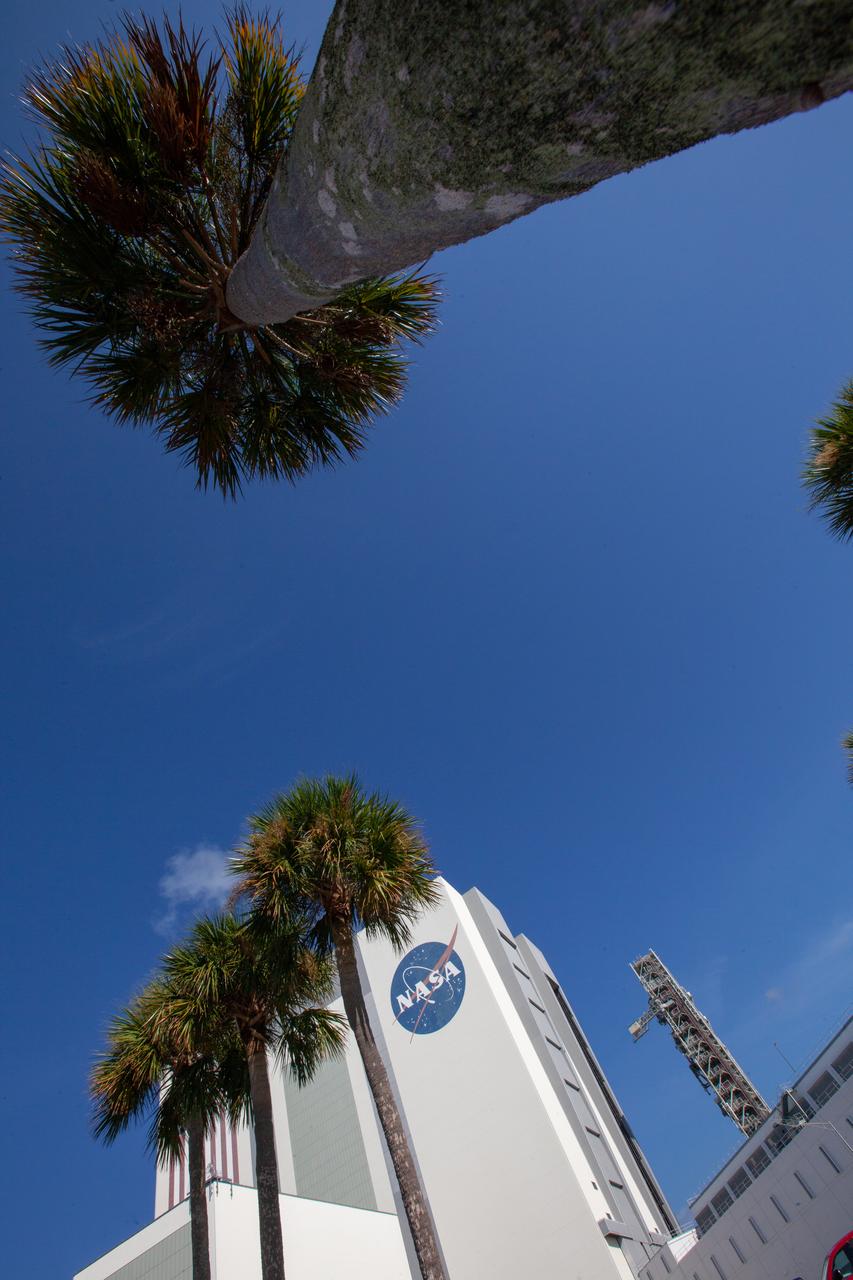
The mobile launcher for NASA’s Artemis missions rolls out of the Vehicle Assembly Building (VAB) at Kennedy Space Center in Florida on Sept. 10, 2019, after spending a week and a half inside due to the approach of Hurricane Dorian. The nearly 400-foot-tall structure was moved from Launch Pad 39B to the VAB for safekeeping on Aug. 30. The storm passed about 70 miles east of the spaceport during the overnight hours Tuesday, Sept. 3, and Wednesday, Sept. 4. NASA’s Exploration Ground Systems is moving the mobile launcher back to the launch pad, where teams will complete testing and checkout on the launcher in the coming weeks for the Artemis I mission.
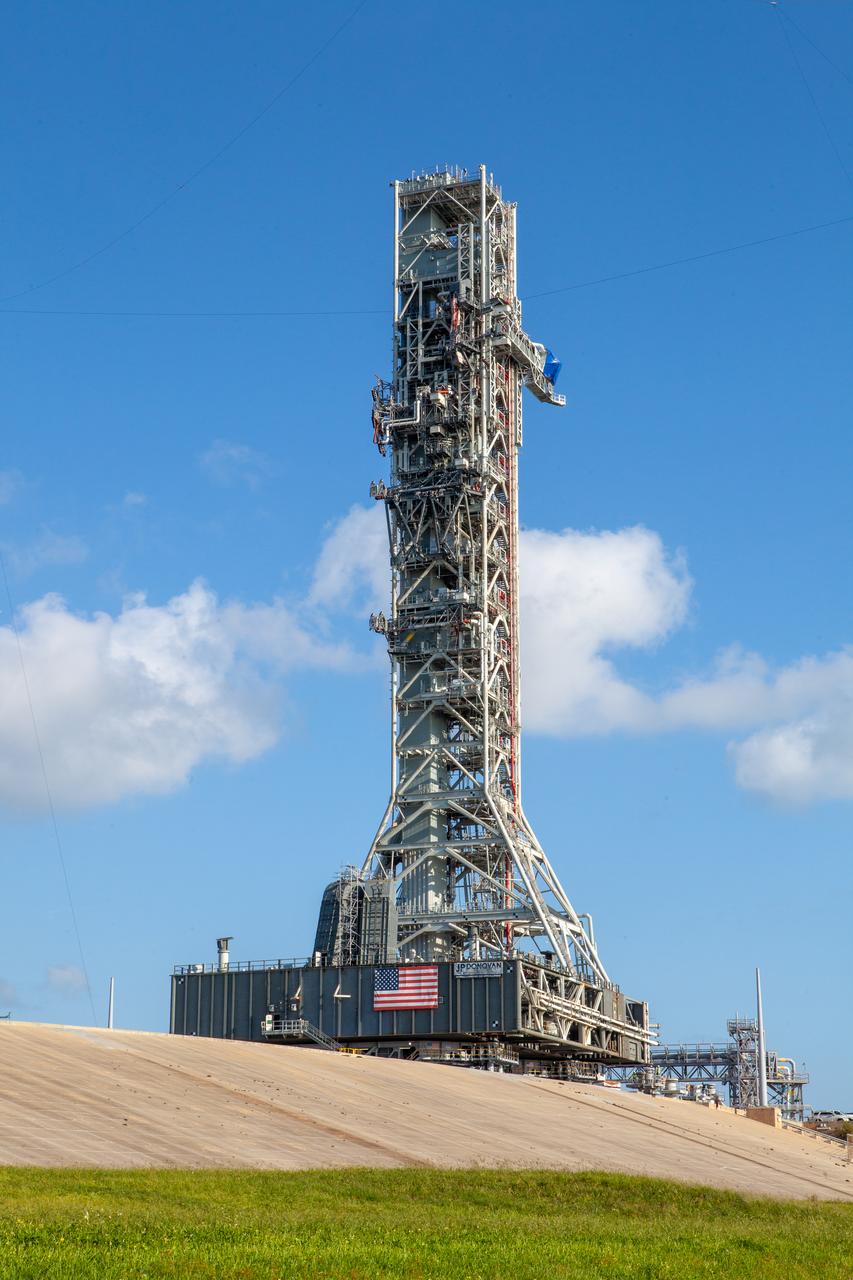
The mobile launcher for Artemis missions is at Launch Pad 39B on Sept. 11, 2019, at NASA’s Kennedy Space Center in Florida, after spending a week and a half inside the Vehicle Assembly Building (VAB) due to the approach of Hurricane Dorian. The nearly 400-foot-tall structure was moved from Launch Pad 39B to the VAB for safekeeping on Aug. 30. The storm passed about 70 miles east of the spaceport during the overnight hours Tuesday, Sept. 3, and Wednesday, Sept. 4. NASA’s Exploration Ground Systems moved the mobile launcher back to the launch pad, where teams will complete testing and checkout on the launcher in the coming weeks for the Artemis I mission.

The mobile launcher for NASA’s Artemis missions rolls out of the Vehicle Assembly Building (VAB) at Kennedy Space Center in Florida on Sept. 10, 2019, after spending a week and a half inside due to the approach of Hurricane Dorian. The nearly 400-foot-tall structure was moved from Launch Pad 39B to the VAB for safekeeping on Aug. 30. The storm passed about 70 miles east of the spaceport during the overnight hours Tuesday, Sept. 3, and Wednesday, Sept. 4. NASA’s Exploration Ground Systems is moving the mobile launcher back to the launch pad, where teams will complete testing and checkout on the launcher in the coming weeks for the Artemis I mission.
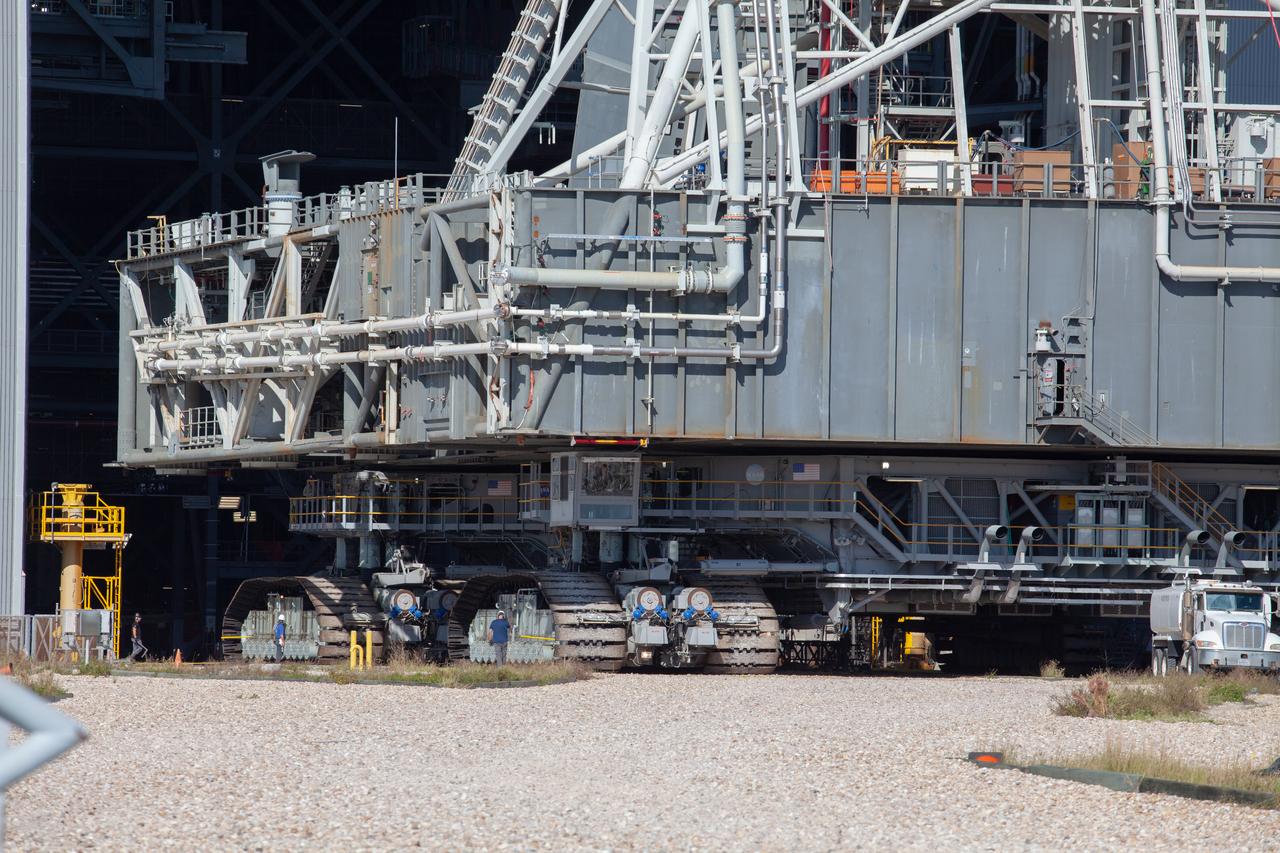
Crawler-transporter 2 carries the mobile launcher for NASA’s Artemis missions out of the Vehicle Assembly Building (VAB) at Kennedy Space Center in Florida on Sept. 10, 2019, after spending a week and a half inside due to the approach of Hurricane Dorian. The nearly 400-foot-tall structure was moved from Launch Pad 39B to the VAB for safekeeping on Aug. 30. The storm passed about 70 miles east of the spaceport during the overnight hours Tuesday, Sept. 3, and Wednesday, Sept. 4. NASA’s Exploration Ground Systems is moving the mobile launcher back to the launch pad, where teams will complete testing and checkout on the launcher in the coming weeks for the Artemis I mission.
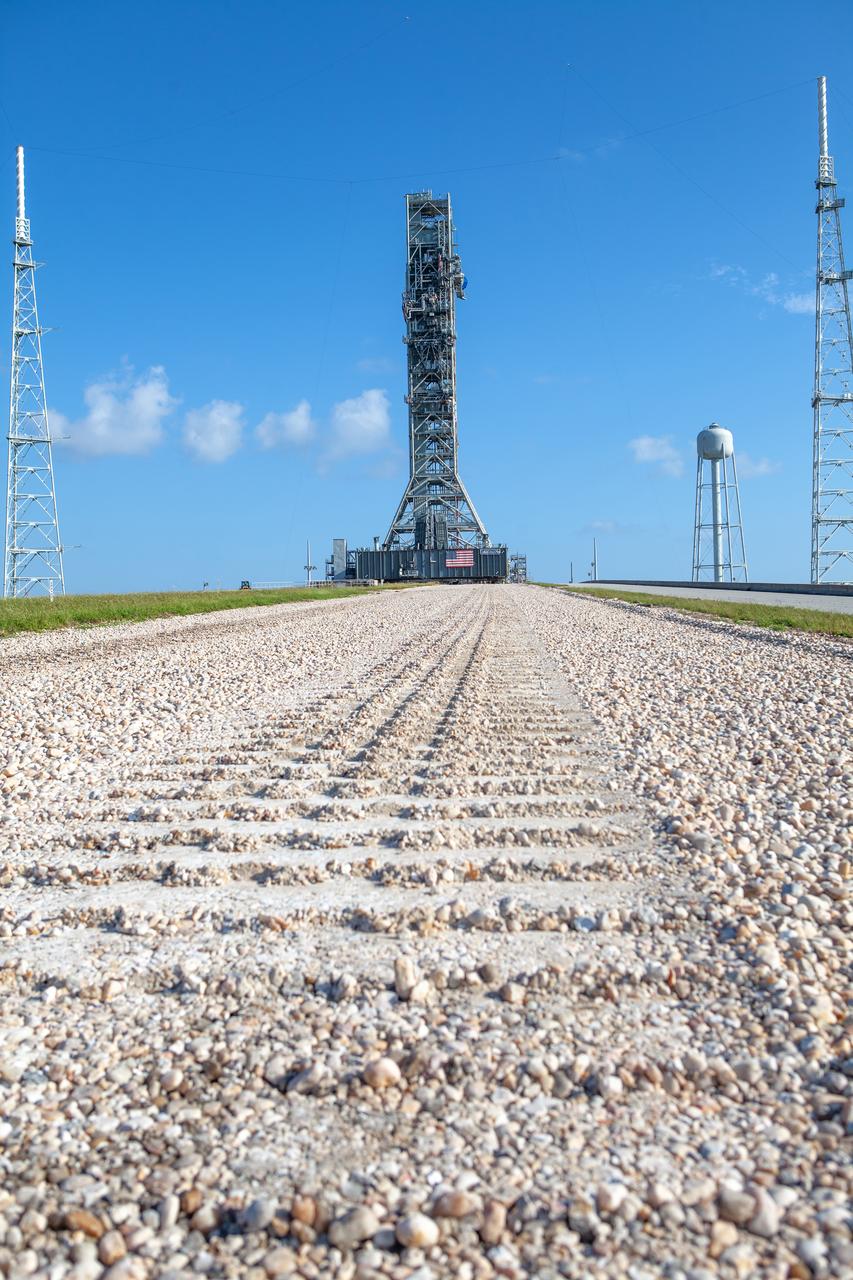
The mobile launcher for Artemis missions is at Launch Pad 39B on Sept. 11, 2019, at NASA’s Kennedy Space Center in Florida, after spending a week and a half inside the Vehicle Assembly Building (VAB) due to the approach of Hurricane Dorian. The nearly 400-foot-tall structure was moved from Launch Pad 39B to the VAB for safekeeping on Aug. 30. The storm passed about 70 miles east of the spaceport during the overnight hours Tuesday, Sept. 3, and Wednesday, Sept. 4. NASA’s Exploration Ground Systems is moving the mobile launcher back to the launch pad, where teams will complete testing and checkout on the launcher in the coming weeks for the Artemis I mission.
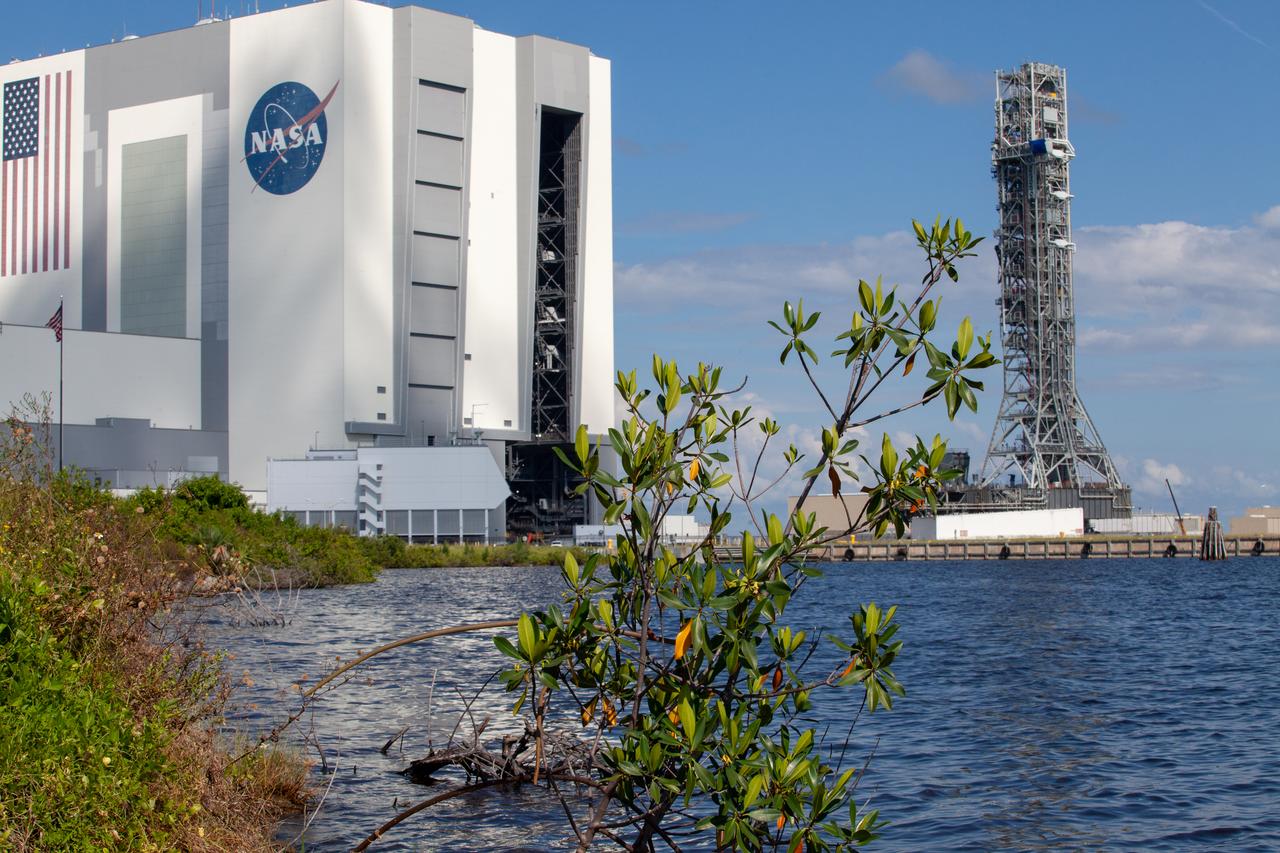
The mobile launcher for NASA’s Artemis missions rolls out of the Vehicle Assembly Building (VAB) at Kennedy Space Center in Florida on Sept. 10, 2019, after spending a week and a half inside due to the approach of Hurricane Dorian. The nearly 400-foot-tall structure was moved from Launch Pad 39B to the VAB for safekeeping on Aug. 30. The storm passed about 70 miles east of the spaceport during the overnight hours Tuesday, Sept. 3, and Wednesday, Sept. 4. NASA’s Exploration Ground Systems is moving the mobile launcher back to the launch pad, where teams will complete testing and checkout on the launcher in the coming weeks for the Artemis I mission.
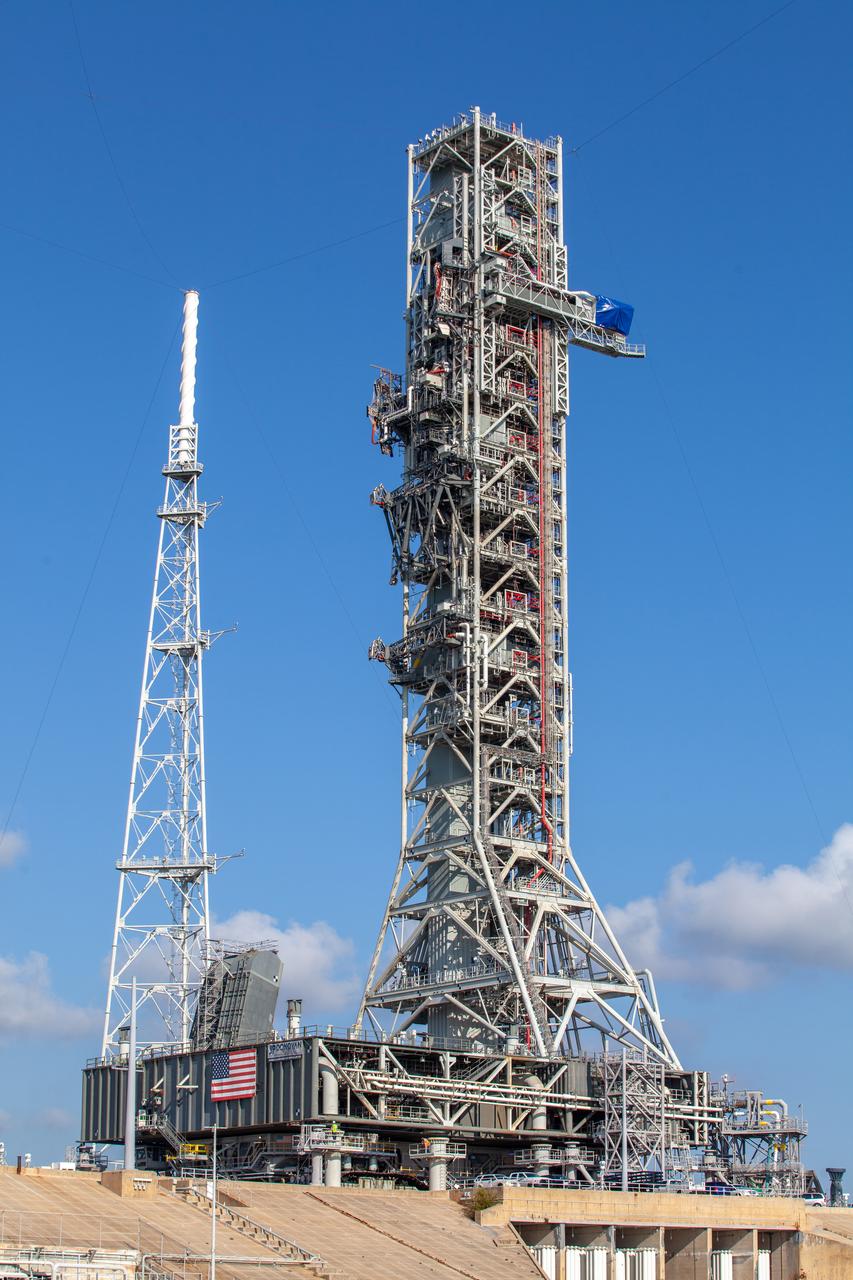
The mobile launcher for Artemis missions is at Launch Pad 39B on Sept. 11, 2019, at NASA’s Kennedy Space Center in Florida, after spending a week and a half inside the Vehicle Assembly Building (VAB) due to the approach of Hurricane Dorian. The nearly 400-foot-tall structure was moved from Launch Pad 39B to the VAB for safekeeping on Aug. 30. The storm passed about 70 miles east of the spaceport during the overnight hours Tuesday, Sept. 3, and Wednesday, Sept. 4. NASA’s Exploration Ground Systems moved the mobile launcher back to the launch pad, where teams will complete testing and checkout on the launcher in the coming weeks for the Artemis I mission.
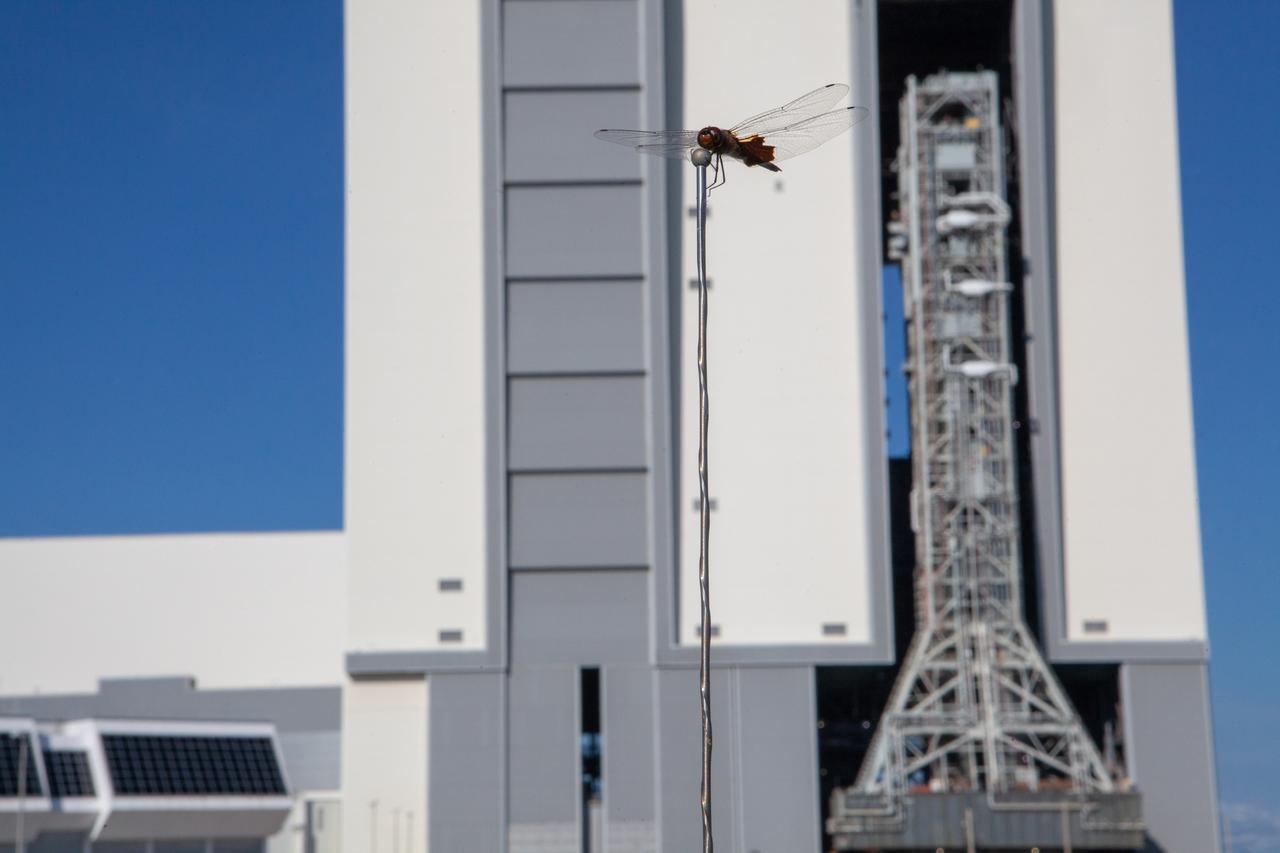
The mobile launcher for NASA’s Artemis missions rolls out of the Vehicle Assembly Building (VAB) at Kennedy Space Center in Florida on Sept. 10, 2019, after spending a week and a half inside due to the approach of Hurricane Dorian. The nearly 400-foot-tall structure was moved from Launch Pad 39B to the VAB for safekeeping on Aug. 30. The storm passed about 70 miles east of the spaceport during the overnight hours Tuesday, Sept. 3, and Wednesday, Sept. 4. NASA’s Exploration Ground Systems is moving the mobile launcher back to the launch pad, where teams will complete testing and checkout on the launcher in the coming weeks for the Artemis I mission.
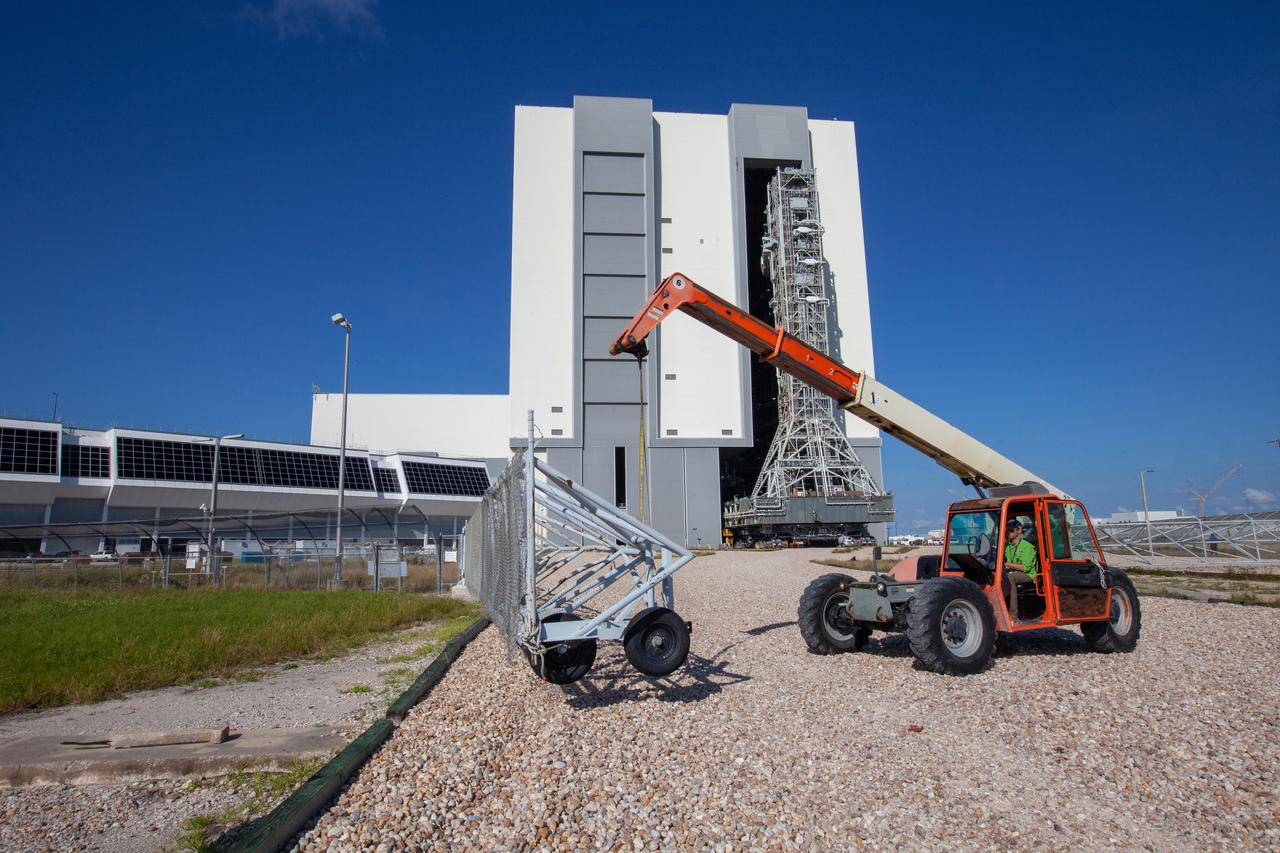
The crawlerway gate is opened as the mobile launcher for NASA’s Artemis missions rolls out of the Vehicle Assembly Building (VAB) at Kennedy Space Center in Florida on Sept. 10, 2019, after spending a week and a half inside due to the approach of Hurricane Dorian. The nearly 400-foot-tall structure was moved from Launch Pad 39B to the VAB for safekeeping on Aug. 30. The storm passed about 70 miles east of the spaceport during the overnight hours Tuesday, Sept. 3, and Wednesday, Sept. 4. NASA’s Exploration Ground Systems is moving the mobile launcher back to the launch pad, where teams will complete testing and checkout on the launcher in the coming weeks for the Artemis I mission.
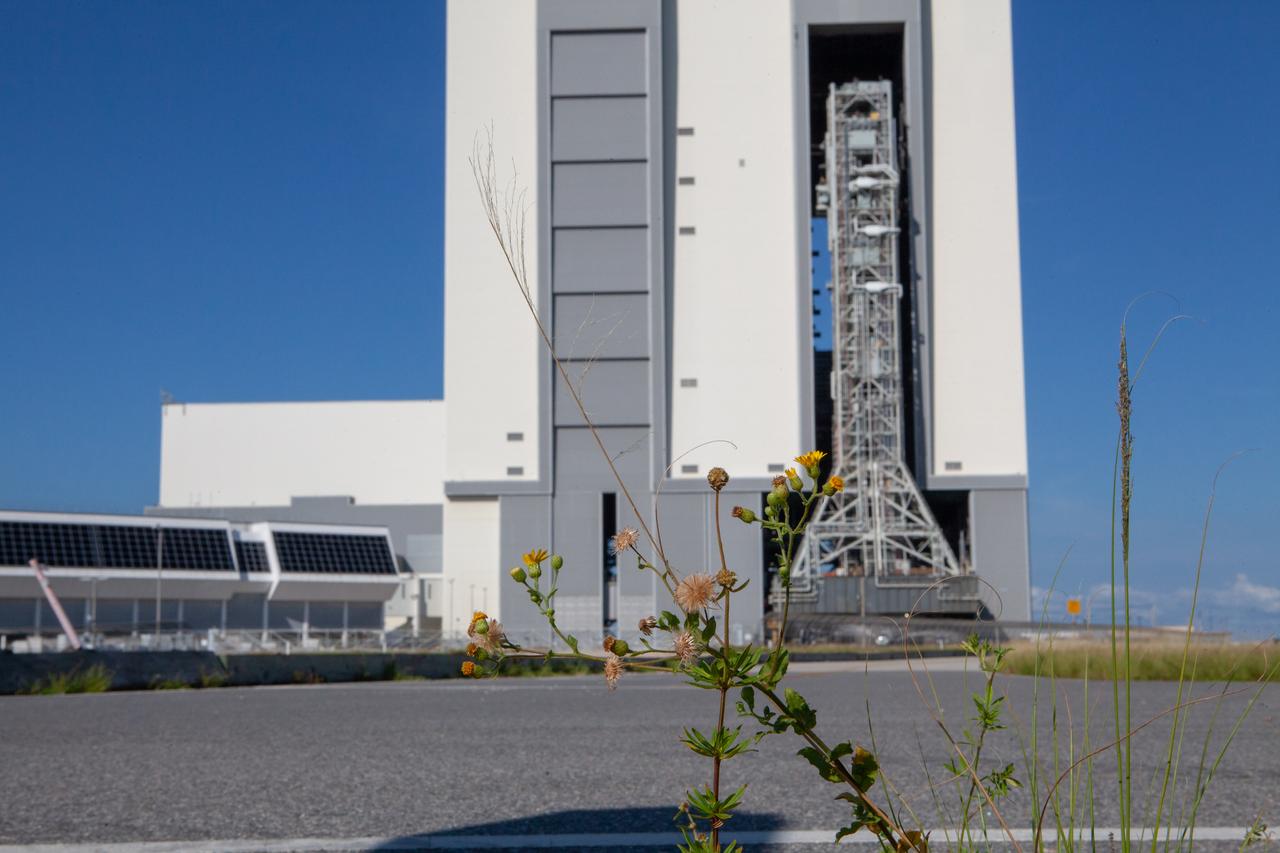
The mobile launcher for NASA’s Artemis missions rolls out of the Vehicle Assembly Building (VAB) at Kennedy Space Center in Florida on Sept. 10, 2019, after spending a week and a half inside due to the approach of Hurricane Dorian. The nearly 400-foot-tall structure was moved from Launch Pad 39B to the VAB for safekeeping on Aug. 30. The storm passed about 70 miles east of the spaceport during the overnight hours Tuesday, Sept. 3, and Wednesday, Sept. 4. NASA’s Exploration Ground Systems is moving the mobile launcher back to the launch pad, where teams will complete testing and checkout on the launcher in the coming weeks for the Artemis I mission.
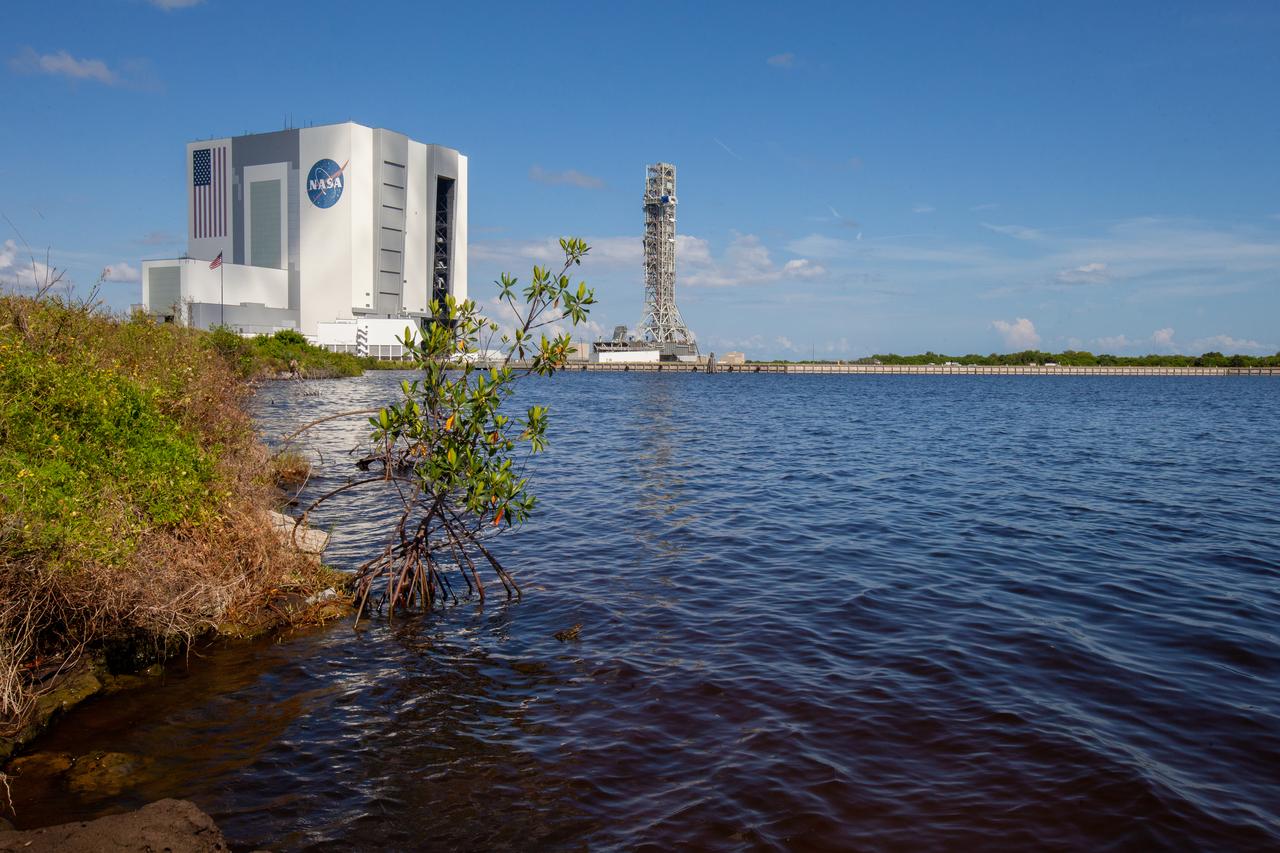
The mobile launcher for NASA’s Artemis missions rolls out of the Vehicle Assembly Building (VAB) at Kennedy Space Center in Florida on Sept. 10, 2019, after spending a week and a half inside due to the approach of Hurricane Dorian. The nearly 400-foot-tall structure was moved from Launch Pad 39B to the VAB for safekeeping on Aug. 30. The storm passed about 70 miles east of the spaceport during the overnight hours Tuesday, Sept. 3, and Wednesday, Sept. 4. NASA’s Exploration Ground Systems is moving the mobile launcher back to the launch pad, where teams will complete testing and checkout on the launcher in the coming weeks for the Artemis I mission.
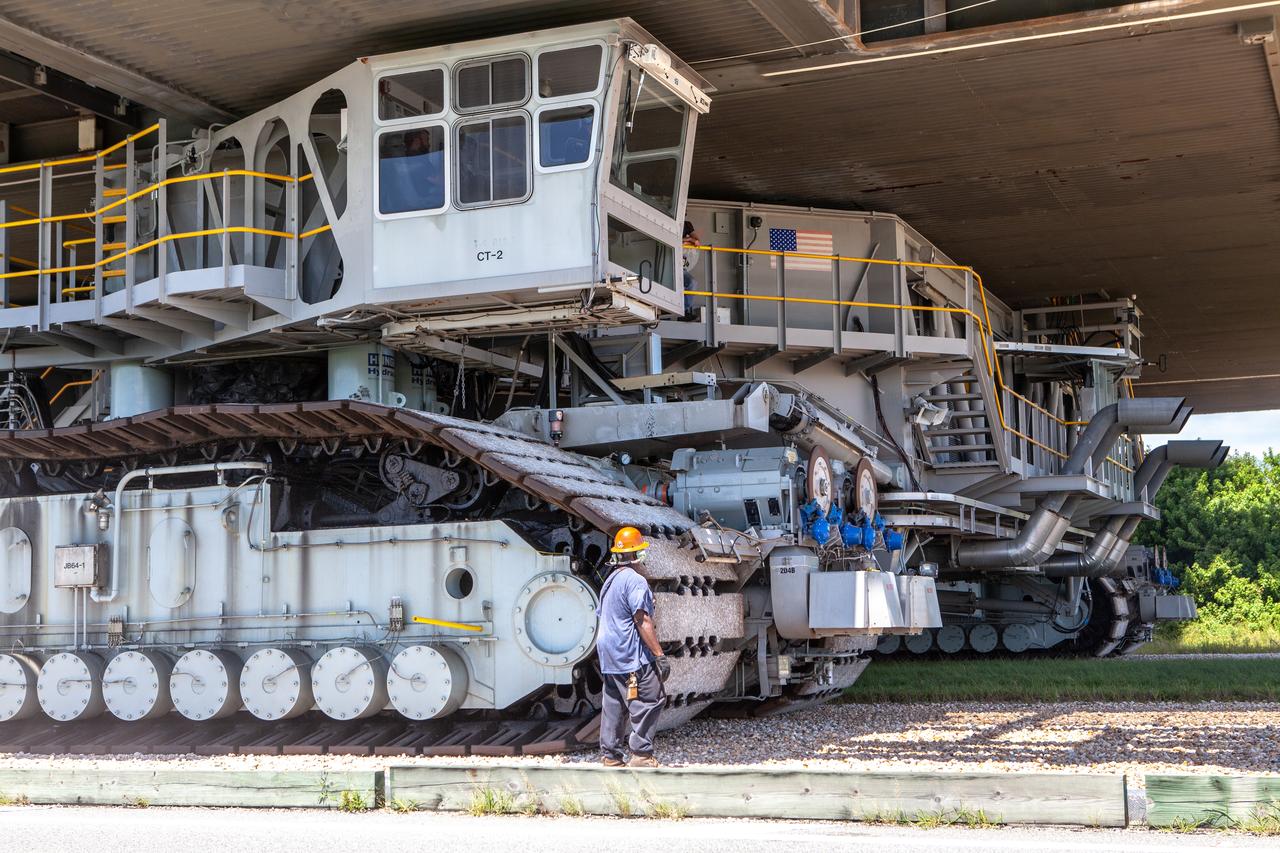
NASA’s mobile launcher (ML) atop crawler-transporter 2 moves along the crawlerway on Sept. 10, 2019, after spending a week and a half inside the Vehicle Assembly Building (VAB) at Kennedy Space Center in Florida due to the approach of Hurricane Dorian. The nearly 400-foot-tall structure was moved from Launch Pad 39B to the VAB for safekeeping on Aug. 30. The storm passed about 70 miles east of the spaceport during the overnight hours Tuesday, Sept. 3, and Wednesday, Sept. 4. NASA’s Exploration Ground Systems is moving the mobile launcher back to the launch pad, where teams will complete testing and checkout on the launcher in the coming weeks for the Artemis I mission.
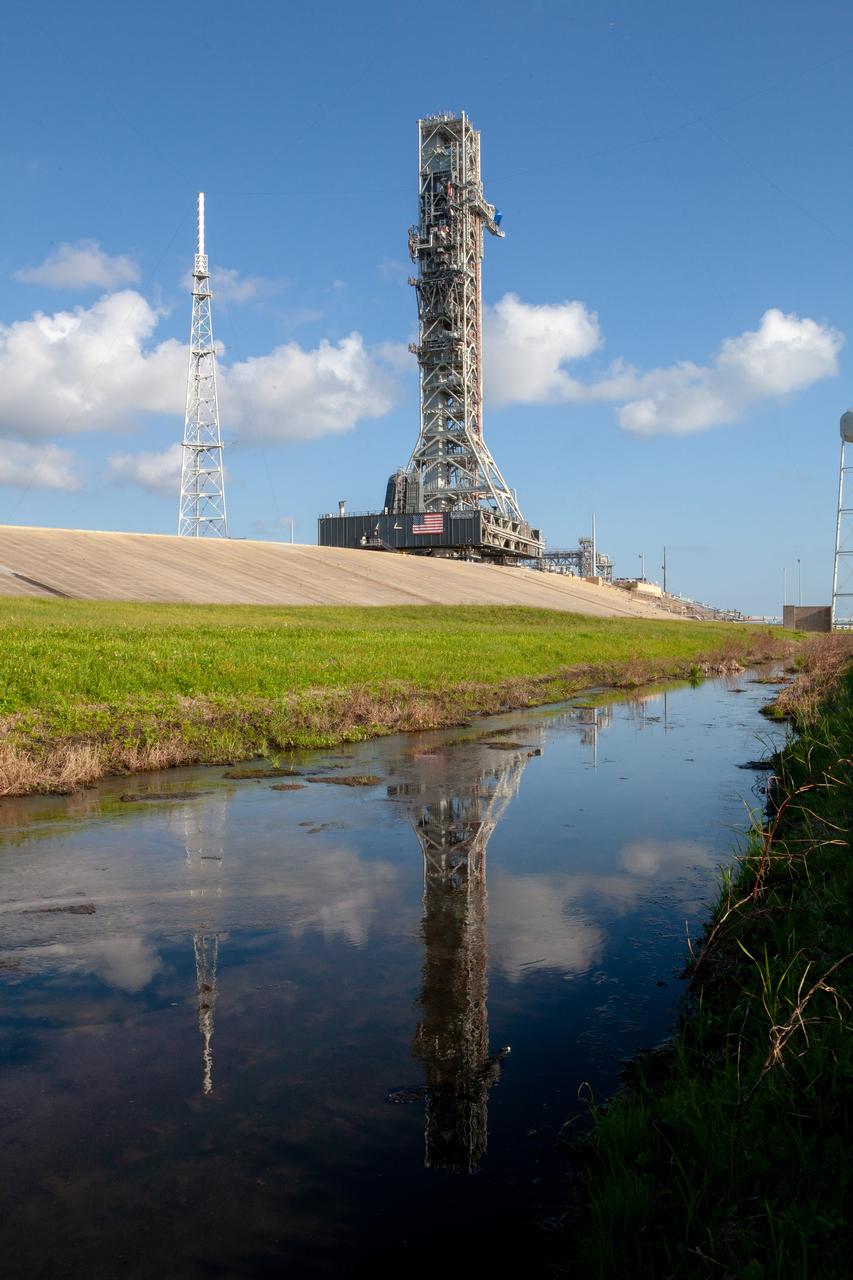
The mobile launcher for Artemis missions is at Launch Pad 39B on Sept. 11, 2019, at NASA’s Kennedy Space Center in Florida, after spending a week and a half inside the Vehicle Assembly Building (VAB) due to the approach of Hurricane Dorian. The nearly 400-foot-tall structure was moved from Launch Pad 39B to the VAB for safekeeping on Aug. 30. The storm passed about 70 miles east of the spaceport during the overnight hours Tuesday, Sept. 3, and Wednesday, Sept. 4. NASA’s Exploration Ground Systems moved the mobile launcher back to the launch pad, where teams will complete testing and checkout on the launcher in the coming weeks for the Artemis I mission.
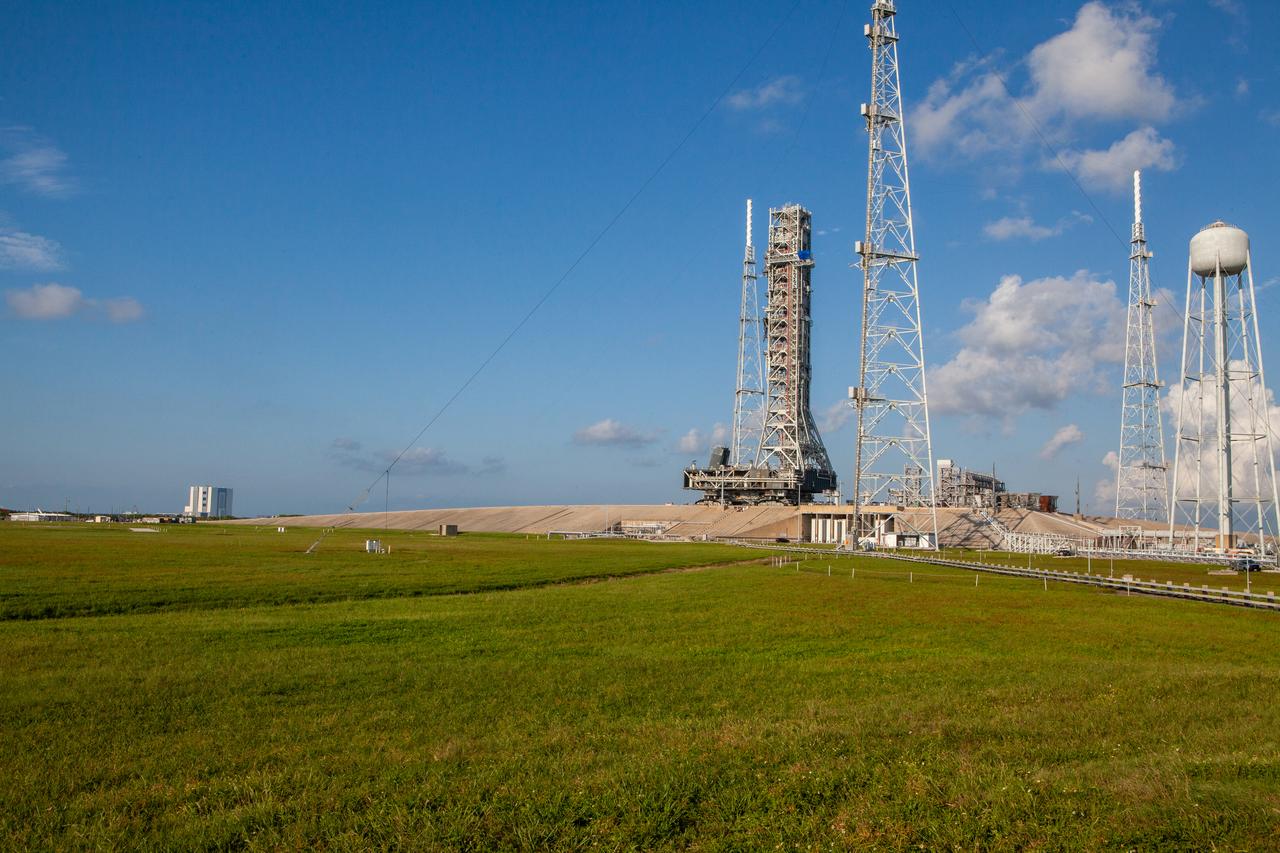
The mobile launcher for Artemis missions is at Launch Pad 39B on Sept. 11, 2019, at NASA’s Kennedy Space Center in Florida, after spending a week and a half inside the Vehicle Assembly Building (VAB) due to the approach of Hurricane Dorian. The nearly 400-foot-tall structure was moved from Launch Pad 39B to the VAB for safekeeping on Aug. 30. The storm passed about 70 miles east of the spaceport during the overnight hours Tuesday, Sept. 3, and Wednesday, Sept. 4. NASA’s Exploration Ground Systems is moved the mobile launcher back to the launch pad, where teams will complete testing and checkout on the launcher in the coming weeks for the Artemis I mission.
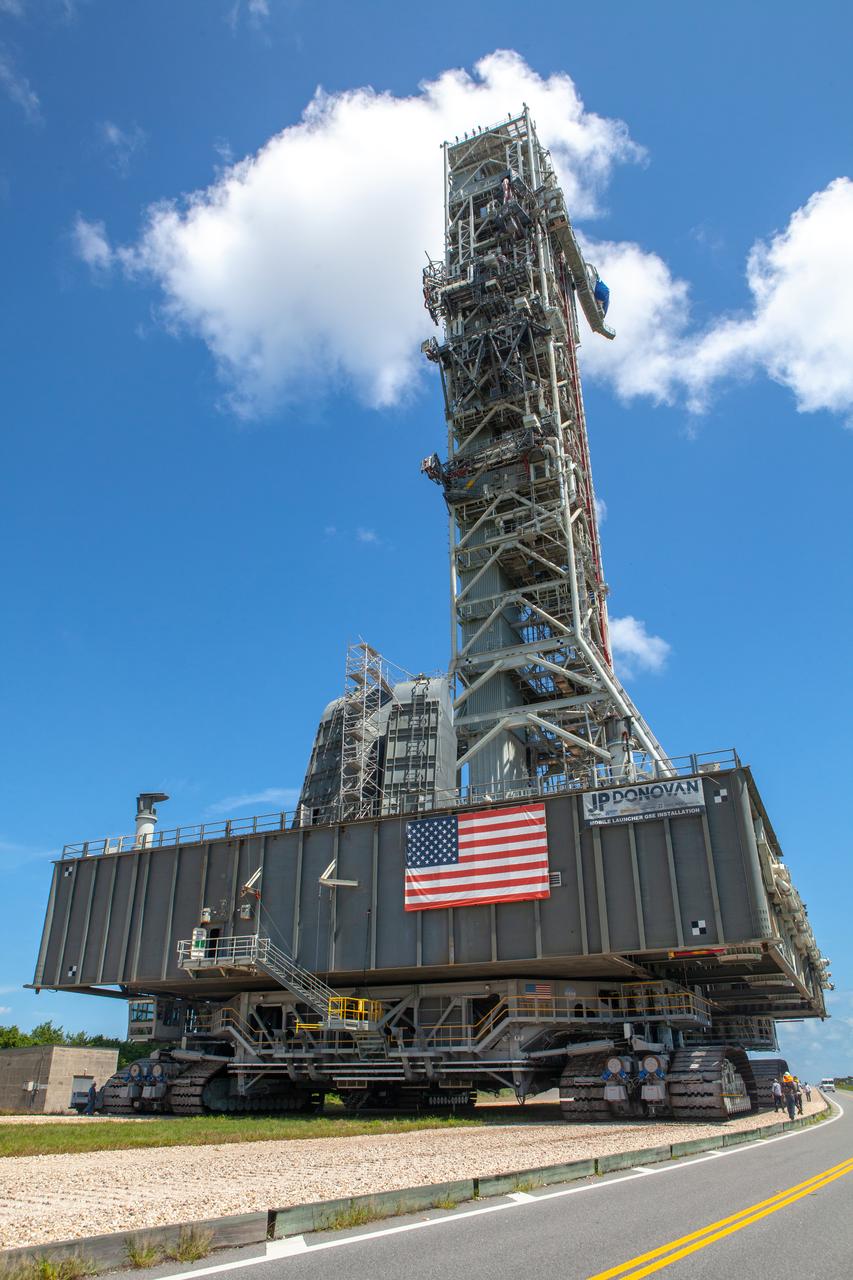
NASA’s mobile launcher (ML) atop crawler-transporter 2 moves along the crawlerway on Sept. 10, 2019, after spending a week and a half inside the Vehicle Assembly Building (VAB) at Kennedy Space Center in Florida due to the approach of Hurricane Dorian. The nearly 400-foot-tall structure was moved from Launch Pad 39B to the VAB for safekeeping on Aug. 30. The storm passed about 70 miles east of the spaceport during the overnight hours Tuesday, Sept. 3, and Wednesday, Sept. 4. NASA’s Exploration Ground Systems is moving the mobile launcher back to the launch pad, where teams will complete testing and checkout on the launcher in the coming weeks for the Artemis I mission.
The mobile launcher for NASA’s Artemis missions rolls toward Launch Pad 39B at Kennedy Space Center in Florida on Sept. 10, 2019, after spending a week and a half inside due to the approach of Hurricane Dorian. The nearly 400-foot-tall structure was moved from Launch Pad 39B to the Vehicle Assembly Building for safekeeping on Aug. 30. The storm passed about 70 miles east of the spaceport during the overnight hours Tuesday, Sept. 3, and Wednesday, Sept. 4. NASA’s Exploration Ground Systems is moving the mobile launcher back to the launch pad, where teams will complete testing and checkout on the launcher in the coming weeks for the Artemis I mission.
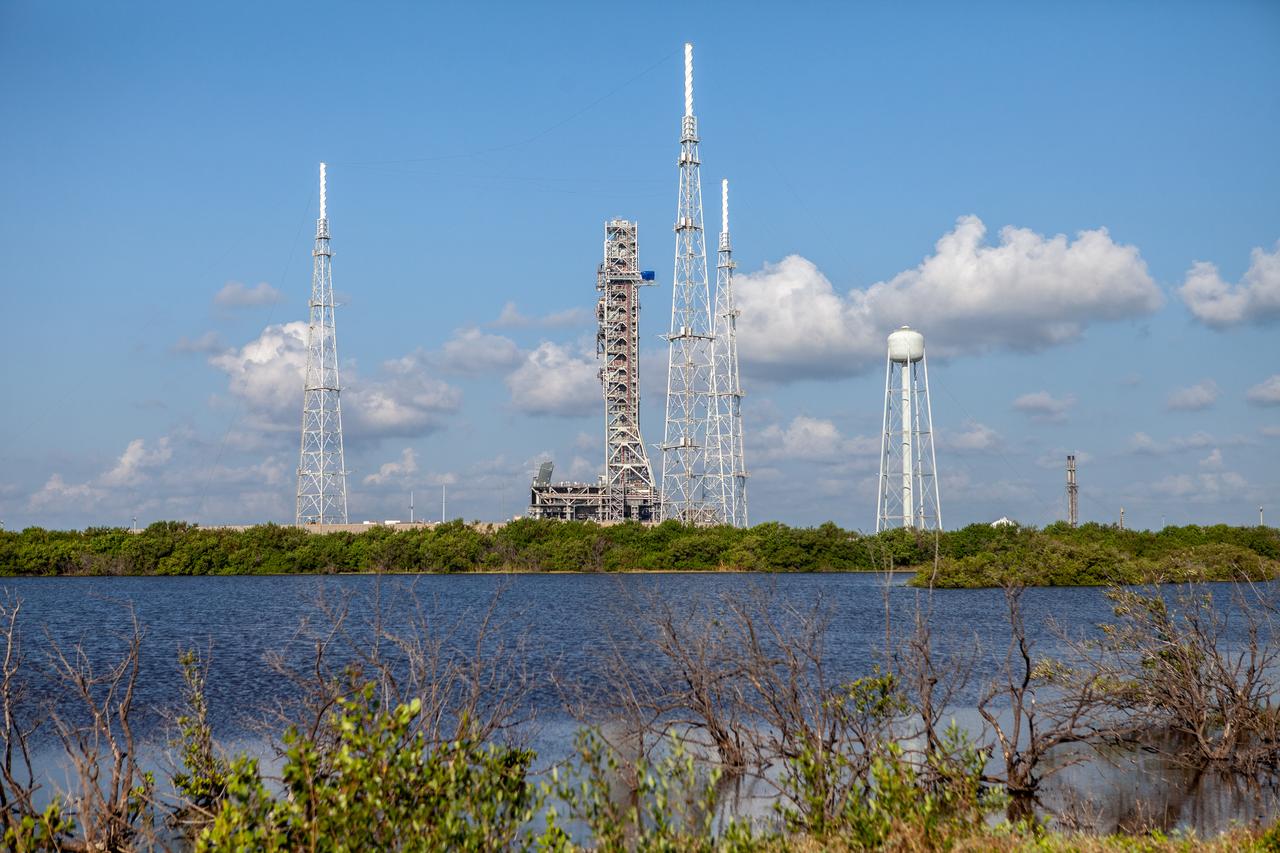
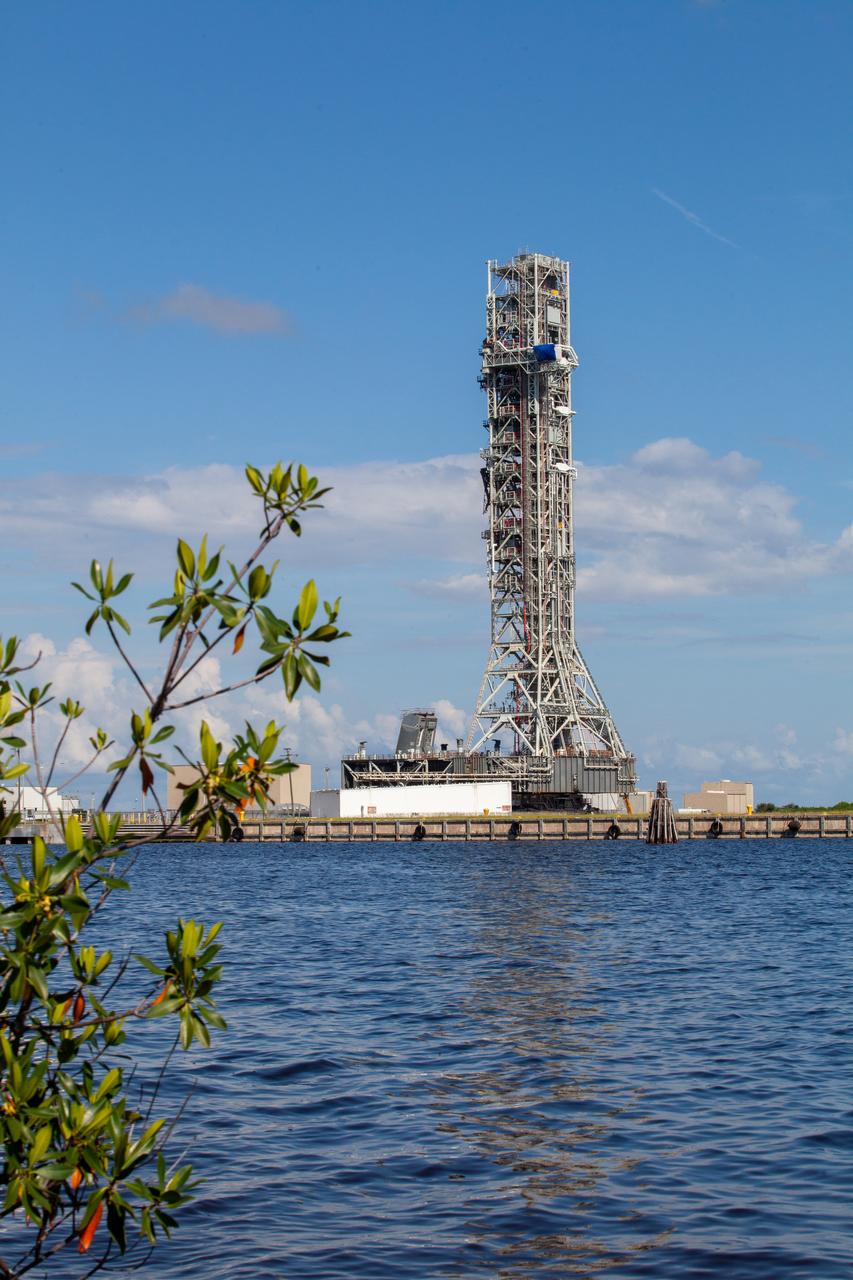
The mobile launcher for Artemis missions is at Launch Pad 39B at NASA’s Kennedy Space Center in Florida on Sept. 11, 2019, after spending a week and a half inside the Vehicle Assembly Building (VAB) due to the approach of Hurricane Dorian. The nearly 400-foot-tall structure was moved from Launch Pad 39B to the VAB for safekeeping on Aug. 30. The storm passed about 70 miles east of the spaceport during the overnight hours Tuesday, Sept. 3, and Wednesday, Sept. 4. NASA’s Exploration Ground Systems moved the mobile launcher back to the launch pad, where teams will complete testing and checkout on the launcher in the coming weeks for the Artemis I mission.
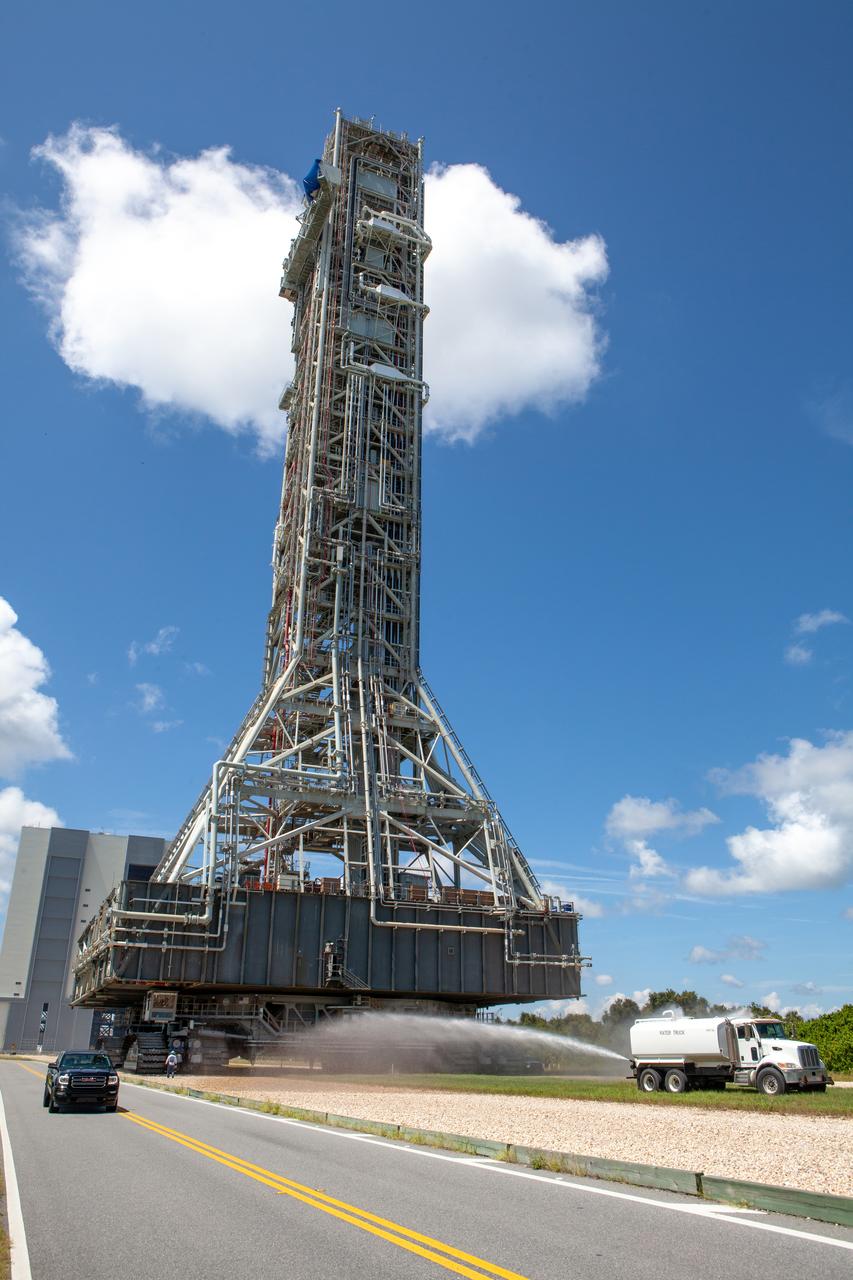
The mobile launcher for NASA’s Artemis missions moves along the crawlerway on Sept. 10, 2019, after spending a week and a half inside the Vehicle Assembly Building (VAB) at Kennedy Space Center in Florida due to the approach of Hurricane Dorian. The nearly 400-foot-tall structure was moved from Launch Pad 39B to the VAB for safekeeping on Aug. 30. The storm passed about 70 miles east of the spaceport during the overnight hours Tuesday, Sept. 3, and Wednesday, Sept. 4. NASA’s Exploration Ground Systems is moving the mobile launcher back to the launch pad, where teams will complete testing and checkout on the launcher in the coming weeks for the Artemis I mission.
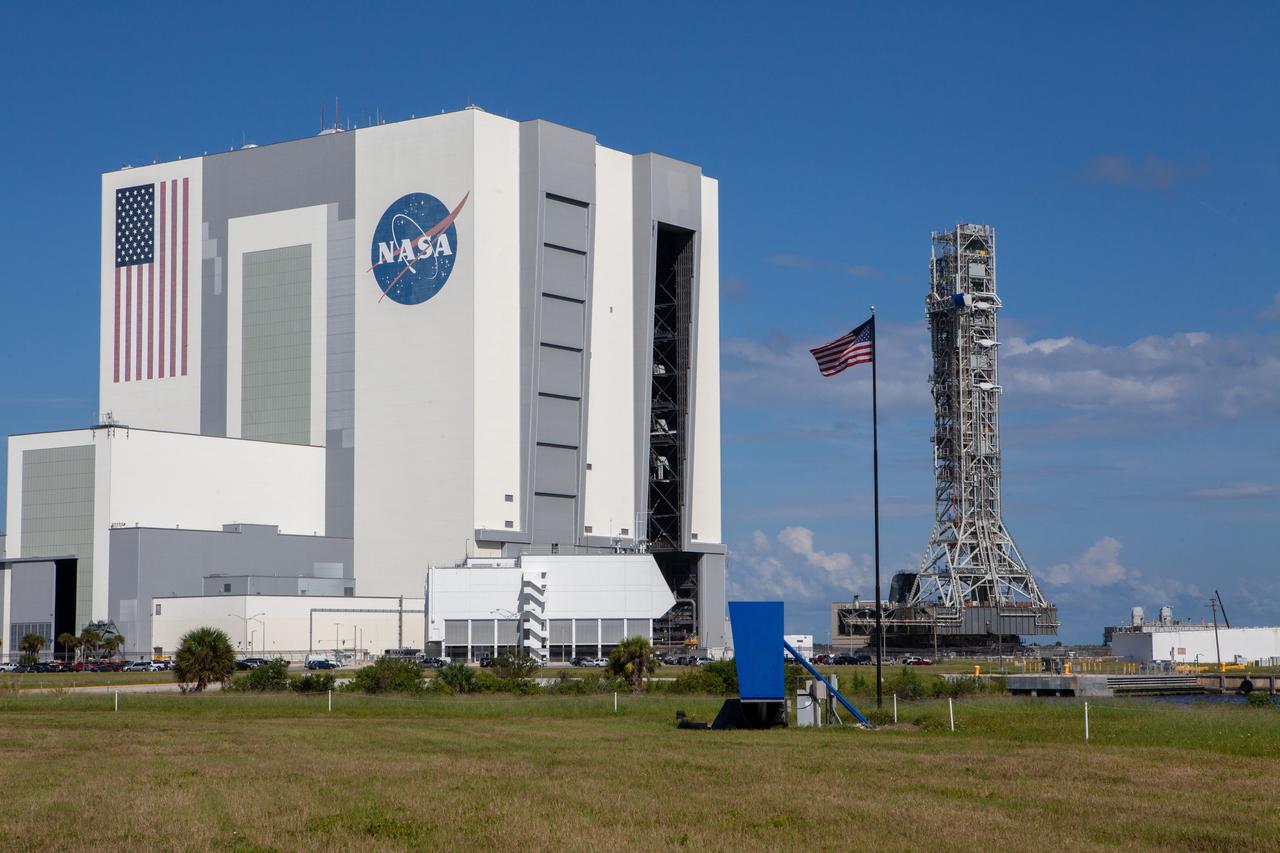
The mobile launcher for NASA’s Artemis missions rolls out of the Vehicle Assembly Building (VAB) at Kennedy Space Center in Florida on Sept. 10, 2019, after spending a week and a half inside due to the approach of Hurricane Dorian. The nearly 400-foot-tall structure was moved from Launch Pad 39B to the VAB for safekeeping on Aug. 30. The storm passed about 70 miles east of the spaceport during the overnight hours Tuesday, Sept. 3, and Wednesday, Sept. 4. NASA’s Exploration Ground Systems is moving the mobile launcher back to the launch pad, where teams will complete testing and checkout on the launcher in the coming weeks for the Artemis I mission.
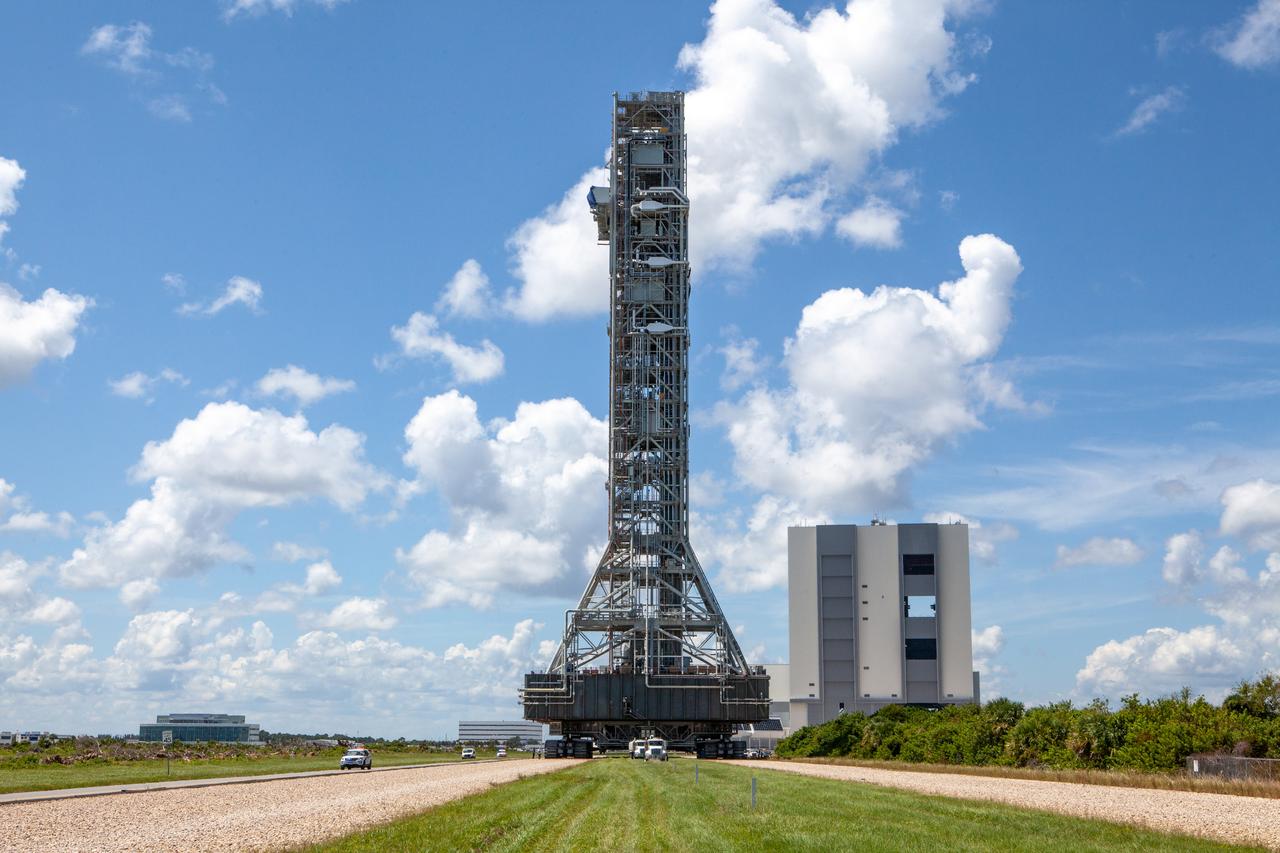
NASA’s mobile launcher (ML) atop crawler-transporter 2 moves along the crawlerway on Sept. 10, 2019, after spending a week and a half inside the Vehicle Assembly Building (VAB) at Kennedy Space Center in Florida due to the approach of Hurricane Dorian. The nearly 400-foot-tall structure was moved from Launch Pad 39B to the VAB for safekeeping on Aug. 30. The storm passed about 70 miles east of the spaceport during the overnight hours Tuesday, Sept. 3, and Wednesday, Sept. 4. NASA’s Exploration Ground Systems is moving the mobile launcher back to the launch pad, where teams will complete testing and checkout on the launcher in the coming weeks for the Artemis I mission.
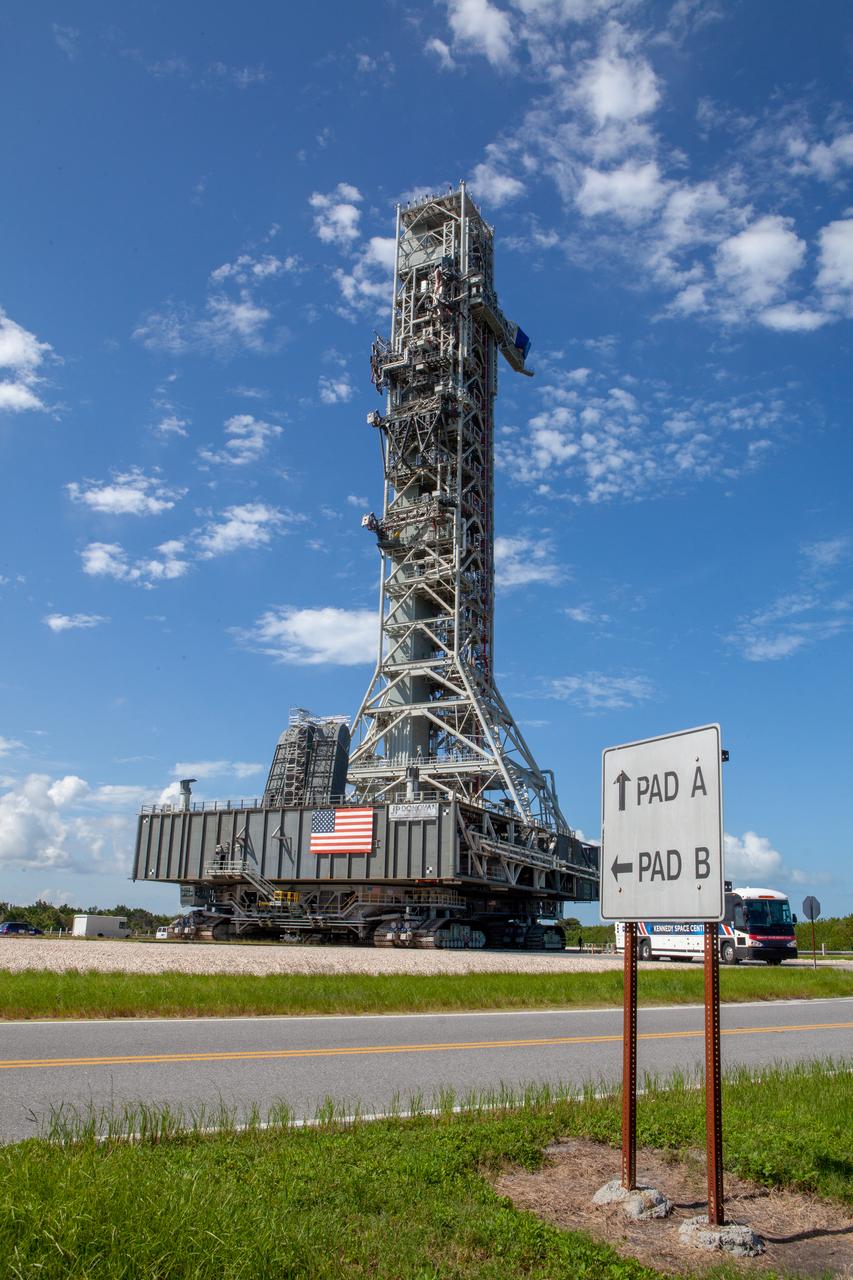
NASA’s mobile launcher (ML) atop crawler-transporter 2 moves along the crawlerway on Sept. 10, 2019, after spending a week and a half inside the Vehicle Assembly Building (VAB) at Kennedy Space Center in Florida due to the approach of Hurricane Dorian. The nearly 400-foot-tall structure was moved from Launch Pad 39B to the VAB for safekeeping on Aug. 30. The storm passed about 70 miles east of the spaceport during the overnight hours Tuesday, Sept. 3, and Wednesday, Sept. 4. NASA’s Exploration Ground Systems is moving the mobile launcher back to the launch pad, where teams will complete testing and checkout on the launcher in the coming weeks for the Artemis I mission.
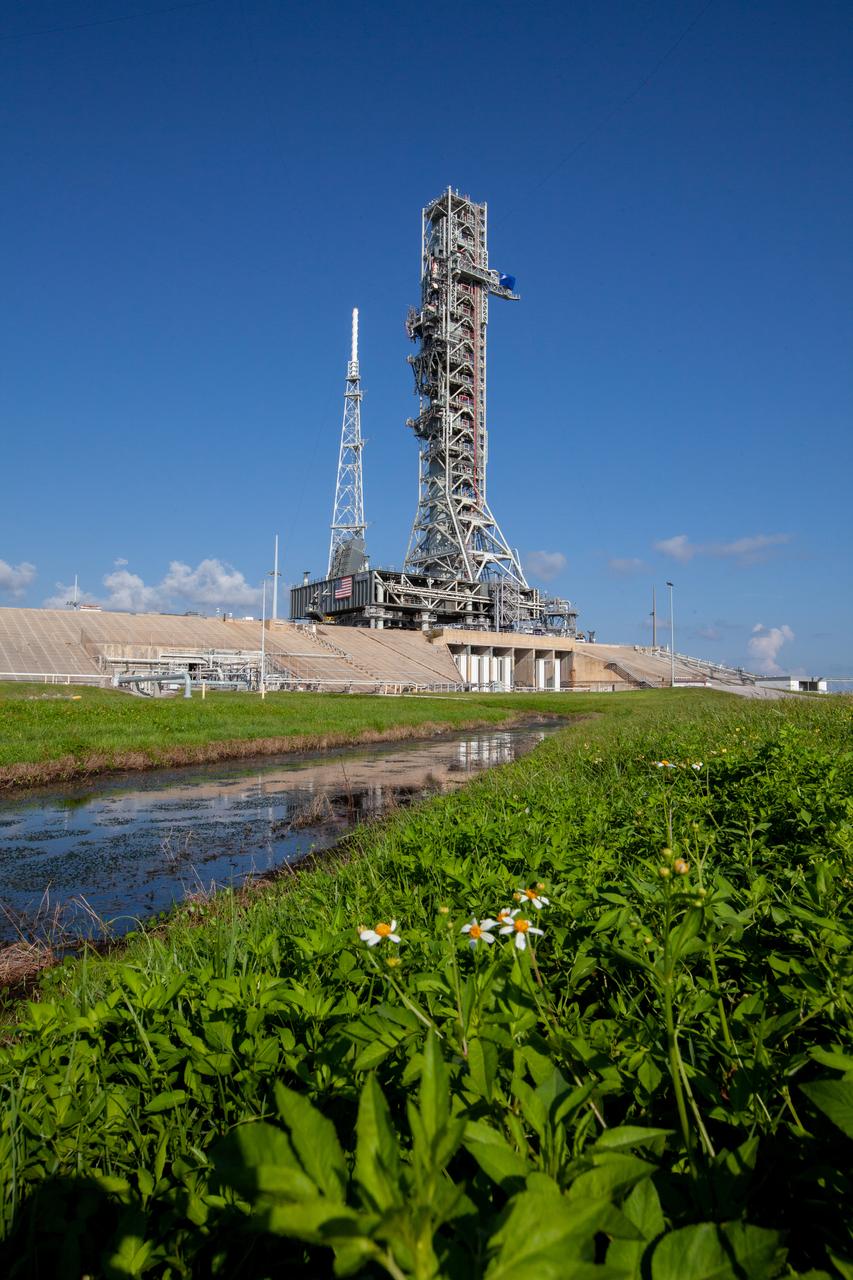
The mobile launcher for Artemis missions is at Launch Pad 39B on Sept. 11, 2019, at NASA’s Kennedy Space Center in Florida, after spending a week and a half inside the Vehicle Assembly Building (VAB) due to the approach of Hurricane Dorian. The nearly 400-foot-tall structure was moved from Launch Pad 39B to the VAB for safekeeping on Aug. 30. The storm passed about 70 miles east of the spaceport during the overnight hours Tuesday, Sept. 3, and Wednesday, Sept. 4. NASA’s Exploration Ground Systems moved the mobile launcher back to the launch pad, where teams will complete testing and checkout on the launcher in the coming weeks for the Artemis I mission.
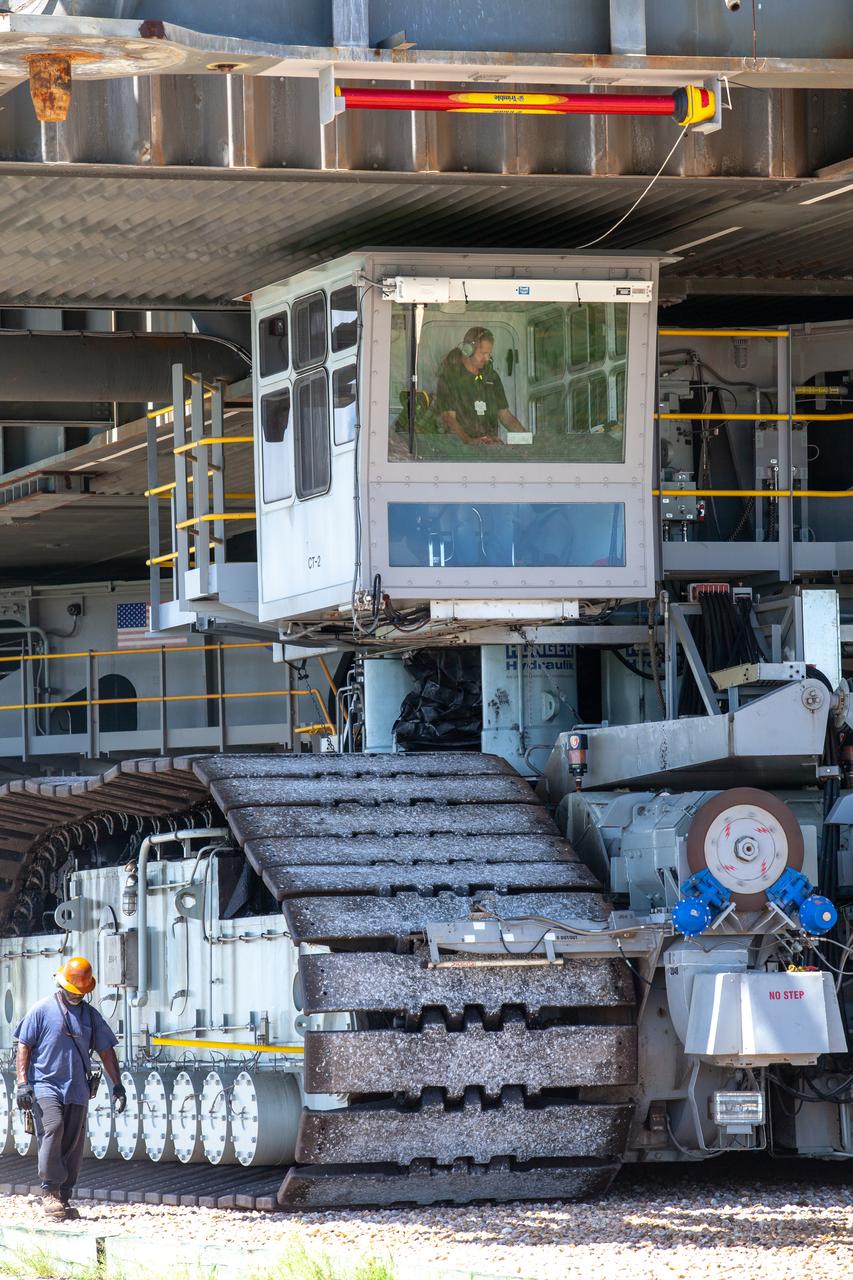
NASA’s mobile launcher (ML) atop crawler-transporter 2 moves along the crawlerway on Sept. 10, 2019, after spending a week and a half inside the Vehicle Assembly Building (VAB) at Kennedy Space Center in Florida due to the approach of Hurricane Dorian. The nearly 400-foot-tall structure was moved from Launch Pad 39B to the VAB for safekeeping on Aug. 30. The storm passed about 70 miles east of the spaceport during the overnight hours Tuesday, Sept. 3, and Wednesday, Sept. 4. NASA’s Exploration Ground Systems is moving the mobile launcher back to the launch pad, where teams will complete testing and checkout on the launcher in the coming weeks for the Artemis I mission.
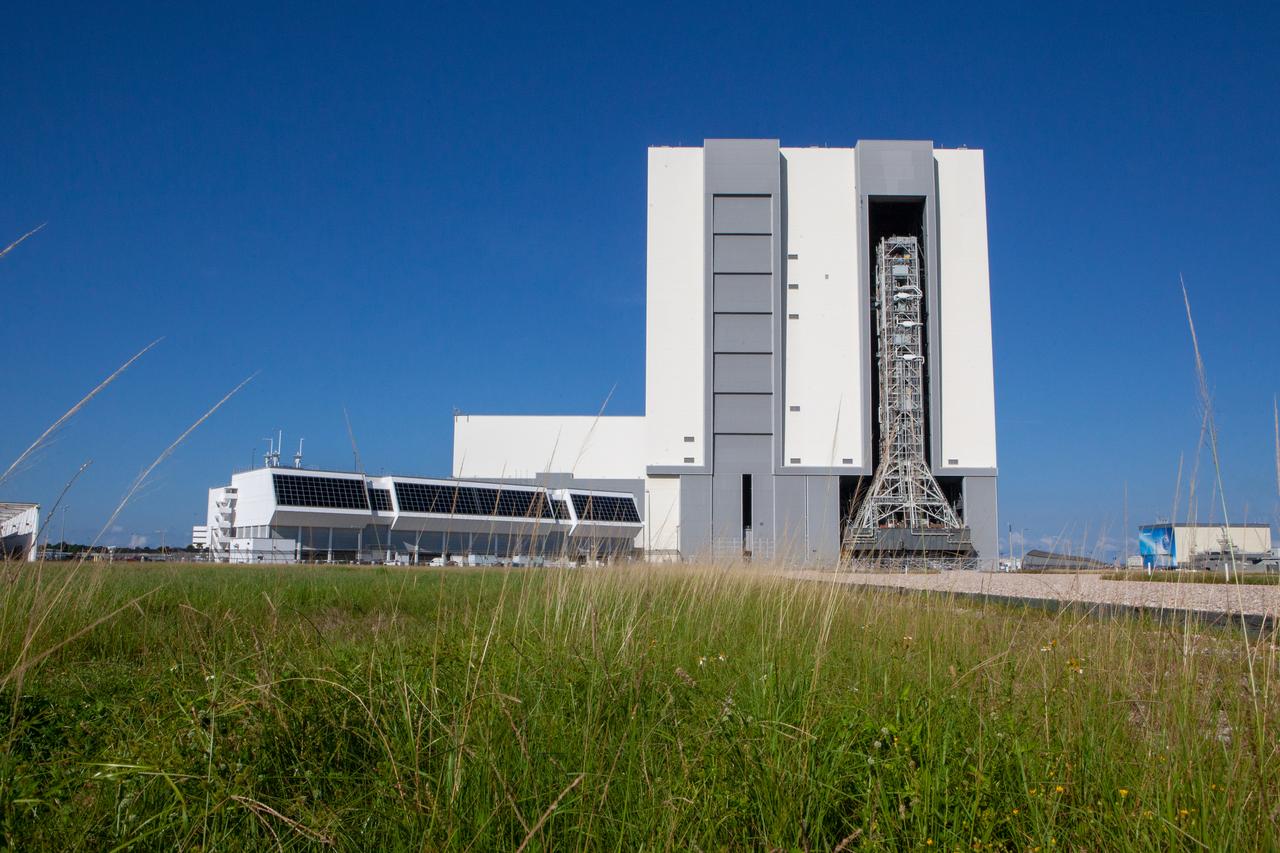
The mobile launcher for NASA’s Artemis missions rolls out of the Vehicle Assembly Building (VAB) at Kennedy Space Center in Florida on Sept. 10, 2019, after spending a week and a half inside due to the approach of Hurricane Dorian. The nearly 400-foot-tall structure was moved from Launch Pad 39B to the VAB for safekeeping on Aug. 30. The storm passed about 70 miles east of the spaceport during the overnight hours Tuesday, Sept. 3, and Wednesday, Sept. 4. NASA’s Exploration Ground Systems is moving the mobile launcher back to the launch pad, where teams will complete testing and checkout on the launcher in the coming weeks for the Artemis I mission.
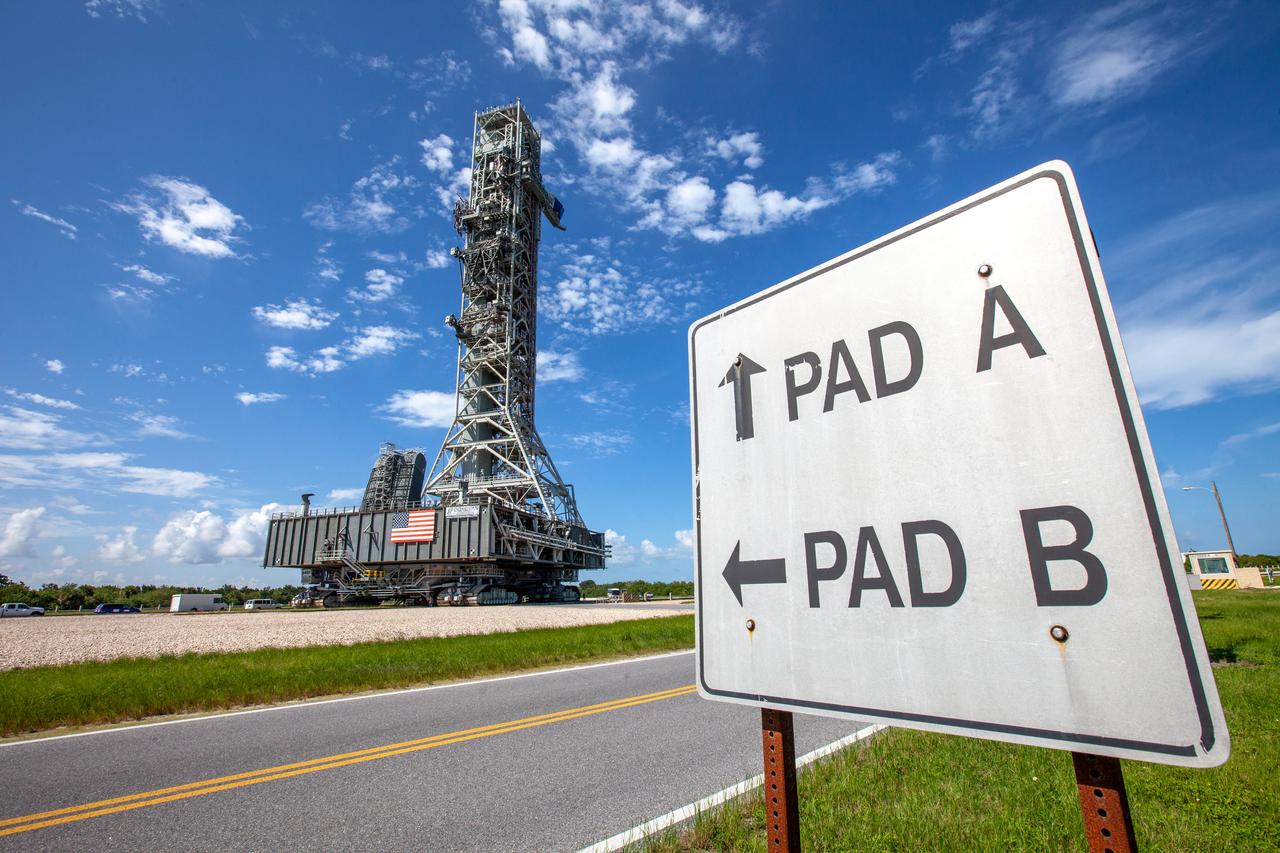
NASA’s mobile launcher (ML) atop crawler-transporter 2 moves along the crawlerway and nears the turn to Launch Pad 39B on Sept. 10, 2019, after spending a week and a half inside the Vehicle Assembly Building (VAB) at Kennedy Space Center in Florida due to the approach of Hurricane Dorian. The nearly 400-foot-tall structure was moved from Pad B to the VAB for safekeeping on Aug. 30. The storm passed about 70 miles east of the spaceport during the overnight hours Tuesday, Sept. 3, and Wednesday, Sept. 4. NASA’s Exploration Ground Systems is moving the mobile launcher back to the launch pad, where teams will complete testing and checkout on the launcher in the coming weeks for the Artemis I mission.
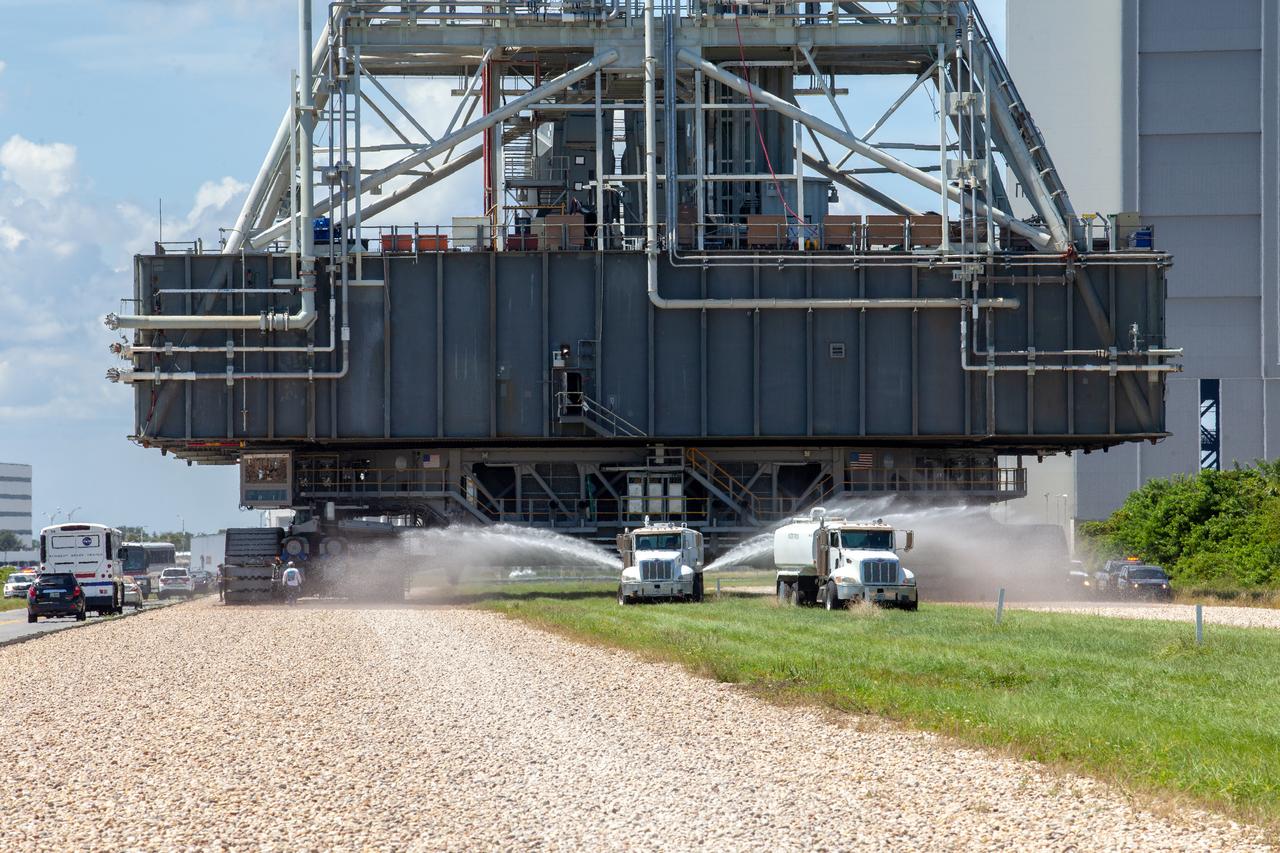
NASA’s mobile launcher (ML) atop crawler-transporter 2 moves along the crawlerway on Sept. 10, 2019, after spending a week and a half inside the Vehicle Assembly Building (VAB) at Kennedy Space Center in Florida due to the approach of Hurricane Dorian. Truck in front spray water to reduce dust and sand. The nearly 400-foot-tall structure was moved from Launch Pad 39B to the VAB for safekeeping on Aug. 30. The storm passed about 70 miles east of the spaceport during the overnight hours Tuesday, Sept. 3, and Wednesday, Sept. 4. NASA’s Exploration Ground Systems is moving the mobile launcher back to the launch pad, where teams will complete testing and checkout on the launcher in the coming weeks for the Artemis I mission.