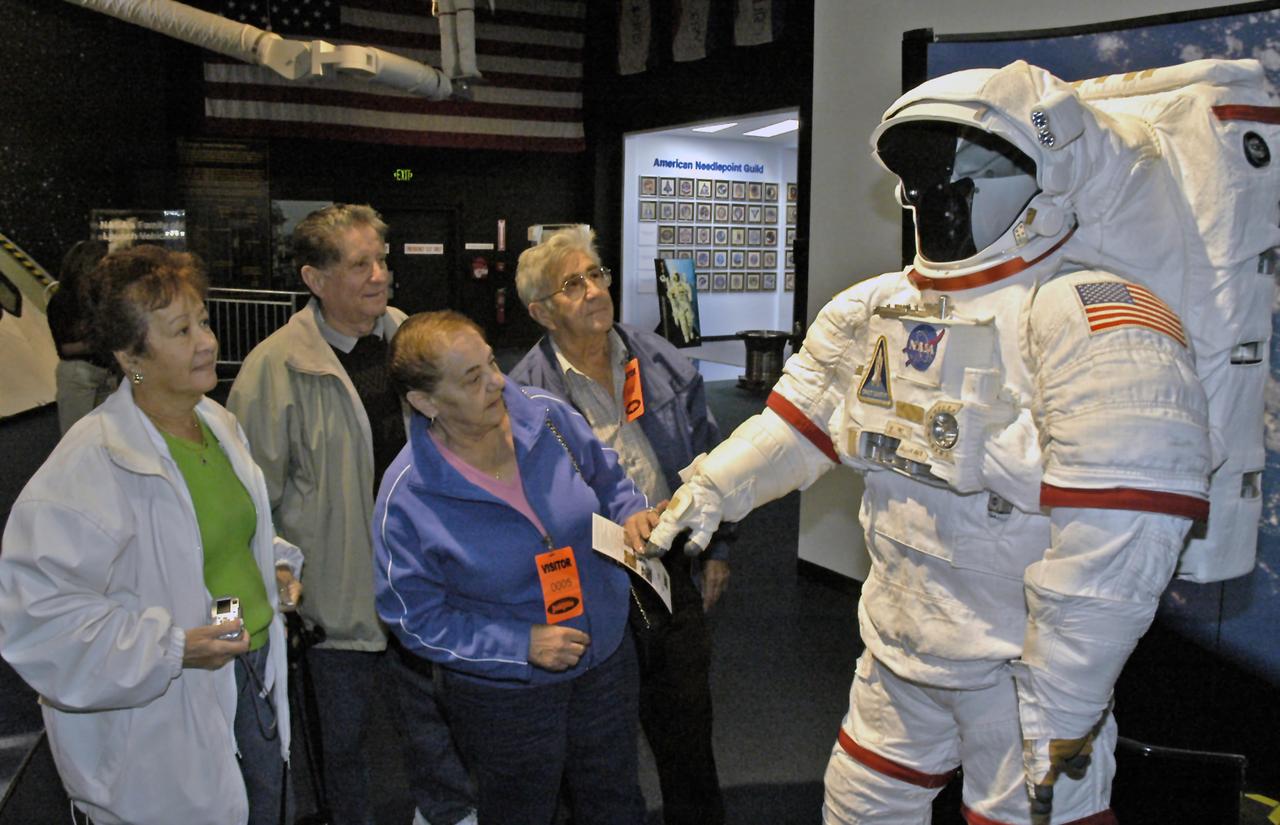
StenniSphere reopened Jan. 18, 2006, almost five months after Hurricane Katrina damaged the basement of the building that houses the visitor center. Thanks to the staff's careful preparations before the storm, no artifacts or exhibits were harmed.

At the Hurricane Katrina observance held Aug. 29 in the StenniSphere auditorium, Stennis Space Center Deputy Director David Throckmorton (left) and RAdm. Timothy McGee, Commander, Naval Meteorology and Oceanography Command, unveil a plaque dedicated to SSC employees.
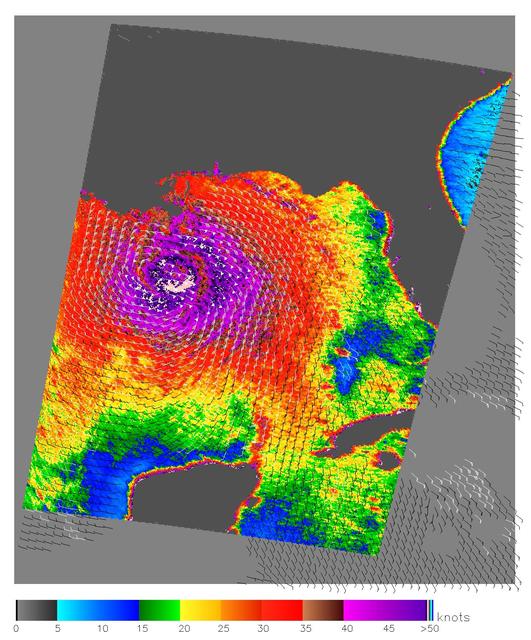
Nearly the whole of the Gulf of Mexico was churning with the powerful winds and rains of Hurricane Katrina on August 28, 2005, when NASA QuikScat satellite captured this image.
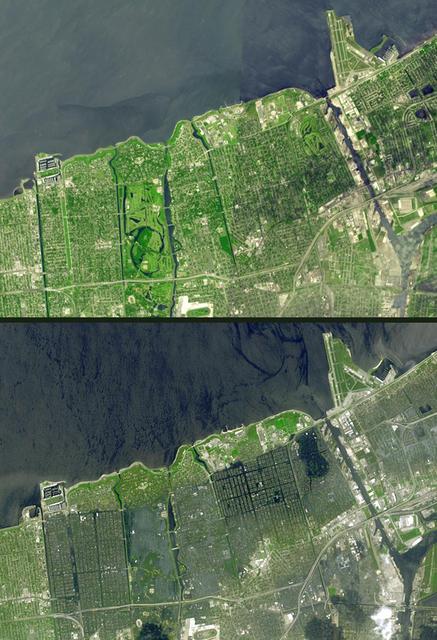
Seventeen days after Hurricane Katrina flooded New Orleans, much of the city was still under water. In this pair of images from NASA Terra satellite, the affected areas can clearly be seen.
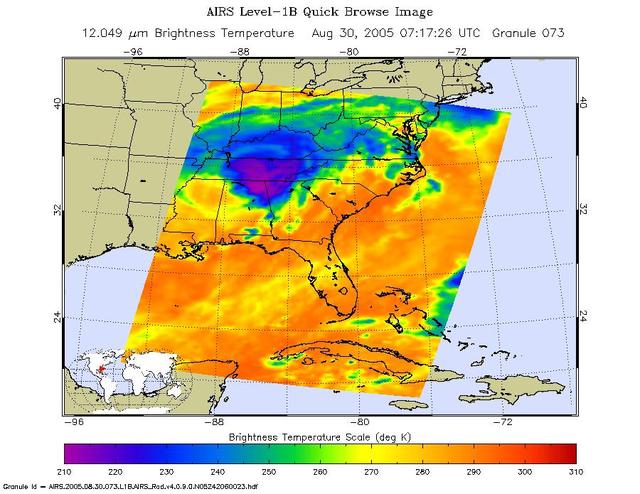
Infrared image of Hurricane Katrina captured by the Atmospheric Infrared Sounder onboard NASA Aqua satellite in August, 2005.
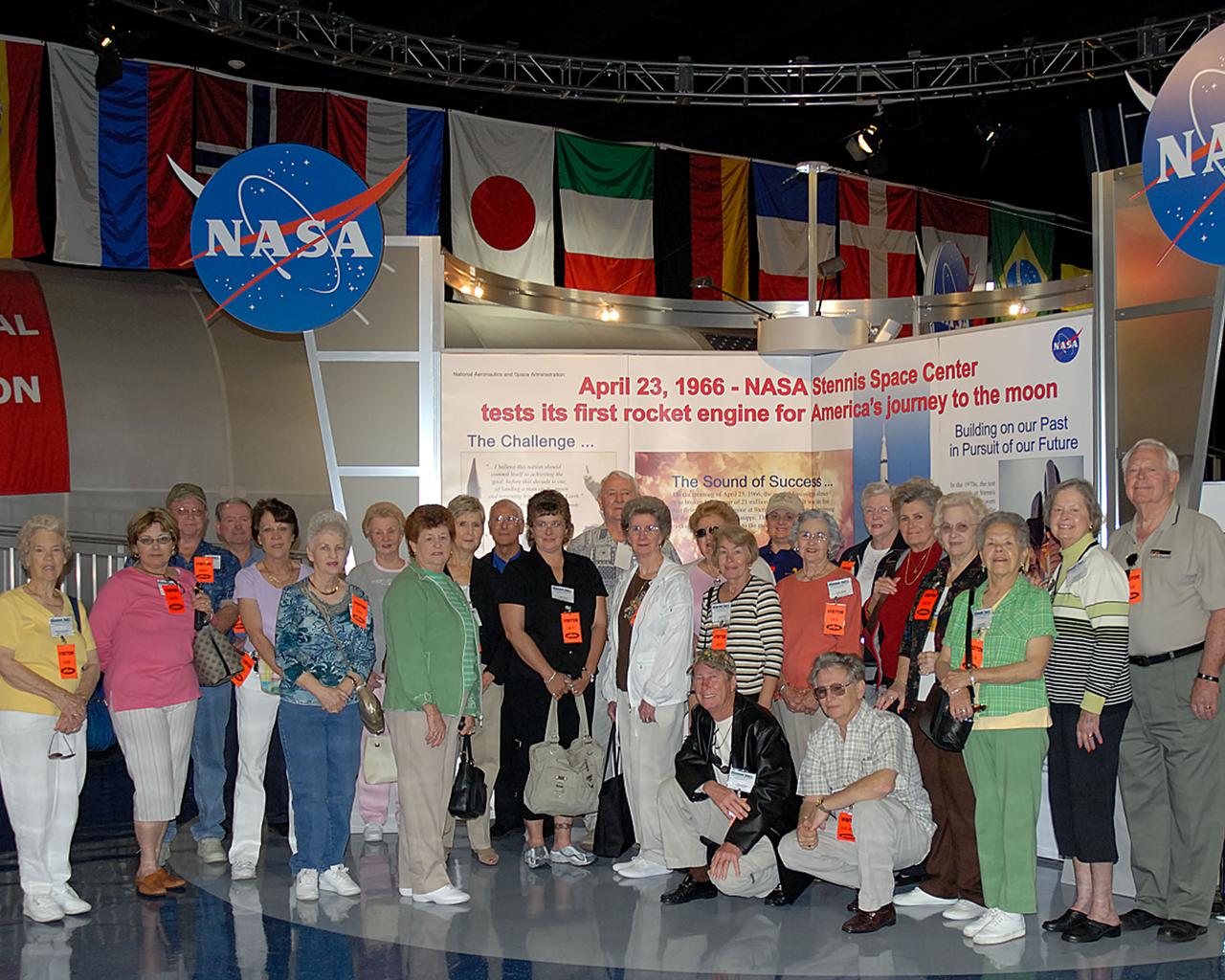
On April 24, a group traveling with Diamond Tours visited StenniSphere, the visitor center at NASA John C. Stennis Space Center in South Mississippi. The trip marked Diamond Tours' return to StenniSphere since Hurricane Katrina struck the Gulf Coast on Aug. 29, 2005. About 25 business professionals from Georgia enjoyed the day's tour of America's largest rocket engine test complex, along with the many displays and exhibits at the museum. Before Hurricane Katrina, the nationwide company brought more than 1,000 visitors to StenniSphere each month. That contributed to more than 100,000 visitors from around the world touring the space center each year. In past years StenniSphere's visitor relations specialists booked Diamond Tours two or three times a week, averaging 40 to 50 people per visit. SSC was established in the 1960s to test the huge engines for the Saturn V moon rockets. Now 40 years later, the center tests every main engine for the space shuttle. SSC will soon begin testing the rocket engines that will power spacecraft carrying Americans back to the moon and on to Mars. For more information or to book a tour, visit http://www.nasa.gov/centers/stennis/home/index.html and click on the StenniSphere logo; or call 800-237-1821 or 228-688-2370.
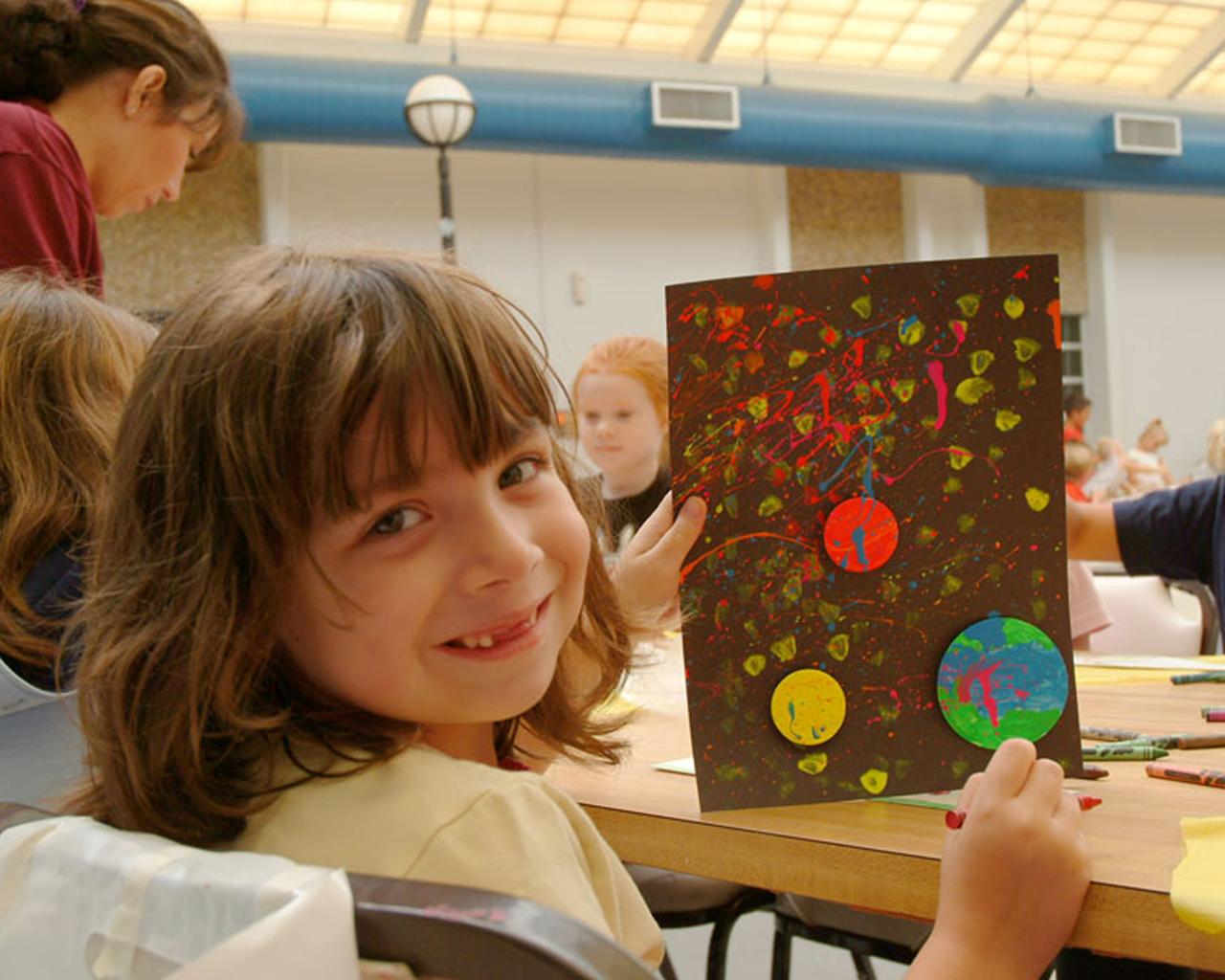
Sara Beth Casey, 5, proudly displays her artwork, 'Planets.' Sara Beth created the art as a student of Stennis Day Camp, a free camp for Stennis Space Center employees' children whose schools have not resumed since Hurricane Katrina hit the region on Aug. 29. The camp has registered nearly 200 children and averages 100 children each day. The camp will continue until all schools are back in session.
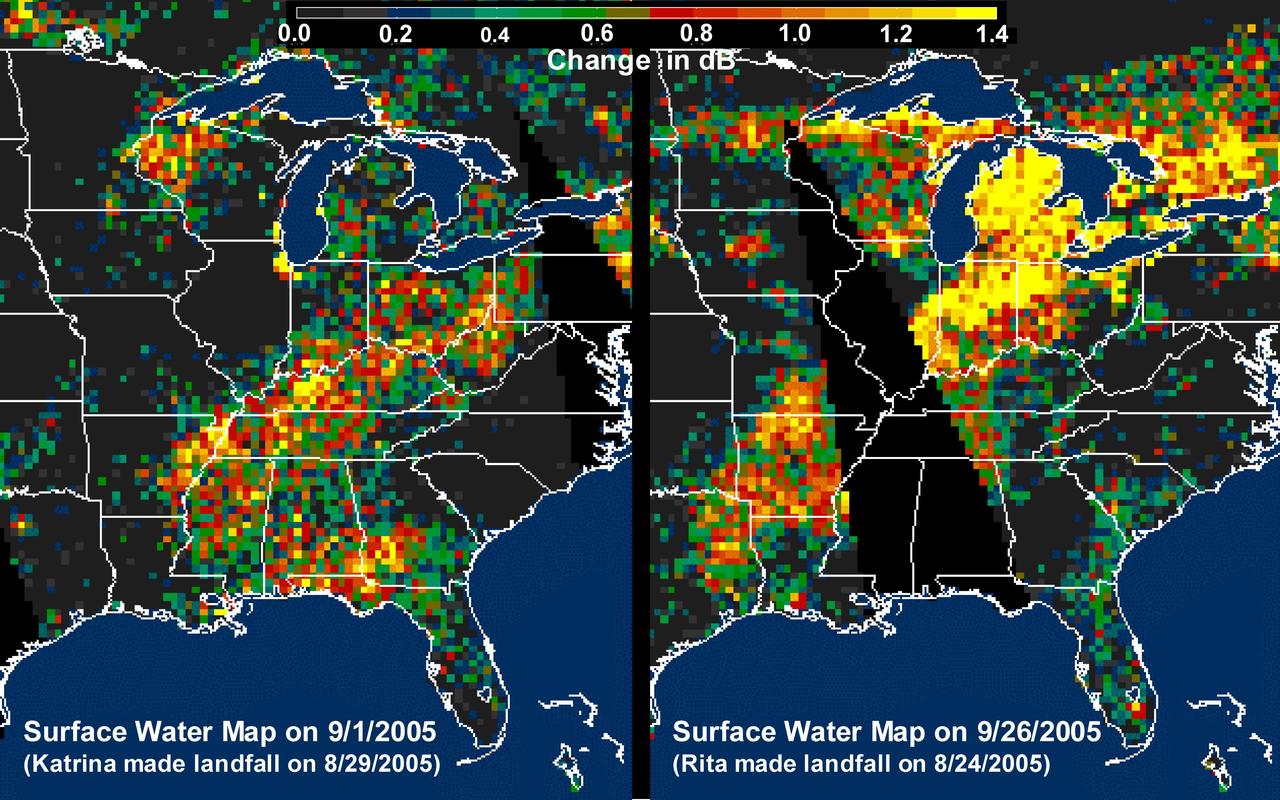
The above images, derived from NASA QuikScat satellite data, show the extensive pattern of rain water deposited by Hurricanes Katrina and Rita on land surfaces over several states in the southern and eastern United States. These results demonstrate the capability of satellite scatterometers to monitor changes in surface water on land. The color scale depicts increases in radar backscatter (in decibels) between the current measurement and the mean of measurements obtained during the previous two weeks. The backscatter can be calibrated to measure increases in surface soil moisture resulting from rainfall. The yellow color corresponds to an increase of approximately 10 percent or more in surface soil moisture according to the calibration site of Lonoke, Ark. The two hurricanes deposited excessive rainfall over extensive regions of the Mississippi River basin. Basins the size of the Mississippi can take up to several weeks before such excess rainfall significantly increases the amount of river discharge in large rivers such as the Mississippi. With hurricane season not over until November 30, the potential exists for significant flooding, particularly if new rain water is deposited by new hurricanes when river discharge peaks up as a result of previous rainfalls. River discharge should be closely monitored to account for this factor in evaluating potential flood conditions in the event of further hurricanes. http://photojournal.jpl.nasa.gov/catalog/PIA03029
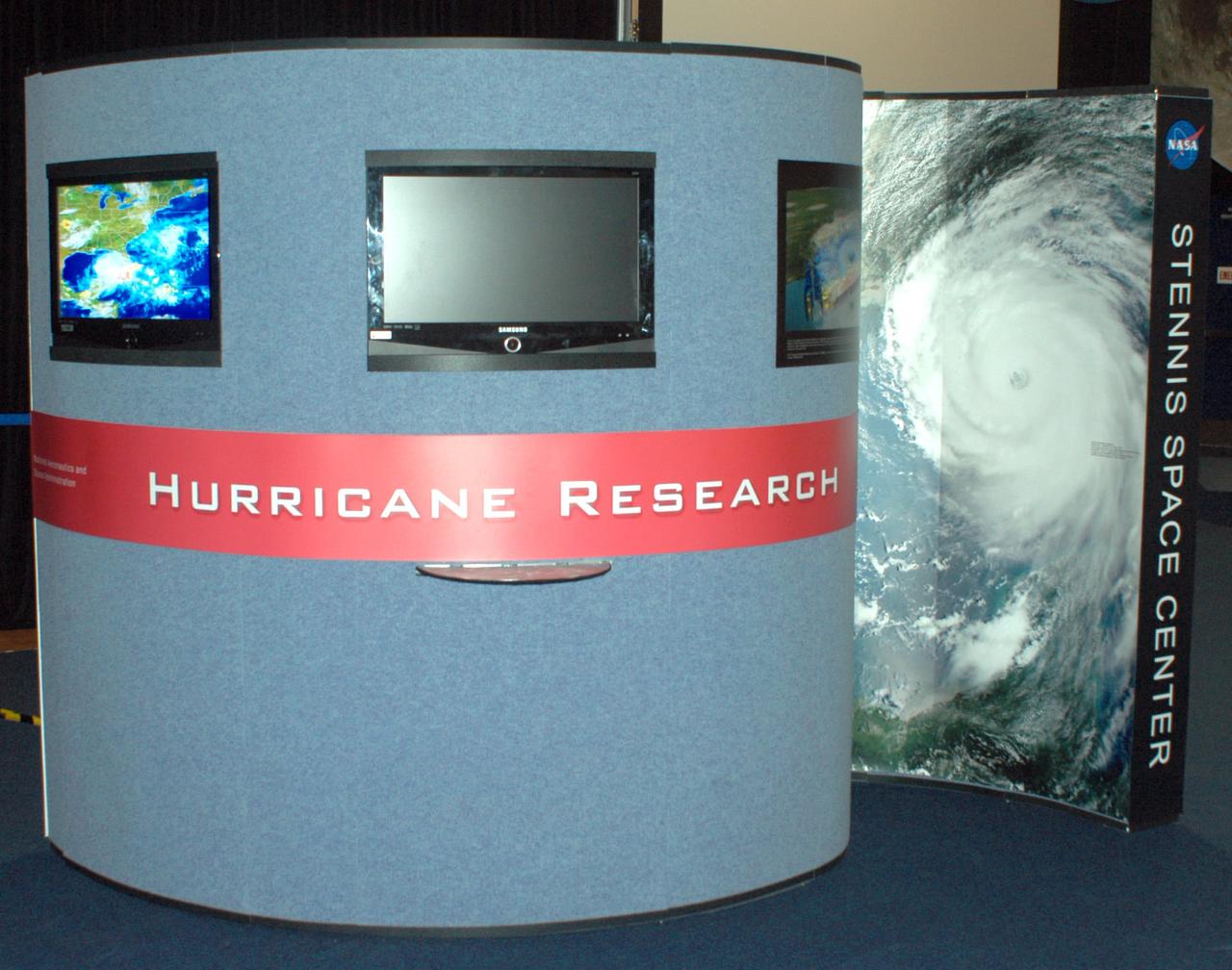
A new exhibit in StenniSphere depicting NASA's role in hurricane prediction and research and SSC's role in helping the region recover from Hurricane Katrina. The cyclone-shaped exhibit focuses on the effects of the Aug. 29, 2005 storm and outlines how NASA is working to improve weather forecasting. Through photos, 3-D models and digital animations, the exhibit tells the story of what happened inside the storm and how NASA's scientific research can increase the accuracy of hurricane tracking and modeling.
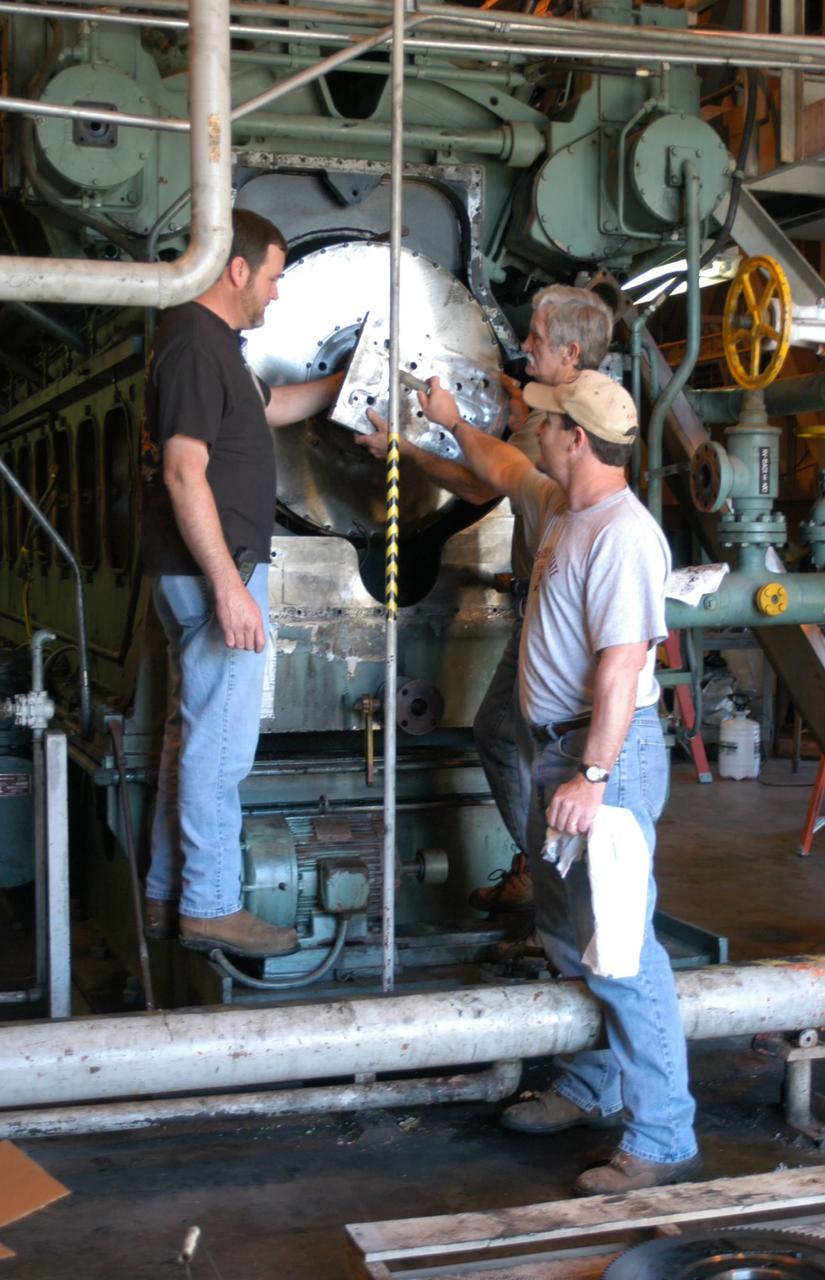
NASA Test Operations Group employees, from left, Todd Pearson, Tim Delcuze and Rodney Wilkinson maintain a water pump in Stennis Space Center's high-pressure water facility. The three were part of a group of employees who rode out Hurricane Katrina at the facility and helped protect NASA's rocket engine test complex.
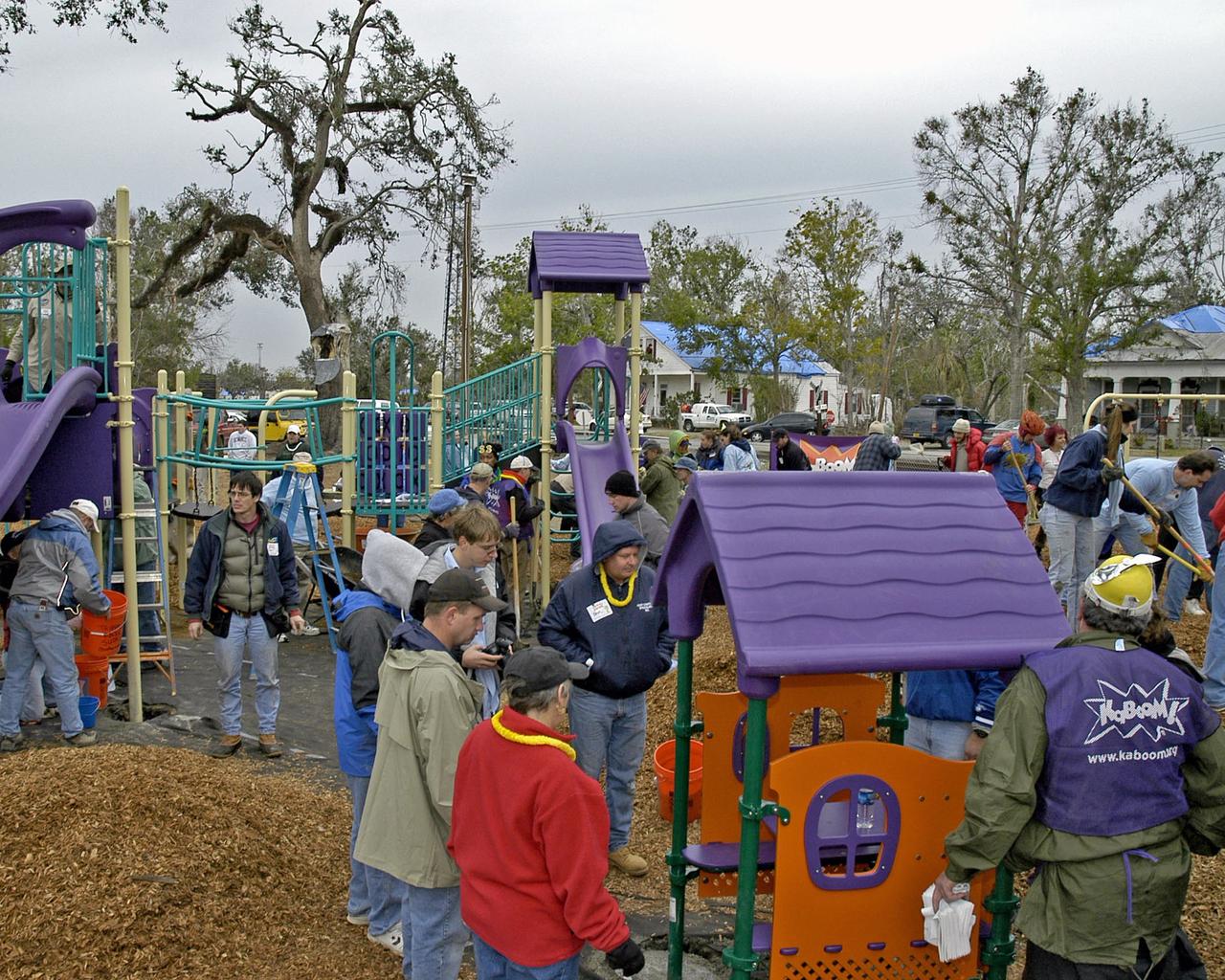
More than 650 volunteers - many of them employees at NASA's Stennis Space Center - weathered rain and cold to transform Bay St. Louis' old City Park into a playground Dec. 17. Volunteers assembled and erected a slide, swing set, jungle gym, sand box and planter benches in an eight-hour time frame. The playground was the first new structure built in the town devastated by Hurricane Katrina and the first on the Gulf Coast after the storm. The project was financed and led by nonprofit organization KaBOOM!, whose vision is to create a great place to play within walking distance of every child in America.
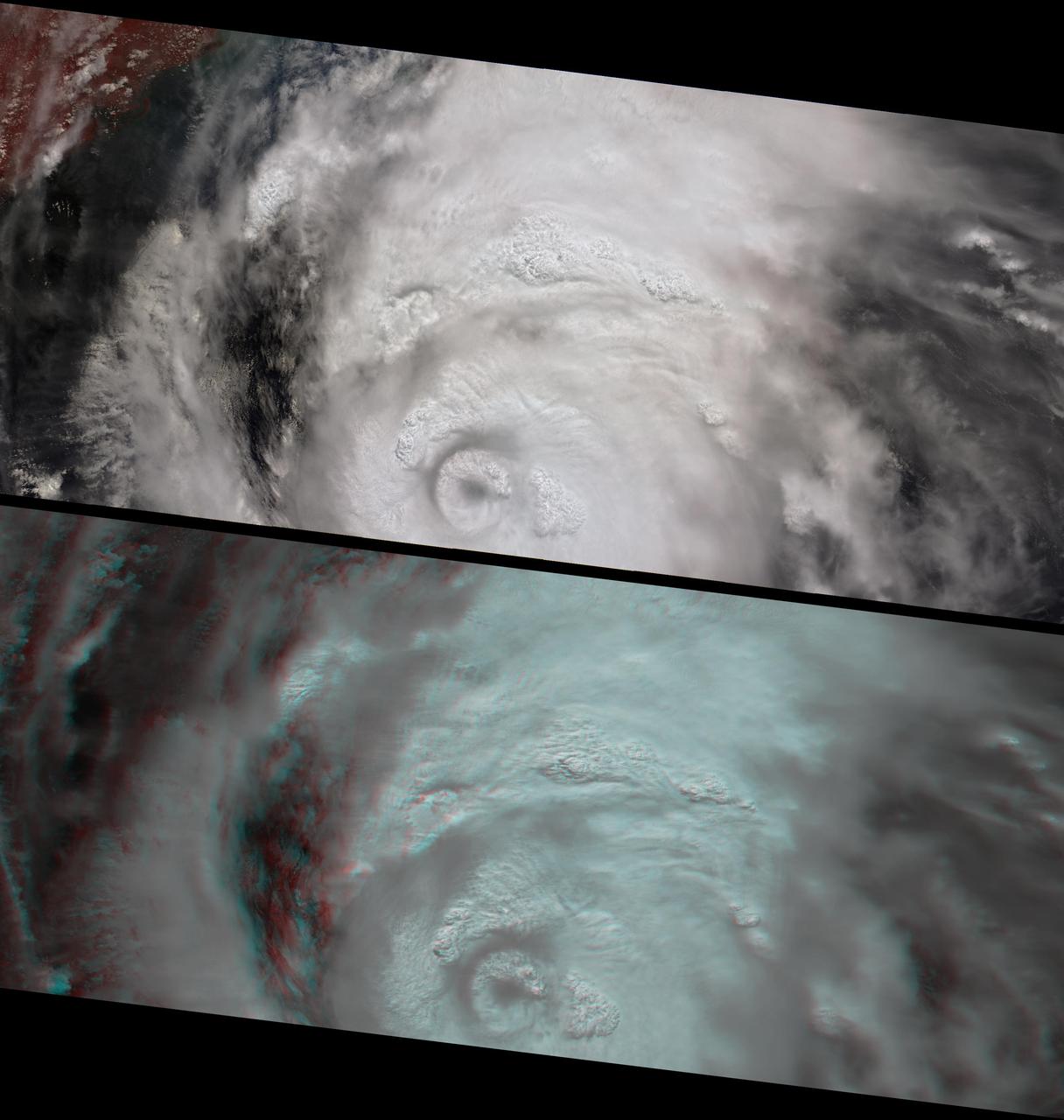
This anaglyph from the MISR instrument aboard NASA Terra spacecraft shows the strong convective development of Hurricane Katrina as it moved west through the Gulf of Mexico. 3D glasses are necessary to view this image.
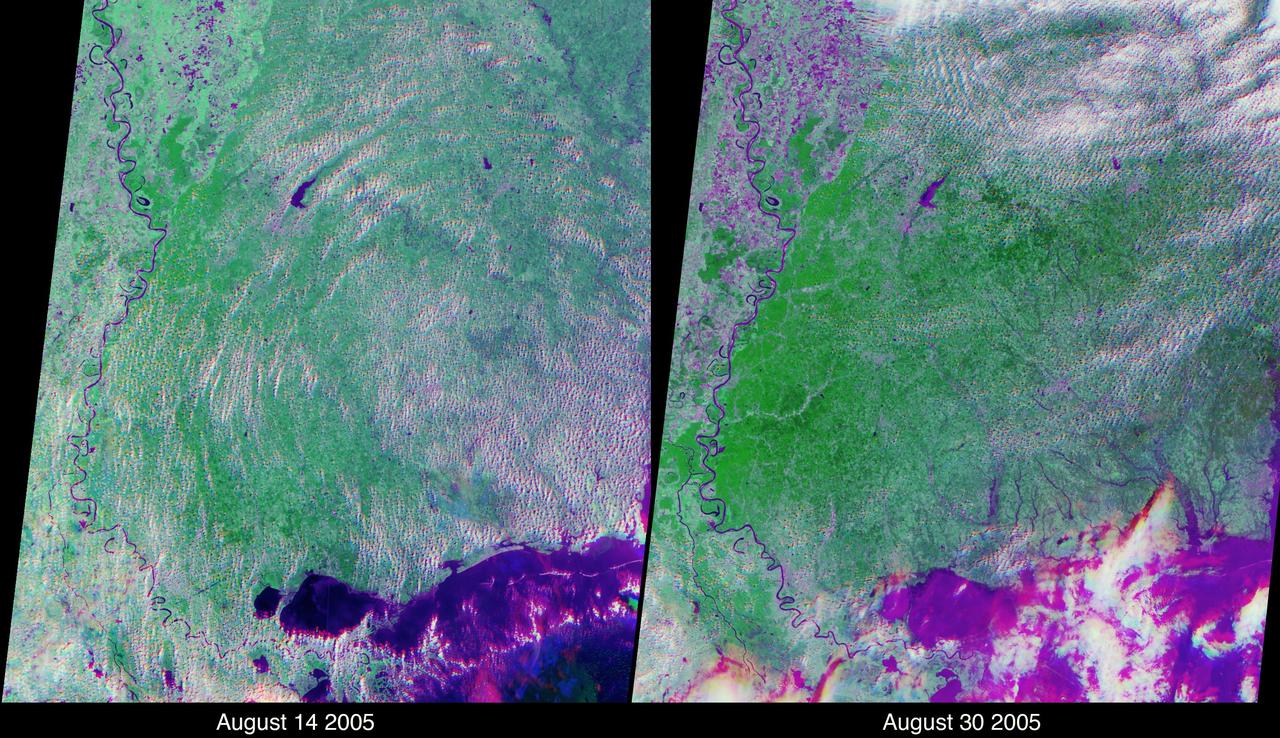
These views of the Louisiana and Mississippi regions were acquired before and one day after Katrina made landfall along the Gulf of Mexico coast. The images were acquired by NASA Terra spacecraft on August 14 and August 30, 2005.
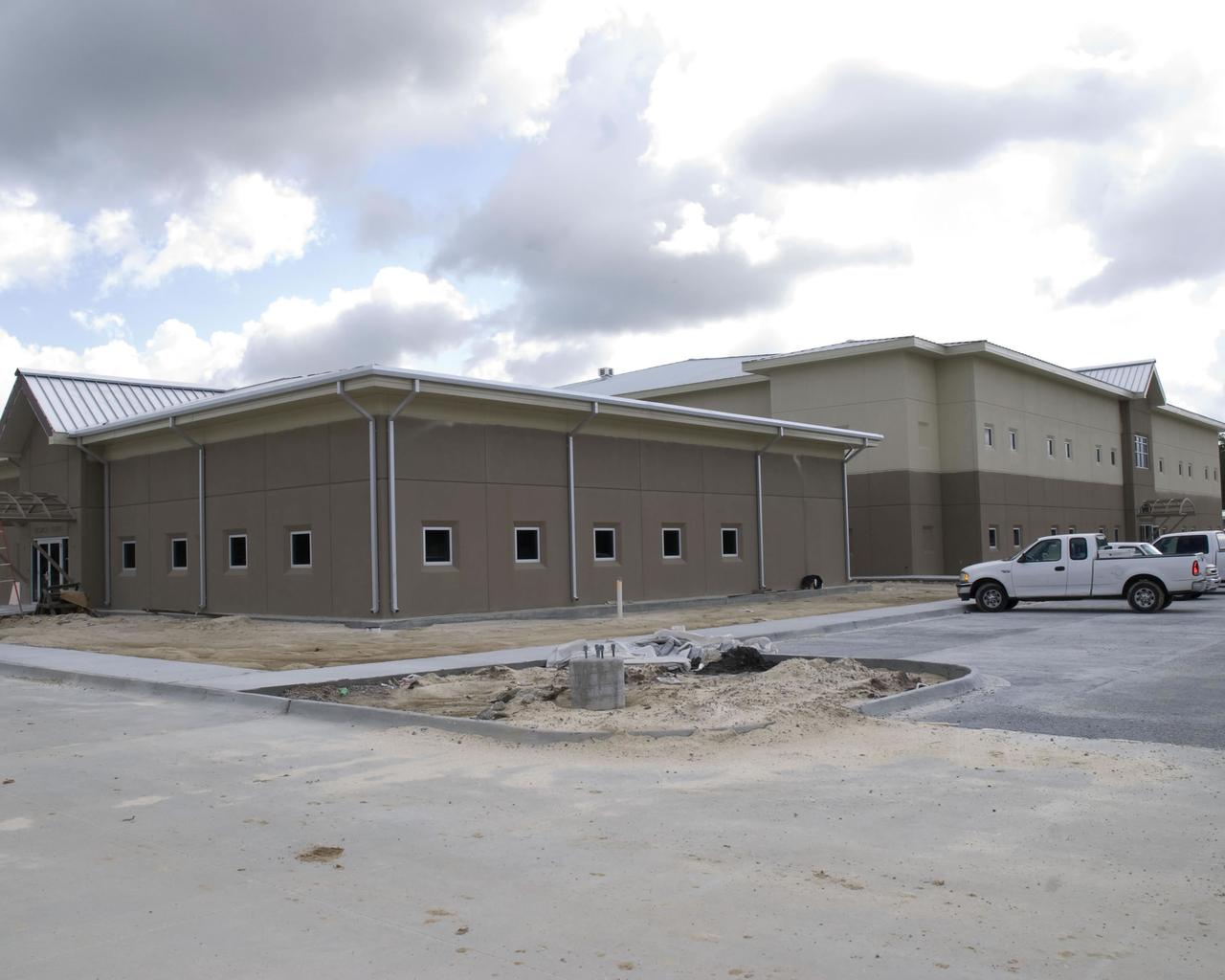
Construction work on a new Emergency Operations Center at Stennis Space Center is nearing completion. Construction is expected to be complete by February 2009, with actual occupancy of the building planned for later that year. The new building will house fire, medical and security teams and will provide a top-grade facility to support storm emergency responder teams and emergency management operations for the south Mississippi facility.
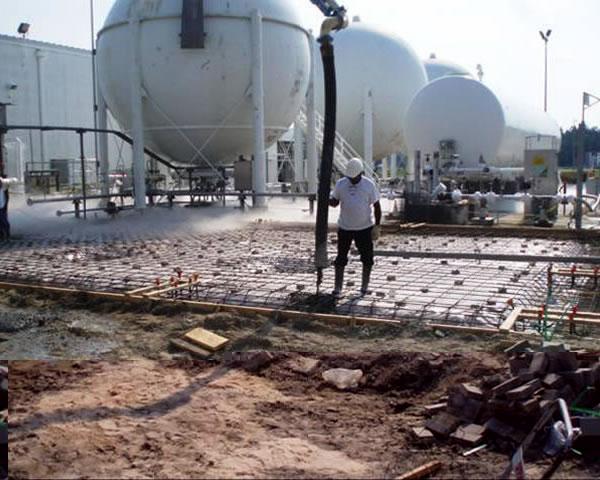
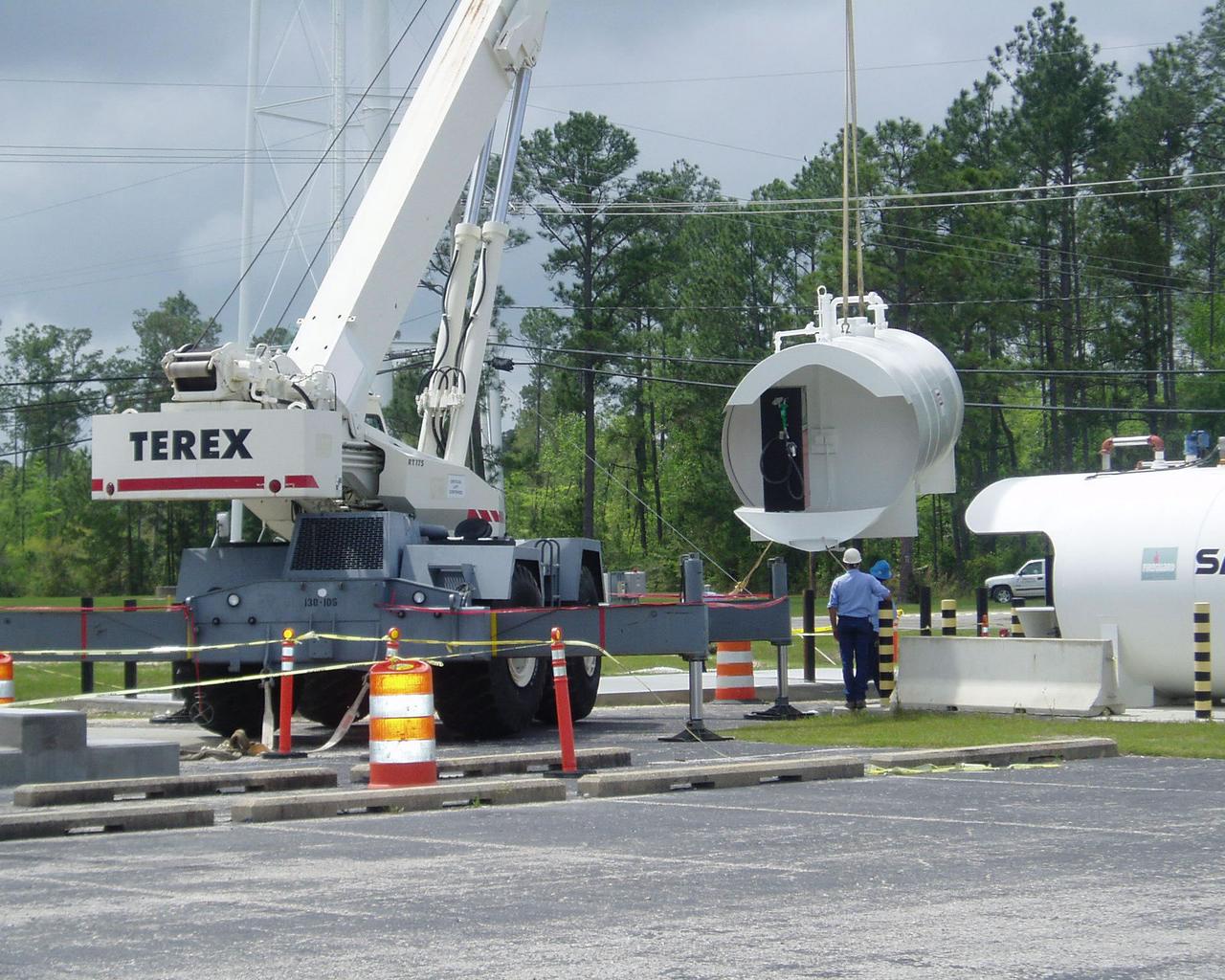
Workers install a bulk diesel storage tank for use at Stennis Space Center. Installation of additional diesel storage tanks is part of the center's hurricane-related risk mitigation work.
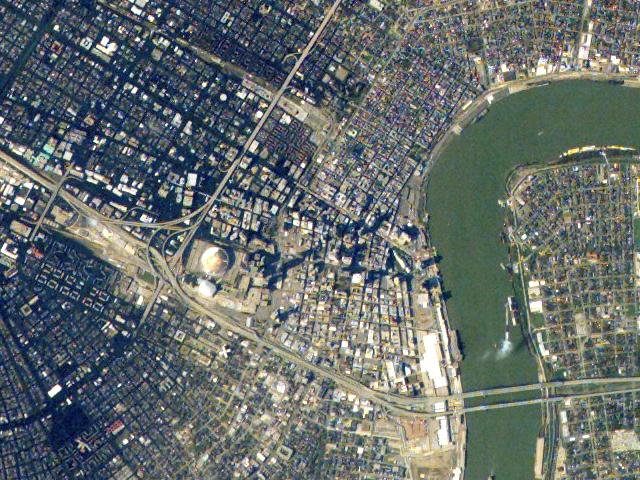
JSC2005-E-37988 (8 September 2005) --- This image, acquired on September 8, 2005 from the international space station, depicts flooded areas (dark greenish brown) to the west and southwest of the famous French Quarter (top center). Damage to the roof of the Superdome is clearly visible to the left of image center. The Greater New Orleans Bridge spans the Mississippi River in the lower right corner. North is to top of image, cropped from ISS011-E-12527.
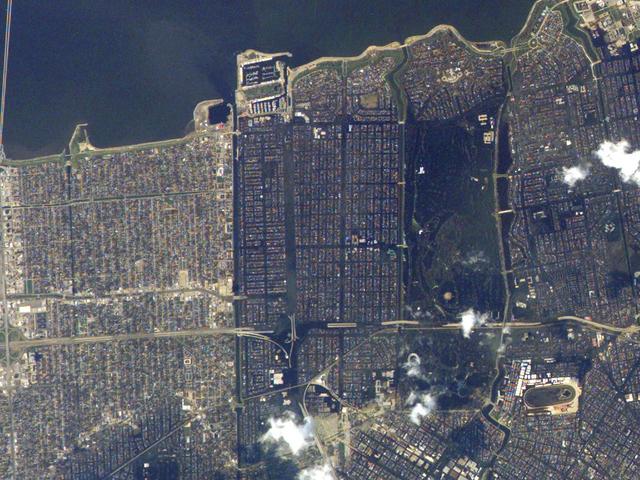
JSC2005-E-37989 (8 September 2005)--- Extensive flooding of neighborhoods to the east of the 17th Street Canal (left center, oriented north-south) is evident in this image acquired on September 8, 2005 from the International Space Station. Standing water in the street grid imparts a dark greenish brown coloration to the inundated regions. Flooded portions of I-610 (extending east-west) are clearly visible in the center of the image. Image is cropped from original ISS011-E-12527 and is oriented with north to the top.

JSC2005-E-37987 (8 September 2005) --- The extent of flooding in the greater New Orleans metropolitan area is clearly visible in this image, acquired from the International Space Station on September 8, 2005. Flooded areas are dark greenish brown, while dry areas to the west of the 17th Street Canal and along the banks of the Mississippi River (lower half of image) are light brown to gray. This cropped image (from the parent frame ISS011-E-12527) is oriented with north to the top.
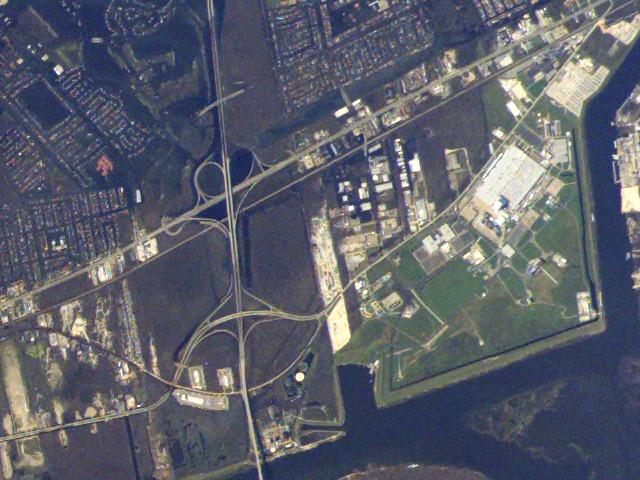
JSC2005-E-37991 (8 September 2005) --- NASA Michoud Test Facility is located at right center of this image acquired from the International Space Station on September 8, 2005. While the facility itself is largely dry, the adjacent neighborhoods are extensively flooded (dark greenish brown regions to the left and right of I-510, left of image center); portions of the highway cloverleaf are also inundated. Image is cropped from the parent frame, ISS011-E-12527 and is oriented with north to the top.
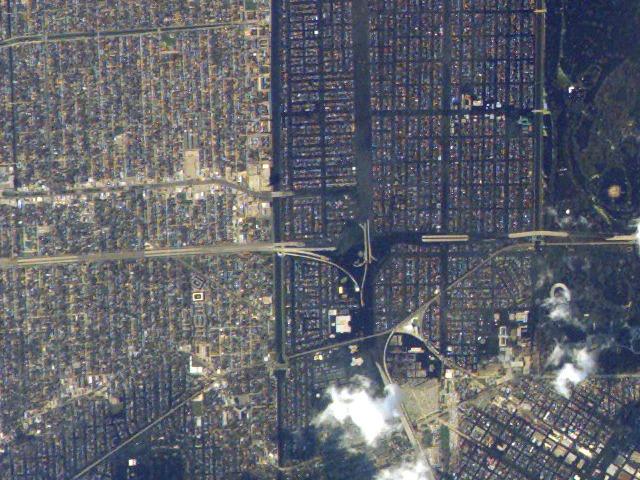
JSC2005e37990 (8 September 2005) --- Flooding of large sections of I-610 and the I-610/I-10 interchange (center) are visible to the east of the 17th Street Canal in this image acquired on September 8, 2005 from the International Space Station. Flooded regions are dark greenish brown, while dry areas are light brown to tan. North is to top of image, which was cropped from the digital still camera's original frame, ISS011-E-12527.
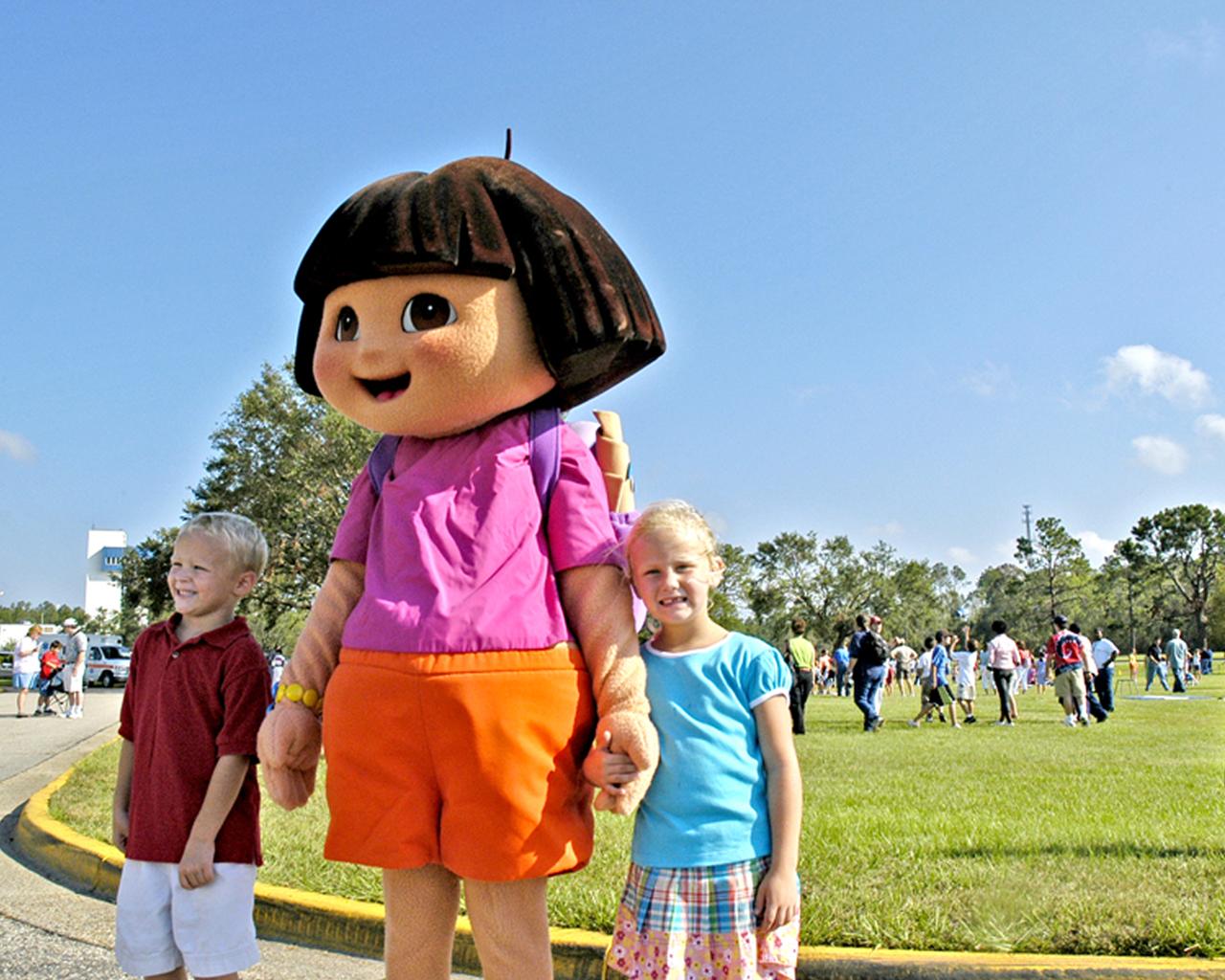
From left, Cobie Smith, 5, and Tatume Smith, also 5, have their picture taken with 'Dora the Explorer.' The children were participants in Nickelodeon's Worldwide Day of Play celebration at Stennis Space Center (SSC) on Oct. 1. The Worldwide Day of Play is sponsored annually by Nickelodeon television network to encourage children to be physically active. Approximately 150 children participated in the event at SSC.

Sarah Dastugue, 11, leaps in the air as Libby Knox, 9, swings a jump rope. The children were participants in Nickelodeon's Worldwide Day of Play celebration at Stennis Space Center (SSC) on Oct. 1. On the day of the event, children all over the world participate in physical activities as part of the celebration.
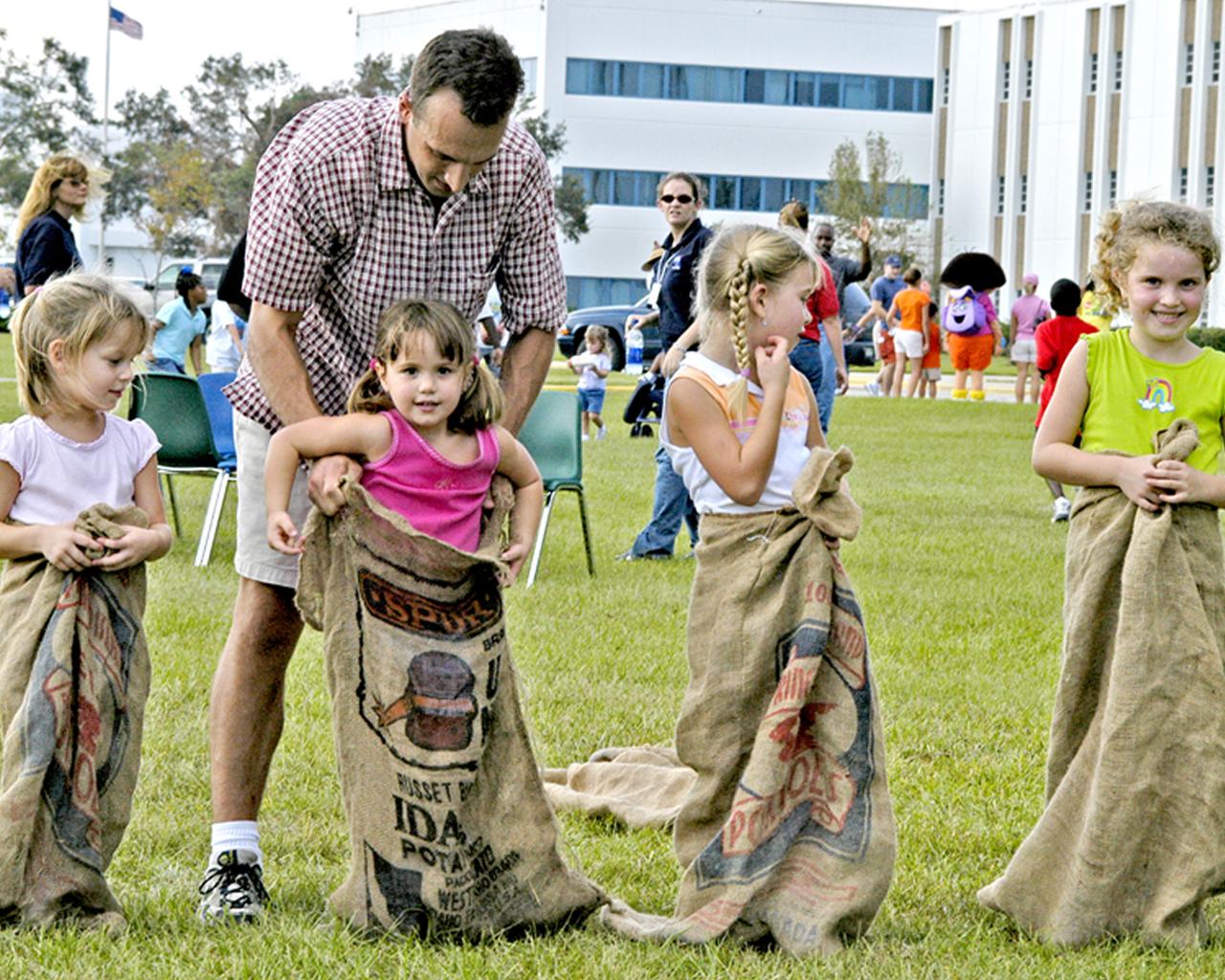
From left, Mallory Doody, 5, Natalie Cambre, 3, Madison Doody, 7, and Anna Cambre, 6, get ready to compete in a sack race. The children were participants in Nickelodeon's Worldwide Day of Play celebration at Stennis Space Center (SSC) on Oct. 1. The Worldwide Day of Play is sponsored annually by Nickelodeon television network to encourage children to be physically active.
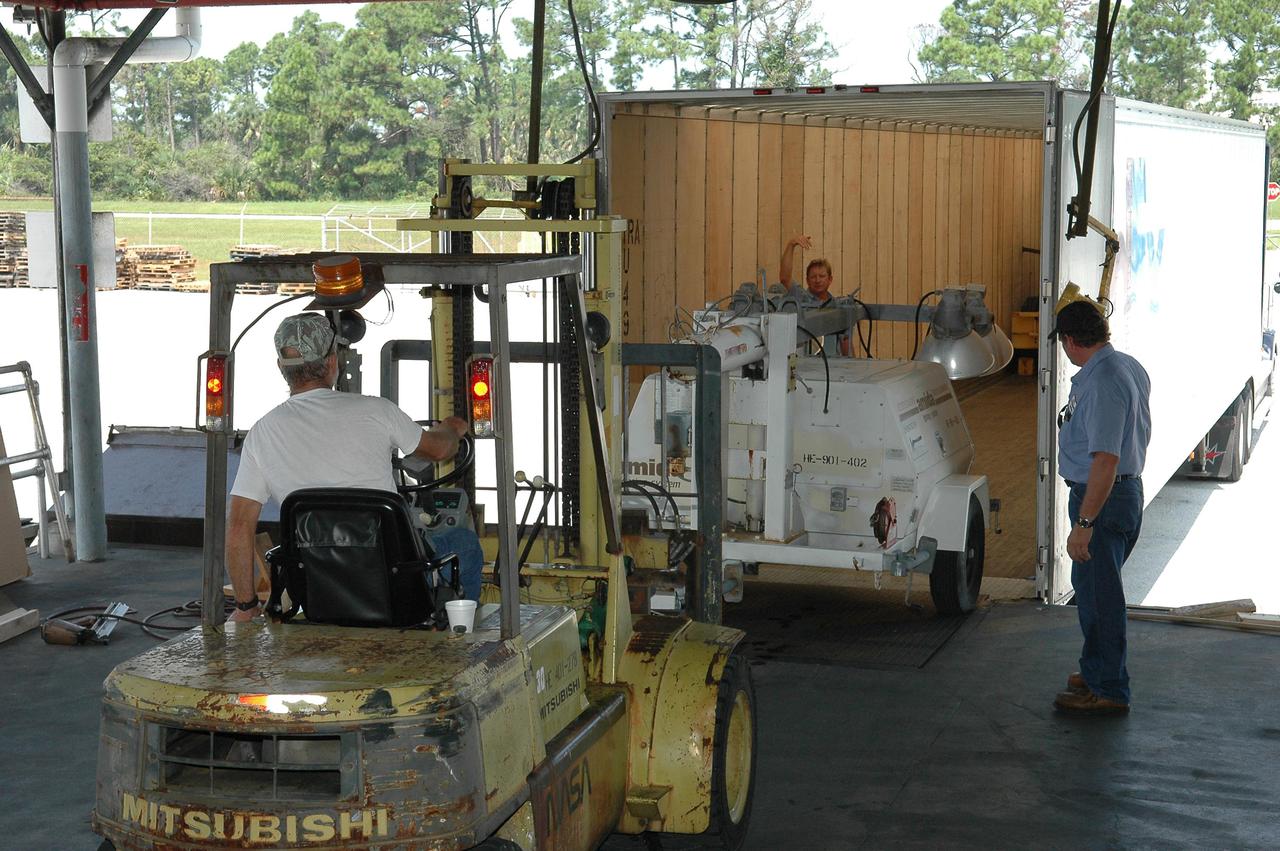
KENNEDY SPACE CENTER, FLA. - A lighting system is loaded onto a truck for a trip to Michoud Assembly Facility near New Orleans. Michoud was left without power following Hurricane Katrina. A NASA plane is carrying medical supplies, food and chain saws, as well as a physician and two high voltage technicians to Michoud to ensure the facility can safely receive power when the main electricity grid comes online. In addition, a 14-person security team is also going to Michoud to relieve the security professionals at that location. Stennis Space Center also suffered damage and power outages from Hurricane Katrina. KSC is sending a helicopter with medical supplies and an Emergency Medical Technician to Stennis, plus a 1-megawatt generator and 125- and 225-kilowatt generators, and 1,000 gallons of diesel fuel.
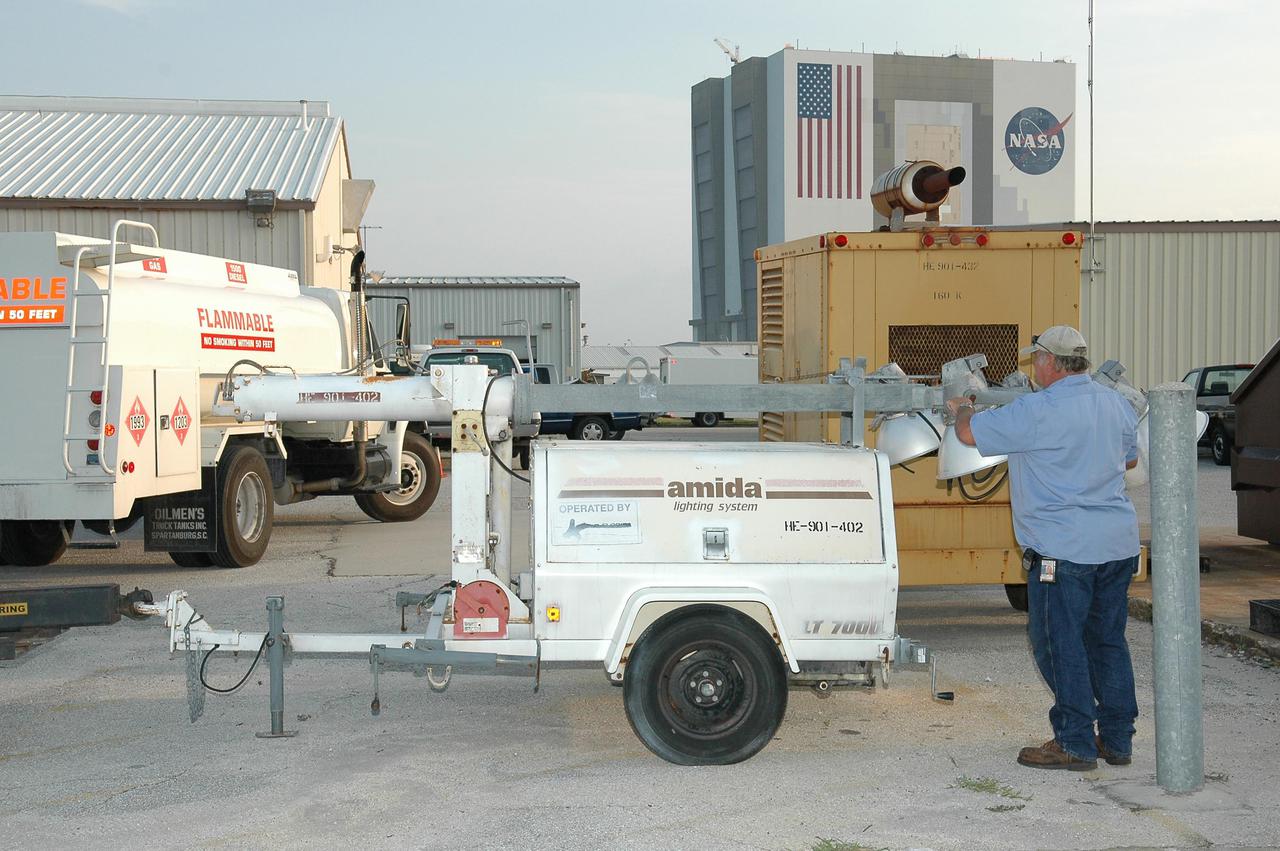
KENNEDY SPACE CENTER, FLA. - Workers at Kennedy Space Center prepare lighting systems that are being shipped to Michoud Assembly Facility near New Orleans. Michoud was left without power following Hurricane Katrina. A NASA plane is carrying medical supplies, food and chain saws, as well as a physician and two high voltage technicians to Michoud to ensure the facility can safely receive power when the main electricity grid comes online. In addition, a 14-person security team is also going to Michoud to relieve the security professionals at that location. Stennis Space Center also suffered damage and power outages from Hurricane Katrina. KSC is sending a helicopter with medical supplies and an Emergency Medical Technician to Stennis, plus a 1-megawatt generator and 125- and 225-kilowatt generators, and 1,000 gallons of diesel fuel.
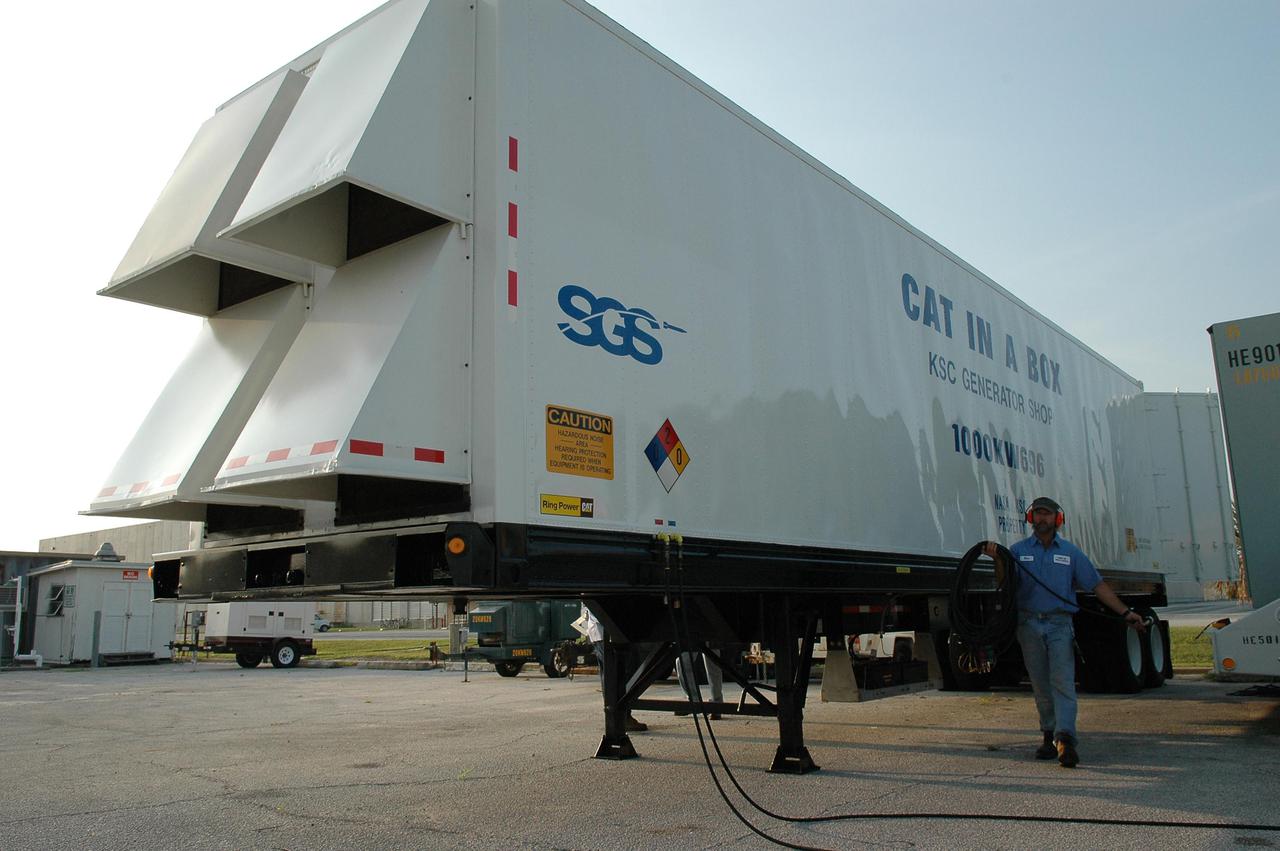
KENNEDY SPACE CENTER, FLA. - A truck with a 1-megawatt generator is prepared for a trip to Stennis Space Center in Mississippi. Michoud was left without power following Hurricane Katrina. A NASA plane is carrying medical supplies, food and chain saws, as well as a physician and two high voltage technicians to Michoud to ensure the facility can safely receive power when the main electricity grid comes online. In addition, a 14-person security team is also going to Michoud to relieve the security professionals at that location. Stennis Space Center also suffered damage and power outages from Hurricane Katrina. KSC is sending a helicopter with medical supplies and an Emergency Medical Technician to Stennis, plus a 1-megawatt generator, 125- and 225-kilowatt generators, and 1,000 gallons of diesel fuel.
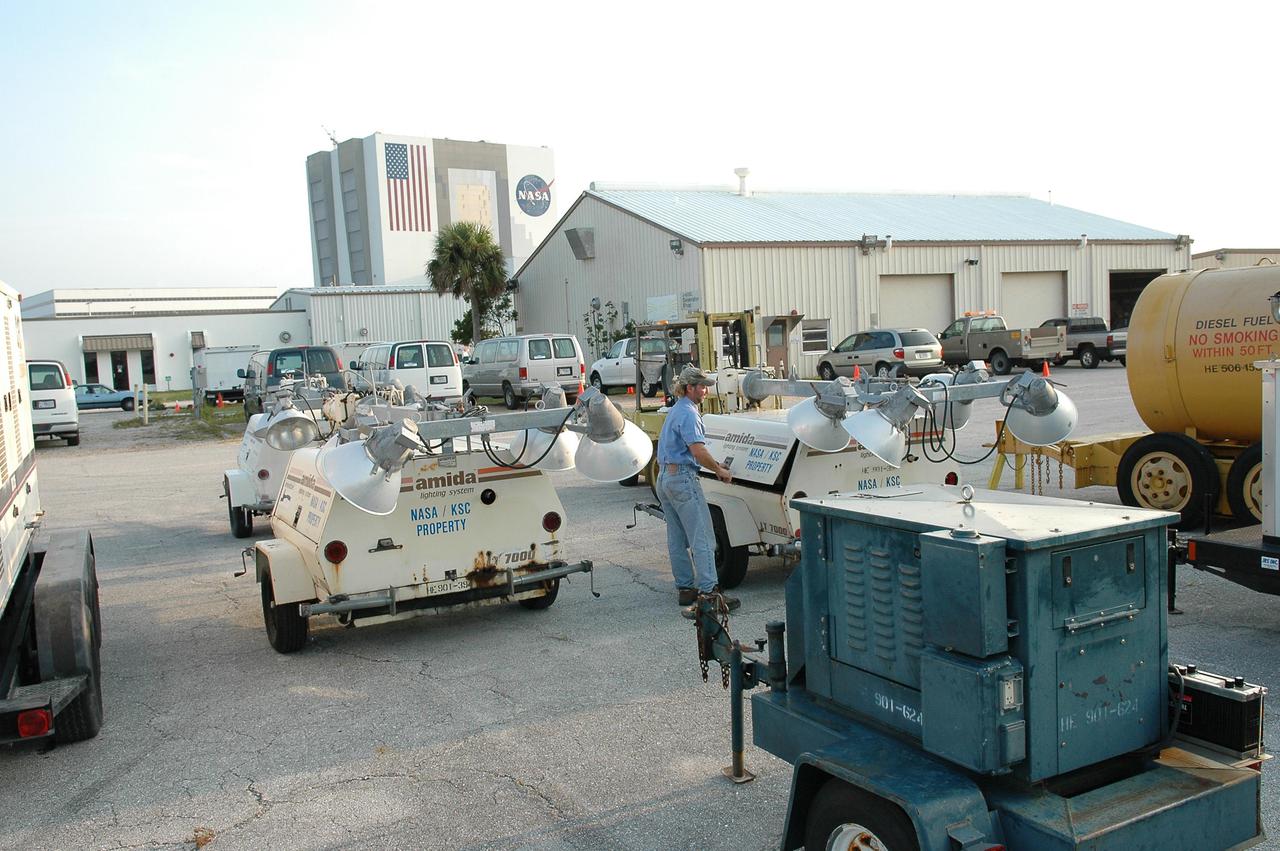
KENNEDY SPACE CENTER, FLA. - Workers at Kennedy Space Center prepare lighting systems that are being shipped to Michoud Assembly Facility near New Orleans. Michoud was left without power following Hurricane Katrina. A NASA plane is carrying medical supplies, food and chain saws, as well as a physician and two high voltage technicians to Michoud to ensure the facility can safely receive power when the main electricity grid comes online. In addition, a 14-person security team is also going to Michoud to relieve the security professionals at that location. Stennis Space Center also suffered damage and power outages from Hurricane Katrina. KSC is sending a helicopter with medical supplies and an Emergency Medical Technician to Stennis, plus a 1-megawatt generator and 125- and 225-kilowatt generators, and 1,000 gallons of diesel fuel.
A worker pours concrete as part of a nitrogen risk mitigation project at the High Pressure Gas Facility at Stennis Space Center. The concrete slab will provide the foundation needed to place new pumps at the site and is part of ongoing hurricane-related mitigation work at Stennis.
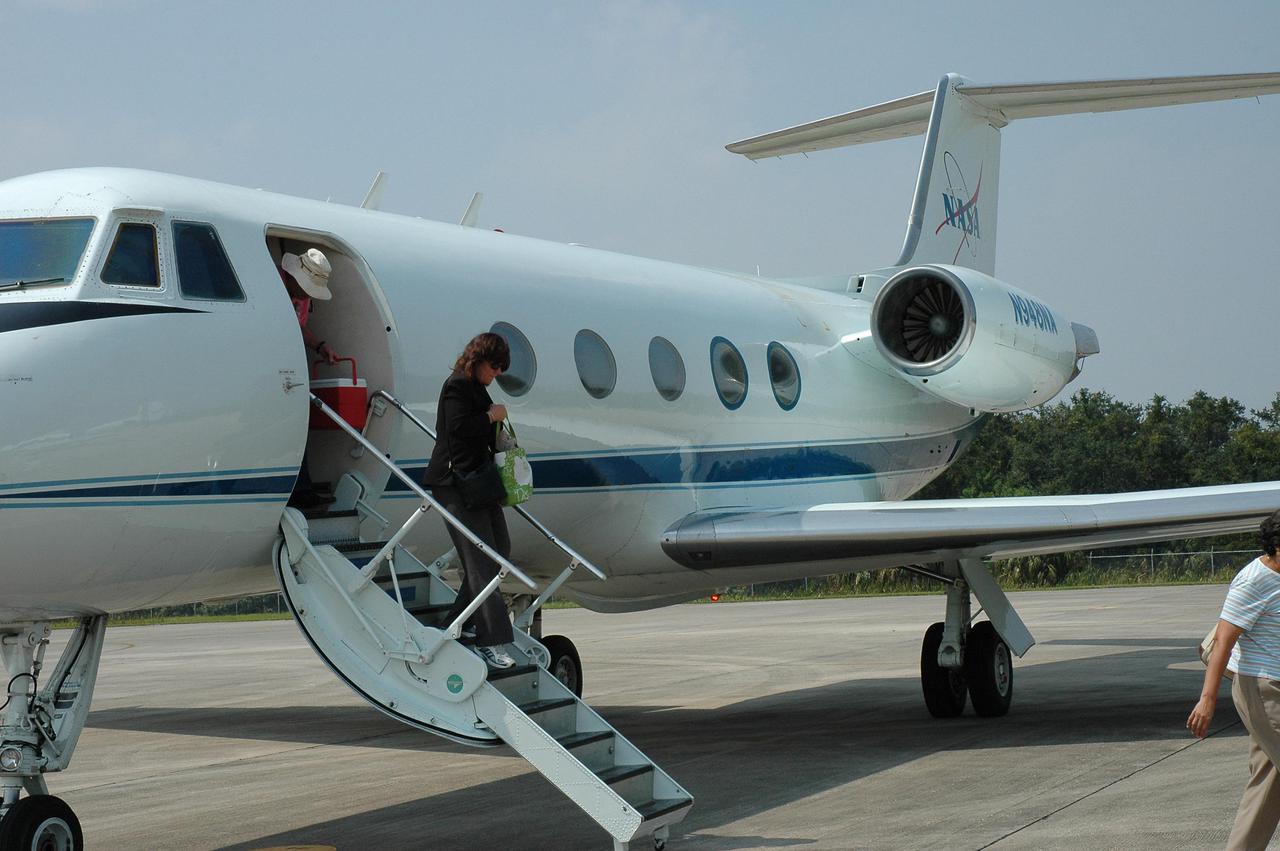
KENNEDY SPACE CENTER, FLA. - Patti Bell steps down the steps of the NASA aircraft on her return from Stennis Space Center in Mississippi. Bell is with Environmental and Occupational Health at KSC. She was part of a volunteer team helping rescue and recovery efforts at Stennis, which was damaged during Hurricane Katrina. Many employees of Stennis and Michoud Assembly Facility, near New Orleans, were rendered homeless by the hurricane. NASA centers have been generous with relief supplies and personnel. Stennis is now in limited operations mode. Daily convoys have been moving between Stennis and Michoud, transporting personnel and supplies as Michoud prepares to resume limited operations.
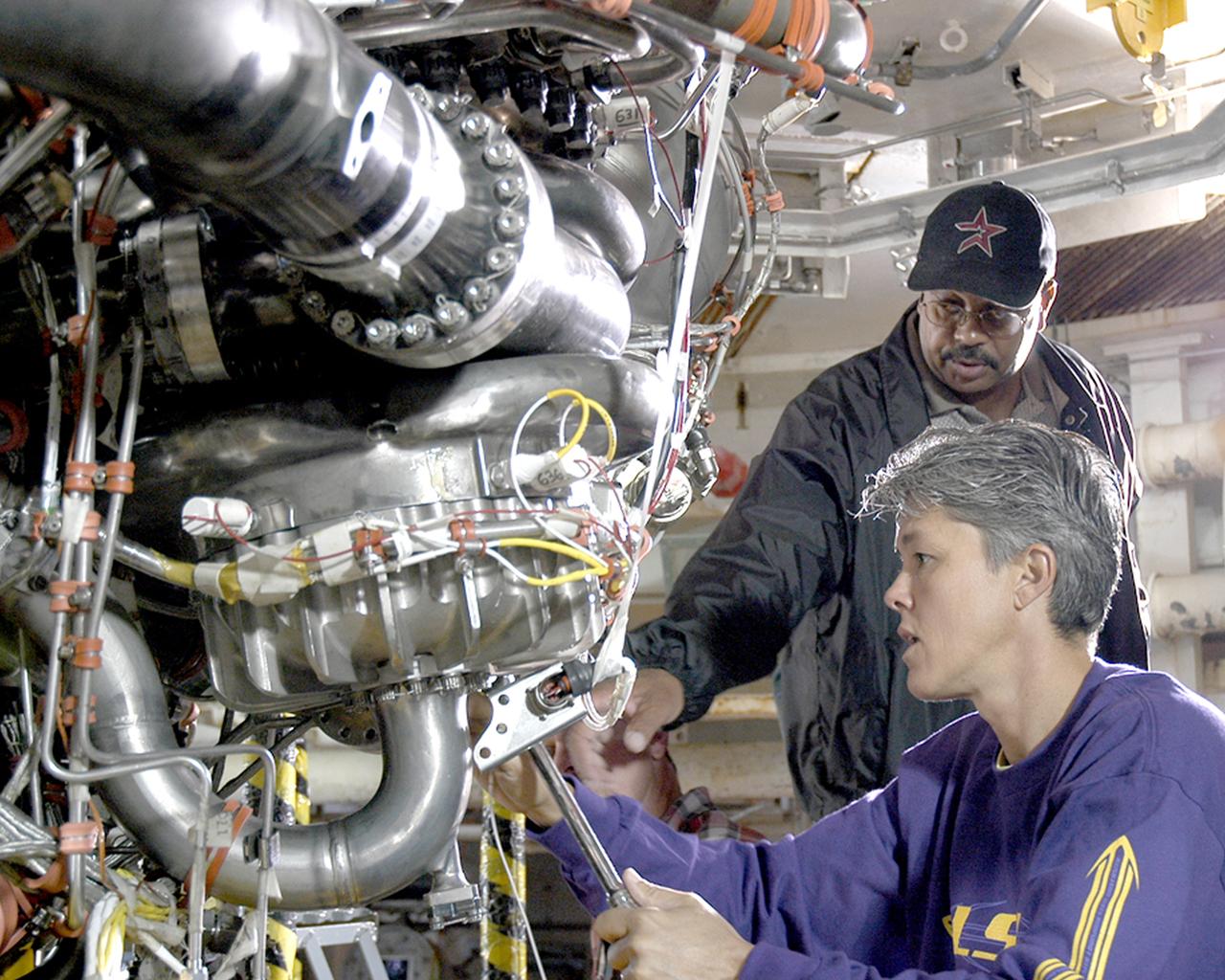
Alvin Pittman Sr., lead electronics technician with Pratt & Whitney Rocketdyne, and Janine Cuevas, a mechanical technician with PWR, perform final preparations on the space shuttle main engine tested Oct. 25, 2005, at NASA's Stennis Space Center. It was the first main engine test since Hurricane Katrina hit the Gulf Coast on Aug. 29.
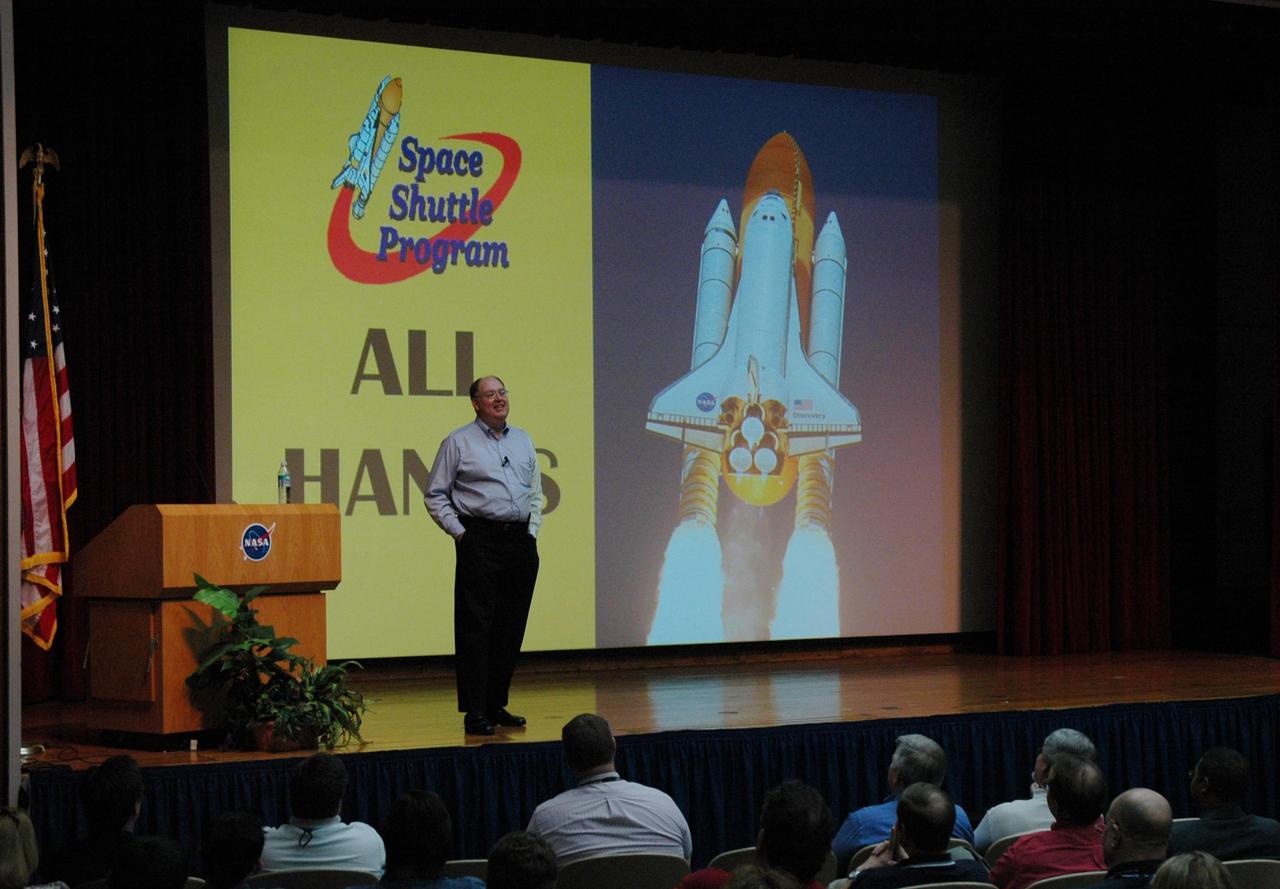
KENNEDY SPACE CENTER, FLA. - At a space shuttle all hands meeting in the training auditorium at NASA's Kennedy Space Center, Space Shuttle Program Manager Wayne Hale discusses the status of the program, successes of the STS-114 mission, effects of Hurricane Katrina on NASA facilities, and the newly released budget. Photo credit: NASA/Jim Grossmann
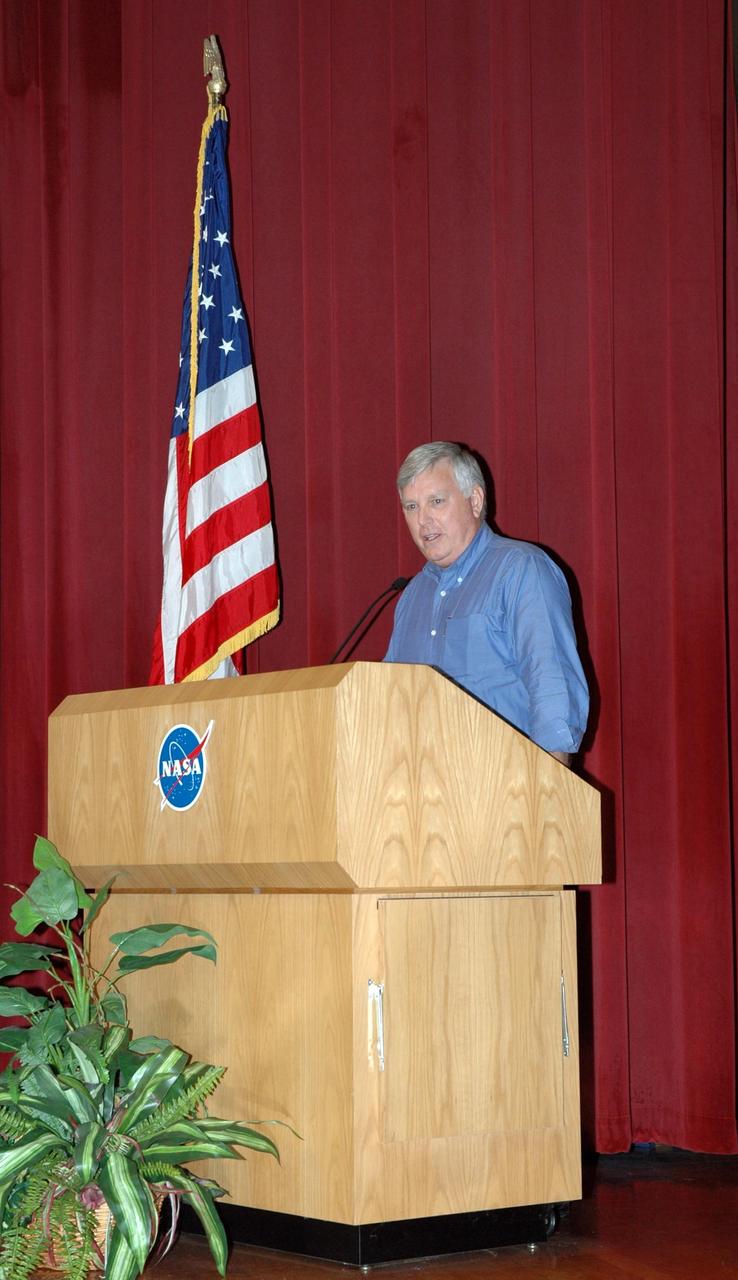
KENNEDY SPACE CENTER, FLA. - In the training auditorium at NASA's Kennedy Space Center, Center Director Jim Kennedy (at podium) welcomes Deputy Director Bill Parsons back to the center during a space shuttle all hands meeting. Following Kennedy, Space Shuttle Program Manager Wayne Hale discussed the status of the program, successes of the STS-114 mission, effects of Hurricane Katrina on NASA facilities, and the newly released budget. Photo credit: NASA/Jim Grossmann
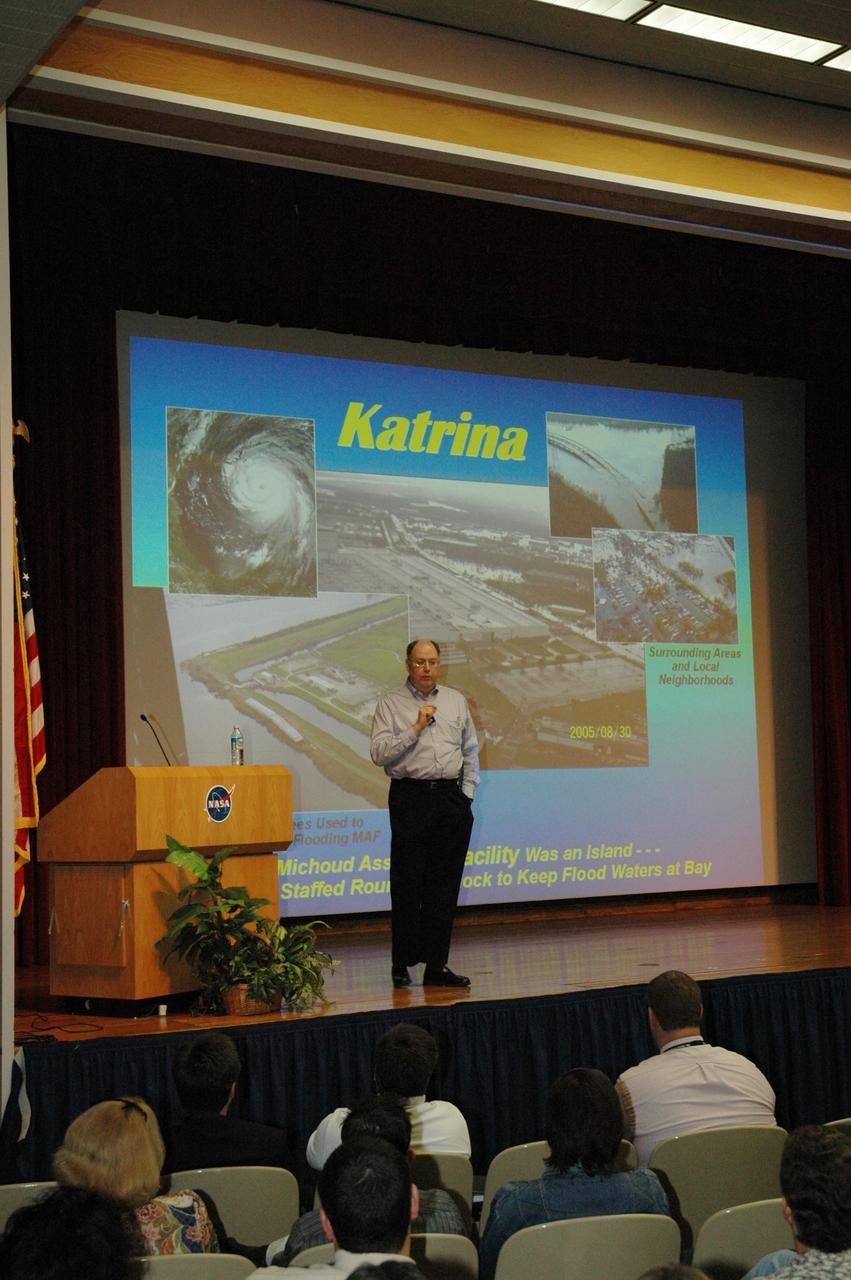
KENNEDY SPACE CENTER, FLA. - At a space shuttle all hands meeting in the training auditorium at NASA's Kennedy Space Center, Space Shuttle Program Manager Wayne Hale discusses effects of Hurricane Katrina on NASA facilities, the status of the program, successes of the STS-114 mission, and the newly released budget. Photo credit: NASA/Jim Grossmann
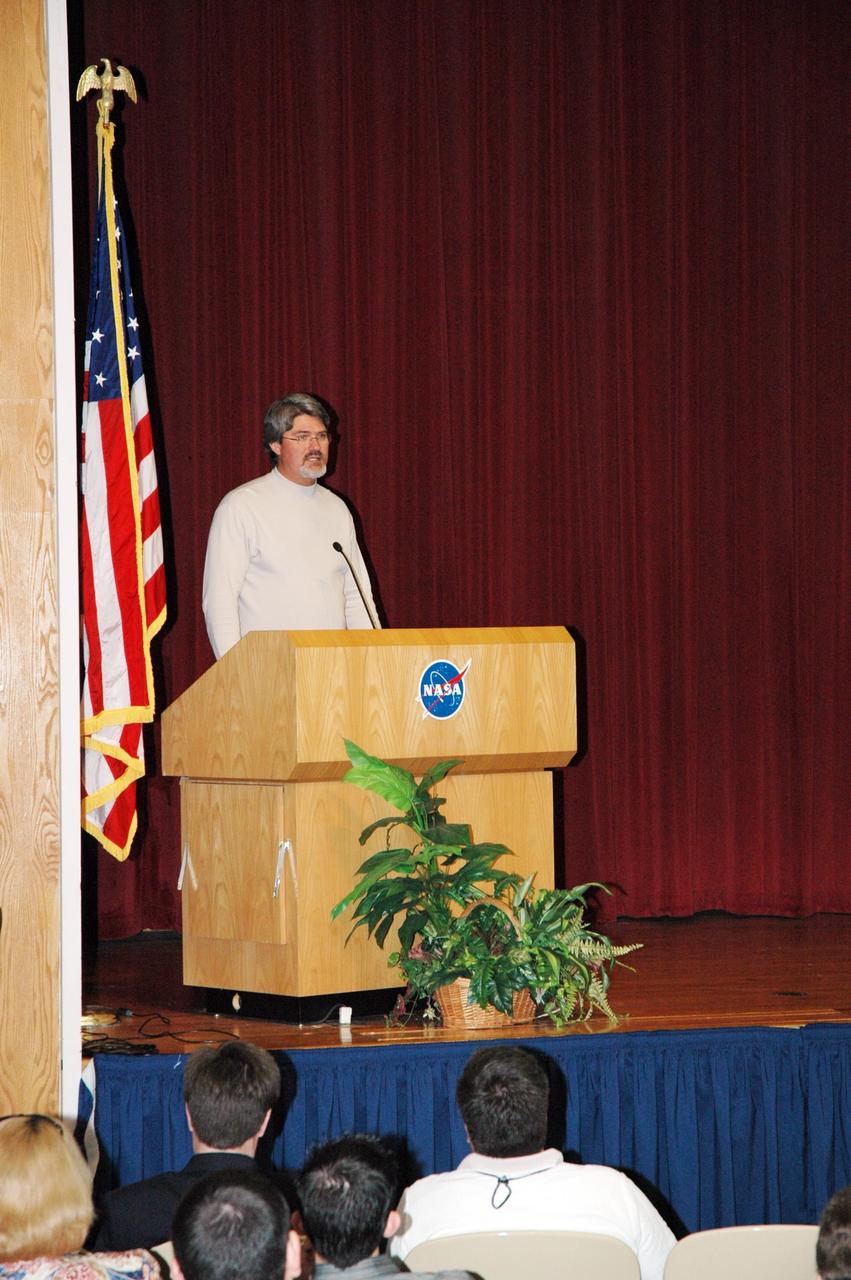
KENNEDY SPACE CENTER, FLA. - In the training auditorium at NASA's Kennedy Space Center, Deputy Director Bill Parsons, at the beginning of a space shuttle all hands meeting, speaks to employees about his journey through NASA. He was followed by Space Shuttle Program Manager Wayne Hale discussed the status of the program, successes of the STS-114 mission, effects of Hurricane Katrina on NASA facilities, and the newly released budget. Photo credit: NASA/Jim Grossmann
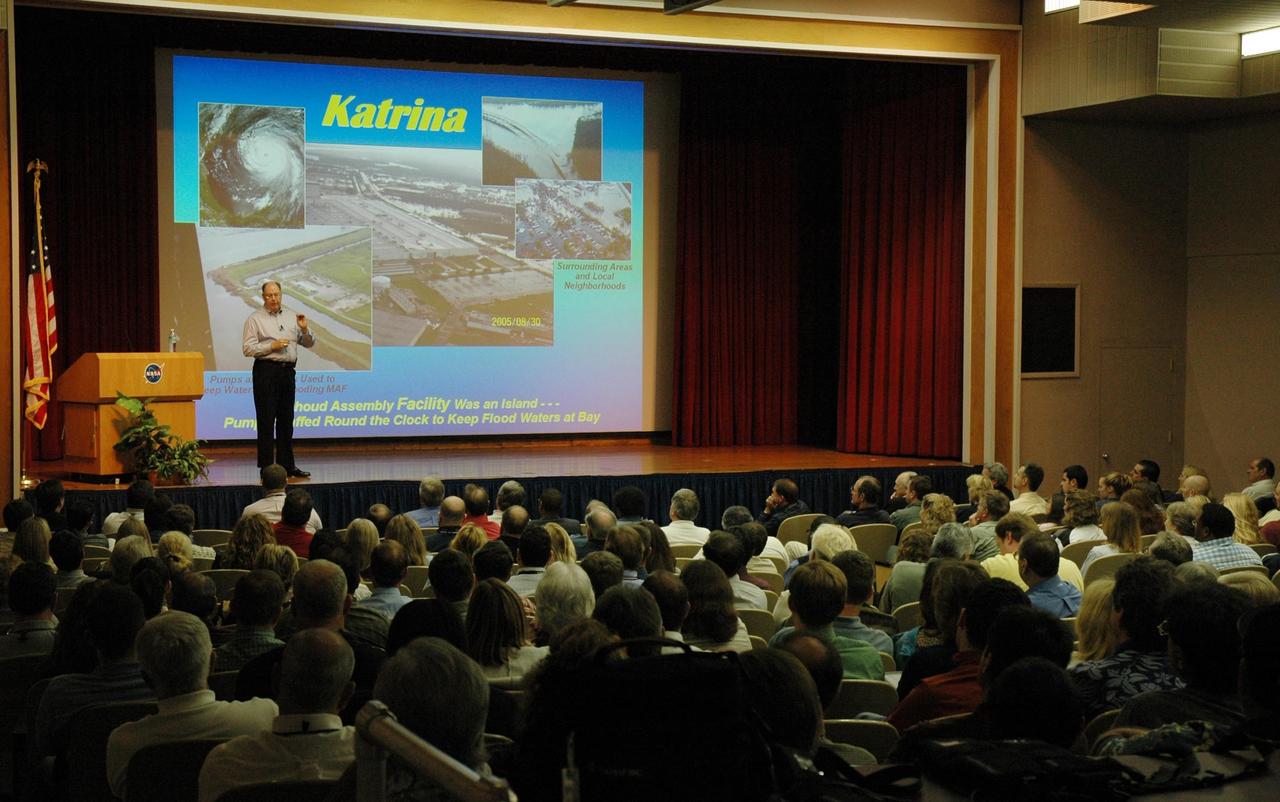
KENNEDY SPACE CENTER, FLA. - At a space shuttle all hands meeting in the training auditorium at NASA's Kennedy Space Center, Space Shuttle Program Manager Wayne Hale discusses effects of Hurricane Katrina on NASA facilities, the status of the program, successes of the STS-114 mission, and the newly released budget. Photo credit: NASA/Jim Grossmann
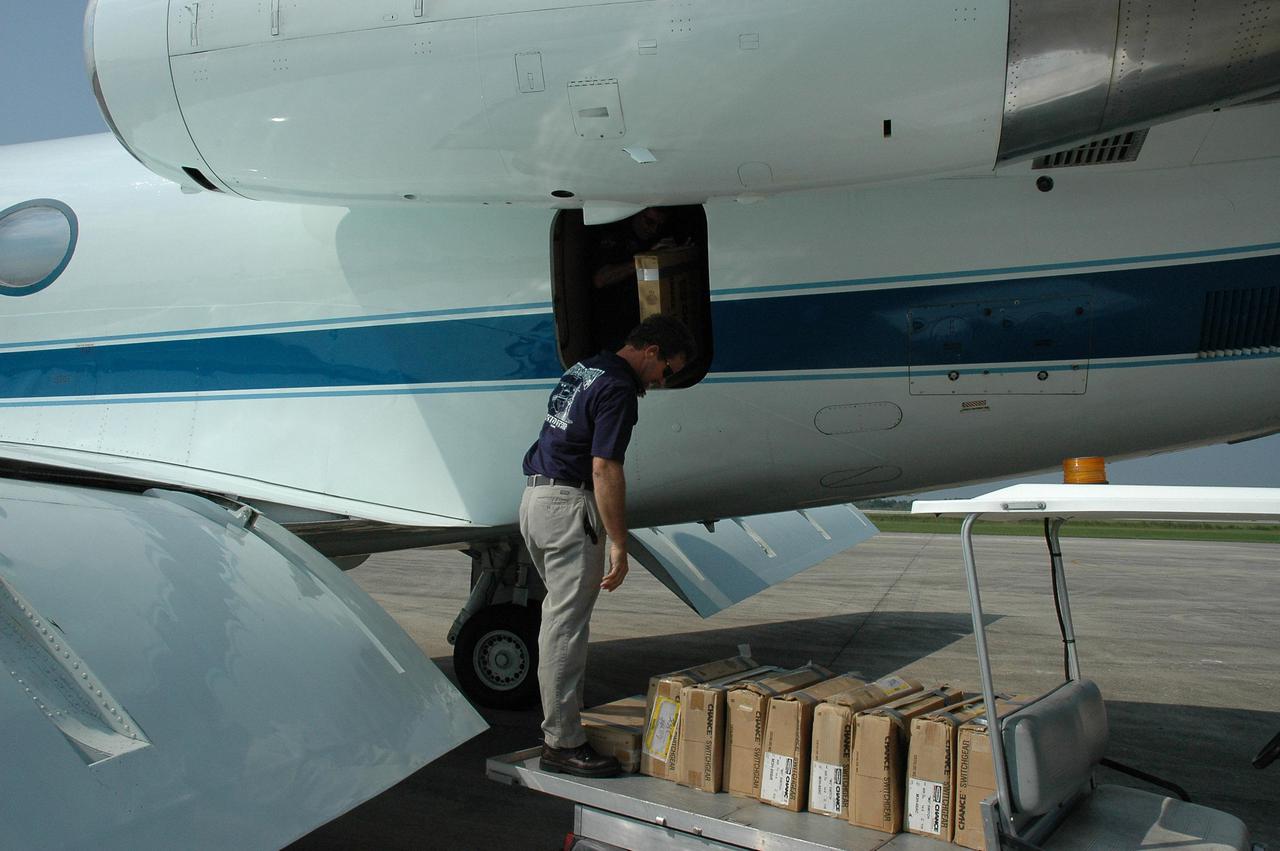
KENNEDY SPACE CENTER, FLA. - At the NASA Kennedy Space Center Shuttle Landing Facility, hurricane relief supplies are being loaded onto a NASA aircraft bound for Stennis Space Center in Mississippi, which suffered damage from Hurricane Katrina. The supplies included 10 boxes of load bus disconnects going to Michoud Assesmbly Facility near New Orleans and 17 boxes of personal hygiene items, along with boxes of clothing and water. Many Stennis and Michoud employees were rendered homeless by the hurricane. NASA centers have been generous with relief supplies and personnel. Stennis is in limited operations mode. Daily convoys have been moving between Stennis and Michould, transporting personnel and supplies as Michoud prepares to resume limited operations.

KENNEDY SPACE CENTER, FLA. - At the NASA Kennedy Space Center Shuttle Landing Facility, the NASA aircraft filled with hurricane relief supplies is ready for takeoff. The plane is bound for Stennis Space Center in Mississippi, which suffered damage from Hurricane Katrina. The supplies included 10 boxes of load bus disconnects going to Michoud Assesmbly Facility near New Orleans and 17 boxes of personal hygiene items, along with boxes of clothing and water. Many Stennis and Michoud employees were rendered homeless by the hurricane. NASA centers have been generous with relief supplies and personnel. Stennis is in limited operations mode. Daily convoys have been moving between Stennis and Michould, transporting personnel and supplies as Michoud prepares to resume limited operations.
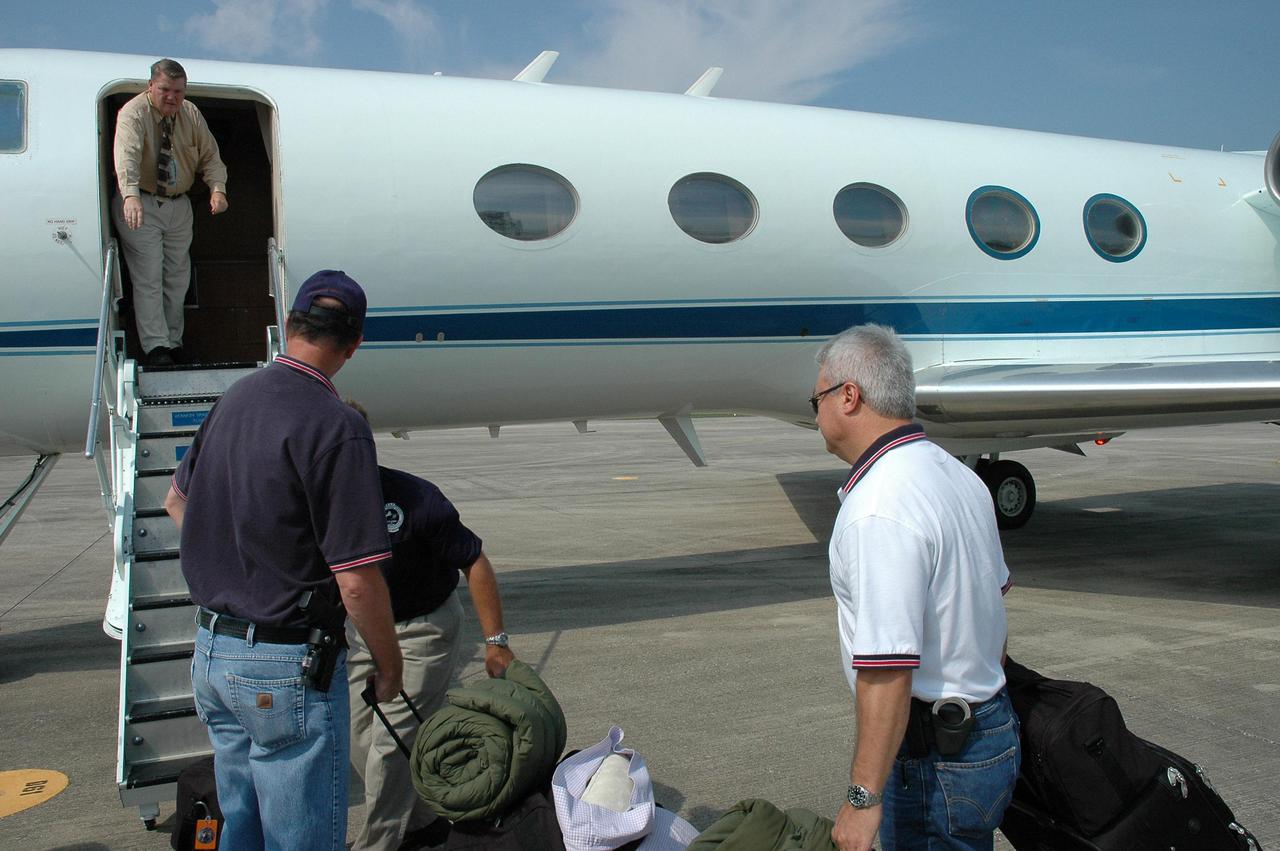
KENNEDY SPACE CENTER, FLA. - At the NASA Kennedy Space Center Shuttle Landing Facility, employees load hurricane relief supplies onto a NASA aircraft bound for Stennis Space Center in Mississippi, which suffered damage from Hurricane Katrina. The two men with backs to the camera are Security personnel going to Stennis to relieve others who have been helping at the center. The supplies included 10 boxes of load bus disconnects going to Michoud Assesmbly Facility near New Orleans and 17 boxes of personal hygiene items, along with boxes of clothing and water. Many Stennis and Michoud employees were rendered homeless by the hurricane. NASA centers have been generous with relief supplies and personnel. Stennis is in limited operations mode. Daily convoys have been moving between Stennis and Michould, transporting personnel and supplies as Michoud prepares to resume limited operations.
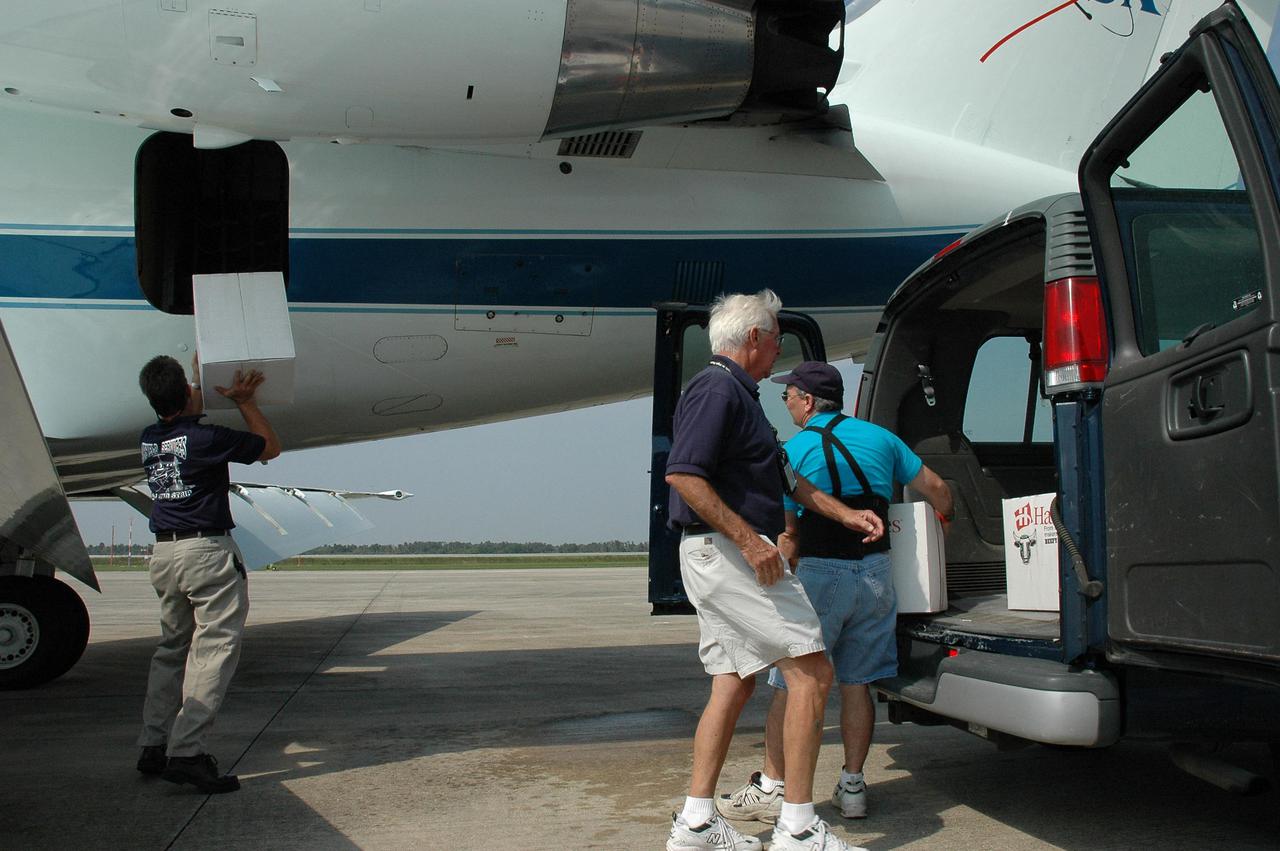
KENNEDY SPACE CENTER, FLA. - At the NASA Kennedy Space Center Shuttle Landing Facility, employees load hurricane relief supplies onto a NASA aircraft bound for Stennis Space Center in Mississippi, which suffered damage from Hurricane Katrina. The supplies included 10 boxes of load bus disconnects going to Michoud Assesmbly Facility near New Orleans and 17 boxes of personal hygiene items, along with boxes of clothing and water. Many Stennis and Michoud employees were rendered homeless by the hurricane. NASA centers have been generous with relief supplies and personnel. Stennis is in limited operations mode. Daily convoys have been moving between Stennis and Michould, transporting personnel and supplies as Michoud prepares to resume limited operations.
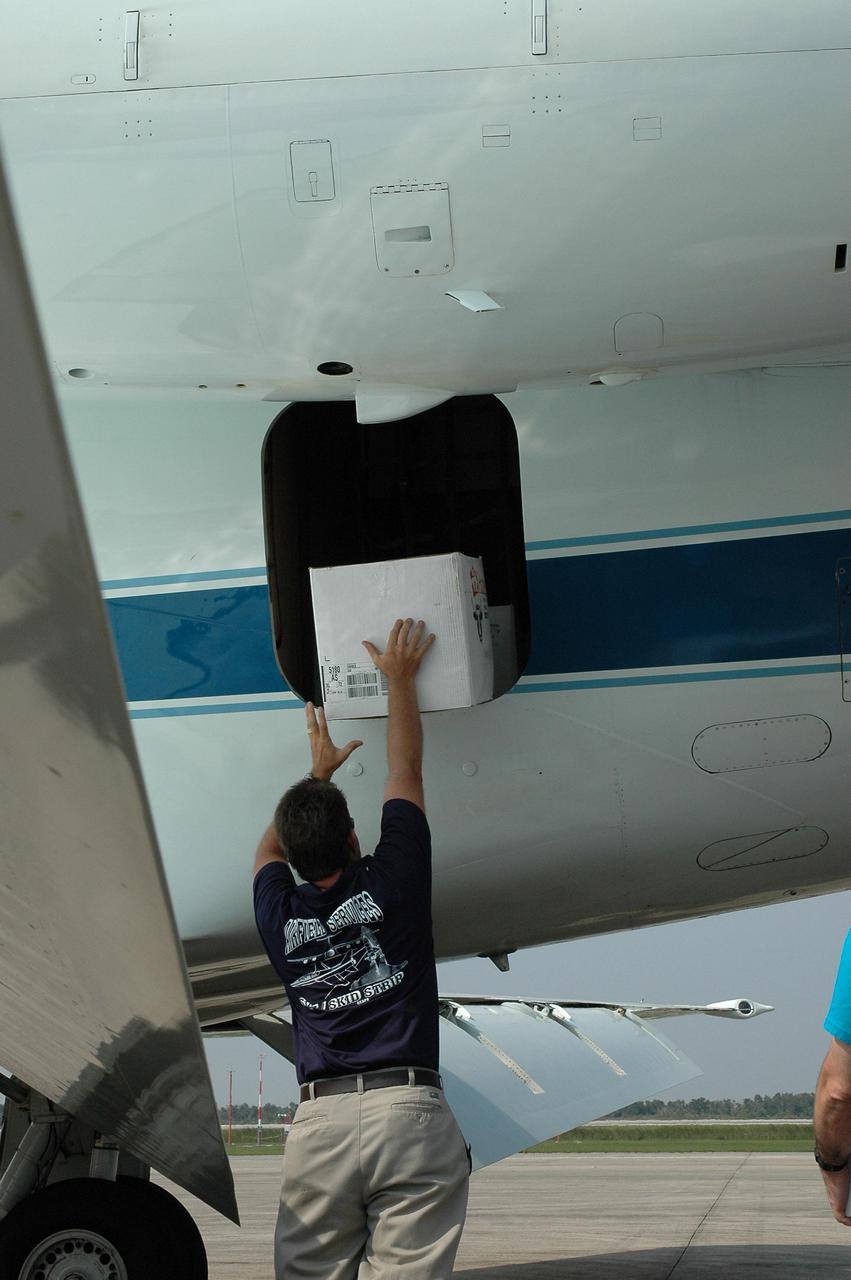
KENNEDY SPACE CENTER, FLA. - At the NASA Kennedy Space Center Shuttle Landing Facility, an employee lifts a box of hurricane relief supplies onto a NASA aircraft bound for Stennis Space Center in Mississippi, which suffered damage from Hurricane Katrina. The supplies included 10 boxes of load bus disconnects going to Michoud Assesmbly Facility near New Orleans and 17 boxes of personal hygiene items, along with boxes of clothing and water. Many Stennis and Michoud employees were rendered homeless by the hurricane. NASA centers have been generous with relief supplies and personnel. Stennis is in limited operations mode. Daily convoys have been moving between Stennis and Michould, transporting personnel and supplies as Michoud prepares to resume limited operations.
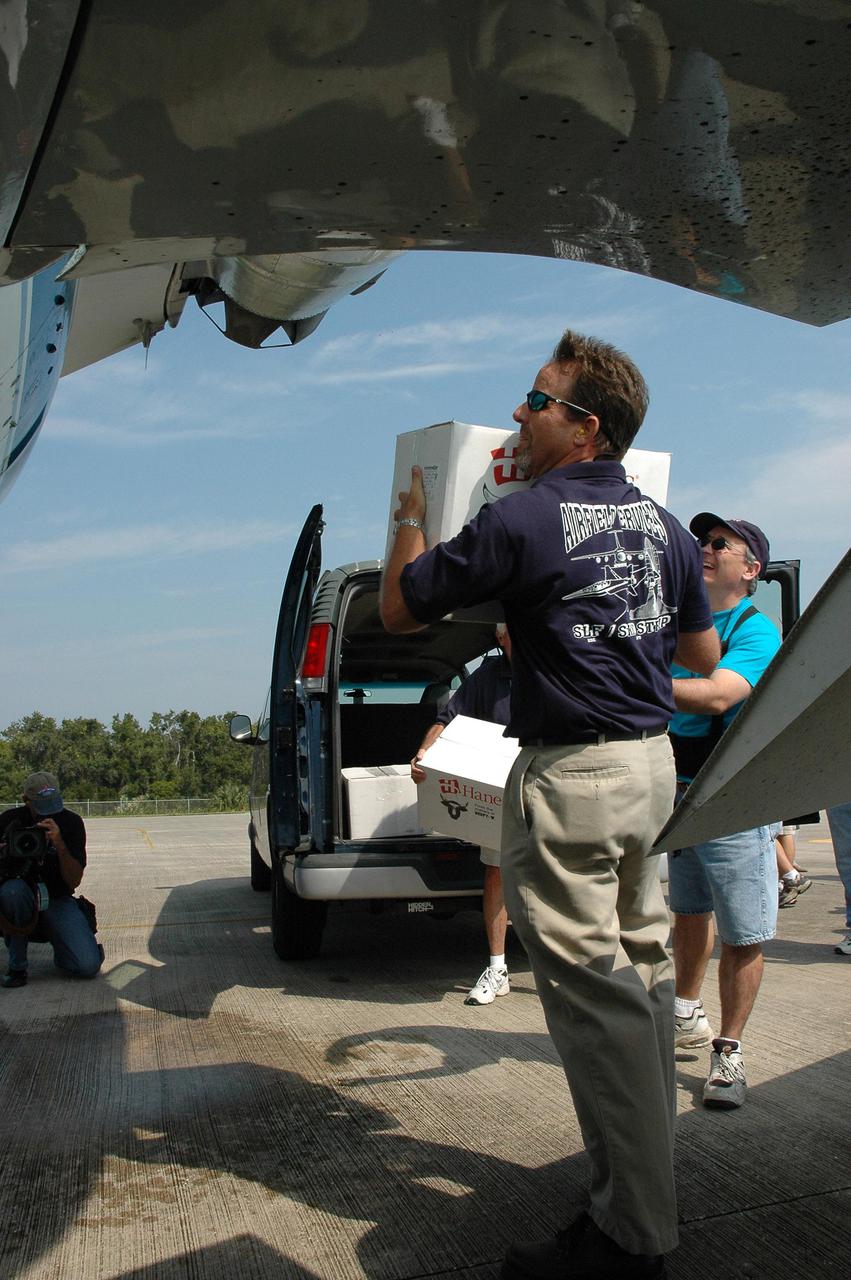
KENNEDY SPACE CENTER, FLA. - At the NASA Kennedy Space Center Shuttle Landing Facility, employees load hurricane relief supplies onto a NASA aircraft bound for Stennis Space Center in Mississippi, which suffered damage from Hurricane Katrina. The supplies included 10 boxes of load bus disconnects going to Michoud Assesmbly Facility near New Orleans and 17 boxes of personal hygiene items, along with boxes of clothing and water. Many Stennis and Michoud employees were rendered homeless by the hurricane. NASA centers have been generous with relief supplies and personnel. Stennis is in limited operations mode. Daily convoys have been moving between Stennis and Michould, transporting personnel and supplies as Michoud prepares to resume limited operations.
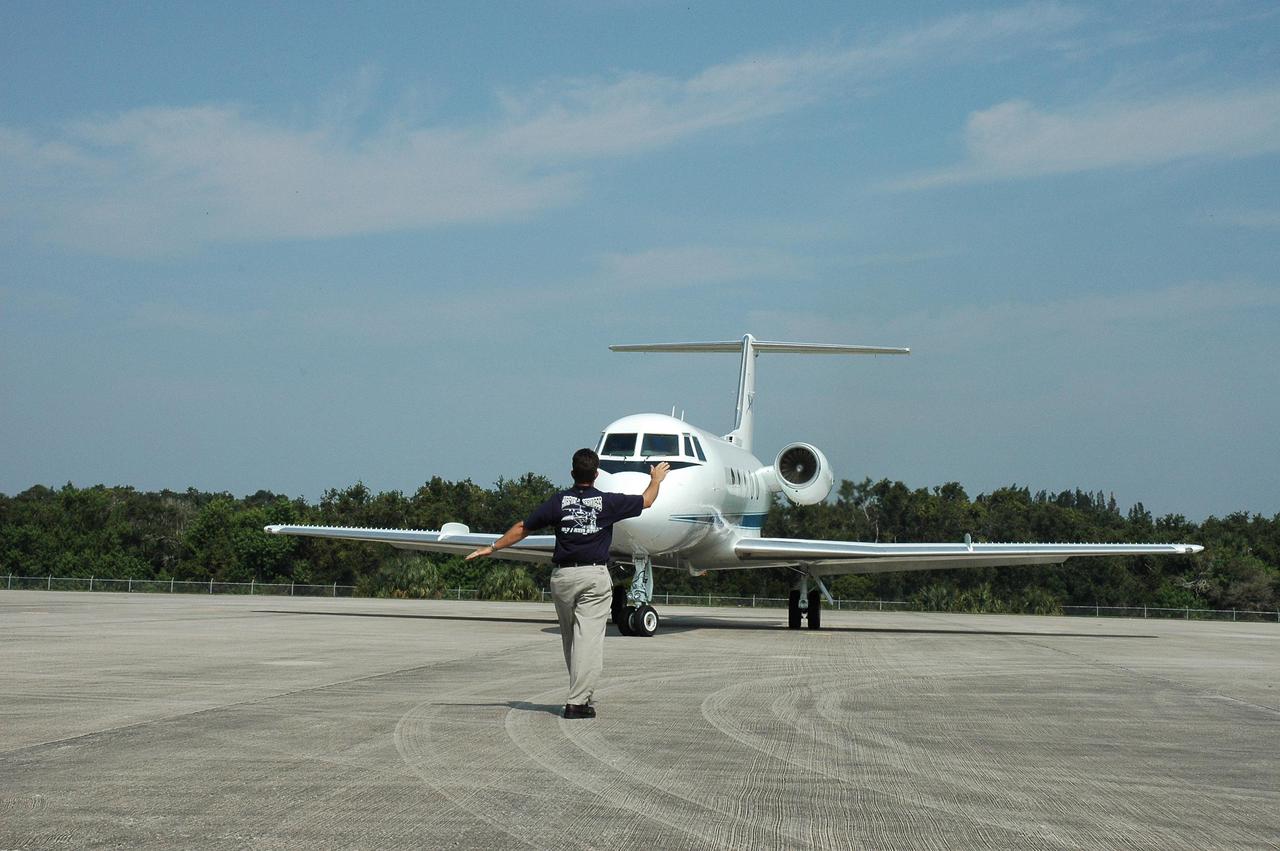
KENNEDY SPACE CENTER, FLA. - At the NASA Kennedy Space Center Shuttle Landing Facility, the NASA aircraft filled with hurricane relief supplies taxis into position for takeoff. The plane is bound for Stennis Space Center in Mississippi, which suffered damage from Hurricane Katrina. The two men with backs to the camera are Security personnel going to Stennis to relieve others who have been helping at the center. The supplies included 10 boxes of load bus disconnects going to Michoud Assesmbly Facility near New Orleans and 17 boxes of personal hygiene items, along with boxes of clothing and water. Many Stennis and Michoud employees were rendered homeless by the hurricane. NASA centers have been generous with relief supplies and personnel. Stennis is in limited operations mode. Daily convoys have been moving between Stennis and Michould, transporting personnel and supplies as Michoud prepares to resume limited operations.
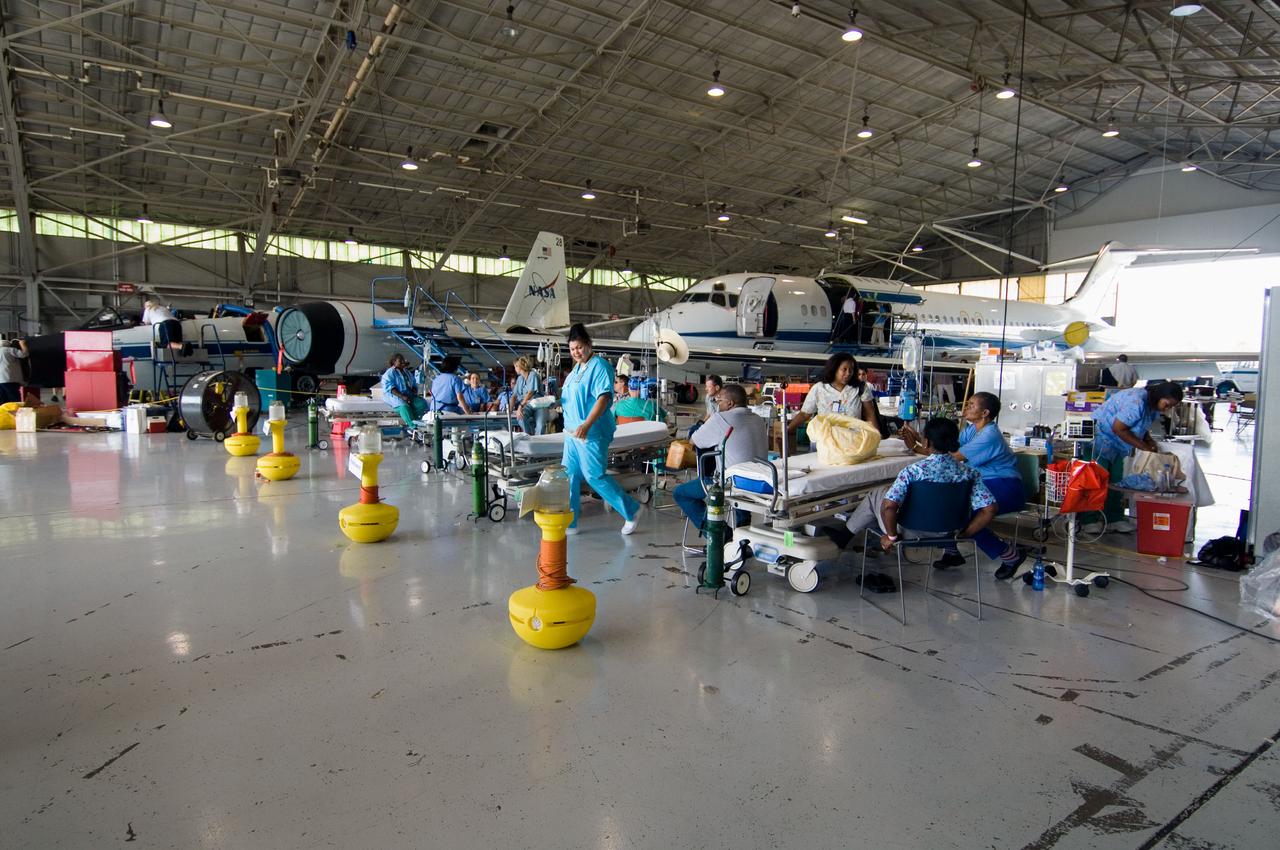
JSC2005-E-36144 (2 September 2005) --- NASA Johnson Space Center Aircraft Operations Hangar 990 at Ellington Field, Houston, has been used as a triage location this week for medical patients evacuated by air from New Orleans to pass through on their way to Houston-area medical facilities. Hundreds of patients have passed through the location so far, as the transfer operations, led by the Veterans Administration and supported by NASA and other agencies, continue.
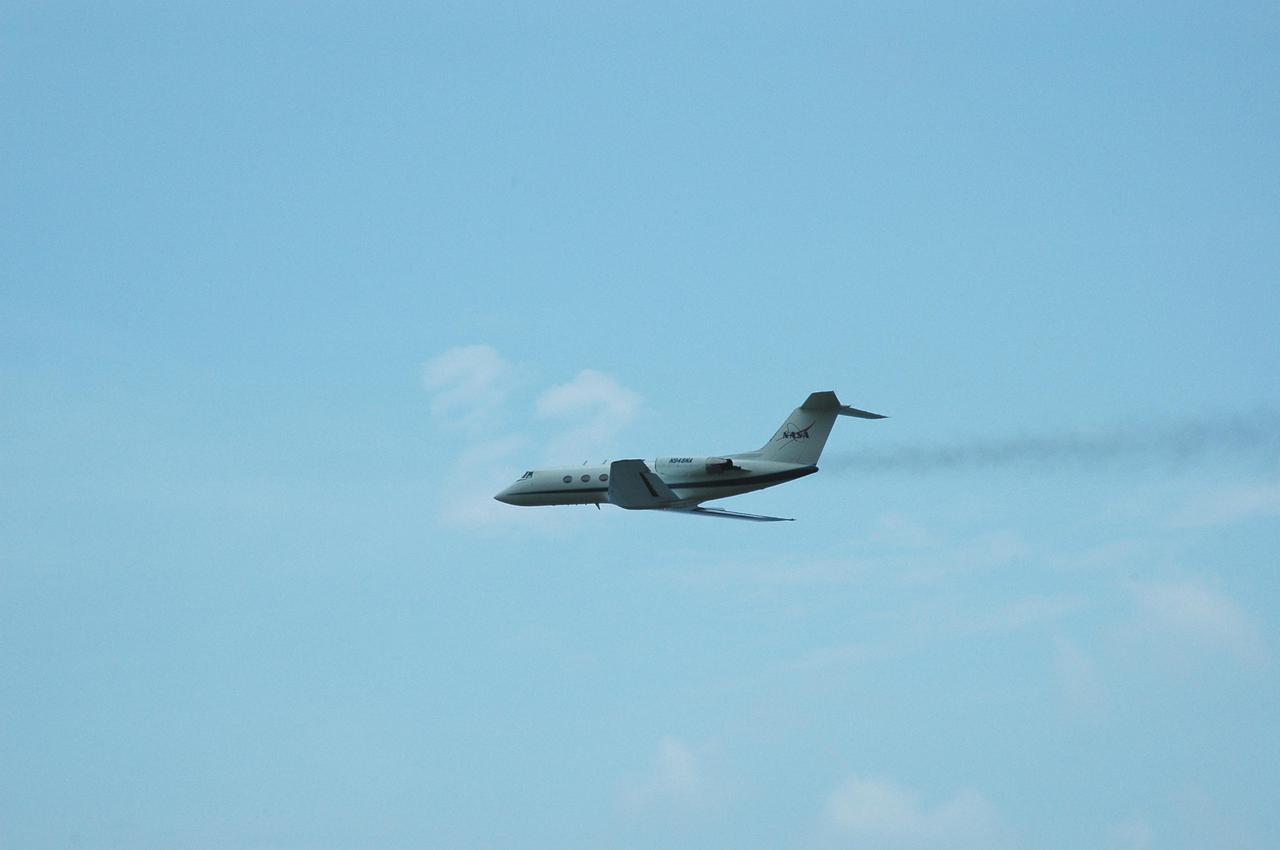
KENNEDY SPACE CENTER, FLA. - A NASA plane is airborne after leaving Patrick Air Force Base in Florida on a hurricane relief flight to Michoud Assembly Facility near New Orleans. Both Michoud and Stennis Space Center in Mississippi were effected by Hurricane Katrina. KSC is sending a helicopter with medical supplies and an Emergency Medical Technician to Stennis. A NASA plane is carrying medical supplies, food and chain saws, as well as a physician and two high voltage technicians to Michoud to ensure the facility can safely receive power when the main electricity grid comes online. KSC has sent a truck with 1,000 gallons of diesel fuel and three large generators: a 1-megawatt generator, and 125- and 225-kilowatt generators. A 14-person security team is also going to Michoud to relieve the security professionals at that location.
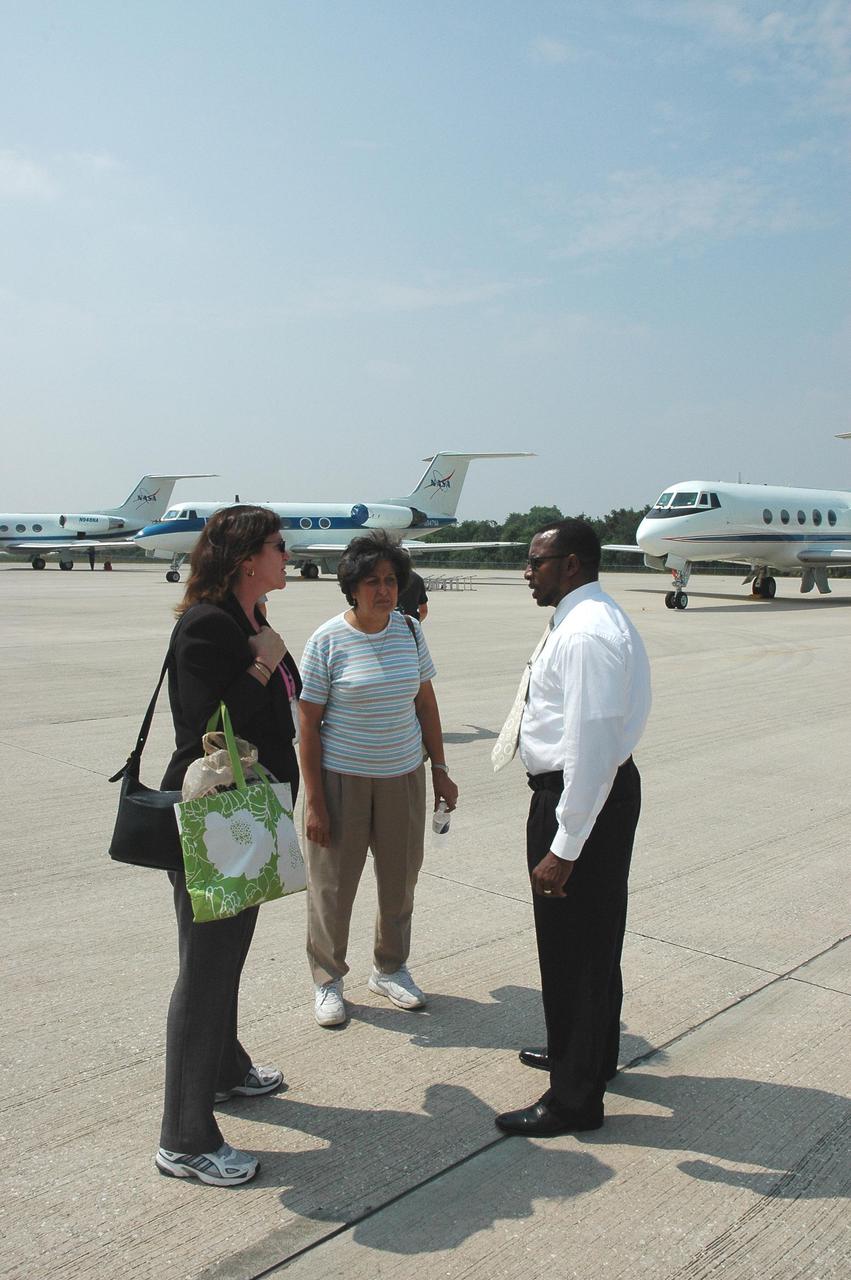
KENNEDY SPACE CENTER, FLA. - Patti Bell (left) and Dr. Violette Wahba Salib (center) are greeted by KSC Deputy Director Dr. Woodrow Whitlow Jr. after their return from Stennis Space Center in Mississippi. Bell and Salib are with Environmental and Occupational Health at KSC. They were part of a volunteer team helping rescue and recovery efforts at Stennis, which was damaged during Hurricane Katrina. Many employees of Stennis and Michoud Assembly Facility, near New Orleans, were rendered homeless by the hurricane. NASA centers have been generous with relief supplies and personnel. Stennis is now in limited operations mode. Daily convoys have been moving between Stennis and Michoud, transporting personnel and supplies as Michoud prepares to resume limited operations.
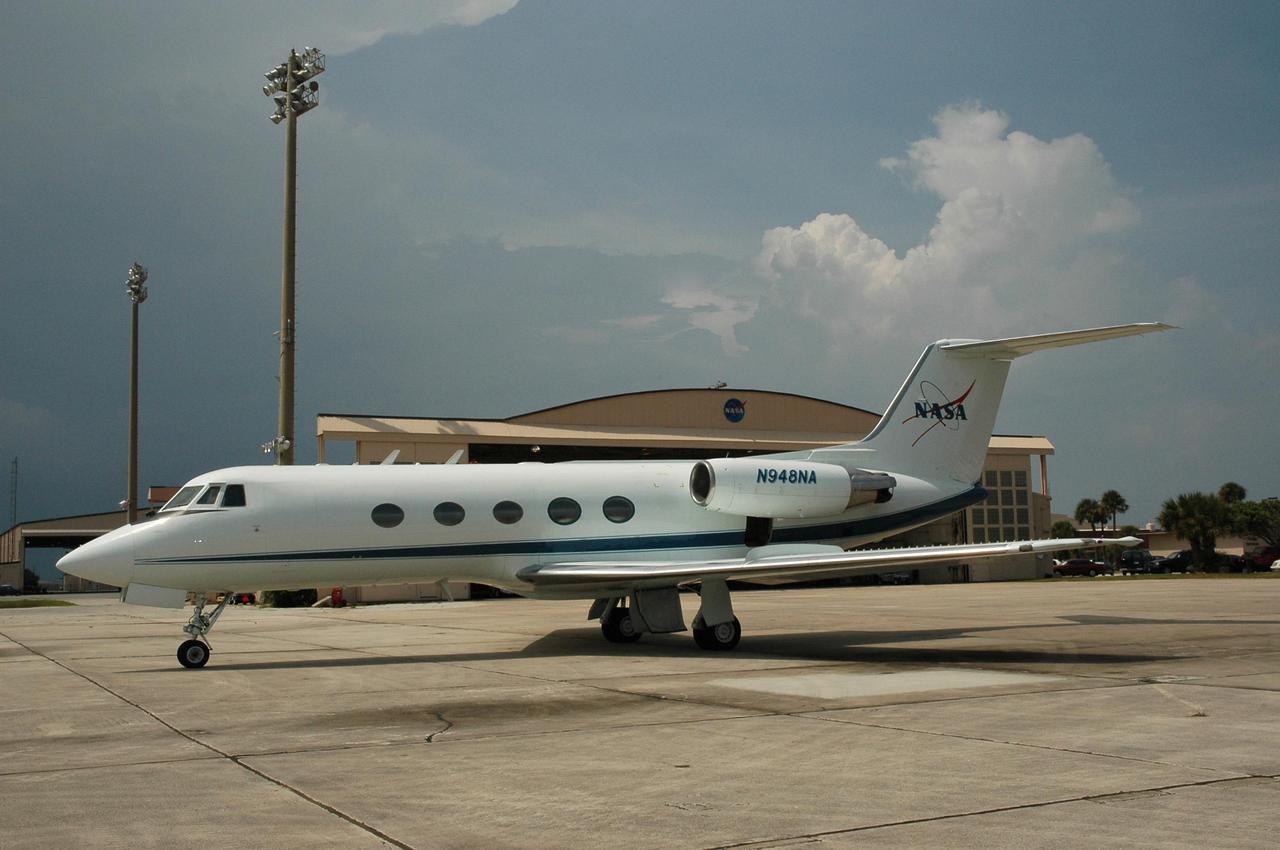
KENNEDY SPACE CENTER, FLA. - At Patrick Air Force Base in Florida, a NASA plane is ready to take off on a hurricane relief flight to Michoud Assembly Facility near New Orleans. Both Michoud and Stennis Space Center in Mississippi were effected by Hurricane Katrina. KSC is sending a helicopter with medical supplies and an Emergency Medical Technician to Stennis. A NASA plane is carrying medical supplies, food and chain saws, as well as a physician and two high voltage technicians to Michoud to ensure the facility can safely receive power when the main electricity grid comes online. KSC has sent a truck with 1,000 gallons of diesel fuel and three large generators: a 1-megawatt generator, and 125- and 225-kilowatt generators. A 14-person security team is also going to Michoud to relieve the security professionals at that location.
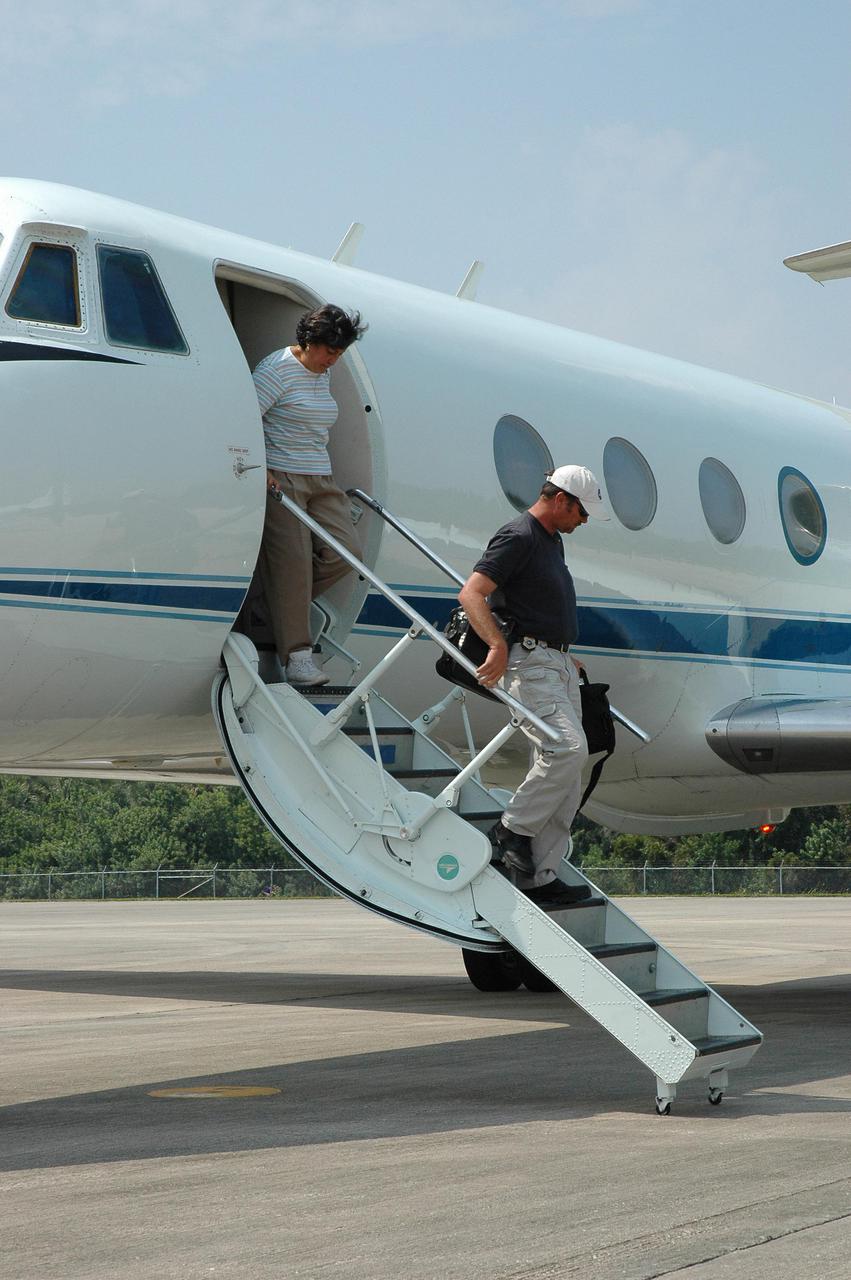
KENNEDY SPACE CENTER, FLA. - Dr. Violette Wahba Salib (left) and Ron Storey, a NASA Security agent, exit a NASA aircraft after its return from Stennis Space Center in Mississippi. Salib is with Occupational Medicine at KSC. The two were part of a volunteer team helping rescue and recovery efforts at Stennis, which was damaged during Hurricane Katrina. Many employees of Stennis and Michoud Assembly Facility, near New Orleans, were rendered homeless by the hurricane. NASA centers have been generous with relief supplies and personnel. Stennis is now in limited operations mode. Daily convoys have been moving between Stennis and Michoud, transporting personnel and supplies as Michoud prepares to resume limited operations.
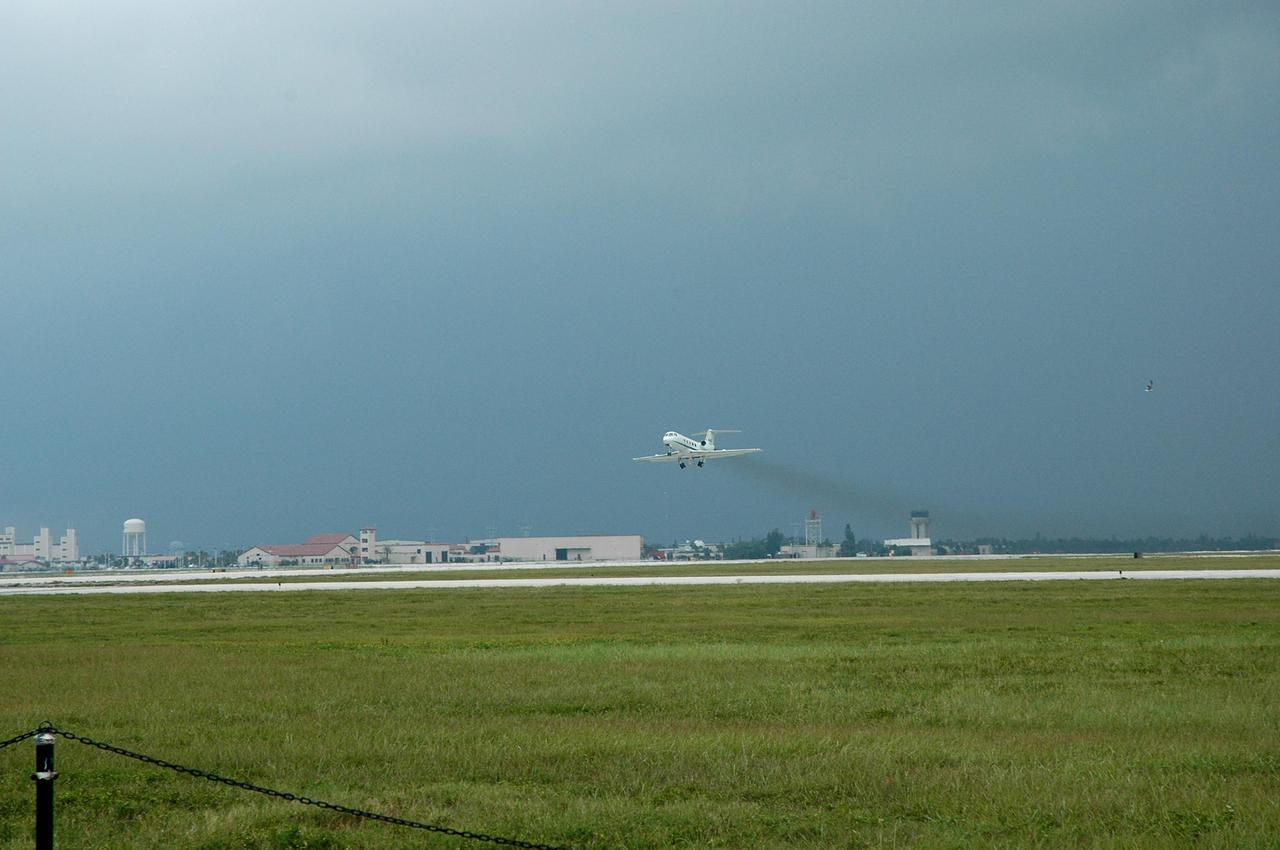
KENNEDY SPACE CENTER, FLA. - A NASA plane takes off from Patrick Air Force Base in Florida on a hurricane relief flight to Michoud Assembly Facility near New Orleans. Both Michoud and Stennis Space Center in Mississippi were effected by Hurricane Katrina. KSC is sending a helicopter with medical supplies and an Emergency Medical Technician to Stennis. A NASA plane is carrying medical supplies, food and chain saws, as well as a physician and two high voltage technicians to Michoud to ensure the facility can safely receive power when the main electricity grid comes online. KSC has sent a truck with 1,000 gallons of diesel fuel and three large generators: a 1-megawatt generator, and 125- and 225-kilowatt generators. A 14-person security team is also going to Michoud to relieve the security professionals at that location.
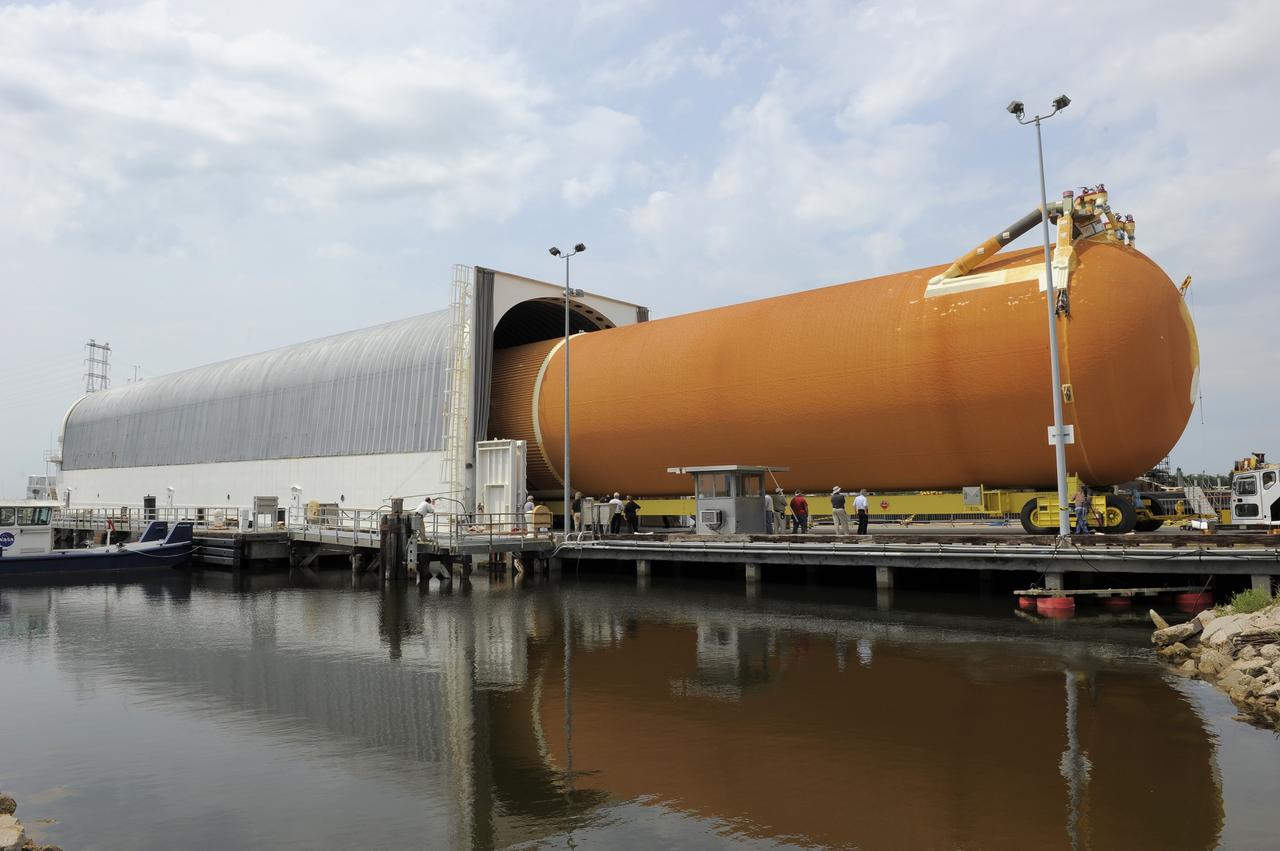
NEW ORLEANS -- The Space Shuttle Program's last external fuel tank, ET-122, is loaded onto the Pegasus Barge at NASA's Michoud Assembly Facility in New Orleans. The tank will travel 900 miles to NASA's Kennedy Space Center in Florida where it will be integrated to space shuttle Endeavour for the STS-134 mission to the International Space Station. STS-134, targeted to launch in 2011, currently is scheduled to be the last mission in the Space Shuttle Program. The tank, which is the largest element of the space shuttle stack, was damaged during Hurricane Katrina in August 2005 and restored to flight configuration by Lockheed Martin Space Systems Company employees. Photo credit: NASA/Kim Shiflett
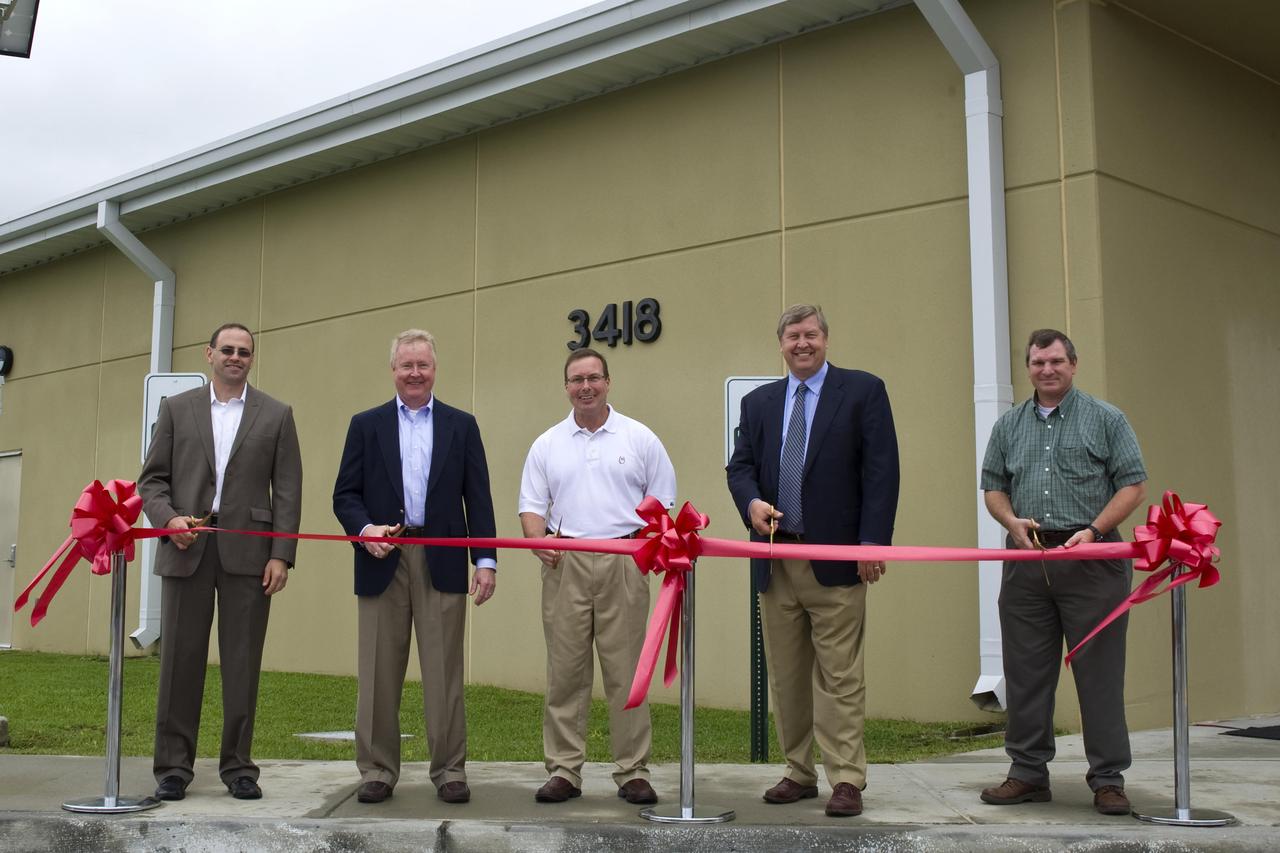
NASA cut the ribbon on a new cryogenics control center at John C. Stennis Space Center on March 30. The new facility is part of a project to strengthen Stennis facilities to withstand the impacts of future storms like hurricane Katrina in 2005. Participants in the ribbon-cutting included (l to r): Jason Zuckerman, director of project management for The McDonnel Group; Keith Brock, director of the NASA Project Directorate at Stennis; Stennis Deputy Director Rick Gilbrech; Steve Jackson, outgoing program manager of the Jacobs Technology NASA Test Operations Group; and Troy Frisbie, Cryo Control Center Construction project manager for NASA Center Operations at Stennis.

NEW ORLEANS -- Workers escort the Space Shuttle Program's last external fuel tank, ET-122, to the Pegasus Barge at NASA's Michoud Assembly Facility in New Orleans. The tank will travel 900 miles aboard the Pegasus Barge to NASA's Kennedy Space Center in Florida where it will be integrated to space shuttle Endeavour for the STS-134 mission to the International Space Station. STS-134, targeted to launch in 2011, currently is scheduled to be the last mission in the Space Shuttle Program. The tank, which is the largest element of the space shuttle stack, was damaged during Hurricane Katrina in August 2005 and restored to flight configuration by Lockheed Martin Space Systems Company employees. Photo credit: NASA/Kim Shiflett
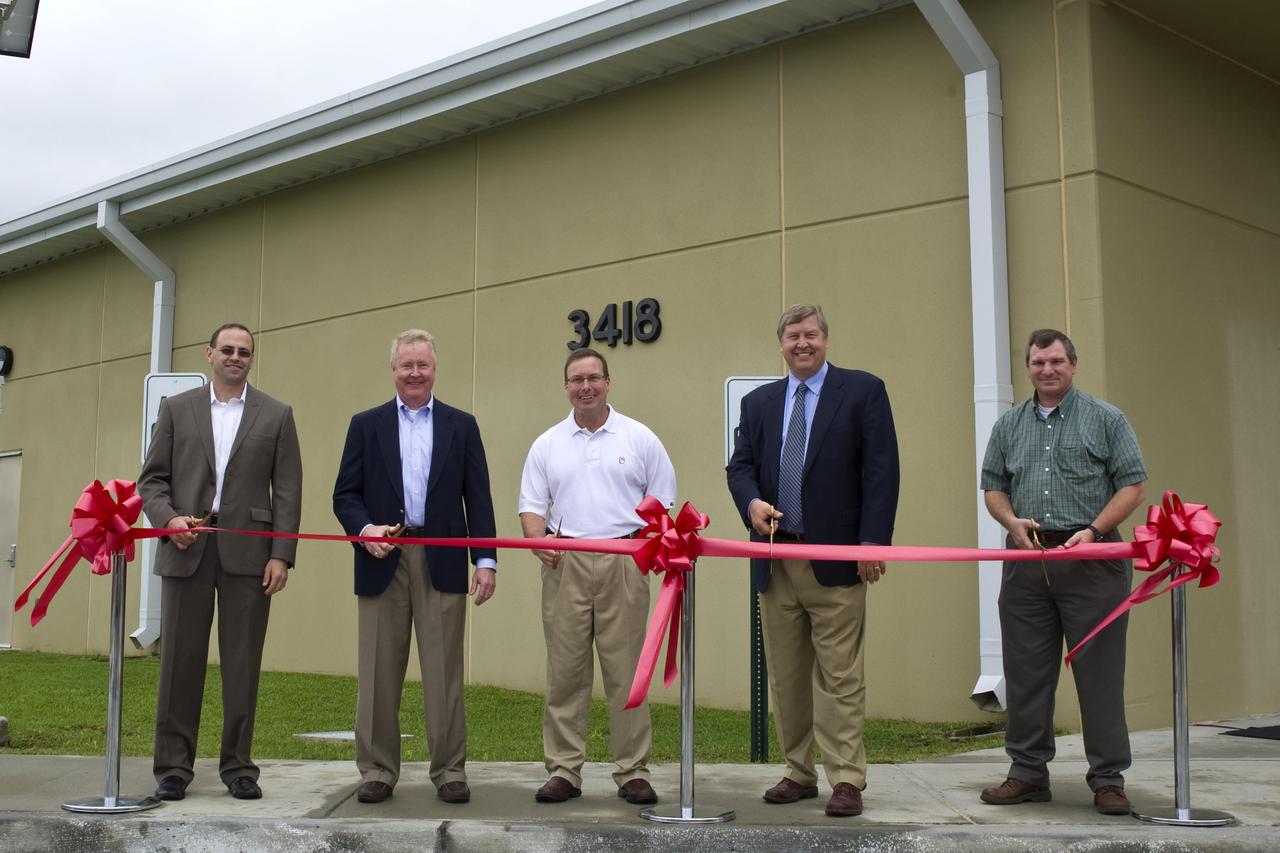
NASA cut the ribbon on a new cryogenics control center at John C. Stennis Space Center on March 30. The new facility is part of a project to strengthen Stennis facilities to withstand the impacts of future storms like hurricane Katrina in 2005. Participants in the ribbon-cutting included (l to r): Jason Zuckerman, director of project management for The McDonnel Group; Keith Brock, director of the NASA Project Directorate at Stennis; Stennis Deputy Director Rick Gilbrech; Steve Jackson of Jacobs Technology; and Troy Frisbie, Cryo Control Center Construction project manager for NASA Center Operations at Stennis.
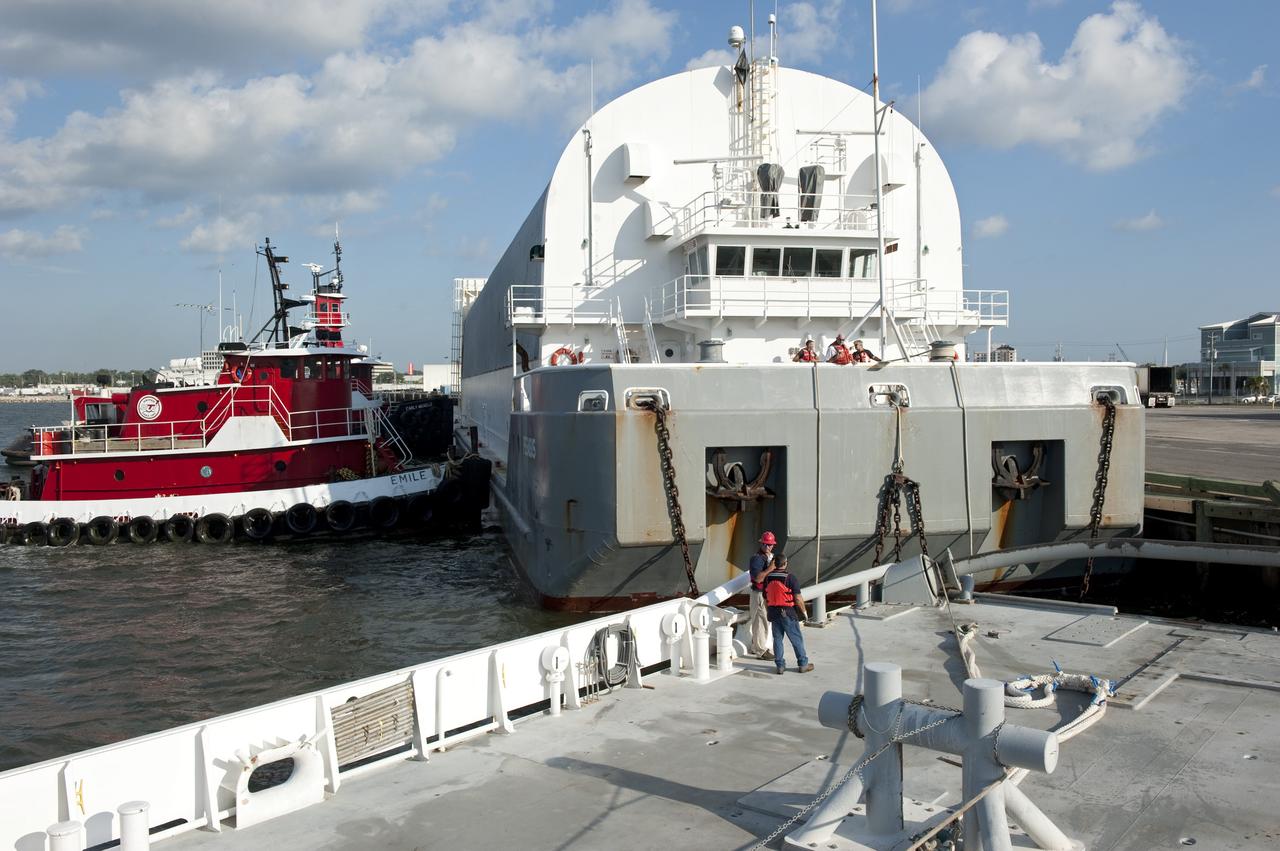
LOUISIANA -- In Gulfport, La., workers connect the Pegasus Barge carrying the Space Shuttle Program's last external fuel tank, ET-122, to Freedom Star, NASA's solid rocket booster retrieval ship. The tank will travel 900 miles by sea to NASA's Kennedy Space Center in Florida before being offloaded and moved to Kennedy's Vehicle Assembly Building. There it will be integrated to space shuttle Endeavour for the STS-134 mission to the International Space Station. The tank, which is the largest element of the space shuttle stack, was damaged during Hurricane Katrina in August 2005 and restored to flight configuration by Lockheed Martin Space Systems Company employees. STS-134, targeted to launch Feb. 2011, currently is scheduled to be the last mission in the Space Shuttle Program. Photo credit: NASA/Kim Shiflett
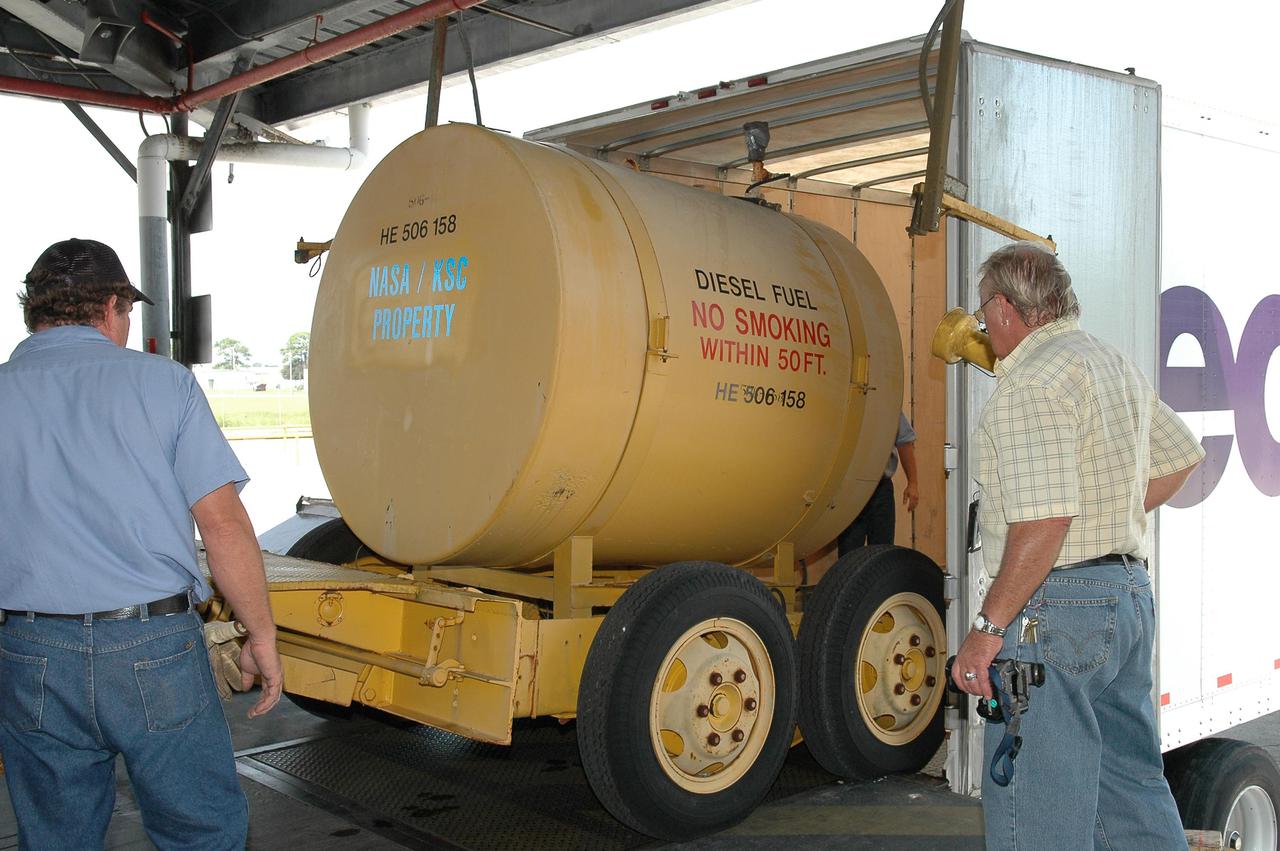
KENNEDY SPACE CENTER, FLA. - A container of diesel fuel is loaded onto a truck for a trip to Stennis Space Center in Mississippi. Stennis suffered damage and power outages from Hurricane Katrina. KSC is sending a helicopter with medical supplies and an Emergency Medical Technician to Stennis, plus a 1-megawatt generator, 125- and 225-kilowatt generators, and 1,000 gallons of diesel fuel. Michoud Assembly Facility near New Orleans was also left without power . A NASA plane is carrying medical supplies, food and chain saws, as well as a physician and two high voltage technicians to Michoud to ensure the facility can safely receive power when the main electricity grid comes online. In addition, a 14-person security team is also going to Michoud to relieve the security professionals at that location.
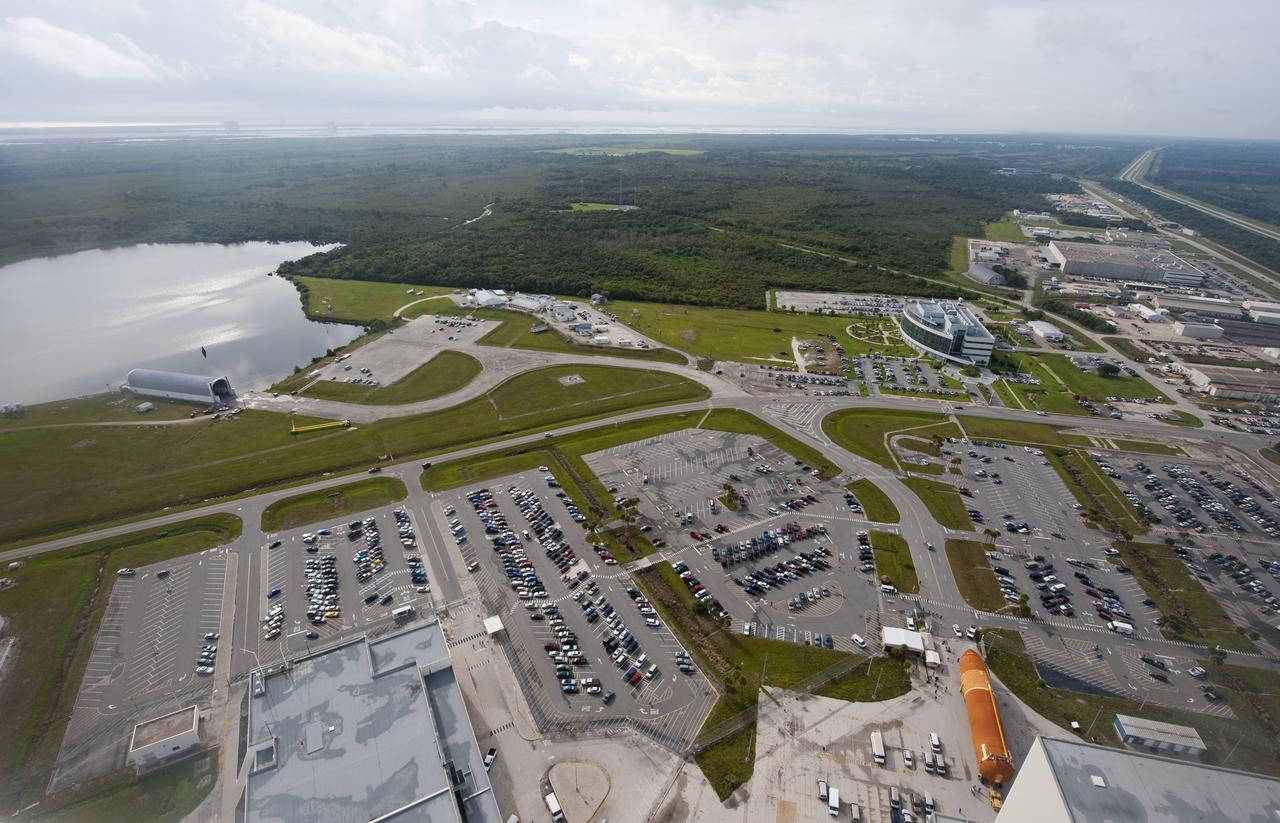
CAPE CANAVERAL, Fla. -- This overhead view shows the Space Shuttle Program's last external fuel tank, ET-122 (right), as it is being transported to the Vehicle Assembly Building (VAB) at NASA's Kennedy Space Center in Florida. The tank traveled 900 miles by sea, carried in the Pegasus Barge, from NASA's Michoud Assembly Facility in New Orleans. Once inside the VAB, it eventually will be attached to space shuttle Endeavour for the STS-134 mission to the International Space Station targeted to launch Feb. 2011. STS-134 currently is scheduled to be the last mission in the shuttle program. The tank, which is the largest element of the space shuttle stack, was damaged during Hurricane Katrina in August 2005 and restored to flight configuration by Lockheed Martin Space Systems Company employees. Photo credit: NASA/Kevin O'Connell
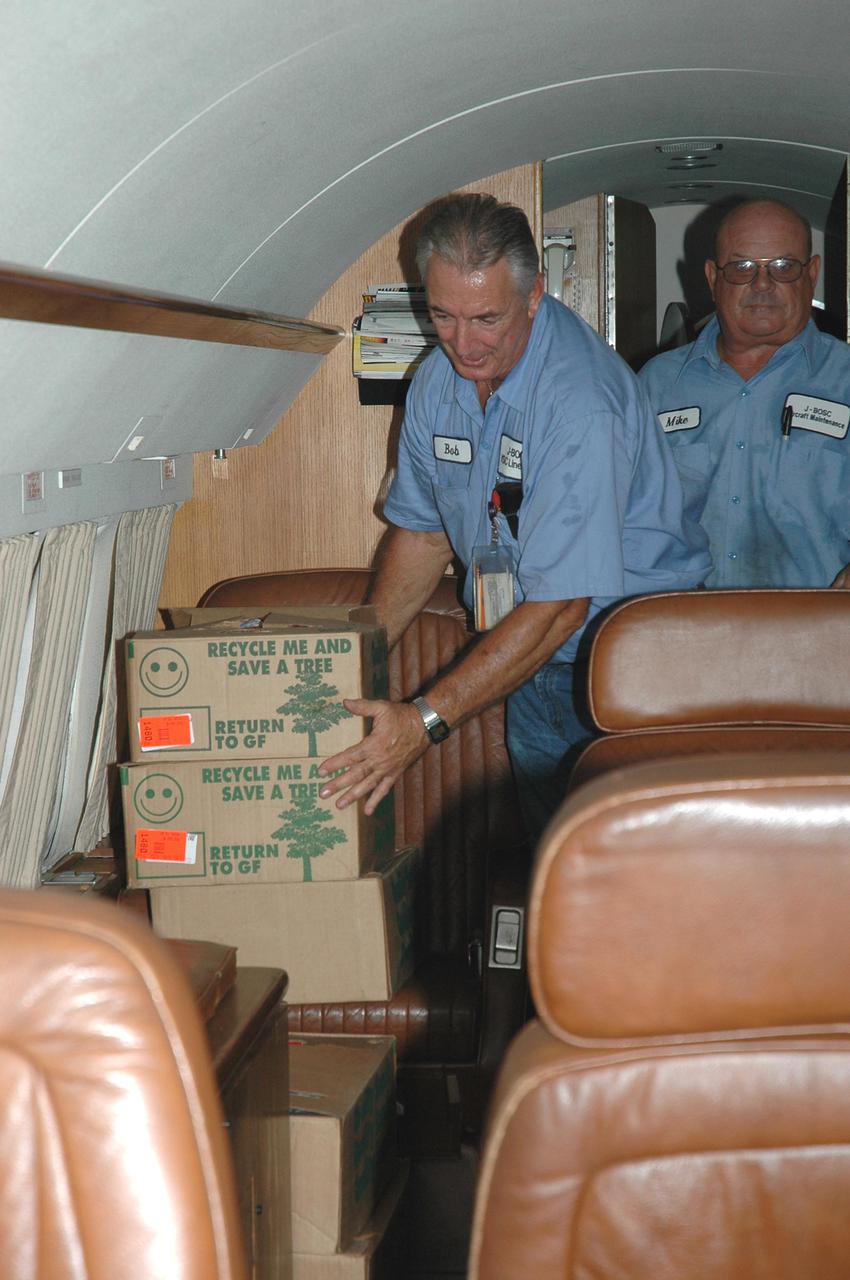
KENNEDY SPACE CENTER, FLA. -Workers at Kennedy Space Center place boxes of supplies in the airplane heading to Stennis Space Center in Mississippi for NASA workers there. Both Michoud Assembly Facility near New Orleans and Stennis were effected by Hurricane Katrina. KSC is sending a helicopter with medical supplies and an Emergency Medical Technician to Stennis. A NASA plane is carrying medical supplies, food and chain saws, as well as a physician and two high voltage technicians to Michoud to ensure the facility can safely receive power when the main electricity grid comes online. KSC has sent a truck with 1,000 gallons of diesel fuel and three large generators: a 1-megawatt generator, and 125- and 225-kilowatt generators. A 14-person security team is also going to Michoud to relieve the security professionals at that location.
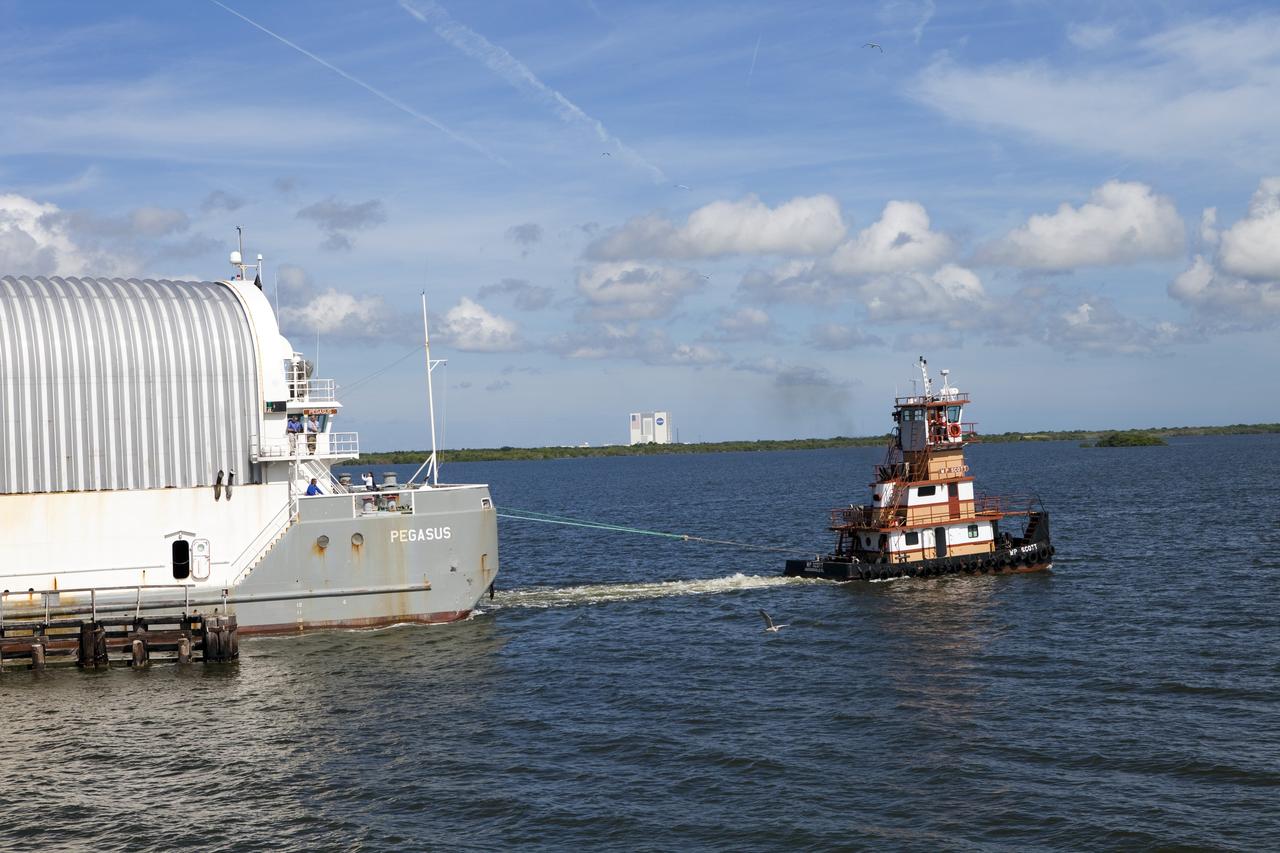
CAPE CANAVERAL, Fla. -- A tug boat pulls the Space Shuttle Program's last external fuel tank, ET-122, to the Turn Basin at NASA's Kennedy Space Center in Florida. The tank traveled 900 miles by sea from NASA's Michoud Assembly Facility in New Orleans aboard the Pegasus Barge. Next, the tank will be offloaded and moved to Kennedy's Vehicle Assembly Building where it eventually will be attached to space shuttle Endeavour for the STS-134 mission to the International Space Station. STS-134, targeted to launch in Feb. 2011, currently is scheduled to be the last mission in the Space Shuttle Program. The tank, which is the largest element of the space shuttle stack, was damaged during Hurricane Katrina in August 2005 and restored to flight configuration by Lockheed Martin Space Systems Company employees. Photo credit: NASA/Frankie Martin
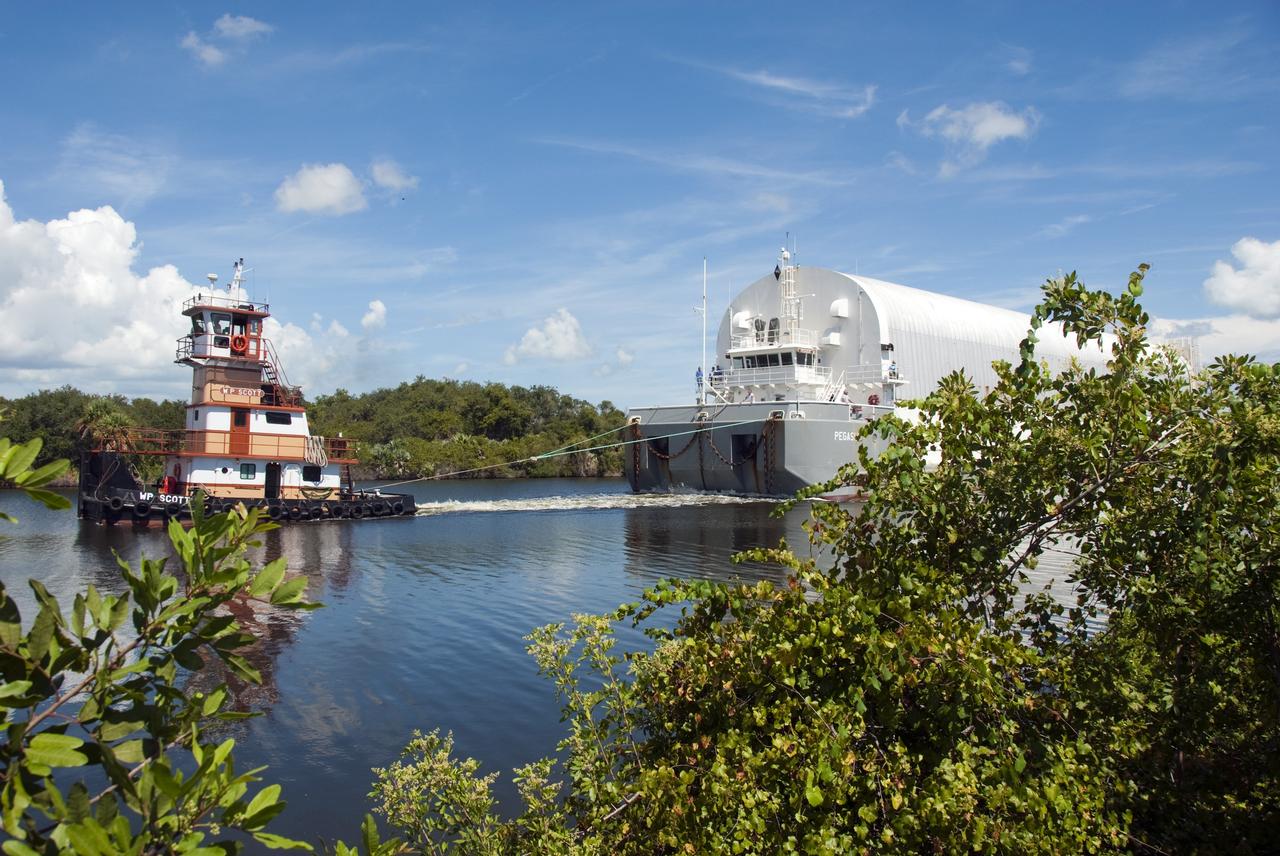
CAPE CANAVERAL, Fla. -- A tugboat pulls the Pegasus Barge carrying the Space Shuttle Program's last external fuel tank, ET-122, toward NASA's Kennedy Space Center in Florida. The tank traveled 900 miles by sea from NASA's Michoud Assembly Facility in New Orleans. After reaching the Turn Basin at Kennedy, the tank will be offloaded and moved to the Vehicle Assembly Building where it eventually will be attached to space shuttle Endeavour for the STS-134 mission to the International Space Station. STS-134, targeted to launch in Feb. 2011, currently is scheduled to be the last mission in the Space Shuttle Program. The tank, which is the largest element of the space shuttle stack, was damaged during Hurricane Katrina in August 2005 and restored to flight configuration by Lockheed Martin Space Systems Company employees. Photo credit: NASA/Jim Grossmann
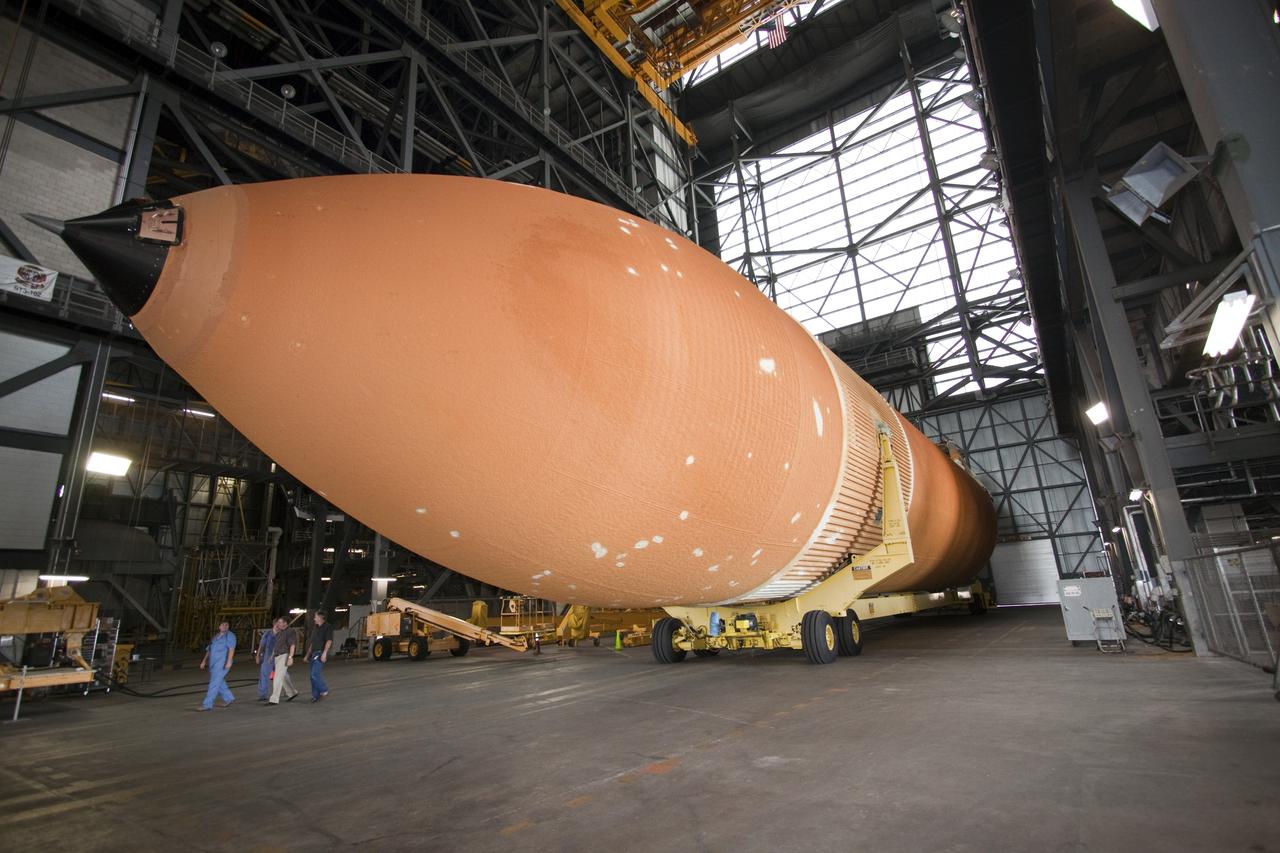
CAPE CANAVERAL, Fla. -- To commemorate the history of the Space Shuttle Program's last external fuel tank, its intertank door is emblazoned with an ET-122 insignia. The tank is in the Vehicle Assembly Building at NASA's Kennedy Space Center in Florida after traveling 900 miles by sea from NASA's Michoud Assembly Facility in New Orleans aboard the Pegasus Barge. It eventually will be attached to space shuttle Endeavour for the STS-134 mission to the International Space Station. STS-134, targeted to launch in Feb. 2011, currently is scheduled to be the last mission in the shuttle program. The tank, which is the largest element of the space shuttle stack, was completed in 2002, modified during Return to Flight operations in 2003 and 2004, damaged during Hurricane Katrina in 2005, and then restored to flight configuration by Lockheed Martin Space Systems Company employees in 2008 at NASA's Marshall Space Flight Center in Alabama. Photo credit: NASA/Jack Pfaller
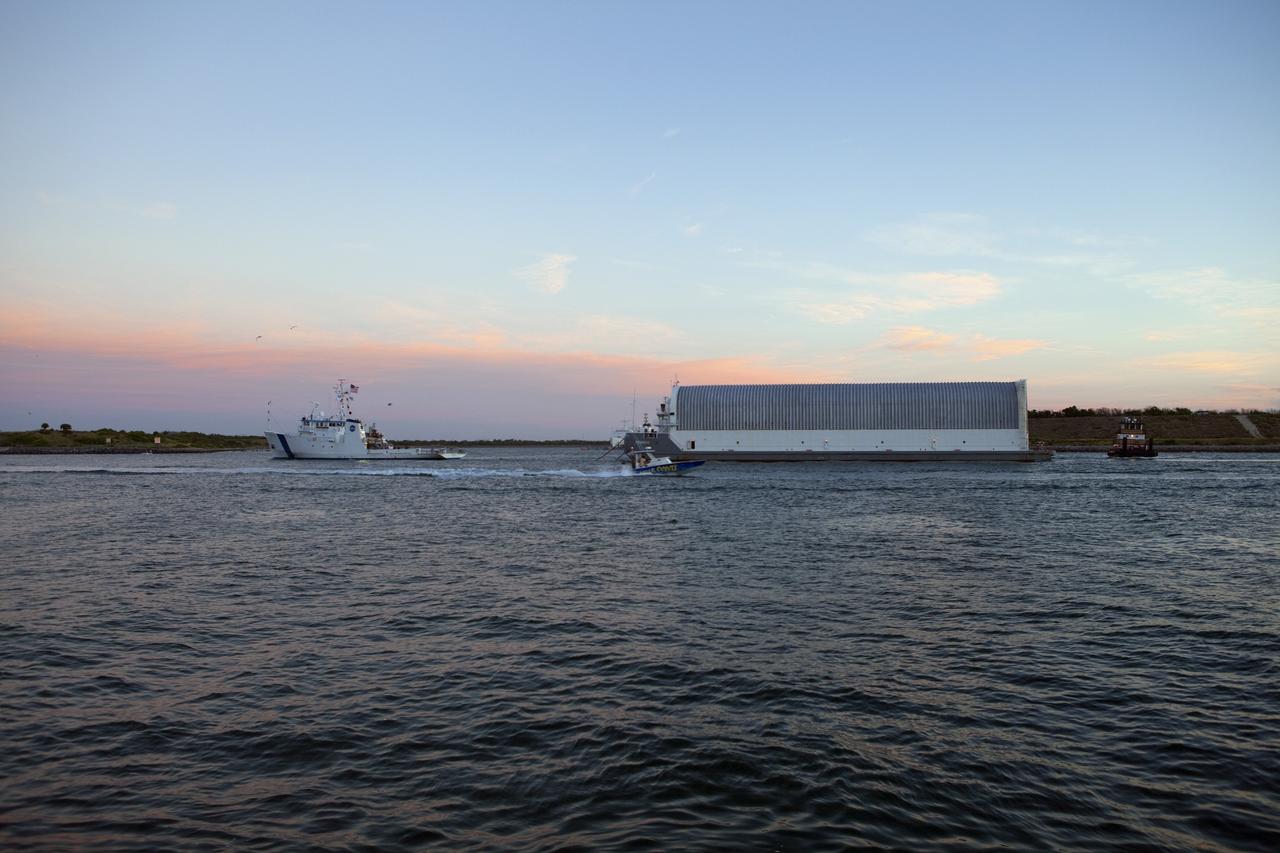
CAPE CANAVERAL, Fla. -- Freedom Star, one of NASA's solid rocket booster retrieval ships, ushers the Space Shuttle Program's last external fuel tank, ET-122, toward NASA's Kennedy Space Center in Florida. The tank traveled 900 miles by sea from NASA's Michoud Assembly Facility in New Orleans aboard the Pegasus Barge. After reaching the Turn Basin at Kennedy, the tank will be offloaded and moved to the Vehicle Assembly Building where it eventually will be attached to space shuttle Endeavour for the STS-134 mission to the International Space Station. STS-134, targeted to launch in Feb. 2011, currently is scheduled to be the last mission in the Space Shuttle Program. The tank, which is the largest element of the space shuttle stack, was damaged during Hurricane Katrina in August 2005 and restored to flight configuration by Lockheed Martin Space Systems Company employees. Photo credit: NASA/Frankie Martin
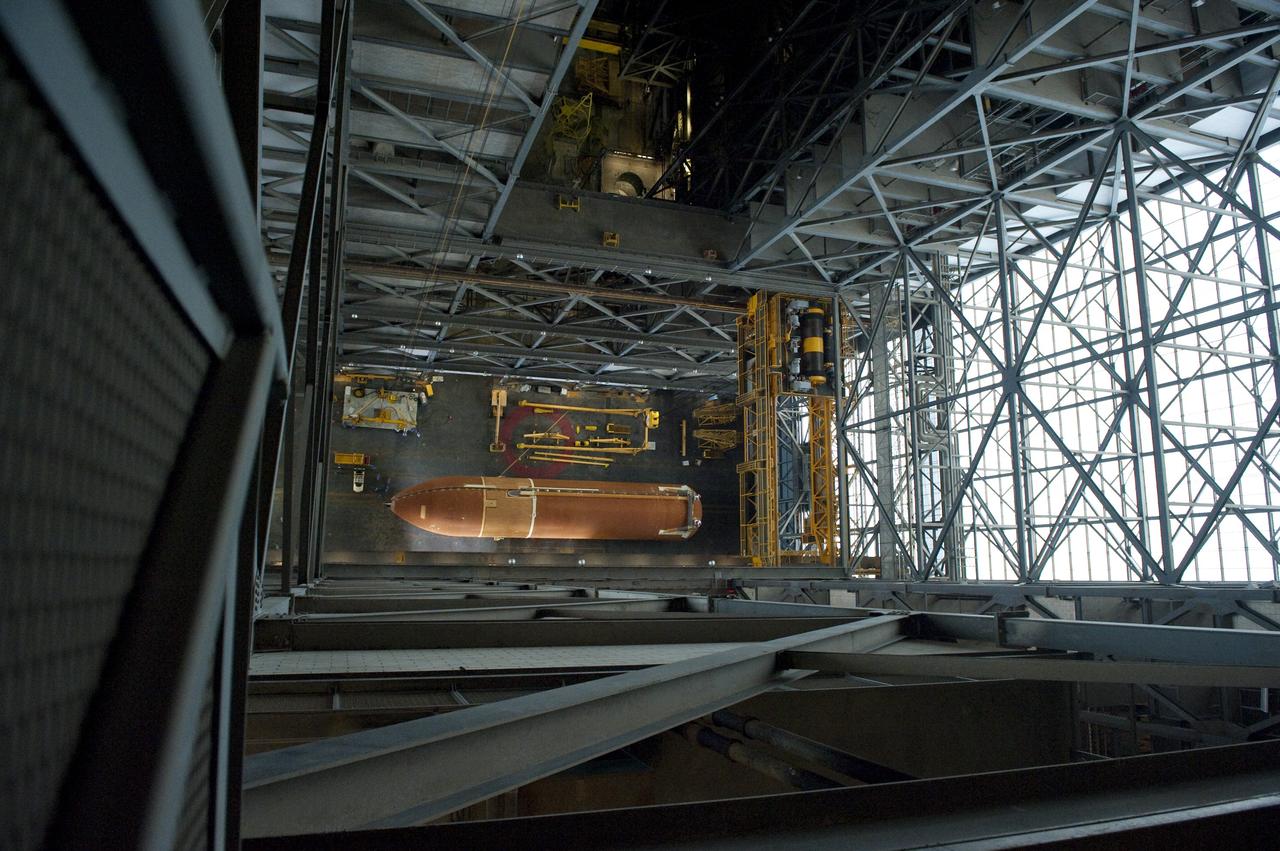
CAPE CANAVERAL, Fla. -- At NASA's Kennedy Space Center in Florida, this overhead image shows the Space Shuttle Program's last external fuel tank, ET-122, after it was delivered to the transfer aisle of the Vehicle Assembly Building (VAB). The tank traveled 900 miles by sea, carried in the Pegasus Barge, from NASA's Michoud Assembly Facility in New Orleans. Once inside the VAB, it eventually will be attached to space shuttle Endeavour for the STS-134 mission to the International Space Station targeted to launch Feb. 2011. STS-134 currently is scheduled to be the last mission in the shuttle program. The tank, which is the largest element of the space shuttle stack, was damaged during Hurricane Katrina in August 2005 and restored to flight configuration by Lockheed Martin Space Systems Company employees. Photo credit: NASA/Kevin O'Connell
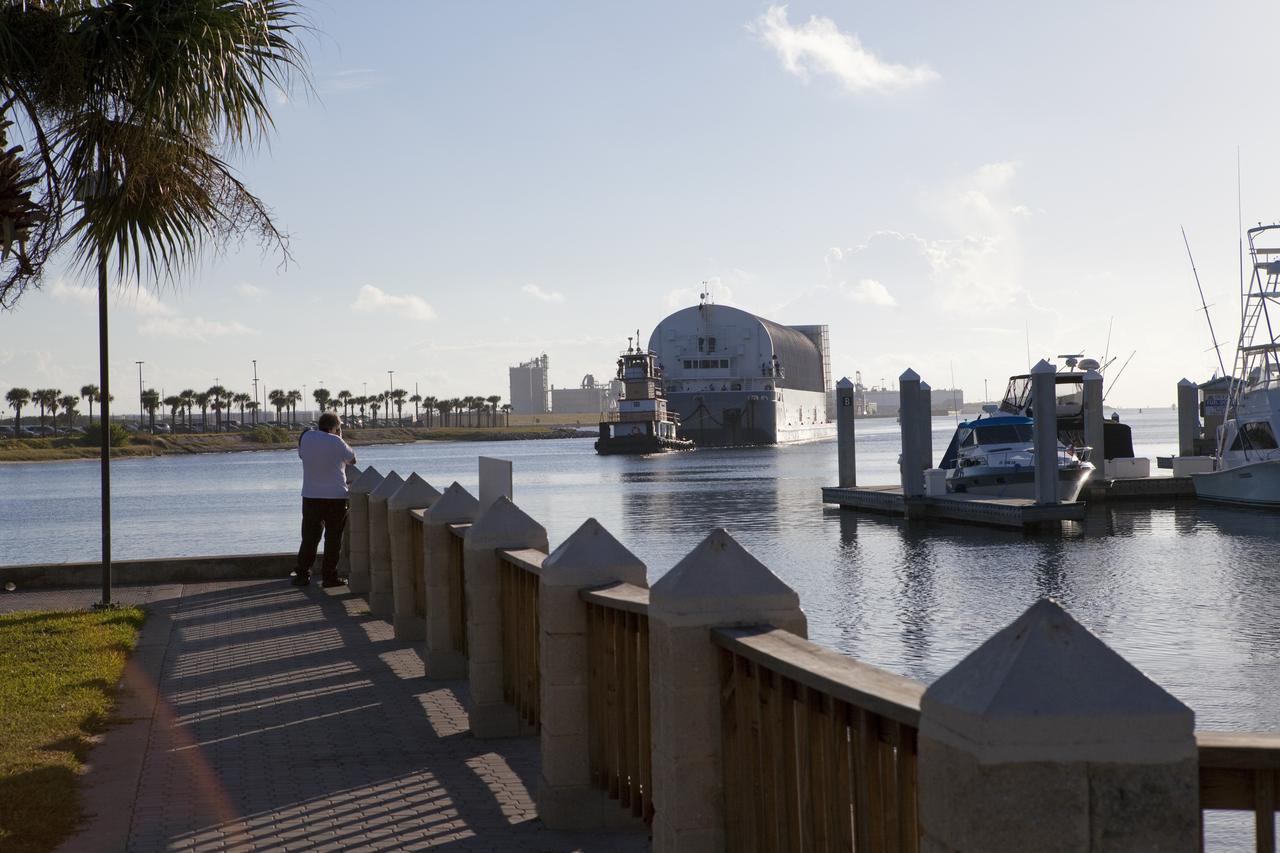
CAPE CANAVERAL, Fla. -- A tug boat pulls the Space Shuttle Program's last external fuel tank, ET-122, toward the Turn Basin at NASA's Kennedy Space Center in Florida. The tank traveled 900 miles by sea from NASA's Michoud Assembly Facility in New Orleans aboard the Pegasus Barge. Next, the tank will be offloaded and moved to Kennedy's Vehicle Assembly Building where it eventually will be attached to space shuttle Endeavour for the STS-134 mission to the International Space Station. STS-134, targeted to launch in Feb. 2011, currently is scheduled to be the last mission in the Space Shuttle Program. The tank, which is the largest element of the space shuttle stack, was damaged during Hurricane Katrina in August 2005 and restored to flight configuration by Lockheed Martin Space Systems Company employees. Photo credit: NASA/Frankie Martin

KENNEDY SPACE CENTER, FLA. - Federal Express trucks carrying generators, lights and fuel pass through the guard gates on their way to Stennis Space Center in Mississippi. Stennis suffered damage and power outages from Hurricane Katrina. KSC is sending a helicopter with medical supplies and an Emergency Medical Technician to Stennis, plus a 1-megawatt generator, 125- and 225-kilowatt generators, and 1,000 gallons of diesel fuel. Michoud Assembly Facility near New Orleans was also left without power . A NASA plane is carrying medical supplies, food and chain saws, as well as a physician and two high voltage technicians to Michoud to ensure the facility can safely receive power when the main electricity grid comes online. In addition, a 14-person security team is also going to Michoud to relieve the security professionals at that location.
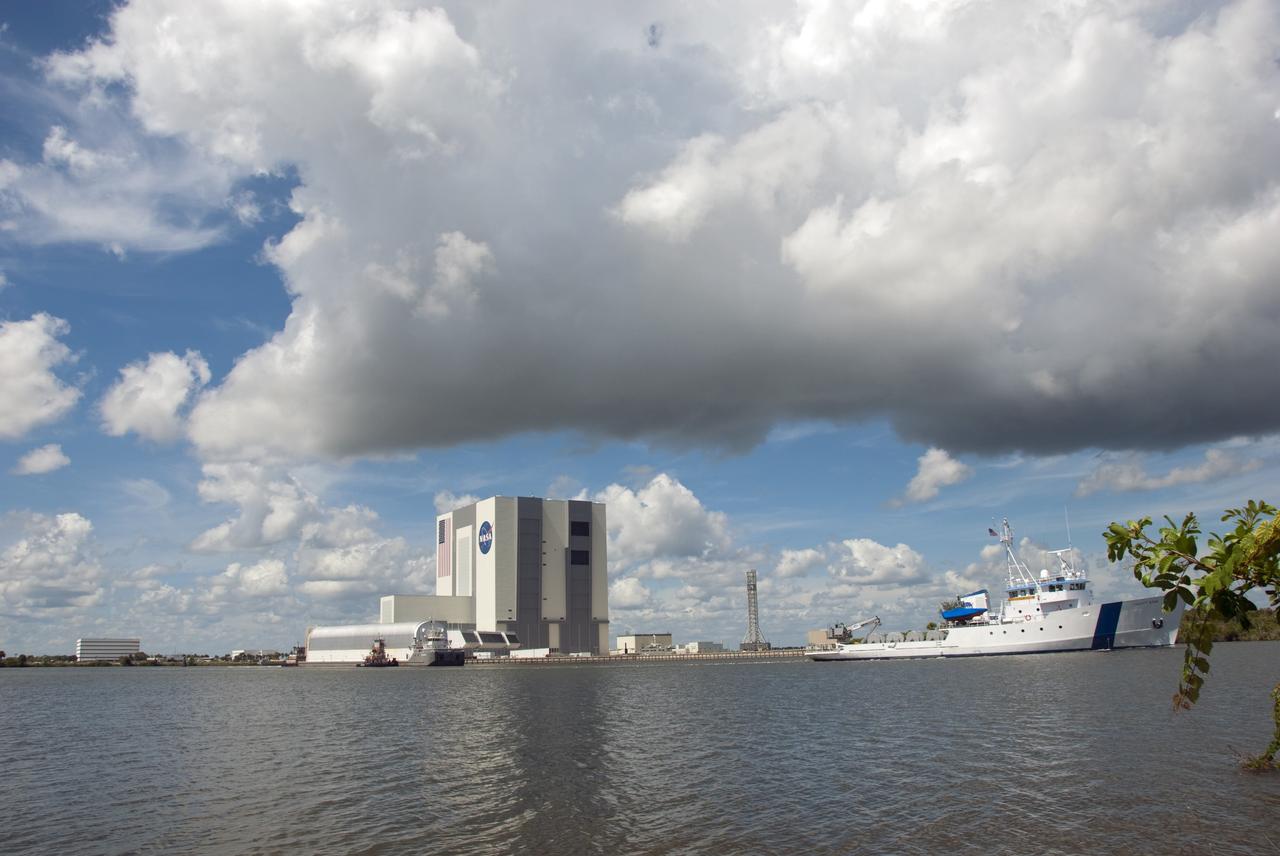
CAPE CANAVERAL, Fla. -- NASA's Pegasus barge, which was ushered by two tug boats and Liberty Star, arrives at NASA's Kennedy Space Center in Florida. The barge is carrying the Space Shuttle Program's last external fuel tank, ET-122 and traveled 900 miles by sea from NASA's Michoud Assembly Facility in New Orleans. Next, the tank will be offloaded and moved to the Vehicle Assembly Building where it eventually will be attached to space shuttle Endeavour for the STS-134 mission to the International Space Station. STS-134, targeted to launch in Feb. 2011, currently is scheduled to be the last mission in the Space Shuttle Program. The tank, which is the largest element of the space shuttle stack, was damaged during Hurricane Katrina in August 2005 and restored to flight configuration by Lockheed Martin Space Systems Company employees. Photo credit: NASA/Jim Grossmann
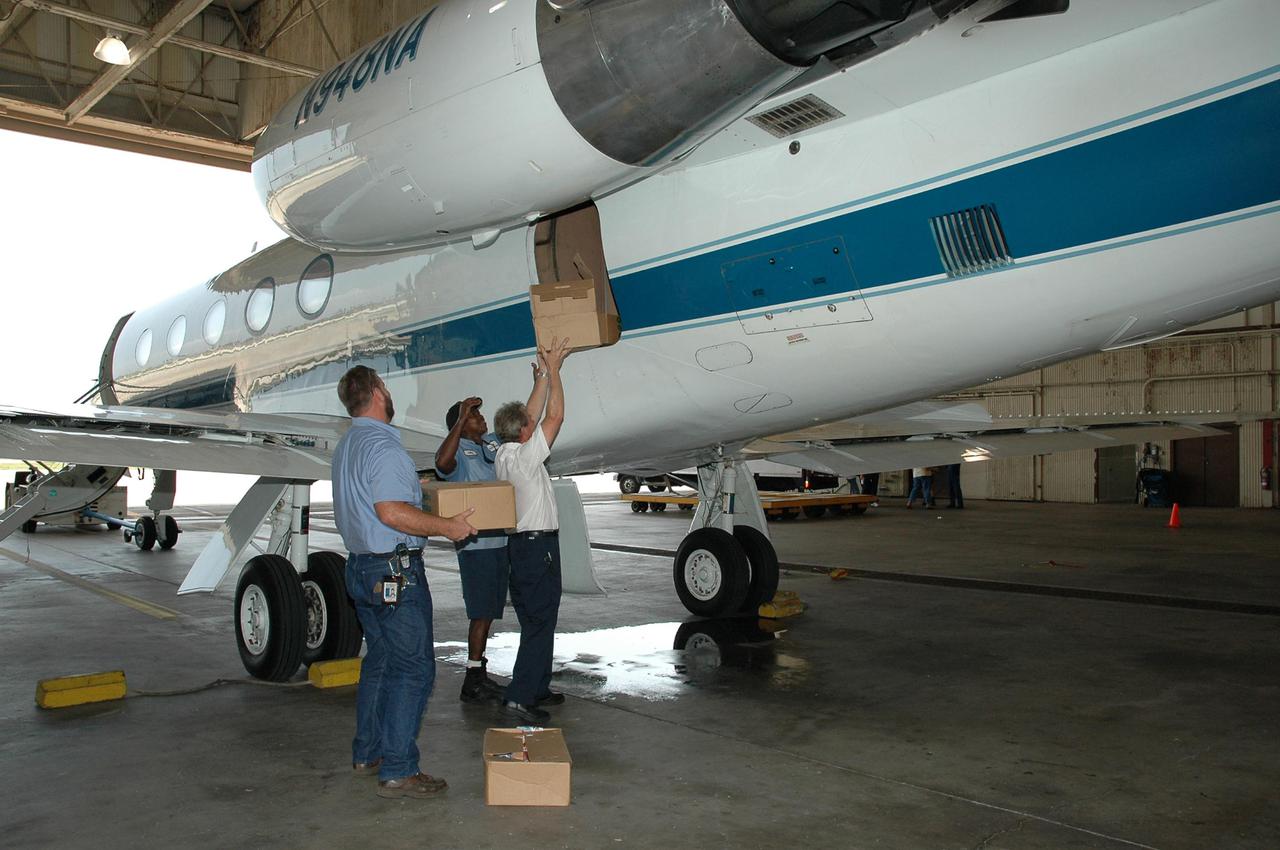
KENNEDY SPACE CENTER, FLA. - Workers at Kennedy Space Center load an airplane with supplies heading to Stennis Space Center in Mississippi for NASA workers there. Both Michoud Assembly Facility near New Orleans and Stennis were effected by Hurricane Katrina. KSC is sending a helicopter with medical supplies and an Emergency Medical Technician to Stennis. A NASA plane is carrying medical supplies, food and chain saws, as well as a physician and two high voltage technicians to Michoud to ensure the facility can safely receive power when the main electricity grid comes online. KSC has sent a truck with 1,000 gallons of diesel fuel and three large generators: a 1-megawatt generator, and 125- and 225-kilowatt generators. A 14-person security team is also going to Michoud to relieve the security professionals at that location.

CAPE CANAVERAL, Fla. -- This overhead view shows the path taken by the Space Shuttle Program's last external fuel tank, ET-122, from the Pegasus Barge (background) to the Vehicle Assembly Building (VAB) at NASA's Kennedy Space Center in Florida. The tank traveled 900 miles by sea, carried in the Pegasus Barge, from NASA's Michoud Assembly Facility in New Orleans. Once inside the VAB, it eventually will be attached to space shuttle Endeavour for the STS-134 mission to the International Space Station targeted to launch Feb. 2011. STS-134 currently is scheduled to be the last mission in the shuttle program. The tank, which is the largest element of the space shuttle stack, was damaged during Hurricane Katrina in August 2005 and restored to flight configuration by Lockheed Martin Space Systems Company employees. Photo credit: NASA/Kevin O'Connell
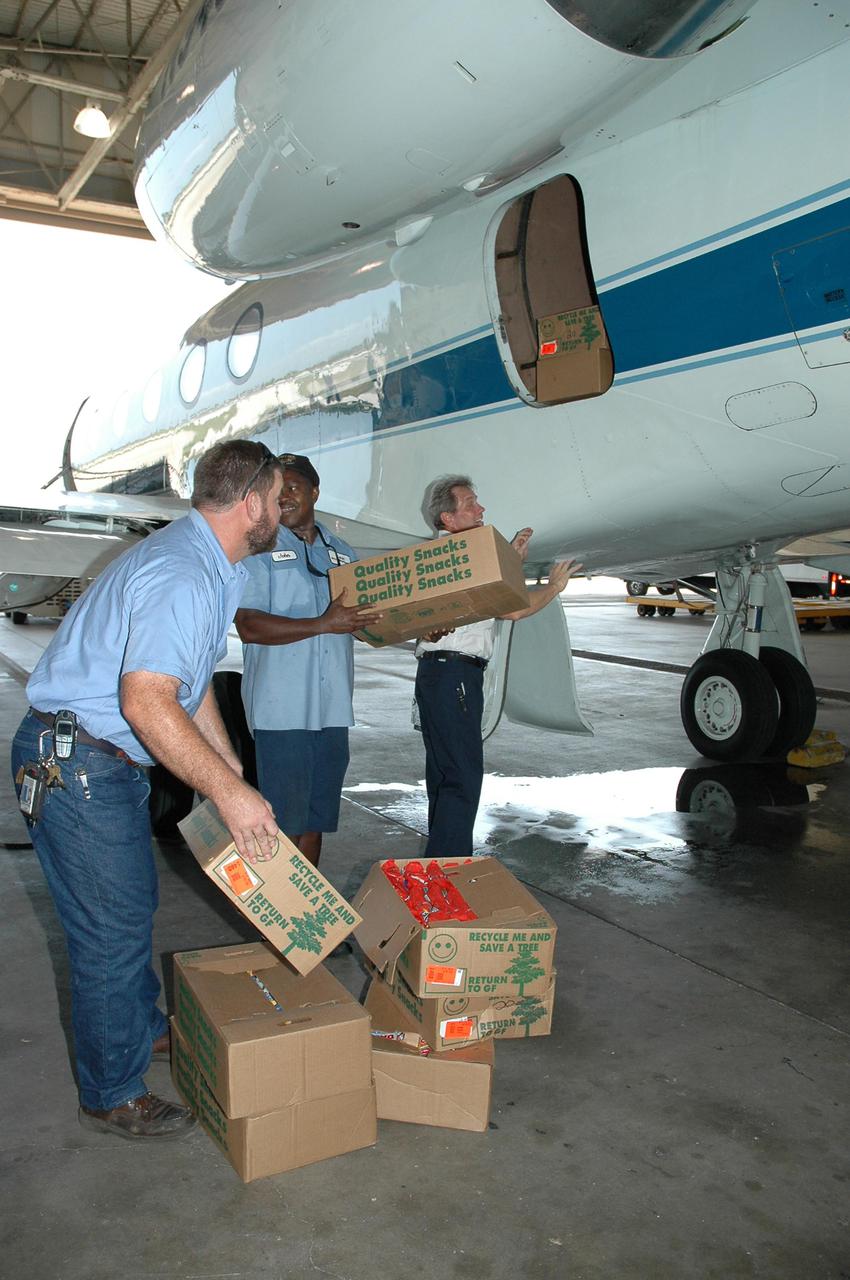
KENNEDY SPACE CENTER, FLA. - Workers at Kennedy Space Center load an airplane with supplies heading to Stennis Space Center in Mississippi for NASA workers there. Both Michoud Assembly Facility near New Orleans and Stennis were effected by Hurricane Katrina. KSC is sending a helicopter with medical supplies and an Emergency Medical Technician to Stennis. A NASA plane is carrying medical supplies, food and chain saws, as well as a physician and two high voltage technicians to Michoud to ensure the facility can safely receive power when the main electricity grid comes online. KSC has sent a truck with 1,000 gallons of diesel fuel and three large generators: a 1-megawatt generator, and 125- and 225-kilowatt generators. A 14-person security team is also going to Michoud to relieve the security professionals at that location.
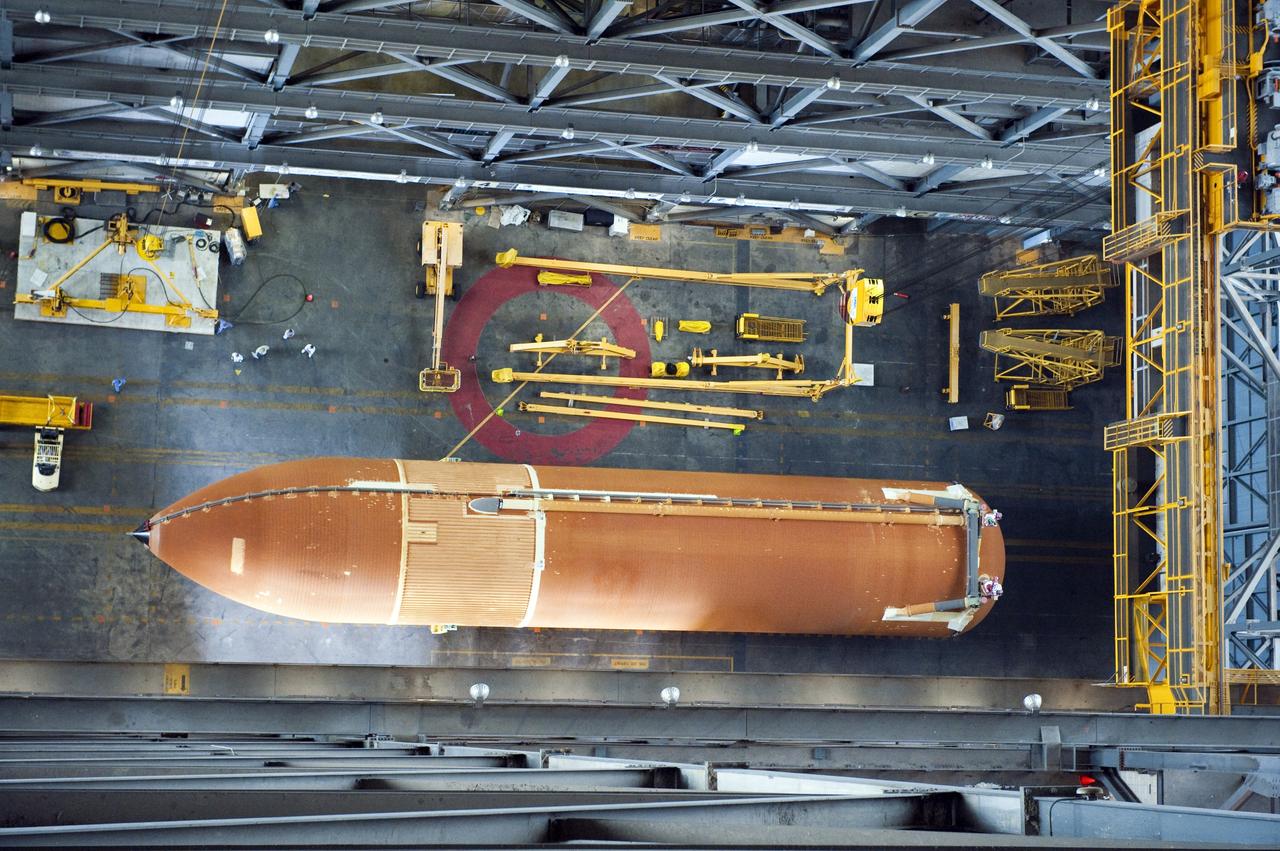
CAPE CANAVERAL, Fla. -- At NASA's Kennedy Space Center in Florida, this overhead image shows the Space Shuttle Program's last external fuel tank, ET-122, after it was delivered to the transfer aisle of the Vehicle Assembly Building (VAB). The tank traveled 900 miles by sea, carried in the Pegasus Barge, from NASA's Michoud Assembly Facility in New Orleans. Once inside the VAB, it eventually will be attached to space shuttle Endeavour for the STS-134 mission to the International Space Station targeted to launch Feb. 2011. STS-134 currently is scheduled to be the last mission in the shuttle program. The tank, which is the largest element of the space shuttle stack, was damaged during Hurricane Katrina in August 2005 and restored to flight configuration by Lockheed Martin Space Systems Company employees. Photo credit: NASA/Kevin O'Connell
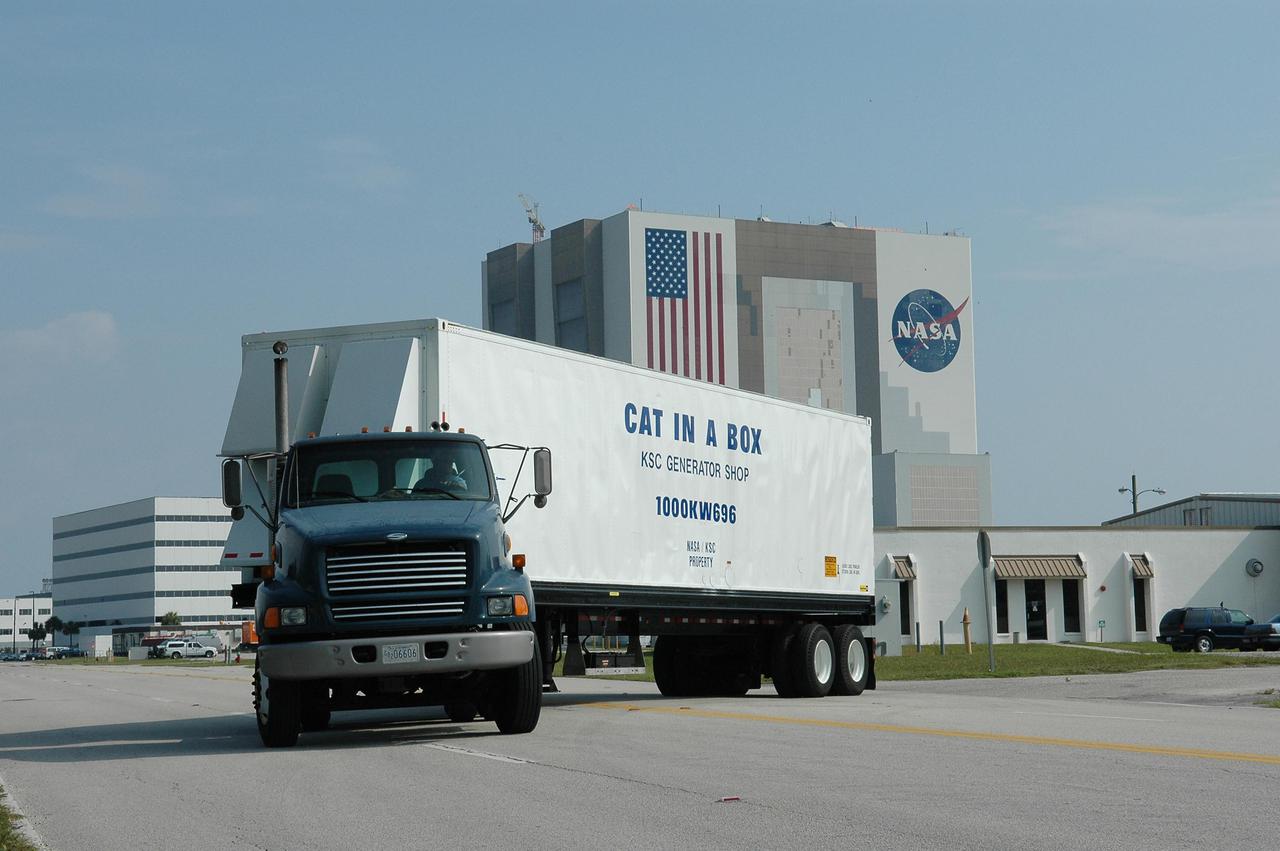
KENNEDY SPACE CENTER, FLA. - A truck with a 1-megawatt generator drives past NASA Kennedy Space Center’s Vehicle Assembly Building on its way to Stennis Space Center in Mississippi. Stennis suffered damage and power outages from Hurricane Katrina. KSC is sending a helicopter with medical supplies and an Emergency Medical Technician to Stennis, plus a 1-megawatt generator, 125- and 225-kilowatt generators, and 1,000 gallons of diesel fuel. Michoud Assembly Facility near New Orleans was also left without power. A NASA plane is carrying medical supplies, food and chain saws, as well as a physician and two high voltage technicians to Michoud to ensure the facility can safely receive power when the main electricity grid comes online. In addition, a 14-person security team is also going to Michoud to relieve the security professionals at that location.
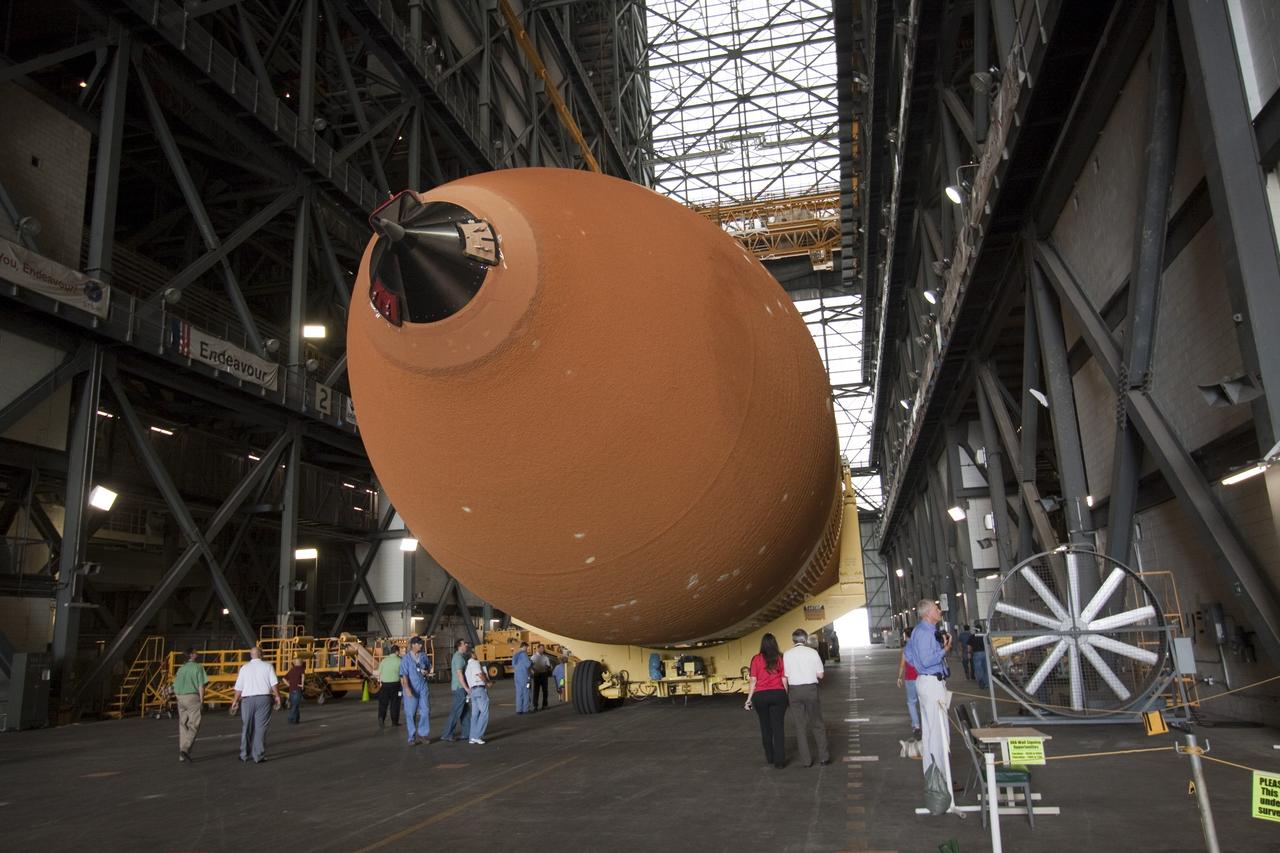
CAPE CANAVERAL, Fla. -- The Space Shuttle Program's last external fuel tank, ET-122, has been moved inside the Vehicle Assembly Building at NASA's Kennedy Space Center in Florida. The tank traveled 900 miles by sea from NASA's Michoud Assembly Facility in New Orleans to Kennedy's Turn Basin aboard the Pegasus Barge. The tank eventually will be attached to space shuttle Endeavour for the STS-134 mission to the International Space Station. STS-134, targeted to launch in Feb. 2011, currently is scheduled to be the last mission in the shuttle program. The tank, which is the largest element of the space shuttle stack, was damaged during Hurricane Katrina in August 2005 and restored to flight configuration by Lockheed Martin Space Systems Company employees. Photo credit: NASA/Jack Pfaller
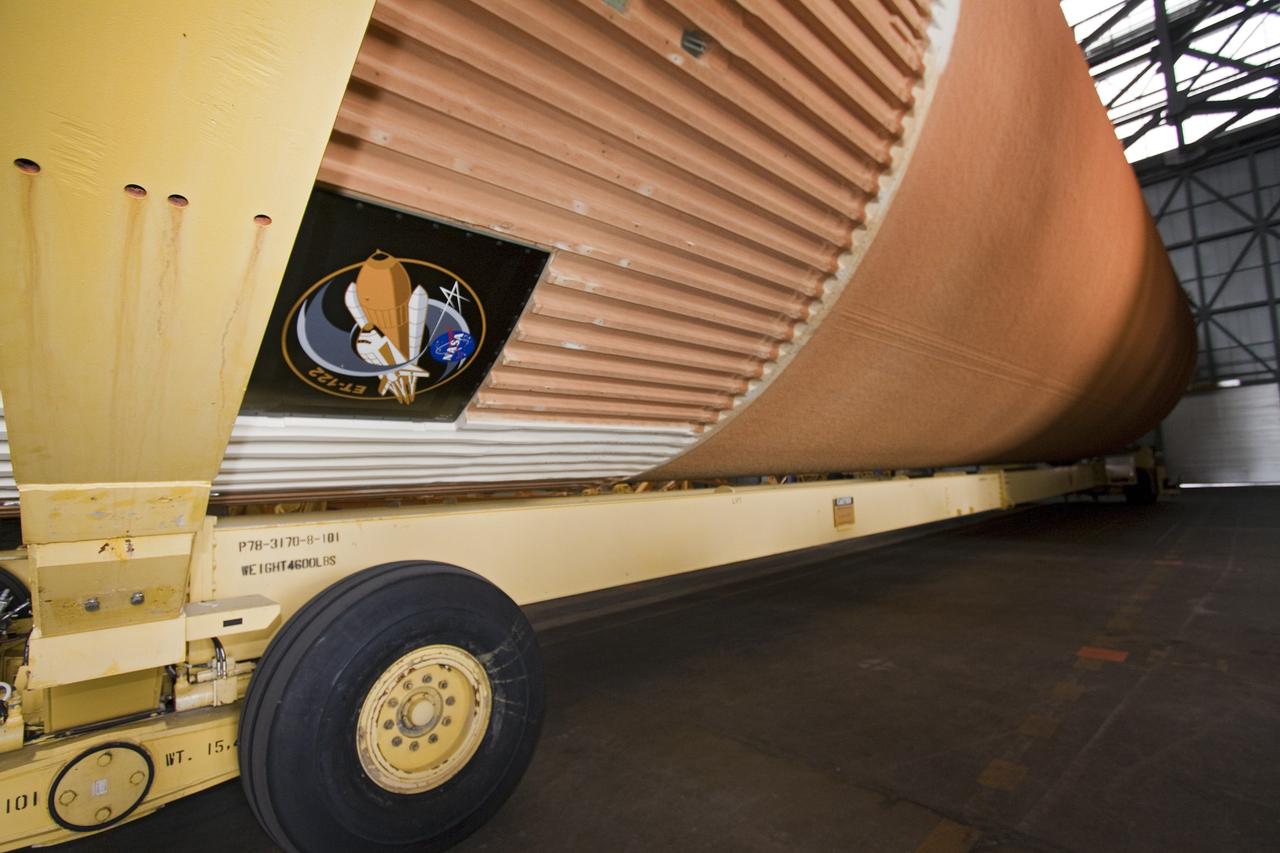
CAPE CANAVERAL, Fla. -- To commemorate the history of the Space Shuttle Program's last external fuel tank, its intertank door is emblazoned with an ET-122 insignia. The tank is in the Vehicle Assembly Building at NASA's Kennedy Space Center in Florida after traveling 900 miles by sea from NASA's Michoud Assembly Facility in New Orleans aboard the Pegasus Barge. It eventually will be attached to space shuttle Endeavour for the STS-134 mission to the International Space Station. STS-134, targeted to launch in Feb. 2011, currently is scheduled to be the last mission in the shuttle program. The tank, which is the largest element of the space shuttle stack, was completed in 2002, modified during Return to Flight operations in 2003 and 2004, damaged during Hurricane Katrina in 2005, and then restored to flight configuration by Lockheed Martin Space Systems Company employees in 2008 at NASA's Marshall Space Flight Center in Alabama. Photo credit: NASA/Jack Pfaller
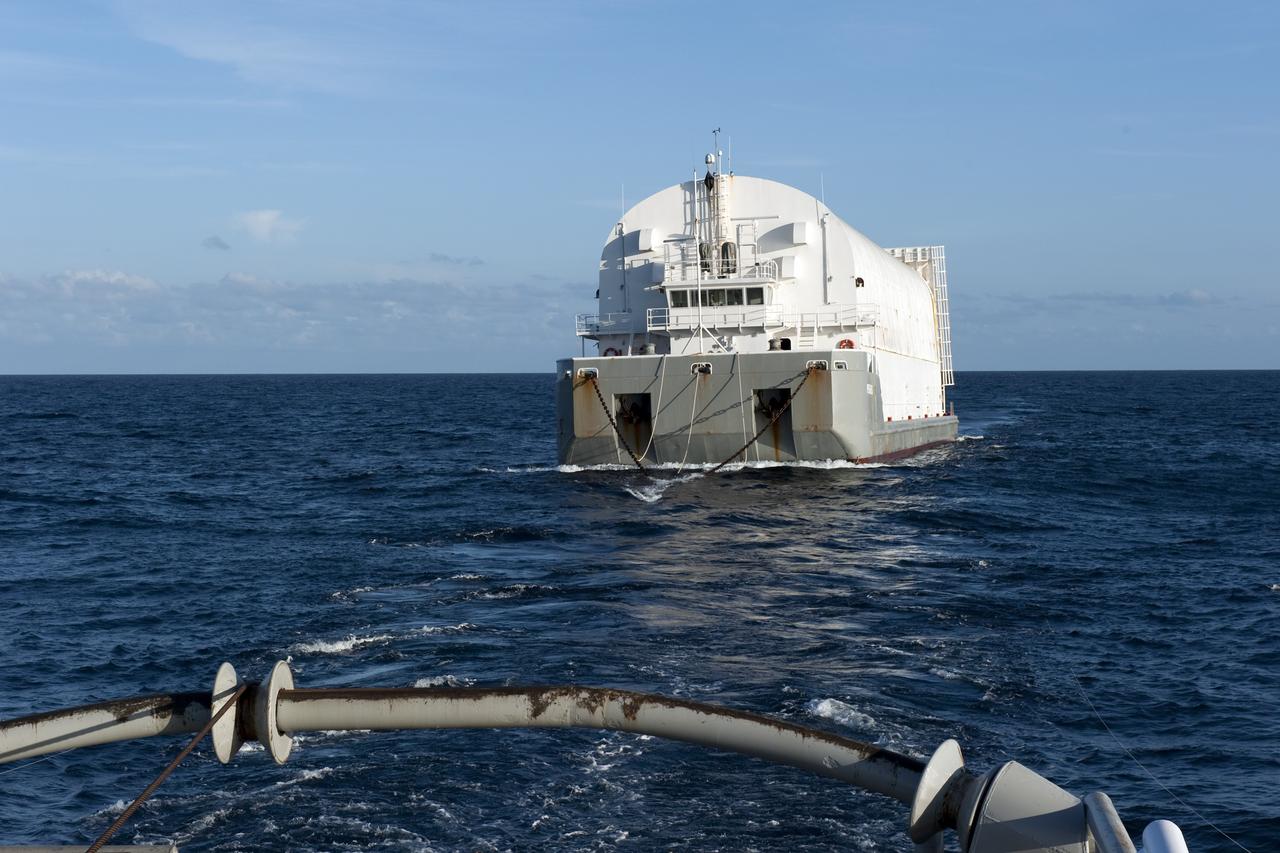
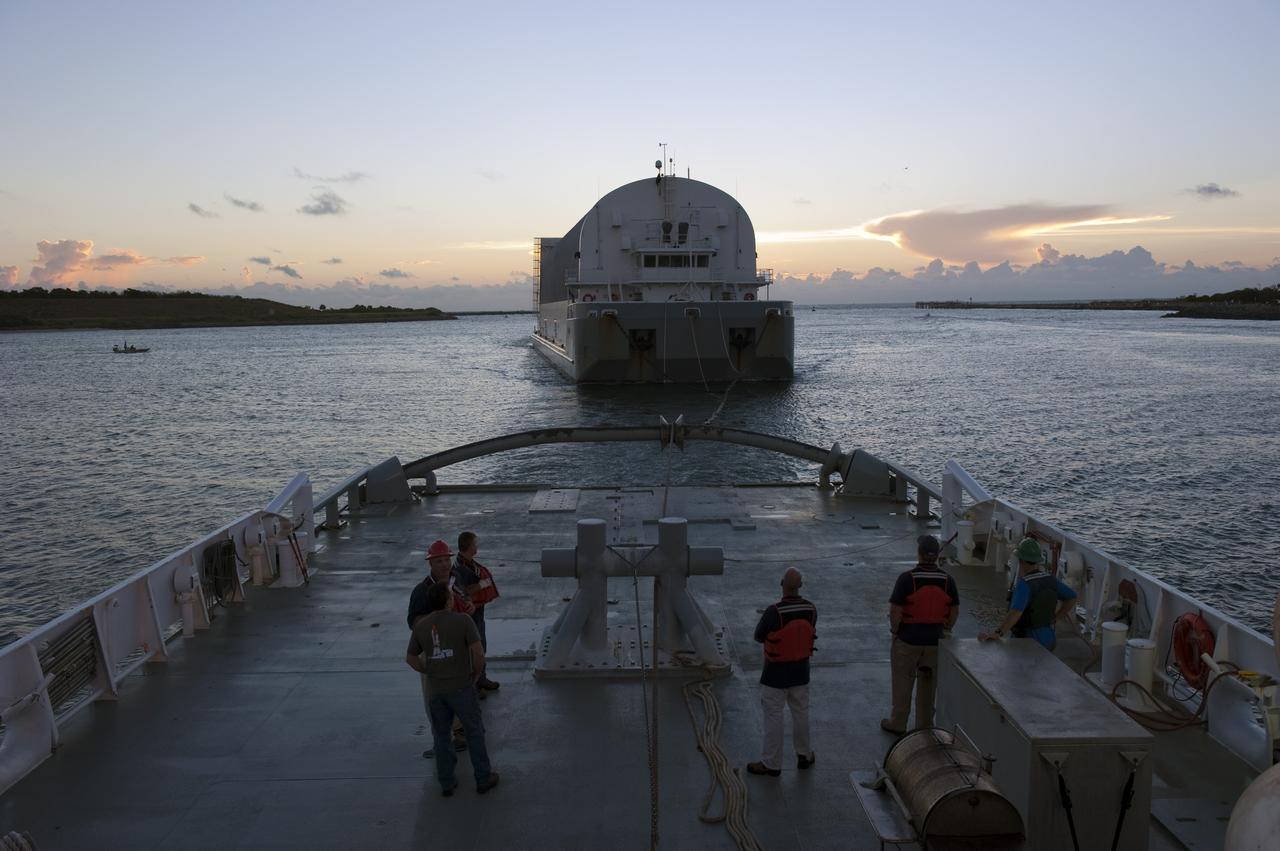
CAPE CANAVERAL, Fla. -- This view from the stern of Freedom Star, one of NASA's solid rocket booster retrieval ships, shows the Pegasus Barge carrying the Space Shuttle Program's last external fuel tank, ET-122. The tank will travel 900 miles by sea to NASA's Kennedy Space Center in Florida before being offloaded and moved to Kennedy's Vehicle Assembly Building. There it will be integrated to space shuttle Endeavour for the STS-134 mission to the International Space Station. The tank, which is the largest element of the space shuttle stack, was damaged during Hurricane Katrina in August 2005 and restored to flight configuration by Lockheed Martin Space Systems Company employees. STS-134, targeted to launch Feb. 2011, currently is scheduled to be the last mission in the Space Shuttle Program. Photo credit: NASA/Kim Shiflett
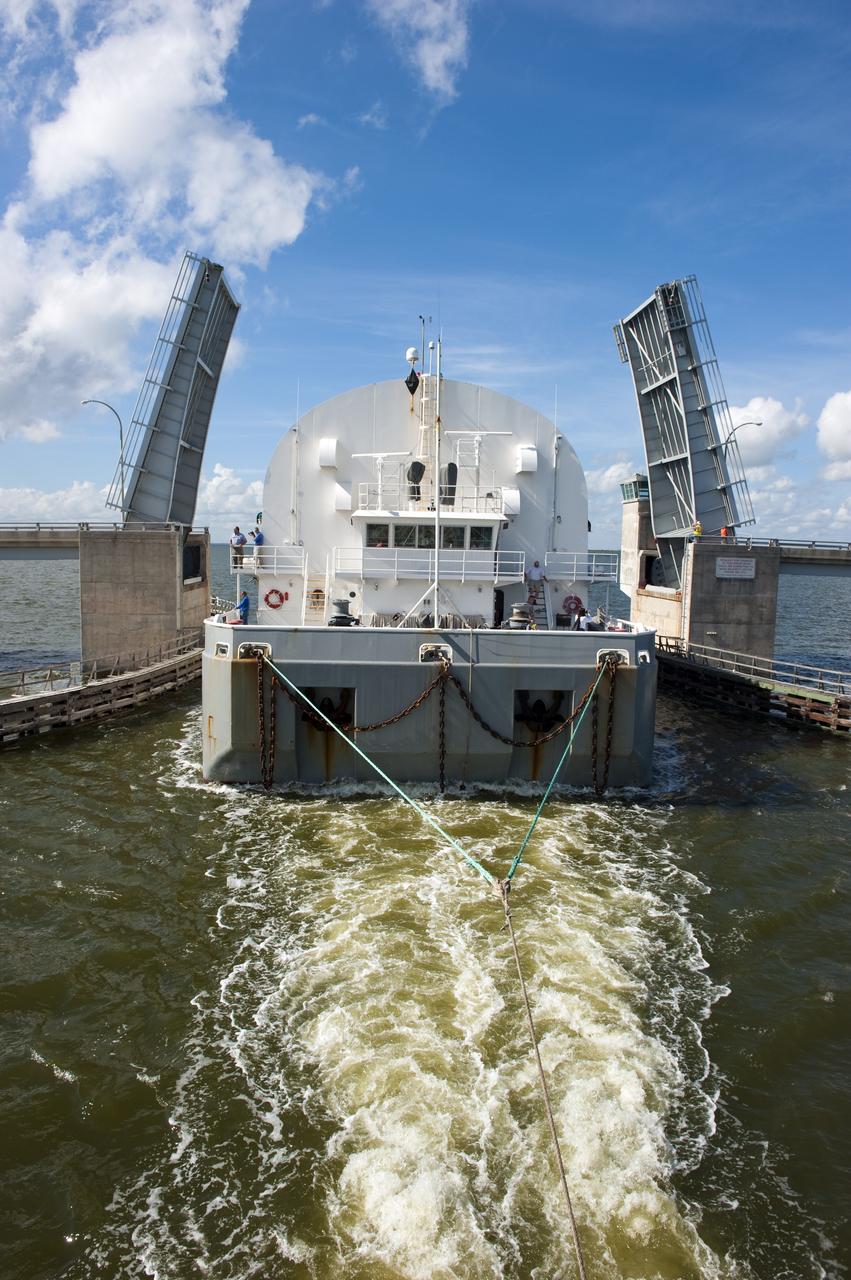
CAPE CANAVERAL, Fla. -- NASA's Pegasus barge is pulled through the bridge at the NASA Causeway. The barge is carrying the Space Shuttle Program's last external fuel tank, ET-122, toward NASA's Kennedy Space Center in Florida. The tank traveled 900 miles by sea from NASA's Michoud Assembly Facility in New Orleans. After reaching the Turn Basin at Kennedy, the tank will be offloaded and moved to the Vehicle Assembly Building where it eventually will be attached to space shuttle Endeavour for the STS-134 mission to the International Space Station. STS-134, targeted to launch in Feb. 2011, currently is scheduled to be the last mission in the Space Shuttle Program. The tank, which is the largest element of the space shuttle stack, was damaged during Hurricane Katrina in August 2005 and restored to flight configuration by Lockheed Martin Space Systems Company employees. Photo credit: NASA/Kim Shiflett
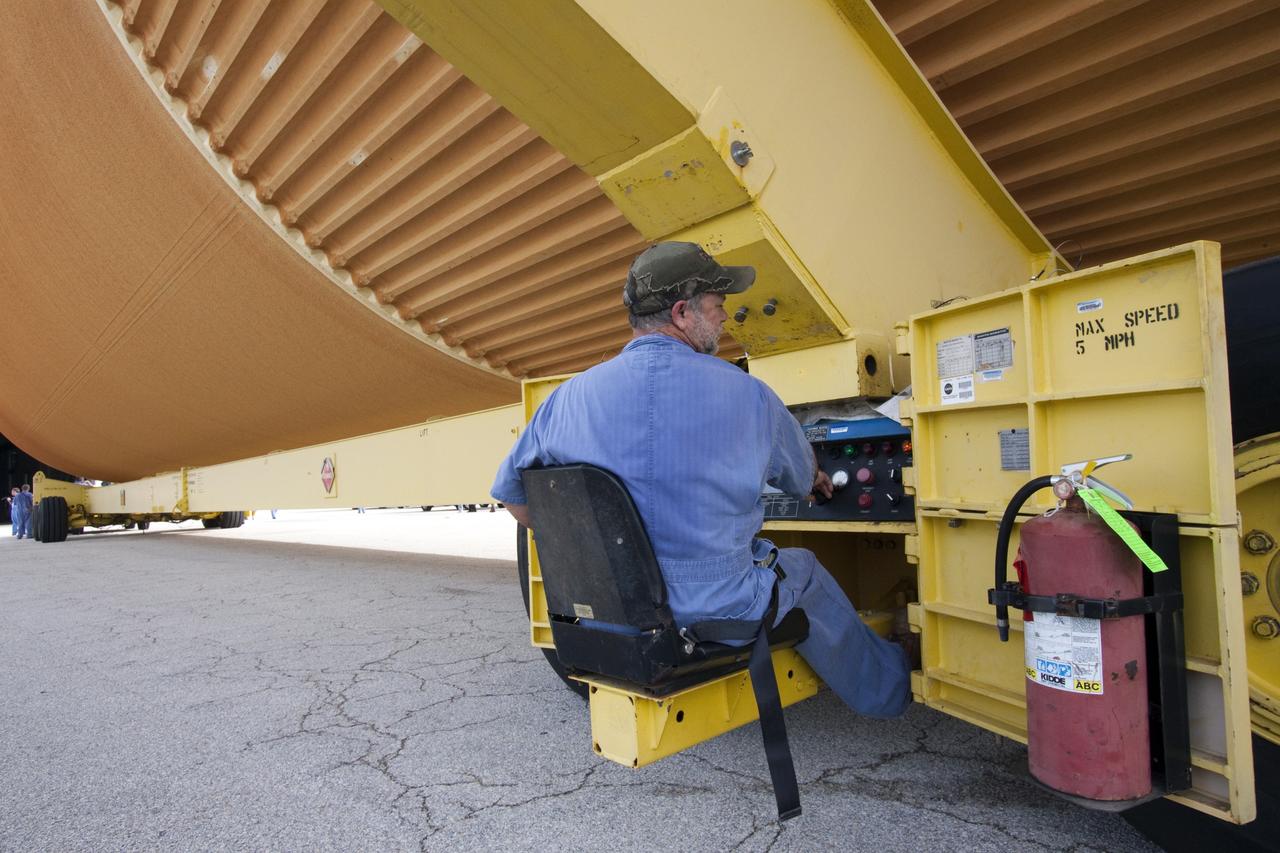
CAPE CANAVERAL, Fla. -- A United Space Alliance technician monitors the Space Shuttle Program's last external fuel tank, ET-122, as it moves from the Turn Basin to the Vehicle Assembly Building at NASA's Kennedy Space Center in Florida. The tank traveled 900 miles by sea from NASA's Michoud Assembly Facility in New Orleans aboard the Pegasus Barge. Once inside the Vehicle Assembly Building, it eventually will be attached to space shuttle Endeavour for the STS-134 mission to the International Space Station. STS-134, targeted to launch in Feb. 2011, currently is scheduled to be the last mission in the shuttle program. The tank, which is the largest element of the space shuttle stack, was damaged during Hurricane Katrina in August 2005 and restored to flight configuration by Lockheed Martin Space Systems Company employees. Photo credit: NASA/Jack Pfaller
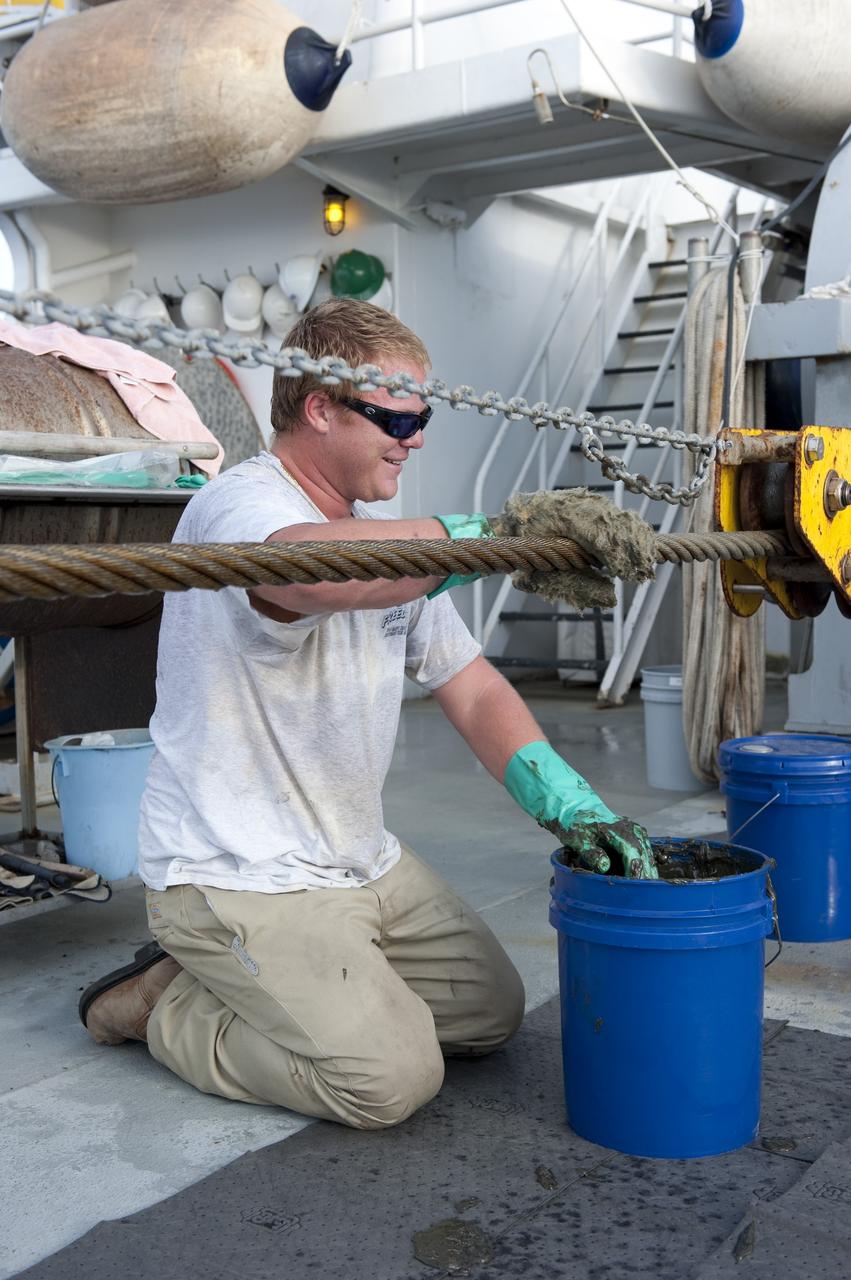
CAPE CANAVERAL, Fla. -- A deckhand on Freedom Star, one of NASA's solid rocket booster retrieval ships, keeps the ship in good repair as it pulls the Pegasus Barge carrying the Space Shuttle Program's last external fuel tank, ET-122. The tank will travel 900 miles by sea to NASA's Kennedy Space Center in Florida before being offloaded and moved to Kennedy's Vehicle Assembly Building. There it will be integrated to space shuttle Endeavour for the STS-134 mission to the International Space Station. The tank, which is the largest element of the space shuttle stack, was damaged during Hurricane Katrina in August 2005 and restored to flight configuration by Lockheed Martin Space Systems Company employees. STS-134, targeted to launch Feb. 2011, currently is scheduled to be the last mission in the Space Shuttle Program. Photo credit: NASA/Kim Shiflett
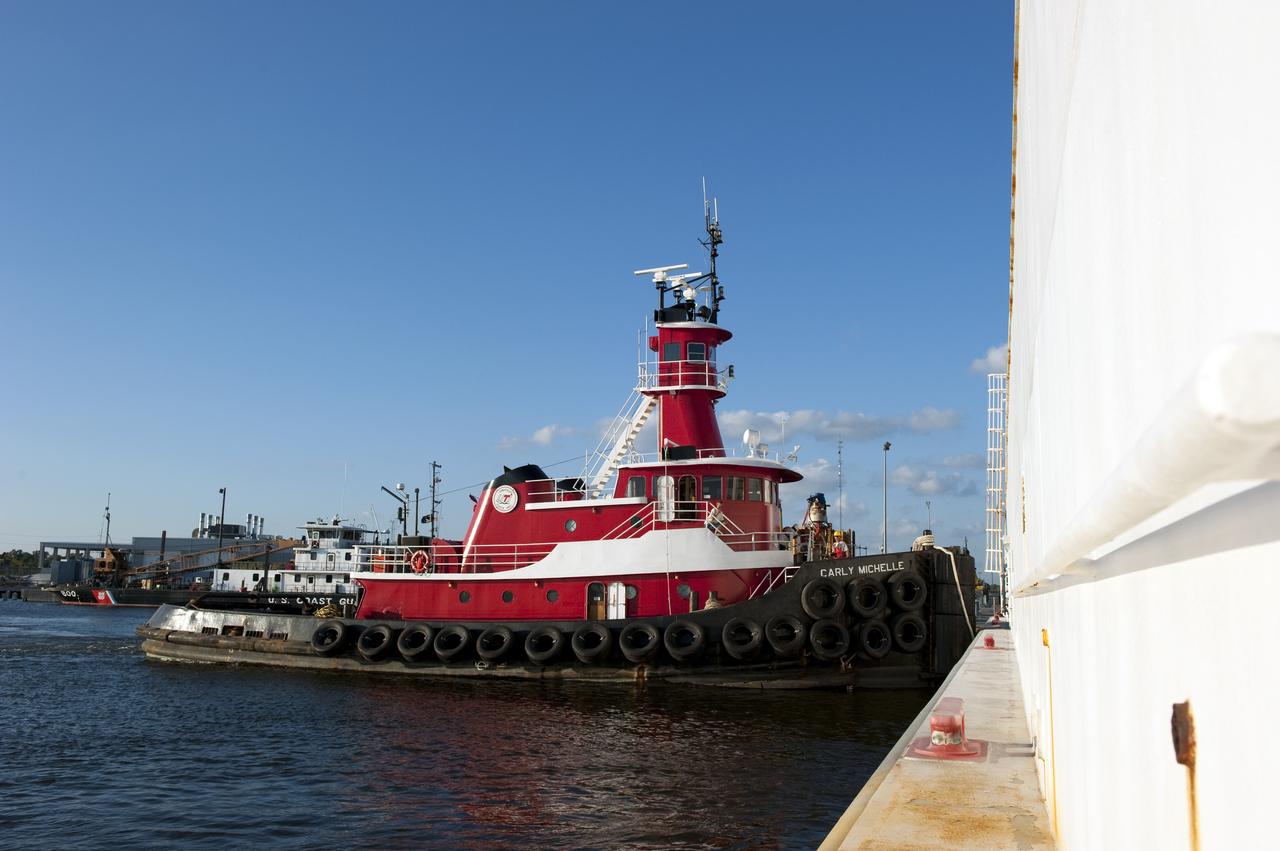
NEW ORLEANS -- At NASA's Michoud Assembly Facility in New Orleans a tug boat is prepared to escort the Space Shuttle Program's last external fuel tank, ET-122, for transportation to NASA's Kennedy Space Center in Florida. Secured aboard the Pegasus Barge the tank will travel 900 miles by sea before being offloaded and moved to Kennedy's Vehicle Assembly Building. There it will be integrated to space shuttle Endeavour for the STS-134 mission to the International Space Station. The tank, which is the largest element of the space shuttle stack, was damaged during Hurricane Katrina in August 2005 and restored to flight configuration by Lockheed Martin Space Systems Company employees. STS-134, targeted to launch Feb. 2011, currently is scheduled to be the last mission in the Space Shuttle Program. Photo credit: NASA/Kim Shiflett
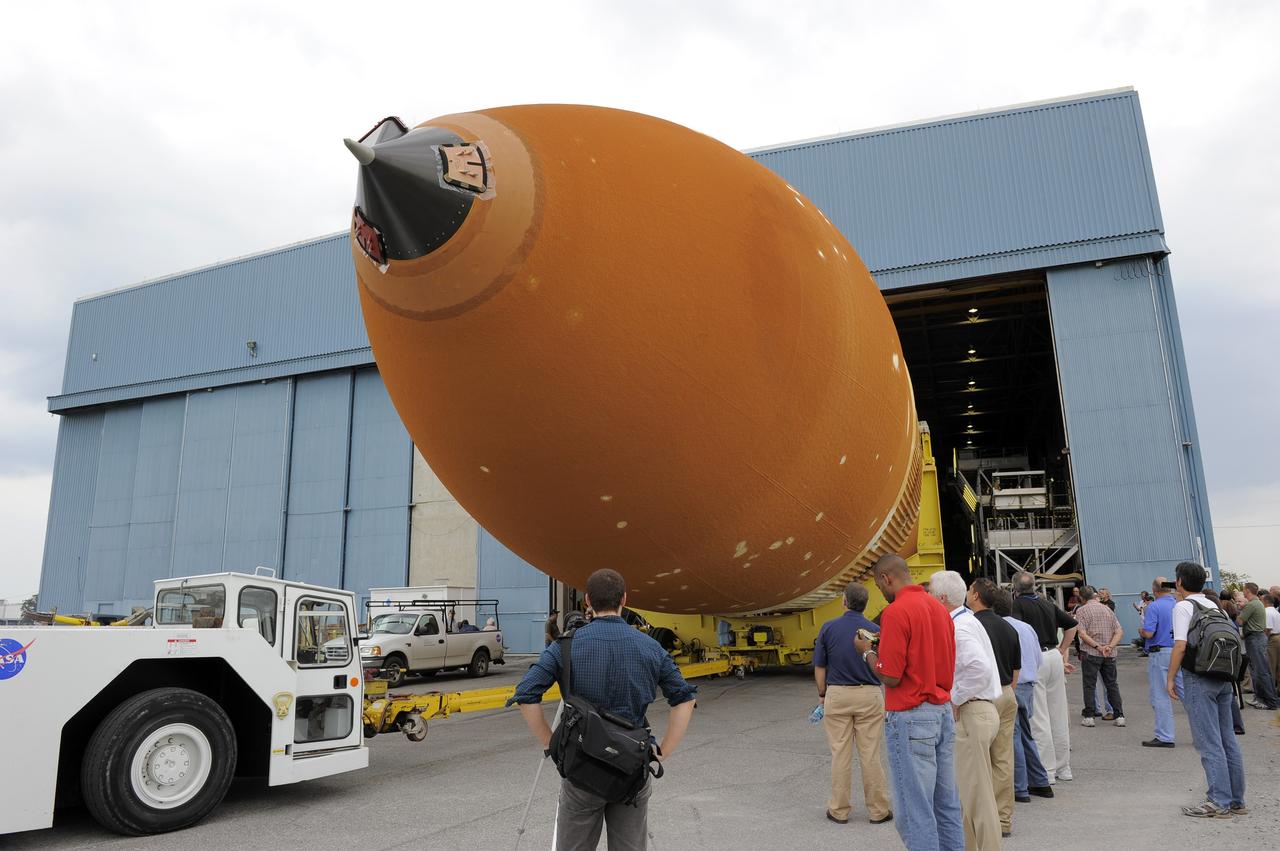
NEW ORLEANS -- Workers watch as the Space Shuttle Program's last external fuel tank, ET-122, rolls out of its processing hangar at NASA's Michoud Assembly Facility in New Orleans. The tank will travel 900 miles aboard the Pegasus Barge to NASA's Kennedy Space Center in Florida where it will be integrated to space shuttle Endeavour for the STS-134 mission to the International Space Station. STS-134, targeted to launch in 2011, currently is scheduled to be the last mission in the Space Shuttle Program. The tank, which is the largest element of the space shuttle stack, was damaged during Hurricane Katrina in August 2005 and restored to flight configuration by Lockheed Martin Space Systems Company employees. Photo credit: NASA/Kim Shiflett
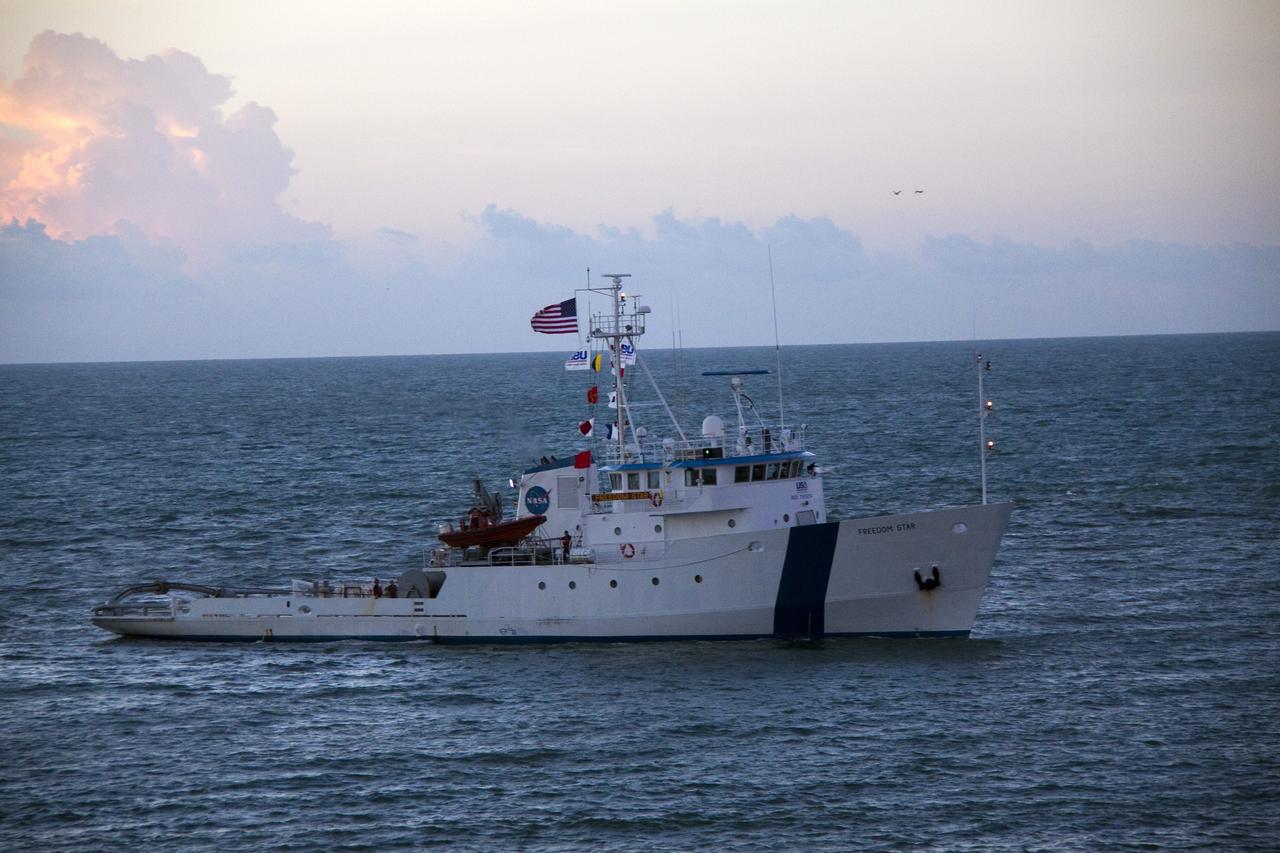
CAPE CANAVERAL, Fla. -- Freedom Star, one of NASA's solid rocket booster retrieval ships, pulls the Space Shuttle Program's last external fuel tank, ET-122, toward NASA's Kennedy Space Center in Florida. The tank traveled 900 miles by sea from NASA's Michoud Assembly Facility in New Orleans aboard the Pegasus Barge. After reaching the Turn Basin at Kennedy, the tank will be offloaded and moved to the Vehicle Assembly Building where it eventually will be attached to space shuttle Endeavour for the STS-134 mission to the International Space Station. STS-134, targeted to launch in Feb. 2011, currently is scheduled to be the last mission in the Space Shuttle Program. The tank, which is the largest element of the space shuttle stack, was damaged during Hurricane Katrina in August 2005 and restored to flight configuration by Lockheed Martin Space Systems Company employees. Photo credit: NASA/Kim Shiflett
CAPE CANAVERAL, Fla. -- Freedom Star, one of NASA's solid rocket booster retrieval ships, pulls the Space Shuttle Program's last external fuel tank, ET-122, toward NASA's Kennedy Space Center in Florida. The tank traveled 900 miles by sea from NASA's Michoud Assembly Facility in New Orleans aboard the Pegasus Barge. After reaching the Turn Basin at Kennedy, the tank will be offloaded and moved to the Vehicle Assembly Building where it eventually will be attached to space shuttle Endeavour for the STS-134 mission to the International Space Station. STS-134, targeted to launch in Feb. 2011, currently is scheduled to be the last mission in the Space Shuttle Program. The tank, which is the largest element of the space shuttle stack, was damaged during Hurricane Katrina in August 2005 and restored to flight configuration by Lockheed Martin Space Systems Company employees. Photo credit: NASA/Jack Pfaller
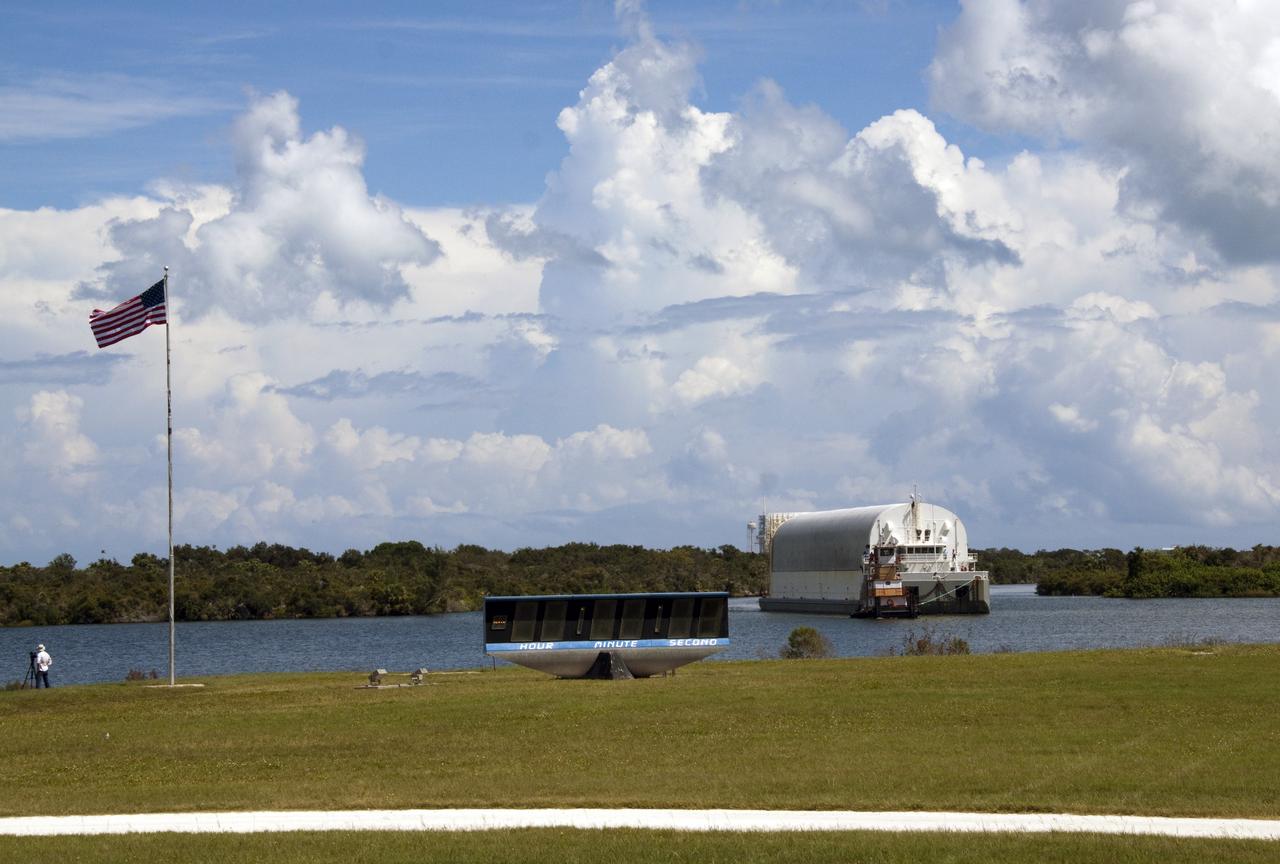
CAPE CANAVERAL, Fla. -- A tugboat pulls the Pegasus Barge carrying the Space Shuttle Program's last external fuel tank, ET-122, toward the Turn Basin at NASA's Kennedy Space Center in Florida. The tank traveled 900 miles by sea from NASA's Michoud Assembly Facility in New Orleans. Next, the tank will be offloaded and moved to the Vehicle Assembly Building where it eventually will be attached to space shuttle Endeavour for the STS-134 mission to the International Space Station. STS-134, targeted to launch in Feb. 2011, currently is scheduled to be the last mission in the Space Shuttle Program. The tank, which is the largest element of the space shuttle stack, was damaged during Hurricane Katrina in August 2005 and restored to flight configuration by Lockheed Martin Space Systems Company employees. Photo credit: NASA/Jack Pfaller
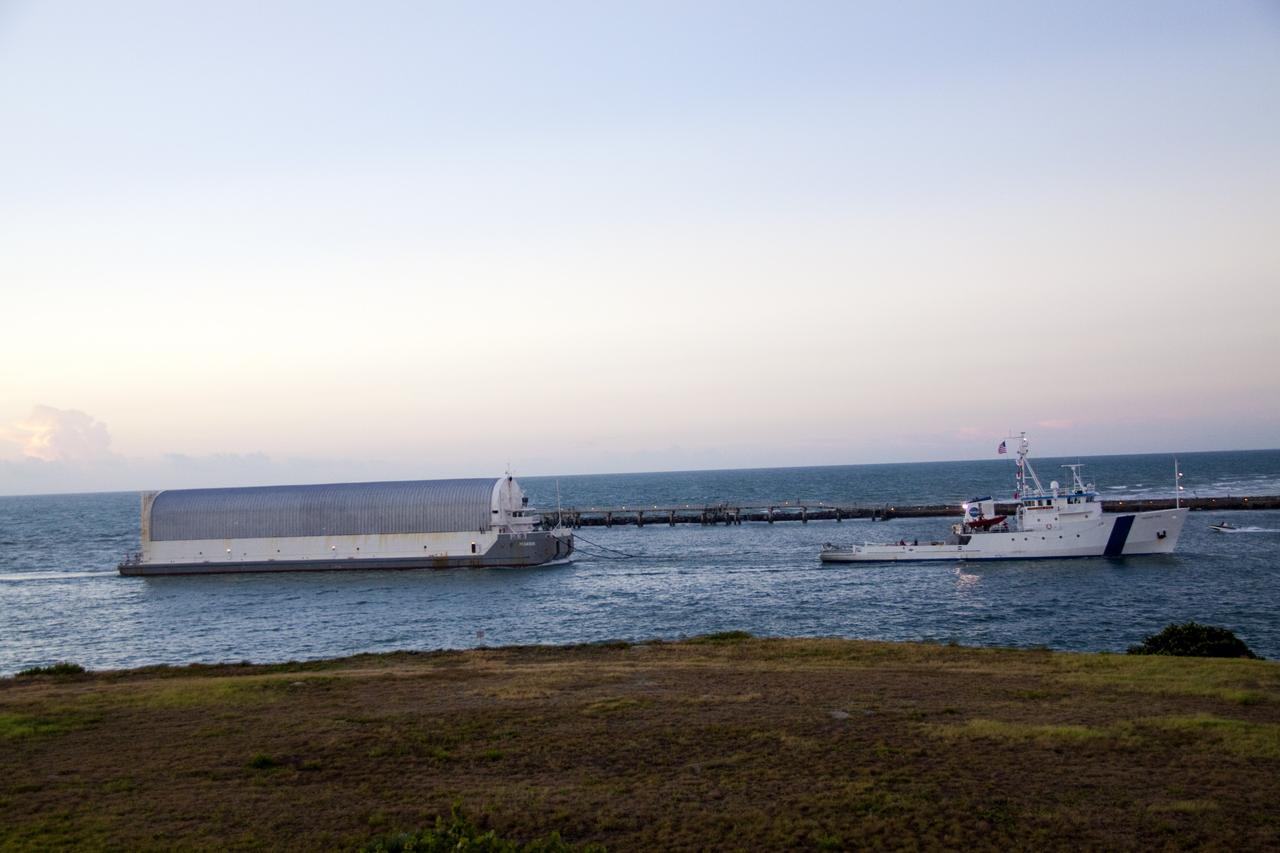
CAPE CANAVERAL, Fla. -- Freedom Star, one of NASA's solid rocket booster retrieval ships, pulls the Space Shuttle Program's last external fuel tank, ET-122, toward NASA's Kennedy Space Center in Florida. The tank traveled 900 miles by sea from NASA's Michoud Assembly Facility in New Orleans aboard the Pegasus Barge. After reaching the Turn Basin at Kennedy, the tank will be offloaded and moved to the Vehicle Assembly Building where it eventually will be attached to space shuttle Endeavour for the STS-134 mission to the International Space Station. STS-134, targeted to launch in Feb. 2011, currently is scheduled to be the last mission in the Space Shuttle Program. The tank, which is the largest element of the space shuttle stack, was damaged during Hurricane Katrina in August 2005 and restored to flight configuration by Lockheed Martin Space Systems Company employees. Photo credit: NASA/Jack Pfaller
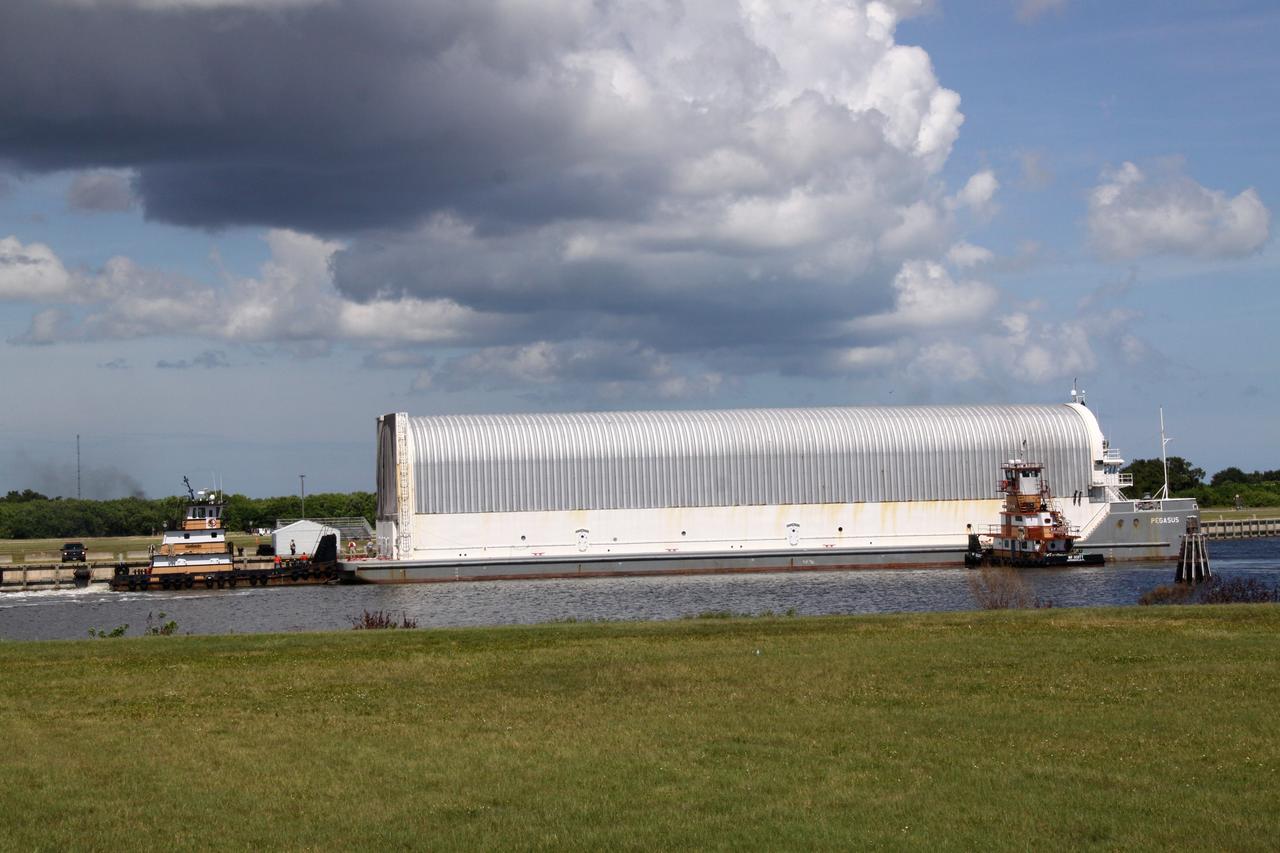
CAPE CANAVERAL, Fla. -- The Pegasus Barge carrying the Space Shuttle Program's last external fuel tank, ET-122, arrives at the Turn Basin at NASA's Kennedy Space Center in Florida. The tank traveled 900 miles by sea from NASA's Michoud Assembly Facility in New Orleans. Next, the tank will be offloaded and moved to the Vehicle Assembly Building where it eventually will be attached to space shuttle Endeavour for the STS-134 mission to the International Space Station. STS-134, targeted to launch in Feb. 2011, currently is scheduled to be the last mission in the Space Shuttle Program. The tank, which is the largest element of the space shuttle stack, was damaged during Hurricane Katrina in August 2005 and restored to flight configuration by Lockheed Martin Space Systems Company employees. Photo credit: NASA/Jack Pfaller
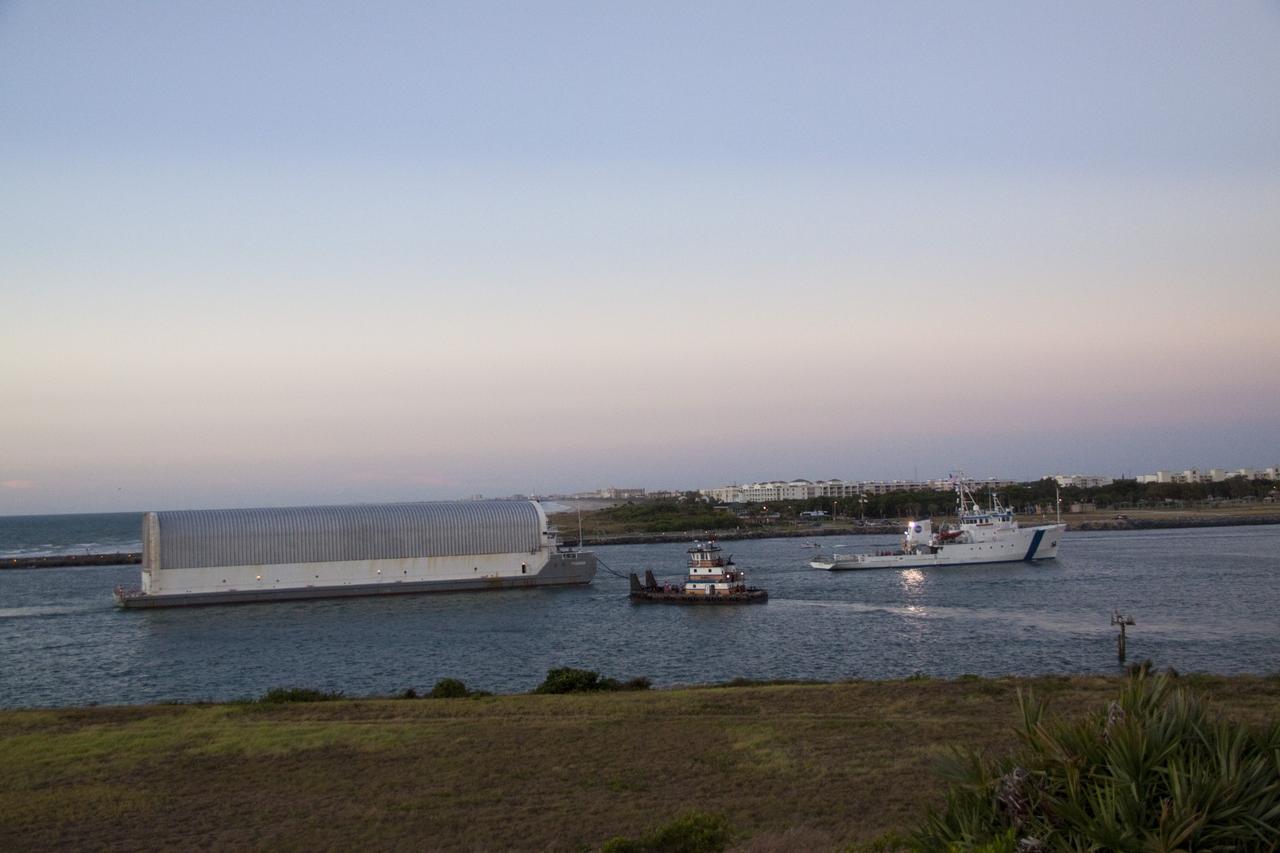
CAPE CANAVERAL, Fla. -- Freedom Star, one of NASA's solid rocket booster retrieval ships, pulls the Space Shuttle Program's last external fuel tank, ET-122, toward NASA's Kennedy Space Center in Florida. The tank traveled 900 miles by sea from NASA's Michoud Assembly Facility in New Orleans aboard the Pegasus Barge. After reaching the Turn Basin at Kennedy, the tank will be offloaded and moved to the Vehicle Assembly Building where it eventually will be attached to space shuttle Endeavour for the STS-134 mission to the International Space Station. STS-134, targeted to launch in Feb. 2011, currently is scheduled to be the last mission in the Space Shuttle Program. The tank, which is the largest element of the space shuttle stack, was damaged during Hurricane Katrina in August 2005 and restored to flight configuration by Lockheed Martin Space Systems Company employees. Photo credit: NASA/Jack Pfaller
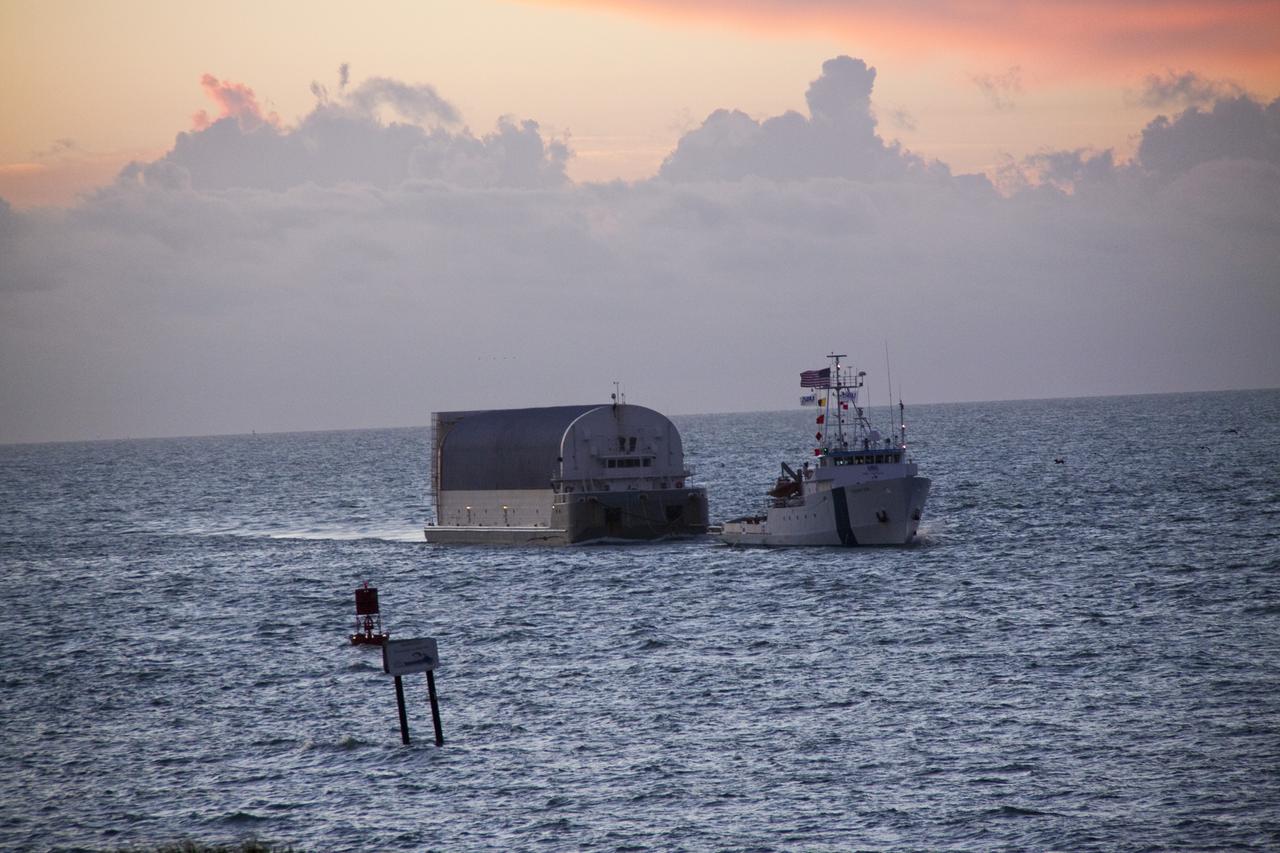
CAPE CANAVERAL, Fla. -- Freedom Star, one of NASA's solid rocket booster retrieval ships, pulls the Space Shuttle Program's last external fuel tank, ET-122, toward NASA's Kennedy Space Center in Florida. The tank traveled 900 miles by sea from NASA's Michoud Assembly Facility in New Orleans aboard the Pegasus Barge. After reaching the Turn Basin at Kennedy, the tank will be offloaded and moved to the Vehicle Assembly Building where it eventually will be attached to space shuttle Endeavour for the STS-134 mission to the International Space Station. STS-134, targeted to launch in Feb. 2011, currently is scheduled to be the last mission in the Space Shuttle Program. The tank, which is the largest element of the space shuttle stack, was damaged during Hurricane Katrina in August 2005 and restored to flight configuration by Lockheed Martin Space Systems Company employees. Photo credit: NASA/Jack Pfaller

NEW ORLEANS -- Associate Administrator for Space Operations Bill Gerstenmaier and Manny Zulueta, Lockheed Martin vice president and site executive at NASA's Michoud Assembly Facility in New Orleans, watch the progress of the Space Shuttle Program's last external fuel tank, ET-122, as it is being transported from the facility to the Pegasus Barge. The tank will travel 900 miles by sea to NASA's Kennedy Space Center in Florida secured aboard the barge, offloaded and moved to Kennedy's Vehicle Assembly Building where it will be integrated to space shuttle Endeavour for the STS-134 mission to the International Space Station. The tank, which is the largest element of the space shuttle stack, was damaged during Hurricane Katrina in August 2005 and restored to flight configuration by Lockheed Martin Space Systems Company employees. STS-134, targeted to launch Feb. 2011, currently is scheduled to be the last mission in the Space Shuttle Program. Photo credit: NASA/Kim Shiflett
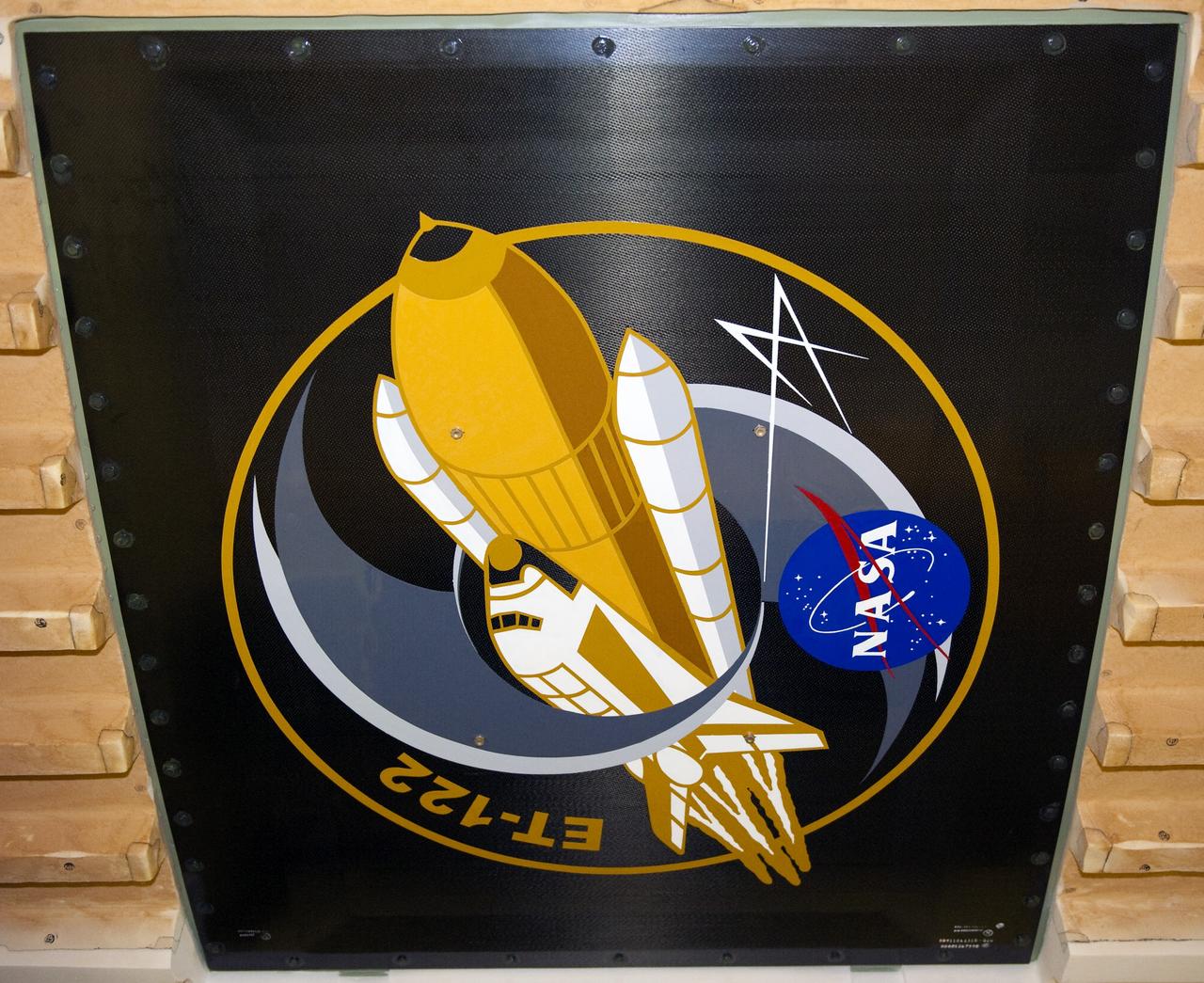
NEW ORLEANS -- To commemorate the history of the Space Shuttle Program's last external fuel tank, its intertank door is emblazoned with an ET-122 insignia. The external tank will travel 900 miles by sea from NASA's Michoud Assembly Facility in New Orleans to NASA's Kennedy Space Center in Florida secured aboard the Pegasus Barge, offloaded and moved to Kennedy's Vehicle Assembly Building where it will be integrated to space shuttle Endeavour for the STS-134 mission to the International Space Station. The tank, which is the largest element of the space shuttle stack, was damaged during Hurricane Katrina in August 2005 and restored to flight configuration by Lockheed Martin Space Systems Company employees. STS-134, targeted to launch Feb. 2011, currently is scheduled to be the last mission in the Space Shuttle Program. Photo credit: NASA/Kim Shiflett
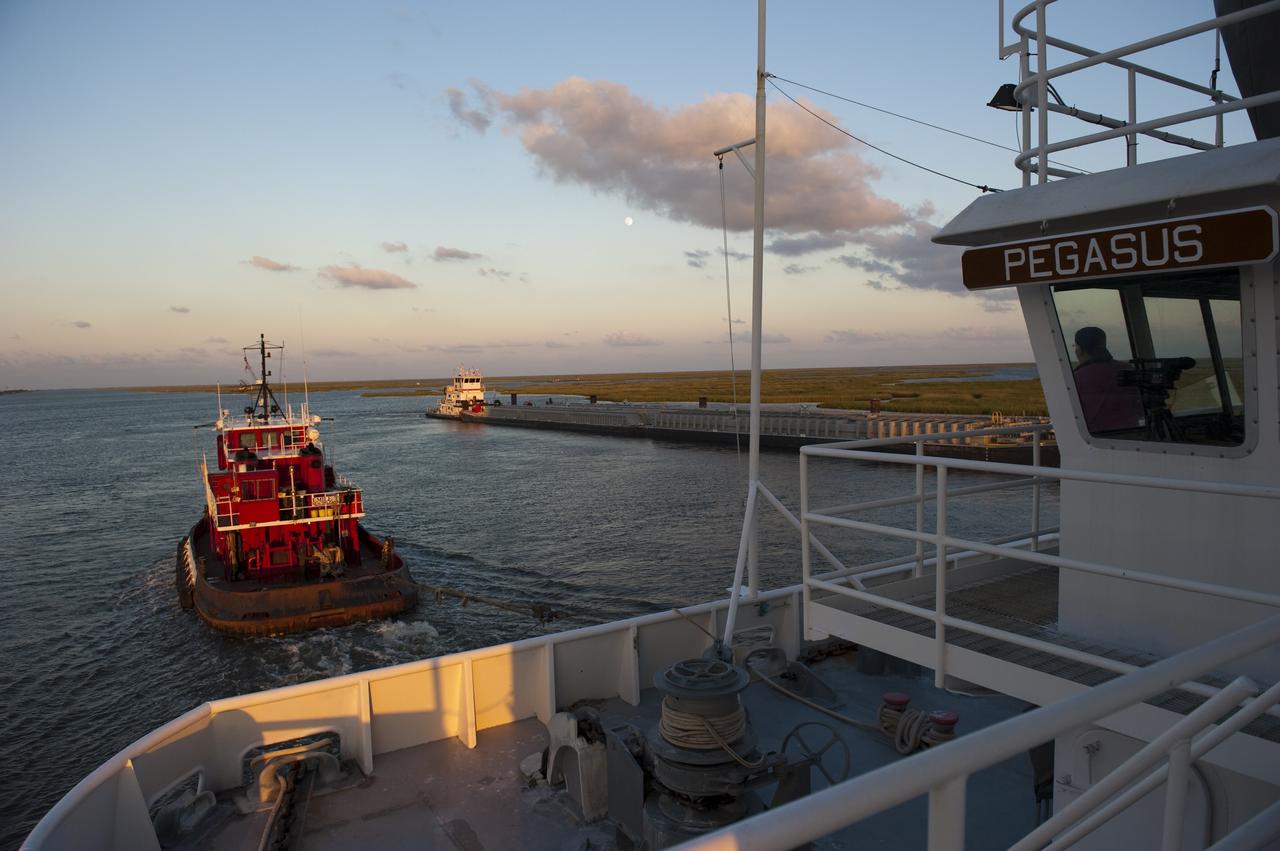
NEW ORLEANS -- A tug boat is pulls the Pegasus Barge carrying the Space Shuttle Program's last external fuel tank, ET-122, from NASA's Michoud Assembly Facility in New Orleans to NASA's Kennedy Space Center in Florida. The tank will travel 900 miles by sea before being offloaded and moved to Kennedy's Vehicle Assembly Building. There it will be integrated to space shuttle Endeavour for the STS-134 mission to the International Space Station. The tank, which is the largest element of the space shuttle stack, was damaged during Hurricane Katrina in August 2005 and restored to flight configuration by Lockheed Martin Space Systems Company employees. STS-134, targeted to launch Feb. 2011, currently is scheduled to be the last mission in the Space Shuttle Program. Photo credit: NASA/Kim Shiflett
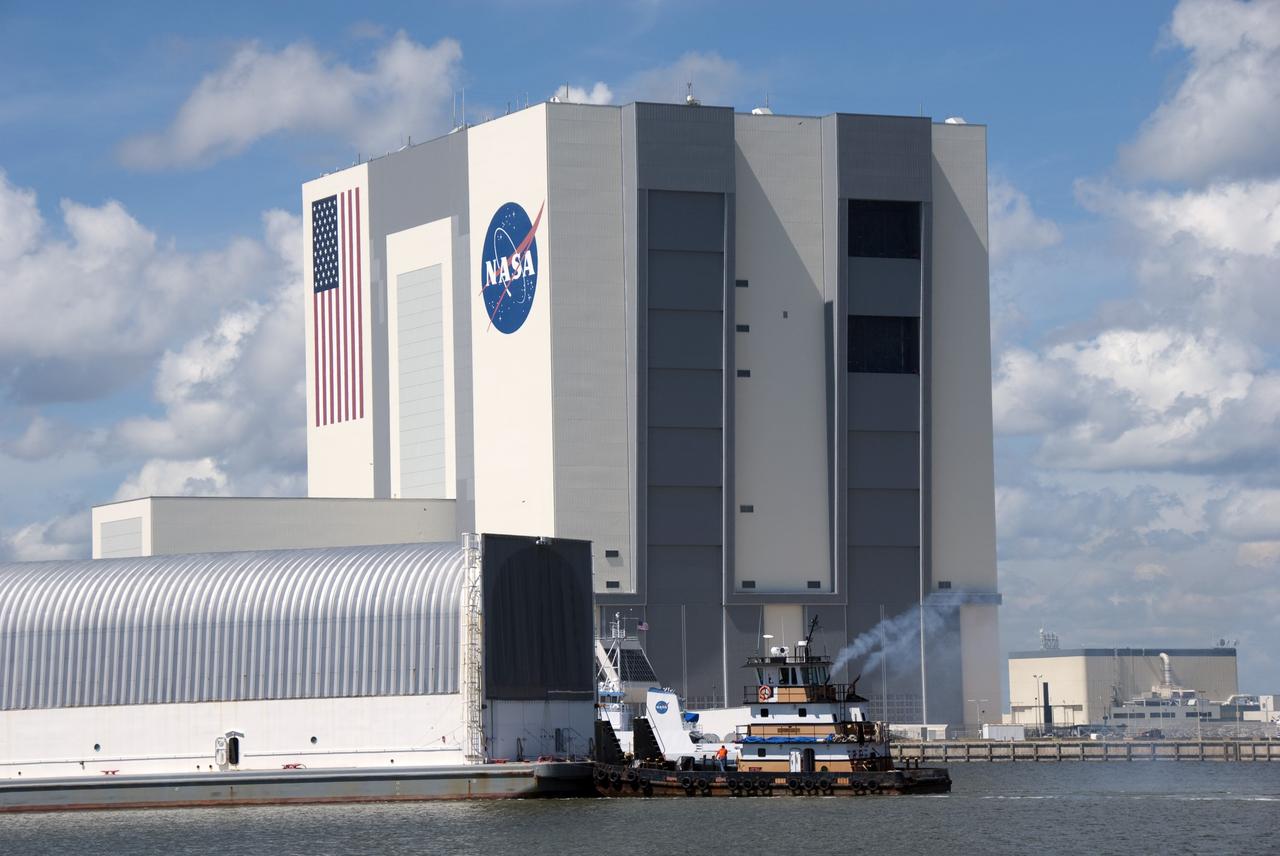
CAPE CANAVERAL, Fla. -- A tugboat pushes the Pegasus Barge carrying the Space Shuttle Program's last external fuel tank, ET-122, toward NASA's Kennedy Space Center in Florida. The tank traveled 900 miles by sea from NASA's Michoud Assembly Facility in New Orleans. After reaching the Turn Basin at Kennedy, the tank will be offloaded and moved to the Vehicle Assembly Building where it eventually will be attached to space shuttle Endeavour for the STS-134 mission to the International Space Station. STS-134, targeted to launch in Feb. 2011, currently is scheduled to be the last mission in the Space Shuttle Program. The tank, which is the largest element of the space shuttle stack, was damaged during Hurricane Katrina in August 2005 and restored to flight configuration by Lockheed Martin Space Systems Company employees. Photo credit: NASA/Jim Grossmann
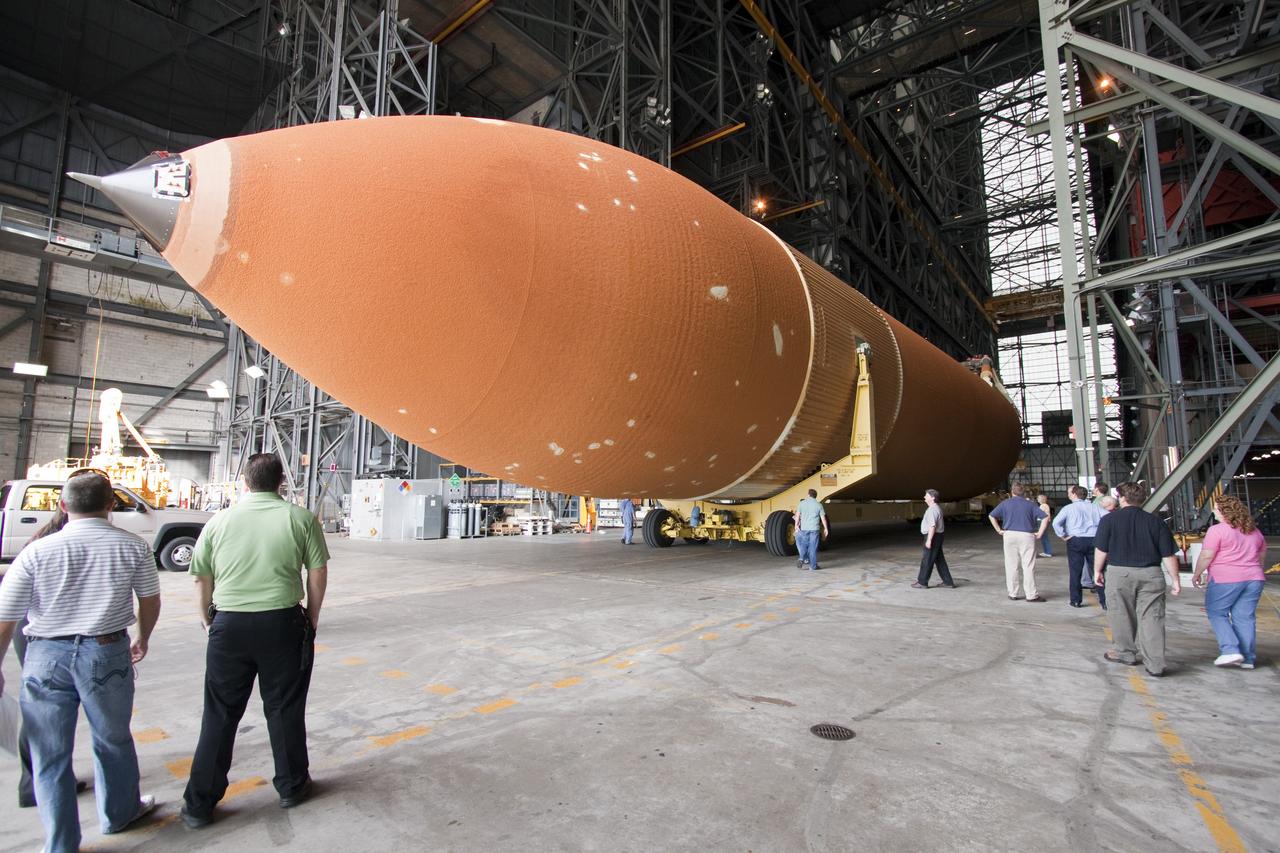
CAPE CANAVERAL, Fla. -- The Space Shuttle Program's last external fuel tank, ET-122, moves into the Vehicle Assembly Building at NASA's Kennedy Space Center in Florida. The tank traveled 900 miles by sea from NASA's Michoud Assembly Facility in New Orleans to Kennedy's Turn Basin aboard the Pegasus Barge. The tank eventually will be attached to space shuttle Endeavour for the STS-134 mission to the International Space Station. STS-134, targeted to launch in Feb. 2011, currently is scheduled to be the last mission in the shuttle program. The tank, which is the largest element of the space shuttle stack, was damaged during Hurricane Katrina in August 2005 and restored to flight configuration by Lockheed Martin Space Systems Company employees. Photo credit: NASA/Jack Pfaller
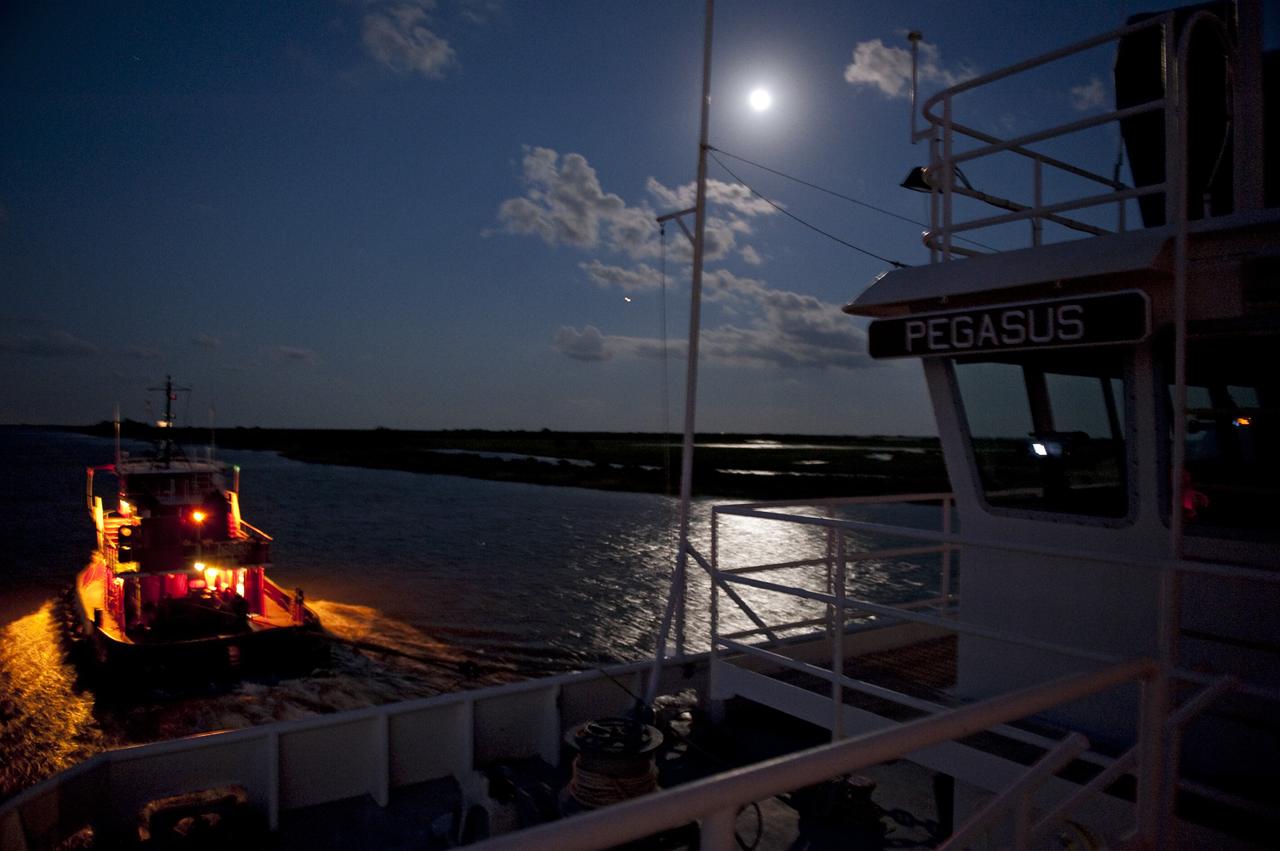
NEW ORLEANS -- As the moon lights up the water, as tug boat pulls the Pegasus Barge carrying the Space Shuttle Program's last external fuel tank, ET-122, from NASA's Michoud Assembly Facility in New Orleans to NASA's Kennedy Space Center in Florida. The tank will travel 900 miles by sea before being offloaded and moved for Kennedy's Vehicle Assembly Building. There it will be integrated to space shuttle Endeavour for the STS-134 mission to the International Space Station. The tank, which is the largest element of the space shuttle stack, was damaged during Hurricane Katrina in August 2005 and restored to flight configuration by Lockheed Martin Space Systems Company employees. STS-134, targeted to launch Feb. 2011, currently is scheduled to be the last mission in the Space Shuttle Program. Photo credit: NASA/Kim Shiflett
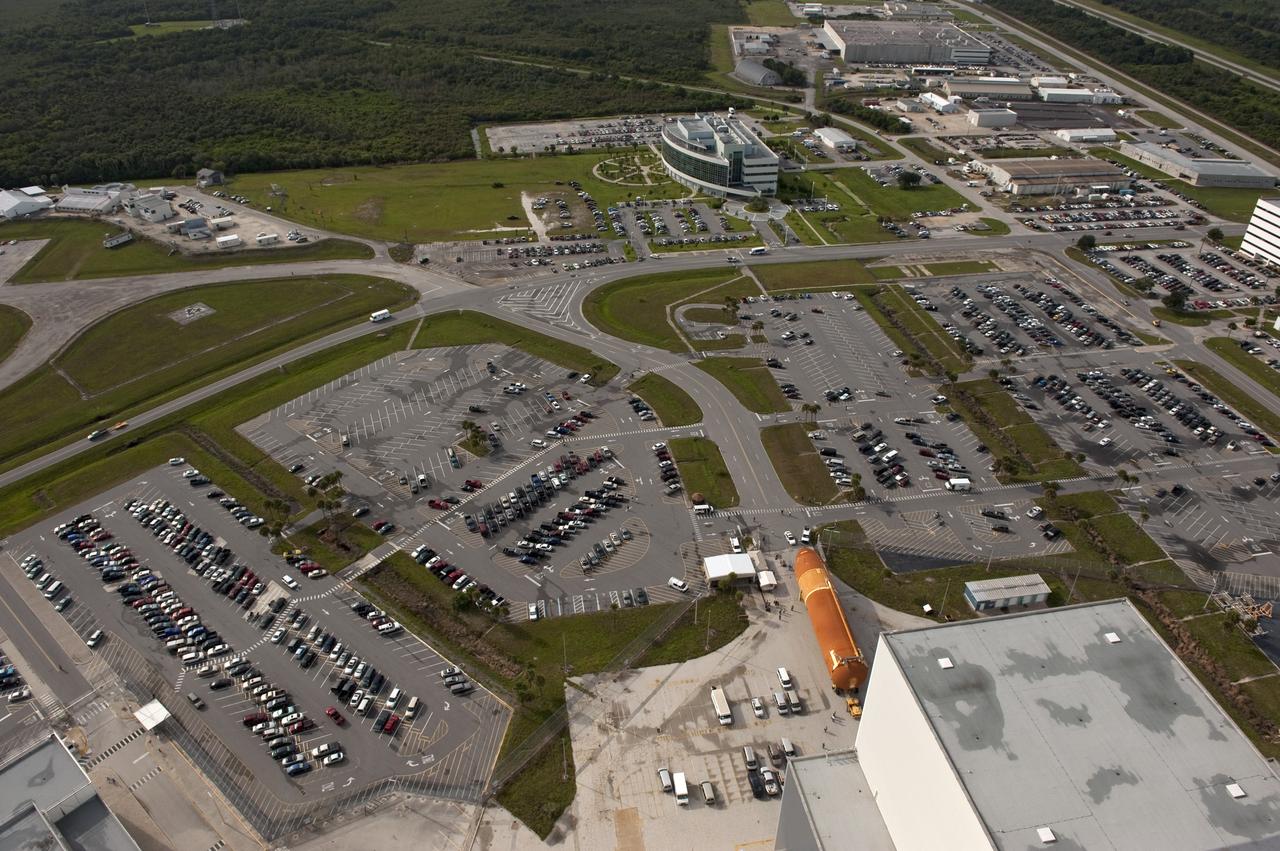
CAPE CANAVERAL, Fla. -- This overhead view shows the Space Shuttle Program's last external fuel tank, ET-122 (right), as it is being transported to the Vehicle Assembly Building (VAB) at NASA's Kennedy Space Center in Florida. The tank traveled 900 miles by sea, carried in the Pegasus Barge, from NASA's Michoud Assembly Facility in New Orleans. Once inside the VAB, it eventually will be attached to space shuttle Endeavour for the STS-134 mission to the International Space Station targeted to launch Feb. 2011. STS-134 currently is scheduled to be the last mission in the shuttle program. The tank, which is the largest element of the space shuttle stack, was damaged during Hurricane Katrina in August 2005 and restored to flight configuration by Lockheed Martin Space Systems Company employees. Photo credit: NASA/Kevin O'Connell
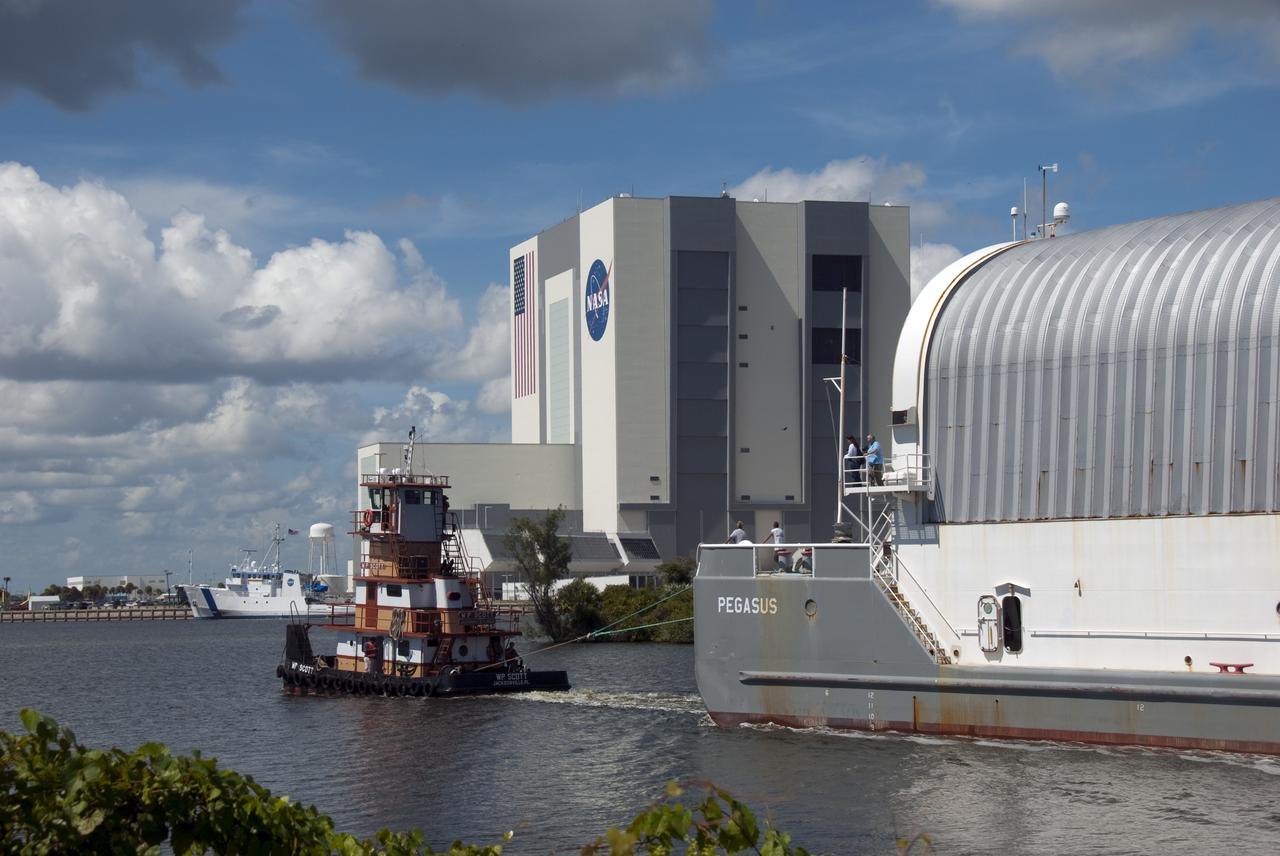
CAPE CANAVERAL, Fla. -- A tugboat pulls the Pegasus Barge carrying the Space Shuttle Program's last external fuel tank, ET-122, toward NASA's Kennedy Space Center in Florida. The tank traveled 900 miles by sea from NASA's Michoud Assembly Facility in New Orleans. After reaching the Turn Basin at Kennedy, the tank will be offloaded and moved to the Vehicle Assembly Building where it eventually will be attached to space shuttle Endeavour for the STS-134 mission to the International Space Station. STS-134, targeted to launch in Feb. 2011, currently is scheduled to be the last mission in the Space Shuttle Program. The tank, which is the largest element of the space shuttle stack, was damaged during Hurricane Katrina in August 2005 and restored to flight configuration by Lockheed Martin Space Systems Company employees. Photo credit: NASA/Jim Grossmann
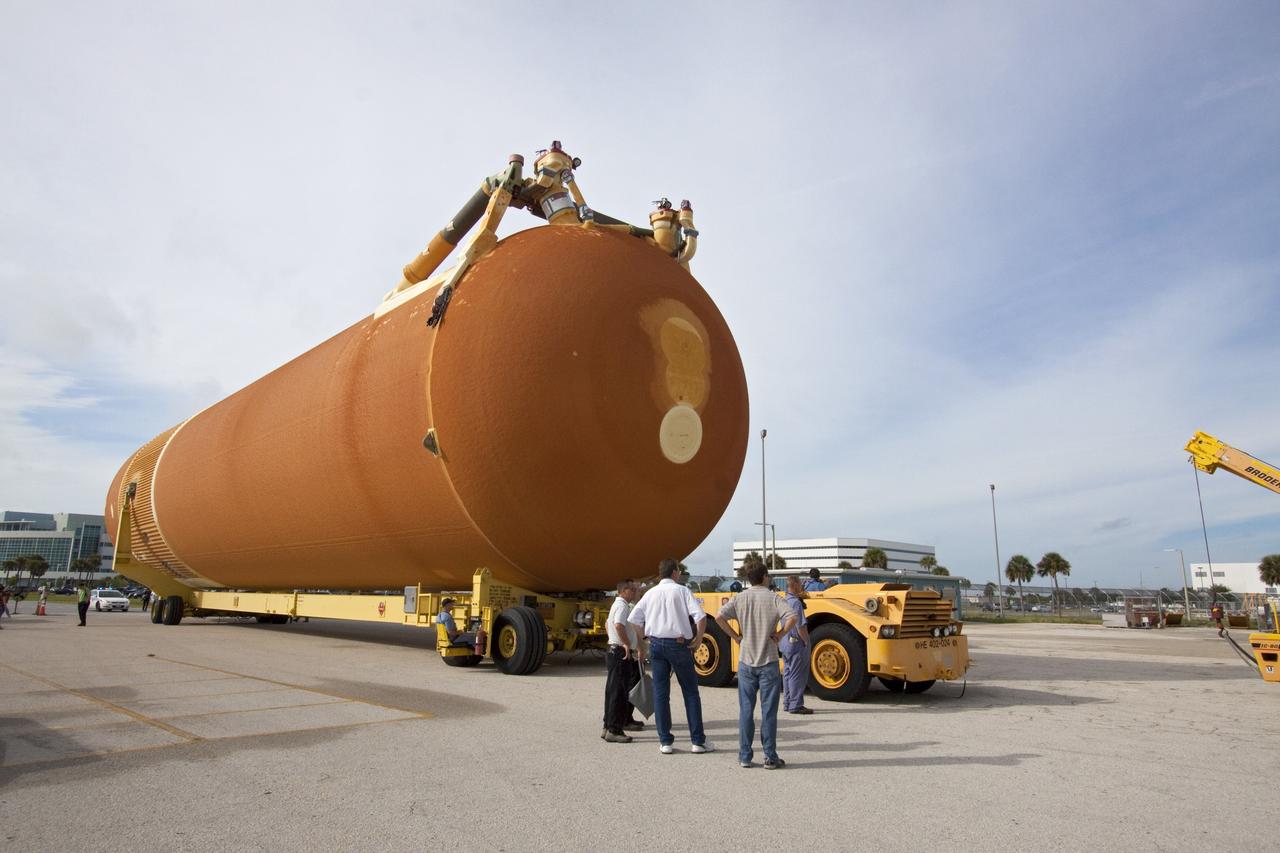
CAPE CANAVERAL, Fla. -- The Space Shuttle Program's last external fuel tank, ET-122, moves from the Turn Basin to the Vehicle Assembly Building at NASA's Kennedy Space Center in Florida. The tank traveled 900 miles by sea from NASA's Michoud Assembly Facility in New Orleans aboard the Pegasus Barge. Once inside the Vehicle Assembly Building, it eventually will be attached to space shuttle Endeavour for the STS-134 mission to the International Space Station. STS-134, targeted to launch in Feb. 2011, currently is scheduled to be the last mission in the shuttle program. The tank, which is the largest element of the space shuttle stack, was damaged during Hurricane Katrina in August 2005 and restored to flight configuration by Lockheed Martin Space Systems Company employees. Photo credit: NASA/Jack Pfaller
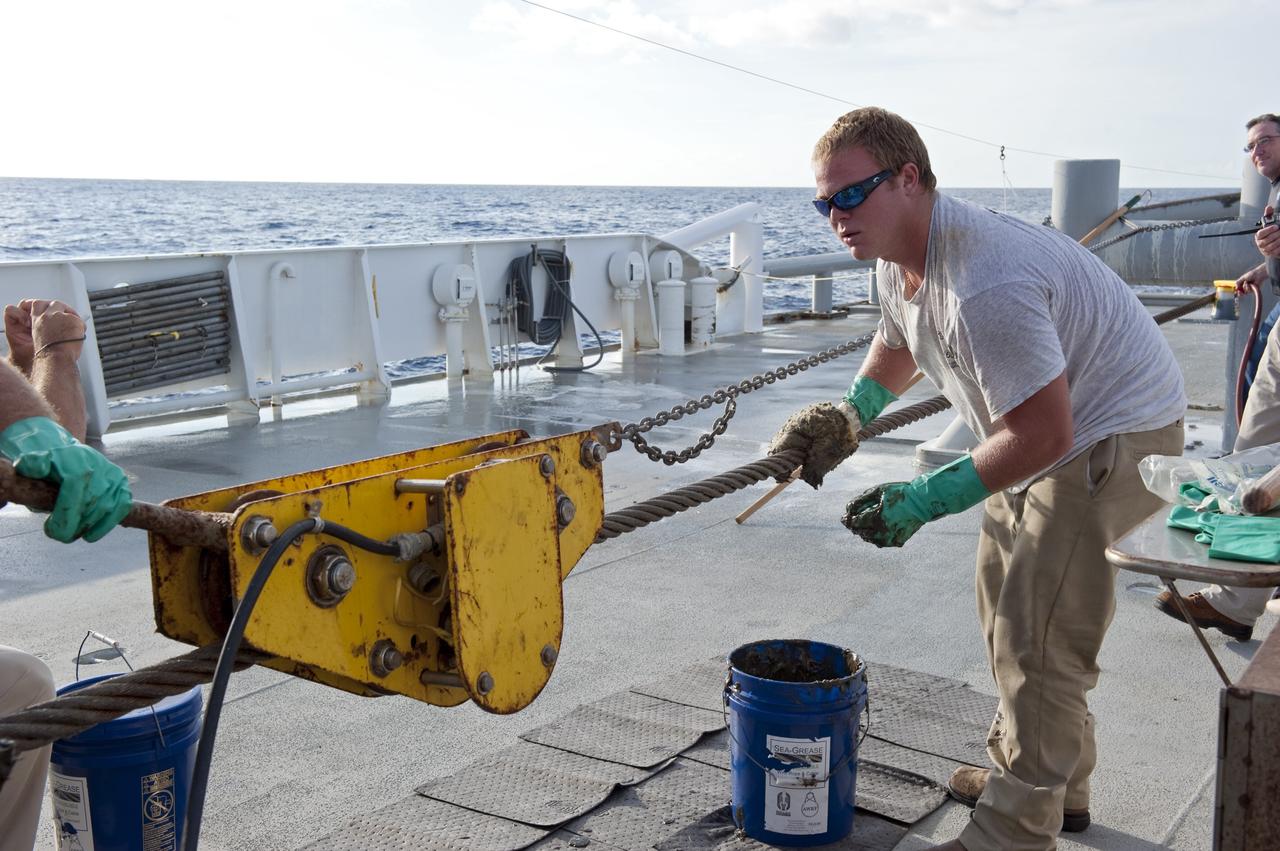
CAPE CANAVERAL, Fla. -- Deckhands on Freedom Star, one of NASA's solid rocket booster retrieval ships, keep the ship in good repair as it pulls the Pegasus Barge carrying the Space Shuttle Program's last external fuel tank, ET-122. The tank will travel 900 miles by sea to NASA's Kennedy Space Center in Florida before being offloaded and moved to Kennedy's Vehicle Assembly Building. There it will be integrated to space shuttle Endeavour for the STS-134 mission to the International Space Station. The tank, which is the largest element of the space shuttle stack, was damaged during Hurricane Katrina in August 2005 and restored to flight configuration by Lockheed Martin Space Systems Company employees. STS-134, targeted to launch Feb. 2011, currently is scheduled to be the last mission in the Space Shuttle Program. Photo credit: NASA/Kim Shiflett
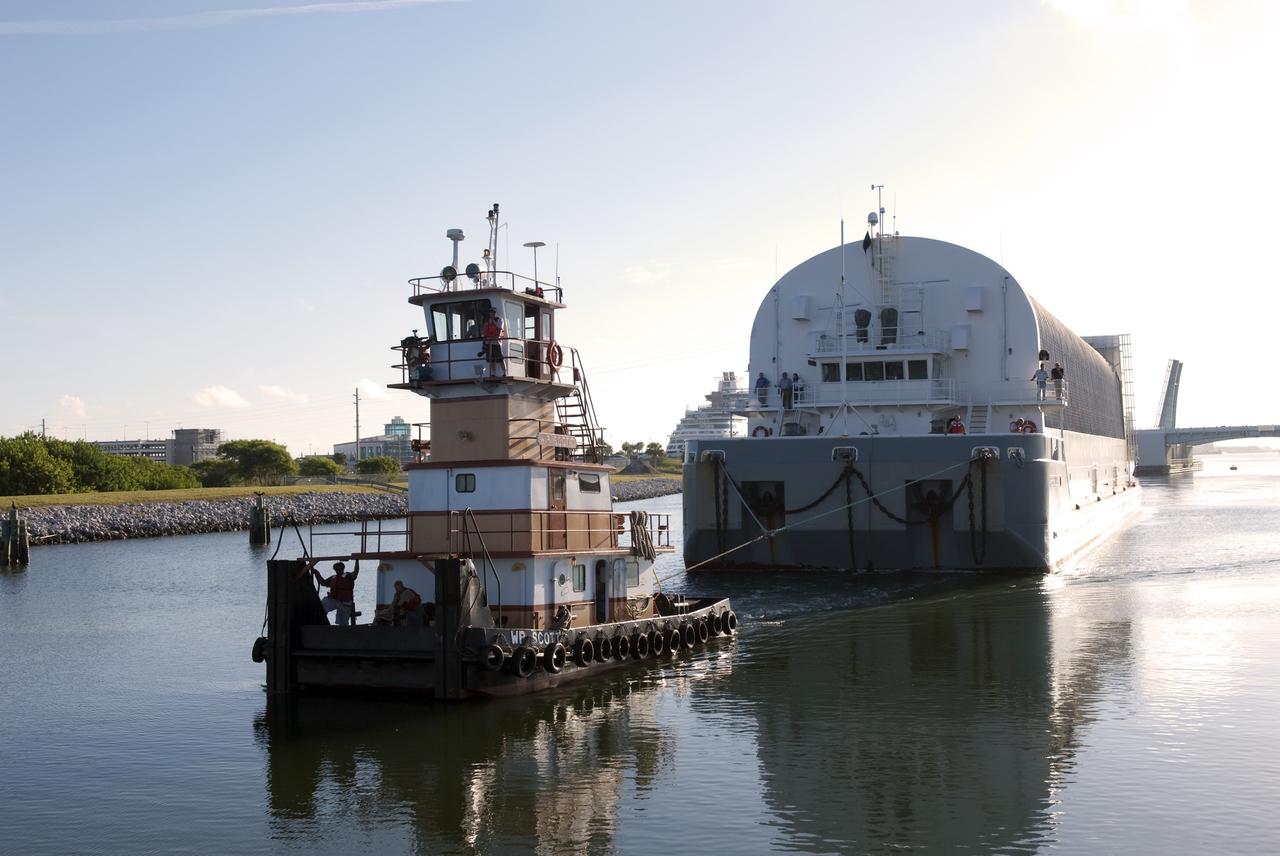
CAPE CANAVERAL, Fla. -- A tugboat pulls the Pegasus Barge carrying the Space Shuttle Program's last external fuel tank, ET-122, toward NASA's Kennedy Space Center in Florida. The tank traveled 900 miles by sea from NASA's Michoud Assembly Facility in New Orleans. After reaching the Turn Basin at Kennedy, the tank will be offloaded and moved to the Vehicle Assembly Building where it eventually will be attached to space shuttle Endeavour for the STS-134 mission to the International Space Station. STS-134, targeted to launch in Feb. 2011, currently is scheduled to be the last mission in the Space Shuttle Program. The tank, which is the largest element of the space shuttle stack, was damaged during Hurricane Katrina in August 2005 and restored to flight configuration by Lockheed Martin Space Systems Company employees. Photo credit: NASA/Jim Grossmann
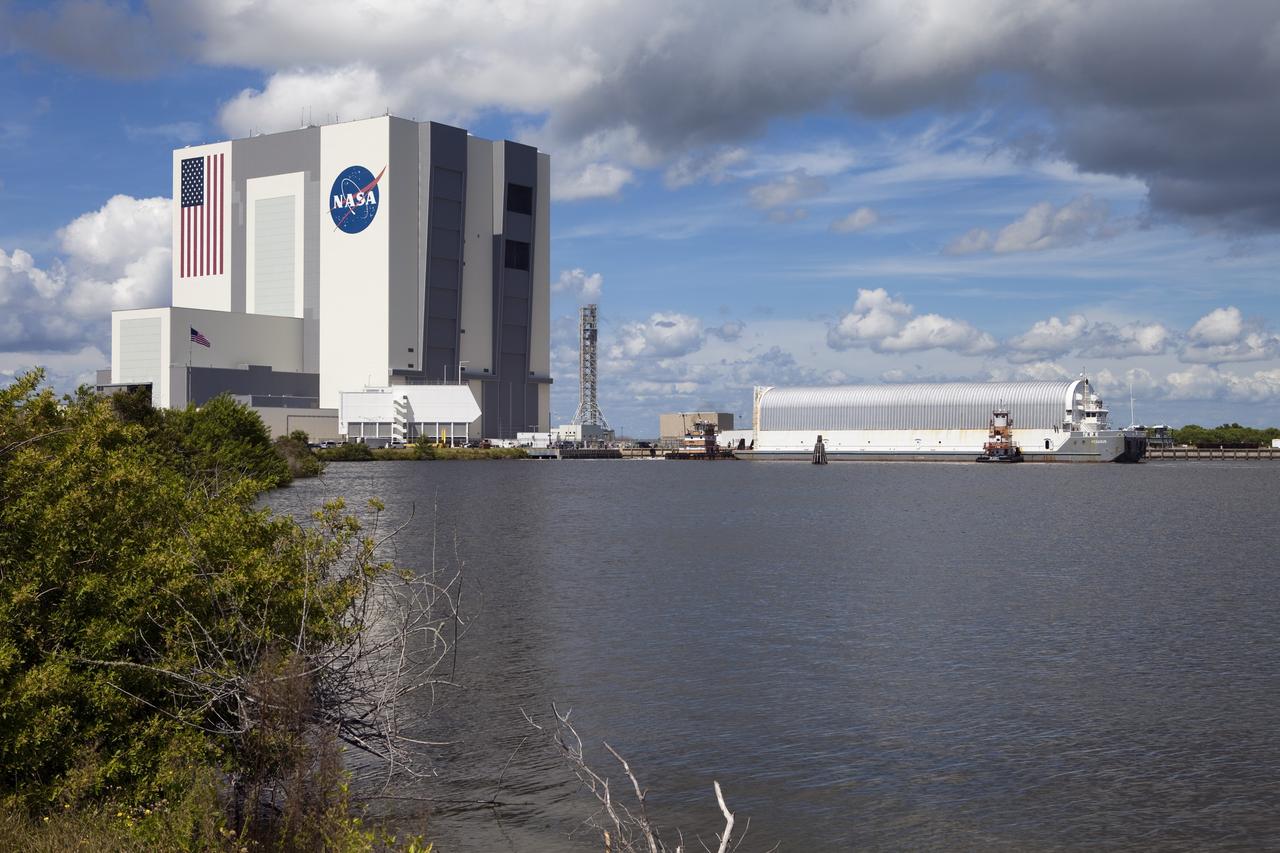
CAPE CANAVERAL, Fla. -- At NASA's Kennedy Space Center in Florida, the Pegasus Barge, carrying the Space Shuttle Program's last external fuel tank, ET-122, arrives at the Turn Basin. The tank traveled 900 miles by sea from NASA's Michoud Assembly Facility in New Orleans. Next, the tank will be offloaded and moved to Kennedy's Vehicle Assembly Building where it eventually will be attached to space shuttle Endeavour for the STS-134 mission to the International Space Station. STS-134, targeted to launch in Feb. 2011, currently is scheduled to be the last mission in the Space Shuttle Program. The tank, which is the largest element of the space shuttle stack, was damaged during Hurricane Katrina in August 2005 and restored to flight configuration by Lockheed Martin Space Systems Company employees. Photo credit: NASA/Frankie Martin
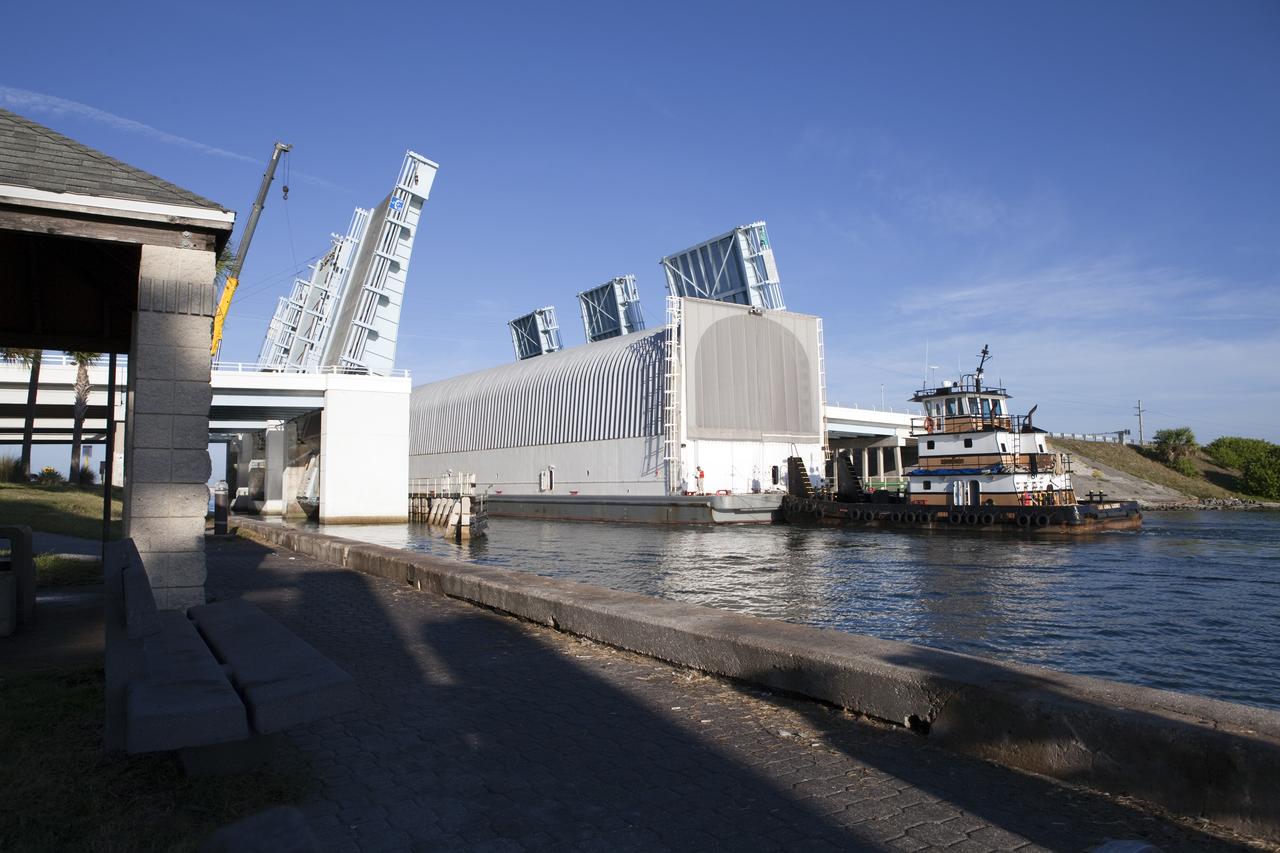
CAPE CANAVERAL, Fla. -- A tug boat pulls the Space Shuttle Program's last external fuel tank, ET-122, toward the Turn Basin at NASA's Kennedy Space Center in Florida. The tank traveled 900 miles by sea from NASA's Michoud Assembly Facility in New Orleans aboard the Pegasus Barge. Next, the tank will be offloaded and moved to Kennedy's Vehicle Assembly Building where it eventually will be attached to space shuttle Endeavour for the STS-134 mission to the International Space Station. STS-134, targeted to launch in Feb., 2011, currently is scheduled to be the last mission in the Space Shuttle Program. The tank, which is the largest element of the space shuttle stack, was damaged during Hurricane Katrina in August 2005 and restored to flight configuration by Lockheed Martin Space Systems Company employees. Photo credit: NASA/Frankie Martin
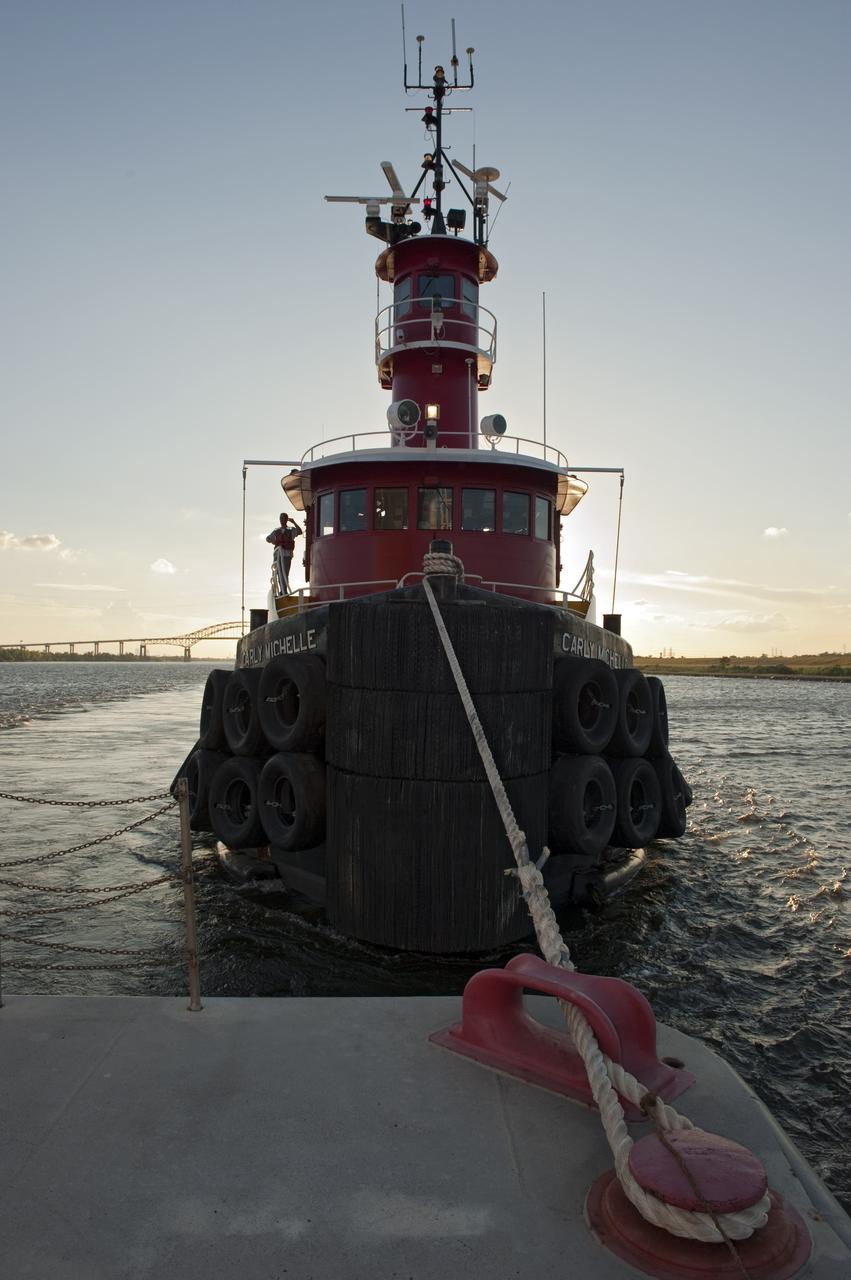
NEW ORLEANS -- A tug boat pulls the Pegasus Barge carrying the Space Shuttle Program's last external fuel tank, ET-122, from NASA's Michoud Assembly Facility in New Orleans to NASA's Kennedy Space Center in Florida. The tank will travel 900 miles by sea before being offloaded and moved to Kennedy's Vehicle Assembly Building. There it will be integrated to space shuttle Endeavour for the STS-134 mission to the International Space Station. The tank, which is the largest element of the space shuttle stack, was damaged during Hurricane Katrina in August 2005 and restored to flight configuration by Lockheed Martin Space Systems Company employees. STS-134, targeted to launch Feb. 2011, currently is scheduled to be the last mission in the Space Shuttle Program. Photo credit: NASA/Kim Shiflett
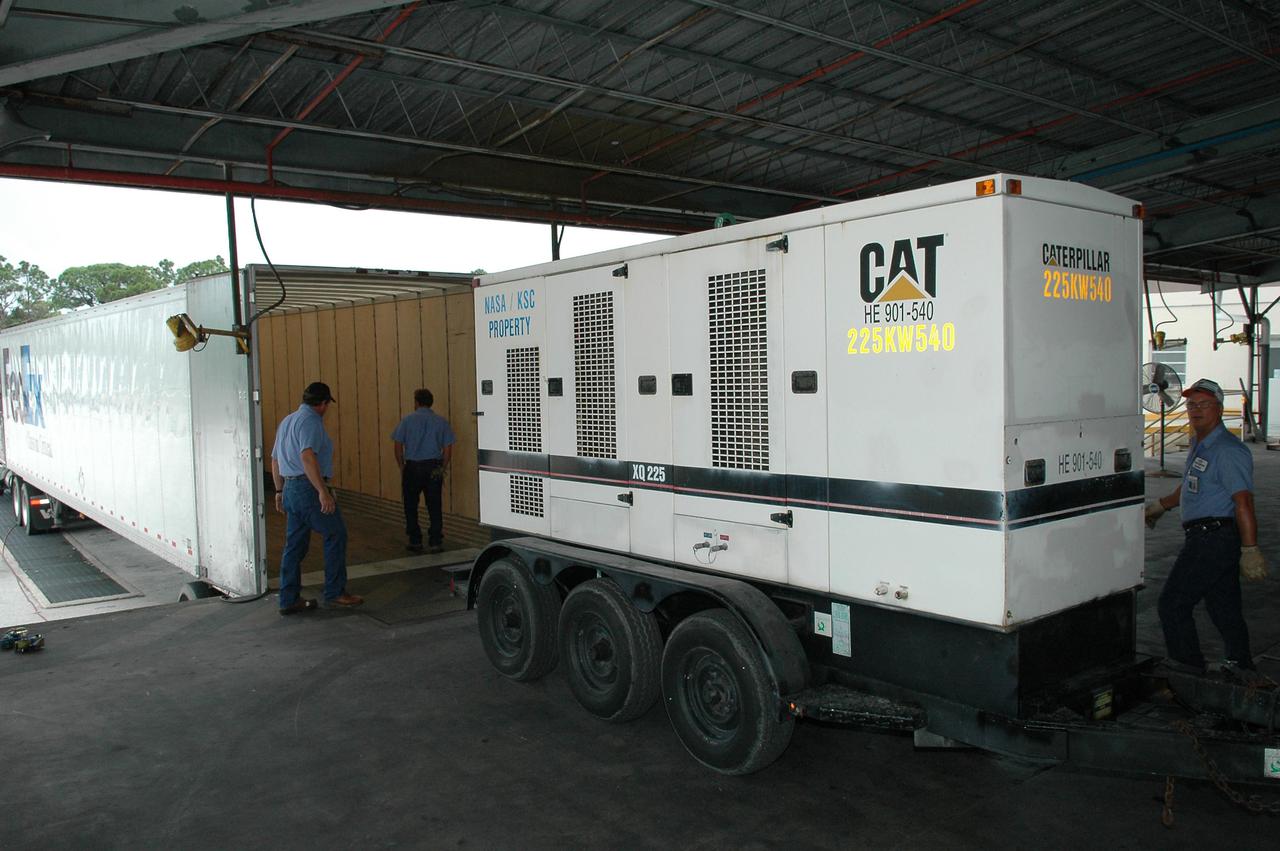
KENNEDY SPACE CENTER, FLA. - A generator, one of three, is ready to be loaded onto a Federal Express truck for a trip to Stennis Space Center in Mississippi. Stennis suffered damage and power outages from Hurricane Katrina. KSC is sending a helicopter with medical supplies and an Emergency Medical Technician to Stennis, plus a 1-megawatt generator, 125- and 225-kilowatt generators, and 1,000 gallons of diesel fuel. Michoud Assembly Facility near New Orleans was also left without power . A NASA plane is carrying medical supplies, food and chain saws, as well as a physician and two high voltage technicians to Michoud to ensure the facility can safely receive power when the main electricity grid comes online. In addition, a 14-person security team is also going to Michoud to relieve the security professionals at that location.
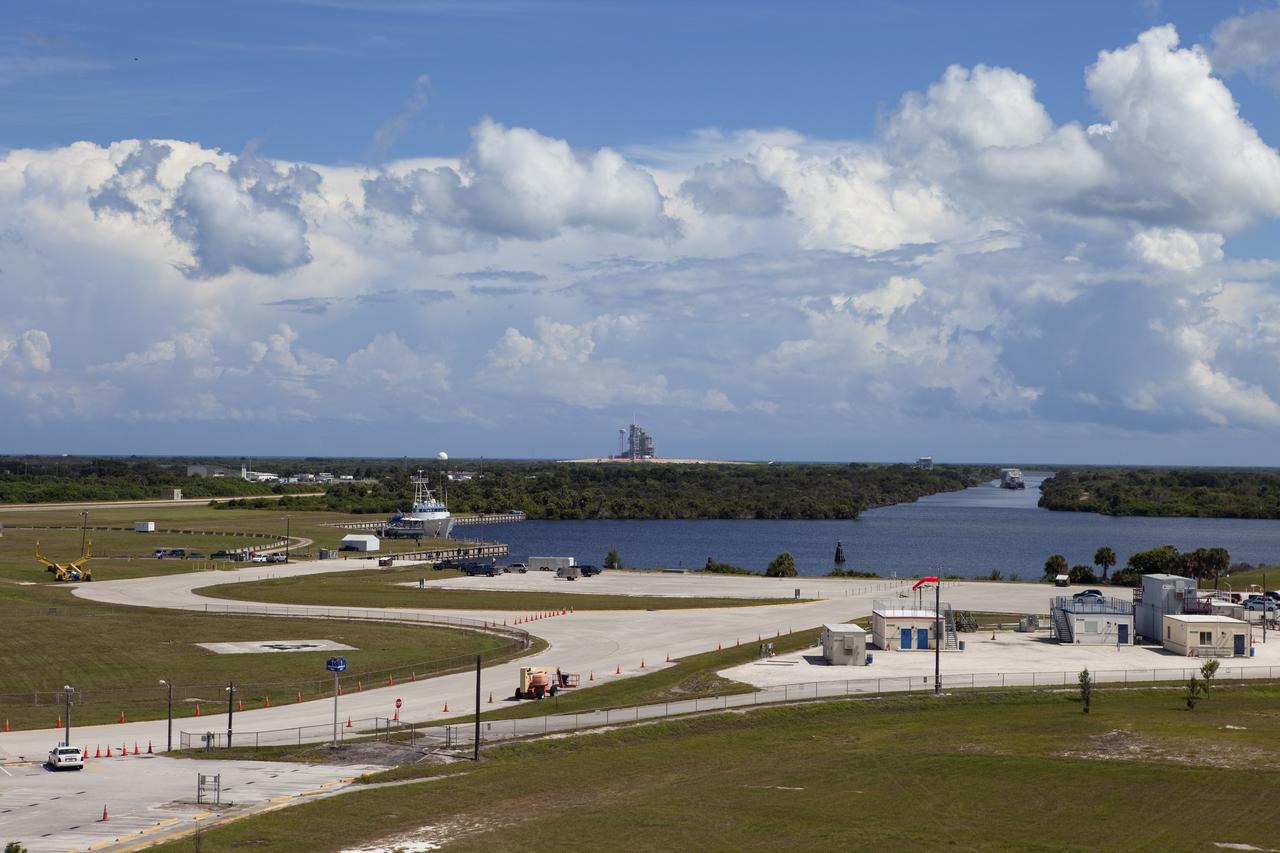
CAPE CANAVERAL, Fla. -- A tug boat pulls the Space Shuttle Program's last external fuel tank, ET-122, to the Turn Basin at NASA's Kennedy Space Center in Florida. The tank traveled 900 miles by sea from NASA's Michoud Assembly Facility in New Orleans aboard the Pegasus Barge. Next, the tank will be offloaded and moved to Kennedy's Vehicle Assembly Building where it eventually will be attached to space shuttle Endeavour for the STS-134 mission to the International Space Station. STS-134, targeted to launch in Feb. 2011, currently is scheduled to be the last mission in the Space Shuttle Program. The tank, which is the largest element of the space shuttle stack, was damaged during Hurricane Katrina in August 2005 and restored to flight configuration by Lockheed Martin Space Systems Company employees. Photo credit: NASA/Frankie Martin