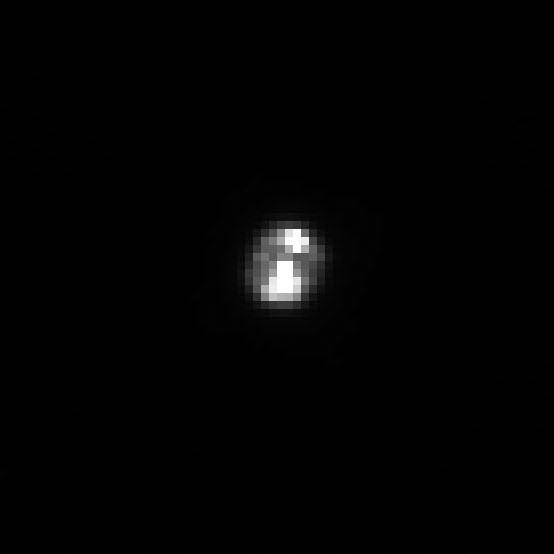
Close-Up of Huygens Probe
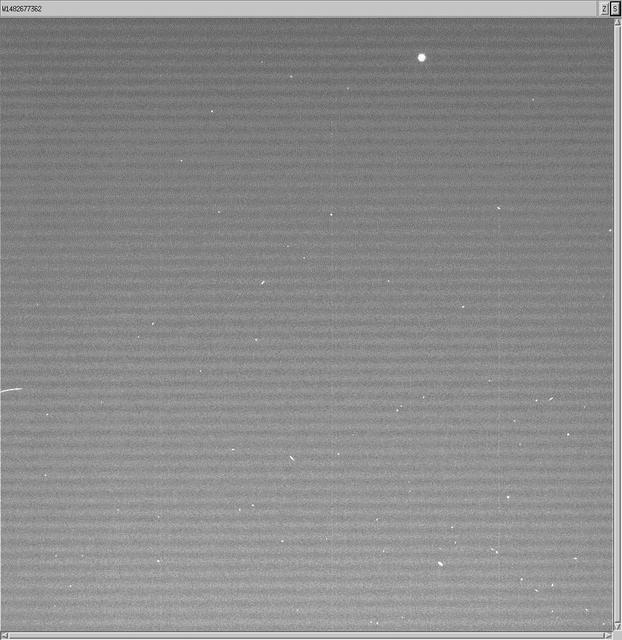
Cassini Snaps Image of ESA Huygens Probe

Huygens Probe Shines for Cassini Cameras #1
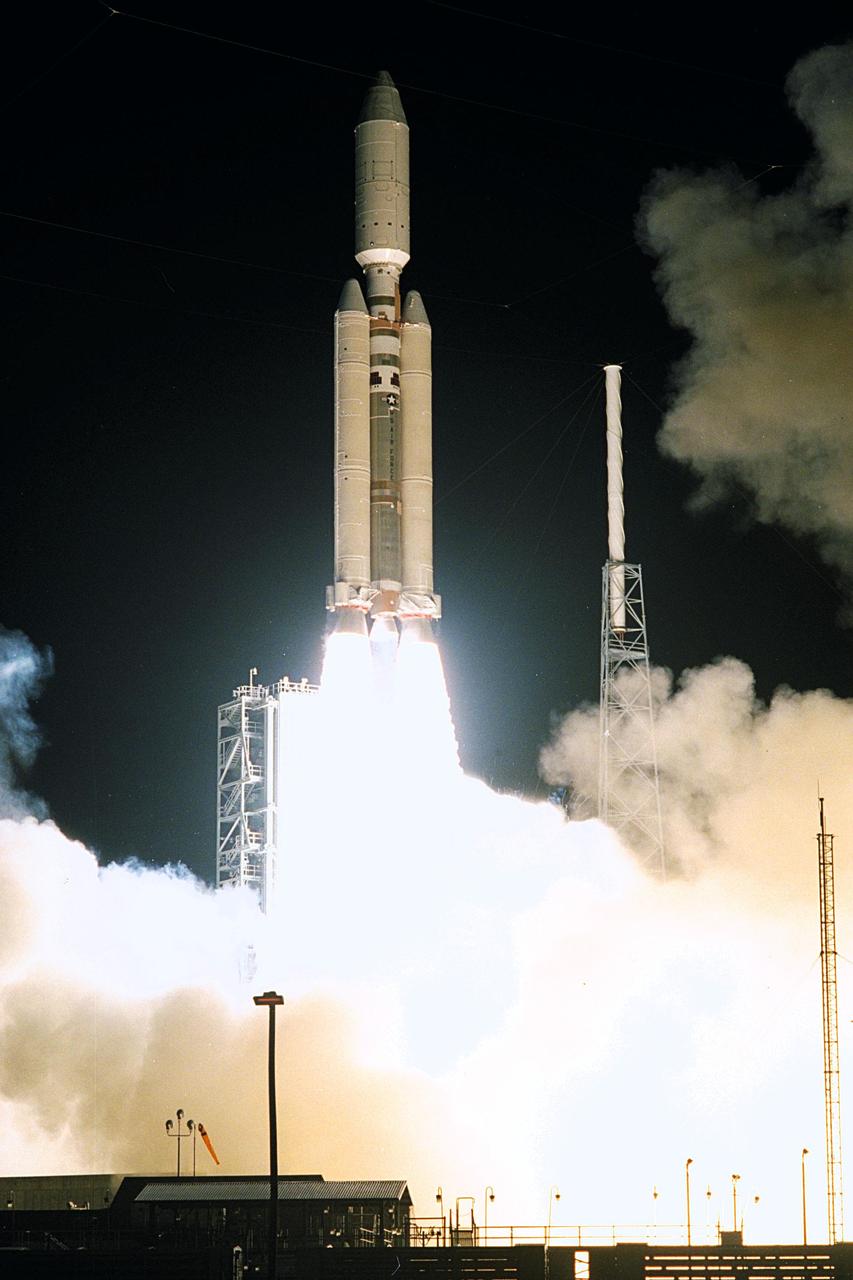
A seven-year journey to the ringed planet Saturn begins with the liftoff of a Titan IVB/Centaur carrying the Cassini orbiter and its attached Huygens probe.
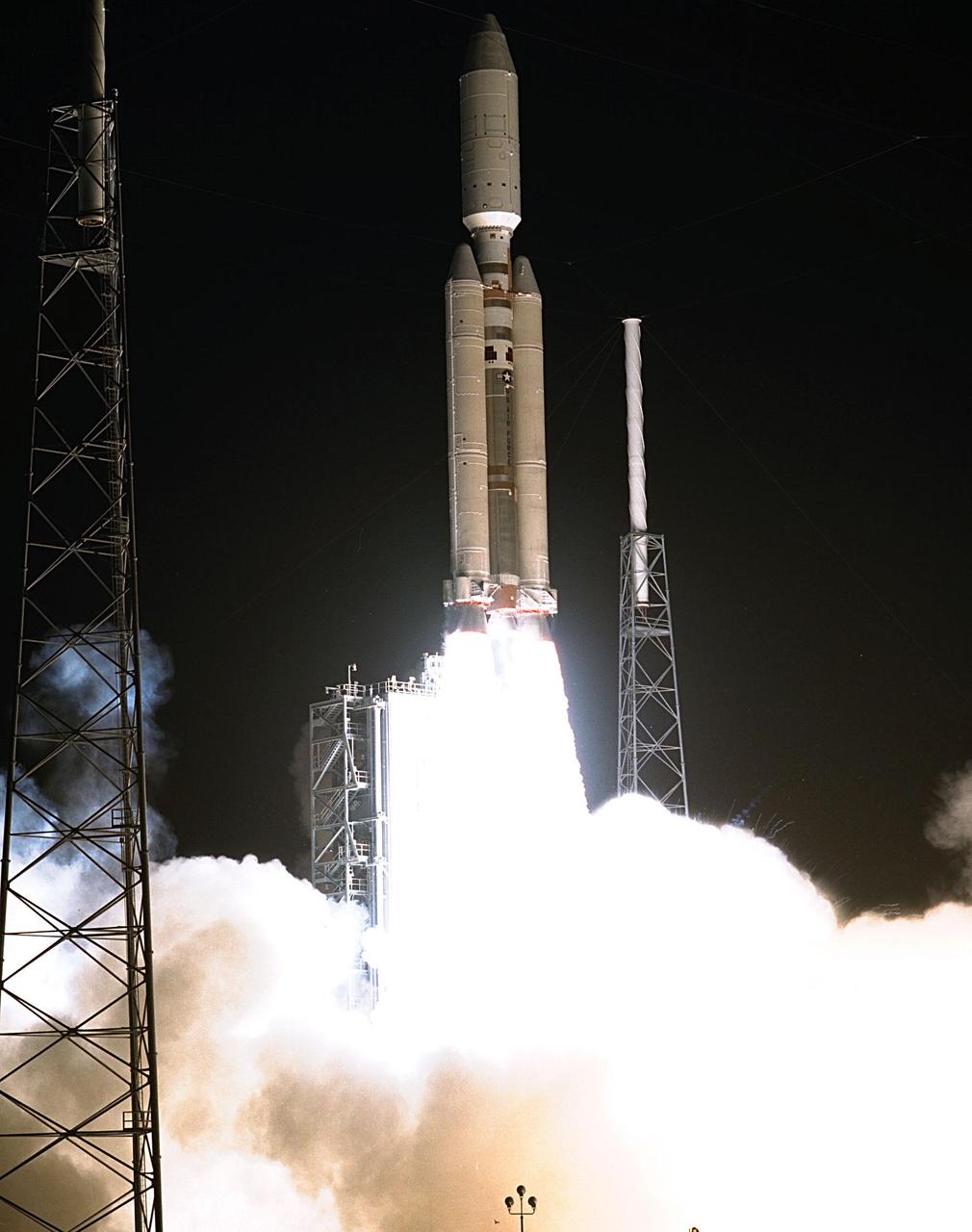
A seven-year journey to the ringed planet Saturn begins with the liftoff of a Titan IVB/Centaur carrying NASA Cassini orbiter and its attached Huygens probe.
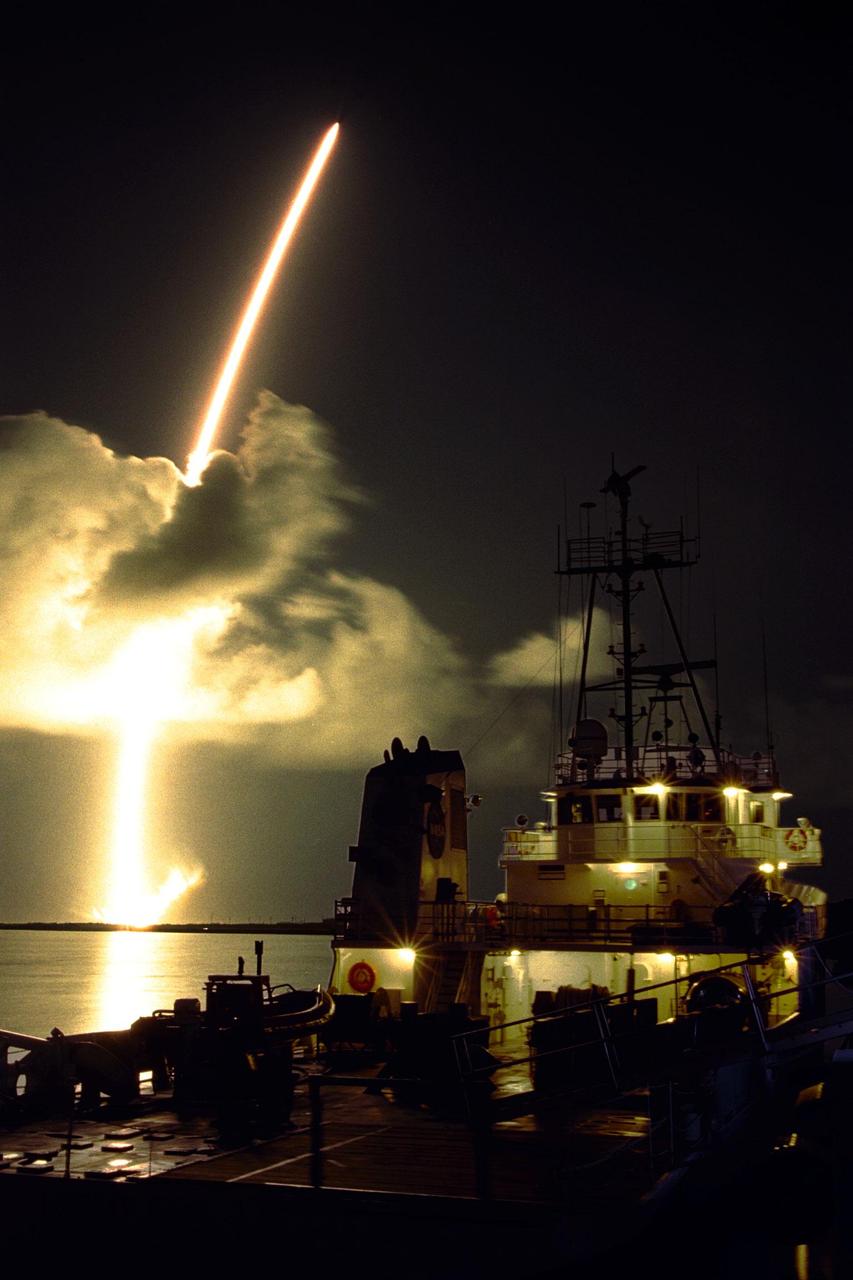
A seven-year journey to the ringed planet Saturn began on Oct. 15, 1997 with the liftoff of a Titan IVB/Centaur carrying NASA Cassini orbiter and its attached Huygens probe.
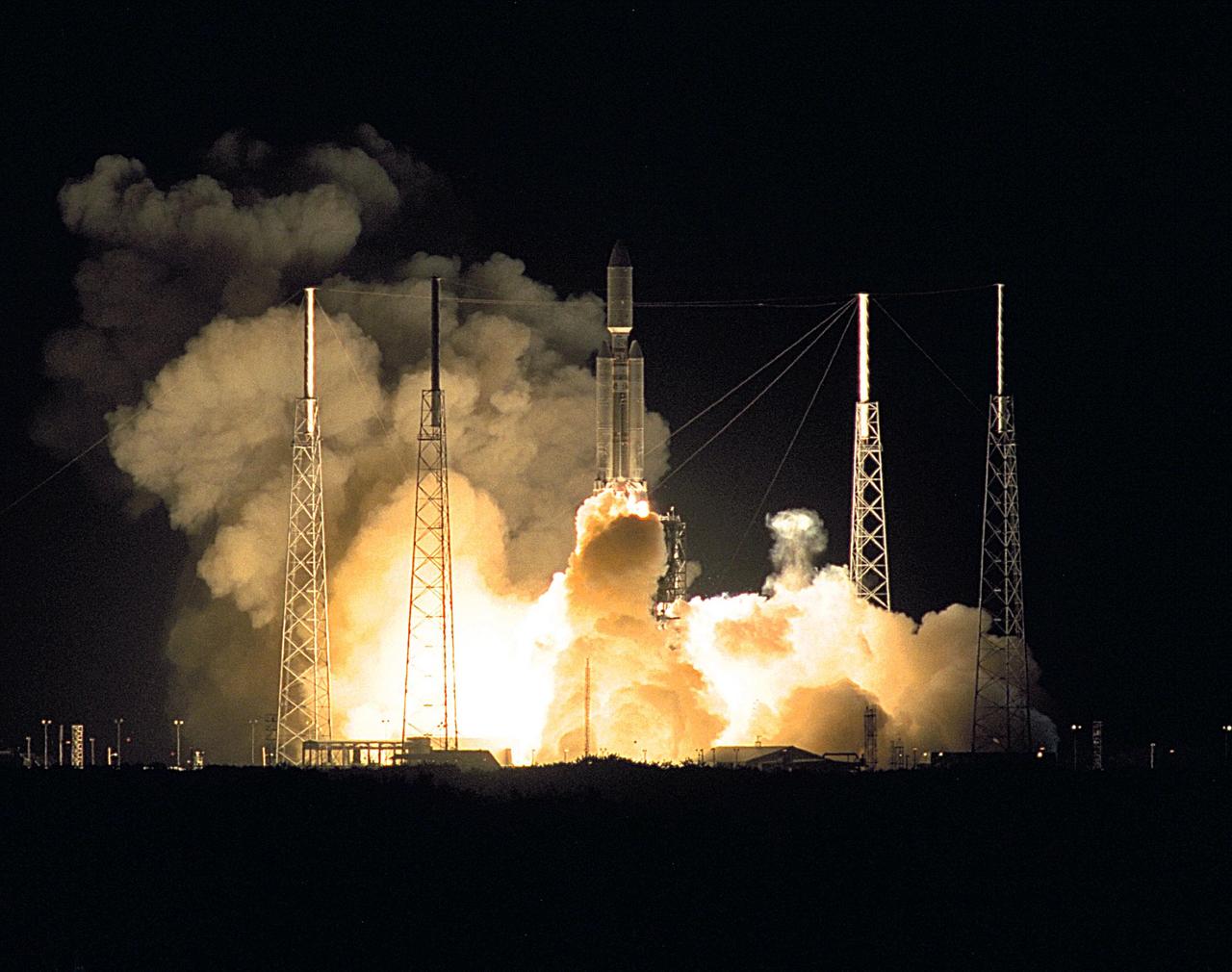
A seven-year journey to the ringed planet Saturn began on Oct. 15, 1997 with the liftoff of a Titan IVB/Centaur carrying NASA Cassini orbiter and its attached Huygens probe
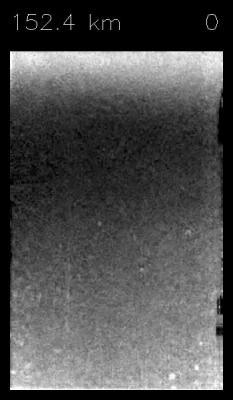
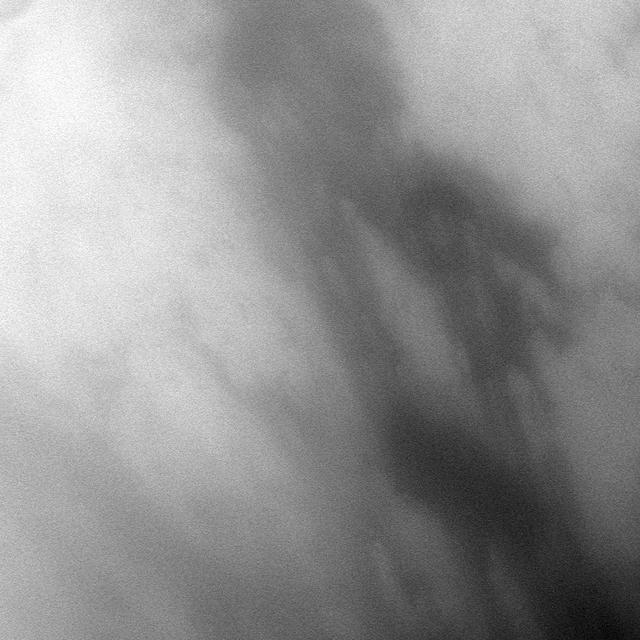
This frame from an animation is made up from a sequence of images taken by the Descent Imager/Spectral Radiometer (DISR) instrument on board ESA's Huygens probe, during its successful descent to Titan on Jan. 14, 2005. The animation is available at http://photojournal.jpl.nasa.gov/catalog/PIA07234 It shows what a passenger riding on Huygens would have seen. The sequence starts from an altitude of 152 kilometers (about 95 miles) and initially only shows a hazy view looking into thick cloud. As the probe descends, ground features can be discerned and Huygens emerges from the clouds at around 30 kilometers (about 19 miles) altitude. The ground features seem to rotate as Huygens spins slowly underits parachute. The DISR consists of a downward-looking High Resolution Imager (HRI), a Medium Resolution Imager (MRI), which looks out at an angle, and a Side Looking Imager (SLI). For this animation, most images used were captured by the HRI and MRI. Once on the ground, the final landing scene was captured by the SLI. The Descent Imager/Spectral Radiometer is one of two NASA instruments on the probe.
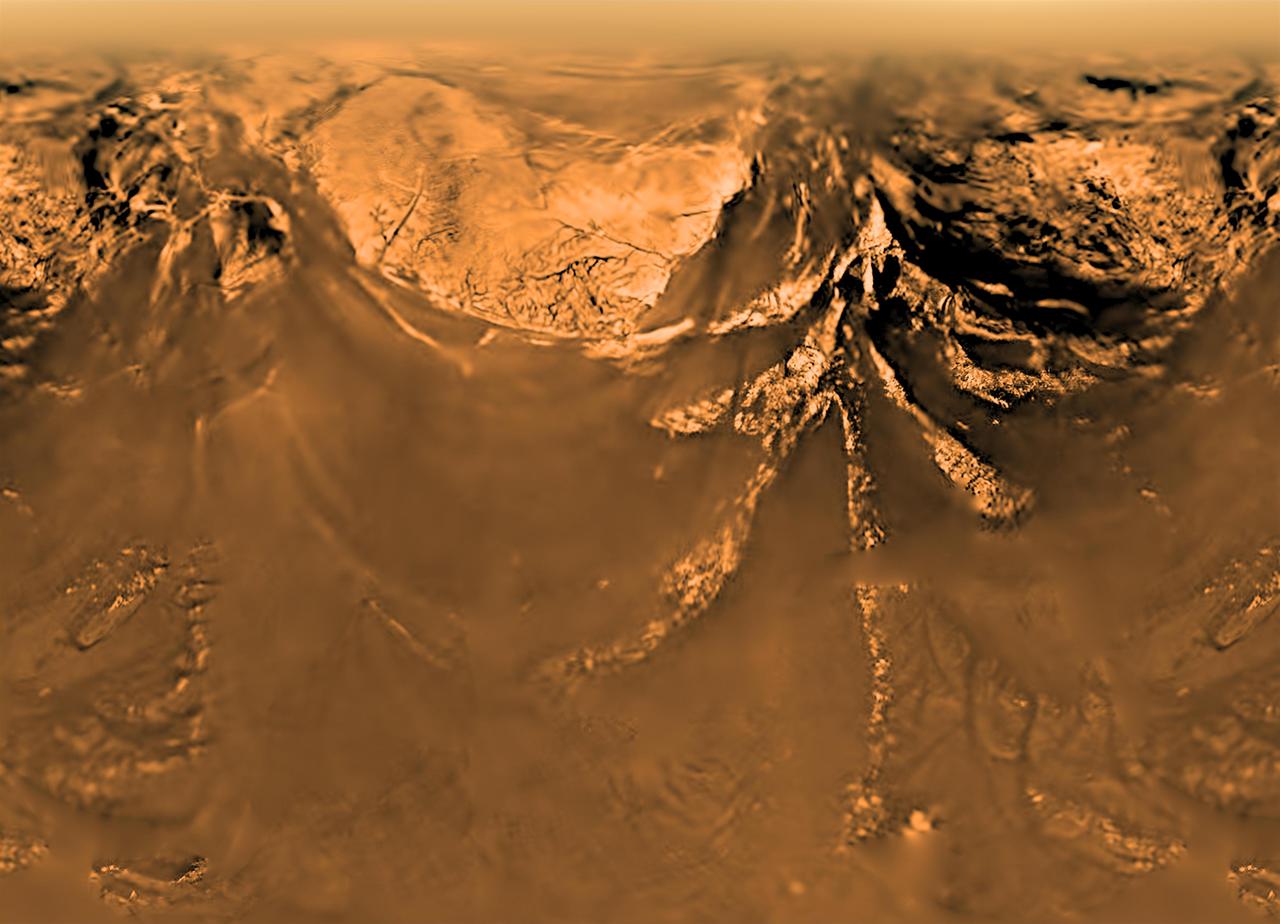
This poster shows a flattened (Mercator) projection of the Huygens probe's view from 10 kilometers altitude (6 miles). The images that make up this view were taken on Jan. 14, 2005, with the descent imager/spectral radiometer onboard the European Space Agency's Huygens probe. The Huygens probe was delivered to Saturn's moon Titan by the Cassini spacecraft, which is managed by NASA's Jet Propulsion Laboratory, Pasadena, Calif. NASA supplied two instruments on the probe, the descent imager/spectral radiometer and the gas chromatograph mass spectrometer. http://photojournal.jpl.nasa.gov/catalog/PIA08113
NASA Cassini spacecraft peers through Titan atmosphere at the region called Adiri, west of the landing site of the Huygens probe on the anti-Saturn side of the moon.
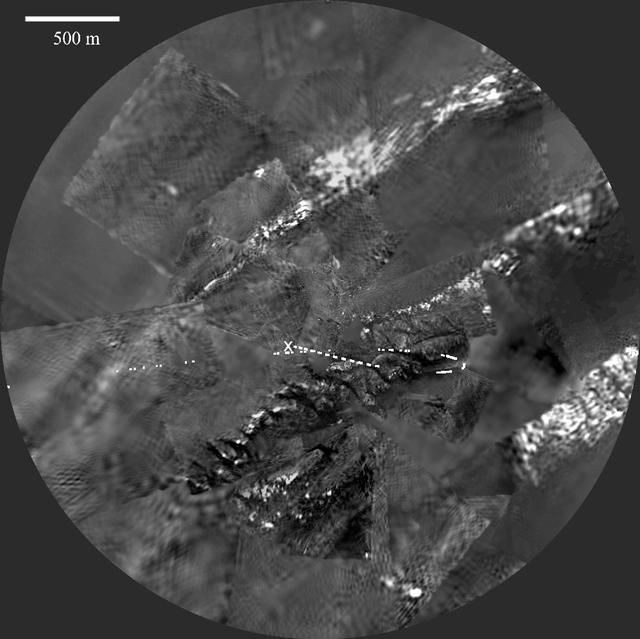
Images recorded by the European Space Agency's Huygens probe descent imager/spectral radiometer between 4 and 0.3 miles (7 and 0.5 kilometers) were assembled to produce this panoramic mosaic. The probe ground track is indicated as points in white. North is up. The ridge near the centre is cut by a dozen darker lanes or channels. The landing site is marked with an "X" near the continuation of one of the channels. The Huygens probe was delivered to Saturn's moon Titan by the Cassini spacecraft, which is managed by NASA's Jet Propulsion Laboratory, Pasadena, Calif. NASA supplied two instruments on the probe, the descent imager/spectral radiometer and the gas chromatograph mass spectrometer. http://photojournal.jpl.nasa.gov/catalog/PIA06439
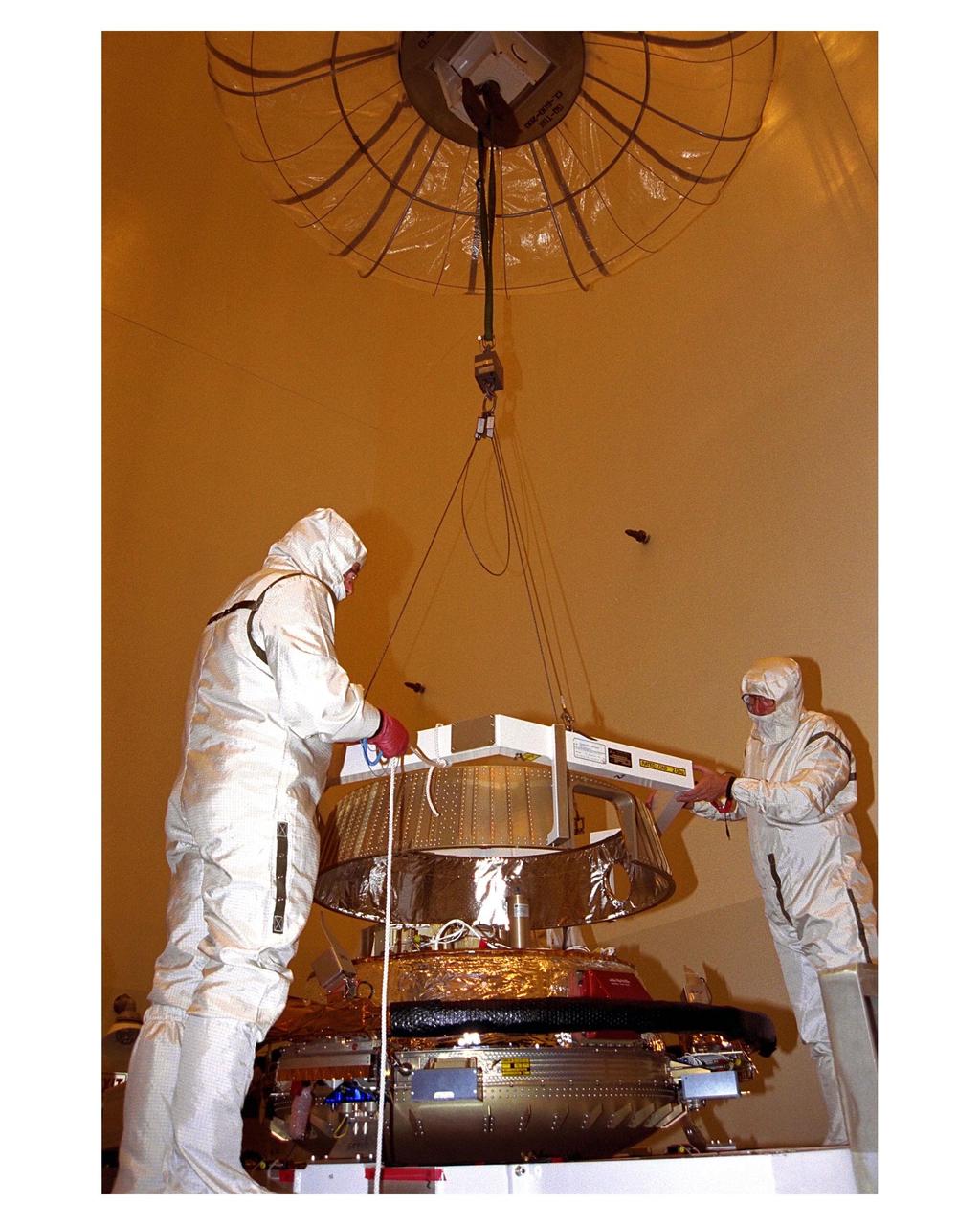
The aft shield is installed on the Huygens probe in the Payload Hazardous Servicing Facility (PHSF). The European Space Agency's Huygens probe will be attached to the Cassini spacecraft which will explore the Titan moon of the Saturnian system
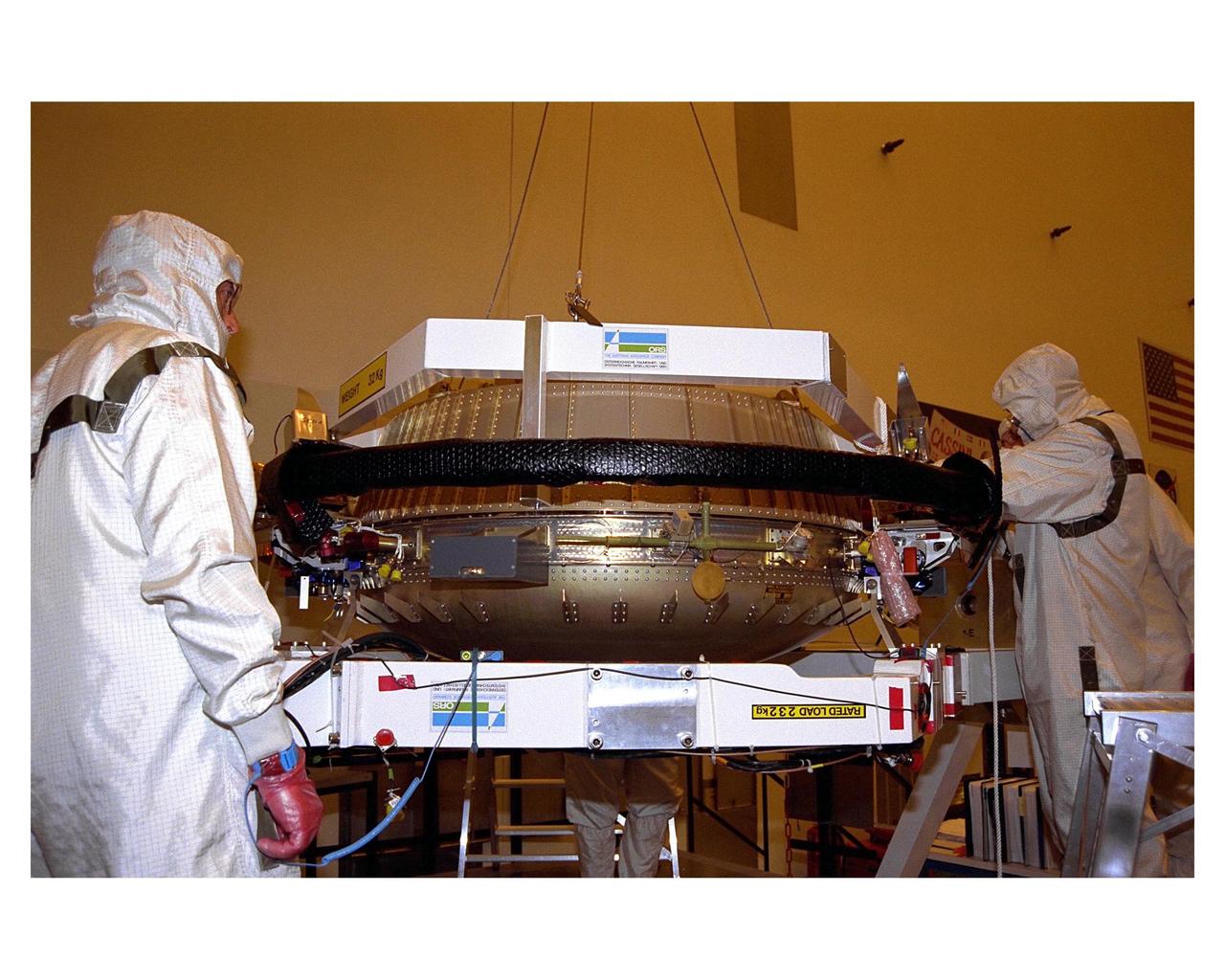
The aft shield is installed on the Huygens probe in the Payload Hazardous Servicing Facility (PHSF). The European Space Agency's Huygens probe will be attached to the Cassini spacecraft which will explore the Titan moon of the Saturnian system
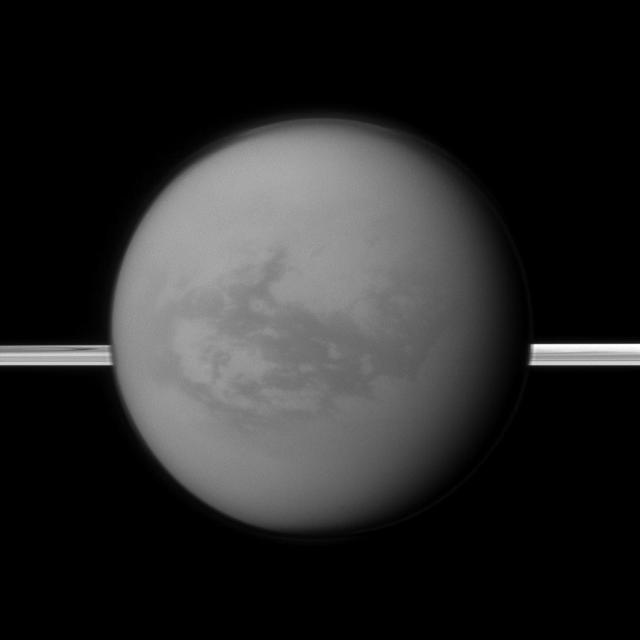
Saturn rings lie in the distance as NASA Cassini spacecraft looks toward Titan and its dark region called Shangri-La, east of the landing site of the Huygens Probe.
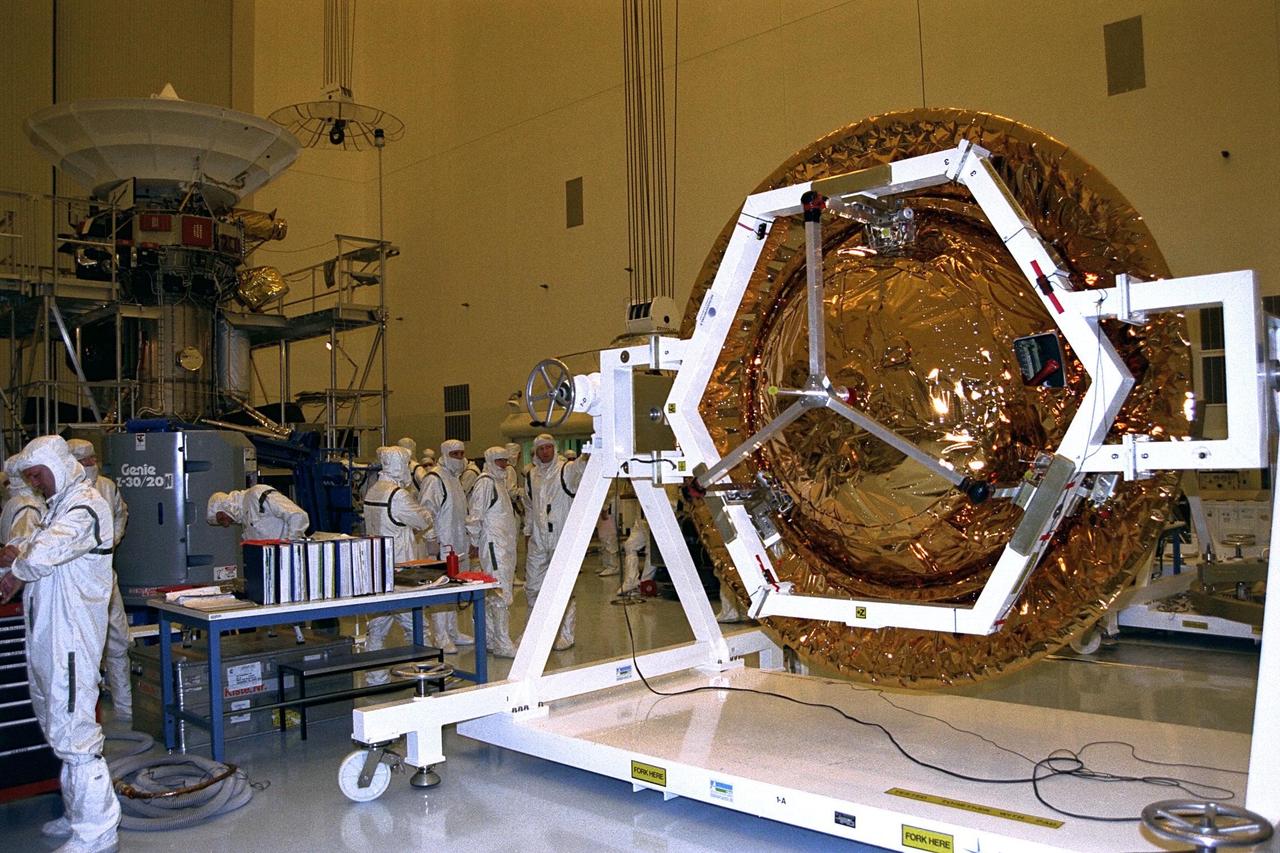
The Huygens probe is installed into the Cassini orbiter in the Payload Hazardous Servicing Facility (PHSF)
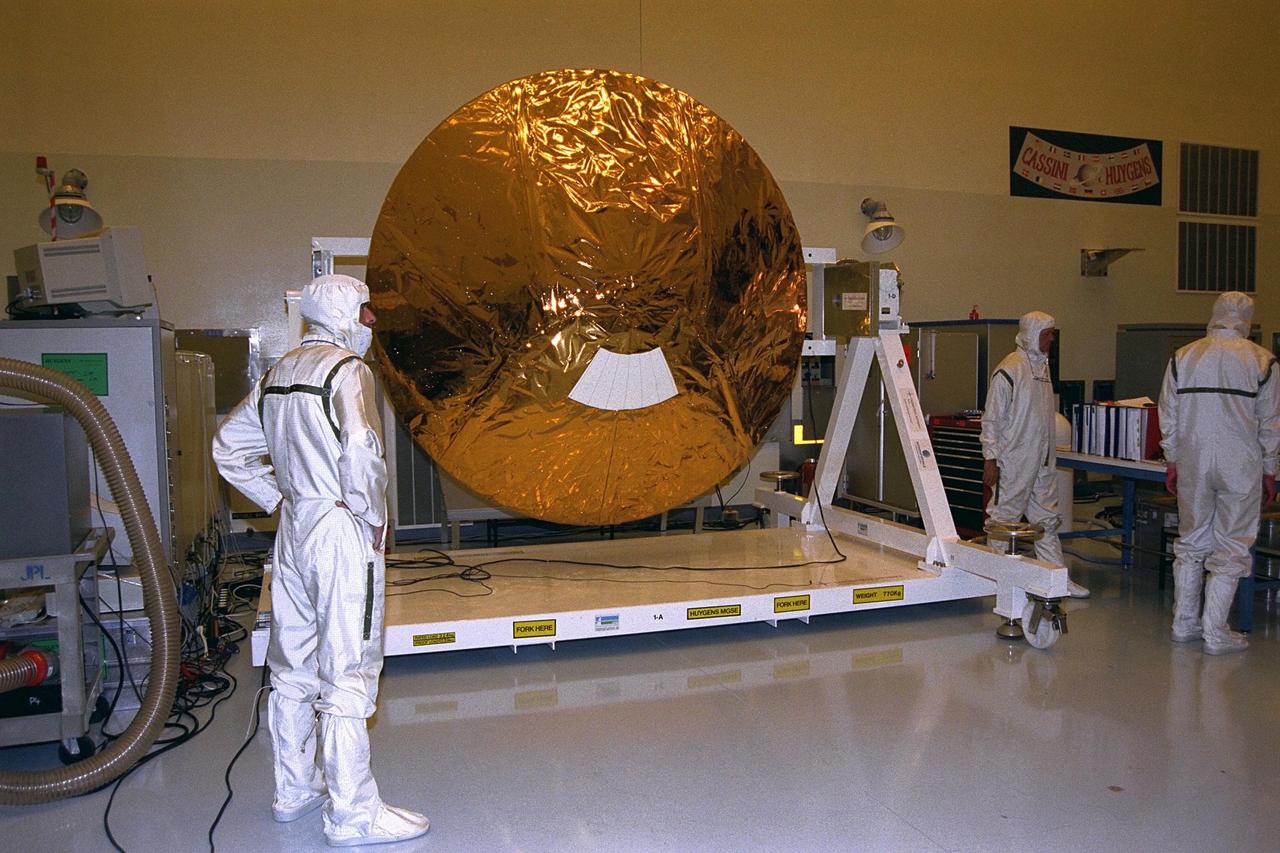
The Huygens probe is installed into the Cassini orbiter in the Payload Hazardous Servicing Facility (PHSF)
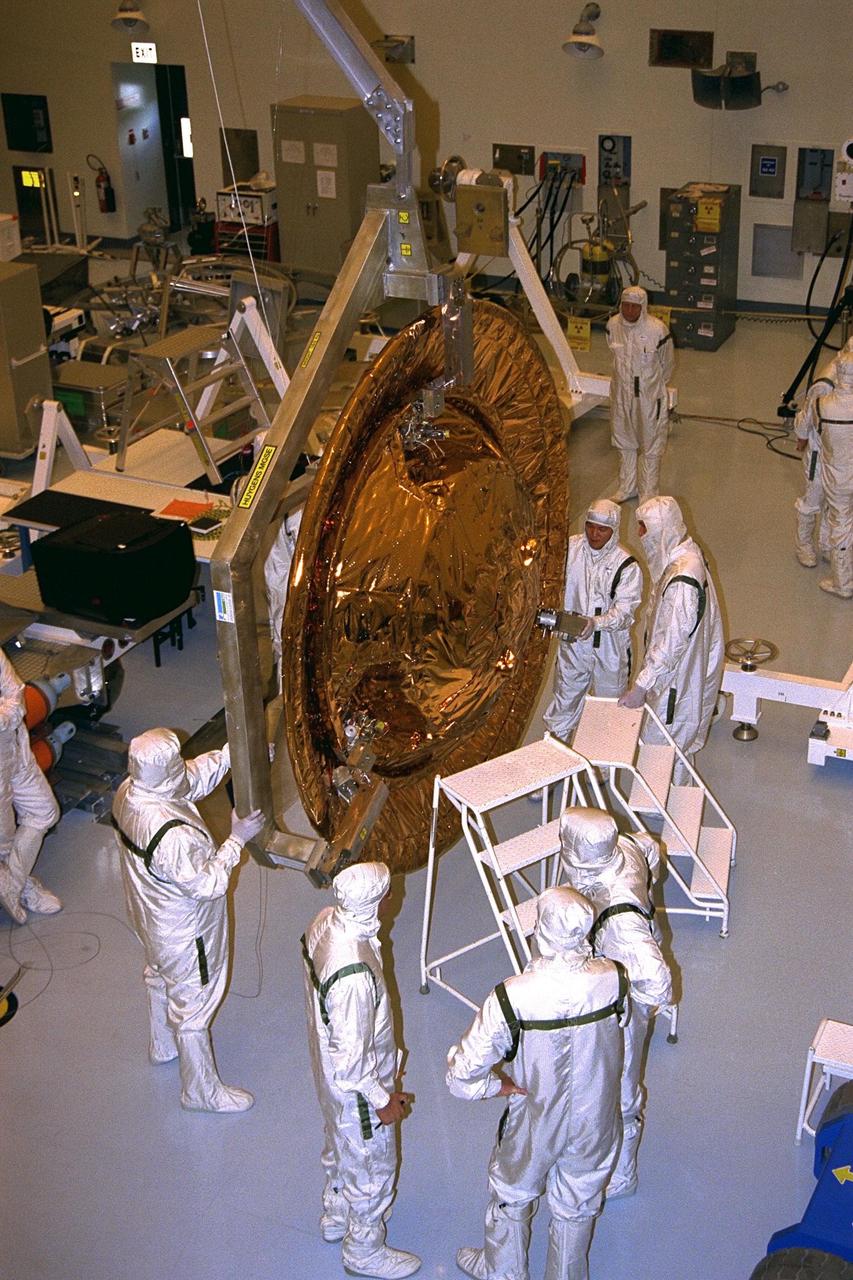
The Huygens probe is installed into the Cassini orbiter in the Payload Hazardous Servicing Facility (PHSF)
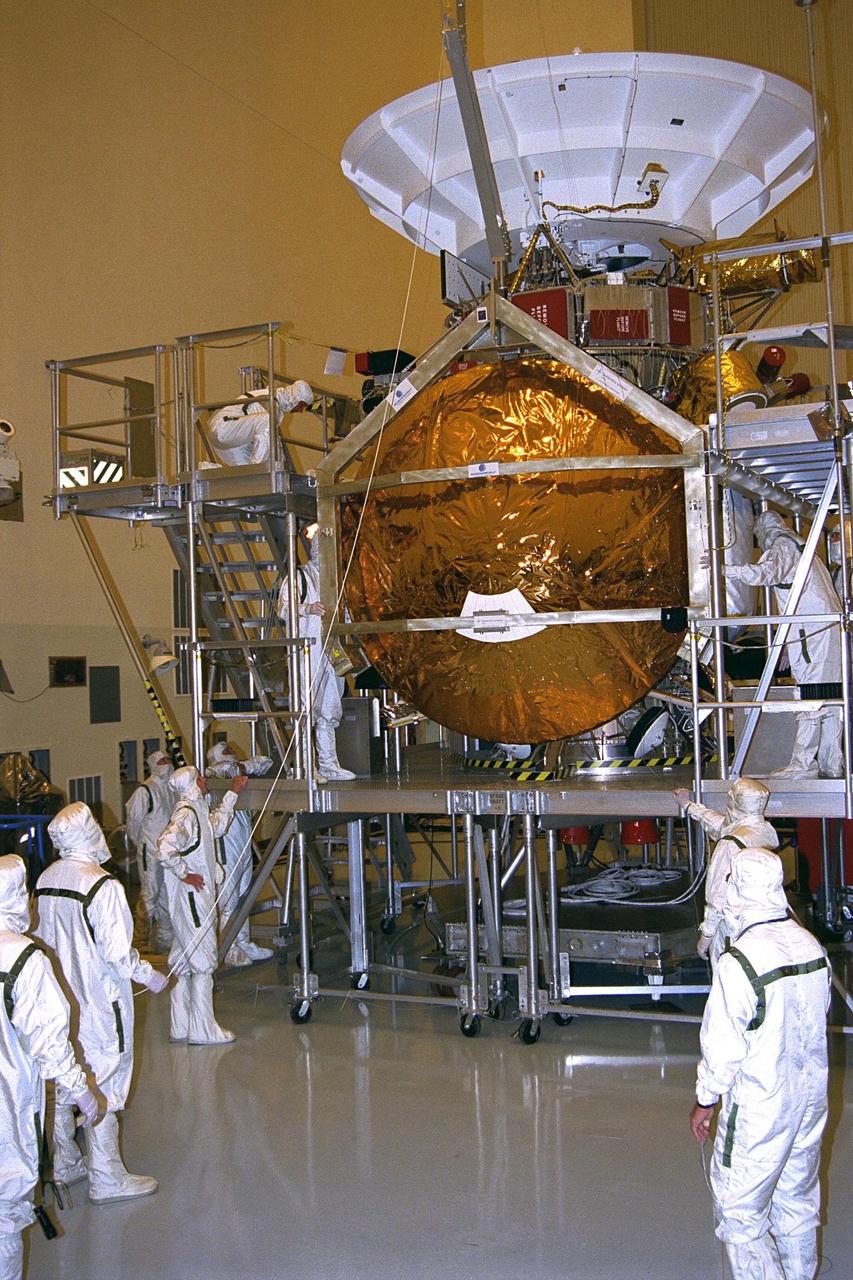
The Huygens probe is installed into the Cassini orbiter in the Payload Hazardous Servicing Facility (PHSF)
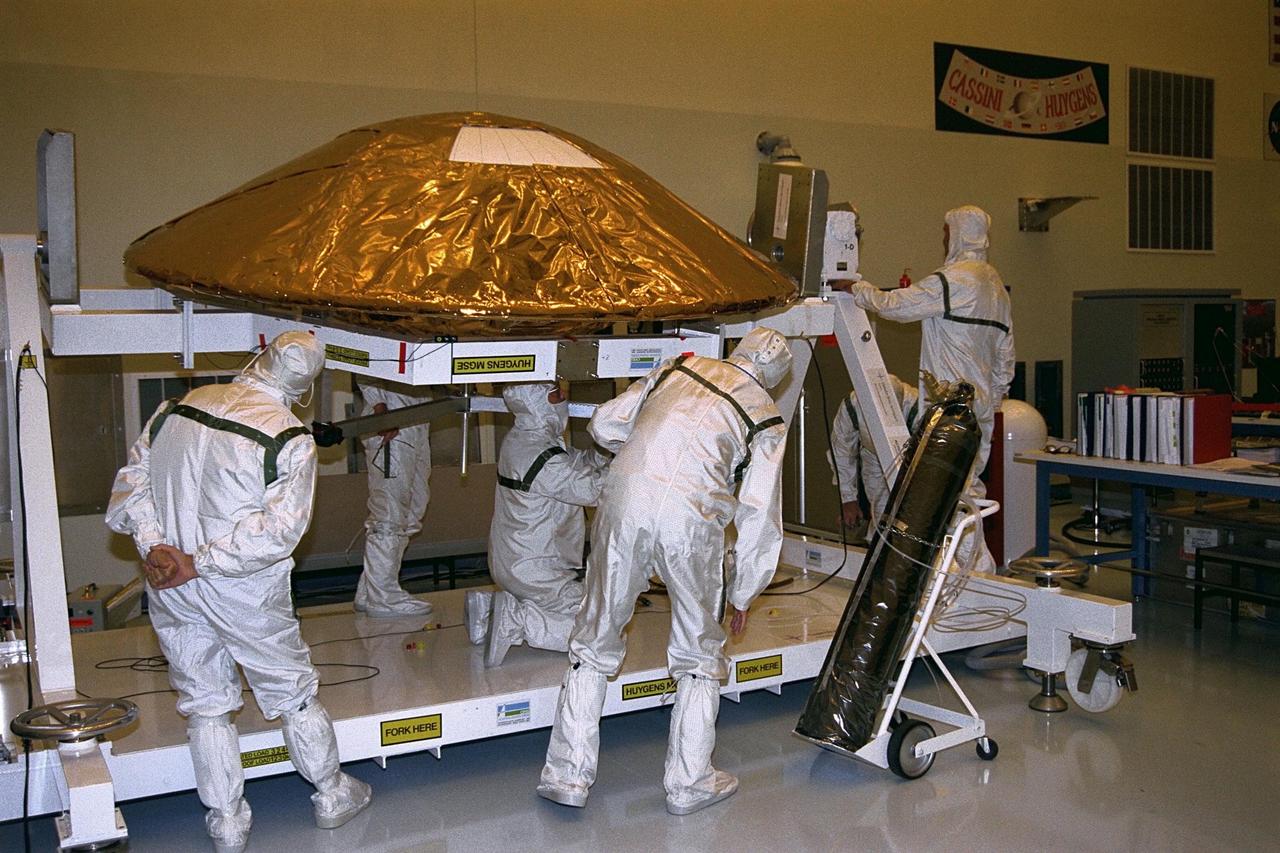
The Huygens probe is installed into the Cassini orbiter in the Payload Hazardous Servicing Facility (PHSF)

Workers in the Payload Hazardous Servicing Facility (PHSF) finish the removal of a protective cover from the Cassini spacecraft with its attached Huygens probe. Damage to thermal insulation was discovered inside Huygens from an abnormally high flow of conditioned air. Further internal inspection, insulation repair and a cleaning of the probe are now required. Mission managers are targeting a mid-October launch date after Cassini returns to the pad and is once again placed atop its Titan IVB expendable launch vehicle at Launch Pad 40 at Cape Canaveral Air Station. Cassini will explore the Saturnian system, including the planet’s rings, while the Huygens probe will explore the moon Titan
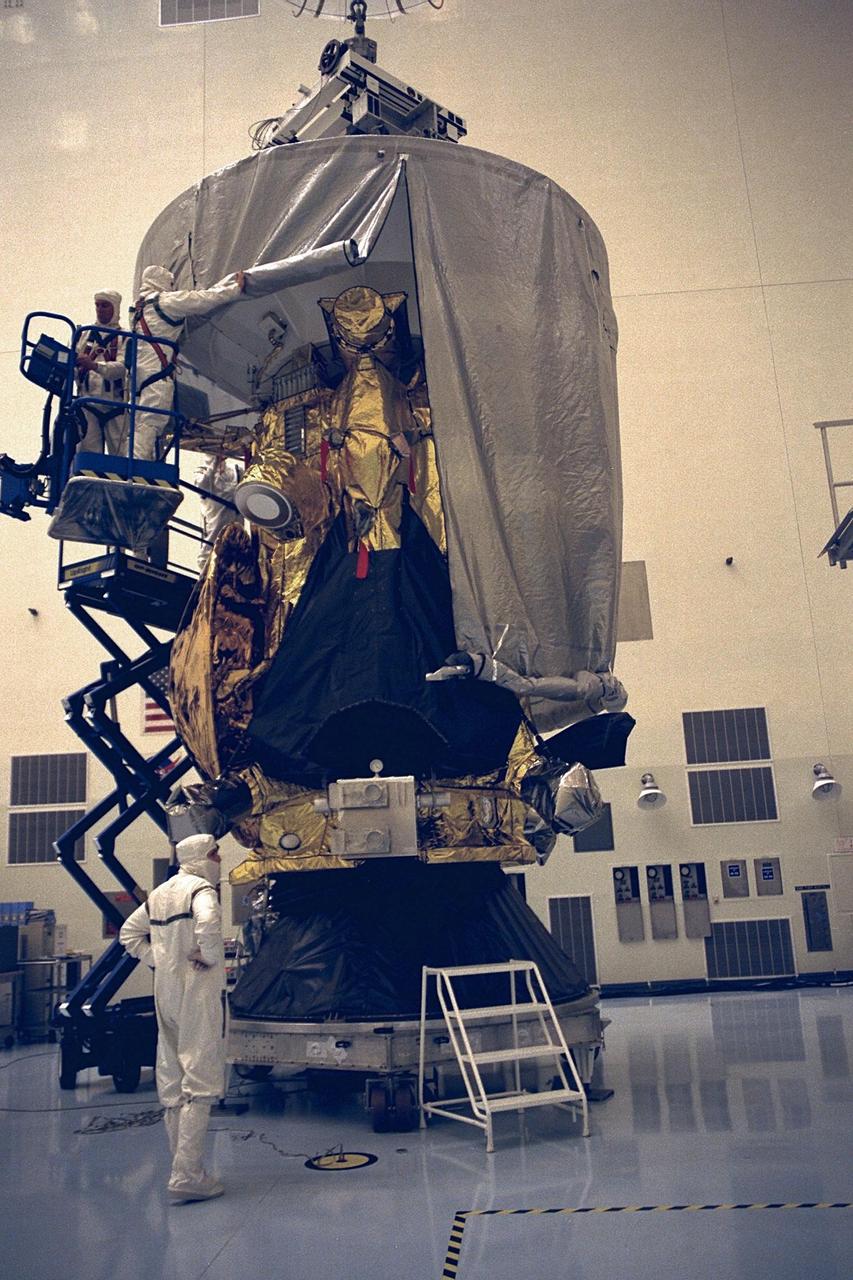
Workers in the Payload Hazardous Servicing Facility (PHSF) begin to remove a protective cover from the Cassini spacecraft with its attached Huygens probe. Damage to thermal insulation was discovered inside Huygens from an abnormally high flow of conditioned air. Further internal inspection, insulation repair and a cleaning of the probe are now required. Mission managers are targeting a mid-October launch date after Cassini returns to the pad and is once again placed atop its Titan IVB expendable launch vehicle at Launch Pad 40 at Cape Canaveral Air Station. Cassini will explore the Saturnian system, including the planet’s rings, while the Huygens probe will explore the moon Titan
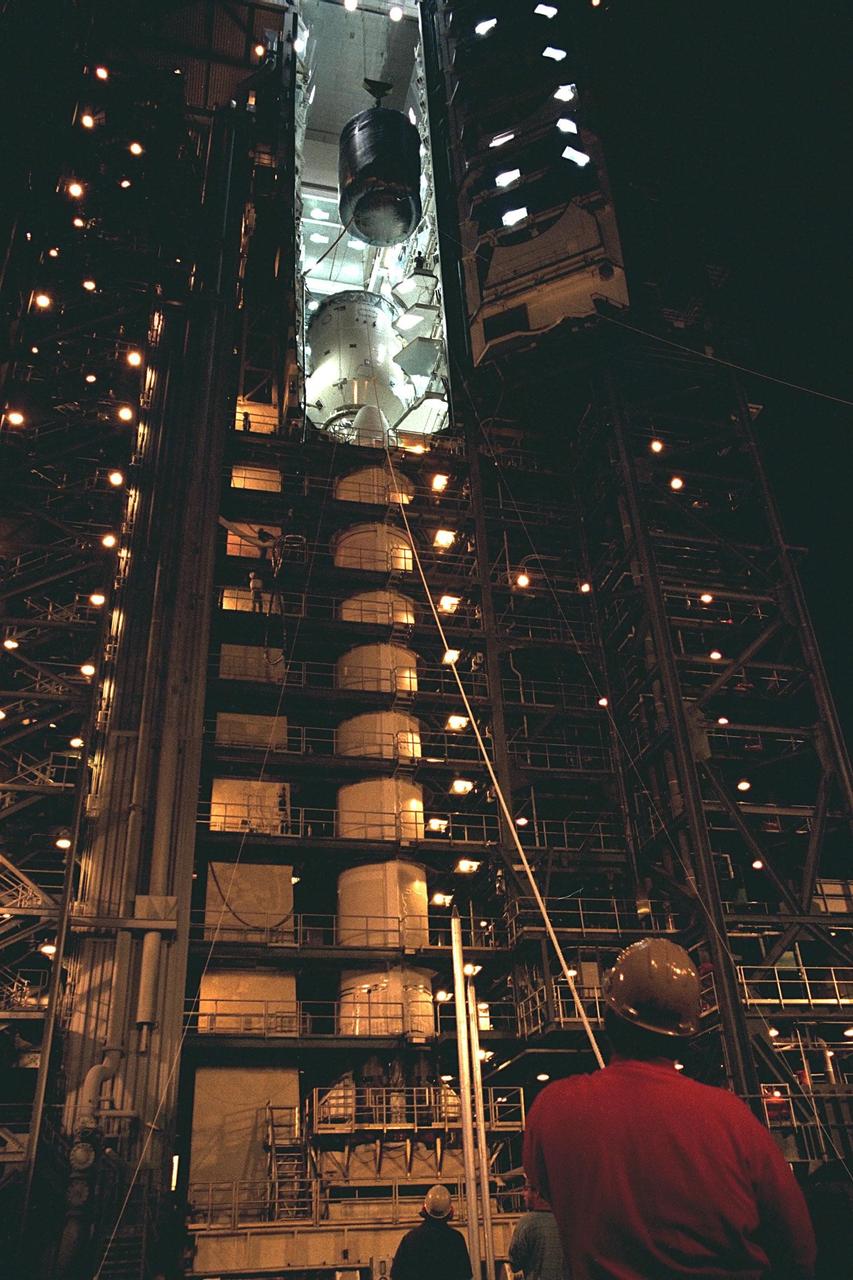
The Cassini spacecraft, with its attached Huygens probe, is lowered from Launch Pad 40 at Cape Canaveral Air Station for its return trip to the Payload Hazardous Servicing Facility (PHSF). Damage to thermal insulation was discovered inside Huygens from an abnormally high flow of conditioned air. Further internal inspection, insulation repair and a cleaning of the probe are now required. Mission managers are targeting a mid-October launch date after Cassini returns to the pad and is once again placed atop its Titan IVB expendable launch vehicle. Cassini will explore the Saturnian system, including the planet’s rings, while the Huygens probe will explore the moon Titan
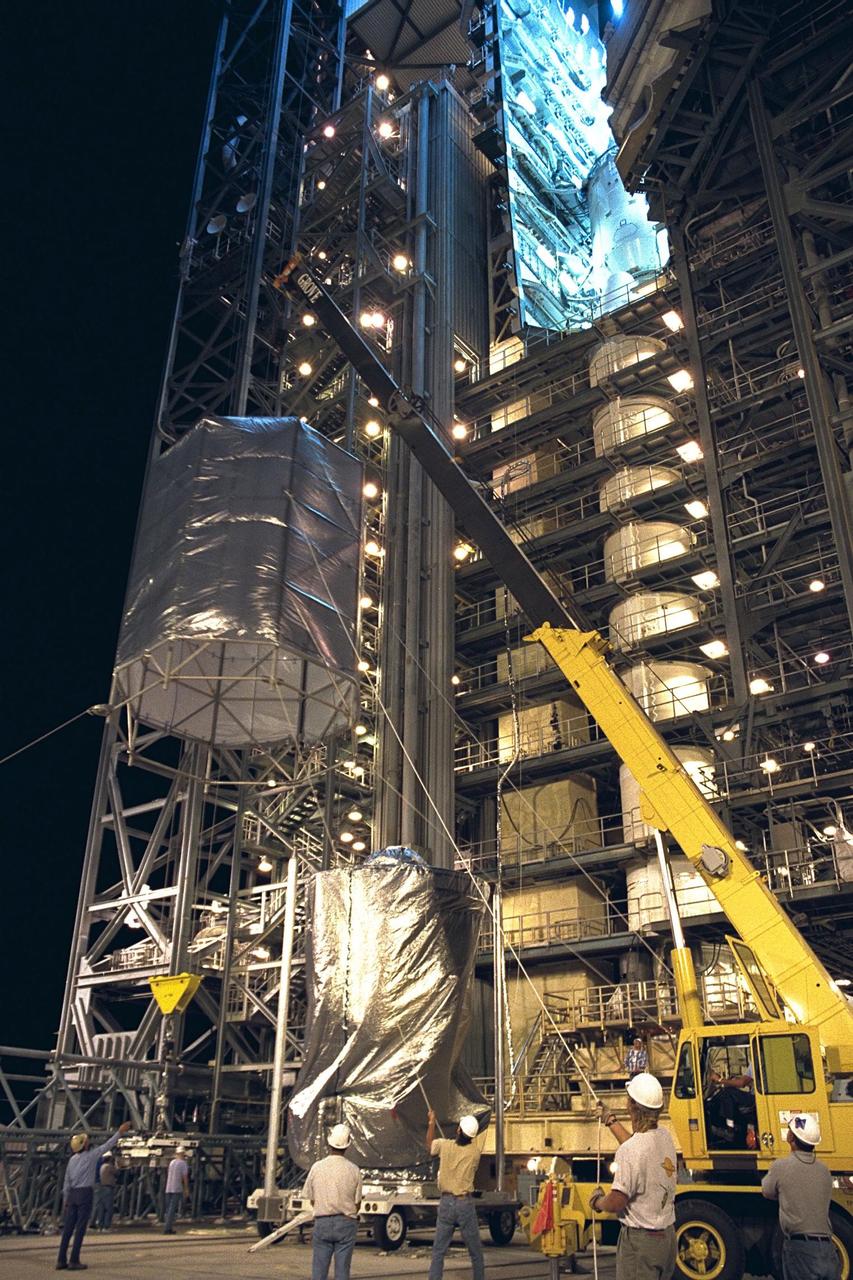
A crane lowers a protective transportation cover over the Cassini spacecraft, with its attached Huygens probe, at Launch Pad 40 at Cape Canaveral Air Station for the spacecraft’s return trip to the Payload Hazardous Servicing Facility (PHSF). Damage to thermal insulation was discovered inside Huygens from an abnormally high flow of conditioned air. Further internal inspection, insulation repair and a cleaning of the probe are now required. Mission managers are targeting a mid-October launch date after Cassini returns to the pad and is once again placed atop its Titan IVB expendable launch vehicle. Cassini will explore the Saturnian system, including the planet’s rings, while the Huygens probe will explore the moon Titan
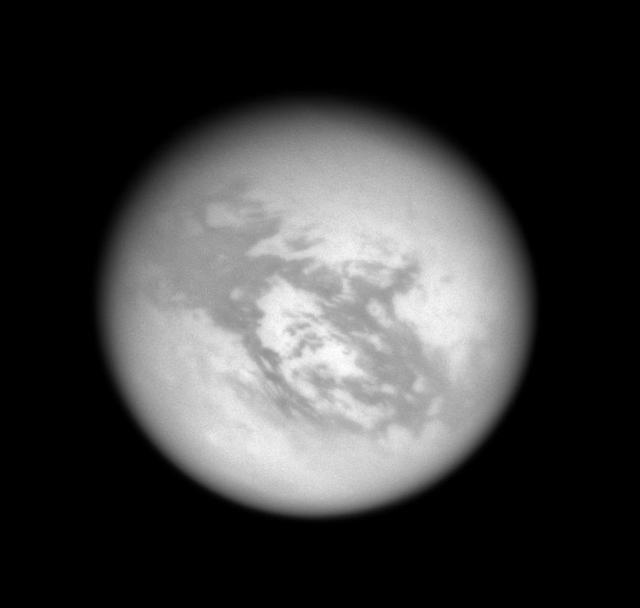
Within the windswept wastes of Titan equatorial dune desert lies the 1,700-km 1,050-mi wide bright region called Adiri, seen here at center. The intrepid Huygens probe landed off the northeastern edge of Adiri in January 2005
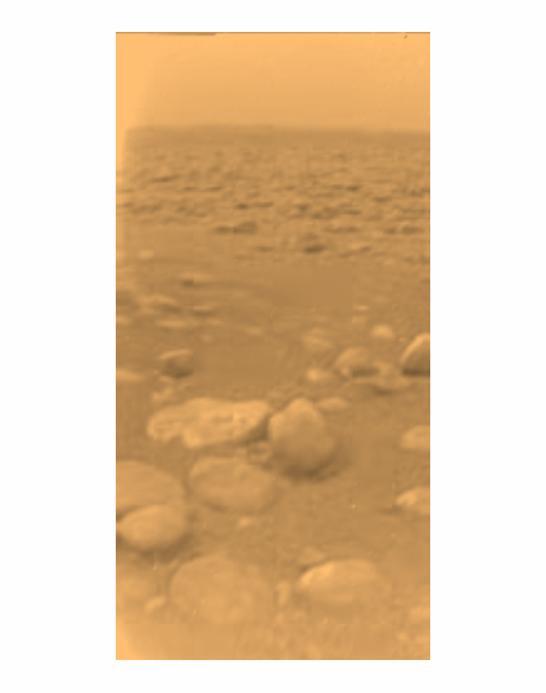
This image was returned on Jan 14, 2005, by the European Space Agency Huygens probe during its successful descent to land on Titan. This colored view, following processing to add reflection spectra data, gives a better indication of the actual color.
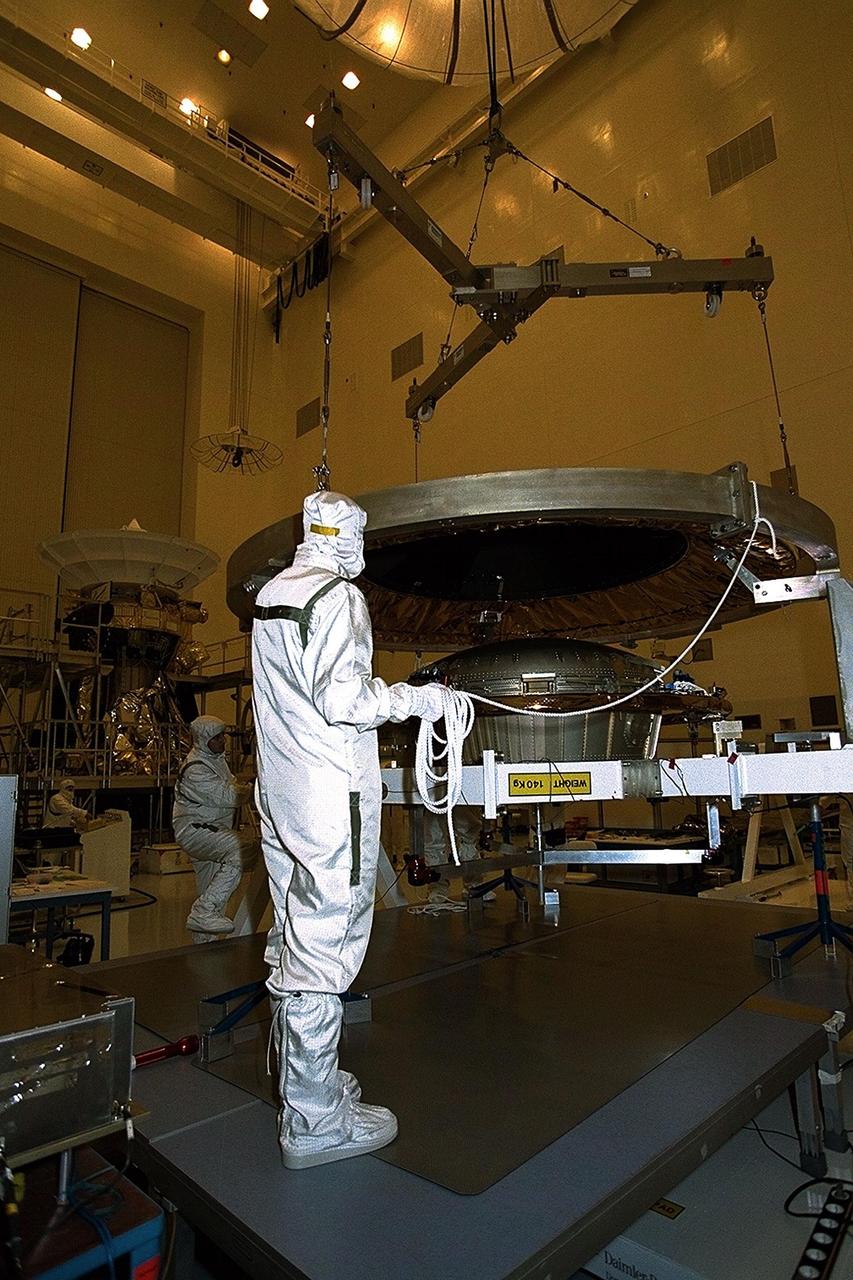
Dornier Satelliten Systeme (DSS) workers lift the heat shield of the Huygens probe in the Payload Hazardous Servicing Facility (PHSF) at KSC. The spacecraft was returned to the PHSF after damage to thermal insulation was discovered inside Huygens from an abnormally high flow of conditioned air. Internal inspection, insulation repair and a cleaning of the probe were required. Mission managers are targeting a mid-October launch date after the Cassini spacecraft, aboard which Huygens will be launched, returns to the pad and is once again placed atop its Titan IVB expendable launch vehicle at Launch Pad 40 at Cape Canaveral Air Station

Dornier Satelliten Systeme (DSS) workers lift the heat shield of the Huygens probe in the Payload Hazardous Servicing Facility (PHSF) at KSC. The spacecraft was returned to the PHSF after damage to thermal insulation was discovered inside Huygens from an abnormally high flow of conditioned air. Internal inspection, insulation repair and a cleaning of the probe were required. Mission managers are targeting a mid-October launch date after the Cassini spacecraft, aboard which Huygens will be launched, returns to the pad and is once again placed atop its Titan IVB expendable launch vehicle at Launch Pad 40 at Cape Canaveral Air Station
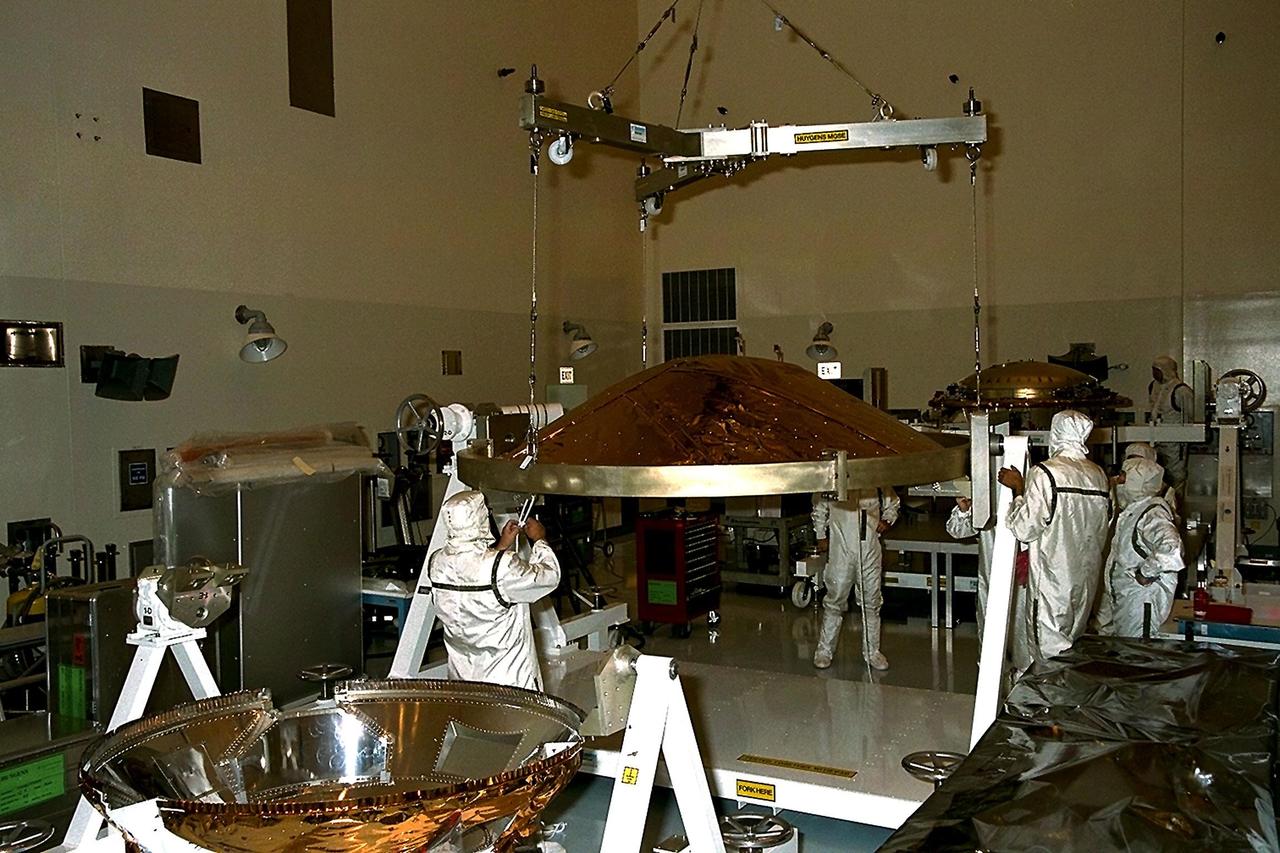
Dornier Satelliten Systeme (DSS) workers lift the front heat shield of the Huygens probe in the Payload Hazardous Servicing Facility (PHSF) at KSC. The spacecraft was returned to the PHSF after damage to thermal insulation was discovered inside Huygens from an abnormally high flow of conditioned air. Internal inspection, insulation repair and a cleaning of the probe were required. Mission managers are targeting a mid-October launch date after the Cassini spacecraft, aboard which Huygens will be launched, returns to the pad and is once again placed atop its Titan IVB expendable launch vehicle at Launch Pad 40 at Cape Canaveral Air Station
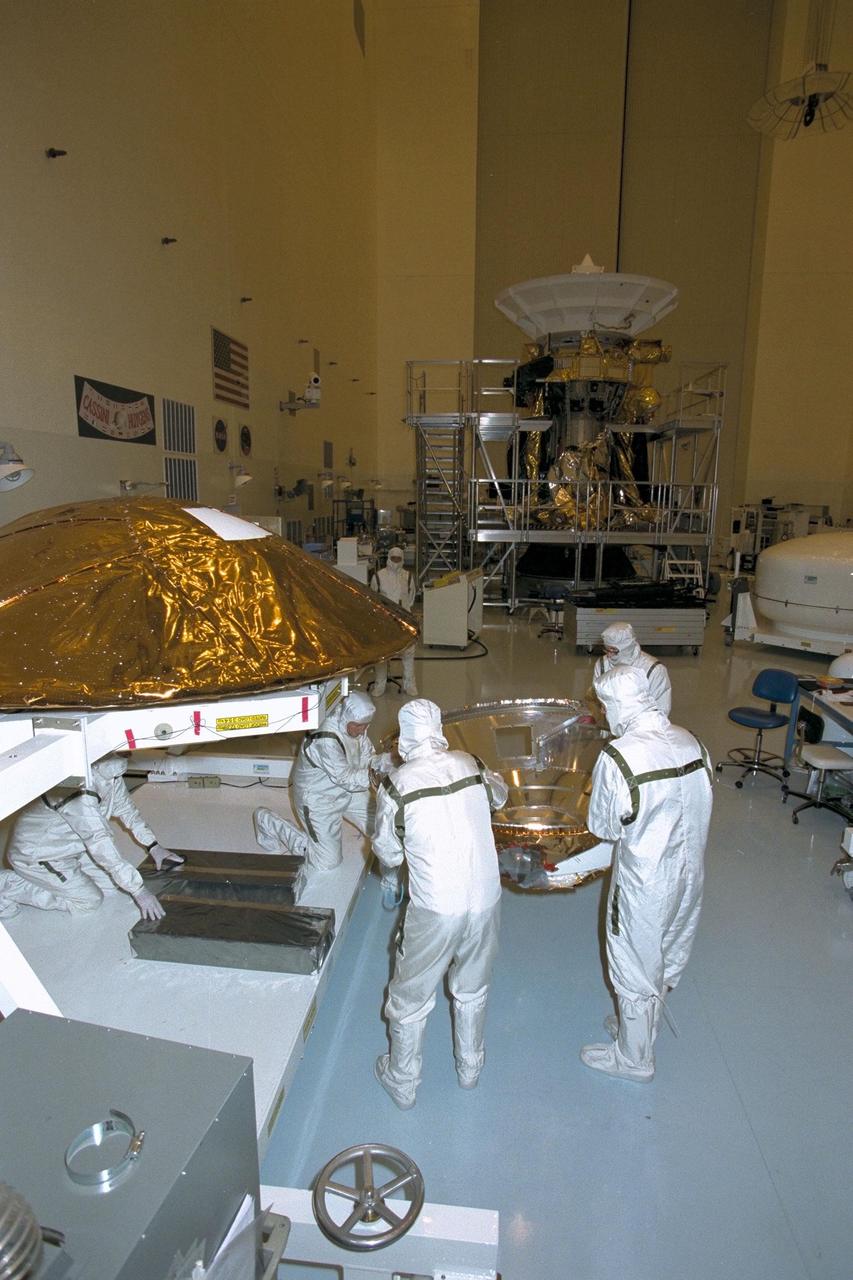
Dornier Satelliten Systeme (DSS) workers place the back cover of the Huygens probe under its front heat shield in the Payload Hazardous Servicing Facility (PHSF) at KSC. The spacecraft was returned to the PHSF after damage to thermal insulation was discovered inside Huygens from an abnormally high flow of conditioned air. Internal inspection, insulation repair and a cleaning of the probe were required. Mission managers are targeting a mid-October launch date after the Cassini spacecraft, aboard which Huygens will be launched, returns to the pad and is once again placed atop its Titan IVB expendable launch vehicle at Launch Pad 40 at Cape Canaveral Air Station
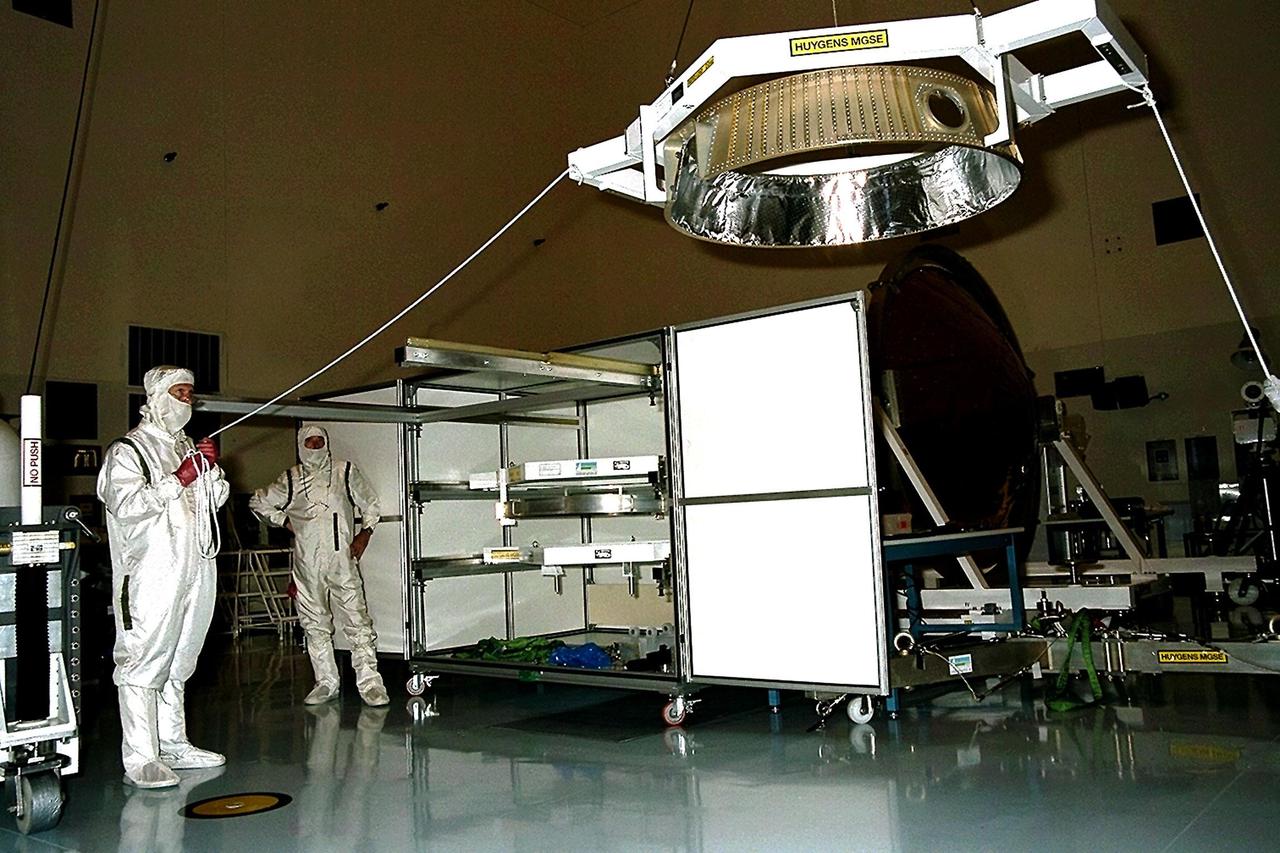
Dornier Satelliten Systeme (DSS) workers lift part of the Huygens probe aft cover assembly in the Payload Hazardous Servicing Facility (PHSF) at KSC. The spacecraft was returned to the PHSF after damage to thermal insulation was discovered inside Huygens from an abnormally high flow of conditioned air. Internal inspection, insulation repair and a cleaning of the probe were required. Mission managers are targeting a mid-October launch date after the Cassini spacecraft, aboard which Huygens will be launched, returns to the pad and is once again placed atop its Titan IVB expendable launch vehicle at Launch Pad 40 at Cape Canaveral Air Station
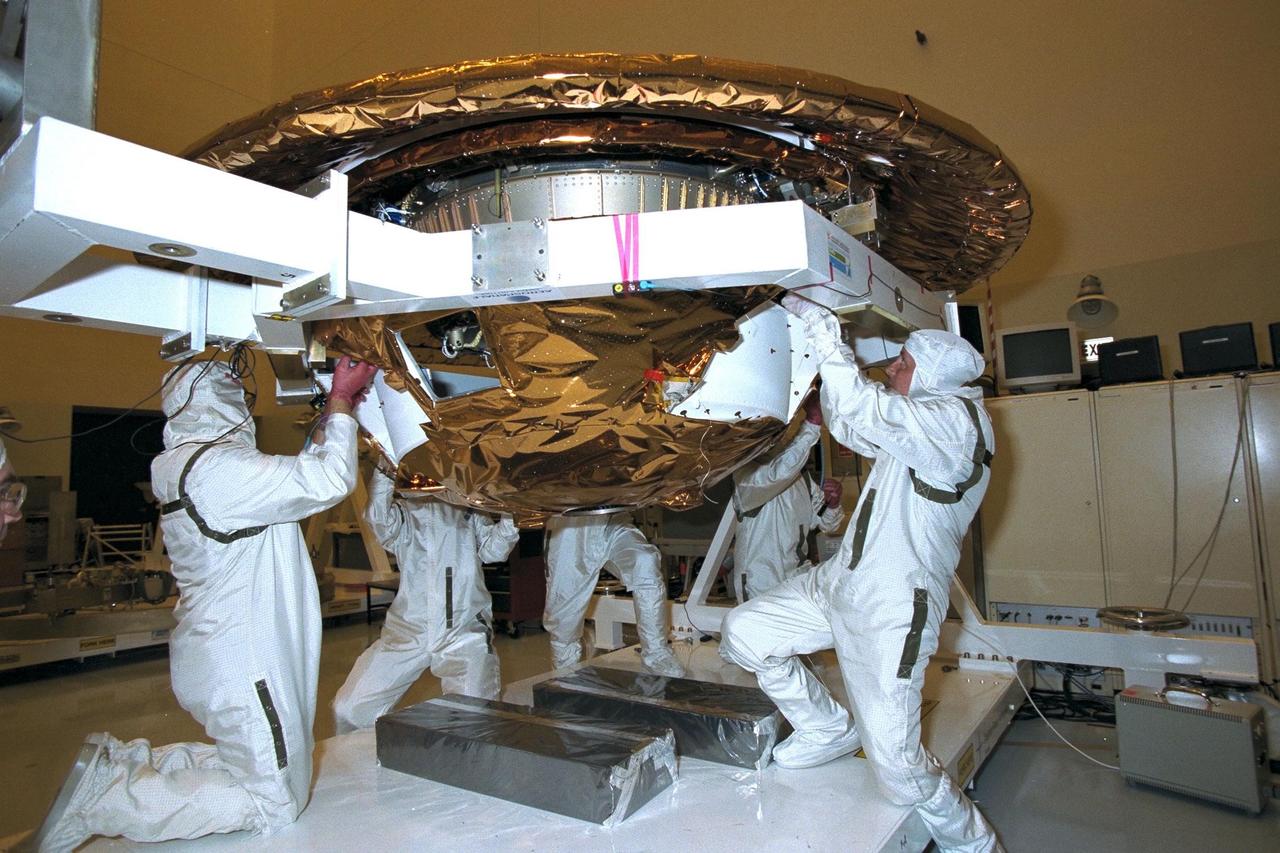
Dornier Satelliten Systeme (DSS) workers place the back cover of the Huygens probe under its front heat shield in the Payload Hazardous Servicing Facility (PHSF) at KSC. The spacecraft was returned to the PHSF after damage to thermal insulation was discovered inside Huygens from an abnormally high flow of conditioned air. Internal inspection, insulation repair and a cleaning of the probe were required. Mission managers are targeting a mid-October launch date after the Cassini spacecraft, aboard which Huygens will be launched, returns to the pad and is once again placed atop its Titan IVB expendable launch vehicle at Launch Pad 40 at Cape Canaveral Air Station
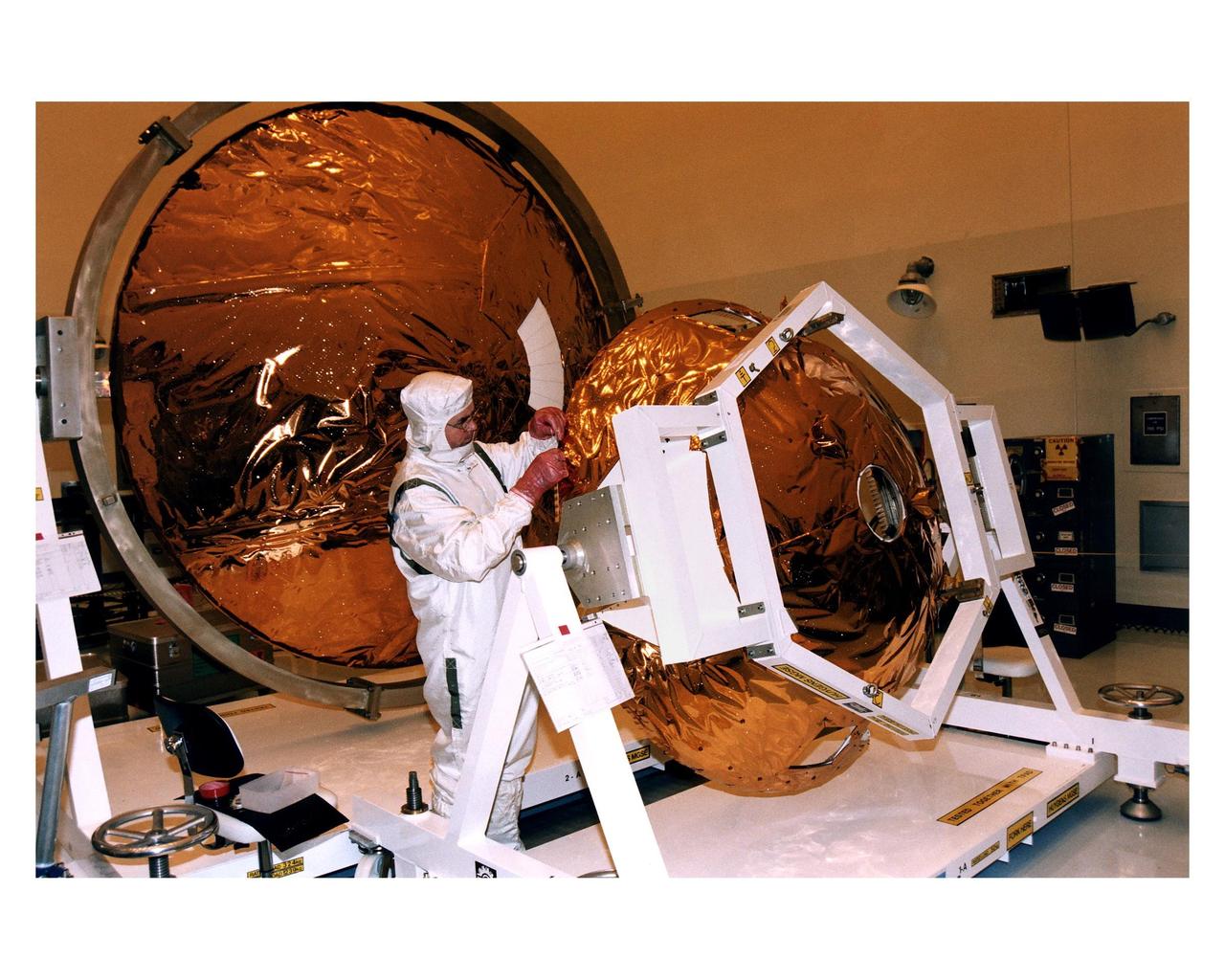
An employee in the Payload Hazardous Servicing Facility (PHSF) sews thermal insulation material on the front heat shield of the Huygens probe during prelaunch processing testing and integration in that facility, with the probe’s back cover in the background. The Huygens probe and the Cassini orbiter being processed at KSC are the two primary components of the Cassini spacecraft, which will be launched on a Titan IVB/Centaur expendable launch vehicle from Cape Canaveral Air Station. Cassini will explore Saturn, its rings and moons for four years. The Huygens probe, designed and developed for the European Space Agency (ESA), will be deployed from the orbiter to study the clouds, atmosphere and surface of Saturn’s largest moon, Titan. The orbiter was designed and assembled at NASA’s Jet Propulsion Laboratory in California. Following postflight inspections, integration of the 12 science instruments not already installed on the orbiter will be completed. Then, the parabolic high-gain antenna and the propulsion module will be mated to the orbiter, followed by the Huygens probe, which will complete spacecraft integration. The Cassini mission is targeted for an Oct. 6 launch to begin its 6.7-year journey to the Saturnian system. Arrival at the planet is expected to occur around July 1, 2004

Images from the European Space Agency's Huygens probe descent imager/spectral radiometer side-looking imager and from the medium resolution imager, acquired after landing, were merged to produce this image. The horizon's position implies a pitch of the imager/spectral radiometer, nose-upward, by 1 to 2 degrees with no measurable roll. "Stones" in the foreground are 4 to 6 inches (10 to 15 centimeters) in size, presumably made of water ice, and these lie on a darker, finer-grained substrate. A region with a relatively low number of rocks lies between clusters of rocks in the foreground and the background and matches the general orientation of channel-like features in the panorama of PIA06439). The scene evokes the possibility of a dry lakebed. The Huygens probe was delivered to Saturn's moon Titan by the Cassini spacecraft, which is managed by NASA's Jet Propulsion Laboratory, Pasadena, Calif. NASA supplied two instruments on the probe, the descent imager/spectral radiometer and the gas chromatograph mass spectrometer. http://photojournal.jpl.nasa.gov/catalog/PIA06440
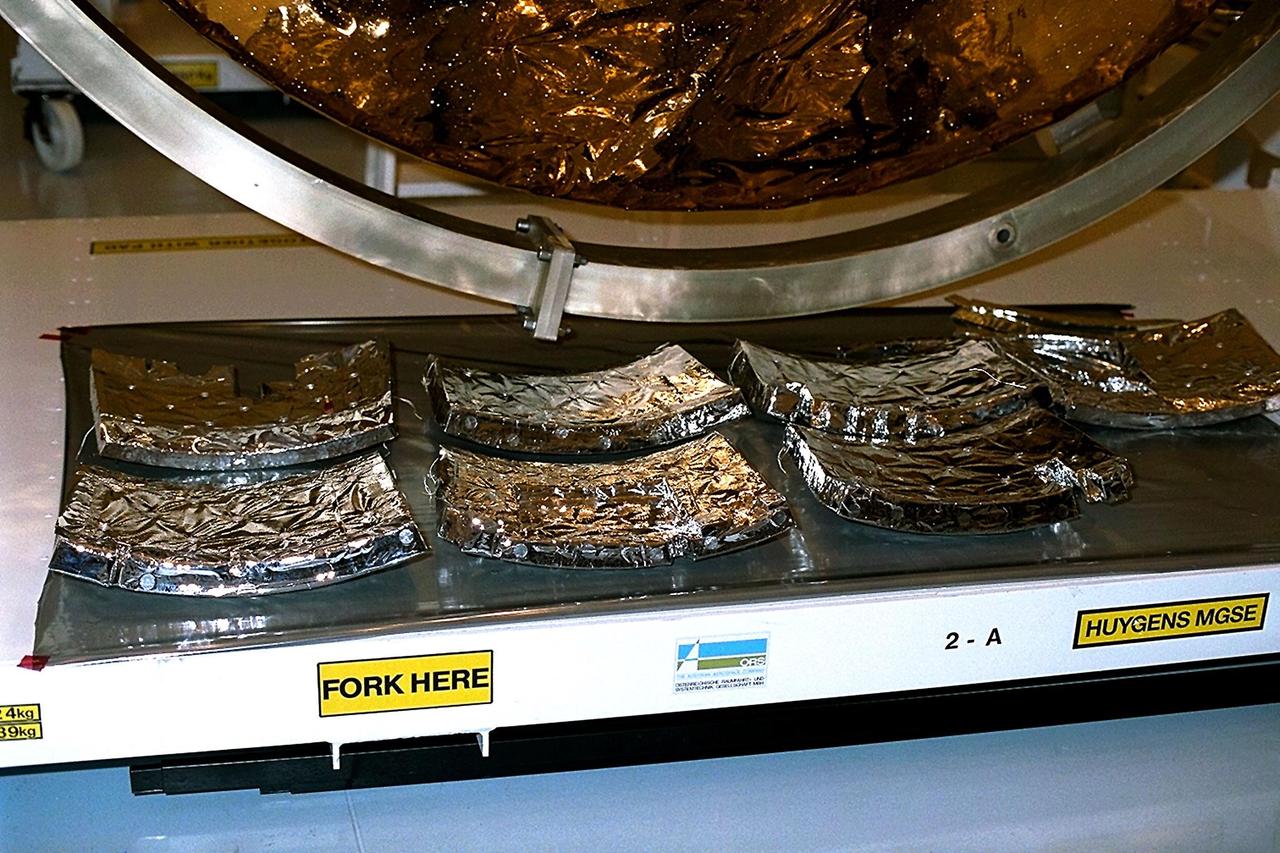
Pieces of the Huygens probe internal insulating foam await inspection after removal from the probe in the Payload Hazardous Servicing Facility (PHSF) at KSC. The spacecraft was returned to the PHSF after damage to thermal insulation was discovered inside Huygens from an abnormally high flow of conditioned air. Internal inspection, insulation repair and a cleaning of the probe were required. Mission managers are targeting a mid-October launch date after Cassini returns to the pad and is once again placed atop its Titan IVB expendable launch vehicle at Launch Pad 40 at Cape Canaveral Air Station
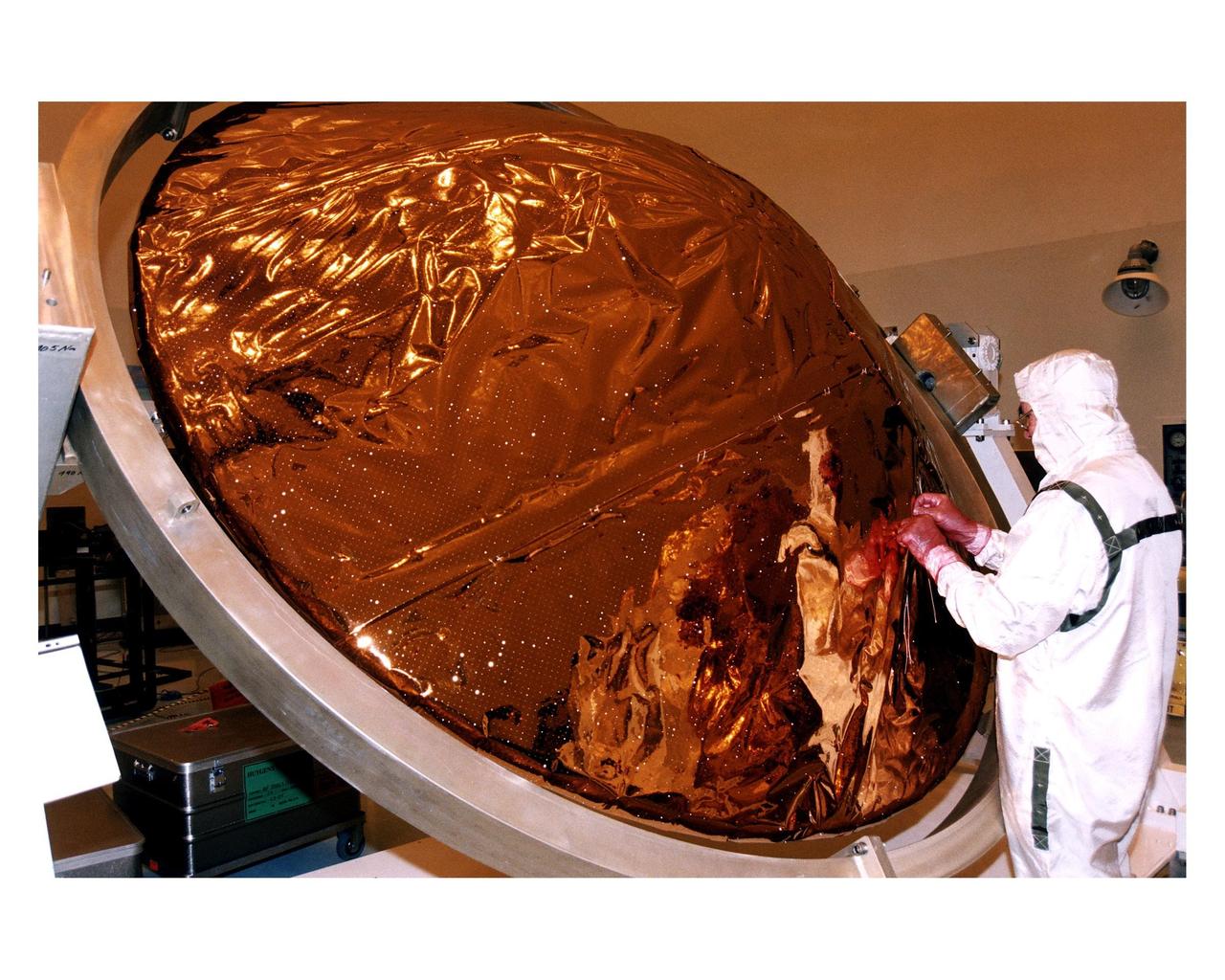
An employee in the Payload Hazardous Servicing Facility (PHSF) sews thermal insulation material on the back cover and heat shield of the Huygens probe during prelaunch processing, testing and integration in that facility. The Huygens probe and the Cassini orbiter being processed at KSC are the two primary components of the Cassini spacecraft, which will be launched on a Titan IVB/Centaur expendable launch vehicle from Cape Canaveral Air Station. Cassini will explore Saturn, its rings and moons for four years. The Huygens probe, designed and developed for the European Space Agency (ESA), will be deployed from the orbiter to study the clouds, atmosphere and surface of Saturn’s largest moon, Titan. The orbiter was designed and assembled at NASA’s Jet Propulsion Laboratory in California. Following postflight inspections, integration of the 12 science instruments not already installed on the orbiter will be completed. Then, the parabolic high-gain antenna and the propulsion module will be mated to the orbiter, followed by the Huygens probe, which will complete spacecraft integration. The Cassini mission is targeted for an Oct. 6 launch to begin its 6.7-year journey to the Saturnian system. Arrival at the planet is expected to occur around July 1, 2004
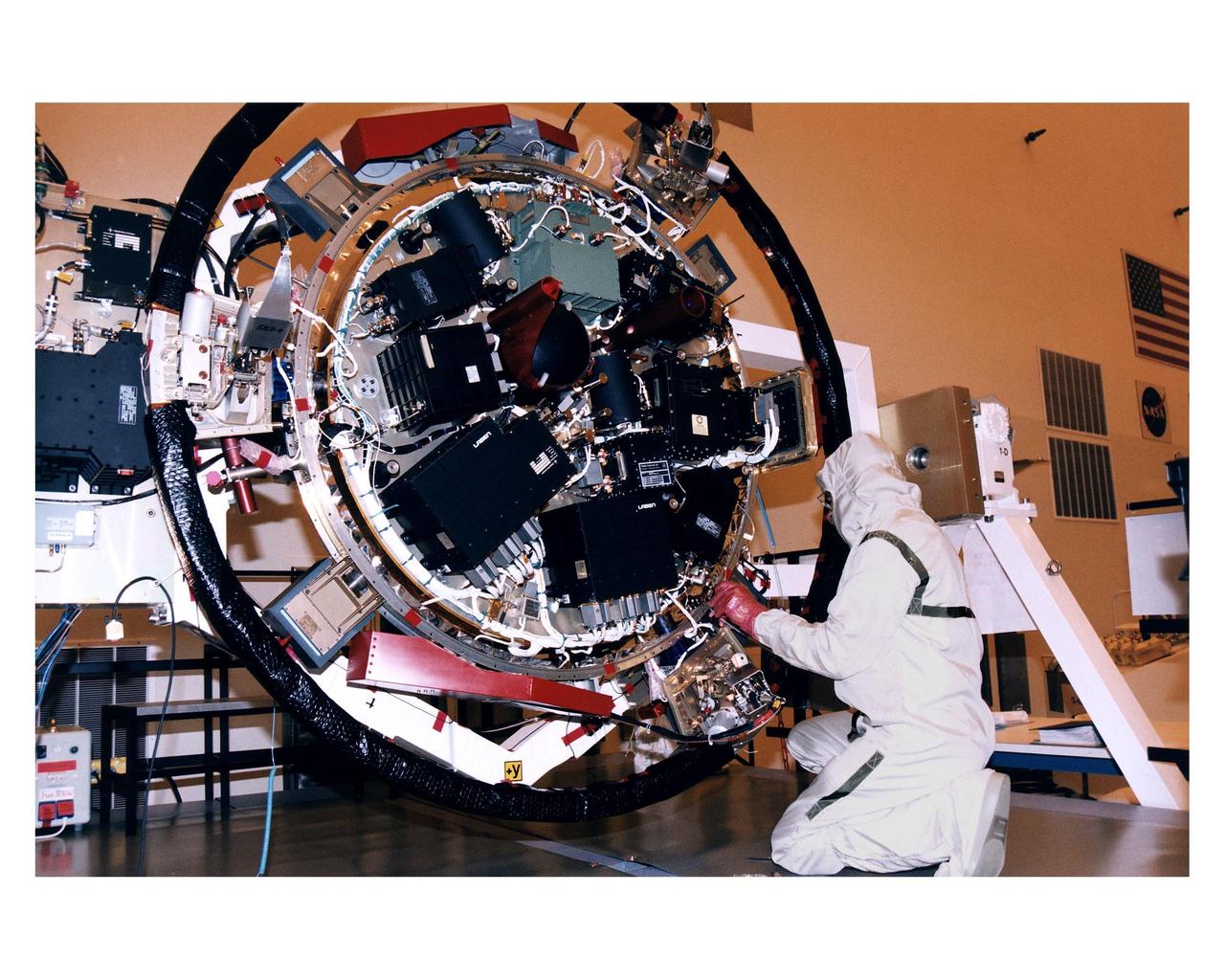
An employee in the Payload Hazardous Servicing Facility (PHSF) works on the top side of the experiment platform for the Huygens probe that will accompany the Cassini orbiter to Saturn during prelaunch processing, testing and integration in that facility. The Huygens probe and the Cassini orbiter being processed at KSC are the two primary components of the Cassini spacecraft, which will be launched on a Titan IVB/Centaur expendable launch vehicle from Cape Canaveral Air Station. Cassini will explore Saturn, its rings and moons for four years. The Huygens probe, designed and developed for the European Space Agency (ESA), will be deployed from the orbiter to study the clouds, atmosphere and surface of Saturn’s largest moon, Titan. The orbiter was designed and assembled at NASA’s Jet Propulsion Laboratory in California. Following postflight inspections, integration of the 12 science instruments not already installed on the orbiter will be completed. Then, the parabolic high-gain antenna and the propulsion module will be mated to the orbiter, followed by the Huygens probe, which will complete spacecraft integration. The Cassini mission is targeted for an Oct. 6 launch to begin its 6.7-year journey to the Saturnian system. Arrival at the planet is expected to occur around July 1, 2004
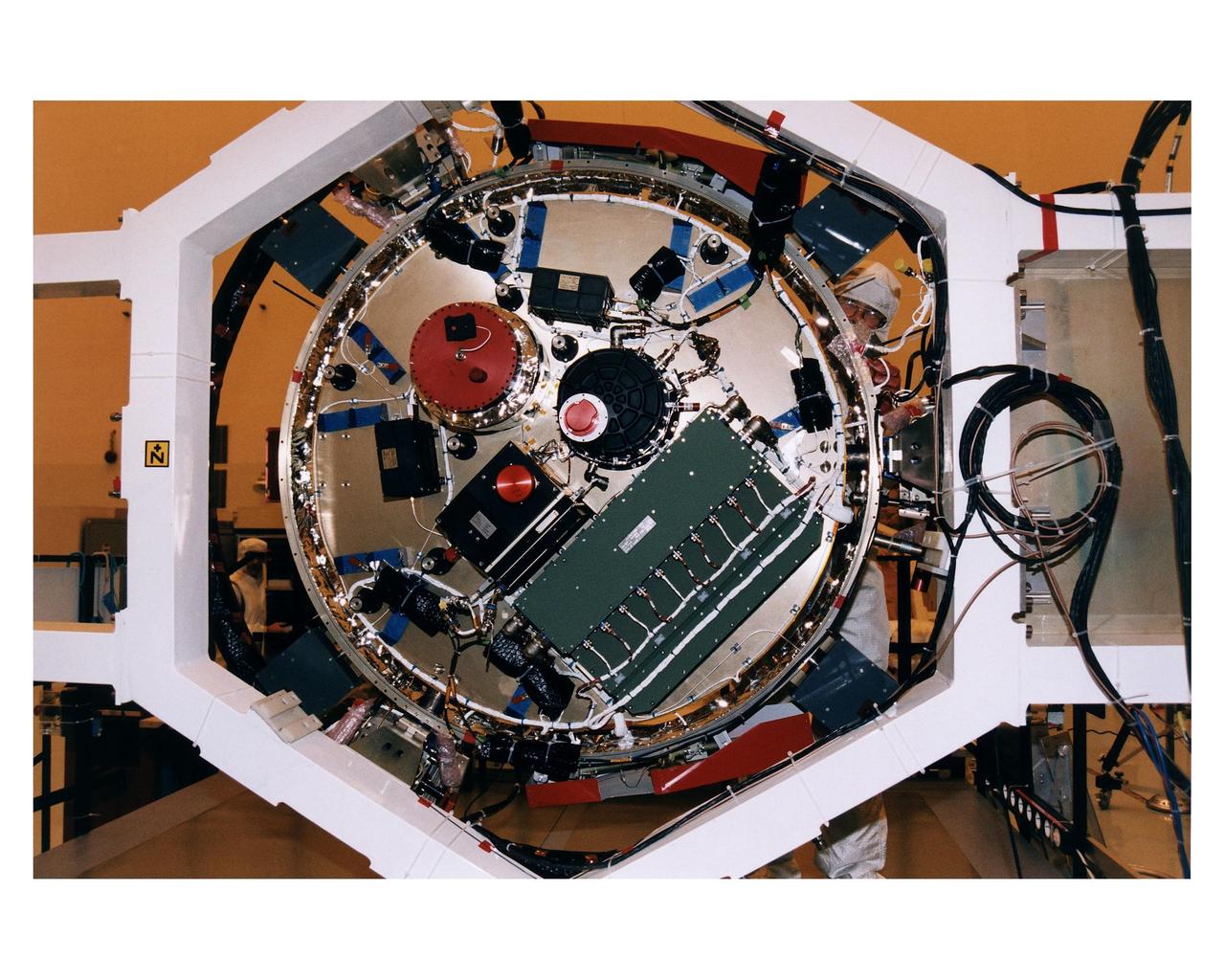
A worker in the Payload Hazardous Servicing Facility (PHSF) stands behind the bottom side of the experiment platform for the Huygens probe that will accompany the Cassini orbiter to Saturn during prelaunch processing testing and integration in that facility. The Huygens probe and the Cassini orbiter being processed at KSC are the two primary components of the Cassini spacecraft, which will be launched on a Titan IVB/Centaur expendable launch vehicle from Cape Canaveral Air Station. Cassini will explore Saturn, its rings and moons for four years. The Huygens probe, designed and developed for the European Space Agency (ESA), will be deployed from the orbiter to study the clouds, atmosphere and surface of Saturn’s largest moon, Titan. The orbiter was designed and assembled at NASA’s Jet Propulsion Laboratory in California. Following postflight inspections, integration of the 12 science instruments not already installed on the orbiter will be completed. Then, the parabolic high-gain antenna and the propulsion module will be mated to the orbiter, followed by the Huygens probe, which will complete spacecraft integration. The Cassini mission is targeted for an Oct. 6 launch to begin its 6.7-year journey to the Saturnian system. Arrival at the planet is expected to occur around July 1, 2004
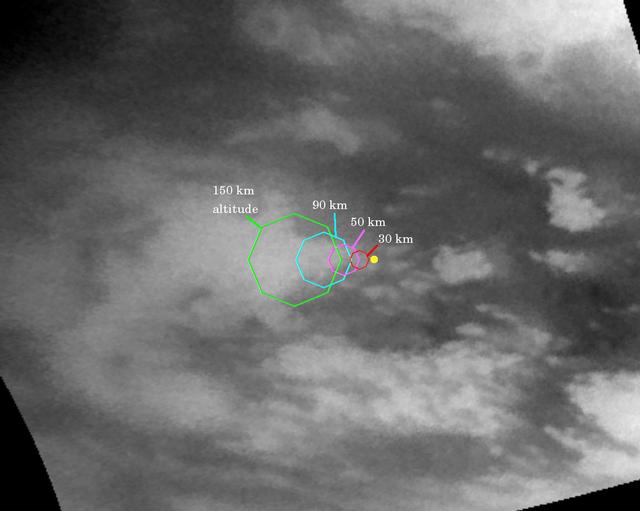
This map illustrates the planned imaging coverage for the Descent Imager/Spectral Radiometer, onboard the European Space Agency's Huygens probe during the probe's descent toward Titan's surface on Jan. 14, 2005. The Descent Imager/Spectral Radiometer is one of two NASA instruments on the probe. The colored lines delineate regions that will be imaged at different resolutions as the probe descends. On each map, the site where Huygens is predicted to land is marked with a yellow dot. This area is in a boundary between dark and bright regions. This map was made from the images taken by the Cassini spacecraft cameras on Oct. 26, 2004, at image scales of 4 to 6 kilometers (2.5 to 3.7 miles) per pixel. The images were obtained using a narrow band filter centered at 938 nanometers -- a near-infrared wavelength (invisible to the human eye) at which light can penetrate Titan's atmosphere to reach the surface and return through the atmosphere to be detected by the camera. The images have been processed to enhance surface details. Only brightness variations on Titan's surface are seen; the illumination is such that there is no shading due to topographic variations. For about two hours, the probe will fall by parachute from an altitude of 160 kilometers (99 miles) to Titan's surface. During the descent the camera on the probe and five other science instruments will send data about the moon's atmosphere and surface back to the Cassini spacecraft for relay to Earth. The Descent Imager/Spectral Radiometer will take pictures as the probe slowly spins, and some these will be made into panoramic views of Titan's surface. This map shows the planned coverage by the medium- and high-resolution. PIA06173 shows expected coverage by the Descent Imager/Spectral Radiometer side-looking imager and two downward-looking imagers - one providing medium-resolution and the other high-resolution coverage. http://photojournal.jpl.nasa.gov/catalog/PIA06173
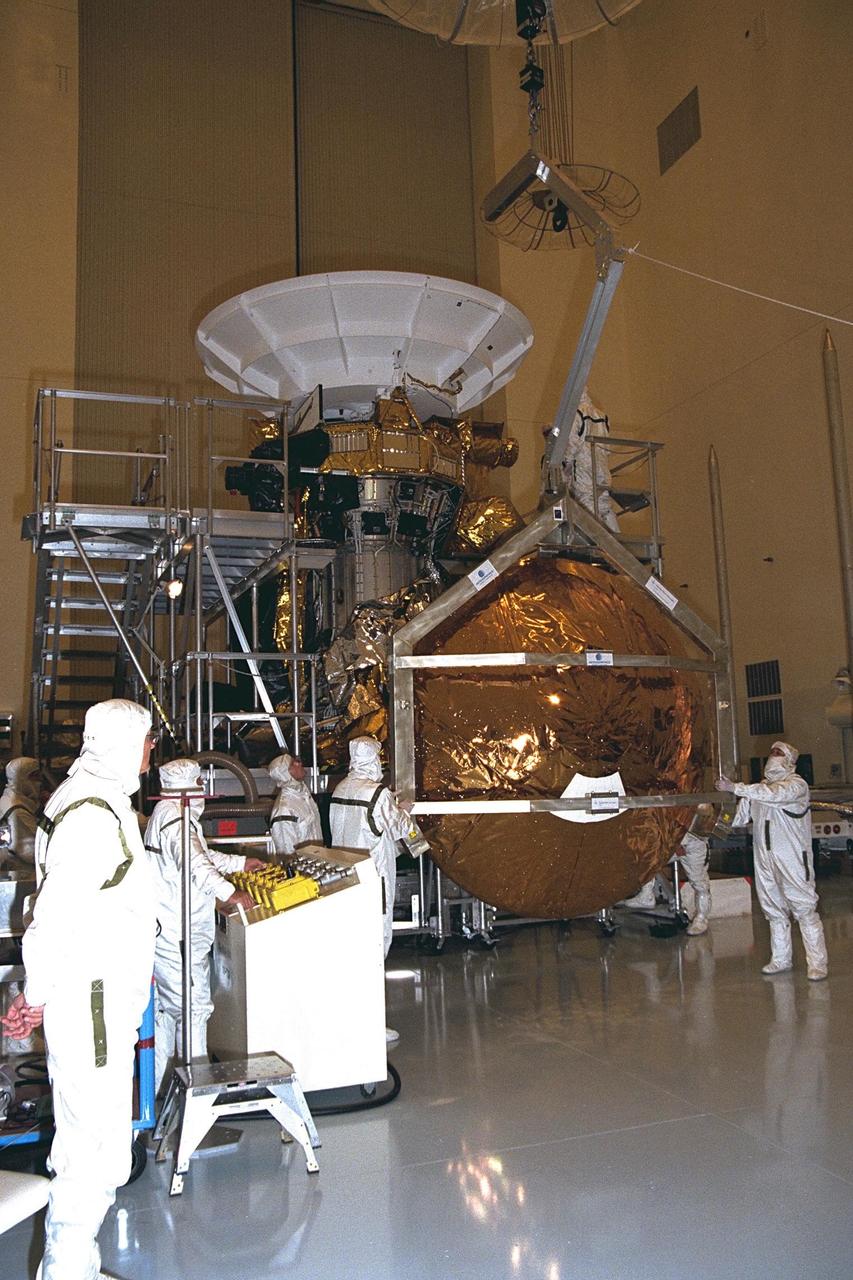
Workers remove the Huygens probe from the Cassini spacecraft in the Payload Hazardous Servicing Facility (PHSF) at KSC. The spacecraft was returned to the PHSF after damage to thermal insulation was discovered inside Huygens from an abnormally high flow of conditioned air. Further internal inspection, insulation repair and a cleaning of the probe are now required. Mission managers are targeting a mid-October launch date after Cassini returns to the pad and is once again placed atop its Titan IVB expendable launch vehicle at Launch Pad 40 at Cape Canaveral Air Station
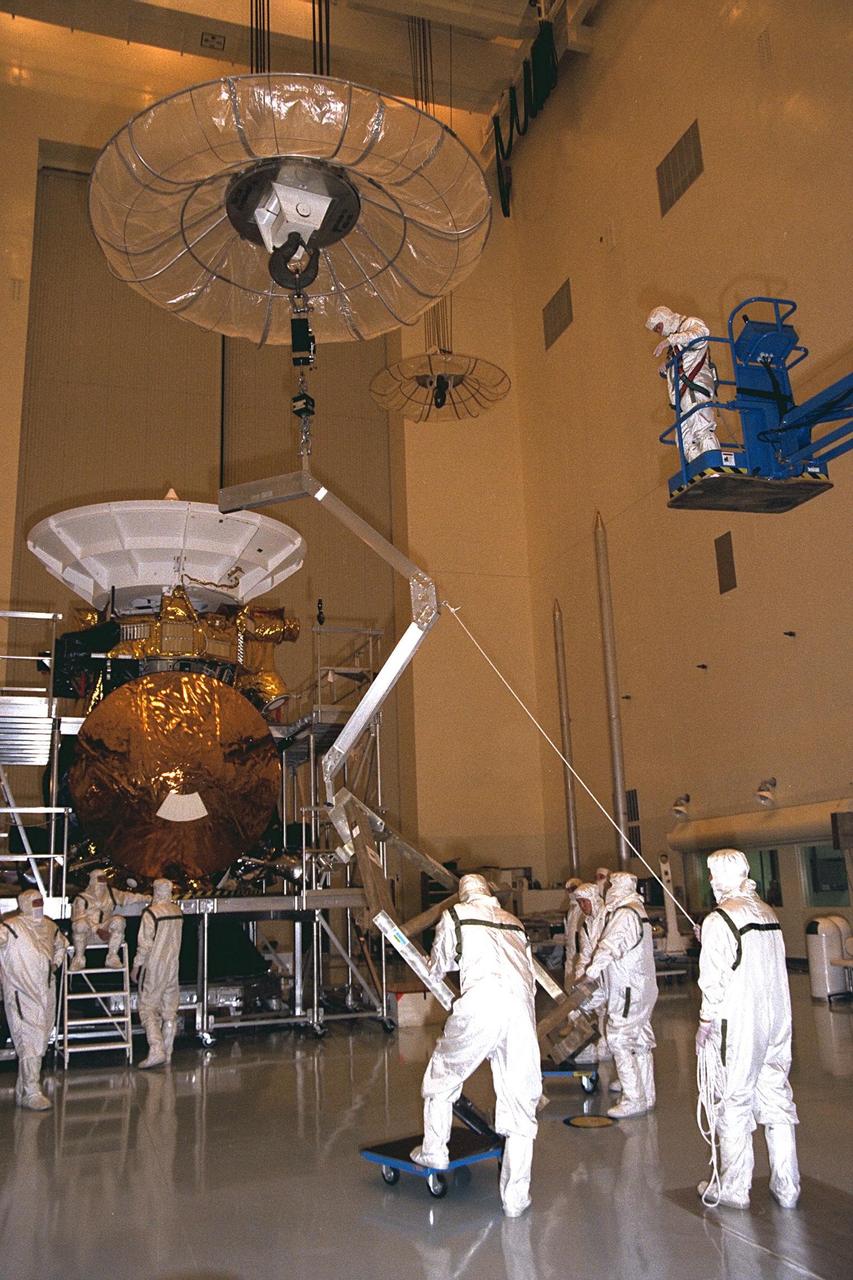
Workers remove the Huygens probe from the Cassini spacecraft in the Payload Hazardous Servicing Facility (PHSF) at KSC. The spacecraft was returned to the PHSF after damage to thermal insulation was discovered inside Huygens from an abnormally high flow of conditioned air. Further internal inspection, insulation repair and a cleaning of the probe are now required. Mission managers are targeting a mid-October launch date after Cassini returns to the pad and is once again placed atop its Titan IVB expendable launch vehicle at Launch Pad 40 at Cape Canaveral Air Station
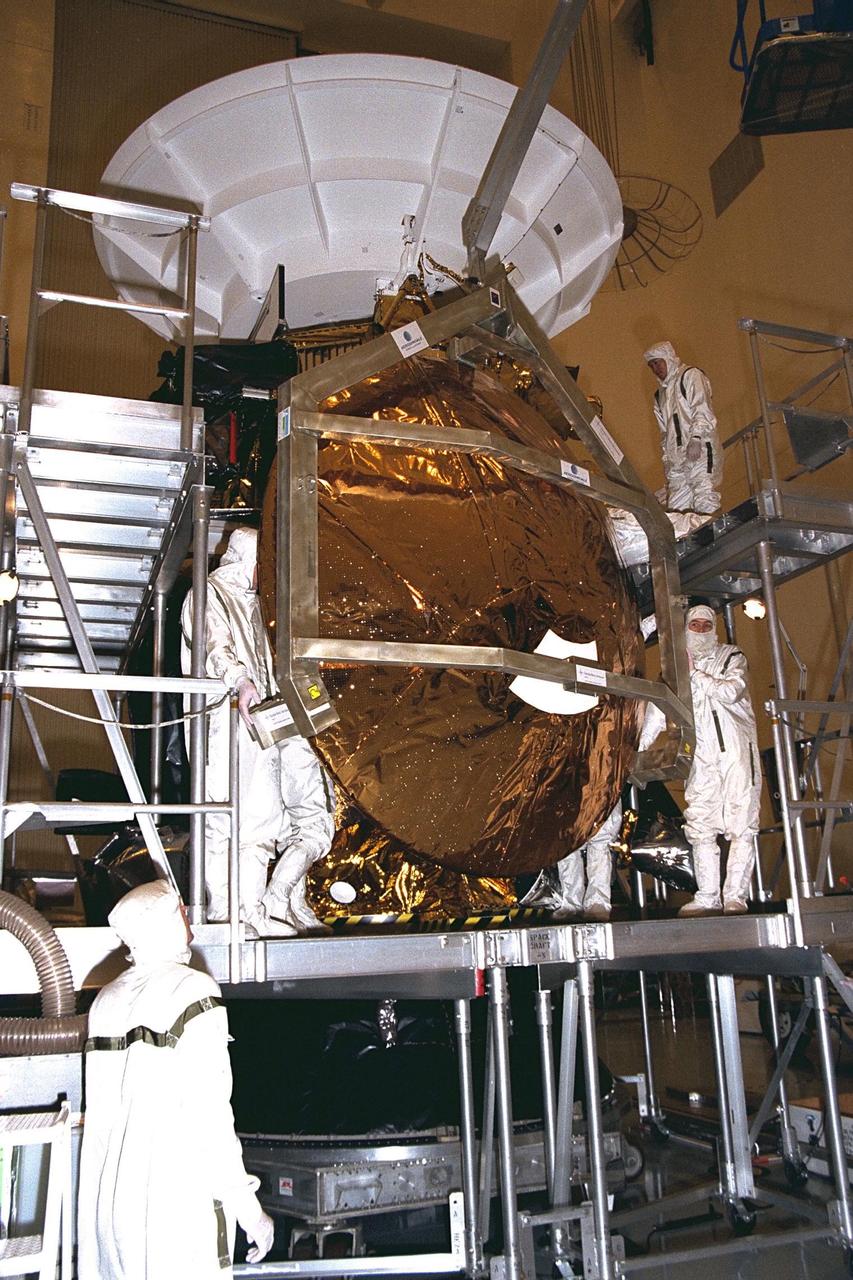
Workers remove the Huygens probe from the Cassini spacecraft in the Payload Hazardous Servicing Facility (PHSF) at KSC. The spacecraft was returned to the PHSF after damage to thermal insulation was discovered inside Huygens from an abnormally high flow of conditioned air. Further internal inspection, insulation repair and a cleaning of the probe are now required. Mission managers are targeting a mid-October launch date after Cassini returns to the pad and is once again placed atop its Titan IVB expendable launch vehicle at Launch Pad 40 at Cape Canaveral Air Station
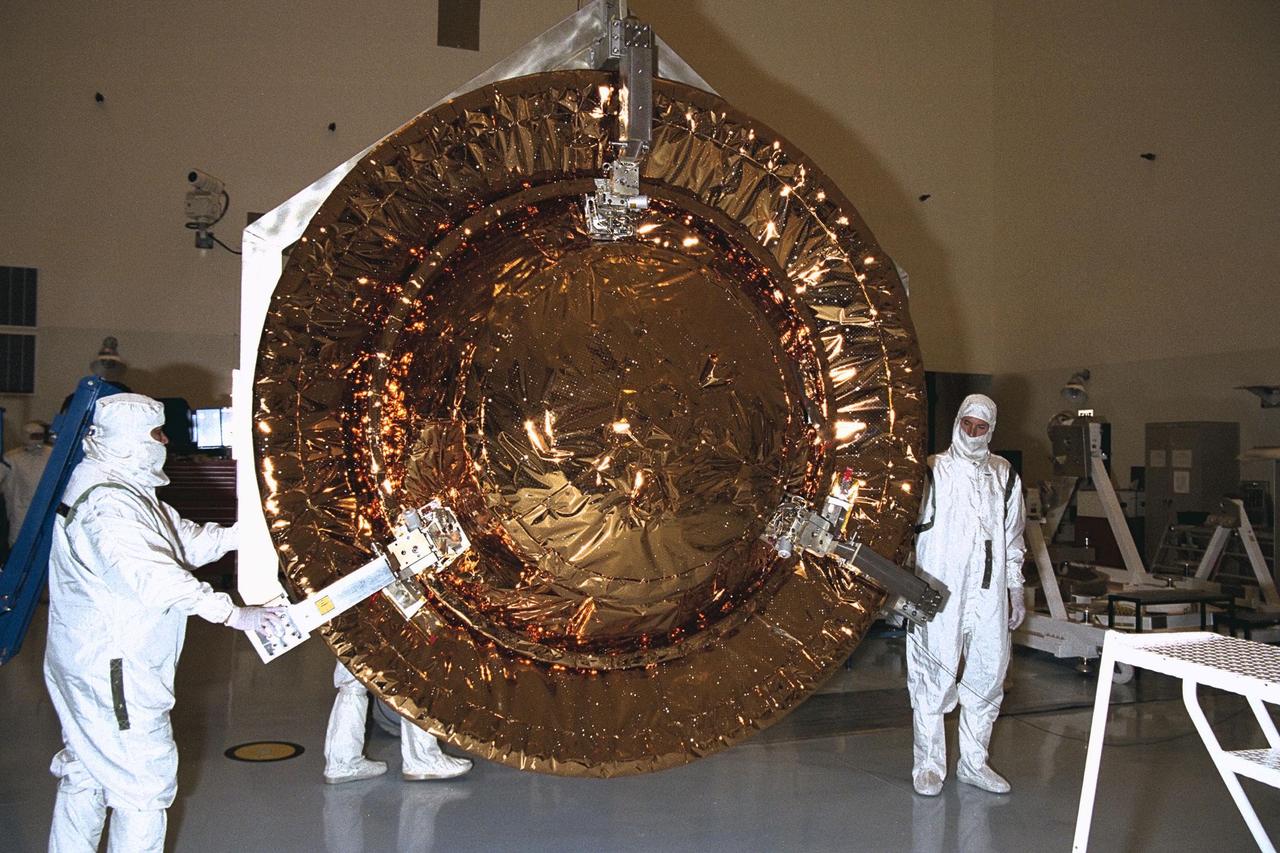
Jet Propulsion Laboratory (JPL) workers remove the Huygens probe from the Cassini spacecraft in the Payload Hazardous Servicing Facility (PHSF) at KSC. The spacecraft was returned to the PHSF after damage to thermal insulation was discovered inside Huygens from an abnormally high flow of conditioned air. Further internal inspection, insulation repair and a cleaning of the probe are now required. Mission managers are targeting a mid-October launch date after Cassini returns to the pad and is once again placed atop its Titan IVB expendable launch vehicle at Launch Pad 40 at Cape Canaveral Air Station
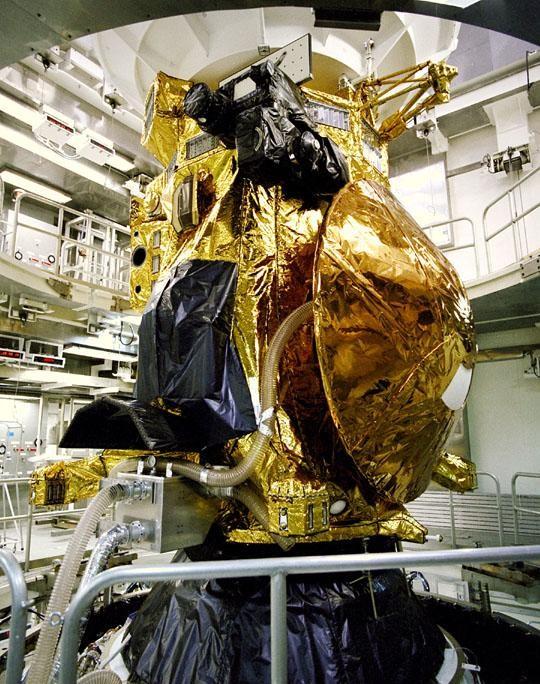
The Cassini spacecraft, with the Huygens probe seen on the right in this photo, sits atop a Titan IVB expendable launch vehicle at Launch Pad 40 at Cape Canaveral Air Station, where it awaits placement of its payload fairing to protect Cassini during launch. Instruments mounted on the Huygens probe, which was developed by the European Space Agency (ESA), will receive atmospheric and surface data on Saturn’s main moon, Titan, to send back to Earth as part of the mission. A four-year, close-up study of the Saturnian system, the mission is scheduled for launch from Cape Canaveral Air Station in mid-October
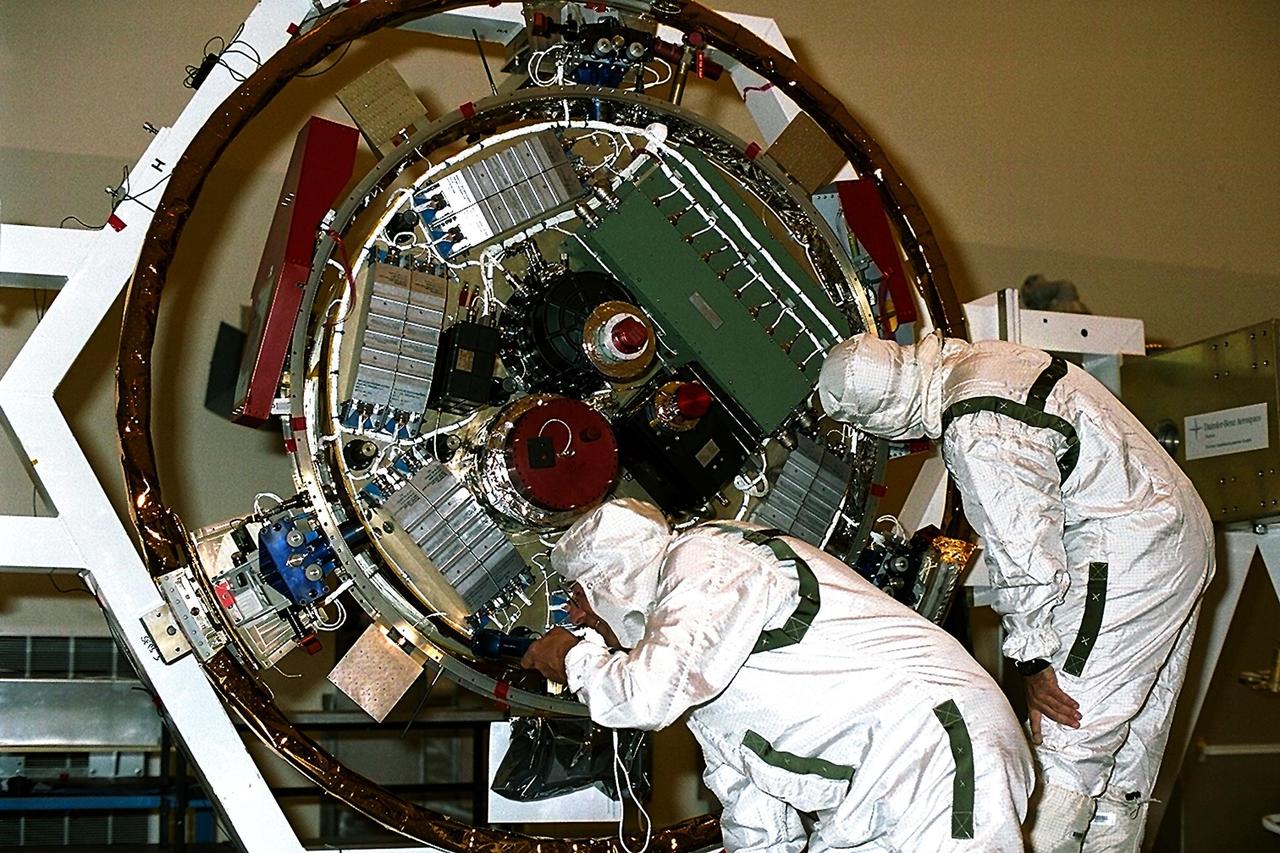
Jet Propulsion Laboratory (JPL) workers examine the Huygens probe after removal from the Cassini spacecraft in the Payload Hazardous Servicing Facility (PHSF) at KSC. The spacecraft was returned to the PHSF after damage to thermal insulation was discovered inside Huygens from an abnormally high flow of conditioned air. Internal inspection, insulation repair and a cleaning of the probe were required. Mission managers are targeting a mid-October launch date after Cassini returns to the pad and is once again placed atop its Titan IVB expendable launch vehicle at Launch Pad 40 at Cape Canaveral Air Station

Workers offload the shipping container with the Cassini orbiter from what looks like a giant shark mouth, but is really an Air Force C-17 air cargo plane which <a href="http://www-pao.ksc.nasa.gov/kscpao/release/1997/66-97.htm">just landed</a> at KSC’s Shuttle Landing Facility from Edwards Air Force Base, California. The orbiter and the Huygens probe already being processed at KSC are the two primary components of the Cassini spacecraft, which will be launched on a Titan IVB/Centaur expendable launch vehicle from Cape Canaveral Air Station. Cassini will explore Saturn, its rings and moons for four years. The Huygens probe, designed and developed for the European Space Agency (ESA), will be deployed from the orbiter to study the clouds, atmosphere and surface of Saturn’s largest moon, Titan. The orbiter was designed and assembled at NASA’s Jet Propulsion Laboratory in California. Following postflight inspections, integration of the 12 science instruments not already installed on the orbiter will be completed. Then, the parabolic high-gain antenna and the propulsion module will be mated to the orbiter, followed by the Huygens probe, which will complete spacecraft integration. The Cassini mission is targeted for an Oct. 6 launch to begin its 6.7-year journey to the Saturnian system. Arrival at the planet is expected to occur around July 1, 2004
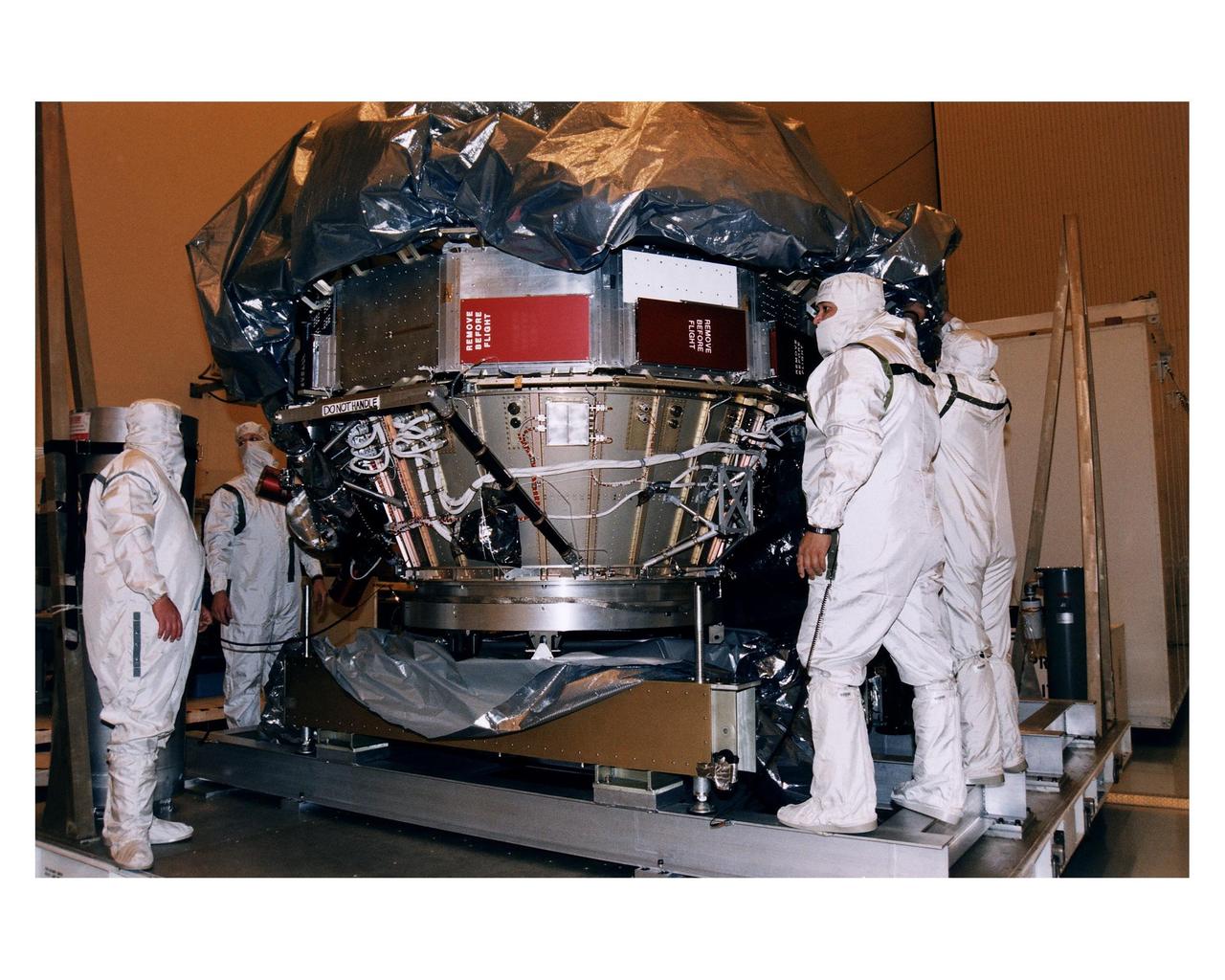
Workers in the Payload Hazardous Servicing Facility (PHSF) stand around the upper experiment module and base of the Cassini orbiter during prelaunch processing, testing and integration in that facility. The Cassini orbiter and Huygens probe being processed at KSC are the two primary components of the Cassini spacecraft, which will be launched on a Titan IVB/Centaur expendable launch vehicle from Cape Canaveral Air Station. Cassini will explore Saturn, its rings and moons for four years. The Huygens probe, designed and developed for the European Space Agency (ESA), will be deployed from the orbiter to study the clouds, atmosphere and surface of Saturn’s largest moon, Titan. The orbiter was designed and assembled at NASA’s Jet Propulsion Laboratory in California. Following postflight inspections, integration of the 12 science instruments not already installed on the orbiter will be completed. Then, the parabolic high-gain antenna and the propulsion module will be mated to the orbiter, followed by the Huygens probe, which will complete spacecraft integration. The Cassini mission is targeted for an Oct. 6 launch to begin its 6.7-year journey to the Saturnian system. Arrival at the planet is expected to occur around July 1, 2004
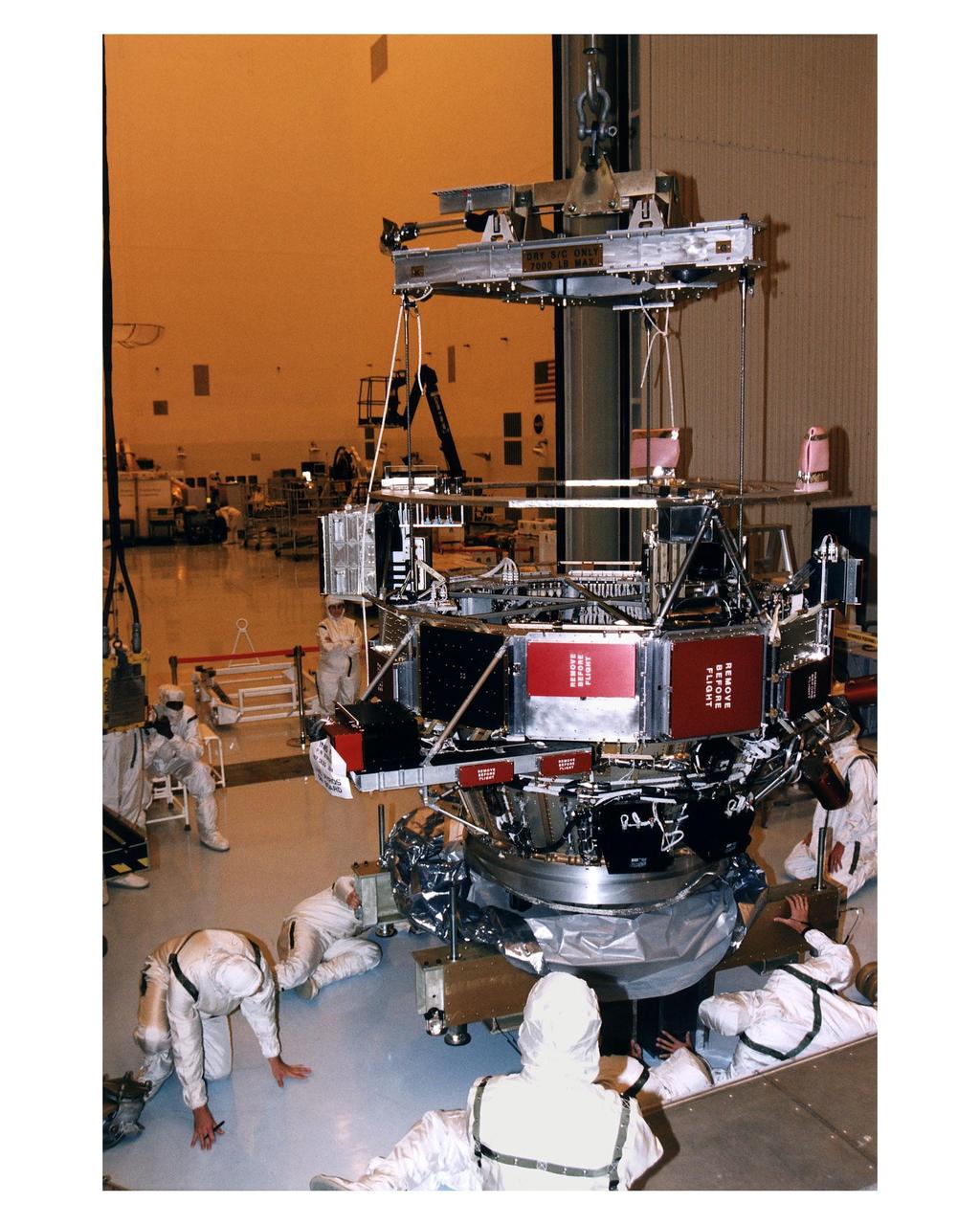
Employees in the Payload Hazardous Servicing Facility (PHSF) lower the upper experiment module and base of the Cassini orbiter onto a work stand during prelaunch processing, testing and integration work in that facility. The Cassini orbiter and Huygens probe being processed at KSC are the two primary components of the Cassini spacecraft, which will be launched on a Titan IVB/Centaur expendable launch vehicle from Cape Canaveral Air Station. Cassini will explore Saturn, its rings and moons for four years. The Huygens probe, designed and developed for the European Space Agency (ESA), will be deployed from the orbiter to study the clouds, atmosphere and surface of Saturn’s largest moon, Titan. The orbiter was designed and assembled at NASA’s Jet Propulsion Laboratory in California. Following postflight inspections, integration of the 12 science instruments not already installed on the orbiter will be completed. Then, the parabolic high-gain antenna and the propulsion module will be mated to the orbiter, followed by the Huygens probe, which will complete spacecraft integration. The Cassini mission is targeted for an Oct. 6 launch to begin its 6.7-year journey to the Saturnian system. Arrival at the planet is expected to occur around July 1, 2004
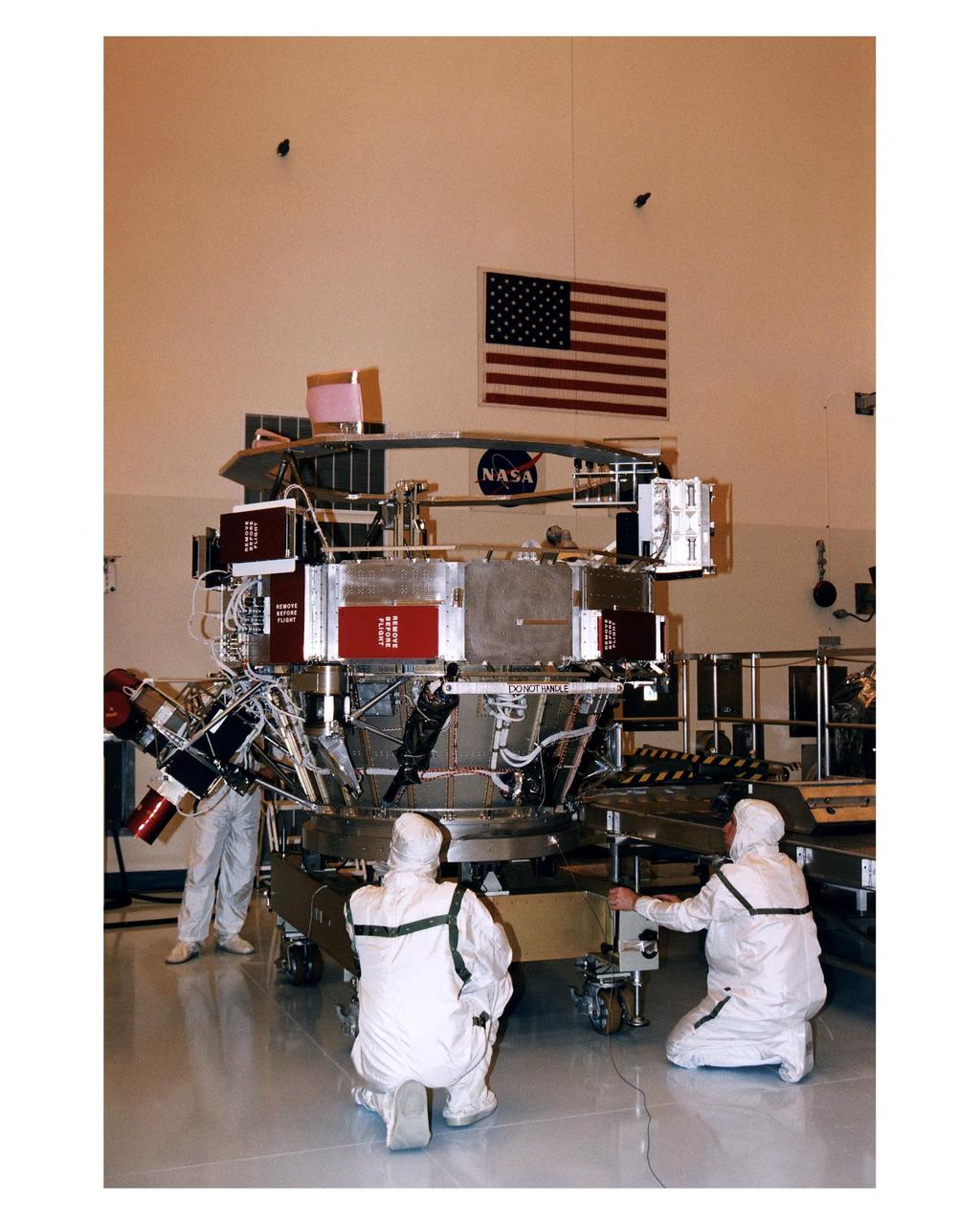
Workers in the Payload Hazardous Servicing Facility (PHSF) perform checkouts of the upper experiment module and base of the Cassini orbiter during prelaunch processing, testing and integration in that facility. The Cassini orbiter and Huygens probe being processed at KSC are the two primary components of the Cassini spacecraft, which will be launched on a Titan IVB/Centaur expendable launch vehicle from Cape Canaveral Air Station. Cassini will explore Saturn, its rings and moons for four years. The Huygens probe, designed and developed for the European Space Agency (ESA), will be deployed from the orbiter to study the clouds, atmosphere and surface of Saturn’s largest moon, Titan. The orbiter was designed and assembled at NASA’s Jet Propulsion Laboratory in California. Following postflight inspections, integration of the 12 science instruments not already installed on the orbiter will be completed. Then, the parabolic high-gain antenna and the propulsion module will be mated to the orbiter, followed by the Huygens probe, which will complete spacecraft integration. The Cassini mission is targeted for an Oct. 6 launch to begin its 6.7-year journey to the Saturnian system. Arrival at the planet is expected to occur around July 1, 2004
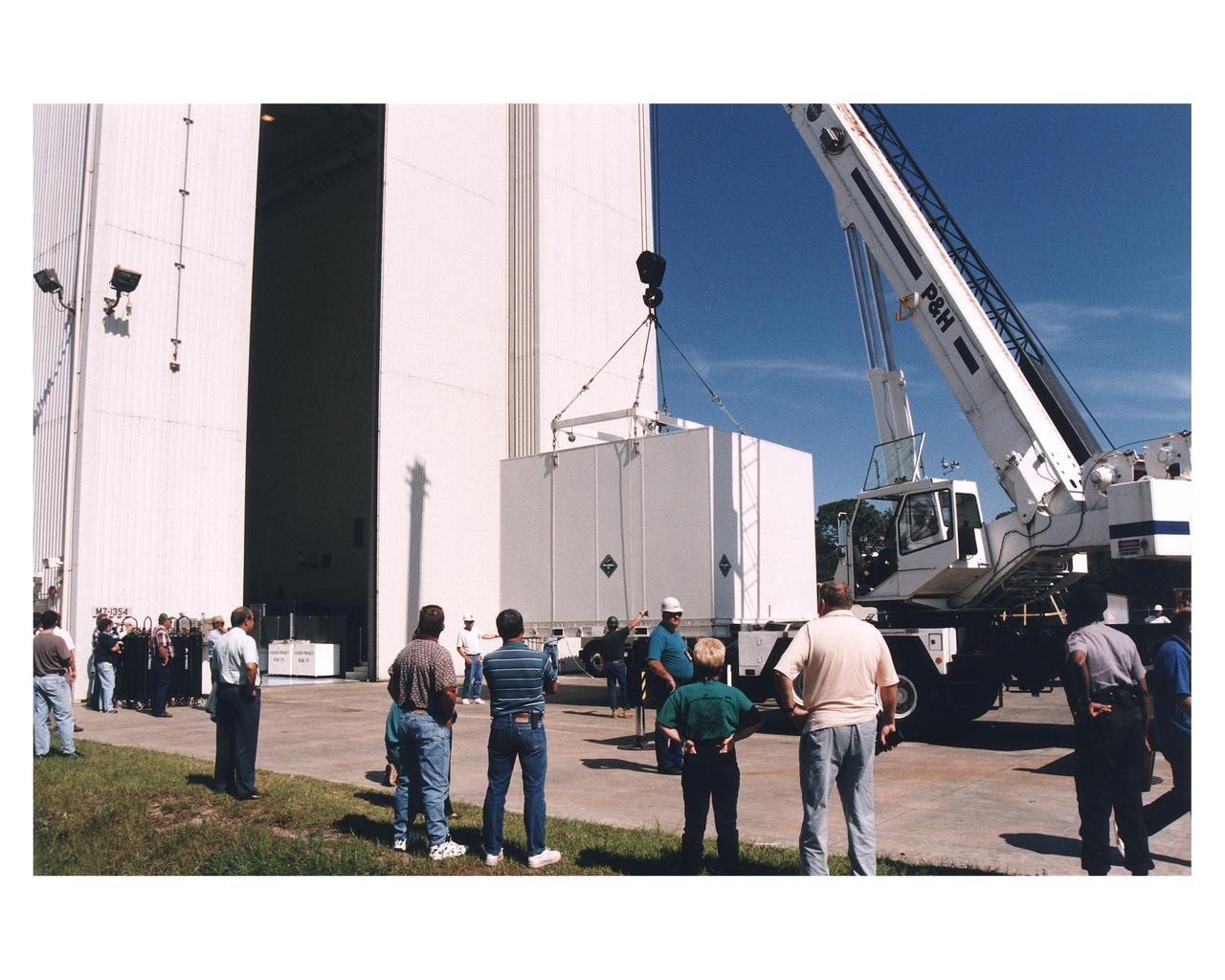
Workers prepare to move the shipping container with the Cassini orbiter inside the Payload Hazardous Servicing Facility (PHSF) for prelaunch processing, testing and integration. The <a href="http://www-pao.ksc.nasa.gov/kscpao/release/1997/66-97.htm">orbiter arrived</a> at KSC’s Shuttle Landing Facility in a U.S. Air Force C-17 air cargo plane from Edwards Air Force Base, California. The orbiter and the Huygens probe already being processed at KSC are the two primary components of the Cassini spacecraft, which will be launched on a Titan IVB/Centaur expendable launch vehicle from Cape Canaveral Air Station. Cassini will explore Saturn, its rings and moons for four years. The Huygens probe, designed and developed for the European Space Agency (ESA), will be deployed from the orbiter to study the clouds, atmosphere and surface of Saturn’s largest moon, Titan. The orbiter was designed and assembled at NASA’s Jet Propulsion Laboratory in California. Following postflight inspections, integration of the 12 science instruments not already installed on the orbiter will be completed. Then, the parabolic high-gain antenna and the propulsion module will be mated to the orbiter, followed by the Huygens probe, which will complete spacecraft integration. The Cassini mission is targeted for an Oct. 6 launch to begin its 6.7-year journey to the Saturnian system. Arrival at the planet is expected to occur around July 1, 2004
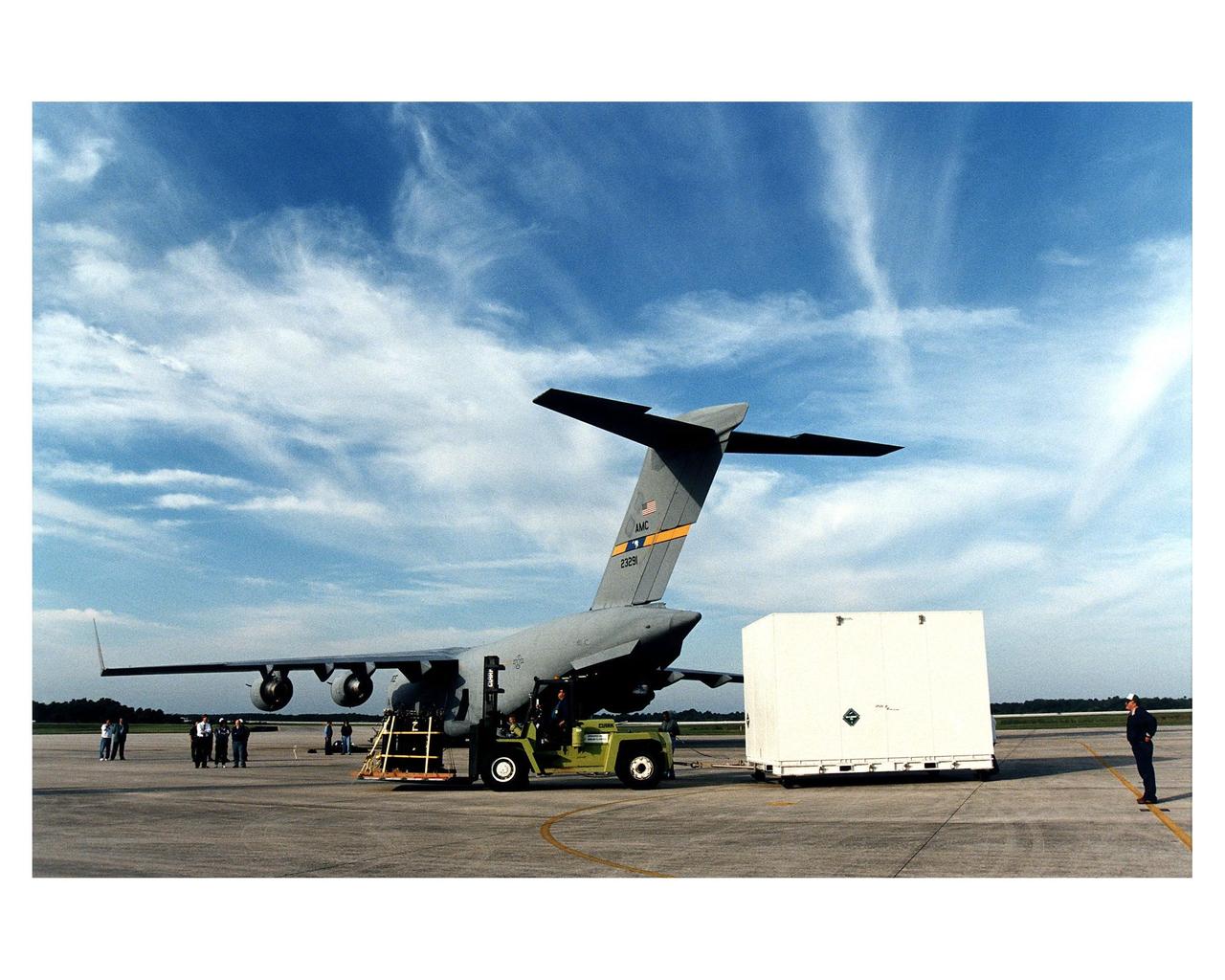
Workers prepare to tow away the large container with the Cassini orbiter from KSC’s Shuttle Landing Facility. The orbiter <a href="http://www-pao.ksc.nasa.gov/kscpao/release/1997/66-97.htm">just arrived</a> on the U.S. Air Force C-17 air cargo plane, shown here, from Edwards Air Force Base, California. The orbiter and the Huygens probe already being processed at KSC are the two primary components of the Cassini spacecraft, which will be launched on a Titan IVB/Centaur expendable launch vehicle from Cape Canaveral Air Station. Cassini will explore Saturn, its rings and moons for four years. The Huygens probe, designed and developed for the European Space Agency (ESA), will be deployed from the orbiter to study the clouds, atmosphere and surface of Saturn’s largest moon, Titan. The orbiter was designed and assembled at NASA’s Jet Propulsion Laboratory in California. Following postflight inspections, integration of the 12 science instruments not already installed on the orbiter will be completed. Then, the parabolic high-gain antenna and the propulsion module will be mated to the orbiter, followed by the Huygens probe, which will complete spacecraft integration. The Cassini mission is targeted for an Oct. 6 launch to begin its 6.7-year journey to the Saturnian system. Arrival at the planet is expected to occur around July 1, 2004
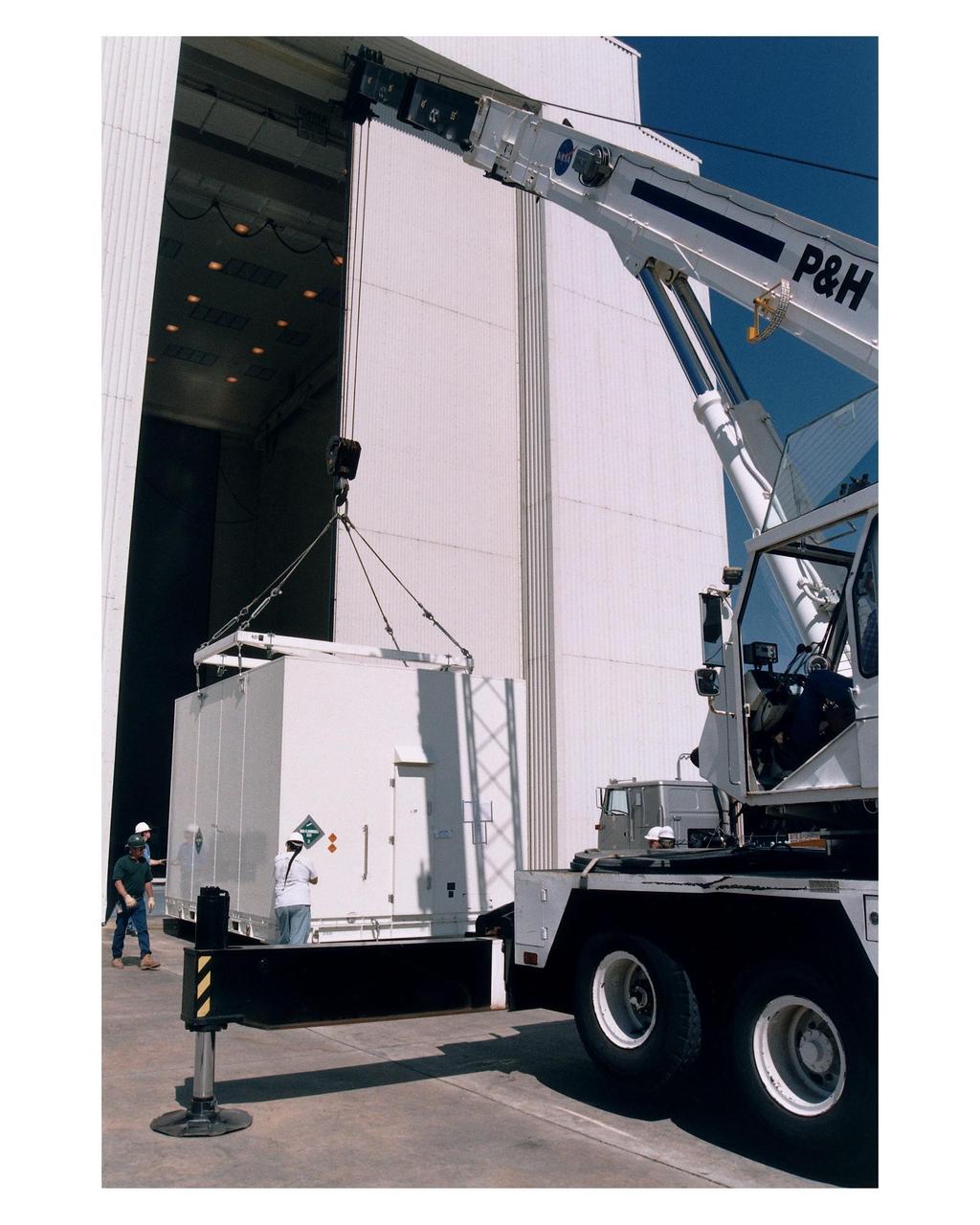
Workers prepare to move the shipping container with the Cassini orbiter inside the Payload Hazardous Servicing Facility (PHSF) for prelaunch processing, testing and integration. The <a href="http://www-pao.ksc.nasa.gov/kscpao/release/1997/66-97.htm">orbiter arrived</a> at KSC’s Shuttle Landing Facility in a U.S. Air Force C-17 air cargo plane from Edwards Air Force Base, California. The orbiter and the Huygens probe already being processed at KSC are the two primary components of the Cassini spacecraft, which will be launched on a Titan IVB/Centaur expendable launch vehicle from Cape Canaveral Air Station. Cassini will explore Saturn, its rings and moons for four years. The Huygens probe, designed and developed for the European Space Agency (ESA), will be deployed from the orbiter to study the clouds, atmosphere and surface of Saturn’s largest moon, Titan. The orbiter was designed and assembled at NASA’s Jet Propulsion Laboratory in California. Following postflight inspections, integration of the 12 science instruments not already installed on the orbiter will be completed. Then, the parabolic high-gain antenna and the propulsion module will be mated to the orbiter, followed by the Huygens probe, which will complete spacecraft integration. The Cassini mission is targeted for an Oct. 6 launch to begin its 6.7-year journey to the Saturnian system. Arrival at the planet is expected to occur around July 1, 2004
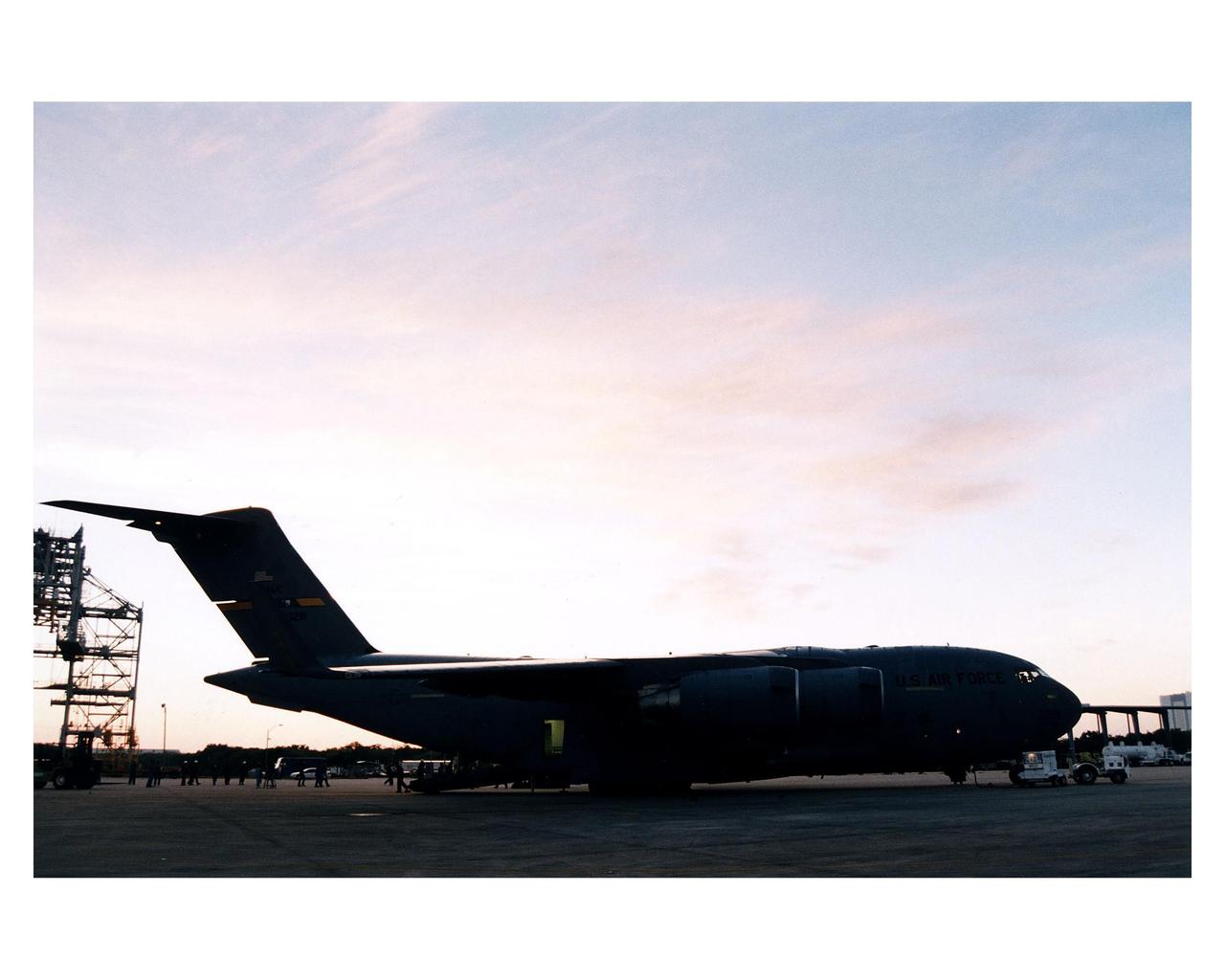
Workers begin unloading the Cassini orbiter from a U.S. Air Force C-17 air cargo plane after its <a href="http://www-pao.ksc.nasa.gov/kscpao/release/1997/66-97.htm">arrival</a> at KSC’s Shuttle Landing Facility from Edwards Air Force Base, California. The orbiter and the Huygens probe already being processed at KSC are the two primary components of the Cassini spacecraft, which will be launched on a Titan IVB/Centaur expendable launch vehicle from Cape Canaveral Air Station. Cassini will explore Saturn, its rings and moons for four years. The Huygens probe, designed and developed for the European Space Agency (ESA), will be deployed from the orbiter to study the clouds, atmosphere and surface of Saturn’s largest moon, Titan. The orbiter was designed and assembled at NASA’s Jet Propulsion Laboratory in California. Following postflight inspections, integration of the 12 science instruments not already installed on the orbiter will be completed. Then, the parabolic high-gain antenna and the propulsion module will be mated to the orbiter, followed by the Huygens probe, which will complete spacecraft integration. The Cassini mission is targeted for an Oct. 6 launch to begin its 6.7-year journey to the Saturnian system. Arrival at the planet is expected to occur around July 1, 2004
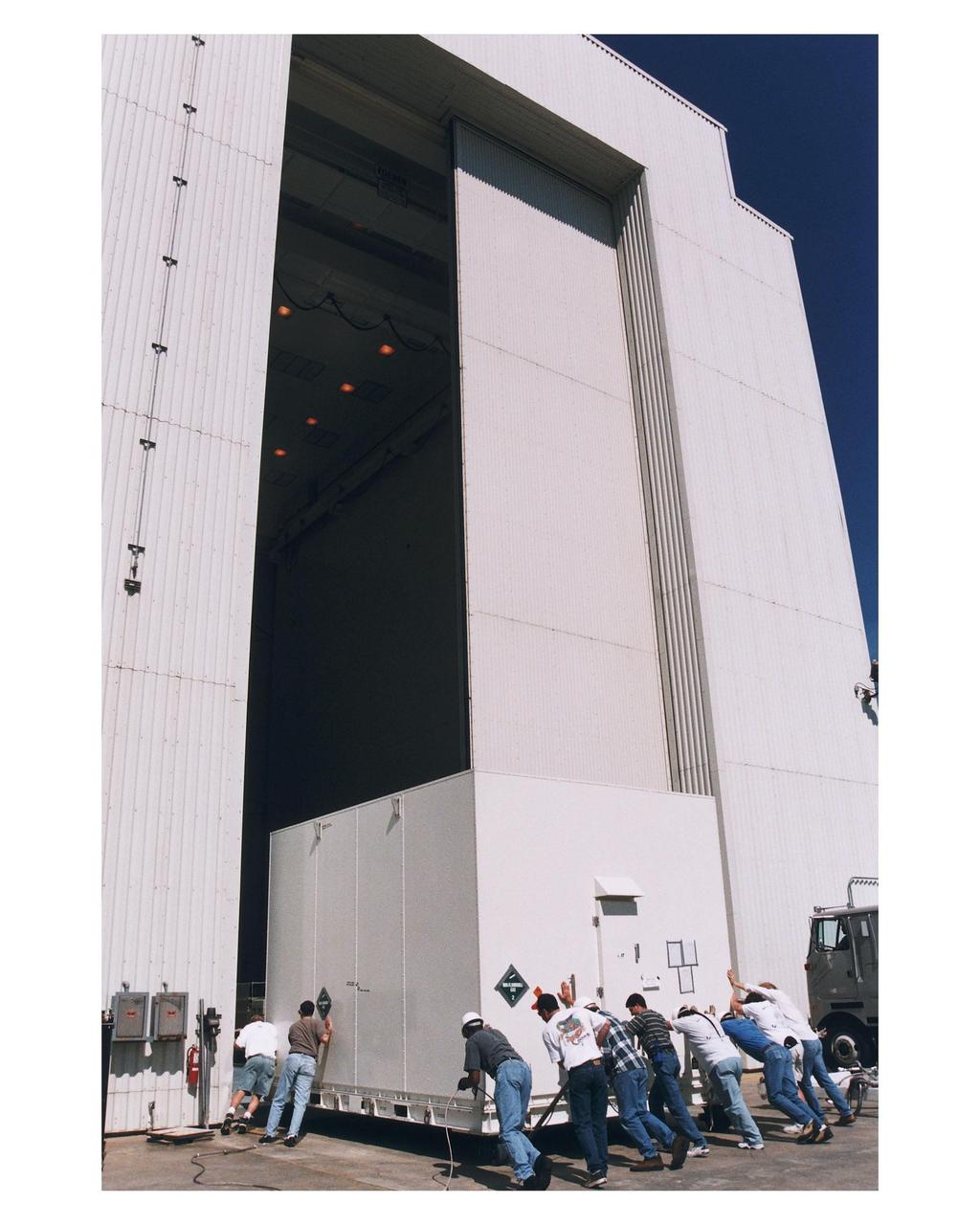
Workers prepare to move the shipping container with the Cassini orbiter inside the Payload Hazardous Servicing Facility (PHSF) for prelaunch processing, testing and integration. The <a href="http://www-pao.ksc.nasa.gov/kscpao/release/1997/66-97.htm">orbiter arrived</a> at KSC’s Shuttle Landing Facility in a U.S. Air Force C-17 air cargo plane from Edwards Air Force Base, California. The orbiter and the Huygens probe already being processed at KSC are the two primary components of the Cassini spacecraft, which will be launched on a Titan IVB/Centaur expendable launch vehicle from Cape Canaveral Air Station. Cassini will explore Saturn, its rings and moons for four years. The Huygens probe, designed and developed for the European Space Agency (ESA), will be deployed from the orbiter to study the clouds, atmosphere and surface of Saturn’s largest moon, Titan. The orbiter was designed and assembled at NASA’s Jet Propulsion Laboratory in California. Following postflight inspections, integration of the 12 science instruments not already installed on the orbiter will be completed. Then, the parabolic high-gain antenna and the propulsion module will be mated to the orbiter, followed by the Huygens probe, which will complete spacecraft integration. The Cassini mission is targeted for an Oct. 6 launch to begin its 6.7-year journey to the Saturnian system. Arrival at the planet is expected to occur around July 1, 2004
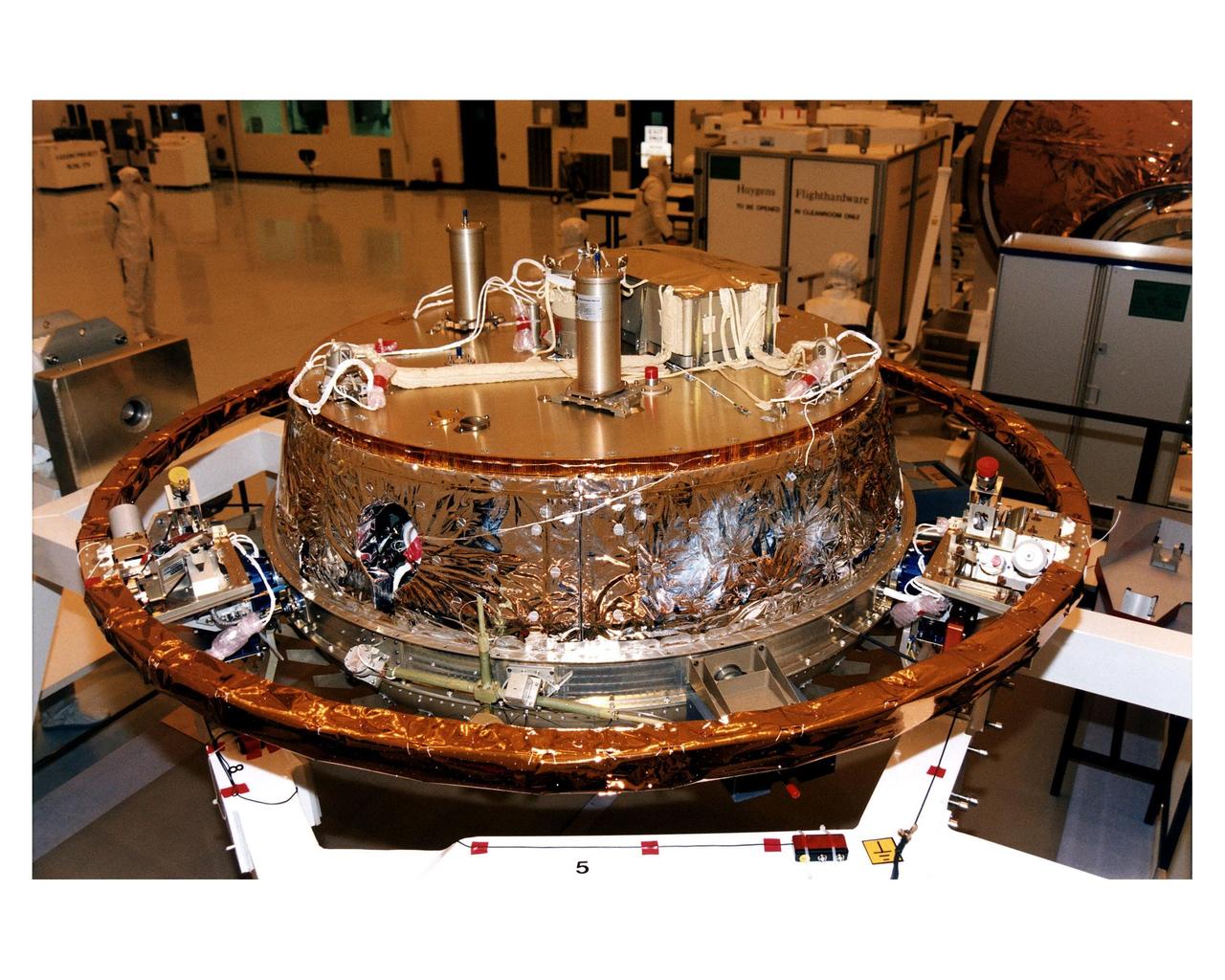
The descent module of the Titan-bound Huygens probe undergoes preflight processing on a support structure in the Payload Hazardous Servicing Facility (PHSF). The probe will study the clouds, atmosphere and surface of Saturn's moon, Titan, as part of the Cassini mission to the Saturnian system. The cylinders on the top of the probe contain antennas; the small square box has a parachute. The probe will detach from the Cassini orbiter after arrival at Saturn in 2004 to slowly descend through Titan's atmosphere to the surface of the Saturn moon. The Cassini launch on a Titan IVB/Centaur expendable launch vehicle is scheduled for October 6 from Cape Canaveral Air Station
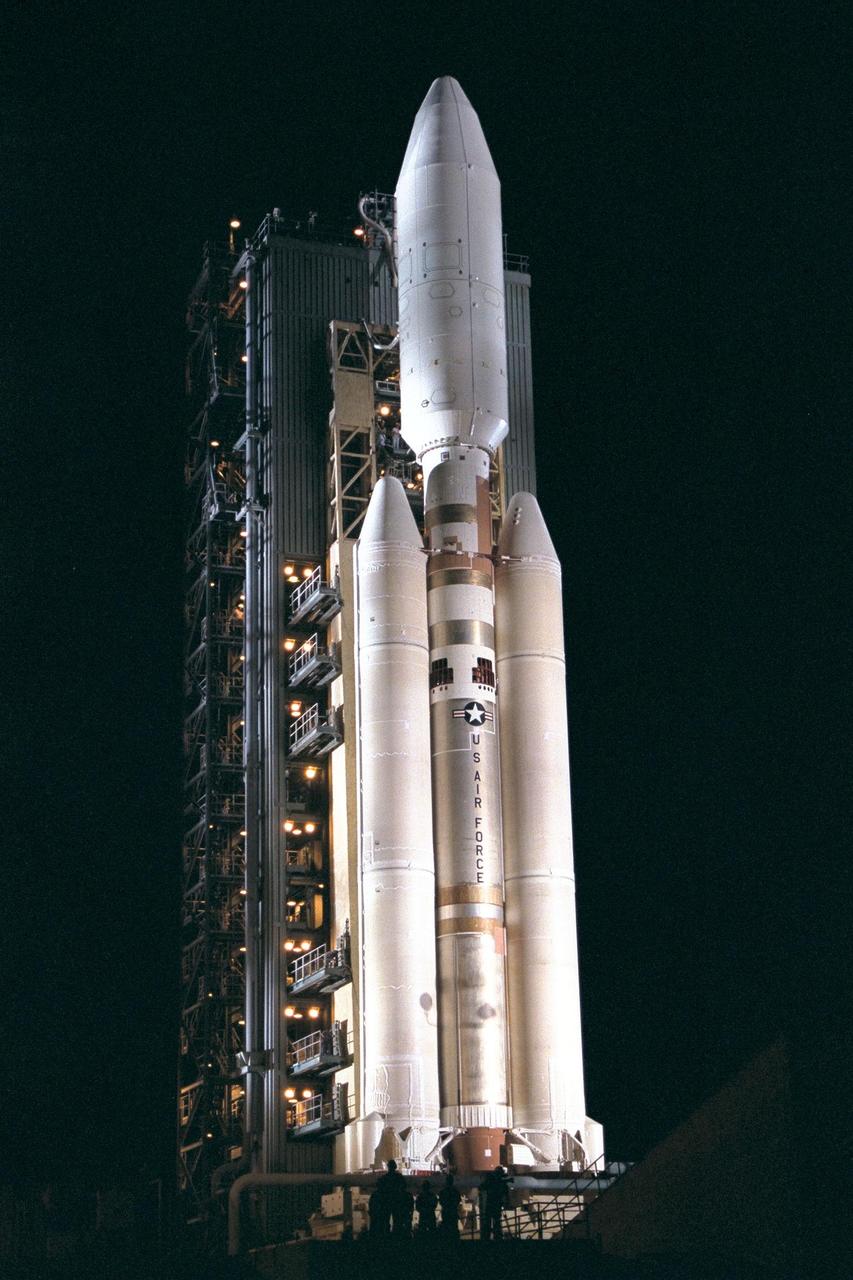
This image from 1997 is of the Titan IVB/Centaur carrying NASA Cassini spacecraft at Launch Complex 40 on Cape Canaveral Air Station, the Mobile Service Tower has been retracted away.
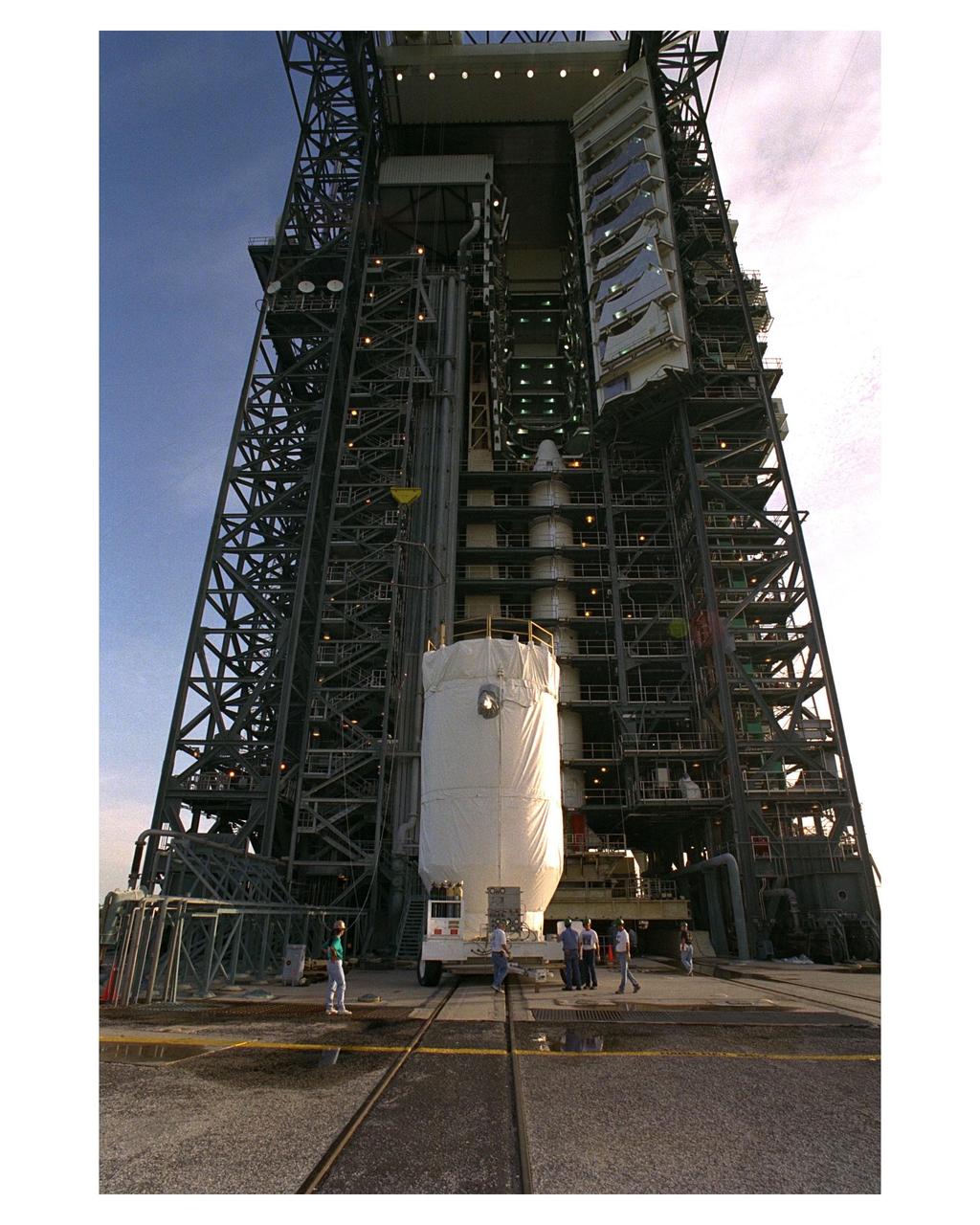
KENNEDY SPACE CENTER, FLA. -- A Centaur upper stage is prepared for hoisting at Launch Pad 40 at Cape Canaveral Air Station to be mated with the Titan IV expendable launch vehicle that will propel the Cassini spacecraft and the European Space Agency's Huygens probe to Saturn and its moon Titan. Cassini will explore Saturn, its rings and moons for four years. The Huygens probe, designed and developed for the European Space Agency (ESA), will be deployed from the orbiter to study the clouds, atmosphere and surface of Saturn's largest moon, Titan. The orbiter was designed and assembled at NASA's Jet Propulsion Laboratory in California. The Cassini mission is targeted for an October 6 launch to begin its 6.7-year journey to the Saturnian system. Arrival at the planet is expected to occur around July 1, 2004.
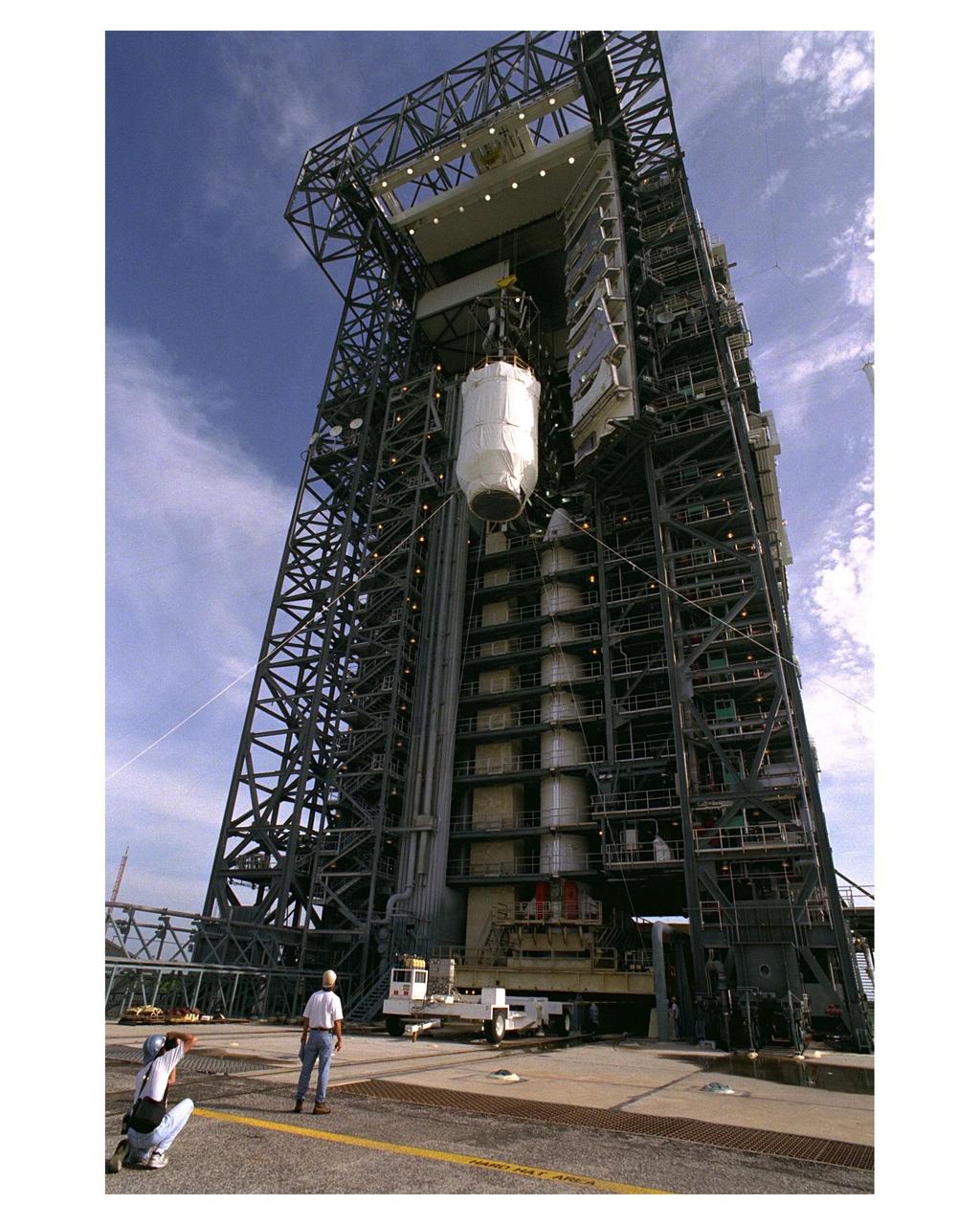
KENNEDY SPACE CENTER, FLA. -- A Centaur upper stage is hoisted at Launch Pad 40 at Cape Canaveral Air Station for mating with the Titan IV expendable launch vehicle that will propel the Cassini spacecraft and the European Space Agency's Huygens probe to Saturn and its moon Titan. Cassini will explore Saturn, its rings and moons for four years. The Huygens probe, designed and developed for the European Space Agency (ESA), will be deployed from the orbiter to study the clouds, atmosphere and surface of Saturn's largest moon, Titan. The orbiter was designed and assembled at NASA's Jet Propulsion Laboratory in California. The Cassini mission is targeted for an October 6 launch to begin its 6.7-year journey to the Saturnian system. Arrival at the planet is expected to occur around July 1, 2004.
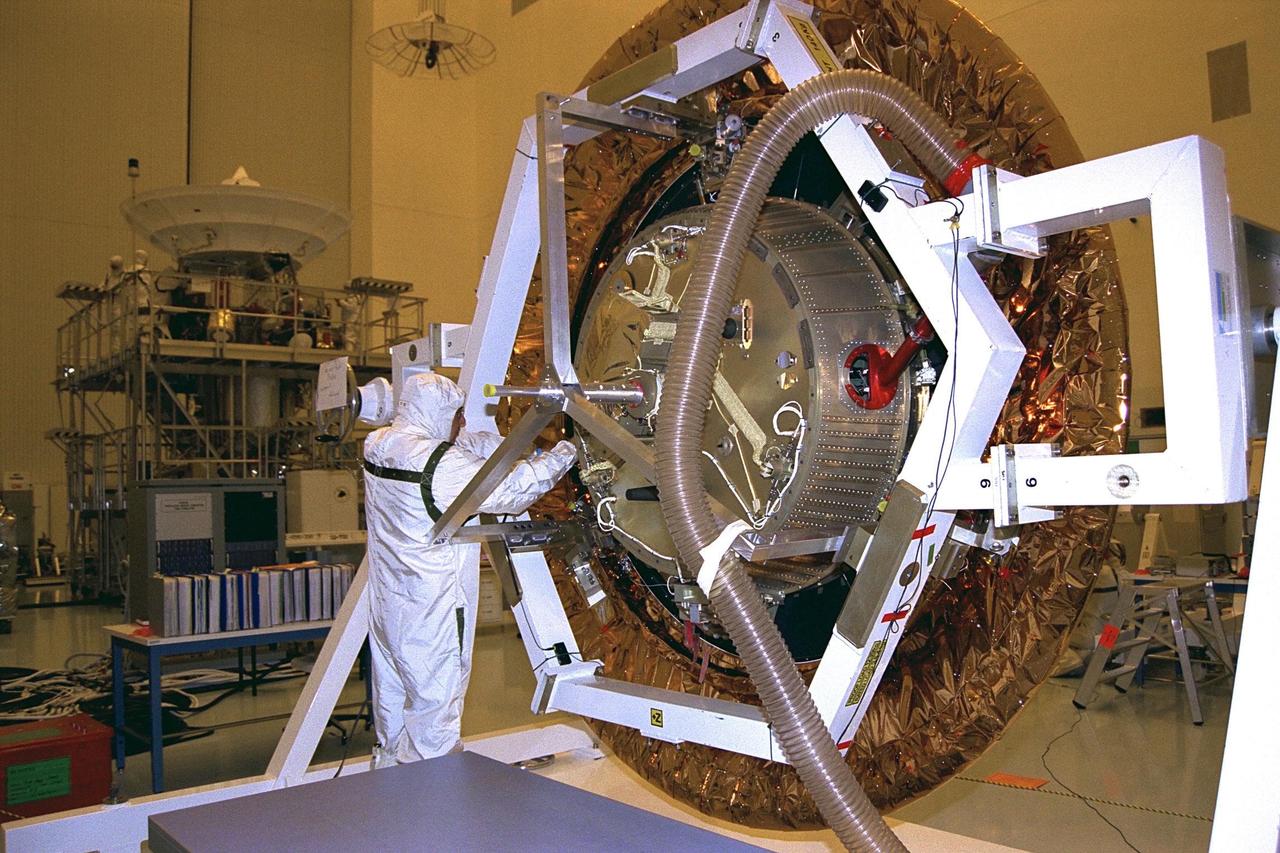
A Daimler-Benz Aerospace staff member inspects the heat shield of the Huygens probe after the shield was installed in the Payload Hazardous Servicing Facility at KSC in July. Instruments mounted on the probe, which is owned by the European Space Agency, will receive atmospheric and surface data on Saturn’s main moon, Titan, to send back to Earth as part of the Cassini mission. The back cover, yet to be attached to the Cassini orbiter, will protect the probe during descent onto Titan. A four-year, close-up study of the Saturnian system, the mission is scheduled for launch from Cape Canaveral Air Station in October 1997. It will take seven years for the spacecraft to reach Saturn. Aerospatiale is the prime contractor for ESA
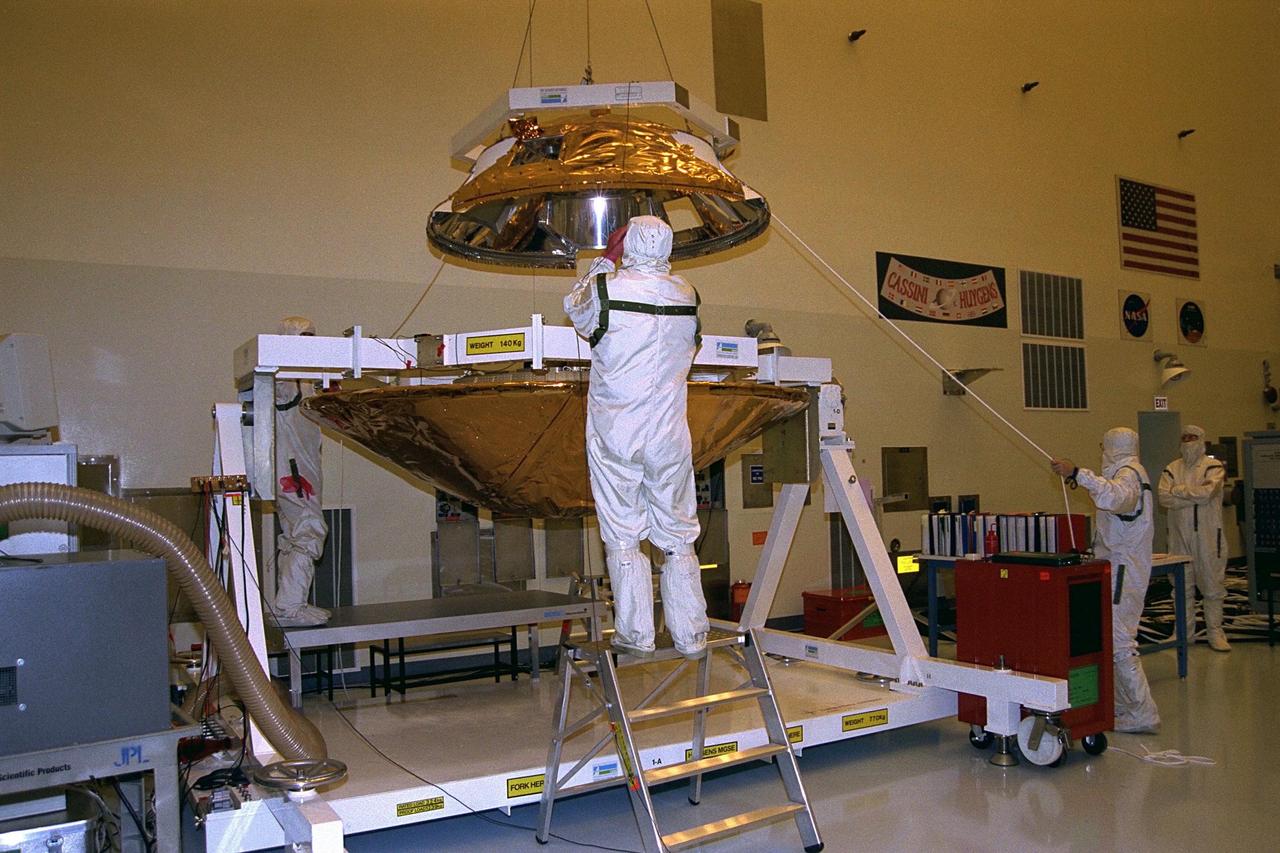
Daimler-Benz Aerospace staff install the back cover on the Huygens probe in the Payload Hazardous Servicing Facility at KSC in July. Instruments mounted on the probe, which was developed by the European Space Agency (ESA), will receive atmospheric and surface data on Saturn’s main moon, Titan, to send back to Earth as part of the Cassini mission. The back cover, yet to be attached to the Cassini orbiter, will protect the probe during descent onto Titan. A four-year, close-up study of the Saturnian system, the mission is scheduled for launch from Cape Canaveral Air Station in October 1997. It will take seven years for the spacecraft to reach Saturn. Aerospatiale is the prime contractor for ESA
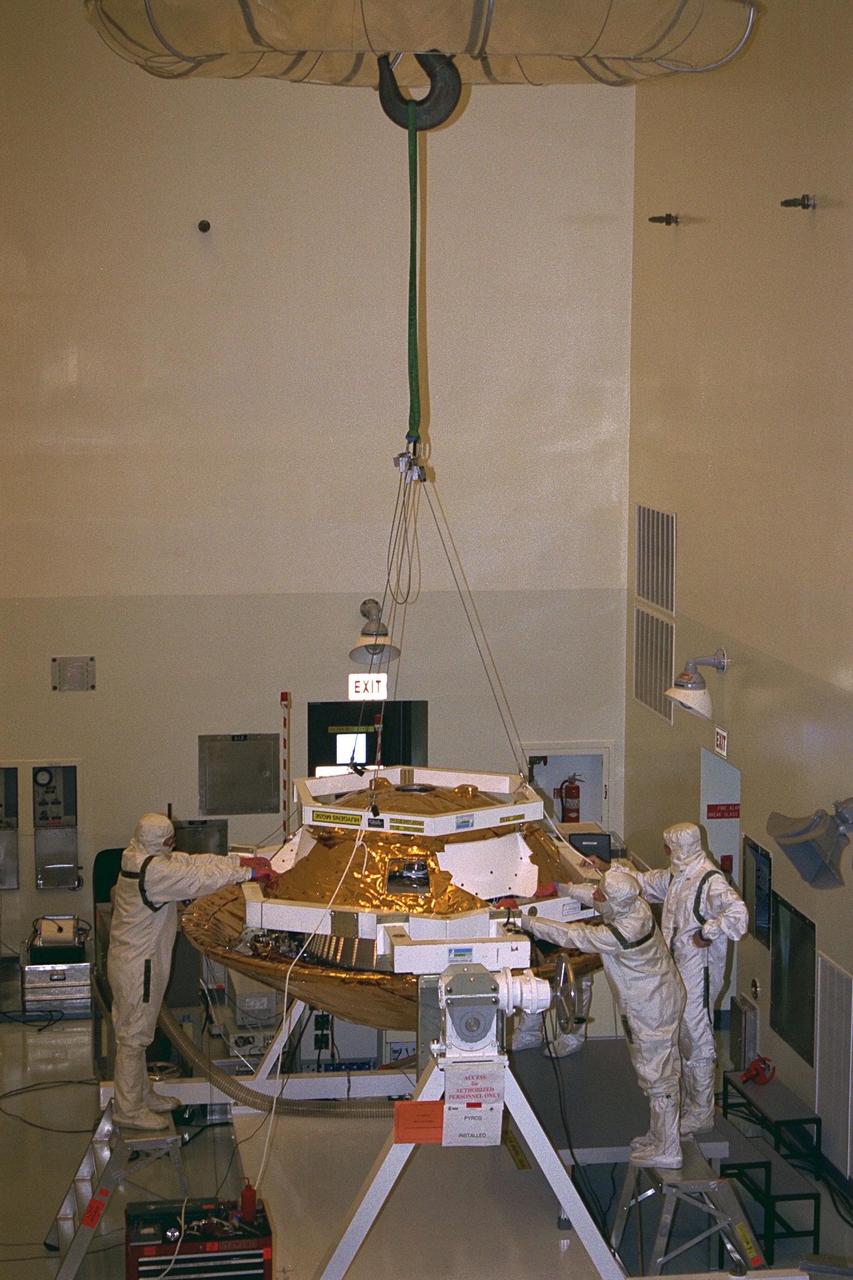
Daimler-Benz Aerospace staff install the back cover on the Huygens probe in the Payload Hazardous Servicing Facility at KSC in July. Instruments mounted on the probe, which was developed by the European Space Agency (ESA), will receive atmospheric and surface data on Saturn’s main moon, Titan, to send back to Earth as part of the Cassini mission. The back cover, yet to be attached to the Cassini orbiter, will protect the probe during descent onto Titan. A four-year, close-up study of the Saturnian system, the mission is scheduled for launch from Cape Canaveral Air Station in October 1997. It will take seven years for the spacecraft to reach Saturn. Aerospatiale is the prime contractor for ESA
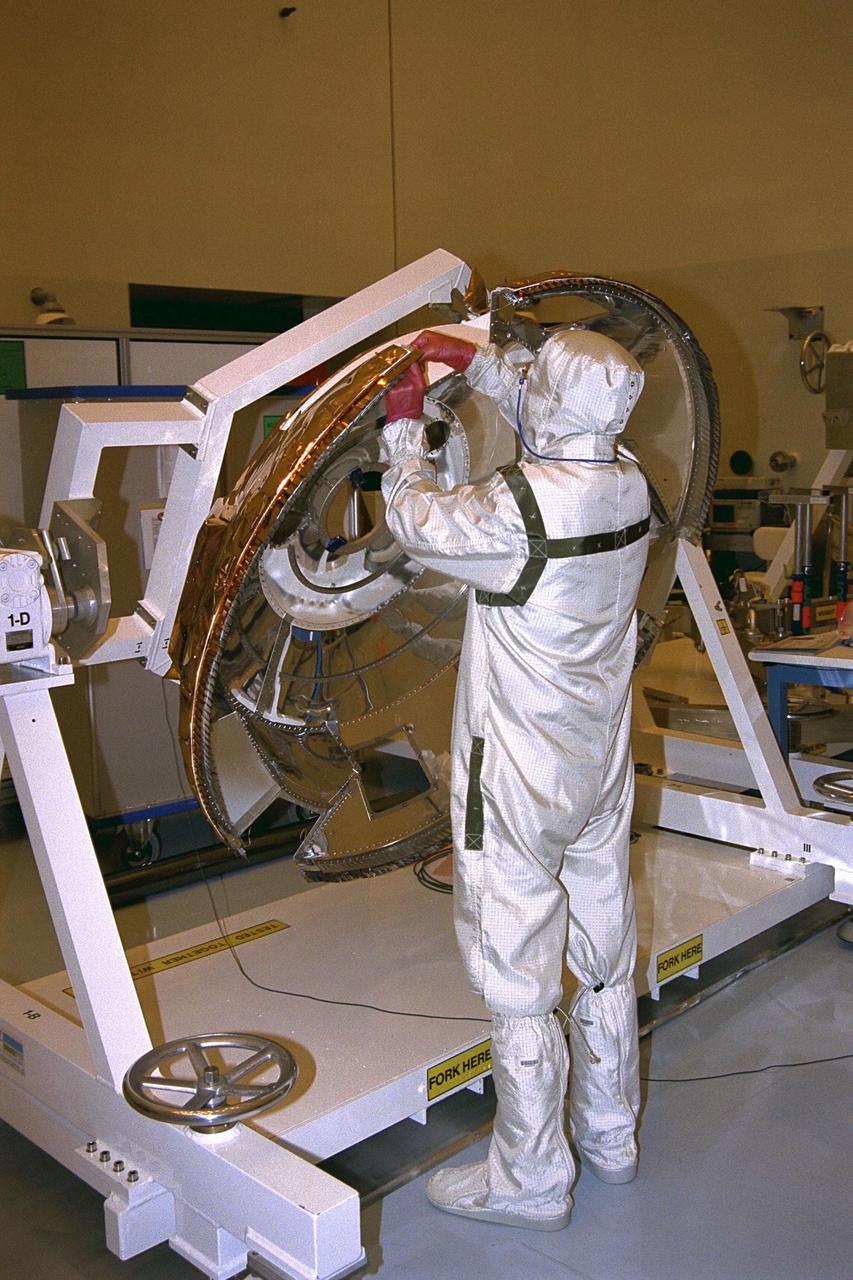
A Daimler-Benz Aerospace staff member installs thermal blanket insulation on the back cover of the Huygens probe in the Payload Hazardous Servicing Facility at KSC in July. Instruments mounted on the probe, which is owned by the European Space Agency (ESA), will receive atmospheric and surface data on Saturn’s main moon, Titan, to send back to Earth as part of the Cassini mission. The back cover, yet to be attached to the Cassini orbiter, will protect the probe during descent onto Titan. A four-year, close-up study of the Saturnian system, the mission is scheduled for launch from Cape Canaveral Air Station in October 1997. It will take seven years for the spacecraft to reach Saturn. Aerospatiale is the prime contractor for ESA
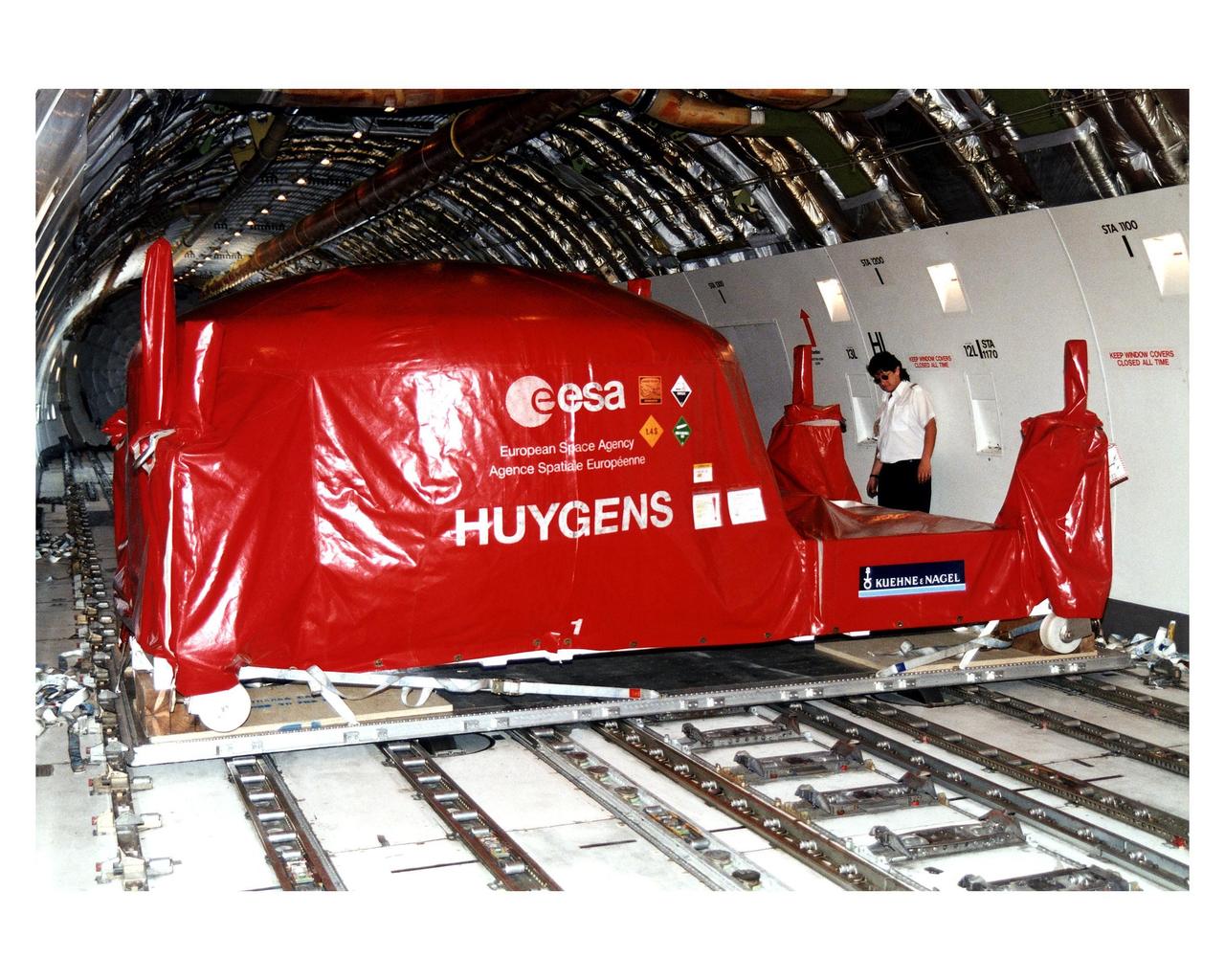
The Huygens probe, which will study the clouds, atmosphere and surface of Saturn's moon, Titan, as part of the Cassini mission to Saturn, arrives in a cargo plane at the Skid Strip, Cape Canaveral Air Station (CCAS). The probe was designed and developed for the European Space Agency (ESA) by a European industrial consortium led by Aerospatiale as prime contractor. Over the past year, it was integrated and tested at the facilities of Daimler Benz Aerospace Dornier Satellitensysteme in Germany. The probe will be mated to the Cassini orbiter, which was designed and assembled at NASA's Jet Propulsion Laboratory in California. The Cassini launch is targeted for October 6 from CCAS aboard a Titan IVB/Centaur expendable launch vehicle. After arrival at Saturn in 2004, the probe will be released from the Cassini orbiter to enter the Titan atmosphere
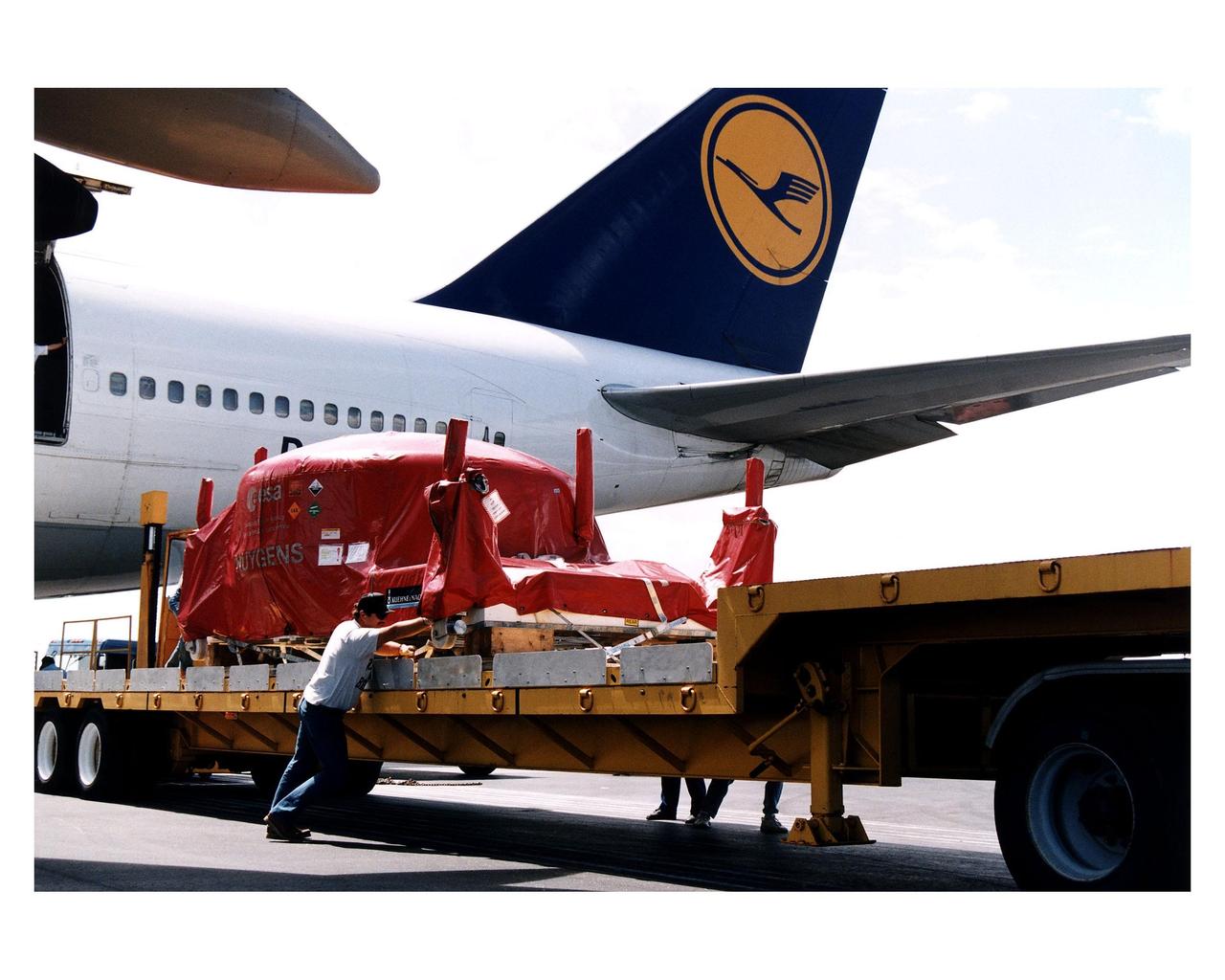
The Huygens probe, which will study the clouds, atmosphere and surface of Saturn's largest moon, Titan, as part of the Cassini mission to Saturn, is prepared for transport from the Skid Strip, Cape Canaveral Air Station (CCAS), after being off-loaded from a plane. The probe was designed and developed for the European Space Agency (ESA) by a European industrial consortium led by Aerospatiale as prime contractor. Over the past year, it was integrated and tested at the facilities of Daimler Benz Aerospace Dornier Satellitensysteme in Germany. The probe will be mated to the Cassini orbiter, which was designed and assembled at NASA's Jet Propulsion Laboratory in California. The Cassini launch is targeted for October 6 from CCAS aboard a Titan IVB/Centaur expendable launch vehicle. After arrival at Saturn in 2004, the probe will be released from the Cassini orbiter to slowly descend through the Titan atmosphere to the moon's surface
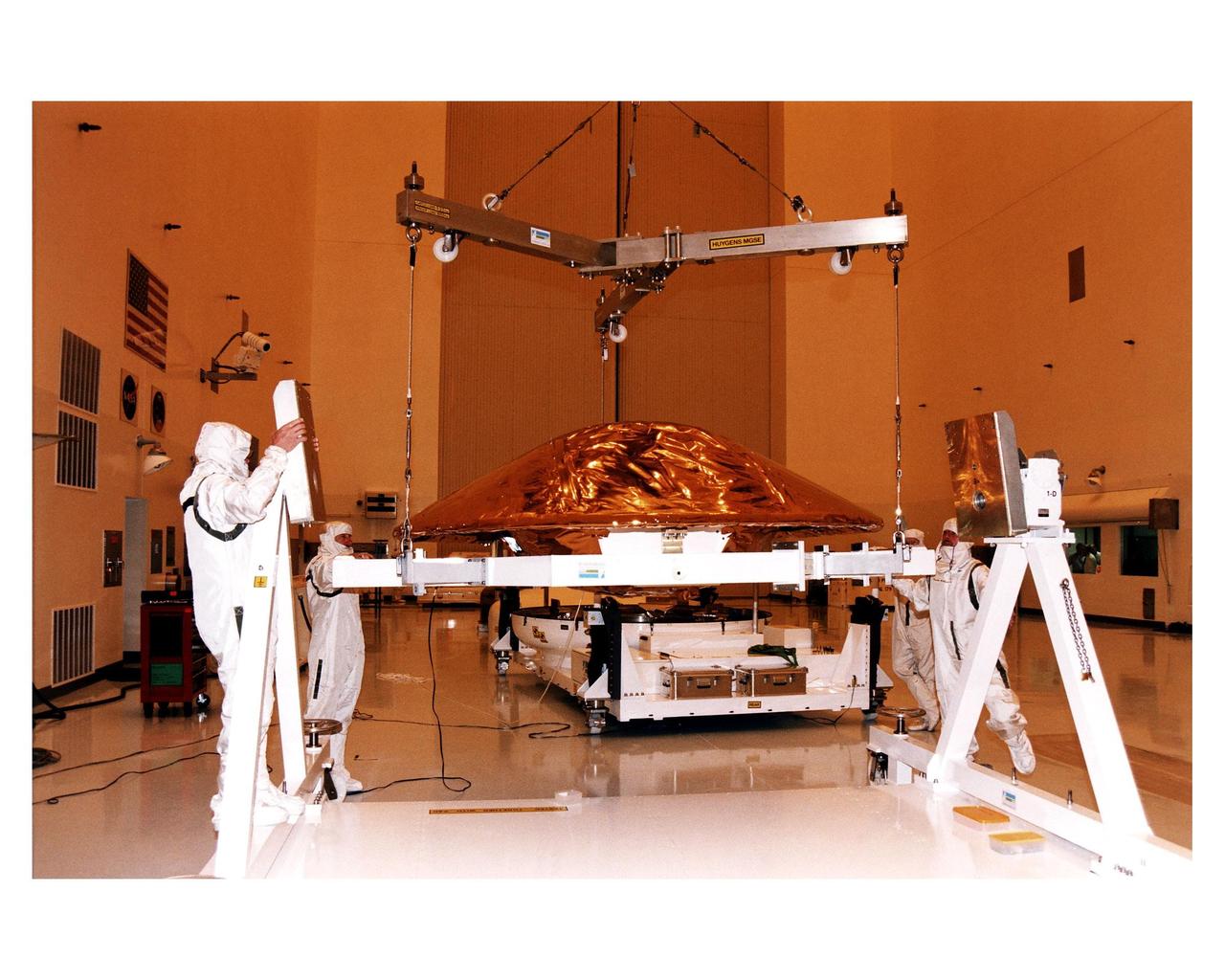
Workers in the Payload Hazardous Servicing Facility prepare to begin prelaunch processing of the Huygens probe, which will study the clouds, atmosphere and surface of Saturn's largest moon, Titan, as part of the Cassini mission to Saturn. The probe was designed and developed for the European Space Agency (ESA) by a European industrial consortium led by Aerospatiale as prime contractor. Over the past year, it was integrated and tested at the facilities of Daimler Benz Aerospace Dornier Satellitensysteme in Germany. The probe will be mated to the Cassini orbiter, which was designed and assembled at NASA's Jet Propulsion Laboratory in California. The Cassini launch is targeted for October 6 from CCAS aboard a Titan IVB/Centaur expendable launch vehicle. After arrival at Saturn in 2004, the probe will be released from the Cassini orbiter to slowly descend through the Titan atmosphere to the moon's surface
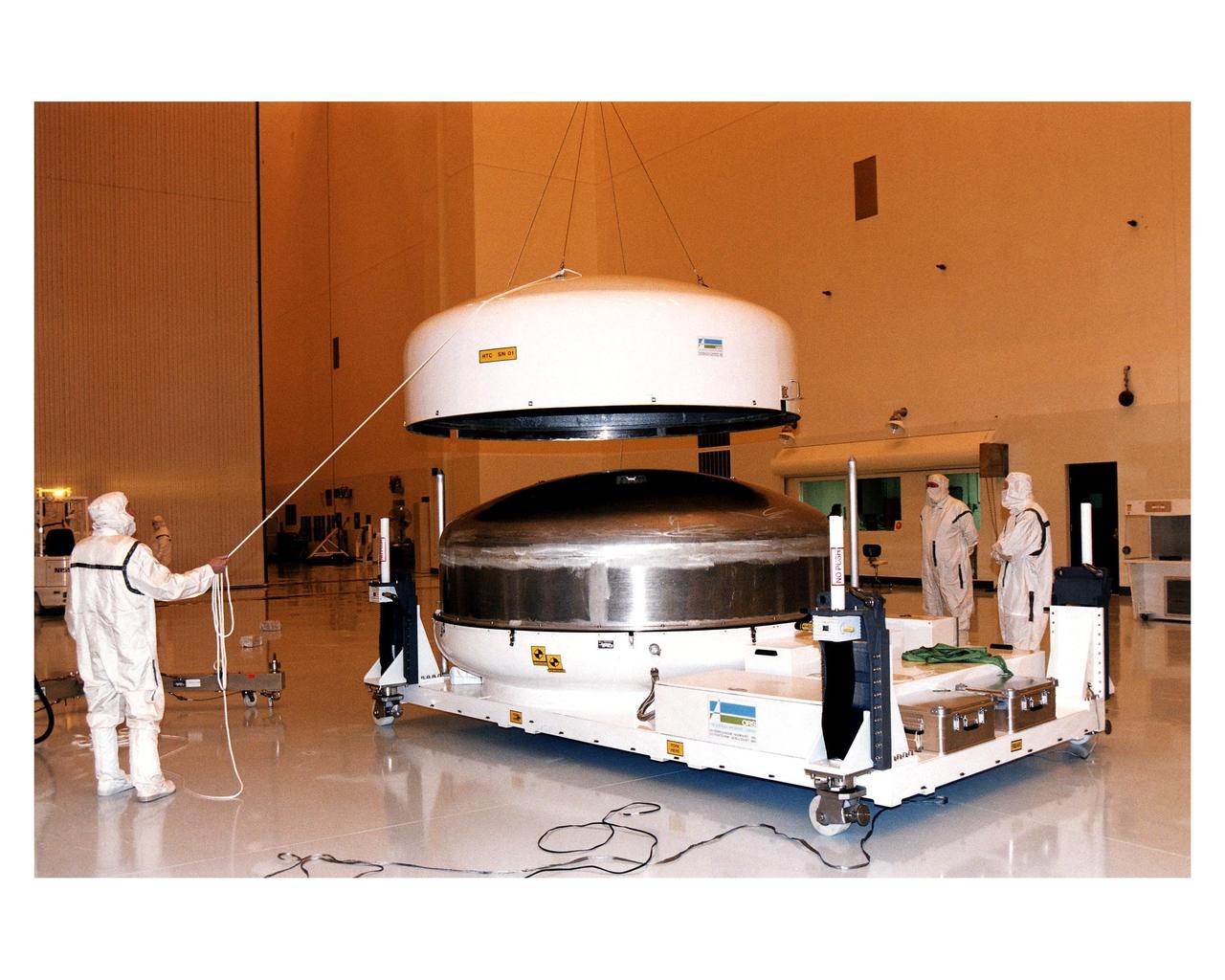
Workers in the Payload Hazardous Servicing Facility prepare to begin prelaunch processing of the Huygens probe, which will study the clouds, atmosphere and surface of Saturnþs largest moon, Titan, as part of the Cassini mission to Saturn. The probe was designed and developed for the European Space Agency (ESA) by a European industrial consortium led by Aerospatiale as prime contractor. Over the past year, it was integrated and tested at the facilities of Daimler Benz Aerospace Dornier Satellitensysteme in Germany. The probe will be mated to the Cassini orbiter, which was designed and assembled at NASA's Jet Propulsion Laboratory in California. The Cassini launch is targeted for October 6 from CCAS aboard a Titan IVB/Centaur expendable launch vehicle. After arrival at Saturn in 2004, the probe will be released from the Cassini orbiter to slowly descend through the Titan atmosphere to the moon's surface
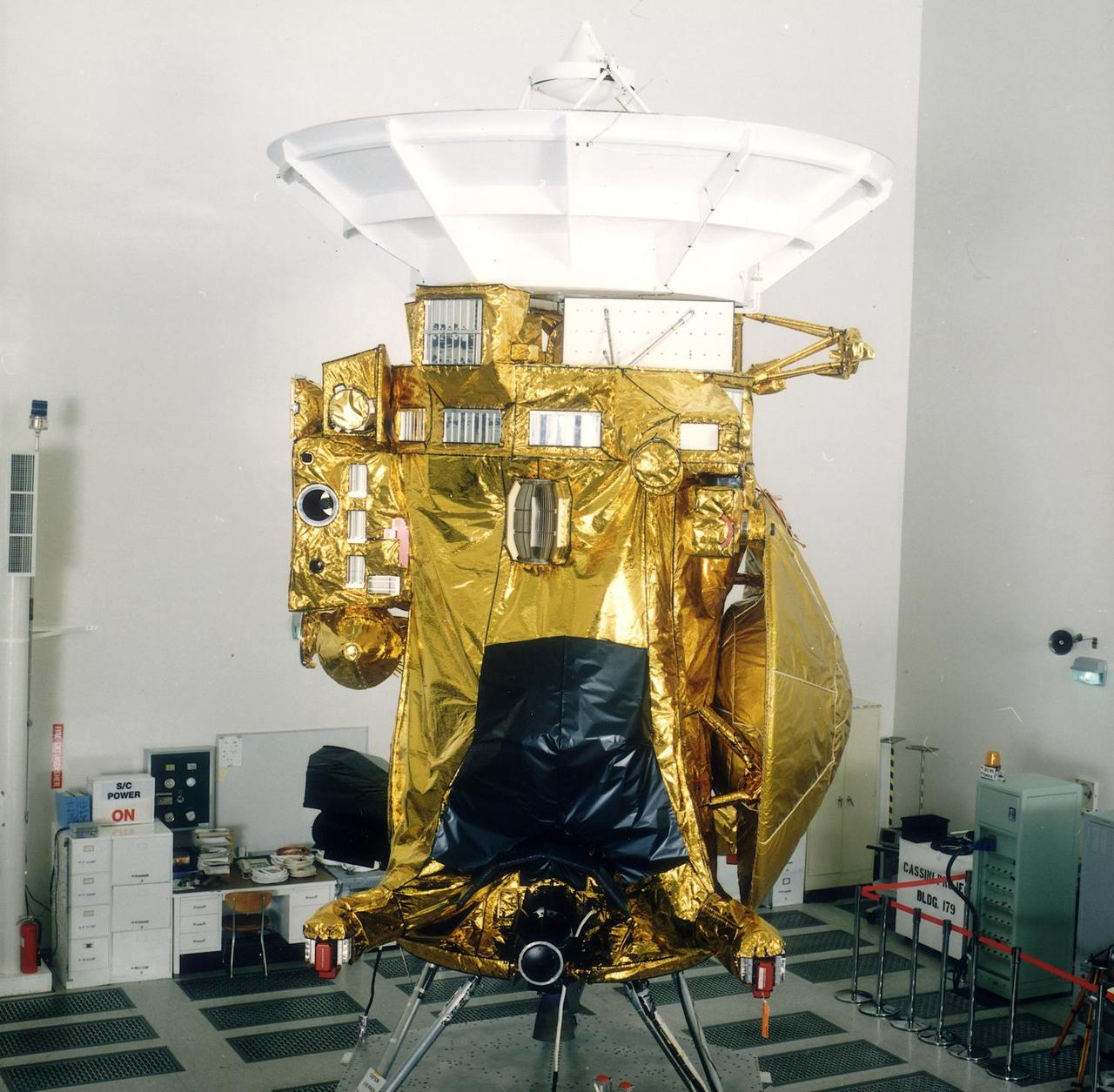
On October of 1997, a two-story-tall robotic spacecraft will begin a journey of many years to reach and explore the exciting realm of Saturn, the most distant planet that can easily be seen by the unaided human eye. In addition to Saturn's interesting atmosphere and interior, its vast system contains the most spectacular of the four planetary ring systems, numerous icy satellites with a variety of unique surface features. A huge magnetosphere teeming with particles that interact with the rings and moons, and the intriguing moon Titan, which is slightly larger than the planet Mercury, and whose hazy atmosphere is denser than that of Earth, make Saturn a fascinating planet to study. The Cassini mission is an international venture involving NASA, the European Space Agency (ESA), the Italian Space Agency (ASI), and several separate European academic and industrial partners. The mission is managed for NASA by JPL. The spacecraft will carry a sophisticated complement of scientific sensors to support 27 different investigations to probe the mysteries of the Saturn system. The large spacecraft will consist of an orbiter and ESA's Huygens Titan probe. The orbiter mass at launch will be nearly 5300 kg, over half of which is propellant for trajectory control. The mass of the Titan probe (2.7 m diameter) is roughly 350 kg. The mission is named in honor of the seventeenth-century, French-Italian astronomer Jean Dominique Cassini, who discovered the prominent gap in Saturn's main rings, as well as the icy moons Iapetus, Rhea, Dione, and Tethys. The ESA Titan probe is named in honor of the exceptional Dutch scientist Christiaan Huygens, who discovered Titan in 1655, followed in 1659 by his announcement that the strange Saturn "moons" seen by Galileo in 1610 were actually a ring system surrounding the planet. Huygens was also famous for his invention of the pendulum clock, the first accurate timekeeping device. http://photojournal.jpl.nasa.gov/catalog/PIA04603
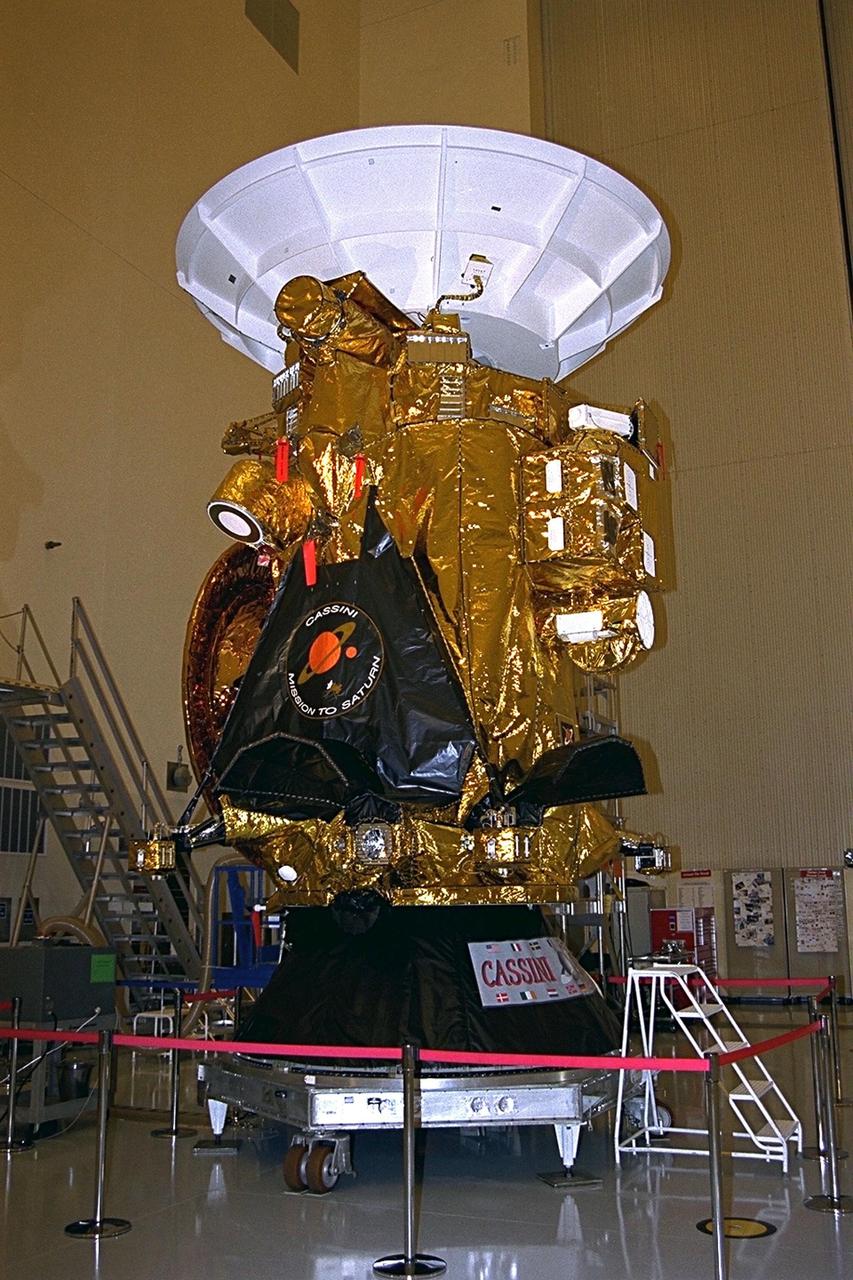
The Cassini spacecraft is on view for the media in the Payload Hazardous Servicing Facility (PHSF) at Kennedy Space Center, Florida. The two-story-tall spacecraft, scheduled for launch on an Air Force Titan IV/Centaur launch vehicle on Oct. 6, is destined to arrive at Saturn in July 2004, where it will orbit and study Saturn, its rings, moons and magnetic environment in detail over a four-year period. Cassini carries a scientific probe called Huygens, provided by the European Space Agency. Huygens will be released from the main Cassini spacecraft and parachute through the atmosphere of Saturn's most intriguing moon, Titan, which is thought to chemically resemble a very cold version of Earth's environment before life began. The Cassini mission is managed for NASA by the Jet Propulsion Laboratory, a division of the California Institute of Technology
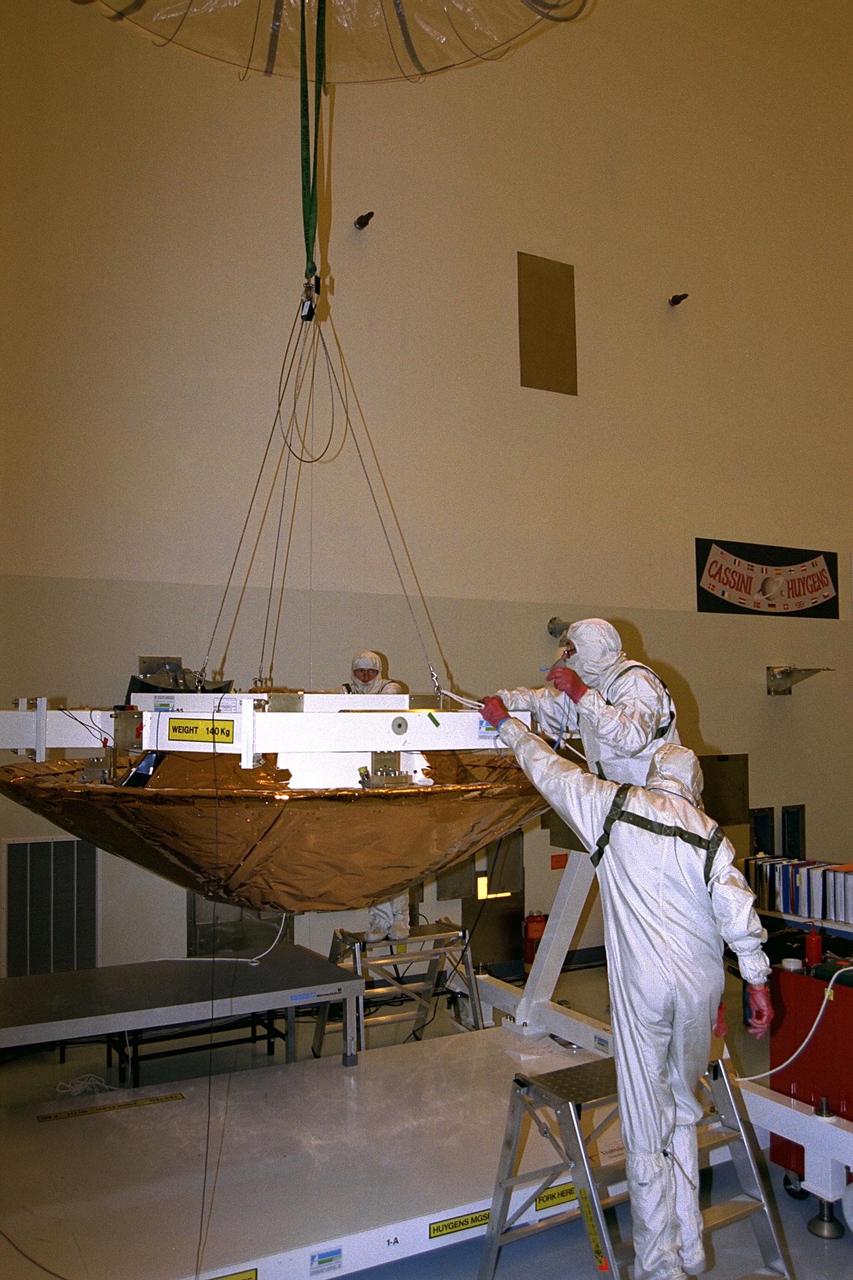
Daimler-Benz Aerospace staff prepare to remove the lift fixture used to install the back cover on the Huygens probe, the conical structure in the white workstand, in the Payload Hazardous Servicing Facility at KSC. Instruments mounted on the probe, which was developed by the European Space Agency (ESA), will receive atmospheric and surface data on Saturn’s main moon, Titan, to send back to Earth as part of the Cassini mission. The back cover, yet to be attached to the Cassini orbiter, will protect the probe during descent onto Titan. A four-year, close-up study of the Saturnian system, Cassini is scheduled for launch from Cape Canaveral Air Station in October 1997. It will take seven years for the spacecraft to reach Saturn. Aerospatiale is the prime contractor for ESA
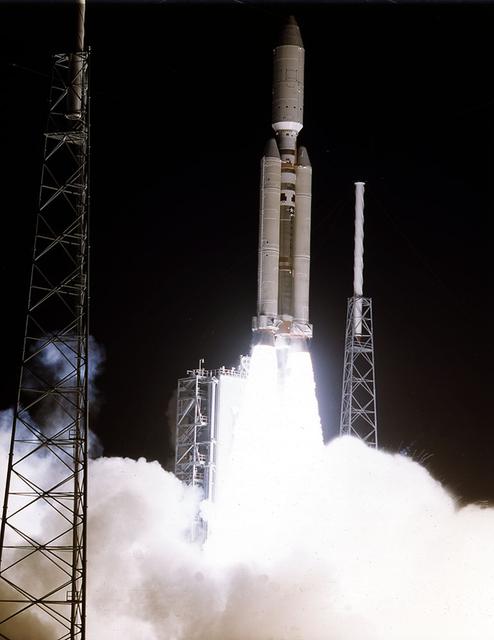
The 7-year journey to Saturn began with the liftoff of a Titan IVB/Centaur carrying the Cassini orbiter and its attached Huygens probe. After a 2.2-billion mile journey that included two swingbys of Venus and one of Earth to gain additional velocity, the two-story tall spacecraft will arrive at Saturn in July 2004. The orbiter will circle the planet for 4 years, its compliment of 12 scientific instruments gathering data about Saturn's atmosphere, rings and magnetosphere, and conducting close-up observations of the Saturnian moons. Huygens, with a separate suite of 6 science instruments, will separate from Cassini to fly on a ballistic trajectory toward Titan, the only celestial body besides Earth to have an atmosphere rich in nitrogen. Scientists are eager to study further this chemical similarity in hopes of learning more about the origins of our own planet Earth. Huygens will provide the first direct sampling of Titan's atmospheric chemistry and the first detailed photographs of its surface. The Cassini mission is an international effort involving NASA, the European Space Agency (ESA), and the Italian Space Agency, Agenzia Spaziale Italiana (ASI).
The 7-year journey to Saturn began with the liftoff of a Titan IVB/ Centaur carrying the Cassini orbiter and its attached Huygens probe. After a 2.2-billion mile journey that included two swingbys of Venus and one of the Earth to gain additional velocity, the two-story tall spacecraft will arrive at Saturn in July 2004. The orbiter will circle the planet for 4 years, its compliment of 12 scientific instruments gathering data about Saturn's atmosphere, rings and magnetosphere and conducting close-up observations of Saturnian moons. Huygens, with a separate suite of 6 science instruments, will separate from Cassini to fly on a ballistic trajectory toward Titan, the only celestial body besides Earth to have an atmosphere rich in nitrogen. Scientists are eager to study further this chemical similarity in hopes of learning more about the origins of our own planet Earth. Huygens will provide the first direct sampling of Titan's atmospheric chemistry and the first detailed photographs of its surface. The Cassini mission is an International effort involving NASA, the European Space Agency (ESA), and the Italian Space Agency, Agenzia Spaziale Italiana (ASI).
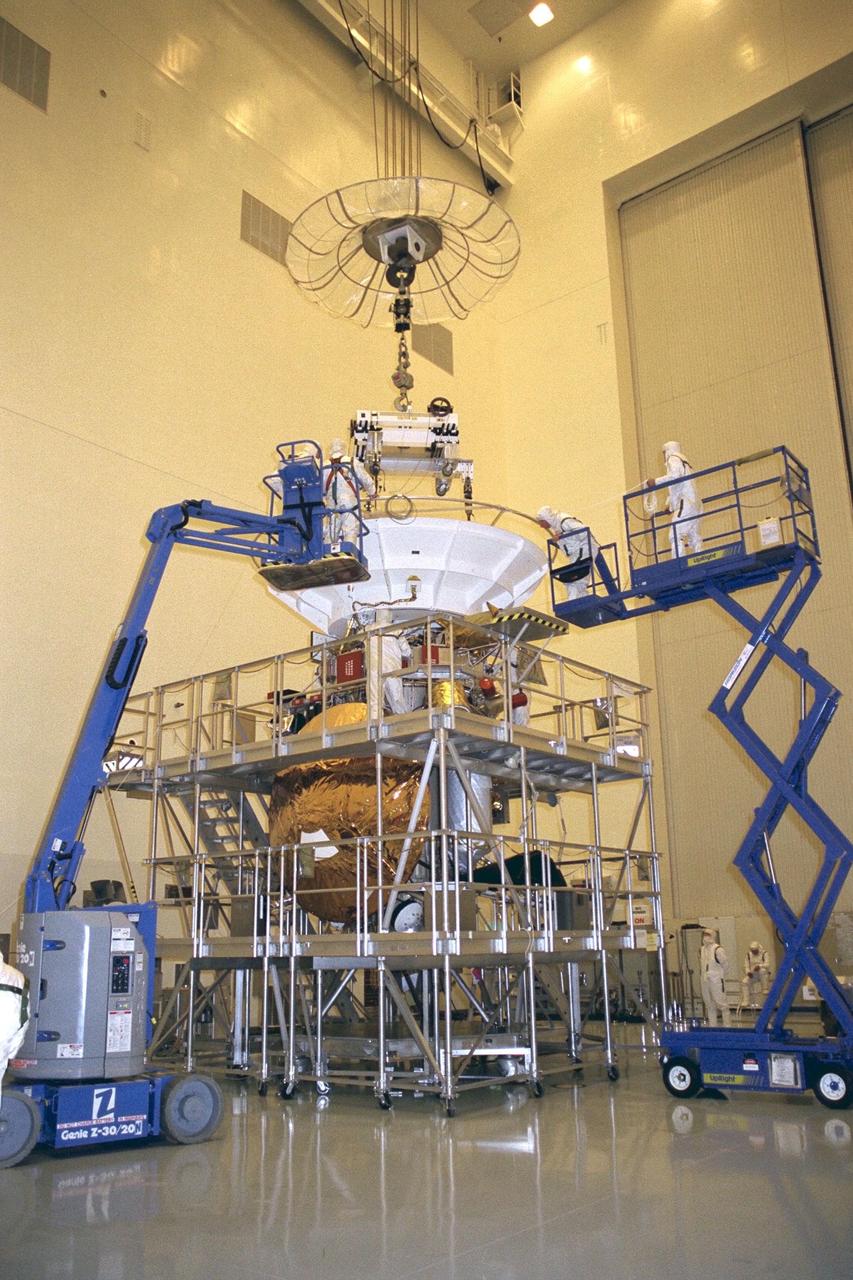
Flight mechanics from NASA’s Jet Propulsion Laboratory (JPL) in Pasadena, Calif., work on the lifting fixture that picks up the Cassini spacecraft in KSC’s Payload Hazardous Servicing Facility. The orbiter alone weighs about 4,750 pounds (2,150 kilograms). At launch, the combined orbiter, Huygens probe, launch vehicle adapter, and propellants will weigh about 12,346 pounds (5,600 kilograms). Scheduled for launch in October, the Cassini mission, a joint US-European four-year orbital surveillance of Saturn's atmosphere and magnetosphere, its rings, and its moons, seeks insight into the origins and evolution of the early solar system. JPL is managing the Cassini project for NASA
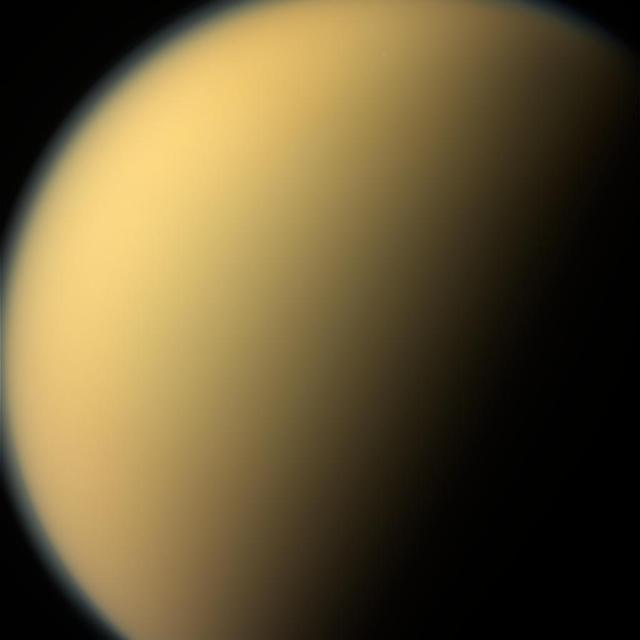
As it glanced around the Saturn system one final time, NASA's Cassini spacecraft captured this view of the planet's giant moon Titan. Interest in mysterious Titan was a major motivating factor to return to Saturn with Cassini-Huygens following the Voyager mission flybys of the early 1980s. Cassini and its Huygens probe, supplied by European Space Agency, revealed the moon to be every bit as fascinating as scientists had hoped. These views were obtained by Cassini's narrow-angle camera on Sept. 13, 2017. They are among the last images Cassini sent back to Earth. This natural color view, made from images taken using red, green and blue spectral filters, shows Titan much as Voyager saw it -- a mostly featureless golden orb, swathed in a dense atmospheric haze. An enhanced-color view (Figure 1) adds to this color a separate view taken using a spectral filter (centered at 938 nanometers) that can partially see through the haze. The views were acquired at a distance of 481,000 miles (774,000 kilometers) from Titan. The image scale is about 3 miles (5 kilometers) per pixel. https://photojournal.jpl.nasa.gov/catalog/PIA21890
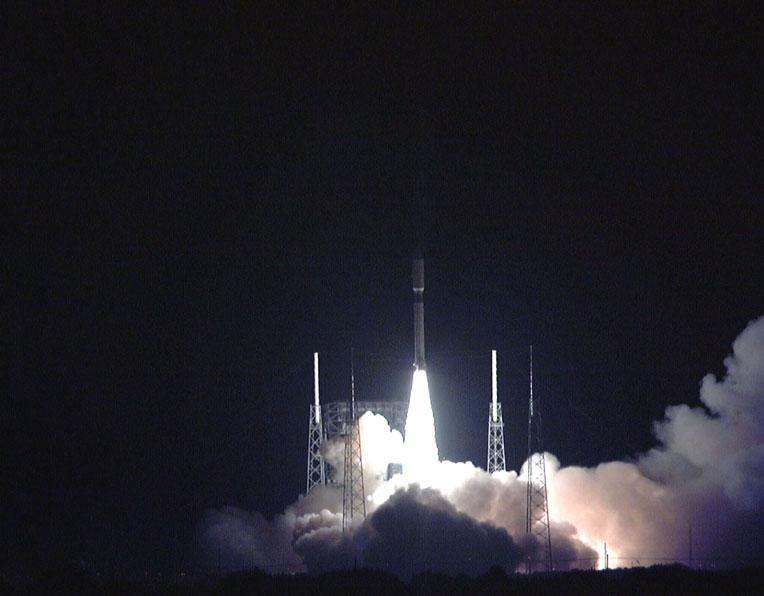
A seven-year journey to the ringed planet Saturn begins with the liftoff of a Titan IVB/Centaur carrying the Cassini orbiter and its attached Huygens probe. Launch occurred at 4:43 a.m. EDT, Oct. 15, from Launch Complex 40 on Cape Canaveral Air Station. After a 2.2-billion mile journey that will include two swingbys of Venus and one of Earth to gain additional velocity, the two-story tall spacecraft will arrive at Saturn in July 2004. The orbiter will circle the planet for four years, its complement of 12 scientific instruments gathering data about Saturn's atmosphere, rings and magnetosphere and conducting closeup observations of the Saturnian moons. Huygens, with a separate suite of six science instruments, will separate from Cassini to fly on a ballistic trajectory toward Titan, the only celestial body besides Earth to have an atmosphere rich in nitrogen. Scientists are eager to study further this chemical similarity in hopes of learning more about the origins of our own planet Earth. Huygens will provide the first direct sampling of Titan's atmospheric chemistry and the first detailed photographs of its surface. The Cassini mission is an international effort involving NASA, the European Space Agency (ESA) and the Italian Space Agency, Agenzia Spaziale Italiana (ASI). The Jet Propulsion Laboratory manages the U.S. contribution to the mission for NASA's Office of Space Science. The major U.S. contractor is Lockheed Martin, which provided the launch vehicle and upper stage, spacecraft propulsion module and radioisotope thermoelectric generators that will provide power for the spacecraft. The Titan IV/Centaur is a U.S. Air Force launch vehicle, and launch operations were managed by the 45th Space Wing
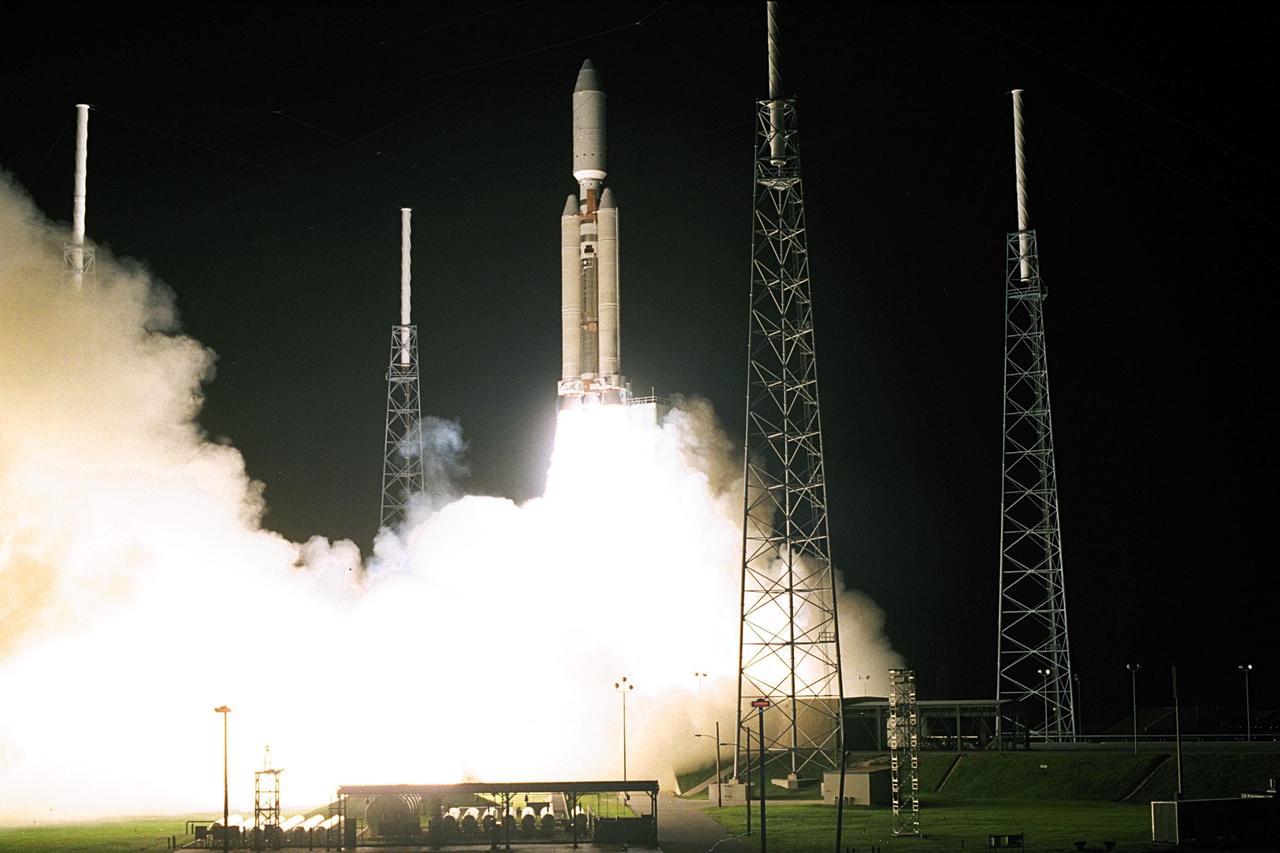
A seven-year journey to the ringed planet Saturn begins with the liftoff of a Titan IVB/Centaur carrying the Cassini orbiter and its attached Huygens probe. Launch occurred at 4:43 a.m. EDT, Oct. 15, from Launch Complex 40 on Cape Canaveral Air Station. After a 2.2-billion mile journey that will include two swingbys of Venus and one of Earth to gain additional velocity, the two-story tall spacecraft will arrive at Saturn in July 2004. The orbiter will circle the planet for four years, its complement of 12 scientific instruments gathering data about Saturn's atmosphere, rings and magnetosphere and conducting closeup observations of the Saturnian moons. Huygens, with a separate suite of six science instruments, will separate from Cassini to fly on a ballistic trajectory toward Titan, the only celestial body besides Earth to have an atmosphere rich in nitrogen. Scientists are eager to study further this chemical similarity in hopes of learning more about the origins of our own planet Earth. Huygens will provide the first direct sampling of Titan's atmospheric chemistry and the first detailed photographs of its surface. The Cassini mission is an international effort involving NASA, the European Space Agency (ESA) and the Italian Space Agency, Agenzia Spaziale Italiana (ASI). The Jet Propulsion Laboratory manages the U.S. contribution to the mission for NASA's Office of Space Science. The major U.S. contractor is Lockheed Martin, which provided the launch vehicle and upper stage, spacecraft propulsion module and radioisotope thermoelectric generators that will provide power for the spacecraft. The Titan IV/Centaur is a U.S. Air Force launch vehicle, and launch operations were managed by the 45th Space Wing
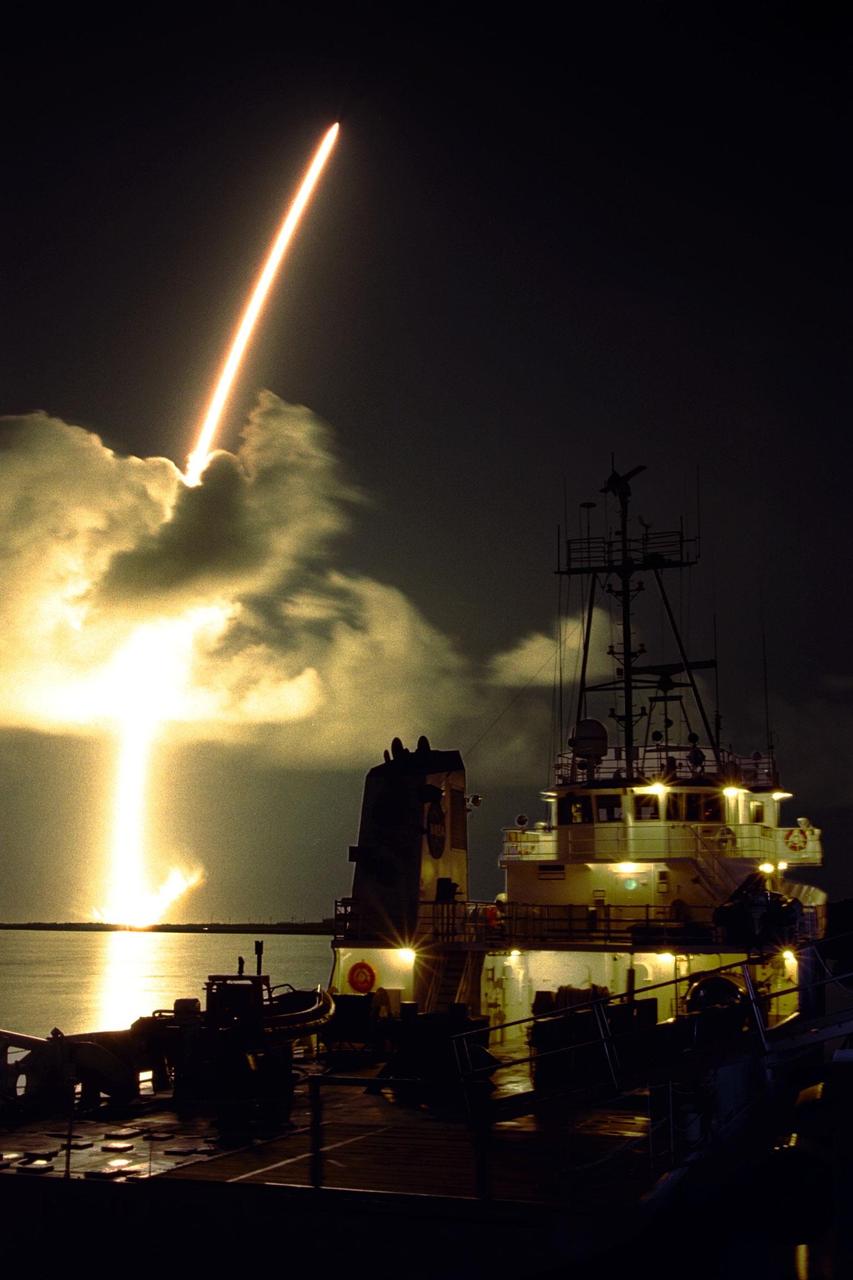
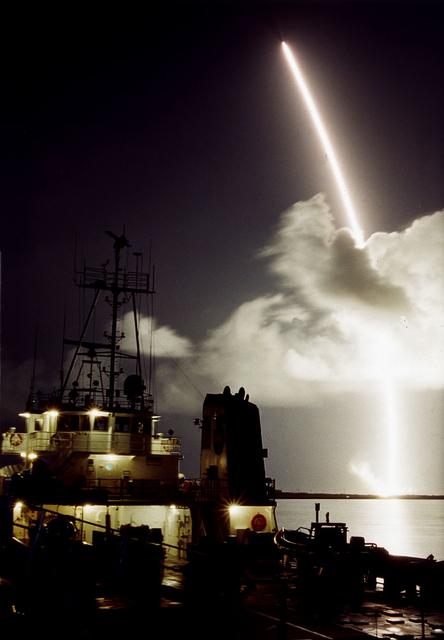
A seven-year journey to the ringed planet Saturn begins with the liftoff of a Titan IVB/Centaur carrying the Cassini orbiter and its attached Huygens probe. This spectacular streak shot was taken from Hangar AF on Cape Canaveral Air Station, with a solid rocket booster retrieval ship in the foreground. Launch occurred at 4:43 a.m. EDT, Oct. 15, from Launch Complex 40 on Cape Canaveral Air Station. After a 2.2-billion mile journey that will include two swingbys of Venus and one of Earth to gain additional velocity, the two-story tall spacecraft will arrive at Saturn in July 2004. The orbiter will circle the planet for four years, its complement of 12 scientific instruments gathering data about Saturn's atmosphere, rings and magnetosphere and conducting closeup observations of the Saturnian moons. Huygens, with a separate suite of six science instruments, will separate from Cassini to fly on a ballistic trajectory toward Titan, the only celestial body besides Earth to have an atmosphere rich in nitrogen. Scientists are eager to study further this chemical similarity in hopes of learning more about the origins of our own planet Earth. Huygens will provide the first direct sampling of Titan's atmospheric chemistry and the first detailed photographs of its surface. The Cassini mission is an international effort involving NASA, the European Space Agency (ESA) and the Italian Space Agency, Agenzia Spaziale Italiana (ASI). The Jet Propulsion Laboratory manages the U.S. contribution to the mission for NASA's Office of Space Science. The major U.S. contractor is Lockheed Martin, which provided the launch vehicle and upper stage, spacecraft propulsion module and radioisotope thermoelectric generators that will provide power for the spacecraft. The Titan IV/Centaur is a U.S. Air Force launch vehicle, and launch operations were managed by the 45th Space Wing
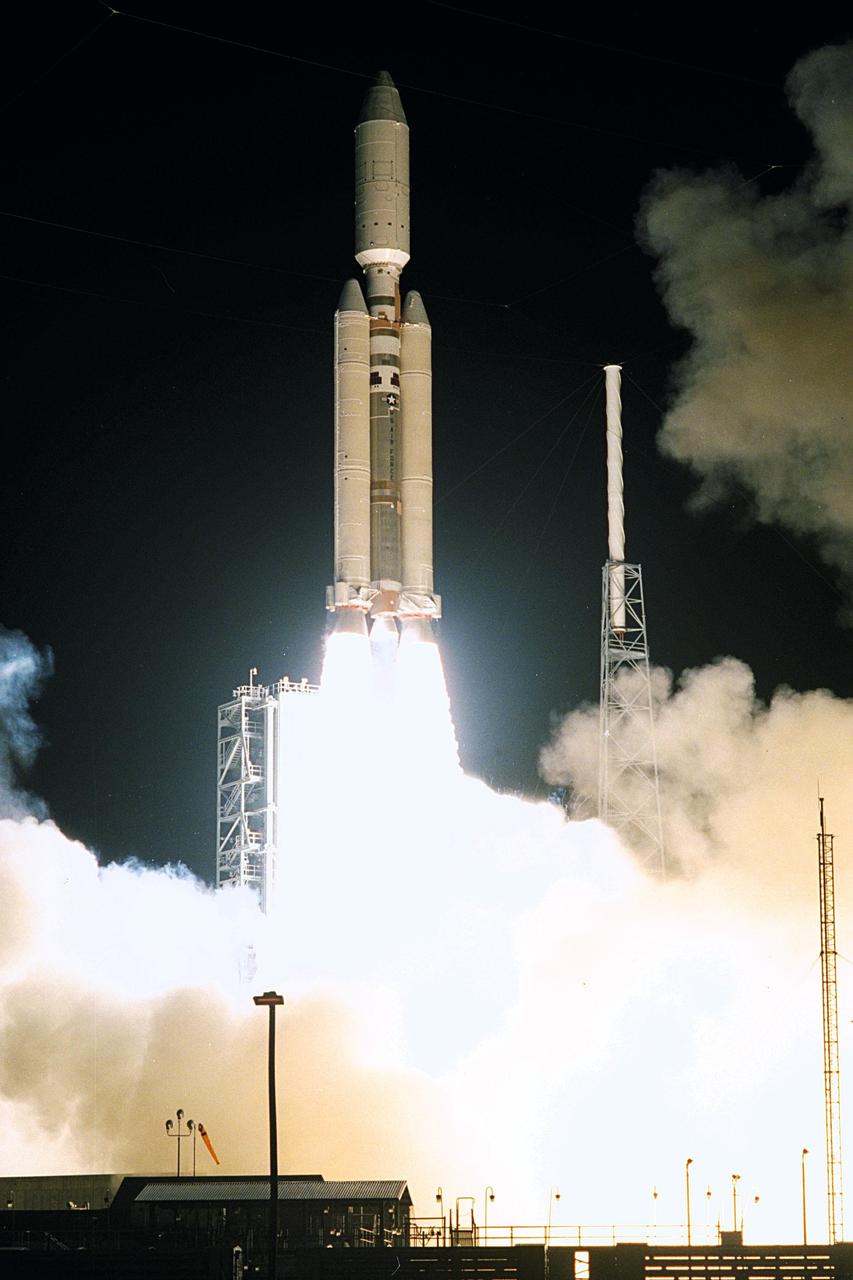
A seven-year journey to the ringed planet Saturn begins with the liftoff of a Titan IVB/Centaur carrying the Cassini orbiter and its attached Huygens probe. Launch occurred at 4:43 a.m. EDT, Oct. 15, from Launch Complex 40 on Cape Canaveral Air Station. After a 2.2-billion mile journey that will include two swingbys of Venus and one of Earth to gain additional velocity, the two-story tall spacecraft will arrive at Saturn in July 2004. The orbiter will circle the planet for four years, its complement of 12 scientific instruments gathering data about Saturn's atmosphere, rings and magnetosphere and conducting closeup observations of the Saturnian moons. Huygens, with a separate suite of six science instruments, will separate from Cassini to fly on a ballistic trajectory toward Titan, the only celestial body besides Earth to have an atmosphere rich in nitrogen. Scientists are eager to study further this chemical similarity in hopes of learning more about the origins of our own planet Earth. Huygens will provide the first direct sampling of Titan's atmospheric chemistry and the first detailed photographs of its surface. The Cassini mission is an international effort involving NASA, the European Space Agency (ESA) and the Italian Space Agency, Agenzia Spaziale Italiana (ASI). The Jet Propulsion Laboratory manages the U.S. contribution to the mission for NASA's Office of Space Science. The major U.S. contractor is Lockheed Martin, which provided the launch vehicle and upper stage, spacecraft propulsion module and radioisotope thermoelectric generators that will provide power for the spacecraft. The Titan IV/Centaur is a U.S. Air Force launch vehicle, and launch operations were managed by the 45th Space Wing
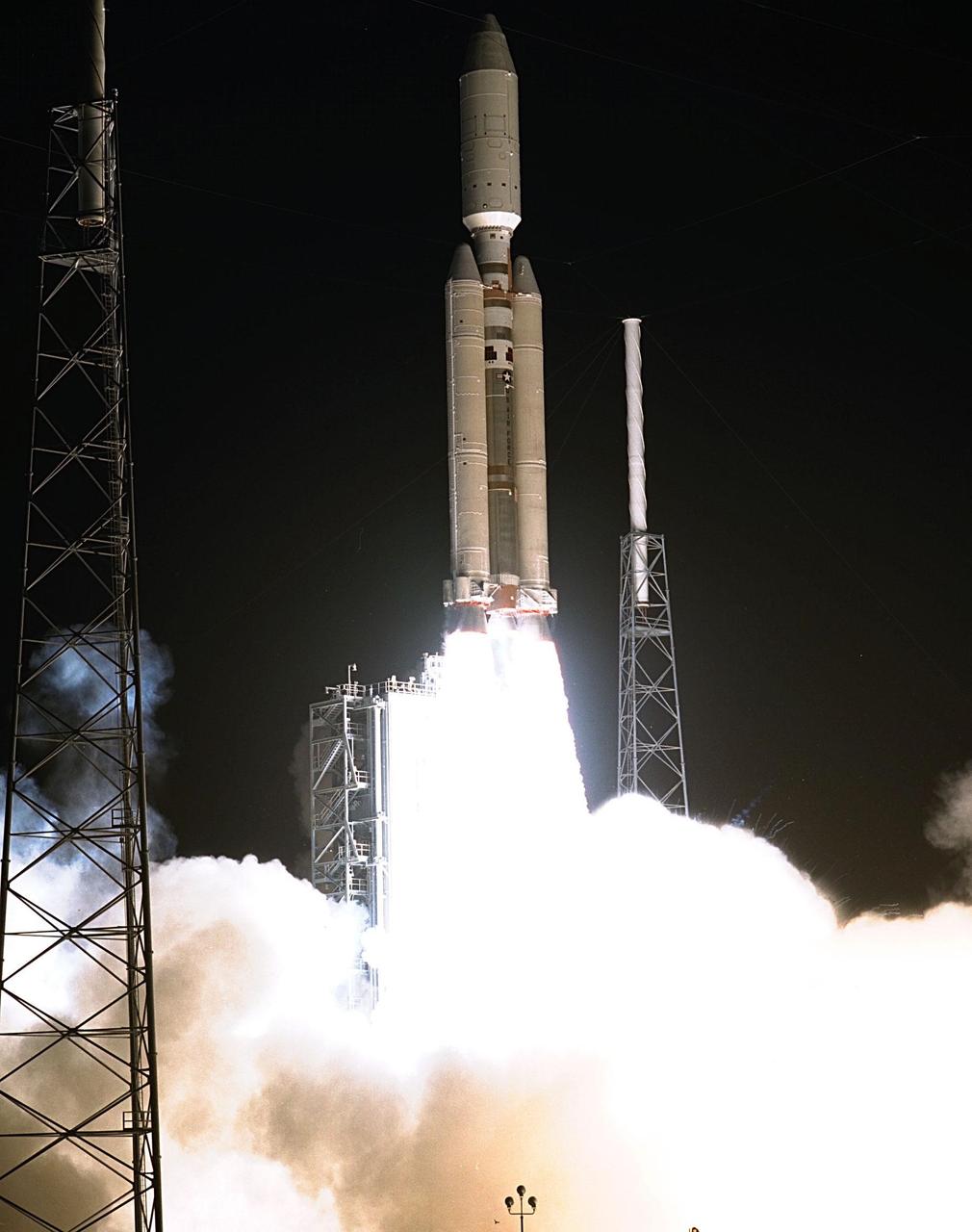
KENNEDY SPACE CENTER, FLA. -- A seven-year journey to the ringed planet Saturn begins with the liftoff of a Titan IVB/Centaur carrying the Cassini orbiter and its attached Huygens probe. Launch occurred at 4:43 a.m. EDT, Oct. 15, from Launch Complex 40 on Cape Canaveral Air Station. After a 2.2-billion mile journey that will include two swingbys of Venus and one of Earth to gain additional velocity, the two-story tall spacecraft will arrive at Saturn in July 2004. The orbiter will circle the planet for four years, its complement of 12 scientific instruments gathering data about Saturn's atmosphere, rings and magnetosphere and conducting closeup observations of the Saturnian moons. Huygens, with a separate suite of six science instruments, will separate from Cassini to fly on a ballistic trajectory toward Titan, the only celestial body besides Earth to have an atmosphere rich in nitrogen. Scientists are eager to study further this chemical similarity in hopes of learning more about the origins of our own planet Earth. Huygens will provide the first direct sampling of Titan's atmospheric chemistry and the first detailed photographs of its surface. The Cassini mission is an international effort involving NASA, the European Space Agency (ESA) and the Italian Space Agency, Agenzia Spaziale Italiana (ASI). The Jet Propulsion Laboratory manages the U.S. contribution to the mission for NASA's Office of Space Science. The major U.S. contractor is Lockheed Martin, which provided the launch vehicle and upper stage, spacecraft propulsion module and radioisotope thermoelectric generators that will provide power for the spacecraft. The Titan IV/Centaur is a U.S. Air Force launch vehicle, and launch operations were managed by the 45th Space Wing
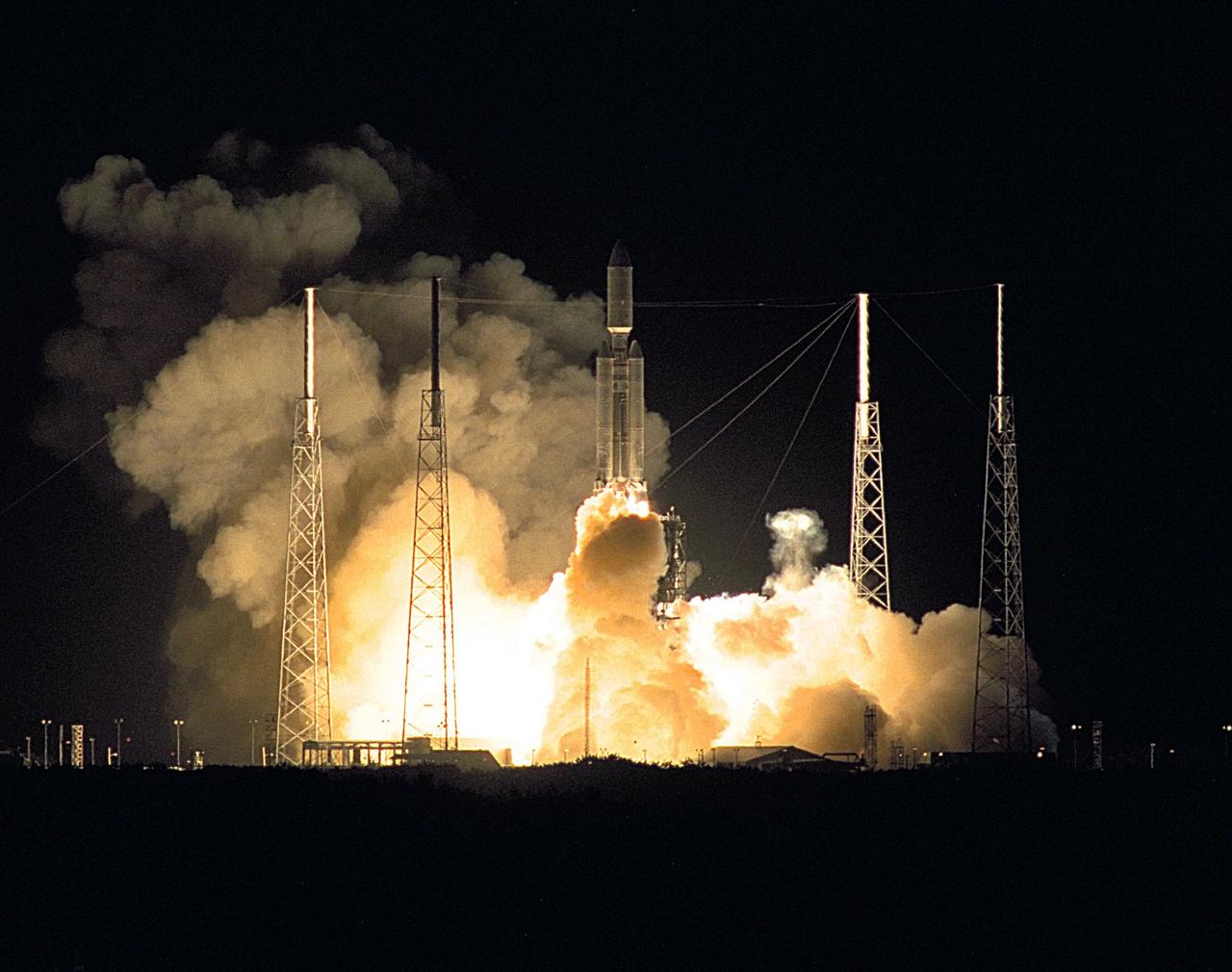
A seven-year journey to the ringed planet Saturn begins with the liftoff of a Titan IVB/Centaur carrying the Cassini orbiter and its attached Huygens probe. Launch occurred at 4:43 a.m. EDT, Oct. 15, from Launch Complex 40 on Cape Canaveral Air Station. After a 2.2-billion mile journey that will include two swingbys of Venus and one of Earth to gain additional velocity, the two-story tall spacecraft will arrive at Saturn in July 2004. The orbiter will circle the planet for four years, its complement of 12 scientific instruments gathering data about Saturn's atmosphere, rings and magnetosphere and conducting closeup observations of the Saturnian moons. Huygens, with a separate suite of six science instruments, will separate from Cassini to fly on a ballistic trajectory toward Titan, the only celestial body besides Earth to have an atmosphere rich in nitrogen. Scientists are eager to study further this chemical similarity in hopes of learning more about the origins of our own planet Earth. Huygens will provide the first direct sampling of Titan's atmospheric chemistry and the first detailed photographs of its surface. The Cassini mission is an international effort involving NASA, the European Space Agency (ESA) and the Italian Space Agency, Agenzia Spaziale Italiana (ASI). The Jet Propulsion Laboratory manages the U.S. contribution to the mission for NASA's Office of Space Science. The major U.S. contractor is Lockheed Martin, which provided the launch vehicle and upper stage, spacecraft propulsion module and radioisotope thermoelectric generators that will provide power for the spacecraft. The Titan IV/Centaur is a U.S. Air Force launch vehicle, and launch operations were managed by the 45th Space Wing
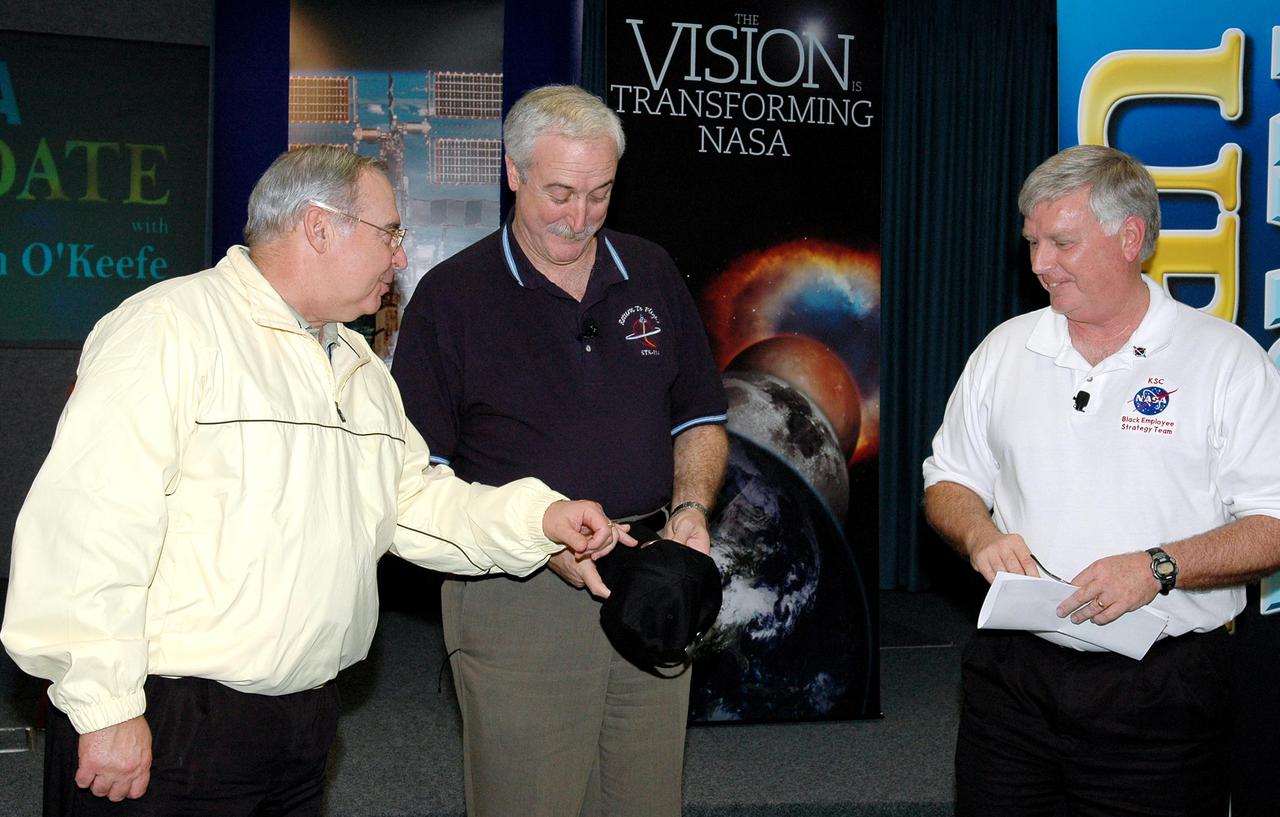
KENNEDY SPACE CENTER, FLA. - NASA Administrator Sean O’Keefe (center) is presented with a Deep Impact hat in the Press Site Auditorium following his report to employees on the state of the Agency. He is accompanied on stage by Center Director Jim Kennedy (right). The update was broadcast live via NASA Television. O'Keefe focused on the achievements of 2004 and the goals set for 2005. His remarks emphasized the milestones met in NASA's Vision for Space Exploration, including the launch of the comet-chasing Deep Impact mission and the landing of the Huygens probe on Jupiter’s moon Titan, both occurring in the past two days, and the progress made in meeting the requirements to return the Space Shuttle to flight. O’Keefe’s briefing included a dialogue with Associate Administrator of NASA’s Office of Exploration Systems Craig Steidle and Center Director Jim Kennedy, live; and Manager of the Space Station Office Bill Gerstenmaier and Director of Advanced Planning and Jet Propulsion Laboratory Charles Elachi, via satellite.
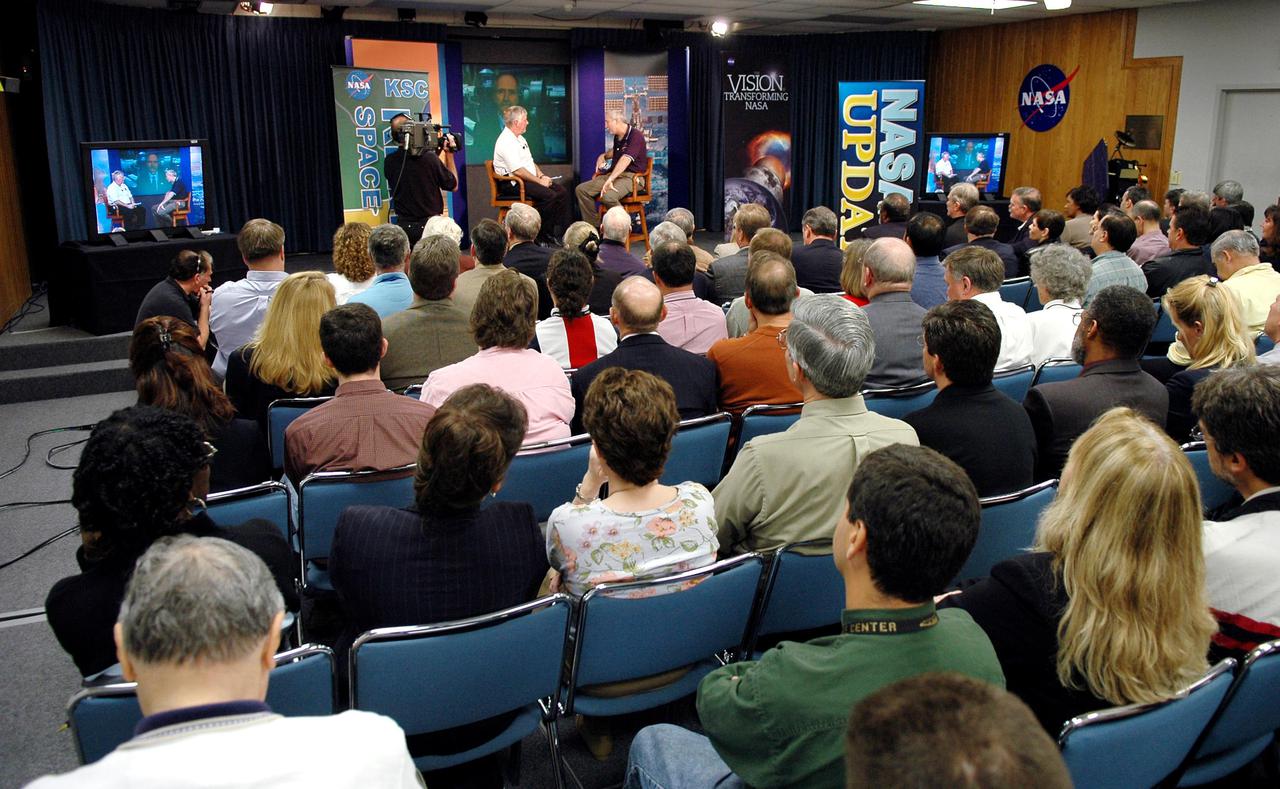
KENNEDY SPACE CENTER, FLA. - NASA Administrator Sean O’Keefe (right) is accompanied on stage in the Press Site Auditorium by Center Director Jim Kennedy for a report to employees on the state of the Agency. The update was broadcast live via NASA Television. O'Keefe focused on the achievements of 2004 and the goals set for 2005. His remarks emphasized the milestones met in NASA's Vision for Space Exploration, including the launch of the comet-chasing Deep Impact mission and the landing of the Huygens probe on Jupiter’s moon Titan, both occurring in the past two days, and the progress made in meeting the requirements to return the Space Shuttle to flight. O’Keefe’s briefing included a dialogue with Associate Administrator of NASA’s Office of Exploration Systems Craig Steidle and Center Director Jim Kennedy, live; and Manager of the Space Station Office Bill Gerstenmaier and Director of Advanced Planning and Jet Propulsion Laboratory Charles Elachi, via satellite.
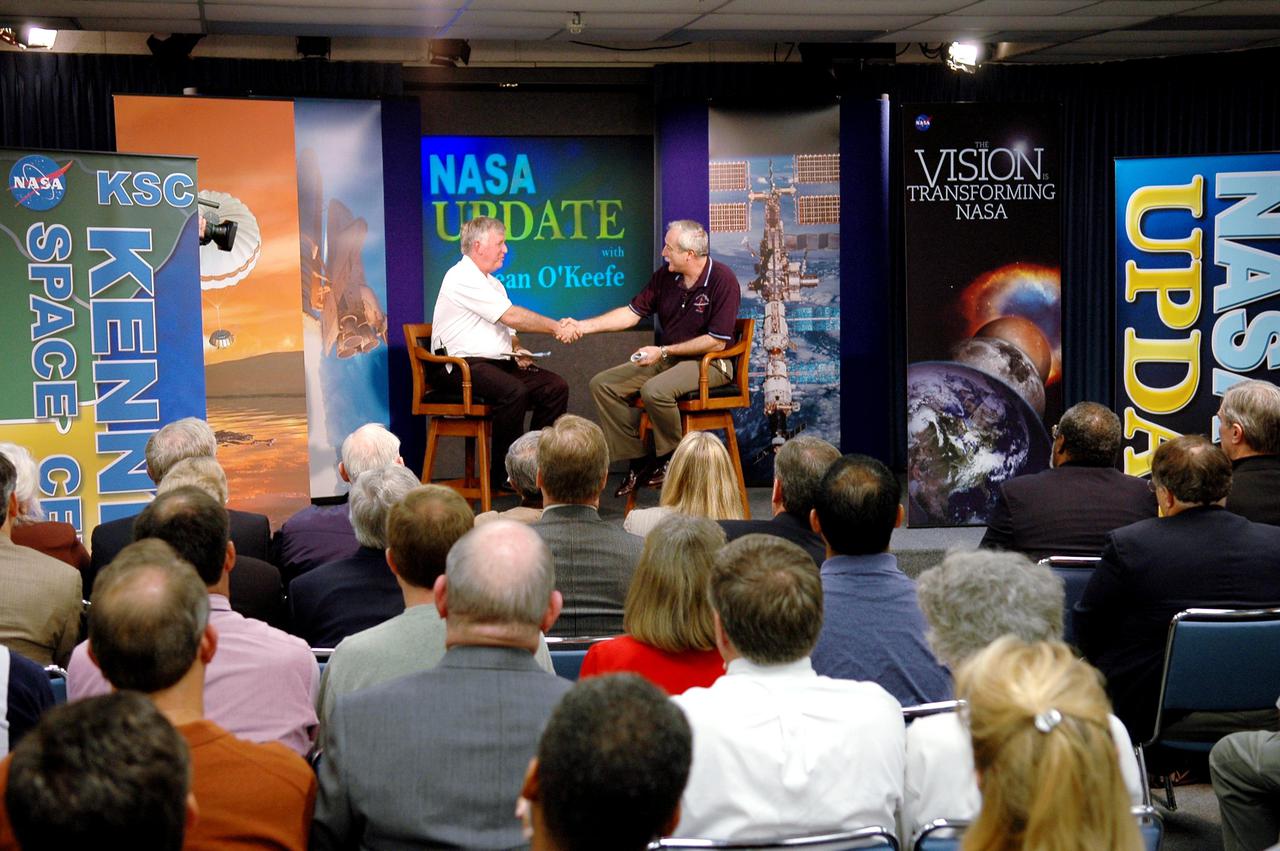
KENNEDY SPACE CENTER, FLA. - NASA Administrator Sean O’Keefe (right) is accompanied on stage in the Press Site Auditorium by Center Director Jim Kennedy for a report to employees on the state of the Agency. The update was broadcast live via NASA Television. O'Keefe focused on the achievements of 2004 and the goals set for 2005. His remarks emphasized the milestones met in NASA's Vision for Space Exploration, including the launch of the comet-chasing Deep Impact mission and the landing of the Huygens probe on Jupiter’s moon Titan, both occurring in the past two days, and the progress made in meeting the requirements to return the Space Shuttle to flight. O’Keefe’s briefing included a dialogue with Associate Administrator of NASA’s Office of Exploration Systems Craig Steidle and Center Director Jim Kennedy, live; and Manager of the Space Station Office Bill Gerstenmaier and Director of Advanced Planning and Jet Propulsion Laboratory Charles Elachi, via satellite.
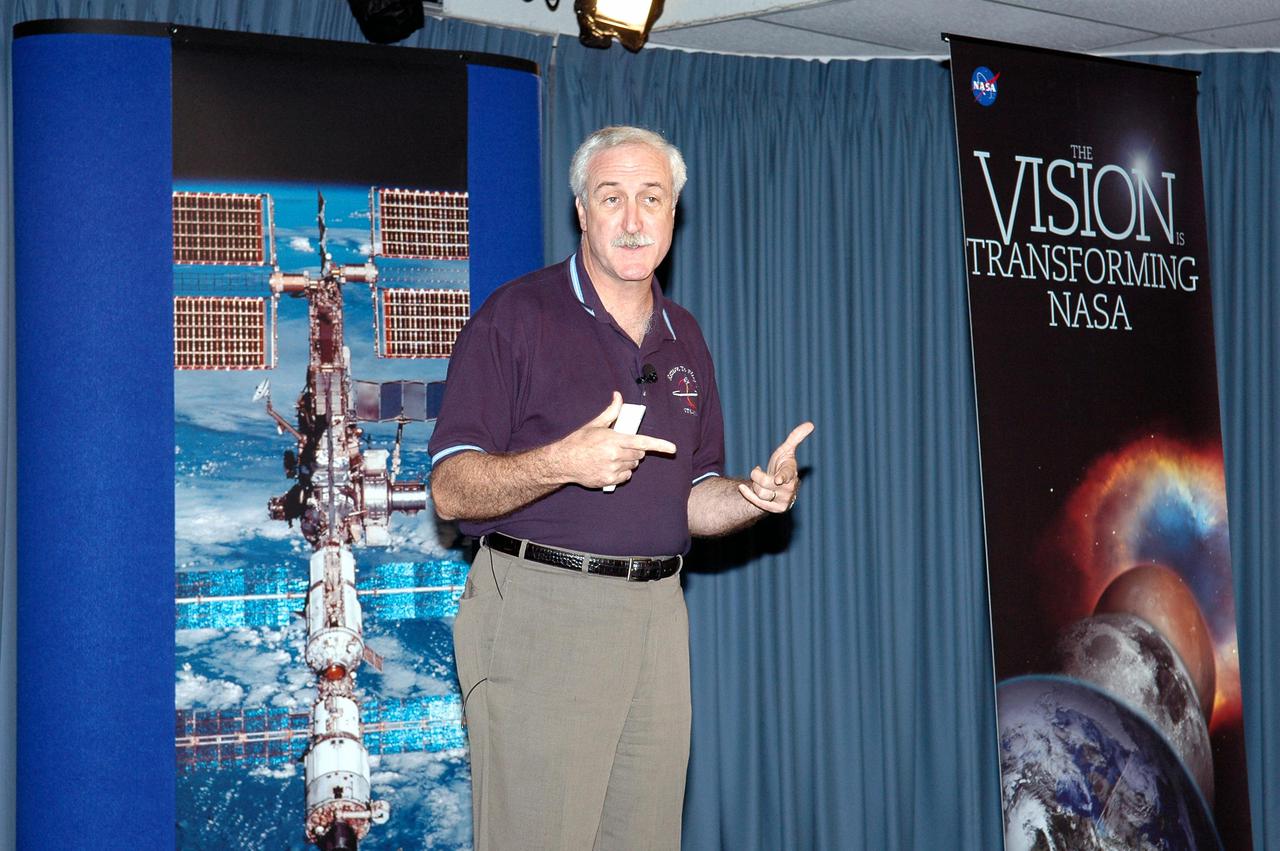
KENNEDY SPACE CENTER, FLA. - NASA Administrator Sean O’Keefe reports to employees on the state of the Agency from the Press Site Auditorium. The update was broadcast live via NASA Television. O'Keefe focused on the achievements of 2004 and the goals set for 2005. His remarks emphasized the milestones met in NASA's Vision for Space Exploration, including the launch of the comet-chasing Deep Impact mission and the landing of the Huygens probe on Jupiter’s moon Titan, both occurring in the past two days, and the progress made in meeting the requirements to return the Space Shuttle to flight. O’Keefe’s briefing included a dialogue with Associate Administrator of NASA’s Office of Exploration Systems Craig Steidle and Center Director Jim Kennedy, live; and Manager of the Space Station Office Bill Gerstenmaier and Director of Advanced Planning and Jet Propulsion Laboratory Charles Elachi, via satellite.
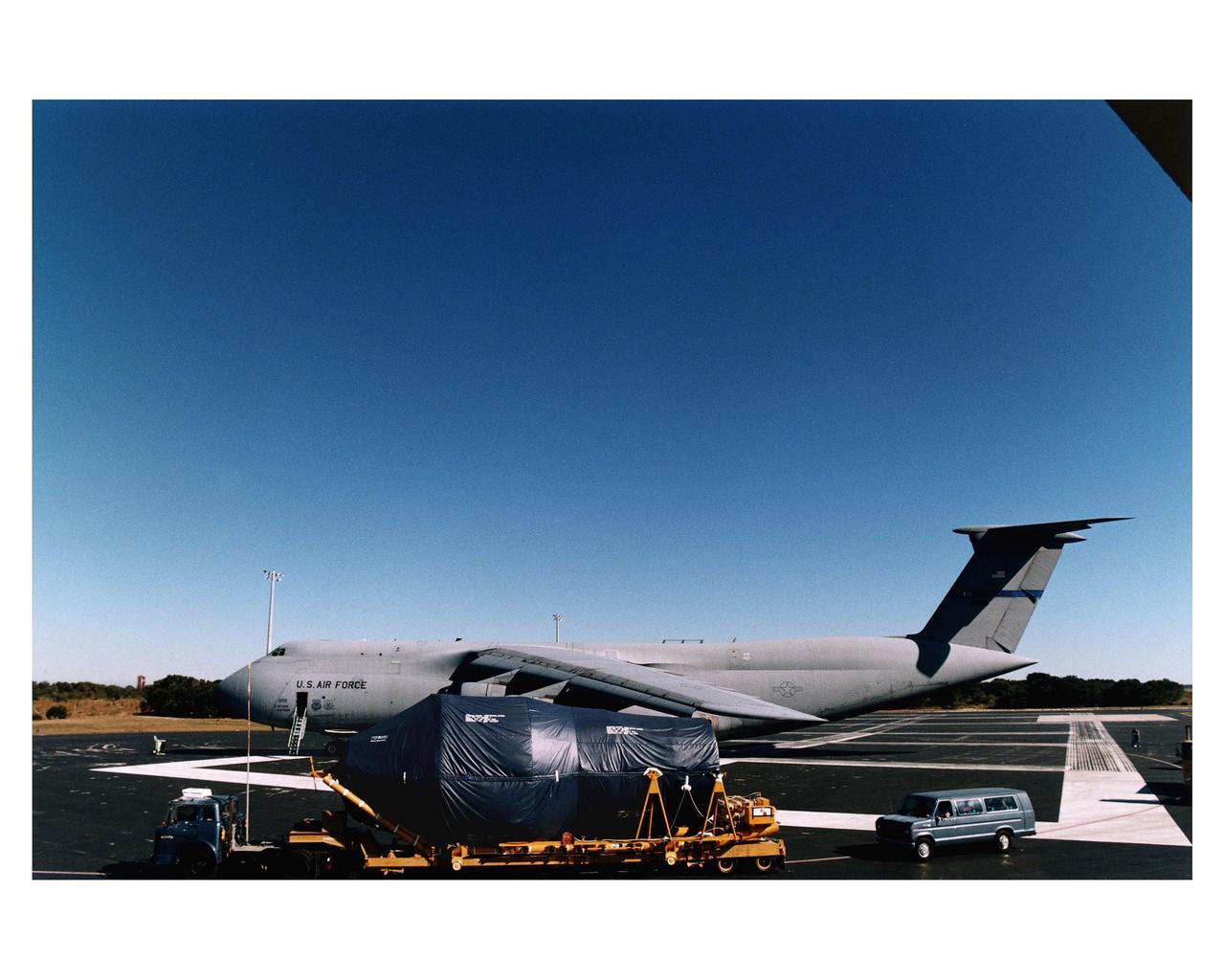
The Centaur upper stage of the Titan IV expendable launch vehicle that will propel the Cassini spacecraft to Saturn and its moon Titan is transported from the Skid Strip at Cape Canaveral Air Station (CCAS) after its arrival via a jet cargo aircraft. The Titan IV is currently scheduled to lift off from Launch Pad 40 at CCAS on October 6. Once deployed from the Centaur upper stage, Cassini will conduct gravity-assist flybys of the planets Venus and Jupiter, then arrive at Saturn in July 2004. Once there, it will perform an orbital survey of Saturn and send the European Space Agency's Huygens Probe into the dense and seemingly Earthlike atmosphere of Titan. The Cassini project is managed by NASA's Jet Propulsion Laboratory (JPL), Pasadena, California
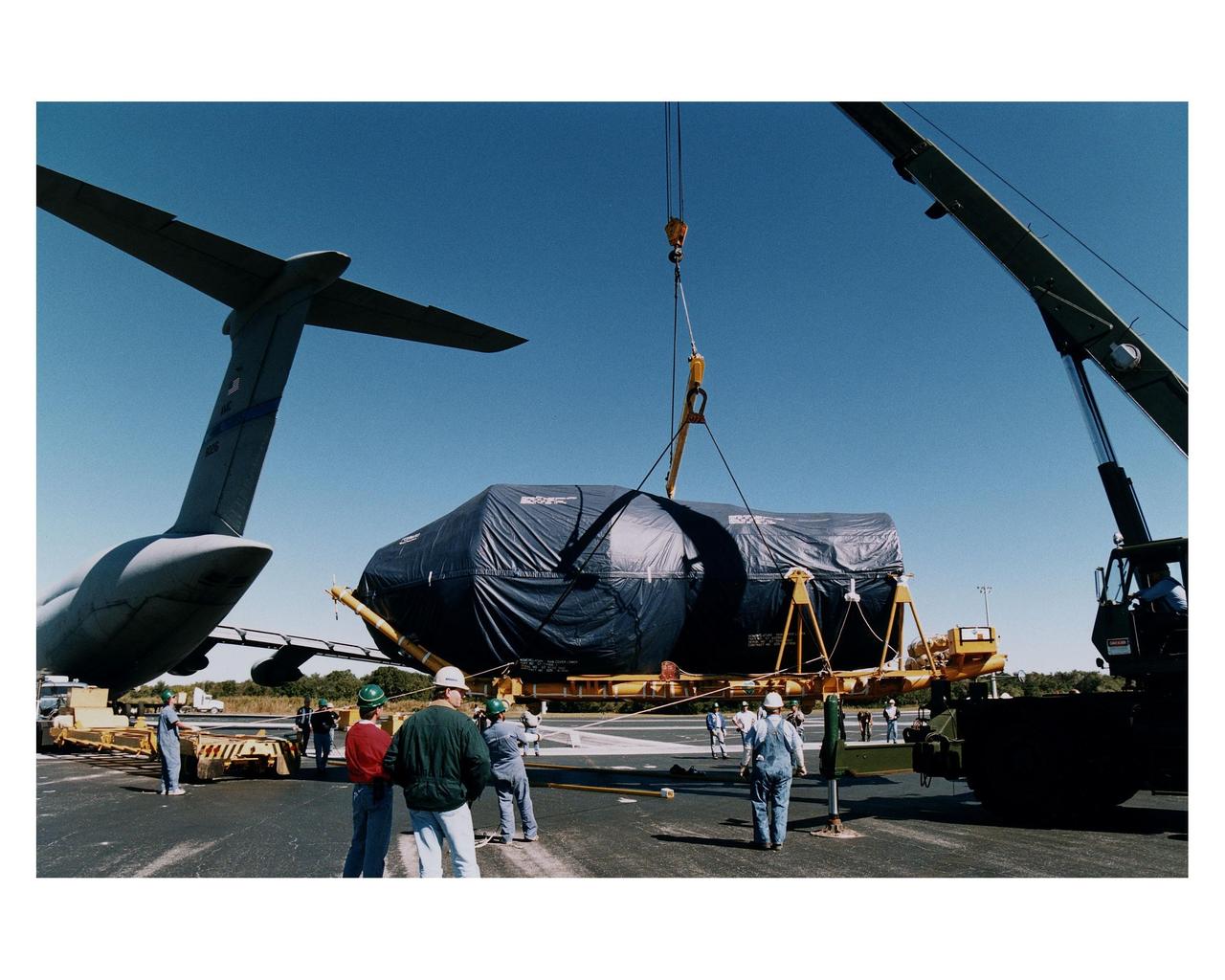
The Centaur upper stage of the Titan IV expendable launch vehicle that will propel the Cassini spacecraft to Saturn and its moon Titan is transported from the Skid Strip at Cape Canaveral Air Station (CCAS) after its arrival via a jet cargo aircraft. The Titan IV is currently scheduled to lift off from Launch Pad 40 at CCAS on October 6. Once deployed from the Centaur upper stage, Cassini will conduct gravity-assist flybys of the planets Venus and Jupiter, then arrive at Saturn in July 2004. Once there, it will perform an orbital survey of Saturn and send the European Space Agency's Huygens Probe into the dense and seemingly Earthlike atmosphere of Titan. The Cassini project is managed by NASA's Jet Propulsion Laboratory (JPL), Pasadena, California
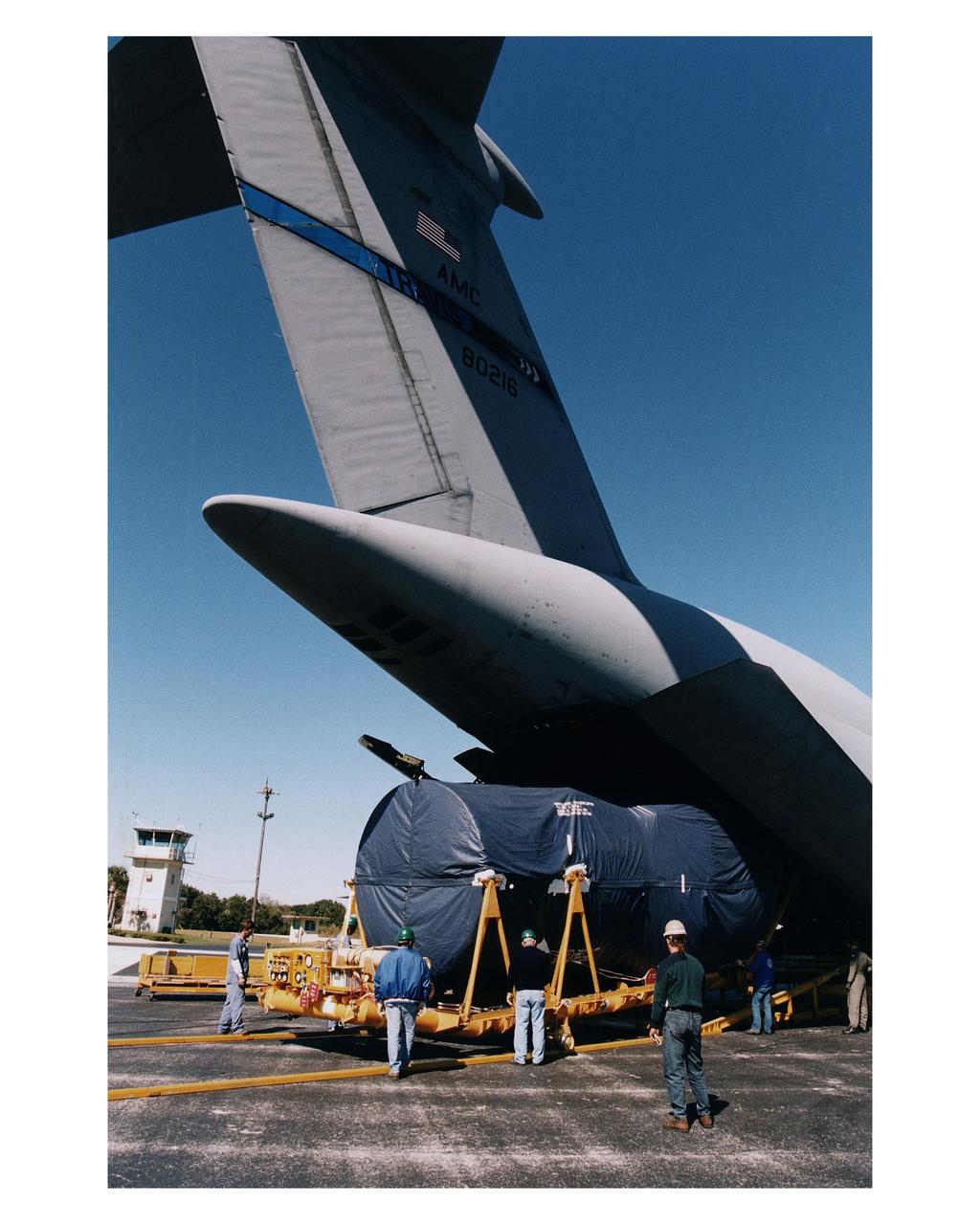
The Centaur upper stage of the Titan IV expendable launch vehicle that will propel the Cassini spacecraft to Saturn and its moon Titan is unloaded from a jet cargo aircraft at the Skid Strip at Cape Canaveral Air Station (CCAS). The Titan IV is currently scheduled to lift off from Launch Pad 40 at CCAS on October 6. Once deployed from the Centaur upper stage, Cassini will conduct gravity-assist flybys of the planets Venus and Jupiter, then arrive at Saturn in July 2004. Once there, it will perform an orbital survey of Saturn and send the European Space Agency's Huygens Probe into the dense and seemingly Earthlike atmosphere of Titan. The Cassini project is managed by NASA's Jet Propulsion Laboratory (JPL), Pasadena, California

KENNEDY SPACE CENTER, FLA. - NASA Administrator Sean O’Keefe (right) is accompanied on stage in the Press Site Auditorium by Center Director Jim Kennedy for a report to employees on the state of the Agency. The update was broadcast live via NASA Television. O'Keefe focused on the achievements of 2004 and the goals set for 2005. His remarks emphasized the milestones met in NASA's Vision for Space Exploration, including the launch of the comet-chasing Deep Impact mission and the landing of the Huygens probe on Jupiter’s moon Titan, both occurring in the past two days, and the progress made in meeting the requirements to return the Space Shuttle to flight. O’Keefe’s briefing included a dialogue with Associate Administrator of NASA’s Office of Exploration Systems Craig Steidle and Center Director Jim Kennedy, live; and Manager of the Space Station Office Bill Gerstenmaier and Director of Advanced Planning and Jet Propulsion Laboratory Charles Elachi, via satellite.
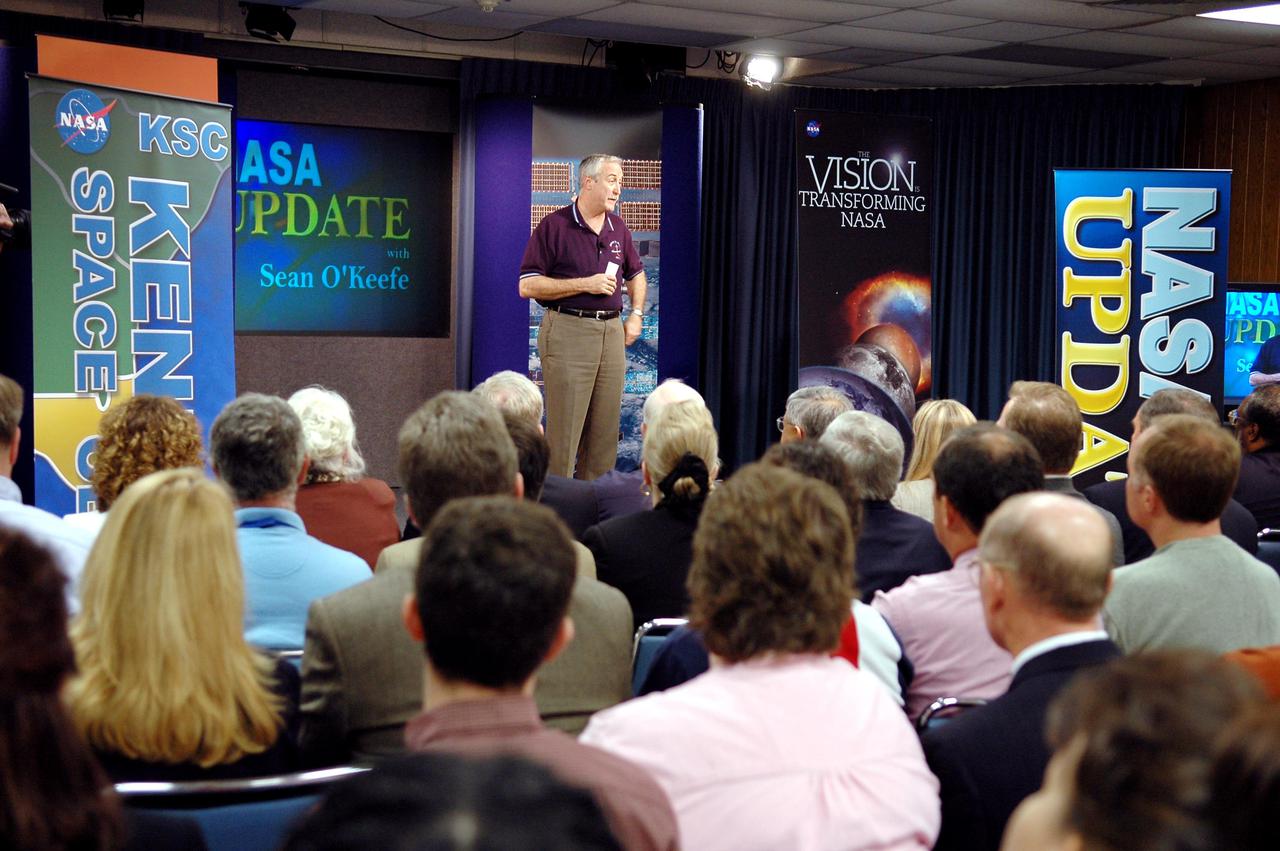
KENNEDY SPACE CENTER, FLA. - NASA Administrator Sean O’Keefe reports to employees on the state of the Agency from the Press Site Auditorium. The update was broadcast live via NASA Television. O'Keefe focused on the achievements of 2004 and the goals set for 2005. His remarks emphasized the milestones met in NASA's Vision for Space Exploration, including the launch of the comet-chasing Deep Impact mission and the landing of the Huygens probe on Jupiter’s moon Titan, both occurring in the past two days, and the progress made in meeting the requirements to return the Space Shuttle to flight. O’Keefe’s briefing included a dialogue with Associate Administrator of NASA’s Office of Exploration Systems Craig Steidle and Center Director Jim Kennedy, live; and Manager of the Space Station Office Bill Gerstenmaier and Director of Advanced Planning and Jet Propulsion Laboratory Charles Elachi, via satellite.
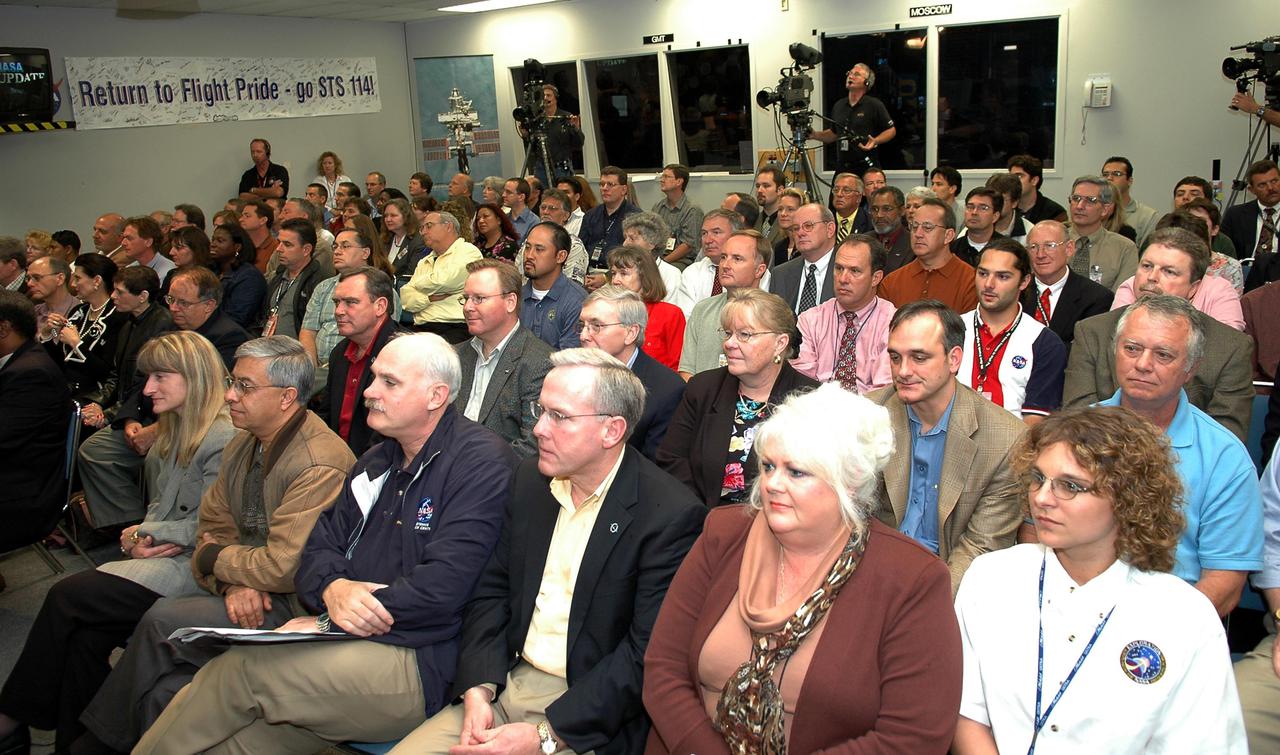
KENNEDY SPACE CENTER, FLA. - In the Press Site Auditorium, NASA managers and employees listen to NASA Administrator Sean O'Keefe's report on the state of the Agency. The update was broadcast live via NASA Television. O'Keefe focused on the achievements of 2004 and the goals set for 2005. His remarks emphasized the milestones met in NASA's Vision for Space Exploration, including the launch of the comet-chasing Deep Impact mission and the landing of the Huygens probe on Jupiter’s moon Titan, both occurring in the past two days, and the progress made in meeting the requirements to return the Space Shuttle to flight. O’Keefe’s briefing included a dialogue with Associate Administrator of NASA’s Office of Exploration Systems Craig Steidle and Center Director Jim Kennedy, live; and Manager of the Space Station Office Bill Gerstenmaier and Director of Advanced Planning and Jet Propulsion Laboratory Charles Elachi, via satellite.
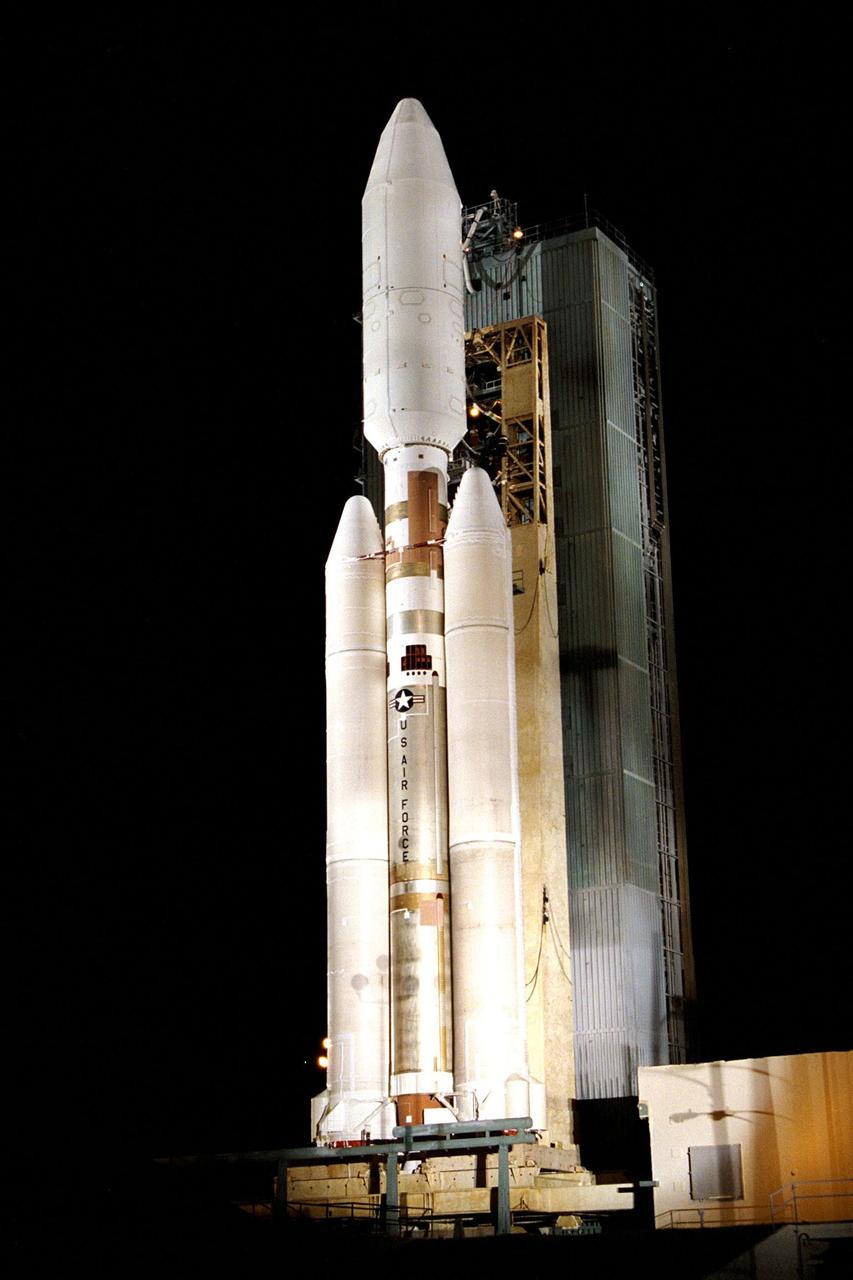
At Launch Complex 40 on Cape Canaveral Air Station, the Mobile Service Tower has been retracted away from the Titan IVB/Centaur carrying the Cassini spacecraft and its attached Huygens probe. This is the second launch attempt for the Saturn-bound mission; a first try Oct. 13 was scrubbed primarily due to concerns about upper level wind conditions. Liftoff Oct. 15 is set to occur during a launch window opening at 4:43 a.m. EDT and extending until 7:03 a.m. Clearly visible in this view are the 66-foot-tall, 17-foot-wide payload fairing atop the vehicle, in which Cassini and the attached Centaur stage are encased, the two-stage liquid propellant core vehicle, and the twin 112-foot long solid rocket motor upgrades (SRMUs) straddling the core vehicle. It is the SRMUs which ignite first to begin the launch sequence
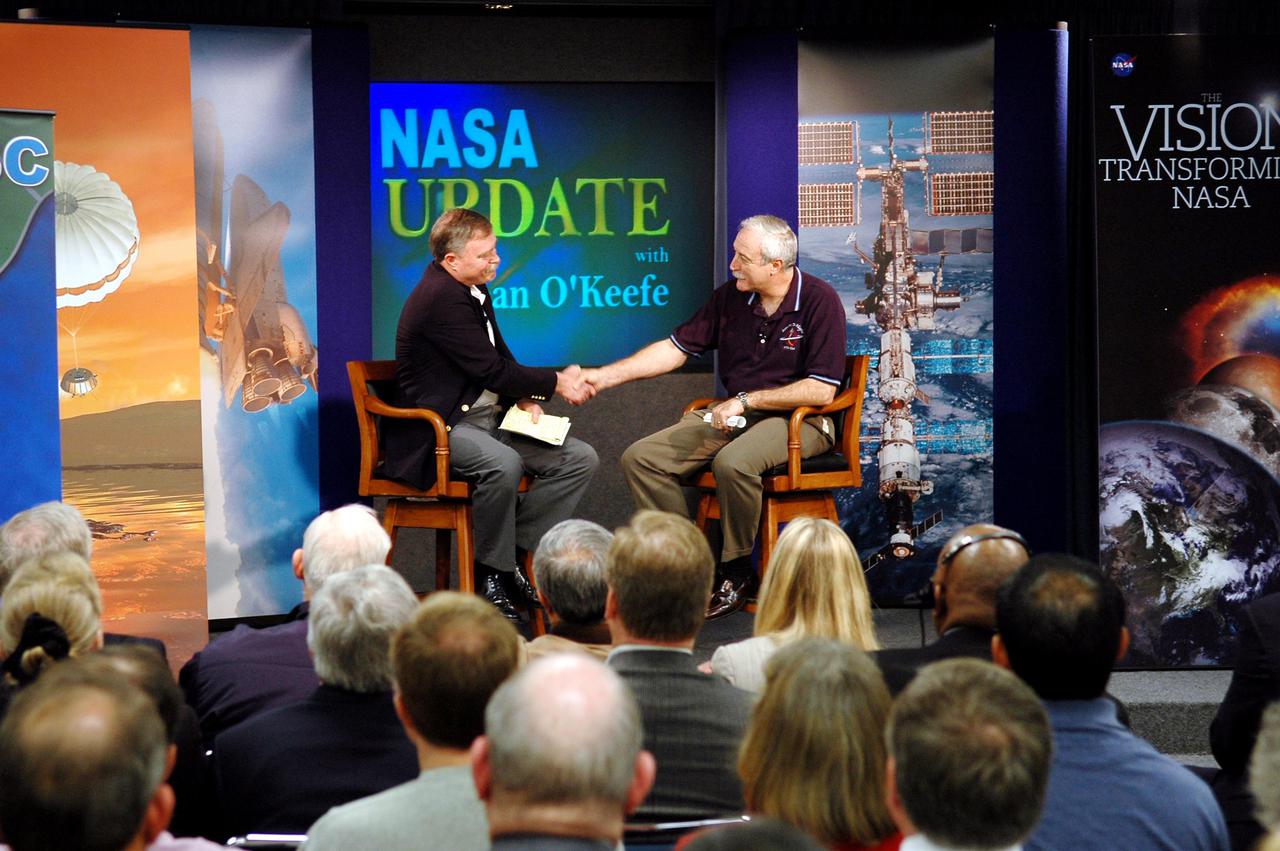
KENNEDY SPACE CENTER, FLA. - NASA Administrator Sean O’Keefe (right) is accompanied on stage in the Press Site Auditorium by Associate Administrator of NASA’s Office of Exploration Systems Craig Steidle for a report to employees on the state of the Agency. The update was broadcast live via NASA Television. O'Keefe focused on the achievements of 2004 and the goals set for 2005. His remarks emphasized the milestones met in NASA's Vision for Space Exploration, including the launch of the comet-chasing Deep Impact mission and the landing of the Huygens probe on Jupiter’s moon Titan, both occurring in the past two days, and the progress made in meeting the requirements to return the Space Shuttle to flight. O’Keefe’s briefing included a dialogue with Associate Administrator of NASA’s Office of Exploration Systems Craig Steidle and Center Director Jim Kennedy, live; and Manager of the Space Station Office Bill Gerstenmaier and Director of Advanced Planning and Jet Propulsion Laboratory Charles Elachi, via satellite.
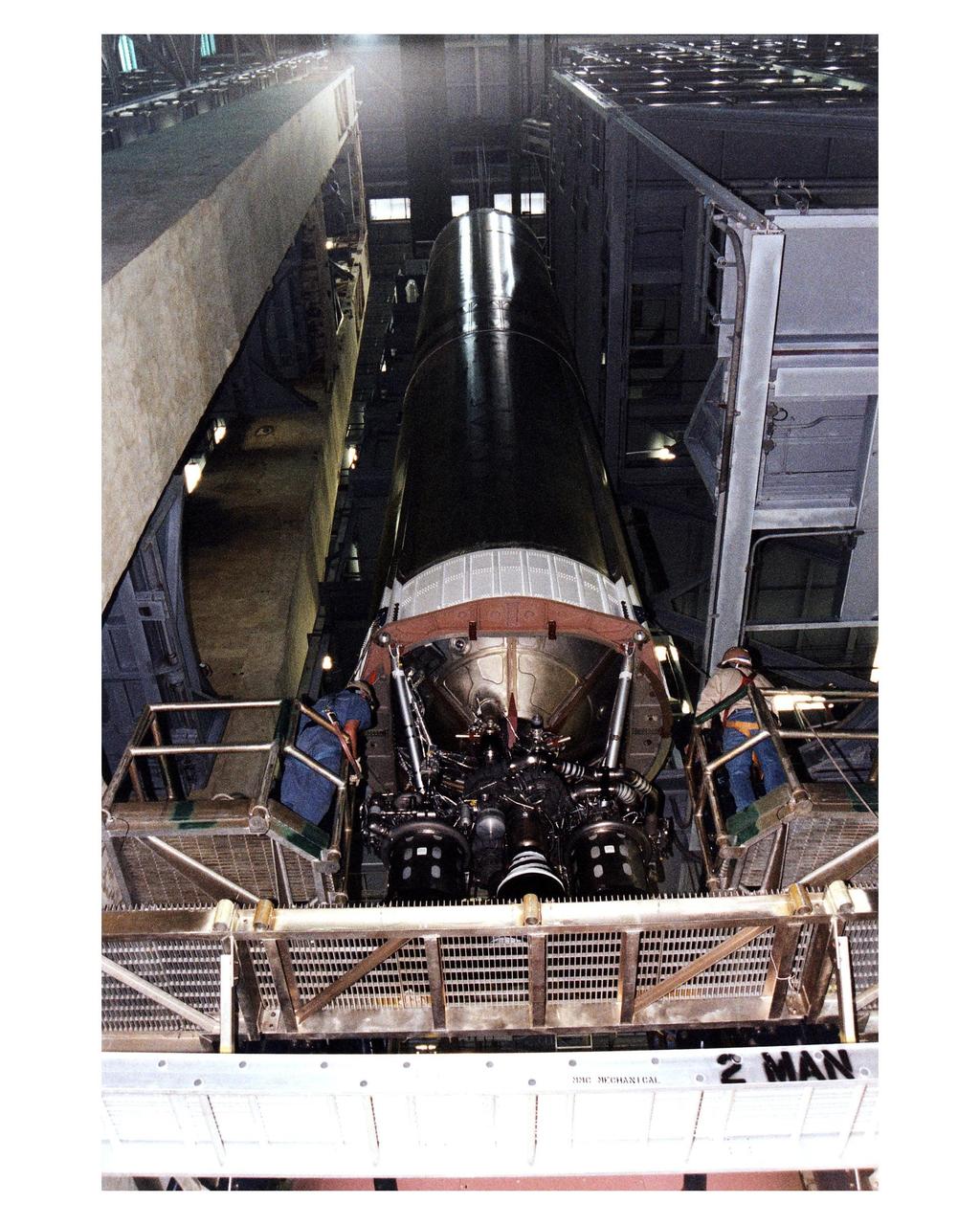
The first stage of the Titan IV expendable launch vehicle that will propel the Cassini spacecraft to Saturn and its moon Titan is lowered into a high bay in the Vertical Integration Building at Cape Canaveral Air Station (CCAS) to begin stacking operations. The Titan IV is currently scheduled to lift off from Launch Pad 40 at CCAS on October 6. Once deployed from the Titan's Centaur upper stage, Cassini will conduct gravity-assist flybys of the planets Venus and Jupiter, then arrive at Saturn in July 2004. Once there, it will perform an orbital survey of Saturn and send the European Space Agency's Huygens Probe into the dense and seemingly Earthlike atmosphere of Titan. The Cassini project is managed by NASA's Jet Propulsion Laboratory (JPL), Pasadena, California
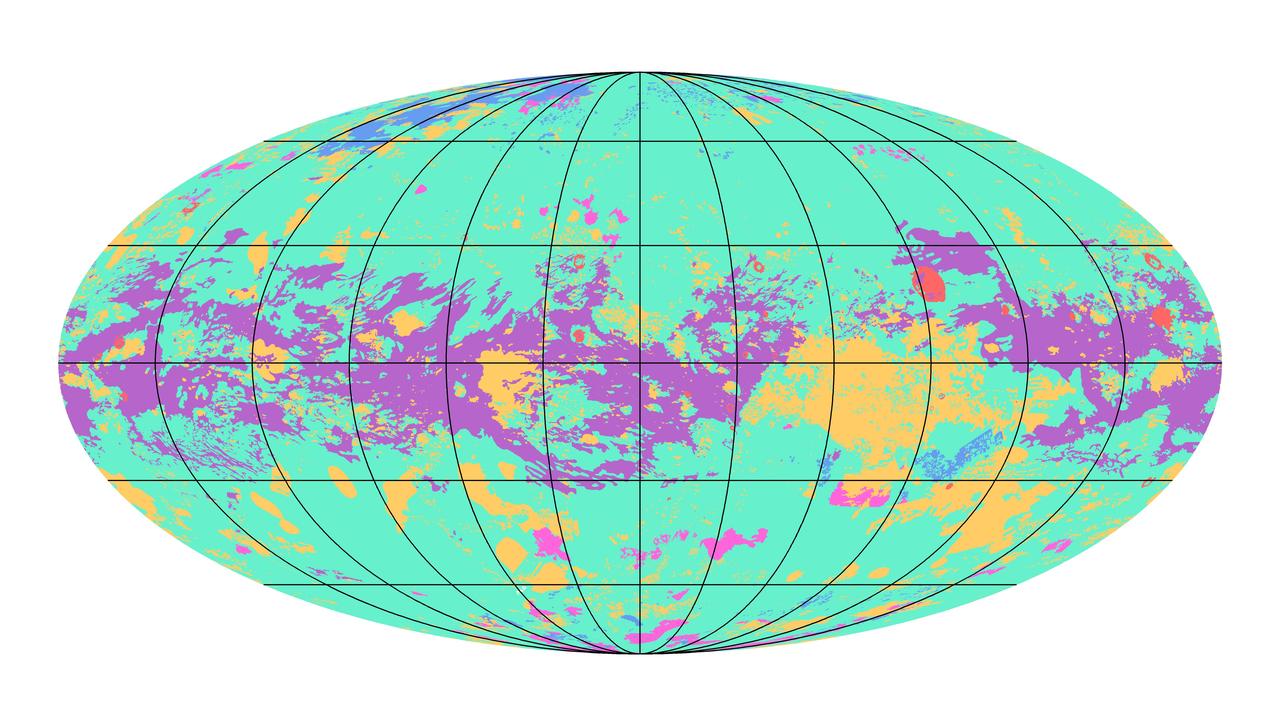
The first global geologic map of Saturn's largest moon, Titan, is based on radar and visible and infrared images from NASA's Cassini mission, which orbited Saturn from 2004 to 2017. Black lines mark 30 degrees of latitude and longitude. Map is in Mollweide projection, a global view that attempts to minimize the size or area distortion, especially at the poles (although shapes are increasingly distorted away from the center of the map). It is centered on 0 degrees latitude, 180 degrees longitude. Map scale is 1:20,000,000. In the annotated figure, the map is labeled with several of the named surface features. Also located is the landing site of the European Space Agency's (ESA) Huygens Probe, part of NASA's Cassini mission. The map legend colors represent the broad types of geologic units found on Titan: plains (broad, relatively flat regions), labyrinth (tectonically disrupted regions often containing fluvial channels), hummocky (hilly, with some mountains), dunes (mostly linear dunes, produced by winds in Titan's atmosphere), craters (formed by impacts) and lakes (regions now or previously filled with liquid methane or ethane). Titan is the only planetary body in our solar system other than Earth known to have stable liquid on its surface — methane and ethane. The map was developed using Cassini radar data and Imaging Science Subsystem (ISS) images. https://photojournal.jpl.nasa.gov/catalog/PIA23174