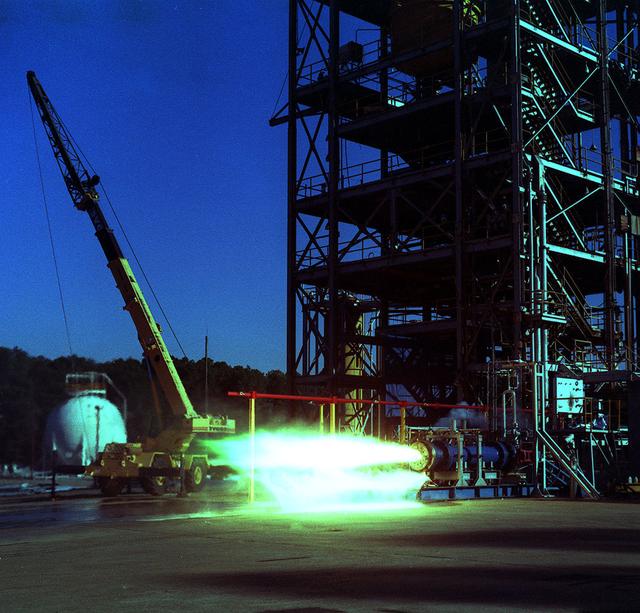
24 inch Hybrid motor test firing at Marshall's Test Stand 500. Liquid/gas are mixed with solid propellents to investigate materials, propellents, and nozzle stability characteristics.
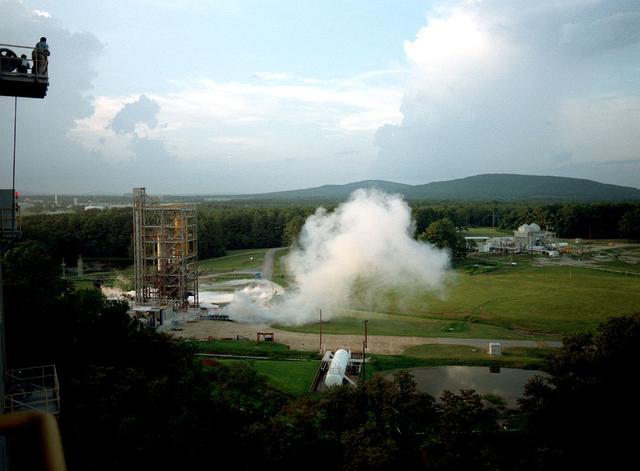
24 inch Hybrid motor test firing at Marshall's Test Stand 500. Liquid/gas are mixed with solid propellents to investigate materials, propellents, and nozzle stability characteristics.
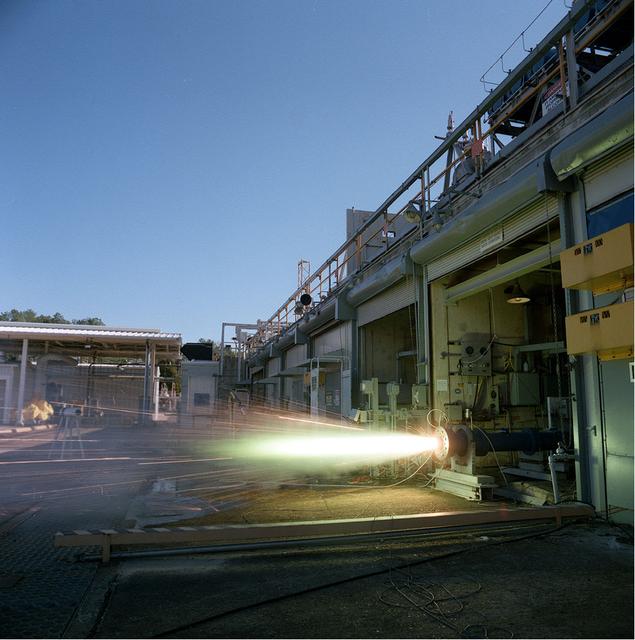
An eleven inch (11) hybrid motor gaseous oxygen (GOX) fuel firing at Marshall's test cell 103.
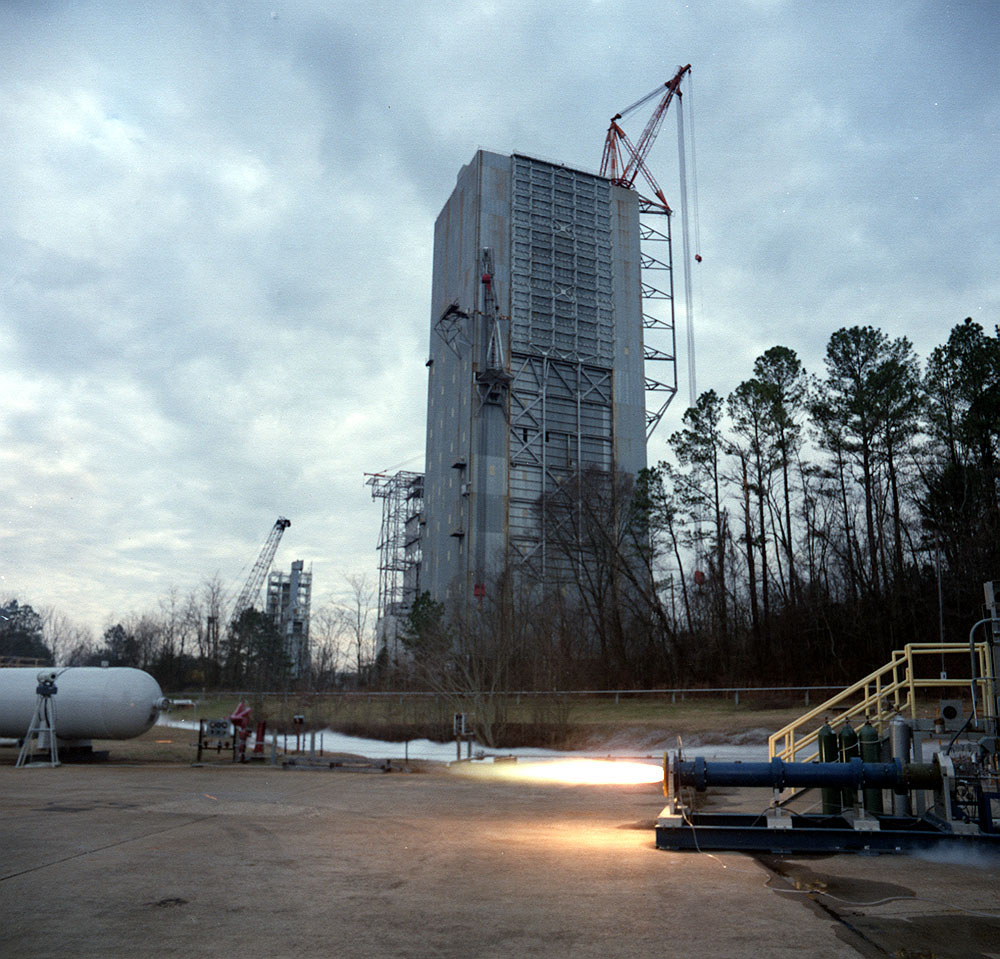
An 11 inch (11) hybrid motor fuel grain variation test firing at Marshall's Test Stand 500.
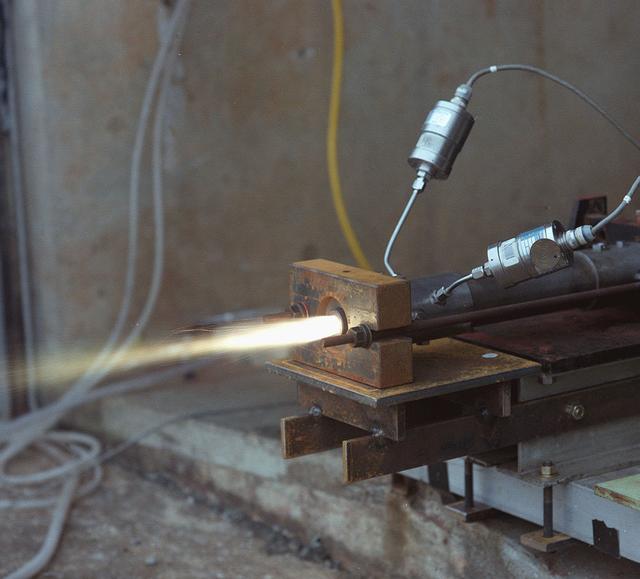
Fuels used in the 11 inch and 24 inch lab-scale hybrid motors are ignited at Marshall's test cell 104.
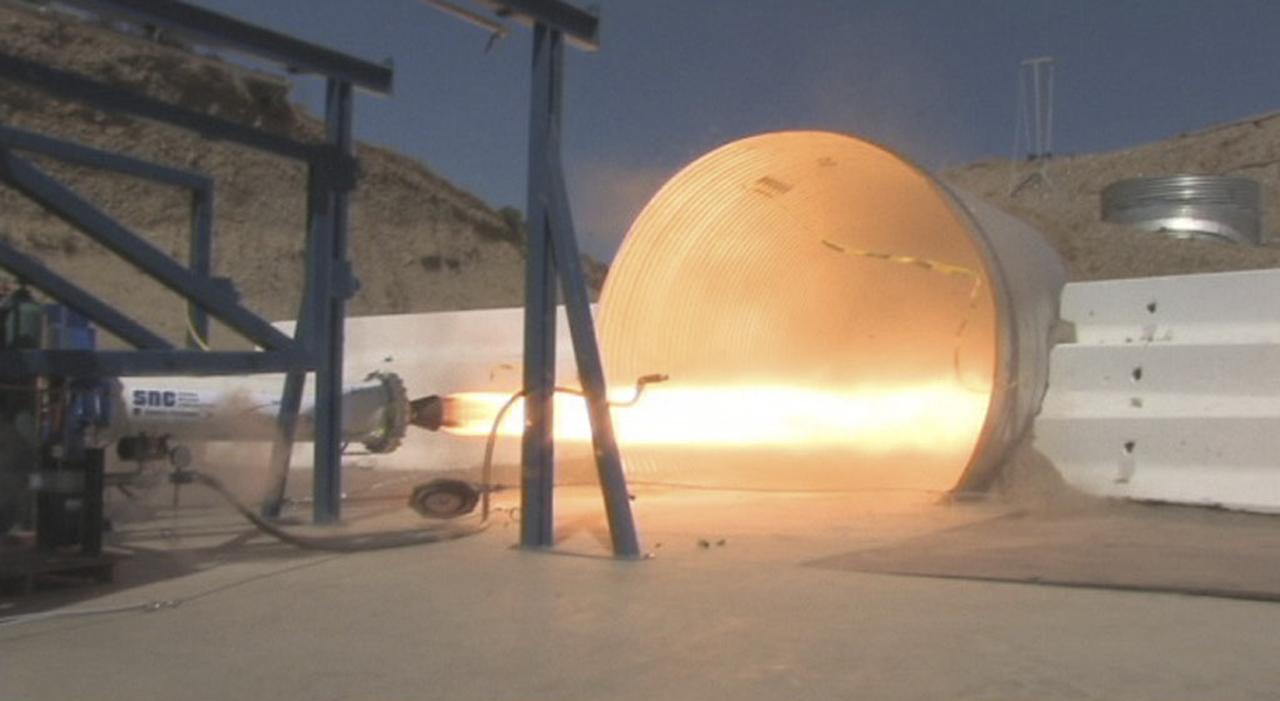
POWAY, Calif. – During NASA's Commercial Crew Development Round 1 CCDev1 activities, the rocket motor under development by Sierra Nevada Corp. for its Dream Chaser spacecraft successfully fires at the company's rocket test facility located near San Diego. NASA team members reviewed the motor's system and then watched it fire three times in one day, including one firing under vacuum ignition conditions. The tests, which simulated a complete nominal mission profile, demonstrated the multiple restart capability of Sierra Nevada's hybrid rocket. Two of the company's designed and developed hybrid rocket motors will be used as the main propulsion system on the Dream Chaser after launching aboard an Atlas V rocket. Dream Chaser is one of five systems NASA invested in during CCDev1 in order to aid in the innovation and development of American-led commercial capabilities for crew transportation and rescue services to and from the International Space Station and other low Earth orbit destinations. In 2011, NASA's Commercial Crew Program CCP entered into another funded Space Act Agreement with Sierra Nevada for the second round of commercial crew development CCDev2) so the company could further develop its Dream Chaser spacecraft for NASA transportation services. For information about CCP, visit www.nasa.gov/commercialcrew. Photo credit: Sierra Nevada Corp.