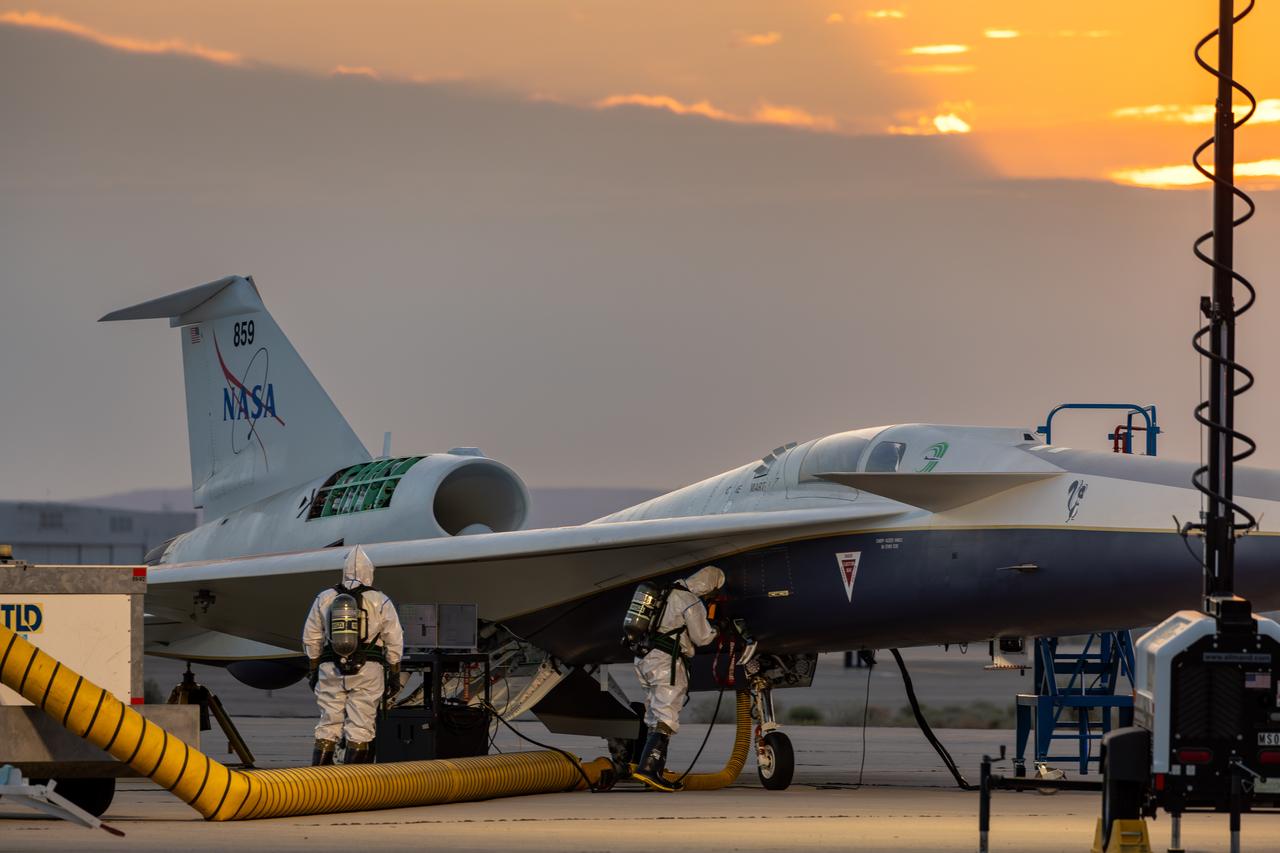
Maintainers perform a hydrazine safety check on the agency’s quiet supersonic X-59 aircraft at U.S. Air Force Plant 42 in Palmdale, California, on Aug. 18, 2025. Hydrazine is a highly toxic chemical, but it serves as a critical backup to restart the engine in flight, if necessary, and is one of several safety features being validated ahead of the aircraft’s first flight.
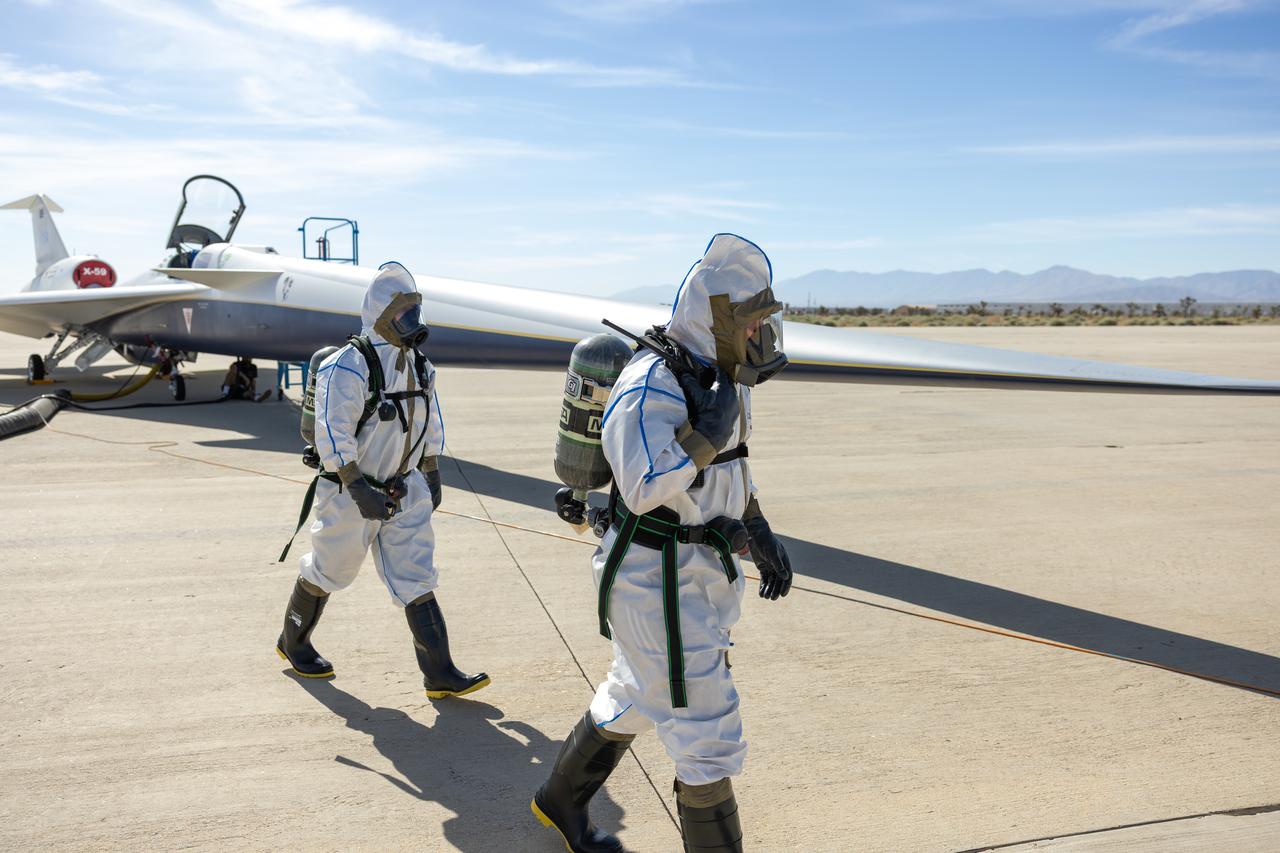
Maintainers perform a hydrazine safety check on NASA’s quiet supersonic X-59 aircraft at U.S. Air Force Plant 42 in Palmdale, California, on Aug. 18, 2025. Hydrazine is a highly toxic chemical, but it serves as a critical backup to restart the engine in flight, if necessary, which is one of several safety features being validated ahead of the aircraft’s first flight.
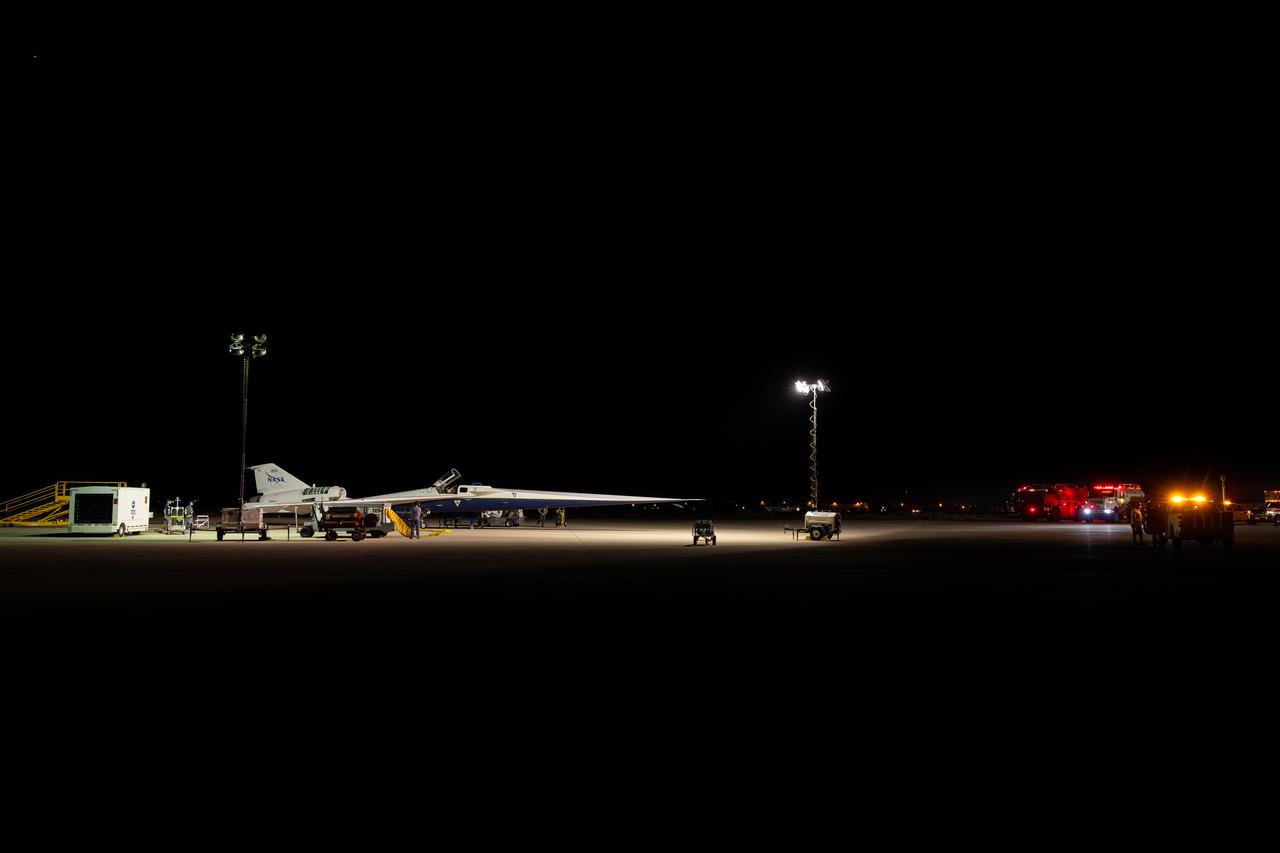
NASA’s X-59 quiet supersonic research aircraft is seen at dawn with firetrucks and safety personnel nearby during a hydrazine safety check at U.S. Air Force Plant 42 in Palmdale, California, on Aug. 18, 2025. The operation highlights the extensive precautions built into the aircraft’s safety procedures for a system that serves as a critical safeguard, ensuring the engine can be restarted in flight as the X-59 prepares for its first flight.

NASA test pilot Nils Larson lowers the canopy of the X-59 quiet supersonic research aircraft during ground tests at Lockheed Martin’s Skunk Works facility in Palmdale, California, on July 18, 2025. The X-59 is the centerpiece of NASA’s Quesst mission to demonstrate quiet supersonic flight and the aircraft is scheduled to make its first flight later this year.
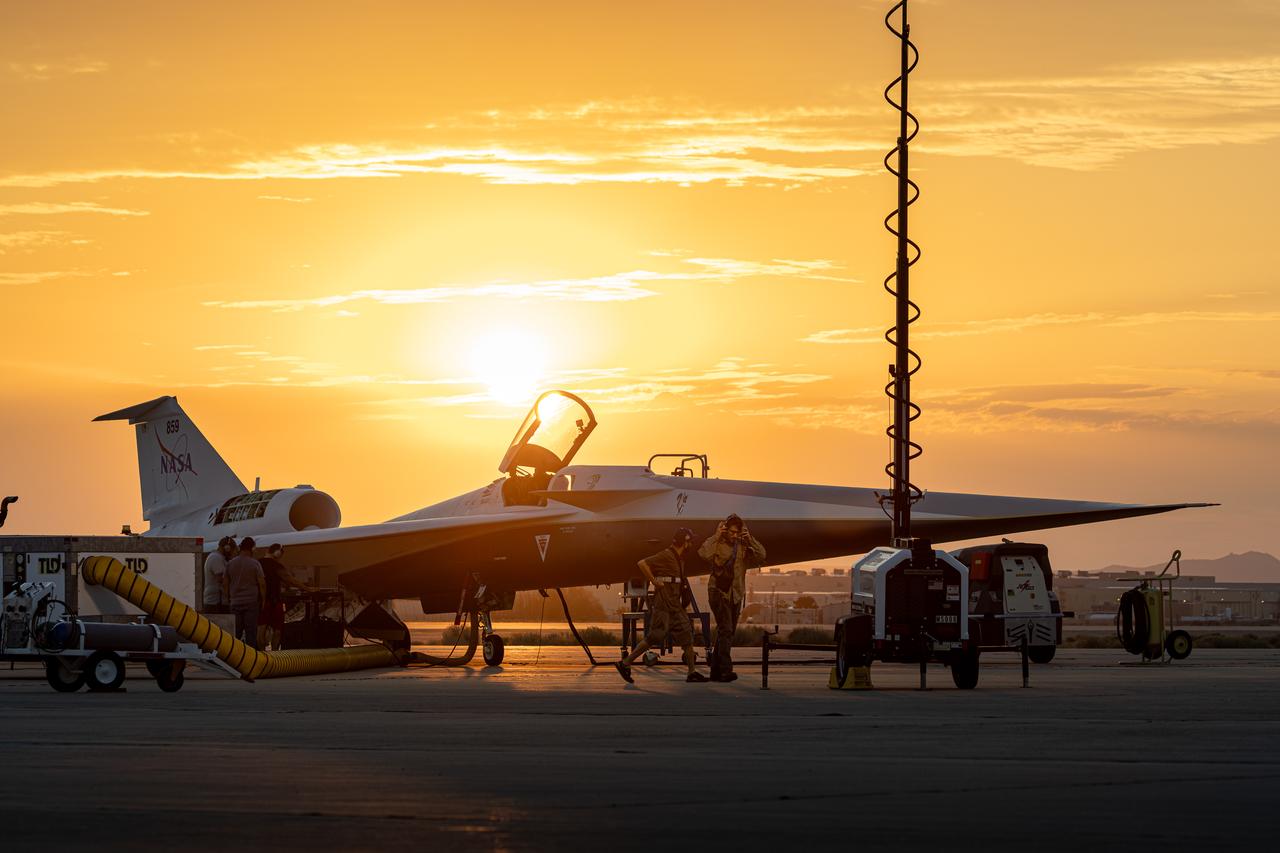
NASA’s X-59 quiet supersonic research aircraft sits on the ramp at sunrise before ground tests at Lockheed Martin’s Skunk Works facility in Palmdale, California, on July 18, 2025. The X-59 is the centerpiece of NASA’s Quesst mission to demonstrate quiet supersonic flight and the aircraft is scheduled to make its first flight later this year.
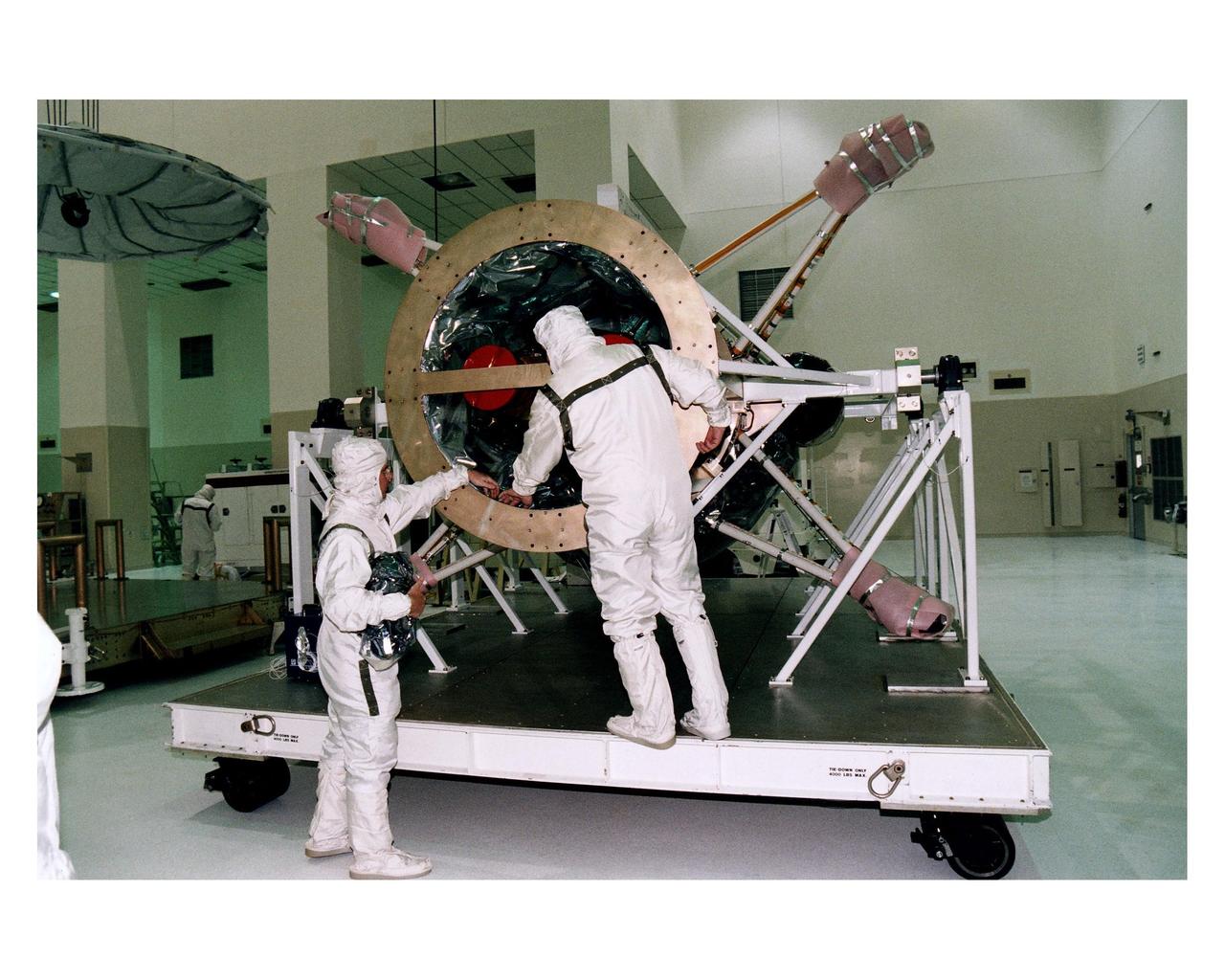
Workers take off the protective covering on the propulsion module for the Cassini spacecraft after uncrating the module at KSC's Spacecraft Assembly and Encapsulation Facility-2 (SAEF-2). The extended journey of 6.7 years to Saturn and the 4-year mission for Cassini once it gets there will require the spacecraft to carry a large amount of propellant for inflight trajectory-correction maneuvers and attitude control, particularly during the science observations. The propulsion module has redundant 445-newton main engines that burn nitrogen tetraoxide and monomethyl-hydrazine for main propulsion and 16 smaller 1-newton engines that burn hydrazine to control attitude and to correct small deviations from the spacecraft flight path. Cassini will be launched on a Titan IVB/Centaur expendable launch vehicle. Liftoff is targeted for October 6 from Launch Complex 40, Cape Canaveral Air Station
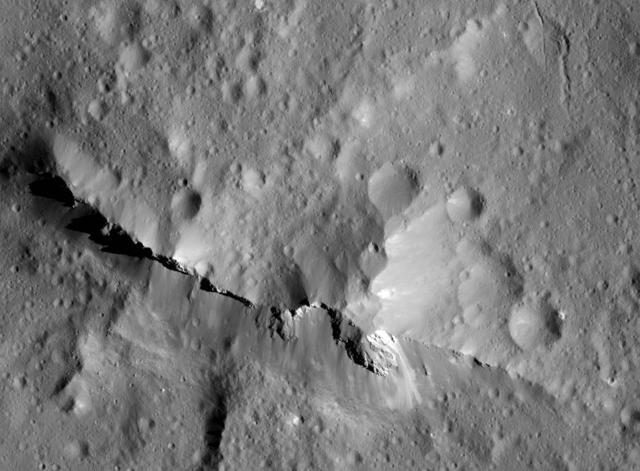
NASA's Dawn spacecraft captured this close-up view of the central peak of the 99-mile-wide (160-kilometer-wide) Urvara impact crater on Ceres. The 6,500-foot (1980-meter) central ridge rises above the nearby terrain. The image was captured by Dawn's Framing Camera, during XM2, on June 21, 2018 from an altitude of about 83 miles (134 kilometers). NASA announced the conclusion of Dawn's mission operations was Oct. 31, 2018, when the spacecraft depleted its hydrazine. https://photojournal.jpl.nasa.gov/catalog/PIA22771
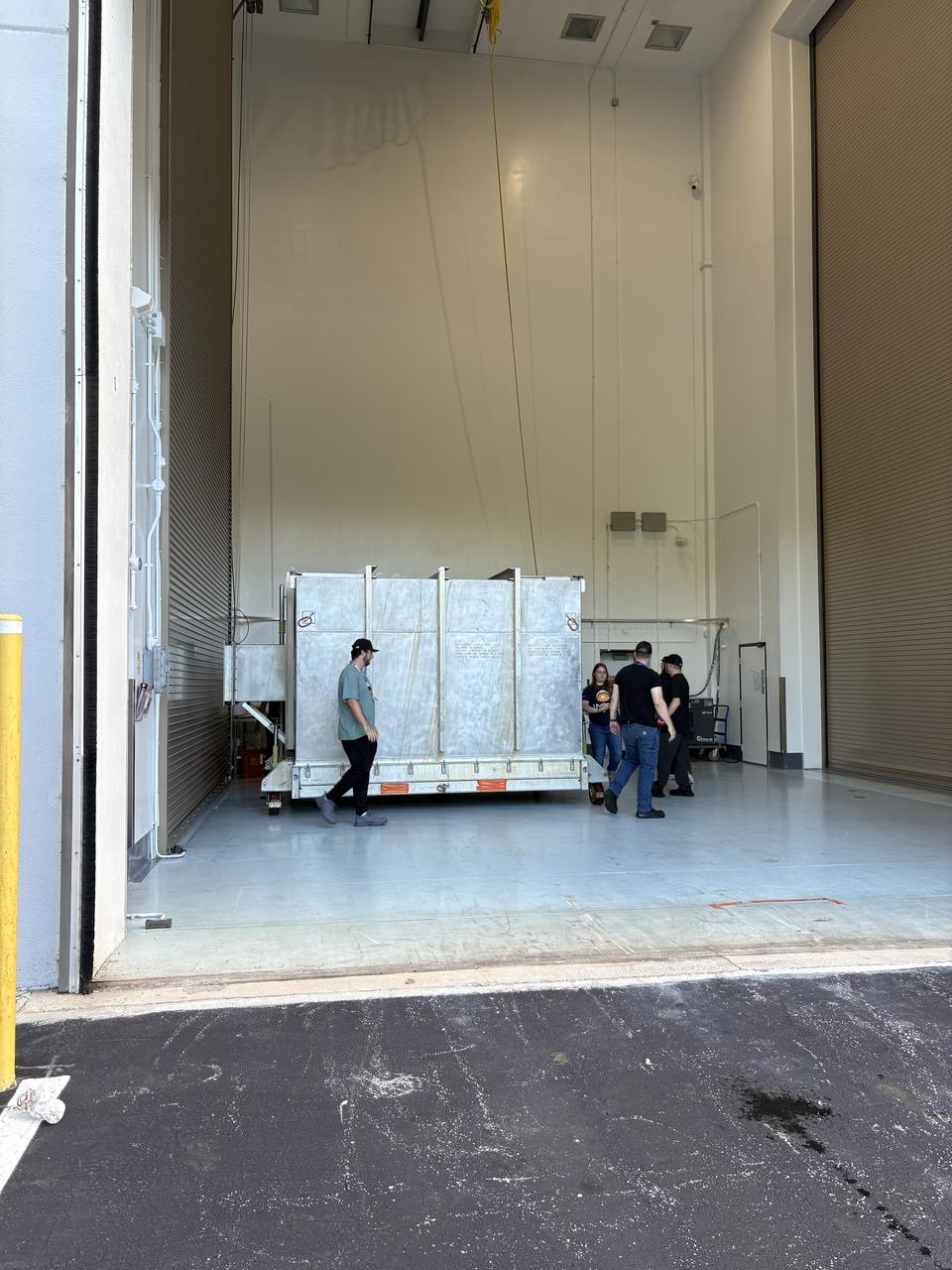
NASA’s IMAP (Interstellar Mapping and Acceleration Probe) observatory arrives at Building 2 where technicians will load 317 pounds (or 144 kilograms) of hydrazine into three tanks into the spacecraft at the Astrotech Space Operations Facility near NASA’s Kennedy Space Center in Florida on Tuesday, Aug. 12, 2025. IMAP will explore and map the boundaries of the heliosphere — a huge bubble created by the Sun’s wind that encapsulates our entire solar system — and study how the heliosphere interacts with the local galactic neighborhood beyond.

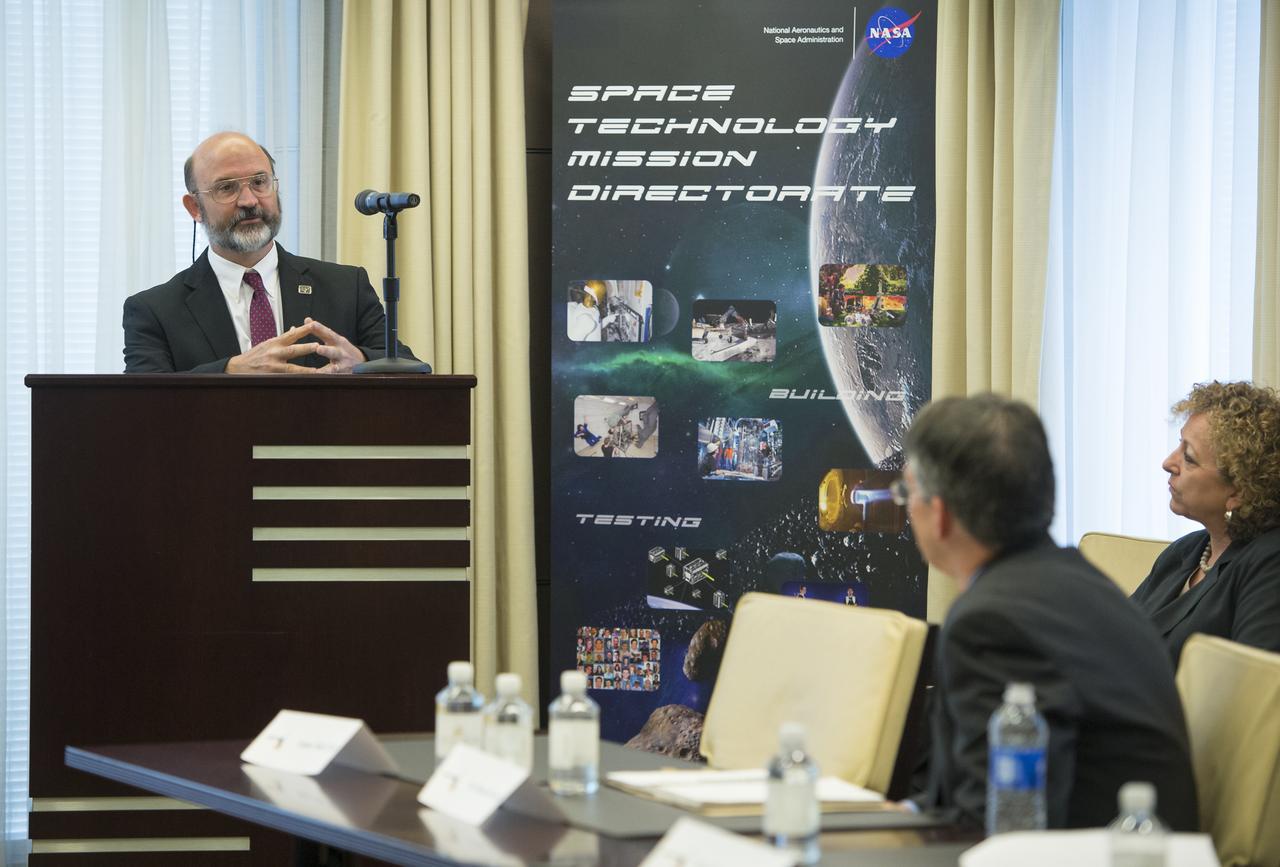
Dr. Michael Gazarik, Associate Administrator, NASA Space Technology Mission Directorate, answers a reporter's question at a Green Propellant Infusion Mission press conference at the Reserve Officers Association, Tuesday, July 9, 2013 in Washington. The NASA GPIM program, led by Ball Aerospace in conjunction with Aerojet Rocketdyne, is demonstrating a high-performance "green" fuel in space. The propellant used on this mission offers nearly 50 percent better performance when compared to traditional hydrazine. Photo Credit: (NASA/Carla Cioffi)
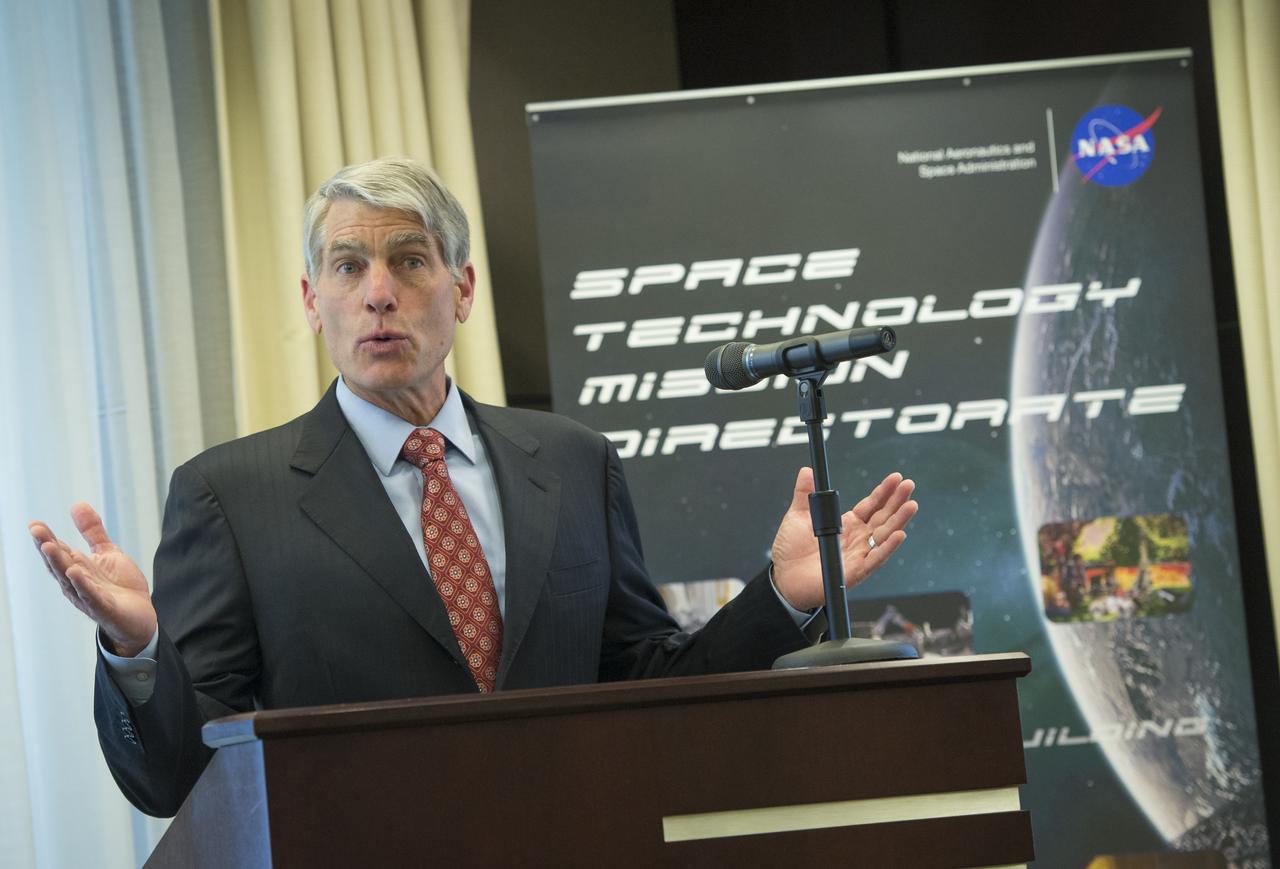
U.S. Senator Mark Udall (D-CO) speaks at a Green Propellant Infusion Mission press conference at the Reserve Officers Association, Tuesday, July 9, 2013 in Washington. The NASA GPIM program, led by Ball Aerospace in conjunction with Aerojet Rocketdyne, is demonstrating a high-performance "green" fuel in space. The propellant used on this mission offers nearly 50 percent better performance when compared to traditional hydrazine. Photo Credit: (NASA/Carla Cioffi)
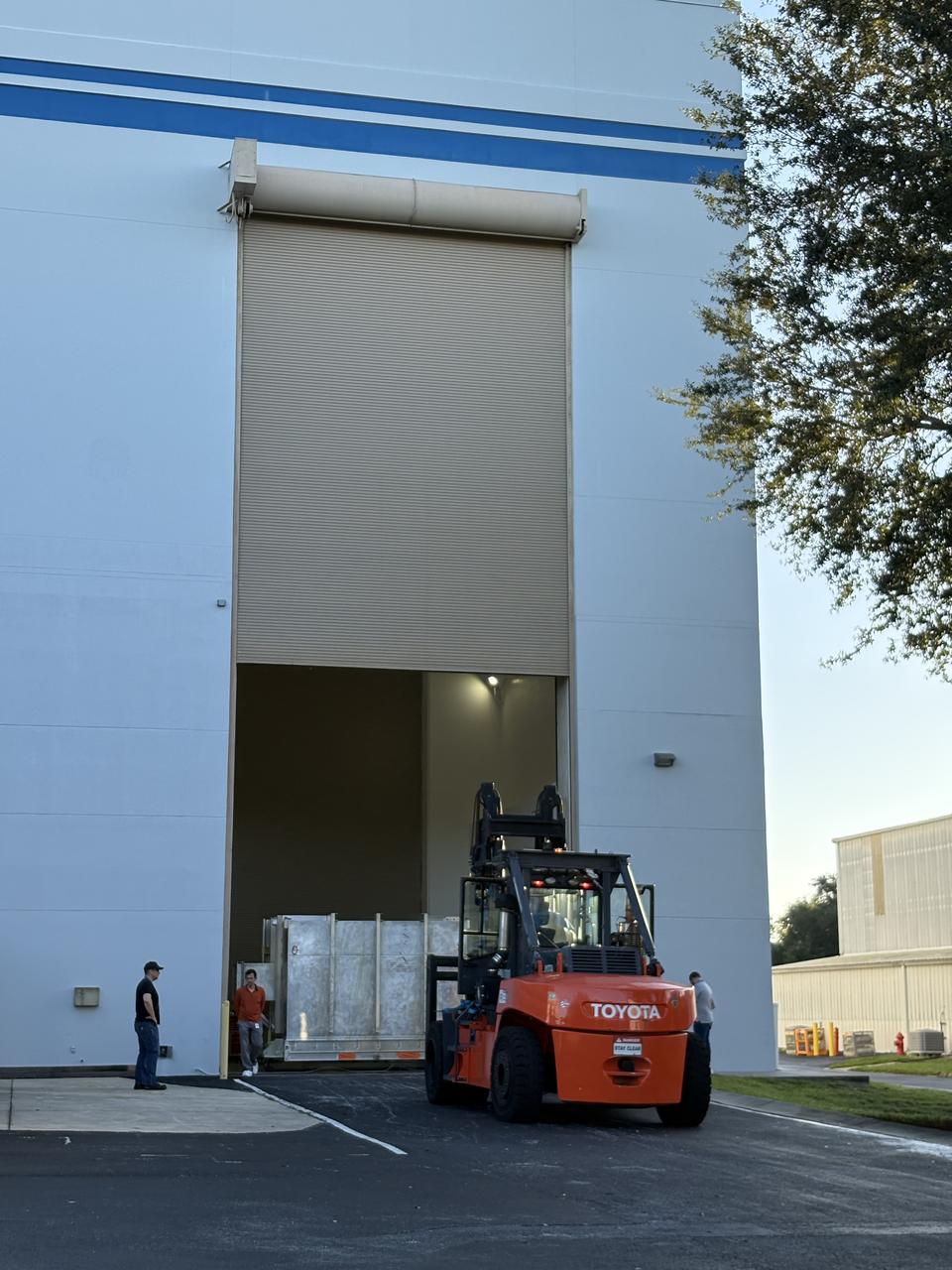
Technicians prepare to transport NASA’s IMAP (Interstellar Mapping and Acceleration Probe) observatory to Building 2 where they will load 317 pounds (or 144 kilograms) of hydrazine into three tanks into the spacecraft at the Astrotech Space Operations Facility near NASA’s Kennedy Space Center in Florida on Tuesday, Aug. 12, 2025. IMAP will explore and map the boundaries of the heliosphere — a huge bubble created by the Sun’s wind that encapsulates our entire solar system — and study how the heliosphere interacts with the local galactic neighborhood beyond.

This image was obtained by NASA's Dawn spacecraft on June, 16 2018 from an altitude of about 24 miles (39 kilometers). NASA announced the conclusion of Dawn's mission operations was Oct. 31, 2018, when the spacecraft depleted its hydrazine. The center of this feature is located at about 16.1 degrees north latitude and 242.8 degrees east longitude. https://photojournal.jpl.nasa.gov/catalog/PIA22982
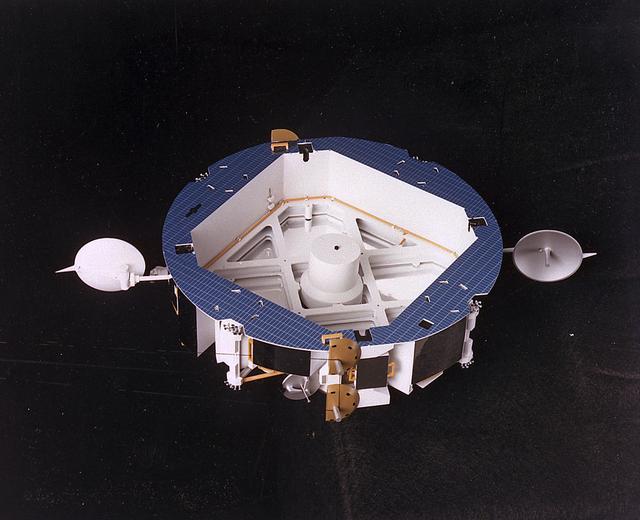
In this 1986 artist's concept, the Orbital Maneuvering Vehicle (OMV), is shown without its main propulsion module. Essentially two propulsion vehicles in one, the OMV could be powered by a main propulsion module , or, in its short range vehicle configuration shown here, use its own hydrazine and cold gas thrusters. As envisioned by Marshall Space Flight Center plarners, the OMV would be a remotely-controlled free-flying space tug which would place, rendezvous, dock, and retrieve orbital payloads.

U.S. Senator Mark Udall (D-CO) speaks at a Green Propellant Infusion Mission press conference at the Reserve Officers Association, Tuesday, July 9, 2013 in Washington. The NASA GPIM program, led by Ball Aerospace in conjunction with Aerojet Rocketdyne, is demonstrating a high-performance "green" fuel in space. The propellant used on this mission offers nearly 50 percent better performance when compared to traditional hydrazine. Photo Credit: (NASA/Carla Cioffi)

Technicians transport NASA’s IMAP (Interstellar Mapping and Acceleration Probe) observatory to Building 2 where they will load 317 pounds (or 144 kilograms) of hydrazine into three tanks into the spacecraft at the Astrotech Space Operations Facility near NASA’s Kennedy Space Center in Florida on Tuesday, Aug. 12, 2025. IMAP will explore and map the boundaries of the heliosphere — a huge bubble created by the Sun’s wind that encapsulates our entire solar system — and study how the heliosphere interacts with the local galactic neighborhood beyond.
Roger Myers, Executive Director, Aerojet Rocketdyne speaks at a Green Propellant Infusion Mission press conference at the Reserve Officers Association, Tuesday, July 9, 2013 in Washington. The NASA GPIM program, led by Ball Aerospace in conjunction with Aerojet Rocketdyne, is demonstrating a high-performance "green" fuel in space. The propellant used on this mission offers nearly 50 percent better performance when compared to traditional hydrazine. Photo Credit: (NASA/Carla Cioffi)
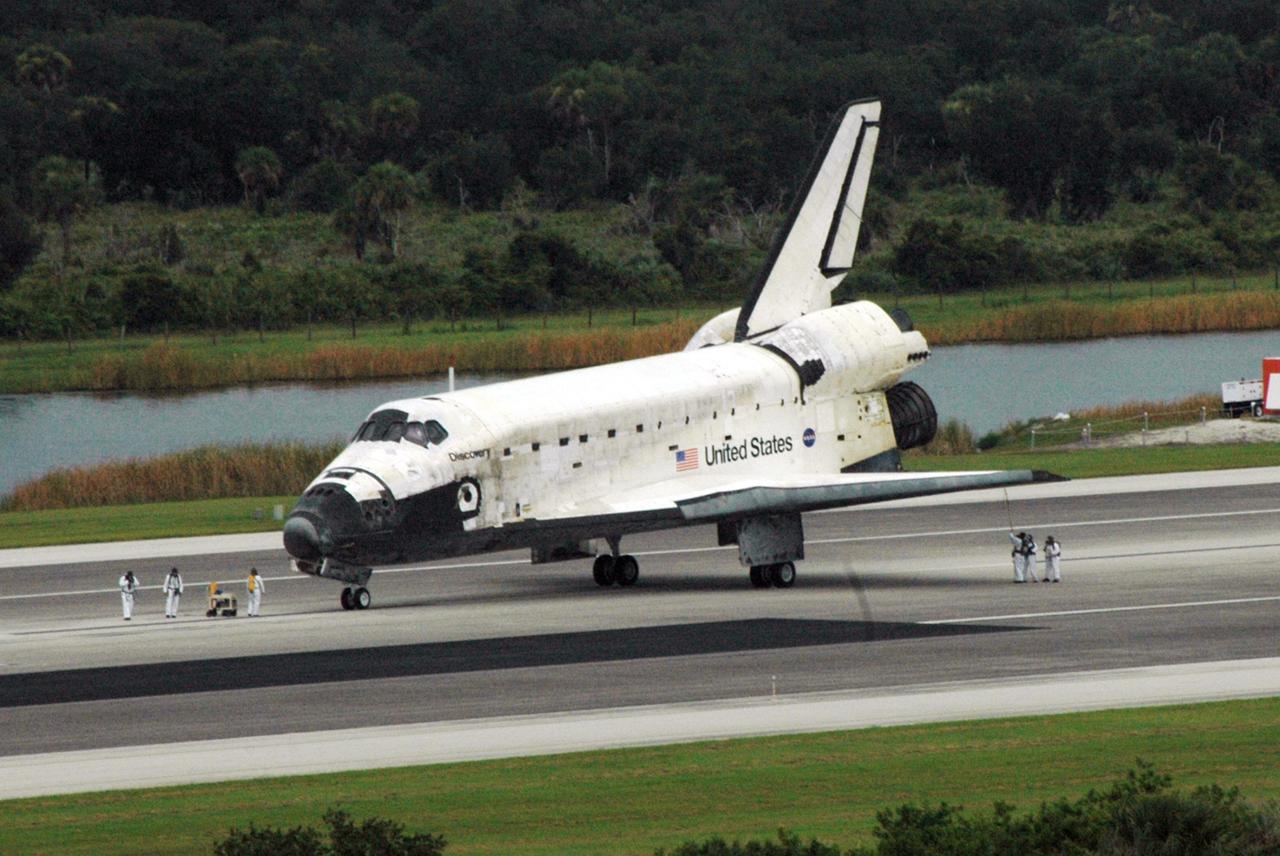
KENNEDY SPACE CENTER, FLA. - After Discovery's safe landing on Runway 15 at NASA's Shuttle Landing Facility, safety assessment teams dressed in protective attire and with breathing apparatus obtain vapor level readings around the orbiter and test for possible explosive or toxic gases such as hydrogen, hydrazine, monomethyl-hydrazine, nitrogen tetroxide or ammonia . Completing mission STS-121 to the International Space Station, Discovery traveled 5.3 million miles, landing on orbit 202. Mission elapsed time was 12 days, 18 hours, 37 minutes and 54 seconds. Main gear touchdown occurred on time at 9:14:43 EDT. Wheel stop was at 9:15:49 EDT. The returning crew members are Commander Steven Lindsey, Pilot Mark Kelly and Mission Specialists Piers Sellers, Michael Fossum, Lisa Nowak and Stephanie Wilson. Mission Specialist Thomas Reiter, who launched with the crew on July 4, remained on the station to join the Expedition 13 crew there. The landing is the 62nd at Kennedy Space Center and the 32nd for Discovery. Discovery's landing was as exhilarating as its launch, the first to take place on America's Independence Day. During the mission, the STS-121 crew tested new equipment and procedures to improve shuttle safety, and delivered supplies and made repairs to the International Space Station. Photo credit: NASA/Ken Thornsley

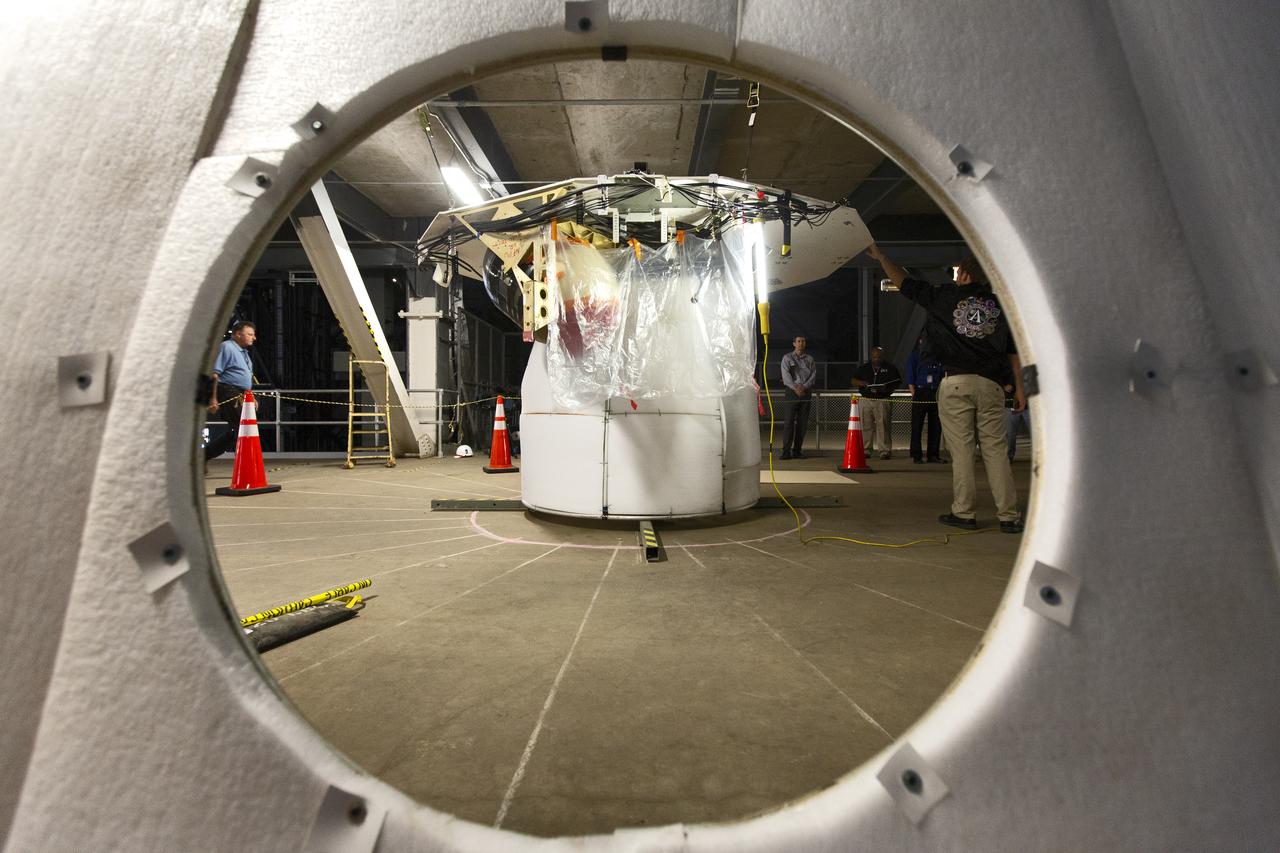
A Space Launch System (SLS) avionics handling tool demonstration takes place inside Kennedy Space Center’s Vehicle Assembly Building on April 4, 2019. The demonstration showed that avionics boxes could be successfully and safely mounted into the SLS rocket’s upper stage — called the Interim Cryogenic Propulsion Stage, or ICPS — with low risk of damaging a closely located hydrazine tank. Avionics boxes include the Inertial Navigation and Control Assembly and flight batteries. The actual installation will take place just weeks before NASA’s SLS rocket and uncrewed Orion spacecraft lift off on Exploration Mission-1 from Launch Pad 39B at Kennedy.
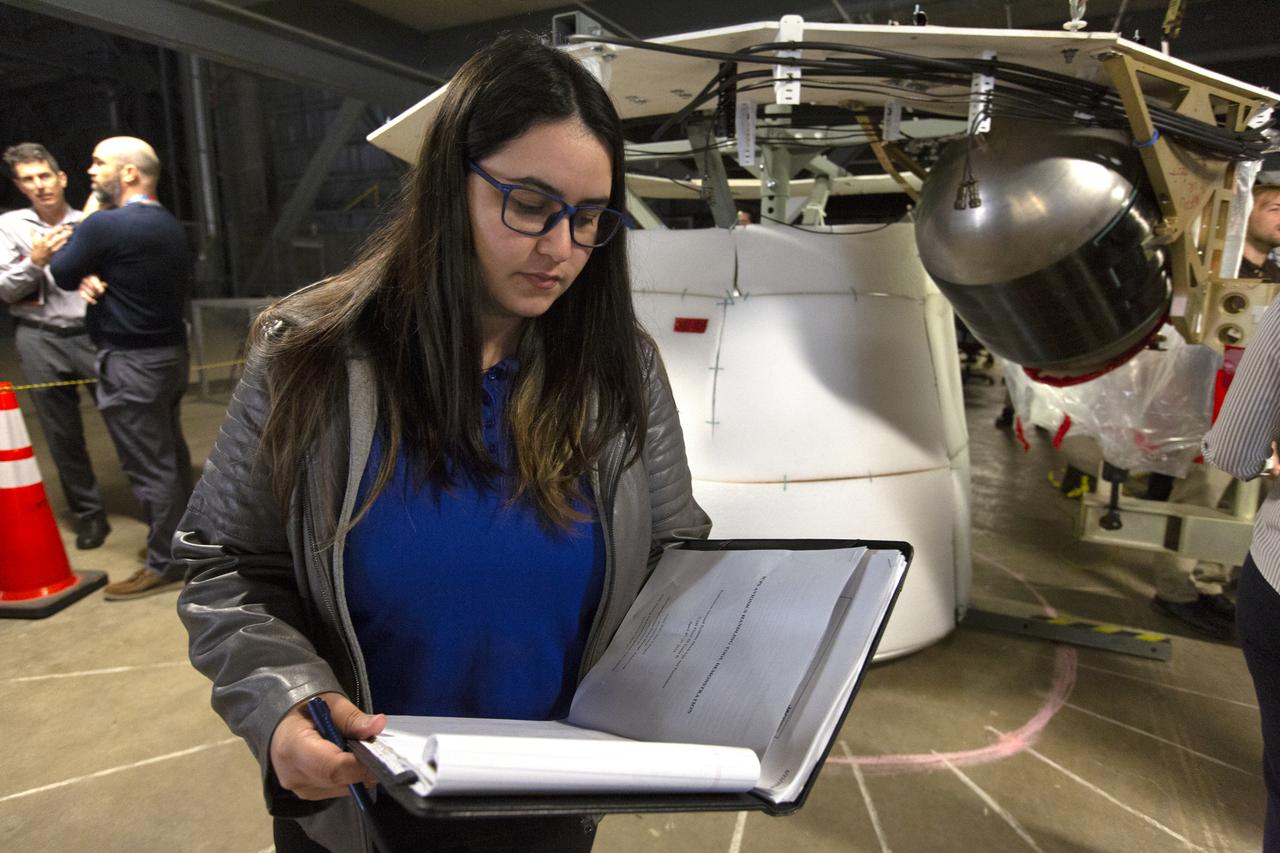
NASA Flight Systems Engineer Sherild Rivera Melendez takes notes during the Space Launch System avionics handling tool demonstration inside Kennedy Space Center’s Vehicle Assembly Building on April 4, 2019. The demonstration showed that avionics boxes could be successfully and safely mounted into the SLS rocket’s upper stage — called the Interim Cryogenic Propulsion Stage, or ICPS — with low risk of damaging a closely located hydrazine tank. Avionics boxes include the Inertial Navigation and Control Assembly and flight batteries. Rivera Melendez coordinated multiple human factors teams, focusing on life cycle reviews and impact risks during installation of the avionics.
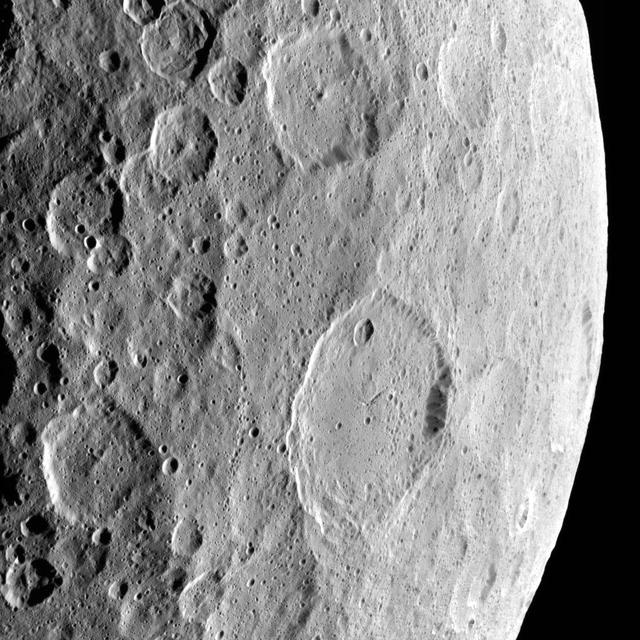
This image highlights the complex set of fractures near the center of the large (72 miles, 116 kilometers) Ezinu Crater. It was obtained by NASA's Dawn spacecraft on September 2, 2018 from an altitude of about 2095 miles (3070 kilometers). NASA announced the conclusion of Dawn's mission operations was Oct. 31, 2018, when the spacecraft depleted its hydrazine. The center of Ezinu Crater is located at about 43.2 degrees north latitude and 195.7 degrees east longitude. Ezinu Crater is named after the Sumerian goddess of the grain. https://photojournal.jpl.nasa.gov/catalog/PIA22983
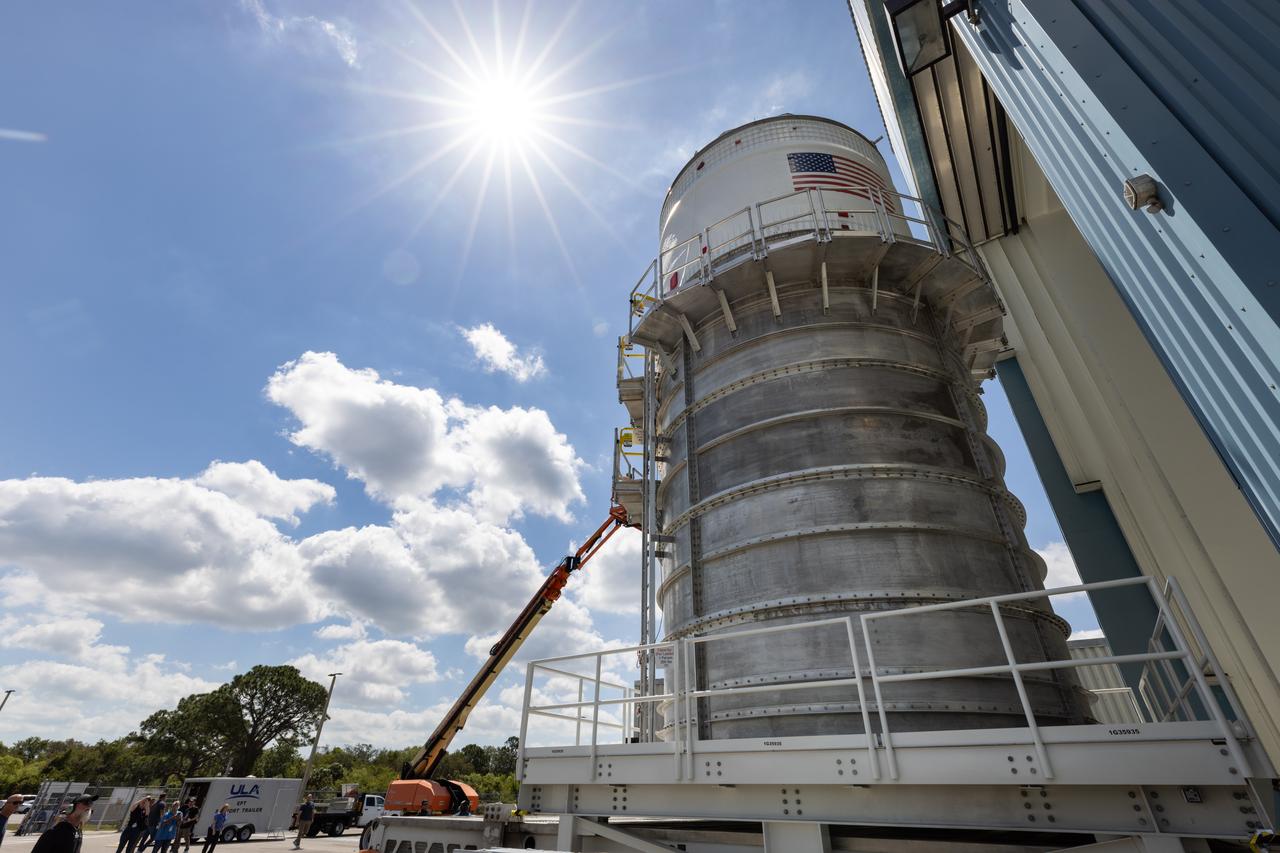
Teams with NASA’s Exploration Ground Systems Program transport the upper stage for the agency’s Artemis II SLS (Space Launch System) rocket from the Multi-Payload Processing Facility (MPPF) at NASA’s Kennedy Space Center in Florida to the spaceport’s Vehicle Assembly Building on Wednesday, April 16, 2025. Technicians fueled the SLS upper stage, known as the interim cryogenic propulsion stage, with hydrazine for its reaction control system at the MPPF and will now integrate the four-story propulsion system with SLS rocket elements atop mobile launcher 1.
Robert Cook, a launch vehicle engineer with Millennium Engineering and Integration, talks during the Space Launch System (SLS) avionics handling tool demonstration inside Kennedy Space Center’s Vehicle Assembly Building on April 4, 2019. The demonstration showed that avionics boxes could be successfully and safely mounted into the SLS rocket’s upper stage — called the Interim Cryogenic Propulsion Stage, or ICPS — with low risk of damaging a closely located hydrazine tank. Avionics boxes include the Inertial Navigation and Control Assembly and flight batteries. Cook designed the ICPS section mockup used in the exercise.
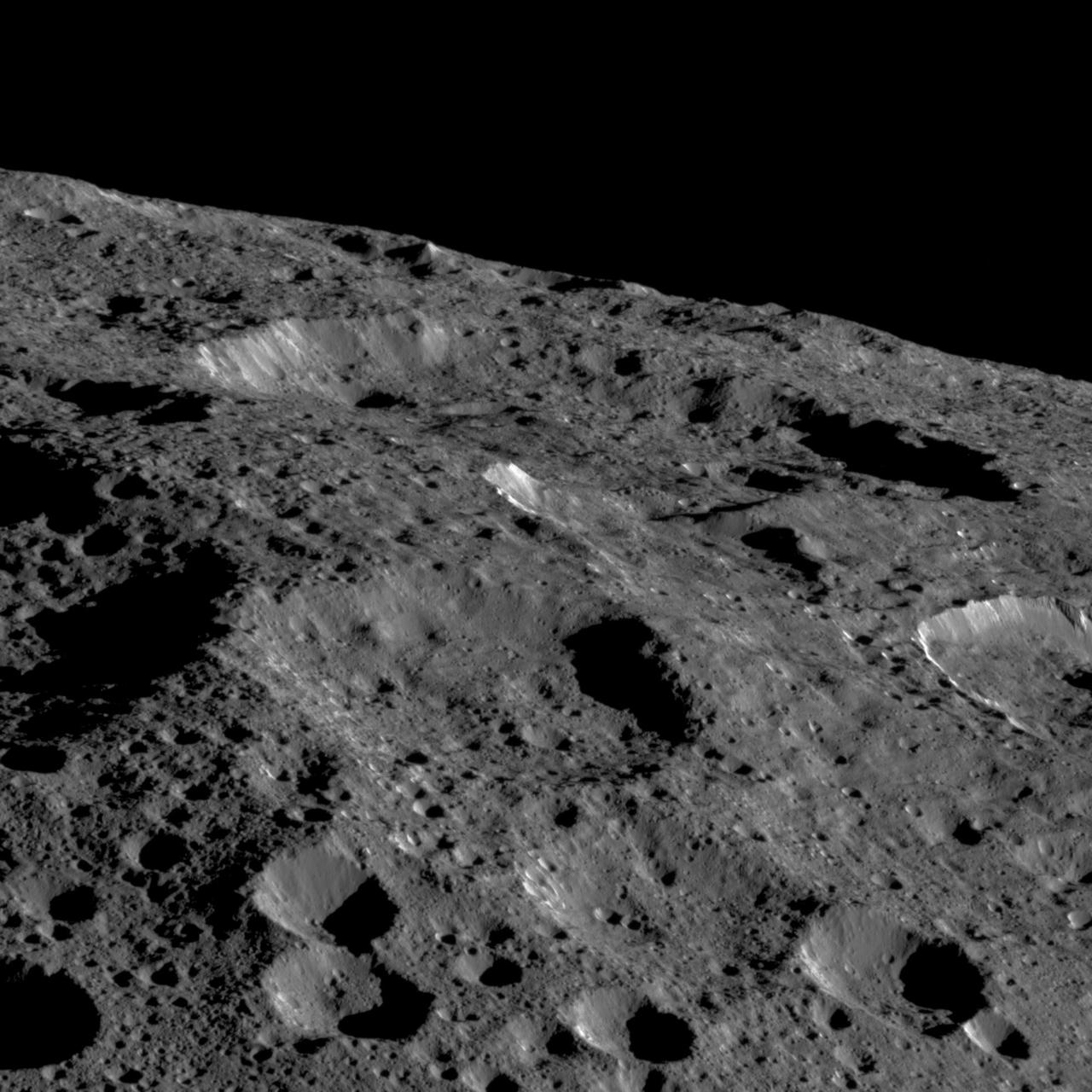
Dawn captured this view on May 19, 2018. The image shows the limb of Ceres at about 270E, 30N looking south. The spatial resolution is about 200 feet (60 meters) per pixel in the nearest parts of the image. The impact crater to the right (only partially visible) is Ninsar, named after a Sumerian goddess of plants and vegetation. It is about 25 miles (40 kilometers) in diameter. The conclusion of Dawn's mission operations was Oct. 31, 2018, when the spacecraft depleted its hydrazine used for attitude control. https://photojournal.jpl.nasa.gov/catalog/PIA23017
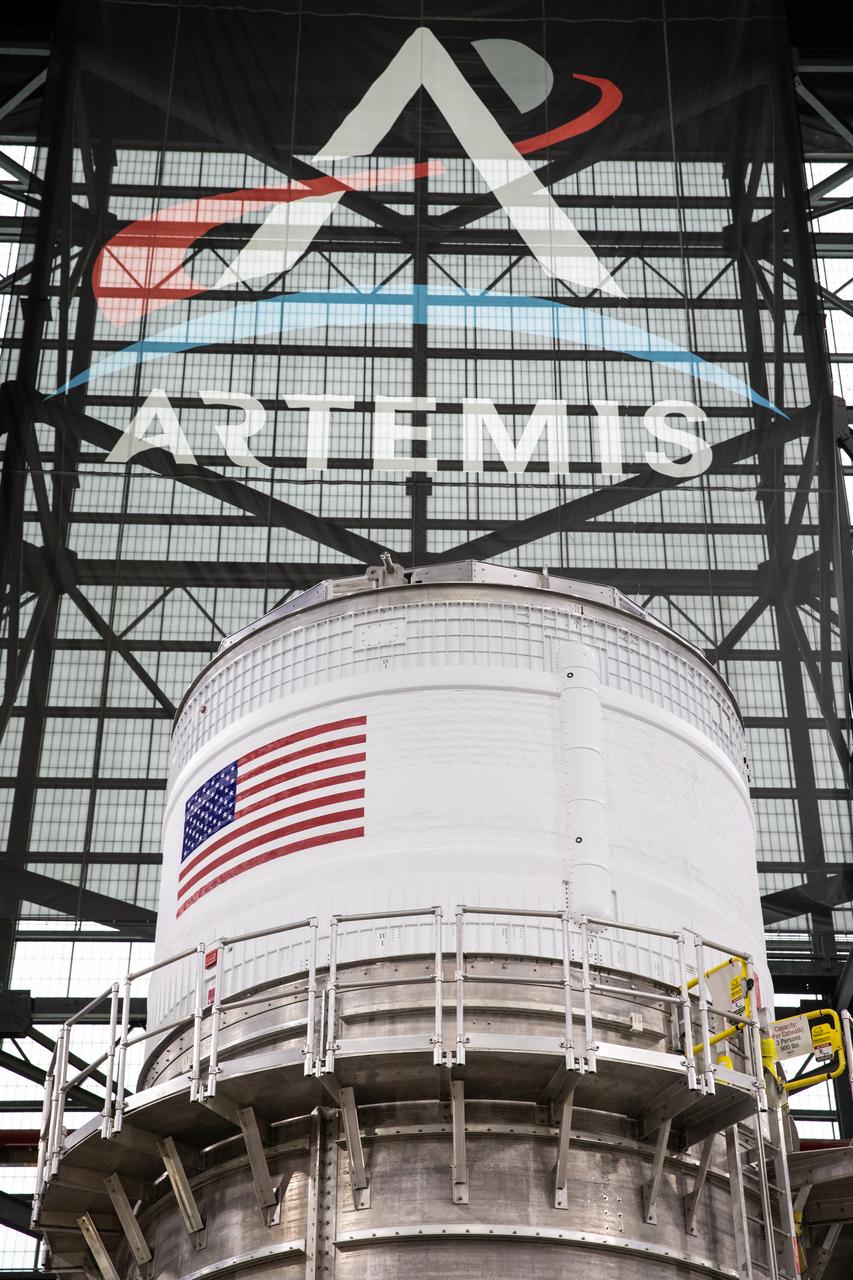
The upper stage for NASA’s Artemis II SLS (Space Launch System) rocket sits in the transfer aisle of the Vehicle Assembly Building at NASA’s Kennedy Space Center in Florida on Wednesday, April 16, 2025, after teams with the agency’s Exploration Ground Systems Program transported the four-story propulsion system from the spaceport’s Multi-Payload Processing Facility (MPPF). Technicians fueled the SLS upper stage, known as the interim cryogenic propulsion stage, with hydrazine for its reaction control system at the MPPF and will now integrate the four-story propulsion system with SLS rocket elements atop mobile launcher 1.

This image was obtained by NASA's Dawn spacecraft on July 24, 2018 from an altitude of about 89 miles (143 kilometers). NASA announced the conclusion of Dawn's mission operations was Oct. 31, 2018, when the spacecraft depleted its hydrazine. The center of this feature is located at about 18.5 degrees north latitude and 240.9 degrees east longitude, in the eastern part of Occator Crater. Occator Crater is named after the Roman agricultural deity of the harrowing, a helper of Ceres, the goddess of agriculture, grain crops, fertility and motherly relationships. https://photojournal.jpl.nasa.gov/catalog/PIA22981
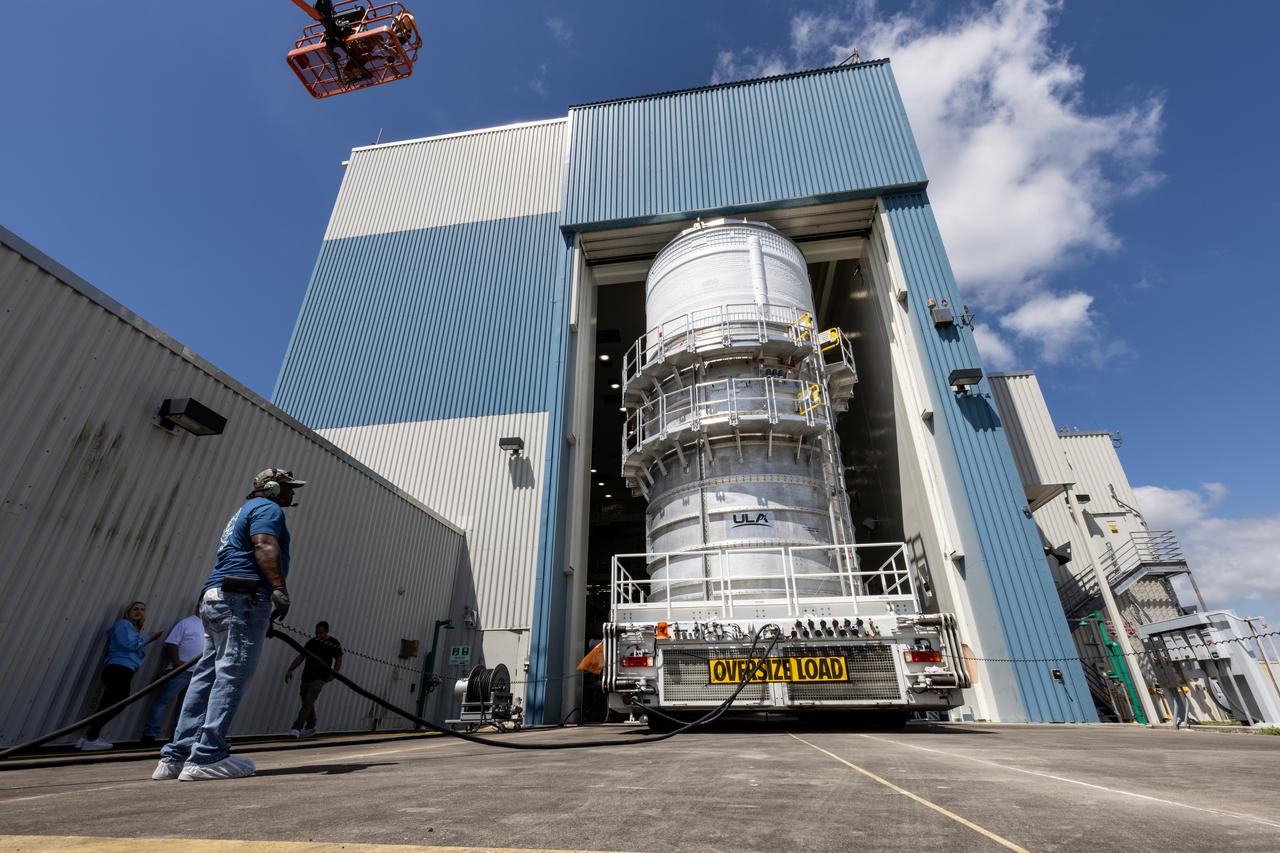
Teams with NASA’s Exploration Ground Systems Program transport the upper stage for the agency’s Artemis II SLS (Space Launch System) rocket from the Multi-Payload Processing Facility (MPPF) at NASA’s Kennedy Space Center in Florida to the spaceport’s Vehicle Assembly Building on Wednesday, April 16, 2025. Technicians fueled the SLS upper stage, known as the interim cryogenic propulsion stage, with hydrazine for its reaction control system at the MPPF and will now integrate the four-story propulsion system with SLS rocket elements atop mobile launcher 1.
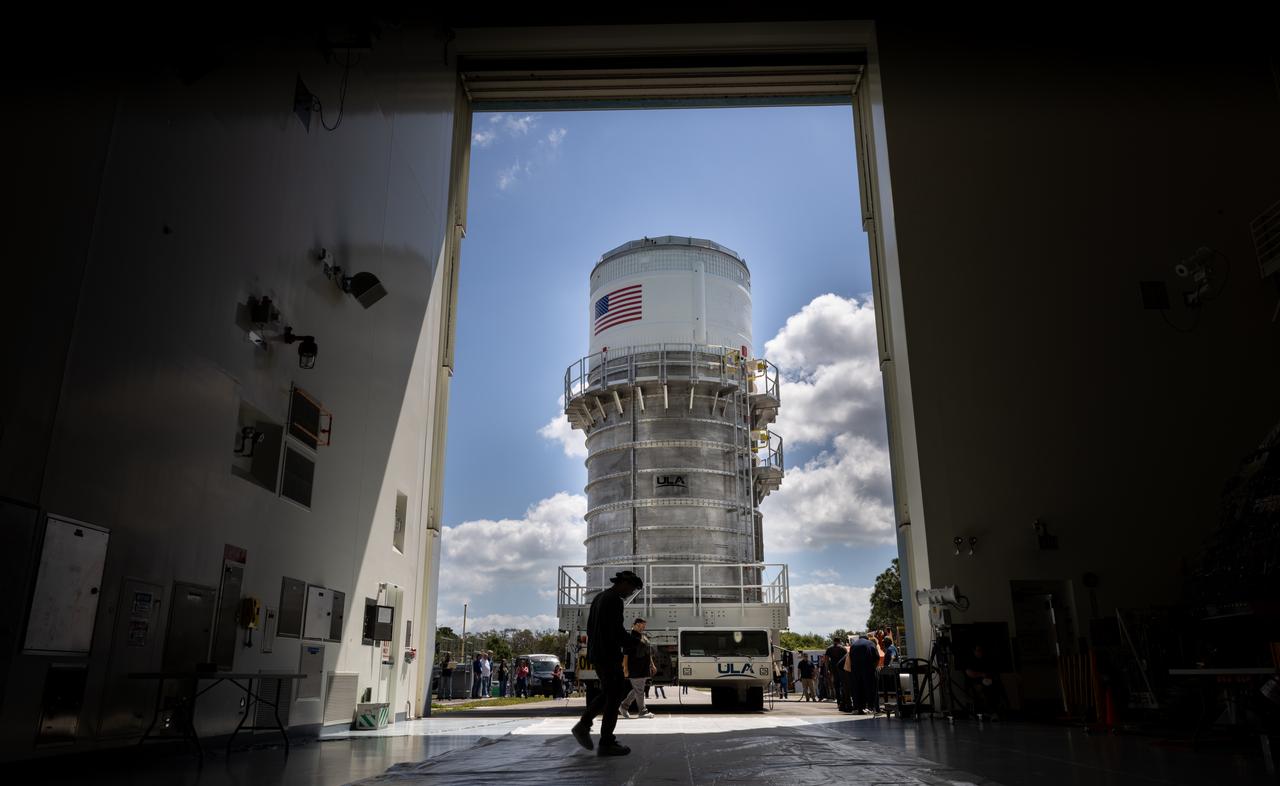
Teams with NASA’s Exploration Ground Systems Program transport the upper stage for the agency’s Artemis II SLS (Space Launch System) rocket from the Multi-Payload Processing Facility (MPPF) at NASA’s Kennedy Space Center in Florida to the spaceport’s Vehicle Assembly Building on Wednesday, April 16, 2025. Technicians fueled the SLS upper stage, known as the interim cryogenic propulsion stage, with hydrazine for its reaction control system at the MPPF and will now integrate the four-story propulsion system with SLS rocket elements atop mobile launcher 1.
A Space Launch System (SLS) avionics handling tool demonstration takes place inside Kennedy Space Center’s Vehicle Assembly Building on April 4, 2019. The demonstration showed that avionics boxes could be successfully and safely mounted into the SLS rocket’s upper stage — called the Interim Cryogenic Propulsion Stage, or ICPS — with low risk of damaging a closely located hydrazine tank. Avionics boxes include the Inertial Navigation and Control Assembly and flight batteries. The actual installation will take place just weeks before NASA’s SLS rocket and uncrewed Orion spacecraft lift off on Exploration Mission-1 from Launch Pad 39B at Kennedy.
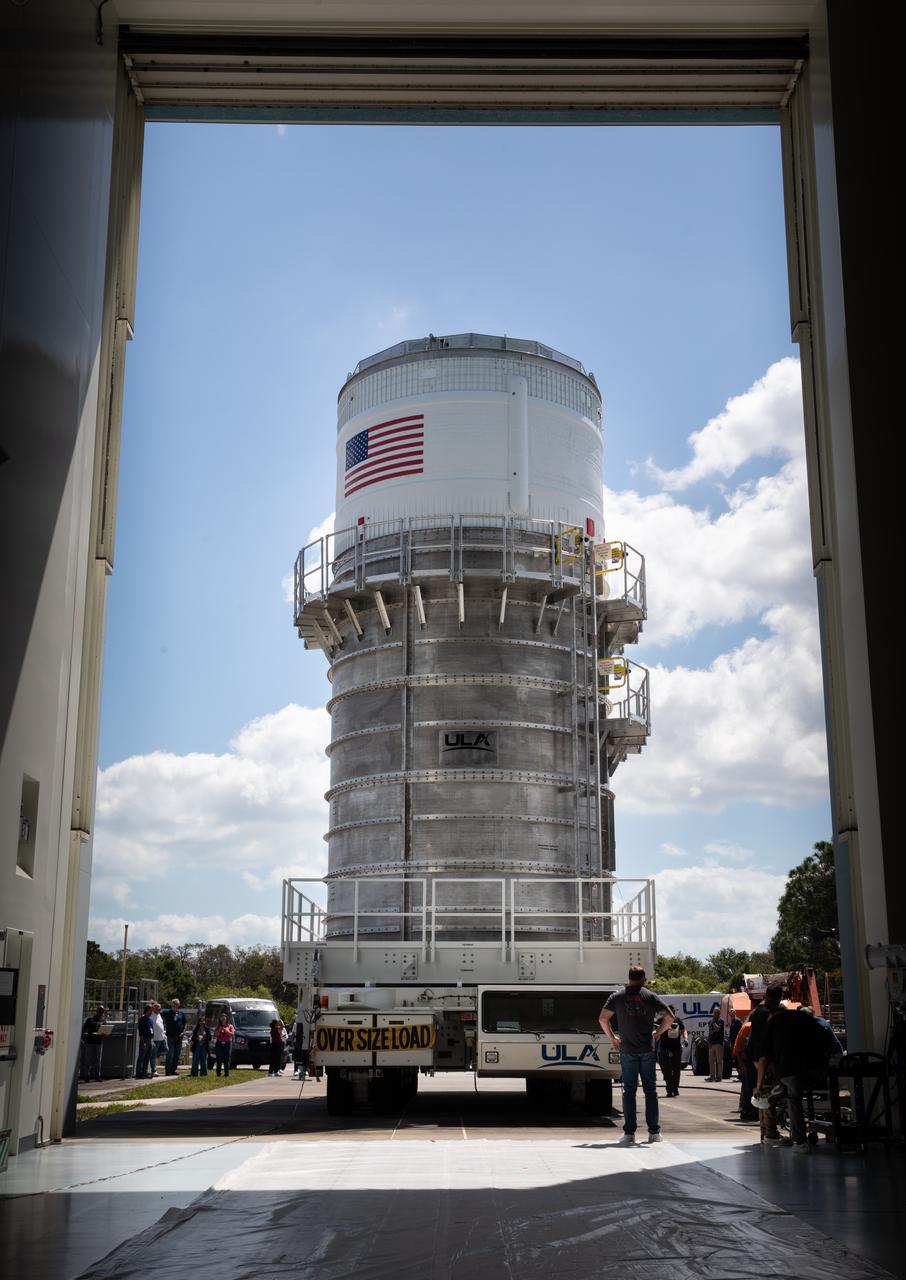
Teams with NASA’s Exploration Ground Systems Program transport the upper stage for the agency’s Artemis II SLS (Space Launch System) rocket from the Multi-Payload Processing Facility (MPPF) at NASA’s Kennedy Space Center in Florida to the spaceport’s Vehicle Assembly Building on Wednesday, April 16, 2025. Technicians fueled the SLS upper stage, known as the interim cryogenic propulsion stage, with hydrazine for its reaction control system at the MPPF and will now integrate the four-story propulsion system with SLS rocket elements atop mobile launcher 1.
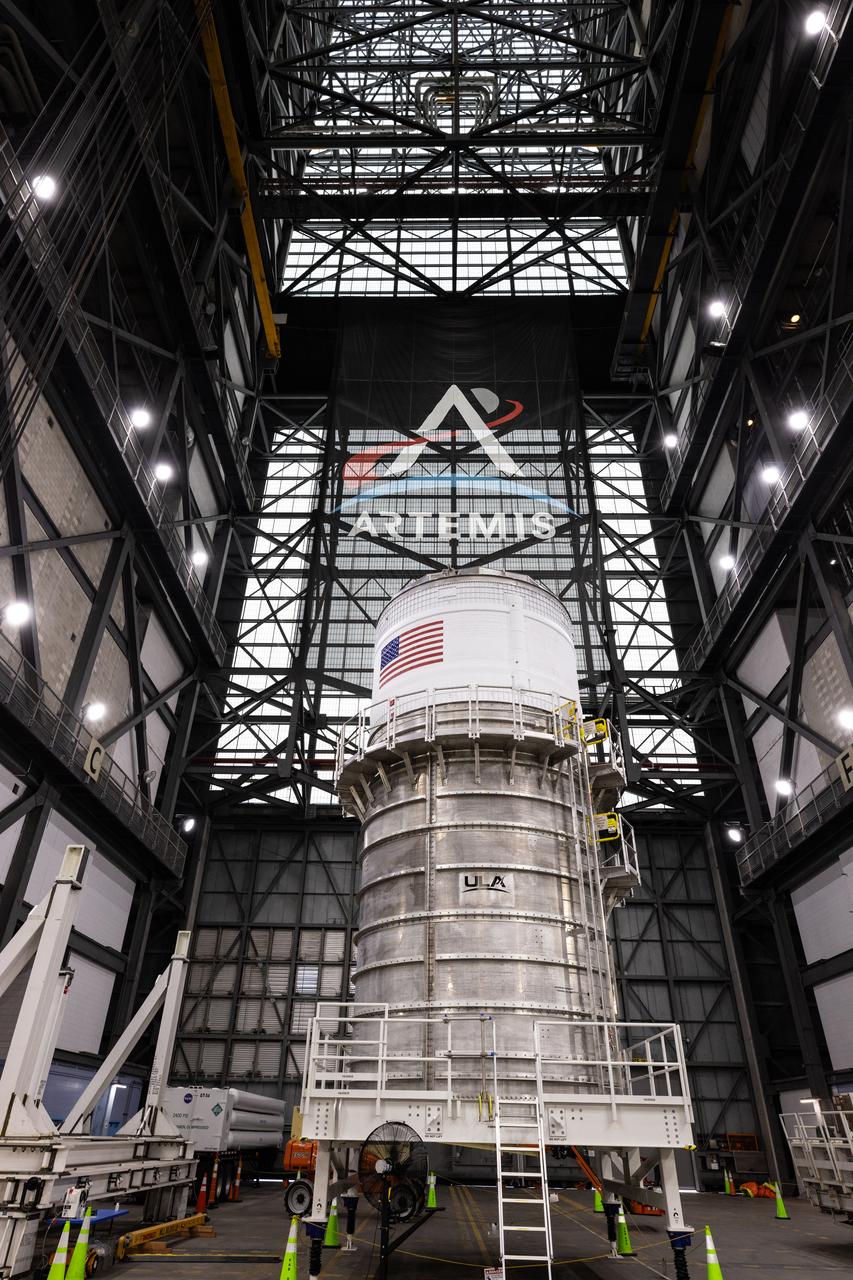
The upper stage for NASA’s Artemis II SLS (Space Launch System) rocket sits in the transfer aisle of the Vehicle Assembly Building at NASA’s Kennedy Space Center in Florida on Wednesday, April 16, 2025, after teams with the agency’s Exploration Ground Systems Program transported the four-story propulsion system from the spaceport’s Multi-Payload Processing Facility (MPPF). Technicians fueled the SLS upper stage, known as the interim cryogenic propulsion stage, with hydrazine for its reaction control system at the MPPF and will now integrate the four-story propulsion system with SLS rocket elements atop mobile launcher 1.
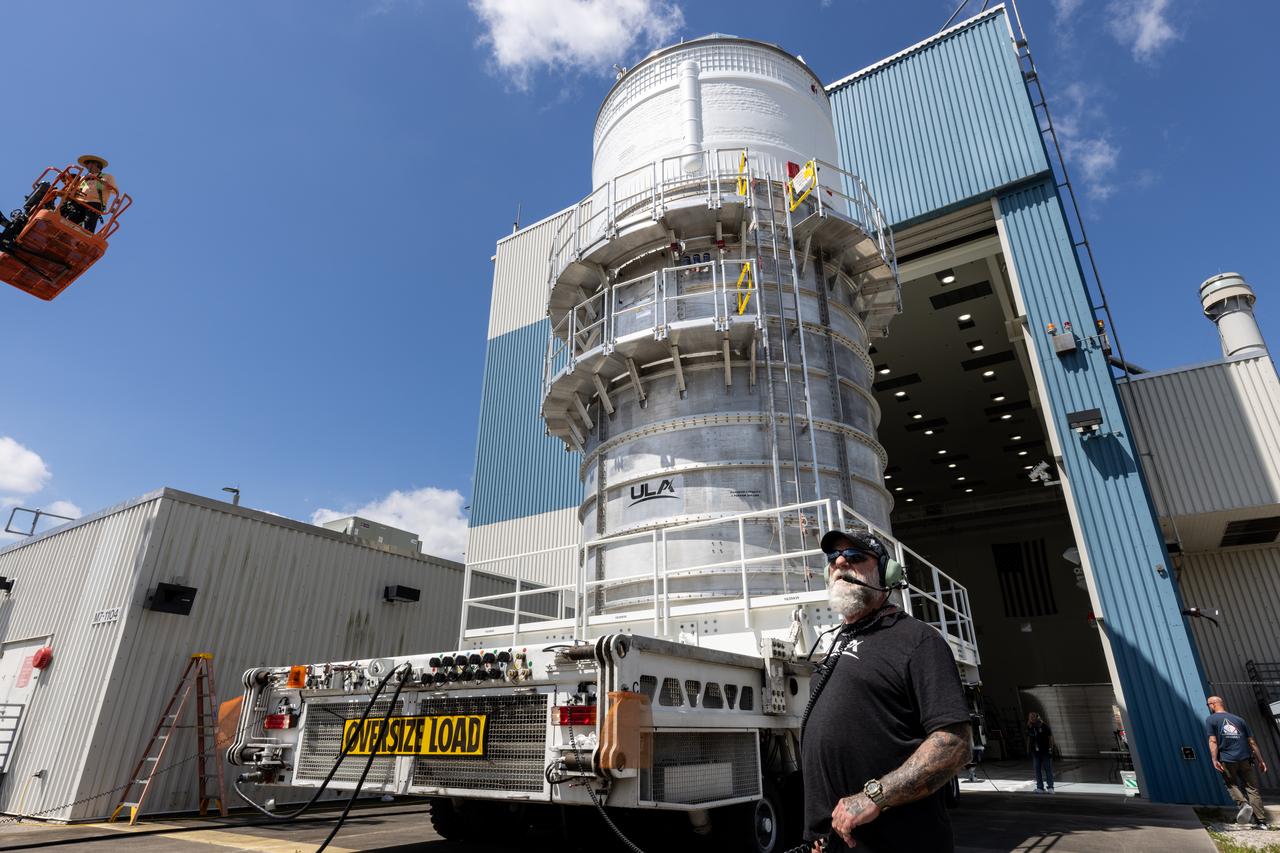
Teams with NASA’s Exploration Ground Systems Program transport the upper stage for the agency’s Artemis II SLS (Space Launch System) rocket from the Multi-Payload Processing Facility (MPPF) at NASA’s Kennedy Space Center in Florida to the spaceport’s Vehicle Assembly Building on Wednesday, April 16, 2025. Technicians fueled the SLS upper stage, known as the interim cryogenic propulsion stage, with hydrazine for its reaction control system at the MPPF and will now integrate the four-story propulsion system with SLS rocket elements atop mobile launcher 1.
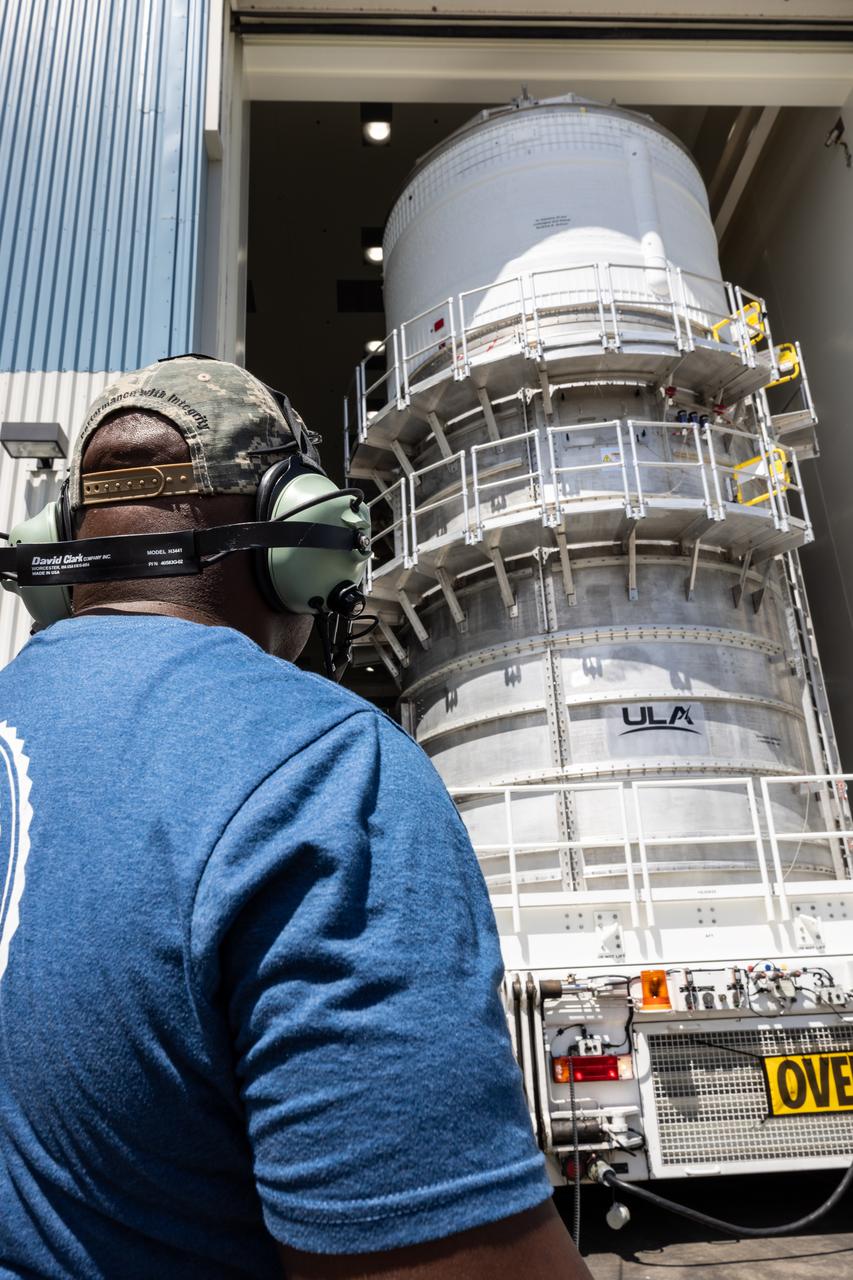
Teams with NASA’s Exploration Ground Systems Program transport the upper stage for the agency’s Artemis II SLS (Space Launch System) rocket from the Multi-Payload Processing Facility (MPPF) at NASA’s Kennedy Space Center in Florida to the spaceport’s Vehicle Assembly Building on Wednesday, April 16, 2025. Technicians fueled the SLS upper stage, known as the interim cryogenic propulsion stage, with hydrazine for its reaction control system at the MPPF and will now integrate the four-story propulsion system with SLS rocket elements atop mobile launcher 1.
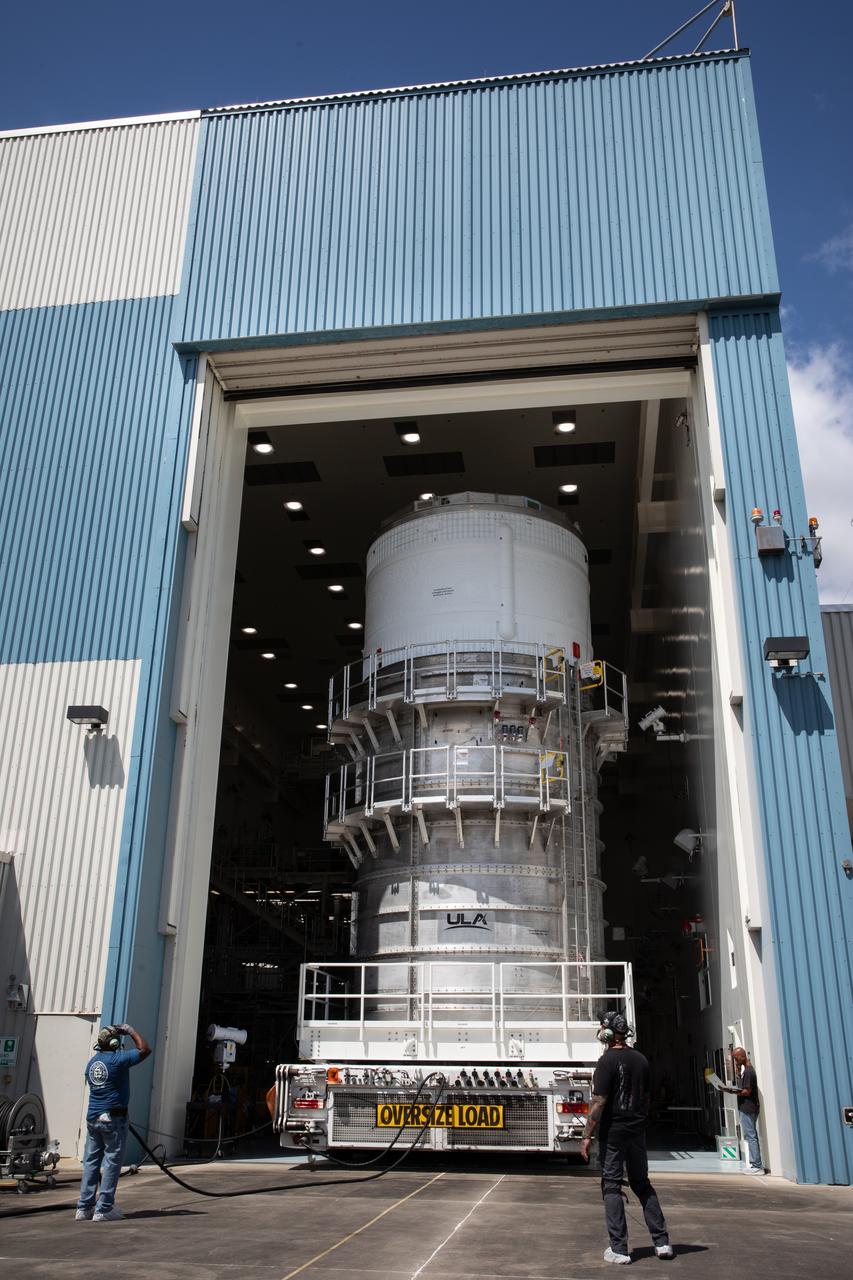
Teams with NASA’s Exploration Ground Systems Program transport the upper stage for the agency’s Artemis II SLS (Space Launch System) rocket from the Multi-Payload Processing Facility (MPPF) at NASA’s Kennedy Space Center in Florida to the spaceport’s Vehicle Assembly Building on Wednesday, April 16, 2025. Technicians fueled the SLS upper stage, known as the interim cryogenic propulsion stage, with hydrazine for its reaction control system at the MPPF and will now integrate the four-story propulsion system with SLS rocket elements atop mobile launcher 1.
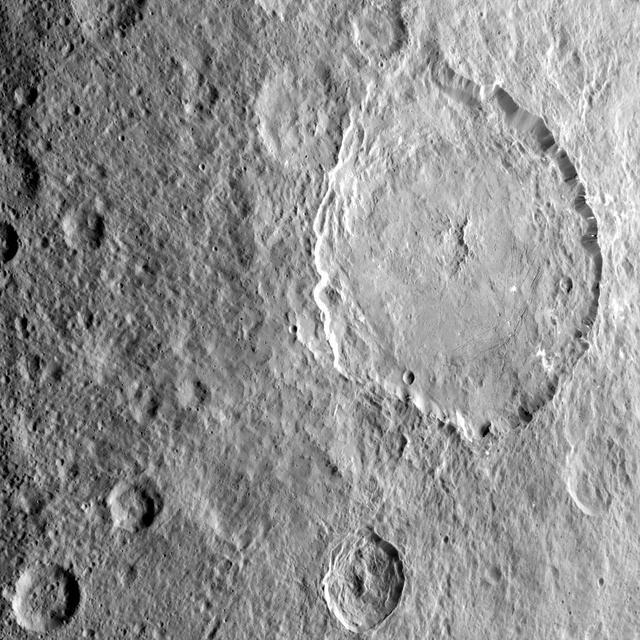
This image highlights the complex central construct and concentric fractures in the large (78 miles, 126 kilometers) Dantu Crater. It was obtained by NASA's Dawn spacecraft on September 1, 2018 from an altitude of about 1335 miles (2150 kilometers). NASA announced the conclusion of Dawn's mission operations was Oct. 31, 2018, when the spacecraft depleted its hydrazine. The center of Dantu Crater is located at about 24.3 degrees north latitude and 138.2 degrees east longitude. Dantu Crater is named after the Ghanan god associated with the planting of the corn. https://photojournal.jpl.nasa.gov/catalog/PIA22985
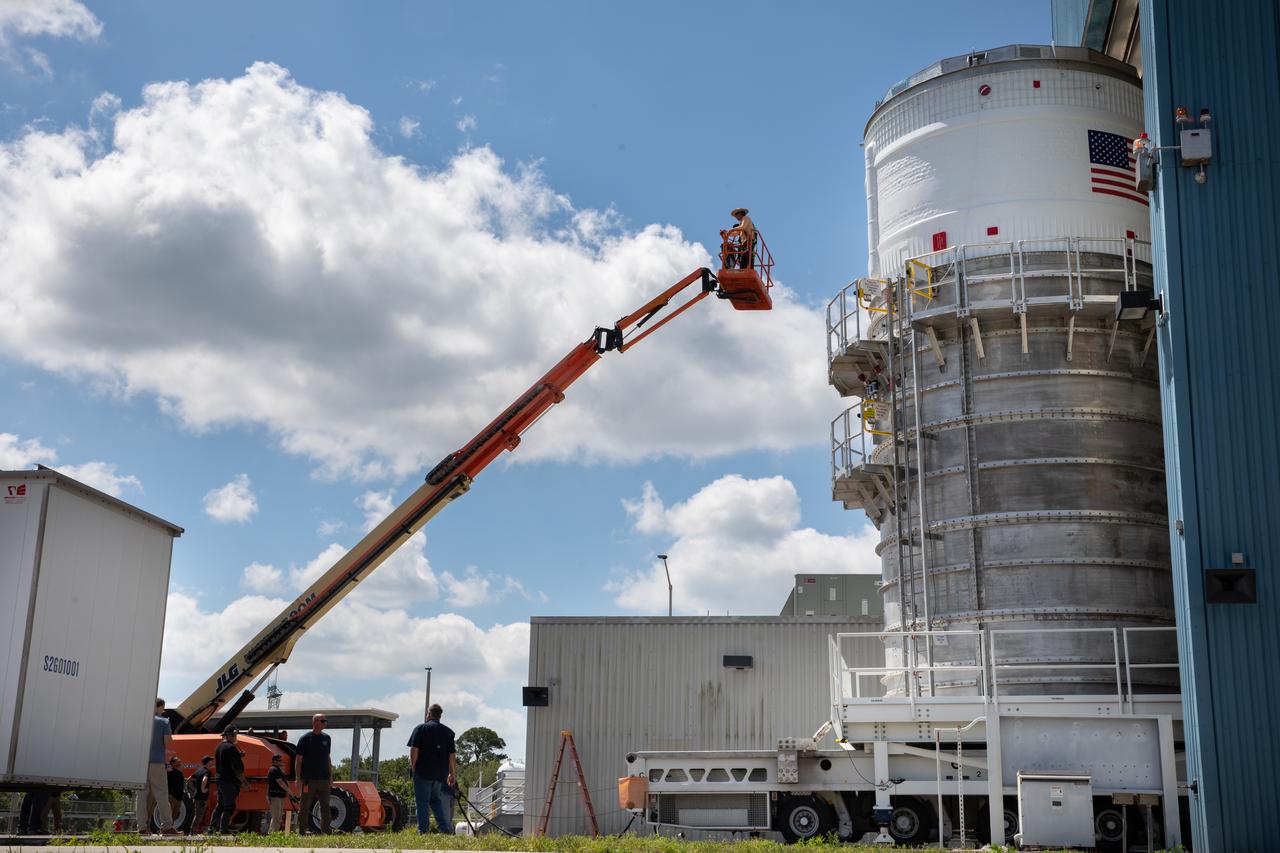
Teams with NASA’s Exploration Ground Systems Program transport the upper stage for the agency’s Artemis II SLS (Space Launch System) rocket from the Multi-Payload Processing Facility (MPPF) at NASA’s Kennedy Space Center in Florida to the spaceport’s Vehicle Assembly Building on Wednesday, April 16, 2025. Technicians fueled the SLS upper stage, known as the interim cryogenic propulsion stage, with hydrazine for its reaction control system at the MPPF and will now integrate the four-story propulsion system with SLS rocket elements atop mobile launcher 1.
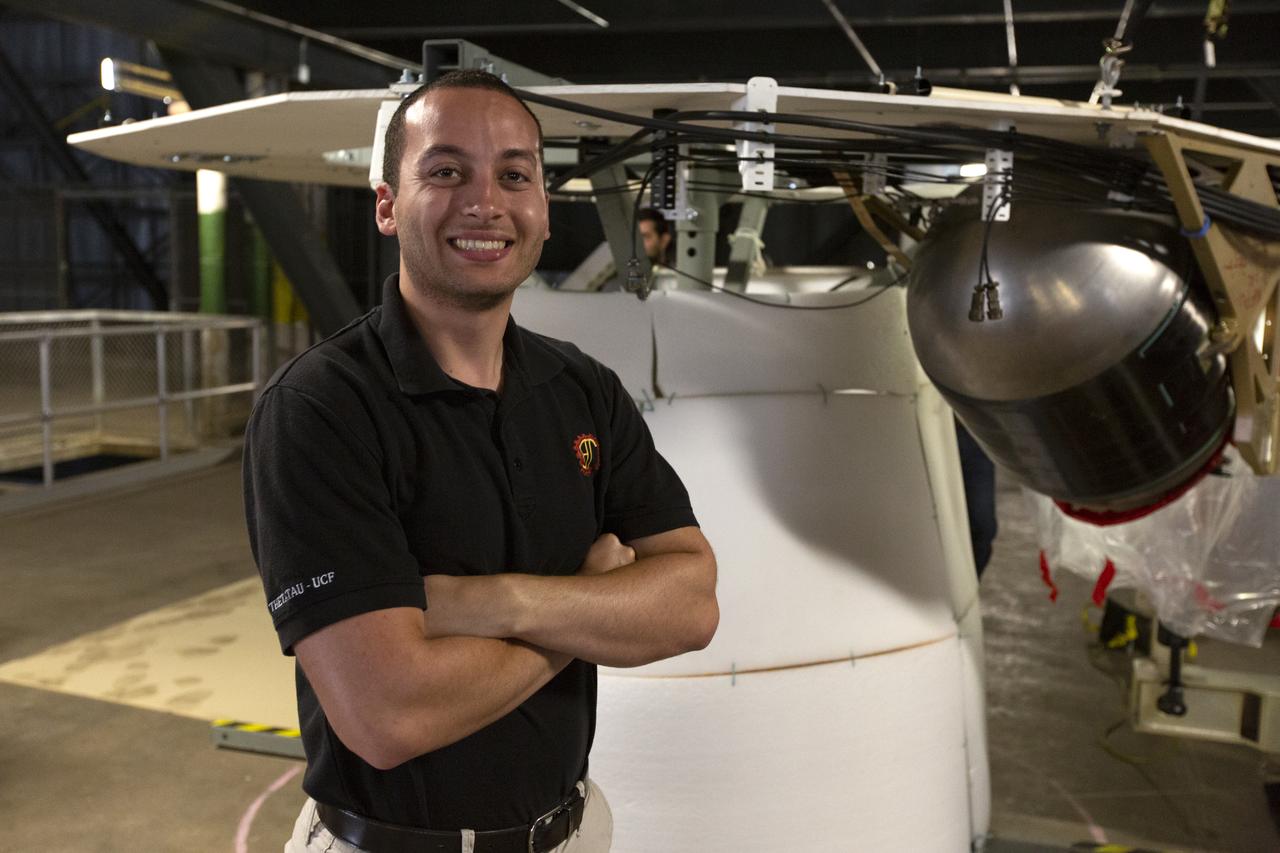
Christopher Di Taranto, a member of the mechanical structures engineering team on the Jacobs Test and Operations Contract, stands in front of an Interim Cryogenic Propulsion Stage (ICPS) mockup during the Space Launch System avionics handling tool demonstration inside Kennedy Space Center’s Vehicle Assembly Building on April 4, 2019. The demonstration showed that avionics boxes could be successfully mounted into the SLS rocket’s upper stage safely, and with low risk of damaging a closely located hydrazine tank. Avionics boxes include the Inertial Navigation and Control Assembly and flight batteries. Di Taranto led a team to quickly resolve a non-conformance issue with the tool.
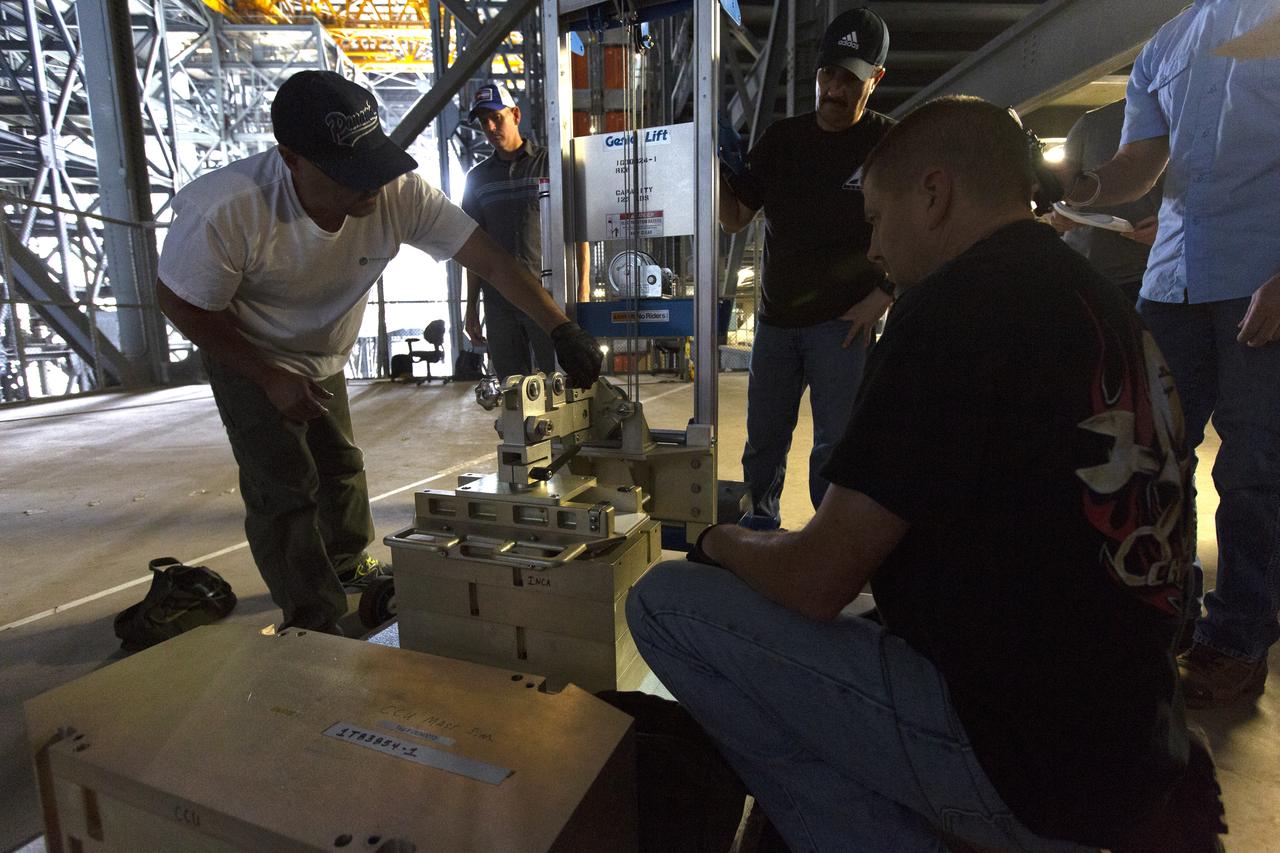
A Space Launch System (SLS) avionics handling tool demonstration takes place inside Kennedy Space Center’s Vehicle Assembly Building on April 4, 2019. The demonstration showed that avionics boxes could be successfully and safely mounted into the SLS rocket’s upper stage — called the Interim Cryogenic Propulsion Stage, or ICPS — with low risk of damaging a closely located hydrazine tank. Avionics boxes include the Inertial Navigation and Control Assembly and flight batteries. The actual installation will take place just weeks before NASA’s SLS rocket and uncrewed Orion spacecraft lift off on Exploration Mission-1 from Launch Pad 39B at Kennedy.
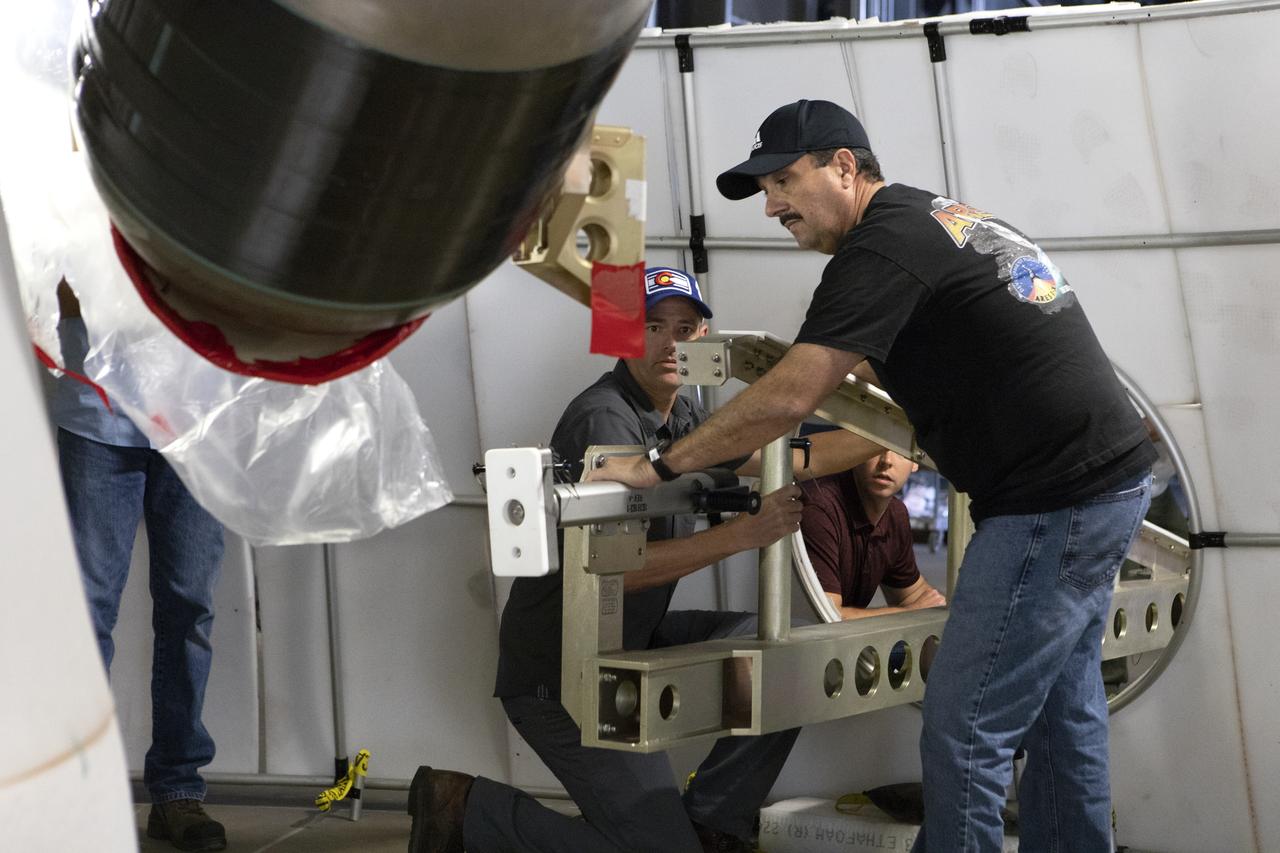
A Space Launch System (SLS) avionics handling tool demonstration takes place inside Kennedy Space Center’s Vehicle Assembly Building on April 4, 2019. The demonstration showed that avionics boxes could be successfully and safely mounted into the SLS rocket’s upper stage — called the Interim Cryogenic Propulsion Stage, or ICPS — with low risk of damaging a closely located hydrazine tank. Avionics boxes include the Inertial Navigation and Control Assembly and flight batteries. The actual installation will take place just weeks before NASA’s SLS rocket and uncrewed Orion spacecraft lift off on Exploration Mission-1 from Launch Pad 39B at Kennedy.
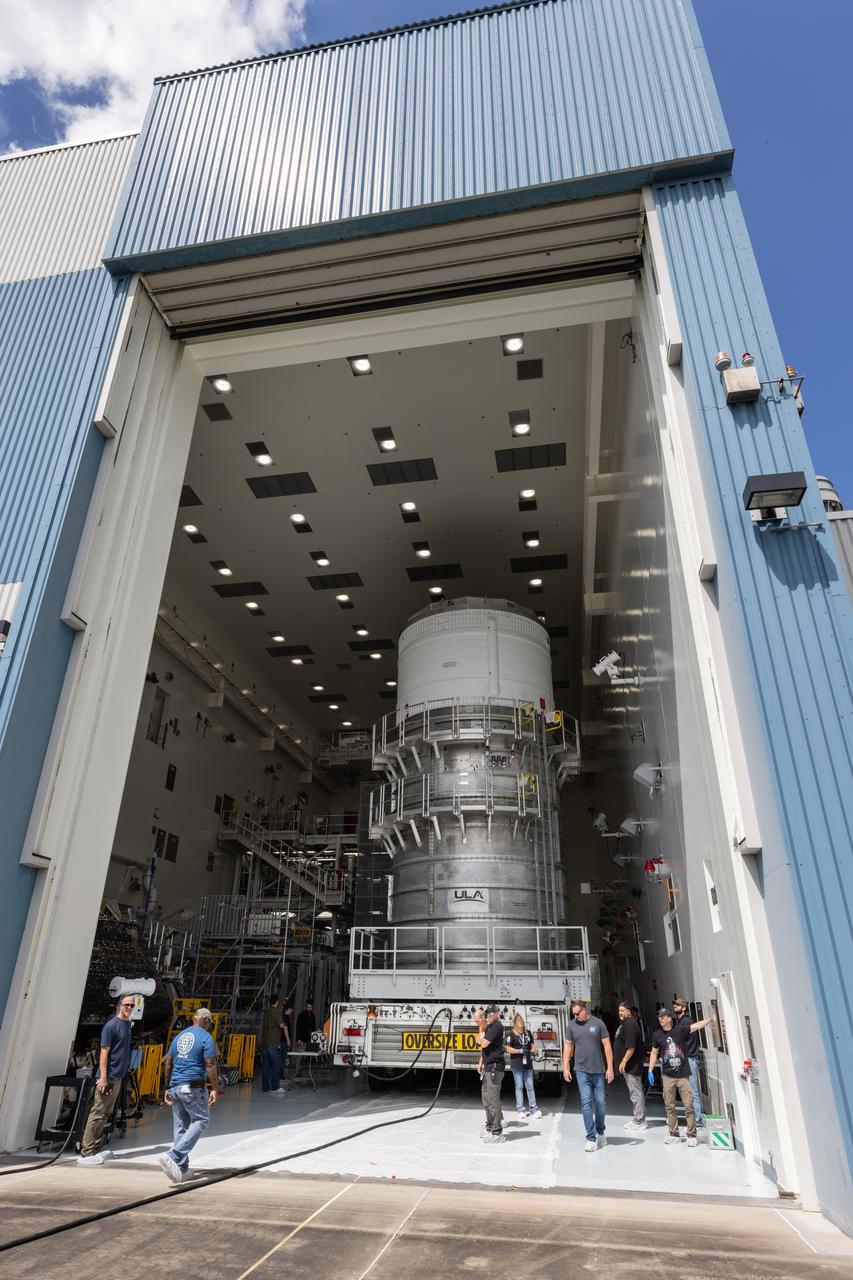
Teams with NASA’s Exploration Ground Systems Program transport the upper stage for the agency’s Artemis II SLS (Space Launch System) rocket from the Multi-Payload Processing Facility (MPPF) at NASA’s Kennedy Space Center in Florida to the spaceport’s Vehicle Assembly Building on Wednesday, April 16, 2025. Technicians fueled the SLS upper stage, known as the interim cryogenic propulsion stage, with hydrazine for its reaction control system at the MPPF and will now integrate the four-story propulsion system with SLS rocket elements atop mobile launcher 1.
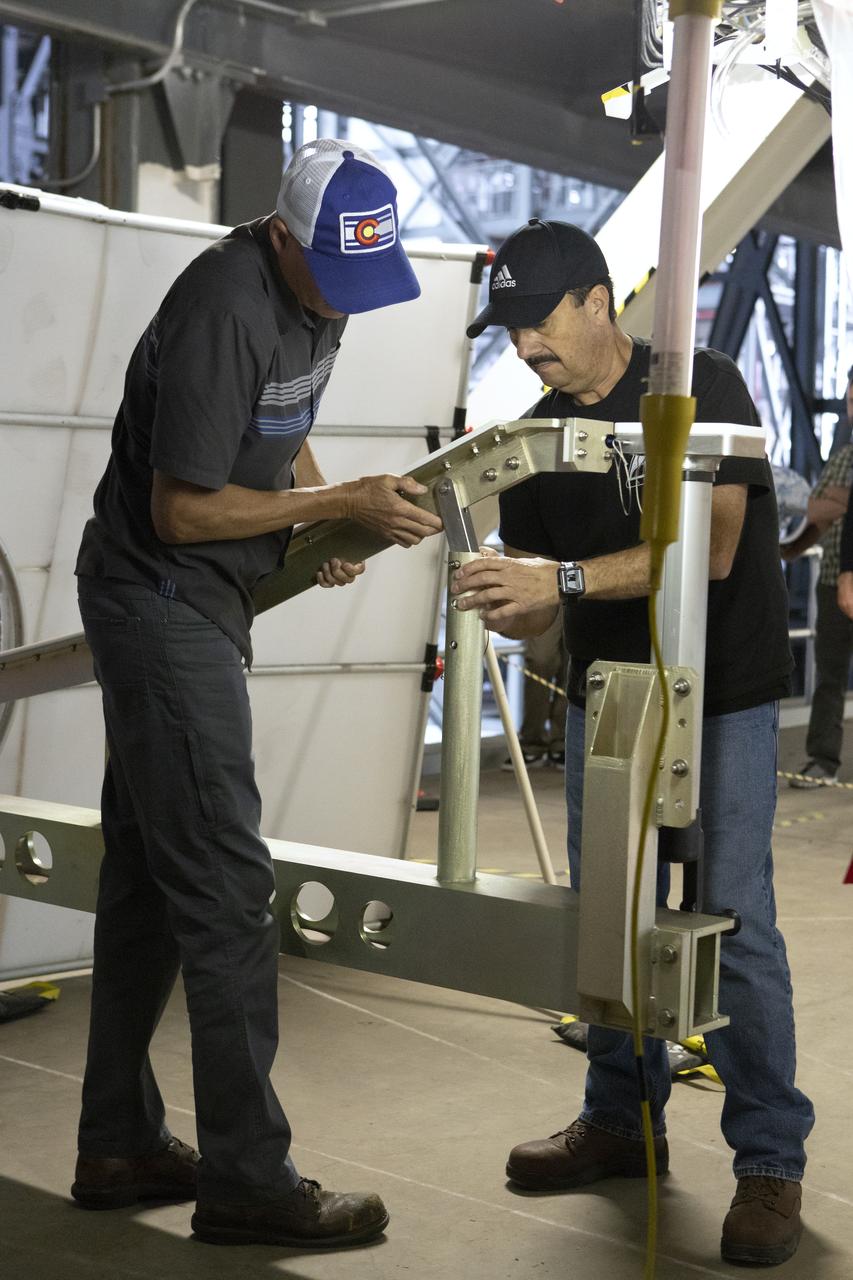
A Space Launch System (SLS) avionics handling tool demonstration takes place inside Kennedy Space Center’s Vehicle Assembly Building on April 4, 2019. The demonstration showed that avionics boxes could be successfully and safely mounted into the SLS rocket’s upper stage — called the Interim Cryogenic Propulsion Stage, or ICPS — with low risk of damaging a closely located hydrazine tank. Avionics boxes include the Inertial Navigation and Control Assembly and flight batteries. The actual installation will take place just weeks before NASA’s SLS rocket and uncrewed Orion spacecraft lift off on Exploration Mission-1 from Launch Pad 39B at Kennedy.
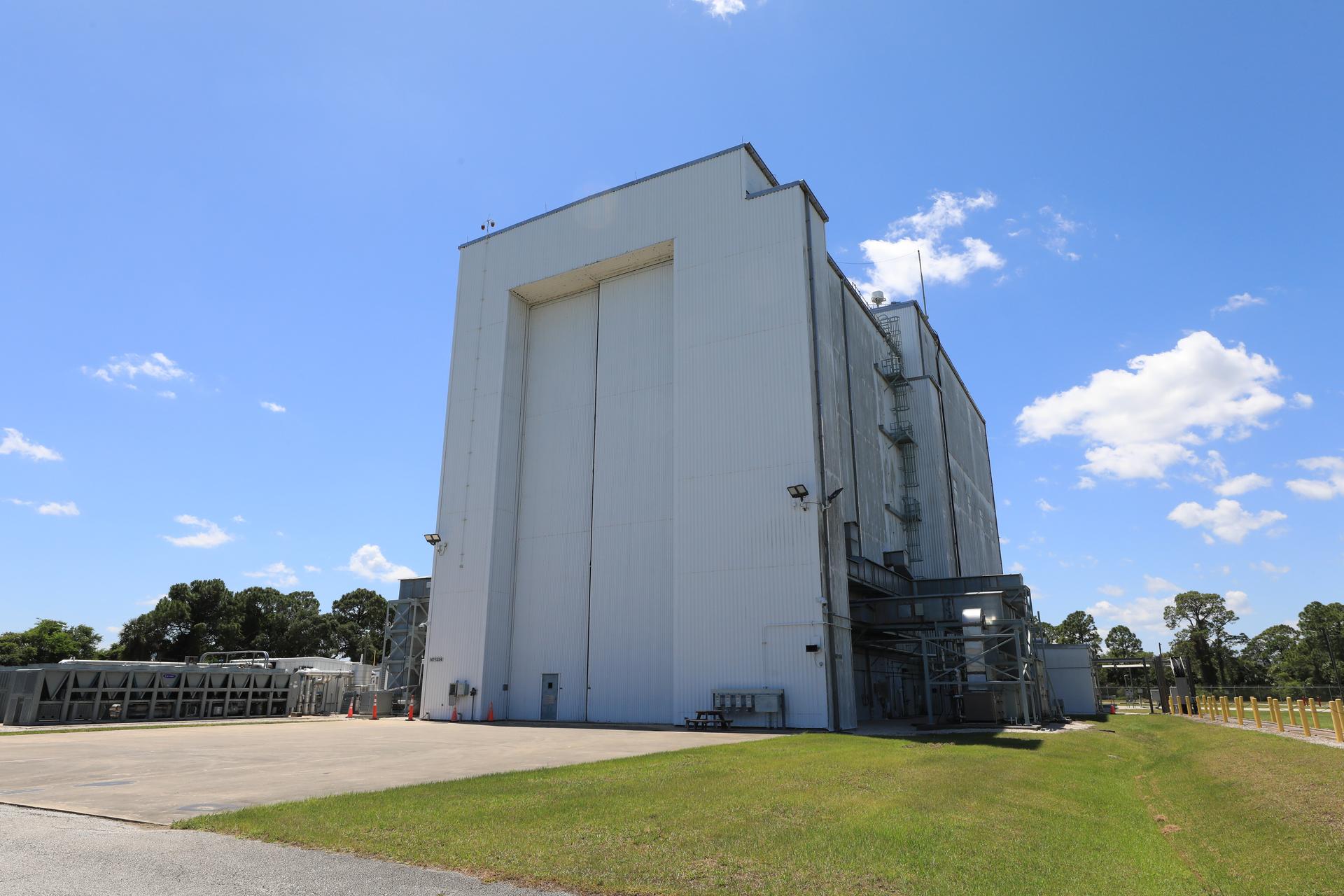
A photograph shows the exterior of NASA’s Payload Hazardous Servicing Facility (PHSF) on Tuesday, April 21, 2026, at NASA’s Kennedy Space Center in Florida. Recently, technicians performed several upgrades to the facility ahead of the arrival of the agency’s Nancy Grace Roman Space Telescope, designed to provide deep, panoramic views of the cosmos, generating never-before-seen pictures that will revolutionize our understanding of the universe. Roman will undergo several prelaunch operations, including thermal protection closeout, cleaning, solar array work, and loading hydrazine propellant. The PHSF is one of the very few facilities where spacecraft undergo both hazardous fueling operations and delicate contamination control procedures.
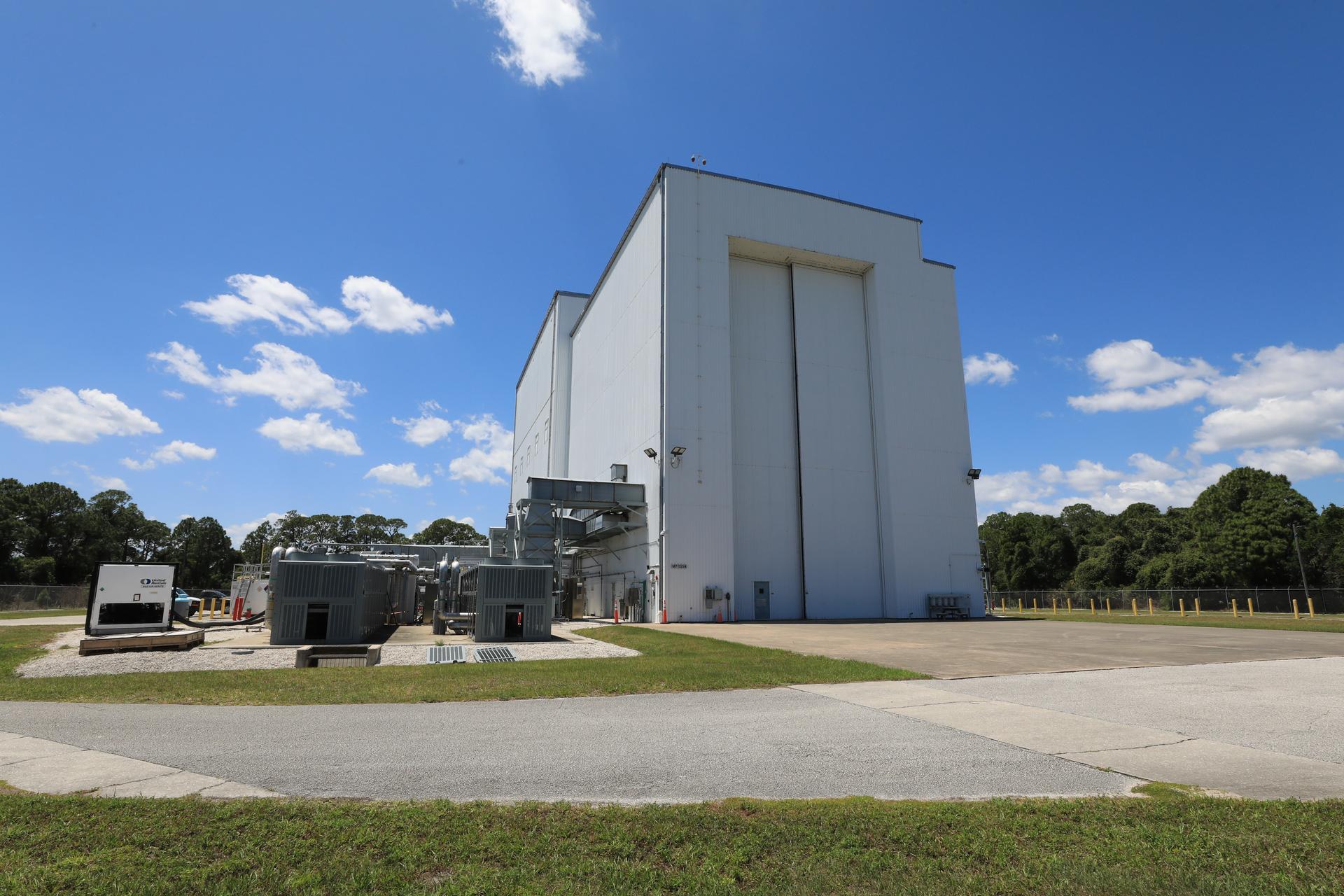
A photograph shows the exterior of NASA’s Payload Hazardous Servicing Facility (PHSF) on Tuesday, April 21, 2026, at NASA’s Kennedy Space Center in Florida. Recently, technicians performed several upgrades to the facility ahead of the arrival of the agency’s Nancy Grace Roman Space Telescope, designed to provide deep, panoramic views of the cosmos, generating never-before-seen pictures that will revolutionize our understanding of the universe. Roman will undergo several prelaunch operations, including thermal protection closeout, cleaning, solar array work, and loading hydrazine propellant. The PHSF is one of the very few facilities where spacecraft undergo both hazardous fueling operations and delicate contamination control procedures.
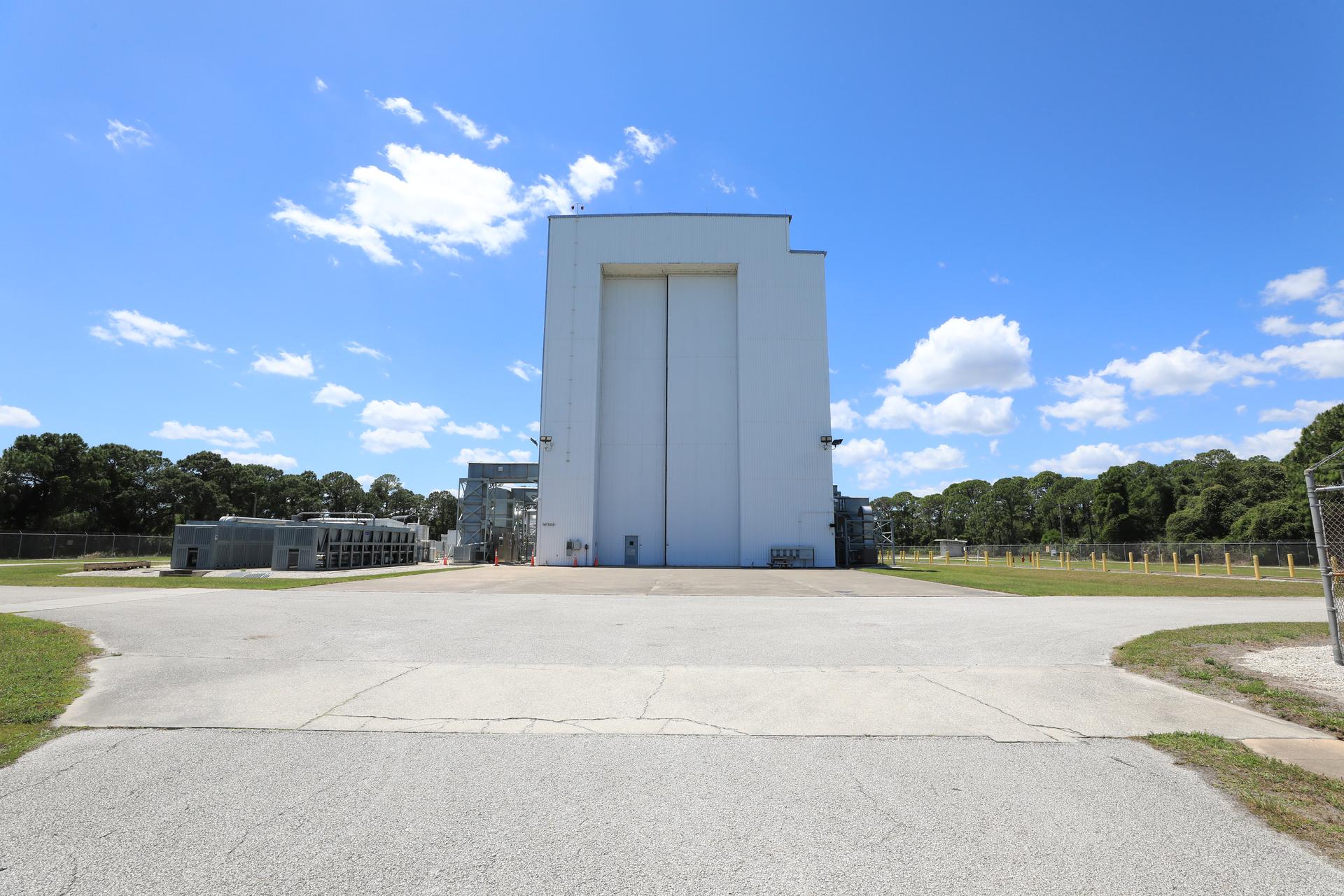
A photograph shows the exterior of NASA’s Payload Hazardous Servicing Facility (PHSF) on Tuesday, April 21, 2026, at NASA’s Kennedy Space Center in Florida. Recently, technicians performed several upgrades to the facility ahead of the arrival of the agency’s Nancy Grace Roman Space Telescope, designed to provide deep, panoramic views of the cosmos, generating never-before-seen pictures that will revolutionize our understanding of the universe. Roman will undergo several prelaunch operations, including thermal protection closeout, cleaning, solar array work, and loading hydrazine propellant. The PHSF is one of the very few facilities where spacecraft undergo both hazardous fueling operations and delicate contamination control procedures.
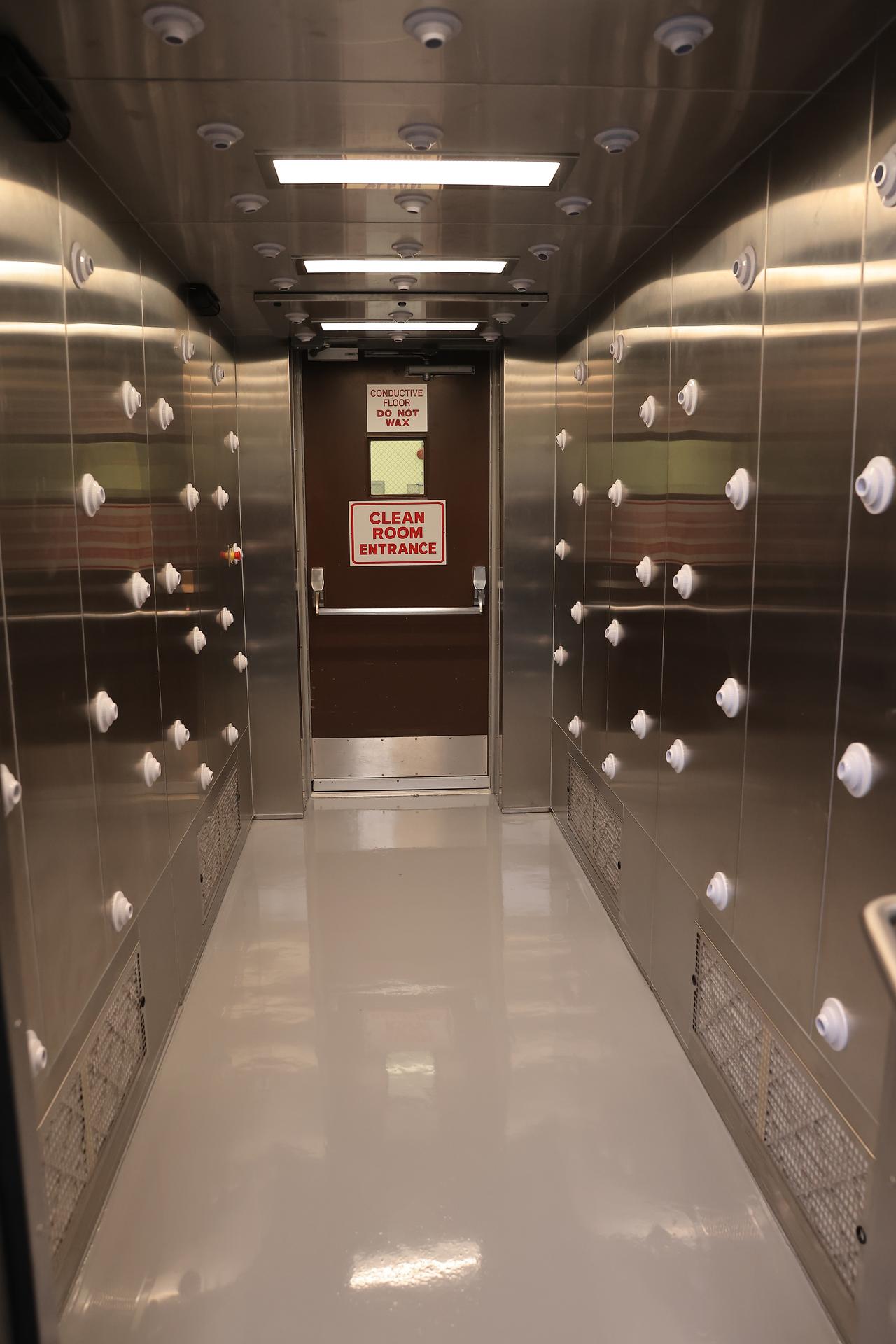
This image shows the recently upgraded air showers which blast high-velocity HEPA-filtered air onto people before they enter a clean room at NASA’s Payload Hazardous Servicing Facility at the agency’s Kennedy Space Center in Florida on Friday, Feb. 27, 2026. The PHSF went through several upgrades ahead of the arrival of Nancy Grace Roman Space Telescope. Roman will provide deep, panoramic views of the cosmos, generating never-before-seen pictures that will revolutionize our understanding of the universe. Roman will undergo several prelaunch operations, including thermal protection closeout, cleaning, solar array work, and loading hydrazine propellant.
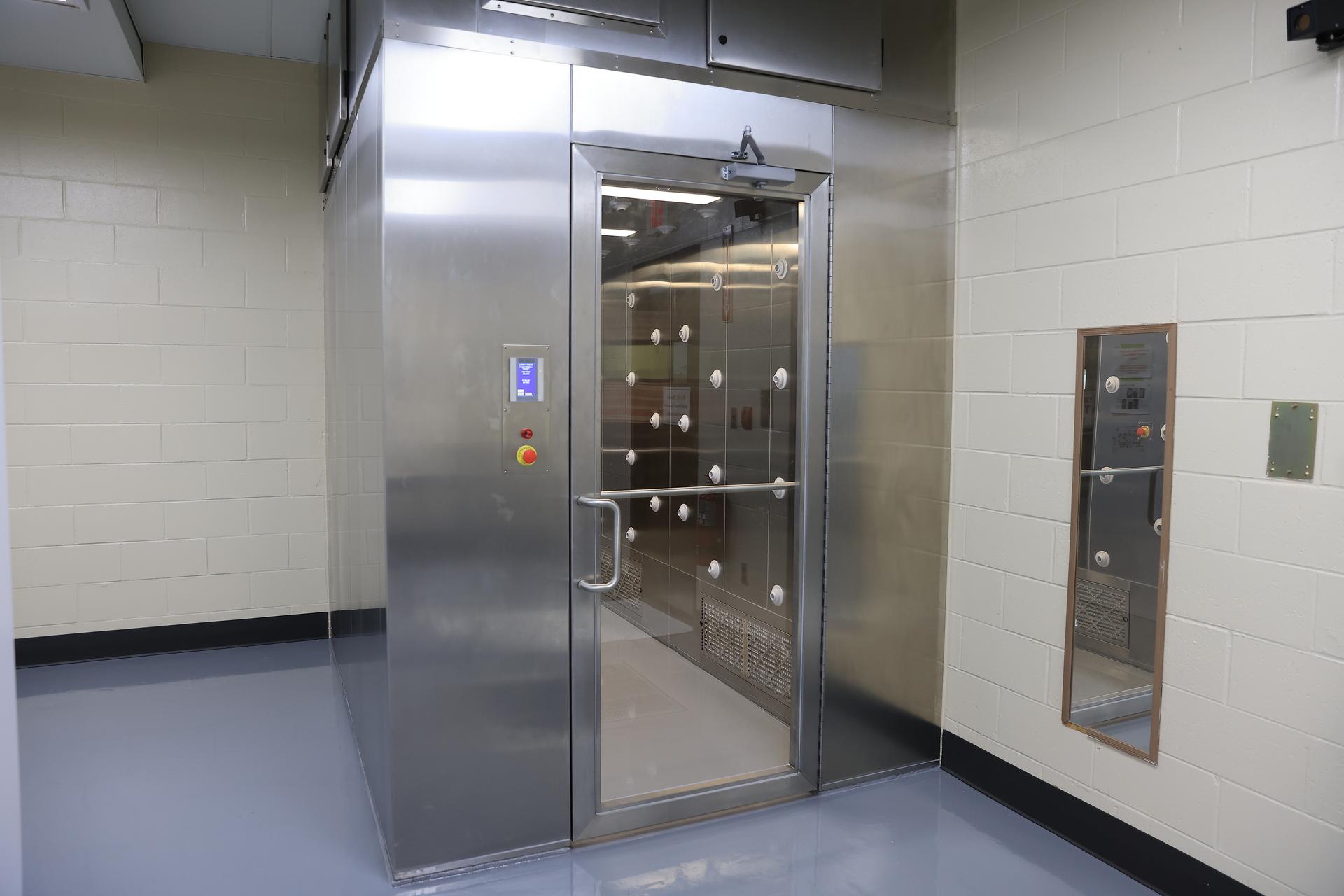
This image shows the recently upgraded air showers which blast high-velocity HEPA-filtered air onto people before they enter a clean room at NASA’s Payload Hazardous Servicing Facility at the agency’s Kennedy Space Center in Florida on Friday, Feb. 27, 2026. The PHSF went through several upgrades ahead of the arrival of Nancy Grace Roman Space Telescope. Roman will provide deep, panoramic views of the cosmos, generating never-before-seen pictures that will revolutionize our understanding of the universe. Roman will undergo several prelaunch operations, including thermal protection closeout, cleaning, solar array work, and loading hydrazine propellant.
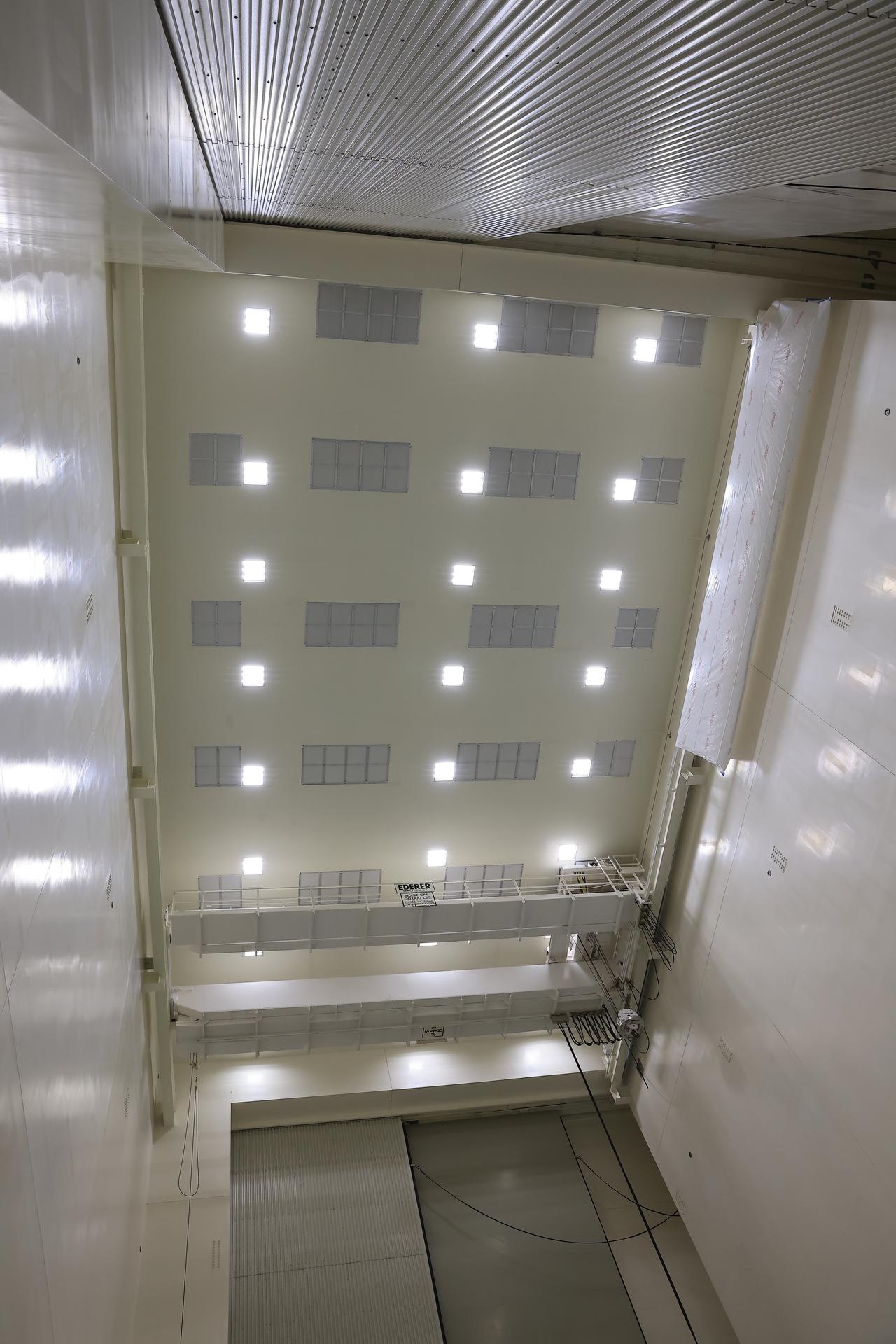
This photograph shows a newly repainted crane mounted inside NASA’s Payload Hazardous Servicing Facility on Friday, Feb. 27, 2026, preparations for the arrival of the agency’s Nancy Grace Roman Space Telescope to NASA’s Kennedy Space Center in Florida. Workers repainted the facility’s 15-ton bridge crane to prevent any paint chips from becoming foreign object debris. The Roman space telescope will provide deep, panoramic views of the cosmos, generating never-before-seen pictures that will revolutionize our understanding of the universe. Roman will undergo several prelaunch operations, including thermal protection closeout, cleaning, solar array work, and loading hydrazine propellant.
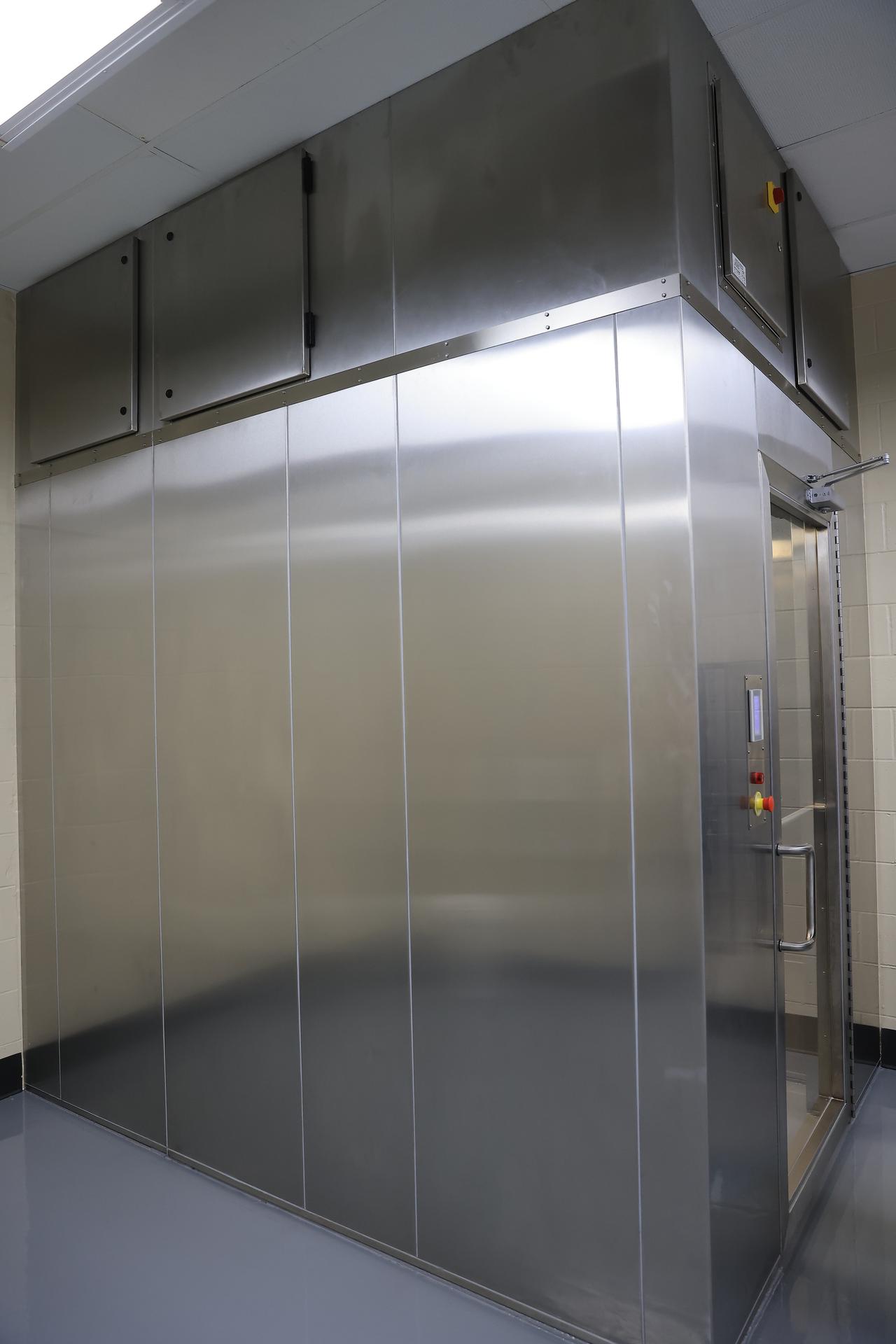
This image shows the recently upgraded air showers which blast high-velocity HEPA-filtered air onto people before they enter a clean room at NASA’s Payload Hazardous Servicing Facility at the agency’s Kennedy Space Center in Florida on Friday, Feb. 27, 2026. The PHSF went through several upgrades ahead of the arrival of Nancy Grace Roman Space Telescope. Roman will provide deep, panoramic views of the cosmos, generating never-before-seen pictures that will revolutionize our understanding of the universe. Roman will undergo several prelaunch operations, including thermal protection closeout, cleaning, solar array work, and loading hydrazine propellant.
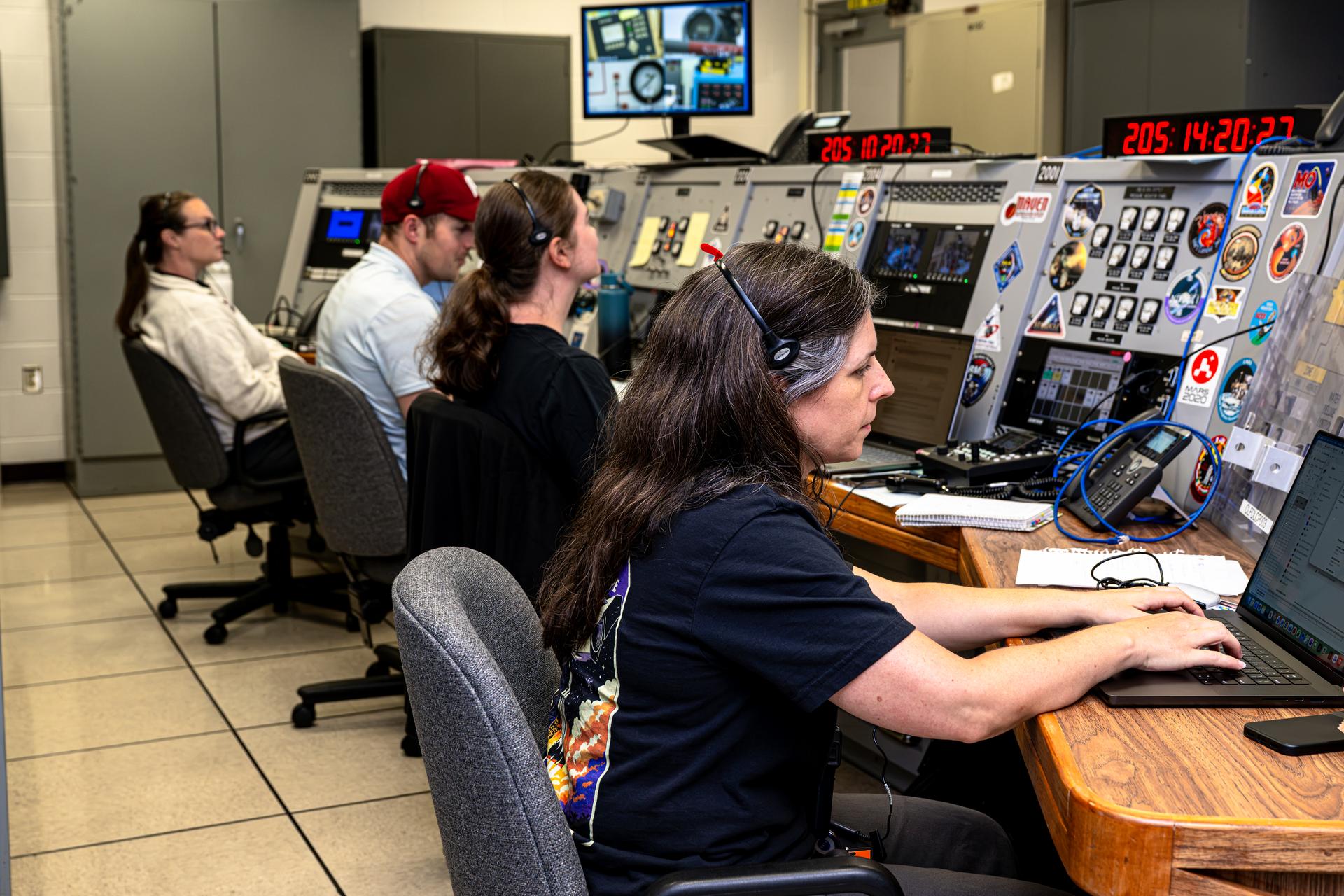
Technicians monitor propellant loading from a control room in the Multi Operations Support Building at NASA’s Kennedy Space Center in Florida Friday, July 24, 2026. With fuel tanks capable of carrying about 290 gallons (roughly 1,100 liters) of hydrazine – a monopropellant not requiring a second chemical to combust – Roman’s primary mission is to settle essential questions about dark energy, exoplanets, and infrared astrophysics by conducting wide-field surveys that explore the universe’s structure, evolution, and composition. Liftoff atop a SpaceX Falcon Heavy rocket from NASA Kennedy’s Launch Complex 39A is targeted no earlier than Sunday, Aug. 30, 2026.
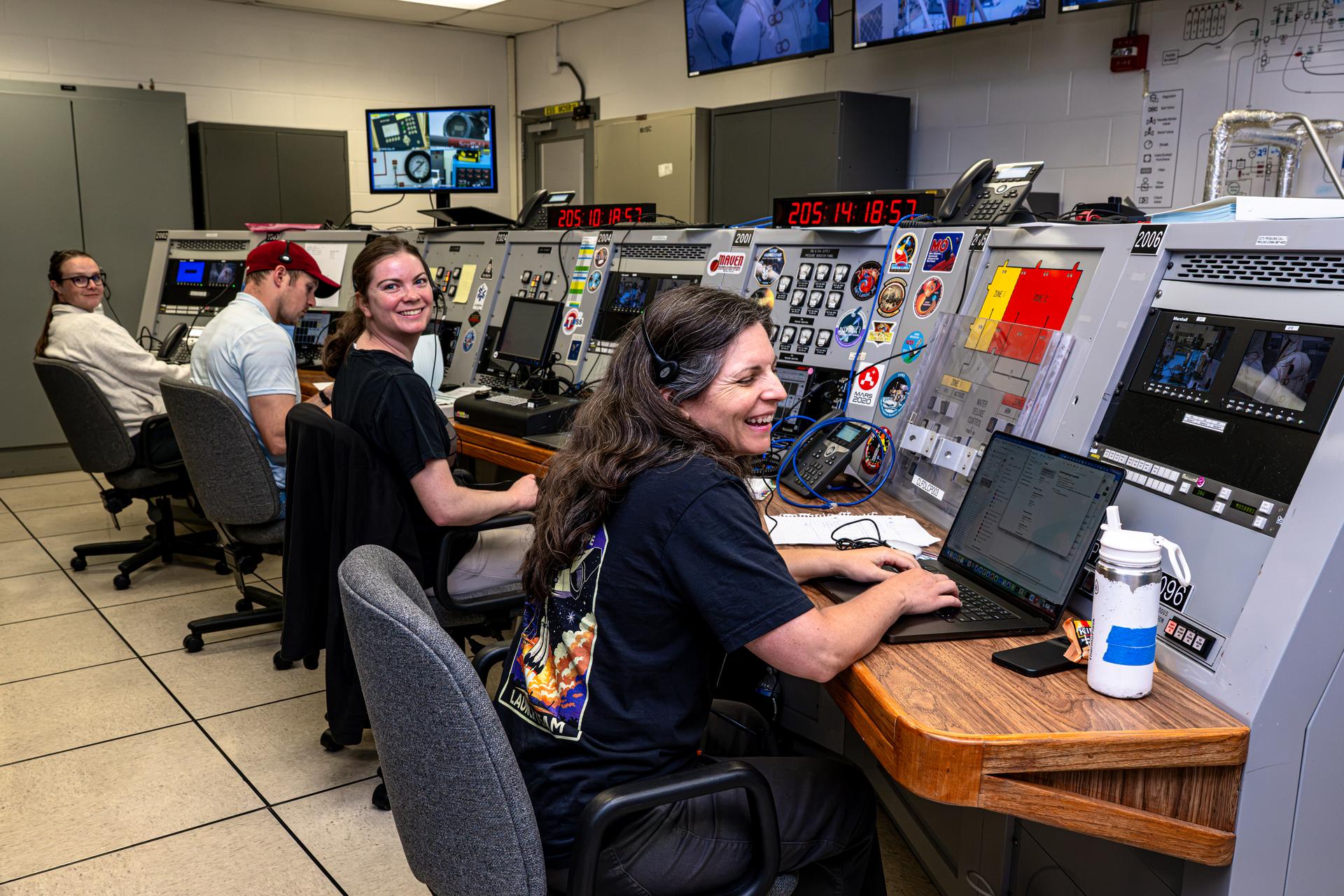
Technicians monitor propellant loading from a control room in the Multi Operations Support Building at NASA’s Kennedy Space Center in Florida Friday, July 24, 2026. With fuel tanks capable of carrying about 290 gallons (roughly 1,100 liters) of hydrazine – a monopropellant not requiring a second chemical to combust – Roman’s primary mission is to settle essential questions about dark energy, exoplanets, and infrared astrophysics by conducting wide-field surveys that explore the universe’s structure, evolution, and composition. Liftoff atop a SpaceX Falcon Heavy rocket from NASA Kennedy’s Launch Complex 39A is targeted no earlier than Sunday, Aug. 30, 2026.
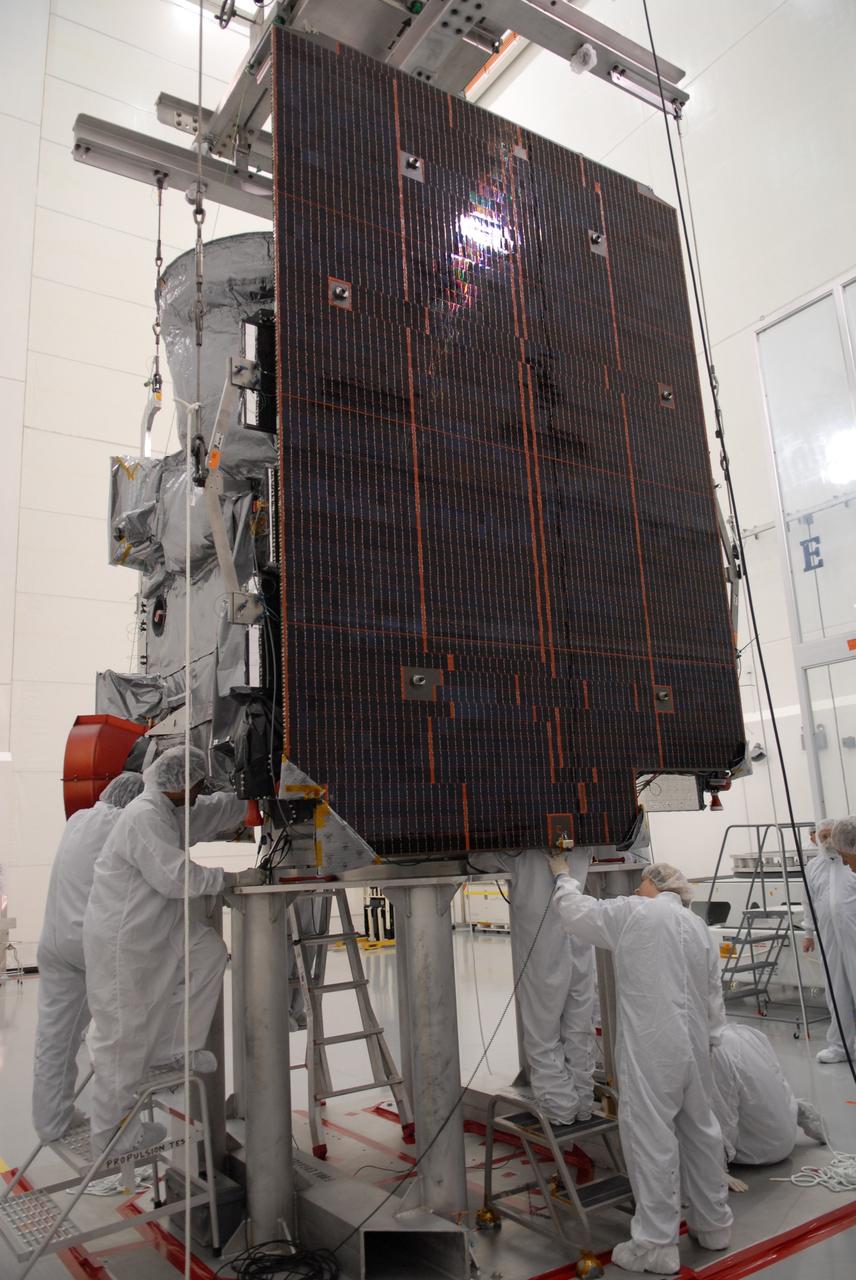
CAPE CANAVERAL, Fla. – In the Astrotech payload processing facility in Titusville, Fla., technicians secure the GOES-O satellite onto a special stand for loading of its oxidizer and hydrazine propellants. The latest Geostationary Operational Environmental Satellite, GOES-O was developed by NASA for the National Oceanic and Atmospheric Administration, or NOAA. The GOES satellites continuously provide observations of 60 percent of the Earth including the continental United States, providing weather monitoring and forecast operations as well as a continuous and reliable stream of environmental information and severe weather warnings. Once in orbit, GOES-O will be designated GOES-14, and NASA will provide on-orbit checkout and then transfer operational responsibility to NOAA. The GOES-O satellite is targeted to launch from Cape Canaveral Air Force Station's Launch Complex 37 no earlier than May 12 onboard a United Launch Alliance Delta IV expendable launch vehicle. Photo credit: NASA/Troy Cryder
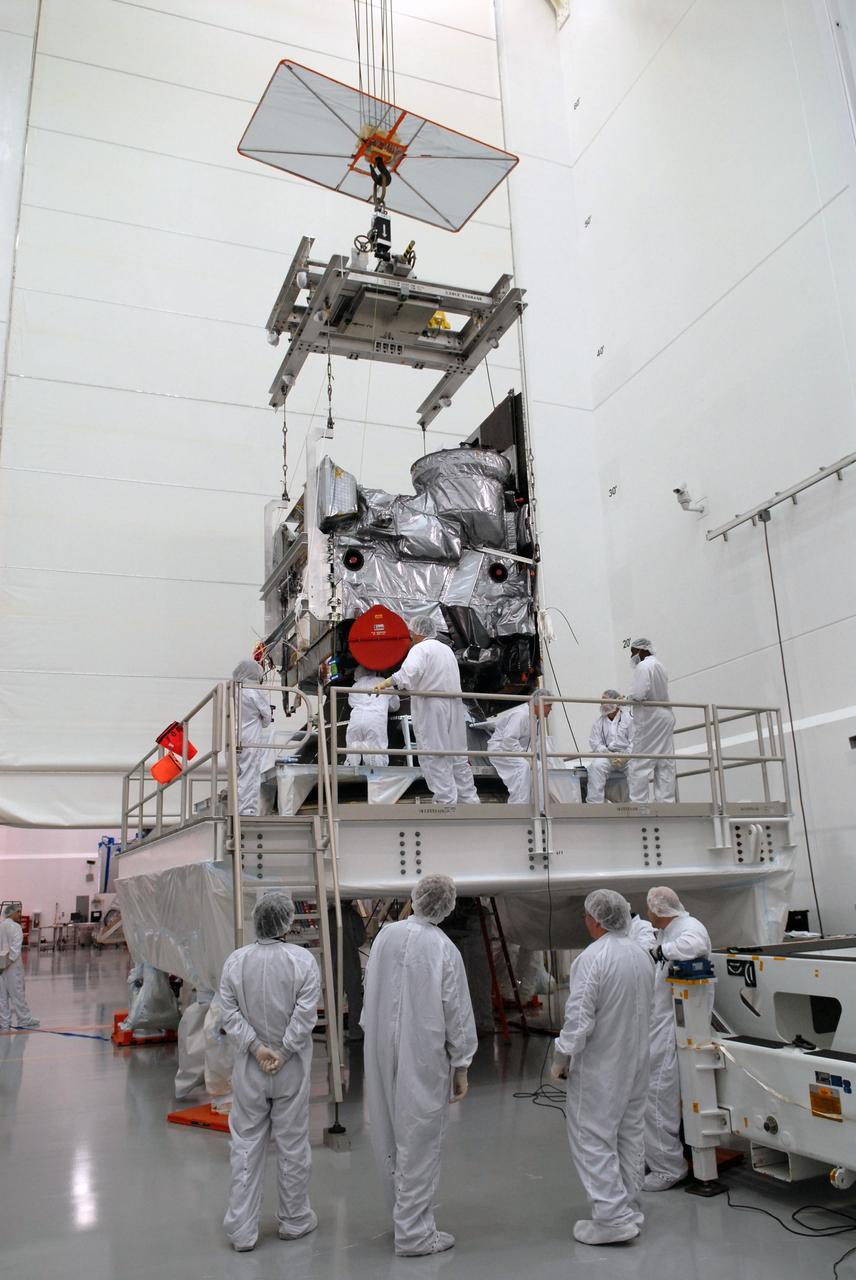
CAPE CANAVERAL, Fla. – In the Astrotech payload processing facility in Titusville, Fla., technicians prepare to move the GOES-O satellite onto a special stand for loading of its oxidizer and hydrazine propellants. The latest Geostationary Operational Environmental Satellite, GOES-O was developed by NASA for the National Oceanic and Atmospheric Administration, or NOAA. The GOES satellites continuously provide observations of 60 percent of the Earth including the continental United States, providing weather monitoring and forecast operations as well as a continuous and reliable stream of environmental information and severe weather warnings. Once in orbit, GOES-O will be designated GOES-14, and NASA will provide on-orbit checkout and then transfer operational responsibility to NOAA. The GOES-O satellite is targeted to launch from Cape Canaveral Air Force Station's Launch Complex 37 no earlier than May 12 onboard a United Launch Alliance Delta IV expendable launch vehicle. Photo credit: NASA/Troy Cryder
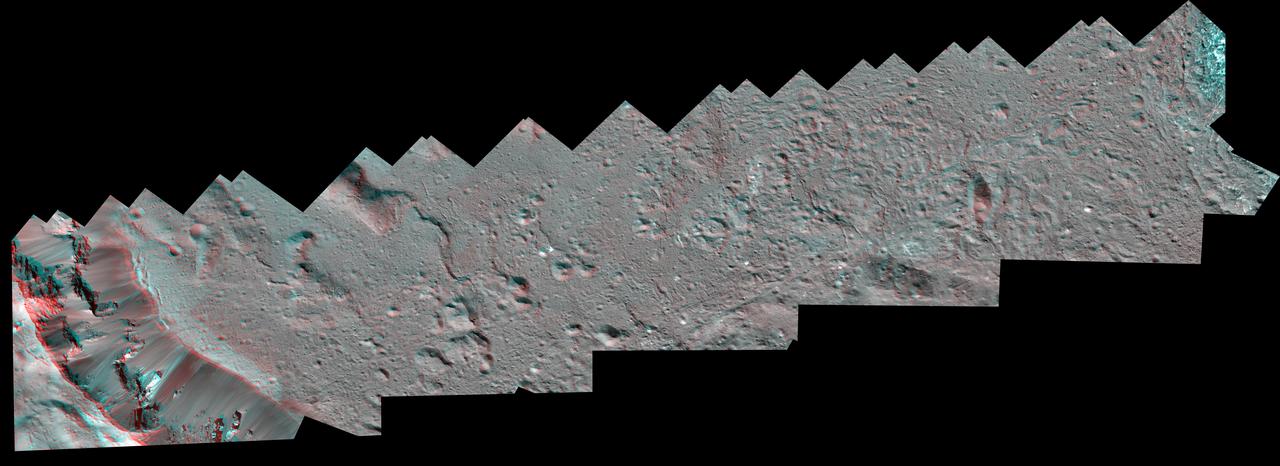
The Dawn spacecraft captured these stereo views of Occator Crater on the dwarf planet Ceres in 2018. More than 70 framing camera images were used to construct this anaglyph view (which requires red-blue stereo glasses for viewing) of the southeastern floor of the crater, including the rim at far left in this view. This area is largely covered with impact melt and features a variety of pits and low mounds, some of which are related to impact debris but others to subsurface brine seepage and deposition. The spatial resolution of the stereo images is about 11 feet (3.5 meters) per pixel. Occator Crater, named after the Roman god of the agricultural practice of harrowing, is about 57 miles (92 kilometers) in diameter. The conclusion of Dawn's mission operations was Oct. 31, 2018, when the spacecraft depleted its hydrazine used for attitude control. This image was produced by Dr. Paul Schenk at the Lunar and Planetary Institute in Houston. https://photojournal.jpl.nasa.gov/catalog/PIA24061
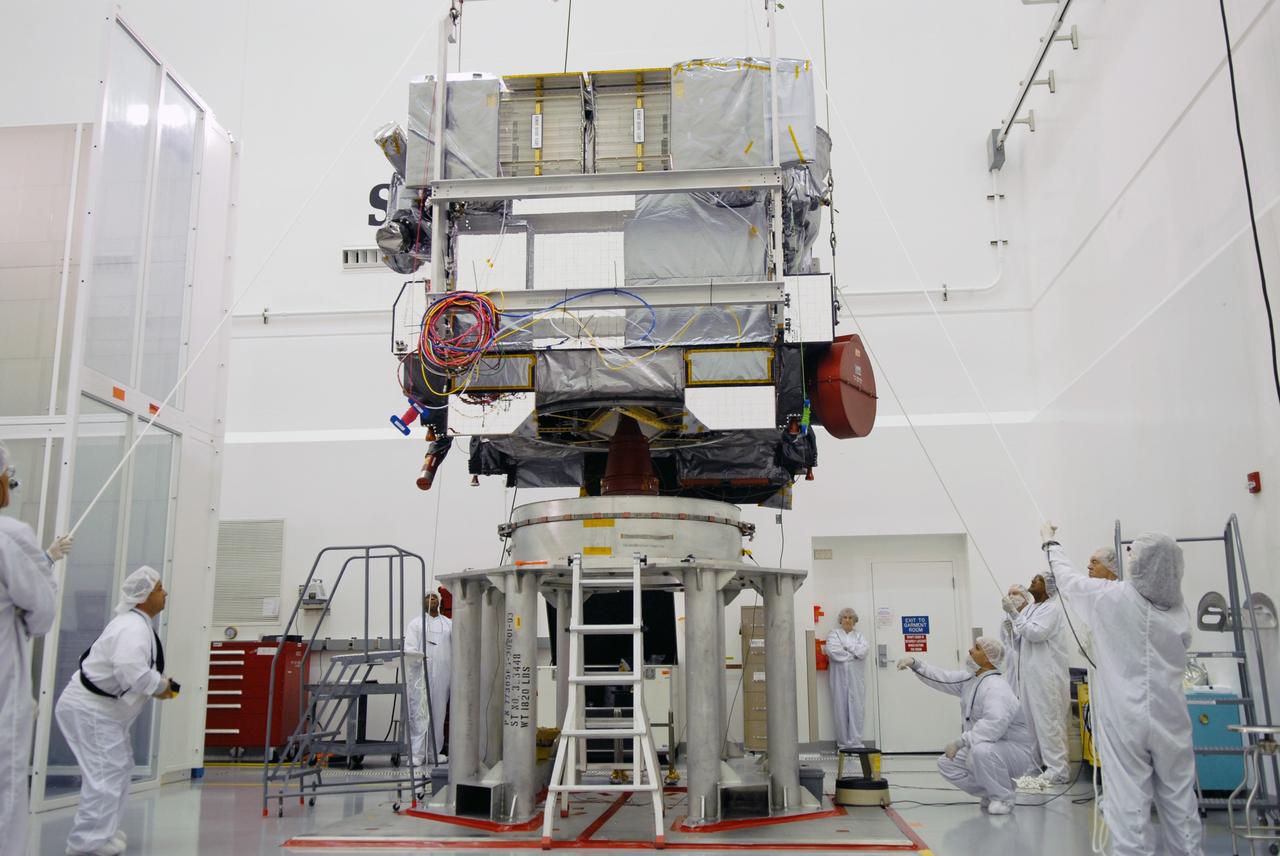
CAPE CANAVERAL, Fla. – In the Astrotech payload processing facility in Titusville, Fla., the GOES-O satellite is gently lowered onto a special stand for loading of its oxidizer and hydrazine propellants. The latest Geostationary Operational Environmental Satellite, GOES-O was developed by NASA for the National Oceanic and Atmospheric Administration, or NOAA. The GOES satellites continuously provide observations of 60 percent of the Earth including the continental United States, providing weather monitoring and forecast operations as well as a continuous and reliable stream of environmental information and severe weather warnings. Once in orbit, GOES-O will be designated GOES-14, and NASA will provide on-orbit checkout and then transfer operational responsibility to NOAA. The GOES-O satellite is targeted to launch from Cape Canaveral Air Force Station's Launch Complex 37 no earlier than May 12 onboard a United Launch Alliance Delta IV expendable launch vehicle. Photo credit: NASA/Troy Cryder

CAPE CANAVERAL, Fla. – In the Astrotech payload processing facility in Titusville, Fla., technicians move the GOES-O satellite toward a special stand for loading of its oxidizer and hydrazine propellants. The latest Geostationary Operational Environmental Satellite, GOES-O was developed by NASA for the National Oceanic and Atmospheric Administration, or NOAA. The GOES satellites continuously provide observations of 60 percent of the Earth including the continental United States, providing weather monitoring and forecast operations as well as a continuous and reliable stream of environmental information and severe weather warnings. Once in orbit, GOES-O will be designated GOES-14, and NASA will provide on-orbit checkout and then transfer operational responsibility to NOAA. The GOES-O satellite is targeted to launch from Cape Canaveral Air Force Station's Launch Complex 37 no earlier than May 12 onboard a United Launch Alliance Delta IV expendable launch vehicle. Photo credit: NASA/Troy Cryder
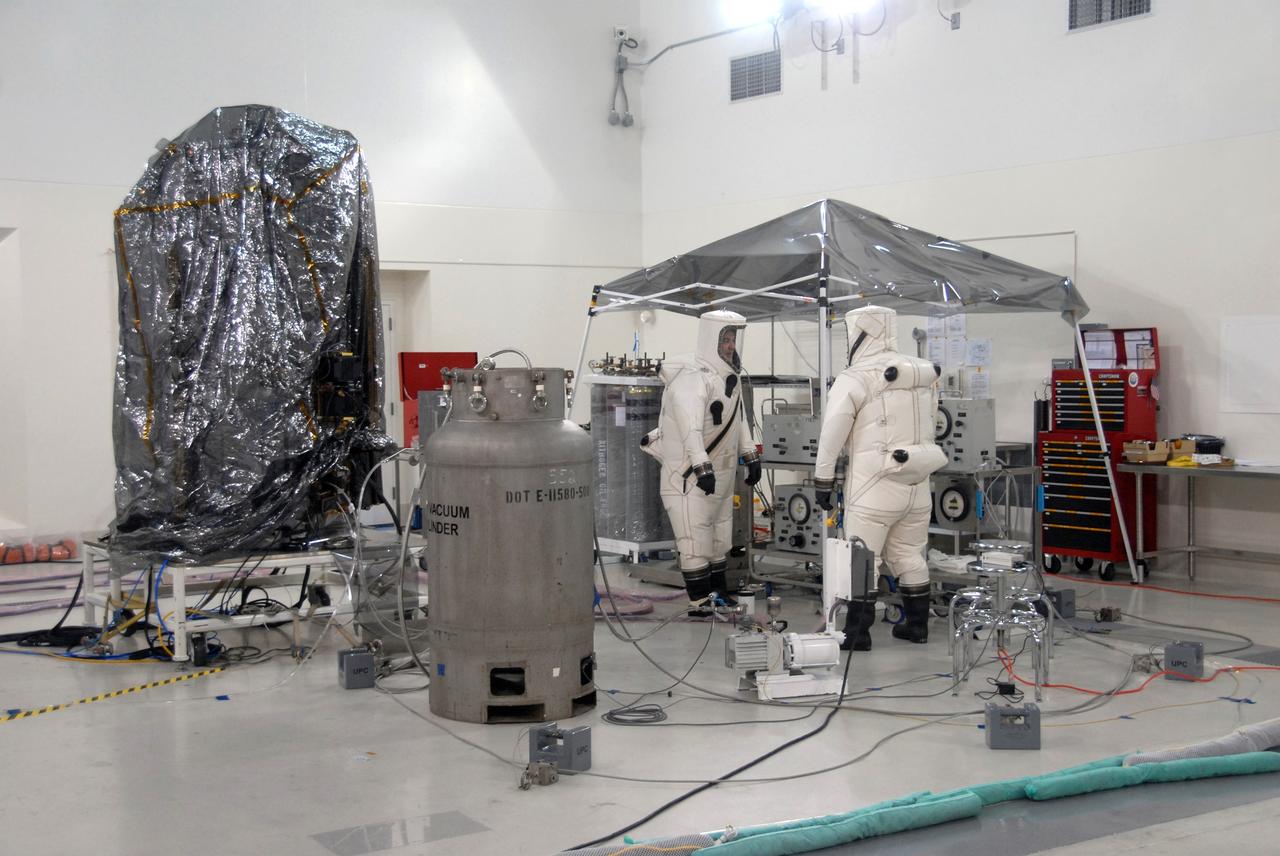
Vandenberg Air Force Base, Calif. – In the Astrotech Payload Processing Facility at Vandenberg Air Force Base in California, preparations are under way to fuel NASA's Orbiting Carbon Observatory, or OCO, with hydrazine thruster control propellant. The OCO is a new Earth-orbiting mission sponsored by NASA's Earth System Science Pathfinder Program. The OCO mission will collect precise global measurements of carbon dioxide (CO2) in the Earth's atmosphere. Scientists will analyze OCO data to improve our understanding of the natural processes and human activities that regulate the abundance and distribution of this important greenhouse gas. This improved understanding will enable more reliable forecasts of future changes in the abundance and distribution of CO2 in the atmosphere and the effect that these changes may have on the Earth's climate. The launch of OCO is scheduled for Feb. 23 from Vandenberg. Photo credit: Robert Hargreaves Jr., VAFB

Vandenberg Air Force Base, Calif. – In the Astrotech Payload Processing Facility at Vandenberg Air Force Base in California, a technician monitors data during fueling of NASA's Orbiting Carbon Observatory, or OCO, with hydrazine thruster control propellant. The OCO is a new Earth-orbiting mission sponsored by NASA's Earth System Science Pathfinder Program. The OCO mission will collect precise global measurements of carbon dioxide (CO2) in the Earth's atmosphere. Scientists will analyze OCO data to improve our understanding of the natural processes and human activities that regulate the abundance and distribution of this important greenhouse gas. This improved understanding will enable more reliable forecasts of future changes in the abundance and distribution of CO2 in the atmosphere and the effect that these changes may have on the Earth's climate. The launch of OCO is scheduled for Feb. 23 from Vandenberg. Photo credit: Robert Hargreaves Jr., VAFB

This photo of Ceres and the bright regions in Occator Crater was one of the last views NASA's Dawn spacecraft transmitted before it depleted its remaining hydrazine and completed its mission. This view, which faces south, was captured on Sept. 1, 2018 at an altitude of 2,340 miles (3,370 kilometers) as the spacecraft was ascending in its elliptical orbit. At its lowest point, the orbit dipped down to only about 22 miles (35 kilometers), which allowed Dawn to acquire very high-resolution images in this final phase of its mission. Some of the close-up images of Occator Crater are shown here. Occator Crater is 57 miles (92 kilometers) across and 2.5 miles (4 kilometers) deep and holds the brightest area on Ceres, Cerealia Facula in its center and Vinalia Faculae in its western side. This region has been the subject of intense interest since Dawn's approach to the dwarf planet in early 2015. https://photojournal.jpl.nasa.gov/catalog/PIA22485
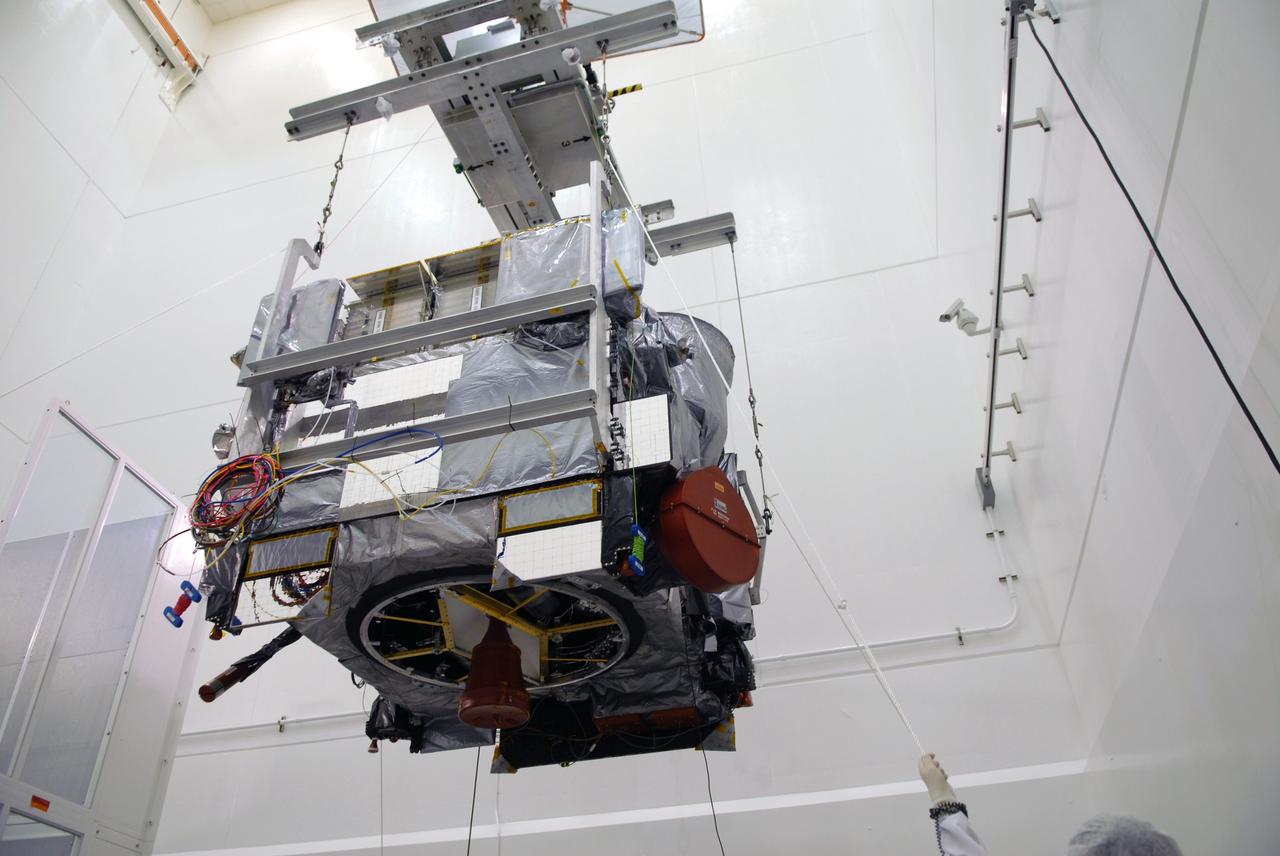
CAPE CANAVERAL, Fla. – In the Astrotech payload processing facility in Titusville, Fla., the GOES-O satellite is gently moved toward a special stand for loading of its oxidizer and hydrazine propellants. The latest Geostationary Operational Environmental Satellite, GOES-O was developed by NASA for the National Oceanic and Atmospheric Administration, or NOAA. The GOES satellites continuously provide observations of 60 percent of the Earth including the continental United States, providing weather monitoring and forecast operations as well as a continuous and reliable stream of environmental information and severe weather warnings. Once in orbit, GOES-O will be designated GOES-14, and NASA will provide on-orbit checkout and then transfer operational responsibility to NOAA. The GOES-O satellite is targeted to launch from Cape Canaveral Air Force Station's Launch Complex 37 no earlier than May 12 onboard a United Launch Alliance Delta IV expendable launch vehicle. Photo credit: NASA/Troy Cryder
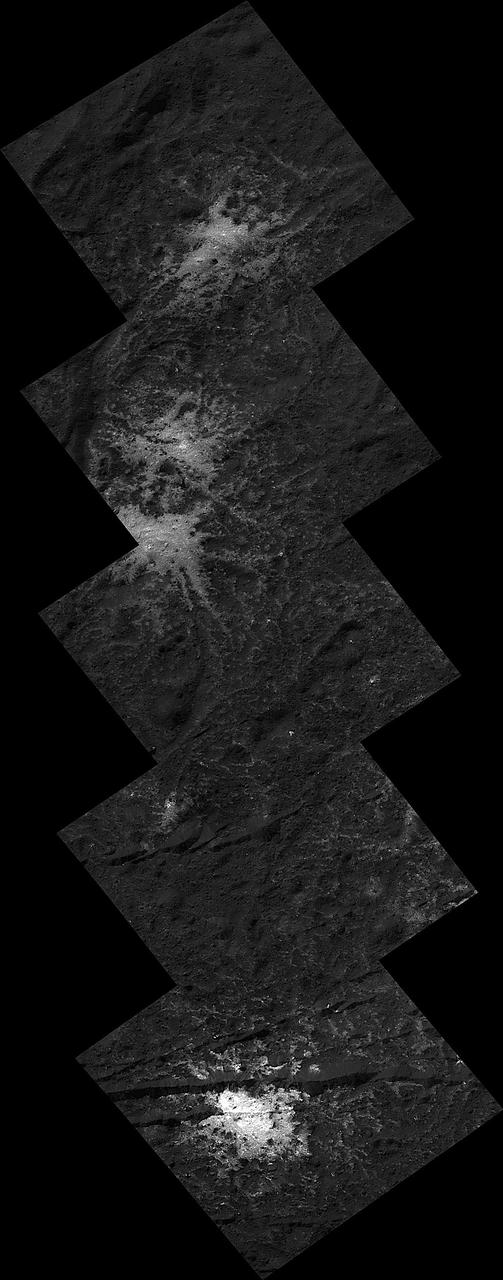
These "stars" found on the floor of Ceres' Occator Crater belong to the Vinalia Faculae. The faculae are deposits of salts, in particular sodium carbonate, possibly extruded through fractures connecting the surface to a deep reservoir of salty liquid. The images used in this montage were obtained by NASA's Dawn spacecraft in June 2018 from an altitude of about 21 miles (34 kilometers). NASA announced the conclusion of Dawn's mission operations was Oct. 31, 2018, when the spacecraft depleted its hydrazine. The center of this feature is located at about 20.2 degrees north latitude and 241.3 degrees east longitude, in the eastern part of Occator Crater. Occator Crater is named after the Roman agricultural deity of the harrowing, a helper of Ceres, the goddess of agriculture, grain crops, fertility and motherly relationships. https://photojournal.jpl.nasa.gov/catalog/PIA22980
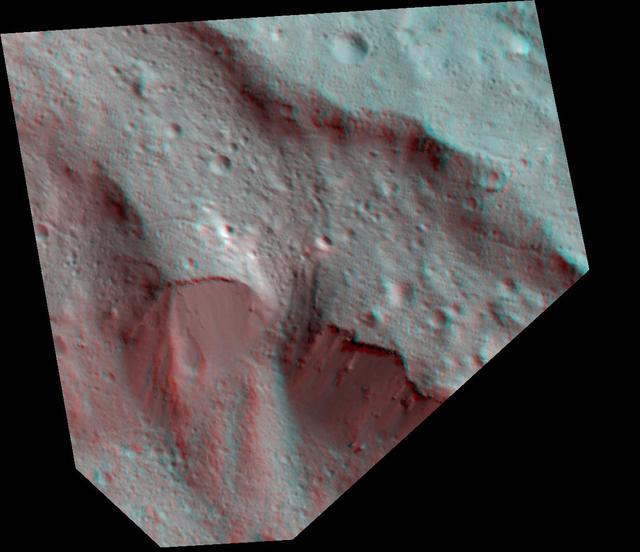
The Dawn spacecraft captured these stereo images of Occator crater on the dwarf planet Ceres in 2018. Framing camera images were used to construct this anaglyph view (which requires red-blue stereo glasses for viewing) of part of the northeastern rim of the crater. This area is approximately 4 miles (7 kilometers) wide and features a thin mantling layer of impact melt draped over faulted terrace blocks. Impact melt flowed through a gap in the blocks in the center of the frame. The spatial resolution of the stereo images is about 11 feet (3.5 meters) per pixel. Occator Crater, named after the Roman god of the agricultural practice of harrowing, is about 57 miles (92 kilometers) in diameter. The conclusion of Dawn's mission operations was Oct. 31, 2018, when the spacecraft depleted its hydrazine used for attitude control. This image was produced by Dr. Paul Schenk at the Lunar and Planetary Institute in Houston. https://photojournal.jpl.nasa.gov/catalog/PIA24064
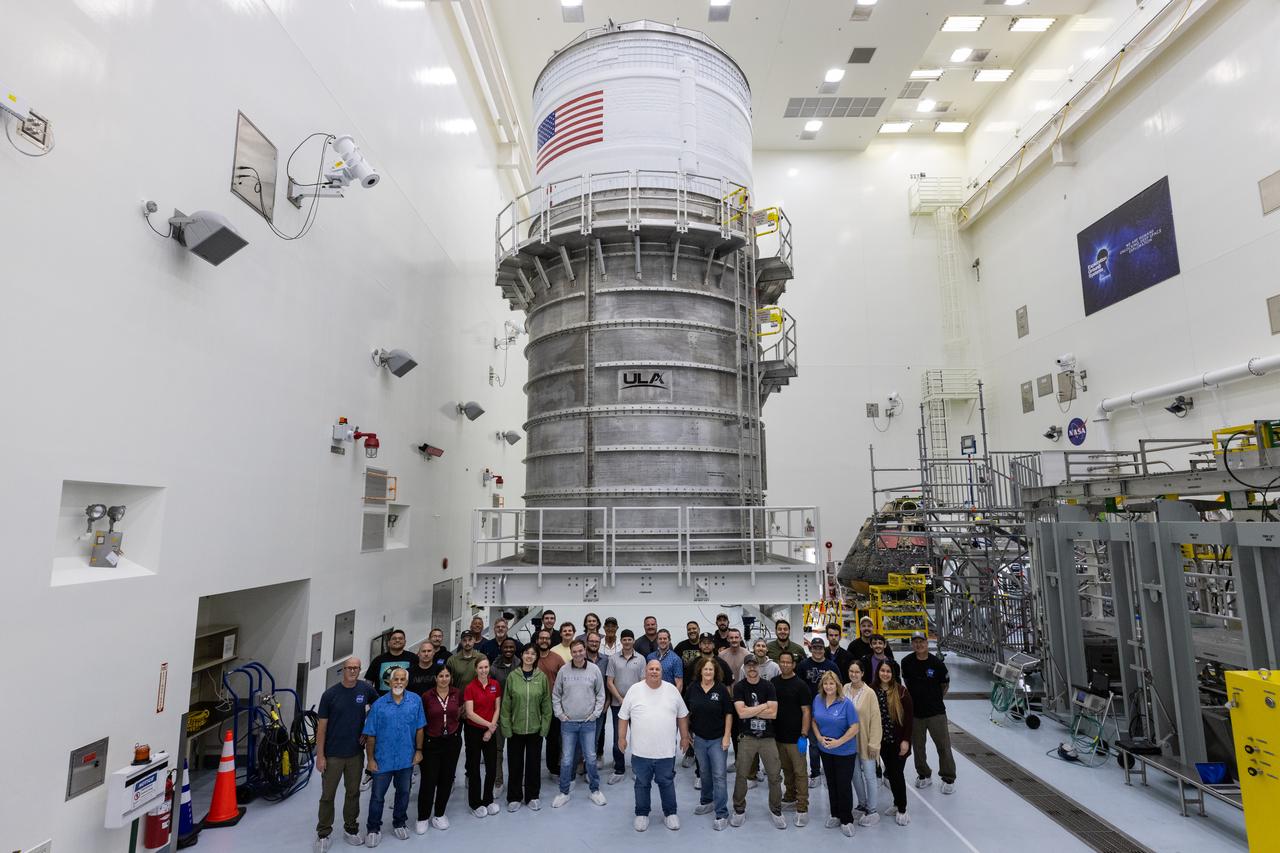
Teams with NASA’s Exploration Ground Systems Program pose for a photo in front of the upper stage for the agency’s Artemis II SLS (Space Launch System) rocket inside the Multi-Payload Processing Facility (MPPF) at NASA’s Kennedy Space Center in Florida on Wednesday, April 16, 2025. Visible in the background is also the Artemis I Orion crew module, now known as the Orion Environmental Test Article (ETA). Technicians fueled the SLS upper stage, known as the interim cryogenic propulsion stage, with hydrazine for its reaction control system at the MPPF before its transportation to the spaceport’s Vehicle Assembly Building and will now integrate the four-story propulsion system with SLS rocket elements atop mobile launcher 1.
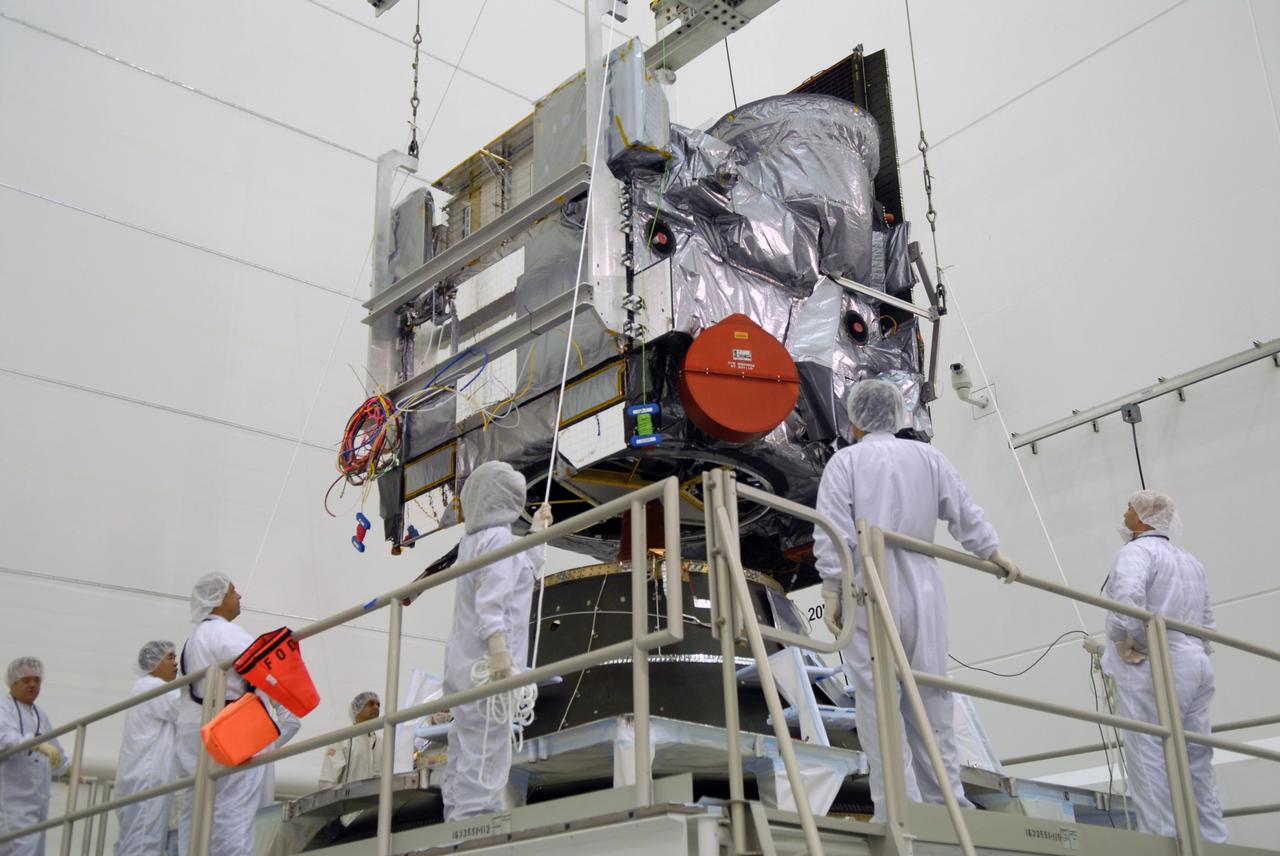
CAPE CANAVERAL, Fla. – In the Astrotech payload processing facility in Titusville, Fla., technicians lift the GOES-O satellite to move it to a special stand for loading of its oxidizer and hydrazine propellants. The latest Geostationary Operational Environmental Satellite, GOES-O was developed by NASA for the National Oceanic and Atmospheric Administration, or NOAA. The GOES satellites continuously provide observations of 60 percent of the Earth including the continental United States, providing weather monitoring and forecast operations as well as a continuous and reliable stream of environmental information and severe weather warnings. Once in orbit, GOES-O will be designated GOES-14, and NASA will provide on-orbit checkout and then transfer operational responsibility to NOAA. The GOES-O satellite is targeted to launch from Cape Canaveral Air Force Station's Launch Complex 37 no earlier than May 12 onboard a United Launch Alliance Delta IV expendable launch vehicle. Photo credit: NASA/Troy Cryder
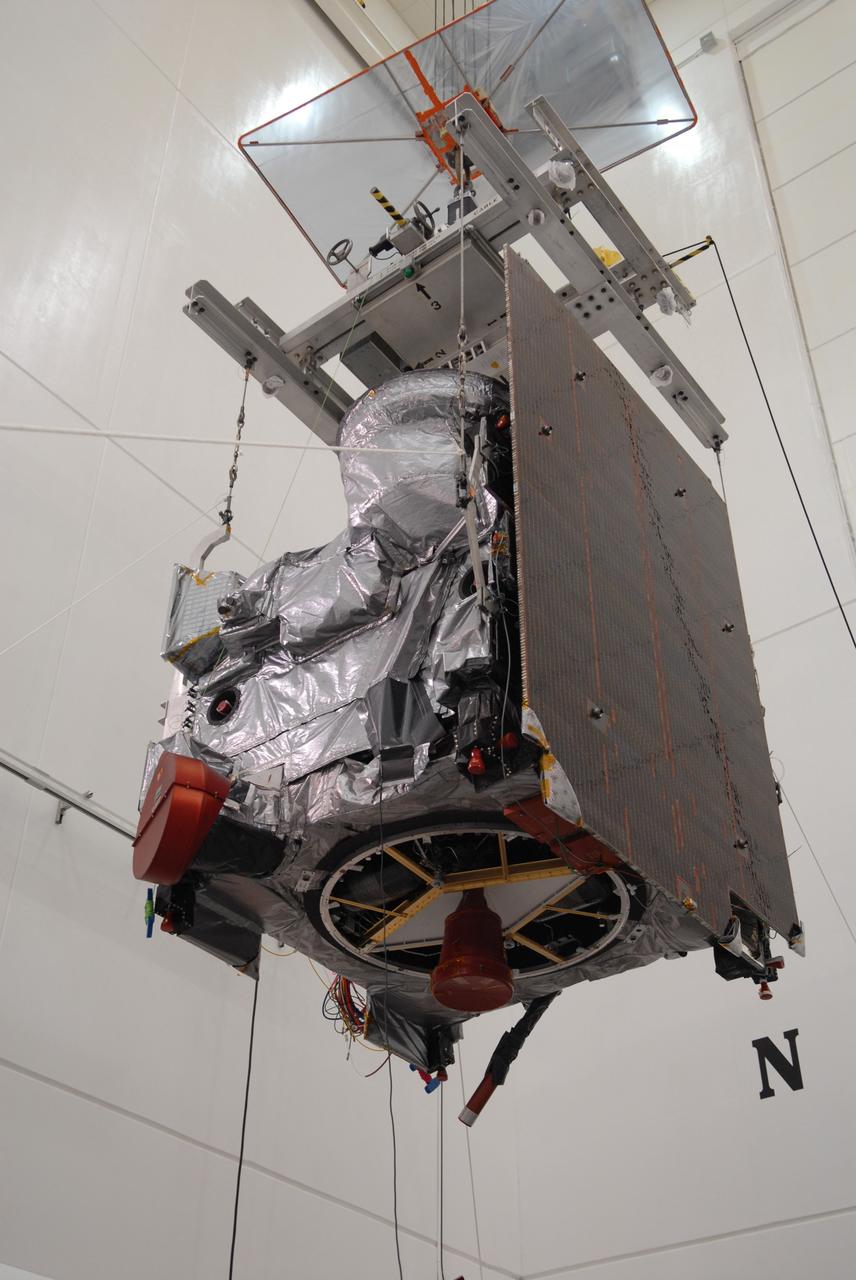
CAPE CANAVERAL, Fla. – In the Astrotech payload processing facility in Titusville, Fla., the GOES-O satellite is moved toward a special stand for loading of its oxidizer and hydrazine propellants. The latest Geostationary Operational Environmental Satellite, GOES-O was developed by NASA for the National Oceanic and Atmospheric Administration, or NOAA. The GOES satellites continuously provide observations of 60 percent of the Earth including the continental United States, providing weather monitoring and forecast operations as well as a continuous and reliable stream of environmental information and severe weather warnings. Once in orbit, GOES-O will be designated GOES-14, and NASA will provide on-orbit checkout and then transfer operational responsibility to NOAA. The GOES-O satellite is targeted to launch from Cape Canaveral Air Force Station's Launch Complex 37 no earlier than May 12 onboard a United Launch Alliance Delta IV expendable launch vehicle. Photo credit: NASA/Troy Cryder
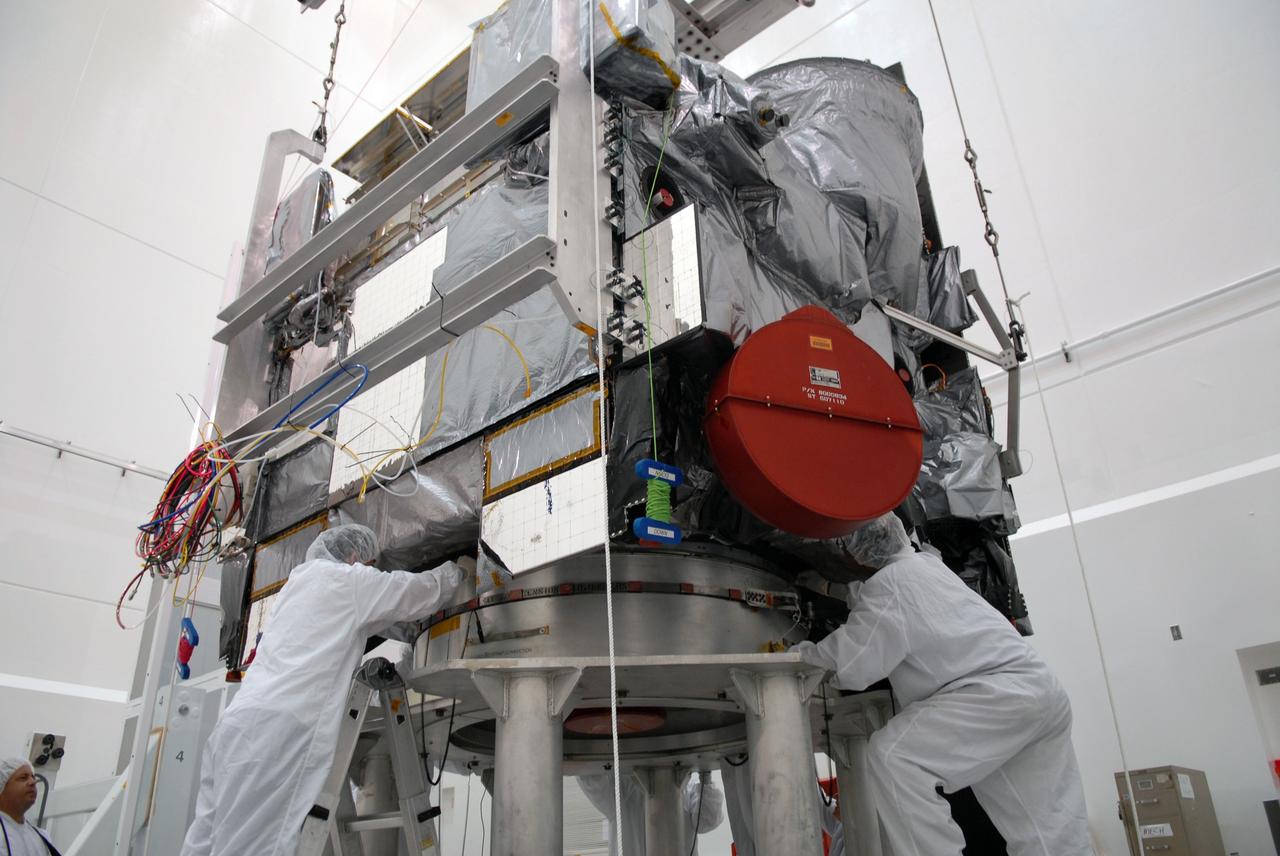
CAPE CANAVERAL, Fla. – In the Astrotech payload processing facility in Titusville, Fla., technicians secure the GOES-O satellite onto a special stand for loading of its oxidizer and hydrazine propellants. The latest Geostationary Operational Environmental Satellite, GOES-O was developed by NASA for the National Oceanic and Atmospheric Administration, or NOAA. The GOES satellites continuously provide observations of 60 percent of the Earth including the continental United States, providing weather monitoring and forecast operations as well as a continuous and reliable stream of environmental information and severe weather warnings. Once in orbit, GOES-O will be designated GOES-14, and NASA will provide on-orbit checkout and then transfer operational responsibility to NOAA. The GOES-O satellite is targeted to launch from Cape Canaveral Air Force Station's Launch Complex 37 no earlier than May 12 onboard a United Launch Alliance Delta IV expendable launch vehicle. Photo credit: NASA/Troy Cryder
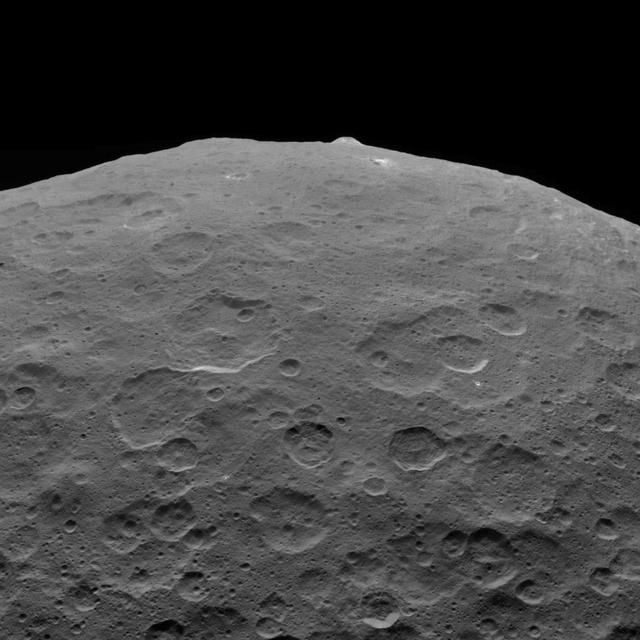
This photo of Ceres and one of its key landmarks, Ahuna Mons, was one of the last views Dawn transmitted before it depleted its remaining hydrazine and completed its mission. This view, which faces south, was captured on Sept. 1, 2018 at an altitude of 2,220 miles (3,570 kilometers) as the spacecraft was ascending in its elliptical orbit. At its lowest point, the orbit dipped down to only about 22 miles (35 kilometers), which allowed Dawn to acquire very high-resolution images in this final phase of its mission. Some of the close-up images of Ceres are shown here. Ahuna Mons is about 12 miles (20 kilometers) across and 2.5 miles (4 kilometers) high and displays sodium carbonate along its flanks. This is the most recent of a potential two dozen cryovolcanoes whose remnants are found across Ceres' surface. https://photojournal.jpl.nasa.gov/catalog/PIA22769
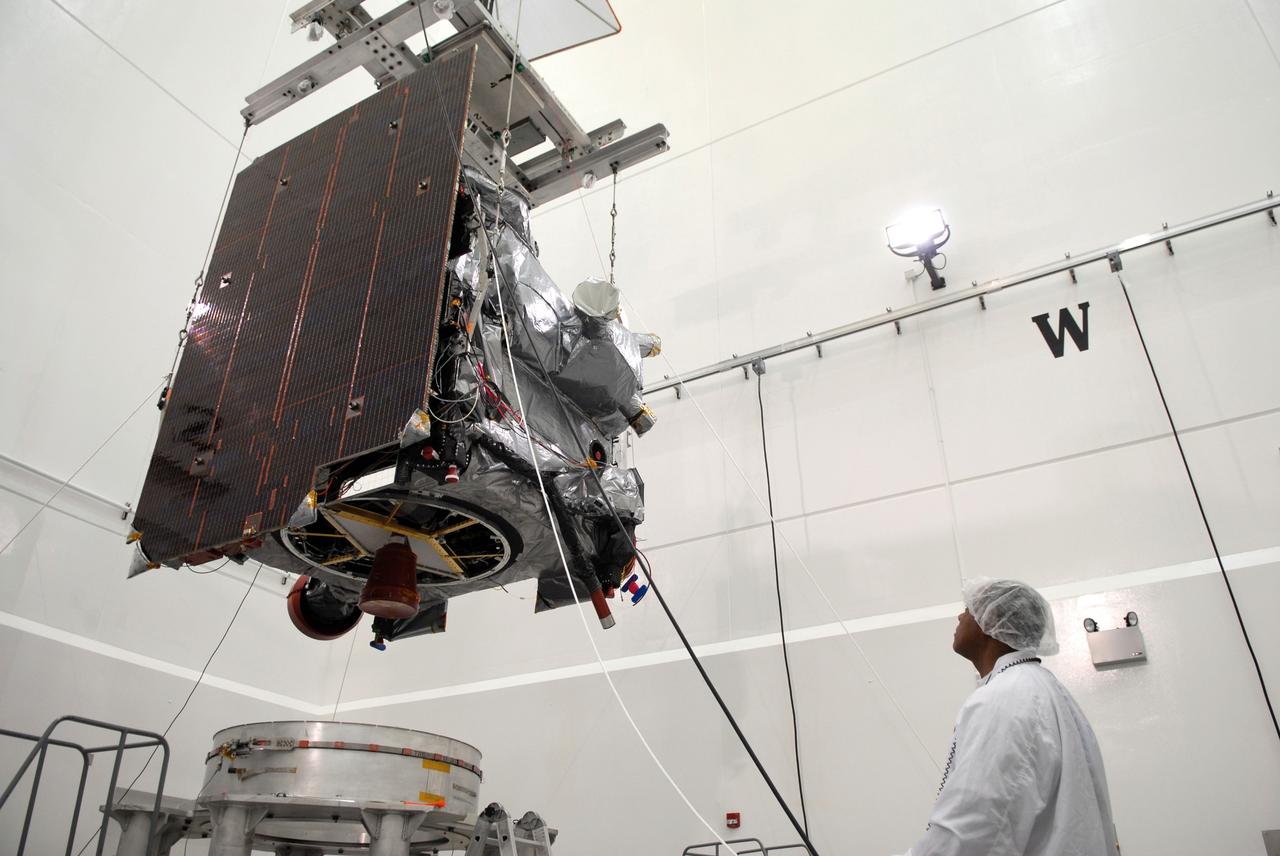
CAPE CANAVERAL, Fla. – In the Astrotech payload processing facility in Titusville, Fla., the GOES-O satellite traverses the clean room toward a special stand for loading of its oxidizer and hydrazine propellants. The latest Geostationary Operational Environmental Satellite, GOES-O was developed by NASA for the National Oceanic and Atmospheric Administration, or NOAA. The GOES satellites continuously provide observations of 60 percent of the Earth including the continental United States, providing weather monitoring and forecast operations as well as a continuous and reliable stream of environmental information and severe weather warnings. Once in orbit, GOES-O will be designated GOES-14, and NASA will provide on-orbit checkout and then transfer operational responsibility to NOAA. The GOES-O satellite is targeted to launch from Cape Canaveral Air Force Station's Launch Complex 37 no earlier than May 12 onboard a United Launch Alliance Delta IV expendable launch vehicle. Photo credit: NASA/Troy Cryder

This image shows Haulani Crater and its bright ejecta near the limb of Ceres and Oxo Crater near the center of the image. The latter is easily recognizable by its bright wall that is enriched in ice and carbonate. The image is facing south, with Haulani Crater located near Ceres' equator at 5.8 degrees north latitude and 10.8 degrees east longitude and Oxo Crater located at 42.2 degrees north latitude and 359.6 degrees east longitude. The images used in this montage were obtained by NASA's Dawn spacecraft on September 1, 2018 from an altitude of about 2075 miles (3340 kilometers). NASA announced the conclusion of Dawn's mission operations was Oct. 31, 2018, when the spacecraft depleted its hydrazine. Haulani Crater is named after "Hau-lani", the Hawaiian plant goddess. Oxo Crater is named after the God of agriculture in Afro-Brazilian beliefs of Yoruba derivation. https://photojournal.jpl.nasa.gov/catalog/PIA22984

Vandenberg Air Force Base, Calif. – In the Astrotech Payload Processing Facility at Vandenberg Air Force Base in California, a technician monitors data during fueling of NASA's Orbiting Carbon Observatory, or OCO, with hydrazine thruster control propellant. The OCO is a new Earth-orbiting mission sponsored by NASA's Earth System Science Pathfinder Program. The OCO mission will collect precise global measurements of carbon dioxide (CO2) in the Earth's atmosphere. Scientists will analyze OCO data to improve our understanding of the natural processes and human activities that regulate the abundance and distribution of this important greenhouse gas. This improved understanding will enable more reliable forecasts of future changes in the abundance and distribution of CO2 in the atmosphere and the effect that these changes may have on the Earth's climate. The launch of OCO is scheduled for Feb. 23 from Vandenberg. Photo credit: Robert Hargreaves Jr., VAFB

Vandenberg Air Force Base, Calif. – In the Astrotech Payload Processing Facility at Vandenberg Air Force Base in California, preparations are under way to fuel NASA's Orbiting Carbon Observatory, or OCO, with hydrazine thruster control propellant. The OCO is a new Earth-orbiting mission sponsored by NASA's Earth System Science Pathfinder Program. The OCO mission will collect precise global measurements of carbon dioxide (CO2) in the Earth's atmosphere. Scientists will analyze OCO data to improve our understanding of the natural processes and human activities that regulate the abundance and distribution of this important greenhouse gas. This improved understanding will enable more reliable forecasts of future changes in the abundance and distribution of CO2 in the atmosphere and the effect that these changes may have on the Earth's climate. The launch of OCO is scheduled for Feb. 23 from Vandenberg. Photo credit: Robert Hargreaves Jr., VAFB
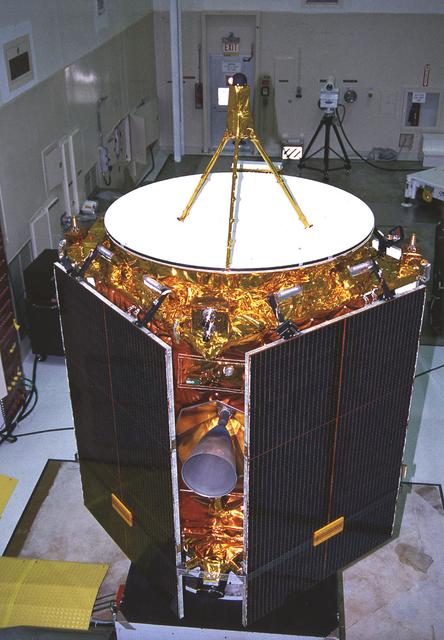
The Near Earth Asteroid Rendezvous (NEAR) spacecraft undergoing preflight preparation in the Spacecraft Assembly Encapsulation Facility-2 (SAEF-2) at Kennedy Space Center (KSC). NEAR will perform two critical mission events - Mathilde flyby and the Deep-Space maneuver. NEAR will fly-by Mathilde, a 38-mile (61-km) diameter C-type asteroid, making use of its imaging system to obtain useful optical navigation images. The primary science instrument will be the camera, but measurements of magnetic fields and mass also will be made. The Deep-Space Maneuver (DSM) will be executed about a week after the Mathilde fly-by. The DSM represents the first of two major burns during the NEAR mission of the 100-pound bi-propellant (Hydrazine/nitrogen tetroxide) thruster. This maneuver is necessary to lower the perihelion distance of NEAR's trajectory. The DSM will be conducted in two segments to minimize the possibility of an overburn situation.
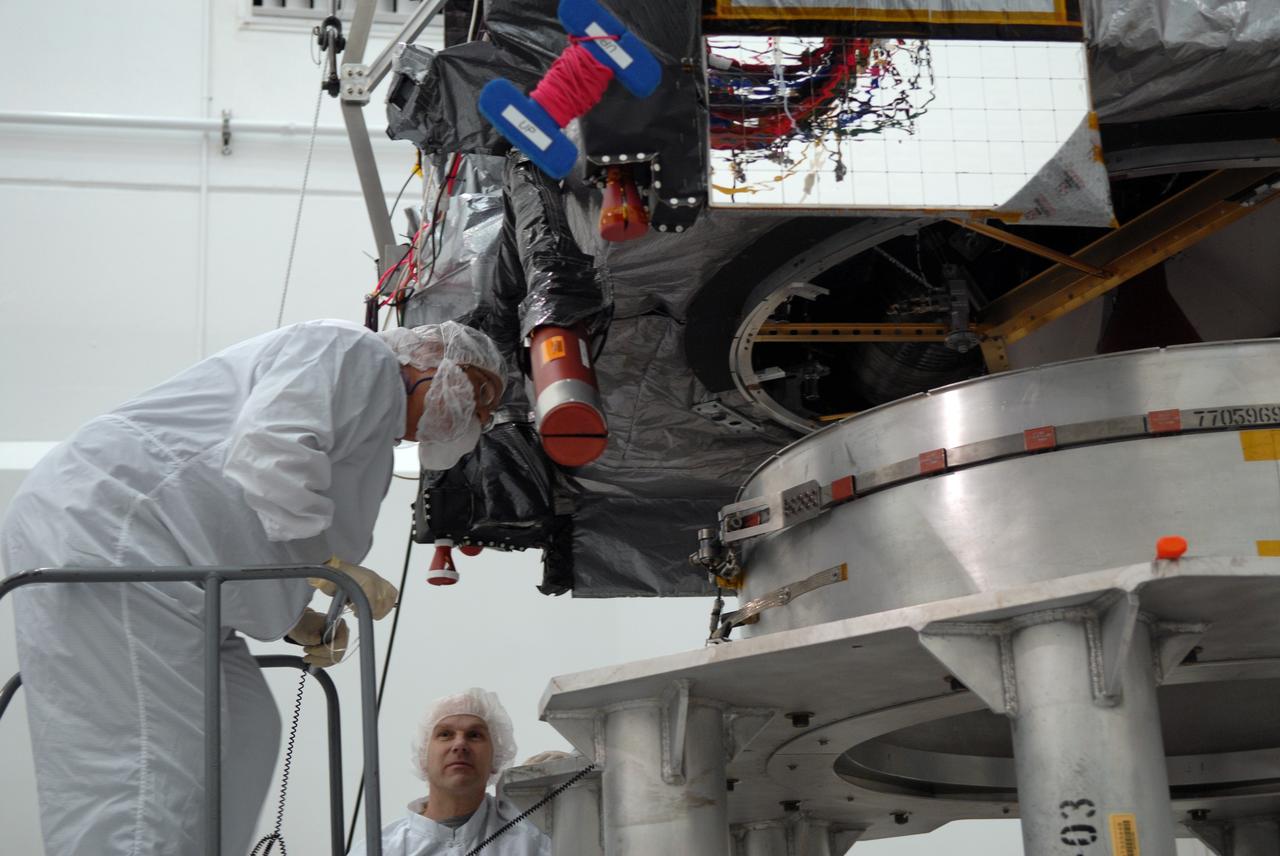
CAPE CANAVERAL, Fla. – In the Astrotech payload processing facility in Titusville, Fla., technicians monitor the alignment of the GOES-O satellite onto a special stand for loading of its oxidizer and hydrazine propellants. The latest Geostationary Operational Environmental Satellite, GOES-O was developed by NASA for the National Oceanic and Atmospheric Administration, or NOAA. The GOES satellites continuously provide observations of 60 percent of the Earth including the continental United States, providing weather monitoring and forecast operations as well as a continuous and reliable stream of environmental information and severe weather warnings. Once in orbit, GOES-O will be designated GOES-14, and NASA will provide on-orbit checkout and then transfer operational responsibility to NOAA. The GOES-O satellite is targeted to launch from Cape Canaveral Air Force Station's Launch Complex 37 no earlier than May 12 onboard a United Launch Alliance Delta IV expendable launch vehicle. Photo credit: NASA/Troy Cryder
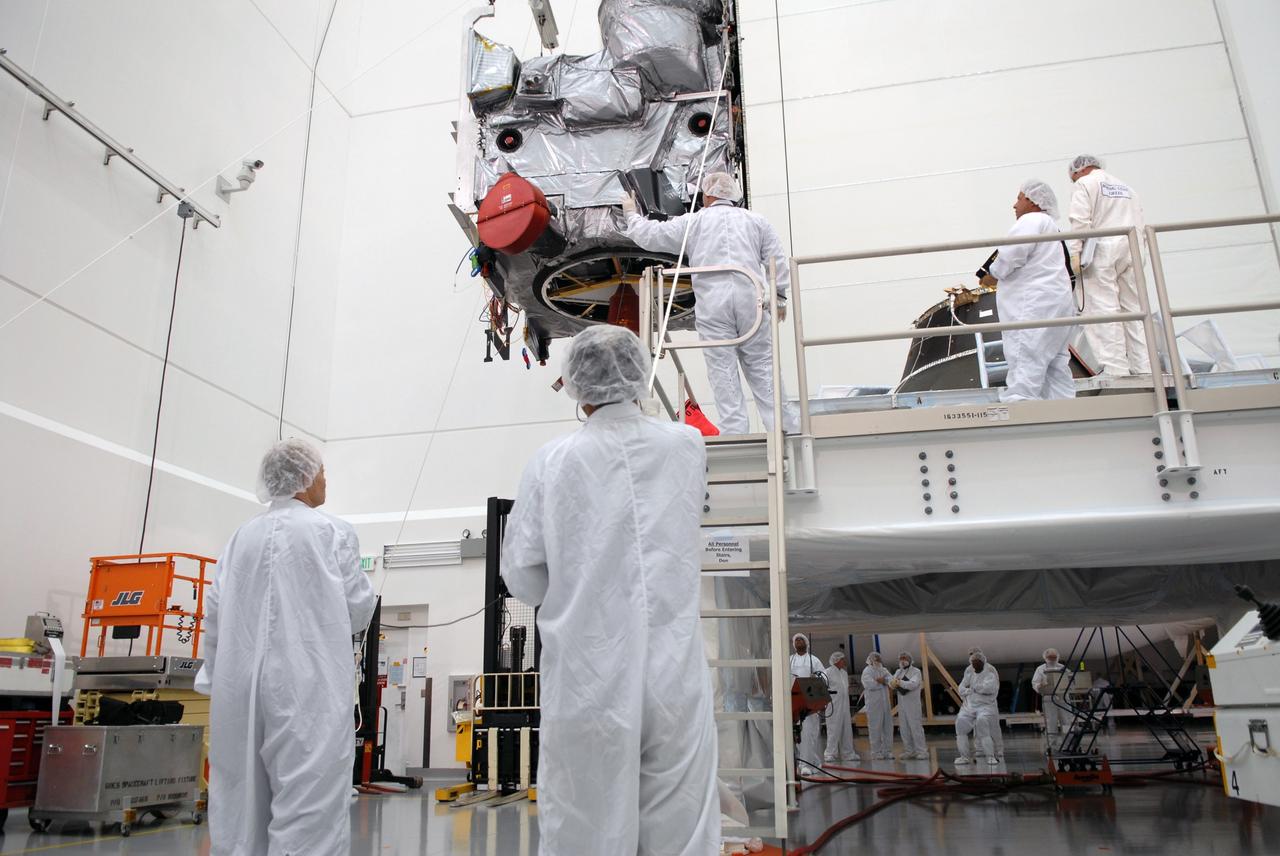
CAPE CANAVERAL, Fla. – In the Astrotech payload processing facility in Titusville, Fla., technicians monitor the lift of the GOES-O satellite toward a special stand for loading of its oxidizer and hydrazine propellants. The latest Geostationary Operational Environmental Satellite, GOES-O was developed by NASA for the National Oceanic and Atmospheric Administration, or NOAA. The GOES satellites continuously provide observations of 60 percent of the Earth including the continental United States, providing weather monitoring and forecast operations as well as a continuous and reliable stream of environmental information and severe weather warnings. Once in orbit, GOES-O will be designated GOES-14, and NASA will provide on-orbit checkout and then transfer operational responsibility to NOAA. The GOES-O satellite is targeted to launch from Cape Canaveral Air Force Station's Launch Complex 37 no earlier than May 12 onboard a United Launch Alliance Delta IV expendable launch vehicle. Photo credit: NASA/Troy Cryder
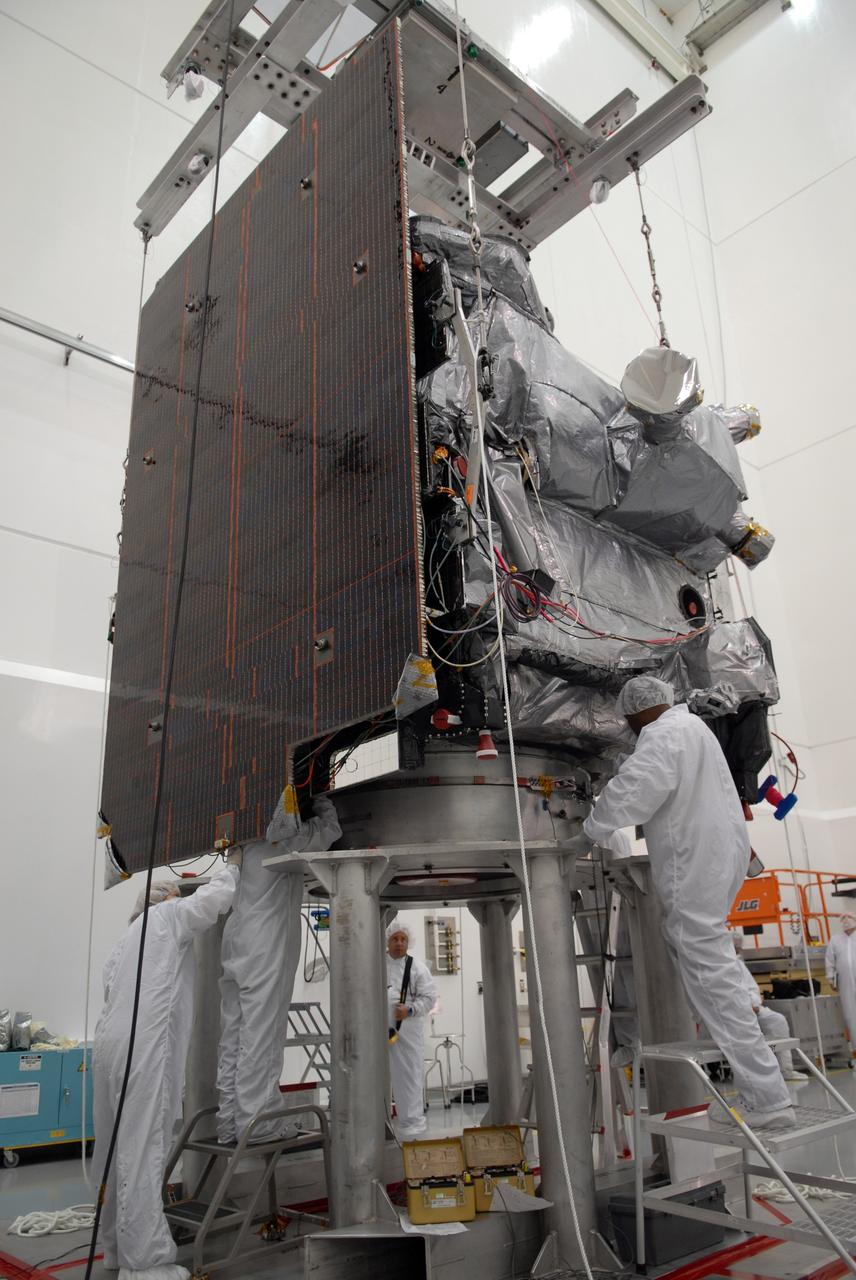
CAPE CANAVERAL, Fla. – In the Astrotech payload processing facility in Titusville, Fla., technicians secure the GOES-O satellite onto a special stand for loading of its oxidizer and hydrazine propellants. The latest Geostationary Operational Environmental Satellite, GOES-O was developed by NASA for the National Oceanic and Atmospheric Administration, or NOAA. The GOES satellites continuously provide observations of 60 percent of the Earth including the continental United States, providing weather monitoring and forecast operations as well as a continuous and reliable stream of environmental information and severe weather warnings. Once in orbit, GOES-O will be designated GOES-14, and NASA will provide on-orbit checkout and then transfer operational responsibility to NOAA. The GOES-O satellite is targeted to launch from Cape Canaveral Air Force Station's Launch Complex 37 no earlier than May 12 onboard a United Launch Alliance Delta IV expendable launch vehicle. Photo credit: NASA/Troy Cryder
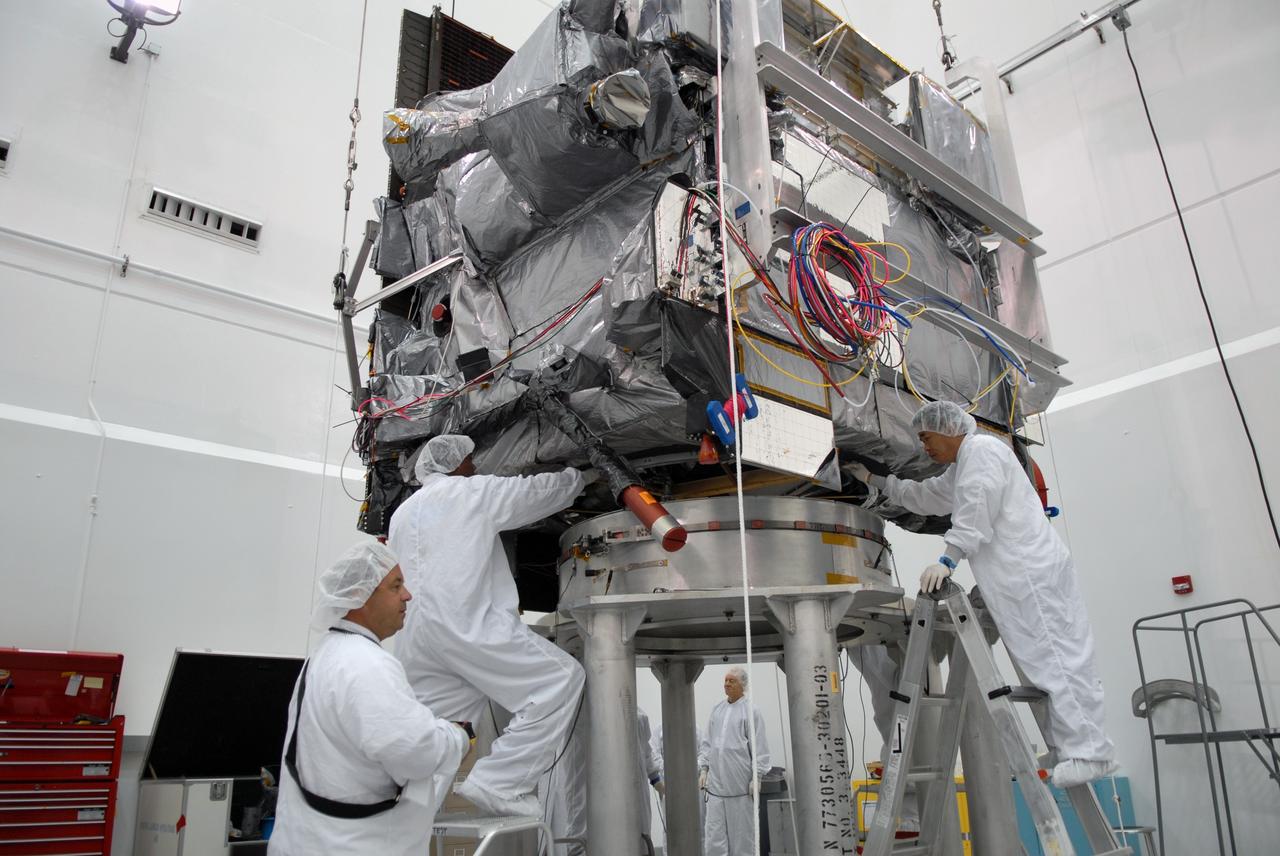
CAPE CANAVERAL, Fla. – In the Astrotech payload processing facility in Titusville, Fla., technicians check the alignment of the GOES-O satellite onto a special stand for loading of its oxidizer and hydrazine propellants. The latest Geostationary Operational Environmental Satellite, GOES-O was developed by NASA for the National Oceanic and Atmospheric Administration, or NOAA. The GOES satellites continuously provide observations of 60 percent of the Earth including the continental United States, providing weather monitoring and forecast operations as well as a continuous and reliable stream of environmental information and severe weather warnings. Once in orbit, GOES-O will be designated GOES-14, and NASA will provide on-orbit checkout and then transfer operational responsibility to NOAA. The GOES-O satellite is targeted to launch from Cape Canaveral Air Force Station's Launch Complex 37 no earlier than May 12 onboard a United Launch Alliance Delta IV expendable launch vehicle. Photo credit: NASA/Troy Cryder
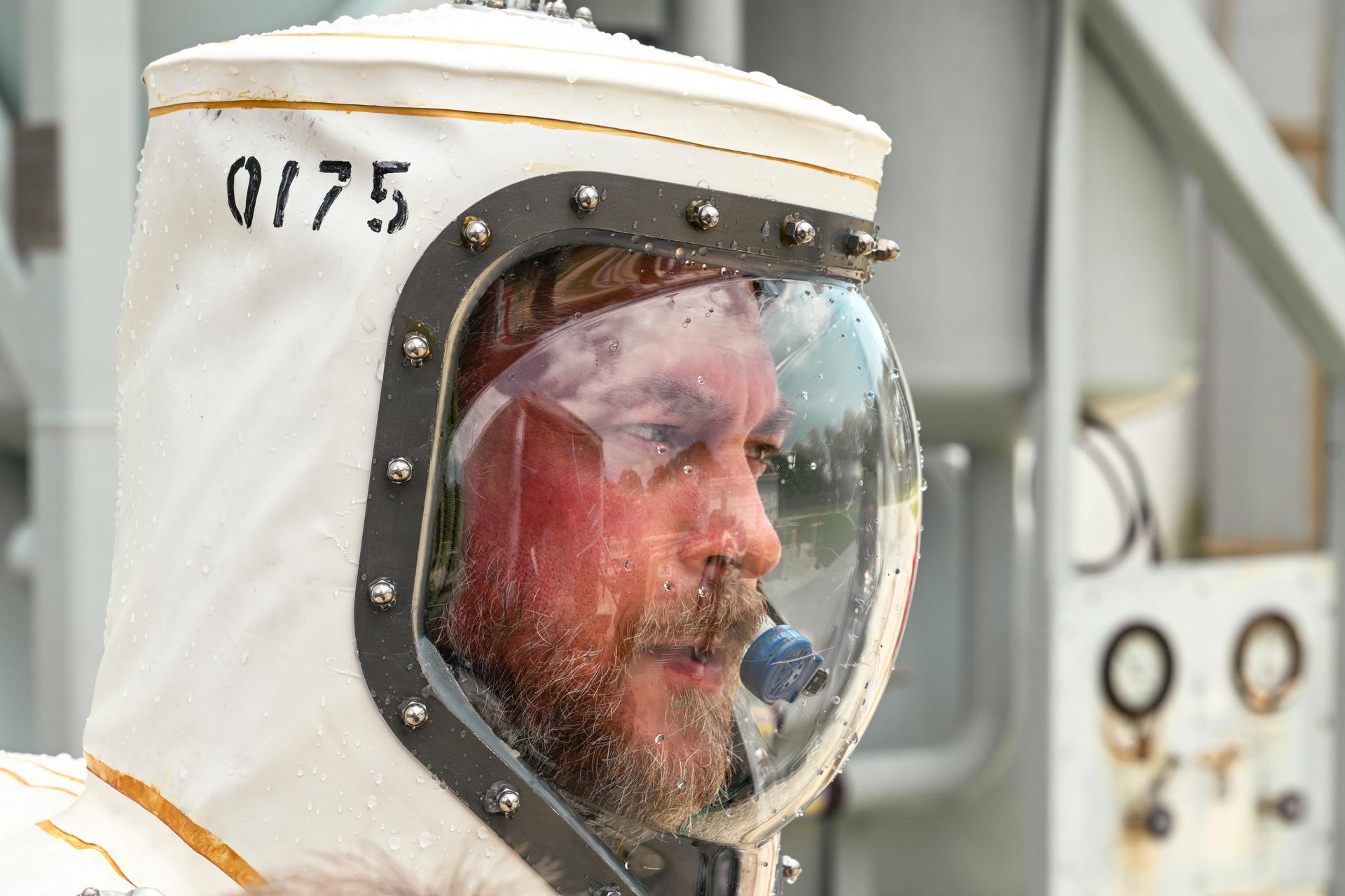
Billy Keim, a senior integration technician for NASA's Nancy Grace Roman Space Telescope wears a Self-Contained Atmospheric Protective Ensemble (SCAPE) suit as he prepares to perform propellant loading operations inside the Payload Hazardous Servicing Facility at NASA’s Kennedy Space Center in Florida Friday, July 24, 2026. With fuel tanks capable of carrying about 290 gallons (roughly 1,100 liters) of hydrazine – a monopropellant not requiring a second chemical to combust – Roman’s primary mission is to settle essential questions about dark energy, exoplanets, and infrared astrophysics by conducting wide-field surveys that explore the universe’s structure, evolution, and composition. Liftoff atop a SpaceX Falcon Heavy rocket from NASA Kennedy’s Launch Complex 39A is targeted no earlier than Sunday, Aug. 30, 2026.
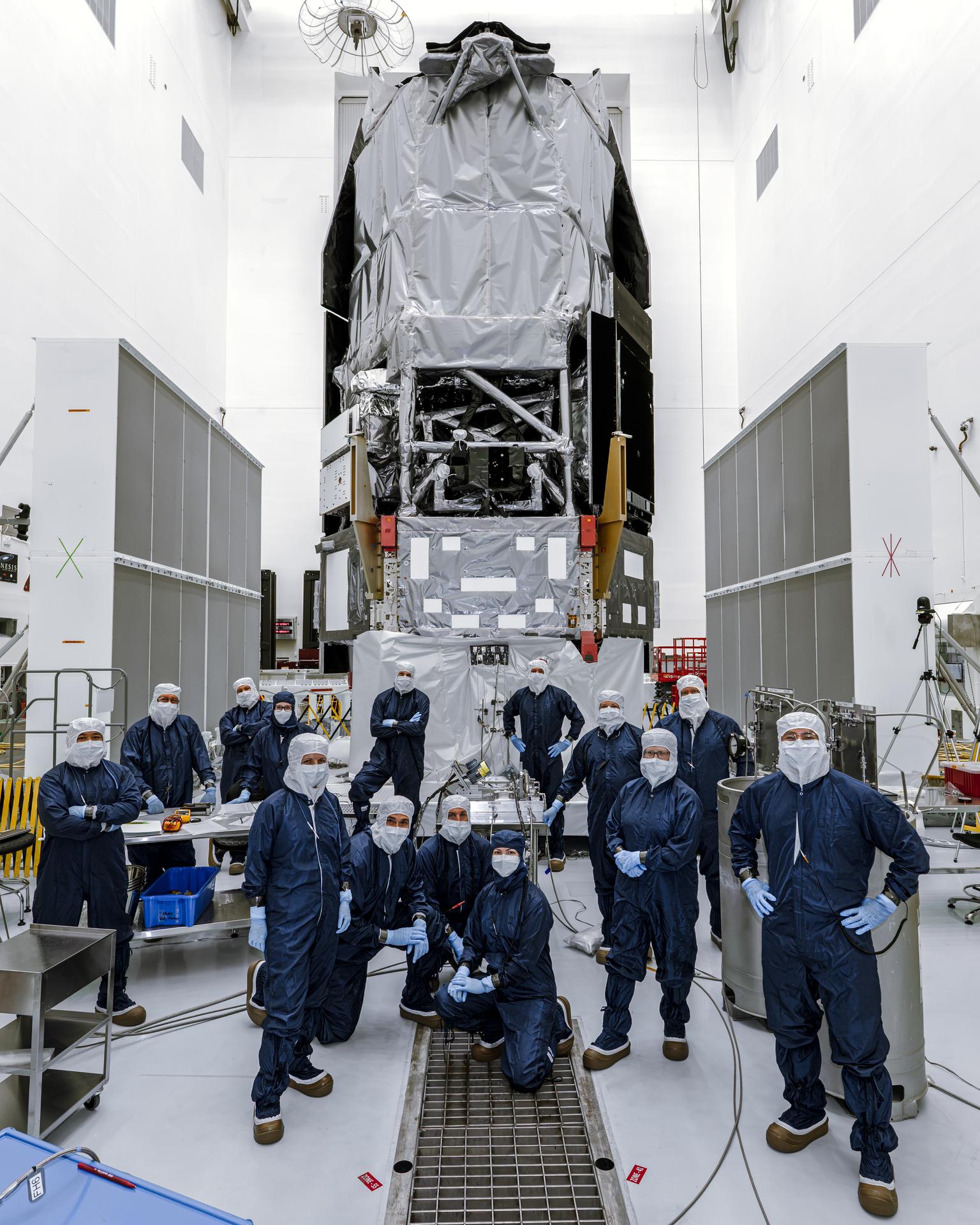
Members of NASA's Nancy Grace Roman Space Telescope propellant, safety, and quality assurance team pose for a photo on Monday July 20, 2026, inside the Payload Hazardous Servicing Facility at NASA’s Kennedy Space Center in Florida, prior to technicians loading propellant into the observatory. With fuel tanks capable of carrying about 290 gallons (roughly 1,100 liters) of hydrazine – a monopropellant not requiring a second chemical to combust – Roman’s primary mission is to settle essential questions about dark energy, exoplanets, and infrared astrophysics by conducting wide-field surveys that explore the universe’s structure, evolution, and composition. Liftoff atop a SpaceX Falcon Heavy rocket from NASA Kennedy’s Launch Complex 39A is targeted no earlier than Sunday, Aug. 30, 2026.
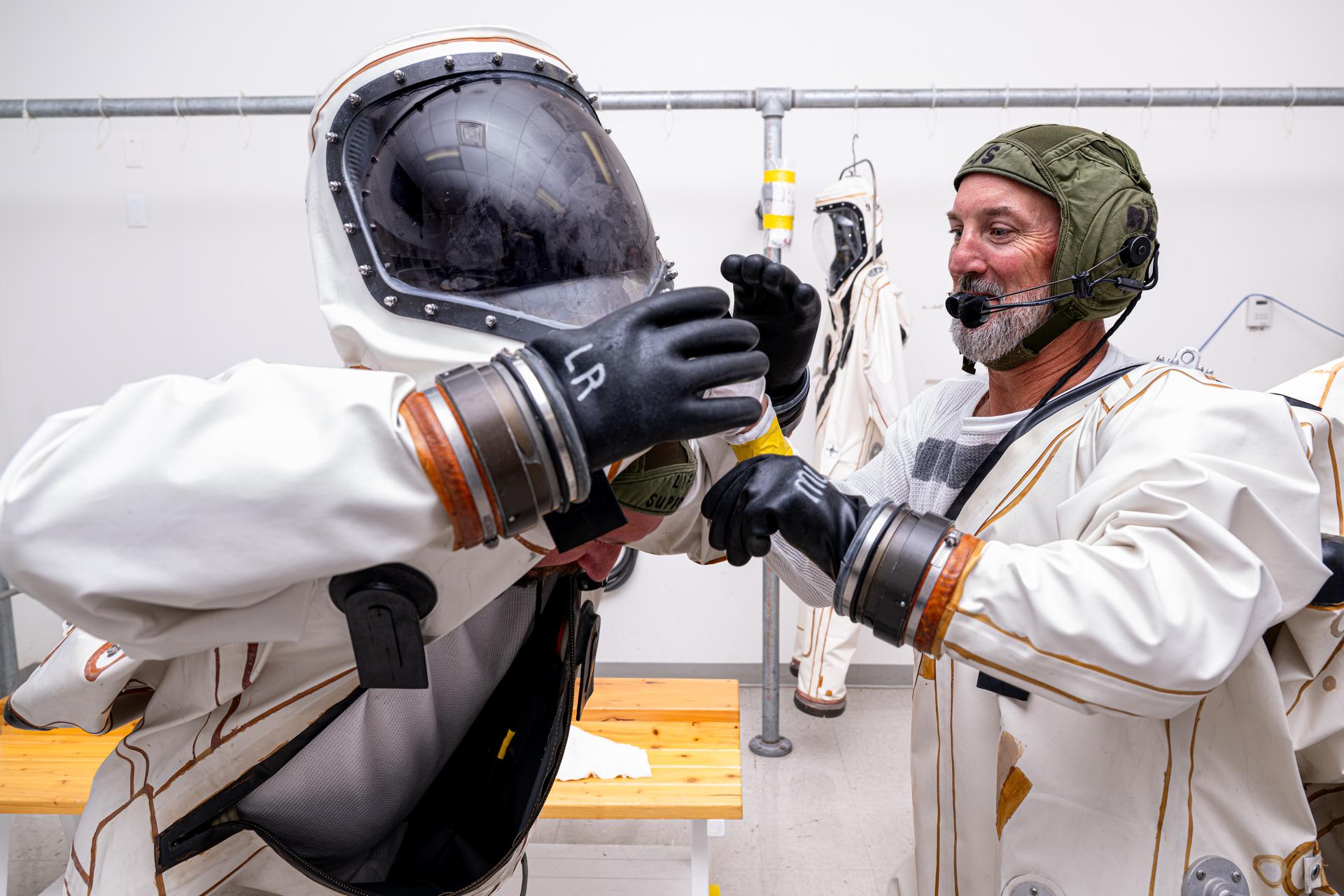
From left, technicians Jacob Stahl and Ryan Renehan don Self-Contained Atmospheric Protective Ensemble (SCAPE) suits as they prepare to perform propellant loading operations inside the Payload Hazardous Servicing Facility at NASA’s Kennedy Space Center in Florida for the agency’s Nancy Grace Roman Space Telescope on Thursday, July 23, 2026. With fuel tanks capable of carrying about 290 gallons (roughly 1,100 liters) of hydrazine – Roman’s primary mission is to settle essential questions about dark energy, exoplanets, and infrared astrophysics by conducting wide-field surveys that explore the universe’s structure, evolution, and composition. Liftoff atop a SpaceX Falcon Heavy rocket from NASA Kennedy’s Launch Complex 39A is targeted no earlier than Sunday, Aug. 30, 2026.

Ryan Renehan, technician, wears a Self-Contained Atmospheric Protective Ensemble (SCAPE) suit as he prepares to perform propellant loading operations inside the Payload Hazardous Servicing Facility at NASA’s Kennedy Space Center in Florida Thursday, July 23, 2026. With fuel tanks capable of carrying about 290 gallons (roughly 1,100 liters) of hydrazine – a monopropellant not requiring a second chemical to combust – Roman’s primary mission is to settle essential questions about dark energy, exoplanets, and infrared astrophysics by conducting wide-field surveys that explore the universe’s structure, evolution, and composition. Liftoff atop a SpaceX Falcon Heavy rocket from NASA Kennedy’s Launch Complex 39A is targeted no earlier than Sunday, Aug. 30, 2026.
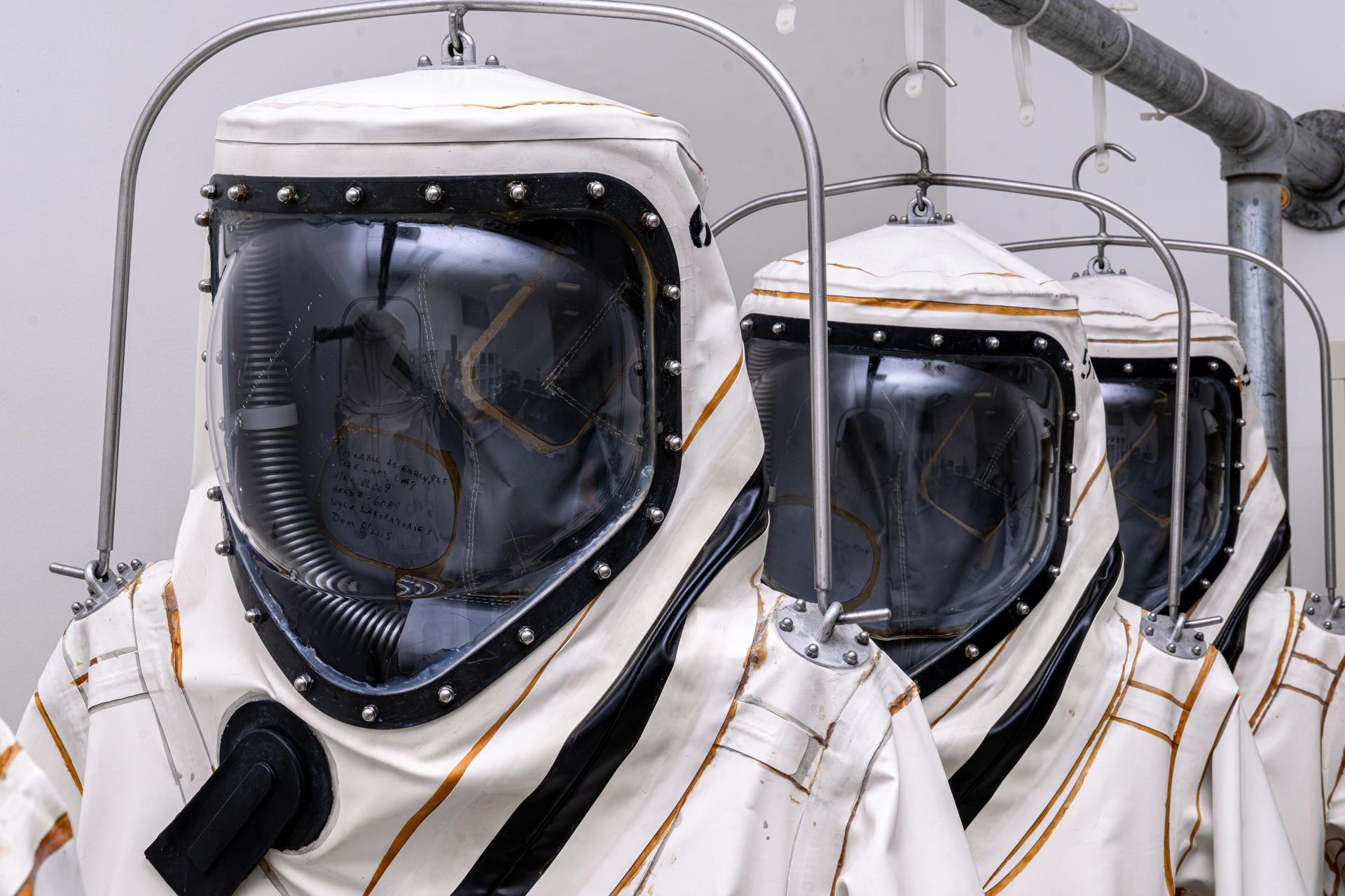
Self-Contained Atmospheric Protective Ensemble (SCAPE) suits hang on a rack the Multi Operations Support Building on Thursday, July 23, 2026, before technicians began operations to load propellant into NASA's Nancy Grace Roman Space Telescope. Once suited up technicians fueled Roman inside the Payload Hazardous Servicing Facility at NASA’s Kennedy Space Center in Florida with about 290 gallons (roughly 1,100 liters) of hydrazine. Roman’s primary mission is to settle essential questions about dark energy, exoplanets, and infrared astrophysics by conducting wide-field surveys that explore the universe’s structure, evolution, and composition. Liftoff atop a SpaceX Falcon Heavy rocket from NASA Kennedy’s Launch Complex 39A is targeted no earlier than Sunday, Aug. 30, 2026.
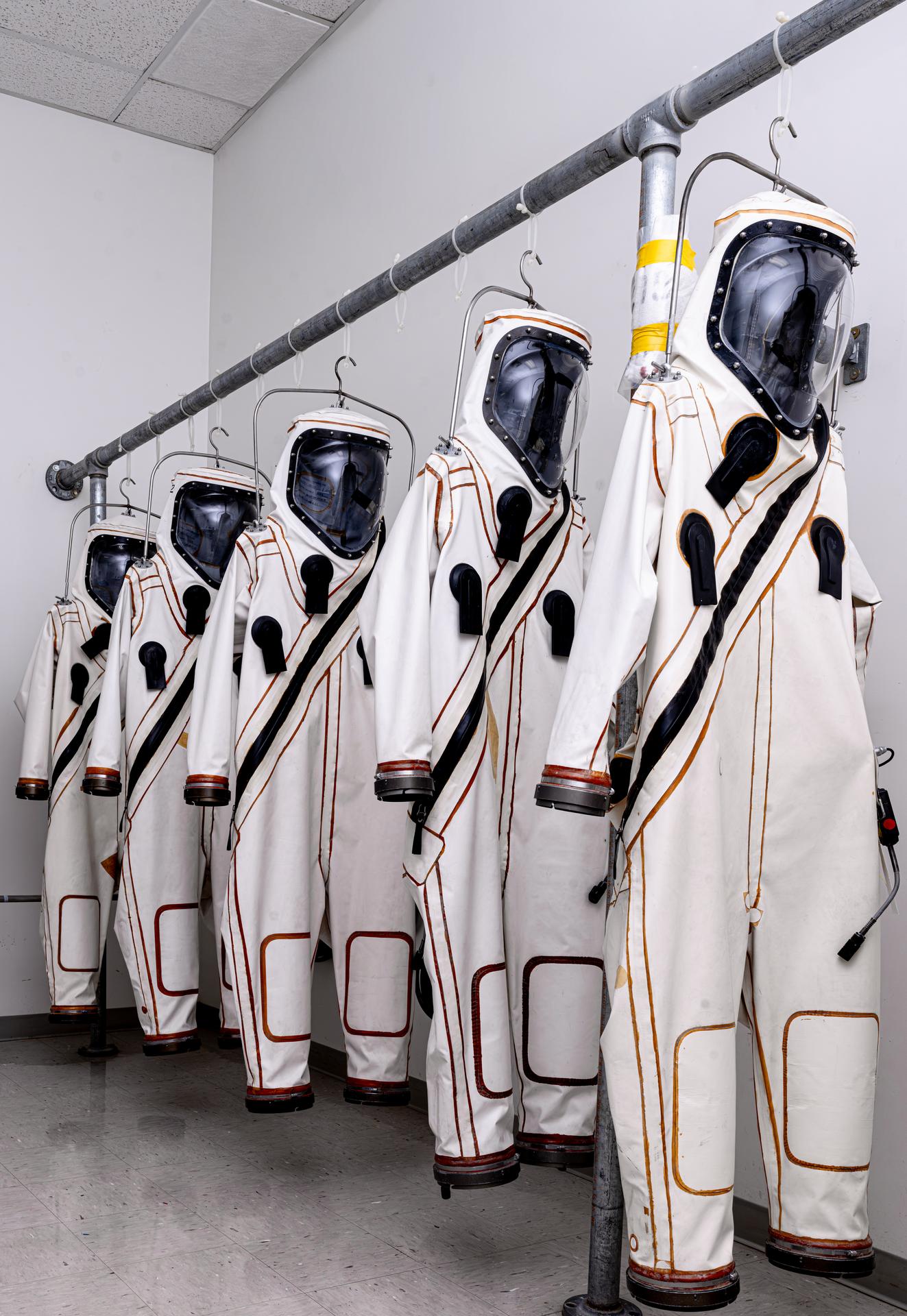
Self-Contained Atmospheric Protective Ensemble (SCAPE) suits hang on a rack the Multi Operations Support Building on Thursday, July 23, 2026, before technicians began operations to load propellant into NASA's Nancy Grace Roman Space Telescope. Once suited up technicians fueled Roman inside the Payload Hazardous Servicing Facility at NASA’s Kennedy Space Center in Florida with about 290 gallons (roughly 1,100 liters) of hydrazine. Roman’s primary mission is to settle essential questions about dark energy, exoplanets, and infrared astrophysics by conducting wide-field surveys that explore the universe’s structure, evolution, and composition. Liftoff atop a SpaceX Falcon Heavy rocket from NASA Kennedy’s Launch Complex 39A is targeted no earlier than Sunday, Aug. 30, 2026.
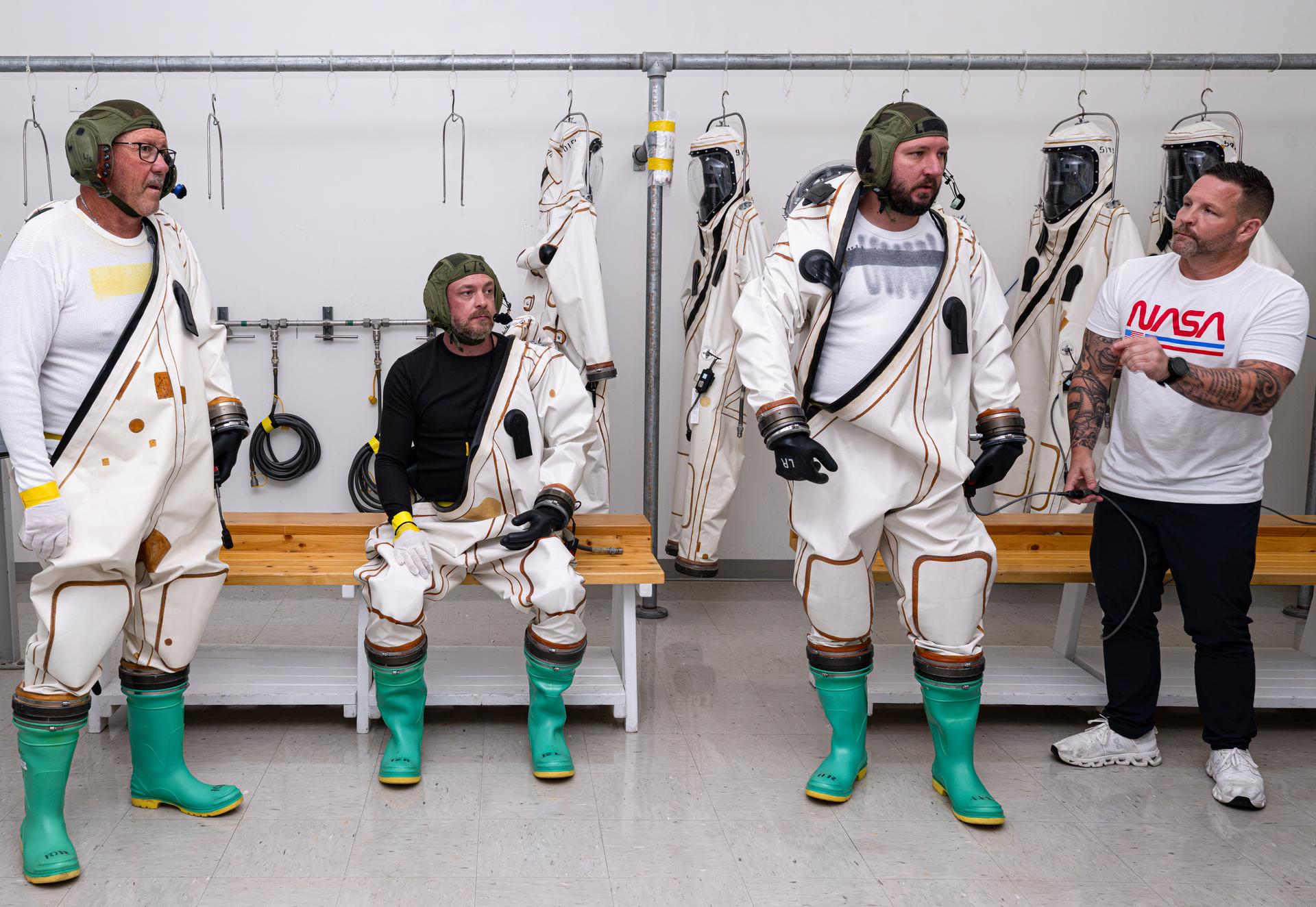
Technicians don Self-Contained Atmospheric Protective Ensemble (SCAPE) suits as they prepare to perform propellant loading operations inside the Payload Hazardous Servicing Facility at NASA’s Kennedy Space Center in Florida for the agency’s Nancy Grace Roman Space Telescope on Thursday, July 23, 2026. With fuel tanks capable of carrying about 290 gallons (roughly 1,100 liters) of hydrazine, Roman’s primary mission is to settle essential questions about dark energy, exoplanets, and infrared astrophysics by conducting wide-field surveys that explore the universe’s structure, evolution, and composition. Liftoff atop a SpaceX Falcon Heavy rocket from NASA Kennedy’s Launch Complex 39A is targeted no earlier than Sunday, Aug. 30, 2026.

Technicians wear Self-Contained Atmospheric Protective Ensemble (SCAPE) suits as they prepare to perform propellant loading operations inside the Payload Hazardous Servicing Facility at NASA’s Kennedy Space Center in Florida Friday, July 24, 2026. With fuel tanks capable of carrying about 290 gallons (roughly 1,100 liters) of hydrazine – a monopropellant not requiring a second chemical to combust – Roman’s primary mission is to settle essential questions about dark energy, exoplanets, and infrared astrophysics by conducting wide-field surveys that explore the universe’s structure, evolution, and composition. Liftoff atop a SpaceX Falcon Heavy rocket from NASA Kennedy’s Launch Complex 39A is targeted no earlier than Sunday, Aug. 30, 2026.
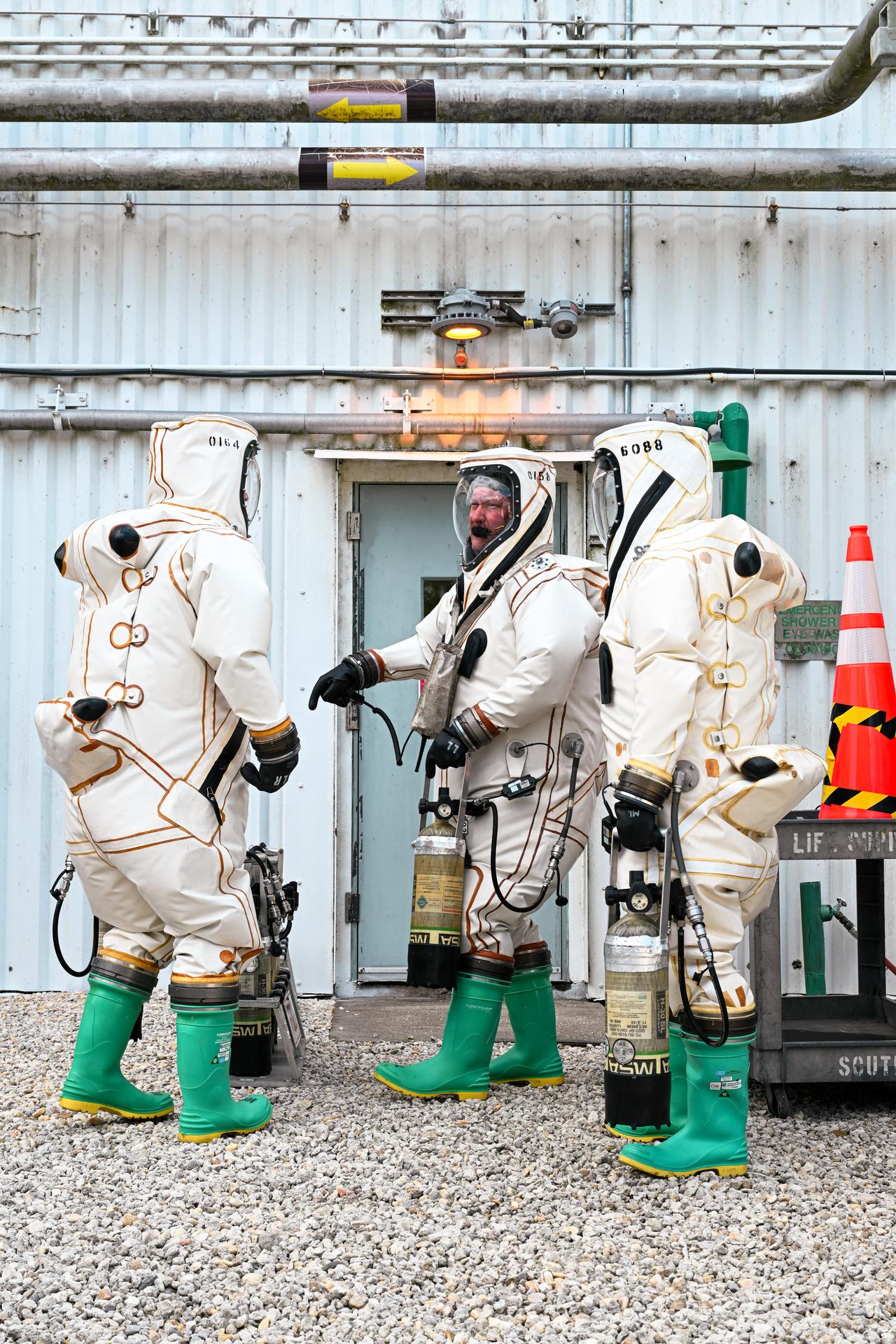
Technicians wear Self-Contained Atmospheric Protective Ensemble (SCAPE) suits as they prepare to perform propellant loading operations inside the Payload Hazardous Servicing Facility at NASA’s Kennedy Space Center in Florida Friday, July 24, 2026. With fuel tanks capable of carrying about 290 gallons (roughly 1,100 liters) of hydrazine – a monopropellant not requiring a second chemical to combust – Roman’s primary mission is to settle essential questions about dark energy, exoplanets, and infrared astrophysics by conducting wide-field surveys that explore the universe’s structure, evolution, and composition. Liftoff atop a SpaceX Falcon Heavy rocket from NASA Kennedy’s Launch Complex 39A is targeted no earlier than Sunday, Aug. 30, 2026.
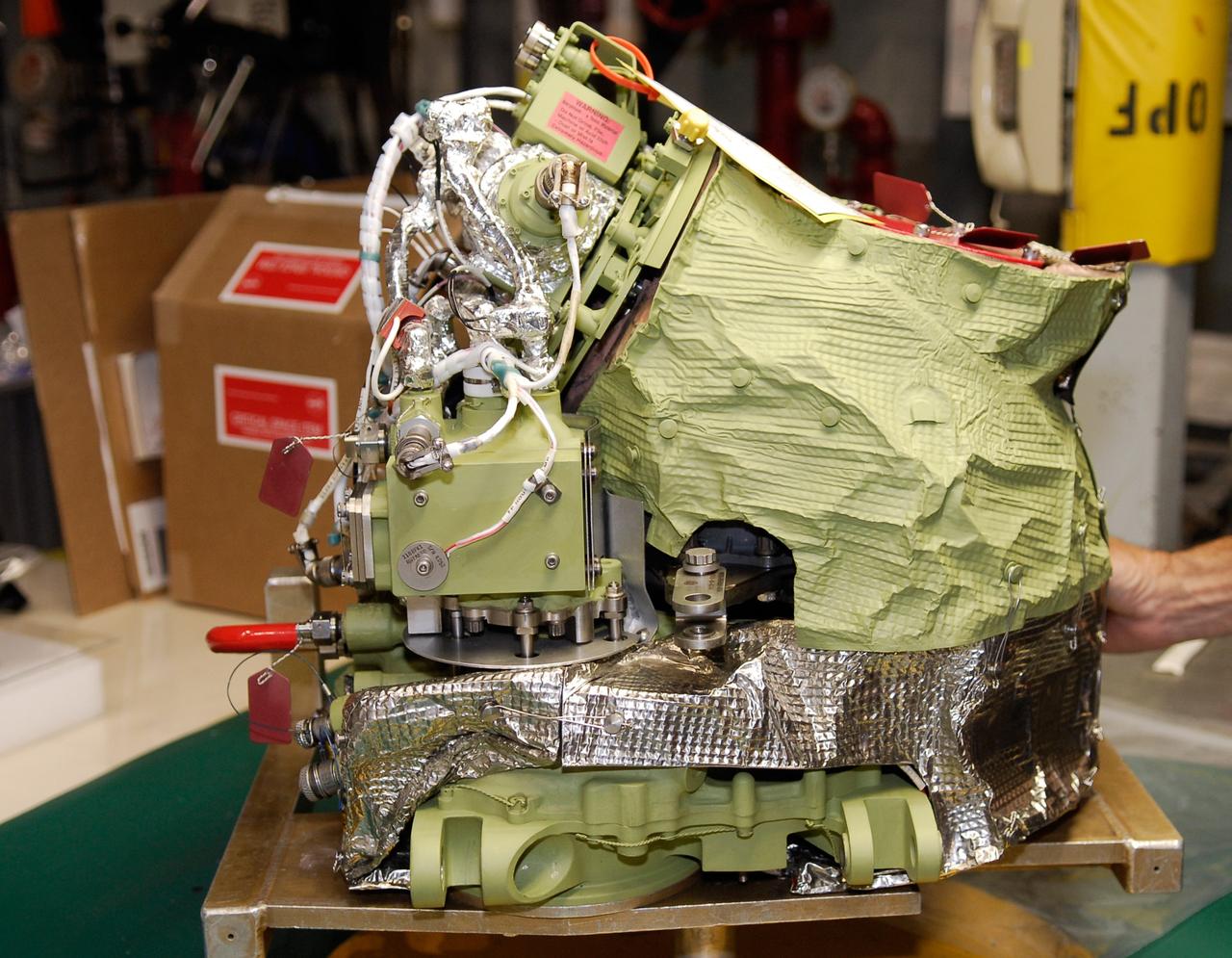
CAPE CANAVERAL, Fla. – Auxiliary power unit 3, or APU3, is ready for installation in space shuttle Endeavour for the STS-126 mission. The auxiliary power unit is a hydrazine-fueled, turbine-driven power unit that generates mechanical shaft power to drive a hydraulic pump that produces pressure for the orbiter's hydraulic system. There are three separate APUs, three hydraulic pumps and three hydraulic systems, located in the aft fuselage of the orbiter. When the three auxiliary power units are started five minutes before lift-off, the hydraulic systems are used to position the three main engines for activation, control various propellant valves on the engines and position orbiter aerosurfaces. The auxiliary power units are not operated after the first orbital maneuvering system thrusting period because hydraulic power is no longer required. One power unit is operated briefly one day before deorbit to support checkout of the orbiter flight control system. One auxiliary power unit is restarted before the deorbit thrusting period. The two remaining units are started after the deorbit thrusting maneuver and operate continuously through entry, landing and landing rollout. On STS-126, Endeavour will deliver a multi-purpose logistics module to the International Space Station. Launch is targeted for Nov. 10. Photo credit: NASA/Kim Shiflett
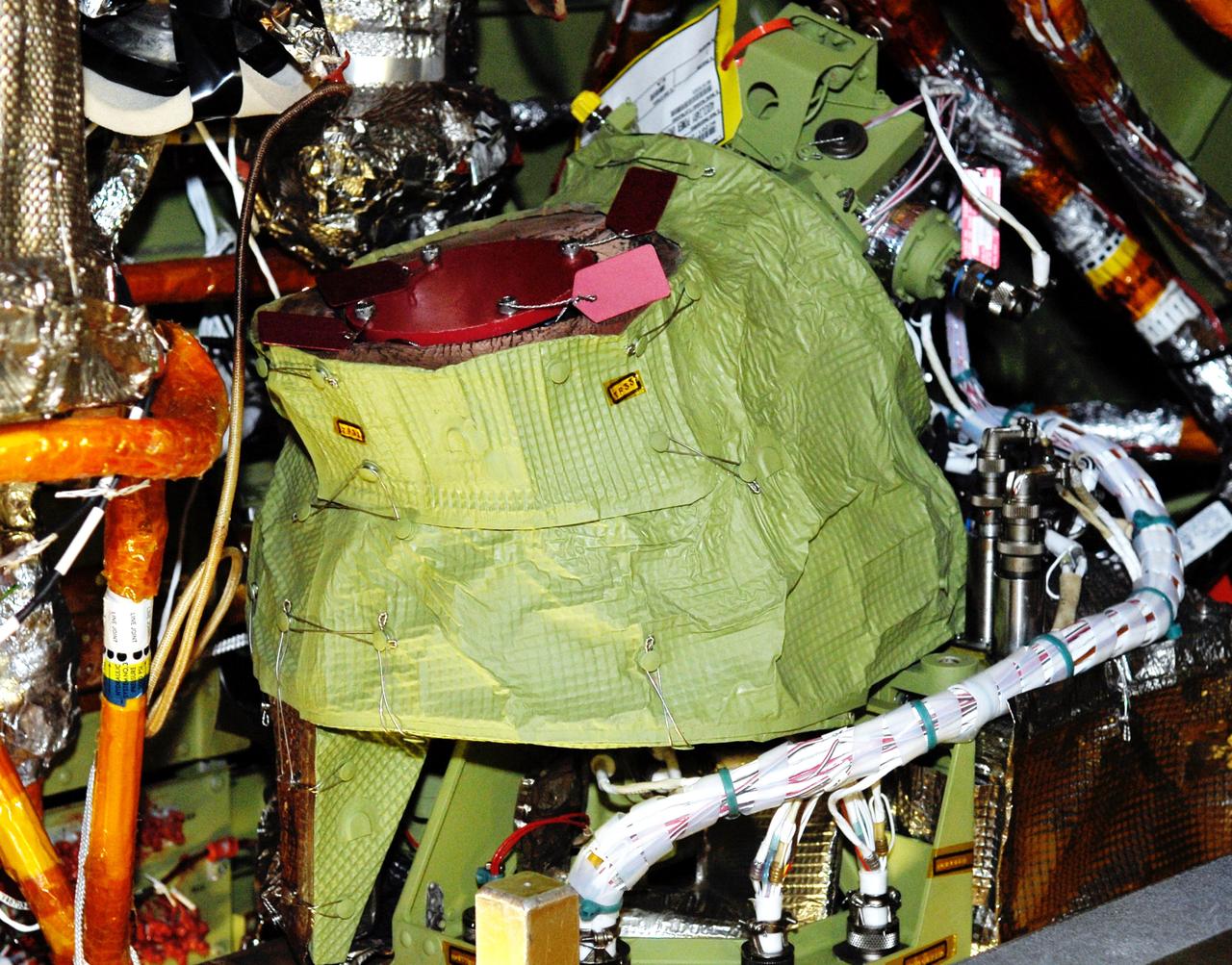
CAPE CANAVERAL, Fla. – In Orbiter Processing Facility bay No. 2, auxiliary power unit 3, or APU3, is in place on space shuttle Endeavour for the STS-126 mission. The auxiliary power unit is a hydrazine-fueled, turbine-driven power unit that generates mechanical shaft power to drive a hydraulic pump that produces pressure for the orbiter's hydraulic system. There are three separate APUs, three hydraulic pumps and three hydraulic systems, located in the aft fuselage of the orbiter. When the three auxiliary power units are started five minutes before lift-off, the hydraulic systems are used to position the three main engines for activation, control various propellant valves on the engines and position orbiter aerosurfaces. The auxiliary power units are not operated after the first orbital maneuvering system thrusting period because hydraulic power is no longer required. One power unit is operated briefly one day before deorbit to support checkout of the orbiter flight control system. One auxiliary power unit is restarted before the deorbit thrusting period. The two remaining units are started after the deorbit thrusting maneuver and operate continuously through entry, landing and landing rollout. On STS-126, Endeavour will deliver a multi-purpose logistics module to the International Space Station. Launch is targeted for Nov. 10. Photo credit: NASA/Kim Shiflett
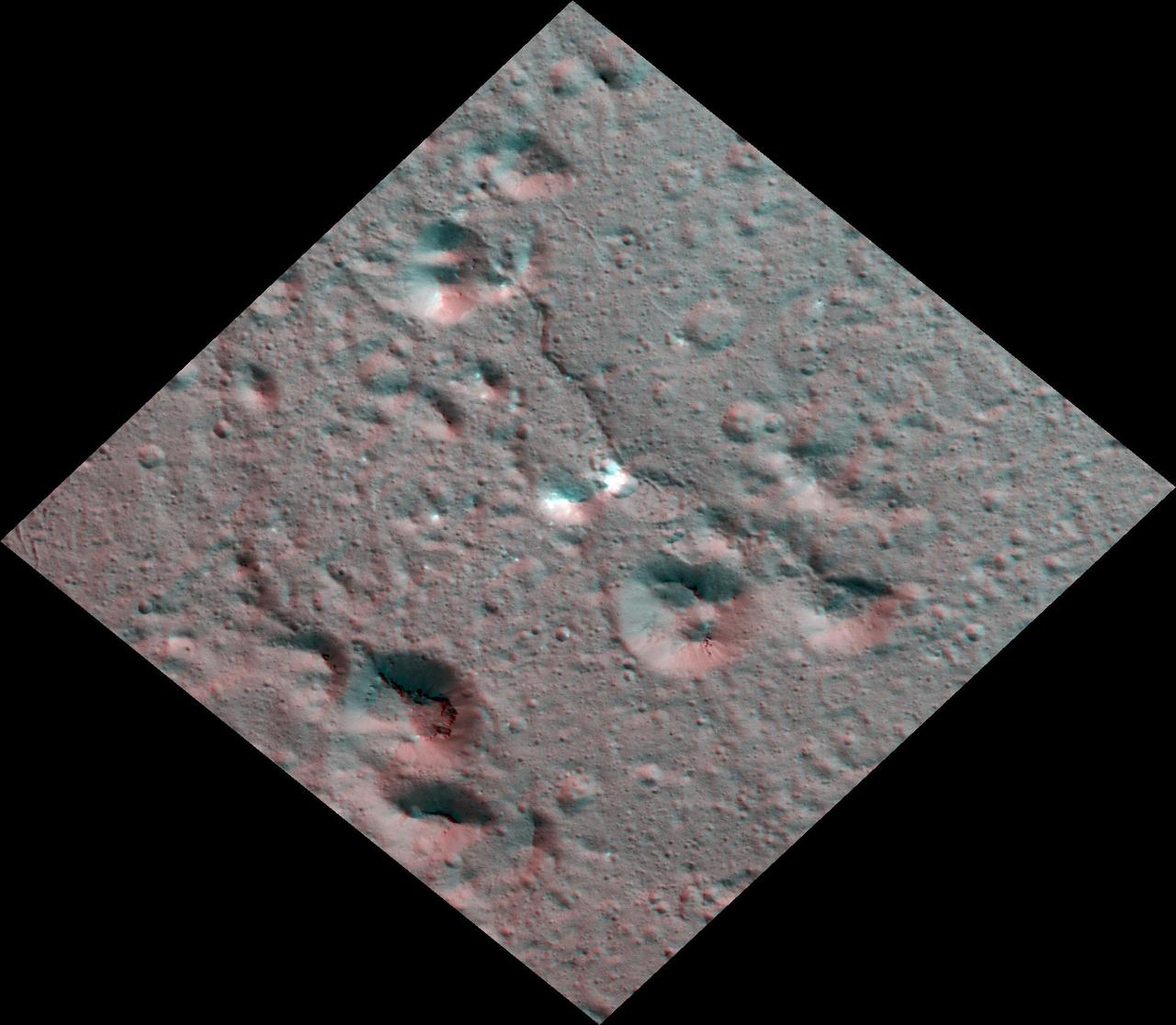
The Dawn spacecraft captured these stereo images of Occator Crater on the dwarf planet Ceres in 2018. This view is part of a mosaic of about 50 framing camera images used to construct this anaglyph view (which requires red-blue stereo glasses for viewing) of part of the eastern floor of the crater. This area is approximately 5 miles (8.5 kilometers) wide and features bright carbonate deposits of the Vinalia Faculae formation on top of the ropey textured lobate floor impact melt deposit. Stereo views of Vinalia Faculae illustrate the complex relationship between the thin carbonates and the underlying impact deposits. The spatial resolution of the stereo images is about 11 feet (3.5 meters) per pixel. Occator crater, named after the Roman god of the agricultural practice of harrowing, is about 57 miles (92 kilometers) in diameter. The conclusion of Dawn's mission operations was Oct. 31, 2018, when the spacecraft depleted its hydrazine used for attitude control. This image was produced by Dr. Paul Schenk at the Lunar and Planetary Institute in Houston. https://photojournal.jpl.nasa.gov/catalog/PIA24063
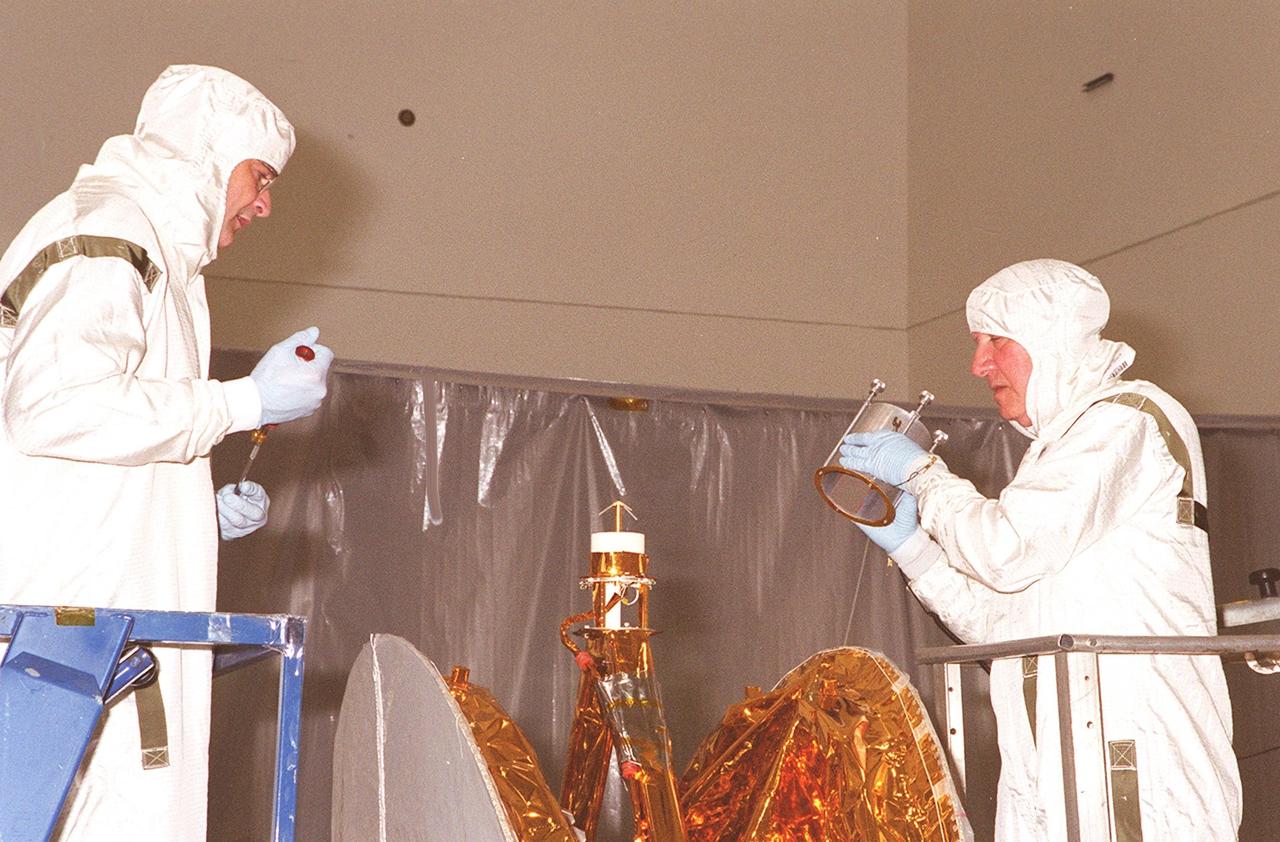
KENNEDY SPACE CENTER, FLA. -- Workers in the Spacecraft Assembly and Encapsulation Facility 2 place an antenna on the Microwave Anisotropy Probe (MAP). Several other milestones must be completed while MAP is at SAEF-2, including solar array installation, solar array deployment and illumination testing, a spacecraft comprehensive performance test, fueling with hydrazine propellant and a spin balance test. MAP will then be ready for integration with the solid propellant Payload Assist Module upper stage booster. MAP is scheduled for launch June 30 from Cape Canaveral Air Force Station on a Delta II rocket into a lunar-assisted trajectory to the Sun-Earth for a 27-month mission. The MAP instrument consists of a set of passively cooled microwave radiometers with 1.4x 1.6-meter diameter primary reflectors to provide the desired angular resolution. MAP measures small fluctuations in the temperature of the cosmic microwave background radiation to an accuracy of one millionth of a degree These measurements should reveal the size, matter content, age, geometry and fate of the universe. They will also reveal the primordial structure that grew to form galaxies and will test ideas about the origins of these primordial structures. The MAP instrument will be continuously shaded from the Sun, Earth, and Moon by the spacecraft. It is a product of Goddard Space Flight Center in partnership with Princeton University
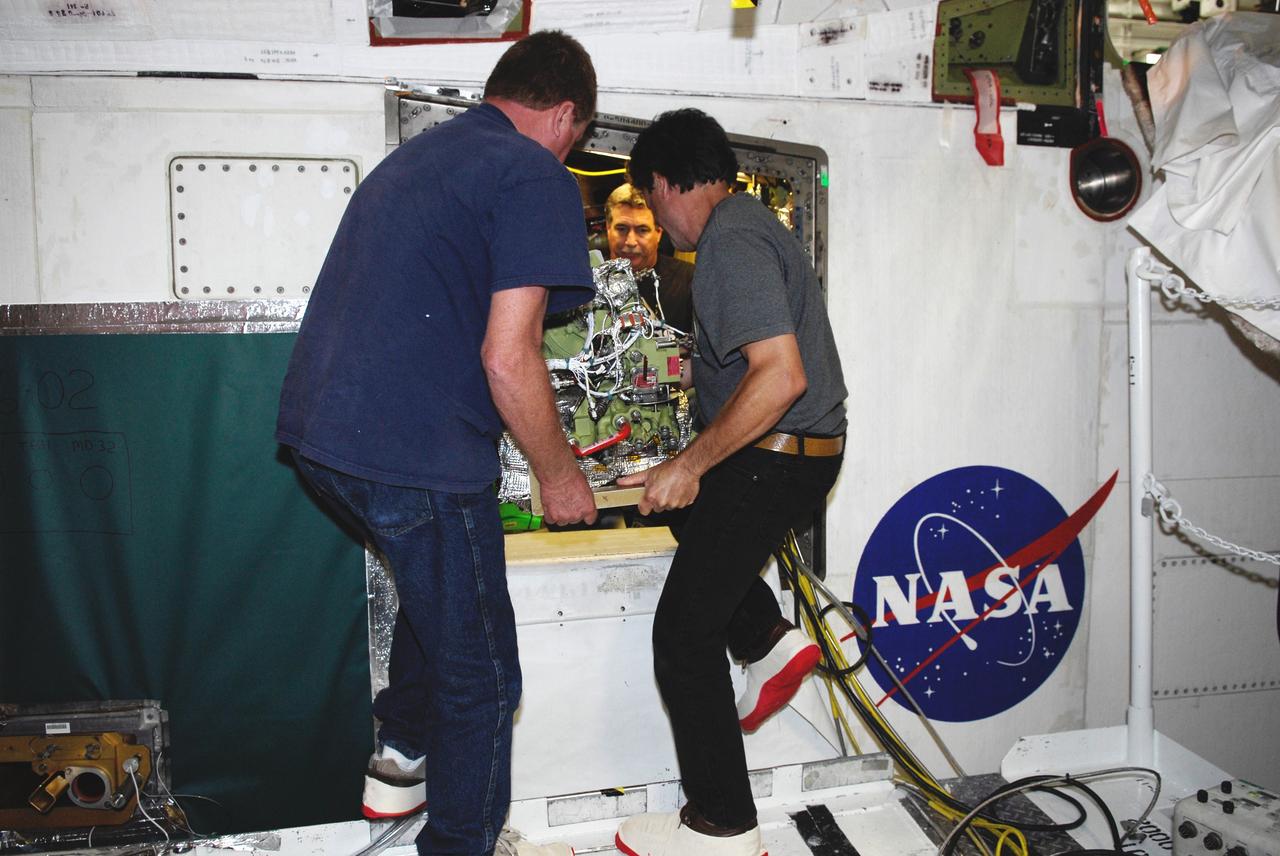
CAPE CANAVERAL, Fla. – In Orbiter Processing Facility bay No. 2, technicians begin installation of an auxiliary power unit 3, or APU3, in space shuttle Endeavour for the STS-126 mission. The auxiliary power unit is a hydrazine-fueled, turbine-driven power unit that generates mechanical shaft power to drive a hydraulic pump that produces pressure for the orbiter's hydraulic system. There are three separate APUs, three hydraulic pumps and three hydraulic systems, located in the aft fuselage of the orbiter. When the three auxiliary power units are started five minutes before lift-off, the hydraulic systems are used to position the three main engines for activation, control various propellant valves on the engines and position orbiter aerosurfaces. The auxiliary power units are not operated after the first orbital maneuvering system thrusting period because hydraulic power is no longer required. One power unit is operated briefly one day before deorbit to support checkout of the orbiter flight control system. One auxiliary power unit is restarted before the deorbit thrusting period. The two remaining units are started after the deorbit thrusting maneuver and operate continuously through entry, landing and landing rollout. On STS-126, Endeavour will deliver a multi-purpose logistics module to the International Space Station. Launch is targeted for Nov. 10. Photo credit: NASA/Kim Shiflett
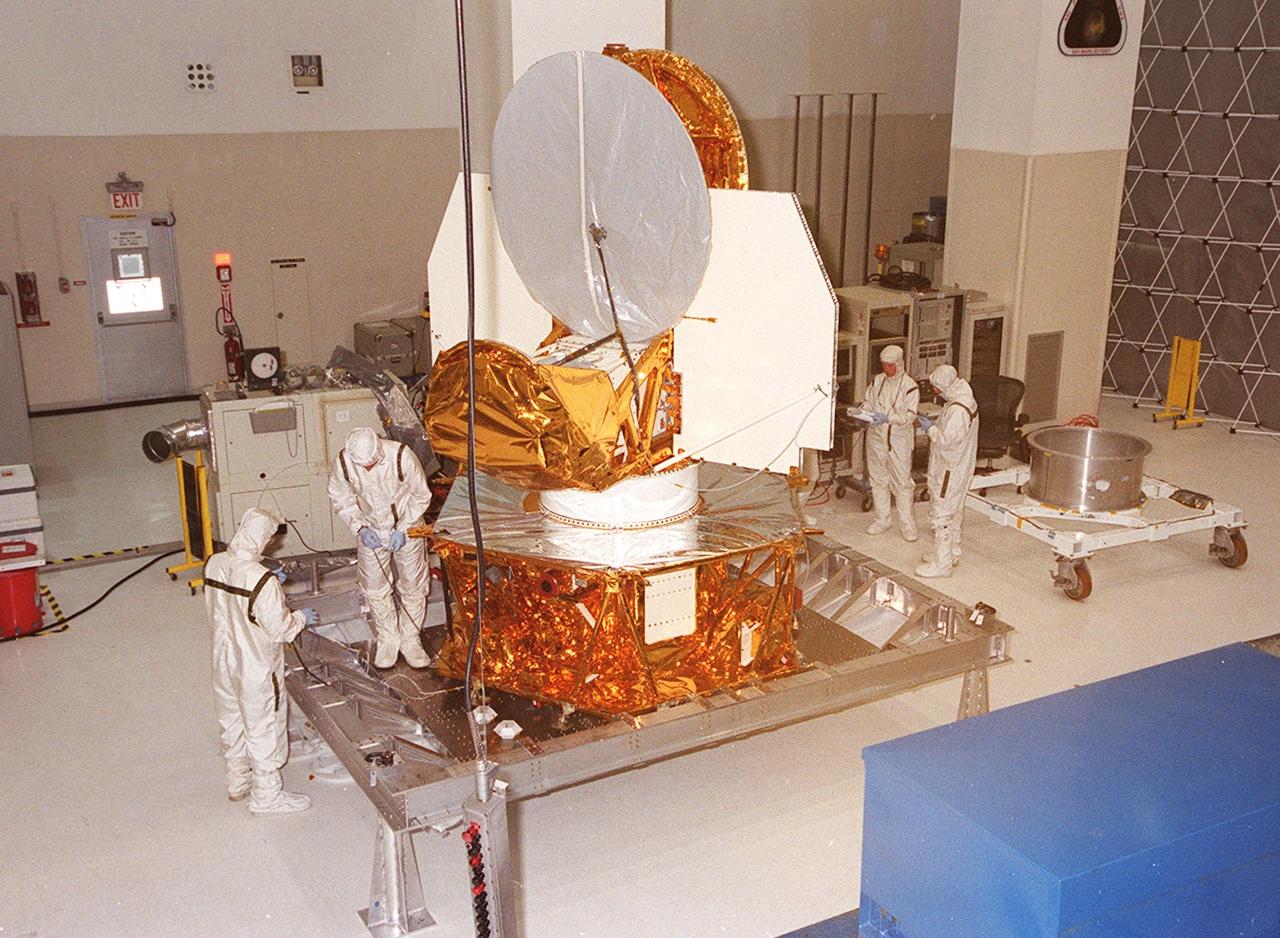
KENNEDY SPACE CENTER, FLA. -- The Microwave Anisotropy Probe (MAP) is worked on in the Spacecraft Assembly and Encapsulation Facility 2. Several milestones must be completed while MAP is at SAEF-2, including antenna installations, solar array installation, solar array deployment and illumination testing, a spacecraft comprehensive performance test, fueling with hydrazine propellant and a spin balance test. MAP will then be ready for integration with the solid propellant Payload Assist Module upper stage booster. MAP is scheduled for launch June 30 from Cape Canaveral Air Force Station on a Delta II rocket into a lunar-assisted trajectory to the Sun-Earth for a 27-month mission. The MAP instrument consists of a set of passively cooled microwave radiometers with 1.4x 1.6-meter diameter primary reflectors to provide the desired angular resolution. MAP measures small fluctuations in the temperature of the cosmic microwave background radiation to an accuracy of one millionth of a degree These measurements should reveal the size, matter content, age, geometry and fate of the universe. They will also reveal the primordial structure that grew to form galaxies and will test ideas about the origins of these primordial structures. The MAP instrument will be continuously shaded from the Sun, Earth, and Moon by the spacecraft. It is a product of Goddard Space Flight Center in partnership with Princeton University
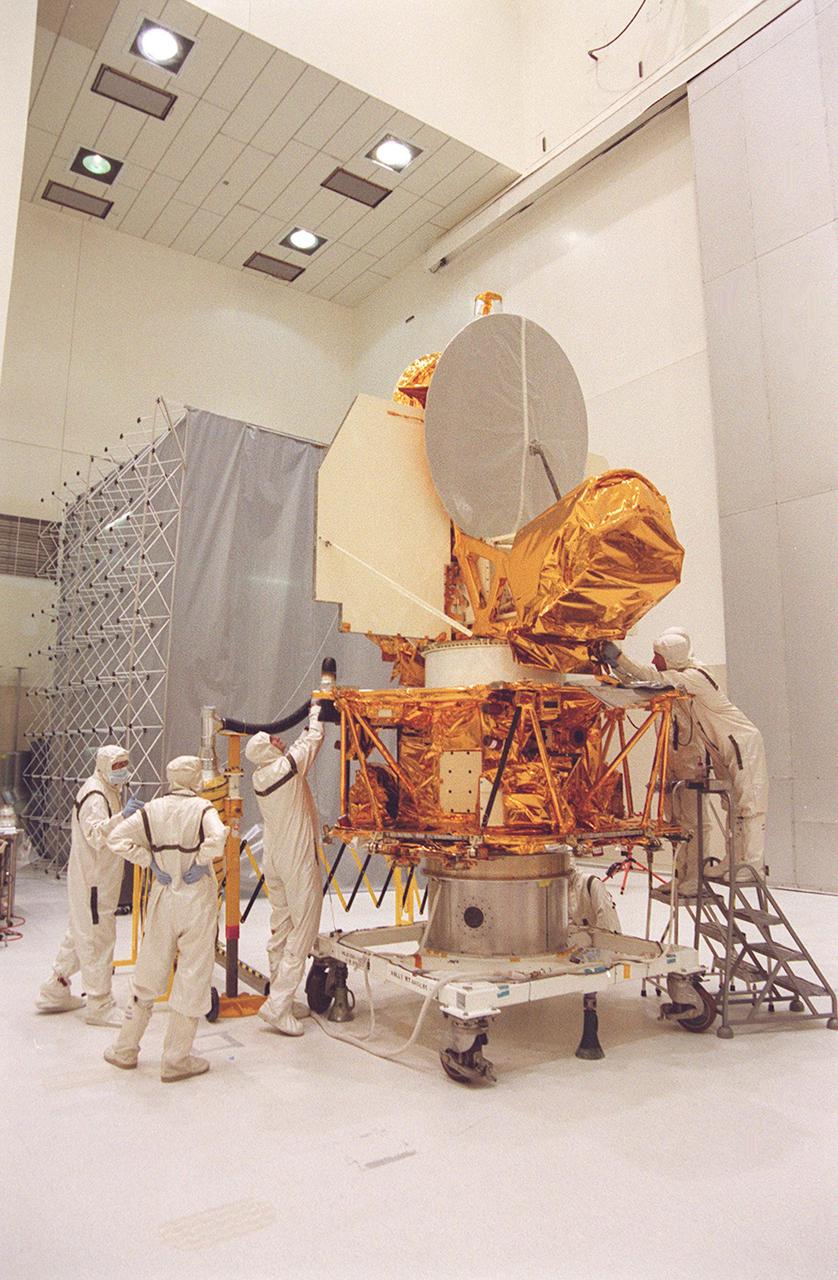
KENNEDY SPACE CENTER, FLA. -- In the Spacecraft Assembly and Encapsulation Facility 2, workers check out parts of the Microwave Anisotropy Probe (MAP. Several milestones must be completed while MAP is at SAEF-2, including antenna and solar array installation, solar array deployment and illumination testing, a spacecraft comprehensive performance test, fueling with hydrazine propellant and a spin balance test. MAP will then be ready for integration with the solid propellant Payload Assist Module upper stage booster. MAP is scheduled for launch June 30 from Cape Canaveral Air Force Station on a Delta II rocket into a lunar-assisted trajectory to the Sun-Earth for a 27-month mission. The MAP instrument consists of a set of passively cooled microwave radiometers with 1.4x 1.6-meter diameter primary reflectors to provide the desired angular resolution. MAP measures small fluctuations in the temperature of the cosmic microwave background radiation to an accuracy of one millionth of a degree These measurements should reveal the size, matter content, age, geometry and fate of the universe. They will also reveal the primordial structure that grew to form galaxies and will test ideas about the origins of these primordial structures. The MAP instrument will be continuously shaded from the Sun, Earth, and Moon by the spacecraft. It is a product of Goddard Space Flight Center in partnership with Princeton University
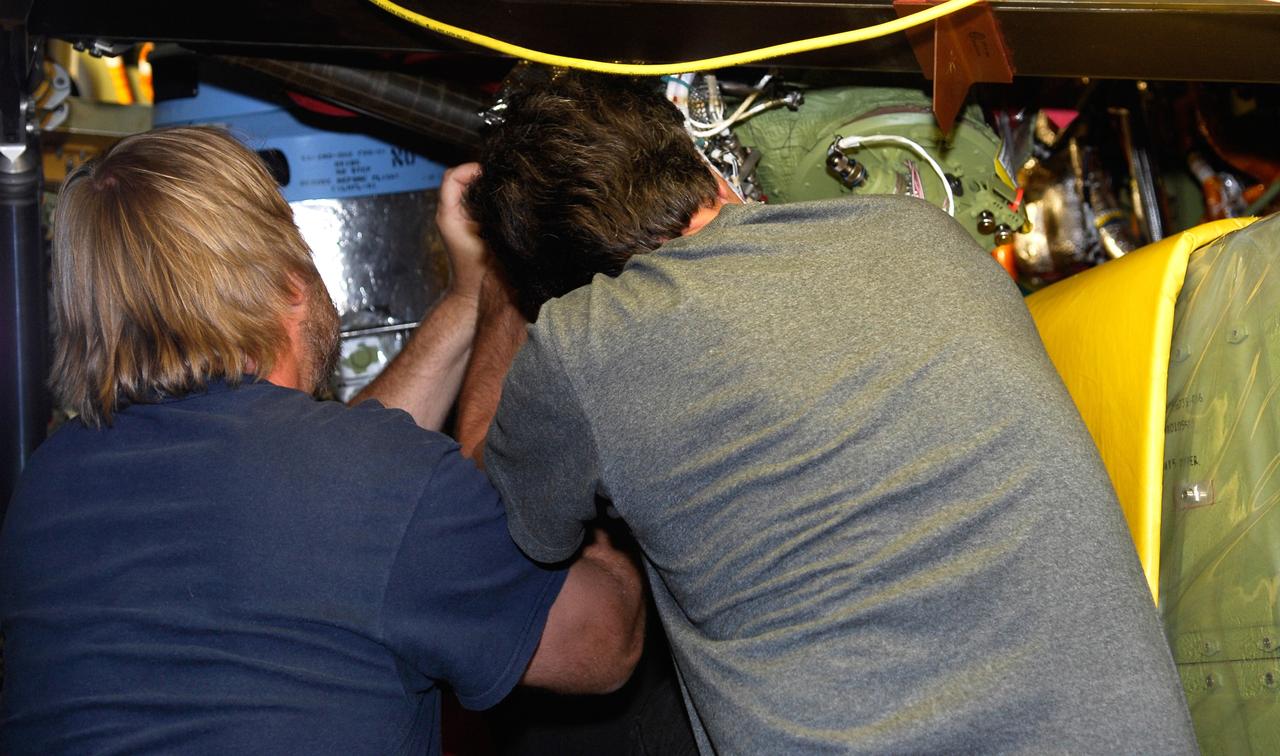
CAPE CANAVERAL, Fla. – In Orbiter Processing Facility bay No. 2, technicians install auxiliary power unit 3, or APU3, in space shuttle Endeavour for the STS-126 mission. The auxiliary power unit is a hydrazine-fueled, turbine-driven power unit that generates mechanical shaft power to drive a hydraulic pump that produces pressure for the orbiter's hydraulic system. There are three separate APUs, three hydraulic pumps and three hydraulic systems, located in the aft fuselage of the orbiter. When the three auxiliary power units are started five minutes before lift-off, the hydraulic systems are used to position the three main engines for activation, control various propellant valves on the engines and position orbiter aerosurfaces. The auxiliary power units are not operated after the first orbital maneuvering system thrusting period because hydraulic power is no longer required. One power unit is operated briefly one day before deorbit to support checkout of the orbiter flight control system. One auxiliary power unit is restarted before the deorbit thrusting period. The two remaining units are started after the deorbit thrusting maneuver and operate continuously through entry, landing and landing rollout. On STS-126, Endeavour will deliver a multi-purpose logistics module to the International Space Station. Launch is targeted for Nov. 10. Photo credit: NASA/Kim Shiflett
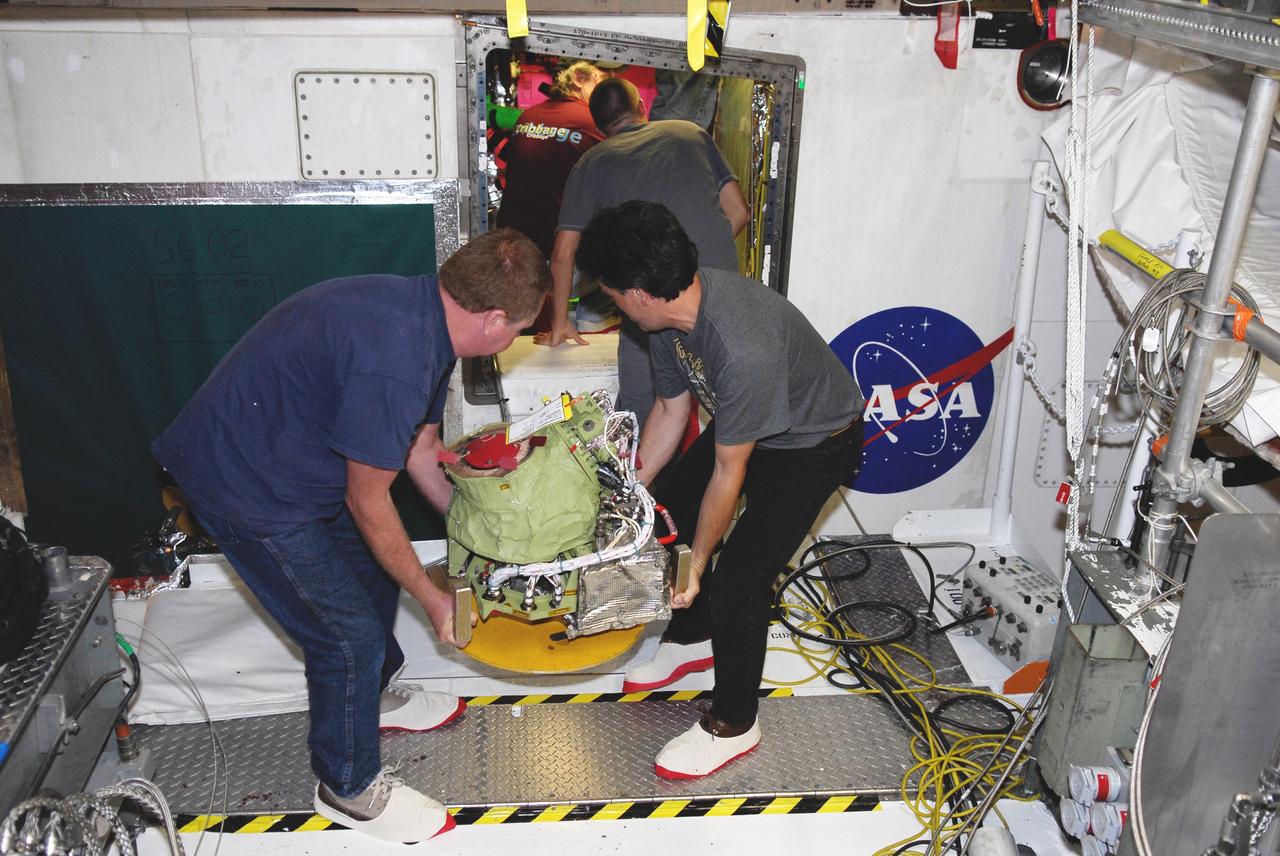
CAPE CANAVERAL, Fla. – In Orbiter Processing Facility bay No. 2, technicians begin installation of an auxiliary power unit 3, or APU3, in space shuttle Endeavour for the STS-126 mission. The auxiliary power unit is a hydrazine-fueled, turbine-driven power unit that generates mechanical shaft power to drive a hydraulic pump that produces pressure for the orbiter's hydraulic system. There are three separate APUs, three hydraulic pumps and three hydraulic systems, located in the aft fuselage of the orbiter. When the three auxiliary power units are started five minutes before lift-off, the hydraulic systems are used to position the three main engines for activation, control various propellant valves on the engines and position orbiter aerosurfaces. The auxiliary power units are not operated after the first orbital maneuvering system thrusting period because hydraulic power is no longer required. One power unit is operated briefly one day before deorbit to support checkout of the orbiter flight control system. One auxiliary power unit is restarted before the deorbit thrusting period. The two remaining units are started after the deorbit thrusting maneuver and operate continuously through entry, landing and landing rollout. On STS-126, Endeavour will deliver a multi-purpose logistics module to the International Space Station. Launch is targeted for Nov. 10. Photo credit: NASA/Kim Shiflett
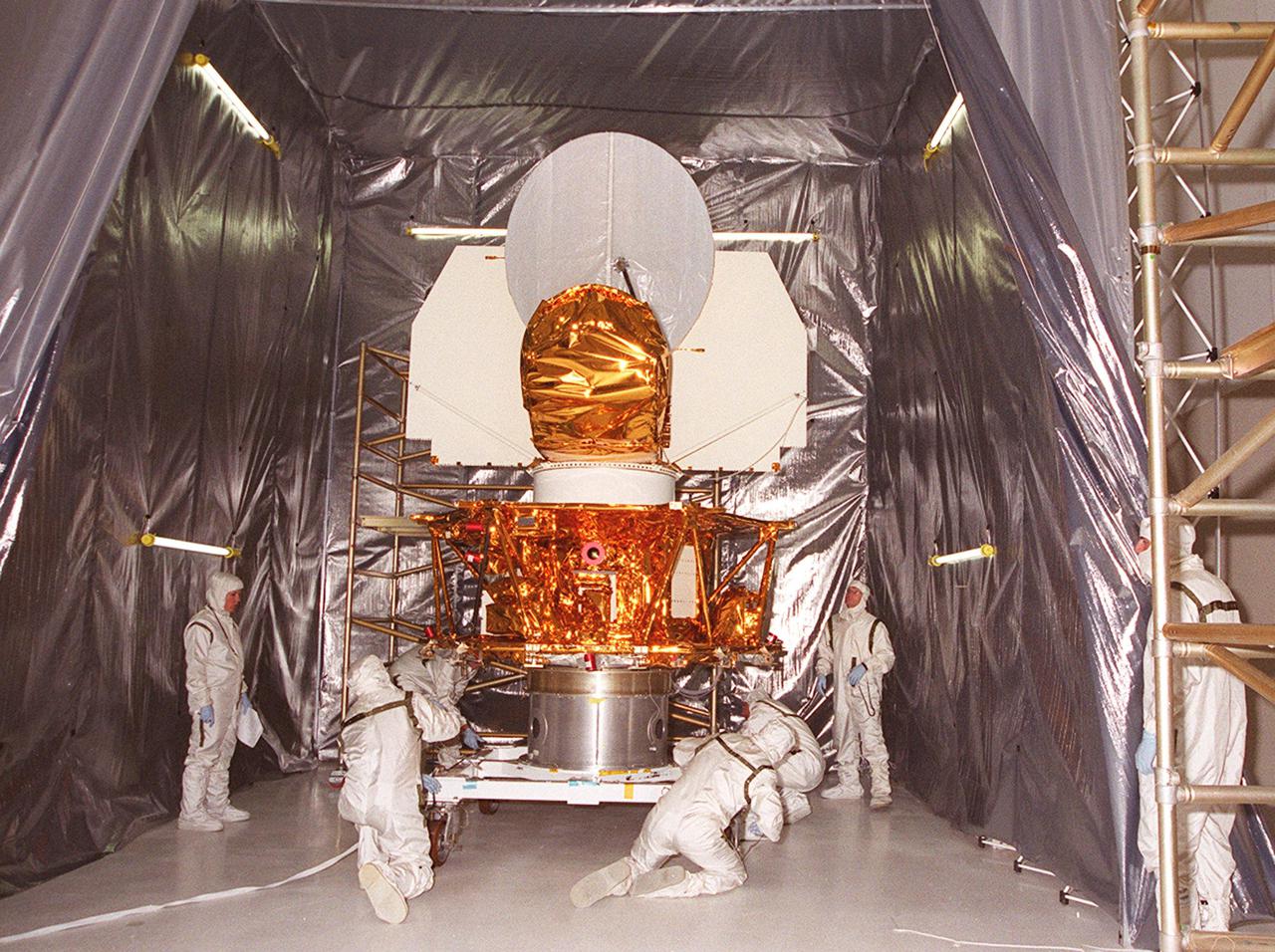
KENNEDY SPACE CENTER, FLA. -- Workers in the Spacecraft Assembly and Encapsulation Facility 2 secure the Microwave Anisotropy Probe (MAP) on a workstand inside a tent. Several milestones must be completed while MAP is at SAEF-2, including antenna installations, solar array installation, solar array deployment and illumination testing, a spacecraft comprehensive performance test, fueling with hydrazine propellant and a spin balance test. MAP will then be ready for integration with the solid propellant Payload Assist Module upper stage booster. MAP is scheduled for launch June 30 from Cape Canaveral Air Force Station on a Delta II rocket into a lunar-assisted trajectory to the Sun-Earth for a 27-month mission. The MAP instrument consists of a set of passively cooled microwave radiometers with 1.4x 1.6-meter diameter primary reflectors to provide the desired angular resolution. MAP measures small fluctuations in the temperature of the cosmic microwave background radiation to an accuracy of one millionth of a degree These measurements should reveal the size, matter content, age, geometry and fate of the universe. They will also reveal the primordial structure that grew to form galaxies and will test ideas about the origins of these primordial structures. The MAP instrument will be continuously shaded from the Sun, Earth, and Moon by the spacecraft. It is a product of Goddard Space Flight Center in partnership with Princeton University
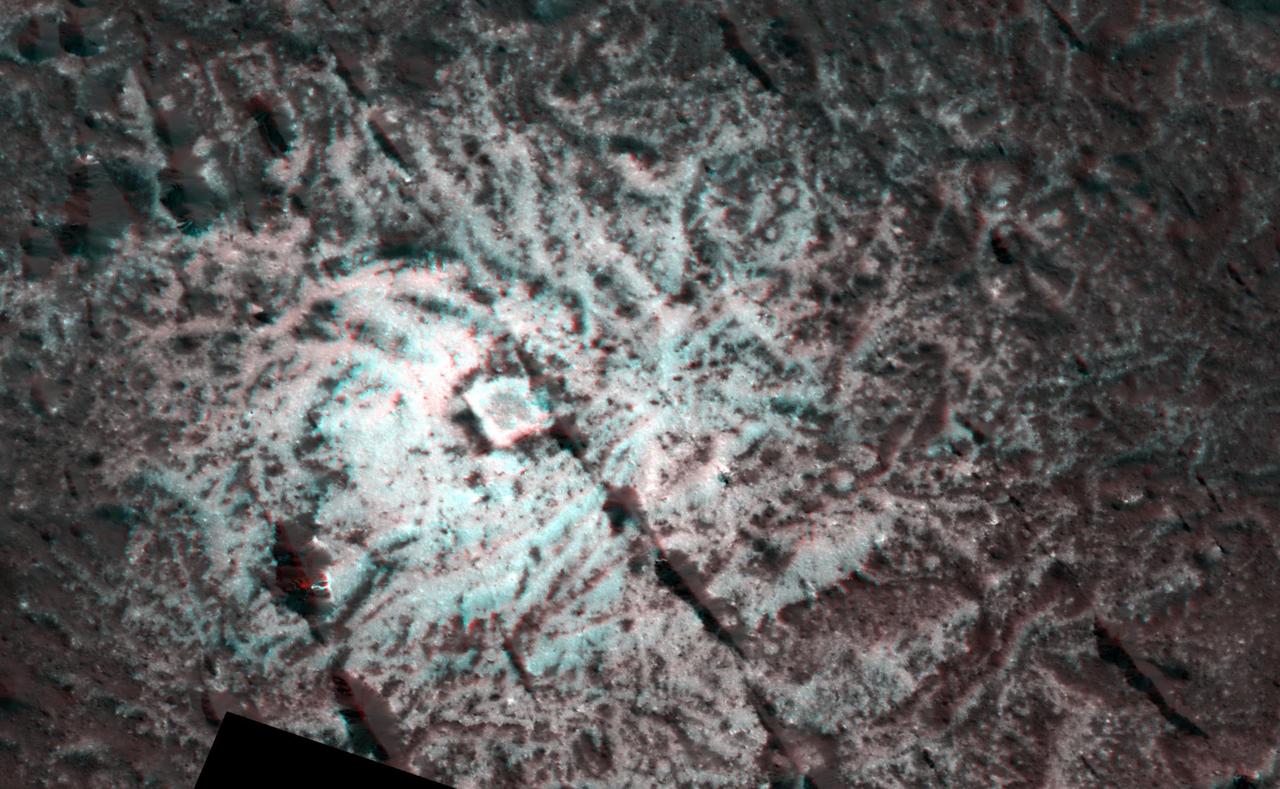
The Dawn spacecraft captured these stereo images of Occator Crater on the dwarf planet Ceres in 2018. Framing camera images were used to construct this anaglyph view (which requires red-blue stereo glasses for viewing) of part of the southeastern floor of the crater. This area is approximately 3 miles (5 kilometers) wide and is entirely within the large impact melt deposit formed there during the impact process. The low bright mounds and pits were probably formed by brine that moved to the surface to form surface vents and surface domes during freezing. The spatial resolution of the stereo images is about 11 feet (3.5 meters) per pixel. Occator crater, named after the Roman god of the agricultural practice of harrowing, is about 57 miles (92 kilometers) in diameter. The conclusion of Dawn's mission operations was Oct. 31, 2018, when the spacecraft depleted its hydrazine used for attitude control. This image was produced by Dr. Paul Schenk at the Lunar and Planetary Institute in Houston. https://photojournal.jpl.nasa.gov/catalog/PIA24062

KENNEDY SPACE CENTER, FLA. -- In the Spacecraft Assembly and Encapsulation Facility 2, the Microwave Anisotropy Probe (MAP) undergoes testing and checkout. Several milestones must be completed while MAP is at SAEF-2, including antenna and solar array installation, solar array deployment and illumination testing, a spacecraft comprehensive performance test, fueling with hydrazine propellant and a spin balance test. MAP will then be ready for integration with the solid propellant Payload Assist Module upper stage booster. MAP is scheduled for launch June 30 from Cape Canaveral Air Force Station on a Delta II rocket into a lunar-assisted trajectory to the Sun-Earth for a 27-month mission. The MAP instrument consists of a set of passively cooled microwave radiometers with 1.4x 1.6-meter diameter primary reflectors to provide the desired angular resolution. MAP measures small fluctuations in the temperature of the cosmic microwave background radiation to an accuracy of one millionth of a degree These measurements should reveal the size, matter content, age, geometry and fate of the universe. They will also reveal the primordial structure that grew to form galaxies and will test ideas about the origins of these primordial structures. The MAP instrument will be continuously shaded from the Sun, Earth, and Moon by the spacecraft. It is a product of Goddard Space Flight Center in partnership with Princeton University
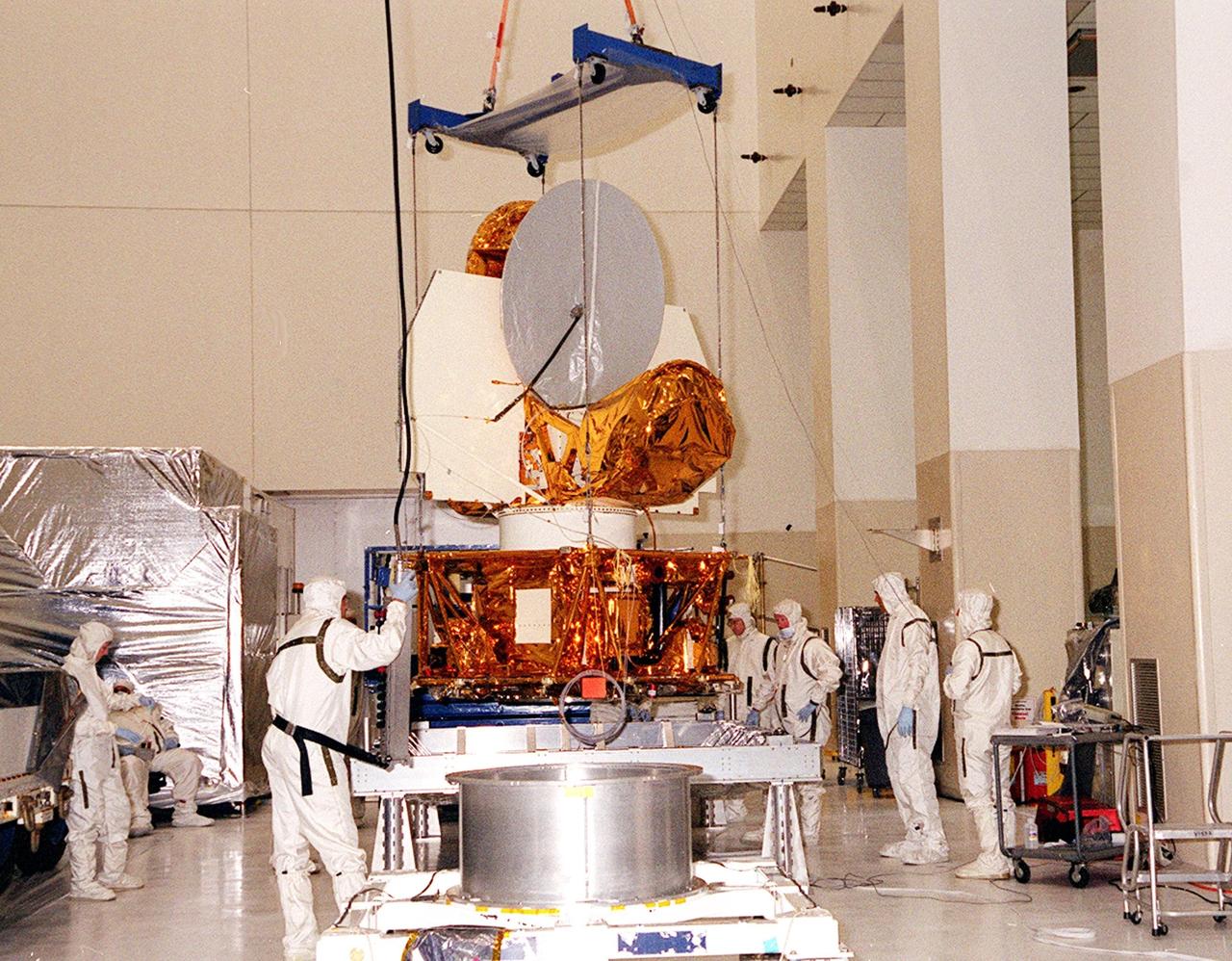
KENNEDY SPACE CENTER, FLA. -- Workers in the Spacecraft Assembly and Encapsulation Facility 2 stand by while the Microwave Anisotropy Probe (MAP) is lifted to place it on a workstand. Several milestones must be completed while MAP is at SAEF-2, including antenna installations, solar array installation, solar array deployment and illumination testing, a spacecraft comprehensive performance test, fueling with hydrazine propellant and a spin balance test. MAP will then be ready for integration with the solid propellant Payload Assist Module upper stage booster. MAP is scheduled for launch June 30 from Cape Canaveral Air Force Station on a Delta II rocket into a lunar-assisted trajectory to the Sun-Earth for a 27-month mission. The MAP instrument consists of a set of passively cooled microwave radiometers with 1.4x 1.6-meter diameter primary reflectors to provide the desired angular resolution. MAP measures small fluctuations in the temperature of the cosmic microwave background radiation to an accuracy of one millionth of a degree These measurements should reveal the size, matter content, age, geometry and fate of the universe. They will also reveal the primordial structure that grew to form galaxies and will test ideas about the origins of these primordial structures. The MAP instrument will be continuously shaded from the Sun, Earth, and Moon by the spacecraft. It is a product of Goddard Space Flight Center in partnership with Princeton University
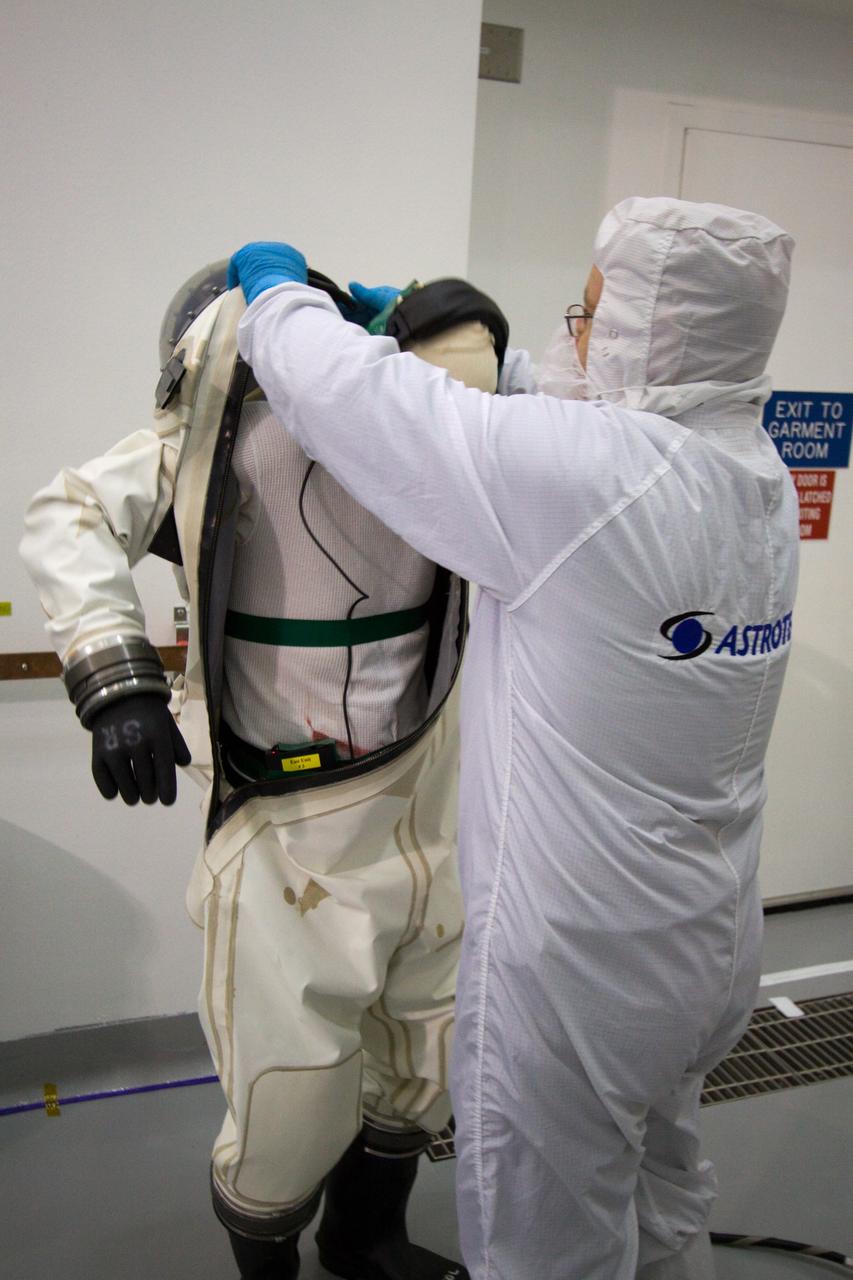
CAPE CANAVERAL, Fla. – At the Astrotech Space Operations facility in Titusville, Fla., spacecraft fueling technicians from Kennedy Space Center prepare to sample the monomethylhydrazine propellant that will be loaded aboard the Solar Dynamics Observatory, or SDO. From left are Boeing technician Steve Lay and ASTROTECH mission/facility manager Gerard Gleeson. The hydrazine fuel is being sampled for purity before it is loaded aboard the spacecraft. The technicians are dressed in self-contained atmospheric protective ensemble suits, or SCAPE suits, as a safety precaution in the unlikely event that any of the highly toxic chemical should escape from the storage tank. The nitrogen tetroxide oxidizer was loaded earlier in the week which is customarily followed by loading of the fuel. Propellant loading is one of the final processing milestones before the spacecraft is encapsulated in its fairing for launch. SDO is the first mission in NASA's Living With a Star Program and is designed to study the causes of solar variability and its impacts on Earth. The spacecraft's long-term measurements will give solar scientists in-depth information to help characterize the interior of the Sun, the Sun's magnetic field, the hot plasma of the solar corona, and the density of radiation that creates the ionosphere of the planets. The information will be used to create better forecasts of space weather needed to protect the aircraft, satellites and astronauts living and working in space. Liftoff aboard an Atlas V rocket is targeted for Feb. 9 from Launch Complex 41 on Cape Canaveral Air Force Station. For information on SDO, visit http://www.nasa.gov/sdo. Photo credit: NASA/Jack Pfaller
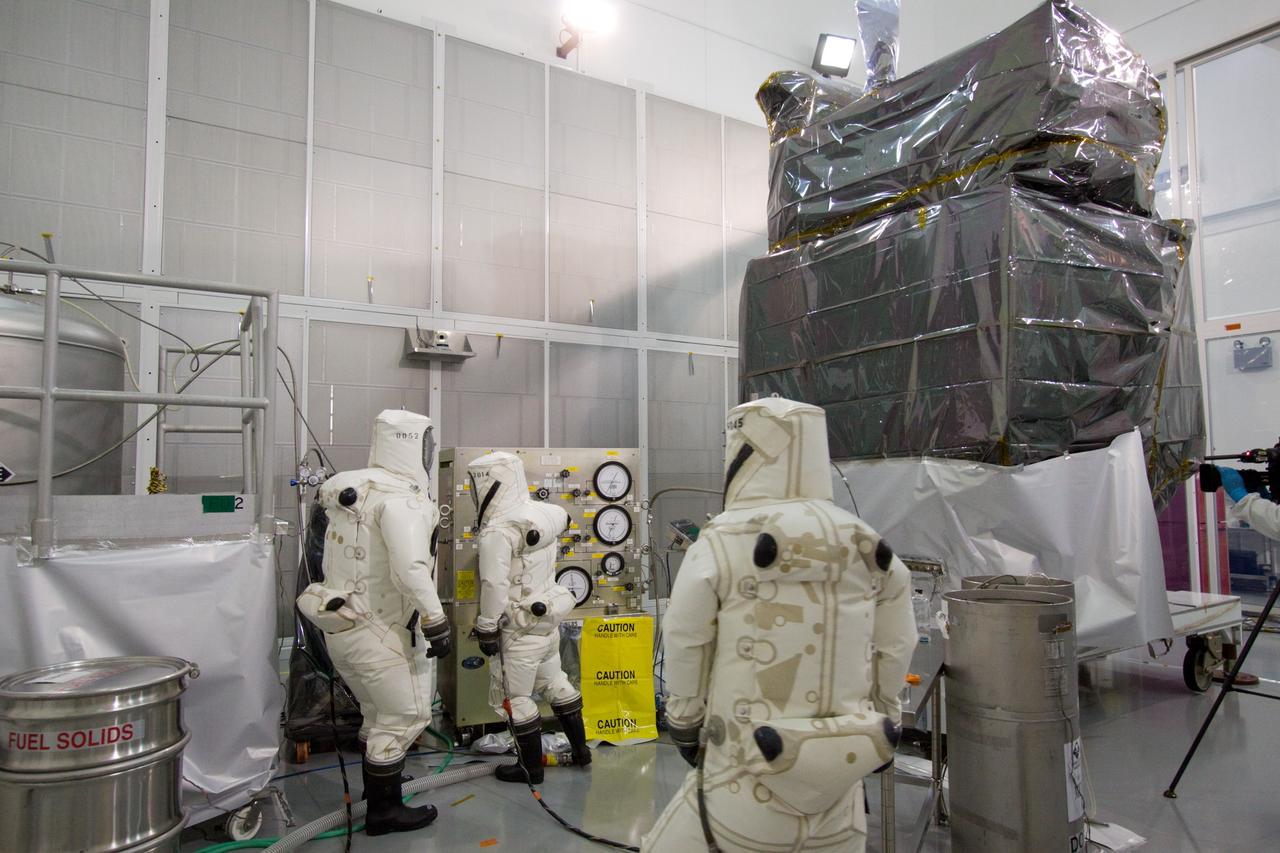
CAPE CANAVERAL, Fla. – At the Astrotech Space Operations facility in Titusville, Fla., Boeing spacecraft fueling technicians from Kennedy Space Center prepare to sample the monomethylhydrazine propellant that will be loaded aboard the Solar Dynamics Observatory, or SDO, which is protectively covered. The hydrazine fuel is being sampled for purity before it is loaded aboard the spacecraft. The technicians are dressed in self-contained atmospheric protective ensemble suits, or SCAPE suits, as a safety precaution in the unlikely event that any of the highly toxic chemical should escape from the storage tank. The nitrogen tetroxide oxidizer was loaded earlier in the week which is customarily followed by loading of the fuel. Propellant loading is one of the final processing milestones before the spacecraft is encapsulated in its fairing for launch. SDO is the first mission in NASA's Living With a Star Program and is designed to study the causes of solar variability and its impacts on Earth. The spacecraft's long-term measurements will give solar scientists in-depth information to help characterize the interior of the Sun, the Sun's magnetic field, the hot plasma of the solar corona, and the density of radiation that creates the ionosphere of the planets. The information will be used to create better forecasts of space weather needed to protect the aircraft, satellites and astronauts living and working in space. Liftoff aboard an Atlas V rocket is targeted for Feb. 9 from Launch Complex 41 on Cape Canaveral Air Force Station. For information on SDO, visit http://www.nasa.gov/sdo. Photo credit: NASA/Jack Pfaller
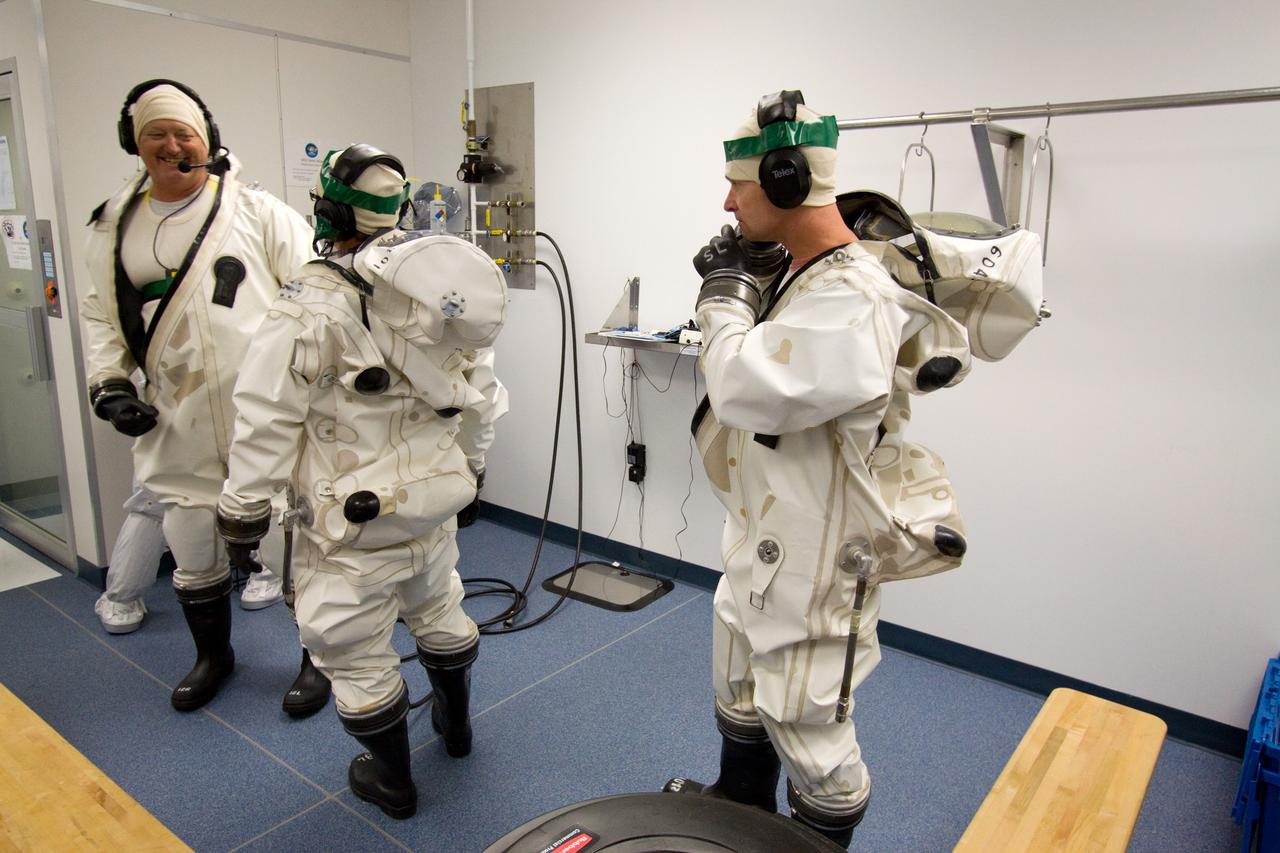
CAPE CANAVERAL, Fla. – At the Astrotech Space Operations facility in Titusville, Fla., spacecraft fueling technicians from Kennedy Space Center prepare to sample the monomethylhydrazine propellant that will be loaded aboard the Solar Dynamics Observatory, or SDO. From left are Boeing technicians Richard Gillman and Steve Lay, and SDO technician Brian Kittle. The hydrazine fuel is being sampled for purity before it is loaded aboard the spacecraft. The technicians are dressed in self-contained atmospheric protective ensemble suits, or SCAPE suits, as a safety precaution in the unlikely event that any of the highly toxic chemical should escape from the storage tank. The nitrogen tetroxide oxidizer was loaded earlier in the week which is customarily followed by loading of the fuel. Propellant loading is one of the final processing milestones before the spacecraft is encapsulated in its fairing for launch. SDO is the first mission in NASA's Living With a Star Program and is designed to study the causes of solar variability and its impacts on Earth. The spacecraft's long-term measurements will give solar scientists in-depth information to help characterize the interior of the Sun, the Sun's magnetic field, the hot plasma of the solar corona, and the density of radiation that creates the ionosphere of the planets. The information will be used to create better forecasts of space weather needed to protect the aircraft, satellites and astronauts living and working in space. Liftoff aboard an Atlas V rocket is targeted for Feb. 9 from Launch Complex 41 on Cape Canaveral Air Force Station. For information on SDO, visit http://www.nasa.gov/sdo. Photo credit: NASA/Jack Pfaller
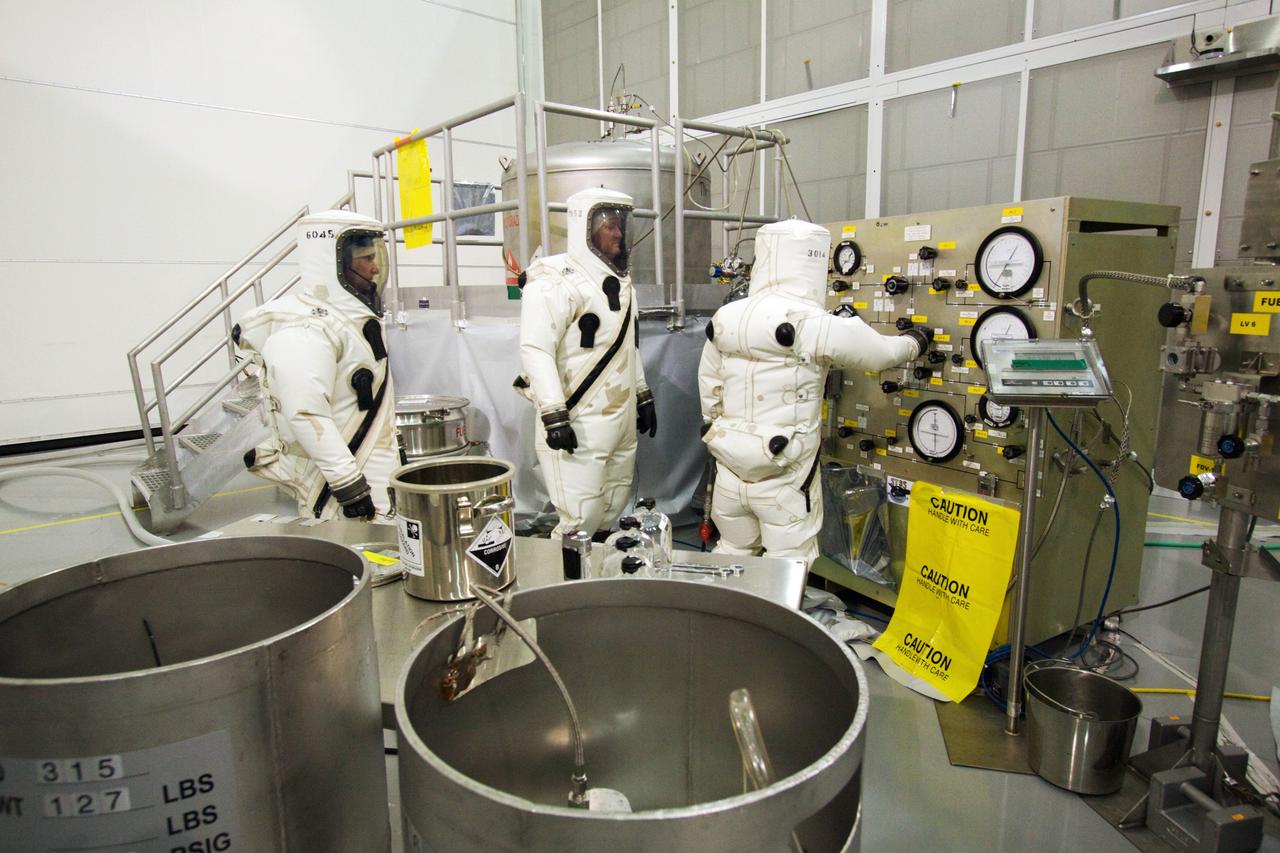
CAPE CANAVERAL, Fla. – At the Astrotech Space Operations facility in Titusville, Fla., Boeing spacecraft fueling technicians from Kennedy Space Center prepare the equipment necessary to sample the monomethylhydrazine propellant that will be loaded aboard the Solar Dynamics Observatory, or SDO. The hydrazine fuel is being sampled for purity before it is loaded aboard the spacecraft. The technicians are dressed in self-contained atmospheric protective ensemble suits, or SCAPE suits, as a safety precaution in the unlikely event that any of the highly toxic chemical should escape from the storage tank. The nitrogen tetroxide oxidizer was loaded earlier in the week which is customarily followed by loading of the fuel. Propellant loading is one of the final processing milestones before the spacecraft is encapsulated in its fairing for launch. SDO is the first mission in NASA's Living With a Star Program and is designed to study the causes of solar variability and its impacts on Earth. The spacecraft's long-term measurements will give solar scientists in-depth information to help characterize the interior of the Sun, the Sun's magnetic field, the hot plasma of the solar corona, and the density of radiation that creates the ionosphere of the planets. The information will be used to create better forecasts of space weather needed to protect the aircraft, satellites and astronauts living and working in space. Liftoff aboard an Atlas V rocket is targeted for Feb. 9 from Launch Complex 41 on Cape Canaveral Air Force Station. For information on SDO, visit http://www.nasa.gov/sdo. Photo credit: NASA/Jack Pfaller