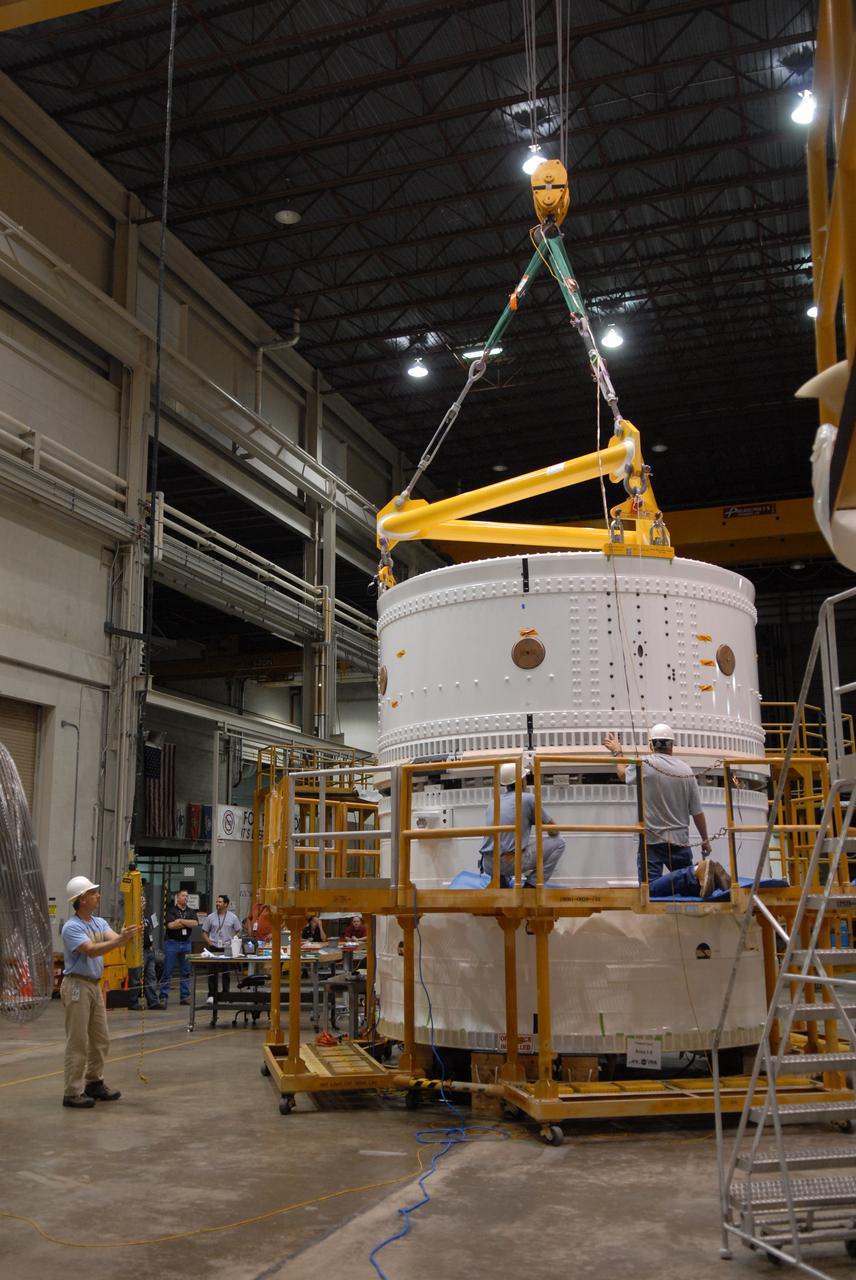
CAPE CANAVERAL, Fla. – In the Assembly and Refurbishment Facility at NASA's Kennedy Space Center in Florida, technicians closely watch the Ares I-X forward skirt as it is lowered toward the forward skirt extension for mating. The forward skirt is the initial piece of first-stage hardware in preparation for the August 2009 test flight of NASA's next-generation spacecraft and launch vehicle system. Built entirely of armored steel, the 14,000-pound segment is seven feet tall and 12-1/4 feet wide. Photo credit: NASA/Tim Jacobs
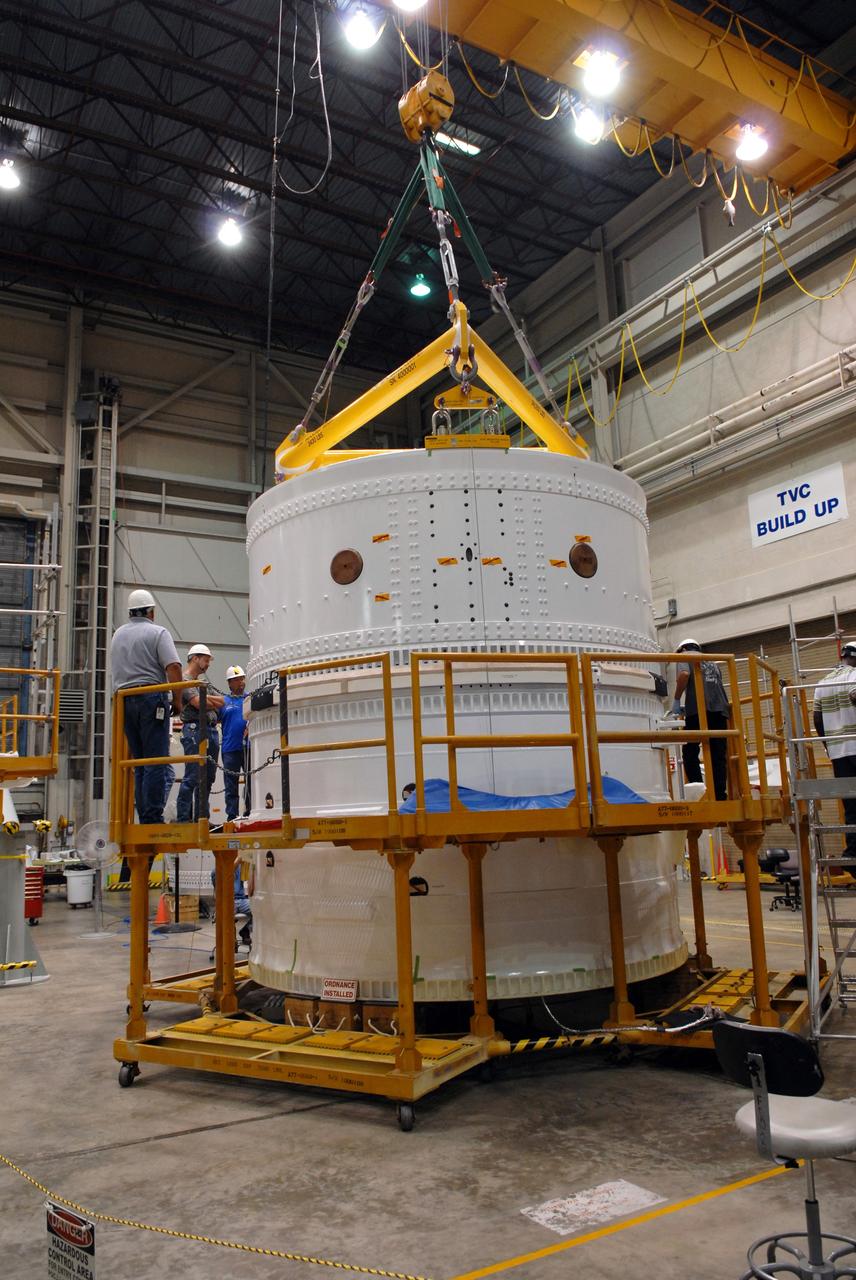
CAPE CANAVERAL, Fla. – In the Assembly and Refurbishment Facility at NASA's Kennedy Space Center in Florida, technicians examine the assembly of the Ares I-X forward skirt and the forward skirt extension. The forward skirt is the initial piece of first-stage hardware in preparation for the August 2009 test flight of NASA's next-generation spacecraft and launch vehicle system. Built entirely of armored steel, the 14,000-pound segment is seven feet tall and 12-1/4 feet wide. Photo credit: NASA/Tim Jacobs
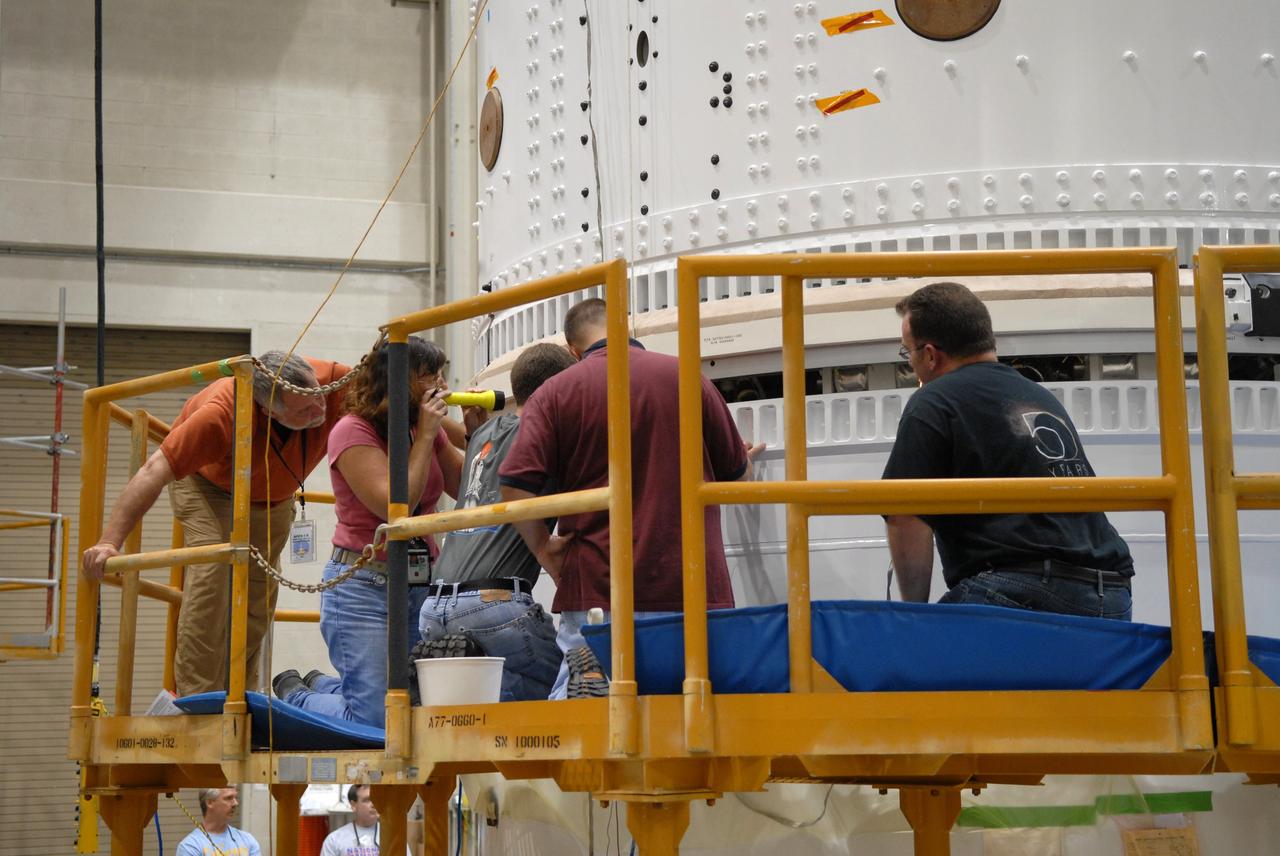
CAPE CANAVERAL, Fla. – In the Assembly and Refurbishment Facility at NASA's Kennedy Space Center in Florida, technicians look closely as the Ares I-X forward skirt is mated to the forward skirt extension.. The forward skirt is the initial piece of first-stage hardware in preparation for the August 2009 test flight of NASA's next-generation spacecraft and launch vehicle system. Built entirely of armored steel, the 14,000-pound segment is seven feet tall and 12-1/4 feet wide. Photo credit: NASA/Tim Jacobs
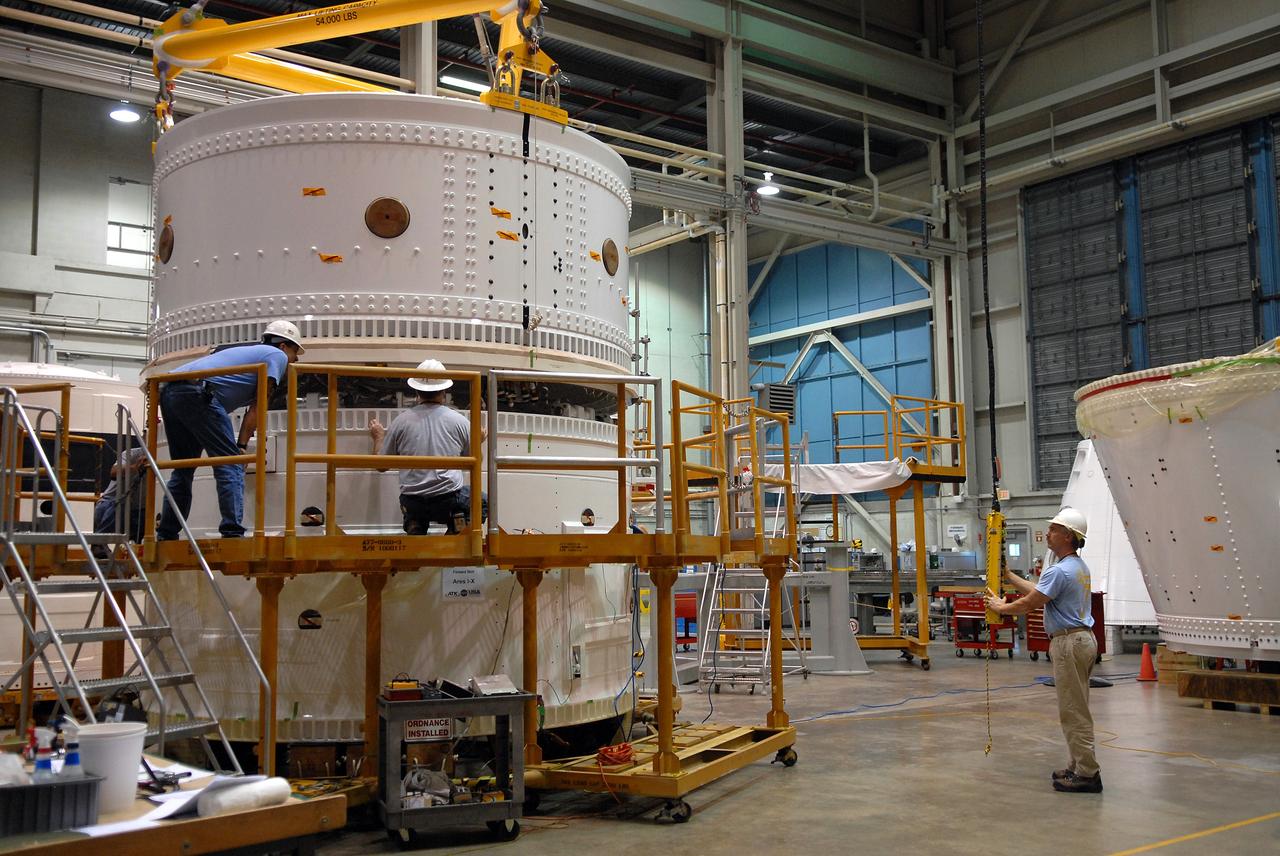
CAPE CANAVERAL, Fla. – In the Assembly and Refurbishment Facility at NASA's Kennedy Space Center in Florida, technicians keep watch as a crane lowers the Ares I-X forward skirt toward the forward skirt extension for mating. The forward skirt is the initial piece of first-stage hardware in preparation for the August 2009 test flight of NASA's next-generation spacecraft and launch vehicle system. Built entirely of armored steel, the 14,000-pound segment is seven feet tall and 12-1/4 feet wide. Photo credit: NASA/Tim Jacobs
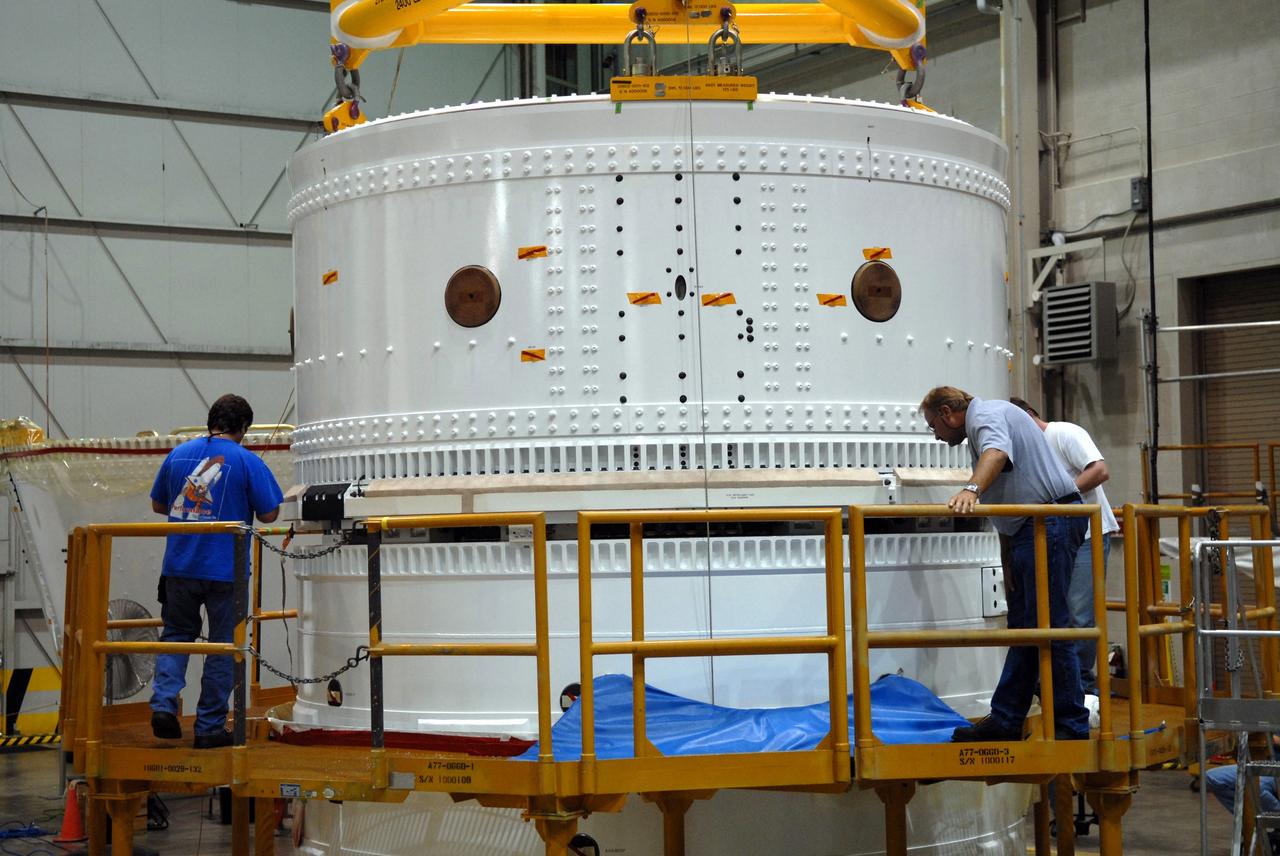
CAPE CANAVERAL, Fla. – In the Assembly and Refurbishment Facility at NASA's Kennedy Space Center in Florida, technicians examine the assembly of the Ares I-X forward skirt and the forward skirt extension. The forward skirt is the initial piece of first-stage hardware in preparation for the August 2009 test flight of NASA's next-generation spacecraft and launch vehicle system. Built entirely of armored steel, the 14,000-pound segment is seven feet tall and 12-1/4 feet wide. Photo credit: NASA/Tim Jacobs
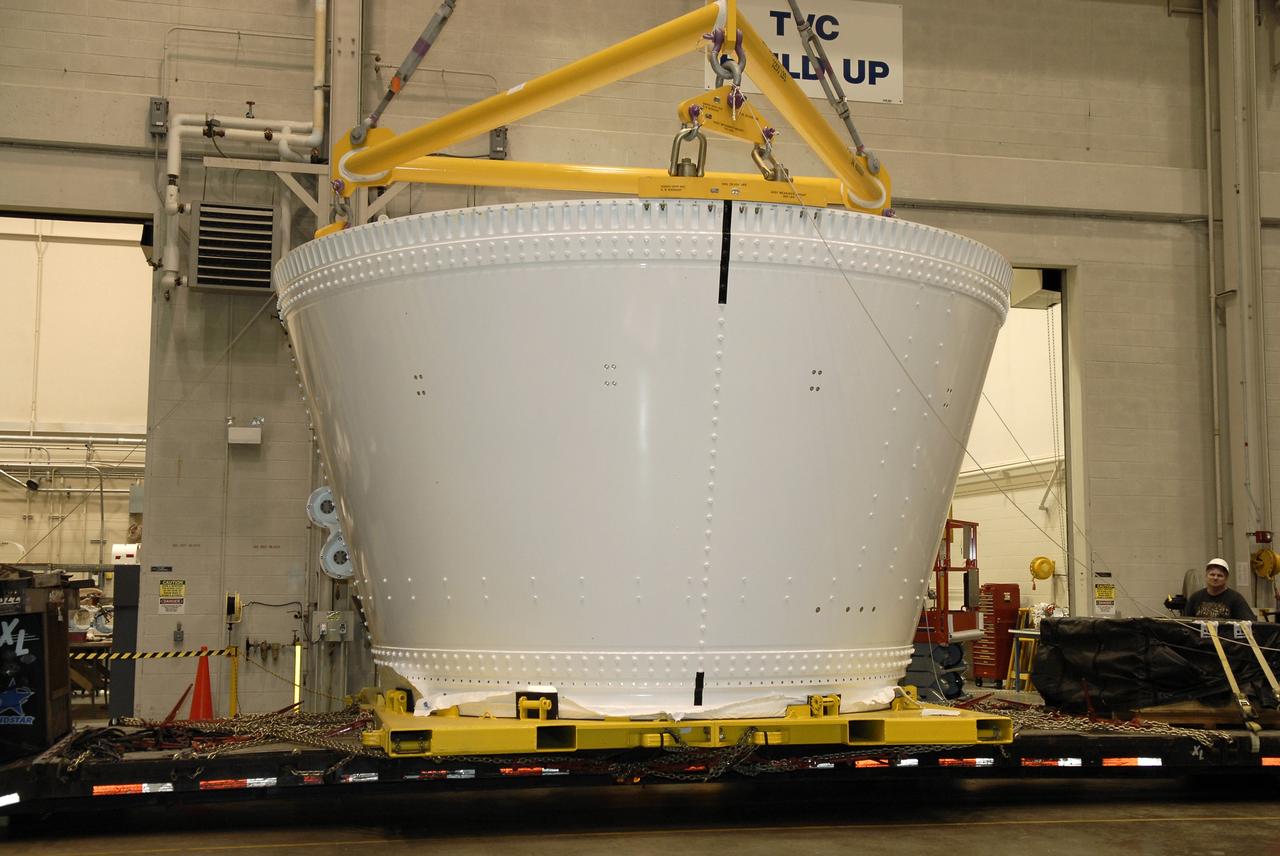
CAPE CANAVERAL, Fla. – In the Assembly and Refurbishment Facility, or ARF, at NASA's Kennedy Space Center, an overhead crane is attached to the frustum for the Ares I-X test rocket. The frustum is the last manufactured section of the Ares I-X. The frustum will be moved from the transporter to supports on the floor. Resembling a giant funnel, the frustum's function is to transition the primary flight loads from the rocket's upper stage to the first stage. The frustum is located between the forward skirt extension and the upper stage of the Ares I-X. The frustum will be integrated with the forward skirt and forward skirt extension, which already are in the ARF. That will complete the forward assembly. The assembly then will be moved to the Vehicle Assembly Building for stacking operations, which are scheduled to begin in April. Photo credit: NASA/Kim Shiflett
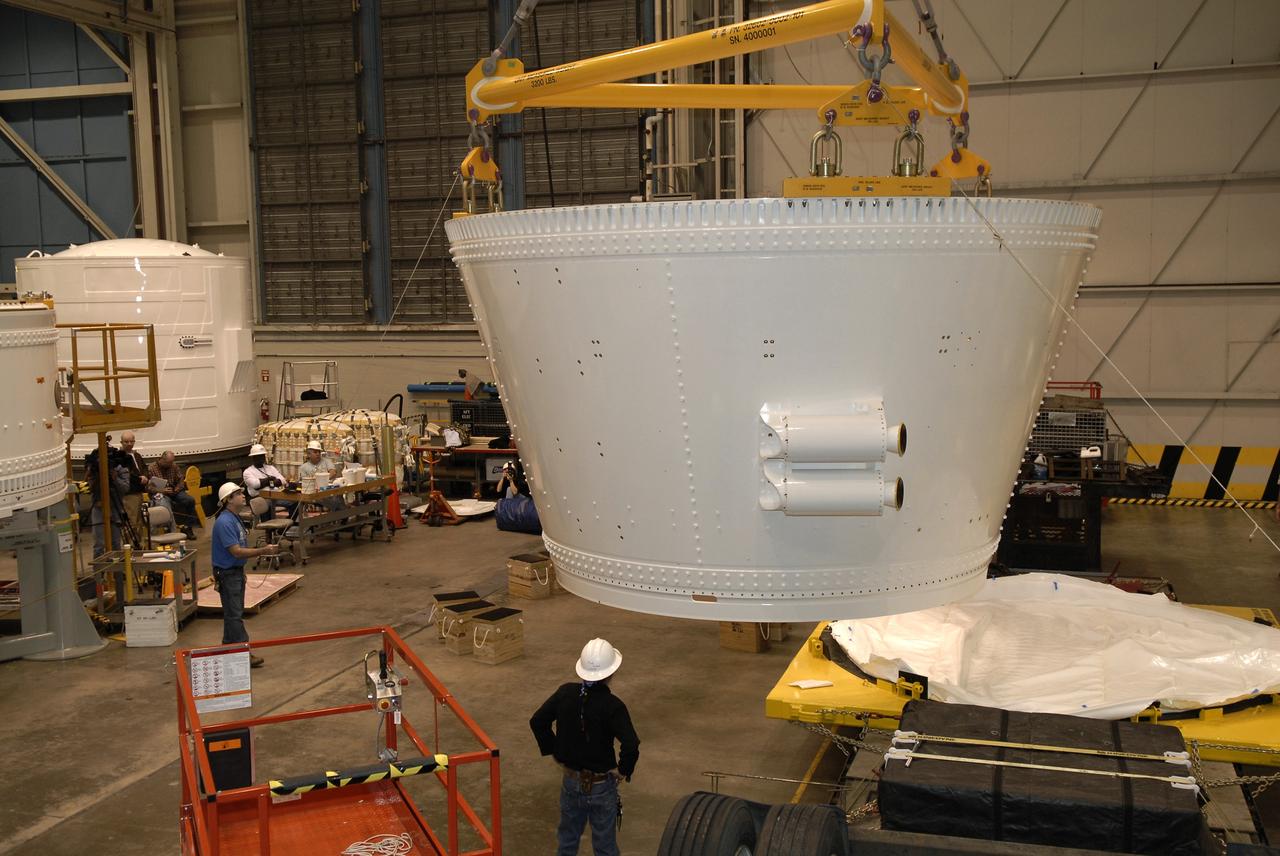
CAPE CANAVERAL, Fla. – In the Assembly and Refurbishment Facility, or ARF, at NASA's Kennedy Space Center, an overhead crane lifts the frustum for the Ares I-X test rocket from its transporter. The frustum is the last manufactured section of the Ares I-X. The frustum will be moved from the transporter to supports on the floor. Resembling a giant funnel, the frustum's function is to transition the primary flight loads from the rocket's upper stage to the first stage. The frustum is located between the forward skirt extension and the upper stage of the Ares I-X. The frustum will be integrated with the forward skirt and forward skirt extension, which already are in the ARF. That will complete the forward assembly. The assembly then will be moved to the Vehicle Assembly Building for stacking operations, which are scheduled to begin in April. Photo credit: NASA/Kim Shiflett
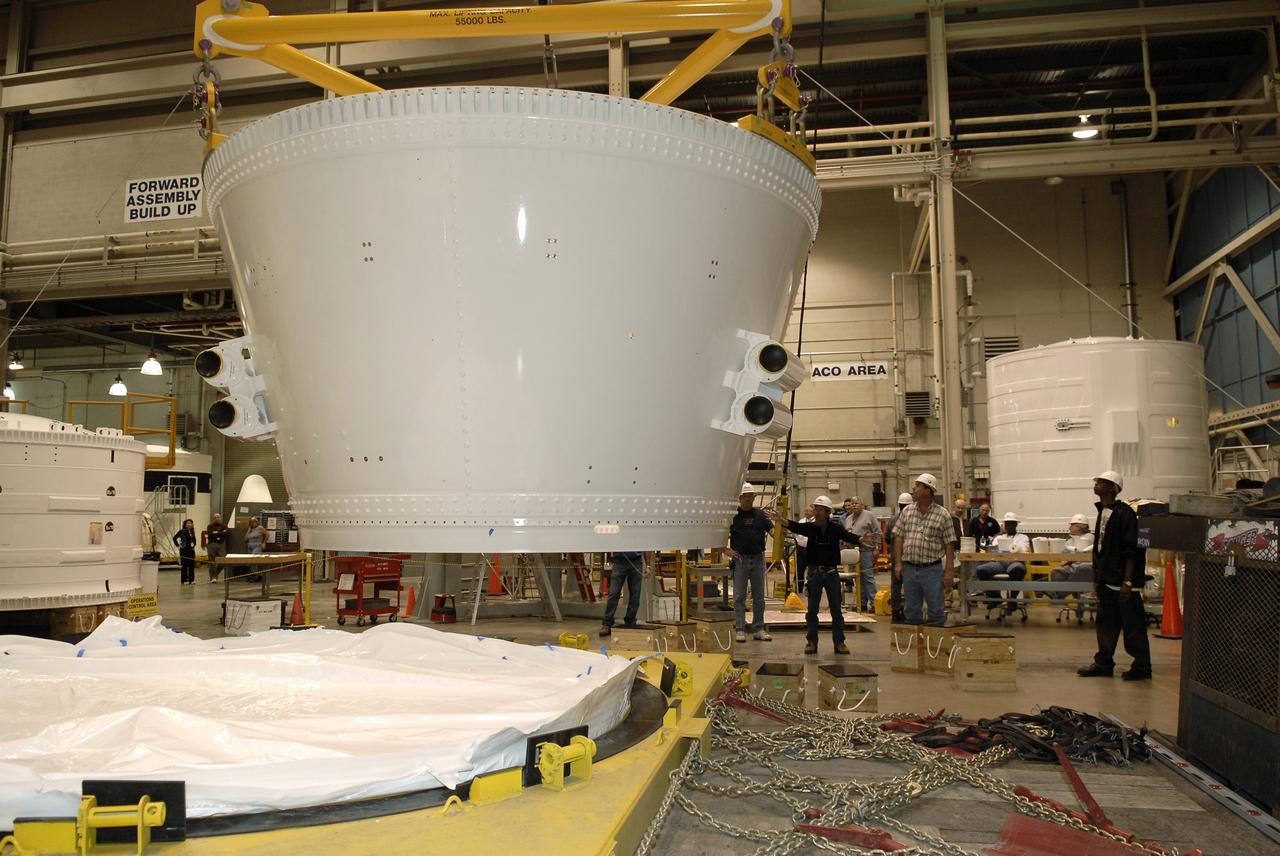
CAPE CANAVERAL, Fla. – In the Assembly and Refurbishment Facility, or ARF, at NASA's Kennedy Space Center, an overhead crane lifts the frustum for the Ares I-X test rocket from its transporter. The frustum is the last manufactured section of the Ares I-X. The frustum will be moved from the transporter to supports on the floor. Resembling a giant funnel, the frustum's function is to transition the primary flight loads from the rocket's upper stage to the first stage. The frustum is located between the forward skirt extension and the upper stage of the Ares I-X. The frustum will be integrated with the forward skirt and forward skirt extension, which already are in the ARF. That will complete the forward assembly. The assembly then will be moved to the Vehicle Assembly Building for stacking operations, which are scheduled to begin in April. Photo credit: NASA/Kim Shiflett
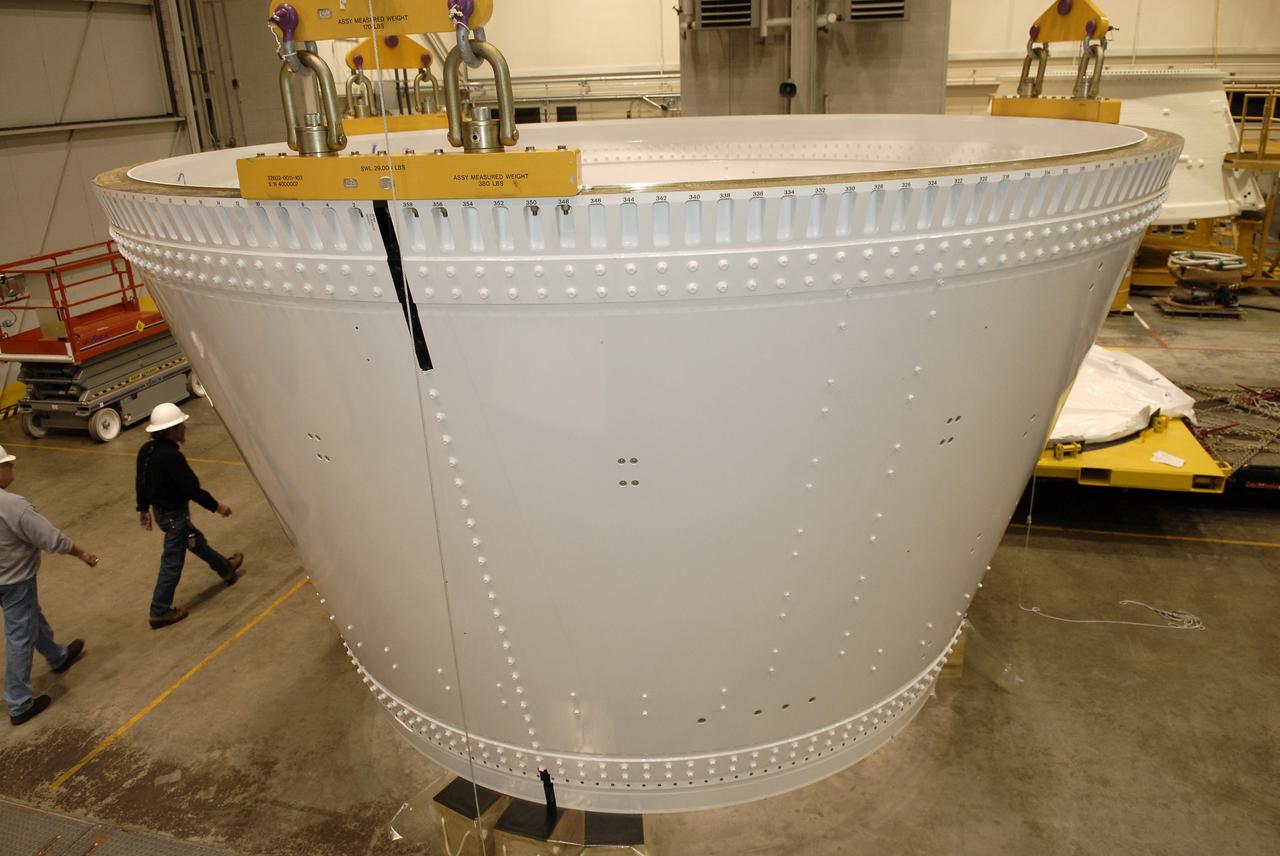
CAPE CANAVERAL, Fla. – In the Assembly and Refurbishment Facility, or ARF, at NASA's Kennedy Space Center, an overhead crane lowers the frustum for the Ares I-X test rocket onto supports on the floor. The frustum is the last manufactured section of the Ares I-X. Resembling a giant funnel, the frustum's function is to transition the primary flight loads from the rocket's upper stage to the first stage. The frustum is located between the forward skirt extension and the upper stage of the Ares I-X. The frustum will be integrated with the forward skirt and forward skirt extension, which already are in the ARF. That will complete the forward assembly. The assembly then will be moved to the Vehicle Assembly Building for stacking operations, which are scheduled to begin in April. Photo credit: NASA/Kim Shiflett
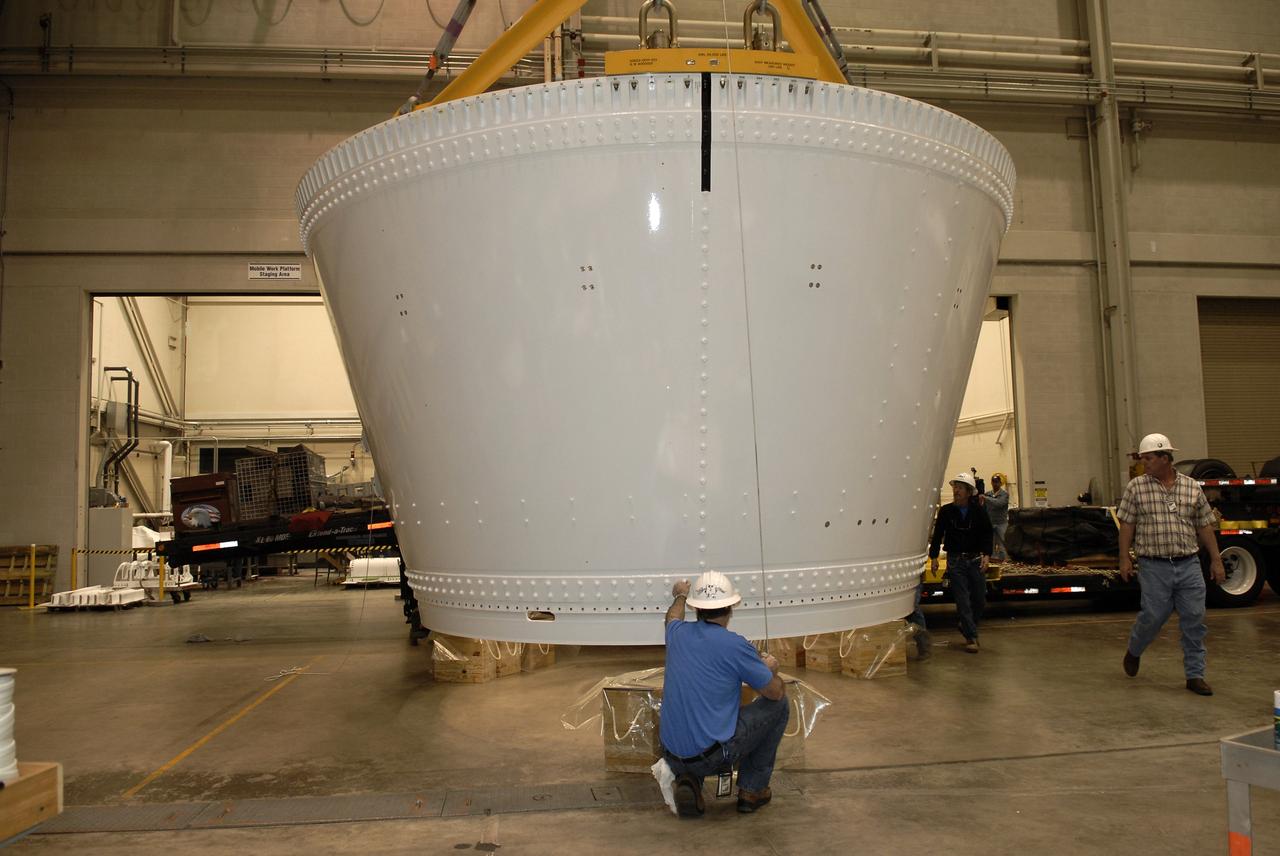
CAPE CANAVERAL, Fla. – In the Assembly and Refurbishment Facility, or ARF, at NASA's Kennedy Space Center, an overhead crane lowers the frustum for the Ares I-X test rocket onto supports on the floor. The frustum is the last manufactured section of the Ares I-X. Resembling a giant funnel, the frustum's function is to transition the primary flight loads from the rocket's upper stage to the first stage. The frustum is located between the forward skirt extension and the upper stage of the Ares I-X. The frustum will be integrated with the forward skirt and forward skirt extension, which already are in the ARF. That will complete the forward assembly. The assembly then will be moved to the Vehicle Assembly Building for stacking operations, which are scheduled to begin in April. Photo credit: NASA/Kim Shiflett
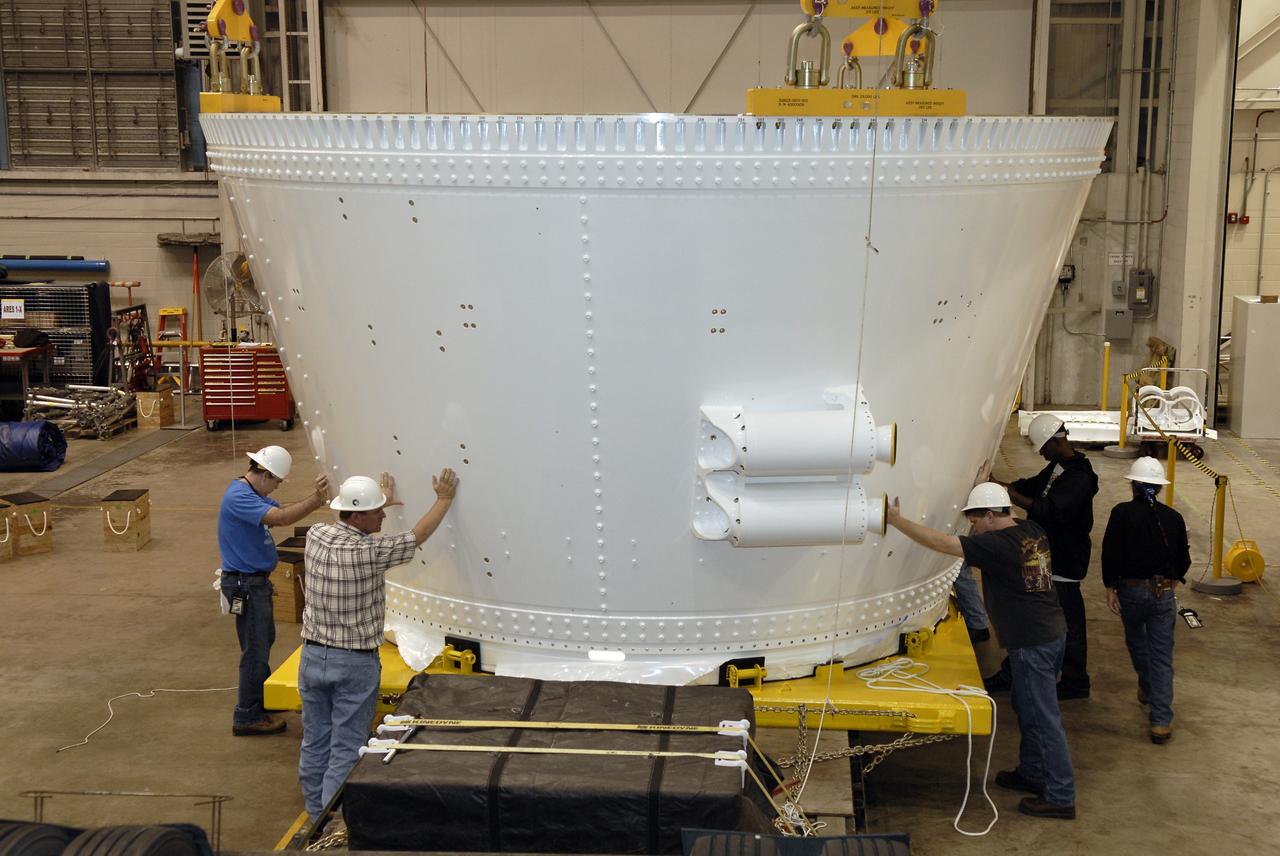
CAPE CANAVERAL, Fla. – In the Assembly and Refurbishment Facility, or ARF, at NASA's Kennedy Space Center, workers help guide the frustum as a cable lifts it from the transporter. The last manufactured section of the Ares I-X test rocket, the frustum will be moved from the transporter to supports on the floor. Resembling a giant funnel, the frustum's function is to transition the primary flight loads from the rocket's upper stage to the first stage. The frustum is located between the forward skirt extension and the upper stage of the Ares I-X. The frustum will be integrated with the forward skirt and forward skirt extension, which already are in the ARF. That will complete the forward assembly. The assembly then will be moved to the Vehicle Assembly Building for stacking operations, which are scheduled to begin in April. Photo credit: NASA/Kim Shiflett
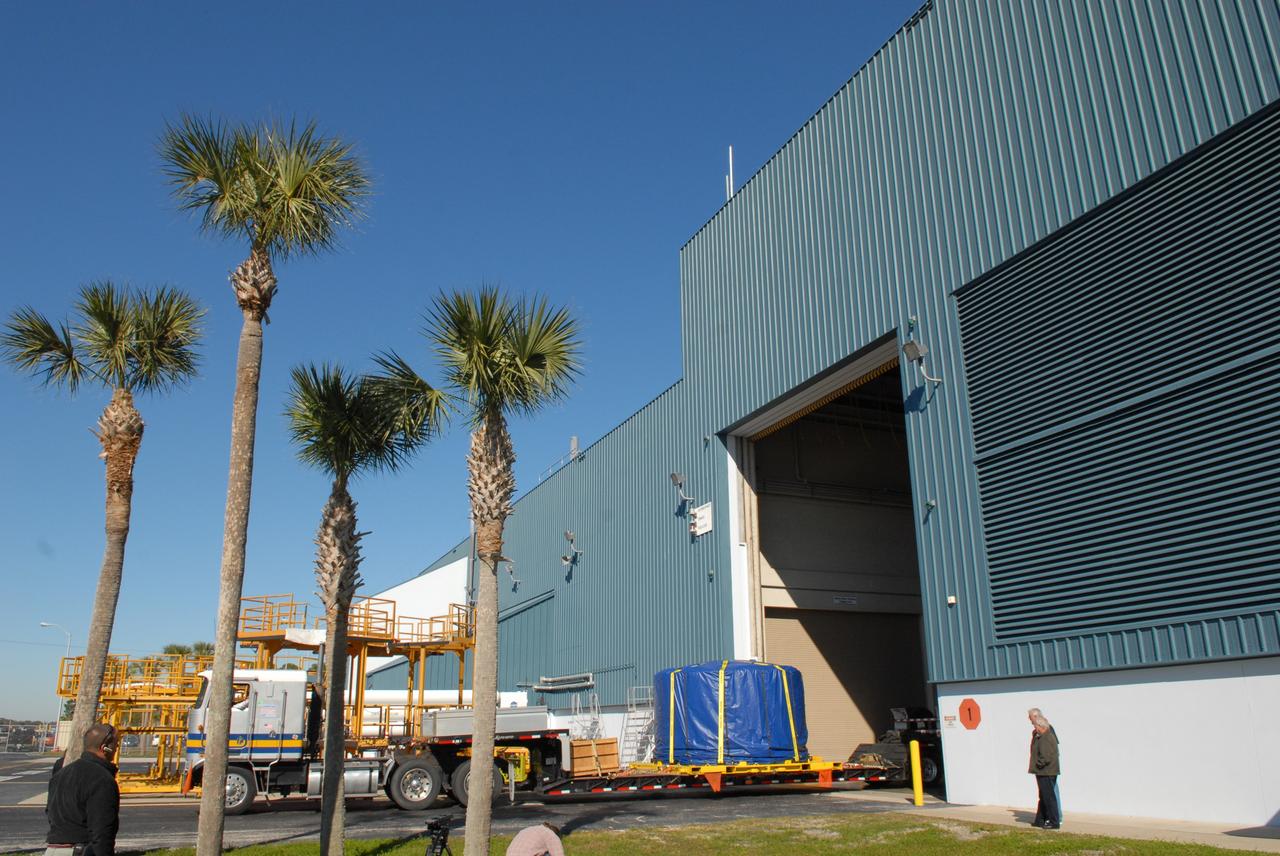
CAPE CANAVERAL, Fla. – Wrapped and strapped, the Ares I-X forward skirt arrives at the Assembly and Refurbishment Facility, or ARF, at NASA's Kennedy Space Center in Florida. The forward skirt is the initial piece of first-stage hardware in preparation for the July 2009 test flight of the agency's next-generation spacecraft and launch vehicle system. Built entirely of armored steel, the 14,000-pound segment is seven feet tall and 12-1/4 feet wide. United Space Alliance, under a subcontract to ATK, will complete the integration and assembly of the forward skirt components in the ARF. It will then be moved to the Vehicle Assembly Building high bay 3 for stacking operations. Photo credit: NASA/Tim Jacobs
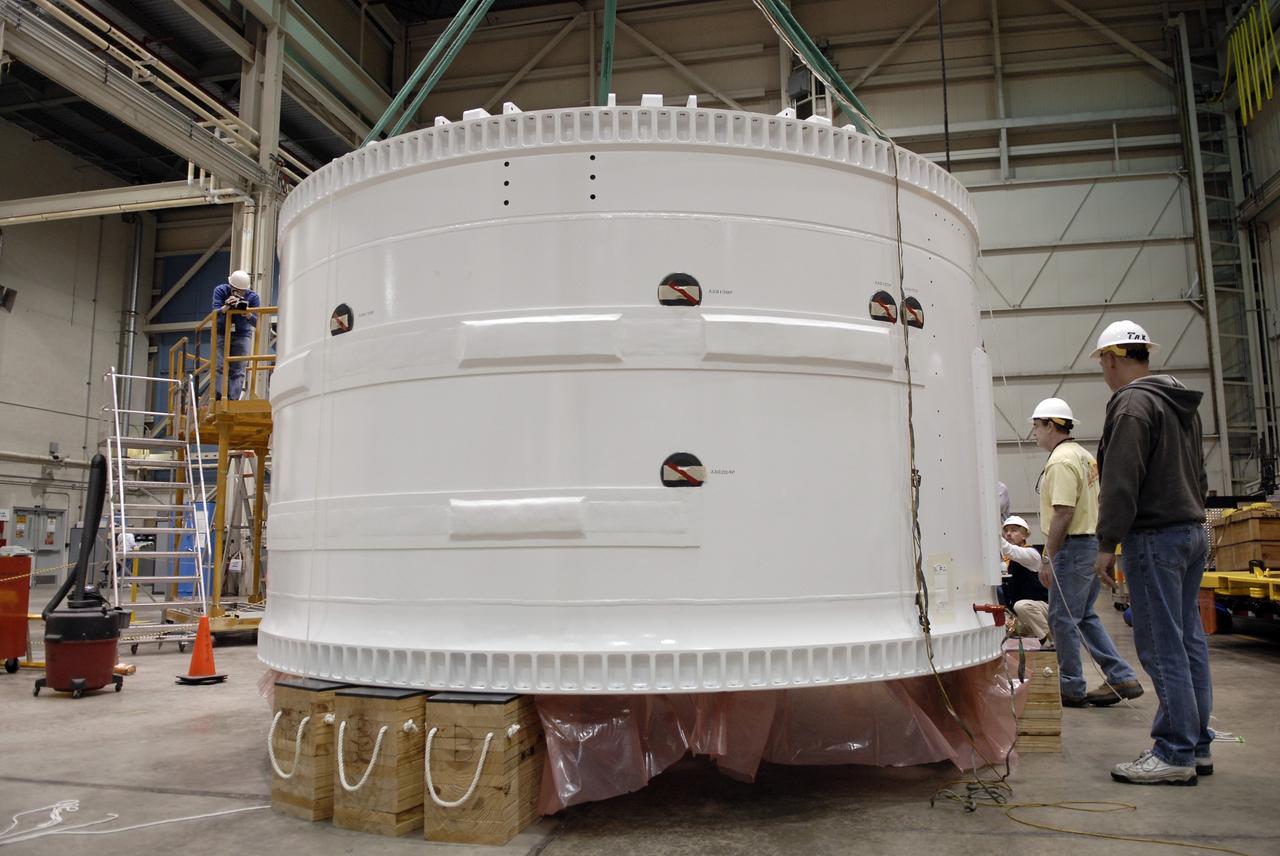
CAPE CANAVERAL, Fla. – Inside the Assembly and Refurbishment Facility at NASA's Kennedy Space Center in Florida, the Ares I-X forward skirt is lowered onto supports on the floor. United Space Alliance, under a subcontract to ATK, will complete the integration and assembly of the forward skirt components in the ARF. It will then be moved to the Vehicle Assembly Building high bay 3 for stacking operations. The forward skirt is the initial piece of first-stage hardware in preparation for the July 2009 test flight of the agency's next-generation spacecraft and launch vehicle system. Built entirely of armored steel, the 14,000-pound segment is seven feet tall and 12-1/4 feet wide. Photo credit: NASA/Kim Shiflett
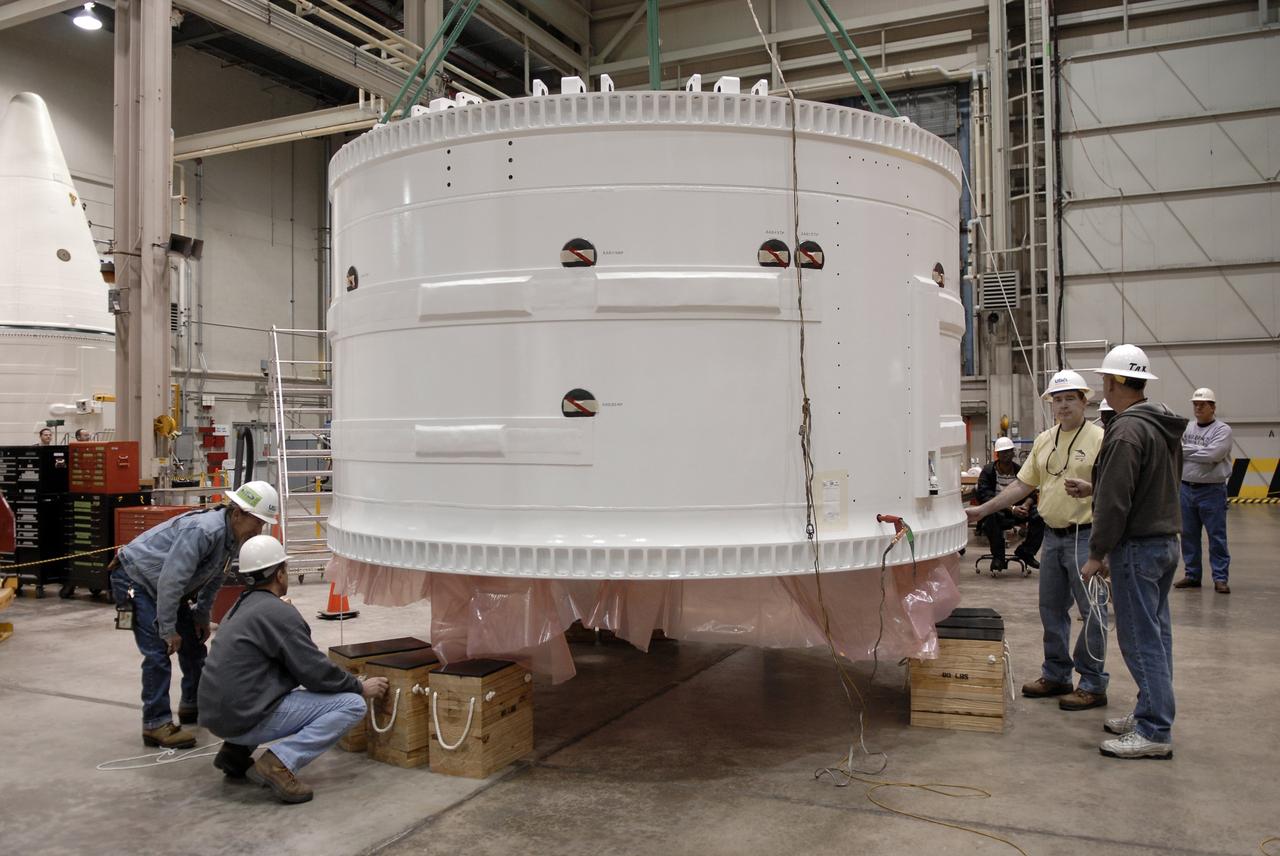
CAPE CANAVERAL, Fla. – Inside the Assembly and Refurbishment Facility at NASA's Kennedy Space Center in Florida, the Ares I-X forward skirt is lowered onto supports on the floor. United Space Alliance, under a subcontract to ATK, will complete the integration and assembly of the forward skirt components in the ARF. It will then be moved to the Vehicle Assembly Building high bay 3 for stacking operations. The forward skirt is the initial piece of first-stage hardware in preparation for the July 2009 test flight of the agency's next-generation spacecraft and launch vehicle system. Built entirely of armored steel, the 14,000-pound segment is seven feet tall and 12-1/4 feet wide. Photo credit: NASA/Kim Shiflett
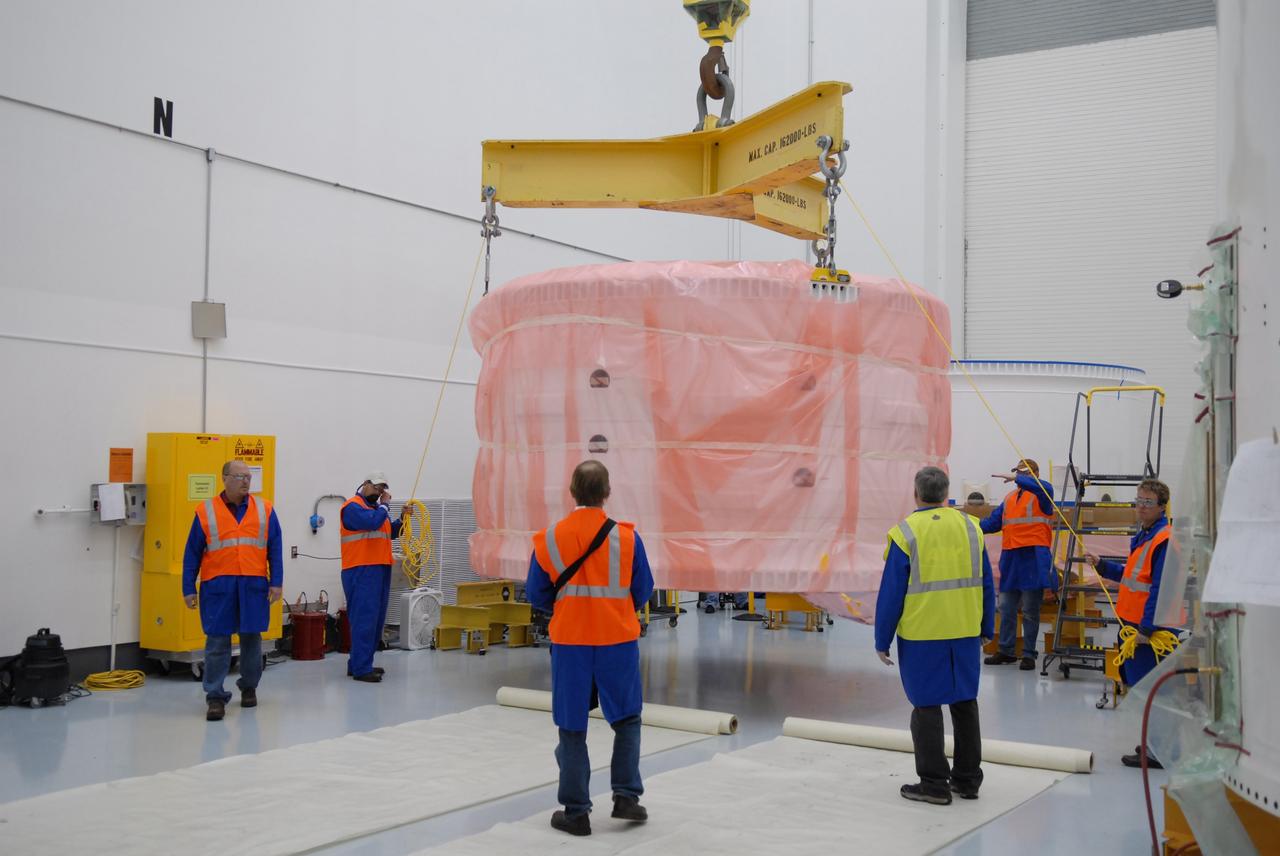
CAPE CANAVERAL, Fla. – At Astrotech in Titusville, Fla., the Ares I-X forward skirt, wrapped in a protective cover, is lifted by a crane for a move to a transporter. The segment will be transferred to the Assembly and Refurbishment Facility, or ARF, at NASA's Kennedy Space Center in Florida. The forward skirt is the initial piece of first-stage hardware in preparation for the July 2009 test flight of the agency's next-generation spacecraft and launch vehicle system. Built entirely of armored steel, the 14,000-pound segment is seven feet tall and 12-1/4 feet wide. United Space Alliance, under a subcontract to ATK, will complete the integration and assembly of the forward skirt components in the ARF. It will then be moved to the Vehicle Assembly Building high bay 3 for stacking operations. Photo credit: NASA/Tim Jacobs
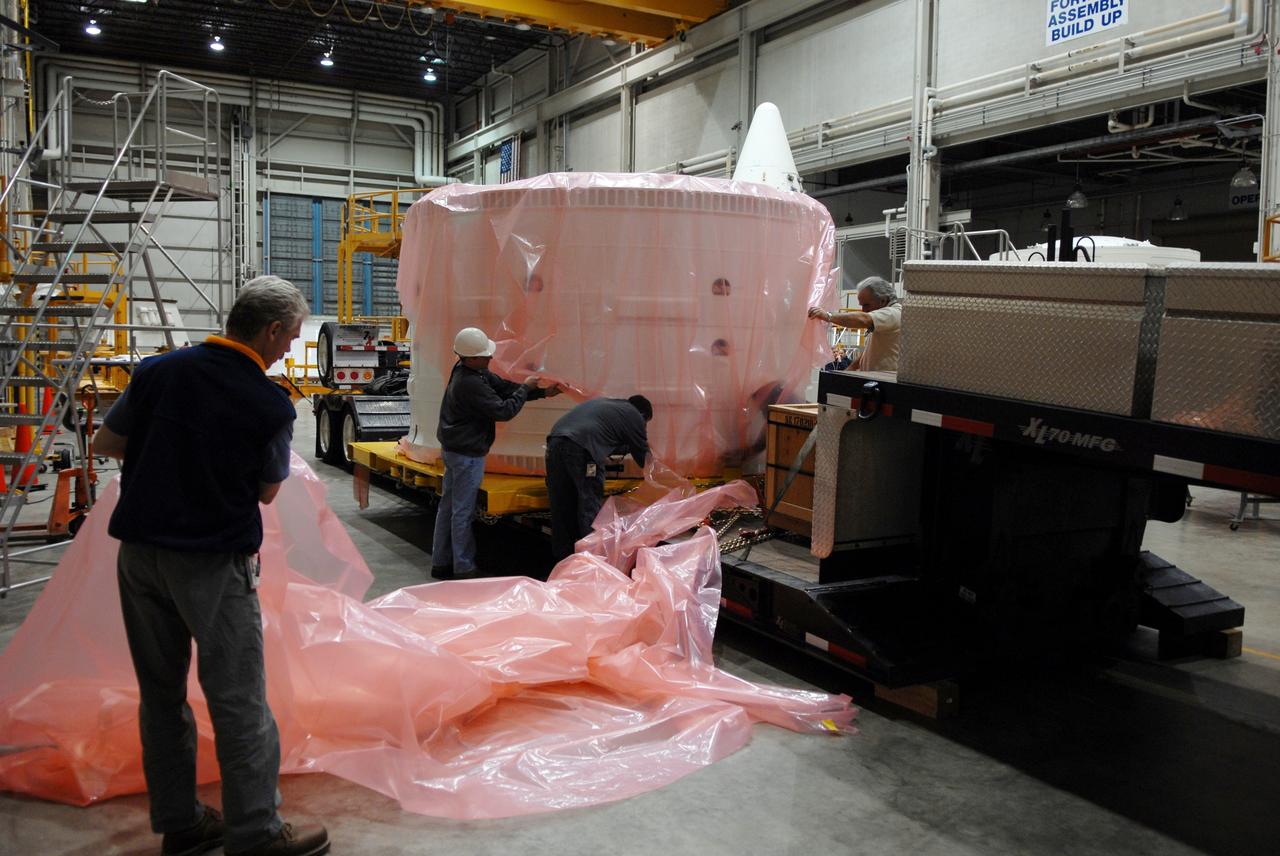
CAPE CANAVERAL, Fla. – Inside the Assembly and Refurbishment Facility, or ARF, at NASA's Kennedy Space Center in Florida, workers begin removing the protective cover from around the Ares I-X forward skirt. The forward skirt is the initial piece of first-stage hardware in preparation for the July 2009 test flight of the agency's next-generation spacecraft and launch vehicle system. Built entirely of armored steel, the 14,000-pound segment is seven feet tall and 12-1/4 feet wide. United Space Alliance, under a subcontract to ATK, will complete the integration and assembly of the forward skirt components in the ARF. It will then be moved to the Vehicle Assembly Building high bay 3 for stacking operations. Photo credit: NASA/Tim Jacobs
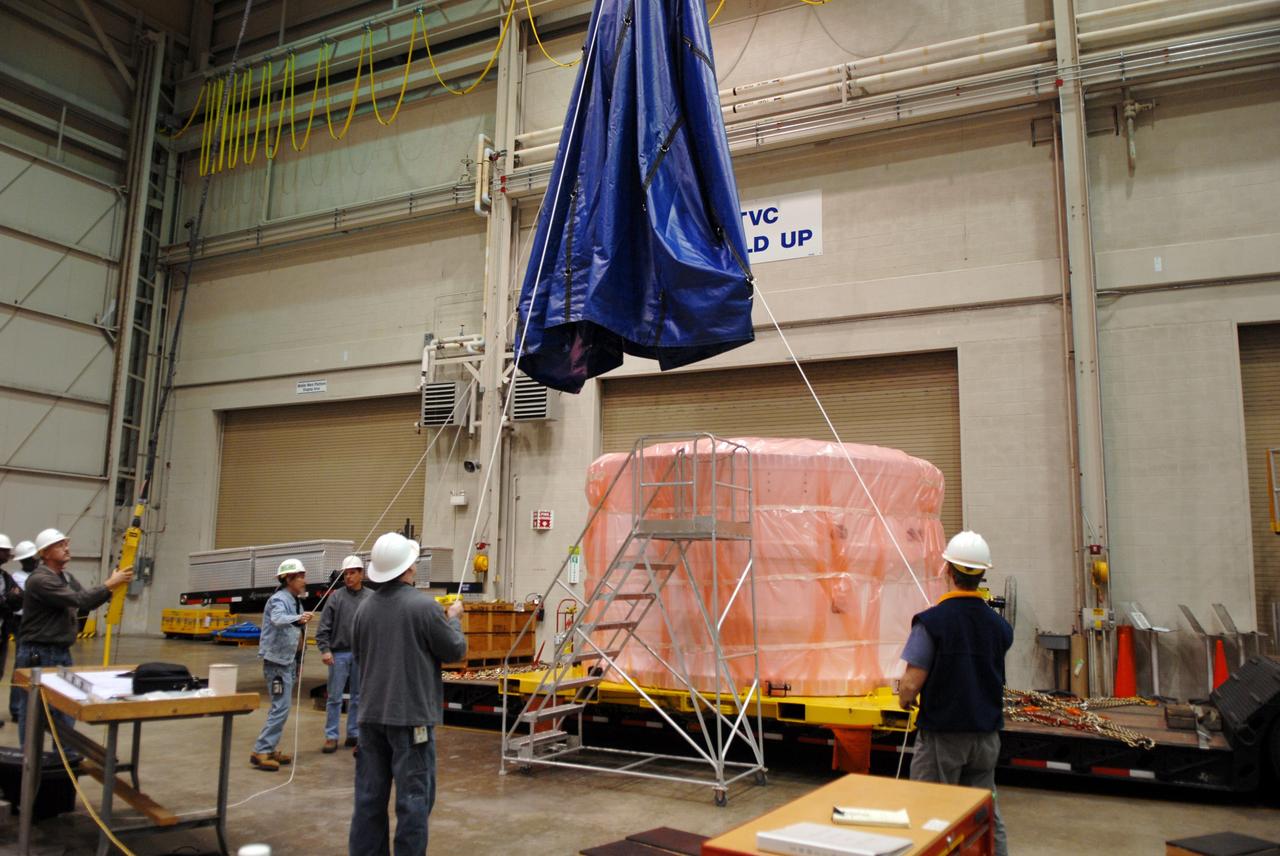
CAPE CANAVERAL, Fla. – Inside the Assembly and Refurbishment Facility, or ARF, at NASA's Kennedy Space Center in Florida, workers lift the padding away from the Ares I-X forward skirt transferred from the Astrotech facility in Titusville, Fla. The forward skirt is the initial piece of first-stage hardware in preparation for the July 2009 test flight of the agency's next-generation spacecraft and launch vehicle system. Built entirely of armored steel, the 14,000-pound segment is seven feet tall and 12-1/4 feet wide. United Space Alliance, under a subcontract to ATK, will complete the integration and assembly of the forward skirt components in the ARF. It will then be moved to the Vehicle Assembly Building high bay 3 for stacking operations. Photo credit: NASA/Tim Jacobs

CAPE CANAVERAL, Fla. – At Astrotech in Titusville, Fla., workers place padding and cables over the Ares I-X forward skirt for its transfer to the Assembly and Refurbishment Facility, or ARF, at NASA's Kennedy Space Center in Florida. The forward skirt is the initial piece of first-stage hardware in preparation for the July 2009 test flight of the agency's next-generation spacecraft and launch vehicle system. Built entirely of armored steel, the 14,000-pound segment is seven feet tall and 12-1/4 feet wide. United Space Alliance, under a subcontract to ATK, will complete the integration and assembly of the forward skirt components in the ARF. It will then be moved to the Vehicle Assembly Building high bay 3 for stacking operations. Photo credit: NASA/Tim Jacobs
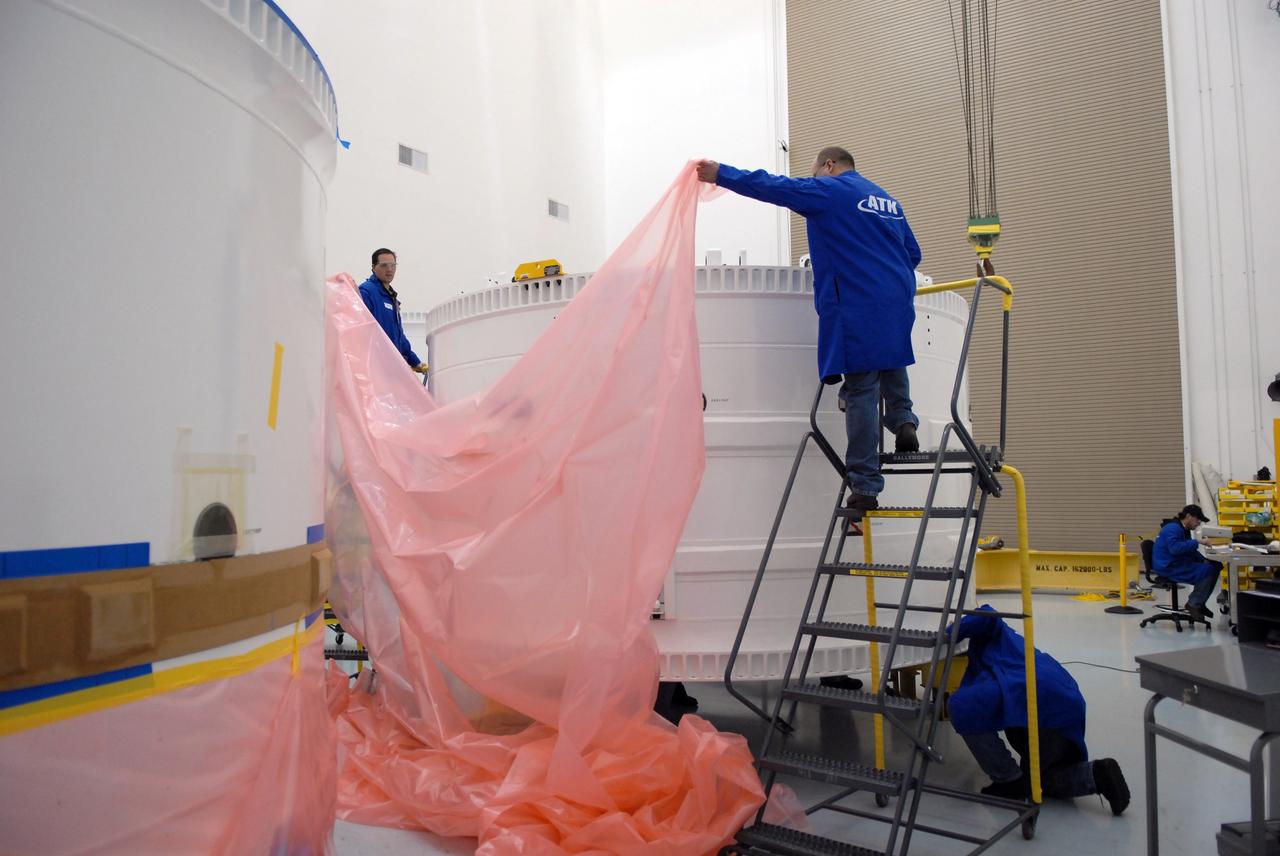
CAPE CANAVERAL, Fla. – At Astrotech in Titusville, Fla., workers place protective covers around the Ares I-X forward skirt. The segment will be transferred to the Assembly and Refurbishment Facility, or ARF, at NASA's Kennedy Space Center in Florida. The forward skirt is the initial piece of first-stage hardware in preparation for the July 2009 test flight of the agency's next-generation spacecraft and launch vehicle system. Built entirely of armored steel, the 14,000-pound segment is seven feet tall and 12-1/4 feet wide. United Space Alliance, under a subcontract to ATK, will complete the integration and assembly of the forward skirt components in the ARF. It will then be moved to the Vehicle Assembly Building high bay 3 for stacking operations. Photo credit: NASA/Tim Jacobs
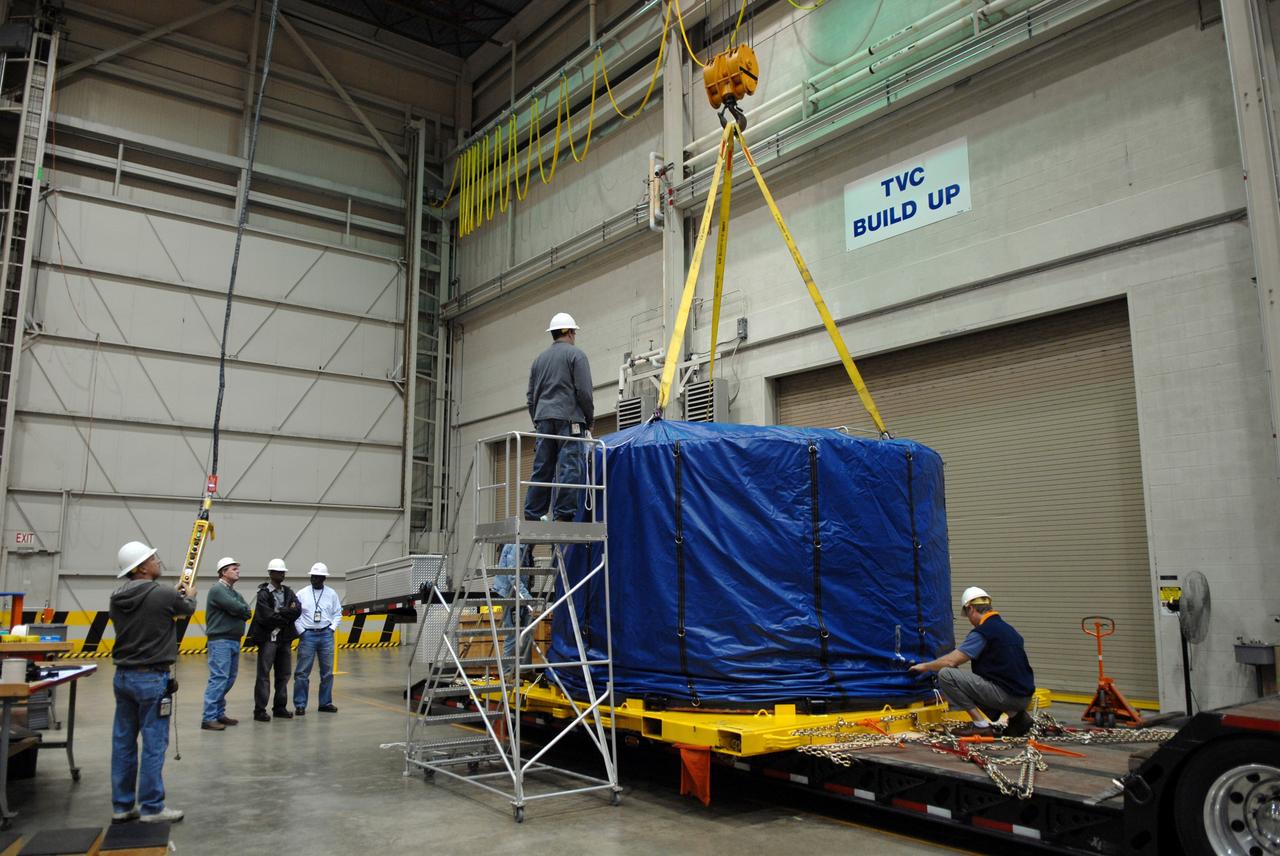
CAPE CANAVERAL, Fla. – Inside the Assembly and Refurbishment Facility, or ARF, at NASA's Kennedy Space Center in Florida, the padding is being removed from around the Ares I-X forward skirt. It was transferred from the Astrotech facility in Titusville, Fla. The forward skirt is the initial piece of first-stage hardware in preparation for the July 2009 test flight of the agency's next-generation spacecraft and launch vehicle system. Built entirely of armored steel, the 14,000-pound segment is seven feet tall and 12-1/4 feet wide. United Space Alliance, under a subcontract to ATK, will complete the integration and assembly of the forward skirt components in the ARF. It will then be moved to the Vehicle Assembly Building high bay 3 for stacking operations. Photo credit: NASA/Tim Jacobs
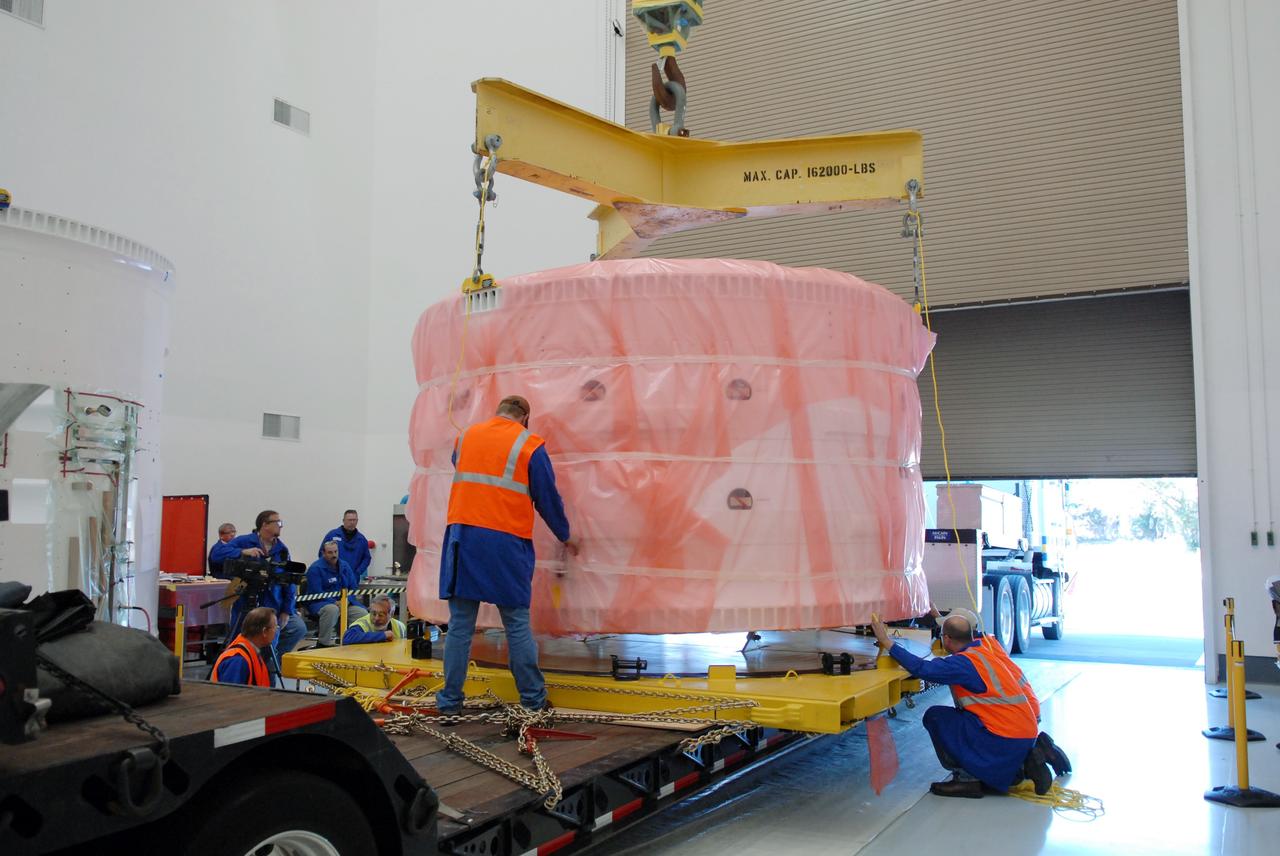
CAPE CANAVERAL, Fla. – At Astrotech in Titusville, Fla., the Ares I-X forward skirt, wrapped in a protective cover, is lowered by crane onto a transporter. The segment will be transferred to the Assembly and Refurbishment Facility, or ARF, at NASA's Kennedy Space Center in Florida. The forward skirt is the initial piece of first-stage hardware in preparation for the July 2009 test flight of the agency's next-generation spacecraft and launch vehicle system. Built entirely of armored steel, the 14,000-pound segment is seven feet tall and 12-1/4 feet wide. United Space Alliance, under a subcontract to ATK, will complete the integration and assembly of the forward skirt components in the ARF. It will then be moved to the Vehicle Assembly Building high bay 3 for stacking operations. Photo credit: NASA/Tim Jacobs
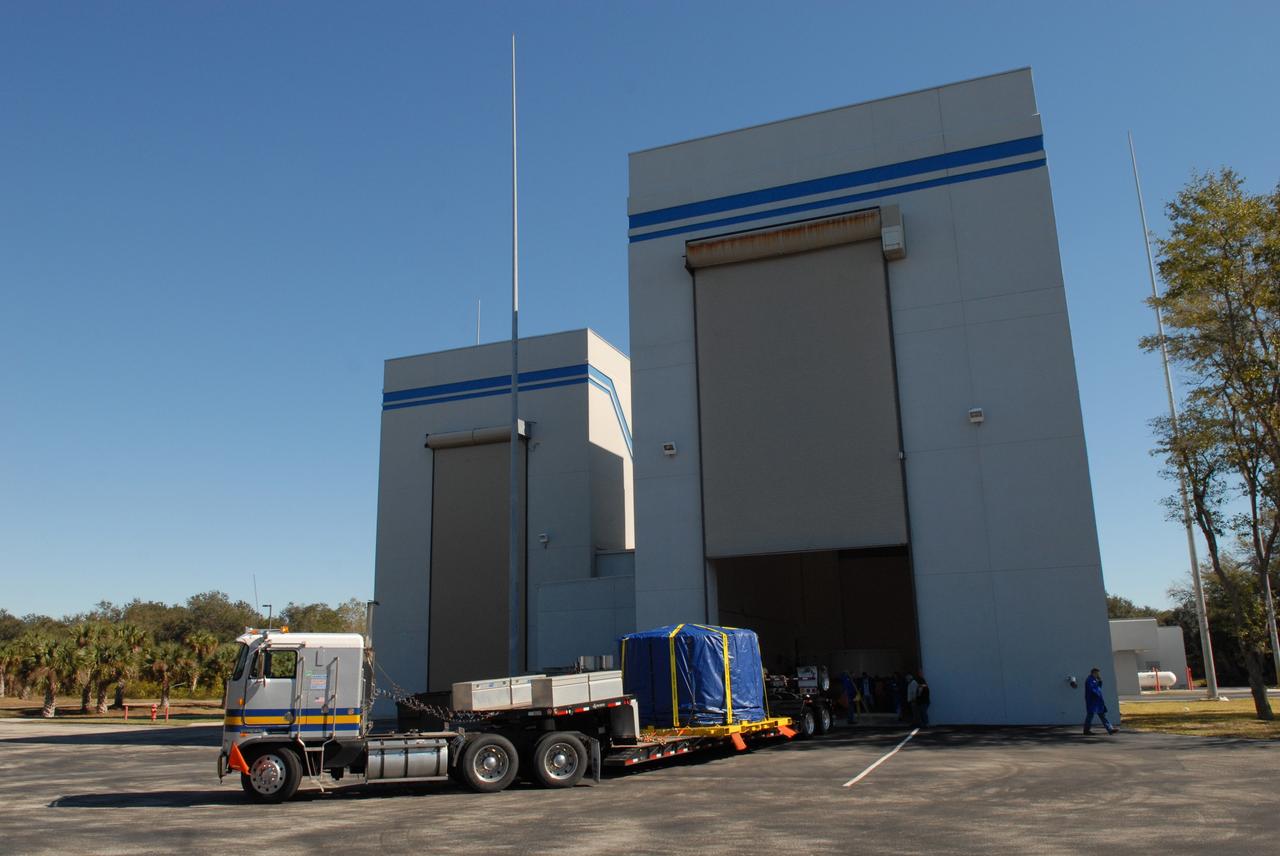
CAPE CANAVERAL, Fla. – Wrapped and strapped, the Ares I-X forward skirt is transported away from Astrotech in Titusville, Fla., heading for the Assembly and Refurbishment Facility, or ARF, at NASA's Kennedy Space Center in Florida. The forward skirt is the initial piece of first-stage hardware in preparation for the July 2009 test flight of the agency's next-generation spacecraft and launch vehicle system. Built entirely of armored steel, the 14,000-pound segment is seven feet tall and 12-1/4 feet wide. United Space Alliance, under a subcontract to ATK, will complete the integration and assembly of the forward skirt components in the ARF. It will then be moved to the Vehicle Assembly Building high bay 3 for stacking operations. Photo credit: NASA/Tim Jacobs
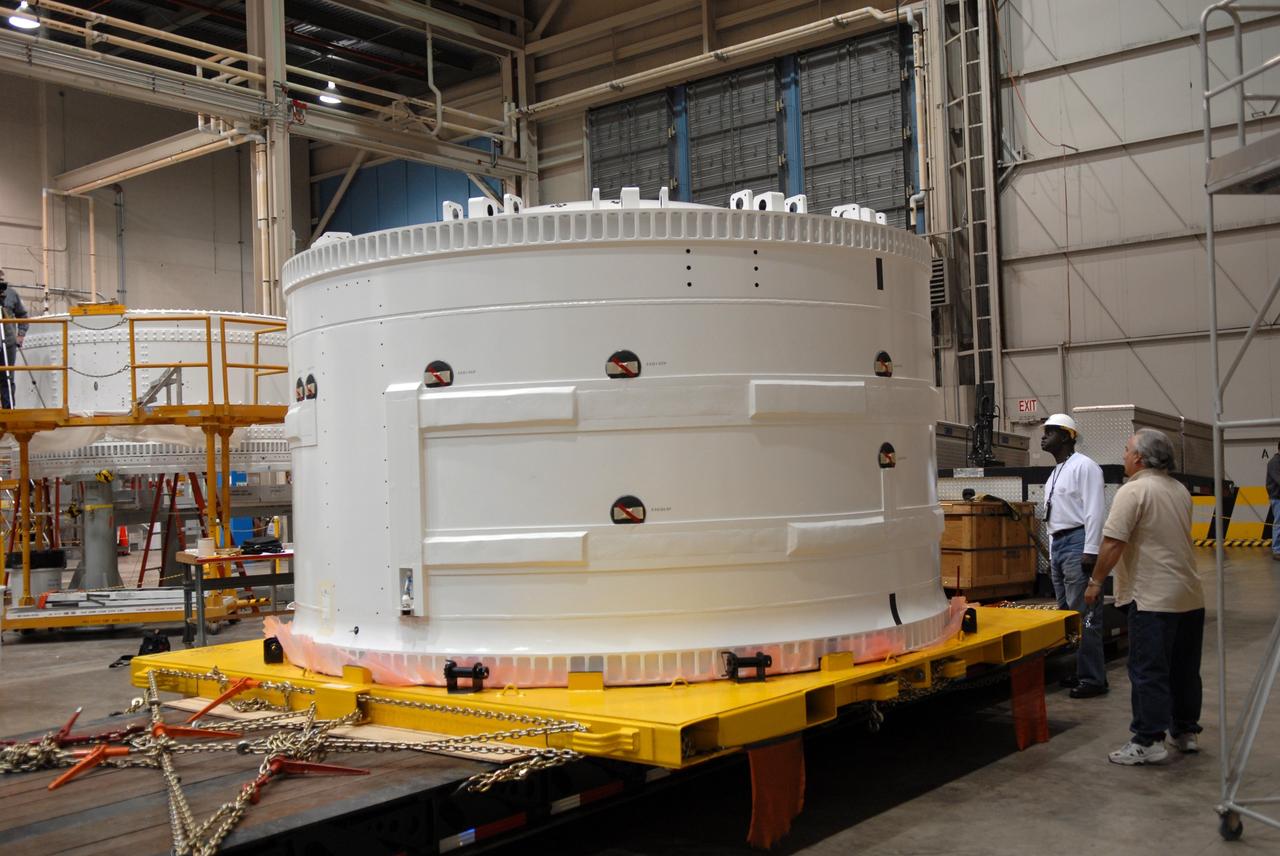
CAPE CANAVERAL, Fla. – Inside the Assembly and Refurbishment Facility, or ARF, at NASA's Kennedy Space Center in Florida, the pristine Ares I-X forward skirt is examined by workers after the protective cover was removed. The forward skirt is the initial piece of first-stage hardware in preparation for the July 2009 test flight of the agency's next-generation spacecraft and launch vehicle system. Built entirely of armored steel, the 14,000-pound segment is seven feet tall and 12-1/4 feet wide. United Space Alliance, under a subcontract to ATK, will complete the integration and assembly of the forward skirt components in the ARF. It will then be moved to the Vehicle Assembly Building high bay 3 for stacking operations. Photo credit: NASA/Tim Jacobs
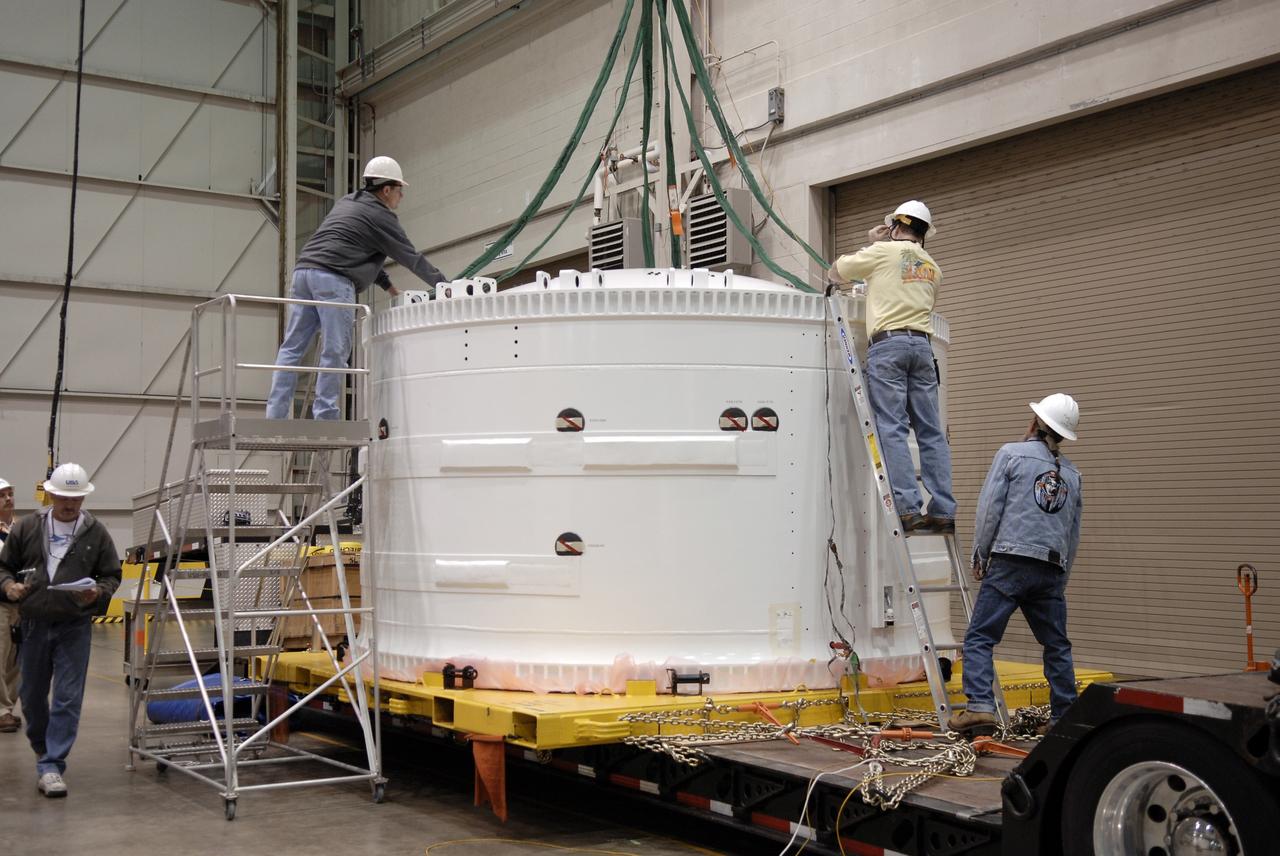
CAPE CANAVERAL, Fla. – Inside the Assembly and Refurbishment Facility at NASA's Kennedy Space Center in Florida, workers attach cables to the Ares I-X forward skirt, which was transported from the Astrotech facility. The segment will be lifted off the transporter and placed on supports on the floor. United Space Alliance, under a subcontract to ATK, will complete the integration and assembly of the forward skirt components in the ARF. It will then be moved to the Vehicle Assembly Building high bay 3 for stacking operations. The forward skirt is the initial piece of first-stage hardware in preparation for the July 2009 test flight of the agency's next-generation spacecraft and launch vehicle system. Built entirely of armored steel, the 14,000-pound segment is seven feet tall and 12-1/4 feet wide. Photo credit: NASA/Kim Shiflett
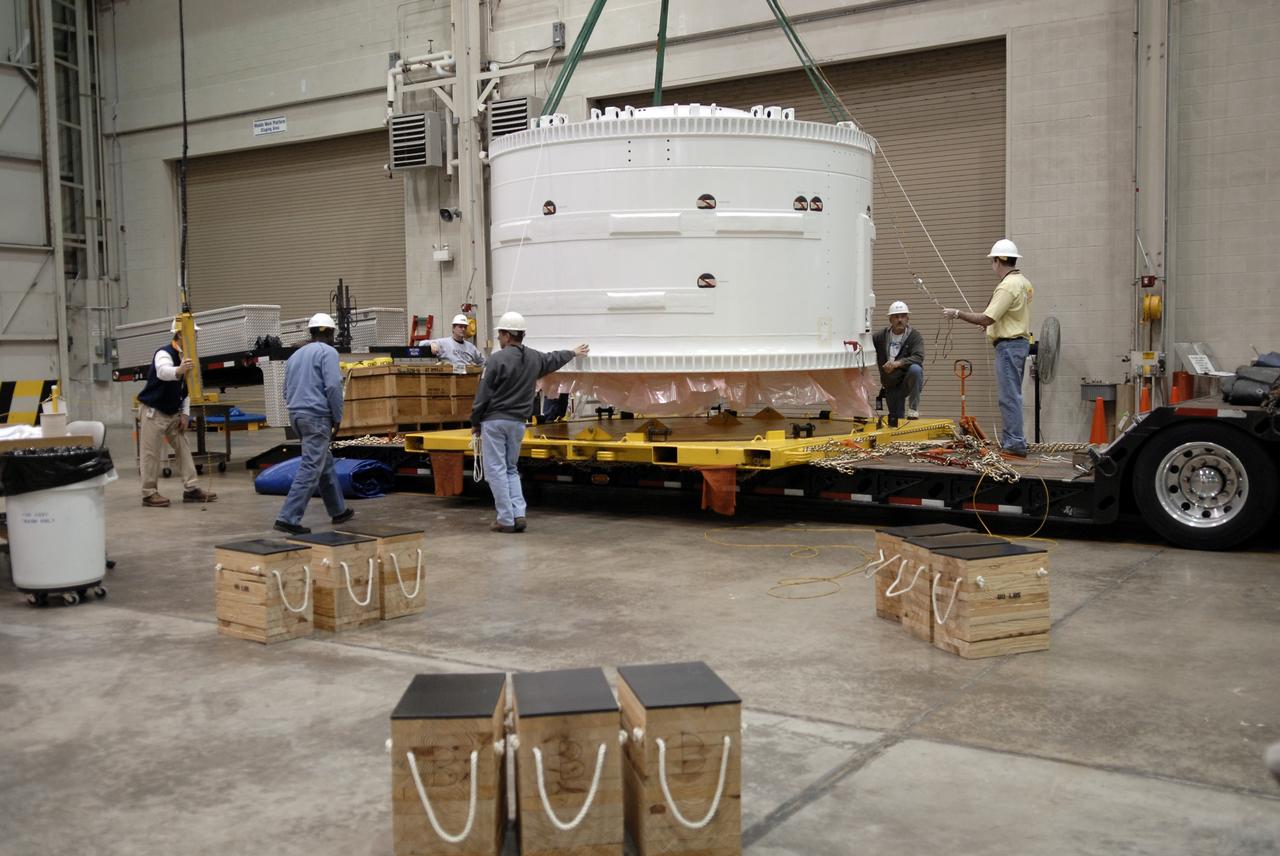
CAPE CANAVERAL, Fla. – Inside the Assembly and Refurbishment Facility at NASA's Kennedy Space Center in Florida, the Ares I-X forward skirt is lifted off the transporter that carried it from the Astrotech facility. The segment will be lifted off the transporter and placed on supports on the floor. United Space Alliance, under a subcontract to ATK, will complete the integration and assembly of the forward skirt components in the ARF. It will then be moved to the Vehicle Assembly Building high bay 3 for stacking operations. The forward skirt is the initial piece of first-stage hardware in preparation for the July 2009 test flight of the agency's next-generation spacecraft and launch vehicle system. Built entirely of armored steel, the 14,000-pound segment is seven feet tall and 12-1/4 feet wide. Photo credit: NASA/Kim Shiflett