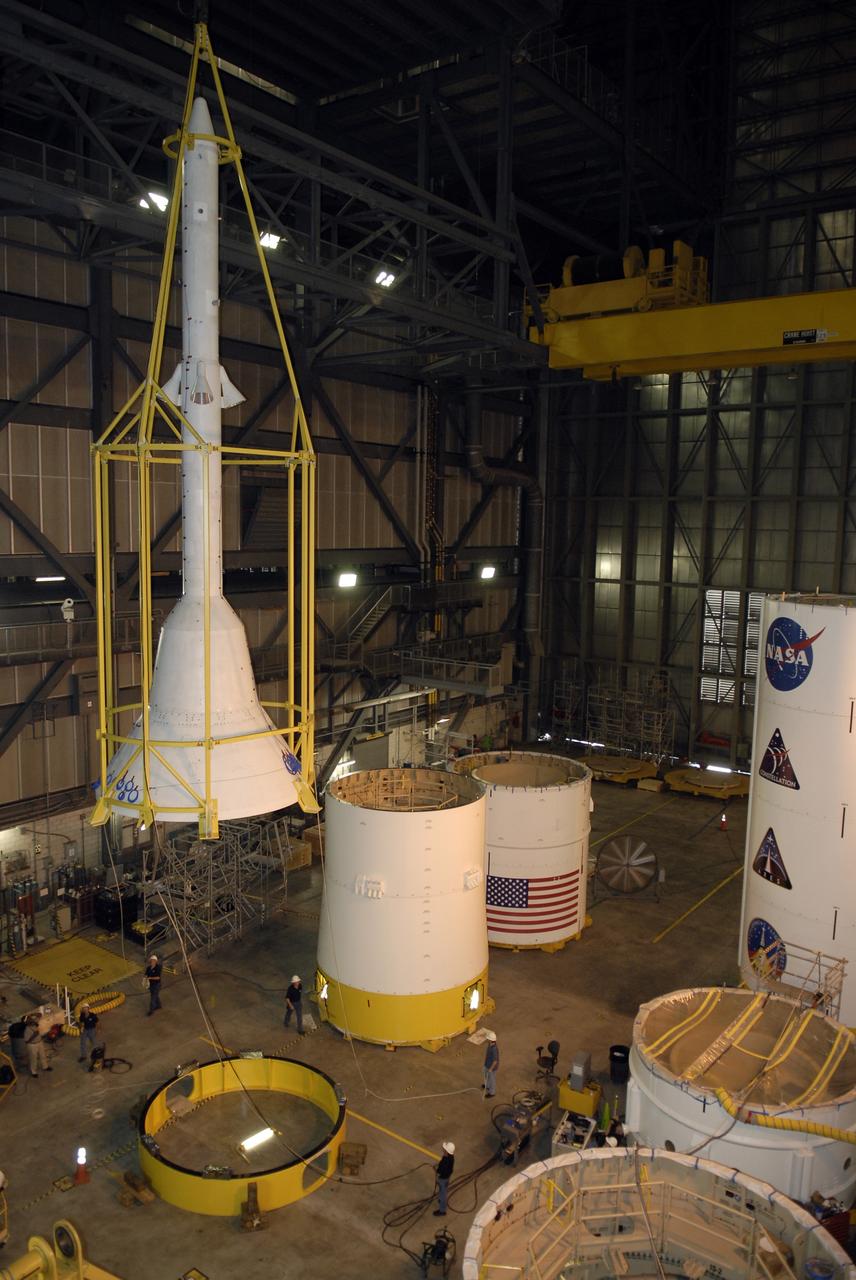
CAPE CANAVERAL, Fla. – In high bay 4 of the Vehicle Assembly Building at NASA's Kennedy Space Center in Florida, the framework known as the "birdcage" lifts the Ares I-X simulator crew module-launch abort system, or CM-LAS. The CM-LAS stack will be mated with the simulator service module-service adapter stack. Ares I-X is the flight test for the Ares I. The I-X flight will provide NASA an early opportunity to test and prove hardware, facilities and ground operations associated with Ares I. The launch of the 327-foot-tall, full-scale Ares I-X is targeted for August 2009. Photo credit: NASA/Kim Shiflett
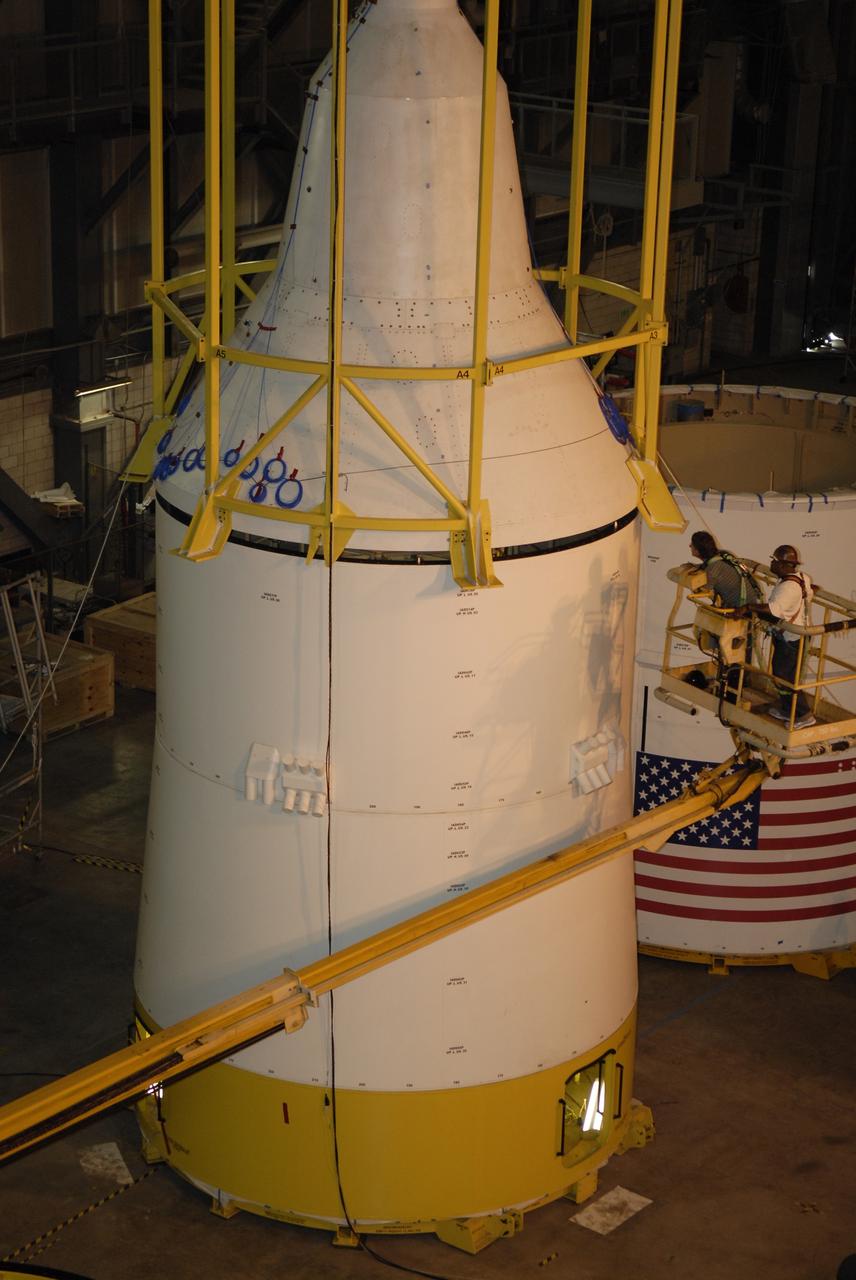
CAPE CANAVERAL, Fla. – In high bay 4 of the Vehicle Assembly Building at NASA's Kennedy Space Center in Florida, the framework known as the "birdcage" lowers the Ares I-X simulator crew module-launch abort system, or CM-LAS, onto the simulator service module-service adapter stack. Ares I-X is the flight test for the Ares I. The I-X flight will provide NASA an early opportunity to test and prove hardware, facilities and ground operations associated with Ares I. The launch of the 327-foot-tall, full-scale Ares I-X is targeted for August 2009. Photo credit: NASA/Kim Shiflett
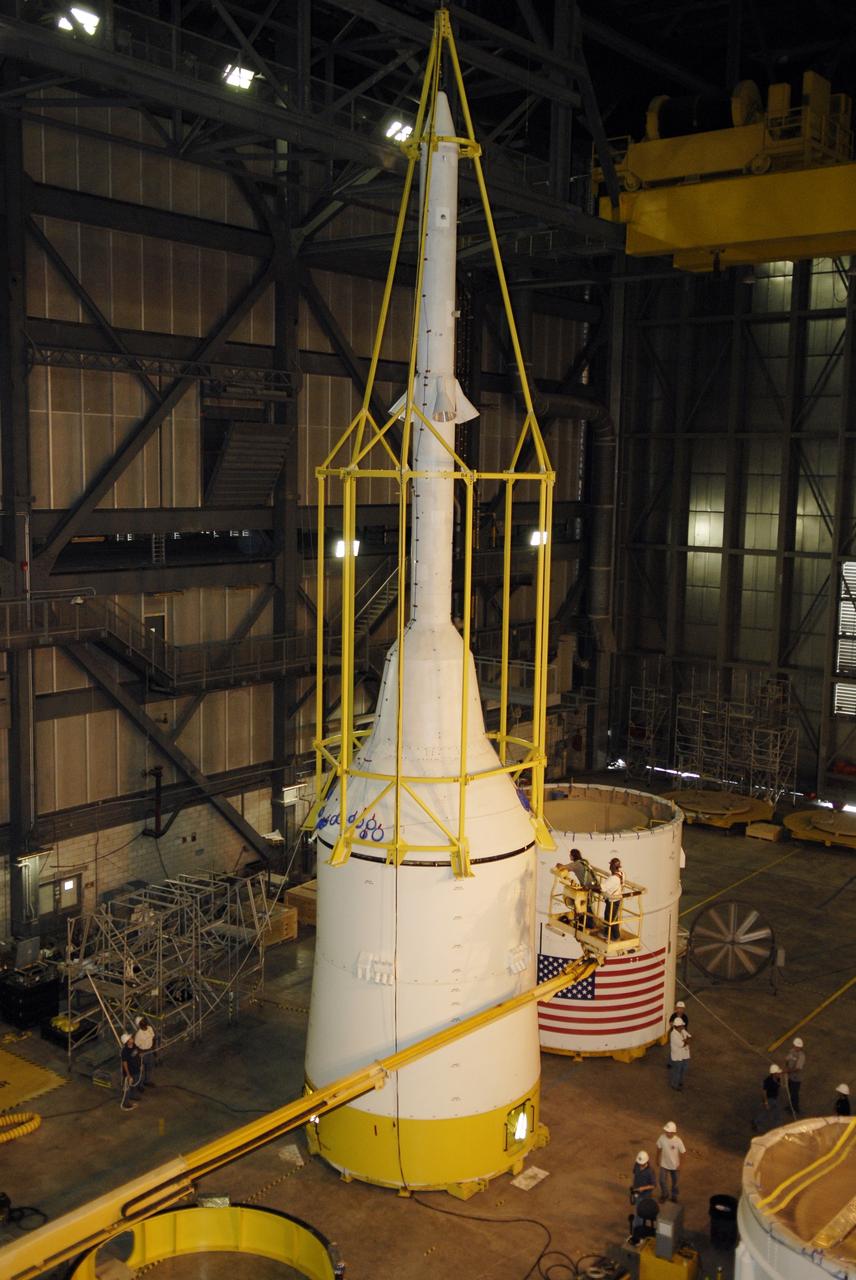
CAPE CANAVERAL, Fla. – In high bay 4 of the Vehicle Assembly Building at NASA's Kennedy Space Center in Florida, the framework known as the "birdcage" lowers the Ares I-X simulator crew module-launch abort system, or CM-LAS, onto the simulator service module-service adapter stack. Ares I-X is the flight test for the Ares I. The I-X flight will provide NASA an early opportunity to test and prove hardware, facilities and ground operations associated with Ares I. The launch of the 327-foot-tall, full-scale Ares I-X is targeted for August 2009. Photo credit: NASA/Kim Shiflett
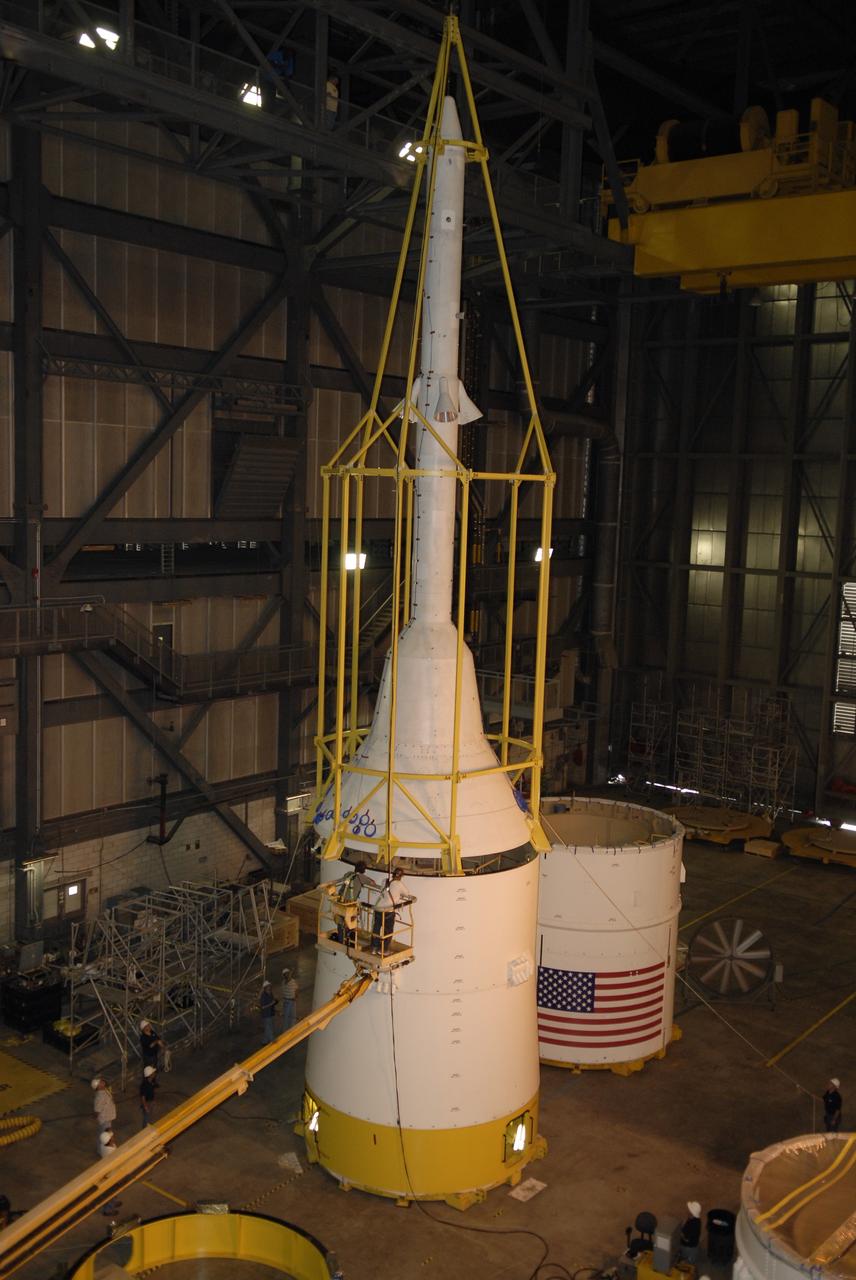
CAPE CANAVERAL, Fla. – In high bay 4 of the Vehicle Assembly Building at NASA's Kennedy Space Center in Florida, the framework known as the "birdcage" lowers the Ares I-X simulator crew module-launch abort system, or CM-LAS, onto the simulator service module-service adapter stack. Ares I-X is the flight test for the Ares I. The I-X flight will provide NASA an early opportunity to test and prove hardware, facilities and ground operations associated with Ares I. The launch of the 327-foot-tall, full-scale Ares I-X is targeted for August 2009. Photo credit: NASA/Kim Shiflett
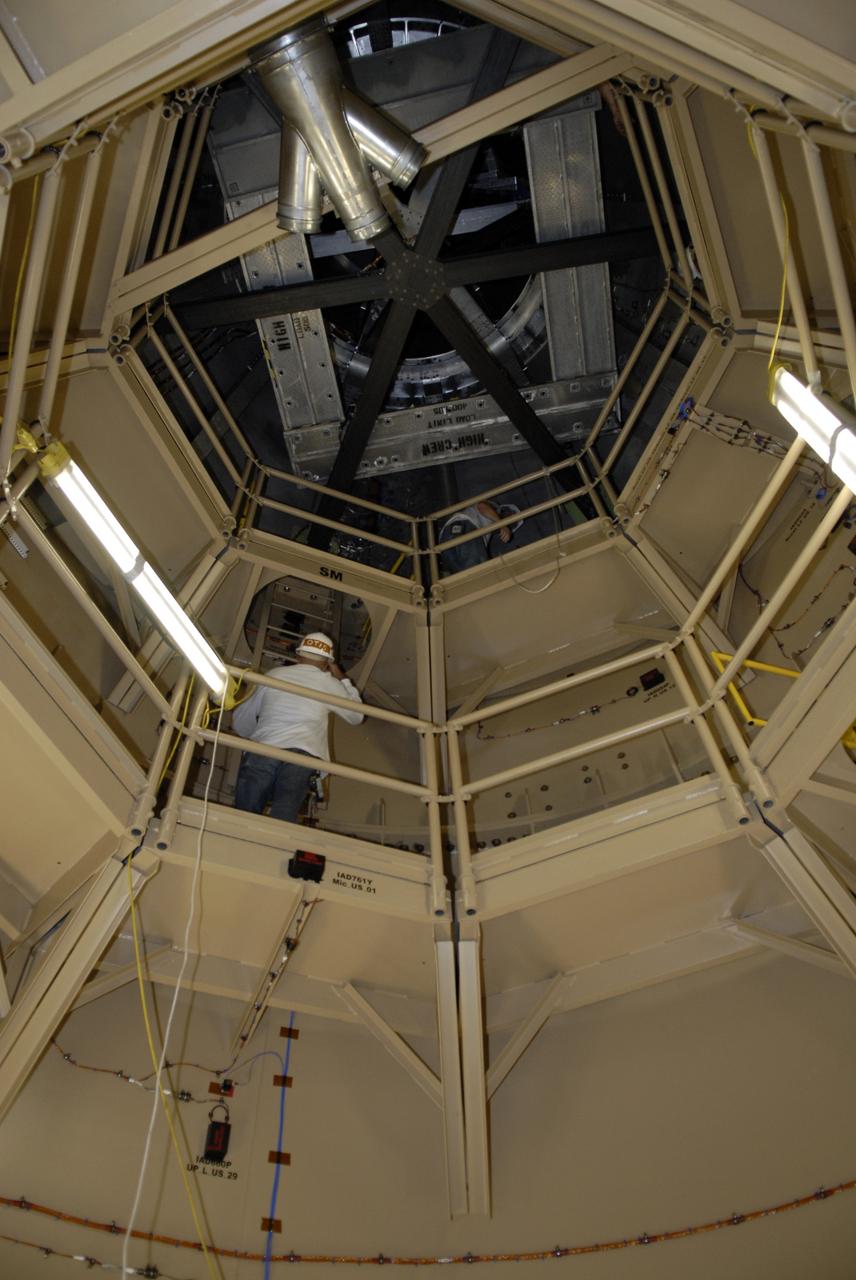
CAPE CANAVERAL, Fla. – In high bay 4 of the Vehicle Assembly Building at NASA's Kennedy Space Center in Florida, a technician checks the mating from the inside of the Ares I-X simulator crew module-launch abort system, or CM-LAS, with the simulator service module-service adapter stack. Ares I-X is the flight test for the Ares I. The I-X flight will provide NASA an early opportunity to test and prove hardware, facilities and ground operations associated with Ares I. The launch of the 327-foot-tall, full-scale Ares I-X is targeted for August 2009. Photo credit: NASA/Kim Shiflett
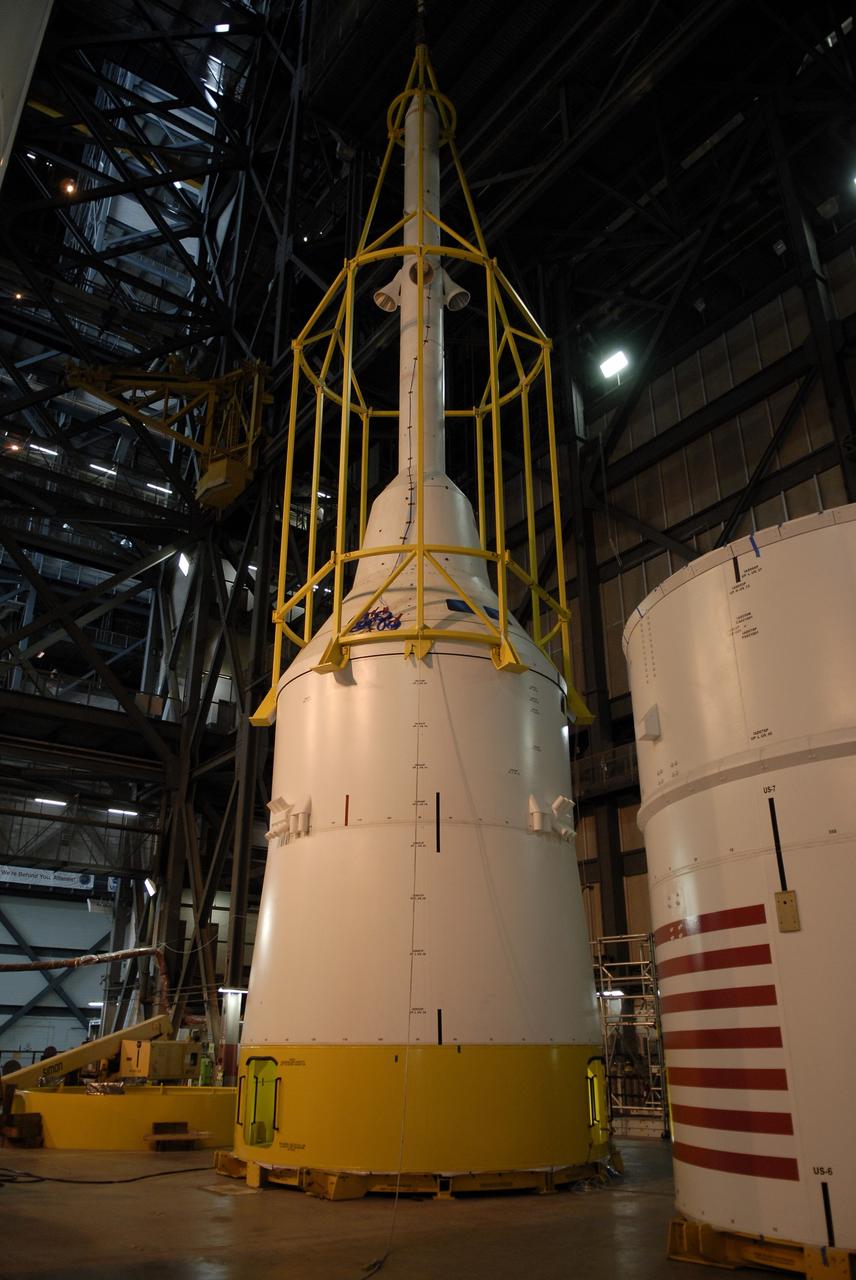
CAPE CANAVERAL, Fla. – In high bay 4 of the Vehicle Assembly Building at NASA's Kennedy Space Center in Florida, the framework known as the "birdcage" lowers the Ares I-X simulator crew module-launch abort system, or CM-LAS, onto the simulator service module-service adapter stack. Ares I-X is the flight test for the Ares I. The I-X flight will provide NASA an early opportunity to test and prove hardware, facilities and ground operations associated with Ares I. The launch of the 327-foot-tall, full-scale Ares I-X is targeted for August 2009. Photo credit: NASA/Kim Shiflett
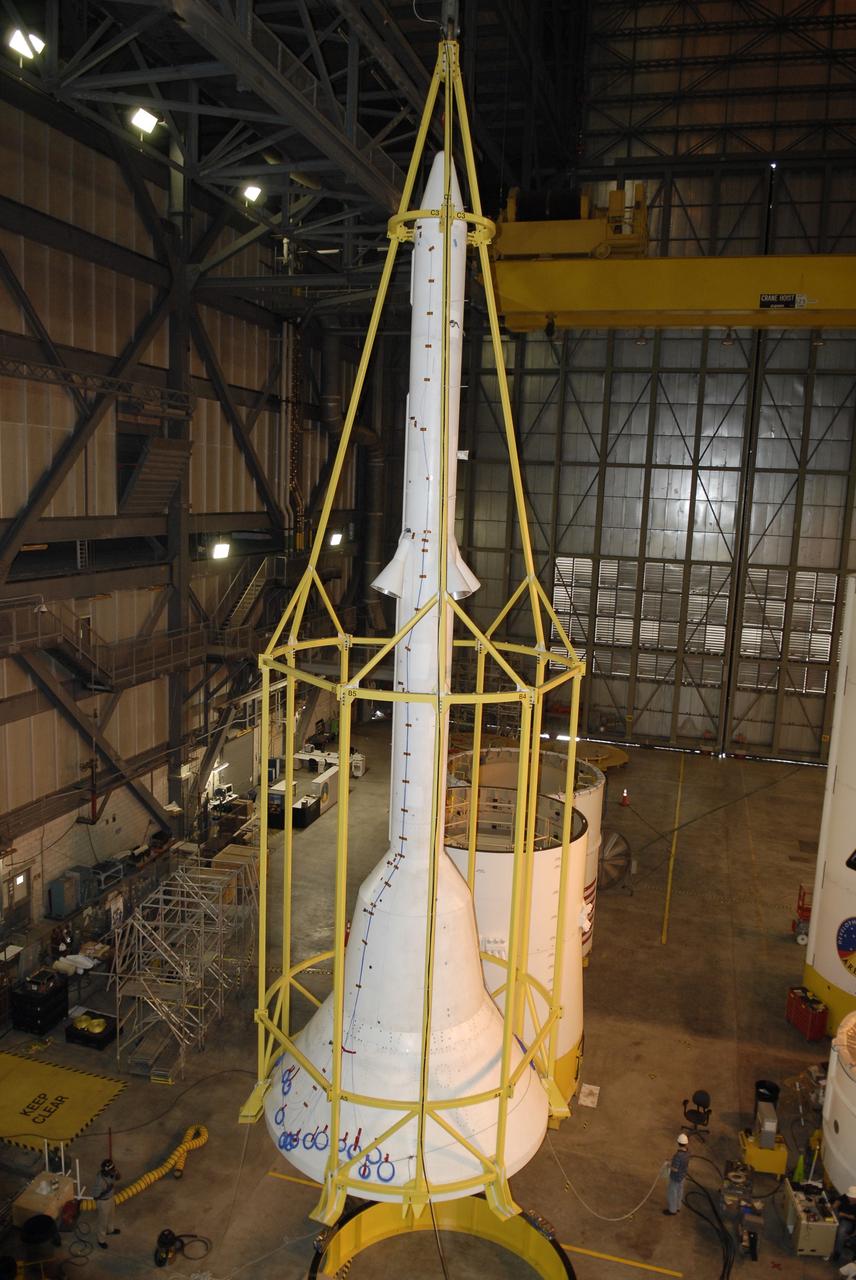
CAPE CANAVERAL, Fla. – In high bay 4 of the Vehicle Assembly Building at NASA's Kennedy Space Center in Florida, the framework known as the "birdcage" is placed over the Ares I-X simulator crew module-launch abort system, or CM-LAS. The birdcage will be used to lift the CM-LAS to mate the stack with the simulator service module-service adapter stack. Ares I-X is the flight test for the Ares I. The I-X flight will provide NASA an early opportunity to test and prove hardware, facilities and ground operations associated with Ares I. The launch of the 327-foot-tall, full-scale Ares I-X is targeted for August 2009. Photo credit: NASA/Kim Shiflett