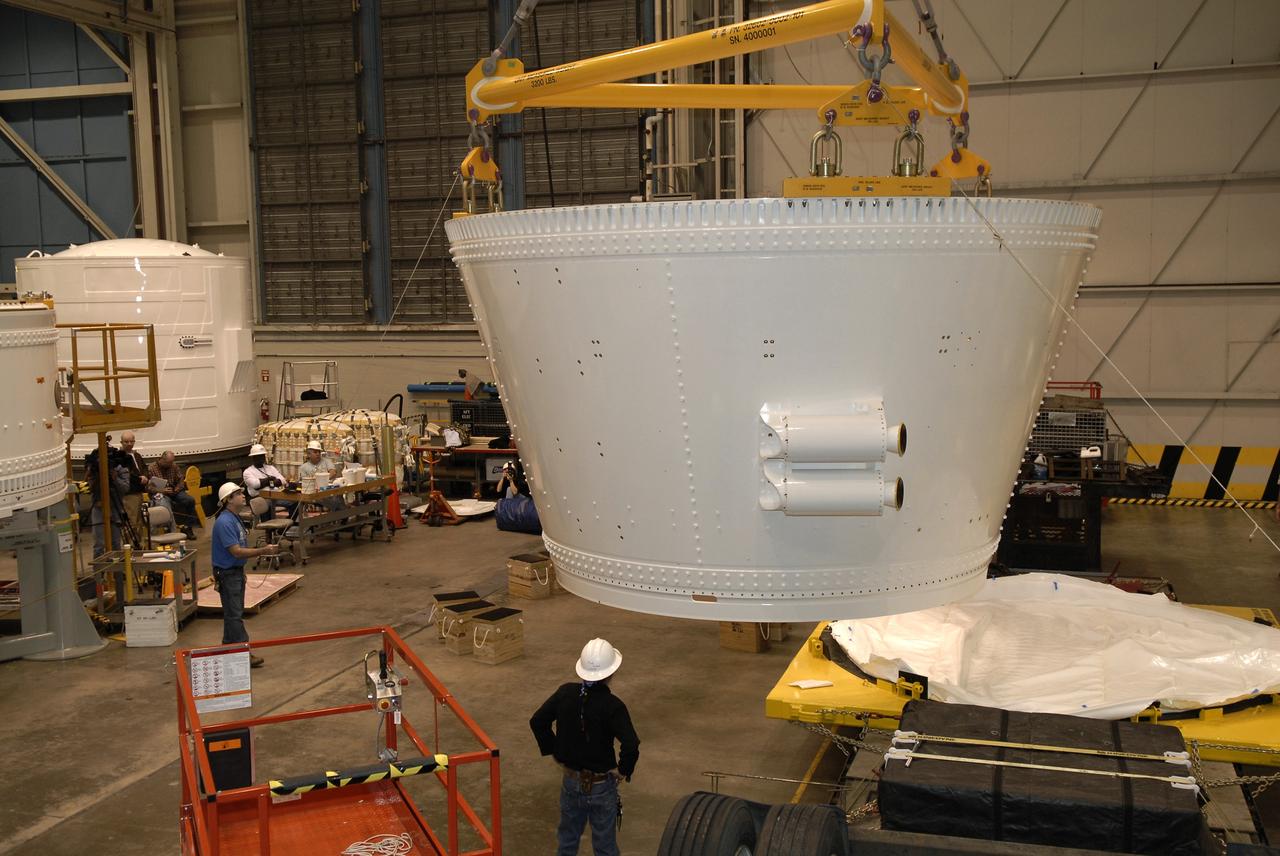
CAPE CANAVERAL, Fla. – In the Assembly and Refurbishment Facility, or ARF, at NASA's Kennedy Space Center, an overhead crane lifts the frustum for the Ares I-X test rocket from its transporter. The frustum is the last manufactured section of the Ares I-X. The frustum will be moved from the transporter to supports on the floor. Resembling a giant funnel, the frustum's function is to transition the primary flight loads from the rocket's upper stage to the first stage. The frustum is located between the forward skirt extension and the upper stage of the Ares I-X. The frustum will be integrated with the forward skirt and forward skirt extension, which already are in the ARF. That will complete the forward assembly. The assembly then will be moved to the Vehicle Assembly Building for stacking operations, which are scheduled to begin in April. Photo credit: NASA/Kim Shiflett
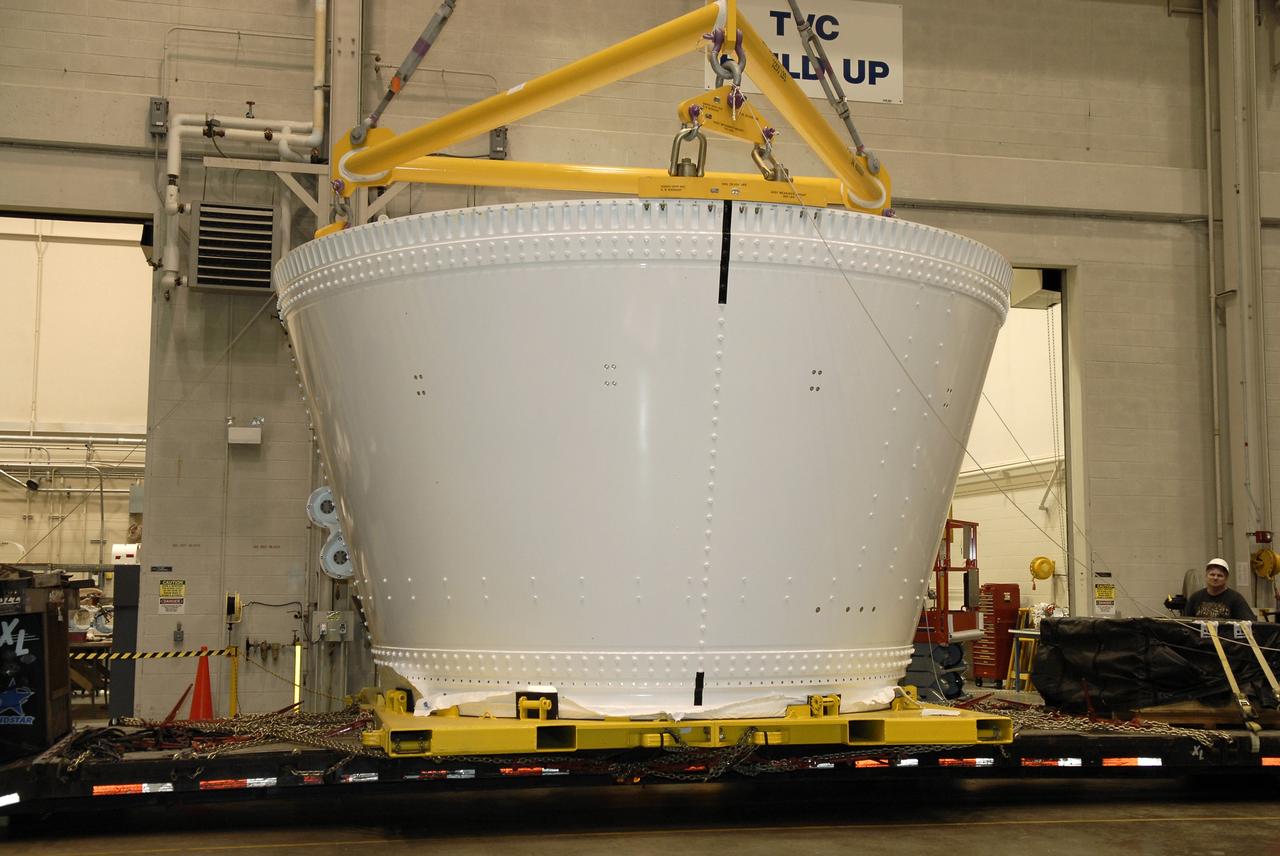
CAPE CANAVERAL, Fla. – In the Assembly and Refurbishment Facility, or ARF, at NASA's Kennedy Space Center, an overhead crane is attached to the frustum for the Ares I-X test rocket. The frustum is the last manufactured section of the Ares I-X. The frustum will be moved from the transporter to supports on the floor. Resembling a giant funnel, the frustum's function is to transition the primary flight loads from the rocket's upper stage to the first stage. The frustum is located between the forward skirt extension and the upper stage of the Ares I-X. The frustum will be integrated with the forward skirt and forward skirt extension, which already are in the ARF. That will complete the forward assembly. The assembly then will be moved to the Vehicle Assembly Building for stacking operations, which are scheduled to begin in April. Photo credit: NASA/Kim Shiflett
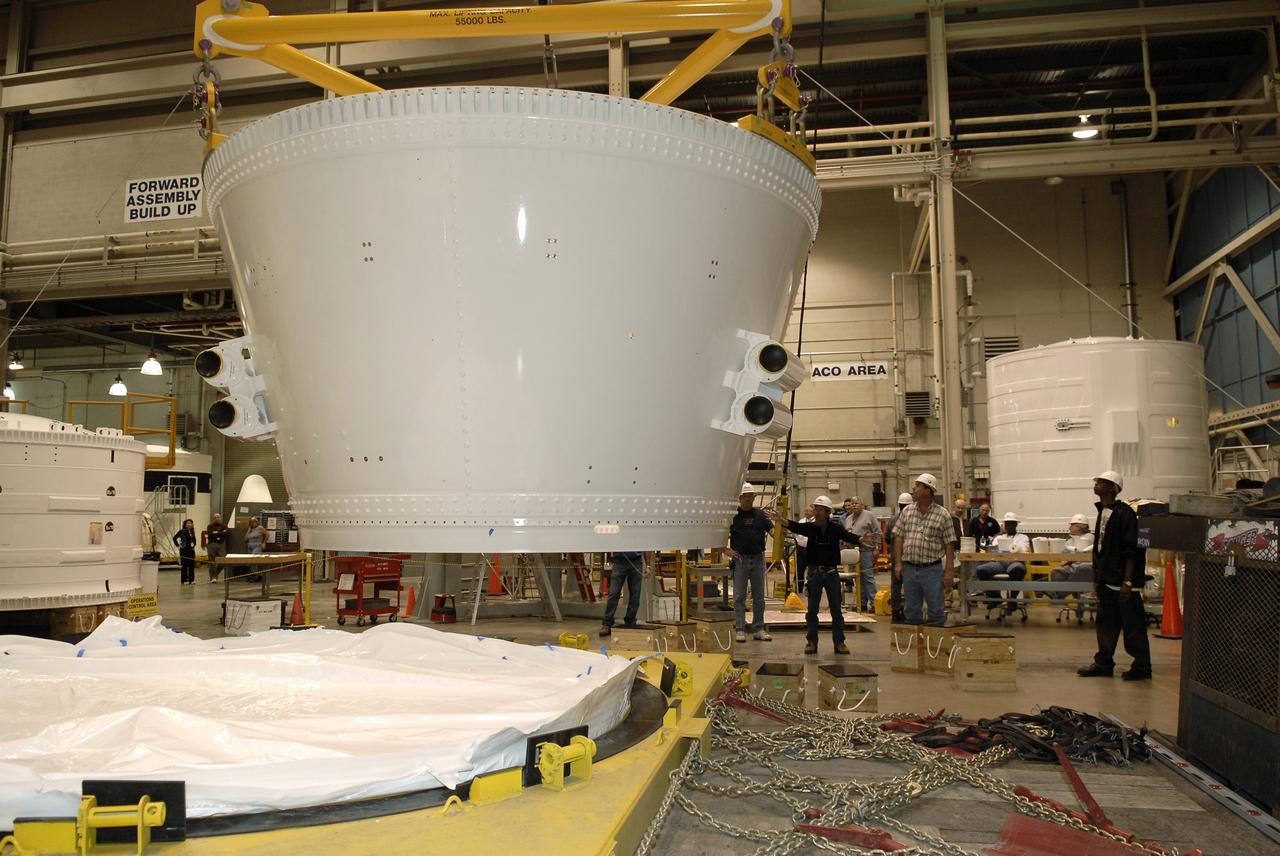
CAPE CANAVERAL, Fla. – In the Assembly and Refurbishment Facility, or ARF, at NASA's Kennedy Space Center, an overhead crane lifts the frustum for the Ares I-X test rocket from its transporter. The frustum is the last manufactured section of the Ares I-X. The frustum will be moved from the transporter to supports on the floor. Resembling a giant funnel, the frustum's function is to transition the primary flight loads from the rocket's upper stage to the first stage. The frustum is located between the forward skirt extension and the upper stage of the Ares I-X. The frustum will be integrated with the forward skirt and forward skirt extension, which already are in the ARF. That will complete the forward assembly. The assembly then will be moved to the Vehicle Assembly Building for stacking operations, which are scheduled to begin in April. Photo credit: NASA/Kim Shiflett
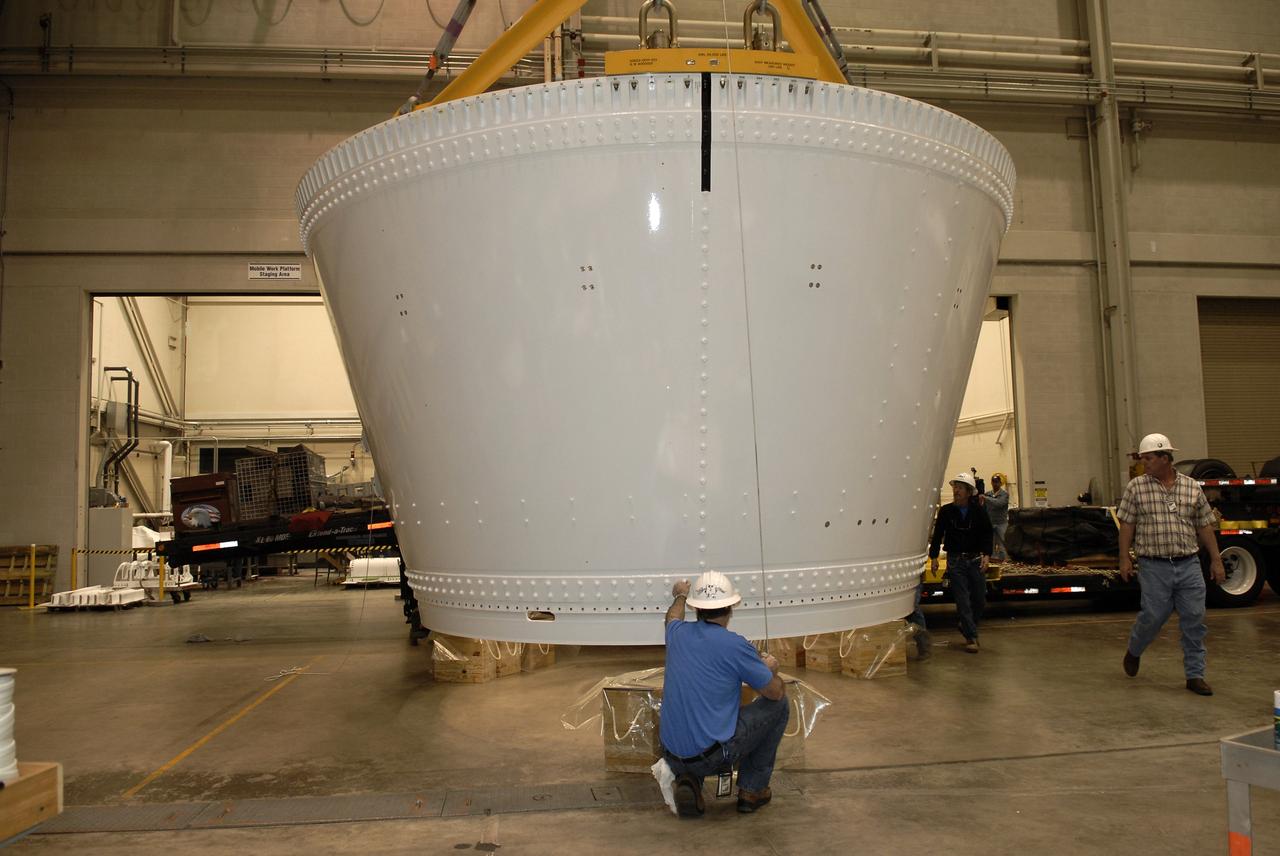
CAPE CANAVERAL, Fla. – In the Assembly and Refurbishment Facility, or ARF, at NASA's Kennedy Space Center, an overhead crane lowers the frustum for the Ares I-X test rocket onto supports on the floor. The frustum is the last manufactured section of the Ares I-X. Resembling a giant funnel, the frustum's function is to transition the primary flight loads from the rocket's upper stage to the first stage. The frustum is located between the forward skirt extension and the upper stage of the Ares I-X. The frustum will be integrated with the forward skirt and forward skirt extension, which already are in the ARF. That will complete the forward assembly. The assembly then will be moved to the Vehicle Assembly Building for stacking operations, which are scheduled to begin in April. Photo credit: NASA/Kim Shiflett
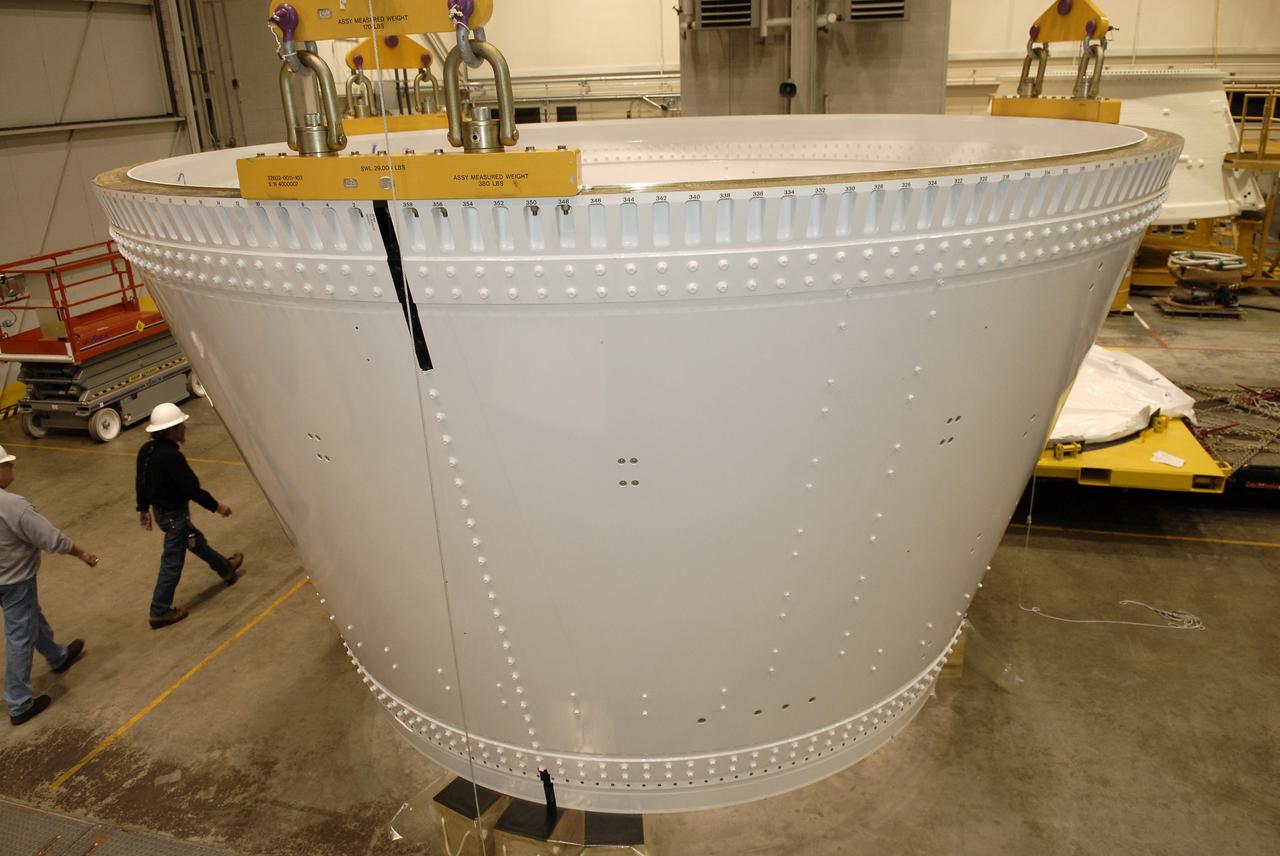
CAPE CANAVERAL, Fla. – In the Assembly and Refurbishment Facility, or ARF, at NASA's Kennedy Space Center, an overhead crane lowers the frustum for the Ares I-X test rocket onto supports on the floor. The frustum is the last manufactured section of the Ares I-X. Resembling a giant funnel, the frustum's function is to transition the primary flight loads from the rocket's upper stage to the first stage. The frustum is located between the forward skirt extension and the upper stage of the Ares I-X. The frustum will be integrated with the forward skirt and forward skirt extension, which already are in the ARF. That will complete the forward assembly. The assembly then will be moved to the Vehicle Assembly Building for stacking operations, which are scheduled to begin in April. Photo credit: NASA/Kim Shiflett
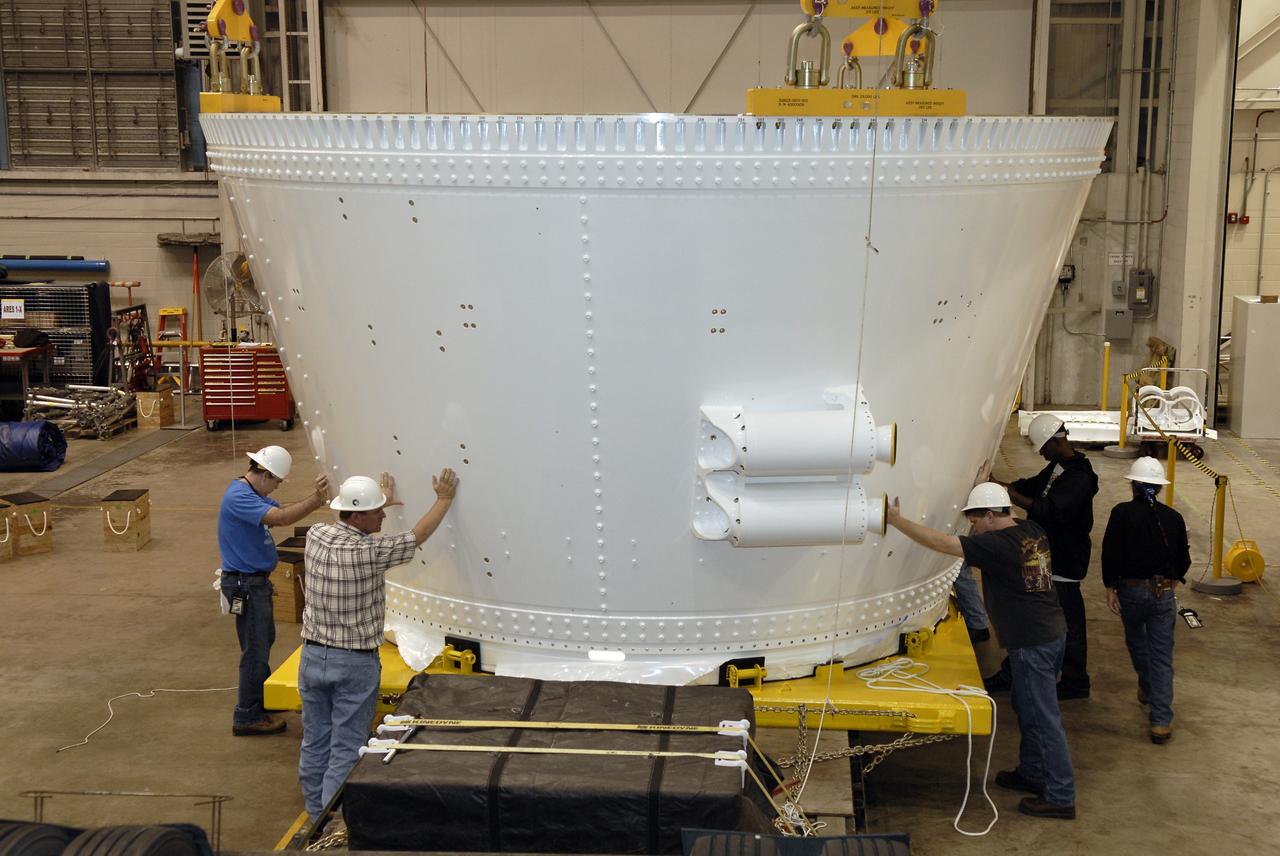
CAPE CANAVERAL, Fla. – In the Assembly and Refurbishment Facility, or ARF, at NASA's Kennedy Space Center, workers help guide the frustum as a cable lifts it from the transporter. The last manufactured section of the Ares I-X test rocket, the frustum will be moved from the transporter to supports on the floor. Resembling a giant funnel, the frustum's function is to transition the primary flight loads from the rocket's upper stage to the first stage. The frustum is located between the forward skirt extension and the upper stage of the Ares I-X. The frustum will be integrated with the forward skirt and forward skirt extension, which already are in the ARF. That will complete the forward assembly. The assembly then will be moved to the Vehicle Assembly Building for stacking operations, which are scheduled to begin in April. Photo credit: NASA/Kim Shiflett
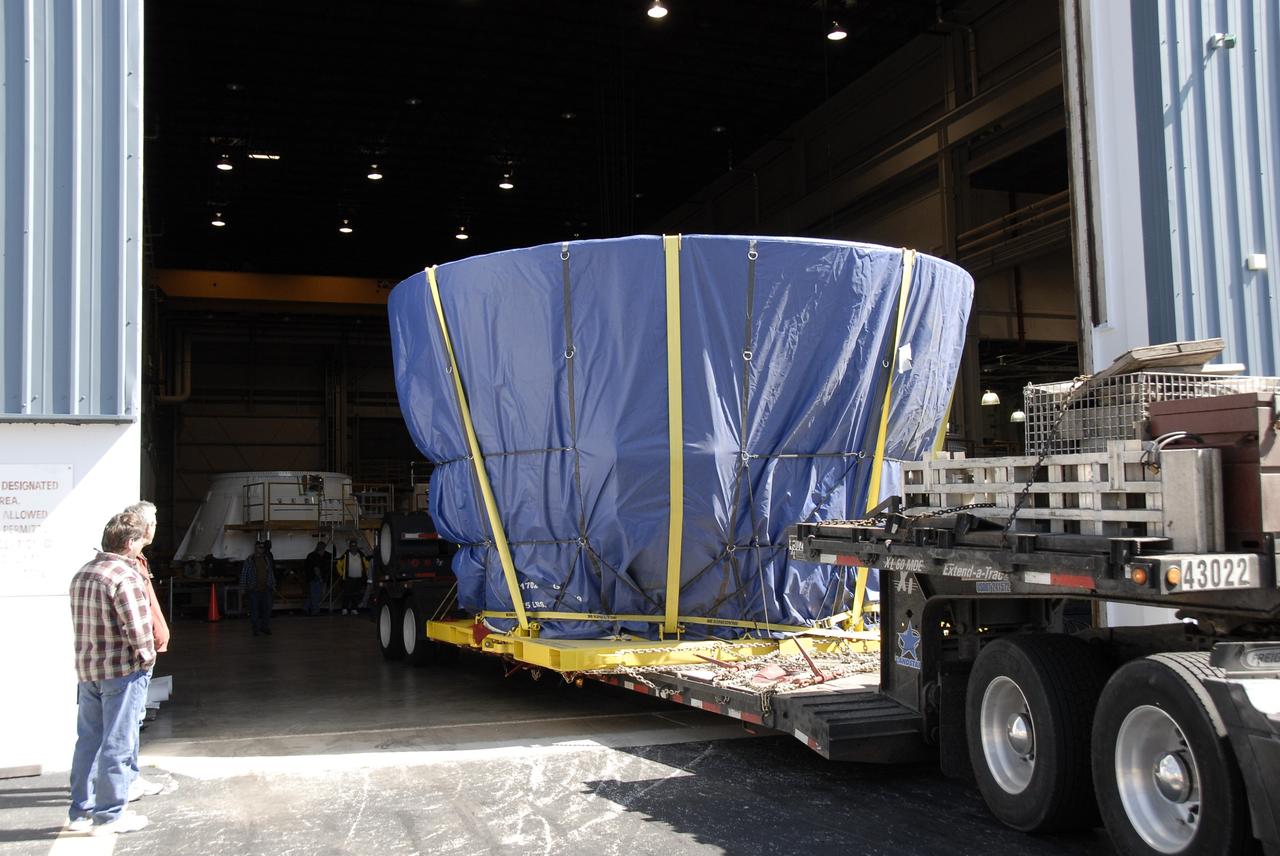
CAPE CANAVERAL, Fla. – The last newly manufactured section of the Ares I-X test rocket, the frustum, is offloaded in the Assembly and Refurbishment Facility of NASA's Kennedy Space Center. Resembling a giant funnel, the frustum's function is to transition the primary flight loads from the rocket's upper stage to the first stage. The frustum is located between the forward skirt extension and the upper stage of the Ares I-X. Weighing in at approximately 13,000 pounds, the 10-foot-long section is composed of two aluminum rings attached to a truncated conic section. The large diameter of the cone is 18 feet and the small diameter is 12 feet. The cone is 1.25 inches thick. The frustum will be integrated with the forward skirt and forward skirt extension, which already are in the Assembly and Refurbishment Facility. That will complete the forward assembly. The assembly then will be moved to the Vehicle Assembly Building for stacking operations, which are scheduled to begin in April. Manufactured by Major Tool and Machine Inc. in Indiana under a subcontract with Alliant Techsystems Inc., or ATK, the Ares I-X is targeted to launch in the summer of 2009. The flight will provide NASA with an early opportunity to test and prove hardware, facilities and ground operations associated with the Ares I launch vehicle. The flight test also will bring NASA a step closer to its exploration goals of sending humans to the moon and destinations beyond. Photo credit: NASA/Kim Shiflett
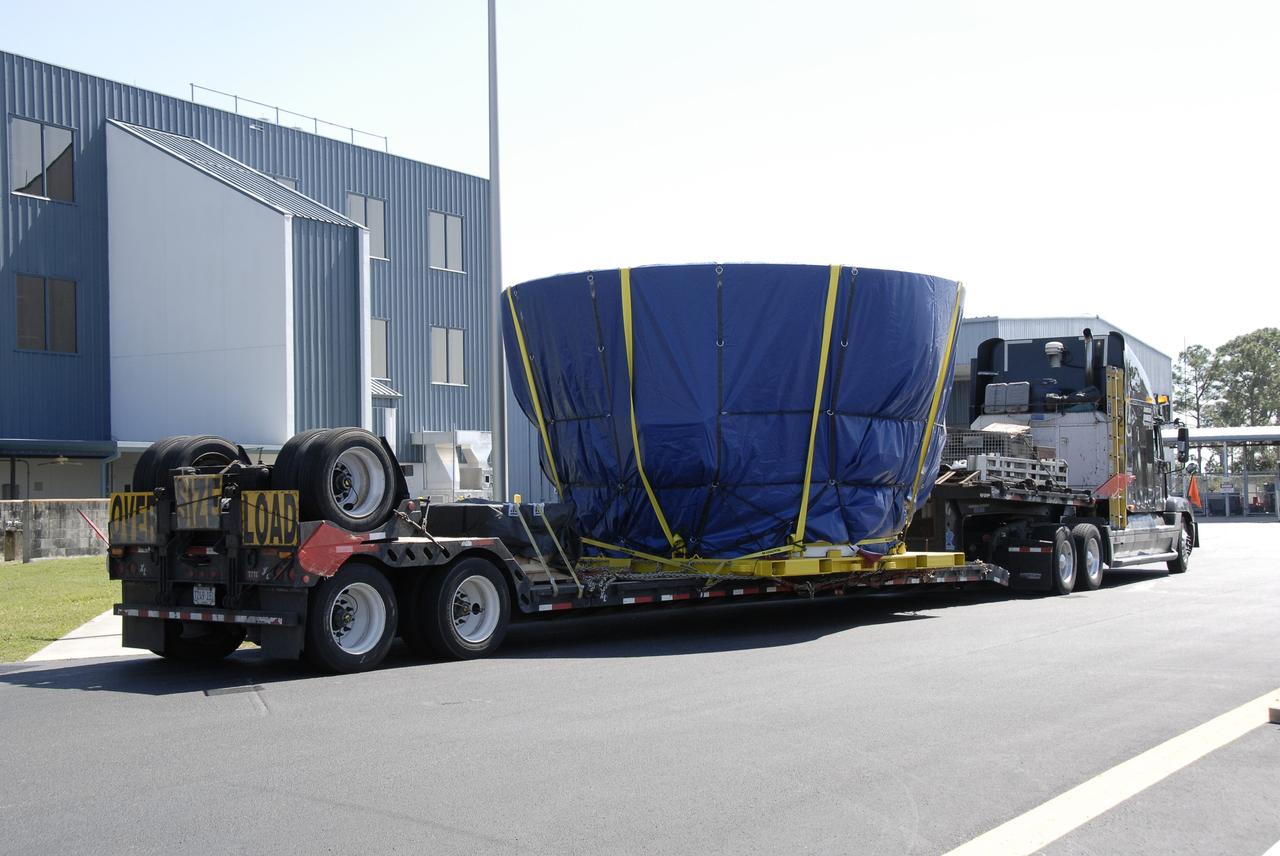
CAPE CANAVERAL, Fla. – The last newly manufactured section of the Ares I-X test rocket, the frustum, arrives at the Assembly and Refurbishment Facility of NASA's Kennedy Space Center. Resembling a giant funnel, the frustum's function is to transition the primary flight loads from the rocket's upper stage to the first stage. The frustum is located between the forward skirt extension and the upper stage of the Ares I-X. Weighing in at approximately 13,000 pounds, the 10-foot-long section is composed of two aluminum rings attached to a truncated conic section. The large diameter of the cone is 18 feet and the small diameter is 12 feet. The cone is 1.25 inches thick. The frustum will be integrated with the forward skirt and forward skirt extension, which already are in the Assembly and Refurbishment Facility. That will complete the forward assembly. The assembly then will be moved to the Vehicle Assembly Building for stacking operations, which are scheduled to begin in April. Manufactured by Major Tool and Machine Inc. in Indiana under a subcontract with Alliant Techsystems Inc., or ATK, the Ares I-X is targeted to launch in the summer of 2009. The flight will provide NASA with an early opportunity to test and prove hardware, facilities and ground operations associated with the Ares I launch vehicle. The flight test also will bring NASA a step closer to its exploration goals of sending humans to the moon and destinations beyond. Photo credit: NASA/Kim Shiflett
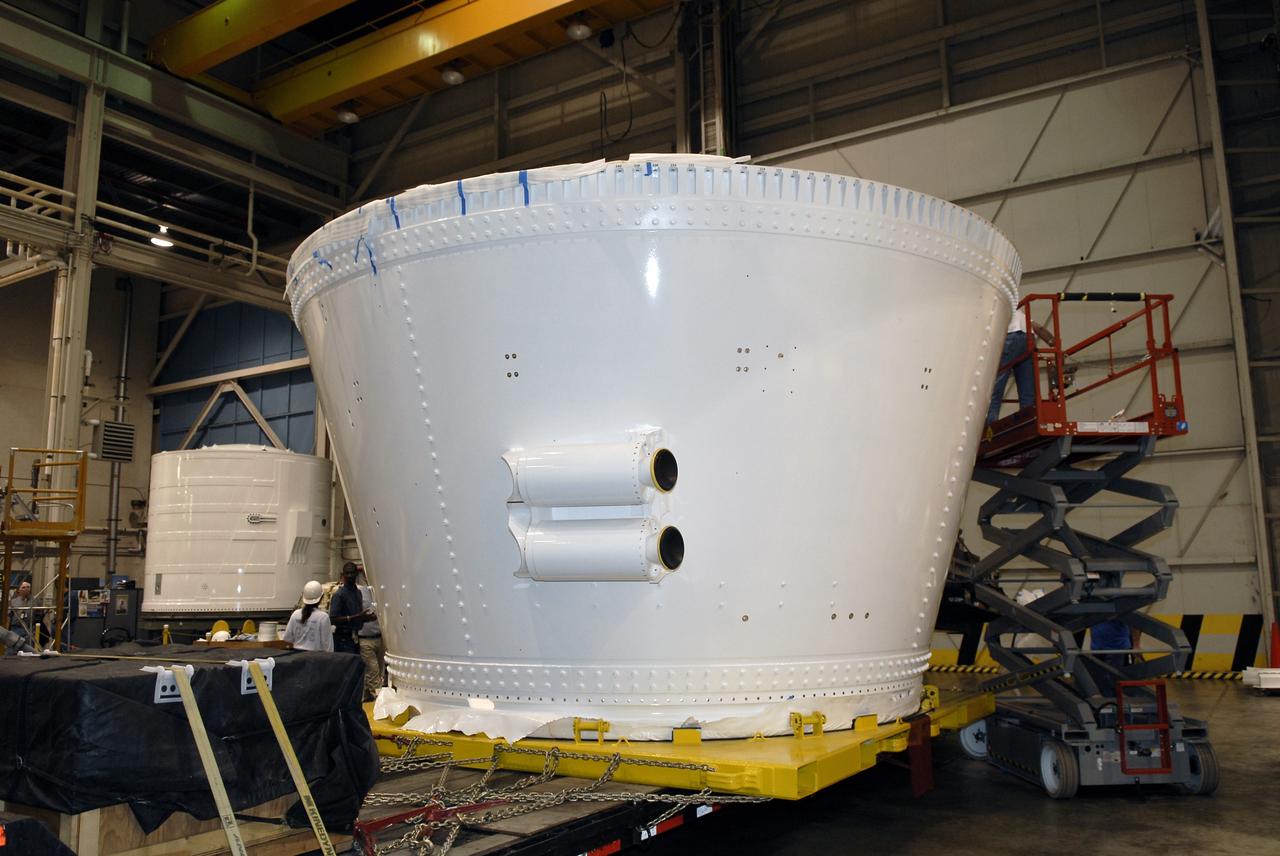
CAPE CANAVERAL, Fla. – In the Assembly and Refurbishment Facility of NASA's Kennedy Space Center, the last newly manufactured section of the Ares I-X test rocket, the frustum, is revealed after removal of the shipping covers. Resembling a giant funnel, the frustum's function is to transition the primary flight loads from the rocket's upper stage to the first stage. The frustum is located between the forward skirt extension and the upper stage of the Ares I-X. Weighing in at approximately 13,000 pounds, the 10-foot-long section is composed of two aluminum rings attached to a truncated conic section. The large diameter of the cone is 18 feet and the small diameter is 12 feet. The cone is 1.25 inches thick. The frustum will be integrated with the forward skirt and forward skirt extension, which already are in the Assembly and Refurbishment Facility. That will complete the forward assembly. The assembly then will be moved to the Vehicle Assembly Building for stacking operations, which are scheduled to begin in April. Manufactured by Major Tool and Machine Inc. in Indiana under a subcontract with Alliant Techsystems Inc., or ATK, the Ares I-X is targeted to launch in the summer of 2009. The flight will provide NASA with an early opportunity to test and prove hardware, facilities and ground operations associated with the Ares I launch vehicle. The flight test also will bring NASA a step closer to its exploration goals of sending humans to the moon and destinations beyond. Photo credit: NASA/Kim Shiflett
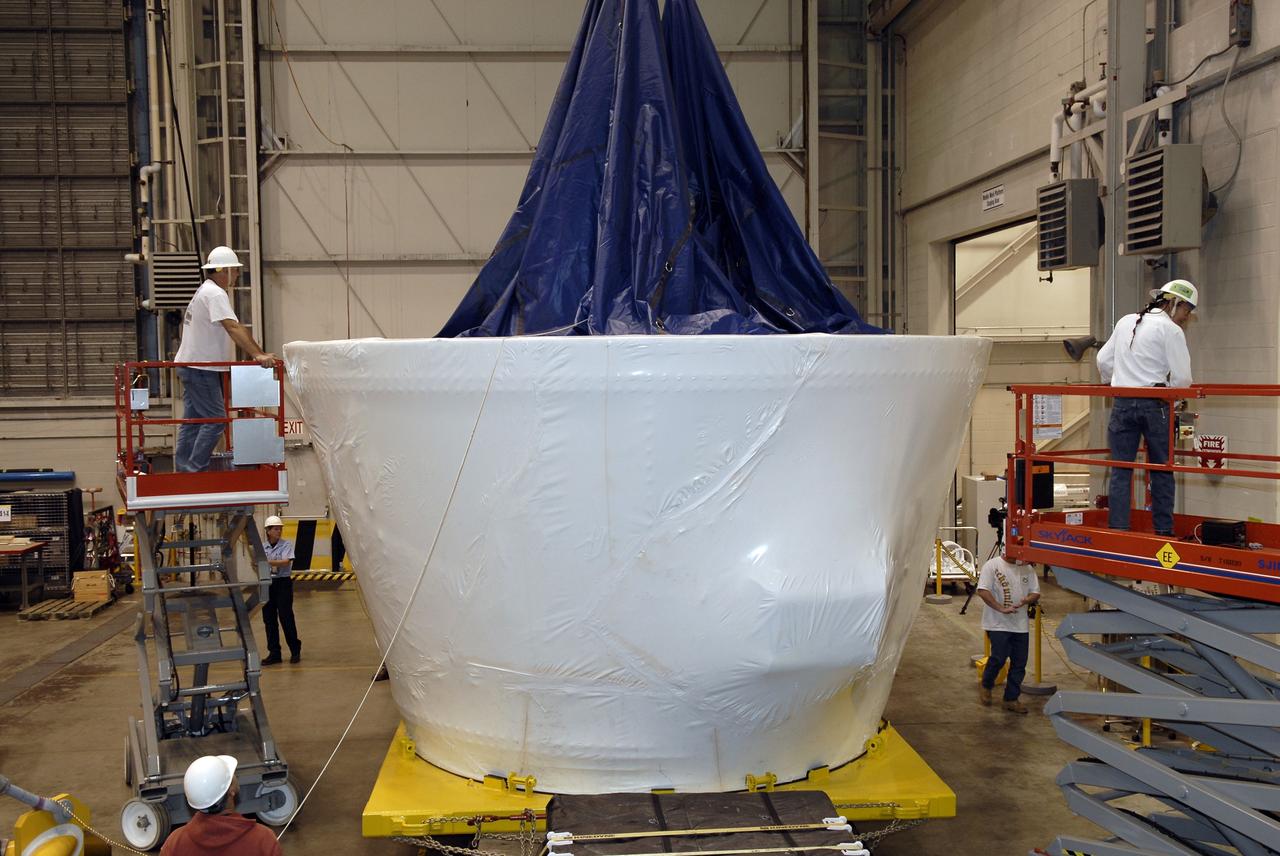
CAPE CANAVERAL, Fla. – In the Assembly and Refurbishment Facility of NASA's Kennedy Space Center, workers remove the cover from the frustum, the last newly manufactured section of the Ares I-X test rocket. Resembling a giant funnel, the frustum's function is to transition the primary flight loads from the rocket's upper stage to the first stage. The frustum is located between the forward skirt extension and the upper stage of the Ares I-X. Weighing in at approximately 13,000 pounds, the 10-foot-long section is composed of two aluminum rings attached to a truncated conic section. The large diameter of the cone is 18 feet and the small diameter is 12 feet. The cone is 1.25 inches thick. The frustum will be integrated with the forward skirt and forward skirt extension, which already are in the Assembly and Refurbishment Facility. That will complete the forward assembly. The assembly then will be moved to the Vehicle Assembly Building for stacking operations, which are scheduled to begin in April. Manufactured by Major Tool and Machine Inc. in Indiana under a subcontract with Alliant Techsystems Inc., or ATK, the Ares I-X is targeted to launch in the summer of 2009. The flight will provide NASA with an early opportunity to test and prove hardware, facilities and ground operations associated with the Ares I launch vehicle. The flight test also will bring NASA a step closer to its exploration goals of sending humans to the moon and destinations beyond. Photo credit: NASA/Kim Shiflett

CAPE CANAVERAL, Fla. – In the Assembly and Refurbishment Facility of NASA's Kennedy Space Center, workers remove the cover from the frustum, the last newly manufactured section of the Ares I-X test rocket. Resembling a giant funnel, the frustum's function is to transition the primary flight loads from the rocket's upper stage to the first stage. The frustum is located between the forward skirt extension and the upper stage of the Ares I-X. Weighing in at approximately 13,000 pounds, the 10-foot-long section is composed of two aluminum rings attached to a truncated conic section. The large diameter of the cone is 18 feet and the small diameter is 12 feet. The cone is 1.25 inches thick. The frustum will be integrated with the forward skirt and forward skirt extension, which already are in the Assembly and Refurbishment Facility. That will complete the forward assembly. The assembly then will be moved to the Vehicle Assembly Building for stacking operations, which are scheduled to begin in April. Manufactured by Major Tool and Machine Inc. in Indiana under a subcontract with Alliant Techsystems Inc., or ATK, the Ares I-X is targeted to launch in the summer of 2009. The flight will provide NASA with an early opportunity to test and prove hardware, facilities and ground operations associated with the Ares I launch vehicle. The flight test also will bring NASA a step closer to its exploration goals of sending humans to the moon and destinations beyond. Photo credit: NASA/Kim Shiflett
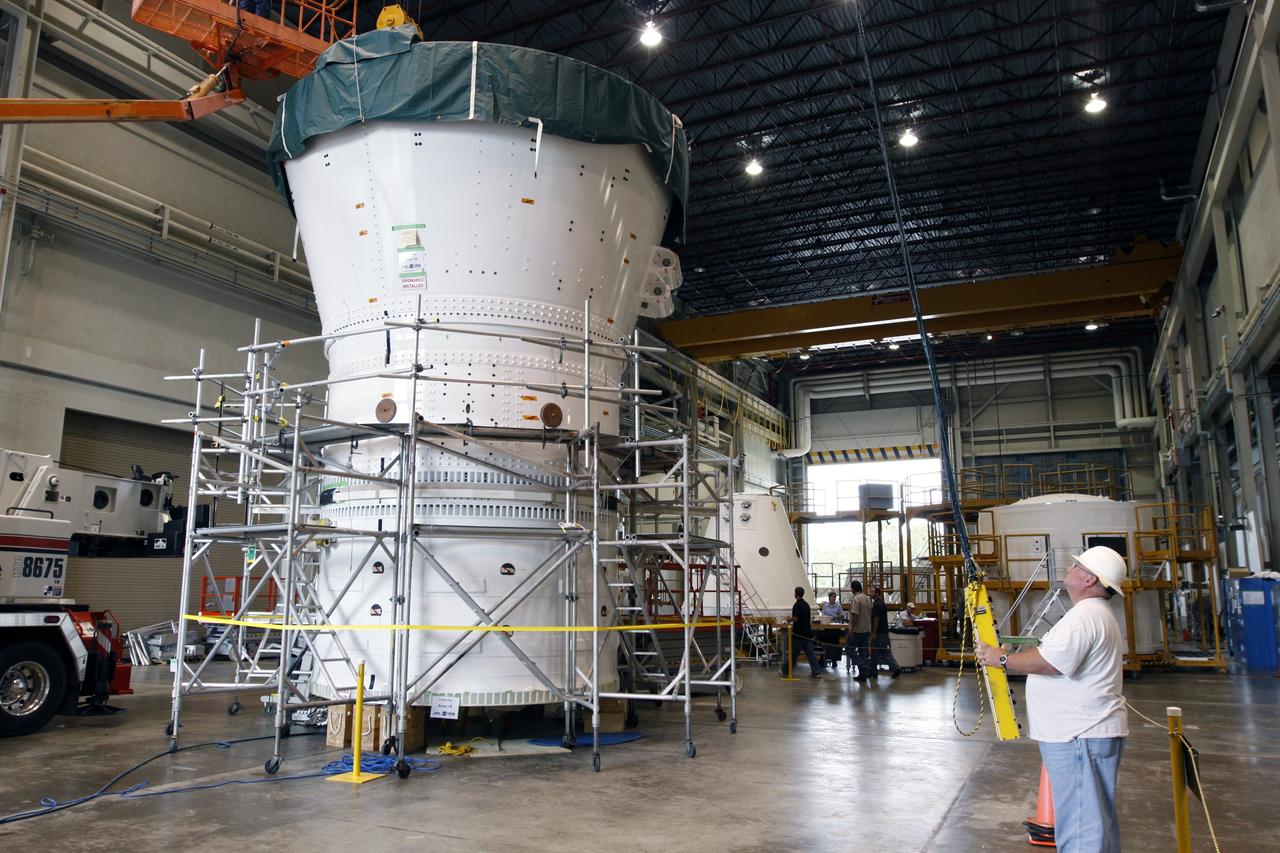
CAPE CANAVERAL, Fla. – In the Assembly and Refurbishment Facility at NASA's Kennedy Space Center in Florida, the Ares I-X frustum is being mated to the forward skirt and forward skirt extension to complete the forward assembly. The assembly will be moved to the Vehicle Assembly Building for stacking operations. Resembling a giant funnel, the frustum's function is to transition the primary flight loads from the rocket's upper stage to the first stage. The frustum is located between the forward skirt extension and the upper stage of the Ares I-X. The launch of Ares I-X is targeted for August 2009. Photo credit: NASA/Troy Cryder
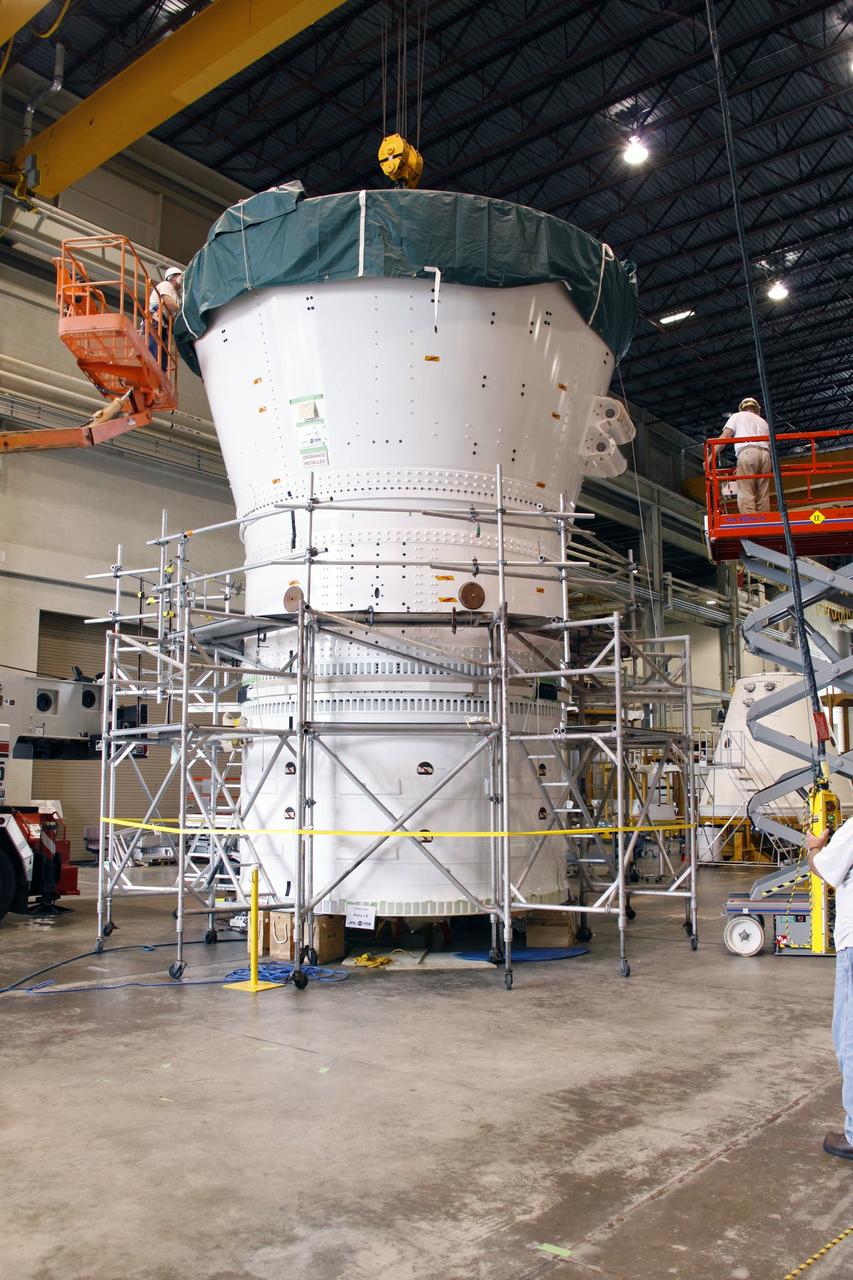
CAPE CANAVERAL, Fla. – In the Assembly and Refurbishment Facility at NASA's Kennedy Space Center in Florida, the Ares I-X frustum is being mated to the forward skirt and forward skirt extension to complete the forward assembly. The assembly will be moved to the Vehicle Assembly Building for stacking operations. Resembling a giant funnel, the frustum's function is to transition the primary flight loads from the rocket's upper stage to the first stage. The frustum is located between the forward skirt extension and the upper stage of the Ares I-X. The launch of Ares I-X is targeted for August 2009. Photo credit: NASA/Troy Cryder
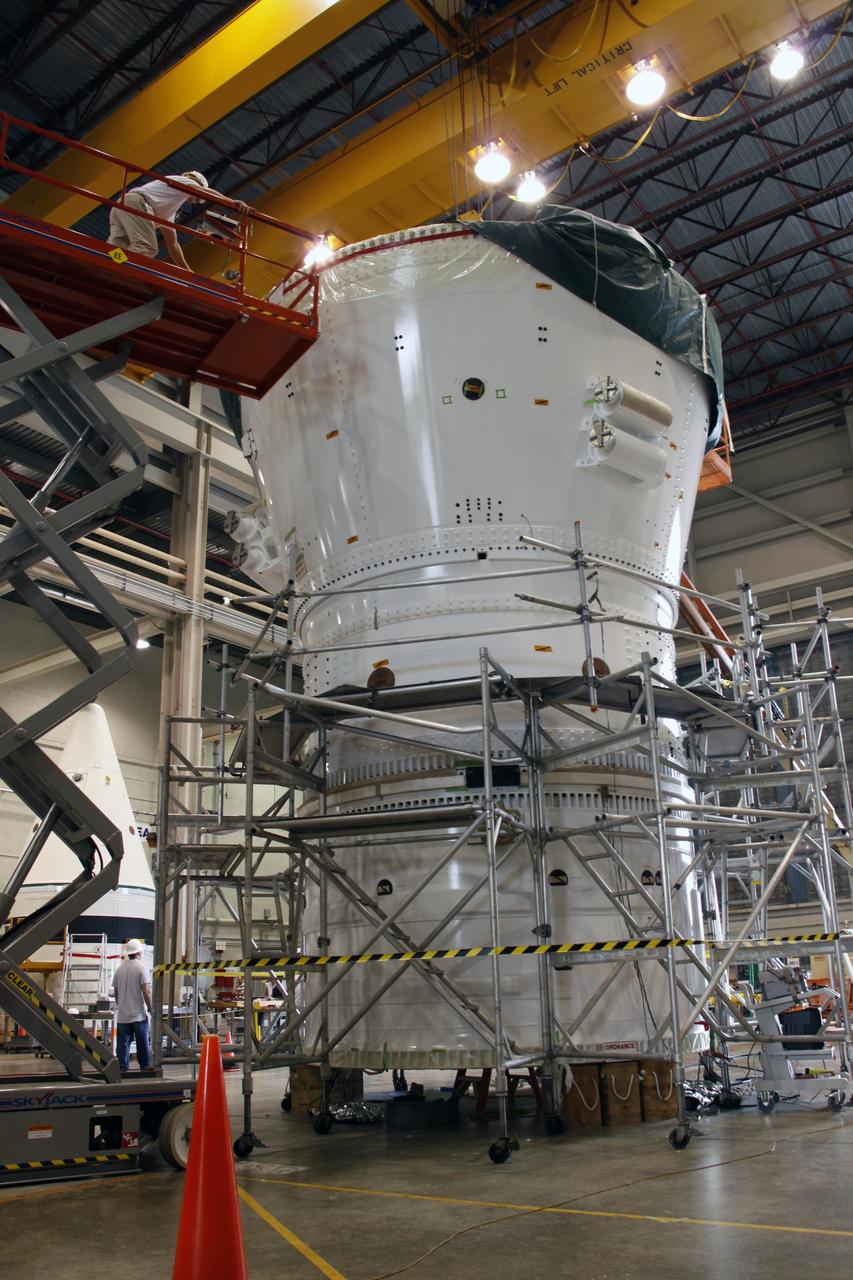
CAPE CANAVERAL, Fla. – In the Assembly and Refurbishment Facility at NASA's Kennedy Space Center in Florida, the Ares I-X frustum is being mated to the forward skirt and forward skirt extension to complete the forward assembly. The assembly will be moved to the Vehicle Assembly Building for stacking operations. Resembling a giant funnel, the frustum's function is to transition the primary flight loads from the rocket's upper stage to the first stage. The frustum is located between the forward skirt extension and the upper stage of the Ares I-X. The launch of Ares I-X is targeted for August 2009. Photo credit: NASA/Troy Cryder
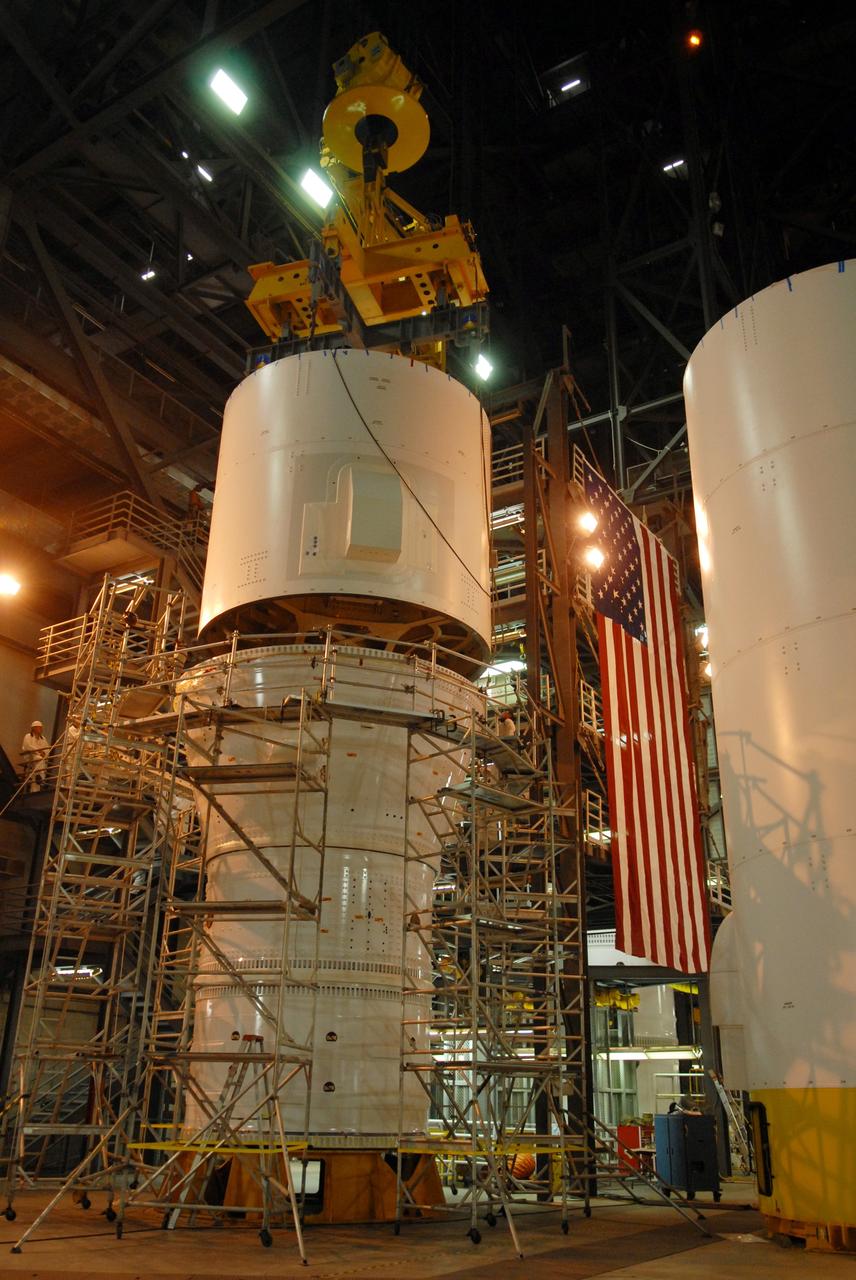
CAPE CANAVERAL, Fla. – In the Vehicle Assembly Building's High Bay 4 at NASA's Kennedy Space Center in Florida, the Ares I-X interstage 1 for the upper stage simulator is lowered onto the forward assembly. It will be mated with the frustum on top of the forward assembly. Ares I-X is the flight test vehicle for the Ares I, a component of the Constellation Program. Ares I is the essential core of a safe, reliable, cost-effective space transportation system that eventually will carry crewed missions back to the moon, on to Mars and out into the solar system. Ares I-X is targeted for launch in August 2009. Photo credit: NASA/Tim Jacobs
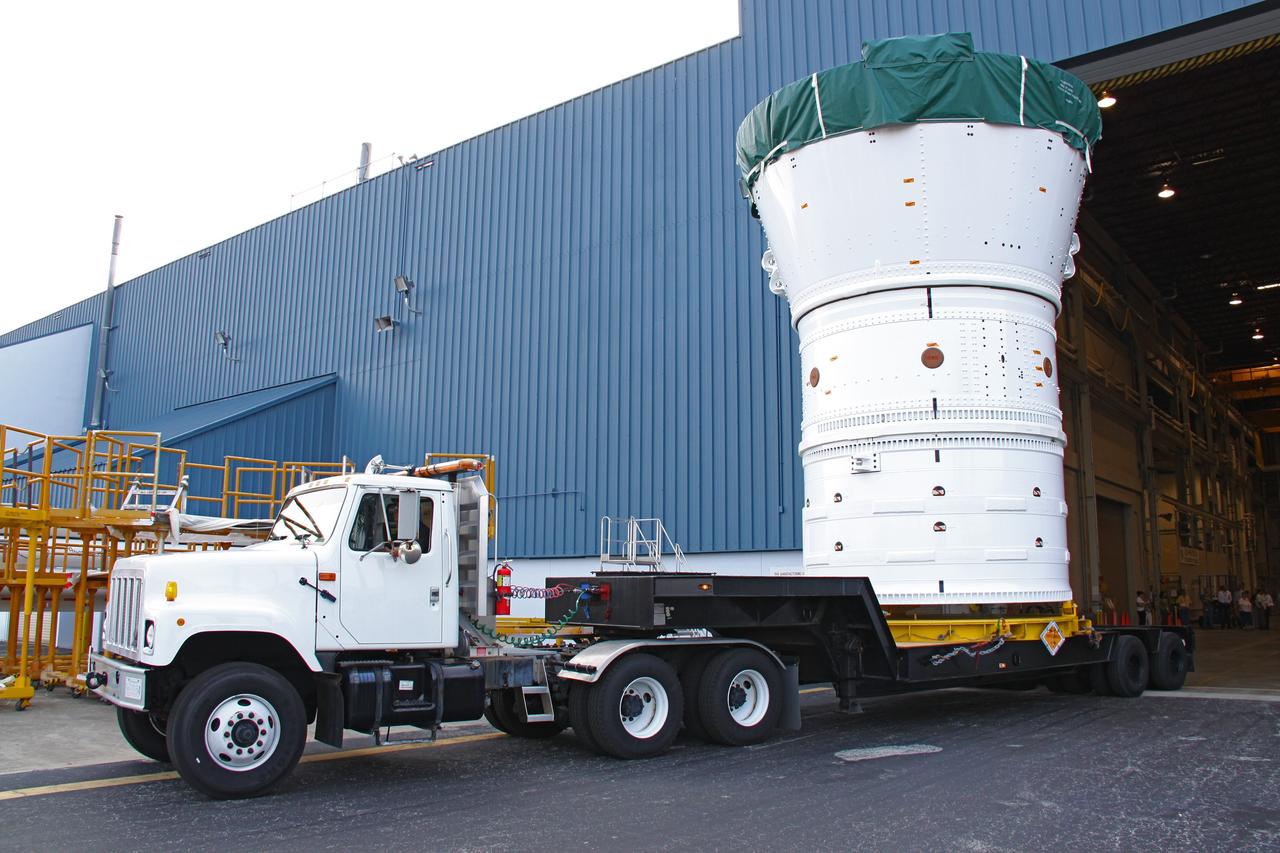
CAPE CANAVERAL, Fla. – At NASA's Kennedy Space Center in Florida, the Ares I-X forward assembly (comprising the frustum, forward skirt extension and forward skirt) moves out of the Assembly and Refurbishment Facility. It is being transferred to the Vehicle Assembly Building's High Bay 4 for processing and stacking to the upper stage. Ares I-X is the flight test for the Ares I which will provide NASA an early opportunity to test and prove hardware, facilities and ground operations associated with Ares I, which is part of the Constellation Program to return men to the moon and beyond. Launch of the Ares I-X flight test is targeted for August 2009. Photo credit: NASA/Jack Pfaller
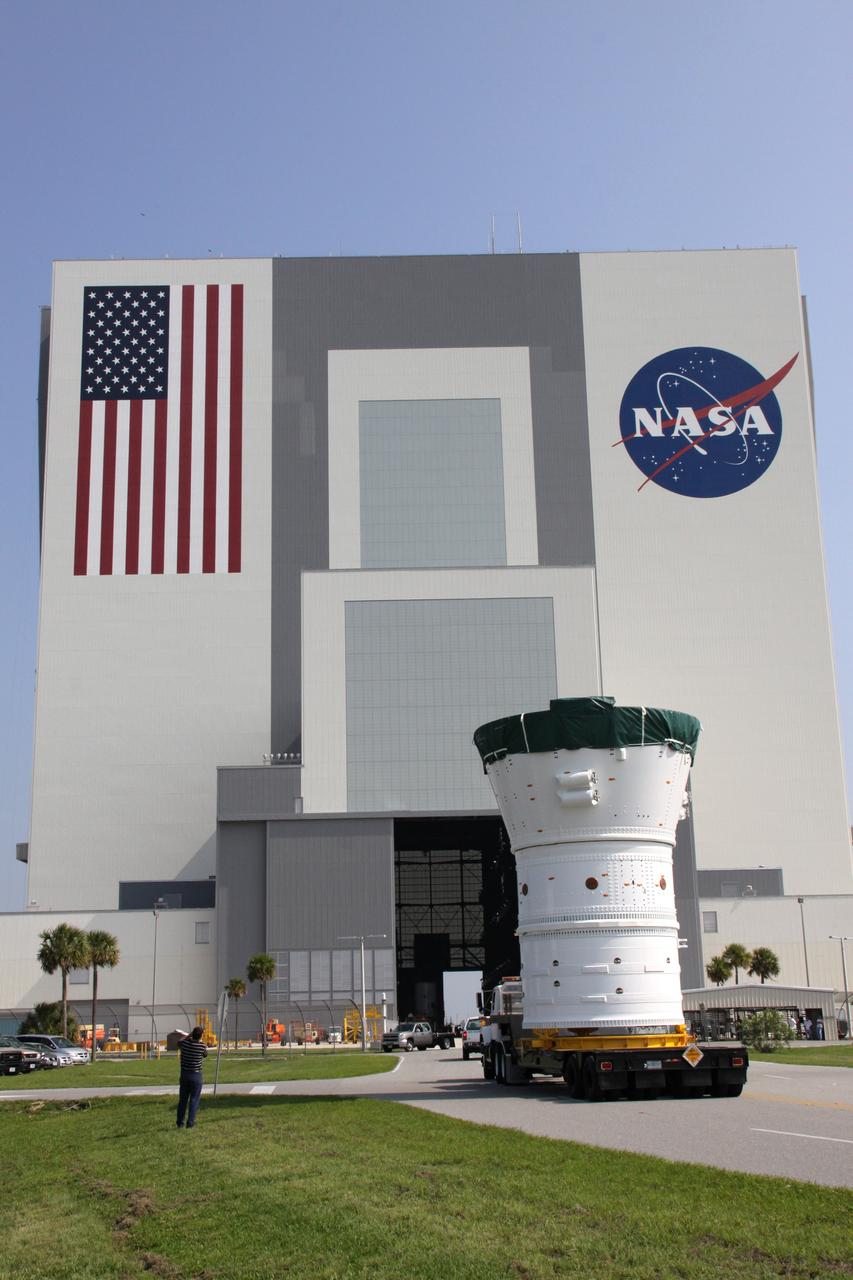
CAPE CANAVERAL, Fla. – At NASA's Kennedy Space Center in Florida, the Ares I-X forward assembly comprising the frustum, forward skirt extension and forward skirt heads for the Vehicle Assembly Building, in the background. In the VAB's High Bay 4, the forward assembly will undergo processing and stacking to the upper stage. Ares I-X is the flight test for the Ares I which will provide NASA an early opportunity to test and prove hardware, facilities and ground operations associated with Ares I, which is part of the Constellation Program to return men to the moon and beyond. Launch of the Ares I-X flight test is targeted for August 2009. Photo credit: NASA/Jack Pfaller
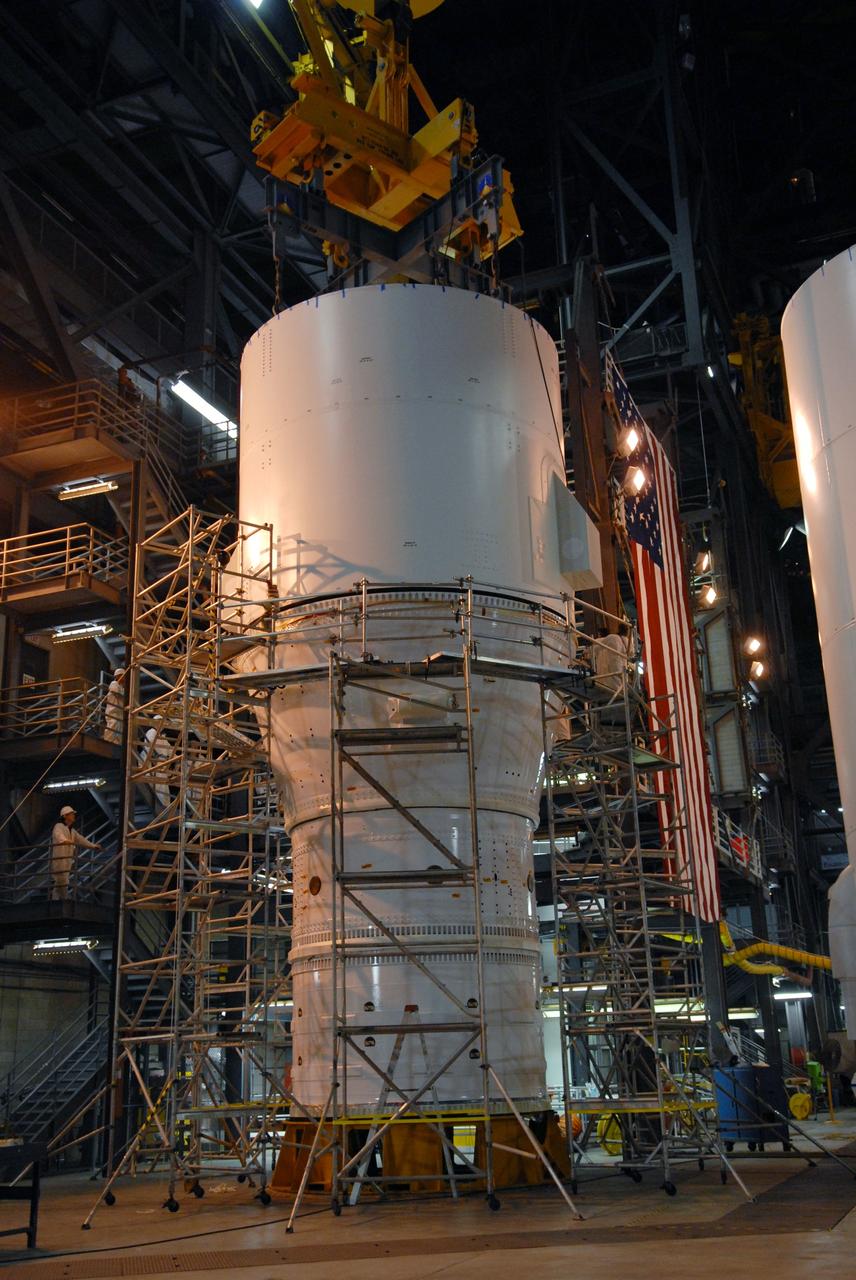
CAPE CANAVERAL, Fla. – In the Vehicle Assembly Building's High Bay 4 at NASA's Kennedy Space Center in Florida, the Ares I-X interstage 1 for the upper stage simulator is lowered onto the forward assembly. It will be mated with the frustum on top of the forward assembly. Ares I-X is the flight test vehicle for the Ares I, a component of the Constellation Program. Ares I is the essential core of a safe, reliable, cost-effective space transportation system that eventually will carry crewed missions back to the moon, on to Mars and out into the solar system. Ares I-X is targeted for launch in August 2009. Photo credit: NASA/Tim Jacobs
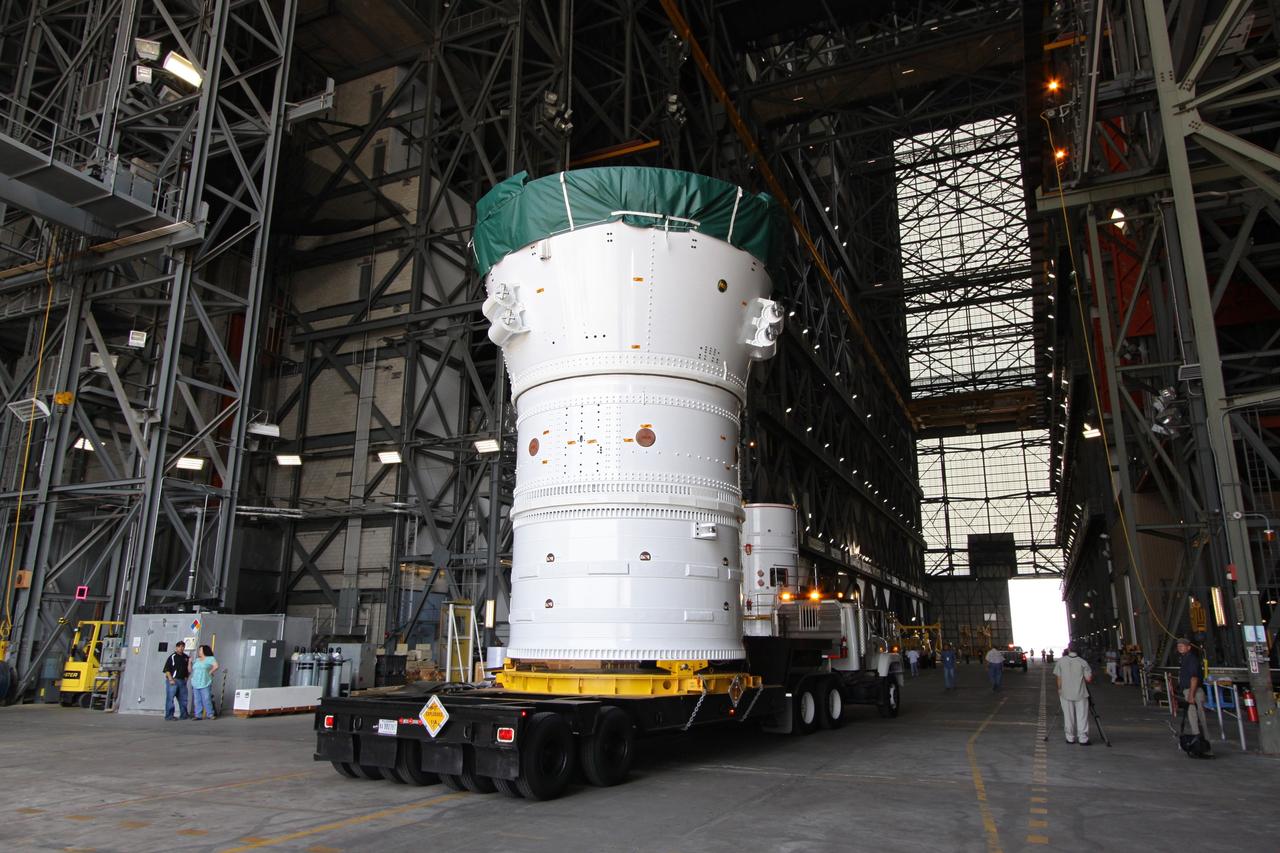
CAPE CANAVERAL, Fla. – At NASA's Kennedy Space Center in Florida, the Ares I-X forward assembly comprising the frustum, forward skirt extension and forward skirt moves into the transfer aisle of the Vehicle Assembly Building. The assembly will be placed in the VAB's High Bay 4 where it will undergo processing and stacking to the upper stage. Ares I-X is the flight test for the Ares I which will provide NASA an early opportunity to test and prove hardware, facilities and ground operations associated with Ares I, which is part of the Constellation Program to return men to the moon and beyond. Launch of the Ares I-X flight test is targeted for August 2009. Photo credit: NASA/Jack Pfaller
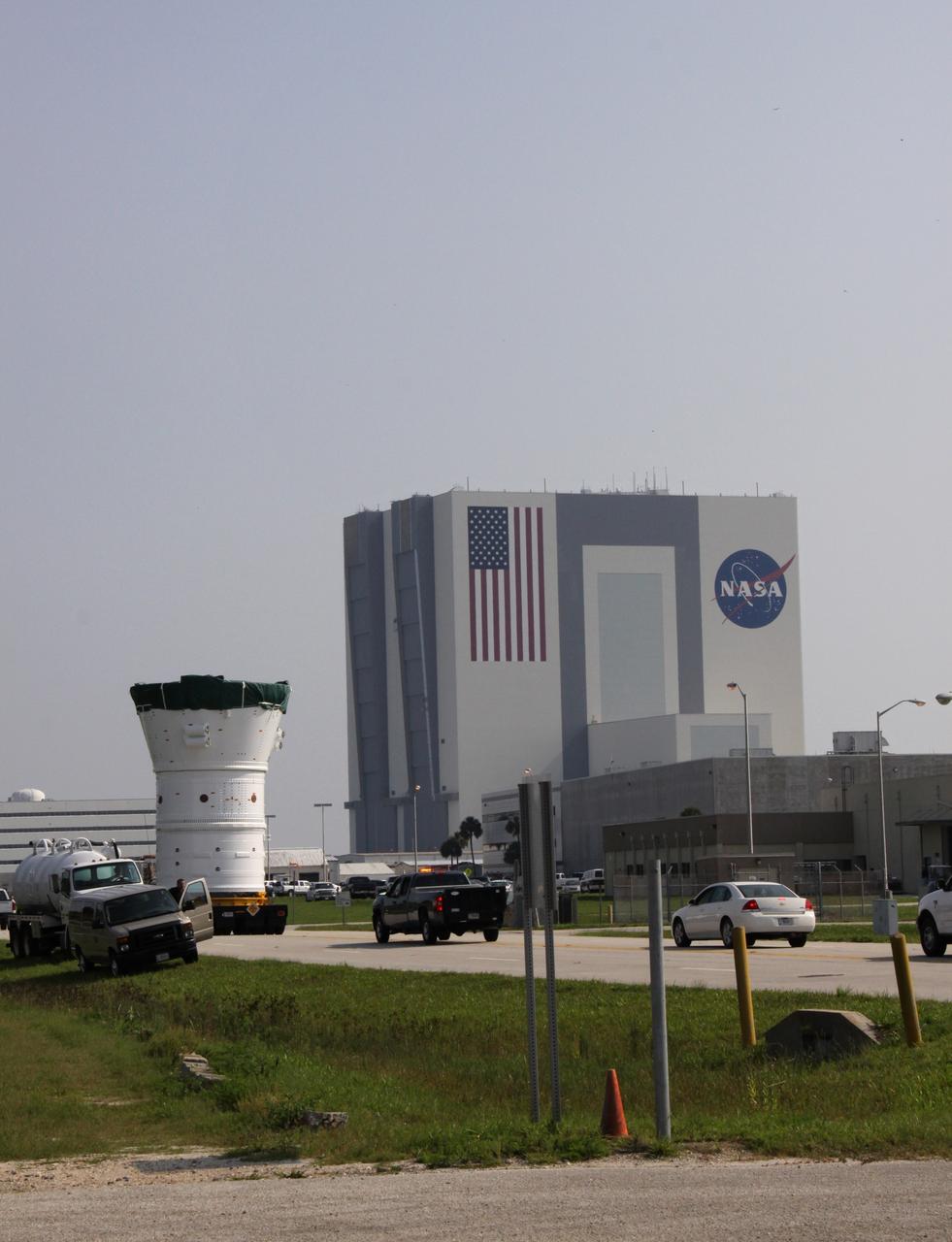
CAPE CANAVERAL, Fla. – At NASA's Kennedy Space Center in Florida, the Ares I-X forward assembly comprising the frustum, forward skirt extension and forward skirt , at left, moves toward the Vehicle Assembly Building, in the background. In the VAB's High Bay 4, the forward assembly will undergo processing and stacking to the upper stage. Ares I-X is the flight test for the Ares I which will provide NASA an early opportunity to test and prove hardware, facilities and ground operations associated with Ares I, which is part of the Constellation Program to return men to the moon and beyond. Launch of the Ares I-X flight test is targeted for August 2009. Photo credit: NASA/Jack Pfaller
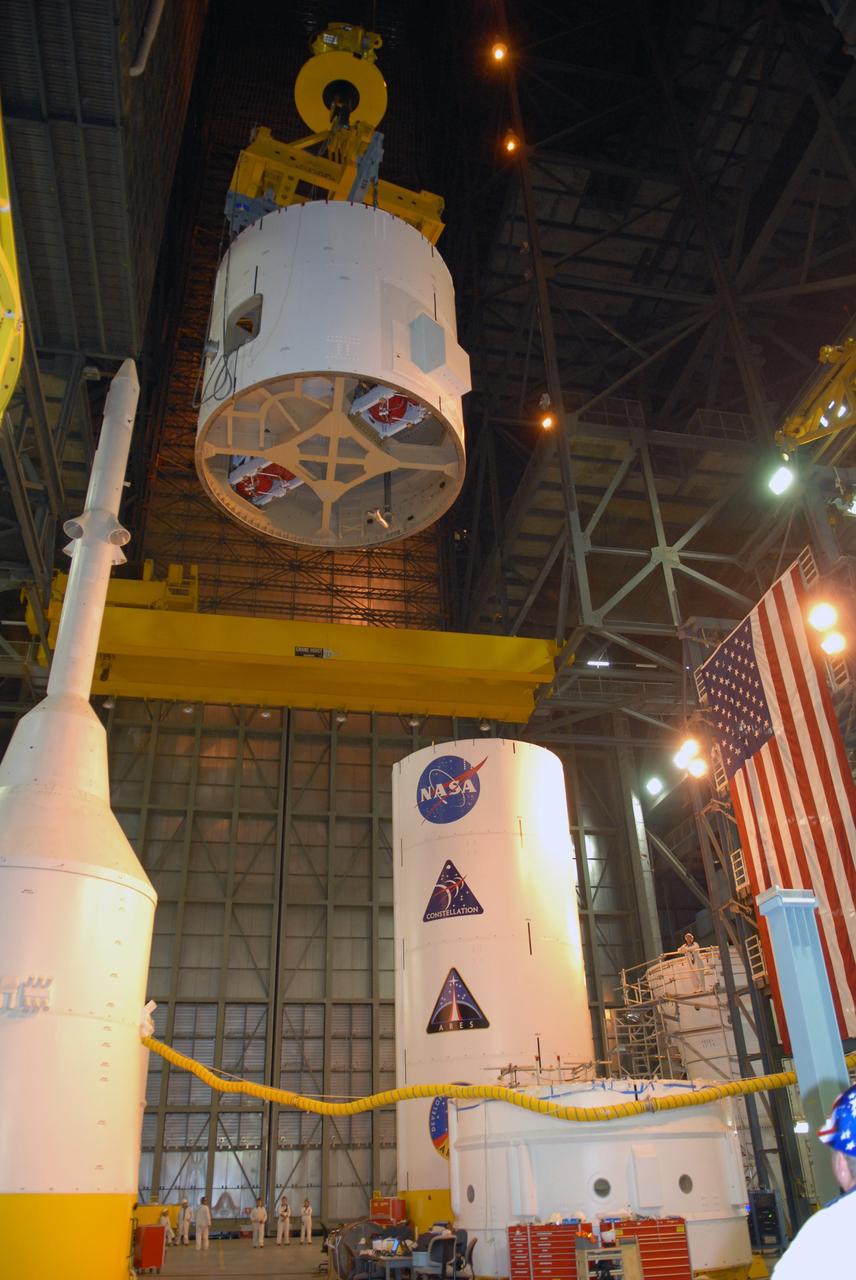
CAPE CANAVERAL, Fla. – In the Vehicle Assembly Building's High Bay 4 at NASA's Kennedy Space Center in Florida, the Ares I-X interstage 1 for the upper stage simulator is being moved to the forward assembly. The interstage will be mated with the frustum on the forward assembly. To the left is the crew module-launch abort system, or CM-LAS, and simulator service module-service adapter stack. Ares I-X is the flight test vehicle for the Ares I, a component of the Constellation Program. Ares I is the essential core of a safe, reliable, cost-effective space transportation system that eventually will carry crewed missions back to the moon, on to Mars and out into the solar system. Ares I-X is targeted for launch in August 2009. Photo credit: NASA/Tim Jacobs
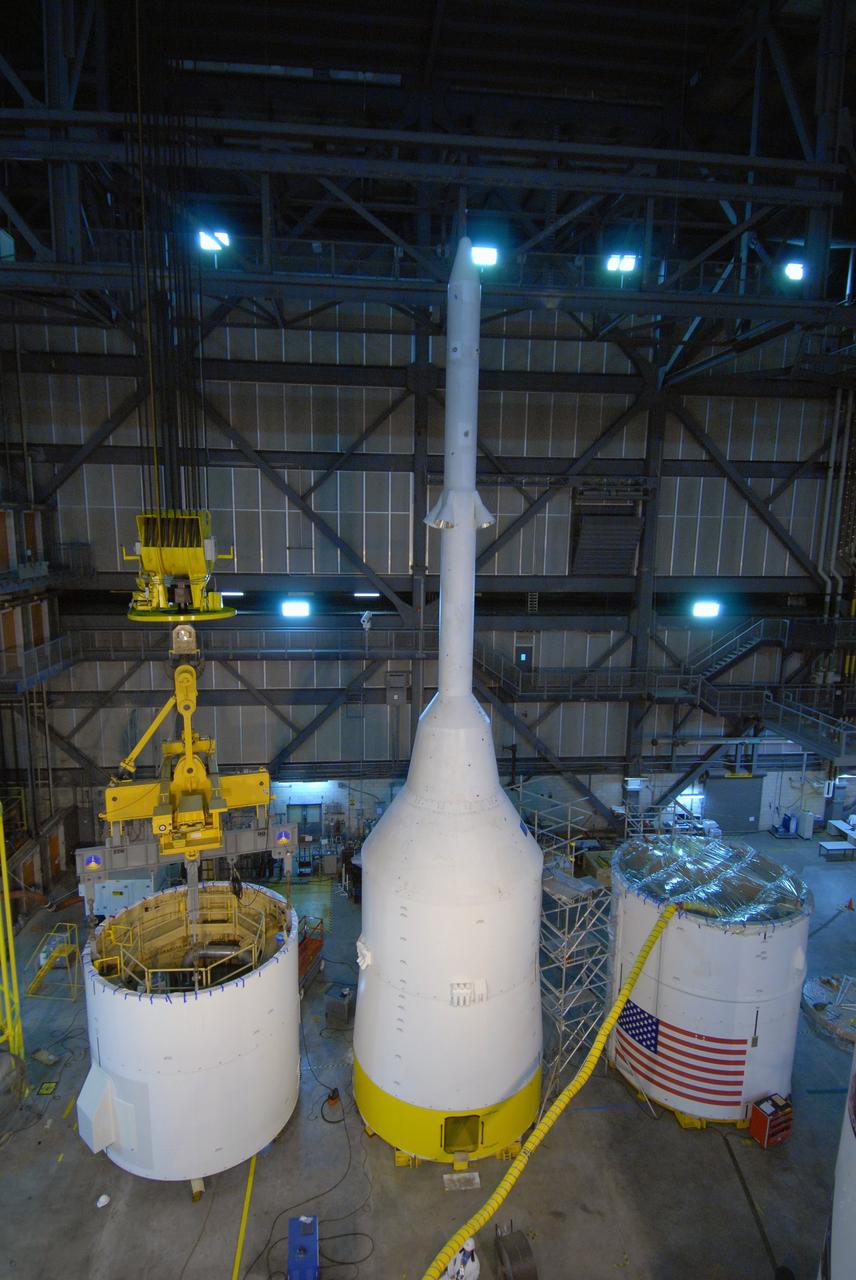
CAPE CANAVERAL, Fla. – In the Vehicle Assembly Building's High Bay 4 at NASA's Kennedy Space Center in Florida, the Ares I-X interstage 1 for the upper stage simulator (left) is being lifted to move it to the forward assembly. The interstage will be mated with the frustum on the forward assembly. At center is the crew module-launch abort system, or CM-LAS, and simulator service module-service adapter stack. Ares I-X is the flight test vehicle for the Ares I, a component of the Constellation Program. Ares I is the essential core of a safe, reliable, cost-effective space transportation system that eventually will carry crewed missions back to the moon, on to Mars and out into the solar system. Ares I-X is targeted for launch in August 2009. Photo credit: NASA/Tim Jacobs
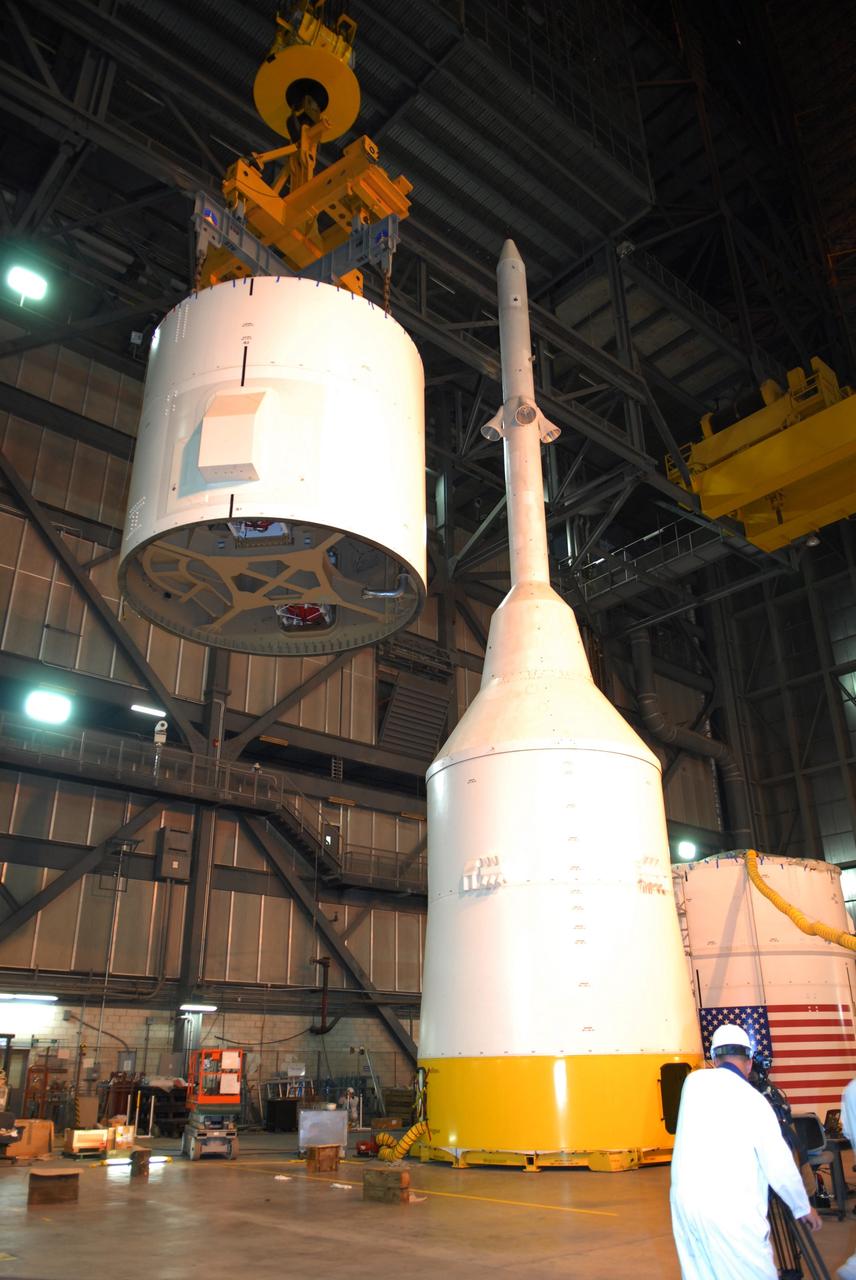
CAPE CANAVERAL, Fla. – In the Vehicle Assembly Building's High Bay 4 at NASA's Kennedy Space Center in Florida, the Ares I-X interstage 1 for the upper stage simulator is being moved to the forward assembly. The interstage will be mated with the frustum on the forward assembly. To the right is the crew module-launch abort system, or CM-LAS, and simulator service module-service adapter stack. Ares I-X is the flight test vehicle for the Ares I, a component of the Constellation Program. Ares I is the essential core of a safe, reliable, cost-effective space transportation system that eventually will carry crewed missions back to the moon, on to Mars and out into the solar system. Ares I-X is targeted for launch in August 2009. Photo credit: NASA/Tim Jacobs
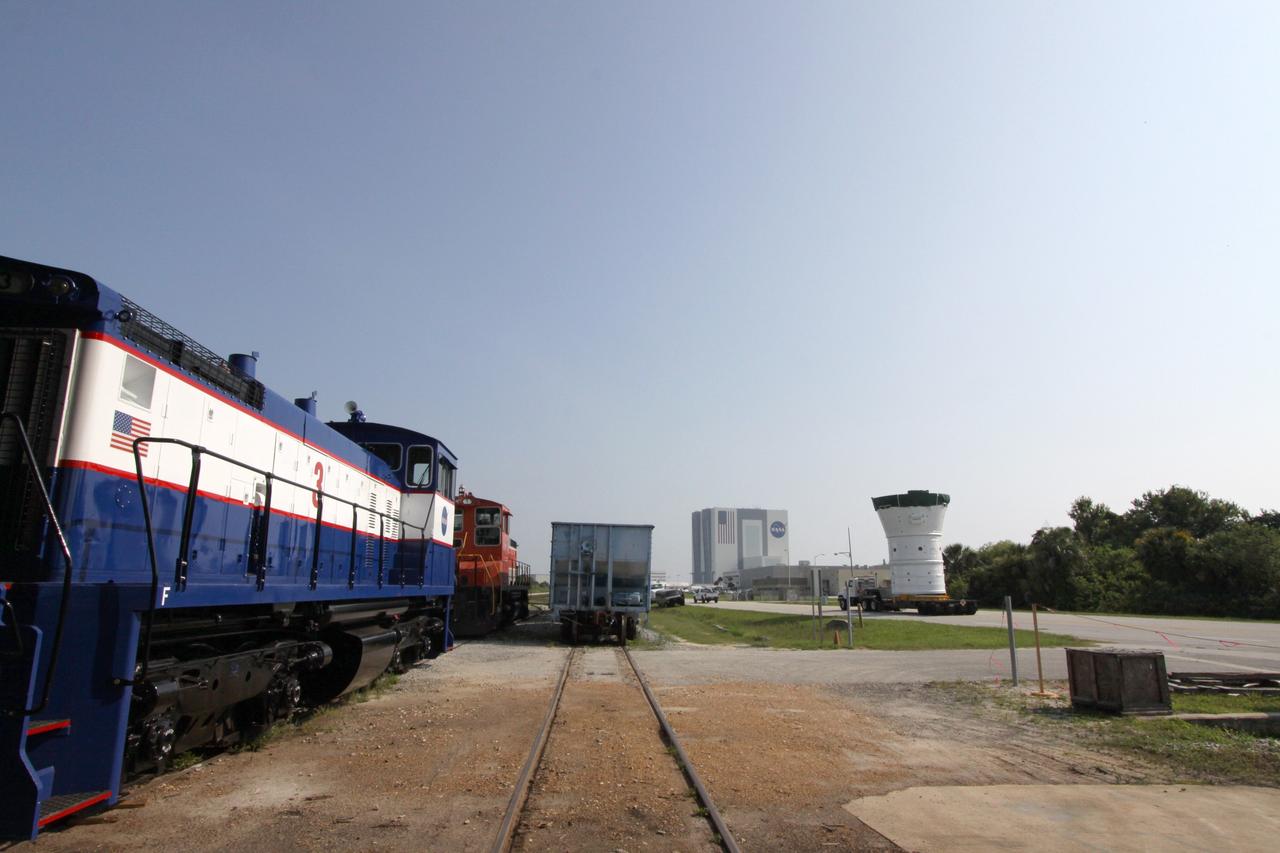
CAPE CANAVERAL, Fla. – At NASA's Kennedy Space Center in Florida, the Ares I-X forward assembly (comprising the frustum, forward skirt extension and forward skirt) moves alongside the NASA Railroad tracks as it heads for the Vehicle Assembly Building, in the background. In the VAB's High Bay 4, the forward assembly will undergo processing and stacking to the upper stage. Ares I-X is the flight test for the Ares I which will provide NASA an early opportunity to test and prove hardware, facilities and ground operations associated with Ares I, which is part of the Constellation Program to return men to the moon and beyond. Launch of the Ares I-X flight test is targeted for August 2009. Photo credit: NASA/Jack Pfaller
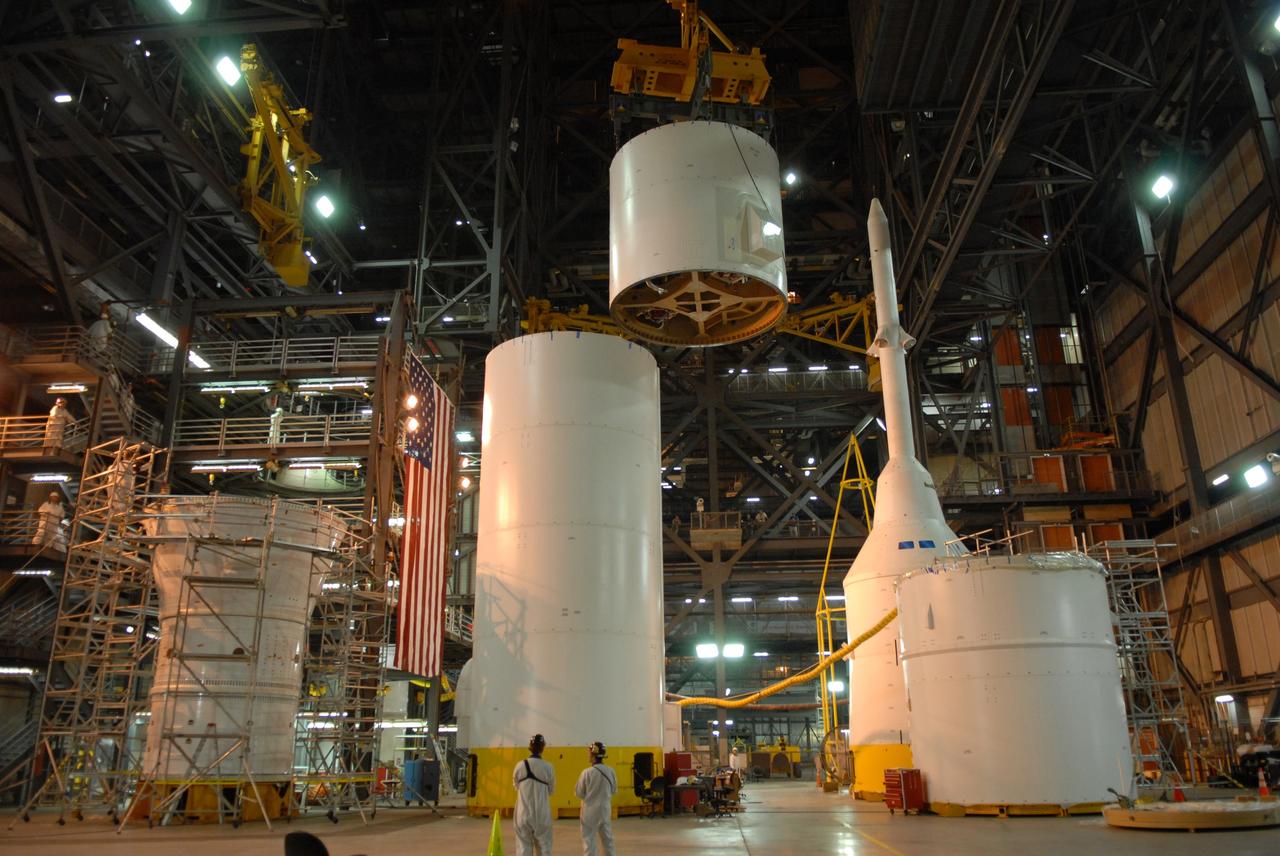
CAPE CANAVERAL, Fla. – In the Vehicle Assembly Building's High Bay 4 at NASA's Kennedy Space Center in Florida, the Ares I-X interstage 1 for the upper stage simulator is being moved to the forward assembly (far left). The interstage will be mated with the frustum on the forward assembly. To the right is the crew module-launch abort system, or CM-LAS, and simulator service module-service adapter stack. Ares I-X is the flight test vehicle for the Ares I, a component of the Constellation Program. Ares I is the essential core of a safe, reliable, cost-effective space transportation system that eventually will carry crewed missions back to the moon, on to Mars and out into the solar system. Ares I-X is targeted for launch in August 2009. Photo credit: NASA/Tim Jacobs
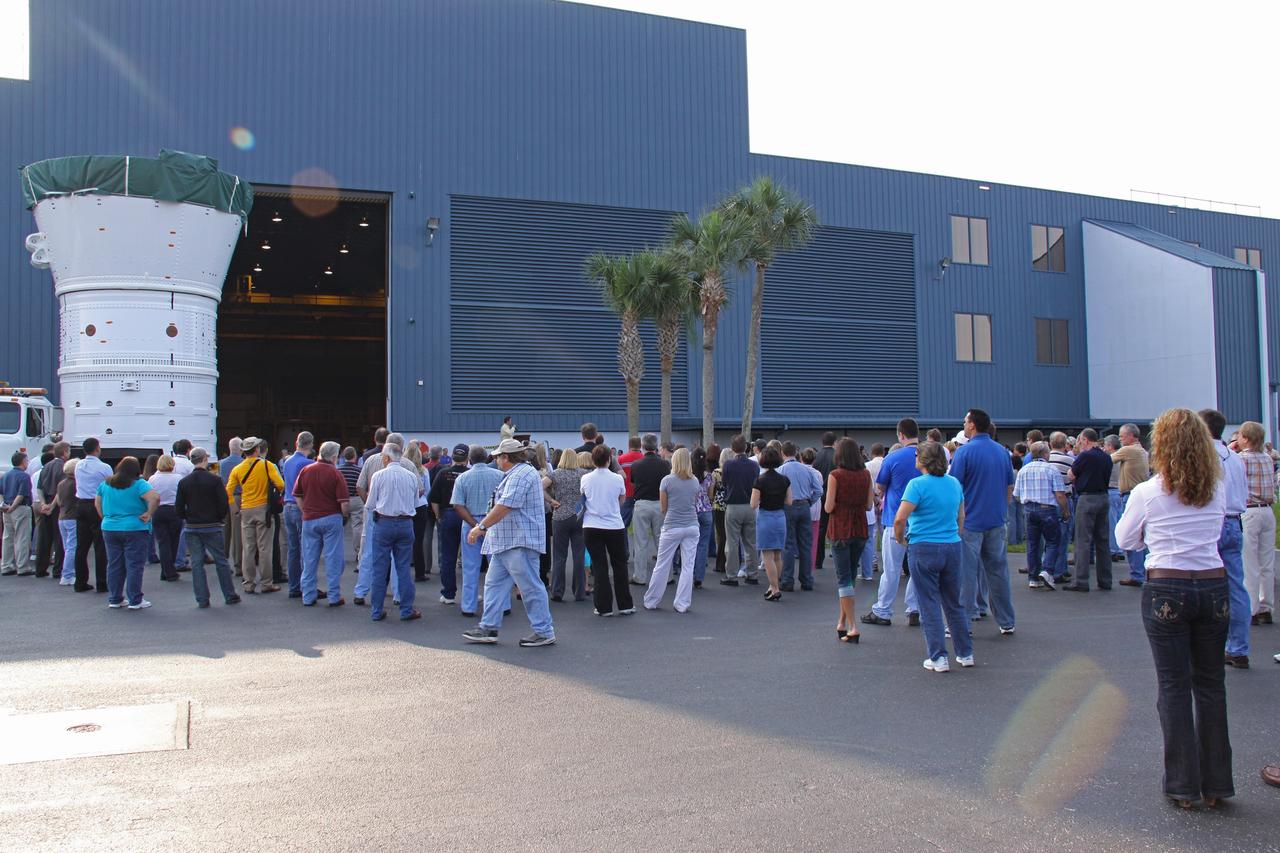
CAPE CANAVERAL, Fla. – At NASA's Kennedy Space Center in Florida, employees gather to watch the Ares I-X forward assembly (comprising the frustum, forward skirt extension and forward skirt) as it moves out of the Assembly and Refurbishment Facility. The assembly is being transferred to the Vehicle Assembly Building's High Bay 4 for processing and stacking to the upper stage. Ares I-X is the flight test for the Ares I which will provide NASA an early opportunity to test and prove hardware, facilities and ground operations associated with Ares I, which is part of the Constellation Program to return men to the moon and beyond. Launch of the Ares I-X flight test is targeted for August 2009. Photo credit: NASA/Jack Pfaller
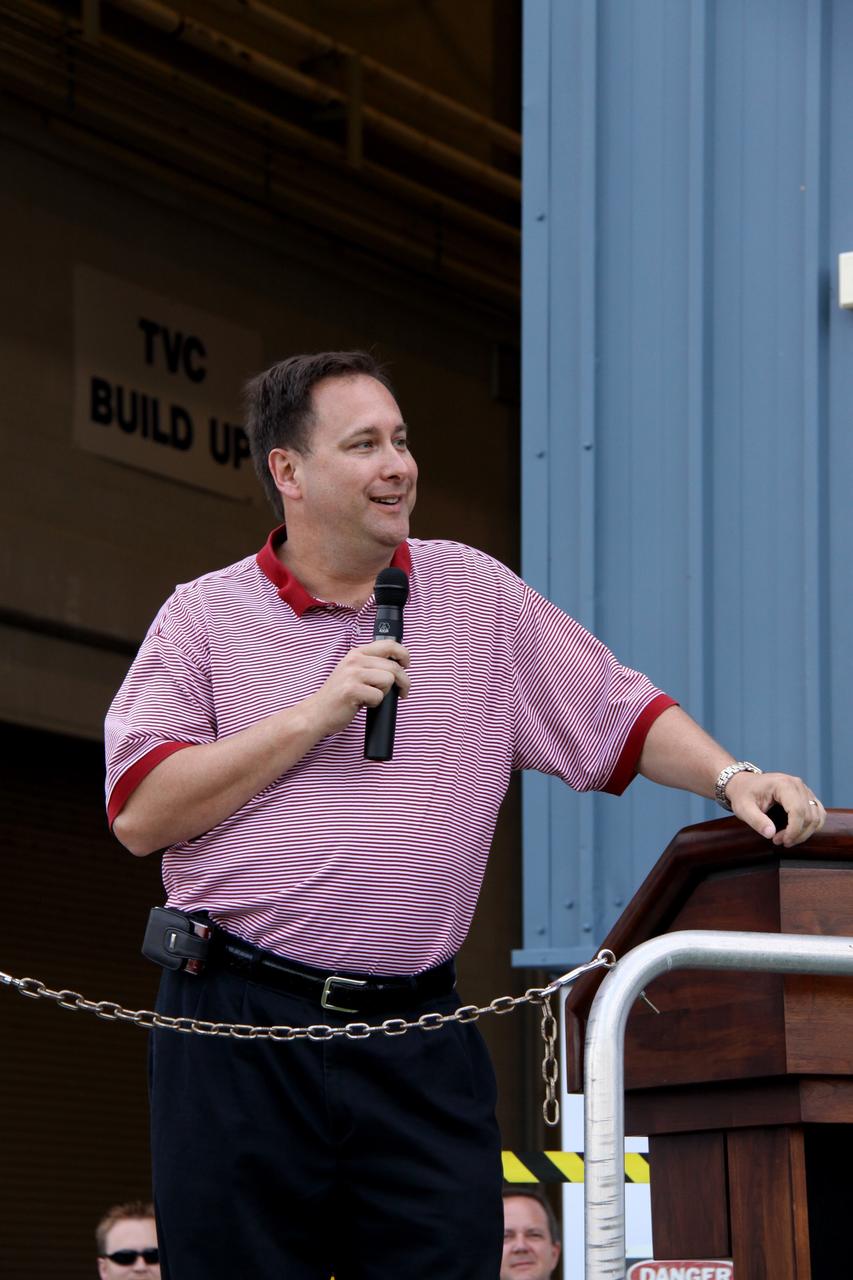
CAPE CANAVERAL, Fla. – At the Assembly and Refurbishment Facility at NASA's Kennedy Space Center in Florida, Robert Lightfoot, acting center director of NASA's Marshall Space Flight Center, speaks to employees who were involved in the processing of the Ares I-X forward assembly (comprising the frustum, forward skirt extension and forward skirt) . The forward assembly is being moved to the Vehicle Assembly Building's High Bay 4 for processing and stacking to the upper stage. Ares I-X is the flight test for the Ares I which will provide NASA an early opportunity to test and prove hardware, facilities and ground operations associated with Ares I, which is part of the Constellation Program to return men to the moon and beyond. Launch of the Ares I-X flight test is targeted for August 2009. Photo credit: NASA/Jack Pfaller
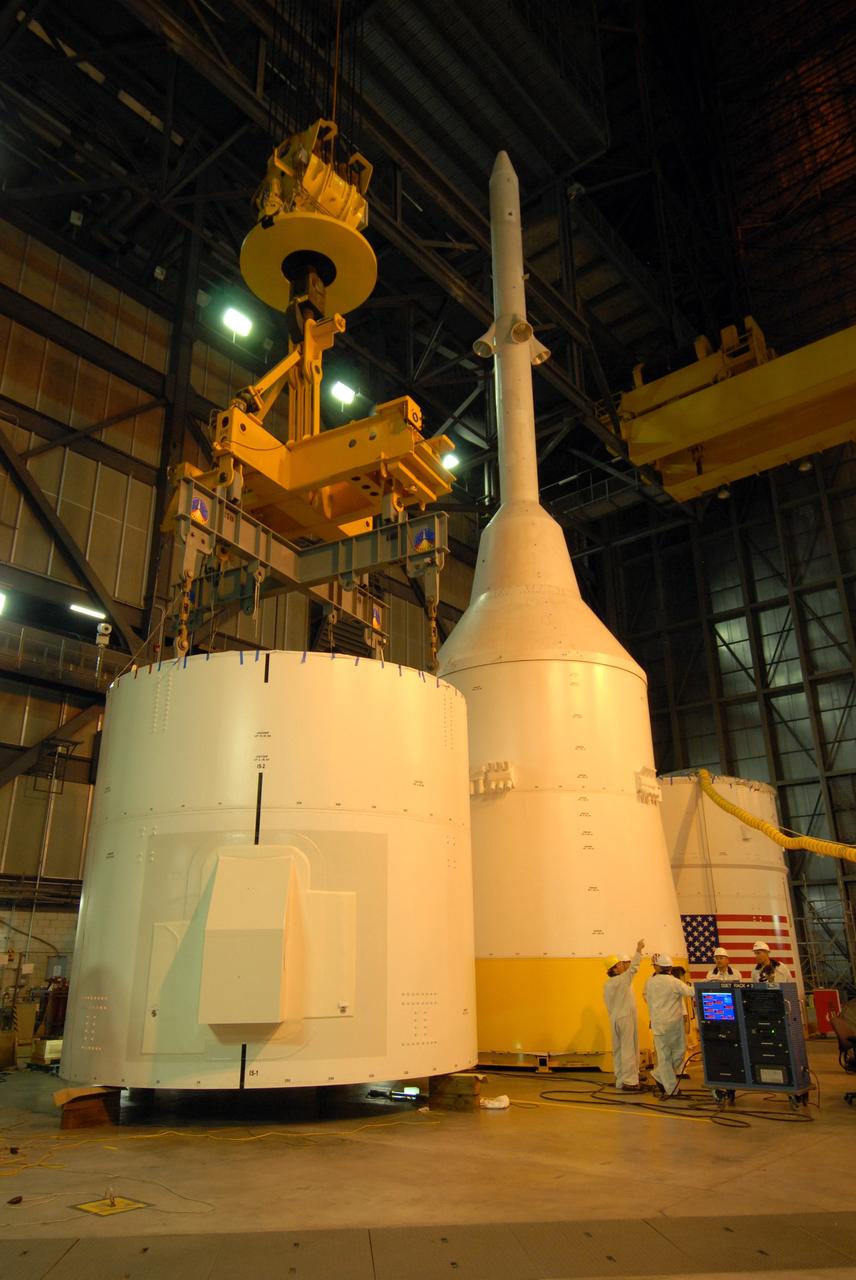
CAPE CANAVERAL, Fla. – In the Vehicle Assembly Building's High Bay 4 at NASA's Kennedy Space Center in Florida, the Ares I-X interstage 1 for the upper stage simulator is lifted to move it to the forward assembly. The interstage will be mated with the frustum on the forward assembly. To the right is the crew module-launch abort system, or CM-LAS, and simulator service module-service adapter stack. Ares I-X is the flight test vehicle for the Ares I, a component of the Constellation Program. Ares I is the essential core of a safe, reliable, cost-effective space transportation system that eventually will carry crewed missions back to the moon, on to Mars and out into the solar system. Ares I-X is targeted for launch in August 2009. Photo credit: NASA/Tim Jacobs