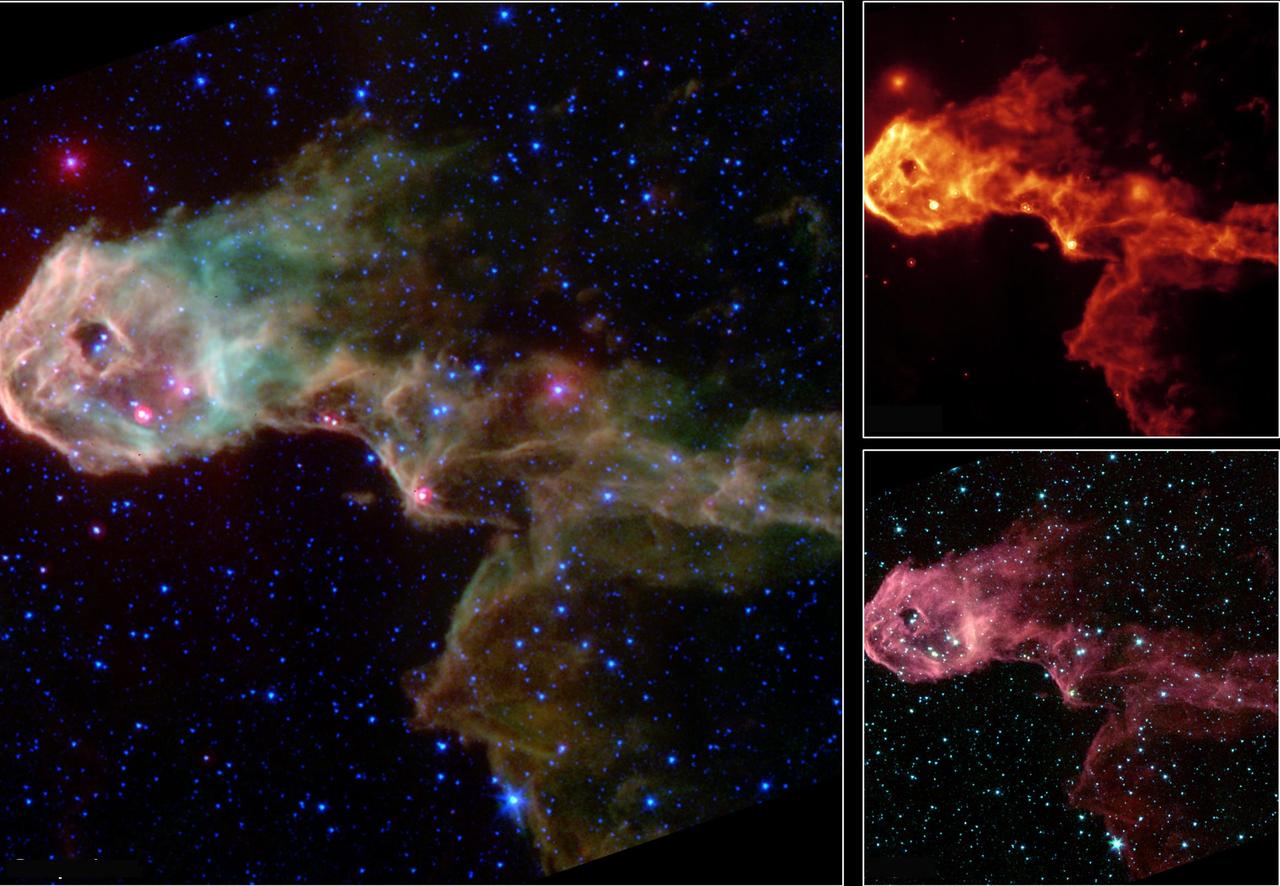
This archival image from 2003 captured by NASA Spitzer Space Telescope captured the Elephant Trunk Nebula, an elongated dark globule within the emission nebula IC 1396 in the constellation of Cepheus.
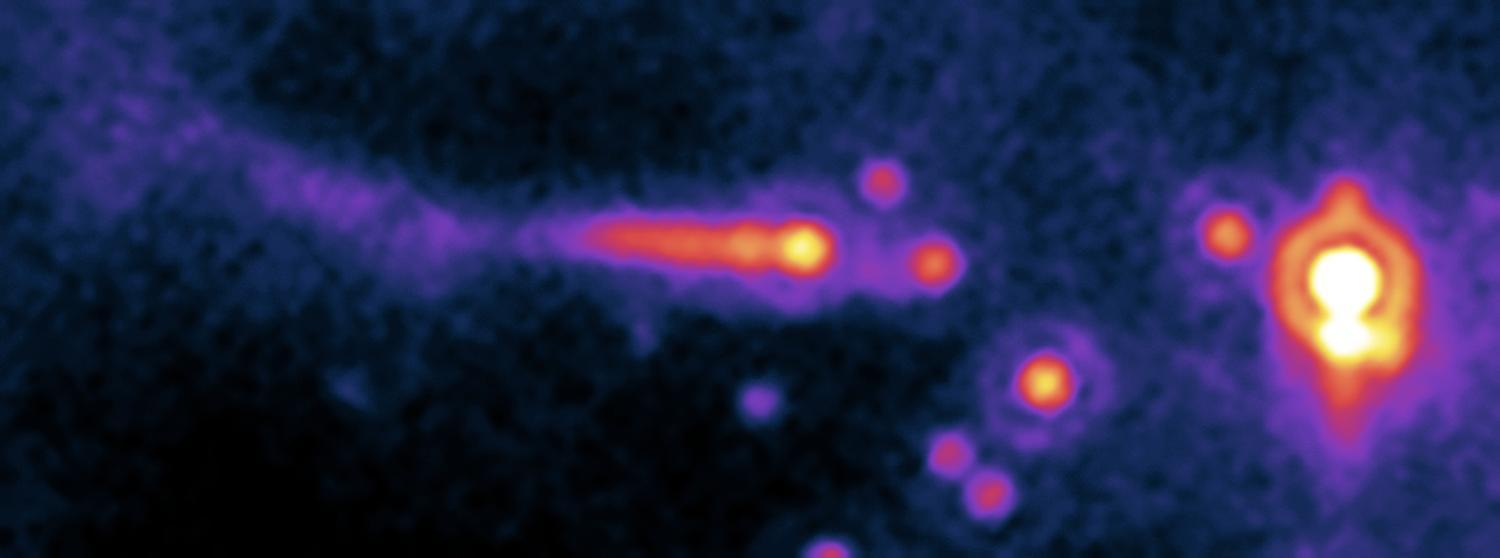
The potential planet-forming disk (or "protoplanetary disk") of a sun-like star is being violently ripped away by the powerful winds of a nearby hot O-type star in this image from NASA's Spitzer Space Telescope. At up to 100 times the mass of sun-like stars, O stars are the most massive and energetic stars in the universe. The O star can be seen to the right of the image, as the large orange spot with the white center. To the left, the comet-like structure is actually a neighboring solar system that is being destroyed by the O star's powerful winds and intense ultraviolet light. In a process called "photoevaporation," immense output from the O star heats up the nearby protoplanetary disk so much that gas and dust boil off, and the disk can no longer hold together. Photon (or light) blasts from the O star then strip the potential planet-forming disk off its neighbor star by blowing away evaporated material. This effect is illustrated in the smaller system's comet-like structure. The system is located about 2,450 light-years away in the star-forming cloud IC 1396. The image was taken with Spitzer's multiband imaging photometer instrument at 24 microns. The picture is a pseudo-color stretch representing intensity. Yellow and white represent hot areas, whereas purple and blue represent relatively cooler, fainter regions.
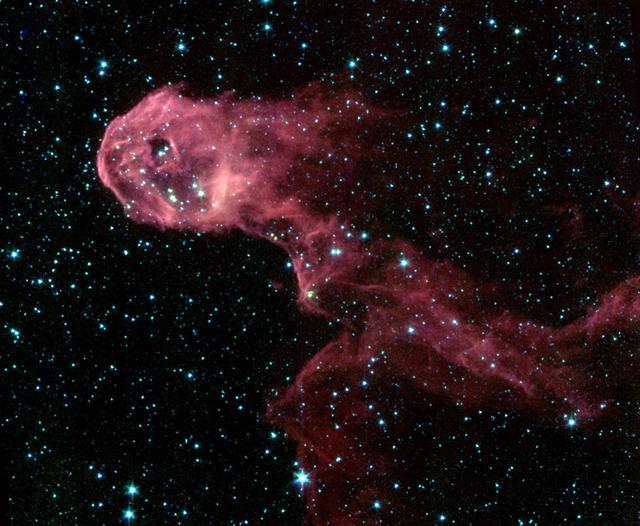
NASA Spitzer Space Telescope image of a glowing stellar nursery provides a spectacular contrast to the opaque cloud seen in visible light inset.