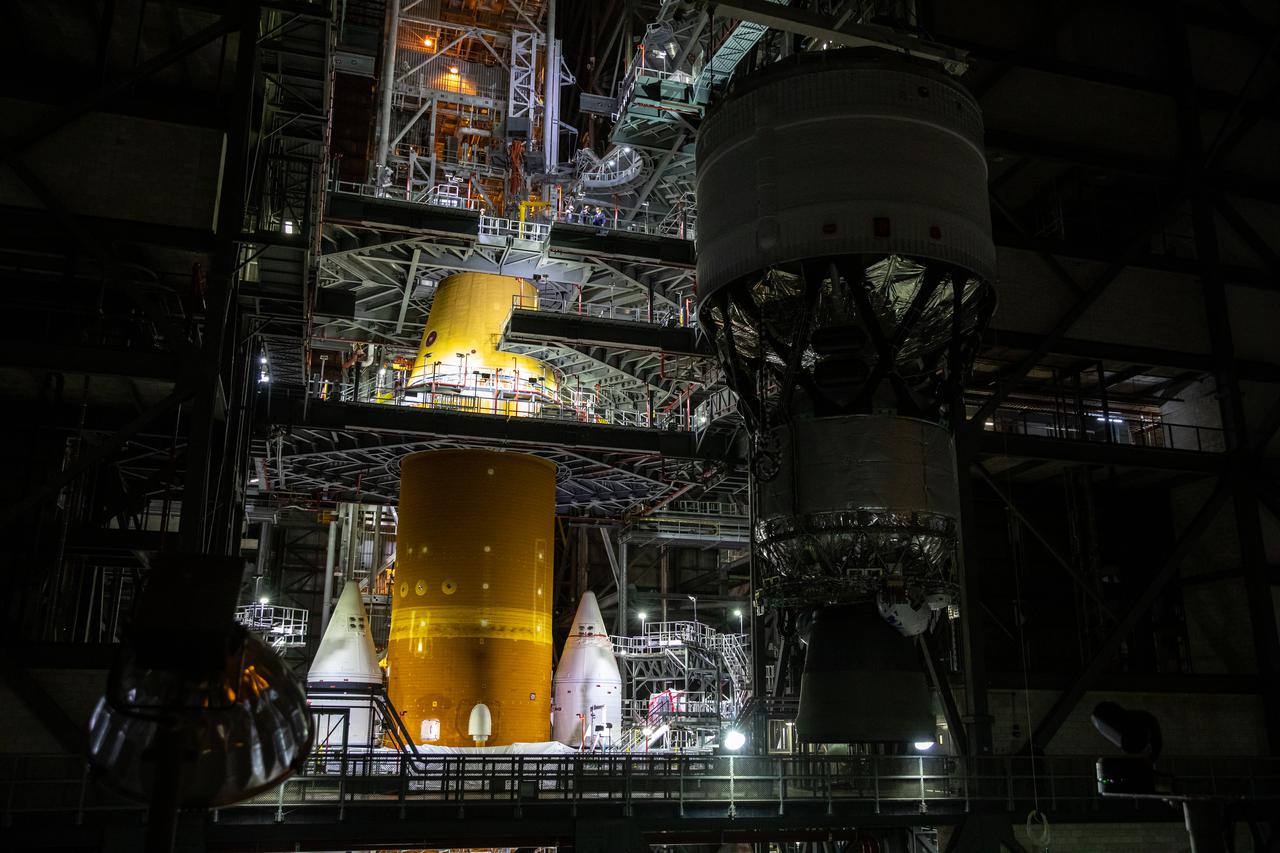
Teams with NASA’s Exploration Ground Systems and contractor Jacobs integrate the interim cryogenic propulsion stage (ICPS) for NASA’s Space Launch System (SLS) rocket with the launch vehicle stage adapter (LVSA) atop the massive SLS core stage in the agency’s Vehicle Assembly Building (VAB) at NASA’s Kennedy Space Center in Florida on July 5, 2021. The ICPS is a liquid oxygen and liquid hydrogen-based system that will fire its RL 10 engine to give the Orion spacecraft the big in-space push needed to fly tens of thousands of miles beyond the Moon. The next component to be stacked on top of ICPS will be the Orion stage adapter, which will connect the ICPS with the spacecraft. Through Artemis, NASA will send the first woman and the first person of color to the lunar surface, as well as establish a sustainable presence on and around the Moon. As the first in an increasingly complex set of missions, Artemis I will test SLS and Orion as an integrated system prior to crewed flights to the Moon.
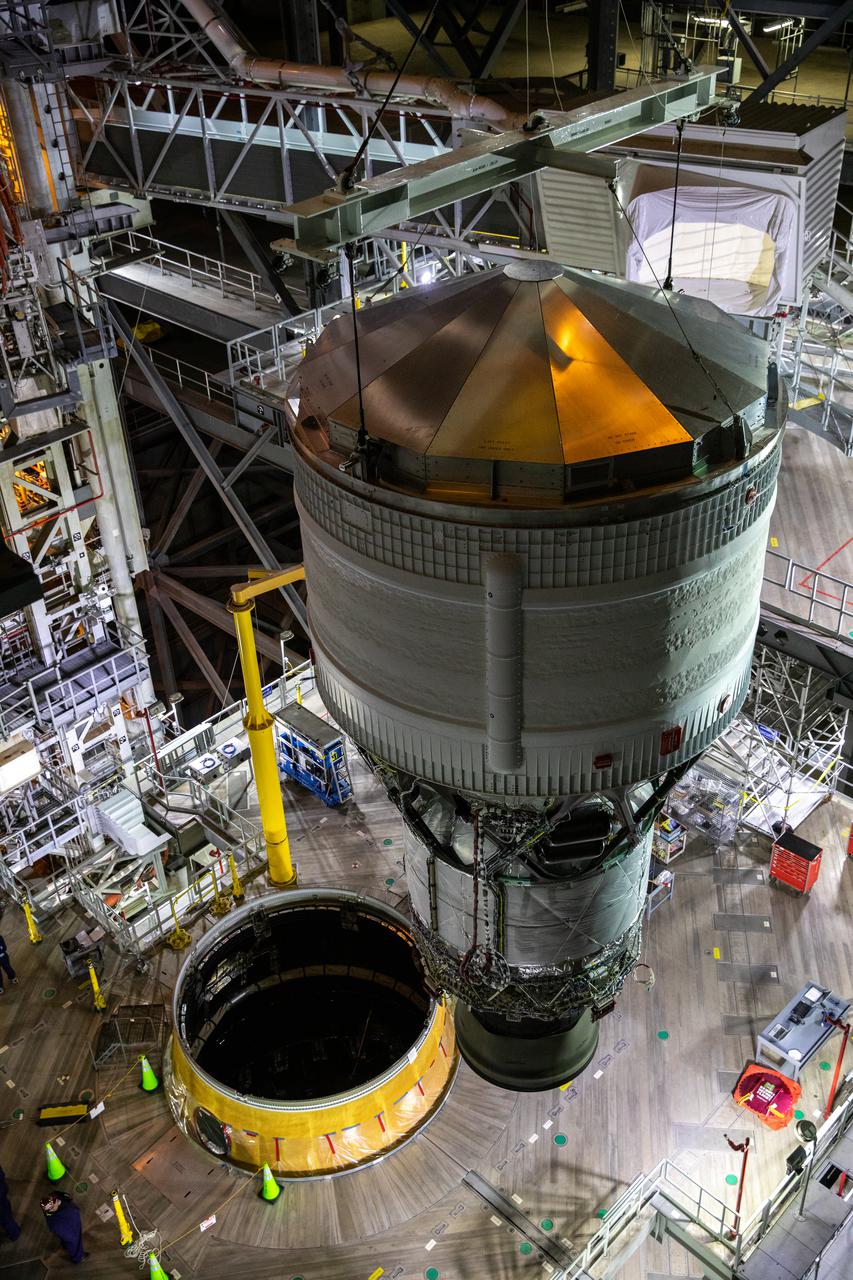
Teams with NASA’s Exploration Ground Systems and contractor Jacobs integrate the interim cryogenic propulsion stage (ICPS) for NASA’s Space Launch System (SLS) rocket with the launch vehicle stage adapter (LVSA) atop the massive SLS core stage in the agency’s Vehicle Assembly Building (VAB) at NASA’s Kennedy Space Center in Florida on July 5, 2021. The ICPS is a liquid oxygen and liquid hydrogen-based system that will fire its RL 10 engine to give the Orion spacecraft the big in-space push needed to fly tens of thousands of miles beyond the Moon. The next component to be stacked on top of ICPS will be the Orion stage adapter, which will connect the ICPS with the spacecraft. Through Artemis, NASA will send the first woman and the first person of color to the lunar surface, as well as establish a sustainable presence on and around the Moon. As the first in an increasingly complex set of missions, Artemis I will test SLS and Orion as an integrated system prior to crewed flights to the Moon.
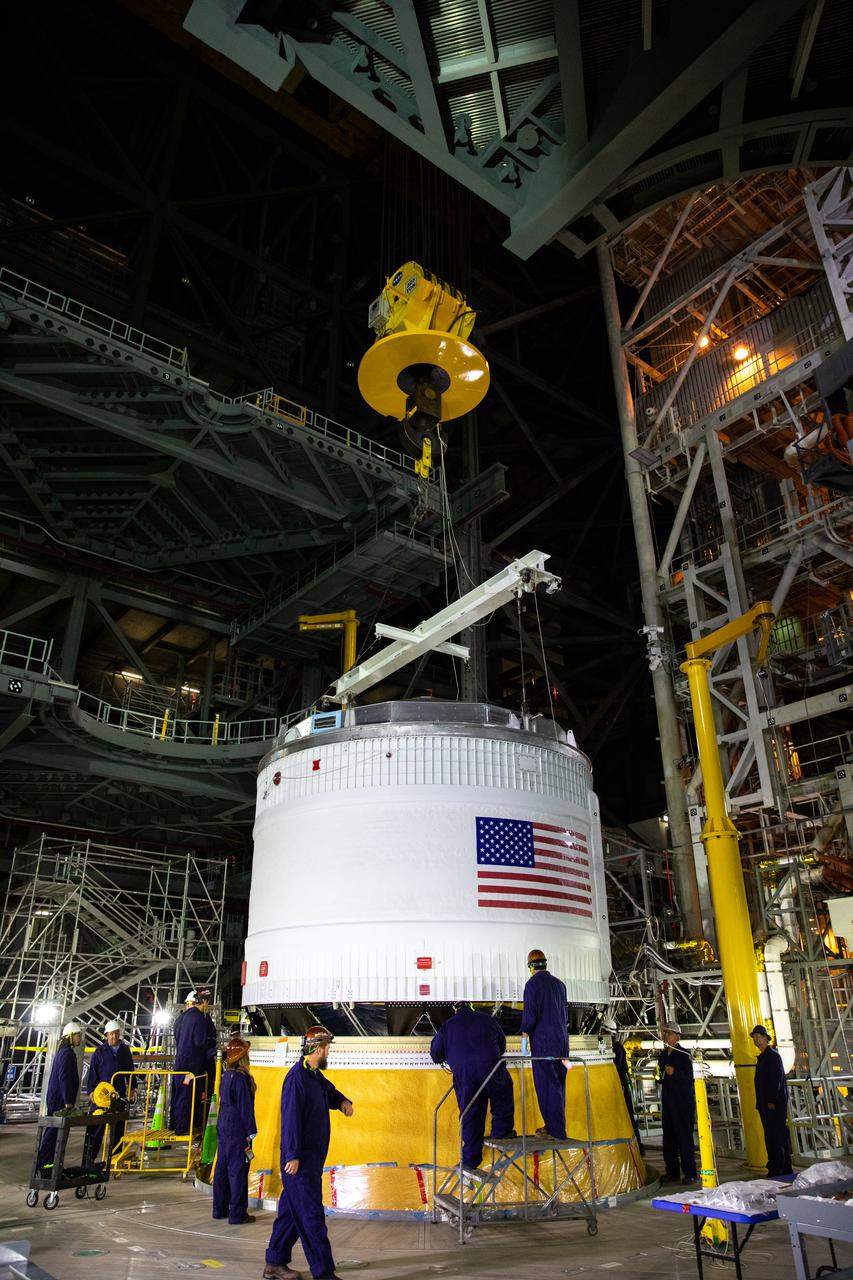
Teams with NASA’s Exploration Ground Systems and contractor Jacobs integrate the interim cryogenic propulsion stage (ICPS) for NASA’s Space Launch System (SLS) rocket with the launch vehicle stage adapter (LVSA) atop the massive SLS core stage in the agency’s Vehicle Assembly Building (VAB) at NASA’s Kennedy Space Center in Florida on July 5, 2021. The ICPS is a liquid oxygen and liquid hydrogen-based system that will fire its RL 10 engine to give the Orion spacecraft the big in-space push needed to fly tens of thousands of miles beyond the Moon. The next component to be stacked on top of ICPS will be the Orion stage adapter, which will connect the ICPS with the spacecraft. Through Artemis, NASA will send the first woman and the first person of color to the lunar surface, as well as establish a sustainable presence on and around the Moon. As the first in an increasingly complex set of missions, Artemis I will test SLS and Orion as an integrated system prior to crewed flights to the Moon.
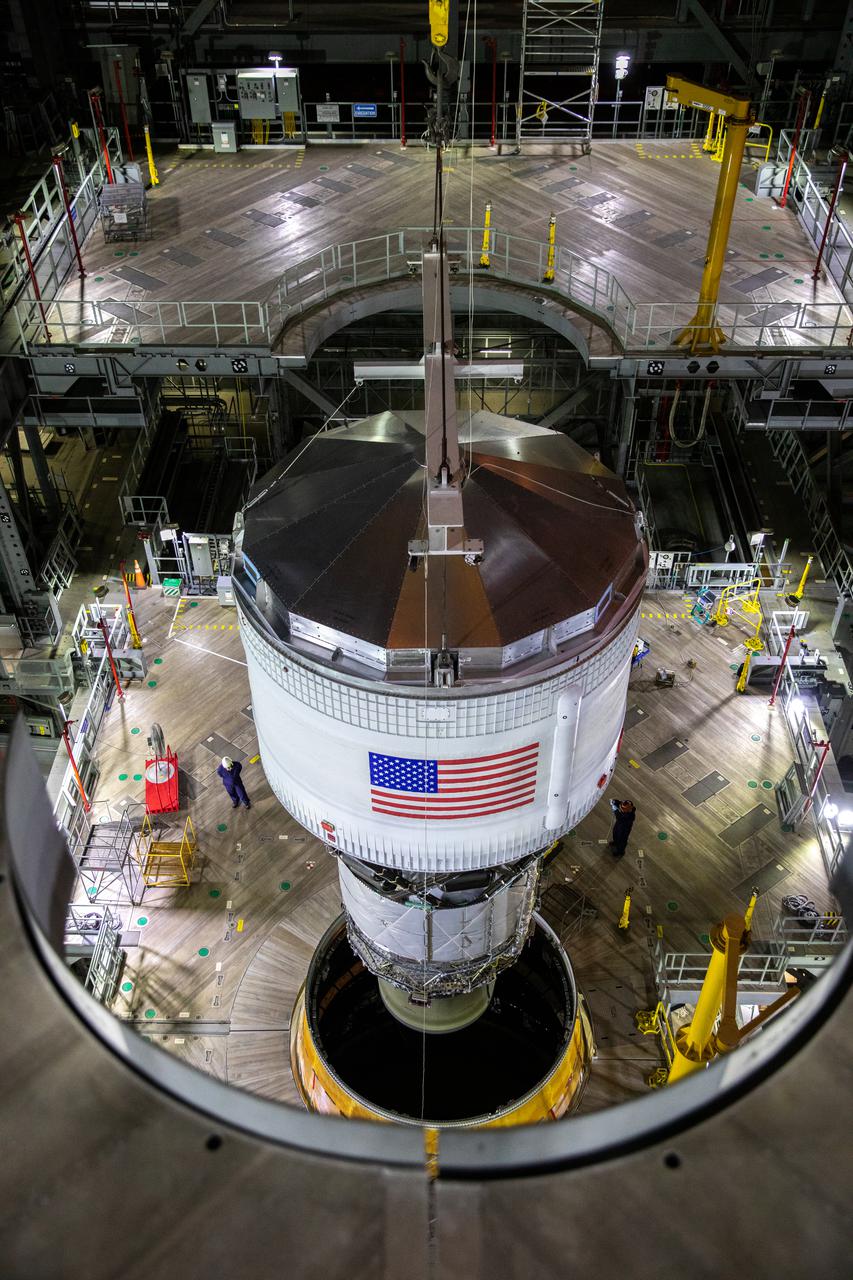
Teams with NASA’s Exploration Ground Systems and contractor Jacobs integrate the interim cryogenic propulsion stage (ICPS) for NASA’s Space Launch System (SLS) rocket with the launch vehicle stage adapter (LVSA) atop the massive SLS core stage in the agency’s Vehicle Assembly Building (VAB) at NASA’s Kennedy Space Center in Florida on July 5, 2021. The ICPS is a liquid oxygen and liquid hydrogen-based system that will fire its RL 10 engine to give the Orion spacecraft the big in-space push needed to fly tens of thousands of miles beyond the Moon. The next component to be stacked on top of ICPS will be the Orion stage adapter, which will connect the ICPS with the spacecraft. Through Artemis, NASA will send the first woman and the first person of color to the lunar surface, as well as establish a sustainable presence on and around the Moon. As the first in an increasingly complex set of missions, Artemis I will test SLS and Orion as an integrated system prior to crewed flights to the Moon.
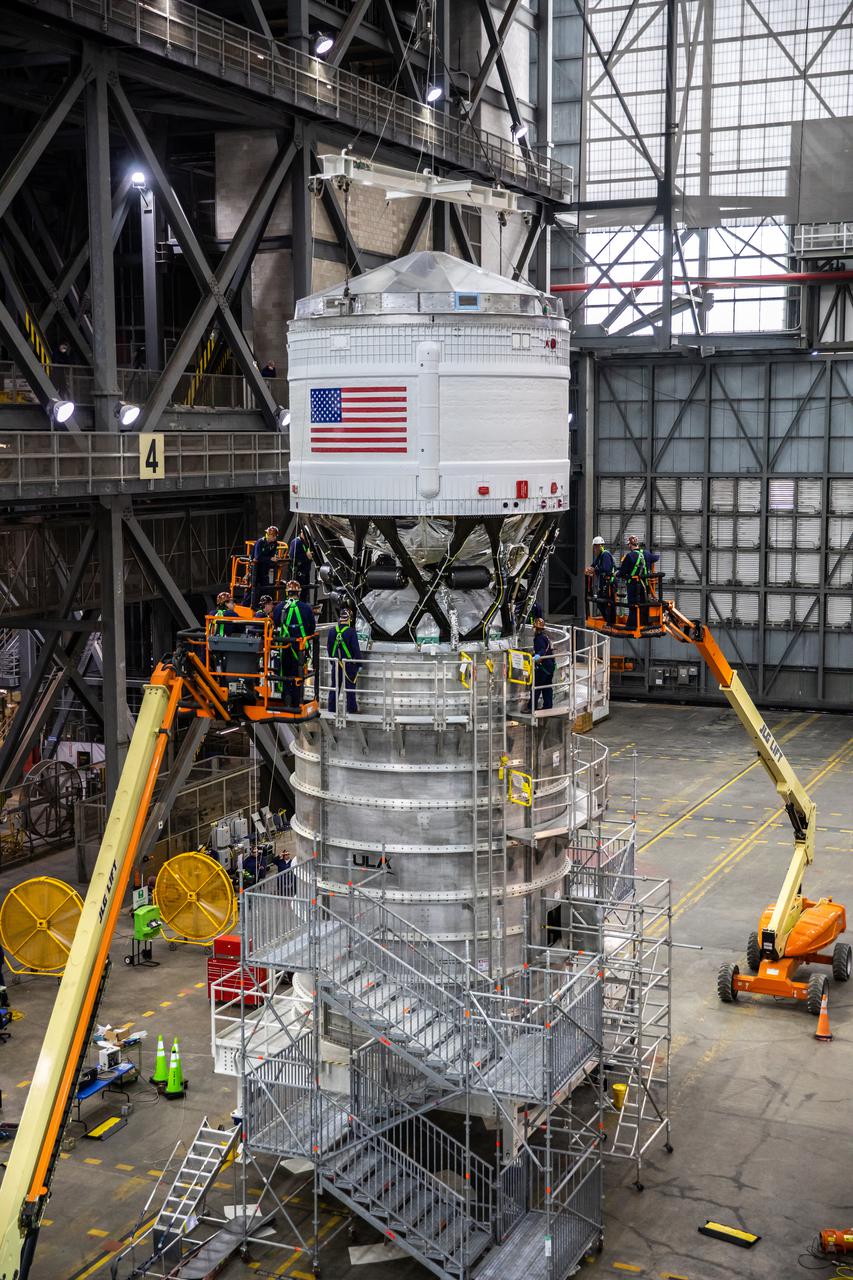
Teams with NASA’s Exploration Ground Systems and contractor Jacobs integrate the interim cryogenic propulsion stage (ICPS) for NASA’s Space Launch System (SLS) rocket with the launch vehicle stage adapter (LVSA) atop the massive SLS core stage in the agency’s Vehicle Assembly Building (VAB) at NASA’s Kennedy Space Center in Florida on July 5, 2021. The ICPS is a liquid oxygen and liquid hydrogen-based system that will fire its RL 10 engine to give the Orion spacecraft the big in-space push needed to fly tens of thousands of miles beyond the Moon. The next component to be stacked on top of ICPS will be the Orion stage adapter, which will connect the ICPS with the spacecraft. Through Artemis, NASA will send the first woman and the first person of color to the lunar surface, as well as establish a sustainable presence on and around the Moon. As the first in an increasingly complex set of missions, Artemis I will test SLS and Orion as an integrated system prior to crewed flights to the Moon.
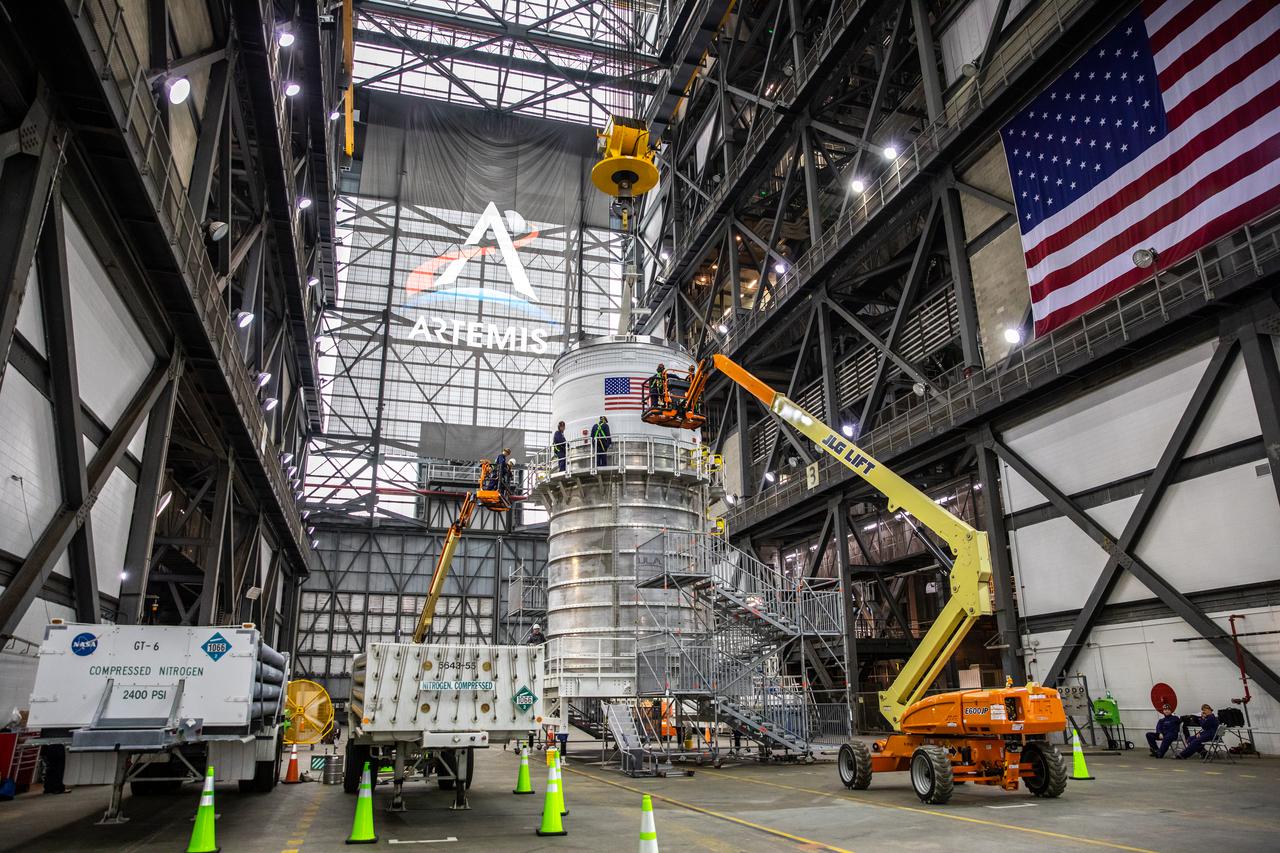
Teams with NASA’s Exploration Ground Systems and contractor Jacobs integrate the interim cryogenic propulsion stage (ICPS) for NASA’s Space Launch System (SLS) rocket with the launch vehicle stage adapter (LVSA) atop the massive SLS core stage in the agency’s Vehicle Assembly Building (VAB) at NASA’s Kennedy Space Center in Florida on July 5, 2021. The ICPS is a liquid oxygen and liquid hydrogen-based system that will fire its RL 10 engine to give the Orion spacecraft the big in-space push needed to fly tens of thousands of miles beyond the Moon. The next component to be stacked on top of ICPS will be the Orion stage adapter, which will connect the ICPS with the spacecraft. Through Artemis, NASA will send the first woman and the first person of color to the lunar surface, as well as establish a sustainable presence on and around the Moon. As the first in an increasingly complex set of missions, Artemis I will test SLS and Orion as an integrated system prior to crewed flights to the Moon.
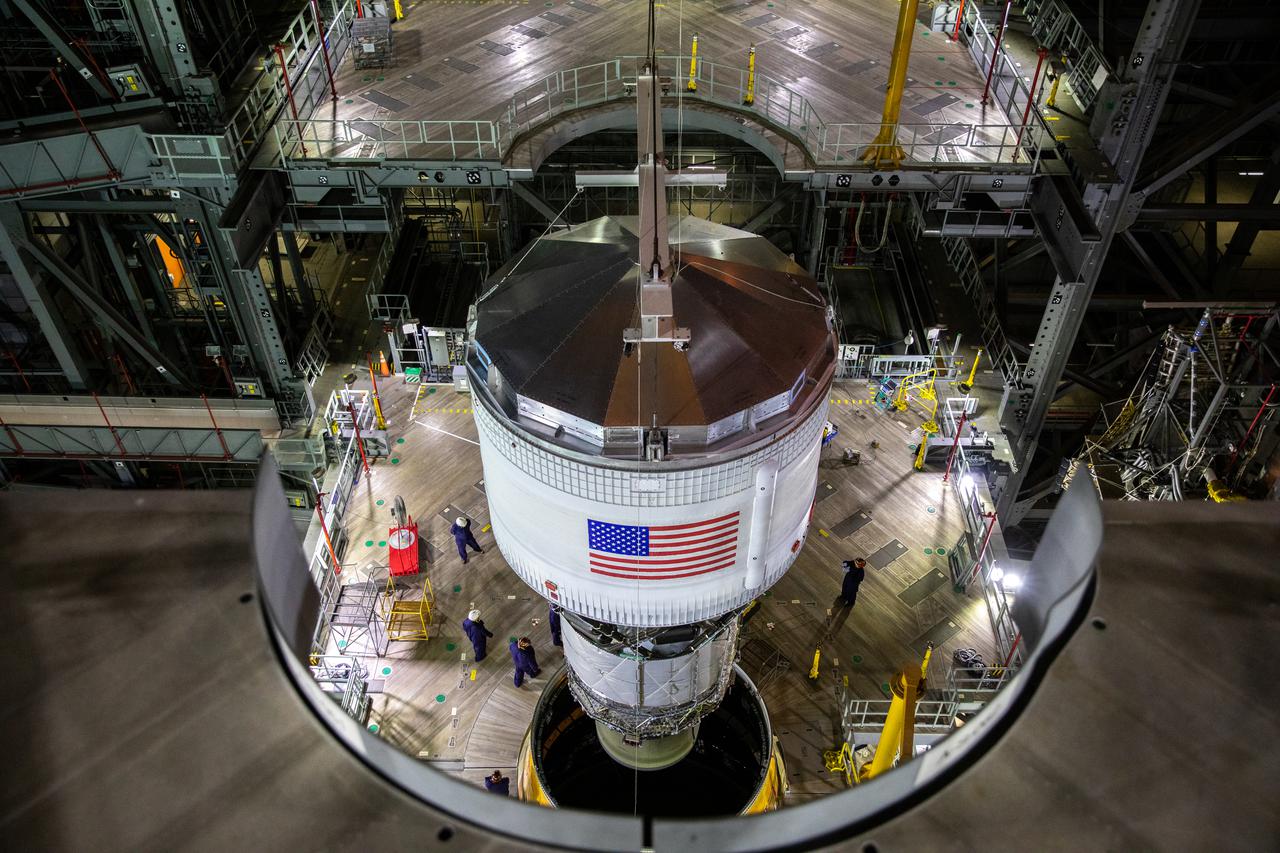
Teams with NASA’s Exploration Ground Systems and contractor Jacobs integrate the interim cryogenic propulsion stage (ICPS) for NASA’s Space Launch System (SLS) rocket with the launch vehicle stage adapter (LVSA) atop the massive SLS core stage in the agency’s Vehicle Assembly Building (VAB) at NASA’s Kennedy Space Center in Florida on July 5, 2021. The ICPS is a liquid oxygen and liquid hydrogen-based system that will fire its RL 10 engine to give the Orion spacecraft the big in-space push needed to fly tens of thousands of miles beyond the Moon. The next component to be stacked on top of ICPS will be the Orion stage adapter, which will connect the ICPS with the spacecraft. Through Artemis, NASA will send the first woman and the first person of color to the lunar surface, as well as establish a sustainable presence on and around the Moon. As the first in an increasingly complex set of missions, Artemis I will test SLS and Orion as an integrated system prior to crewed flights to the Moon.
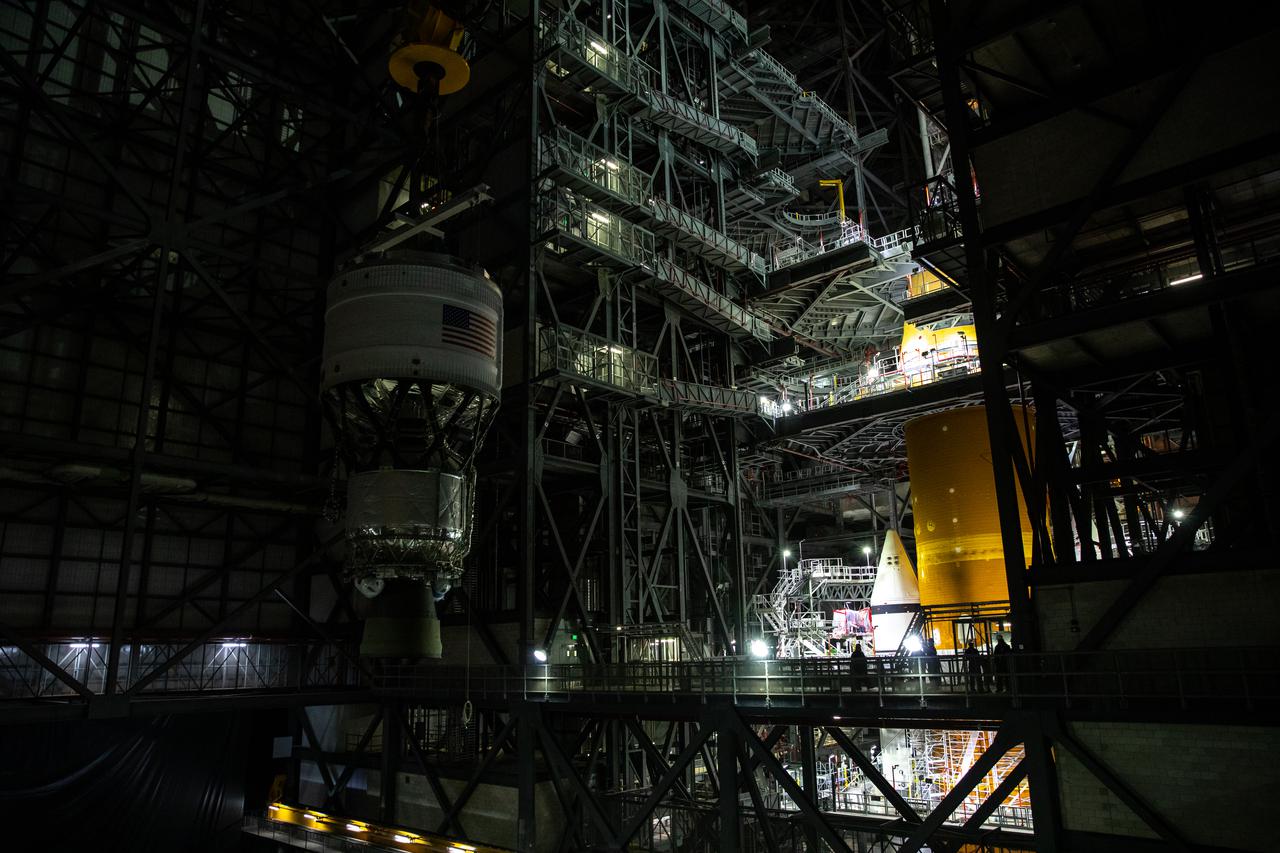
Teams with NASA’s Exploration Ground Systems and contractor Jacobs integrate the interim cryogenic propulsion stage (ICPS) for NASA’s Space Launch System (SLS) rocket with the launch vehicle stage adapter (LVSA) atop the massive SLS core stage in the agency’s Vehicle Assembly Building (VAB) at NASA’s Kennedy Space Center in Florida on July 5, 2021. The ICPS is a liquid oxygen and liquid hydrogen-based system that will fire its RL 10 engine to give the Orion spacecraft the big in-space push needed to fly tens of thousands of miles beyond the Moon. The next component to be stacked on top of ICPS will be the Orion stage adapter, which will connect the ICPS with the spacecraft. Through Artemis, NASA will send the first woman and the first person of color to the lunar surface, as well as establish a sustainable presence on and around the Moon. As the first in an increasingly complex set of missions, Artemis I will test SLS and Orion as an integrated system prior to crewed flights to the Moon.
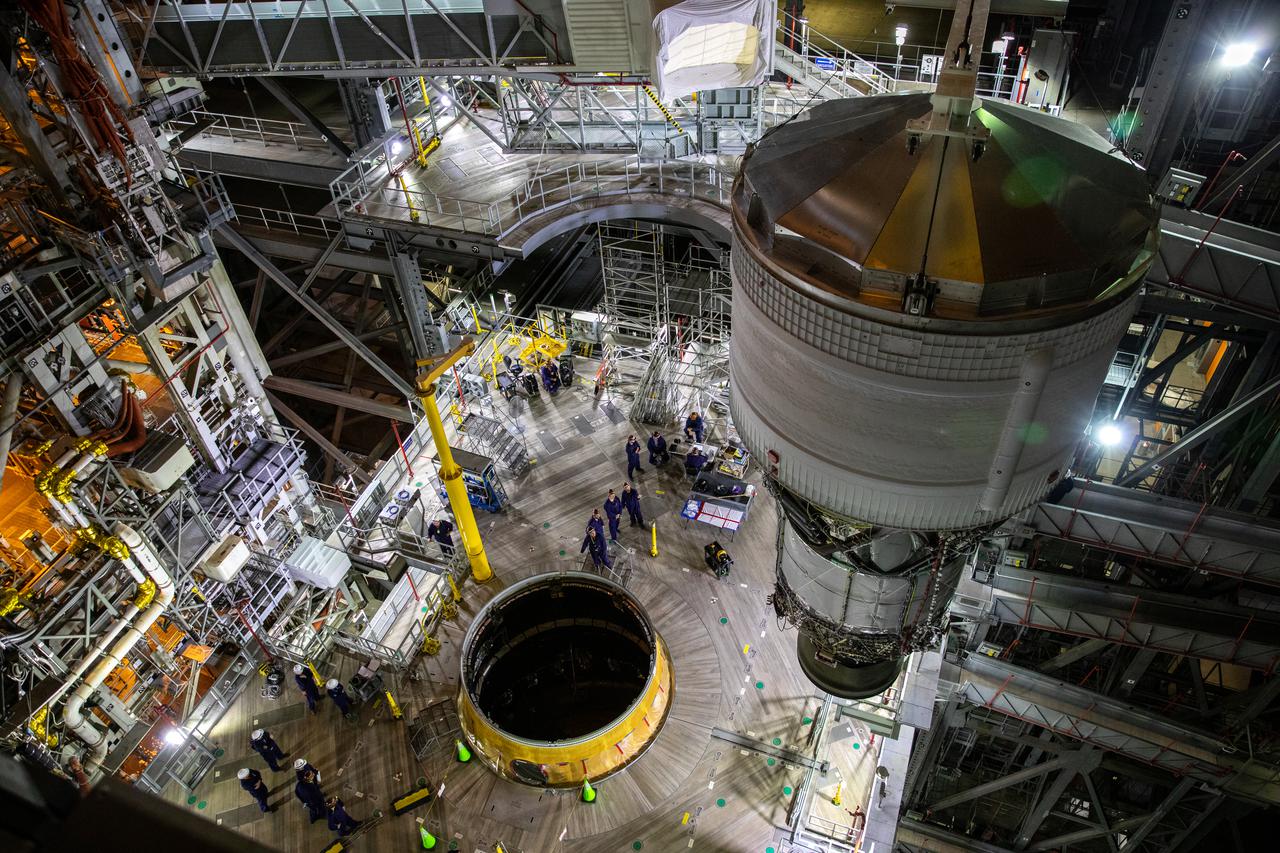
Teams with NASA’s Exploration Ground Systems and contractor Jacobs integrate the interim cryogenic propulsion stage (ICPS) for NASA’s Space Launch System (SLS) rocket with the launch vehicle stage adapter (LVSA) atop the massive SLS core stage in the agency’s Vehicle Assembly Building (VAB) at NASA’s Kennedy Space Center in Florida on July 5, 2021. The ICPS is a liquid oxygen and liquid hydrogen-based system that will fire its RL 10 engine to give the Orion spacecraft the big in-space push needed to fly tens of thousands of miles beyond the Moon. The next component to be stacked on top of ICPS will be the Orion stage adapter, which will connect the ICPS with the spacecraft. Through Artemis, NASA will send the first woman and the first person of color to the lunar surface, as well as establish a sustainable presence on and around the Moon. As the first in an increasingly complex set of missions, Artemis I will test SLS and Orion as an integrated system prior to crewed flights to the Moon.
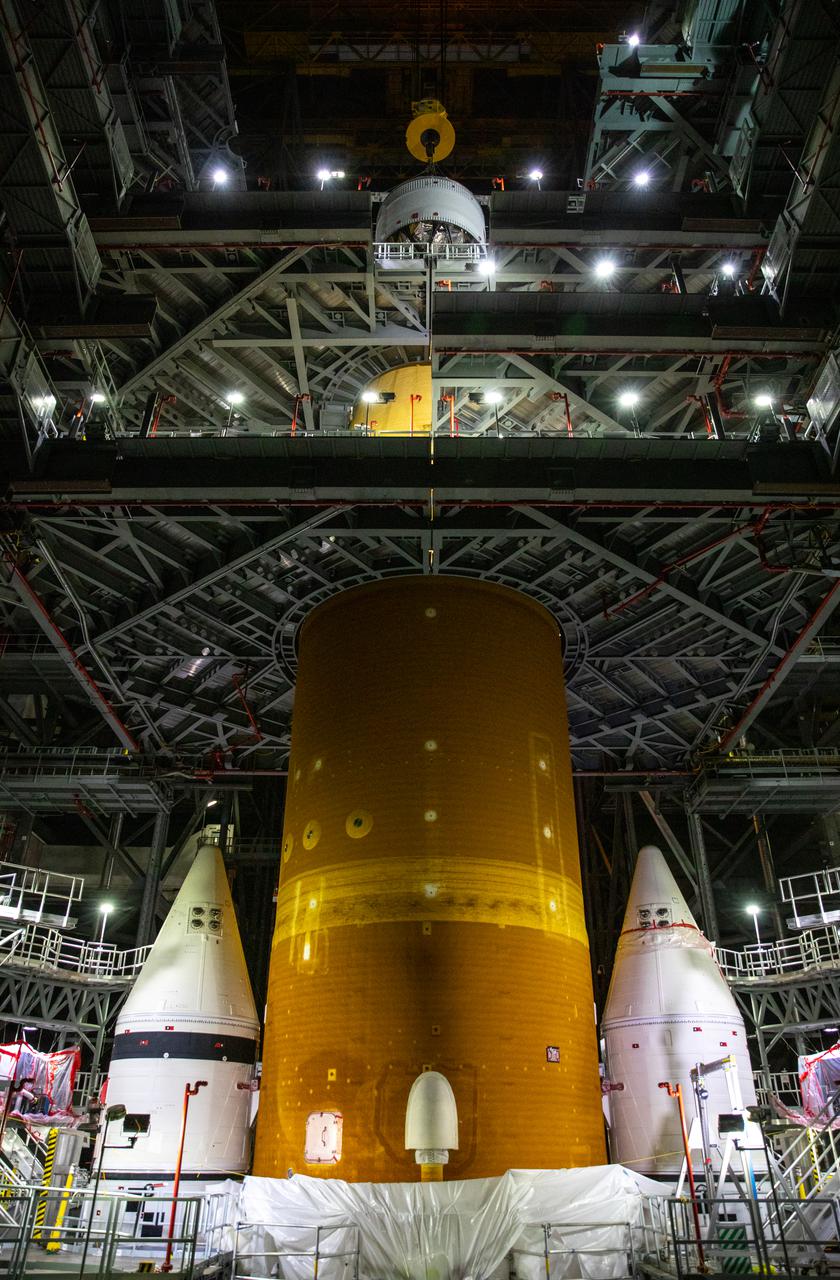
Teams with NASA’s Exploration Ground Systems and contractor Jacobs integrate the interim cryogenic propulsion stage (ICPS) for NASA’s Space Launch System (SLS) rocket with the launch vehicle stage adapter (LVSA) atop the massive SLS core stage in the agency’s Vehicle Assembly Building (VAB) at NASA’s Kennedy Space Center in Florida on July 5, 2021. The ICPS is a liquid oxygen and liquid hydrogen-based system that will fire its RL 10 engine to give the Orion spacecraft the big in-space push needed to fly tens of thousands of miles beyond the Moon. The next component to be stacked on top of ICPS will be the Orion stage adapter, which will connect the ICPS with the spacecraft. Through Artemis, NASA will send the first woman and the first person of color to the lunar surface, as well as establish a sustainable presence on and around the Moon. As the first in an increasingly complex set of missions, Artemis I will test SLS and Orion as an integrated system prior to crewed flights to the Moon.
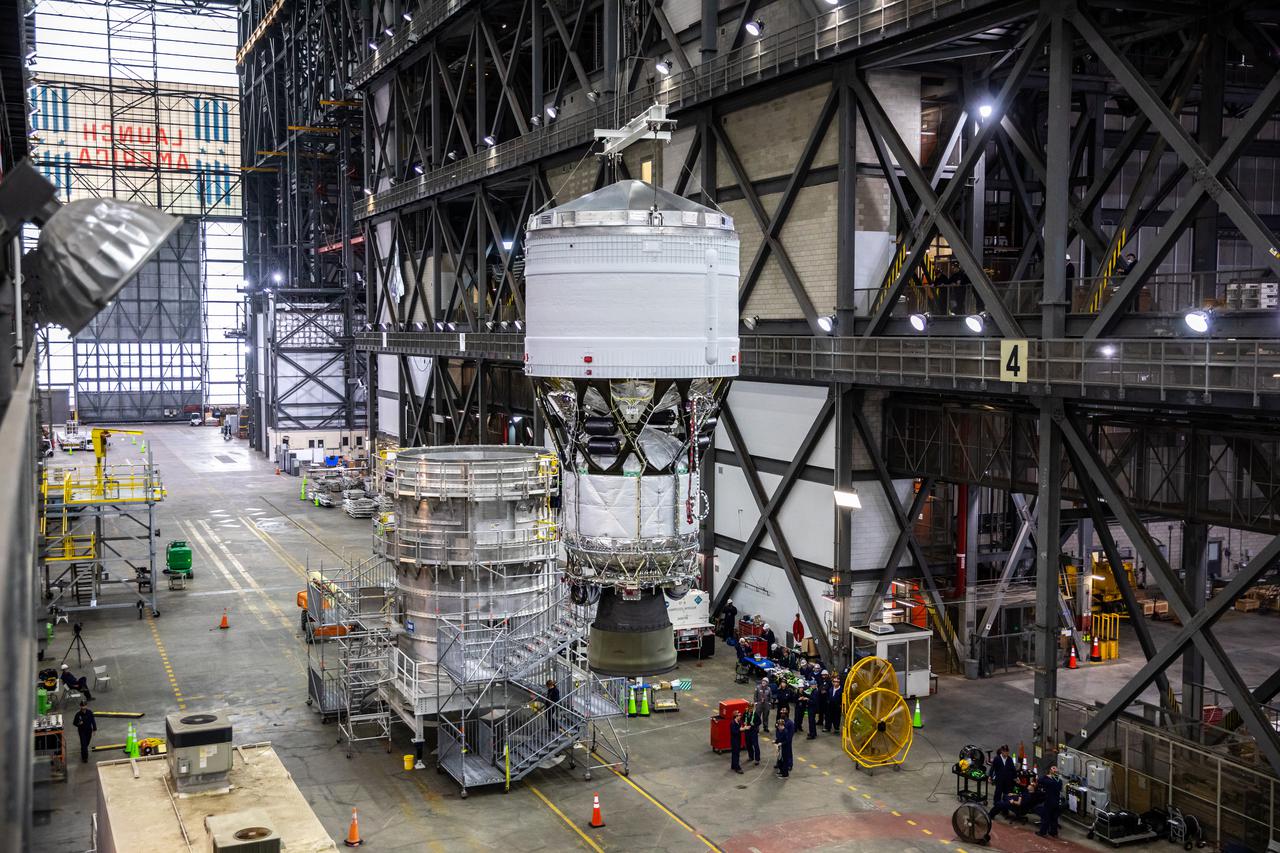
Teams with NASA’s Exploration Ground Systems and contractor Jacobs integrate the interim cryogenic propulsion stage (ICPS) for NASA’s Space Launch System (SLS) rocket with the launch vehicle stage adapter (LVSA) atop the massive SLS core stage in the agency’s Vehicle Assembly Building (VAB) at NASA’s Kennedy Space Center in Florida on July 5, 2021. The ICPS is a liquid oxygen and liquid hydrogen-based system that will fire its RL 10 engine to give the Orion spacecraft the big in-space push needed to fly tens of thousands of miles beyond the Moon. The next component to be stacked on top of ICPS will be the Orion stage adapter, which will connect the ICPS with the spacecraft. Through Artemis, NASA will send the first woman and the first person of color to the lunar surface, as well as establish a sustainable presence on and around the Moon. As the first in an increasingly complex set of missions, Artemis I will test SLS and Orion as an integrated system prior to crewed flights to the Moon.
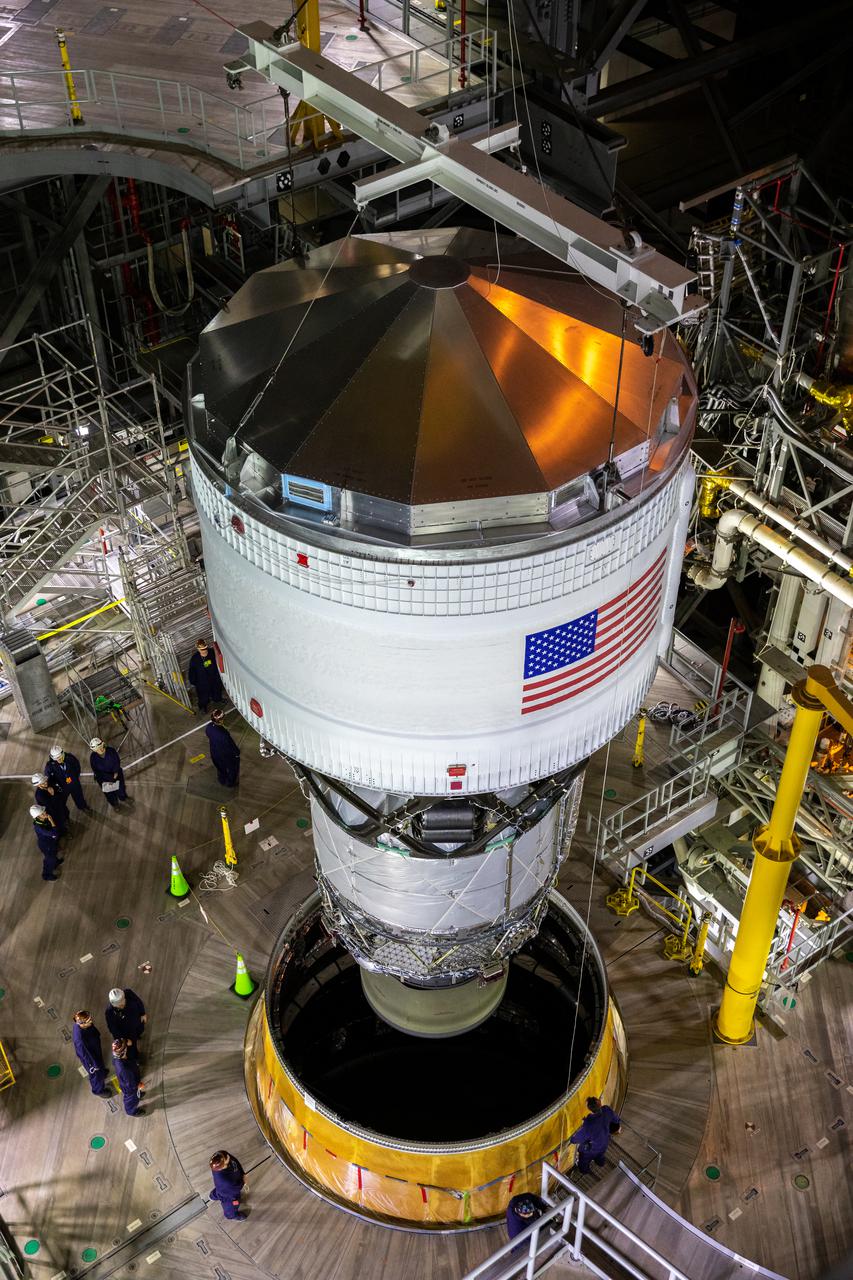
Teams with NASA’s Exploration Ground Systems and contractor Jacobs integrate the interim cryogenic propulsion stage (ICPS) for NASA’s Space Launch System (SLS) rocket with the launch vehicle stage adapter (LVSA) atop the massive SLS core stage in the agency’s Vehicle Assembly Building (VAB) at NASA’s Kennedy Space Center in Florida on July 5, 2021. The ICPS is a liquid oxygen and liquid hydrogen-based system that will fire its RL 10 engine to give the Orion spacecraft the big in-space push needed to fly tens of thousands of miles beyond the Moon. The next component to be stacked on top of ICPS will be the Orion stage adapter, which will connect the ICPS with the spacecraft. Through Artemis, NASA will send the first woman and the first person of color to the lunar surface, as well as establish a sustainable presence on and around the Moon. As the first in an increasingly complex set of missions, Artemis I will test SLS and Orion as an integrated system prior to crewed flights to the Moon.

Teams with NASA’s Exploration Ground Systems and contractor Jacobs integrate the interim cryogenic propulsion stage (ICPS) for NASA’s Space Launch System (SLS) rocket with the launch vehicle stage adapter (LVSA) atop the massive SLS core stage in the agency’s Vehicle Assembly Building (VAB) at NASA’s Kennedy Space Center in Florida on July 5, 2021. The ICPS is a liquid oxygen and liquid hydrogen-based system that will fire its RL 10 engine to give the Orion spacecraft the big in-space push needed to fly tens of thousands of miles beyond the Moon. The next component to be stacked on top of ICPS will be the Orion stage adapter, which will connect the ICPS with the spacecraft. Through Artemis, NASA will send the first woman and the first person of color to the lunar surface, as well as establish a sustainable presence on and around the Moon. As the first in an increasingly complex set of missions, Artemis I will test SLS and Orion as an integrated system prior to crewed flights to the Moon.
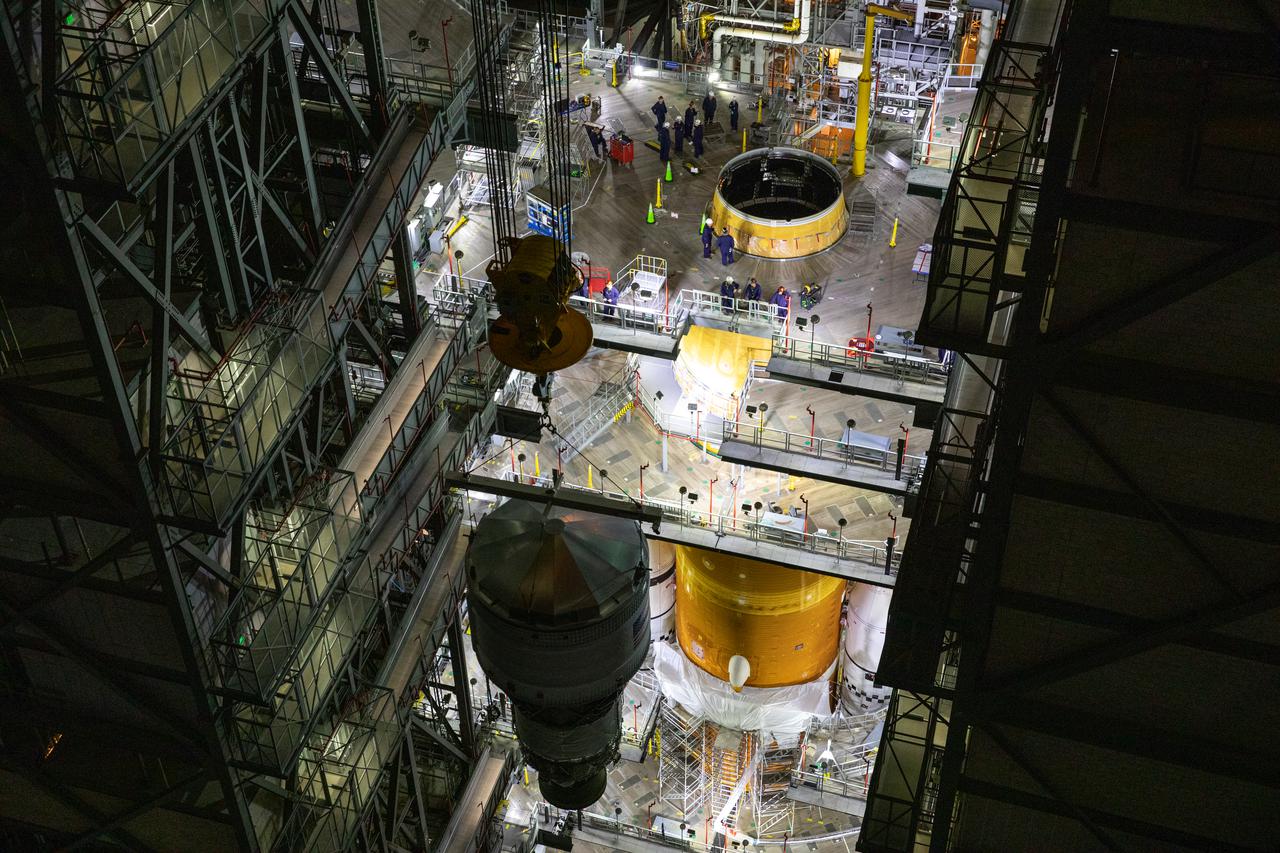
Teams with NASA’s Exploration Ground Systems and contractor Jacobs integrate the interim cryogenic propulsion stage (ICPS) for NASA’s Space Launch System (SLS) rocket with the launch vehicle stage adapter (LVSA) atop the massive SLS core stage in the agency’s Vehicle Assembly Building (VAB) at NASA’s Kennedy Space Center in Florida on July 5, 2021. The ICPS is a liquid oxygen and liquid hydrogen-based system that will fire its RL 10 engine to give the Orion spacecraft the big in-space push needed to fly tens of thousands of miles beyond the Moon. The next component to be stacked on top of ICPS will be the Orion stage adapter, which will connect the ICPS with the spacecraft. Through Artemis, NASA will send the first woman and the first person of color to the lunar surface, as well as establish a sustainable presence on and around the Moon. As the first in an increasingly complex set of missions, Artemis I will test SLS and Orion as an integrated system prior to crewed flights to the Moon.
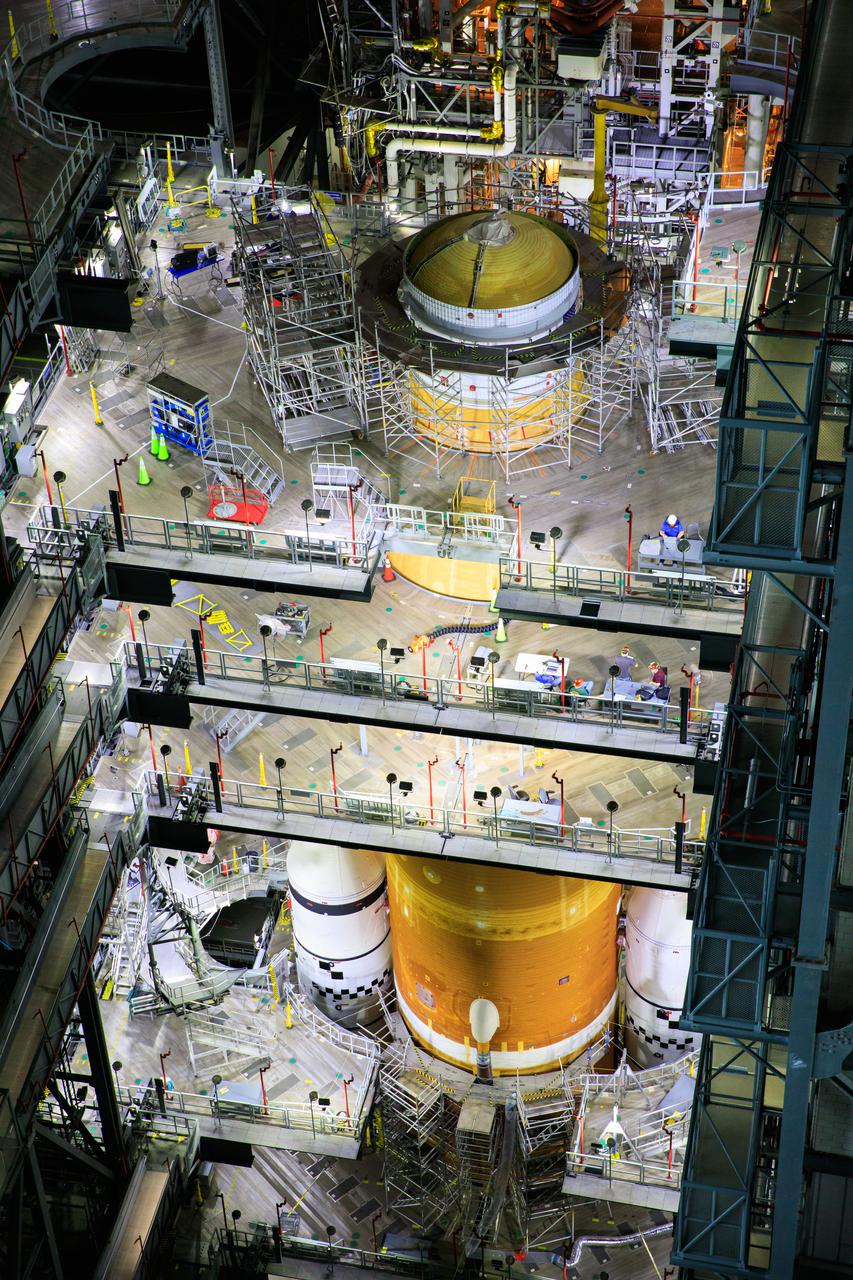
Teams with NASA’s Exploration Ground Systems and contractor Jacobs integrated the interim cryogenic propulsion stage (ICPS) for NASA’s Space Launch System (SLS) rocket with the launch vehicle stage adapter (LVSA) atop the massive SLS core stage on the mobile launcher inside the agency’s Vehicle Assembly Building (VAB) at NASA’s Kennedy Space Center in Florida on July 5, 2021. The ICPS’s RL 10 engine is housed inside the launch vehicle stage adapter, which will protect the engine during launch. The ICPS is a liquid oxygen and liquid hydrogen-based system that will give the Orion spacecraft the big in-space push needed to fly tens of thousands of miles beyond the Moon. The next component to be stacked on top of ICPS will be the Orion stage adapter, which will connect the ICPS with the spacecraft. Through Artemis, NASA will send the first woman and the first person of color to the lunar surface, as well as establish a sustainable presence on and around the Moon. As the first in an increasingly complex set of missions, Artemis I will test SLS and Orion as an integrated system prior to crewed flights to the Moon.
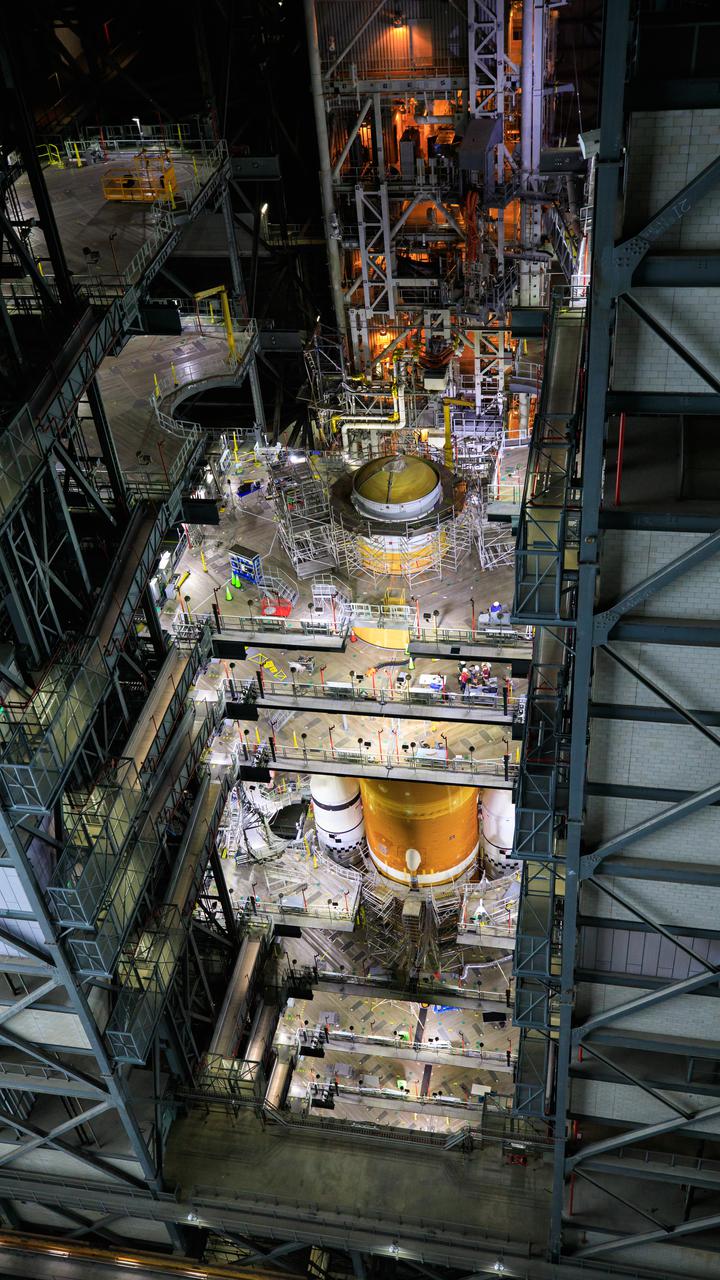
Teams with NASA’s Exploration Ground Systems and contractor Jacobs integrated the interim cryogenic propulsion stage (ICPS) for NASA’s Space Launch System (SLS) rocket with the launch vehicle stage adapter (LVSA) atop the massive SLS core stage on the mobile launcher inside the agency’s Vehicle Assembly Building (VAB) at NASA’s Kennedy Space Center in Florida on July 5, 2021. The ICPS’s RL 10 engine is housed inside the launch vehicle stage adapter, which will protect the engine during launch. The ICPS is a liquid oxygen and liquid hydrogen-based system that will give the Orion spacecraft the big in-space push needed to fly tens of thousands of miles beyond the Moon. The next component to be stacked on top of ICPS will be the Orion stage adapter, which will connect the ICPS with the spacecraft. Through Artemis, NASA will send the first woman and the first person of color to the lunar surface, as well as establish a sustainable presence on and around the Moon. As the first in an increasingly complex set of missions, Artemis I will test SLS and Orion as an integrated system prior to crewed flights to the Moon.
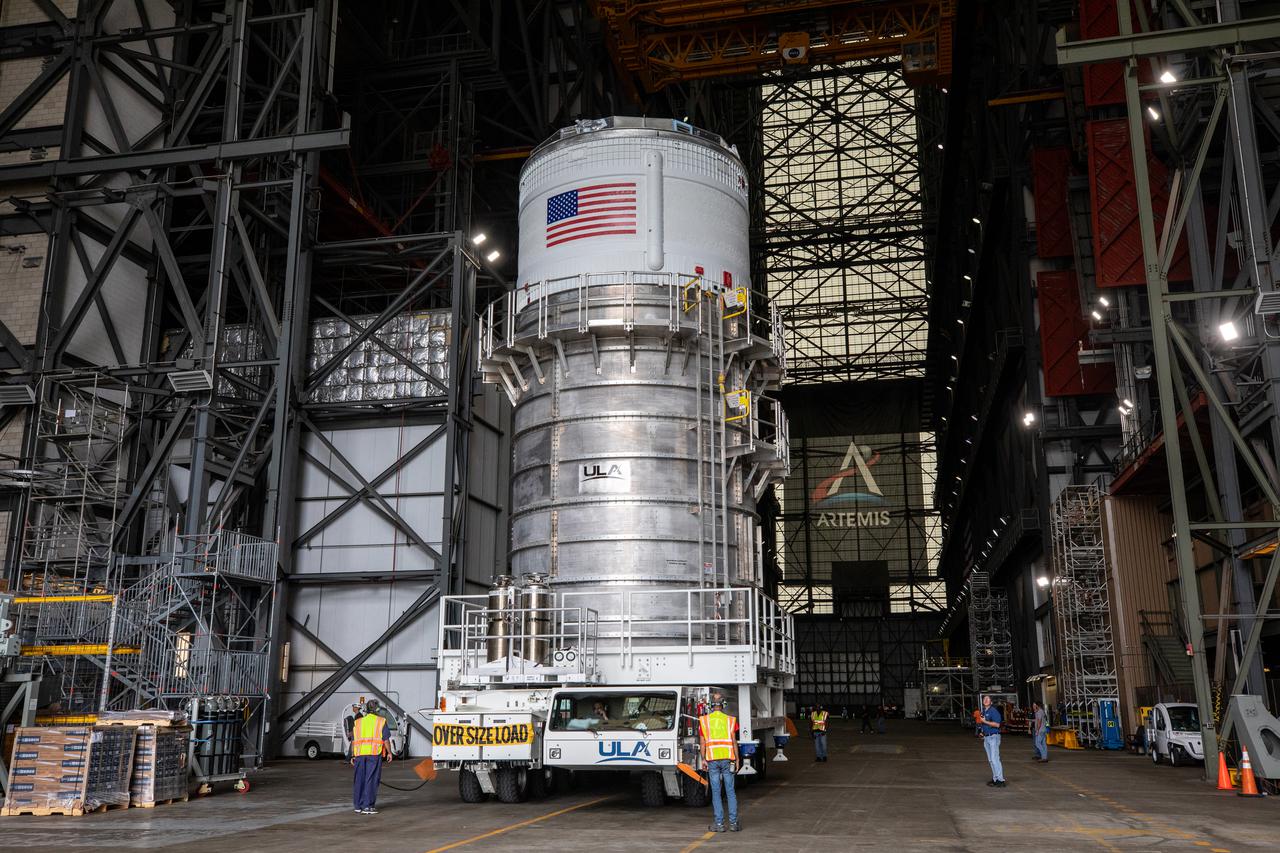
The Space Launch System (SLS) rocket’s interim cryogenic propulsion stage (ICPS) is moved into the transfer aisle of the Vehicle Assembly Building (VAB) by teams with NASA’s Exploration Ground Systems and contractor Jacobs at NASA’s Kennedy Space Center in Florida on Saturday, June 19, 2021. After being fueled and serviced inside the Multi-Payload Processing Facility (MPPF), the ICPS will be hoisted into place atop the SLS core stage while its Aerojet Rocketdyne-built RL-10 engine will be protected inside the launch vehicle stage adapter (LVSA) on the mobile launcher in preparation for the launch of Artemis I. The ICPS will provide Orion spacecraft with the push needed for its flight around the Moon. The first in a series of increasingly complex missions, Artemis I will test SLS and the Orion spacecraft as an integrated system prior to crewed flights in which NASA will land the first woman and person of color on the Moon.
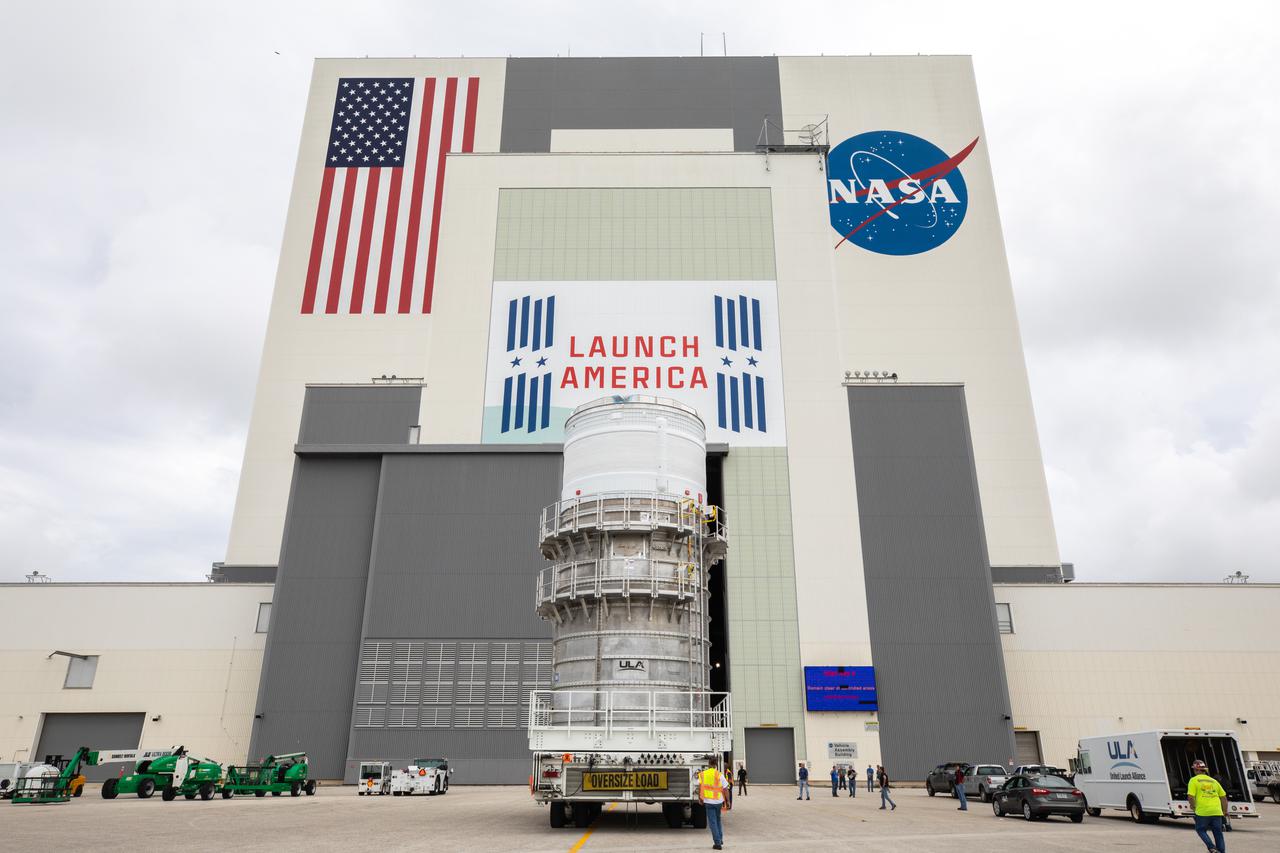
Teams with NASA’s Exploration Ground Systems and contractor Jacobs move the Space Launch System (SLS) rocket’s interim cryogenic propulsion stage (ICPS) into the Vehicle Assembly Building (VAB) at NASA’s Kennedy Space Center in Florida on Saturday, June 19, 2021. After being fueled and serviced inside the Multi-Payload Processing Facility (MPPF), the ICPS will be hoisted into place atop the SLS core stage while its Aerojet Rocketdyne-built RL-10 engine will be protected inside the launch vehicle stage adapter (LVSA) on the mobile launcher in preparation for the launch of Artemis I. The ICPS will provide Orion spacecraft with the push needed for its flight around the Moon. The first in a series of increasingly complex missions, Artemis I will test SLS and the Orion spacecraft as an integrated system prior to crewed flights in which NASA will land the first woman and person of color on the Moon.
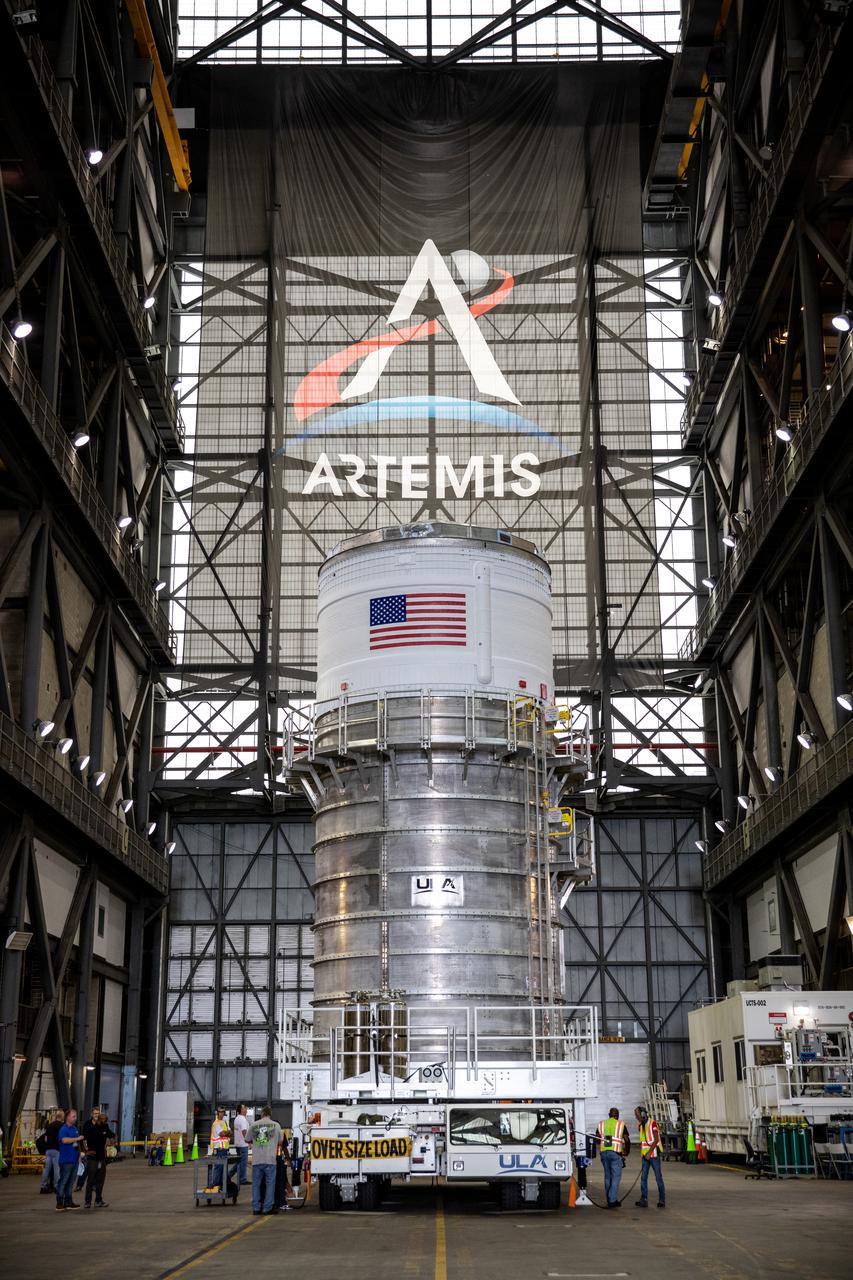
The Space Launch System (SLS) rocket’s interim cryogenic propulsion stage (ICPS) sits in the transfer aisle of the Vehicle Assembly Building (VAB), upon being moved by teams with NASA’s Exploration Ground Systems and contractor Jacobs at NASA’s Kennedy Space Center in Florida on Saturday, June 19, 2021. After being fueled and serviced inside the Multi-Payload Processing Facility (MPPF), the ICPS will be hoisted into place atop the SLS core stage while its Aerojet Rocketdyne-built RL-10 engine will be protected inside the launch vehicle stage adapter (LVSA) on the mobile launcher in preparation for the launch of Artemis I. The ICPS will provide Orion spacecraft with the push needed for its flight around the Moon. The first in a series of increasingly complex missions, Artemis I will test SLS and the Orion spacecraft as an integrated system prior to crewed flights in which NASA will land the first woman and person of color on the Moon.
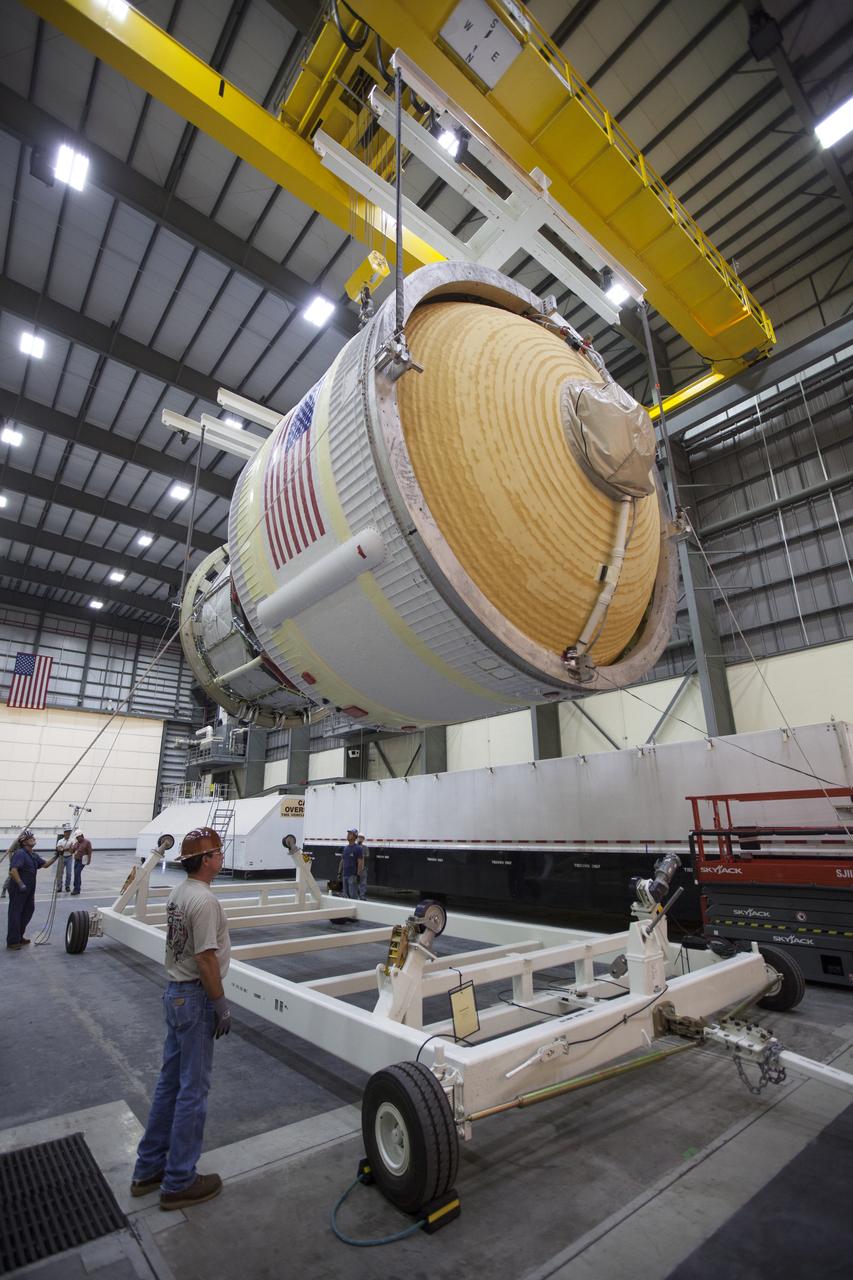
Inside the United Launch Alliance (ULA) Horizontal Integration Facility at Cape Canaveral Air Force Station in Florida, technicians monitor the progress as a crane lowers the Interim Cryogenic Propulsion Stage (ICPS) for NASA's Space Launch System rocket to a movable transport stand. The ICPS is the first integrated piece of flight hardware to arrive for the SLS. The ICPS arrived from the ULA facility in Decatur, Alabama. The ICPS is the in-space stage that is located toward the top of the rocket, between the Launch Vehicle Stage Adapter and the Orion Spacecraft Adapter. It will provide some of the in-space propulsion during Orion's first flight test atop the SLS on Exploration Mission 1.
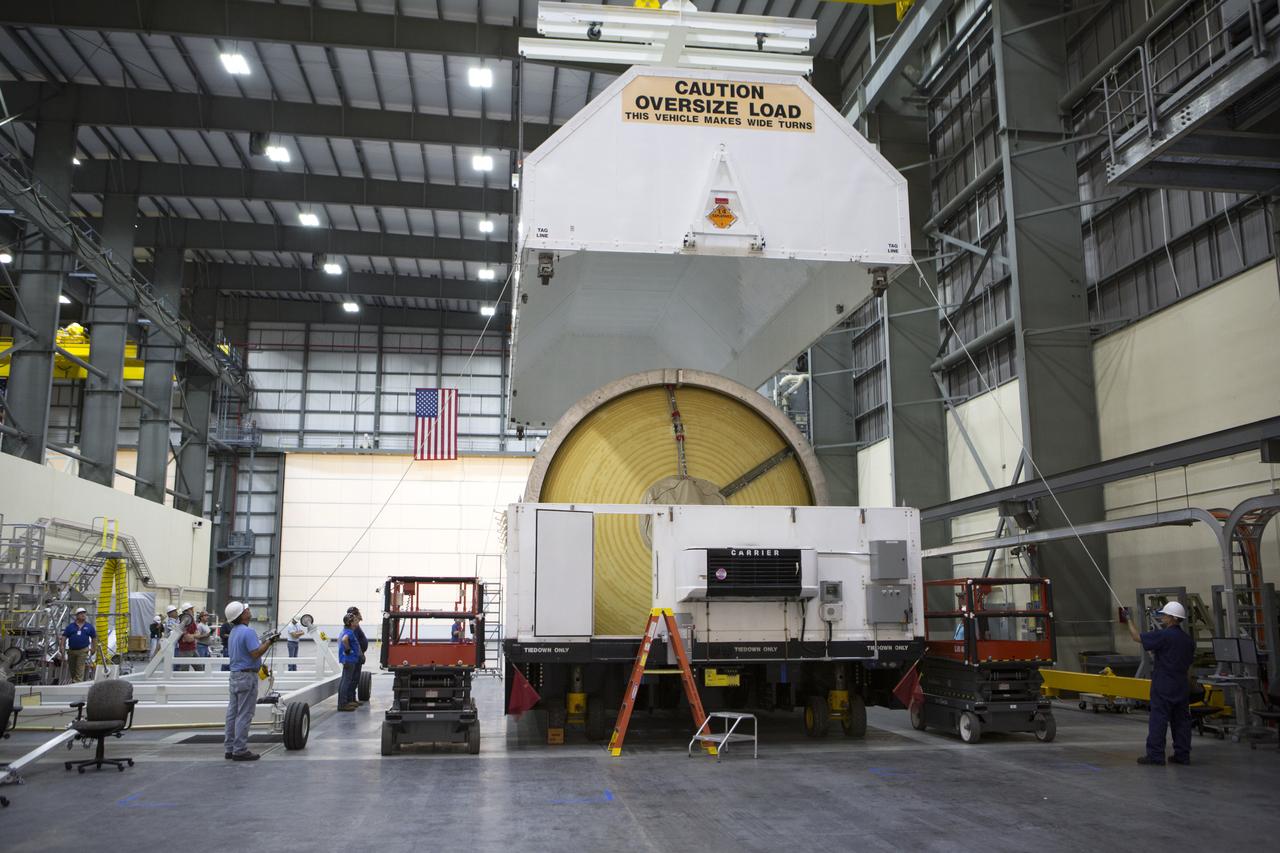
Inside the United Launch Alliance (ULA) Horizontal Integration Facility at Cape Canaveral Air Force Station in Florida, technicians assists as a crane lifts the shipping container cover away from the Interim Cryogenic Propulsion Stage (ICPS) for NASA's Space Launch System rocket. The ICPS is the first integrated piece of flight hardware to arrive for the SLS. The ICPS arrived from the ULA facility in Decatur, Alabama. The ICPS is the in-space stage that is located toward the top of the rocket, between the Launch Vehicle Stage Adapter and the Orion Spacecraft Adapter. It will provide some of the in-space propulsion during Orion's first flight test atop the SLS on Exploration Mission 1.

The Mariner barge is docked at Cape Canaveral Air Force Station in Florida, with the first integrated piece of flight hardware for NASA's Space Launch System (SLS) rocket, the Interim Cryogenic Propulsion Stage (ICPS) inside, at right. The ICPS was shipped from the United Launch Alliance (ULA) facility in Decatur, Alabama. The ICPS will be offloaded and transported to the ULA Horizontal Integration Facility where it will be removed from its flight case. The ICPS is the in-space stage that is located toward the top of the rocket, between the Launch Vehicle Stage Adapter and the Orion Spacecraft Adapter. It will provide some of the in-space propulsion during Orion's first flight test atop the SLS on Exploration Mission 1.
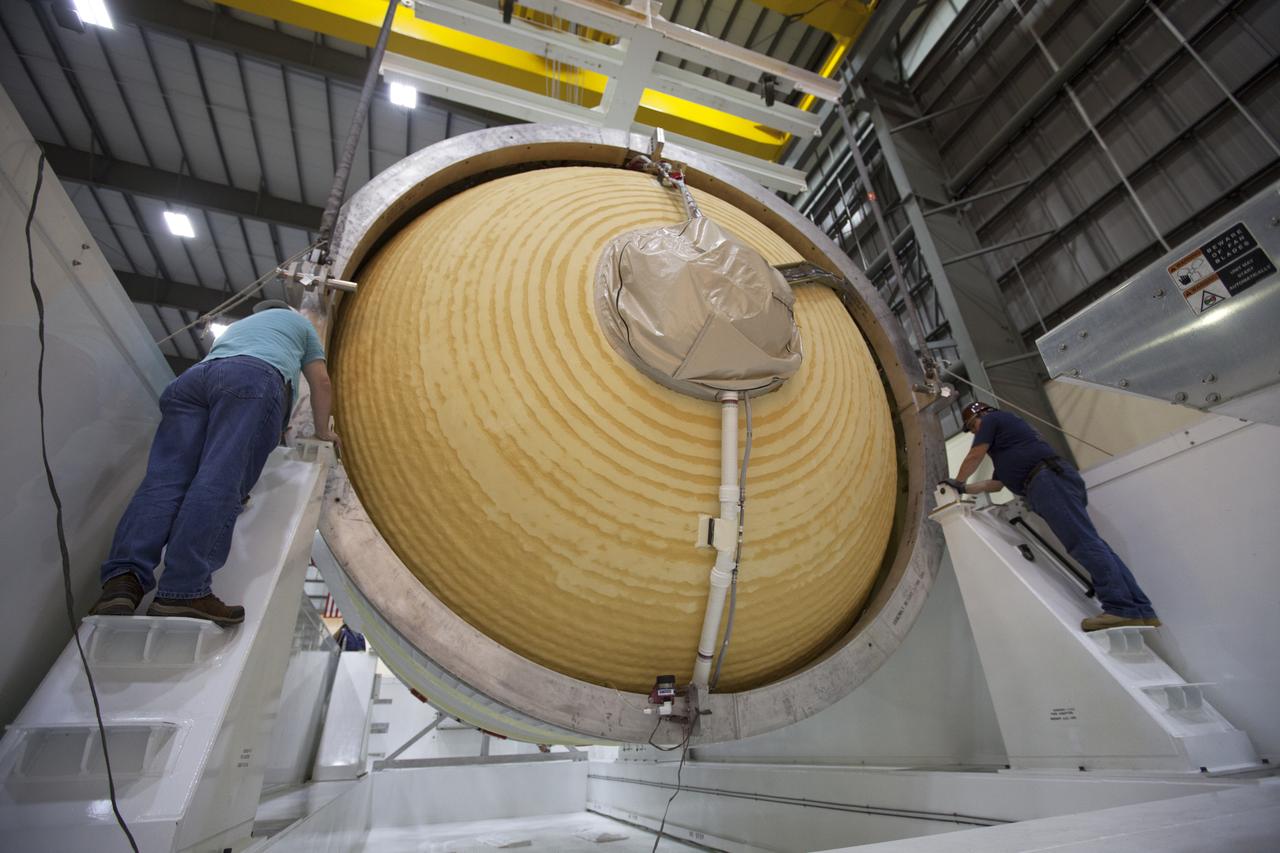
Inside the United Launch Alliance (ULA) Horizontal Integration Facility at Cape Canaveral Air Force Station in Florida, technicians attach a crane to the Interim Cryogenic Propulsion Stage (ICPS) for NASA's Space Launch System rocket. The ICPS is the first integrated piece of flight hardware to arrive for the SLS. The ICPS arrived from the ULA facility in Decatur, Alabama. The ICPS is the in-space stage that is located toward the top of the rocket, between the Launch Vehicle Stage Adapter and the Orion Spacecraft Adapter. It will provide some of the in-space propulsion during Orion's first flight test atop the SLS on Exploration Mission 1.
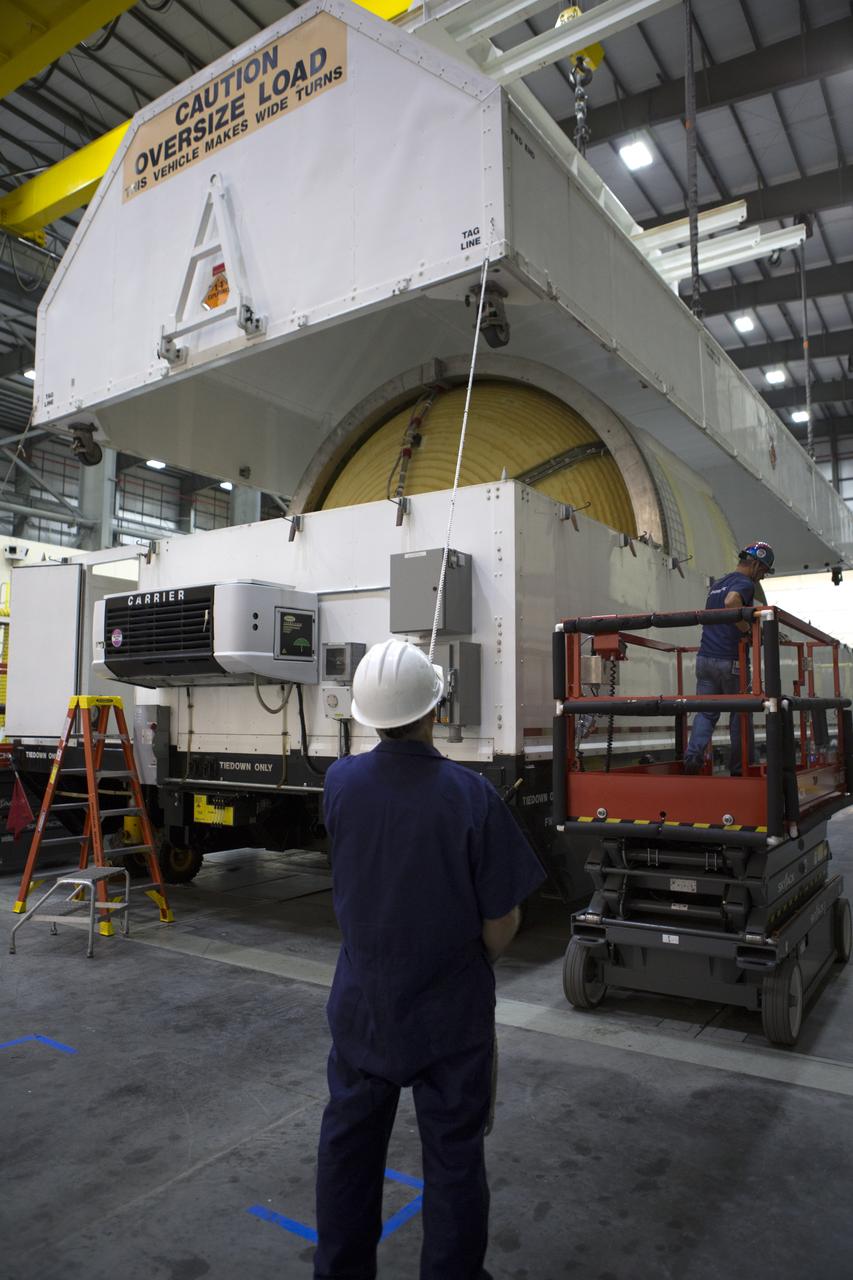
Inside the United Launch Alliance (ULA) Horizontal Integration Facility at Cape Canaveral Air Force Station in Florida, a technician assists as a crane lifts the top of the shipping container cover away from the Interim Cryogenic Propulsion Stage (ICPS) for NASA's Space Launch System rocket. The ICPS is the first integrated piece of flight hardware to arrive for the SLS. The ICPS arrived from the ULA facility in Decatur, Alabama. The ICPS is the in-space stage that is located toward the top of the rocket, between the Launch Vehicle Stage Adapter and the Orion Spacecraft Adapter. It will provide some of the in-space propulsion during Orion's first flight test atop the SLS on Exploration Mission 1.
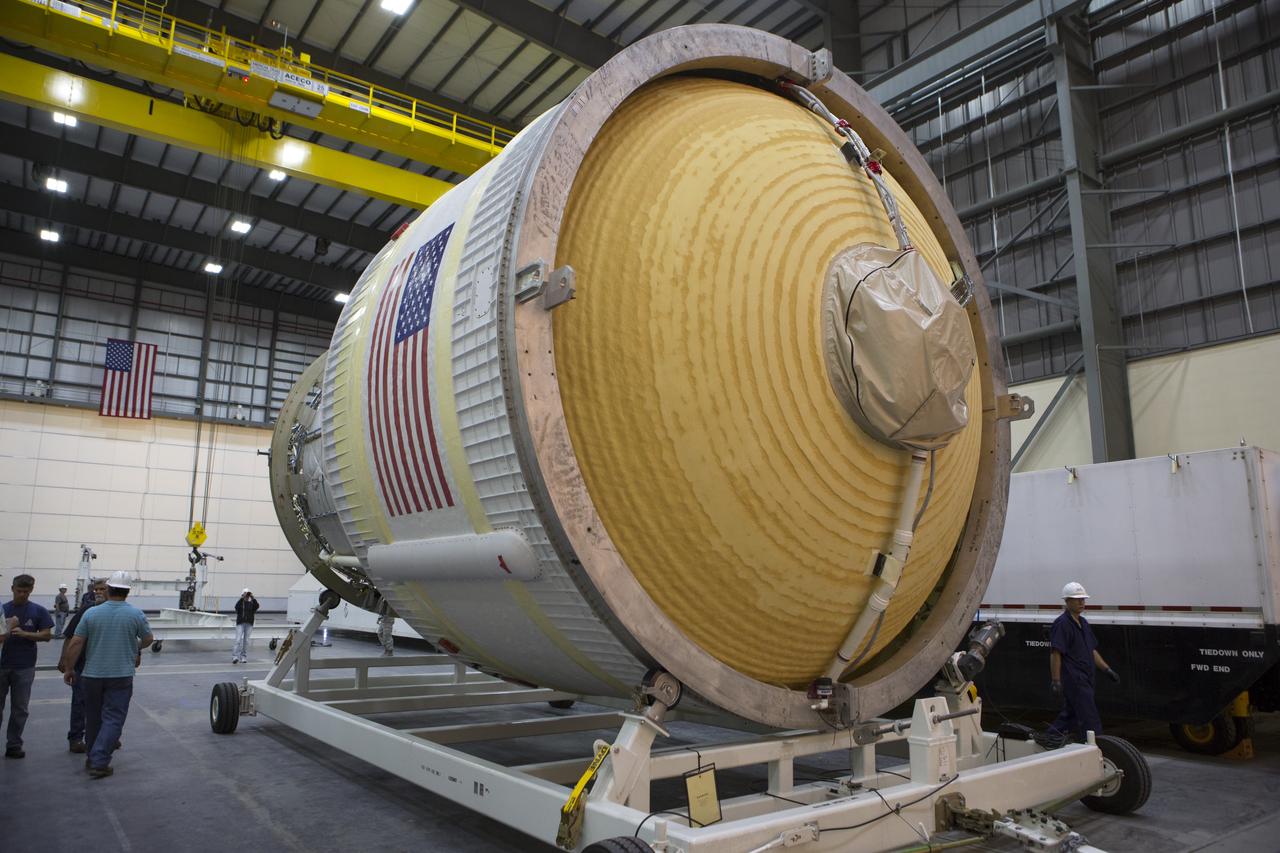
Inside the United Launch Alliance (ULA) Horizontal Integration Facility at Cape Canaveral Air Force Station in Florida, the Interim Cryogenic Propulsion Stage (ICPS) for NASA's Space Launch System rocket is secured on a movable transport stand. The ICPS is the first integrated piece of flight hardware to arrive for the SLS. The ICPS arrived from the ULA facility in Decatur, Alabama. The ICPS is the in-space stage that is located toward the top of the rocket, between the Launch Vehicle Stage Adapter and the Orion Spacecraft Adapter. It will provide some of the in-space propulsion during Orion's first flight test atop the SLS on Exploration Mission 1.
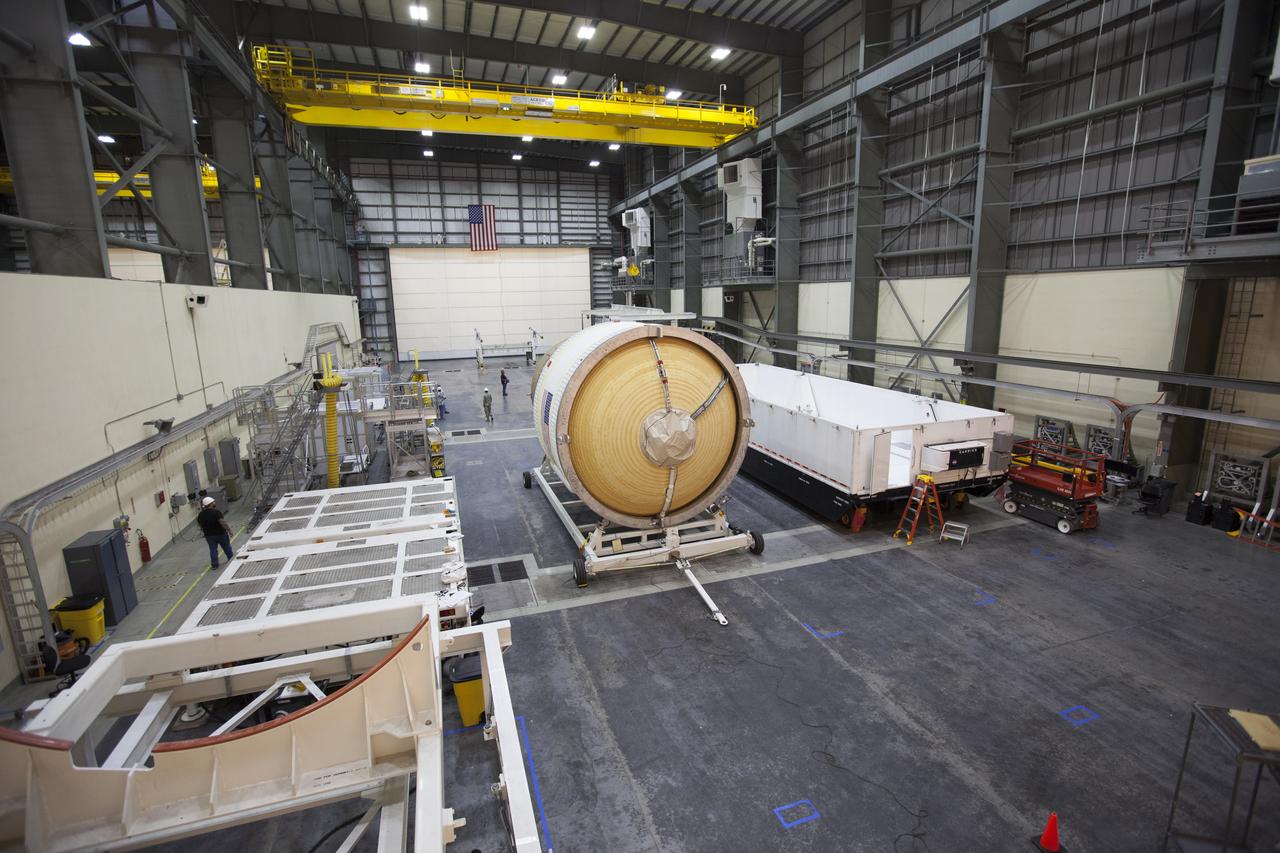
Inside the United Launch Alliance (ULA) Horizontal Integration Facility at Cape Canaveral Air Force Station in Florida, the Interim Cryogenic Propulsion Stage (ICPS) for NASA's Space Launch System rocket was removed from its shipping container and then lowered and secured onto a movable transport stand. The ICPS is the first integrated piece of flight hardware to arrive for the SLS. The ICPS arrived from the ULA facility in Decatur, Alabama. The ICPS is the in-space stage that is located toward the top of the rocket, between the Launch Vehicle Stage Adapter and the Orion Spacecraft Adapter. It will provide some of the in-space propulsion during Orion's first flight test atop the SLS on Exploration Mission 1.
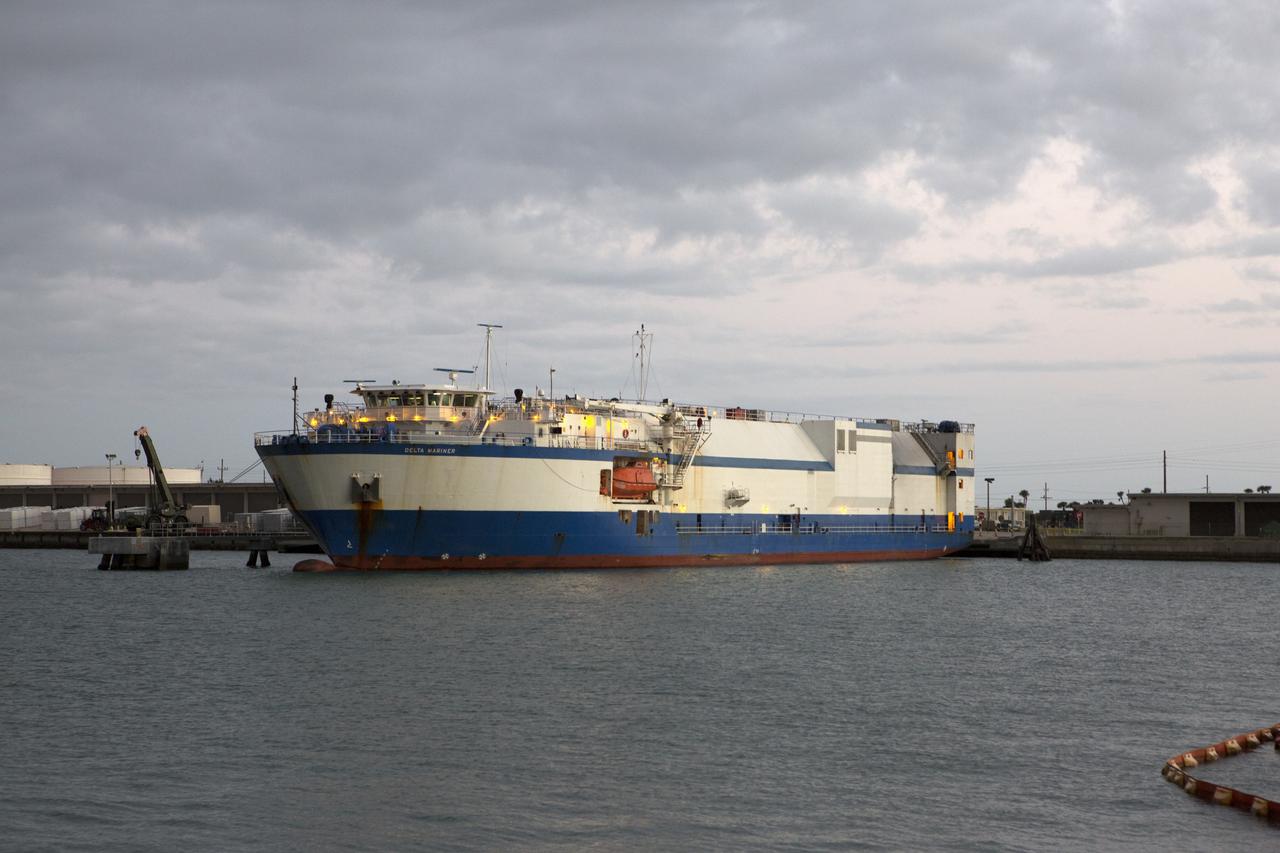
The Mariner barge arrives at Cape Canaveral Air Force Station in Florida, carrying the first integrated piece of flight hardware for NASA's Space Launch System (SLS) rocket, the Interim Cryogenic Propulsion Stage (ICPS). The ICPS was shipped from the United Launch Alliance (ULA) facility in Decatur, Alabama. The ICPS will be offloaded and transported to the ULA Horizontal Integration Facility where it will be removed from its flight case. The ICPS is the in-space stage that is located toward the top of the rocket, between the Launch Vehicle Stage Adapter and the Orion Spacecraft Adapter. It will provide some of the in-space propulsion during Orion's first flight test atop the SLS on Exploration Mission 1.
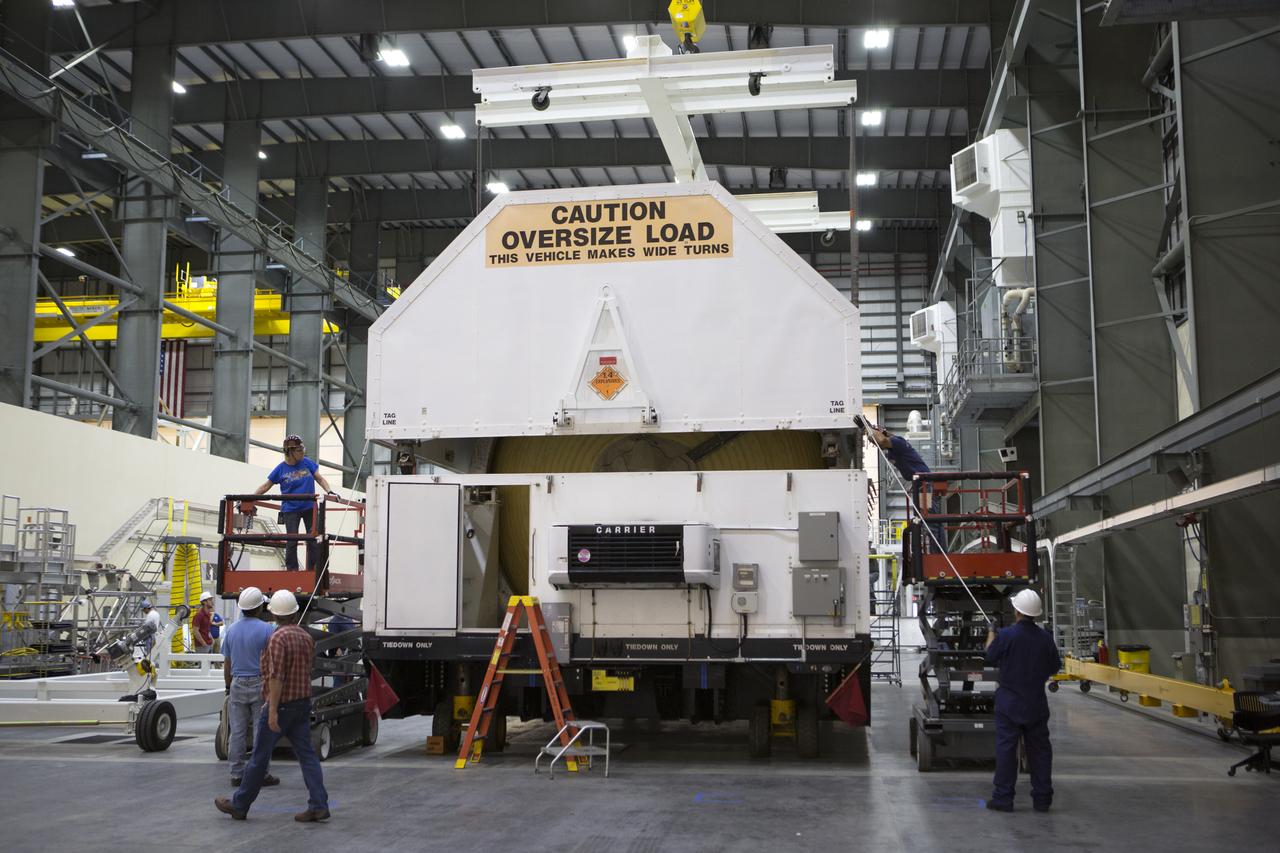
Inside the United Launch Alliance (ULA) Horizontal Integration Facility at Cape Canaveral Air Force Station in Florida, technicians prepare to remove the Interim Cryogenic Propulsion Stage (ICPS) for NASA's Space Launch System rocket from its shipping container. The ICPS is the first integrated piece of flight hardware to arrive for the SLS. The ICPS arrived from the ULA facility in Decatur, Alabama. The ICPS is the in-space stage that is located toward the top of the rocket, between the Launch Vehicle Stage Adapter and the Orion Spacecraft Adapter. It will provide some of the in-space propulsion during Orion's first flight test atop the SLS on Exploration Mission 1.
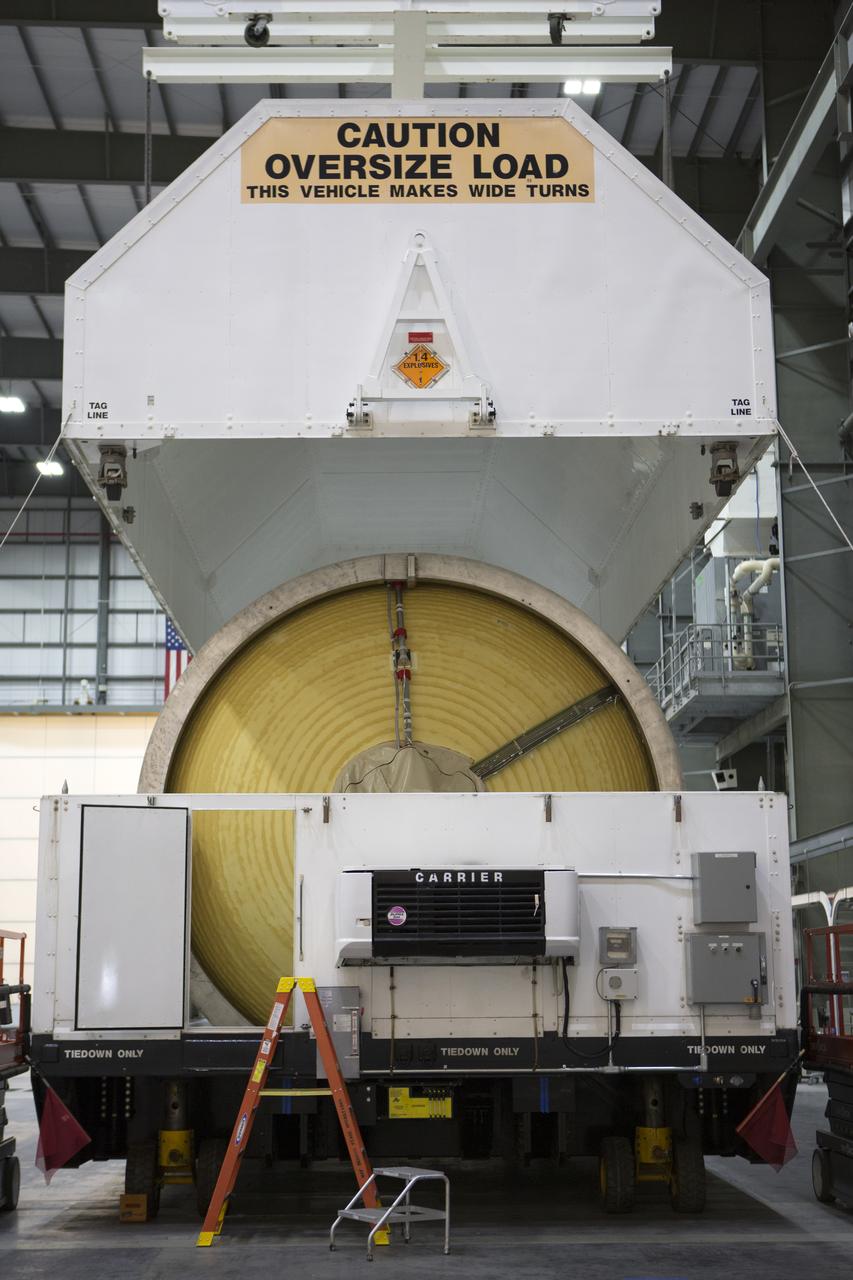
Inside the United Launch Alliance (ULA) Horizontal Integration Facility at Cape Canaveral Air Force Station in Florida, a technician assists as a crane lifts the container cover off of the Interim Cryogenic Propulsion Stage (ICPS) for NASA's Space Launch System rocket. The ICPS is the first integrated piece of flight hardware to arrive for the SLS. The ICPS arrived from the ULA facility in Decatur, Alabama. The ICPS is the in-space stage that is located toward the top of the rocket, between the Launch Vehicle Stage Adapter and the Orion Spacecraft Adapter. It will provide some of the in-space propulsion during Orion's first flight test atop the SLS on Exploration Mission 1.
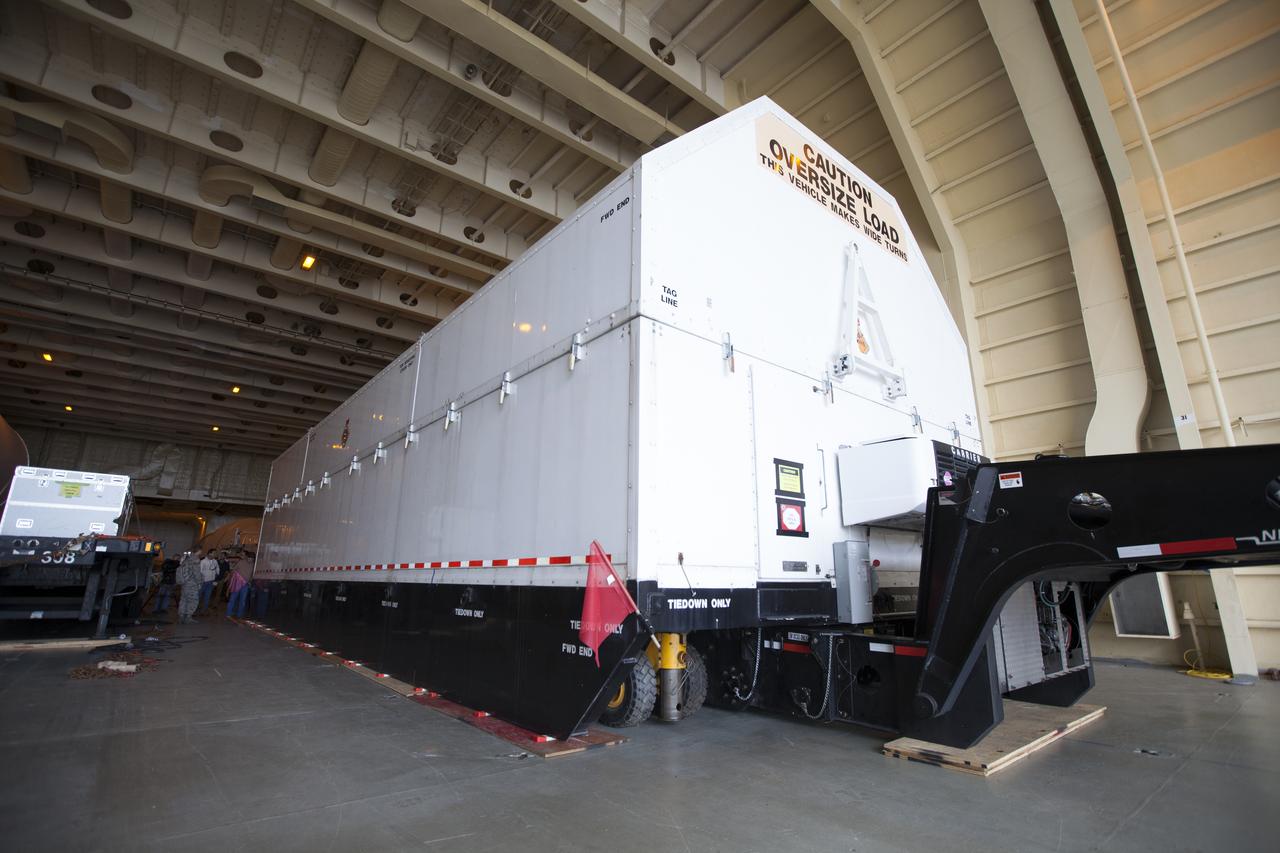
The first integrated piece of flight hardware for NASA's Space Launch System (SLS) rocket, the Interim Cryogenic Propulsion Stage (ICPS) has arrived aboard the Mariner barge at Cape Canaveral Air Force Station in Florida. The ICPS was shipped from the United Launch Alliance (ULA) facility in Decatur, Alabama. Preparations are underway to offload the ICPS and transport it to the ULA Horizontal Integration Facility where it will be removed from its flight case. The ICPS is the in-space stage that is located toward the top of the rocket, between the Launch Vehicle Stage Adapter and the Orion Spacecraft Adapter. It will provide some of the in-space propulsion during Orion's first flight test atop the SLS on Exploration Mission 1.
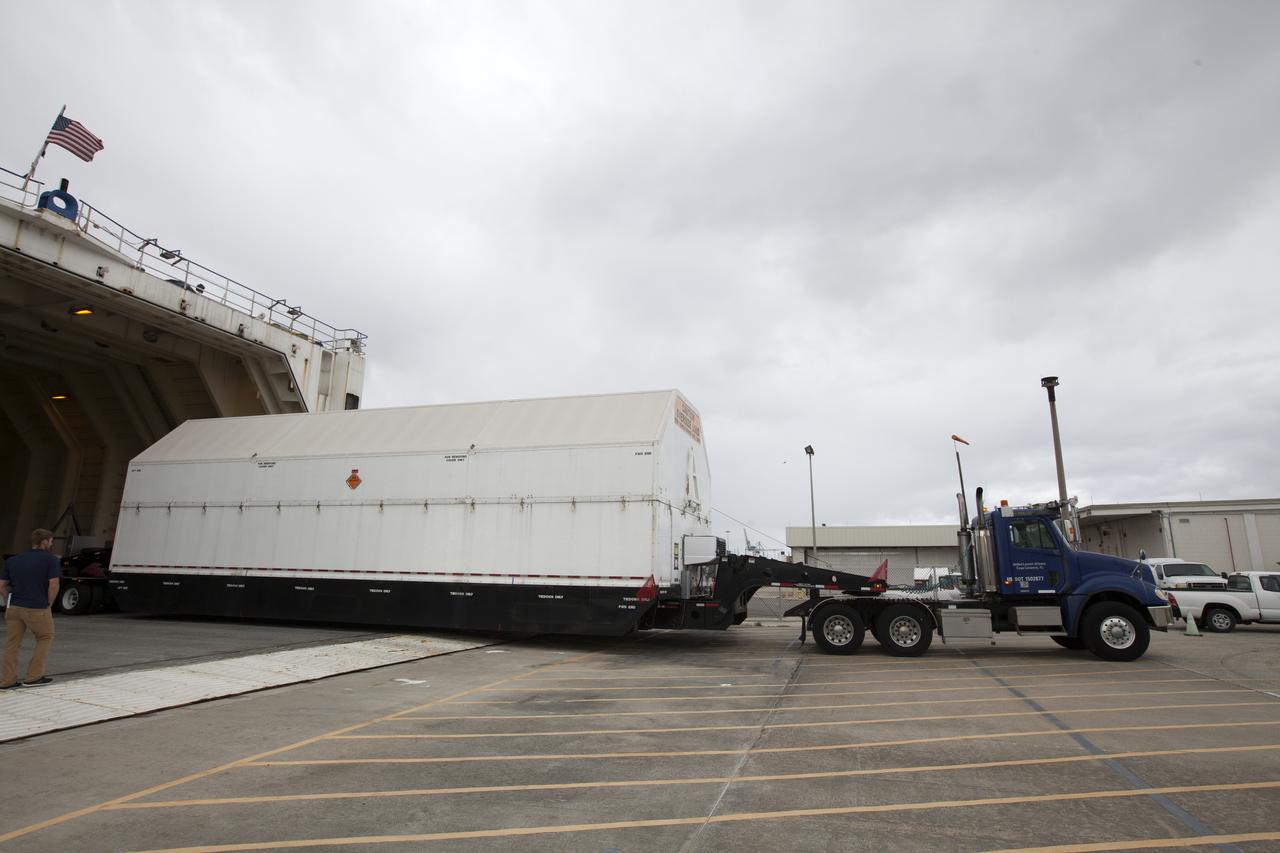
The first integrated piece of flight hardware for NASA's Space Launch System (SLS) rocket, the Interim Cryogenic Propulsion Stage (ICPS) is offloaded from the Mariner barge at Cape Canaveral Air Force Station in Florida. The ICPS was shipped from the United Launch Alliance (ULA) facility in Decatur, Alabama. The ICPS will be transported to the ULA Horizontal Integration Facility where it will be removed from its flight case. The ICPS is the in-space stage that is located toward the top of the rocket, between the Launch Vehicle Stage Adapter and the Orion Spacecraft Adapter. It will provide some of the in-space propulsion during Orion's first flight test atop the SLS on Exploration Mission 1.
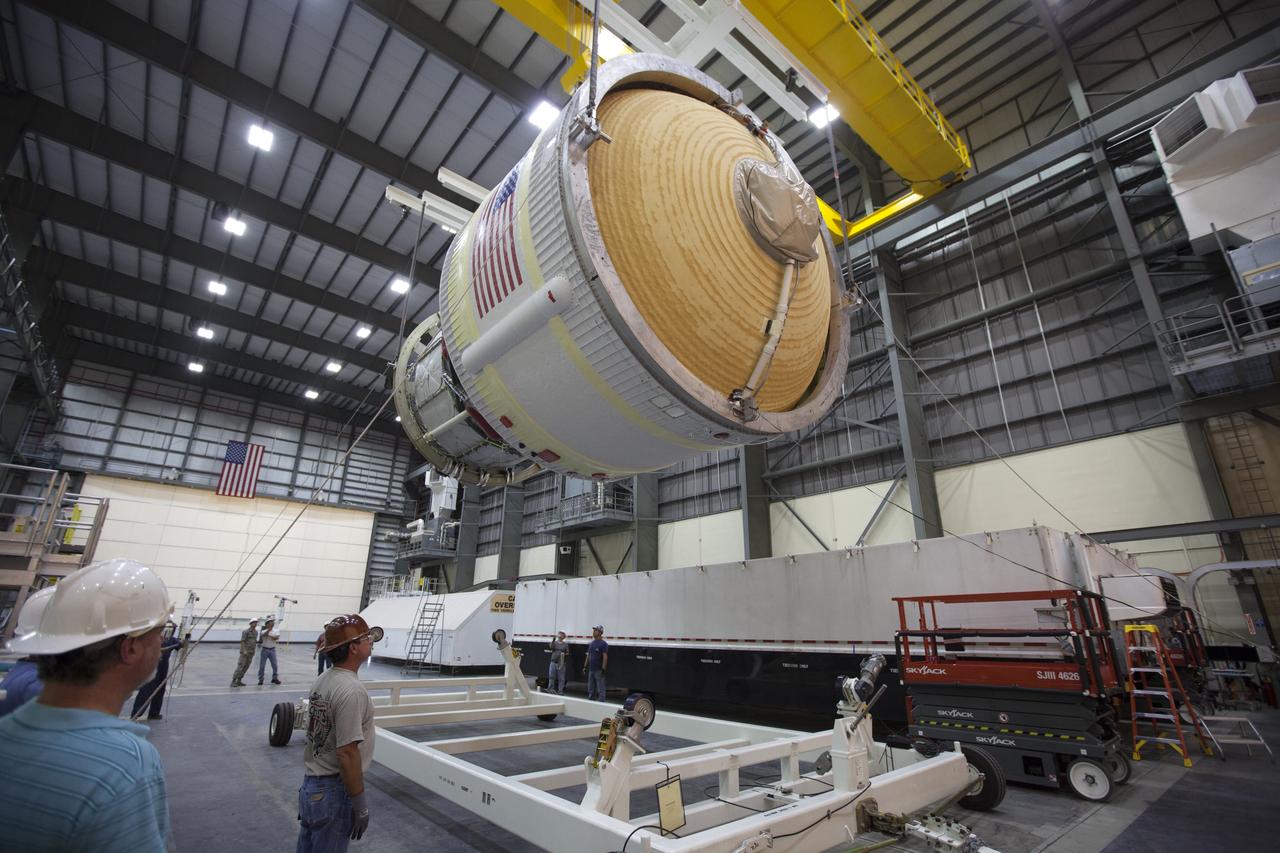
Inside the United Launch Alliance (ULA) Horizontal Integration Facility at Cape Canaveral Air Force Station in Florida, a crane lifts the Interim Cryogenic Propulsion Stage (ICPS) for NASA's Space Launch System rocket away from the base of its shipping container. The ICPS is the first integrated piece of flight hardware to arrive for the SLS. The ICPS arrived from the ULA facility in Decatur, Alabama. The ICPS is the in-space stage that is located toward the top of the rocket, between the Launch Vehicle Stage Adapter and the Orion Spacecraft Adapter. It will provide some of the in-space propulsion during Orion's first flight test atop the SLS on Exploration Mission 1.
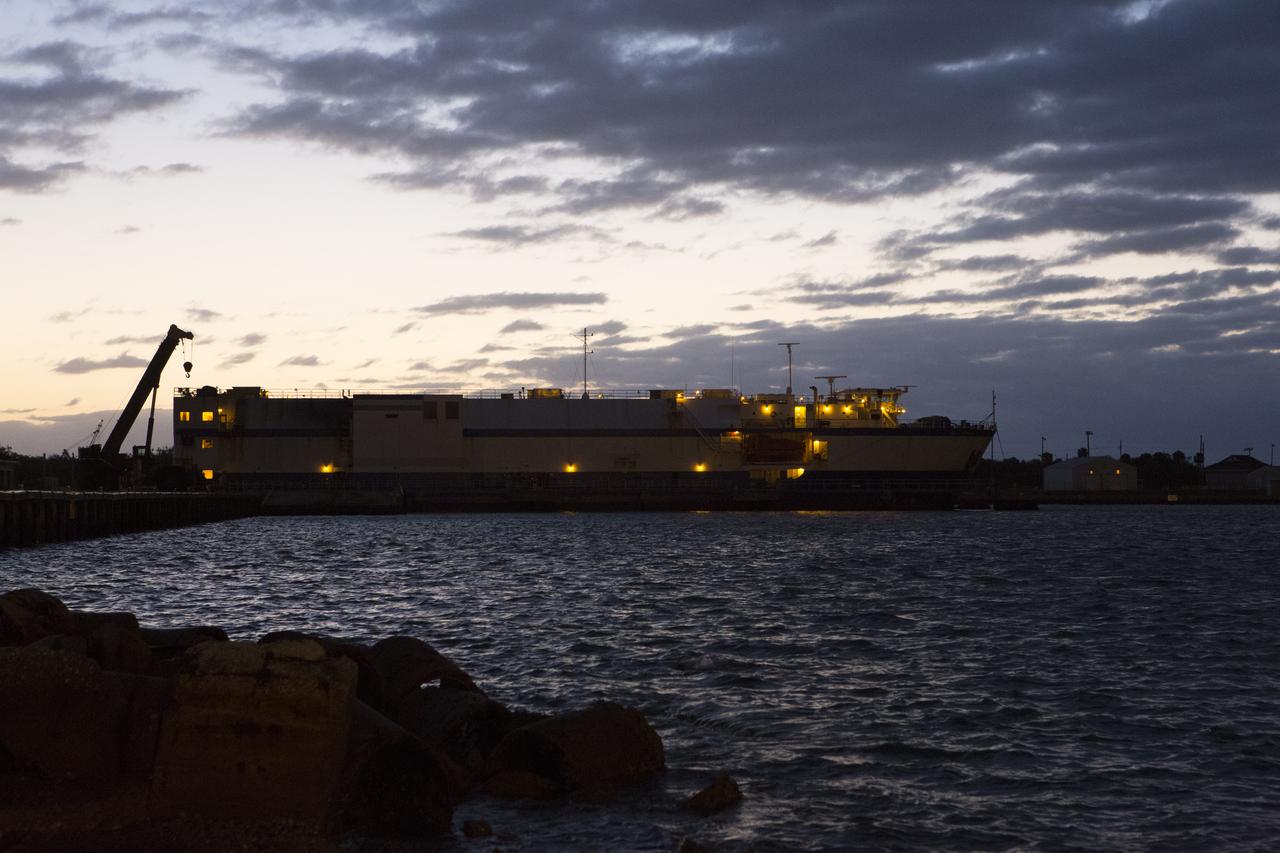
The Mariner barge arrives at Cape Canaveral Air Force Station in Florida, carrying the first integrated piece of flight hardware for NASA's Space Launch System (SLS) rocket, the Interim Cryogenic Propulsion Stage (ICPS). The ICPS was shipped from the United Launch Alliance (ULA) facility in Decatur, Alabama. The ICPS will be offloaded and transported to the ULA Horizontal Integration Facility where it will be removed from its flight case. The ICPS is the in-space stage that is located toward the top of the rocket, between the Launch Vehicle Stage Adapter and the Orion Spacecraft Adapter. It will provide some of the in-space propulsion during Orion's first flight test atop the SLS on Exploration Mission 1.
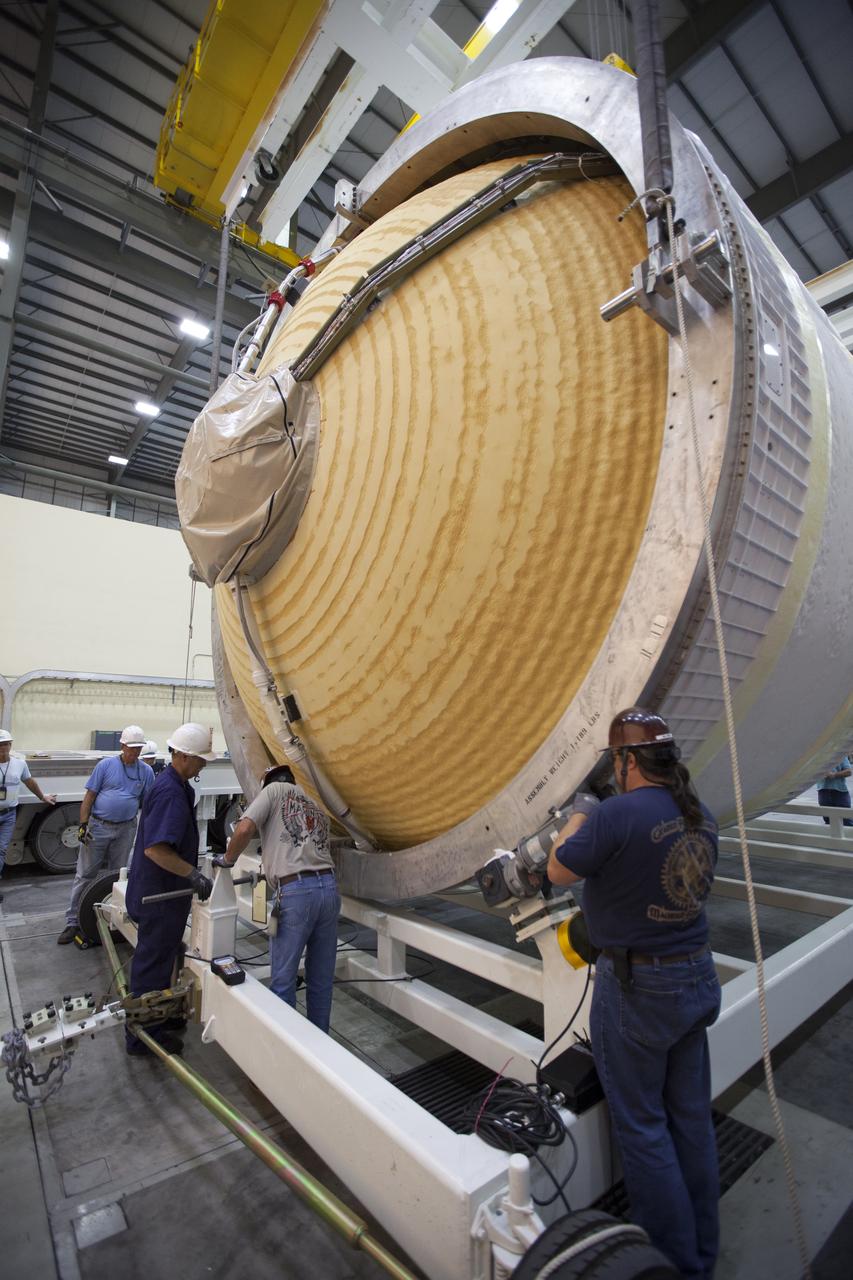
Inside the United Launch Alliance (ULA) Horizontal Integration Facility at Cape Canaveral Air Force Station in Florida, technicians help to secure the Interim Cryogenic Propulsion Stage (ICPS) for NASA's Space Launch System rocket onto a movable transport stand. The ICPS is the first integrated piece of flight hardware to arrive for the SLS. The ICPS arrived from the ULA facility in Decatur, Alabama. The ICPS is the in-space stage that is located toward the top of the rocket, between the Launch Vehicle Stage Adapter and the Orion Spacecraft Adapter. It will provide some of the in-space propulsion during Orion's first flight test atop the SLS on Exploration Mission 1.
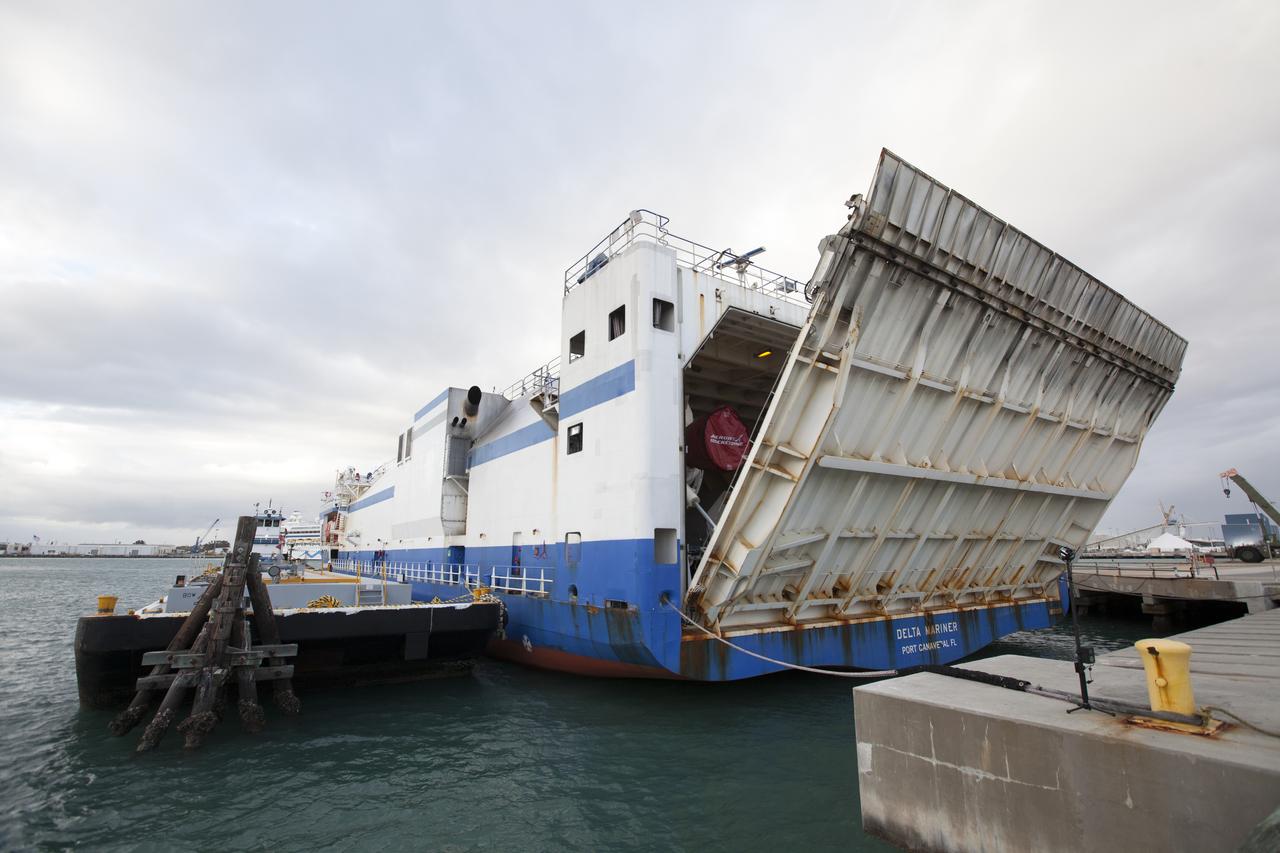
The Mariner barge arrives at a dock at Cape Canaveral Air Force Station in Florida, carrying the first integrated piece of flight hardware for NASA's Space Launch System (SLS) rocket, the Interim Cryogenic Propulsion Stage (ICPS). The ICPS was shipped from the United Launch Alliance (ULA) facility in Decatur, Alabama. The ICPS will be offloaded and transported to the ULA Horizontal Integration Facility where it will be removed from its flight case. The ICPS is the in-space stage that is located toward the top of the rocket, between the Launch Vehicle Stage Adapter and the Orion Spacecraft Adapter. It will provide some of the in-space propulsion during Orion's first flight test atop the SLS on Exploration Mission 1.
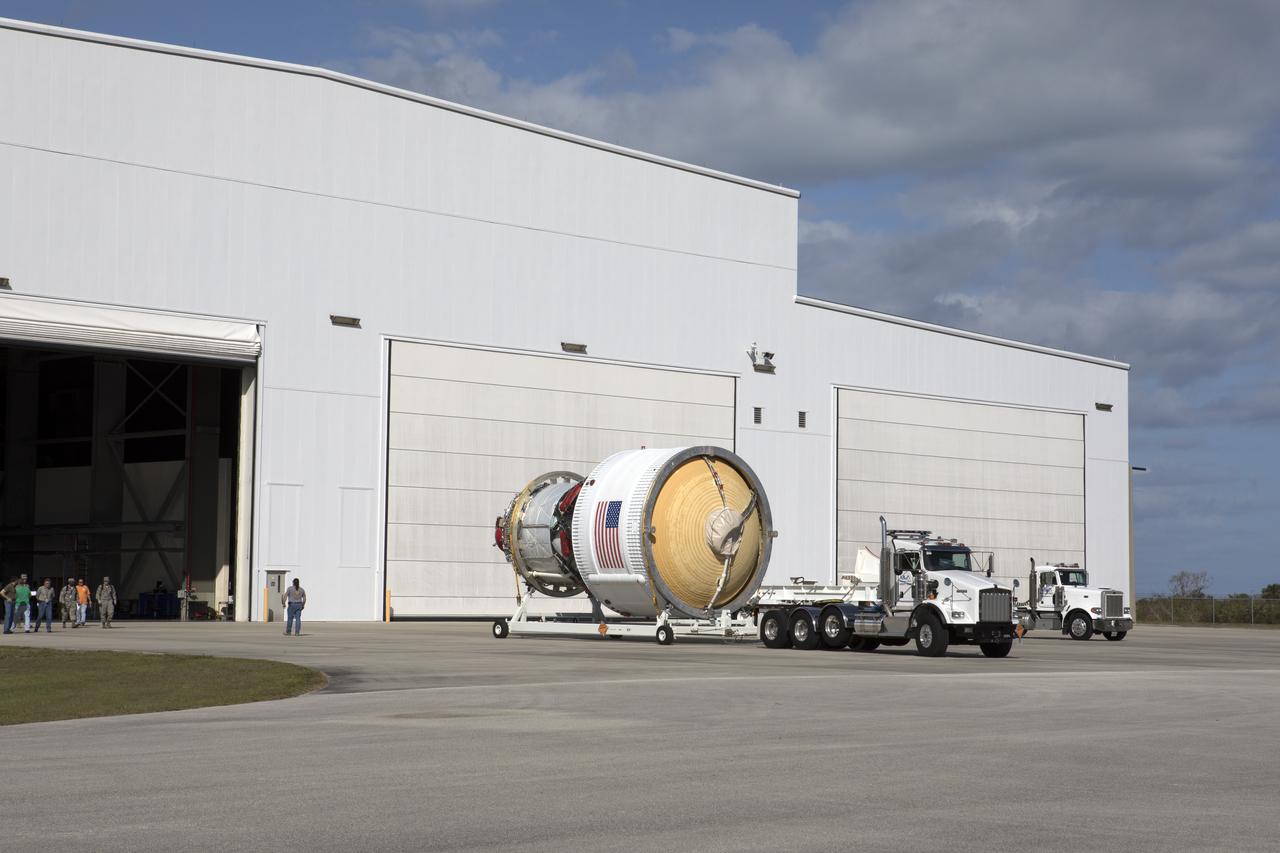
The Interim Cryogenic Propulsion Stage (ICPS) for NASA's Space Launch System (SLS) rocket has been moved on its transport stand by truck out of the United Launch Alliance (ULA) Horizontal Integration Facility near Space Launch Complex 37 at Cape Canaveral Air Force Station in Florida. The ICPS will be transported to the Delta Operations Center. The ICPS is the first integrated piece of flight hardware to arrive for the SLS. It is the in-space stage that is located toward the top of the rocket, between the Launch Vehicle Stage Adapter and the Orion Spacecraft Adapter. It will provide some of the in-space propulsion during Orion's first flight test atop the SLS on Exploration Mission-1.
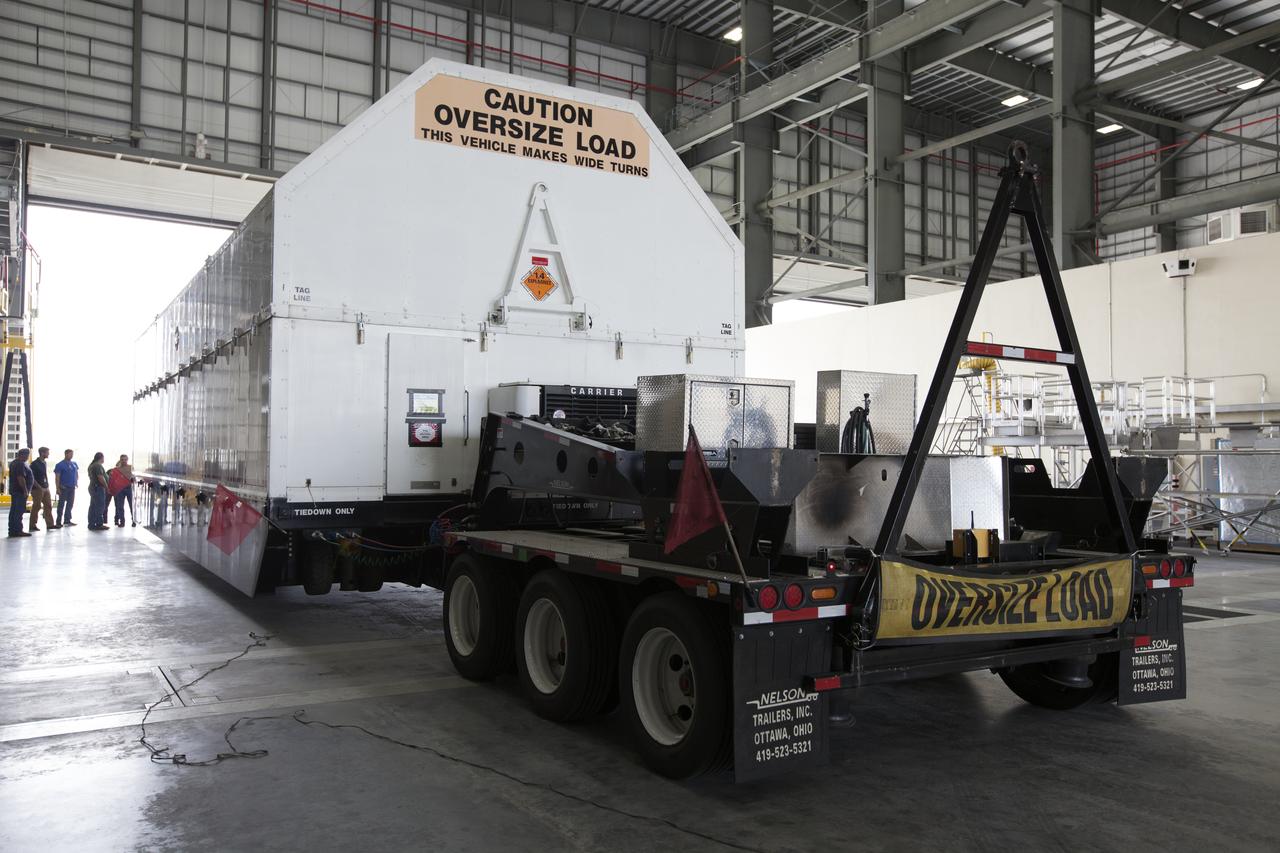
The first integrated piece of flight hardware for NASA's Space Launch System (SLS) rocket, the Interim Cryogenic Propulsion Stage (ICPS) was offloaded from the Mariner barge at Cape Canaveral Air Force Station in Florida, and transported to the United Launch Alliance (ULA) Horizontal Integration Facility where it will be removed from its flight case. The ICPS was shipped from the United Launch Alliance (ULA) facility in Decatur, Alabama. The ICPS is the in-space stage that is located toward the top of the rocket, between the Launch Vehicle Stage Adapter and the Orion Spacecraft Adapter. It will provide some of the in-space propulsion during Orion's first flight test atop the SLS on Exploration Mission 1.
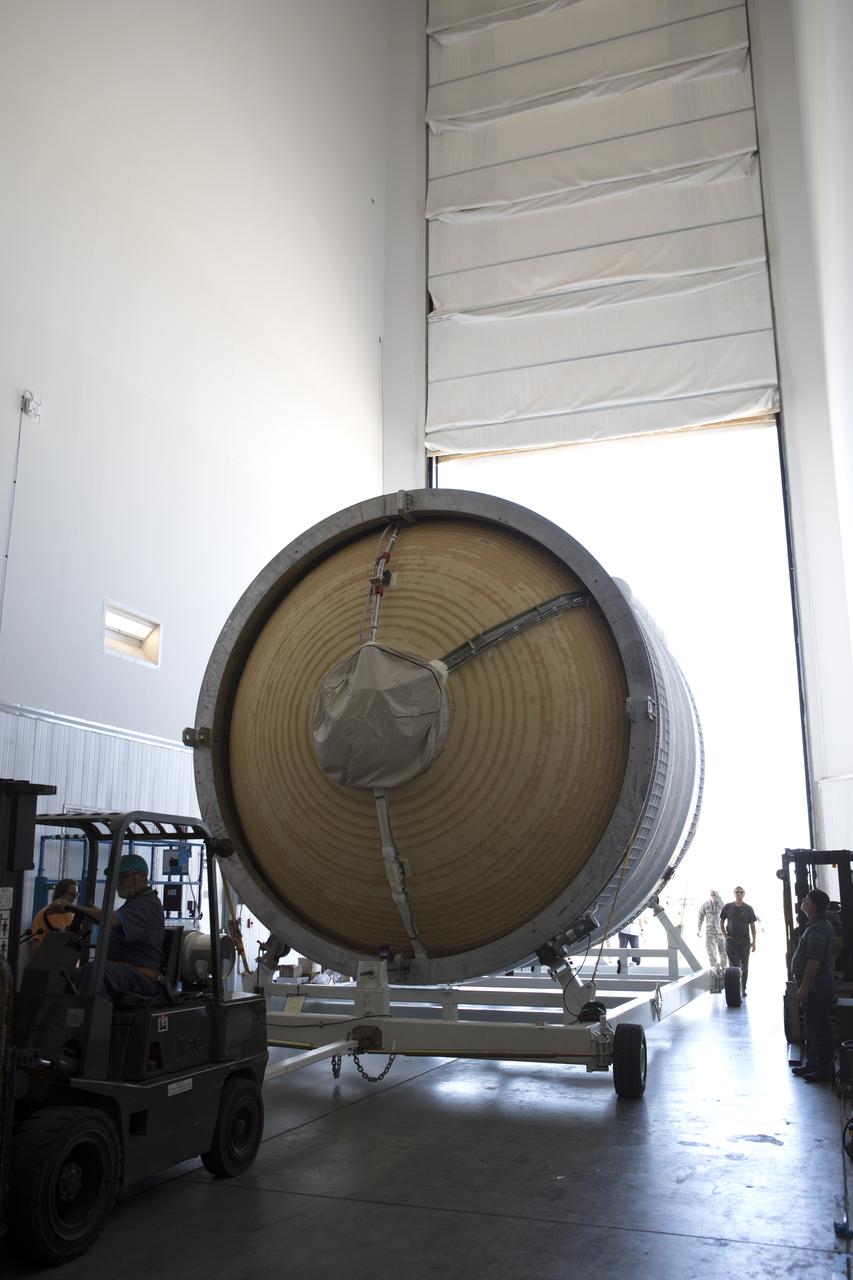
The Interim Cryogenic Propulsion Stage (ICPS) for NASA's Space Launch System rocket is moved inside the Delta Operations Center at Cape Canaveral Air Force Station in Florida. The ICPS was moved from the United Launch Alliance (ULA) Horizontal Integration Facility near Space Launch Complex 37 at the Cape. The ICPS is the first integrated piece of flight hardware to arrive for the SLS. It is the in-space stage that is located toward the top of the rocket, between the Launch Vehicle Stage Adapter and the Orion Spacecraft Adapter. It will provide some of the in-space propulsion during Orion's first flight test atop the SLS on Exploration Mission-1.
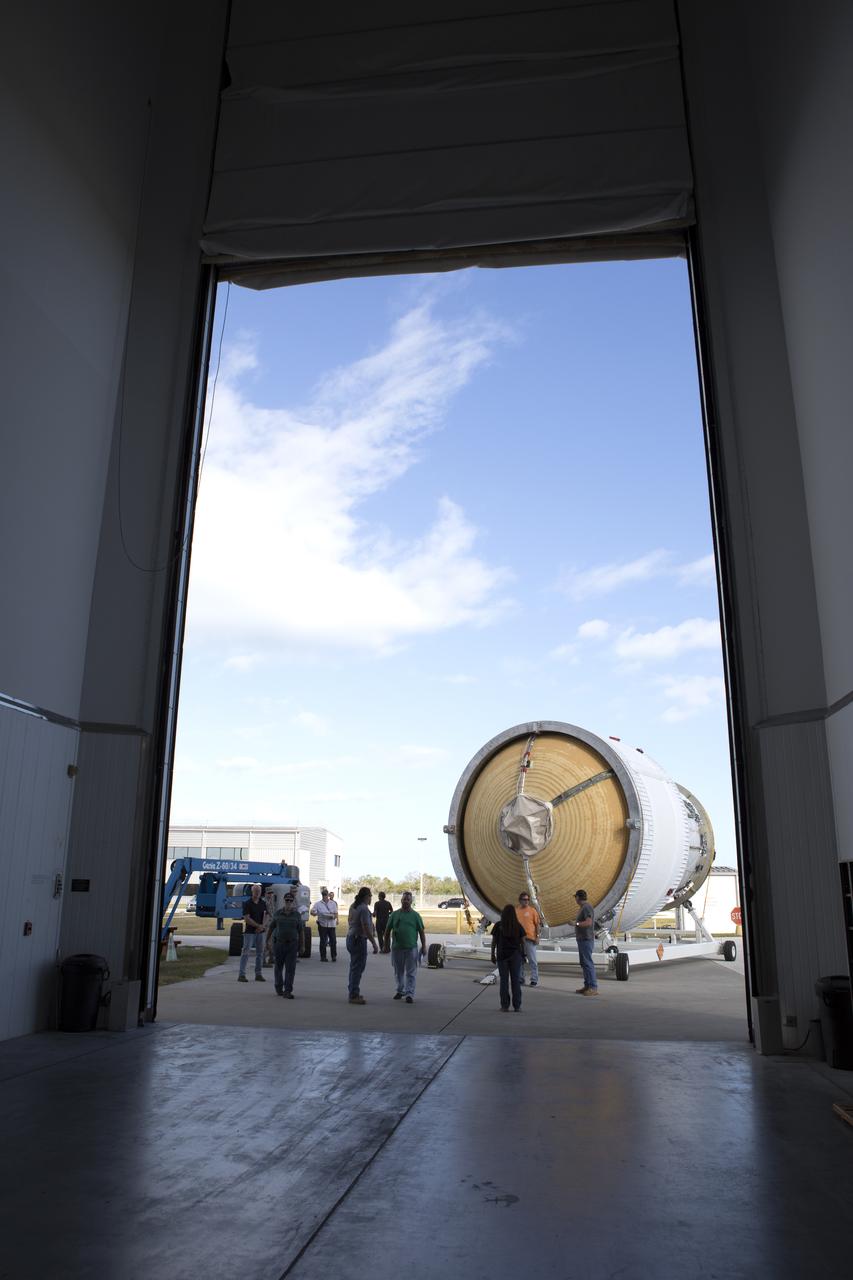
The Interim Cryogenic Propulsion Stage (ICPS) for NASA's Space Launch System rocket arrives at the Delta Operations Center at Cape Canaveral Air Force Station in Florida. The ICPS was moved from the United Launch Alliance (ULA) Horizontal Integration Facility near Space Launch Complex 37 at the Cape. The ICPS is the first integrated piece of flight hardware to arrive for the SLS. It is the in-space stage that is located toward the top of the rocket, between the Launch Vehicle Stage Adapter and the Orion Spacecraft Adapter. It will provide some of the in-space propulsion during Orion's first flight test atop the SLS on Exploration Mission-1.

The first integrated piece of flight hardware for NASA's Space Launch System (SLS) rocket, the Interim Cryogenic Propulsion Stage (ICPS) arrives at the United Launch Alliance (ULA) Horizontal Integration Facility at Cape Canaveral Air Force Station in Florida, where it will be removed from its flight case. The ICPS was shipped aboard the Mariner barge from the ULA facility in Decatur, Alabama. The ICPS is the in-space stage that is located toward the top of the rocket, between the Launch Vehicle Stage Adapter and the Orion Spacecraft Adapter. It will provide some of the in-space propulsion during Orion's first flight test atop the SLS on Exploration Mission 1.
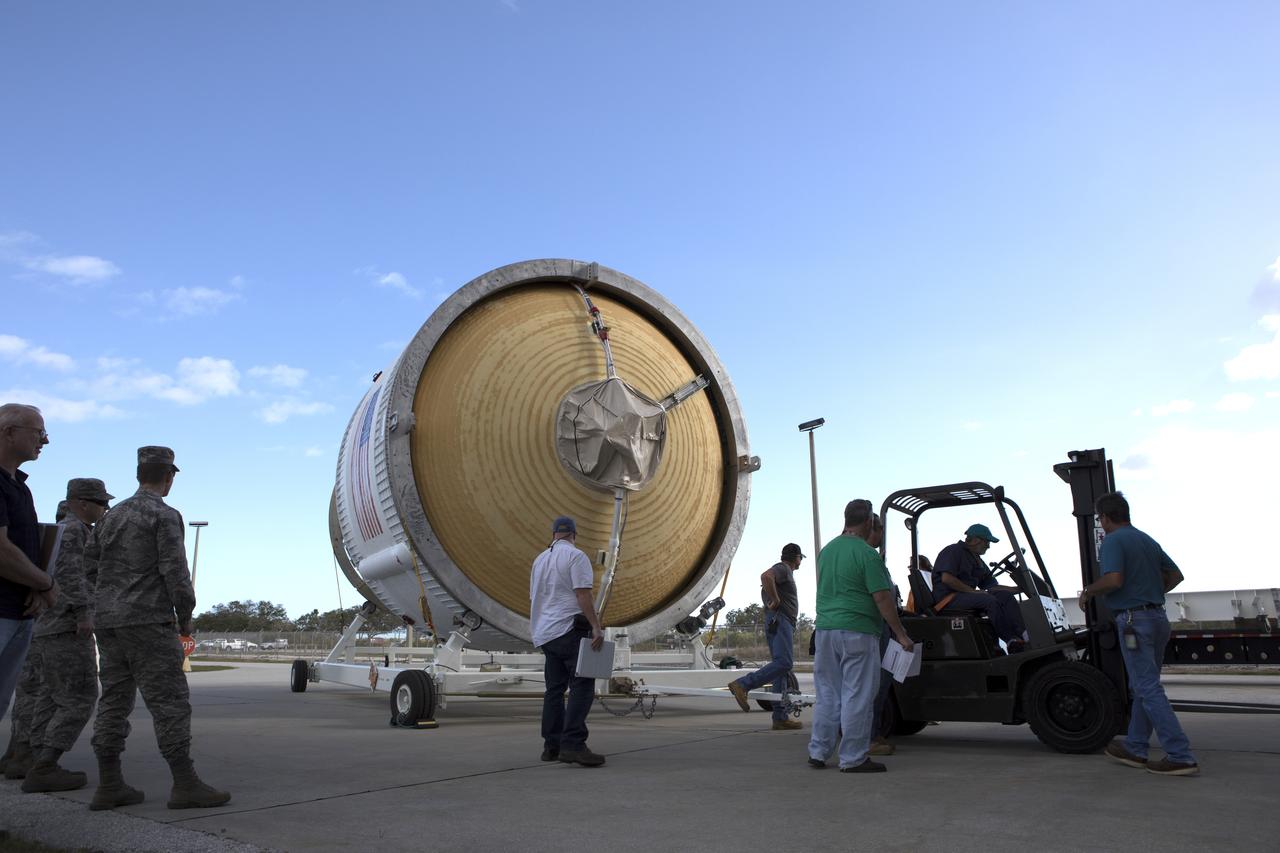
The Interim Cryogenic Propulsion Stage (ICPS) for NASA's Space Launch System rocket arrives at the Delta Operations Center at Cape Canaveral Air Force Station in Florida. The ICPS was moved from the United Launch Alliance (ULA) Horizontal Integration Facility near Space Launch Complex 37 at the Cape. The ICPS is the first integrated piece of flight hardware to arrive for the SLS. It is the in-space stage that is located toward the top of the rocket, between the Launch Vehicle Stage Adapter and the Orion Spacecraft Adapter. It will provide some of the in-space propulsion during Orion's first flight test atop the SLS on Exploration Mission-1.
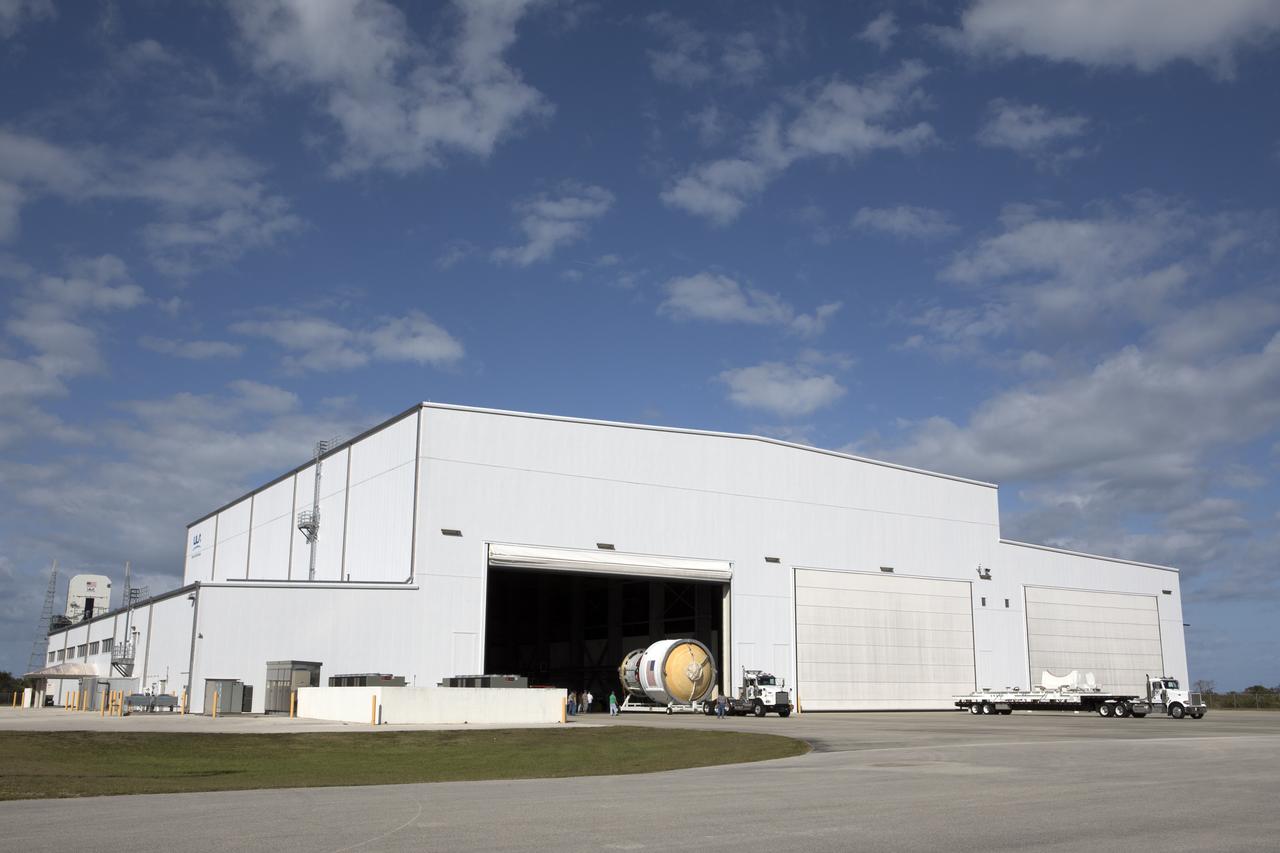
The Interim Cryogenic Propulsion Stage (ICPS) for NASA's Space Launch System (SLS) rocket is moved on its transport stand by truck out of the United Launch Alliance (ULA) Horizontal Integration Facility near Space Launch Complex 37 at Cape Canaveral Air Force Station in Florida. The ICPS will be transported to the Delta Operations Center. The ICPS is the first integrated piece of flight hardware to arrive for the SLS. It is the in-space stage that is located toward the top of the rocket, between the Launch Vehicle Stage Adapter and the Orion Spacecraft Adapter. It will provide some of the in-space propulsion during Orion's first flight test atop the SLS on Exploration Mission-1.
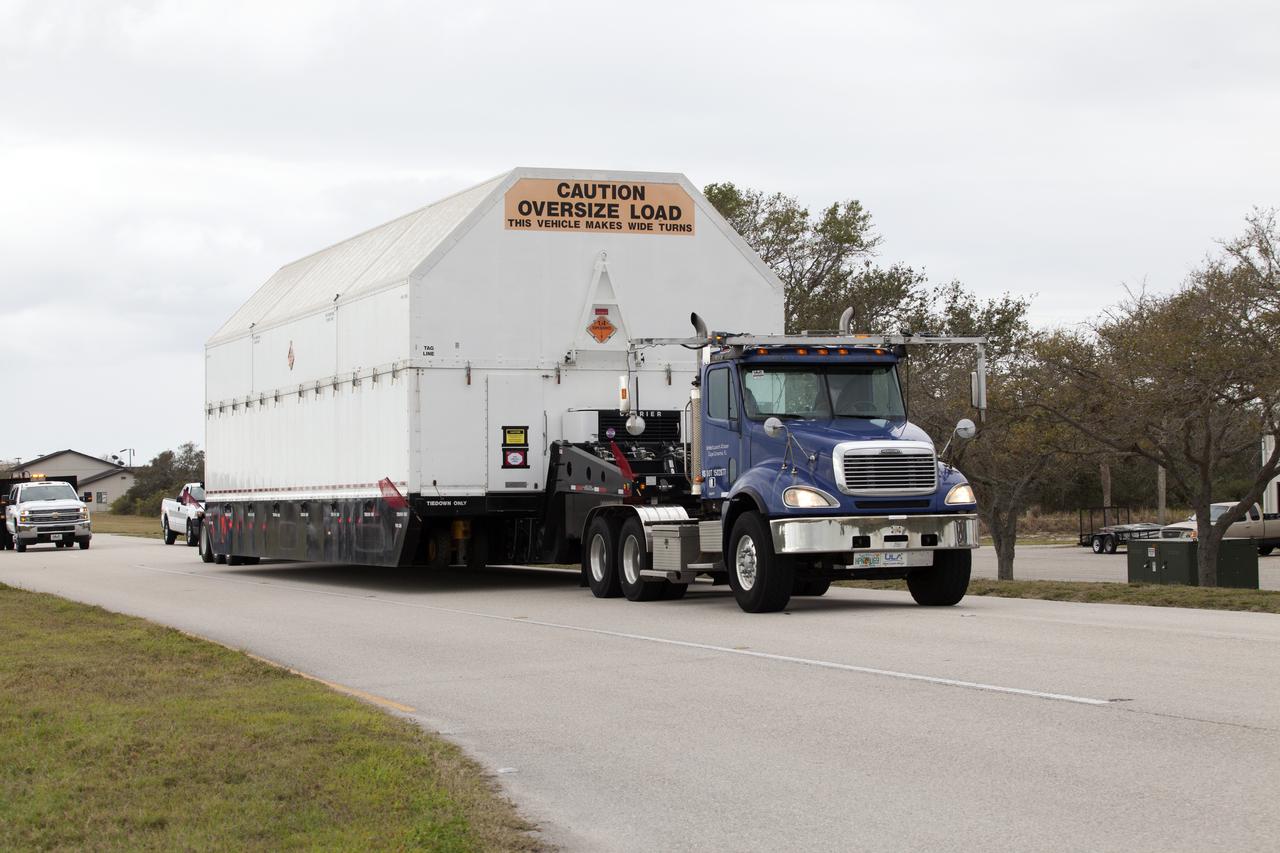
The first integrated piece of flight hardware for NASA's Space Launch System (SLS) rocket, the Interim Cryogenic Propulsion Stage (ICPS) was offloaded from the Mariner barge at Cape Canaveral Air Force Station in Florida, and is being transported to the United Launch Alliance (ULA) Horizontal Integration Facility where it will be removed from its flight case. The ICPS was shipped from the ULA facility in Decatur, Alabama. The ICPS is the in-space stage that is located toward the top of the rocket, between the Launch Vehicle Stage Adapter and the Orion Spacecraft Adapter. It will provide some of the in-space propulsion during Orion's first flight test atop the SLS on Exploration Mission 1.
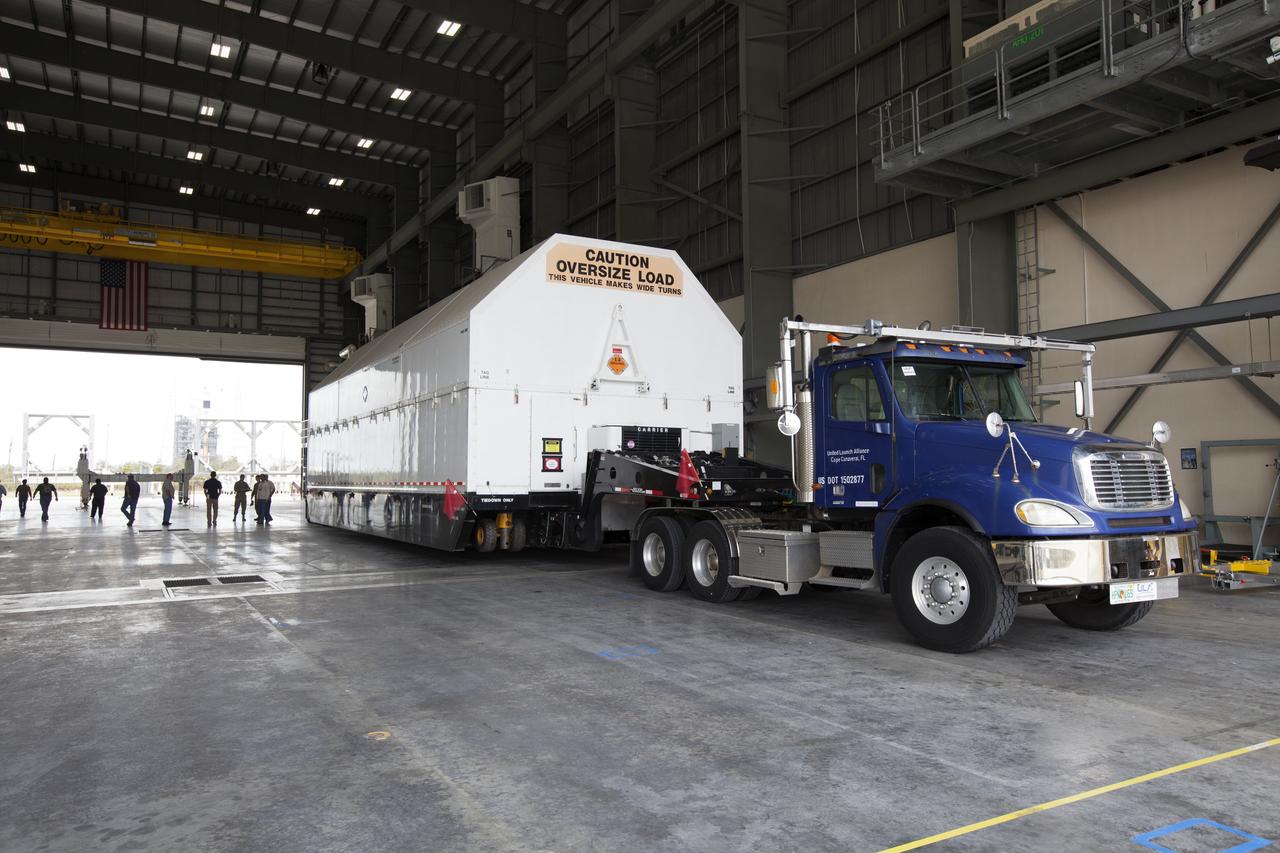
The first integrated piece of flight hardware for NASA's Space Launch System (SLS) rocket, the Interim Cryogenic Propulsion Stage (ICPS) arrives at the United Launch Alliance (ULA) Horizontal Integration Facility at Cape Canaveral Air Force Station in Florida, where it will be removed from its flight case. The ICPS arrived aboard the Mariner barge from the ULA facility in Decatur, Alabama. The ICPS is the in-space stage that is located toward the top of the rocket, between the Launch Vehicle Stage Adapter and the Orion Spacecraft Adapter. It will provide some of the in-space propulsion during Orion's first flight test atop the SLS on Exploration Mission 1.
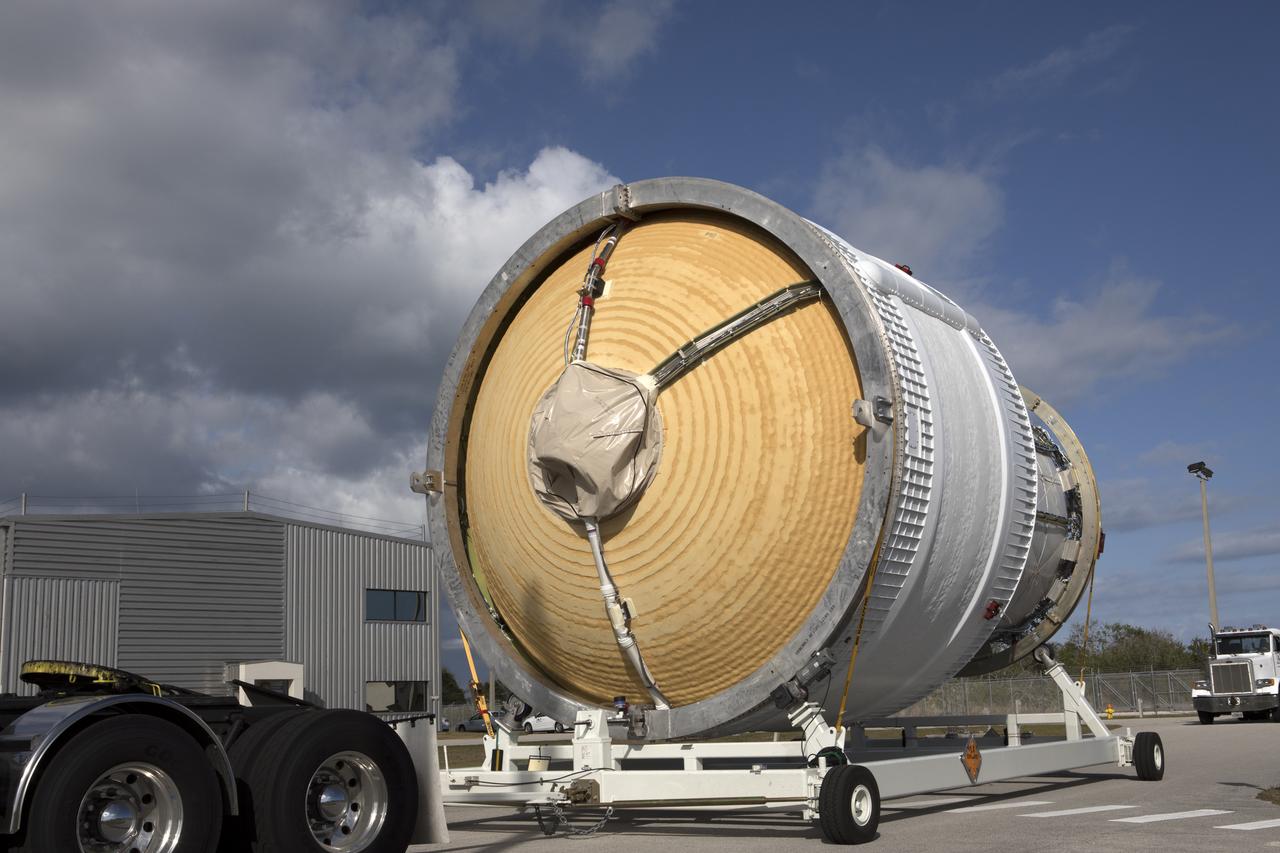
The Interim Cryogenic Propulsion Stage (ICPS) for NASA's Space Launch System (SLS) rocket has been moved on its transport stand by truck out of the United Launch Alliance (ULA) Horizontal Integration Facility near Space Launch Complex 37 at Cape Canaveral Air Force Station in Florida, and is on its way to the Delta Operations Center. The ICPS is the first integrated piece of flight hardware to arrive for the SLS. It is the in-space stage that is located toward the top of the rocket, between the Launch Vehicle Stage Adapter and the Orion Spacecraft Adapter. It will provide some of the in-space propulsion during Orion's first flight test atop the SLS on Exploration Mission 1.
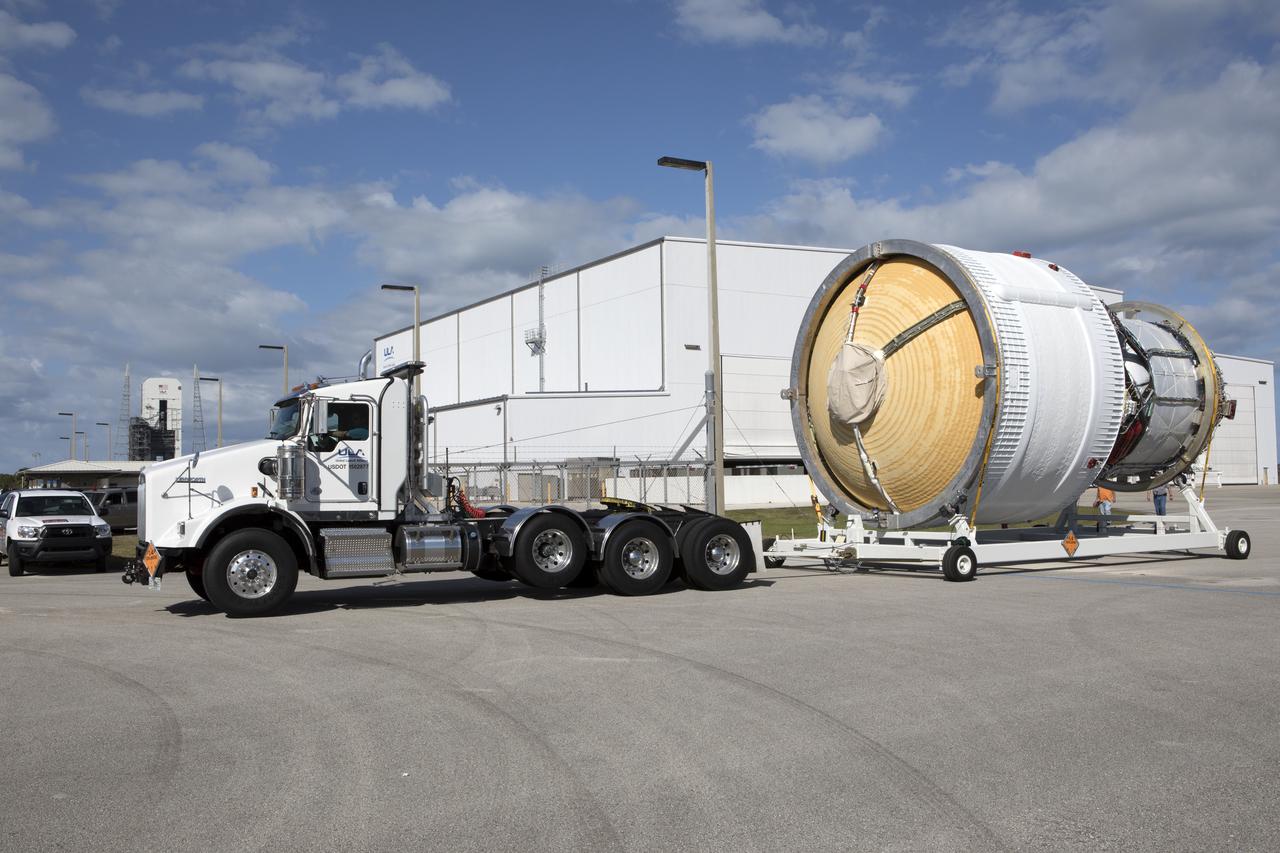
The Interim Cryogenic Propulsion Stage (ICPS) for NASA's Space Launch System (SLS) rocket has been moved on its transport stand by truck out of the United Launch Alliance (ULA) Horizontal Integration Facility near Space Launch Complex 37 at Cape Canaveral Air Force Station in Florida, on its way to the Delta Operations Center. The ICPS is the first integrated piece of flight hardware to arrive for the SLS. It is the in-space stage that is located toward the top of the rocket, between the Launch Vehicle Stage Adapter and the Orion Spacecraft Adapter. It will provide some of the in-space propulsion during Orion's first flight test atop the SLS on Exploration Mission-1.

The upper stage for NASA’s SLS (Space Launch System) rocket that will power the agency’s Artemis III mission and send astronauts on to the Moon for a lunar landing arrived at the Cape Canaveral Space Force Station Poseidon Wharf in Florida on Aug. 9, 2023. Known as the SLS ICPS (interim cryogenic propulsion stage), it will undergo final checkouts by contractors Boeing and ULA (United Launch Alliance) at ULA’s facilities before it is delivered to NASA’s nearby Kennedy Space Center.
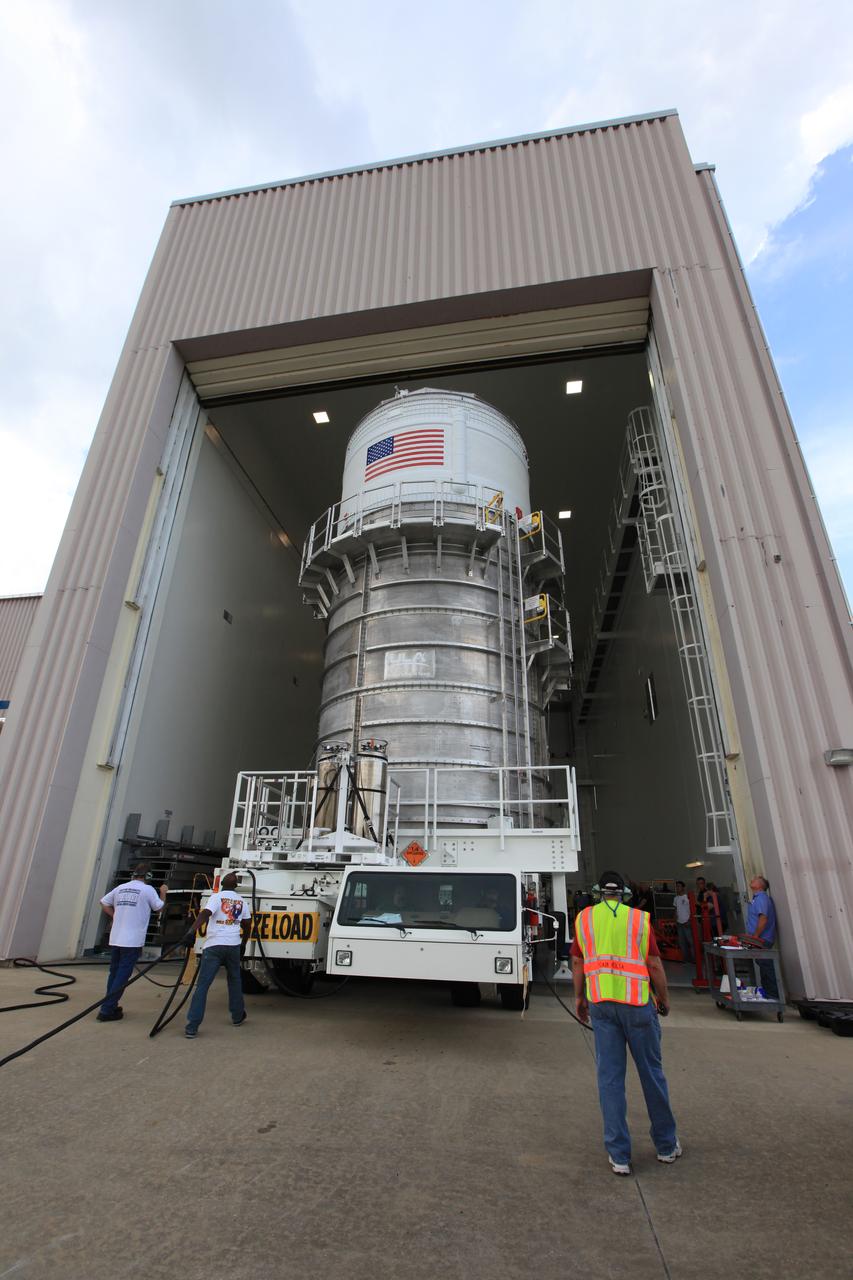
Packed inside its canister, the Interim Cryogenic Propulsion Stage (ICPS) for NASA's Space Launch System (SLS) rocket is moved into the low bay entrance of the Space Station Processing Facility at NASA's Kennedy Space Center in Florida. The ICPS is the first integrated piece of flight hardware to arrive for the SLS. It is the in-space stage that is located toward the top of the rocket, between the Launch Vehicle Stage Adapter and the Orion Spacecraft Adapter. It will provide some of the in-space propulsion during Orion's first flight test atop the SLS on Exploration Mission-1.
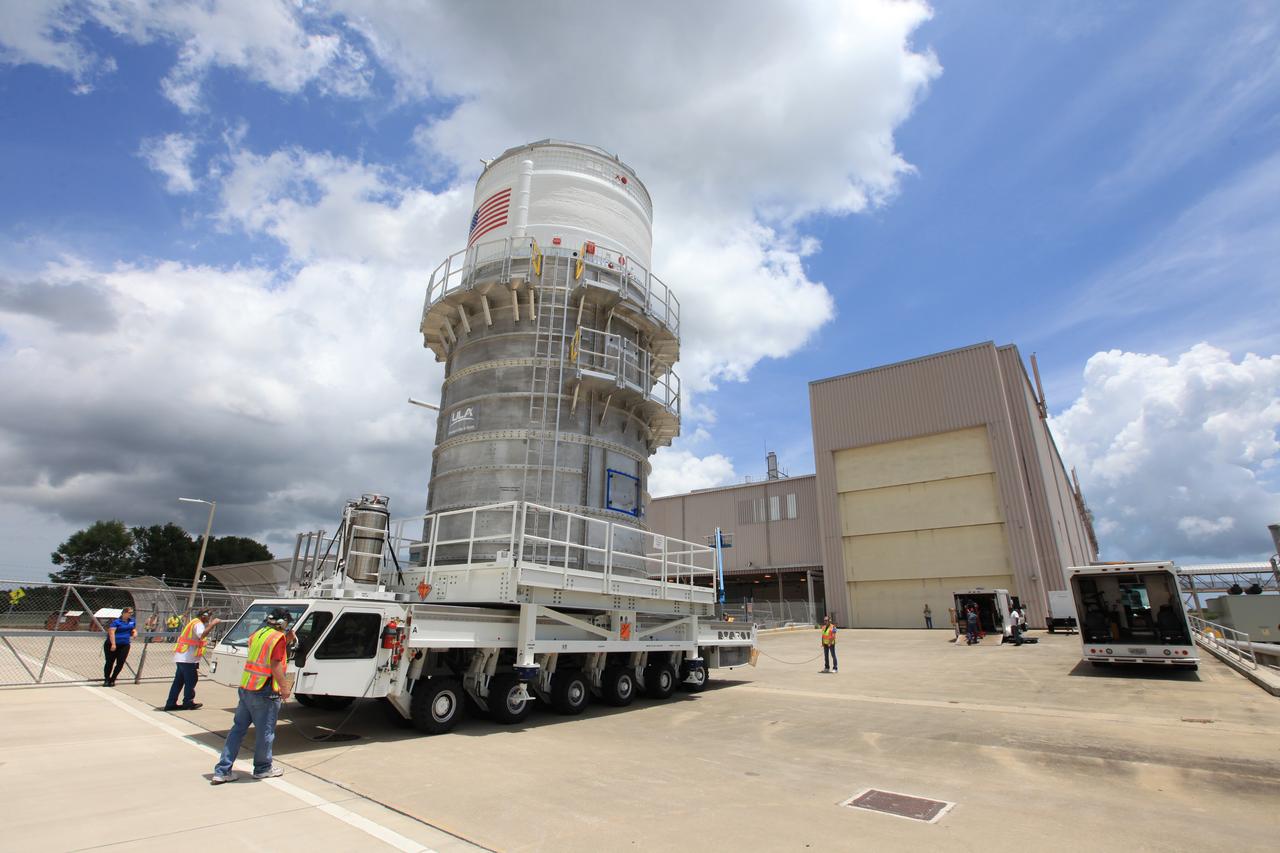
Packed inside its canister, the Interim Cryogenic Propulsion Stage (ICPS) for NASA's Space Launch System (SLS) rocket arrives at the low bay entrance of the Space Station Processing Facility at NASA's Kennedy Space Center in Florida. The ICPS is the first integrated piece of flight hardware to arrive for the SLS. It is the in-space stage that is located toward the top of the rocket, between the Launch Vehicle Stage Adapter and the Orion Spacecraft Adapter. It will provide some of the in-space propulsion during Orion's first flight test atop the SLS on Exploration Mission-1.
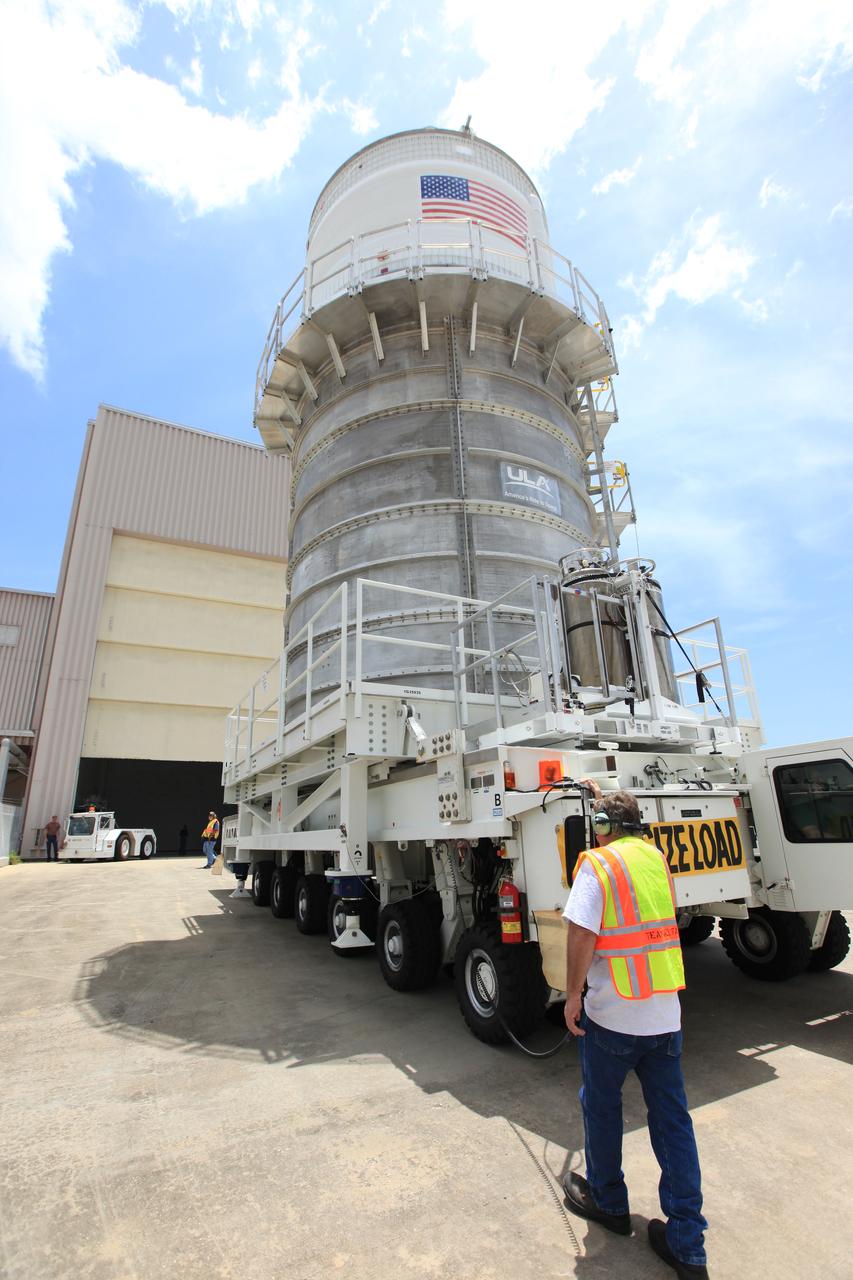
Packed inside its canister, the Interim Cryogenic Propulsion Stage (ICPS) for NASA's Space Launch System (SLS) rocket arrives at the low bay entrance of the Space Station Processing Facility at NASA's Kennedy Space Center in Florida. The ICPS is the first integrated piece of flight hardware to arrive for the SLS. It is the in-space stage that is located toward the top of the rocket, between the Launch Vehicle Stage Adapter and the Orion Spacecraft Adapter. It will provide some of the in-space propulsion during Orion's first flight test atop the SLS on Exploration Mission-1.
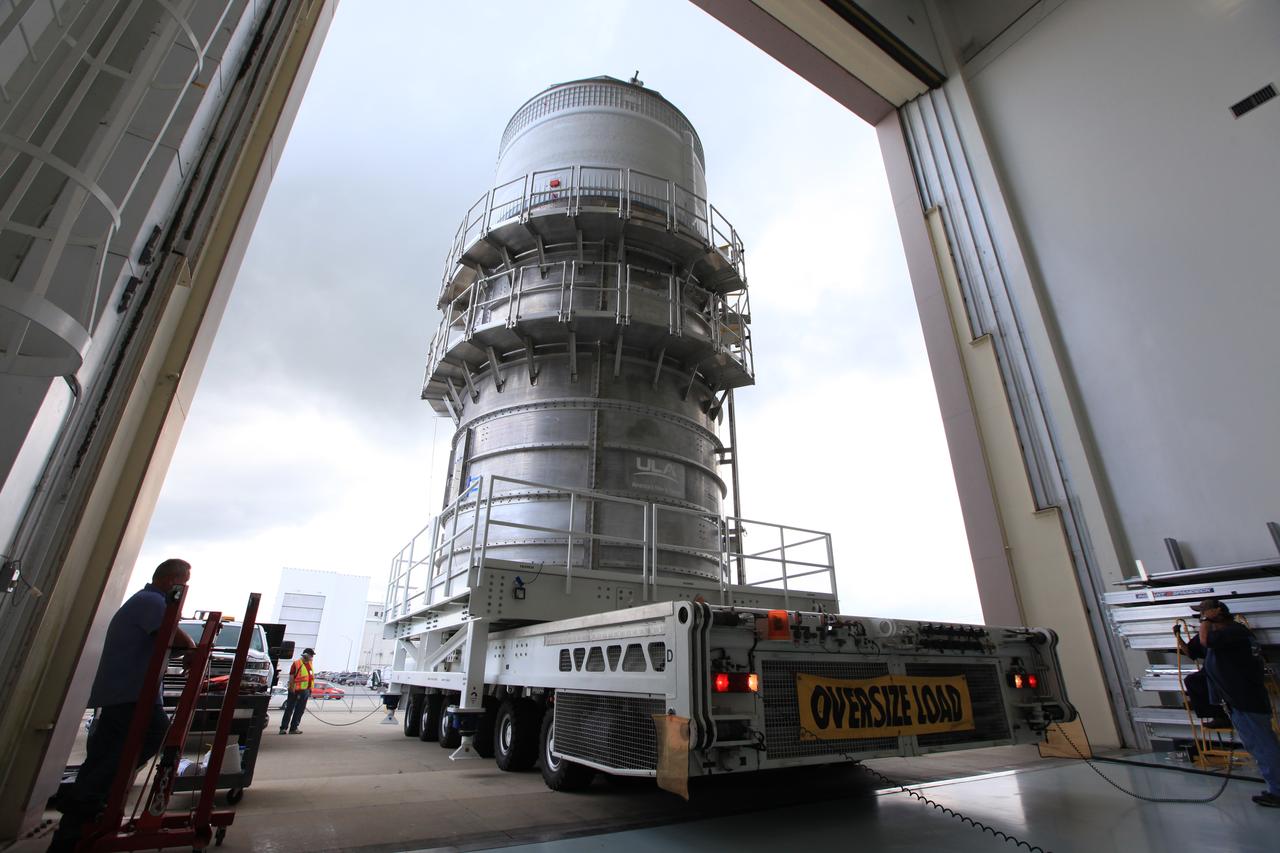
Packed inside its canister, the Interim Cryogenic Propulsion Stage (ICPS) for NASA's Space Launch System (SLS) rocket is moved into the low bay entrance of the Space Station Processing Facility at NASA's Kennedy Space Center in Florida. The ICPS is the first integrated piece of flight hardware to arrive for the SLS. It is the in-space stage that is located toward the top of the rocket, between the Launch Vehicle Stage Adapter and the Orion Spacecraft Adapter. It will provide some of the in-space propulsion during Orion's first flight test atop the SLS on Exploration Mission-1.
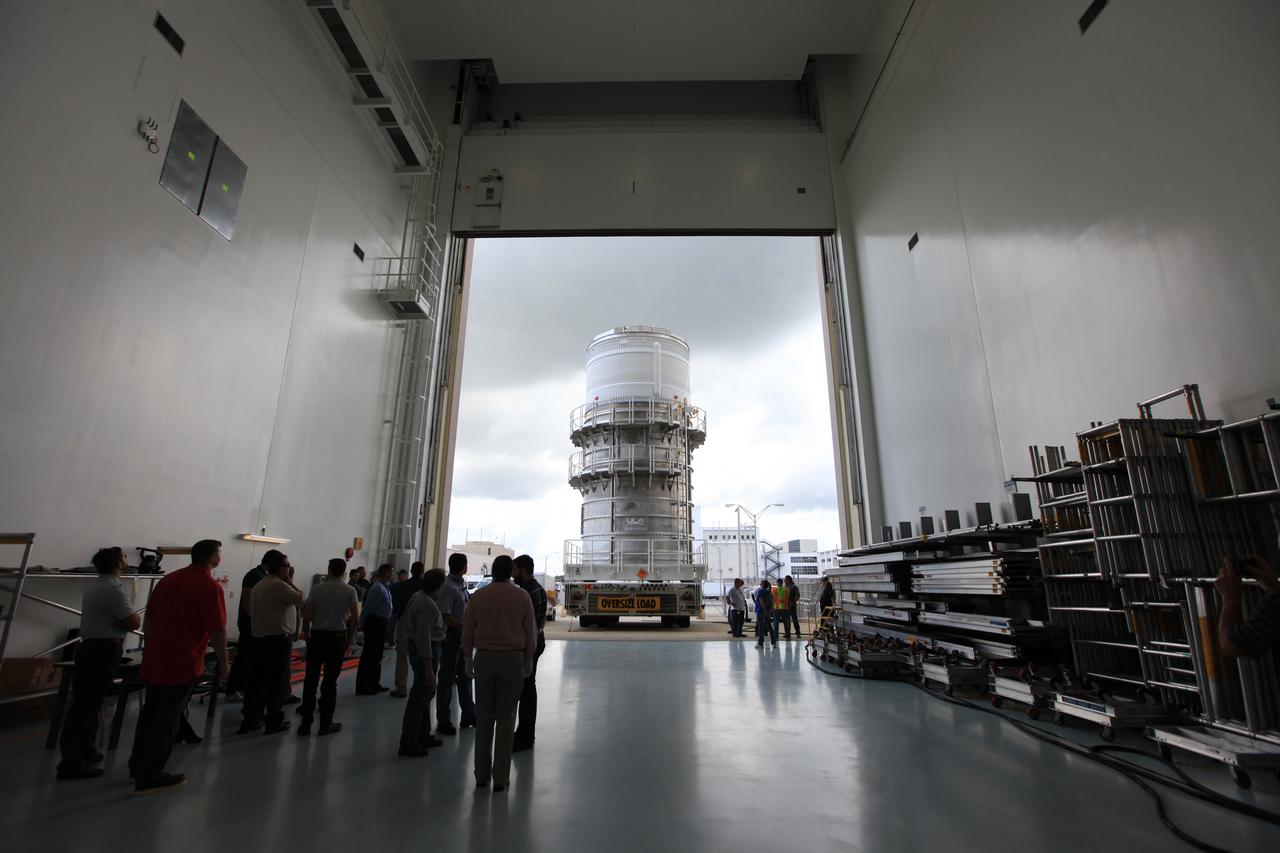
Packed inside its canister, the Interim Cryogenic Propulsion Stage (ICPS) for NASA's Space Launch System (SLS) rocket arrives at the low bay entrance of the Space Station Processing Facility at NASA's Kennedy Space Center in Florida. The ICPS is the first integrated piece of flight hardware to arrive for the SLS. It is the in-space stage that is located toward the top of the rocket, between the Launch Vehicle Stage Adapter and the Orion Spacecraft Adapter. It will provide some of the in-space propulsion during Orion's first flight test atop the SLS on Exploration Mission-1.
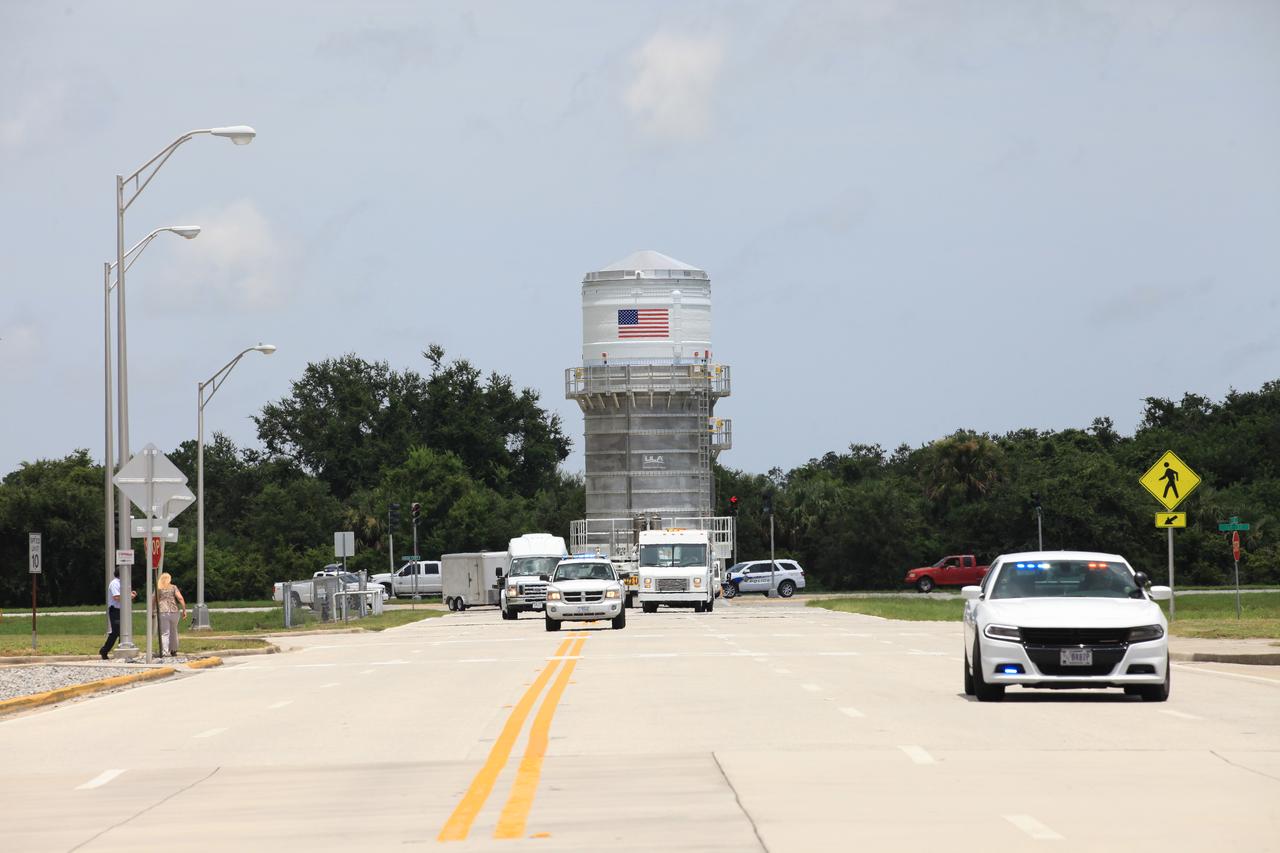
Packed inside its canister, the Interim Cryogenic Propulsion Stage (ICPS) for NASA's Space Launch System (SLS) rocket is being transported to the Space Station Processing Facility at NASA's Kennedy Space Center in Florida. The ICPS is the first integrated piece of flight hardware to arrive for the SLS. It is the in-space stage that is located toward the top of the rocket, between the Launch Vehicle Stage Adapter and the Orion Spacecraft Adapter. It will provide some of the in-space propulsion during Orion's first flight test atop the SLS on Exploration Mission-1.
The Interim Cryogenic Propulsion Stage (ICPS) for NASA's Space Launch System (SLS) rocket is packed inside a canister and ready to be moved from the United Launch Alliance (ULA) Delta Operations Center near Space Launch Complex 37 at Cape Canaveral Air Force Station to the Space Station Processing Facility at NASA's Kennedy Space Center in Florida. The ICPS is the first integrated piece of flight hardware to arrive for the SLS. It is the in-space stage that is located toward the top of the rocket, between the Launch Vehicle Stage Adapter and the Orion Spacecraft Adapter. It will provide some of the in-space propulsion during Orion's first flight test atop the SLS on Exploration Mission-1.
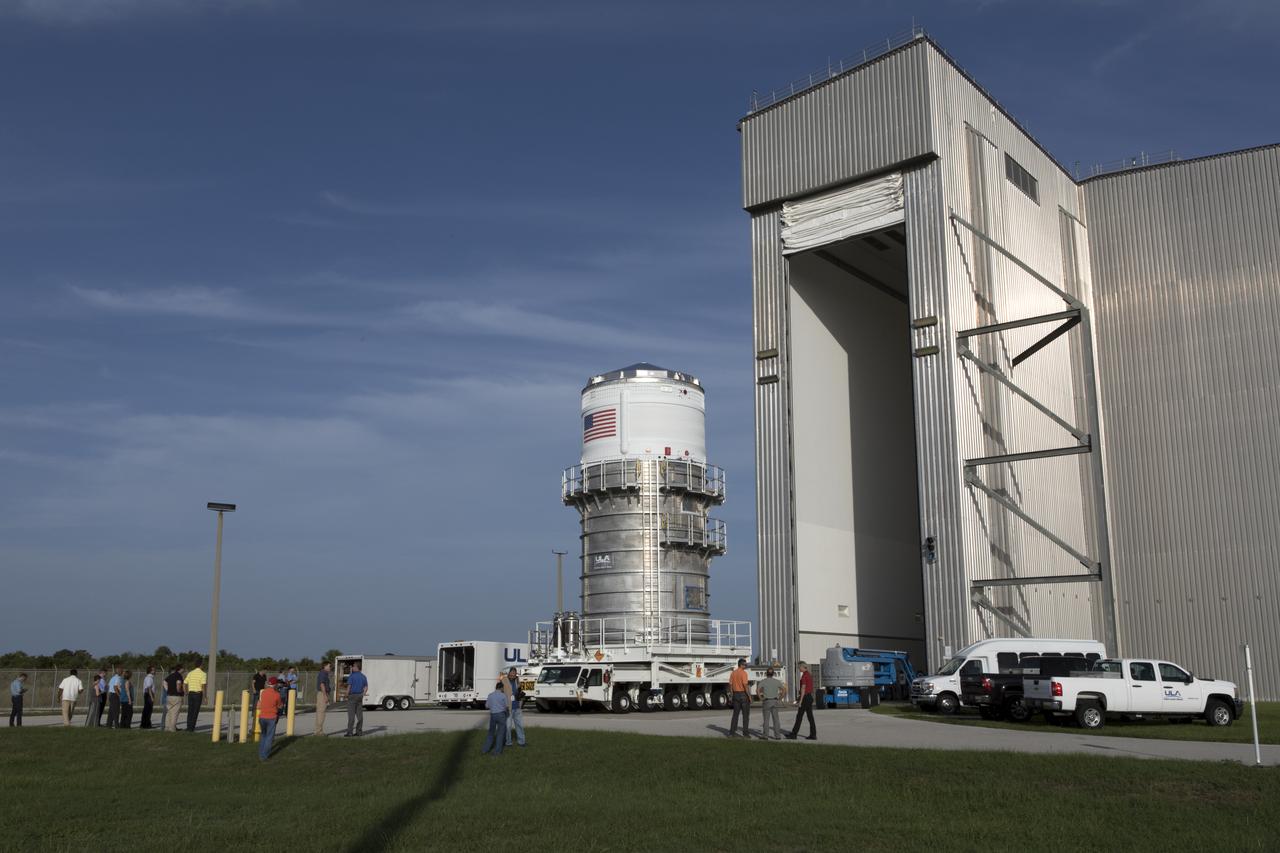
The Interim Cryogenic Propulsion Stage (ICPS) for NASA's Space Launch System (SLS) rocket, packed inside a canister, exits the United Launch Alliance (ULA) Delta Operations Center near Space Launch Complex 37 at Cape Canaveral Air Force Station for its move to the Space Station Processing Facility at NASA's Kennedy Space Center in Florida. The ICPS is the first integrated piece of flight hardware to arrive for the SLS. It is the in-space stage that is located toward the top of the rocket, between the Launch Vehicle Stage Adapter and the Orion Spacecraft Adapter. It will provide some of the in-space propulsion during Orion's first flight test atop the SLS on Exploration Mission-1.
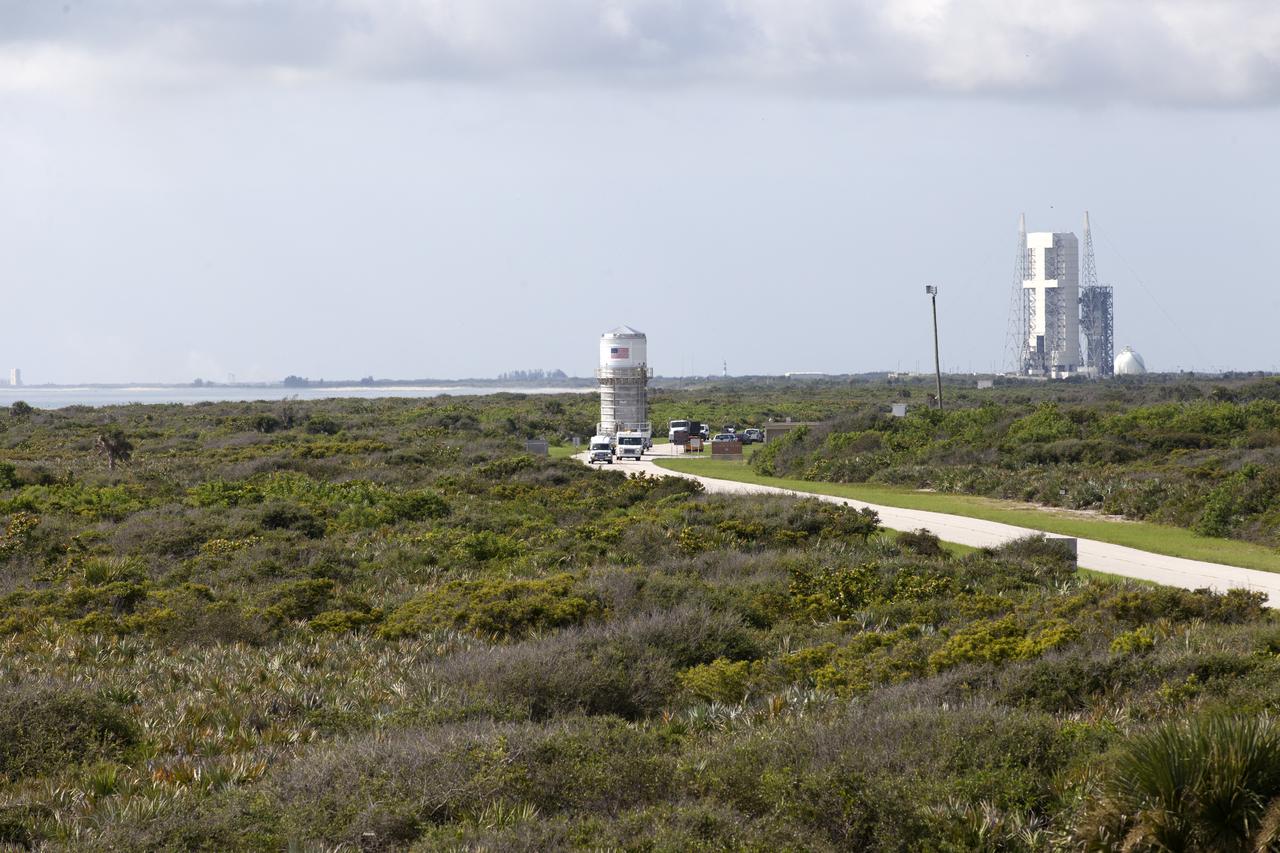
The Interim Cryogenic Propulsion Stage (ICPS) for NASA's Space Launch System (SLS) rocket, packed inside a canister, is transported from the United Launch Alliance (ULA) Delta Operations Center near Space Launch Complex 37 at Cape Canaveral Air Force Station along the route to the Space Station Processing Facility at NASA's Kennedy Space Center in Florida. The ICPS is the first integrated piece of flight hardware to arrive for the SLS. It is the in-space stage that is located toward the top of the rocket, between the Launch Vehicle Stage Adapter and the Orion Spacecraft Adapter. It will provide some of the in-space propulsion during Orion's first flight test atop the SLS on Exploration Mission-1.
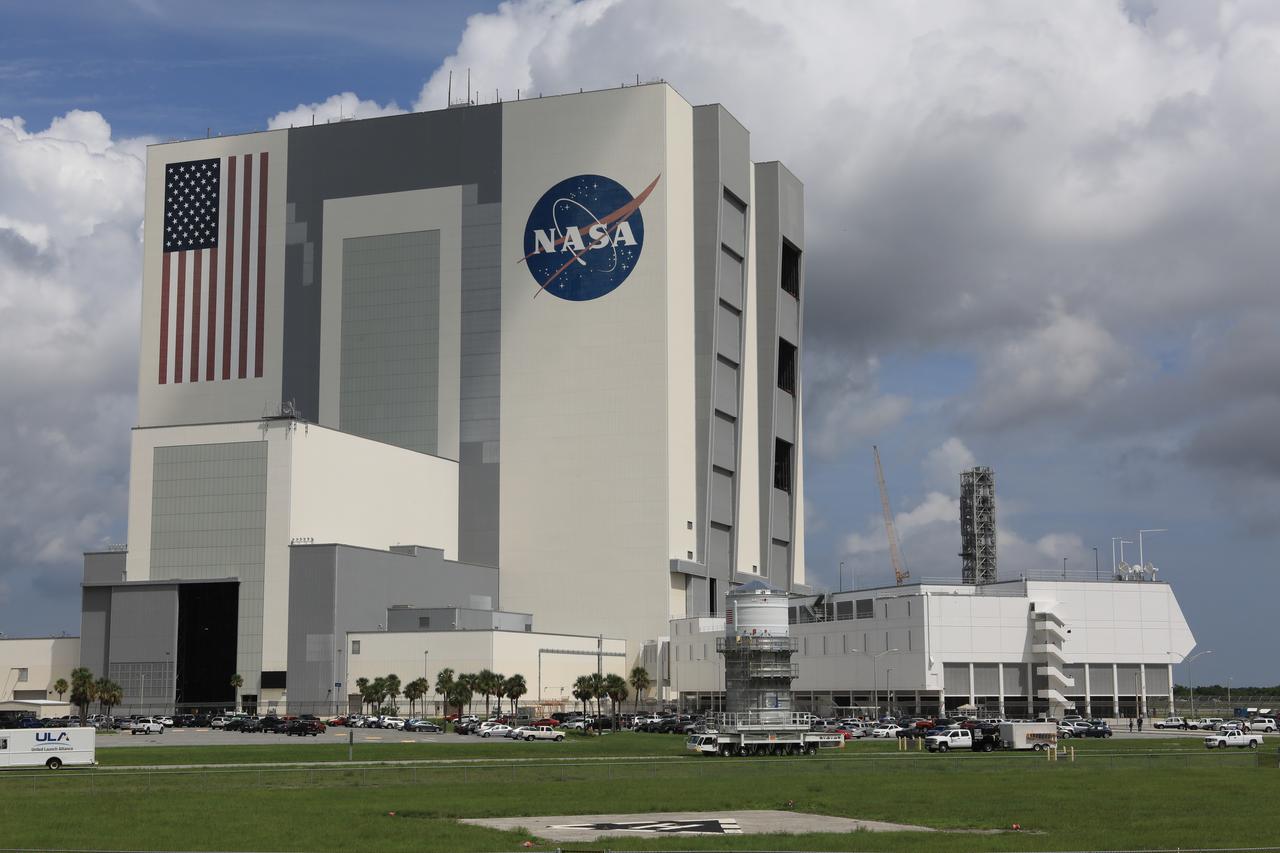
Packed inside its canister, the Interim Cryogenic Propulsion Stage (ICPS) for NASA's Space Launch System (SLS) rocket passes by the Vehicle Assembly Building on its way to the Space Station Processing Facility at NASA's Kennedy Space Center in Florida. The ICPS is the first integrated piece of flight hardware to arrive for the SLS. It is the in-space stage that is located toward the top of the rocket, between the Launch Vehicle Stage Adapter and the Orion Spacecraft Adapter. It will provide some of the in-space propulsion during Orion's first flight test atop the SLS on Exploration Mission-1.
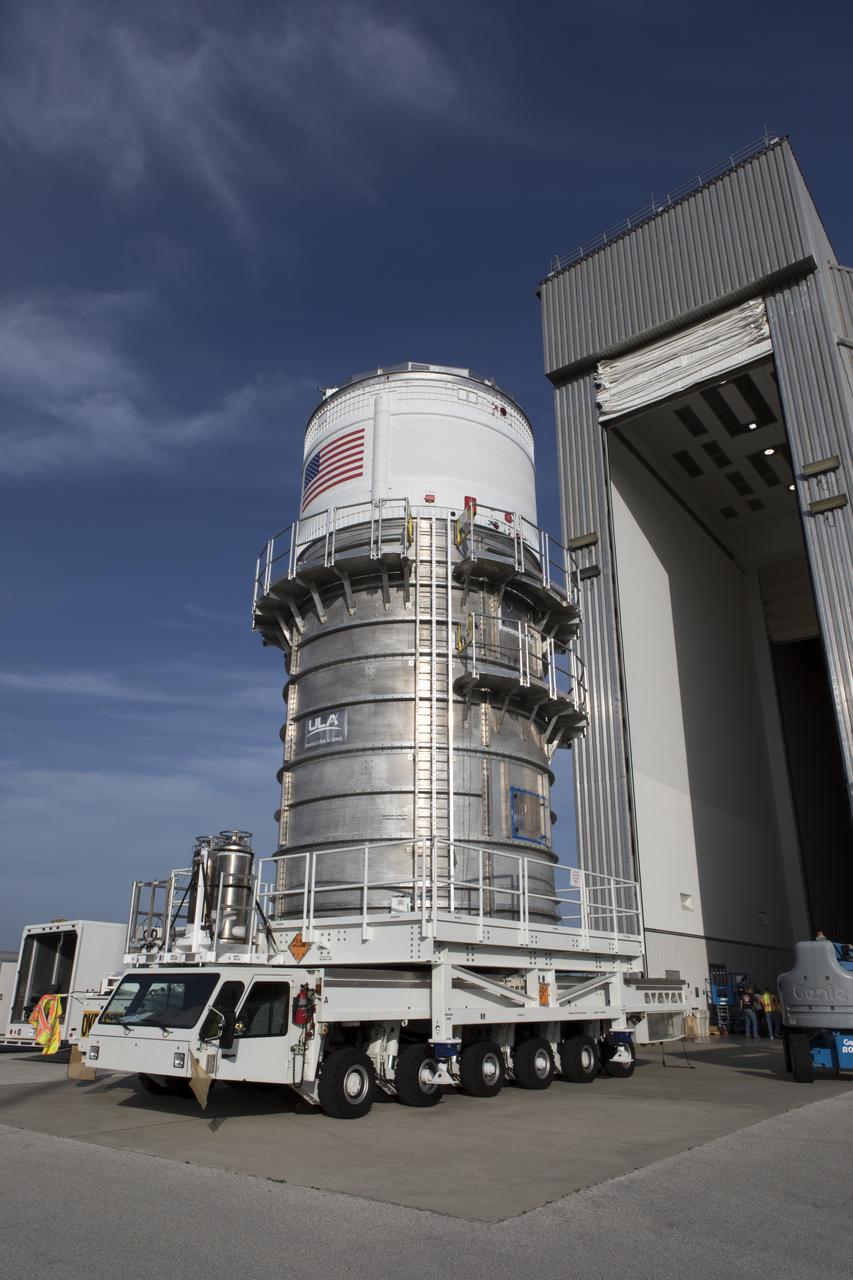
The Interim Cryogenic Propulsion Stage (ICPS) for NASA's Space Launch System (SLS) rocket, packed inside a canister, exits the United Launch Alliance (ULA) Delta Operations Center near Space Launch Complex 37 at Cape Canaveral Air Force Station for its move to the Space Station Processing Facility at NASA's Kennedy Space Center in Florida. The ICPS is the first integrated piece of flight hardware to arrive for the SLS. It is the in-space stage that is located toward the top of the rocket, between the Launch Vehicle Stage Adapter and the Orion Spacecraft Adapter. It will provide some of the in-space propulsion during Orion's first flight test atop the SLS on Exploration Mission-1.
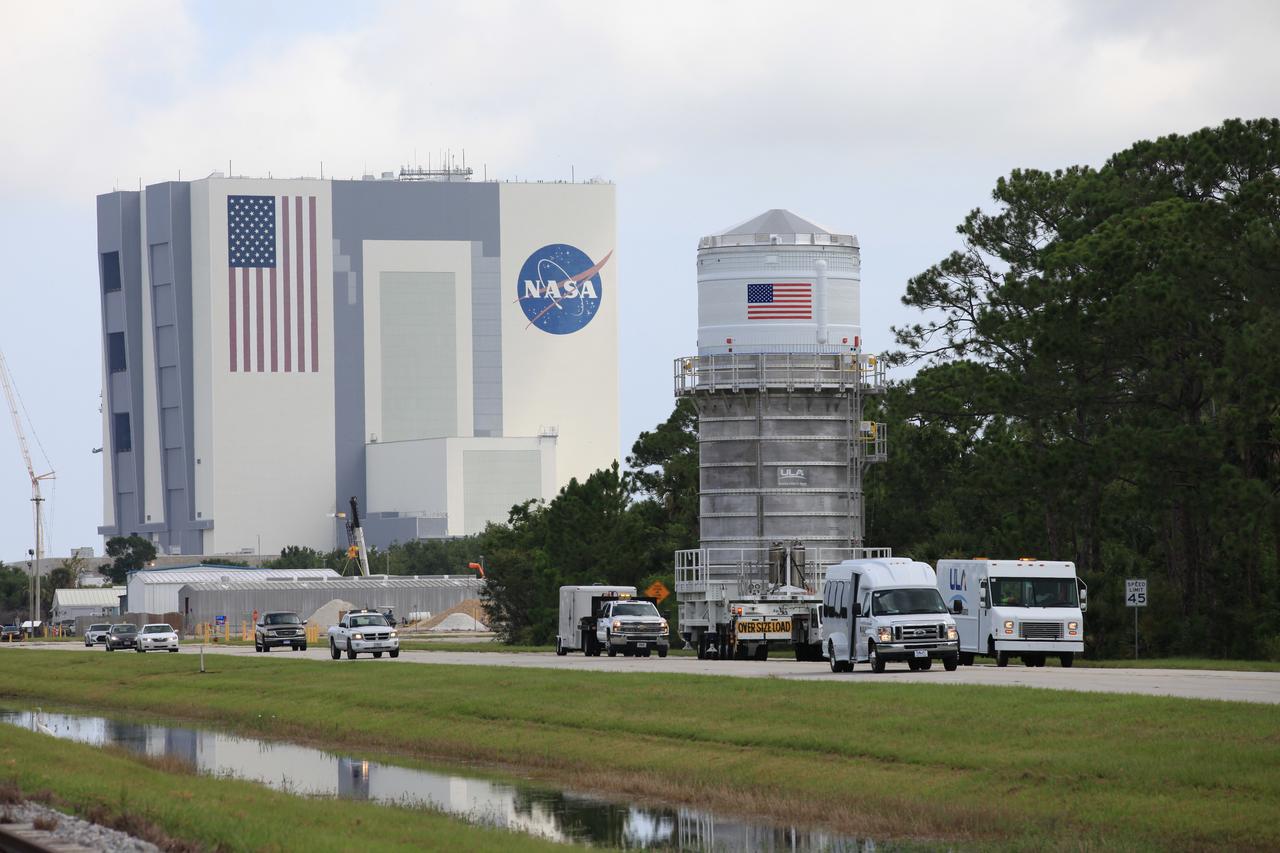
Packed inside its canister, the Interim Cryogenic Propulsion Stage (ICPS) for NASA's Space Launch System (SLS) rocket passes by the Vehicle Assembly Building on its way to the Space Station Processing Facility at NASA's Kennedy Space Center in Florida. The ICPS is the first integrated piece of flight hardware to arrive for the SLS. It is the in-space stage that is located toward the top of the rocket, between the Launch Vehicle Stage Adapter and the Orion Spacecraft Adapter. It will provide some of the in-space propulsion during Orion's first flight test atop the SLS on Exploration Mission-1.
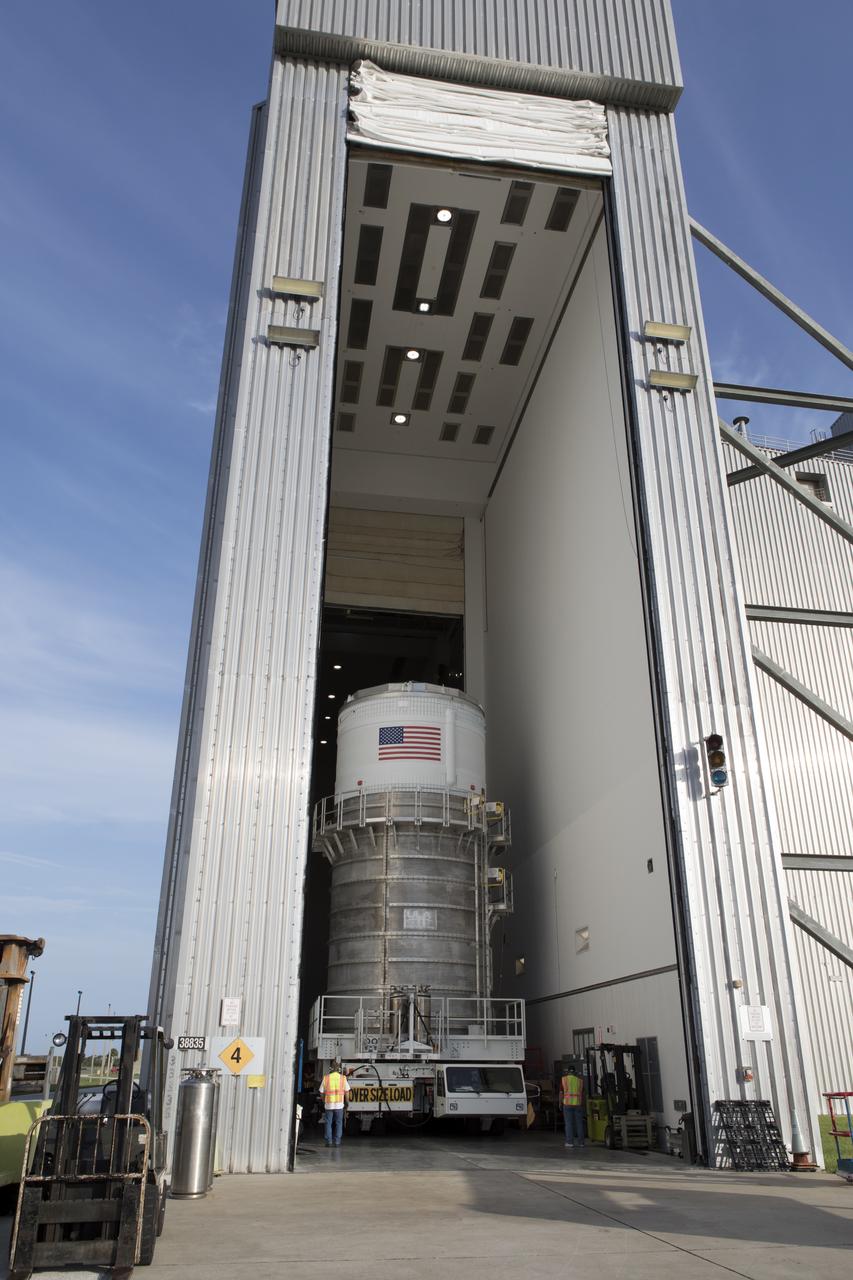
The Interim Cryogenic Propulsion Stage (ICPS) for NASA's Space Launch System (SLS) rocket is packed inside a canister and ready to exit the United Launch Alliance (ULA) Delta Operations Center near Space Launch Complex 37 at Cape Canaveral Air Force Station for its move to the Space Station Processing Facility at NASA's Kennedy Space Center in Florida. The ICPS is the first integrated piece of flight hardware to arrive for the SLS. It is the in-space stage that is located toward the top of the rocket, between the Launch Vehicle Stage Adapter and the Orion Spacecraft Adapter. It will provide some of the in-space propulsion during Orion's first flight test atop the SLS on Exploration Mission-1.
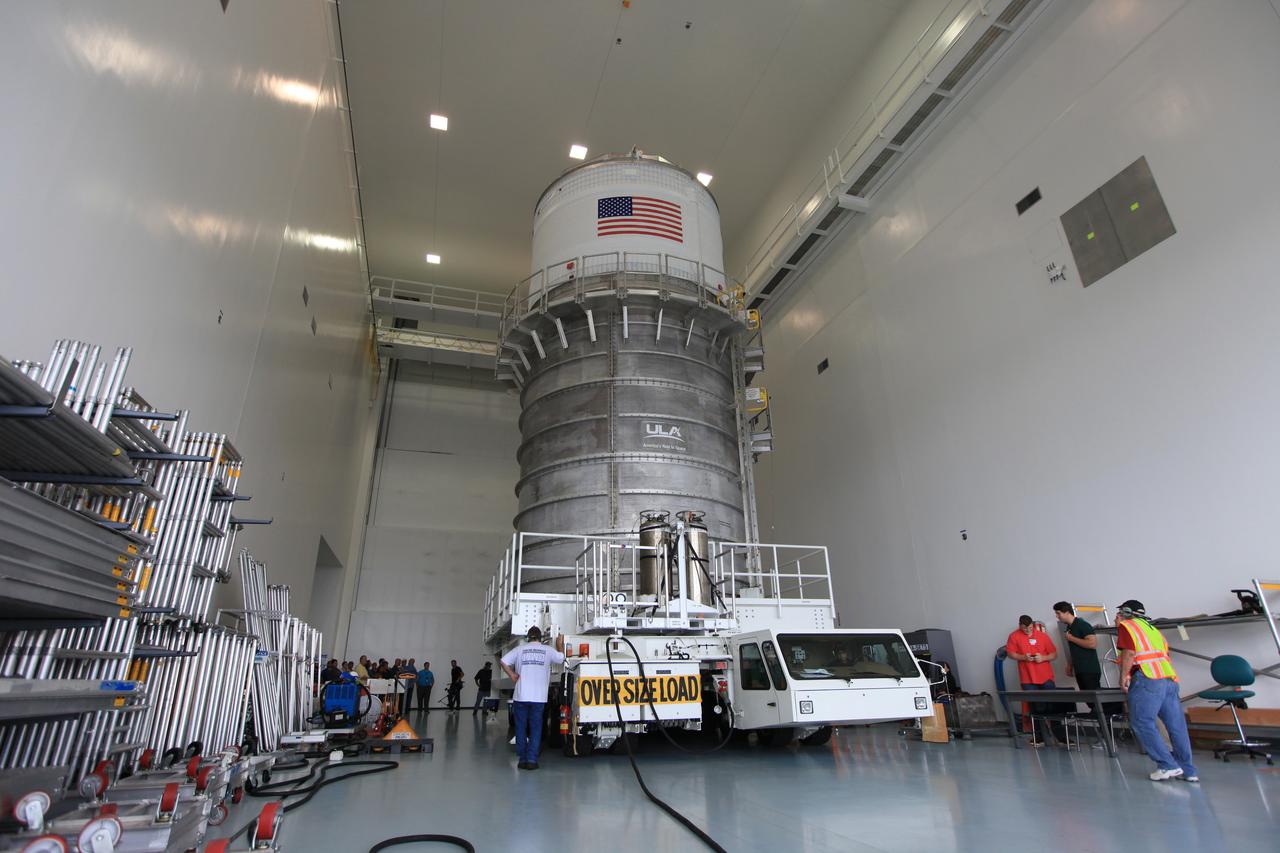
Packed inside its canister, the Interim Cryogenic Propulsion Stage (ICPS) for NASA's Space Launch System (SLS) rocket has been moved inside the low bay entrance of the Space Station Processing Facility at NASA's Kennedy Space Center in Florida. The ICPS is the first integrated piece of flight hardware to arrive for the SLS. It is the in-space stage that is located toward the top of the rocket, between the Launch Vehicle Stage Adapter and the Orion Spacecraft Adapter. It will provide some of the in-space propulsion during Orion's first flight test atop the SLS on Exploration Mission-1.
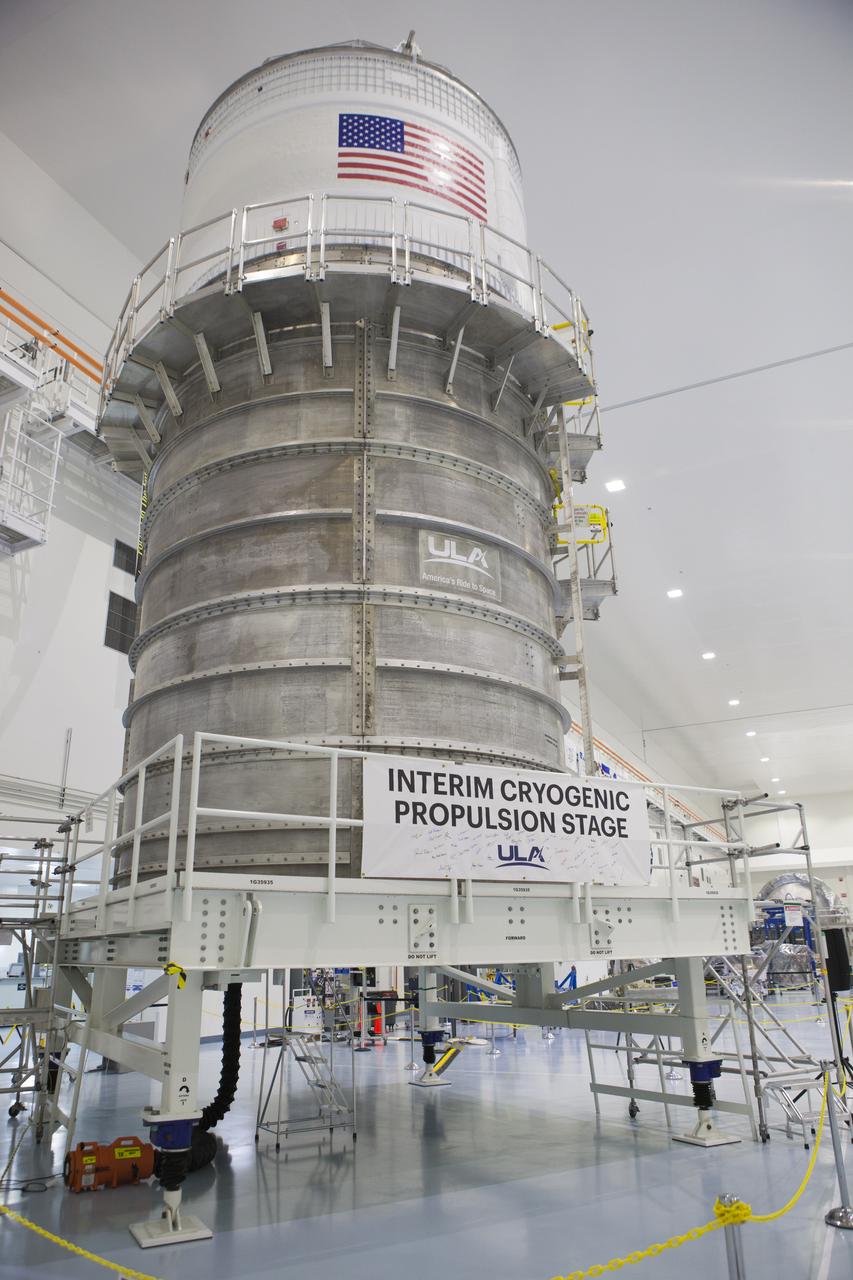
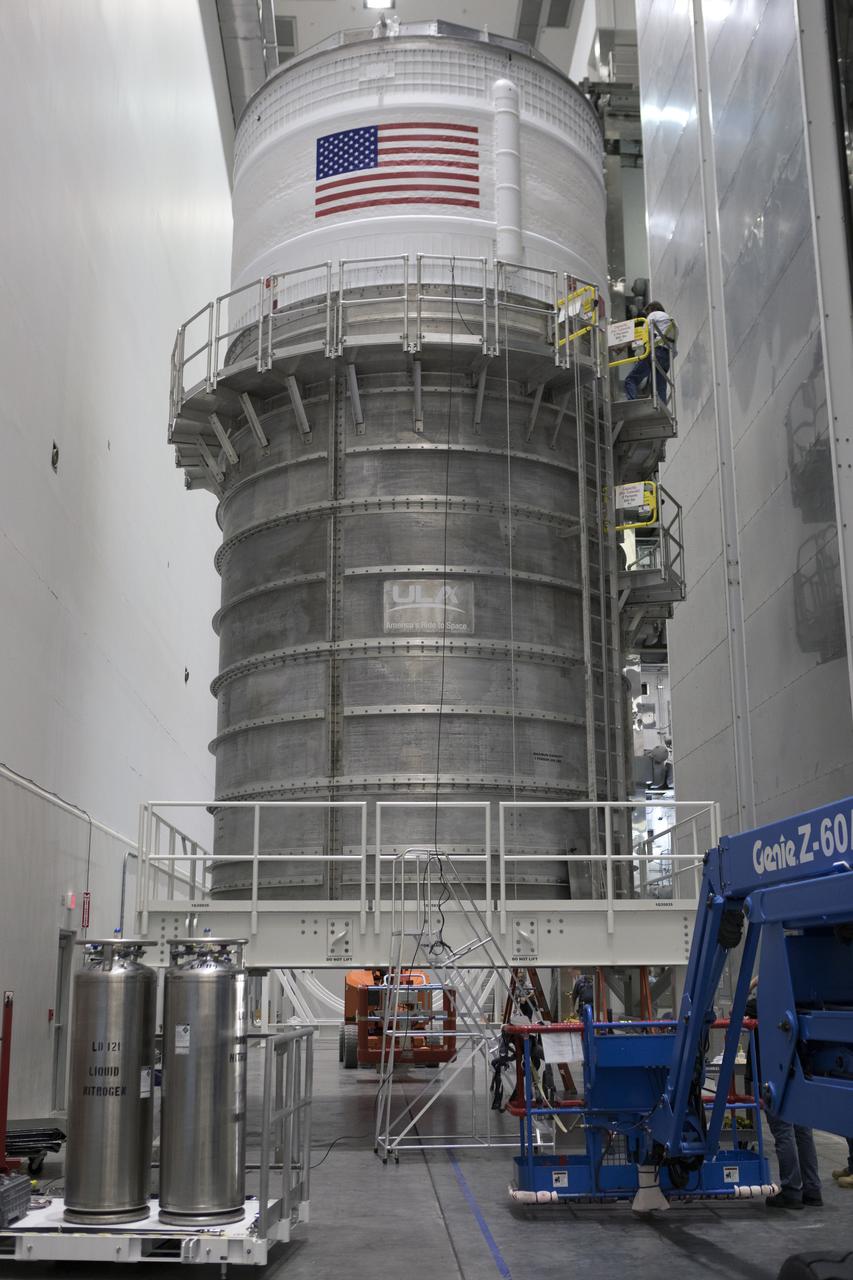
Packed inside its canister, the Interim Cryogenic Propulsion Stage (ICPS) stands inside the high bay of the Space Station Processing Facility at NASA's Kennedy Space Center in Florida. The ICPS is the first integrated piece of flight hardware to arrive in preparation for the uncrewed Exploration Mission-1. With the Orion attached, the ICPS sits atop the SLS rocket and will provide the spacecraft with the additional thrust needed to travel tens of thousands of miles beyond the Moon.
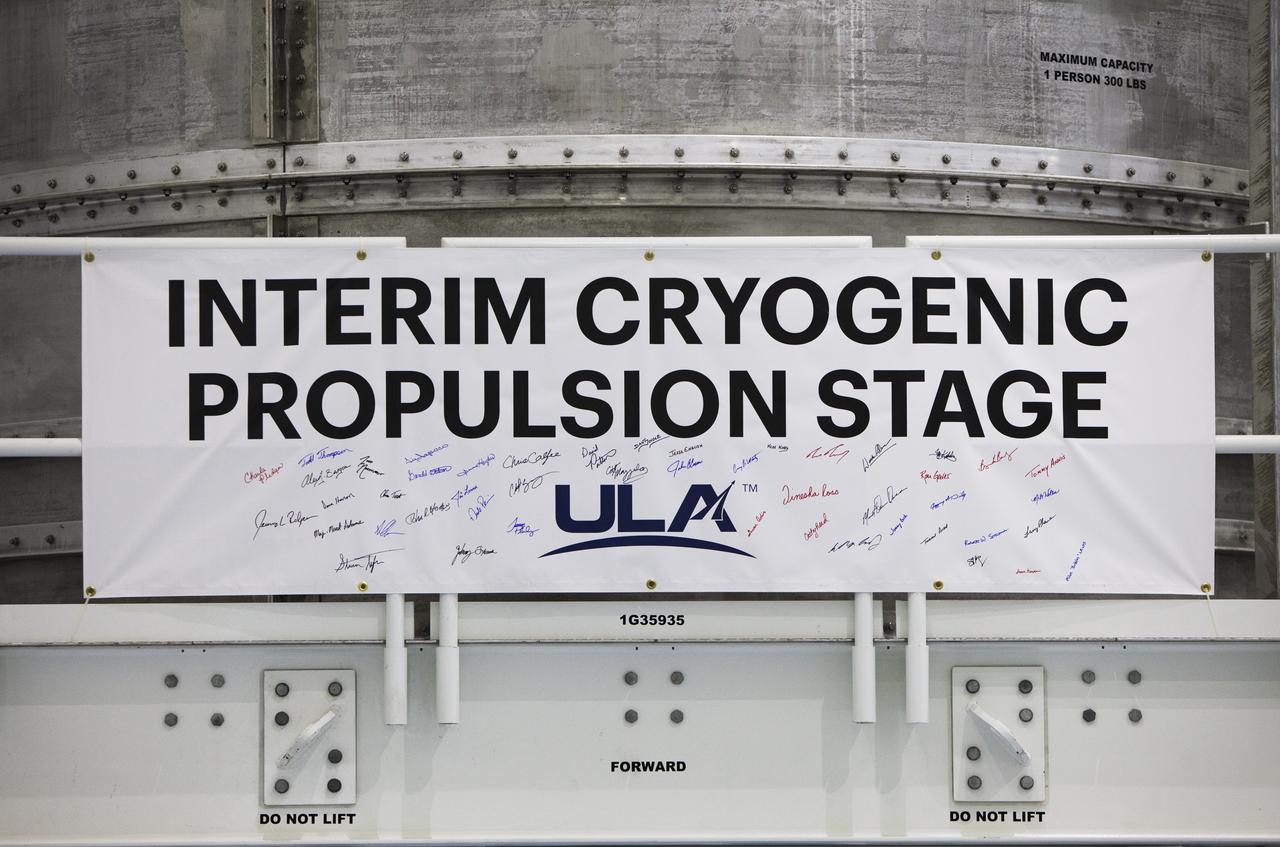
Several employees at NASA's Kennedy Space Center in Florida signed the banner at the base of the platform holding the Interim Cryogenic Propulsion Stage (ICPS) which stands inside the high bay of the Space Station Processing Facility. The ICPS is the first integrated piece of flight hardware to arrive in preparation for the uncrewed Exploration Mission-1. With the Orion attached, the ICPS sits atop the SLS rocket and will provide the spacecraft with the additional thrust needed to travel tens of thousands of miles beyond the Moon.
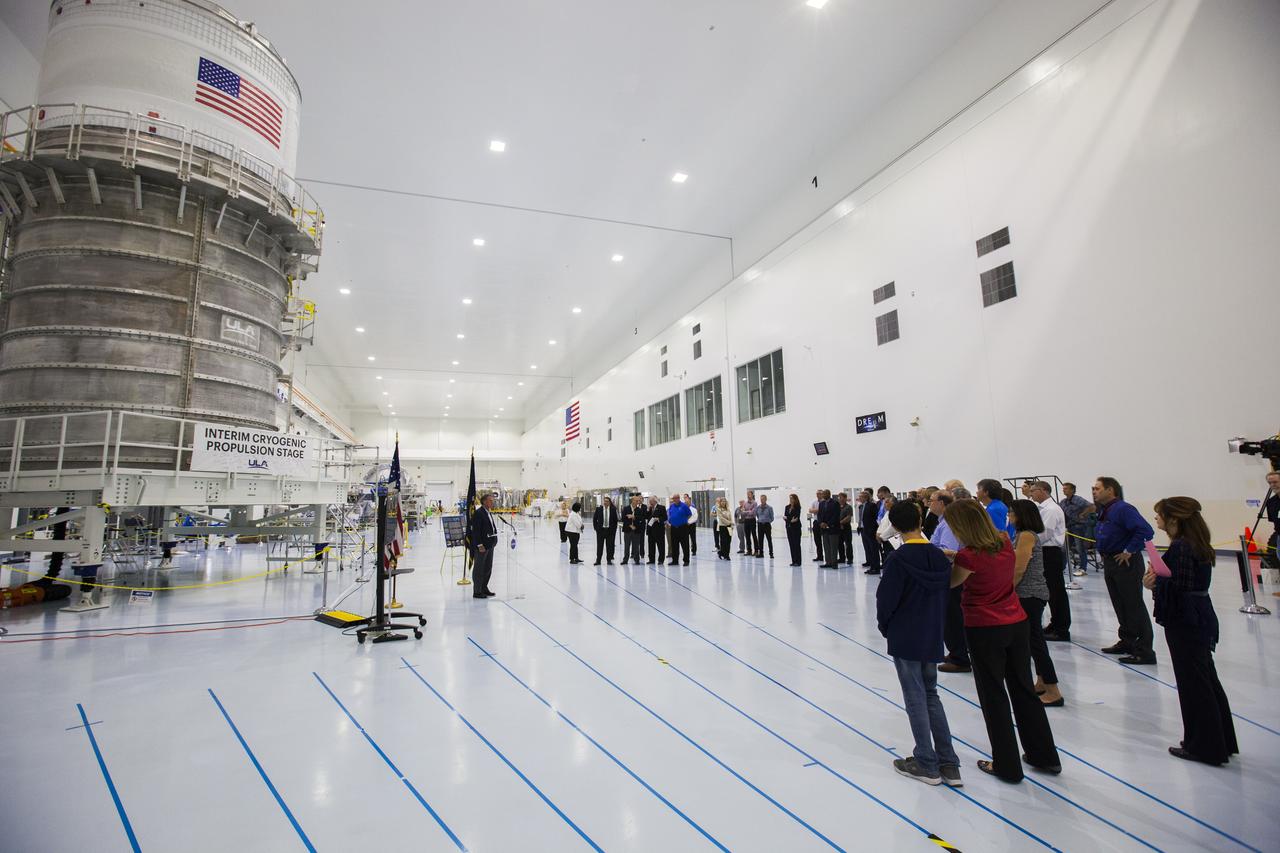
In the Space Station Processing Facility at NASA's Kennedy Space Center in Florida, a ceremony is underway marking the agency's Spacecraft/Payload Integration and Evolution (SPIE) organization formally turning over processing of the Space Launch System (SLS) rocket's Interim Cryogenic Propulsion Stage (ICPS), to the center's Ground Systems Development and Operations (GSDO) Directorate. The ICPS is seen on the left in its shipping container and is the first integrated piece of flight hardware to arrive in preparation for the uncrewed Exploration Mission-1. With the Orion attached, the ICPS sits atop the SLS rocket and will provide the spacecraft with the additional thrust needed to travel tens of thousands of miles beyond the Moon.
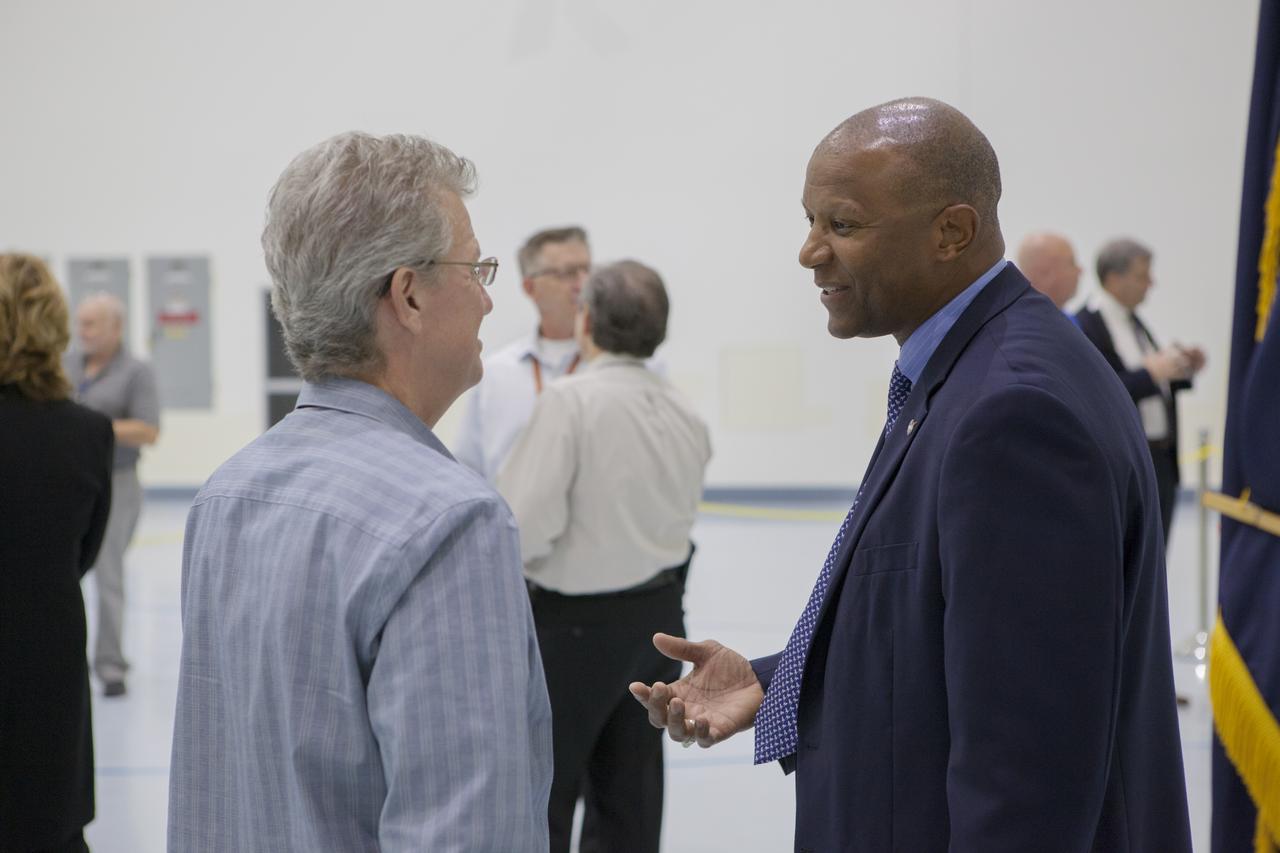
Kennedy Space Center Associate Director Kelvin Manning, right, speaks with a guest during a ceremony marking NASA's Spacecraft/Payload Integration and Evolution (SPIE) organization formally turning over processing of the Space Launch System (SLS) rocket's Interim Cryogenic Propulsion Stage (ICPS) to the center's Ground Systems Development and Operations (GSDO) Directorate. The ICPS is the first integrated piece of flight hardware to arrive in preparation for the uncrewed Exploration Mission-1. With the Orion attached, the ICPS sits atop the SLS rocket and will provide the spacecraft with the additional thrust needed to travel tens of thousands of miles beyond the Moon.
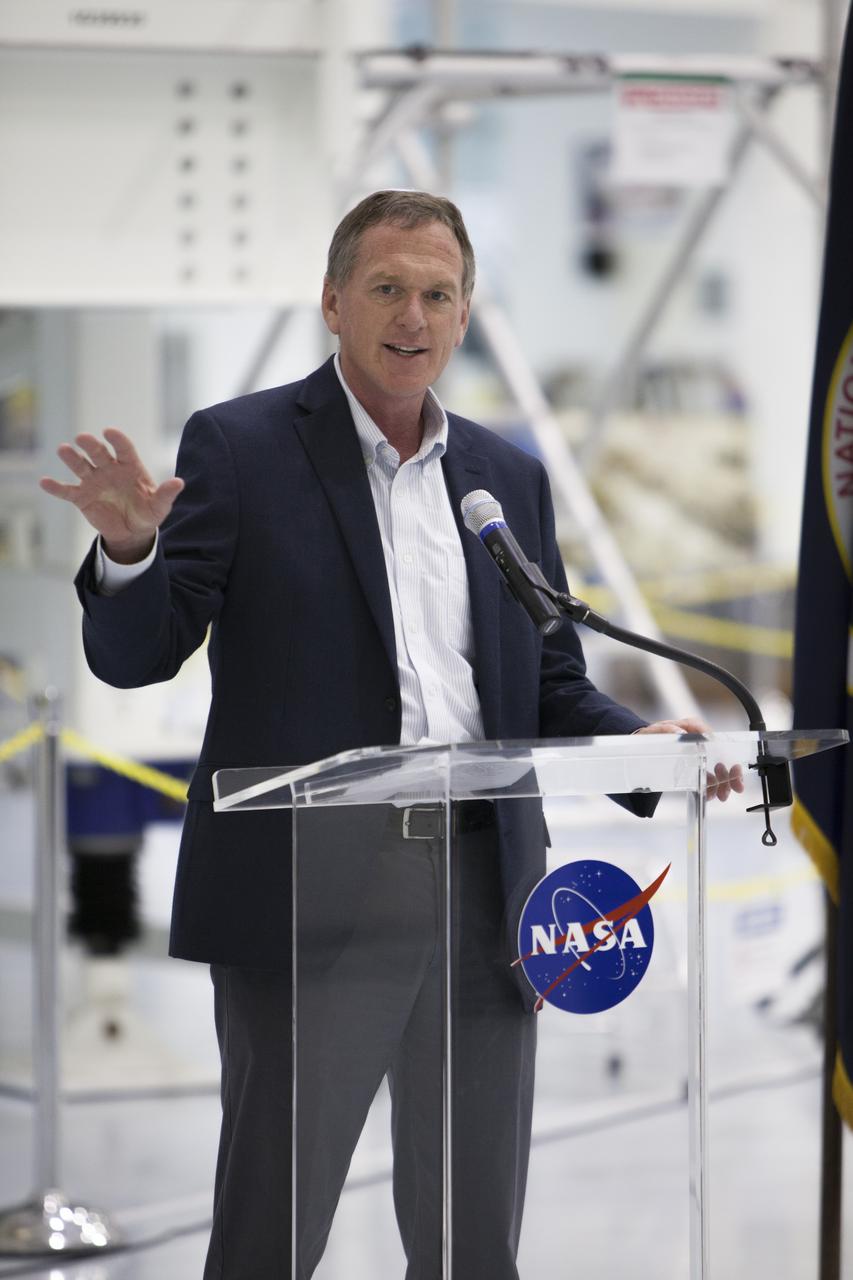
Mike Bolger, Ground Systems Development and Operations Program manager at NASA's Kennedy Space Center, speaks to guests during a ceremony in the high bay of the Space Station Processing Facility. The event marked the milestone of the Space Launch System rocket's Interim Cryogenic Propulsion Stage (ICPS) being turned over from NASA's Spacecraft/Payload Integration and Evolution organization to the spaceport's Ground Systems Development and Operations directorate. The ICPS is the first integrated piece of flight hardware to arrive in preparation for the uncrewed Exploration Mission-1.
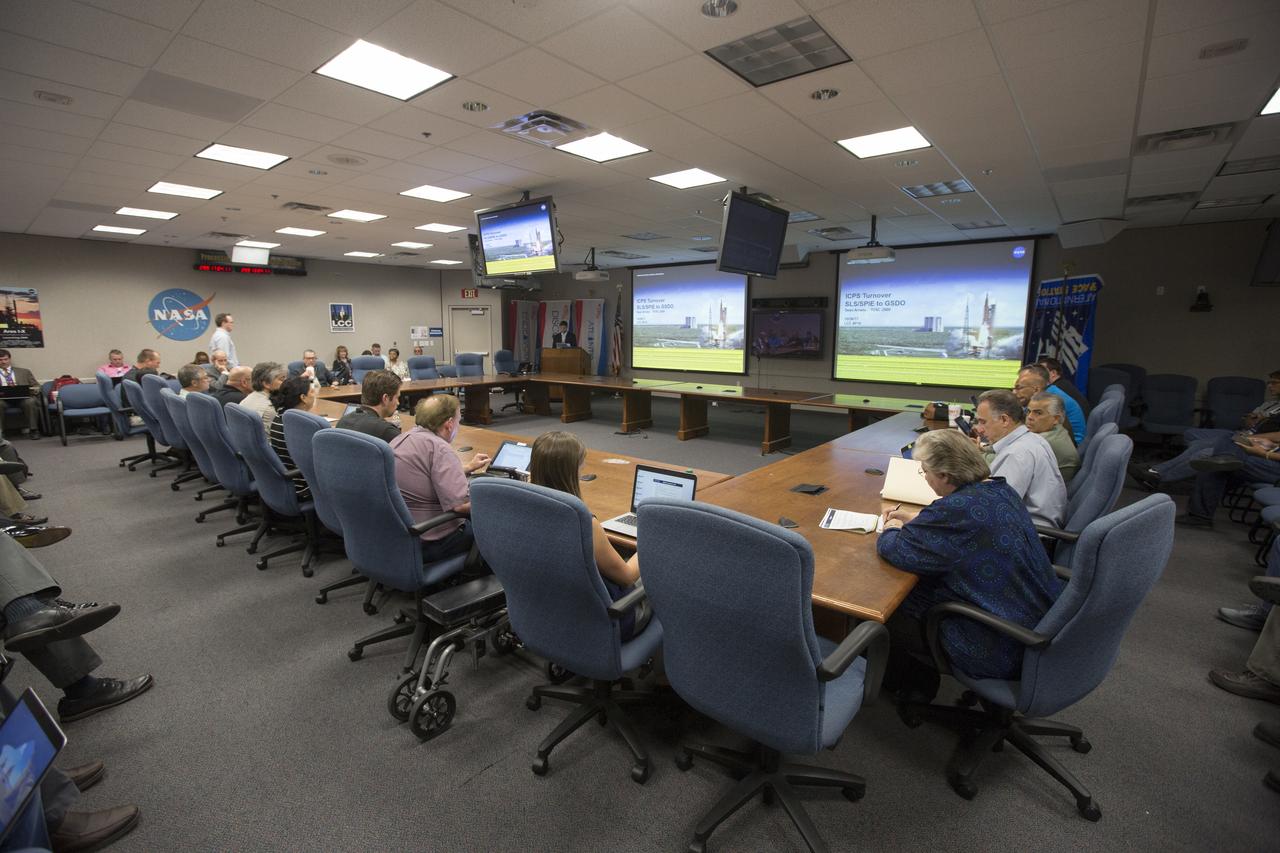
Meeting in the Launch Control Center of NASA's Kennedy Space Center in Florida, officials of the agency's Spacecraft/Payload Integration and Evolution (SPIE) organization formally turn over processing of the Space Launch System (SLS) rocket's Interim Cryogenic Propulsion Stage (ICPS) to the center's Ground Systems Development and Operations (GSDO) directorate. The ICPS is the first integrated piece of flight hardware to arrive in preparation for the uncrewed Exploration Mission-1. With the Orion attached, the ICPS sits atop the SLS rocket and will provide the spacecraft with the additional thrust needed to travel tens of thousands of miles beyond the Moon.
The Space Launch System (SLS) rocket’s interim cryogenic propulsion stage (ICPS) moved into the Multi-Payload Processing Facility February 18, 2021, at NASA’s Kennedy Space Center in Florida for the Artemis I mission. It will undergo fueling and servicing in the facility ahead of launch by teams from NASA’s Exploration Ground Systems and their primary contractor, Jacobs Technology. Artemis I will be an integrated flight test of the SLS rocket and Orion spacecraft ahead of the crewed flights to the Moon. Under the Artemis program, NASA will land the first woman and the next man on the lunar surface and establish a sustainable presence at the Moon to prepare for human missions to Mars.
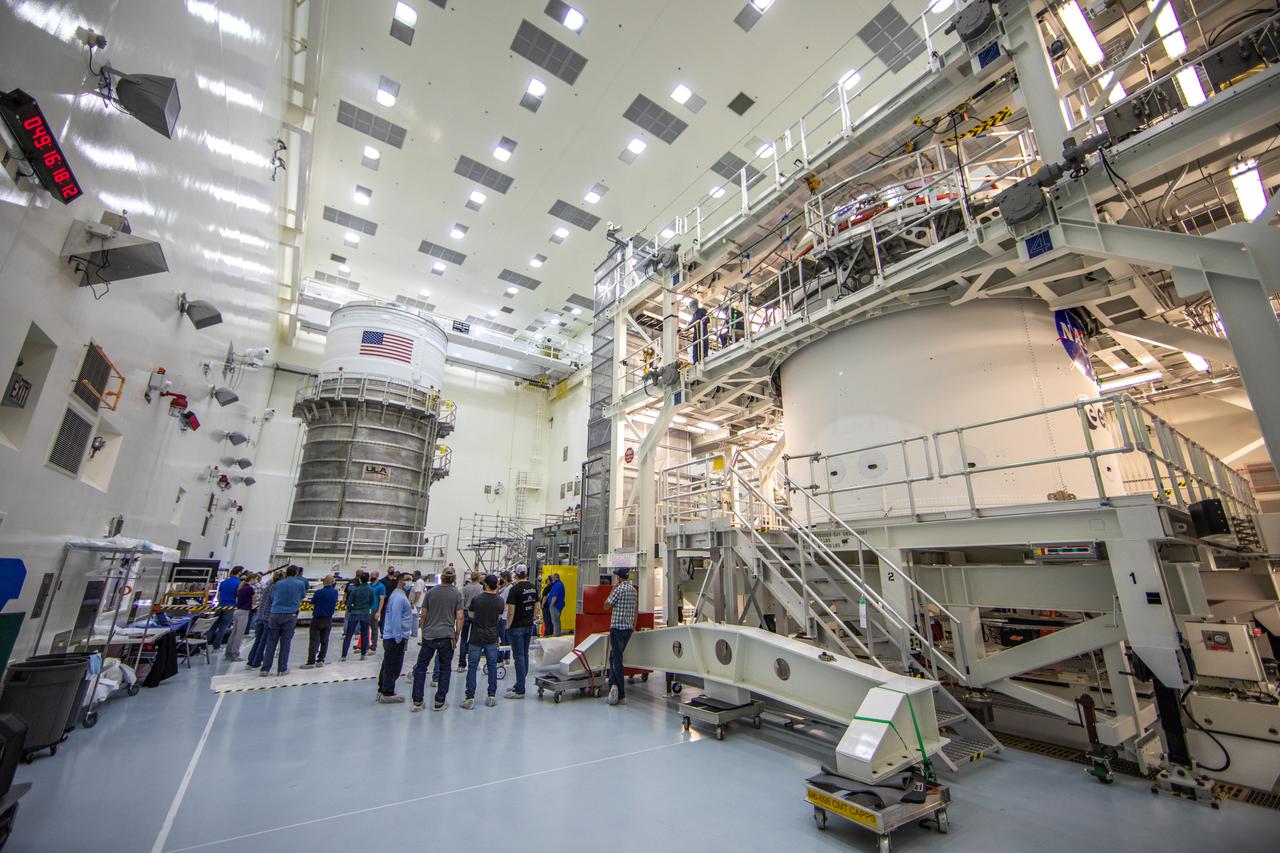
The Space Launch System (SLS) rocket’s interim cryogenic propulsion stage (ICPS) moved into the Multi-Payload Processing Facility February 18, 2021, at NASA’s Kennedy Space Center in Florida for the Artemis I mission. It will undergo fueling and servicing in the facility ahead of launch by teams from NASA’s Exploration Ground Systems and their primary contractor, Jacobs Technology. Artemis I will be an integrated flight test of the SLS rocket and Orion spacecraft ahead of the crewed flights to the Moon. Under the Artemis program, NASA will land the first woman and the next man on the lunar surface and establish a sustainable presence at the Moon to prepare for human missions to Mars.
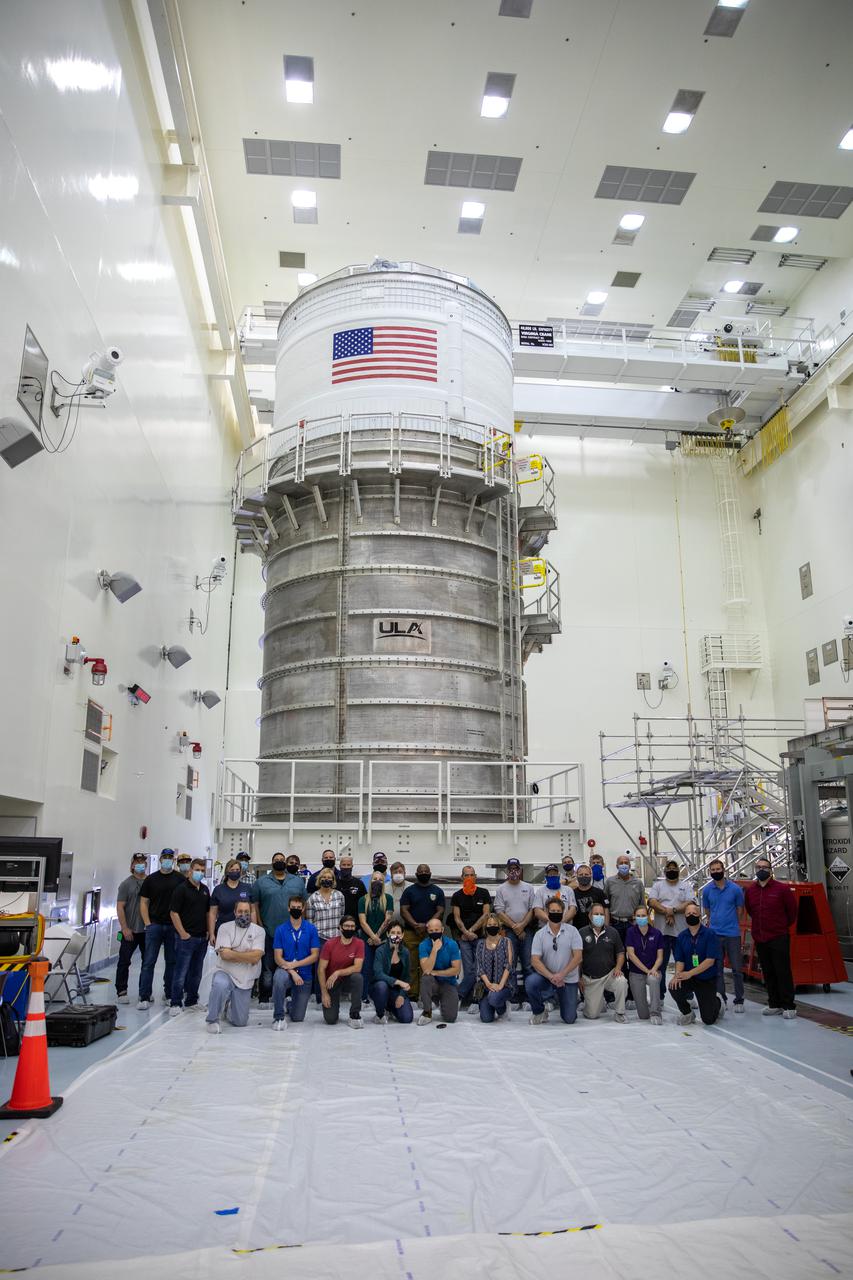
The Space Launch System (SLS) rocket’s interim cryogenic propulsion stage (ICPS) moved into the Multi-Payload Processing Facility February 18, 2021, at NASA’s Kennedy Space Center in Florida for the Artemis I mission. It will undergo fueling and servicing in the facility ahead of launch by teams from NASA’s Exploration Ground Systems and their primary contractor, Jacobs Technology. Artemis I will be an integrated flight test of the SLS rocket and Orion spacecraft ahead of the crewed flights to the Moon. Under the Artemis program, NASA will land the first woman and the next man on the lunar surface and establish a sustainable presence at the Moon to prepare for human missions to Mars.
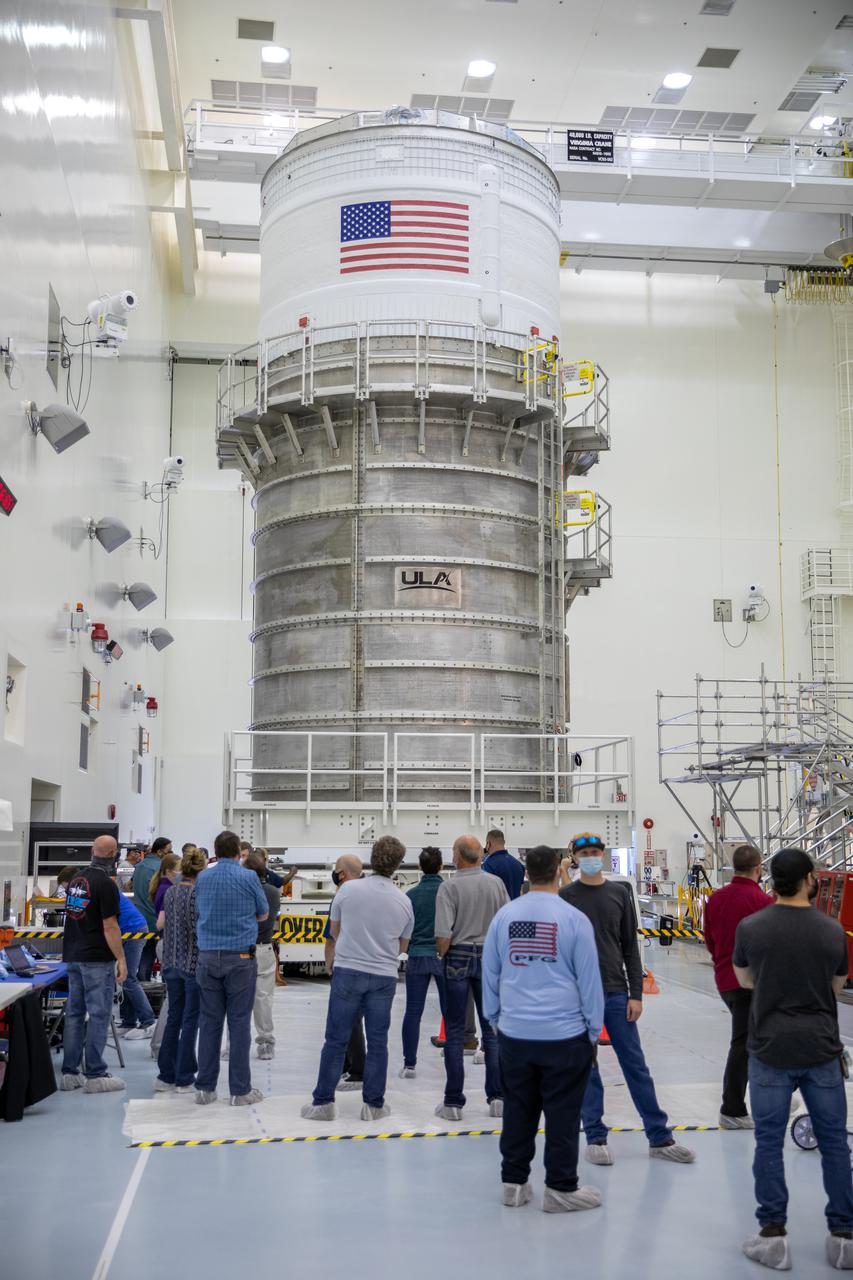
The Space Launch System (SLS) rocket’s interim cryogenic propulsion stage (ICPS) moved into the Multi-Payload Processing Facility February 18, 2021, at NASA’s Kennedy Space Center in Florida for the Artemis I mission. It will undergo fueling and servicing in the facility ahead of launch by teams from NASA’s Exploration Ground Systems and their primary contractor, Jacobs Technology. Artemis I will be an integrated flight test of the SLS rocket and Orion spacecraft ahead of the crewed flights to the Moon. Under the Artemis program, NASA will land the first woman and the next man on the lunar surface and establish a sustainable presence at the Moon to prepare for human missions to Mars.
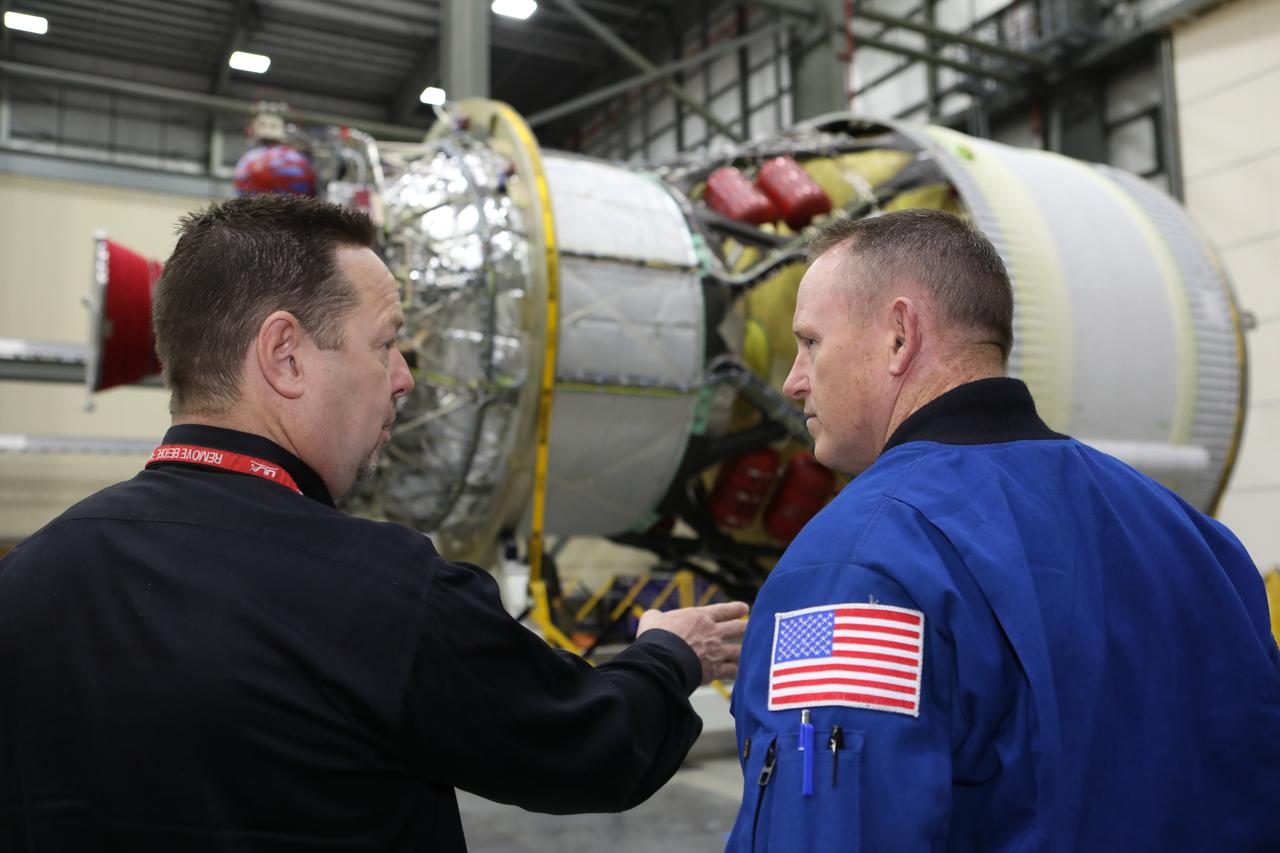
Inside the United Launch Alliance Horizontal Integration Facility at Cape Canaveral Air Force Station in Florida, NASA astronaut Barry "Butch" Wilmore views the first integrated piece of flight hardware for NASA's Space Launch System (SLS) rocket, the Interim Cryogenic Propulsion Stage (ICPS). The ICPS is the in-space stage that is located toward the top of the rocket, between the Launch Vehicle Stage Adapter and the Orion Spacecraft Adapter. It will provide some of the in-space propulsion during Orion's first flight test atop the SLS on Exploration Mission 1.
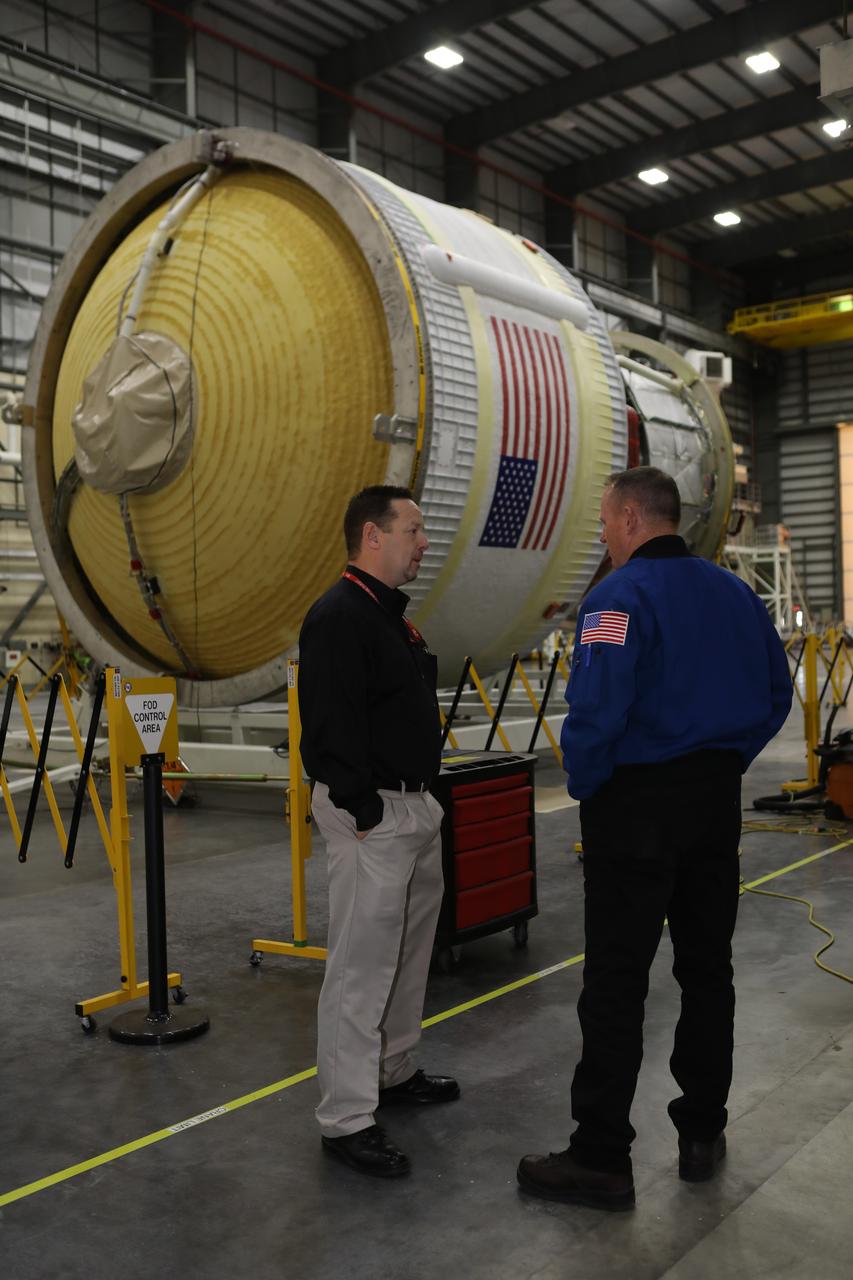
Inside the United Launch Alliance Horizontal Integration Facility at Cape Canaveral Air Force Station in Florida, NASA astronaut Barry "Butch" Wilmore views the first integrated piece of flight hardware for NASA's Space Launch System (SLS) rocket, the Interim Cryogenic Propulsion Stage (ICPS). The ICPS is the in-space stage that is located toward the top of the rocket, between the Launch Vehicle Stage Adapter and the Orion Spacecraft Adapter. It will provide some of the in-space propulsion during Orion's first flight test atop the SLS on Exploration Mission 1.
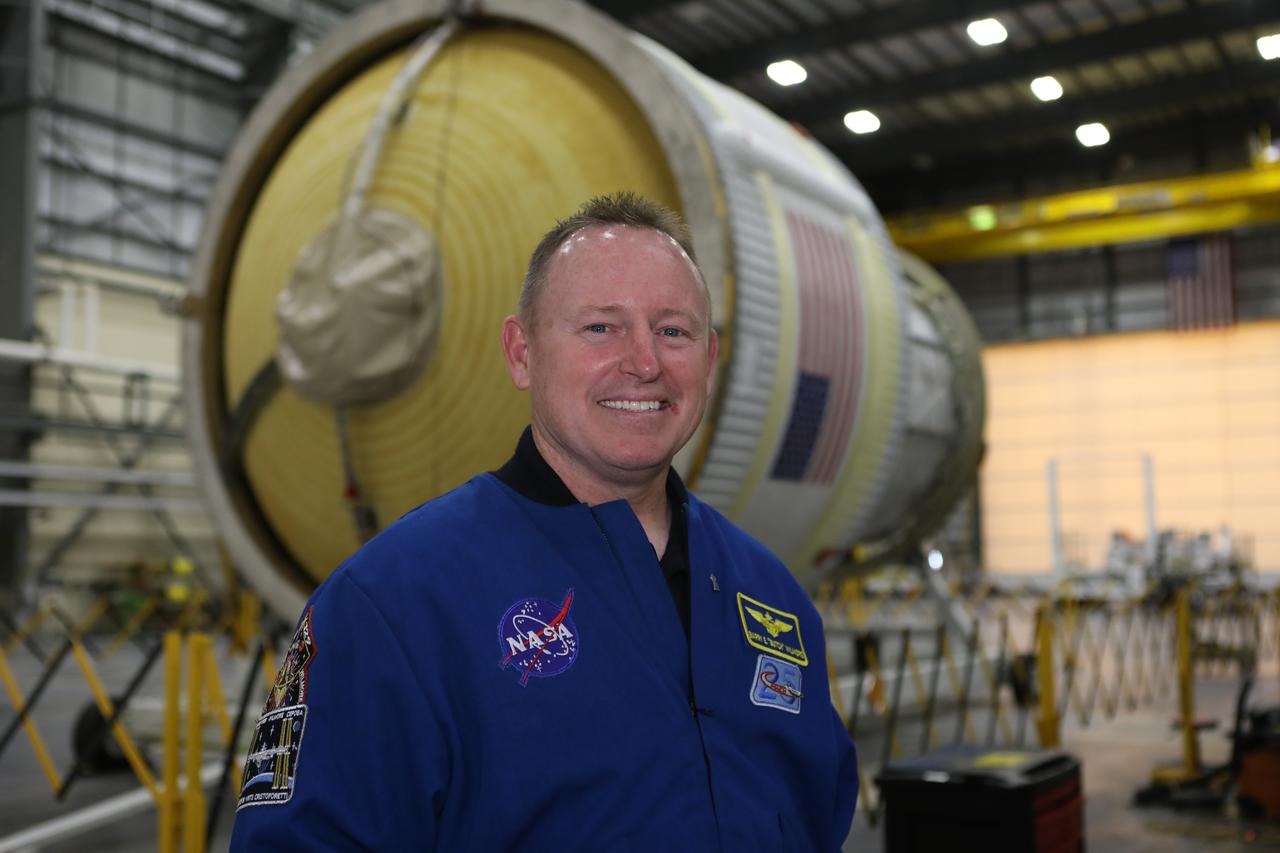
Inside the United Launch Alliance Horizontal Integration Facility at Cape Canaveral Air Force Station in Florida, NASA astronaut Barry "Butch" Wilmore views the first integrated piece of flight hardware for NASA's Space Launch System (SLS) rocket, the Interim Cryogenic Propulsion Stage (ICPS). The ICPS is the in-space stage that is located toward the top of the rocket, between the Launch Vehicle Stage Adapter and the Orion Spacecraft Adapter. It will provide some of the in-space propulsion during Orion's first flight test atop the SLS on Exploration Mission 1.
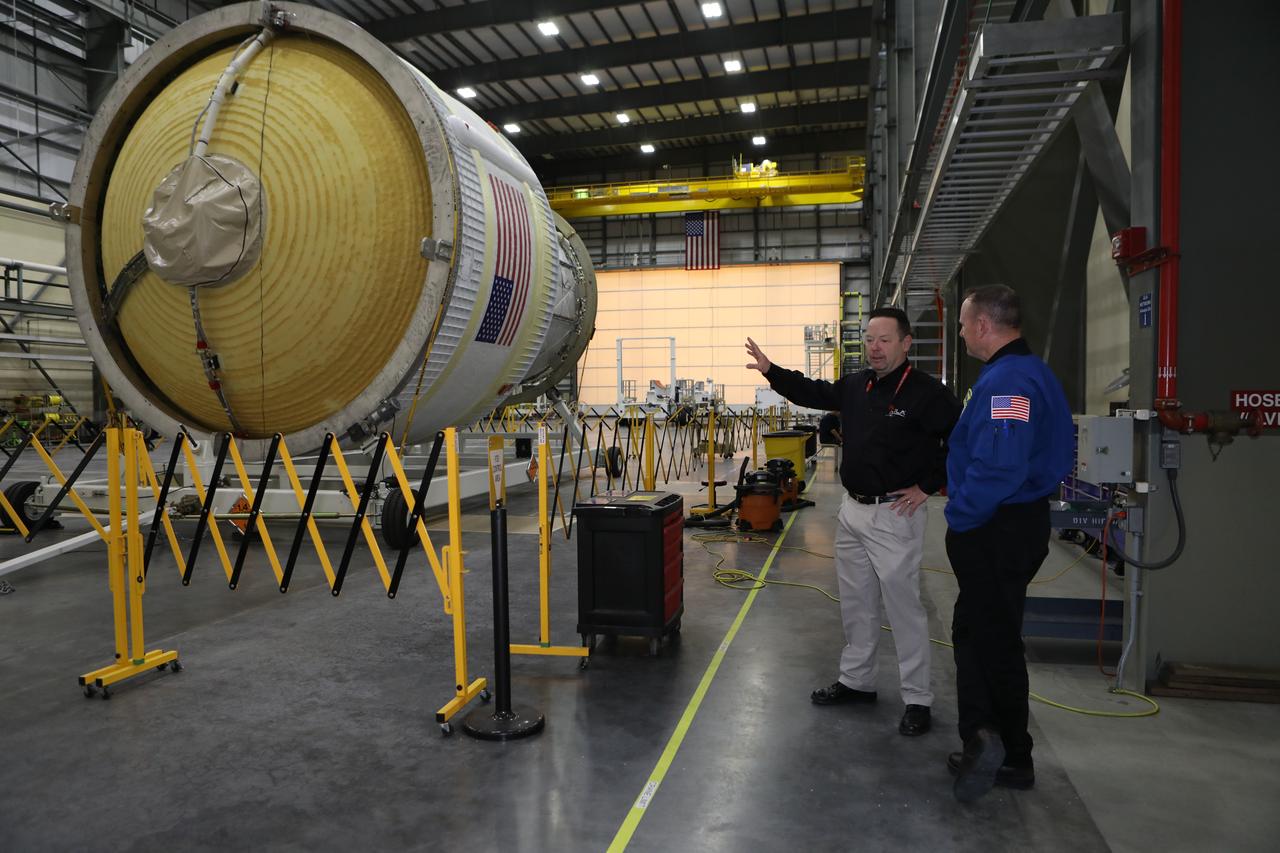
Inside the United Launch Alliance Horizontal Integration Facility at Cape Canaveral Air Force Station in Florida, NASA astronaut Barry "Butch" Wilmore views the first integrated piece of flight hardware for NASA's Space Launch System (SLS) rocket, the Interim Cryogenic Propulsion Stage (ICPS). The ICPS is the in-space stage that is located toward the top of the rocket, between the Launch Vehicle Stage Adapter and the Orion Spacecraft Adapter. It will provide some of the in-space propulsion during Orion's first flight test atop the SLS on Exploration Mission 1.
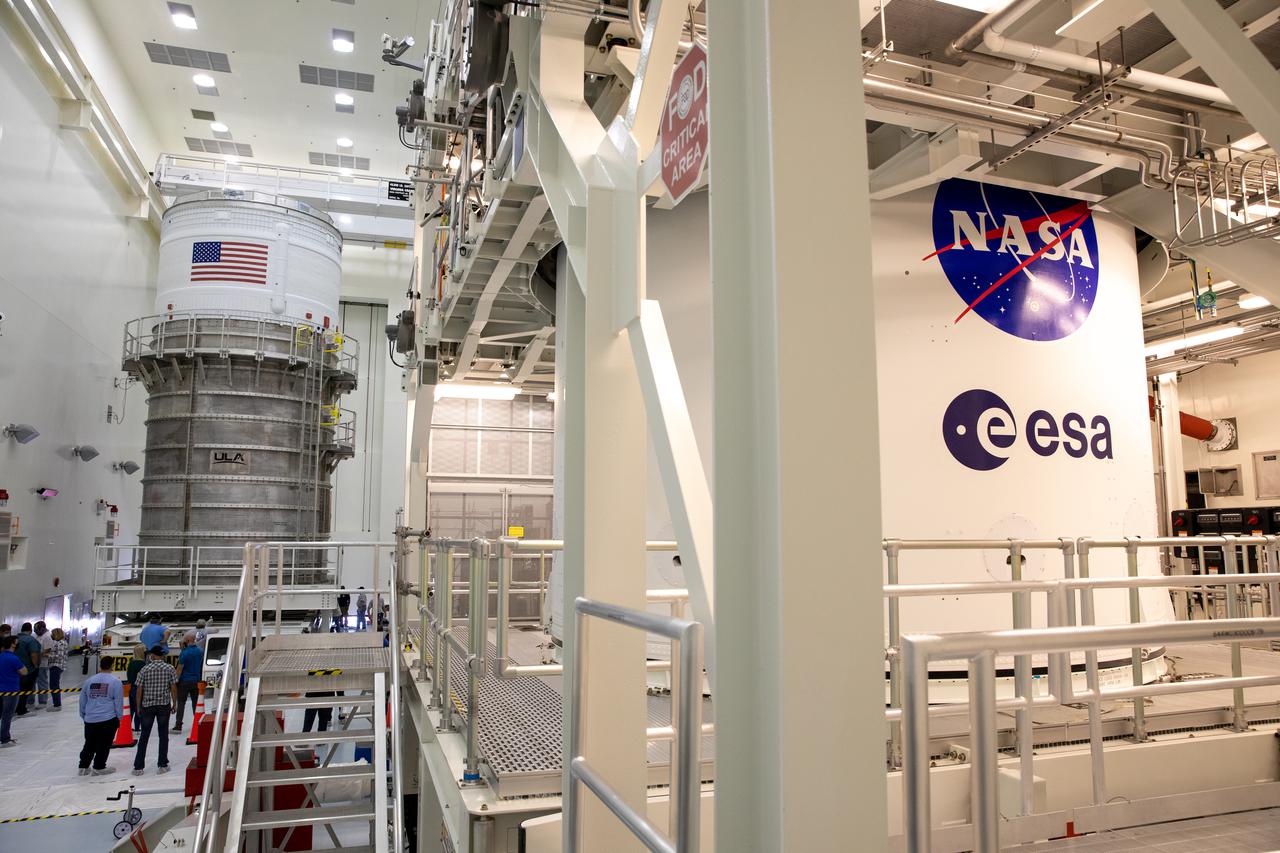
The Space Launch System (SLS) rocket’s interim cryogenic propulsion stage (ICPS) moved into the Multi-Payload Processing Facility February 18, 2021, at NASA’s Kennedy Space Center in Florida alongside one of its flight partners for the Artemis I mission, the Orion spacecraft. Both pieces of hardware will undergo fueling and servicing in the facility ahead of launch by teams from NASA’s Exploration Ground Systems and their primary contractor, Jacobs Technology. In view, at right, are the NASA insignia and ESA (European Space Agency) logos on the European-built service module. Artemis I will be an integrated flight test of the SLS rocket and Orion spacecraft ahead of the crewed flights to the Moon. Under the Artemis program, NASA will land the first woman and the next man on the lunar surface and establish a sustainable presence at the Moon to prepare for human missions to Mars.
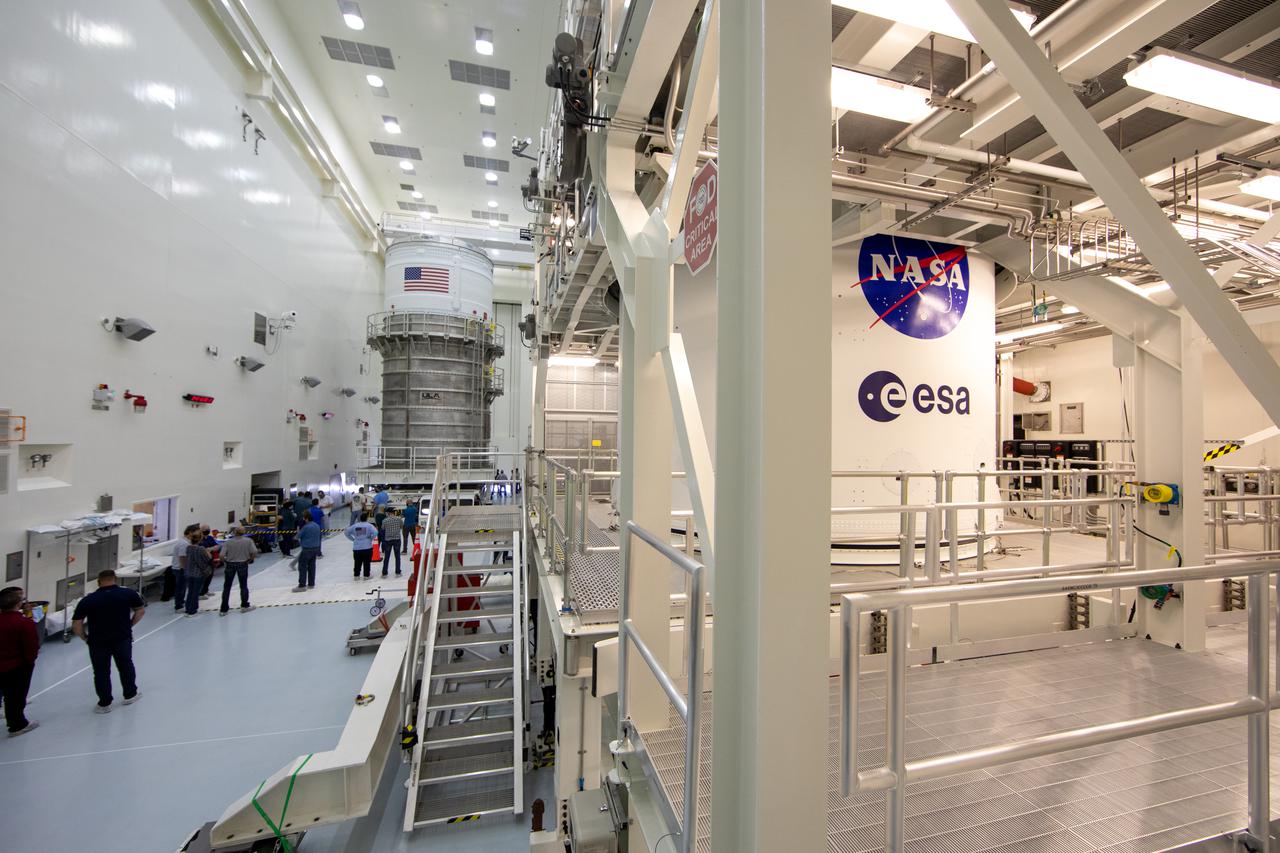
The Space Launch System (SLS) rocket’s interim cryogenic propulsion stage (ICPS) moved into the Multi-Payload Processing Facility February 18, 2021, at NASA’s Kennedy Space Center in Florida alongside one of its flight partners for the Artemis I mission, the Orion spacecraft. Both pieces of hardware will undergo fueling and servicing in the facility ahead of launch by teams from NASA’s Exploration Ground Systems and their primary contractor, Jacobs Technology. In view, at right, are the NASA insignia and ESA (European Space Agency) logos on the European-built service module. Artemis I will be an integrated flight test of the SLS rocket and Orion spacecraft ahead of the crewed flights to the Moon. Under the Artemis program, NASA will land the first woman and the next man on the lunar surface and establish a sustainable presence at the Moon to prepare for human missions to Mars.
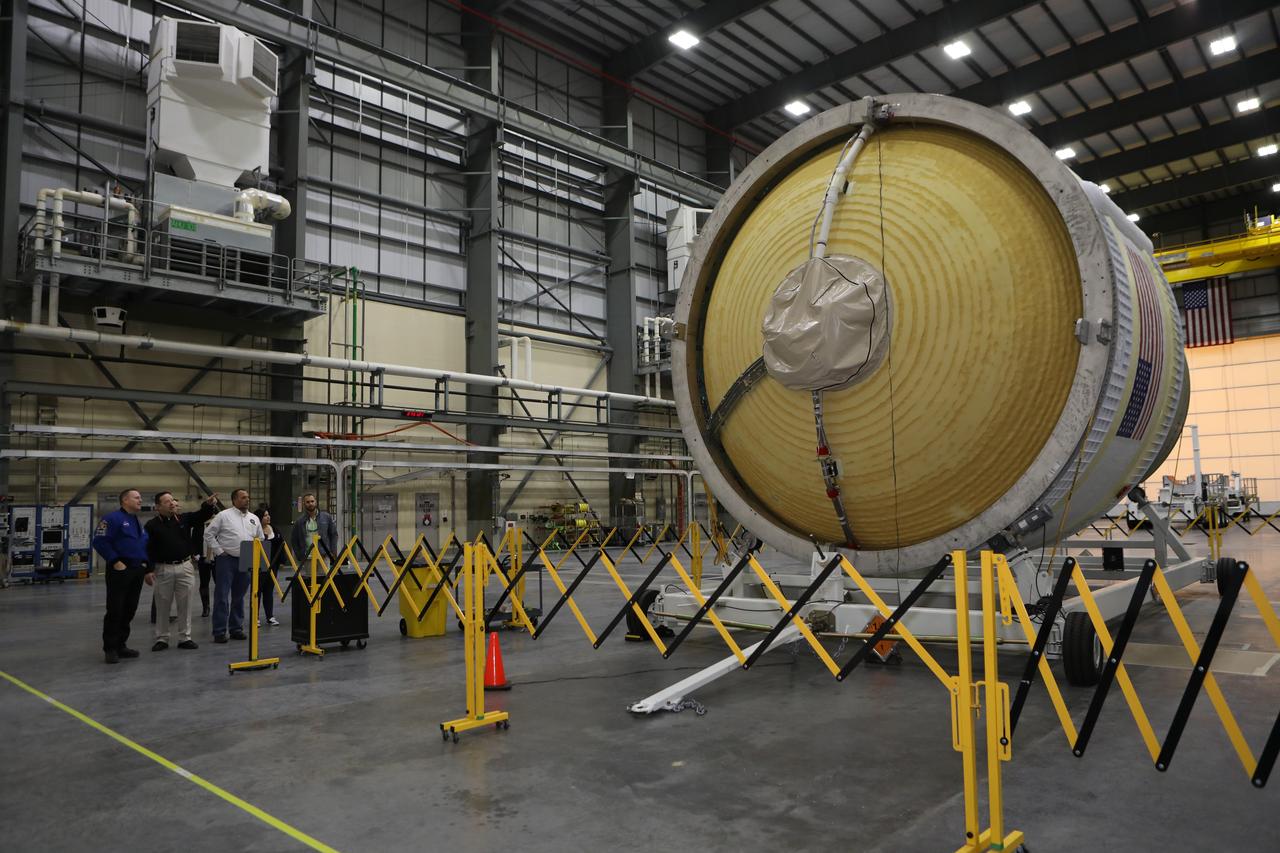
Inside the United Launch Alliance Horizontal Integration Facility at Cape Canaveral Air Force Station in Florida, NASA astronaut Barry "Butch" Wilmore, far left, views the first integrated piece of flight hardware for NASA's Space Launch System (SLS) rocket, the Interim Cryogenic Propulsion Stage (ICPS). The ICPS is the in-space stage that is located toward the top of the rocket, between the Launch Vehicle Stage Adapter and the Orion Spacecraft Adapter. It will provide some of the in-space propulsion during Orion's first flight test atop the SLS on Exploration Mission 1.
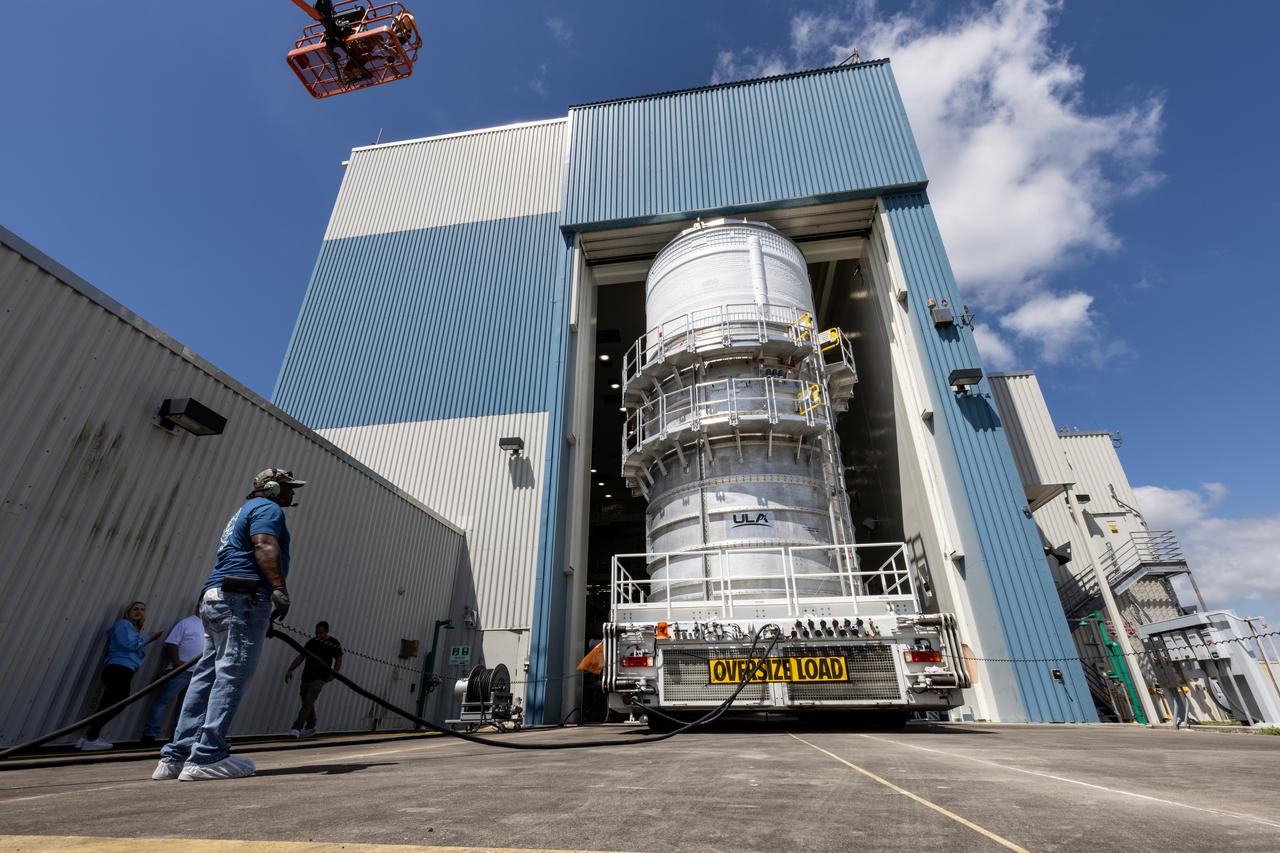
Teams with NASA’s Exploration Ground Systems Program transport the upper stage for the agency’s Artemis II SLS (Space Launch System) rocket from the Multi-Payload Processing Facility (MPPF) at NASA’s Kennedy Space Center in Florida to the spaceport’s Vehicle Assembly Building on Wednesday, April 16, 2025. Technicians fueled the SLS upper stage, known as the interim cryogenic propulsion stage, with hydrazine for its reaction control system at the MPPF and will now integrate the four-story propulsion system with SLS rocket elements atop mobile launcher 1.
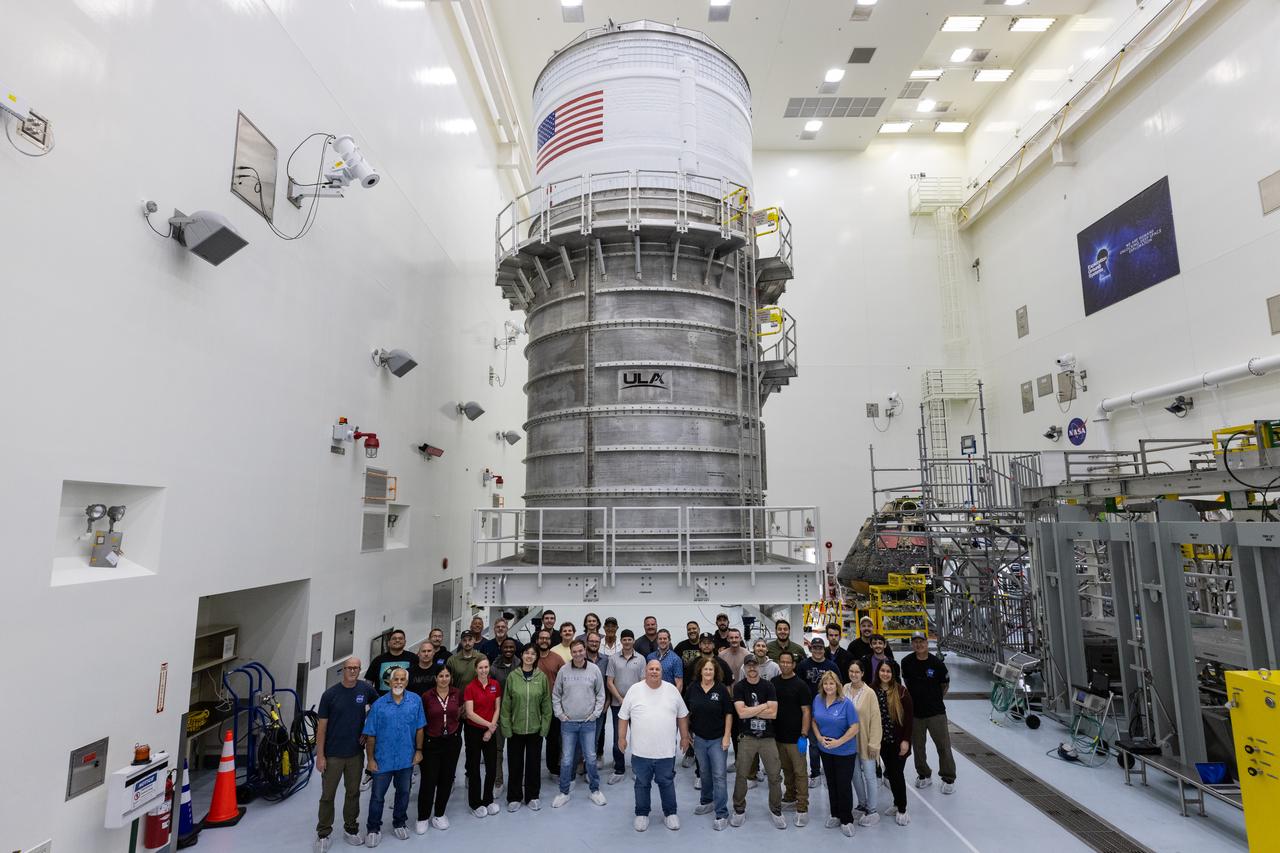
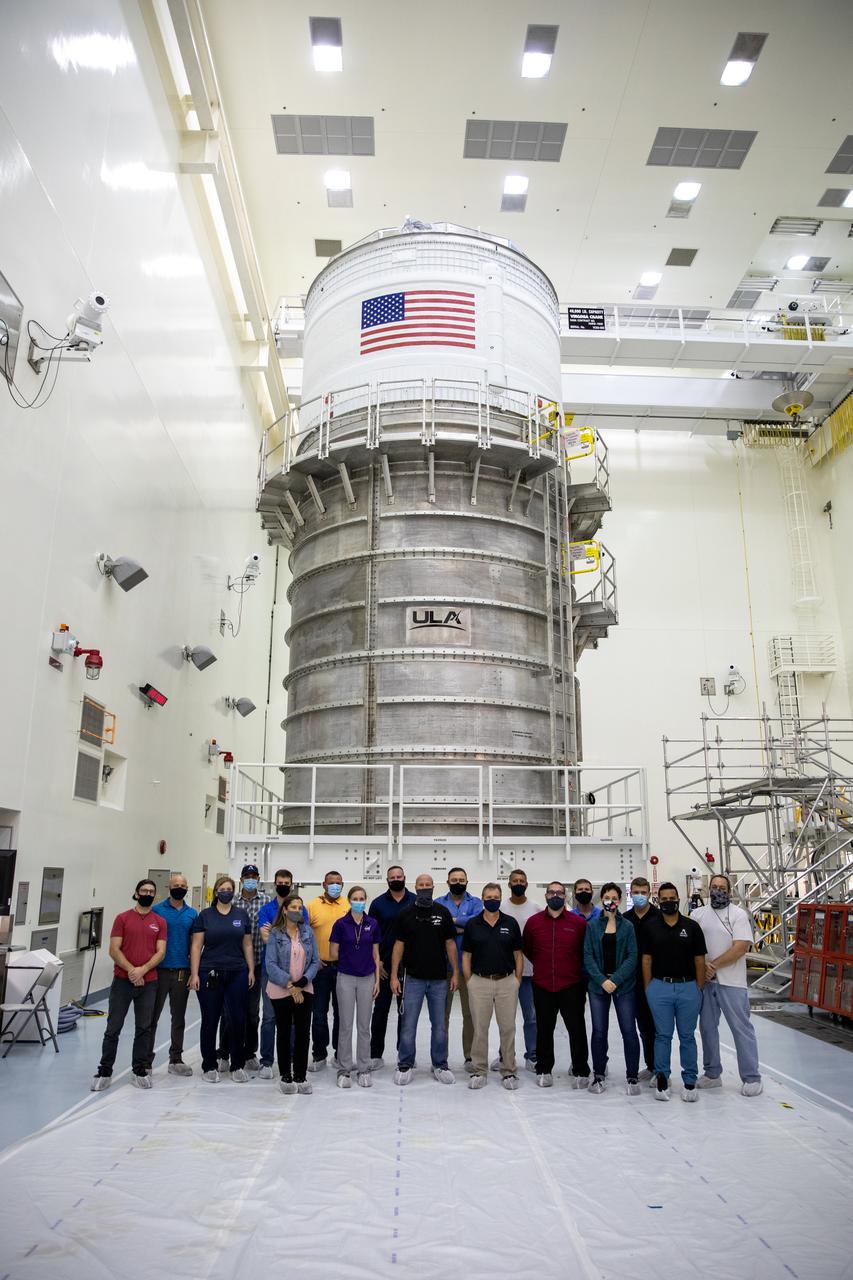
Teams with NASA’s Exploration Ground Systems Program pose for a photo in front of the upper stage for the agency’s Artemis II SLS (Space Launch System) rocket inside the Multi-Payload Processing Facility (MPPF) at NASA’s Kennedy Space Center in Florida on Wednesday, April 16, 2025. Visible in the background is also the Artemis I Orion crew module, now known as the Orion Environmental Test Article (ETA). Technicians fueled the SLS upper stage, known as the interim cryogenic propulsion stage, with hydrazine for its reaction control system at the MPPF before its transportation to the spaceport’s Vehicle Assembly Building and will now integrate the four-story propulsion system with SLS rocket elements atop mobile launcher 1.
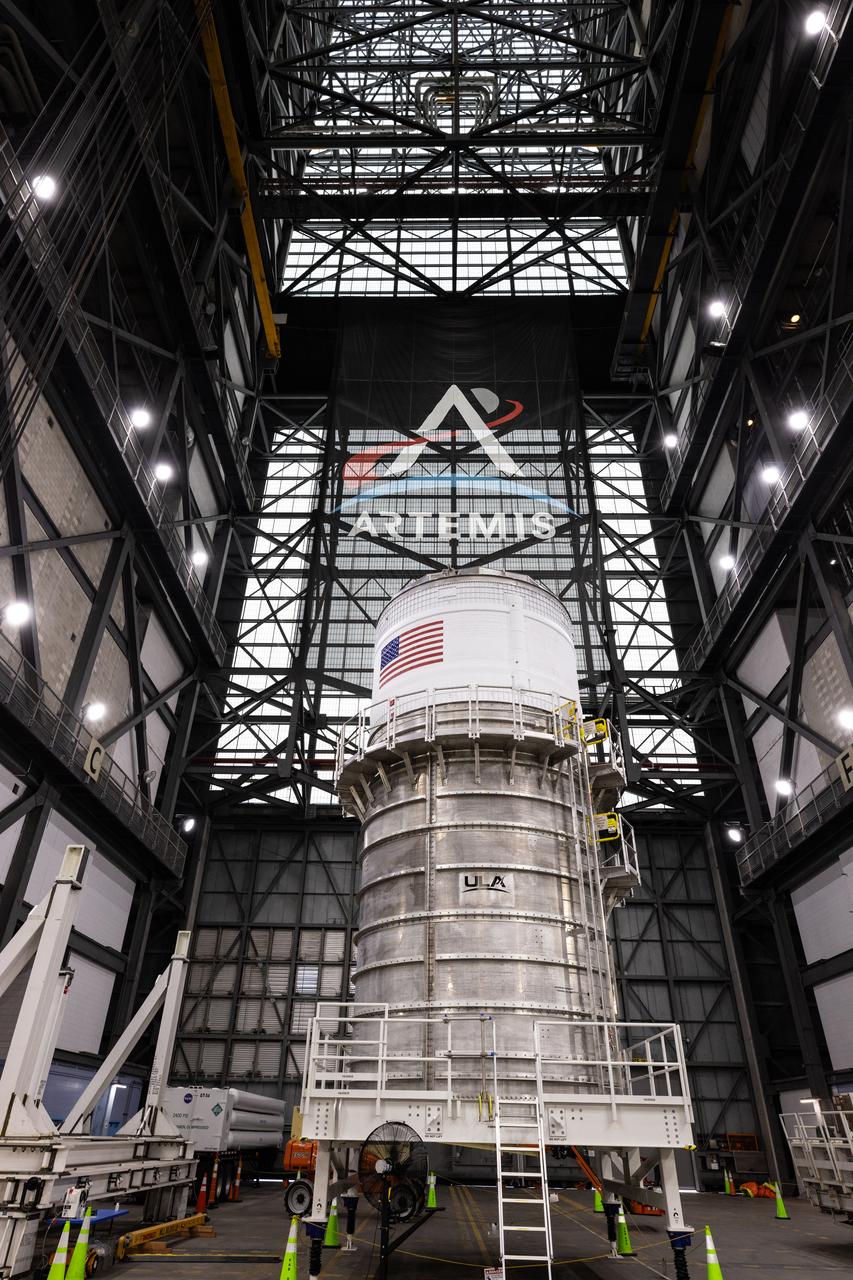
The upper stage for NASA’s Artemis II SLS (Space Launch System) rocket sits in the transfer aisle of the Vehicle Assembly Building at NASA’s Kennedy Space Center in Florida on Wednesday, April 16, 2025, after teams with the agency’s Exploration Ground Systems Program transported the four-story propulsion system from the spaceport’s Multi-Payload Processing Facility (MPPF). Technicians fueled the SLS upper stage, known as the interim cryogenic propulsion stage, with hydrazine for its reaction control system at the MPPF and will now integrate the four-story propulsion system with SLS rocket elements atop mobile launcher 1.
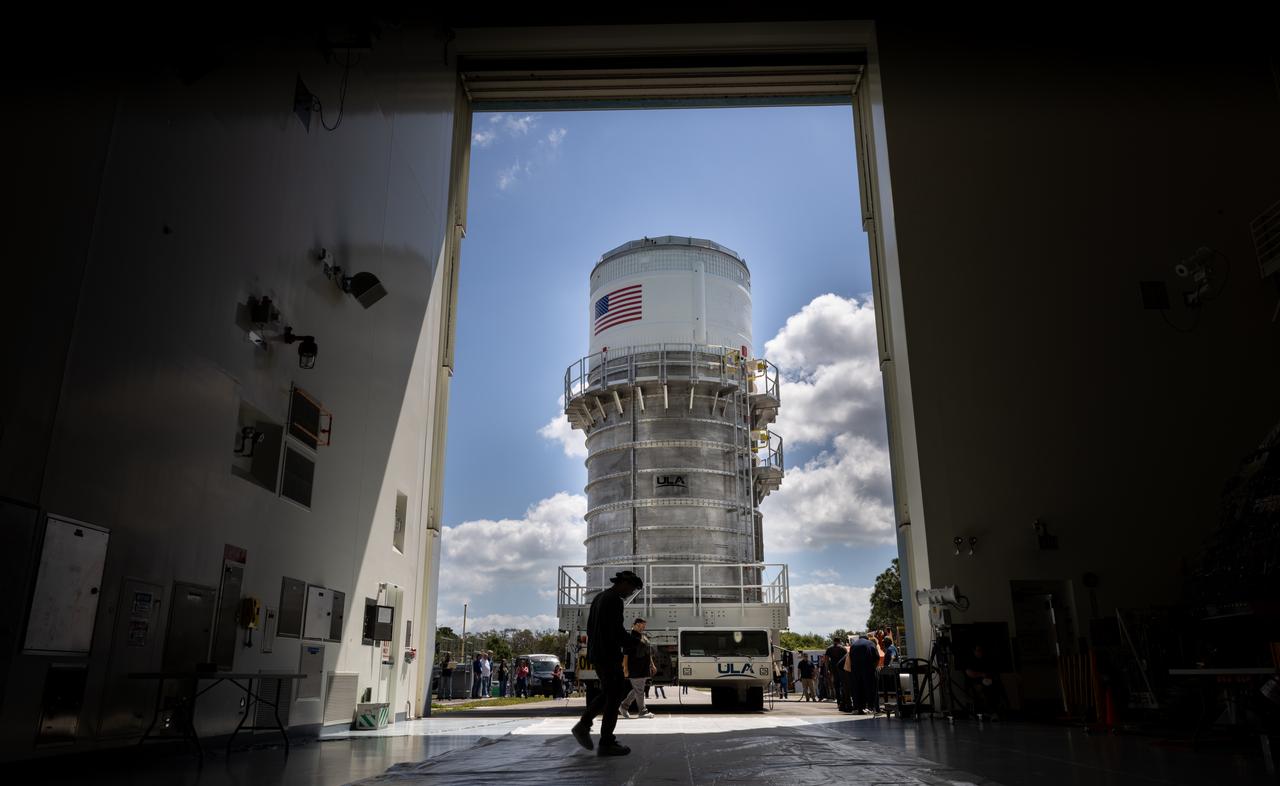
Teams with NASA’s Exploration Ground Systems Program transport the upper stage for the agency’s Artemis II SLS (Space Launch System) rocket from the Multi-Payload Processing Facility (MPPF) at NASA’s Kennedy Space Center in Florida to the spaceport’s Vehicle Assembly Building on Wednesday, April 16, 2025. Technicians fueled the SLS upper stage, known as the interim cryogenic propulsion stage, with hydrazine for its reaction control system at the MPPF and will now integrate the four-story propulsion system with SLS rocket elements atop mobile launcher 1.
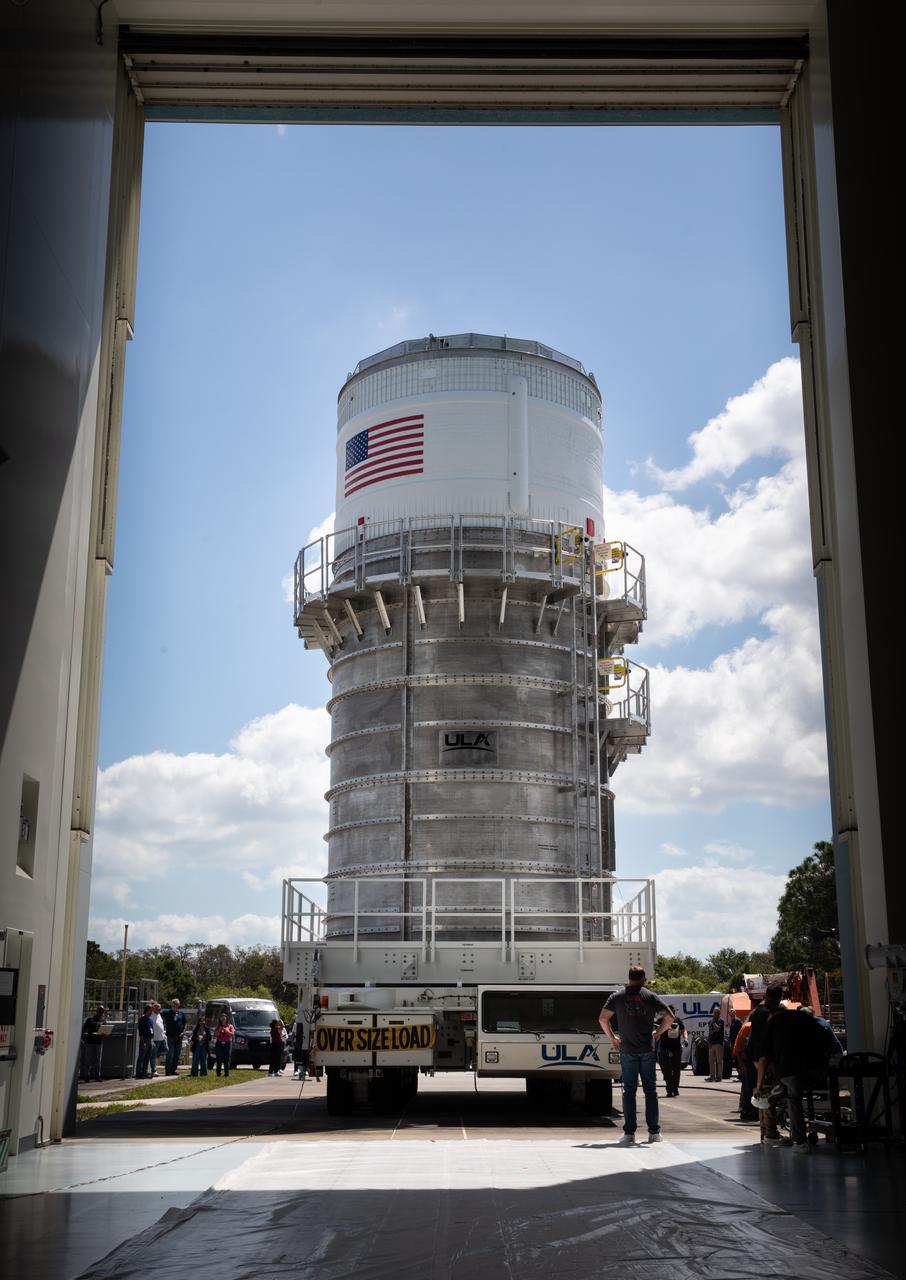
Teams with NASA’s Exploration Ground Systems Program transport the upper stage for the agency’s Artemis II SLS (Space Launch System) rocket from the Multi-Payload Processing Facility (MPPF) at NASA’s Kennedy Space Center in Florida to the spaceport’s Vehicle Assembly Building on Wednesday, April 16, 2025. Technicians fueled the SLS upper stage, known as the interim cryogenic propulsion stage, with hydrazine for its reaction control system at the MPPF and will now integrate the four-story propulsion system with SLS rocket elements atop mobile launcher 1.
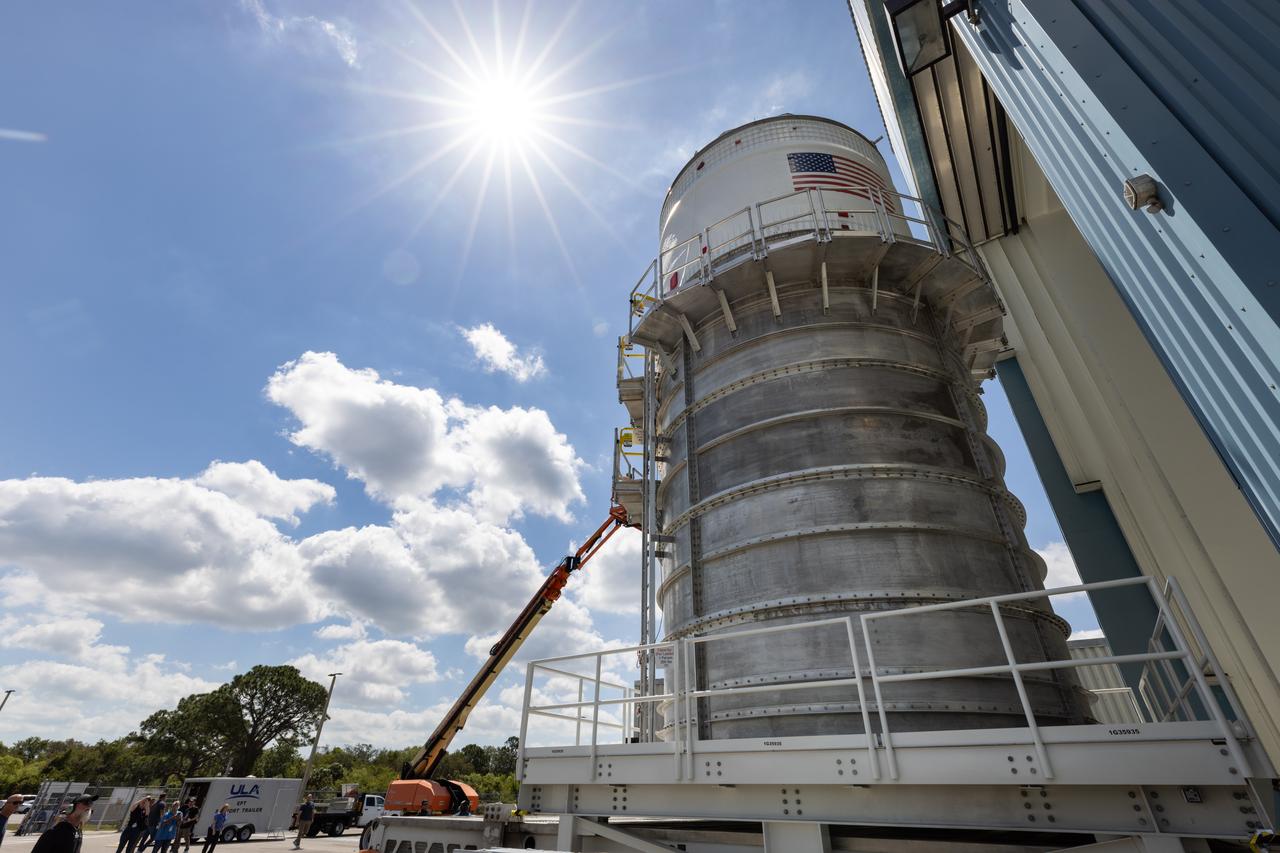
Teams with NASA’s Exploration Ground Systems Program transport the upper stage for the agency’s Artemis II SLS (Space Launch System) rocket from the Multi-Payload Processing Facility (MPPF) at NASA’s Kennedy Space Center in Florida to the spaceport’s Vehicle Assembly Building on Wednesday, April 16, 2025. Technicians fueled the SLS upper stage, known as the interim cryogenic propulsion stage, with hydrazine for its reaction control system at the MPPF and will now integrate the four-story propulsion system with SLS rocket elements atop mobile launcher 1.
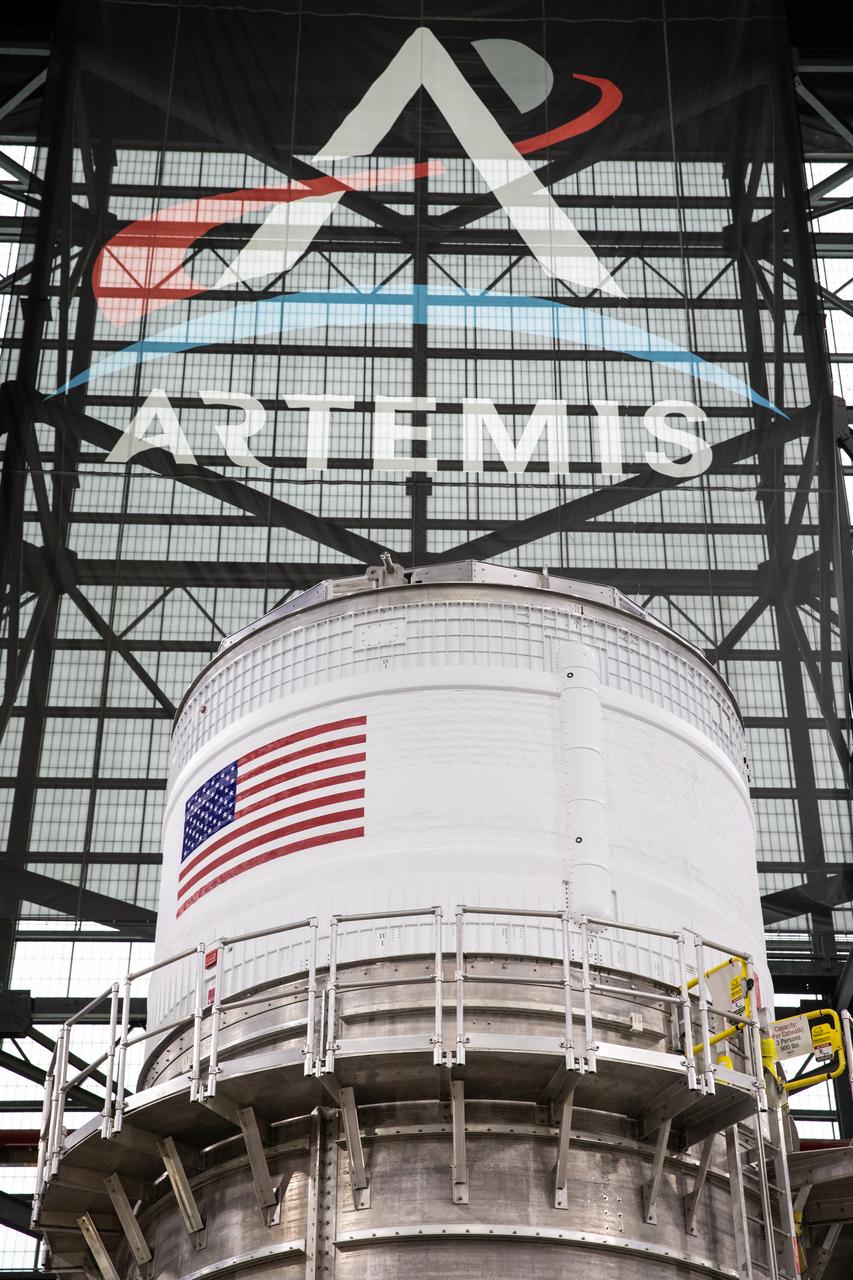
The upper stage for NASA’s Artemis II SLS (Space Launch System) rocket sits in the transfer aisle of the Vehicle Assembly Building at NASA’s Kennedy Space Center in Florida on Wednesday, April 16, 2025, after teams with the agency’s Exploration Ground Systems Program transported the four-story propulsion system from the spaceport’s Multi-Payload Processing Facility (MPPF). Technicians fueled the SLS upper stage, known as the interim cryogenic propulsion stage, with hydrazine for its reaction control system at the MPPF and will now integrate the four-story propulsion system with SLS rocket elements atop mobile launcher 1.
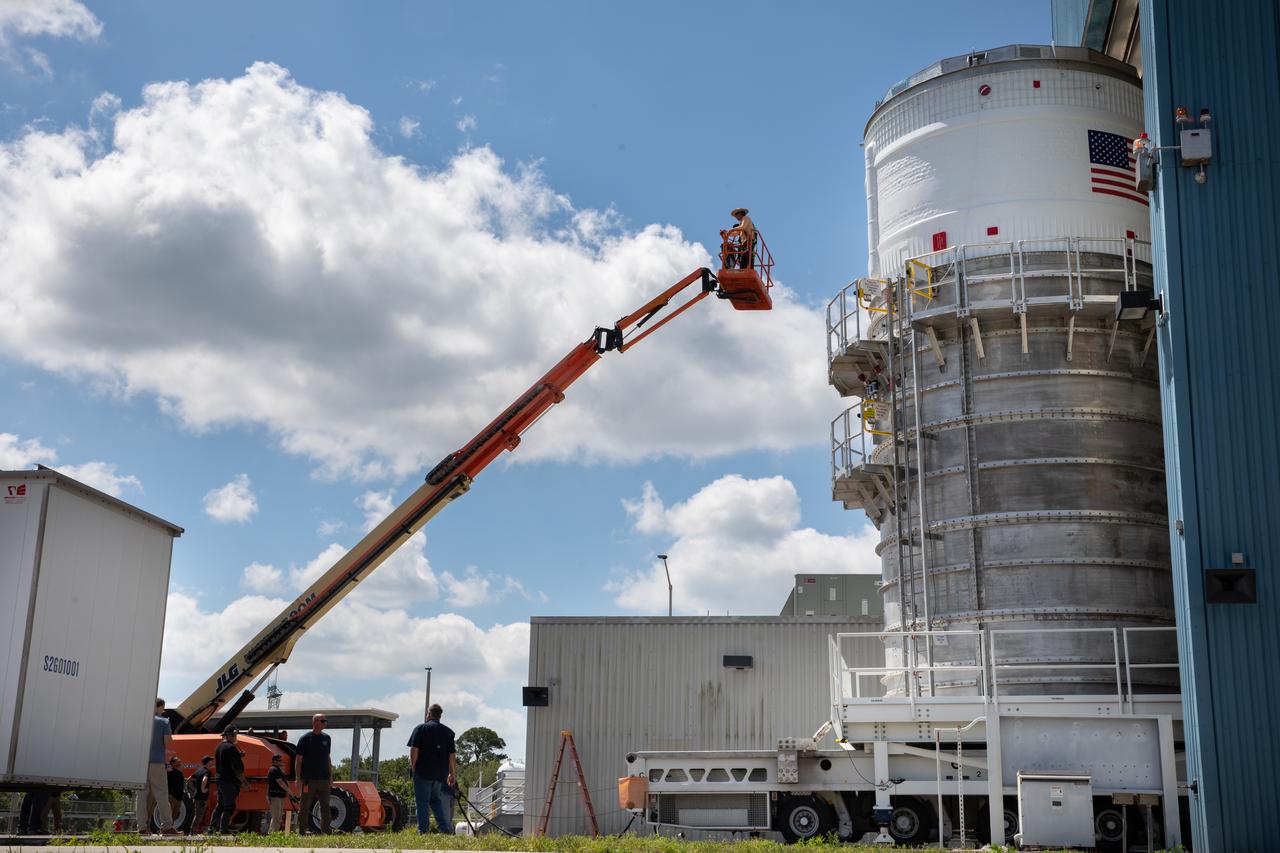
Teams with NASA’s Exploration Ground Systems Program transport the upper stage for the agency’s Artemis II SLS (Space Launch System) rocket from the Multi-Payload Processing Facility (MPPF) at NASA’s Kennedy Space Center in Florida to the spaceport’s Vehicle Assembly Building on Wednesday, April 16, 2025. Technicians fueled the SLS upper stage, known as the interim cryogenic propulsion stage, with hydrazine for its reaction control system at the MPPF and will now integrate the four-story propulsion system with SLS rocket elements atop mobile launcher 1.
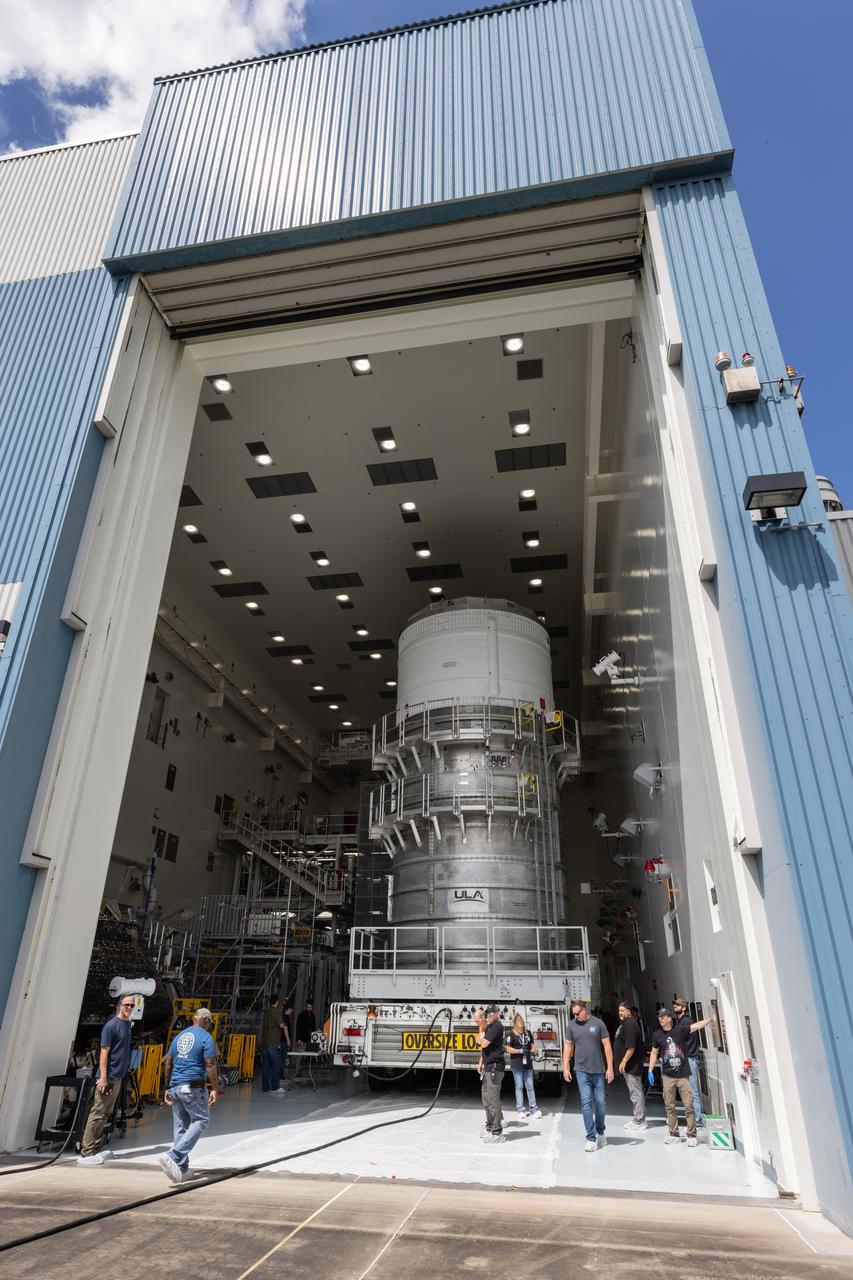
Teams with NASA’s Exploration Ground Systems Program transport the upper stage for the agency’s Artemis II SLS (Space Launch System) rocket from the Multi-Payload Processing Facility (MPPF) at NASA’s Kennedy Space Center in Florida to the spaceport’s Vehicle Assembly Building on Wednesday, April 16, 2025. Technicians fueled the SLS upper stage, known as the interim cryogenic propulsion stage, with hydrazine for its reaction control system at the MPPF and will now integrate the four-story propulsion system with SLS rocket elements atop mobile launcher 1.
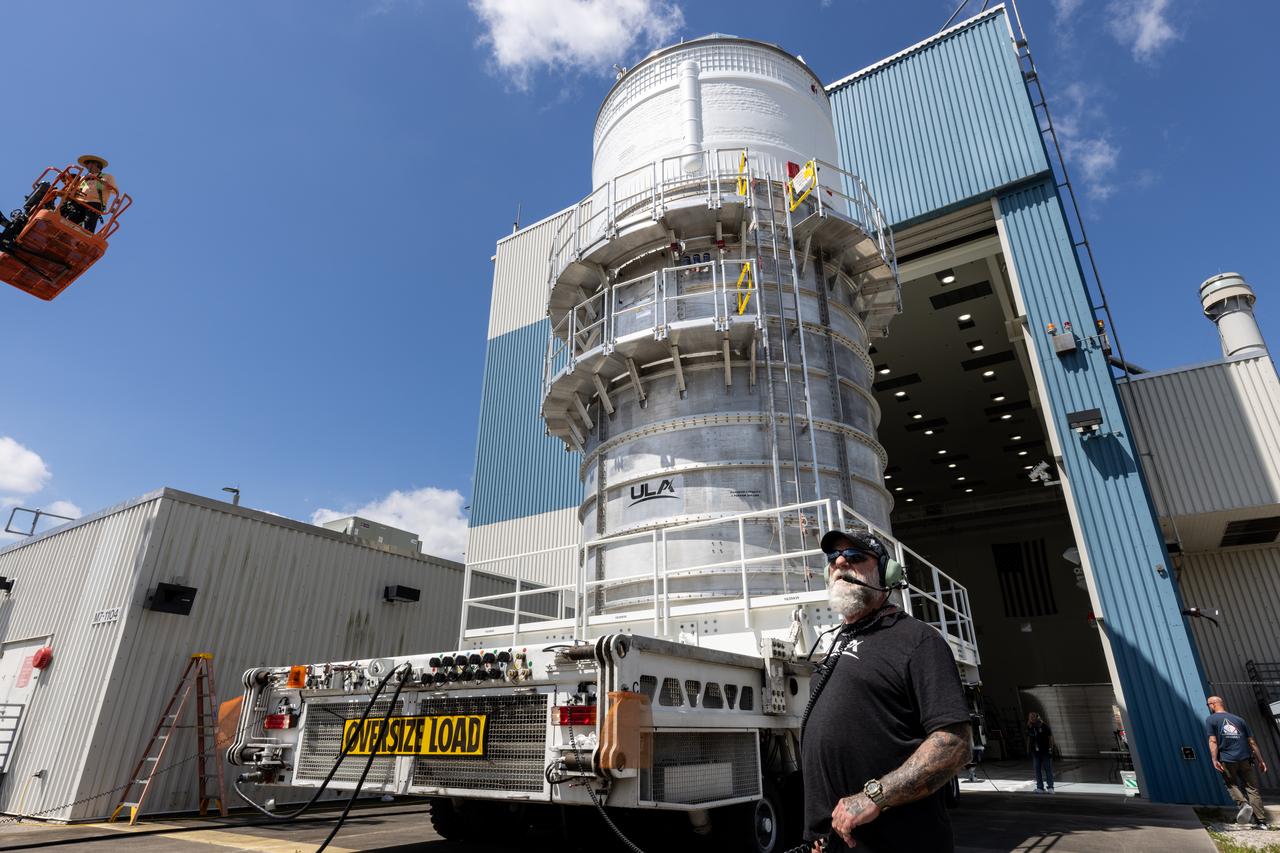
Teams with NASA’s Exploration Ground Systems Program transport the upper stage for the agency’s Artemis II SLS (Space Launch System) rocket from the Multi-Payload Processing Facility (MPPF) at NASA’s Kennedy Space Center in Florida to the spaceport’s Vehicle Assembly Building on Wednesday, April 16, 2025. Technicians fueled the SLS upper stage, known as the interim cryogenic propulsion stage, with hydrazine for its reaction control system at the MPPF and will now integrate the four-story propulsion system with SLS rocket elements atop mobile launcher 1.
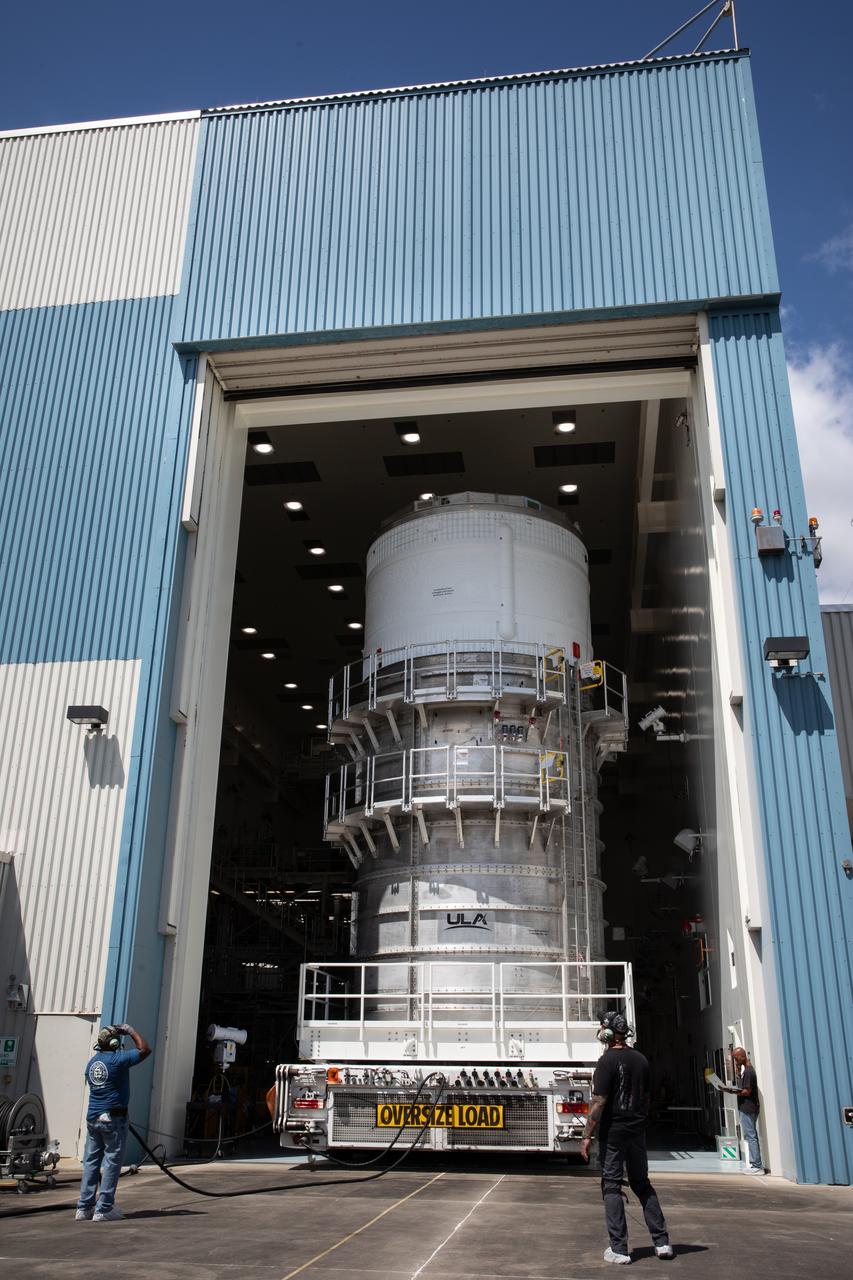
Teams with NASA’s Exploration Ground Systems Program transport the upper stage for the agency’s Artemis II SLS (Space Launch System) rocket from the Multi-Payload Processing Facility (MPPF) at NASA’s Kennedy Space Center in Florida to the spaceport’s Vehicle Assembly Building on Wednesday, April 16, 2025. Technicians fueled the SLS upper stage, known as the interim cryogenic propulsion stage, with hydrazine for its reaction control system at the MPPF and will now integrate the four-story propulsion system with SLS rocket elements atop mobile launcher 1.
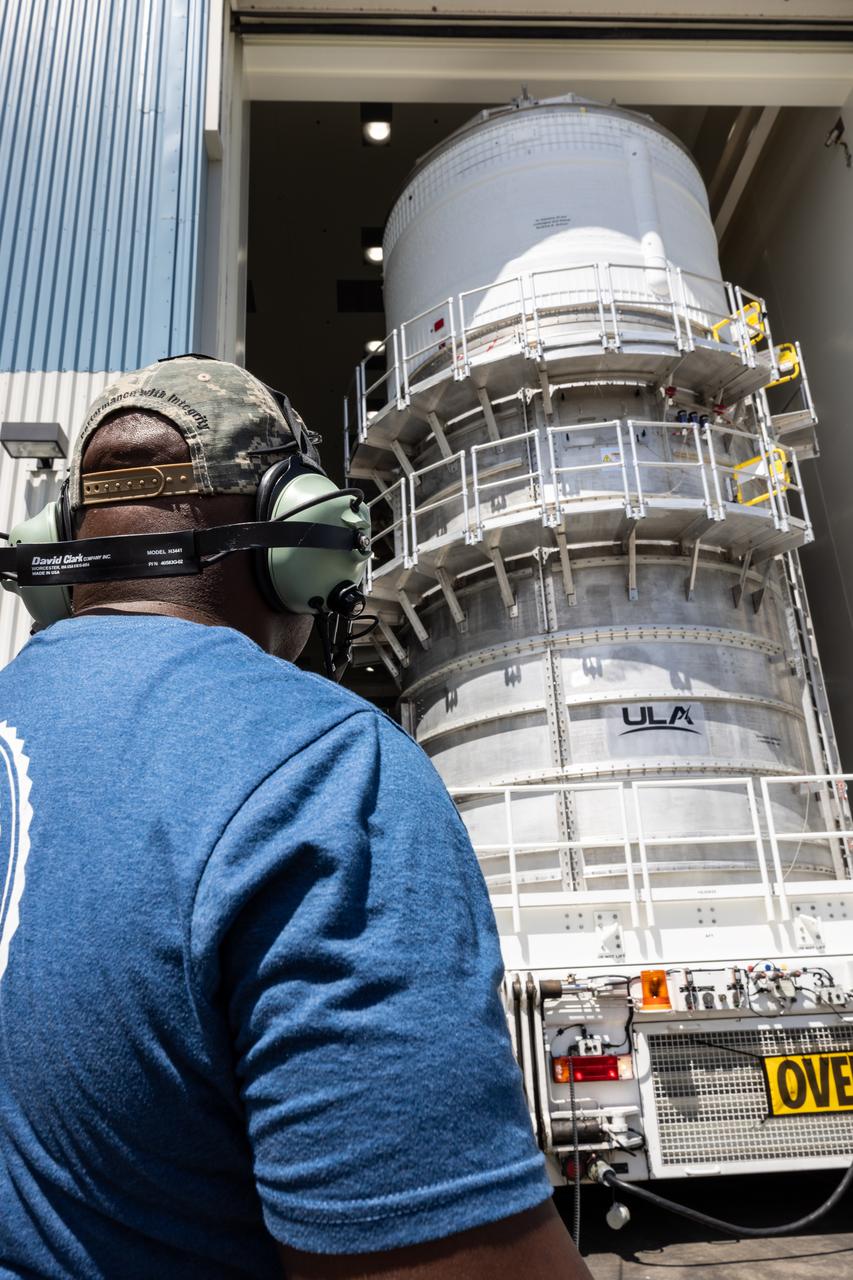
Teams with NASA’s Exploration Ground Systems Program transport the upper stage for the agency’s Artemis II SLS (Space Launch System) rocket from the Multi-Payload Processing Facility (MPPF) at NASA’s Kennedy Space Center in Florida to the spaceport’s Vehicle Assembly Building on Wednesday, April 16, 2025. Technicians fueled the SLS upper stage, known as the interim cryogenic propulsion stage, with hydrazine for its reaction control system at the MPPF and will now integrate the four-story propulsion system with SLS rocket elements atop mobile launcher 1.
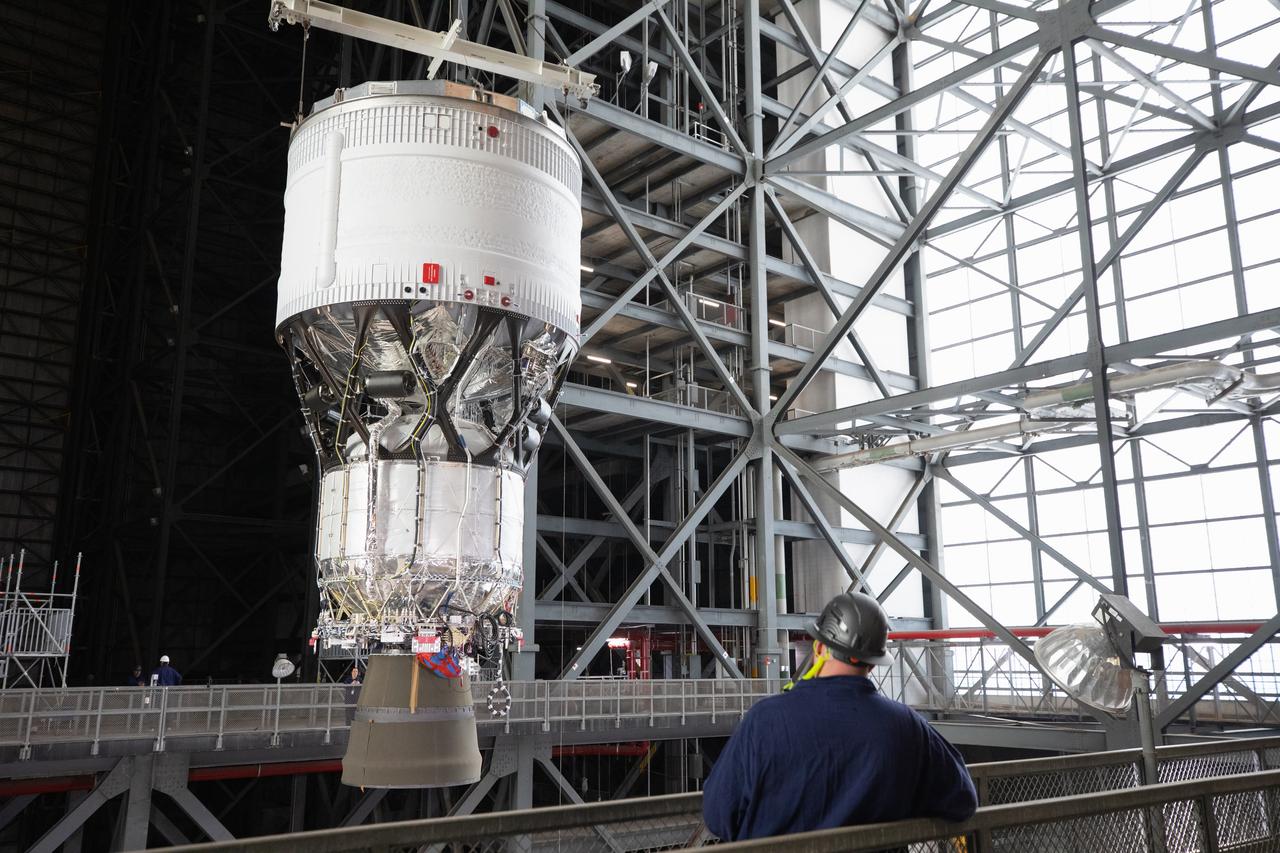
Teams with NASA’s Exploration Ground Systems Program begin integrating the interim cryogenic propulsion stage to the SLS (Space Launch System) launch vehicle stage adapter on Wednesday, April 30, 2025, inside the Vehicle Assembly Building at NASA’s Kennedy Space Center in Florida. The four-story propulsion system, built by Boeing and ULA (United Launch Alliance), is powered by an RL10 engine that will enable the Orion spacecraft to build up enough speed for the push toward the Moon during the Artemis II crewed test flight.
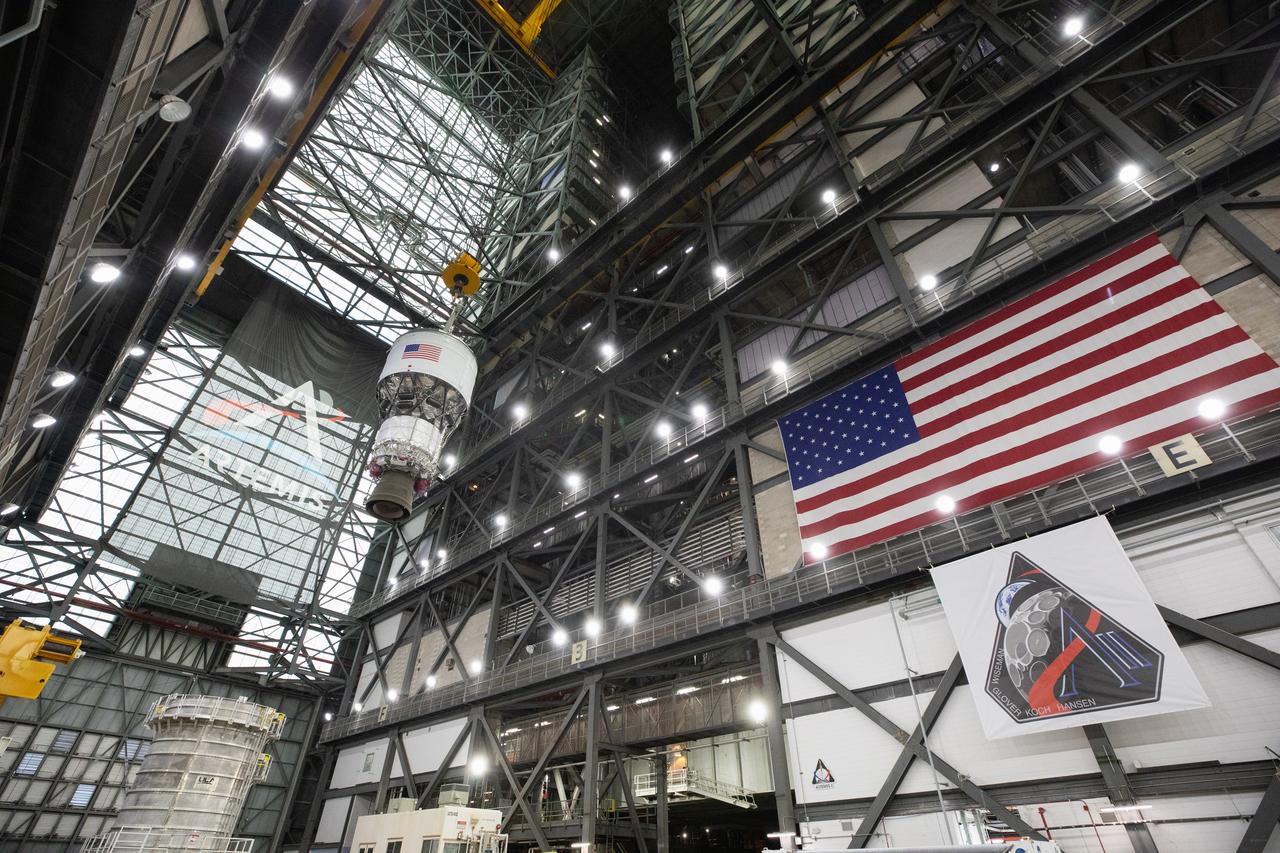
Teams with NASA’s Exploration Ground Systems Program begin integrating the interim cryogenic propulsion stage to the SLS (Space Launch System) launch vehicle stage adapter on Wednesday, April 30, 2025, inside the Vehicle Assembly Building at NASA’s Kennedy Space Center in Florida. The four-story propulsion system, built by Boeing and ULA (United Launch Alliance), is powered by an RL10 engine that will enable the Orion spacecraft to build up enough speed for the push toward the Moon during the Artemis II crewed test flight.
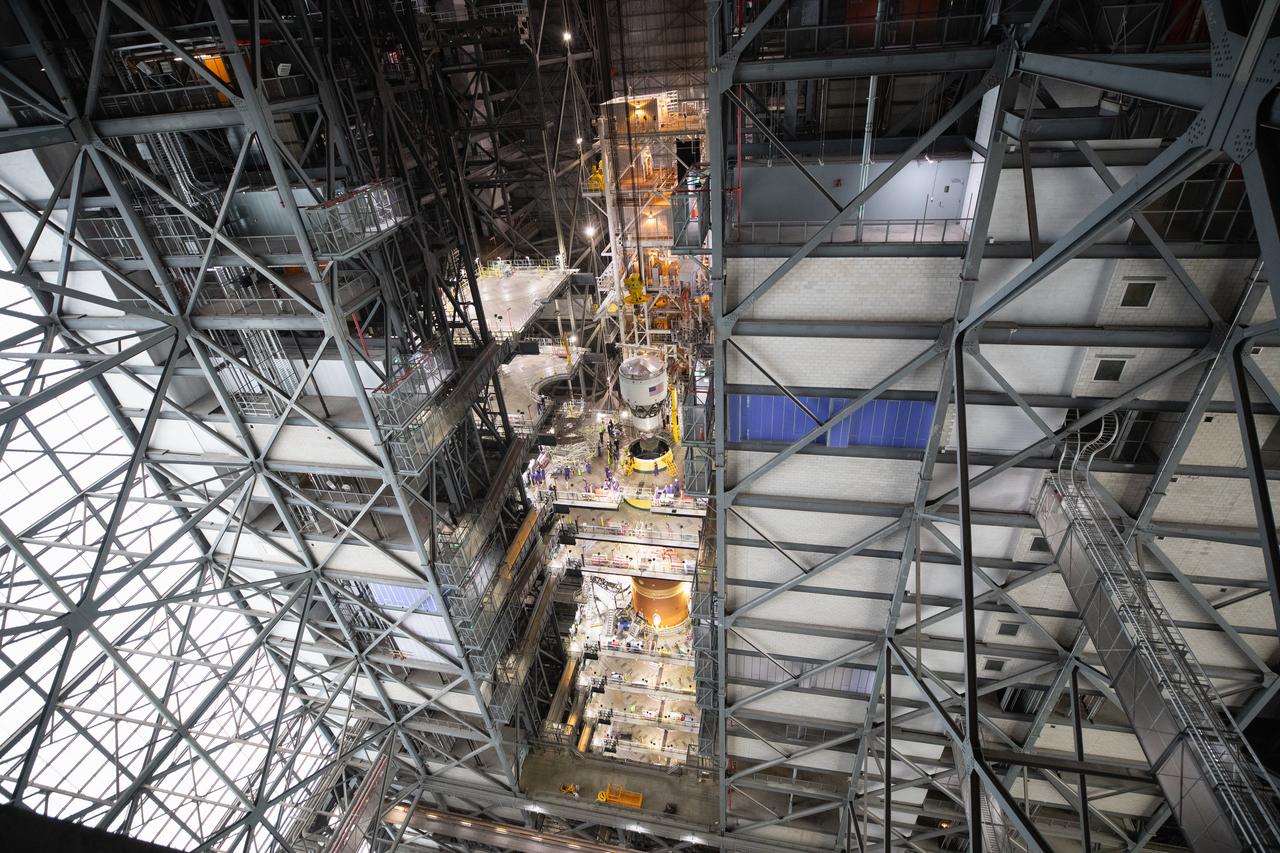
Teams with NASA’s Exploration Ground Systems Program begin integrating the interim cryogenic propulsion stage to the SLS (Space Launch System) launch vehicle stage adapter on Wednesday, April 30, 2025, inside the Vehicle Assembly Building at NASA’s Kennedy Space Center in Florida. The four-story propulsion system, built by Boeing and ULA (United Launch Alliance), is powered by an RL10 engine that will enable the Orion spacecraft to build up enough speed for the push toward the Moon during the Artemis II crewed test flight.
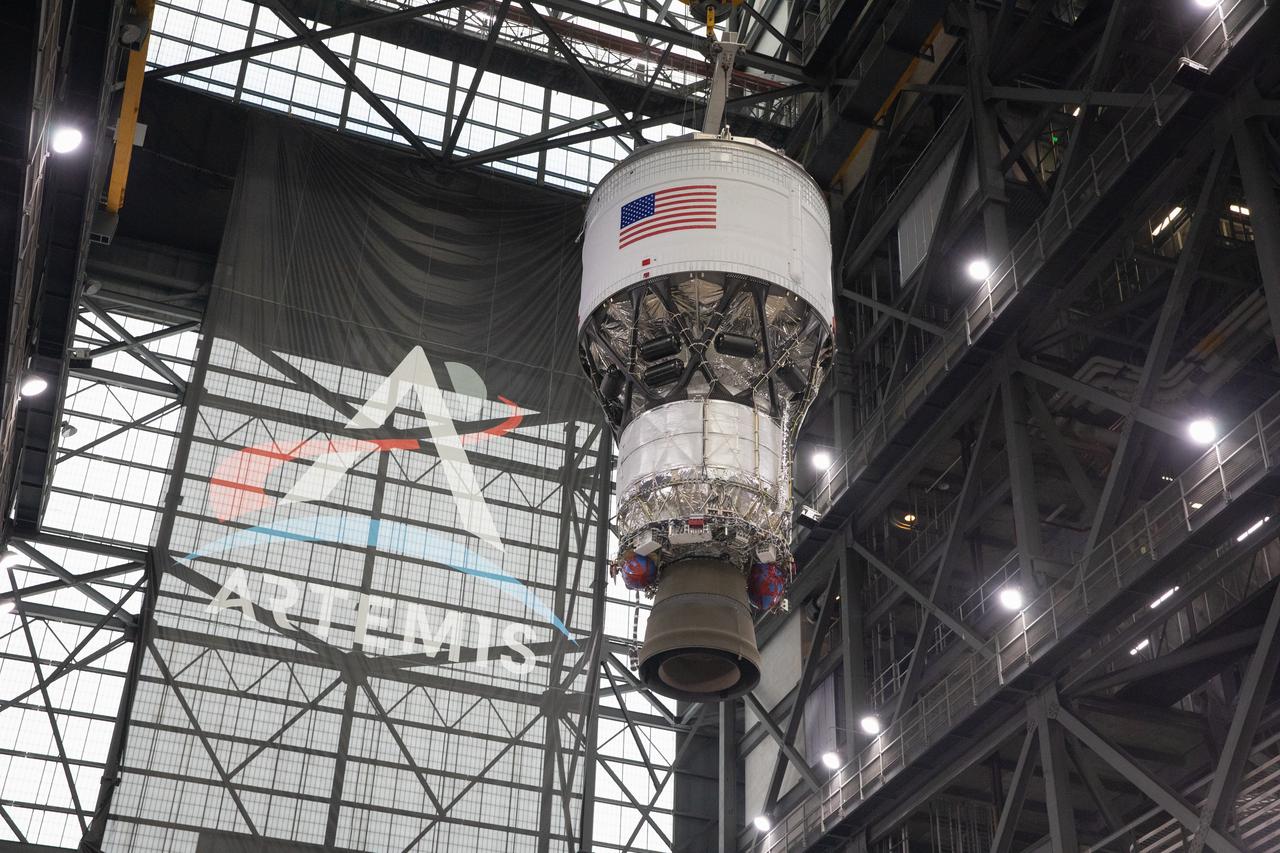
Teams with NASA’s Exploration Ground Systems Program begin integrating the interim cryogenic propulsion stage to the SLS (Space Launch System) launch vehicle stage adapter on Wednesday, April 30, 2025, inside the Vehicle Assembly Building at NASA’s Kennedy Space Center in Florida. The four-story propulsion system, built by Boeing and ULA (United Launch Alliance), is powered by an RL10 engine that will enable the Orion spacecraft to build up enough speed for the push toward the Moon during the Artemis II crewed test flight.
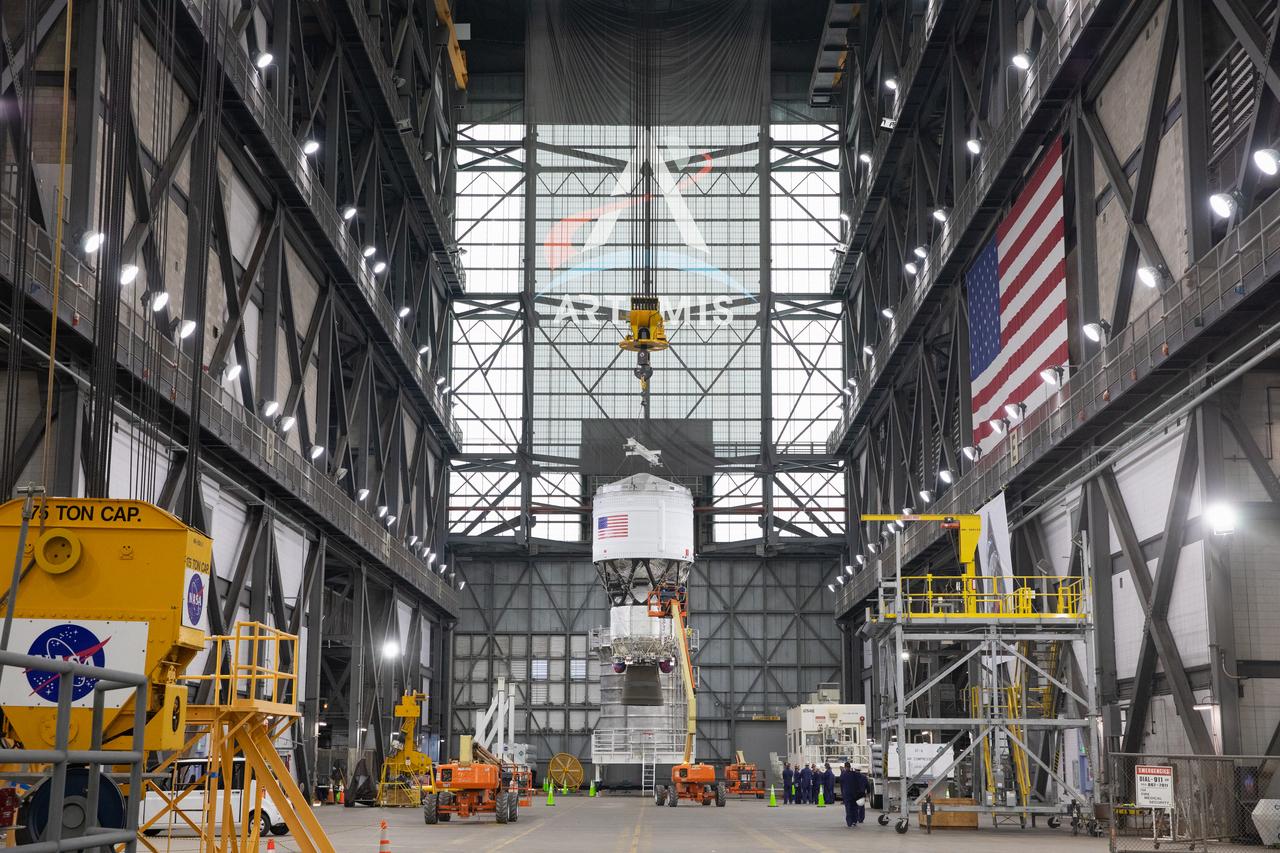
Teams with NASA’s Exploration Ground Systems Program begin integrating the interim cryogenic propulsion stage to the SLS (Space Launch System) launch vehicle stage adapter on Wednesday, April 30, 2025, inside the Vehicle Assembly Building at NASA’s Kennedy Space Center in Florida. The four-story propulsion system, built by Boeing and ULA (United Launch Alliance), is powered by an RL10 engine that will enable the Orion spacecraft to build up enough speed for the push toward the Moon during the Artemis II crewed test flight.
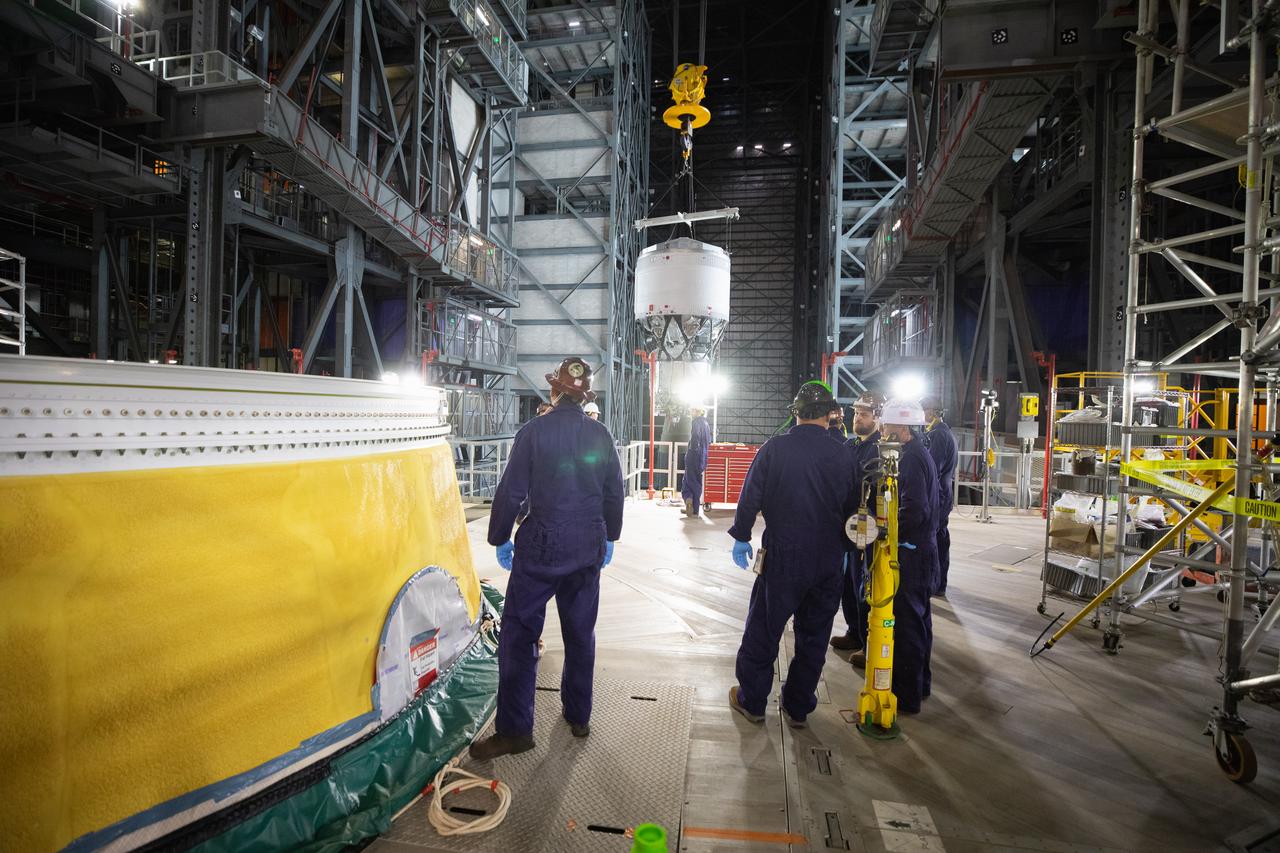
Teams with NASA’s Exploration Ground Systems Program begin integrating the interim cryogenic propulsion stage to the SLS (Space Launch System) launch vehicle stage adapter on Wednesday, April 30, 2025, inside the Vehicle Assembly Building at NASA’s Kennedy Space Center in Florida. The four-story propulsion system, built by Boeing and ULA (United Launch Alliance), is powered by an RL10 engine that will enable the Orion spacecraft to build up enough speed for the push toward the Moon during the Artemis II crewed test flight.
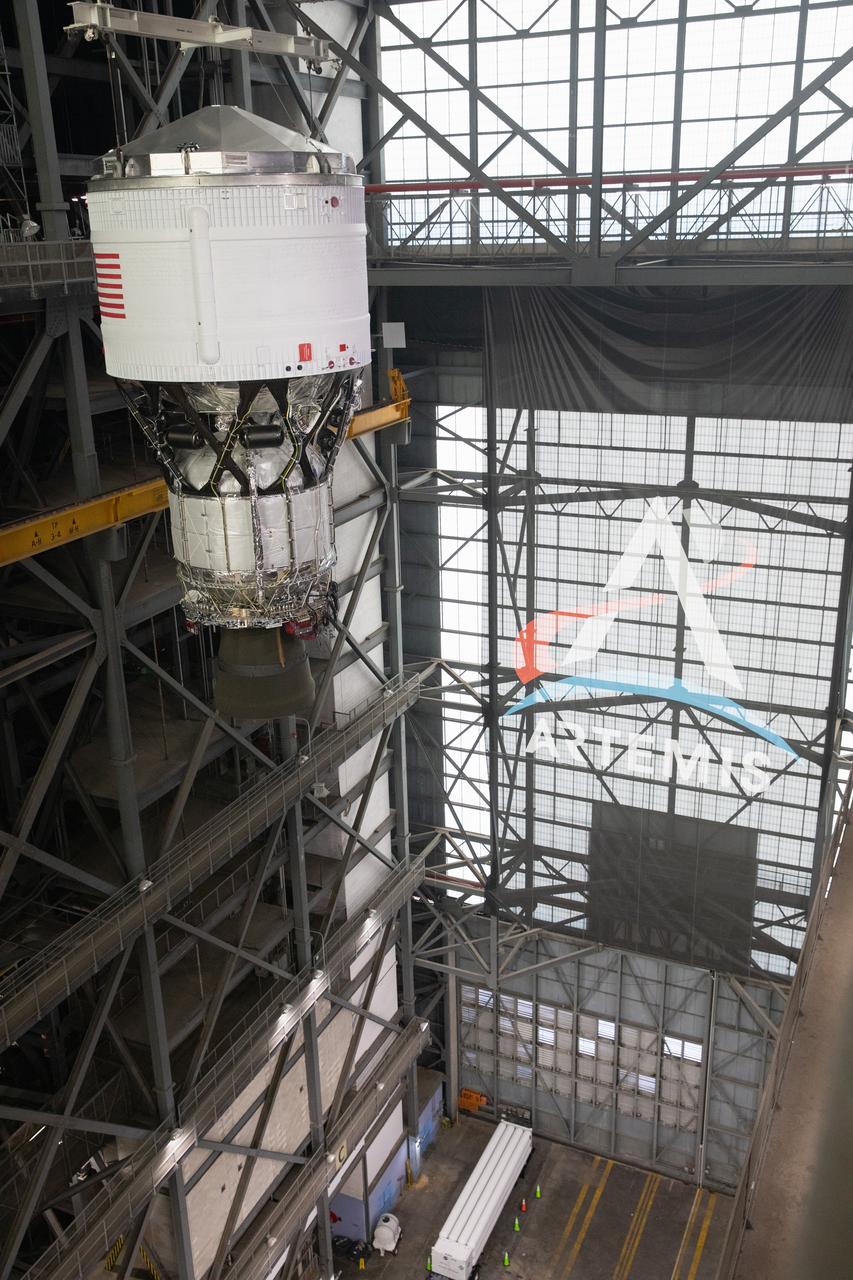
Teams with NASA’s Exploration Ground Systems Program begin integrating the interim cryogenic propulsion stage to the SLS (Space Launch System) launch vehicle stage adapter on Wednesday, April 30, 2025, inside the Vehicle Assembly Building at NASA’s Kennedy Space Center in Florida. The four-story propulsion system, built by Boeing and ULA (United Launch Alliance), is powered by an RL10 engine that will enable the Orion spacecraft to build up enough speed for the push toward the Moon during the Artemis II crewed test flight.
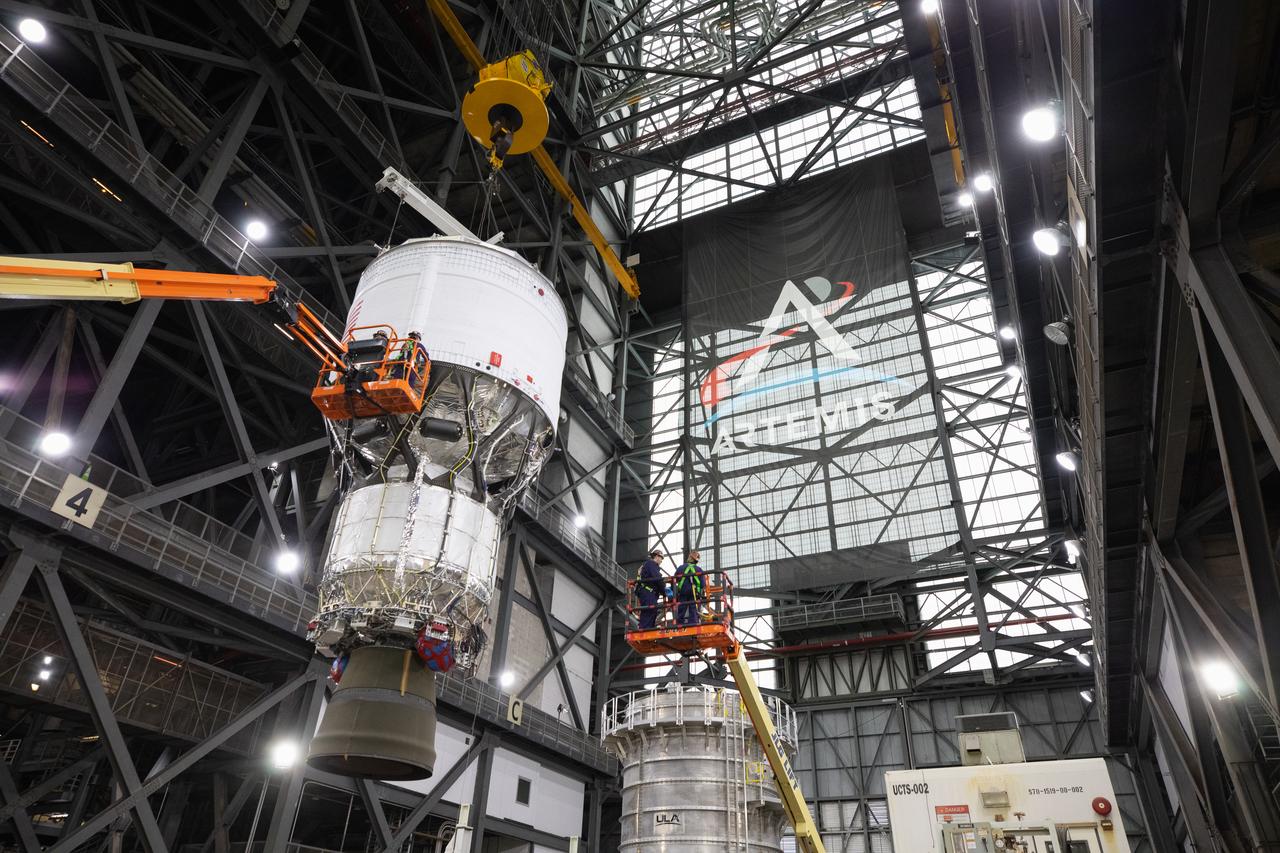
Teams with NASA’s Exploration Ground Systems Program begin integrating the interim cryogenic propulsion stage to the SLS (Space Launch System) launch vehicle stage adapter on Wednesday, April 30, 2025, inside the Vehicle Assembly Building at NASA’s Kennedy Space Center in Florida. The four-story propulsion system, built by Boeing and ULA (United Launch Alliance), is powered by an RL10 engine that will enable the Orion spacecraft to build up enough speed for the push toward the Moon during the Artemis II crewed test flight.
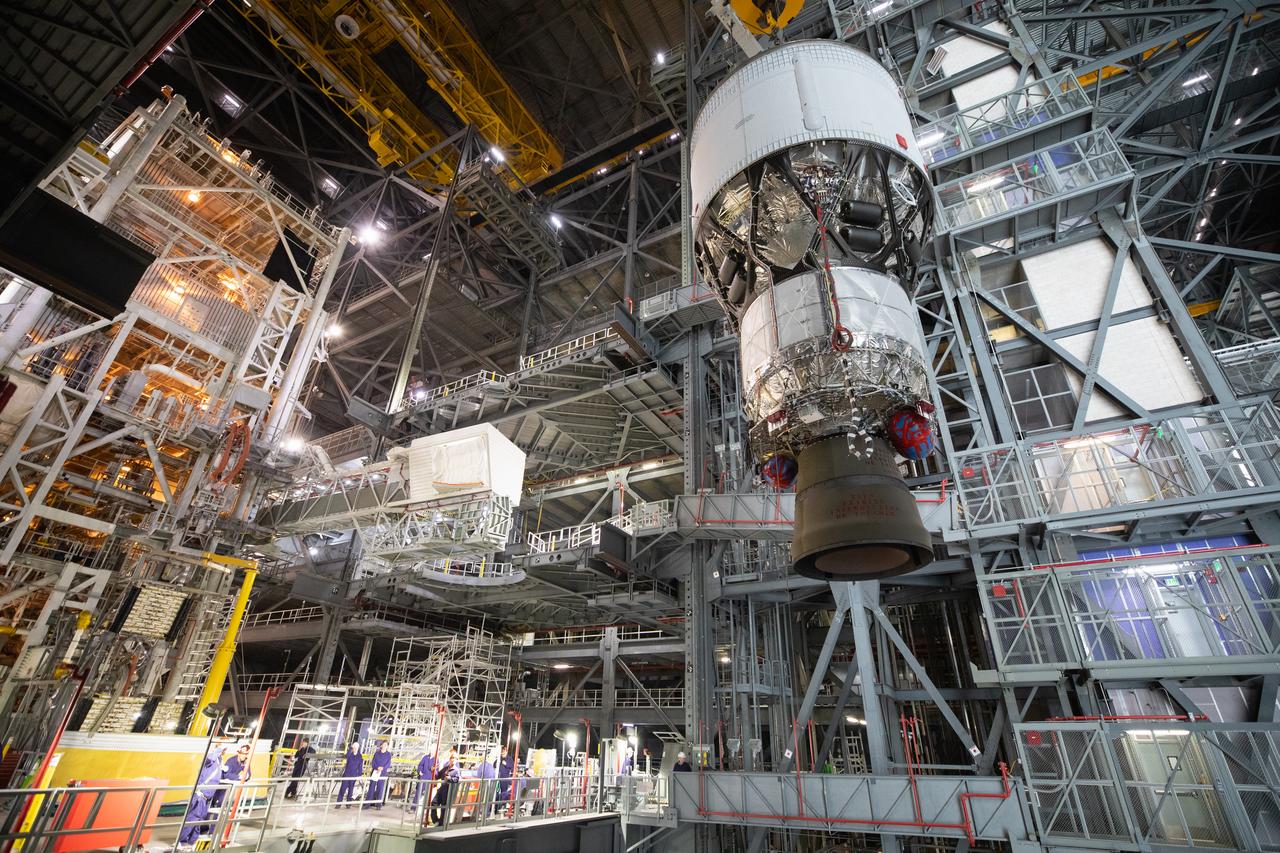
Teams with NASA’s Exploration Ground Systems Program begin integrating the interim cryogenic propulsion stage to the SLS (Space Launch System) launch vehicle stage adapter on Wednesday, April 30, 2025, inside the Vehicle Assembly Building at NASA’s Kennedy Space Center in Florida. The four-story propulsion system, built by Boeing and ULA (United Launch Alliance), is powered by an RL10 engine that will enable the Orion spacecraft to build up enough speed for the push toward the Moon during the Artemis II crewed test flight.
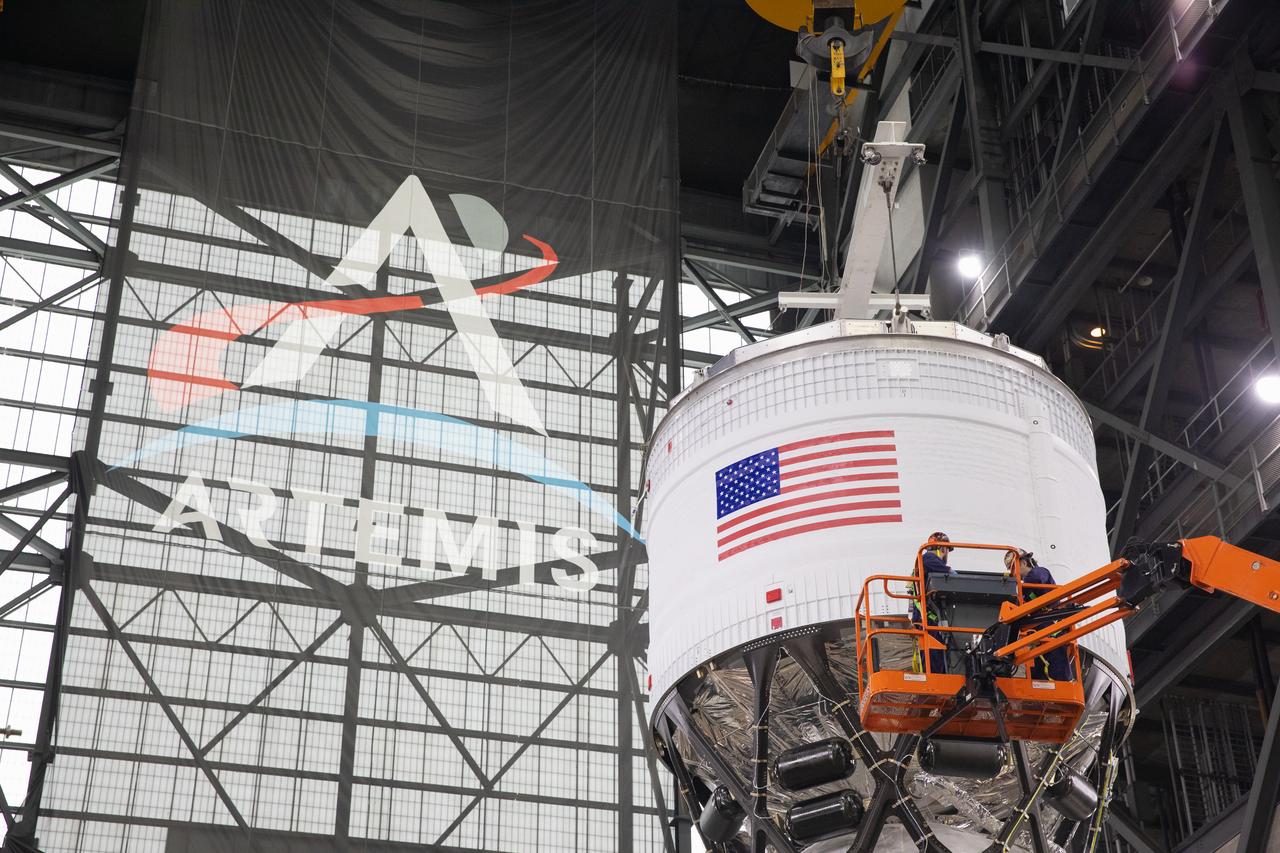
Teams with NASA’s Exploration Ground Systems Program begin integrating the interim cryogenic propulsion stage to the SLS (Space Launch System) launch vehicle stage adapter on Wednesday, April 30, 2025, inside the Vehicle Assembly Building at NASA’s Kennedy Space Center in Florida. The four-story propulsion system, built by Boeing and ULA (United Launch Alliance), is powered by an RL10 engine that will enable the Orion spacecraft to build up enough speed for the push toward the Moon during the Artemis II crewed test flight.