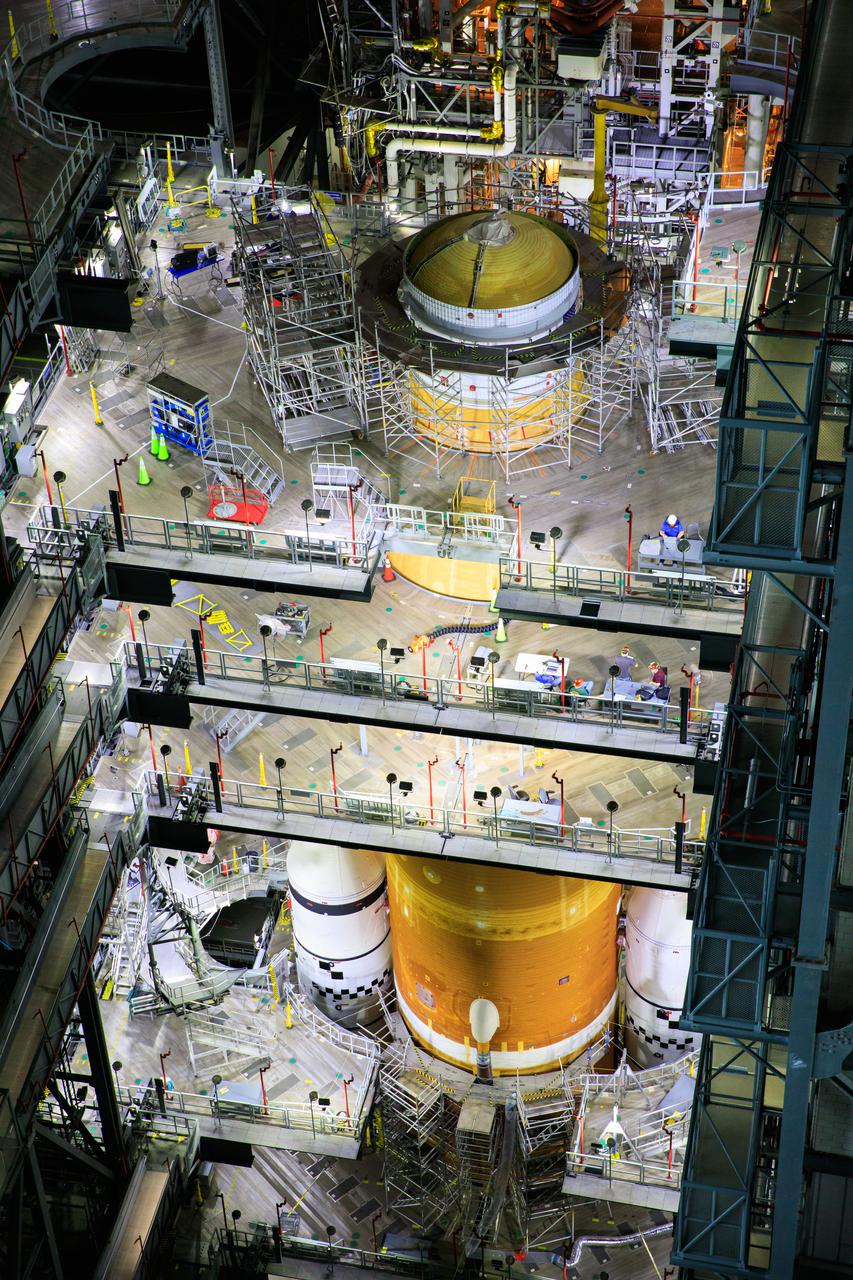
Teams with NASA’s Exploration Ground Systems and contractor Jacobs integrated the interim cryogenic propulsion stage (ICPS) for NASA’s Space Launch System (SLS) rocket with the launch vehicle stage adapter (LVSA) atop the massive SLS core stage on the mobile launcher inside the agency’s Vehicle Assembly Building (VAB) at NASA’s Kennedy Space Center in Florida on July 5, 2021. The ICPS’s RL 10 engine is housed inside the launch vehicle stage adapter, which will protect the engine during launch. The ICPS is a liquid oxygen and liquid hydrogen-based system that will give the Orion spacecraft the big in-space push needed to fly tens of thousands of miles beyond the Moon. The next component to be stacked on top of ICPS will be the Orion stage adapter, which will connect the ICPS with the spacecraft. Through Artemis, NASA will send the first woman and the first person of color to the lunar surface, as well as establish a sustainable presence on and around the Moon. As the first in an increasingly complex set of missions, Artemis I will test SLS and Orion as an integrated system prior to crewed flights to the Moon.
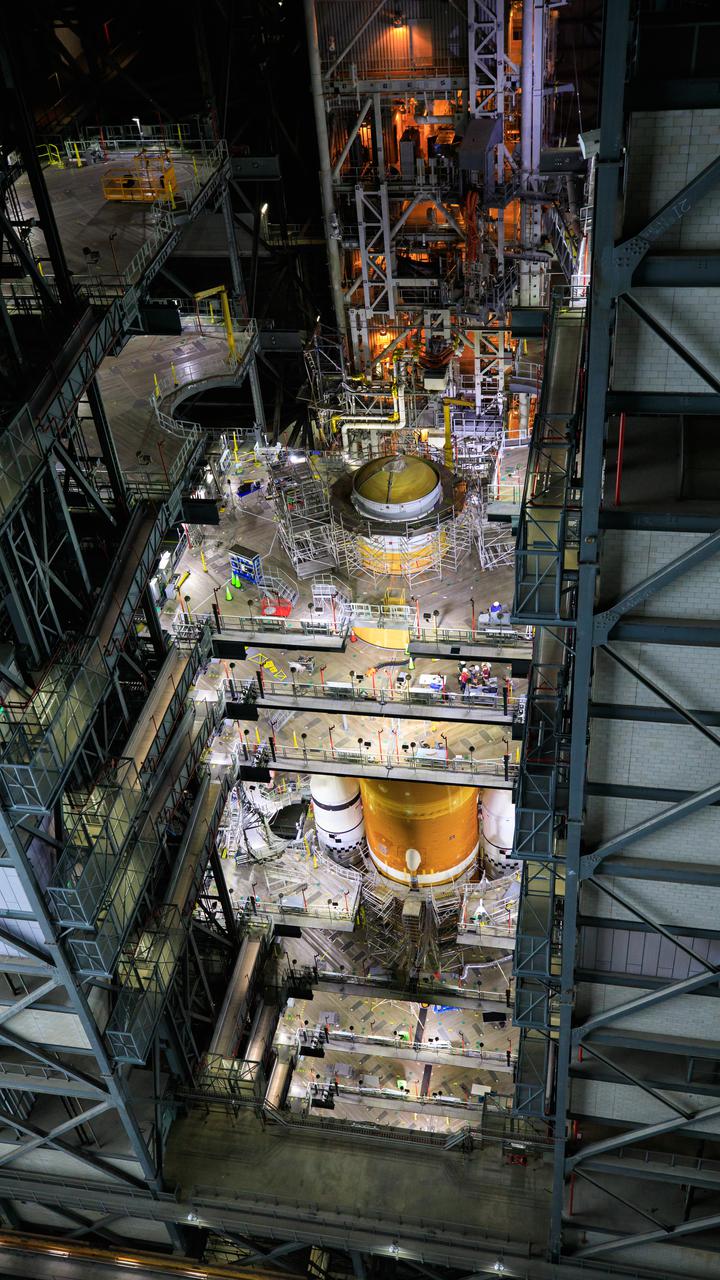
Teams with NASA’s Exploration Ground Systems and contractor Jacobs integrated the interim cryogenic propulsion stage (ICPS) for NASA’s Space Launch System (SLS) rocket with the launch vehicle stage adapter (LVSA) atop the massive SLS core stage on the mobile launcher inside the agency’s Vehicle Assembly Building (VAB) at NASA’s Kennedy Space Center in Florida on July 5, 2021. The ICPS’s RL 10 engine is housed inside the launch vehicle stage adapter, which will protect the engine during launch. The ICPS is a liquid oxygen and liquid hydrogen-based system that will give the Orion spacecraft the big in-space push needed to fly tens of thousands of miles beyond the Moon. The next component to be stacked on top of ICPS will be the Orion stage adapter, which will connect the ICPS with the spacecraft. Through Artemis, NASA will send the first woman and the first person of color to the lunar surface, as well as establish a sustainable presence on and around the Moon. As the first in an increasingly complex set of missions, Artemis I will test SLS and Orion as an integrated system prior to crewed flights to the Moon.
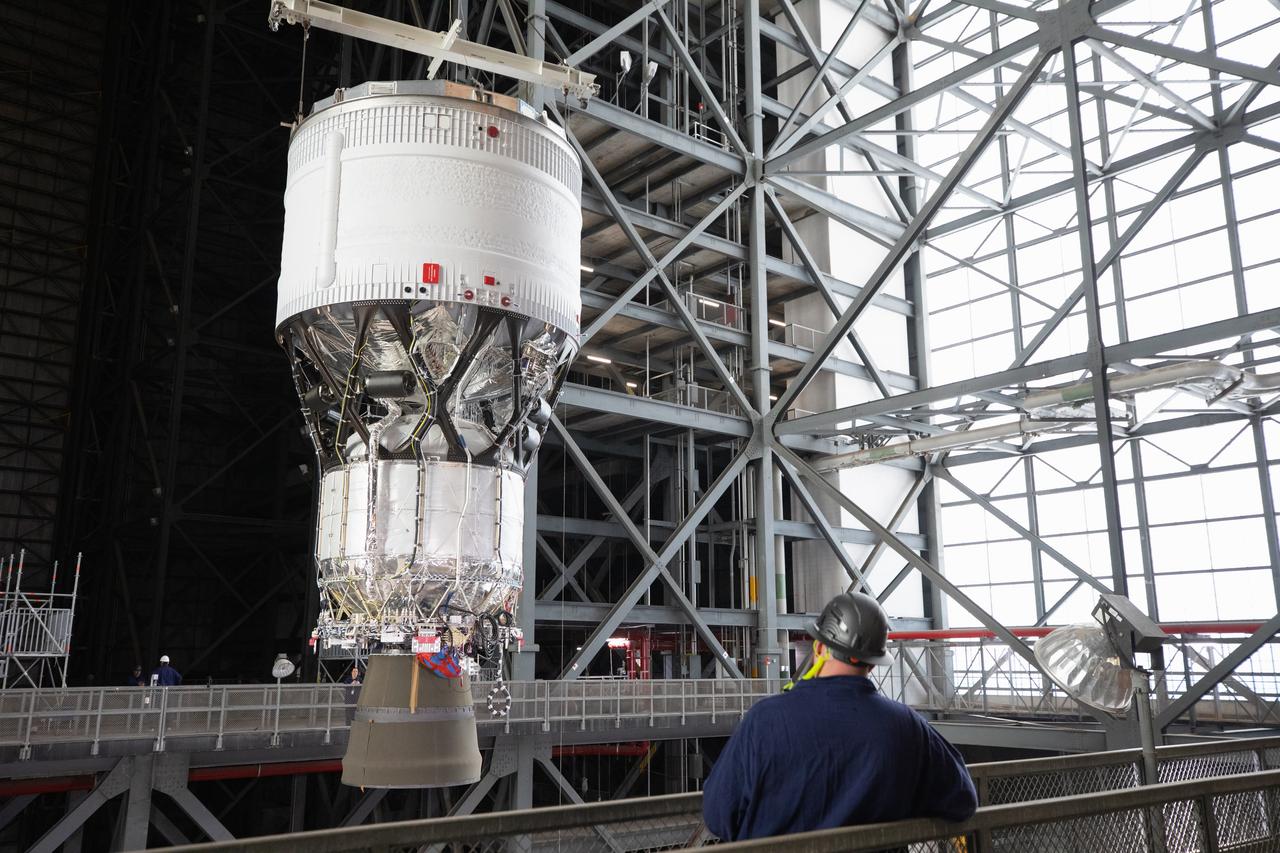
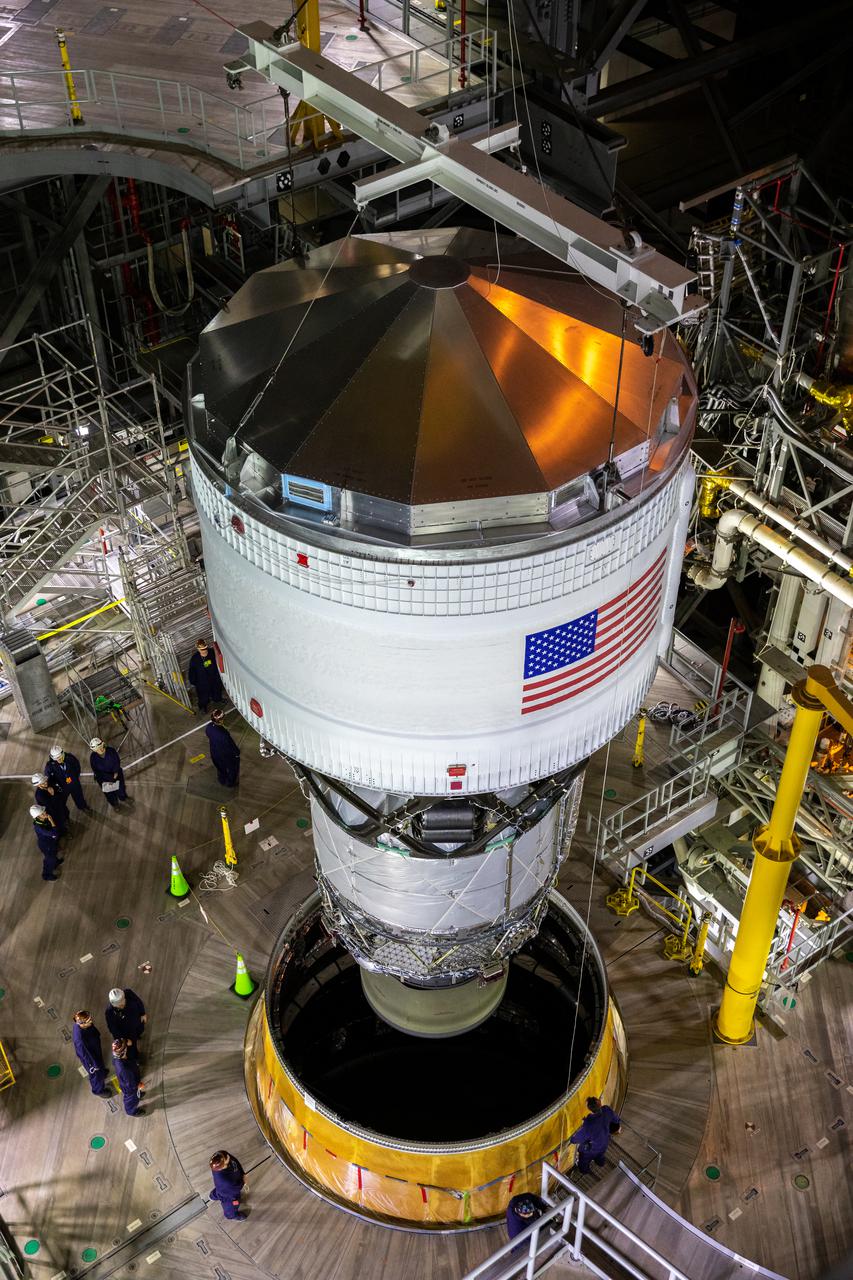
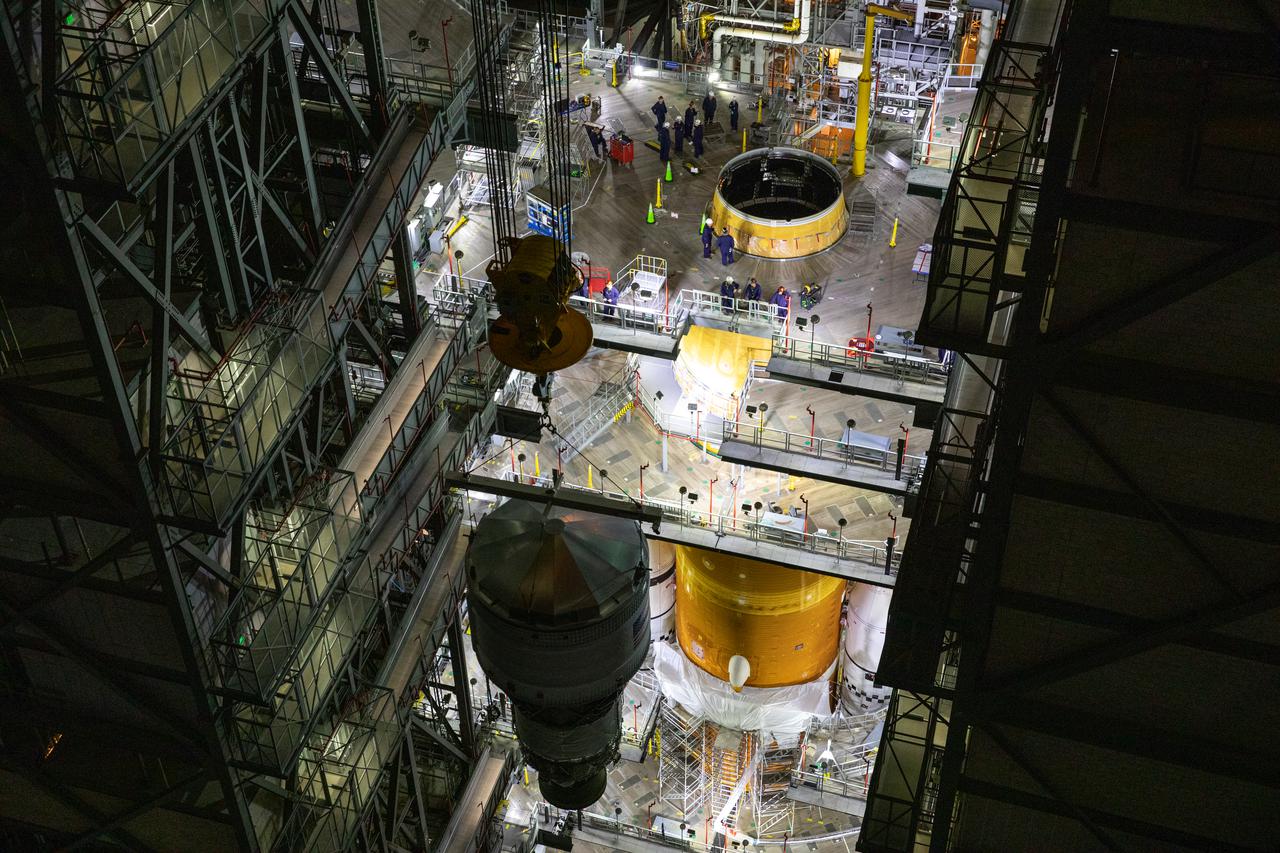
Teams with NASA’s Exploration Ground Systems Program begin integrating the interim cryogenic propulsion stage to the SLS (Space Launch System) launch vehicle stage adapter on Wednesday, April 30, 2025, inside the Vehicle Assembly Building at NASA’s Kennedy Space Center in Florida. The four-story propulsion system, built by Boeing and ULA (United Launch Alliance), is powered by an RL10 engine that will enable the Orion spacecraft to build up enough speed for the push toward the Moon during the Artemis II crewed test flight.
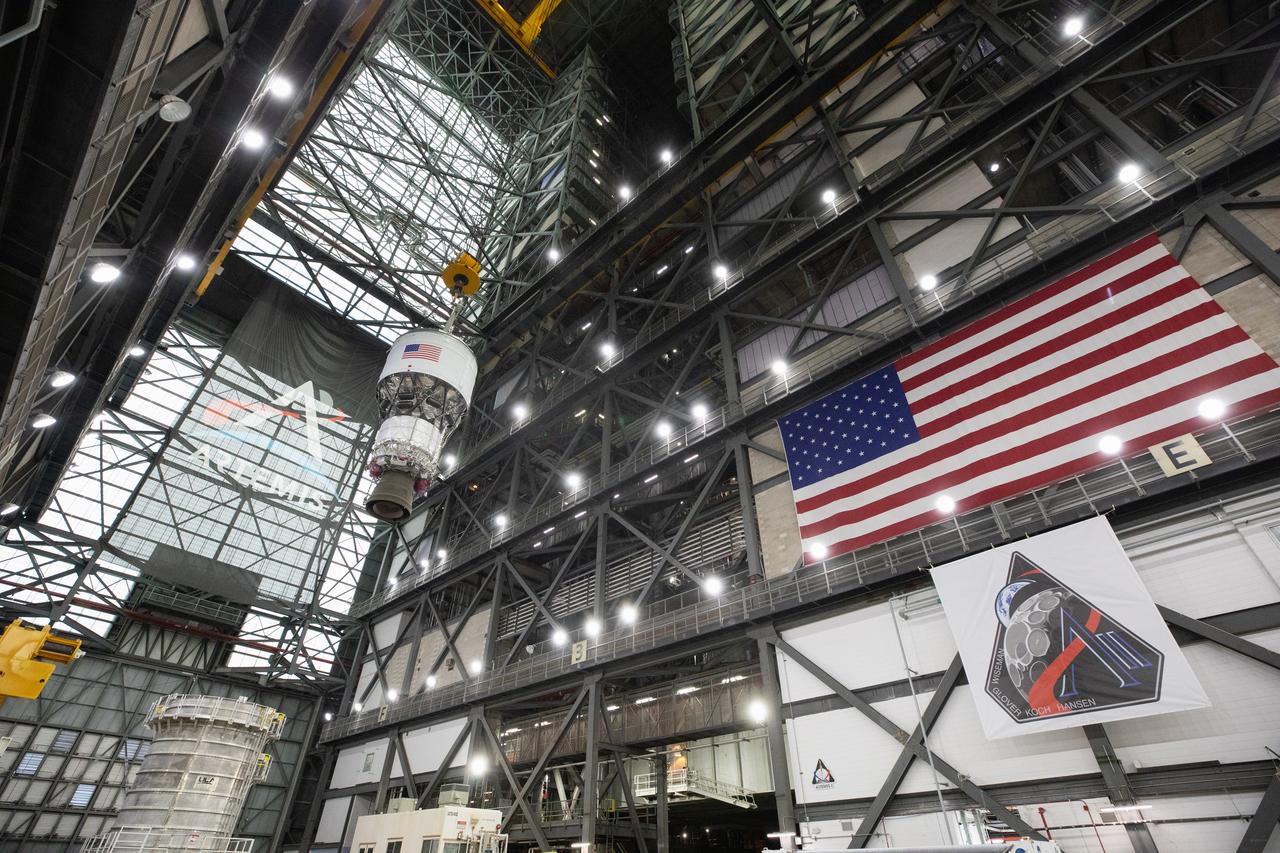
Teams with NASA’s Exploration Ground Systems Program begin integrating the interim cryogenic propulsion stage to the SLS (Space Launch System) launch vehicle stage adapter on Wednesday, April 30, 2025, inside the Vehicle Assembly Building at NASA’s Kennedy Space Center in Florida. The four-story propulsion system, built by Boeing and ULA (United Launch Alliance), is powered by an RL10 engine that will enable the Orion spacecraft to build up enough speed for the push toward the Moon during the Artemis II crewed test flight.
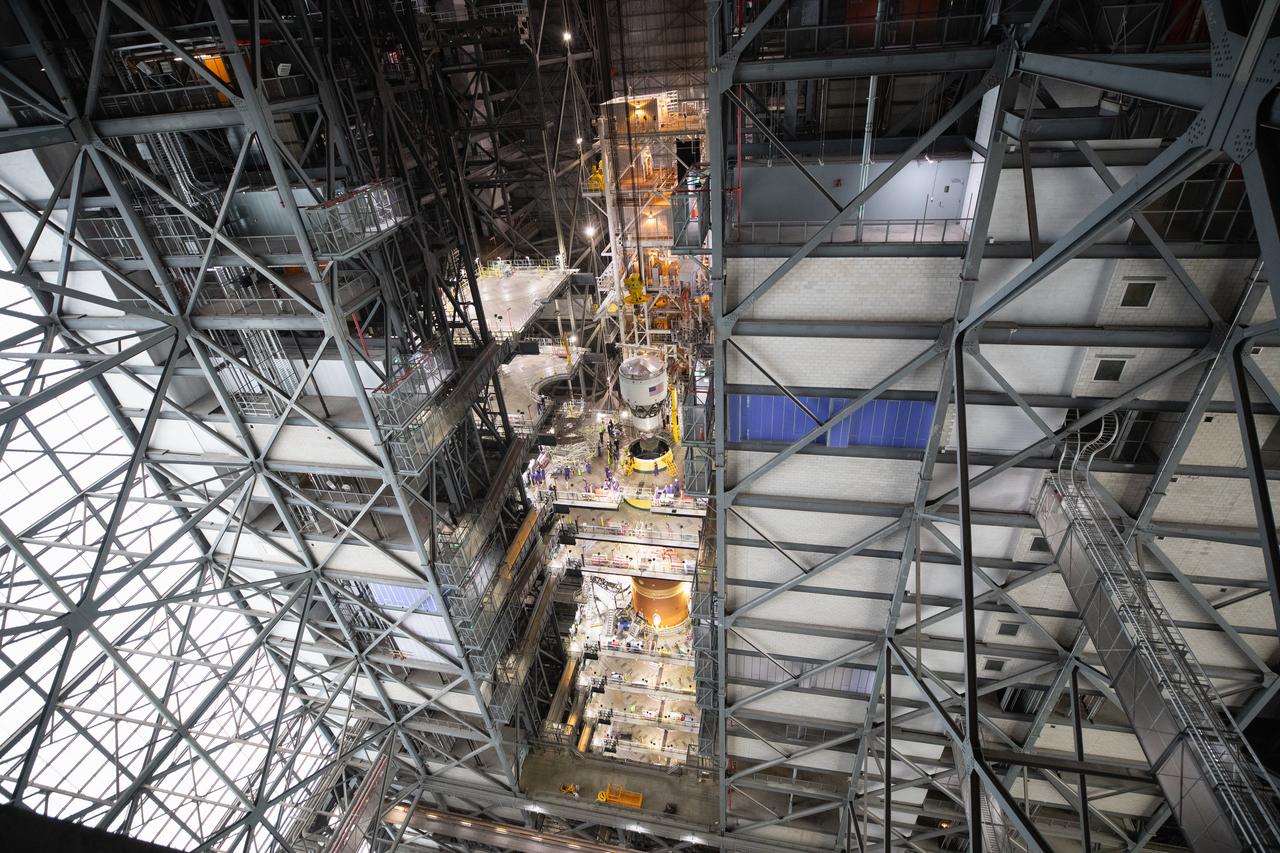
Teams with NASA’s Exploration Ground Systems Program begin integrating the interim cryogenic propulsion stage to the SLS (Space Launch System) launch vehicle stage adapter on Wednesday, April 30, 2025, inside the Vehicle Assembly Building at NASA’s Kennedy Space Center in Florida. The four-story propulsion system, built by Boeing and ULA (United Launch Alliance), is powered by an RL10 engine that will enable the Orion spacecraft to build up enough speed for the push toward the Moon during the Artemis II crewed test flight.
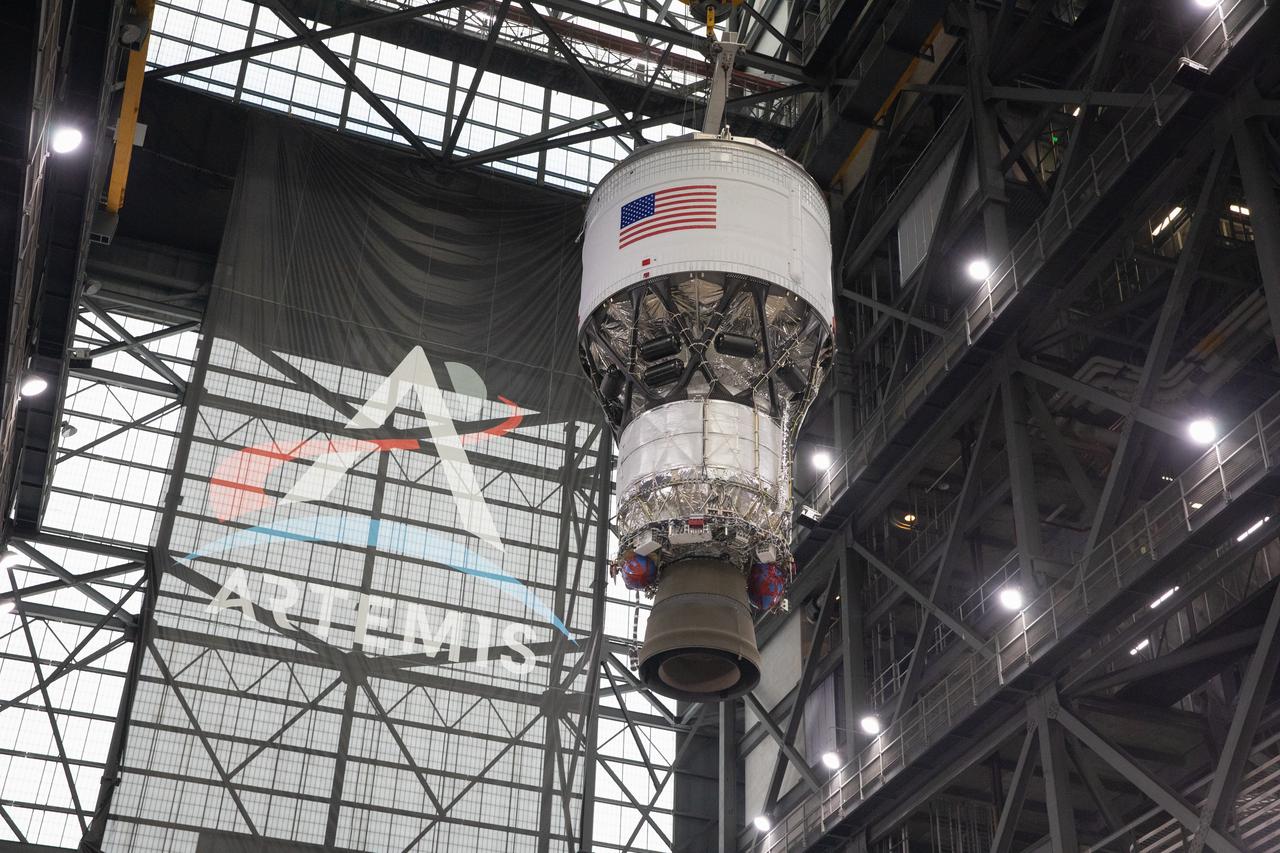
Teams with NASA’s Exploration Ground Systems Program begin integrating the interim cryogenic propulsion stage to the SLS (Space Launch System) launch vehicle stage adapter on Wednesday, April 30, 2025, inside the Vehicle Assembly Building at NASA’s Kennedy Space Center in Florida. The four-story propulsion system, built by Boeing and ULA (United Launch Alliance), is powered by an RL10 engine that will enable the Orion spacecraft to build up enough speed for the push toward the Moon during the Artemis II crewed test flight.
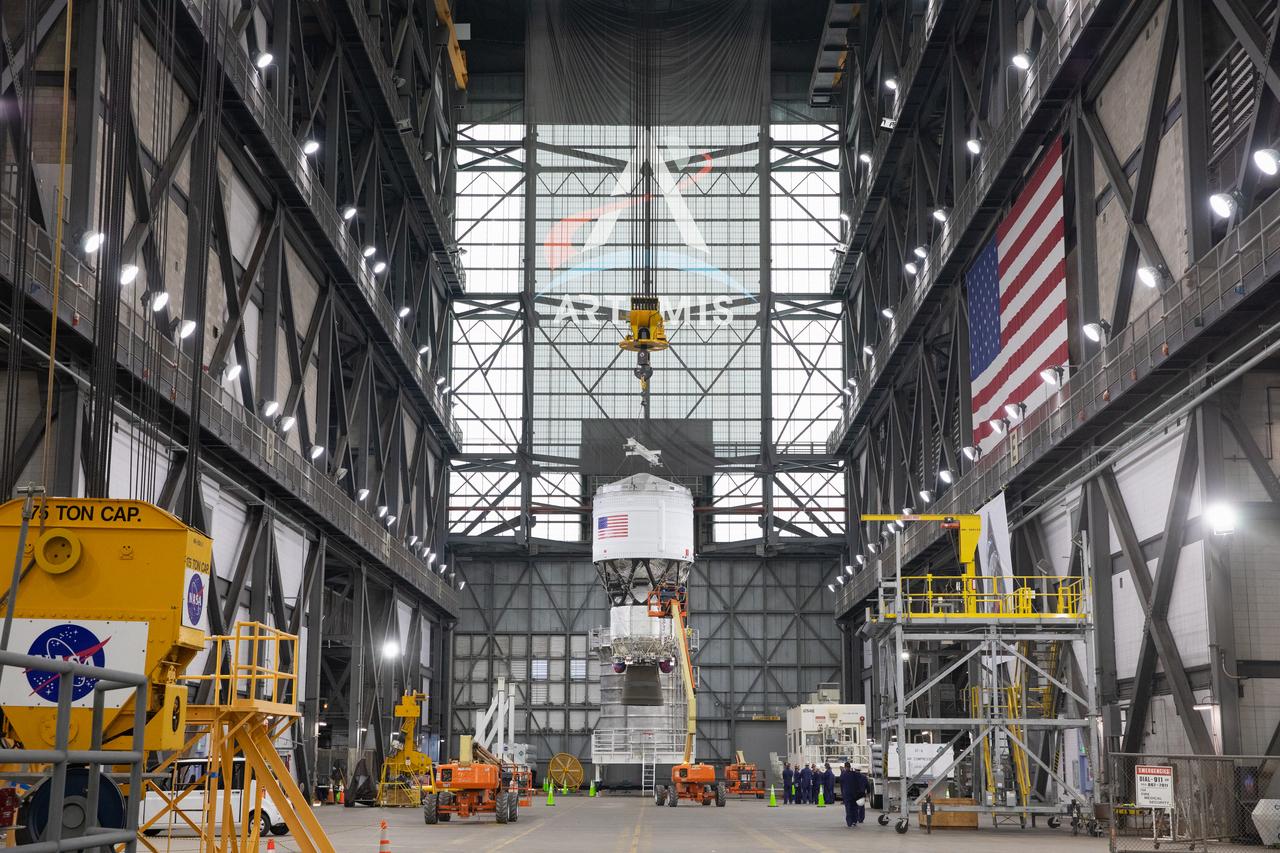
Teams with NASA’s Exploration Ground Systems Program begin integrating the interim cryogenic propulsion stage to the SLS (Space Launch System) launch vehicle stage adapter on Wednesday, April 30, 2025, inside the Vehicle Assembly Building at NASA’s Kennedy Space Center in Florida. The four-story propulsion system, built by Boeing and ULA (United Launch Alliance), is powered by an RL10 engine that will enable the Orion spacecraft to build up enough speed for the push toward the Moon during the Artemis II crewed test flight.
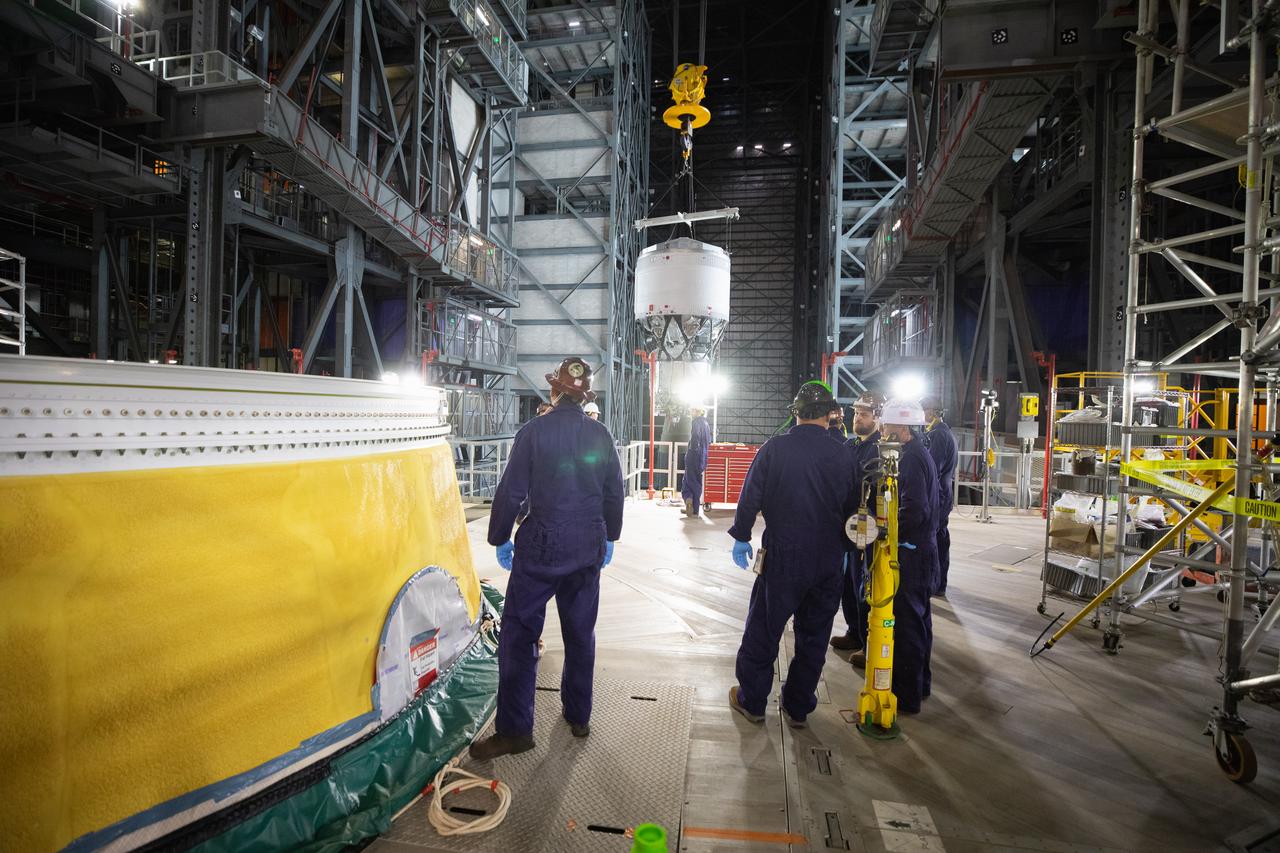
Teams with NASA’s Exploration Ground Systems Program begin integrating the interim cryogenic propulsion stage to the SLS (Space Launch System) launch vehicle stage adapter on Wednesday, April 30, 2025, inside the Vehicle Assembly Building at NASA’s Kennedy Space Center in Florida. The four-story propulsion system, built by Boeing and ULA (United Launch Alliance), is powered by an RL10 engine that will enable the Orion spacecraft to build up enough speed for the push toward the Moon during the Artemis II crewed test flight.
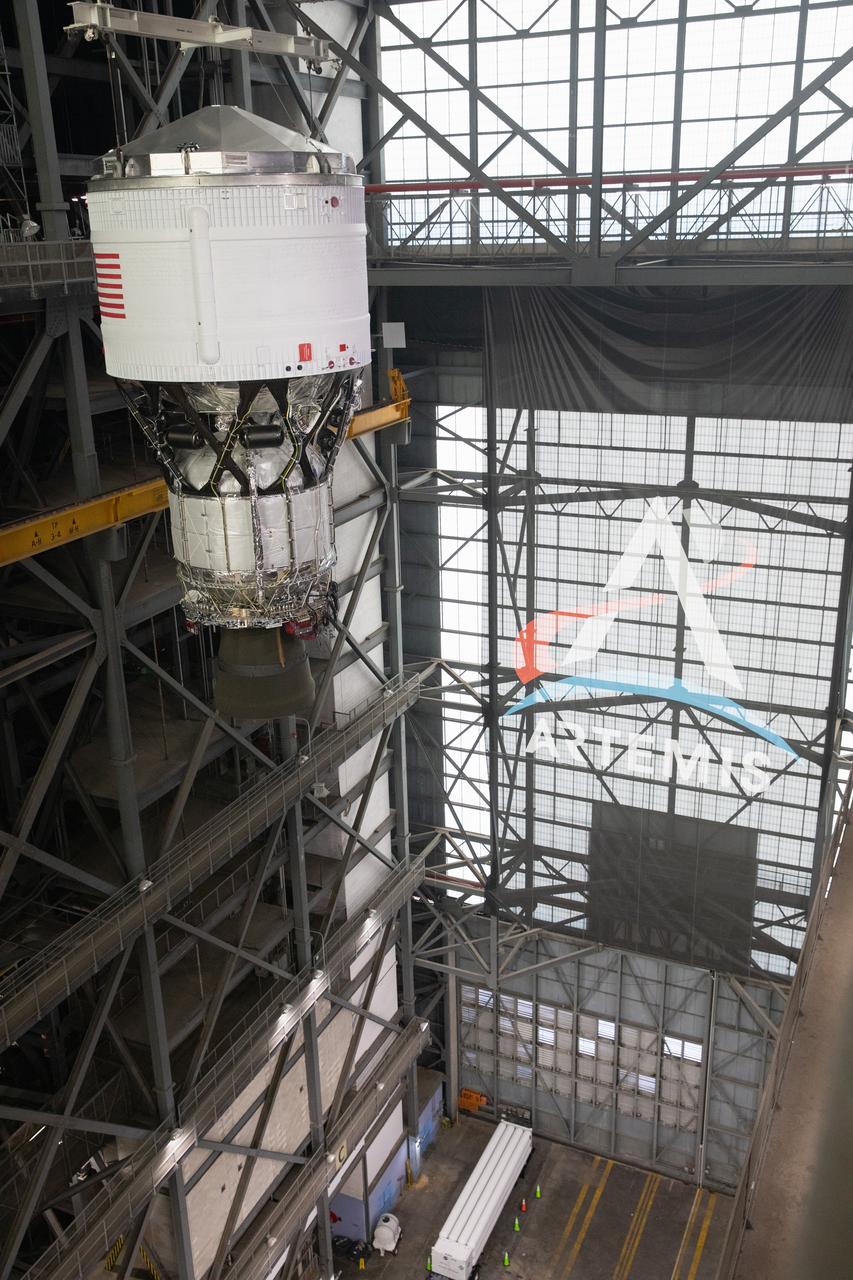
Teams with NASA’s Exploration Ground Systems Program begin integrating the interim cryogenic propulsion stage to the SLS (Space Launch System) launch vehicle stage adapter on Wednesday, April 30, 2025, inside the Vehicle Assembly Building at NASA’s Kennedy Space Center in Florida. The four-story propulsion system, built by Boeing and ULA (United Launch Alliance), is powered by an RL10 engine that will enable the Orion spacecraft to build up enough speed for the push toward the Moon during the Artemis II crewed test flight.
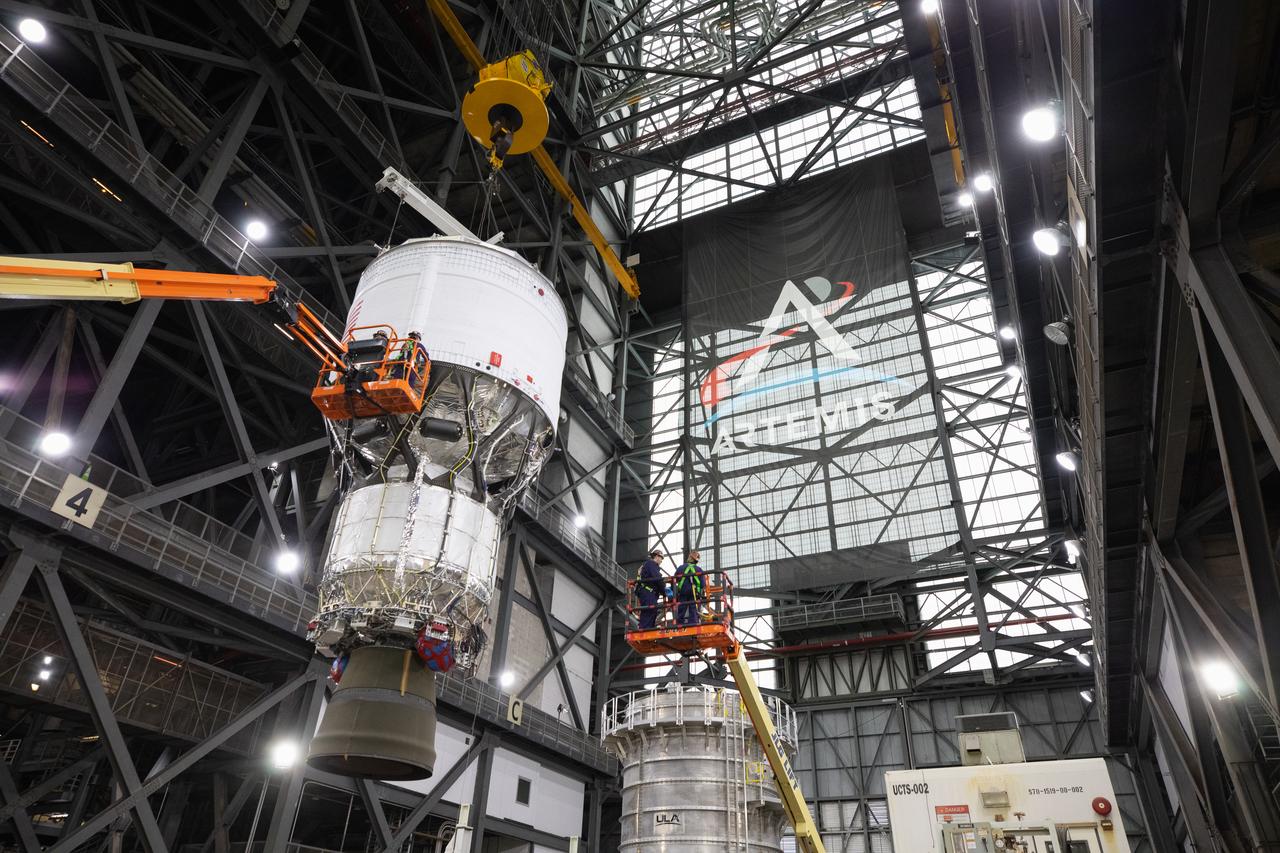
Teams with NASA’s Exploration Ground Systems Program begin integrating the interim cryogenic propulsion stage to the SLS (Space Launch System) launch vehicle stage adapter on Wednesday, April 30, 2025, inside the Vehicle Assembly Building at NASA’s Kennedy Space Center in Florida. The four-story propulsion system, built by Boeing and ULA (United Launch Alliance), is powered by an RL10 engine that will enable the Orion spacecraft to build up enough speed for the push toward the Moon during the Artemis II crewed test flight.
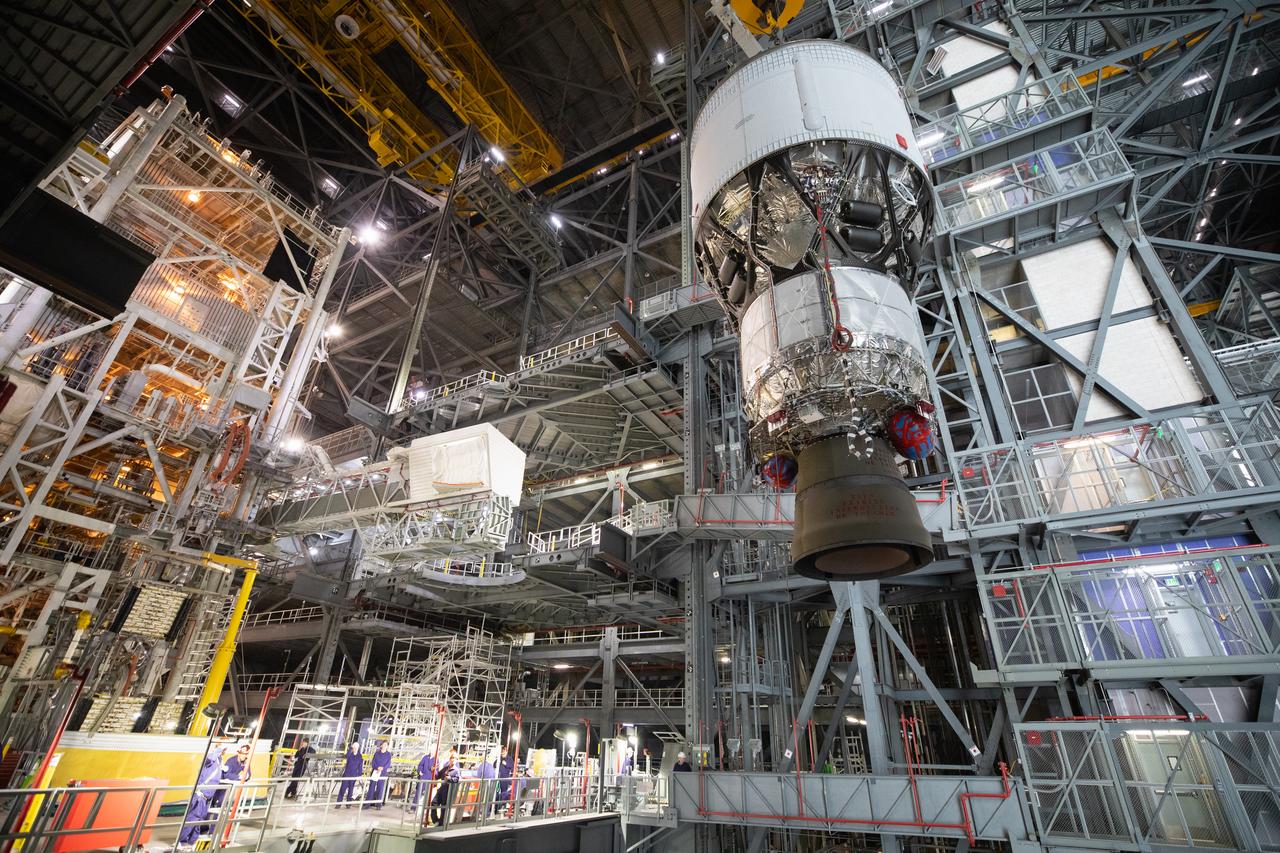
Teams with NASA’s Exploration Ground Systems Program begin integrating the interim cryogenic propulsion stage to the SLS (Space Launch System) launch vehicle stage adapter on Wednesday, April 30, 2025, inside the Vehicle Assembly Building at NASA’s Kennedy Space Center in Florida. The four-story propulsion system, built by Boeing and ULA (United Launch Alliance), is powered by an RL10 engine that will enable the Orion spacecraft to build up enough speed for the push toward the Moon during the Artemis II crewed test flight.
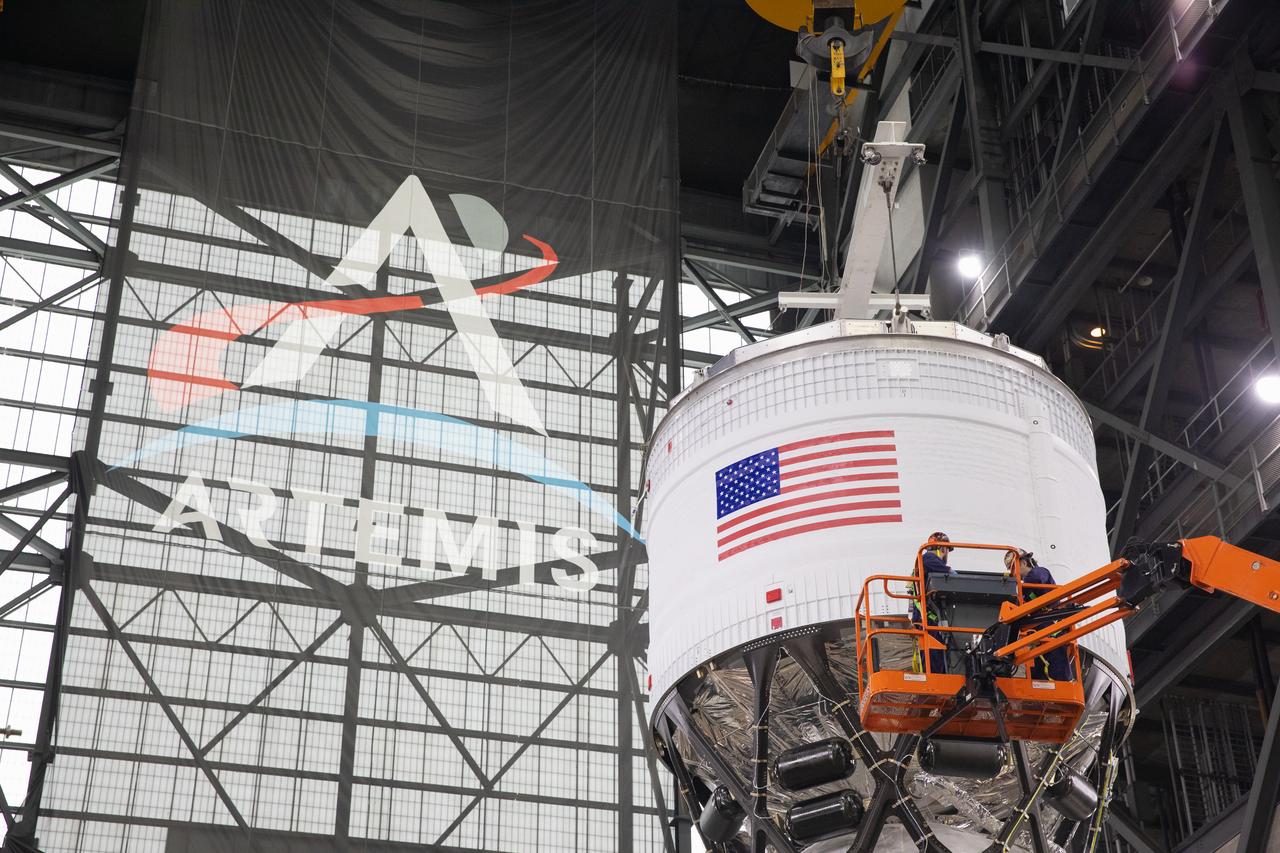
Teams with NASA’s Exploration Ground Systems Program begin integrating the interim cryogenic propulsion stage to the SLS (Space Launch System) launch vehicle stage adapter on Wednesday, April 30, 2025, inside the Vehicle Assembly Building at NASA’s Kennedy Space Center in Florida. The four-story propulsion system, built by Boeing and ULA (United Launch Alliance), is powered by an RL10 engine that will enable the Orion spacecraft to build up enough speed for the push toward the Moon during the Artemis II crewed test flight.
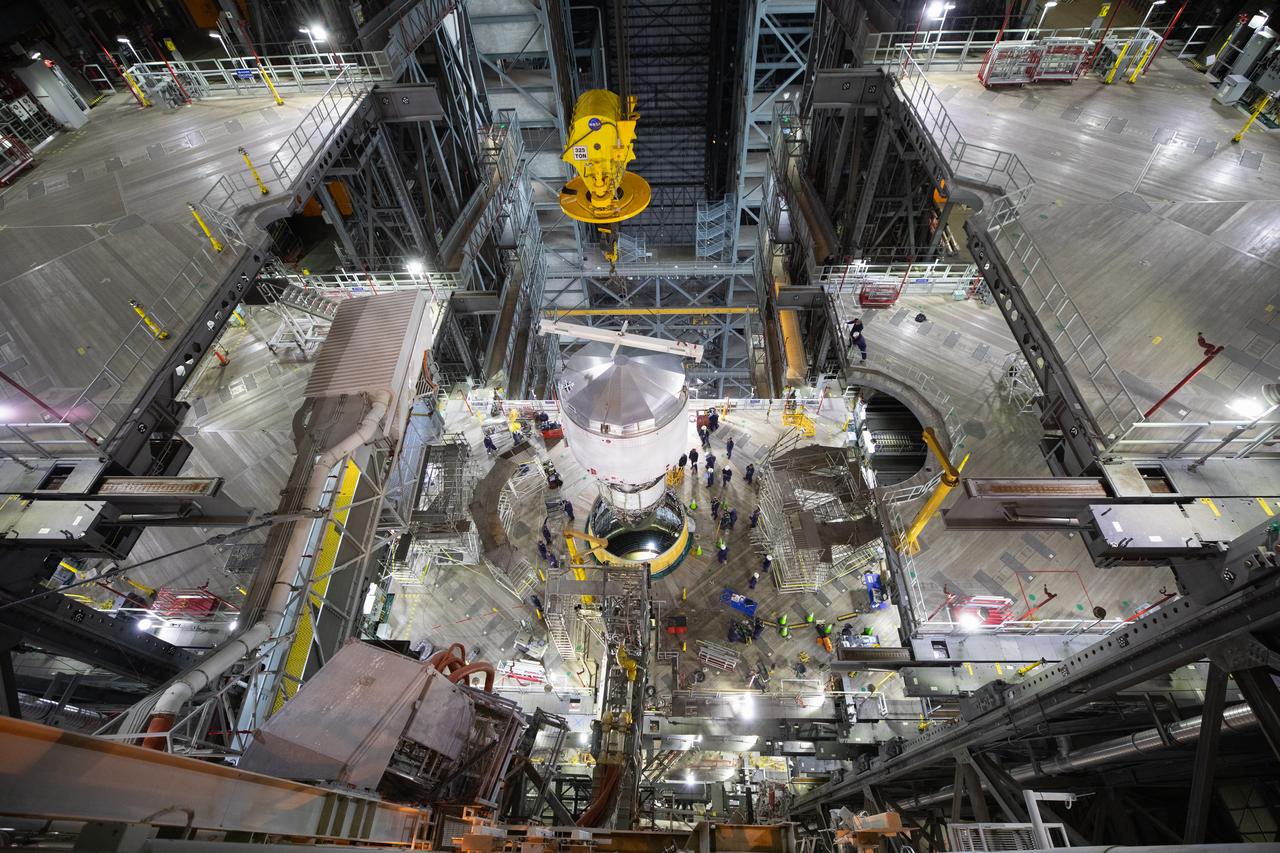
Teams with NASA’s Exploration Ground Systems Program begin integrating the interim cryogenic propulsion stage to the SLS (Space Launch System) launch vehicle stage adapter on Wednesday, April 30, 2025, inside the Vehicle Assembly Building at NASA’s Kennedy Space Center in Florida. The four-story propulsion system, built by Boeing and ULA (United Launch Alliance), is powered by an RL10 engine that will enable the Orion spacecraft to build up enough speed for the push toward the Moon during the Artemis II crewed test flight.

Teams with NASA’s Exploration Ground Systems Program begin integrating the interim cryogenic propulsion stage to the SLS (Space Launch System) launch vehicle stage adapter on Wednesday, April 30, 2025, inside the Vehicle Assembly Building at NASA’s Kennedy Space Center in Florida. The four-story propulsion system, built by Boeing and ULA (United Launch Alliance), is powered by an RL10 engine that will enable the Orion spacecraft to build up enough speed for the push toward the Moon during the Artemis II crewed test flight.
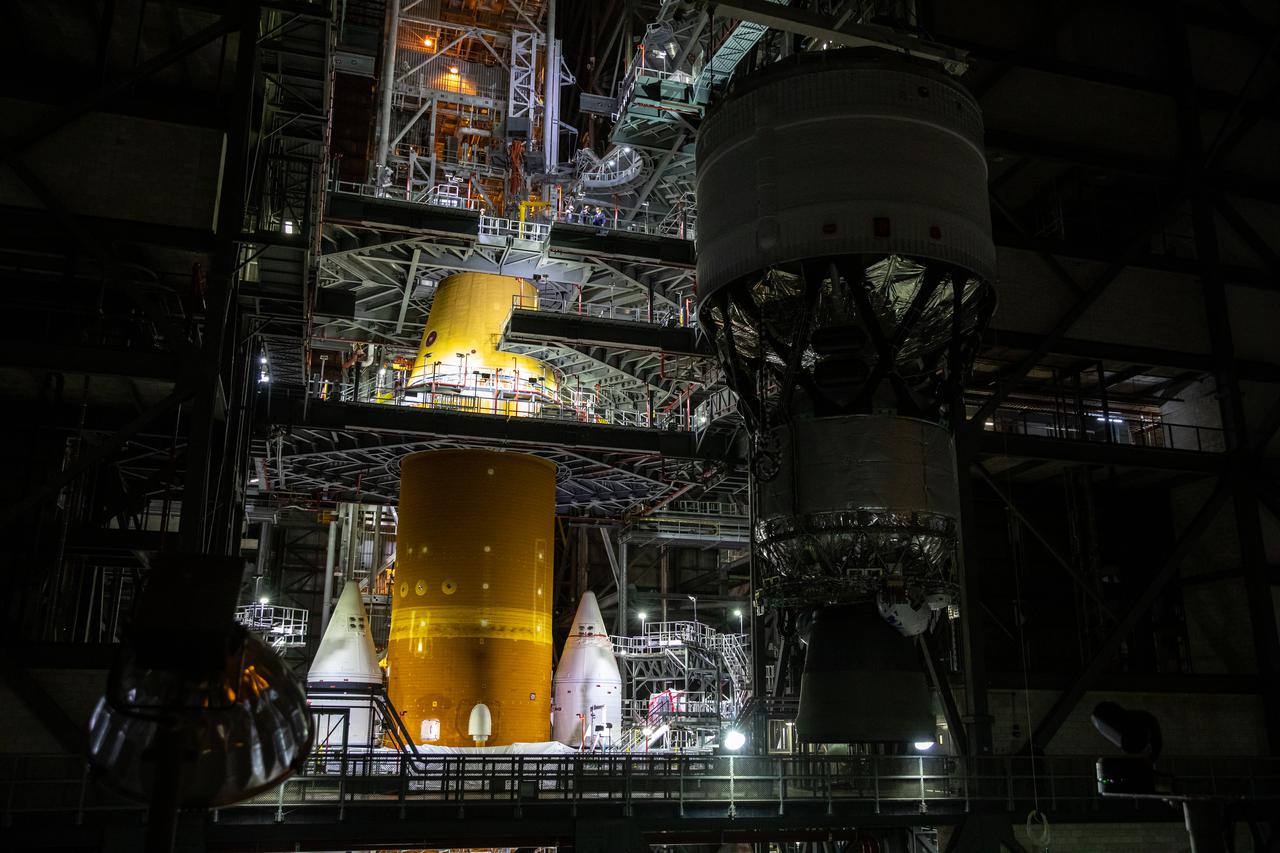
Teams with NASA’s Exploration Ground Systems and contractor Jacobs integrate the interim cryogenic propulsion stage (ICPS) for NASA’s Space Launch System (SLS) rocket with the launch vehicle stage adapter (LVSA) atop the massive SLS core stage in the agency’s Vehicle Assembly Building (VAB) at NASA’s Kennedy Space Center in Florida on July 5, 2021. The ICPS is a liquid oxygen and liquid hydrogen-based system that will fire its RL 10 engine to give the Orion spacecraft the big in-space push needed to fly tens of thousands of miles beyond the Moon. The next component to be stacked on top of ICPS will be the Orion stage adapter, which will connect the ICPS with the spacecraft. Through Artemis, NASA will send the first woman and the first person of color to the lunar surface, as well as establish a sustainable presence on and around the Moon. As the first in an increasingly complex set of missions, Artemis I will test SLS and Orion as an integrated system prior to crewed flights to the Moon.
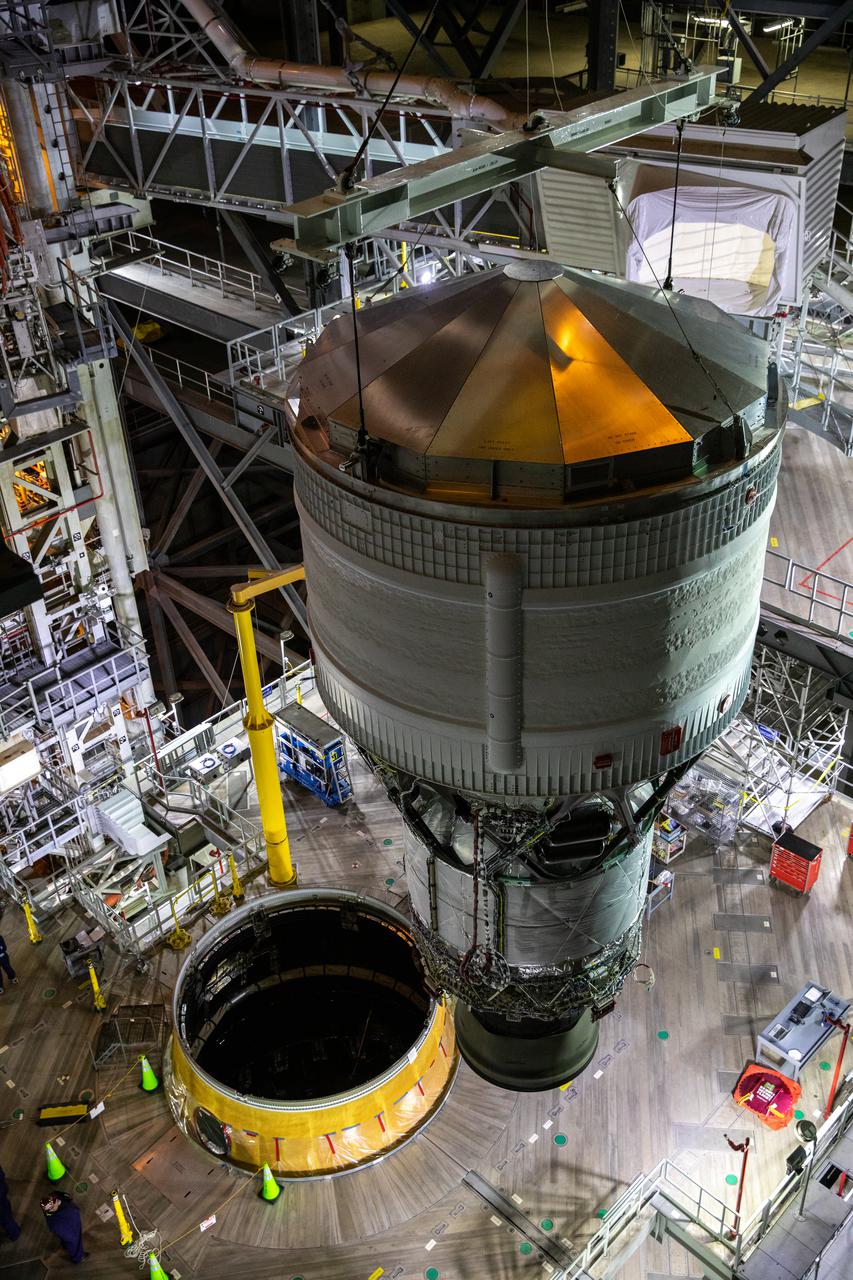
Teams with NASA’s Exploration Ground Systems and contractor Jacobs integrate the interim cryogenic propulsion stage (ICPS) for NASA’s Space Launch System (SLS) rocket with the launch vehicle stage adapter (LVSA) atop the massive SLS core stage in the agency’s Vehicle Assembly Building (VAB) at NASA’s Kennedy Space Center in Florida on July 5, 2021. The ICPS is a liquid oxygen and liquid hydrogen-based system that will fire its RL 10 engine to give the Orion spacecraft the big in-space push needed to fly tens of thousands of miles beyond the Moon. The next component to be stacked on top of ICPS will be the Orion stage adapter, which will connect the ICPS with the spacecraft. Through Artemis, NASA will send the first woman and the first person of color to the lunar surface, as well as establish a sustainable presence on and around the Moon. As the first in an increasingly complex set of missions, Artemis I will test SLS and Orion as an integrated system prior to crewed flights to the Moon.
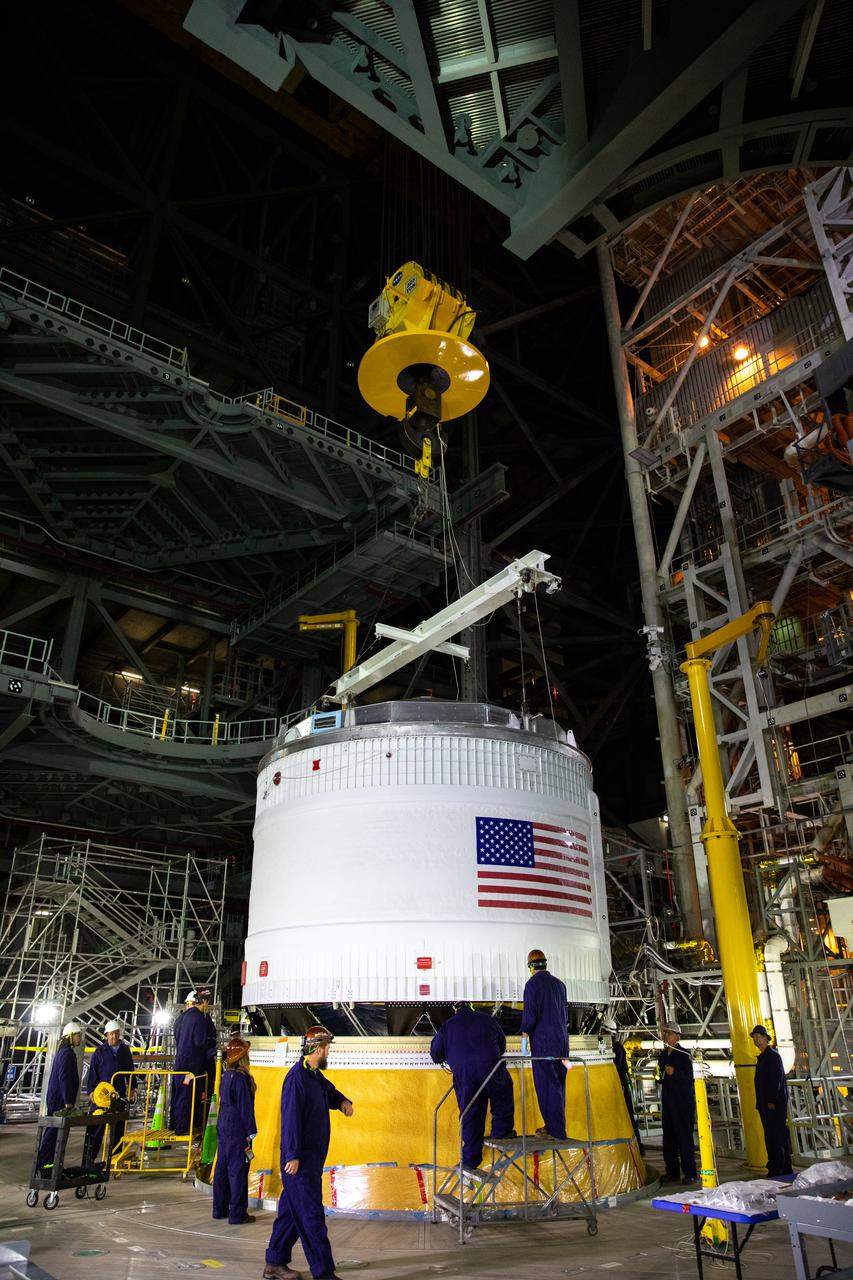
Teams with NASA’s Exploration Ground Systems and contractor Jacobs integrate the interim cryogenic propulsion stage (ICPS) for NASA’s Space Launch System (SLS) rocket with the launch vehicle stage adapter (LVSA) atop the massive SLS core stage in the agency’s Vehicle Assembly Building (VAB) at NASA’s Kennedy Space Center in Florida on July 5, 2021. The ICPS is a liquid oxygen and liquid hydrogen-based system that will fire its RL 10 engine to give the Orion spacecraft the big in-space push needed to fly tens of thousands of miles beyond the Moon. The next component to be stacked on top of ICPS will be the Orion stage adapter, which will connect the ICPS with the spacecraft. Through Artemis, NASA will send the first woman and the first person of color to the lunar surface, as well as establish a sustainable presence on and around the Moon. As the first in an increasingly complex set of missions, Artemis I will test SLS and Orion as an integrated system prior to crewed flights to the Moon.
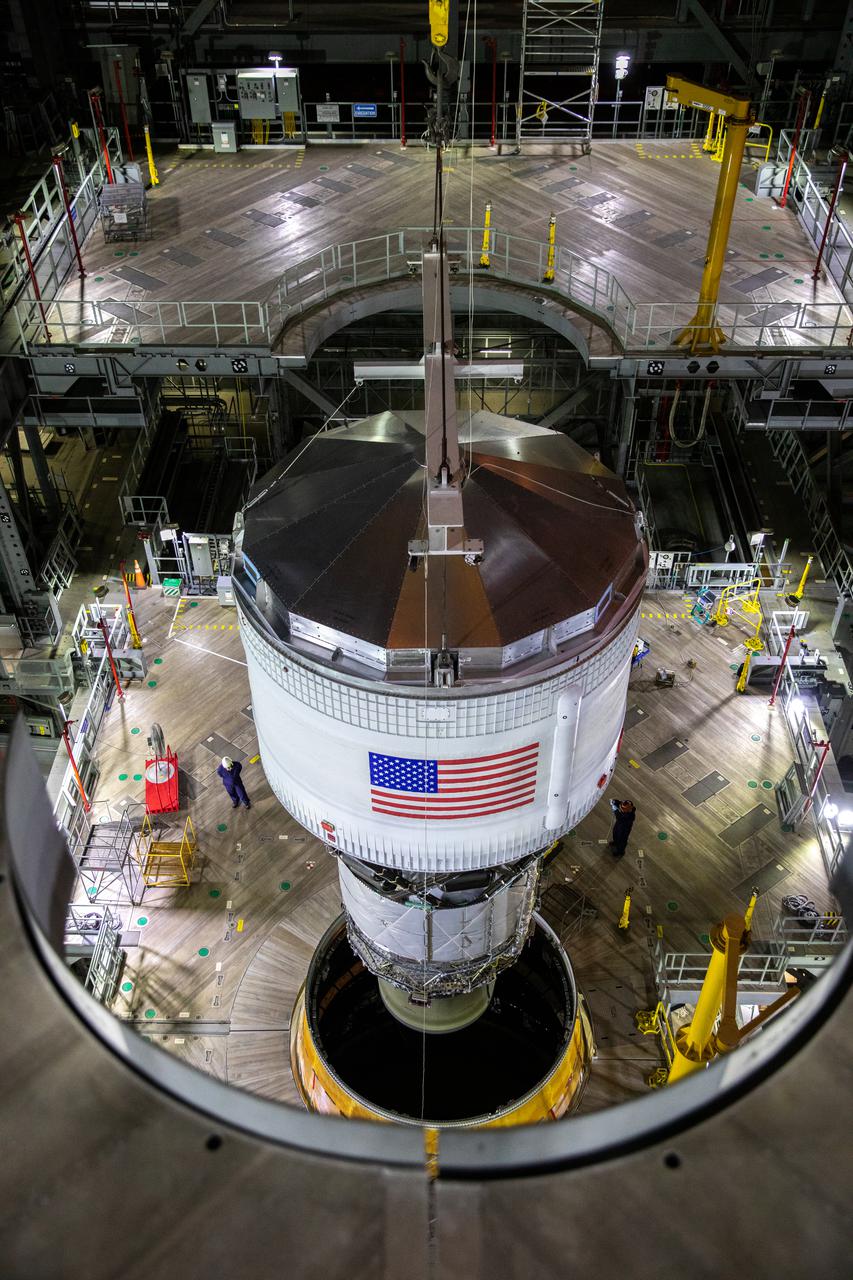
Teams with NASA’s Exploration Ground Systems and contractor Jacobs integrate the interim cryogenic propulsion stage (ICPS) for NASA’s Space Launch System (SLS) rocket with the launch vehicle stage adapter (LVSA) atop the massive SLS core stage in the agency’s Vehicle Assembly Building (VAB) at NASA’s Kennedy Space Center in Florida on July 5, 2021. The ICPS is a liquid oxygen and liquid hydrogen-based system that will fire its RL 10 engine to give the Orion spacecraft the big in-space push needed to fly tens of thousands of miles beyond the Moon. The next component to be stacked on top of ICPS will be the Orion stage adapter, which will connect the ICPS with the spacecraft. Through Artemis, NASA will send the first woman and the first person of color to the lunar surface, as well as establish a sustainable presence on and around the Moon. As the first in an increasingly complex set of missions, Artemis I will test SLS and Orion as an integrated system prior to crewed flights to the Moon.
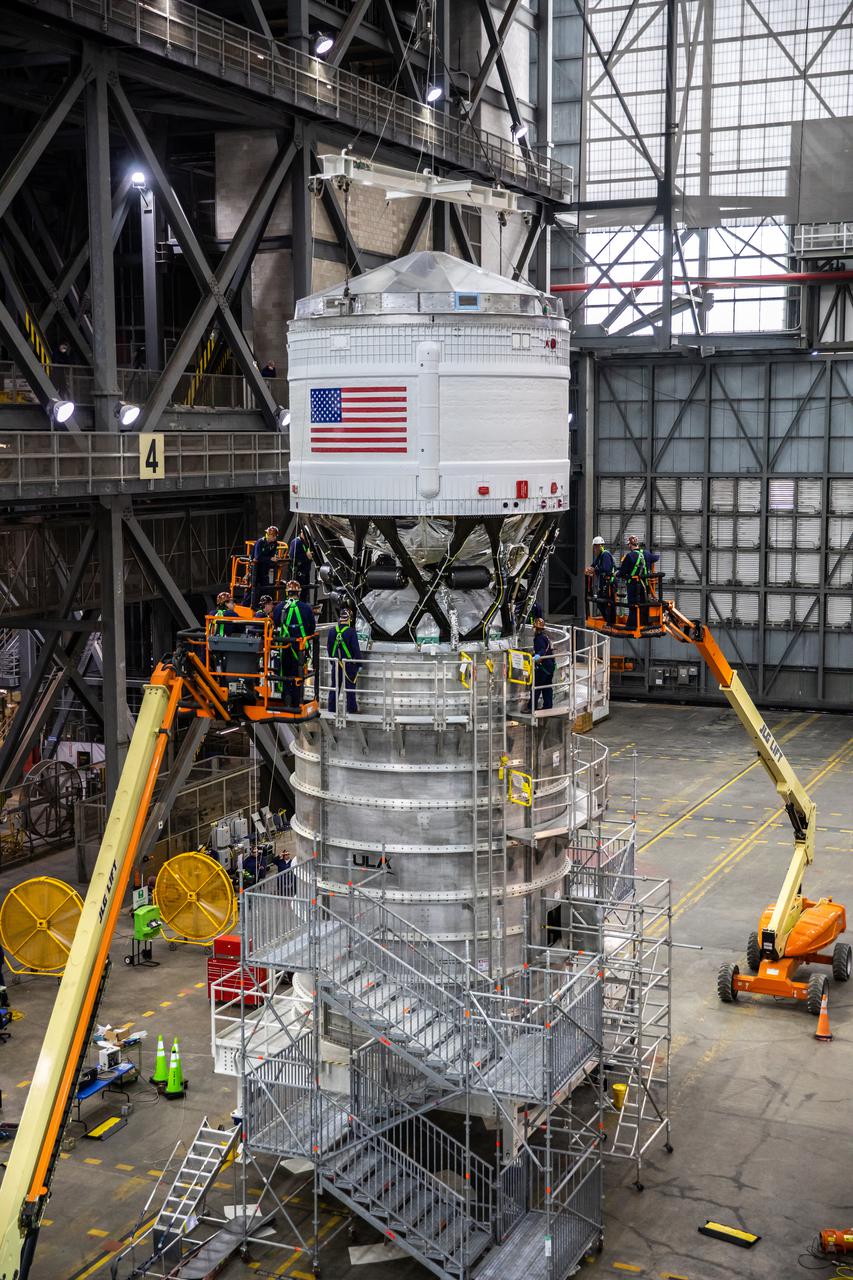
Teams with NASA’s Exploration Ground Systems and contractor Jacobs integrate the interim cryogenic propulsion stage (ICPS) for NASA’s Space Launch System (SLS) rocket with the launch vehicle stage adapter (LVSA) atop the massive SLS core stage in the agency’s Vehicle Assembly Building (VAB) at NASA’s Kennedy Space Center in Florida on July 5, 2021. The ICPS is a liquid oxygen and liquid hydrogen-based system that will fire its RL 10 engine to give the Orion spacecraft the big in-space push needed to fly tens of thousands of miles beyond the Moon. The next component to be stacked on top of ICPS will be the Orion stage adapter, which will connect the ICPS with the spacecraft. Through Artemis, NASA will send the first woman and the first person of color to the lunar surface, as well as establish a sustainable presence on and around the Moon. As the first in an increasingly complex set of missions, Artemis I will test SLS and Orion as an integrated system prior to crewed flights to the Moon.
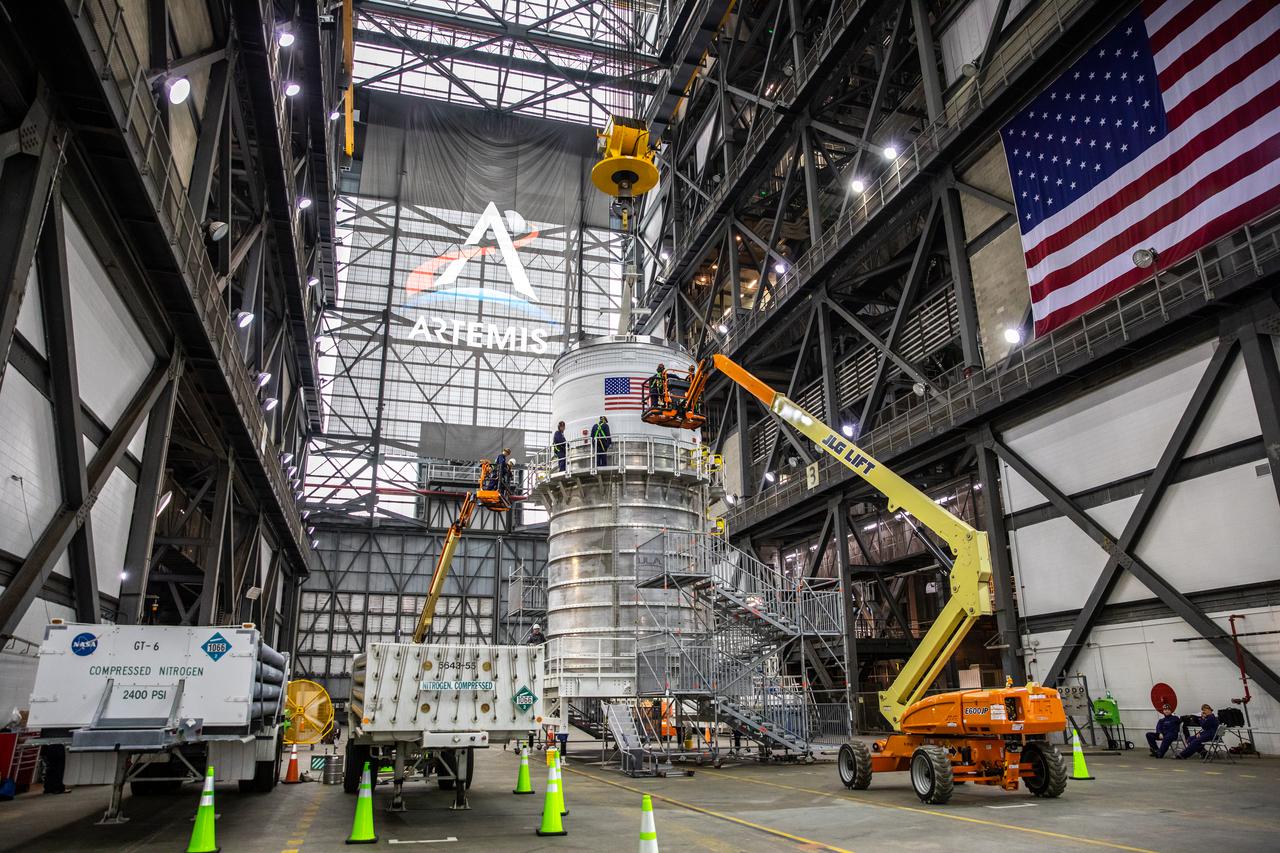
Teams with NASA’s Exploration Ground Systems and contractor Jacobs integrate the interim cryogenic propulsion stage (ICPS) for NASA’s Space Launch System (SLS) rocket with the launch vehicle stage adapter (LVSA) atop the massive SLS core stage in the agency’s Vehicle Assembly Building (VAB) at NASA’s Kennedy Space Center in Florida on July 5, 2021. The ICPS is a liquid oxygen and liquid hydrogen-based system that will fire its RL 10 engine to give the Orion spacecraft the big in-space push needed to fly tens of thousands of miles beyond the Moon. The next component to be stacked on top of ICPS will be the Orion stage adapter, which will connect the ICPS with the spacecraft. Through Artemis, NASA will send the first woman and the first person of color to the lunar surface, as well as establish a sustainable presence on and around the Moon. As the first in an increasingly complex set of missions, Artemis I will test SLS and Orion as an integrated system prior to crewed flights to the Moon.
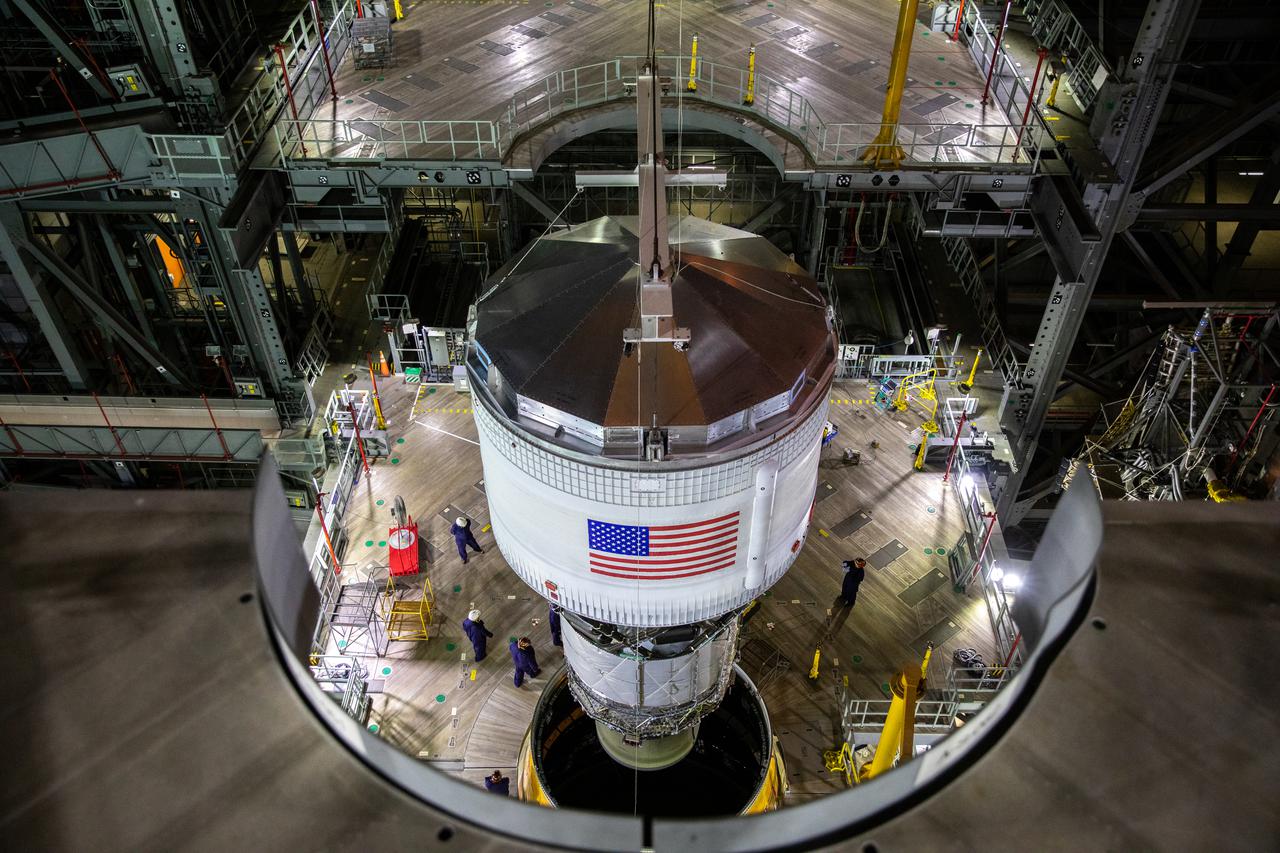
Teams with NASA’s Exploration Ground Systems and contractor Jacobs integrate the interim cryogenic propulsion stage (ICPS) for NASA’s Space Launch System (SLS) rocket with the launch vehicle stage adapter (LVSA) atop the massive SLS core stage in the agency’s Vehicle Assembly Building (VAB) at NASA’s Kennedy Space Center in Florida on July 5, 2021. The ICPS is a liquid oxygen and liquid hydrogen-based system that will fire its RL 10 engine to give the Orion spacecraft the big in-space push needed to fly tens of thousands of miles beyond the Moon. The next component to be stacked on top of ICPS will be the Orion stage adapter, which will connect the ICPS with the spacecraft. Through Artemis, NASA will send the first woman and the first person of color to the lunar surface, as well as establish a sustainable presence on and around the Moon. As the first in an increasingly complex set of missions, Artemis I will test SLS and Orion as an integrated system prior to crewed flights to the Moon.
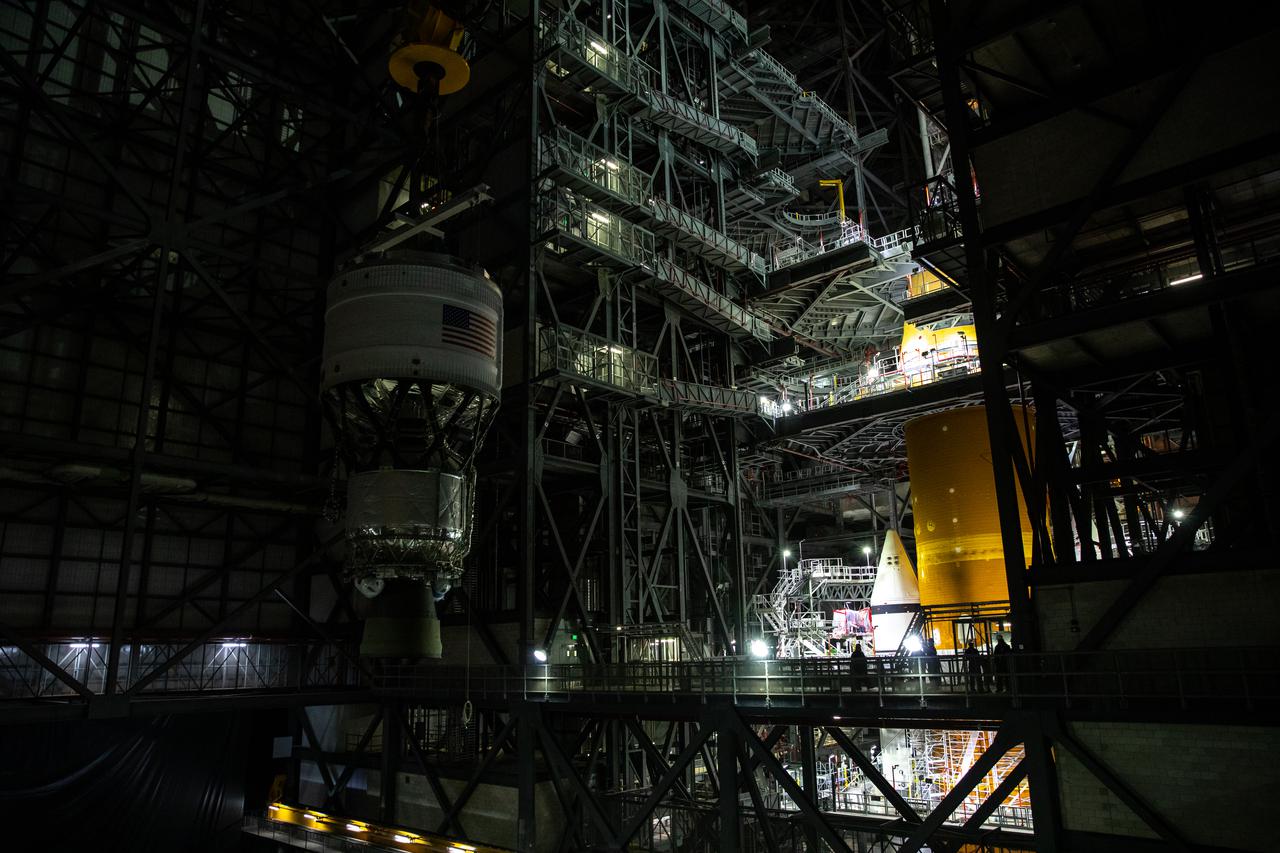
Teams with NASA’s Exploration Ground Systems and contractor Jacobs integrate the interim cryogenic propulsion stage (ICPS) for NASA’s Space Launch System (SLS) rocket with the launch vehicle stage adapter (LVSA) atop the massive SLS core stage in the agency’s Vehicle Assembly Building (VAB) at NASA’s Kennedy Space Center in Florida on July 5, 2021. The ICPS is a liquid oxygen and liquid hydrogen-based system that will fire its RL 10 engine to give the Orion spacecraft the big in-space push needed to fly tens of thousands of miles beyond the Moon. The next component to be stacked on top of ICPS will be the Orion stage adapter, which will connect the ICPS with the spacecraft. Through Artemis, NASA will send the first woman and the first person of color to the lunar surface, as well as establish a sustainable presence on and around the Moon. As the first in an increasingly complex set of missions, Artemis I will test SLS and Orion as an integrated system prior to crewed flights to the Moon.
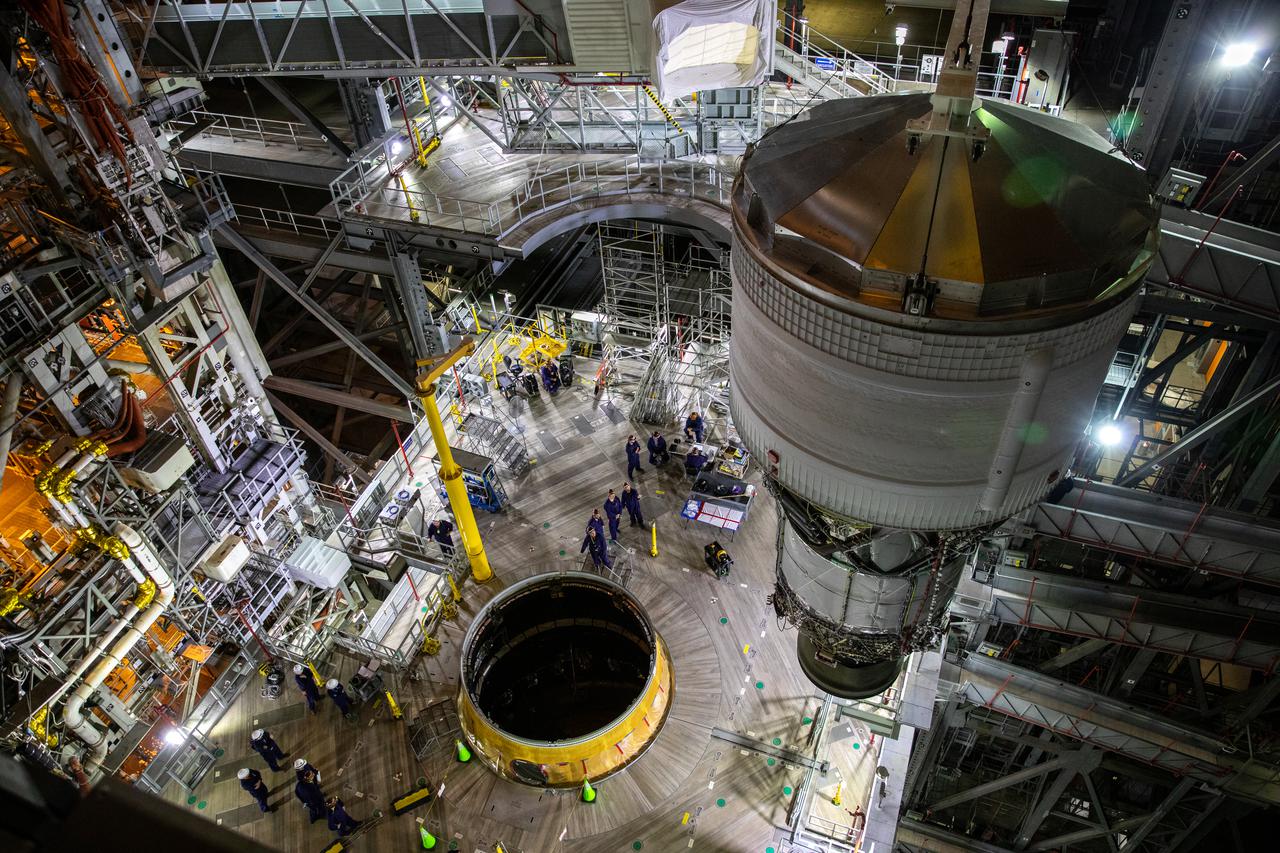
Teams with NASA’s Exploration Ground Systems and contractor Jacobs integrate the interim cryogenic propulsion stage (ICPS) for NASA’s Space Launch System (SLS) rocket with the launch vehicle stage adapter (LVSA) atop the massive SLS core stage in the agency’s Vehicle Assembly Building (VAB) at NASA’s Kennedy Space Center in Florida on July 5, 2021. The ICPS is a liquid oxygen and liquid hydrogen-based system that will fire its RL 10 engine to give the Orion spacecraft the big in-space push needed to fly tens of thousands of miles beyond the Moon. The next component to be stacked on top of ICPS will be the Orion stage adapter, which will connect the ICPS with the spacecraft. Through Artemis, NASA will send the first woman and the first person of color to the lunar surface, as well as establish a sustainable presence on and around the Moon. As the first in an increasingly complex set of missions, Artemis I will test SLS and Orion as an integrated system prior to crewed flights to the Moon.
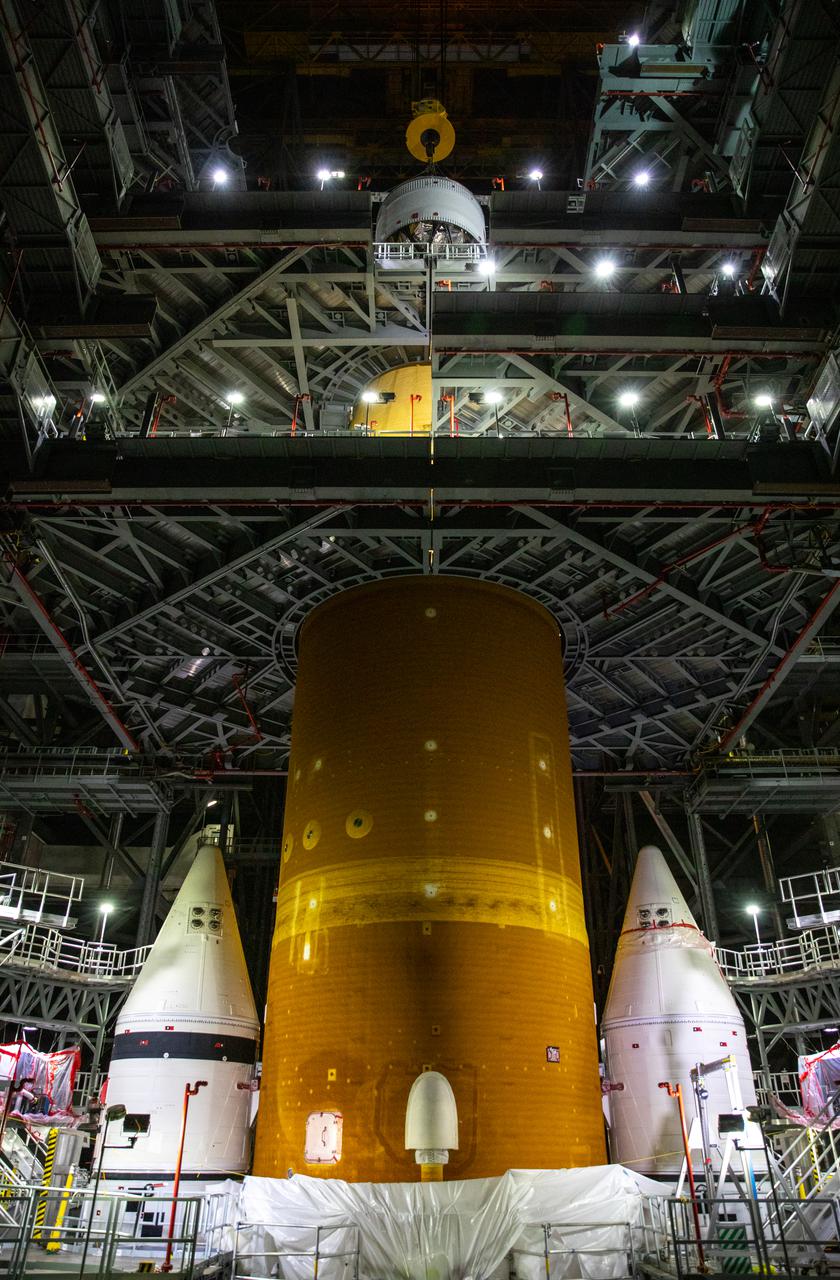
Teams with NASA’s Exploration Ground Systems and contractor Jacobs integrate the interim cryogenic propulsion stage (ICPS) for NASA’s Space Launch System (SLS) rocket with the launch vehicle stage adapter (LVSA) atop the massive SLS core stage in the agency’s Vehicle Assembly Building (VAB) at NASA’s Kennedy Space Center in Florida on July 5, 2021. The ICPS is a liquid oxygen and liquid hydrogen-based system that will fire its RL 10 engine to give the Orion spacecraft the big in-space push needed to fly tens of thousands of miles beyond the Moon. The next component to be stacked on top of ICPS will be the Orion stage adapter, which will connect the ICPS with the spacecraft. Through Artemis, NASA will send the first woman and the first person of color to the lunar surface, as well as establish a sustainable presence on and around the Moon. As the first in an increasingly complex set of missions, Artemis I will test SLS and Orion as an integrated system prior to crewed flights to the Moon.
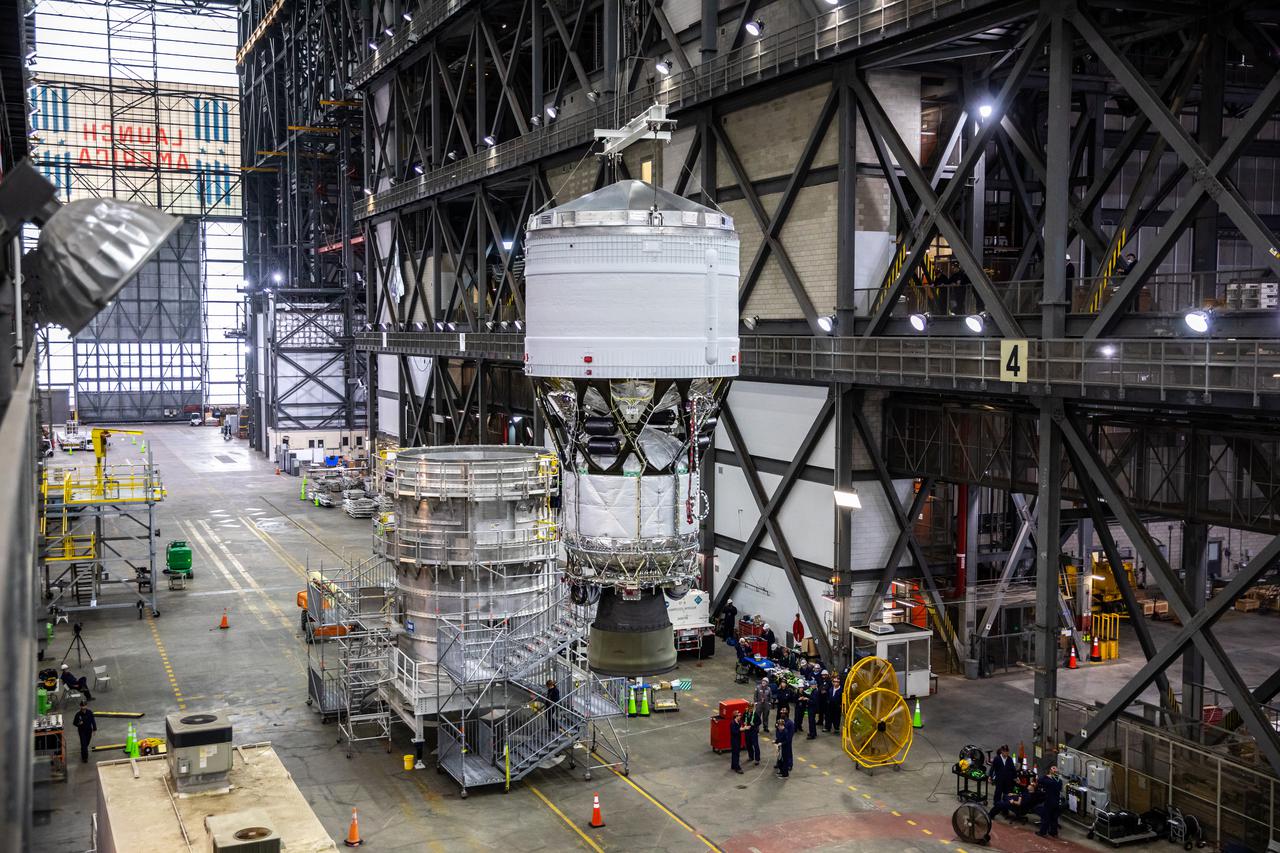
Teams with NASA’s Exploration Ground Systems and contractor Jacobs integrate the interim cryogenic propulsion stage (ICPS) for NASA’s Space Launch System (SLS) rocket with the launch vehicle stage adapter (LVSA) atop the massive SLS core stage in the agency’s Vehicle Assembly Building (VAB) at NASA’s Kennedy Space Center in Florida on July 5, 2021. The ICPS is a liquid oxygen and liquid hydrogen-based system that will fire its RL 10 engine to give the Orion spacecraft the big in-space push needed to fly tens of thousands of miles beyond the Moon. The next component to be stacked on top of ICPS will be the Orion stage adapter, which will connect the ICPS with the spacecraft. Through Artemis, NASA will send the first woman and the first person of color to the lunar surface, as well as establish a sustainable presence on and around the Moon. As the first in an increasingly complex set of missions, Artemis I will test SLS and Orion as an integrated system prior to crewed flights to the Moon.
Teams with NASA’s Exploration Ground Systems and contractor Jacobs integrate the interim cryogenic propulsion stage (ICPS) for NASA’s Space Launch System (SLS) rocket with the launch vehicle stage adapter (LVSA) atop the massive SLS core stage in the agency’s Vehicle Assembly Building (VAB) at NASA’s Kennedy Space Center in Florida on July 5, 2021. The ICPS is a liquid oxygen and liquid hydrogen-based system that will fire its RL 10 engine to give the Orion spacecraft the big in-space push needed to fly tens of thousands of miles beyond the Moon. The next component to be stacked on top of ICPS will be the Orion stage adapter, which will connect the ICPS with the spacecraft. Through Artemis, NASA will send the first woman and the first person of color to the lunar surface, as well as establish a sustainable presence on and around the Moon. As the first in an increasingly complex set of missions, Artemis I will test SLS and Orion as an integrated system prior to crewed flights to the Moon.

Teams with NASA’s Exploration Ground Systems and contractor Jacobs integrate the interim cryogenic propulsion stage (ICPS) for NASA’s Space Launch System (SLS) rocket with the launch vehicle stage adapter (LVSA) atop the massive SLS core stage in the agency’s Vehicle Assembly Building (VAB) at NASA’s Kennedy Space Center in Florida on July 5, 2021. The ICPS is a liquid oxygen and liquid hydrogen-based system that will fire its RL 10 engine to give the Orion spacecraft the big in-space push needed to fly tens of thousands of miles beyond the Moon. The next component to be stacked on top of ICPS will be the Orion stage adapter, which will connect the ICPS with the spacecraft. Through Artemis, NASA will send the first woman and the first person of color to the lunar surface, as well as establish a sustainable presence on and around the Moon. As the first in an increasingly complex set of missions, Artemis I will test SLS and Orion as an integrated system prior to crewed flights to the Moon.
Teams with NASA’s Exploration Ground Systems and contractor Jacobs integrate the interim cryogenic propulsion stage (ICPS) for NASA’s Space Launch System (SLS) rocket with the launch vehicle stage adapter (LVSA) atop the massive SLS core stage in the agency’s Vehicle Assembly Building (VAB) at NASA’s Kennedy Space Center in Florida on July 5, 2021. The ICPS is a liquid oxygen and liquid hydrogen-based system that will fire its RL 10 engine to give the Orion spacecraft the big in-space push needed to fly tens of thousands of miles beyond the Moon. The next component to be stacked on top of ICPS will be the Orion stage adapter, which will connect the ICPS with the spacecraft. Through Artemis, NASA will send the first woman and the first person of color to the lunar surface, as well as establish a sustainable presence on and around the Moon. As the first in an increasingly complex set of missions, Artemis I will test SLS and Orion as an integrated system prior to crewed flights to the Moon.
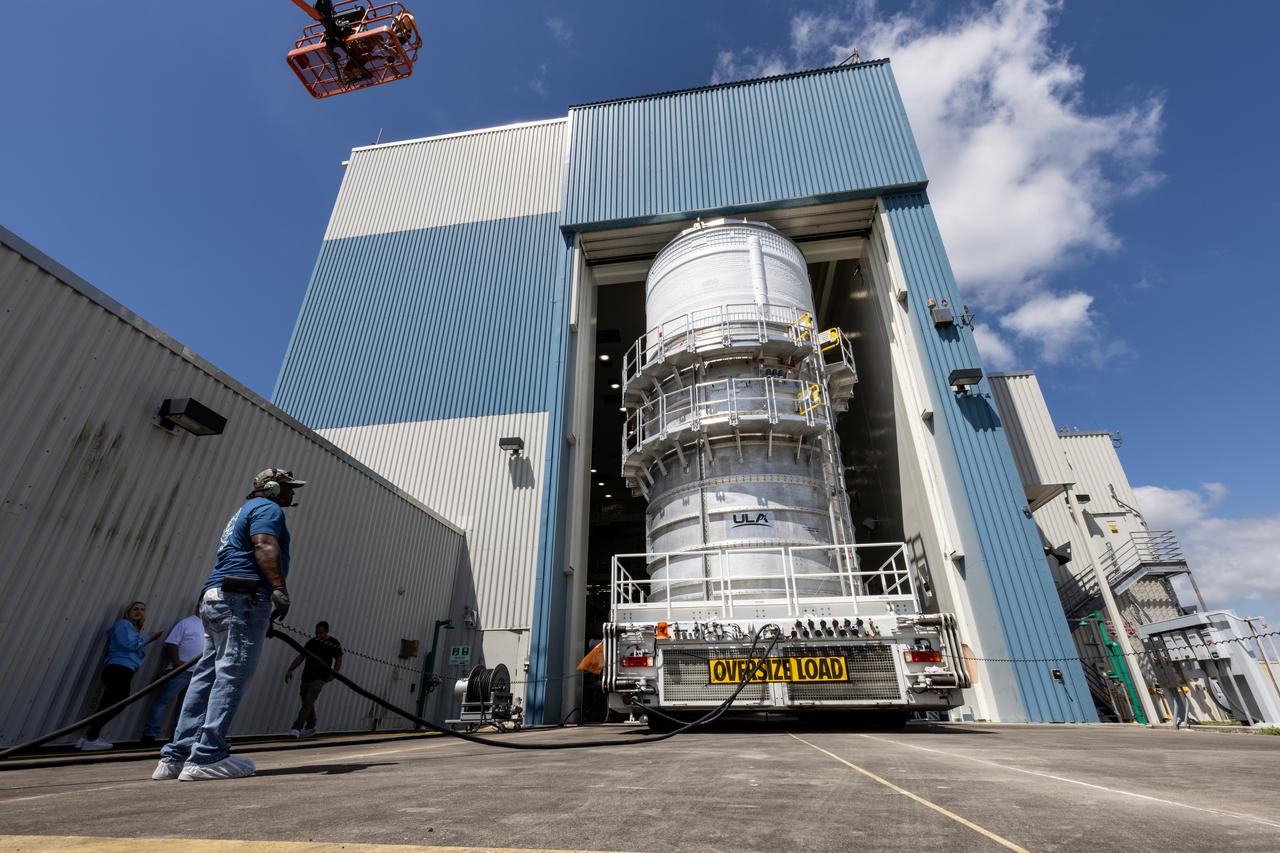
Teams with NASA’s Exploration Ground Systems Program transport the upper stage for the agency’s Artemis II SLS (Space Launch System) rocket from the Multi-Payload Processing Facility (MPPF) at NASA’s Kennedy Space Center in Florida to the spaceport’s Vehicle Assembly Building on Wednesday, April 16, 2025. Technicians fueled the SLS upper stage, known as the interim cryogenic propulsion stage, with hydrazine for its reaction control system at the MPPF and will now integrate the four-story propulsion system with SLS rocket elements atop mobile launcher 1.
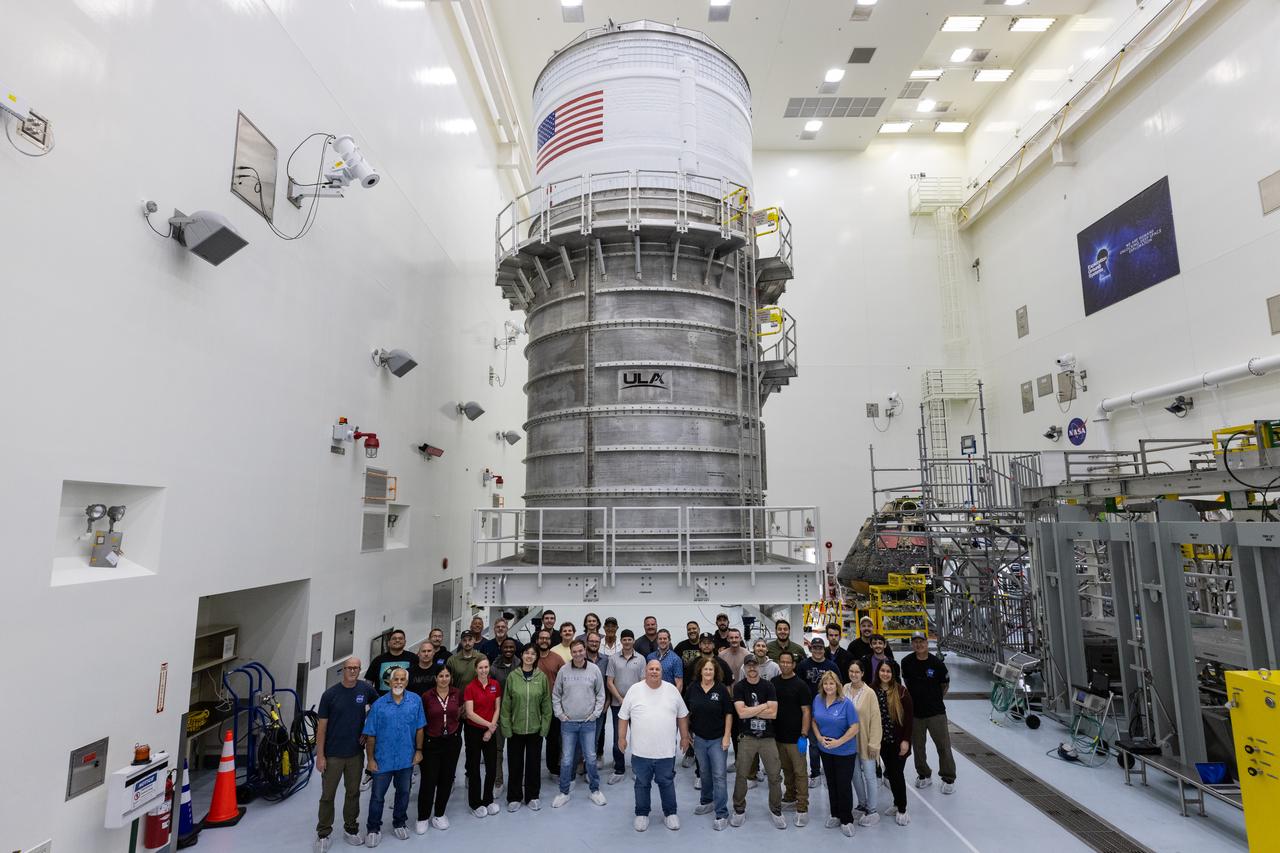
Teams with NASA’s Exploration Ground Systems Program pose for a photo in front of the upper stage for the agency’s Artemis II SLS (Space Launch System) rocket inside the Multi-Payload Processing Facility (MPPF) at NASA’s Kennedy Space Center in Florida on Wednesday, April 16, 2025. Visible in the background is also the Artemis I Orion crew module, now known as the Orion Environmental Test Article (ETA). Technicians fueled the SLS upper stage, known as the interim cryogenic propulsion stage, with hydrazine for its reaction control system at the MPPF before its transportation to the spaceport’s Vehicle Assembly Building and will now integrate the four-story propulsion system with SLS rocket elements atop mobile launcher 1.
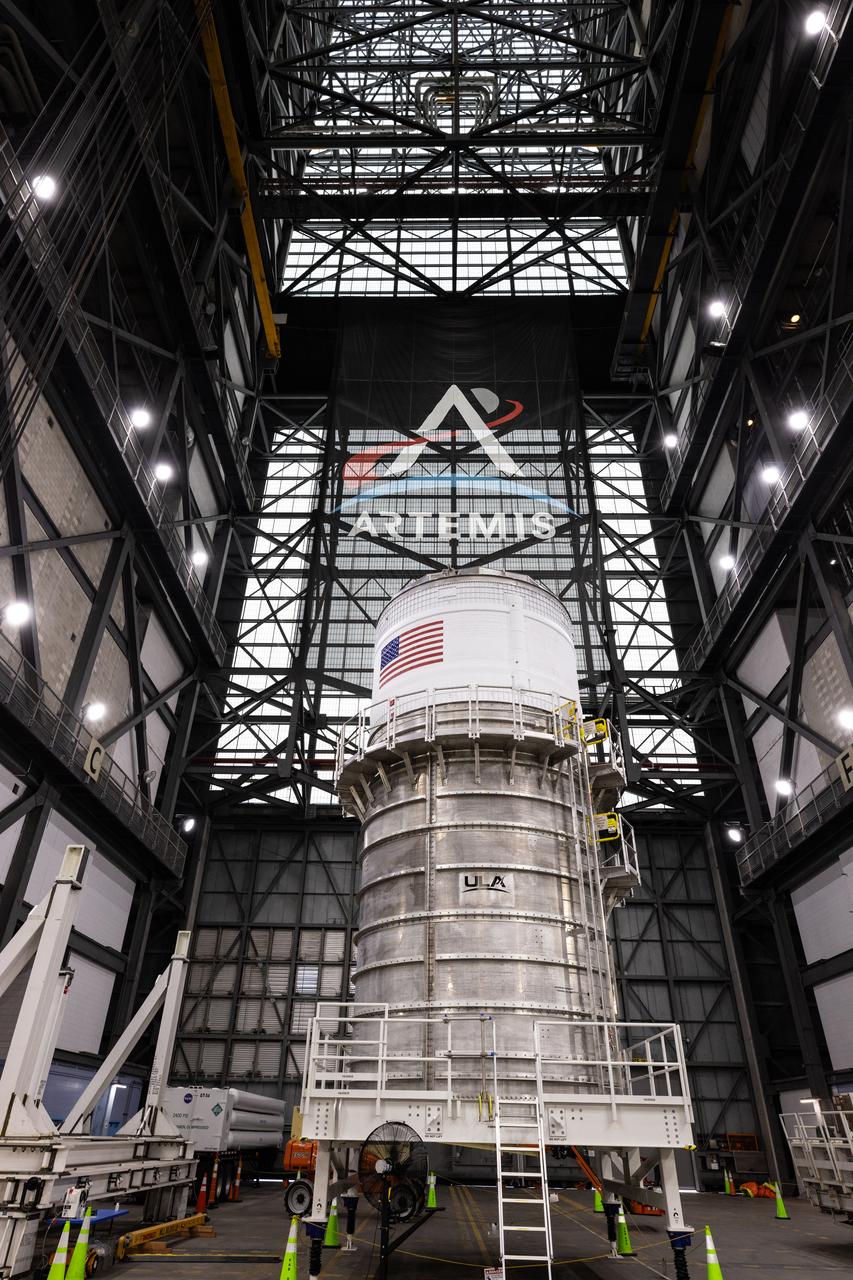
The upper stage for NASA’s Artemis II SLS (Space Launch System) rocket sits in the transfer aisle of the Vehicle Assembly Building at NASA’s Kennedy Space Center in Florida on Wednesday, April 16, 2025, after teams with the agency’s Exploration Ground Systems Program transported the four-story propulsion system from the spaceport’s Multi-Payload Processing Facility (MPPF). Technicians fueled the SLS upper stage, known as the interim cryogenic propulsion stage, with hydrazine for its reaction control system at the MPPF and will now integrate the four-story propulsion system with SLS rocket elements atop mobile launcher 1.
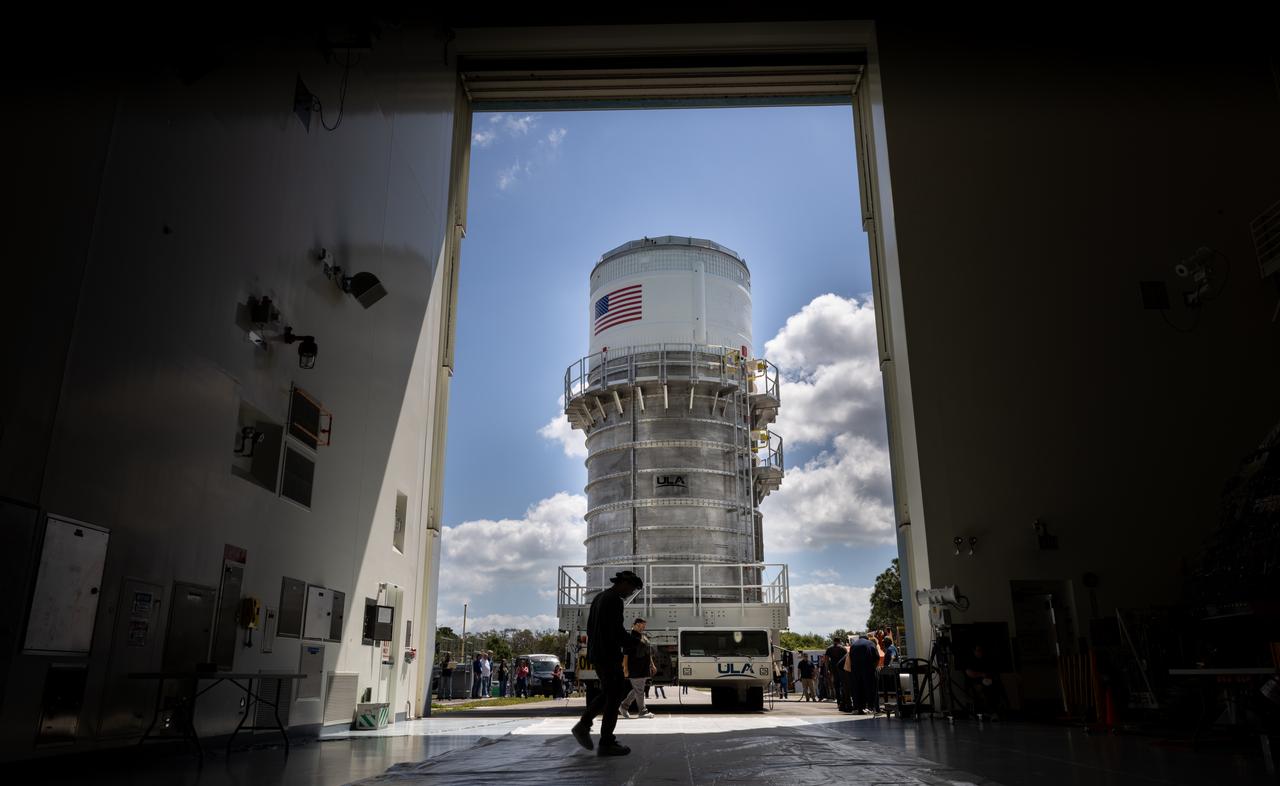
Teams with NASA’s Exploration Ground Systems Program transport the upper stage for the agency’s Artemis II SLS (Space Launch System) rocket from the Multi-Payload Processing Facility (MPPF) at NASA’s Kennedy Space Center in Florida to the spaceport’s Vehicle Assembly Building on Wednesday, April 16, 2025. Technicians fueled the SLS upper stage, known as the interim cryogenic propulsion stage, with hydrazine for its reaction control system at the MPPF and will now integrate the four-story propulsion system with SLS rocket elements atop mobile launcher 1.
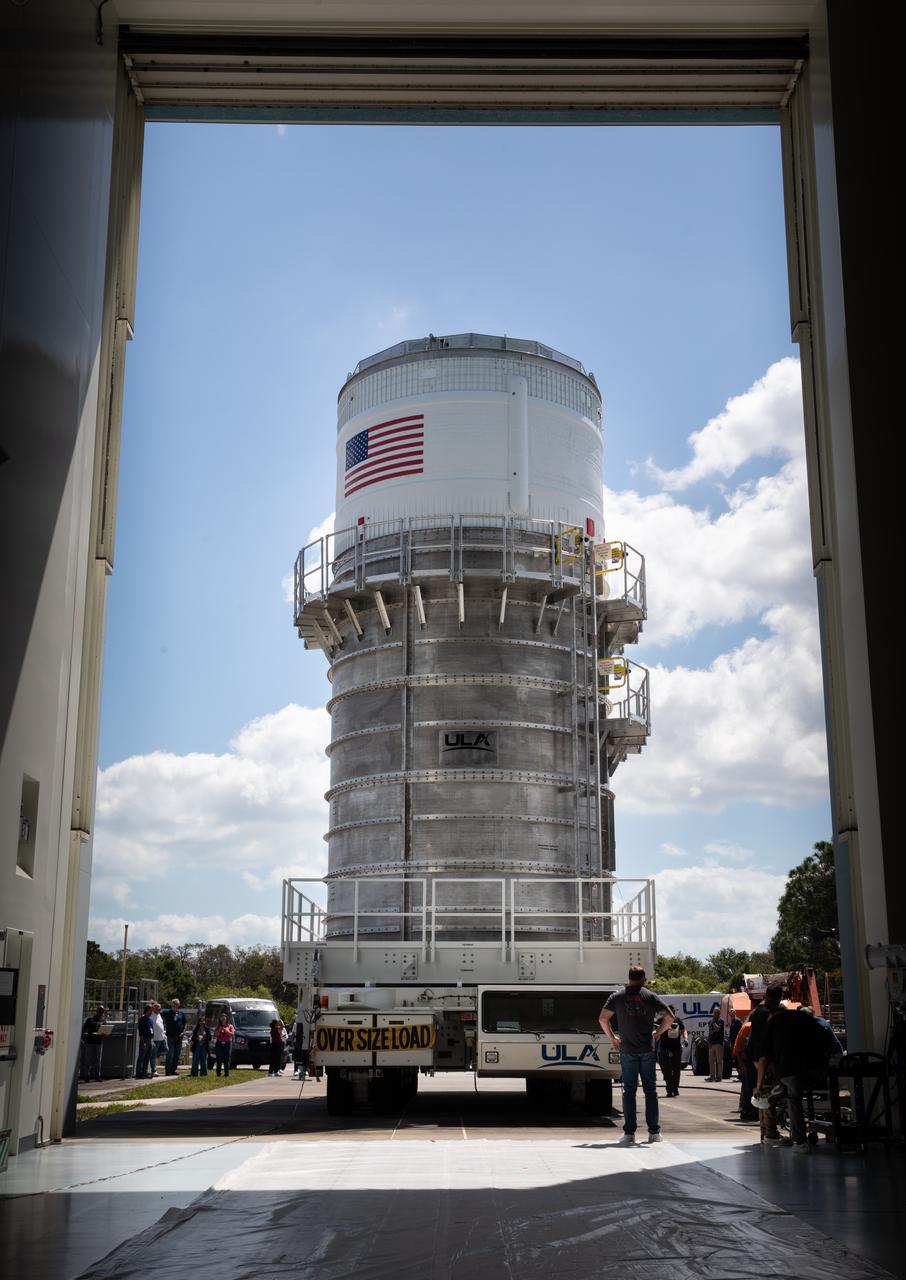
Teams with NASA’s Exploration Ground Systems Program transport the upper stage for the agency’s Artemis II SLS (Space Launch System) rocket from the Multi-Payload Processing Facility (MPPF) at NASA’s Kennedy Space Center in Florida to the spaceport’s Vehicle Assembly Building on Wednesday, April 16, 2025. Technicians fueled the SLS upper stage, known as the interim cryogenic propulsion stage, with hydrazine for its reaction control system at the MPPF and will now integrate the four-story propulsion system with SLS rocket elements atop mobile launcher 1.
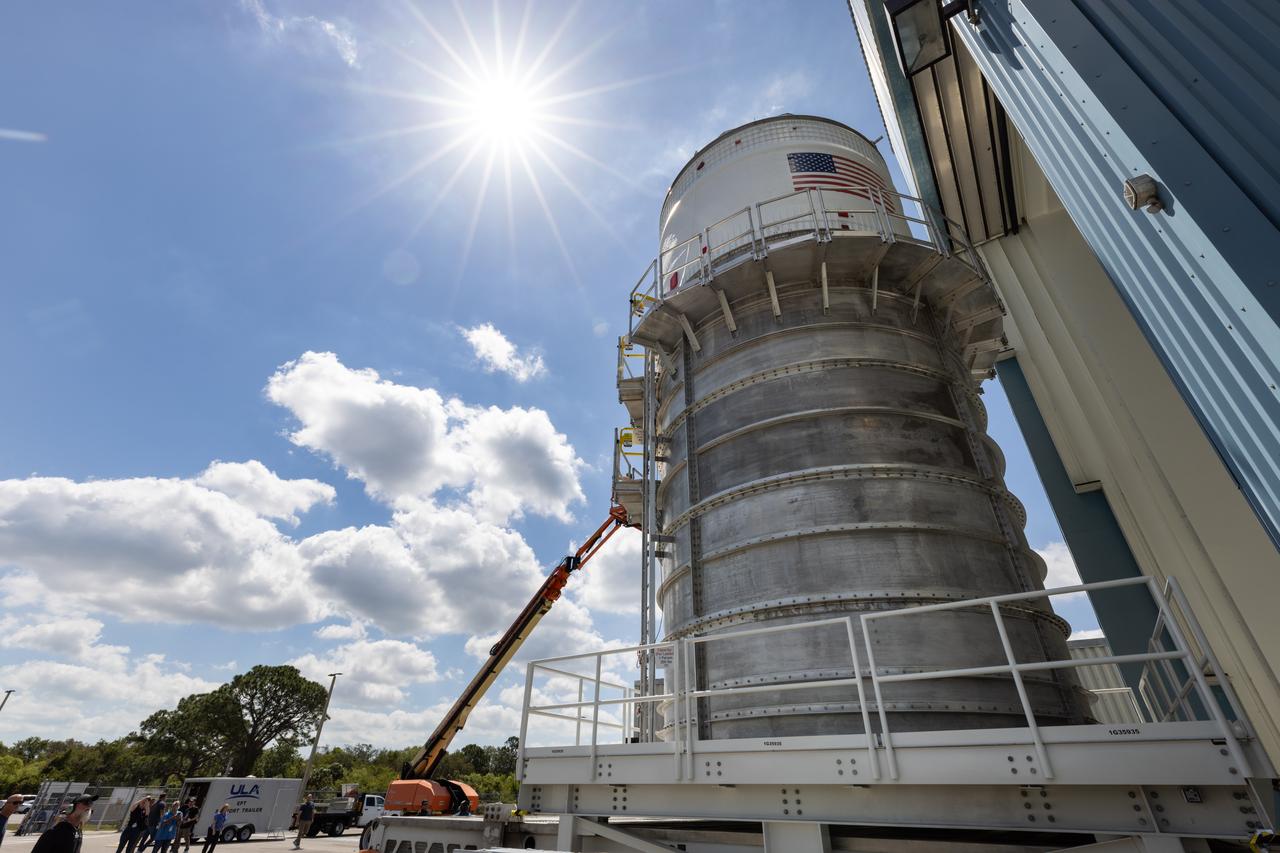
Teams with NASA’s Exploration Ground Systems Program transport the upper stage for the agency’s Artemis II SLS (Space Launch System) rocket from the Multi-Payload Processing Facility (MPPF) at NASA’s Kennedy Space Center in Florida to the spaceport’s Vehicle Assembly Building on Wednesday, April 16, 2025. Technicians fueled the SLS upper stage, known as the interim cryogenic propulsion stage, with hydrazine for its reaction control system at the MPPF and will now integrate the four-story propulsion system with SLS rocket elements atop mobile launcher 1.
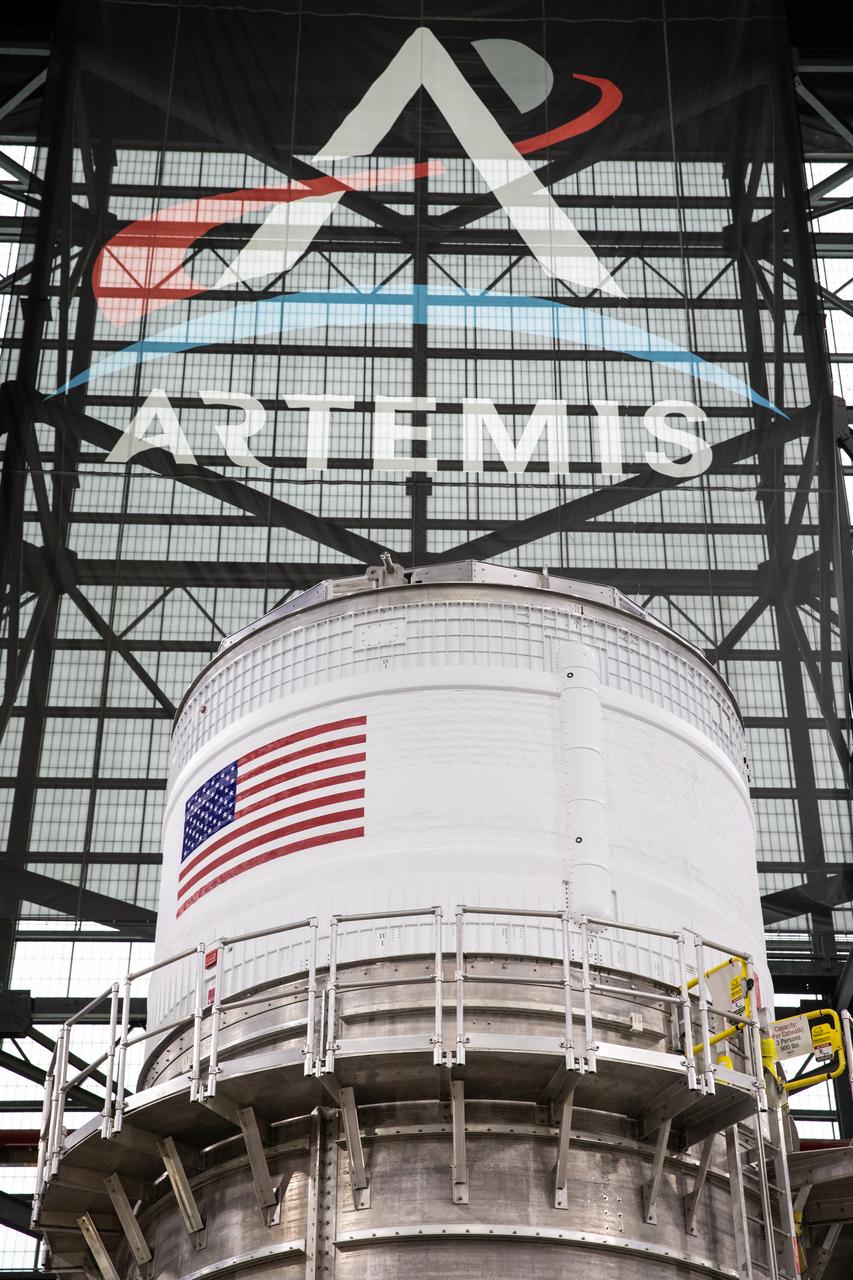
The upper stage for NASA’s Artemis II SLS (Space Launch System) rocket sits in the transfer aisle of the Vehicle Assembly Building at NASA’s Kennedy Space Center in Florida on Wednesday, April 16, 2025, after teams with the agency’s Exploration Ground Systems Program transported the four-story propulsion system from the spaceport’s Multi-Payload Processing Facility (MPPF). Technicians fueled the SLS upper stage, known as the interim cryogenic propulsion stage, with hydrazine for its reaction control system at the MPPF and will now integrate the four-story propulsion system with SLS rocket elements atop mobile launcher 1.
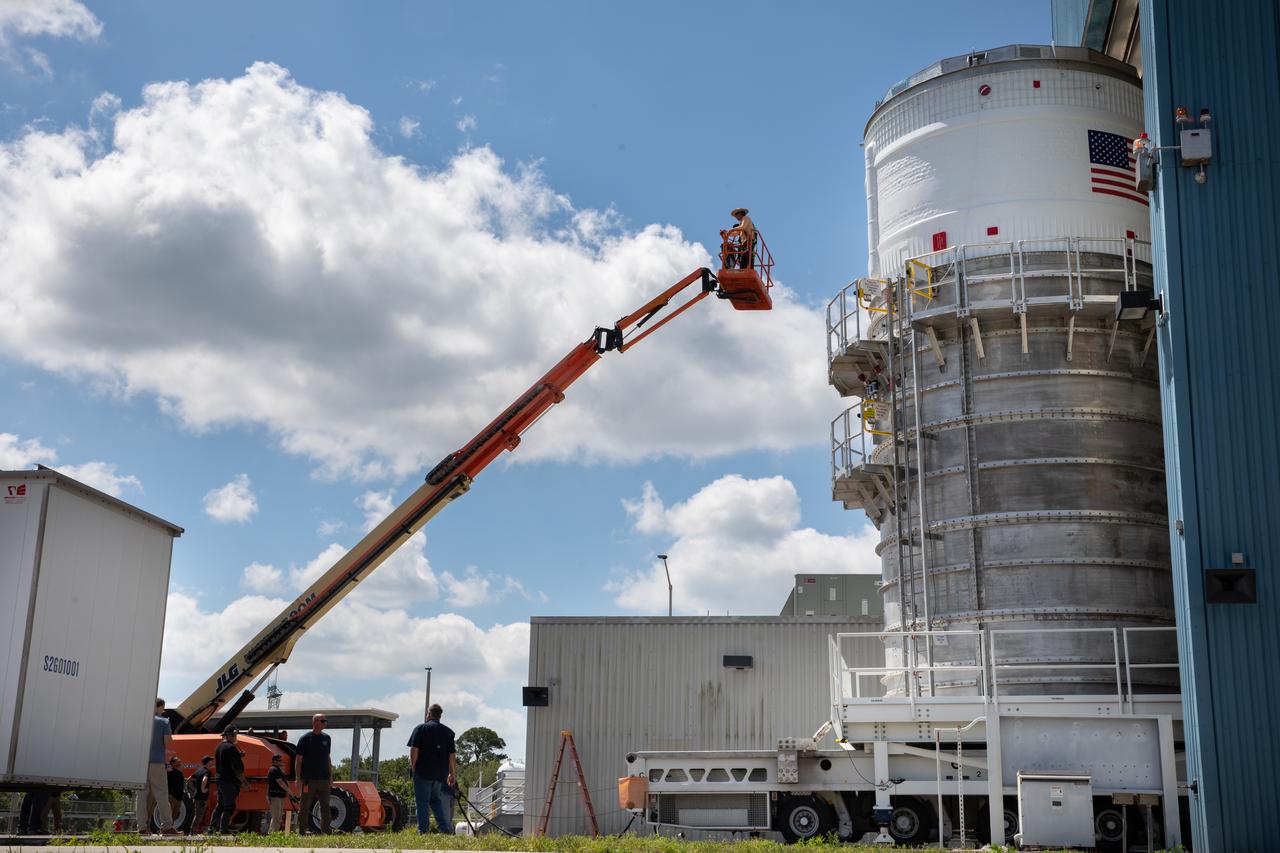
Teams with NASA’s Exploration Ground Systems Program transport the upper stage for the agency’s Artemis II SLS (Space Launch System) rocket from the Multi-Payload Processing Facility (MPPF) at NASA’s Kennedy Space Center in Florida to the spaceport’s Vehicle Assembly Building on Wednesday, April 16, 2025. Technicians fueled the SLS upper stage, known as the interim cryogenic propulsion stage, with hydrazine for its reaction control system at the MPPF and will now integrate the four-story propulsion system with SLS rocket elements atop mobile launcher 1.
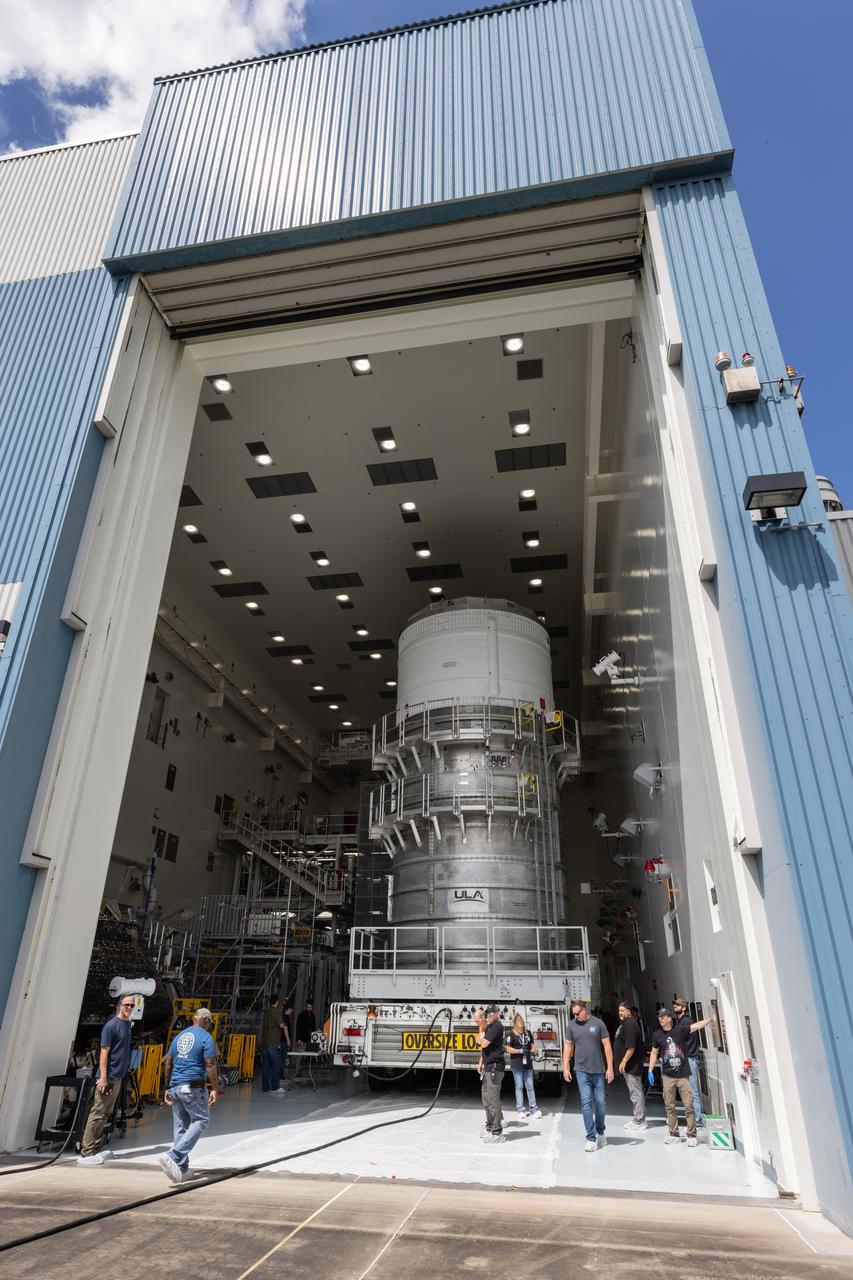
Teams with NASA’s Exploration Ground Systems Program transport the upper stage for the agency’s Artemis II SLS (Space Launch System) rocket from the Multi-Payload Processing Facility (MPPF) at NASA’s Kennedy Space Center in Florida to the spaceport’s Vehicle Assembly Building on Wednesday, April 16, 2025. Technicians fueled the SLS upper stage, known as the interim cryogenic propulsion stage, with hydrazine for its reaction control system at the MPPF and will now integrate the four-story propulsion system with SLS rocket elements atop mobile launcher 1.
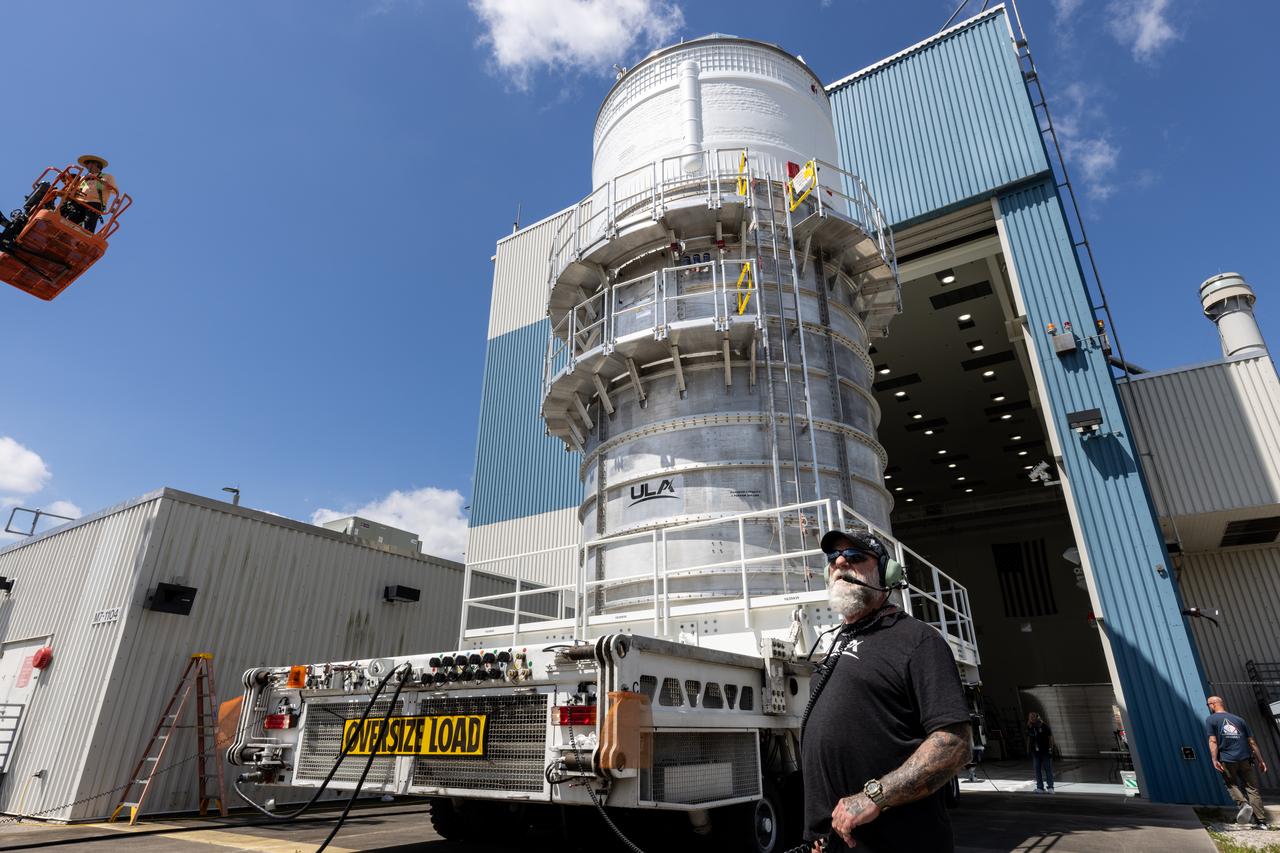
Teams with NASA’s Exploration Ground Systems Program transport the upper stage for the agency’s Artemis II SLS (Space Launch System) rocket from the Multi-Payload Processing Facility (MPPF) at NASA’s Kennedy Space Center in Florida to the spaceport’s Vehicle Assembly Building on Wednesday, April 16, 2025. Technicians fueled the SLS upper stage, known as the interim cryogenic propulsion stage, with hydrazine for its reaction control system at the MPPF and will now integrate the four-story propulsion system with SLS rocket elements atop mobile launcher 1.
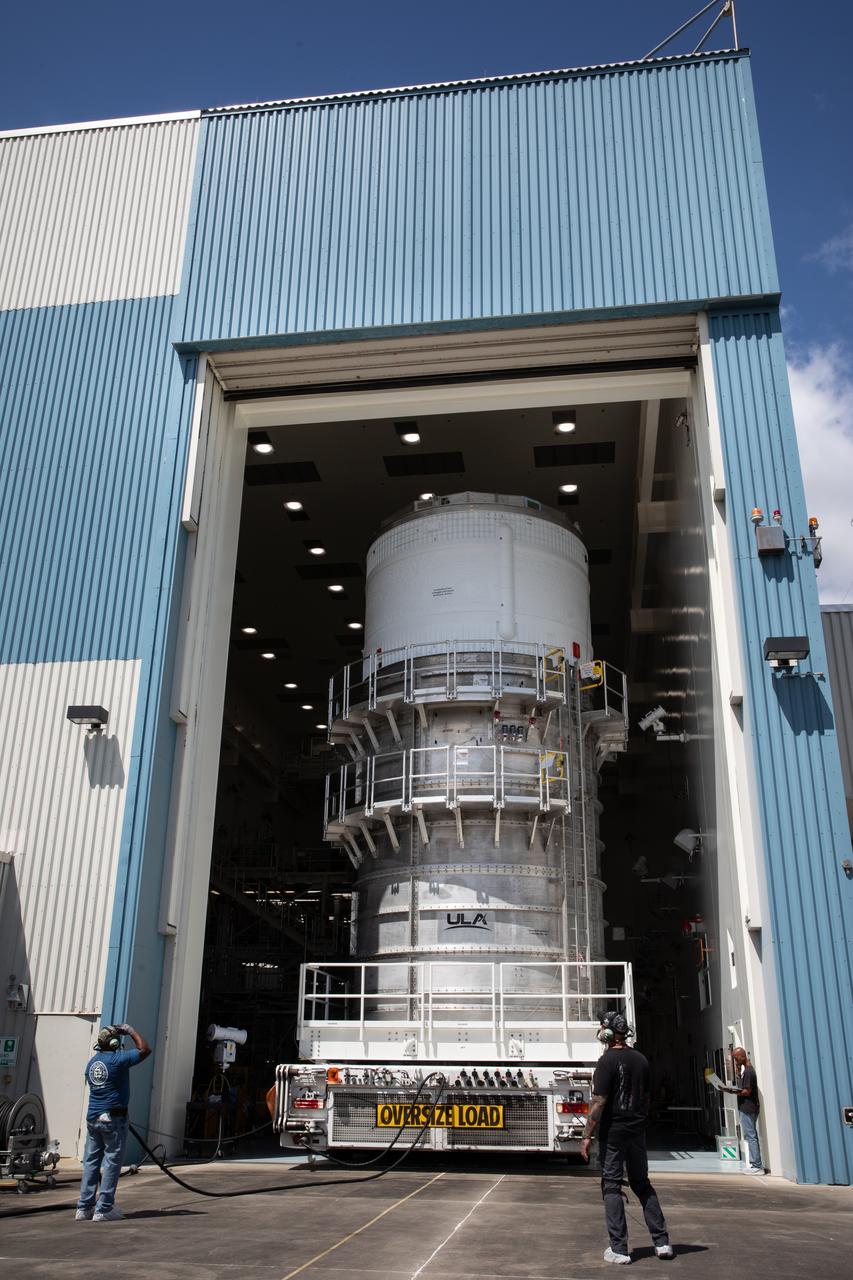
Teams with NASA’s Exploration Ground Systems Program transport the upper stage for the agency’s Artemis II SLS (Space Launch System) rocket from the Multi-Payload Processing Facility (MPPF) at NASA’s Kennedy Space Center in Florida to the spaceport’s Vehicle Assembly Building on Wednesday, April 16, 2025. Technicians fueled the SLS upper stage, known as the interim cryogenic propulsion stage, with hydrazine for its reaction control system at the MPPF and will now integrate the four-story propulsion system with SLS rocket elements atop mobile launcher 1.
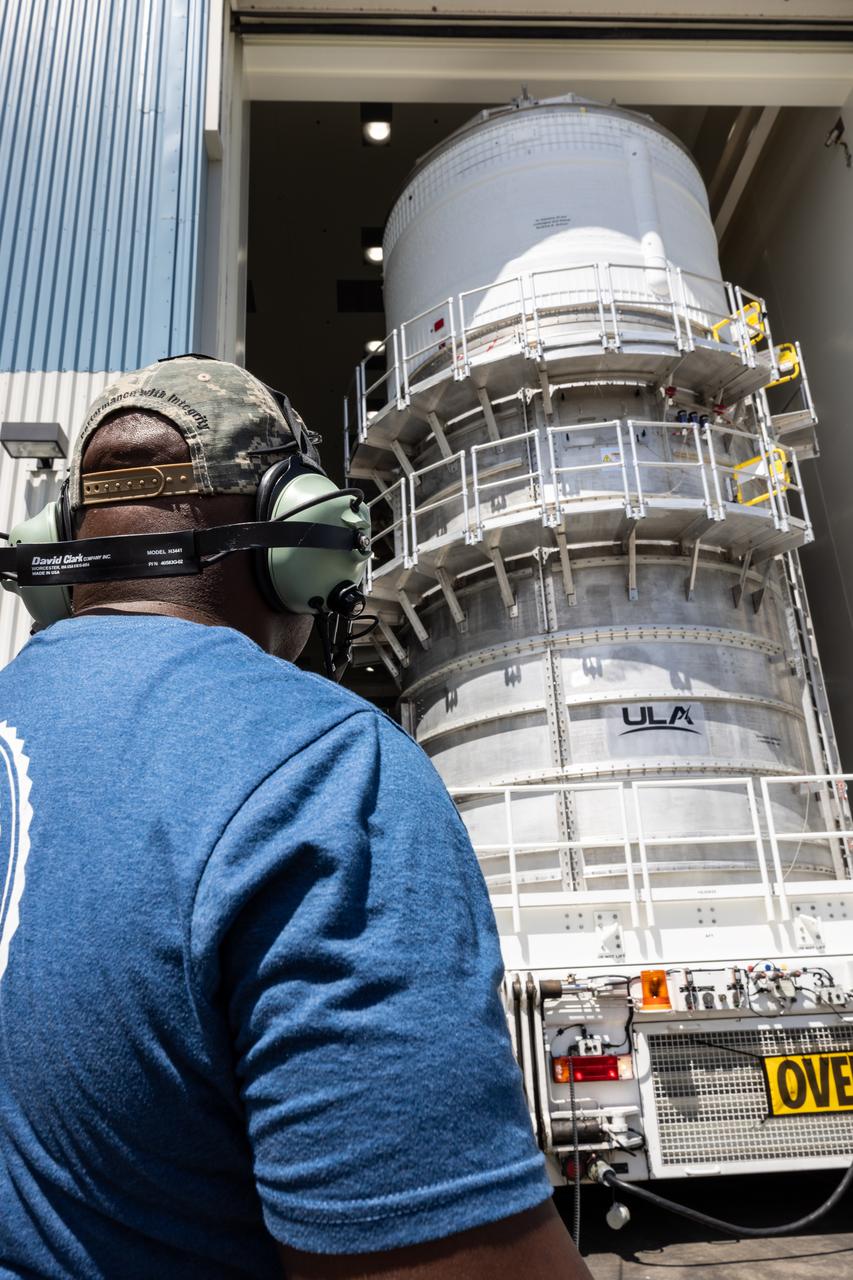
Teams with NASA’s Exploration Ground Systems Program transport the upper stage for the agency’s Artemis II SLS (Space Launch System) rocket from the Multi-Payload Processing Facility (MPPF) at NASA’s Kennedy Space Center in Florida to the spaceport’s Vehicle Assembly Building on Wednesday, April 16, 2025. Technicians fueled the SLS upper stage, known as the interim cryogenic propulsion stage, with hydrazine for its reaction control system at the MPPF and will now integrate the four-story propulsion system with SLS rocket elements atop mobile launcher 1.
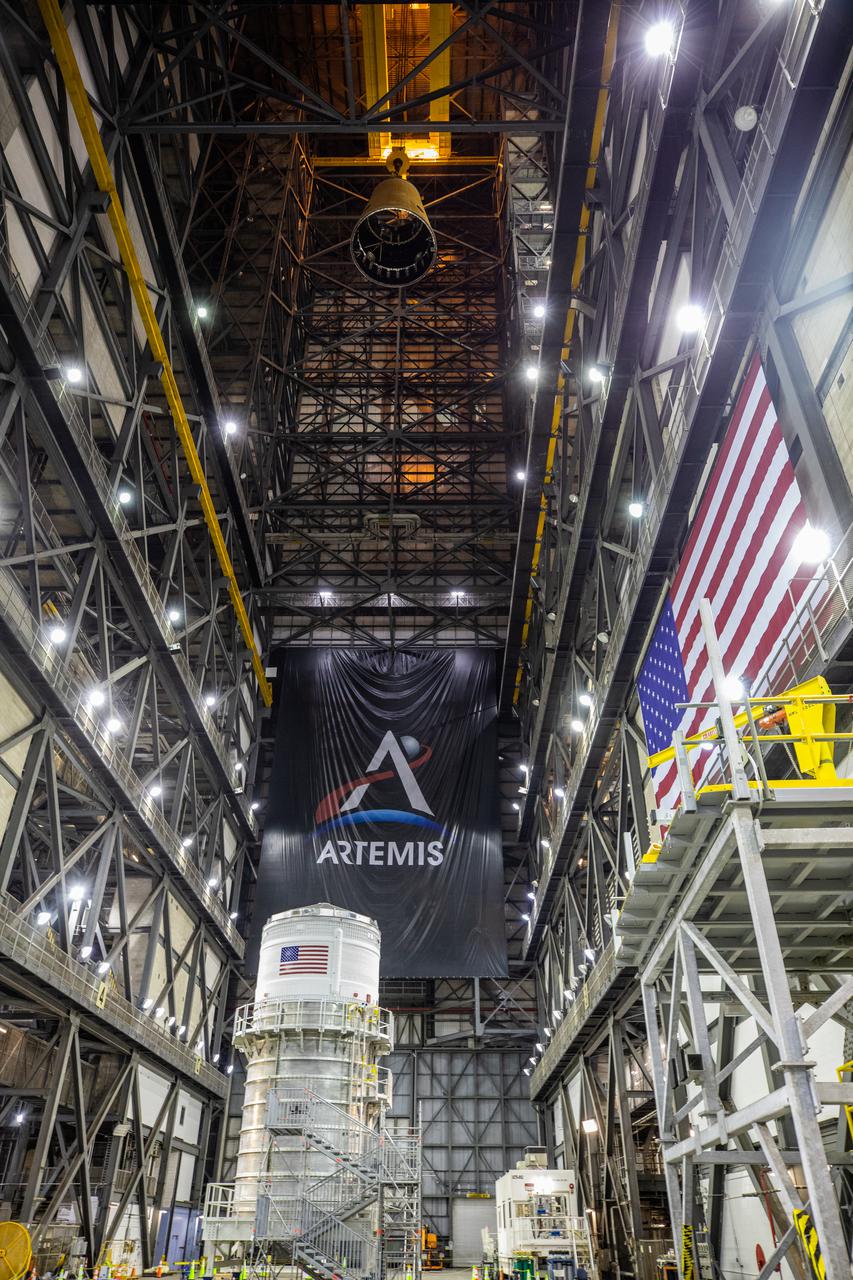
The Space Launch System (SLS) rocket’s interim cryogenic propulsion stage (ICPS) sits in the transfer aisle of the Vehicle Assembly Building (VAB), while teams with NASA’s Exploration Ground Systems and contractor Jacobs integrate the launch vehicle stage adapter (LVSA) with the massive SLS core stage on the mobile launcher at NASA’s Kennedy Space Center in Florida on June 22, 2021. Engineers used one of five VAB cranes to lift the adapter almost 250-feet in the air and then slowly lower it on to the core stage. The LVSA arrived at Kennedy from the agency’s Marshall Space Flight Center in Huntsville, Alabama, in July 2020 and has remained in the VAB for processing. During integration, known as “stacking,” the LVSA is bolted to the forward skirt of the core stage, connecting the core stage and the ICPS in preparation for the first flight of the rocket and the Orion spacecraft during Artemis I. The ICPS will provide Orion spacecraft with the push needed for its flight around the Moon. The ICPS’s RL10 engine will fit down inside the LVSA, which protects the engine during launch. The first in a series of increasingly complex missions, Artemis I will test SLS and the Orion spacecraft as an integrated system prior to crewed flights in which NASA will land the first woman and person of color on the Moon.
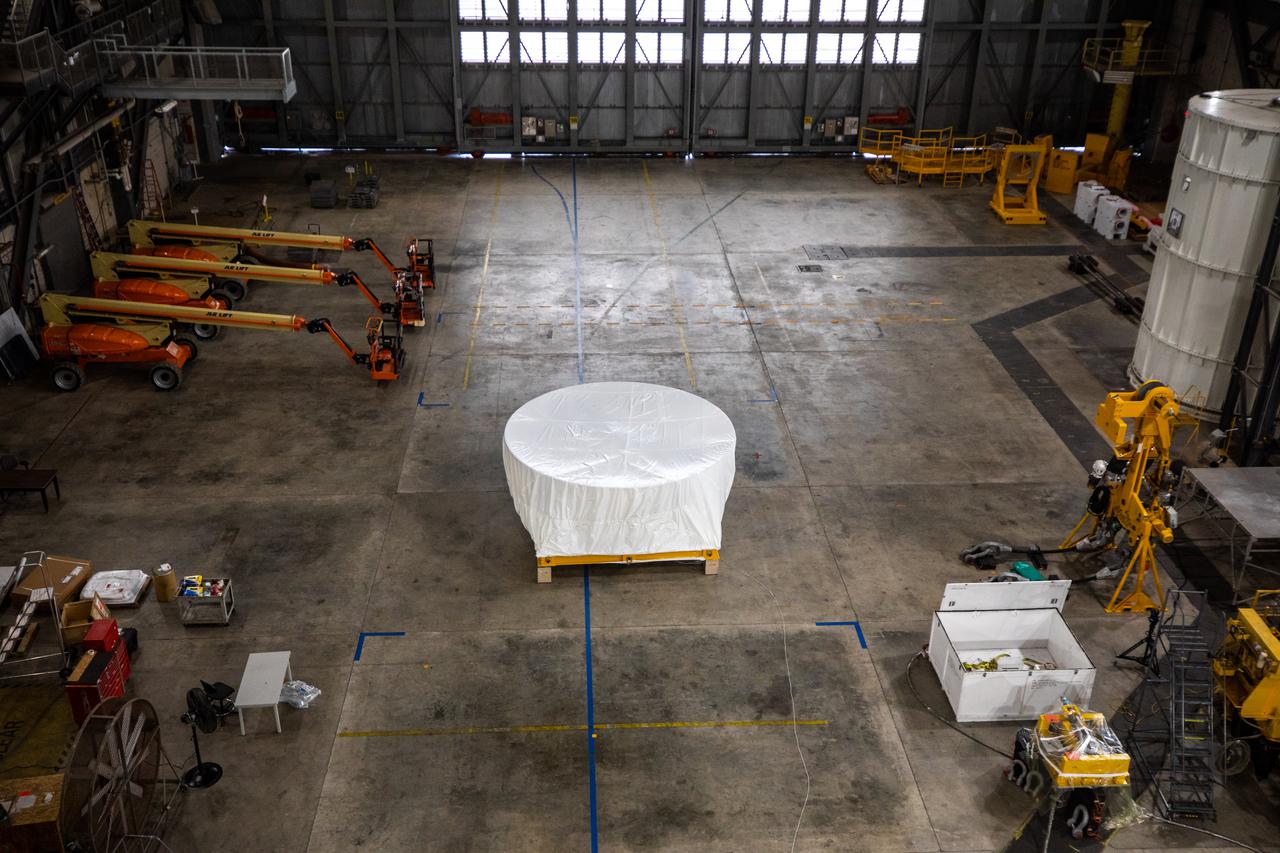
Under a protective cover, the Orion Stage Adapter (OSA) arrives in High Bay 4 of the Vehicle Assembly Building on Oct. 4, 2021, at NASA's Kennedy Space Center in Florida. Teams will lift the ring-shaped OSA, filled with shoebox-sized CubeSats, and connect it to the Interim Cryogenic Propulsion Stage (ICPS). The Orion spacecraft will be secured on top of the Space Launch System (SLS) rocket to complete the stack ahead of the Artemis I launch. This mission will be the first integrated flight test of the SLS and Orion spacecraft. In later missions, NASA will land the first woman and the first person of color on the surface of the Moon, paving the way for a long-term lunar presence and serving as a steppingstone on the way to Mars.
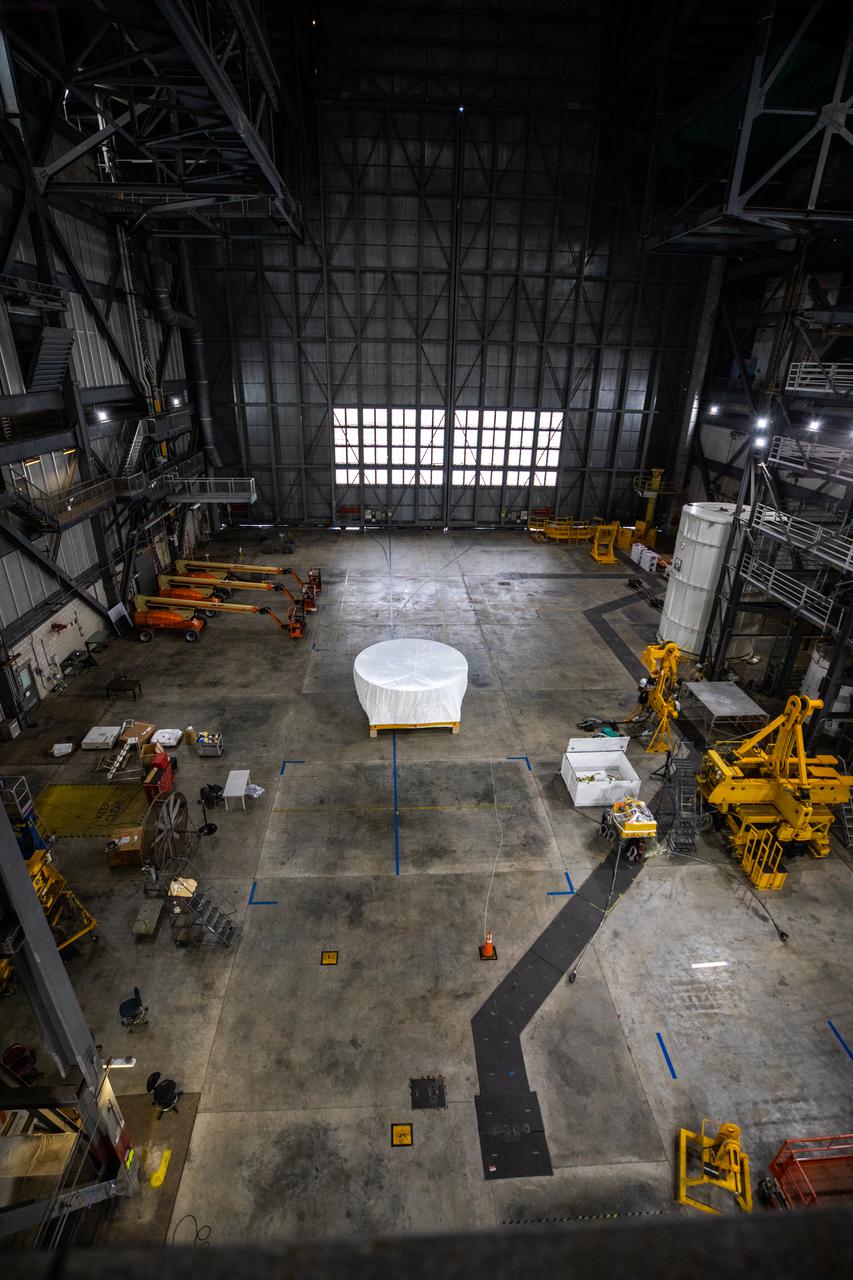
Under a protective cover, the Orion Stage Adapter (OSA) arrives in High Bay 4 of the Vehicle Assembly Building on Oct. 4, 2021, at NASA's Kennedy Space Center in Florida. Teams will lift the ring-shaped OSA, filled with shoebox-sized CubeSats, and connect it to the Interim Cryogenic Propulsion Stage (ICPS). The Orion spacecraft will be secured on top of the Space Launch System (SLS) rocket to complete the stack ahead of the Artemis I launch. This mission will be the first integrated flight test of the SLS and Orion spacecraft. In later missions, NASA will land the first woman and the first person of color on the surface of the Moon, paving the way for a long-term lunar presence and serving as a steppingstone on the way to Mars.
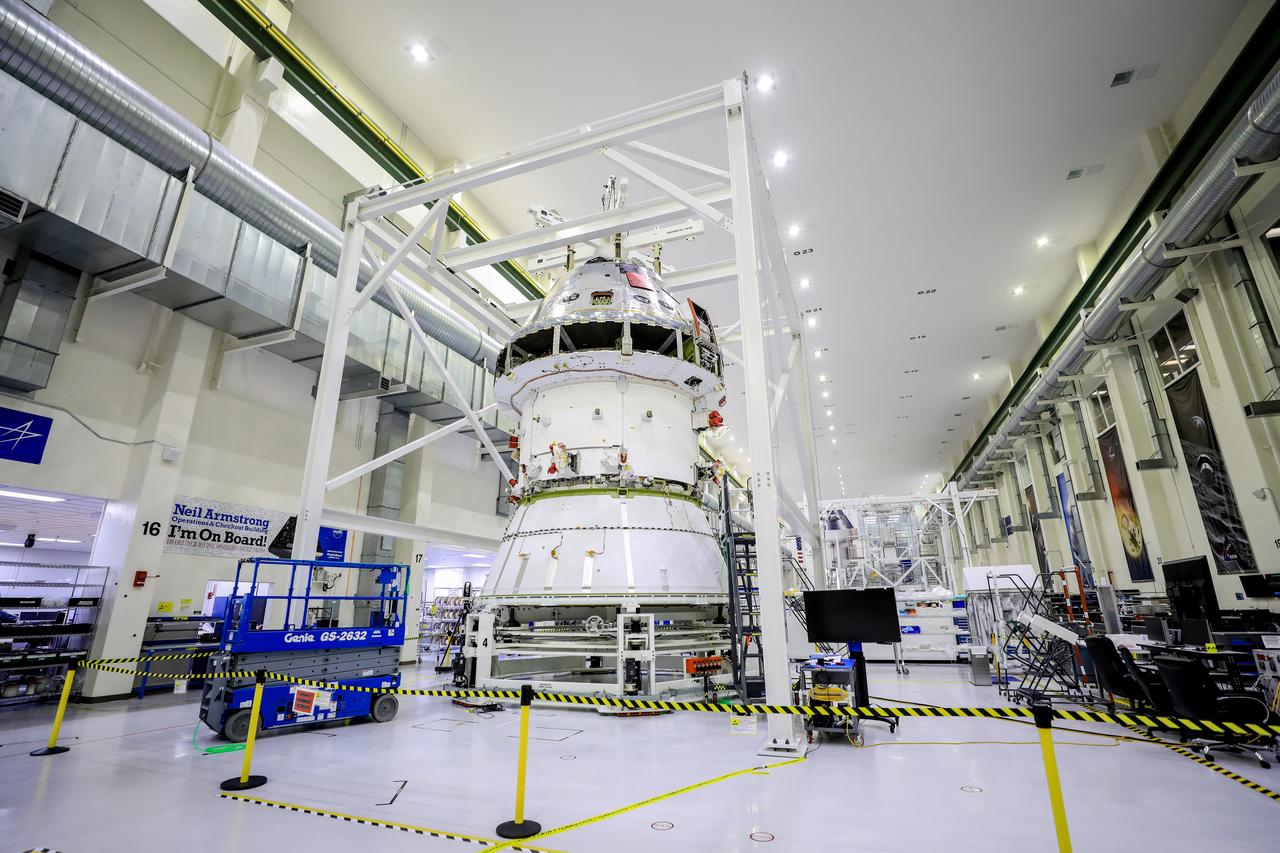
Technicians at NASA’s Kennedy Space Center in Florida working to install an adapter that will connect the Orion spacecraft to its rocket for the Artemis I mission around the Moon on Aug. 10, 2020. This is one of the final major hardware operations for Orion inside the Neil Armstrong Operations and Checkout Building prior to integration with the Space Launch System (SLS) rocket...The spacecraft adapter cone (seen at the bottom of the stack pictured above) connects to the bottom of Orion’s service module and will later join another adapter connected to the top of the rocket’s interim cryogenic propulsion stage (ICPS). During the process to install the cone on Orion, the spacecraft is lifted out of the Final Assembly and Systems Testing, or FAST, cell and placed into the Super Station support fixture...During flight, the SLS rocket separates in multiple stages as it pushes Orion into deep space. After accelerating Orion towards the Moon, the spacecraft will separate from the ICPS and adapter cone using pyrotechnics and springs...Next up before stacking Orion on the rocket, technicians will install coverings to protect fluid lines and electrical components on the crew module adapter that connects Orion to the service module. Workers also will install the solar array wings that will provide Orion with power, spacecraft adapter jettison fairings that enclose the service module for launch, and the forward bay cover that protects the parachute system. ..Orion will fly on the agency’s Artemis I mission – the first in a series of increasingly complex missions to the Moon that will lead to human exploration of Mars.
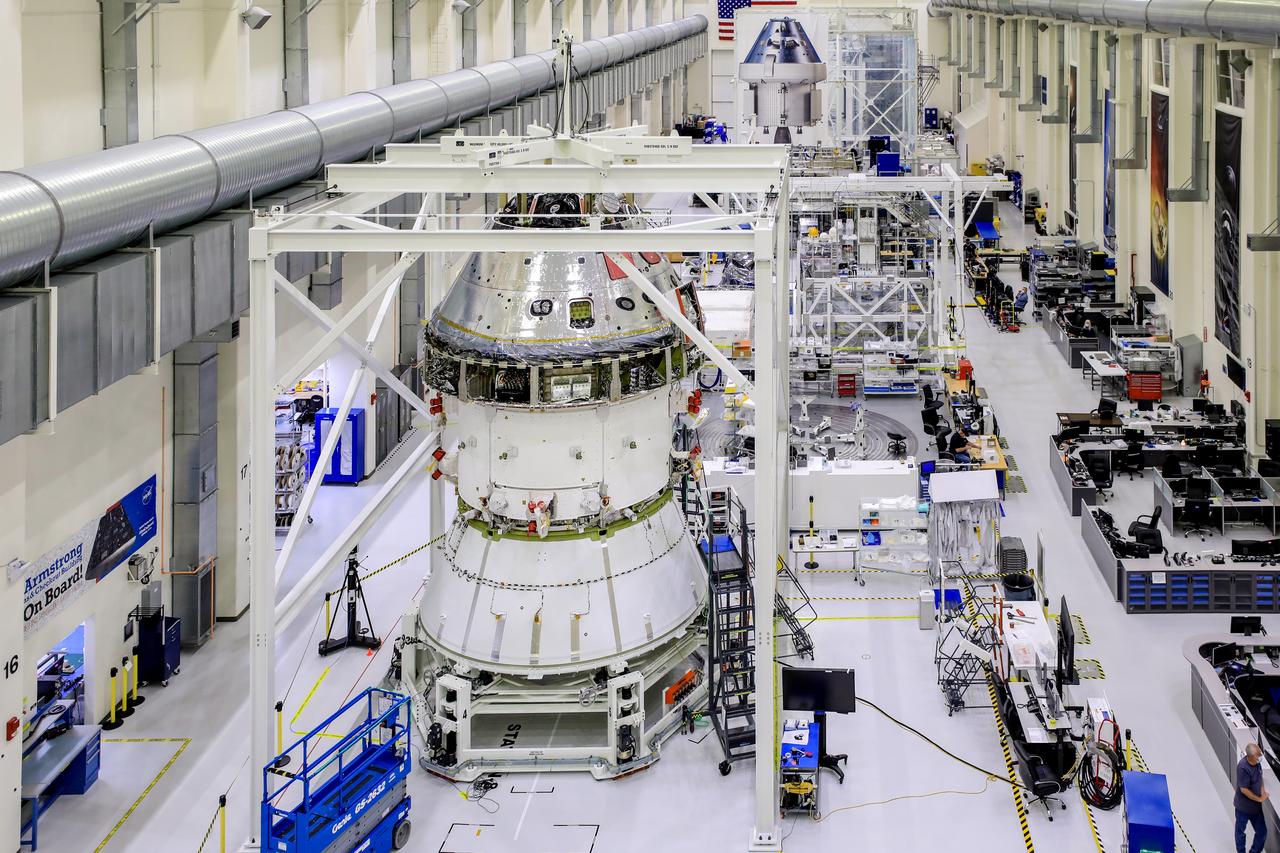
Technicians at NASA’s Kennedy Space Center in Florida are working to install an adapter that will connect the Orion spacecraft to its rocket for the Artemis I mission around the Moon. This is one of the final major hardware operations for Orion inside the Neil Armstrong Operations and Checkout Building prior to integration with the Space Launch System (SLS) rocket...The spacecraft adapter cone (seen at the bottom of the stack pictured above) connects to the bottom of Orion’s service module and will later join another adapter connected to the top of the rocket’s interim cryogenic propulsion stage (ICPS). During the process to install the cone on Orion, the spacecraft is lifted out of the Final Assembly and Systems Testing, or FAST, cell and placed into the Super Station support fixture...During flight, the SLS rocket separates in multiple stages as it pushes Orion into deep space. After accelerating Orion towards the Moon, the spacecraft will separate from the ICPS and adapter cone using pyrotechnics and springs...Next up before stacking Orion on the rocket, technicians will install coverings to protect fluid lines and electrical components on the crew module adapter that connects Orion to the service module. Workers also will install the solar array wings that will provide Orion with power, spacecraft adapter jettison fairings that enclose the service module for launch, and the forward bay cover that protects the parachute system. ..Orion will fly on the agency’s Artemis I mission – the first in a series of increasingly complex missions to the Moon that will lead to human exploration of Mars. Through the Artemis program, NASA is working to land the first woman and the next man on the Moon by 2024
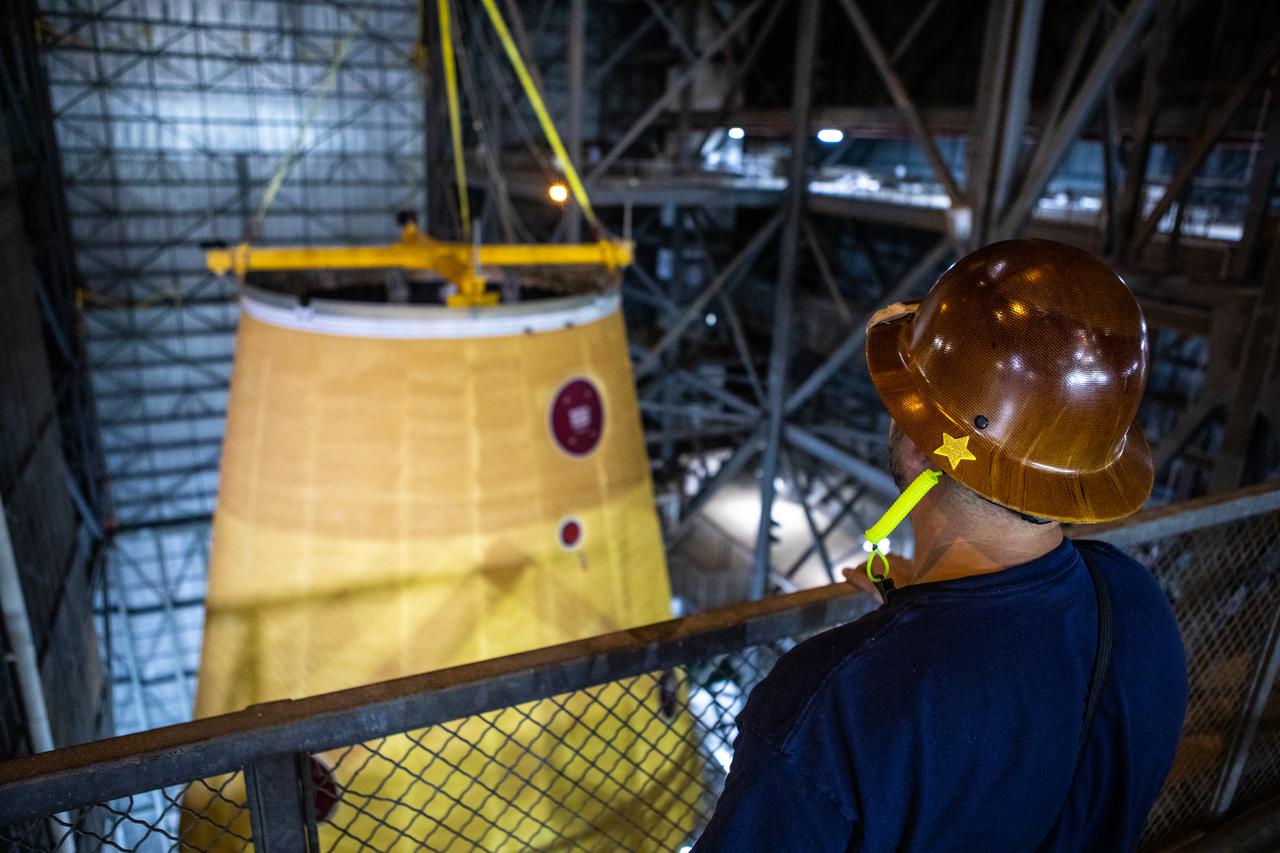
Teams with NASA’s Exploration Ground Systems and contractor Jacobs integrate the launch vehicle stage adapter (LVSA) for NASA’s Space Launch System (SLS) rocket with the massive SLS core stage on the mobile launcher in the agency’s Vehicle Assembly Building (VAB) at NASA’s Kennedy Space Center in Florida on June 22, 2021. Engineers used one of five VAB cranes to lift the adapter almost 250-feet in the air and then slowly lower it on to the core stage. The LVSA arrived at Kennedy from the agency’s Marshall Space Flight Center in Huntsville, Alabama, in July 2020 and has remained in the VAB for processing. During integration, known as “stacking,” the LVSA is bolted to the forward skirt of the core stage, connecting the core stage and the interim cryogenic propulsion stage in preparation for the first flight of the rocket and the Orion spacecraft during Artemis I. The ICPS’s RL10 engine will fit down inside the LVSA, which protects the engine during launch. The first in a series of increasingly complex missions, Artemis I will test SLS and the Orion spacecraft as an integrated system prior to crewed flights in which NASA will land the first woman and person of color on the Moon.
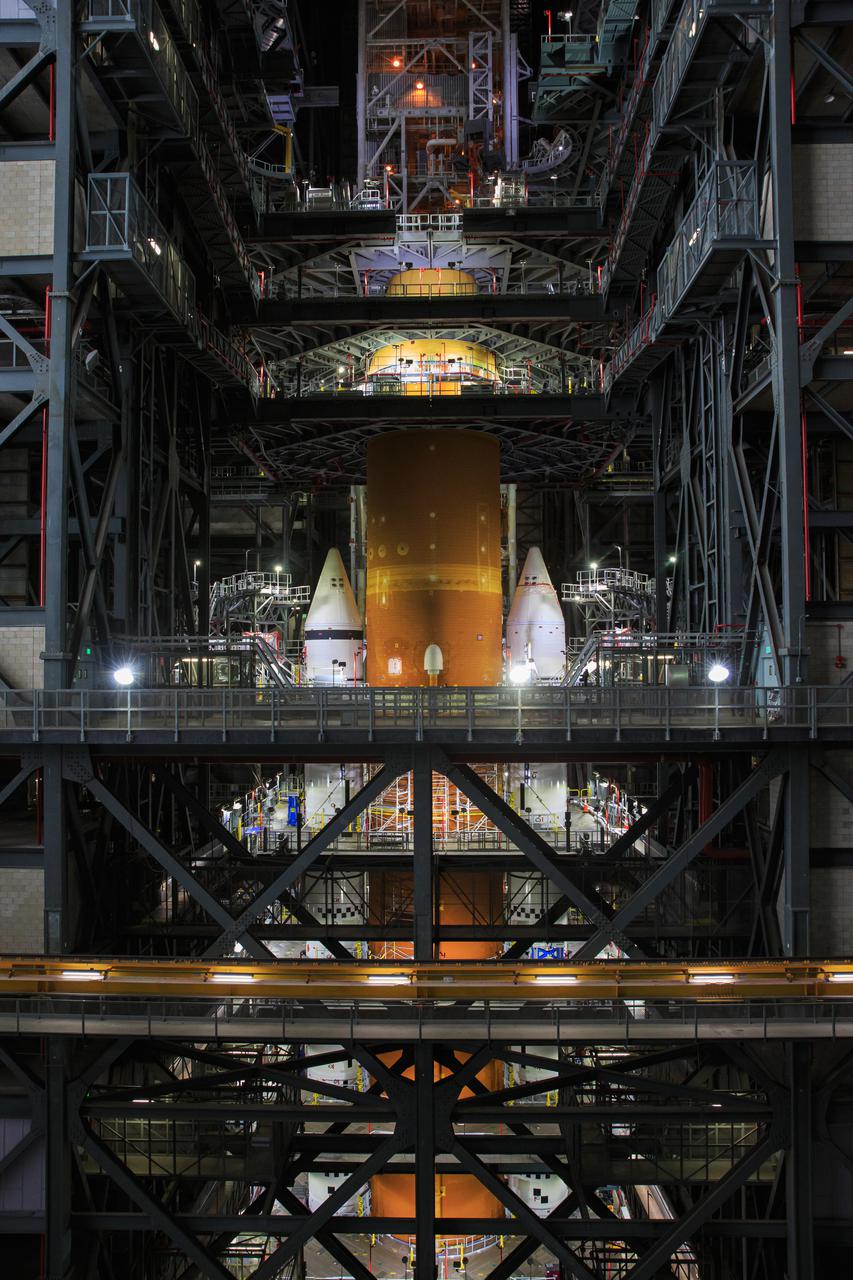
Seen here is the launch vehicle stage adapter (LVSA) for NASA’s Space Launch System (SLS) rocket atop the massive SLS core stage on the mobile launcher in the agency’s Vehicle Assembly Building (VAB) at NASA’s Kennedy Space Center in Florida on June 24, 2021. Teams with NASA’s Exploration Ground Systems and contractor Jacobs used one of five VAB cranes to lift the adapter almost 250-feet in the air and then slowly lower it on to the core stage earlier this week. The LVSA arrived at Kennedy from the agency’s Marshall Space Flight Center in Huntsville, Alabama, in July 2020 and has remained in the VAB for processing. During integration, known as “stacking,” the LVSA is bolted to the forward skirt of the core stage, connecting the core stage and the interim cryogenic propulsion stage in preparation for the first flight of the rocket and the Orion spacecraft during Artemis I. The ICPS’s RL10 engine will fit down inside the LVSA, which protects the engine during launch. The first in a series of increasingly complex missions, Artemis I will test SLS and the Orion spacecraft as an integrated system prior to crewed flights in which NASA will land the first woman and person of color on the Moon.
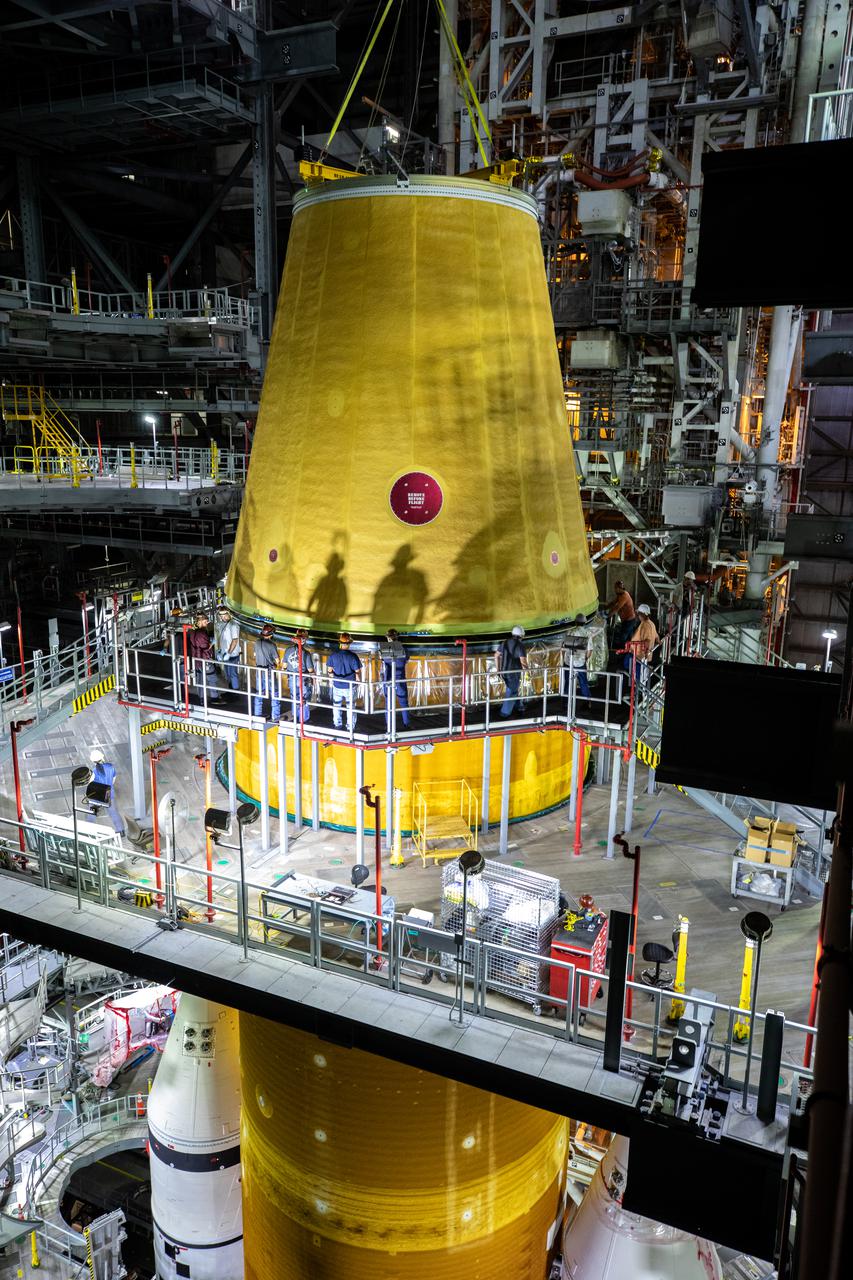
Teams with NASA’s Exploration Ground Systems and contractor Jacobs integrate the launch vehicle stage adapter (LVSA) for NASA’s Space Launch System (SLS) rocket with the massive SLS core stage on the mobile launcher in the agency’s Vehicle Assembly Building (VAB) at NASA’s Kennedy Space Center in Florida on June 22, 2021. Engineers used one of five VAB cranes to lift the adapter almost 250-feet in the air and then slowly lower it on to the core stage. The LVSA arrived at Kennedy from the agency’s Marshall Space Flight Center in Huntsville, Alabama, in July 2020 and has remained in the VAB for processing. During integration, known as “stacking,” the LVSA is bolted to the forward skirt of the core stage, connecting the core stage and the interim cryogenic propulsion stage in preparation for the first flight of the rocket and the Orion spacecraft during Artemis I. The ICPS’s RL10 engine will fit down inside the LVSA, which protects the engine during launch. The first in a series of increasingly complex missions, Artemis I will test SLS and the Orion spacecraft as an integrated system prior to crewed flights in which NASA will land the first woman and person of color on the Moon.
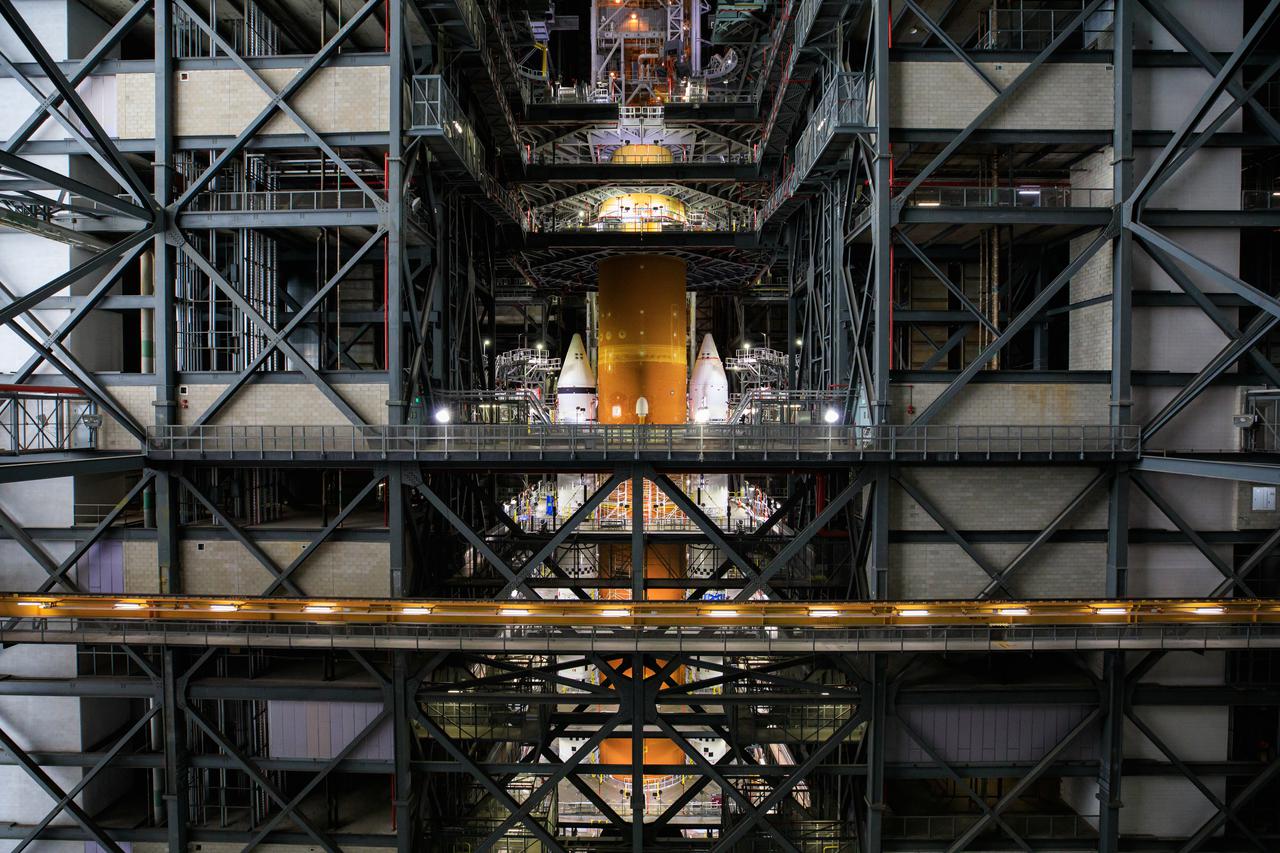
Seen here is the launch vehicle stage adapter (LVSA) for NASA’s Space Launch System (SLS) rocket atop the massive SLS core stage on the mobile launcher in the agency’s Vehicle Assembly Building (VAB) at NASA’s Kennedy Space Center in Florida on June 24, 2021. Teams with NASA’s Exploration Ground Systems and contractor Jacobs used one of five VAB cranes to lift the adapter almost 250-feet in the air and then slowly lower it on to the core stage earlier this week. The LVSA arrived at Kennedy from the agency’s Marshall Space Flight Center in Huntsville, Alabama, in July 2020 and has remained in the VAB for processing. During integration, known as “stacking,” the LVSA is bolted to the forward skirt of the core stage, connecting the core stage and the interim cryogenic propulsion stage in preparation for the first flight of the rocket and the Orion spacecraft during Artemis I. The ICPS’s RL10 engine will fit down inside the LVSA, which protects the engine during launch. The first in a series of increasingly complex missions, Artemis I will test SLS and the Orion spacecraft as an integrated system prior to crewed flights in which NASA will land the first woman and person of color on the Moon.
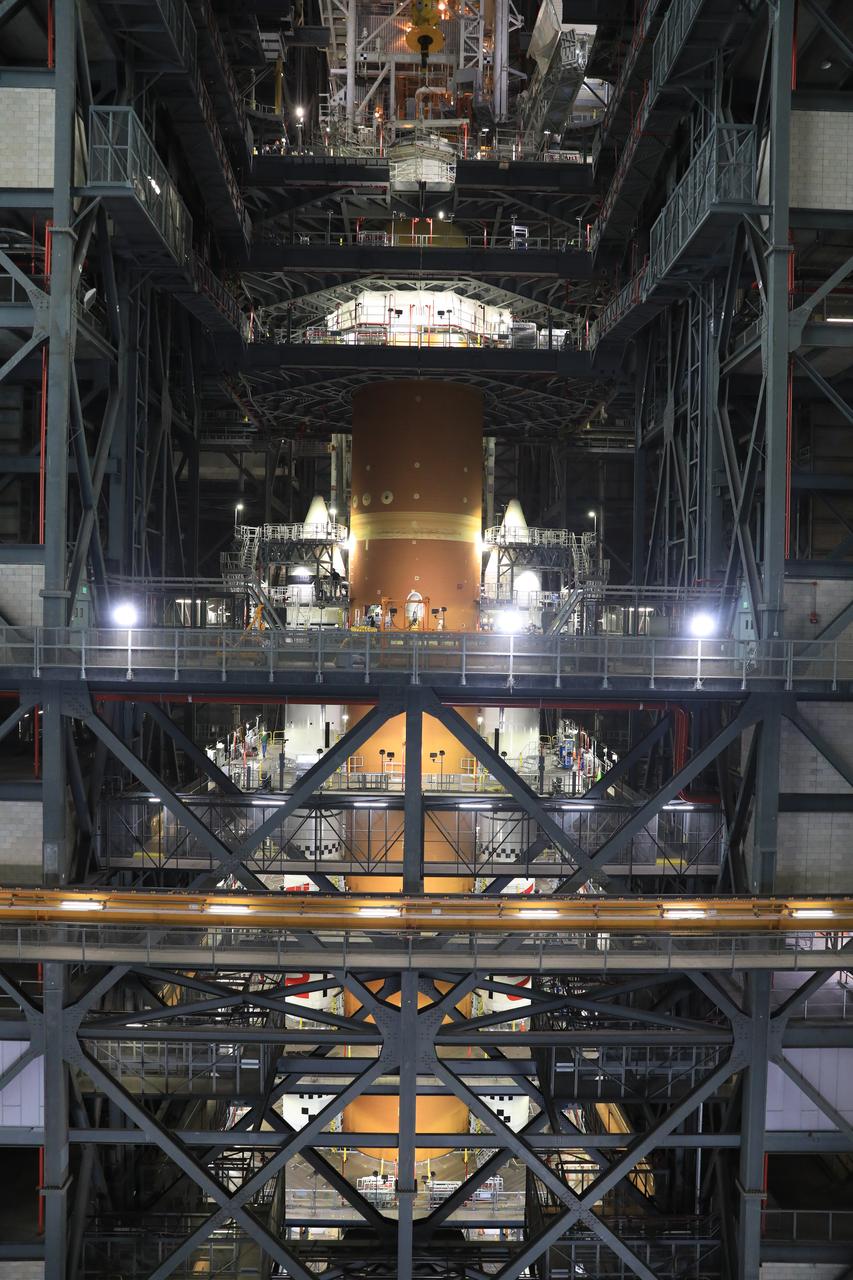
Teams with NASA’s Exploration Ground Systems Program finish integrating the interim cryogenic propulsion stage to the SLS (Space Launch System) launch vehicle stage adapter on Thursday, May 1, 2025, inside the Vehicle Assembly Building at NASA’s Kennedy Space Center in Florida. The four-story propulsion system, built by Boeing and ULA (United Launch Alliance), is powered by an RL10 engine that will enable the Orion spacecraft to build up enough speed for the push toward the Moon during the Artemis II crewed test flight.
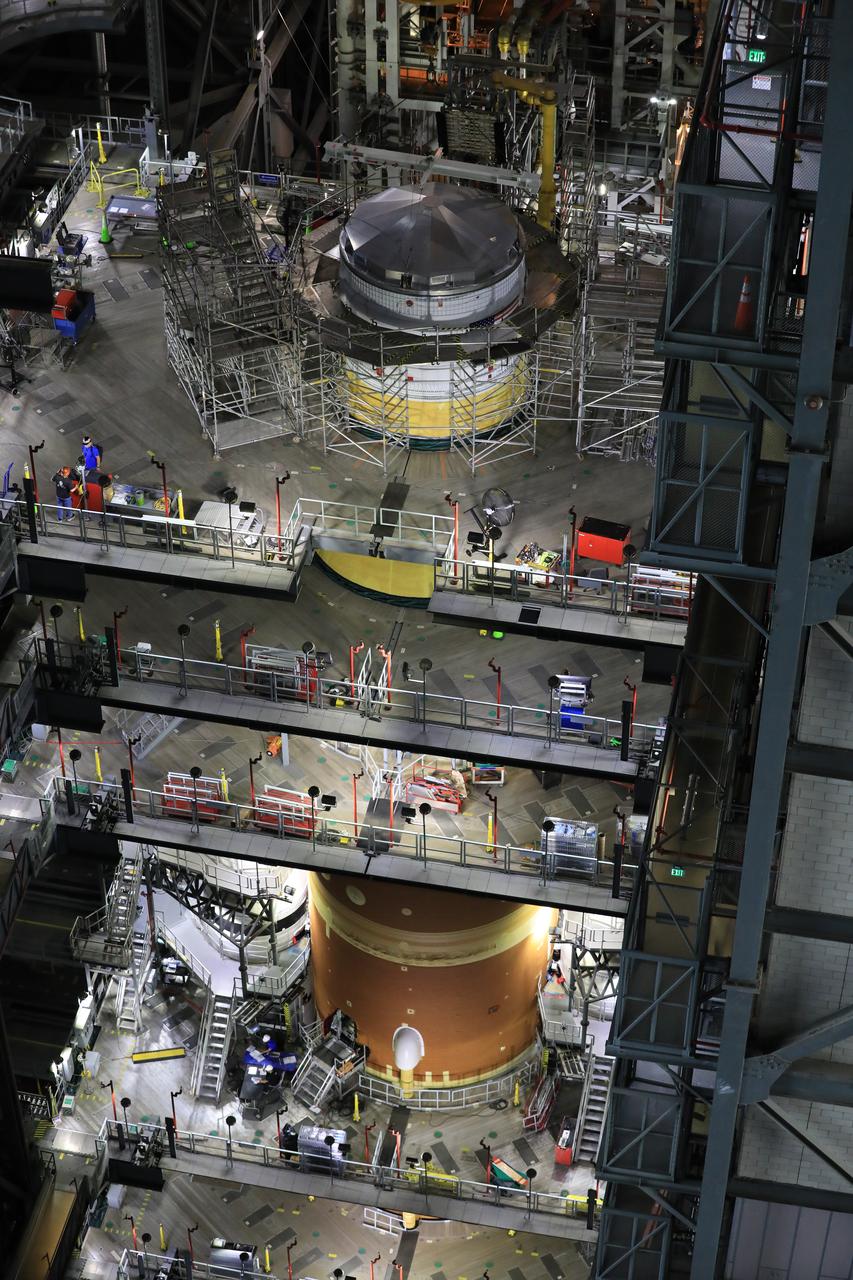
Teams with NASA’s Exploration Ground Systems Program finish integrating the interim cryogenic propulsion stage to the SLS (Space Launch System) launch vehicle stage adapter on Thursday, May 1, 2025, inside the Vehicle Assembly Building at NASA’s Kennedy Space Center in Florida. The four-story propulsion system, built by Boeing and ULA (United Launch Alliance), is powered by an RL10 engine that will enable the Orion spacecraft to build up enough speed for the push toward the Moon during the Artemis II crewed test flight.
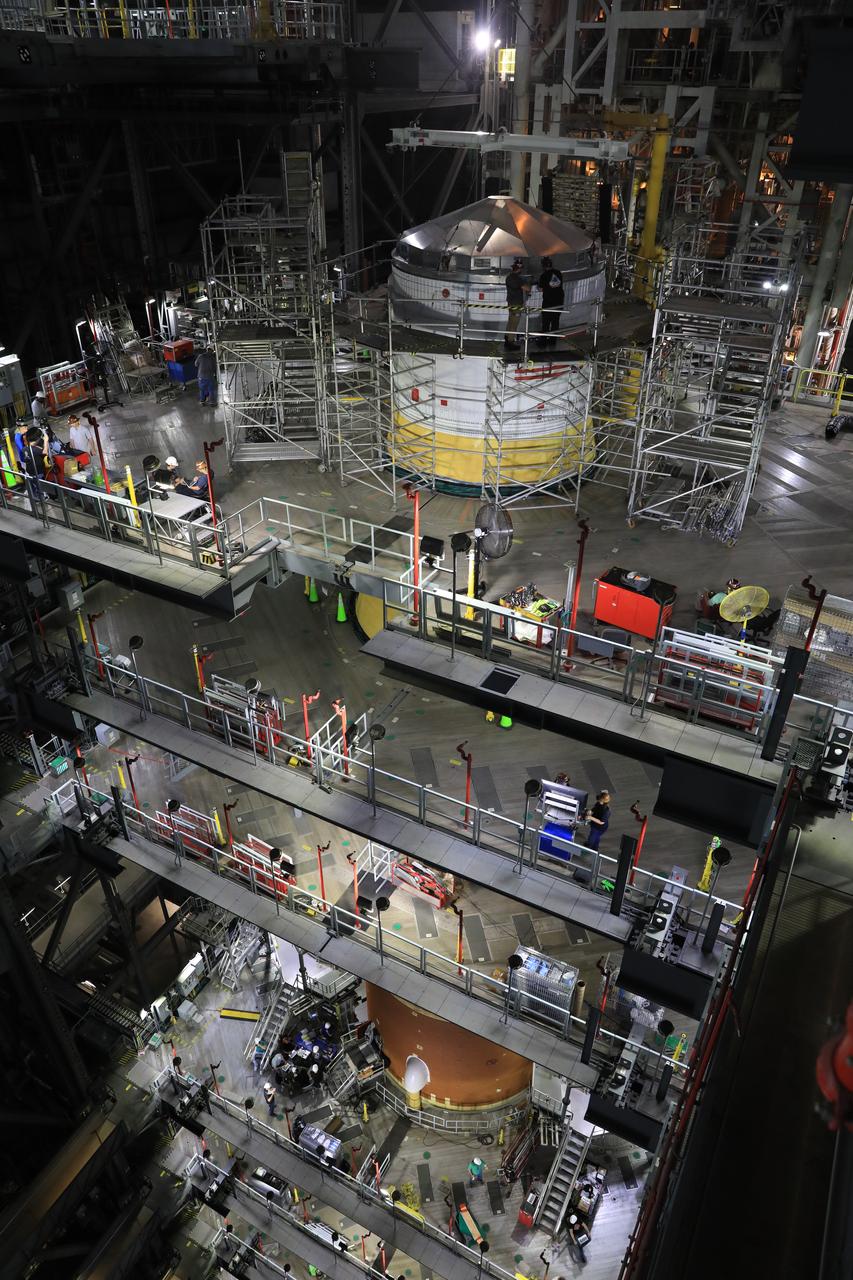
Teams with NASA’s Exploration Ground Systems Program finish integrating the interim cryogenic propulsion stage to the SLS (Space Launch System) launch vehicle stage adapter on Thursday, May 1, 2025, inside the Vehicle Assembly Building at NASA’s Kennedy Space Center in Florida. The four-story propulsion system, built by Boeing and ULA (United Launch Alliance), is powered by an RL10 engine that will enable the Orion spacecraft to build up enough speed for the push toward the Moon during the Artemis II crewed test flight.

Teams with NASA’s Exploration Ground Systems Program finish integrating the interim cryogenic propulsion stage to the SLS (Space Launch System) launch vehicle stage adapter on Thursday, May 1, 2025, inside the Vehicle Assembly Building at NASA’s Kennedy Space Center in Florida. The four-story propulsion system, built by Boeing and ULA (United Launch Alliance), is powered by an RL10 engine that will enable the Orion spacecraft to build up enough speed for the push toward the Moon during the Artemis II crewed test flight.