/Gateway - Intermodule Element Adaptor (IEA)~medium.jpg)
The Intermodule Element Adaptor (IEA) is attached to the aft bulkhead of the Habitation Element (HE) to support mechanical integration of HALO and PPE. The IEA is also used to provide an enclosure to protect the HALO batteries.
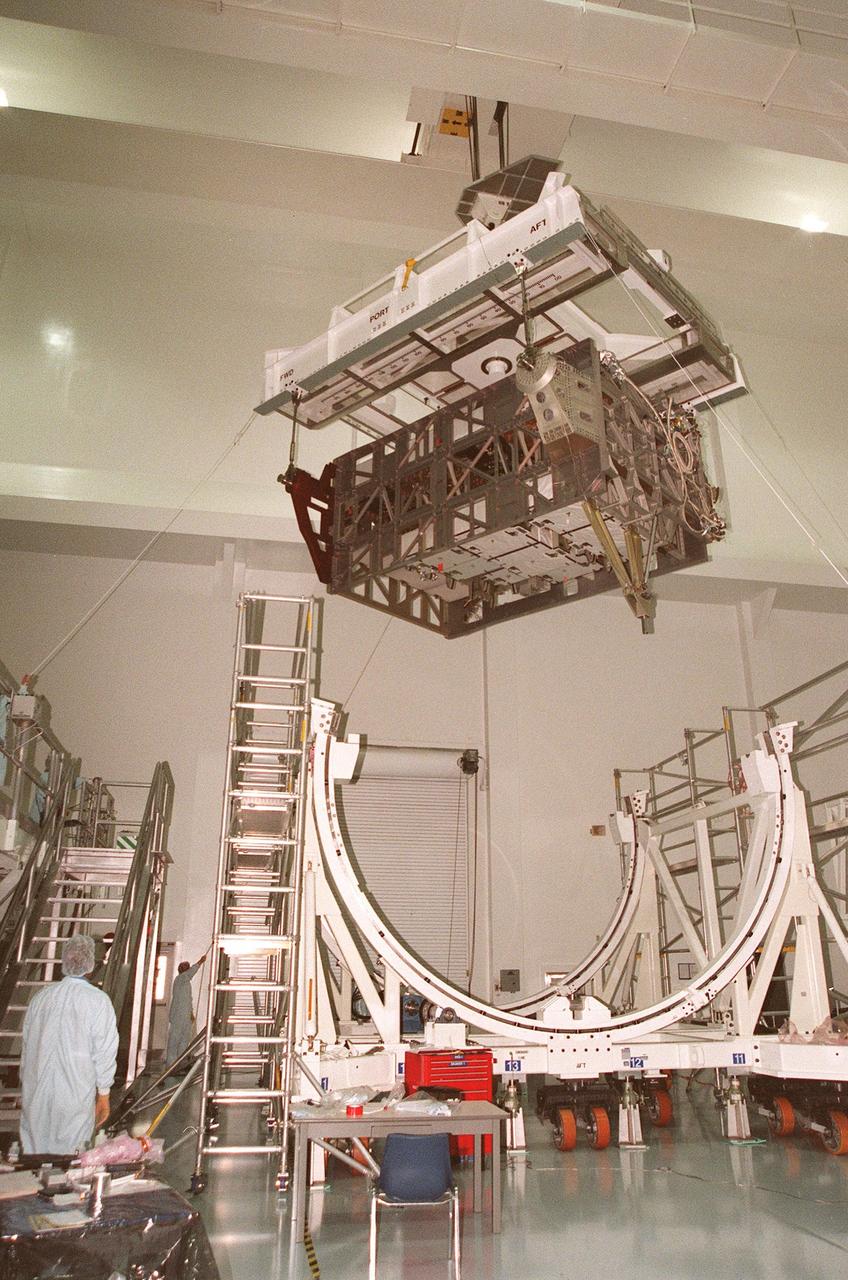
An Integrated Equipment Assembly (IEA) is lifted from a rotation stand in the Space Station Processing Facility at KSC to be placed on a work stand. The IEA, a large truss segment of the International Space Station (ISS), is one of four power modules to be used on the International Space Station. The modules contain batteries for the ISS solar panels and power for the life support systems and experiments that will be conducted. This first IEA will fly on the Space Shuttle Endeavour as part of STS-97, scheduled to launch August 5, 1999
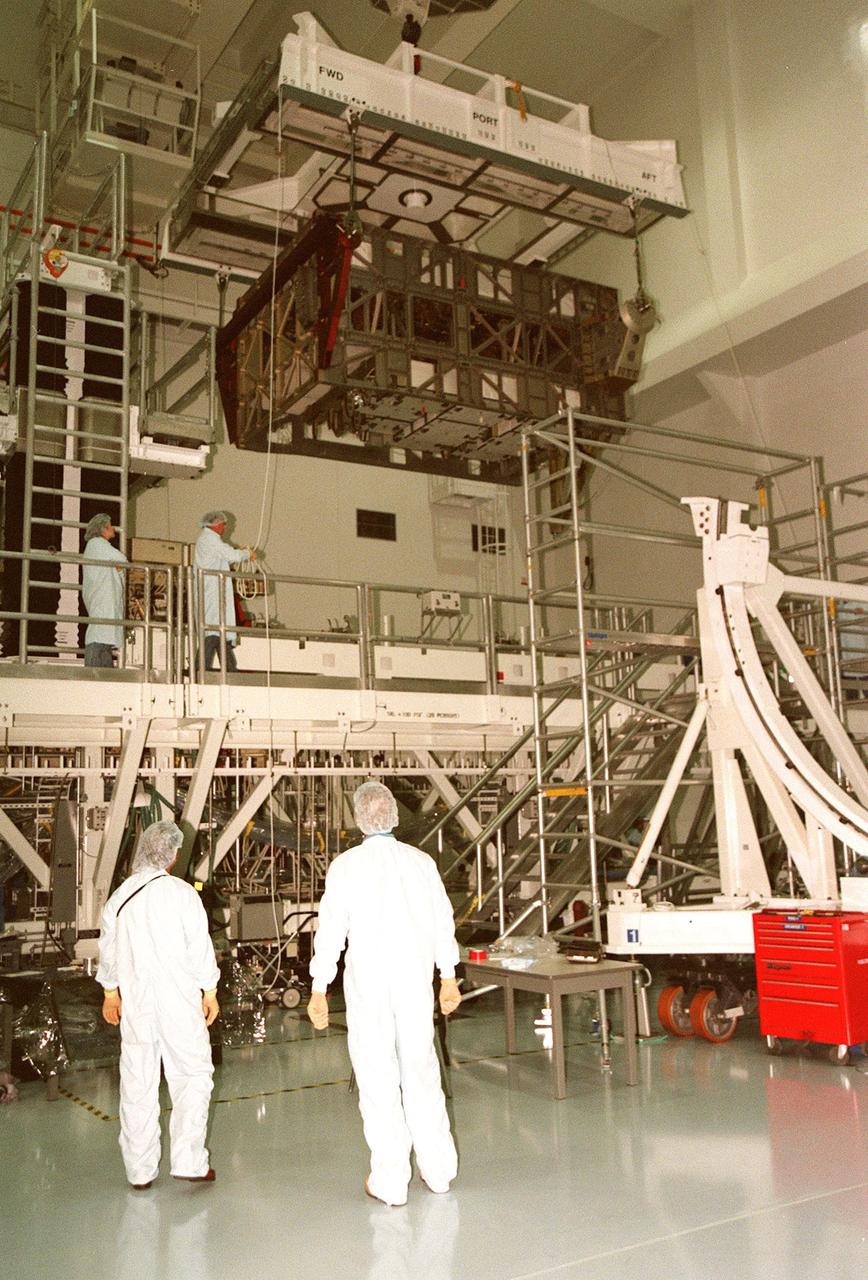
Technicians in the Space Station Processing Facility at KSC prepare to lower an Integrated Equipment Assembly (IEA) onto a work stand. The IEA, a large truss segment of the International Space Station (ISS), is one of four power modules to be used on the International Space Station. The modules contain batteries for the ISS solar panels and power for the life support systems and experiments that will be conducted. This first IEA will fly on the Space Shuttle Endeavour as part of STS-97, scheduled to launch August 5, 1999
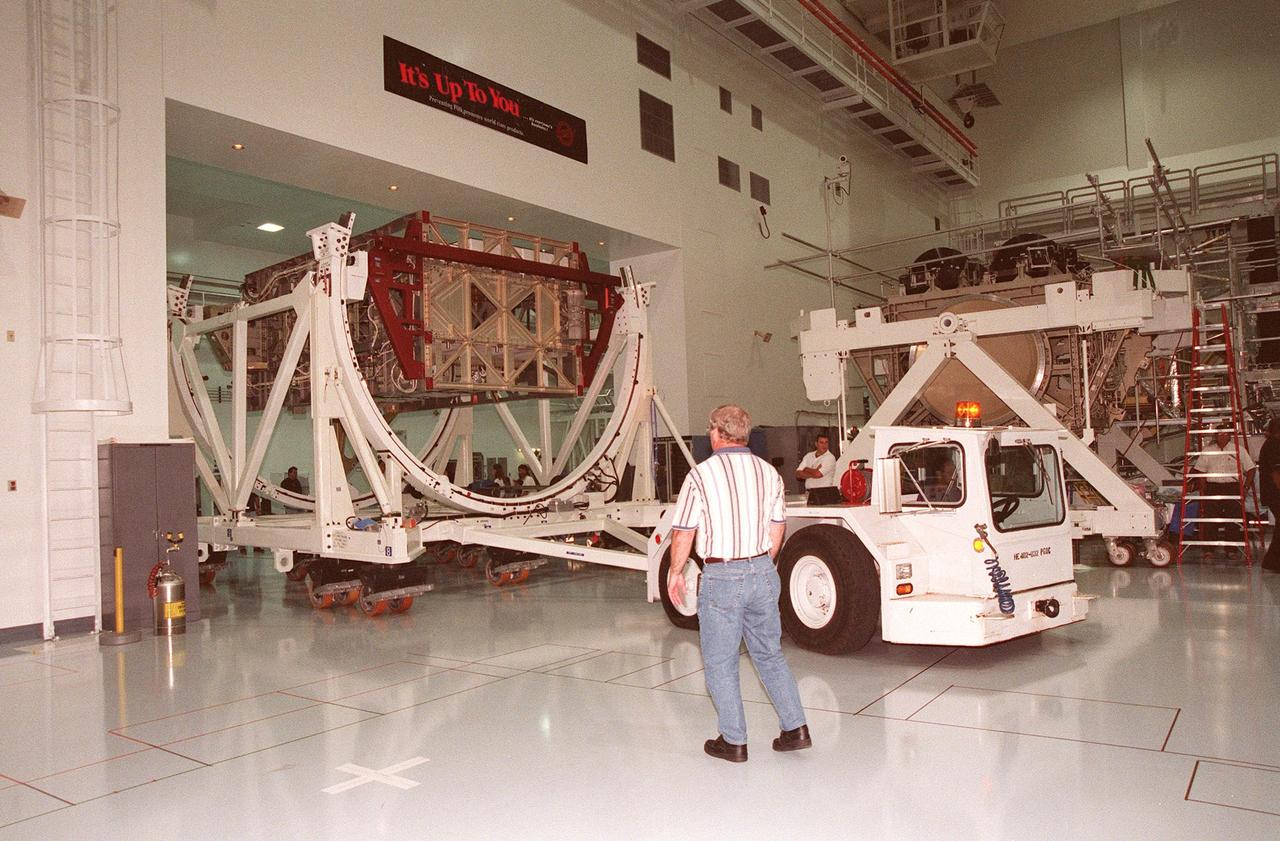
An Integrated Equipment Assembly (IEA) is moved from the low bay into the high bay at the Space Station Processing Facility at KSC. The IEA, a large truss segment of the International Space Station (ISS), is one of four power modules to be used on the ISS. The modules contain batteries for the ISS solar panels and power for the life support systems and experiments that will be conducted. This first IEA will fly on the Space Shuttle Endeavour as part of STS-97, scheduled to launch August 5, 1999
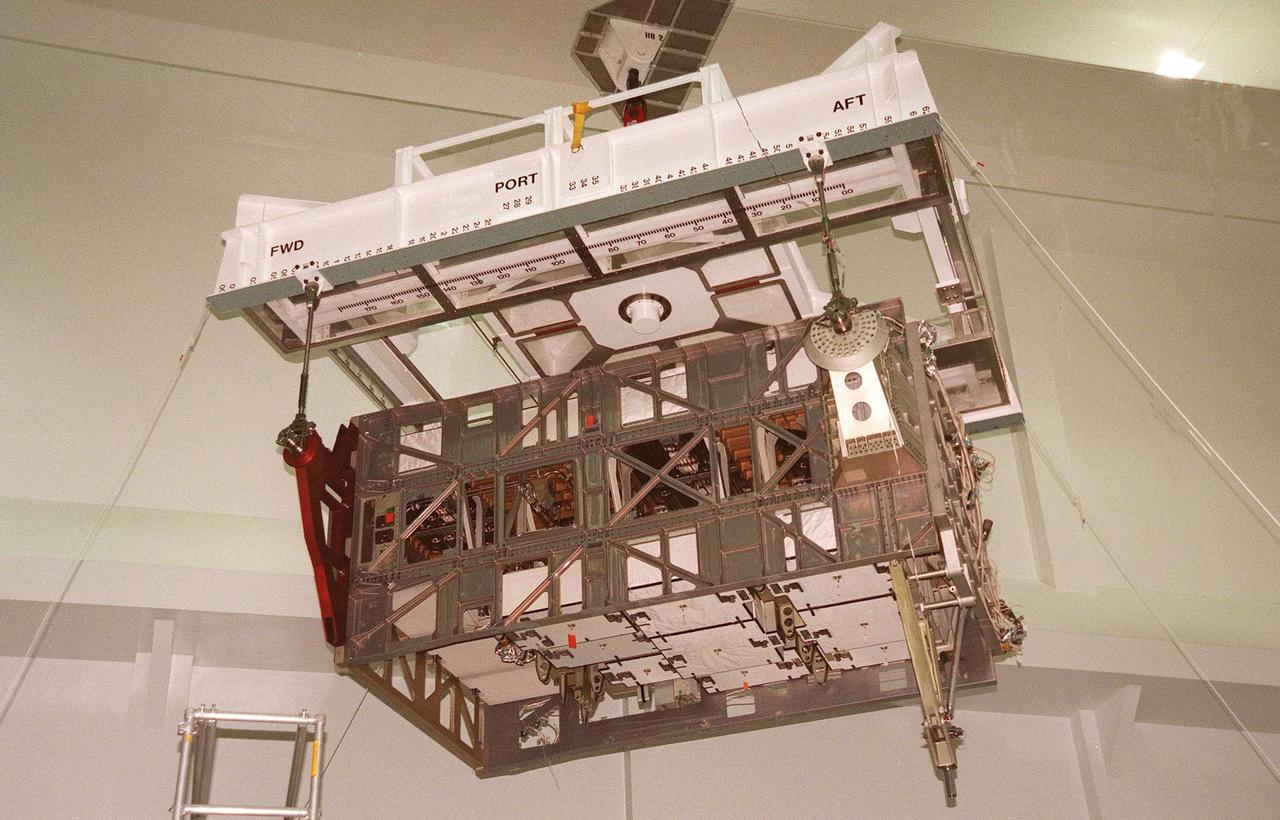
An Integrated Equipment Assembly (IEA) is suspended in air after being lifted from a rotation stand in the Space Station Processing Facility at KSC in order to be moved to a work stand. The IEA, a large truss segment of the International Space Station (ISS), is one of four power modules to be used on the International Space Station. The modules contain batteries for the ISS solar panels and power for the life support systems and experiments that will be conducted. This first IEA will fly on the Space Shuttle Endeavour as part of STS-97, scheduled to launch August 5, 1999
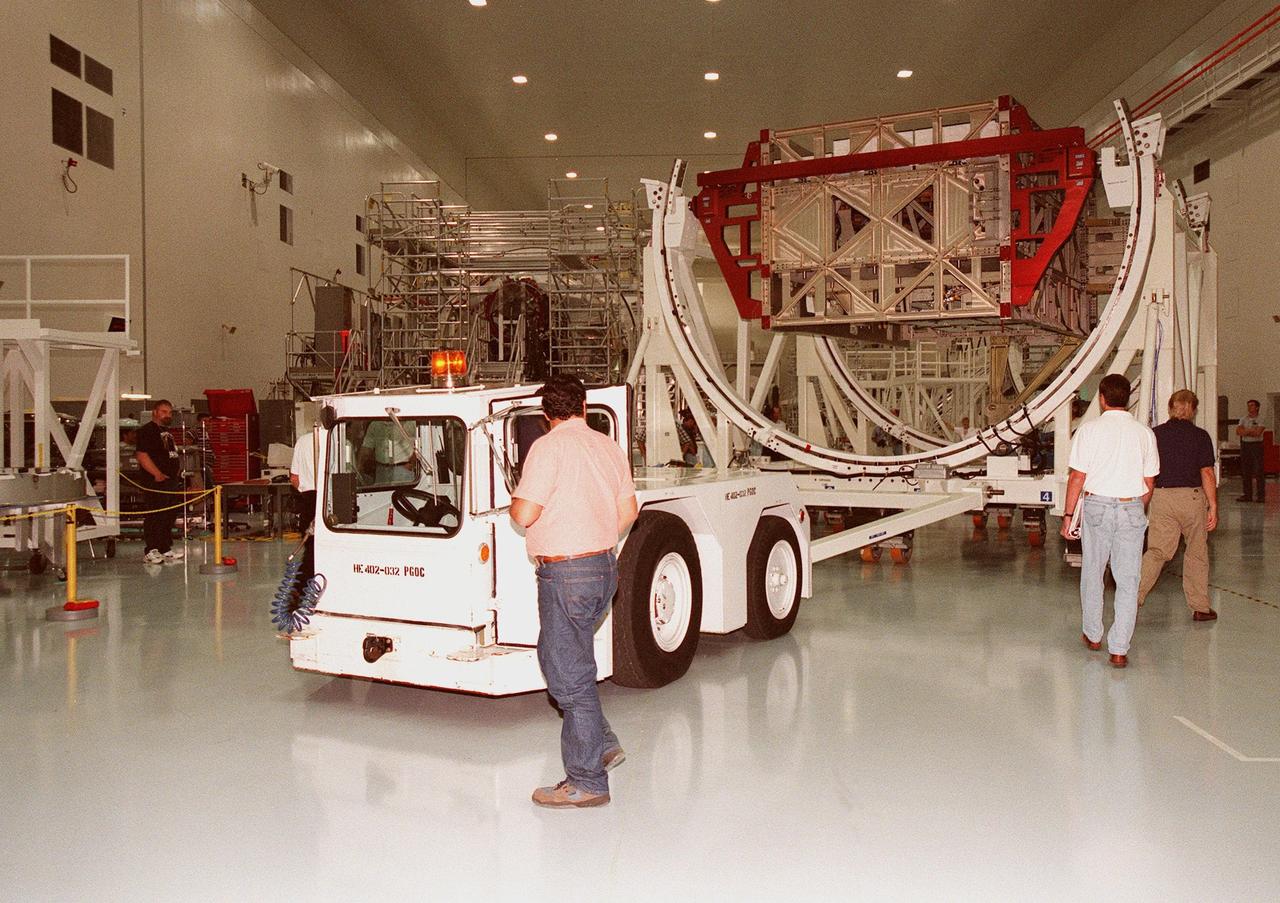
An Integrated Equipment Assembly (IEA) is moved into the center of the Space Station Processing Facility clean room at KSC for transition to the high bay. The IEA, a large truss segment of the International Space Station (ISS), is one of four power modules to be used on the International Space Station. The modules contain batteries for the ISS solar panels and power for the life support systems and experiments that will be conducted. This first IEA will fly on the Space Shuttle Endeavour as part of STS-97, scheduled to launch August 5, 1999
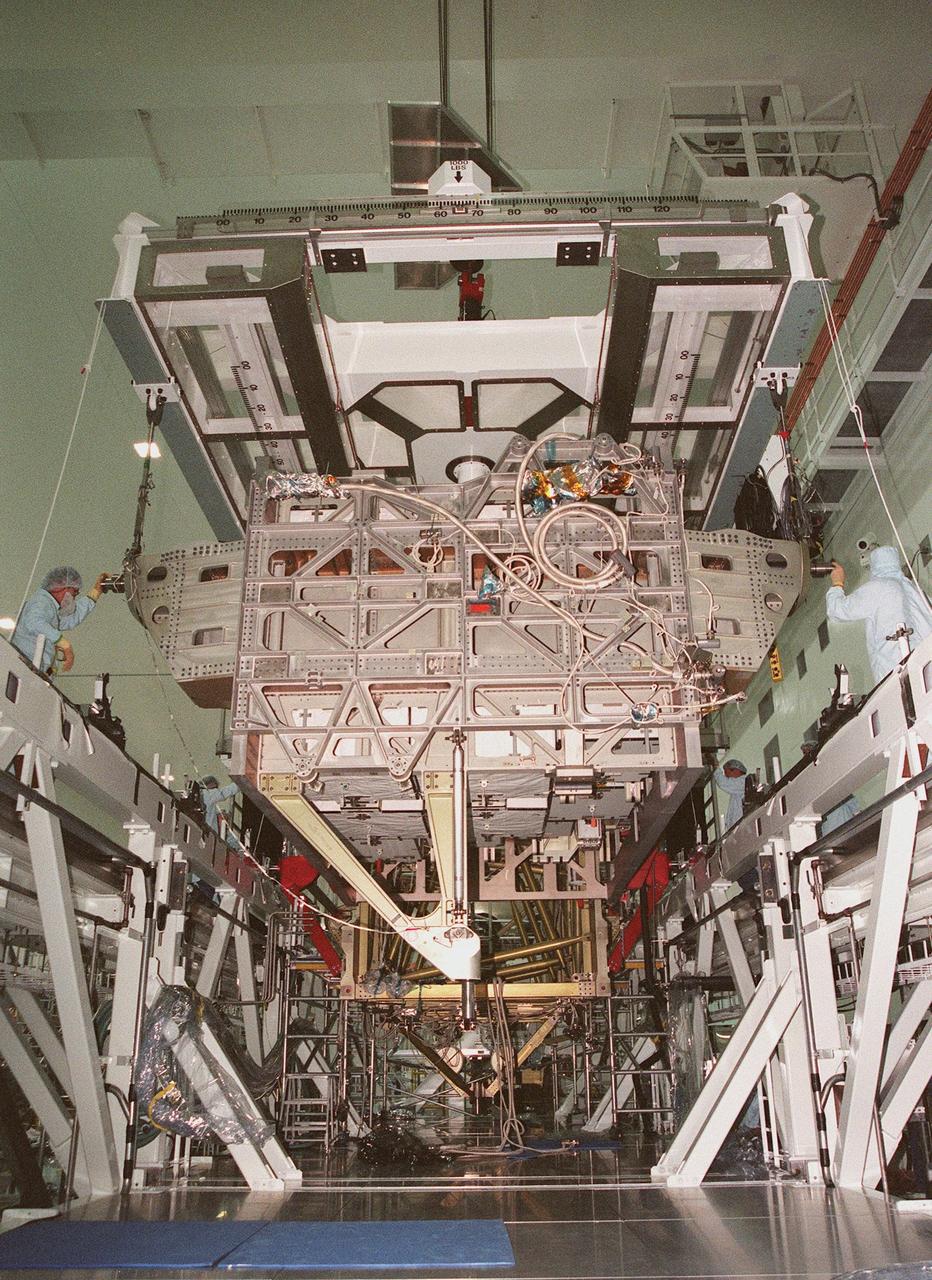
Technicians carefully lower an Integrated Equipment Assembly (IEA) onto a work stand in the Space Station Processing Facility at KSC . The IEA, a large truss segment of the International Space Station (ISS), is one of four power modules to be used on the International Space Station. The modules contain batteries for the ISS solar panels and power for the life support systems and experiments that will be conducted. This first IEA will fly on the Space Shuttle Endeavour as part of STS-97, scheduled to launch August 5, 1999
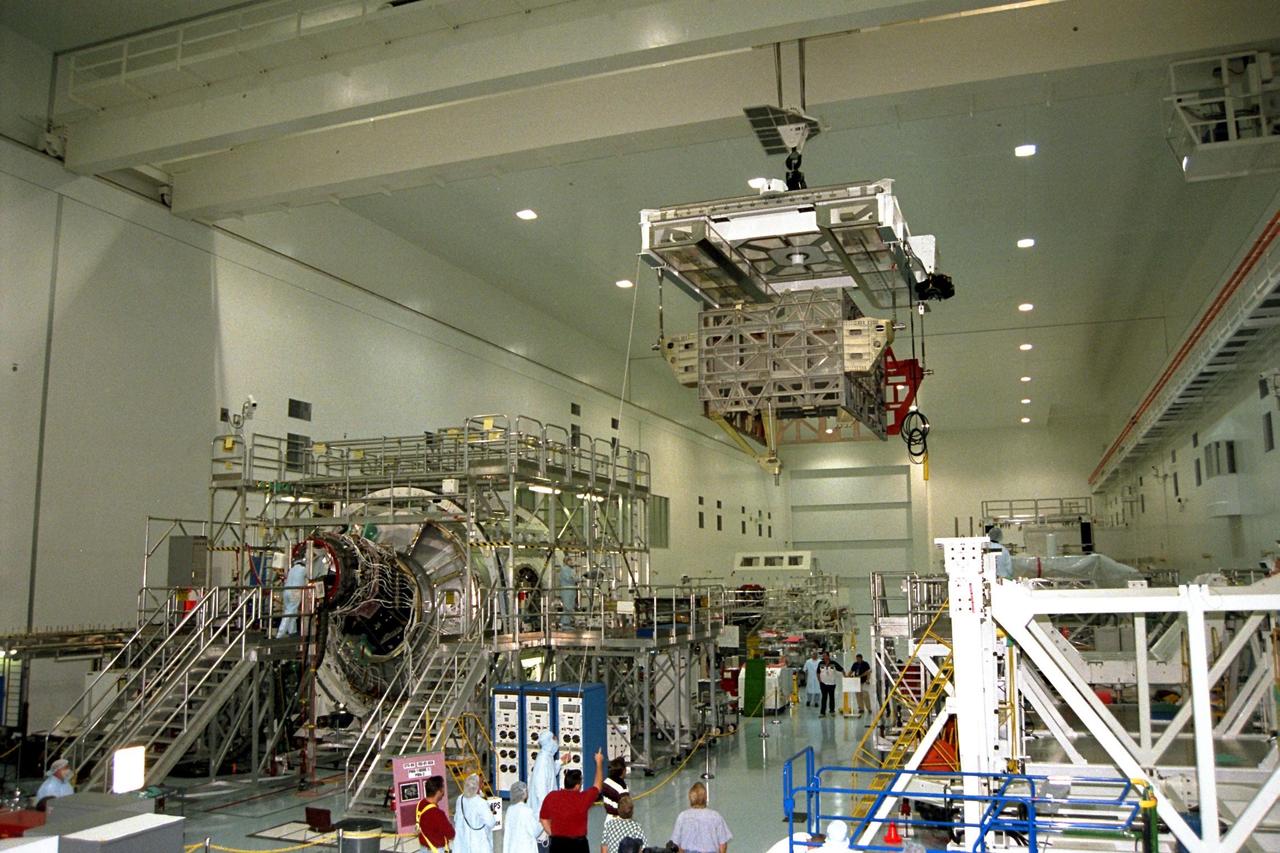
The Photovoltaic Module 1 Integrated Equipment Assembly (IEA) is moved past Node 1, seen at left, of the International Space Station (ISS) in Kennedy Space Center’s Space Station Processing Facility (SSPF). The IEA will be processed at the SSPF for flight on STS-97, scheduled for launch in April 1999. The IEA is one of four integral units designed to generate, distribute, and store power for the ISS. It will carry solar arrays, power storage batteries, power control units, and a thermal control system. The 16-foot-long, 16,850-pound unit is now undergoing preflight preparations in the SSPF
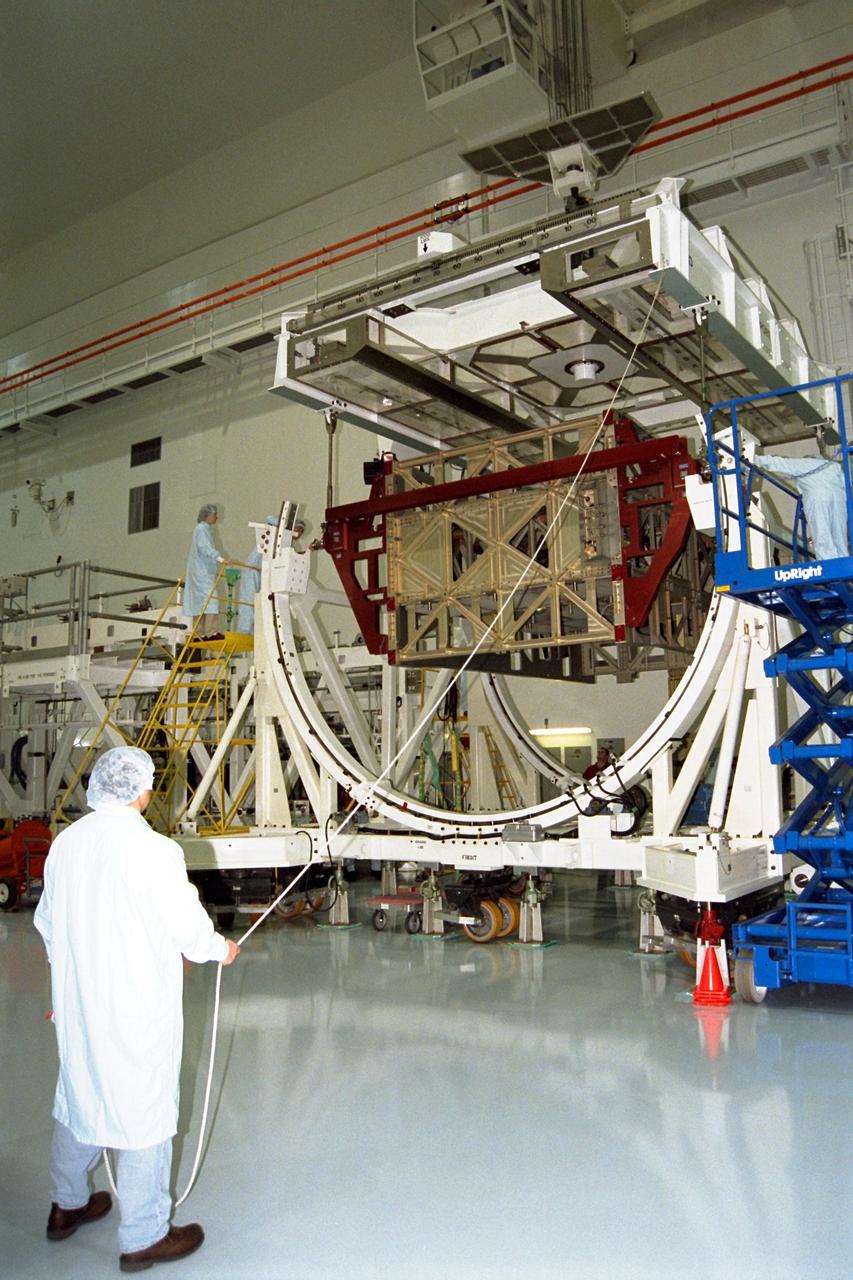
The Photovoltaic Module 1 Integrated Equipment Assembly (IEA) is lowered into its workstand at Kennedy Space Center’s Space Station Processing Facility (SSPF), where it will be processed for flight on STS-97, scheduled for launch in April 1999. The IEA is one of four integral units designed to generate, distribute, and store power for the International Space Station. It will carry solar arrays, power storage batteries, power control units, and a thermal control system. The 16-foot-long, 16,850-pound unit is now undergoing preflight preparations in the SSPF
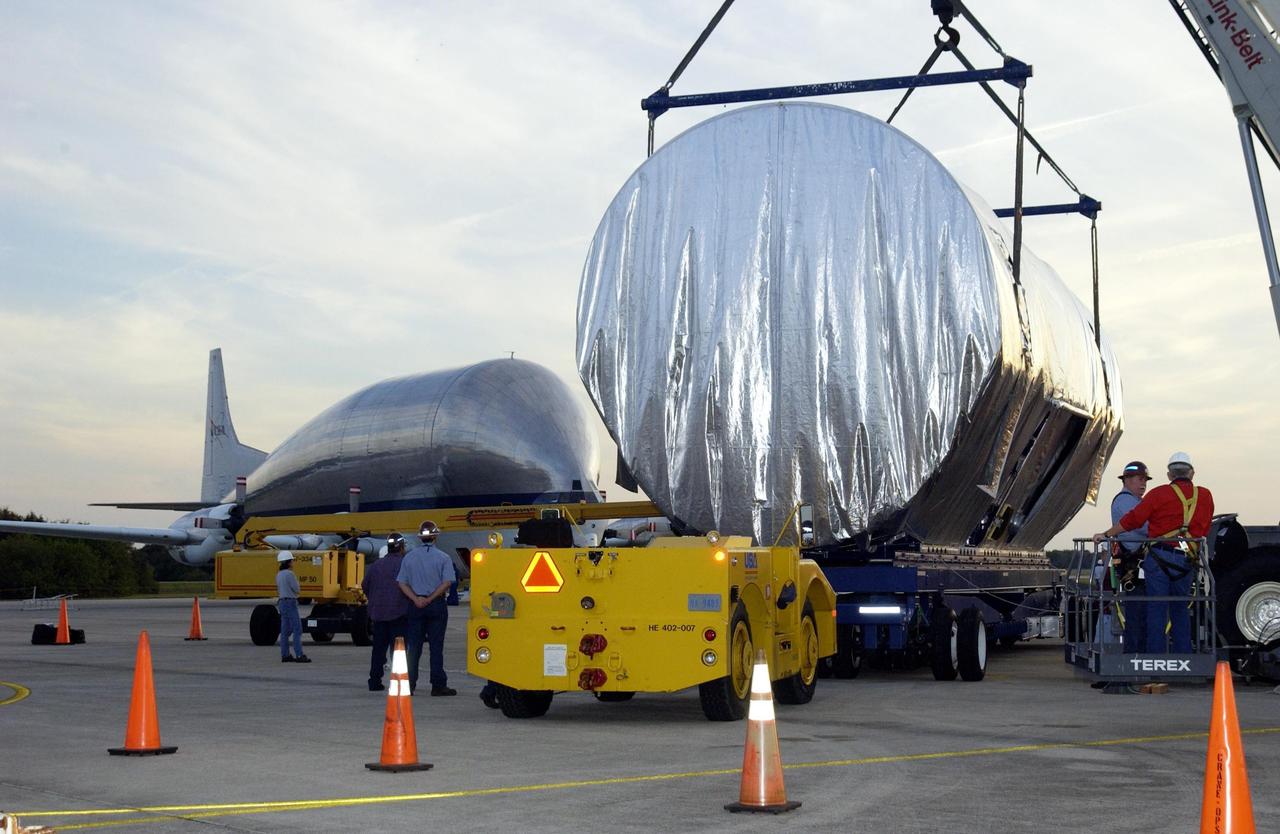
KENNEDY SPACE CENTER, FLA. -- The Integrated Equipment Assembly (IEA), one of two major components of the Starboard 6 (S6) truss segment for the International Space Station (ISS), is offloaded onto a cargo transporter following its arrival at the Shuttle Landing Facility. The IEA will be joined to its companion piece, the Long Spacer, before launch early in 2004. The S6 truss segment will be the 11th and final piece of the Station's Integrated Truss Structure and will support the fourth and final set of solar arrays, batteries, and electronics.
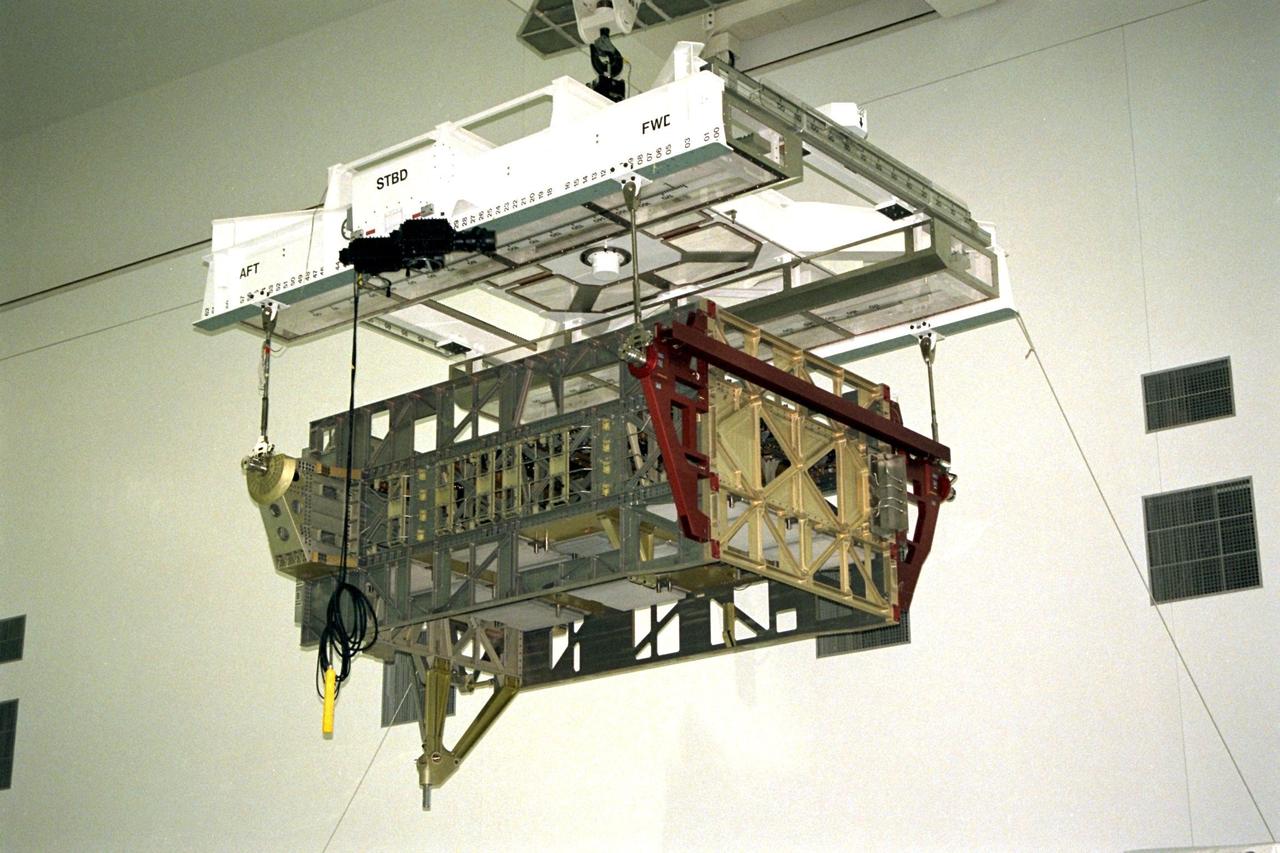
The Photovoltaic Module 1 Integrated Equipment Assembly (IEA) is moved through Kennedy Space Center’s Space Station Processing Facility (SSPF) toward the workstand where it will be processed for flight on STS-97, scheduled for launch in April 1999. The IEA is one of four integral units designed to generate, distribute, and store power for the International Space Station. It will carry solar arrays, power storage batteries, power control units, and a thermal control system. The 16-foot-long, 16,850-pound unit is now undergoing preflight preparations in the SSPF
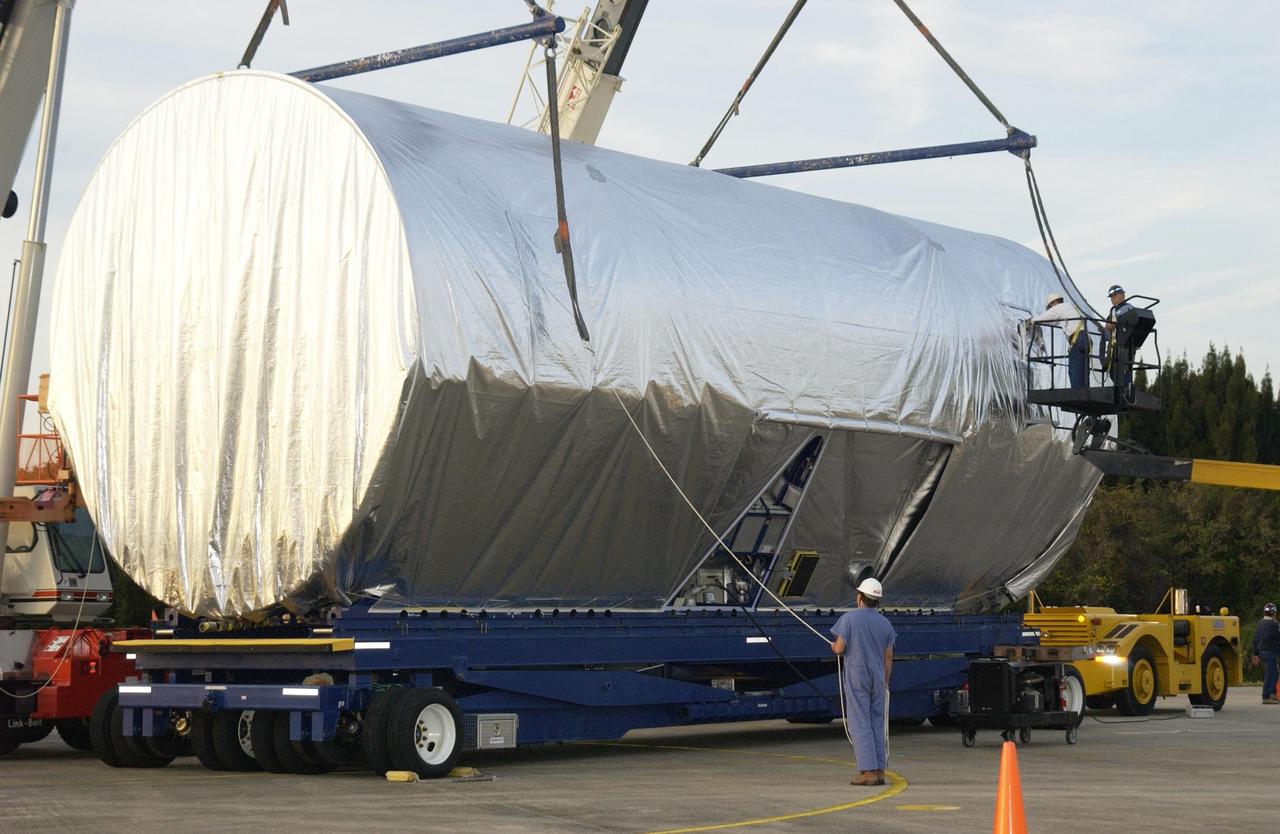
KENNEDY SPACE CENTER, FLA. -- The Integrated Equipment Assembly (IEA), one of two major components of the Starboard 6 (S6) truss segment for the International Space Station (ISS), is offloaded onto a cargo transporter following its arrival at the Shuttle Landing Facility. The IEA will be joined to its companion piece, the Long Spacer, before launch early in 2004. The S6 truss segment will be the 11th and final piece of the Station's Integrated Truss Structure and will support the fourth and final set of solar arrays, batteries, and electronics.
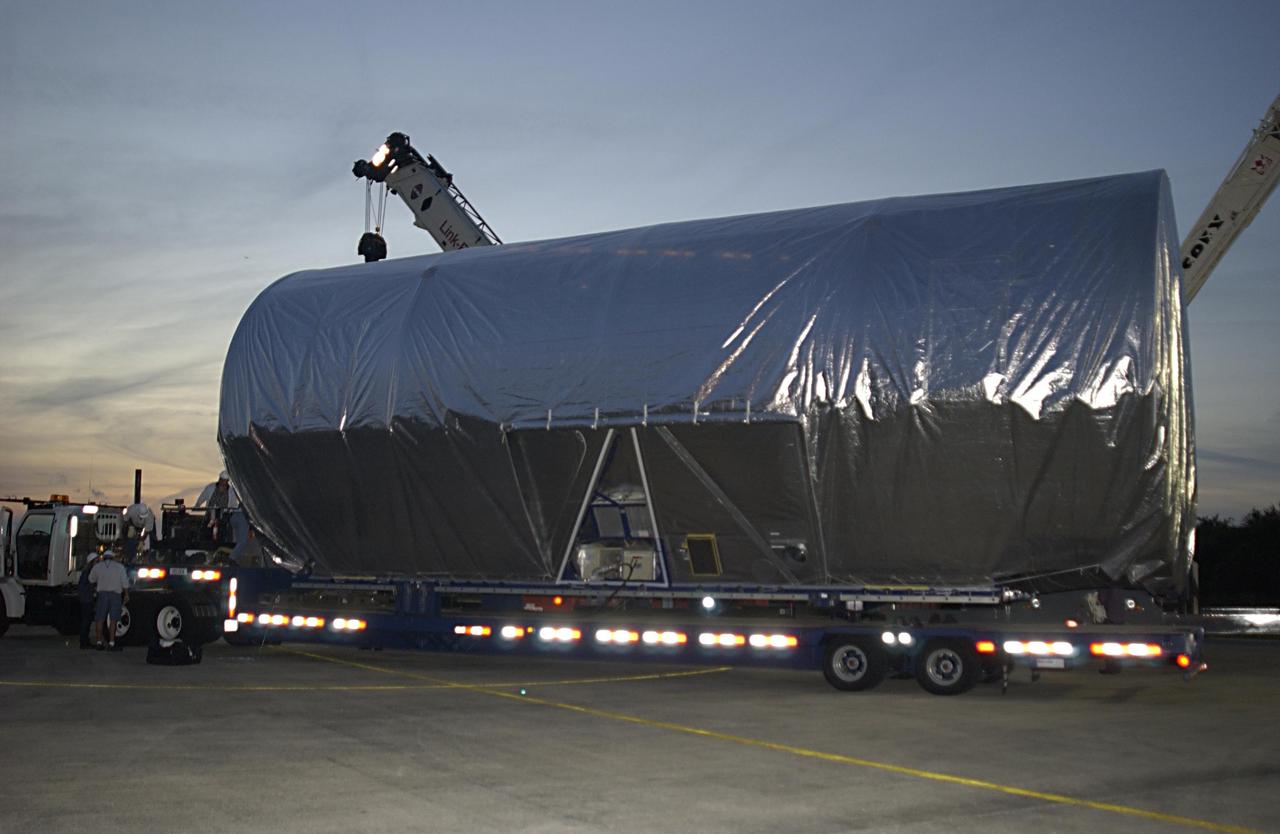
KENNEDY SPACE CENTER, FLA. -- The Integrated Equipment Assembly (IEA), one of two major components of the Starboard 6 (S6) truss segment for the International Space Station (ISS), sits on a cargo transporter following its arrival at the Shuttle Landing Facility. The IEA will be joined to its companion piece, the Long Spacer, before launch early in 2004. The S6 truss segment will be the 11th and final piece of the Station's Integrated Truss Structure and will support the fourth and final set of solar arrays, batteries, and electronics.
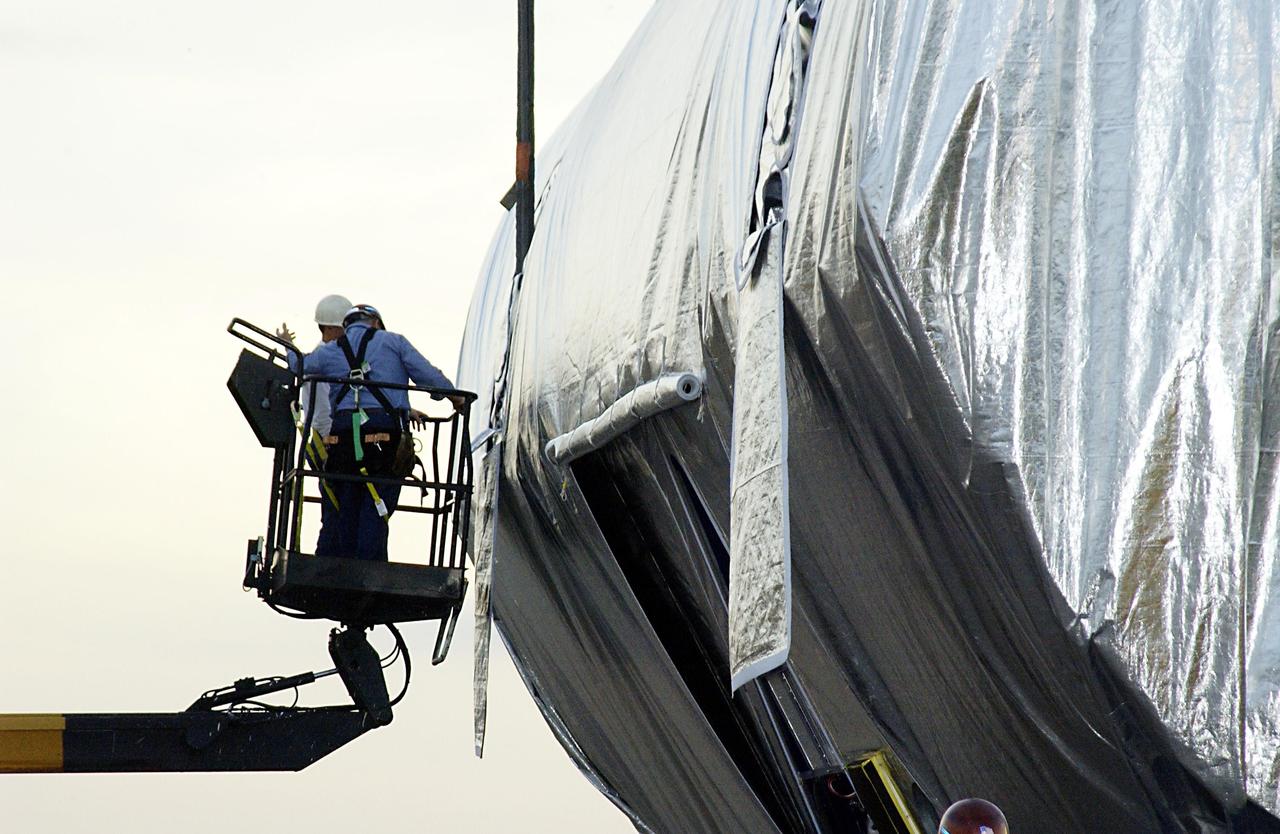
KENNEDY SPACE CENTER, FLA. -- KSC technicians supervise the offloading of the Integrated Equipment Assembly (IEA), one of two major components of the Starboard 6 (S6) truss segment for the International Space Station (ISS), onto a cargo transporter following its arrival at the Shuttle Landing Facility. The IEA will be joined to its companion piece, the Long Spacer, before launch early in 2004. The S6 truss segment will be the 11th and final piece of the Station's Integrated Truss Structure and will support the fourth and final set of solar arrays, batteries, and electronics.
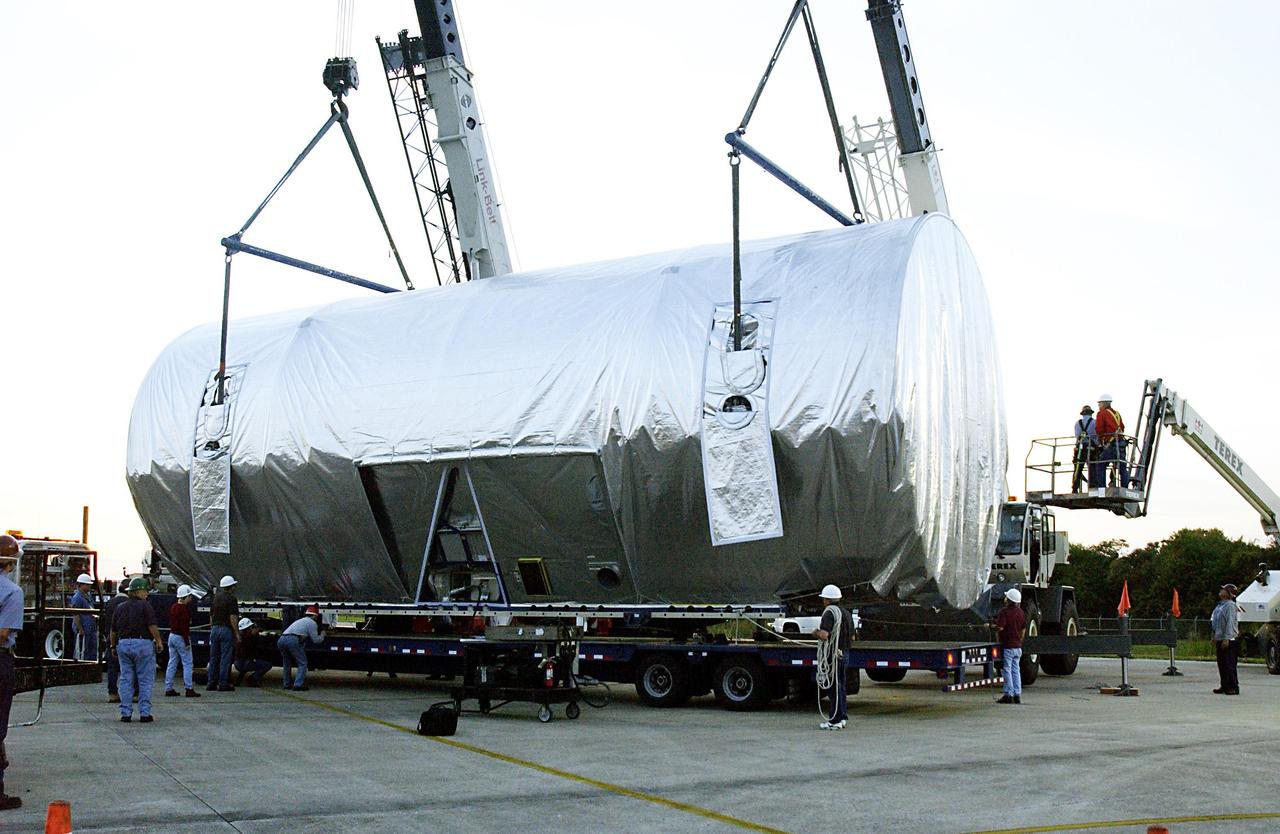
KENNEDY SPACE CENTER, FLA. -- KSC technicians supervise the transfer of the Integrated Equipment Assembly (IEA), one of two major components of the Starboard 6 (S6) truss segment for the International Space Station (ISS), onto a cargo transporter following its arrival at the Shuttle Landing Facility. The IEA will be joined to its companion piece, the Long Spacer, before launch early in 2004. The S6 truss segment will be the 11th and final piece of the Station's Integrated Truss Structure and will support the fourth and final set of solar arrays, batteries, and electronics.

KENNEDY SPACE CENTER, FLA. -- The Integrated Equipment Assembly (IEA), one of two major components of the Starboard 6 (S6) truss segment for the International Space Station (ISS), arrives at the Shuttle Landing Facility aboard NASA's Super Guppy cargo airplane. The customized four-engine aricraft has a 24-foot-diameter fuselage and a foldaway nose enabling it to load and transport oversize cargo. The IEA will be joined to its companion piece, the Long Spacer, before launch early in 2004. The S6 truss segment will be the 11th and final piece of the Station's Integrated Truss Structure and will support the fourth and final set of solar arrays, batteries, and electronics.
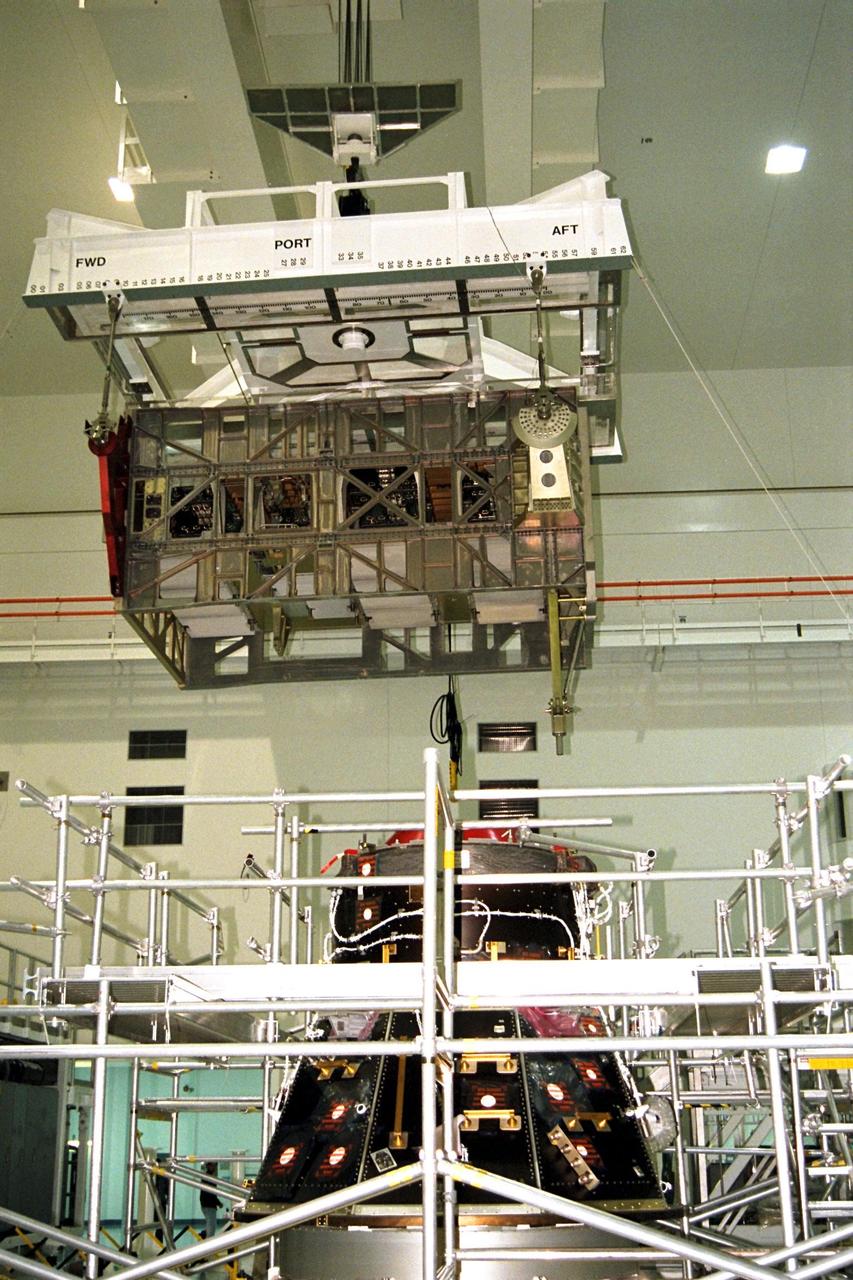
The Photovoltaic Module 1 Integrated Equipment Assembly (IEA) is moved past a Pressurized Mating Adapter in Kennedy Space Center’s Space Station Processing Facility (SSPF) toward the workstand where it will be processed for flight on STS-97, scheduled for launch in April 1999. The IEA is one of four integral units designed to generate, distribute, and store power for the International Space Station. It will carry solar arrays, power storage batteries, power control units, and a thermal control system. The 16-foot-long, 16,850-pound unit is now undergoing preflight preparations in the SSPF
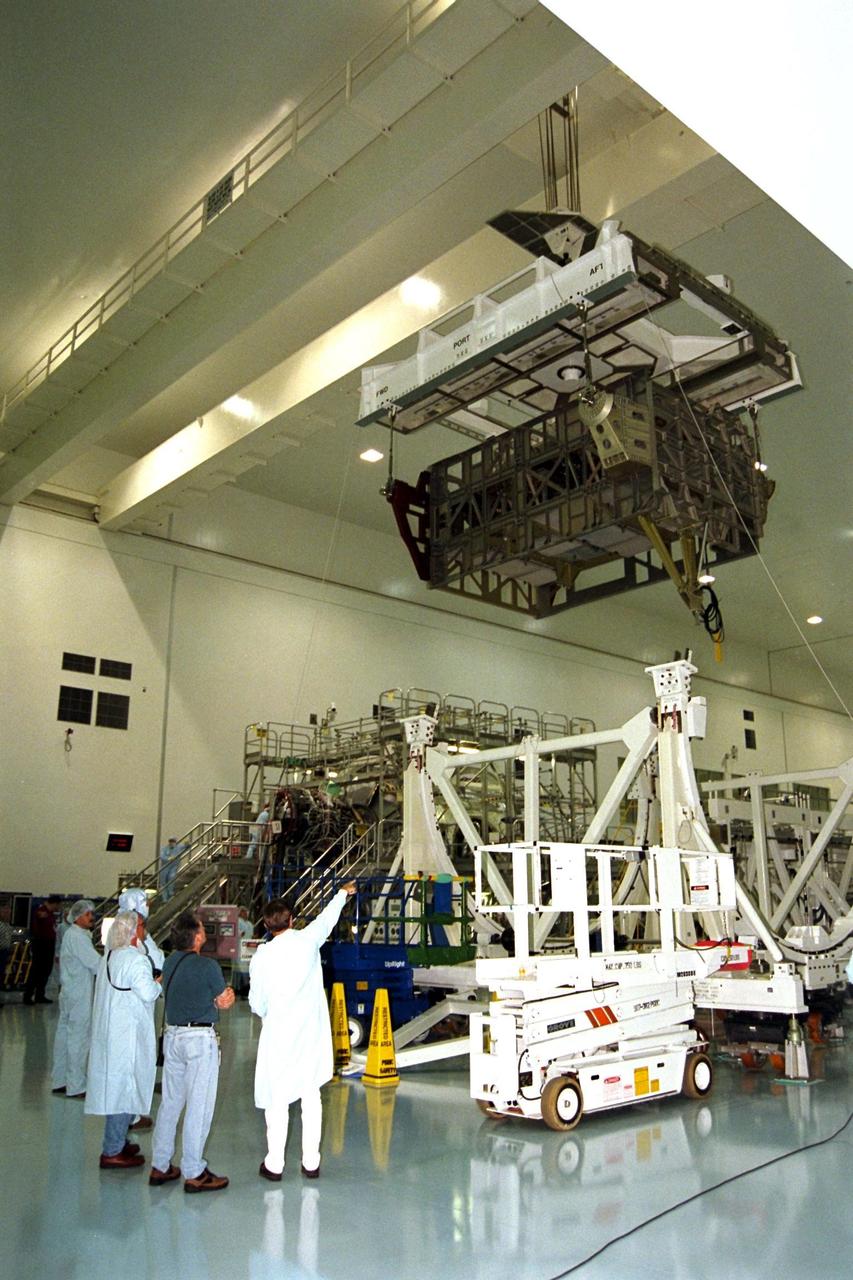
Workers in Kennedy Space Center’s Space Station Processing Facility (SSPF) observe the Photovoltaic Module 1 Integrated Equipment Assembly (IEA) as it moves past them on its way to its workstand, where it will be processed for flight on STS-97, scheduled for launch in April 1999. The IEA is one of four integral units designed to generate, distribute, and store power for the International Space Station. It will carry solar arrays, power storage batteries, power control units, and a thermal control system. The 16-foot-long, 16,850-pound unit is now undergoing preflight preparations in the SSPF
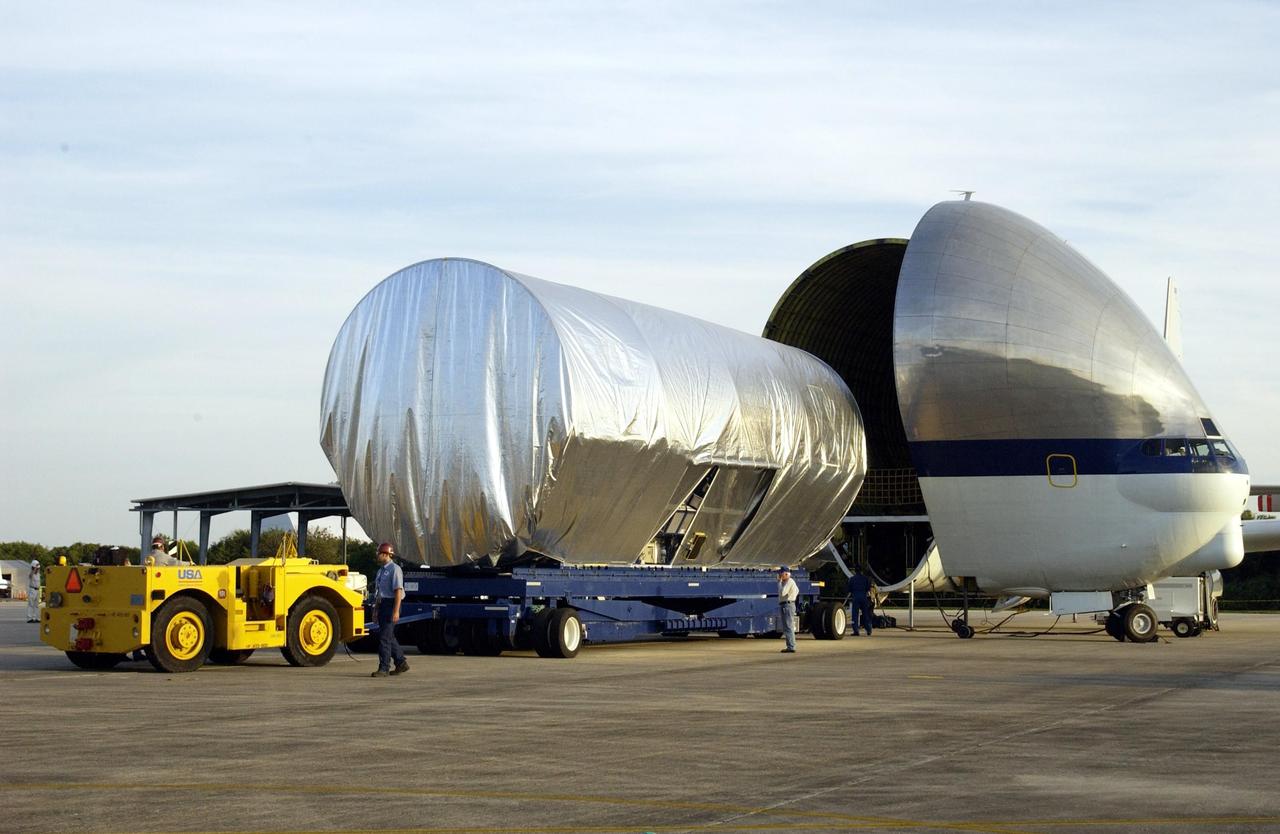
KENNEDY SPACE CENTER, FLA. -- The Integrated Equipment Assembly (IEA), one of two major components of the Starboard 6 (S6) truss segment for the International Space Station (ISS), is offloaded from NASA's Super Guppy cargo airplane following its arrival at the Shuttle Landing Facility. The customized four-engine aricraft has a 24-foot-diameter fuselage and a foldaway nose enabling it to load and transport oversize cargo. The IEA will be joined to its companion piece, the Long Spacer, before launch early in 2004. The S6 truss segment will be the 11th and final piece of the Station's Integrated Truss Structure and will support the fourth and final set of solar arrays, batteries, and electronics.
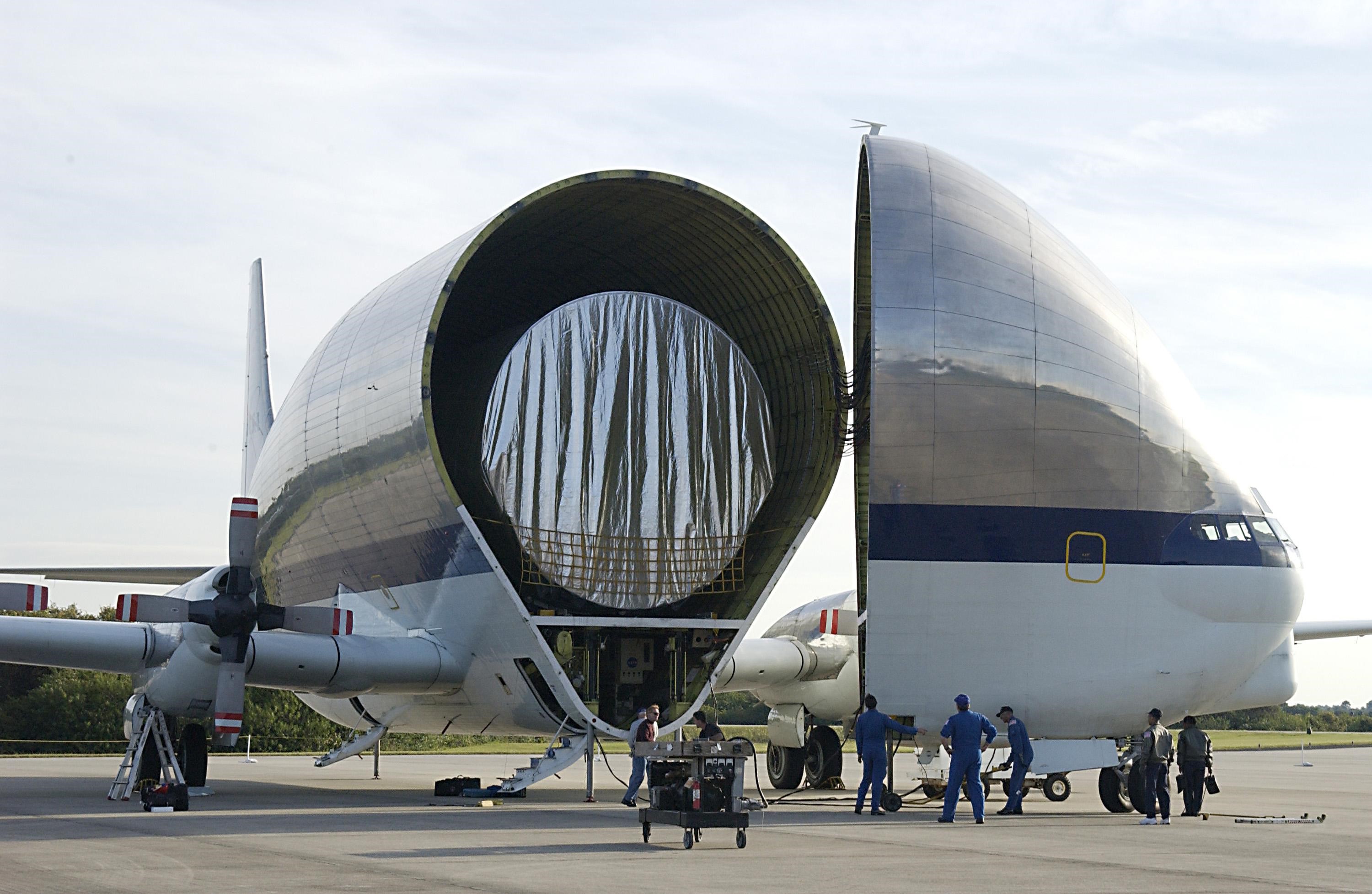
KENNEDY SPACE CENTER, FLA. -- The Integrated Equipment Assembly (IEA), one of two major components of the Starboard 6 (S6) truss segment for the International Space Station (ISS), is revealed inside NASA's Super Guppy cargo airplane following its arrival at the Shuttle Landing Facility. The customized four-engine aricraft has a 24-foot-diameter fuselage and a foldaway nose enabling it to load and transport oversize cargo. The IEA will be joined to its companion piece, the Long Spacer, before launch early in 2004. The S6 truss segment will be the 11th and final piece of the Station's Integrated Truss Structure and will support the fourth and final set of solar arrays, batteries, and electronics.
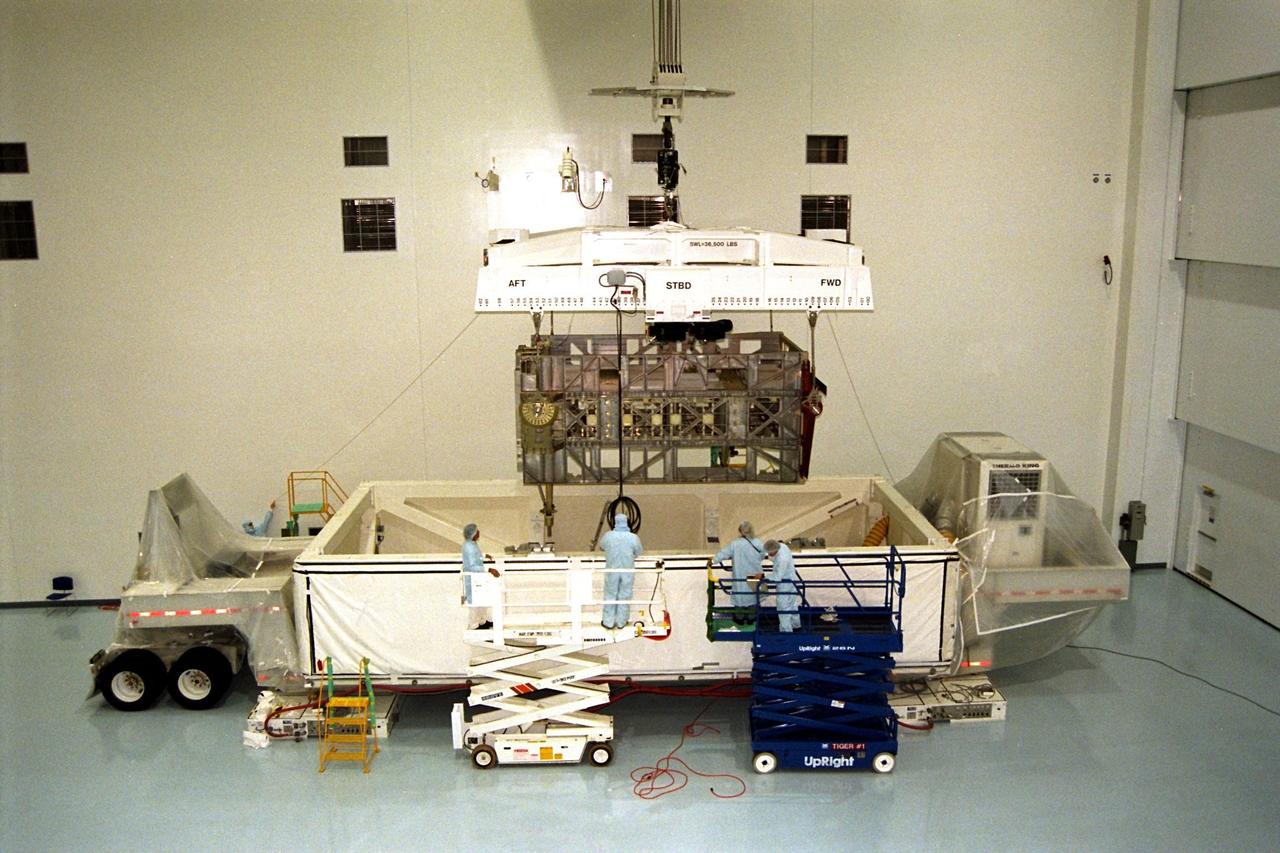
The Photovoltaic Module 1 Integrated Equipment Assembly (IEA) is lifted from its container in Kennedy Space Center’s Space Station Processing Facility (SSPF) before it is moved into its workstand, where it will be processed for flight on STS-97, scheduled for launch in April 1999. The IEA is one of four integral units designed to generate, distribute, and store power for the International Space Station. It will carry solar arrays, power storage batteries, power control units, and a thermal control system. The 16-foot-long, 16,850-pound unit is now undergoing preflight preparations in the SSPF
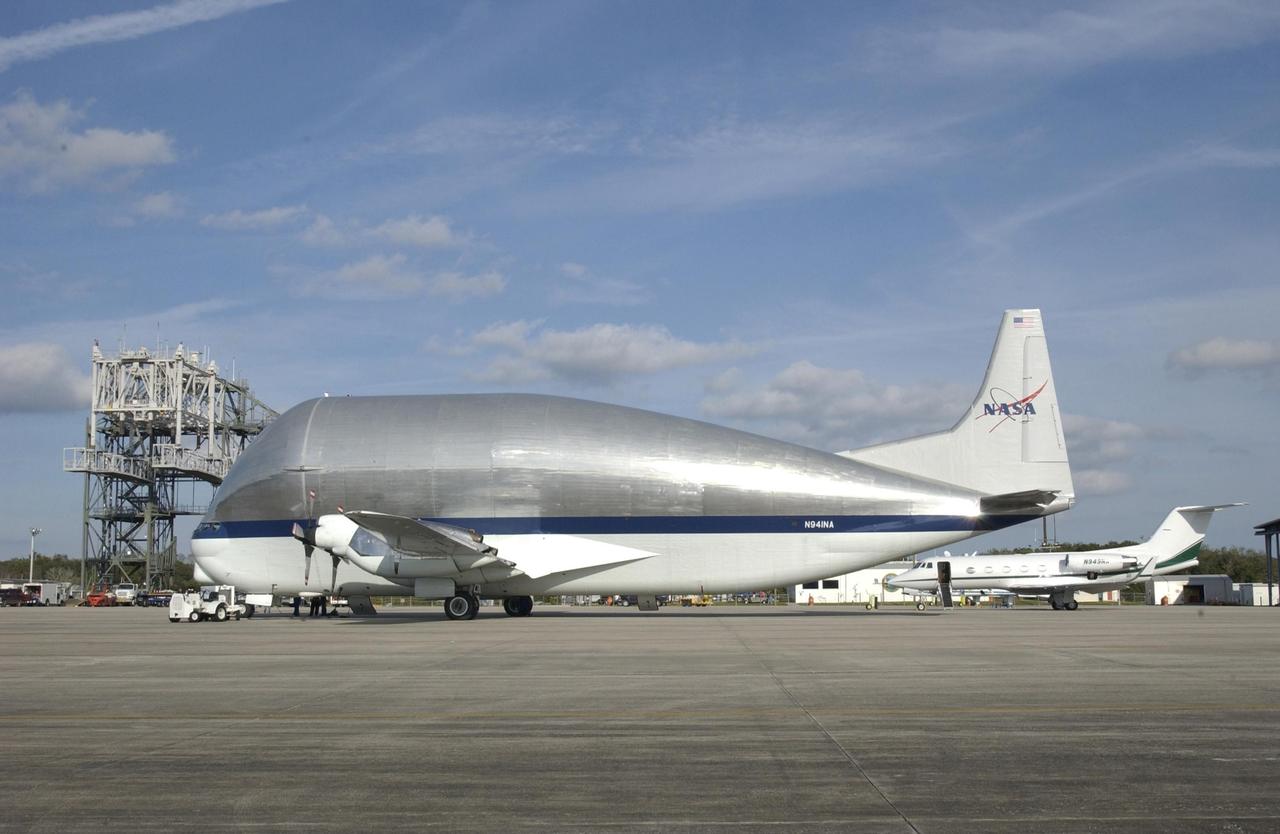
KENNEDY SPACE CENTER, FLA. -- The Integrated Equipment Assembly (IEA), one of two major components of the Starboard 6 (S6) truss segment for the International Space Station (ISS), arrives at the Shuttle Landing Facility aboard NASA's Super Guppy cargo airplane. The customized four-engine aricraft has a 24-foot-diameter fuselage and a foldaway nose enabling it to load and transport oversize cargo. The IEA will be joined to its companion piece, the Long Spacer, before launch early in 2004. The S6 truss segment will be the 11th and final piece of the Station's Integrated Truss Structure and will support the fourth and final set of solar arrays, batteries, and electronics.
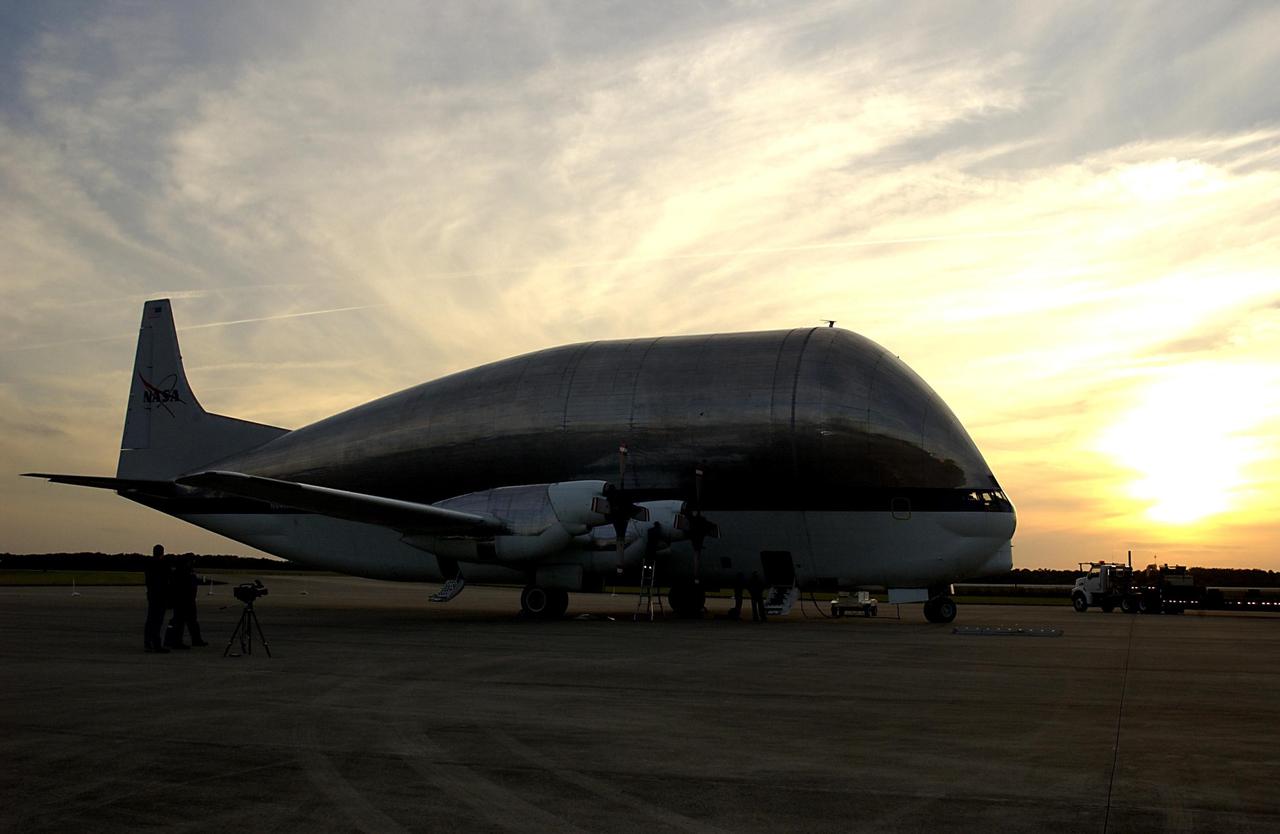
KENNEDY SPACE CENTER, FLA. -- The Integrated Equipment Assembly (IEA), one of two major components of the Starboard 6 (S6) truss segment for the International Space Station (ISS), arrives at the Shuttle Landing Facility aboard NASA's Super Guppy cargo airplane. The customized four-engine aricraft has a 24-foot-diameter fuselage and a foldaway nose enabling it to load and transport oversize cargo. The IEA will be joined to its companion piece, the Long Spacer, before launch early in 2004. The S6 truss segment will be the 11th and final piece of the Station's Integrated Truss Structure and will support the fourth and final set of solar arrays, batteries, and electronics.
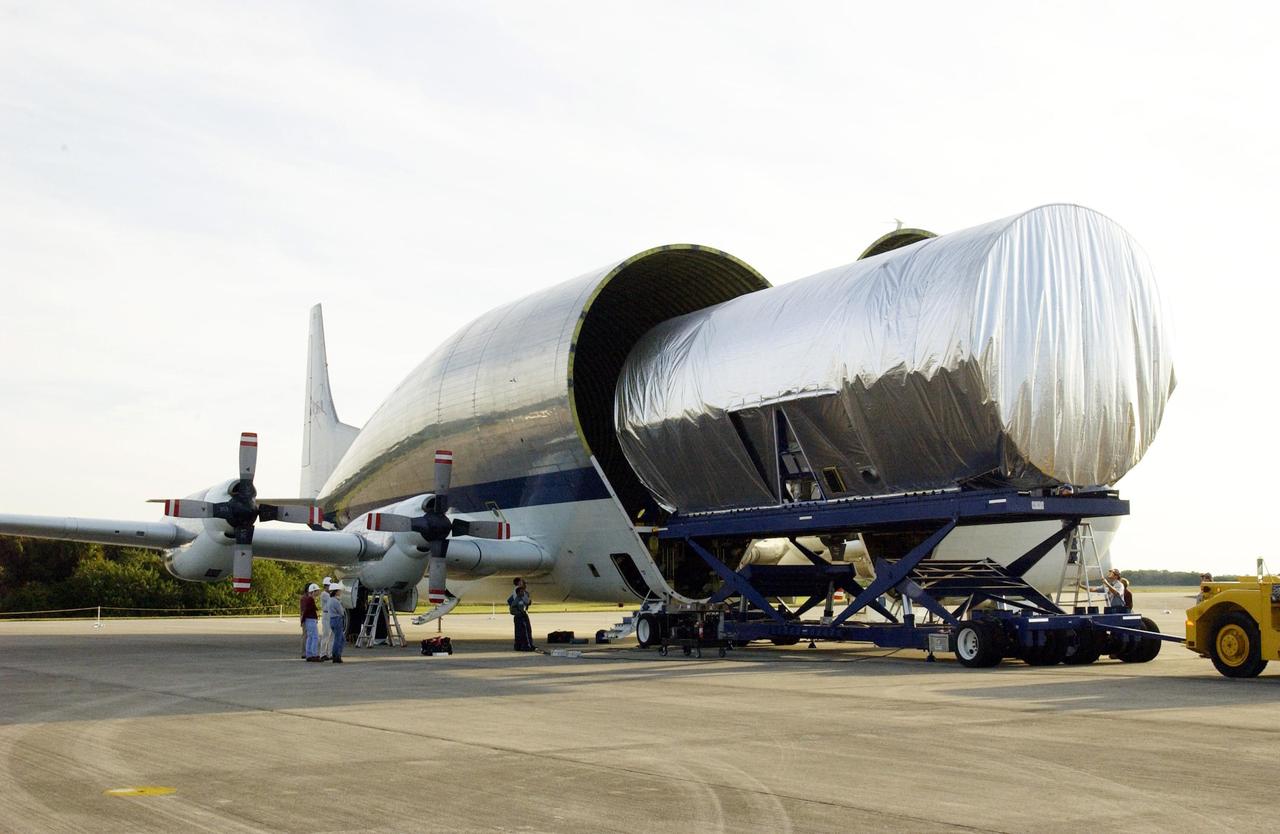
KENNEDY SPACE CENTER, FLA. -- The Integrated Equipment Assembly (IEA), one of two major components of the Starboard 6 (S6) truss segment for the International Space Station (ISS), is offloaded from NASA's Super Guppy cargo airplane following its arrival at the Shuttle Landing Facility. The customized four-engine aricraft has a 24-foot-diameter fuselage and a foldaway nose enabling it to load and transport oversize cargo. The IEA will be joined to its companion piece, the Long Spacer, before launch early in 2004. The S6 truss segment will be the 11th and final piece of the Station's Integrated Truss Structure and will support the fourth and final set of solar arrays, batteries, and electronics.
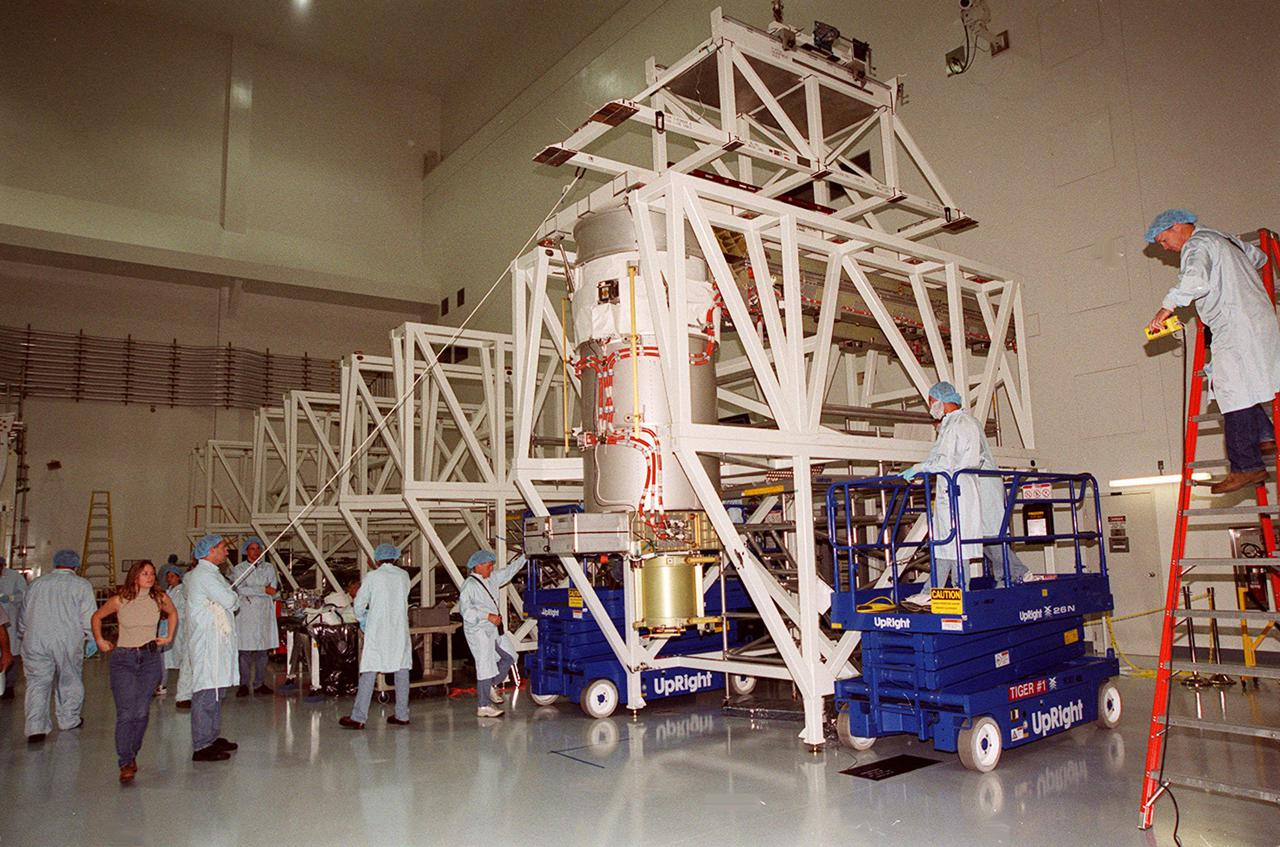
Workers in the Space Station Processing Facility get ready to attach an overhead crane (center top) to the solar array below it to move the array for installation onto the Integrated Equipment Assembly (IEA). A component of the International Space Station, the solar array is the second one being installed on the IEA. The arrays are scheduled to be launched on mission STS-97 in late November along with the P6 truss. The Station’s electrical power system (EPS) will use eight photovoltaic solar arrays to convert sunlight to electricity. Each of the eight solar arrays will be 112 feet long by 39 feet wide. The solar arrays are mounted on a “blanket” that can be folded like an accordion for delivery. Once in orbit, astronauts will deploy the blankets to their full size. Gimbals will be used to rotate the arrays so that they will face the Sun to provide maximum power to the Space Station
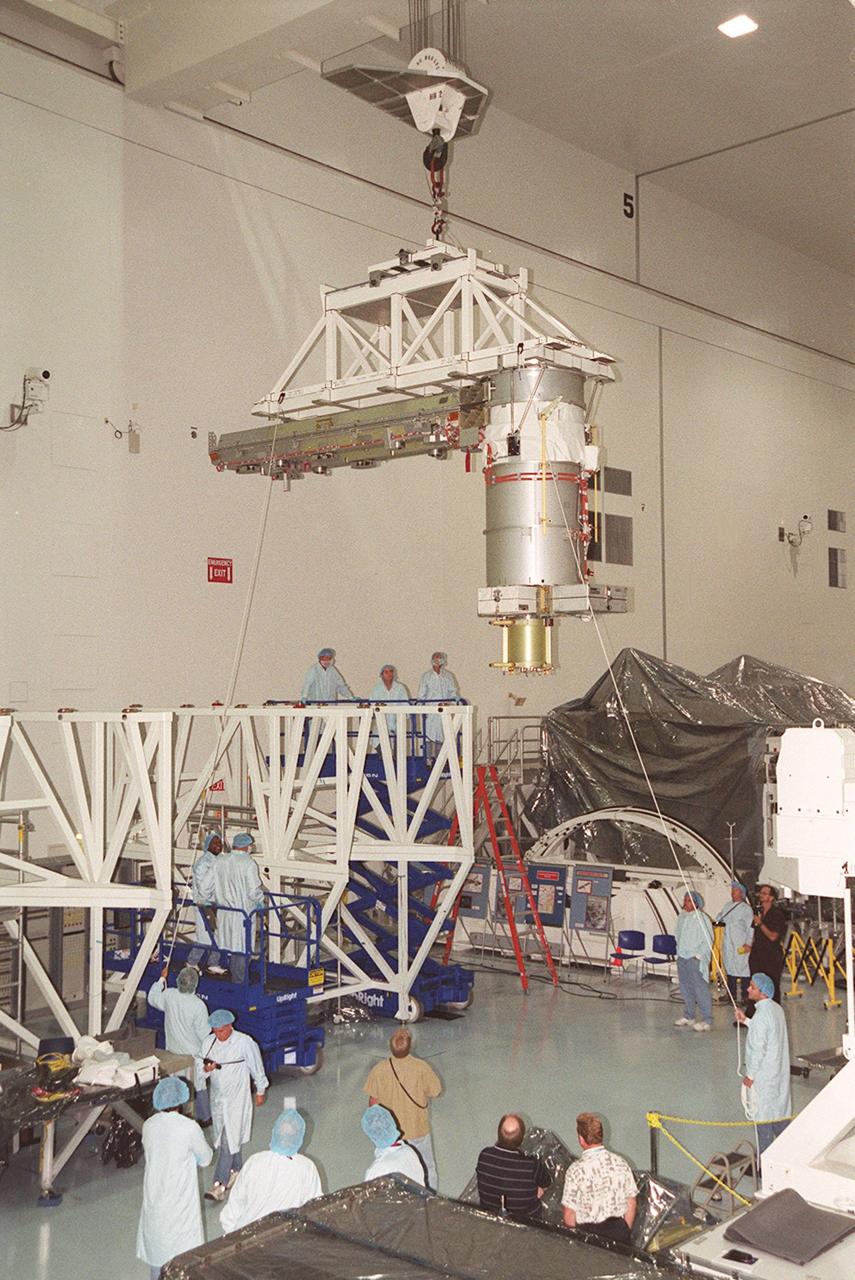
An overhead crane in the Space Station Processing Facility lifts a solar array as workers stand by to help guide it. The solar array will be installed onto the Integrated Equipment Assembly (IEA). A component of the International Space Station, the solar array is the second one being installed on the IEA. The arrays are scheduled to be launched on mission STS-97 in late November along with the P6 truss. The Station’s electrical power system (EPS) will use eight photovoltaic solar arrays to convert sunlight to electricity. Each of the eight solar arrays will be 112 feet long by 39 feet wide. The solar arrays are mounted on a “blanket” that can be folded like an accordion for delivery. Once in orbit, astronauts will deploy the blankets to their full size. Gimbals will be used to rotate the arrays so that they will face the Sun to provide maximum power to the Space Station
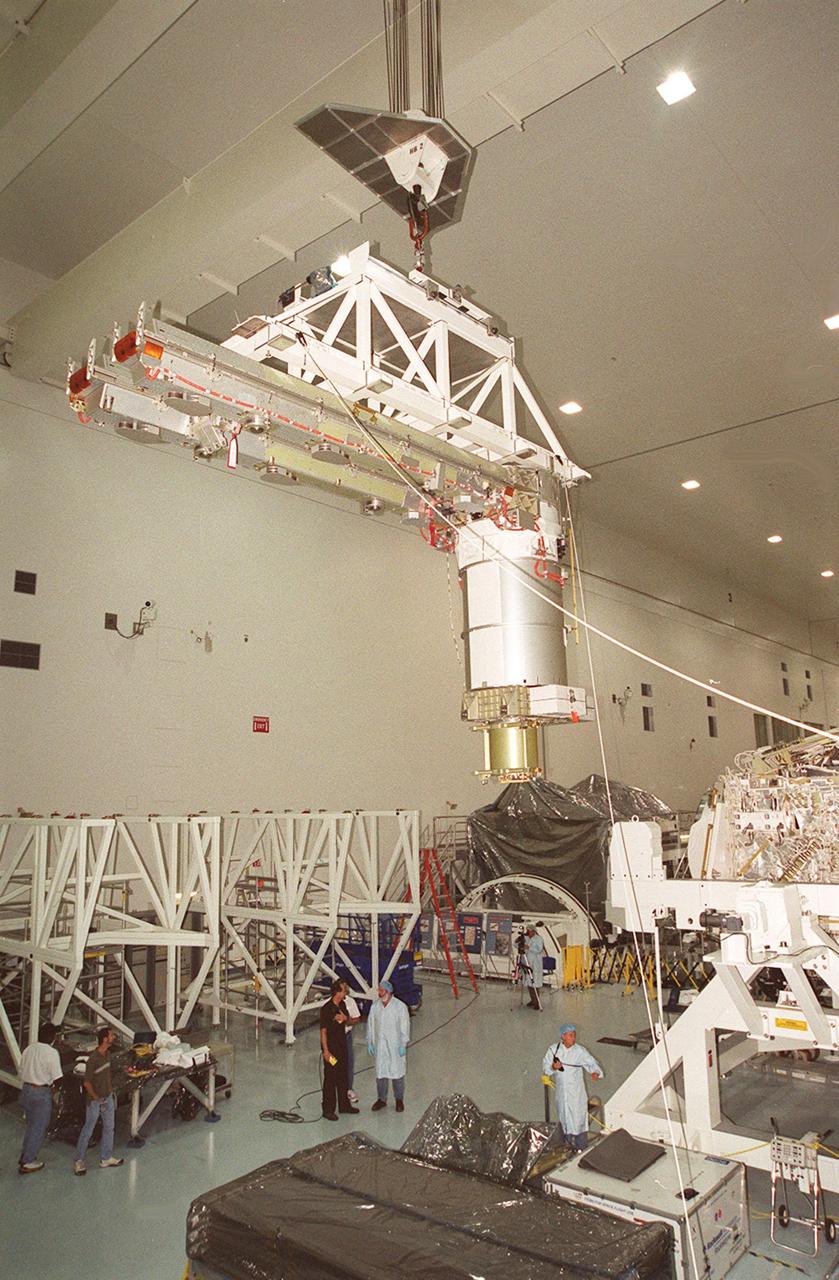
The overhead crane carrying a solar array turns on its axis to move the array to the Integrated Equipment Assembly (IEA) for installation. A component of the International Space Station, the solar array is the second one being installed on the IEA. The arrays are scheduled to be launched on mission STS-97 in late November along with the P6 truss. The Station’s electrical power system (EPS) will use eight photovoltaic solar arrays to convert sunlight to electricity. Each of the eight solar arrays will be 112 feet long by 39 feet wide. The solar arrays are mounted on a “blanket” that can be folded like an accordion for delivery. Once in orbit, astronauts will deploy the blankets to their full size. Gimbals will be used to rotate the arrays so that they will face the Sun to provide maximum power to the Space Station
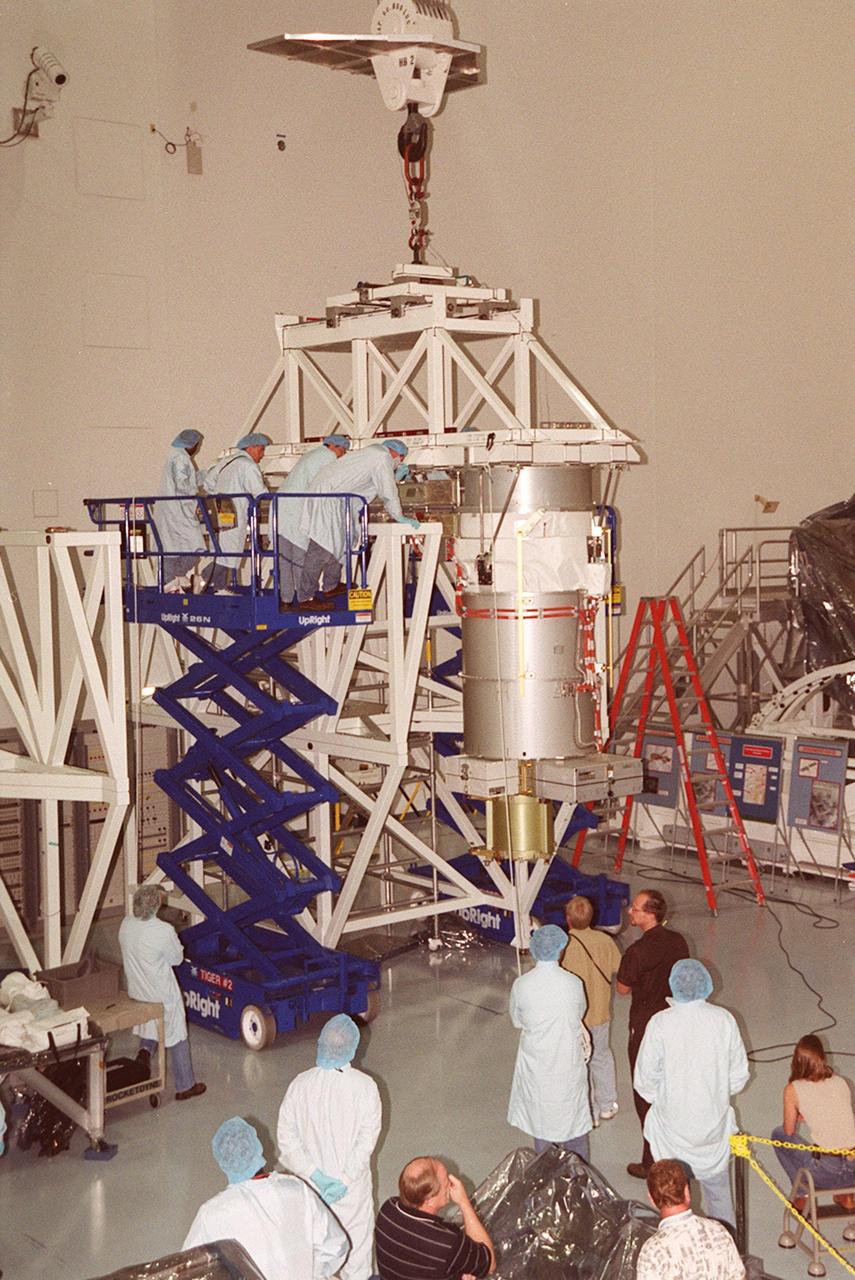
Workers rise to the occasion on accordion lifts as they oversee the movement of solar array in front of them. The solar array will be installed onto the Integrated Equipment Assembly (IEA). A component of the International Space Station, the solar array is the second one being installed on the IEA. The arrays are scheduled to be launched on mission STS-97 in late November along with the P6 truss. The Station’s electrical power system (EPS) will use eight photovoltaic solar arrays to convert sunlight to electricity. Each of the eight solar arrays will be 112 feet long by 39 feet wide. The solar arrays are mounted on a “blanket” that can be folded like an accordion for delivery. Once in orbit, astronauts will deploy the blankets to their full size. Gimbals will be used to rotate the arrays so that they will face the Sun to provide maximum power to the Space Station
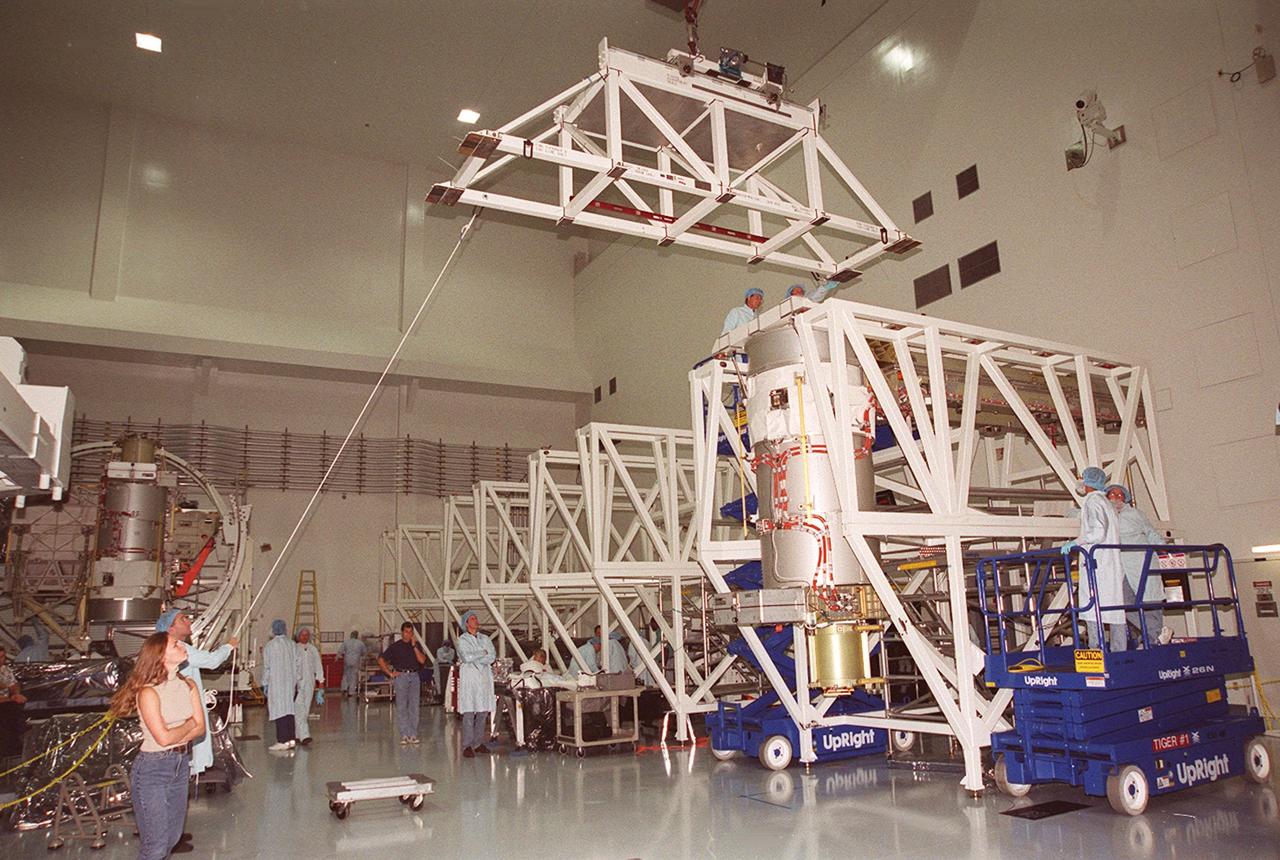
Workers in the Space Station Processing Facility help guide an overhead crane toward a workstand containing a solar array in order to move it for installation onto the Integrated Equipment Assembly (IEA). A component of the International Space Station, the solar array is the second one being installed on the IEA. The arrays are scheduled to be launched on mission STS-97 in late November along with the P6 truss. The Station’s electrical power system (EPS) will use eight photovoltaic solar arrays to convert sunlight to electricity. Each of the eight solar arrays will be 112 feet long by 39 feet wide. The solar arrays are mounted on a “blanket” that can be folded like an accordion for delivery. Once in orbit, astronauts will deploy the blankets to their full size. Gimbals will be used to rotate the arrays so that they will face the Sun to provide maximum power to the Space Station
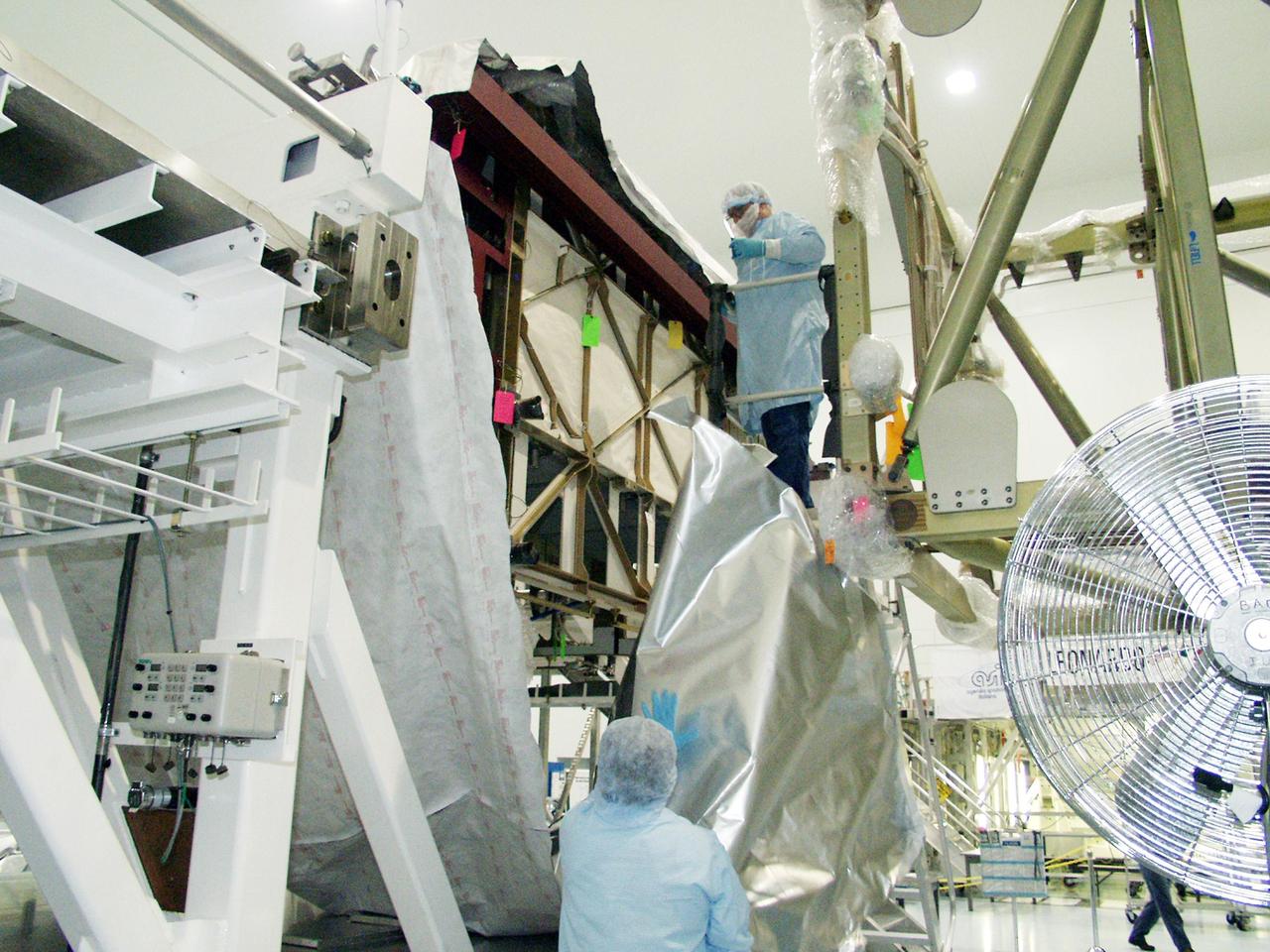
KENNEDY SPACE CENTER, FLA. -- In the Space Station Processing Facility, workers begin uncovering the Long Spacer (LS), the second and final piece of the S6 Integrated Truss Segment. Both the LS and the S6 Integrated Equipment Assembly (IEA) will undergo inspections and verifications tests to prepare them for flight to the International Space Station in early 2004. Although separate for now, the two segments will be integrated and fly as one on mission STS-119. Together the two pieces weigh 26,000 pounds and measure 45 feet long. The S6 is the 11th and final piece of the Station's Integrated Truss Structure, which will measure more than 300 feet in all. .
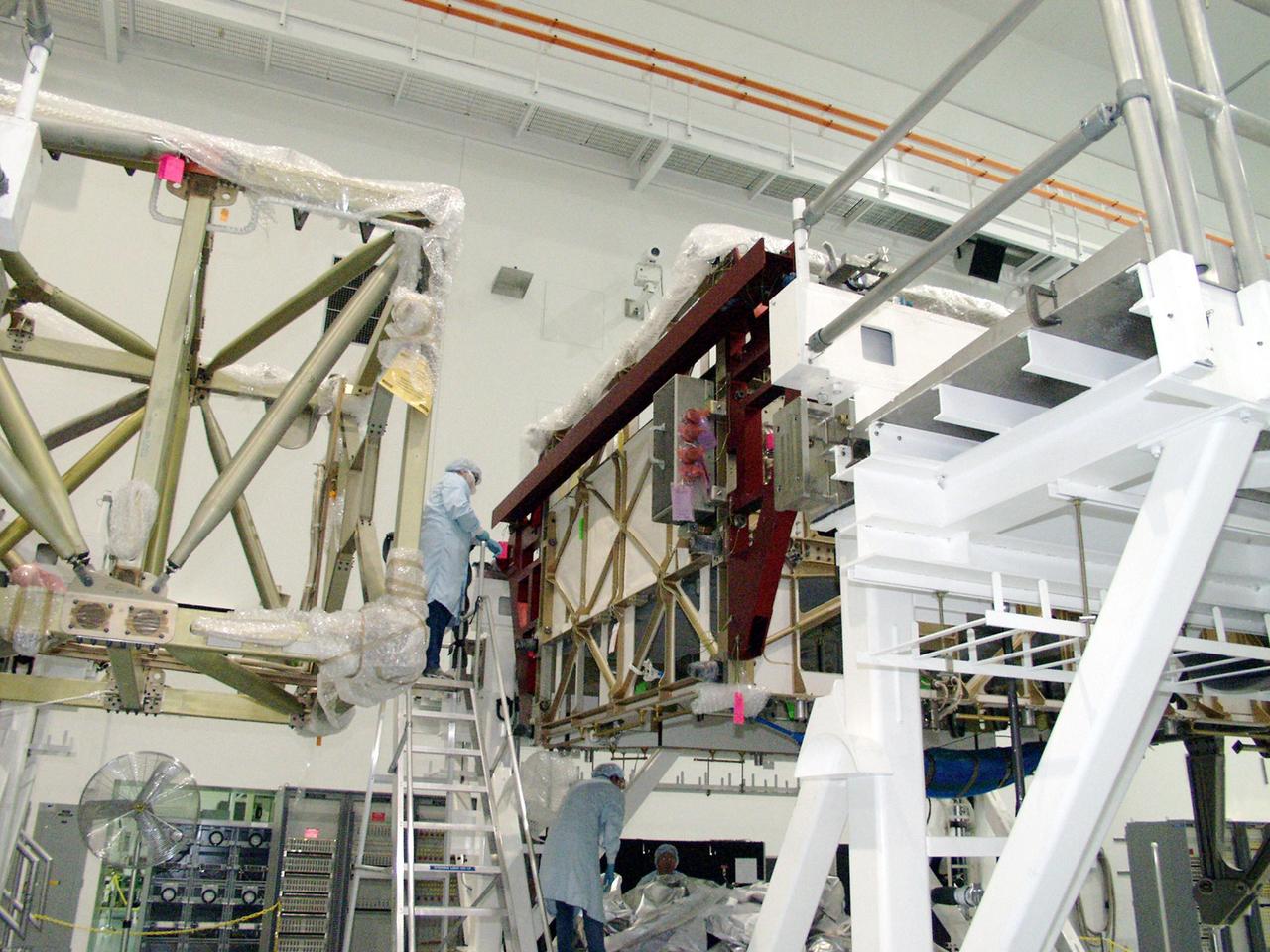
KENNEDY SPACE CENTER, FLA. -- In the Space Station Processing Facility, workers finish uncovering the Long Spacer (LS), the second and final piece of the S6 Integrated Truss Segment. Both the LS and the S6 Integrated Equipment Assembly (IEA) will undergo inspections and verifications tests to prepare them for flight to the International Space Station in early 2004. Although separate for now, the two segments will be integrated and fly as one on mission STS-119. Together the two pieces weigh 26,000 pounds and measure 45 feet long. The S6 is the 11th and final piece of the Station's Integrated Truss Structure, which will measure more than 300 feet in all. .
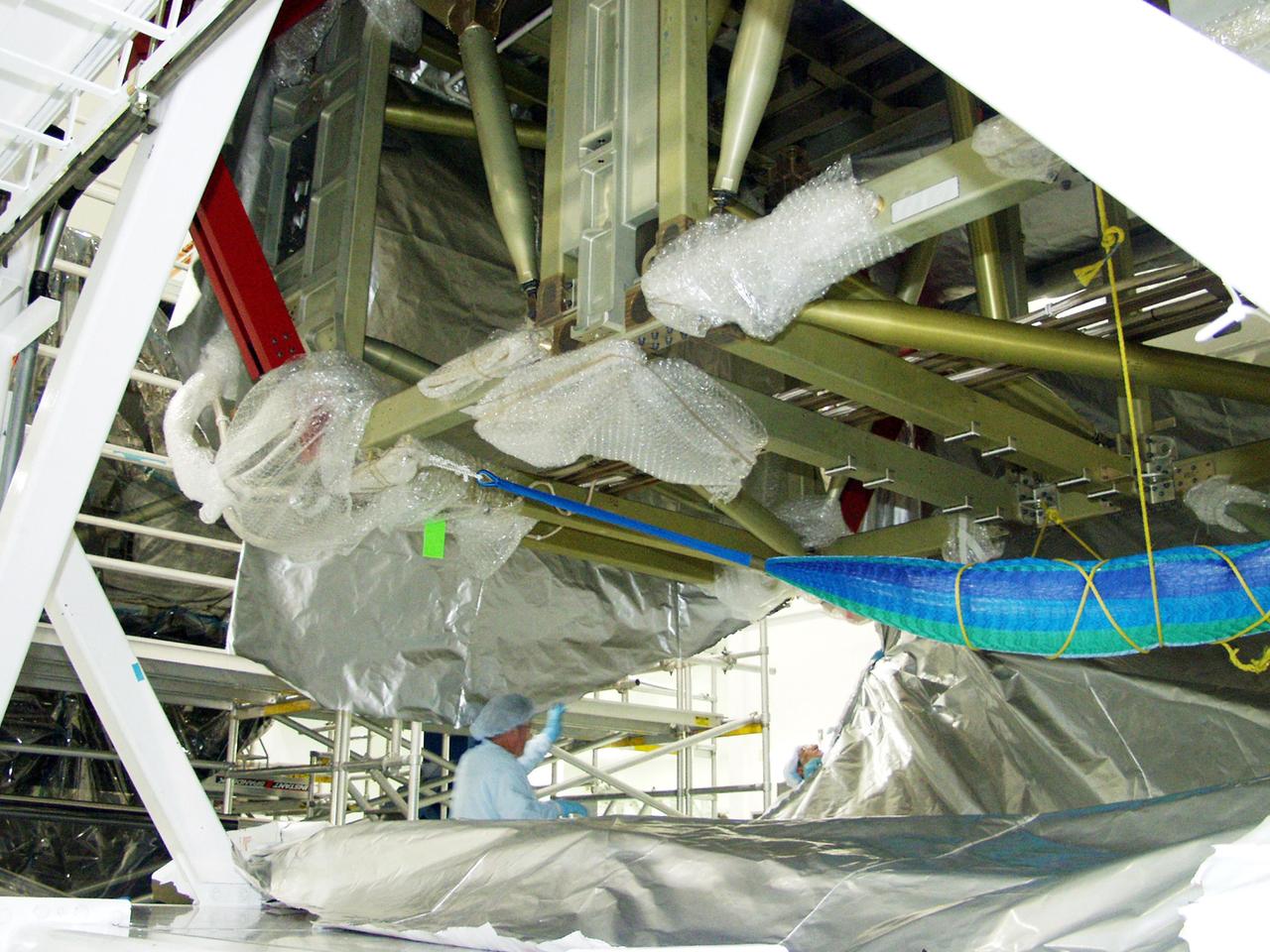
KENNEDY SPACE CENTER, FLA. -- In the Space Station Processing Facility, workers begin uncovering the Long Spacer (LS), the second and final piece of the S6 Integrated Truss Segment. Both the LS and the S6 Integrated Equipment Assembly (IEA) will undergo inspections and verifications tests to prepare them for flight to the International Space Station in early 2004. Although separate for now, the two segments will be integrated and fly as one on mission STS-119. Together the two pieces weigh 26,000 pounds and measure 45 feet long. The S6 is the 11th and final piece of the Station's Integrated Truss Structure, which will measure more than 300 feet in all. .
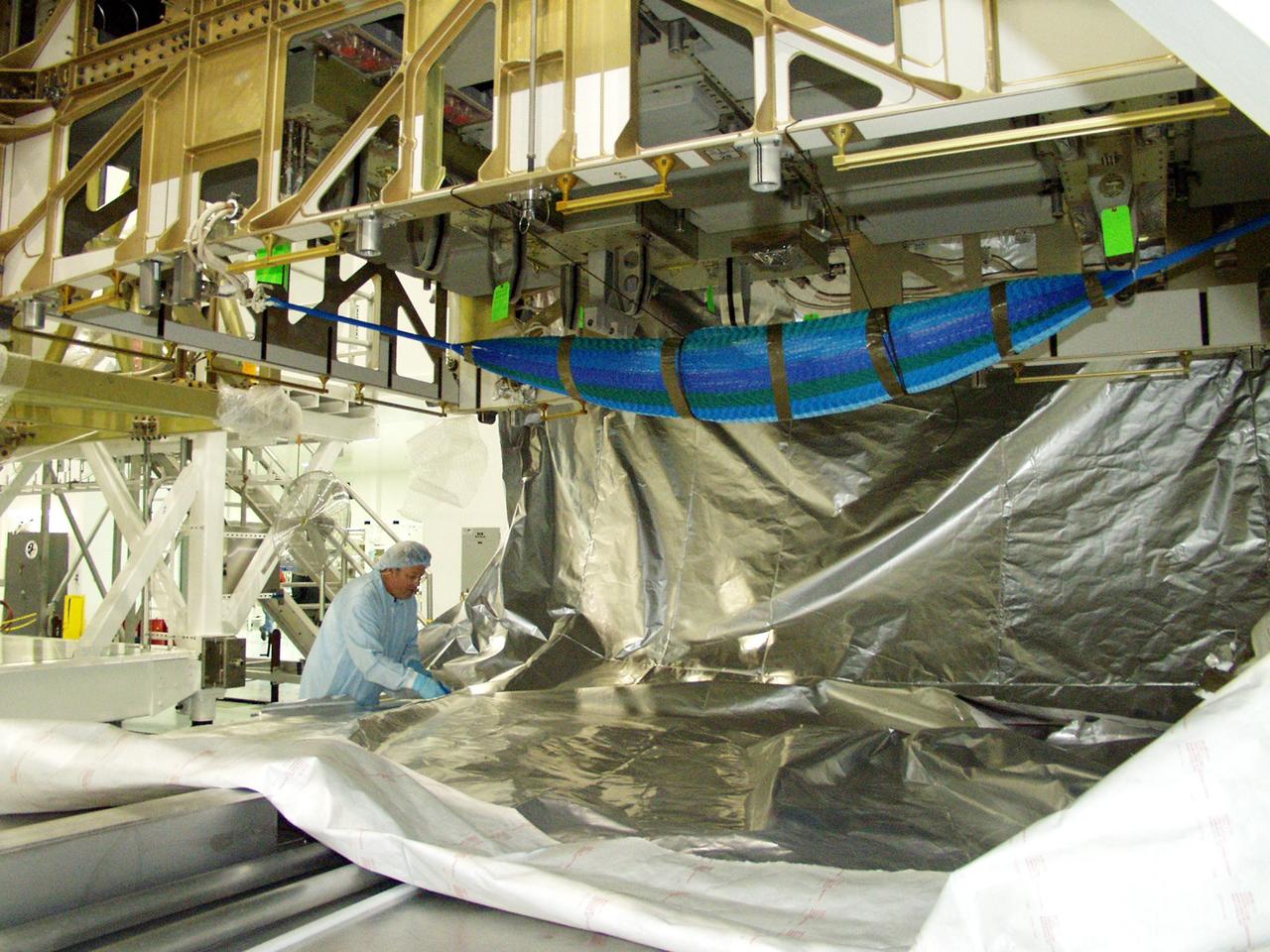
KENNEDY SPACE CENTER, FLA. -- In the Space Station Processing Facility, workers begin uncovering the Long Spacer (LS), the second and final piece of the S6 Integrated Truss Segment. Both the LS and the S6 Integrated Equipment Assembly (IEA) will undergo inspections and verifications tests to prepare them for flight to the International Space Station in early 2004. Although separate for now, the two segments will be integrated and fly as one on mission STS-119. Together the two pieces weigh 26,000 pounds and measure 45 feet long. The S6 is the 11th and final piece of the Station's Integrated Truss Structure, which will measure more than 300 feet in all. .

KENNEDY SPACE CENTER, FLA. -- In the Space Station Processing Facility, a worker begins uncovering the Long Spacer (LS), the second and final piece of the S6 Integrated Truss Segment. Both the LS and the S6 Integrated Equipment Assembly (IEA) will undergo inspections and verifications tests to prepare them for flight to the International Space Station in early 2004. Although separate for now, the two segments will be integrated and fly as one on mission STS-119. Together the two pieces weigh 26,000 pounds and measure 45 feet long. The S6 is the 11th and final piece of the Station's Integrated Truss Structure, which will measure more than 300 feet in all. .
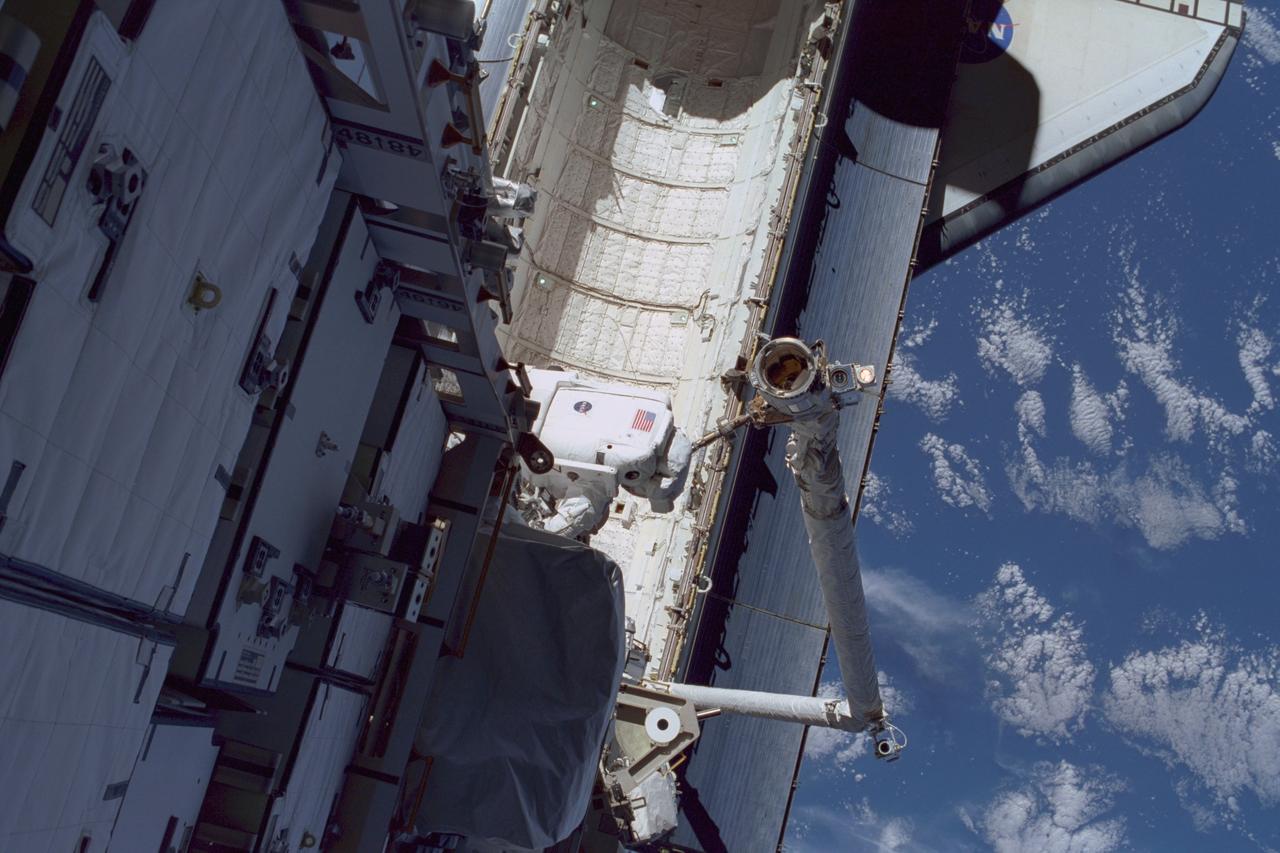
STS097-374-020 (3 December 2000) --- This high angle view shows astronaut Carlos I. Noriega, STS-97 mission specialist, traversing over Endeavour's cargo bay during the flight's first space walk on Dec. 3, 2000. Astronaut Joseph R. Tanner, mission specialist, was near the top of the P6 truss structure when he exposed the 35mm frame. The Canadian-built Remote Manipulator System (RMS) arm can be seen at bottom right.
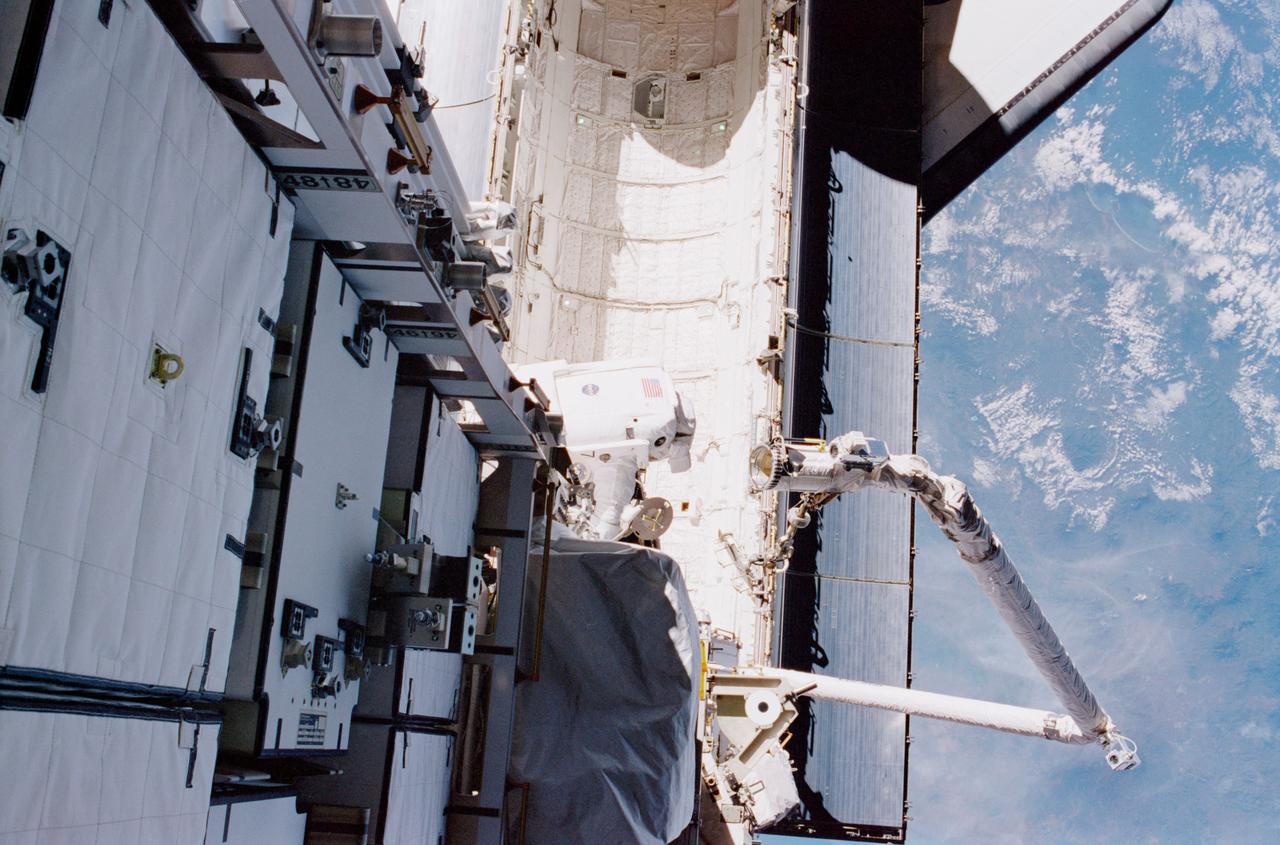
STS097-374-015 (5 December 2000) --- This high angle view shows astronaut Carlos I. Noriega, STS-97 mission specialist, traversing over Endeavour's cargo bay during the flight's first space walk on Dec. 5, 2000. Astronaut Joseph R. Tanner, mission specialist, was near the top of the P6 truss structure when he exposed the 35mm frame. The Canadian-built Remote Manipulator System (RMS) arm, instrumental in the current operations, can be seen at bottom right.
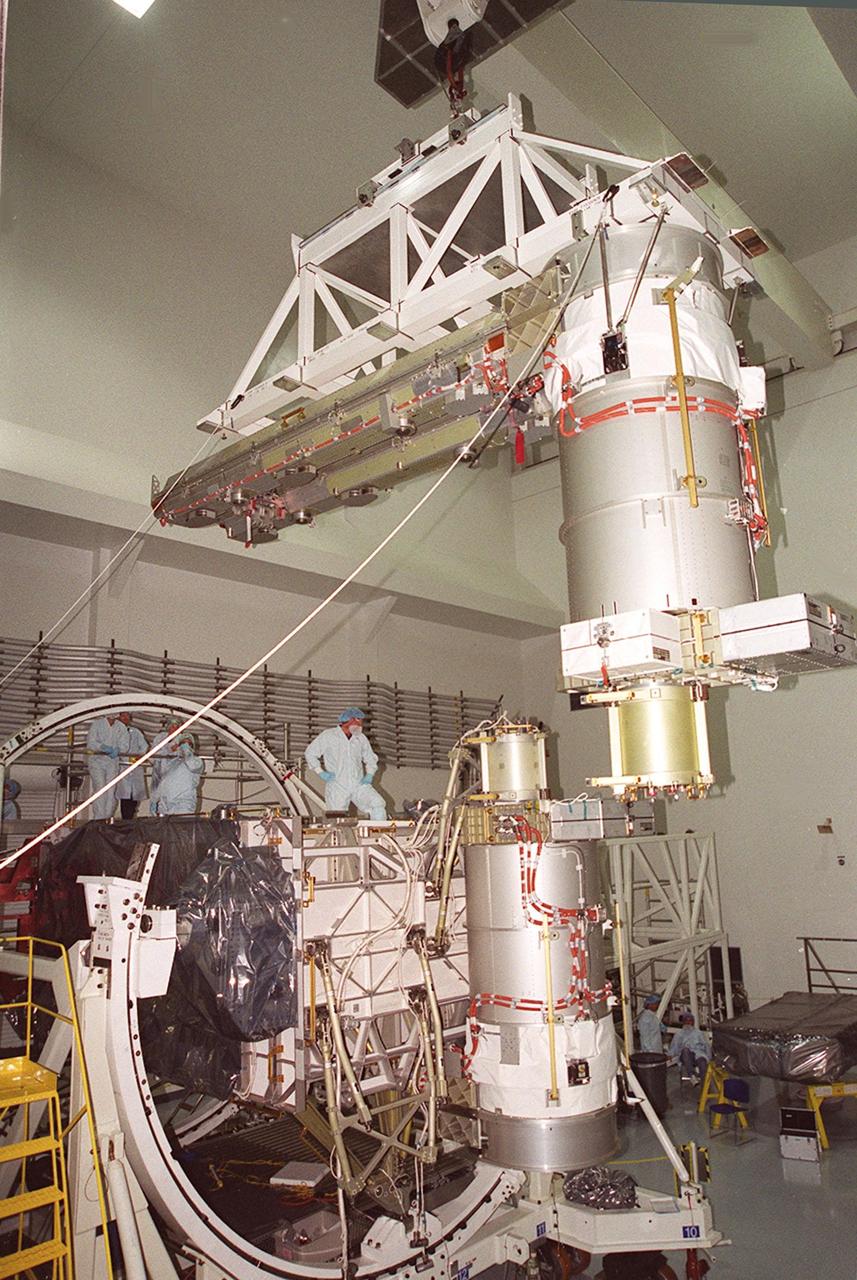
In the Space Station Processing Facility, the overhead crane carrying a solar array arrives at the Integrated Equipment Assembly (IEA) on which it will be installed. Solar Array Wing-3 is already in place. Components of the International Space Station, the arrays are scheduled to be launched on mission STS-97 in late November along with the P6 truss. The Station’s electrical power system (EPS) will use eight photovoltaic solar arrays to convert sunlight to electricity. Each of the eight solar arrays will be 112 feet long by 39 feet wide. The solar arrays are mounted on a “blanket” that can be folded like an accordion for delivery. Once in orbit, astronauts will deploy the blankets to their full size. Gimbals will be used to rotate the arrays so that they will face the Sun to provide maximum power to the Space Station