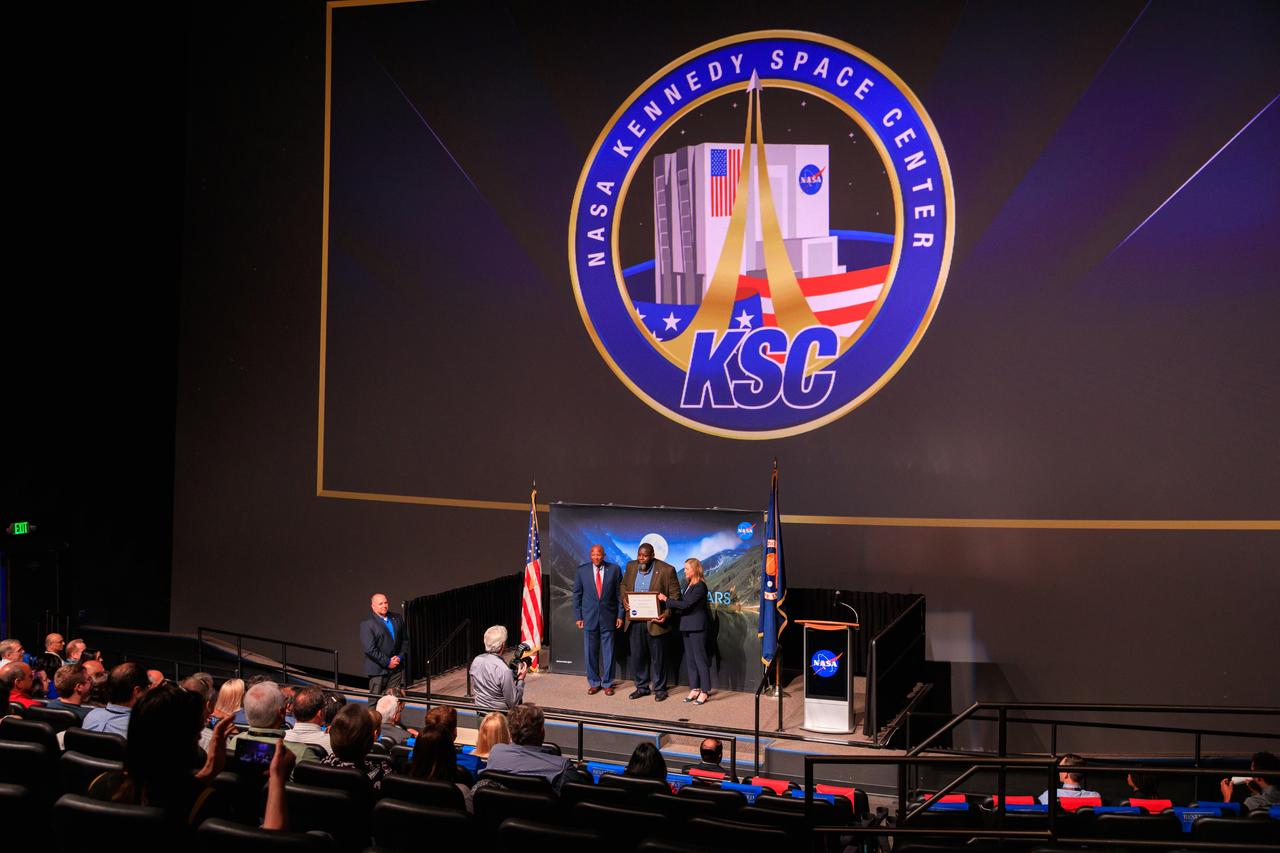
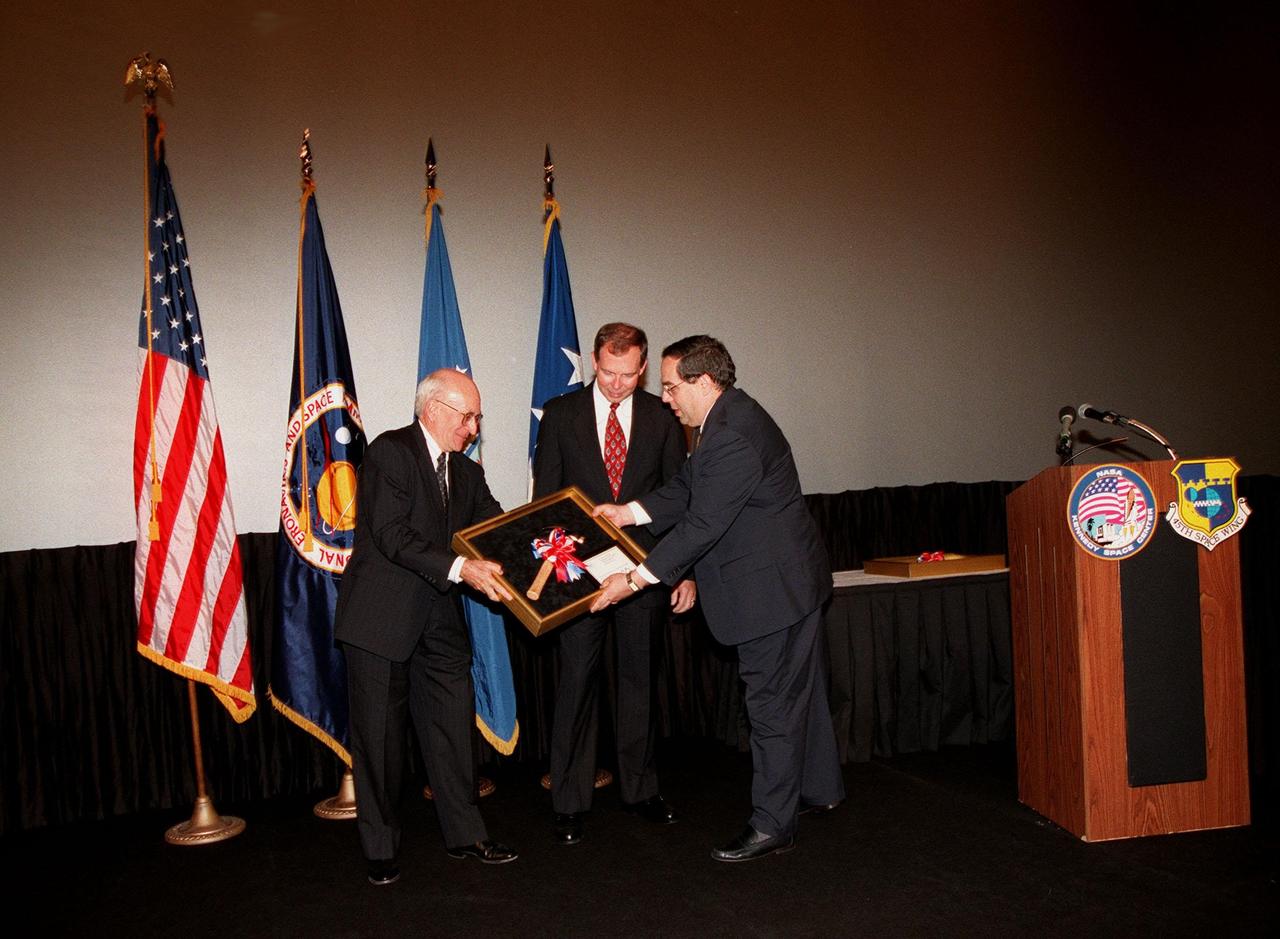
NASA’s Kennedy Space Center Director Janet Petro (right) and Deputy Director Kelvin Manning (left) present a KSC Certificate of Appreciation to Malcom Boston at the center's 2022 KSC Honor Awards Ceremony inside the IMAX Theater at the Florida spaceport’s nearby Visitor Complex on June 13, 2023. Kennedy Space Center employees, award recipients, families, and friends attended the ceremony, which honored both civil servants and contractors for their contributions to NASA and Kennedy.
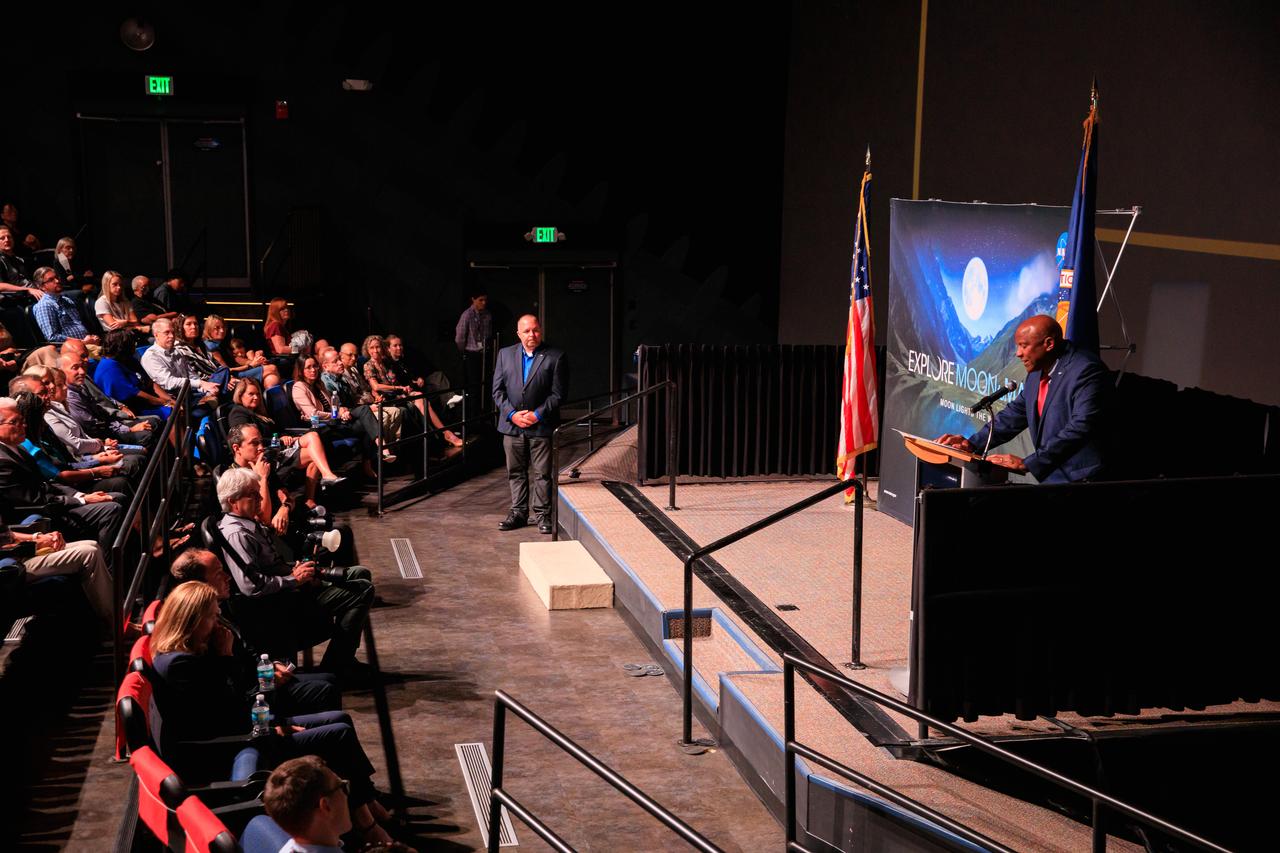
NASA’s Kennedy Space Center Deputy Director Kelvin Manning speaks to the audience during the center's 2022 KSC Honor Awards Ceremony inside the IMAX Theater at the Florida spaceport’s nearby Visitor Complex on June 13, 2023. Kennedy Space Center employees, award recipients, families, and friends attended the ceremony, which honored both civil servants and contractors for their contributions to NASA and Kennedy.
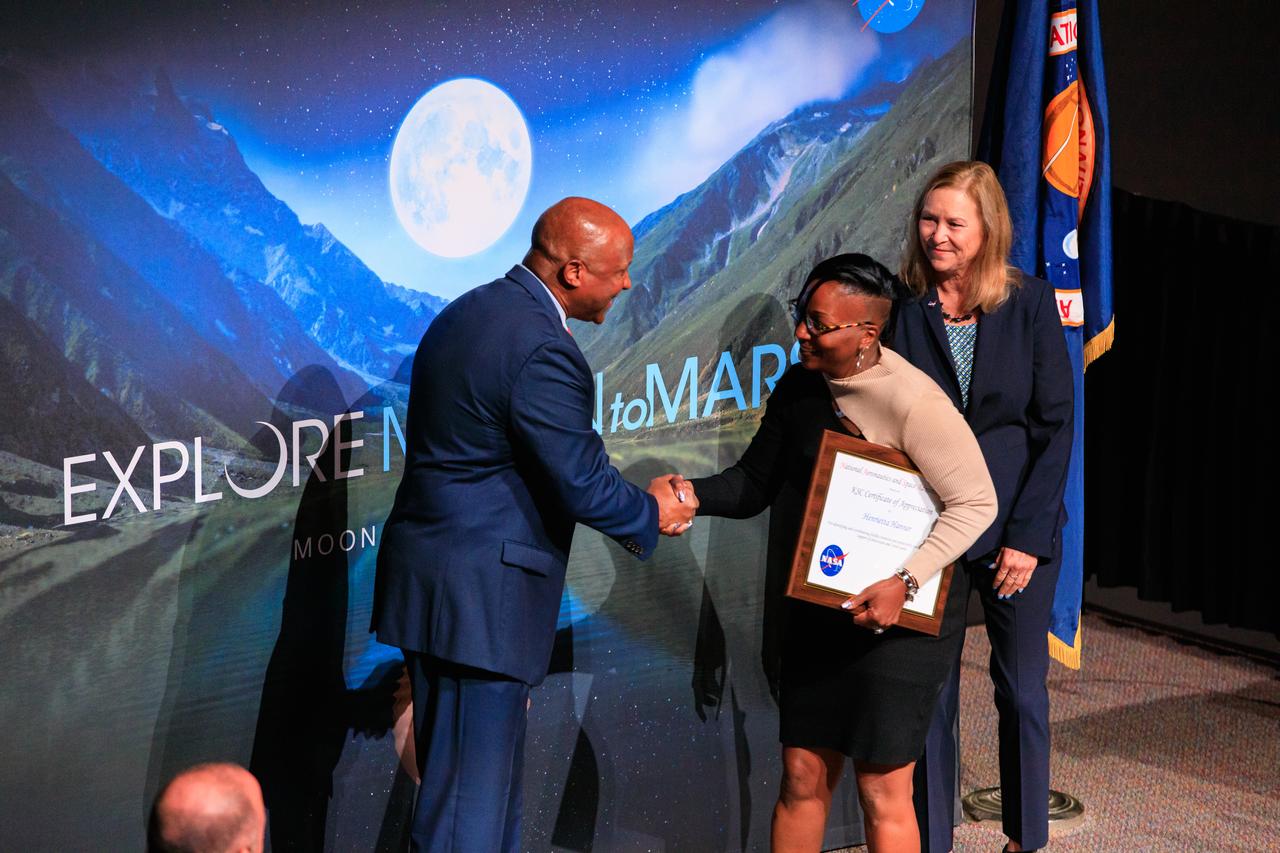
NASA’s Kennedy Space Center Director Janet Petro (right) and Deputy Director Kelvin Manning (left) present a KSC Certificate of Appreciation to Henrietta Hanner at the center's 2022 KSC Honor Awards Ceremony inside the IMAX Theater at the Florida spaceport’s nearby Visitor Complex on June 13, 2023. Kennedy Space Center employees, award recipients, families, and friends attended the ceremony, which honored both civil servants and contractors for their contributions to NASA and Kennedy.
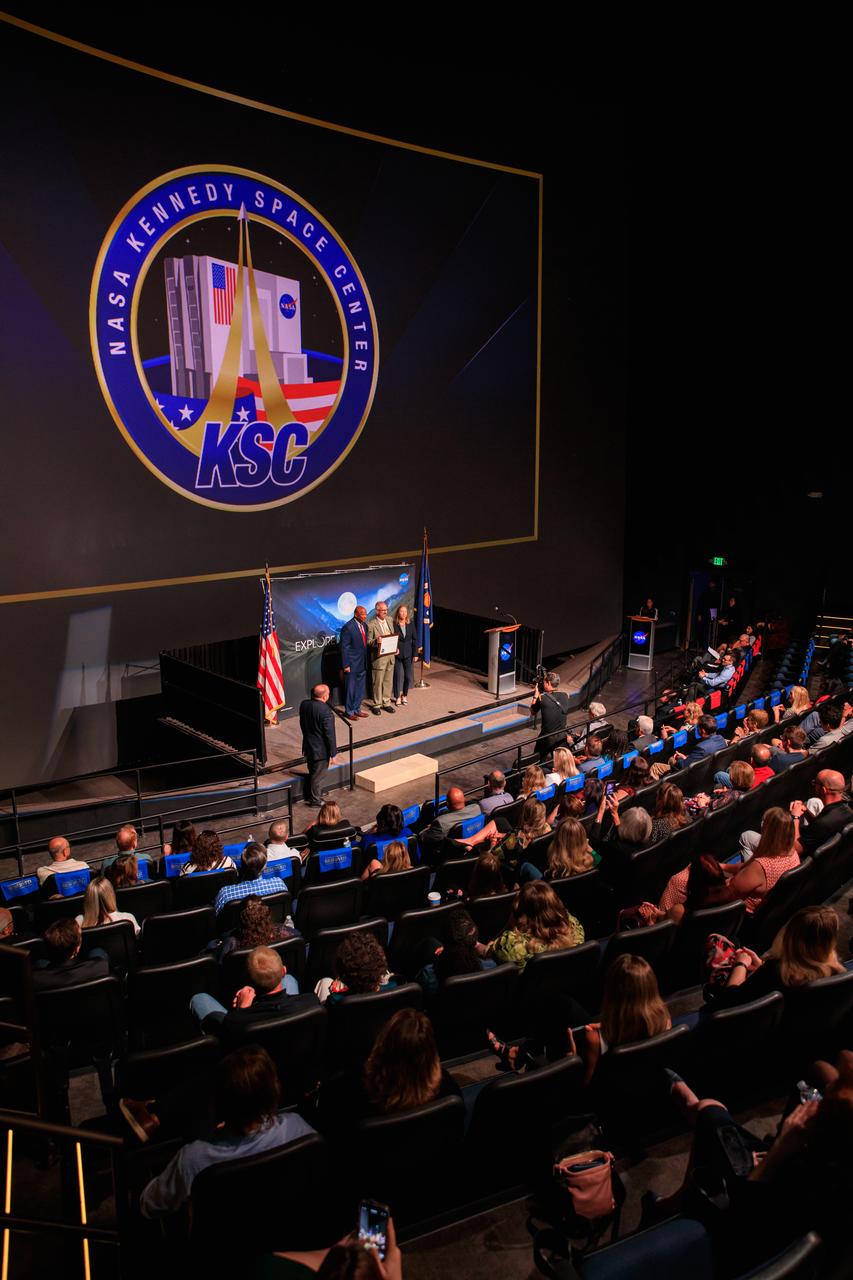
NASA’s Kennedy Space Center Director Janet Petro (right) and Deputy Director Kelvin Manning (left) present a KSC Certificate of Appreciation to Rick Goltz at the center's 2022 KSC Honor Awards Ceremony inside the IMAX Theater at the Florida spaceport’s nearby Visitor Complex on June 13, 2023. Kennedy Space Center employees, award recipients, families, and friends attended the ceremony, which honored both civil servants and contractors for their contributions to NASA and Kennedy.
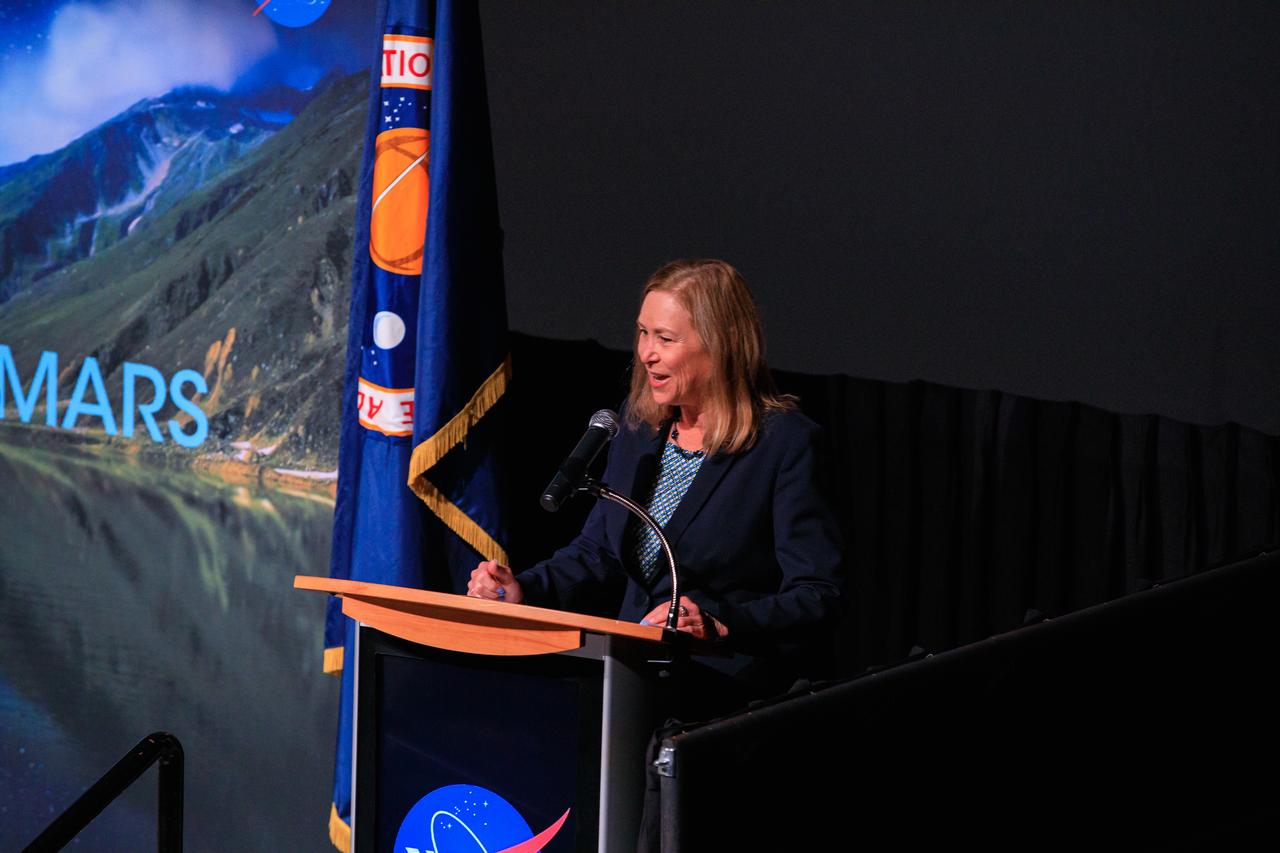
NASA’s Kennedy Space Center Director Janet Petro speaks to the audience during the center's 2022 KSC Honor Awards Ceremony inside the IMAX Theater at the Florida spaceport’s nearby Visitor Complex on June 13, 2023. Kennedy employees, award recipients, families, and friends attended the ceremony, which honored both civil servants and contractors for their contributions to NASA and Kennedy.
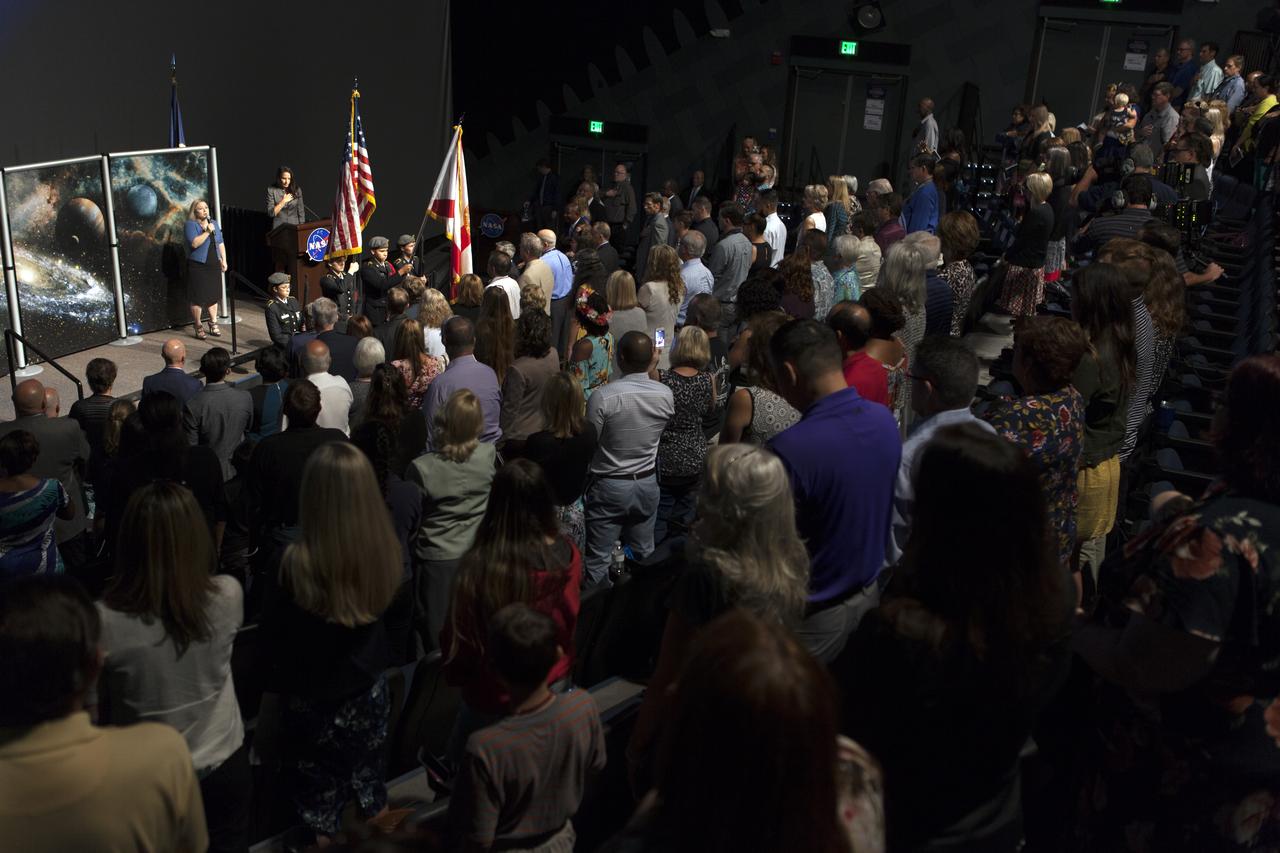
2018 KSC Honor Awards inside the IMAX theater at Kennedy Space Center Visitor Complex.
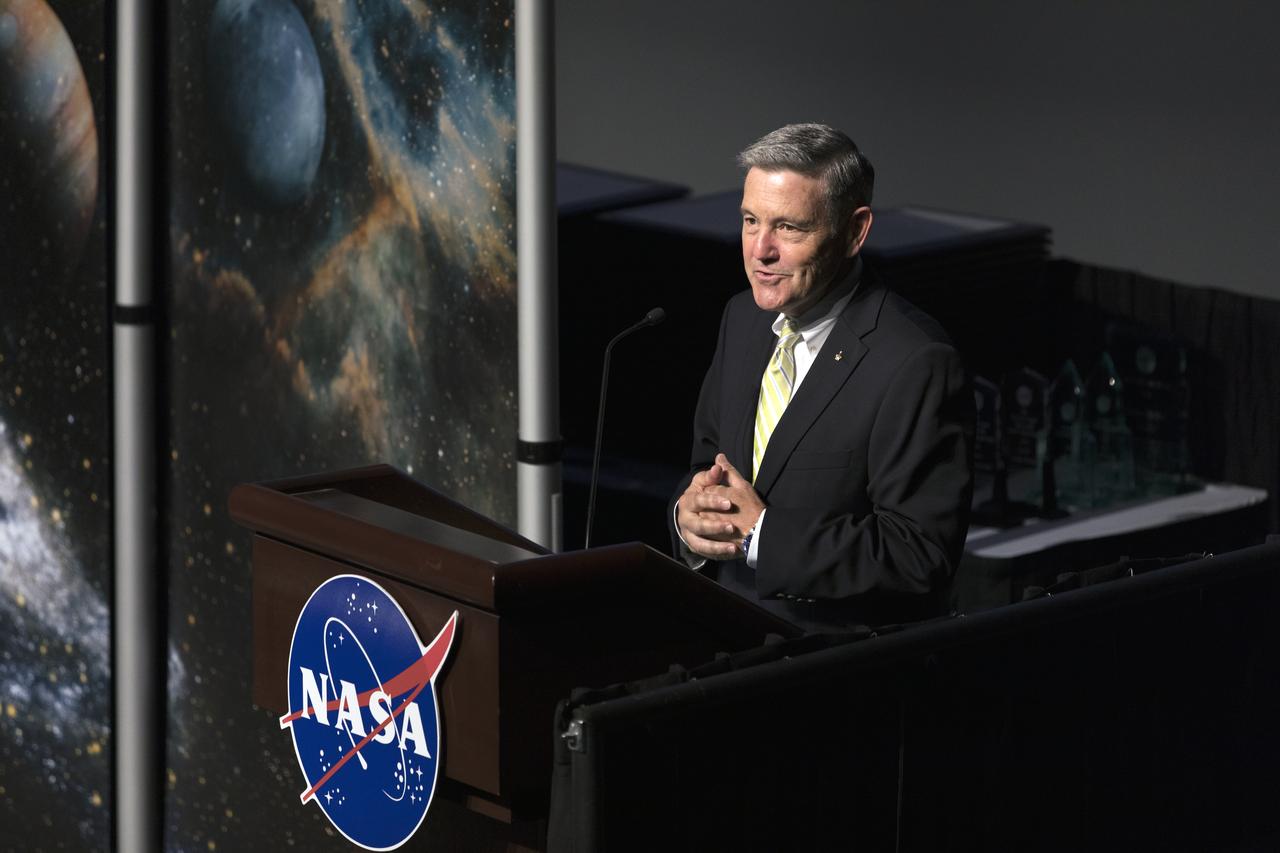
2018 KSC Honor Awards inside the IMAX theater at Kennedy Space Center Visitor Complex.
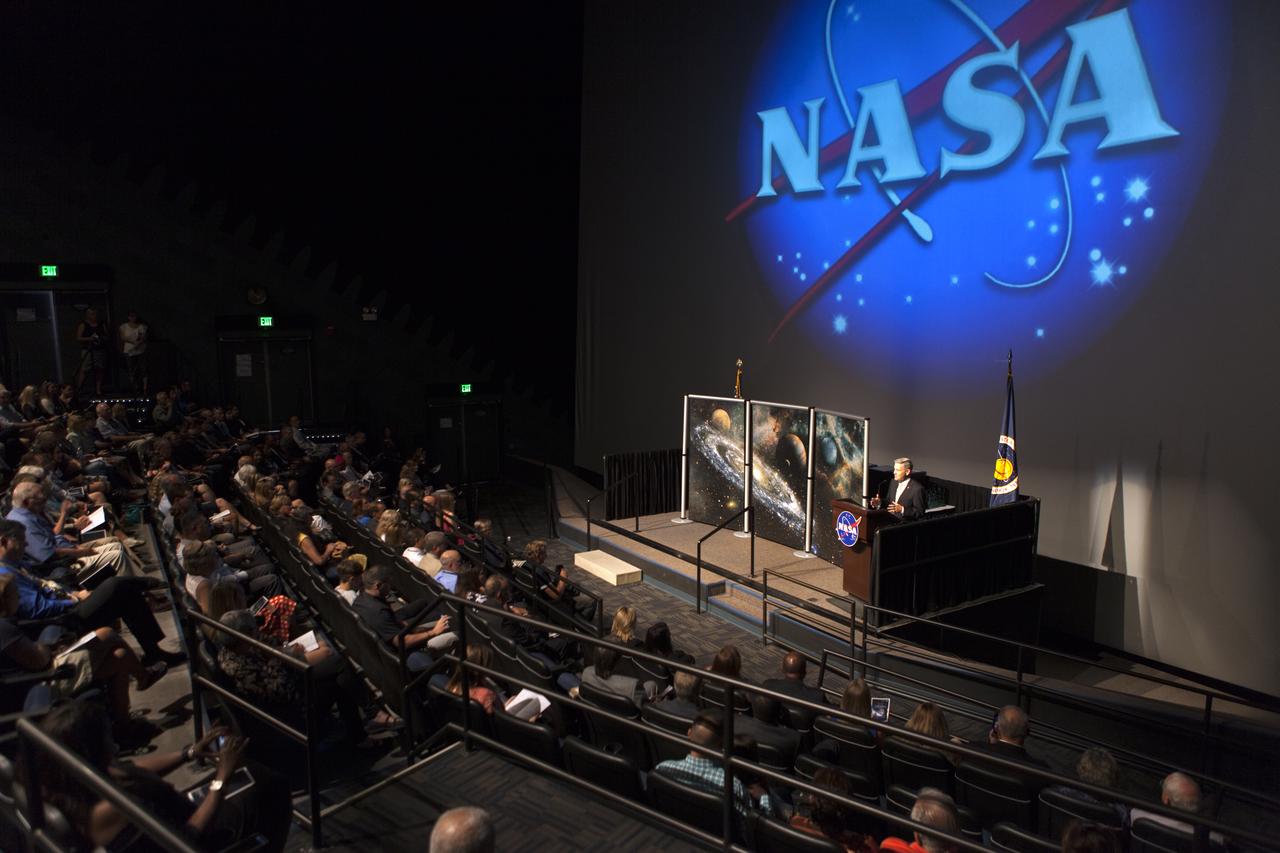
2018 KSC Honor Awards inside the IMAX theater at Kennedy Space Center Visitor Complex.
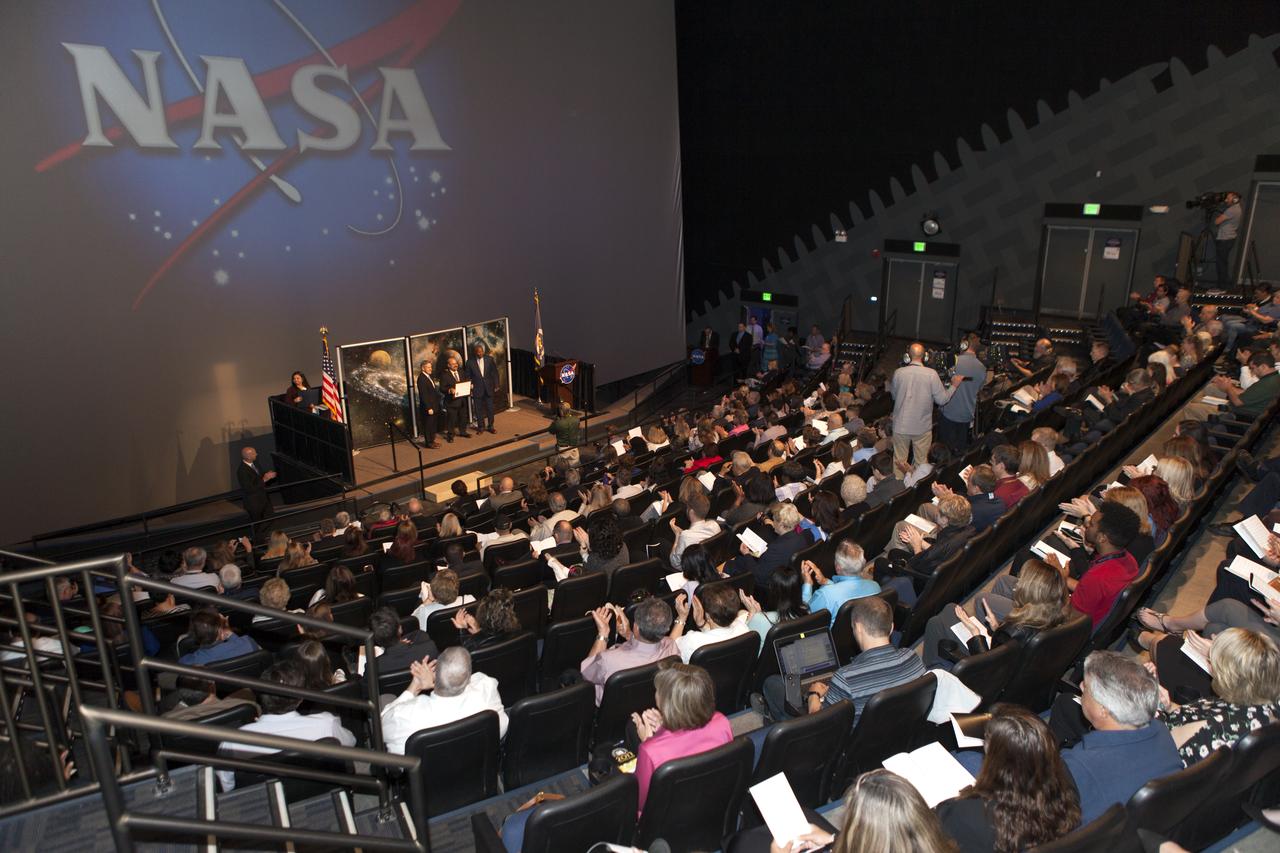
NASA Kennedy Space Center's annual Honor Awards ceremony is underway inside the IMAX Theater at nearby Kennedy Space Center Visitor Complex in Florida.
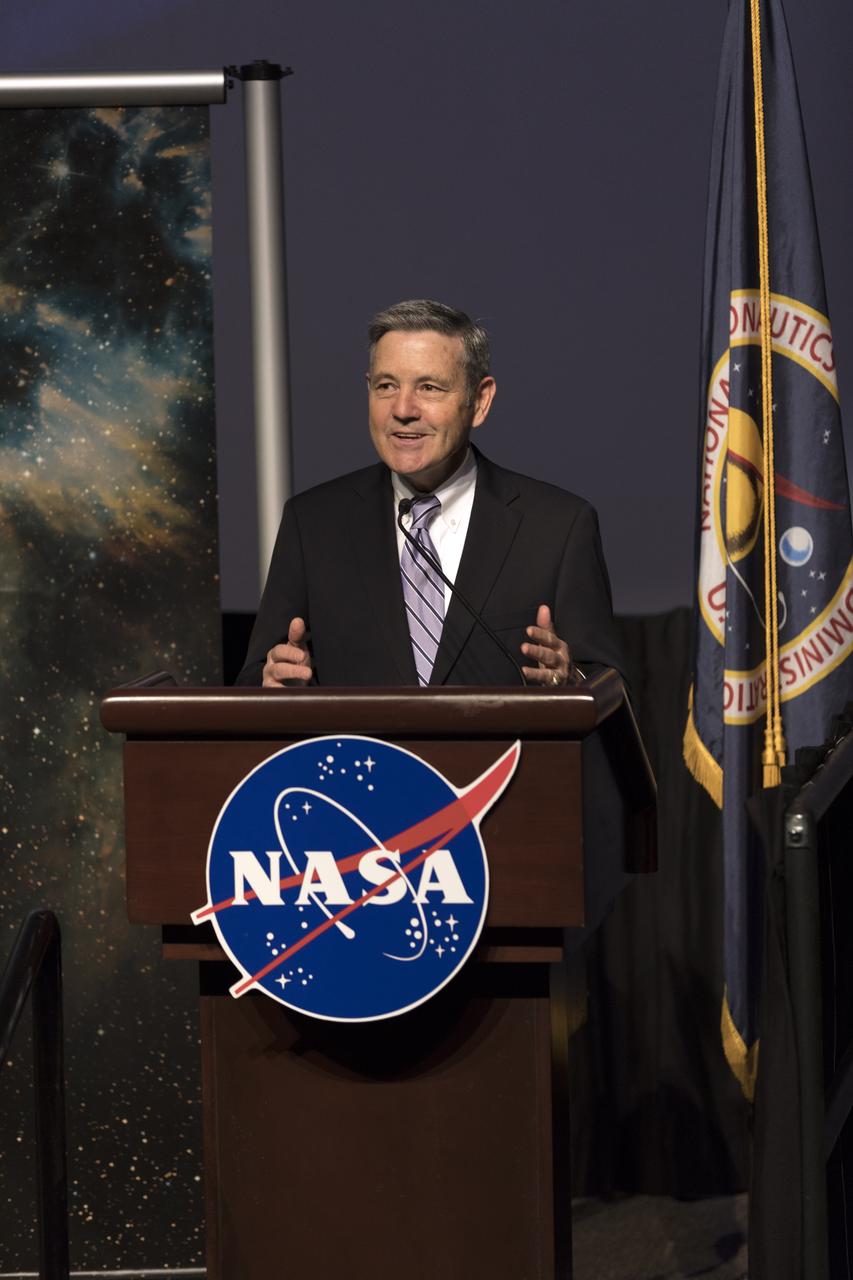
NASA Kennedy Space Center Director Bob Cabana speaks to the audience at the start of the center's annual Honor Awards ceremony inside the IMAX Theater at nearby Kennedy Space Center Visitor Complex in Florida.
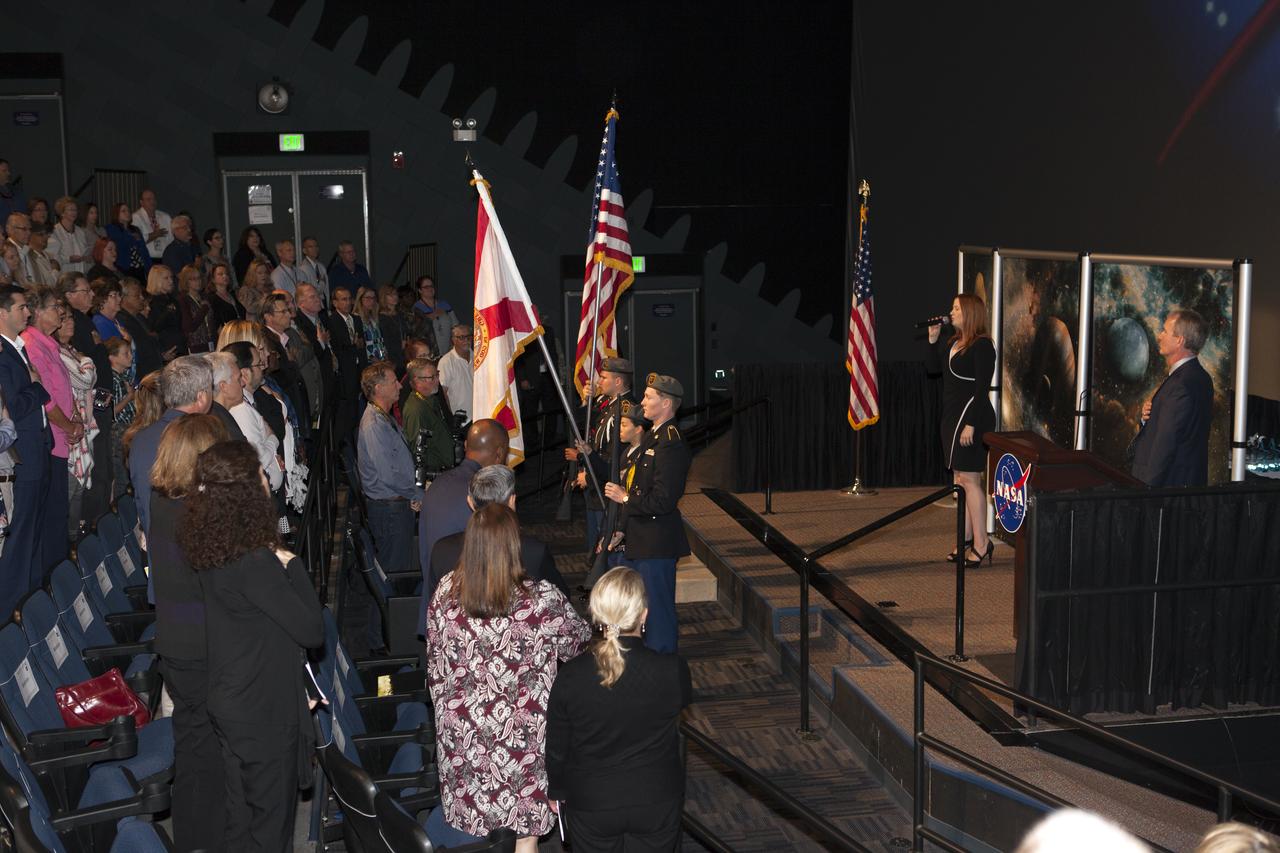
The color guard stands at attention as the national anthem is sung before the start of NASA Kennedy Space Center's annual Honor Awards ceremony inside the IMAX Theater at nearby Kennedy Space Center Visitor Complex in Florida.
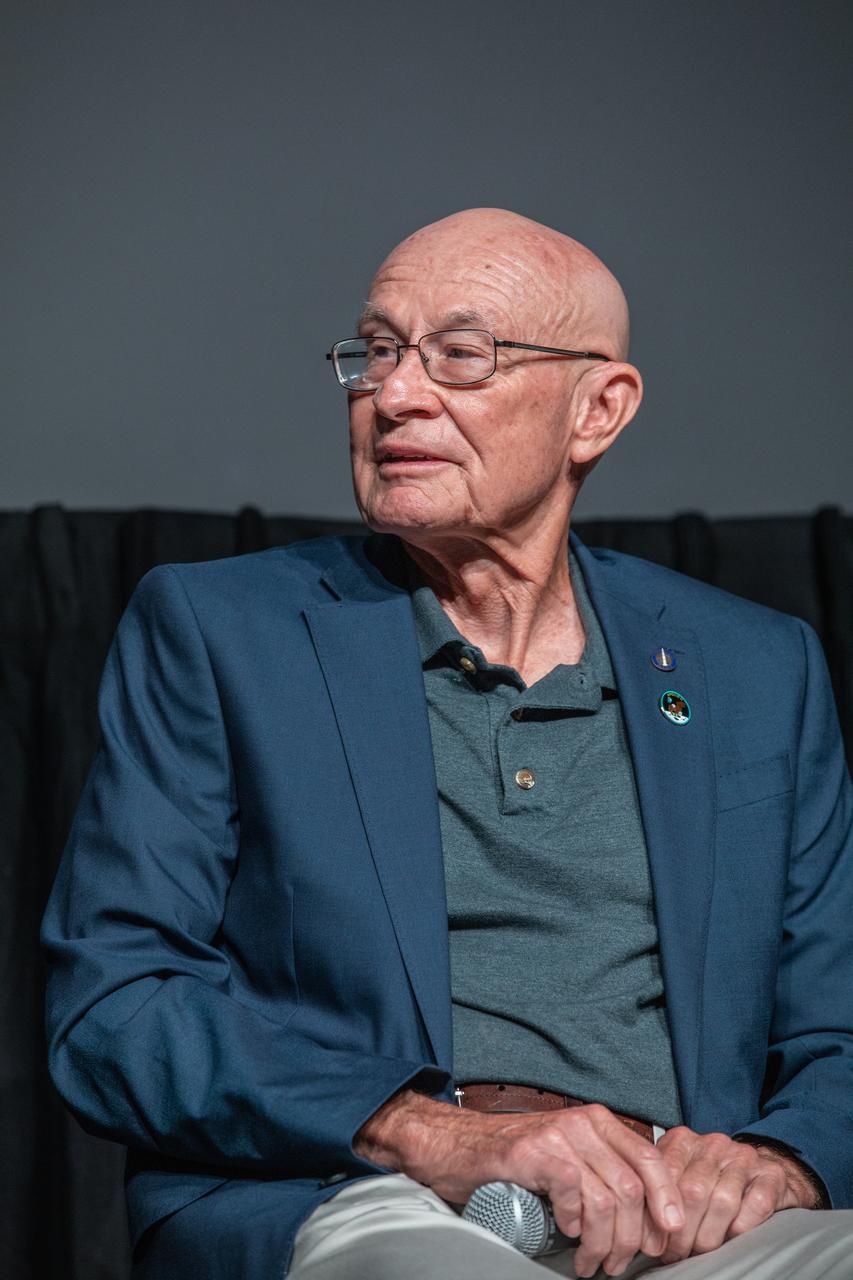
Bob Sieck, Apollo-era launch team member and former space shuttle launch director, particpates in the “Apollo Heroes Panel Discussion” in the IMAX Theater at the Kennedy Space Center Visitor Complex in Florida on July 16, 2019. The panel discussion is one of several events at the visitor complex to honor the 50th anniversary of NASA’s Saturn V/Apollo 11 launch and landing on the Moon.
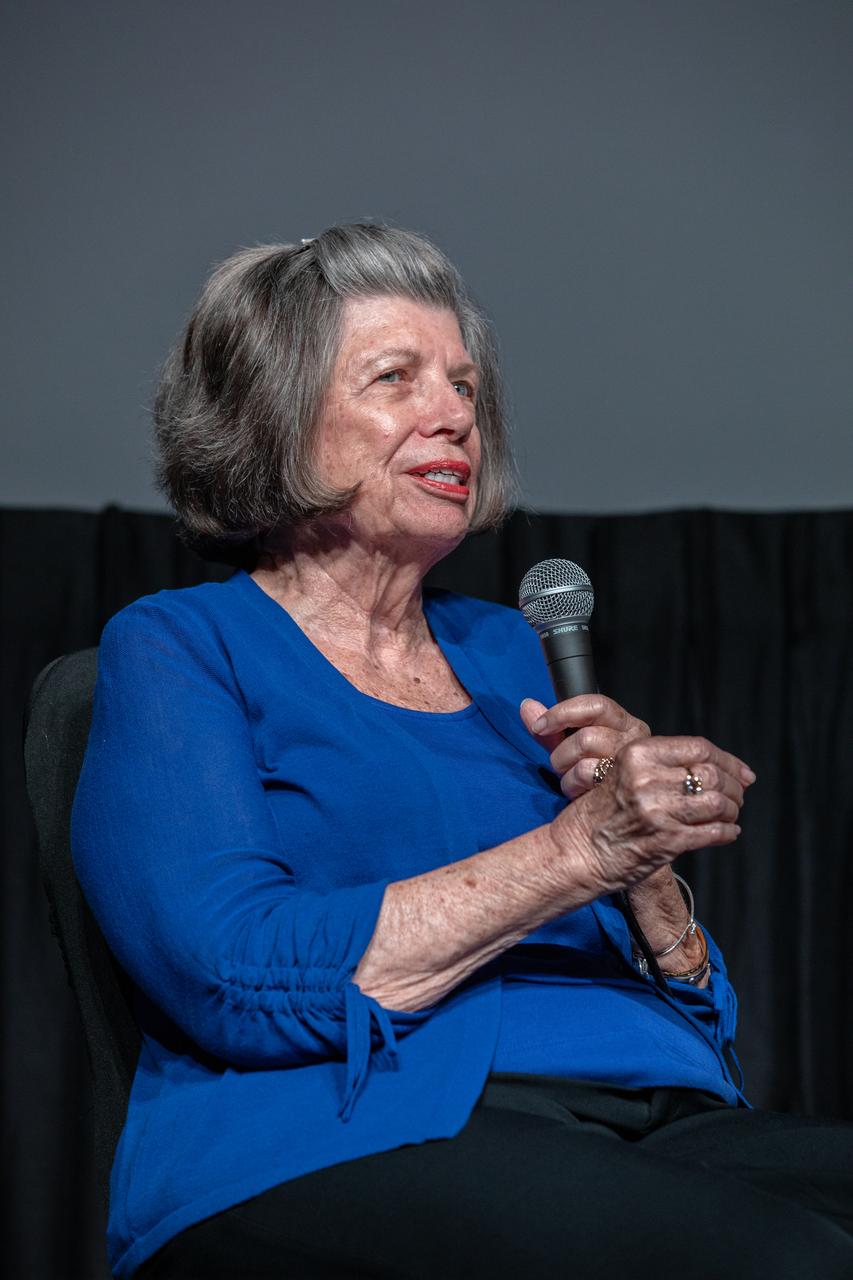
JoAnn Morgan, retired from NASA and the only woman on console in the Launch Control Center during Apollo 11 launch countdown activities, answers questions during the “Apollo Heroes Panel Discussion” in the IMAX Theater at the Kennedy Space Center Visitor Complex in Florida on July 16, 2019. The panel discussion is one of several events at the visitor complex to honor the 50th anniversary of NASA’s Saturn V/Apollo 11 launch and landing on the Moon.
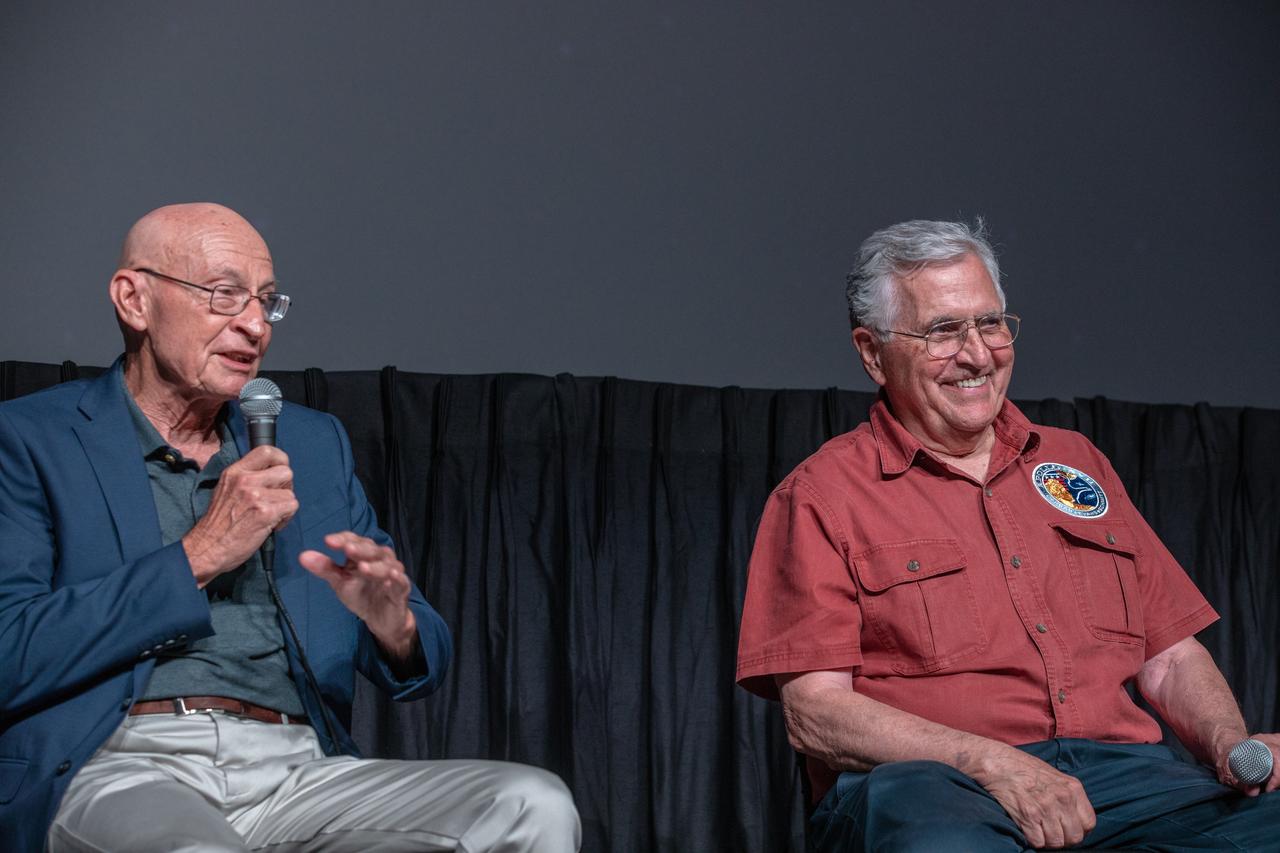
Bob Sieck, left, Apollo-era launch team member and former space shuttle launch director, and Harrison Schmitt, Apollo 17 astronaut and moonwalker, answer questions during the “Apollo Heroes Panel Discussion” in the IMAX Theater at the Kennedy Space Center Visitor Complex in Florida on July 16, 2019. The panel discussion is one of several events at the visitor complex to honor the 50th anniversary of NASA’s Saturn V/Apollo 11 launch and landing on the Moon.

NASA Kennedy Space Center Director Bob Cabana, far right, serves as moderator for the “Apollo Heroes Panel Discussion” in the IMAX Theater at the Kennedy Space Center Visitor Complex in Florida on July 16, 2019. Panelists are, from left, JoAnn Morgan, the only woman on console in the Launch Control Center for Apollo 11 launch countdown activities; Bob Sieck, Apollo-era launch team member and former space shuttle launch director; and Harrison Schmitt, Apollo 17 astronaut and moonwalker. The panel discussion is one of several events at the visitor complex to honor the 50th anniversary of NASA’s Saturn V/Apollo 11 launch and landing on the Moon.
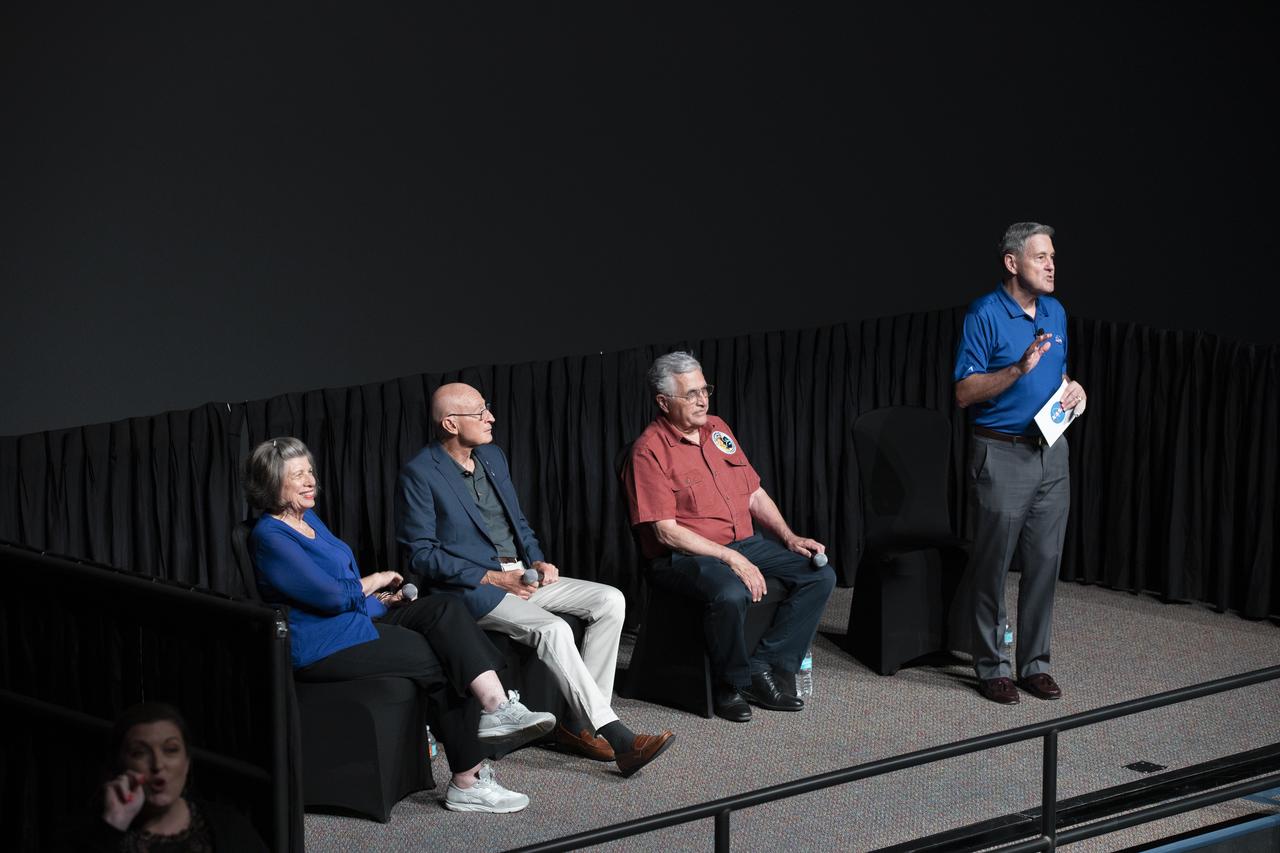
NASA Kennedy Space Center Director Bob Cabana, far right, serves as moderator for the “Apollo Heroes Panel Discussion” in the IMAX Theater at the Kennedy Space Center Visitor Complex in Florida on July 16, 2019. Panelists are, from left, JoAnn Morgan, the only woman on console in the Launch Control Center for Apollo 11 launch countdown activities; Bob Sieck, Apollo-era launch team member and former space shuttle launch director; and Harrison Schmitt, Apollo 17 astronaut and moonwalker. The panel discussion is one of several events at the visitor complex to honor the 50th anniversary of NASA’s Saturn V/Apollo 11 launch and landing on the Moon.
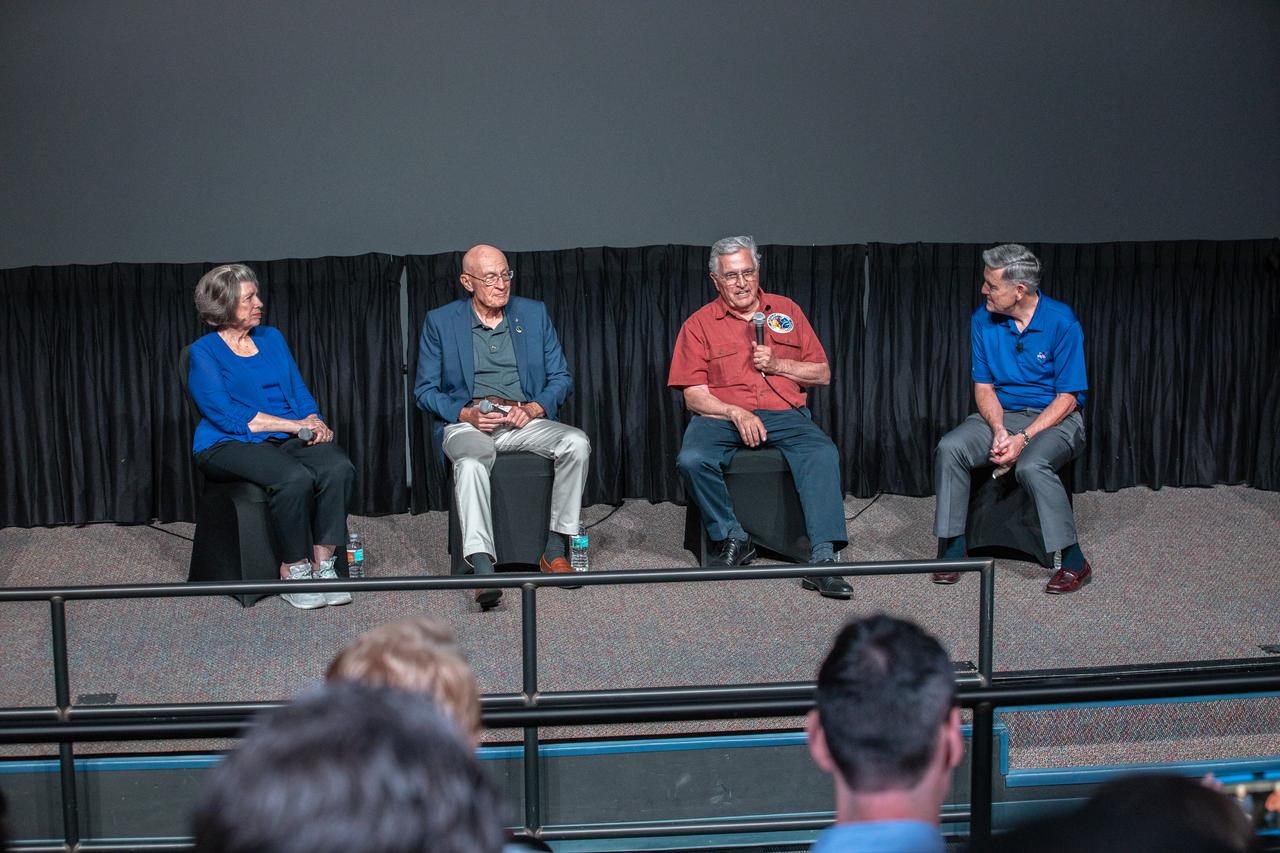
NASA Kennedy Space Center Director Bob Cabana, far right, serves as moderator for the “Apollo Heroes Panel Discussion” in the IMAX Theater at the Kennedy Space Center Visitor Complex in Florida on July 16, 2019. Panelists are, from left, JoAnn Morgan, the only woman on console in the Launch Control Center for Apollo 11 launch countdown activities; Bob Sieck, Apollo-era launch team member and former space shuttle launch director; and Harrison Schmitt, Apollo 17 astronaut and moonwalker. The panel discussion is one of several events at the visitor complex to honor the 50th anniversary of NASA’s Saturn V/Apollo 11 launch and landing on the Moon.
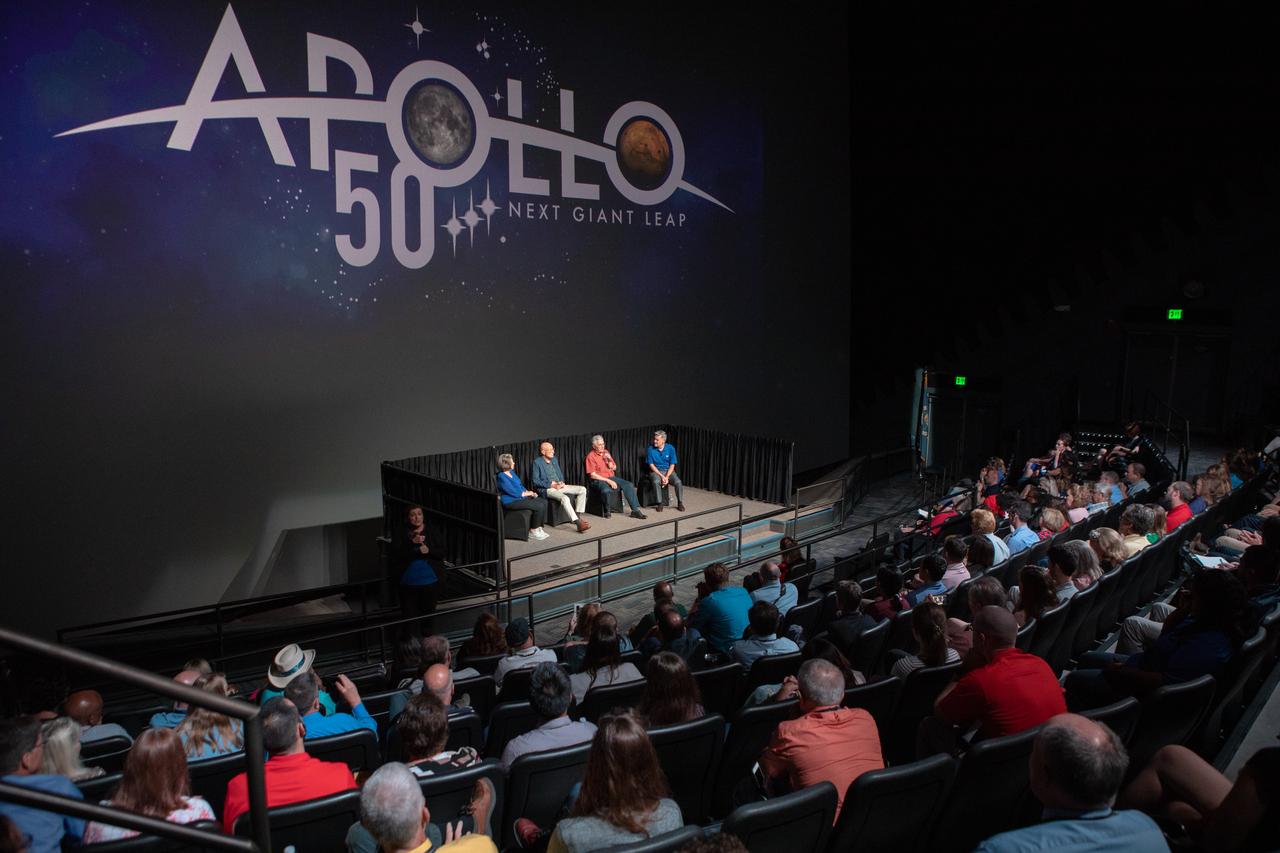
NASA Kennedy Space Center Director Bob Cabana, far right, serves as moderator for the “Apollo Heroes Panel Discussion” in the IMAX Theater at the Kennedy Space Center Visitor Complex in Florida on July 16, 2019. Panelists are, from left, JoAnn Morgan, the only woman on console in the Launch Control Center for Apollo 11 launch countdown activities; Bob Sieck, Apollo-era launch team member and former space shuttle launch director; and Harrison Schmitt, Apollo 17 astronaut and moonwalker. The panel discussion is one of several events at the visitor complex to honor the 50th anniversary of NASA’s Saturn V/Apollo 11 launch and landing on the Moon.
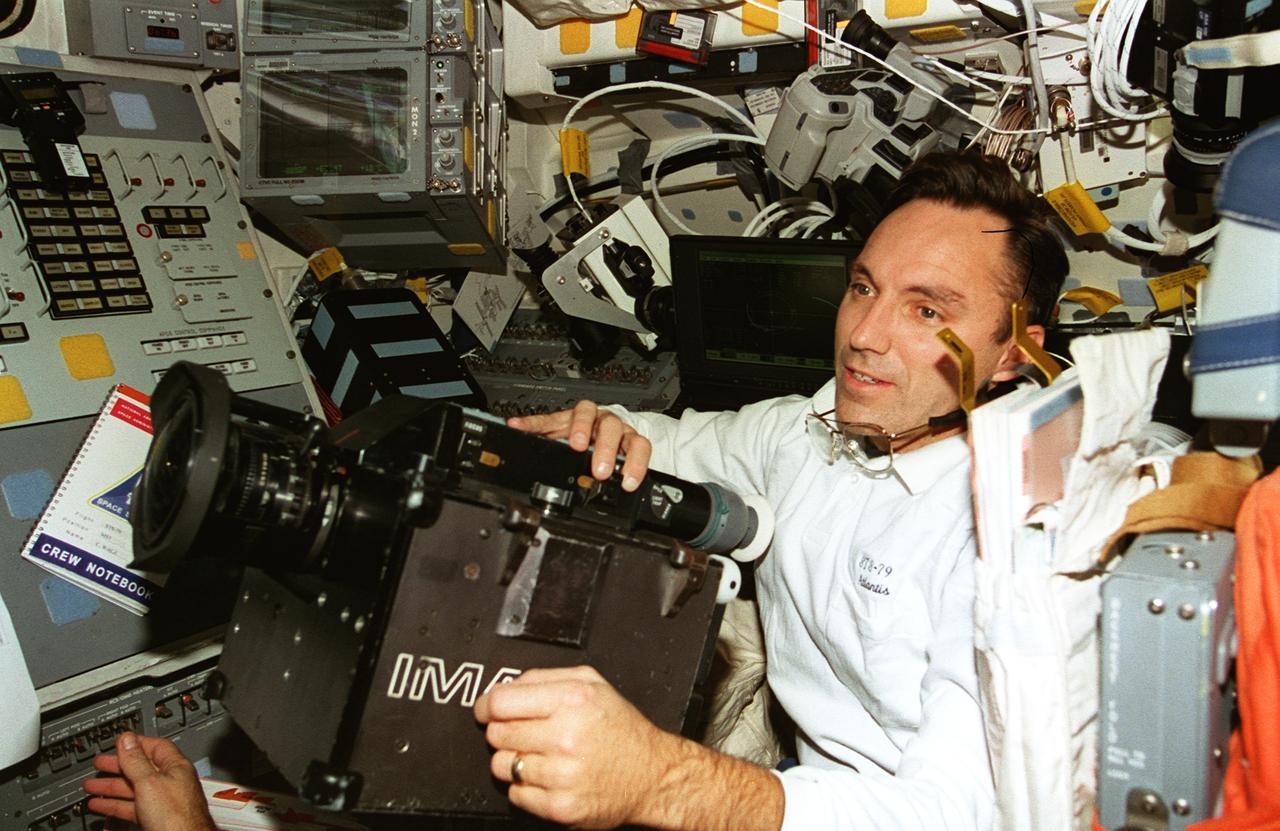
STS079-362-023 (16-26 Sept. 1996) --- Astronaut Carl E. Walz, mission specialist, positions the IMAX camera for a shoot on the flight deck of the Space Shuttle Atlantis. The IMAX project is a collaboration among NASA, the Smithsonian Institution's National Air and Space Museum, IMAX Systems Corporation and the Lockheed Corporation to document in motion picture format significant space activities and promote NASA's educational goals using the IMAX film medium. This system, developed by IMAX of Toronto, uses specially designed 65mm cameras and projectors to record and display very high definition color motion pictures which, accompanied by six-channel high fidelity sound, are displayed on screens in IMAX and OMNIMAX theaters that are up to ten times larger than a conventional screen, producing a feeling of "being there." The 65mm photography is transferred to 70mm motion picture films for showing in IMAX theaters. IMAX cameras have been flown on 14 previous missions.
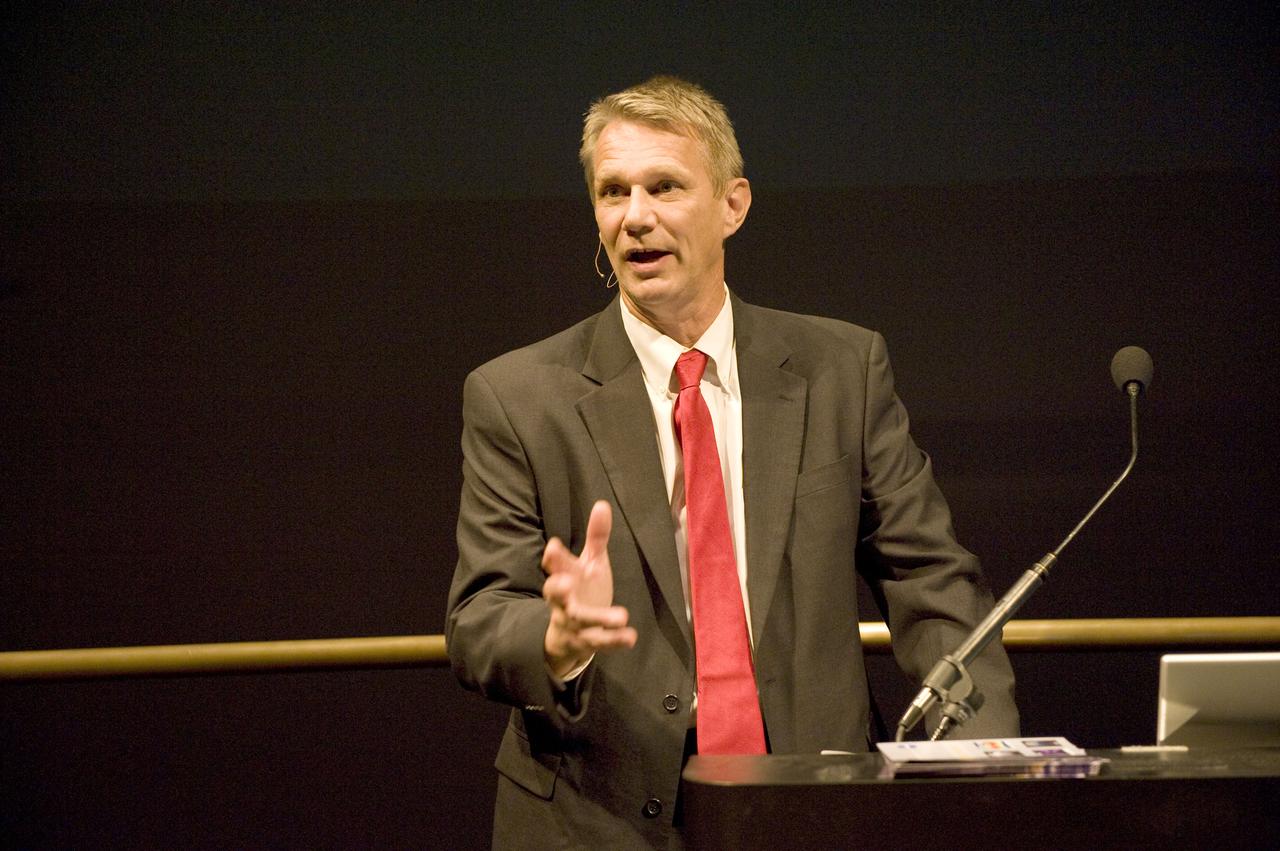
NASA astronaut Piers Sellers at the podium in the IMAX theater at the National Air and Space Museum in Washington, D.C., for an annual reception and presentation with the Maryland Space Business Roundtable.
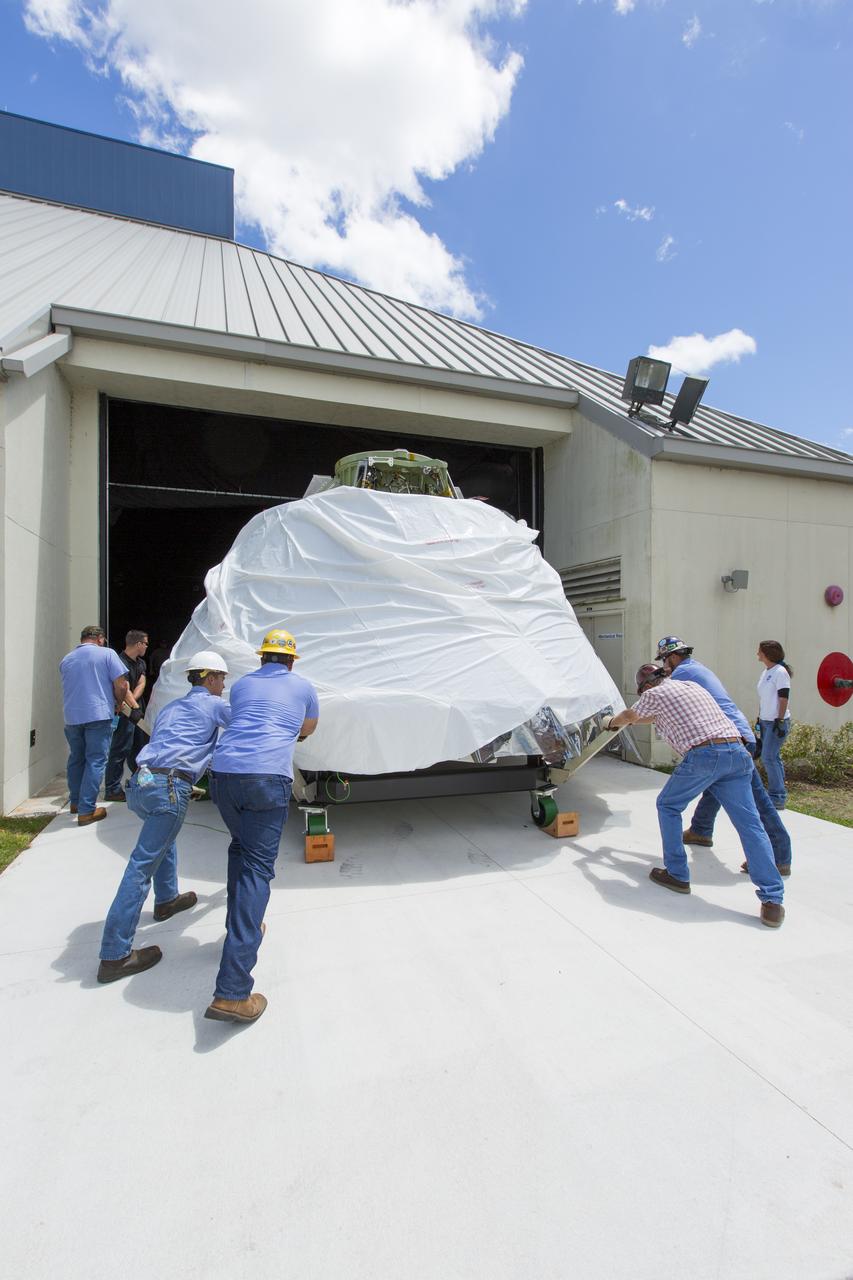
At NASA's Kennedy Space Center Visitor Complex in Florida, the Orion crew module from Exploration Flight Test 1, secured on its custom-made ground support equipment, is moved inside the IMAX Theater. The crew module will be prepared for display in the NASA Now exhibit in the IMAX Theater. The Orion spacecraft launched atop a United Launch Alliance Delta IV rocket Dec. 5, 2014, from Space Launch Complex 37 at Cape Canaveral Air Force Station. The spacecraft built for humans traveled 3,604 miles above Earth and splashed down about 4.5 hours later in the Pacific Ocean.
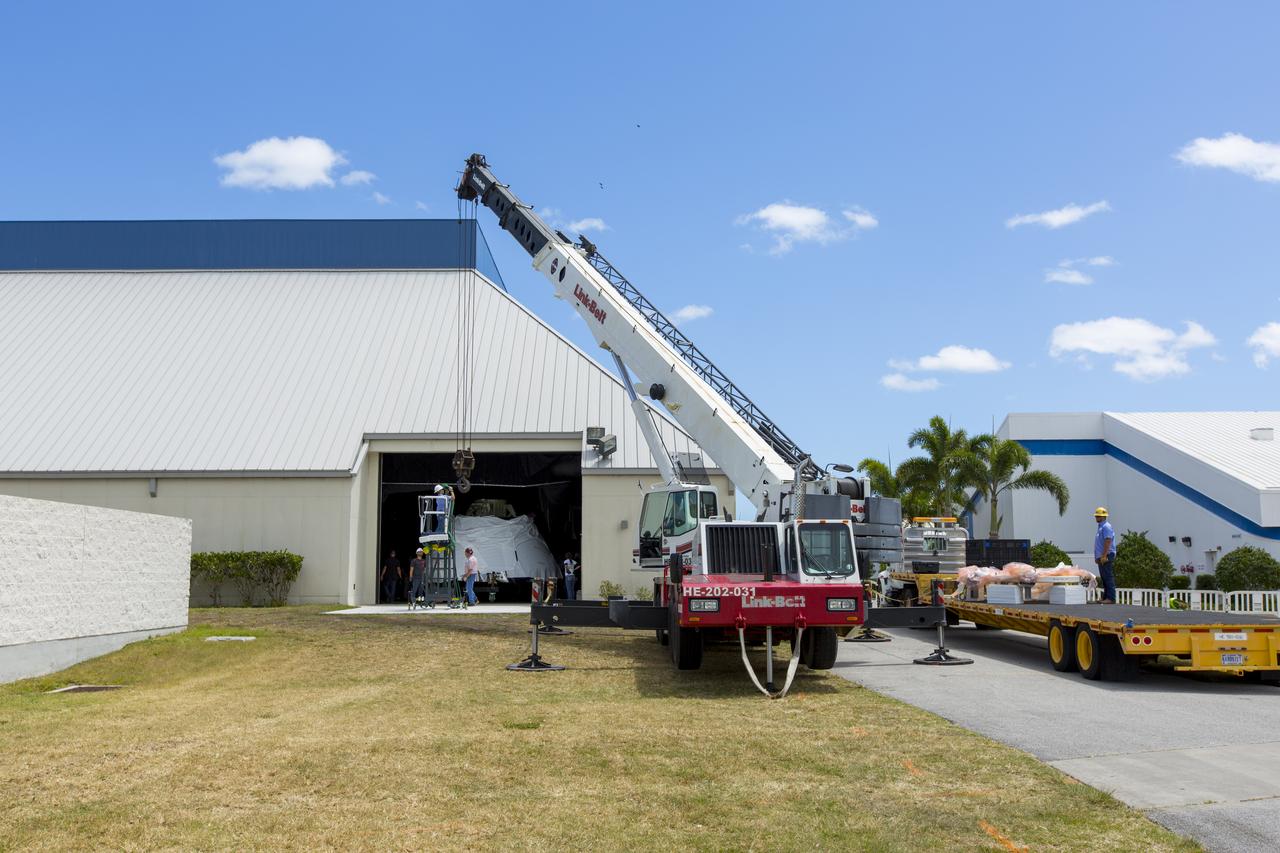
At NASA's Kennedy Space Center Visitor Complex in Florida, the Orion crew module from Exploration Flight Test 1, secured on its custom-made ground support equipment, is moved inside the IMAX Theater. The crew module will be prepared for display in the NASA Now exhibit in the IMAX Theater. The Orion spacecraft launched atop a United Launch Alliance Delta IV rocket Dec. 5, 2014, from Space Launch Complex 37 at Cape Canaveral Air Force Station. The spacecraft built for humans traveled 3,604 miles above Earth and splashed down about 4.5 hours later in the Pacific Ocean.
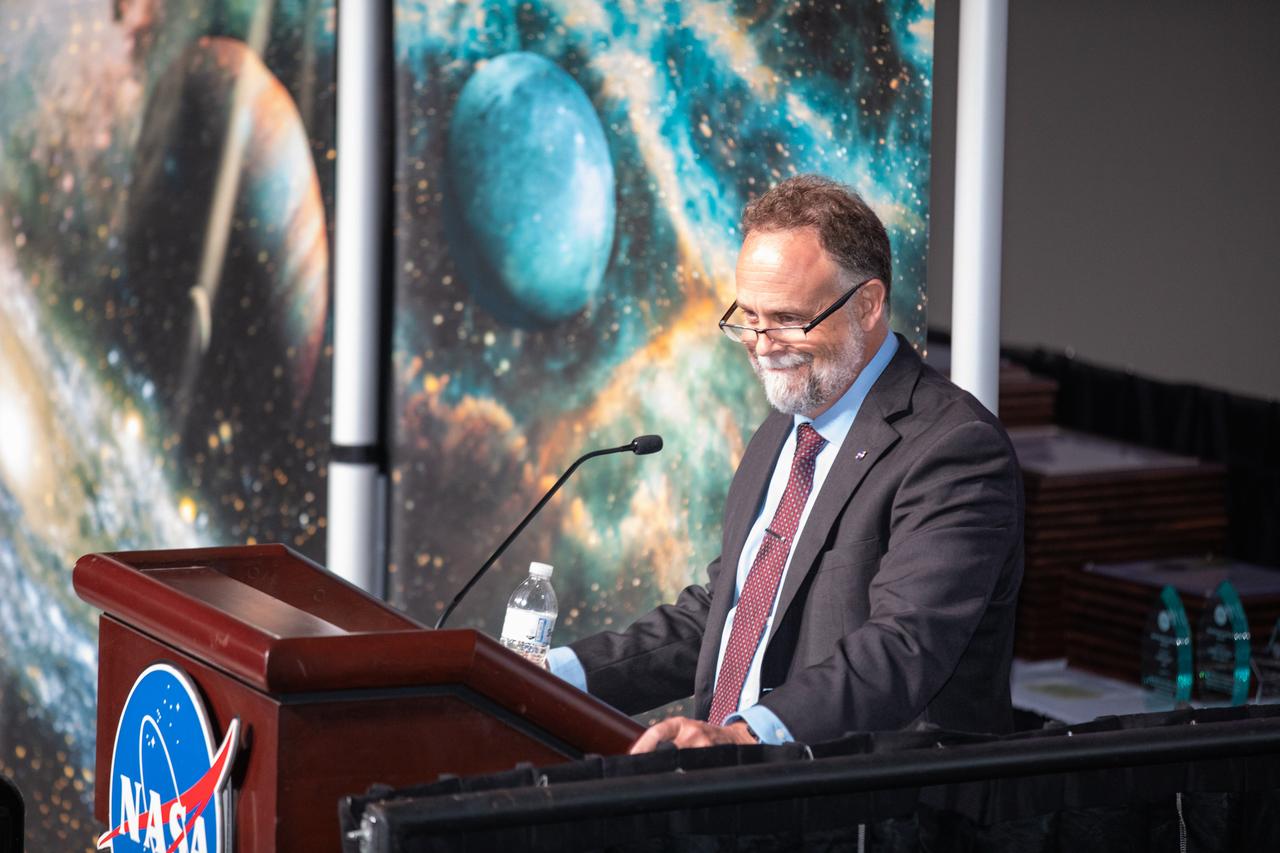
Shawn Quinn, director of Engineering at Kennedy Space Center, addresses attendees during the 2019 KSC Honor Awards Ceremony on April 18, 2019. Held inside the IMAX Theater at the Florida spaceport’s visitor complex, the ceremony honored both civil servants and contractors for their contributions to NASA and Kennedy.
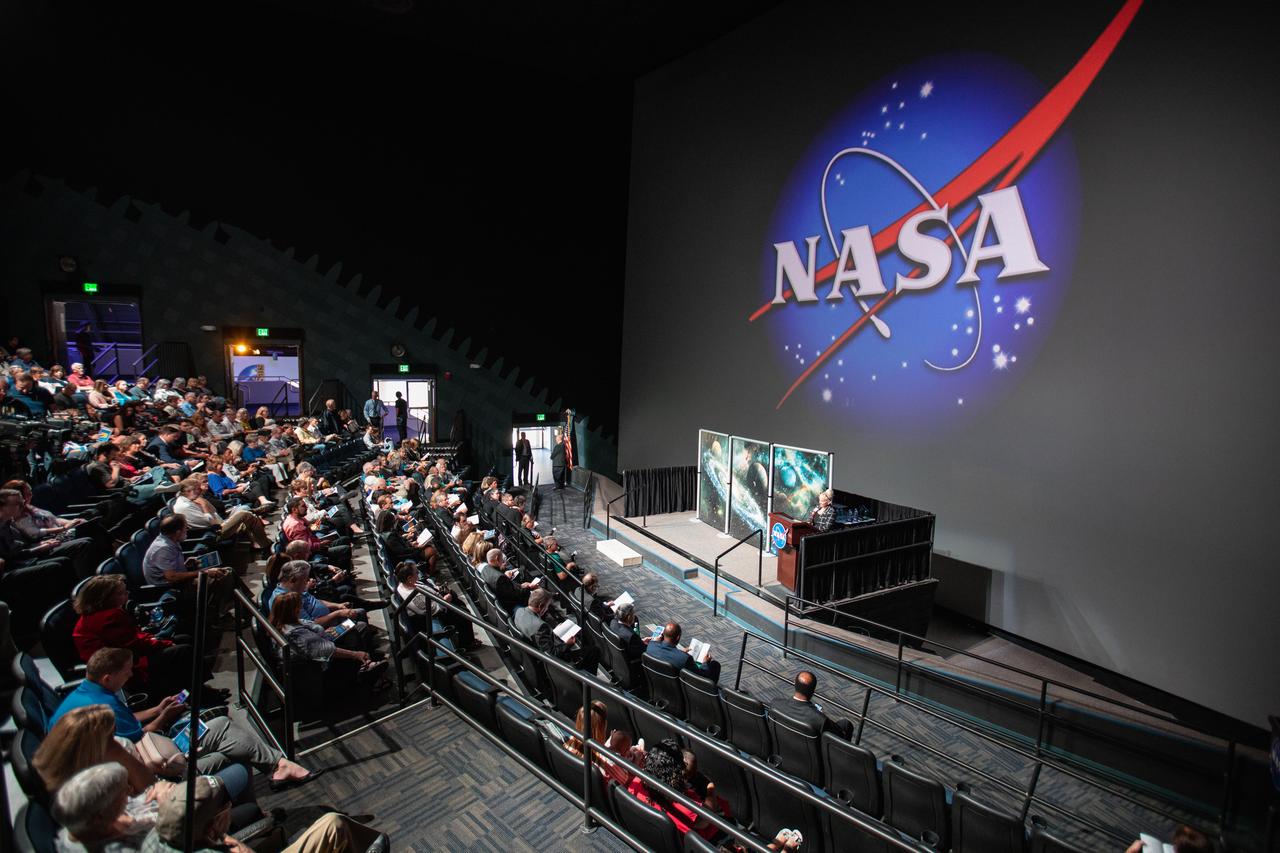
Kennedy Space Center employees, award recipients, families and friends attend the 2019 KSC Honor Awards Ceremony on April 18, 2019. Held inside the IMAX Theater at the Florida spaceport’s visitor complex, the ceremony honored both civil servants and contractors for their contributions to NASA and Kennedy.
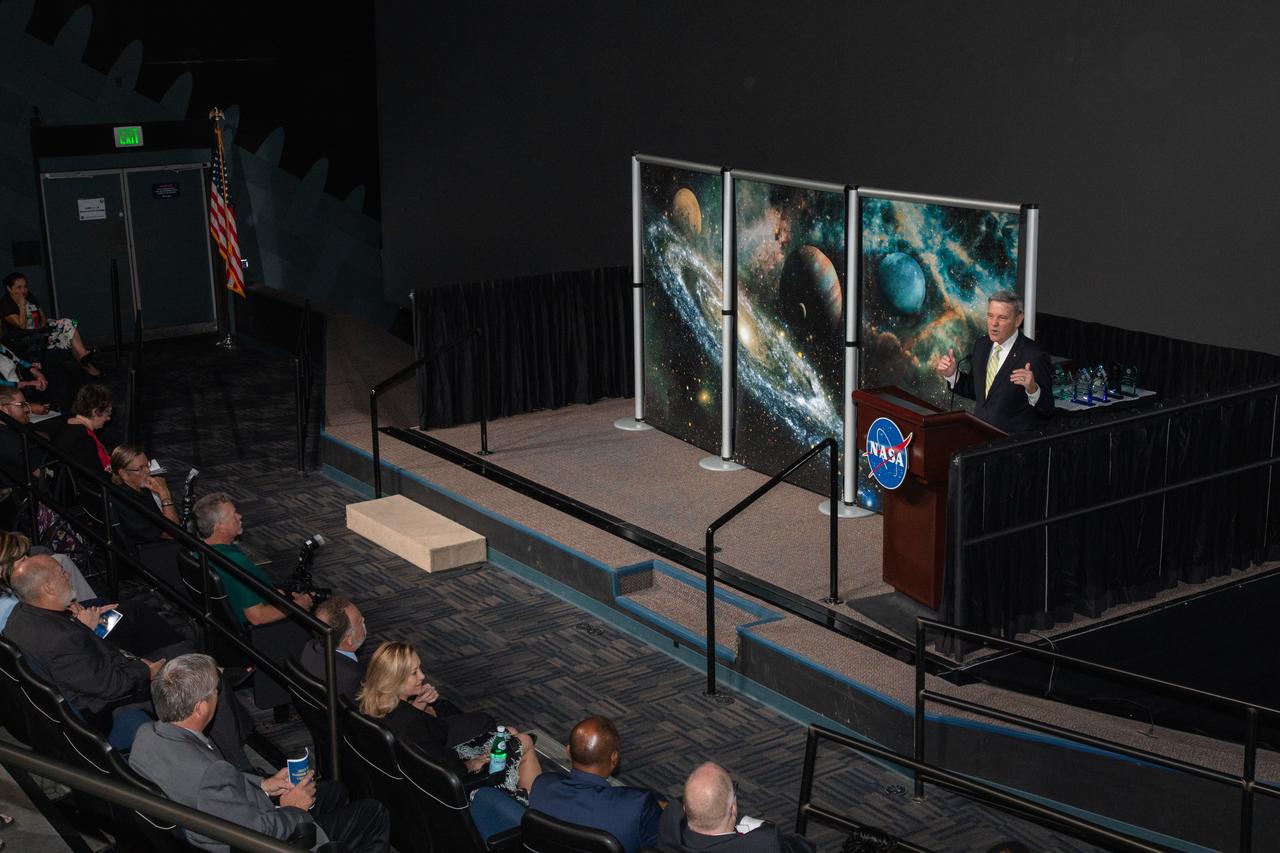
Kennedy Space Center Director Bob Cabana addresses attendees during the 2019 KSC Honor Awards Ceremony on April 18, 2019. Held inside the IMAX Theater at the Florida spaceport’s visitor complex, the ceremony honored both civil servants and contractors for their contributions to NASA and Kennedy.
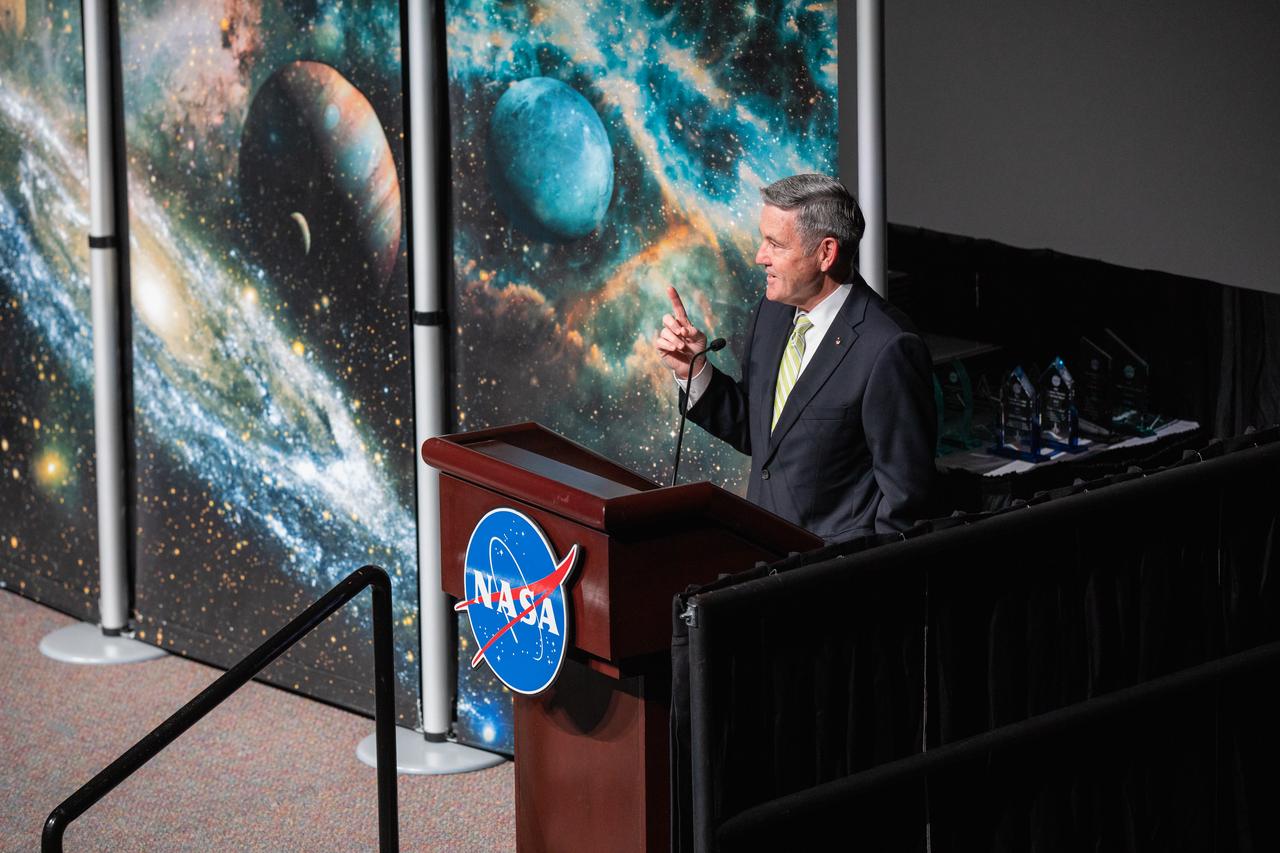
Kennedy Space Center Director Bob Cabana addresses attendees during the 2019 KSC Honor Awards Ceremony on April 18, 2019. Held inside the IMAX Theater at the Florida spaceport’s visitor complex, the ceremony honored both civil servants and contractors for their contributions to NASA and Kennedy.
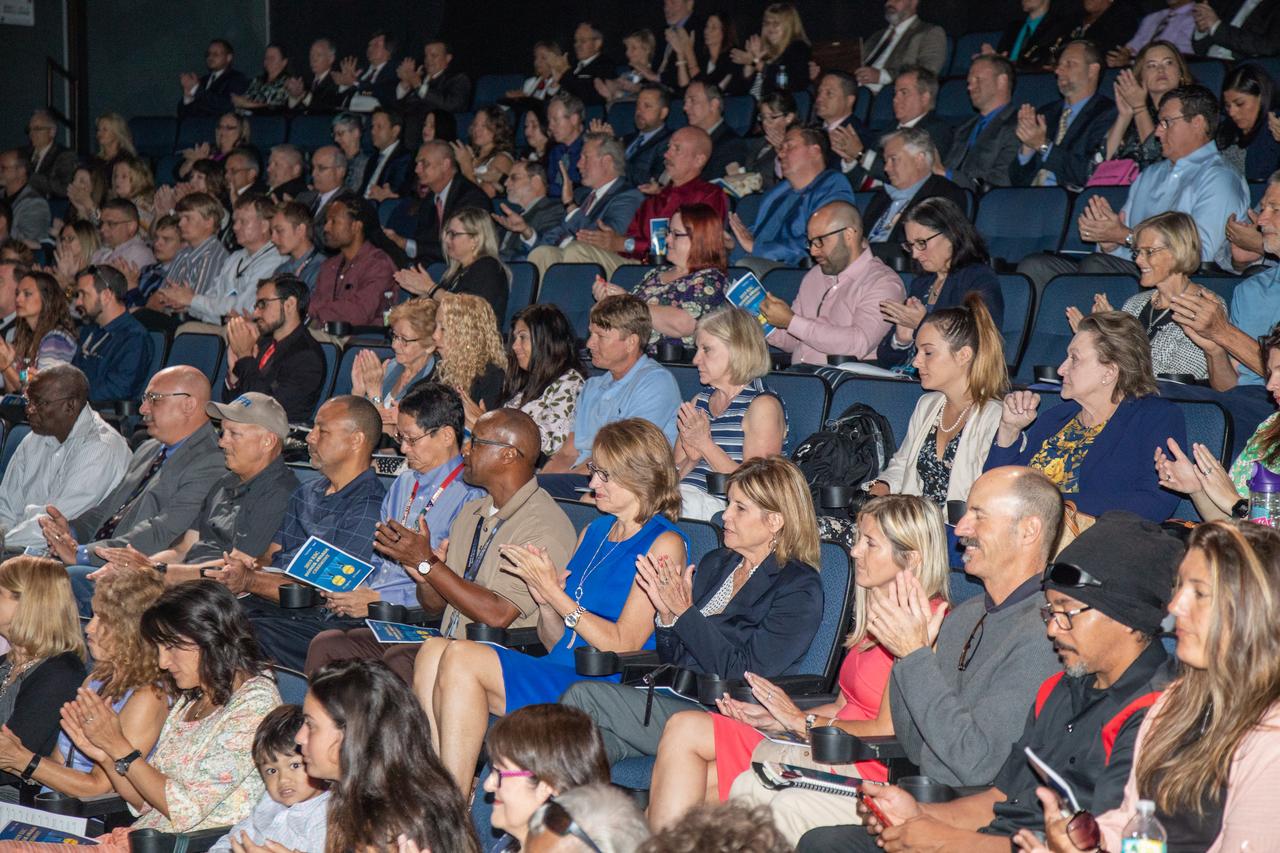
Kennedy Space Center employees, award recipients, families and friends attend the 2019 KSC Honor Awards Ceremony on April 18, 2019. Held inside the IMAX Theater at the Florida spaceport’s visitor complex, the ceremony honored both civil servants and contractors for their contributions to NASA and Kennedy.
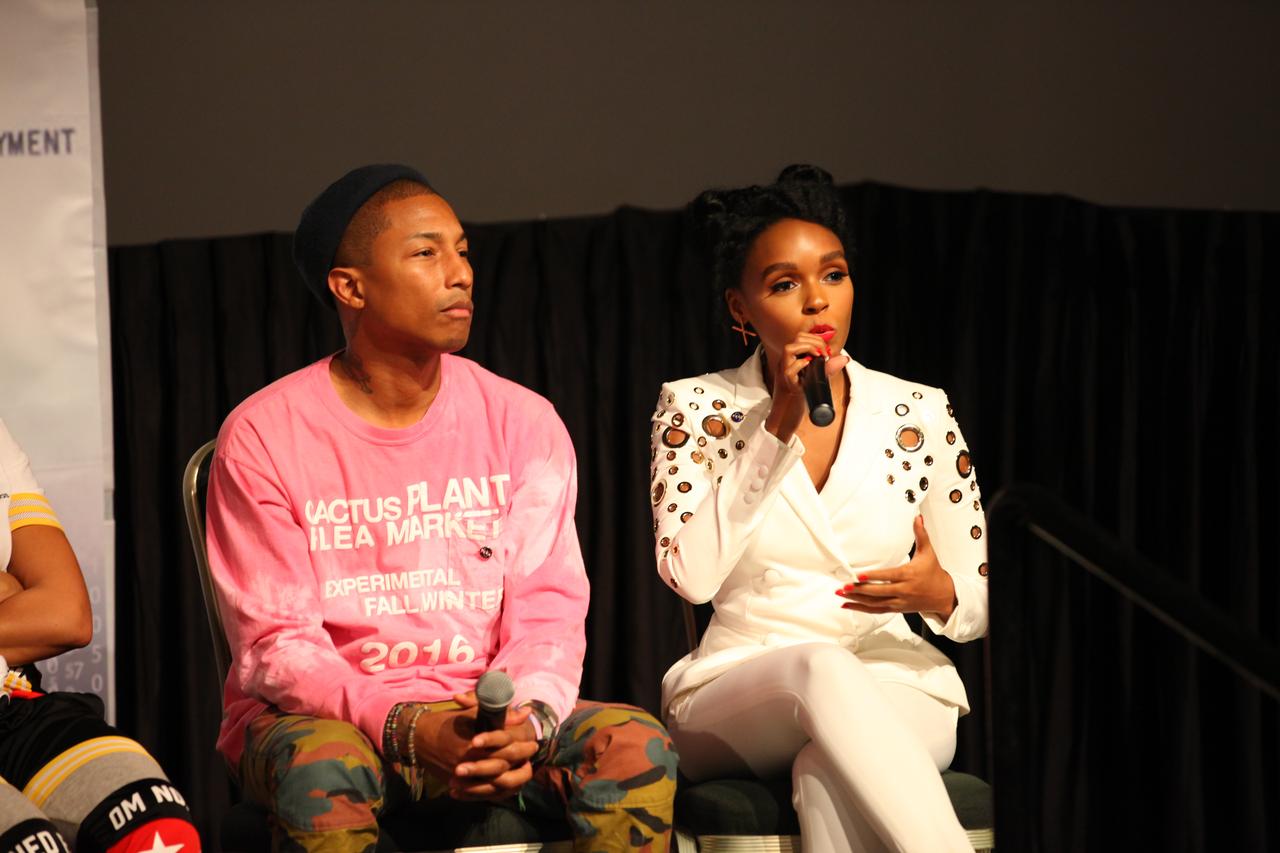
In the IMAX Theater of the Kennedy Space Center Visitor Complex Cast and crew members of the upcoming motion picture "Hidden Figures" participate in a question and answer session. From the left are Pharrell Williams, musician and producer of “Hidden Figures," and Janelle Monáe, who portrays Mary Jackson in the film. The movie chronicles the lives of Katherine Johnson, Dorothy Vaughan and Mary Jackson, three African-American women who worked for NASA as human "computers.” Their mathematical calculations were crucial to the success of Project Mercury missions including John Glenn’s orbital flight aboard Friendship 7 in 1962. The film is due in theaters in January 2017.

In the IMAX Theater of the Kennedy Space Center Visitor Complex Cast and crew members of the upcoming motion picture "Hidden Figures" participate in a question and answer session. From the left are Taraji P. Henson, who portrays Katherine Johnson in the film, Pharrell Williams, musician and producer of “Hidden Figures," and Janelle Monáe, who portrays Mary Jackson. The movie chronicles the lives of Katherine Johnson, Dorothy Vaughan and Mary Jackson, three African-American women who worked for NASA as human "computers.” Their mathematical calculations were crucial to the success of Project Mercury missions including John Glenn’s orbital flight aboard Friendship 7 in 1962. The film is due in theaters in January 2017.
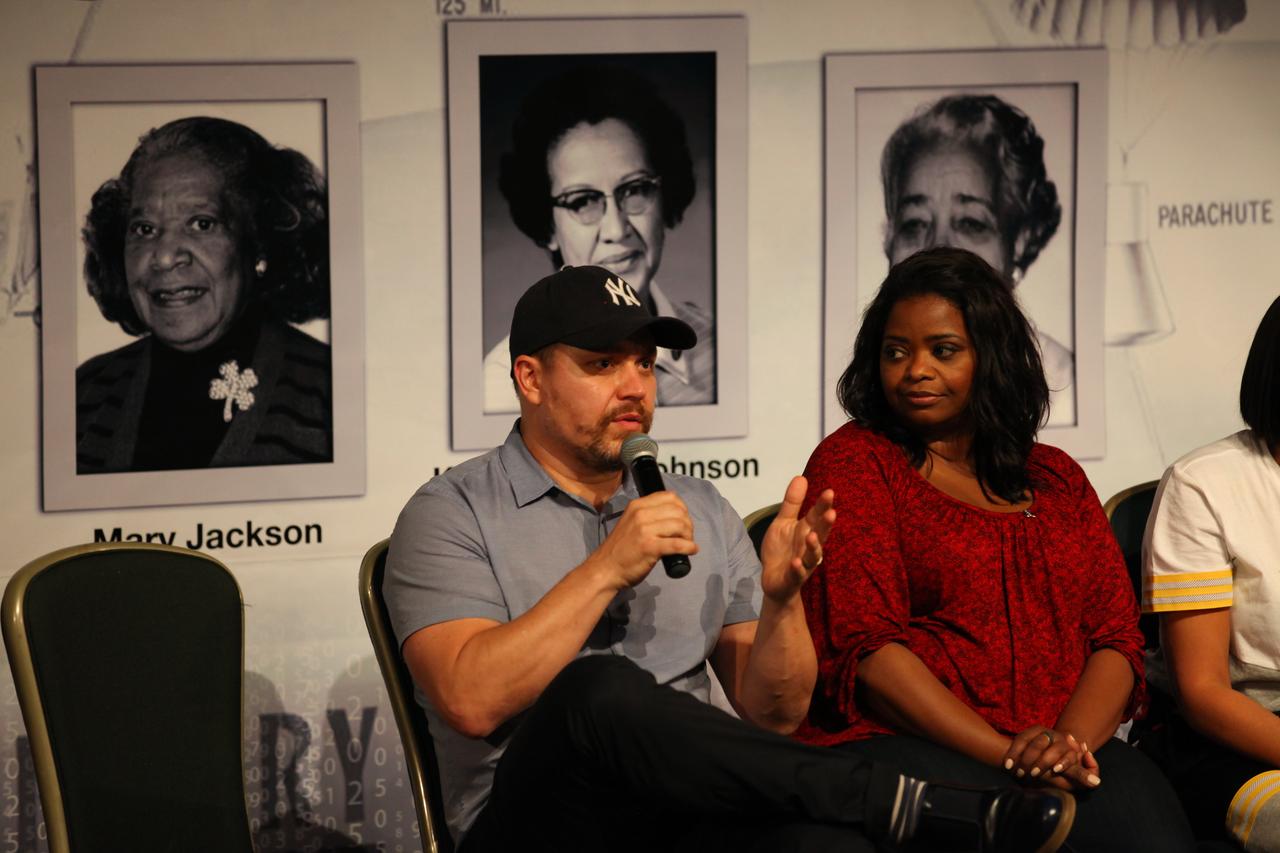
In the IMAX Theater of the Kennedy Space Center Visitor Complex Cast and crew members of the upcoming motion picture "Hidden Figures" participate in a question and answer session. From the left are Ted Melfi, writer and director of “Hidden Figures,” and Octavia Spencer, who portrays Dorothy Vaughan in the film. The movie is based on the book of the same title, by Margot Lee Shetterly. It chronicles the lives of Katherine Johnson, Dorothy Vaughan and Mary Jackson, three African-American women who worked for NASA as human "computers.” Their mathematical calculations were crucial to the success of Project Mercury missions including John Glenn’s orbital flight aboard Friendship 7 in 1962. The film is due in theaters in January 2017.
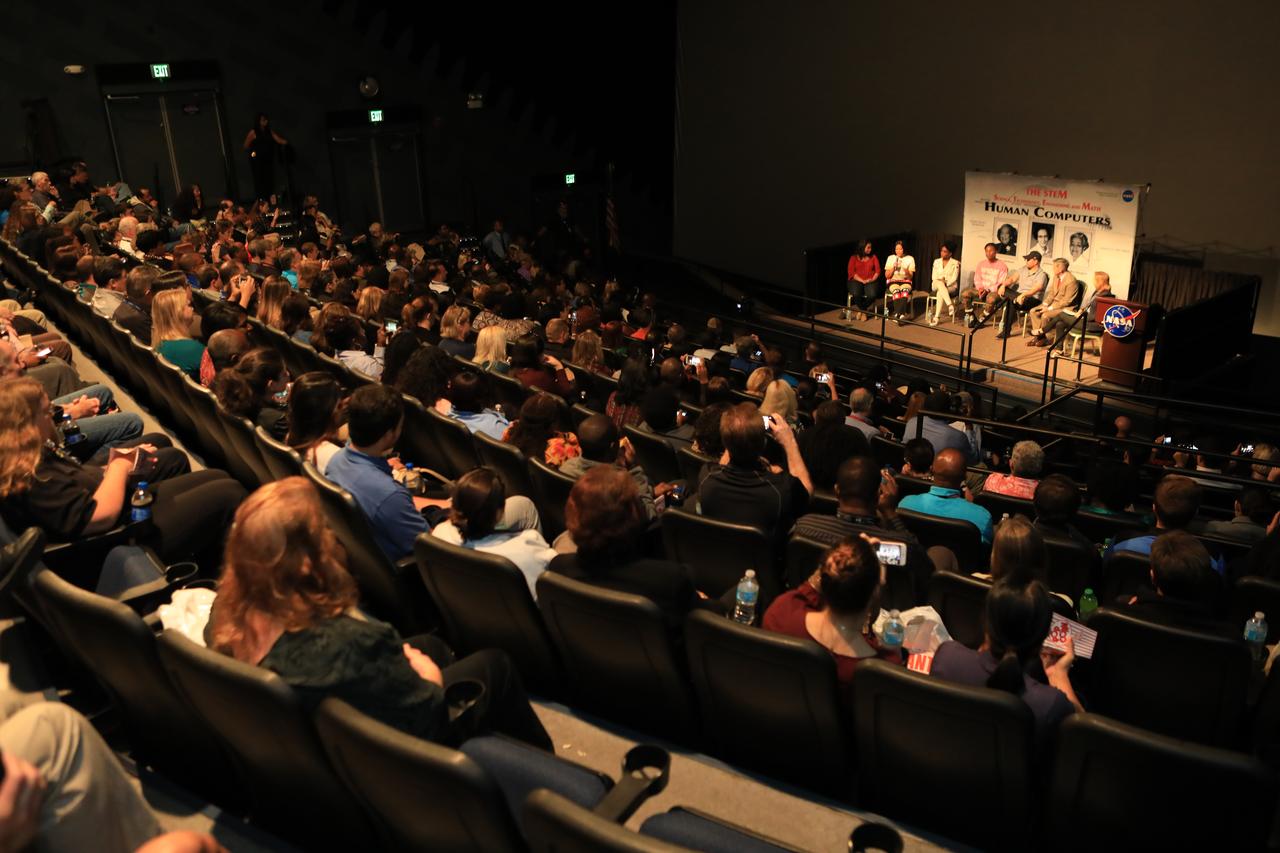
In the IMAX Theater of the Kennedy Space Center Visitor Complex Cast and crew members of the upcoming motion picture "Hidden Figures" participate in a question and answer session. The movie is based on the book of the same title, by Margot Lee Shetterly. It chronicles the lives of Katherine Johnson, Dorothy Vaughan and Mary Jackson, three African-American women who worked for NASA as human "computers.” Their mathematical calculations were crucial to the success of Project Mercury missions including John Glenn’s orbital flight aboard Friendship 7 in 1962. The film is due in theaters in January 2017.
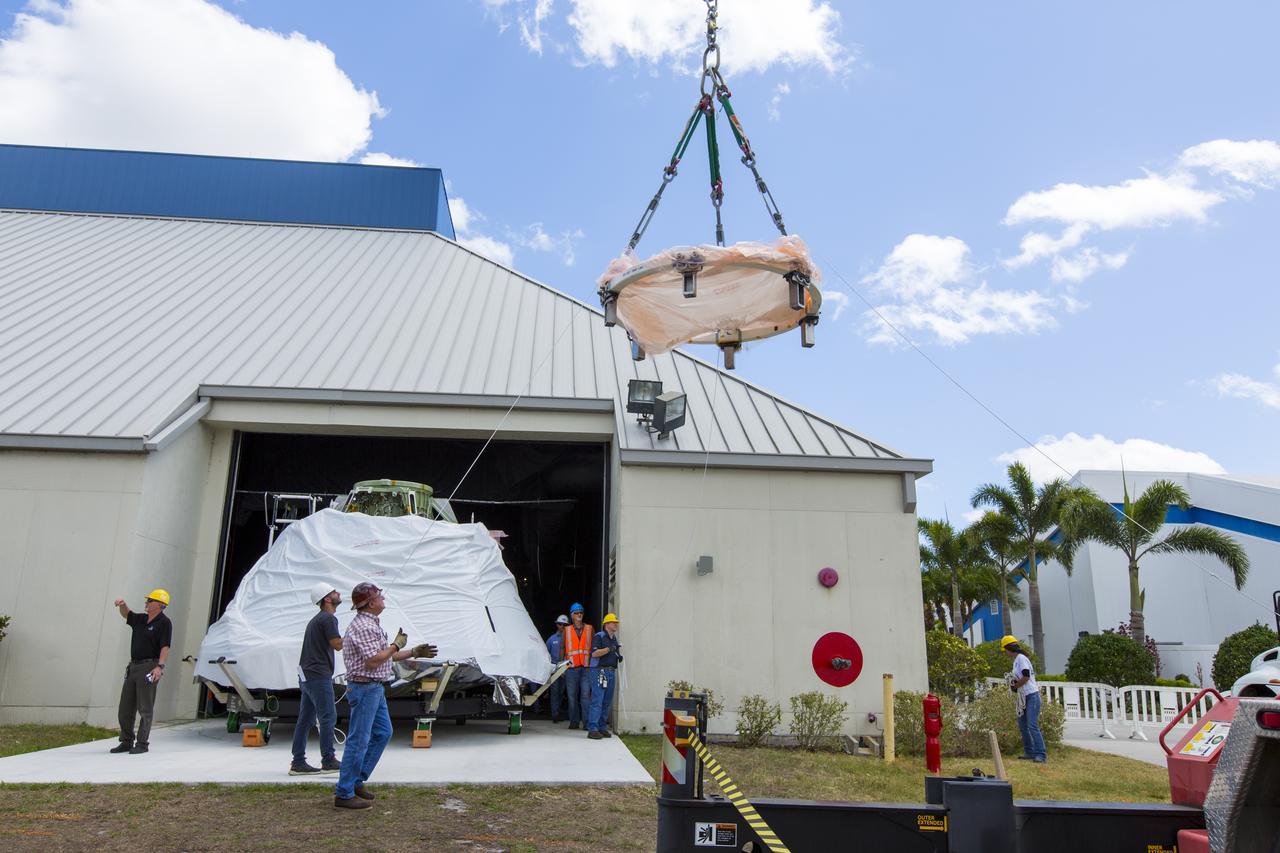
At the IMAX Theater at NASA's Kennedy Space Center Visitor Complex in Florida, the Orion crew module from Exploration Flight Test 1, secured on its custom-made ground support equipment, has been lowered to the ground. The crew module will be moved inside the theater where it will be prepared for display in the NASA Now exhibit. The Orion spacecraft launched atop a United Launch Alliance Delta IV rocket Dec. 5, 2014, from Space Launch Complex 37 at Cape Canaveral Air Force Station. The spacecraft built for humans traveled 3,604 miles above Earth and splashed down about 4.5 hours later in the Pacific Ocean.
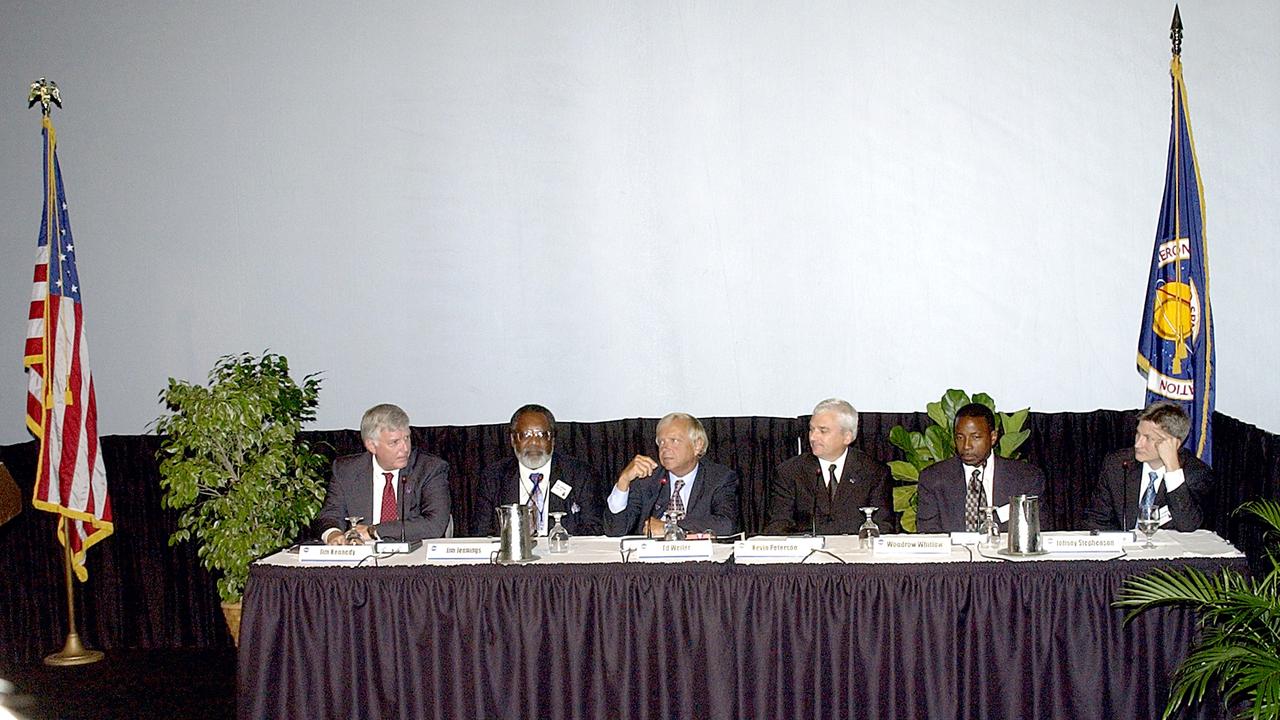
KENNEDY SPACE CENTER, FLA. - NASA leaders discuss the Agency’s One NASA initiative with selected employees at the KSC Visitor Complex IMAX Theater®. From left are KSC Director Jim Kennedy; James Jennings, NASA’s associate deputy administrator for institutions and asset management; Ed Weiler, associate administrator for Space Science; Kevin Peterson, Dryden Flight Research Center director; incoming KSC Deputy Director Woodrow Whitlow; and implementation team lead Johnny Stevenson. Glenn Research Center Director Dr. Julian Earls gave a motivational speech during the luncheon held at the Visitor Complex Debus Conference Center.
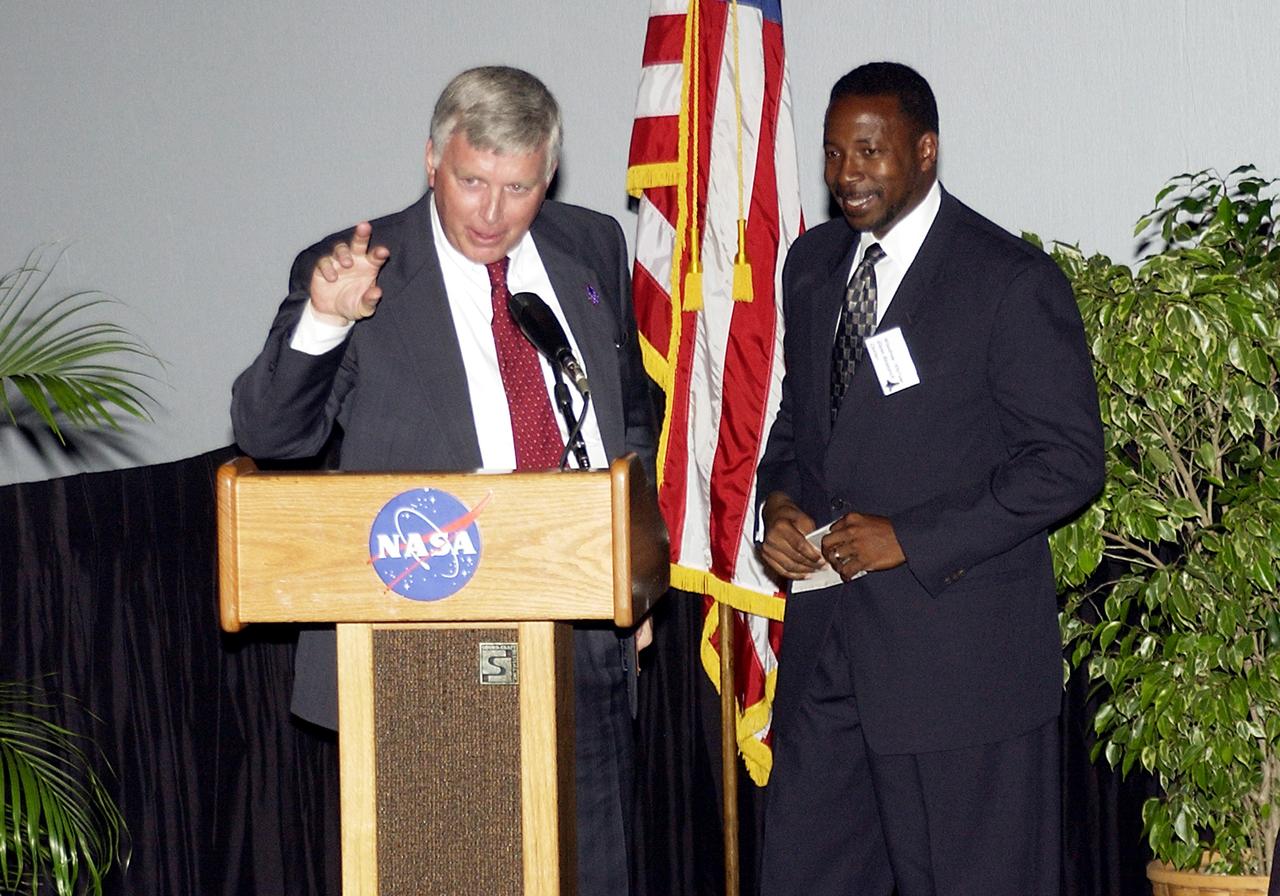
KENNEDY SPACE CENTER, FLA. - KSC Director Jim Kennedy (left) and incoming KSC Deputy Director Woodrow Whitlow talk about One NASA during the rollout of the Agency initiative at KSC. They were joined at the IMAX Theater® by other NASA leaders James Jennings, NASA’s associate deputy administrator for institutions and asset management; Ed Weiler, associate administrator for Space Science; Kevin Peterson, Dryden Flight Research Center director; and implementation team lead Johnny Stevenson to explain how their respective centers contribute to One NASA. Glenn Research Center Director Dr. Julian Earls gave a motivational speech during the luncheon held at the Visitor Complex Debus Conference Center.
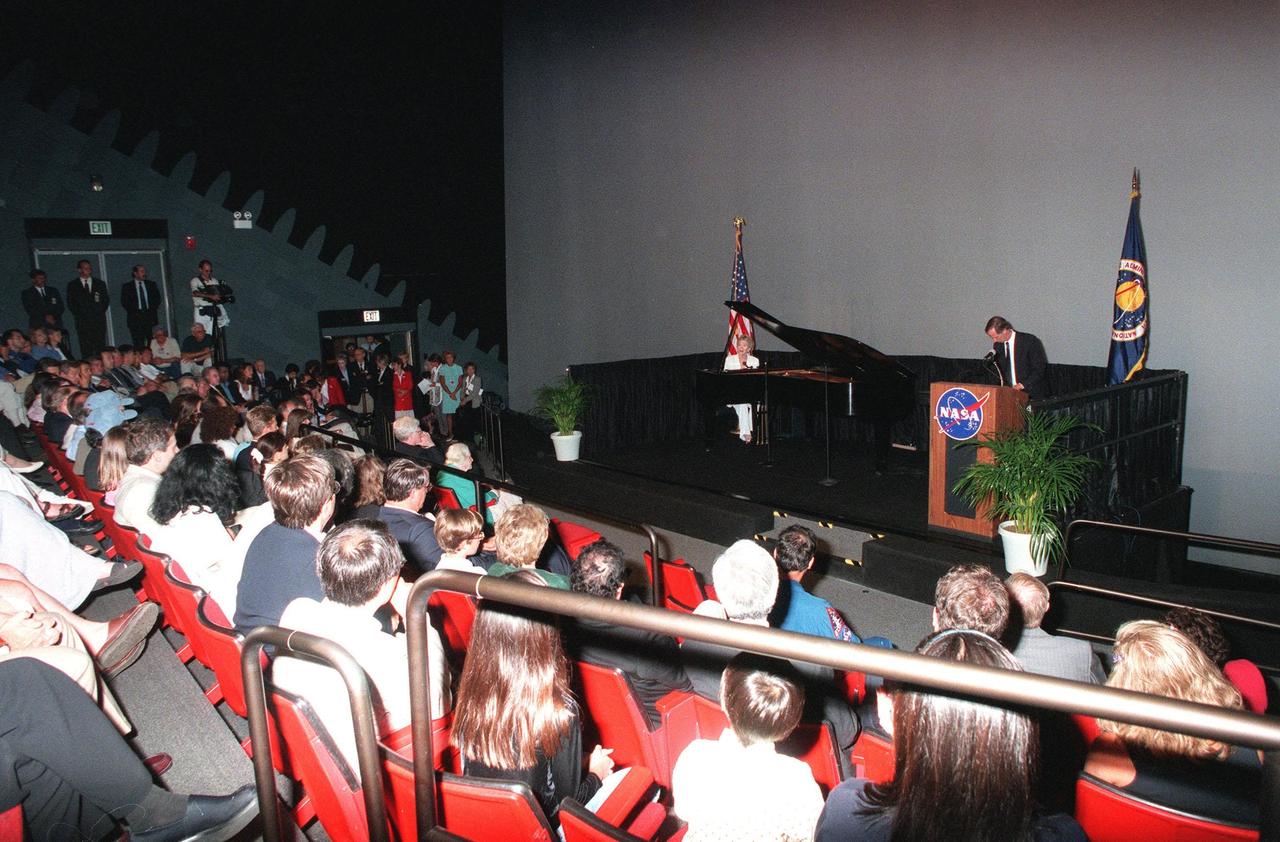
At the piano, singer-songwriter Judy Collins performs her original song, "Beyond the Sky," at the KSC Visitor Complex's Imax Theater for an audience waiting for the launch of STS-93. The song, commissioned by NASA through the Nasa Art Program, honored Eileen Collins, the first woman to command a Space Shuttle. The attendees are planning to view the launch at the Banana Creek viewing sight. Liftoff is scheduled for July 20 at 12:36 a.m. EDT
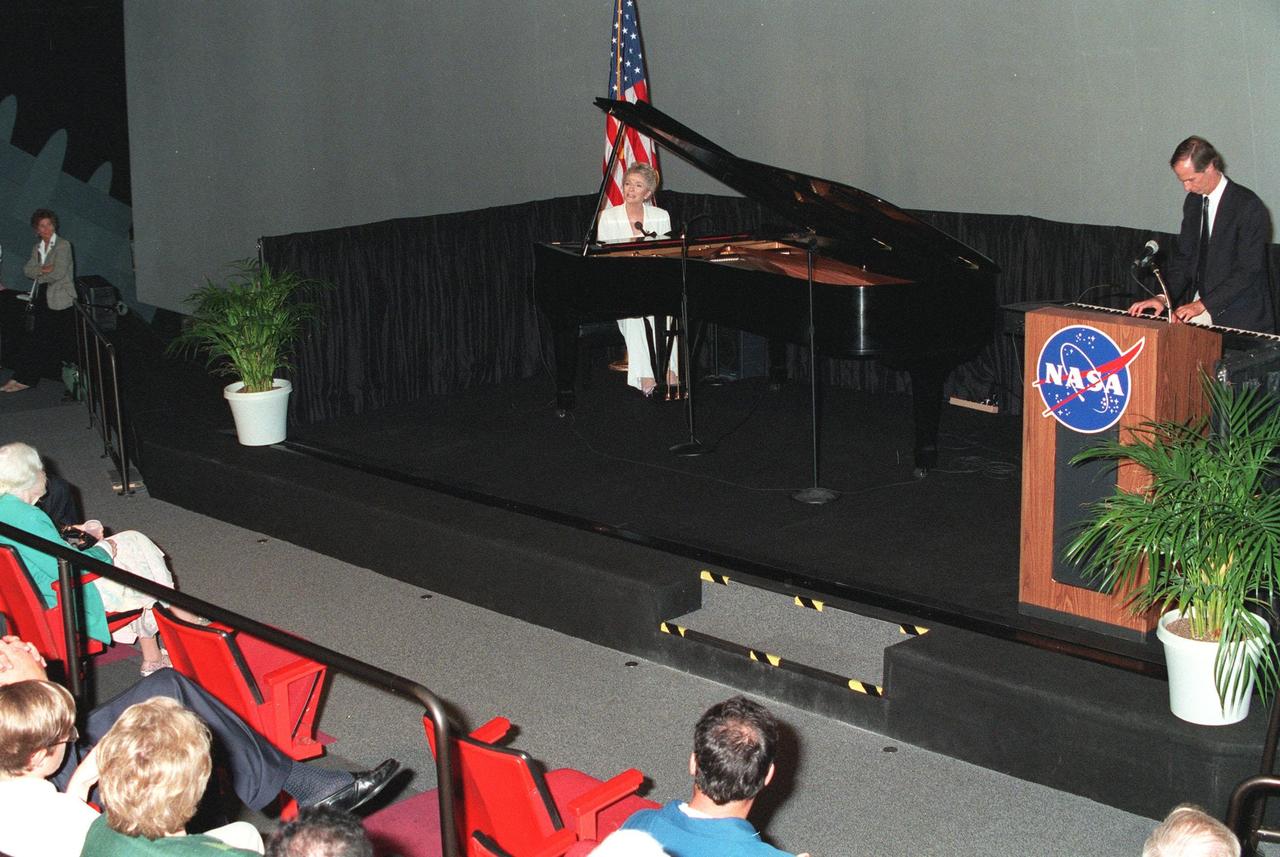
At the piano, singer-songwriter Judy Collins performs her original song, "Beyond the Sky," at the KSC Visitor Complex's Imax Theater for an audience waiting for the launch of STS-93. The song, commissioned by NASA through the Nasa Art Program, honored Eileen Collins, the first woman to command a Space Shuttle. The attendees are planning to view the launch at the Banana Creek viewing sight. Liftoff is scheduled for July 20 at 12:36 a.m. EDT
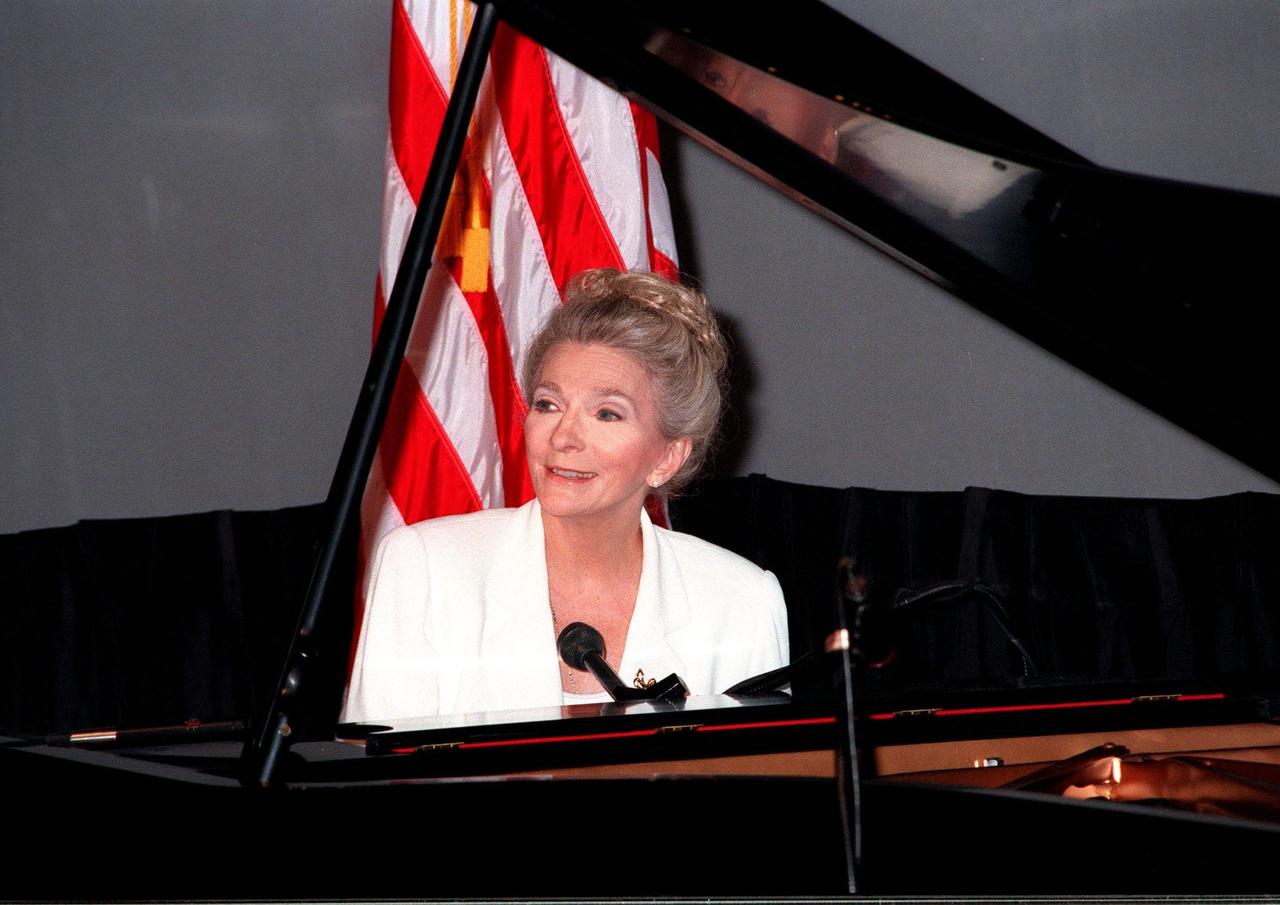
Singer-songwriter Judy Collins performs her original song, "Beyond the Sky," at the KSC Visitor Complex's Imax Theater for an audience waiting for the launch of STS-93. The song, commissioned by NASA through the nASA Art Program, honored Eileen Collins, the first woman to command a Space Shuttle. The attendees are planning to view the launch at the Banana Creek viewing sight. Liftoff is scheduled for July 20 at 12:36 a.m. EDT
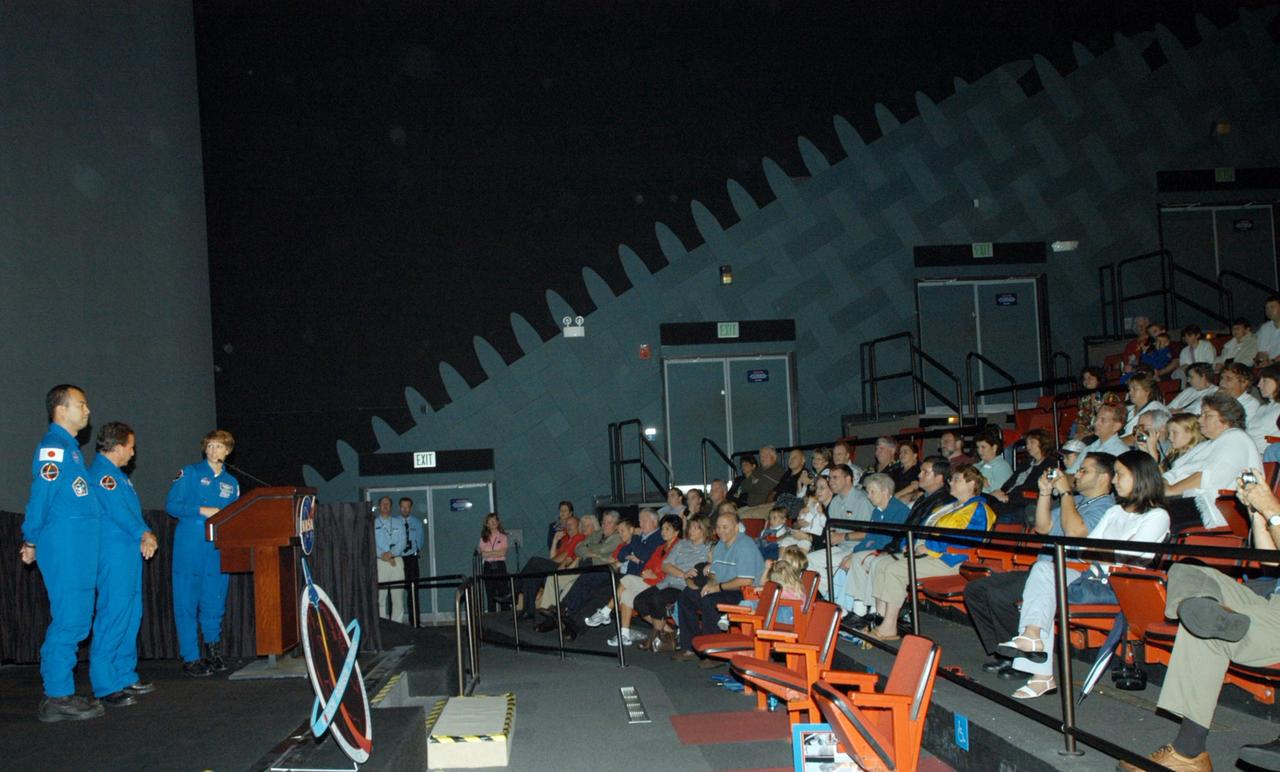
KENNEDY SPACE CENTER, FLA. - At a celebration for the STS-114 crew and the successful return to flight mission, members of the crew relate their experiences for an enthusiastic audience of employees and family members in the IMAX Theater. On the stage from left are Mission Specialists Soichi Noguchi and Charles Camarda, and Commander Eileen Collins at the podium. The crew returned to Florida especially for the celebration in the KSC Visitor Complex.
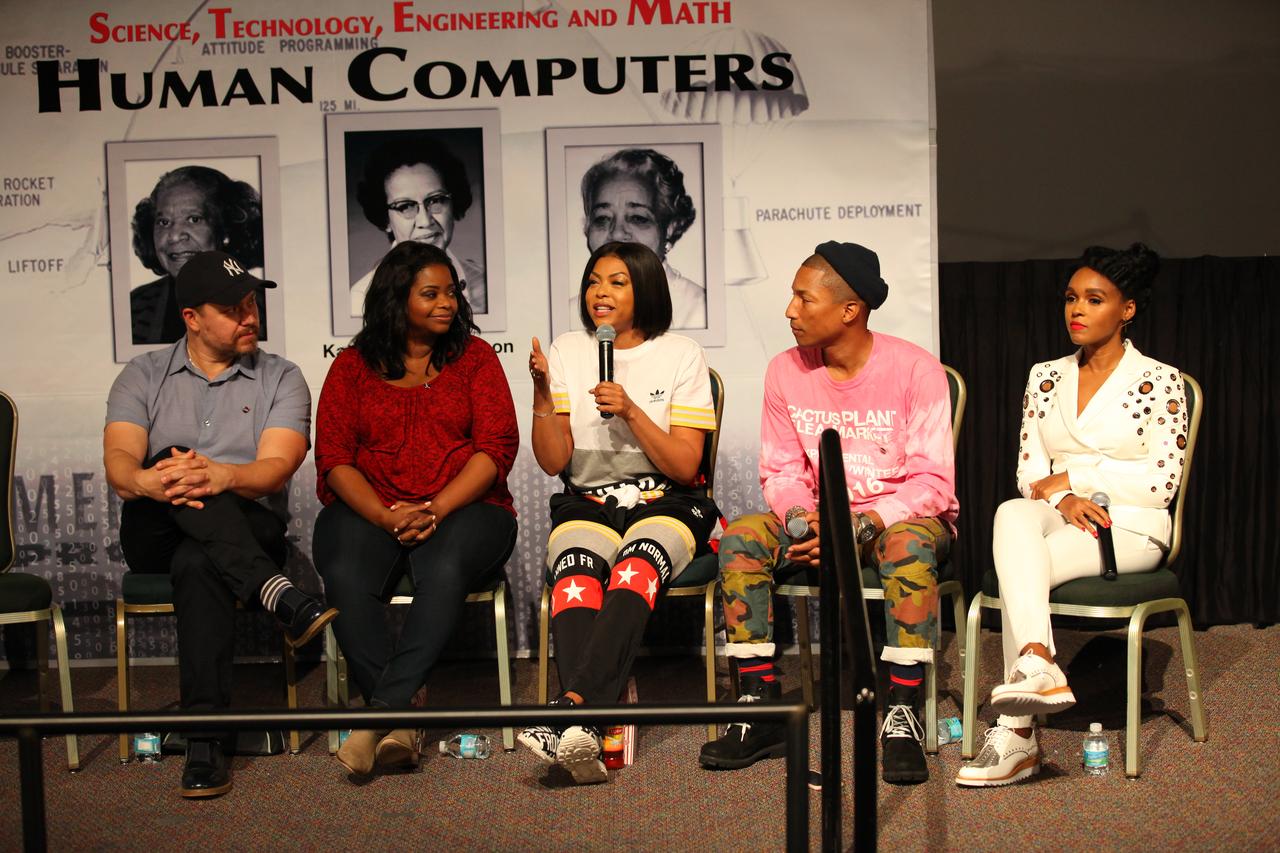
In the IMAX Theater of the Kennedy Space Center Visitor Complex Cast and crew members of the upcoming motion picture "Hidden Figures" participate in a question and answer session. From the left are Ted Melfi, writer and director of “Hidden Figures,” Octavia Spencer, who portrays Dorothy Vaughan in the film, Taraji P. Henson, who portrays Katherine Johnson, Pharrell Williams, musician and producer of “Hidden Figures," and Janelle Monáe, who portrays Mary Jackson. The movie is based on the book of the same title, by Margot Lee Shetterly. It chronicles the lives of Katherine Johnson, Dorothy Vaughan and Mary Jackson, three African-American women who worked for NASA as human "computers.” Their mathematical calculations were crucial to the success of Project Mercury missions including John Glenn’s orbital flight aboard Friendship 7 in 1962. The film is due in theaters in January 2017.
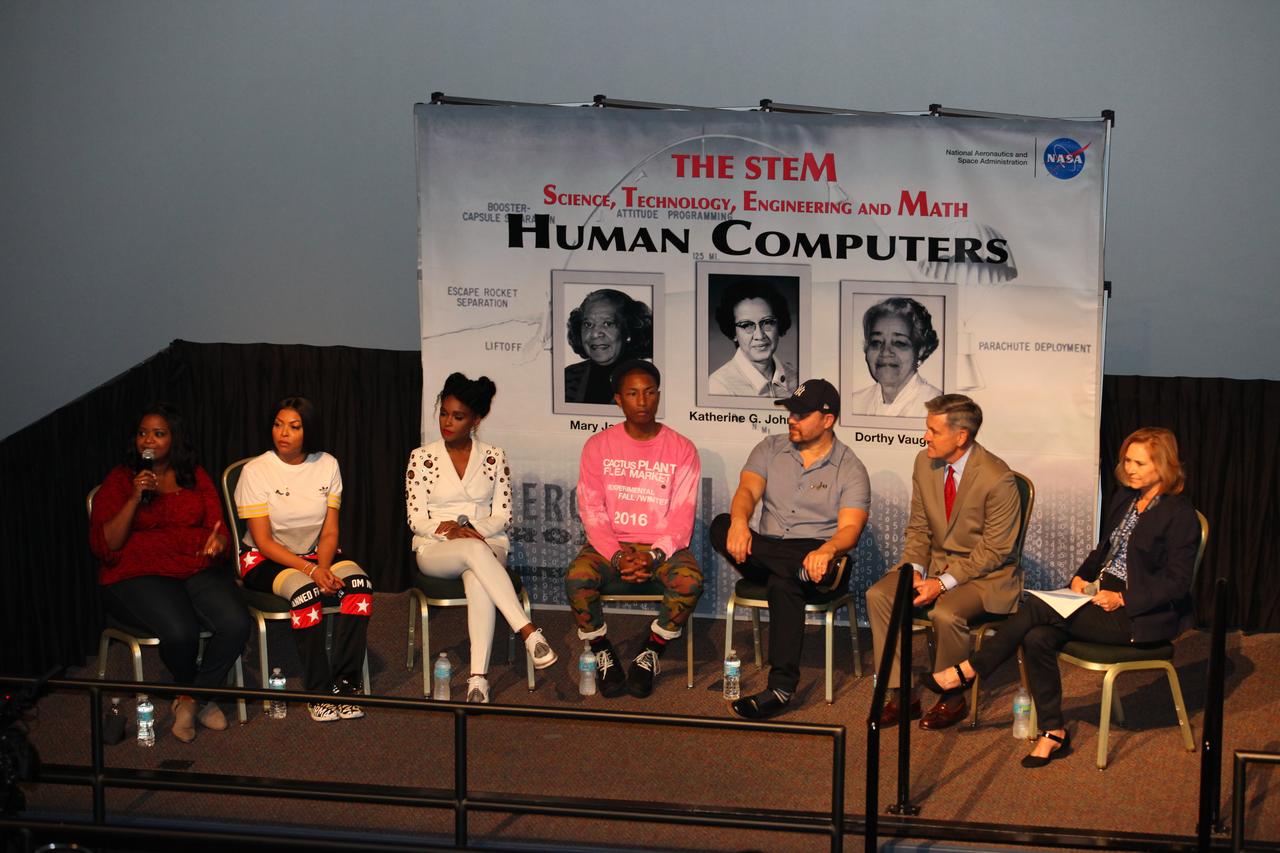
In the IMAX Theater of the Kennedy Space Center Visitor Complex Cast and crew members of the upcoming motion picture "Hidden Figures" participate in a question and answer session. From the left are Octavia Spencer, who portrays Dorothy Vaughan in the film, Taraji P. Henson, who portrays Katherine Johnson, Janelle Monáe, who portrays Mary Jackson, Pharrell Williams, musician and producer of “Hidden Figures," Ted Melfi, writer and director of “Hidden Figures,” center director Bob Cabana, and Janet Petro, deputy center director. The movie is based on the book of the same title, by Margot Lee Shetterly. It chronicles the lives of Katherine Johnson, Dorothy Vaughan and Mary Jackson, three African-American women who worked for NASA as human "computers.” Their mathematical calculations were crucial to the success of Project Mercury missions including John Glenn’s orbital flight aboard Friendship 7 in 1962. The film is due in theaters in January 2017.
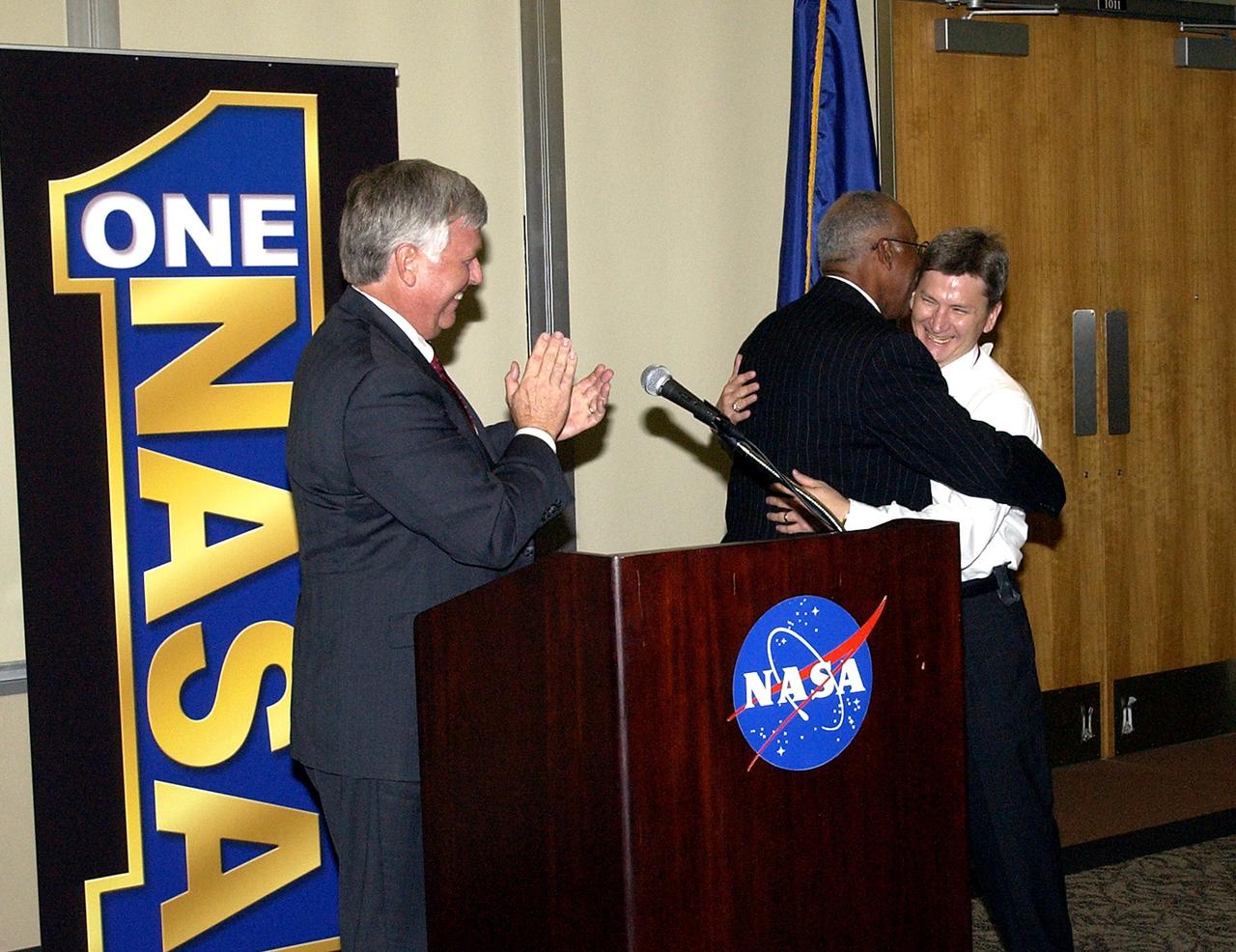
KENNEDY SPACE CENTER, FLA. - At the rollout of the One NASA initiative at KSC, Glenn Research Center Director Dr. Julian Earls embraces implementation team lead Johnny Stevenson while KSC Director Jim Kennedy (left) applauds. Earls gave a motivational speech during the luncheon held at the Visitor Complex Debus Conference Center. The event was held at the IMAX Theater® where NASA leaders discussed One NASA with selected employees. Explaining how their respective centers contribute to One NASA, along with Kennedy and Earls, were James Jennings, NASA’s associate deputy administrator for institutions and asset management; Ed Weiler, associate administrator for Space Science; Kevin Peterson, Dryden Flight Research Center director; incoming KSC Deputy Director Woodrow Whitlow; and implementation team lead Johnny Stevenson.
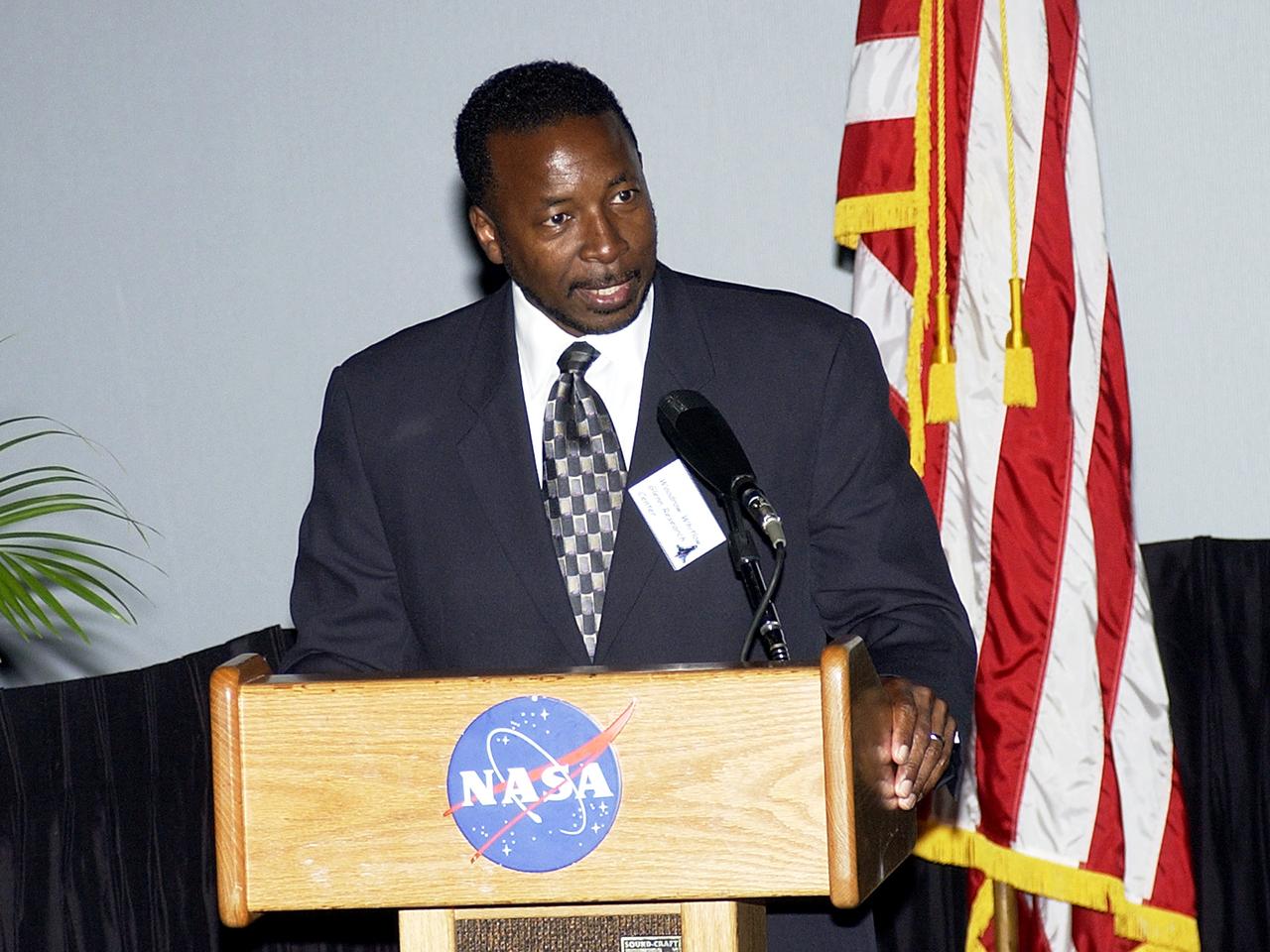
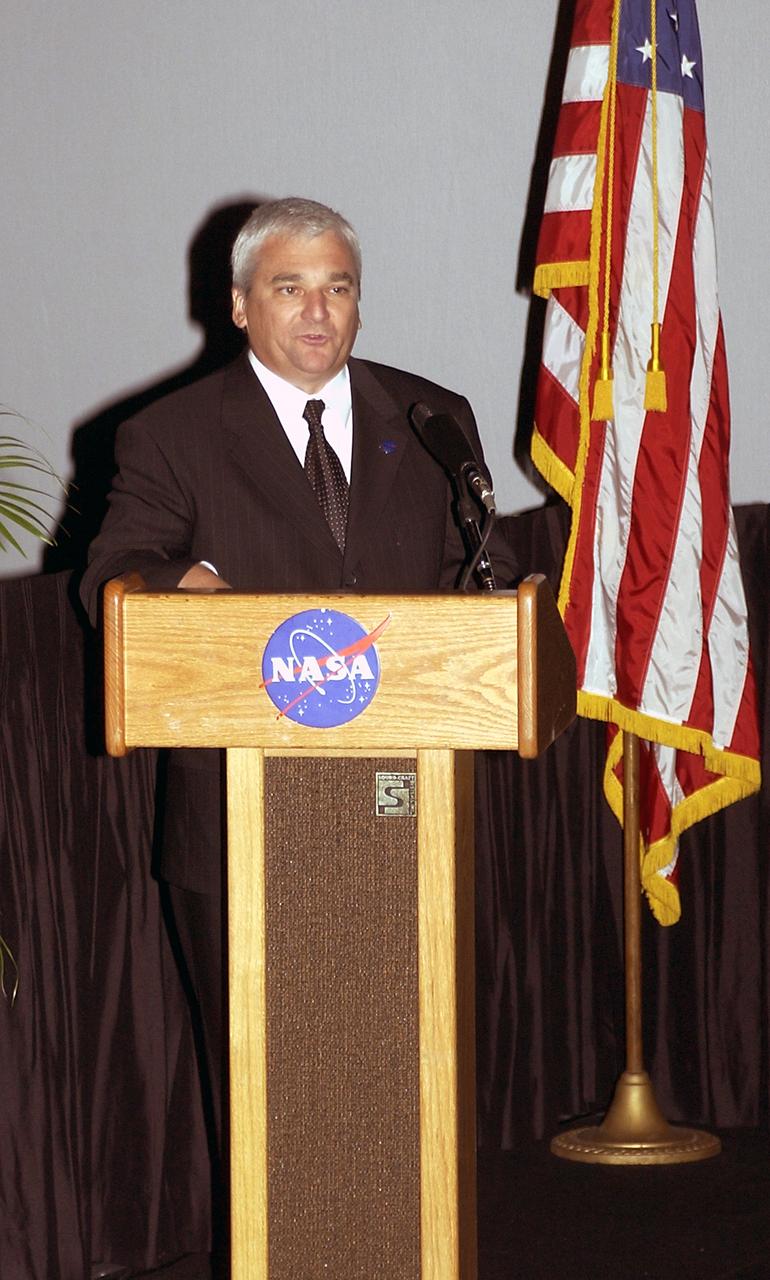
KENNEDY SPACE CENTER, FLA. - KSC’s incoming Deputy Director Woodrow Whitlow speaks to employees and guests during the rollout at KSC of the Agency initiative One NASA . The event was held at the IMAX Theater® where NASA leaders discussed One NASA with selected employees. Explaining how their respective centers contribute to One NASA, along with Whitlow, were KSC Director Jim Kennedy; James Jennings, NASA’s associate deputy administrator for institutions and asset management; Ed Weiler, associate administrator for Space Science; Kevin Peterson, Dryden Flight Research Center director; and implementation team lead Johnny Stevenson. Glenn Research Center Director Dr. Julian Earls gave a motivational speech during the luncheon held at the Visitor Complex Debus Conference Center.
KENNEDY SPACE CENTER, FLA. - Dryden Flight Research Center Director Kevin Peterson talks about One NASA during the rollout of the Agency initiative at KSC. The event was held at the IMAX Theater® where NASA leaders discussed One NASA with selected employees. Explaining how their respective centers contribute to One NASA, along with Peterson, were KSC Director Jim Kennedy, James Jennings, NASA’s associate deputy administrator for institutions and asset management; Ed Weiler, associate administrator for Space Science; Kevin Peterson, Dryden Flight Research Center director; incoming KSC Deputy Director Woodrow Whitlow; and implementation team lead Johnny Stevenson. Glenn Research Center Director Dr. Julian Earls gave a motivational speech during the luncheon held at the Visitor Complex Debus Conference Center.
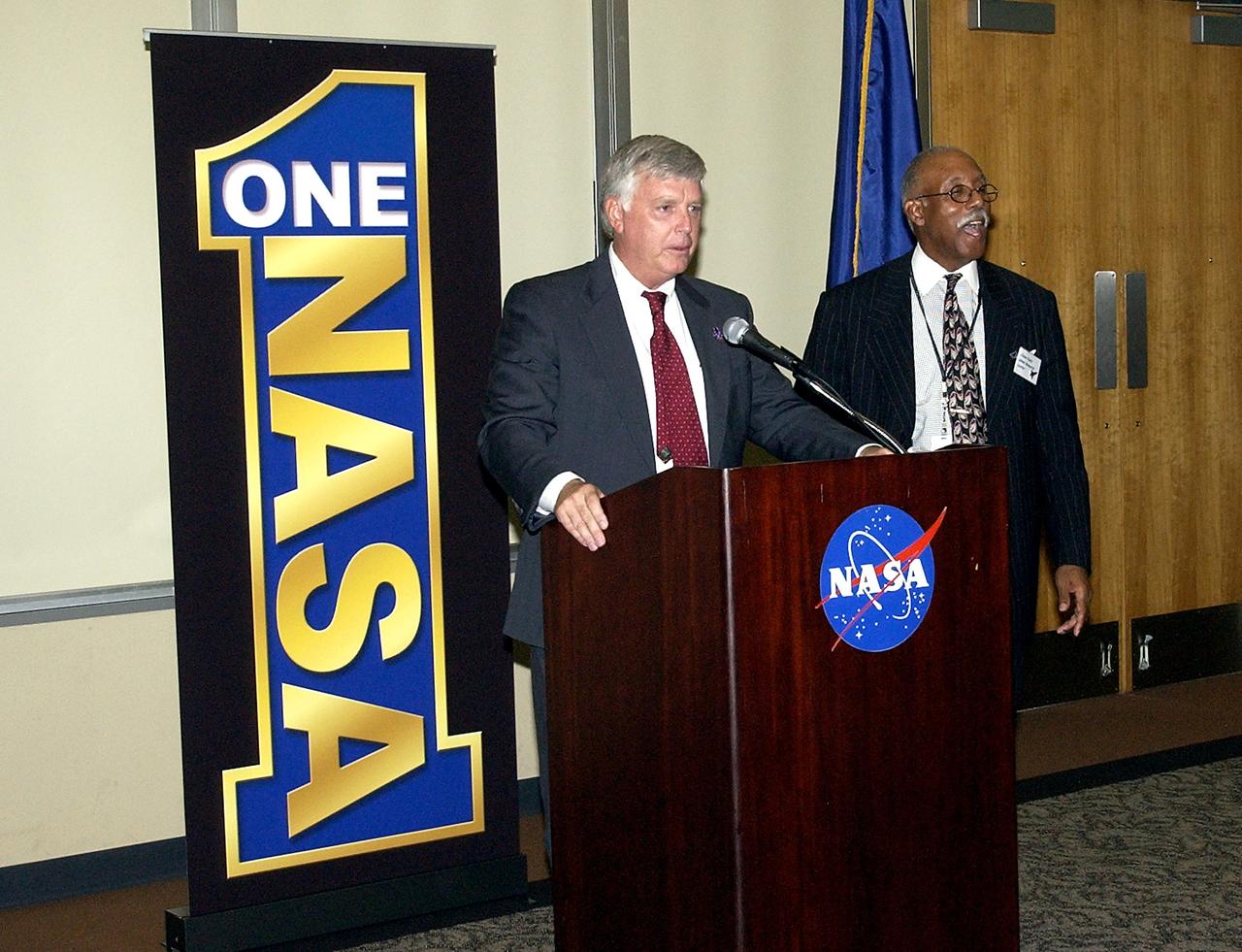
KENNEDY SPACE CENTER, FLA. - KSC Director Jim Kennedy and Glenn Research Center Director Dr. Julian Earls share the stage during the rollout of the One NASA initiative at KSC. Earls gave a motivational speech during the luncheon held at the Visitor Complex Debus Conference Center. The event was held at the IMAX Theater® where NASA leaders discussed One NASA with selected employees. Explaining how their respective centers contribute to One NASA, along with Kennedy and Earls, were James Jennings, NASA’s associate deputy administrator for institutions and asset management; Ed Weiler, associate administrator for Space Science; Kevin Peterson, Dryden Flight Research Center director; incoming KSC Deputy Director Woodrow Whitlow; and implementation team lead Johnny Stevenson.
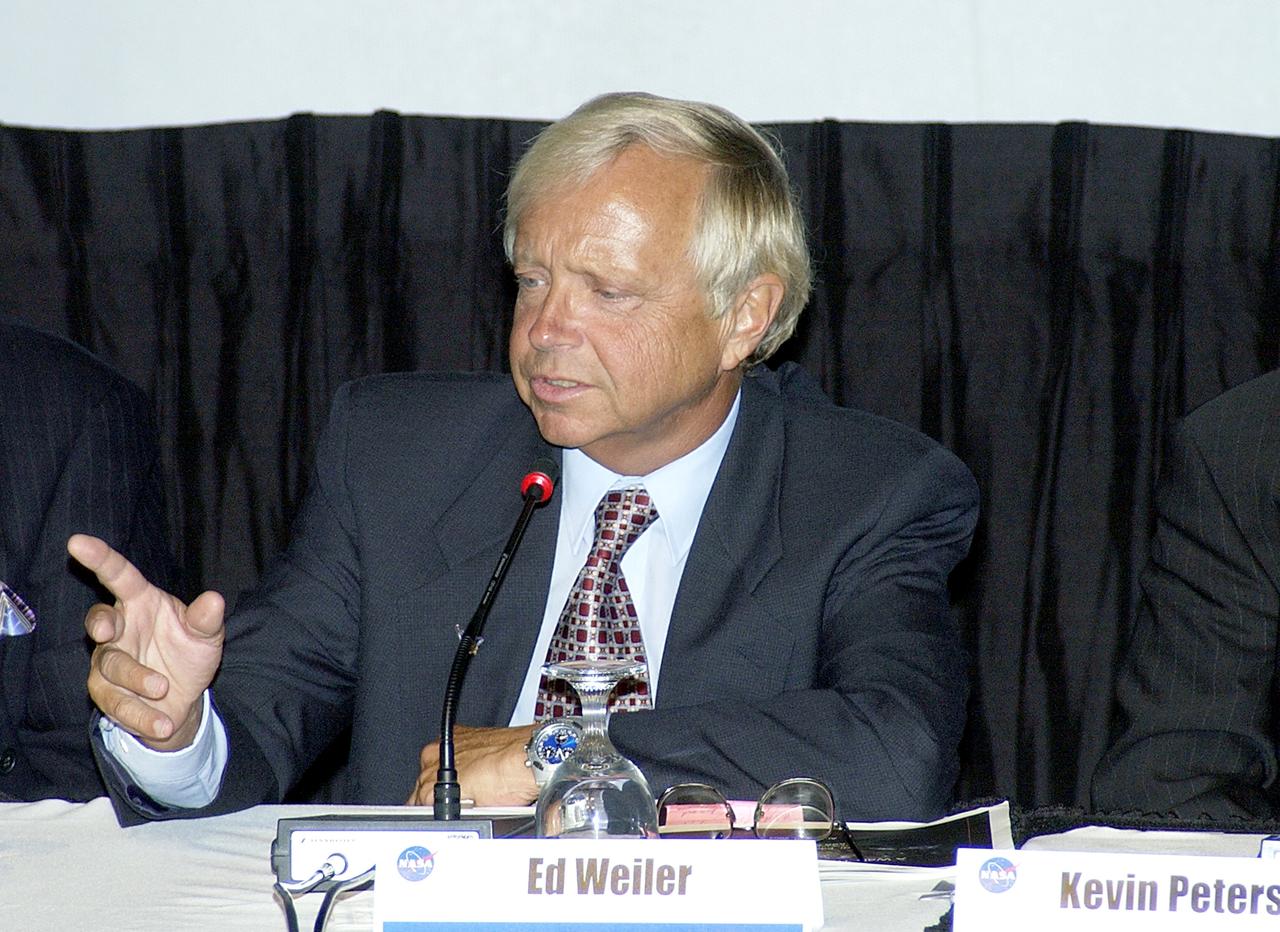
KENNEDY SPACE CENTER, FLA. - NASA’s Ed Weiler, associate administrator for Space Science, speaks to employees and guests during the rollout at KSC of the Agency initiative One NASA . The event was held at the IMAX Theater®. Explaining how their respective centers contribute to One NASA, along with Weiler, were KSC Director Jim Kennedy; James Jennings, NASA’s associate deputy administrator for institutions and asset management; Kevin Peterson, Dryden Flight Research Center director; incoming KSC Deputy Director Woodrow Whitlow; and implementation team lead Johnny Stevenson. Glenn Research Center Director Dr. Julian Earls gave a motivational speech during the luncheon held at the Visitor Complex Debus Conference Center.
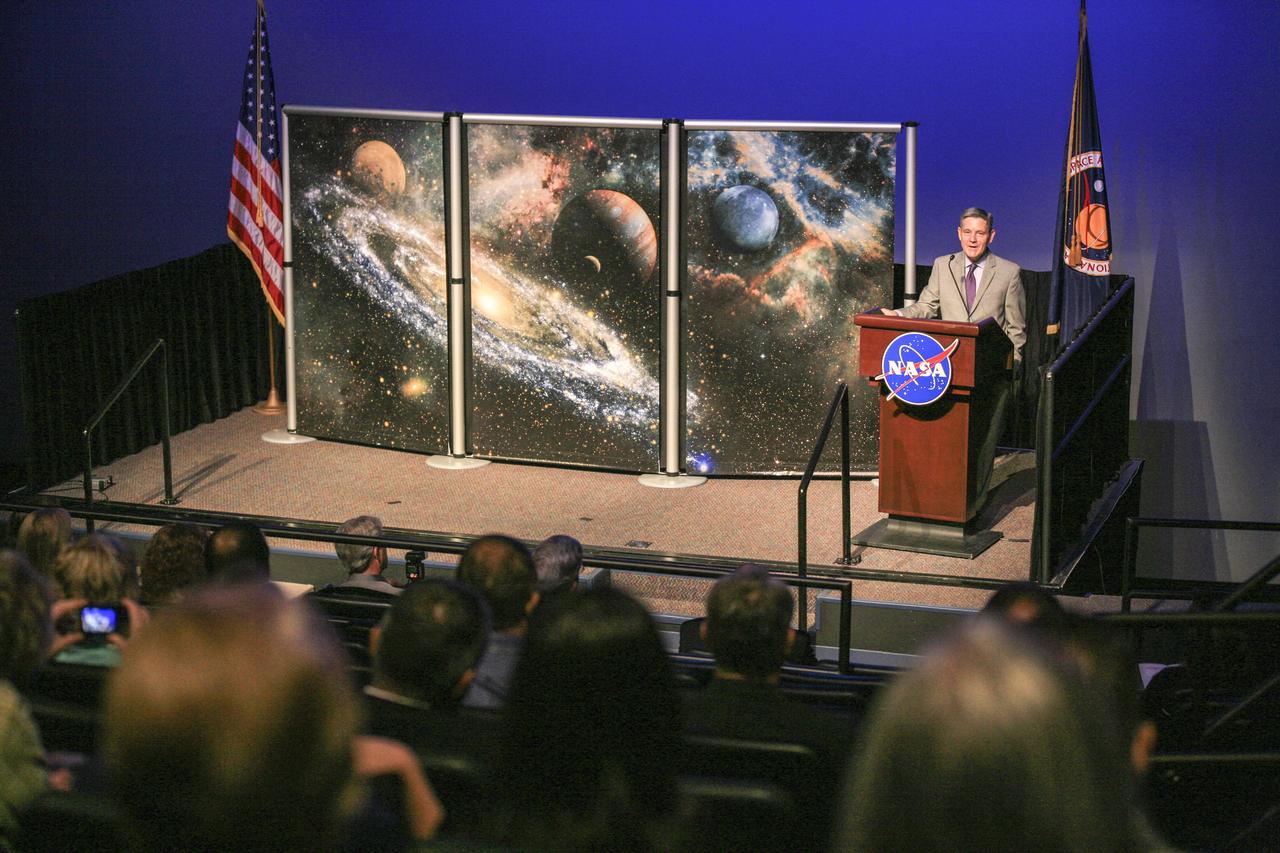
CAPE CANAVERAL, Fla. – Kennedy Space Center Director Robert Cabana addresses NASA civil service and contractor employees and their families attending the 2013 KSC Honor Awards Ceremony in the IMAX theater at the Kennedy Space Center Visitor Complex in Florida. Kennedy conducts its Annual Honor Awards Ceremony each spring. During the ceremony, the center's director and deputy director present deserving employees with various awards in the form of medals and certificates. The ceremony is open to all employees and broadcast to employees who are unable to attend. For more information about NASA's Kennedy Space Center, visit http://www.nasa.gov/kennedy. Photo credit: NASA/Kim Shiflett
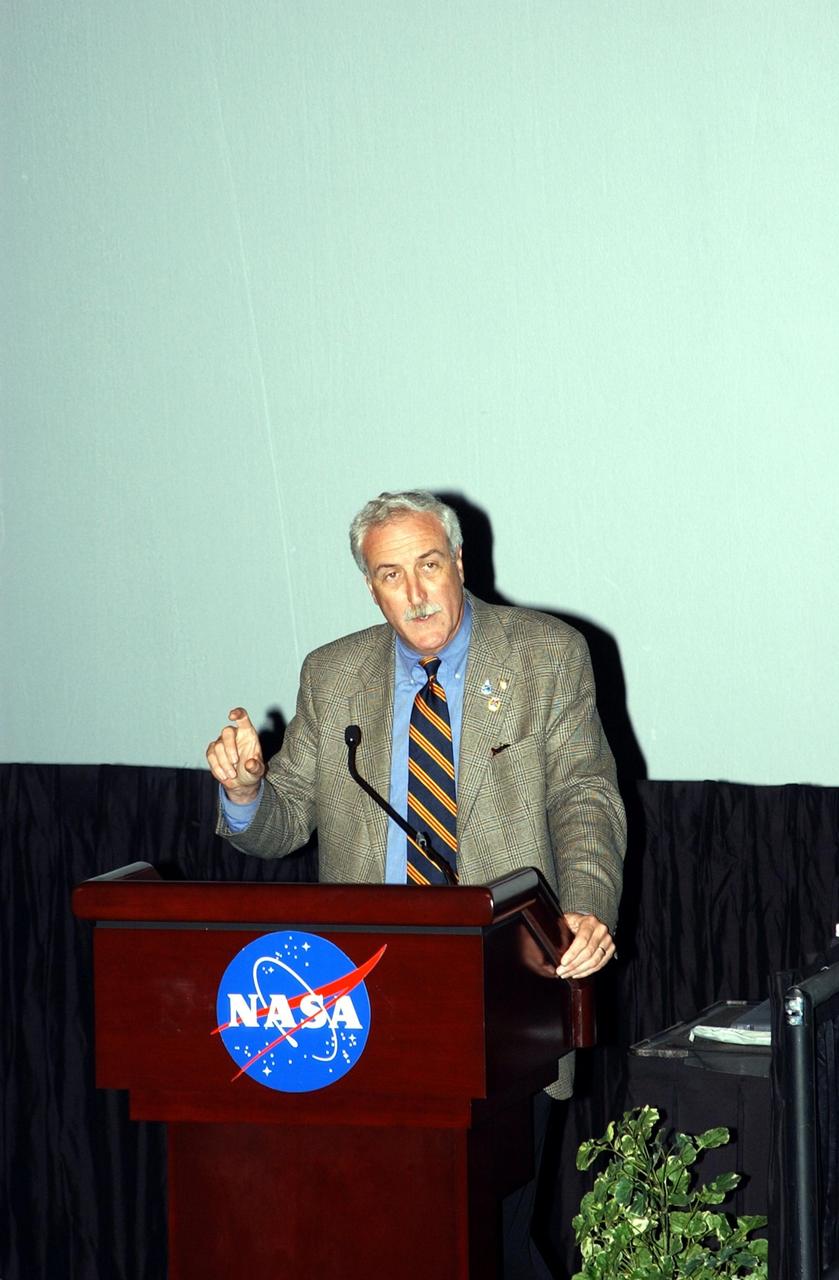
KENNEDY SPACE CENTER, FLA. -- In the IMAX-2 Theater at the Visitor Complex, NASA Administrator Sean O'Keefe conducts the Administrator's Briefing for specially invited guests attending the launch of mission STS-111. The briefing is a regularly scheduled event in KSC's prelaunch activities. STS-111 is the second Utilization Flight to the International Space Station, carrying the Multi-Purpose Logistics Module Leonardo, the Mobile Base System (MBS), and a replacement wrist/roll joint for the Canadarm 2. Also on board will be the Expedition Five crew who will replace Expedition Four on the Station. Launch is scheduled for May 30 at 7:44 p.m. EDT
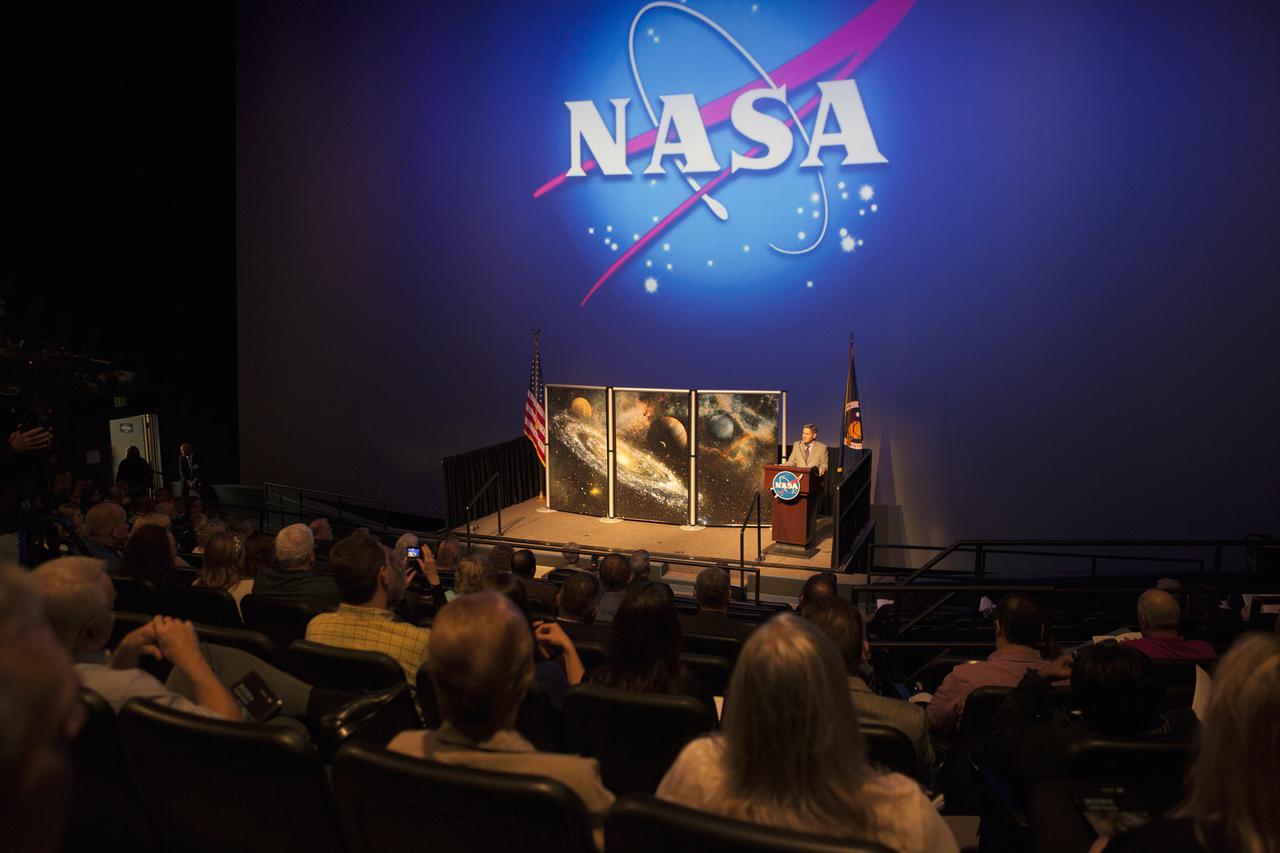
CAPE CANAVERAL, Fla. – NASA Kennedy Space Center civil service and contractor employees and their families fill the IMAX theater at the Kennedy Space Center Visitor Complex in Florida for the 2013 KSC Honor Awards Ceremony. Kennedy Director Robert Cabana, at the podium, prepares to announce the award recipients. Kennedy conducts its Annual Honor Awards Ceremony each spring. During the ceremony, the center's director and deputy director present deserving employees with various awards in the form of medals and certificates. The ceremony is open to all employees and broadcast to employees who are unable to attend. For more information about NASA's Kennedy Space Center, visit http:__www.nasa.gov_kennedy. Photo credit: NASA_Kim Shiflett
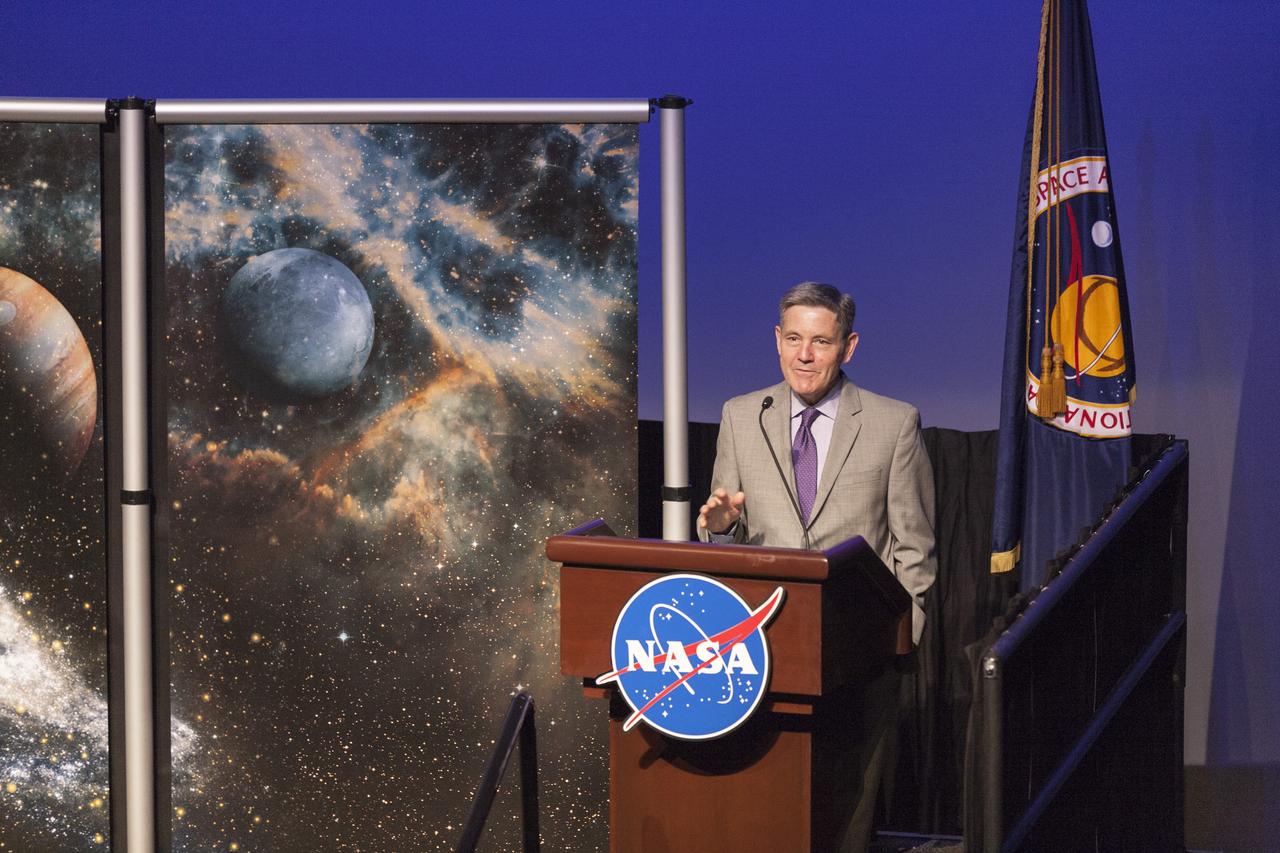
CAPE CANAVERAL, Fla. – Kennedy Space Center Director Robert Cabana welcomes NASA civil service and contractor employees and their families to the IMAX theater at the Kennedy Space Center Visitor Complex in Florida for the 2013 KSC Honor Awards Ceremony. Kennedy conducts its Annual Honor Awards Ceremony each spring. During the ceremony, the center's director and deputy director present deserving employees with various awards in the form of medals and certificates. The ceremony is open to all employees and broadcast to employees who are unable to attend. For more information about NASA's Kennedy Space Center, visit http://www.nasa.gov/kennedy. Photo credit: NASA/Kim Shiflett
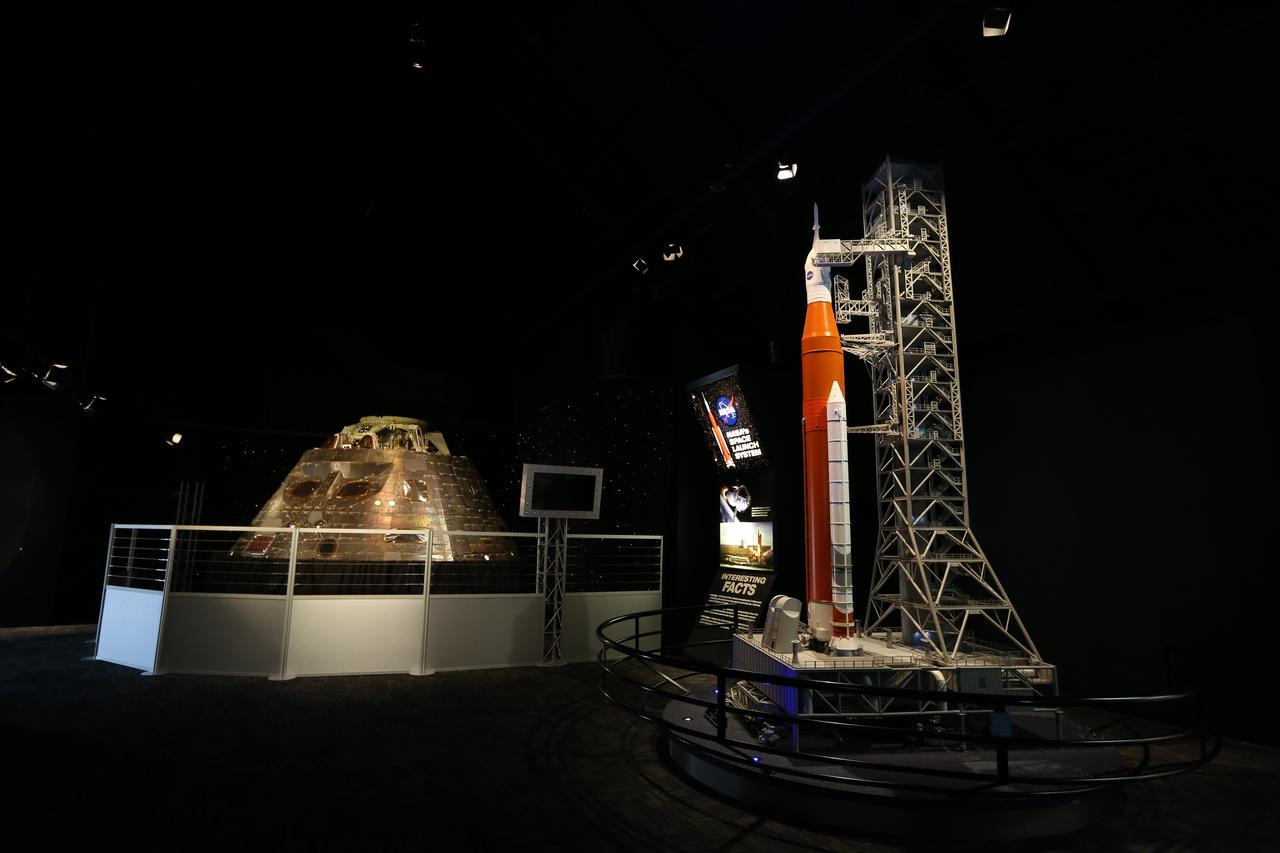
The Orion crew module from Exploration Flight Test 1 (EFT-1) is on display at nearby NASA Kennedy Space Center Visitor Complex in Florida. The crew module is part of the NASA Now exhibit in the IMAX Theater. Also in view is a scale model of NASA's Space Launch System rocket and Orion spacecraft on the mobile launcher. The Orion EFT-1 spacecraft launched atop a United Launch Alliance Delta IV rocket Dec. 5, 2014, from Space Launch Complex 37 at Cape Canaveral Air Force Station. The spacecraft built for humans traveled 3,604 miles above Earth and splashed down about 4.5 hours later in the Pacific Ocean.
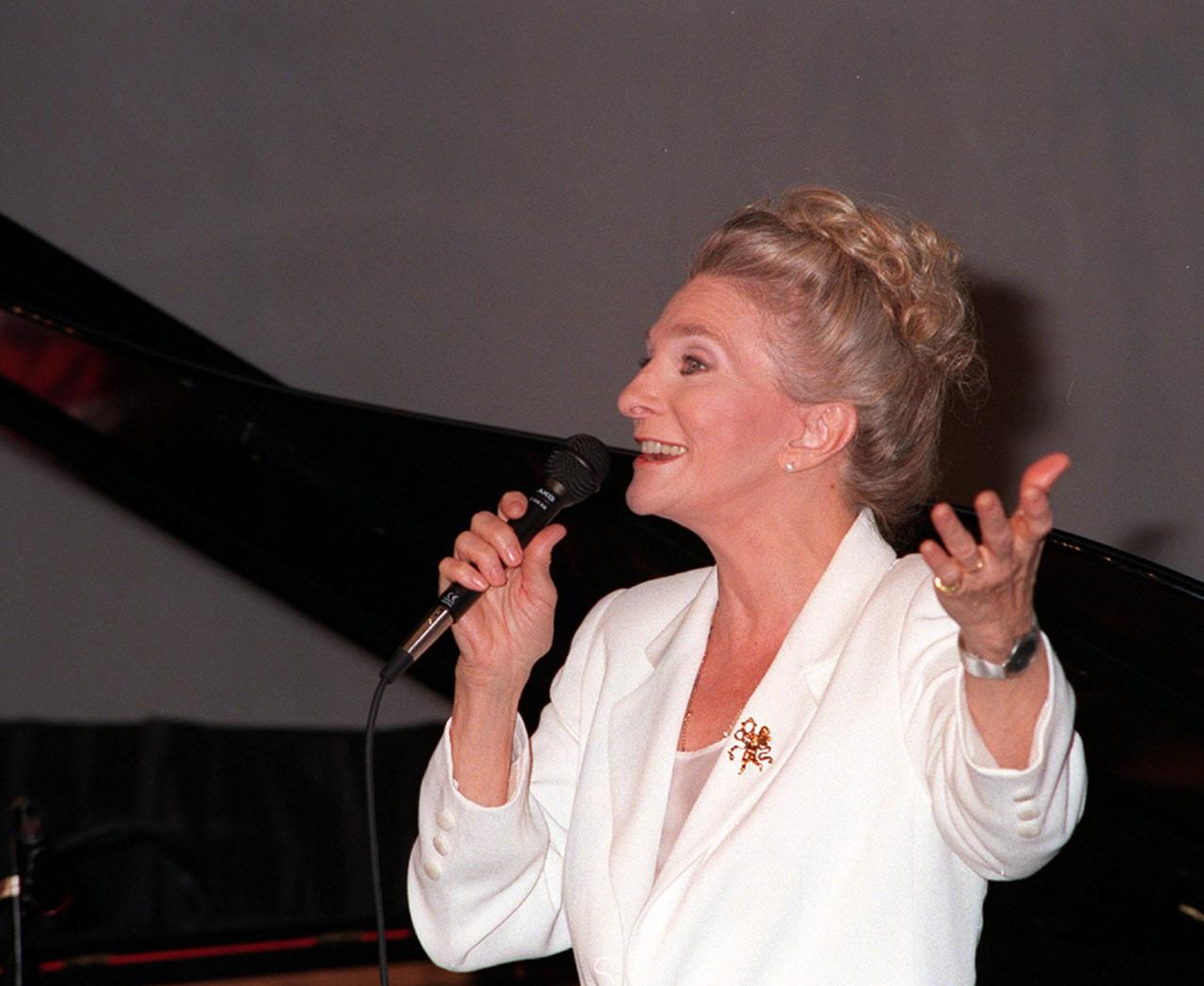
Singer-songwriter Judy Collins performs her original song, "Beyond the Sky," at the KSC Visitor Complex's Imax Theater for an audience of women attending a forum. The song, commissioned by NASA through the nASA Art Program, honored Eileen Collins, the first woman to command a Space Shuttle. The forum included a welcome by Center Director Roy Bridges, remarks by NASA Administrator Daniel Goldin, and a panel discussion, "Past, Present and Future of Space." The attendees are planning to view the launch of STS-93 at the Banana Creek viewing sight. Liftoff is scheduled for July 20 at 12:36 a.m. EDT
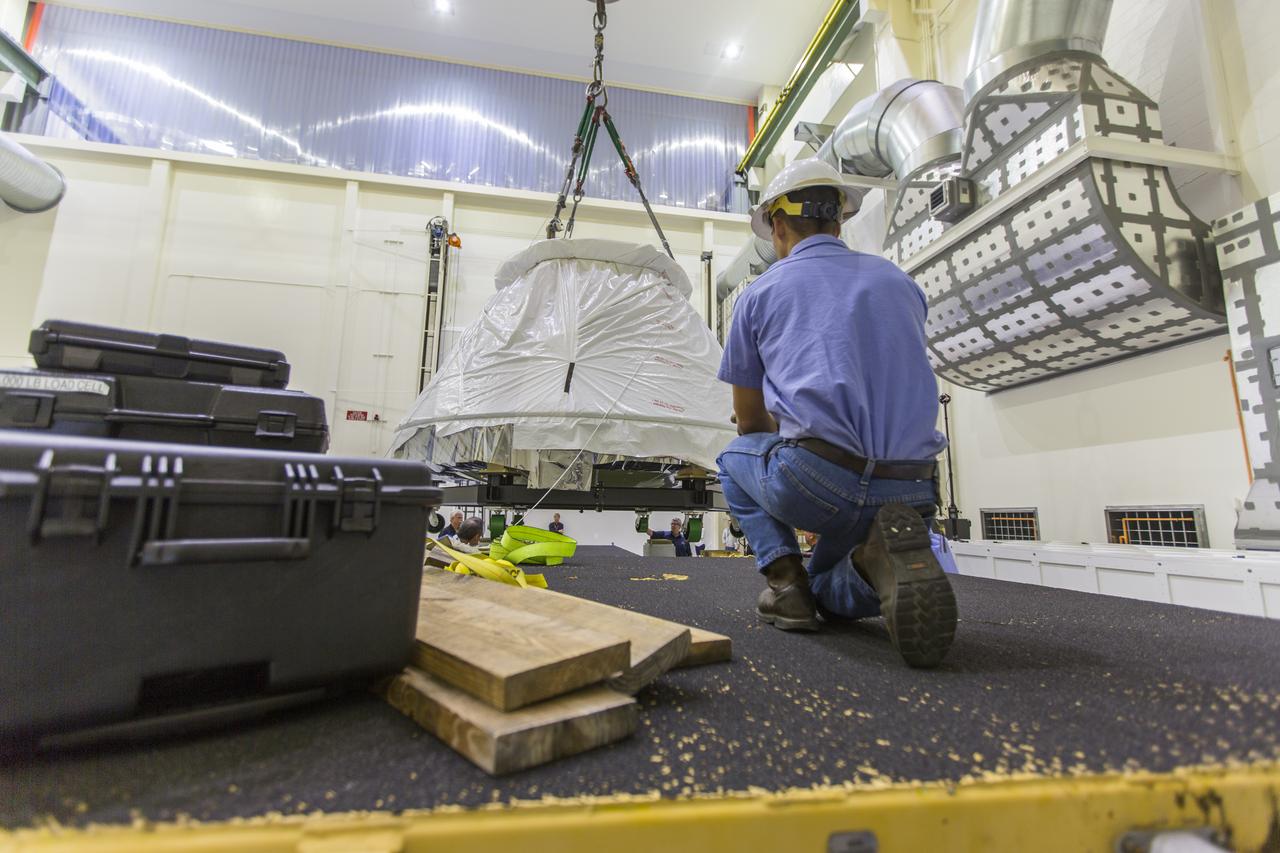
Inside the Neil Armstrong Operations and Checkout Building at NASA's Kennedy Space Center in Florida, Lockheed Martin workers prepare the Orion crew module from Exploration Flight Test 1 for its move to the nearby Kennedy Space Center Visitor Complex. The crew module will be delivered to the IMAX Theater where it will be prepared for display in the NASA Now exhibit. The Orion spacecraft launched atop a United Launch Alliance Delta IV rocket Dec. 5, 2014, from Space Launch Complex 37 at Cape Canaveral Air Force Station. The spacecraft built for humans traveled 3,604 miles above Earth and splashed down about 4.5 hours later in the Pacific Ocean.
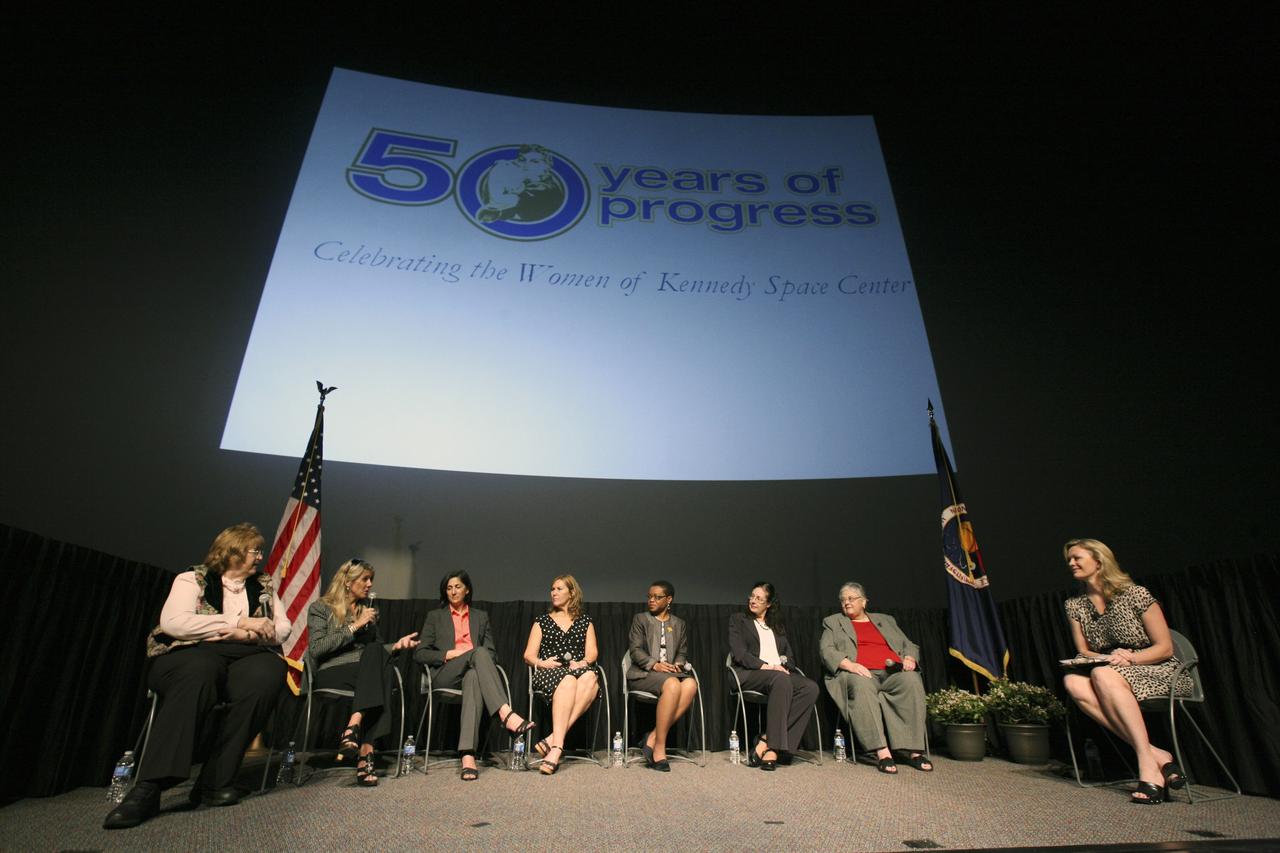
CAPE CANAVERAL, Fla. – In celebration of Women’s History Month, iconic women from NASA Kennedy Space Center’s past and present participate in a panel discussion, “50 Years of Progress--Celebrating the Women of Kennedy Space Center,” in the IMAX 2 Theater at the Kennedy Space Center Visitor Complex. From left are Judy Kersey, Carol Craig, astronaut Nicole Stott, Patty Stratton, Wanda Harding, Dr. Merri Sanchez, Kathleen Harer, and moderator Lauren Rowe of News Channel 6. For more information, visit http://www.nasa.gov/kennedy. Photo credit: NASA/Gianni Woods
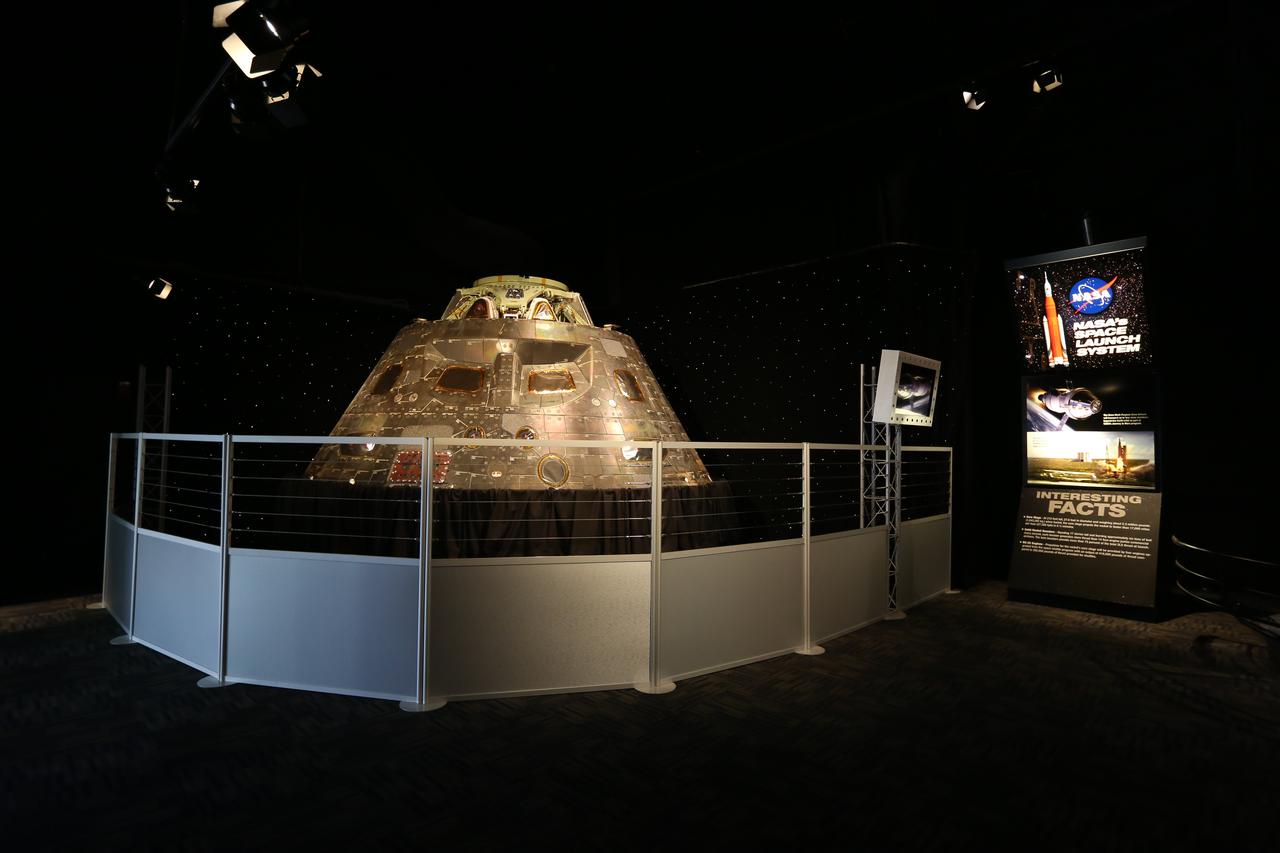
The Orion crew module from Exploration Flight Test 1 (EFT-1) is on display at nearby NASA Kennedy Space Center Visitor Complex in Florida. The crew module is part of the NASA Now exhibit in the IMAX Theater. The Orion EFT-1 spacecraft launched atop a United Launch Alliance Delta IV rocket Dec. 5, 2014, from Space Launch Complex 37 at Cape Canaveral Air Force Station. The spacecraft built for humans traveled 3,604 miles above Earth and splashed down about 4.5 hours later in the Pacific Ocean.
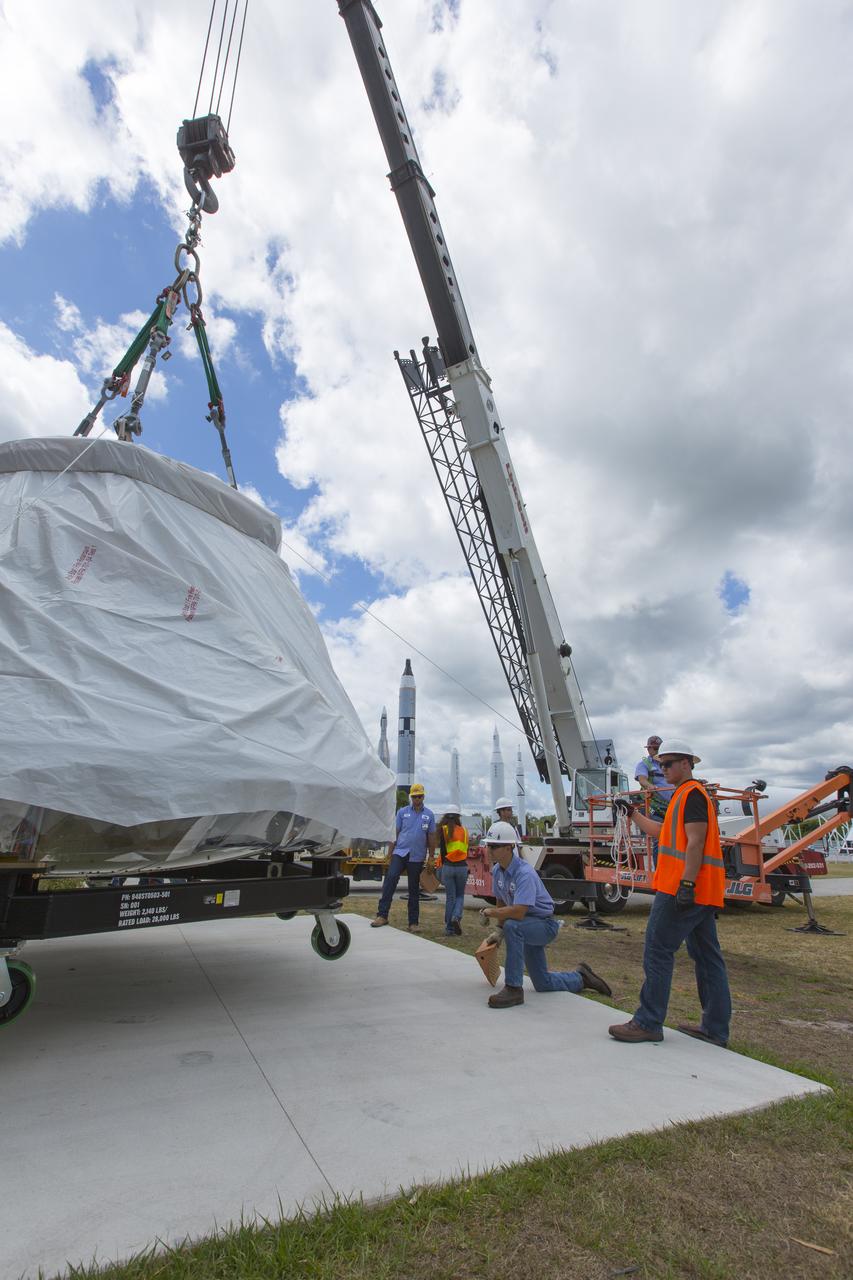
At NASA's Kennedy Space Center Visitor Complex in Florida, a crane lowers the Orion crew module from Exploration Flight Test 1 to the ground, secured on its custom-made ground support equipment. The crew module will be delivered to the IMAX Theater where it will be prepared for display in the NASA Now exhibit. The Orion spacecraft launched atop a United Launch Alliance Delta IV rocket Dec. 5, 2014, from Space Launch Complex 37 at Cape Canaveral Air Force Station. The spacecraft built for humans traveled 3,604 miles above Earth and splashed down about 4.5 hours later in the Pacific Ocean.
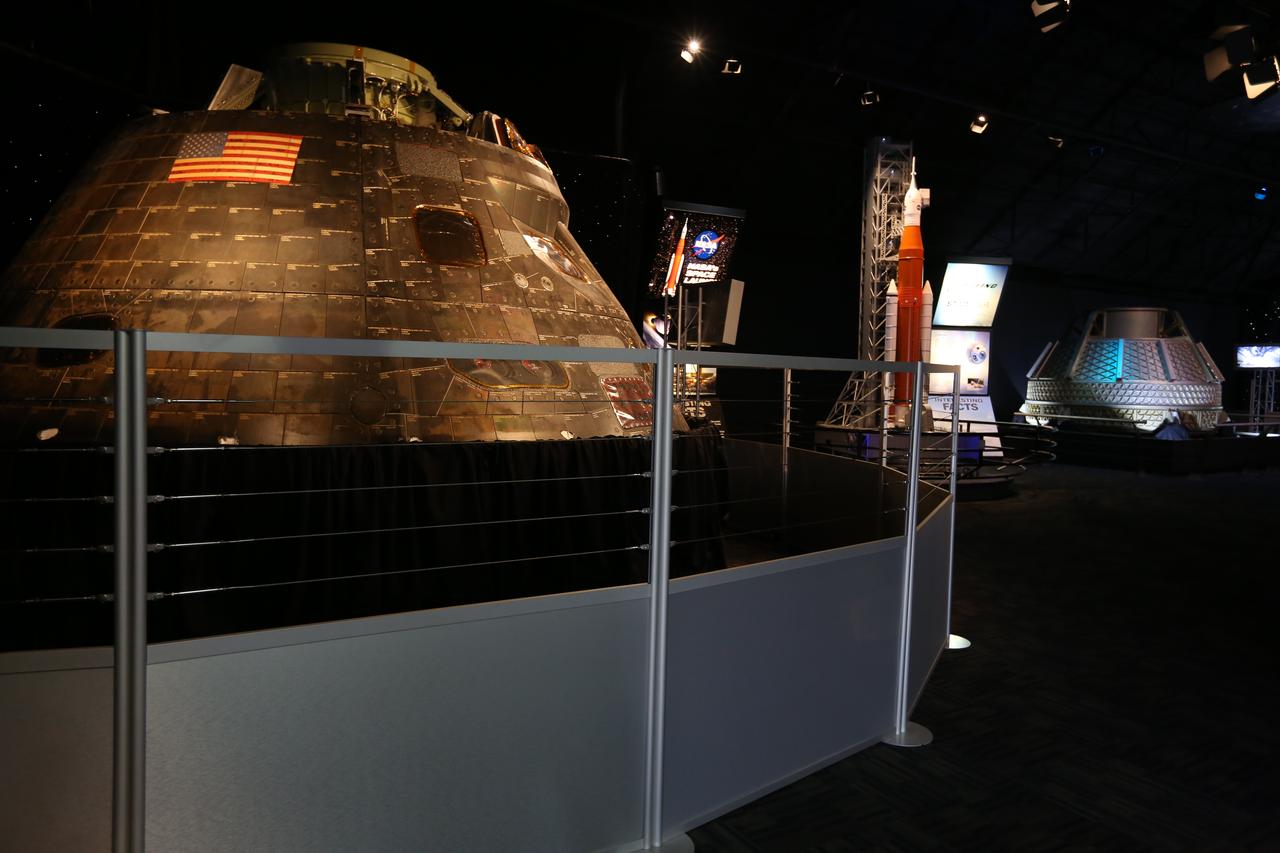
The Orion crew module from Exploration Flight Test 1 (EFT-1) is on display at nearby NASA Kennedy Space Center Visitor Complex in Florida. The crew module is part of the NASA Now exhibit in the IMAX Theater. The Orion EFT-1 spacecraft launched atop a United Launch Alliance Delta IV rocket Dec. 5, 2014, from Space Launch Complex 37 at Cape Canaveral Air Force Station. The spacecraft built for humans traveled 3,604 miles above Earth and splashed down about 4.5 hours later in the Pacific Ocean.

The Orion crew module from Exploration Flight Test 1 is transported west along the NASA Causeway toward NASA's Kennedy Space Center Visitor Complex in Florida. The crew module will be delivered to the IMAX Theater where it will be prepared for display in the NASA Now exhibit. The Orion spacecraft launched atop a United Launch Alliance Delta IV rocket Dec. 5, 2014, from Space Launch Complex 37 at Cape Canaveral Air Force Station. The spacecraft built for humans traveled 3,604 miles above Earth and splashed down about 4.5 hours later in the Pacific Ocean.
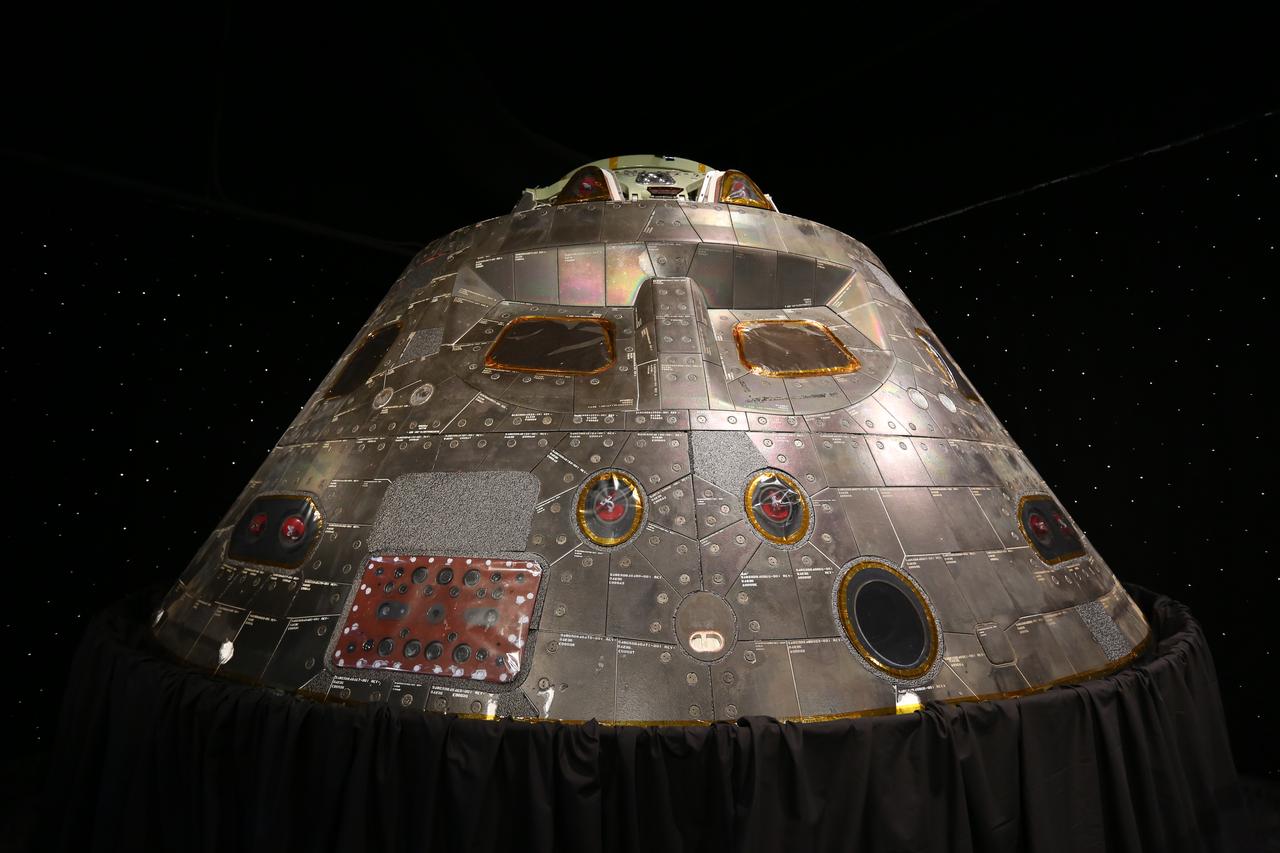
A close-up view of the Orion crew module from Exploration Flight Test 1 (EFT-1) on display at nearby NASA Kennedy Space Center Visitor Complex in Florida. The crew module is part of the NASA Now exhibit in the IMAX Theater. The Orion EFT-1 spacecraft launched atop a United Launch Alliance Delta IV rocket Dec. 5, 2014, from Space Launch Complex 37 at Cape Canaveral Air Force Station. The spacecraft built for humans traveled 3,604 miles above Earth and splashed down about 4.5 hours later in the Pacific Ocean.
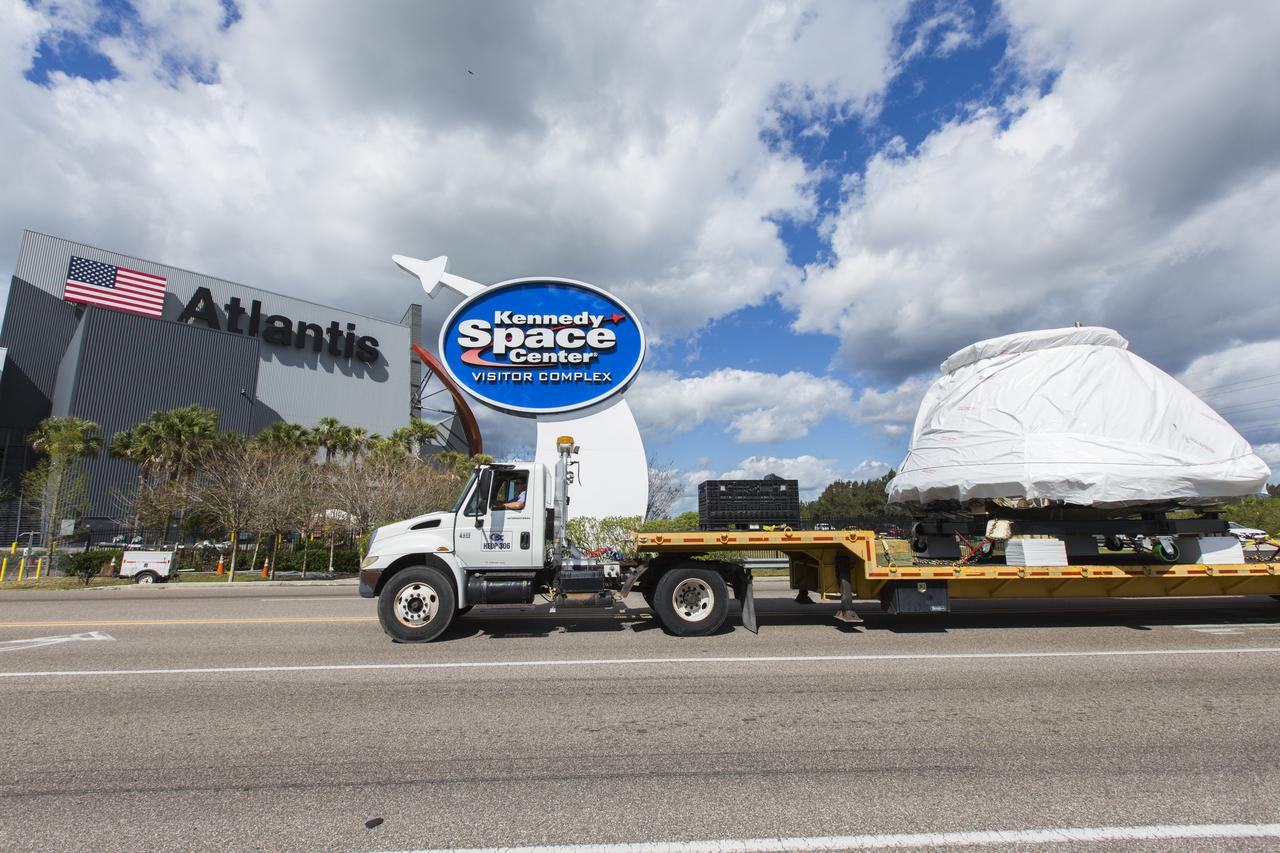
The Orion crew module from Exploration Flight Test 1 arrives at the entrance to NASA's Kennedy Space Center Visitor Complex in Florida. The crew module, secured on ground support equipment atop a flatbed truck, will be delivered to the IMAX Theater where it will be prepared for display in the NASA Now exhibit. The Orion spacecraft launched atop a United Launch Alliance Delta IV rocket Dec. 5, 2014, from Space Launch Complex 37 at Cape Canaveral Air Force Station. The spacecraft built for humans traveled 3,604 miles above Earth and splashed down about 4.5 hours later in the Pacific Ocean.
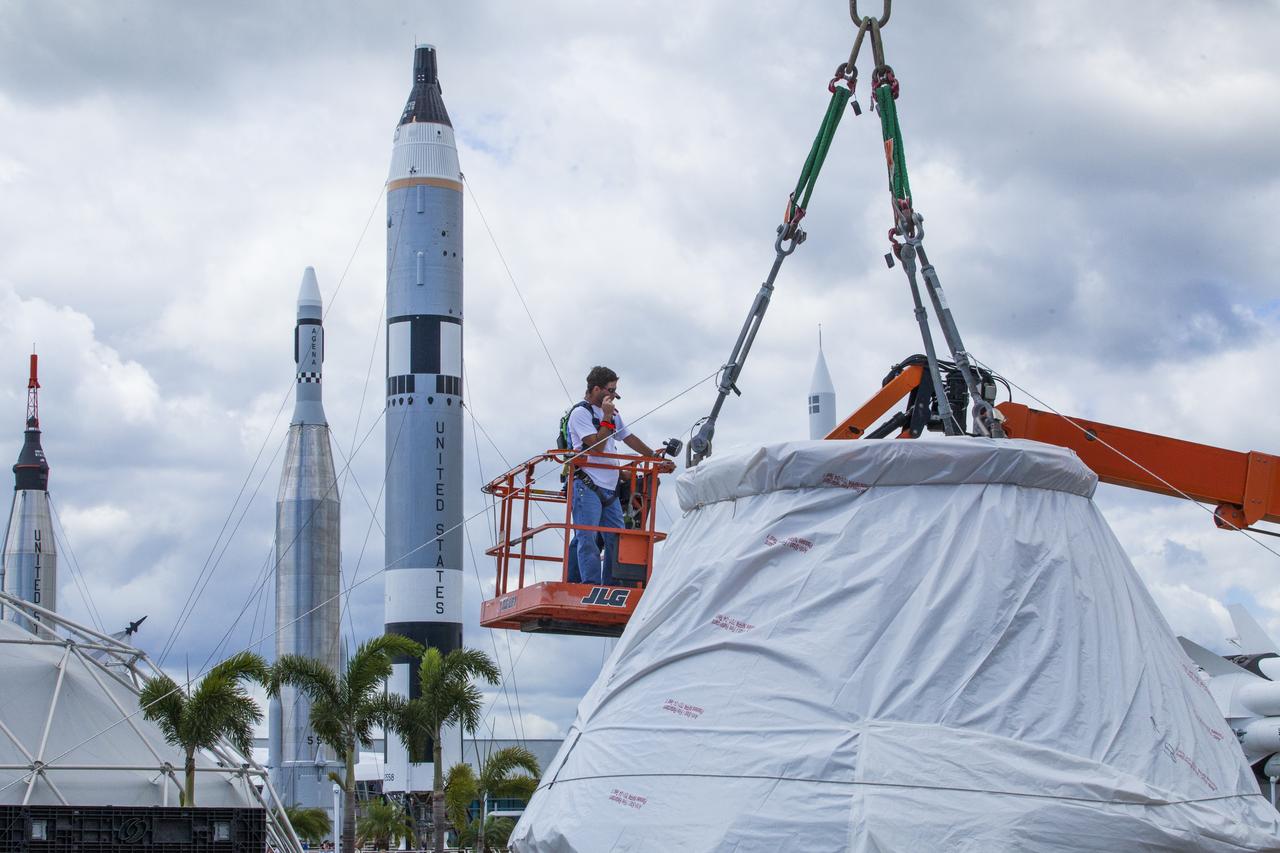
At NASA's Kennedy Space Center Visitor Complex in Florida, a crane is attached to the Orion crew module from Exploration Flight Test 1 secured on its custom-made ground support equipment. The crew module will be delivered to the IMAX Theater where it will be prepared for display in the NASA Now exhibit. The Orion spacecraft launched atop a United Launch Alliance Delta IV rocket Dec. 5, 2014, from Space Launch Complex 37 at Cape Canaveral Air Force Station. The spacecraft built for humans traveled 3,604 miles above Earth and splashed down about 4.5 hours later in the Pacific Ocean.
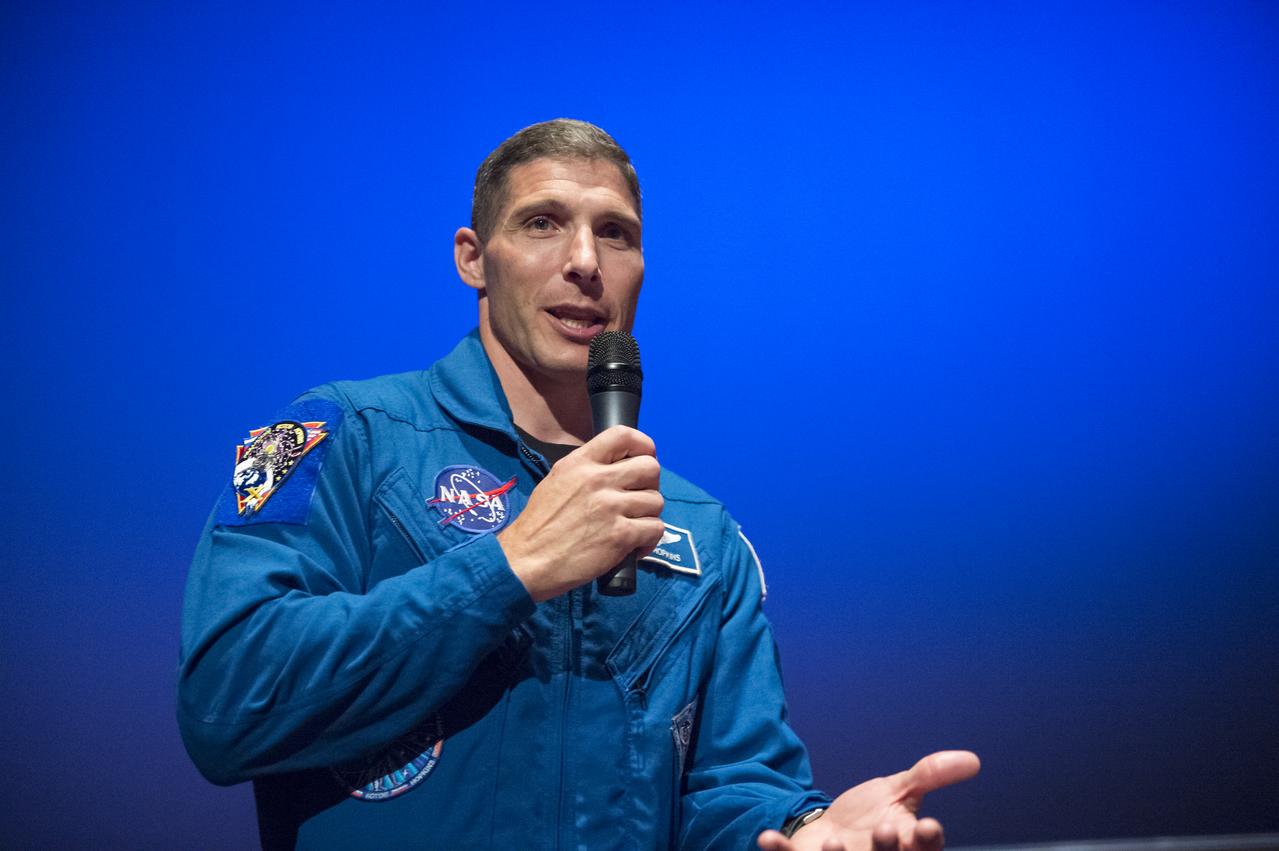
NASA Astronaut Mike Hopkins explains what it was like to live on the International Space Station for 6 months to seventh graders from Clear Spring Middle School at the Maryland Science Center in Baltimore, MD on Monday, June 9, 2014. Hopkins served on Expeditions 37 and 38 with Russian cosmonauts Oleg Kotov and Sergey Ryazanskiy and returned home in March, 2014. (Photo Credit: NASA/Aubrey Gemignani)
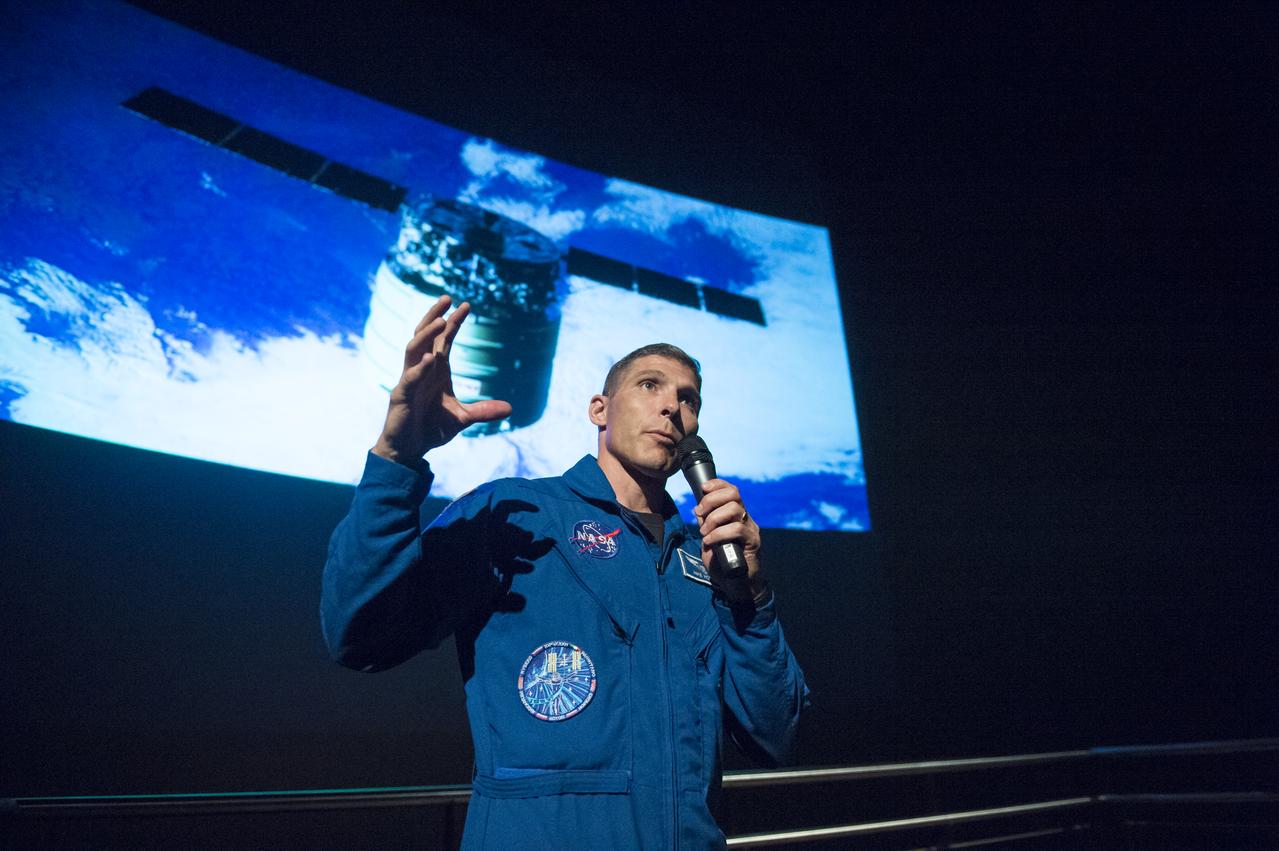
NASA Astronaut Mike Hopkins explains what it was like to live on the International Space Station for 6 months to seventh graders from Clear Spring Middle School at the Maryland Science Center in Baltimore, MD on Monday, June 9, 2014. Hopkins served on Expeditions 37 and 38 with Russian cosmonauts Oleg Kotov and Sergey Ryazanskiy and returned home in March, 2014. (Photo Credit: NASA/Aubrey Gemignani)
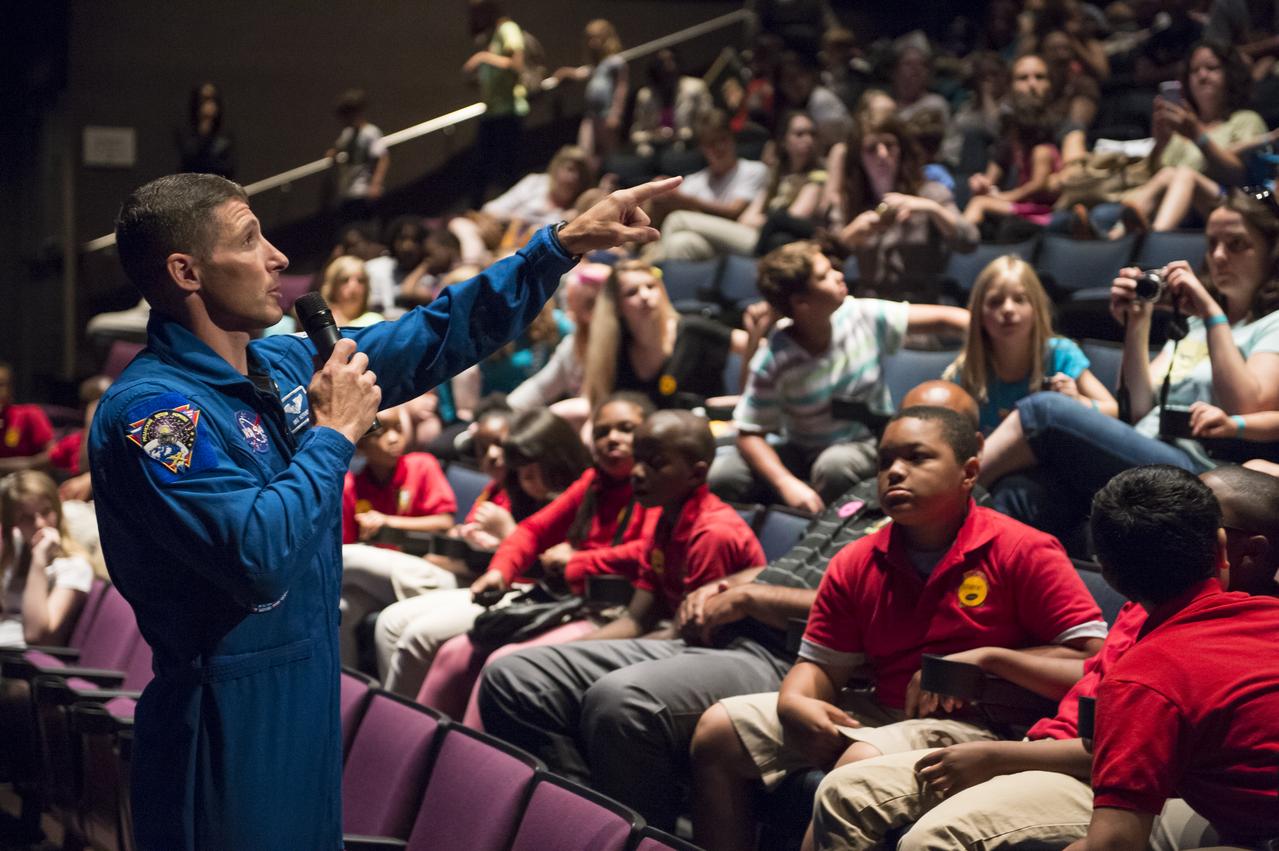
NASA Astronaut Mike Hopkins explains what it was like to live on the International Space Station for 6 months to seventh graders from Clear Spring Middle School at the Maryland Science Center in Baltimore, MD on Monday, June 9, 2014. Hopkins served on Expeditions 37 and 38 with Russian cosmonauts Oleg Kotov and Sergey Ryazanskiy and returned home in March, 2014. (Photo Credit: NASA/Aubrey Gemignani)
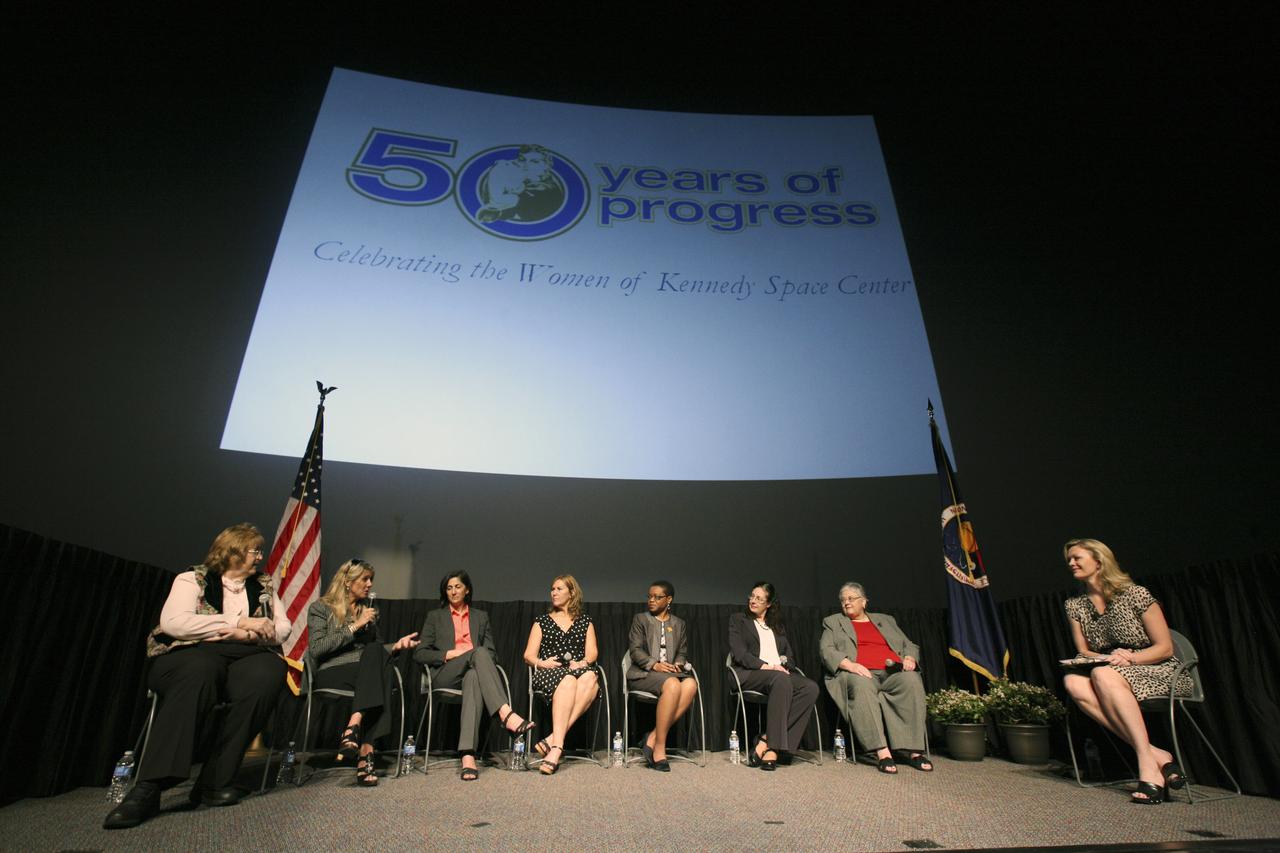
50 Years of Progress, Celebrating Women of KSC Live Event
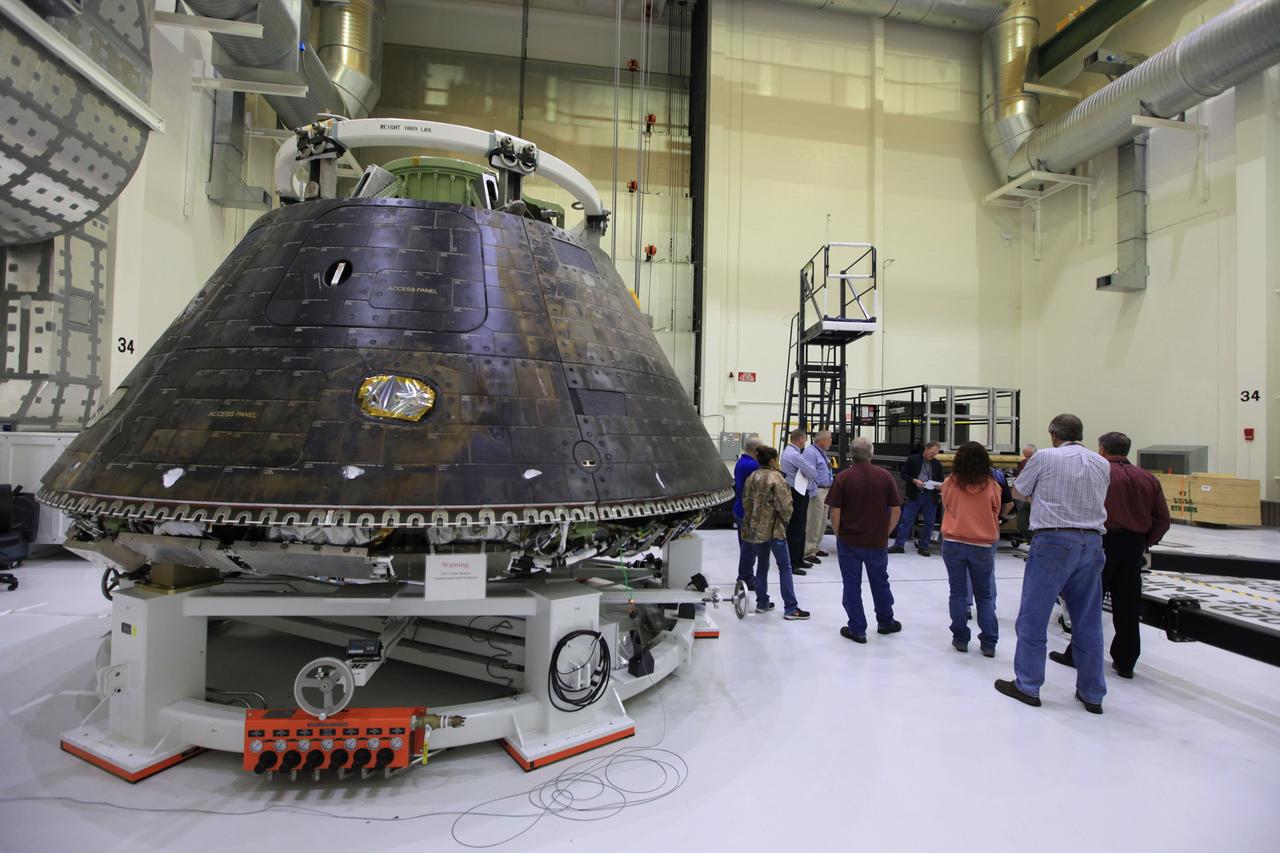
Inside the Neil Armstrong Operations and Checkout Building high bay at NASA's Kennedy Space Center in Florida, Lockheed Martin and ASRC engineers and technicians review procedures before preparing the Orion crew module from Exploration Flight Test 1 for its move to the nearby Kennedy Space Center Visitor Complex. The crew module will be delivered to the IMAX Theater where it will be prepared for display in the NASA Now exhibit. The Orion spacecraft launched atop a United Launch Alliance Delta IV rocket Dec. 5, 2014, from Space Launch Complex 37 at Cape Canaveral Air Force Station. The spacecraft built for humans traveled 3,604 miles above Earth and splashed down about 4.5 hours later in the Pacific Ocean.
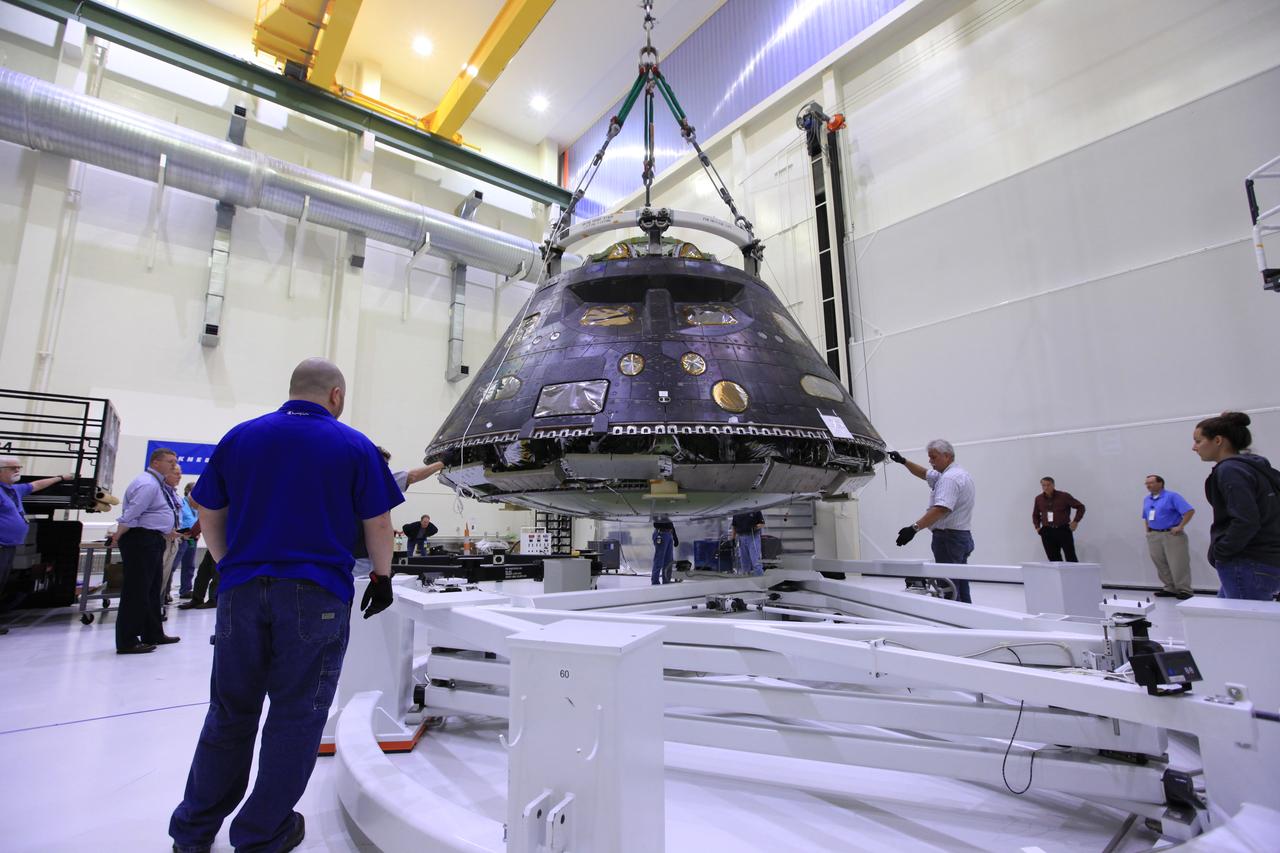
Inside the Neil Armstrong Operations and Checkout Building high bay at NASA's Kennedy Space Center in Florida, Lockheed Martin and ASRC workers monitor the progress as a crane moves the Orion crew module from Exploration Flight Test 1 over to a custom-built transport stand. The crew module is being prepared for its move to the nearby Kennedy Space Center Visitor Complex. It will be on display in the NASA Now exhibit in the IMAX Theater. The Orion spacecraft launched atop a United Launch Alliance Delta IV rocket Dec. 5, 2014, from Space Launch Complex 37 at Cape Canaveral Air Force Station. The spacecraft built for humans traveled 3,604 miles above Earth and splashed down about 4.5 hours later in the Pacific Ocean.
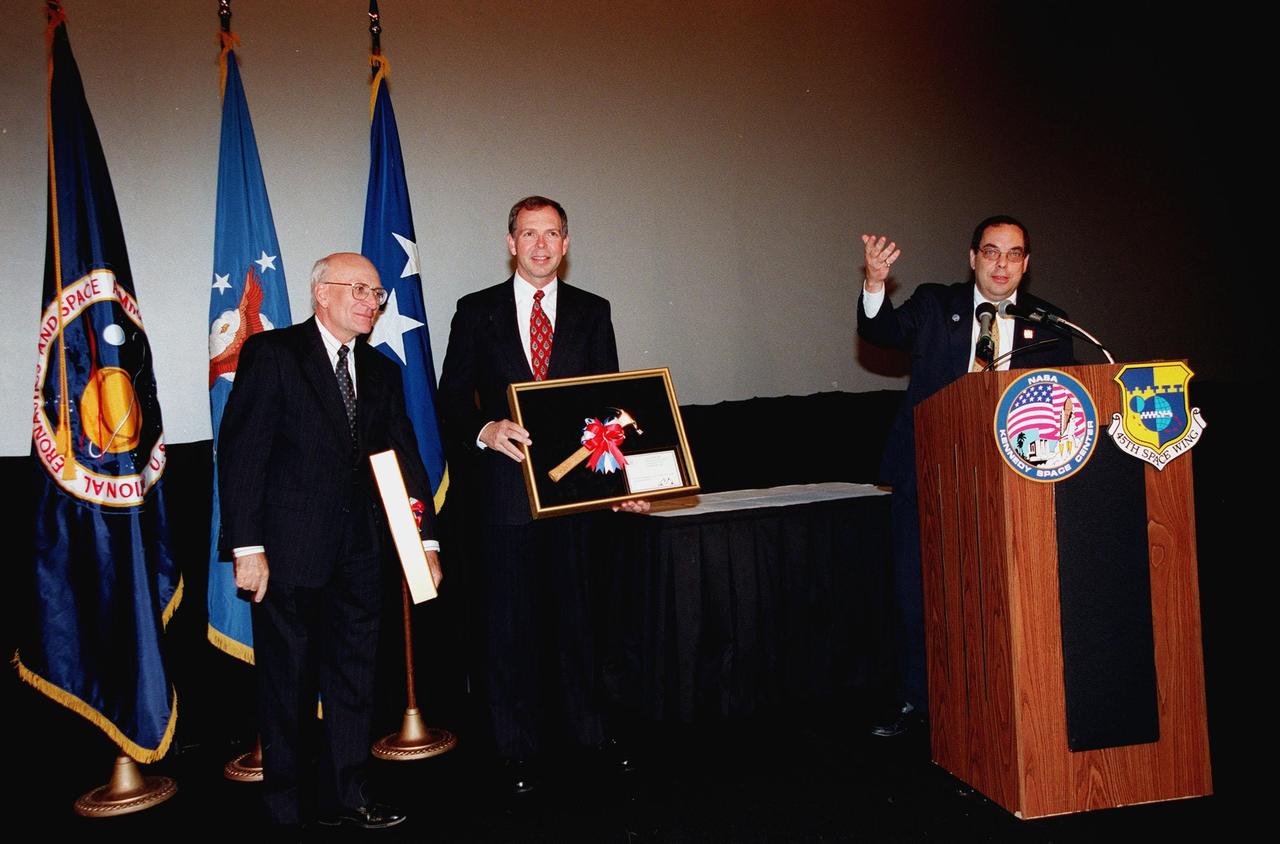
Ed Gormel (left) and Chris Fairey (center) display the Hammer Award they received at a special presentation in the IMAX 2 Theater in the Kennedy Space Center Visitor Complex. The Hammer Award is Vice President Al Gore's special recognition of teams of federal employees who have made significant contributions in support of the principles of the National Partnership for Reinventing Government. At the podium is Morley Winograd director of the National Partnership for Reinventing Government, who presented the award. This Hammer Award acknowledges the accomplishments of a joint NASA and Air Force team that established the Joint Base Operations and Support Contract (J-BOSC) Source Evaluation Board (SEB). Fairey and Gormel are co-chairs of the SEB. The team developed and implemented the acquisition strategy for establishing a single set of base operations and support service requirements for KSC, Cape Canaveral Air Station and Patrick Air Force Base
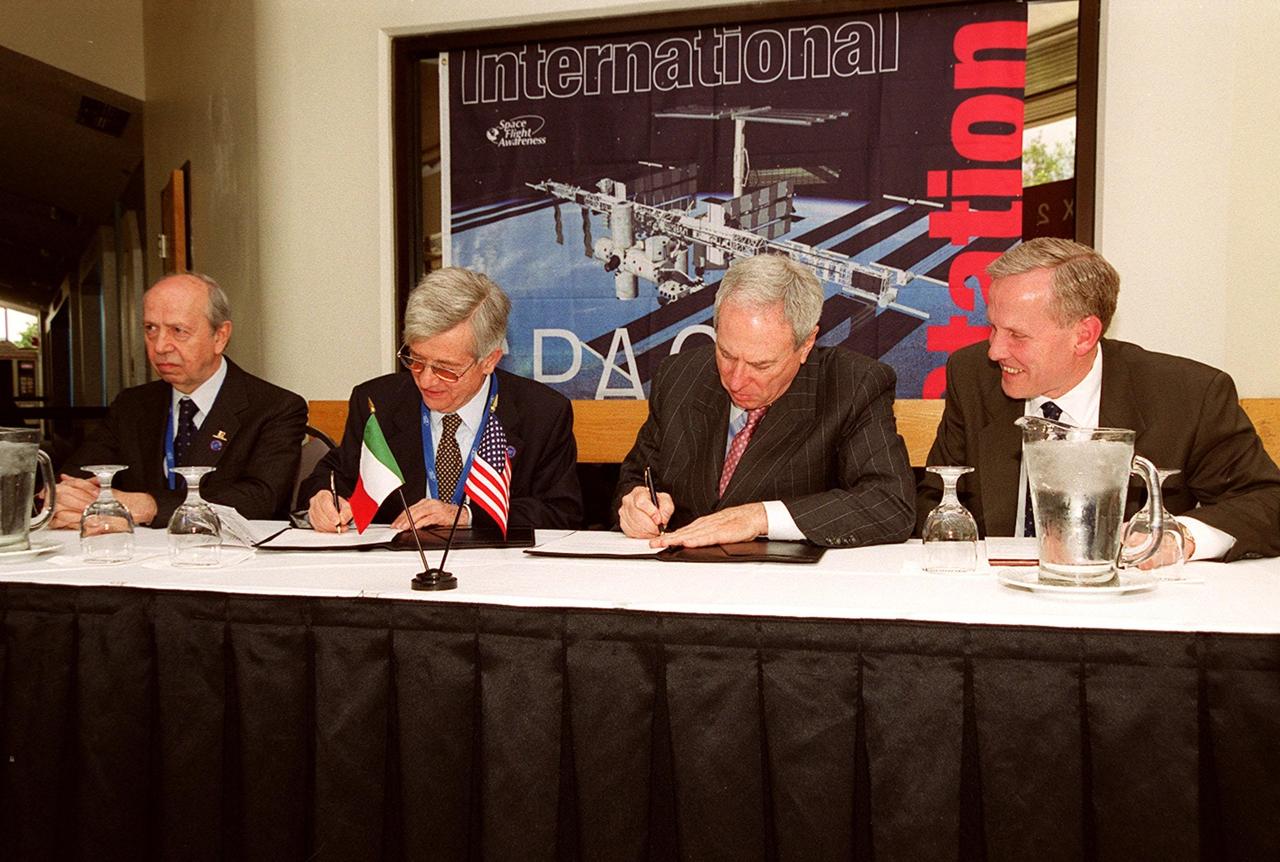
NASA Administrator Daniel S. Goldin and Italian Space Agency (ASI) President Sergio DeJulio sign a Framework for Cooperation to build the Habitation Module for the International Space Station. Seated at the table (left to right) are The Honorable Lamberto Dini, Minister of Foreign Affairs, Republic of Italy; DeJulio; Goldin; and John Schumacher, assistant administrator, External Relations, NASA. The Framework is a potential bilateral cooperative agreement that could result in ASI development of a U.S. Habitation Module for the International Space Station. This agreement allows the U.S. to explore an alternative approach to achieve full crew habitation for the ISS. A Memorandum of Understanding (MOU) between NASA and ASI will be required to formally document NASA and ASI’s respective responsibilities in a legally binding document. The Framework signed today would form the basis for a potential MOU which NASA and ASI would sign after completion of the program assessment and subsequent negotiations. The ceremony took place at the IMAX Theater, Kennedy Space Center Visitor Complex
Ed Gormel (left) and Chris Fairey (center) accept the Hammer Award at a special presentation in the IMAX 2 Theater in the Kennedy Space Center Visitor Complex. Presenting the award is Morley Winograd (right), director of the National Partnership for Reinventing Government. The Hammer Award is Vice President Al Gore's special recognition of teams of federal employees who have made significant contributions in support of the principles of the National Partnership for Reinventing Government. This Hammer Award acknowledges the accomplishments of a joint NASA and Air Force team that established the Joint Base Operations and Support Contract (J-BOSC) Source Evaluation Board (SEB). Gormel and Fairey are co-chairs of the SEB. The team developed and implemented the acquisition strategy for establishing a single set of base operations and support service requirements for KSC, Cape Canaveral Air Station and Patrick Air Force Base
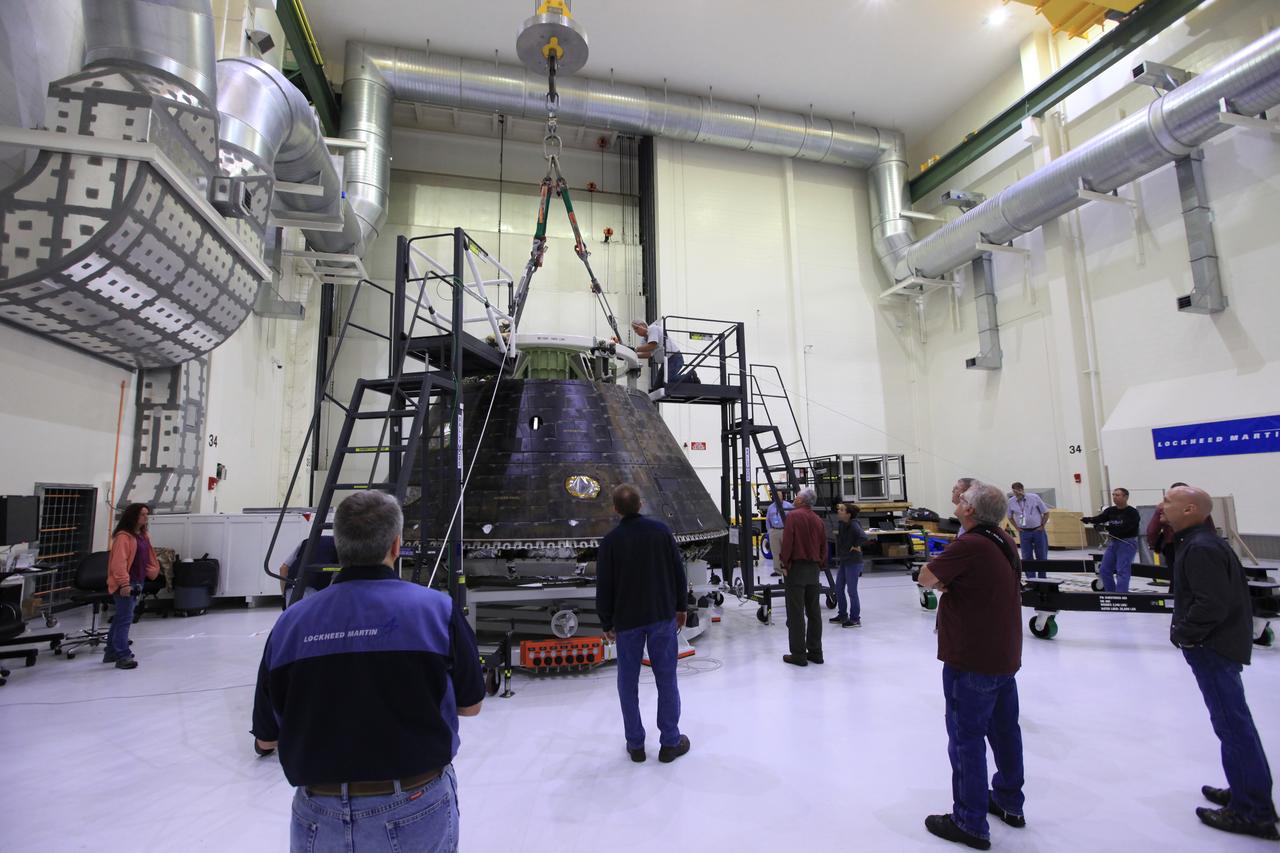
Inside the Neil Armstrong Operations and Checkout Building high bay at NASA's Kennedy Space Center in Florida, Lockheed Martin and ASRC workers monitor the progress as a crane is attached to the top of the Orion crew module from Exploration Flight Test 1. The crew module will be moved to the nearby Kennedy Space Center Visitor Complex and delivered to the IMAX Theater where it will be prepared for display in the NASA Now exhibit. The Orion spacecraft launched atop a United Launch Alliance Delta IV rocket Dec. 5, 2014, from Space Launch Complex 37 at Cape Canaveral Air Force Station. The spacecraft built for humans traveled 3,604 miles above Earth and splashed down about 4.5 hours later in the Pacific Ocean.
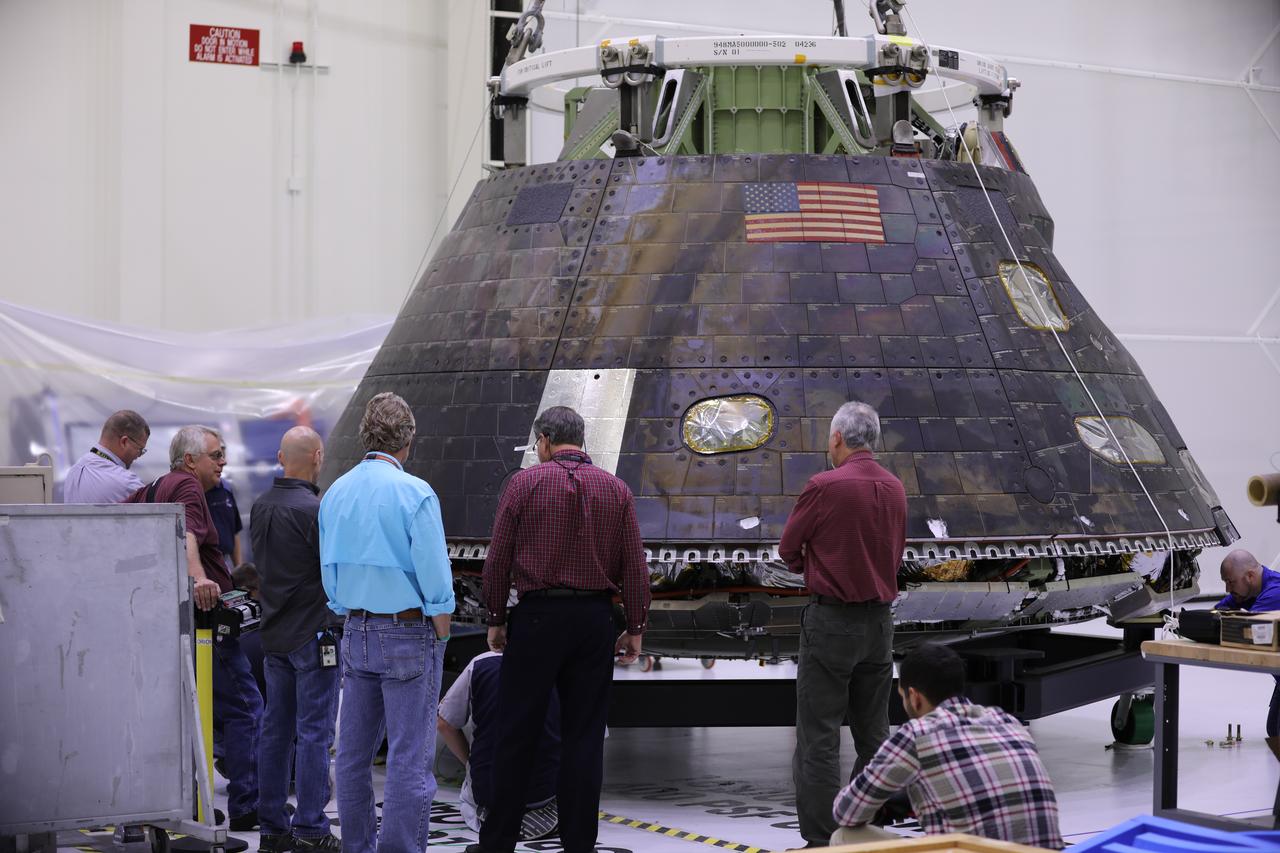
Inside the Neil Armstrong Operations and Checkout Building high bay at NASA's Kennedy Space Center in Florida, the Orion crew module from Exploration Flight Test 1 is lowered onto a custom-built transport stand. The crew module is being prepared for its move to the nearby Kennedy Space Center Visitor Complex and delivery to the IMAX Theater where it will be on display in the NASA Now exhibit. The Orion spacecraft launched atop a United Launch Alliance Delta IV rocket Dec. 5, 2014, from Space Launch Complex 37 at Cape Canaveral Air Force Station. The spacecraft built for humans traveled 3,604 miles above Earth and splashed down about 4.5 hours later in the Pacific Ocean.

KSC's Director of Public Affairs Joe Gordon (left) applauds as Ed Gormel and Chris Fairey are named recipients of the Hammer Award at a special presentation in the IMAX 2 Theater in the Kennedy Space Center Visitor Complex. Presenting the award is Morley Winograd (at the podium), director of the National Partnership for Reinventing Government. The Hammer Award is Vice President Al Gore's special recognition of teams of federal employees who have made significant contributions in support of the principles of the National Partnership for Reinventing Government. This Hammer Award acknowledges the accomplishments of a joint NASA and Air Force team that established the Joint Base Operations and Support Contract (J-BOSC) Source Evaluation Board (SEB). Gormel and Fairey are co-chairs of the SEB. The team developed and implemented the acquisition strategy for establishing a single set of base operations and support service requirements for KSC, Cape Canaveral Air Station and Patrick Air Force Base
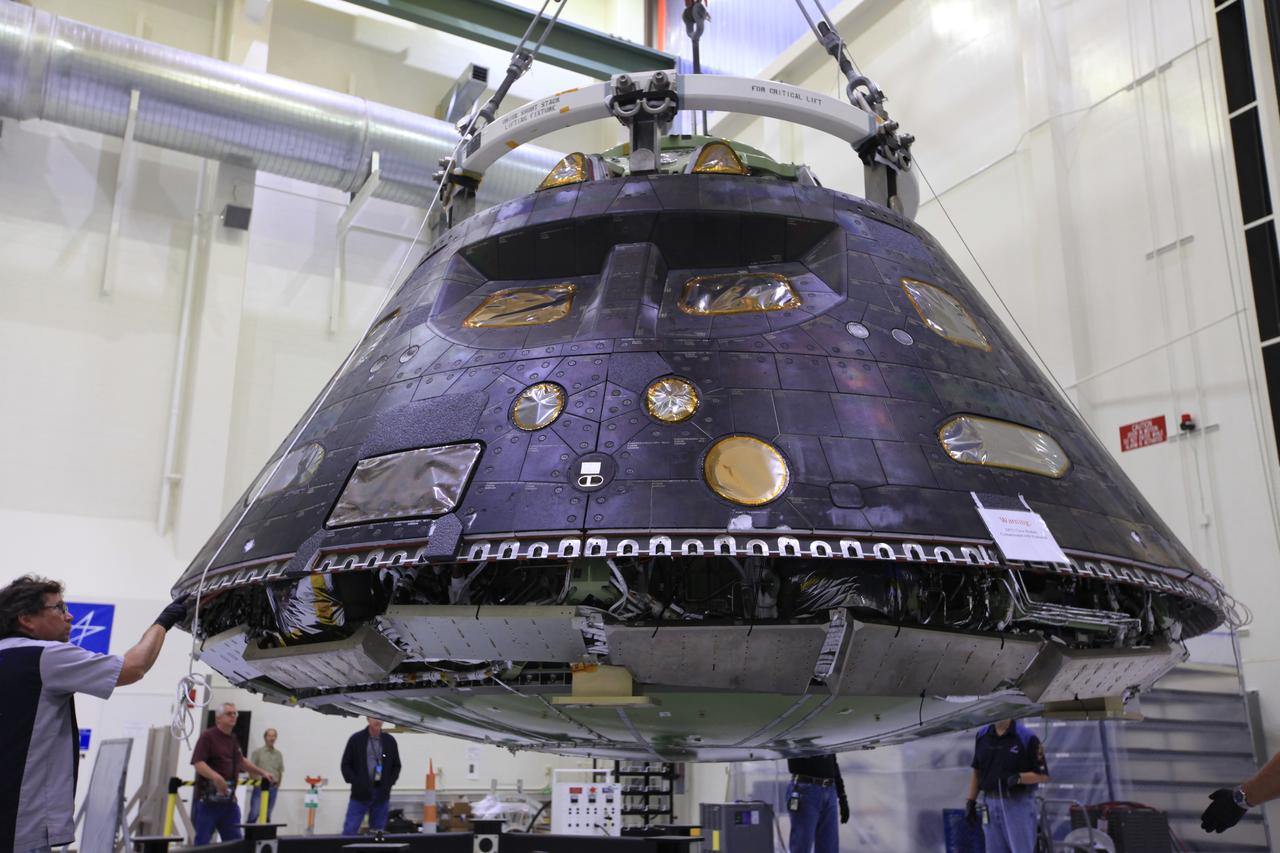
A close-up view of the Orion crew module from Exploration Flight Test 1 in the Neil Armstrong Operations and Checkout Building high bay at NASA's Kennedy Space Center in Florida. A crane has lifted the crew module up from a birdcage test stand and is moving it to a custom-built transport stand for the move to nearby Kennedy Space Center Visitor Complex. Orion will be delivered to IMAX Theater for display in the NASA Now exhibit. The Orion spacecraft launched atop a United Launch Alliance Delta IV rocket Dec. 5, 2014, from Space Launch Complex 37 at Cape Canaveral Air Force Station. The spacecraft built for humans traveled 3,604 miles above Earth and splashed down about 4.5 hours later in the Pacific Ocean.
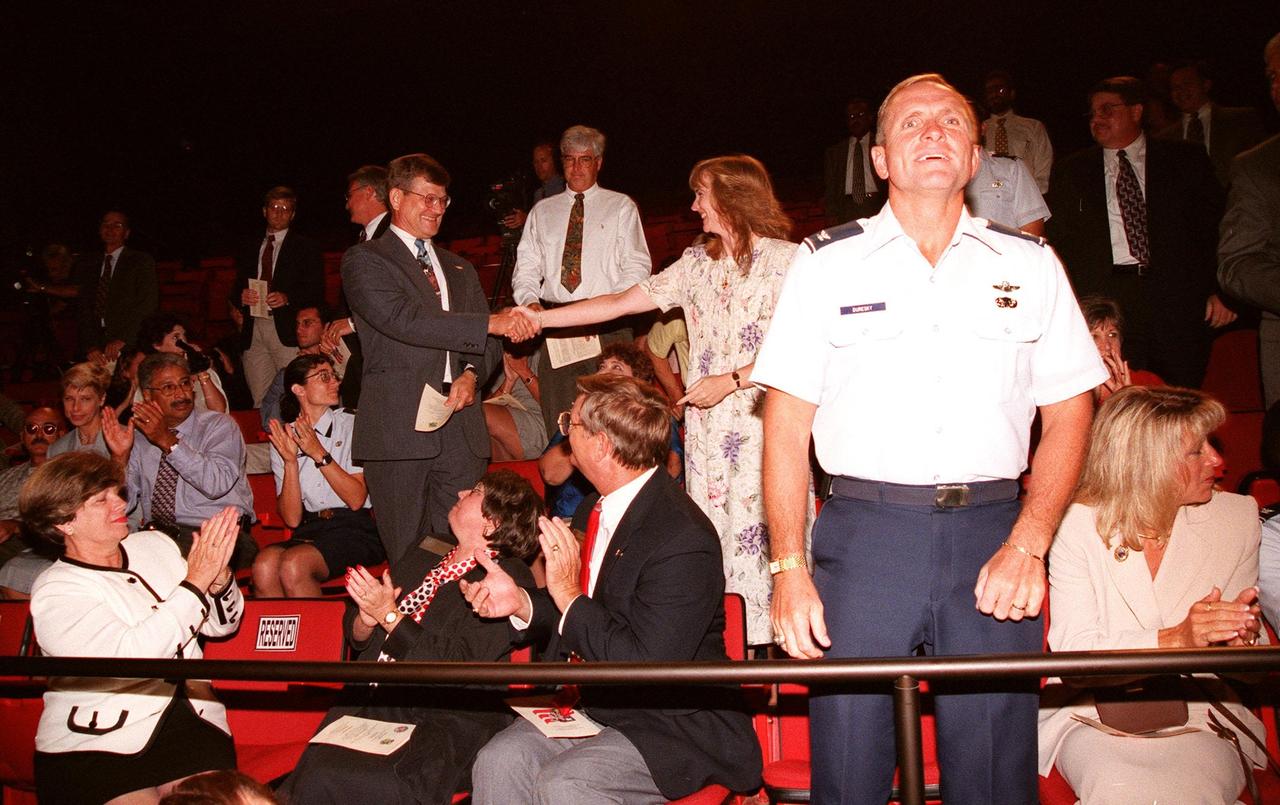
At a special presentation in the IMAX 2 Theater in the Kennedy Space Center Visitor Complex, KSC and 45th Space Wing employees share the honors as recipients of the Hammer Award. The Hammer Award is Vice President Al Gore's special recognition of teams of federal employees who have made significant contributions in support of the principles of the National Partnership for Reinventing Government. Morley Winograd, director of the National Partnership for Reinventing Government, presented the award to Ed Gormel and Chris Fairey, co-chairs of the Joint Base Operations and Support Contract (J-BOSC) Source Evaluation Board (SEB. This Hammer Award acknowledges the accomplishments of a joint NASA and Air Force team that established the J-BOSC SEB. The team developed and implemented the acquisition strategy for establishing a single set of base operations and support service requirements for KSC, Cape Canaveral Air Station and Patrick Air Force Base
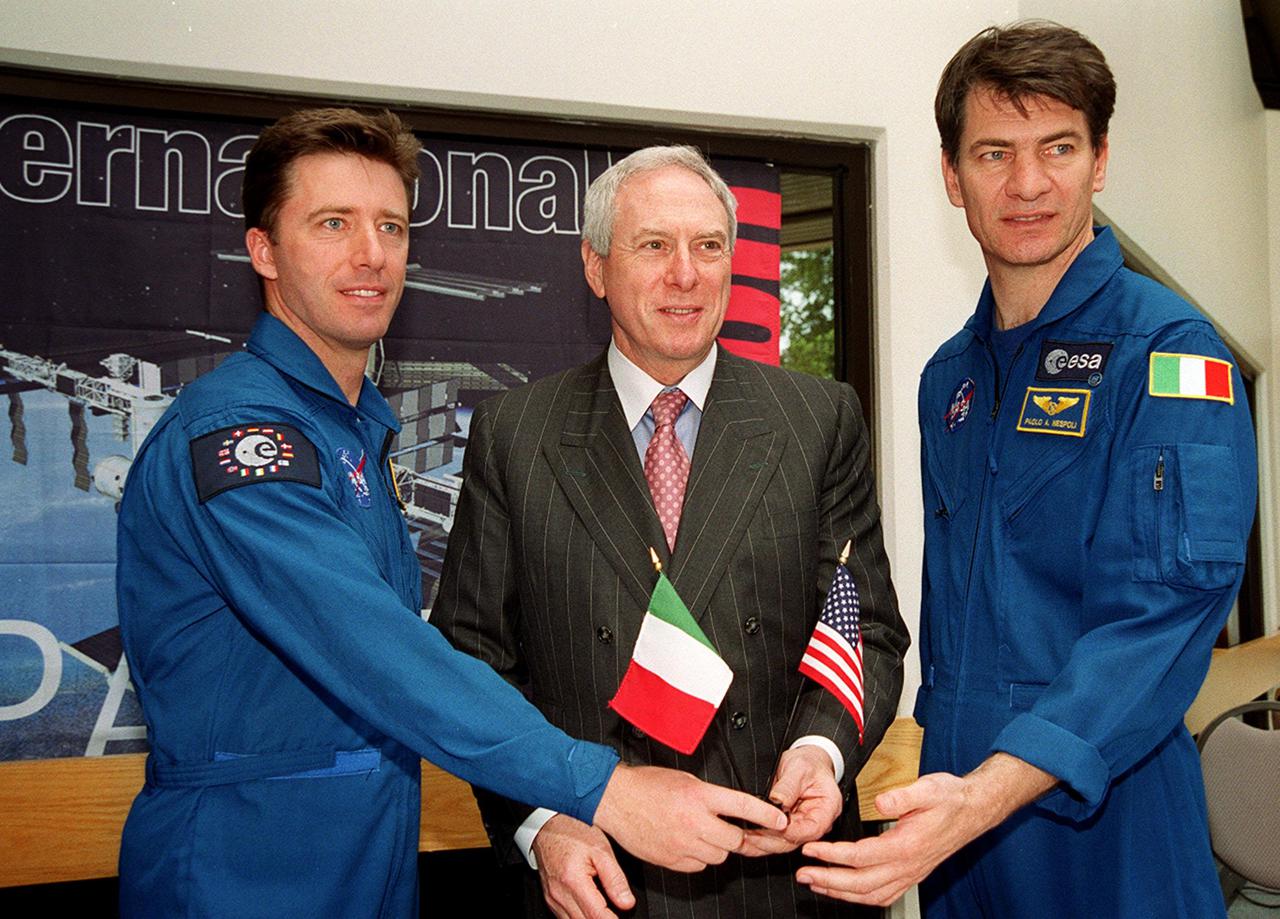
At a signing ceremony between the Italian Space Agency (ASI) and NASA for a Framework for Cooperation to build the Habitation Module for the International Space Station, Italian astronauts with the European Space Agency pose with NASA Administrator Daniel S. Goldin. On the left is Roberto Vittori and on the right is Paolo A. Nespoli. The Framework is a potential bilateral cooperative agreement that could result in ASI development of a U.S. Habitation Module for the International Space Station. This agreement allows the U.S. to explore an alternative approach to achieve full crew habitation for the ISS. A Memorandum of Understanding (MOU) between NASA and ASI will be required to formally document NASA and ASI’s respective responsibilities in a legally binding document. The Framework signed today would form the basis for a potential MOU which NASA and ASI would sign after completion of the program assessment and subsequent negotiations. The ceremony took place at the IMAX Theater, Kennedy Space Center Visitor Complex
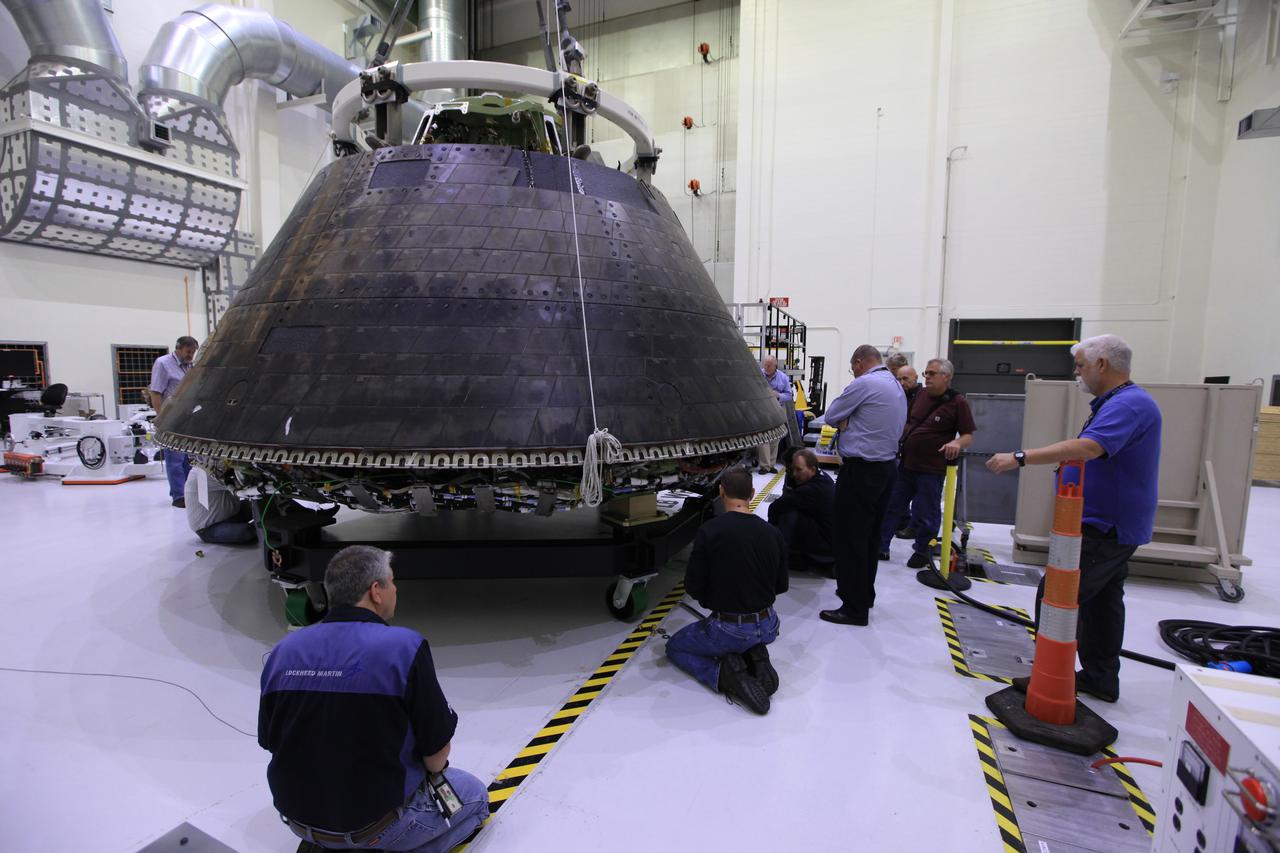
Inside the Neil Armstrong Operations and Checkout Building high bay at NASA's Kennedy Space Center in Florida, Lockheed Martin and ASRC workers assist as a crane lowers the Orion crew module from Exploration Flight Test 1 onto a custom-built transport stand. The crew module is being prepared for its move to the nearby Kennedy Space Center Visitor Complex and delivery to the IMAX Theater where it will be on display in the NASA Now exhibit. The Orion spacecraft launched atop a United Launch Alliance Delta IV rocket Dec. 5, 2014, from Space Launch Complex 37 at Cape Canaveral Air Force Station. The spacecraft built for humans traveled 3,604 miles above Earth and splashed down about 4.5 hours later in the Pacific Ocean.
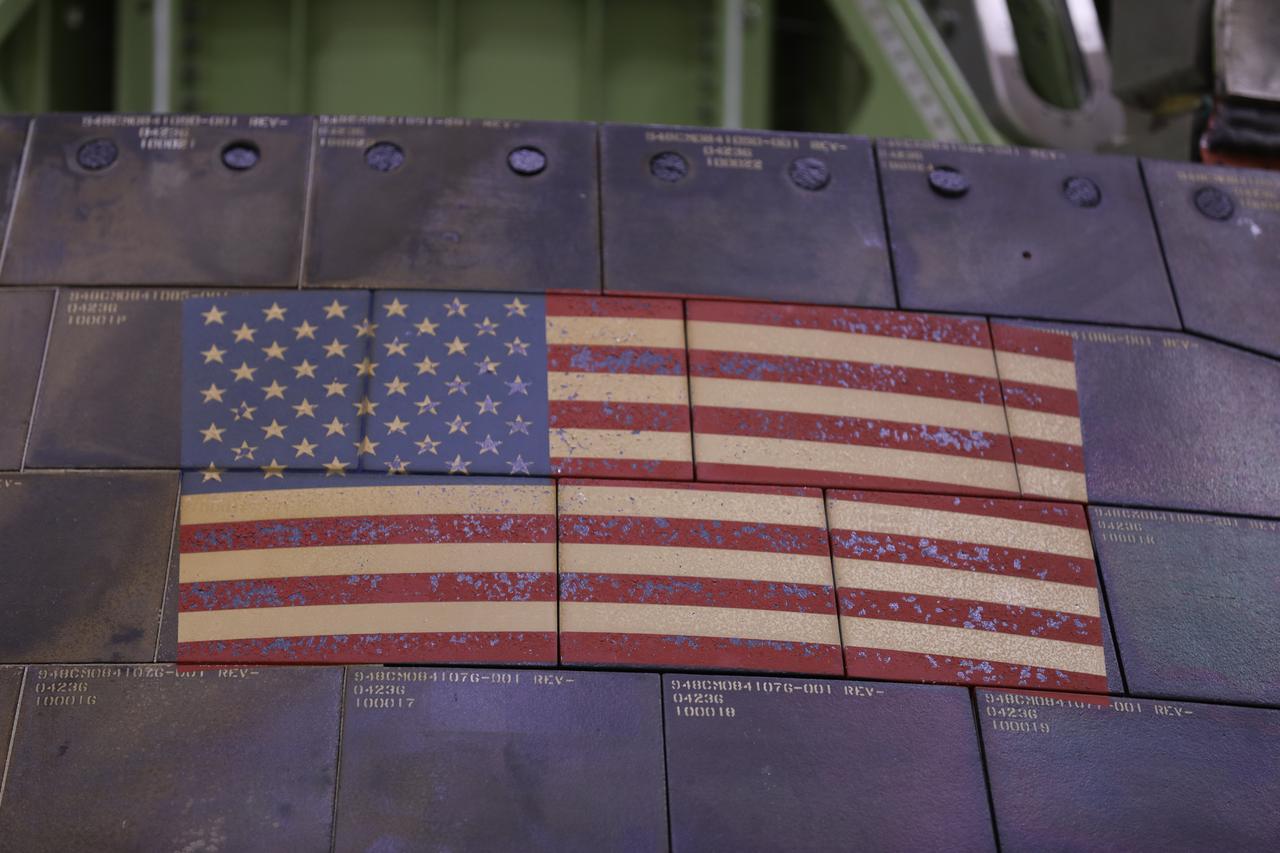
Inside the Neil Armstrong Operations and Checkout Building high bay at NASA's Kennedy Space Center in Florida, the American flag is in view on the Orion crew module from Exploration Flight Test 1. Lockheed Martin and ASRC workers are preparing the crew module for its move to the nearby Kennedy Space Center Visitor Complex. The crew module will be delivered to the IMAX Theater where it will be on display in the NASA Now exhibit. The Orion spacecraft launched atop a United Launch Alliance Delta IV rocket Dec. 5, 2014, from Space Launch Complex 37 at Cape Canaveral Air Force Station. The spacecraft built for humans traveled 3,604 miles above Earth and splashed down about 4.5 hours later in the Pacific Ocean.

Morley Winograd (right), director of the National Partnership for Reinventing Government, presents the Hammer Award to Ed Gormel (left) and Chris Fairey (center) at a special presentation in the IMAX 2 Theater in the Kennedy Space Center Visitor Complex. The Hammer Award is Vice President Al Gore's special recognition of teams of federal employees who have made significant contributions in support of the principles of the National Partnership for Reinventing Government. This Hammer Award acknowledges the accomplishments of a joint NASA and Air Force team that established the Joint Base Operations and Support Contract (J-BOSC) Source Evaluation Board (SEB). Gormel and Fairey are co-chairs of the SEB. The team developed and implemented the acquisition strategy for establishing a single set of base operations and support service requirements for KSC, Cape Canaveral Air Station and Patrick Air Force Base
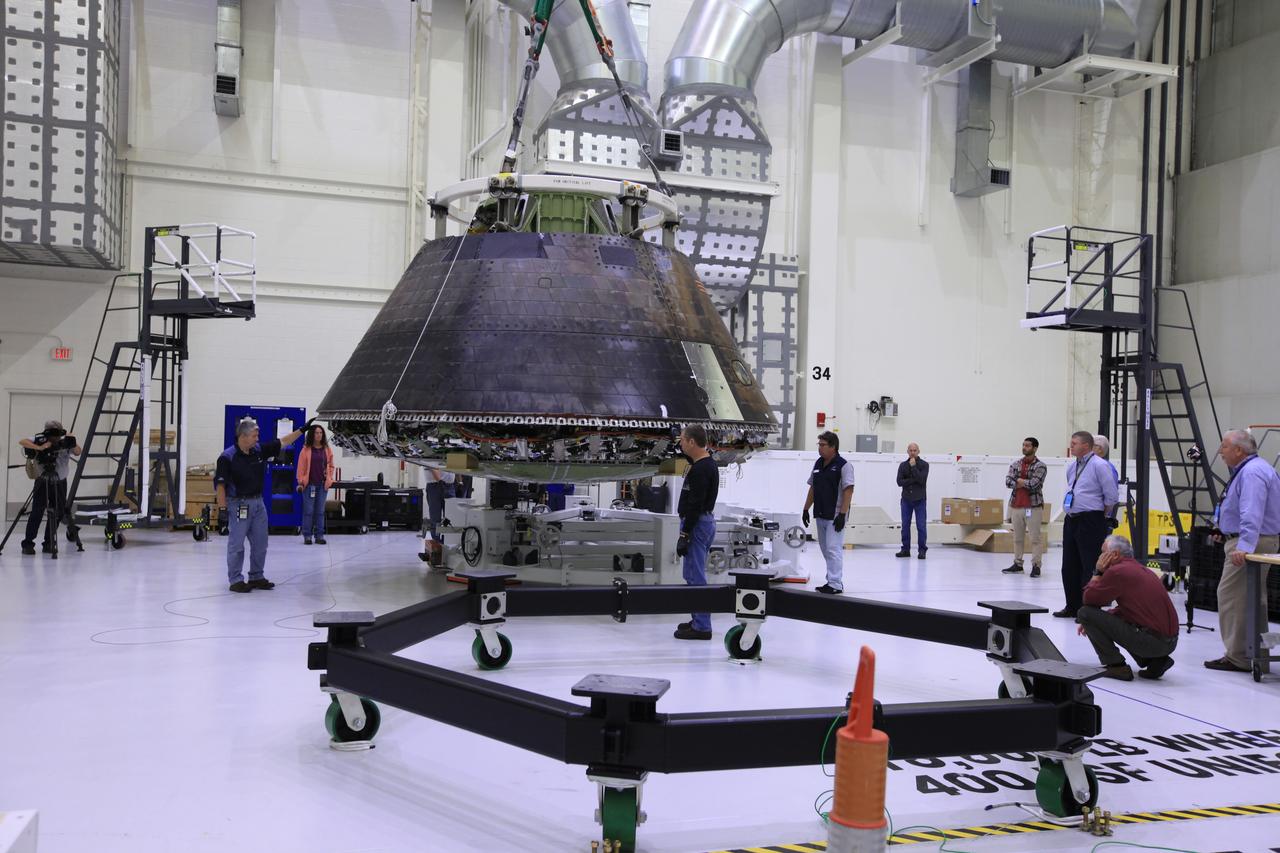
Inside the Neil Armstrong Operations and Checkout Building high bay at NASA's Kennedy Space Center in Florida, Lockheed Martin and ASRC workers monitor the progress as a crane moves the Orion crew module from Exploration Flight Test 1 over to a custom-built transport stand. The crew module is being prepared for its move to the nearby Kennedy Space Center Visitor Complex. It will be on display in the NASA Now exhibit in the IMAX Theater. The Orion spacecraft launched atop a United Launch Alliance Delta IV rocket Dec. 5, 2014, from Space Launch Complex 37 at Cape Canaveral Air Force Station. The spacecraft built for humans traveled 3,604 miles above Earth and splashed down about 4.5 hours later in the Pacific Ocean.
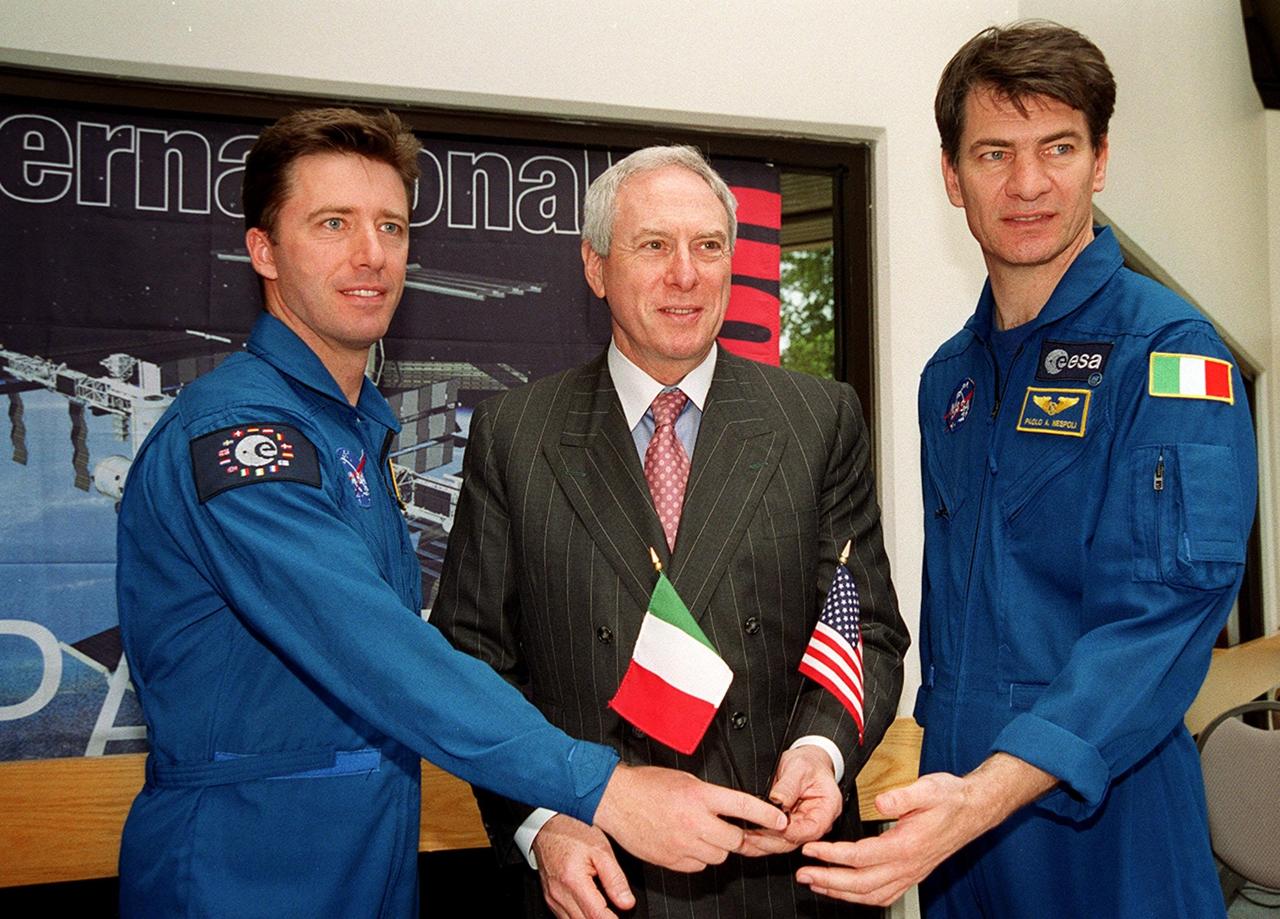
At a signing ceremony between the Italian Space Agency (ASI) and NASA for a Framework for Cooperation to build the Habitation Module for the International Space Station, Italian astronauts with the European Space Agency pose with NASA Administrator Daniel S. Goldin. On the left is Roberto Vittori and on the right is Paolo A. Nespoli. The Framework is a potential bilateral cooperative agreement that could result in ASI development of a U.S. Habitation Module for the International Space Station. This agreement allows the U.S. to explore an alternative approach to achieve full crew habitation for the ISS. A Memorandum of Understanding (MOU) between NASA and ASI will be required to formally document NASA and ASI’s respective responsibilities in a legally binding document. The Framework signed today would form the basis for a potential MOU which NASA and ASI would sign after completion of the program assessment and subsequent negotiations. The ceremony took place at the IMAX Theater, Kennedy Space Center Visitor Complex
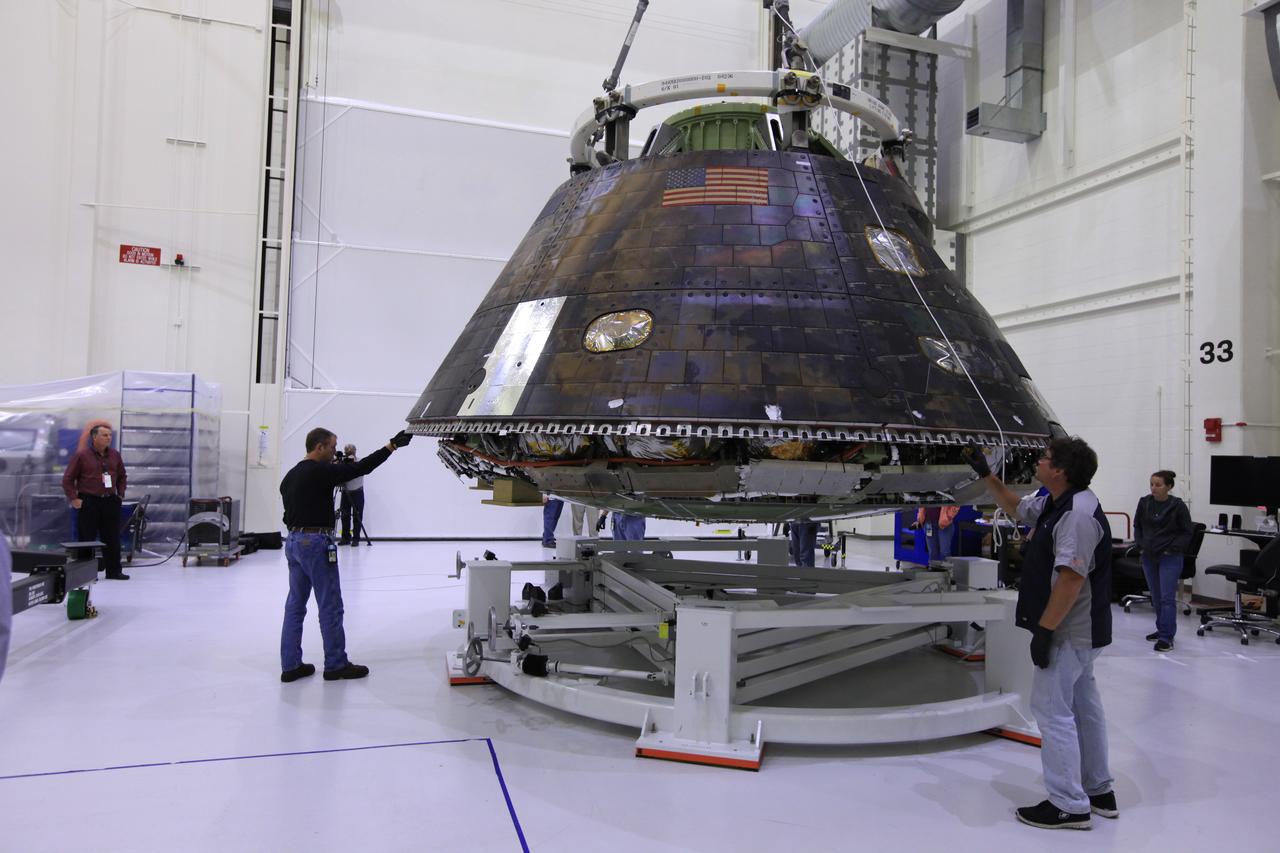
Inside the Neil Armstrong Operations and Checkout Building high bay at NASA's Kennedy Space Center in Florida, Lockheed Martin and ASRC workers monitor the progress as a crane lifts the Orion crew module from Exploration Flight Test 1 up from the birdcage stand. The crew module is being prepared for its move to the nearby Kennedy Space Center Visitor Complex. It will be on display in the NASA Now exhibit in the IMAX Theater. The Orion spacecraft launched atop a United Launch Alliance Delta IV rocket Dec. 5, 2014, from Space Launch Complex 37 at Cape Canaveral Air Force Station. The spacecraft built for humans traveled 3,604 miles above Earth and splashed down about 4.5 hours later in the Pacific Ocean.
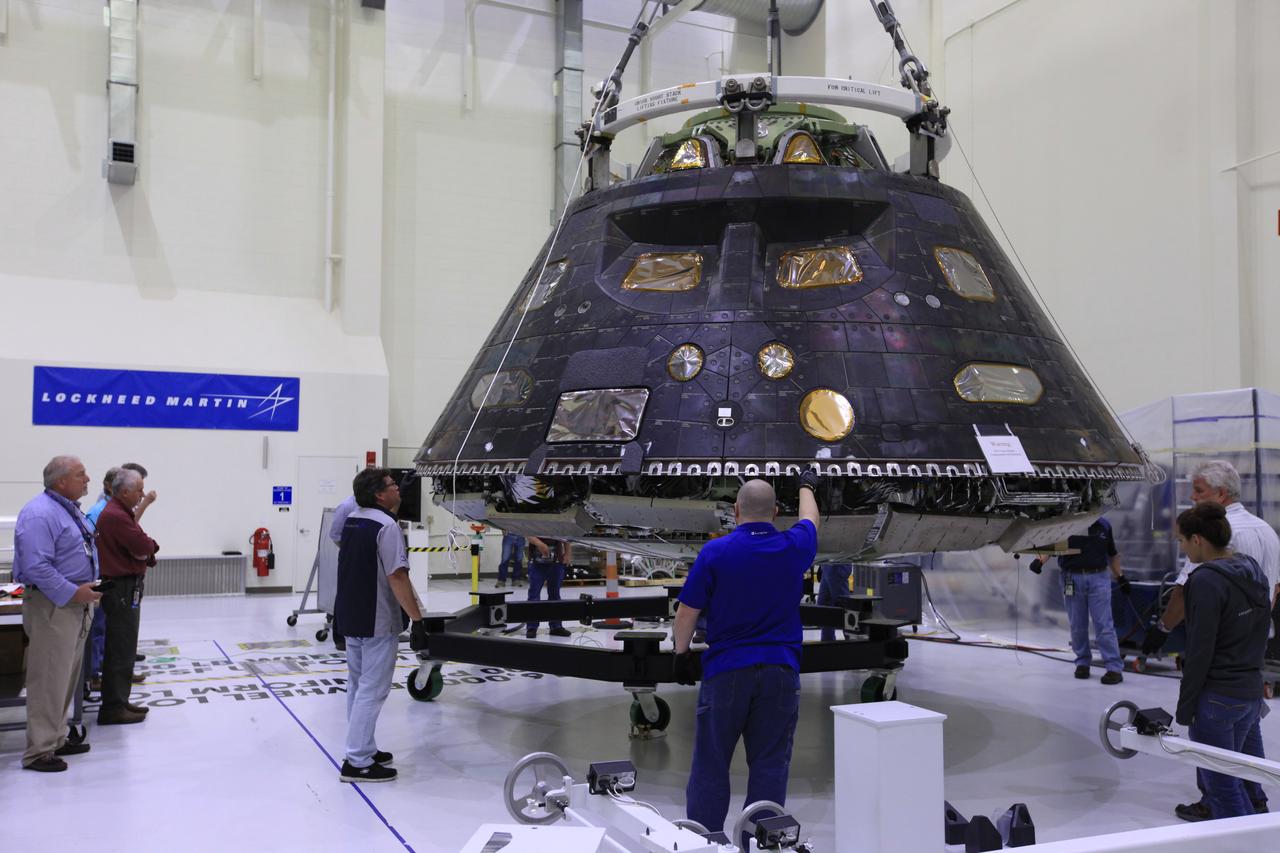
Inside the Neil Armstrong Operations and Checkout Building high bay at NASA's Kennedy Space Center in Florida, Lockheed Martin and ASRC workers monitor the progress as a crane lowers the Orion crew module from Exploration Flight Test 1 onto a custom-built transport stand. The crew module is being prepared for its move to the nearby Kennedy Space Center Visitor Complex and delivery to the IMAX Theater where it will be on display in the NASA Now exhibit. The Orion spacecraft launched atop a United Launch Alliance Delta IV rocket Dec. 5, 2014, from Space Launch Complex 37 at Cape Canaveral Air Force Station. The spacecraft built for humans traveled 3,604 miles above Earth and splashed down about 4.5 hours later in the Pacific Ocean.
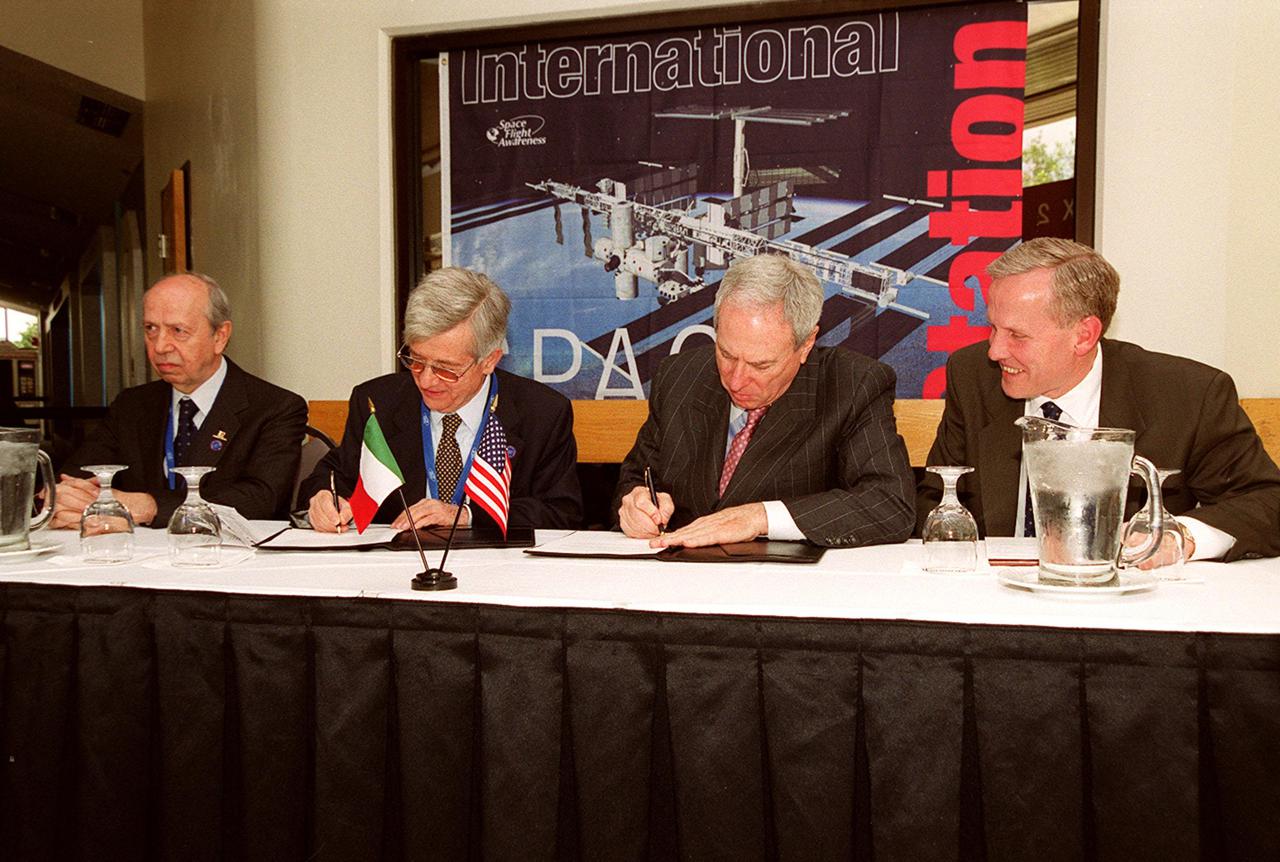
NASA Administrator Daniel S. Goldin and Italian Space Agency (ASI) President Sergio DeJulio sign a Framework for Cooperation to build the Habitation Module for the International Space Station. Seated at the table (left to right) are The Honorable Lamberto Dini, Minister of Foreign Affairs, Republic of Italy; DeJulio; Goldin; and John Schumacher, assistant administrator, External Relations, NASA. The Framework is a potential bilateral cooperative agreement that could result in ASI development of a U.S. Habitation Module for the International Space Station. This agreement allows the U.S. to explore an alternative approach to achieve full crew habitation for the ISS. A Memorandum of Understanding (MOU) between NASA and ASI will be required to formally document NASA and ASI’s respective responsibilities in a legally binding document. The Framework signed today would form the basis for a potential MOU which NASA and ASI would sign after completion of the program assessment and subsequent negotiations. The ceremony took place at the IMAX Theater, Kennedy Space Center Visitor Complex
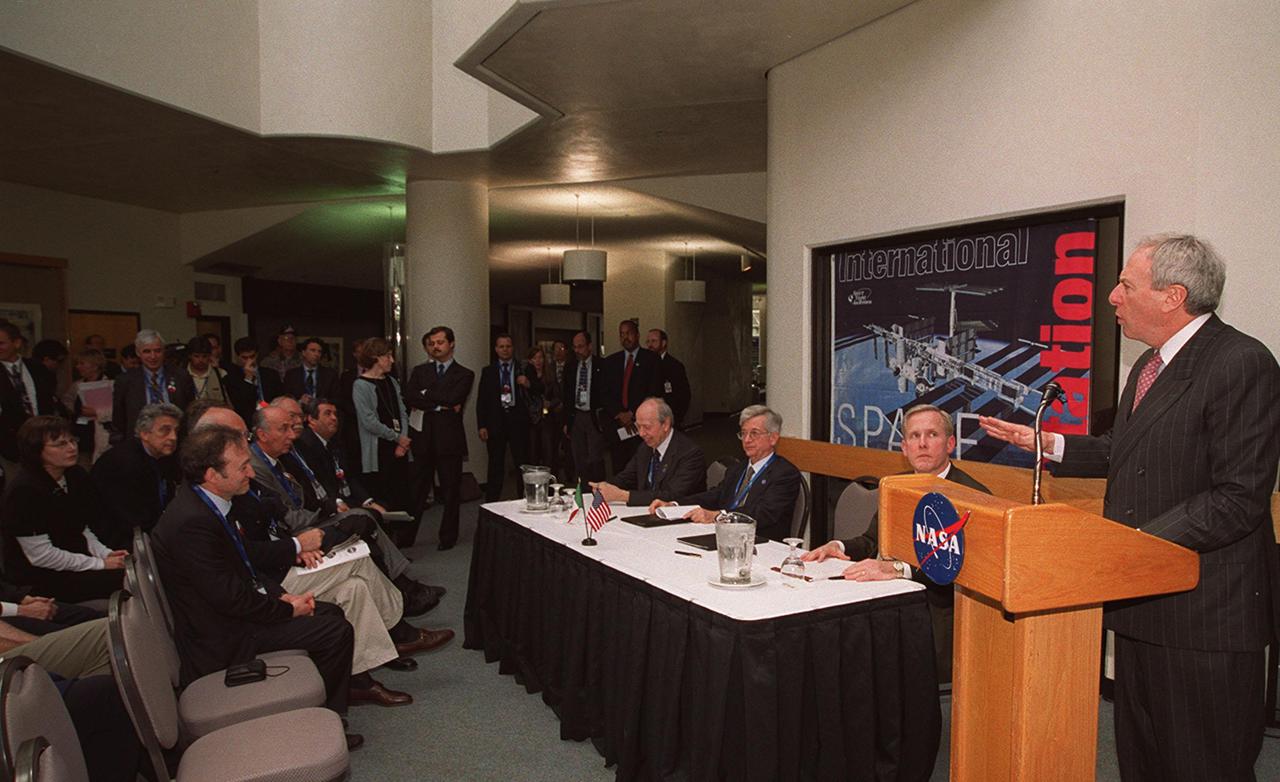
At a signing ceremony between the Italian Space Agency (ASI) and NASA for a Framework for Cooperation to build the Habitation Module for the International Space Station, NASA Administrator Daniel S. Goldin speaks to attendees. Seated at the table next to Goldin are The Honorable Lamberto Dini, Minister of Foreign Affairs, Republic of Italy (far left), Italian Space Agency President Sergio DeJulio, and John Schumacher, assistant administrator, NASA External Relations. The Framework is a potential bilateral cooperative agreement that could result in ASI development of a U.S. Habitation Module for the International Space Station. This agreement allows the U.S. to explore an alternative approach to achieve full crew habitation for the ISS. A Memorandum of Understanding (MOU) between NASA and ASI will be required to formally document NASA and ASI’s respective responsibilities in a legally binding document. The Framework signed today would form the basis for a potential MOU which NASA and ASI would sign after completion of the program assessment and subsequent negotiations.The ceremony took place at the IMAX Theater, Kennedy Space Center Visitor Complex
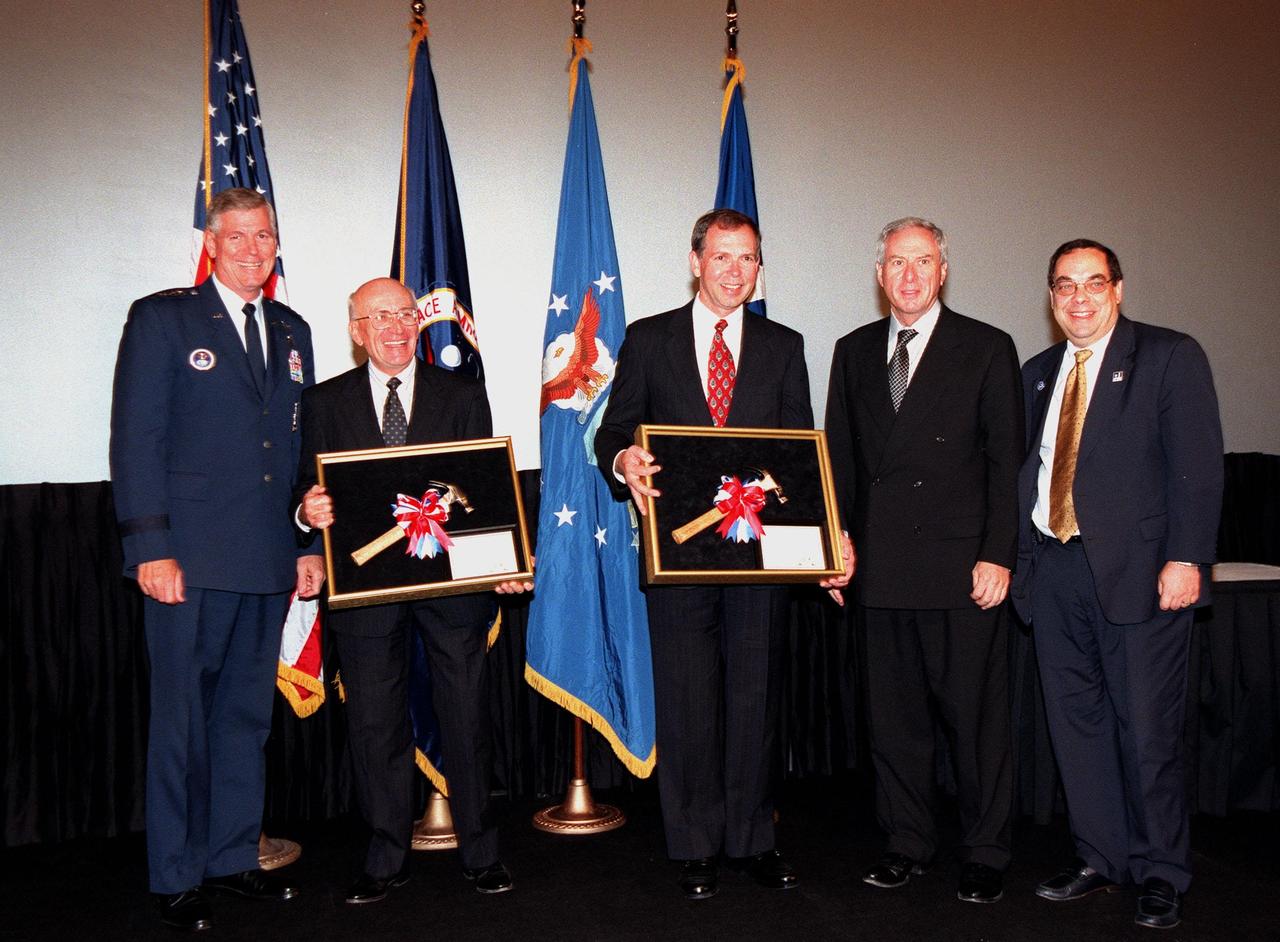
At a special presentation in the IMAX 2 Theater in the Kennedy Space Center Visitor Complex, the Hammer Award is presented to Kennedy Space Center and the 45th Space Wing. Present for the awards are (left to right) Commander of the Air Force Space Command General Richard B. Myers, Ed Gormel, Chris Fairey, NASA Administrator Daniel Goldin, and Director of the National Partnership for Reinventing Government, Morley Winograd, who presented the award. The Hammer Award is Vice President Al Gore's special recognition of teams of federal employees who have made significant contributions in support of the principles of the National Partnership for Reinventing Government. This Hammer Award acknowledges the accomplishments of a joint NASA and Air Force team that established the Joint Base Operations and Support Contract (J-BOSC) Source Evaluation Board (SEB). Gormel and Fairey are co-chairs of the SEB. The team developed and implemented the acquisition strategy for establishing a single set of base operations and support service requirements for KSC, Cape Canaveral Air Station and Patrick Air Force Base
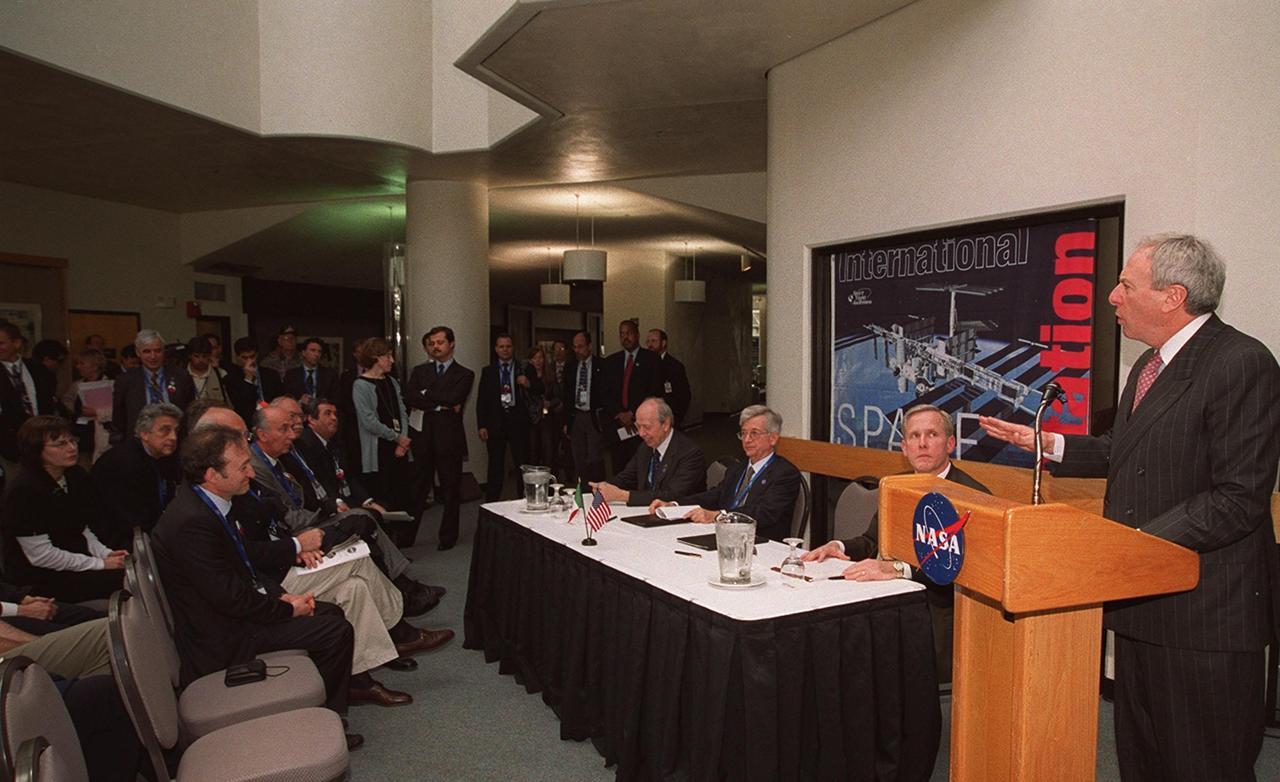
At a signing ceremony between the Italian Space Agency (ASI) and NASA for a Framework for Cooperation to build the Habitation Module for the International Space Station, NASA Administrator Daniel S. Goldin speaks to attendees. Seated at the table next to Goldin are The Honorable Lamberto Dini, Minister of Foreign Affairs, Republic of Italy (far left), Italian Space Agency President Sergio DeJulio, and John Schumacher, assistant administrator, NASA External Relations. The Framework is a potential bilateral cooperative agreement that could result in ASI development of a U.S. Habitation Module for the International Space Station. This agreement allows the U.S. to explore an alternative approach to achieve full crew habitation for the ISS. A Memorandum of Understanding (MOU) between NASA and ASI will be required to formally document NASA and ASI’s respective responsibilities in a legally binding document. The Framework signed today would form the basis for a potential MOU which NASA and ASI would sign after completion of the program assessment and subsequent negotiations.The ceremony took place at the IMAX Theater, Kennedy Space Center Visitor Complex
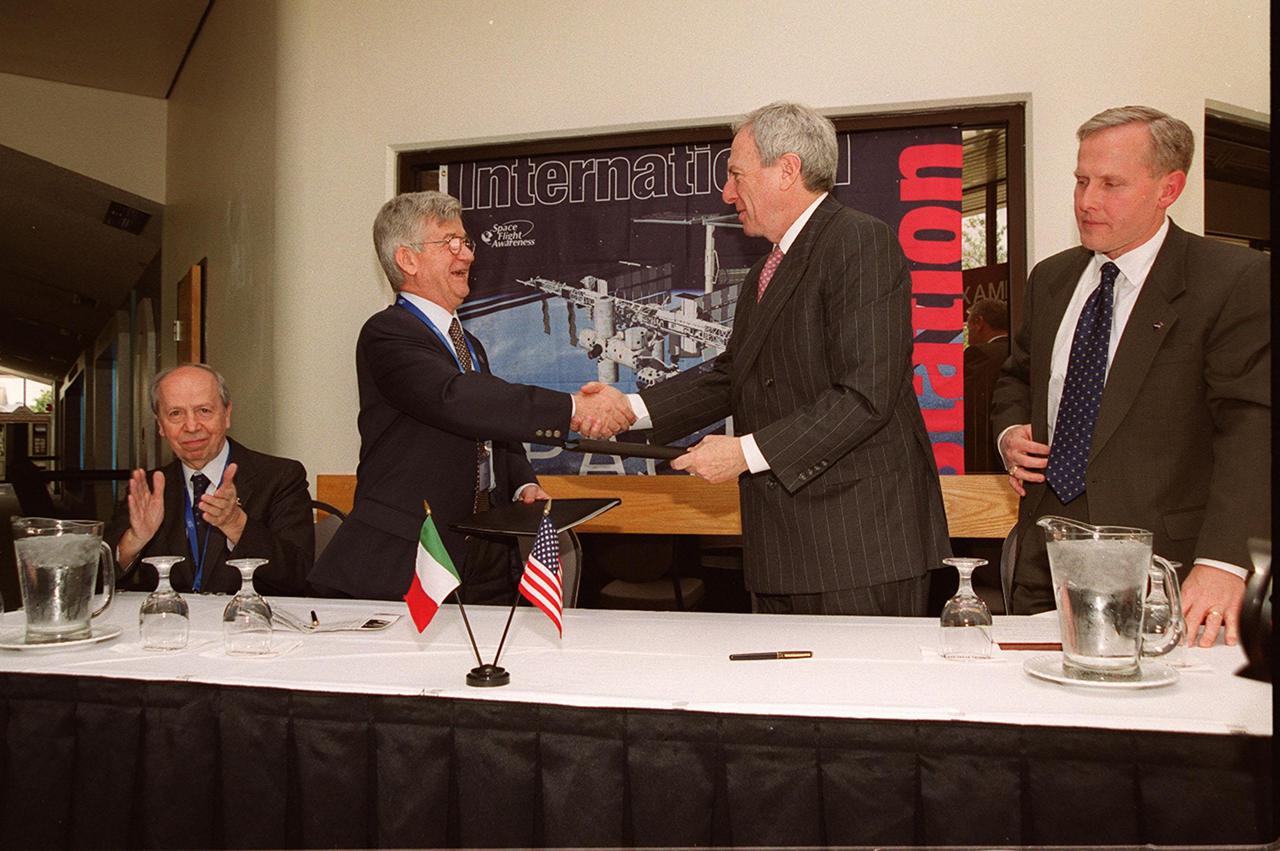
After signing a Framework for Cooperation to build the Habitation Module for the International Space Station, Italian Space Agency President Sergio DeJulio (standing, left) shakes hands with NASA Administrator Daniel S. Goldin (right). Also at the signing are The Honorable Lamberto Dini, Minister of Foreign Affairs, Republic of Italy (far left) and John Schumacher, assistant administrator, NASA External Relations. The Framework is a potential bilateral cooperative agreement that could result in ASI development of a U.S. Habitation Module for the International Space Station. This agreement allows the U.S. to explore an alternative approach to achieve full crew habitation for the ISS. A Memorandum of Understanding (MOU) between NASA and ASI will be required to formally document NASA and ASI’s respective responsibilities in a legally binding document. The Framework signed today would form the basis for a potential MOU which NASA and ASI would sign after completion of the program assessment and subsequent negotiations.The ceremony took place at the IMAX Theater, Kennedy Space Center Visitor Complex
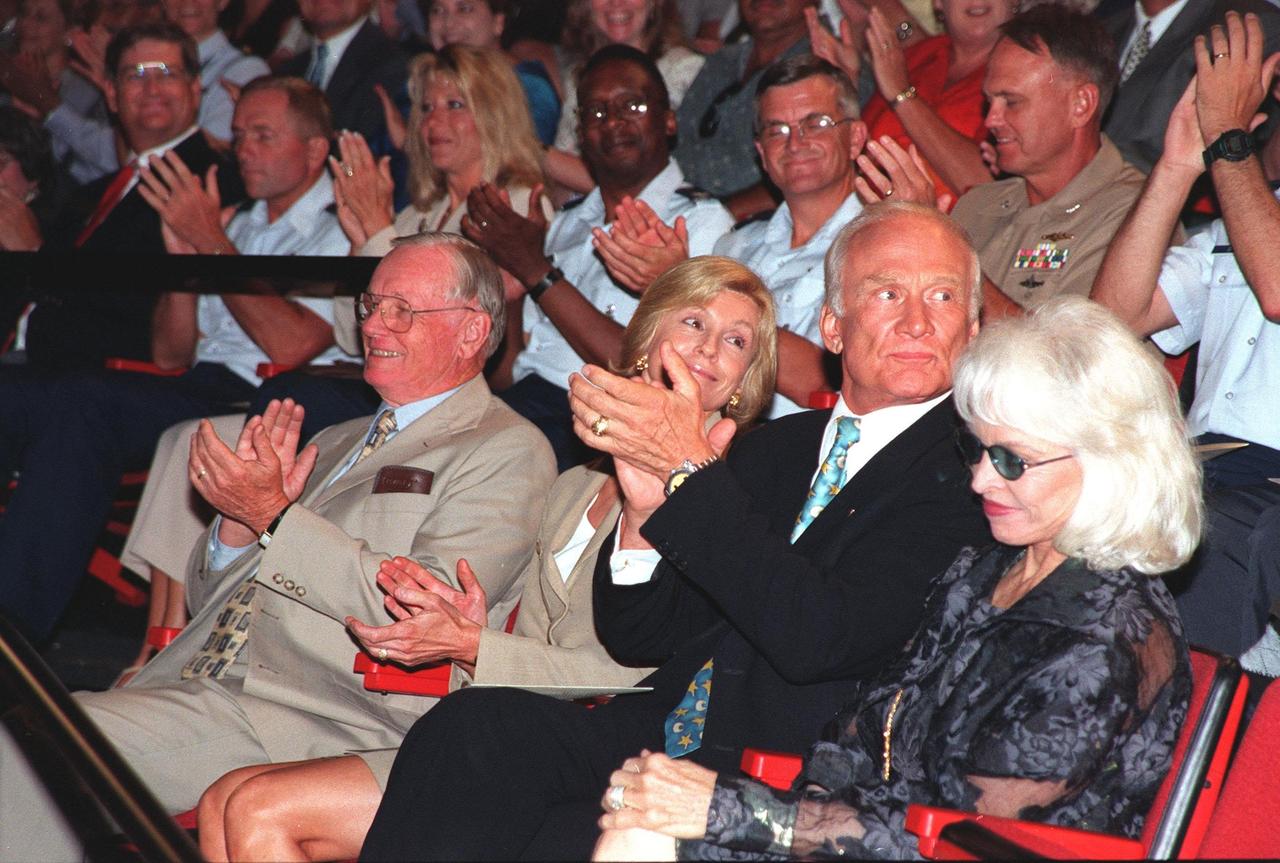
At a special presentation of the Hammer Award in the IMAX 2 Theater in the Kennedy Space Center Visitor Complex, former Apollo astronauts Neil Armstrong (left) and Edwin "Buzz" Aldrin (second from right) applauded the recipients, Kennedy Space Center and the 45th Space Wing. The Hammer Award is Vice President Al Gore's special recognition of teams of federal employees who have made significant contributions in support of the principles of the National Partnership for Reinventing Government. This Hammer Award acknowledges the accomplishments of a joint NASA and Air Force team that established the Joint Base Operations and Support Contract (J-BOSC) Source Evaluation Board (SEB). Ed Gormel and Chris Fairey, co-chairs of the SEB, accepted the awards for the SEB. The team developed and implemented the acquisition strategy for establishing a single set of base operations and support service requirements for KSC, Cape Canaveral Air Station and Patrick Air Force Base. Armstrong and Aldrin were at KSC to attend a banquet and other activities for the 30th anniversary of the Apollo 11 mission, which landed the first man on the moon
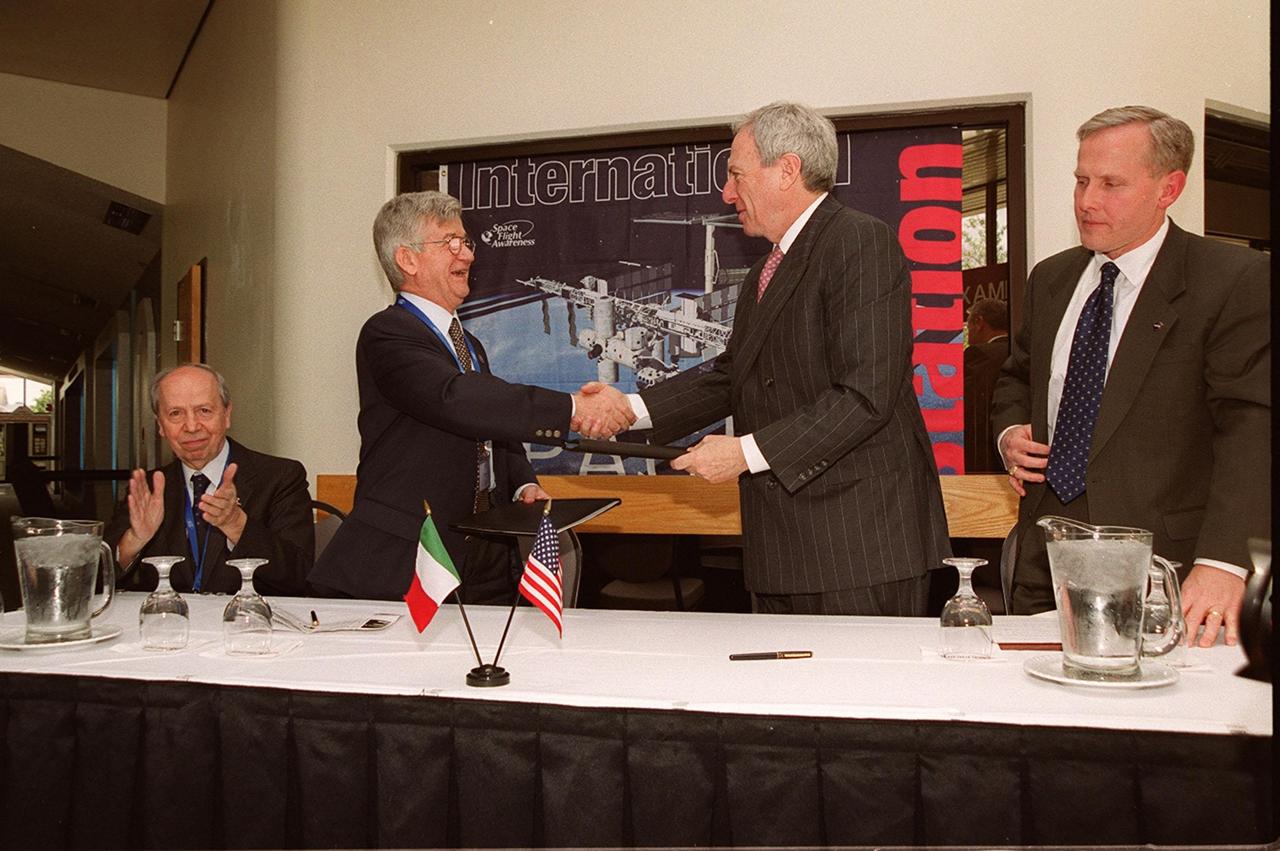
After signing a Framework for Cooperation to build the Habitation Module for the International Space Station, Italian Space Agency President Sergio DeJulio (standing, left) shakes hands with NASA Administrator Daniel S. Goldin (right). Also at the signing are The Honorable Lamberto Dini, Minister of Foreign Affairs, Republic of Italy (far left) and John Schumacher, assistant administrator, NASA External Relations. The Framework is a potential bilateral cooperative agreement that could result in ASI development of a U.S. Habitation Module for the International Space Station. This agreement allows the U.S. to explore an alternative approach to achieve full crew habitation for the ISS. A Memorandum of Understanding (MOU) between NASA and ASI will be required to formally document NASA and ASI’s respective responsibilities in a legally binding document. The Framework signed today would form the basis for a potential MOU which NASA and ASI would sign after completion of the program assessment and subsequent negotiations.The ceremony took place at the IMAX Theater, Kennedy Space Center Visitor Complex
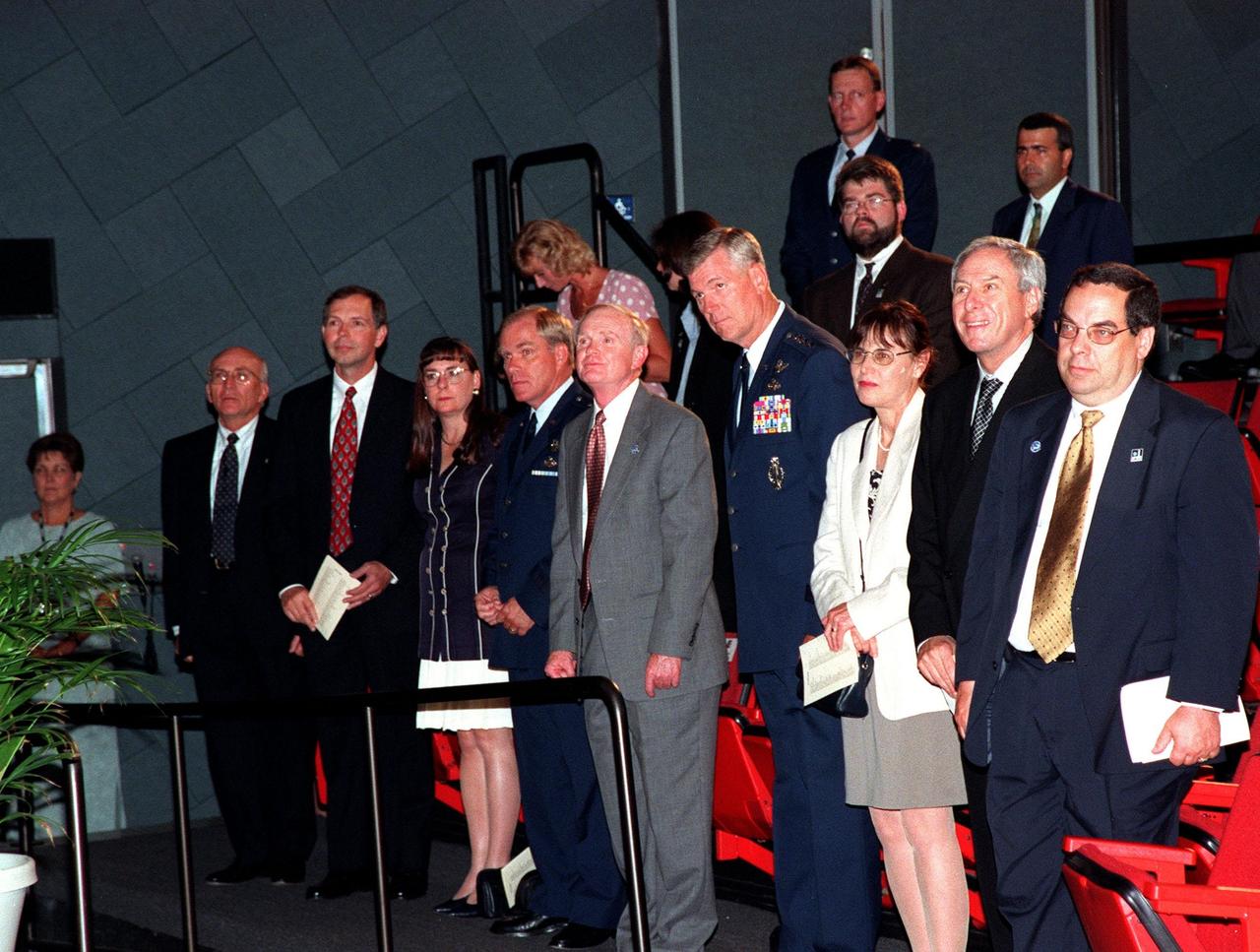
At a special presentation in the IMAX 2 Theater in the Kennedy Space Center Visitor Complex, the Hammer Award is presented to Kennedy Space Center and the 45th Space Wing. Among the attendees in the audience are (center) Center Director Roy D. Bridges Jr., flanked by (at left) Commander of the 45th Space Wing Brig. Gen. F. Randall Starbuck and (at right) Commander of the Air Force Space Command General Richard B. Myers. Standing second from right is NASA Administrator Daniel S. Goldin. At the far right is Morley Winograd, director of the National Partnership for Reinventing Government, who presented the award. The Hammer Award is Vice President Al Gore's special recognition of teams of federal employees who have made significant contributions in support of the principles of the National Partnership for Reinventing Government. This Hammer Award acknowledges the accomplishments of a joint NASA and Air Force team that established the Joint Base Operations and Support Contract (J-BOSC) Source Evaluation Board (SEB). Ed Gormel and Chris Fairey, co-chairs of the SEB, accepted the awards for the SEB. The team developed and implemented the acquisition strategy for establishing a single set of base operations and support service requirements for KSC, Cape Canaveral Air Station and Patrick Air Force Base

This image depicts a vast canyon of dust and gas in the Orion Nebula from a 3-D computer model based on observations by NASA's Hubble Space Telescope and created by science visualization specialists at the Space Telescope Science Institute (STScI) in Baltimore, Md. A 3-D visualization of this model takes viewers on an amazing four-minute voyage through the 15-light-year-wide canyon. Credit: NASA, G. Bacon, L. Frattare, Z. Levay, and F. Summers (STScI/AURA) Go here to learn more about Hubble 3D: <a href="http://www.nasa.gov/topics/universe/features/hubble_imax_premiere.html" rel="nofollow">www.nasa.gov/topics/universe/features/hubble_imax_premier...</a> or <a href="http://www.imax.com/hubble/" rel="nofollow">www.imax.com/hubble/</a> Take an exhilarating ride through the Orion Nebula, a vast star-making factory 1,500 light-years away. Swoop through Orion's giant canyon of gas and dust. Fly past behemoth stars whose brilliant light illuminates and energizes the entire cloudy region. Zoom by dusty tadpole-shaped objects that are fledgling solar systems. This virtual space journey isn't the latest video game but one of several groundbreaking astronomy visualizations created by specialists at the Space Telescope Science Institute (STScI) in Baltimore, the science operations center for NASA's Hubble Space Telescope. The cinematic space odysseys are part of the new Imax film "Hubble 3D," which opens today at select Imax theaters worldwide. The 43-minute movie chronicles the 20-year life of Hubble and includes highlights from the May 2009 servicing mission to the Earth-orbiting observatory, with footage taken by the astronauts. The giant-screen film showcases some of Hubble's breathtaking iconic pictures, such as the Eagle Nebula's "Pillars of Creation," as well as stunning views taken by the newly installed Wide Field Camera 3. While Hubble pictures of celestial objects are awe-inspiring, they are flat 2-D photographs. For this film, those 2-D images have been converted into 3-D environments, giving the audience the impression they are space travelers taking a tour of Hubble's most popular targets. "A large-format movie is a truly immersive experience," says Frank Summers, an STScI astronomer and science visualization specialist who led the team that developed the movie visualizations. The team labored for nine months, working on four visualization sequences that comprise about 12 minutes of the movie. "Seeing these Hubble images in 3-D, you feel like you are flying through space and not just looking at picture postcards," Summers continued. "The spacescapes are all based on Hubble images and data, though some artistic license is necessary to produce the full depth of field needed for 3-D." The most ambitious sequence is a four-minute voyage through the Orion Nebula's gas-and-dust canyon, about 15 light-years across. During the ride, viewers will see bright and dark, gaseous clouds; thousands of stars, including a grouping of bright, hefty stars called the Trapezium; and embryonic planetary systems. The tour ends with a detailed look at a young circumstellar disk, which is much like the structure from which our solar system formed 4.5 billion years ago. Based on a Hubble image of Orion released in 2006, the visualization was a collaborative effort between science visualization specialists at STScI, including Greg Bacon, who sculpted the Orion Nebula digital model, with input from STScI astronomer Massimo Roberto; the National Center for Supercomputing Applications at the University of Illinois at Urbana-Champaign; and the Spitzer Science Center at the California Institute of Technology in Pasadena. For some of the sequences, STScI imaging specialists developed new techniques for transforming the 2-D Hubble images into 3-D. STScI image processing specialists Lisa Frattare and Zolt Levay, for example, created methods of splitting a giant gaseous pillar in the Carina Nebula into multiple layers to produce a 3-D effect, giving the structure depth. The Carina Nebula is a nursery for baby stars. Frattare painstakingly removed the thousands of stars in the image so that Levay could separate the gaseous layers on the isolated Carina pillar. Frattare then replaced the stars into both foreground and background layers to complete the 3-D model. For added effect, the same separation was done for both visible and infrared Hubble images, allowing the film to cross-fade between wavelength views in 3-D. In another sequence viewers fly into a field of 170,000 stars in the giant star cluster Omega Centauri. STScI astronomer Jay Anderson used his stellar database to create a synthetic star field in 3-D that matches recent razor-sharp Hubble photos. The film's final four-minute sequence takes viewers on a voyage from our Milky Way Galaxy past many of Hubble's best galaxy shots and deep into space. Some 15,000 galaxies from Hubble's deepest surveys stretch billions of light-years across the universe in a 3-D sequence created by STScI astronomers and visualizers. The view dissolves into a cobweb that traces the universe's large-scale structure, the backbone from which galaxies were born. In addition to creating visualizations, STScI's education group also provided guidance on the "Hubble 3D" Educator Guide, which includes standards-based lesson plans and activities about Hubble and its mission. Students will use the guide before or after seeing the movie. "The guide will enhance the movie experience for students and extend the movie into classrooms," says Bonnie Eisenhamer, STScI's Hubble Formal Education manager. The Hubble Space Telescope is a project of international cooperation between NASA and the European Space Agency (ESA) and is managed by NASA’s Goddard Space Flight Center (GSFC) in Greenbelt, Md. The Space Telescope Science Institute (STScI) conducts Hubble science operations. The institute is operated for NASA by the Association of Universities for Research in Astronomy, Inc., Washington, D.C.