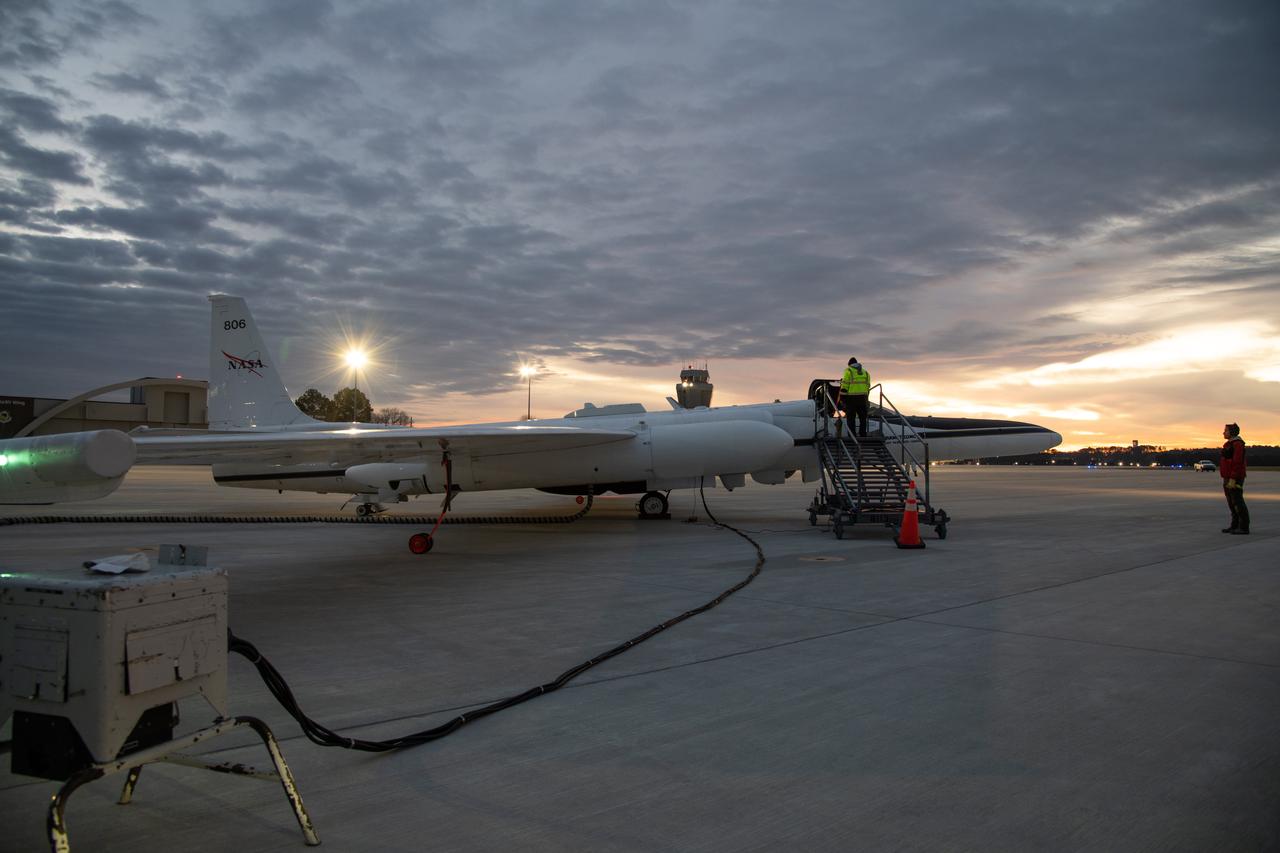
The NASA ER-2 high-altitude aircraft was prepared to support the Investigation of Microphysics and Precipitation for Atlantic Coast-Threatening Storms (IMPACTS) mission. For this mission, the IMPACTS team tracked storms across the Eastern United States to help understand how winter storms form and develop. The aircraft, which is based at NASA’s Armstrong Flight Research Center Building 703 in Palmdale, California, was temporarily based at Dobbins Air Reserve Base in Marietta, Georgia. The three-year IMPACTS campaign concluded on Feb. 28, 2023.
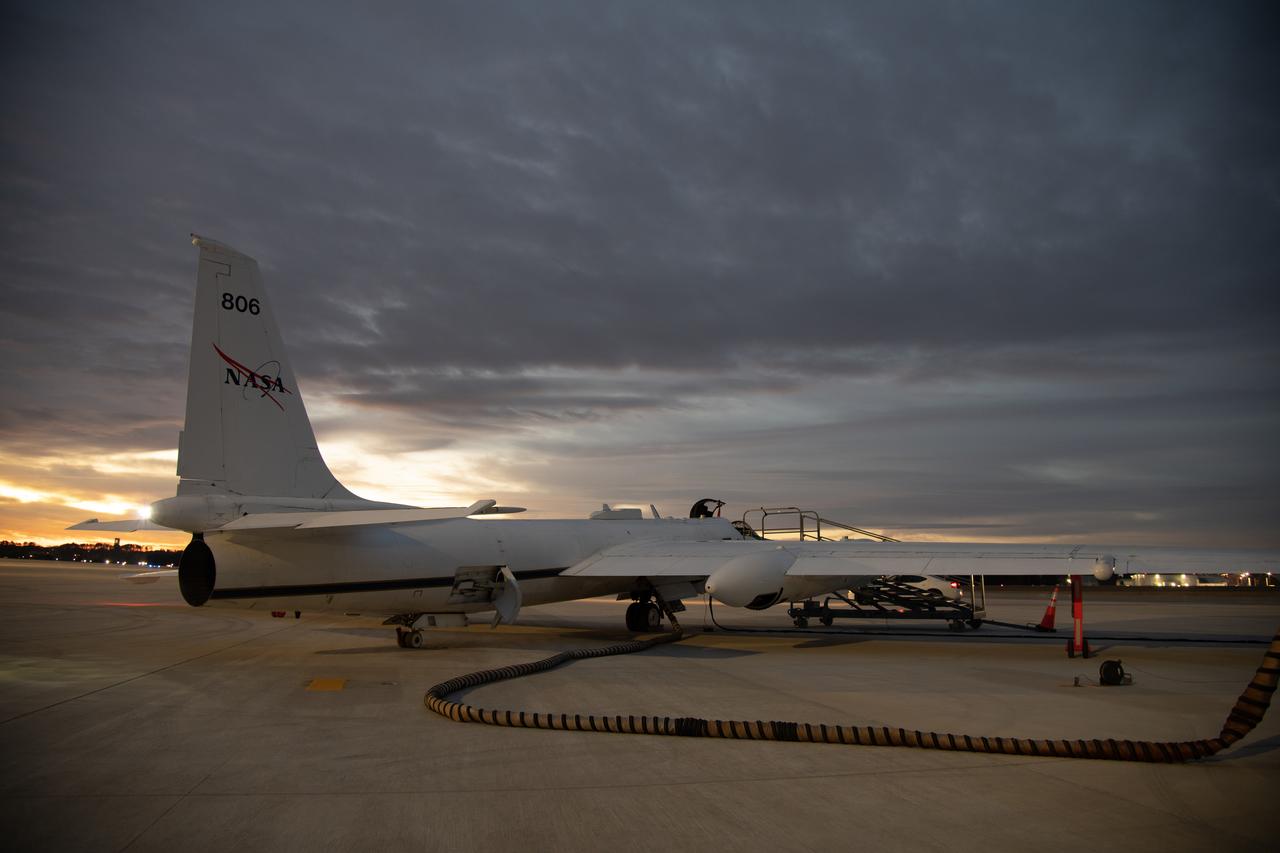
The NASA ER-2 high-altitude aircraft was prepared to support the Investigation of Microphysics and Precipitation for Atlantic Coast-Threatening Storms (IMPACTS) mission. For this mission, the IMPACTS team tracked storms across the Eastern United States to help understand how winter storms form and develop. The aircraft, which is based at NASA’s Armstrong Flight Research Center Building 703 in Palmdale, California, was temporarily based at Dobbins Air Reserve Base in Marietta, Georgia. The three-year IMPACTS campaign concluded on Feb. 28, 2023.
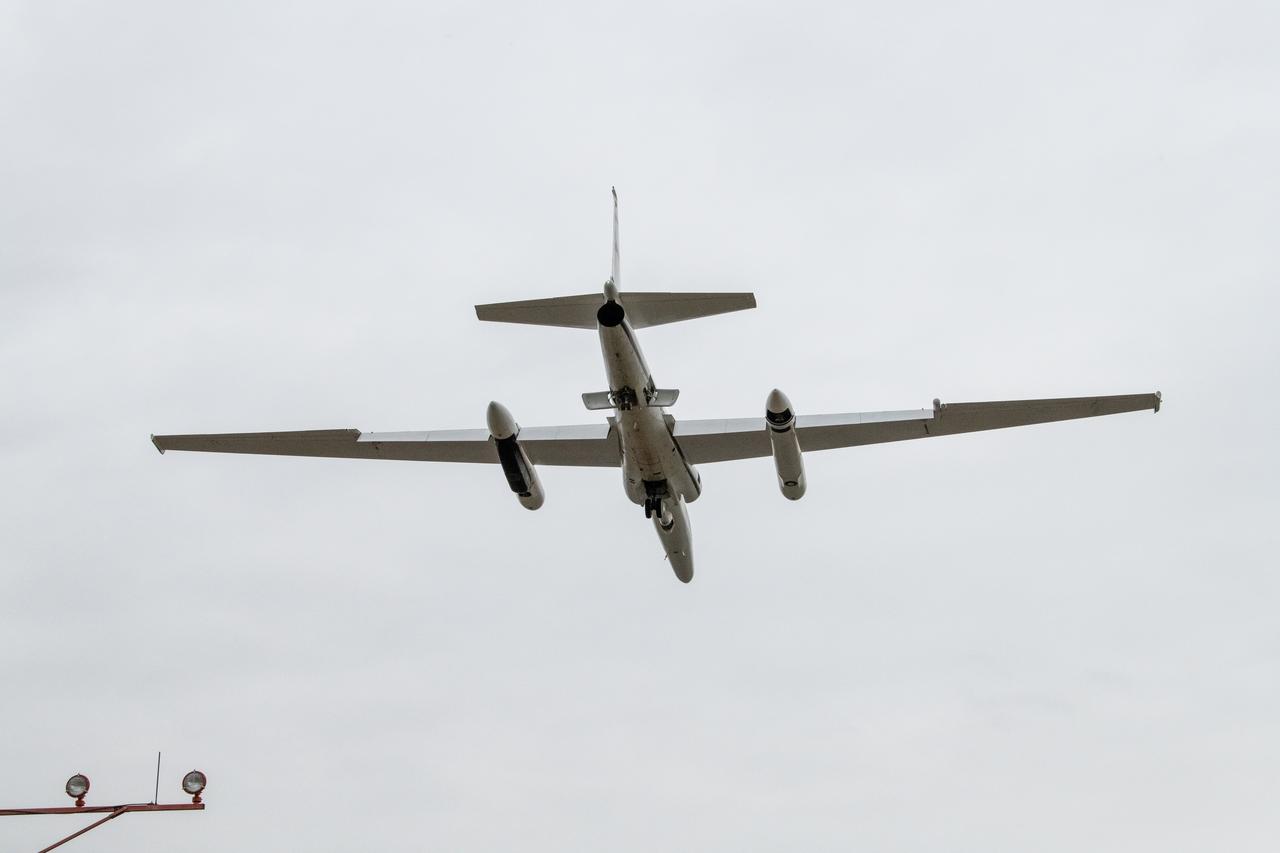
The NASA ER-2 high-altitude aircraft supported the Investigation of Microphysics and Precipitation for Atlantic Coast-Threatening Storms (IMPACTS) mission. For this mission, the IMPACTS team tracked storms across the Eastern United States to help understand how winter storms form and develop. The aircraft, which is based at NASA’s Armstrong Flight Research Center Building 703 in Palmdale, California, was temporarily based at Dobbins Air Reserve Base in Marietta, Georgia. The three-year IMPACTS campaign concluded on Feb. 28, 2023.
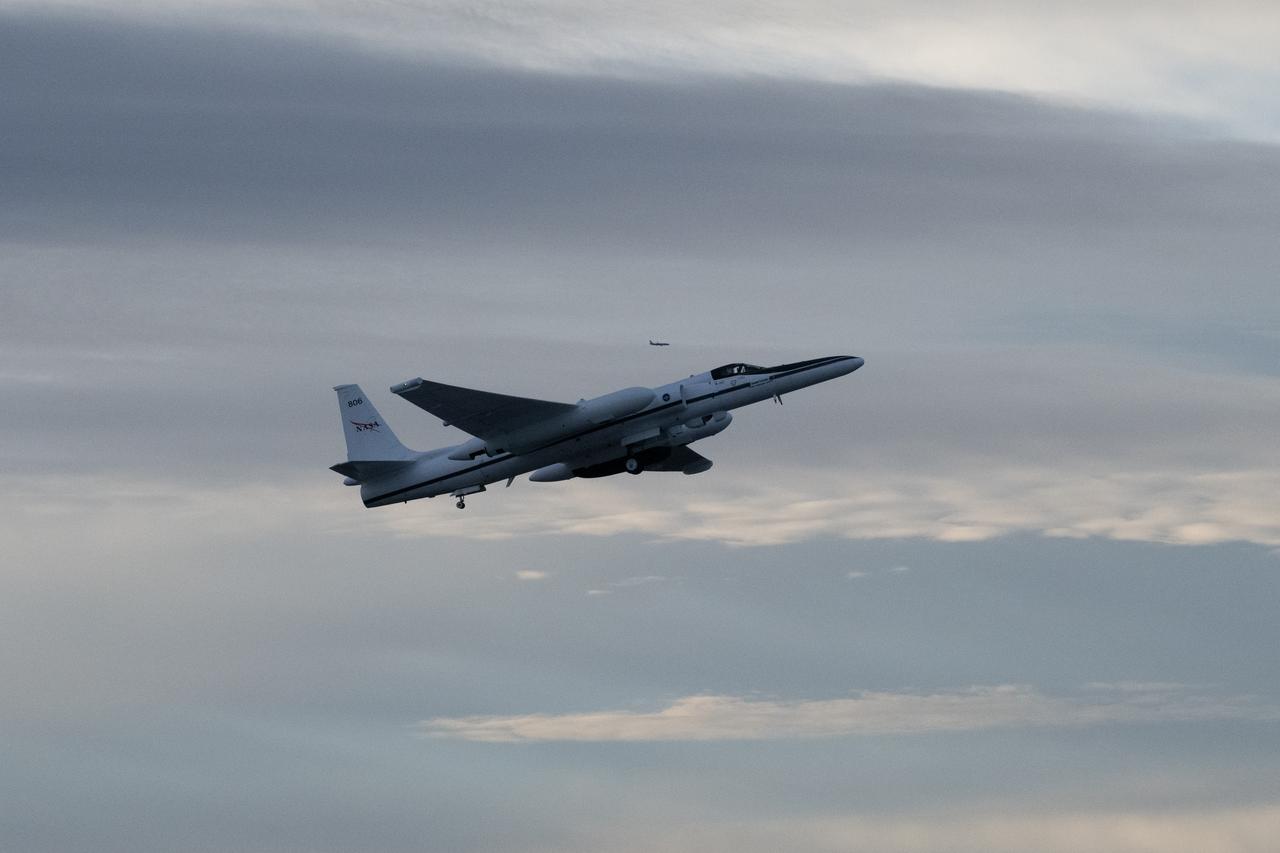
The NASA ER-2 high-altitude aircraft supported the Investigation of Microphysics and Precipitation for Atlantic Coast-Threatening Storms (IMPACTS) mission. For this mission, the IMPACTS team tracked storms across the Eastern United States to help understand how winter storms form and develop. The aircraft, which is based at NASA’s Armstrong Flight Research Center Building 703 in Palmdale, California, was temporarily based at Dobbins Air Reserve Base in Marietta, Georgia. The three-year IMPACTS campaign concluded on Feb. 28, 2023.
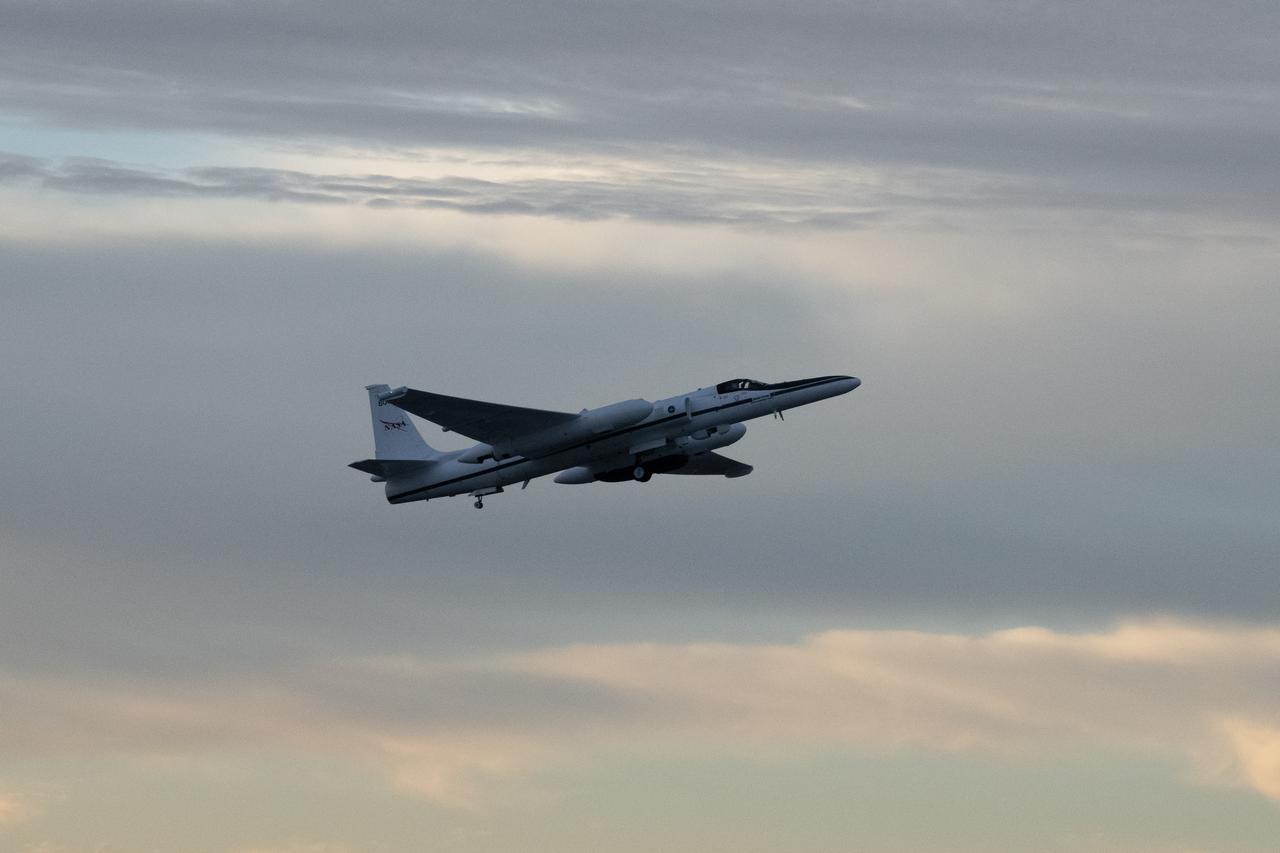
The NASA ER-2 high-altitude aircraft supported the Investigation of Microphysics and Precipitation for Atlantic Coast-Threatening Storms (IMPACTS) mission. For this mission, the IMPACTS team tracked storms across the Eastern United States to help understand how winter storms form and develop. The aircraft, which is based at NASA’s Armstrong Flight Research Center Building 703 in Palmdale, California, was temporarily based at Dobbins Air Reserve Base in Marietta, Georgia. The three-year IMPACTS campaign concluded on Feb. 28, 2023.
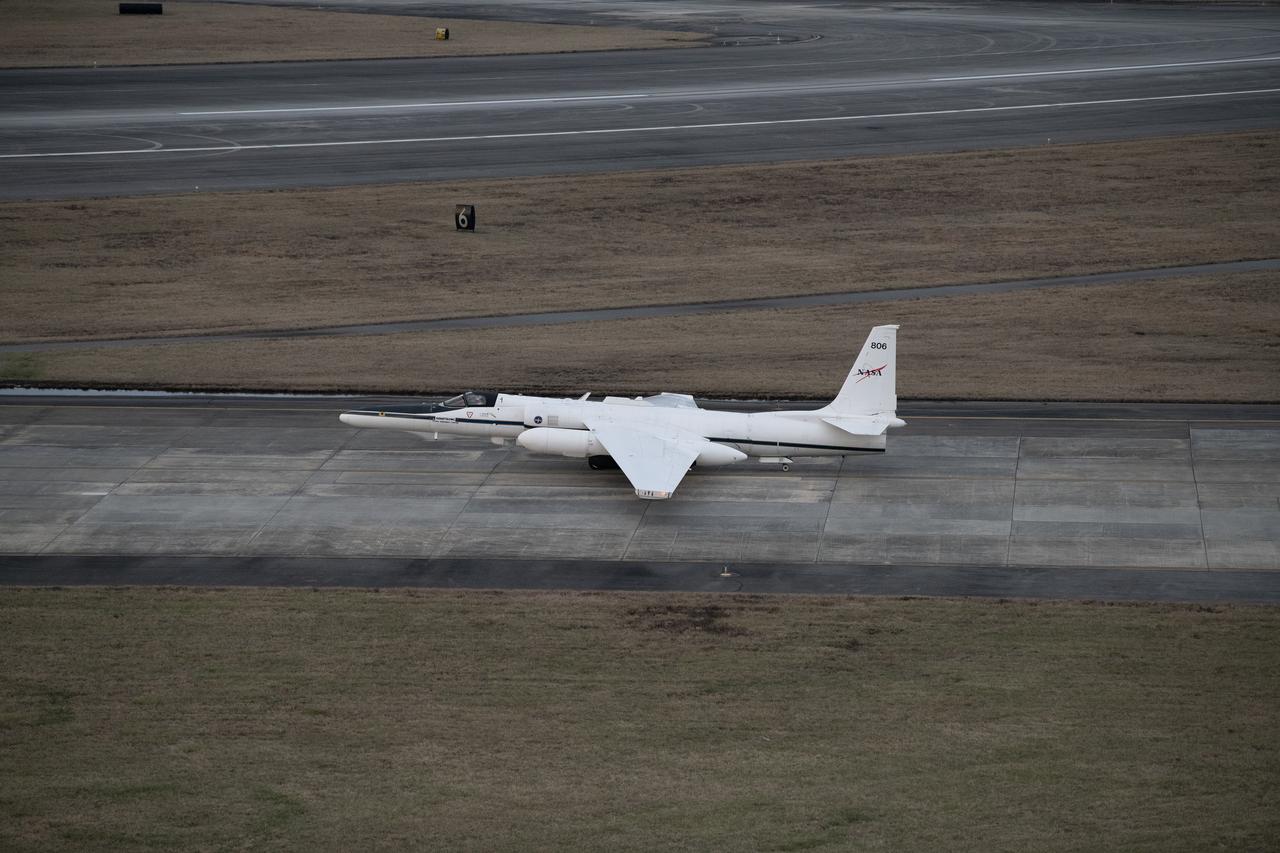
The NASA ER-2 high-altitude aircraft was prepared to support the Investigation of Microphysics and Precipitation for Atlantic Coast-Threatening Storms (IMPACTS) mission. For this mission, the IMPACTS team tracked storms across the Eastern United States to help understand how winter storms form and develop. The aircraft, which is based at NASA’s Armstrong Flight Research Center Building 703 in Palmdale, California, was temporarily based at Dobbins Air Reserve Base in Marietta, Georgia. The three-year IMPACTS campaign concluded on Feb. 28, 2023.
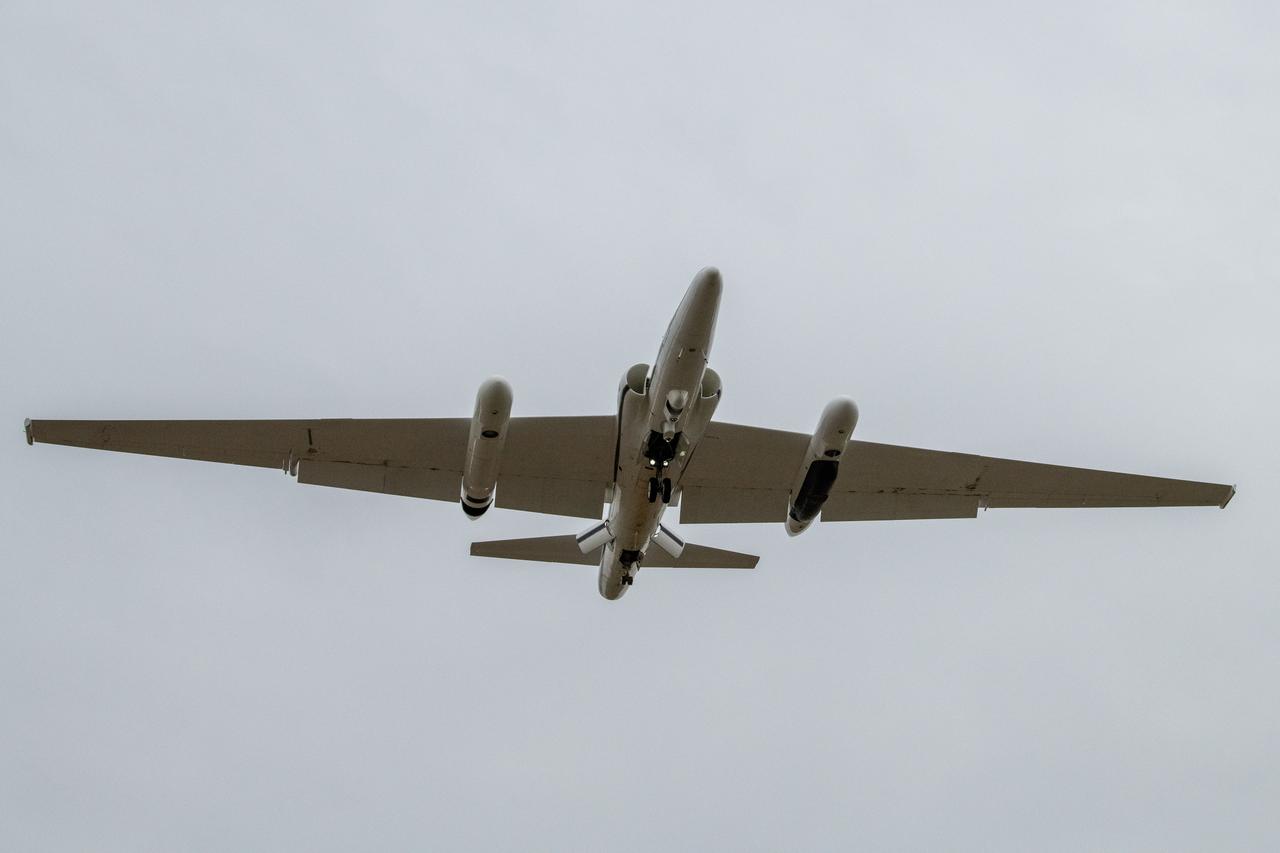
The NASA ER-2 high-altitude aircraft supported the Investigation of Microphysics and Precipitation for Atlantic Coast-Threatening Storms (IMPACTS) mission. For this mission, the IMPACTS team tracked storms across the Eastern United States to help understand how winter storms form and develop. The aircraft, which is based at NASA’s Armstrong Flight Research Center Building 703 in Palmdale, California, was temporarily based at Dobbins Air Reserve Base in Marietta, Georgia. The three-year IMPACTS campaign concluded on Feb. 28, 2023.
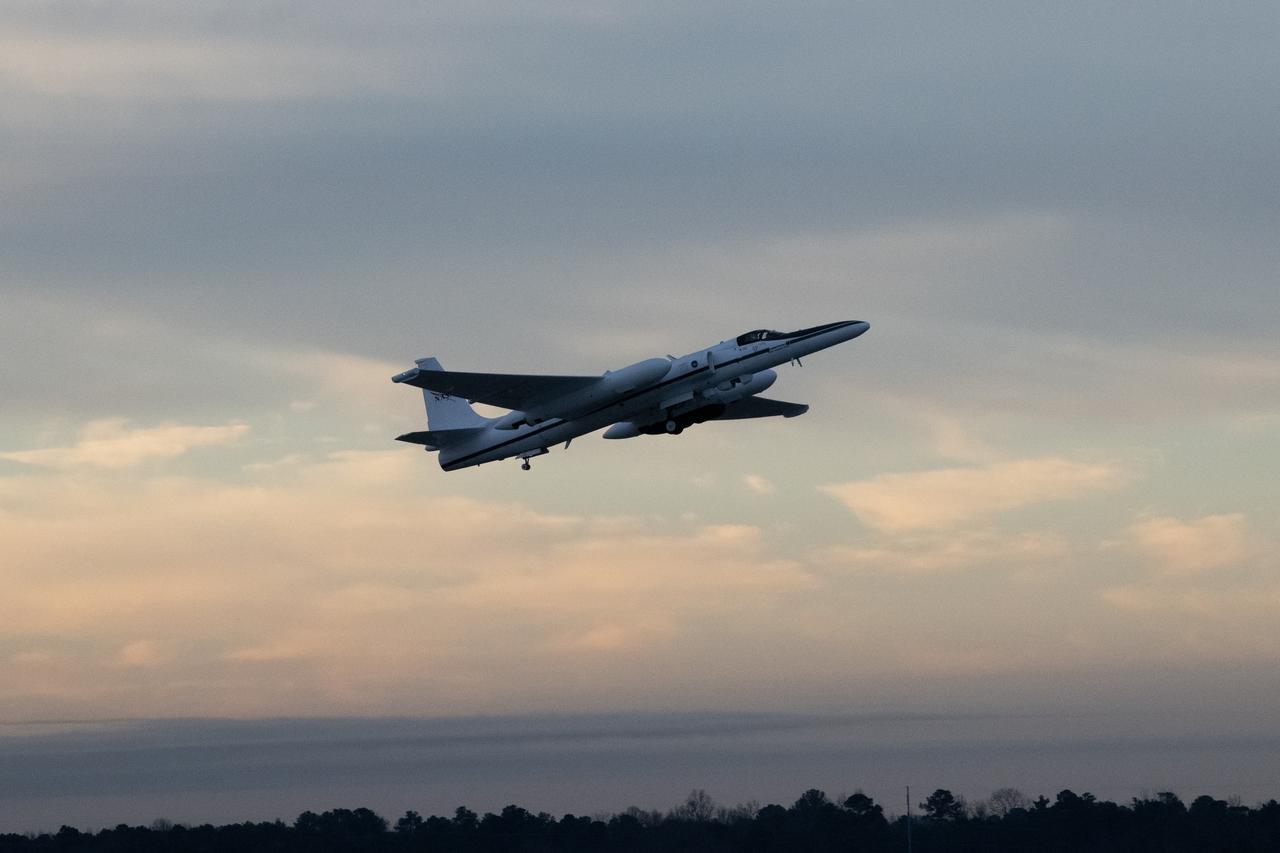
The NASA ER-2 high-altitude aircraft supported the Investigation of Microphysics and Precipitation for Atlantic Coast-Threatening Storms (IMPACTS) mission. For this mission, the IMPACTS team tracked storms across the Eastern United States to help understand how winter storms form and develop. The aircraft, which is based at NASA’s Armstrong Flight Research Center Building 703 in Palmdale, California, was temporarily based at Dobbins Air Reserve Base in Marietta, Georgia. The three-year IMPACTS campaign concluded on Feb. 28, 2023.
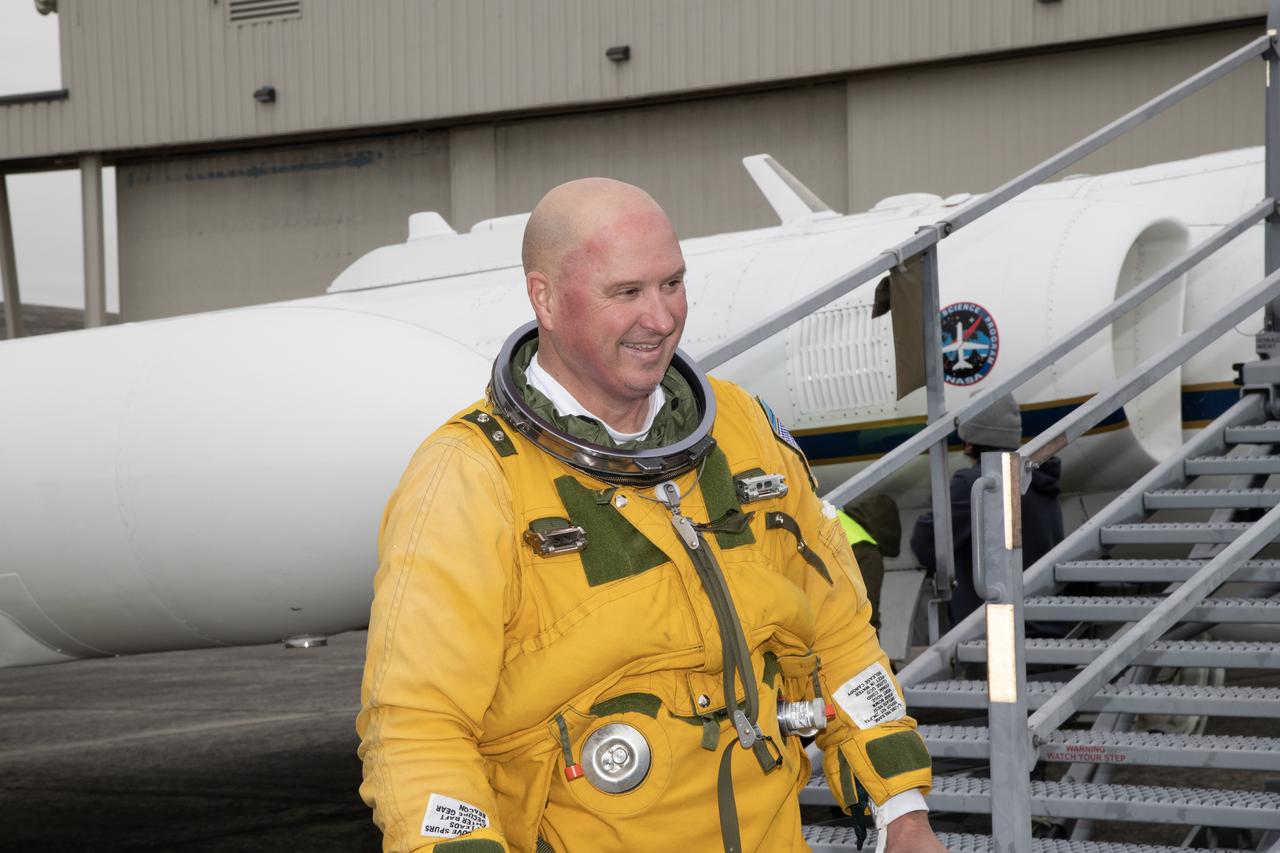
Kirt Stallings, an ER-2 pilot from NASA’s Armstrong Flight Research Center in Edwards California, completed a flight in support of the Investigation of Microphysics and Precipitation for Atlantic Coast-Threatening Storms (IMPACTS) mission. The IMPACTS team tracked storms across the Eastern United States to help understand how winter storms form and develop. The aircraft, which is based at NASA’s Armstrong Flight Research Center Building 703 in Palmdale, California, was temporarily based at Dobbins Air Reserve Base in Marietta, Georgia. The three-year IMPACTS campaign concluded on Feb. 28, 2023.
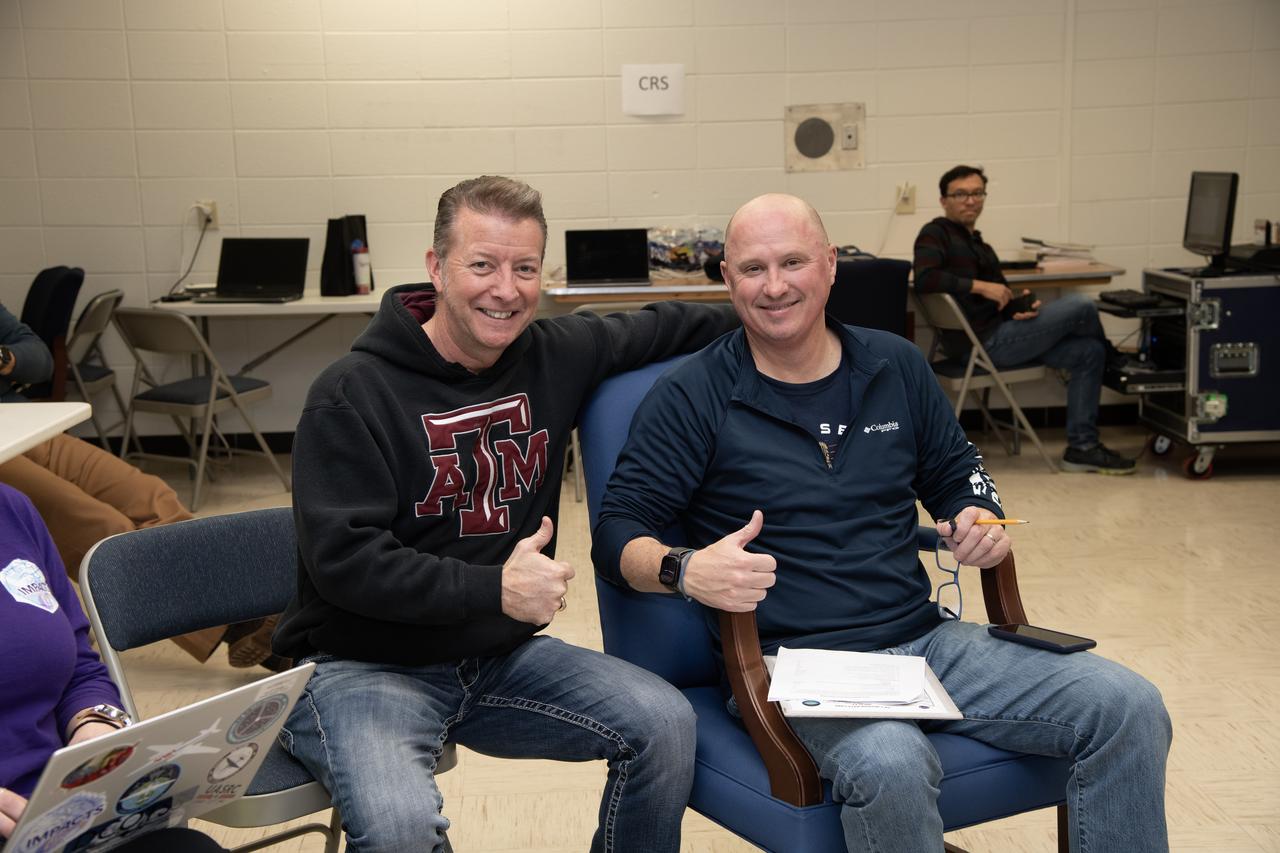
Dean Neeley and Kirt Stallings, ER-2 pilots from NASA’s Armstrong Flight Research Center in Edwards California, completed flights in support of the Investigation of Microphysics and Precipitation for Atlantic Coast-Threatening Storms (IMPACTS) mission. The IMPACTS team tracked storms across the Eastern United States to help understand how winter storms form and develop. Here Neeley and Stallings are seen in a lighter moment at debrief. The aircraft, which is based at NASA’s Armstrong Flight Research Center Building 703 in Palmdale, California, was temporarily based at Dobbins Air Reserve Base in Marietta, Georgia. The three-year IMPACTS campaign concluded on Feb. 28, 2023.
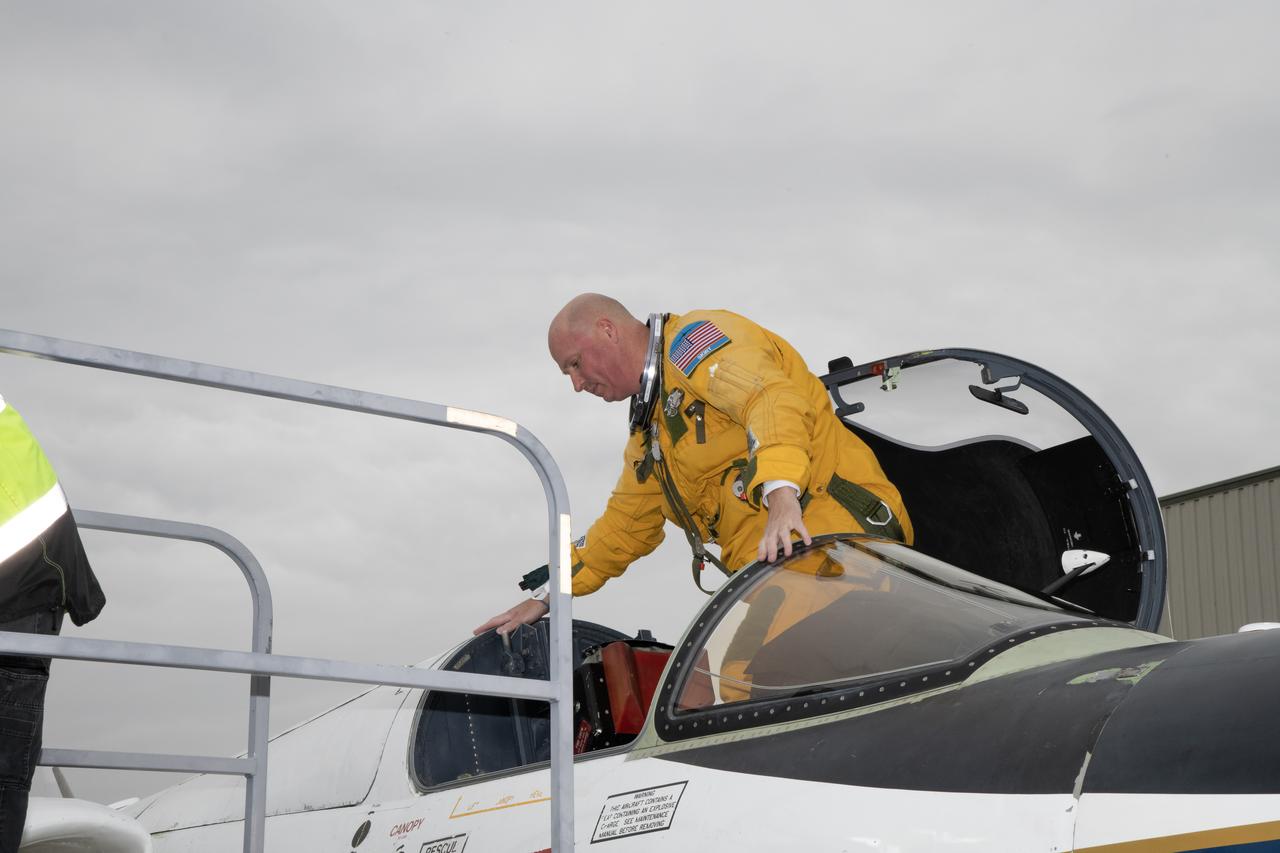
Kirt Stallings, an ER-2 pilot from NASA’s Armstrong Flight Research Center in Edwards California, completed a flight in support of the Investigation of Microphysics and Precipitation for Atlantic Coast-Threatening Storms (IMPACTS) mission. The IMPACTS team tracked storms across the Eastern United States to help understand how winter storms form and develop. The aircraft, which is based at NASA’s Armstrong Flight Research Center Building 703 in Palmdale, California, was temporarily based at Dobbins Air Reserve Base in Marietta, Georgia. The three-year IMPACTS campaign concluded on Feb. 28, 2023.
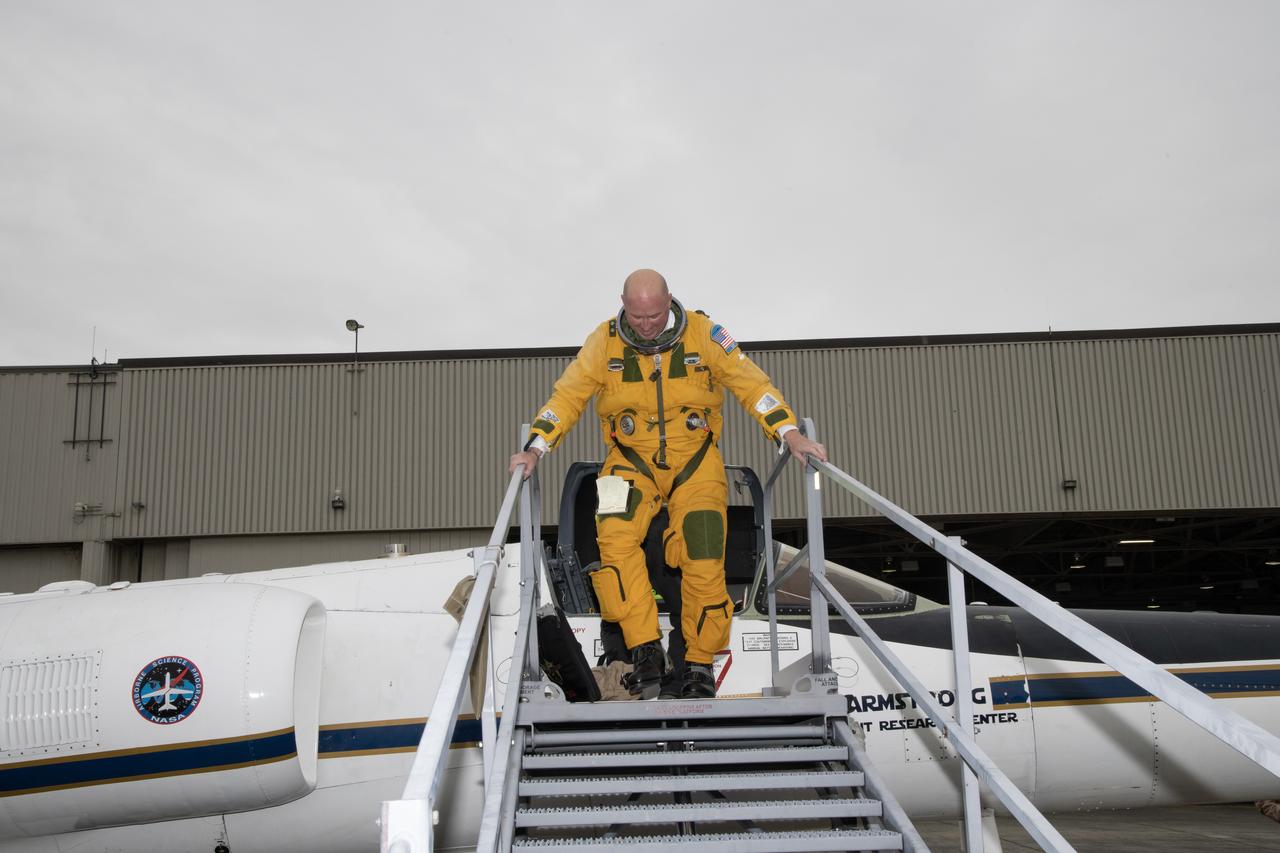
Kirt Stallings, an ER-2 pilot from NASA’s Armstrong Flight Research Center in Edwards California, completed a flight in support of the Investigation of Microphysics and Precipitation for Atlantic Coast-Threatening Storms (IMPACTS) mission. The IMPACTS team tracked storms across the Eastern United States to help understand how winter storms form and develop. The aircraft, which is based at NASA’s Armstrong Flight Research Center Building 703 in Palmdale, California, was temporarily based at Dobbins Air Reserve Base in Marietta, Georgia. The three-year IMPACTS campaign concluded on Feb. 28, 2023.
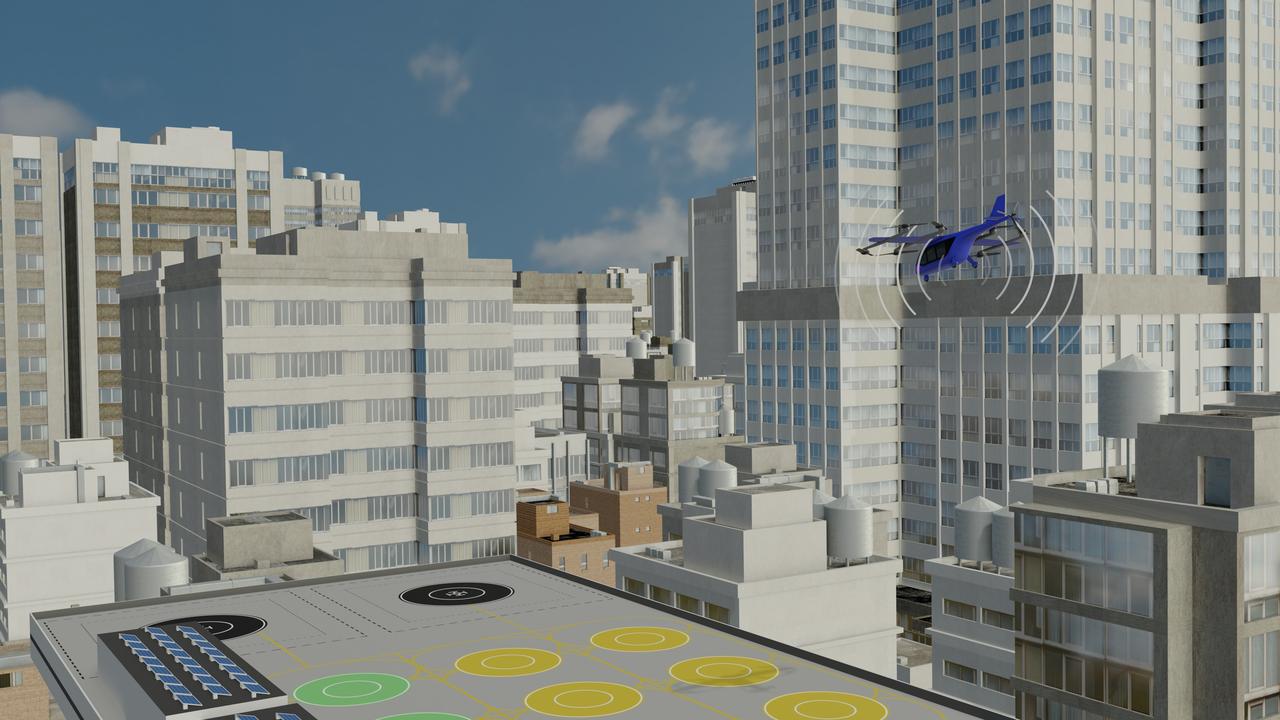
Several projects supporting NASA's Advanced Air Mobility, or AAM mission, are working on different elements to help make AAM a reality. One focus area is developing design tools manufacturers can use to reduce noise impacts.
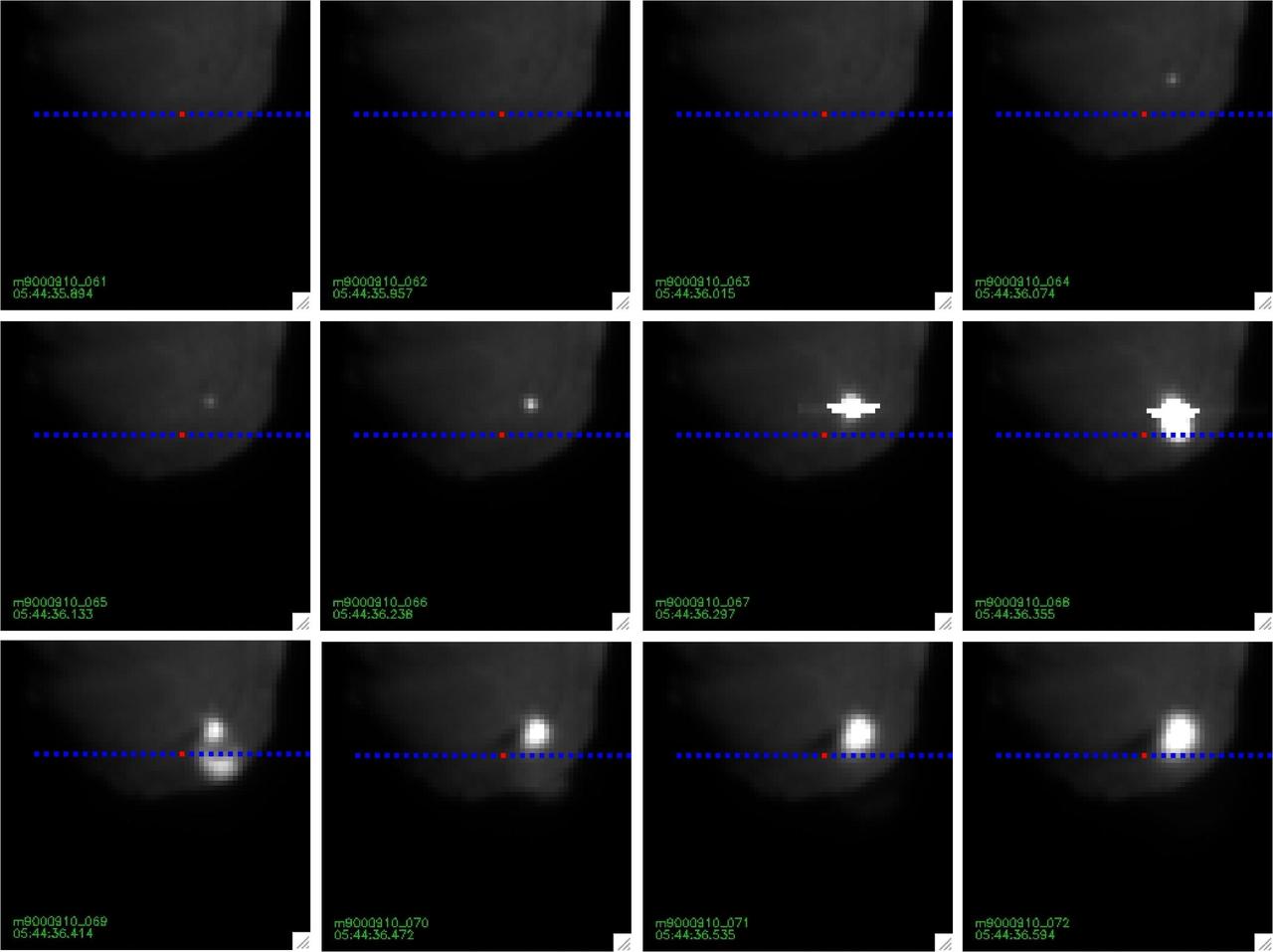
NASA Deep Impact Tempel 1 Mission Update. Images of impact taken with the medium resolution imager. The blue dotted line is the position of the spectrometer slit.
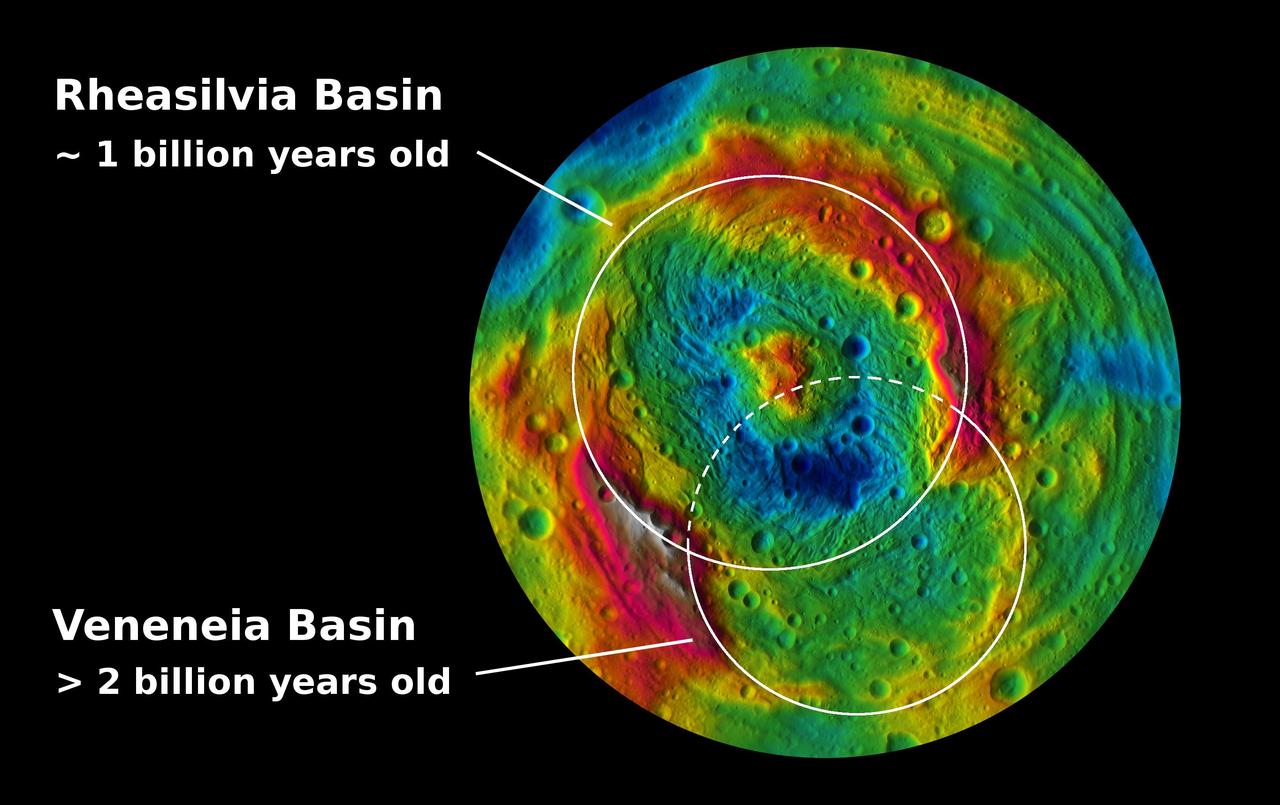
This topographic map from NASA Dawn mission shows the two large impact basins in the southern hemisphere of the giant asteroid Vesta.
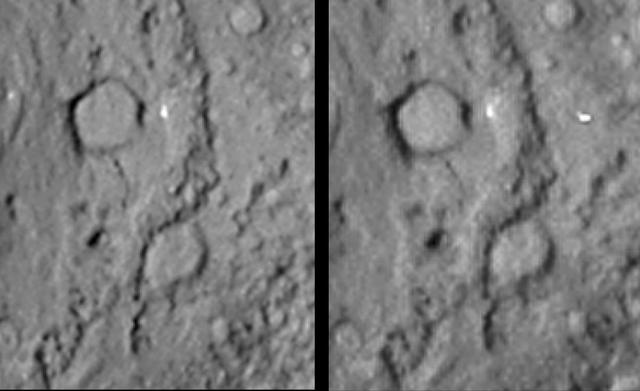
Reversed stereo image pair covering the region of NASA Deep Impact site from the Stardust-NExT mission.
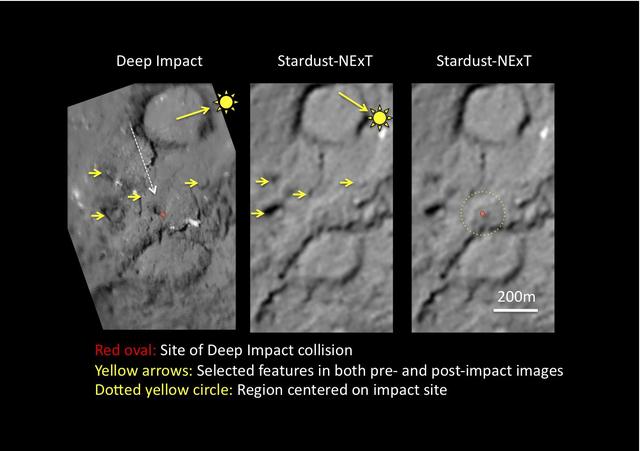
This image shows the surface of comet Tempel 1 before and after NASA Deep Impact mission sent a probe into the comet in 2005. The region was imaged by Deep Impact before the collision left, then six years later on by NASA Stardust-NExT mission.
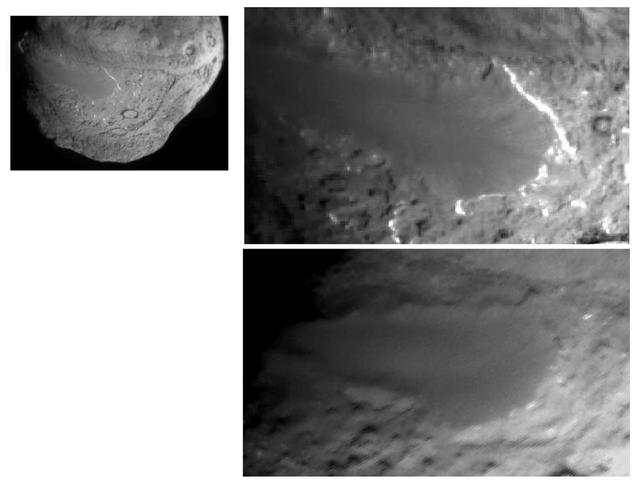
This image layout depicts changes in the surface of comet Tempel 1, observed first by NASA Deep Impact Mission in 2005 top right and again by NASA Stardust-NExT mission on Feb. 14, 2011 bottom right.
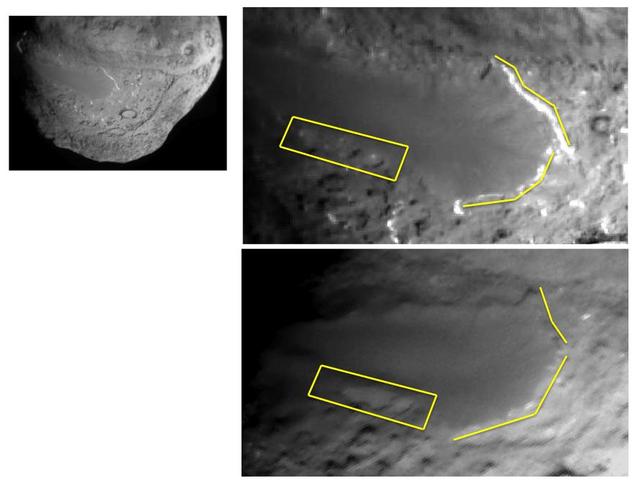
This image layout depicts changes in the surface of comet Tempel 1, observed first by NASA Deep Impact Mission in 2005 top right and again by NASA Stardust-NExT mission on Feb. 14, 2011 bottom right.
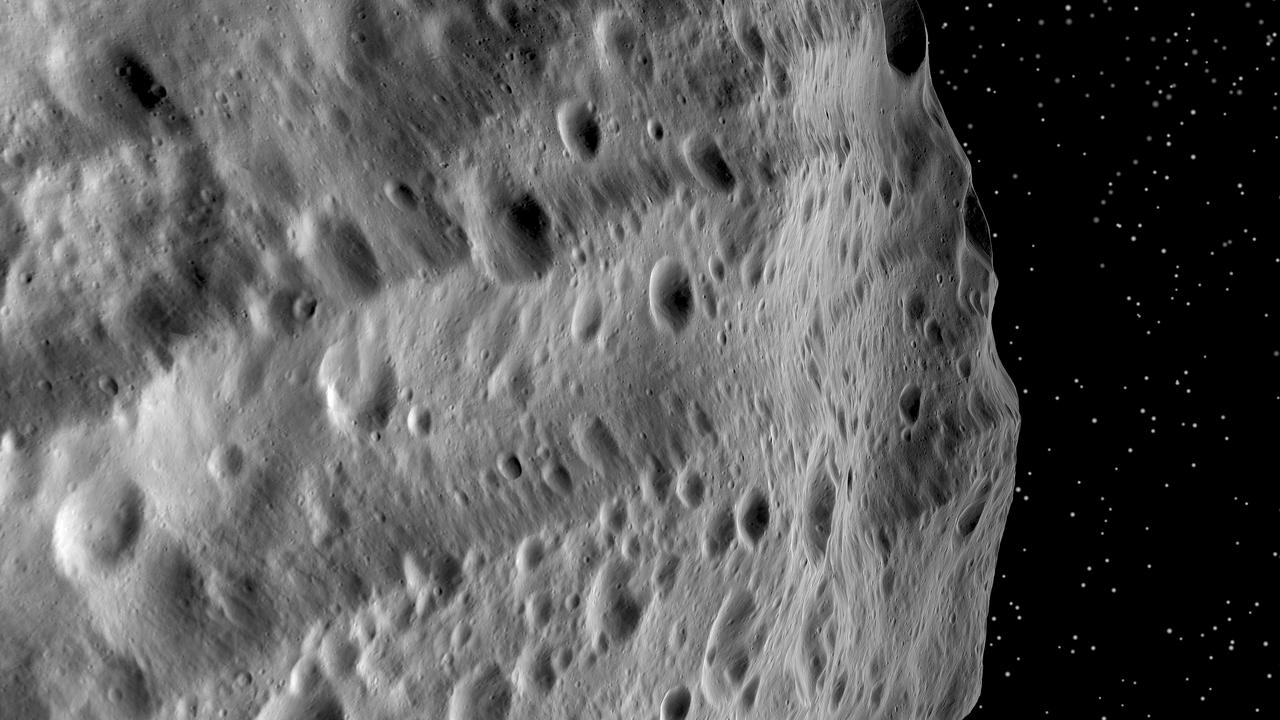
This image from NASA Dawn mission shows huge grooves on the giant asteroid Vesta that were the result of mega impacts at the south pole.
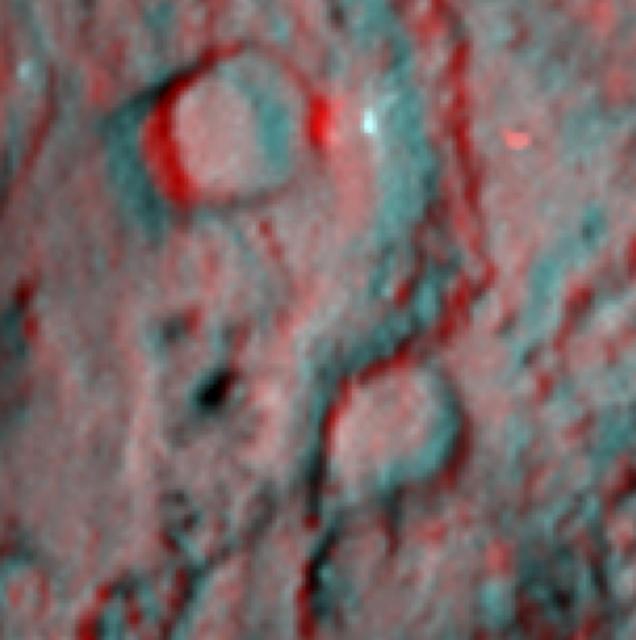
This anaglyph shows the region where NASA Deep Impact mission sent a probe into the surface of comet Tempel 1 in 2005. 3D glasses are necessary to view this image.
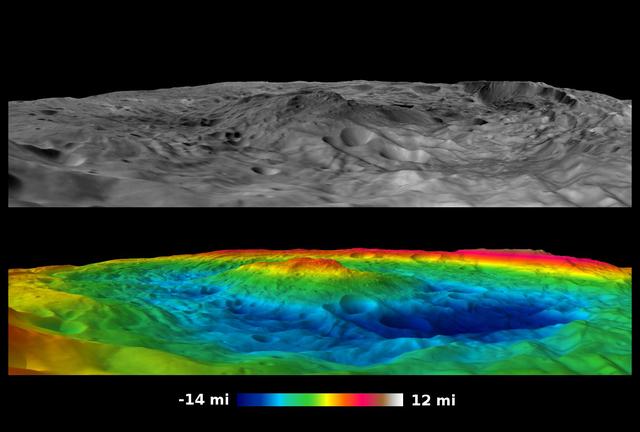
Scientists with NASA Dawn mission have created perspective views of the Rheasilvia impact basin on the giant asteroid Vesta. Rheasilvia is located in Vesta southern hemisphere.
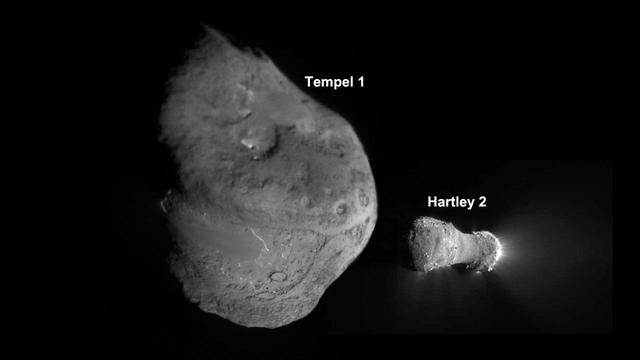
This image shows the nuclei of comets Tempel 1 and Hartley 2, as imaged by NASA Deep Impact spacecraft, which continued as an extended mission known as EPOXI.
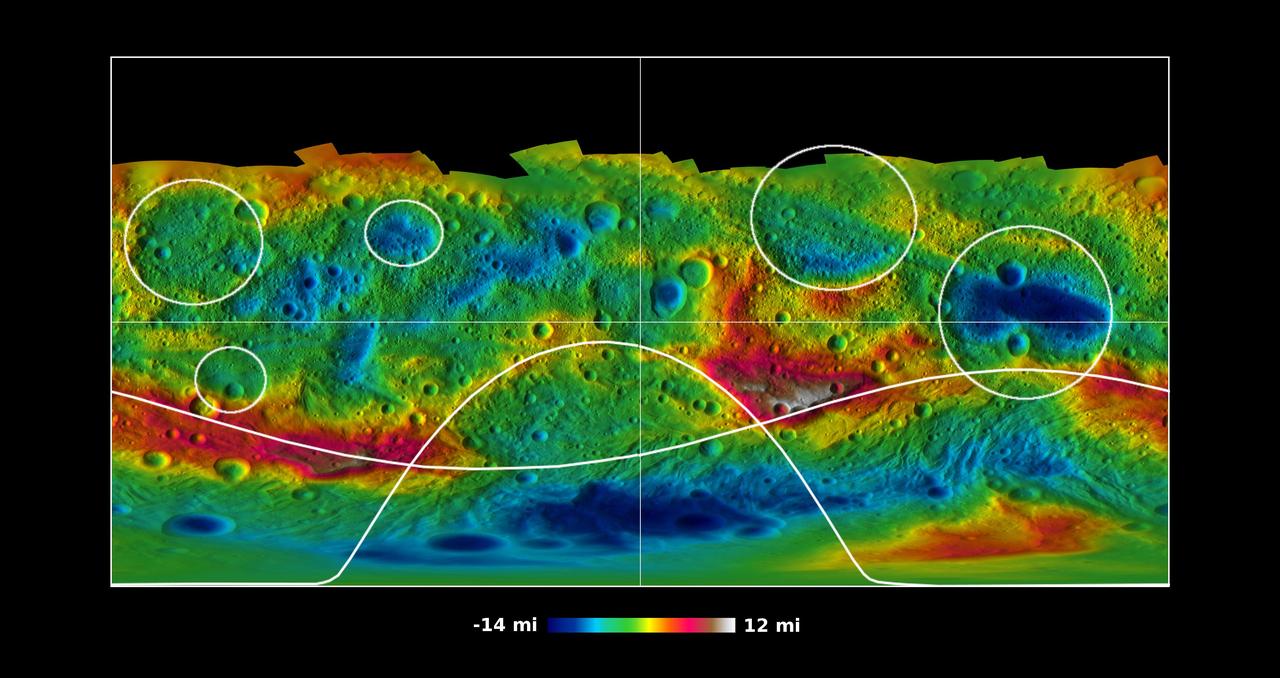
This global map from NASA Dawn mission shows the topography of the giant asteroid Vesta, with the seven most prominent impact basins highlighted.
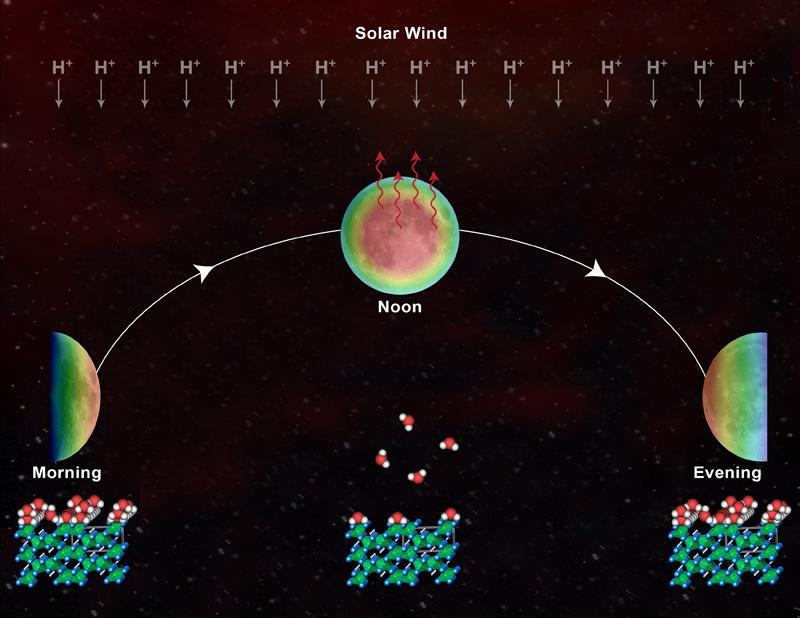
A schematic shows the daytime cycle of hydration, loss and rehydration on the lunar surface. This theory is based on data from NASA Deep Impact mission.
This anaglyph, from NASA Shuttle Radar Topography Mission, is of the Iturralde Structure, Bolivia, a possible impact crater. 3D glasses are necessary to view this image.
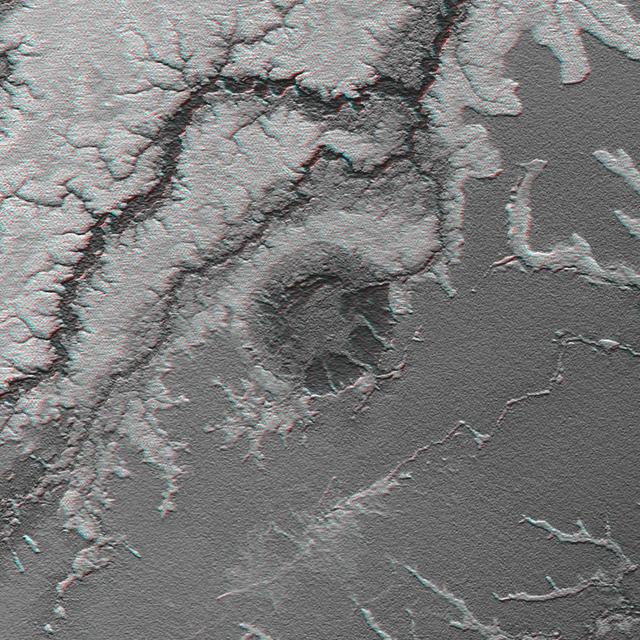
This anaglyph, from NASA Shuttle Radar Topography Mission, is of the Iturralde Structure, Bolivia, a possible impact crater. 3D glasses are necessary to view this image.
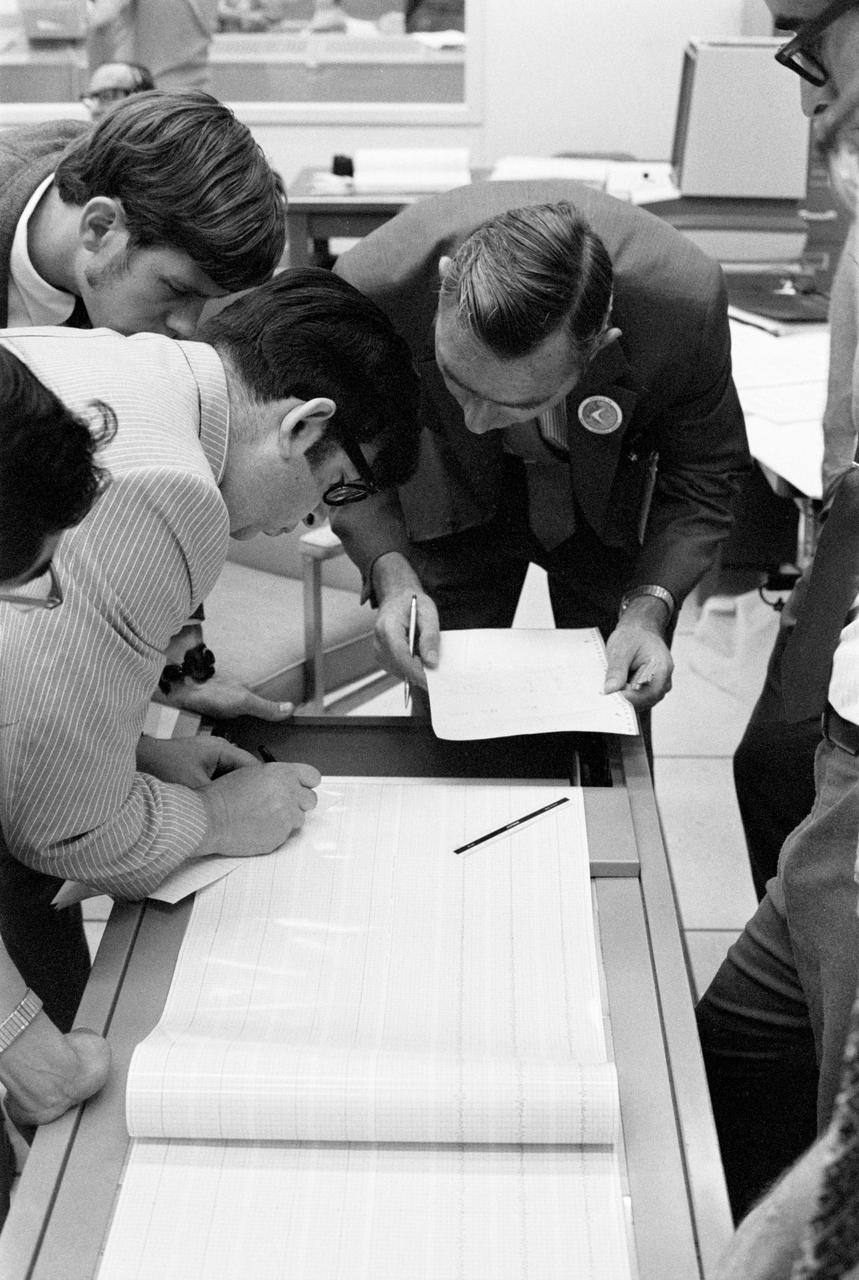
The seismometer reading from the impact made by the Apollo 15 Saturn S-IVB stage when it struck the lunar surface is studied by scientists in the Mission Control Center. Dr. Gary Latham (dark suit, wearing lapel button) of Columbia University is responsible for the design and experiment data analysis of the Passive Seismic Experiment of the Apollo Lunar Surface Experiment Package (ALSEP). The man on the left, writing, is Nafi Toksos of the Massachusetts Institute of Technology. Looking on at upper left is Dave Lamneline, also with Columbia.
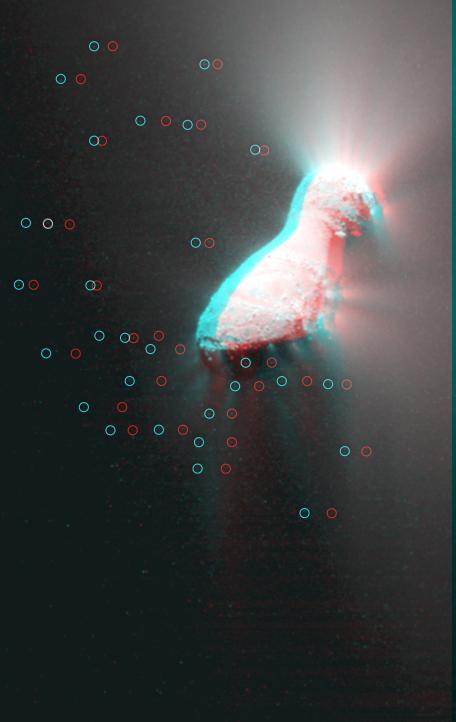
This 3-D image shows the region where NASA Deep Impact mission sent a probe into the surface of comet Tempel 1 in 2005. This picture was taken six years after the Deep Impact collision. 3D glasses are necessary to view this image.
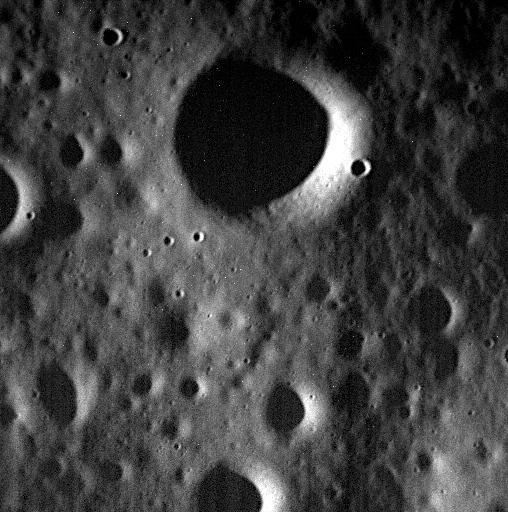
This image, acquired yesterday, is one of MESSENGER's last. Today, the spacecraft will complete its highly successful orbital mission and impact the surface of Mercury. View this image for details of MESSENGER's impact location. Impact is expected at 19:26:02 UTC (3:26:02 pm EDT) but will occur out of sight and communication with the Earth. The MESSENGER team will try to establish communications with the spacecraft when its orbit would allow it to be visible from Earth. The inability to establish communications between MESSENGER and the scheduled Earth-based tracking antenna will provide the first confirmation that the spacecraft has impacted the surface. After about 30 minutes following the predicted Mercury impact time, the team plans to announce whether MESSENGER's orbital mission has come to an end. Date acquired: April 29, 2015 Image Mission Elapsed Time (MET): 72595737 Image ID: 8414772 Instrument: Narrow Angle Camera (NAC) of the Mercury Dual Imaging System (MDIS) Center Latitude: 69.46° Center Longitude: 229.49° E Resolution: 1.7 meters/pixel Scale: The largest crater in this image has a diameter of 330 meters (0.2 miles) http://photojournal.jpl.nasa.gov/catalog/PIA19445
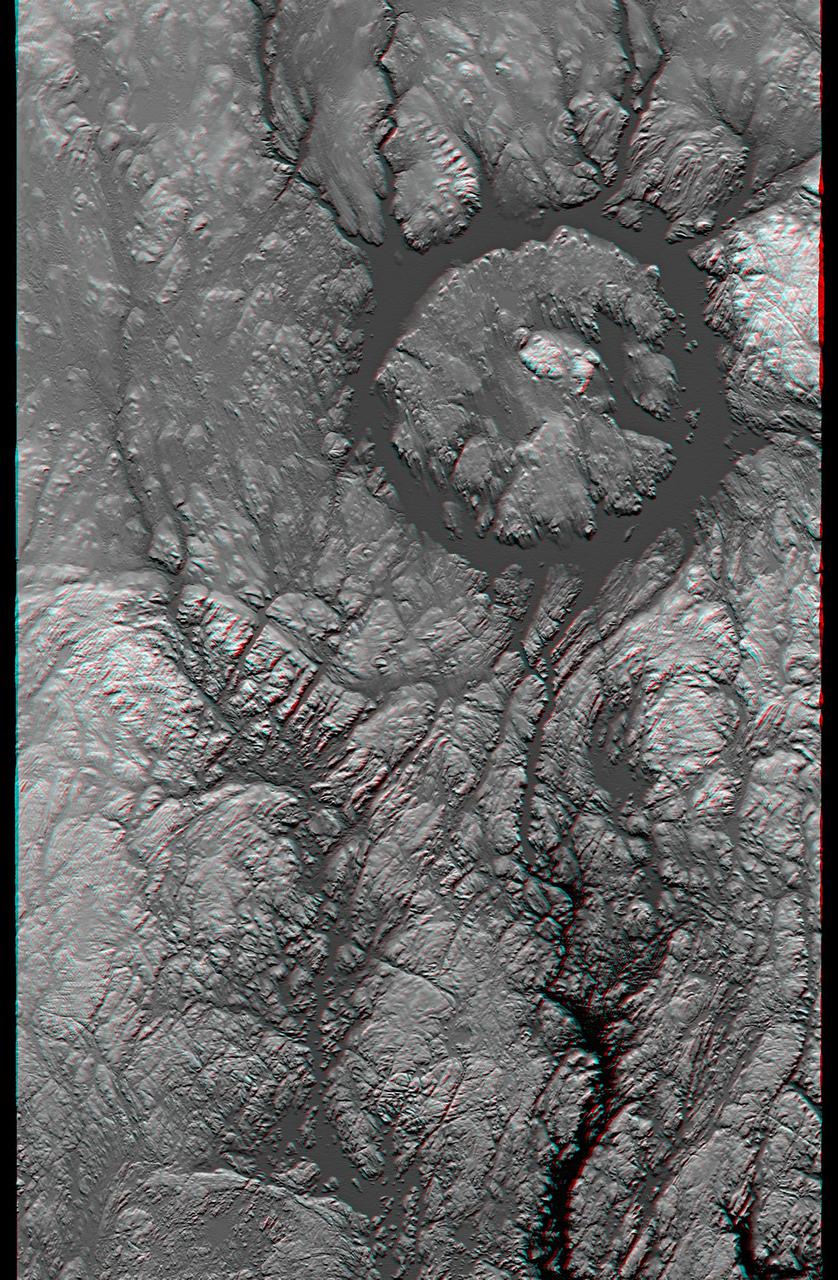
Manicouagan Crater is one of the world largest and oldest known impact craters and perhaps the one most readily apparent to astronauts in orbit. This anaglyph is from the instrument onboard NASA Shuttle Radar Topography Mission. 3D glasses needed.
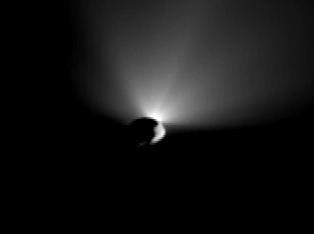
NASA Deep Impact flyby spacecraft took this image after it turned around to capture last shots of a receding comet Tempel 1. Earlier, the mission probe had smashed into the surface of Tempel 1.
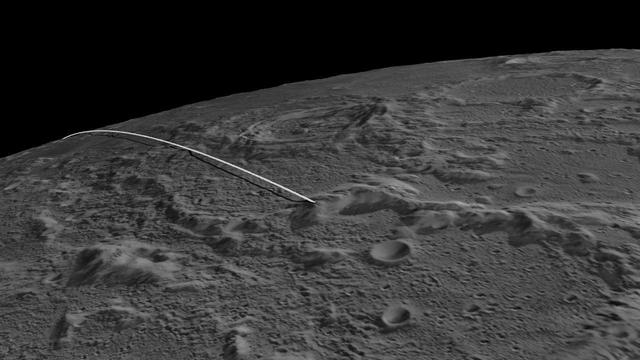
This image shows the final flight path for NASA twin Gravity Recovery and Interior Laboratory GRAIL mission spacecraft, which will impact the moon on Dec. 17, 2012, around 2:28 p.m. PST.

These side-by-side, 3-D comparisons depict the unnamed lunar mountain targeted by the NASA Gravity Recovery and Interior Laboratory GRAIL mission for controlled impact of the Ebb and Flow spacecraft.

This is a Tempel 1 temperature map of the nucleus with different spatial resolutions from NASA Deep Impact mission. The color bar in the middle gives temperature in Kelvins. The sun is to the right in all images.
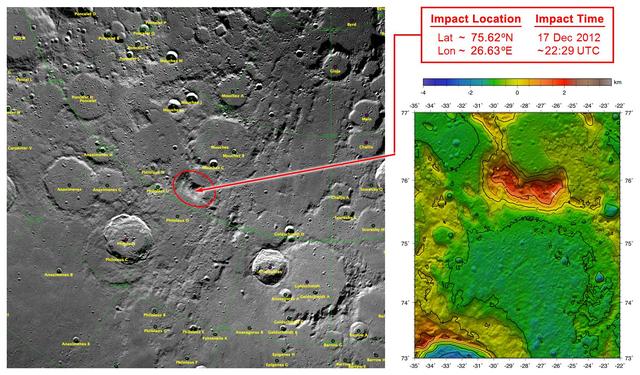
These maps of Earth moon highlight the region where the twin spacecraft of NASA Gravity Recovery and Interior Laboratory GRAIL mission will impact on Dec. 17, marking the end of its successful endeavor to map the moon gravity.
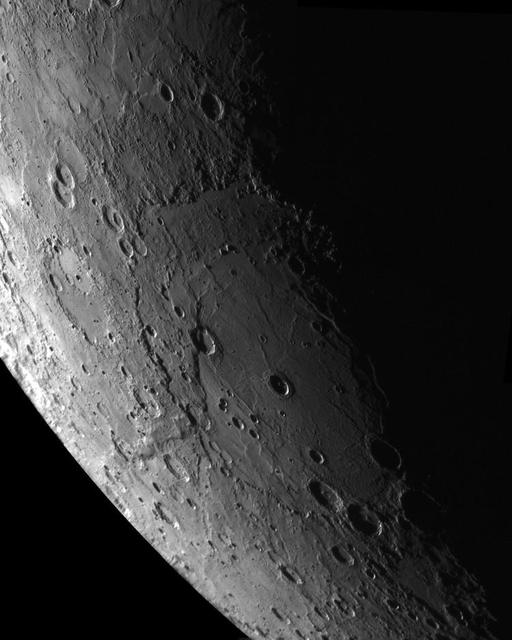
This mosaic was assembled using NAC images acquired as the MESSENGER spacecraft approached the planet during the mission second Mercury flyby The Rembrandt impact basin is seen at the center of the mosaic.
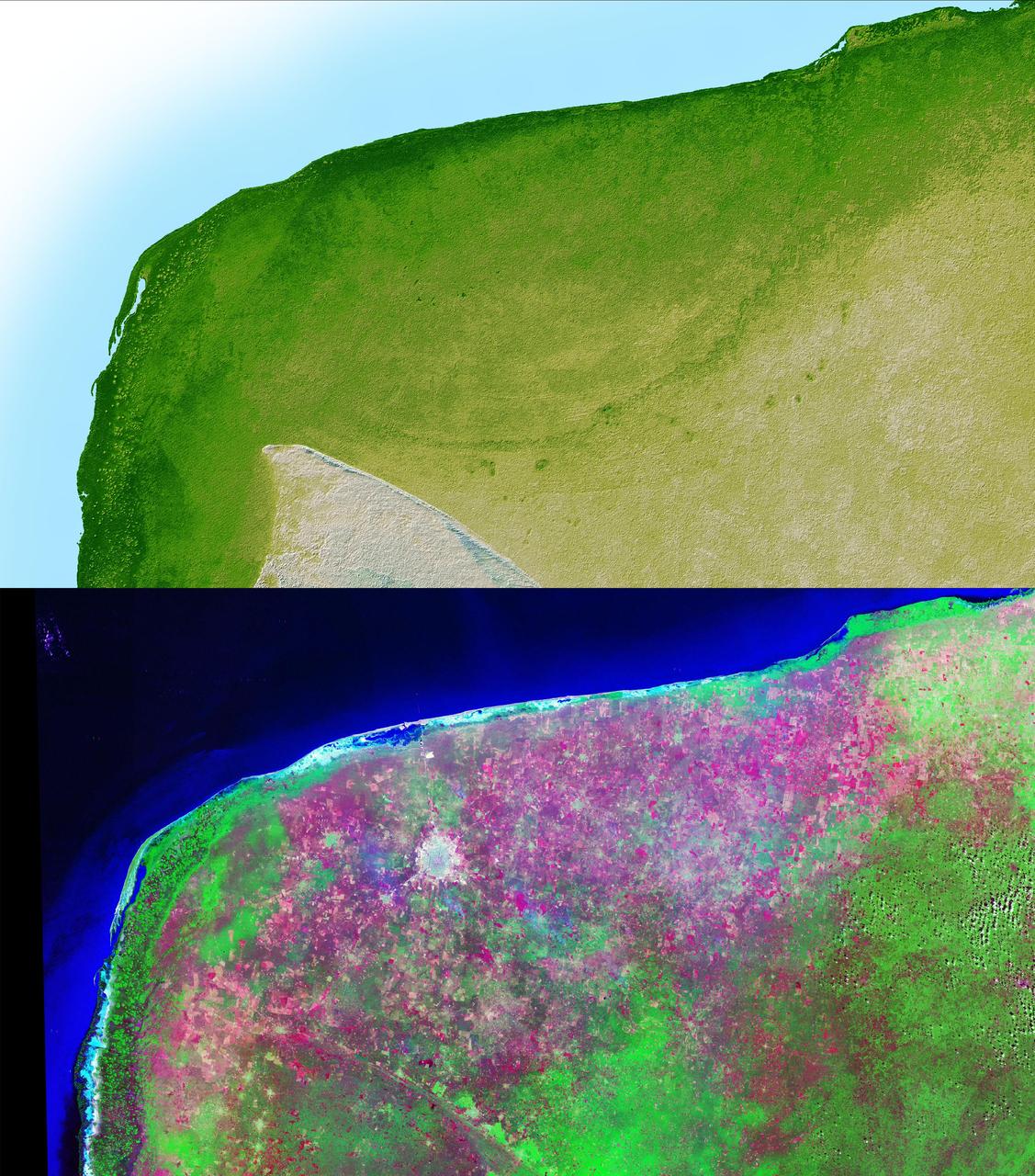
The top picture is a shaded relief image of the northwest corner of Mexico Yucatan Peninsula generated from NASA Shuttle Radar Topography Mission SRTM data, and shows a subtle, but unmistakable, indication of the Chicxulub impact crater.
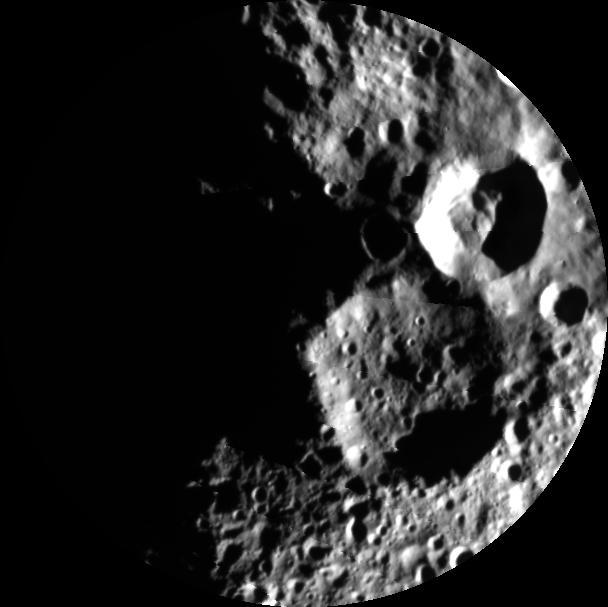
This image from NASA Dawn mission reveals the creeping dawn over the north pole of the giant asteroid Vesta now that sunlight is shining over that area. The mosaic shows two large impact craters.
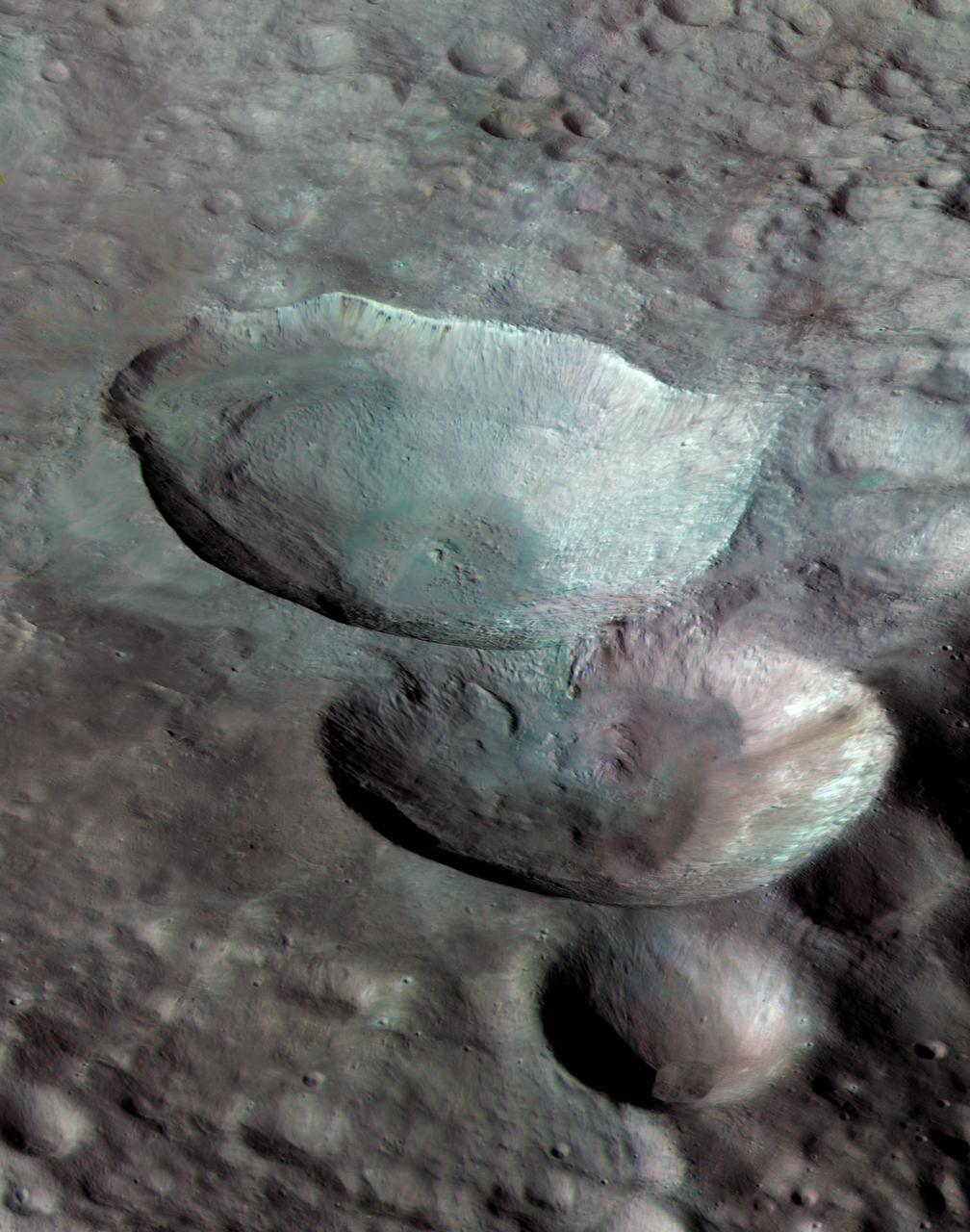
Three impact craters of different sizes, arranged in the shape of a snowman, make up one of the most striking features on Vesta, as seen in this view from NASA Dawn mission.
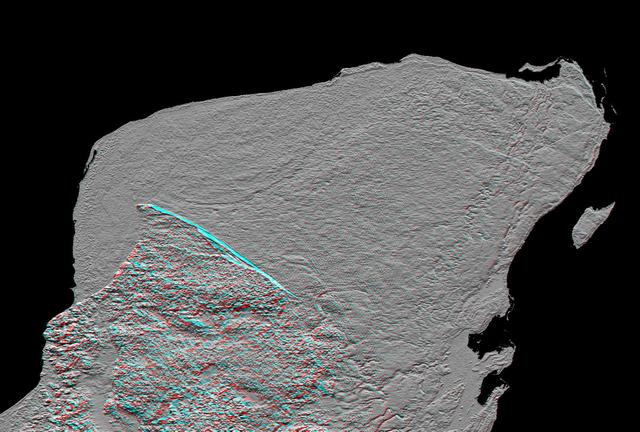
This anaglyph of Mexico Yucatan Peninsula was generated from NASA Shuttle Radar Topography Mission data, and shows a subtle but distinctive indication of the Chicxulub impact crater. 3D glasses are necessary to view this image.
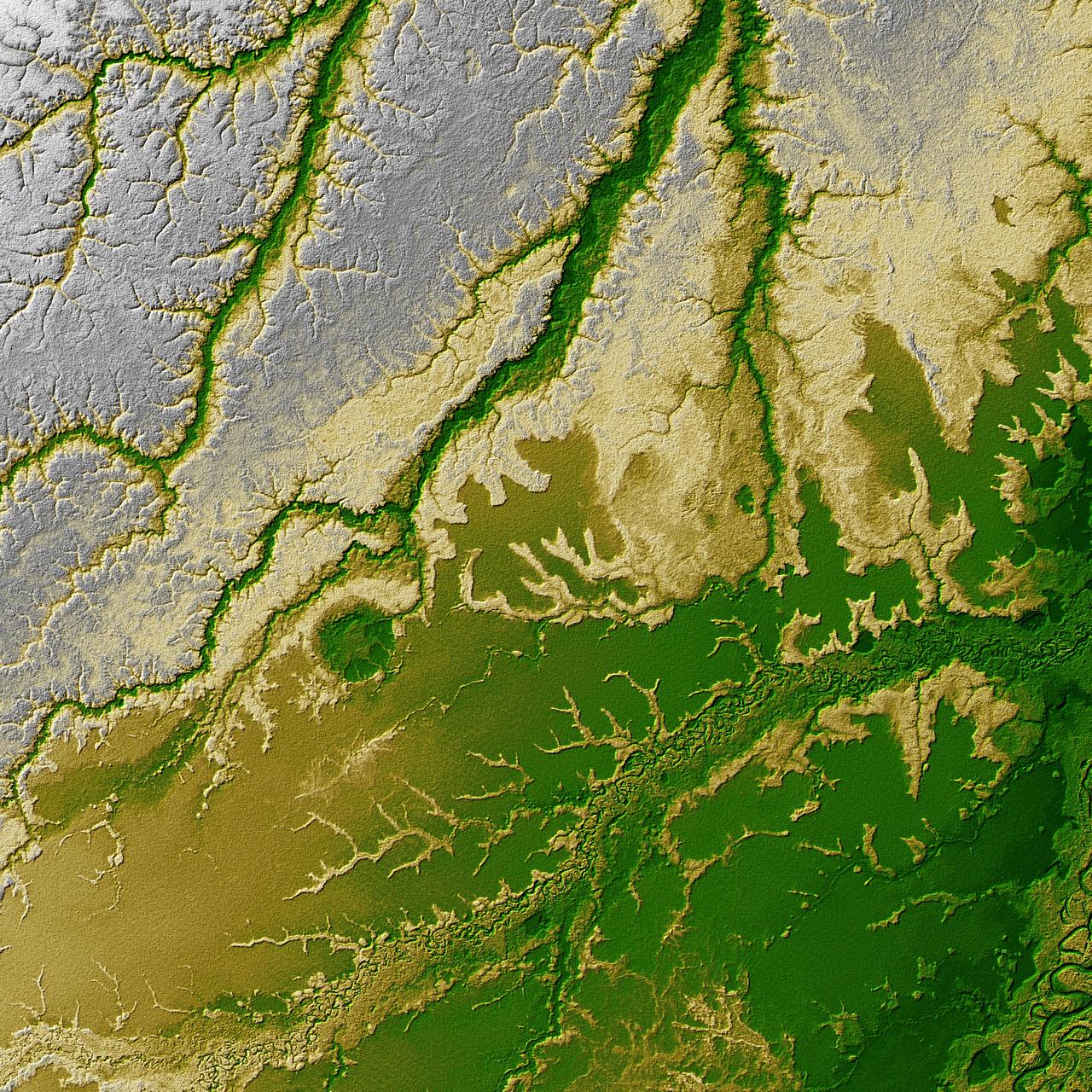
An 8-kilometer 5-mile wide crater of possible impact origin is shown in this view of an isolated part of the Bolivian Amazon from NASA Shuttle Radar Topography Mission.
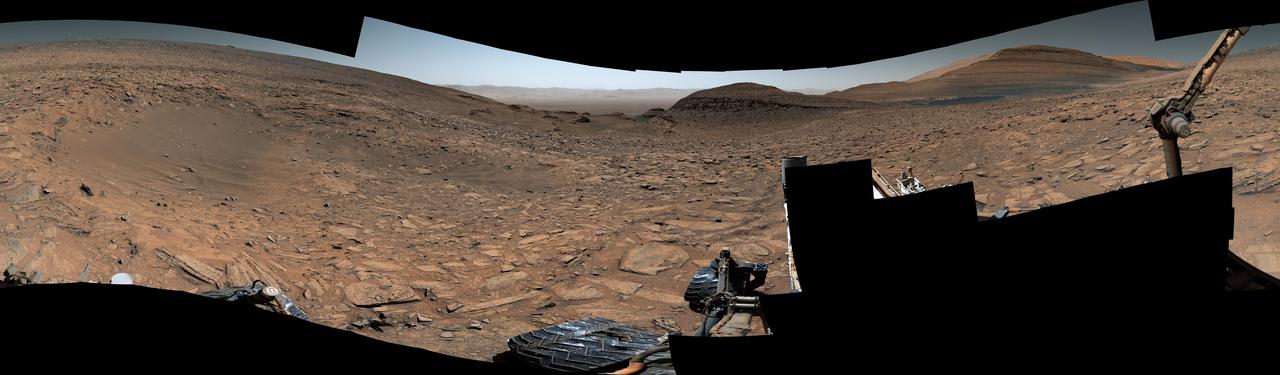
NASA's Curiosity Mars rover captured this 360-degree view showing an impact crater in a location nicknamed "Jau." The scene was captured with the rover's Mastcam on July 25, 2023, the 3,899th Martian day, or sol, of the mission. This was one of dozens of impact craters within a crater cluster Curiosity stopped by after completing one of its most difficult climbs ever. This particular crater is estimated to be about 60 feet (18 meters) wide. Part of Curiosity's robotic arm can be seen at right. In the center of the scene is the path back down a slope toward "Marker Band Valley," which Curiosity passed through on its way to Jau. Beyond that are the floor and northern rim of Gale Crater. This mosaic is made up of 129 images that were stitched together after being sent back to Earth. The color has been adjusted to match lighting conditions as the human eye would see them on Earth. https://photojournal.jpl.nasa.gov/catalog/PIA26014

LCROSS Impact Night: John Marmie (on left) and Peter Klupar (on right) In the Mission Operations Control Room (MOCR) at NASA Ames Research Center, Moffett Field, Calif. just after impact.

This artist's concept depicts a scene from 4.5 billion years ago, when scientists believe giant impacts occurred on Mars, injecting debris deep into the planet's mantle. NASA's InSight lander detected this debris before the mission's end in 2022, and these findings from the mission were published in the journal Science on Aug. 28, 2025. The early solar system had many space rocks bashing into the young planets, and smaller impactors can be seen surrounding this giant one in the image. The giant asteroids or comets that sent debris into the Martian mantle would have released enough energy to melt continent-size swaths of the early crust and mantle into vast magma oceans. https://photojournal.jpl.nasa.gov/catalog/PIA26635
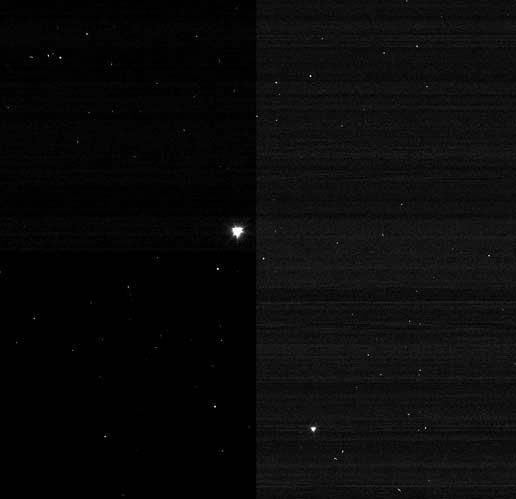
This image of NASA Deep Impact impactor probe was taken by the mission mother ship, or flyby spacecraft, after the two separated at 11:07 p.m. Pacific time, July 2 2:07 a.m. Eastern time, July 3, 2005.
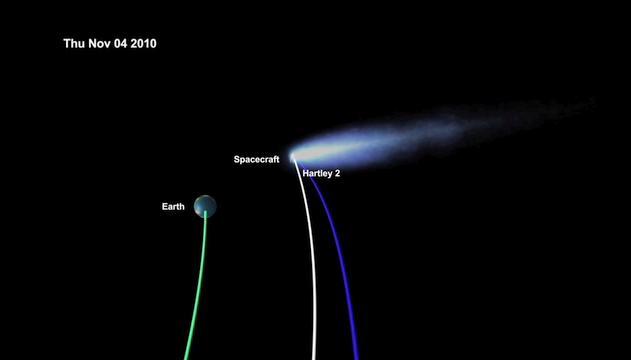
This frame from a movie begins with the launch of NASA Deep Impact on Jan. 12, 2005, from Cape Canaveral, Fla. On July 4, 2005, the mission released a probe into Comet Tempel 1, revealing its pristine, inner material.
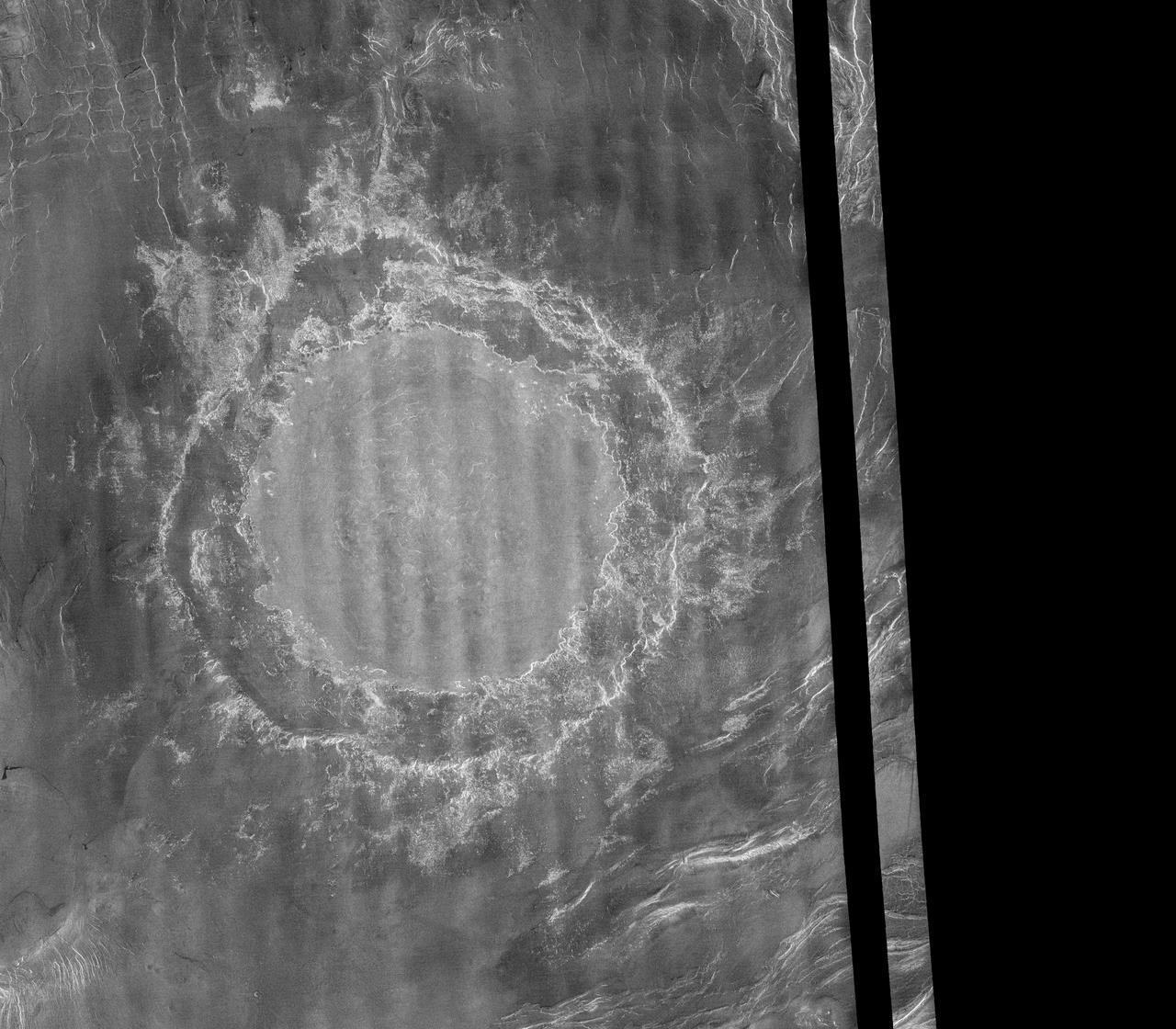
NASA's Magellan image mosaic shows the largest impact crater known to exist on Venus at this point in the Magellan mission. The crater is located north of Aphrodite Terra and east of Eistla Regio and was imaged during orbit 804 on November 12, 1990. http://photojournal.jpl.nasa.gov/catalog/PIA00148
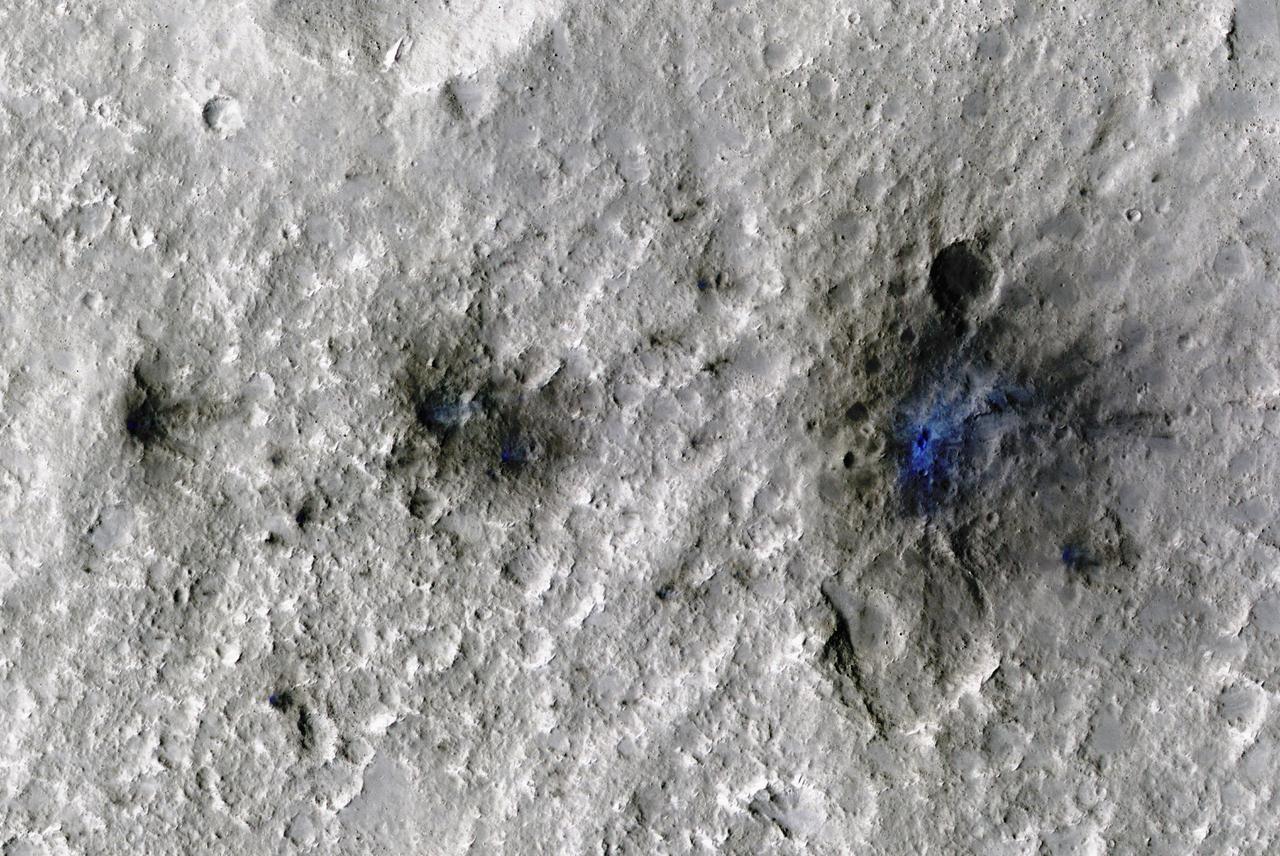
The craters seen here in blue were formed by a meteoroid impact on Mars on Sept. 5, 2021. The impact was the first to be detected by NASA's InSight mission; the image was taken later by NASA's Mars Reconnaissance Orbiter using its High Resolution Imaging Science Experiment (HiRISE) camera. The initial impact itself created a small marsquake that was detected by InSight's seismometer. The instrument recorded seismological data that showed the moment the meteoroid entered Mars' atmosphere, its explosion into pieces in the atmosphere, and finally, the impact that created a series of at least three craters in the surface. MRO then flew over the approximate site where the impact was "felt" to look for darkened patches of ground using its Context Camera. After finding this location, HiRISE captured the scene in color. The ground is not actually blue; this enhanced-color image highlights certain hues in the scene to make details more visible to the human eye – in this case, dust and soil disturbed by the impact. https://photojournal.jpl.nasa.gov/catalog/PIA25408

LCROSS Impact Night: From left to right John Marmie, Jack Boyd, Lewis Braxton, III, Tina Panontin, Pete Worden (center front) Chuck Duff, in the Mission Operations Control Room (MOCR). All right, impact!
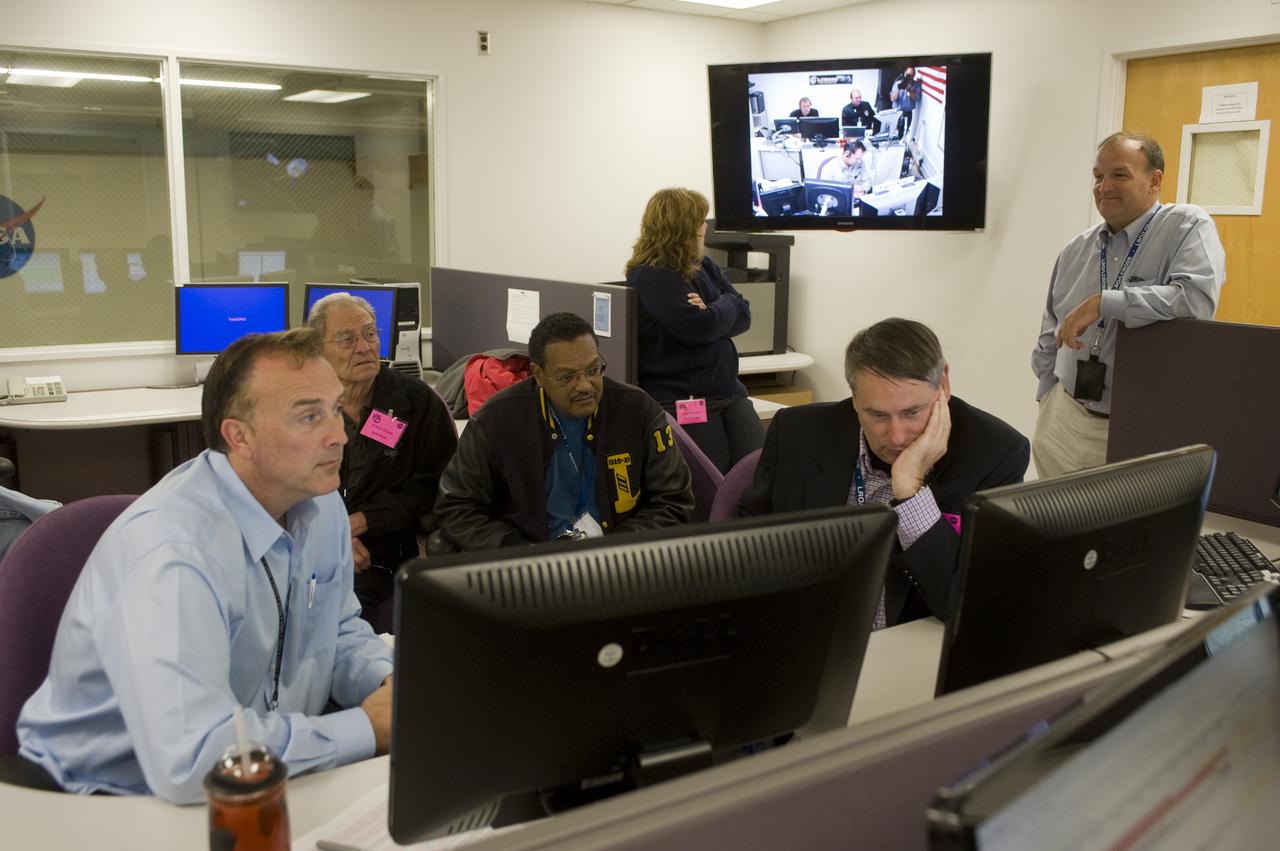
LCROSS Impact Night: In the Mission Operations Control Room (MOCR). From left to right, John Marmie, Jack Boyd, Lew Braxton, Pete Worden, Tina Panontin (looking at wall monitor) and Chuck Duff awaiting confirmation of impact
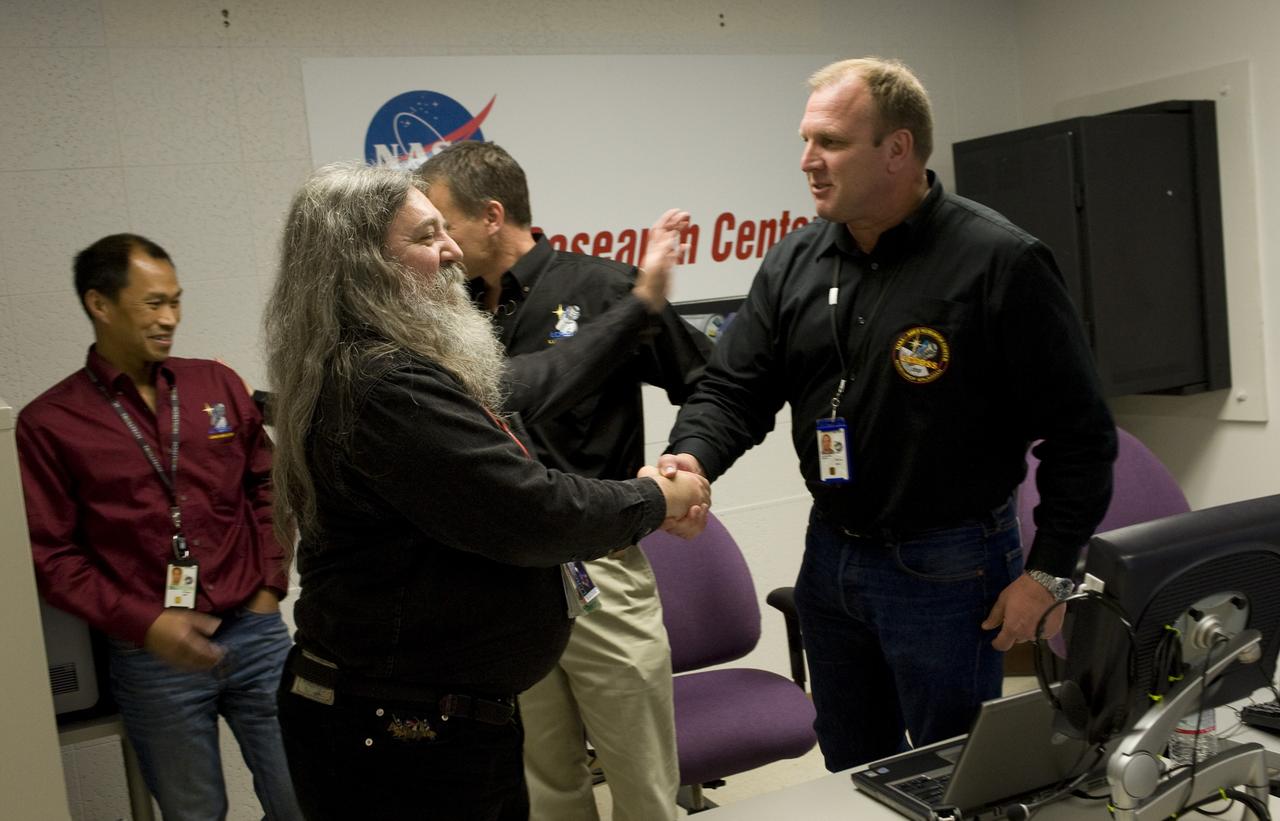
LCROSS Impact Night From left to right: Khanh Trinh (Simulator Engineer), and Dan Andrews (LCROSS Project Manager) in background, John Bresina (Command Sequencing Engineer), and John Schreiner (Mission Operations Manager), shake hands after confirmation the LCROSS spacecraft successfully impacted its target crater on the moon.

LCROSS Impact Night: From left to right John Marmie, Jack Boyd, Lewis Braxton, III, Tina Panontin, Pete Worden (center front) Chuck Duff, in the Mission Operations Control Room (MOCR). All right, impact!
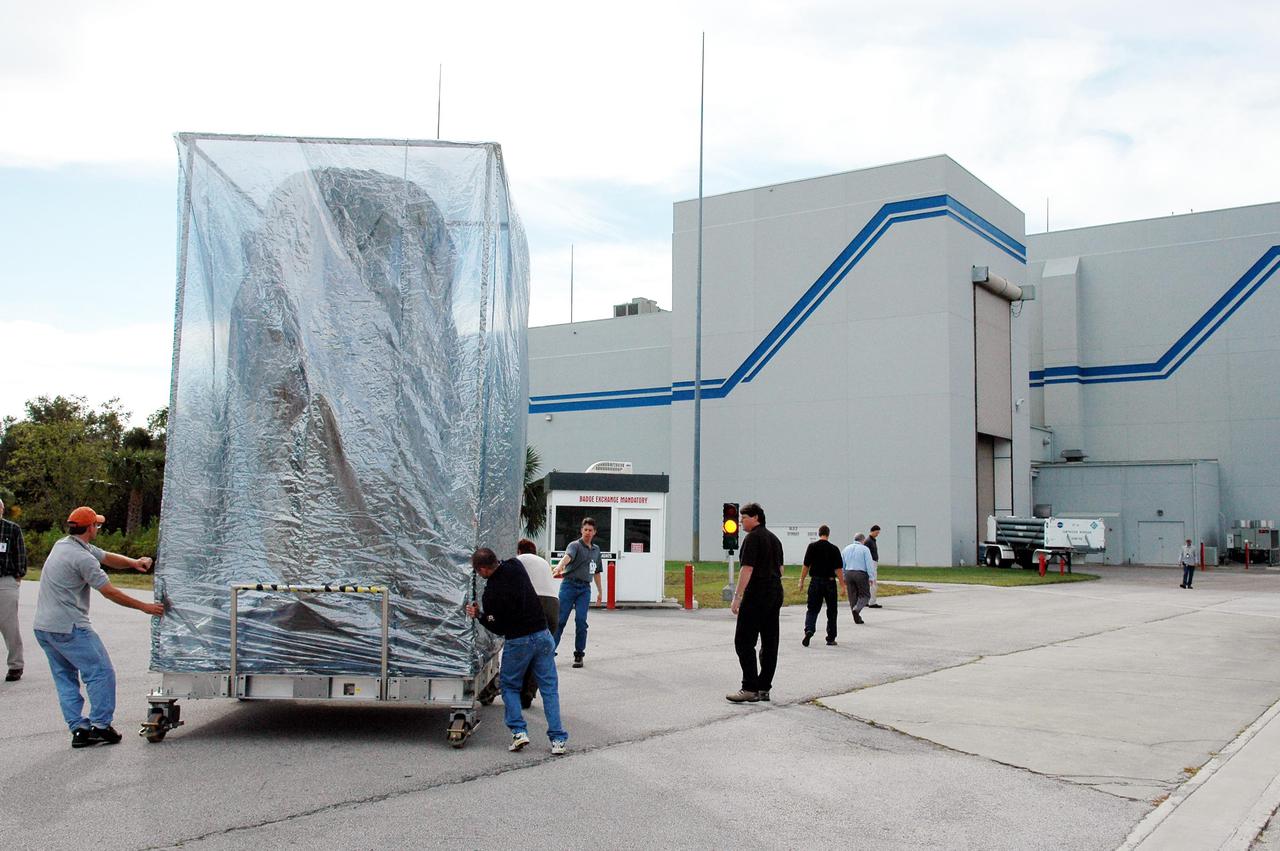
KENNEDY SPACE CENTER, FLA. - At Astrotech Space Operations in Titusville, Fla., workers push the Deep Impact spacecraft toward the Hazardous Fuel Building. Deep Impact is being prepared for shipment to Launch Pad 17-B, Cape Canaveral Air Force Station. At Astrotech Space Operations in Titusville, Fla., workers help guide an overhead crane holding a protective cover that will be placed over the Deep Impact spacecraft below. Deep Impact is being prepared for a move to the Hazardous Fuel Building and eventually shipment to Launch Pad 17-B, Cape Canaveral Air Force Station. Launch of Deep Impact is scheduled no earlier than Jan. 12. A NASA Discovery mission, Deep Impact will probe beneath the surface of Comet Tempel 1 on July 4, 2005, when the comet is 83 million miles from Earth, and reveal the secrets of its interior. After releasing a 3- by 3-foot projectile to crash onto the surface, Deep Impact’s flyby spacecraft will collect pictures and data of how the crater forms, measuring the crater’s depth and diameter, as well as the composition of the interior of the crater and any material thrown out, and determining the changes in natural outgassing produced by the impact. It will send the data back to Earth through the antennas of the Deep Space Network.
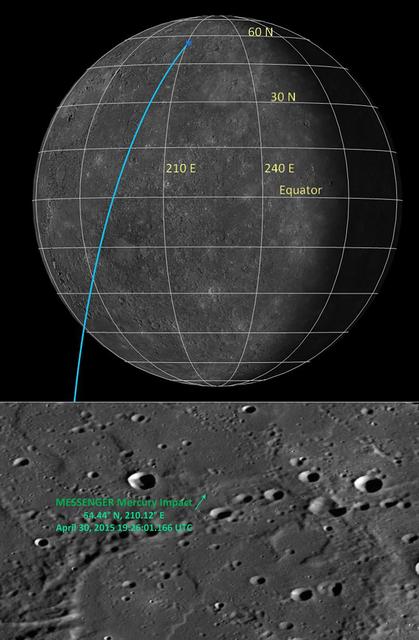
The day before the MESSENGER spacecraft impacted the surface of Mercury, the best prediction for the location and time of the impact was 54.4° N, 210.1° E, on 30 April 2015 at 19.26:02 UTC, as shown in the featured image of that day. In the last month since impact, MESSENGER engineers have completed the final and most accurate determination of where the MESSENGER spacecraft impacted Mercury's surface. The determination indicates that the spacecraft impacted into a part of Mercury's surface that has a gradual incline with an approximate slope of 8.5°. The final estimate of the impact location is at 54.4398° N, 210.1205° E, and 2438.790 km from the center of Mercury. The final determination of the impact time is 19:26:01.166 UTC on 30 April 2015. Traveling at 3.912 kilometers per second (8,750 miles per hour), the MESSENGER spacecraft is estimated to have created a crater 16 meters (52 feet) in diameter at this location. This new best determination of the impact location will help the next Mercury spacecraft to identify MESSENGER's crater, such as the joint ESA-JAXA BepiColombo mission, scheduled for lauch in 2017 and arrival in Mercury orbit in 2024. Bottom Image Scale: This image is roughly 130 km (81 miles) across. http://photojournal.jpl.nasa.gov/catalog/PIA19497
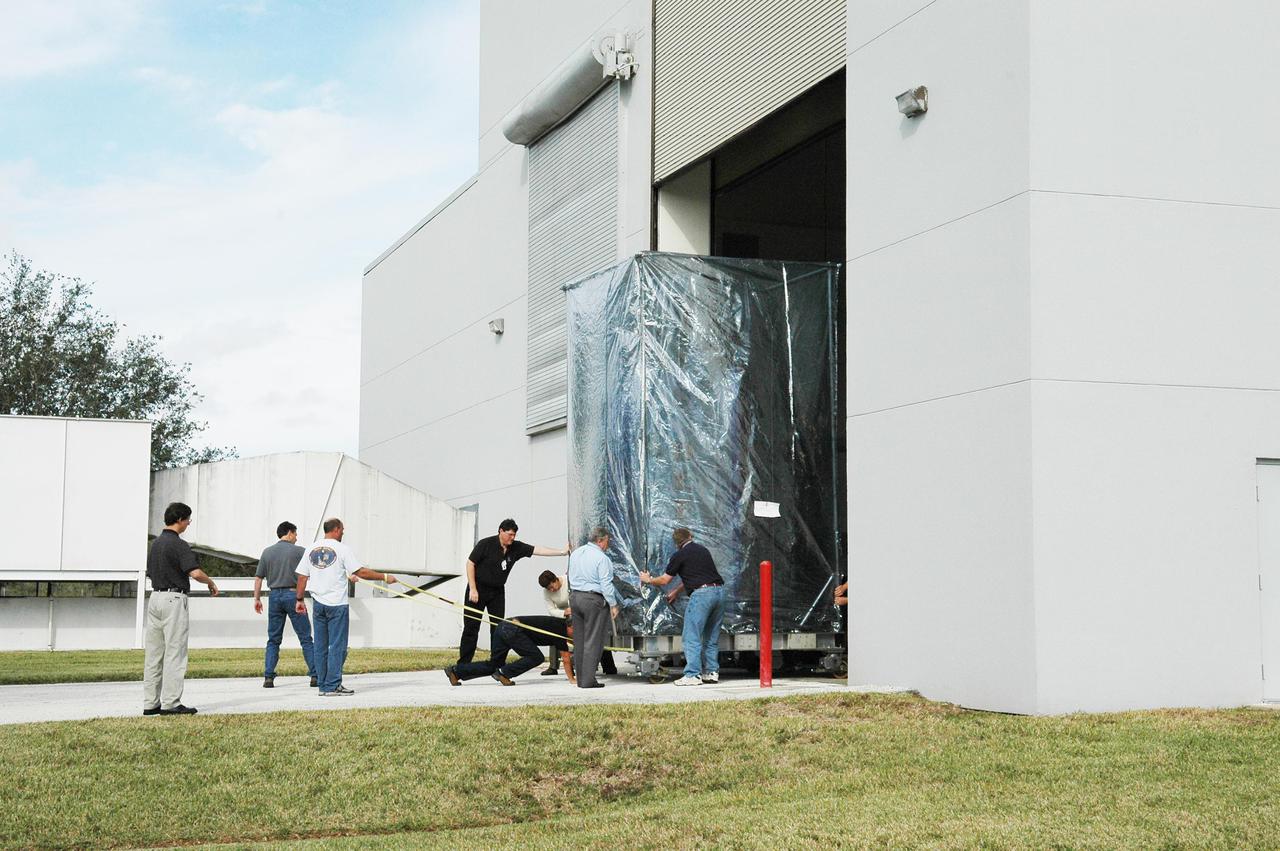
KENNEDY SPACE CENTER, FLA. - At Astrotech Space Operations in Titusville, Fla., workers push and pull the moveable stand holding the Deep Impact spacecraft to get it through the door. Deep Impact is being moved to the Hazardous Fuel Building and eventually shipment to Launch Pad 17-B, Cape Canaveral Air Force Station. At Astrotech Space Operations in Titusville, Fla., workers help guide an overhead crane holding a protective cover that will be placed over the Deep Impact spacecraft below. Deep Impact is being prepared for a move to the Hazardous Fuel Building and eventually shipment to Launch Pad 17-B, Cape Canaveral Air Force Station. Launch of Deep Impact is scheduled no earlier than Jan. 12. A NASA Discovery mission, Deep Impact will probe beneath the surface of Comet Tempel 1 on July 4, 2005, when the comet is 83 million miles from Earth, and reveal the secrets of its interior. After releasing a 3- by 3-foot projectile to crash onto the surface, Deep Impact’s flyby spacecraft will collect pictures and data of how the crater forms, measuring the crater’s depth and diameter, as well as the composition of the interior of the crater and any material thrown out, and determining the changes in natural outgassing produced by the impact. It will send the data back to Earth through the antennas of the Deep Space Network.
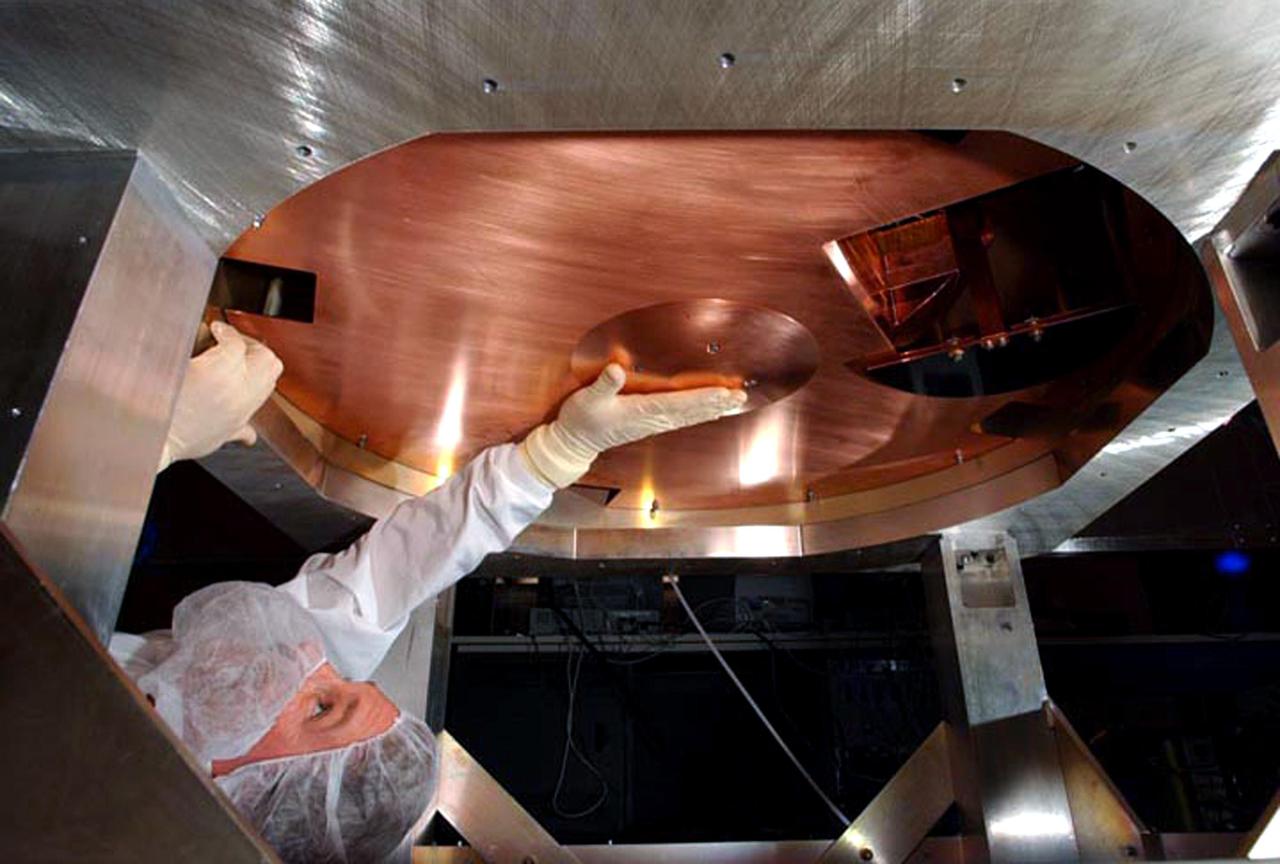
KENNEDY SPACE CENTER, FLA. - At Ball Aerospace in Boulder, Colo., the impactor on the Deep Impact spacecraft is tested. Deep Impact will probe beneath the surface of Comet Tempel 1 on July 4, 2005, when the comet is 83 million miles from Earth, and reveal the secrets of its interior. After releasing a 3- by 3-foot projectile (impactor) to crash onto the surface, Deep Impact’s flyby spacecraft will collect pictures and data of how the crater forms, measuring the crater’s depth and diameter, as well as the composition of the interior of the crater and any material thrown out, and determining the changes in natural outgassing produced by the impact. The impactor will separate from the flyby spacecraft 24 hours before it impacts the surface of Tempel 1's nucleus. The impactor delivers 19 Gigajoules (that's 4.8 tons of TNT) of kinetic energy to excavate the crater. This kinetic energy is generated by the combination of the mass of the impactor and its velocity when it impacts. To accomplish this feat, the impactor uses a high-precision star tracker, the Impactor Target Sensor (ITS), and Auto-Navigation algorithms developed by Jet Propulsion Laboratory to guide it to the target. Deep Impact is a NASA Discovery mission. Launch of Deep Impact is scheduled for Jan. 12 from Launch Pad 17-B, Cape Canaveral Air Force Station, Fla.
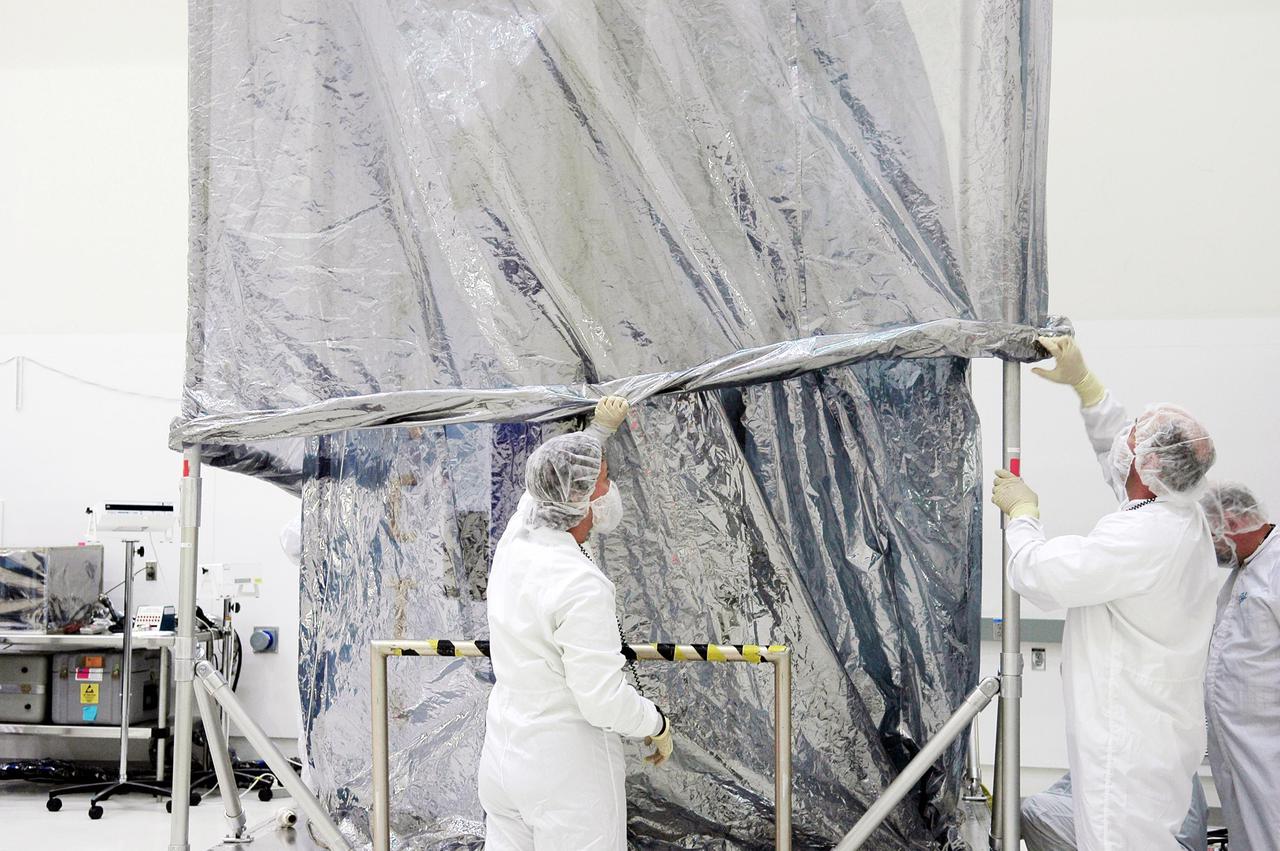
KENNEDY SPACE CENTER, FLA. - At Astrotech Space Operations in Titusville, Fla., workers lower a second protective cover around the Deep Impact spacecraft. Deep Impact is being prepared for a move to the Hazardous Fuel Building and eventually shipment to Launch Pad 17-B, Cape Canaveral Air Force Station. At Astrotech Space Operations in Titusville, Fla., workers help guide an overhead crane holding a protective cover that will be placed over the Deep Impact spacecraft below. Deep Impact is being prepared for a move to the Hazardous Fuel Building and eventually shipment to Launch Pad 17-B, Cape Canaveral Air Force Station. Launch of Deep Impact is scheduled no earlier than Jan. 12. A NASA Discovery mission, Deep Impact will probe beneath the surface of Comet Tempel 1 on July 4, 2005, when the comet is 83 million miles from Earth, and reveal the secrets of its interior. After releasing a 3- by 3-foot projectile to crash onto the surface, Deep Impact’s flyby spacecraft will collect pictures and data of how the crater forms, measuring the crater’s depth and diameter, as well as the composition of the interior of the crater and any material thrown out, and determining the changes in natural outgassing produced by the impact. It will send the data back to Earth through the antennas of the Deep Space Network.
KENNEDY SPACE CENTER, FLA. - At Astrotech Space Operations in Titusville, Fla., workers secure the protective cover around the Deep Impact spacecraft. Deep Impact is being prepared for a move to the Hazardous Fuel Building and eventually shipment to Launch Pad 17-B, Cape Canaveral Air Force Station. At Astrotech Space Operations in Titusville, Fla., workers help guide an overhead crane holding a protective cover that will be placed over the Deep Impact spacecraft below. Deep Impact is being prepared for a move to the Hazardous Fuel Building and eventually shipment to Launch Pad 17-B, Cape Canaveral Air Force Station. Launch of Deep Impact is scheduled no earlier than Jan. 12. A NASA Discovery mission, Deep Impact will probe beneath the surface of Comet Tempel 1 on July 4, 2005, when the comet is 83 million miles from Earth, and reveal the secrets of its interior. After releasing a 3- by 3-foot projectile to crash onto the surface, Deep Impact’s flyby spacecraft will collect pictures and data of how the crater forms, measuring the crater’s depth and diameter, as well as the composition of the interior of the crater and any material thrown out, and determining the changes in natural outgassing produced by the impact. It will send the data back to Earth through the antennas of the Deep Space Network.
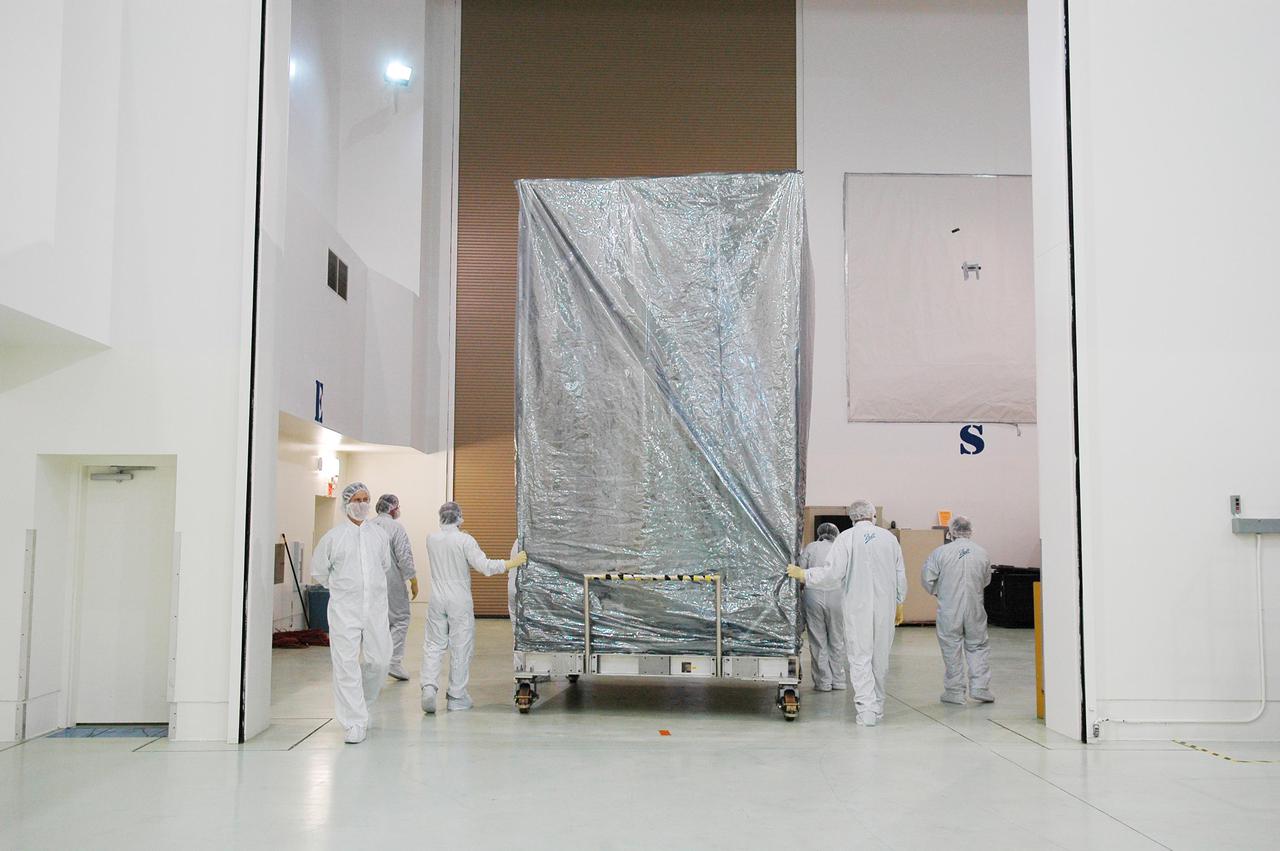
KENNEDY SPACE CENTER, FLA. - At Astrotech Space Operations in Titusville, Fla., workers push the Deep Impact spacecraft into the Hazardous Fuel Building. Deep Impact is being prepared for shipment to Launch Pad 17-B, Cape Canaveral Air Force Station. At Astrotech Space Operations in Titusville, Fla., workers help guide an overhead crane holding a protective cover that will be placed over the Deep Impact spacecraft below. Deep Impact is being prepared for a move to the Hazardous Fuel Building and eventually shipment to Launch Pad 17-B, Cape Canaveral Air Force Station. Launch of Deep Impact is scheduled no earlier than Jan. 12. A NASA Discovery mission, Deep Impact will probe beneath the surface of Comet Tempel 1 on July 4, 2005, when the comet is 83 million miles from Earth, and reveal the secrets of its interior. After releasing a 3- by 3-foot projectile to crash onto the surface, Deep Impact’s flyby spacecraft will collect pictures and data of how the crater forms, measuring the crater’s depth and diameter, as well as the composition of the interior of the crater and any material thrown out, and determining the changes in natural outgassing produced by the impact. It will send the data back to Earth through the antennas of the Deep Space Network.
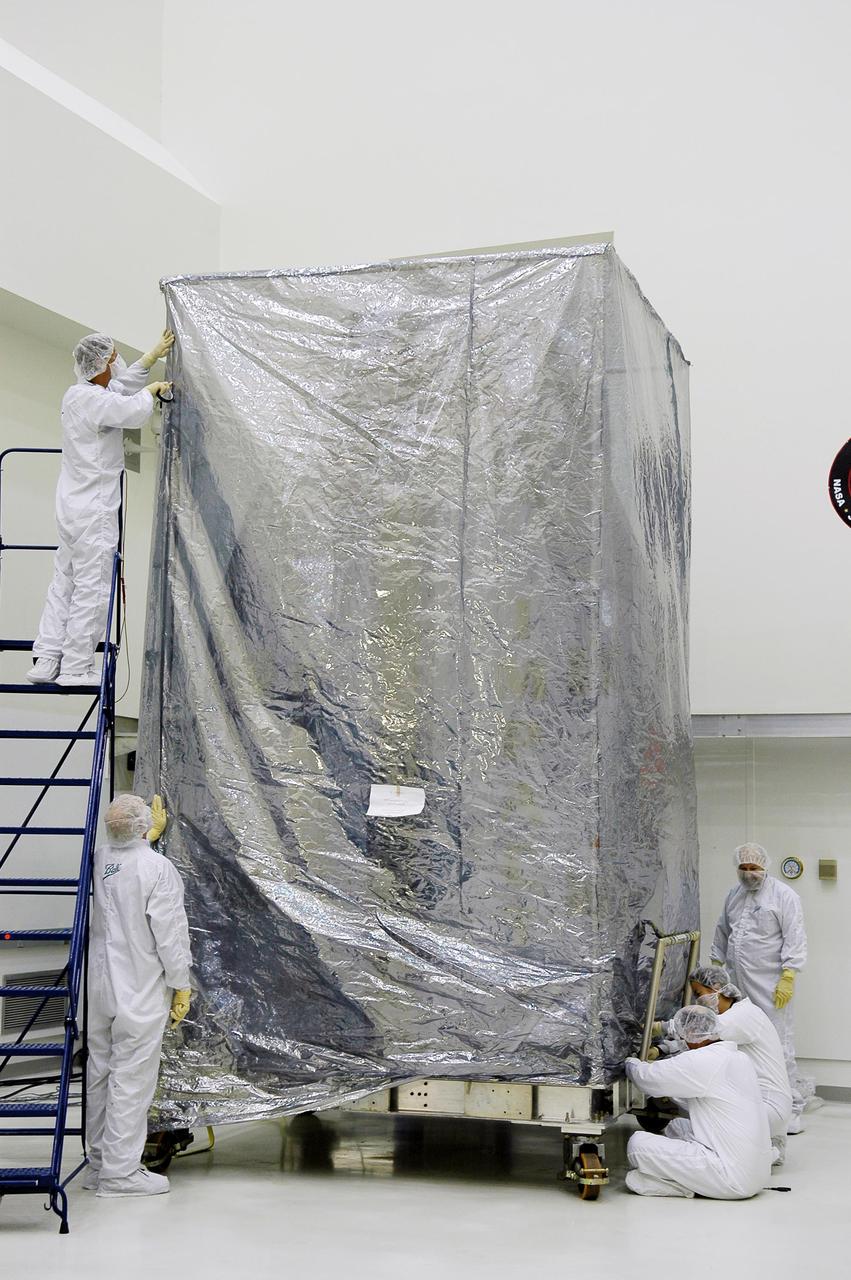
KENNEDY SPACE CENTER, FLA. - At Astrotech Space Operations in Titusville, Fla., workers secure the second protective cover around the Deep Impact spacecraft. Deep Impact is being prepared for a move to the Hazardous Fuel Building and eventually shipment to Launch Pad 17-B, Cape Canaveral Air Force Station. At Astrotech Space Operations in Titusville, Fla., workers help guide an overhead crane holding a protective cover that will be placed over the Deep Impact spacecraft below. Deep Impact is being prepared for a move to the Hazardous Fuel Building and eventually shipment to Launch Pad 17-B, Cape Canaveral Air Force Station. Launch of Deep Impact is scheduled no earlier than Jan. 12. A NASA Discovery mission, Deep Impact will probe beneath the surface of Comet Tempel 1 on July 4, 2005, when the comet is 83 million miles from Earth, and reveal the secrets of its interior. After releasing a 3- by 3-foot projectile to crash onto the surface, Deep Impact’s flyby spacecraft will collect pictures and data of how the crater forms, measuring the crater’s depth and diameter, as well as the composition of the interior of the crater and any material thrown out, and determining the changes in natural outgassing produced by the impact. It will send the data back to Earth through the antennas of the Deep Space Network.
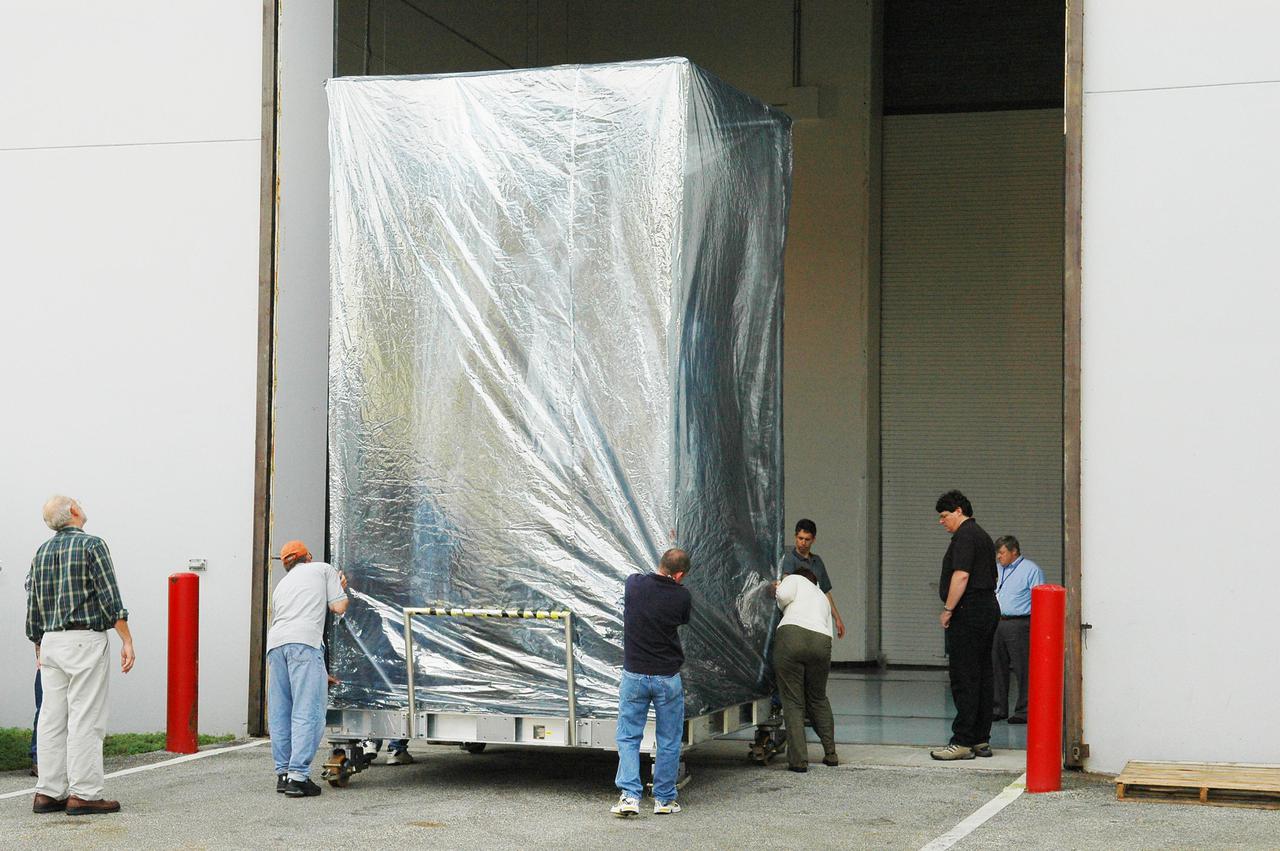
KENNEDY SPACE CENTER, FLA. - At Astrotech Space Operations in Titusville, Fla., workers roll the Deep Impact spacecraft toward the door. Deep Impact is being moved to the Hazardous Fuel Building and eventually shipment to Launch Pad 17-B, Cape Canaveral Air Force Station. At Astrotech Space Operations in Titusville, Fla., workers help guide an overhead crane holding a protective cover that will be placed over the Deep Impact spacecraft below. Deep Impact is being prepared for a move to the Hazardous Fuel Building and eventually shipment to Launch Pad 17-B, Cape Canaveral Air Force Station. Launch of Deep Impact is scheduled no earlier than Jan. 12. A NASA Discovery mission, Deep Impact will probe beneath the surface of Comet Tempel 1 on July 4, 2005, when the comet is 83 million miles from Earth, and reveal the secrets of its interior. After releasing a 3- by 3-foot projectile to crash onto the surface, Deep Impact’s flyby spacecraft will collect pictures and data of how the crater forms, measuring the crater’s depth and diameter, as well as the composition of the interior of the crater and any material thrown out, and determining the changes in natural outgassing produced by the impact. It will send the data back to Earth through the antennas of the Deep Space Network.
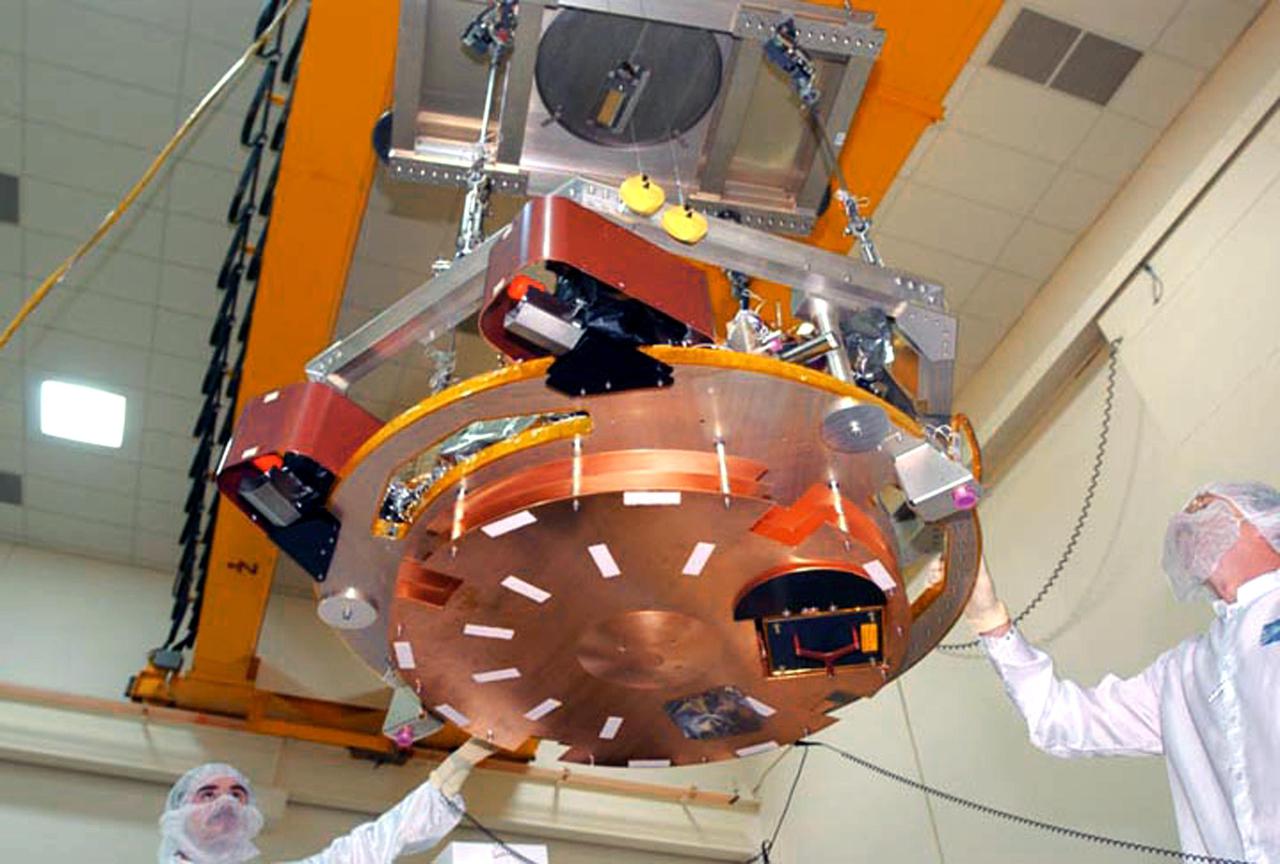
JET PROPULSION LABORATORY, CALIF. - The impactor of the Deep Impact spacecraft, suspended by an overhead crane, undergoes inspection in the Fischer Assembly building at Ball Aerospace in Boulder, Colo. Deep Impact will probe beneath the surface of Comet Tempel 1 on July 4, 2005, when the comet is 83 million miles from Earth, and reveal the secrets of its interior. After releasing a 3- by 3-foot projectile (impactor) to crash onto the surface, Deep Impact’s flyby spacecraft will collect pictures and data of how the crater forms, measuring the crater’s depth and diameter, as well as the composition of the interior of the crater and any material thrown out, and determining the changes in natural outgassing produced by the impact. The impactor will separate from the flyby spacecraft 24 hours before it impacts the surface of Tempel 1's nucleus. The impactor delivers 19 Gigajoules (that's 4.8 tons of TNT) of kinetic energy to excavate the crater. This kinetic energy is generated by the combination of the mass of the impactor and its velocity when it impacts. To accomplish this feat, the impactor uses a high-precision star tracker, the Impactor Target Sensor (ITS), and Auto-Navigation algorithms developed by Jet Propulsion Laboratory to guide it to the target. Deep Impact is a NASA Discovery mission. Launch of Deep Impact is scheduled for Jan. 12 from Launch Pad 17-B, Cape Canaveral Air Force Station, Fla.
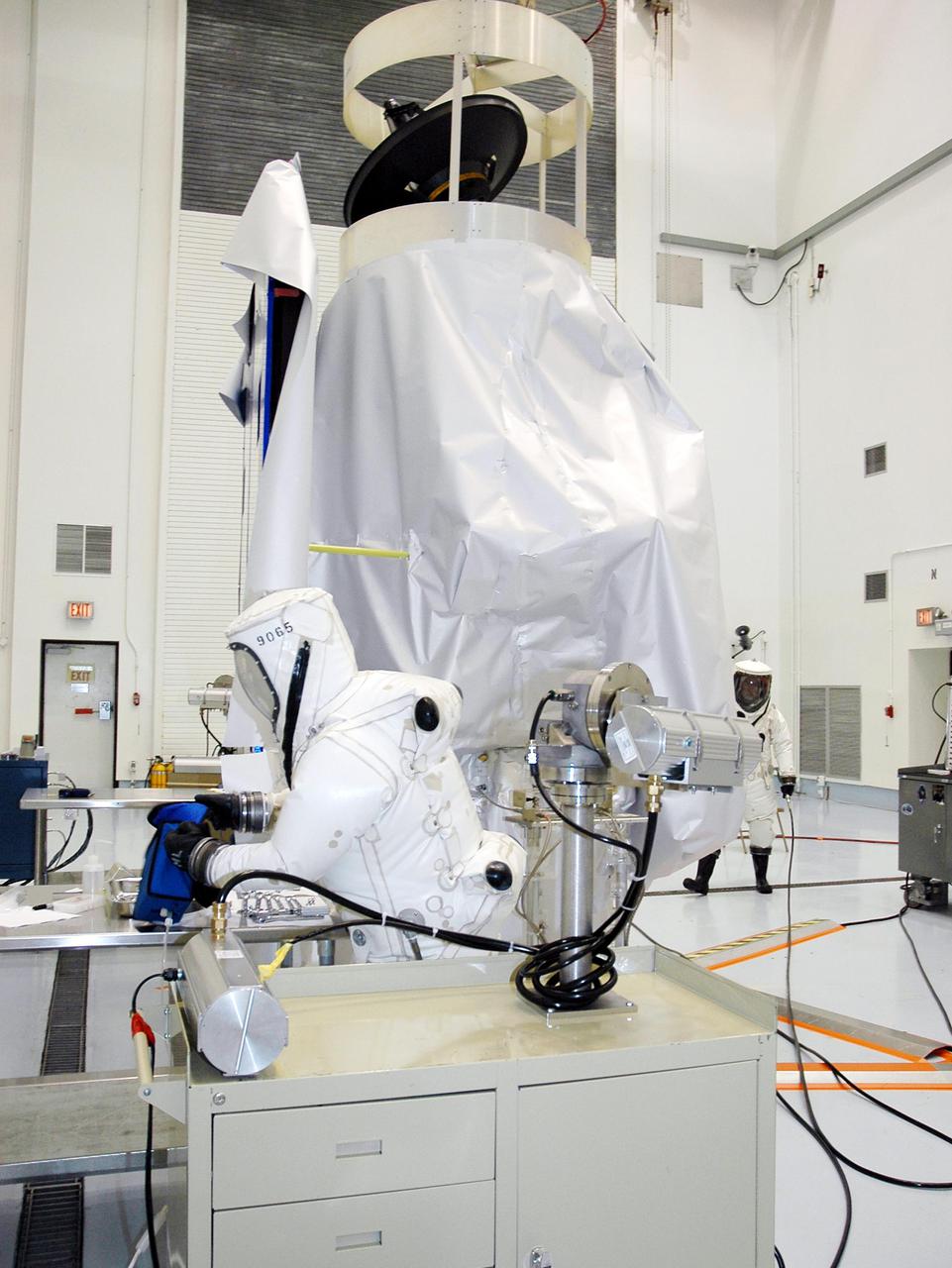
KENNEDY SPACE CENTER, FLA. - Workers at Astrotech Space Operations in Titusville, Fla., get ready to begin fueling the Deep Impact spacecraft, seen wrapped in a protective cover in the background. Scheduled for liftoff Jan. 12, Deep Impact will probe beneath the surface of Comet Tempel 1 on July 4, 2005, when the comet is 83 million miles from Earth, and reveal the secrets of its interior. After releasing a 3- by 3-foot projectile to crash onto the surface, Deep Impact’s flyby spacecraft will collect pictures and data of how the crater forms, measuring the crater’s depth and diameter, as well as the composition of the interior of the crater and any material thrown out, and determining the changes in natural outgassing produced by the impact. It will send the data back to Earth through the antennas of the Deep Space Network. Deep Impact is a NASA Discovery mission.
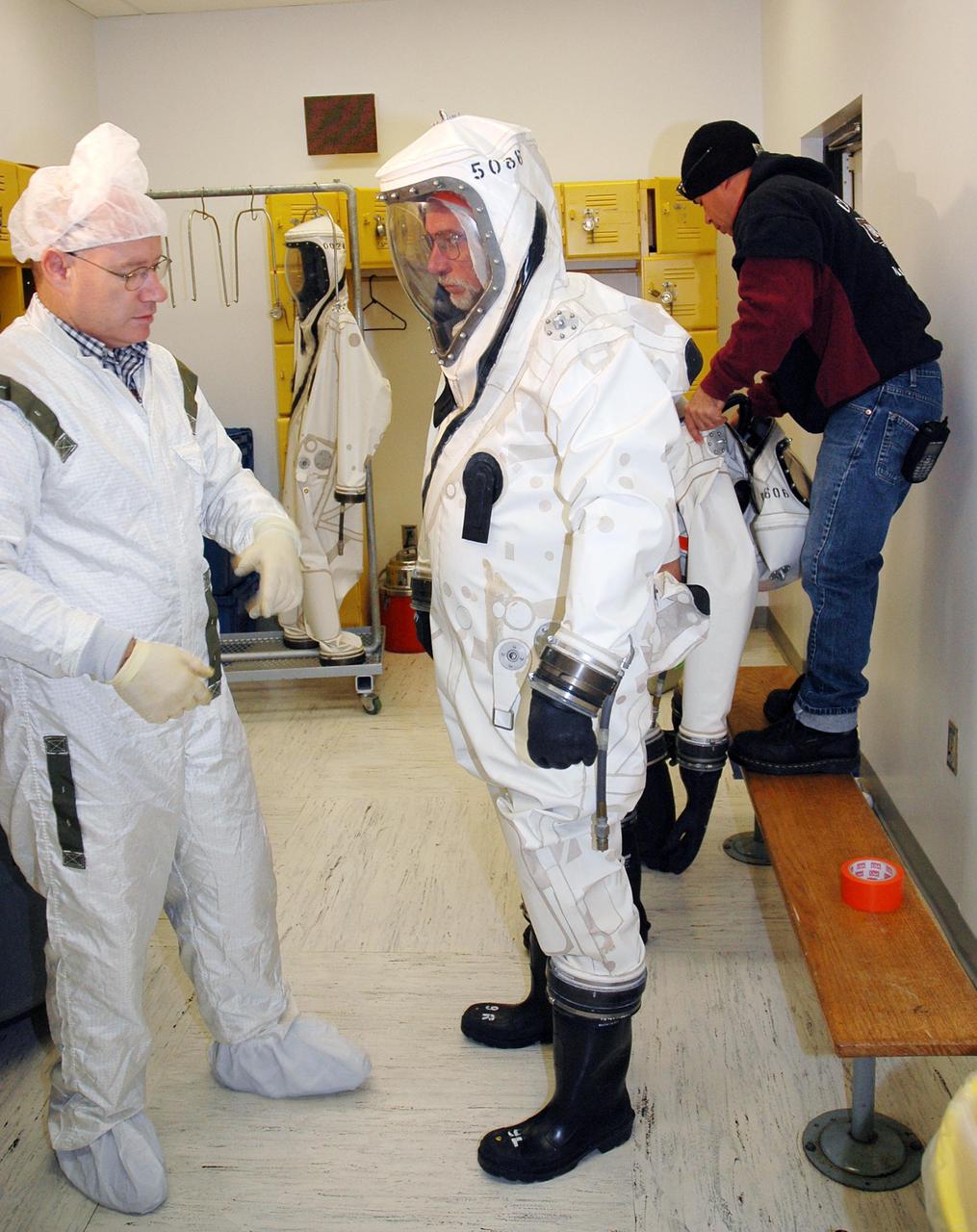
KENNEDY SPACE CENTER, FLA. - Workers at Astrotech Space Operations in Titusville, Fla., suit up before fueling the Deep Impact spacecraft. Scheduled for liftoff Jan. 12, Deep Impact will probe beneath the surface of Comet Tempel 1 on July 4, 2005, when the comet is 83 million miles from Earth, and reveal the secrets of its interior. After releasing a 3- by 3-foot projectile to crash onto the surface, Deep Impact’s flyby spacecraft will collect pictures and data of how the crater forms, measuring the crater’s depth and diameter, as well as the composition of the interior of the crater and any material thrown out, and determining the changes in natural outgassing produced by the impact. It will send the data back to Earth through the antennas of the Deep Space Network. Deep Impact is a NASA Discovery mission.
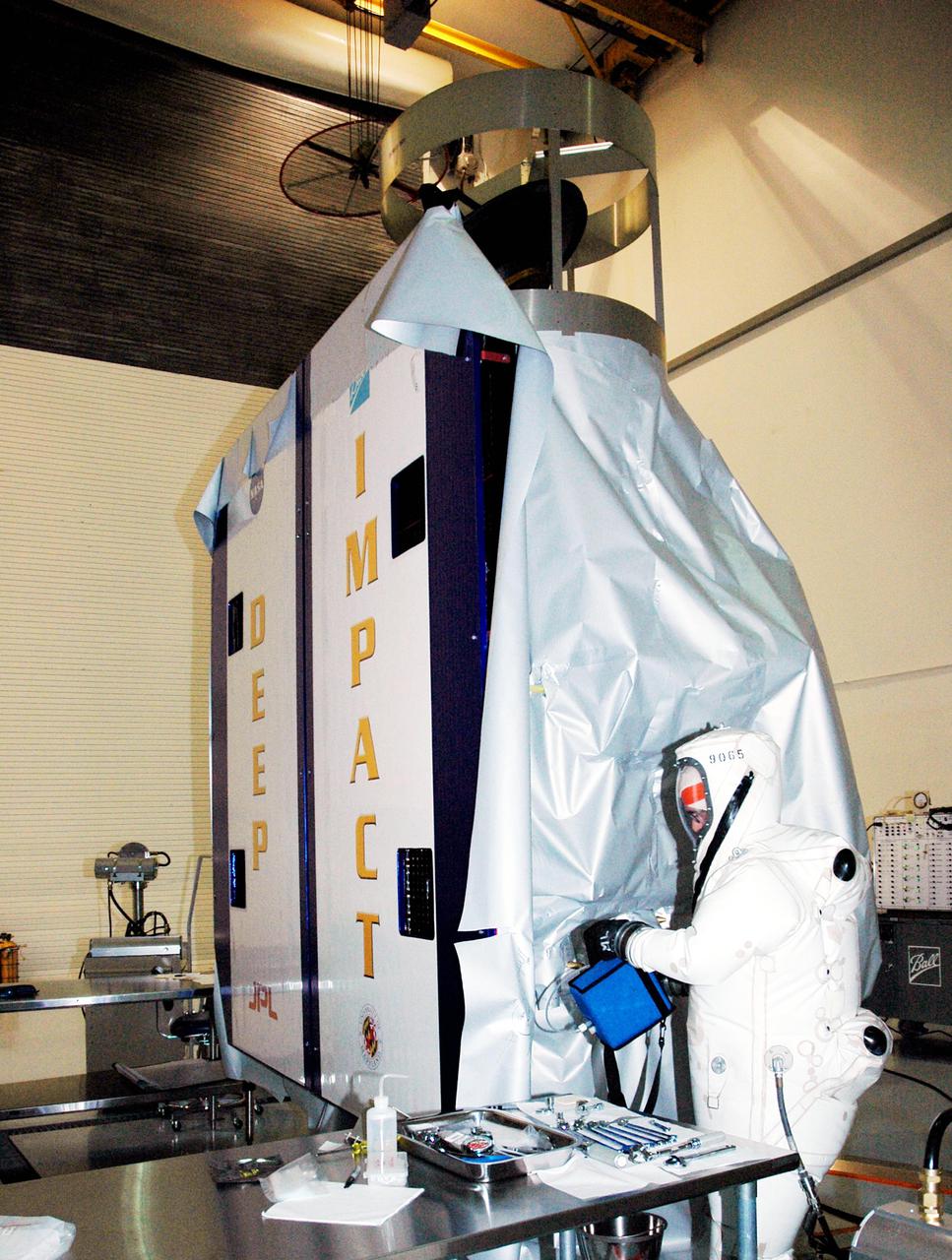
KENNEDY SPACE CENTER, FLA. - A worker at Astrotech Space Operations in Titusville, Fla., begins fueling the Deep Impact spacecraft. Scheduled for liftoff Jan. 12, Deep Impact will probe beneath the surface of Comet Tempel 1 on July 4, 2005, when the comet is 83 million miles from Earth, and reveal the secrets of its interior. After releasing a 3- by 3-foot projectile to crash onto the surface, Deep Impact’s flyby spacecraft will collect pictures and data of how the crater forms, measuring the crater’s depth and diameter, as well as the composition of the interior of the crater and any material thrown out, and determining the changes in natural outgassing produced by the impact. It will send the data back to Earth through the antennas of the Deep Space Network. Deep Impact is a NASA Discovery mission.
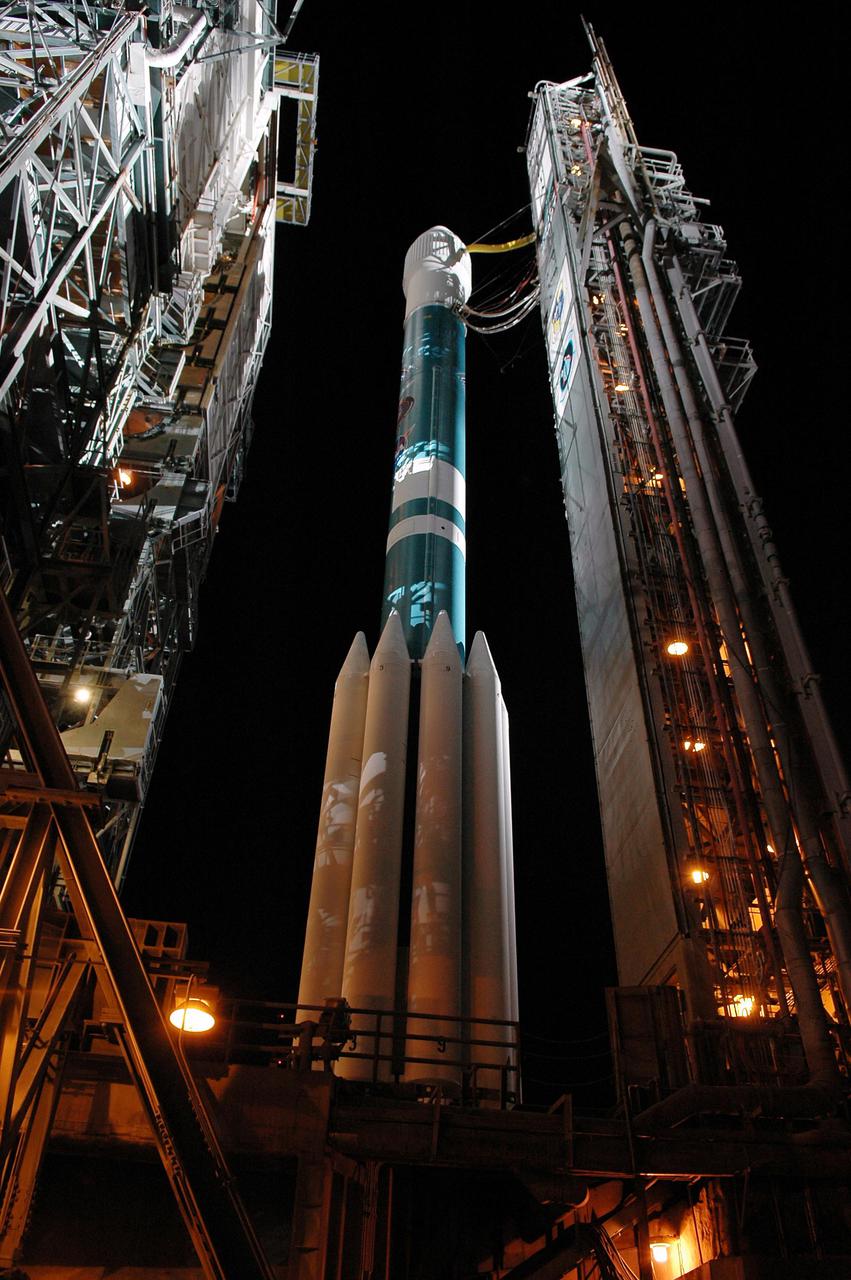
KENNEDY SPACE CENTER, FLA. - On Launch Pad 17-B, Cape Canaveral Air Force Station, Fla., shadows paint the Boeing Delta II rocket carrying the Deep Impact spacecraft as the mobile service tower at left is rolled back before launch.Scheduled for liftoff at 1:47 p.m. EST today, Deep Impact will head for space and a rendezvous with Comet Tempel 1 when the comet is 83 million miles from Earth. After releasing a 3- by 3-foot projectile (impactor) to crash onto the surface July 4, 2005, Deep Impact’s flyby spacecraft will reveal the secrets of the comet’s interior by collecting pictures and data of how the crater forms, measuring the crater’s depth and diameter as well as the composition of the interior of the crater and any material thrown out, and determining the changes in natural outgassing produced by the impact. It will send the data back to Earth through the antennas of the Deep Space Network. Deep Impact is a NASA Discovery mission.

KENNEDY SPACE CENTER, FLA. - On Launch Pad 17-B, Cape Canaveral Air Force Station, Fla., the Boeing Delta II rocket carrying the Deep Impact spacecraft is bathed in light waiting for tower rollback before launch. Scheduled for liftoff at 1:47 p.m. EST today, Deep Impact will head for space and a rendezvous with Comet Tempel 1 when the comet is 83 million miles from Earth. After releasing a 3- by 3-foot projectile (impactor) to crash onto the surface July 4, 2005, Deep Impact’s flyby spacecraft will reveal the secrets of the comet’s interior by collecting pictures and data of how the crater forms, measuring the crater’s depth and diameter as well as the composition of the interior of the crater and any material thrown out, and determining the changes in natural outgassing produced by the impact. It will send the data back to Earth through the antennas of the Deep Space Network. Deep Impact is a NASA Discovery mission.
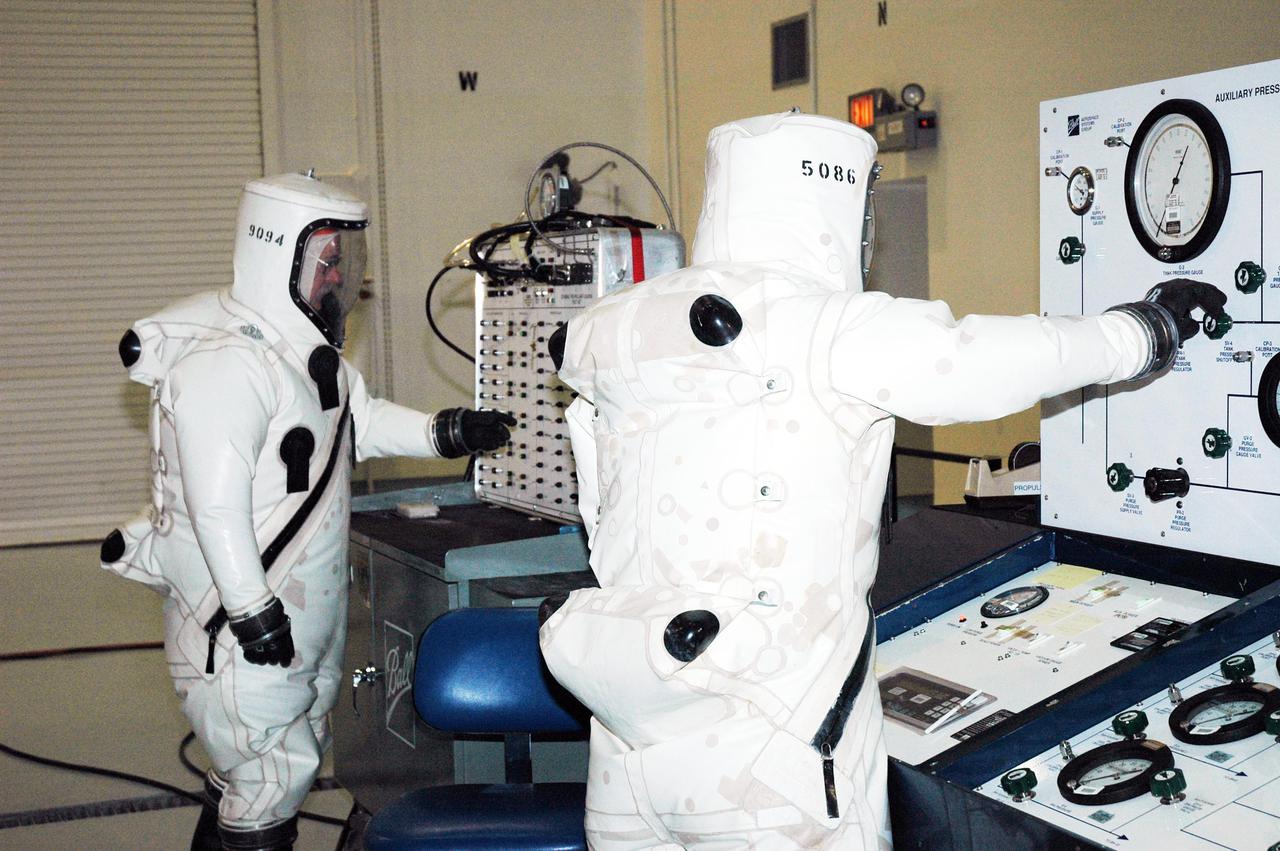
KENNEDY SPACE CENTER, FLA. - Workers at Astrotech Space Operations in Titusville, Fla., check control panels during fueling of the Deep Impact spacecraft. Scheduled for liftoff Jan. 12, Deep Impact will probe beneath the surface of Comet Tempel 1 on July 4, 2005, when the comet is 83 million miles from Earth, and reveal the secrets of its interior. After releasing a 3- by 3-foot projectile to crash onto the surface, Deep Impact’s flyby spacecraft will collect pictures and data of how the crater forms, measuring the crater’s depth and diameter, as well as the composition of the interior of the crater and any material thrown out, and determining the changes in natural outgassing produced by the impact. It will send the data back to Earth through the antennas of the Deep Space Network. Deep Impact is a NASA Discovery mission.
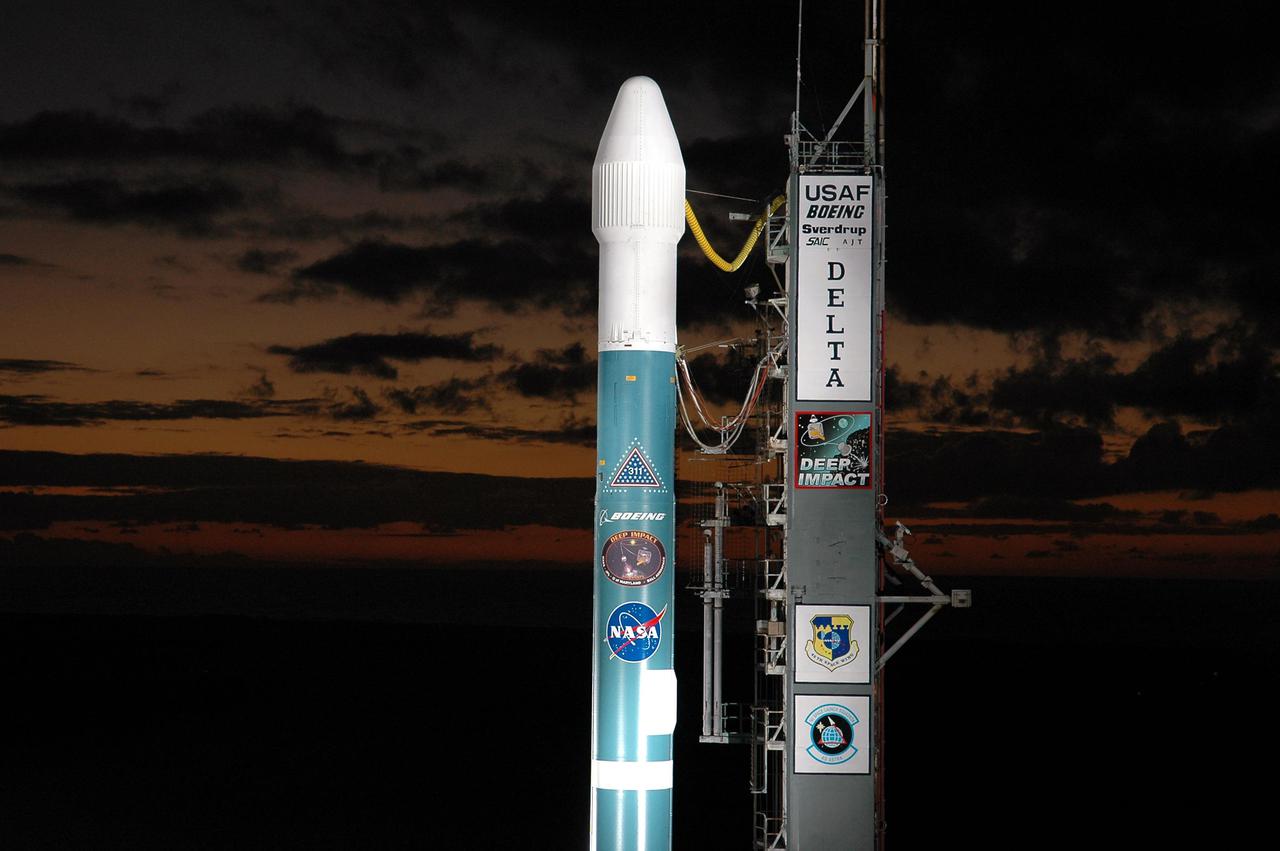
KENNEDY SPACE CENTER, FLA. - On Launch Pad 17-B, Cape Canaveral Air Force Station, Fla., the Boeing Delta II rocket carrying the Deep Impact spacecraft stands out against an early dawn sky. Scheduled for liftoff at 1:47 p.m. EST today, Deep Impact will head for space and a rendezvous with Comet Tempel 1 when the comet is 83 million miles from Earth. After releasing a 3- by 3-foot projectile (impactor) to crash onto the surface July 4, 2005, Deep Impact’s flyby spacecraft will reveal the secrets of the comet’s interior by collecting pictures and data of how the crater forms, measuring the crater’s depth and diameter as well as the composition of the interior of the crater and any material thrown out, and determining the changes in natural outgassing produced by the impact. It will send the data back to Earth through the antennas of the Deep Space Network. Deep Impact is a NASA Discovery mission.
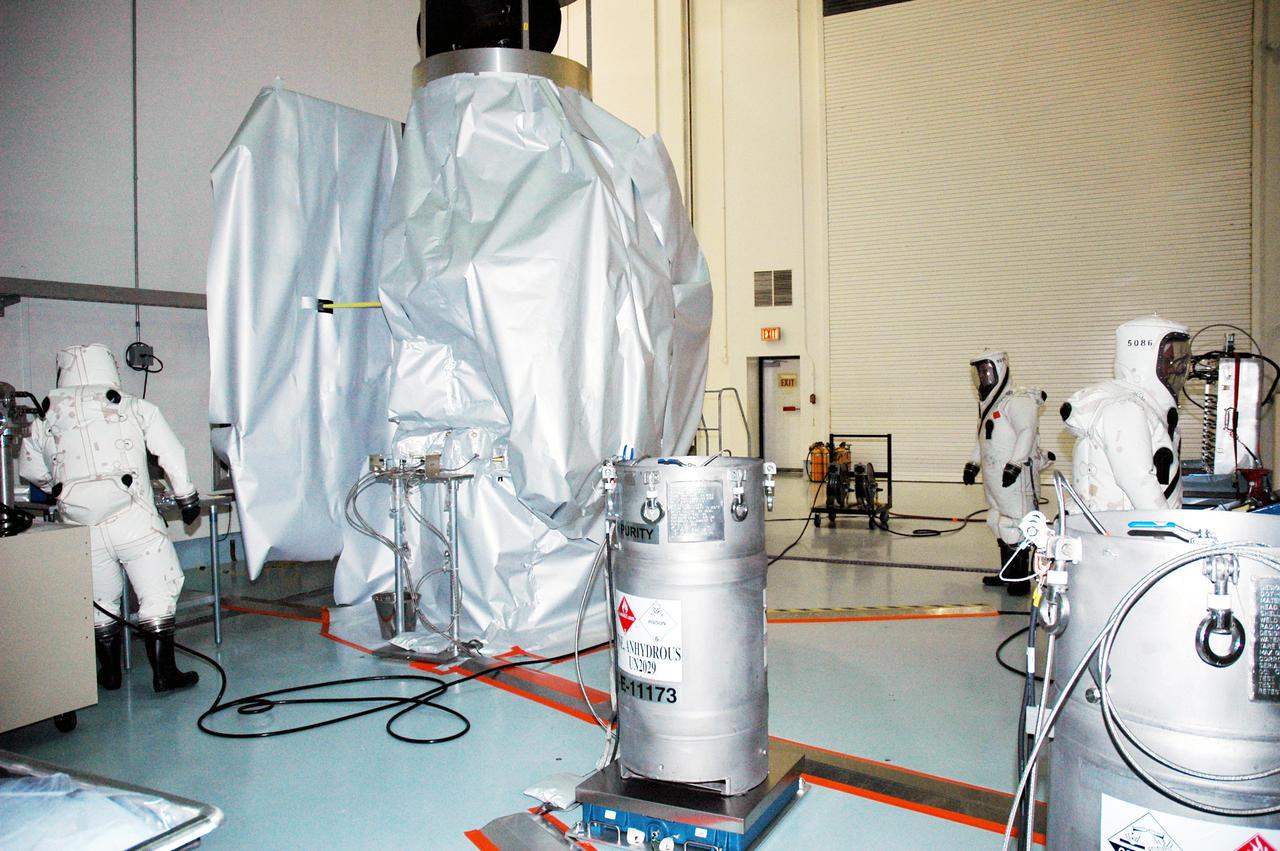
KENNEDY SPACE CENTER, FLA. - Workers at Astrotech Space Operations in Titusville, Fla., begin fueling operations of the Deep Impact spacecraft, seen wrapped in a protective cover in the background. Scheduled for liftoff Jan. 12, Deep Impact will probe beneath the surface of Comet Tempel 1 on July 4, 2005, when the comet is 83 million miles from Earth, and reveal the secrets of its interior. After releasing a 3- by 3-foot projectile to crash onto the surface, Deep Impact’s flyby spacecraft will collect pictures and data of how the crater forms, measuring the crater’s depth and diameter, as well as the composition of the interior of the crater and any material thrown out, and determining the changes in natural outgassing produced by the impact. It will send the data back to Earth through the antennas of the Deep Space Network. Deep Impact is a NASA Discovery mission.
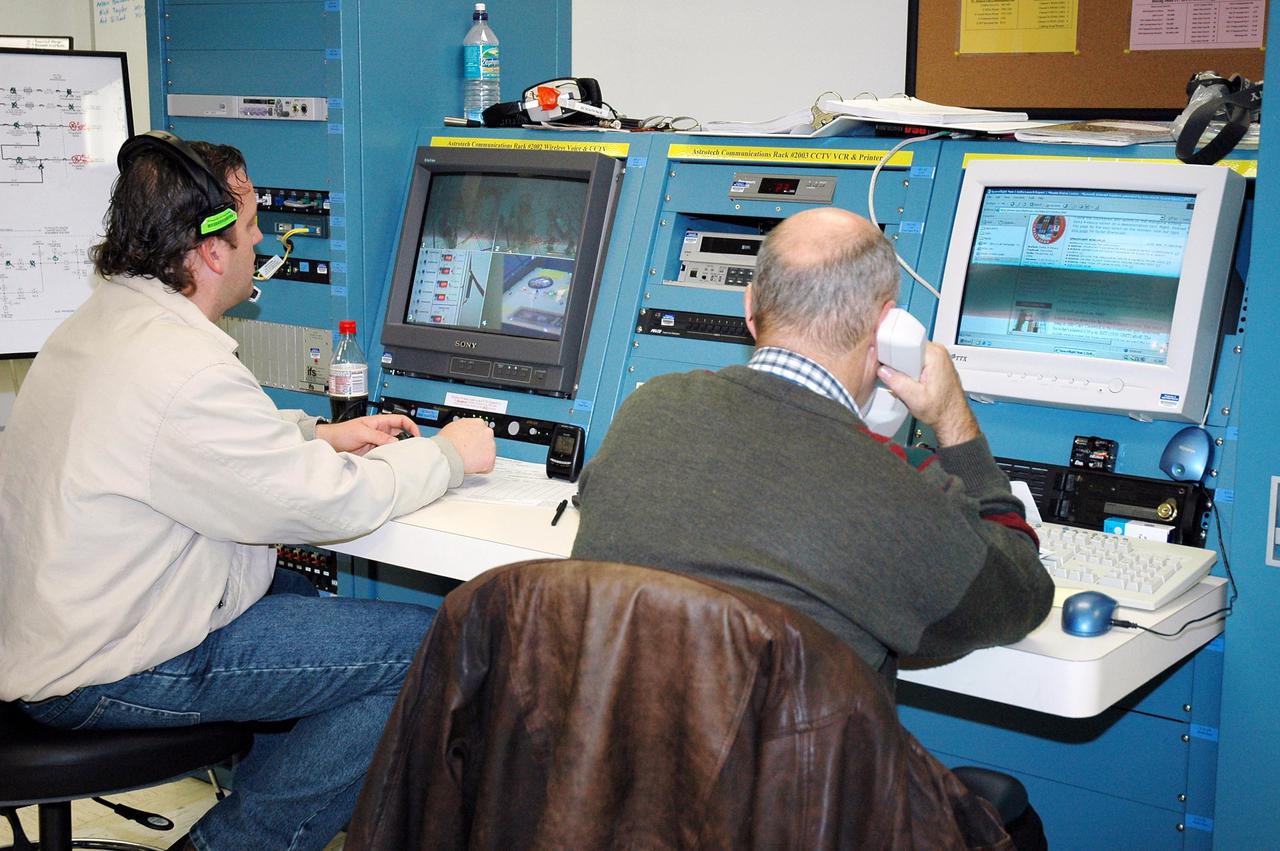
KENNEDY SPACE CENTER, FLA. - Workers at Astrotech Space Operations in Titusville, Fla., monitor the fueling operations of the Deep Impact spacecraft. Scheduled for liftoff Jan. 12, Deep Impact will probe beneath the surface of Comet Tempel 1 on July 4, 2005, when the comet is 83 million miles from Earth, and reveal the secrets of its interior. After releasing a 3- by 3-foot projectile to crash onto the surface, Deep Impact’s flyby spacecraft will collect pictures and data of how the crater forms, measuring the crater’s depth and diameter, as well as the composition of the interior of the crater and any material thrown out, and determining the changes in natural outgassing produced by the impact. It will send the data back to Earth through the antennas of the Deep Space Network. Deep Impact is a NASA Discovery mission.
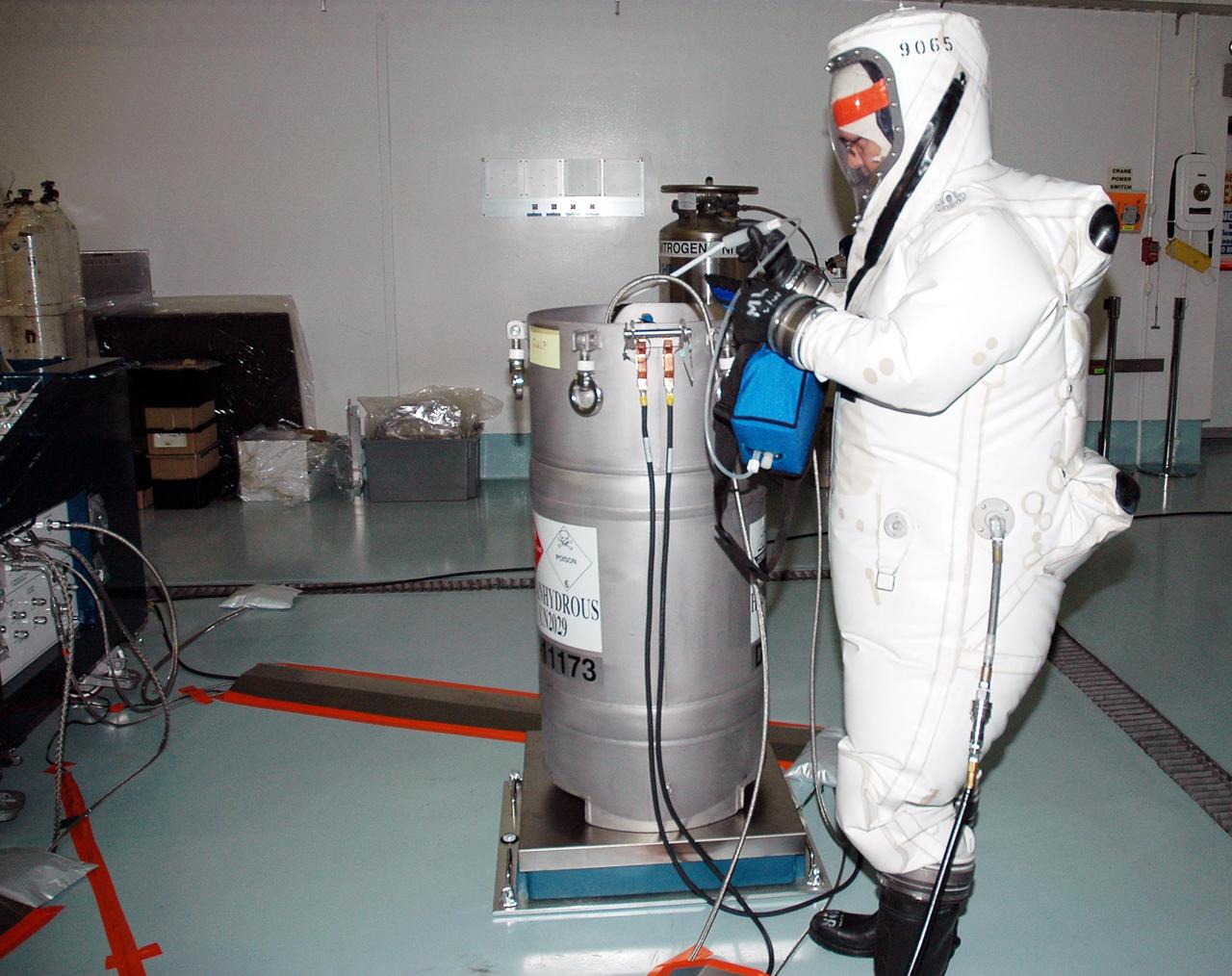
KENNEDY SPACE CENTER, FLA. - Workers at Astrotech Space Operations in Titusville, Fla., begin fueling operations of the Deep Impact spacecraft, seen wrapped in a protective cover in the background. Scheduled for liftoff Jan. 12, Deep Impact will probe beneath the surface of Comet Tempel 1 on July 4, 2005, when the comet is 83 million miles from Earth, and reveal the secrets of its interior. After releasing a 3- by 3-foot projectile to crash onto the surface, Deep Impact’s flyby spacecraft will collect pictures and data of how the crater forms, measuring the crater’s depth and diameter, as well as the composition of the interior of the crater and any material thrown out, and determining the changes in natural outgassing produced by the impact. It will send the data back to Earth through the antennas of the Deep Space Network. Deep Impact is a NASA Discovery mission.
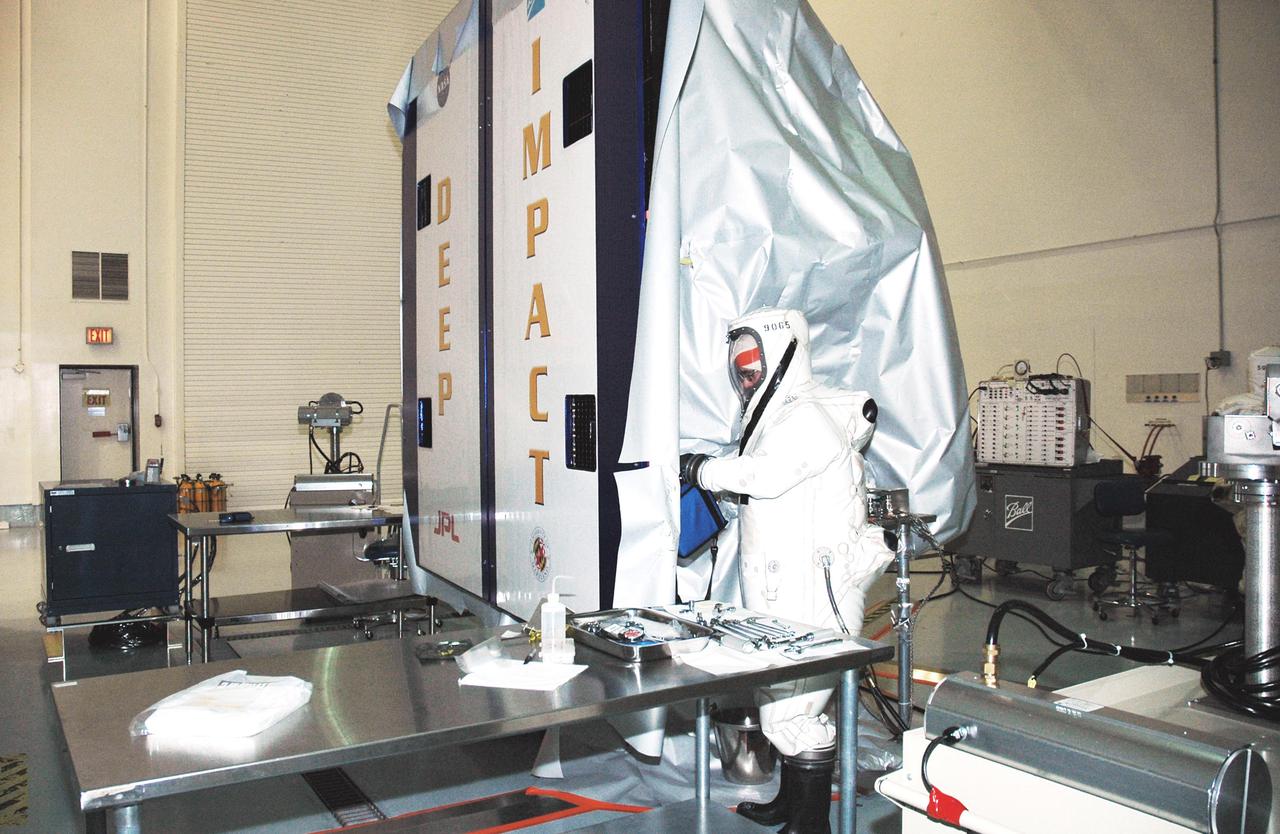
KENNEDY SPACE CENTER, FLA. - A worker at Astrotech Space Operations in Titusville, Fla., begins fueling the Deep Impact spacecraft. Scheduled for liftoff Jan. 12, Deep Impact will probe beneath the surface of Comet Tempel 1 on July 4, 2005, when the comet is 83 million miles from Earth, and reveal the secrets of its interior. After releasing a 3- by 3-foot projectile to crash onto the surface, Deep Impact’s flyby spacecraft will collect pictures and data of how the crater forms, measuring the crater’s depth and diameter, as well as the composition of the interior of the crater and any material thrown out, and determining the changes in natural outgassing produced by the impact. It will send the data back to Earth through the antennas of the Deep Space Network. Deep Impact is a NASA Discovery mission.
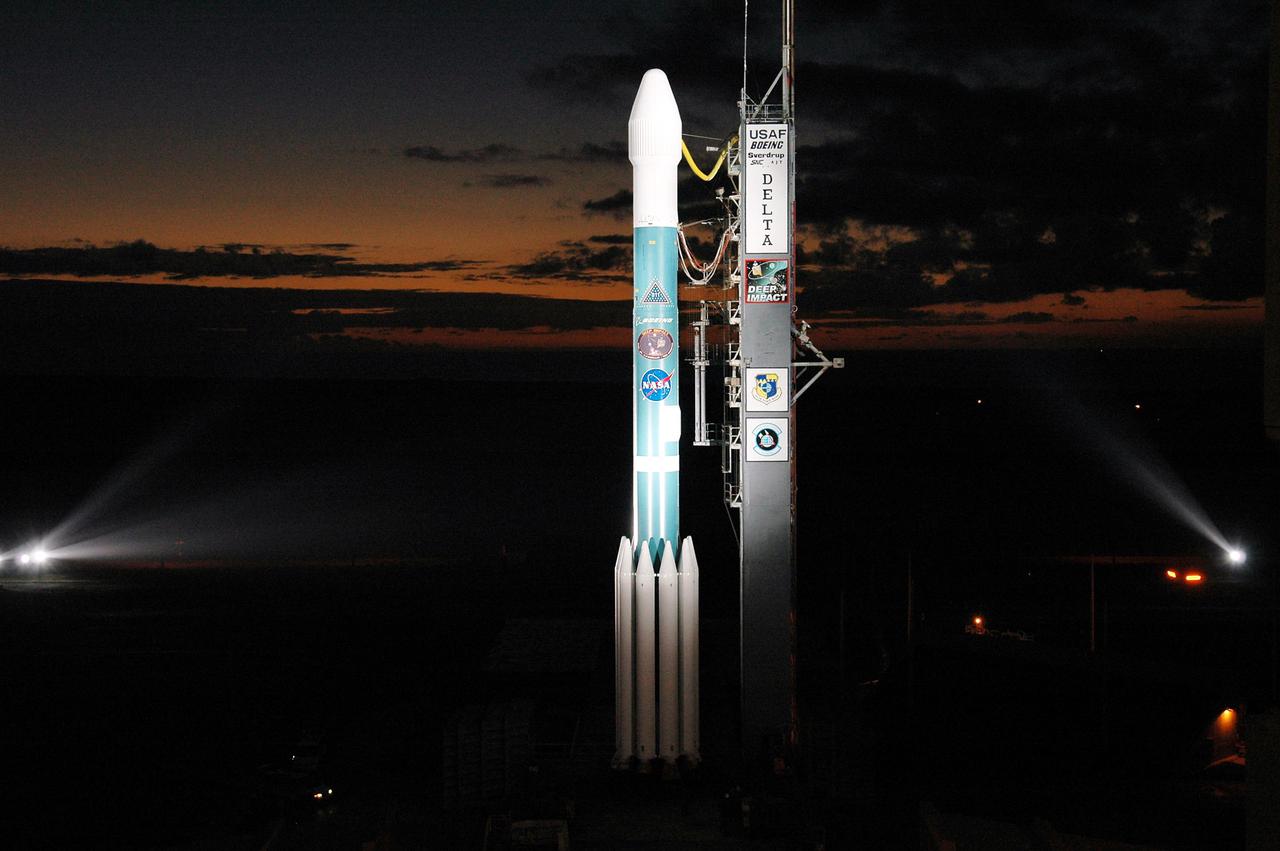
KENNEDY SPACE CENTER, FLA. - On Launch Pad 17-B, Cape Canaveral Air Force Station, Fla., the Boeing Delta II carrying the Deep Impact spacecraft rocket shines under spotlights in the early dawn hours as it waits for launch. Scheduled for liftoff at 1:47 p.m. EST today, Deep Impact will head for space and a rendezvous with Comet Tempel 1 when the comet is 83 million miles from Earth. After releasing a 3- by 3-foot projectile (impactor) to crash onto the surface July 4, 2005, Deep Impact’s flyby spacecraft will reveal the secrets of the comet’s interior by collecting pictures and data of how the crater forms, measuring the crater’s depth and diameter as well as the composition of the interior of the crater and any material thrown out, and determining the changes in natural outgassing produced by the impact. It will send the data back to Earth through the antennas of the Deep Space Network. Deep Impact is a NASA Discovery mission.
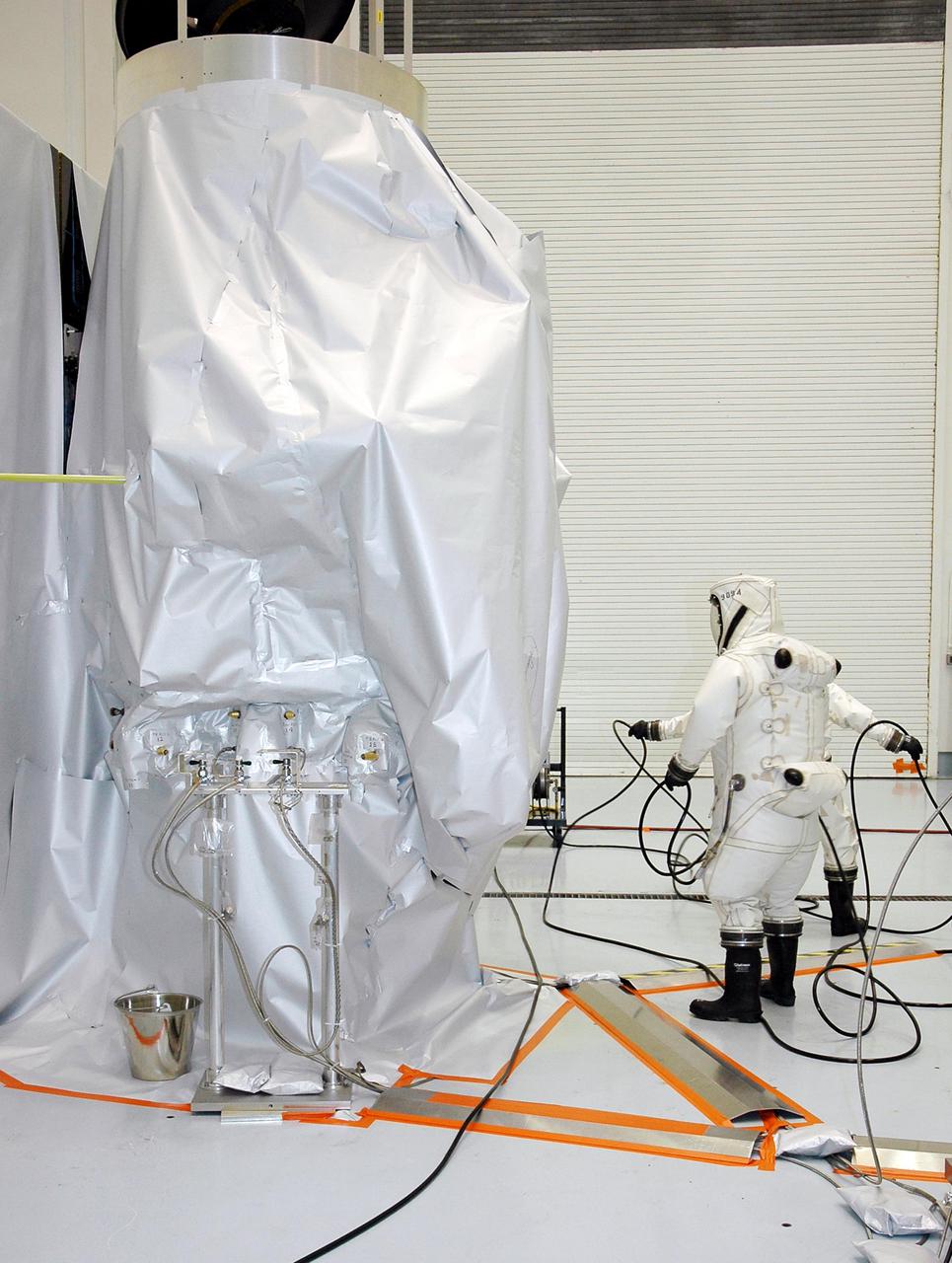
KENNEDY SPACE CENTER, FLA. - Workers at Astrotech Space Operations in Titusville, Fla., get ready to begin fueling the Deep Impact spacecraft, seen wrapped in a protective cover in the background. Scheduled for liftoff Jan. 12, Deep Impact will probe beneath the surface of Comet Tempel 1 on July 4, 2005, when the comet is 83 million miles from Earth, and reveal the secrets of its interior. After releasing a 3- by 3-foot projectile to crash onto the surface, Deep Impact’s flyby spacecraft will collect pictures and data of how the crater forms, measuring the crater’s depth and diameter, as well as the composition of the interior of the crater and any material thrown out, and determining the changes in natural outgassing produced by the impact. It will send the data back to Earth through the antennas of the Deep Space Network. Deep Impact is a NASA Discovery mission.
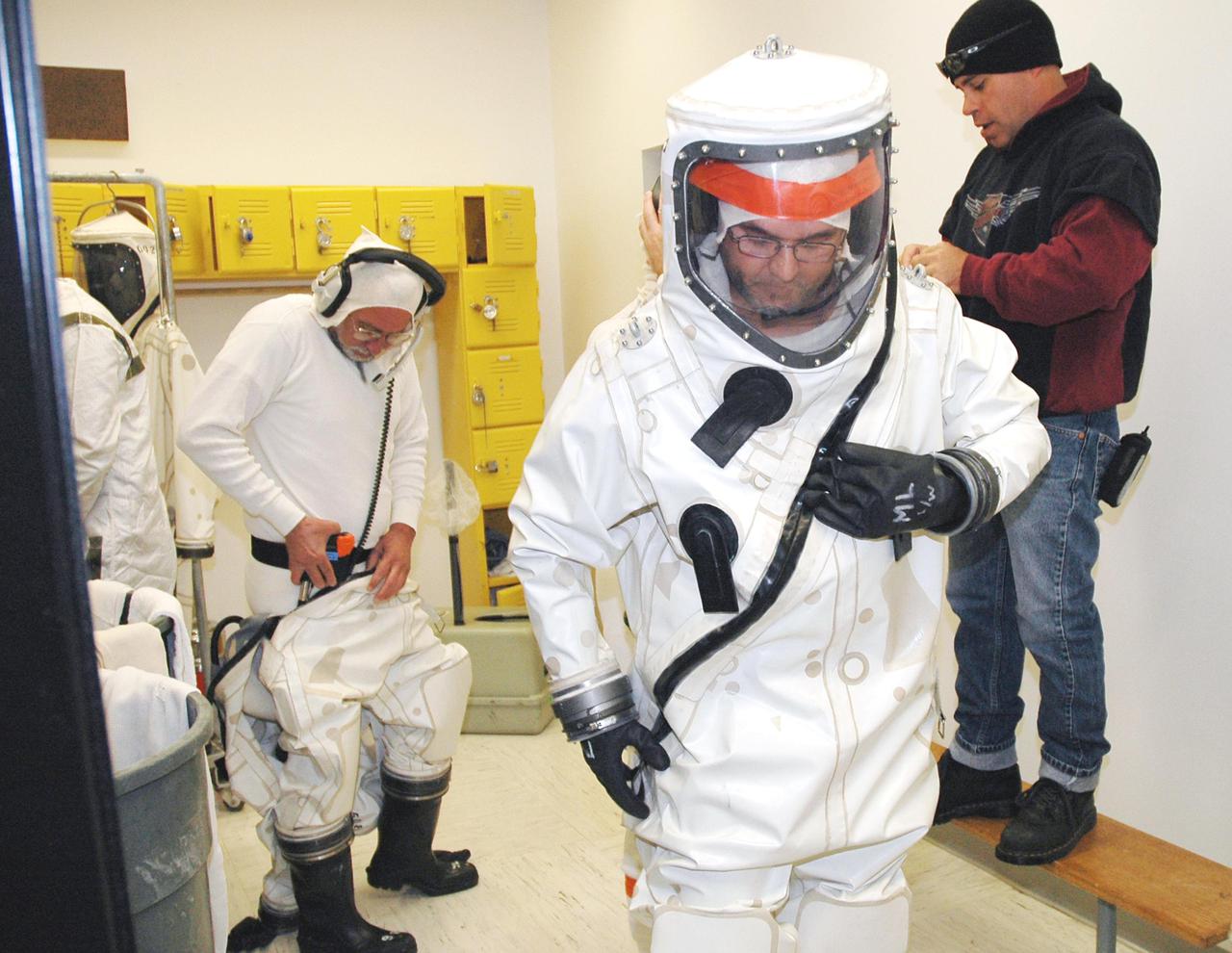
KENNEDY SPACE CENTER, FLA. - Workers at Astrotech Space Operations in Titusville, Fla., suit up before fueling the Deep Impact spacecraft. Scheduled for liftoff Jan. 12, Deep Impact will probe beneath the surface of Comet Tempel 1 on July 4, 2005, when the comet is 83 million miles from Earth, and reveal the secrets of its interior. After releasing a 3- by 3-foot projectile to crash onto the surface, Deep Impact’s flyby spacecraft will collect pictures and data of how the crater forms, measuring the crater’s depth and diameter, as well as the composition of the interior of the crater and any material thrown out, and determining the changes in natural outgassing produced by the impact. It will send the data back to Earth through the antennas of the Deep Space Network. Deep Impact is a NASA Discovery mission.
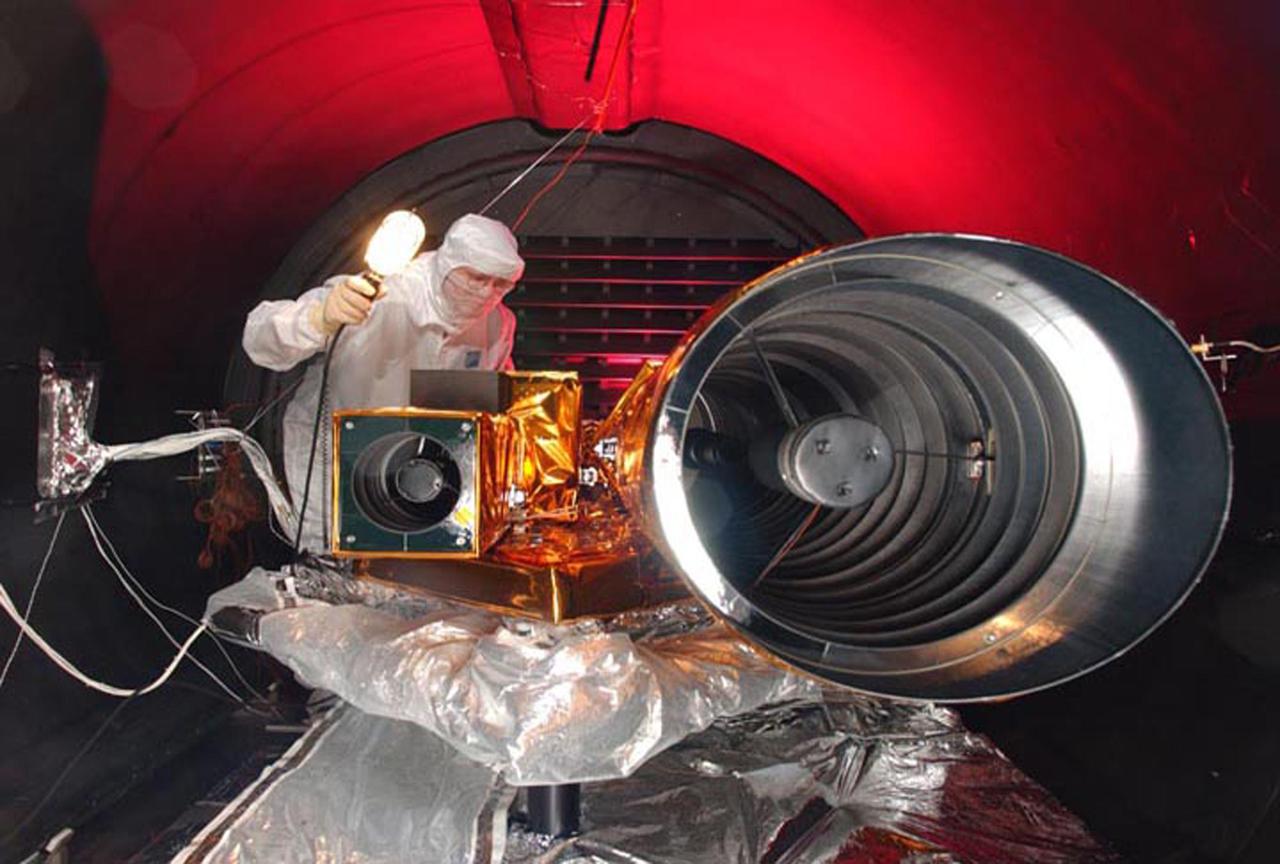
JET PROPULSION LABORATORY, CALIF. - At Ball Aerospace in Boulder, Colo., a thermal vacuum test is conducted on Deep Impact instruments in the instrument assembly area in the Fisher Assembly building clean room. The High Resolution Instrument (HRI, at right) is one of the largest space-based instruments built specifically for planetary science. It is the main science camera for Deep Impact, providing the highest resolution images via a combined visible camera, an infrared spectrometer and a special imaging module. Deep Impact will probe beneath the surface of Comet Tempel 1 on July 4, 2005, when the comet is 83 million miles from Earth, and reveal the secrets of its interior. After releasing a 3- by 3-foot projectile (impactor) to crash onto the surface, Deep Impact’s flyby spacecraft will collect pictures and data of how the crater forms, measuring the crater’s depth and diameter, as well as the composition of the interior of the crater and any material thrown out, and determining the changes in natural outgassing produced by the impact. Deep Impact is a NASA Discovery mission. Launch of Deep Impact is scheduled for Jan. 12 from Launch Pad 17-B, Cape Canaveral Air Force Station, Fla.
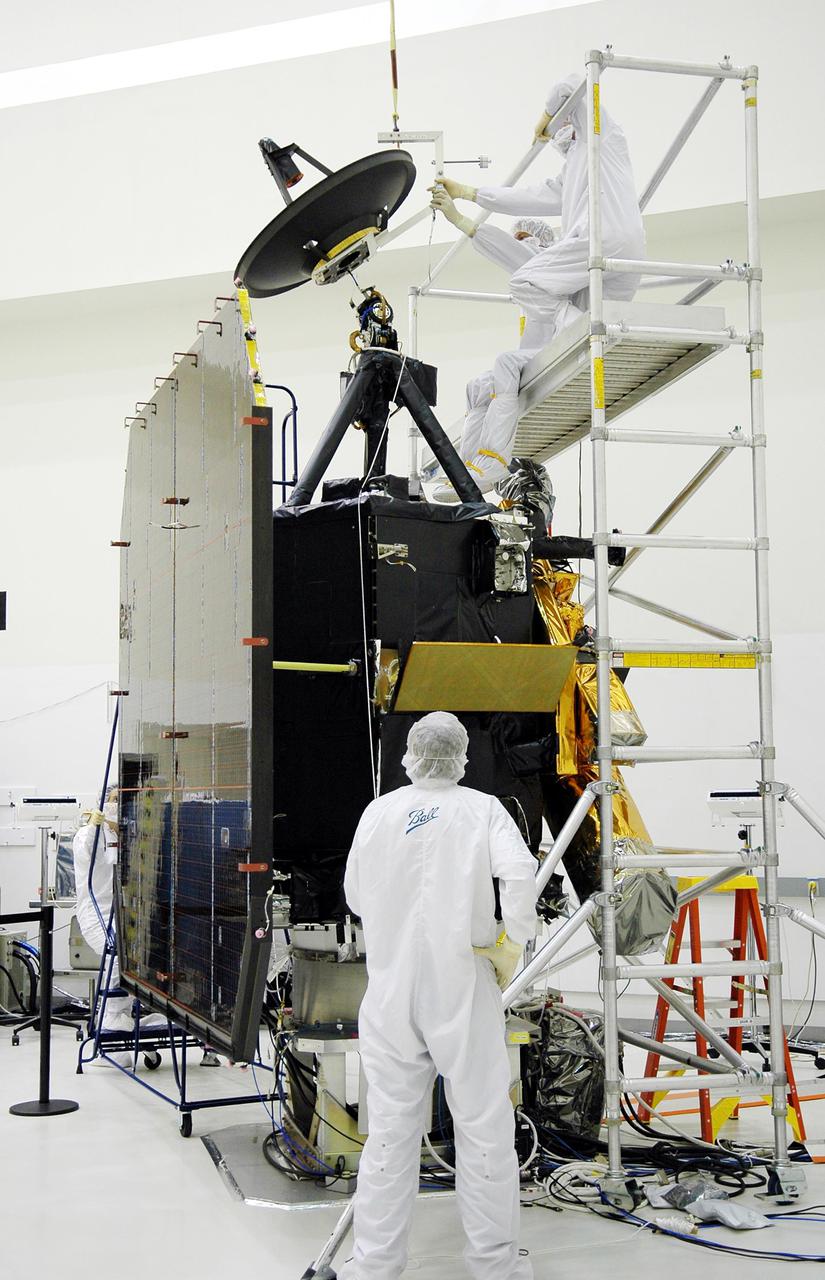
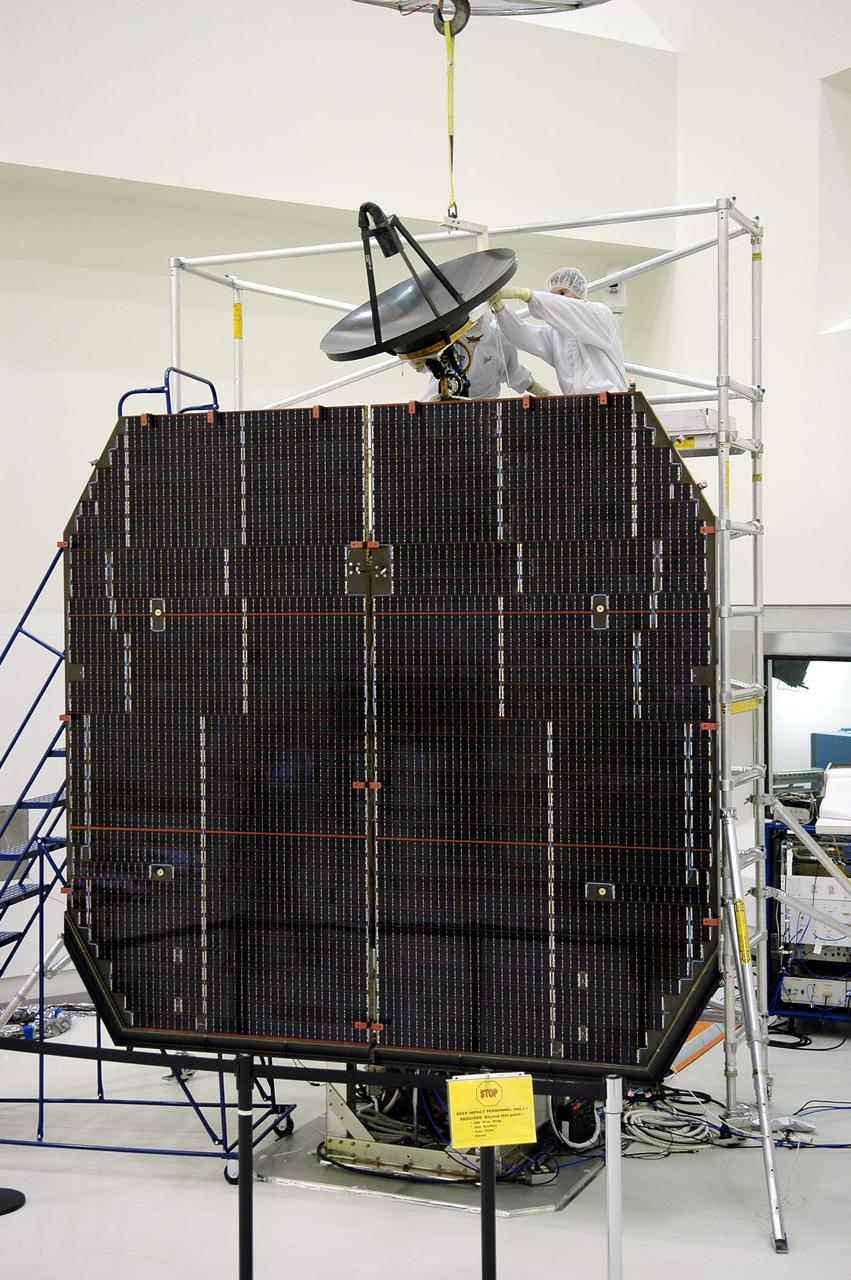
KENNEDY SPACE CENTER, FLA. - Ball Aerospace technicians at Astrotech in Titusville, Fla., guide the high-gain communications antenna toward the attach-point on the Deep Impact spacecraft. A NASA Discovery mission, Deep Impact will probe beneath the surface of Comet Tempel 1 on July 4, 2005, when the comet is 83 million miles from Earth, and reveal the secrets of its interior. During the encounter phase, the high-gain antenna transmits near-real-time images of the impact back to Earth. The spacecraft is scheduled to launch Jan. 8 aboard a Boeing Delta II rocket from Launch Complex 17-B at Cape Canaveral Air Force Station, Fla.
KENNEDY SPACE CENTER, FLA. - - Ball Aerospace technicians at Astrotech in Titusville, Fla., secure the high-gain communications antenna onto the Deep Impact spacecraft. A NASA Discovery mission, Deep Impact will probe beneath the surface of Comet Tempel 1 on July 4, 2005, when the comet is 83 million miles from Earth, and reveal the secrets of its interior. During the encounter phase, the high-gain antenna transmits near-real-time images of the impact back to Earth. The spacecraft is scheduled to launch Jan. 8 aboard a Boeing Delta II rocket from Launch Complex 17-B at Cape Canaveral Air Force Station, Fla.
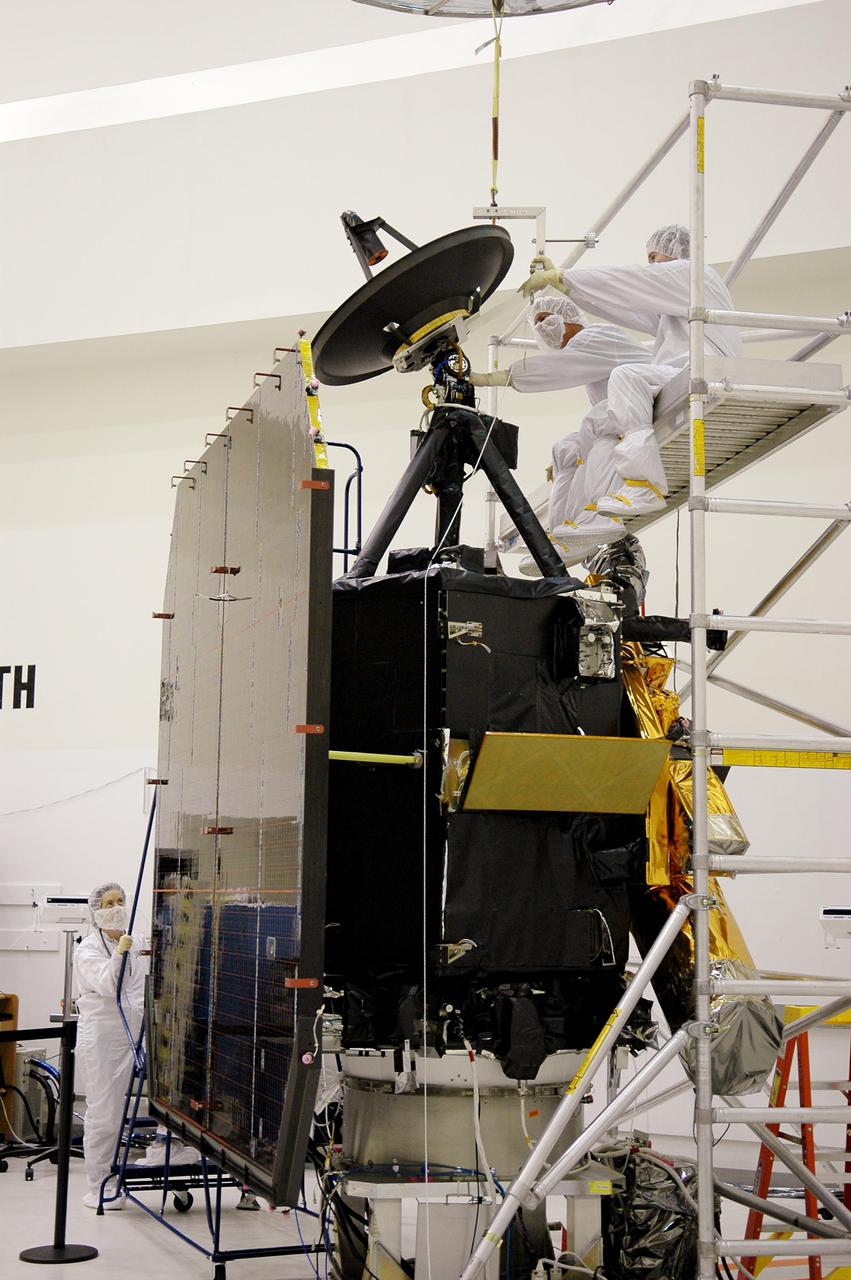
KENNEDY SPACE CENTER, FLA. - Ball Aerospace technicians at Astrotech in Titusville, Fla., attach the high-gain communications antenna onto the Deep Impact spacecraft. A NASA Discovery mission, Deep Impact will probe beneath the surface of Comet Tempel 1 on July 4, 2005, when the comet is 83 million miles from Earth, and reveal the secrets of its interior. During the encounter phase, the high-gain antenna transmits near-real-time images of the impact back to Earth. The spacecraft is scheduled to launch Jan. 8 aboard a Boeing Delta II rocket from Launch Complex 17-B at Cape Canaveral Air Force Station, Fla.
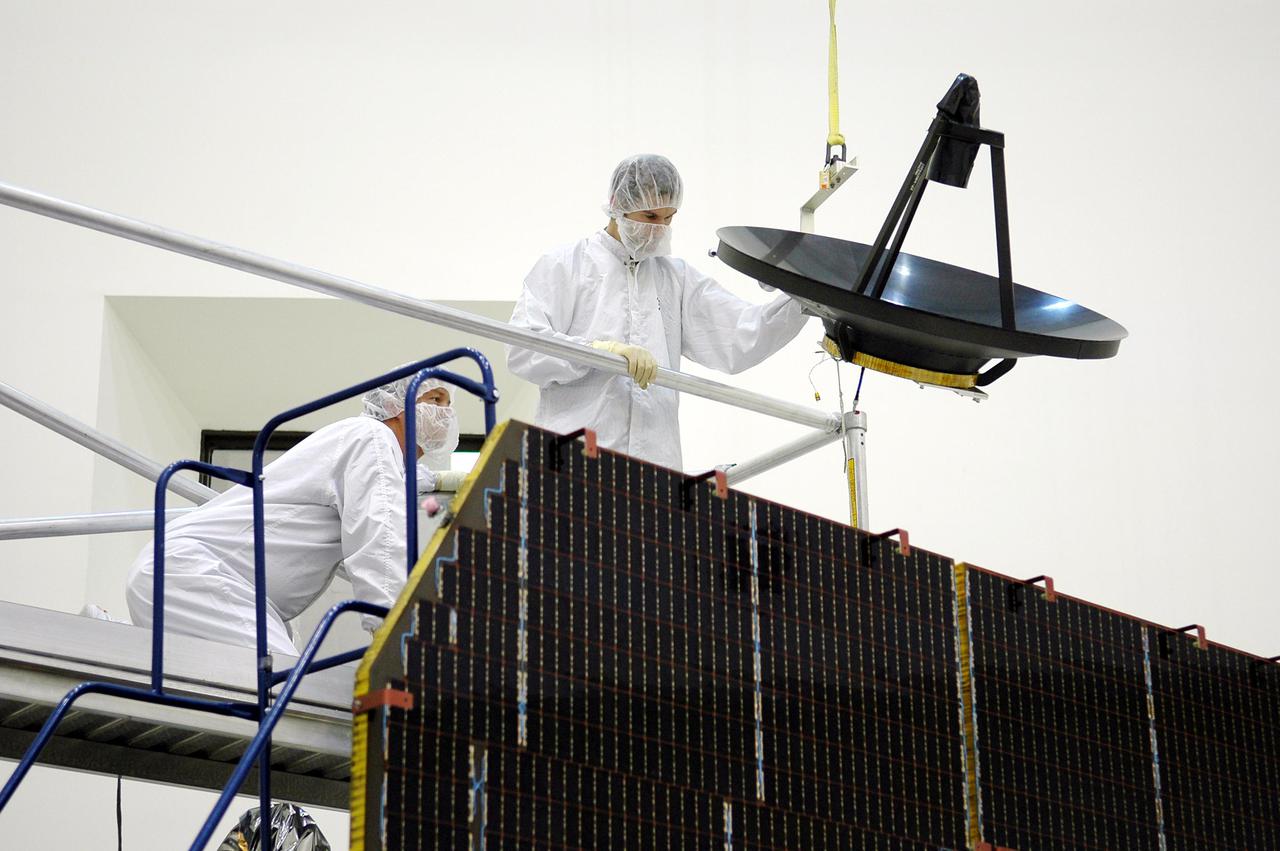
KENNEDY SPACE CENTER, FLA. - Ball Aerospace technicians at Astrotech in Titusville, Fla., watch as the high-gain communications antenna is lowered toward the Deep Impact spacecraft for installation. A NASA Discovery mission, Deep Impact will probe beneath the surface of Comet Tempel 1 on July 4, 2005, when the comet is 83 million miles from Earth, and reveal the secrets of its interior. During the encounter phase, the high-gain antenna transmits near-real-time images of the impact back to Earth. The spacecraft is scheduled to launch Jan. 8 aboard a Boeing Delta II rocket from Launch Complex 17-B at Cape Canaveral Air Force Station, Fla.
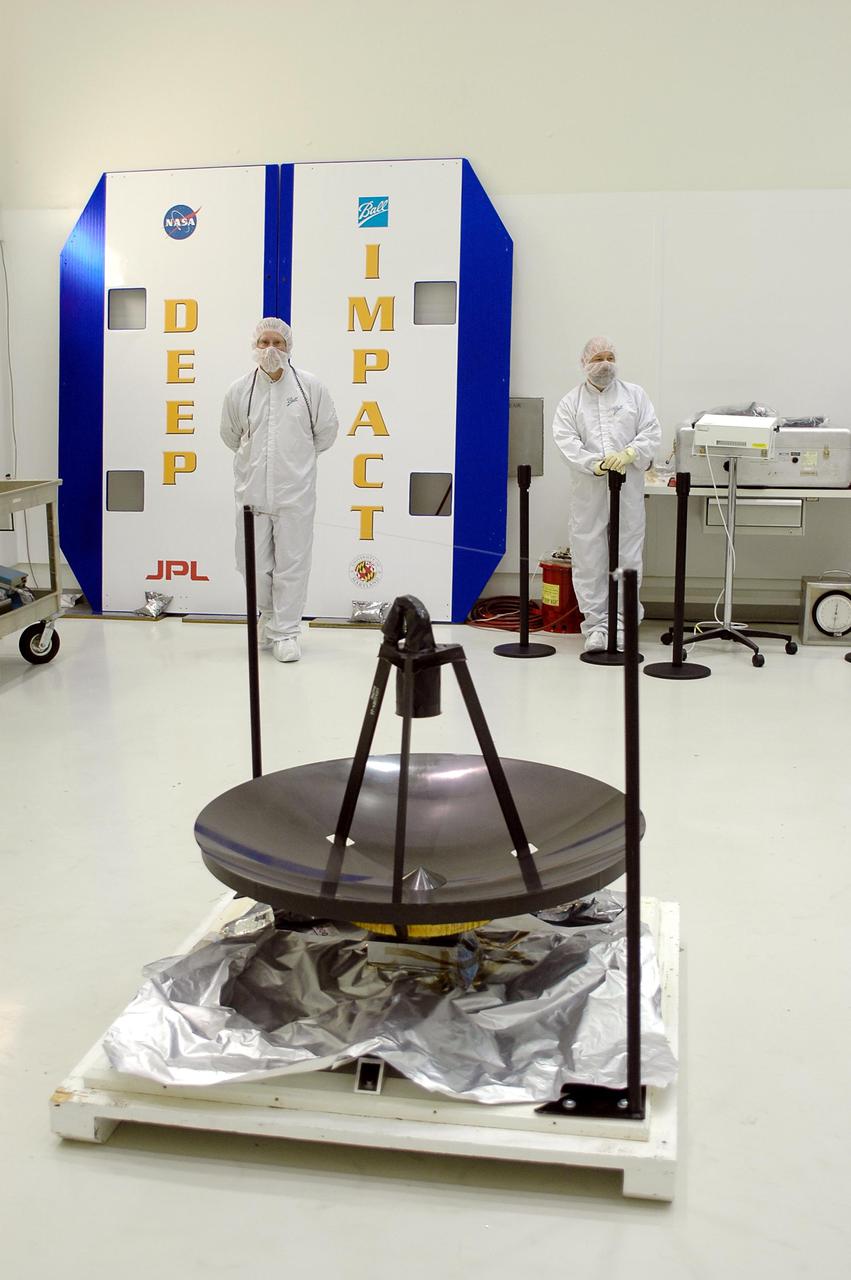
KENNEDY SPACE CENTER, FLA. - At Astrotech in Titusville, Fla., the high-gain communications antenna is ready for installation on the Deep Impact spacecraft (behind it). A NASA Discovery mission, Deep Impact will probe beneath the surface of Comet Tempel 1 on July 4, 2005, when the comet is 83 million miles from Earth, and reveal the secrets of its interior. During the encounter phase, the high-gain antenna transmits near-real-time images of the impact back to Earth. The spacecraft is scheduled to launch Jan. 8 aboard a Boeing Delta II rocket from Launch Complex 17-B at Cape Canaveral Air Force Station, Fla.
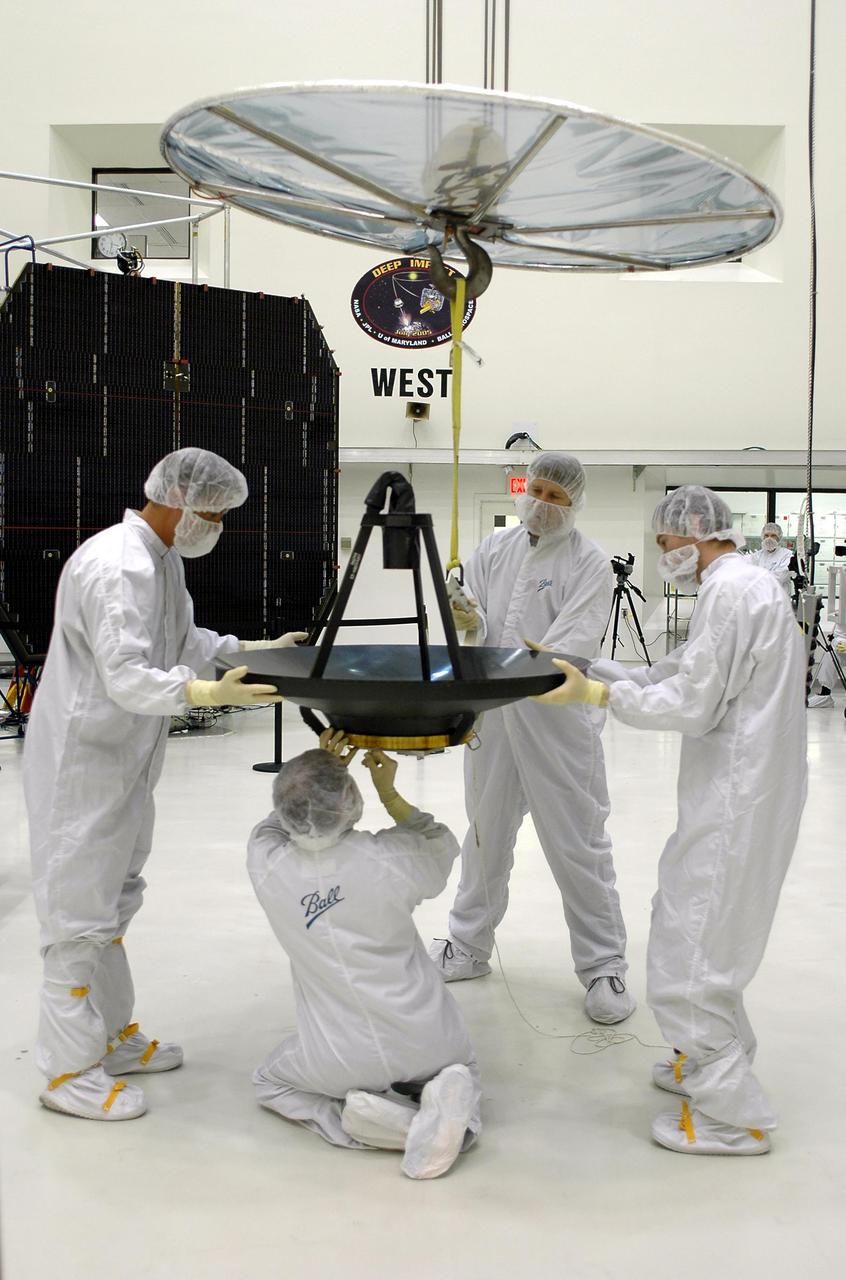
KENNEDY SPACE CENTER, FLA. - Ball Aerospace technicians at Astrotech in Titusville, Fla., attach on overhead crane to the high-gain communications antenna to be installed on the Deep Impact spacecraft. A NASA Discovery mission, Deep Impact will probe beneath the surface of Comet Tempel 1 on July 4, 2005, when the comet is 83 million miles from Earth, and reveal the secrets of its interior. During the encounter phase, the high-gain antenna transmits near-real-time images of the impact back to Earth. The spacecraft is scheduled to launch Jan. 8 aboard a Boeing Delta II rocket from Launch Complex 17-B at Cape Canaveral Air Force Station, Fla.
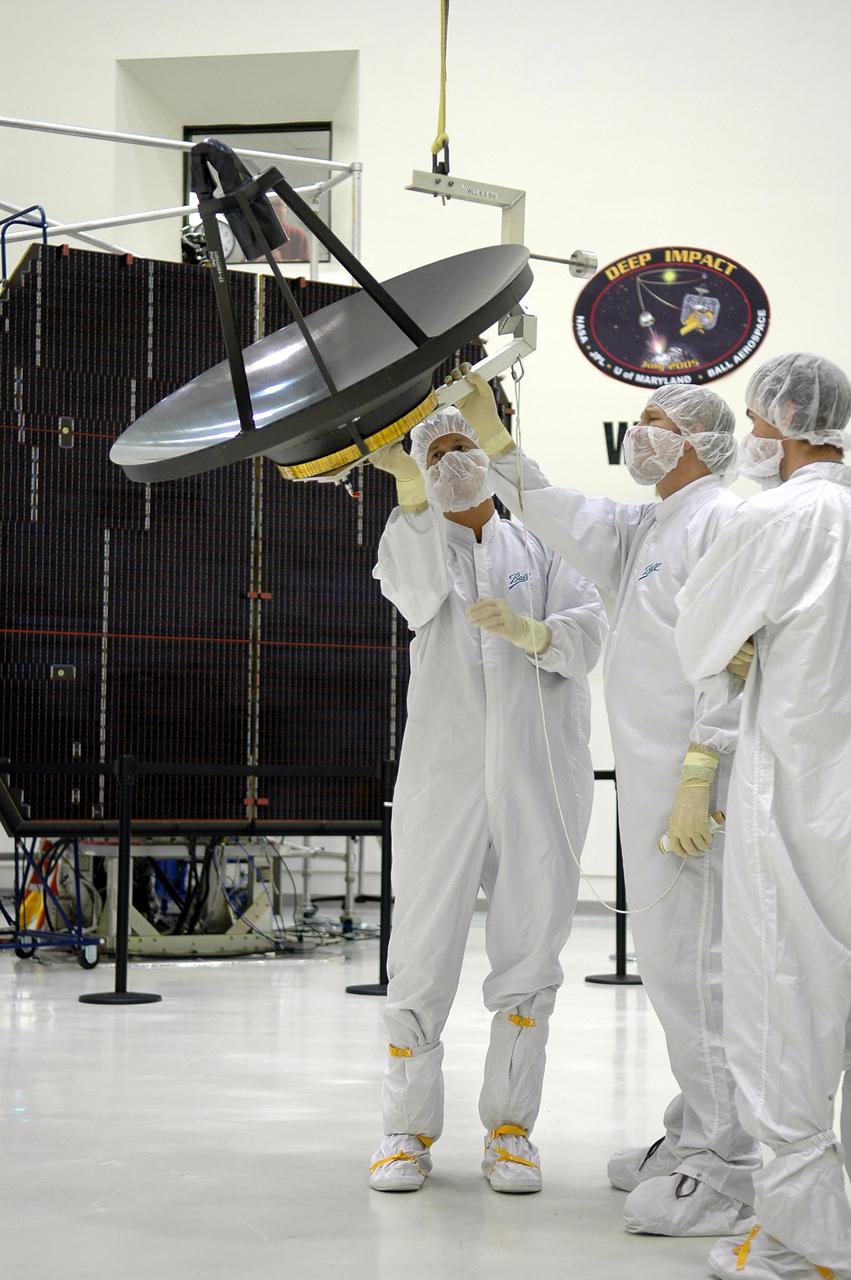
KENNEDY SPACE CENTER, FLA. - Ball Aerospace technicians at Astrotech in Titusville, Fla., make sure the crane is securely attached to the high-gain communications antenna to be installed on the Deep Impact spacecraft. A NASA Discovery mission, Deep Impact will probe beneath the surface of Comet Tempel 1 on July 4, 2005, when the comet is 83 million miles from Earth, and reveal the secrets of its interior. During the encounter phase, the high-gain antenna transmits near-real-time images of the impact back to Earth. The spacecraft is scheduled to launch Jan. 8 aboard a Boeing Delta II rocket from Launch Complex 17-B at Cape Canaveral Air Force Station, Fla.
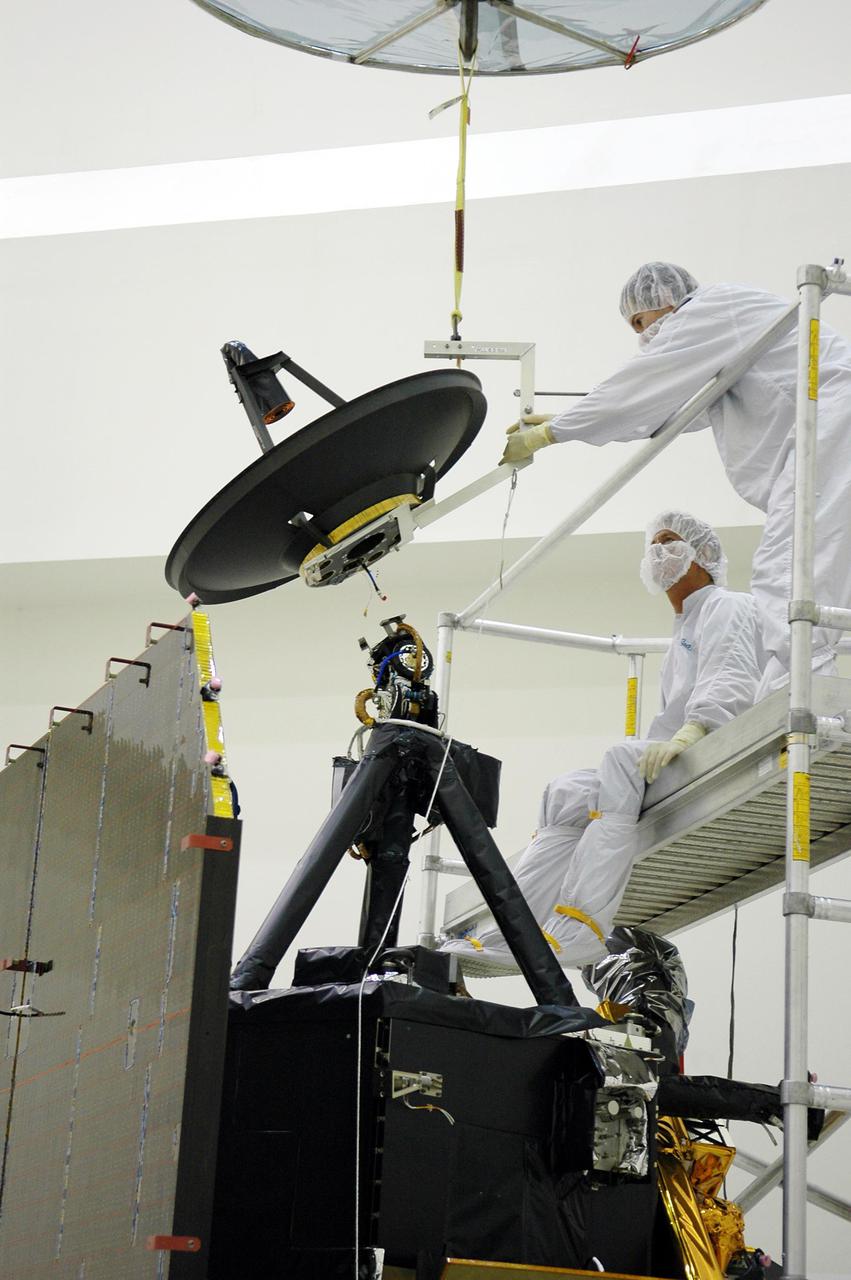
KENNEDY SPACE CENTER, FLA. - Ball Aerospace technicians at Astrotech in Titusville, Fla., guide the high-gain communications antenna toward the attach-point on the Deep Impact spacecraft. A NASA Discovery mission, Deep Impact will probe beneath the surface of Comet Tempel 1 on July 4, 2005, when the comet is 83 million miles from Earth, and reveal the secrets of its interior. During the encounter phase, the high-gain antenna transmits near-real-time images of the impact back to Earth. The spacecraft is scheduled to launch Jan. 8 aboard a Boeing Delta II rocket from Launch Complex 17-B at Cape Canaveral Air Force Station, Fla.
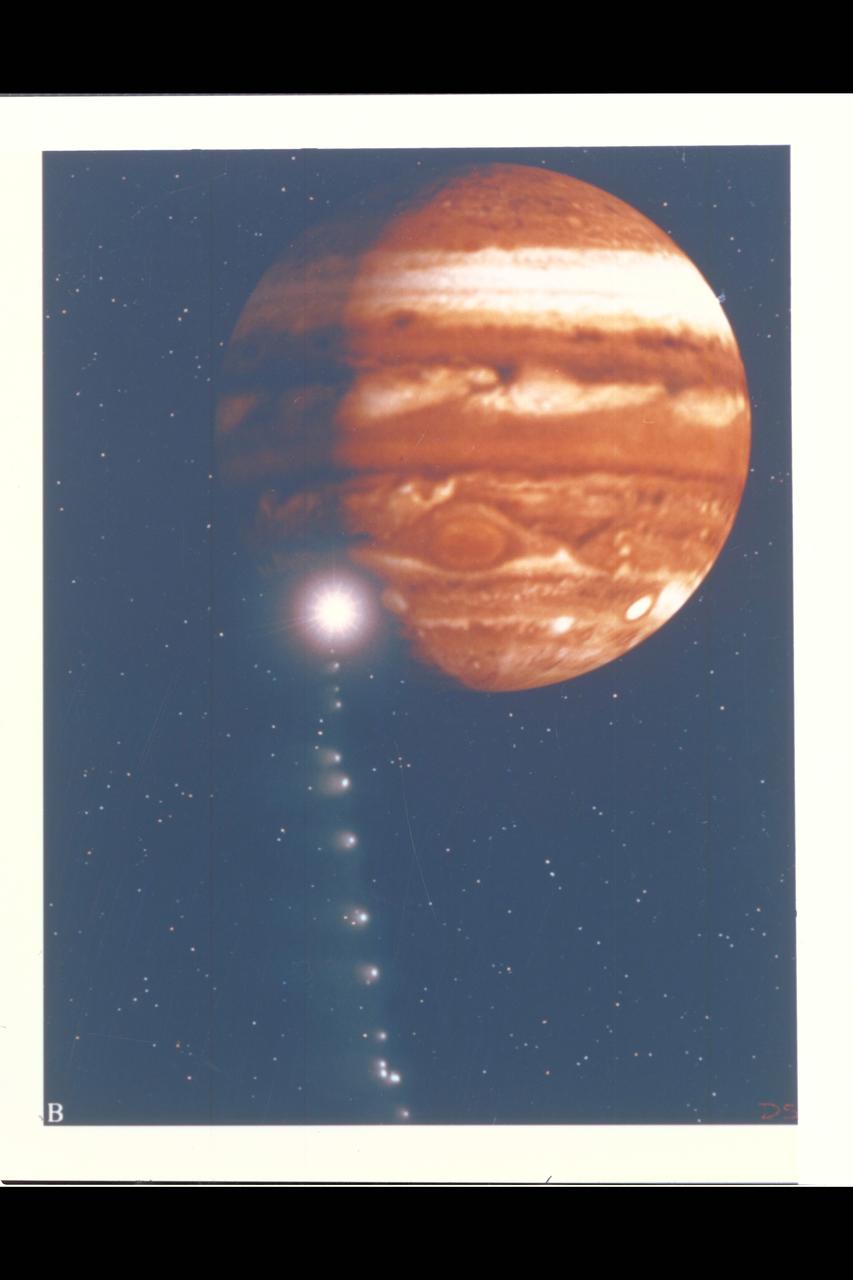
Photo Artwork composite by JPL This depiction of comet Shoemaker-Levy 9 impacting Jupiter is shown from several perspectives. IMAGE B shows the perspective from Galileo spacecraft which can observe the impact point directly. For visual appeal, most of the large cometary fragments are shown close to one another in this image. At the time of Jupiter impact, the fragments will be separated from one another by serveral times the distances shown. This image was created by D.A. Seal of JPL's Mission Design Section using orbital computations provIded by P.W. Chodas and D.K. Yeomans of JPL's Navigation Section.
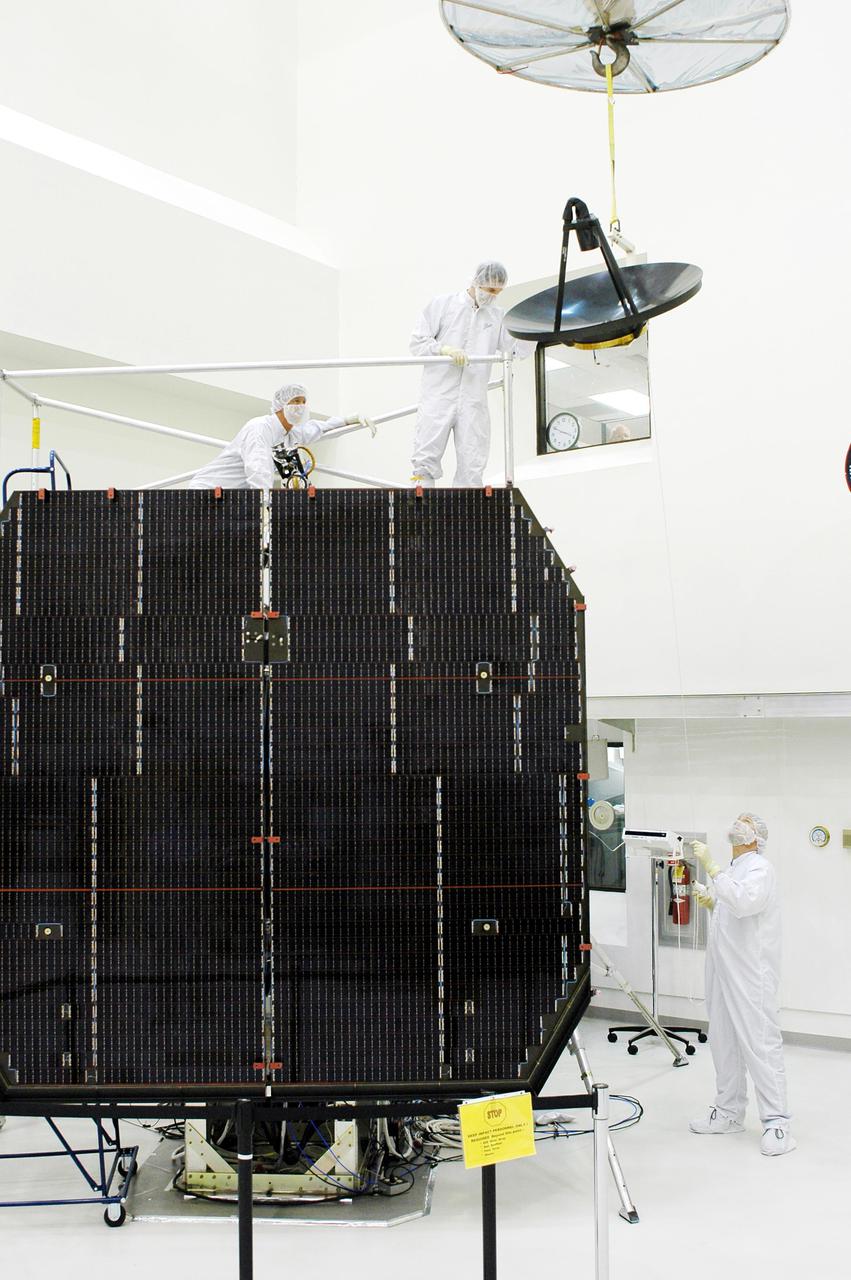
KENNEDY SPACE CENTER, FLA. - Ball Aerospace technicians at Astrotech in Titusville, Fla., watch as the high-gain communications antenna is moved toward the Deep Impact spacecraft for installation. A NASA Discovery mission, Deep Impact will probe beneath the surface of Comet Tempel 1 on July 4, 2005, when the comet is 83 million miles from Earth, and reveal the secrets of its interior. During the encounter phase, the high-gain antenna transmits near-real-time images of the impact back to Earth. The spacecraft is scheduled to launch Jan. 8 aboard a Boeing Delta II rocket from Launch Complex 17-B at Cape Canaveral Air Force Station, Fla.
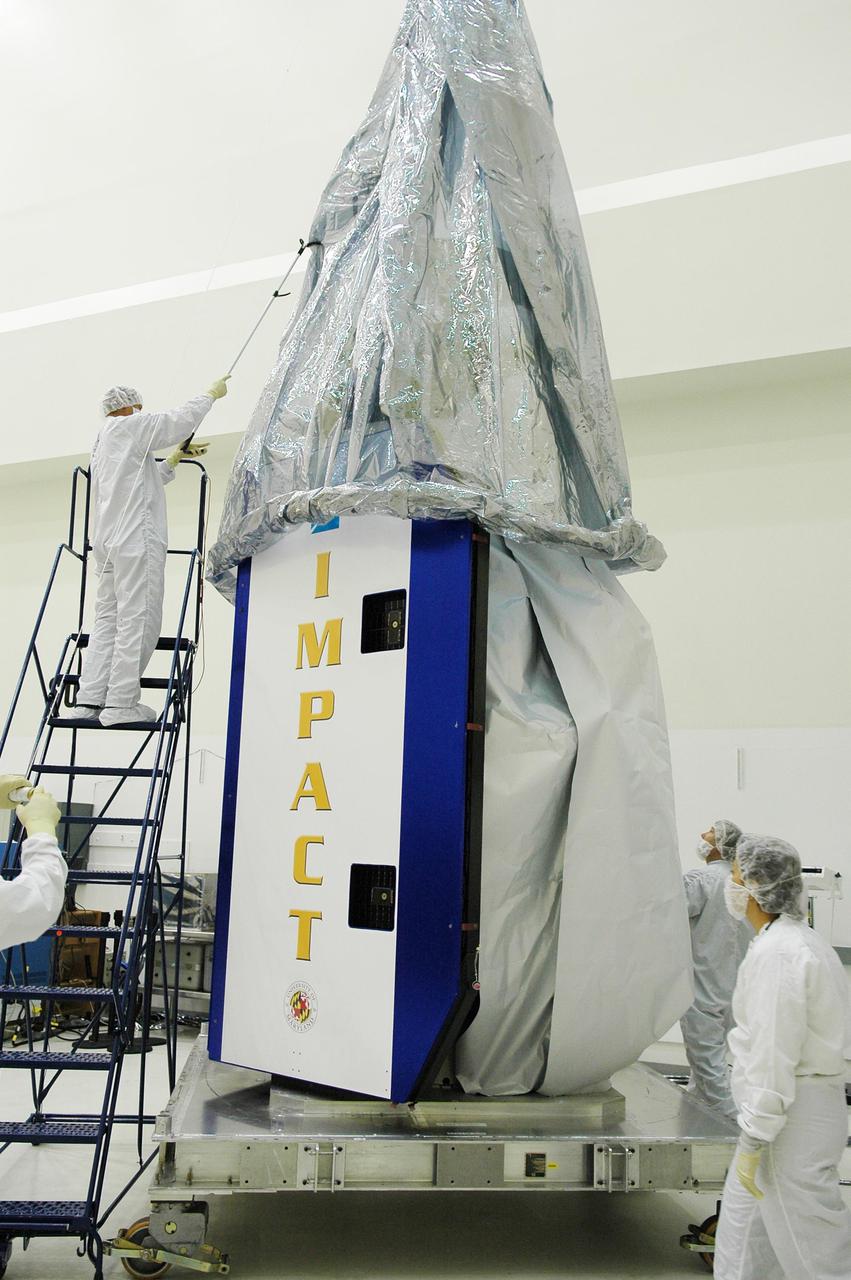
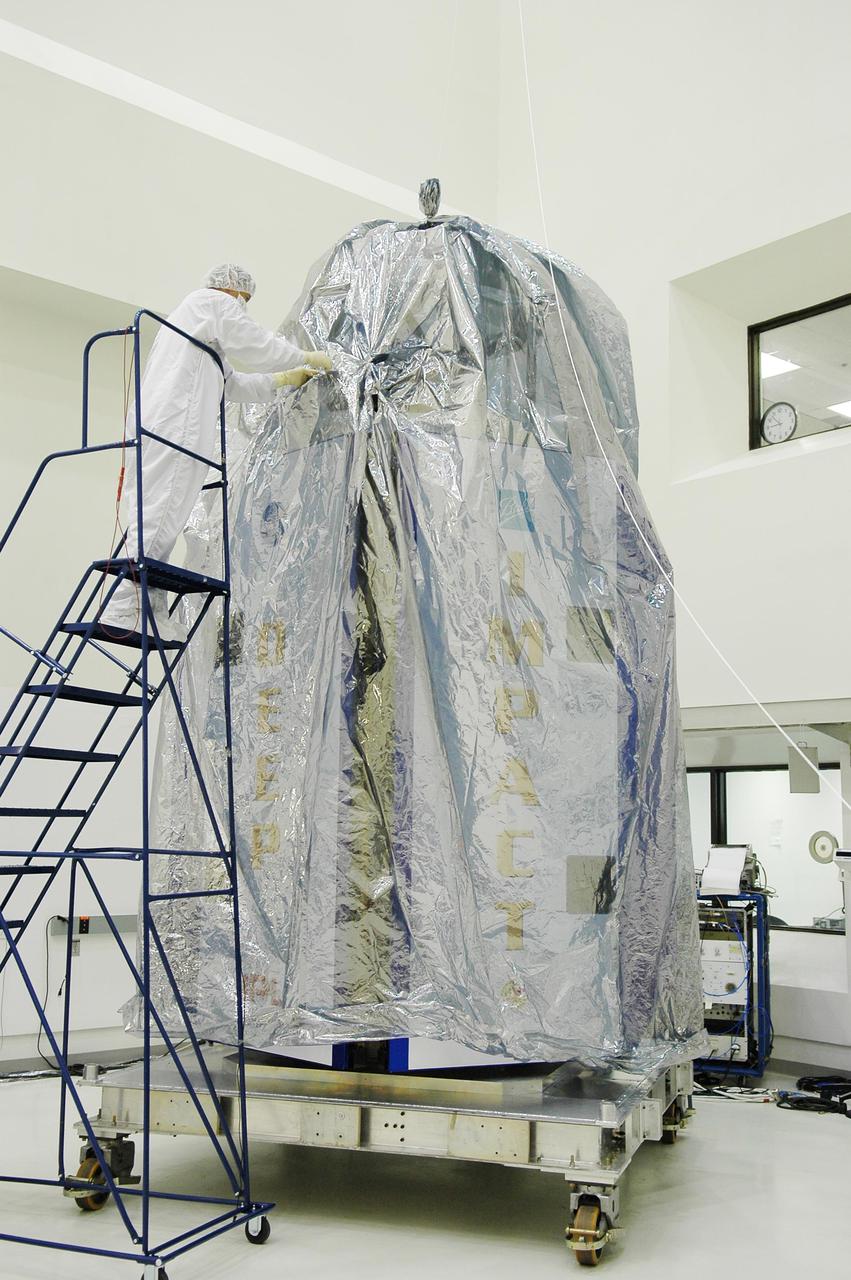
KENNEDY SPACE CENTER, FLA. - At Astrotech Space Operations in Titusville, Fla., workers help guide the protective cover into place over the Deep Impact spacecraft below. Deep Impact is being prepared for a move to the Hazardous Fuel Building and eventually shipment to Launch Pad 17-B, Cape Canaveral Air Force Station. Launch of Deep Impact is scheduled no earlier than Jan. 12. A NASA Discovery mission, Deep Impact will probe beneath the surface of Comet Tempel 1 on July 4, 2005, when the comet is 83 million miles from Earth, and reveal the secrets of its interior. After releasing a 3- by 3-foot projectile to crash onto the surface, Deep Impact’s flyby spacecraft will collect pictures and data of how the crater forms, measuring the crater’s depth and diameter, as well as the composition of the interior of the crater and any material thrown out, and determining the changes in natural outgassing produced by the impact. It will send the data back to Earth through the antennas of the Deep Space Network.
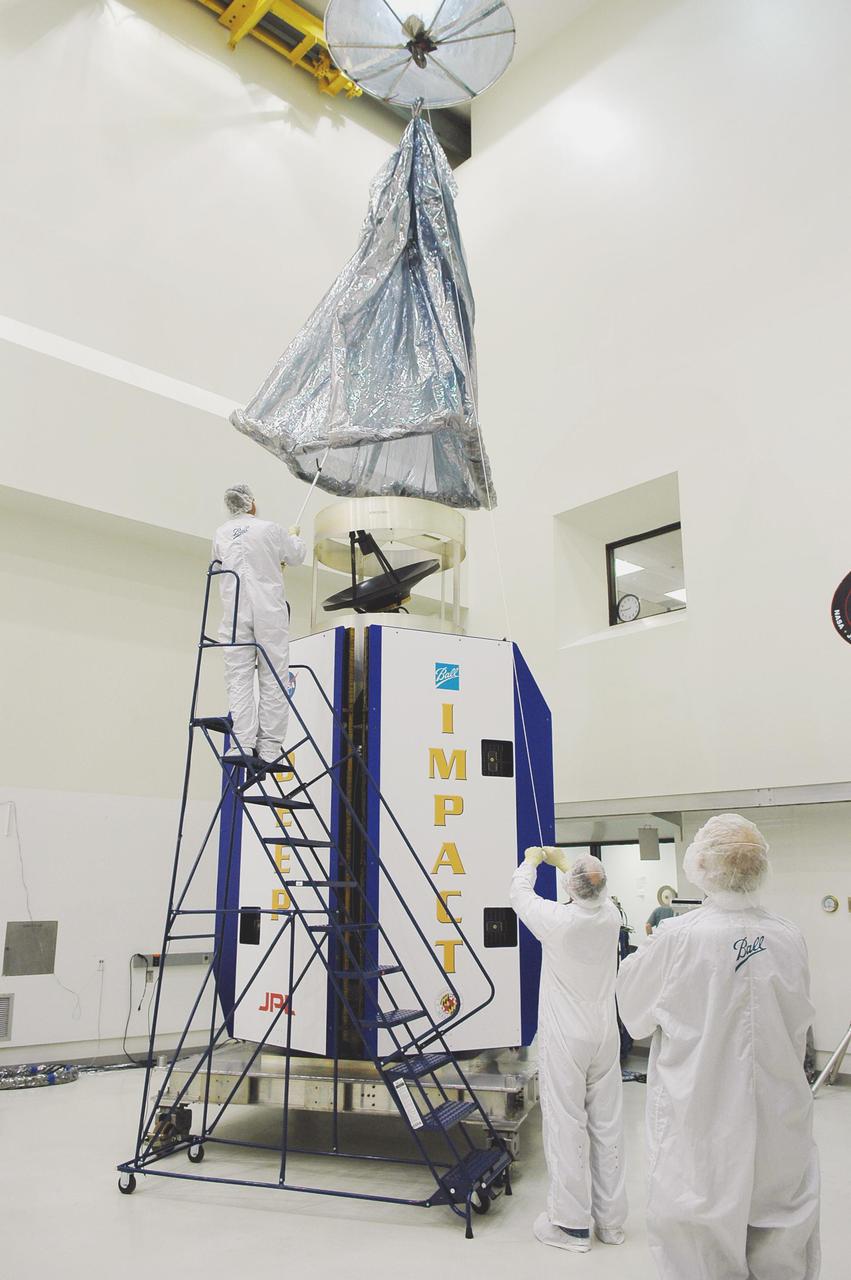
KENNEDY SPACE CENTER, FLA. - At Astrotech Space Operations in Titusville, Fla., workers help guide an overhead crane holding a protective cover that will be placed over the Deep Impact spacecraft below. Deep Impact is being prepared for a move to the Hazardous Fuel Building and eventually shipment to Launch Pad 17-B, Cape Canaveral Air Force Station. Launch of Deep Impact is scheduled no earlier than Jan. 12. A NASA Discovery mission, Deep Impact will probe beneath the surface of Comet Tempel 1 on July 4, 2005, when the comet is 83 million miles from Earth, and reveal the secrets of its interior. After releasing a 3- by 3-foot projectile to crash onto the surface, Deep Impact’s flyby spacecraft will collect pictures and data of how the crater forms, measuring the crater’s depth and diameter, as well as the composition of the interior of the crater and any material thrown out, and determining the changes in natural outgassing produced by the impact. It will send the data back to Earth through the antennas of the Deep Space Network.
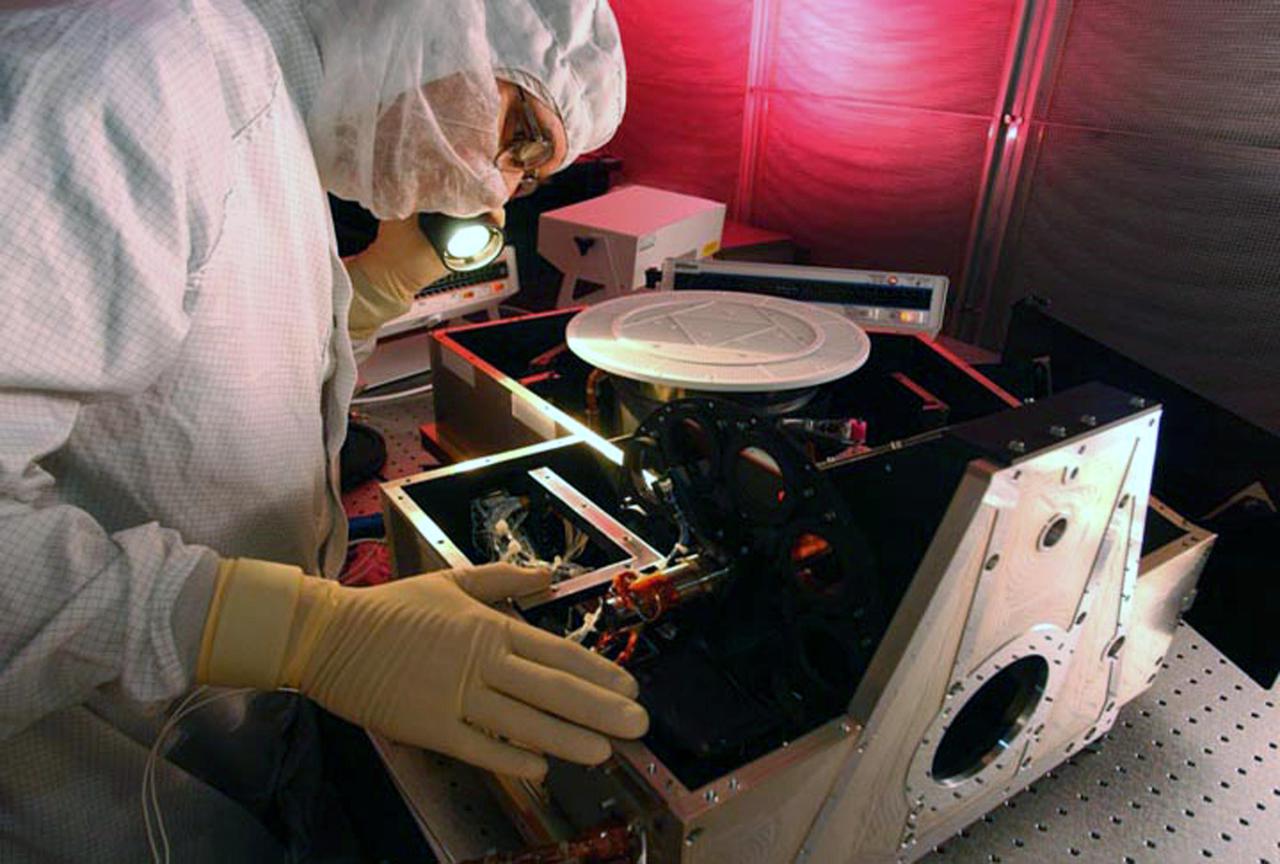
JET PROPULSION LABORATORY, CALIF. - At Ball Aerospace in Boulder, Colo., the infrared (IR) spectrometer for the Deep Impact flyby spacecraft is inspected in the instrument assembly area in the Fisher Assembly building clean room. Deep Impact will probe beneath the surface of Comet Tempel 1 on July 4, 2005, when the comet is 83 million miles from Earth, and reveal the secrets of its interior. After releasing a 3- by 3-foot projectile to crash onto the surface, Deep Impact’s flyby spacecraft will collect pictures and data of how the crater forms, measuring the crater’s depth and diameter, as well as the composition of the interior of the crater and any material thrown out, and determining the changes in natural outgassing produced by the impact. The spectrometer is part of the High Resolution Instrument in the spacecraft. This imager will be aimed at the ejected matter as the crater forms, and an infrared 'fingerprint' of the material from inside of the comet's nucleus will be taken. It will send the data back to Earth through the antennas of the Deep Space Network. Deep Impact is a NASA Discovery mission. Launch of Deep Impact is scheduled for Jan. 12 from Launch Pad 17-B, Cape Canaveral Air Force Station, Fla.
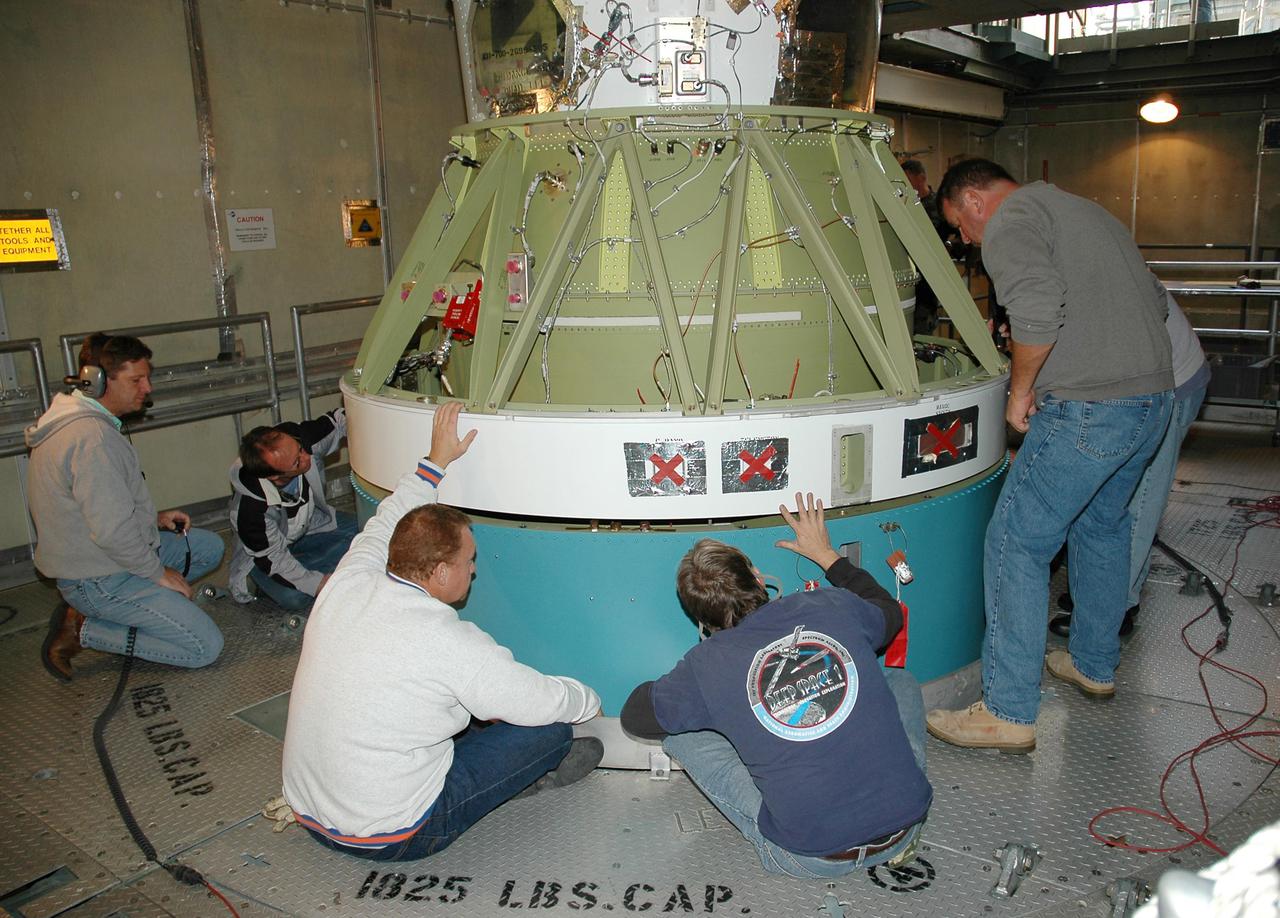
KENNEDY SPACE CENTER, FLA. - On Launch Pad 17-B at Cape Canaveral Air Force Station, workers check areas of the second stage as it is mated to the Boeing Delta II rocket. The Delta II will launch NASA’s Deep Impact spacecraft. A NASA Discovery mission, Deep Impact will probe beneath the surface of Comet Tempel 1 on July 4, 2005, when the comet is 83 million miles from Earth, and reveal the secrets of its interior. After releasing an impactor on a course to hit the comet’s sunlit side, Deep Impact’s flyby spacecraft will collect pictures and data of how the crater forms, measure the crater’s depth and diameter, as well as the composition of the interior of the crater and any material thrown out, and determine the changes in natural outgassing produced by the impact. It will send the data back to Earth through the antennas of the Deep Space Network.
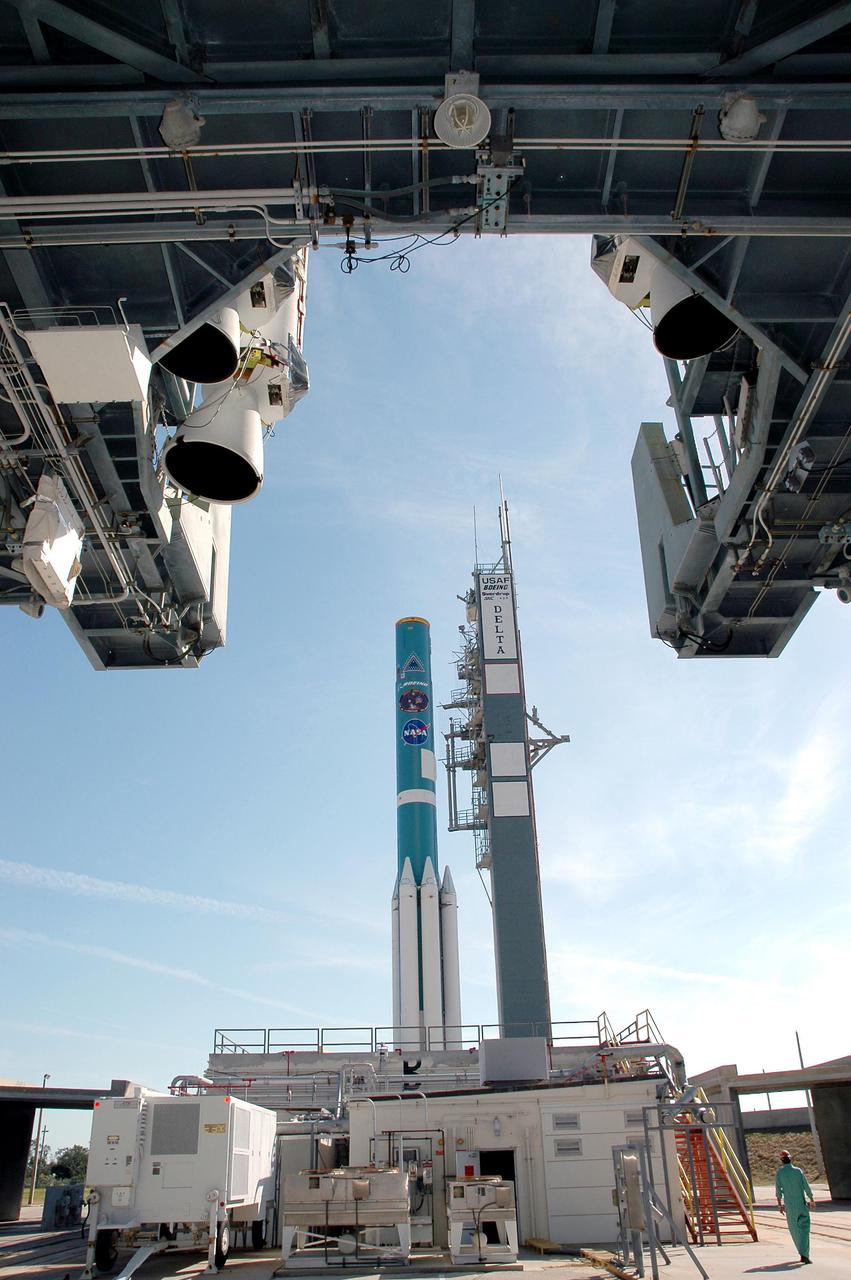
KENNEDY SPACE CENTER, FLA. - The mobile service tower with the final set of Solid Rocket Boosters (SRBs) rolls toward the Boeing Delta II rocket (in the background). The SRBs will be mated to the rocket, joining others for a complement of nine, to launch the Deep Impact spacecraft, scheduled for no earlier than Jan. 8, 2005. A NASA Discovery mission, Deep Impact will probe beneath the surface of Comet Tempel 1 on July 4, 2005, when the comet is 83 million miles from Earth, and reveal the secrets of its interior. After releasing an impactor on a course to hit the comet’s sunlit side, Deep Impact’s flyby spacecraft will collect pictures and data of how the crater forms, measure the crater’s depth and diameter, as well as the composition of the interior of the crater and any material thrown out, and determine the changes in natural outgassing produced by the impact. It will send the data back to Earth through the antennas of the Deep Space Network.
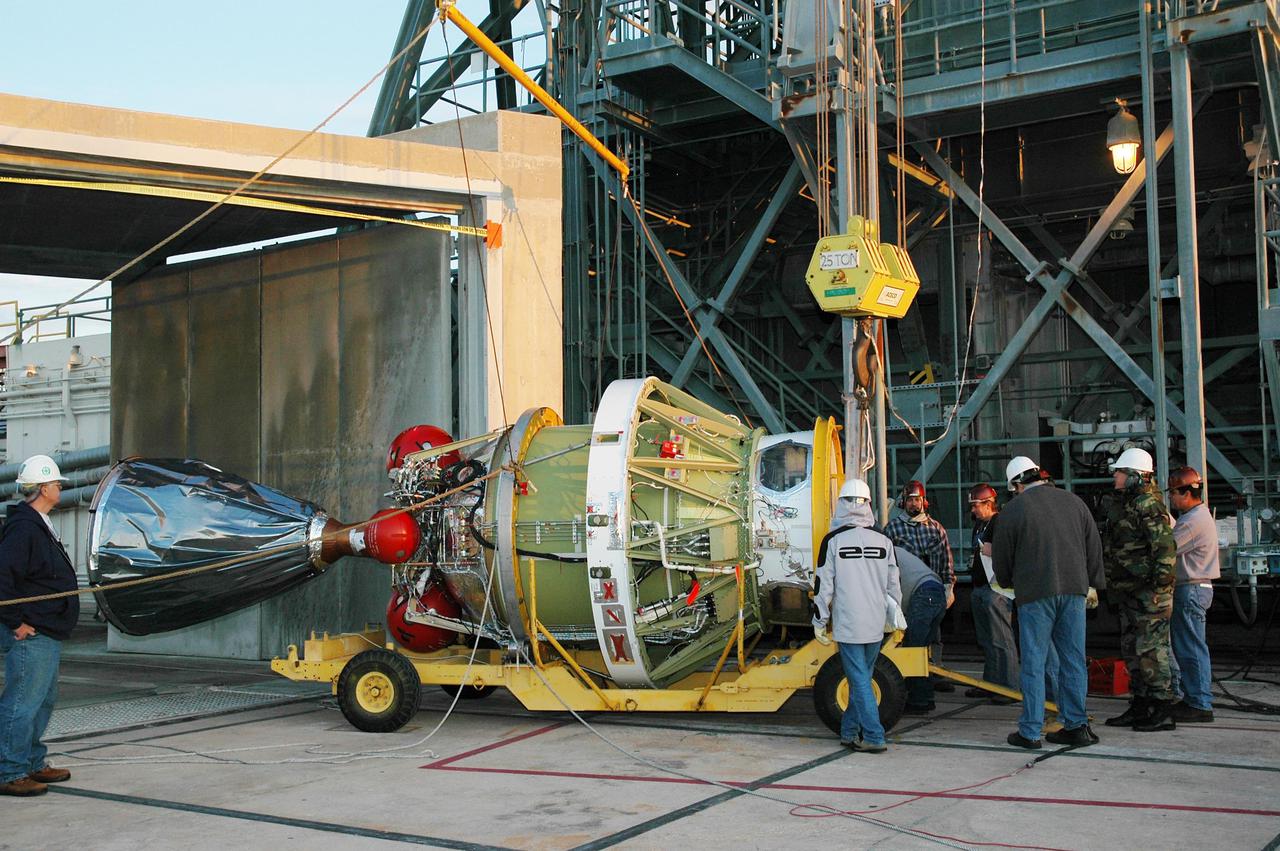
KENNEDY SPACE CENTER, FLA. - On Launch Pad 17-B at Cape Canaveral Air Force Station, the second stage of the Boeing Delta II rocket arrives at the mobile service tower for mating to the rocket. The Delta II will launch NASA’s Deep Impact spacecraft. A NASA Discovery mission, Deep Impact will probe beneath the surface of Comet Tempel 1 on July 4, 2005, when the comet is 83 million miles from Earth, and reveal the secrets of its interior. After releasing an impactor on a course to hit the comet’s sunlit side, Deep Impact’s flyby spacecraft will collect pictures and data of how the crater forms, measure the crater’s depth and diameter, as well as the composition of the interior of the crater and any material thrown out, and determine the changes in natural outgassing produced by the impact. It will send the data back to Earth through the antennas of the Deep Space Network.
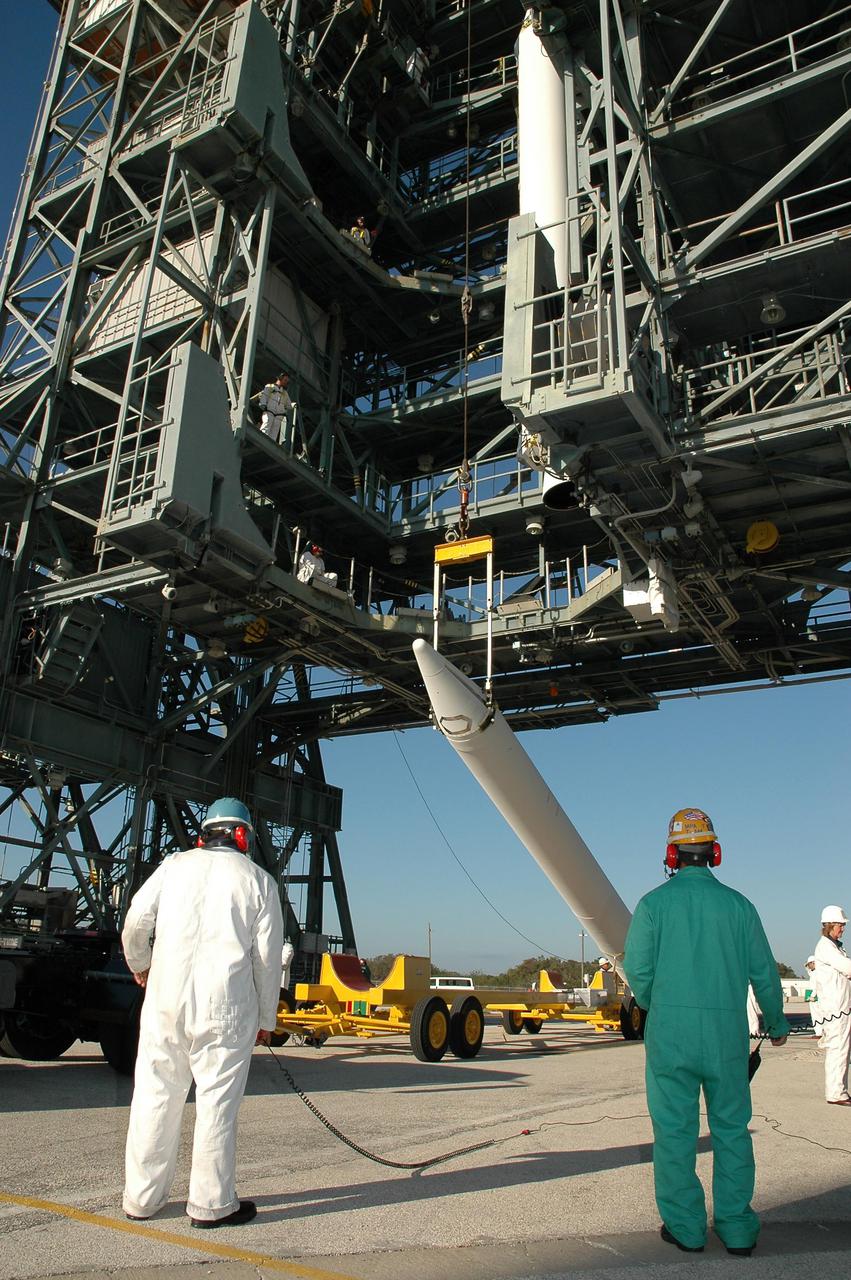
KENNEDY SPACE CENTER, FLA. - On Launch Pad 17-B, Cape Canaveral Air Force Station, Fla., the second in a set of three Solid Rocket Boosters (SRBs) is raised to a vertical position. The SRBs will be hoisted up the mobile service tower and join three others already mated to the Boeing Delta II rocket that will launch the Deep Impact spacecraft. A NASA Discovery mission, Deep Impact will probe beneath the surface of Comet Tempel 1 on July 4, 2005, when the comet is 83 million miles from Earth, and reveal the secrets of its interior. After releasing an impactor on a course to hit the comet’s sunlit side, Deep Impact’s flyby spacecraft will collect pictures and data of how the crater forms, measure the crater’s depth and diameter, as well as the composition of the interior of the crater and any material thrown out, and determine the changes in natural outgassing produced by the impact. It will send the data back to Earth through the antennas of the Deep Space Network.
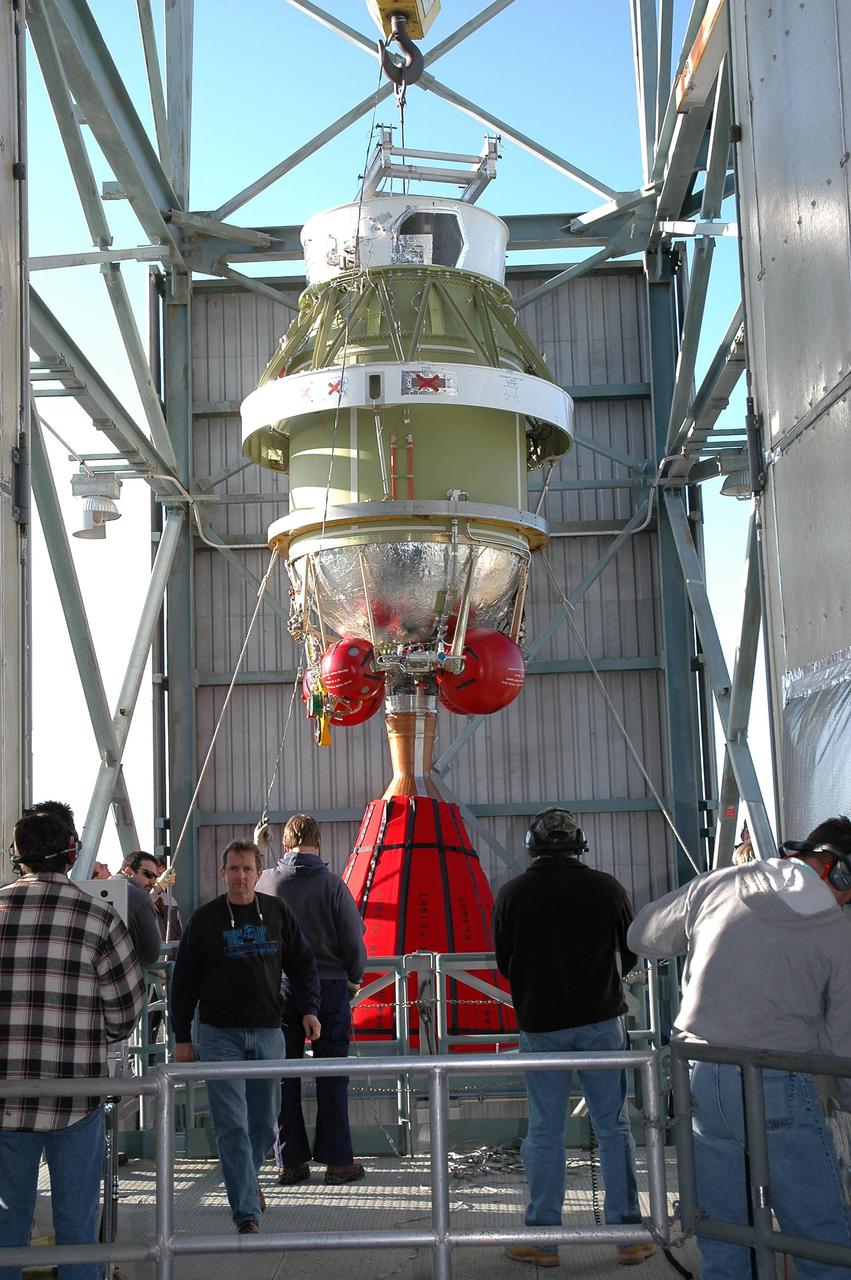
KENNEDY SPACE CENTER, FLA. - On Launch Pad 17-B at Cape Canaveral Air Force Station, the second stage of the Boeing Delta II rocket arrives at the top of the mobile service tower. The element will be mated to the Delta II, which will launch NASA’s Deep Impact spacecraft. A NASA Discovery mission, Deep Impact will probe beneath the surface of Comet Tempel 1 on July 4, 2005, when the comet is 83 million miles from Earth, and reveal the secrets of its interior. After releasing an impactor on a course to hit the comet’s sunlit side, Deep Impact’s flyby spacecraft will collect pictures and data of how the crater forms, measure the crater’s depth and diameter, as well as the composition of the interior of the crater and any material thrown out, and determine the changes in natural outgassing produced by the impact. It will send the data back to Earth through the antennas of the Deep Space Network.
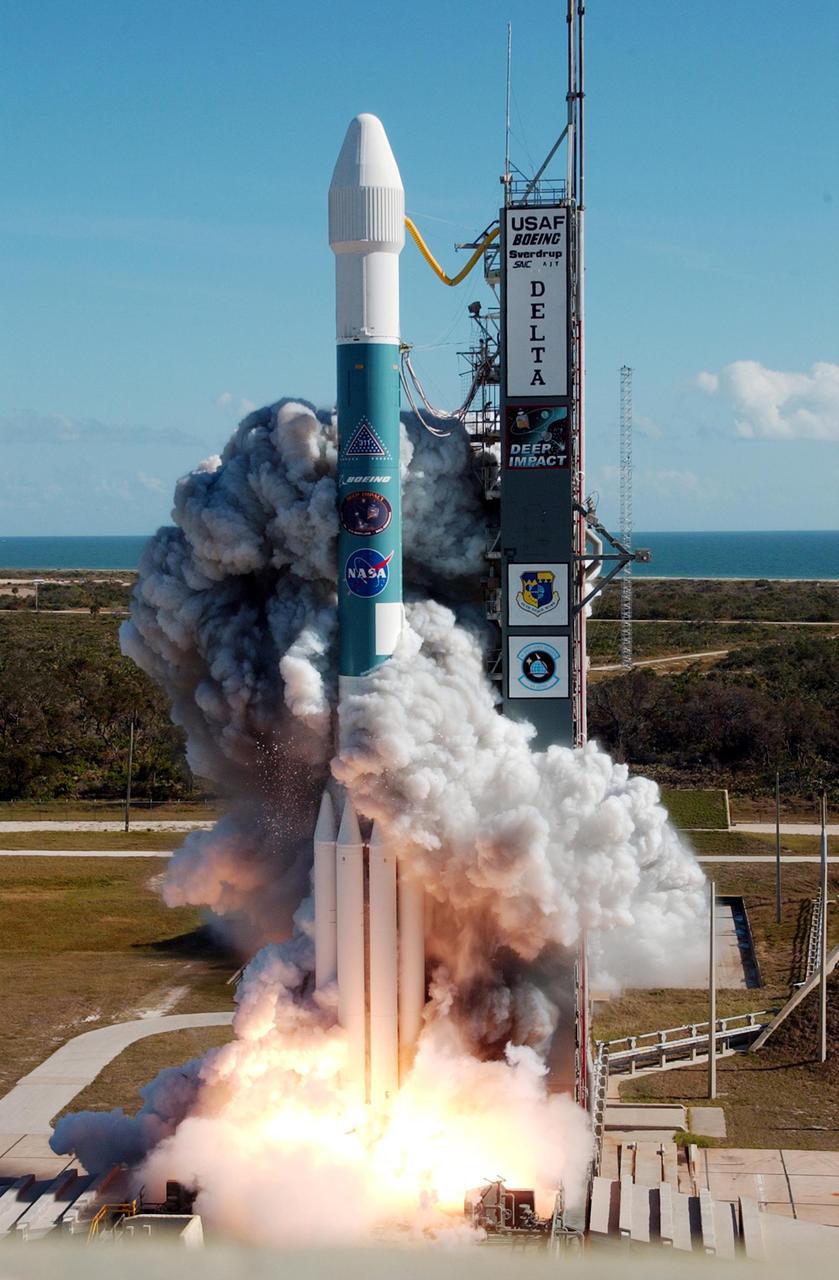
KENNEDY SPACE CENTER, FLA. - Erupting from the flames and smoke beneath it, NASA’s Deep Impact spacecraft lifts off at 1:47 p.m. EST today from Launch Pad 17-B, Cape Canaveral Air Force Station, Fla. A NASA Discovery mission, Deep Impact is heading for space and a rendezvous 83 million miles from Earth with Comet Tempel 1. After releasing a 3- by 3-foot projectile (impactor) to crash onto the surface July 4, 2005, Deep Impact’s flyby spacecraft will reveal the secrets of the comet’s interior by collecting pictures and data of how the crater forms, measuring the crater’s depth and diameter as well as the composition of the interior of the crater and any material thrown out, and determining the changes in natural outgassing produced by the impact. It will send the data back to Earth through the antennas of the Deep Space Network.
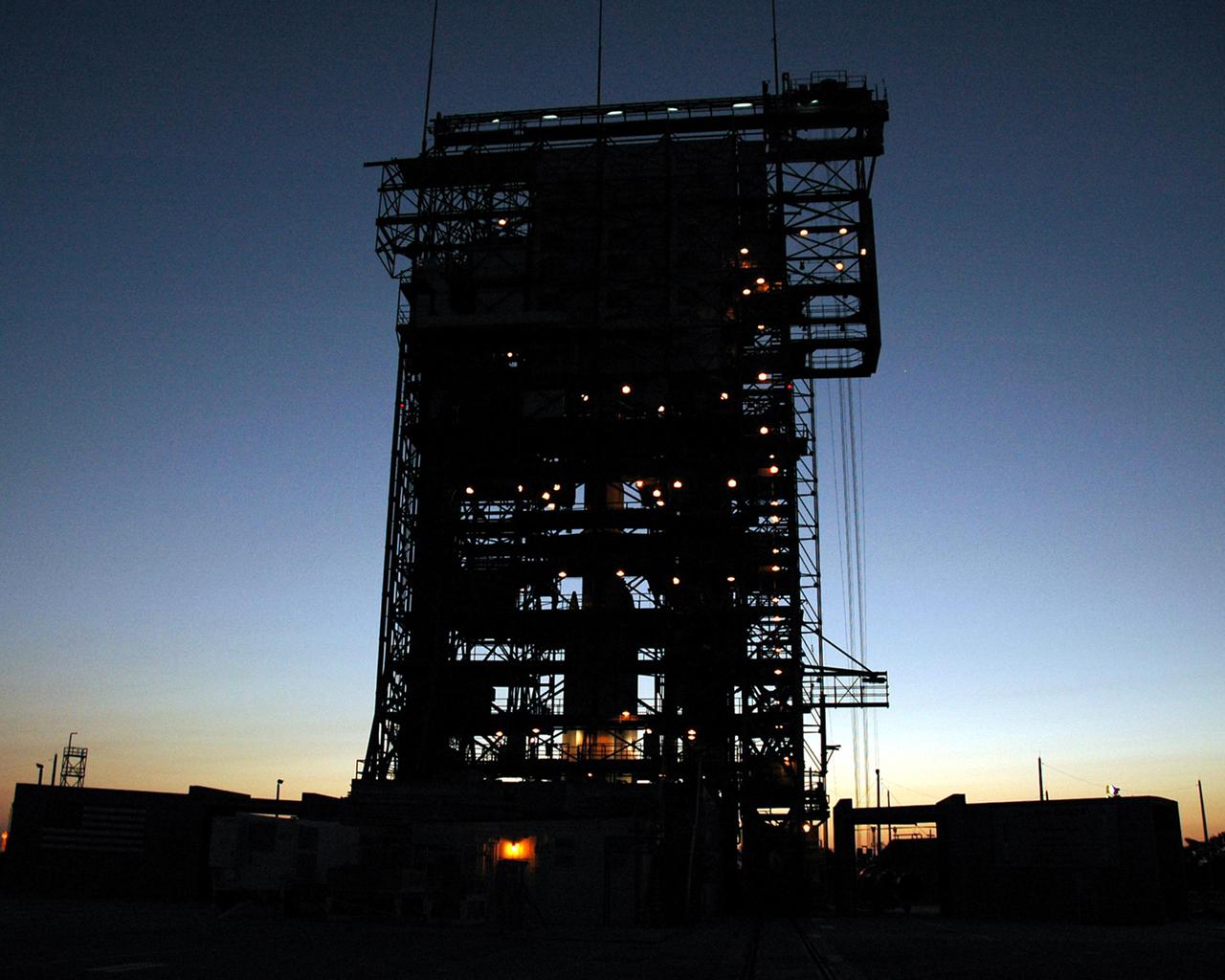
KENNEDY SPACE CENTER, FLA. - In the pre-dawn hours on Launch Pad 17-B at Cape Canaveral Air Force Station, the mobile service tower is silhouetted with the Boeing Delta II rocket that will launch NASA’s Deep Impact spacecraft. The Delta II waits for the arrival and mating of the second stage. A NASA Discovery mission, Deep Impact will probe beneath the surface of Comet Tempel 1 on July 4, 2005, when the comet is 83 million miles from Earth, and reveal the secrets of its interior. After releasing an impactor on a course to hit the comet’s sunlit side, Deep Impact’s flyby spacecraft will collect pictures and data of how the crater forms, measure the crater’s depth and diameter, as well as the composition of the interior of the crater and any material thrown out, and determine the changes in natural outgassing produced by the impact. It will send the data back to Earth through the antennas of the Deep Space Network.
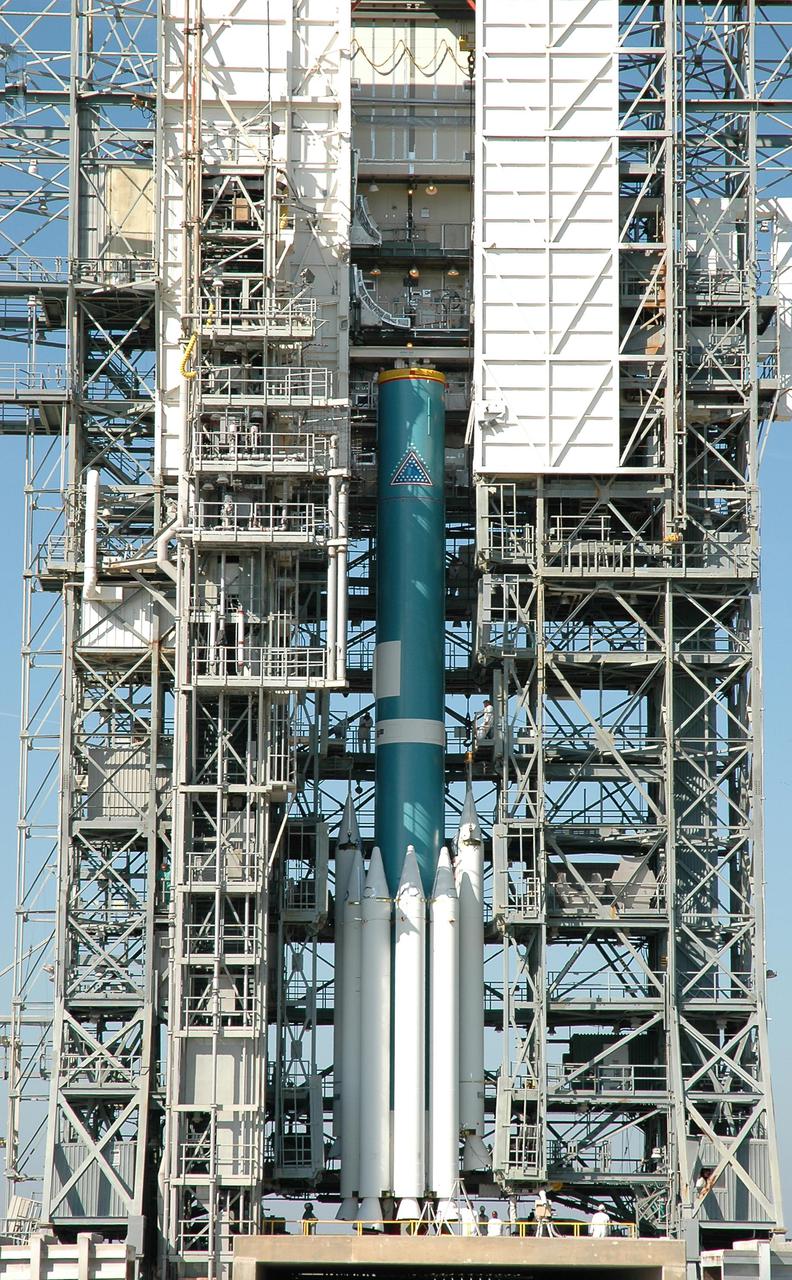
KENNEDY SPACE CENTER, FLA. - The Boeing Delta II rocket with its complement of nine Solid Rocket Boosters stands complete alongside the gantry. The Delta II will launch the Deep Impact spacecraft, scheduled for no earlier than Jan. 8, 2005. Below the rocket is the flame trench, and in the foreground is the overflow pool. A NASA Discovery mission, Deep Impact will probe beneath the surface of Comet Tempel 1 on July 4, 2005, when the comet is 83 million miles from Earth, and reveal the secrets of its interior. After releasing an impactor on a course to hit the comet’s sunlit side, Deep Impact’s flyby spacecraft will collect pictures and data of how the crater forms, measure the crater’s depth and diameter, as well as the composition of the interior of the crater and any material thrown out, and determine the changes in natural outgassing produced by the impact. It will send the data back to Earth through the antennas of the Deep Space Network.
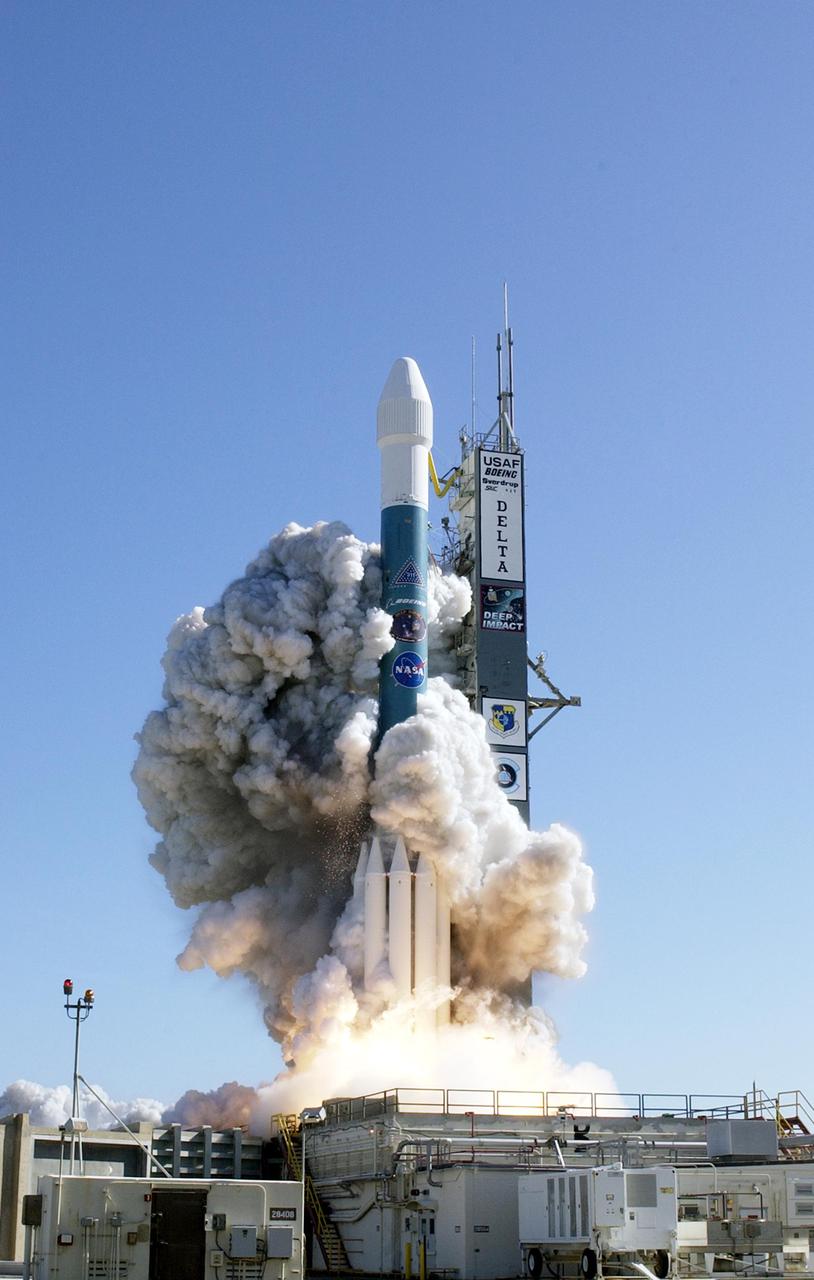
KENNEDY SPACE CENTER, FLA. - Engulfed by flames and smoke, NASA’s Deep Impact spacecraft lifts off at 1:47 p.m. EST today from Launch Pad 17-B, Cape Canaveral Air Force Station, Fla. A NASA Discovery mission, Deep Impact is heading for space and a rendezvous 83 million miles from Earth with Comet Tempel 1. After releasing a 3- by 3-foot projectile (impactor) to crash onto the surface July 4, 2005, Deep Impact’s flyby spacecraft will reveal the secrets of the comet’s interior by collecting pictures and data of how the crater forms, measuring the crater’s depth and diameter as well as the composition of the interior of the crater and any material thrown out, and determining the changes in natural outgassing produced by the impact. It will send the data back to Earth through the antennas of the Deep Space Network.