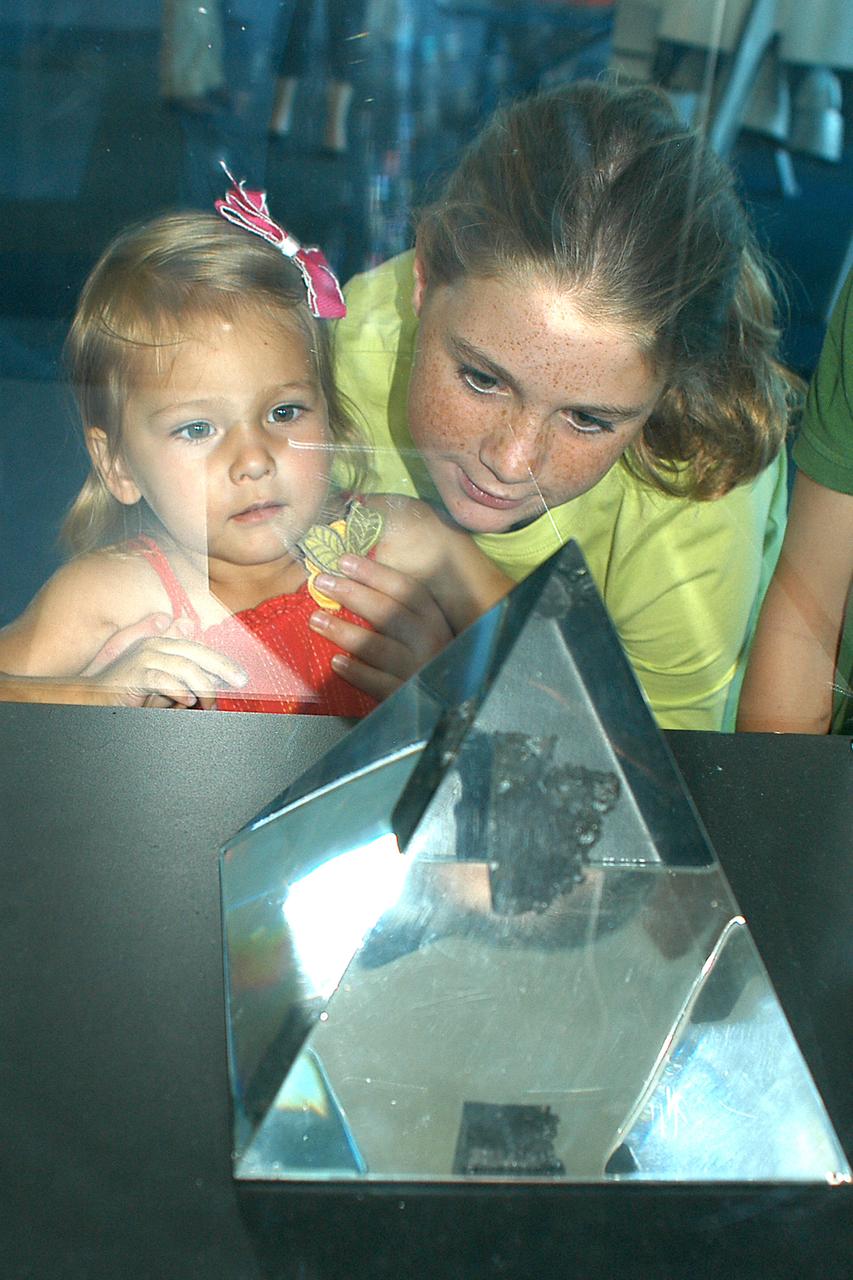
Clare Johnston, 10, and Eden Landis, 3, stare in wonder at the moon rock on display at the INFINITY at NASA Stennis Space Center visitor center and museum. The children toured INFINITY exhibits during ribbon-cutting activities for the facility April 11, 2012.
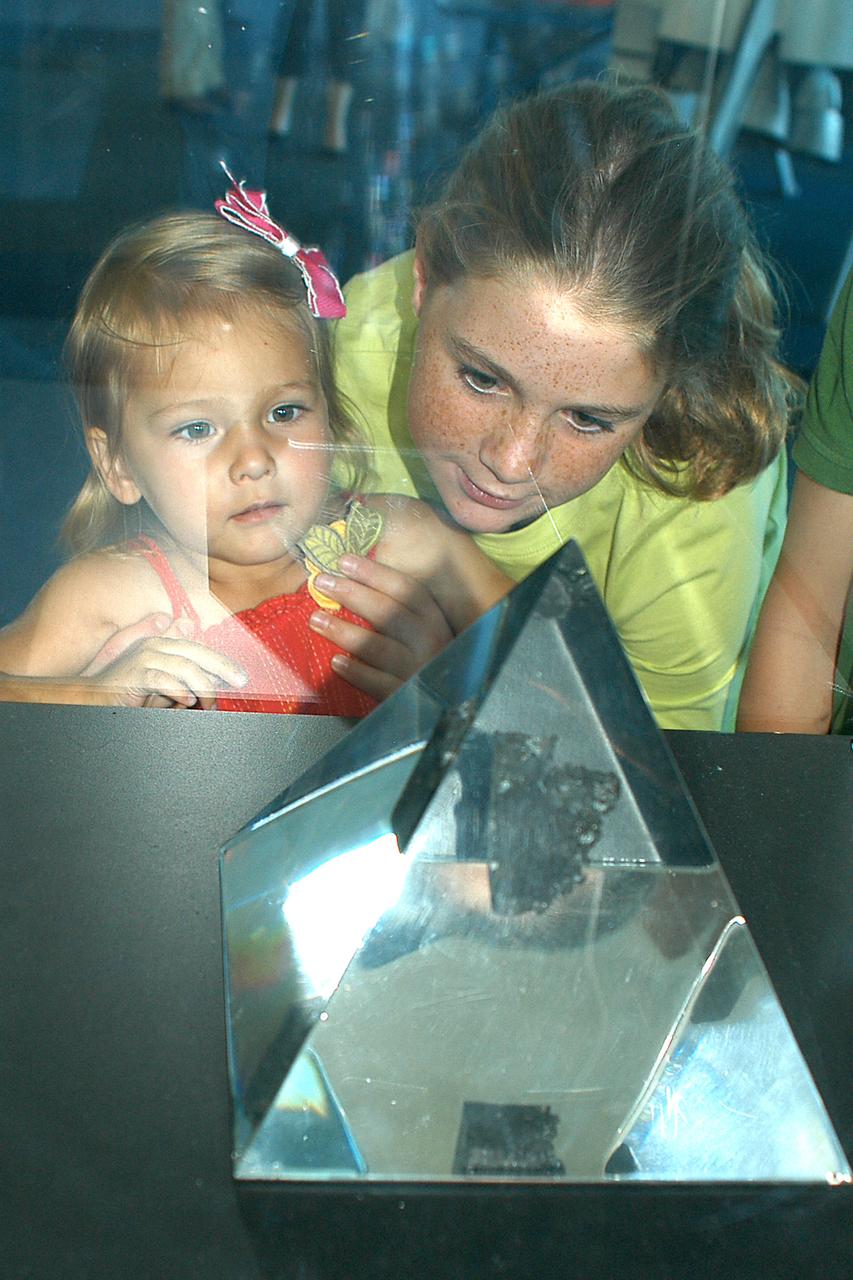
Clare Johnston, 10, and Eden Landis, 3, stare in wonder at the moon rock on display at the INFINITY at NASA Stennis Space Center visitor center and museum. The children toured INFINITY exhibits during ribbon-cutting activities for the facility April 11, 2012.
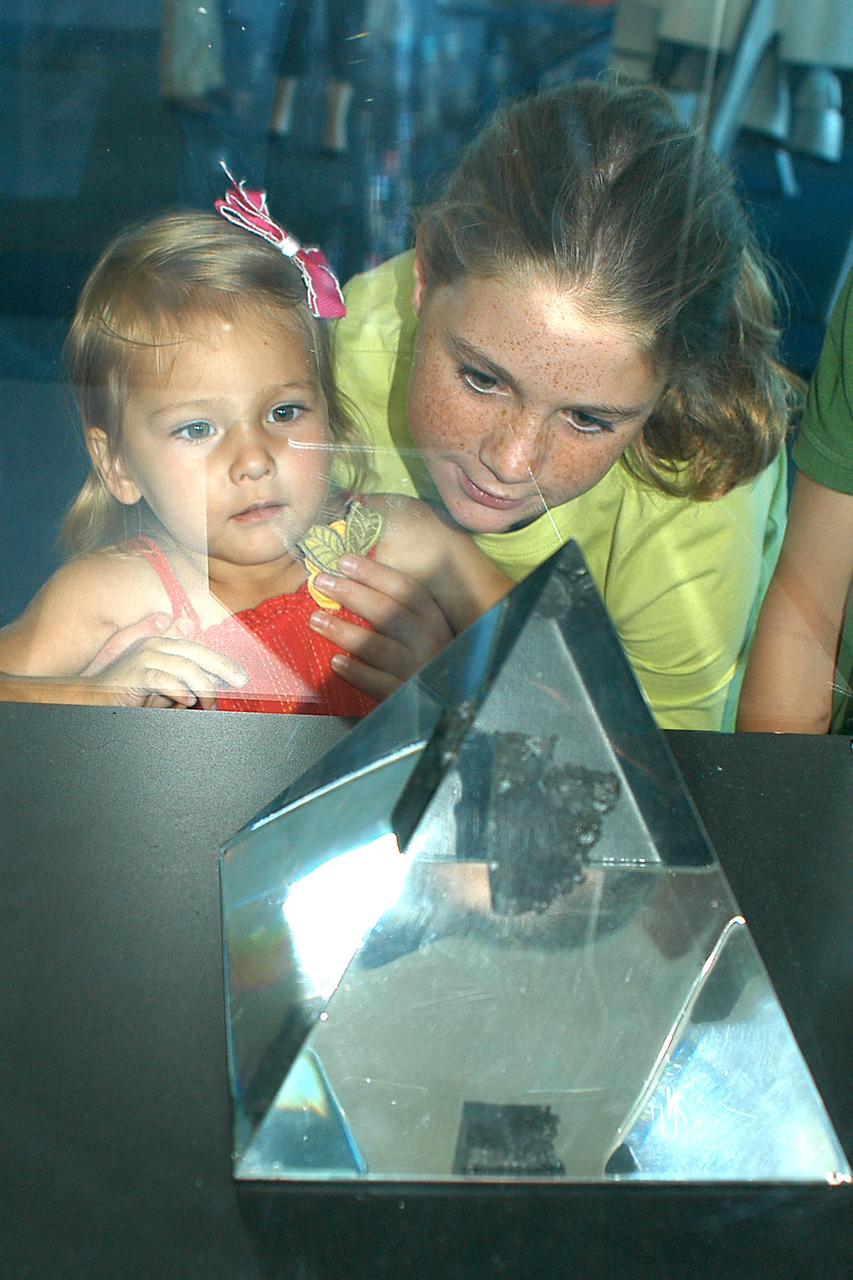
Clare Johnston, 10, and Eden Landis, 3, stare in wonder at the moon rock on display at the INFINITY at NASA Stennis Space Center visitor center and museum. The children toured INFINITY exhibits during ribbon-cutting activities for the facility April 11, 2012.
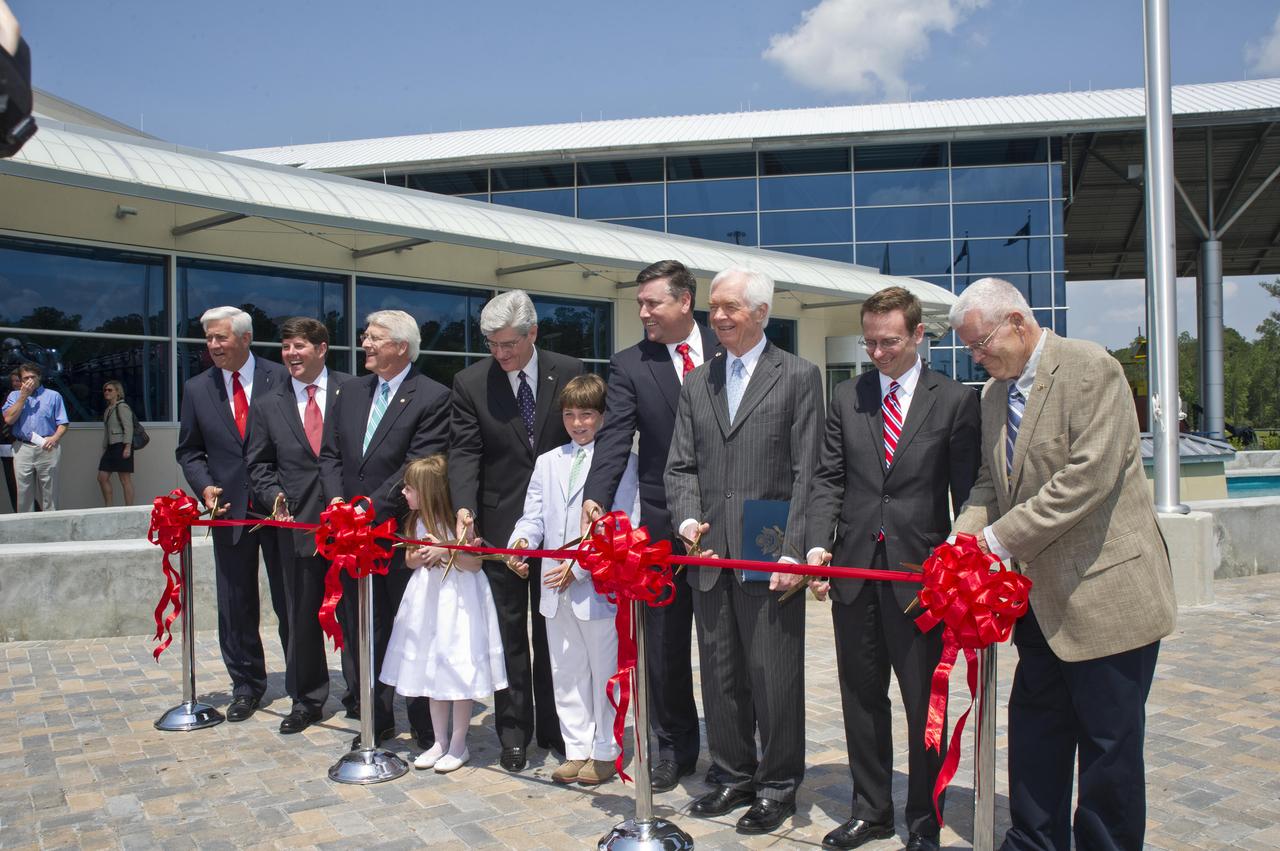
Ceremony participants prepare to cut the ribbon on the INFINITY at NASA Stennis Space Center facility April 11, 2012. Participating in the ceremony were (l to r): Gulfport Mayor and INFINITY Science Center Inc. Chairman George Schloegel; U.S. Rep. Steven Palazzo, R-Miss.; U.S. Sen. Roger Wicker, R-Miss.; Roy S. Estess granddaughter Lauren McKay; Mississippi Gov. Phil Bryant; Leo Seal Jr. grandson Leo Seal IV; Stennis Director Patrick Scheuermann; U.S. Sen. Thad Cochran, R-Miss.; NASA Chief of Staff David Radzanowski; and Apollo 13 astronaut and INFINITY Science Center Inc. Vice Chairman Fred Haise.
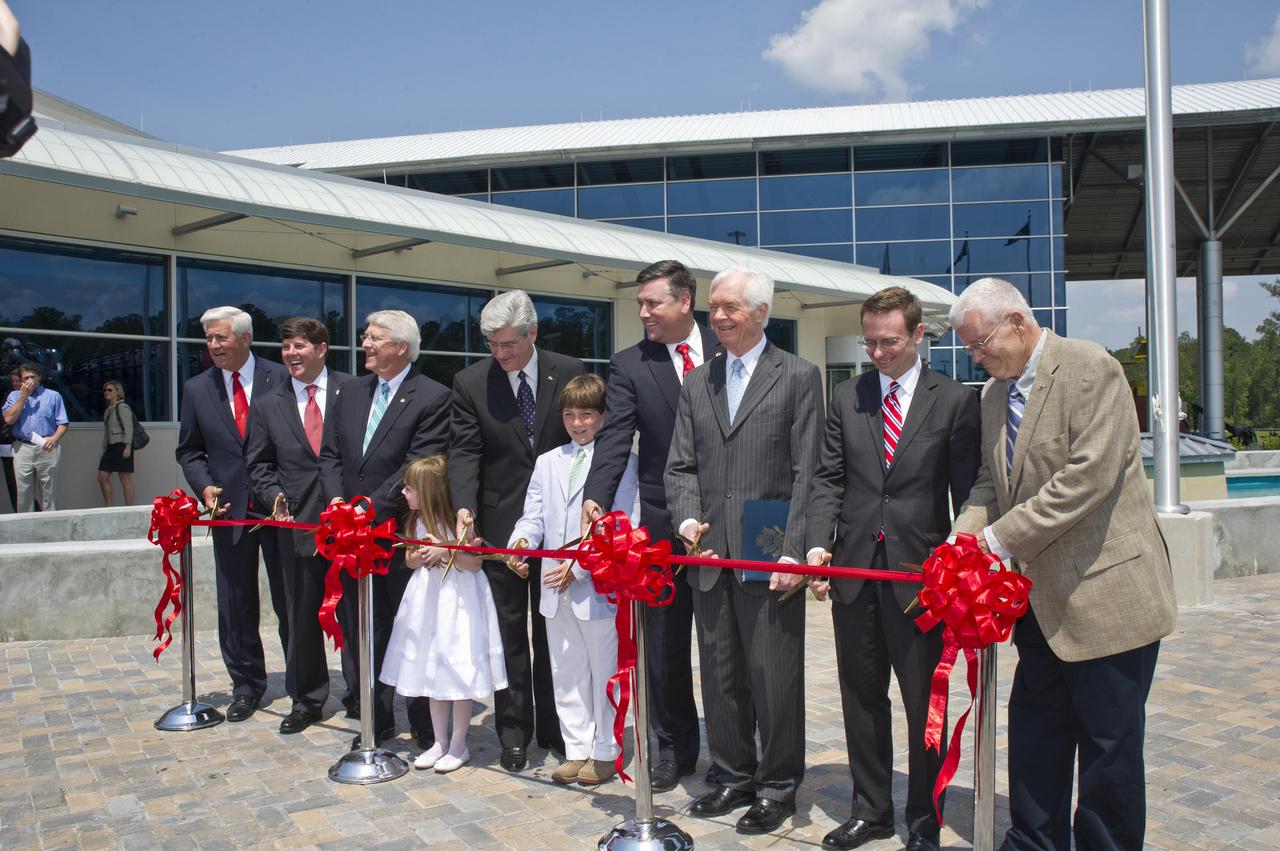
Ceremony participants prepare to cut the ribbon on the INFINITY at NASA Stennis Space Center facility April 11, 2012. Participating in the ceremony were (l to r): Gulfport Mayor and INFINITY Science Center Inc. Chairman George Schloegel; U.S. Rep. Steven Palazzo, R-Miss.; U.S. Sen. Roger Wicker, R-Miss.; Roy S. Estess granddaughter Lauren McKay; Mississippi Gov. Phil Bryant; Leo Seal Jr. grandson Leo Seal IV; Stennis Director Patrick Scheuermann; U.S. Sen. Thad Cochran, R-Miss.; NASA Chief of Staff David Radzanowski; and Apollo 13 astronaut and INFINITY Science Center Inc. Vice Chairman Fred Haise.
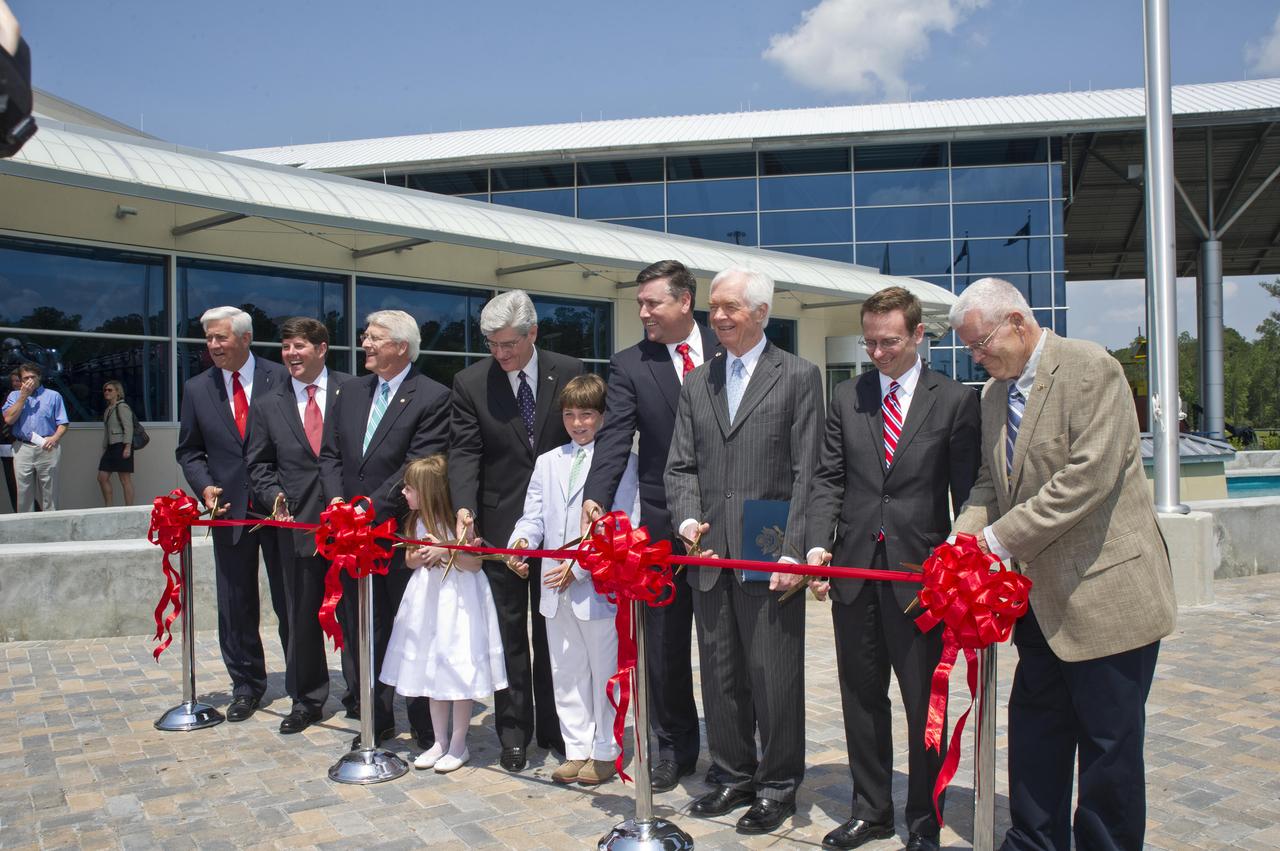
Ceremony participants prepare to cut the ribbon on the INFINITY at NASA Stennis Space Center facility April 11, 2012. Participating in the ceremony were (l to r): Gulfport Mayor and INFINITY Science Center Inc. Chairman George Schloegel; U.S. Rep. Steven Palazzo, R-Miss.; U.S. Sen. Roger Wicker, R-Miss.; Roy S. Estess granddaughter Lauren McKay; Mississippi Gov. Phil Bryant; Leo Seal Jr. grandson Leo Seal IV; Stennis Director Patrick Scheuermann; U.S. Sen. Thad Cochran, R-Miss.; NASA Chief of Staff David Radzanowski; and Apollo 13 astronaut and INFINITY Science Center Inc. Vice Chairman Fred Haise.
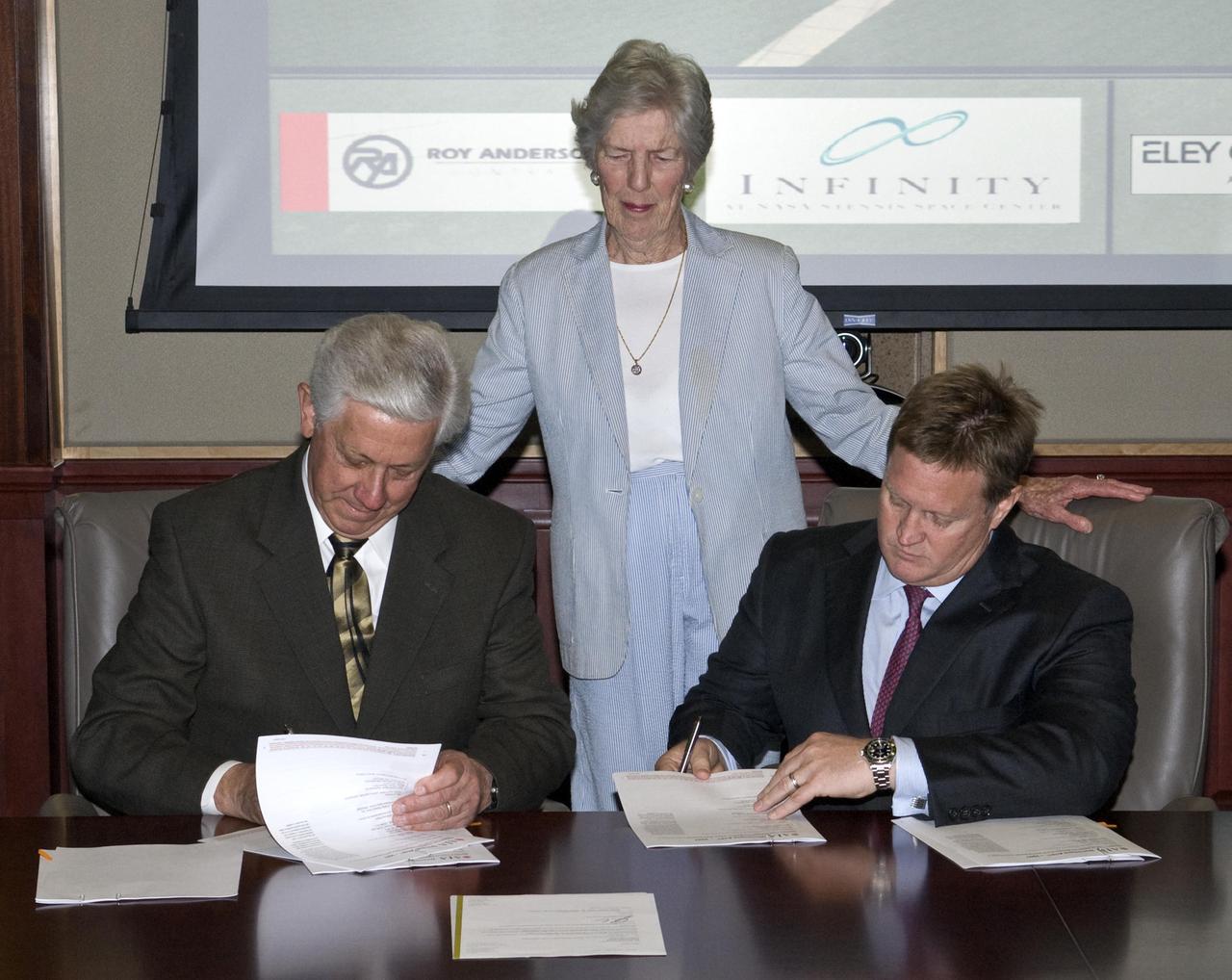
Key state and community leaders celebrated April 6 with the signing of a construction contract for the state-of-the-art INFINITY Science Center planned near John C. Stennis Space Center in south Mississippi. Gulfport Mayor George Schloegel (l to r), chair of non-profit INFINITY Science Center Inc., was joined for the signing ceremony at the Hancock Bank in Gulfport by Virginia Wagner, sister of late Hancock Bank President Leo Seal Jr.; and Roy Anderson III, president and CEO of Roy Anderson Corp. Seal was the first chair of INFINITY Science Center Inc., which has led in development of the project. Roy Anderson Corp. plans to begin construction on the 72,000-square-foot, $28 million science and education center in May. The Mississippi Department of Transportation (MDOT) also is set to begin construction of a $2 million access road to the new center. The April 6 ceremony was attended by numerous officials, including former Stennis Space Center Directors Jerry Hlass and Roy Estess; Mississippi Senate President Pro Tempore Billy Hewes, R-Gulfport; Mississippi Rep. Diane Peranich, D-Pass Christian; and MDOT Southern District Commissioner Wayne Brown.
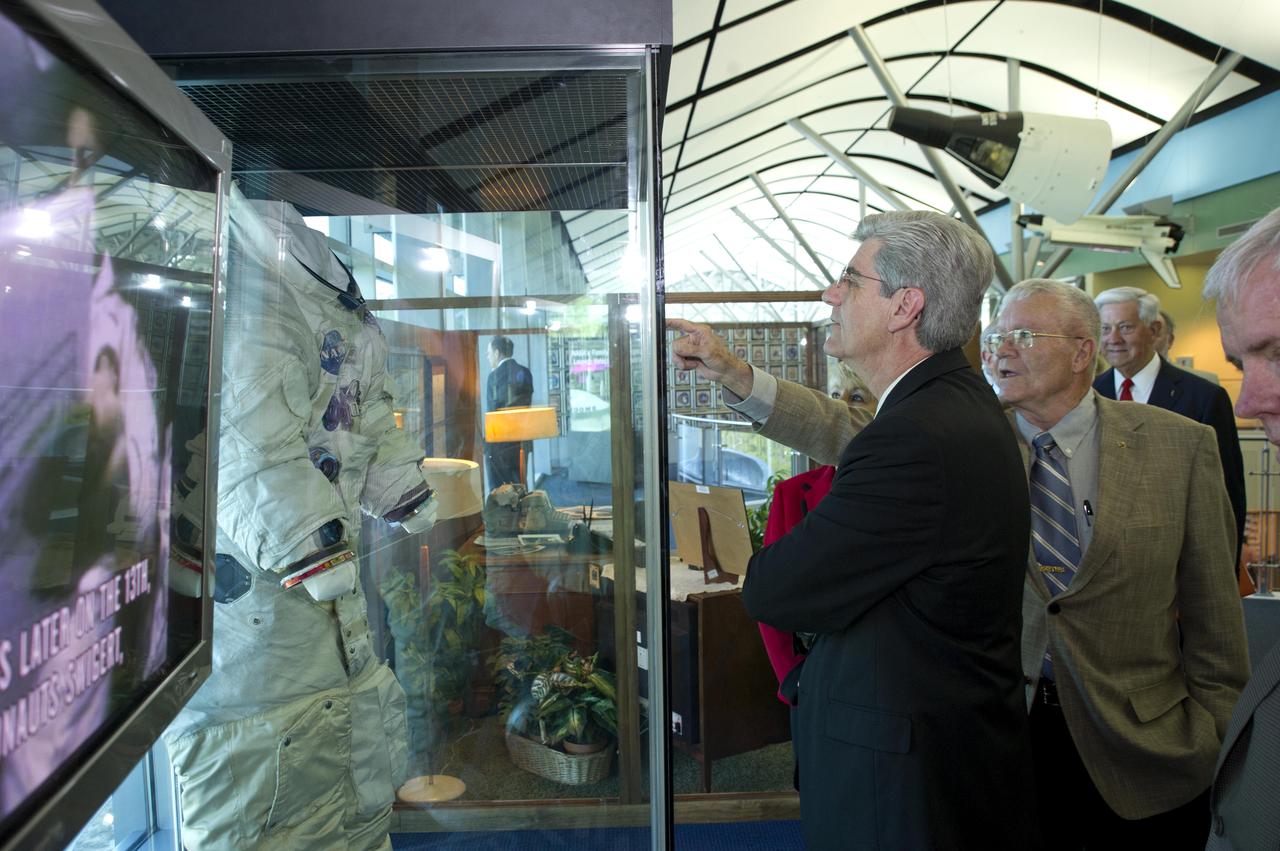
Mississippi Gov. Phil Bryant looks on as Apollo 13 astronaut and INFINITY Science Center Inc. Vice Chairman Fred Haise points out features of the spacesuit he wore on his lunar mission in 1970. The suit is on display at the INFINITY at NASA Stennis Space Center visitor center and museum. The two men toured the facility during ribbon-cutting activities April 11, 2012.
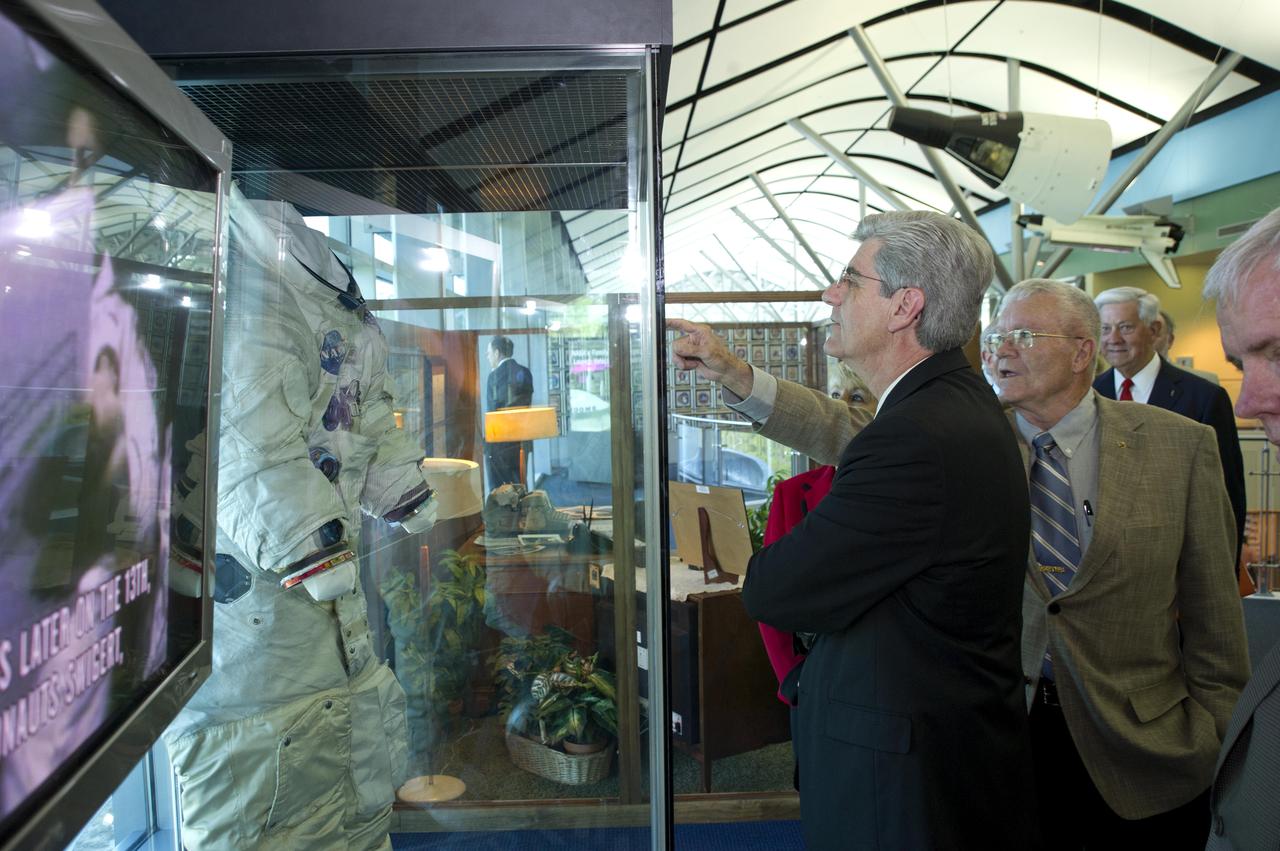
Mississippi Gov. Phil Bryant looks on as Apollo 13 astronaut and INFINITY Science Center Inc. Vice Chairman Fred Haise points out features of the spacesuit he wore on his lunar mission in 1970. The suit is on display at the INFINITY at NASA Stennis Space Center visitor center and museum. The two men toured the facility during ribbon-cutting activities April 11, 2012.
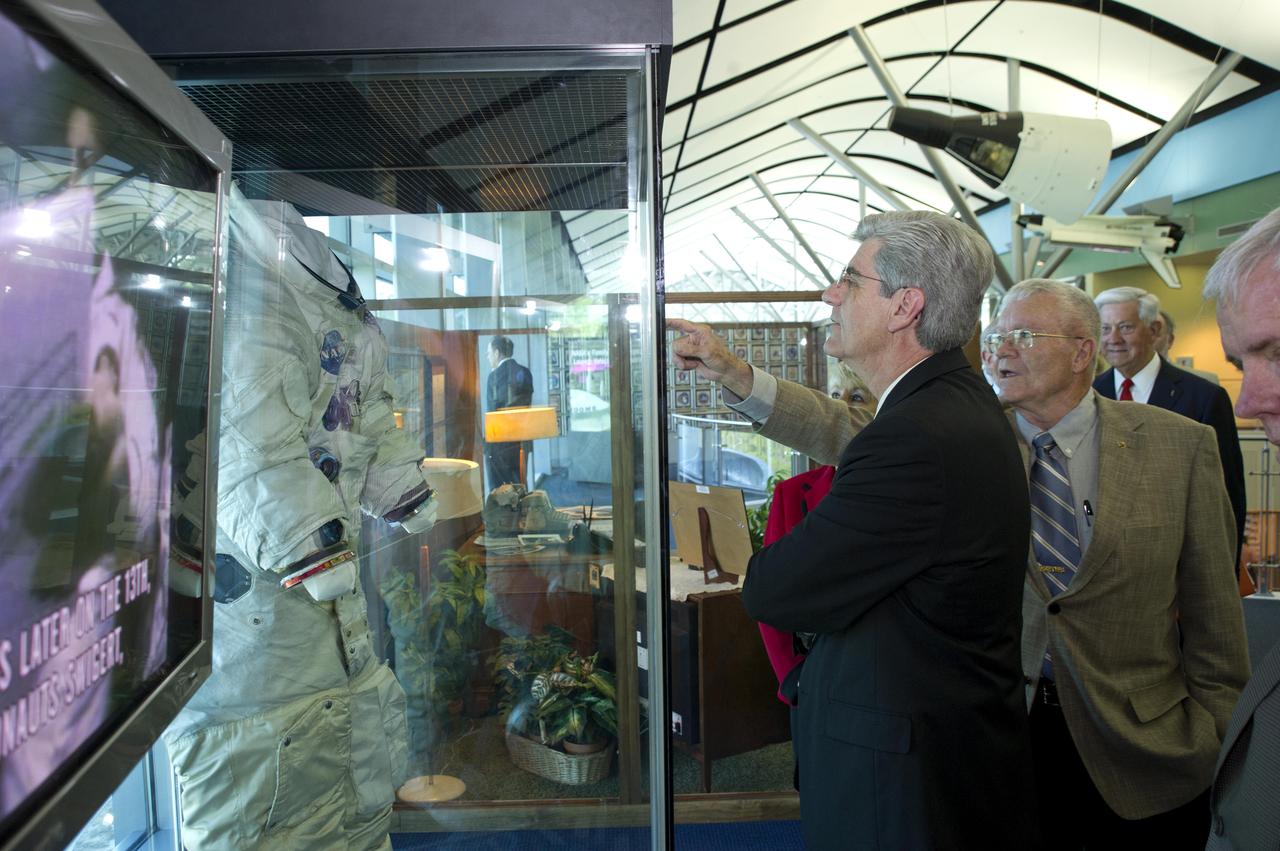
Mississippi Gov. Phil Bryant looks on as Apollo 13 astronaut and INFINITY Science Center Inc. Vice Chairman Fred Haise points out features of the spacesuit he wore on his lunar mission in 1970. The suit is on display at the INFINITY at NASA Stennis Space Center visitor center and museum. The two men toured the facility during ribbon-cutting activities April 11, 2012.

Shania Etheridge from Benjamin E. Mays Preparatory School in New Orleans shows off the head of lettuce she harvested at the INFINITY at NASA Stennis Space Center facility May 7, 2012. The Louisiana students assisted in the first harvest of lettuce from the Controlled Environment Agriculture unit, which uses an aeroponic process that involves no soil and advance LED lighting techniques.
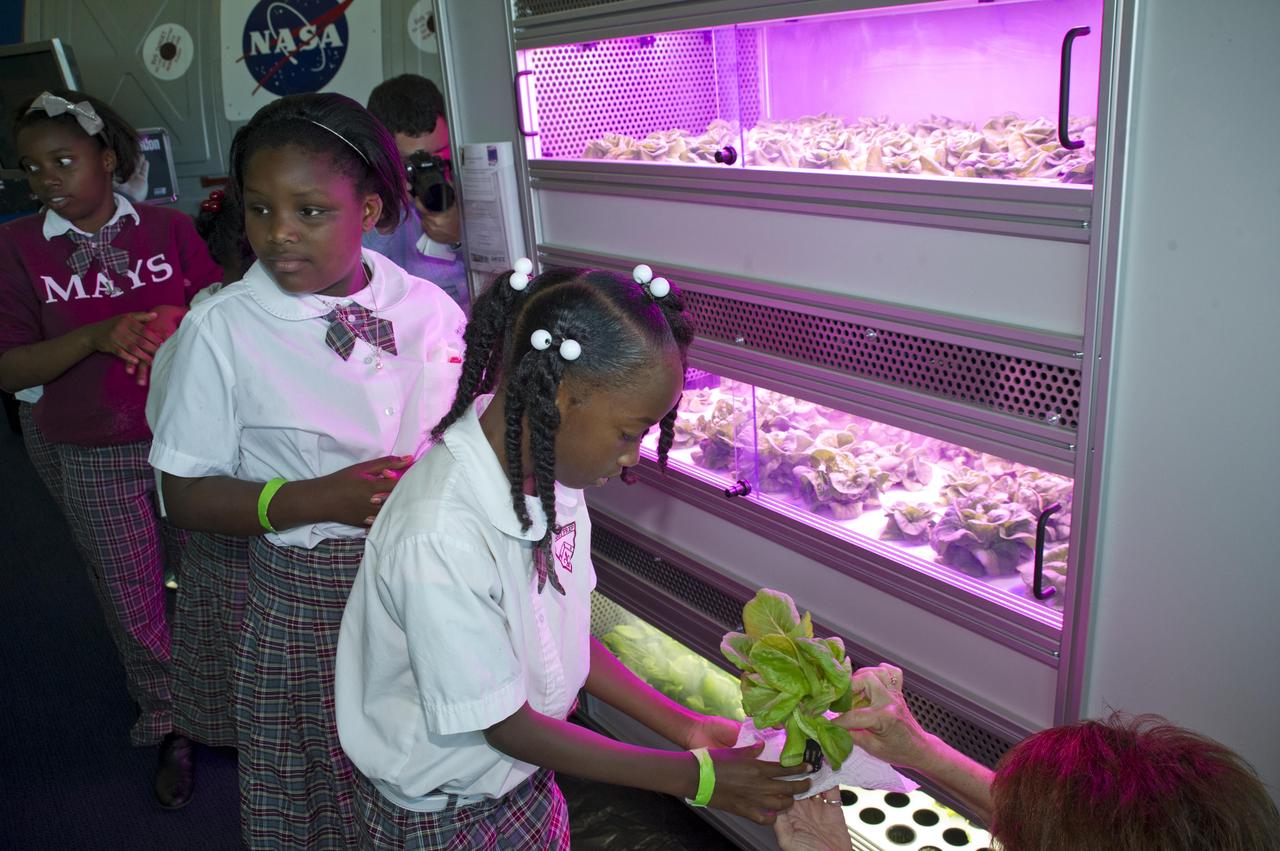
Students from Benjamin E. Mays Preparatory School in New Orleans enjoyed a hands-on experience at the INFINITY at NASA Stennis Space Center facility May 7, 2012. The Louisiana students assisted in the first harvest of lettuce from the Controlled Environment Agriculture unit, which uses an aeroponic process that involves no soil and advance LED lighting techniques.
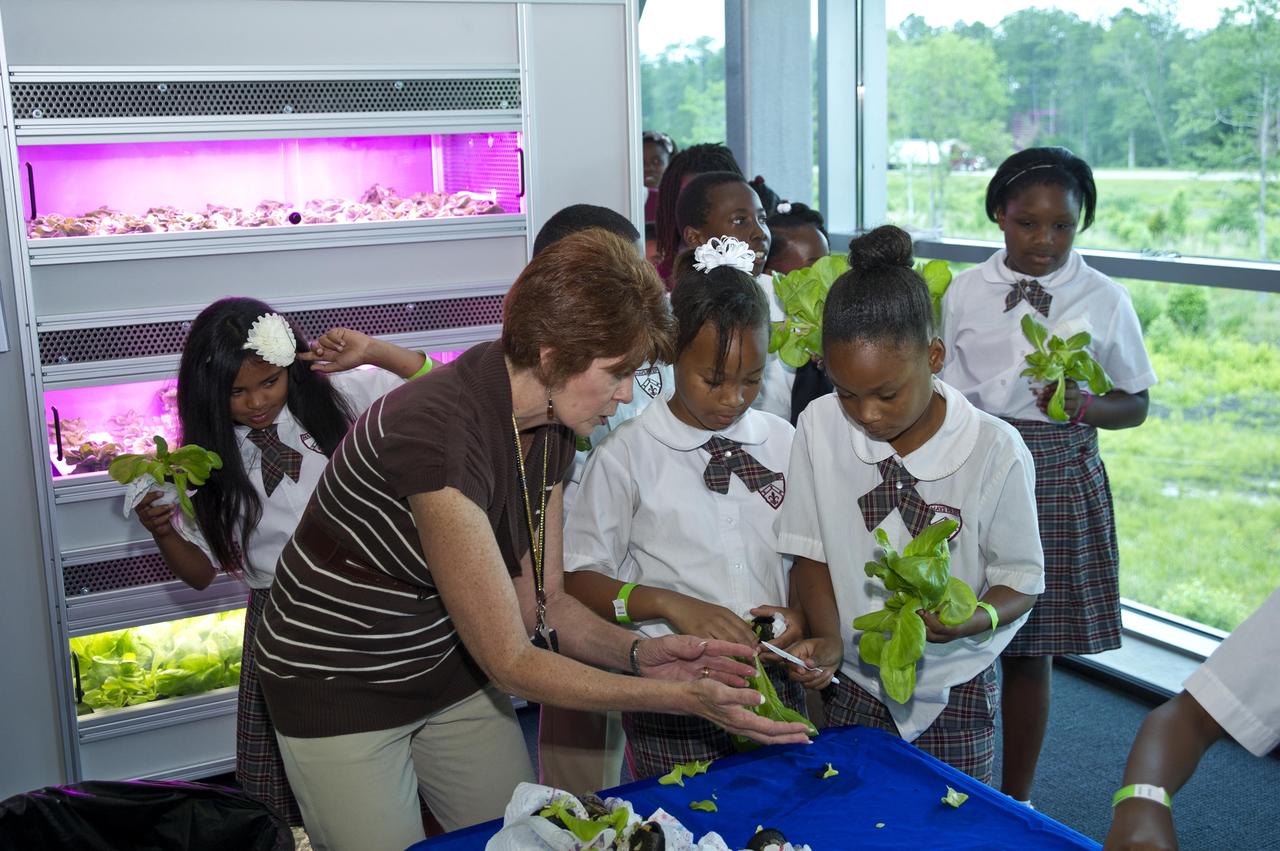
Janice Hueschen of Innovative Imaging & Research Corp. at Stennis Space Center helps students from Benjamin E. Mays Preparatory School in New Orleans harvest lettuce at the INFINITY at NASA Stennis Space Center facility May 7, 2012. The Louisiana students assisted in the first harvest of lettuce from the Controlled Environment Agriculture unit, which uses an aeroponic process that involves no soil and advance LED lighting techniques.

Lauren Lombard from Benjamin E. Mays Preparatory School in New Orleans enjoys lettuce she helped to harvest at the INFINITY at NASA Stennis Space Center facility May 7, 2012. The Louisiana students assisted in the first harvest of lettuce from the Controlled Environment Agriculture unit, which uses an aeroponic process that involves no soil and advance LED lighting techniques
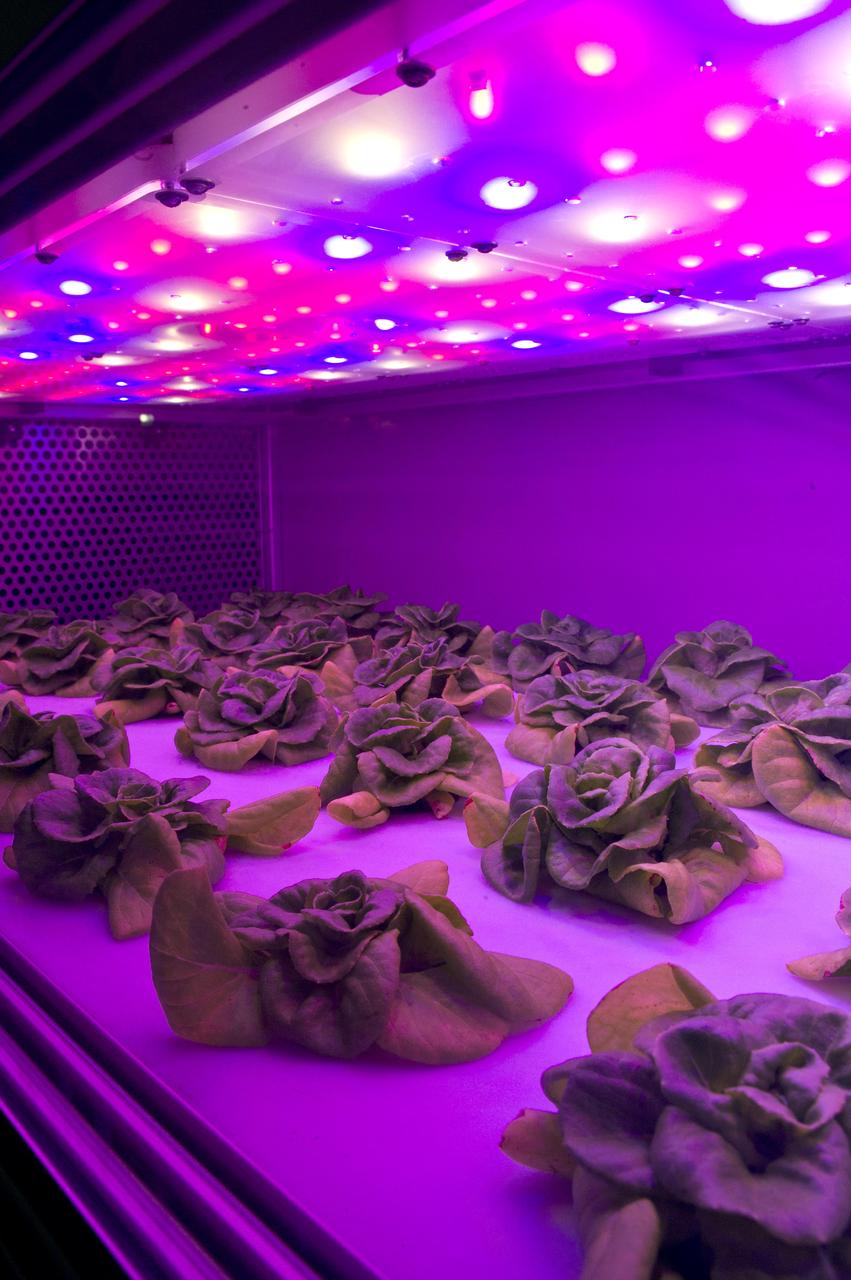
The Controlled Environment Agriculture unit at the INFINITY at NASA Stennis Space Center visitor center and museum grows butterhead lettuce using an aeroponic process that involves no soil and advance LED lighting techniques. Students from Benjamin E. Mays Preparatory School in New Orleans helped to harvest the first crop of lettuce during a visit to the facility May 7, 2012.
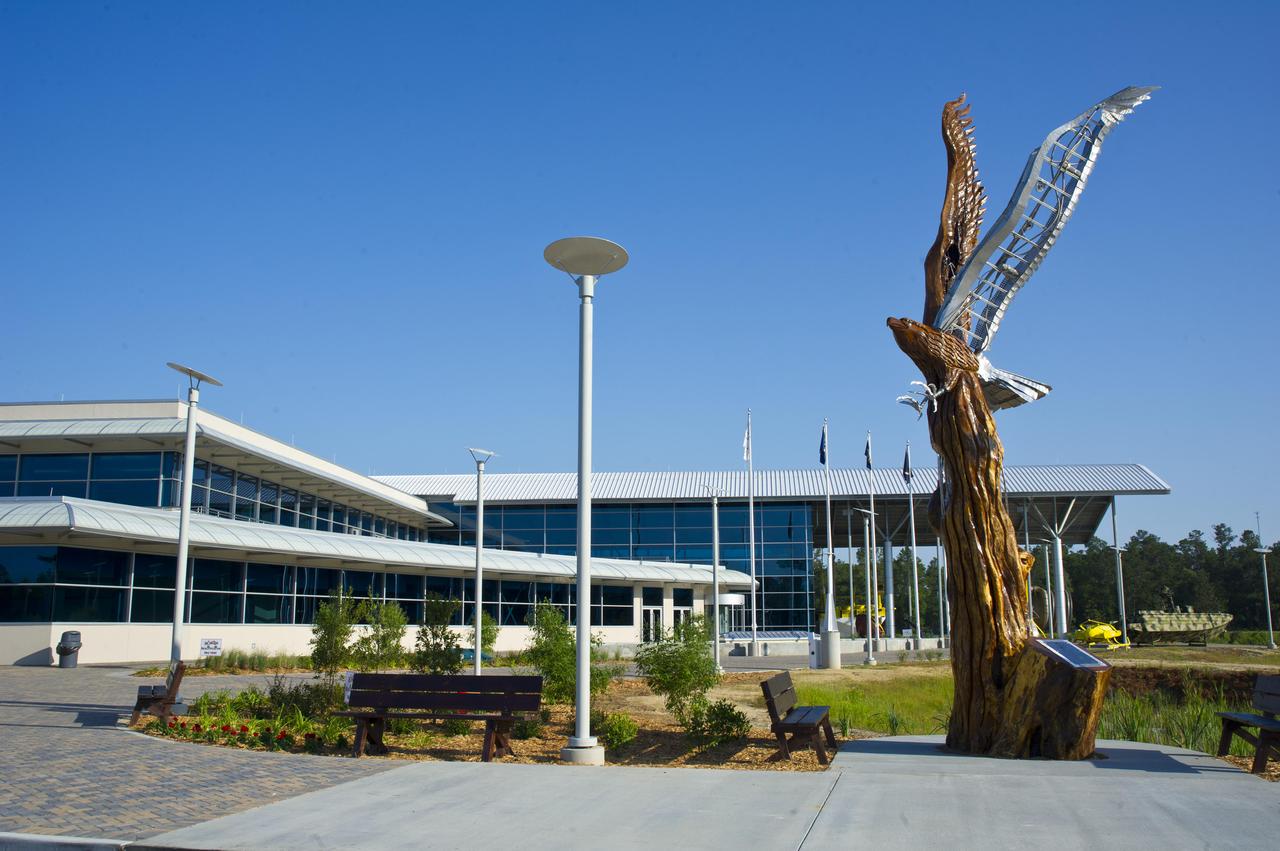
The INFINITY at NASA Stennis Space Center visitor center and museum opened to the public April 12. Located on Interstae 10 at Exit 2, the facility is open seven days a week.
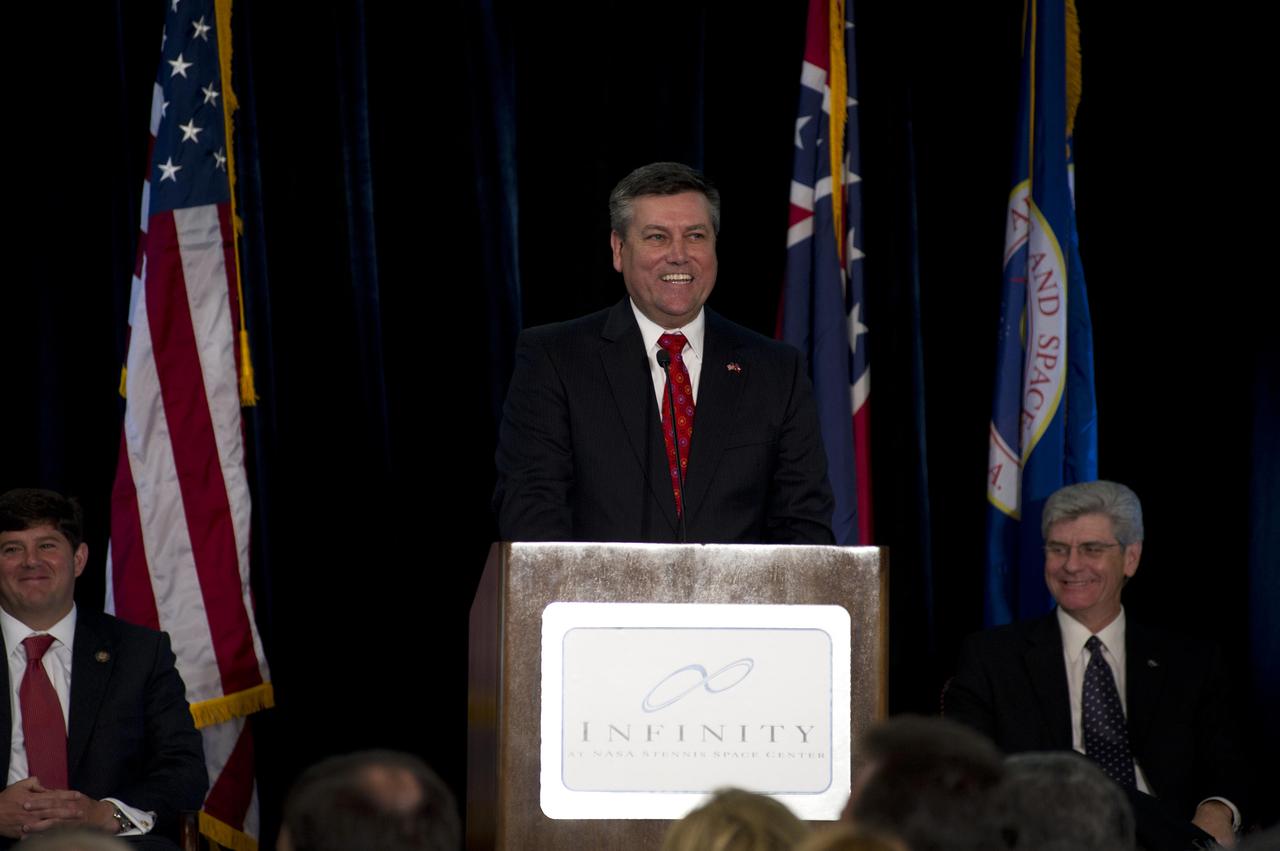
Stennis Space Center welcomes participants during ribbon-cutting activities for the INFINITY at NASA Stennis Space Center facility April 11, 2012. The visitor center and museum is located on Interstate 10, Exit 2, in south Mississippi.
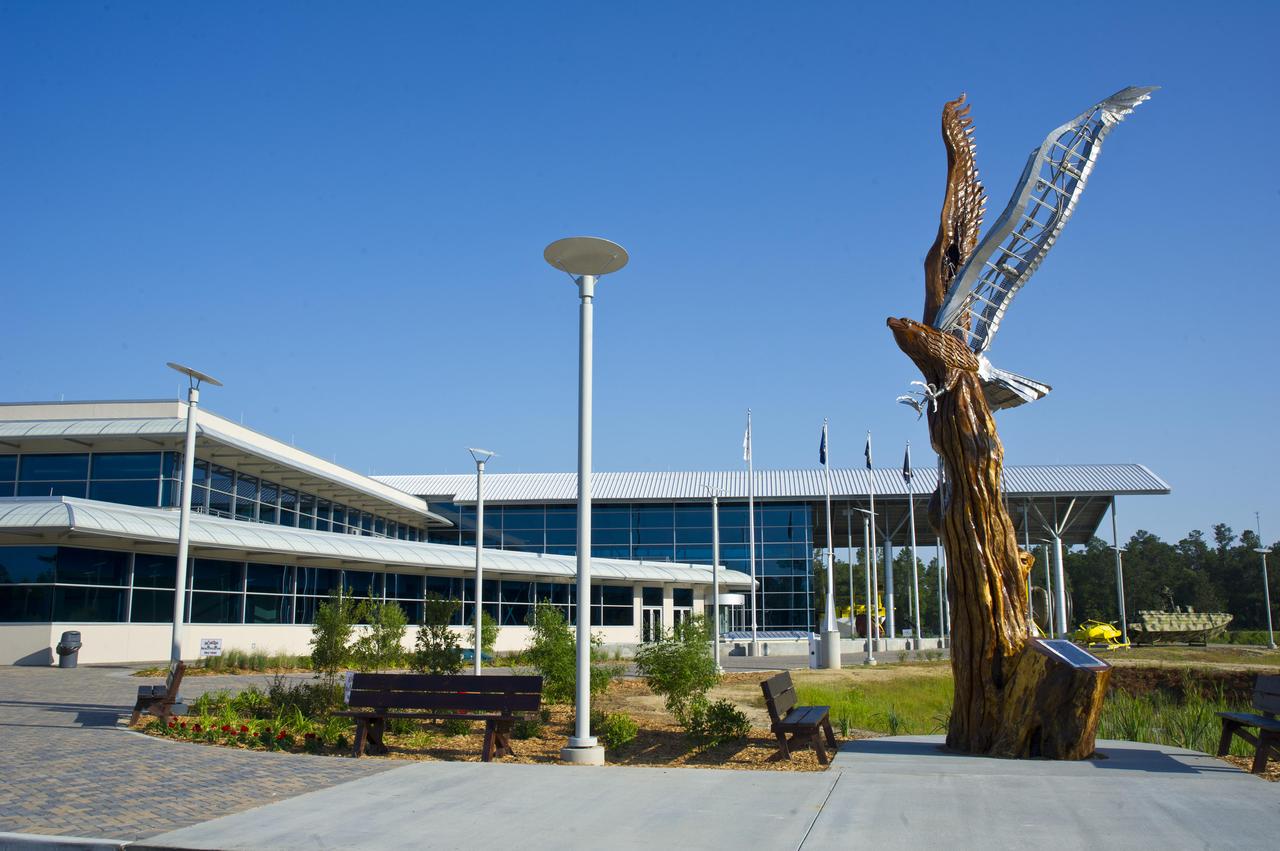
The INFINITY at NASA Stennis Space Center visitor center and museum opened to the public April 12. Located on Interstae 10 at Exit 2, the facility is open seven days a week.
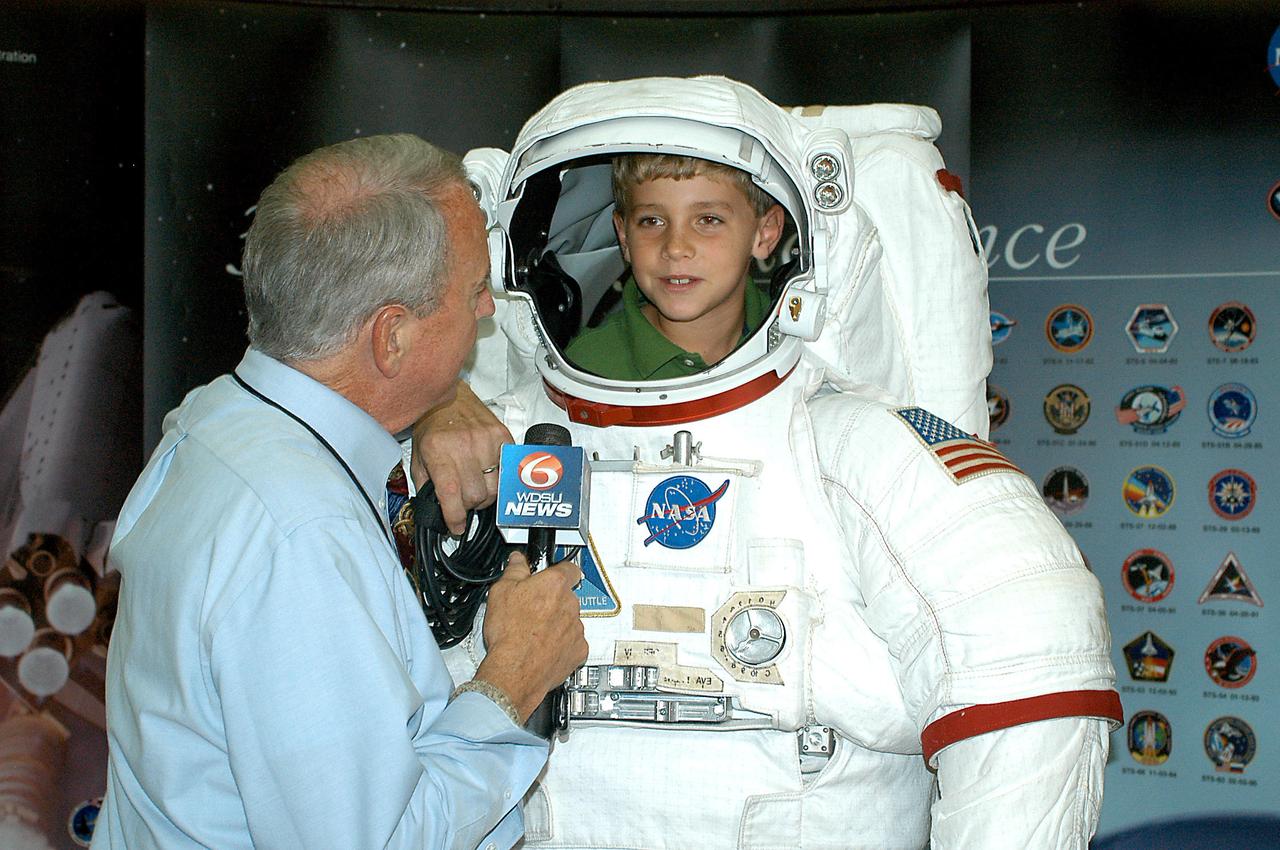
'Astronaut' Patrick Johnston, 8, is interviewed by Heath Allen, a reporter with WDSU-TV in New Orleans, about his experience at the INFINITY at NASA Stennis Space Center facility during ribbon-cutting activities April 11, 2012.
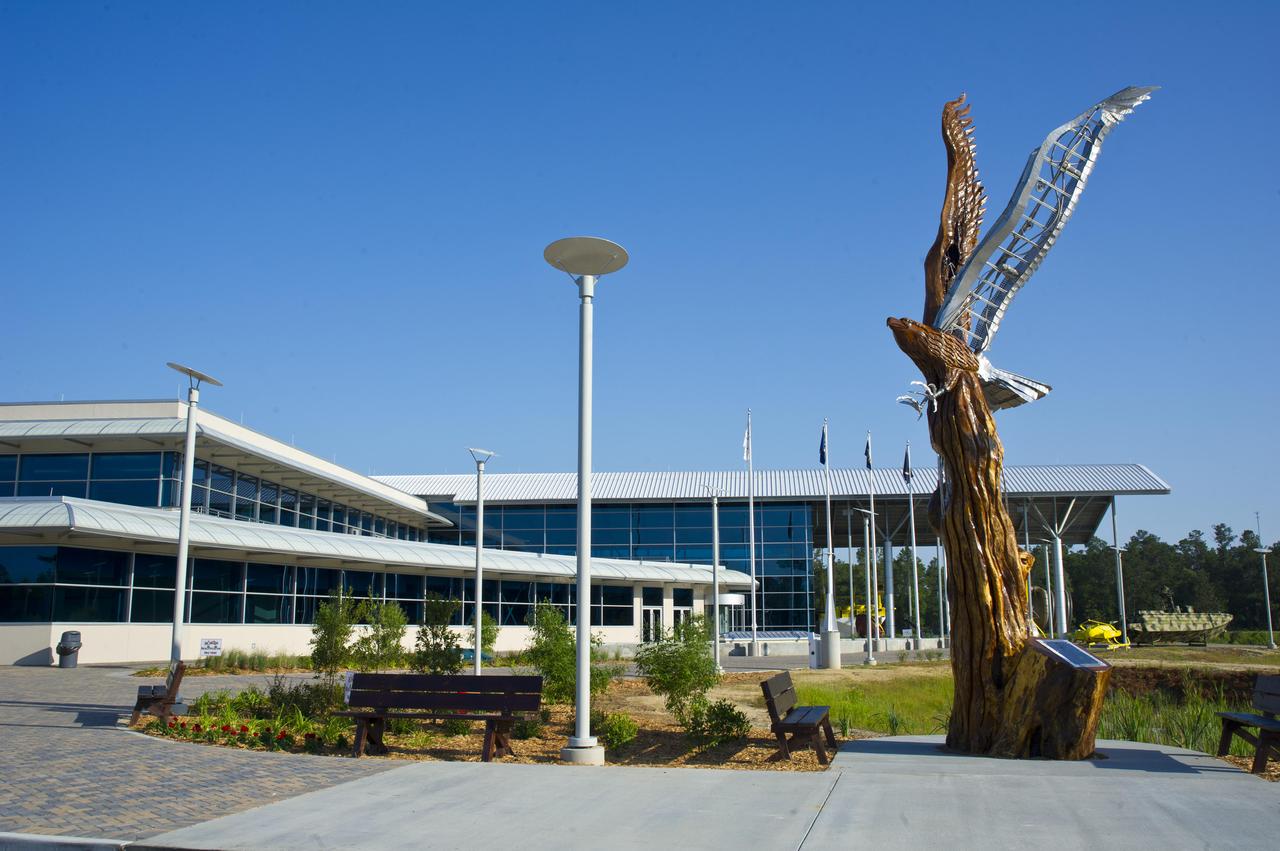
The INFINITY at NASA Stennis Space Center visitor center and museum opened to the public April 12. Located on Interstae 10 at Exit 2, the facility is open seven days a week.
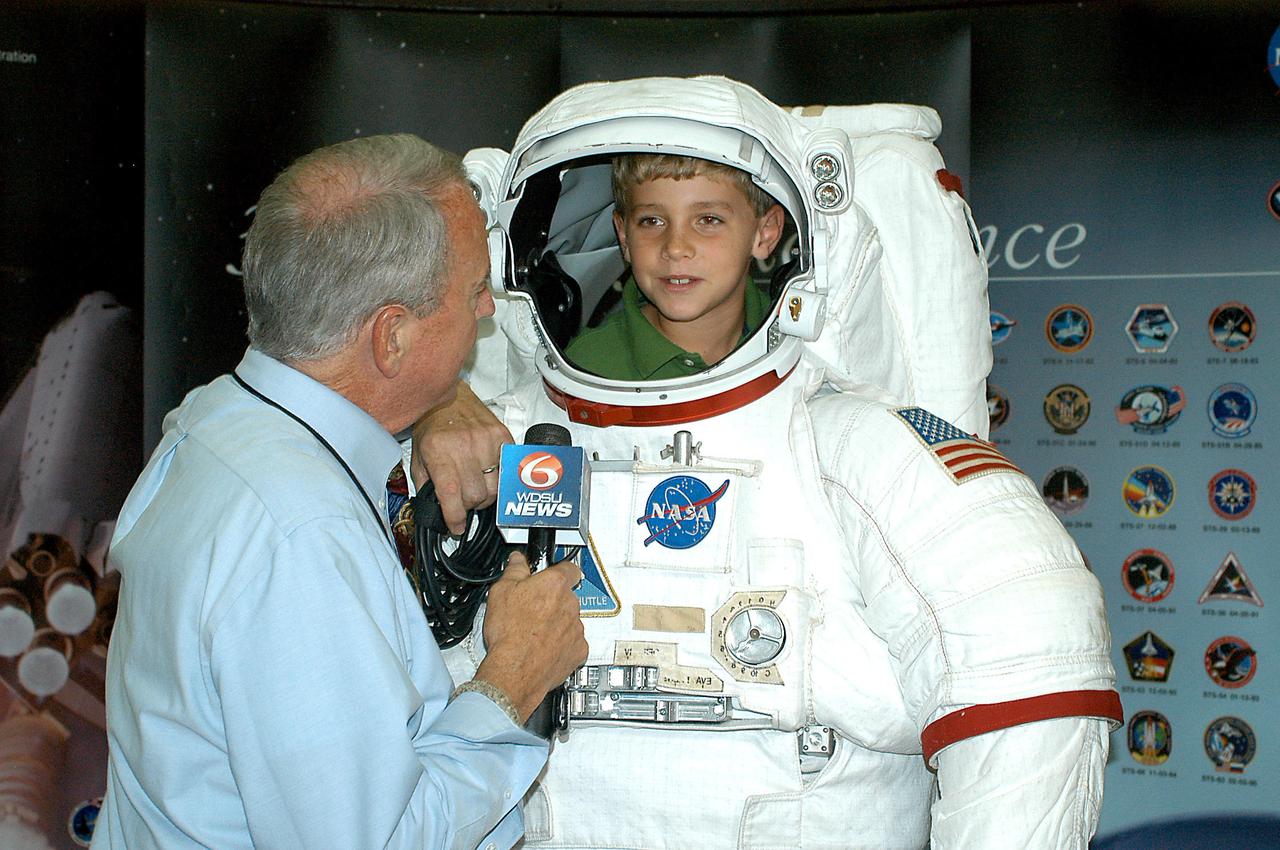
'Astronaut' Patrick Johnston, 8, is interviewed by Heath Allen, a reporter with WDSU-TV in New Orleans, about his experience at the INFINITY at NASA Stennis Space Center facility during ribbon-cutting activities April 11, 2012.
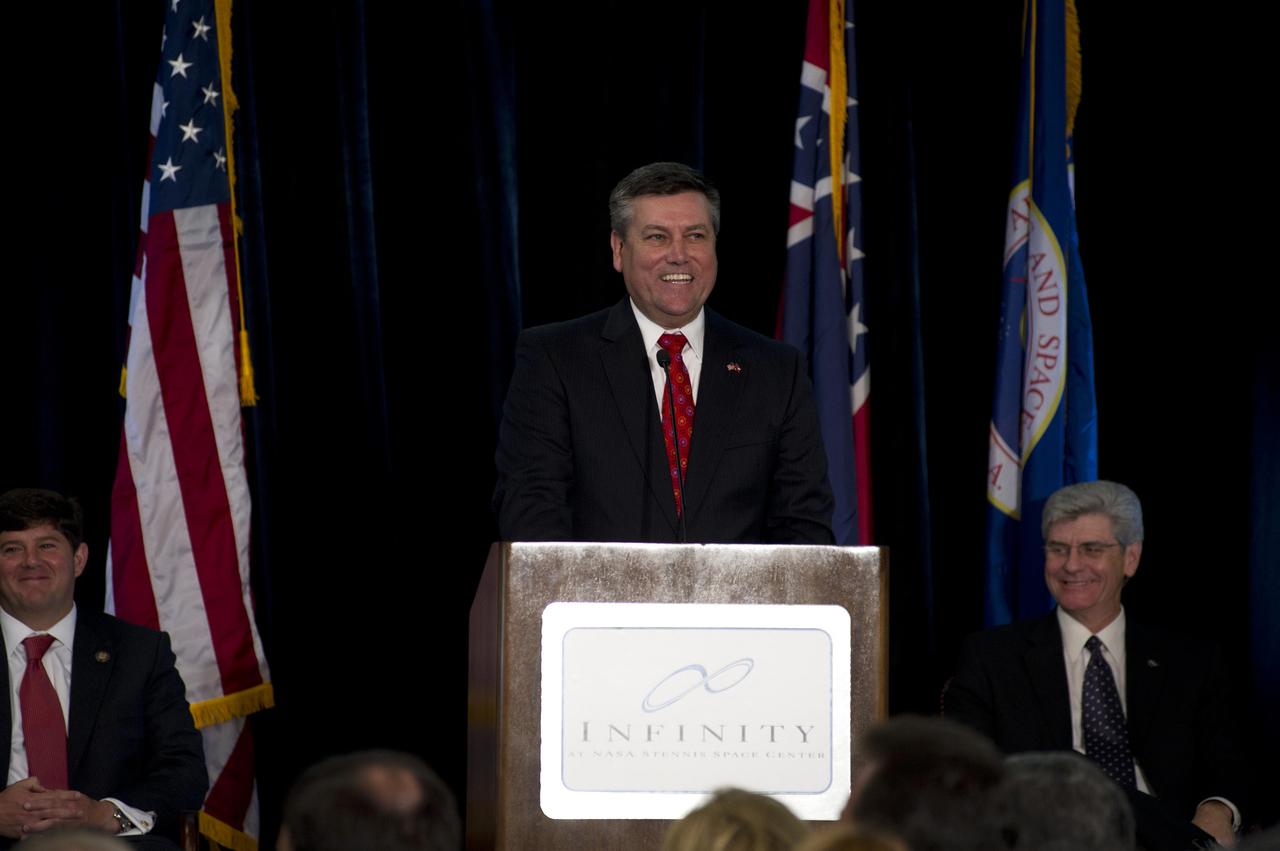
Stennis Space Center welcomes participants during ribbon-cutting activities for the INFINITY at NASA Stennis Space Center facility April 11, 2012. The visitor center and museum is located on Interstate 10, Exit 2, in south Mississippi.
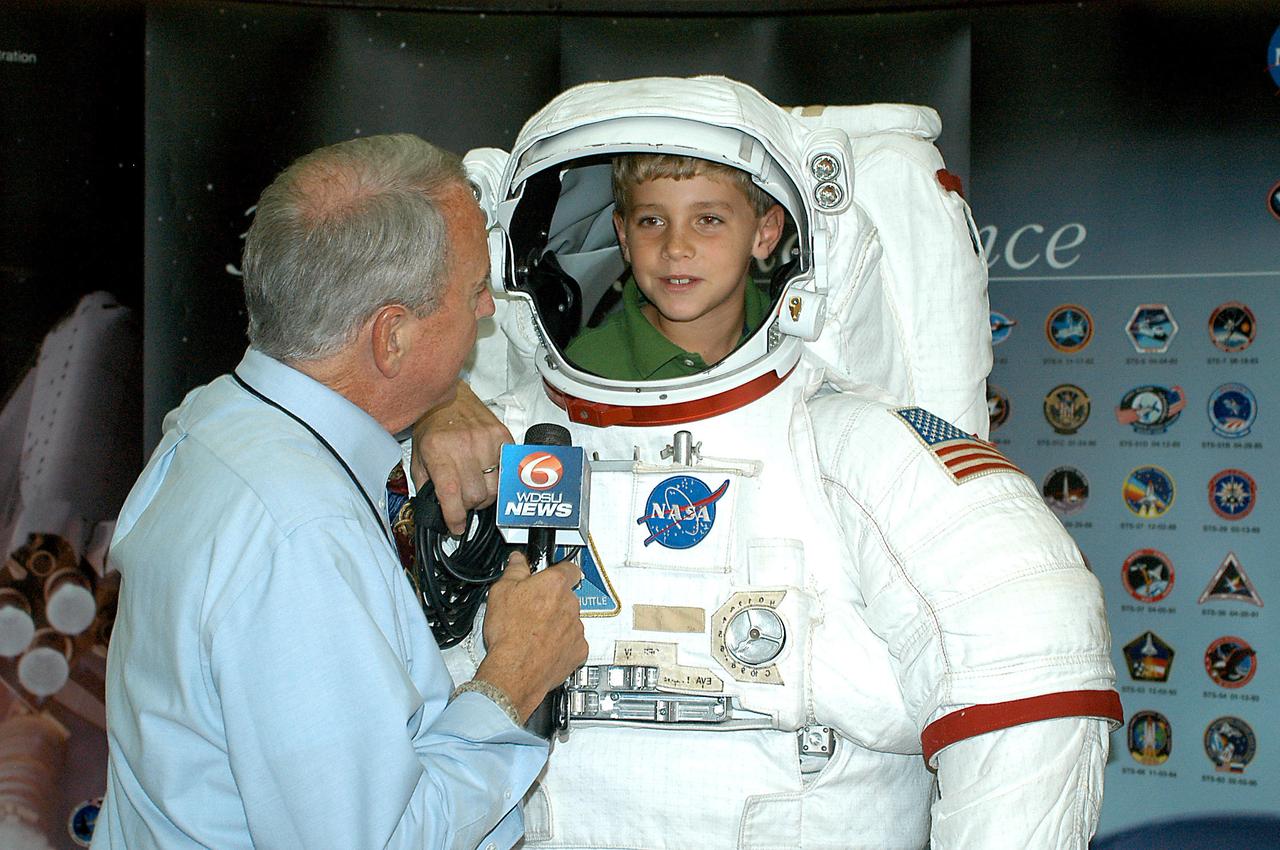
'Astronaut' Patrick Johnston, 8, is interviewed by Heath Allen, a reporter with WDSU-TV in New Orleans, about his experience at the INFINITY at NASA Stennis Space Center facility during ribbon-cutting activities April 11, 2012.
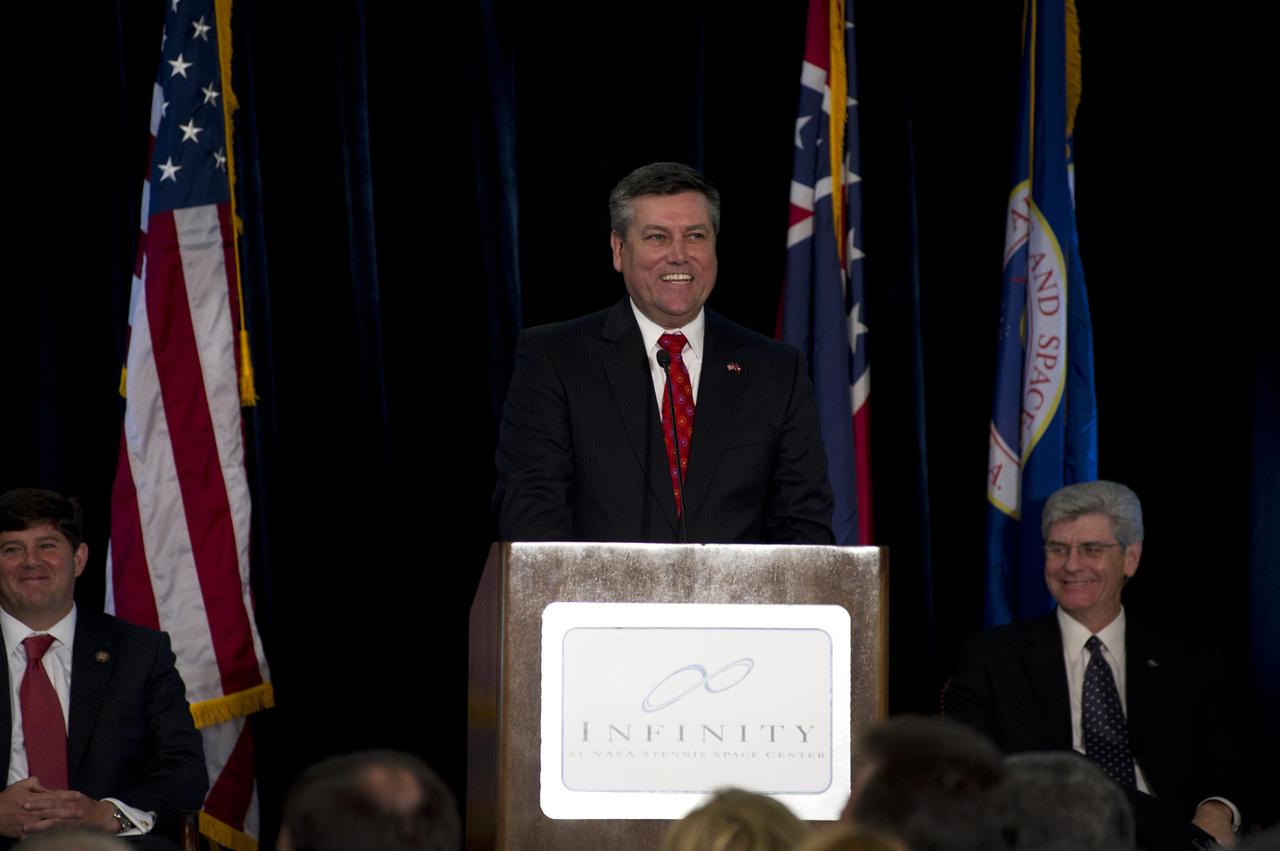
Stennis Space Center welcomes participants during ribbon-cutting activities for the INFINITY at NASA Stennis Space Center facility April 11, 2012. The visitor center and museum is located on Interstate 10, Exit 2, in south Mississippi.
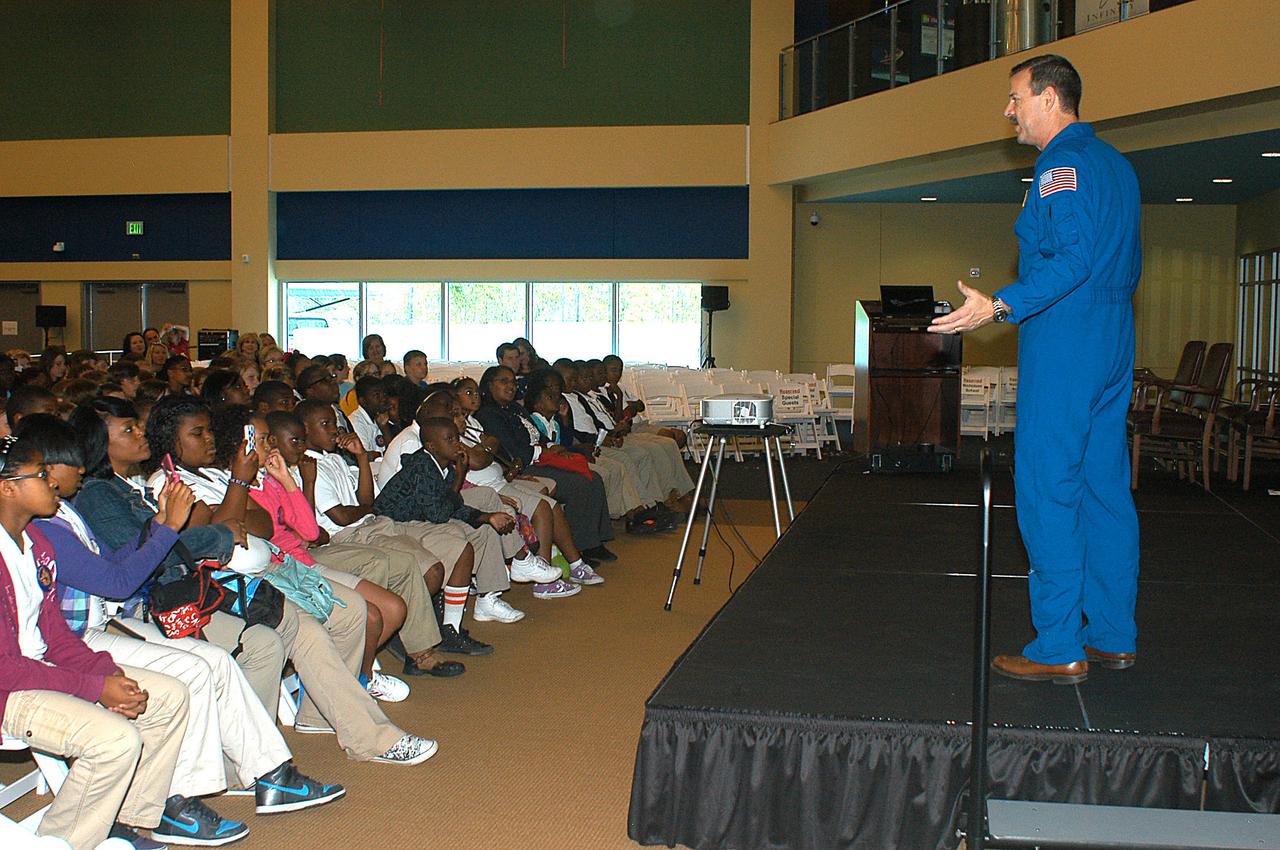
Astronaut Scott Altman speaks to schoolchildren during ribbon-cutting activities for the INFINITY at NASA Stennis Space Center facility April 11, 2012. More than 160 area students attended the ceremony. Following the ceremony, they and other students toured the facility and enjoyed a presentation by Altman about his experiences in space.
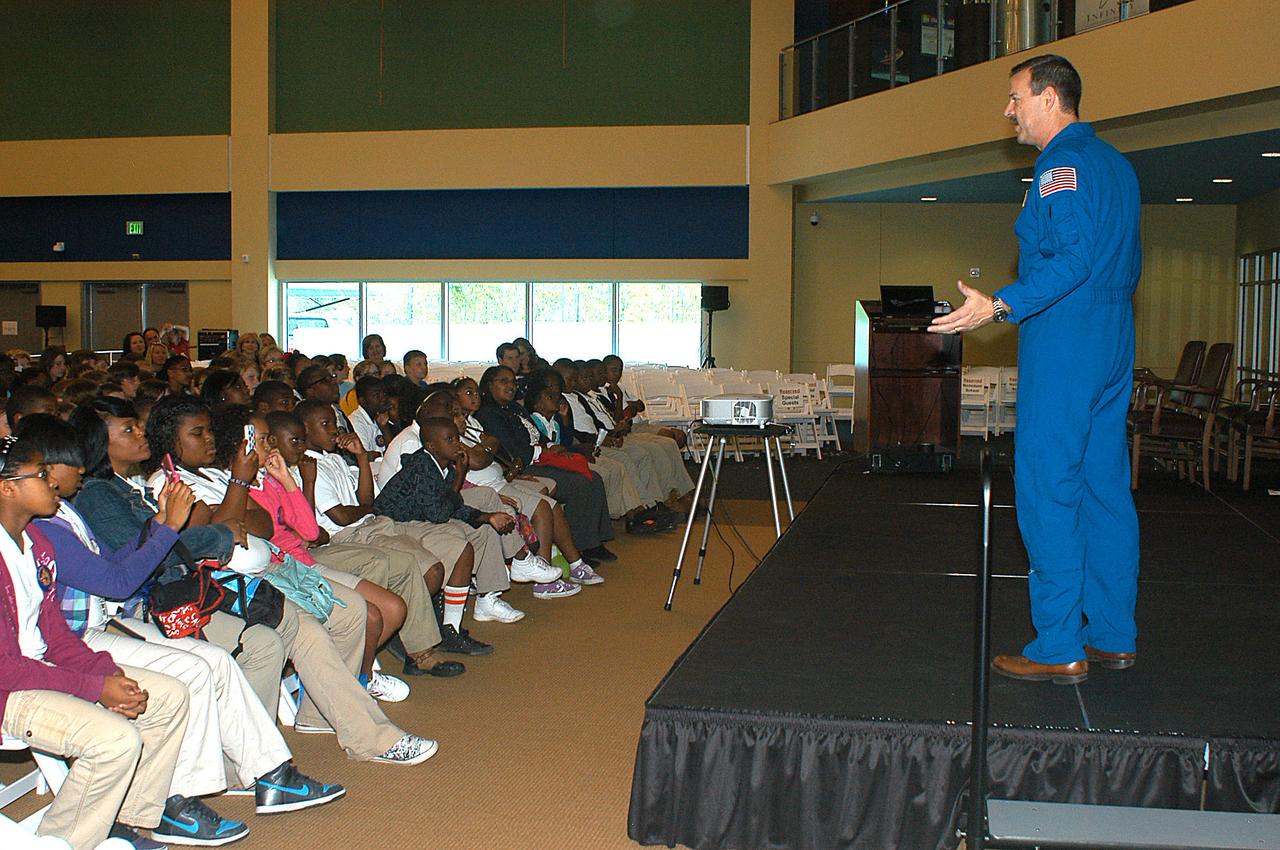
Astronaut Scott Altman speaks to schoolchildren during ribbon-cutting activities for the INFINITY at NASA Stennis Space Center facility April 11, 2012. More than 160 area students attended the ceremony. Following the ceremony, they and other students toured the facility and enjoyed a presentation by Altman about his experiences in space.
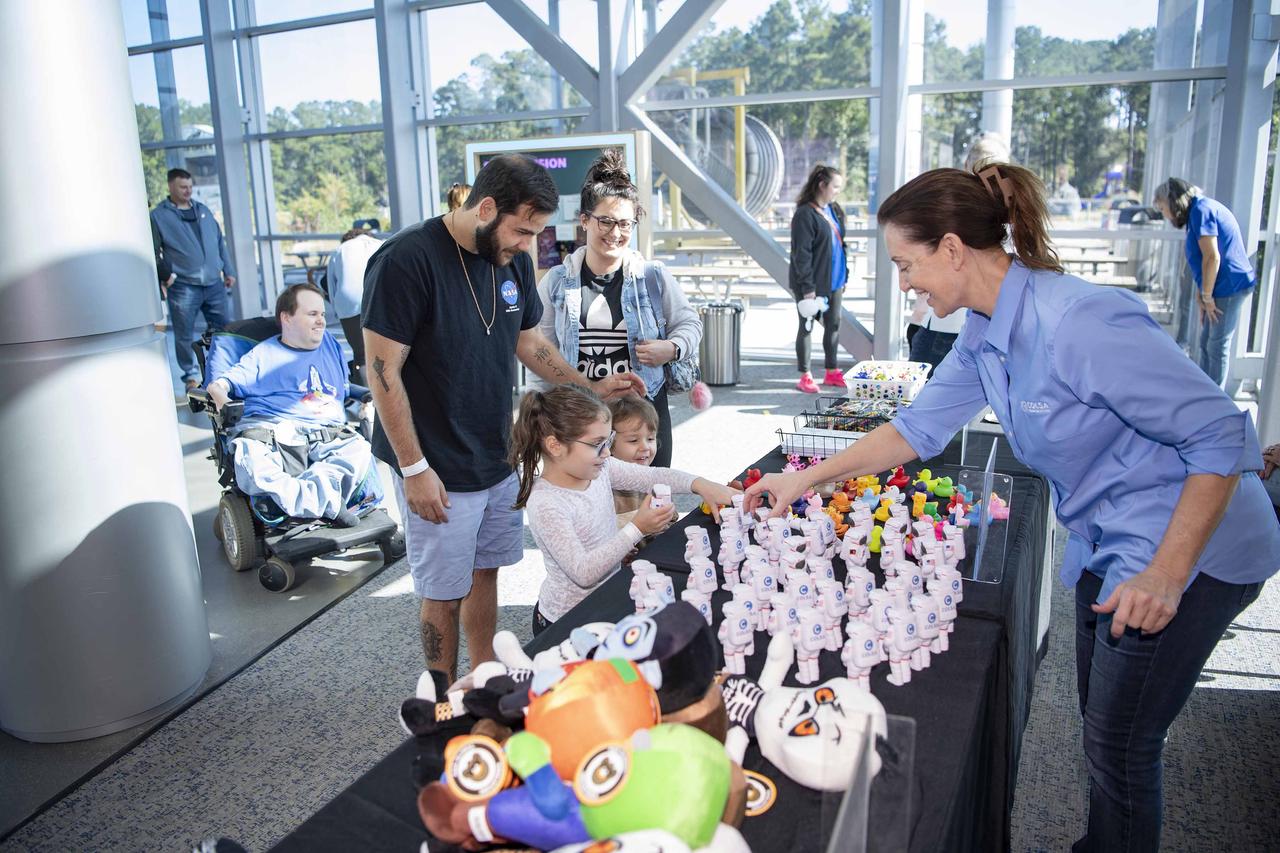
NASA Stennis’ sitewide employees and their guests attend the annual NASA Stennis Family Day at INFINITY Science Center, the official visitor center of NASA Stennis, on Oct. 19. Attendees had the opportunity to journey through the INFINITY exhibits and enjoy additional activities provided by participating organizations of the NASA Stennis federal city.
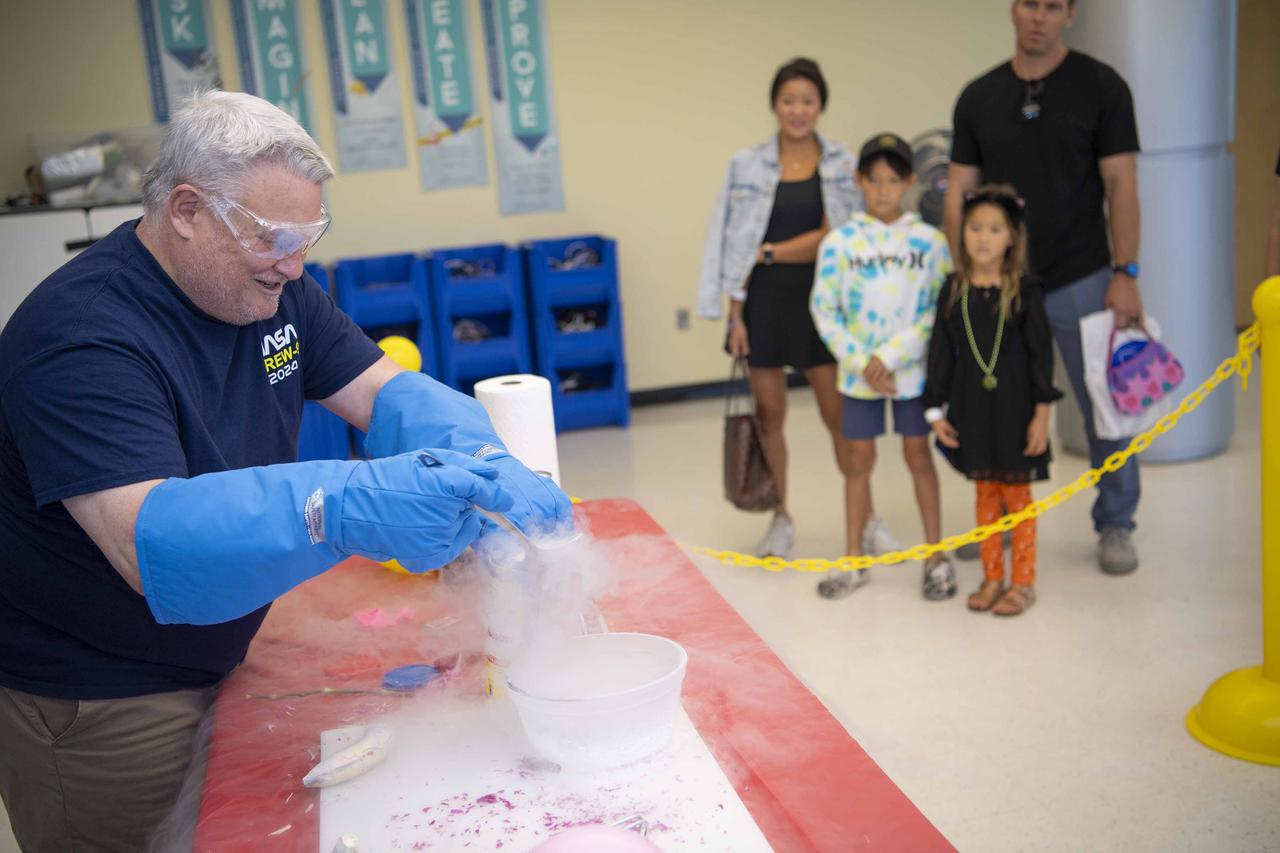
NASA Stennis’ sitewide employees and their guests attend the annual NASA Stennis Family Day at INFINITY Science Center, the official visitor center of NASA Stennis, on Oct. 19. Attendees had the opportunity to journey through the INFINITY exhibits and enjoy additional activities provided by participating organizations of the NASA Stennis federal city.
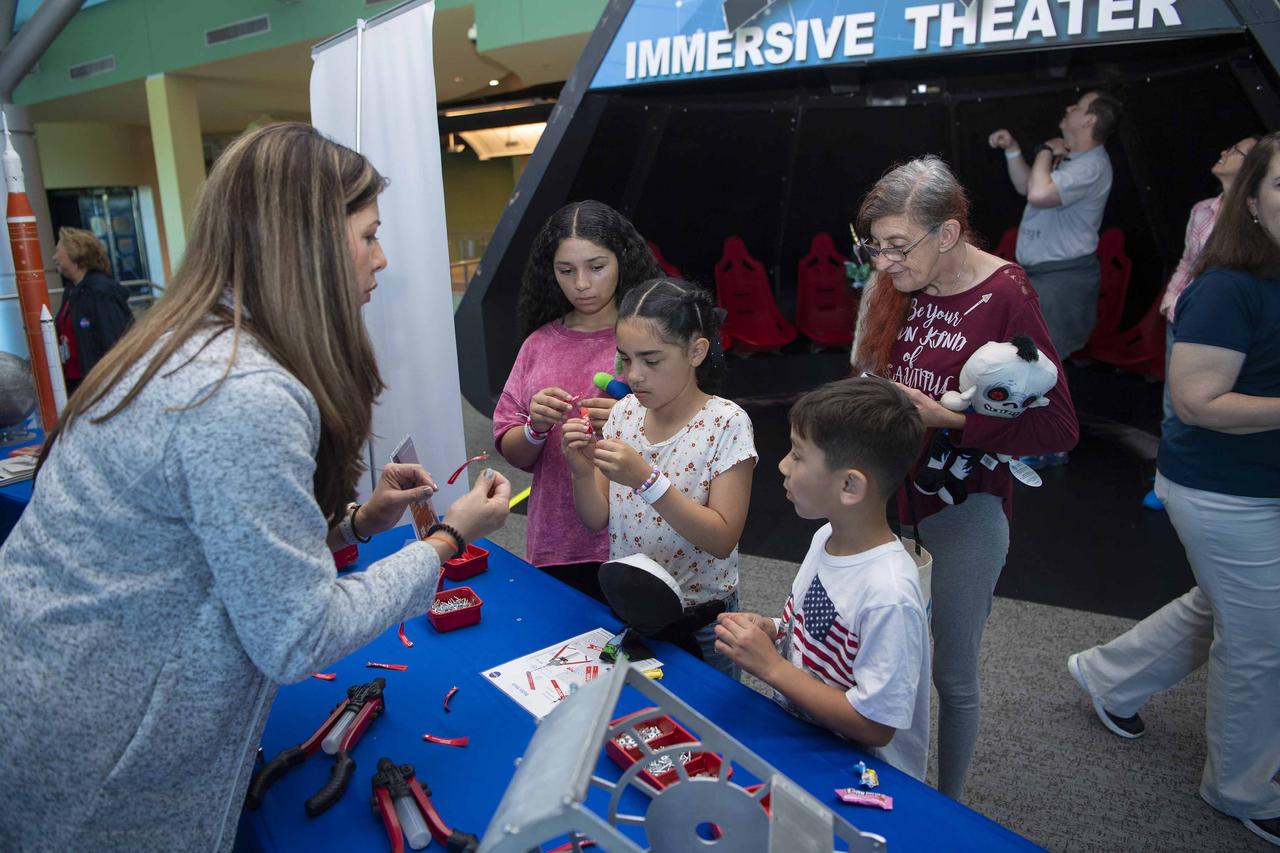
NASA Stennis’ sitewide employees and their guests attend the annual NASA Stennis Family Day at INFINITY Science Center, the official visitor center of NASA Stennis, on Oct. 19. Attendees had the opportunity to journey through the INFINITY exhibits and enjoy additional activities provided by participating organizations of the NASA Stennis federal city.
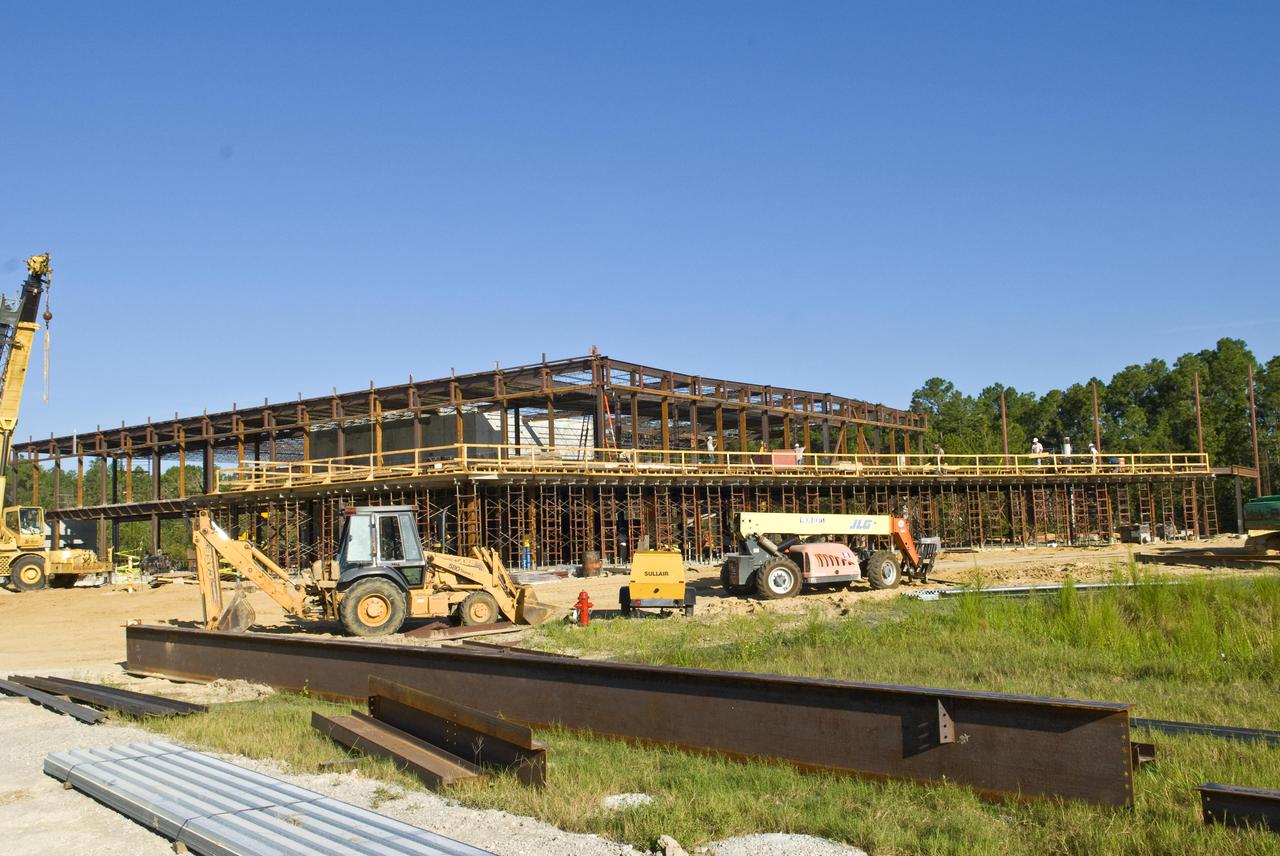
Construction of the new INFINITY Science Center is proceeding just west of the Mississippi Welcome Center at exit 2 on Interstate 10. Roy Anderson Corp. of Gulfport is building the 72,000-squarefoot, $43 million science and education center, which will feature a space gallery and an Earth gallery to showcase the science underpinning missions of the agencies at Stennis Space Center. The project is being spearheaded by INFINITY Science Center, Inc., a non-profit corporation led by Gulfport Mayor George Schloegel and Apollo 13 astronaut Fred Haise, in partnership with NASA, the state of Mississippi and private donors. When completed, it will serve as the official Stennis visitors center and will be home to the NASA Educator Resource Center.
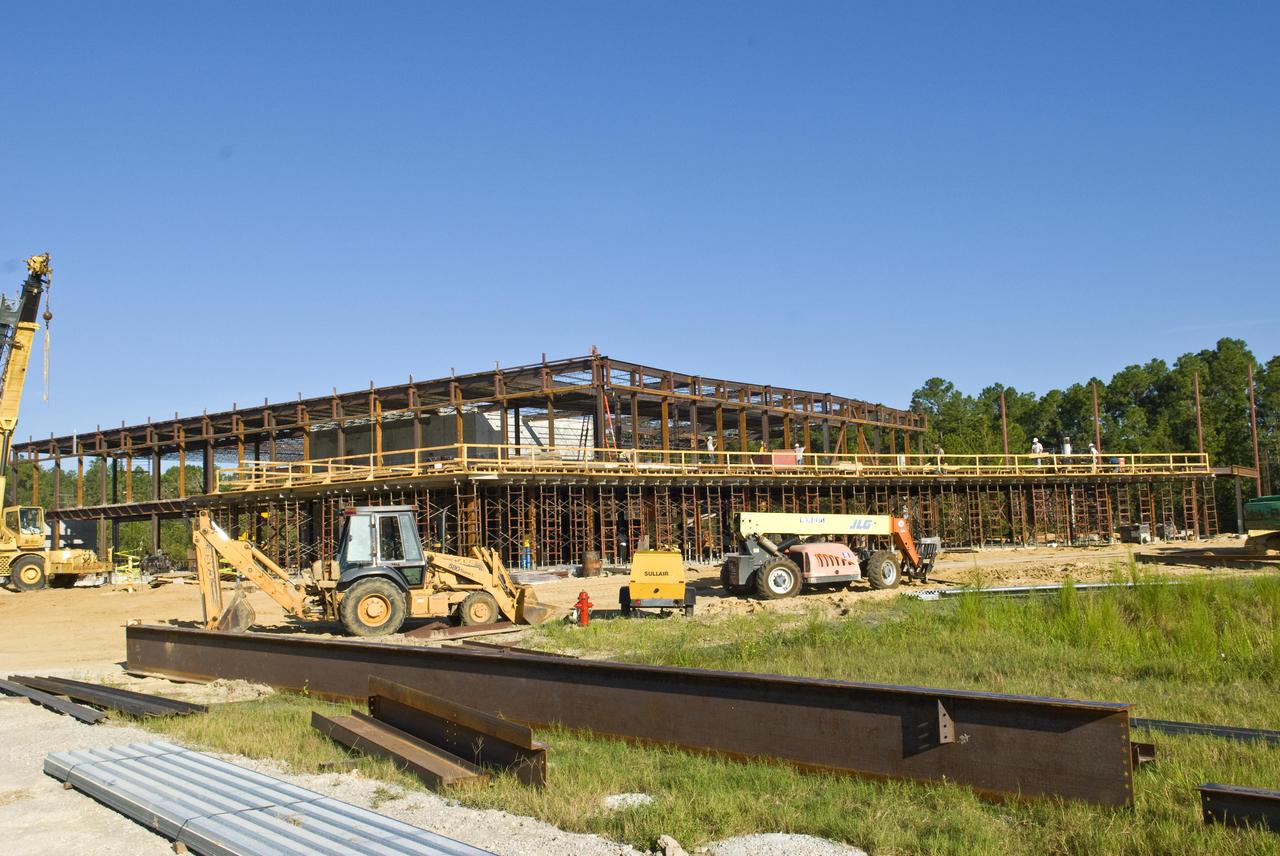
Construction of the new INFINITY Science Center is proceeding just west of the Mississippi Welcome Center at exit 2 on Interstate 10. Roy Anderson Corp. of Gulfport is building the 72,000-squarefoot, $43 million science and education center, which will feature a space gallery and an Earth gallery to showcase the science underpinning missions of the agencies at Stennis Space Center. The project is being spearheaded by INFINITY Science Center, Inc., a non-profit corporation led by Gulfport Mayor George Schloegel and Apollo 13 astronaut Fred Haise, in partnership with NASA, the state of Mississippi and private donors. When completed, it will serve as the official Stennis visitors center and will be home to the NASA Educator Resource Center.
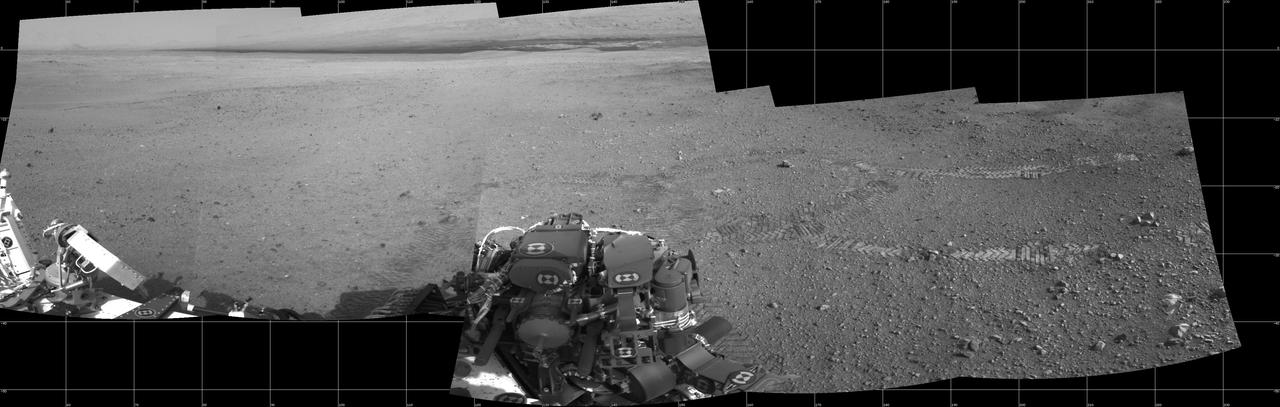
Two donut-shaped tracks make an infinity symbol, and mark the first two drives of NASA Curiosity rover. The landing site is at the far right.
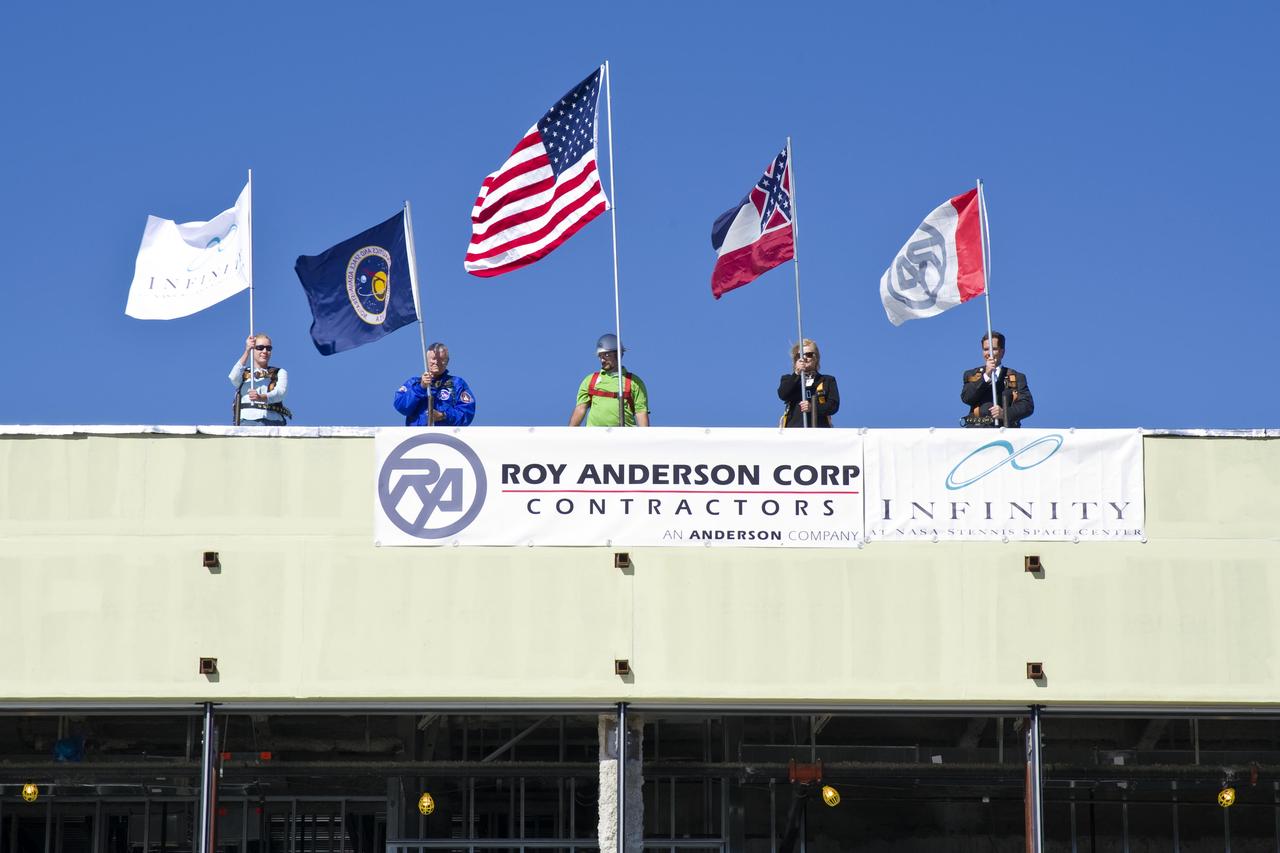
Flags are planted on the roof of the new INFINITY at NASA Stennis Space Center facility under construction just west of the Mississippi Welcome Center at exit 2 on Interstate 10. Stennis and community leaders celebrated the 'topping out' of the new science center Nov. 17, marking a construction milestone for the center. The 72,000-square-foot science and education center will feature space and Earth galleries to showcase the science that underpins the missions of the agencies at Stennis Space Center. The center is targeted to open in 2012.
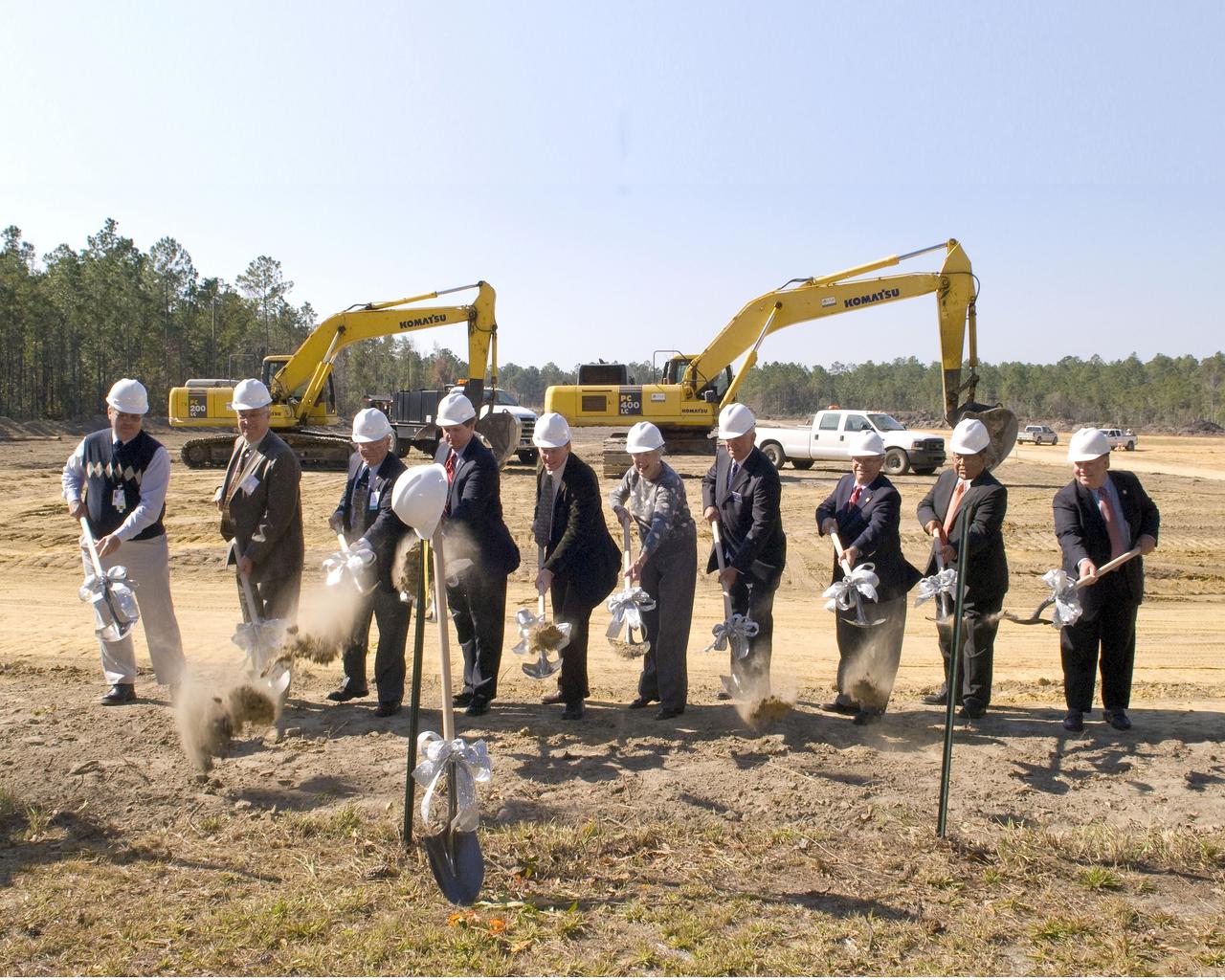
Community leaders from Mississippi and Louisiana break ground for the new INFINITY at NASA Stennis Space Center facility during a Nov. 20 ceremony. Groundbreaking participants included (l to r): Gottfried Construction representative John Smith, Mississippi Highway Commissioner Wayne Brown, INFINITY board member and Apollo 13 astronaut Fred Haise, Stennis Director Gene Goldman, Studio South representative David Hardy, Leo Seal Jr. family representative Virginia Wagner, Hancock Bank President George Schloegel, Mississippi Rep. J.P. Compretta, Mississippi Band of Choctaw Indians representative Charlie Benn and Louisiana Sen. A.G. Crowe.
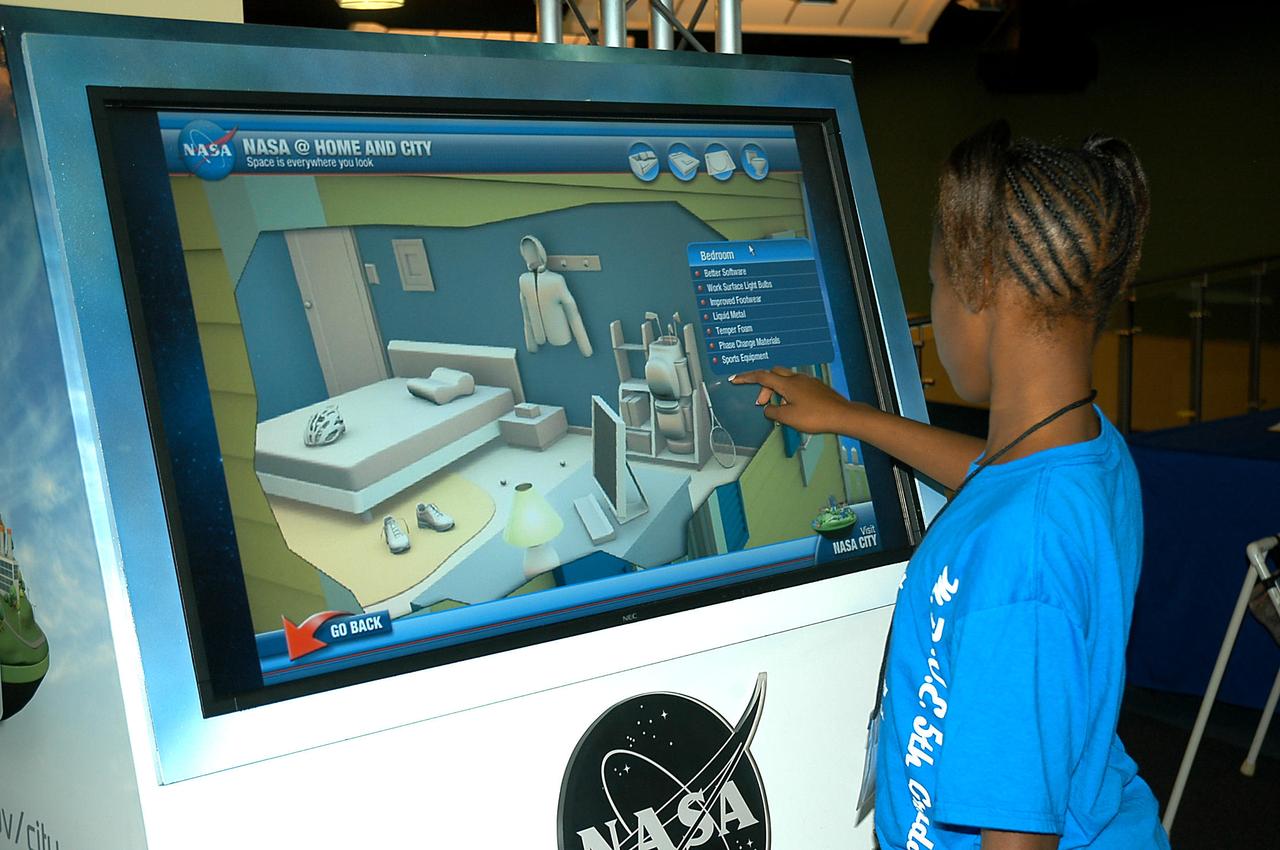
Escatawpa Elementary School student Danisha Dillon of Moss Point, Miss., learns about NASA at the Home and City interactive exhibit at INFINITY Science Center, a NASA visitors center. The facility hosted two days of activity to celebrate the 40th anniversary of the Apollo 17 flight, the last manned space mission to the moon.
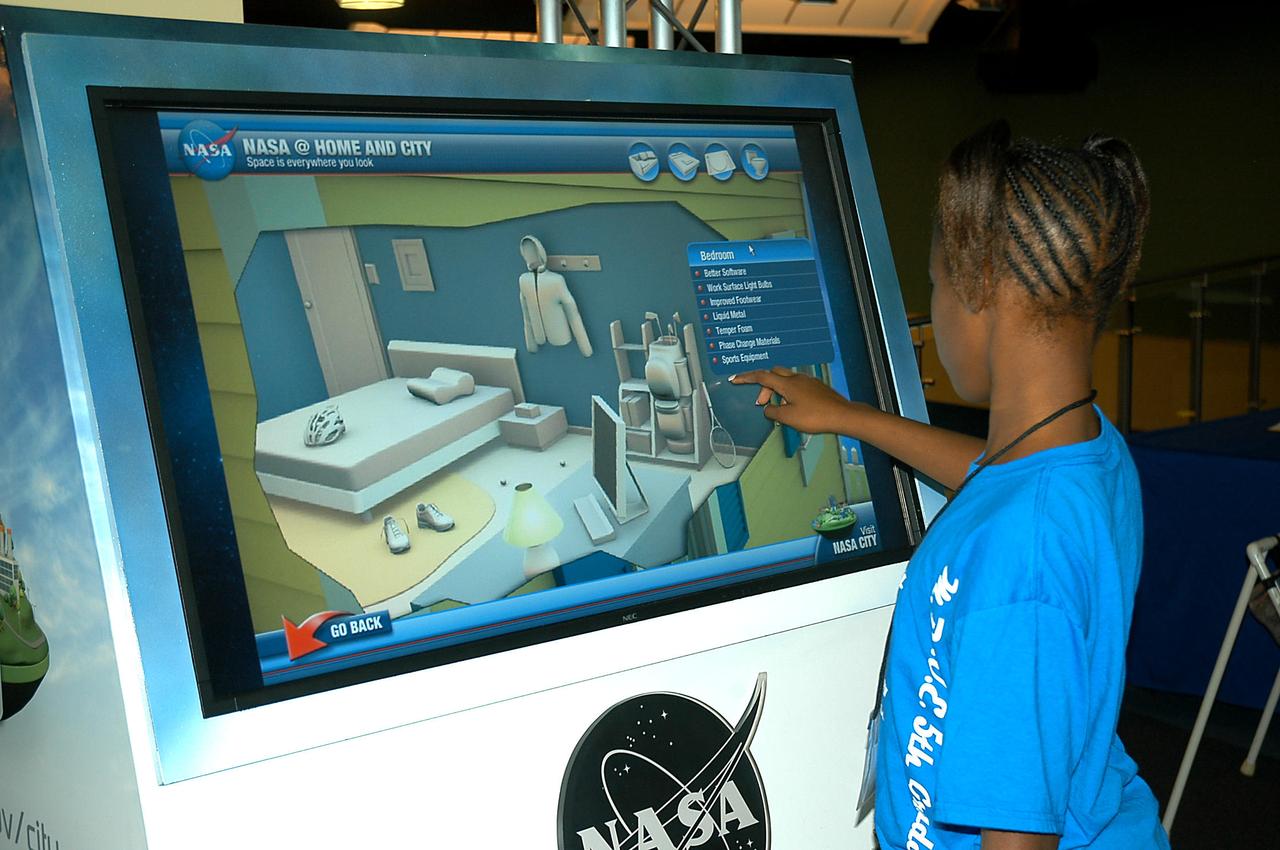
Escatawpa Elementary School student Danisha Dillon of Moss Point, Miss., learns about NASA at the Home and City interactive exhibit at INFINITY Science Center, a NASA visitors center. The facility hosted two days of activity to celebrate the 40th anniversary of the Apollo 17 flight, the last manned space mission to the moon.

Kiya Franklin from Escatawpa Elementary School in Moss Point, Miss., enjoys a construction activity during her visit to INFINITY Science Center, a NASA visitors center, on Dec. 7. Stennis hosted two days of activities to celebrate the 40th anniversary of the Apollo 17 mission to the moon.
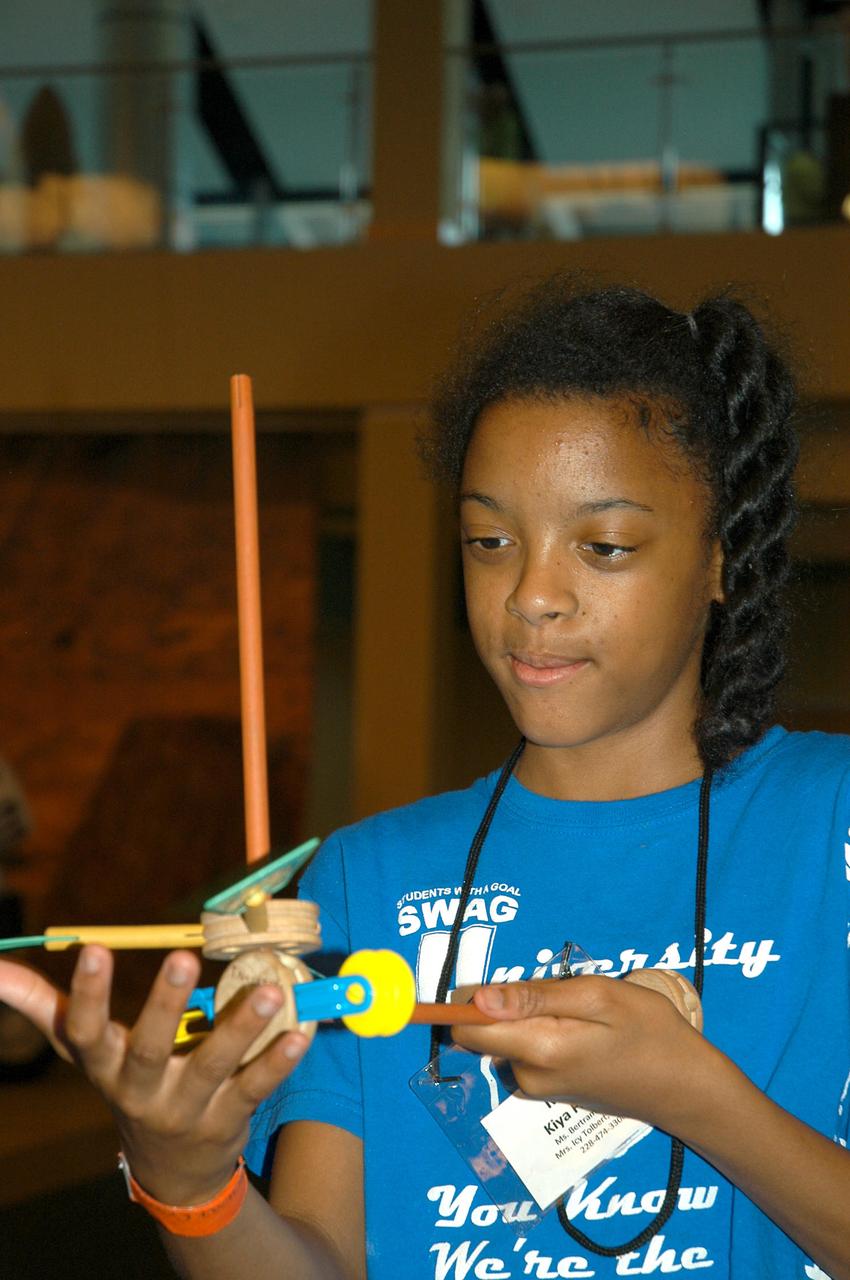
Kiya Franklin from Escatawpa Elementary School in Moss Point, Miss., enjoys a construction activity during her visit to INFINITY Science Center, a NASA visitors center, on Dec. 7. Stennis hosted two days of activities to celebrate the 40th anniversary of the Apollo 17 mission to the moon.
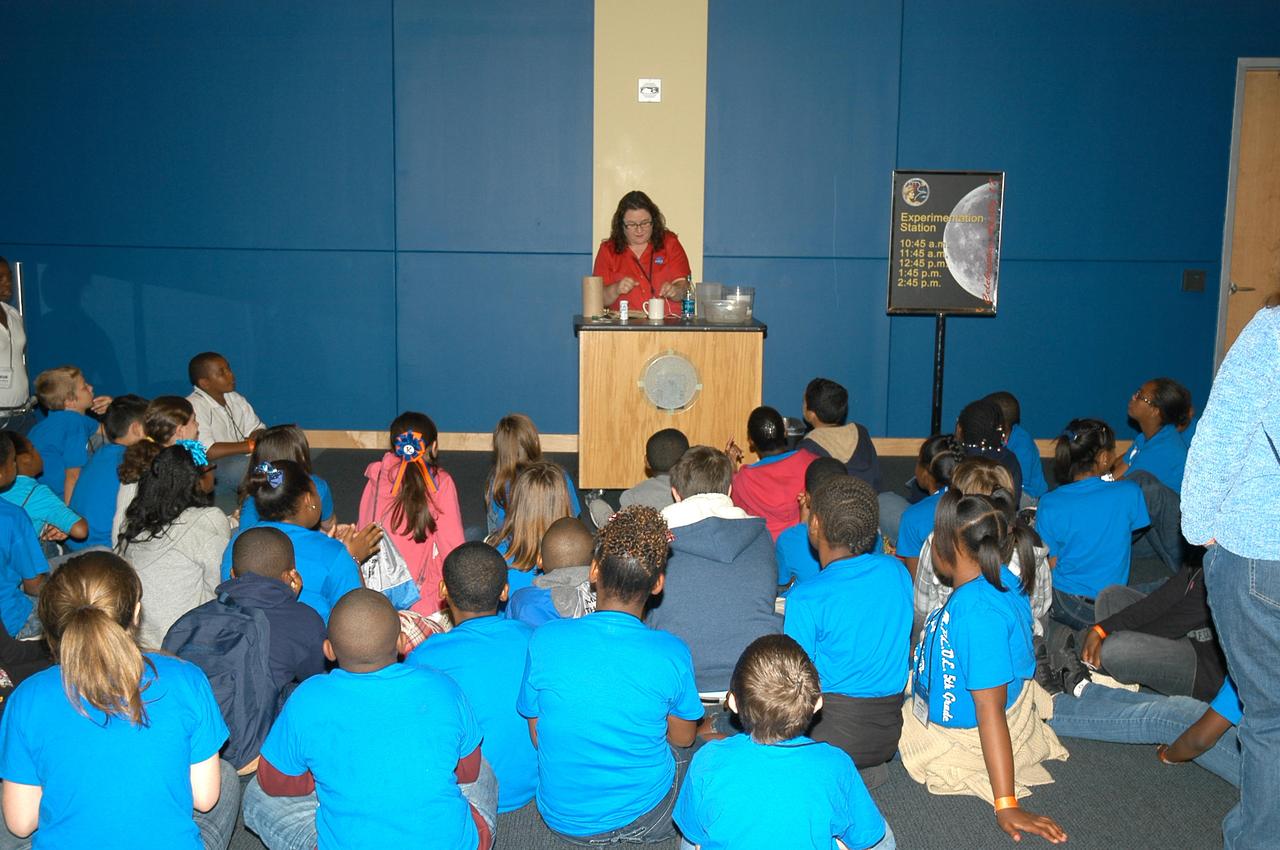
Young visitors to the INFINITY Science Center, a NASA visitors center, on Dec. 7 enjoy a Living and Working in Space presentation during activities celebrating the Apollo 17 lunar mission in 1972. Visitors were able to learn about the historic mission and to participate in hands-on activities. Apollo 17 was the final mission of America's manned lunar effort.
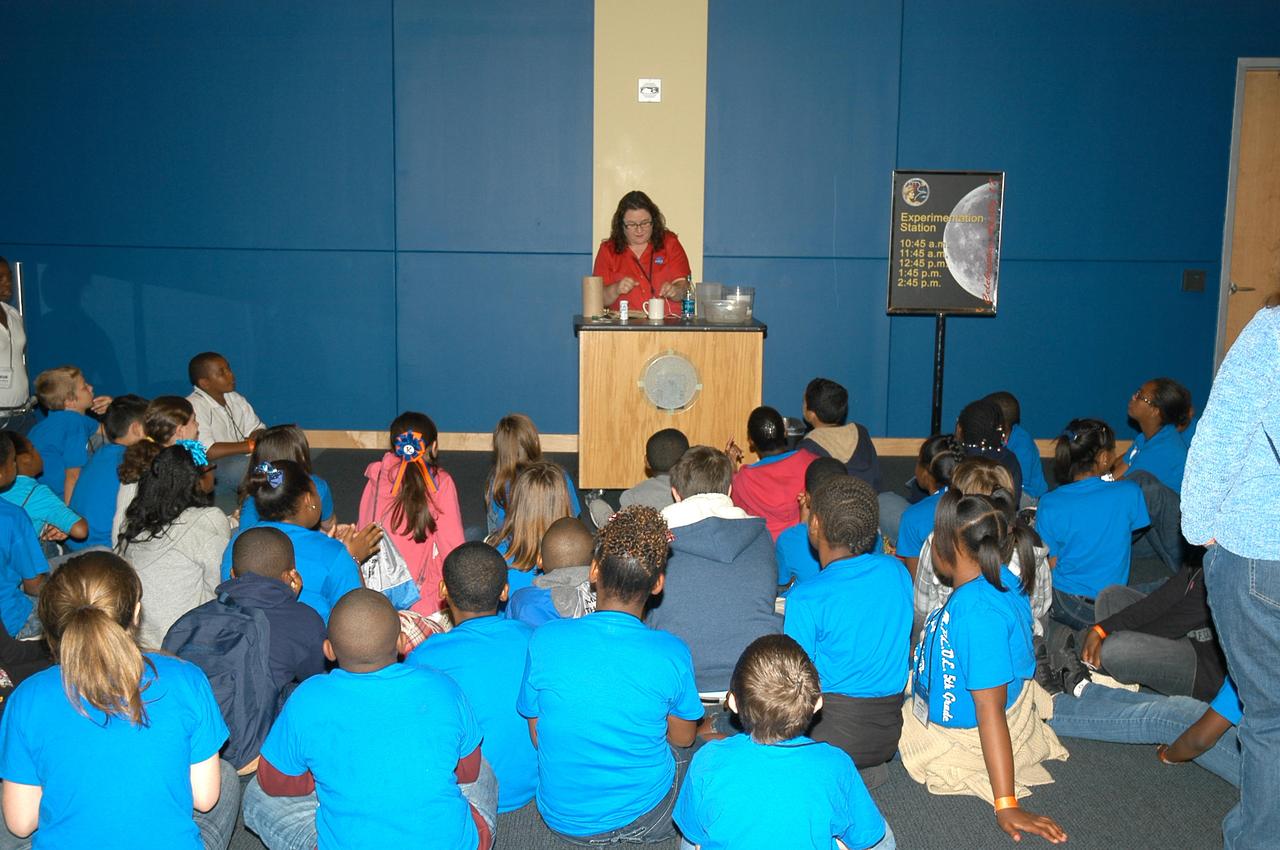
Young visitors to the INFINITY Science Center, a NASA visitors center, on Dec. 7 enjoy a Living and Working in Space presentation during activities celebrating the Apollo 17 lunar mission in 1972. Visitors were able to learn about the historic mission and to participate in hands-on activities. Apollo 17 was the final mission of America's manned lunar effort.
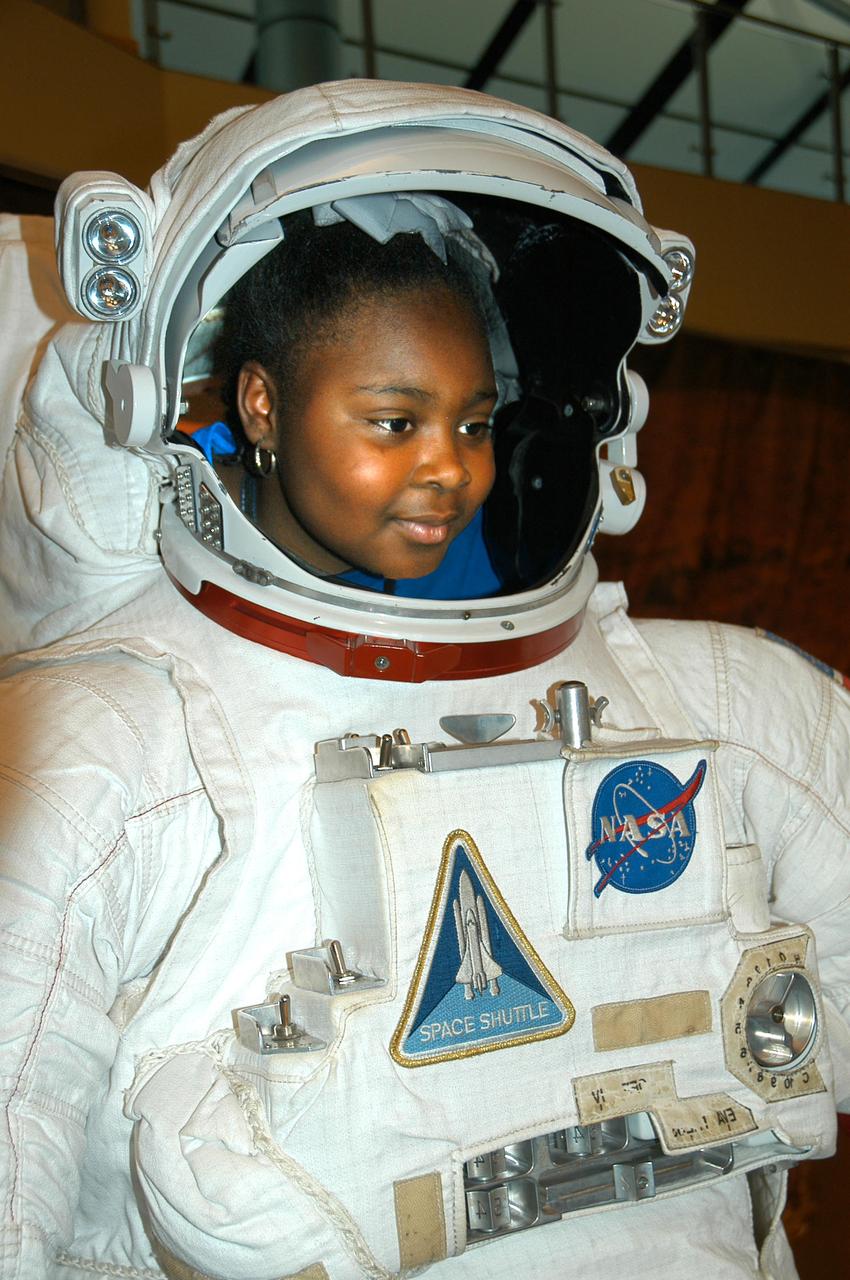
Ariana Lyons from Escatawpa Elementary School in Moss Point, Miss., experiences what it feels like to view the world out of a spacesuit during a visit to INFINITY Science Center, a NASA visitors center, Dec. 7. Lyons joined other young visitors to the facility that day in celebrating the 40th anniversary of the Apollo 17 mission to the moon in 1972.
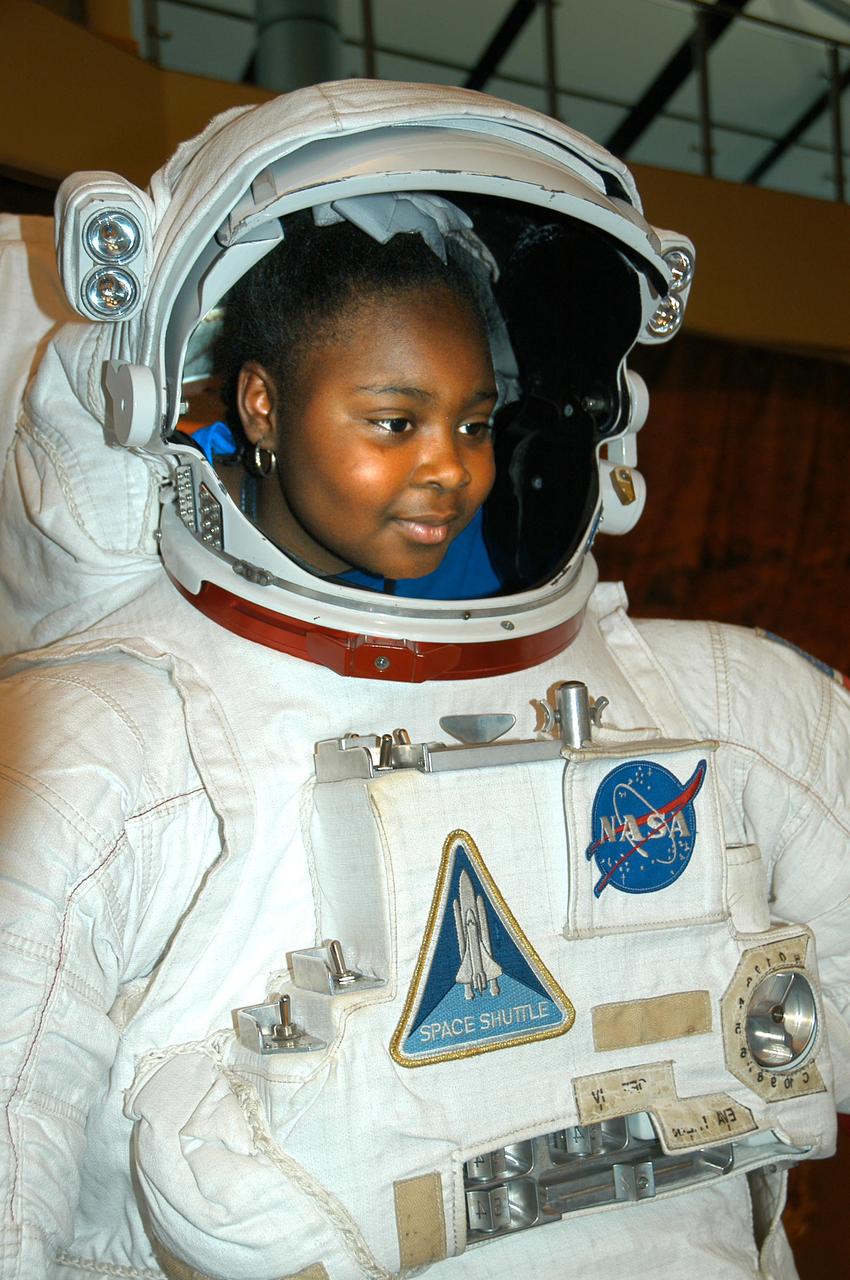
Ariana Lyons from Escatawpa Elementary School in Moss Point, Miss., experiences what it feels like to view the world out of a spacesuit during a visit to INFINITY Science Center, a NASA visitors center, Dec. 7. Lyons joined other young visitors to the facility that day in celebrating the 40th anniversary of the Apollo 17 mission to the moon in 1972.
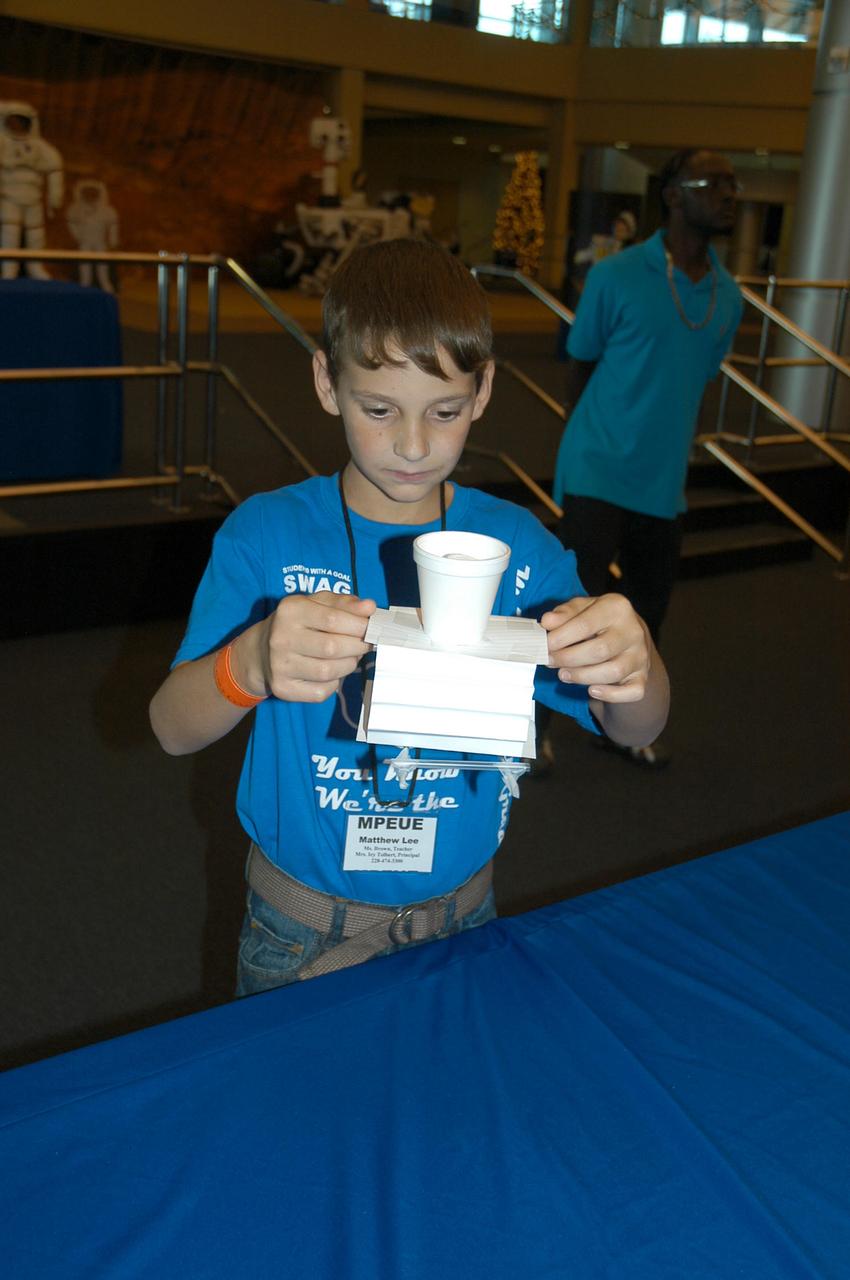
Matthew Lee from Escatawpa Elementary School in Moss Point, Miss., builds a lunar lander model during an activity at INFINITY Science Center, a NASA visitors center, on Dec. 7. NASA hosted two days of activities at the facility to celebrate the Apollo 17 flight to the moon in 1972, the final manned lunar mission of the Apollo Program
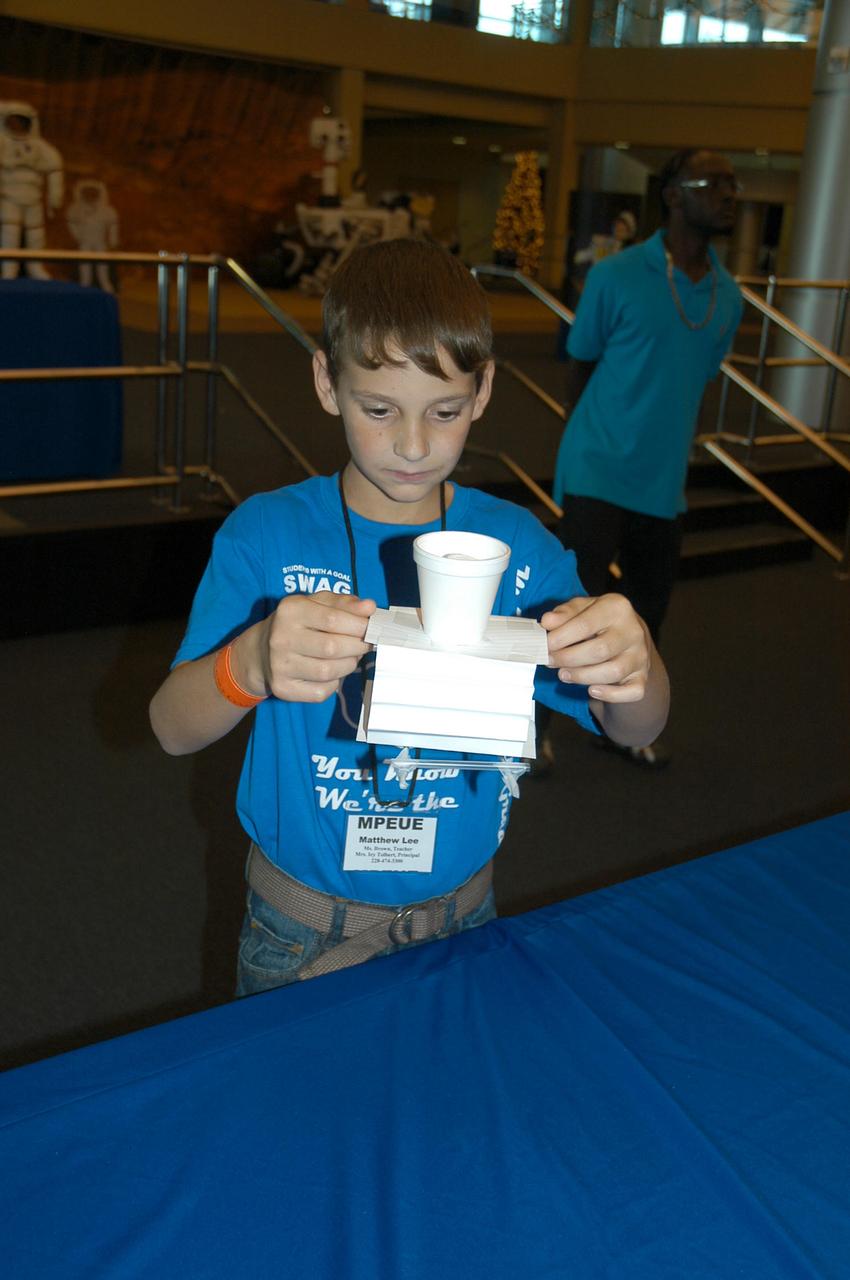
Matthew Lee from Escatawpa Elementary School in Moss Point, Miss., builds a lunar lander model during an activity at INFINITY Science Center, a NASA visitors center, on Dec. 7. NASA hosted two days of activities at the facility to celebrate the Apollo 17 flight to the moon in 1972, the final manned lunar mission of the Apollo Program.
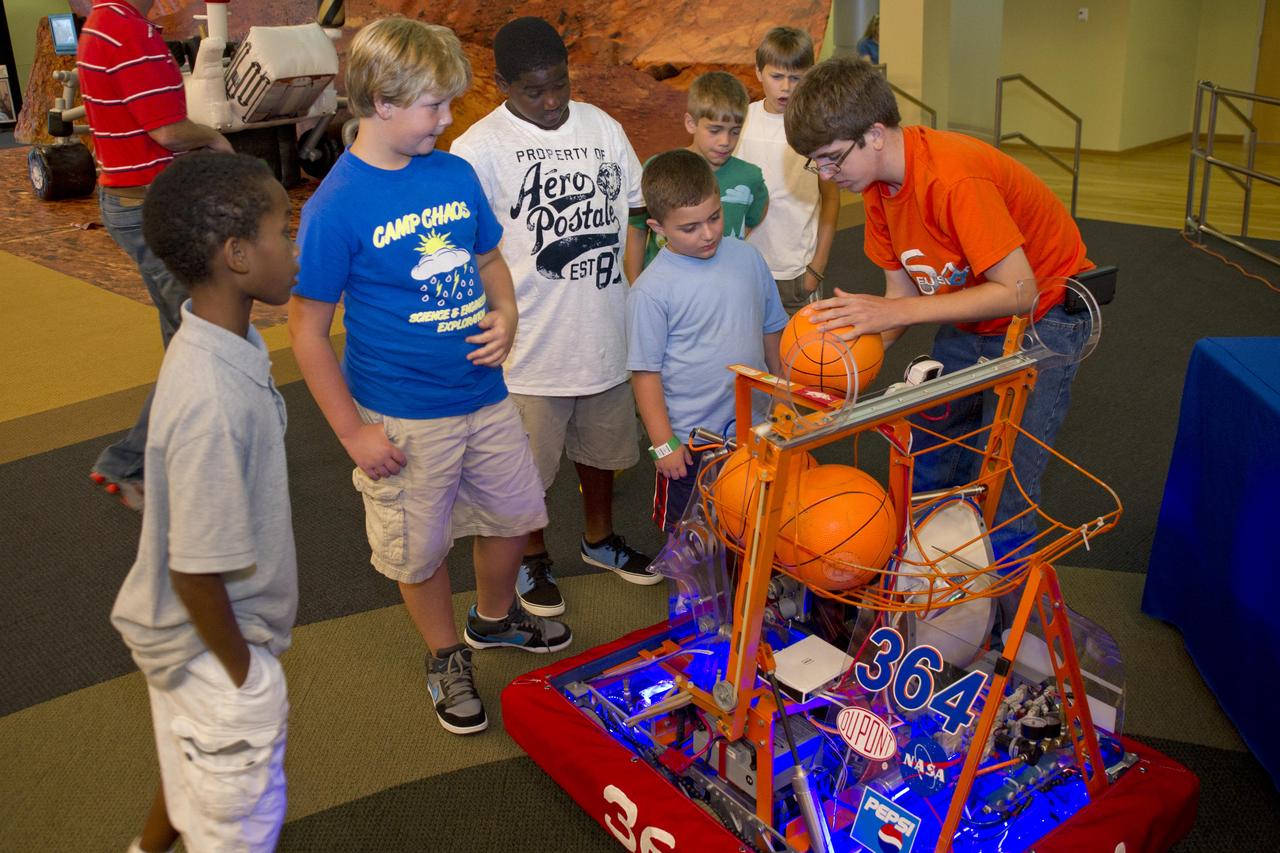
NASA welcomed hundreds of children and accompanying adults to its INFINITY visitor center on Aug. 4, offering Mars-related activities that focused attention on the space agency's Curiosity mission to the Red Planet. Among other things, students from Gulfport High School, who field a team each year in the FIRST (For Inspiration and Recognition of Science and Technology) Robotics Competition, offered young visitors a firsthand look at how robots work Hundreds of persons visited the INFINITY facility during the day, including media representatives from surrounding communities.
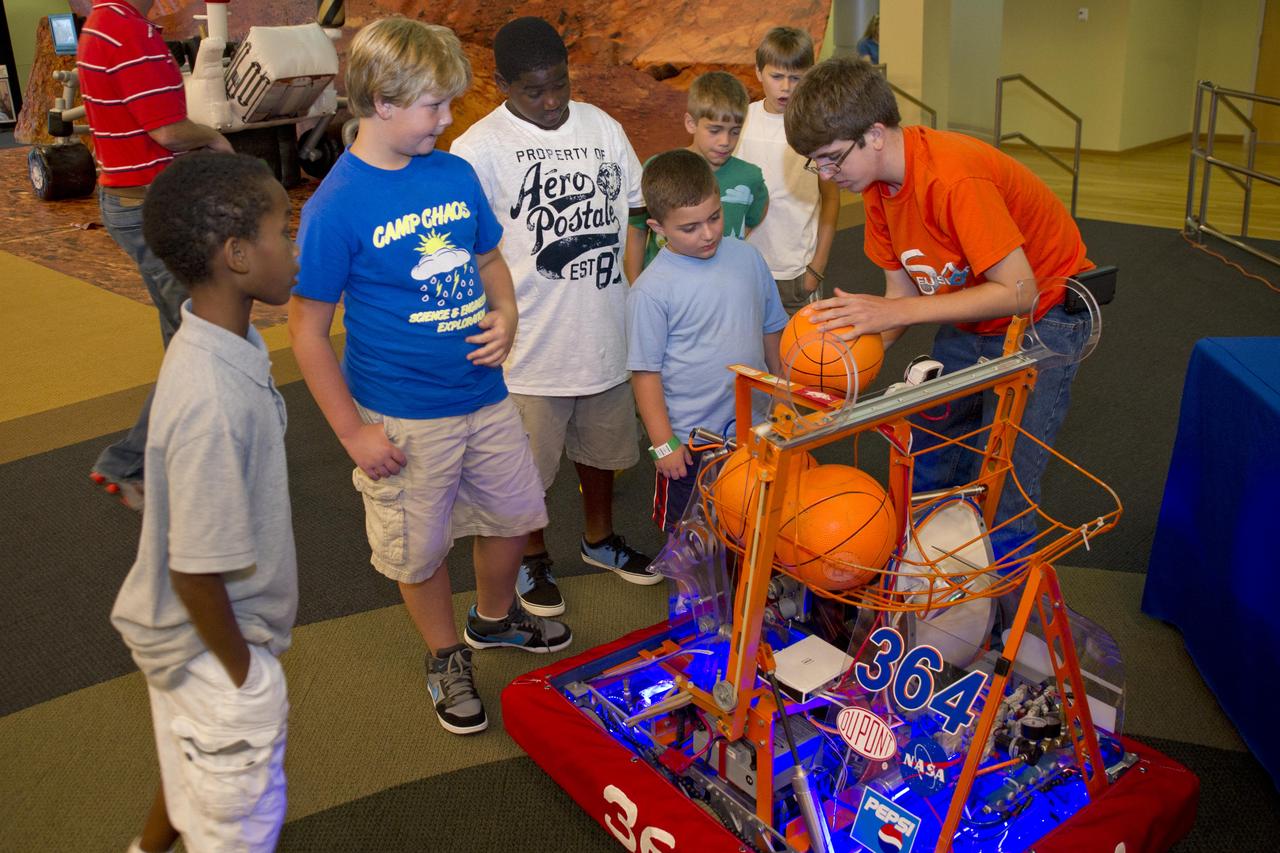
NASA welcomed hundreds of children and accompanying adults to its INFINITY visitor center on Aug. 4, offering Mars-related activities that focused attention on the space agency's Curiosity mission to the Red Planet. Among other things, students from Gulfport High School, who field a team each year in the FIRST (For Inspiration and Recognition of Science and Technology) Robotics Competition, offered young visitors a firsthand look at how robots work Hundreds of persons visited the INFINITY facility during the day, including media representatives from surrounding communities.
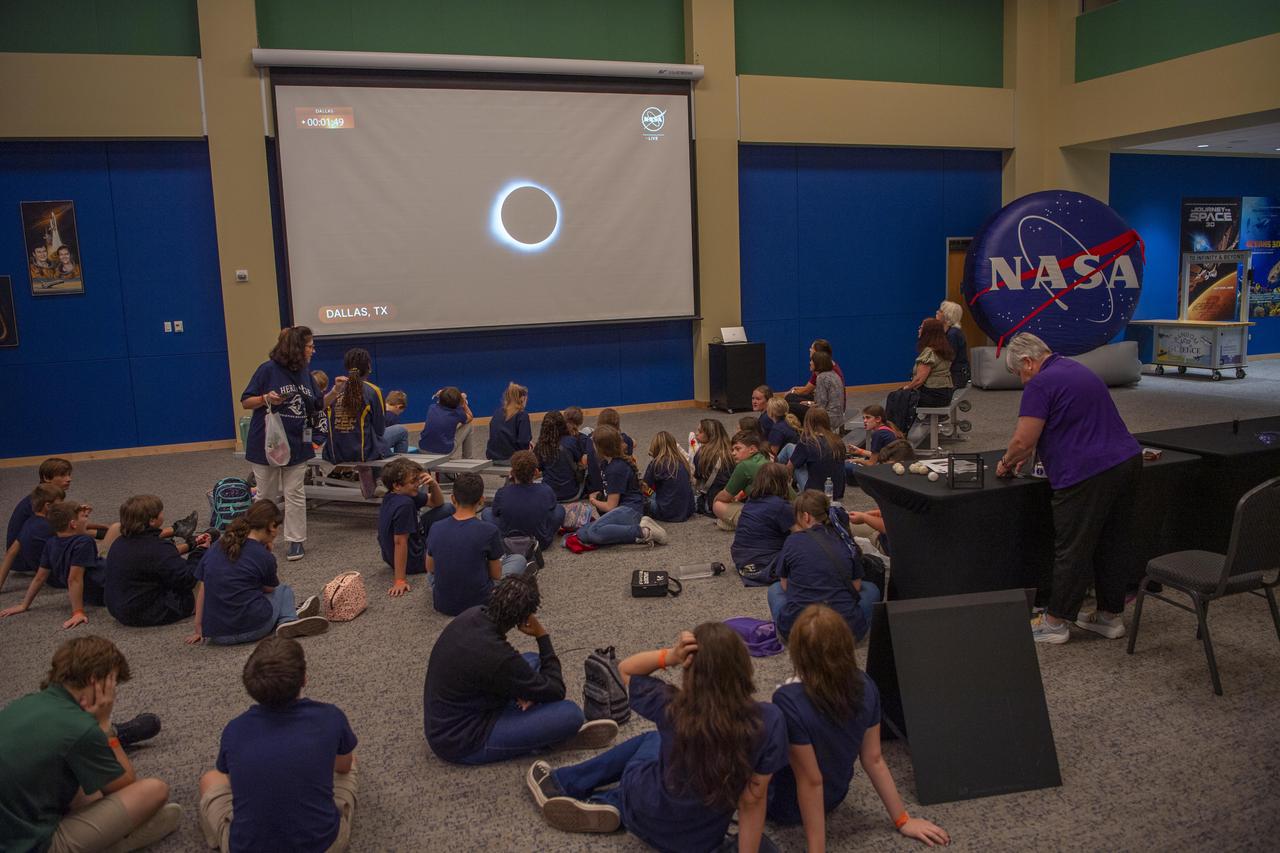
Schoolchildren watch NASA’s coverage of the total solar eclipse on April 8 at INFINITY Science Center, the official visitor center of NASA’s Stennis Space Center.
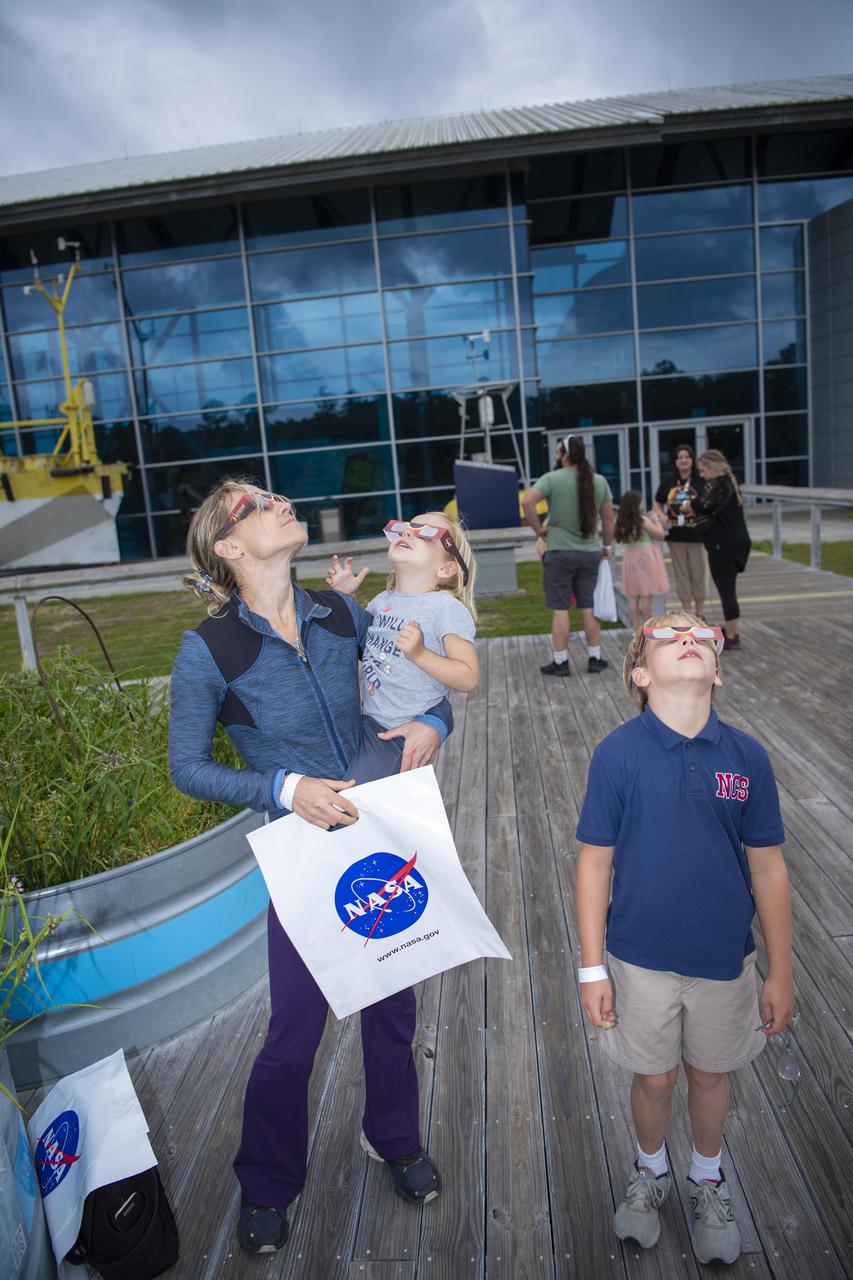
A family looks to the skies for the eclipse outside of INFINITY Science Center, the official visitor center of NASA’s Stennis Space Center, on April 8.
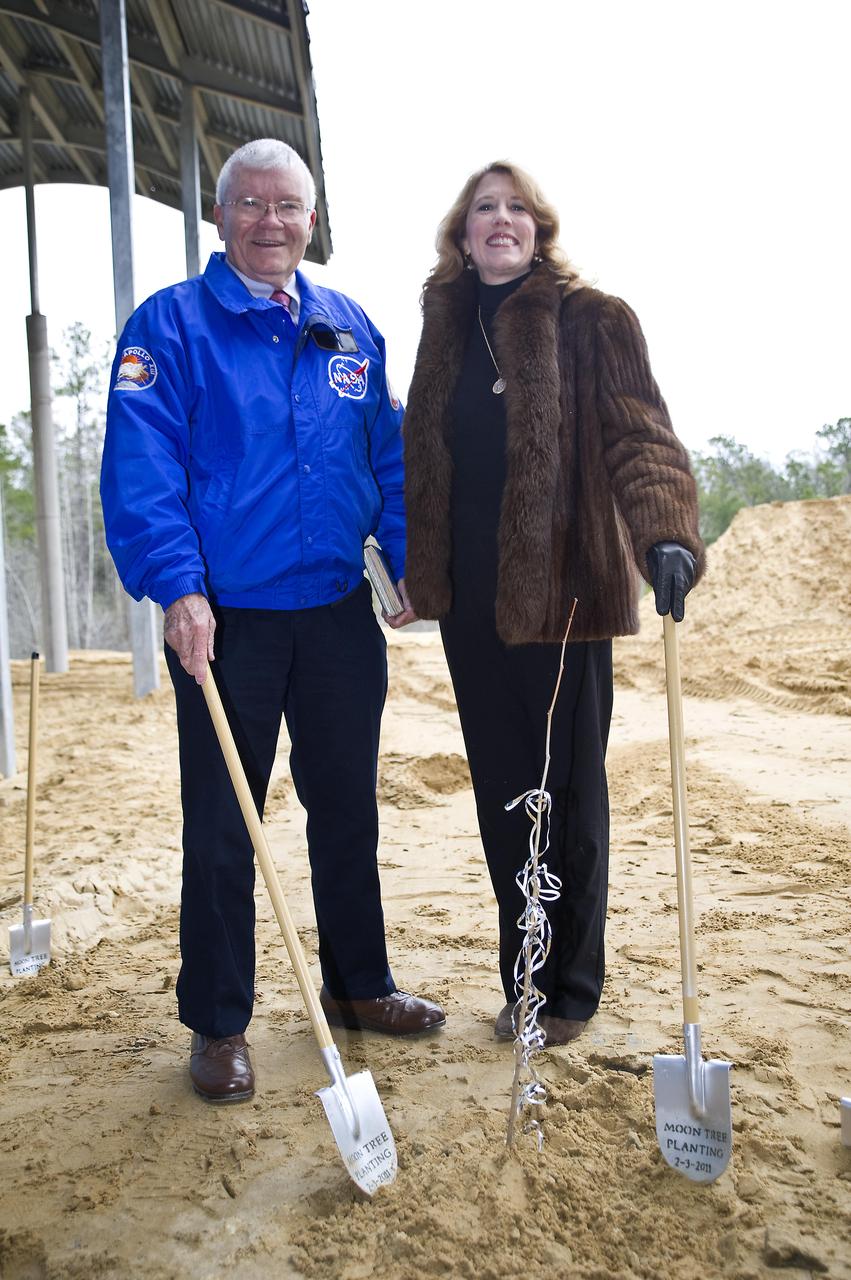
Apollo 13 astronaut Fred Haise stands with Rosemary Roosa, daughter of late Apollo 14 astronaut Stuart Roosa, beside a 'moon tree' planted at the INFINITY science center on Feb. 3, 2011. The moon tree is a descendent of seeds carried into space by Stuart Roosa on the Apollo 14 mission in 1971.
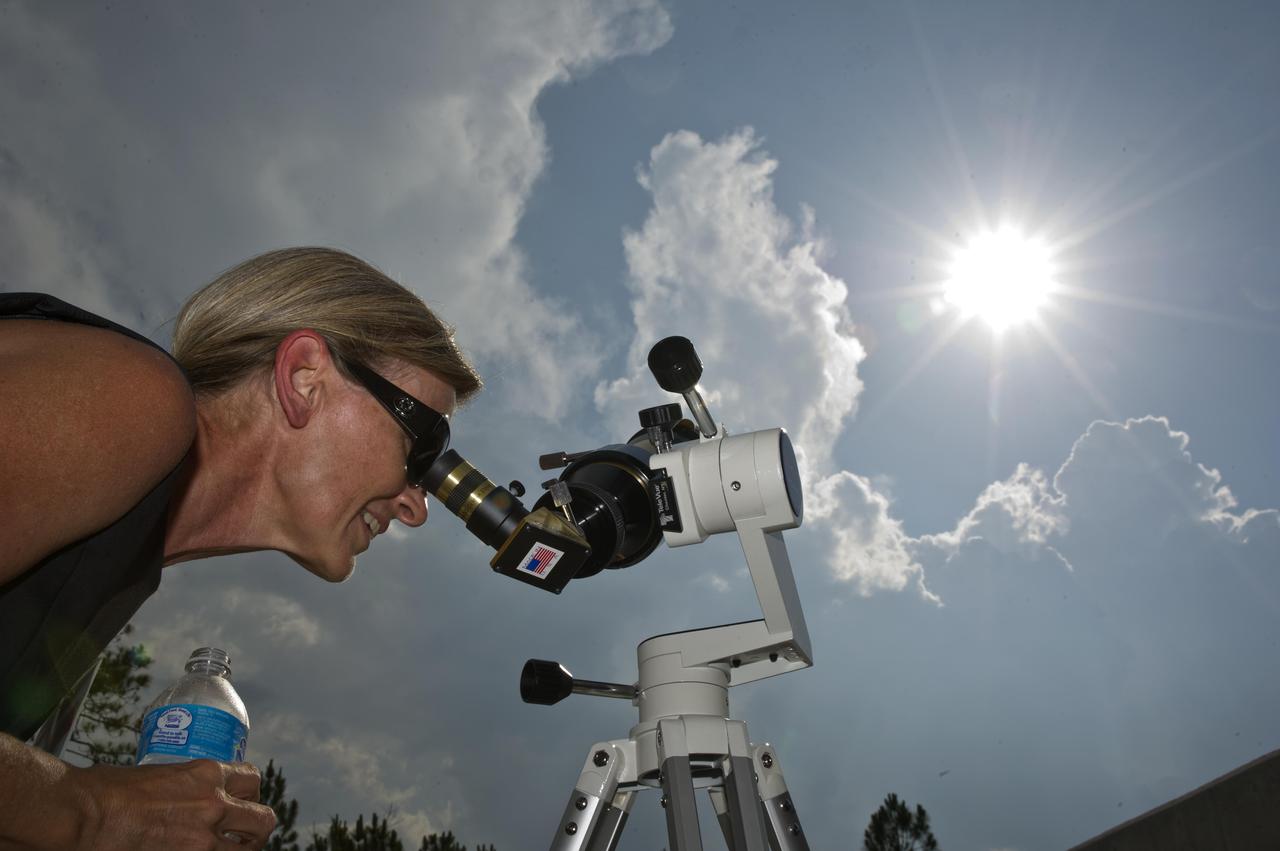
Leslie Lowes from the NASA Jet Propulsion Laboratory in Pasadena, Calif., views the June 5, 2012, Venus transit through a solar telescope. Lowes participated in an education workshop at the INFINITY at NASA Stennis Space Center visitor center and joined others to view the rare celestial event when Venus traverses the face of the sun.
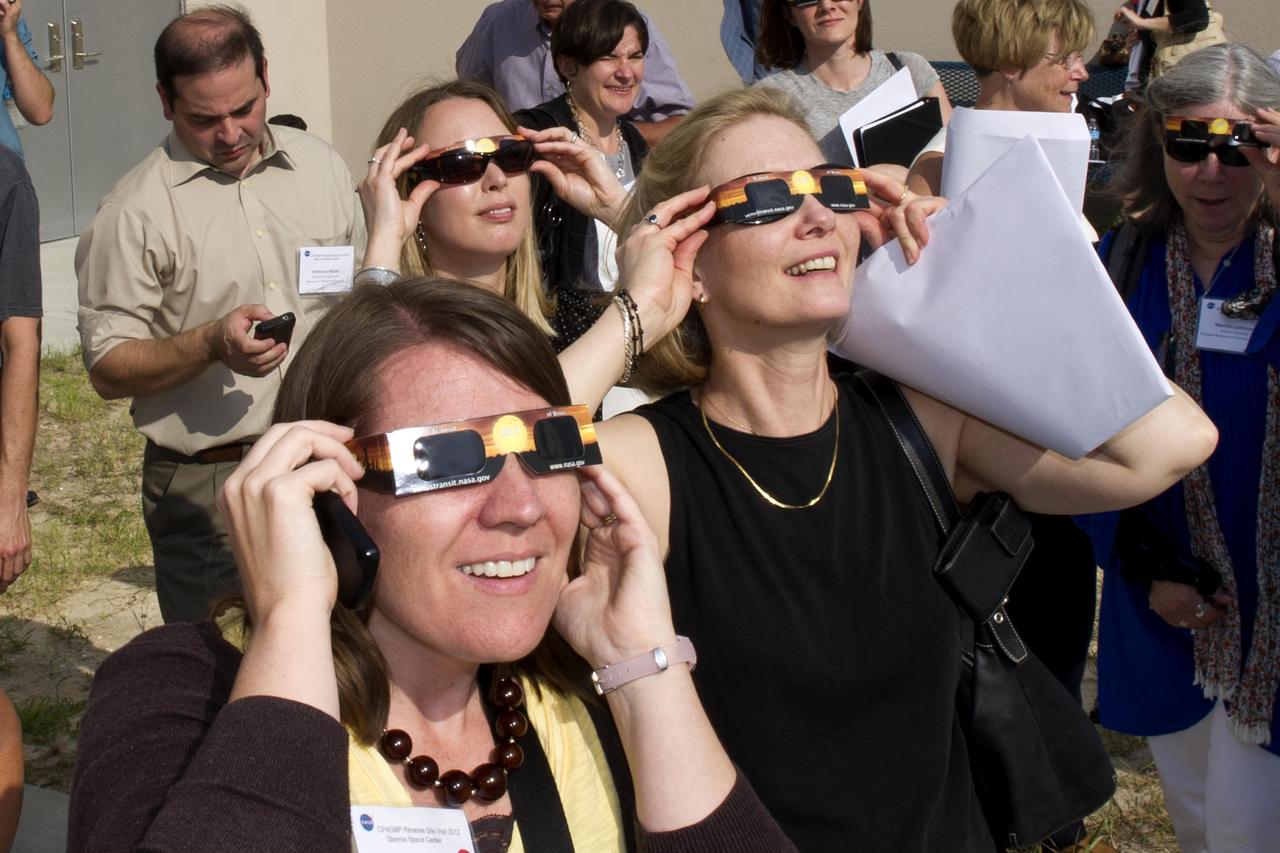
Guests at the INFINITY at NASA Stennis Space Center visitor center use special solar sunglasses to catch a lifetime view of the Venus transit June 5, 2012. The rare celestial event in which the planet Venus traverses the face of the sun will not be visible from Earth again until 2117.
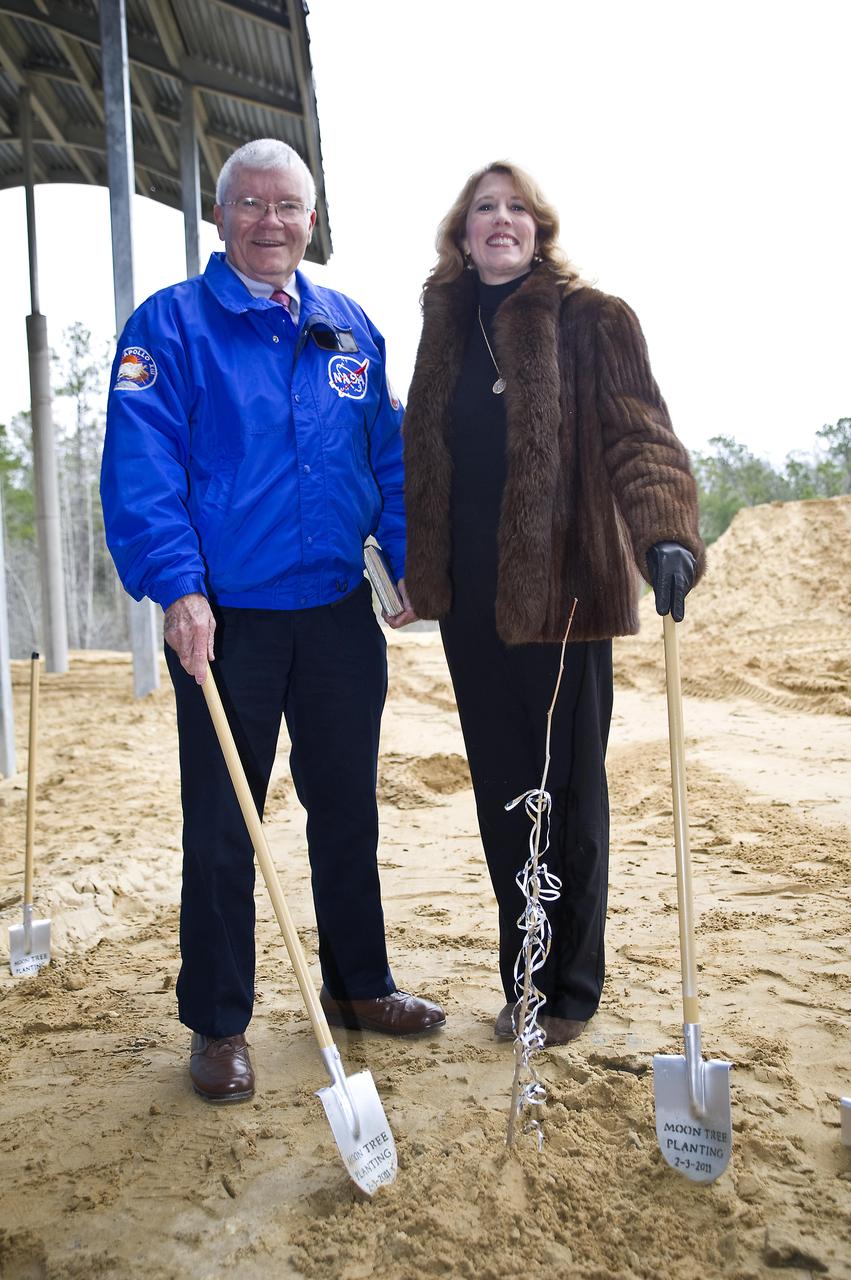
Apollo 13 astronaut Fred Haise stands with Rosemary Roosa, daughter of late Apollo 14 astronaut Stuart Roosa, beside a 'moon tree' planted at the INFINITY science center on Feb. 3, 2011. The moon tree is a descendent of seeds carried into space by Stuart Roosa on the Apollo 14 mission in 1971.
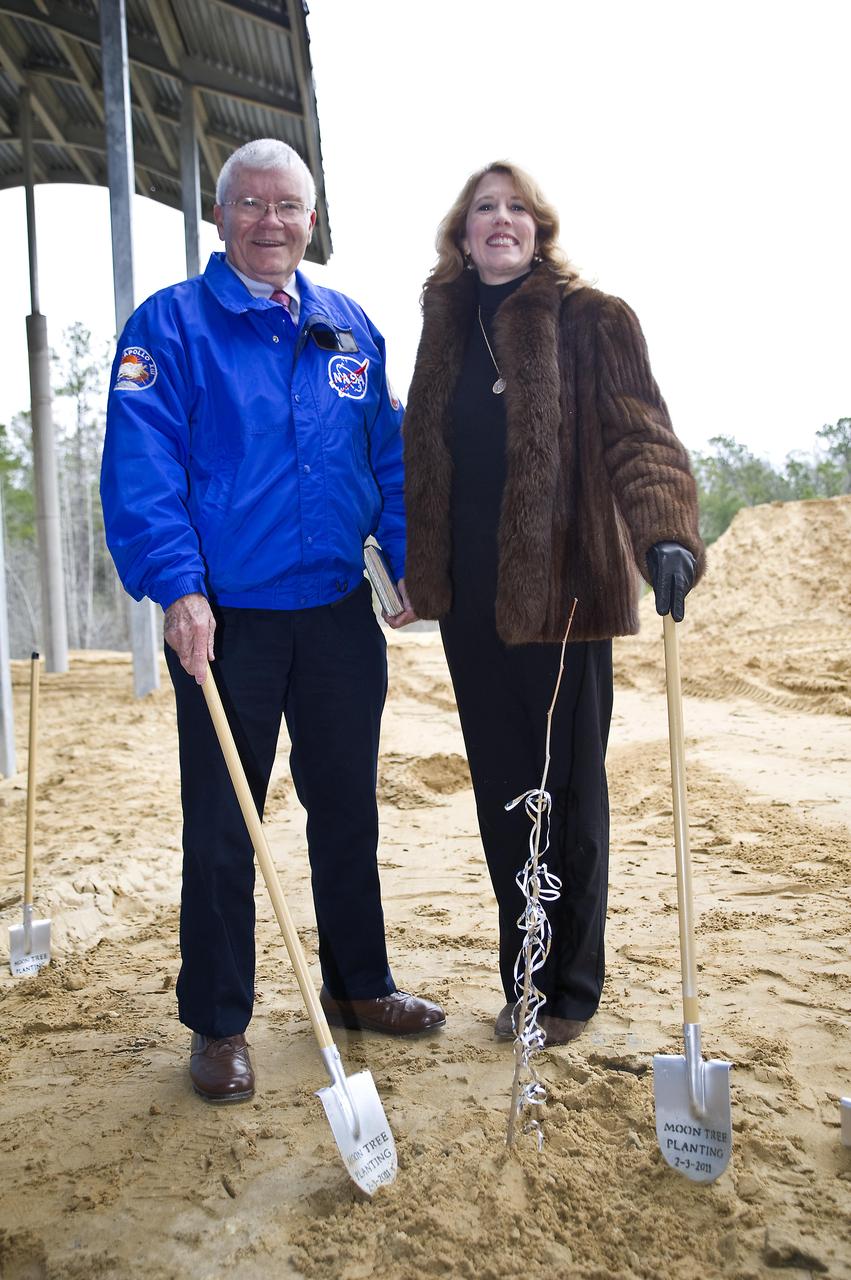
Apollo 13 astronaut Fred Haise stands with Rosemary Roosa, daughter of late Apollo 14 astronaut Stuart Roosa, beside a 'moon tree' planted at the INFINITY science center on Feb. 3, 2011. The moon tree is a descendent of seeds carried into space by Stuart Roosa on the Apollo 14 mission in 1971.
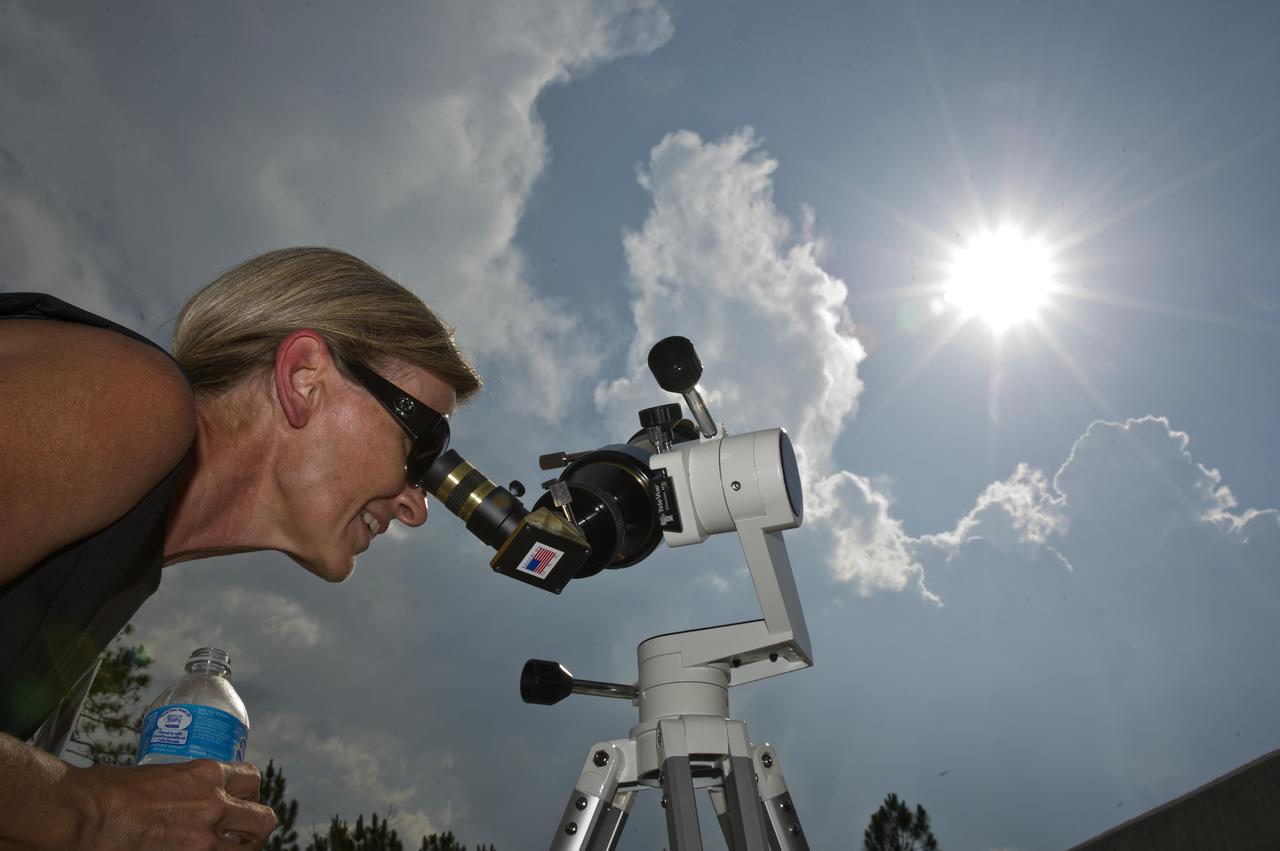
Leslie Lowes from the NASA Jet Propulsion Laboratory in Pasadena, Calif., views the June 5, 2012, Venus transit through a solar telescope. Lowes participated in an education workshop at the INFINITY at NASA Stennis Space Center visitor center and joined others to view the rare celestial event when Venus traverses the face of the sun.
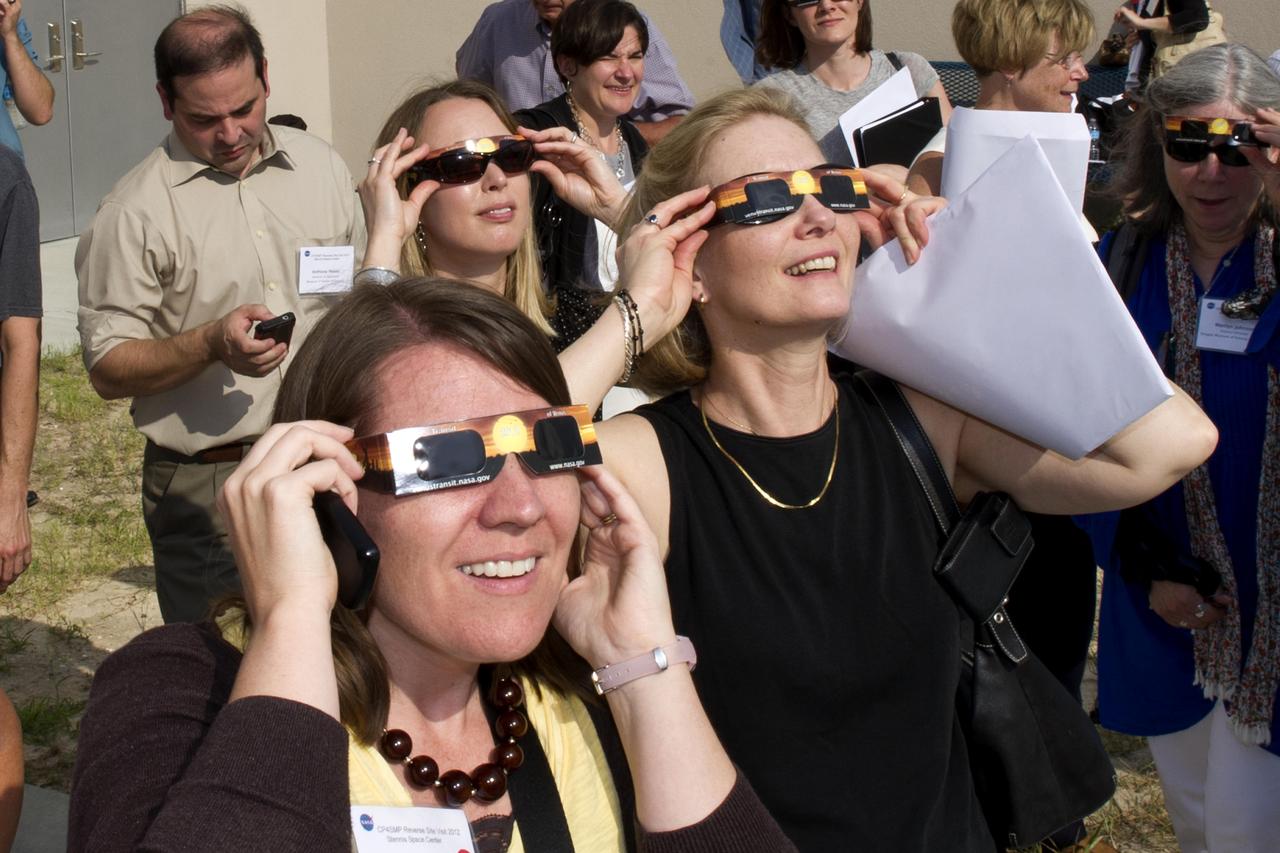
Guests at the INFINITY at NASA Stennis Space Center visitor center use special solar sunglasses to catch a lifetime view of the Venus transit June 5, 2012. The rare celestial event in which the planet Venus traverses the face of the sun will not be visible from Earth again until 2117.
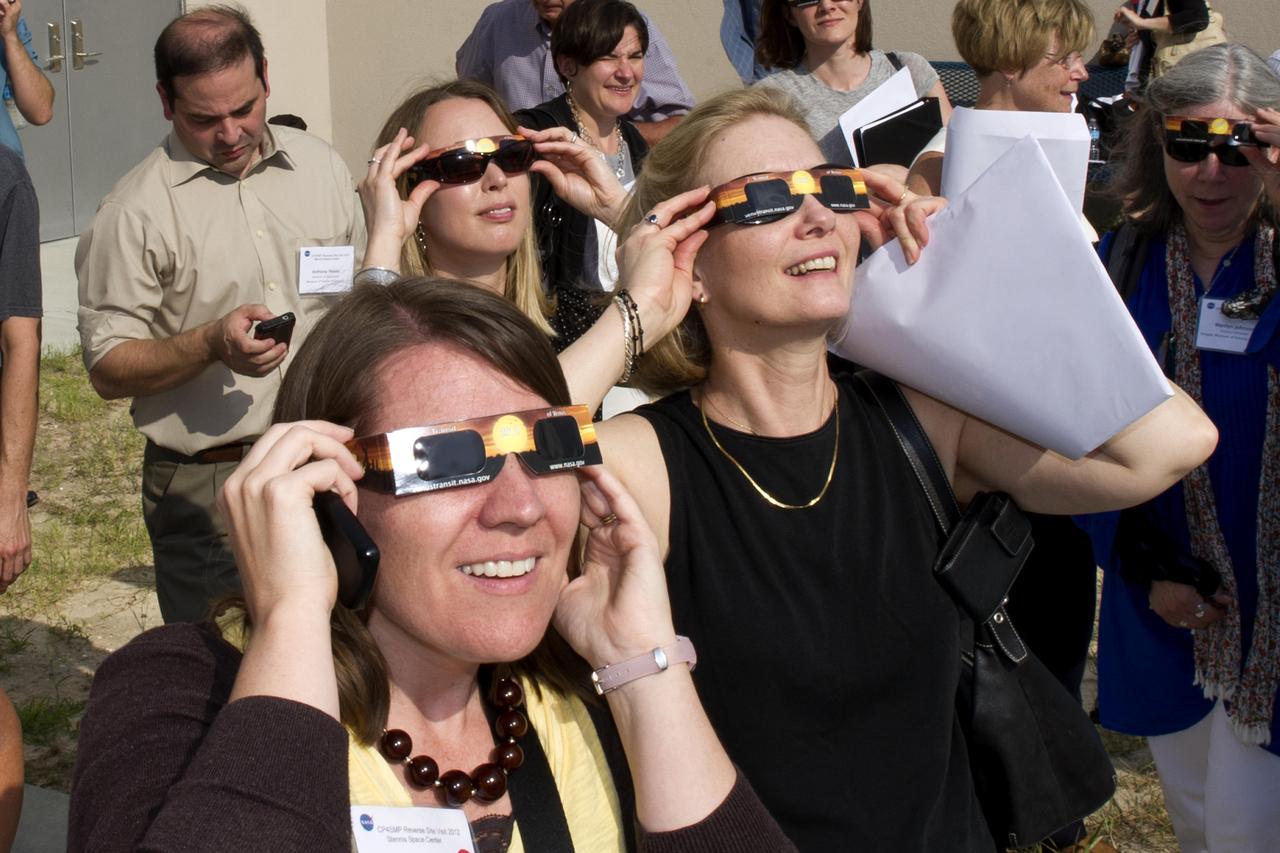
Guests at the INFINITY at NASA Stennis Space Center visitor center use special solar sunglasses to catch a lifetime view of the Venus transit June 5, 2012. The rare celestial event in which the planet Venus traverses the face of the sun will not be visible from Earth again until 2117.
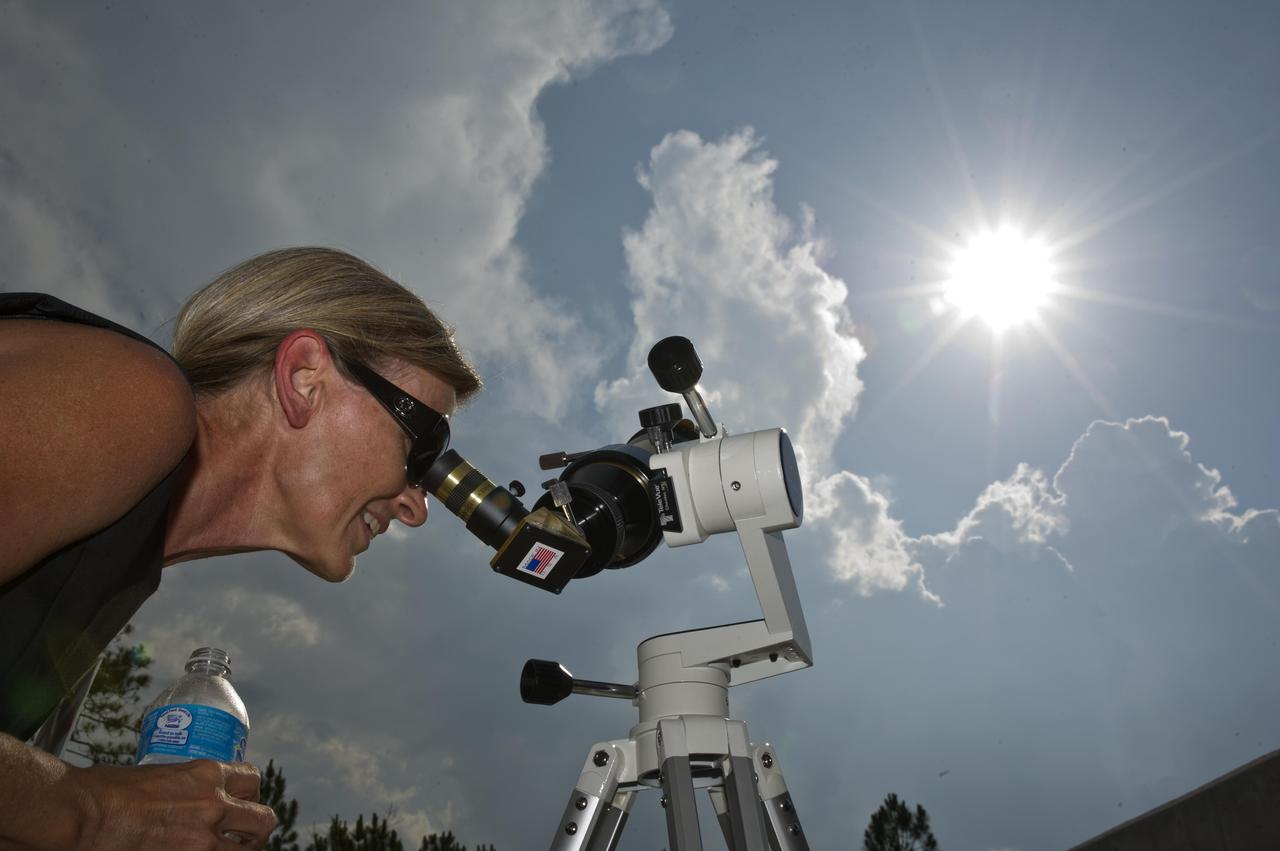
Leslie Lowes from the NASA Jet Propulsion Laboratory in Pasadena, Calif., views the June 5, 2012, Venus transit through a solar telescope. Lowes participated in an education workshop at the INFINITY at NASA Stennis Space Center visitor center and joined others to view the rare celestial event when Venus traverses the face of the sun.
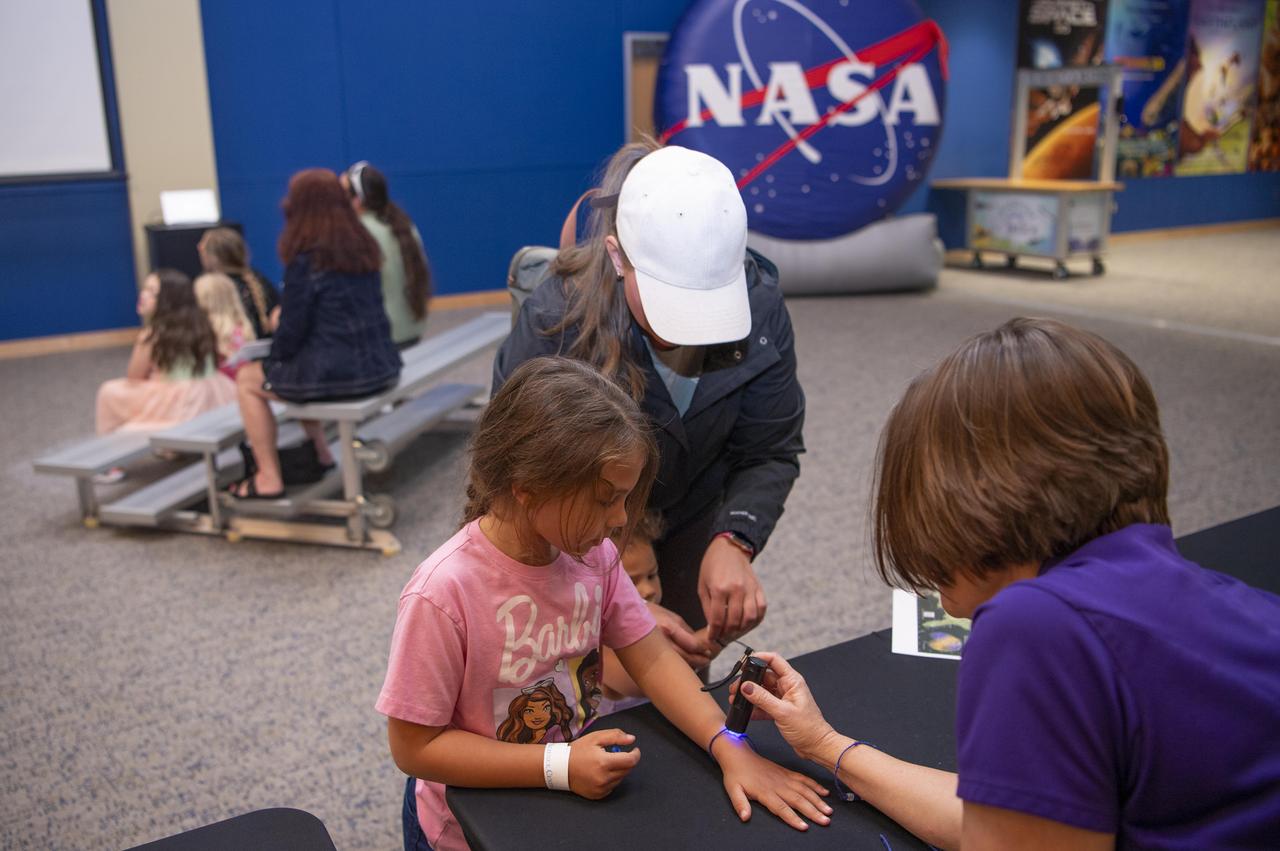
NASA Visitor Relations Specialist Holley Argus conducts an activity with visitors at INFINITY Science Center, the official visitor center of NASA’s Stennis Space Center, on April 8.
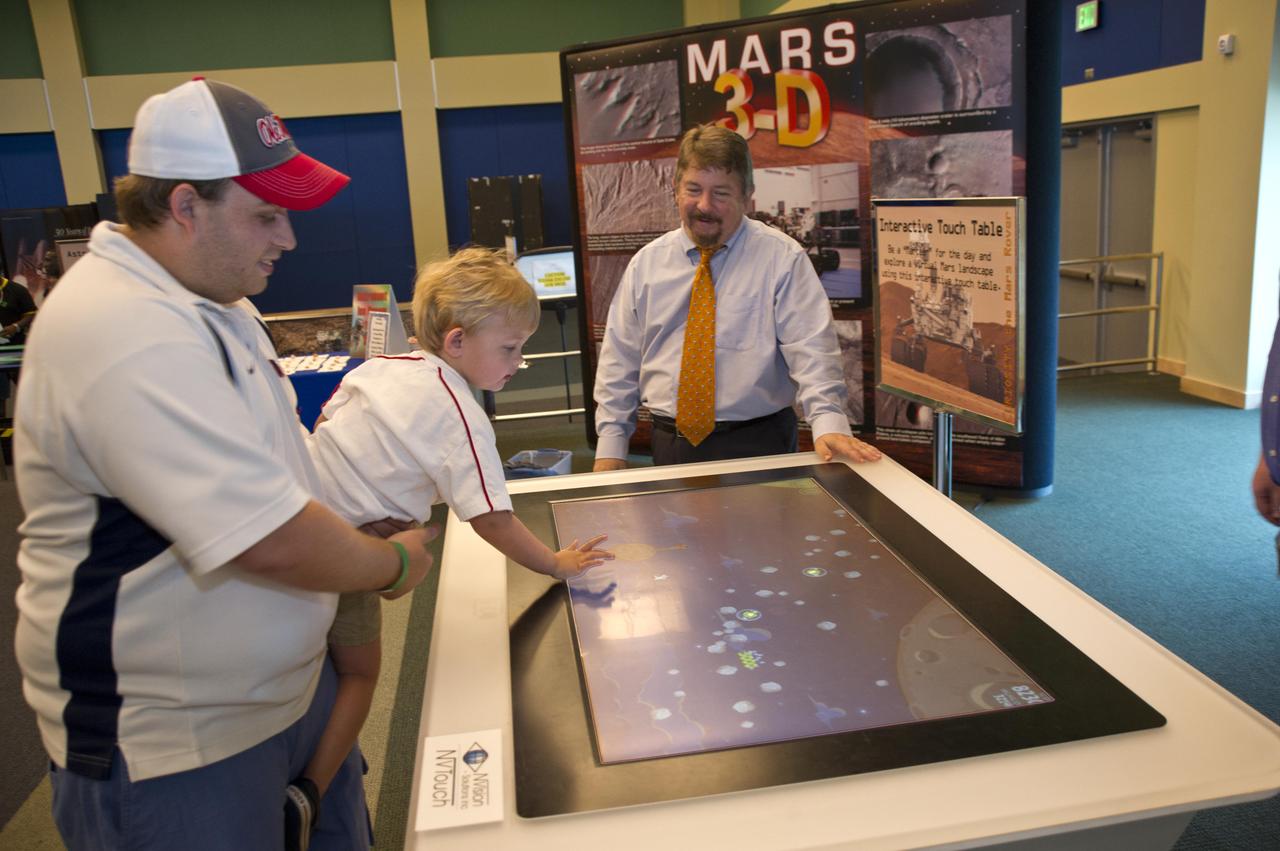
NASA welcomed hundreds of children and accompanying adults to its INFINITY visitor center on Aug. 4, offering Mars-related activities that focused attention on the space agency's Curiosity mission to the Red Planet. Parents and children, such as Myron and Trey (age 3) Cummings, enjoyed exploring Mars using an interactive touch table (top right photo). Midway through the day of activities, visitors in the Science on a Sphere auditorium also enjoyed a presentation on Mars and the Curiosity mission by Dr. Steven Williams, a NASA expert on Mars.
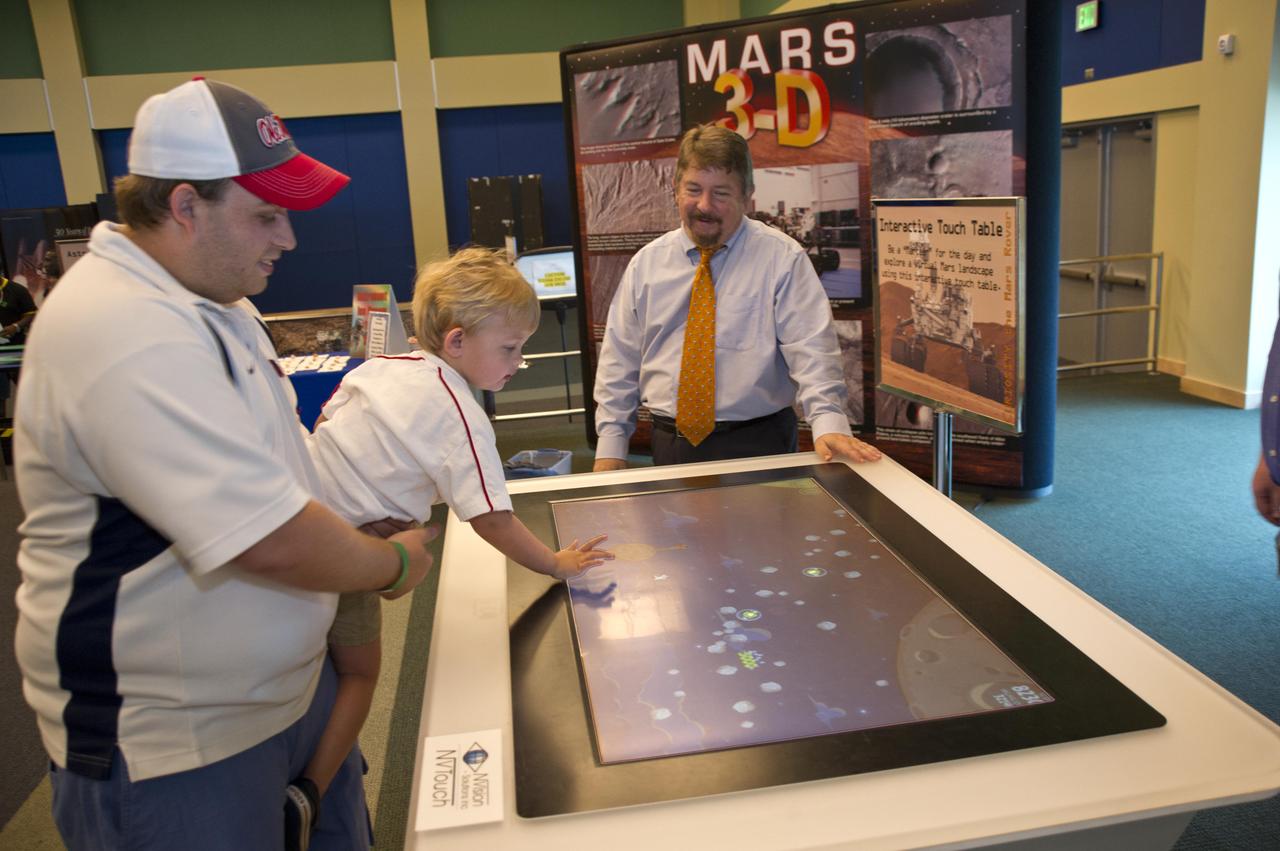
NASA welcomed hundreds of children and accompanying adults to its INFINITY visitor center on Aug. 4, offering Mars-related activities that focused attention on the space agency's Curiosity mission to the Red Planet. Parents and children, such as Myron and Trey (age 3) Cummings, enjoyed exploring Mars using an interactive touch table. Midway through the day of activities, visitors in the Science on a Sphere auditorium also enjoyed a presentation on Mars and the Curiosity mission by Dr. Steven Williams, a NASA expert on Mars.
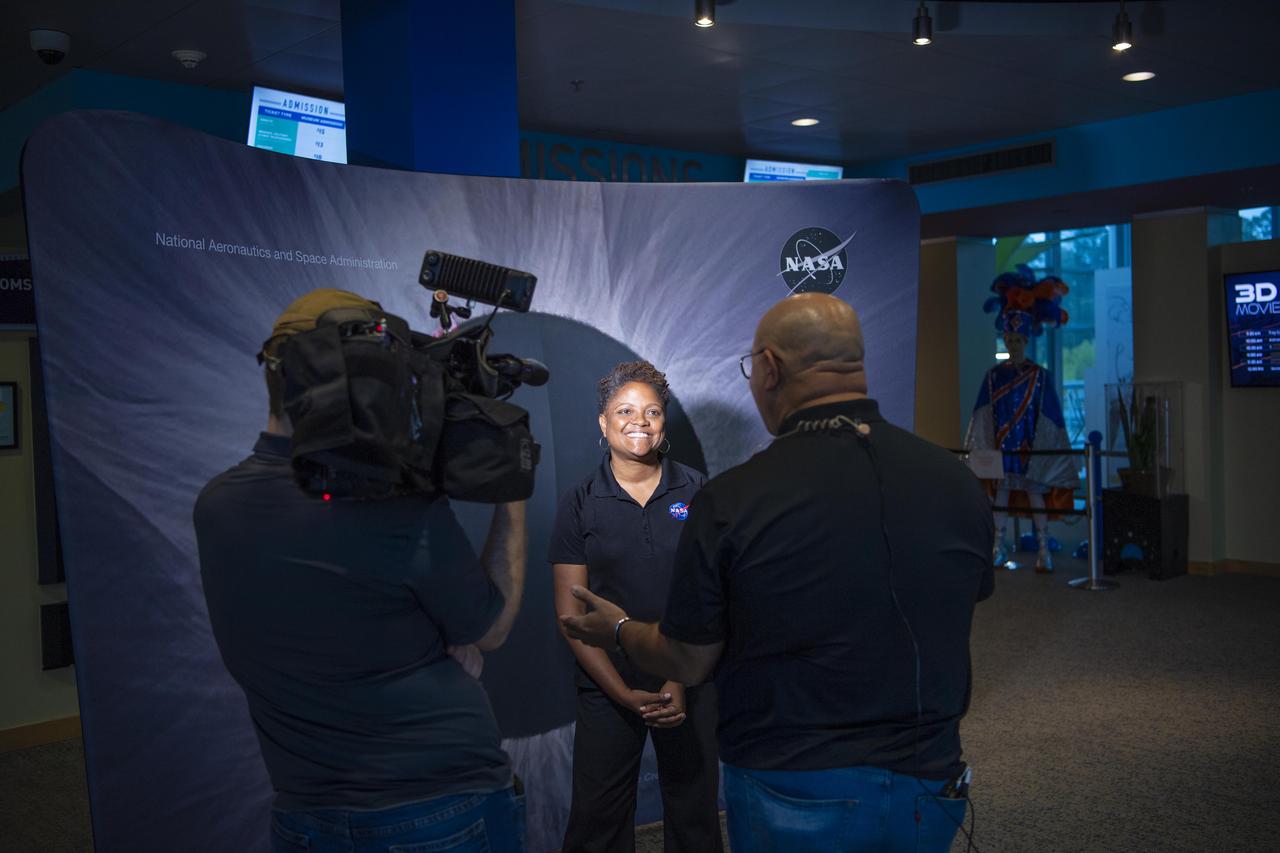
Dr. Kamili Shaw, chief of the Operations Support Division in the Safety and Mission Assurance Directorate at NASA Stennis, shares how the agency is studying the total solar eclipse on April 8 during an interview with WAPT reporter Troy Johnson at INFINITY Science Center.
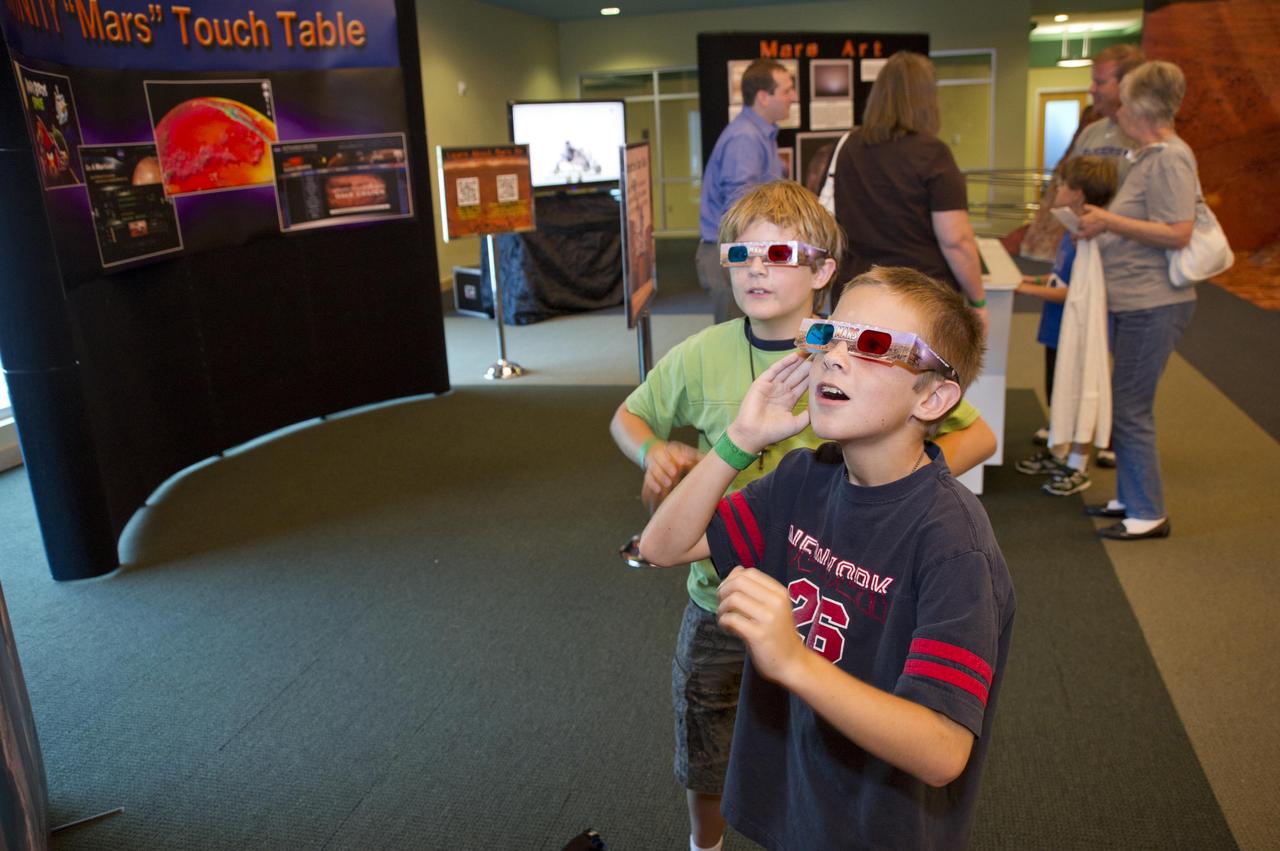
NASA welcomed hundreds of children and accompanying adults to its INFINITY visitor center on Aug. 4, offering Mars-related activities that focused attention on the space agency's Curiosity mission to the Red Planet. Among other attractions, 3-D images from Mars provided 'Wow!' glimpses of the Red Planet. In addition to the Mars activities, visitors were able to tour other space-related exhibits at the center.
NASA welcomed hundreds of children and accompanying adults to its INFINITY visitor center on Aug. 4, offering Mars-related activities that focused attention on the space agency's Curiosity mission to the Red Planet. Among other attractions, 3-D images from Mars provided 'Wow!' glimpses of the Red Planet. In addition to the Mars activities, visitors were able to tour other space-related exhibits at the center.
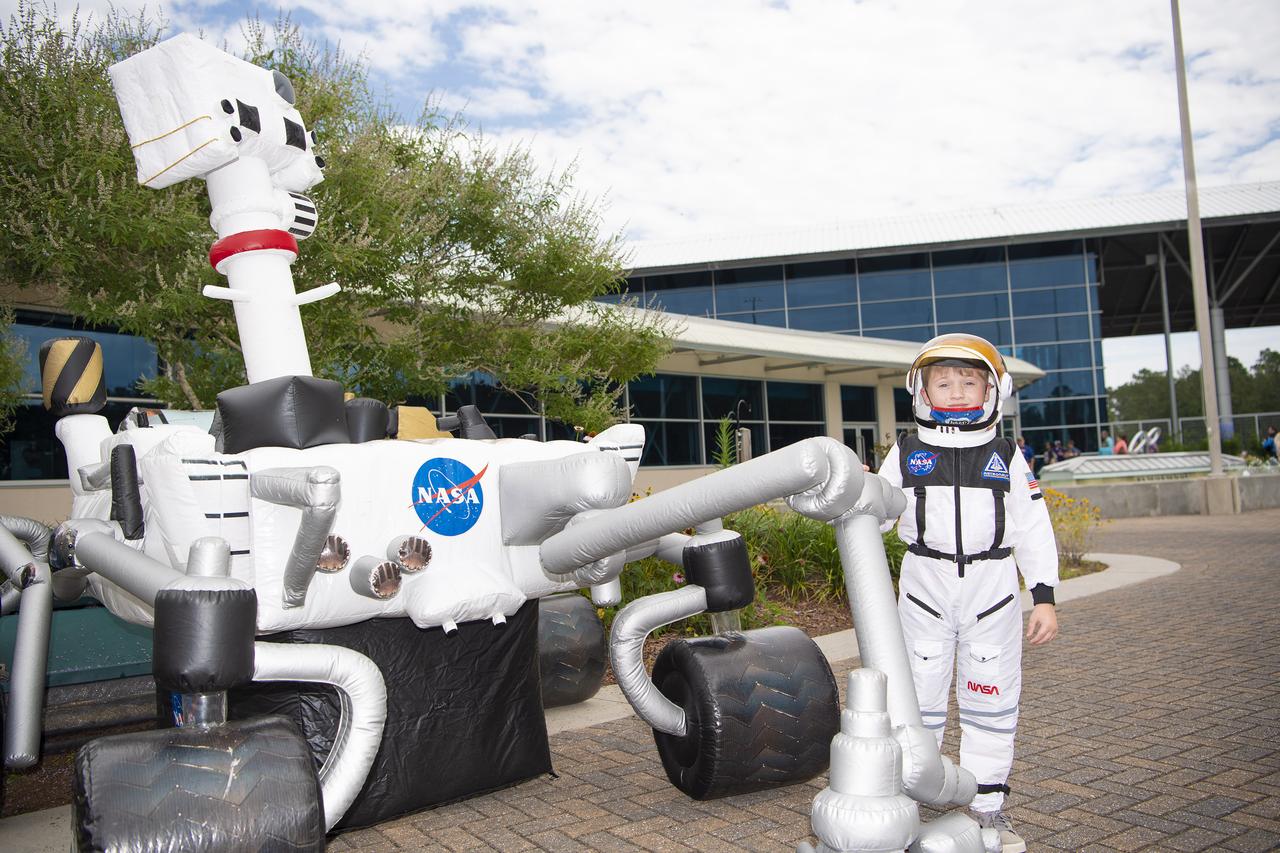
Jackson Barber of Mandeville, LA, poses in front of an inflatable Mars Rover outside INFINITY Science Center adjacent to NASA’s Stennis Space Center. The science center held its grand reopening on May 29, 2021, after closing in 2020 due to Covid 19.
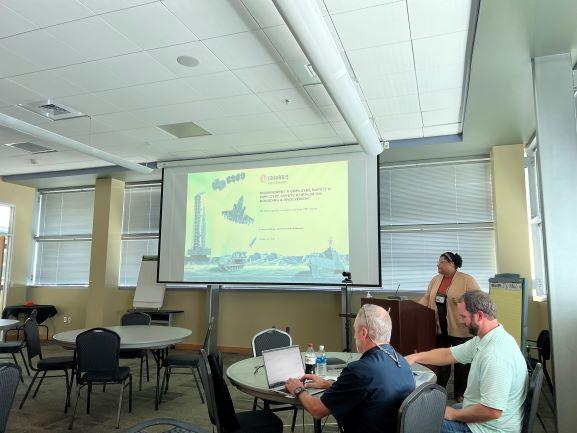
Lasonya Pulliam, representing L3Harris, speaks during the Mississippi/Louisiana Gulf Coast Voluntary Protection Program (VPP) Local Area Council Meeting on Oct. 29, hosted by NASA’s Stennis Space Center at INFINITY Science Center. The regional meeting focused on how workplace safety team members can achieve and maintain consistent and effective safety and health programs for their current and potential OSHA VPP worksites across south Mississippi and Louisiana.
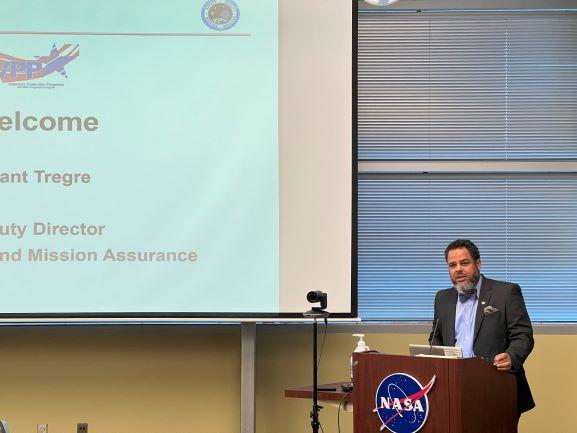
Grant Tregre, deputy director of the NASA Stennis Safety and Mission Assurance Directorate, welcomes members of the Mississippi/Louisiana Gulf Coast Voluntary Protection Program (VPP) Local Area Council Meeting to their annual meeting on Oct. 29, hosted by NASA’s Stennis Space Center at INFINITY Science Center. The regional meeting focused on how workplace safety team members can achieve and maintain consistent and effective safety and health programs for their current and potential OSHA VPP worksites across south Mississippi and Louisiana.
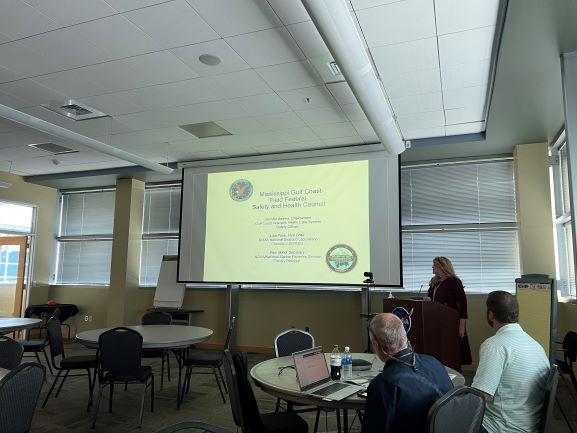
Jennifer Adams, representing the Gulf Coast Veterans Health Care System, speaks during the Mississippi/Louisiana Gulf Coast Voluntary Protection Program (VPP) Local Area Council Meeting on Oct. 29, hosted by NASA’s Stennis Space Center at INFINITY Science Center. The regional meeting focused on how workplace safety team members can achieve and maintain consistent and effective safety and health programs for their current and potential OSHA VPP worksites across south Mississippi and Louisiana.
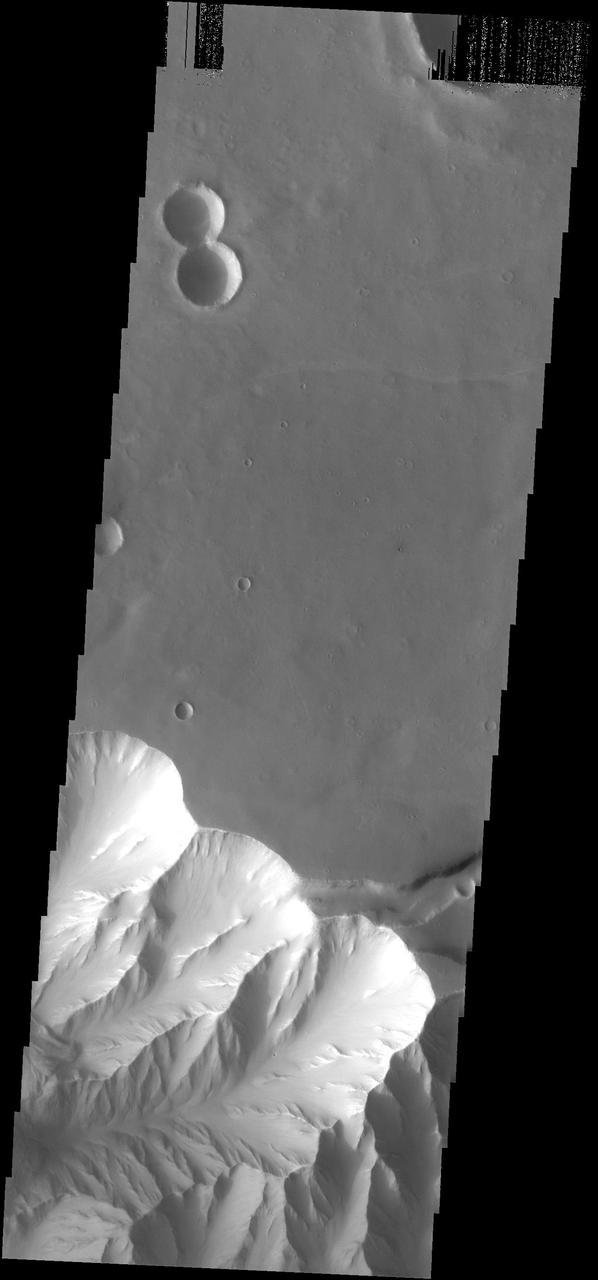
Back by popular demand: THEMIS ART IMAGE #75 The number 8 to go with letter L. Rotate the image and these craters will make the infinity symbol
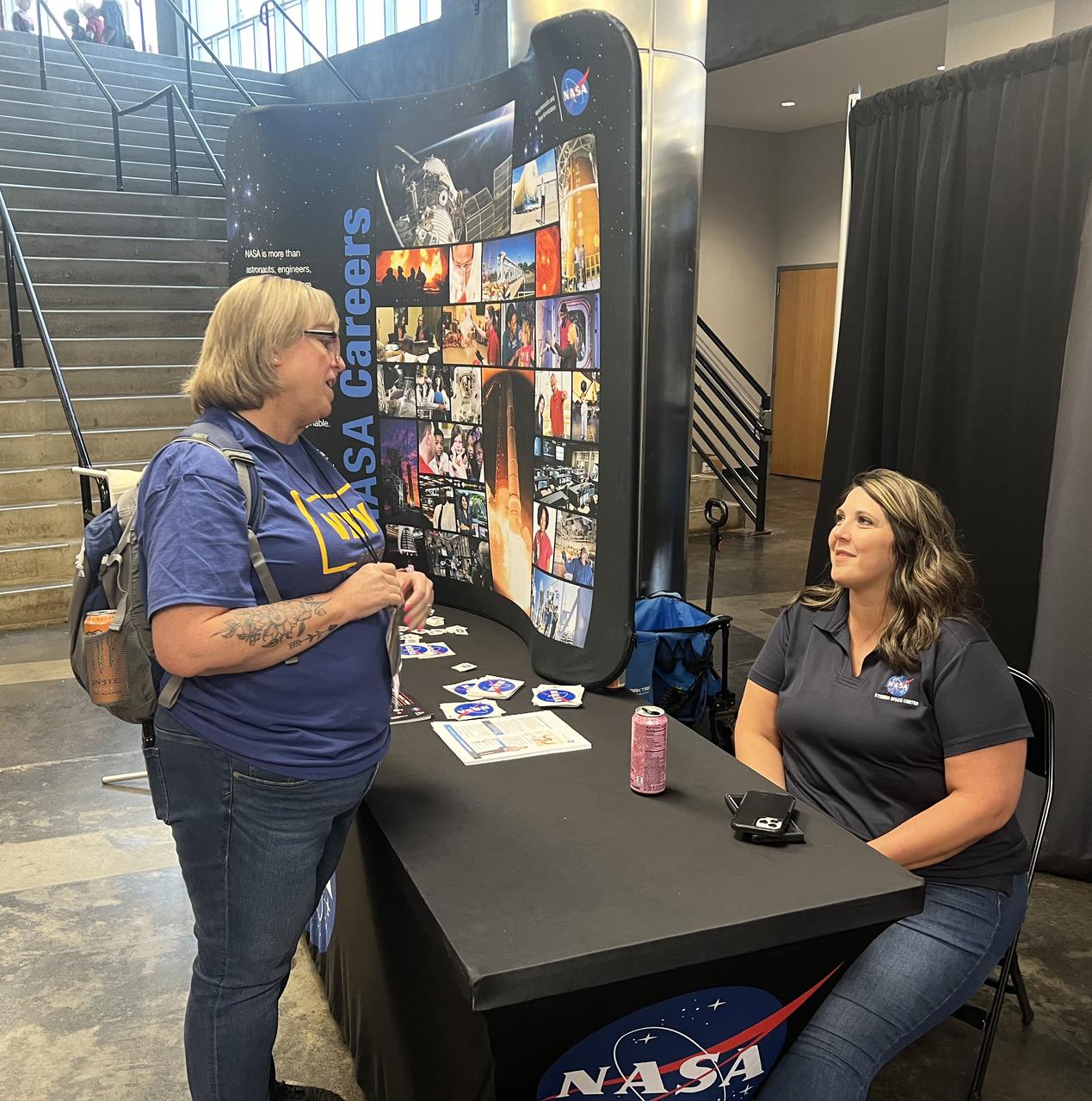
A Mississippi Comic Convention worker, an advocate for children with disabilities, speaks with NASA Stennis budget analyst Rebecca Mataya, right, during the event in Jackson, Mississippi, on June 22, about community outreach events and INFINITY Science Center’s ability to host children with special needs interested in learning more about NASA.
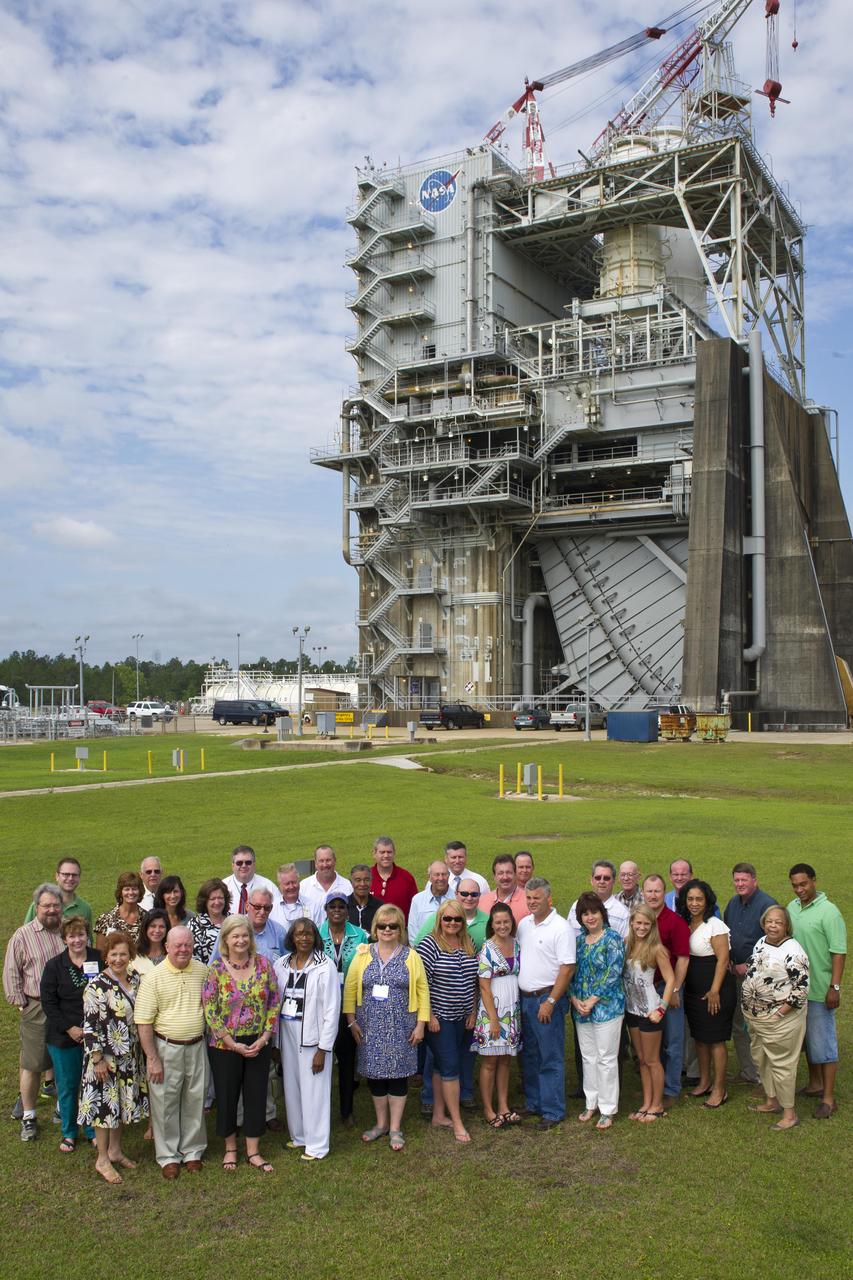
Legislators from across Mississippi visited Stennis Space Center on May 7, 2012, touring various facilities, including the A-1 Test Stand, and learning about work under way at the facility. The legislators also toured the INFINITY at NASA Stennis Space Center facility and met with Apollo 13 astronaut Fred Haise.
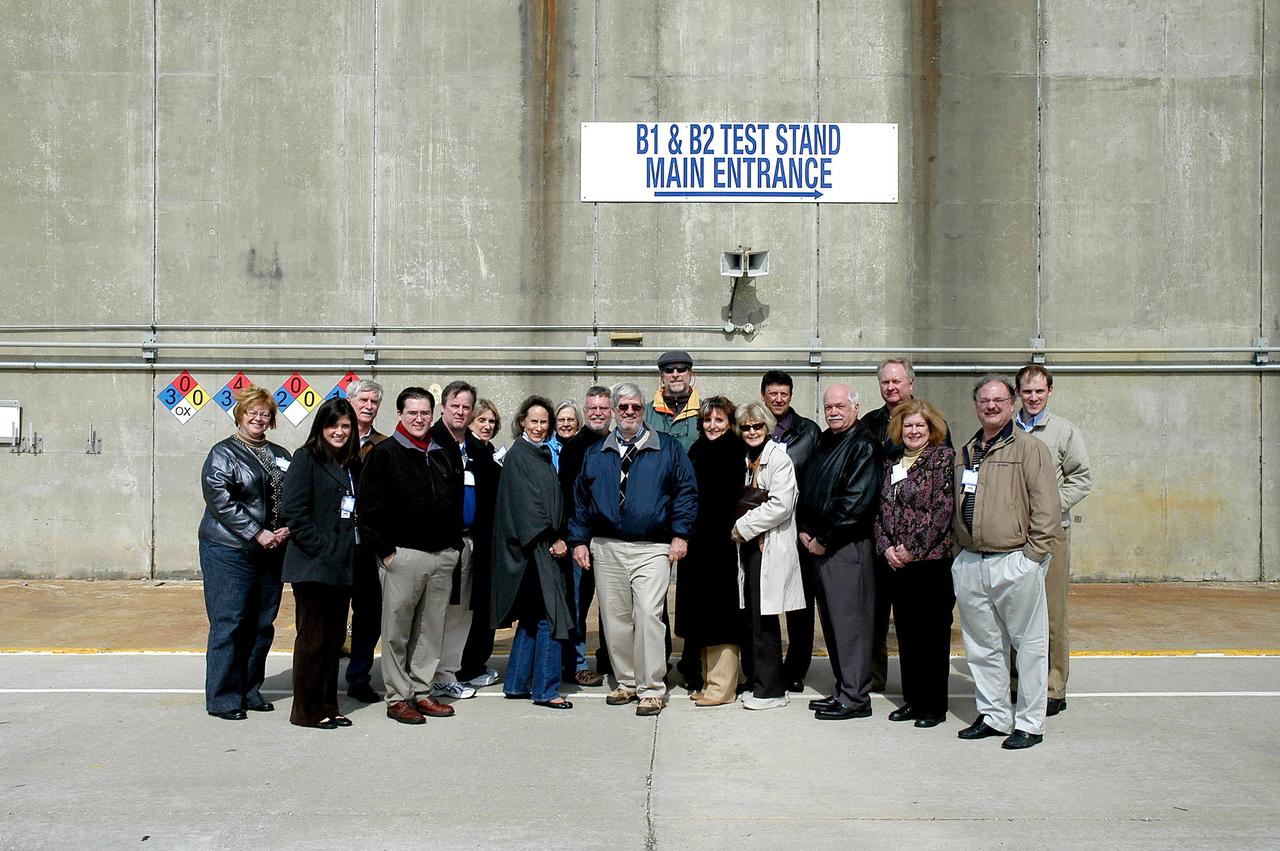
Members of the Southeast U.S. Federal Laboratory Consortium for Technology Transfer gather at the base of the B-1/B-2 Test Stand during a Feb. 10 visit to John C. Stennis Space Center. The group visited Stennis to tour facilities and receive briefings on work at the rocket engine test site. They also visited the INFINITY at NASA Stennis Space Center site and received a briefing on construction of the new science center. The FLC is a nationwide network of federal laboratories to facilitate technology transfers between federal agencies and commercial companies.
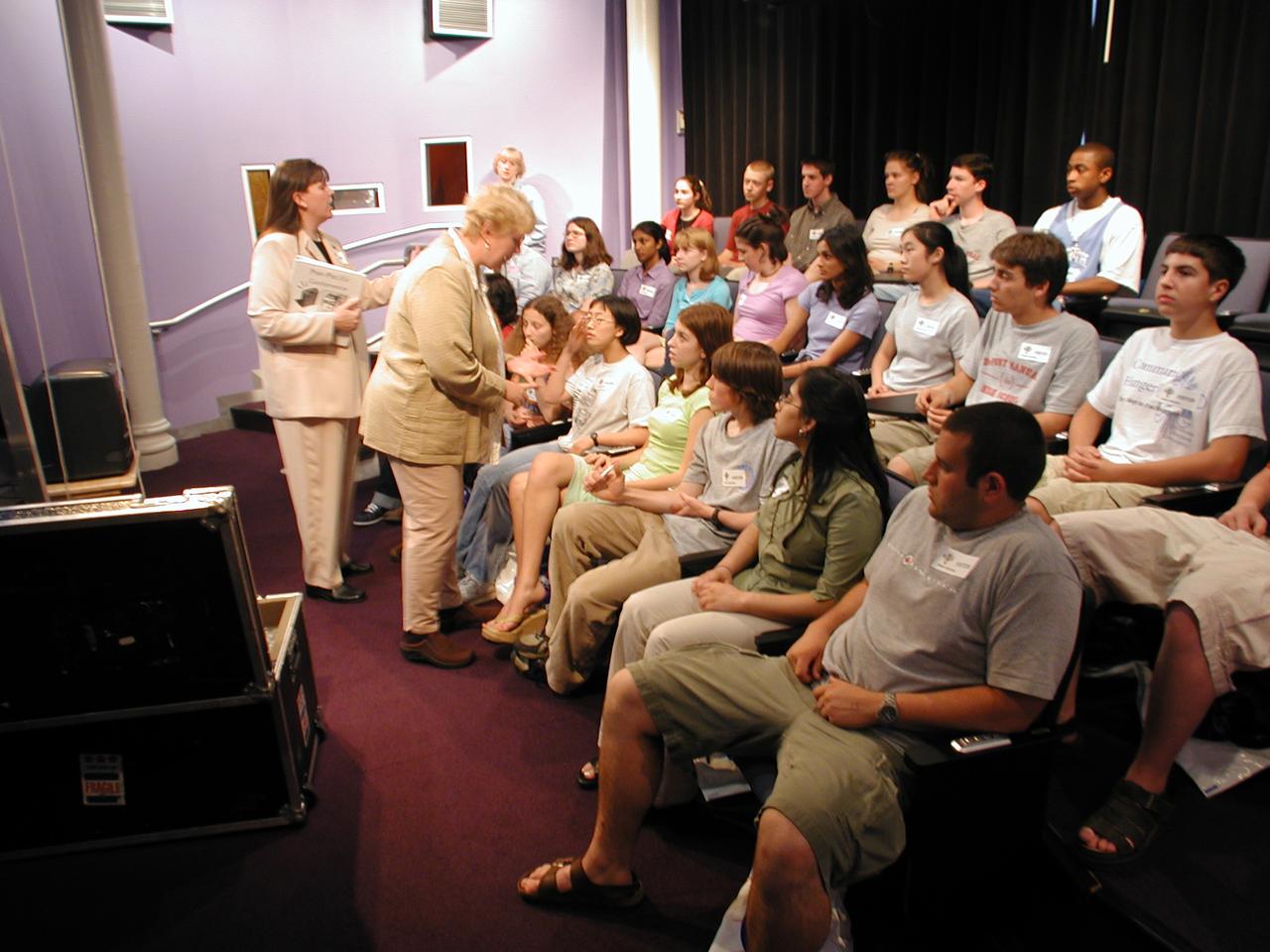
Students from DuPont Manual High School in Louisville, Kentucky participated in a video-teleconference during the Pan-Pacific Basin Workshop on Microgravity Sciences held in Pasadena, California. The event originated at the California Science Center in Los Angeles. The DuPont Manual students patched in to the event through the distance learning lab at the Louisville Science Center. Education coordinator Twila Schneider (left) of Infinity Technology and NASA materials engineer Chris Cochrane prepare students for the on-line workshop. This image is from a digital still camera; higher resolution is not available.
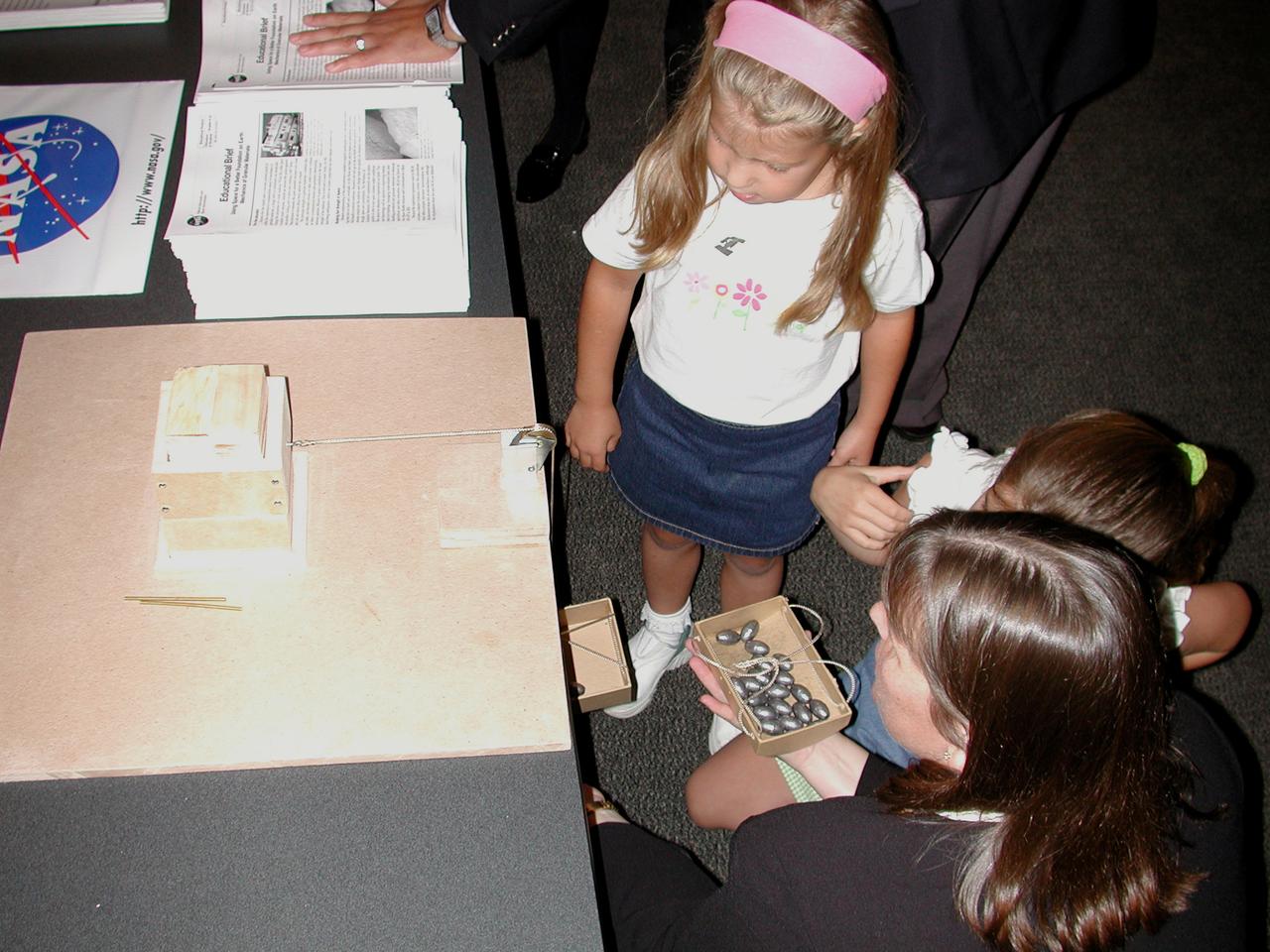
Twila Schneider of Infinity Technology in Huntsville, AL, uses a small sand displacement box to explain the principles of the Mechanics of Granular Materials (MGM-III) experiment to two young Virginia students. The activity was part of the Space Research and You education event held by NASA's Office of Biological and Physical Research on June 25, 2002, in Arlington, VA, to highlight the research that will be conducted on STS-107.
The arnual conference for the Educator Resource Center Network (ERCN) Coordinators was held at Glenn Research Center at Lewis Field in Cleveland, Ohio. The conference included participants from NASA's Educator Resource Centers located throughout the country. The Microgravity Science Division at Glenn sponsored a Microgravity Day for all the conference participants. Twila Schneider of Infinity Technology, a NASA contractor, explains the basics of building a glovebox mockup from a copier paper box. This image is from a digital still camera; higher resolution is not available.
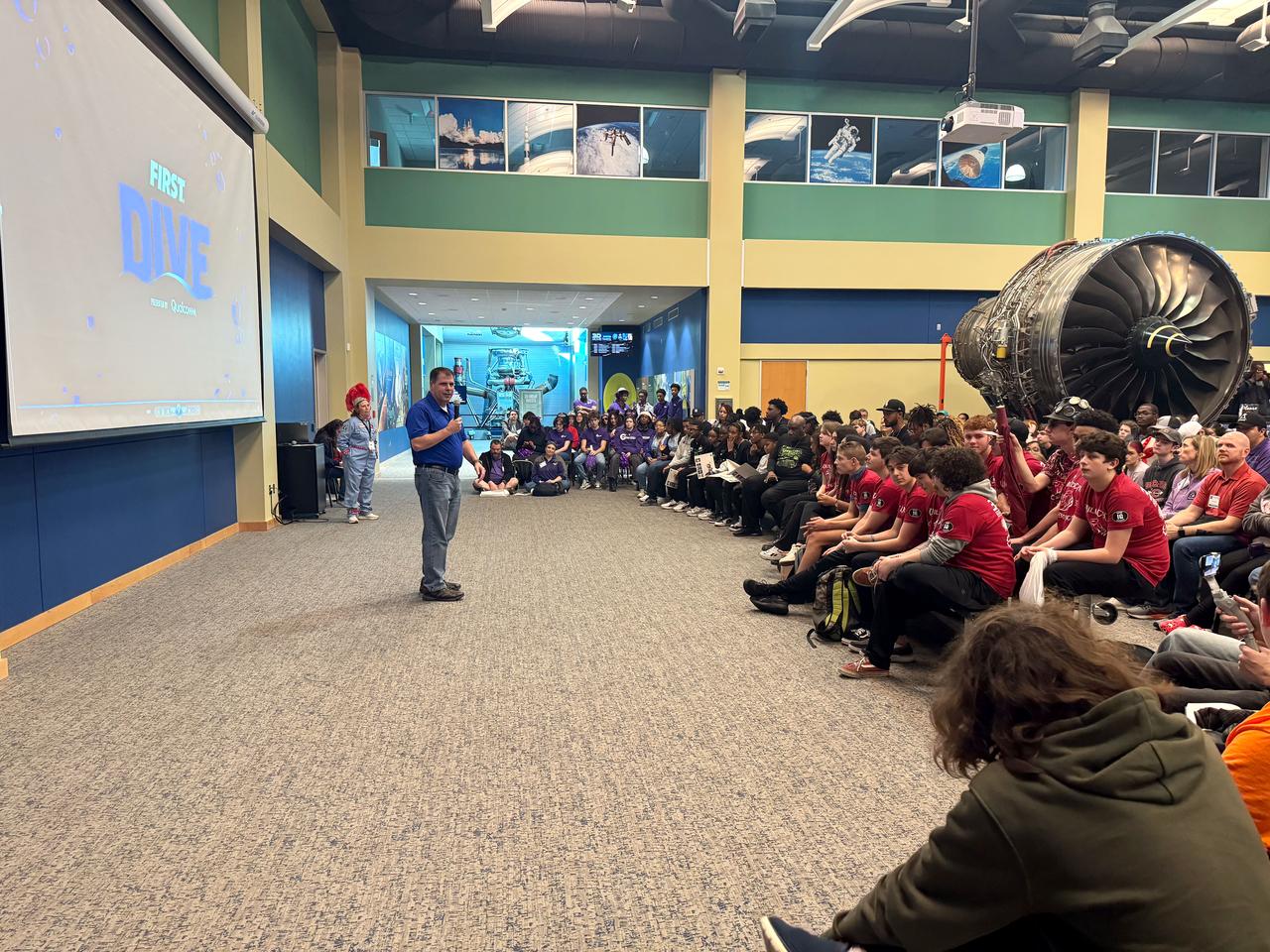
The NASA ASTRO CAMP® Community Partners (ACCP) program hosted a FIRST® Robotics Competition 2025 season kickoff event Jan. 4 at INFINITY Science Center, the official visitor center of NASA’s Stennis Space Center. NASA representatives welcomed competition teams as the event revealed the challenge for the new season. Teams will use engineering skills during the REEFSCAPE℠ challenge to strengthen one of the ocean’s most diverse habitats to build a better world. The third annual FIRST (For the Inspiration and Recognition of Science and Technology) Robotics Magnolia Regional, a NASA-sponsored event, is scheduled for March 13-15 in Laurel, Mississippi, at the South Mississippi Fairgrounds. The regional competition will serve as a championship-qualifying event for teams to compete in Houston in the world championship event in April. FIRST Robotics is described as the ultimate sport of the mind as teams concentrate and share in the excitement of success.
The NASA ASTRO CAMP® Community Partners (ACCP) program hosted a FIRST® Robotics Competition 2025 season kickoff event Jan. 4 at INFINITY Science Center, the official visitor center of NASA’s Stennis Space Center. NASA representatives welcomed competition teams as the event revealed the challenge for the new season. Teams will use engineering skills during the REEFSCAPE℠ challenge to strengthen one of the ocean’s most diverse habitats to build a better world. The third annual FIRST (For the Inspiration and Recognition of Science and Technology) Robotics Magnolia Regional, a NASA-sponsored event, is scheduled for March 13-15 in Laurel, Mississippi, at the South Mississippi Fairgrounds. The regional competition will serve as a championship-qualifying event for teams to compete in Houston in the world championship event in April. FIRST Robotics is described as the ultimate sport of the mind as teams concentrate and share in the excitement of success.
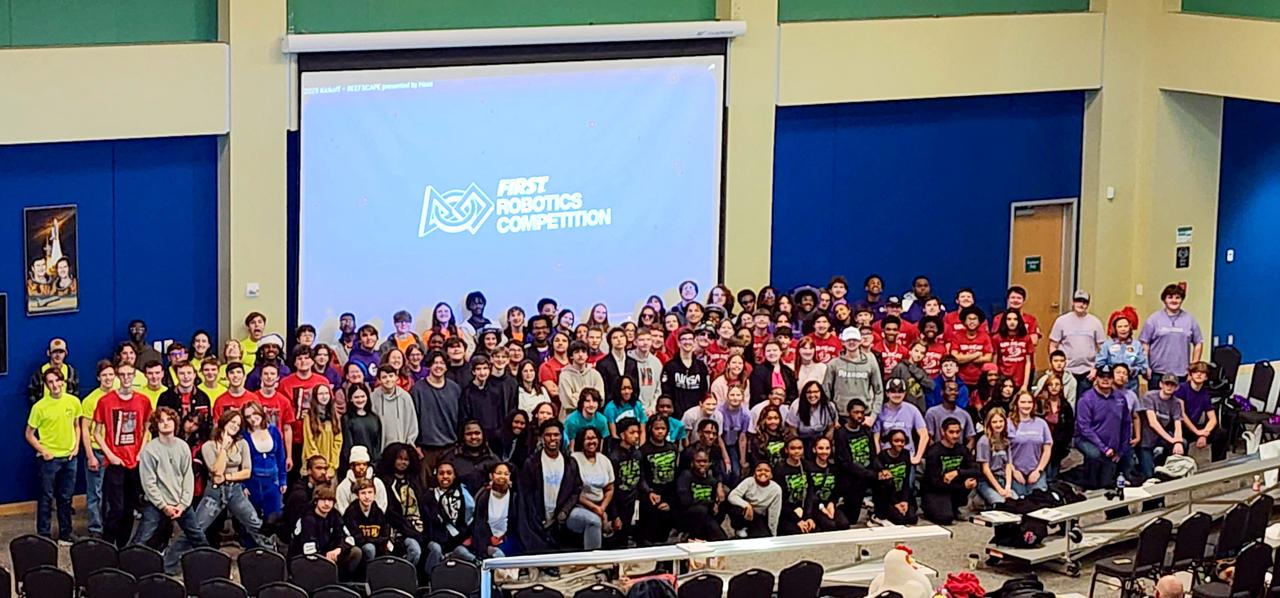
The NASA ASTRO CAMP® Community Partners (ACCP) program hosted a FIRST® Robotics Competition 2025 season kickoff event Jan. 4 at INFINITY Science Center, the official visitor center of NASA’s Stennis Space Center. NASA representatives welcomed competition teams as the event revealed the challenge for the new season. Teams will use engineering skills during the REEFSCAPE℠ challenge to strengthen one of the ocean’s most diverse habitats to build a better world. The third annual FIRST (For the Inspiration and Recognition of Science and Technology) Robotics Magnolia Regional, a NASA-sponsored event, is scheduled for March 13-15 in Laurel, Mississippi, at the South Mississippi Fairgrounds. The regional competition will serve as a championship-qualifying event for teams to compete in Houston in the world championship event in April. FIRST Robotics is described as the ultimate sport of the mind as teams concentrate and share in the excitement of success.
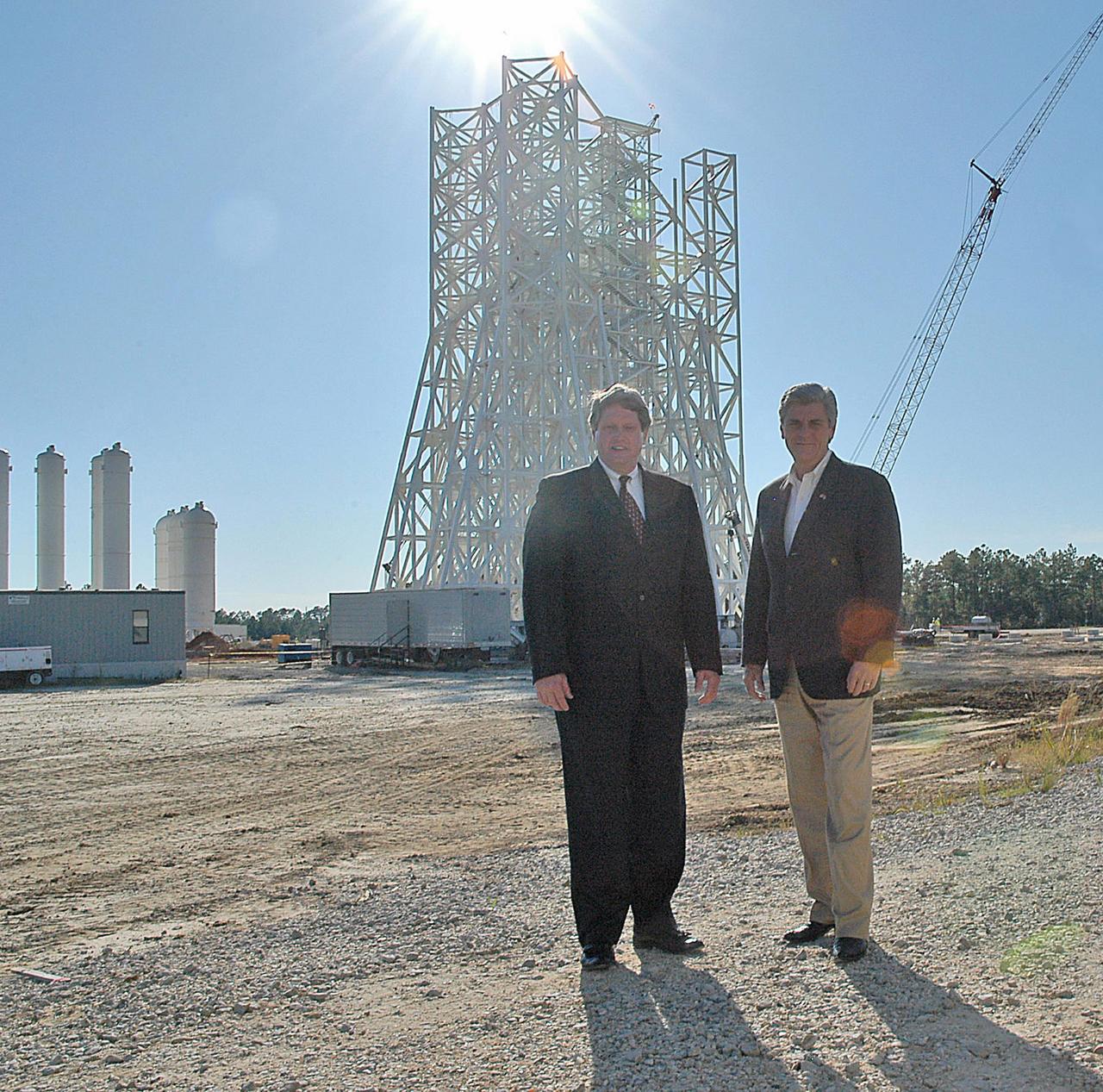
Stennis Space Center Director Gene Goldman (left) stands with Mississippi Lt. Gov. Phil Bryant at the A-3 Test Stand construction site during an Oct. 1 visit by the state official. During his tour, Bryant was updated on construction of the first large test stand at Stennis since the 1960s. The A-3 stand will be used to conduct simulated high-altitude testing on the next generation of rocket engines that will take humans back to the moon and possibly beyond. In addition to touring Stennis facilities, Bryant visited the INFINITY Science Center construction site, where he was updated on work under way to construct a 72,000-square-foot facility that will showcase the science underpinning the missions of NASA and resident agencies at Stennis.
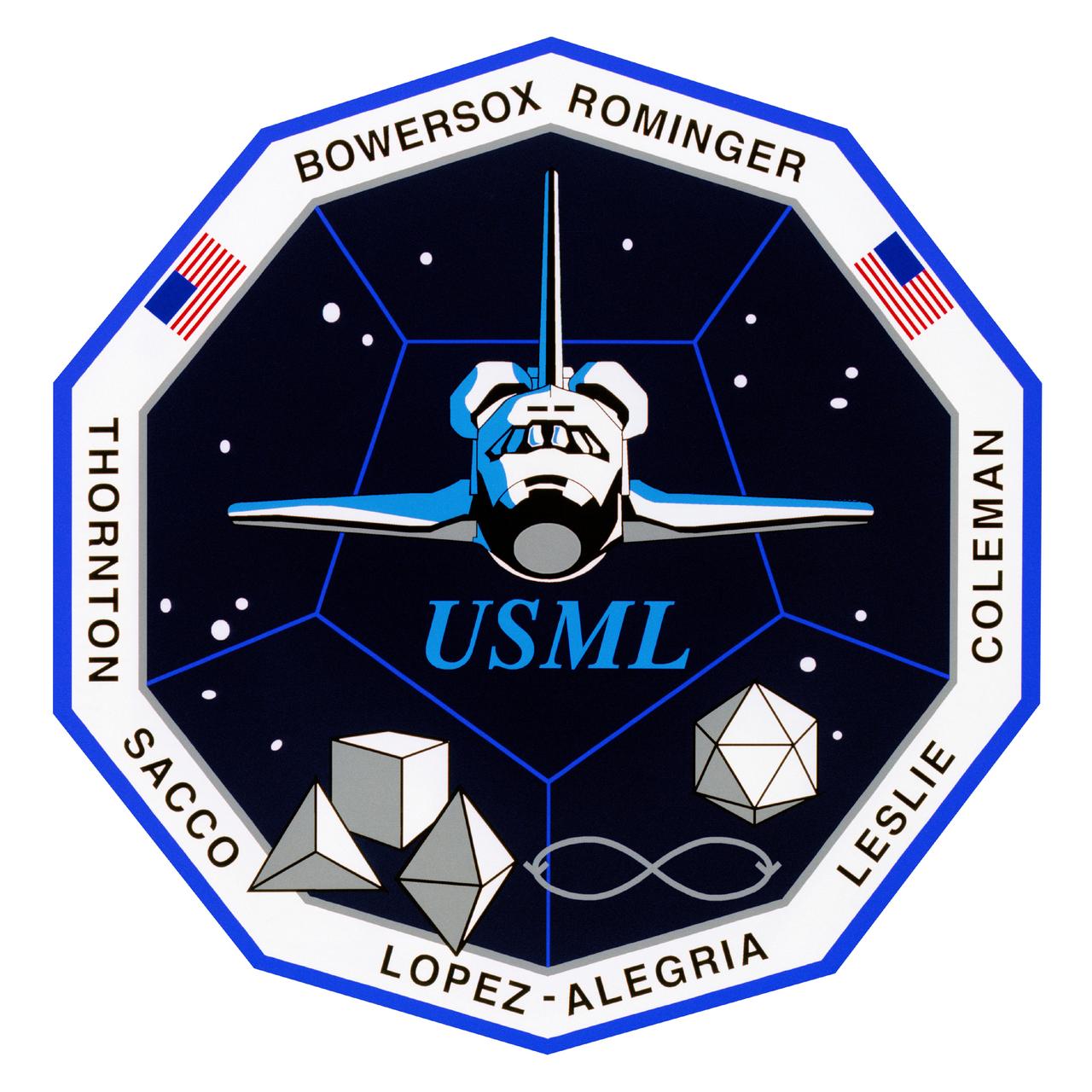
The crew patch of STS-73, the second flight of the United States Microgravity Laboratory (USML-2), depicts the Space Shuttle Columbia in the vastness of space. In the foreground are the classic regular polyhedrons that were investigated by Plato and later Euclid. The Pythagoreans were also fascinated by the symmetrical three-dimensional objects whose sides are the same regular polygon. The tetrahedron, the cube, the octahedron, and the icosahedron were each associated with the Natural Elements of that time: fire (on this mission represented as combustion science); Earth (crystallography), air and water (fluid physics). An additional icon shown as the infinity symbol was added to further convey the discipline of fluid mechanics. The shape of the emblem represents a fifth polyhedron, a dodecahedron, which the Pythagoreans thought corresponded to a fifth element that represented the cosmos.
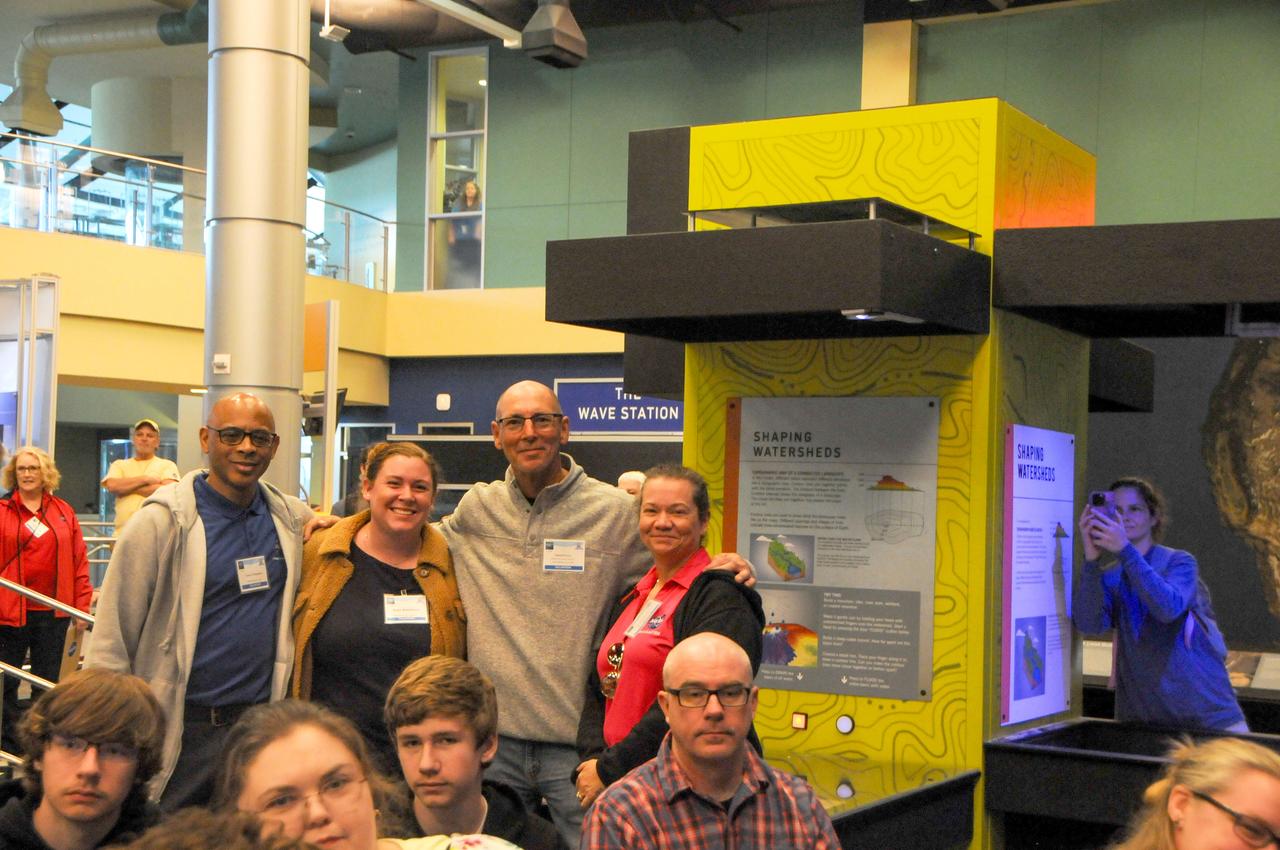
The NASA ASTRO CAMP® Community Partners (ACCP) program hosted a FIRST® Robotics Competition 2025 season kickoff event Jan. 4 at INFINITY Science Center, the official visitor center of NASA’s Stennis Space Center. NASA representatives welcomed competition teams as the event revealed the challenge for the new season. Teams will use engineering skills during the REEFSCAPE℠ challenge to strengthen one of the ocean’s most diverse habitats to build a better world. The third annual FIRST (For the Inspiration and Recognition of Science and Technology) Robotics Magnolia Regional, a NASA-sponsored event, is scheduled for March 13-15 in Laurel, Mississippi, at the South Mississippi Fairgrounds. The regional competition will serve as a championship-qualifying event for teams to compete in Houston in the world championship event in April. FIRST Robotics is described as the ultimate sport of the mind as teams concentrate and share in the excitement of success.
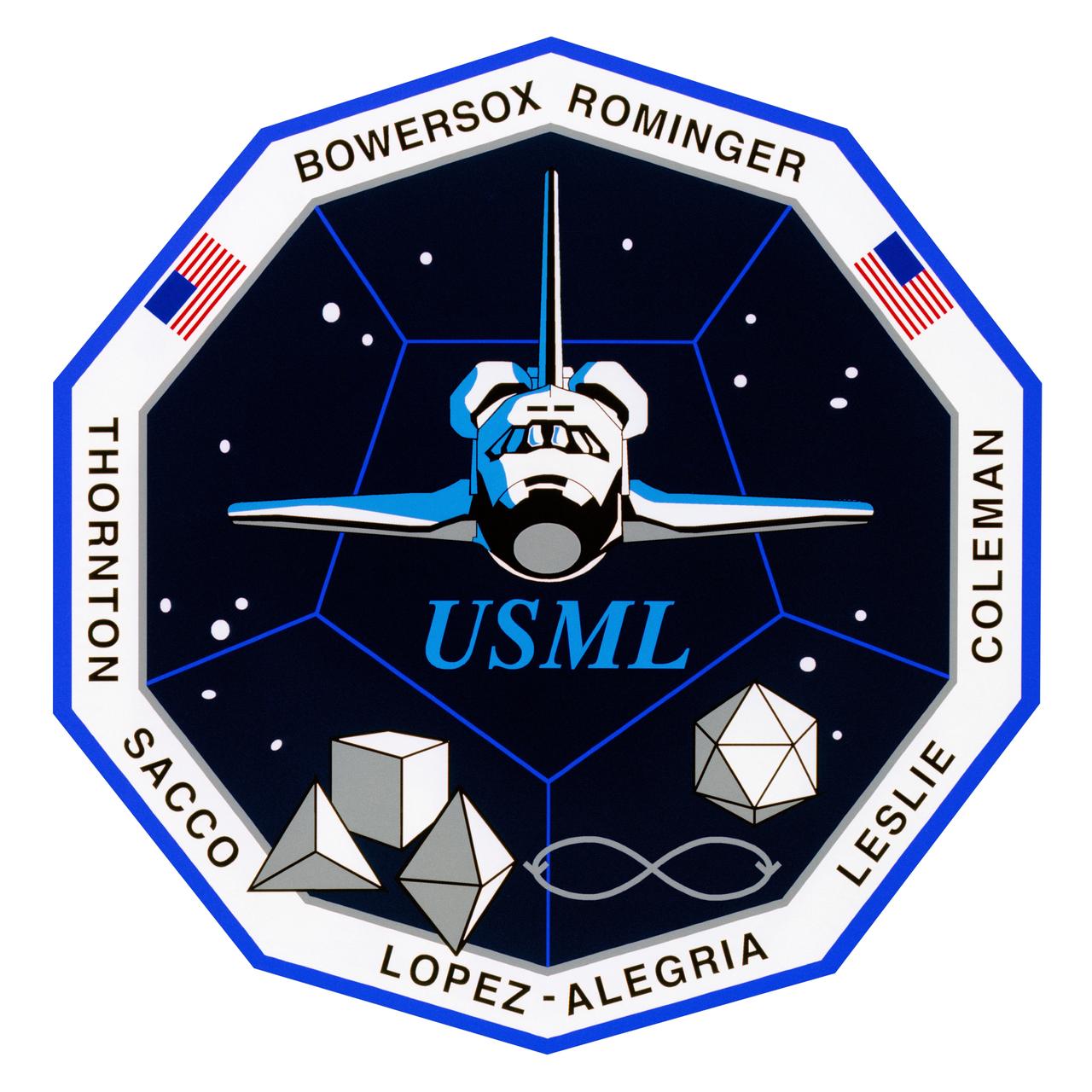
STS073-S-001 (May 1995) --- The crew patch of STS-73, the second flight of the United States Microgravity Laboratory (USML-2), depicts the space shuttle Columbia in the vastness of space. In the foreground are the classic regular polyhedrons that were investigated by Plato and later Euclid. The Pythagoreans were also fascinated by the symmetrical three-dimensional objects whose sides are the same regular polygon. The tetrahedron, the cube, the octahedron, and the icosahedron were each associated with the "Natural Elements" of that time: fire (on this mission represented as combustion science); Earth (crystallography), air and water (fluid physics). An additional icon shown as the infinity symbol was added to further convey the discipline of fluid mechanics. The shape of the emblem represents a fifth polyhedron, a dodecahedron, which the Pythagoreans thought corresponded to a fifth element that represented the cosmos. The NASA insignia design for space shuttle flights is reserved for use by the astronauts and for other official use as the NASA Administrator may authorize. Public availability has been approved only in the forms of illustrations by the various news media. When and if there is any change in this policy, which is not anticipated, the change will be publicly announced. Photo credit: NASA
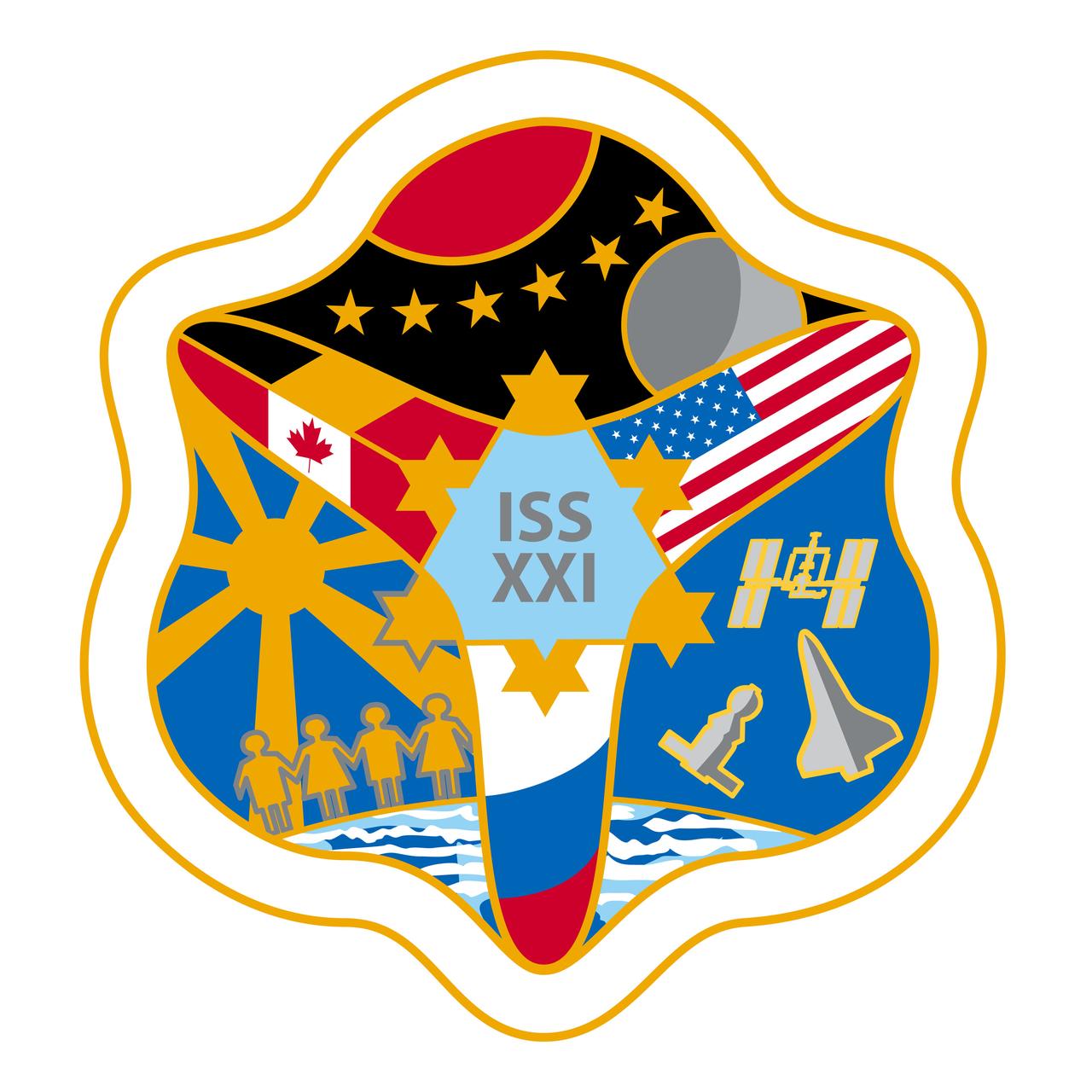
ISS021-S-001 (February 2009) --- The central element of the patch is inspired by a fractal of six, symbolizing the teamwork of the six-person crew. From the basic element of one person, together six people form a much more complex and multifaceted entity, toward the infinity of the universe. The patch shows children, on Earth in the bright Sun, as our future and the reason we explore. The Soyuz and Shuttle are the vehicles that enable human space exploration today, while the International Space Station is leading to our next goals, the moon and Mars. The patch shape has six tips, geometrically sound yet reminiscent of a leaf, representing symmetry and ecological harmony, while the six stars in deep space represent the current crew and future exploration crews. The insignia design for ISS flights is reserved for use by the astronauts and cosmonauts and for other official use as the NASA Administrator and NASA's international partners may authorize. Public availability has been approved only in the form of illustrations by the various news media. When and if there is any change in this policy, which we do not anticipate, it will be publicly announced
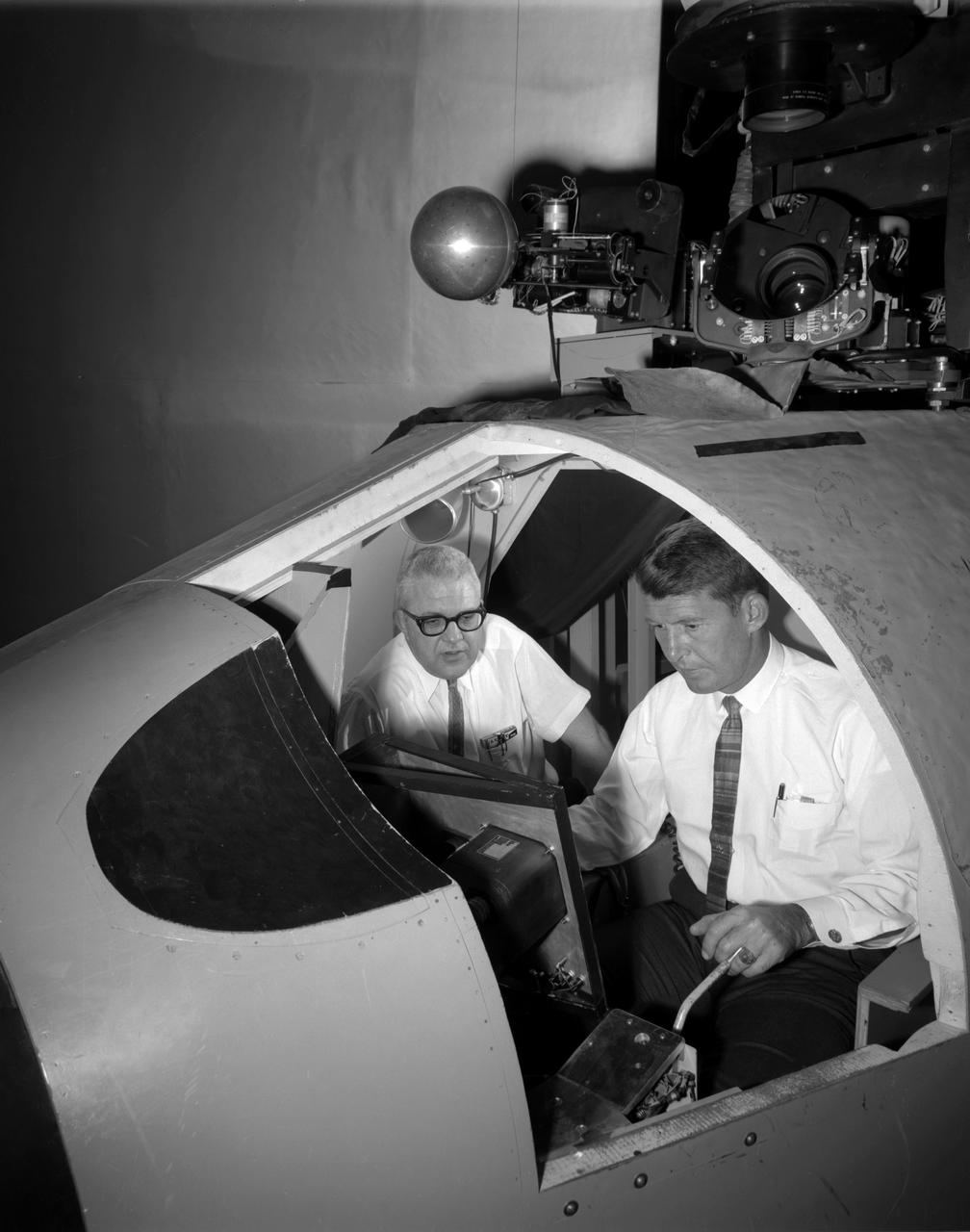
Walter (Wally) M. Schirra in Visual Docking Simulator From A.W. Vogeley, "Piloted Space-Flight Simulation at Langley Research Center," Paper presented at the American Society of Mechanical Engineers 1966 Winter Meeting, New York, NY, November 27-December 1, 1966. "This facility was [later known as the Visual-Optical Simulator. It presents to the pilot an out-the-window view of his target in correct 6 degrees of freedom motion. The scene is obtained by a television camera pick-up viewing a small-scale gimbaled model of the target. "For docking studies, the docking target picture was projected onto the surface of a 20-foot-diameter sphere and the pilot could, effectively, maneuver into contract. this facility was used in a comparison study with the Rendezvous Docking Simulator - one of the few comparison experiments in which conditions were carefully controlled and a reasonable sample of pilots used. All pilots preferred the more realistic RDS visual scene. The pilots generally liked the RDS angular motion cues although some objected to the false gravity cues that these motions introduced. Training time was shorter on the RDS, but final performance on both simulators was essentially equal. " "For station-keeping studies, since close approach is not required, the target was presented to the pilot through a virtual-image system which projects his view to infinity, providing a more realistic effect. In addition to the target, the system also projects a star and horizon background. "
![Astronauts Charles Conrad (left) and John W. Young (right) at the controls of the Visual Docking Simulator. From A.W. Vogeley, "Piloted Space-Flight Simulation at Langley Research Center," Paper presented at the American Society of Mechanical Engineers 1966 Winter Meeting, New York, NY, November 27-December 1, 1966. "This facility was [later known as the Visual-Optical Simulator.] It presents to the pilot an out-the-window view of his target in correct 6 degrees of freedom motion. The scene is obtained by a television camera pick-up viewing a small-scale gimbaled model of the target." "For docking studies, the docking target picture was projected onto the surface of a 20-foot-diameter sphere and the pilot could, effectively, maneuver into contract. this facility was used in a comparison study with the Rendezvous Docking Simulator - one of the few comparison experiments in which conditions were carefully controlled and a reasonable sample of pilots used. All pilots preferred the more realistic RDS visual scene. The pilots generally liked the RDS angular motion cues although some objected to the false gravity cues that these motions introduced. Training time was shorter on the RDS, but final performance on both simulators was essentially equal. " "For station-keeping studies, since close approach is not required, the target was presented to the pilot through a virtual-image system which projects his view to infinity, providing a more realistic effect. In addition to the target, the system also projects a star and horizon background. "](https://images-assets.nasa.gov/image/LRC-1963-B701_P-09520/LRC-1963-B701_P-09520~medium.jpg)
Astronauts Charles Conrad (left) and John W. Young (right) at the controls of the Visual Docking Simulator. From A.W. Vogeley, "Piloted Space-Flight Simulation at Langley Research Center," Paper presented at the American Society of Mechanical Engineers 1966 Winter Meeting, New York, NY, November 27-December 1, 1966. "This facility was [later known as the Visual-Optical Simulator.] It presents to the pilot an out-the-window view of his target in correct 6 degrees of freedom motion. The scene is obtained by a television camera pick-up viewing a small-scale gimbaled model of the target." "For docking studies, the docking target picture was projected onto the surface of a 20-foot-diameter sphere and the pilot could, effectively, maneuver into contract. this facility was used in a comparison study with the Rendezvous Docking Simulator - one of the few comparison experiments in which conditions were carefully controlled and a reasonable sample of pilots used. All pilots preferred the more realistic RDS visual scene. The pilots generally liked the RDS angular motion cues although some objected to the false gravity cues that these motions introduced. Training time was shorter on the RDS, but final performance on both simulators was essentially equal. " "For station-keeping studies, since close approach is not required, the target was presented to the pilot through a virtual-image system which projects his view to infinity, providing a more realistic effect. In addition to the target, the system also projects a star and horizon background. "
![Astronaut Charles Conrad at the controls of the Visual Docking Simulator. From A.W. Vogeley, "Piloted Space-Flight Simulation at Langley Research Center," paper presented at the American Society of Mechanical Engineers 1966 Winter Meeting, New York, NY, November 27-December 1, 1966. "This facility was [later known as the Visual-Optical Simulator.] It presents to the pilot an out-the-window view of his target in correct 6 degrees of freedom motion. The scene is obtained by a television camera pick-up viewing a small-scale gimbaled model of the target." "For docking studies, the docking target picture was projected onto the surface of a 20-foot-diameter sphere and the pilot could, effectively, maneuver into contract. this facility was used in a comparison study with the Rendezvous Docking Simulator - one of the few comparison experiments in which conditions were carefully controlled and a reasonable sample of pilots used. All pilots preferred the more realistic RDS visual scene. The pilots generally liked the RDS angular motion cues although some objected to the false gravity cues that these motions introduced. Training time was shorter on the RDS, but final performance on both simulators was essentially equal. " "For station-keeping studies, since close approach is not required, the target was presented to the pilot through a virtual-image system which projects his view to infinity, providing a more realistic effect. In addition to the target, the system also projects a star and horizon background. "](https://images-assets.nasa.gov/image/LRC-1963-B701_P-09519/LRC-1963-B701_P-09519~medium.jpg)
Astronaut Charles Conrad at the controls of the Visual Docking Simulator. From A.W. Vogeley, "Piloted Space-Flight Simulation at Langley Research Center," paper presented at the American Society of Mechanical Engineers 1966 Winter Meeting, New York, NY, November 27-December 1, 1966. "This facility was [later known as the Visual-Optical Simulator.] It presents to the pilot an out-the-window view of his target in correct 6 degrees of freedom motion. The scene is obtained by a television camera pick-up viewing a small-scale gimbaled model of the target." "For docking studies, the docking target picture was projected onto the surface of a 20-foot-diameter sphere and the pilot could, effectively, maneuver into contract. this facility was used in a comparison study with the Rendezvous Docking Simulator - one of the few comparison experiments in which conditions were carefully controlled and a reasonable sample of pilots used. All pilots preferred the more realistic RDS visual scene. The pilots generally liked the RDS angular motion cues although some objected to the false gravity cues that these motions introduced. Training time was shorter on the RDS, but final performance on both simulators was essentially equal. " "For station-keeping studies, since close approach is not required, the target was presented to the pilot through a virtual-image system which projects his view to infinity, providing a more realistic effect. In addition to the target, the system also projects a star and horizon background. "
![Astronaut Virgil "Gus" Grissom at the controls of the Visual Docking Simulator. From A.W. Vogeley, "Piloted Space-Flight Simulation at Langley Research Center," Paper presented at the American Society of Mechanical Engineers 1966 Winter Meeting, New York, NY, November 27-December 1, 1966. "This facility was [later known as the Visual-Optical Simulator.] It presents to the pilot an out-the-window view of his target in correct 6 degrees of freedom motion. The scene is obtained by a television camera pick-up viewing a small-scale gimbaled model of the target." "For docking studies, the docking target picture was projected onto the surface of a 20-foot-diameter sphere and the pilot could, effectively, maneuver into contract. this facility was used in a comparison study with the Rendezvous Docking Simulator - one of the few comparison experiments in which conditions were carefully controlled and a reasonable sample of pilots used. All pilots preferred the more realistic RDS visual scene. The pilots generally liked the RDS angular motion cues although some objected to the false gravity cues that these motions introduced. Training time was shorter on the RDS, but final performance on both simulators was essentially equal. " "For station-keeping studies, since close approach is not required, the target was presented to the pilot through a virtual-image system which projects his view to infinity, providing a more realistic effect. In addition to the target, the system also projects a star and horizon background. "](https://images-assets.nasa.gov/image/LRC-1963-B701_P-01515/LRC-1963-B701_P-01515~medium.jpg)
Astronaut Virgil "Gus" Grissom at the controls of the Visual Docking Simulator. From A.W. Vogeley, "Piloted Space-Flight Simulation at Langley Research Center," Paper presented at the American Society of Mechanical Engineers 1966 Winter Meeting, New York, NY, November 27-December 1, 1966. "This facility was [later known as the Visual-Optical Simulator.] It presents to the pilot an out-the-window view of his target in correct 6 degrees of freedom motion. The scene is obtained by a television camera pick-up viewing a small-scale gimbaled model of the target." "For docking studies, the docking target picture was projected onto the surface of a 20-foot-diameter sphere and the pilot could, effectively, maneuver into contract. this facility was used in a comparison study with the Rendezvous Docking Simulator - one of the few comparison experiments in which conditions were carefully controlled and a reasonable sample of pilots used. All pilots preferred the more realistic RDS visual scene. The pilots generally liked the RDS angular motion cues although some objected to the false gravity cues that these motions introduced. Training time was shorter on the RDS, but final performance on both simulators was essentially equal. " "For station-keeping studies, since close approach is not required, the target was presented to the pilot through a virtual-image system which projects his view to infinity, providing a more realistic effect. In addition to the target, the system also projects a star and horizon background. "
![Astronaut James Lovell at the controls of the Visual Docking Simulator. From A.W. Vogeley, "Piloted Space-Flight Simulation at Langley Research Center," Paper presented at the American Society of Mechanical Engineers 1966 Winter Meeting, New York, NY, November 27-December 1, 1966. "This facility was [later known as the Visual-Optical Simulator.] It presents to the pilot an out-the-window view of his target in correct 6 degrees of freedom motion. The scene is obtained by a television camera pick-up viewing a small-scale gimbaled model of the target." "For docking studies, the docking target picture was projected onto the surface of a 20-foot-diameter sphere and the pilot could, effectively, maneuver into contract. this facility was used in a comparison study with the Rendezvous Docking Simulator - one of the few comparison experiments in which conditions were carefully controlled and a reasonable sample of pilots used. All pilots preferred the more realistic RDS visual scene. The pilots generally liked the RDS angular motion cues although some objected to the false gravity cues that these motions introduced. Training time was shorter on the RDS, but final performance on both simulators was essentially equal. " "For station-keeping studies, since close approach is not required, the target was presented to the pilot through a virtual-image system which projects his view to infinity, providing a more realistic effect. In addition to the target, the system also projects a star and horizon background. "](https://images-assets.nasa.gov/image/LRC-1963-B701_P-09094/LRC-1963-B701_P-09094~medium.jpg)
Astronaut James Lovell at the controls of the Visual Docking Simulator. From A.W. Vogeley, "Piloted Space-Flight Simulation at Langley Research Center," Paper presented at the American Society of Mechanical Engineers 1966 Winter Meeting, New York, NY, November 27-December 1, 1966. "This facility was [later known as the Visual-Optical Simulator.] It presents to the pilot an out-the-window view of his target in correct 6 degrees of freedom motion. The scene is obtained by a television camera pick-up viewing a small-scale gimbaled model of the target." "For docking studies, the docking target picture was projected onto the surface of a 20-foot-diameter sphere and the pilot could, effectively, maneuver into contract. this facility was used in a comparison study with the Rendezvous Docking Simulator - one of the few comparison experiments in which conditions were carefully controlled and a reasonable sample of pilots used. All pilots preferred the more realistic RDS visual scene. The pilots generally liked the RDS angular motion cues although some objected to the false gravity cues that these motions introduced. Training time was shorter on the RDS, but final performance on both simulators was essentially equal. " "For station-keeping studies, since close approach is not required, the target was presented to the pilot through a virtual-image system which projects his view to infinity, providing a more realistic effect. In addition to the target, the system also projects a star and horizon background. "
![Astronaut Virgil "Gus" Grissom at the controls of the Visual Docking Simulator. From A.W. Vogeley, "Piloted Space-Flight Simulation at Langley Research Center," Paper presented at the American Society of Mechanical Engineers 1966 Winter Meeting, New York, NY, November 27-December 1, 1966. "This facility was [later known as the Visual-Optical Simulator.] It presents to the pilot an out-the-window view of his target in correct 6 degrees of freedom motion. The scene is obtained by a television camera pick-up viewing a small-scale gimbaled model of the target." "For docking studies, the docking target picture was projected onto the surface of a 20-foot-diameter sphere and the pilot could, effectively, maneuver into contract. this facility was used in a comparison study with the Rendezvous Docking Simulator - one of the few comparison experiments in which conditions were carefully controlled and a reasonable sample of pilots used. All pilots preferred the more realistic RDS visual scene. The pilots generally liked the RDS angular motion cues although some objected to the false gravity cues that these motions introduced. Training time was shorter on the RDS, but final performance on both simulators was essentially equal. " "For station-keeping studies, since close approach is not required, the target was presented to the pilot through a virtual-image system which projects his view to infinity, providing a more realistic effect. In addition to the target, the system also projects a star and horizon background. "](https://images-assets.nasa.gov/image/LRC-1963-B701_P-01516/LRC-1963-B701_P-01516~medium.jpg)
Astronaut Virgil "Gus" Grissom at the controls of the Visual Docking Simulator. From A.W. Vogeley, "Piloted Space-Flight Simulation at Langley Research Center," Paper presented at the American Society of Mechanical Engineers 1966 Winter Meeting, New York, NY, November 27-December 1, 1966. "This facility was [later known as the Visual-Optical Simulator.] It presents to the pilot an out-the-window view of his target in correct 6 degrees of freedom motion. The scene is obtained by a television camera pick-up viewing a small-scale gimbaled model of the target." "For docking studies, the docking target picture was projected onto the surface of a 20-foot-diameter sphere and the pilot could, effectively, maneuver into contract. this facility was used in a comparison study with the Rendezvous Docking Simulator - one of the few comparison experiments in which conditions were carefully controlled and a reasonable sample of pilots used. All pilots preferred the more realistic RDS visual scene. The pilots generally liked the RDS angular motion cues although some objected to the false gravity cues that these motions introduced. Training time was shorter on the RDS, but final performance on both simulators was essentially equal. " "For station-keeping studies, since close approach is not required, the target was presented to the pilot through a virtual-image system which projects his view to infinity, providing a more realistic effect. In addition to the target, the system also projects a star and horizon background. "
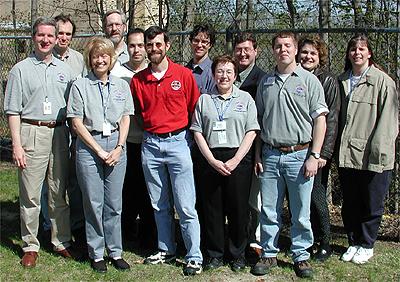
The first NASA Dropping In a Microgravity Environment (DIME) student competition pilot project came to a conclusion at the Glenn Research Center in April 2001. The competition involved high-school student teams who developed the concept for a microgravity experiment and prepared an experiment proposal. The two student teams - COSI Academy, sponsored by the Columbus Center of Science and Industry, and another team from Cincinnati, Ohio's Sycamore High School, designed a microgravity experiment, fabricated the experimental apparatus, and visited NASA Glenn to operate their experiment in the 2.2 Second Drop Tower. NASA and contractor personnel who conducted the DIME activity with the students. Shown (L-R) are: Eric Baumann (NASA, 2.2-second Drop Tower Facility manager), Daniel Dietrich (NASA) mentor for Sycamore High School team), Carol Hodanbosi (National Center for Microgravity Research; DIME staff), Richard DeLombard (NASA; DIME staff), Jose Carrion (GRC Akima, drop tower technician), Dennis Stocker (NASA; DIME staff), Peter Sunderland (NCMR, mentor for COSI Academy student team), Sandi Thompson (NSMR sabbatical teacher; DIME staff), Dan Woodard (MASA Microgravity Outreach Program Manager), Adam Malcolm (NASA co-op student; DIME staff), Carla Rosenberg (NCMR; DIME staff), and Twila Schneider (Infinity Technology; NASA Microgravity Research program contractor). This image is from a digital still camera; higher resolution is not available.
![Astronaut Frank Borman at the controls of the Visual Docking Simulator. From A.W. Vogeley, "Piloted Space-Flight Simulation at Langley Research Center," Paper presented at the American Society of Mechanical Engineers 1966 Winter Meeting, New York, NY, November 27-December 1, 1966. "This facility was [later known as the Visual-Optical Simulator.] It presents to the pilot an out-the-window view of his target in correct 6 degrees of freedom motion. The scene is obtained by a television camera pick-up viewing a small-scale gimbaled model of the target." "For docking studies, the docking target picture was projected onto the surface of a 20-foot-diameter sphere and the pilot could, effectively, maneuver into contract. this facility was used in a comparison study with the Rendezvous Docking Simulator - one of the few comparison experiments in which conditions were carefully controlled and a reasonable sample of pilots used. All pilots preferred the more realistic RDS visual scene. The pilots generally liked the RDS angular motion cues although some objected to the false gravity cues that these motions introduced. Training time was shorter on the RDS, but final performance on both simulators was essentially equal. " "For station-keeping studies, since close approach is not required, the target was presented to the pilot through a virtual-image system which projects his view to infinity, providing a more realistic effect. In addition to the target, the system also projects a star and horizon background. "](https://images-assets.nasa.gov/image/LRC-1963-B701_P-09368/LRC-1963-B701_P-09368~medium.jpg)
Astronaut Frank Borman at the controls of the Visual Docking Simulator. From A.W. Vogeley, "Piloted Space-Flight Simulation at Langley Research Center," Paper presented at the American Society of Mechanical Engineers 1966 Winter Meeting, New York, NY, November 27-December 1, 1966. "This facility was [later known as the Visual-Optical Simulator.] It presents to the pilot an out-the-window view of his target in correct 6 degrees of freedom motion. The scene is obtained by a television camera pick-up viewing a small-scale gimbaled model of the target." "For docking studies, the docking target picture was projected onto the surface of a 20-foot-diameter sphere and the pilot could, effectively, maneuver into contract. this facility was used in a comparison study with the Rendezvous Docking Simulator - one of the few comparison experiments in which conditions were carefully controlled and a reasonable sample of pilots used. All pilots preferred the more realistic RDS visual scene. The pilots generally liked the RDS angular motion cues although some objected to the false gravity cues that these motions introduced. Training time was shorter on the RDS, but final performance on both simulators was essentially equal. " "For station-keeping studies, since close approach is not required, the target was presented to the pilot through a virtual-image system which projects his view to infinity, providing a more realistic effect. In addition to the target, the system also projects a star and horizon background. "
![Astronaut James Lovell at the controls of the Visual Docking Simulator. From A.W. Vogeley, "Piloted Space-Flight Simulation at Langley Research Center," Paper presented at the American Society of Mechanical Engineers 1966 Winter Meeting, New York, NY, November 27-December 1, 1966. "This facility was [later known as the Visual-Optical Simulator.] It presents to the pilot an out-the-window view of his target in correct 6 degrees of freedom motion. The scene is obtained by a television camera pick-up viewing a small-scale gimbaled model of the target." "For docking studies, the docking target picture was projected onto the surface of a 20-foot-diameter sphere and the pilot could, effectively, maneuver into contract. this facility was used in a comparison study with the Rendezvous Docking Simulator - one of the few comparison experiments in which conditions were carefully controlled and a reasonable sample of pilots used. All pilots preferred the more realistic RDS visual scene. The pilots generally liked the RDS angular motion cues although some objected to the false gravity cues that these motions introduced. Training time was shorter on the RDS, but final performance on both simulators was essentially equal. " "For station-keeping studies, since close approach is not required, the target was presented to the pilot through a virtual-image system which projects his view to infinity, providing a more realistic effect. In addition to the target, the system also projects a star and horizon background. "](https://images-assets.nasa.gov/image/LRC-1963-B701_P-09093/LRC-1963-B701_P-09093~medium.jpg)
Astronaut James Lovell at the controls of the Visual Docking Simulator. From A.W. Vogeley, "Piloted Space-Flight Simulation at Langley Research Center," Paper presented at the American Society of Mechanical Engineers 1966 Winter Meeting, New York, NY, November 27-December 1, 1966. "This facility was [later known as the Visual-Optical Simulator.] It presents to the pilot an out-the-window view of his target in correct 6 degrees of freedom motion. The scene is obtained by a television camera pick-up viewing a small-scale gimbaled model of the target." "For docking studies, the docking target picture was projected onto the surface of a 20-foot-diameter sphere and the pilot could, effectively, maneuver into contract. this facility was used in a comparison study with the Rendezvous Docking Simulator - one of the few comparison experiments in which conditions were carefully controlled and a reasonable sample of pilots used. All pilots preferred the more realistic RDS visual scene. The pilots generally liked the RDS angular motion cues although some objected to the false gravity cues that these motions introduced. Training time was shorter on the RDS, but final performance on both simulators was essentially equal. " "For station-keeping studies, since close approach is not required, the target was presented to the pilot through a virtual-image system which projects his view to infinity, providing a more realistic effect. In addition to the target, the system also projects a star and horizon background. "