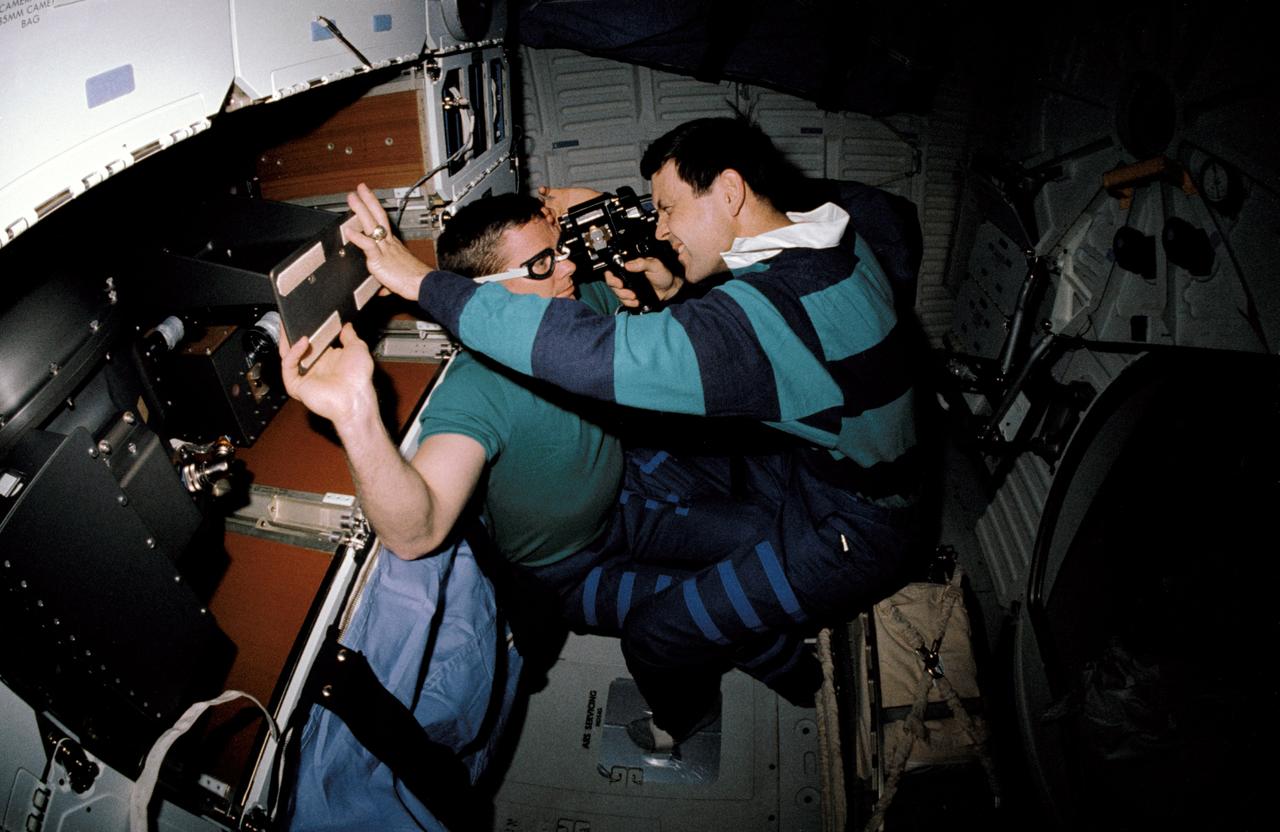
STS041-02-015 (6-10 Oct. 1990) --- A 35mm scene showing astronauts Robert D. Cabana (right), STS-41 pilot, and Bruce E. Melnick, mission specialist, participating in a detailed supplemental objective for STS-41 involving retinal photography. The hypothesis of this experiment is that retinal photographs taken on orbit will show evidence of increased intracranial pressure (ICP) and the evidence of increased ICP and the development of Space Adaptation Syndrome (SAS) will be correlated. SAS has been a subject of on-orbit analysis since the early days of space shuttle.
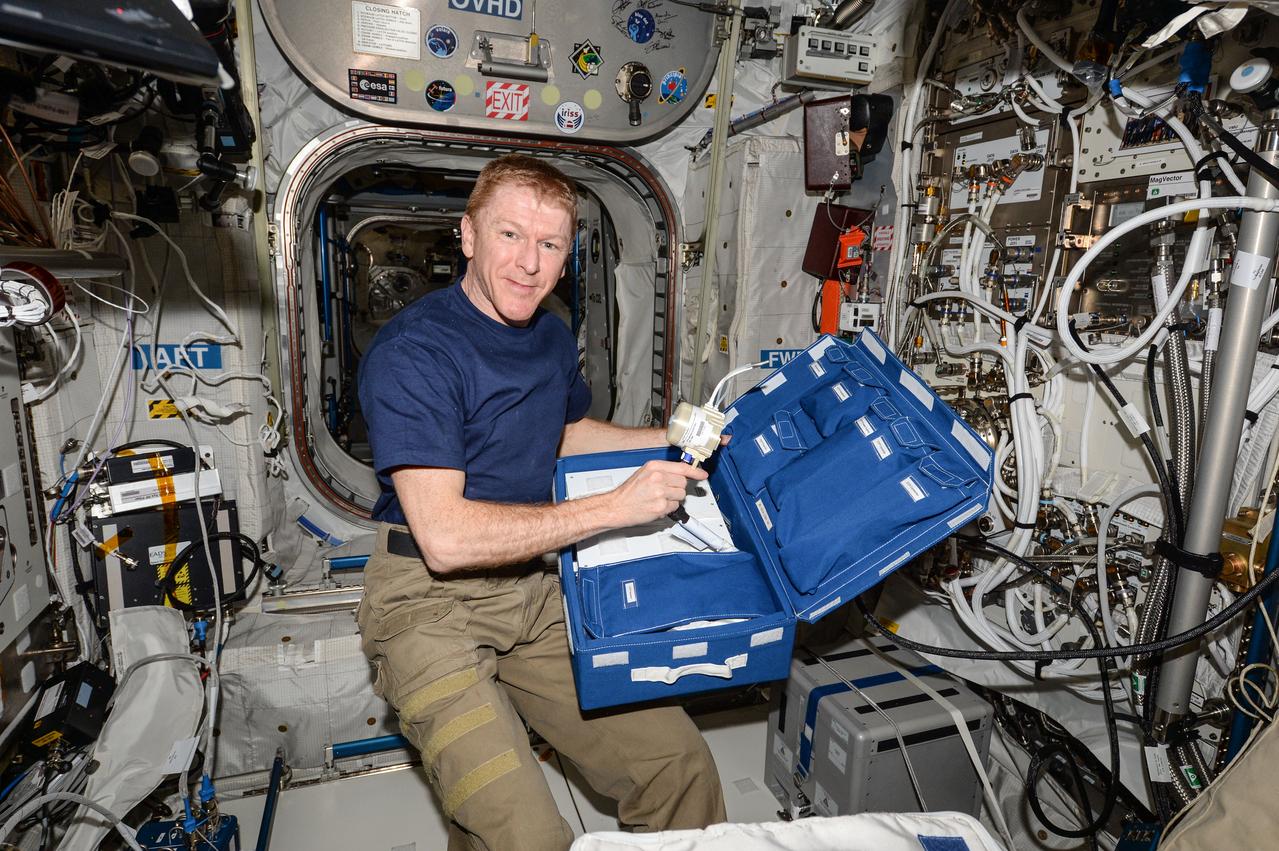
ISS047e106715 (05/06/2016) --- ESA (European Space Agency astronaut Tim Peake unpacks a cerebral and cochlear fluid pressure (CCFP) analyzer. The device is being tested to measure the pressure of the fluid in the skull, also known as intracranial pressure, which may increase due to fluid shifts in the body while in microgravity. It is hypothesized that the headward fluid shift that occurs during space flight leads to increased pressure in the brain, which may push on the back of the eye, causing it to change shape.
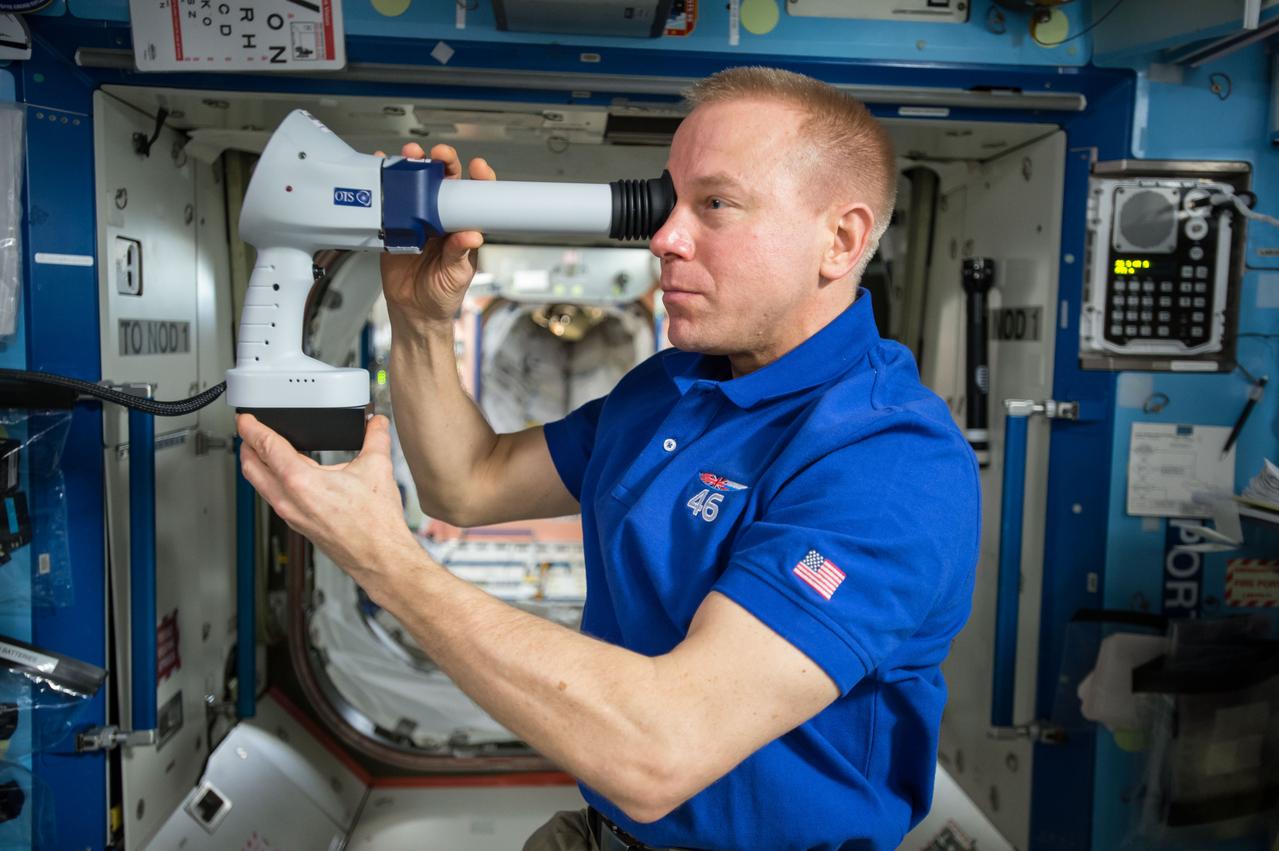
ISS047e010094 (03/16/2016) --- Expedition 47 Commander Tim Kopra of NASA participates in the Ocular Health investigation aboard the International Space Station. The study seeks to help researchers better understand microgravity-induced visual impairment and changes believed to arise from elevated intracranial pressure. These tests will help characterize how living in microgravity can affect the visual, vascular and central nervous system. The investigation will also measure how long it takes for astronauts to return to normal after they return to Earth.