
NASA and its partners work on the solar array wings for the agency’s Artemis III Orion spacecraft on Thursday, April 30, 2026, inside the Neil A. Armstrong Operations and Checkout Building at NASA’s Kennedy Space Center in Florida. Orion’s solar arrays, manufactured and installed by ESA (European Space Agency) and its contractor Airbus, have been temporarily installed ahead of acoustic testing on the spacecraft. The Artemis III mission will launch astronauts in 2027 to Earth’s orbit aboard the Orion spacecraft on top of the SLS (Space Launch System) rocket to test rendezvous and docking capabilities between Orion and commercial spacecraft needed to land Artemis IV astronauts on the Moon in 2028.
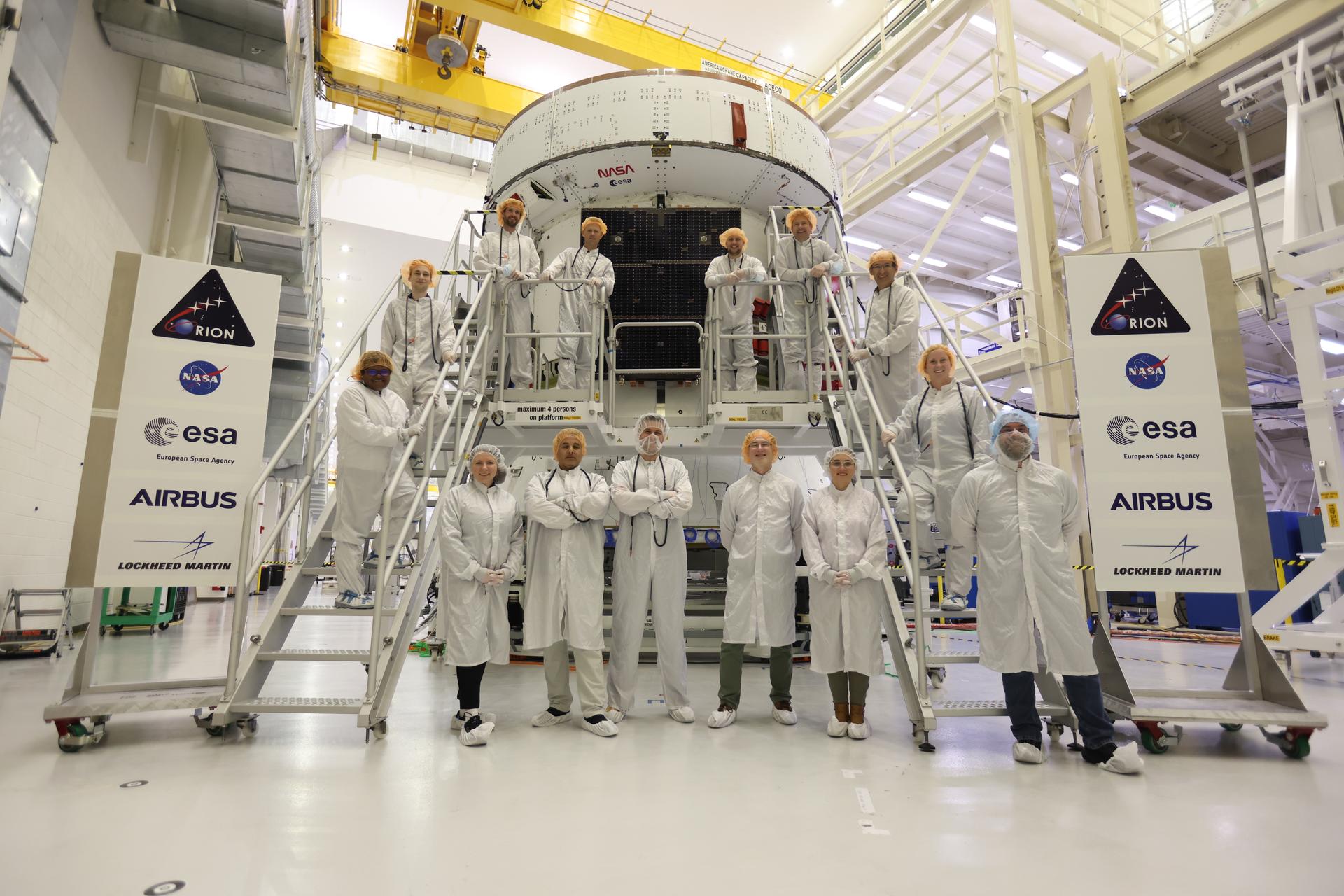
NASA and its partners work on the solar array wings for the agency’s Artemis III Orion spacecraft on Thursday, April 30, 2026, inside the Neil A. Armstrong Operations and Checkout Building at NASA’s Kennedy Space Center in Florida. Orion’s solar arrays, manufactured and installed by ESA (European Space Agency) and its contractor Airbus, have been temporarily installed ahead of acoustic testing on the spacecraft. The Artemis III mission will launch astronauts in 2027 to Earth’s orbit aboard the Orion spacecraft on top of the SLS (Space Launch System) rocket to test rendezvous and docking capabilities between Orion and commercial spacecraft needed to land Artemis IV astronauts on the Moon in 2028.
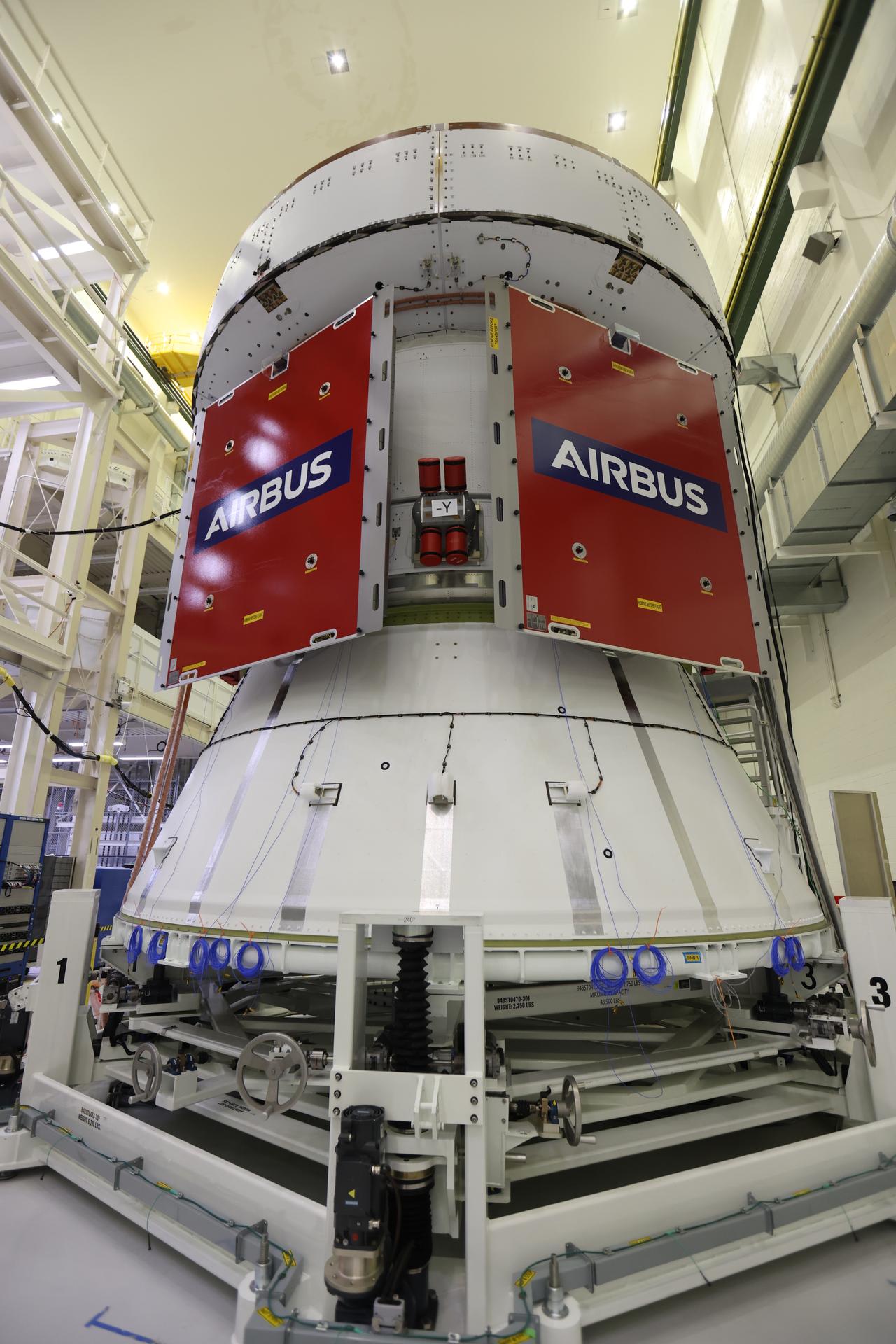
NASA and its partners work on the solar array wings for the agency’s Artemis III Orion spacecraft on Thursday, April 30, 2026, inside the Neil A. Armstrong Operations and Checkout Building at NASA’s Kennedy Space Center in Florida. Orion’s solar arrays, manufactured and installed by ESA (European Space Agency) and its contractor Airbus, have been temporarily installed ahead of acoustic testing on the spacecraft. The Artemis III mission will launch astronauts in 2027 to Earth’s orbit aboard the Orion spacecraft on top of the SLS (Space Launch System) rocket to test rendezvous and docking capabilities between Orion and commercial spacecraft needed to land Artemis IV astronauts on the Moon in 2028.
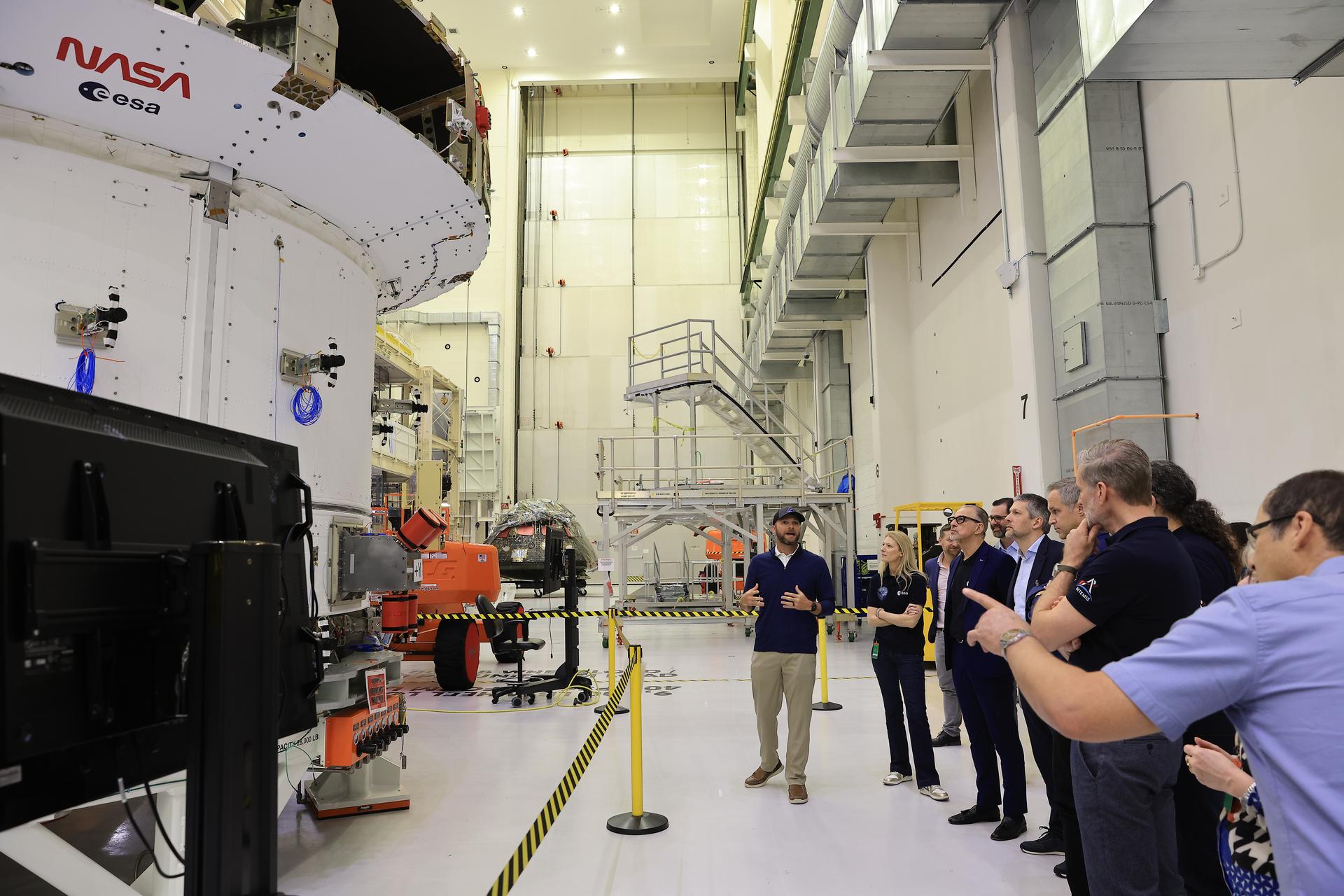
Members of the ESA (European Space Agency) leadership team and NASA Orion program team stand by European Service Module with the Orion spacecraft in the background for NASA’s Artemis III mission on Tuesday, Feb. 10, 2026, inside the high bay of the Neil A. Armstrong Operations and Checkout Building at NASA’s Kennedy Space Center in Florida. The service module provides the Orion spacecraft’s propulsion, thermal control, electrical power, and life support systems during the Artemis III mission to send humans to explore the lunar South Pole region.
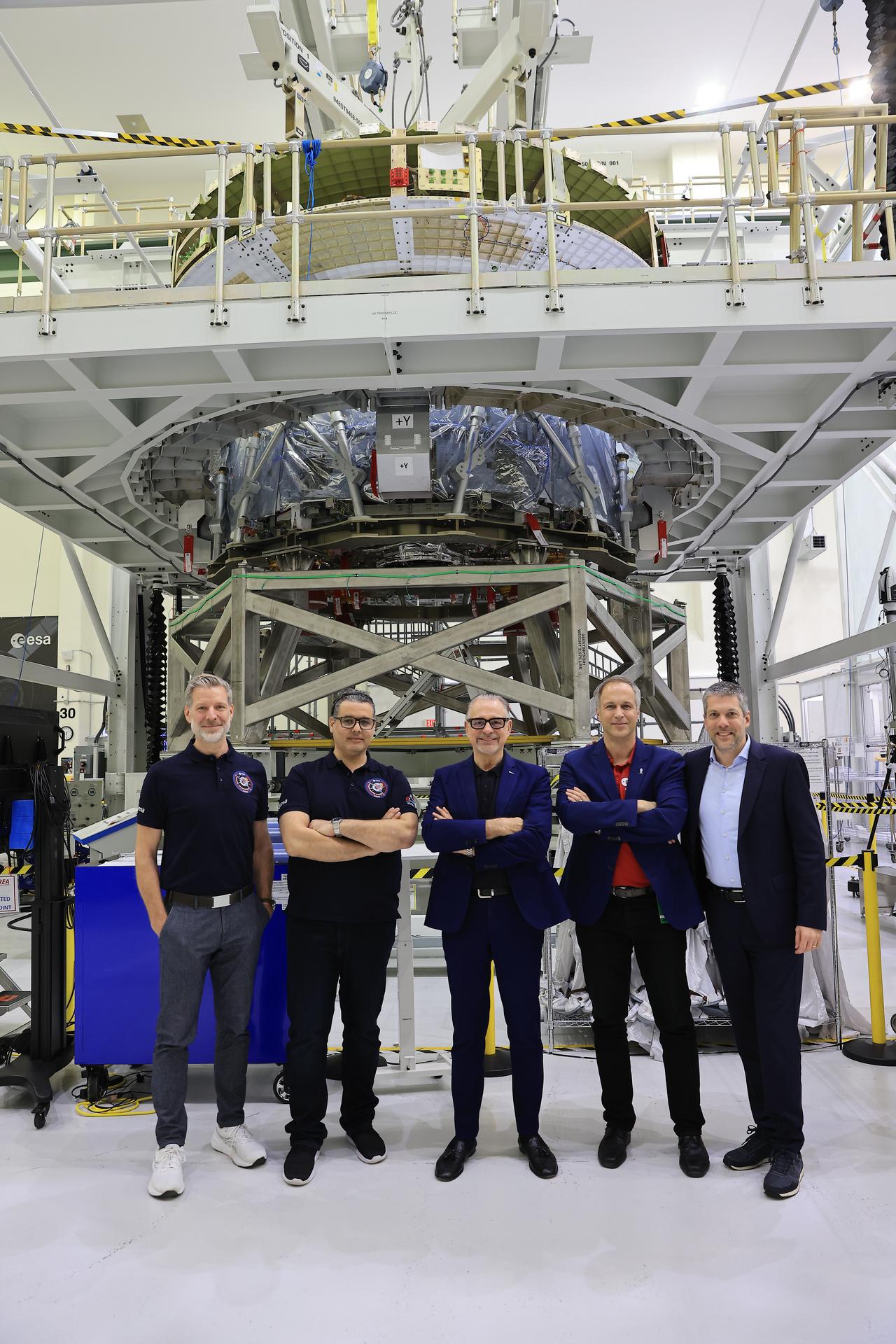
ESA (European Space Agency) Director General Josef Aschbacher (center), ESA Director of Human and Robotic Exploration Daniel Neuenschwander (second from right), and other members of ESA leadership tour on Tuesday, Feb. 10, 2026, the high bay of the Neil A. Armstrong Operations and Checkout Building at NASA’s Kennedy Space Center in Florida. Teams will soon attach the European Service Module to the crew module adapter for NASA’s Artemis IV mission. The European Service Module, which is assembled by Airbus in Bremen, Germany, from parts made in 10 European countries and the United States, acts as the driving force behind Orion for deep space exploration, providing essential propulsion, thermal control, and electrical power.
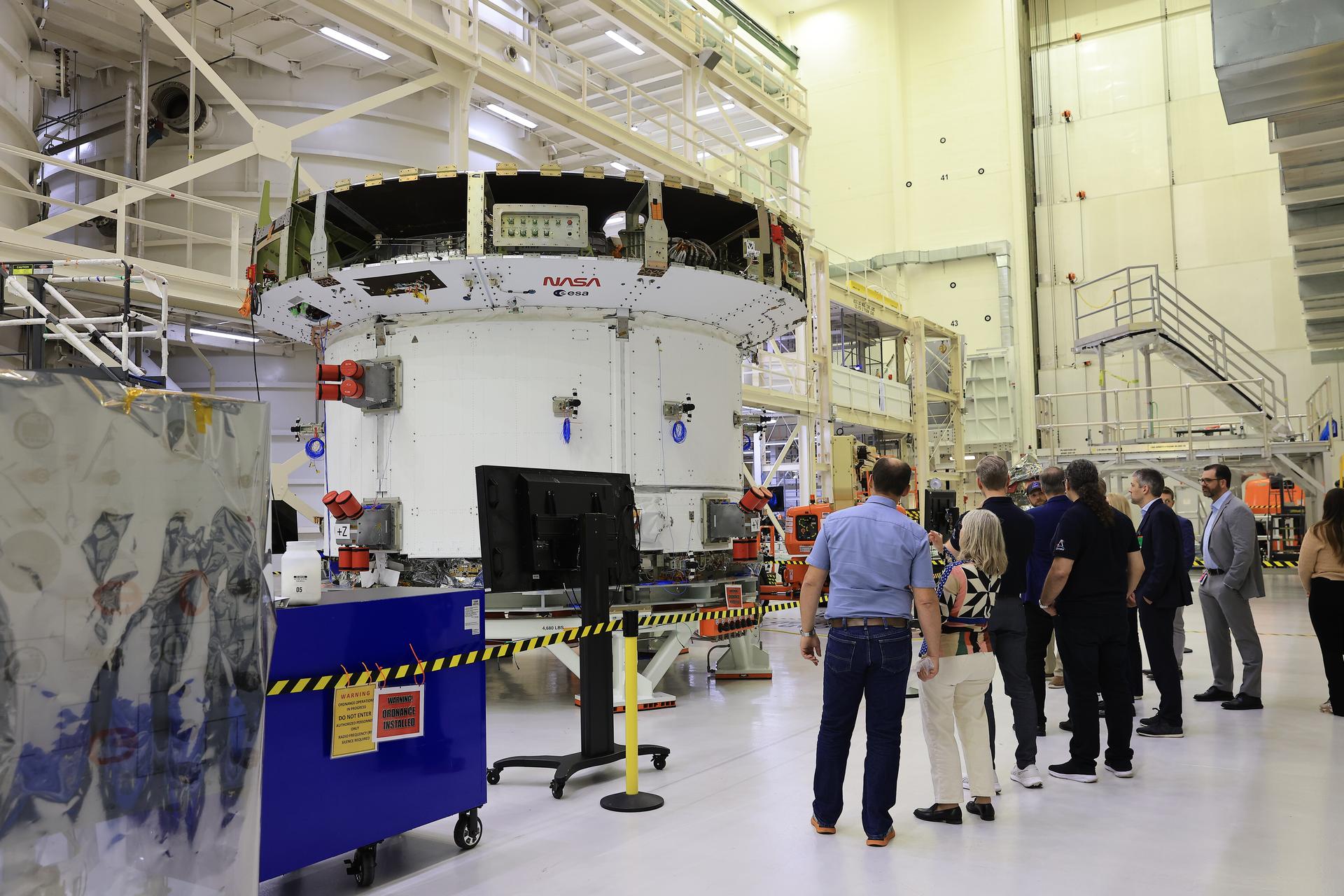
Members of the ESA (European Space Agency) leadership team and NASA Orion program team stand by European Service Module for NASA’s Artemis III mission on Tuesday, Feb. 10, 2026, inside the high bay of the Neil A. Armstrong Operations and Checkout Building at NASA’s Kennedy Space Center in Florida. The service module provides the Orion spacecraft’s propulsion, thermal control, electrical power, and life support systems during the Artemis III mission to send humans to explore the lunar South Pole region.

Inside the high bay of the Neil Armstrong Operations and Checkout Building at NASA’s Kennedy Space Center in Florida, Lockheed Martin and NASA technicians work on the Orion crew module for the agency’s Artemis IV mission on May 26, 2023. Artemis IV will be the first operational mission to Gateway – an outpost in lunar orbit serving as a staging point for deep space exploration – followed by a week-long surface mission on the Moon. Also sharing space in the high bay are the crew modules for Artemis II and Artemis III.
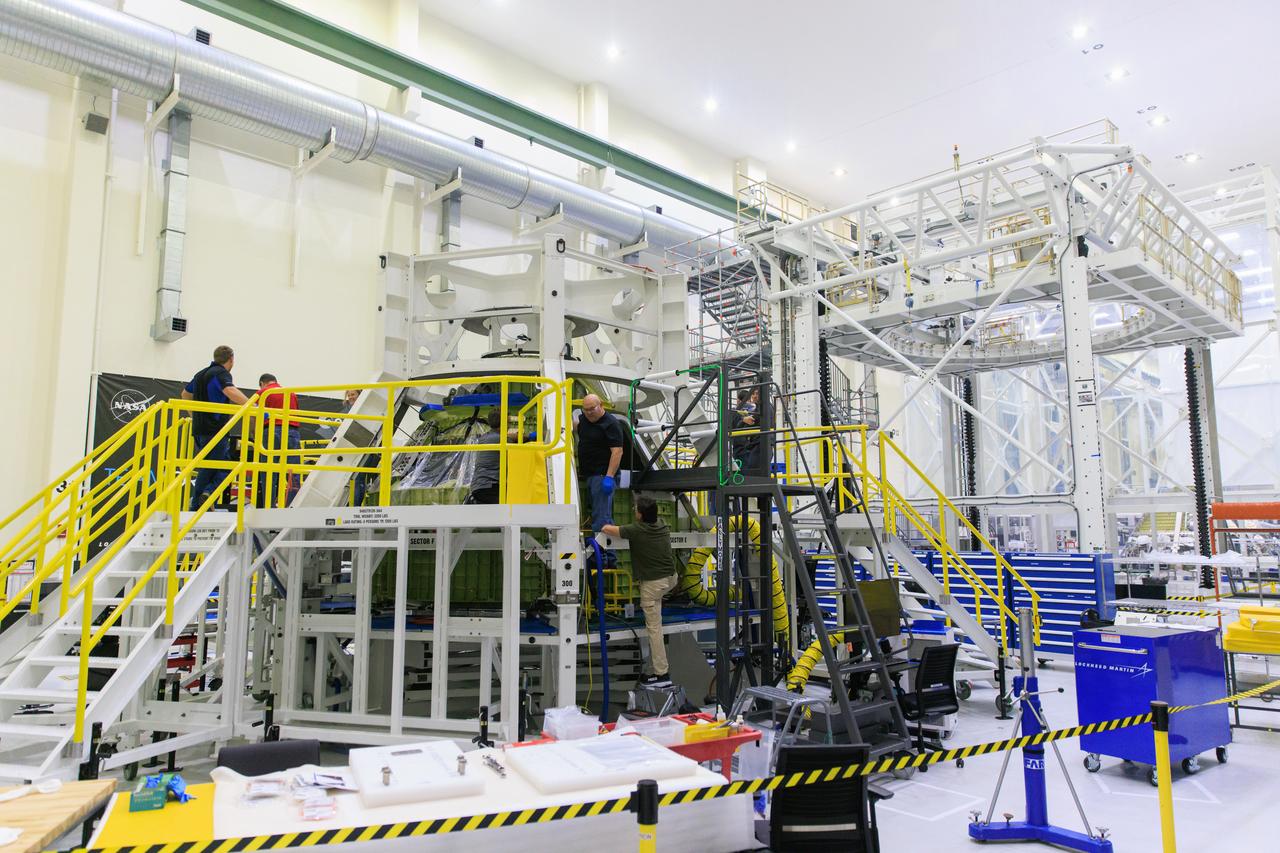
Inside the high bay of the Neil Armstrong Operations and Checkout Building at NASA’s Kennedy Space Center in Florida, Lockheed Martin and NASA technicians work on the Orion crew module for the agency’s Artemis IV mission on May 26, 2023. Artemis IV will be the first operational mission to Gateway – an outpost in lunar orbit serving as a staging point for deep space exploration – followed by a week-long surface mission on the Moon. Also sharing space in the high bay are the crew modules for Artemis II and Artemis III.
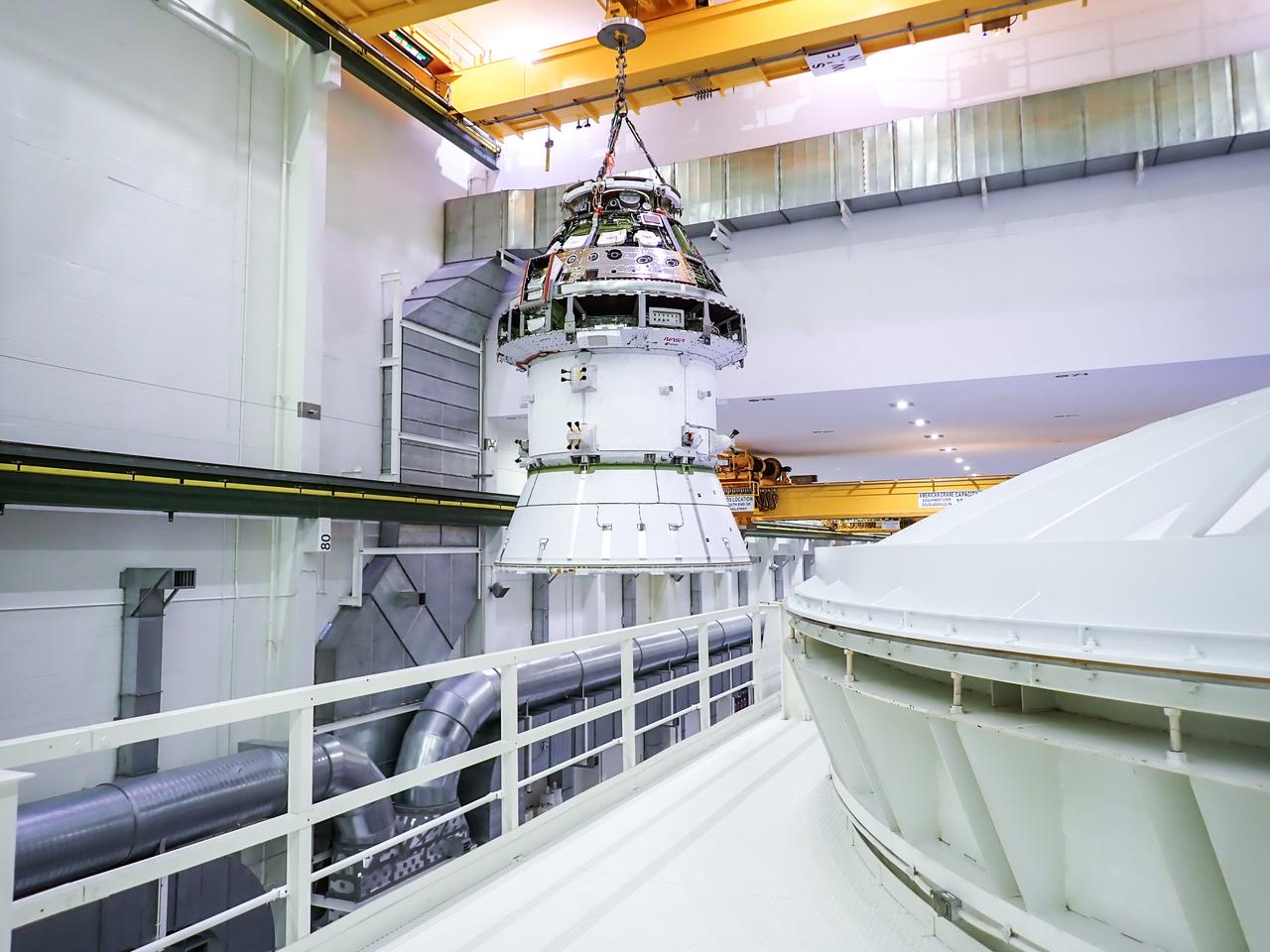
On Thursday, Dec. 5, 2024, a team returns the Artemis II Orion spacecraft to the Final Assembly and Test cell from a vacuum chamber inside the Neil A. Armstrong Operations and Checkout Building at NASA's Kennedy Space Center in Florida where it underwent vacuum testing.
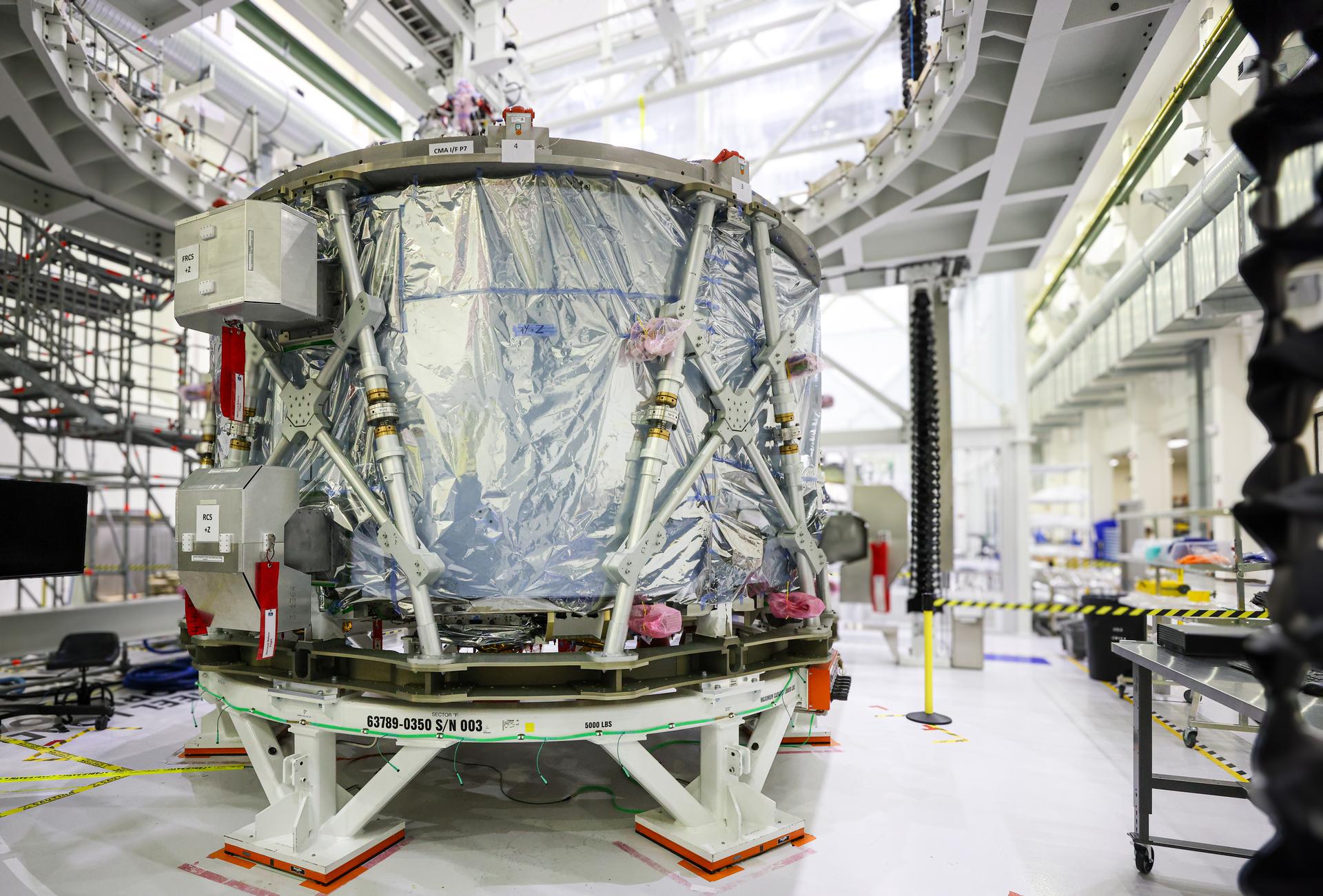
The transport carrier containing the European Service Module for NASA’s Artemis IV mission arrives at the Neil A. Armstrong Operations and Checkout Building at NASA’s Kennedy Space Center in Florida on Saturday, Dec. 20, 2025. The European Service Module, which is assembled by Airbus in Bremen, Germany, from parts made in 10 European countries and the United States, acts as the driving force behind Orion for deep space exploration, providing essential propulsion, thermal control, and electrical power.
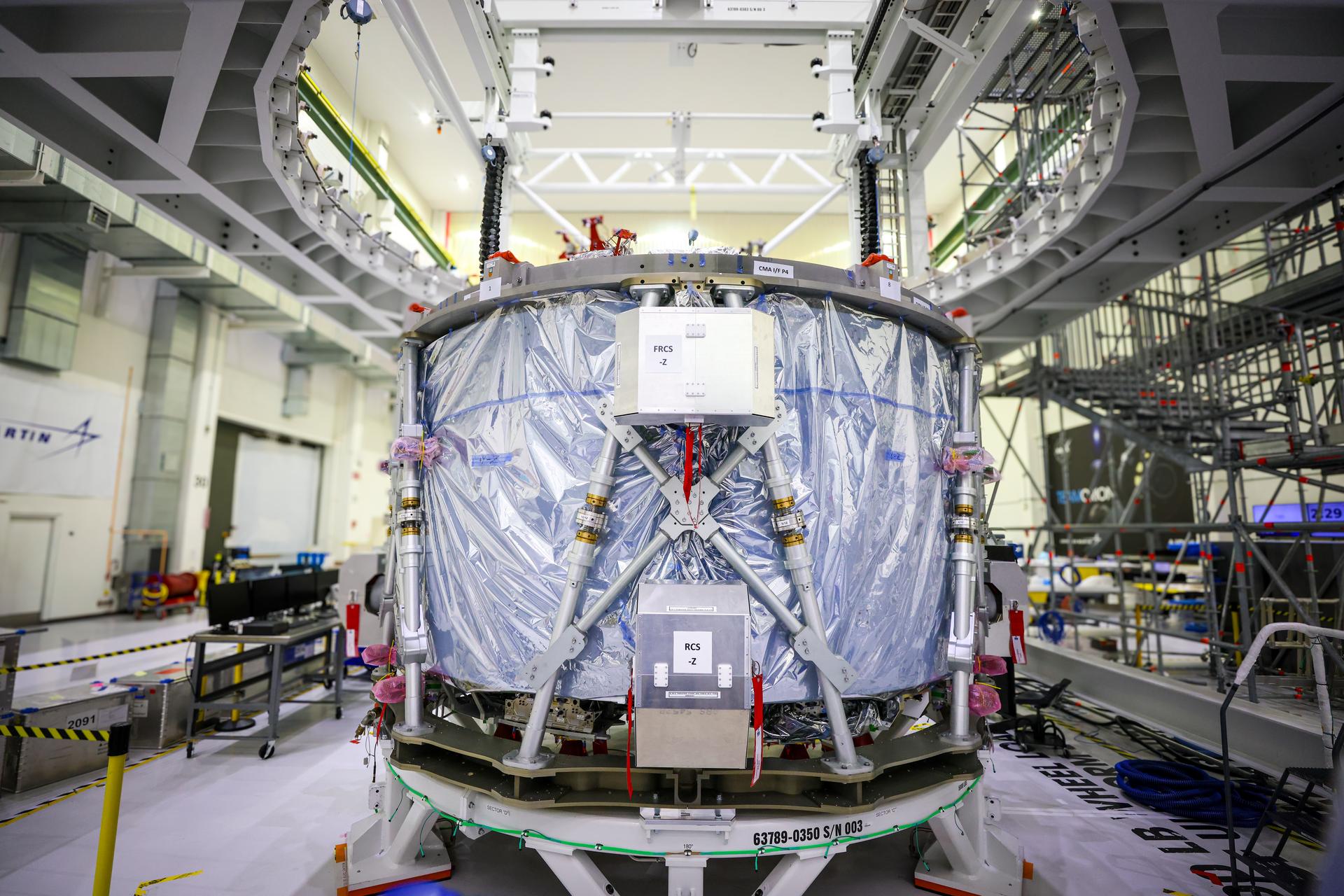
The transport carrier containing the European Service Module for NASA’s Artemis IV mission arrives at the Neil A. Armstrong Operations and Checkout Building at NASA’s Kennedy Space Center in Florida on Saturday, Dec. 20, 2025. The European Service Module, which is assembled by Airbus in Bremen, Germany, from parts made in 10 European countries and the United States, acts as the driving force behind Orion for deep space exploration, providing essential propulsion, thermal control, and electrical power.
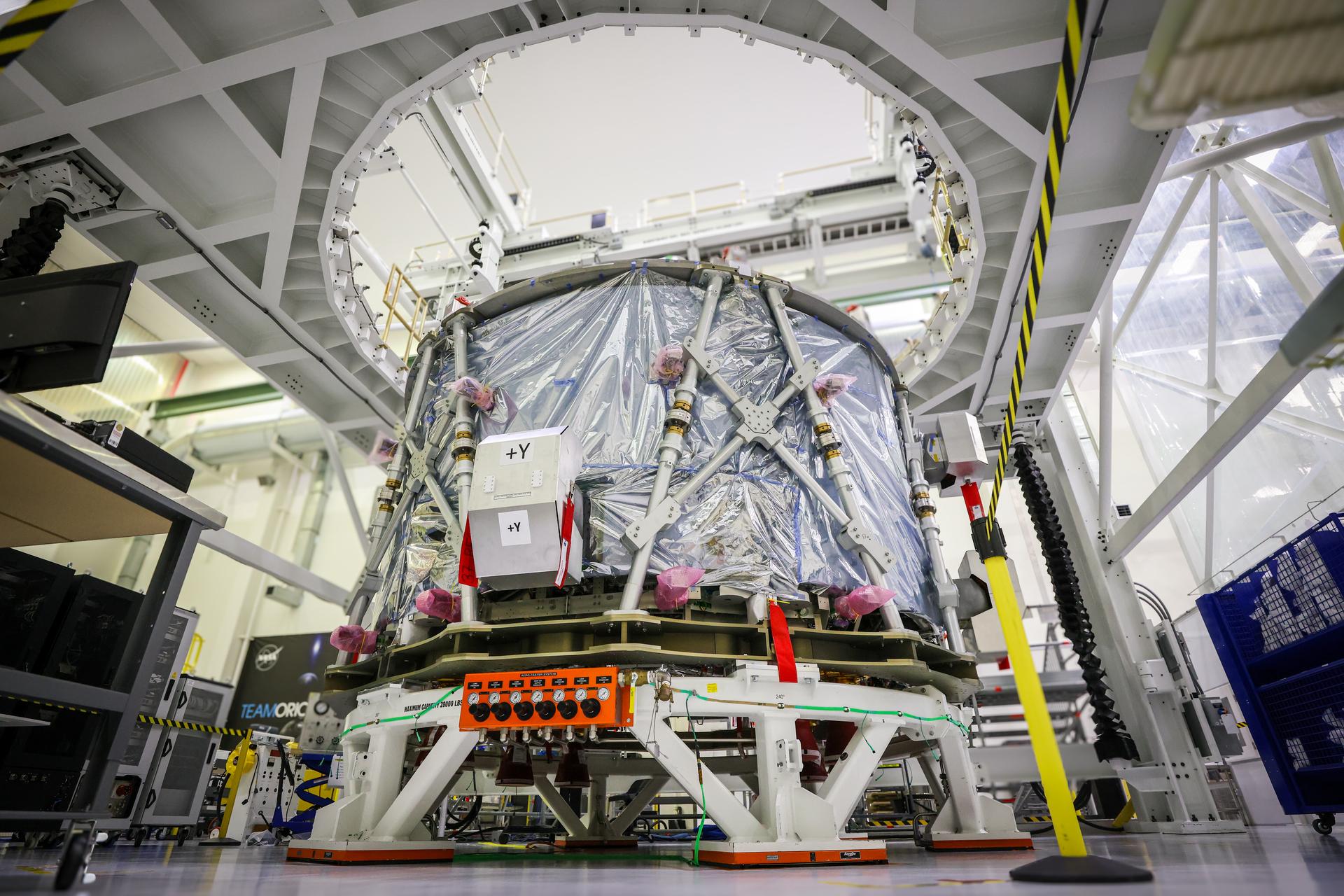
The transport carrier containing the European Service Module for NASA’s Artemis IV mission arrives at the Neil A. Armstrong Operations and Checkout Building at NASA’s Kennedy Space Center in Florida on Saturday, Dec. 20, 2025. The European Service Module, which is assembled by Airbus in Bremen, Germany, from parts made in 10 European countries and the United States, acts as the driving force behind Orion for deep space exploration, providing essential propulsion, thermal control, and electrical power.
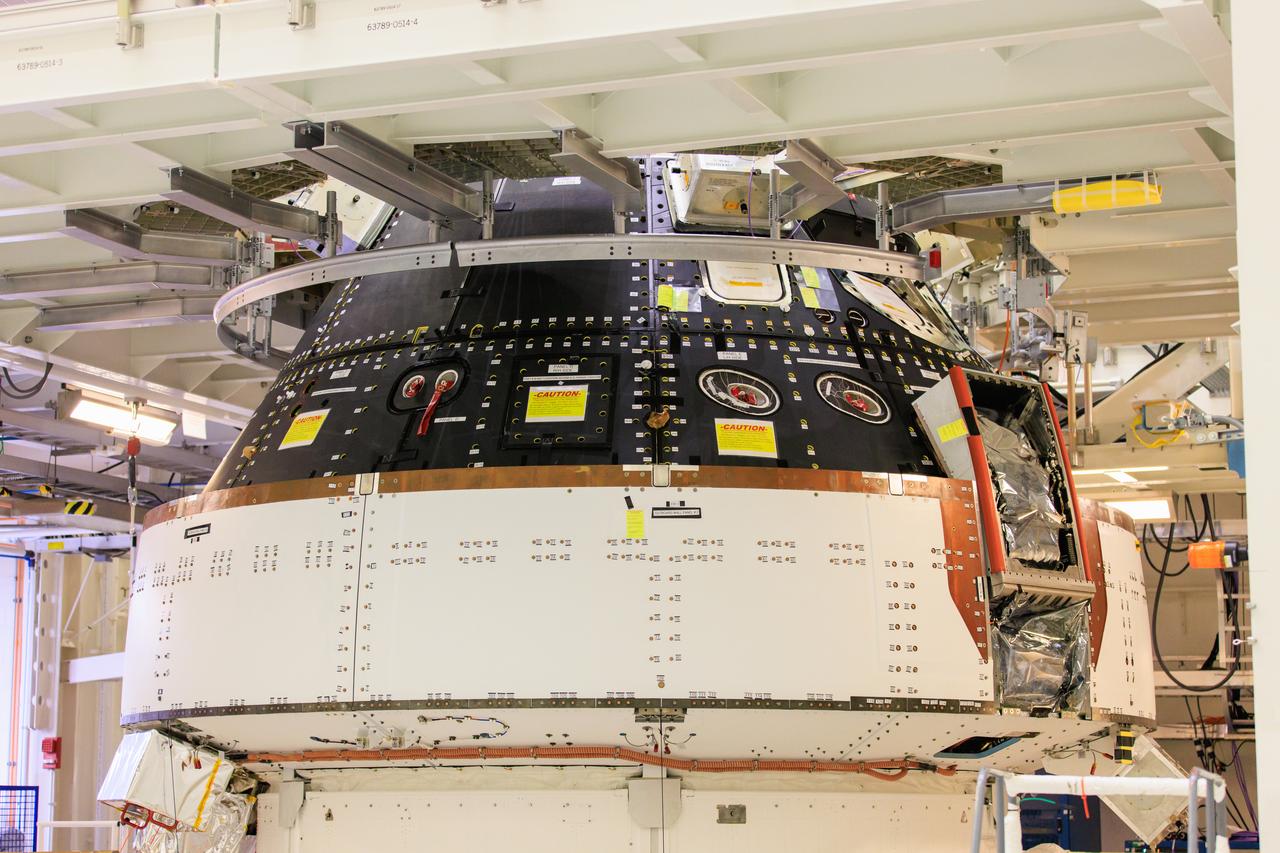
The Orion spacecraft for NASA’s Artemis II mission is photographed inside the Final Assembly and System Testing cell at the Neil Armstrong Operations and Checkout Building at NASA’s Kennedy Space Center in Florida on Friday, March 15, 2024. Four astronauts will venture around the Moon in the Orion spacecraft on Artemis II, the first crewed mission on NASA's path to establishing a long-term presence at the Moon for science and exploration through the Artemis campaign.
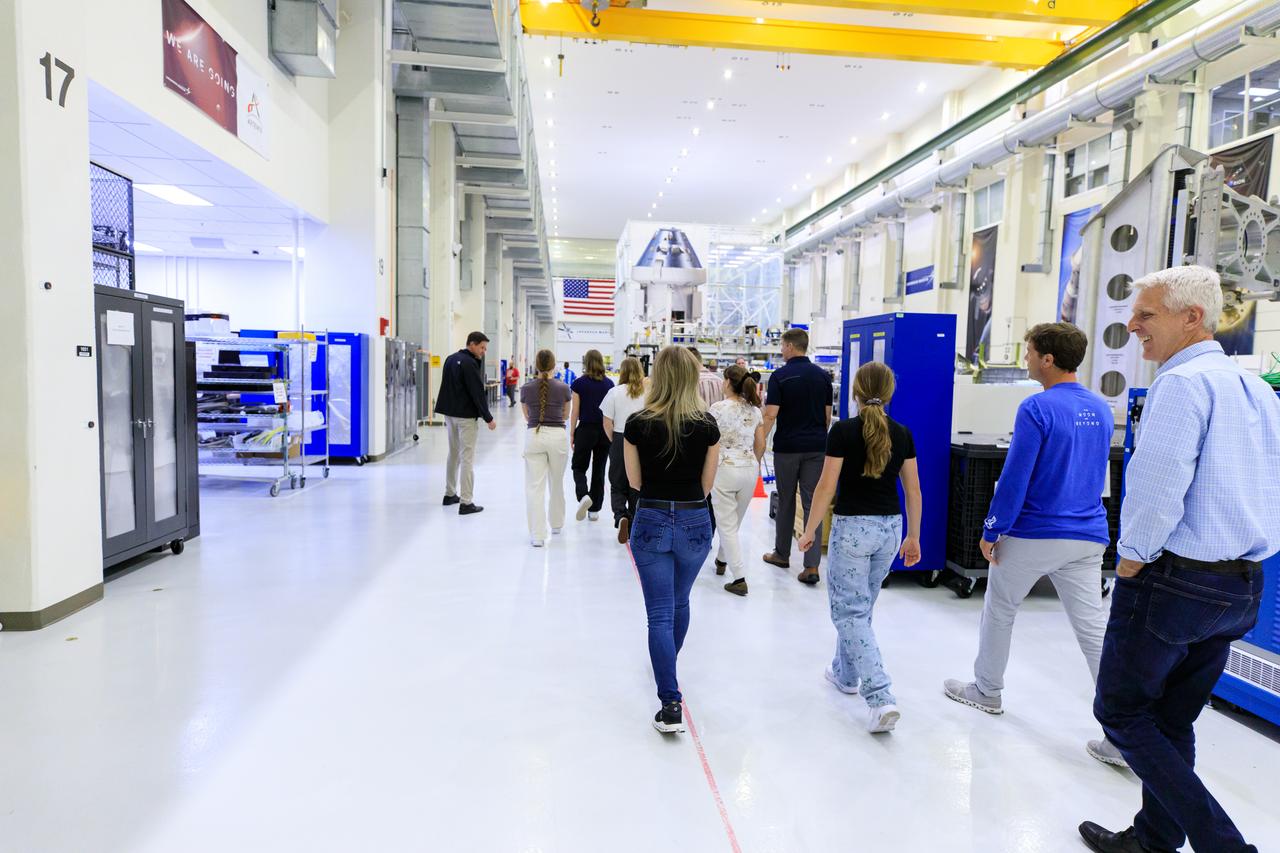
Nathan Varn, far left, Program Director Orion Productions for Lockheed Martin, and Scott Wilson, far right, NASA’s Division Chief, Orion Production Operations Office, lead a tour for Artemis II crew members and their families of the Neil A. Armstrong Operations and Checkout Building at NASA’s Kennedy Space Center in Florida, on Friday, March 15, 2024. Artemis II Commander Reid Wiseman and Artemis II Mission Specialist Jeremy Hansen toured the facility with their families and viewed the Orion crew modules, including the spacecraft that will take them, along with Artemis II Pilot Victor Glover and Artemis II Mission Specialist Christina Hammock Koch, around the Moon and back during the Artemis II mission.
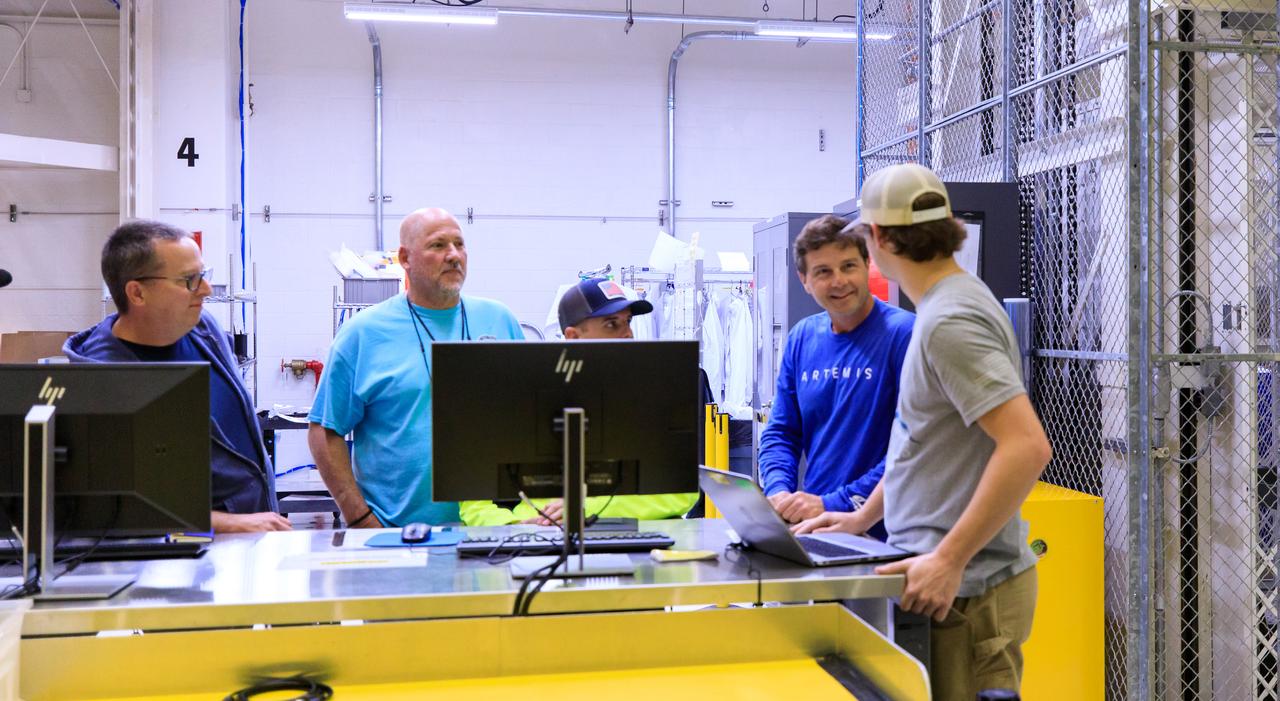
Artemis Commander Reid Wiseman visits with employees from ASRC inside the Neil A. Armstrong Operations and Checkout Building at NASA’s Kennedy Space Center in Florida, on Friday, March 15, 2024. The Artemis II crew members toured the facility with family members and viewed the Orion crew modules, including the spacecraft that will take them, along with Artemis II Pilot Victor Glover and Artemis II Mission Specialist Christina Hammock Koch, around the Moon and back during the Artemis II mission.
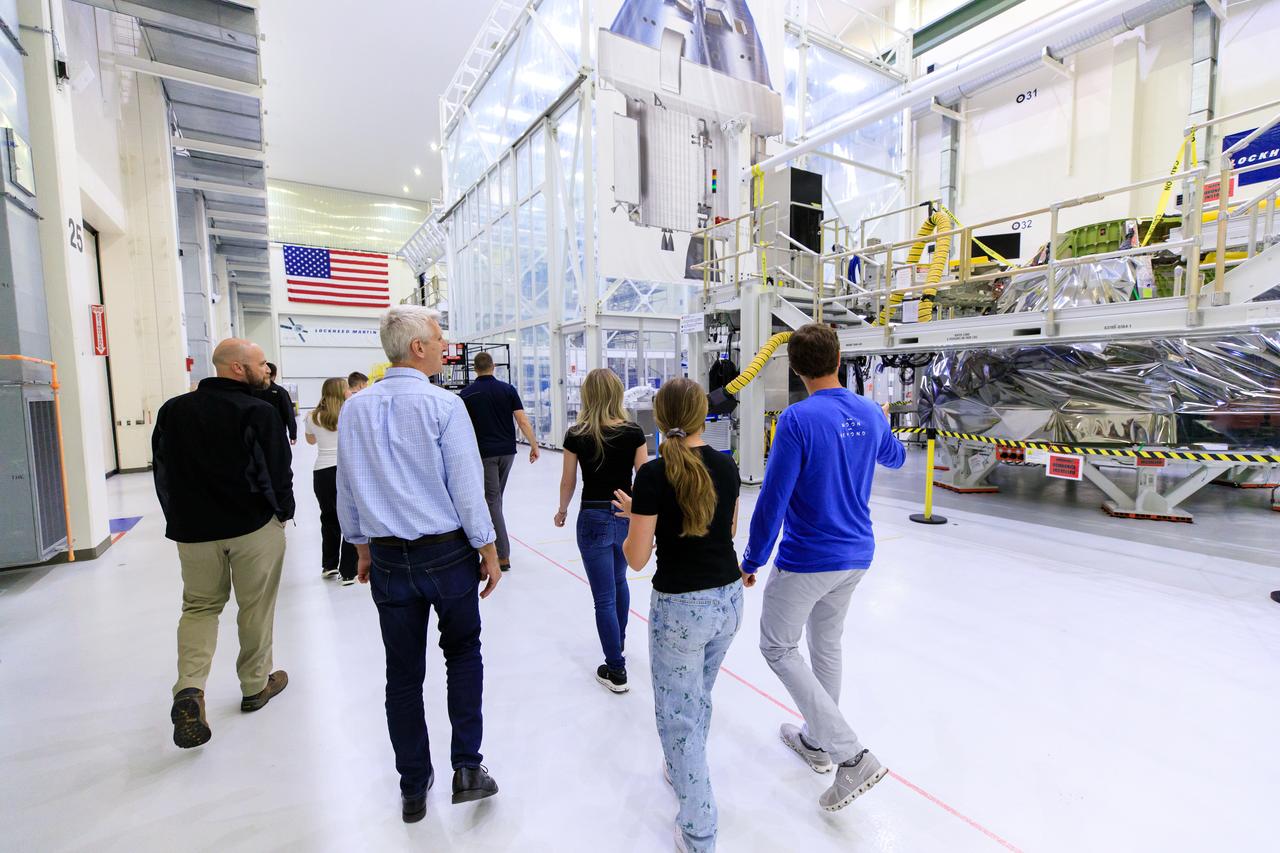
Artemis II crew members and their families visit the Neil A. Armstrong Operations and Checkout Building at NASA’s Kennedy Space Center in Florida, on Friday, March 15, 2024. Artemis II Commander Reid Wiseman and Artemis II Mission Specialist Jeremy Hansen toured the facility with their families and viewed the Orion spacecraft for Artemis III.
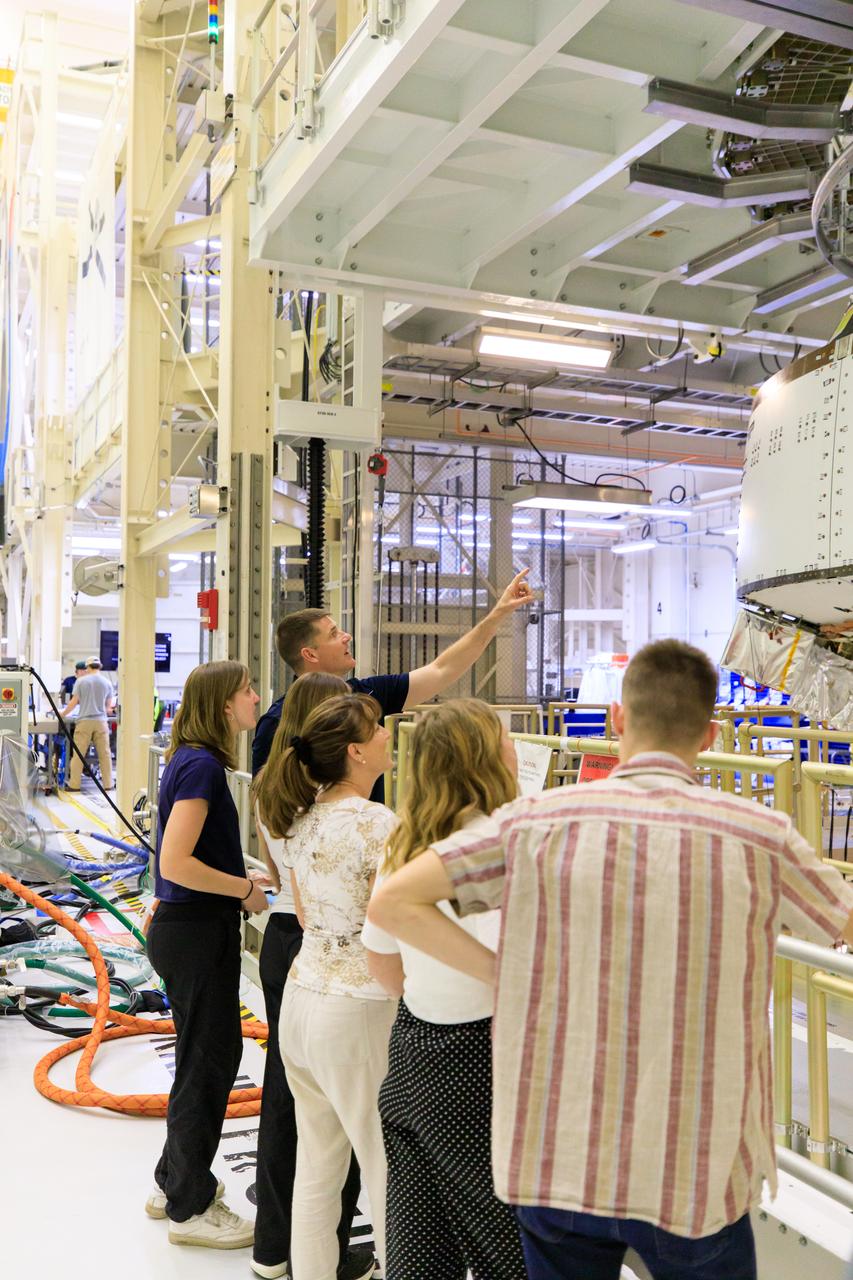
Artemis II Mission Specialist Jeremy Hansen and his family view the Orion spacecraft for Artemis II during a tour of the Neil A. Armstrong Operations and Checkout Building at NASA’s Kennedy Space Center in Florida, on Friday, March 15, 2024. Along with Artemis II Commander Reid Wiseman, Hansen toured the facility with family members and viewed the Orion crew modules, including the spacecraft that will take them, along with Artemis II Pilot Victor Glover and Artemis II Mission Specialist Christina Hammock Koch, around the Moon and back during the Artemis II mission.
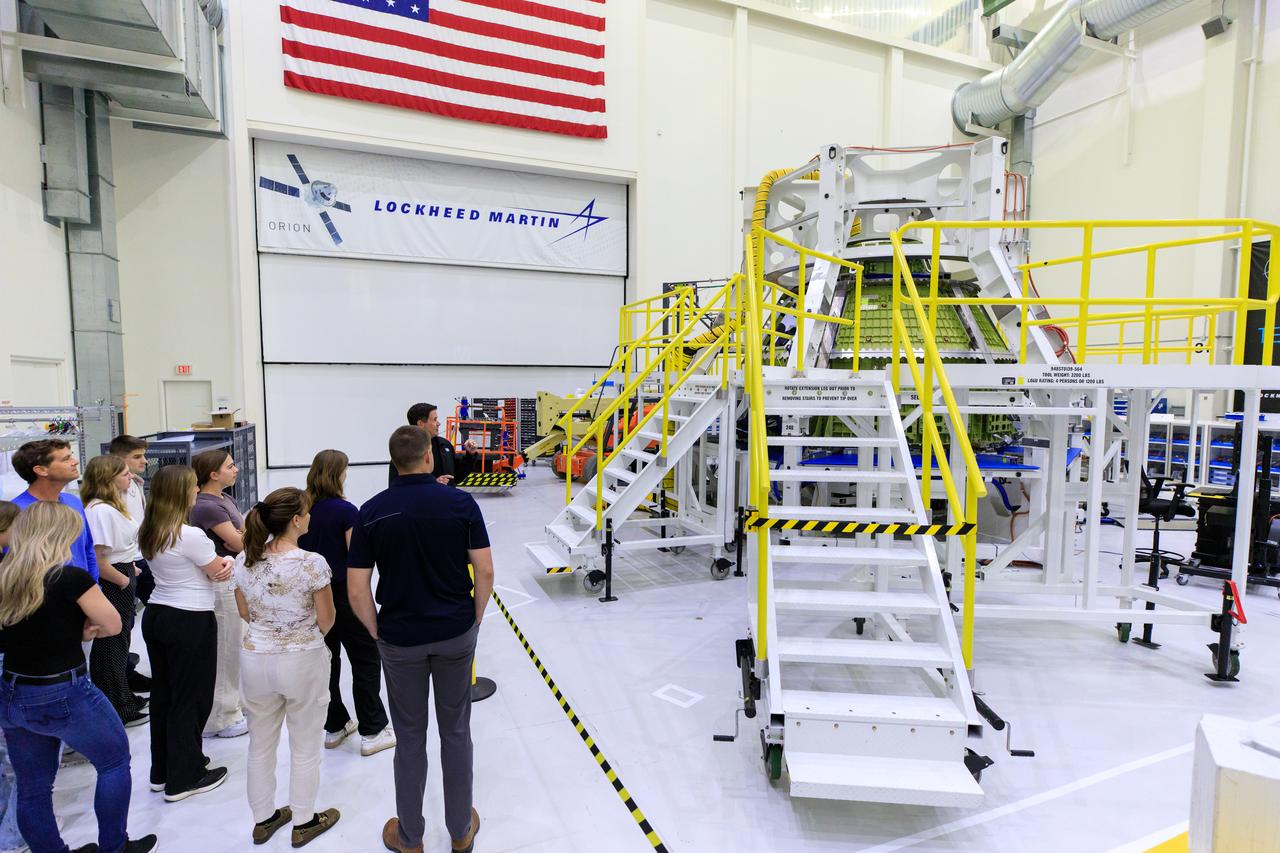
Nathan Varn, Program Director Orion Productions for Lockheed Martin, discusses the Orion crew spacecraft for Artemis III during a tour for Artemis II crew members and their families of the Neil A. Armstrong Operations and Checkout Building at NASA’s Kennedy Space Center in Florida, on Friday, March 15, 2024. Artemis II Commander Reid Wiseman and Artemis II Mission Specialist Jeremy Hansen toured the facility with their families and viewed the Orion spacecraft for upcoming Artemis missions.
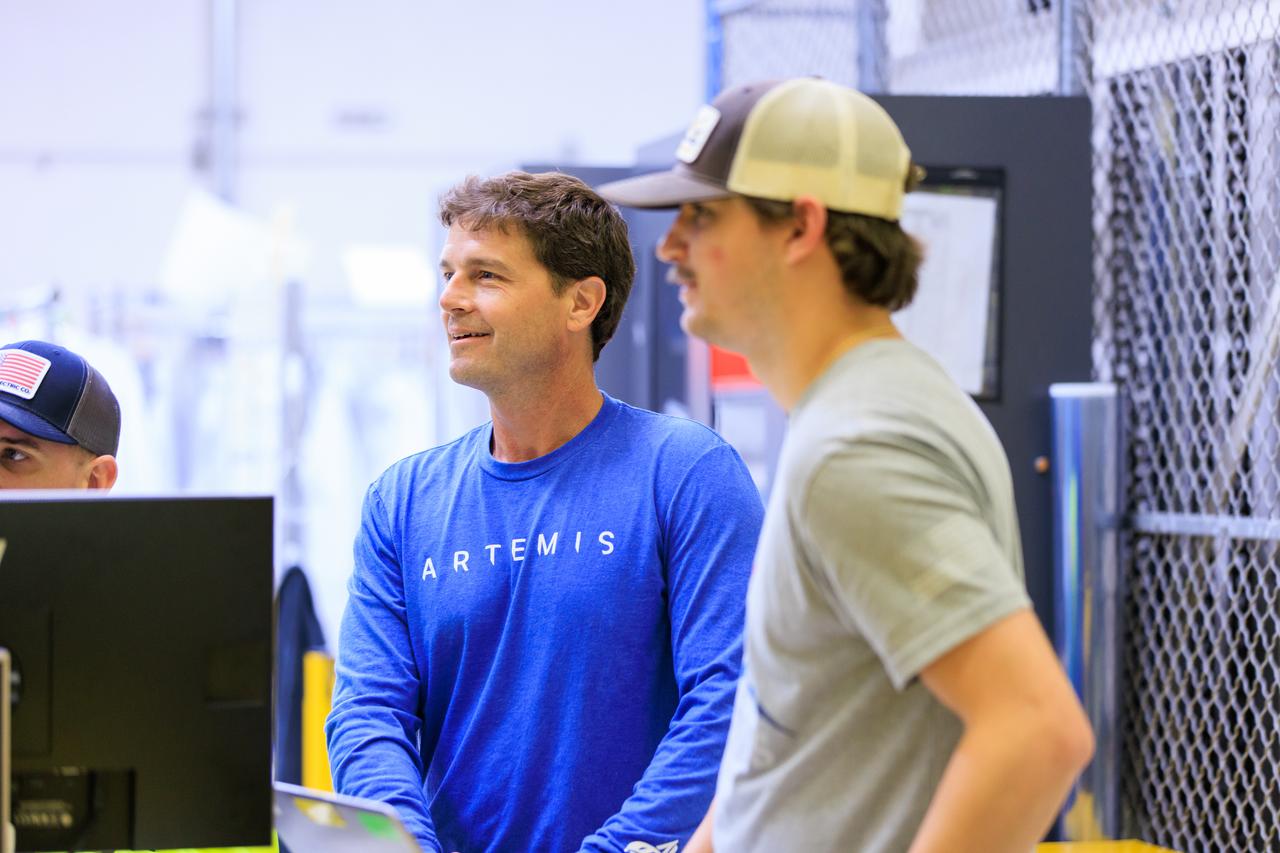
NASA’s Artemis II mission Commander Reid Wiseman visits the Neil A. Armstrong Operations and Checkout Building at the agency’s Kennedy Space Center in Florida, on March 15, 2024. Along with fellow crew member, Artemis II Mission Specialist Jeremy Hansen, the astronauts toured the facility with their families and viewed the Orion crew module that will take them, along with Victor Glover, pilot; and Christina Hammock Koch, mission specialist; around the Moon and back during the Artemis II mission.
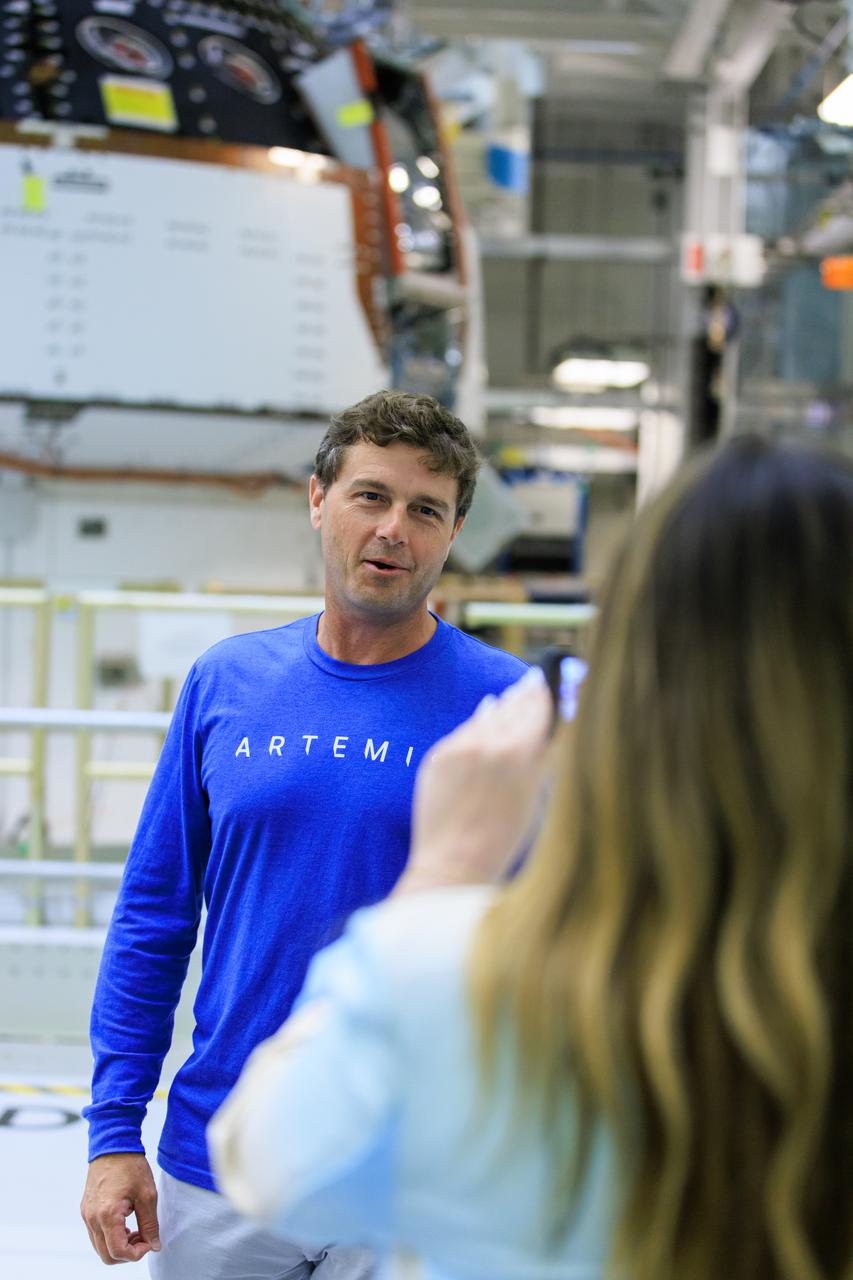
NASA’s Artemis II mission Commander Reid Wiseman films his weekly Artemis Update for his social media platforms in front of the Orion spacecraft for Artemis II inside the Neil A. Armstrong Operations and Checkout Building at the agency’s Kennedy Space Center in Florida, on Friday, March 15, 2024.

The Orion spacecraft for NASA’s Artemis II mission is photographed inside the Final Assembly and System Testing cell at the Neil Armstrong Operations and Checkout Building at NASA’s Kennedy Space Center in Florida on Friday, March 15, 2024. Four astronauts will venture around the Moon in the Orion spacecraft on Artemis II, the first crewed mission on NASA's path to establishing a long-term presence at the Moon for science and exploration through the Artemis campaign.
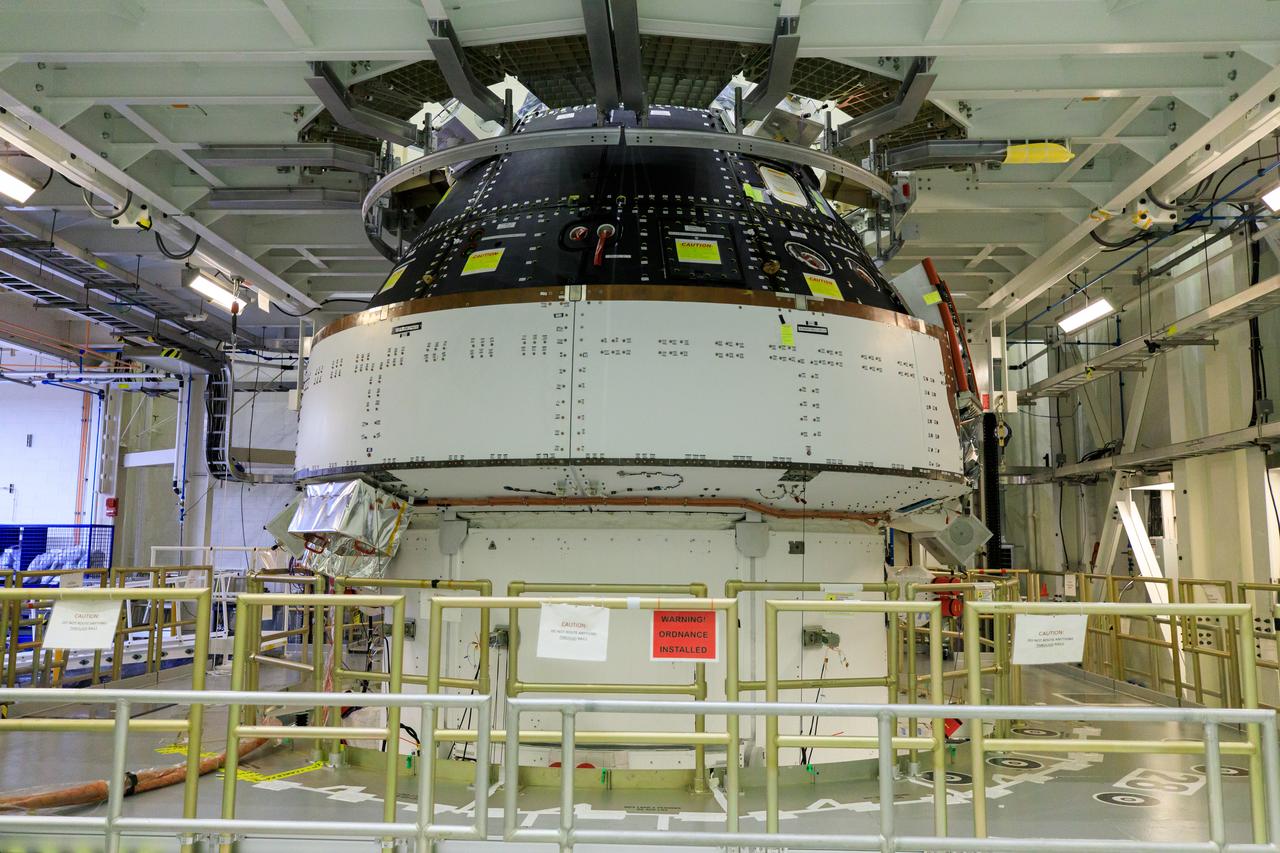
The Orion spacecraft for NASA’s Artemis II mission is photographed inside the Final Assembly and System Testing cell at the Neil Armstrong Operations and Checkout Building at NASA’s Kennedy Space Center in Florida on Friday, March 15, 2024. Four astronauts will venture around the Moon in the Orion spacecraft on Artemis II, the first crewed mission on NASA's path to establishing a long-term presence at the Moon for science and exploration through the Artemis campaign.
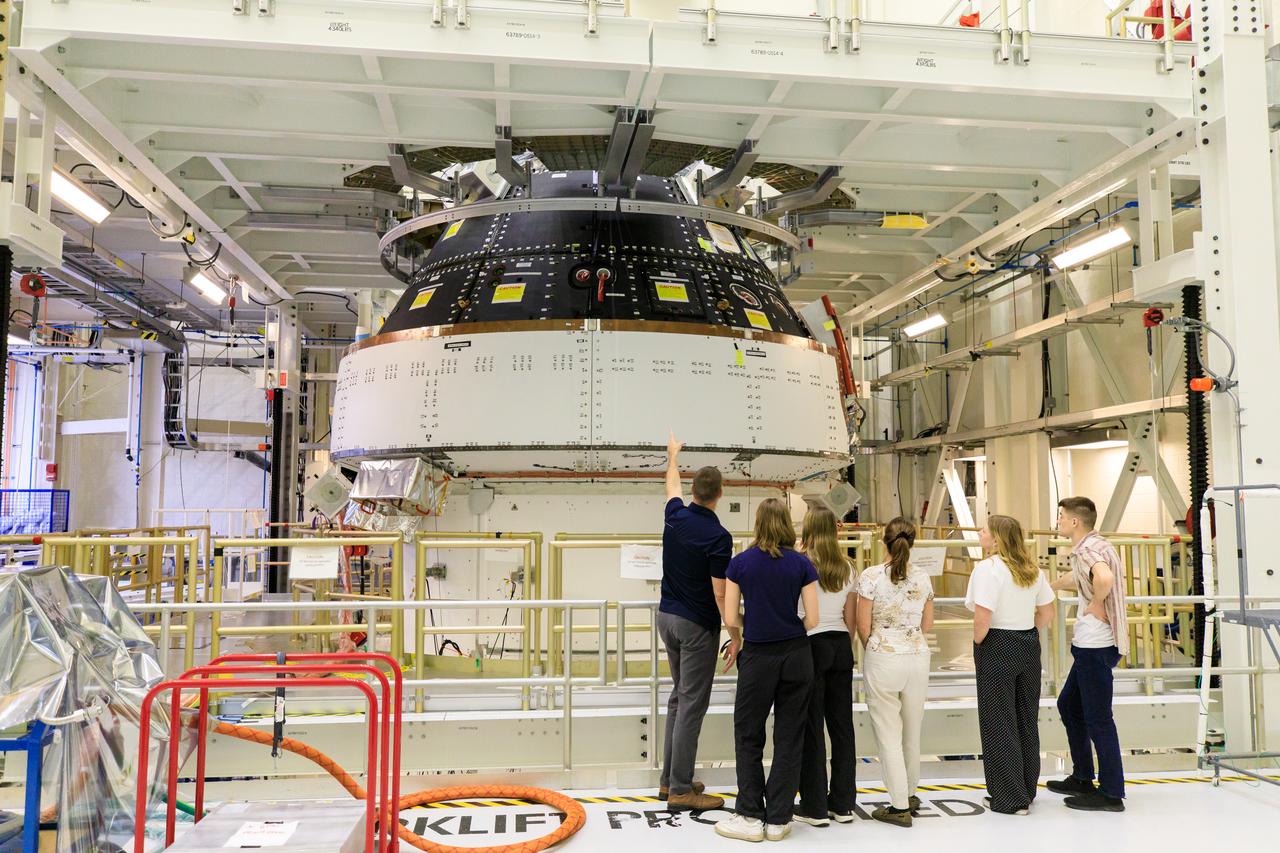
Artemis II Mission Specialist Jeremy Hansen and his family view the Orion spacecraft for Artemis II during a tour of the Neil A. Armstrong Operations and Checkout Building at NASA’s Kennedy Space Center in Florida, on Friday, March 15, 2024. Along with Artemis II Commander Reid Wiseman, Hansen toured the facility with family members and viewed the Orion crew modules, including the spacecraft that will take them, along with Artemis II Pilot Victor Glover and Artemis II Mission Specialist Christina Hammock Koch, around the Moon and back during the Artemis II mission.
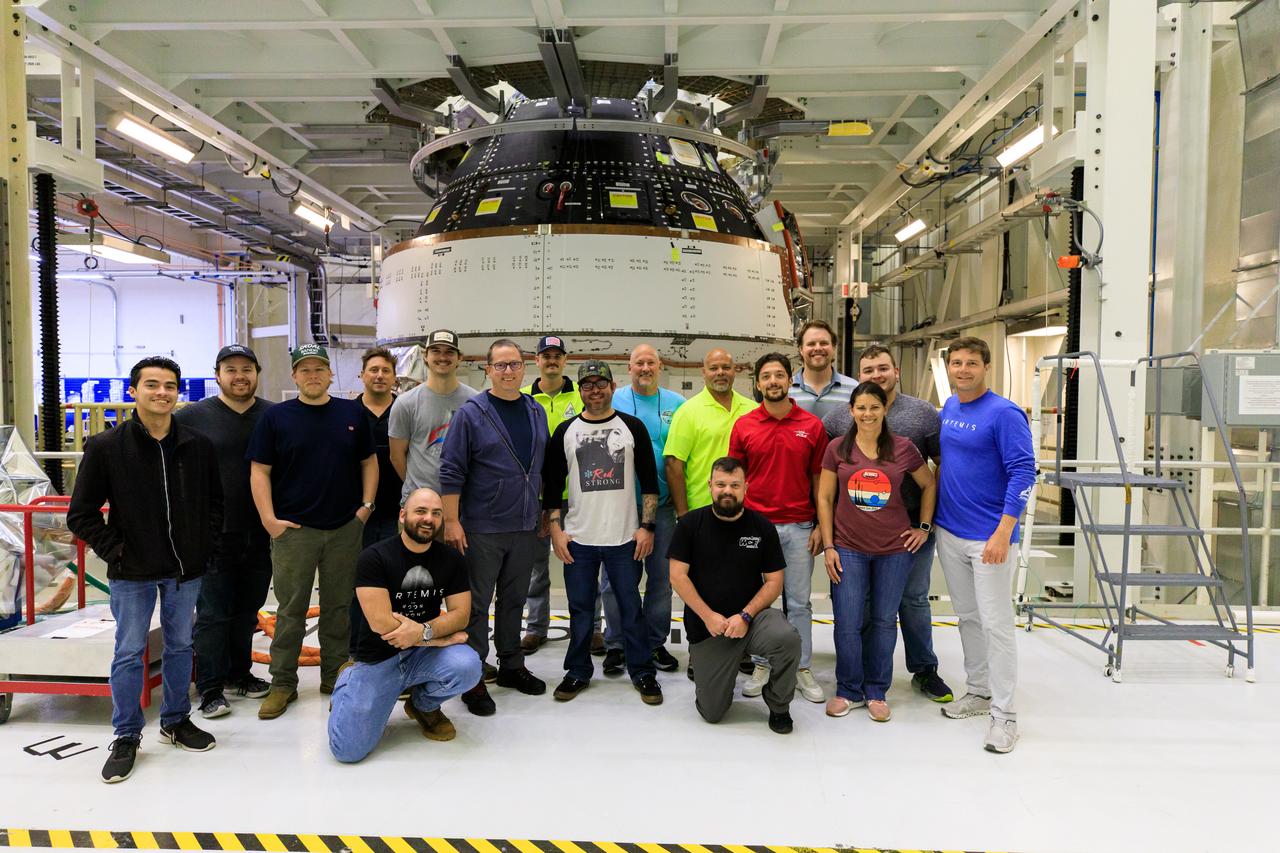
With the Artemis II Orion spacecraft in the background, Artemis II mission Commander Reid Wiseman, far right, poses for a photograph with employees from NASA, Lockheed Martin, and ASRC inside the Neil A. Armstrong Operations and Checkout Building at NASA’s Kennedy Space Center in Florida, on Friday, March 15, 2024. The Artemis II crew members toured the facility with family members and viewed the Orion crew modules, including the spacecraft that will take them, along with Artemis II Pilot Victor Glover and Artemis II Mission Specialist Christina Hammock Koch, around the Moon and back during the Artemis II mission.
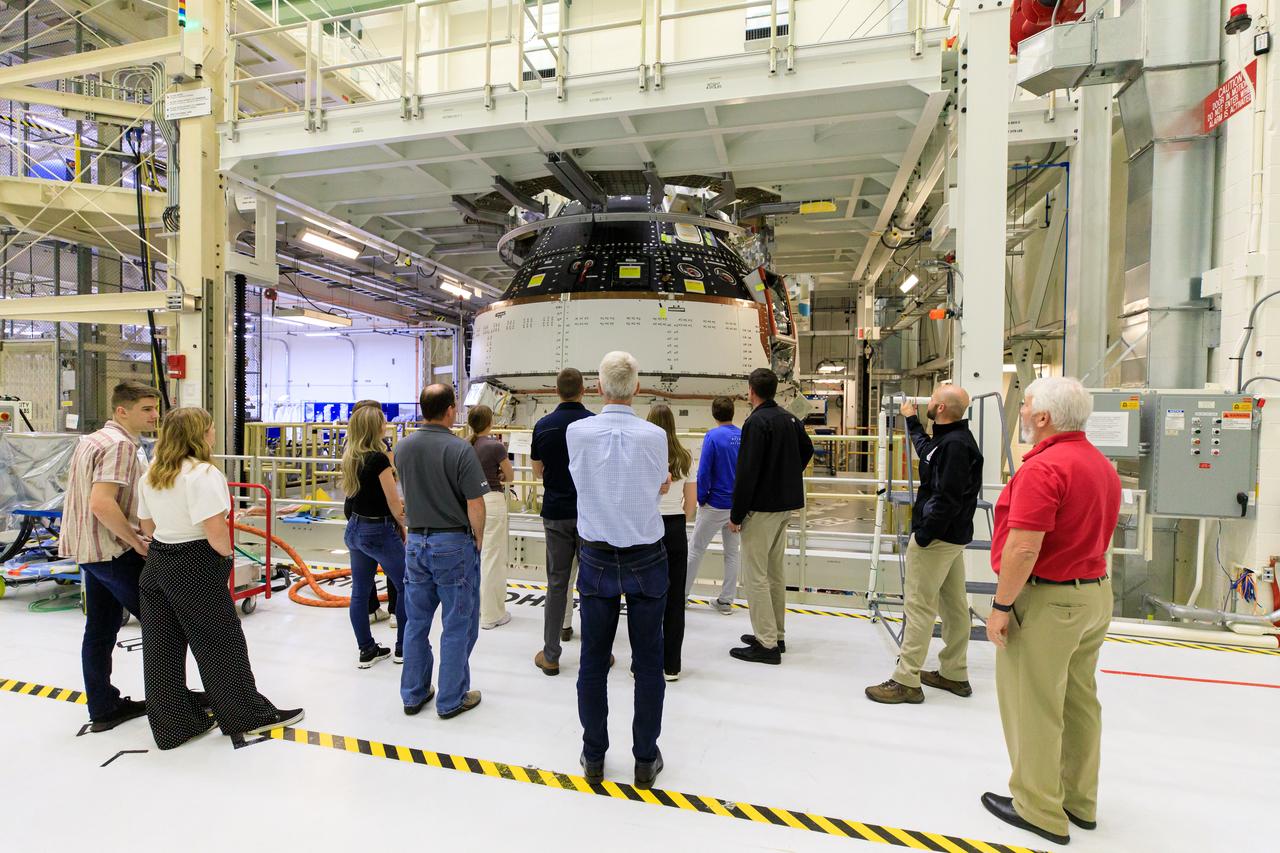
Artemis II crew members and their families view the Orion spacecraft for Artemis II during a tour of the Neil A. Armstrong Operations and Checkout Building at NASA’s Kennedy Space Center in Florida, on Friday, March 15, 2024. Artemis II Commander Reid Wiseman and Artemis II Mission Specialist Jeremy Hansen toured the facility with their families and viewed the Orion spacecraft for upcoming Artemis missions.
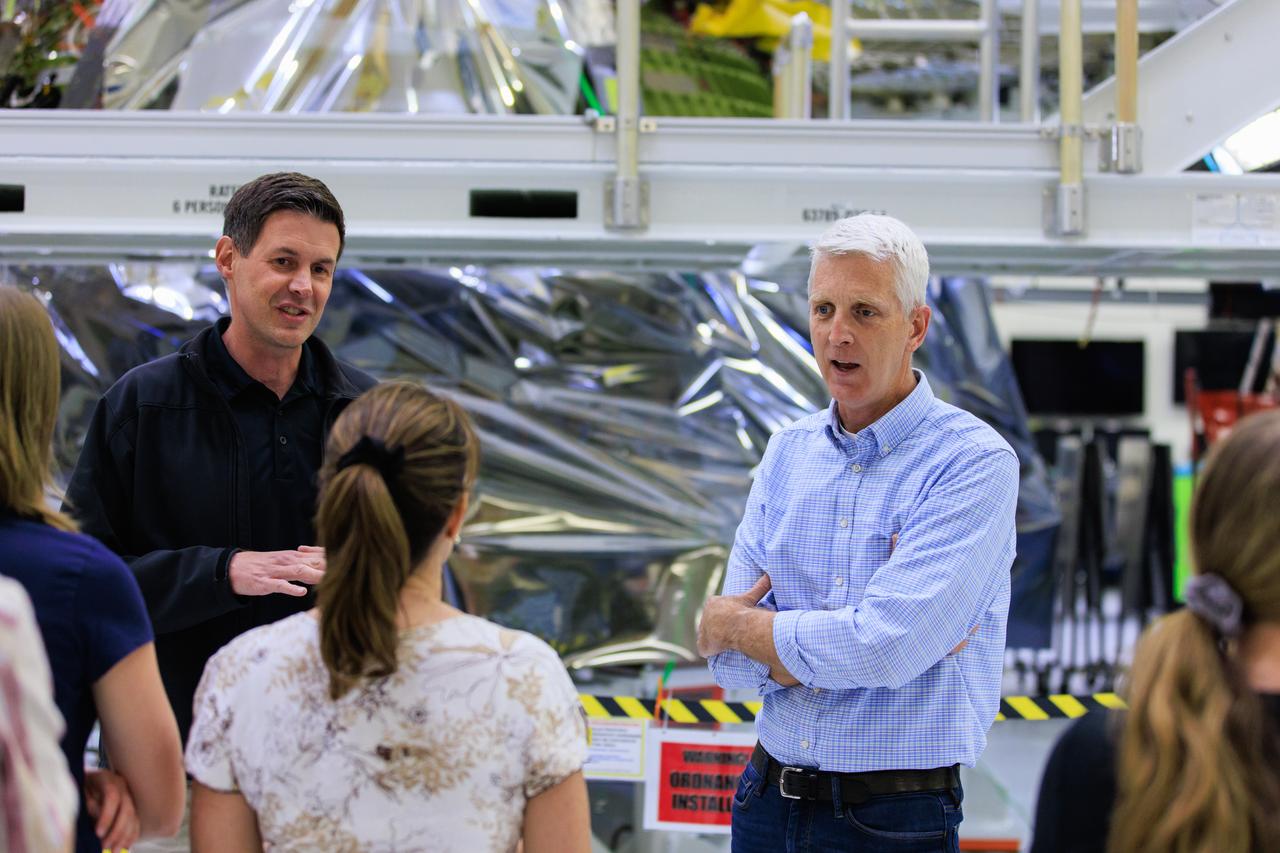
Nathan Varn, Program Director Orion Productions for Lockheed Martin, left, and Scott Wilson, NASA’s Division Chief, Orion Production Operations Office, lead a tour for Artemis II crew members and their families of the Neil A. Armstrong Operations and Checkout Building at NASA’s Kennedy Space Center in Florida, on Friday, March 15, 2024. Artemis II Commander Reid Wiseman and Artemis II Mission Specialist Jeremy Hansen toured the facility with their families and viewed the Orion crew modules, including the spacecraft that will take them, along with Artemis II Pilot Victor Glover and Artemis II Mission Specialist Christina Hammock Koch, around the Moon and back during the Artemis II mission.

The Orion spacecraft for NASA’s Artemis II mission is photographed inside the Final Assembly and System Testing cell at the Neil Armstrong Operations and Checkout Building at NASA’s Kennedy Space Center in Florida on Friday, March 15, 2024. Four astronauts will venture around the Moon in the Orion spacecraft on Artemis II, the first crewed mission on NASA's path to establishing a long-term presence at the Moon for science and exploration through the Artemis campaign.
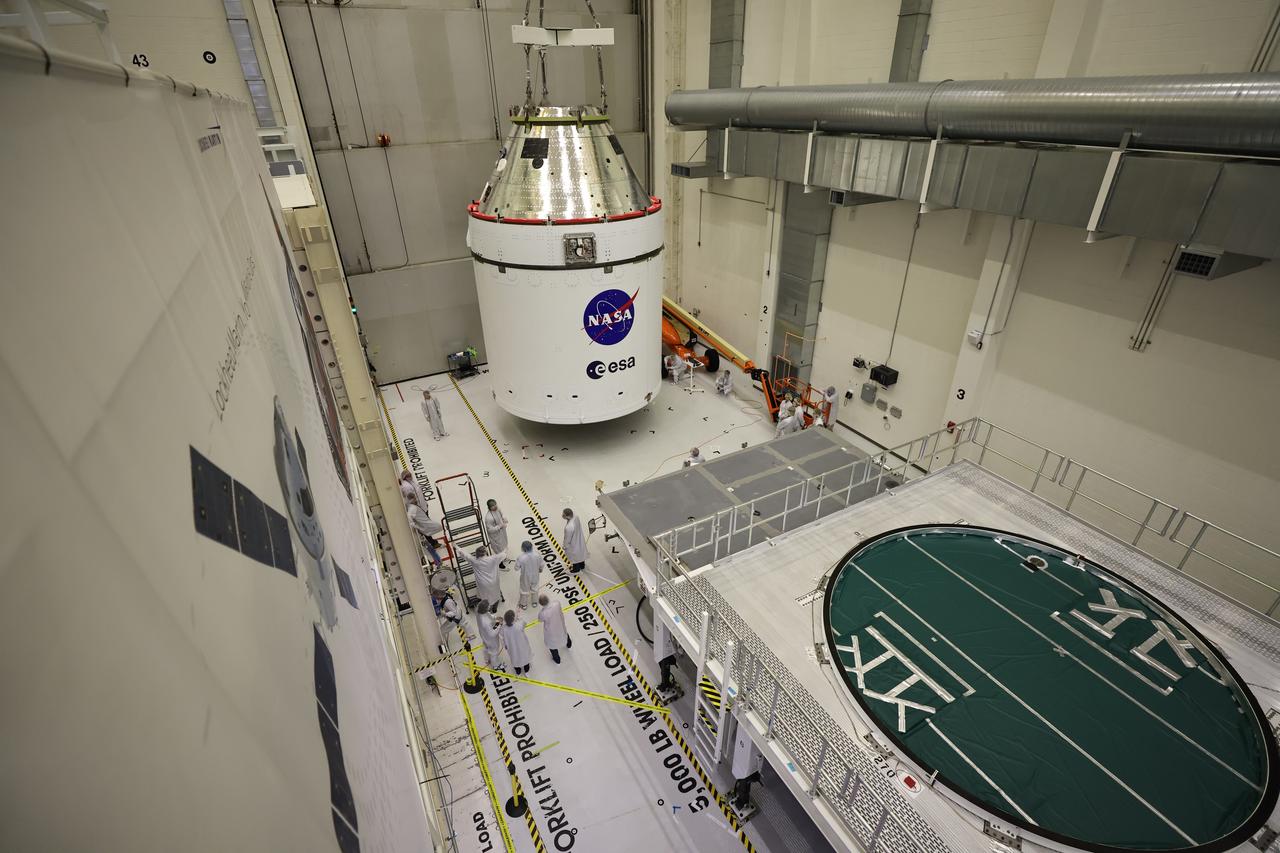
Crews use a massive crane to lift NASA’s Artemis II Orion spacecraft onto the agency’s KAMAG transporter inside the Neil A. Armstrong Operations and Checkout Building at Kennedy Space Center in Florida on Thursday, May 1, 2025. The spacecraft will be transported to the Multi-Payload Processing Facility to undergo fueling and processing for prelaunch operations. The Artemis II test flight is the first crewed flight under NASA’s Artemis campaign and is another step toward missions on the lunar surface and helping the agency prepare for future human missions to Mars.
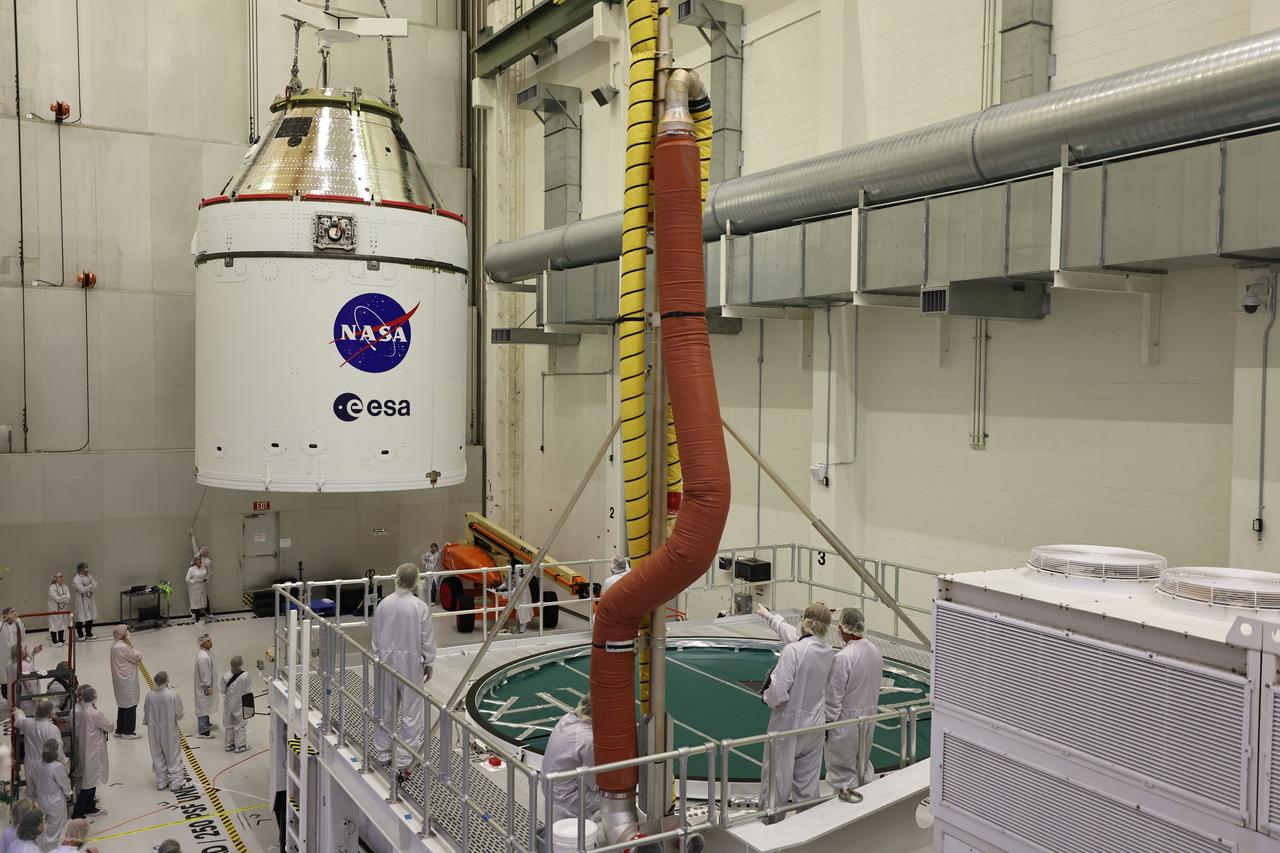
Crews use a massive crane to lift NASA’s Artemis II Orion spacecraft onto the agency’s KAMAG transporter inside the Neil A. Armstrong Operations and Checkout Building at Kennedy Space Center in Florida on Thursday, May 1, 2025. The spacecraft will be transported to the Multi-Payload Processing Facility to undergo fueling and processing for prelaunch operations. The Artemis II test flight is the first crewed flight under NASA’s Artemis campaign and is another step toward missions on the lunar surface and helping the agency prepare for future human missions to Mars.
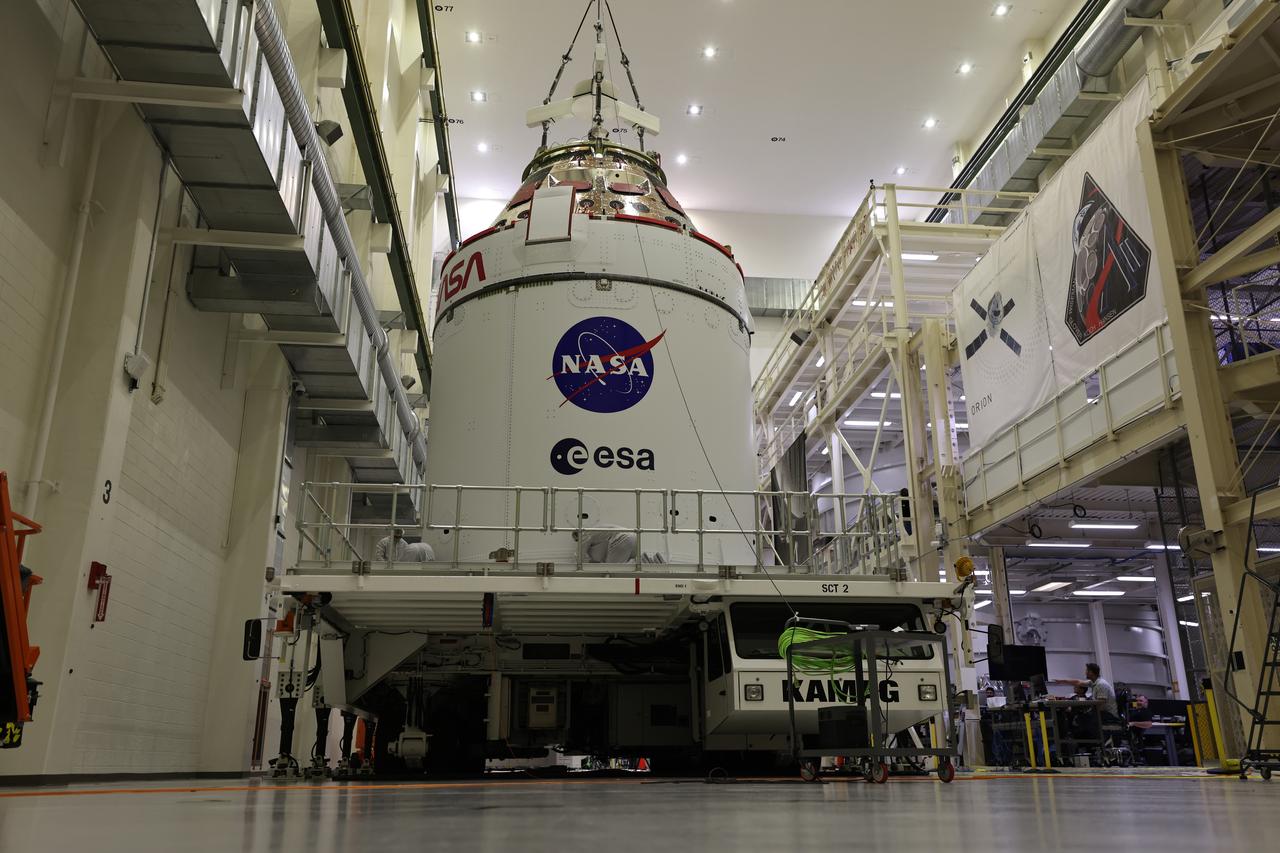
Crews use a massive crane to lift NASA’s Artemis II Orion spacecraft onto the agency’s KAMAG transporter inside the Neil A. Armstrong Operations and Checkout Building at Kennedy Space Center in Florida on Thursday, May 1, 2025. The spacecraft will be transported to the Multi-Payload Processing Facility to undergo fueling and processing for prelaunch operations. The Artemis II test flight is the first crewed flight under NASA’s Artemis campaign and is another step toward missions on the lunar surface and helping the agency prepare for future human missions to Mars.
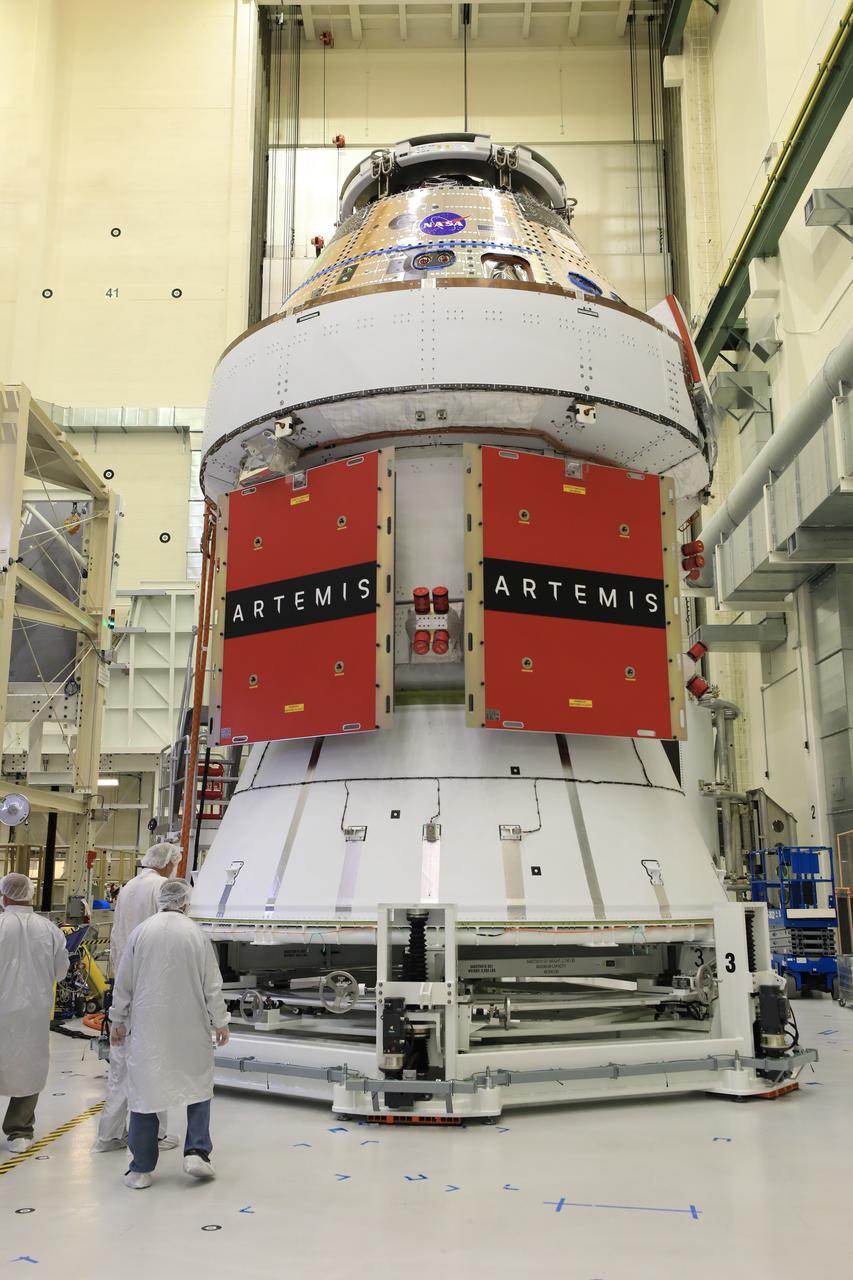
Technicians install four solar array wings on NASA’s Artemis II Orion spacecraft inside the Neil A. Armstrong Operations and Checkout Building at NASA’s Kennedy Space Center in Florida on Monday, March 3, 2025. Each solar array is nearly 23 feet long and can turn on two axes to remain aligned with the Sun for maximum power. Orion’s solar arrays, manufactured and installed by ESA (European Space Agency) and its contractor Airbus, will deliver power to the service module that provides propulsion, thermal control, and electrical power to the spacecraft, as well as air and water for the crew.
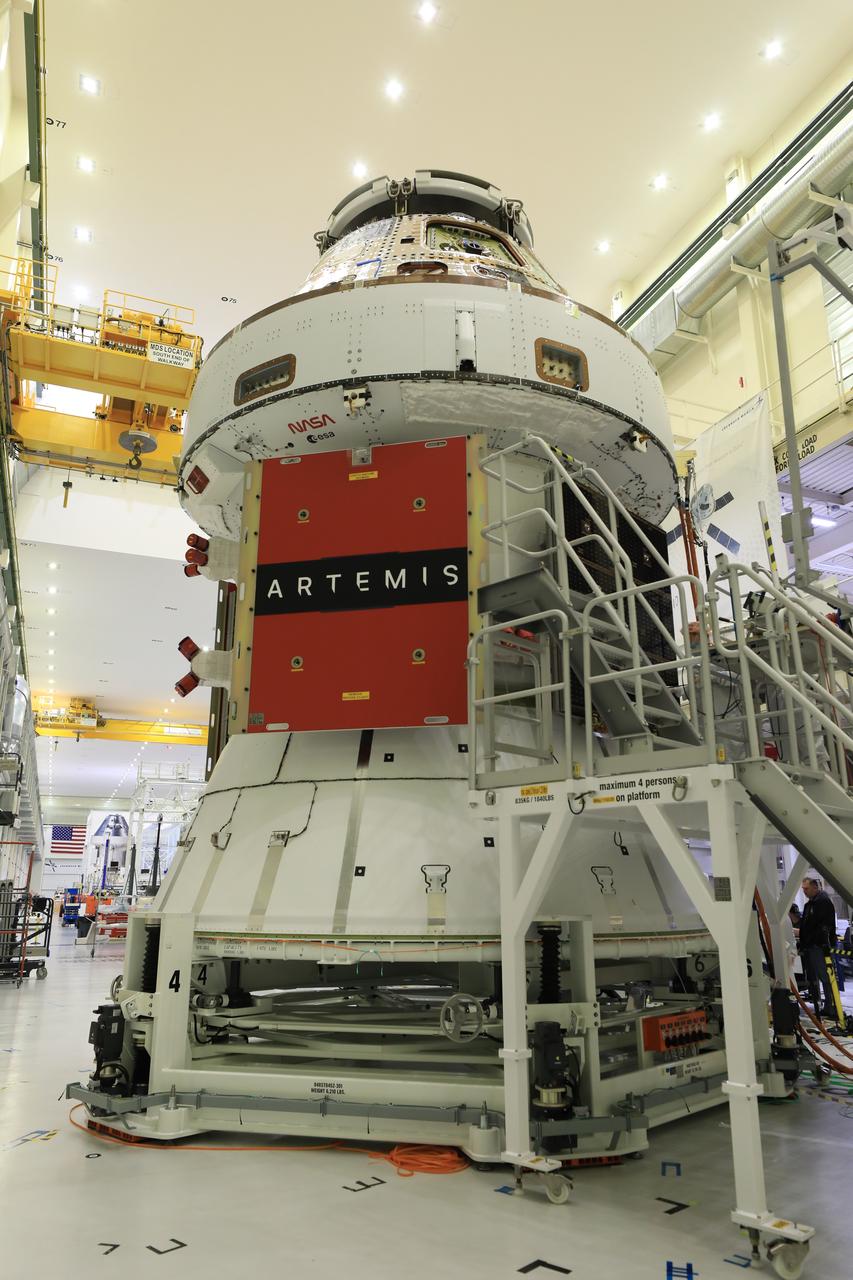
Technicians install four solar array wings on NASA’s Artemis II Orion spacecraft inside the Neil A. Armstrong Operations and Checkout Building at NASA’s Kennedy Space Center in Florida on Monday, March 3, 2025. Each solar array is nearly 23 feet long and can turn on two axes to remain aligned with the Sun for maximum power. Orion’s solar arrays, manufactured and installed by ESA (European Space Agency) and its contractor Airbus, will deliver power to the service module that provides propulsion, thermal control, and electrical power to the spacecraft, as well as air and water for the crew.
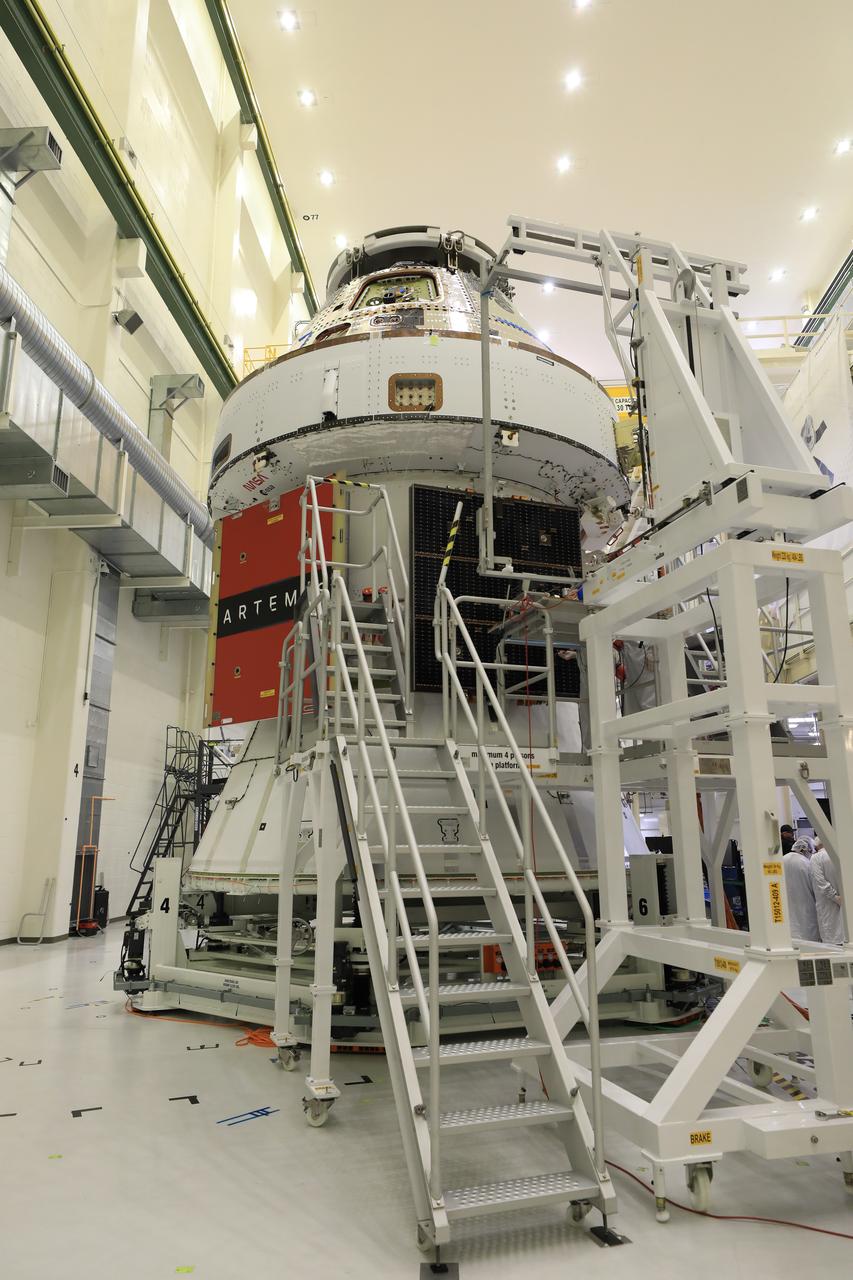
Technicians install four solar array wings on NASA’s Artemis II Orion spacecraft inside the Neil A. Armstrong Operations and Checkout Building at NASA’s Kennedy Space Center in Florida on Monday, March 3, 2025. Each solar array is nearly 23 feet long and can turn on two axes to remain aligned with the Sun for maximum power. Orion’s solar arrays, manufactured and installed by ESA (European Space Agency) and its contractor Airbus, will deliver power to the service module that provides propulsion, thermal control, and electrical power to the spacecraft, as well as air and water for the crew.
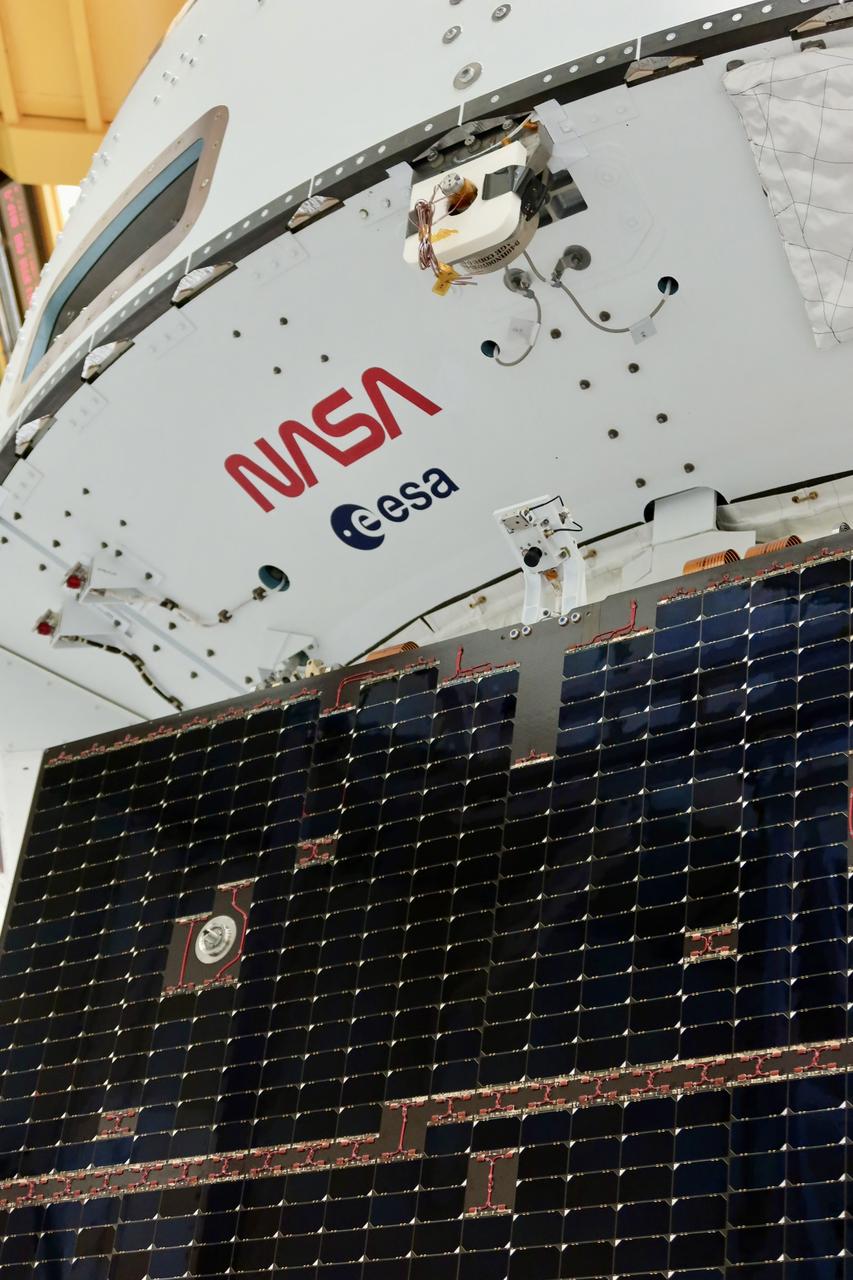
Technicians install four solar array wings on NASA’s Artemis II Orion spacecraft inside the Neil A. Armstrong Operations and Checkout Building at NASA’s Kennedy Space Center in Florida on Monday, March 3, 2025. Each solar array is nearly 23 feet long and can turn on two axes to remain aligned with the Sun for maximum power. Orion’s solar arrays, manufactured and installed by ESA (European Space Agency) and its contractor Airbus, will deliver power to the service module that provides propulsion, thermal control, and electrical power to the spacecraft, as well as air and water for the crew.
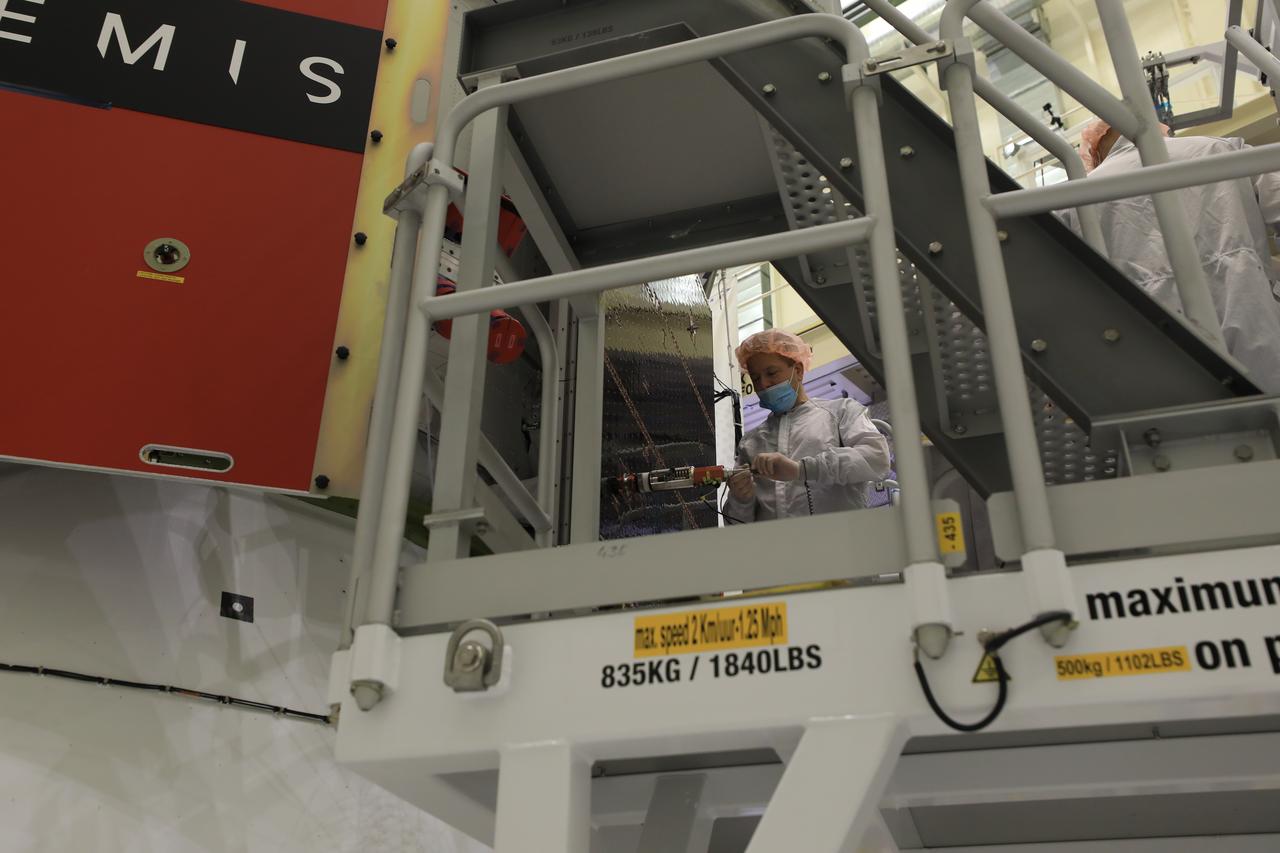
Technicians install four solar array wings on NASA’s Artemis II Orion spacecraft inside the Neil A. Armstrong Operations and Checkout Building at NASA’s Kennedy Space Center in Florida on Monday, March 3, 2025. Each solar array is nearly 23 feet long and can turn on two axes to remain aligned with the Sun for maximum power. Orion’s solar arrays, manufactured and installed by ESA (European Space Agency) and its contractor Airbus, will deliver power to the service module that provides propulsion, thermal control, and electrical power to the spacecraft, as well as air and water for the crew.
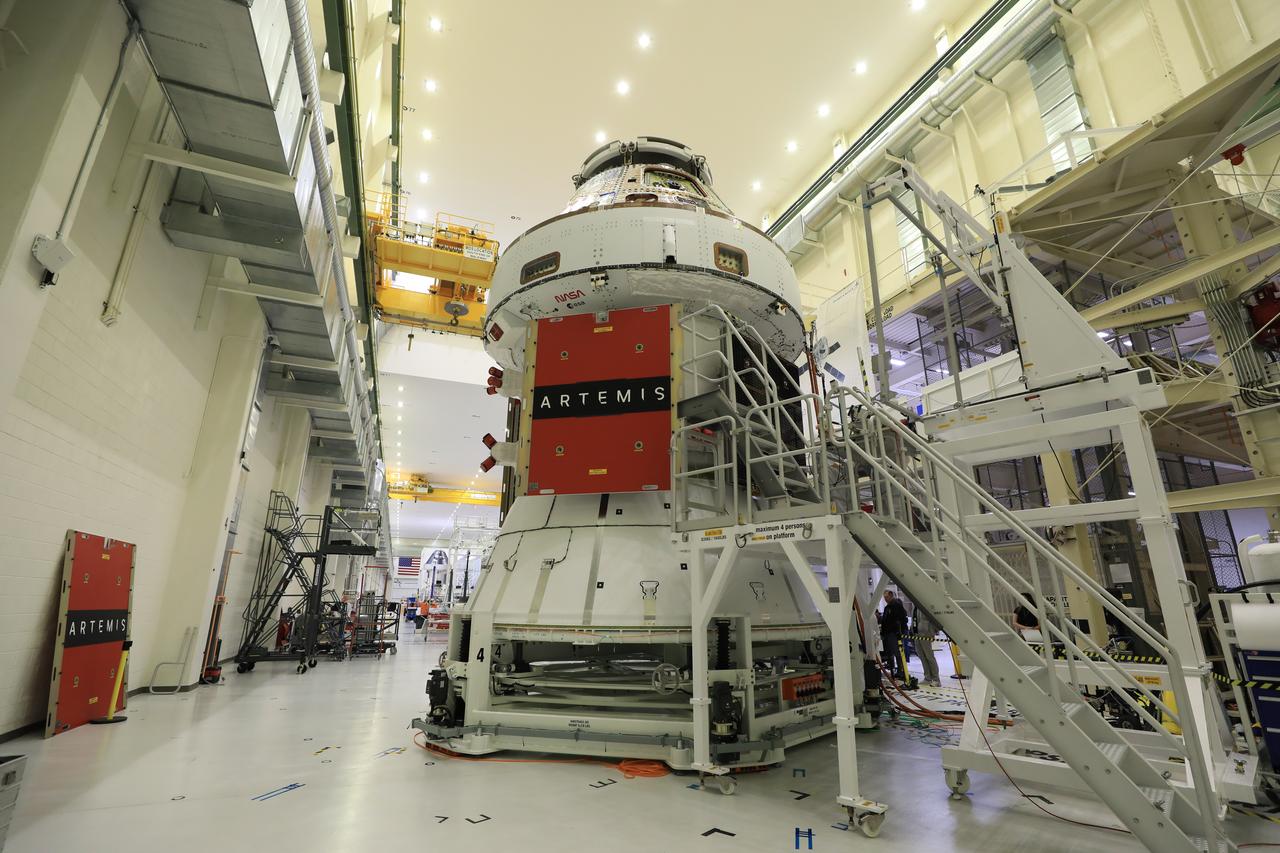
Technicians install four solar array wings on NASA’s Artemis II Orion spacecraft inside the Neil A. Armstrong Operations and Checkout Building at NASA’s Kennedy Space Center in Florida on Monday, March 3, 2025. Each solar array is nearly 23 feet long and can turn on two axes to remain aligned with the Sun for maximum power. Orion’s solar arrays, manufactured and installed by ESA (European Space Agency) and its contractor Airbus, will deliver power to the service module that provides propulsion, thermal control, and electrical power to the spacecraft, as well as air and water for the crew.
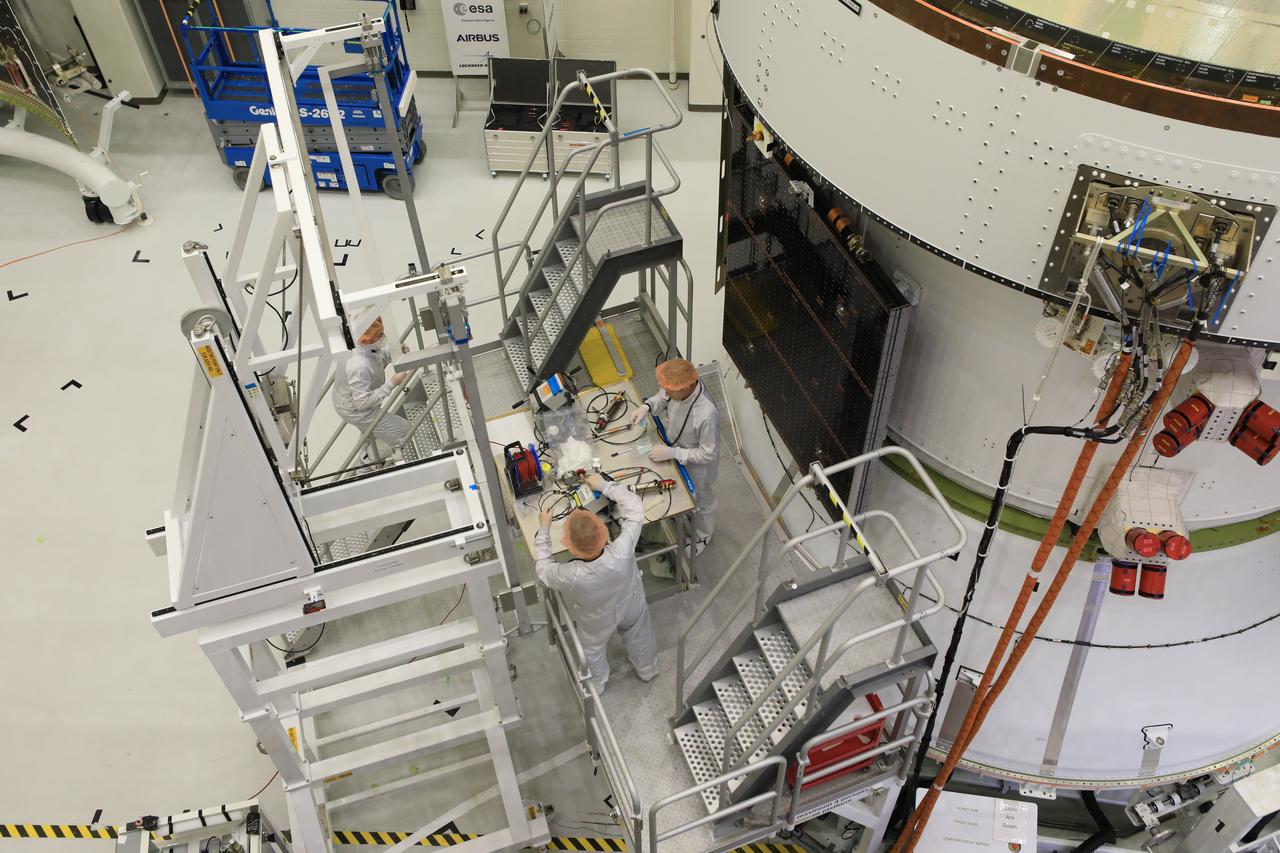
Technicians install four solar array wings on NASA’s Artemis II Orion spacecraft inside the Neil A. Armstrong Operations and Checkout Building at NASA’s Kennedy Space Center in Florida on Monday, March 3, 2025. Each solar array is nearly 23 feet long and can turn on two axes to remain aligned with the Sun for maximum power. Orion’s solar arrays, manufactured and installed by ESA (European Space Agency) and its contractor Airbus, will deliver power to the service module that provides propulsion, thermal control, and electrical power to the spacecraft, as well as air and water for the crew.
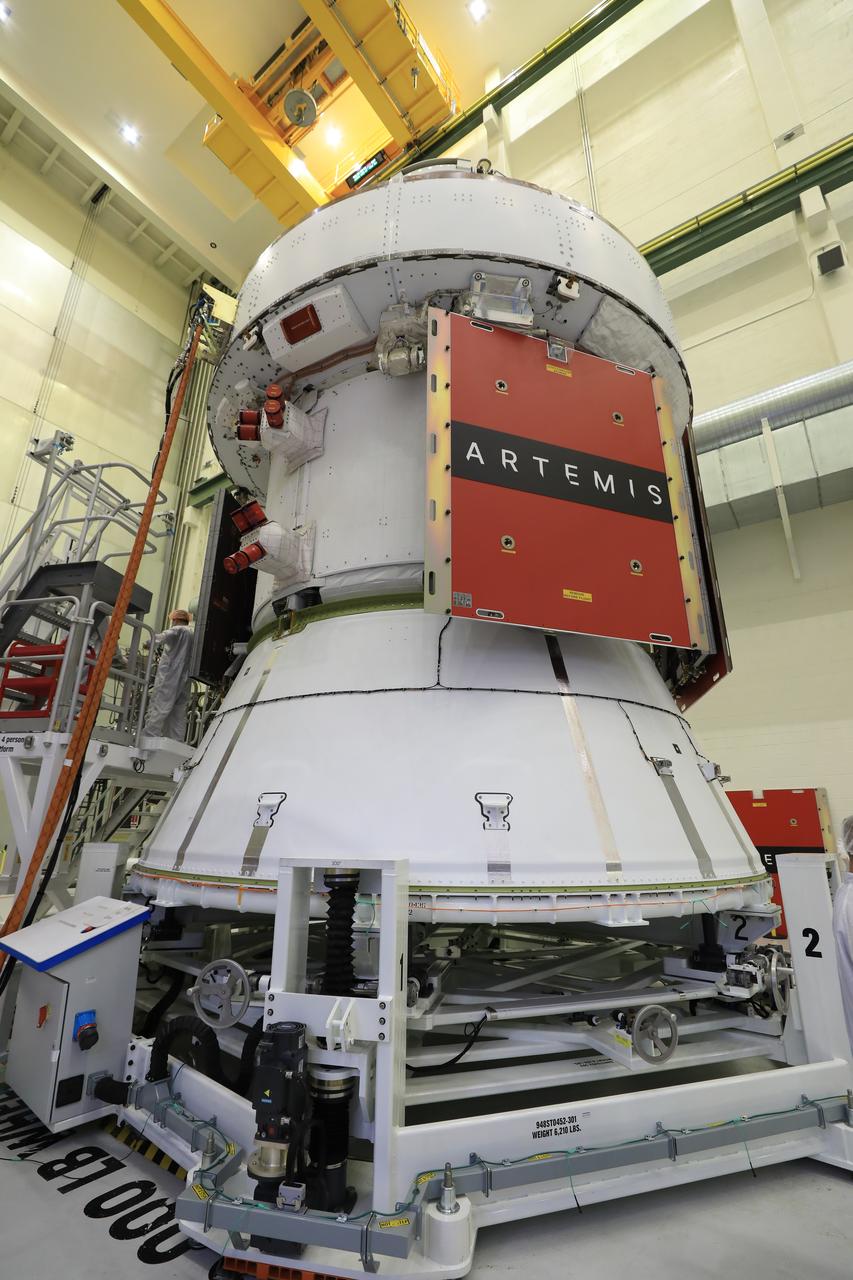
Technicians install four solar array wings on NASA’s Artemis II Orion spacecraft inside the Neil A. Armstrong Operations and Checkout Building at NASA’s Kennedy Space Center in Florida on Monday, March 3, 2025. Each solar array is nearly 23 feet long and can turn on two axes to remain aligned with the Sun for maximum power. Orion’s solar arrays, manufactured and installed by ESA (European Space Agency) and its contractor Airbus, will deliver power to the service module that provides propulsion, thermal control, and electrical power to the spacecraft, as well as air and water for the crew.
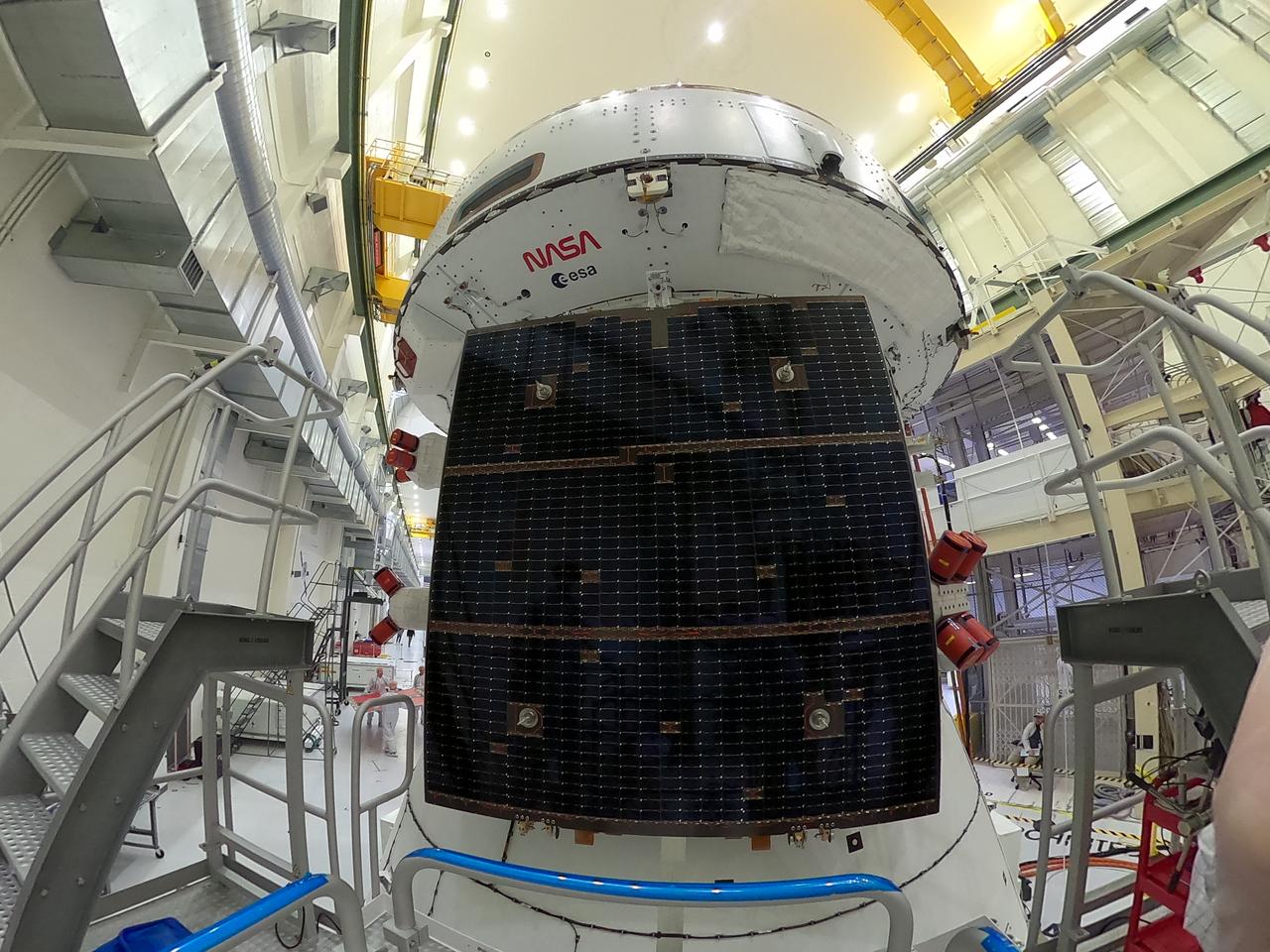
Technicians install four solar array wings on NASA’s Artemis II Orion spacecraft inside the Neil A. Armstrong Operations and Checkout Building at NASA’s Kennedy Space Center in Florida on Monday, March 3, 2025. Each solar array is nearly 23 feet long and can turn on two axes to remain aligned with the Sun for maximum power. Orion’s solar arrays, manufactured and installed by ESA (European Space Agency) and its contractor Airbus, will deliver power to the service module that provides propulsion, thermal control, and electrical power to the spacecraft, as well as air and water for the crew.
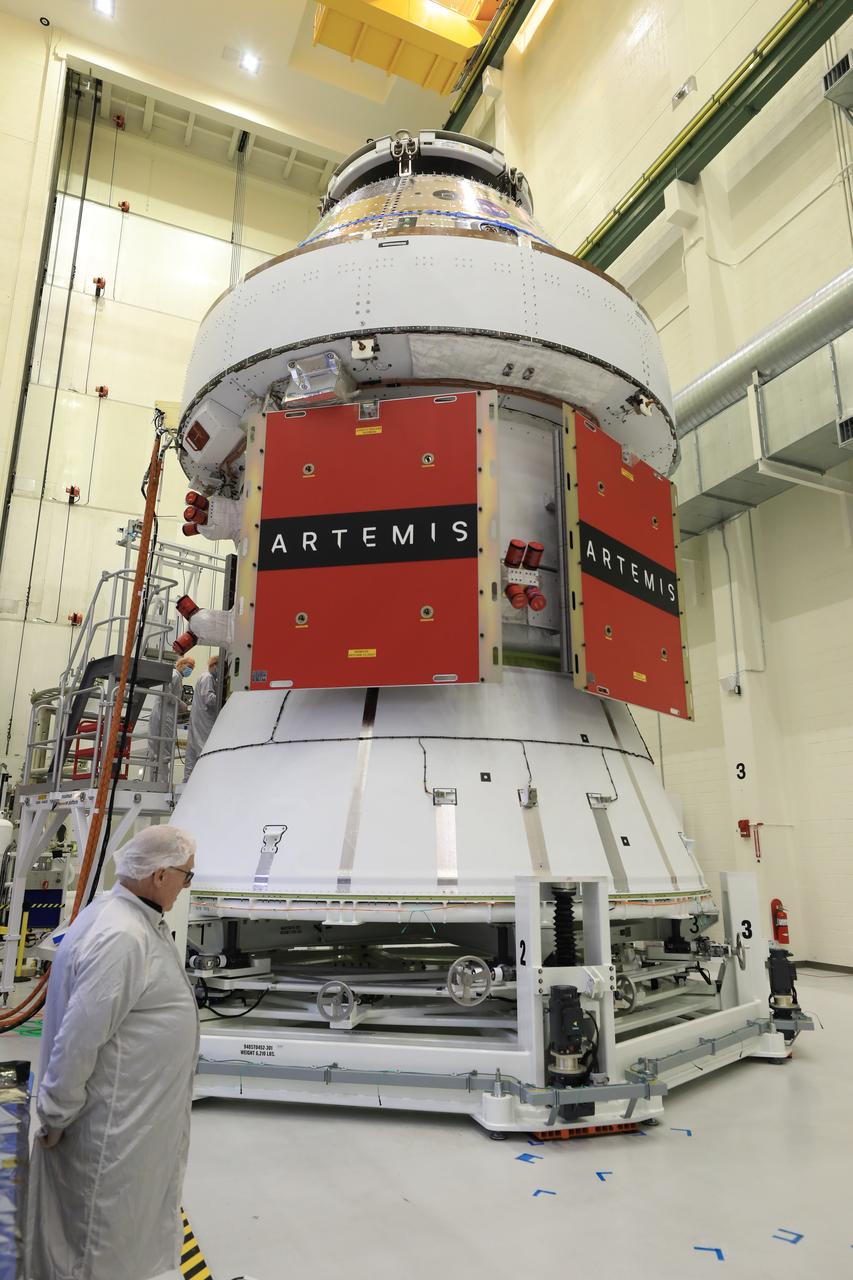
Technicians install four solar array wings on NASA’s Artemis II Orion spacecraft inside the Neil A. Armstrong Operations and Checkout Building at NASA’s Kennedy Space Center in Florida on Monday, March 3, 2025. Each solar array is nearly 23 feet long and can turn on two axes to remain aligned with the Sun for maximum power. Orion’s solar arrays, manufactured and installed by ESA (European Space Agency) and its contractor Airbus, will deliver power to the service module that provides propulsion, thermal control, and electrical power to the spacecraft, as well as air and water for the crew.
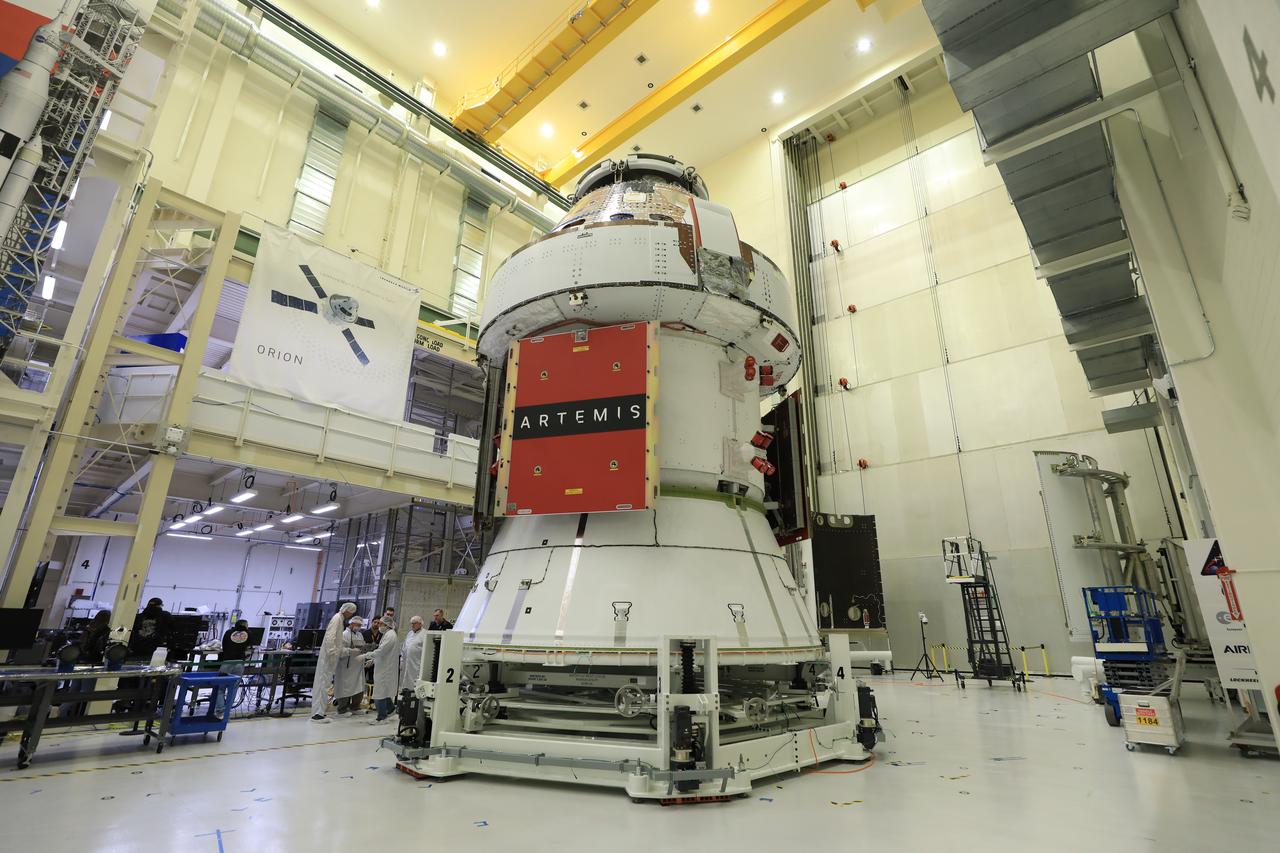
Technicians install four solar array wings on NASA’s Artemis II Orion spacecraft inside the Neil A. Armstrong Operations and Checkout Building at NASA’s Kennedy Space Center in Florida on Monday, March 3, 2025. Each solar array is nearly 23 feet long and can turn on two axes to remain aligned with the Sun for maximum power. Orion’s solar arrays, manufactured and installed by ESA (European Space Agency) and its contractor Airbus, will deliver power to the service module that provides propulsion, thermal control, and electrical power to the spacecraft, as well as air and water for the crew.
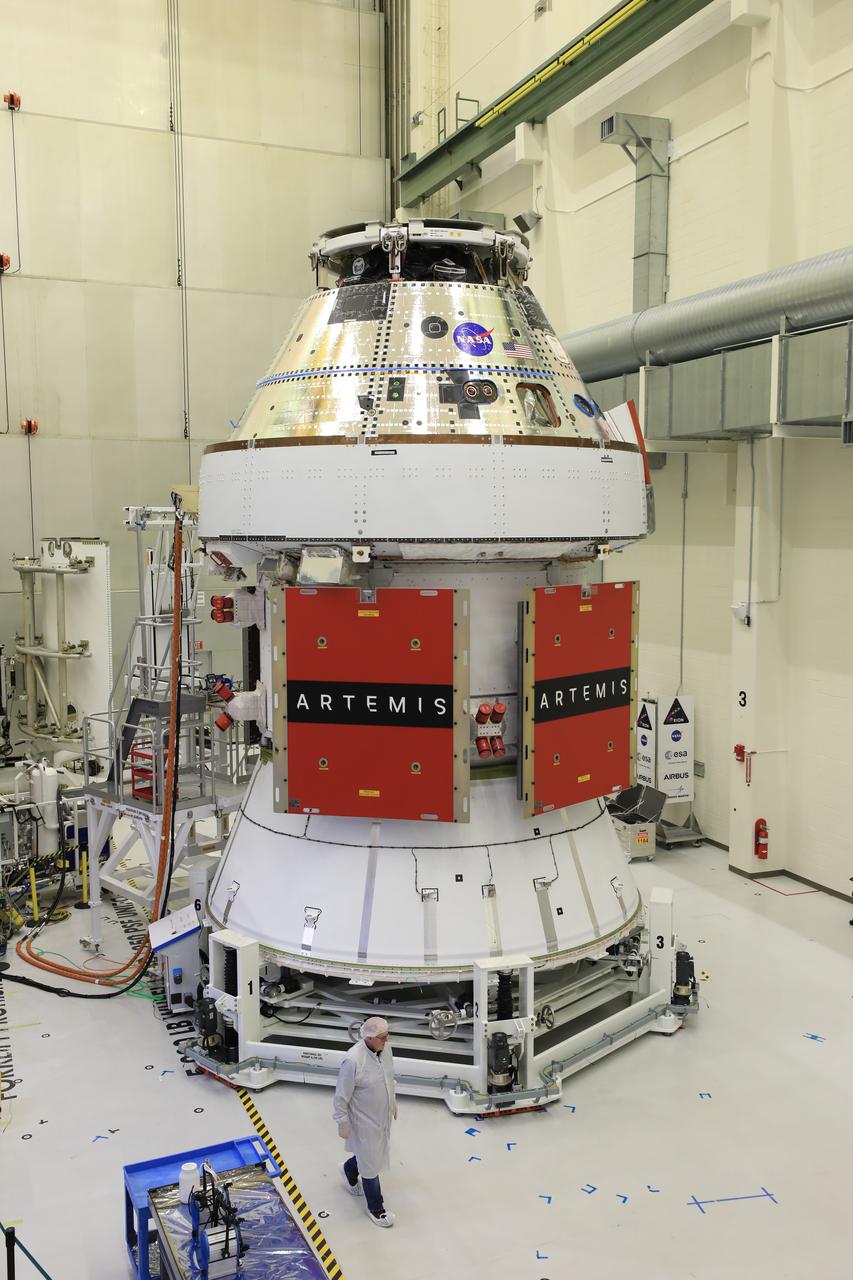
Technicians install four solar array wings on NASA’s Artemis II Orion spacecraft inside the Neil A. Armstrong Operations and Checkout Building at NASA’s Kennedy Space Center in Florida on Monday, March 3, 2025. Each solar array is nearly 23 feet long and can turn on two axes to remain aligned with the Sun for maximum power. Orion’s solar arrays, manufactured and installed by ESA (European Space Agency) and its contractor Airbus, will deliver power to the service module that provides propulsion, thermal control, and electrical power to the spacecraft, as well as air and water for the crew.
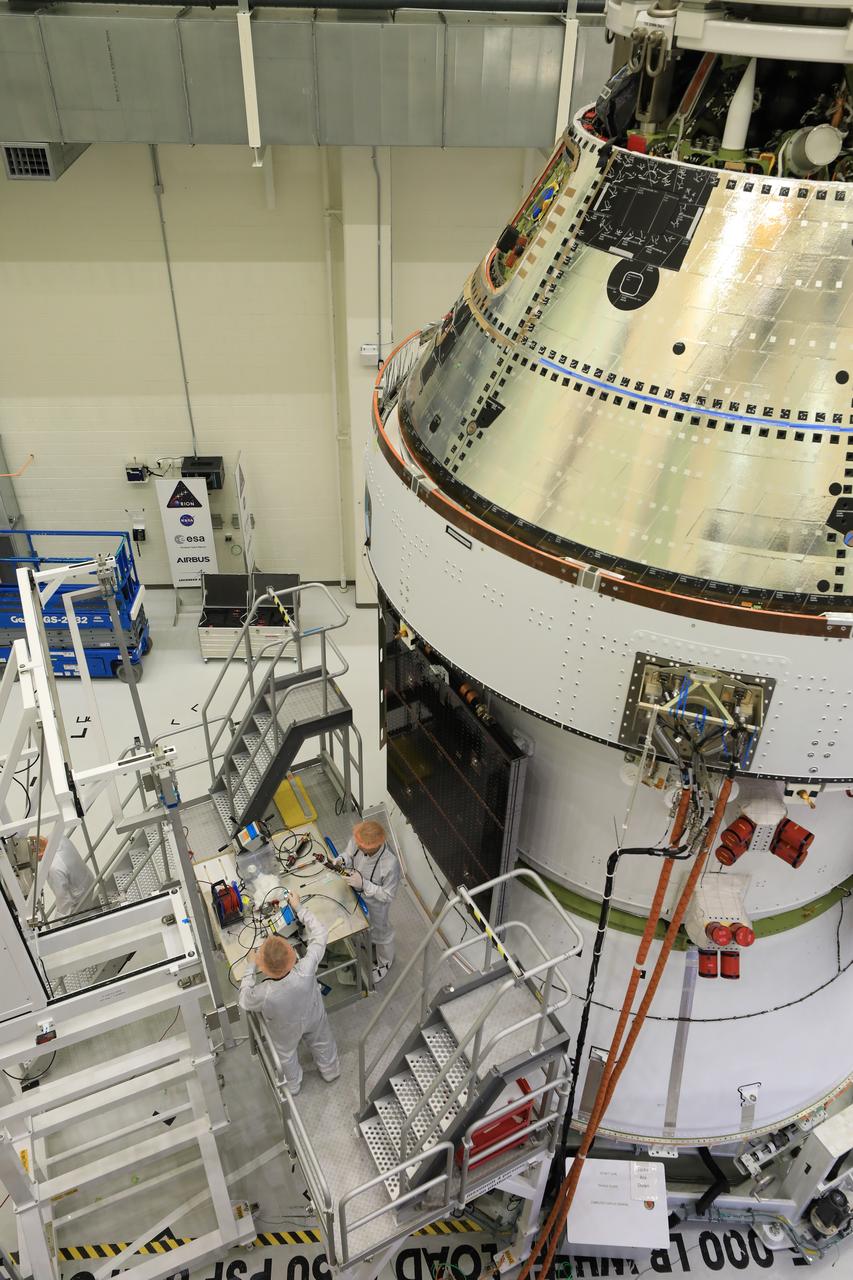
Technicians install four solar array wings on NASA’s Artemis II Orion spacecraft inside the Neil A. Armstrong Operations and Checkout Building at NASA’s Kennedy Space Center in Florida on Monday, March 3, 2025. Each solar array is nearly 23 feet long and can turn on two axes to remain aligned with the Sun for maximum power. Orion’s solar arrays, manufactured and installed by ESA (European Space Agency) and its contractor Airbus, will deliver power to the service module that provides propulsion, thermal control, and electrical power to the spacecraft, as well as air and water for the crew.
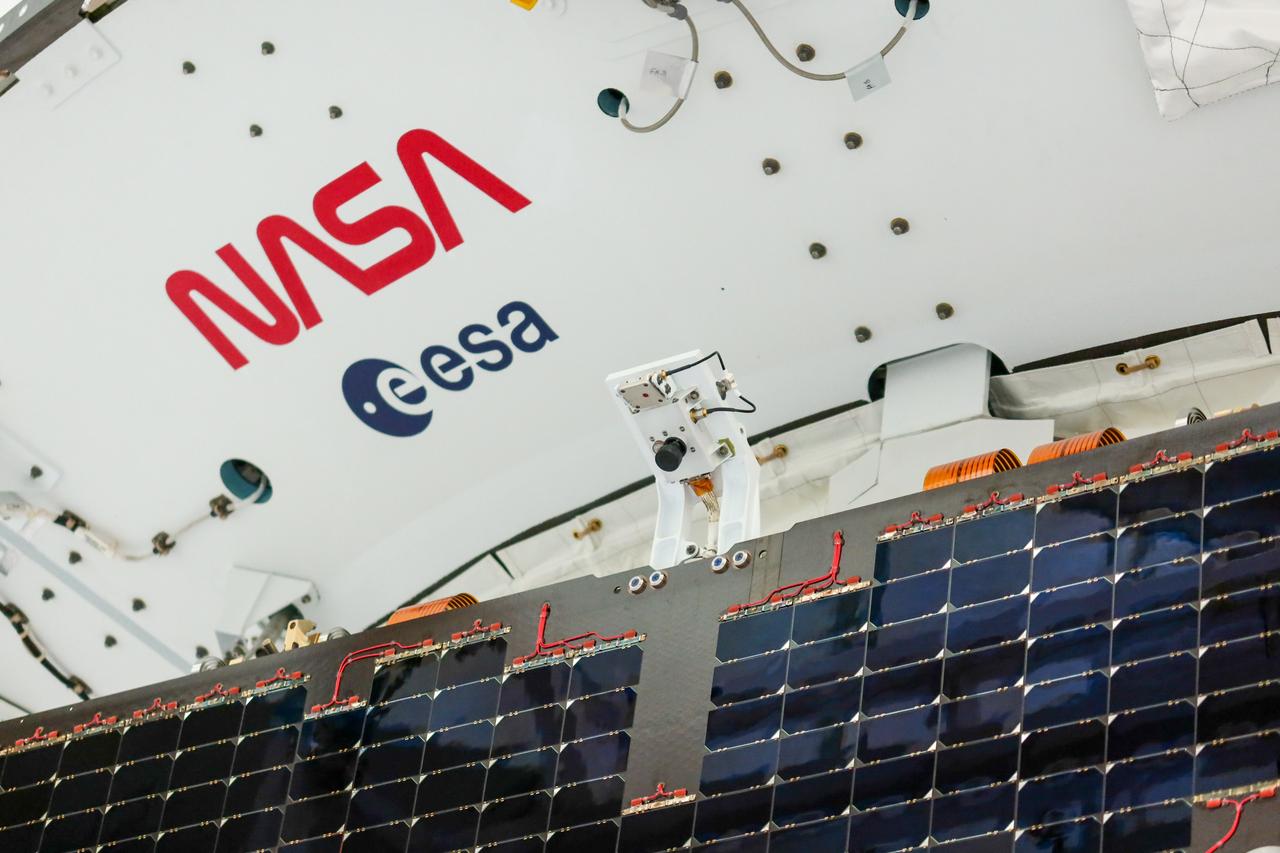
Technicians install four solar array wings on NASA’s Artemis II Orion spacecraft inside the Neil A. Armstrong Operations and Checkout Building at NASA’s Kennedy Space Center in Florida on Monday, March 3, 2025. Each solar array is nearly 23 feet long and can turn on two axes to remain aligned with the Sun for maximum power. Orion’s solar arrays, manufactured and installed by ESA (European Space Agency) and its contractor Airbus, will deliver power to the service module that provides propulsion, thermal control, and electrical power to the spacecraft, as well as air and water for the crew.
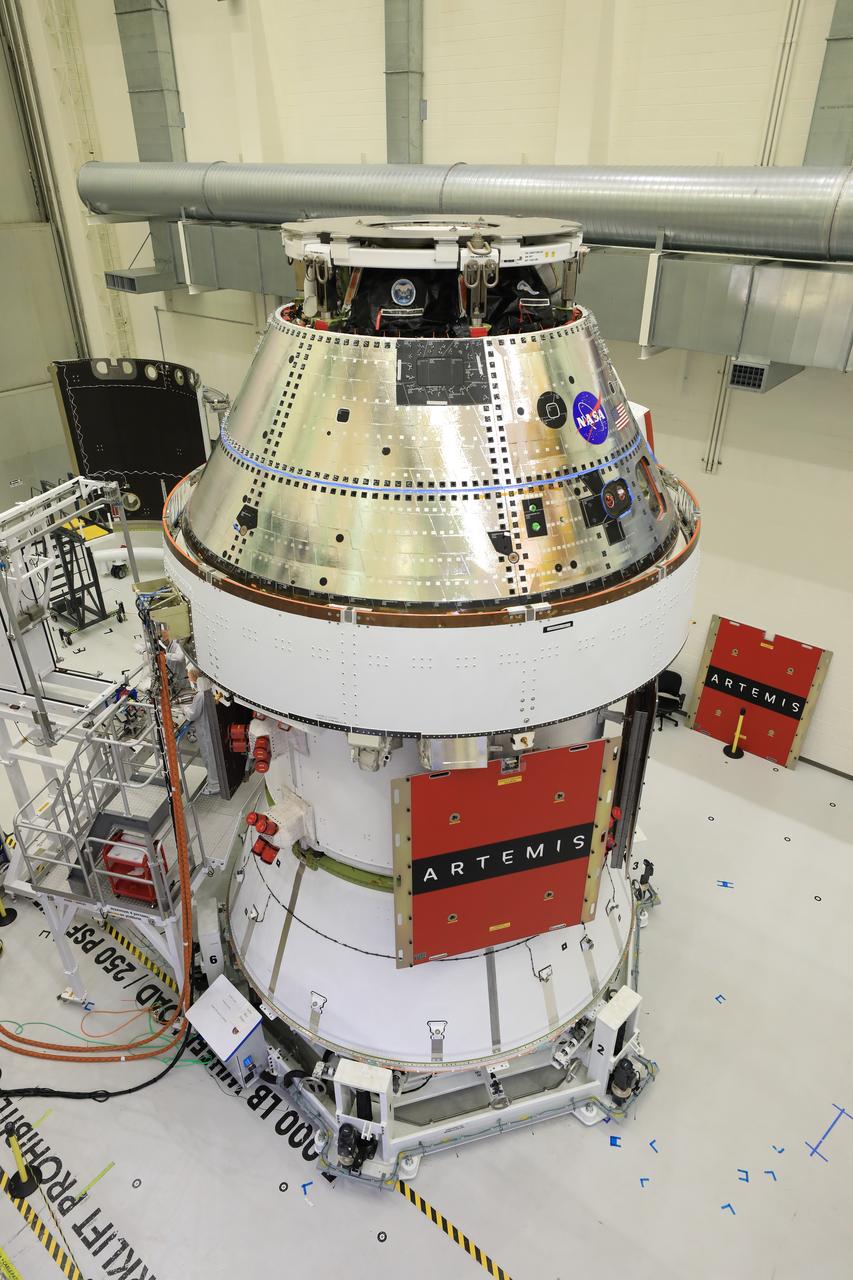
Technicians install four solar array wings on NASA’s Artemis II Orion spacecraft inside the Neil A. Armstrong Operations and Checkout Building at NASA’s Kennedy Space Center in Florida on Monday, March 3, 2025. Each solar array is nearly 23 feet long and can turn on two axes to remain aligned with the Sun for maximum power. Orion’s solar arrays, manufactured and installed by ESA (European Space Agency) and its contractor Airbus, will deliver power to the service module that provides propulsion, thermal control, and electrical power to the spacecraft, as well as air and water for the crew.
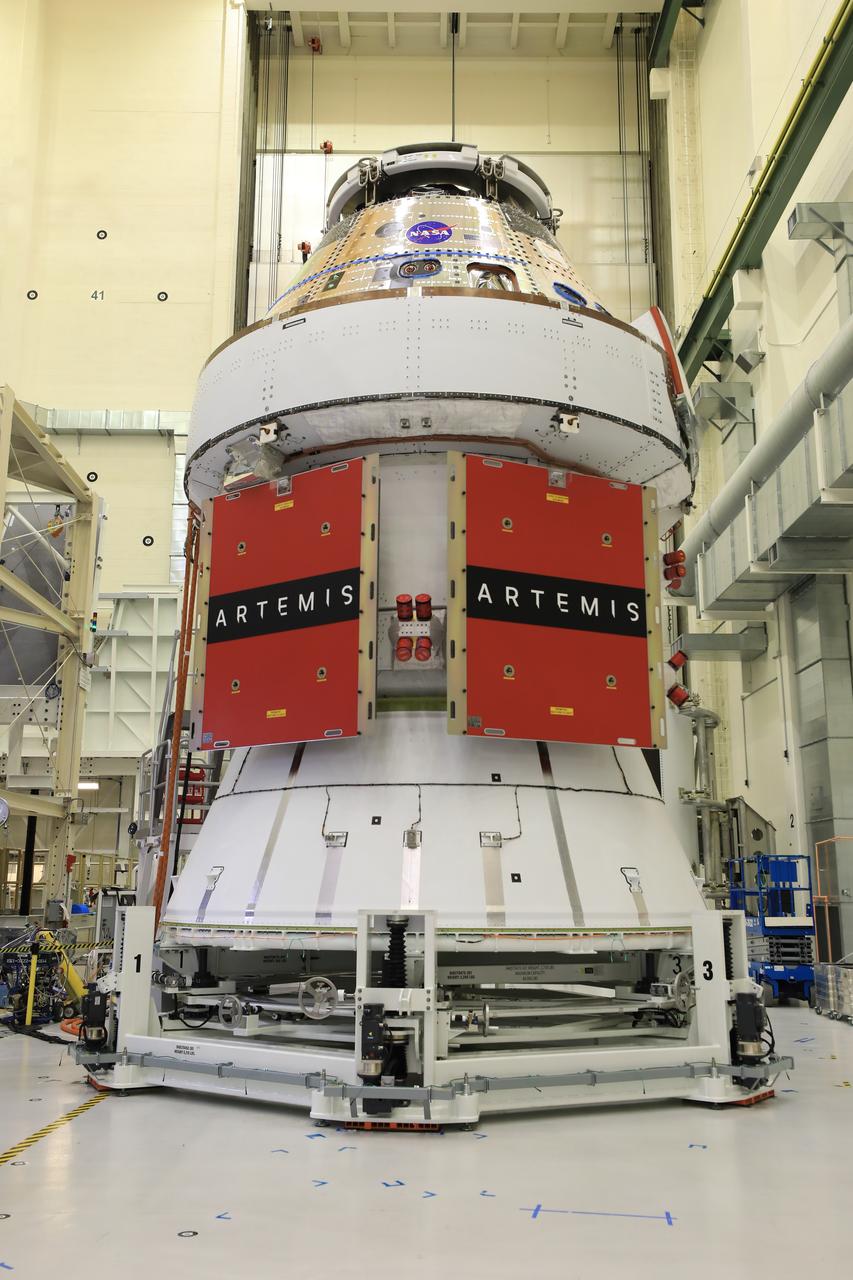
Technicians install four solar array wings on NASA’s Artemis II Orion spacecraft inside the Neil A. Armstrong Operations and Checkout Building at NASA’s Kennedy Space Center in Florida on Monday, March 3, 2025. Each solar array is nearly 23 feet long and can turn on two axes to remain aligned with the Sun for maximum power. Orion’s solar arrays, manufactured and installed by ESA (European Space Agency) and its contractor Airbus, will deliver power to the service module that provides propulsion, thermal control, and electrical power to the spacecraft, as well as air and water for the crew.
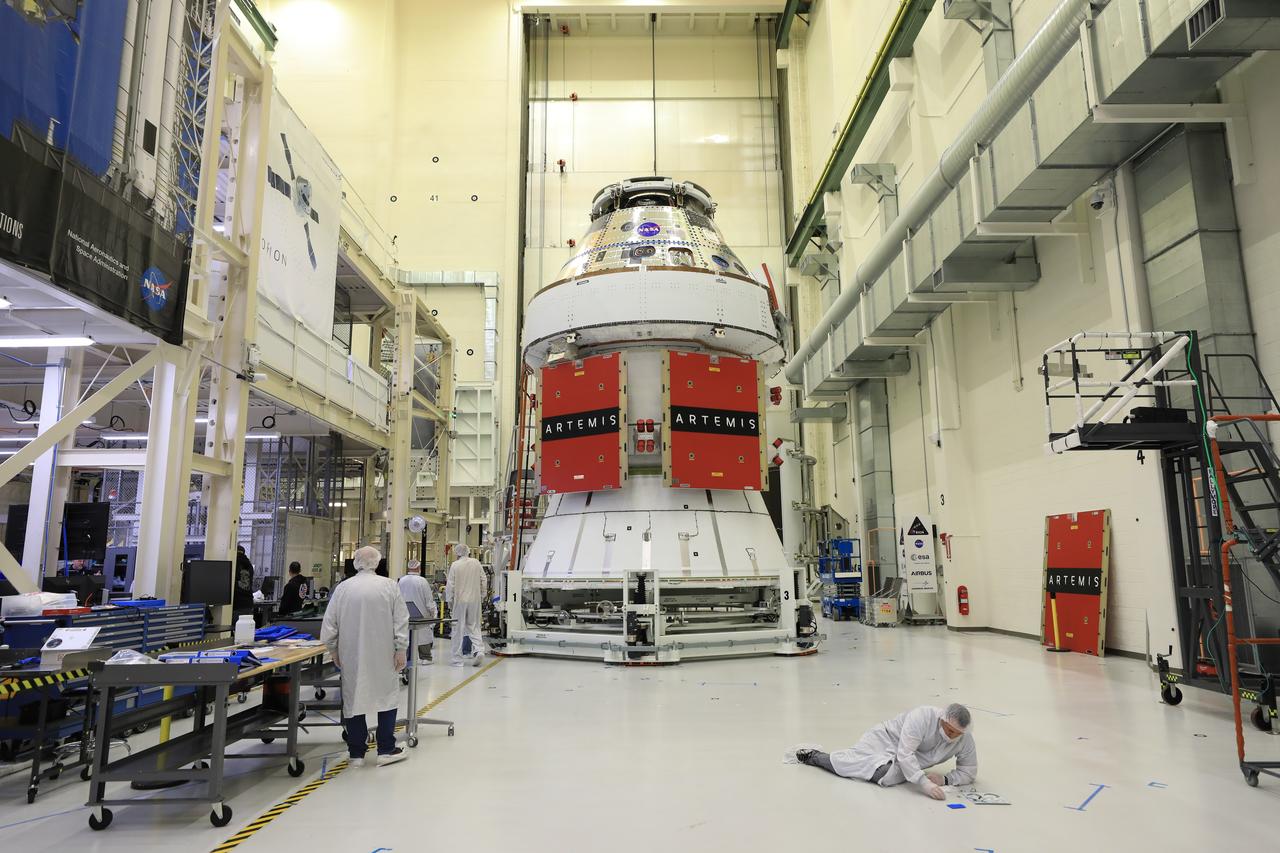
Technicians install four solar array wings on NASA’s Artemis II Orion spacecraft inside the Neil A. Armstrong Operations and Checkout Building at NASA’s Kennedy Space Center in Florida on Monday, March 3, 2025. Each solar array is nearly 23 feet long and can turn on two axes to remain aligned with the Sun for maximum power. Orion’s solar arrays, manufactured and installed by ESA (European Space Agency) and its contractor Airbus, will deliver power to the service module that provides propulsion, thermal control, and electrical power to the spacecraft, as well as air and water for the crew.
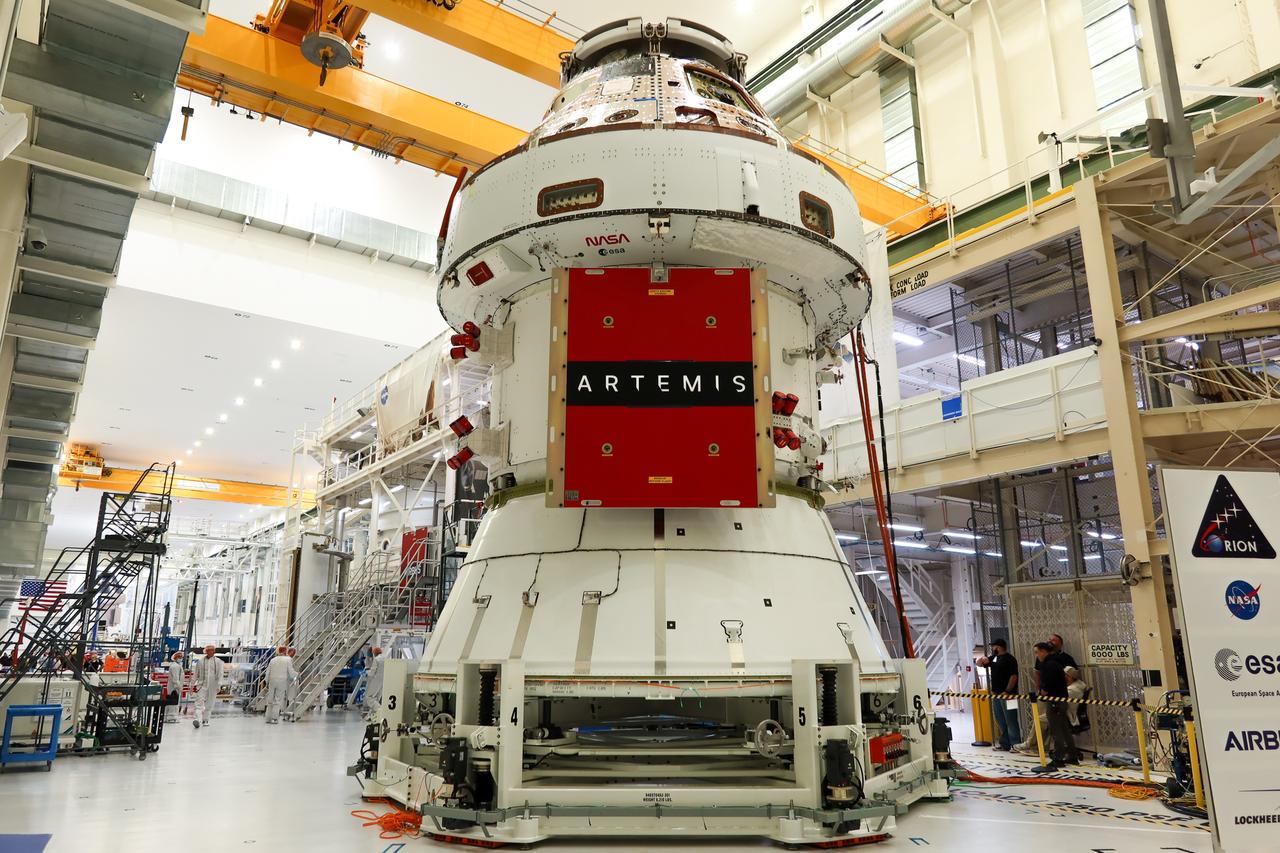
Technicians install four solar array wings on NASA’s Artemis II Orion spacecraft inside the Neil A. Armstrong Operations and Checkout Building at NASA’s Kennedy Space Center in Florida on Monday, March 3, 2025. Each solar array is nearly 23 feet long and can turn on two axes to remain aligned with the Sun for maximum power. Orion’s solar arrays, manufactured and installed by ESA (European Space Agency) and its contractor Airbus, will deliver power to the service module that provides propulsion, thermal control, and electrical power to the spacecraft, as well as air and water for the crew.
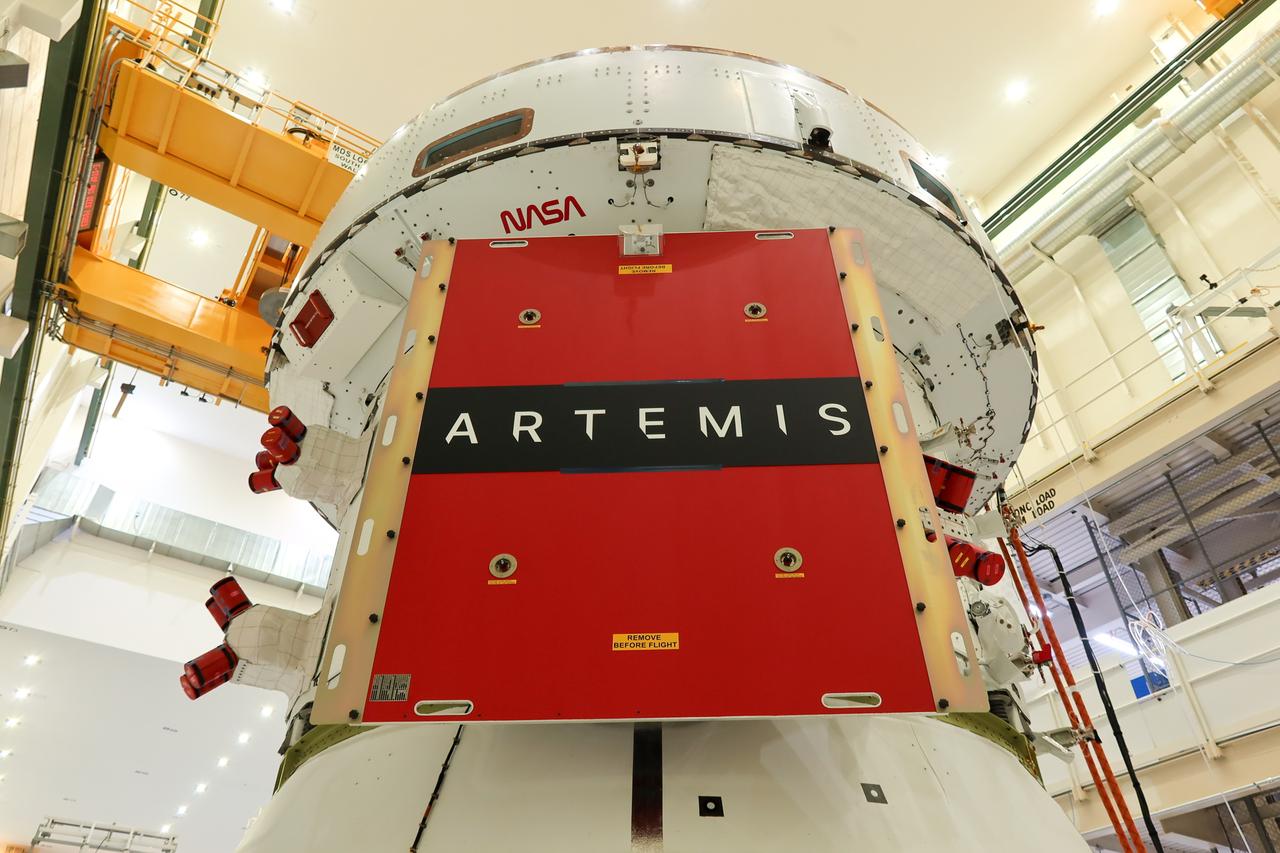
Technicians install four solar array wings on NASA’s Artemis II Orion spacecraft inside the Neil A. Armstrong Operations and Checkout Building at NASA’s Kennedy Space Center in Florida on Monday, March 3, 2025. Each solar array is nearly 23 feet long and can turn on two axes to remain aligned with the Sun for maximum power. Orion’s solar arrays, manufactured and installed by ESA (European Space Agency) and its contractor Airbus, will deliver power to the service module that provides propulsion, thermal control, and electrical power to the spacecraft, as well as air and water for the crew.
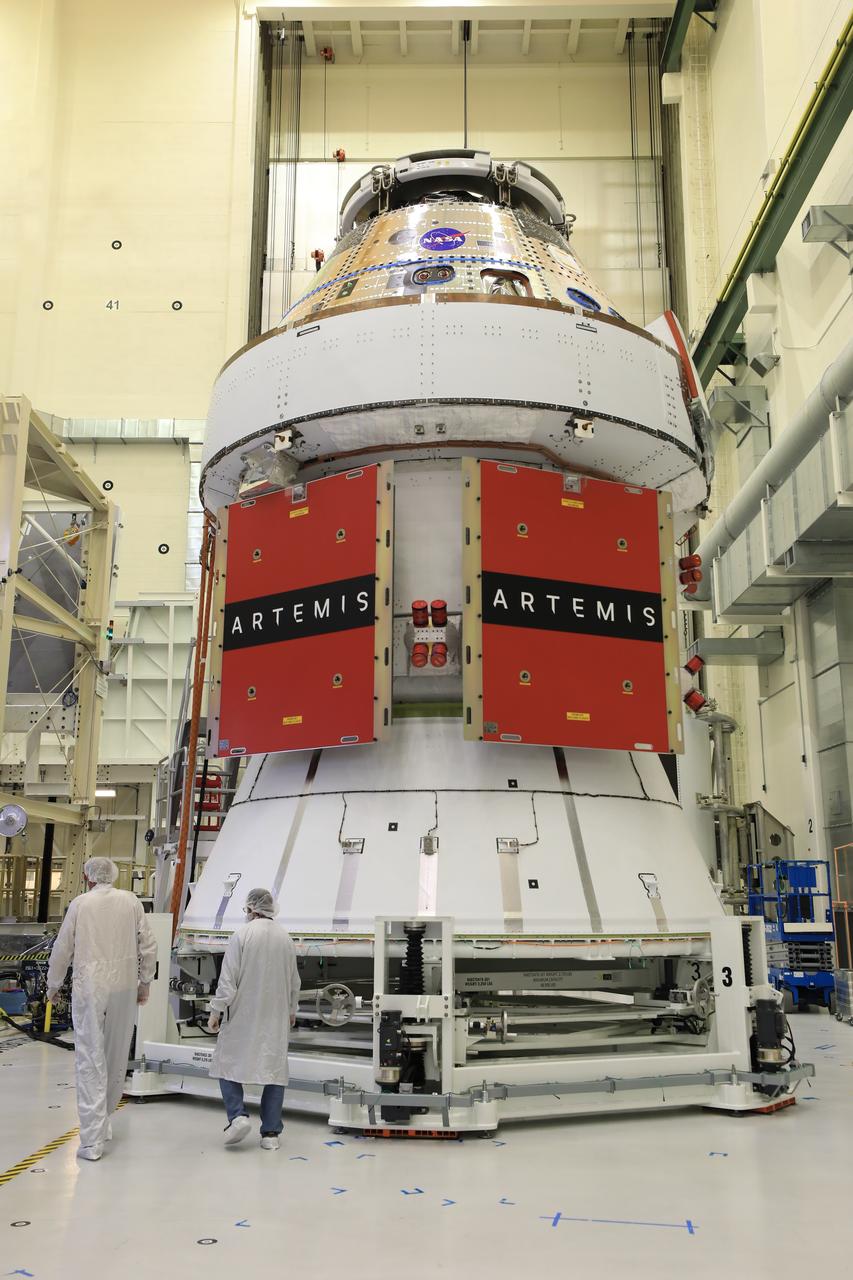
Technicians install four solar array wings on NASA’s Artemis II Orion spacecraft inside the Neil A. Armstrong Operations and Checkout Building at NASA’s Kennedy Space Center in Florida on Monday, March 3, 2025. Each solar array is nearly 23 feet long and can turn on two axes to remain aligned with the Sun for maximum power. Orion’s solar arrays, manufactured and installed by ESA (European Space Agency) and its contractor Airbus, will deliver power to the service module that provides propulsion, thermal control, and electrical power to the spacecraft, as well as air and water for the crew.

Shown in front of the Artemis I spacecraft, Larry Price, at left, Lockheed Martin Orion program manager, accompanies Russell Vought, director of the White House Office of Management and Budget, during a tour of the Neil Armstrong Operations and Checkout Building high bay at NASA’s Kennedy Space Center in Florida on Aug. 28, 2020. Orion spacecraft are being prepared for Artemis I and Artemis II. The Office of Management and Budget is working with the U.S. Congress to line up the necessary resources to land the first woman and the next man on the Moon in 2024.
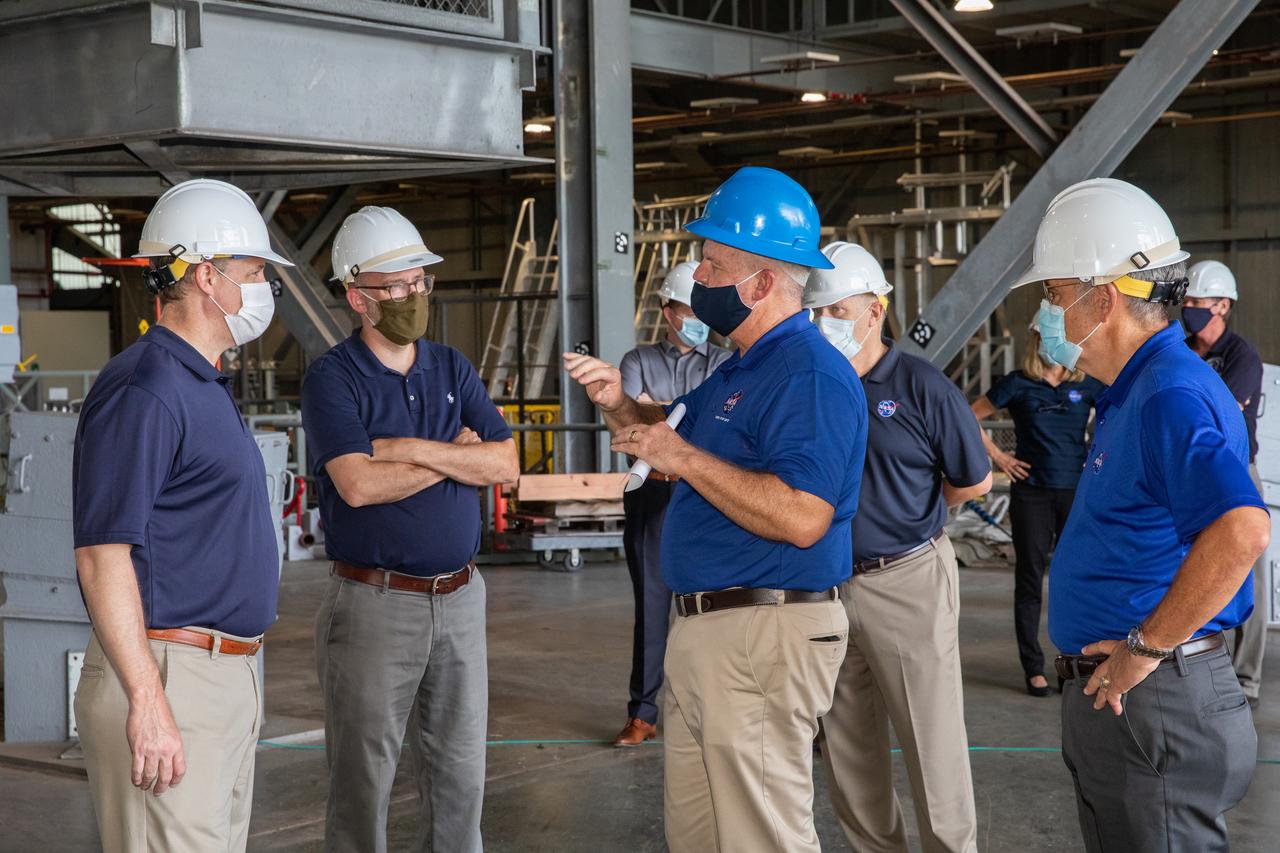
NASA Administrator Jim Bridenstine, far left, Russell Vought, director of the White House Office of Management and Budget, second from left, and Kennedy Space Center Director Bob Cabana, far right, are on a tour of the Vehicle Assembly Building on Aug. 28, 2020. The VAB is critical to the assembly of the Space Launch System rocket for NASA’s Artemis program. The Office of Management and Budget is working with the U.S. Congress to line up the necessary resources to land the first woman and the next man on the Moon in 2024.

On the Vehicle Assembly Building roof at NASA’s Kennedy Space Center in Florida, Kennedy Director Bob Cabana, far left, accompanies NASA Administrator Jim Bridenstine, second from left, and Russell Vought, director of the White House Office of Management and Budget, on a tour of the Vehicle Assembly Building (VAB) on Aug. 28, 2020. The VAB is critical to the assembly of the Space Launch System rocket for NASA’s Artemis program. The Office of Management and Budget is working with the U.S. Congress to line up the necessary resources to land the first woman and the next man on the Moon in 2024.

From left, Jules Schneider, Lockheed Martin Assembly, Test and Launch Operations; Kennedy Space Center Director Bob Cabana; NASA Administrator Jim Bridenstine; Russell Vought, director of the White House Office of Management and Budget; and Larry Price, Lockheed Martin Orion Program Manager, tour the Neil Armstrong Operations and Checkout Building high bay at NASA’s Kennedy Space Center in Florida on Aug. 28, 2020. In the center, behind them from left, are Brian McCormack, associate director of the White House Office of Management and Budget, and Glenn Chin, Deputy Manager of Orion Production Operations. Inside the high bay, Orion spacecraft are being prepared for Artemis I and Artemis II, with the Crew Module Adapter for Artemis II shown in the background. The Office of Management and Budget is working with the U.S. Congress to line up the necessary resources to land the first woman and the next man on the Moon in 2024.
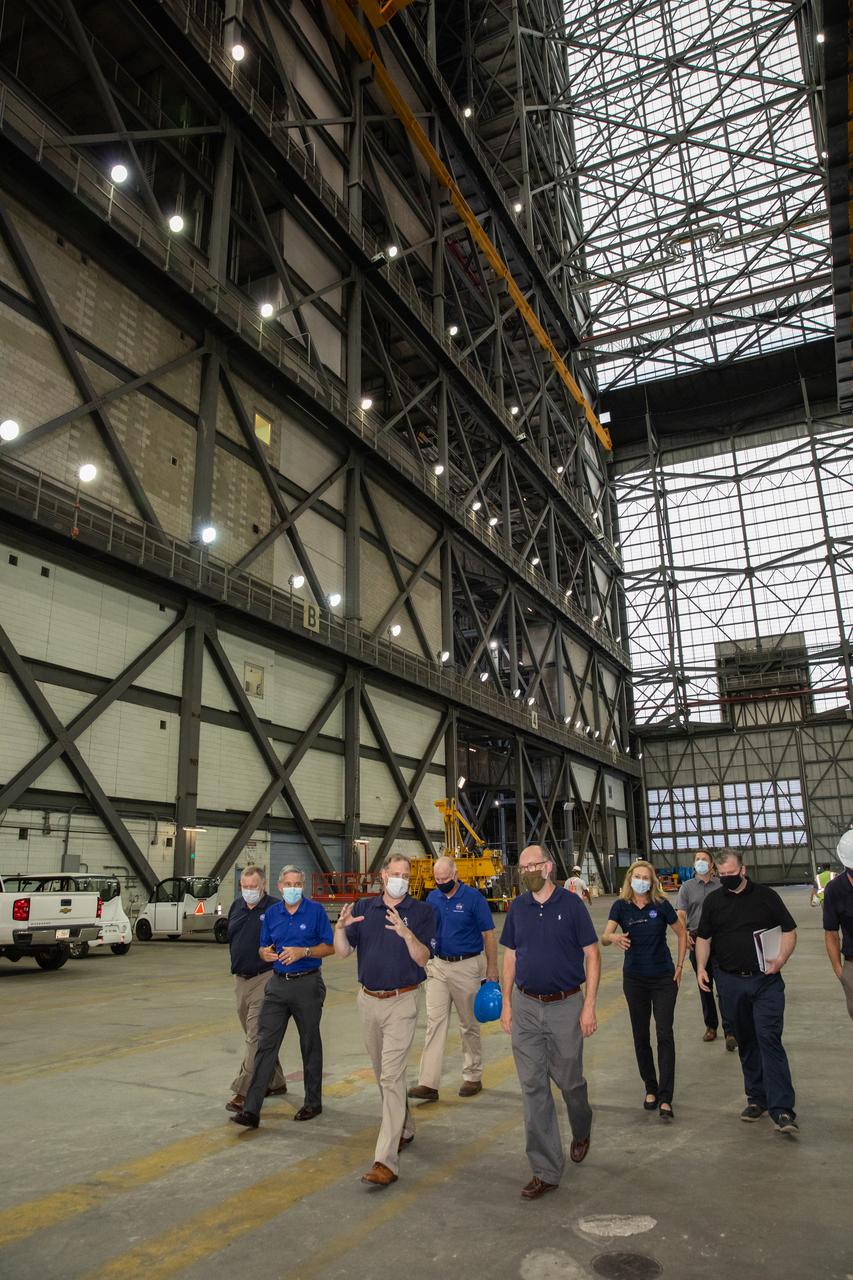
NASA Administrator Jim Bridenstine, in the center, tours the Vehicle Assembly Building at NASA’s Kennedy Space Center in Florida on Aug. 28, 2020, with Russell Vought, in front at right, director of the White House Office of Management and Budget. Accompanying them is Kennedy Director Bob Cabana, second from left. Behind Vought is Kennedy Deputy Director Janet Petro. At right, next to Petro, is Brian McCormack, associate director of the White House Office of Management and Budget. The VAB is critical to the assembly of the Space Launch System rocket for NASA’s Artemis program. The Office of Management and Budget is working with the U.S. Congress to line up the necessary resources to land the first woman and the next man on the Moon in 2024.
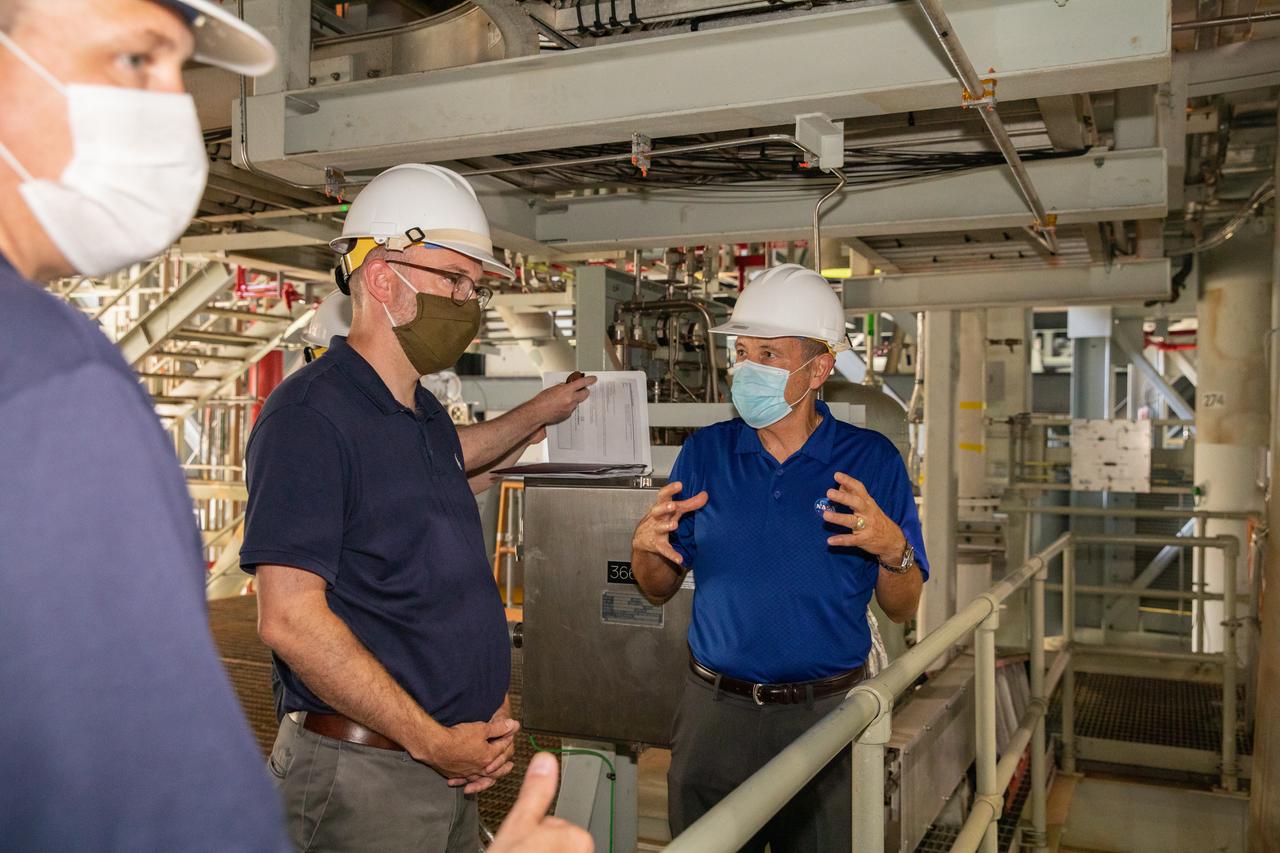
Kennedy Space Center Director Bob Cabana, far right, accompanies Russell Vought, second from right, director of the White House Office of Management and Budget, and NASA Administrator Jim Bridenstine, far left, on a tour of the Vehicle Assembly Building (VAB) on Aug. 28, 2020. The VAB is critical to the assembly of the Space Launch System rocket for NASA’s Artemis program. The Office of Management and Budget is working with the U.S. Congress to line up the necessary resources to land the first woman and the next man on the Moon in 2024.
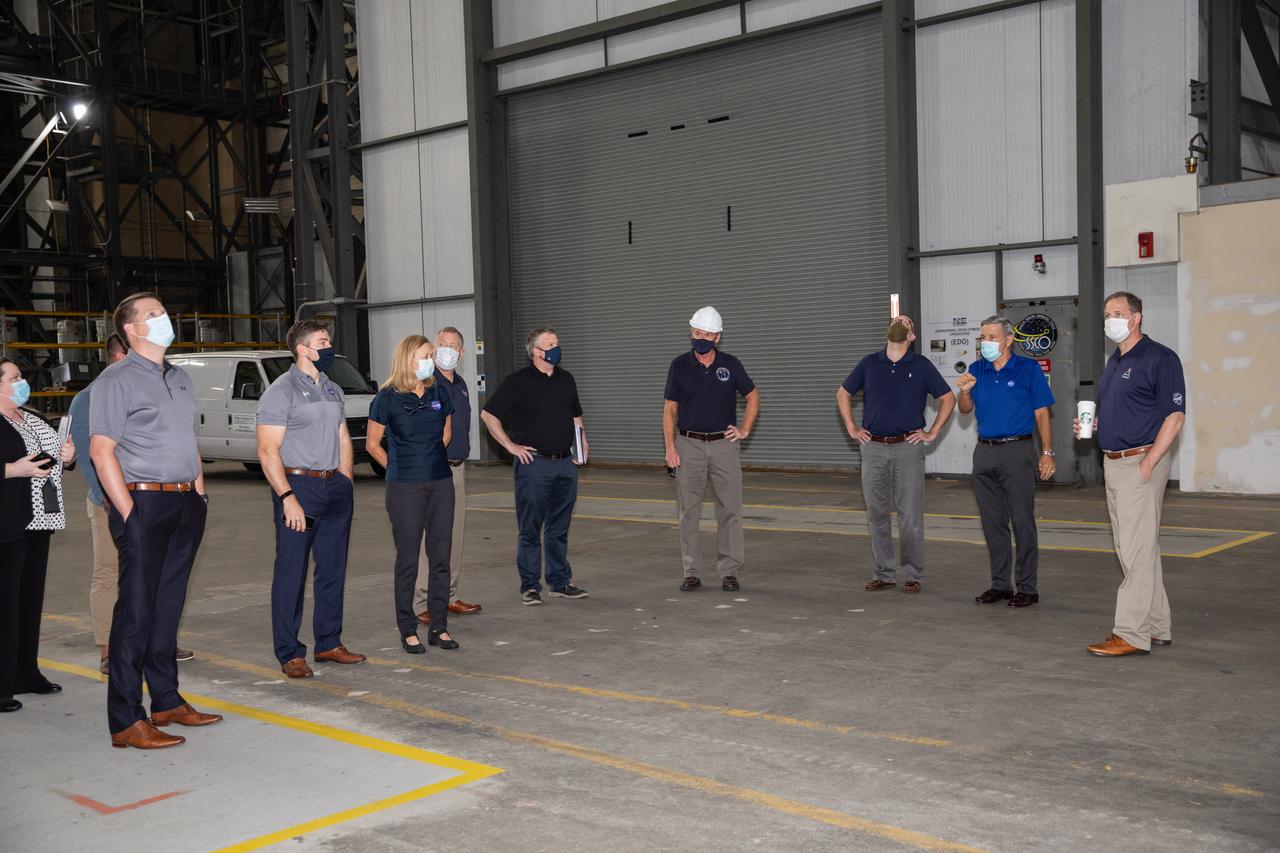
Kennedy Space Center Director Bob Cabana, second from right, accompanies Russell Vought, third from right, director of the White House Office of Management and Budget, and NASA Administrator Jim Bridenstine, far right, on a tour of the Vehicle Assembly Building (VAB) on Aug. 28, 2020. Third from left is Kennedy Deputy Director Janet Petro, and fourth from right is Mike Bolger, manager of Kennedy’s Exploration Ground Systems Directorate. The VAB is critical to the assembly of the Space Launch System rocket for NASA’s Artemis program. The Office of Management and Budget is working with the U.S. Congress to line up the necessary resources to land the first woman and the next man on the Moon in 2024.
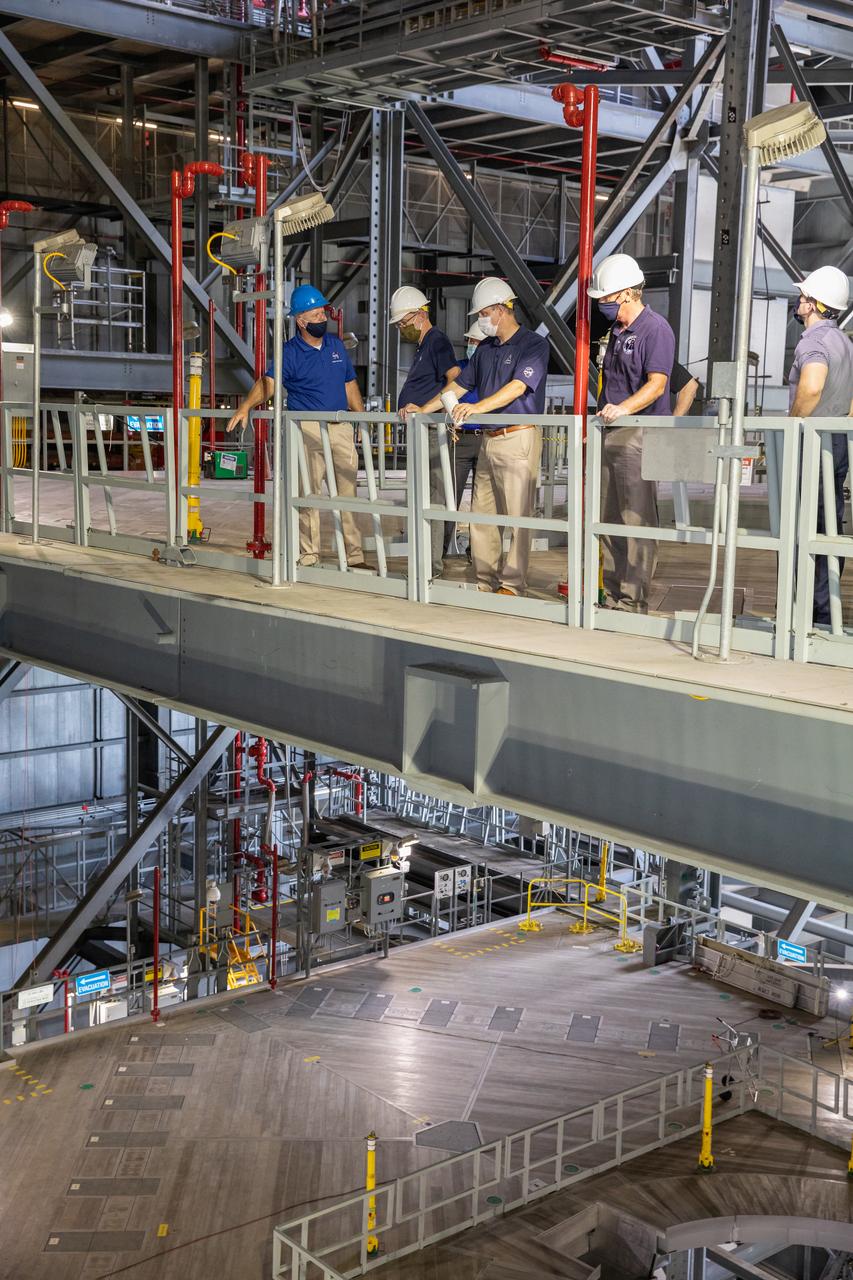
Russell Vought, director of the White House Office of Management and Budget, second from left, and NASA Administrator Jim Bridenstine, are on a tour of the Vehicle Assembly Building on Aug. 28, 2020. In this photo, they are viewing one of the levels of new service platforms in High Bay 3. The VAB is critical to the assembly of the Space Launch System rocket for NASA’s Artemis program. The Office of Management and Budget is working with the U.S. Congress to line up the necessary resources to land the first woman and the next man on the Moon in 2024.
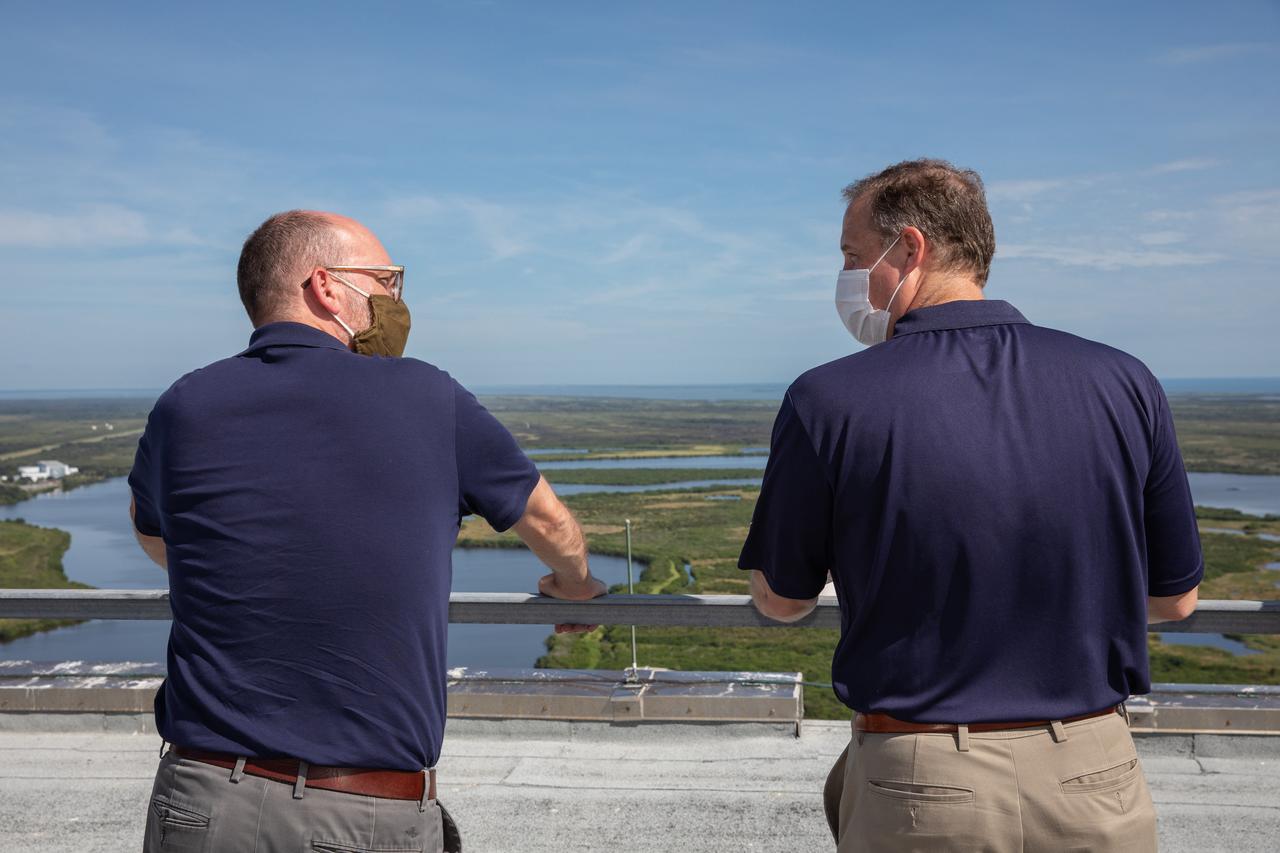
NASA Administrator Jim Bridenstine, at right, and Russell Vought, director of the White House Office of Management and Budget, are on the roof of the Vehicle Assembly Building (VAB) during a tour of the spaceport on Aug. 28, 2020. The VAB is critical to the assembly of the Space Launch System rocket for NASA’s Artemis program. The Office of Management and Budget is working with the U.S. Congress to line up the necessary resources to land the first woman and the next man on the Moon in 2024.

Closest to the Artemis I spacecraft, Larry Price, at left, Lockheed Martin Orion program manager, talks with Russell Vought, director of the White House Office of Management and Budget, and NASA Administrator Jim Bridenstine, third from left in front, during a tour of the Neil Armstrong Operations and Checkout Building high bay at NASA’s Kennedy Space Center in Florida on Aug. 28, 2020. Orion spacecraft are being prepared for Artemis I and Artemis II. The Office of Management and Budget is working with the U.S. Congress to line up the necessary resources to land the first woman and the next man on the Moon in 2024.
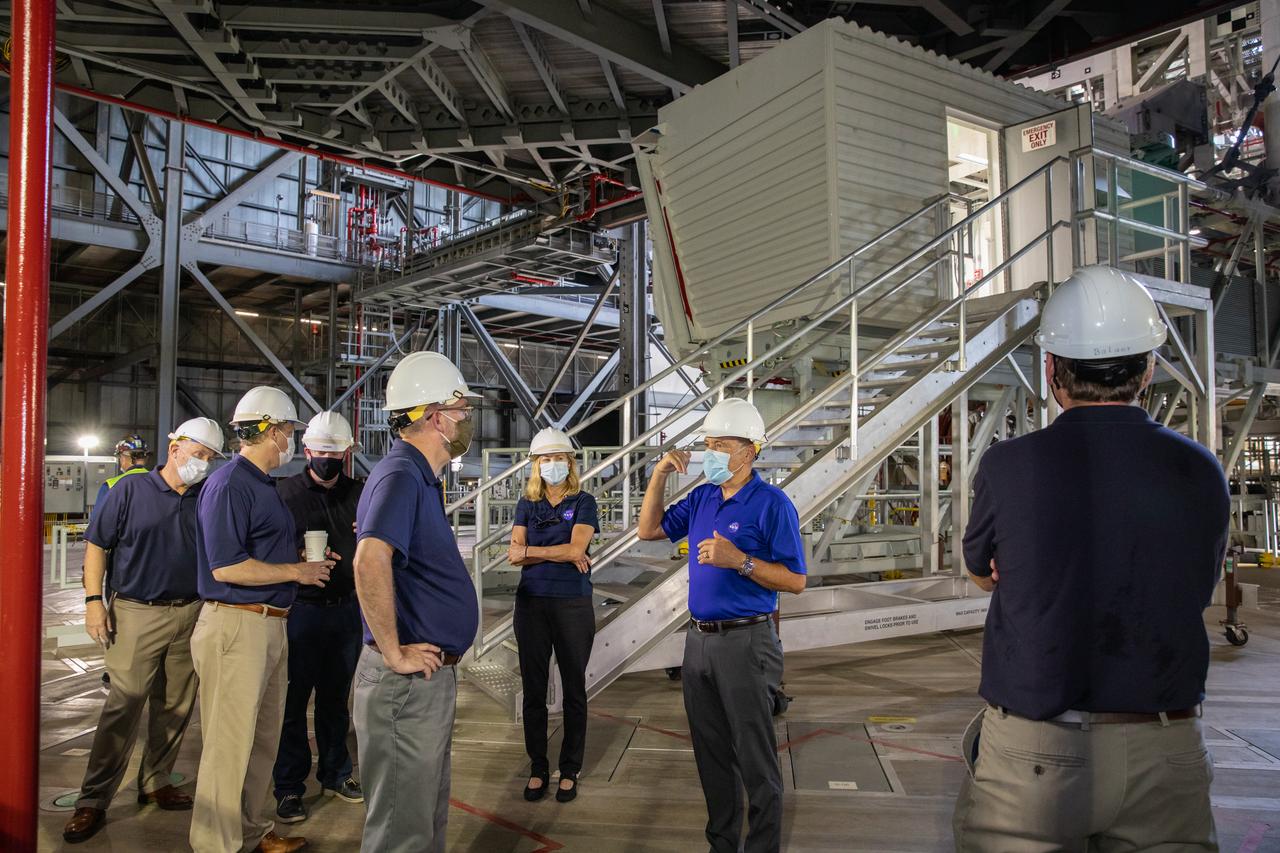
Kennedy Space Center Director Bob Cabana, second from right, speaks to Russell Vought, across from him, director of the White House Office of Management and Budget, during a tour of the Vehicle Assembly Building (VAB) on Aug. 28, 2020. Standing to the left of Vought is NASA Administrator Jim Bridenstine. Third from right is Kennedy Space Center Deputy Director Janet Petro. The VAB is critical to the assembly of the Space Launch System rocket for NASA’s Artemis program. The Office of Management and Budget is working with the U.S. Congress to line up the necessary resources to land the first woman and the next man on the Moon in 2024.

Representatives from NASA, Lockheed Martin and the White House Office of Management and Budget pause for a group photograph in front of the Artemis I spacecraft during a tour of the Neil Armstrong Operations and Checkout Building high bay at NASA’s Kennedy Space Center in Florida on Aug. 28, 2020. From left, are Kennedy Deputy Director Janet Petro; Jules Schneider, Lockheed Martin Assembly, Test and Launch Operations; Brian McCormack, associate director of the White House Office of Management and Budget; NASA Deputy Administrator Jim Morhard; Larry Price, Lockheed Martin Orion program manager; Dr. Eric H. Thoemmes, vice president of Space, Missile Defense and Strategic with Lockheed Martin; NASA Administrator Jim Bridenstine; Russell Vought, director of the White House Office of Management and Budget; Kennedy Space Center Director Bob Cabana; Glenn Chin, Deputy Manager of Orion Production Operations; and Joe Mayer, director of Government Relations with Lockheed Martin. Orion spacecraft are being prepared for Artemis I and Artemis II. In the background is the Orion spacecraft for Artemis I. The Office of Management and Budget is working with the U.S. Congress to line up the necessary resources to land the first woman and the next man on the Moon in 2024.
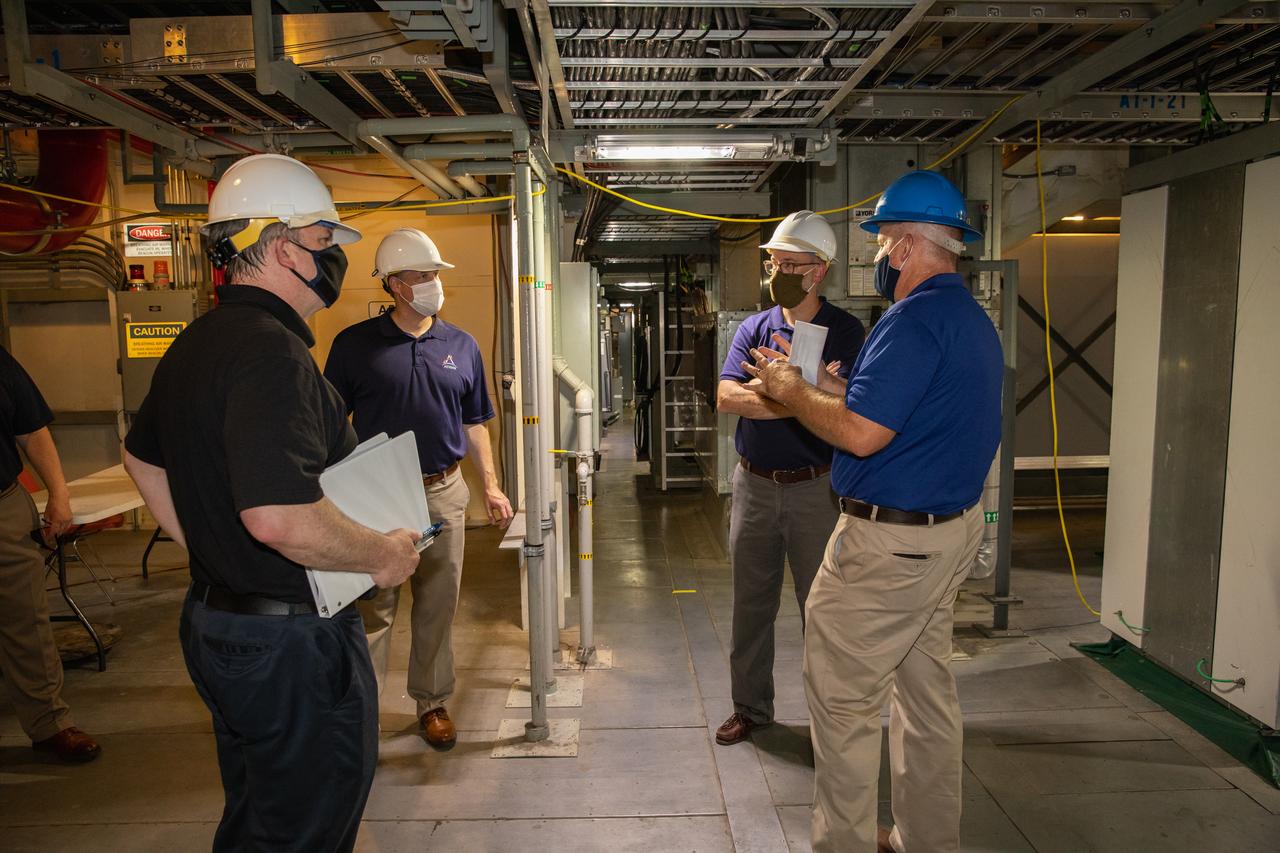
Darrell Foster, far right, chief of the Project Management Division in Exploration Ground Systems, briefs from left, Brian McCormack, associate director of the White House Office of Management and Budget, NASA Administrator Jim Bridenstine, and Russell Vought, director of the White House Office of Management and Budget, while on a tour of the Vehicle Assembly Building on Aug. 28, 2020. The VAB is critical to the assembly of the Space Launch System rocket for NASA’s Artemis program. The Office of Management and Budget is working with the U.S. Congress to line up the necessary resources to land the first woman and the next man on the Moon in 2024.
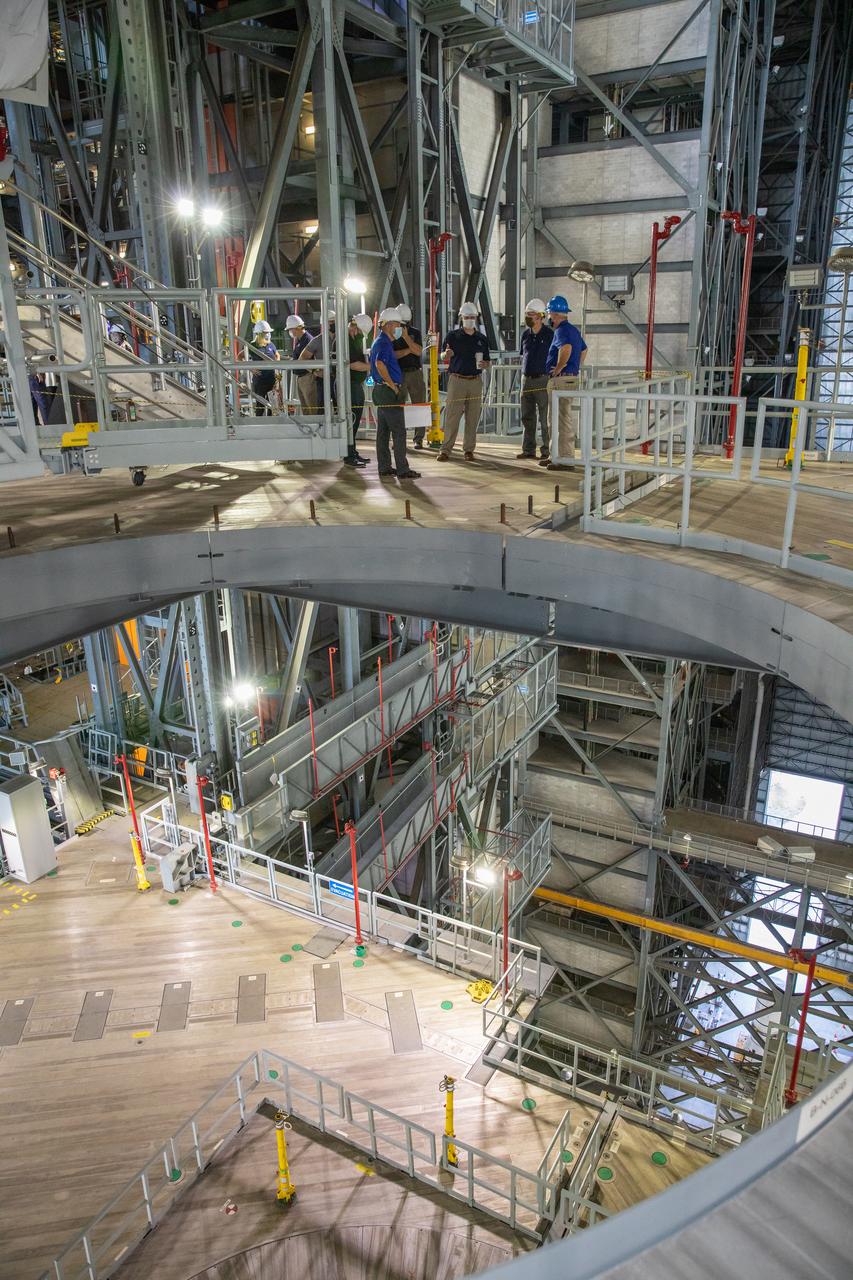
Kennedy Space Center Director Bob Cabana accompanies NASA Administrator Jim Bridenstine, and Russell Vought, director of the White House Office of Management and Budget, on a tour of the Vehicle Assembly Building (VAB) on Aug. 28, 2020. In this photo, they are viewing one of the levels of new service platforms in High Bay 3. The VAB is critical to the assembly of the Space Launch System rocket for NASA’s Artemis program. The Office of Management and Budget is working with the U.S. Congress to line up the necessary resources to land the first woman and the next man on the Moon in 2024.

Shown in front of the Artemis I spacecraft, NASA Administrator Jim Bridenstine, far left, tours the Neil Armstrong Operations and Checkout Building high by at NASA’s Kennedy Space Center in Florida on Aug. 28, 2020. Next to him, from left are Jules Schneider, Lockheed Martin Assembly, Test and Launch Operations; Kennedy Space Center Director Bob Cabana; Brian McCormack, associate director of the White House Office of Management and Budget; and Glenn Chin, Deputy Manager of Orion Production Operations. Inside the high bay, Orion spacecraft are being prepared for Artemis I and Artemis II. The Office of Management and Budget is working with the U.S. Congress to line up the necessary resources to land the first woman and the next man on the Moon in 2024.
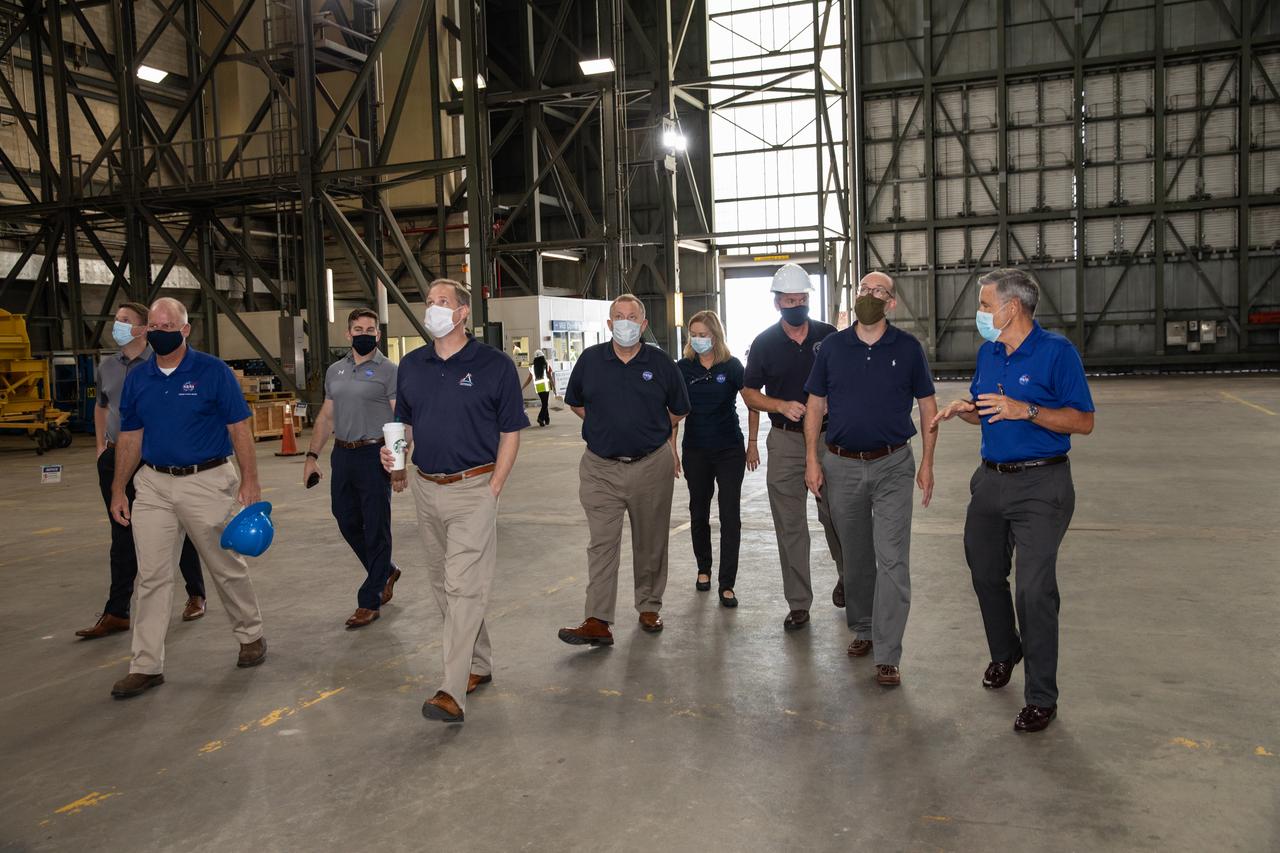
Kennedy Space Center Director Bob Cabana, far right, accompanies Russell Vought, second from right, director of the White House Office of Management and Budget, on a tour of the Vehicle Assembly Building (VAB) on Aug. 28, 2020. Leading the group, in front, is NASA Administrator Jim Bridenstine, along with NASA Deputy Administrator Jim Morhard, Kennedy Space Center Deputy Director Janet Petro, and Mike Bolger, manager of Kennedy’s Exploration Ground Systems Directorate. The VAB is critical to the assembly of the Space Launch System rocket for NASA’s Artemis program. The Office of Management and Budget is working with the U.S. Congress to line up the necessary resources to land the first woman and the next man on the Moon in 2024.

Dr. Eric H. Thoemmes, third from left, vice president of Space, Missile Defense and Strategic with Lockheed Martin, speaks to Russell Vought, second from left, director of the White House Office of Management and Budget, during a tour of the Neil Armstrong Operations and Checkout Building high bay at NASA’s Kennedy Space Center in Florida on Aug. 28, 2020. At far left is Larry Price, Lockheed Martin Orion Program manager. To the right of Thoemmes is NASA Deputy Administrator Jim Morhard, and Brian McCormack, associate director of the White House Office of Management and Budget. In view in the background is the heatshield for Artemis II. Inside the high bay, Orion spacecraft are being prepared for Artemis I and Artemis II. The Office of Management and Budget is working with the U.S. Congress to line up the necessary resources to land the first woman and the next man on the Moon in 2024.

From left, Jules Schneider, Lockheed Martin Assembly, Test and Launch Operations, Kennedy Space Center Director Bob Cabana, and NASA Administrator Jim Bridenstine view a signed banner during a tour inside the Neil Armstrong Operations and Checkout Building high bay at the Kennedy Space Center in Florida on Aug. 28, 2020, with representatives from the White House Office of Management and Budget (OMB). Inside the high bay, Orion spacecraft are being prepared for Artemis I and Artemis II. OMB is working with the U.S. Congress to line up the necessary resources to land the first woman and the next man on the Moon in 2024.

Larry Price, closest to the Artemis I spacecraft, Lockheed Martin Orion Program manager, accompanies Russell Vought, director of the White House Office of Management and Budget, during a tour of the Neil Armstrong Operations and Checkout Building high bay at NASA’s Kennedy Space Center in Florida on Aug. 28, 2020. Behind them, from left, are Brian McCormack, White House associate director of the Office of Management and Budget, and Kennedy Space Director Bob Cabana. At far right, from the front, are Jules Schneider, Lockheed Martin Assembly, Test and Launch Operations, NASA Administrator Jim Bridenstine, and Glenn Chin, Deputy Manager of Orion Production Operations. In the foreground, from left are Dr. Eric Thoemmes, vice president, Lockheed Martin Space, Missile Defense and Strategic, and NASA Deputy Administrator Jim Morhard. Inside the high bay, Orion spacecraft are being prepared for Artemis I and Artemis II. The Office of Management and Budget is working with the U.S. Congress to line up the necessary resources to land the first woman and the next man on the Moon in 2024.