
Diversity and Inclusion Program D&IP Advisory Committee Orientation was held August 9, 2018 Group shot
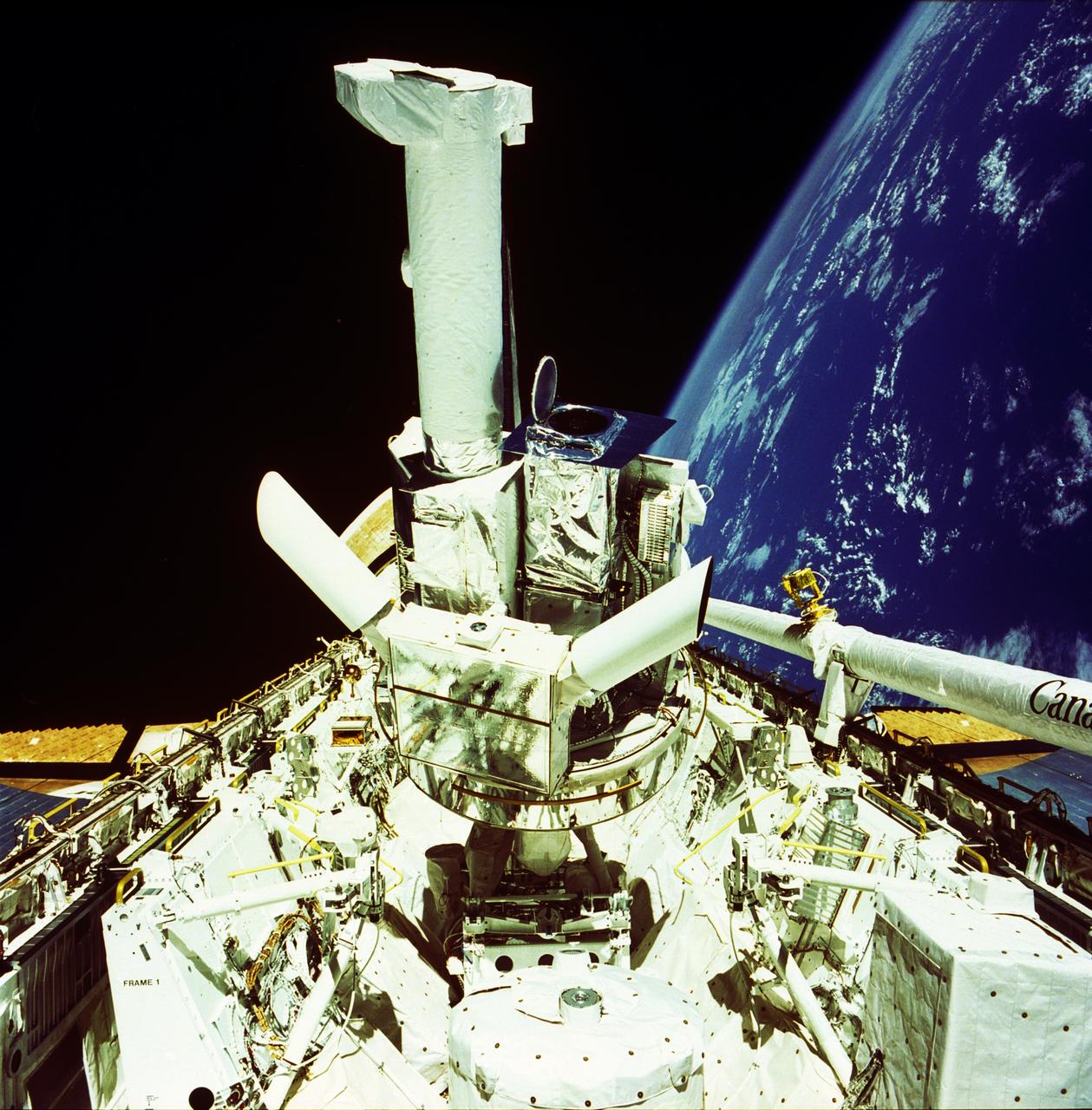
This photograph shows the Instrument Pointing System (IPS) for Spacelab-2 being deployed in the cargo bay of the Space Shuttle Orbiter Challenger. The European Space Agency (ESA) developed this irnovative pointing system for the Spacelab program. Previously, instruments were pointed toward particular celestial objects or areas by maneuvering the Shuttle to an appropriate attitude. The IPS could aim instruments more accurately than the Shuttle and kept them fixed on a target as the Shuttle moved. On the first pallet, three solar instruments and one atmospheric instrument were mounted on the IPS. Spacelab-2 was the first pallet-only mission. One of the goals of the mission was to verify that the pallets' configuration was satisfactory for observations and research. Except for two biological experiments and an experiment that uses ground-based instruments, the Spacelab-2 scientific instruments needed direct exposure to space. The Spacelab-2 mission was designed to capitalize on the Shuttle-Spacelab capabilities to carry very large instruments, launch and retrieve satellites, and point several instruments independently with accuracy and stability. Spacelab-2 (STS-51F, 19th Shuttle mission) was launched on July 29, 1985 aboard the Space Shuttle Orbiter Challenger. The Marshall Space Flight Center had overall management responsibilities of the Spacelab missions.
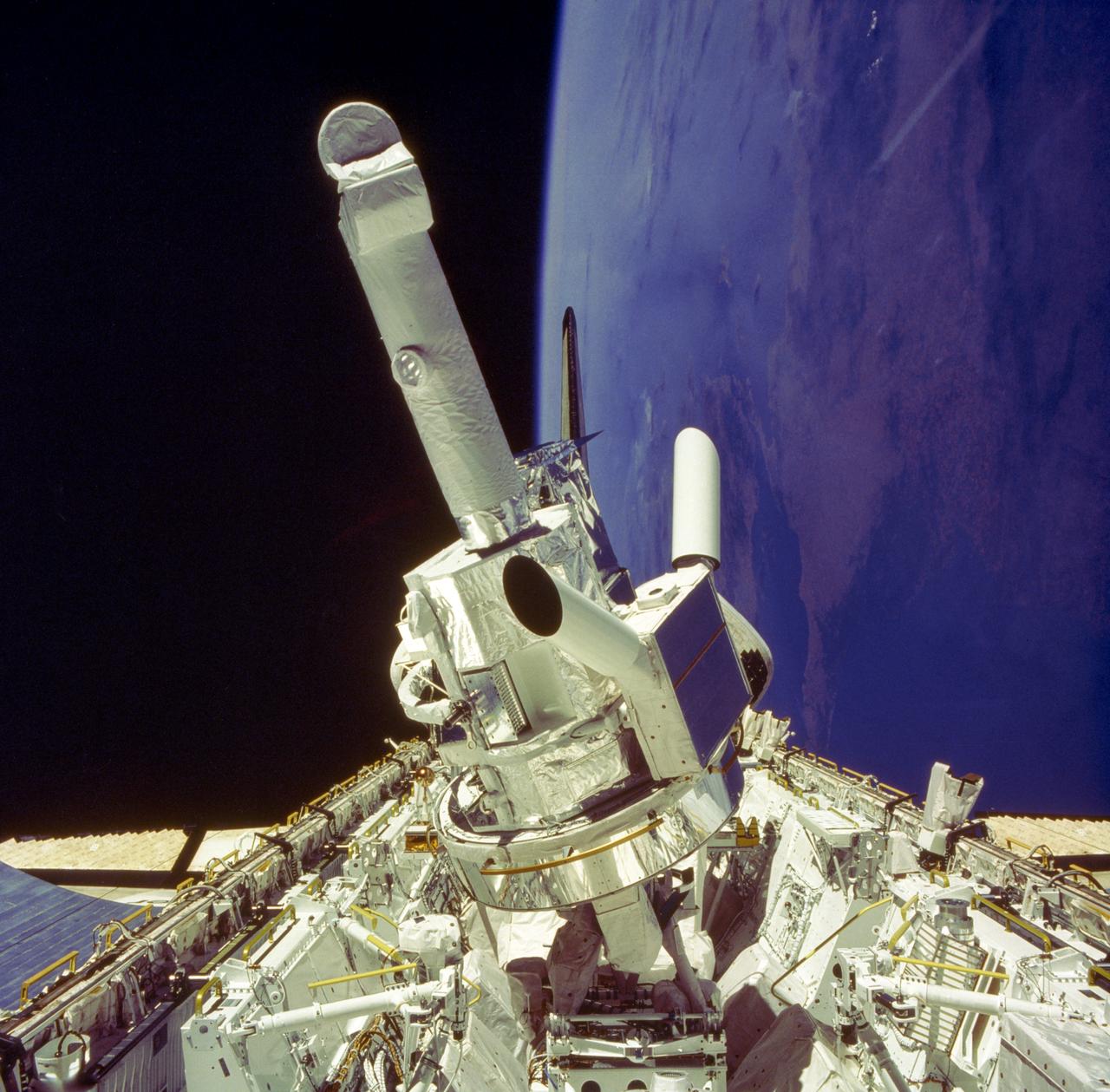
This photograph shows the Instrument Pointing System (IPS) for Spacelab-2 being deployed in the cargo bay of the Space Shuttle Orbiter Challenger. The European Space Agency (ESA) developed this irnovative pointing system for the Spacelab program. Previously, instruments were pointed toward particular celestial objects or areas by maneuvering the Shuttle to an appropriate attitude. The IPS could aim instruments more accurately than the Shuttle and kept them fixed on a target as the Shuttle moved. On the first pallet, three solar instruments and one atmospheric instrument were mounted on the IPS. Spacelab-2 was the first pallet-only mission. One of the goals of the mission was to verify that the pallets' configuration was satisfactory for observations and research. Except for two biological experiments and an experiment that used ground-based instruments, the Spacelab-2 scientific instruments needed direct exposure to space. The Spacelab-2 mission was designed to capitalize on the Shuttle-Spacelab capabilities to carry very large instruments, launch and retrieve satellites, and point several instruments independently with accuracy and stability. Spacelab-2 (STS-51F, 19th Shuttle mission) was launched on July 29, 1985 aboard the Space Shuttle Orbiter Challenger. The Marshall Space Flight Center had overall management responsibilities of the Spacelab missions.
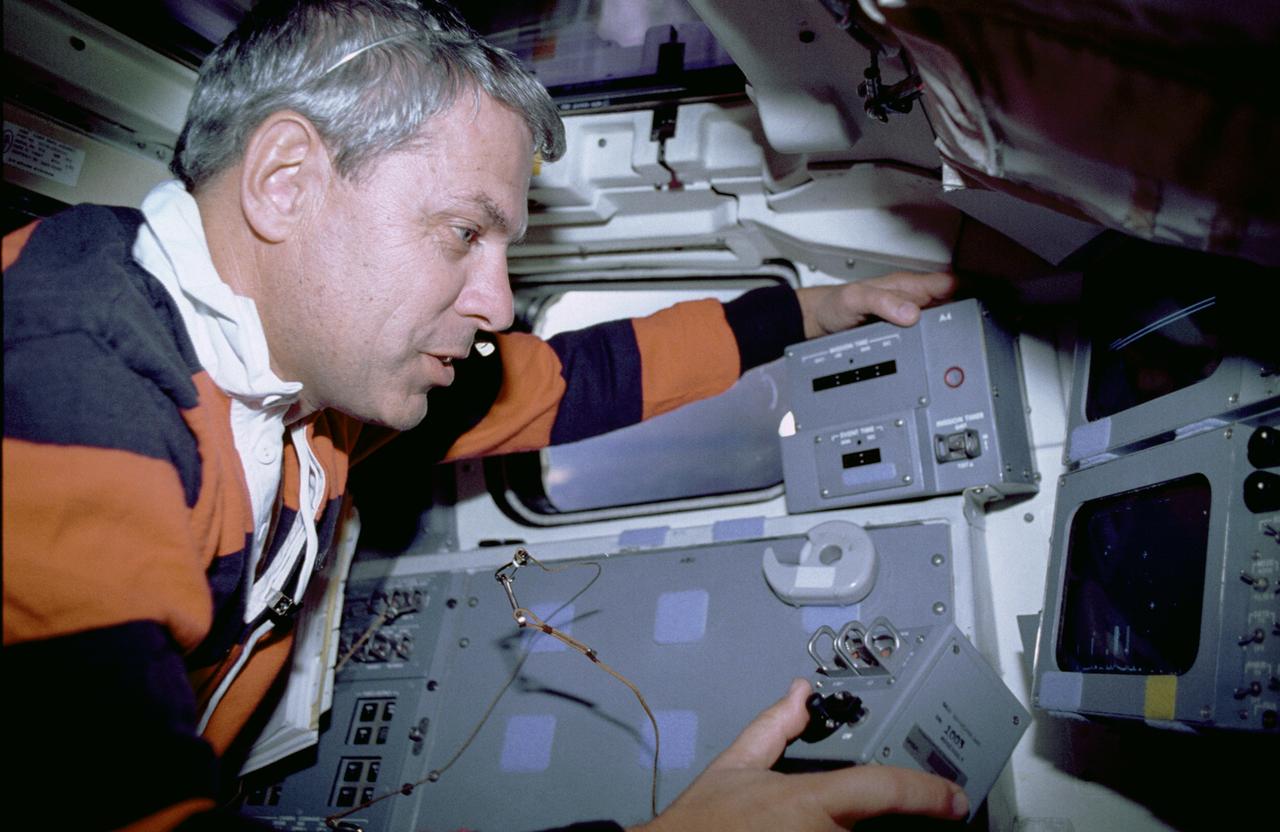
The primary objective of the STS-35 mission was round the clock observation of the celestial sphere in ultraviolet and X-Ray astronomy with the Astro-1 observatory which consisted of four telescopes: the Hopkins Ultraviolet Telescope (HUT); the Wisconsin Ultraviolet Photo-Polarimeter Experiment (WUPPE); the Ultraviolet Imaging Telescope (UIT); and the Broad Band X-Ray Telescope (BBXRT). The Huntsville Operations Support Center (HOSC) Spacelab Payload Operations Control Center (SL POCC) at the Marshall Space Flight Center (MSFC) was the air/ground communication channel used between the astronauts and ground control teams during the Spacelab missions. Teams of controllers and researchers directed on-orbit science operations, sent commands to the spacecraft, received data from experiments aboard the Space Shuttle, adjusted mission schedules to take advantage of unexpected science opportunities or unexpected results, and worked with crew members to resolve problems with their experiments. Due to loss of data used for pointing and operating the ultraviolet telescopes, MSFC ground teams were forced to aim the telescopes with fine tuning by the flight crew. Pictured onboard the shuttle is astronaut Robert Parker using a Manual Pointing Controller (MPC) for the ASTRO-1 mission Instrument Pointing System (IPS).
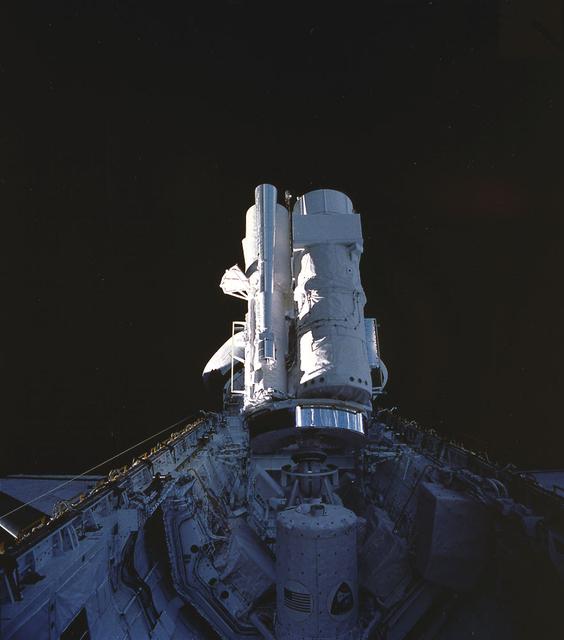
Onboard the Space Shuttle Orbiter Columbia (STS-35), the various components of the Astro-1 payload are seen backdropped against dark space. Parts of the Hopkins Ultraviolet Telescope (HUT), Ultraviolet Imaging Telescope (UIT), and the Wisconsin Ultraviolet Photo-Polarimetry Experiment (WUPPE) are visible on the Spacelab pallet. The Broad-Band X-Ray Telescope (BBXRT) is behind the pallet and is not visible in this scene. The smaller cylinder in the foreground is the igloo. The igloo was a pressurized container housing the Command Data Management System, that interfaced with the in-cabin controllers to control the Instrument Pointing System (IPS) and the telescopes. The Astro Observatory was designed to explore the universe by observing and measuring the ultraviolet radiation from celestial objects. Astronomical targets of observation selected for Astro missions included planets, stars, star clusters, galaxies, clusters of galaxies, quasars, remnants of exploded stars (supernovae), clouds of gas and dust (nebulae), and the interstellar medium. Managed by the Marshall Space Flight Center, the Astro-1 was launched aboard the Space Shuttle Orbiter Columbia (STS-35) on December 2, 1990.
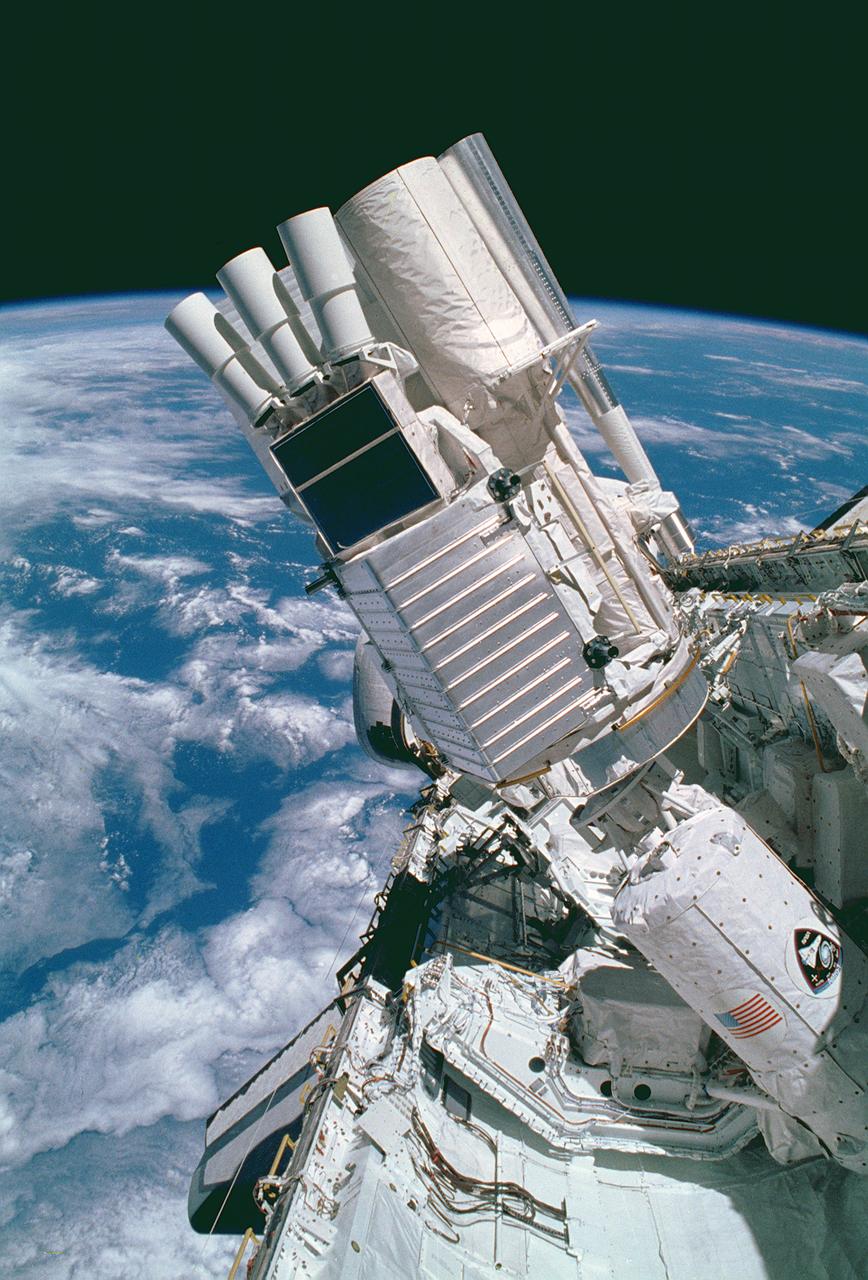
Onboard the Space Shuttle Orbiter Columbia (STS-35), the various components of the Astro-1 payload are seen backdropped against a blue and white Earth. Parts of the Hopkins Ultraviolet Telescope (HUT), the Ultraviolet Imaging Telescope (UIT), and the Wisconsin Ultraviolet Photo-Polarimetry Experiment (WUPPE) are visible on the Spacelab pallet. The Broad-Band X-Ray Telescope (BBXRT) is behind the pallet and is not visible in this scene. The smaller cylinder in the foreground is the igloo. The igloo was a pressurized container housing the Command Data Management System, that interfaced with the in-cabin controllers to control the Instrument Pointing System (IPS) and the telescopes. The Astro Observatory was designed to explore the universe by observing and measuring the ultraviolet radiation from celestial objects. Astronomical targets of observation selected for Astro missions included planets, stars, star clusters, galaxies, clusters of galaxies, quasars, remnants of exploded stars (supernovae), clouds of gas and dust (nebulae), and the interstellar medium. Managed by the Marshall Space Flight Center, the Astro-1 was launched aboard the Space Shuttle Orbiter Columbia (STS-35) on December 2, 1990.
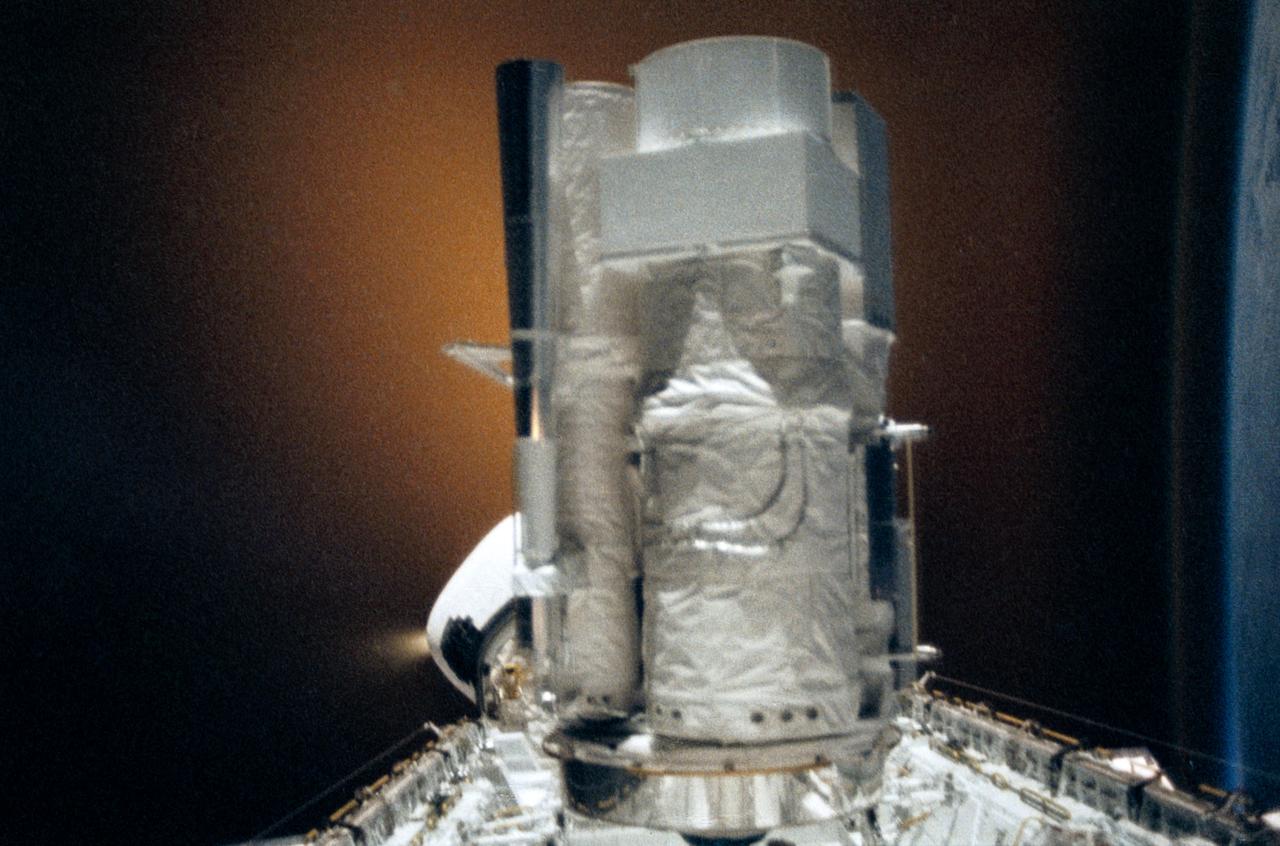
STS035-28-006 (2-10 Dec 1990) --- STS-35 Astronomy Laboratory 1 (ASTRO-1) telescopes, in on-orbit operating position in the payload bay (PLB), are silhouetted against an reaction control system (RCS) right thruster firing. Three ultraviolet telescopes are mounted and precisely co-aligned on a common structure, called the cruciform, that is attached to the instrument pointing system (IPS). Here the IPS holds the telescopes in a position that is parallel to the Earth's limb below. Visible on the cruciform are the star tracker (S TRK) (silver cone at the top), the Ultraviolet Imaging Telescope (UIT) (behind S TRK), and the Hopkins Ultraviolet Telescope(HUT).
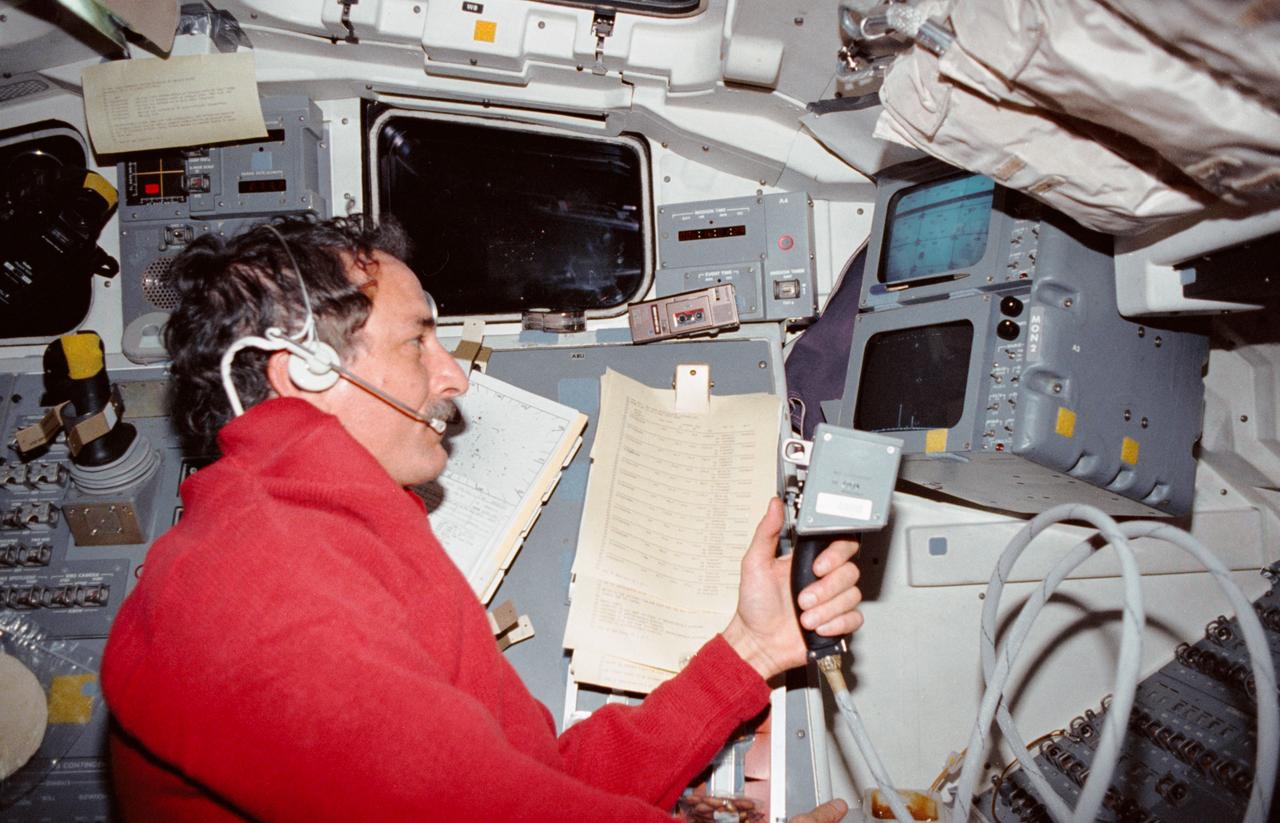
STS035-12-015 (2-11 Dec 1990) --- Astronaut Jeffrey A. Hoffman, STS 35 mission specialist, uses a manual pointing controller (MPC) for the Astro-1 mission's Instrument Pointing System (IPS). By using the MPC, Hoffman and other crewmembers on Columbia's aft flight deck, were able to command the IPS, located in the cargo bay, to record astronomical data. Hoffman is serving the "Blue" shift which complemented the currently sleeping "Red" shift of crewmembers as the mission collected scientific data on a 24-hour basis. The scene was photographed with a 35mm camera.
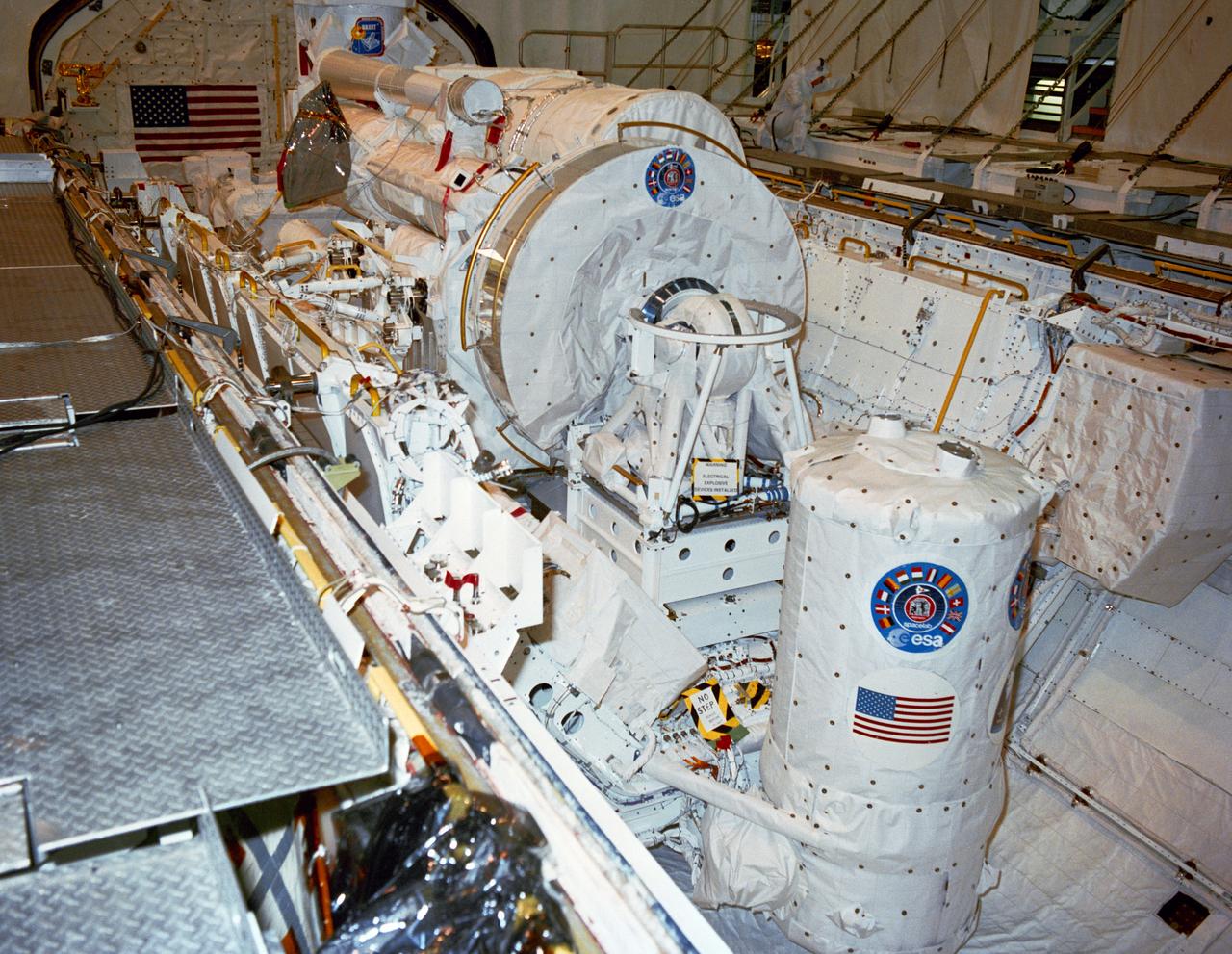
S90-36708 (7 May 1990) --- STS-35 Astronomy Laboratory 1 (ASTRO-1) view shows its telescopes, instrument pointing system (IPS), and support equipment installed in Columbia's, Orbiter Vehicle (OV) 102's, payload bay (PLB) at the Kennedy Space Center (KSC) Orbiter Processing Facility (OPF). In the foreground is the Spacelab Pallet System (SPS) igloo. The stowed IPS with its three ultraviolet telescopes appears in the center of the picture. In the background, the Broad Band X Ray Telescope (BBXRT) two axis pointing system (TAPS) is barely visible. View provided by KSC with alternate number KSC-90PC-423.
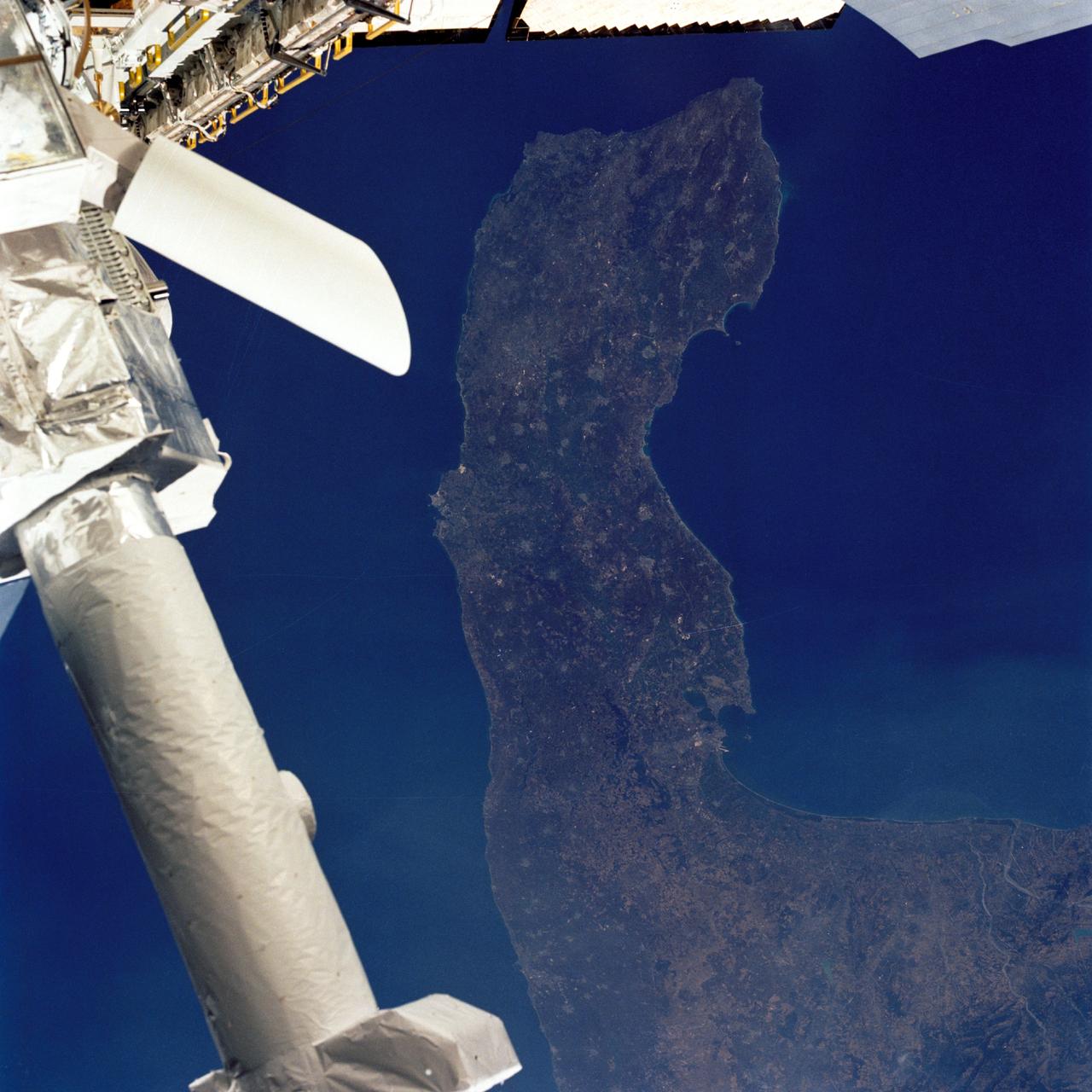
51F-32-024 (29 July - 6 August 1985) --- Italy's “boot heel" surrounded by waters of the Ionian Sea/Golfo di Taranto and the Adriatic Sea is very clearly visible in this scene made with a handheld 70mm camera. Spacelab 2's versatile instrument pointing system (IPS) protrudes from the cargo bay.
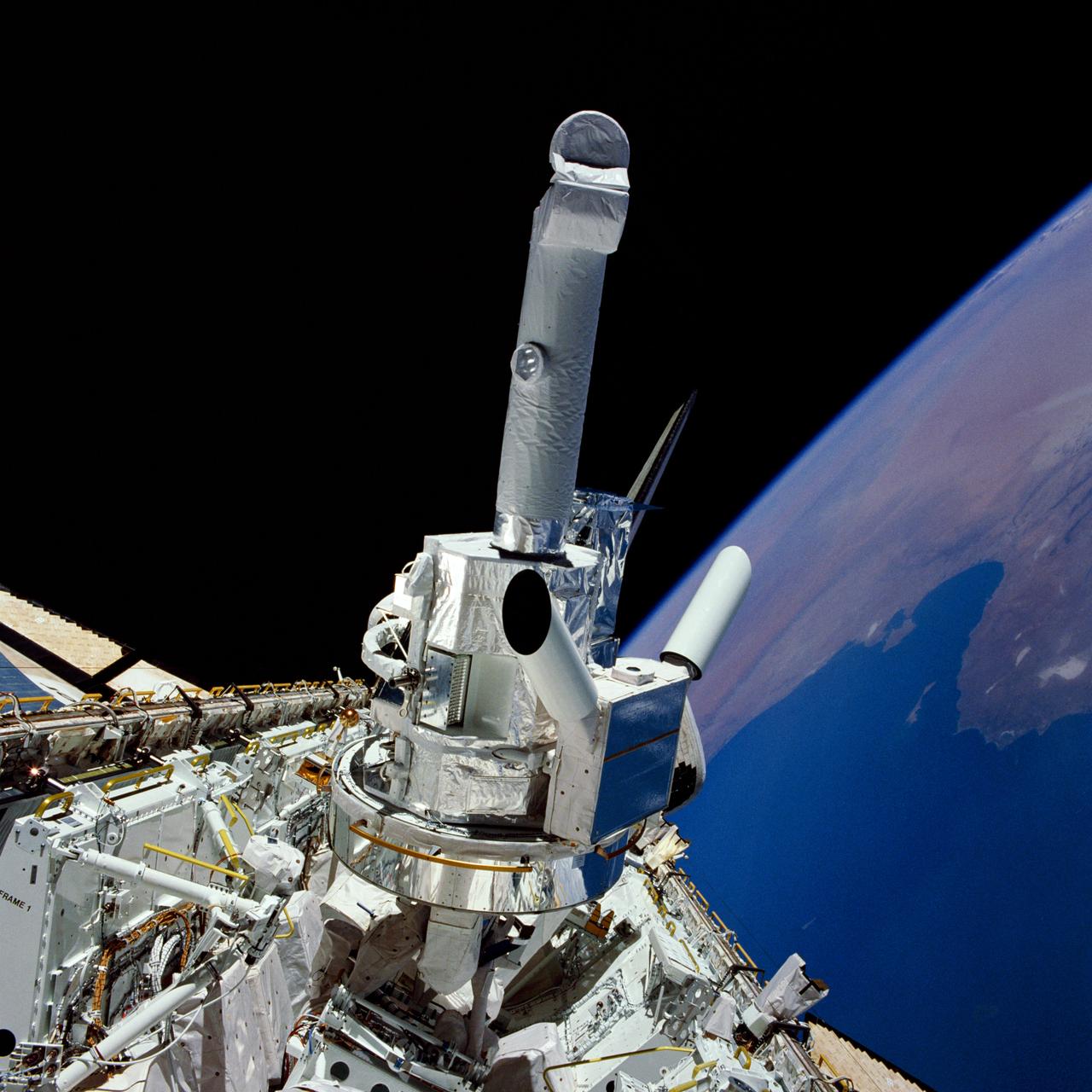
51F-33-005 (29 July - 6 August 1985) --- Experiments and the instrument pointing system (IPS) for Spacelab 2 are backdropped against the Libya/Tunisia Mediterranean coast and black space in this 70mm view photographed through the aft flight deck windows of the Space Shuttle Challenger. Also partially visible among the cluster of Spacelab 2 hardware are the solar optical universal polarimeter (SOUP) experiment and the coronal helium abundance experiment (CHASE).
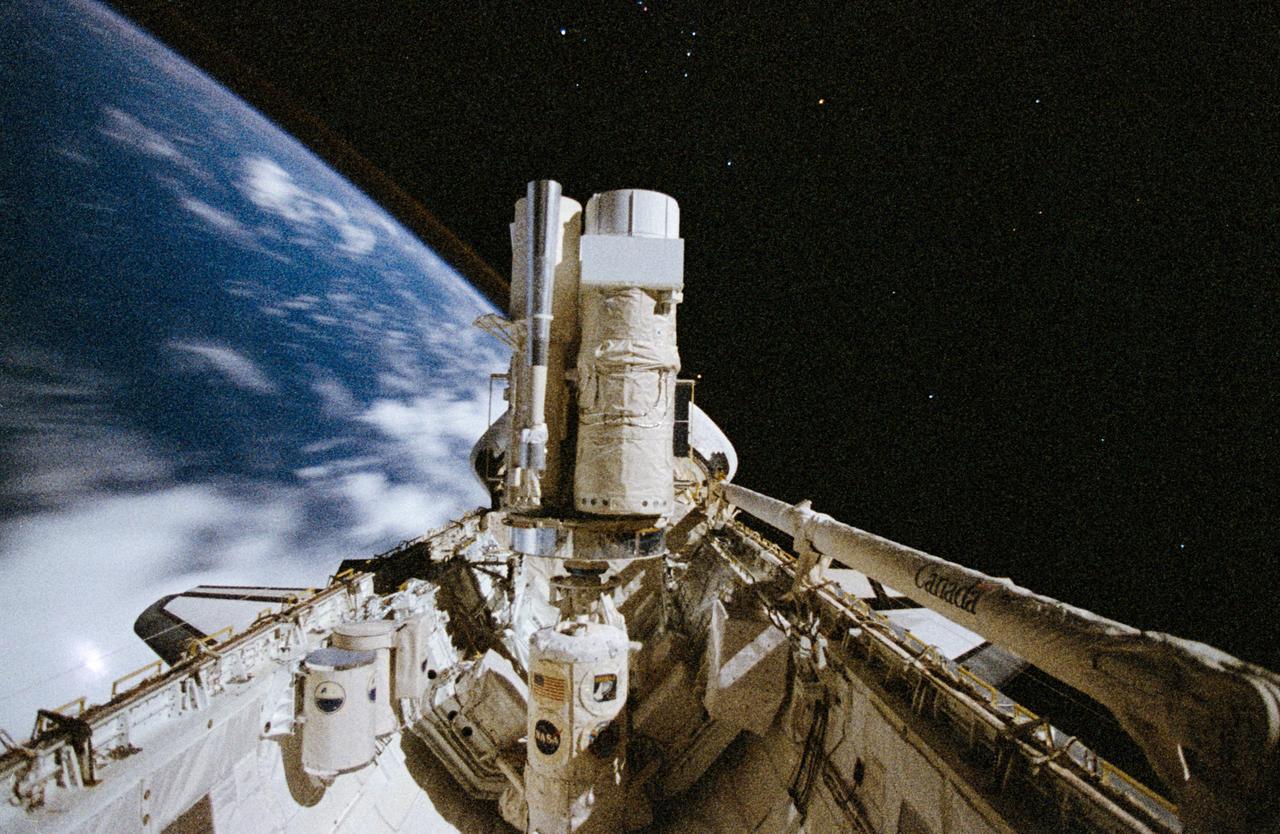
STS067-371-028 (2-18 March 1995) --- This 35mm lunar-illuminated scene of the Astro-2 payload in the Space Shuttle Endeavour's cargo bay was recorded by one of by the seven crew members during one of the many night passes of the almost 17-day mission. The cluster of telescopes and the Instrument Pointing System (IPS) are backdropped against the blue and white Earth and the darkness of space. What is believed to be the Constellation Orion is visible at upper center.
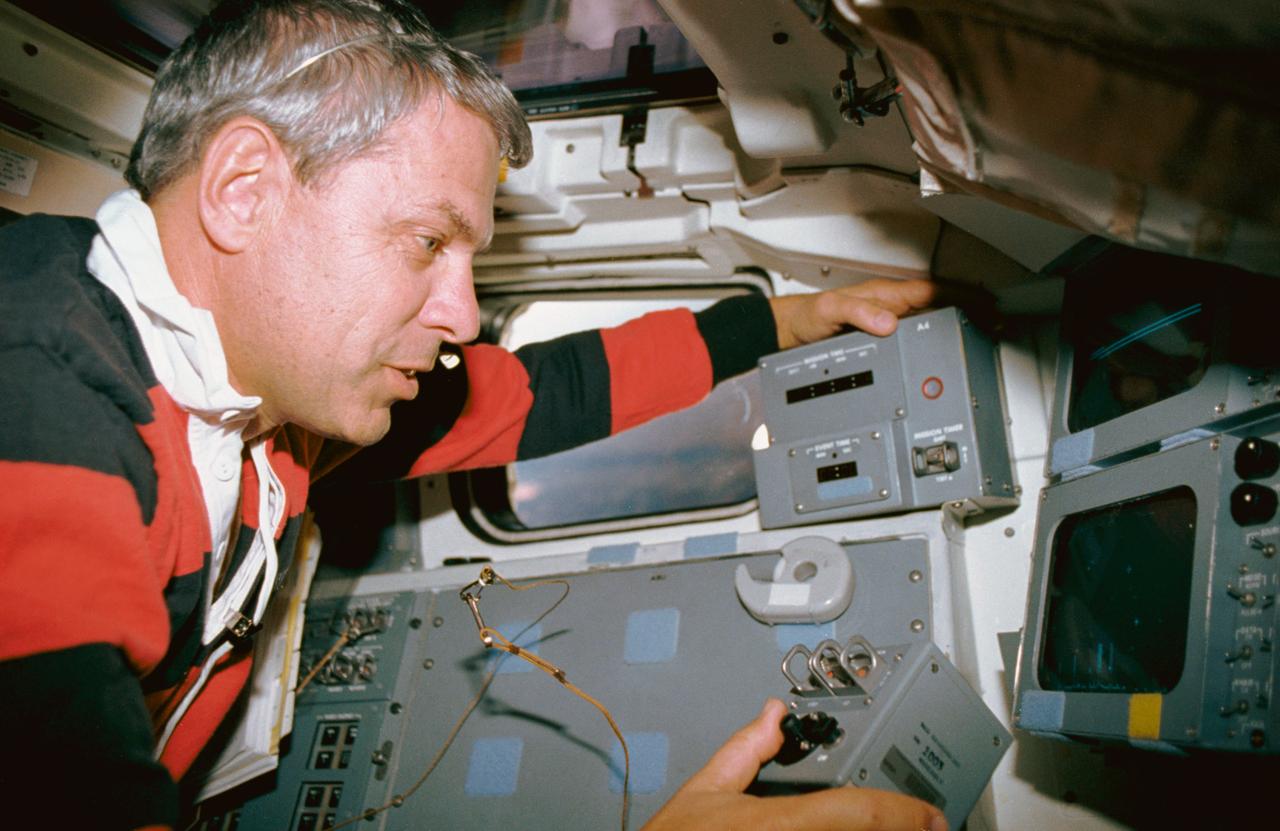
STS035-10-011 (2-10 Dec 1990) --- STS-35 Mission Specialist (MS) Robert A.R. Parker operates Astronomy Laboratory 1 (ASTRO-1) manual pointing controller (MPC) on the aft flight deck of Columbia, Orbiter Vehicle (OV) 102. Parker monitors a closed circuit television (CCTV) screen at the payload station as he uses the MPC to send data collection instructions to the ASTRO-1 instrument pointing system (IPS).
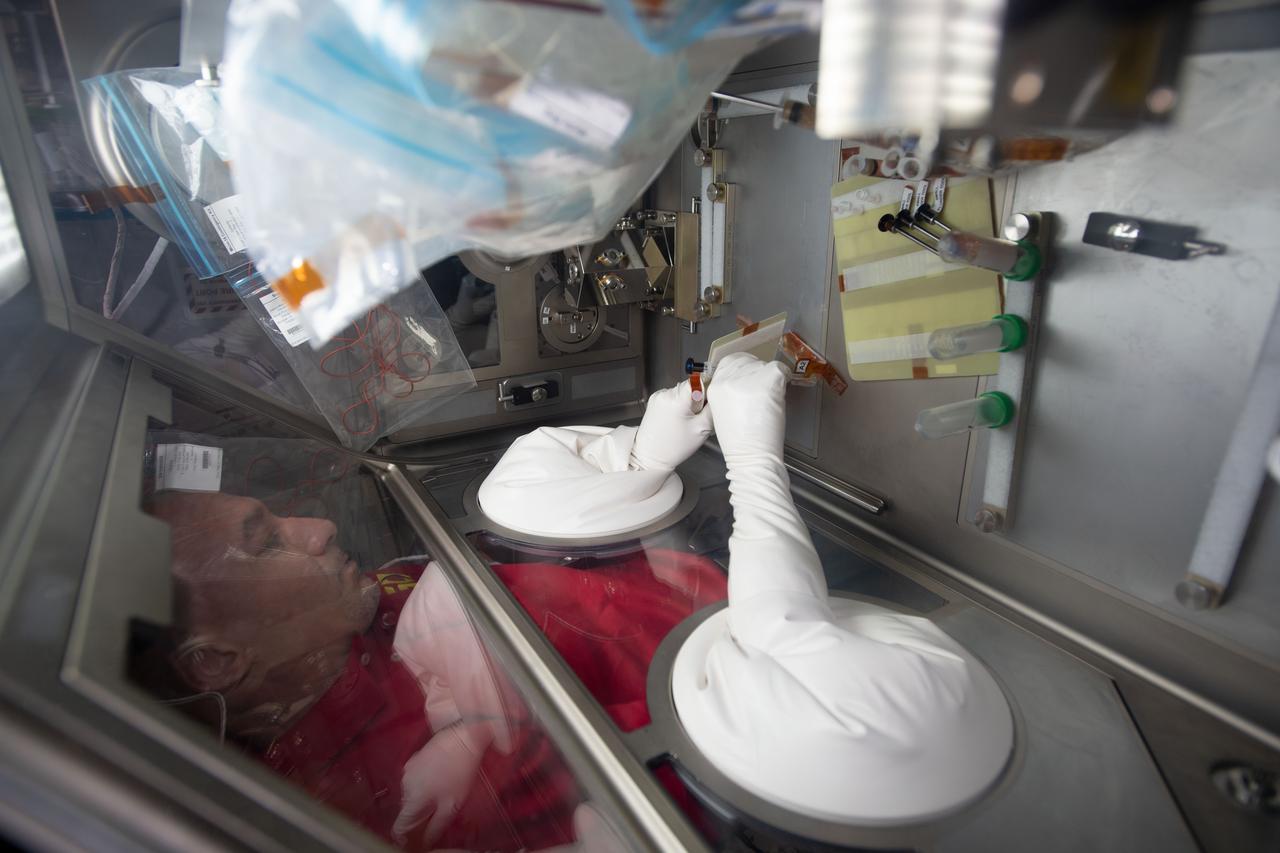
iss060e035085 (8/12/2019) --- European Space Agency (ESA) astronaut Luca Parmitano injects media into the culture bag of the Micro-15 investigation in the Japanese Experiment Module (JEM) abroad the International space Station (ISS). The goal of this investigation is to better understand the effects of gravity on the differentiation of mammalian cells using 3-D cultures of induced pluripotent stem (iPS) cells. This study investigates how exposure to microgravity fundamentally alters cell regulation and how these changes can affect the timing, progression, and outcomes of cell differentiation.
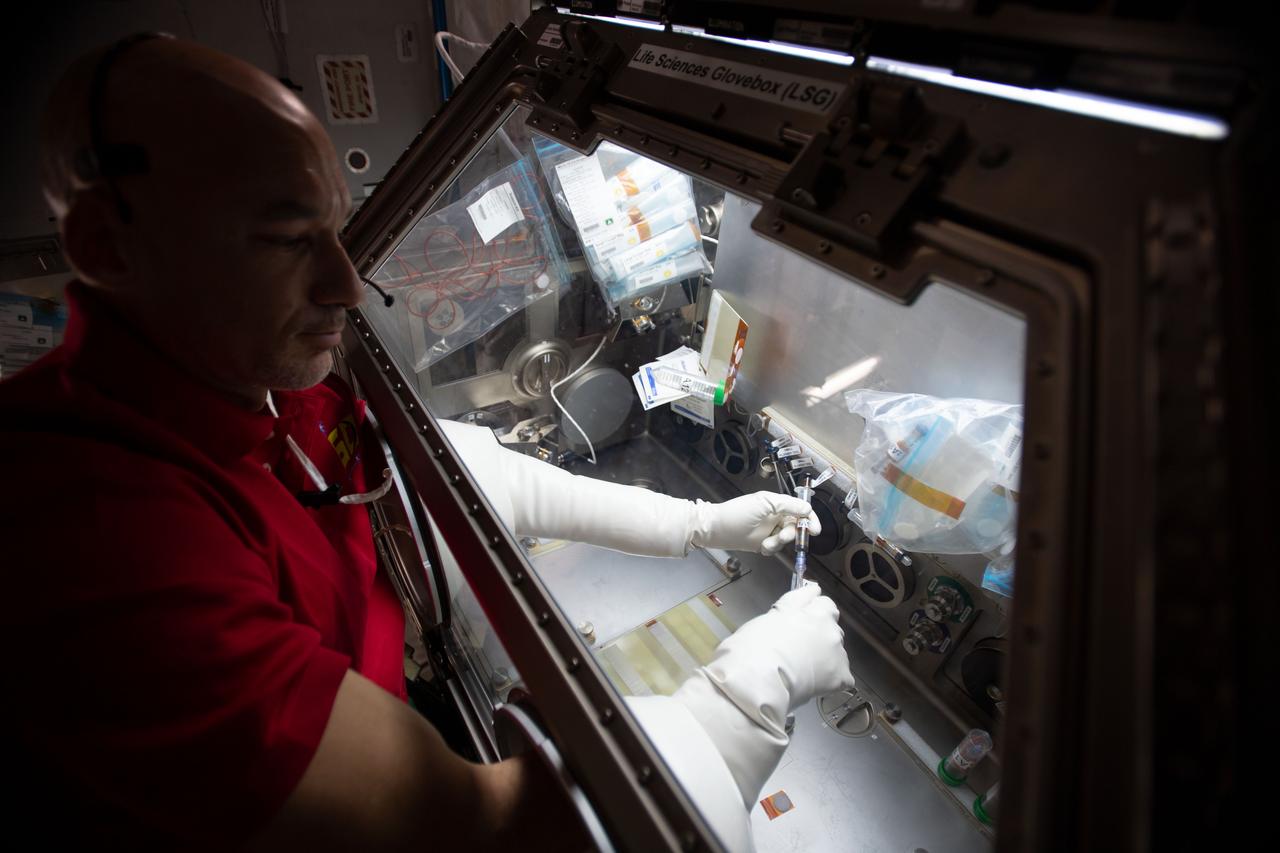
iss060e035097 (8/12/2019) --- European Space Agency (ESA) astronaut Luca Parmitano injects media into the culture bag of the Micro-15 investigation in the Japanese Experiment Module (JEM) abroad the International space Station (ISS). The goal of this investigation is to better understand the effects of gravity on the differentiation of mammalian cells using 3-D cultures of induced pluripotent stem (iPS) cells. This study investigates how exposure to microgravity fundamentally alters cell regulation and how these changes can affect the timing, progression, and outcomes of cell differentiation.
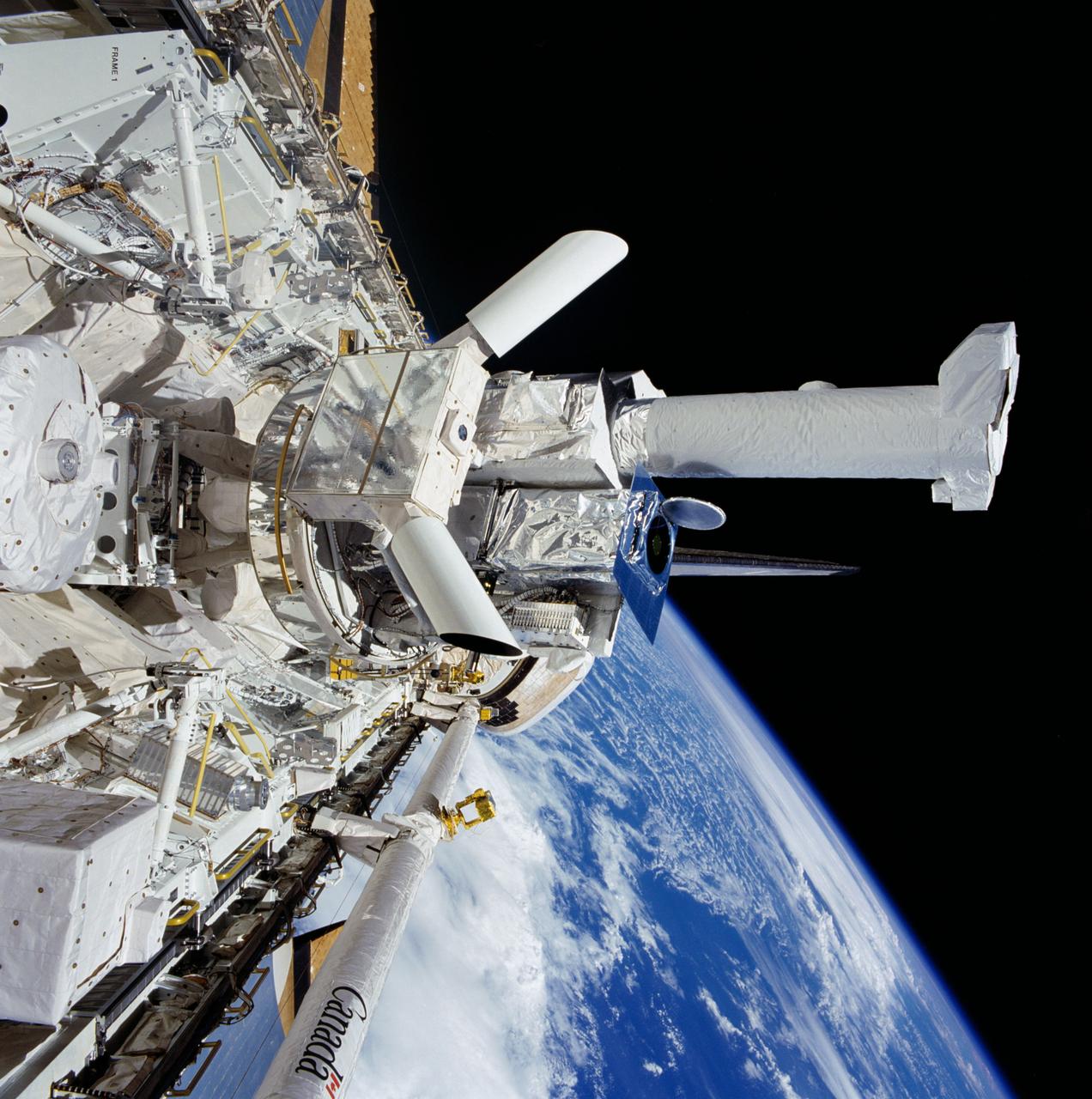
51F-42-069 (29 July-6 Aug 1985) --- The solar optical universal polarimeter (SOUP) experiment is visible among the cluster of Spacelab 2 hardware in the cargo bay of the Earth-orbiting Space Shuttle Challenger, backdropped against a curtain of white clouds over ocean waters. Various components of the instrument positioning system (IPS) are conspicuous at the center of the frame. Now resting, the remote manipulator system (RMS) was used at various points during the mission with the plasma diagnostics package (PDP) and as a support service structure for television cameras covering various activities of the busy science-oriented Spacelab 2 mission.
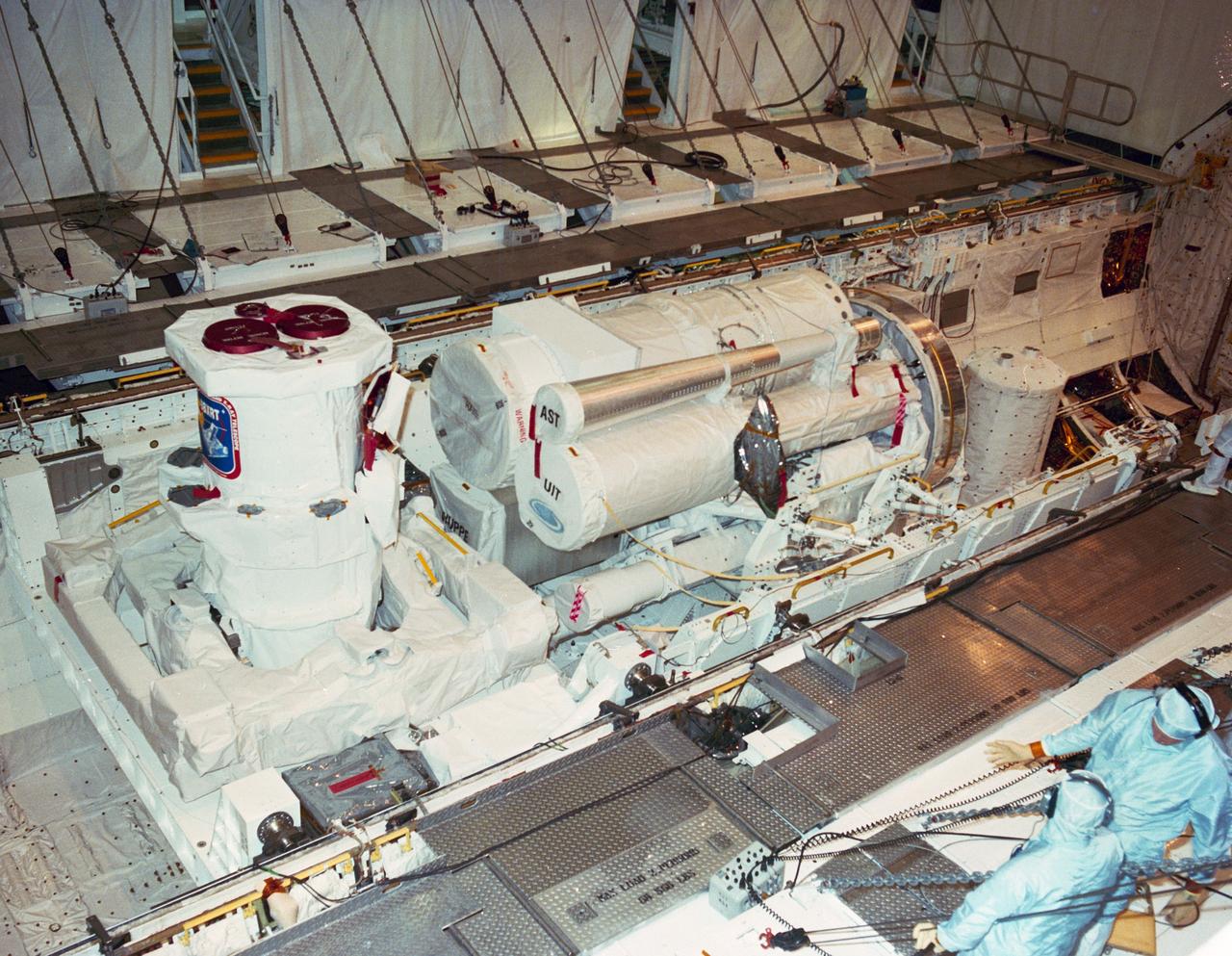
STS-35 Astronomy Laboratory 1 (ASTRO-1) is installed in Columbia's, Orbiter Vehicle (OV) 102's, payload bay (PLB) at the Kennedy Space Center (KSC) Orbiter Processing Facility (OPF). On the left, in the aft PLB is the Broad Band X Ray Telescope (BBXRT) mounted on the two axis pointing system (TAPS). In the center, the three ultraviolet telescopes - Wisconsin Ultraviolet Photo-Polarimeter Experiment (WUPPE), the Hopkins Ultraviolet Telescope (HUT), and the Ultraviolet Imaging Telescope (UIT) - are mounted on the instrument pointing system (IPS) and are in stowed position. At the far right is the Spacelab Pallet System (SPS) igloo. View provided by KSC with alternate number KSSC-90PC-421.
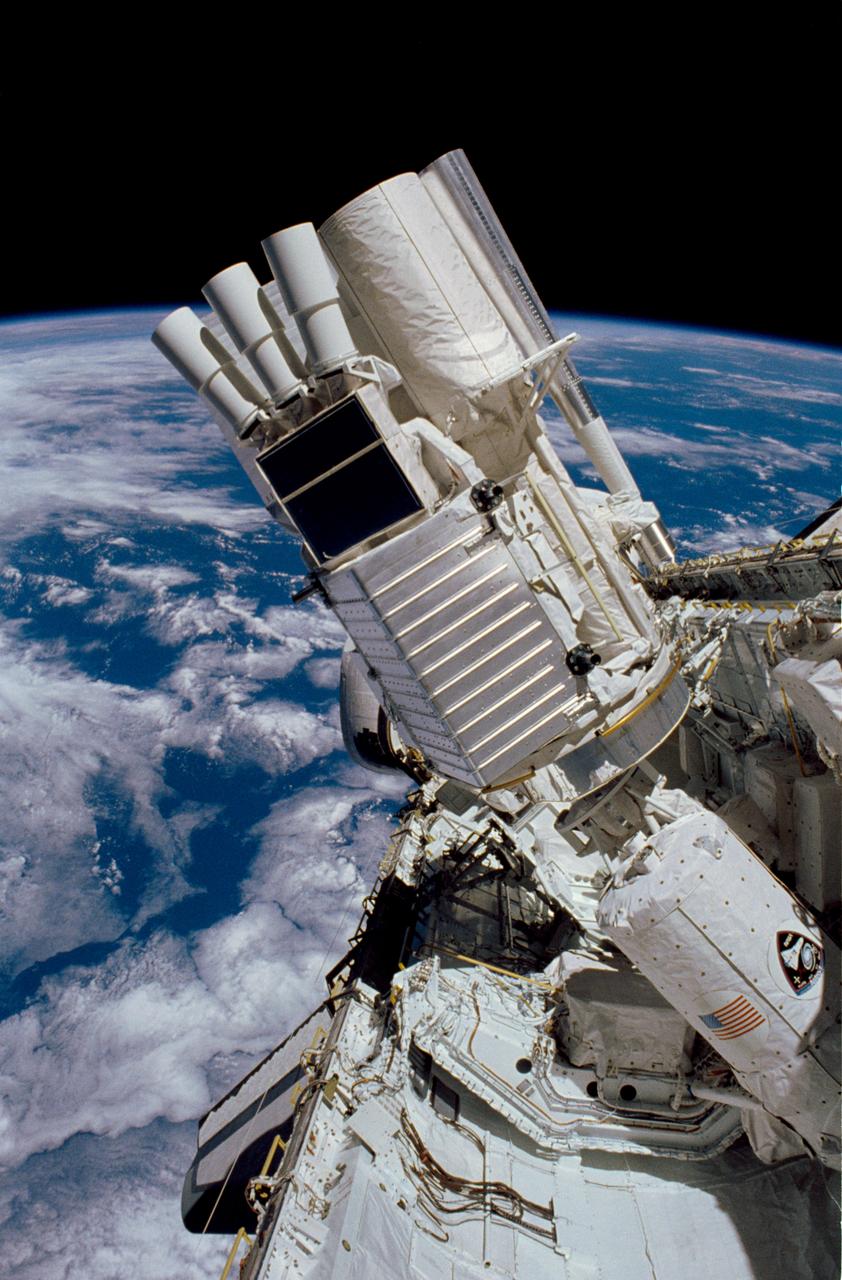
STS035-13-008 (2-10 Dec. 1990) --- The various components of the Astro-1 payload are seen backdropped against the blue and white Earth in this 35mm scene photographed through Columbia's aft flight deck windows. Parts of the Hopkins Ultraviolet Telescope (HUT), Ultraviolet Imaging Telescope (UIT) and the Wisconsin Ultraviolet Photo-Polarimeter Experiment (WUPPE) are visible on the Spacelab Pallet in the foreground. The Broad Band X-Ray Telescope (BBXRT) is behind this pallet and is not visible in this scene. The smaller cylinder in the foreground is the "Igloo," which is a pressurized container housing the Command and Data Management System, which interfaces with the in-cabin controllers to control the Instrument Pointing System (IPS) and the telescopes.
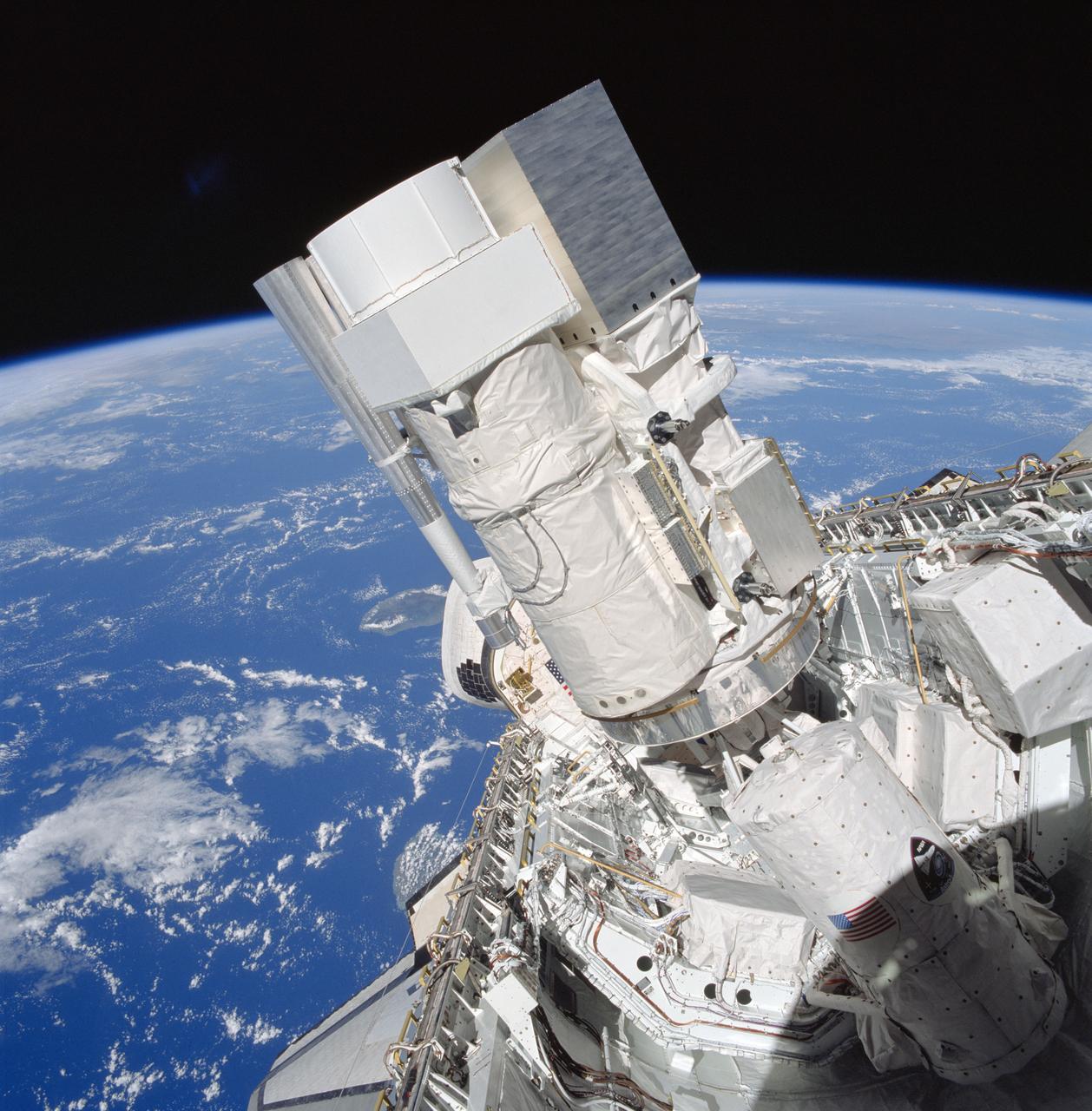
STS035-604-058 (2-10 Dec 1990) --- The various components of the Astro-1 payload are seen backdropped against the blue and white Earth in this scene photographed through Columbia's aft flight deck windows. Parts of the Hopkins Ultraviolet Telescope (HUT), Ultraviolet Imaging Telescope (UIT) and the Wisconsin Ultraviolet Photopolarimetry Experiment (WUPPE) are visible on the Spacelab pallet in the foreground. The Broad Band X-ray Telescope (BBXRT) is behind this pallet and is not visible in this scene. The smaller cylinder in the foreground is the "Igloo," which is a pressurized container housing the Command and Data Management System, which interfaces with the in-cabin controllers to control the Instrument Pointing System (IPS) and the telescopes. The photograph was made with a handheld Rolleiflex camera aimed through Columbia's aft flight deck windows.
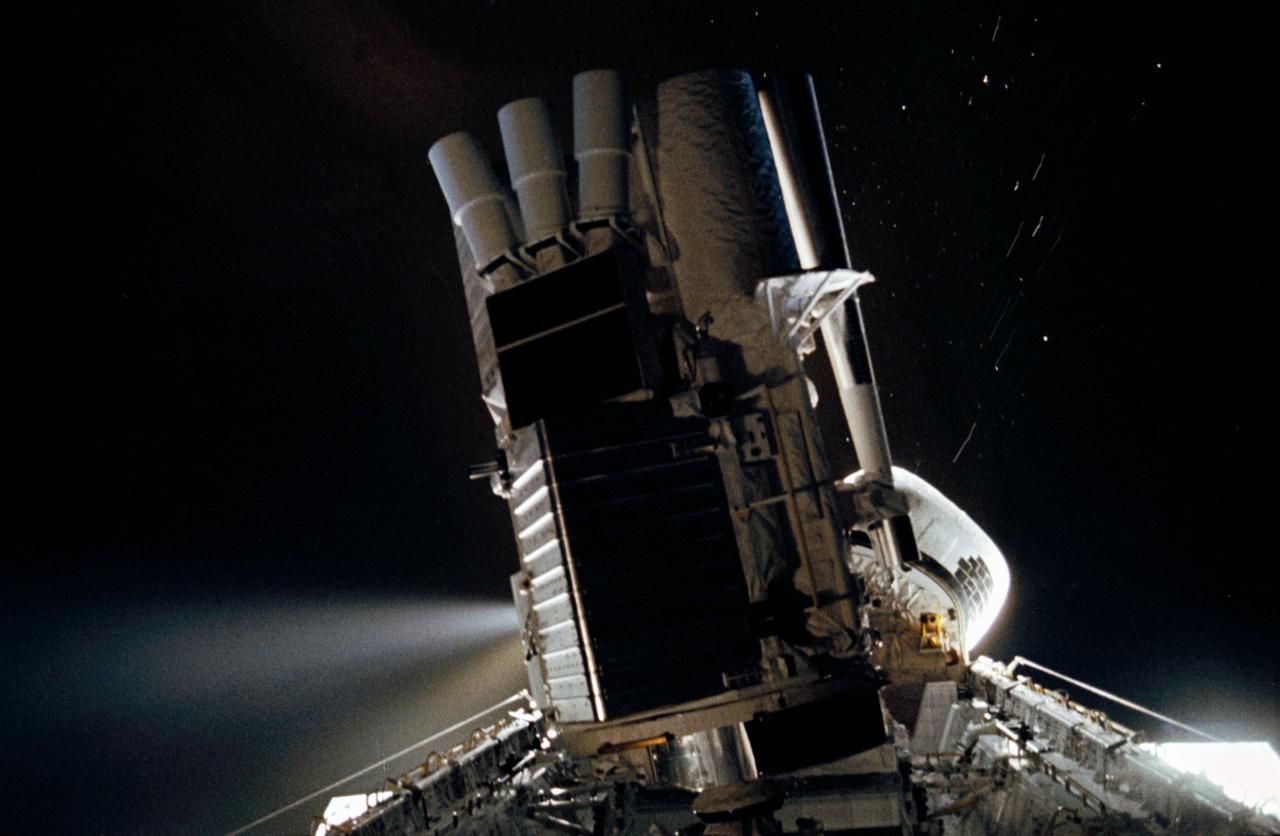
STS035-35-007 (2-10 Dec 1990) --- During the STS-35 mission, the Astronomy Laboratory 1 (ASTRO-1) payload, in its on-orbit operating configuration in the payload bay (PLB), is silhouetted against the firing of a reaction control system (RCS) jet. In the center of the frame, three ultraviolet telescopes are mounted and precisely co-aligned on a common structure, called the cruciform, that is attached to the instrument pointing system (IPS). Visible on the cruciform are Integrated Radiator System (IRS) (silver box on left), the Optical Sensor Package (OSP) (above IRS), the Ultraviolet Imaging Telescope (UIT), and the star tracker (S TRK) (far right). A right RCS jet is fired during this maneuver of Columbia, Orbiter Vehicle (OV) 102.
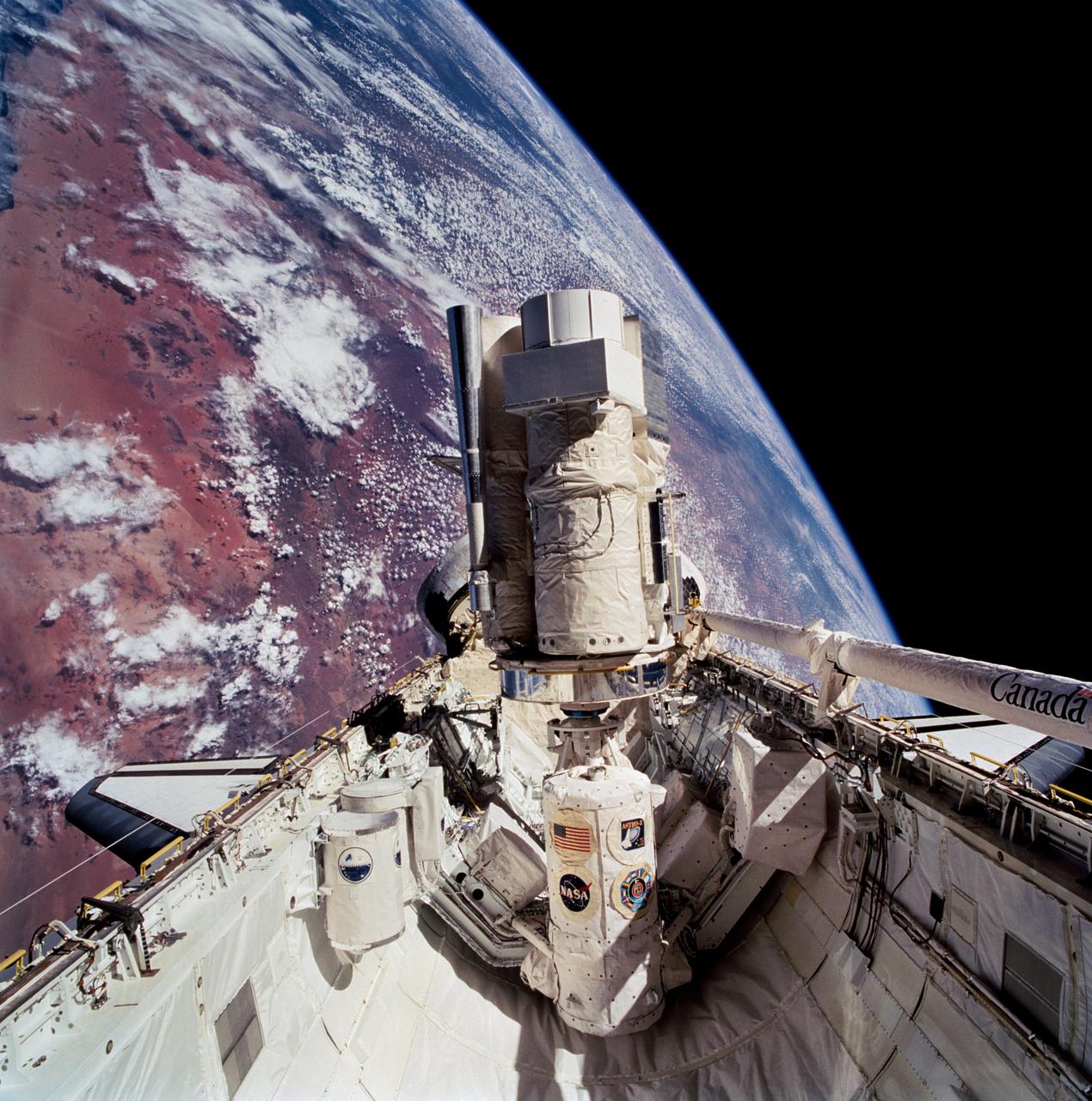
STS067-713-072 (2-18 March 1995) --- This 70mm cargo bay scene, backdropped against a desert area of Namibia, typifies the view that daily greeted the Astro-2 crew members during their almost 17-days aboard the Space Shuttle Endeavour. Positioned on the Spacelab pallet amidst other hardware, the Astro-2 payload is in its operational mode. Visible here are the Instrument Pointing System (IPS), Hopkins Ultraviolet Telescope (HUT), Star Tracker (ST), Ultraviolet Imaging Telescope (UIT), Wisconsin Ultraviolet Photo-Polarimeter Experiment (WUPPE), and Integrated Radiator System (IRS). At this angle, the Optical Sensor Package (OPS) is not seen. The Igloo, which supports the package of experiments, is in center foreground. Two Get-Away Special (GAS) canisters are in lower left foreground. The Extended Duration Orbiter (EDO) pallet, located aft of the cargo bay, is obscured by the Astro-2 payload. The Endeavour was 190 nautical miles above Earth.
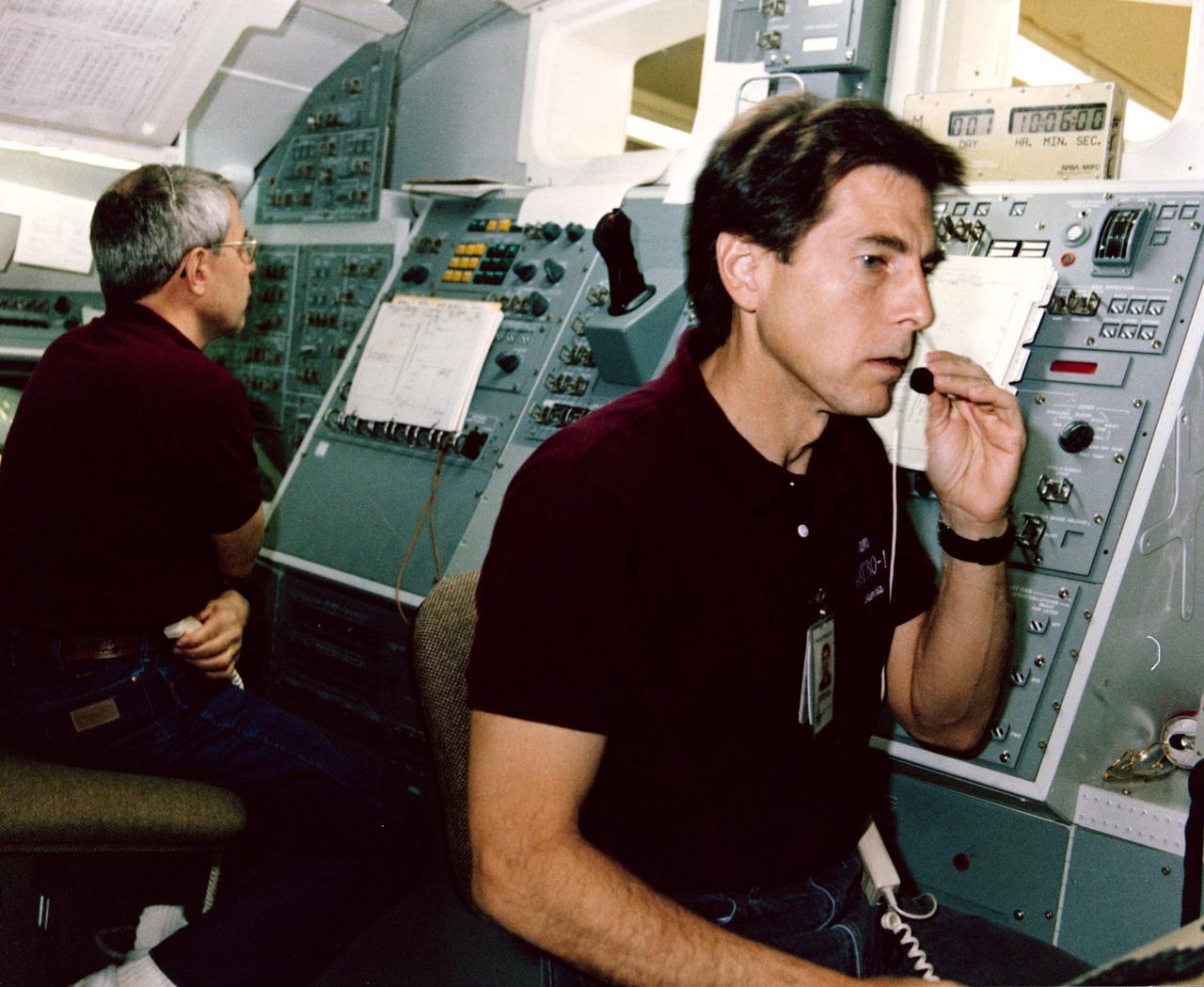
STS-35 Mission Specialist (MS) Robert A.R. Parker (left) and Payload Specialist Samuel T. Durrance practice Astronomy Laboratory 1 (ASTRO-1) experiment procedures in a space shuttle aft flight deck mockup in the Payload Crew Training Complex at the Marshall Space Flight Center (MSFC) in Huntsville, Alabama. For all Spacelab missions, shuttle crew members train regularly in the facility in preparation to operate experiments on their Spacelab missions. The ASTRO-1 crew will operate the ultraviolet telescopes and instrument pointing system (IPS) from Columbia's, Orbiter Vehicle (OV) 102's, aft flight deck. The seven-member ASTRO-1 crew will work around the clock, in 12-hour shifts, to allow the maximum number of observations to be made during their nine or ten days in orbit. In addition to the commander and pilot, the crew consistss of three MSs and two payload specialists. (MSs are career astronauts who are trained in a specialized field. Payload specialists are members of the science investigator teams who were nominated by their peers to operate their experiments on orbit. They are trained and certified for flight by NASA.) View provided by MSFC with alternate number 9005803.
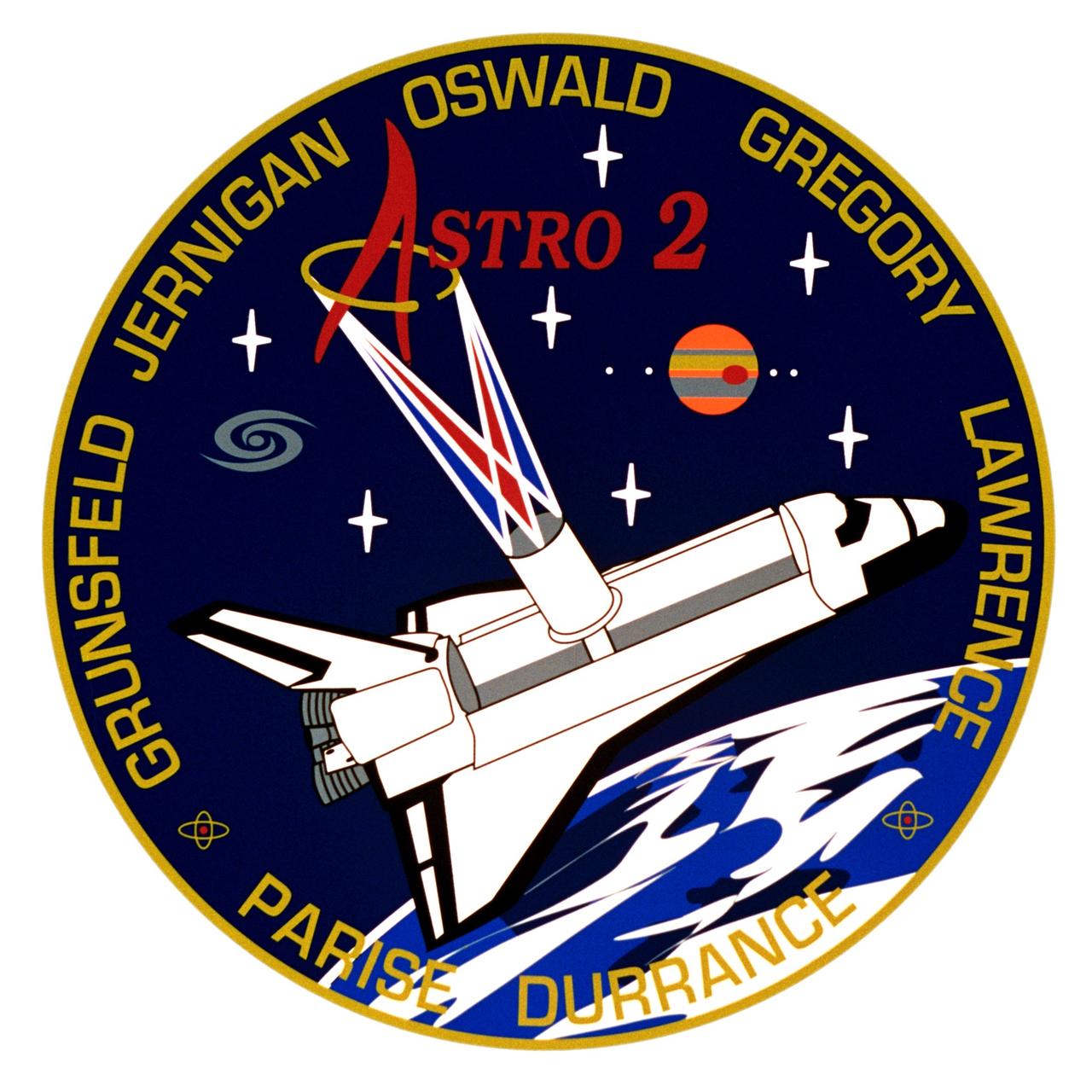
STS067-S-001 (October 1994) --- Observation and remote exploration of the Universe in the ultraviolet wavelengths of light are the focus of the STS-67/ASTRO-2 mission, as depicted in the crew patch designed by the crew members. The insignia shows the ASTRO-2 telescopes in the space shuttle Endeavour's payload bay, orbiting high above Earth's atmosphere. The three sets of rays, diverging from the telescope on the patch atop the Instrument Pointing System (IPS), correspond to the three ASTRO-2 telescopes -- the Hopkins Ultraviolet Telescope (HUT), the Ultraviolet Imaging Telescope (UIT), and the Wisconsin Ultraviolet Photo-Polarimeter Experiment (WUPPE). The telescopes are co-aligned to simultaneously view the same astronomical object, as shown by the convergence of rays on the NASA symbol. This symbol also represents the excellence of the union of the NASA teams and universality's in the exploration of the universe through astronomy. The celestial targets of ASTRO-2 include the observation of planets, stars and galaxies shown in the design. The two small atoms represent the search in the ultraviolet spectrum for the signature of primordial helium in intergalactic space left over from the Big Bang. The observations performed on ASTRO-2 will contribute to man's knowledge and understanding of the vast universe, from the planets in out system to the farthest reaches of space. The NASA insignia design for space shuttle flights is reserved for use by the astronauts and for other official use as the NASA Administrator may authorize. Public availability has been approved only in the forms of illustrations by the various news media. When and if there is any change in this policy, which is not anticipated, the change will be publicly announced. Photo credit: NASA