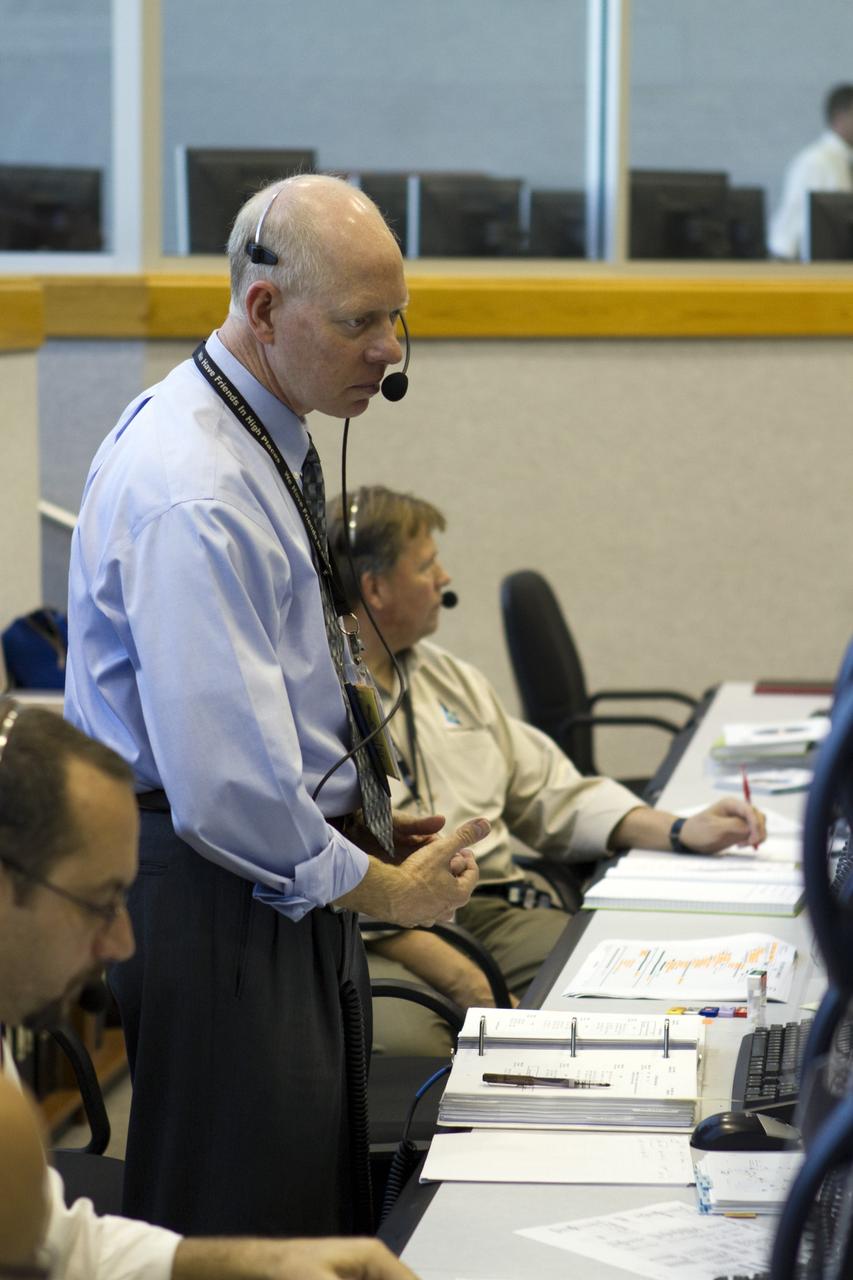
CAPE CANAVERAL, Fla. -- Team members stationed at consoles in the Launch Control Center at NASA's Kennedy Space Center in Florida monitor space shuttle Discovery's external fuel tank as it is loaded with more than 535,000 gallons of cryogenic propellants. From back, are STS-133 Assistant NASA Test Director Jeff Spaulding, STS-133 NASA Test Director Steve Payne and Launch Orbiter Test Conductor John Kracsun. During today's tanking test, the team is paying particular attention to the external tank's ribbed intertank region. Beginning tomorrow, engineers will evaluate data on 21-foot-long, U-shaped aluminum brackets, called stringers, and the newly replaced ground umbilical carrier plate (GUCP). Discovery's first launch attempt for STS-133 was scrubbed in early November due to a hydrogen gas leak at the GUCP. In order to perform additional analysis on the tank, Discovery will be rolled back to the Vehicle Assembly Building, a move that is planned for next week. The next launch opportunity is no earlier than Feb. 3, 2011. For more information on STS-133, visit www.nasa.gov/mission_pages/shuttle/shuttlemissions/sts133/. Photo credit: NASA/Cory Huston

CAPE CANAVERAL, Fla. -- The Final Inspection Team, also known as the Ice Team, gathers before heading out to Launch Pad 39A at NASA's Kennedy Space Center in Florida to inspect space shuttle Discovery's external fuel tank during the loading of more than 535,000 gallons of cryogenic propellants. During today's tanking test, the team members will pay particular attention to the external tank's ribbed intertank region and report their findings to engineers located in the Launch Control Center. Beginning tomorrow, engineers will evaluate data on 21-foot-long, U-shaped aluminum brackets, called stringers, and the newly replaced ground umbilical carrier plate (GUCP). Discovery's first launch attempt for STS-133 was scrubbed in early November due to a hydrogen gas leak at the GUCP. In order to perform additional analysis on the tank, Discovery will be rolled back to the Vehicle Assembly Building, a move that is planned for next week. The next launch opportunity is no earlier than Feb. 3, 2011. For more information on STS-133, visit www.nasa.gov/mission_pages/shuttle/shuttlemissions/sts133/. Photo credit: NASA/Cory Huston

CAPE CANAVERAL, Fla. -- The Final Inspection Team, also known as the Ice Team, gathers before heading out to Launch Pad 39A at NASA's Kennedy Space Center in Florida to inspect space shuttle Discovery's external fuel tank during the loading of more than 535,000 gallons of cryogenic propellants. During today's tanking test, the team members will pay particular attention to the external tank's ribbed intertank region and report their findings to engineers located in the Launch Control Center. Beginning tomorrow, engineers will evaluate data on 21-foot-long, U-shaped aluminum brackets, called stringers, and the newly replaced ground umbilical carrier plate (GUCP). Discovery's first launch attempt for STS-133 was scrubbed in early November due to a hydrogen gas leak at the GUCP. In order to perform additional analysis on the tank, Discovery will be rolled back to the Vehicle Assembly Building, a move that is planned for next week. The next launch opportunity is no earlier than Feb. 3, 2011. For more information on STS-133, visit www.nasa.gov/mission_pages/shuttle/shuttlemissions/sts133/. Photo credit: NASA/Cory Huston
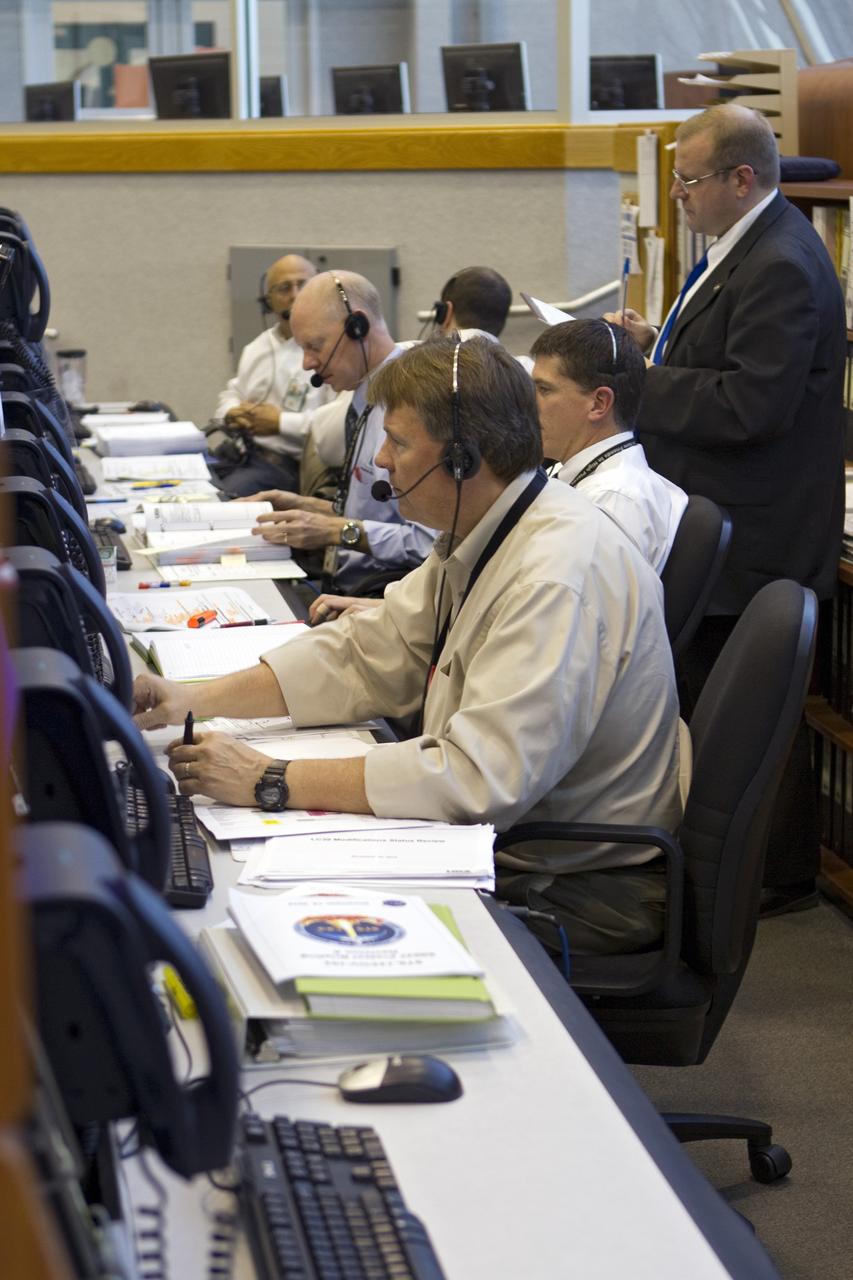
CAPE CANAVERAL, Fla. -- Team members stationed at consoles in the Launch Control Center at NASA's Kennedy Space Center in Florida monitor space shuttle Discovery's external fuel tank as it is loaded with more than 535,000 gallons of cryogenic propellants. From back, are Assistant Launch Orbiter Test Conductor Mark Taffet, Launch Orbiter Test Conductor John Kracsun, STS-133 NASA Test Director Steve Payne, NASA Commentator Allard Beutel, NASA Test Director Jeremy Graeber and STS-133 Assistant NASA Test Director Jeff Spaulding. During today's tanking test, the team is paying particular attention to the external tank's ribbed intertank region. Beginning tomorrow, engineers will evaluate data on 21-foot-long, U-shaped aluminum brackets, called stringers, and the newly replaced ground umbilical carrier plate (GUCP). Discovery's first launch attempt for STS-133 was scrubbed in early November due to a hydrogen gas leak at the GUCP. In order to perform additional analysis on the tank, Discovery will be rolled back to the Vehicle Assembly Building, a move that is planned for next week. The next launch opportunity is no earlier than Feb. 3, 2011. For more information on STS-133, visit www.nasa.gov/mission_pages/shuttle/shuttlemissions/sts133/. Photo credit: NASA/Cory Huston

CAPE CANAVERAL, Fla. -- Shuttle Launch Director Mike Leinbach monitors space shuttle Discovery's external fuel tank as it is loaded with more than 535,000 gallons of cryogenic propellants from his console in the Launch Control Center at NASA's Kennedy Space Center in Florida. During today's tanking test, the team is paying particular attention to the external tank's ribbed intertank region. Beginning tomorrow, engineers will evaluate data on 21-foot-long, U-shaped aluminum brackets, called stringers, and the newly replaced ground umbilical carrier plate (GUCP). Discovery's first launch attempt for STS-133 was scrubbed in early November due to a hydrogen gas leak at the GUCP. In order to perform additional analysis on the tank, Discovery will be rolled back to the Vehicle Assembly Building, a move that is planned for next week. The next launch opportunity is no earlier than Feb. 3, 2011. For more information on STS-133, visit www.nasa.gov/mission_pages/shuttle/shuttlemissions/sts133/. Photo credit: NASA/Cory Huston
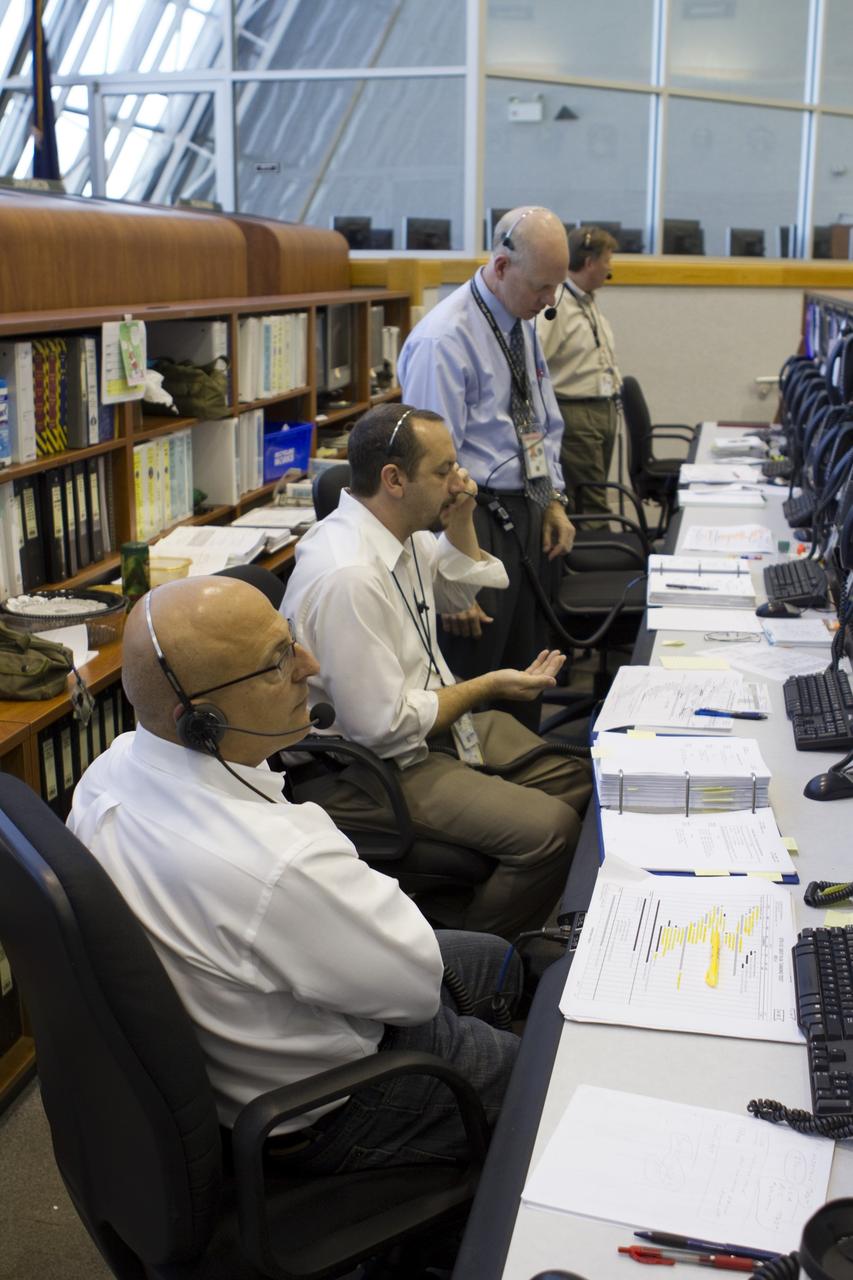
CAPE CANAVERAL, Fla. -- Team members stationed at consoles in the Launch Control Center at NASA's Kennedy Space Center in Florida monitor space shuttle Discovery's external fuel tank as it is loaded with more than 535,000 gallons of cryogenic propellants. From back, are STS-133 Assistant NASA Test Director Jeff Spaulding, STS-133 NASA Test Director Steve Payne, Launch Orbiter Test Conductor John Kracsun and Assistant Launch Orbiter Test Conductor Mark Taffet. During today's tanking test, the team is paying particular attention to the external tank's ribbed intertank region. Beginning tomorrow, engineers will evaluate data on 21-foot-long, U-shaped aluminum brackets, called stringers, and the newly replaced ground umbilical carrier plate (GUCP). Discovery's first launch attempt for STS-133 was scrubbed in early November due to a hydrogen gas leak at the GUCP. In order to perform additional analysis on the tank, Discovery will be rolled back to the Vehicle Assembly Building, a move that is planned for next week. The next launch opportunity is no earlier than Feb. 3, 2011. For more information on STS-133, visit www.nasa.gov/mission_pages/shuttle/shuttlemissions/sts133/. Photo credit: NASA/Cory Huston
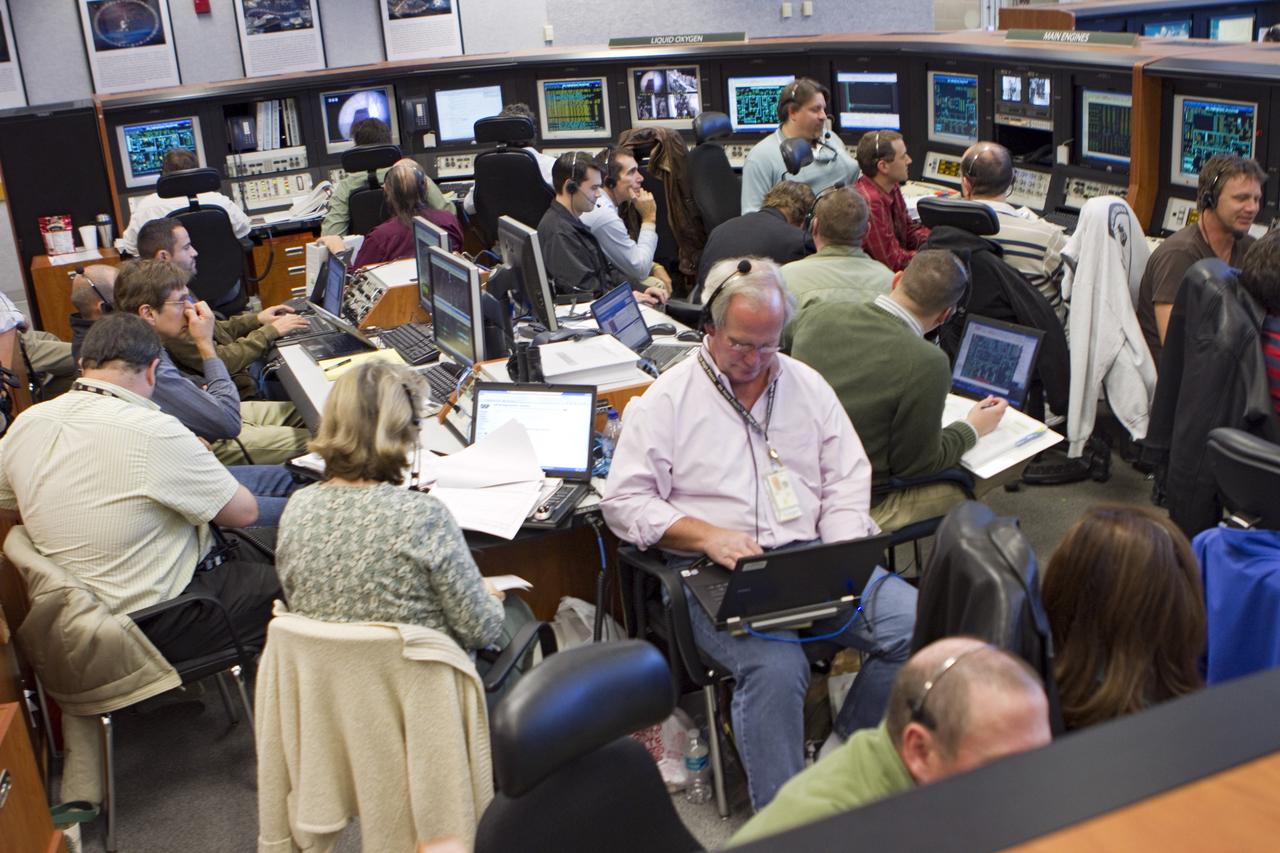
CAPE CANAVERAL, Fla. -- Team members stationed at consoles in the Launch Control Center at NASA's Kennedy Space Center in Florida monitor space shuttle Discovery's external fuel tank as it is loaded with more than 535,000 gallons of cryogenic propellants. During today's tanking test, the team is paying particular attention to the external tank's ribbed intertank region. Beginning tomorrow, engineers will evaluate data on 21-foot-long, U-shaped aluminum brackets, called stringers, and the newly replaced ground umbilical carrier plate (GUCP). Discovery's first launch attempt for STS-133 was scrubbed in early November due to a hydrogen gas leak at the GUCP. In order to perform additional analysis on the tank, Discovery will be rolled back to the Vehicle Assembly Building, a move that is planned for next week. The next launch opportunity is no earlier than Feb. 3, 2011. For more information on STS-133, visit www.nasa.gov/mission_pages/shuttle/shuttlemissions/sts133/. Photo credit: NASA/Cory Huston
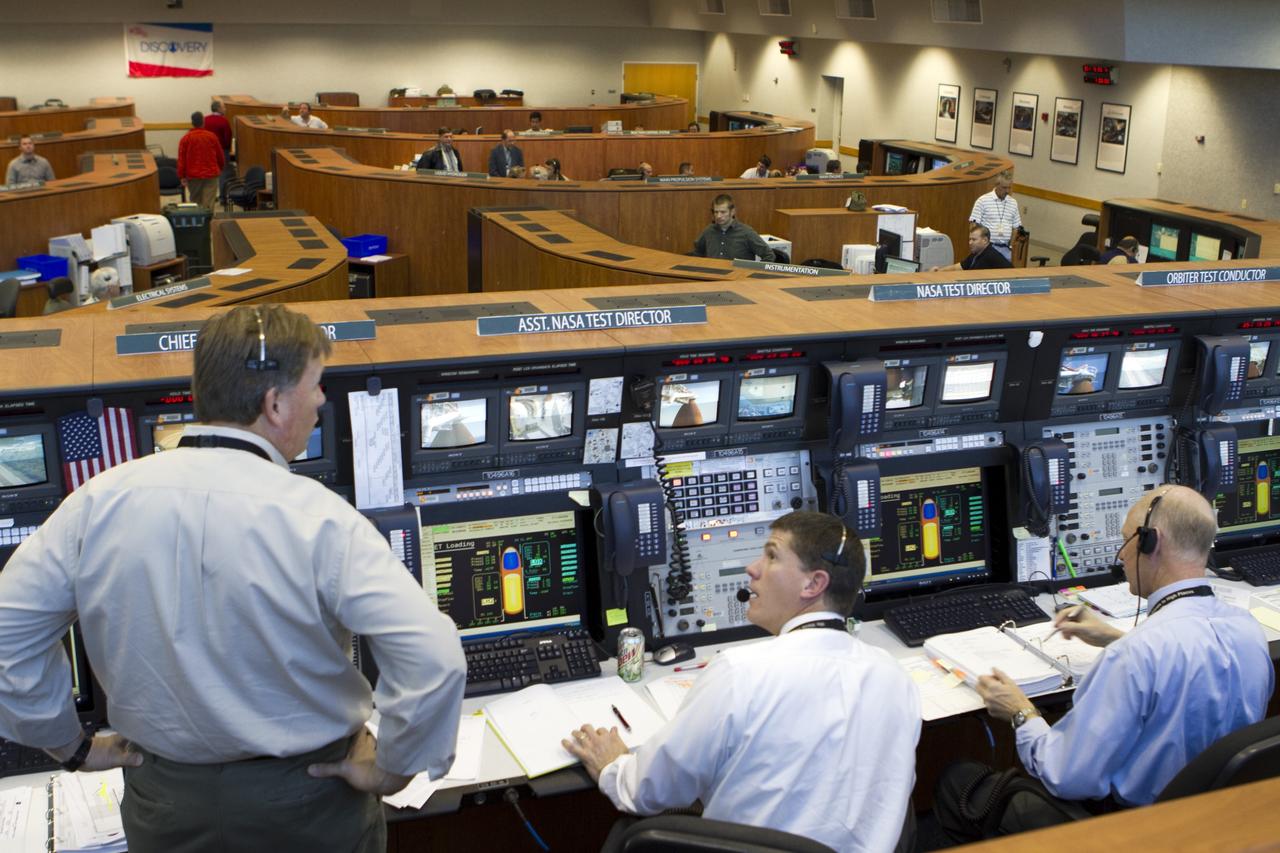
CAPE CANAVERAL, Fla. -- Team members stationed at consoles in the Launch Control Center at NASA's Kennedy Space Center in Florida monitor space shuttle Discovery's external fuel tank as it is loaded with more than 535,000 gallons of cryogenic propellants. From left, are STS-133 Assistant NASA Test Director Jeff Spaulding, NASA Test Director Jeremy Graeber and STS-133 NASA Test Director Steve Payne. During today's tanking test, the team is paying particular attention to the external tank's ribbed intertank region. Beginning tomorrow, engineers will evaluate data on 21-foot-long, U-shaped aluminum brackets, called stringers, and the newly replaced ground umbilical carrier plate (GUCP). Discovery's first launch attempt for STS-133 was scrubbed in early November due to a hydrogen gas leak at the GUCP. In order to perform additional analysis on the tank, Discovery will be rolled back to the Vehicle Assembly Building, a move that is planned for next week. The next launch opportunity is no earlier than Feb. 3, 2011. For more information on STS-133, visit www.nasa.gov/mission_pages/shuttle/shuttlemissions/sts133/. Photo credit: NASA/Cory Huston
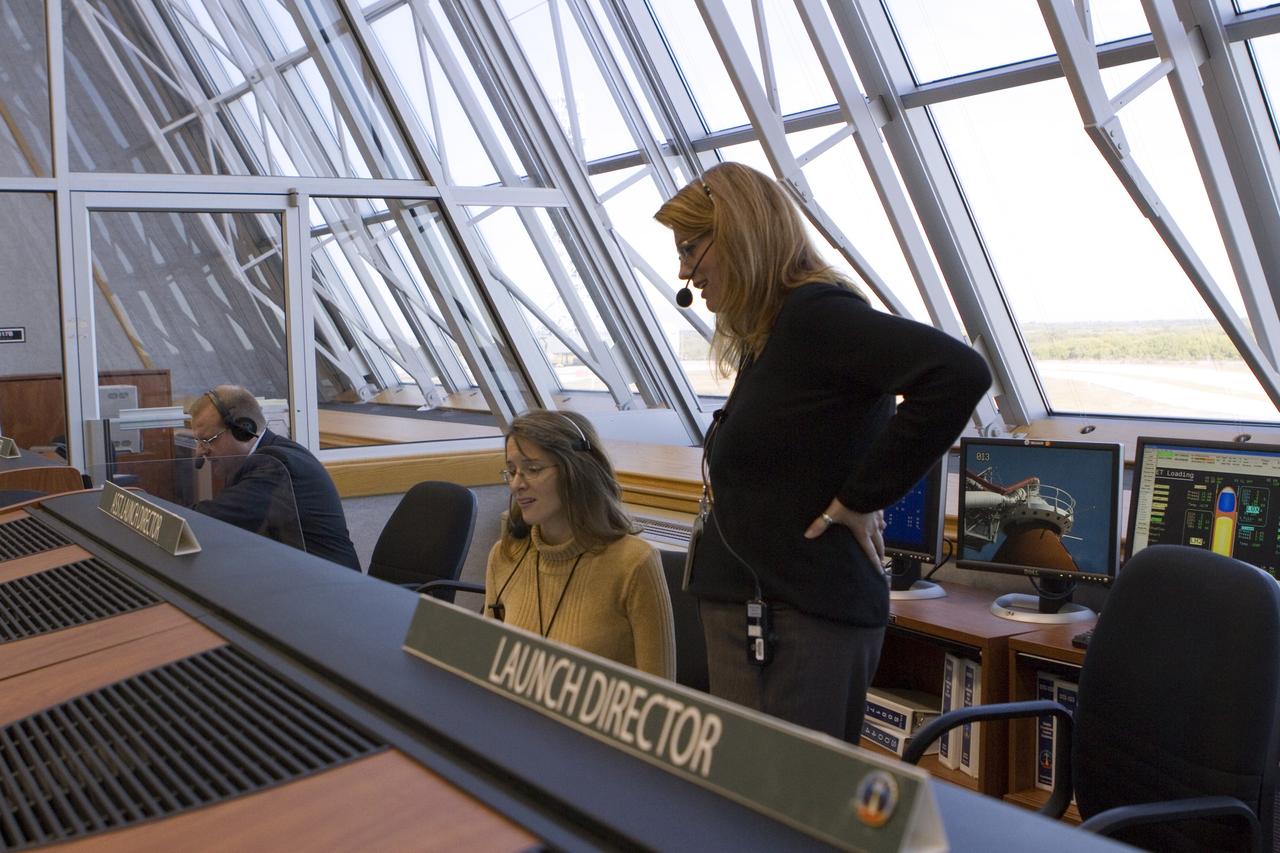
CAPE CANAVERAL, Fla. -- Team members stationed at consoles in the Launch Control Center at NASA's Kennedy Space Center in Florida monitor space shuttle Discovery's external fuel tank as it is loaded with more than 535,000 gallons of cryogenic propellants. From left, are NASA Commentator Allard Beutel, Discovery's NASA Vehicle Manager Jennifer Nufer and Lead NASA Test Director Charlie Blackwell-Thompson. During today's tanking test, the team is paying particular attention to the external tank's ribbed intertank region. Beginning tomorrow, engineers will evaluate data on 21-foot-long, U-shaped aluminum brackets, called stringers, and the newly replaced ground umbilical carrier plate (GUCP). Discovery's first launch attempt for STS-133 was scrubbed in early November due to a hydrogen gas leak at the GUCP. In order to perform additional analysis on the tank, Discovery will be rolled back to the Vehicle Assembly Building, a move that is planned for next week. The next launch opportunity is no earlier than Feb. 3, 2011. For more information on STS-133, visit www.nasa.gov/mission_pages/shuttle/shuttlemissions/sts133/. Photo credit: NASA/Cory Huston