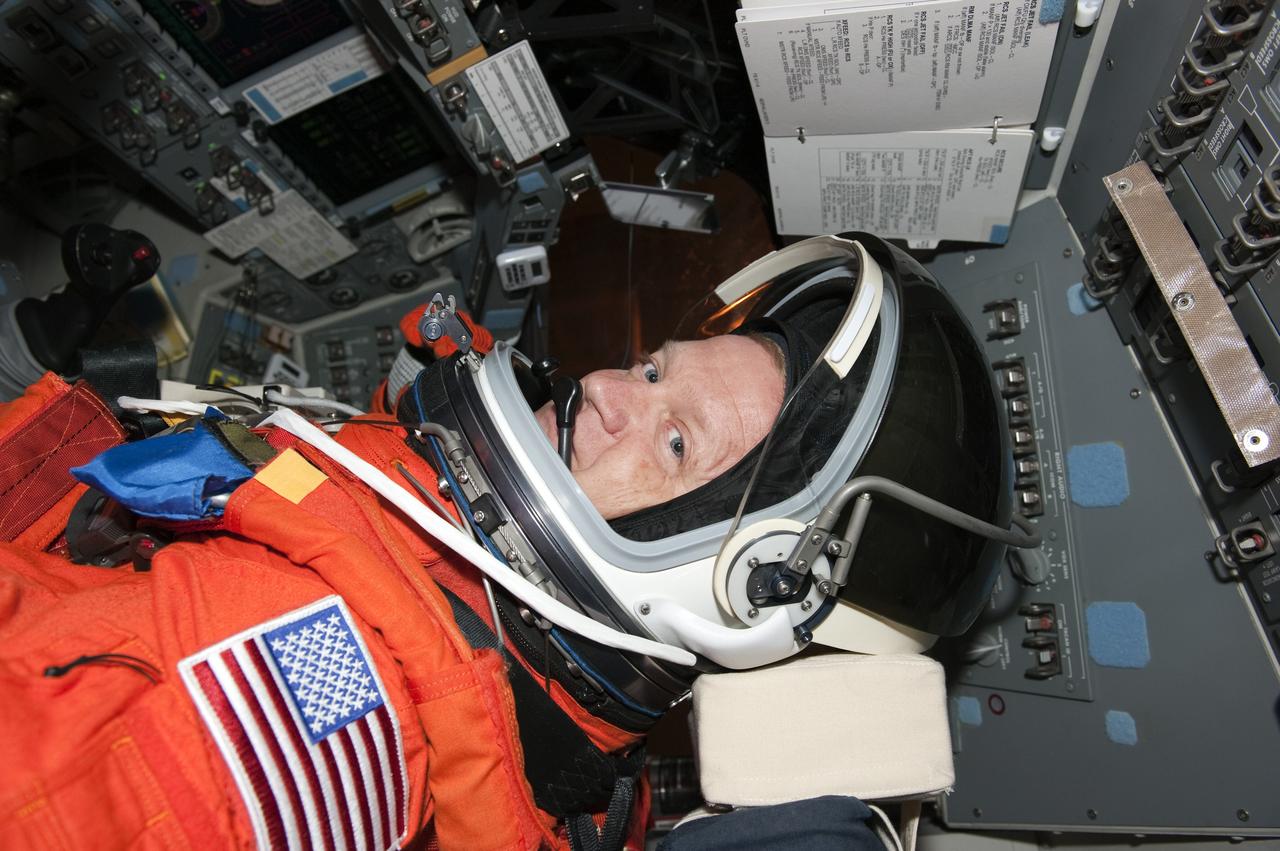
CAPE CANAVERAL, Fla. -- During a simulated launch countdown on Launch Pad 39A at NASA's Kennedy Space Center in Florida, STS-133 Pilot Eric Boe is strapped into his seat on space shuttle Discovery. Next, the crew members will practice escaping the shuttle, in preparation for an unlikely emergency at the pad on launch day. The simulated launch countdown and emergency exit training are part of a week-long Terminal Countdown Demonstration Test (TCDT). Discovery and its STS-133 crew will deliver the Permanent Multipurpose Module, packed with supplies and critical spare parts, as well as Robonaut 2, the dexterous humanoid astronaut helper, to the International Space Station. Launch is targeted for Nov. 1 at 4:40 p.m. For more information on the STS-133 mission, visit www.nasa.gov/mission_pages/shuttle/shuttlemissions/sts133/. Photo credit: NASA/Kim Shiflett
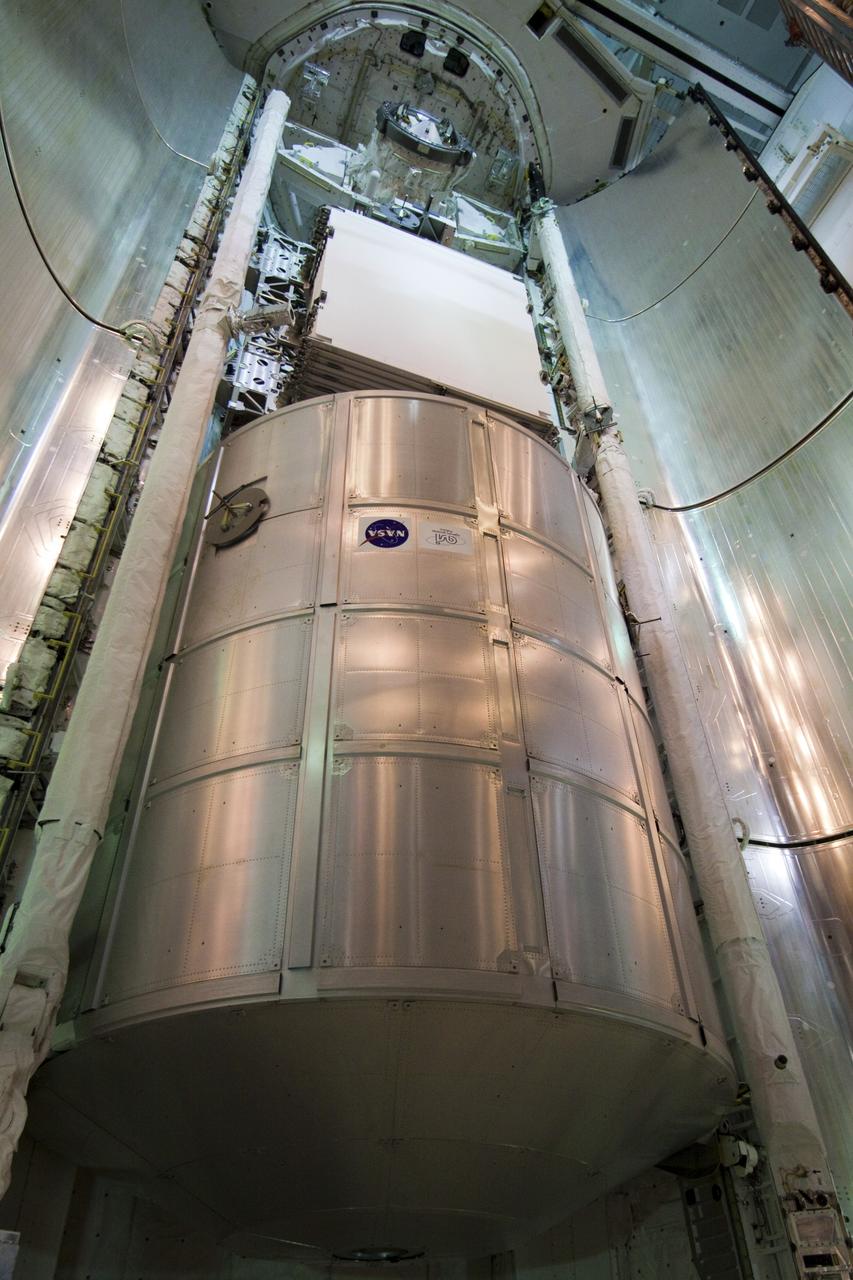
CAPE CANAVERAL, Fla. -- On Launch Pad 39A at NASA's Kennedy Space Center in Florida, the clamshell doors of space shuttle Discovery's payload bay are ready to be closed in preparation for the STS-133 launch to the International Space Station. Targeted to launch Nov. 1, STS-133 will carry the Permanent Multipurpose Module (PMM) packed with supplies and critical spare parts, as well as Robonaut 2 (R2) to the station. Photo credit: NASA/Jack Pfaller
CAPE CANAVERAL, Fla. -- Storm clouds begin to move in over Launch Pad 39A at NASA's Kennedy Space Center in Florida, postponing the retraction of the pad's rotating service structure, which would reveal space shuttle Discovery. The structure provides weather protection and access to the shuttle while it awaits lift off on the pad. RSS "rollback," as it's called, will begin again after the lightning-producing clouds pass. Launch of Discovery on the STS-133 mission to the International Space Station is set for 3:29 p.m. on Nov. 4. During the 11-day mission, Discovery and its six crew members will deliver the Permanent Multipurpose Module, packed with supplies and critical spare parts, as well as Robonaut 2, to the orbiting laboratory. Discovery, which will fly its 39th mission, is scheduled to be retired following STS-133. This will be the 133rd Space Shuttle Program mission and the 35th shuttle voyage to the space station. For more information on STS-133, visit www.nasa.gov/mission_pages/shuttle/shuttlemissions/sts133/. Photo credit: NASA/Kim Shiflett
CAPE CANAVERAL, Fla. -- At NASA's Kennedy Space Center in Florida, space shuttle Discovery is visible on Launch Pad 39A following the retraction of the rotating service structure. The structure provides weather protection and access to the shuttle while it awaits lift off on the pad. RSS "rollback," as it's called, was delayed for a few hours to allow a lightning-producing storm cloud to pass. Launch of Discovery on the STS-133 mission to the International Space Station is set for 3:29 p.m. on Nov. 4. During the 11-day mission, Discovery and its six crew members will deliver the Permanent Multipurpose Module, packed with supplies and critical spare parts, as well as Robonaut 2, to the orbiting laboratory. Discovery, which will fly its 39th mission, is scheduled to be retired following STS-133. This will be the 133rd Space Shuttle Program mission and the 35th shuttle voyage to the space station. For more information on STS-133, visit www.nasa.gov/mission_pages/shuttle/shuttlemissions/sts133/. Photo credit: NASA/Jack Pfaller
CAPE CANAVERAL, Fla. -- At NASA's Kennedy Space Center in Florida, space shuttle Discovery is visible on Launch Pad 39A following the retraction of the rotating service structure. The structure provides weather protection and access to the shuttle while it awaits lift off on the pad. RSS "rollback," as it's called, was delayed for a few hours to allow a lightning-producing storm cloud to pass. Launch of Discovery on the STS-133 mission to the International Space Station is set for 3:29 p.m. on Nov. 4. During the 11-day mission, Discovery and its six crew members will deliver the Permanent Multipurpose Module, packed with supplies and critical spare parts, as well as Robonaut 2, to the orbiting laboratory. Discovery, which will fly its 39th mission, is scheduled to be retired following STS-133. This will be the 133rd Space Shuttle Program mission and the 35th shuttle voyage to the space station. For more information on STS-133, visit www.nasa.gov/mission_pages/shuttle/shuttlemissions/sts133/. Photo credit: NASA/Kim Shiflett
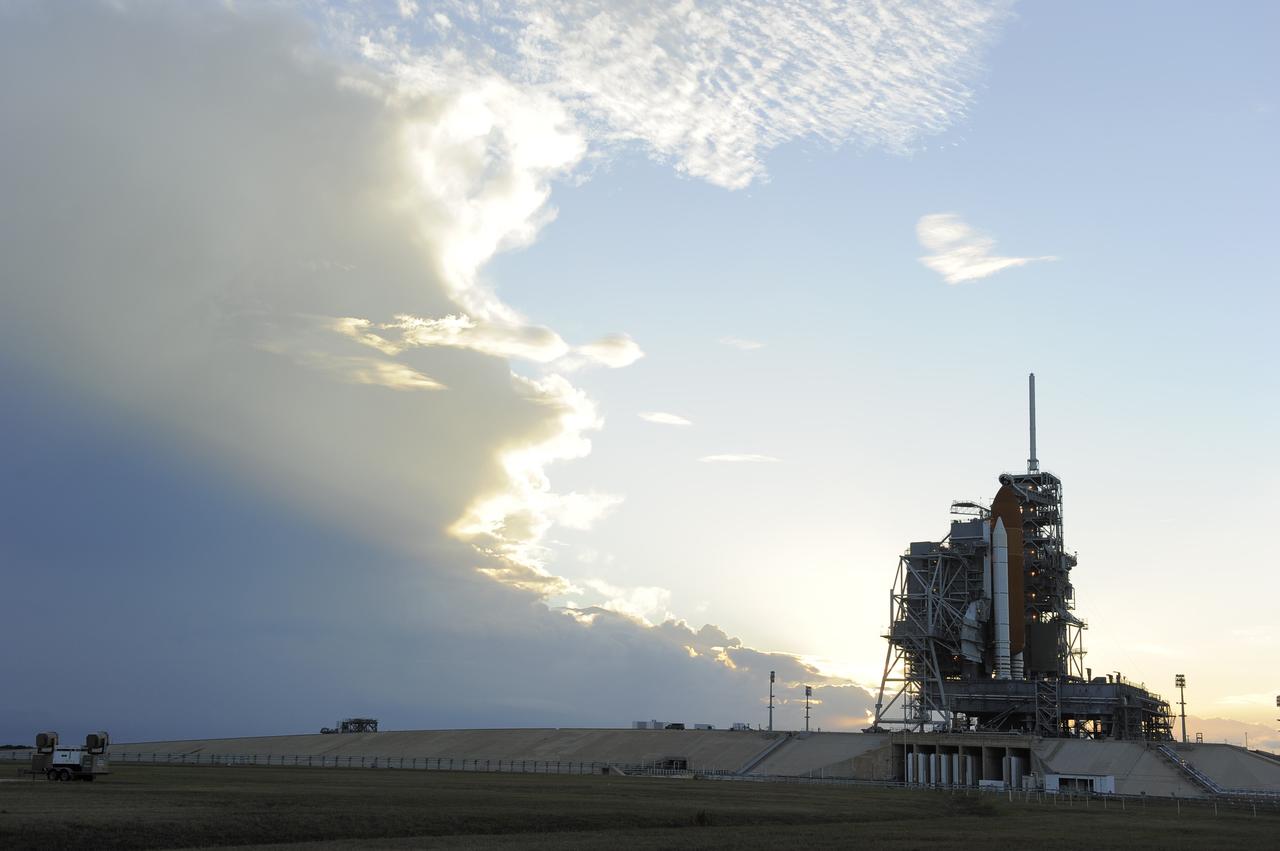
CAPE CANAVERAL, Fla. -- Storm clouds move in over Launch Pad 39A at NASA's Kennedy Space Center in Florida, postponing the retraction of the pad's rotating service structure, which would reveal space shuttle Discovery. The structure provides weather protection and access to the shuttle while it awaits lift off on the pad. RSS "rollback," as it's called, will begin again after the lightning-producing clouds pass. Launch of Discovery on the STS-133 mission to the International Space Station is set for 3:29 p.m. on Nov. 4. During the 11-day mission, Discovery and its six crew members will deliver the Permanent Multipurpose Module, packed with supplies and critical spare parts, as well as Robonaut 2, to the orbiting laboratory. Discovery, which will fly its 39th mission, is scheduled to be retired following STS-133. This will be the 133rd Space Shuttle Program mission and the 35th shuttle voyage to the space station. For more information on STS-133, visit www.nasa.gov/mission_pages/shuttle/shuttlemissions/sts133/. Photo credit: NASA/Kim Shiflett
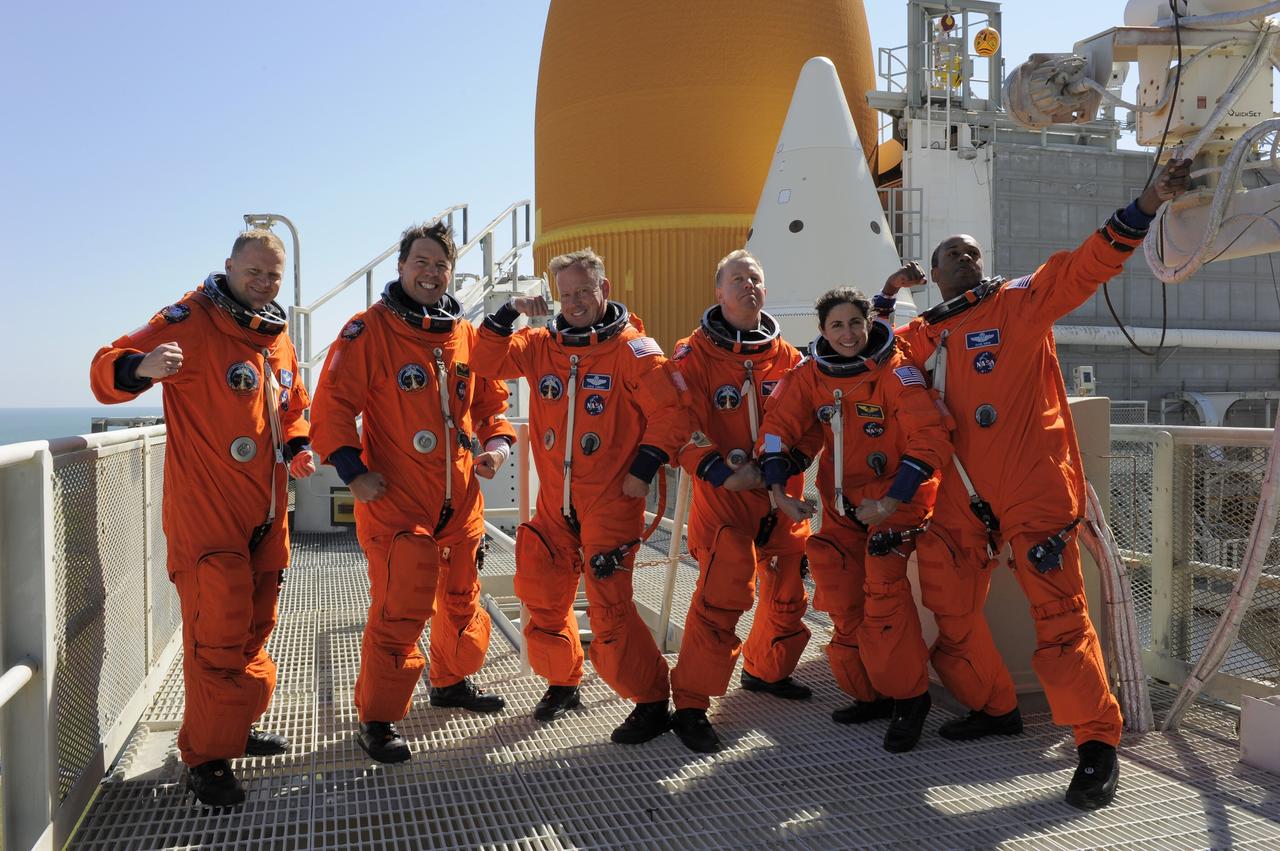
CAPE CANAVERAL, Fla. -- At NASA's Kennedy Space Center in Florida, the STS-133 crew takes a break from a simulated launch countdown to ham it up on the 195-foot level of Launch Pad 39A. From left are, Pilot Eric Boe, Mission Specialist Michael Barratt, Commander Steve Lindsey, and Mission Specialists Tim Kopra, Nicole Stott, and Alvin Drew. The simulation is part of a week-long Terminal Countdown Demonstration Test (TCDT). Discovery and its STS-133 crew will deliver the Permanent Multipurpose Module, packed with supplies and critical spare parts, as well as Robonaut 2, the dexterous humanoid astronaut helper, to the International Space Station. Launch is targeted for Nov. 1 at 4:40 p.m. For more information on the STS-133 mission, visit www.nasa.gov/mission_pages/shuttle/shuttlemissions/sts133/. Photo credit: NASA/Kim Shiflett
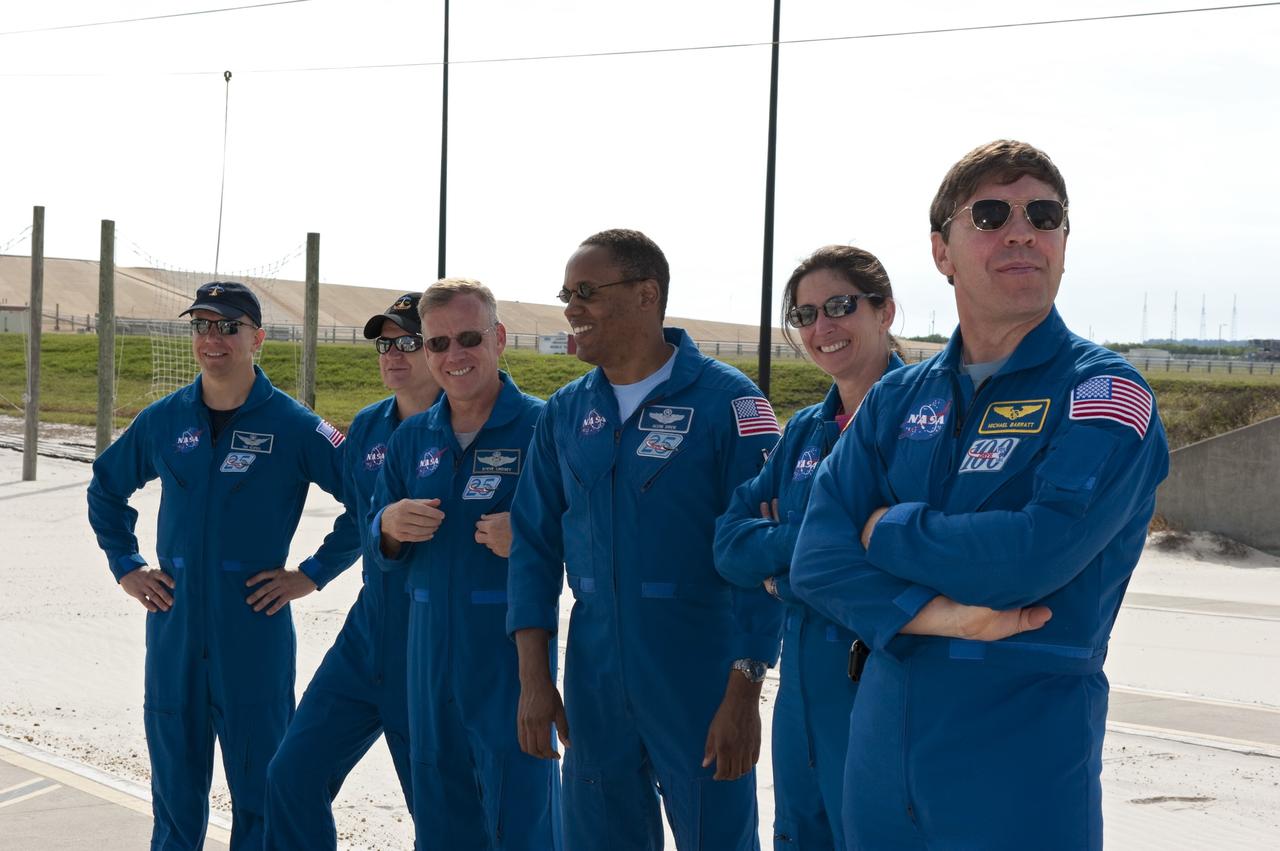
CAPE CANAVERAL, Fla. -- At Launch Pad 39A at NASA's Kennedy Space Center in Florida, members of the STS-133 crew receive instruction by the catch nets for the slidewire baskets at the base of the pad as part of the Terminal Countdown Demonstration Test (TCDT) emergency exit training. From left are Mission Specialist Tim Kopra, Pilot Eric Boe, Commander Steve Lindsey, and Mission Specialists Alvin Drew, Nicole Stott and Michael Barratt. TCDT provides each shuttle crew and launch team an opportunity to participate in various simulated activities, including equipment familiarization and a launch countdown. Space shuttle Discovery and its STS-133 crew will deliver the Permanent Multipurpose Module, packed with supplies and critical spare parts, as well as Robonaut 2, the dexterous humanoid astronaut helper, to the International Space Station. Launch is targeted for Nov. 1 at 4:40 p.m. For more information on the STS-133 mission, visit www.nasa.gov/mission_pages/shuttle/shuttlemissions/sts133/. Photo credit: NASA/Kim Shiflett
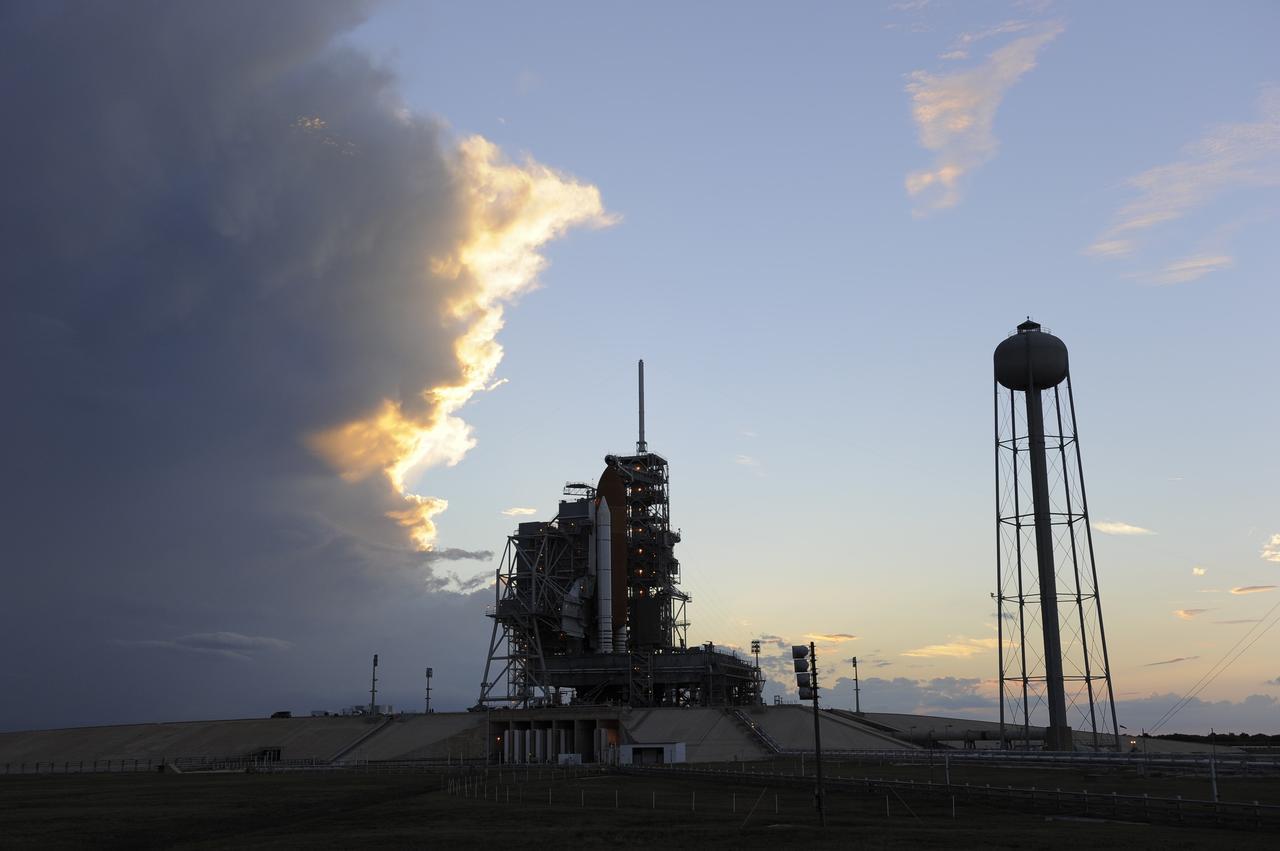
CAPE CANAVERAL, Fla. -- Storm clouds move over Launch Pad 39A at NASA's Kennedy Space Center in Florida, postponing the retraction of the pad's rotating service structure, which would reveal space shuttle Discovery. The structure provides weather protection and access to the shuttle while it awaits lift off on the pad. RSS "rollback," as it's called, will begin again after the lightning-producing clouds pass. Launch of Discovery on the STS-133 mission to the International Space Station is set for 3:29 p.m. on Nov. 4. During the 11-day mission, Discovery and its six crew members will deliver the Permanent Multipurpose Module, packed with supplies and critical spare parts, as well as Robonaut 2, to the orbiting laboratory. Discovery, which will fly its 39th mission, is scheduled to be retired following STS-133. This will be the 133rd Space Shuttle Program mission and the 35th shuttle voyage to the space station. For more information on STS-133, visit www.nasa.gov/mission_pages/shuttle/shuttlemissions/sts133/. Photo credit: NASA/Kim Shiflett
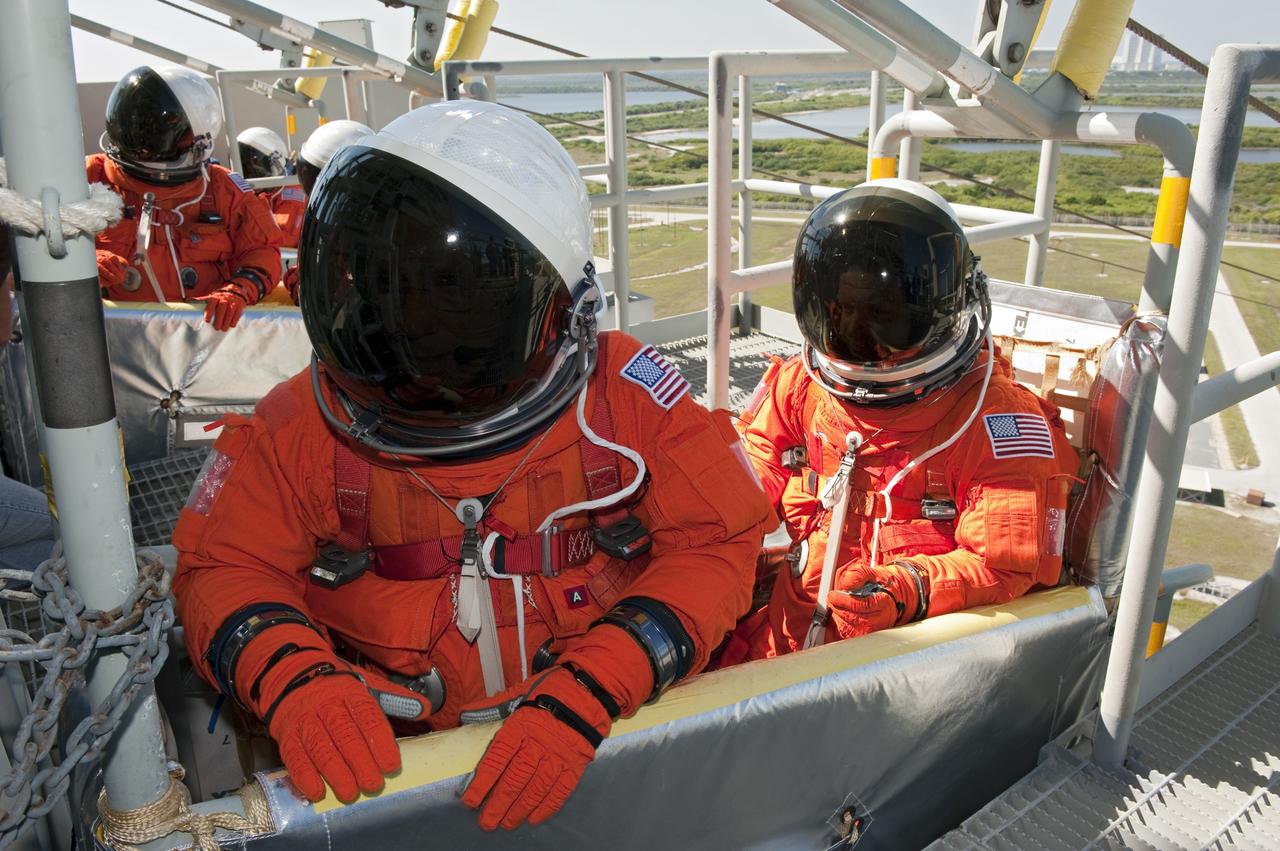
CAPE CANAVERAL, Fla. -- During a simulated pad emergency on Launch Pad 39A at NASA's Kennedy Space Center in Florida, STS-133 Commander Steve Lindsey, front left, and Pilot Eric Boe hop in a slidewire basket that would take them to a safe bunker below the pad in an unlikely emergency situation. The emergency training while aboard space shuttle Discovery is part of a week-long Terminal Countdown Demonstration Test (TCDT). Discovery and its STS-133 crew will deliver the Permanent Multipurpose Module, packed with supplies and critical spare parts, as well as Robonaut 2, the dexterous humanoid astronaut helper, to the International Space Station. Launch is targeted for Nov. 1 at 4:40 p.m. For more information on the STS-133 mission, visit www.nasa.gov/mission_pages/shuttle/shuttlemissions/sts133/. Photo credit: NASA/Kim Shiflett
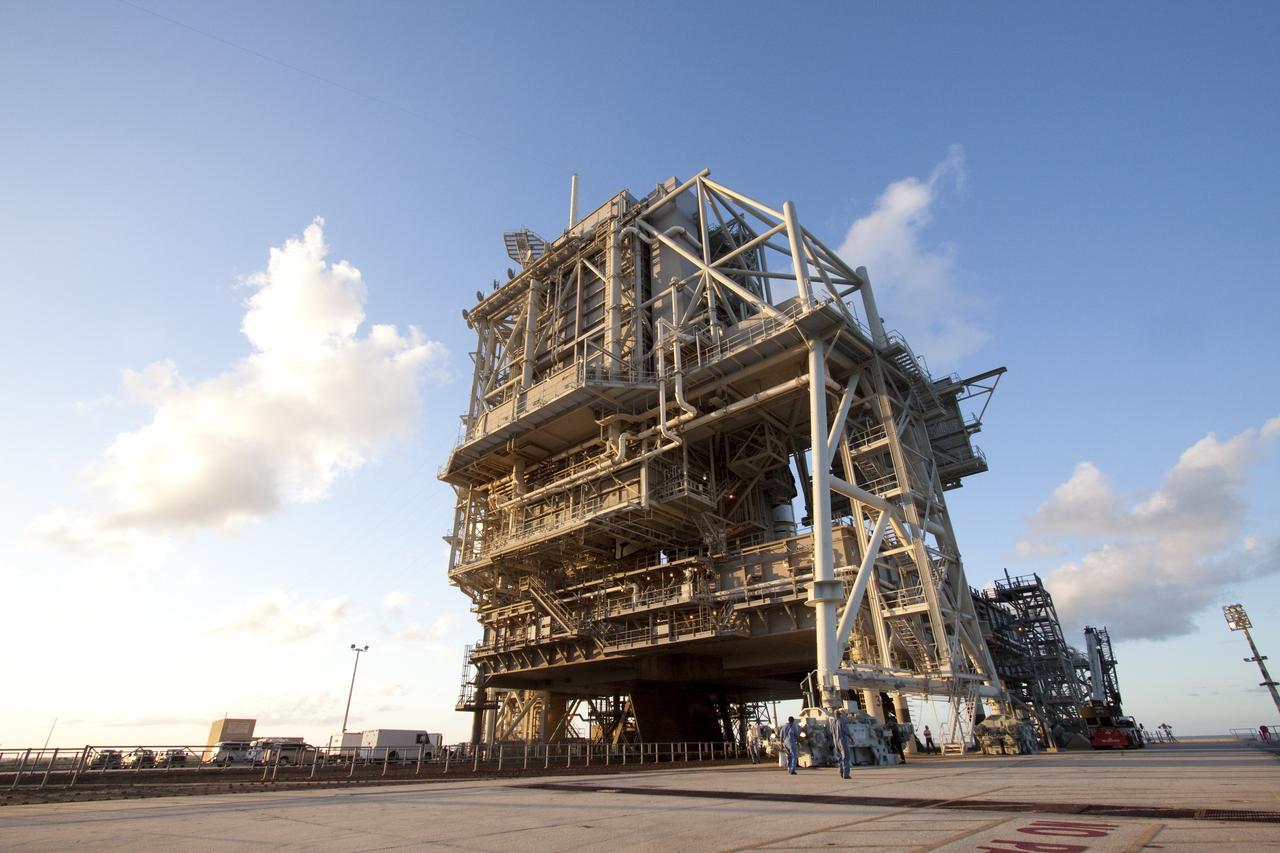
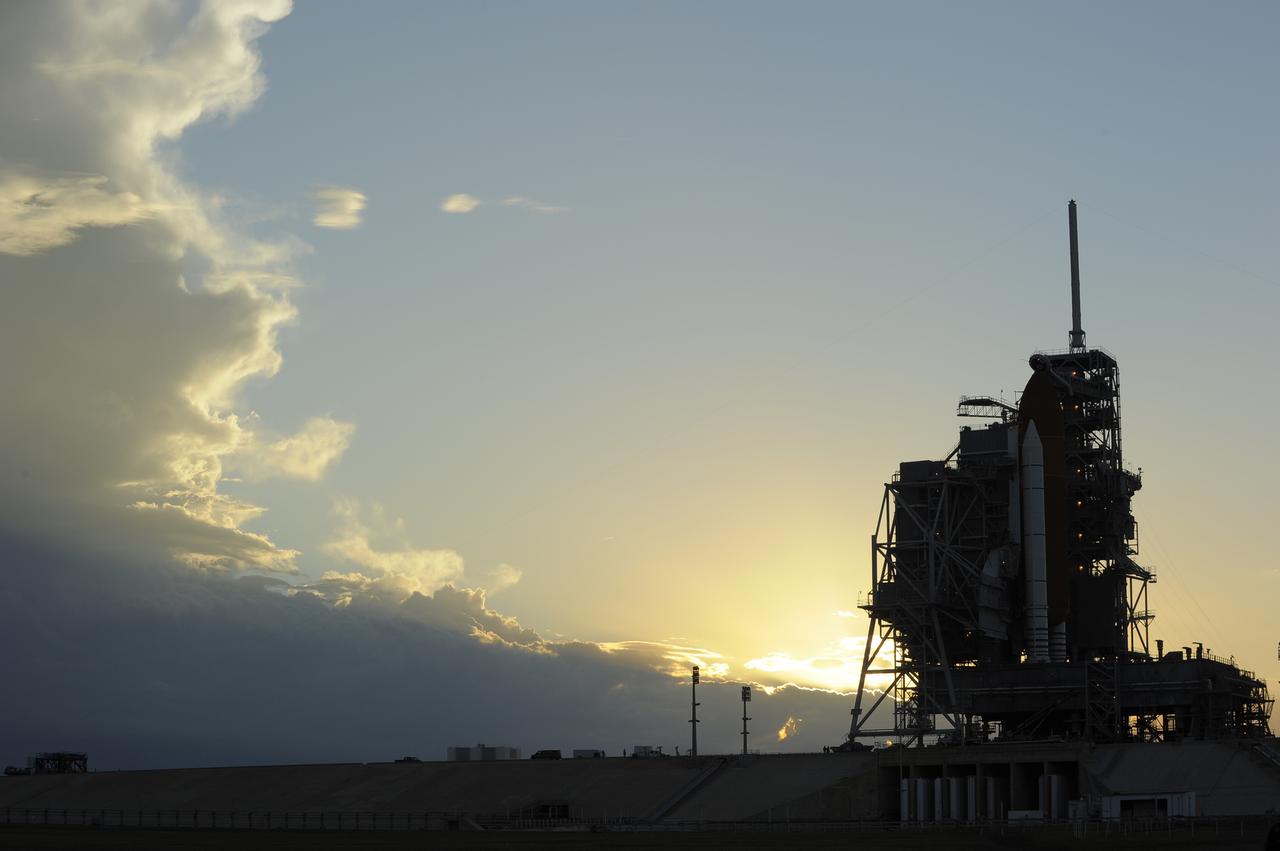
CAPE CANAVERAL, Fla. -- Before the sun sets on Launch Pad 39A at NASA's Kennedy Space Center in Florida, space shuttle Discovery is concealed by the pad's rotating service structure. Retraction of the structure, which provides weather protection and access to the shuttle, is scheduled to occur tonight. RSS "rollback," as it's called, is a significant milestone in the launch countdown. Launch of Discovery on the STS-133 mission to the International Space Station is set for 3:29 p.m. on Nov. 4. During the 11-day mission, Discovery and its six crew members will deliver the Permanent Multipurpose Module, packed with supplies and critical spare parts, as well as Robonaut 2, to the orbiting laboratory. Discovery, which will fly its 39th mission, is scheduled to be retired following STS-133. This will be the 133rd Space Shuttle Program mission and the 35th shuttle voyage to the space station. For more information on STS-133, visit www.nasa.gov/mission_pages/shuttle/shuttlemissions/sts133/. Photo credit: NASA/Jack Pfaller
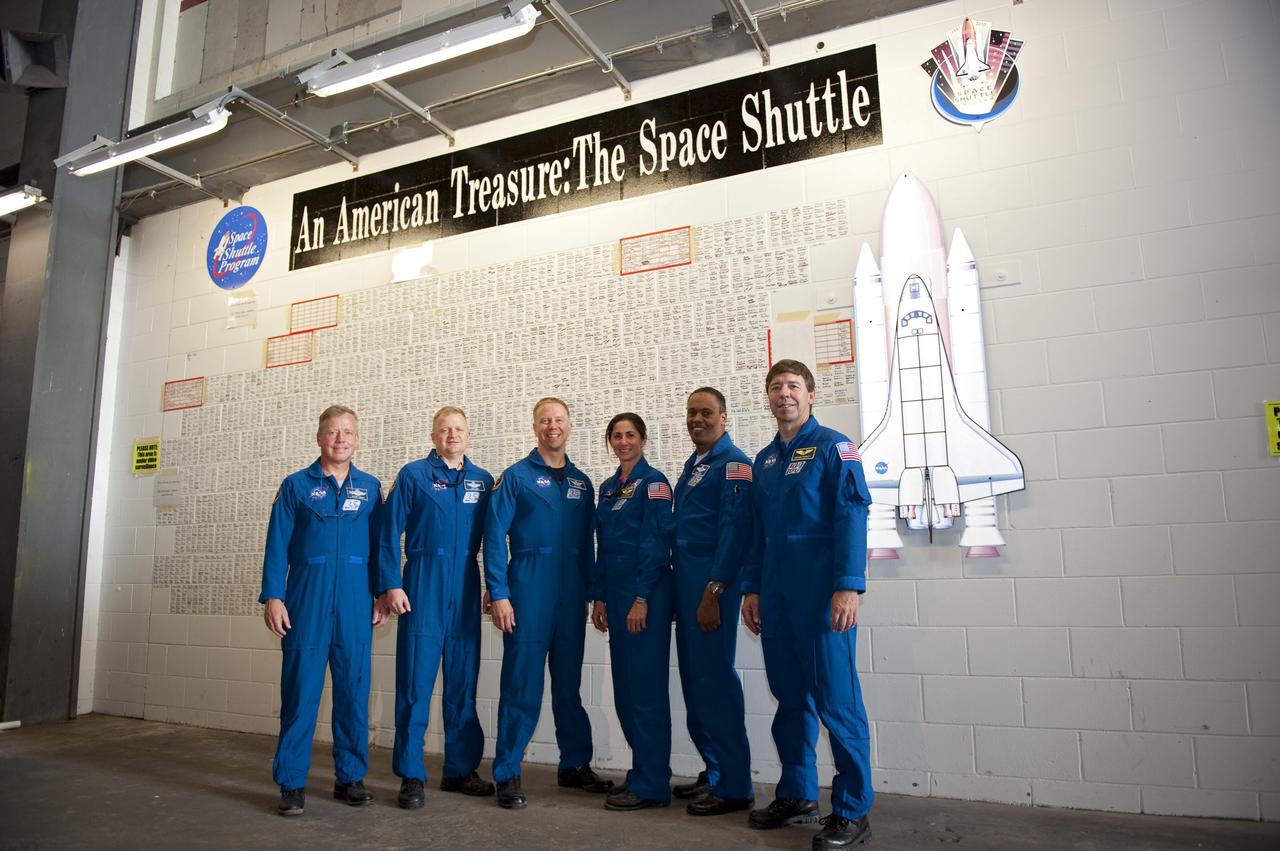
CAPE CANAVERAL, Fla. -- At NASA's Kennedy Space Center in Florida, STS-133 crew members pose in front of the space shuttle wall tribute in the Vehicle Assembly Building. Kennedy employees who have supported the Space Shuttle Program throughout the last 30 years have been signing the wall as a tribute to the program. From left are Commander Steve Lindsey, Pilot Eric Boe, and Mission Specialists Tim Kopra, Nicole Stott, Alvin Drew, and Michael Barratt. TCDT provides each shuttle crew and launch team an opportunity to participate in various simulated activities, including equipment familiarization and a launch countdown. Space shuttle Discovery and its STS-133 crew will deliver the Permanent Multipurpose Module, packed with supplies and critical spare parts, as well as Robonaut 2, the dexterous humanoid astronaut helper, to the International Space Station. Launch is targeted for Nov. 1 at 4:40 p.m. For more information on the STS-133 mission, visit www.nasa.gov/mission_pages/shuttle/shuttlemissions/sts133/. Photo credit: NASA/Kim Shiflett
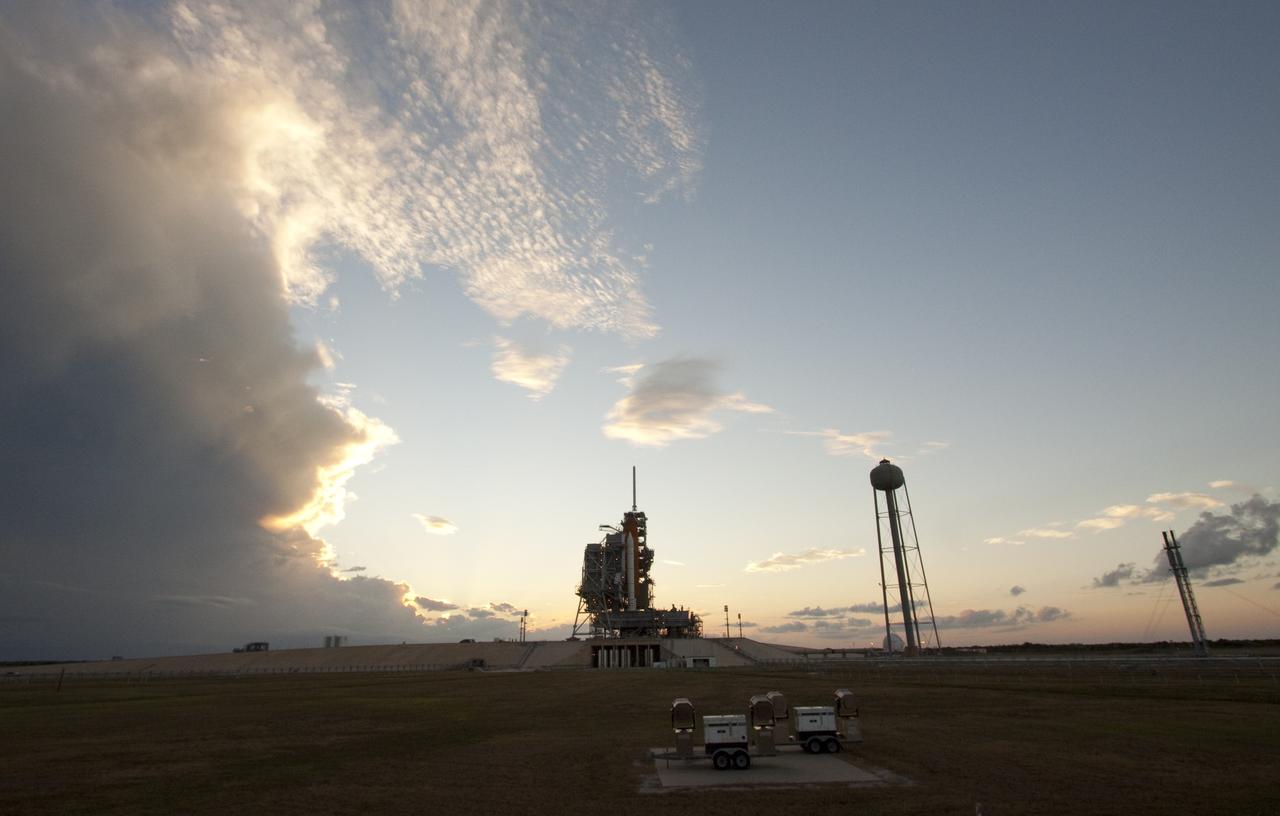
CAPE CANAVERAL, Fla. -- A lightning-producing storm cloud moves in over NASA's Kennedy Space Center in Florida as the rotating service structure on Launch Pad 39A is scheduled to be moved away from space shuttle Discovery. The structure provides weather protection and access to the shuttle. RSS "rollback," as it's called, was delayed for a few hours to allow that cloud to pass. Launch of Discovery on the STS-133 mission to the International Space Station is set for 3:29 p.m. on Nov. 4. During the 11-day mission, Discovery and its six crew members will deliver the Permanent Multipurpose Module, packed with supplies and critical spare parts, as well as Robonaut 2, to the orbiting laboratory. Discovery, which will fly its 39th mission, is scheduled to be retired following STS-133. This will be the 133rd Space Shuttle Program mission and the 35th shuttle voyage to the space station. For more information on STS-133, visit www.nasa.gov/mission_pages/shuttle/shuttlemissions/sts133/. Photo credit: NASA/Troy Cryder
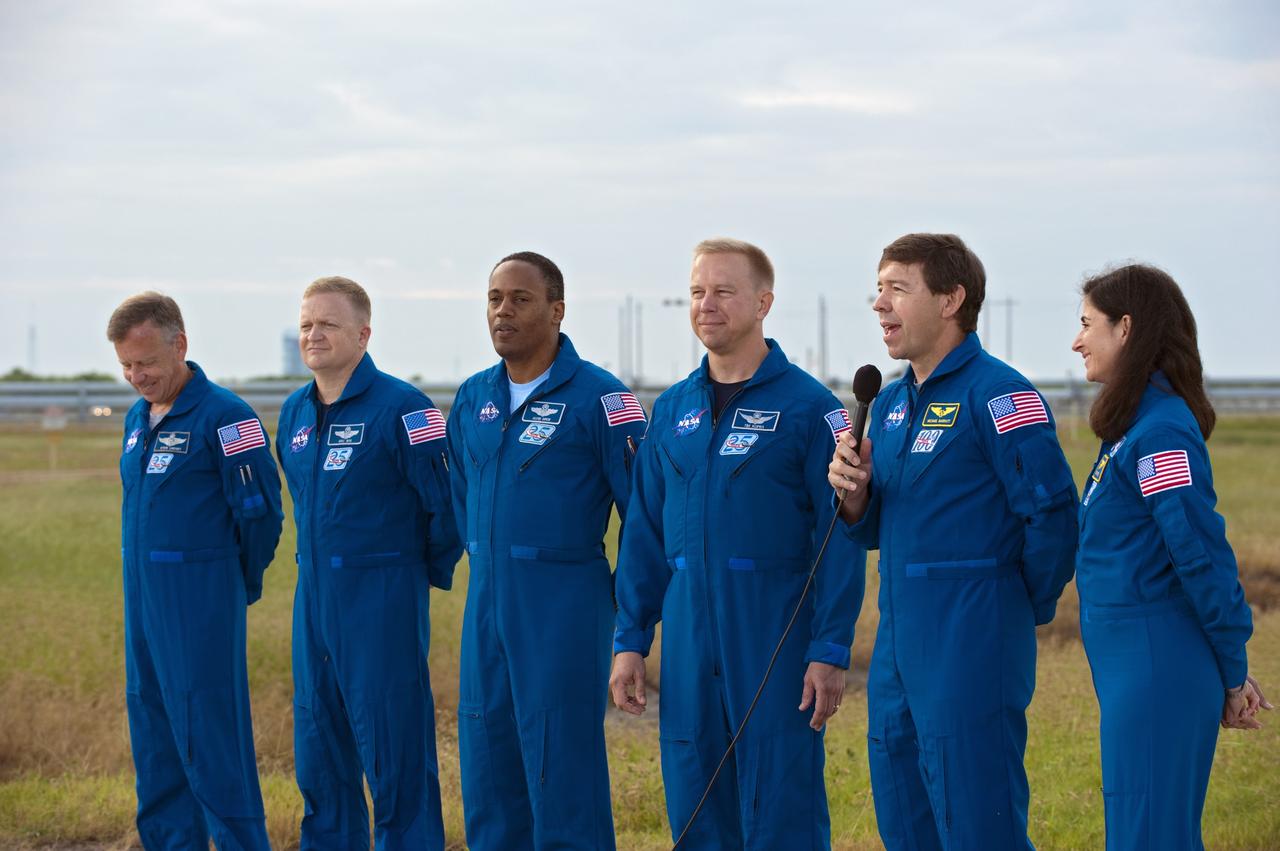
CAPE CANAVERAL, Fla. -- At NASA's Kennedy Space Center in Florida, STS-133 Mission Specialist Michael Barratt talks to media at Launch Pad 39A, where space shuttle Discovery is poised for launch next month. The six STS-133 crew members, from left, are Commander Steve Lindsey, Pilot Eric Boe, and Mission Specialists Alvin Drew, Tim Kopra, Barratt, and Nicole Stott. The crew is at Kennedy for the Terminal Countdown Demonstration Test (TCDT), which provides each shuttle crew and launch team an opportunity to participate in various simulated activities, including equipment familiarization and emergency training at the launch pad. Discovery and its crew will deliver the Permanent Multipurpose Module, packed with supplies and critical spare parts, as well as Robonaut 2, the dexterous humanoid astronaut helper, to the International Space Station. Launch is targeted for Nov. 1 at 4:40 p.m. For more information on the STS-133 mission, visit www.nasa.gov/mission_pages/shuttle/shuttlemissions/sts133/. Photo credit: NASA/Kim Shiflett
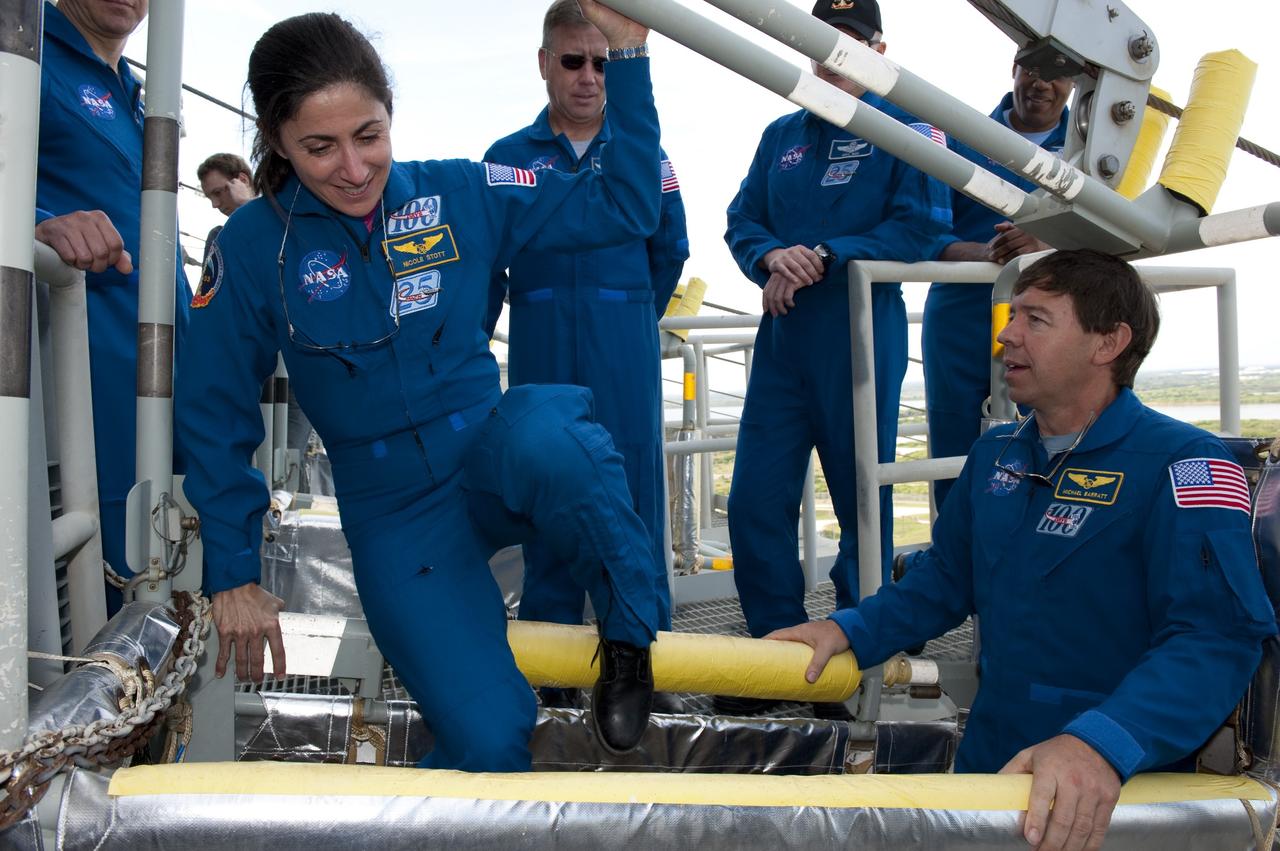
CAPE CANAVERAL, Fla. -- On Launch Pad 39A at NASA's Kennedy Space Center, STS-133 crew members receive instruction on the operation of the pad's slidewire basket system emergency exit training as part of the Terminal Countdown Demonstration Test (TCDT). Inside the basket are Mission Specialists Nicole Stott, left, and Michael Barratt. TCDT provides each shuttle crew and launch team an opportunity to participate in various simulated activities, including equipment familiarization and a launch countdown. Space shuttle Discovery and its STS-133 crew will deliver the Permanent Multipurpose Module, packed with supplies and critical spare parts, as well as Robonaut 2, the dexterous humanoid astronaut helper, to the International Space Station. Launch is targeted for Nov. 1 at 4:40 p.m. For more information on the STS-133 mission, visit www.nasa.gov/mission_pages/shuttle/shuttlemissions/sts133/. Photo credit: NASA/Kim Shiflett
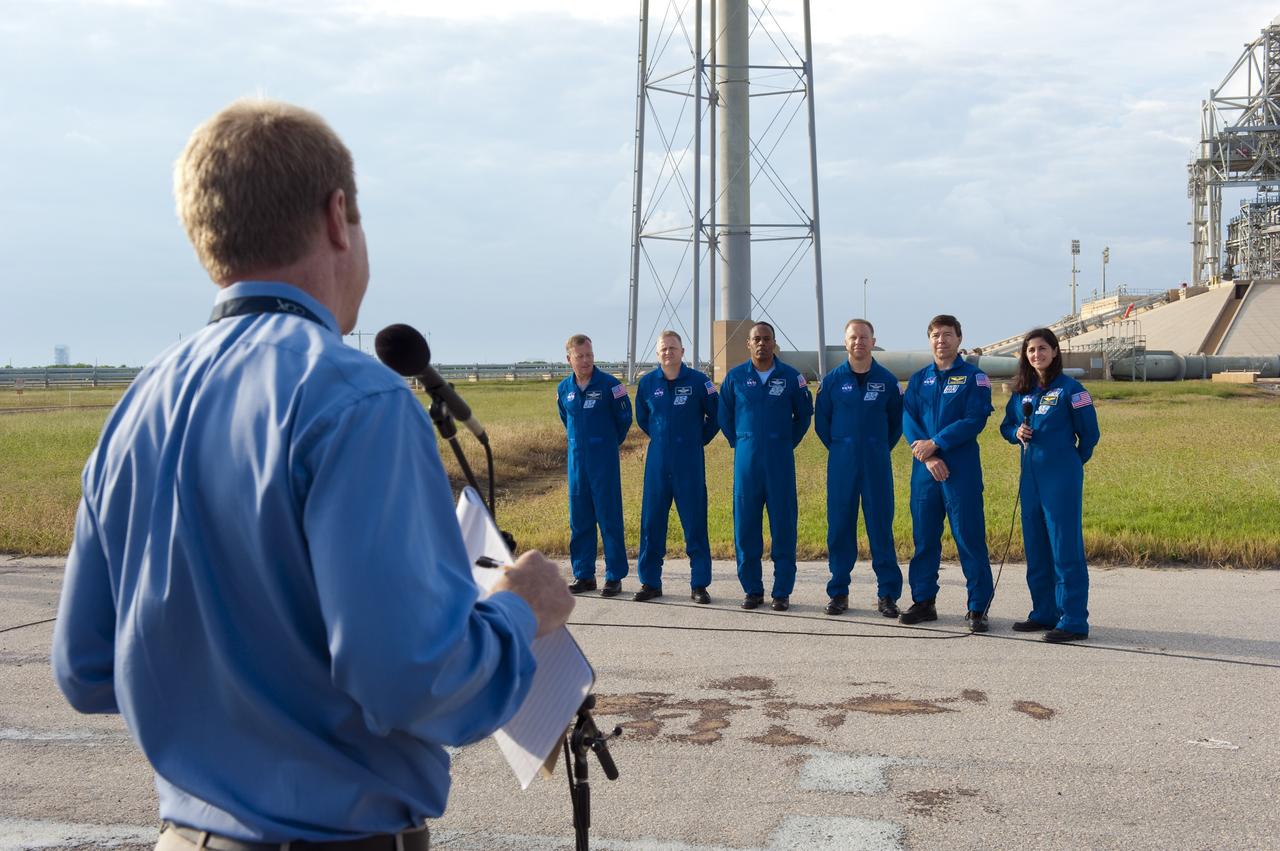
CAPE CANAVERAL, Fla. -- At NASA's Kennedy Space Center in Florida, media ask STS-133 Mission Specialist Nicole Stott questions at Launch Pad 39A, where space shuttle Discovery is poised for launch next month. The six STS-133 crew members, from left, are Commander Steve Lindsey, Pilot Eric Boe, and Mission Specialists Alvin Drew, Tim Kopra, Michael Barratt, and Stott. The crew is at Kennedy for the Terminal Countdown Demonstration Test (TCDT), which provides each shuttle crew and launch team an opportunity to participate in various simulated activities, including equipment familiarization and emergency training at the launch pad. Discovery and its crew will deliver the Permanent Multipurpose Module, packed with supplies and critical spare parts, as well as Robonaut 2, the dexterous humanoid astronaut helper, to the International Space Station. Launch is targeted for Nov. 1 at 4:40 p.m. For more information on the STS-133 mission, visit www.nasa.gov/mission_pages/shuttle/shuttlemissions/sts133/. Photo credit: NASA/Kim Shiflett
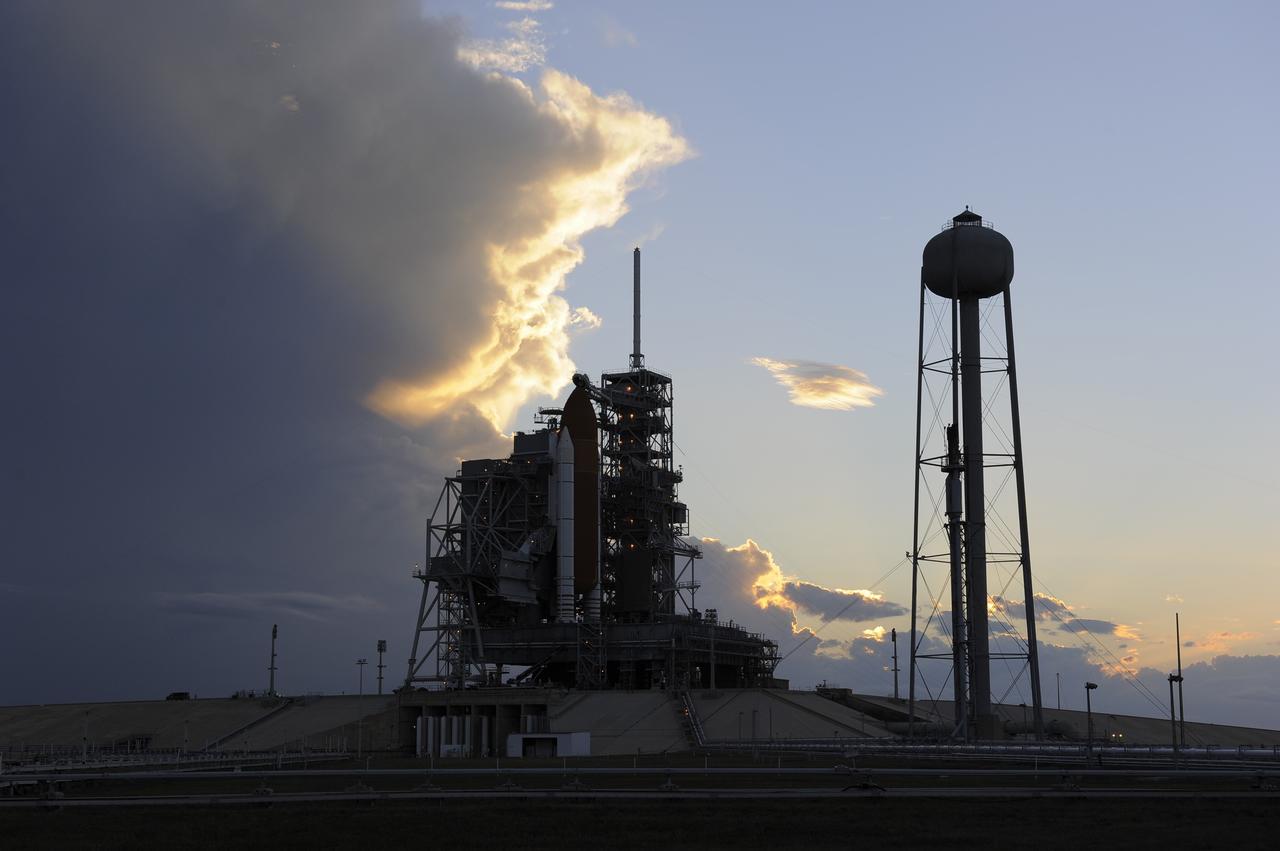
CAPE CANAVERAL, Fla. -- Storm clouds move over Launch Pad 39A at NASA's Kennedy Space Center in Florida, postponing the retraction of the pad's rotating service structure, which would reveal space shuttle Discovery. The structure provides weather protection and access to the shuttle while it awaits lift off on the pad. RSS "rollback," as it's called, will begin again after the lightning-producing clouds pass. Launch of Discovery on the STS-133 mission to the International Space Station is set for 3:29 p.m. on Nov. 4. During the 11-day mission, Discovery and its six crew members will deliver the Permanent Multipurpose Module, packed with supplies and critical spare parts, as well as Robonaut 2, to the orbiting laboratory. Discovery, which will fly its 39th mission, is scheduled to be retired following STS-133. This will be the 133rd Space Shuttle Program mission and the 35th shuttle voyage to the space station. For more information on STS-133, visit www.nasa.gov/mission_pages/shuttle/shuttlemissions/sts133/. Photo credit: NASA/Kim Shiflett
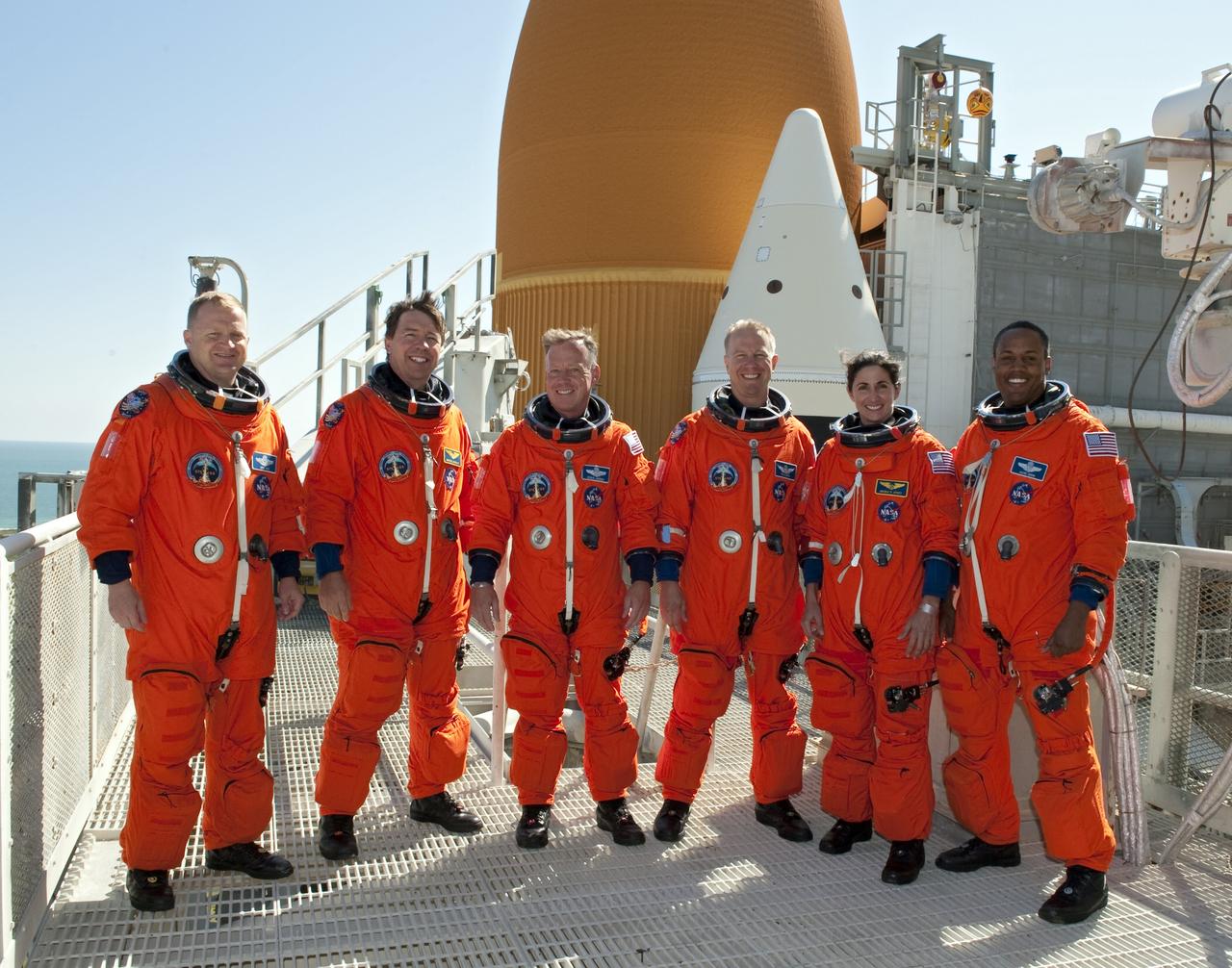
CAPE CANAVERAL, Fla. -- At NASA's Kennedy Space Center in Florida, the STS-133 crew takes a break from a simulated launch countdown and simulated pad emergency to take a group photo on the 195-foot level of Launch Pad 39A. From left are, Pilot Eric Boe, Mission Specialist Michael Barratt, Commander Steve Lindsey, and Mission Specialists Tim Kopra, Nicole Stott, and Alvin Drew. The simulations are part of a week-long Terminal Countdown Demonstration Test (TCDT). Discovery and its STS-133 crew will deliver the Permanent Multipurpose Module, packed with supplies and critical spare parts, as well as Robonaut 2, the dexterous humanoid astronaut helper, to the International Space Station. Launch is targeted for Nov. 1 at 4:40 p.m. For more information on the STS-133 mission, visit www.nasa.gov/mission_pages/shuttle/shuttlemissions/sts133/. Photo credit: NASA/Kim Shiflett
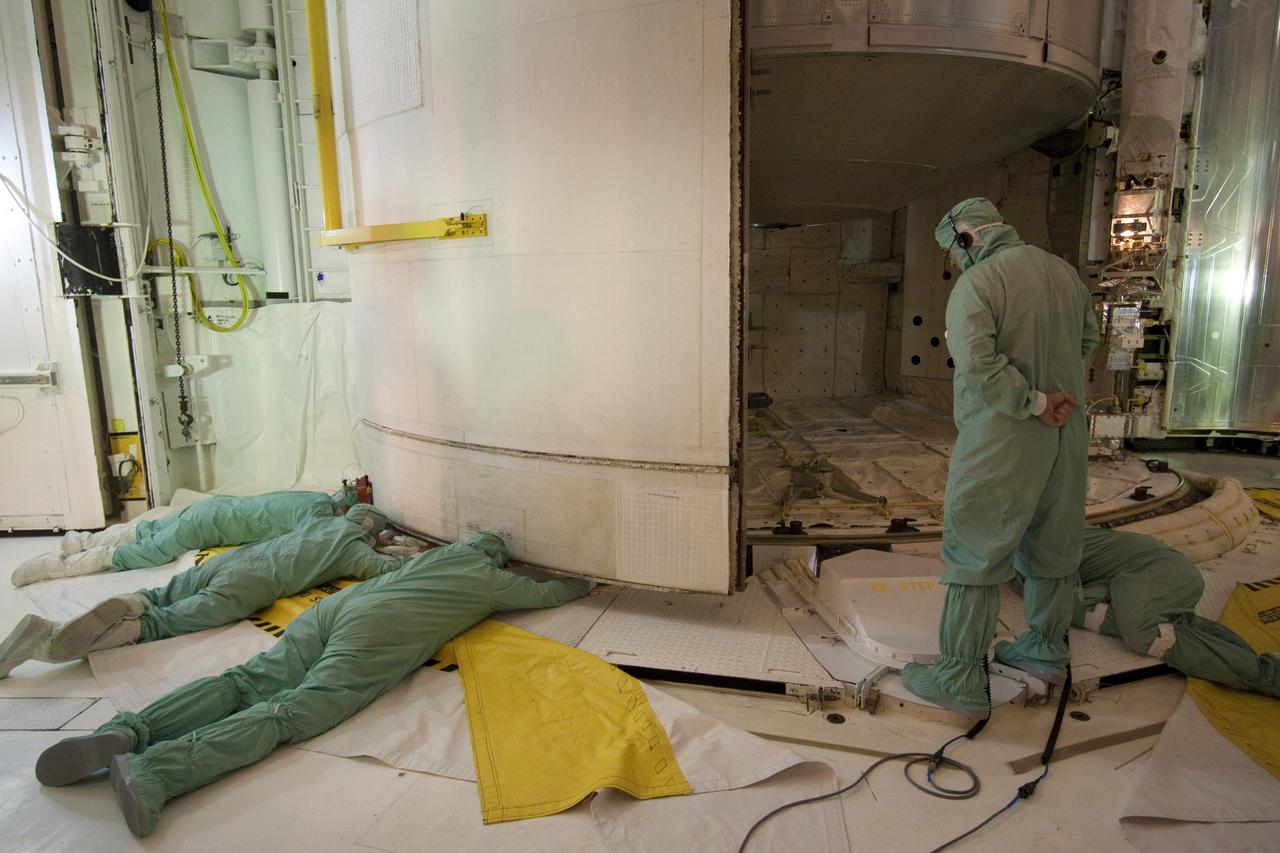
CAPE CANAVERAL, Fla. -- On Launch Pad 39A at NASA's Kennedy Space Center in Florida, technicians close the clamshell doors of space shuttle Discovery's payload bay in preparation for the STS-133 launch to the International Space Station. Targeted to launch Nov. 1, STS-133 will carry the Permanent Multipurpose Module (PMM) packed with supplies and critical spare parts, as well as Robonaut 2 (R2) to the station. Photo credit: NASA/Jack Pfaller
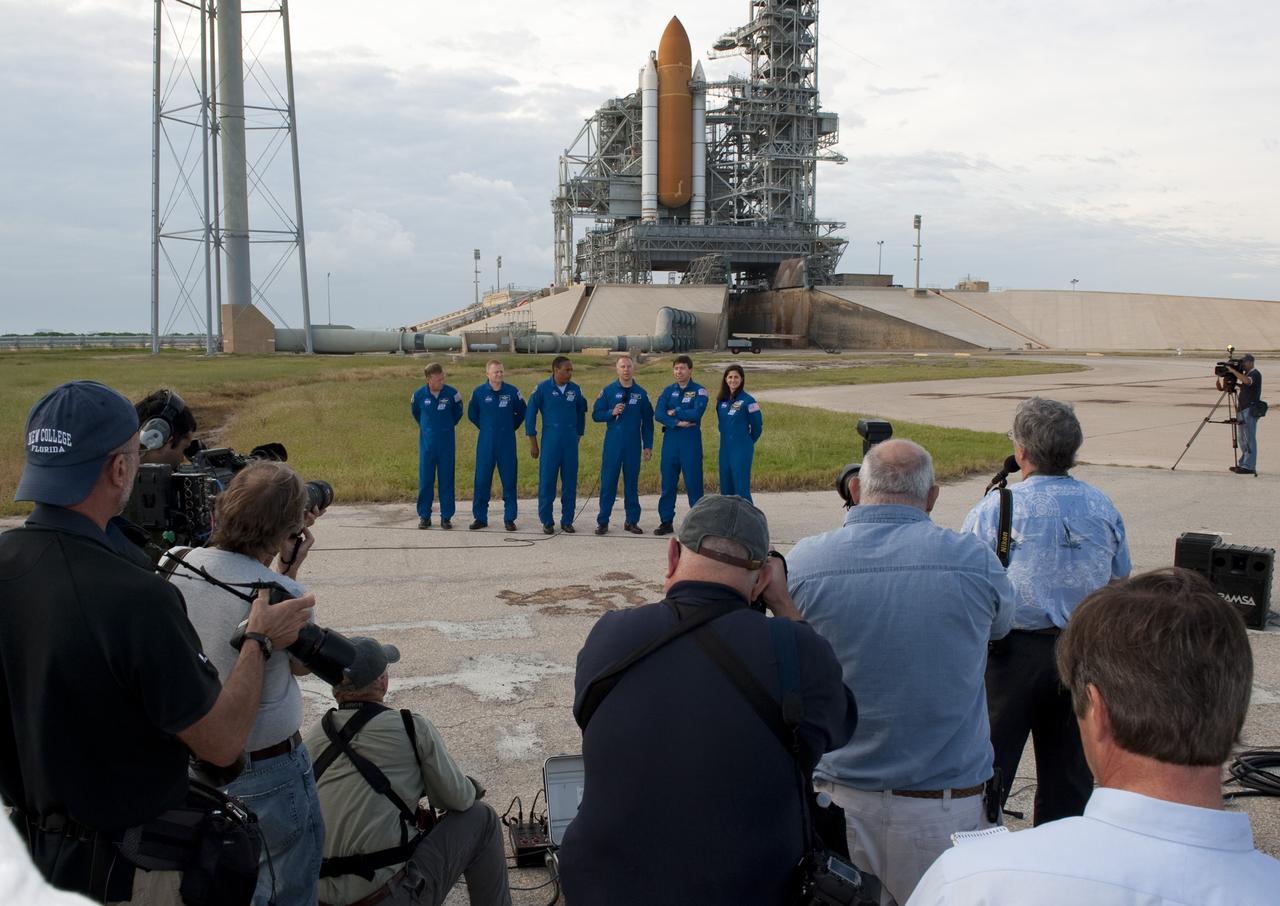
CAPE CANAVERAL, Fla. -- At NASA's Kennedy Space Center in Florida, media ask STS-133 Mission Specialist Tim Kopra questions at Launch Pad 39A, where space shuttle Discovery is poised for launch next month. The six STS-133 crew members, from left, are Commander Steve Lindsey, Pilot Eric Boe, and Mission Specialists Alvin Drew, Kopra, Michael Barratt, and Nicole Stott. The crew is at Kennedy for the Terminal Countdown Demonstration Test (TCDT), which provides each shuttle crew and launch team an opportunity to participate in various simulated activities, including equipment familiarization and emergency training at the launch pad. Discovery and its crew will deliver the Permanent Multipurpose Module, packed with supplies and critical spare parts, as well as Robonaut 2, the dexterous humanoid astronaut helper, to the International Space Station. Launch is targeted for Nov. 1 at 4:40 p.m. For more information on the STS-133 mission, visit www.nasa.gov/mission_pages/shuttle/shuttlemissions/sts133/. Photo credit: NASA/Kim Shiflett
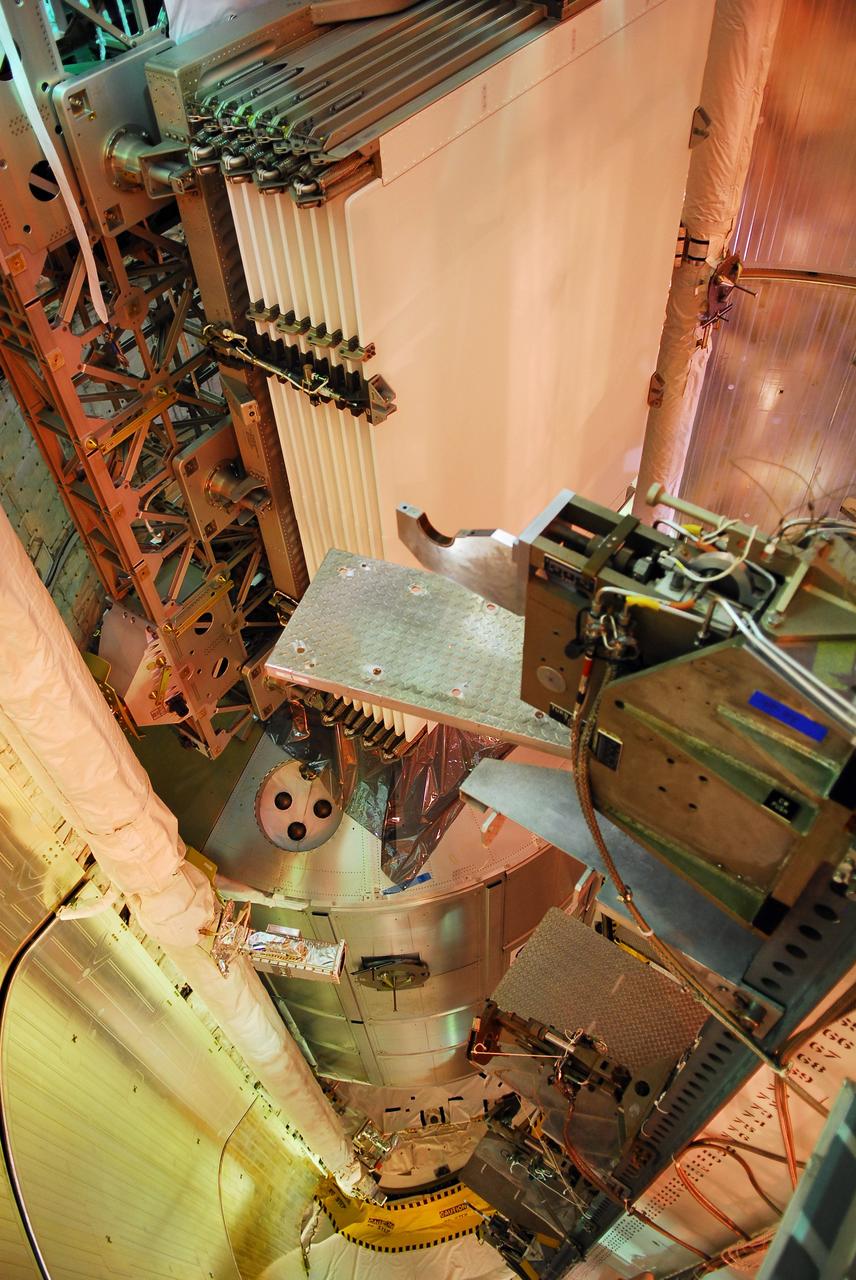
CAPE CANAVERAL, Fla. -- At NASA's Kennedy Space Center in Florida, space shuttle Discovery's payload bay is open for the STS-133 crew members to take a look at their payload while at Launch Pad 39A for the Terminal Countdown Demonstration Test (TCDT). Discovery and its STS-133 crew will deliver the Permanent Multipurpose Module, packed with supplies and critical spare parts, as well as Robonaut 2, the dexterous humanoid astronaut helper, to the International Space Station. Launch is targeted for 4:40 p.m. EDT, Nov. 1. Photo credit: NASA/Jim Grossmann
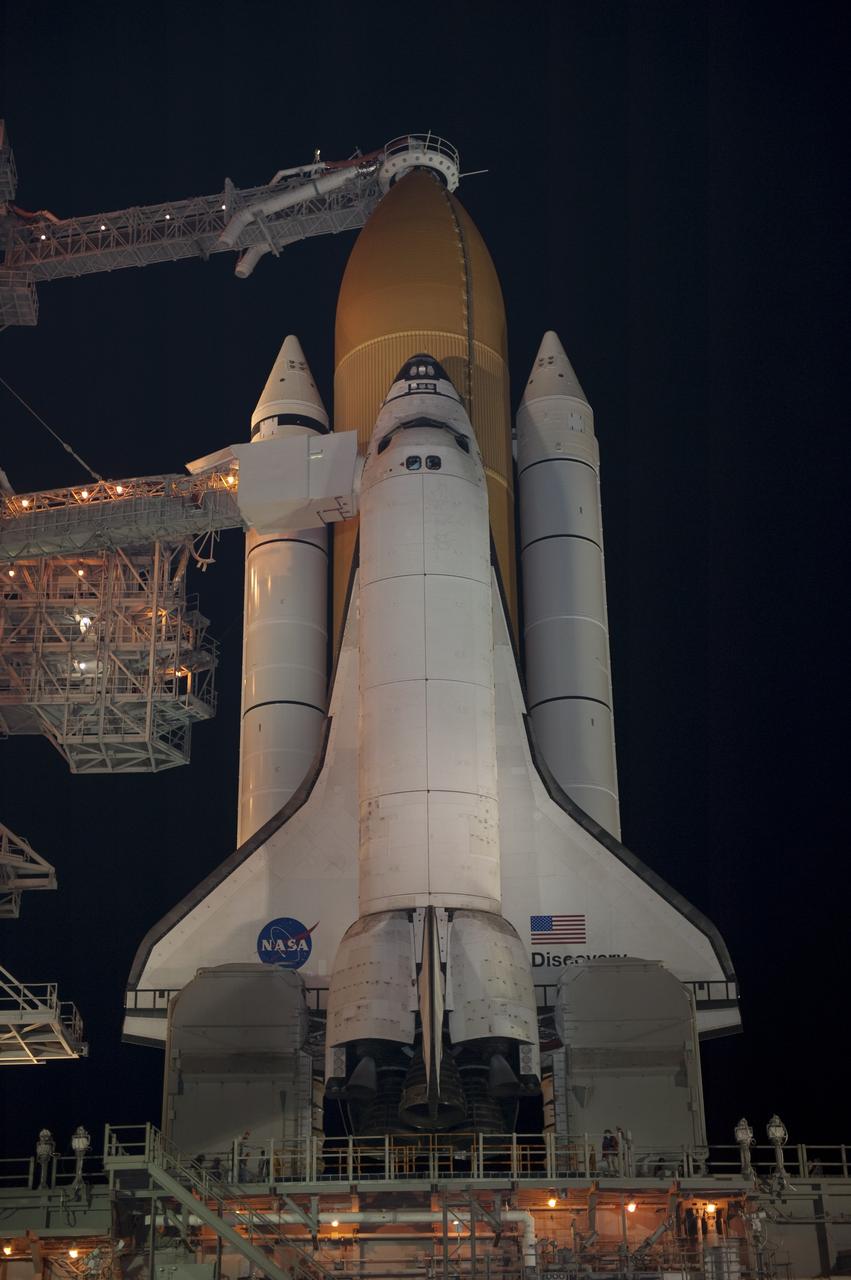
CAPE CANAVERAL, Fla. -- At NASA's Kennedy Space Center in Florida, space shuttle Discovery is visible on Launch Pad 39A following the retraction of the rotating service structure. The structure provides weather protection and access to the shuttle while it awaits lift off on the pad. RSS "rollback," as it's called, was delayed for a few hours to allow a lightning-producing storm cloud to pass. Launch of Discovery on the STS-133 mission to the International Space Station is set for 3:29 p.m. on Nov. 4. During the 11-day mission, Discovery and its six crew members will deliver the Permanent Multipurpose Module, packed with supplies and critical spare parts, as well as Robonaut 2, to the orbiting laboratory. Discovery, which will fly its 39th mission, is scheduled to be retired following STS-133. This will be the 133rd Space Shuttle Program mission and the 35th shuttle voyage to the space station. For more information on STS-133, visit www.nasa.gov/mission_pages/shuttle/shuttlemissions/sts133/. Photo credit: NASA/Kim Shiflett
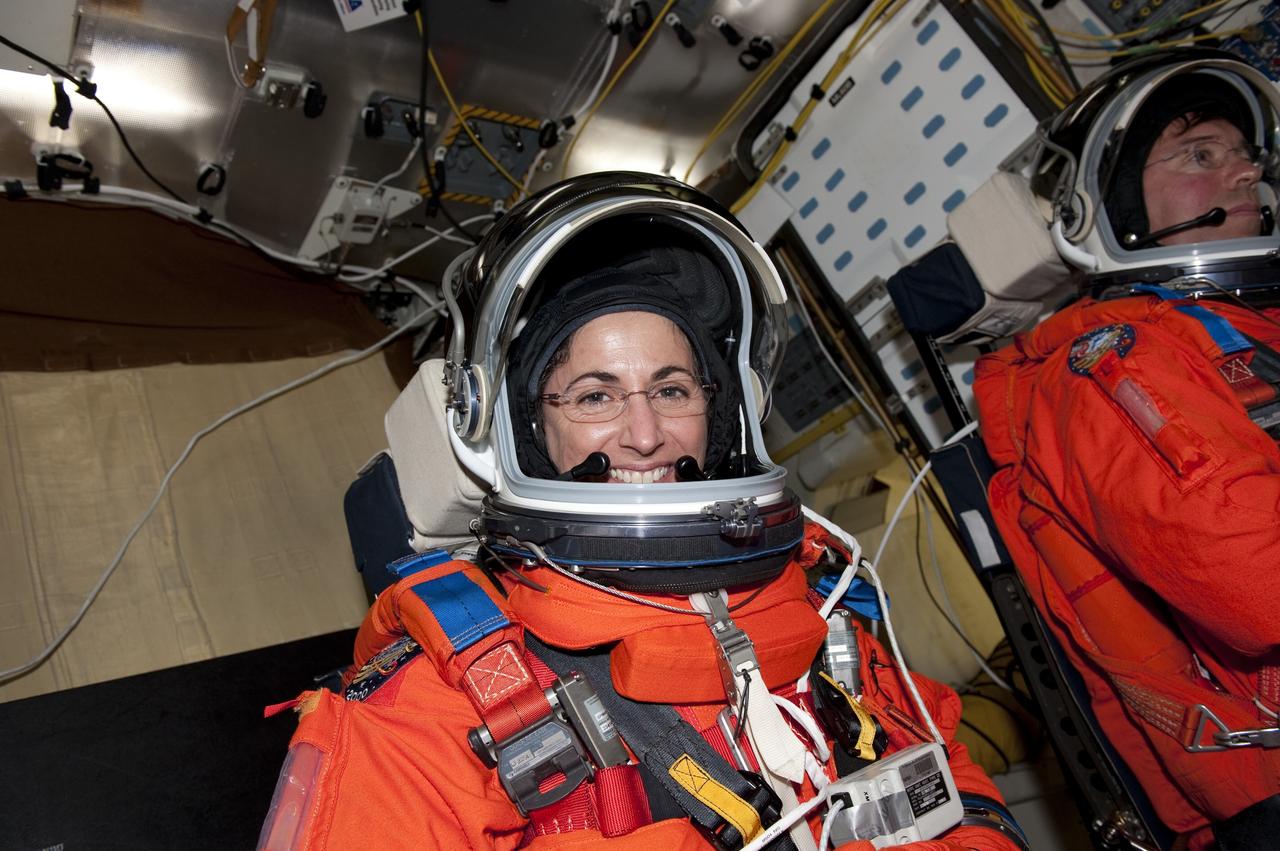
CAPE CANAVERAL, Fla. -- During a simulated launch countdown on Launch Pad 39A at NASA's Kennedy Space Center in Florida, STS-133 Mission Specialists Nicole Stott, left, and Michael Barratt are strapped into their seats on space shuttle Discovery. Next, they will practice escaping the shuttle, in preparation for an unlikely emergency at the pad on launch day. The simulated launch countdown and emergency exit training are part of a week-long Terminal Countdown Demonstration Test (TCDT). Discovery and its STS-133 crew will deliver the Permanent Multipurpose Module, packed with supplies and critical spare parts, as well as Robonaut 2, the dexterous humanoid astronaut helper, to the International Space Station. Launch is targeted for Nov. 1 at 4:40 p.m. For more information on the STS-133 mission, visit www.nasa.gov/mission_pages/shuttle/shuttlemissions/sts133/. Photo credit: NASA/Kim Shiflett
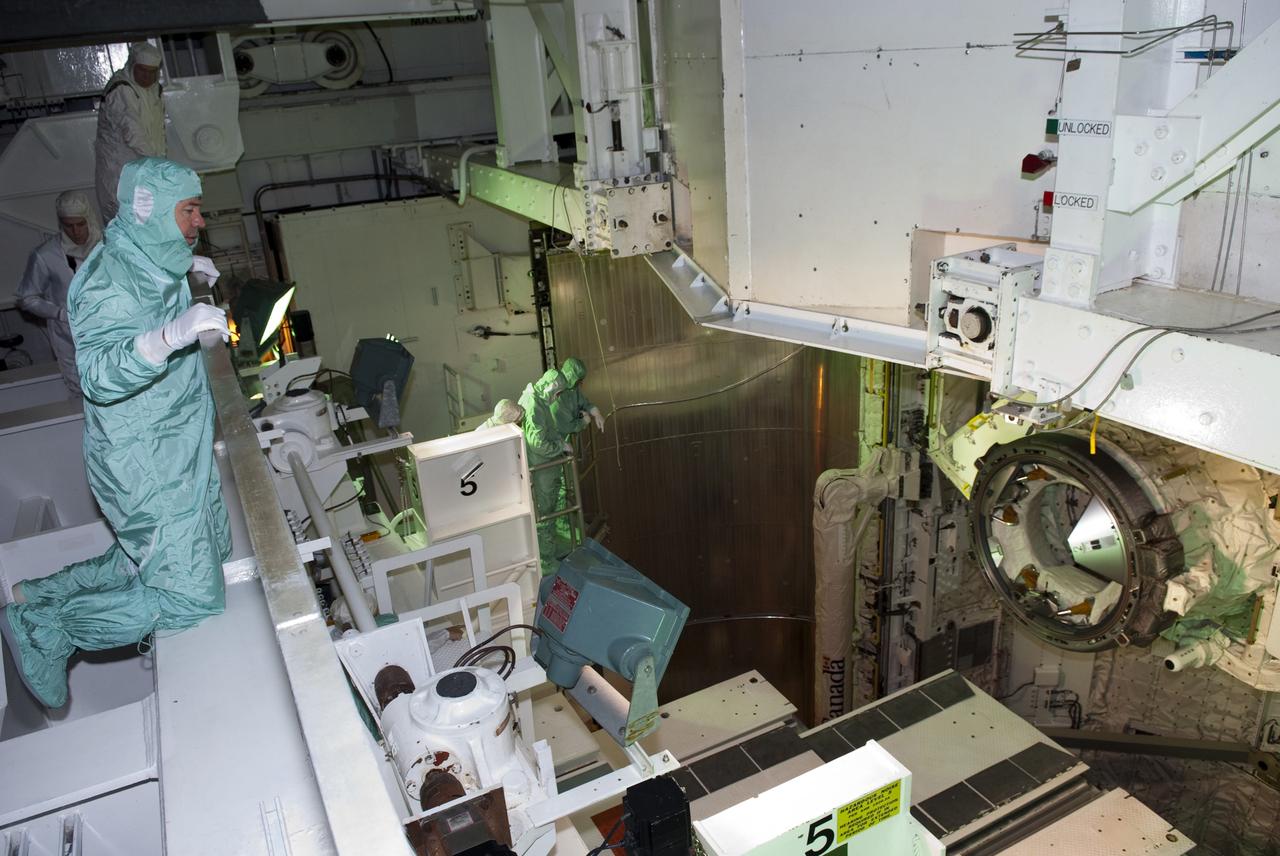
CAPE CANAVERAL, Fla. -- At NASA's Kennedy Space Center in Florida, STS-133 Mission Specialist Michael Barratt, foreground, checks out his mission's payload while at Launch Pad 39A for the Terminal Countdown Demonstration Test (TCDT). Discovery and its STS-133 crew will deliver the Permanent Multipurpose Module, packed with supplies and critical spare parts, as well as Robonaut 2, the dexterous humanoid astronaut helper, to the International Space Station. Launch is targeted for 4:40 p.m. EDT, Nov. 1. Photo credit: NASA/Jim Grossmann
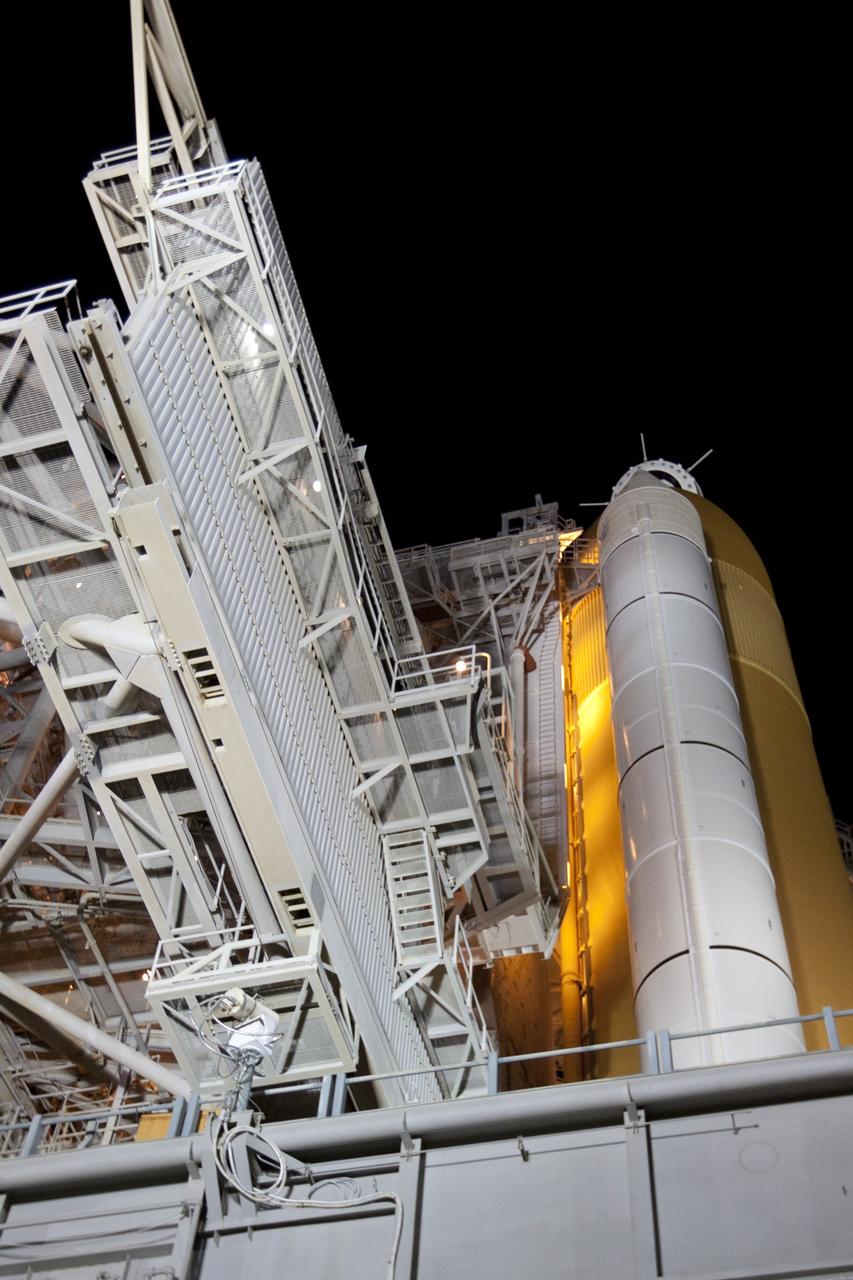
CAPE CANAVERAL, Fla. -- At NASA's Kennedy Space Center in Florida, the rotating service structure on Launch Pad 39A moves away from space shuttle Discovery. The structure provides weather protection and access to the shuttle while it awaits lift off on the pad. RSS "rollback," as it's called, was delayed for a few hours to allow a lightning-producing storm cloud to pass. Launch of Discovery on the STS-133 mission to the International Space Station is set for 3:29 p.m. on Nov. 4. During the 11-day mission, Discovery and its six crew members will deliver the Permanent Multipurpose Module, packed with supplies and critical spare parts, as well as Robonaut 2, to the orbiting laboratory. Discovery, which will fly its 39th mission, is scheduled to be retired following STS-133. This will be the 133rd Space Shuttle Program mission and the 35th shuttle voyage to the space station. For more information on STS-133, visit www.nasa.gov/mission_pages/shuttle/shuttlemissions/sts133/. Photo credit: NASA/Jack Pfaller
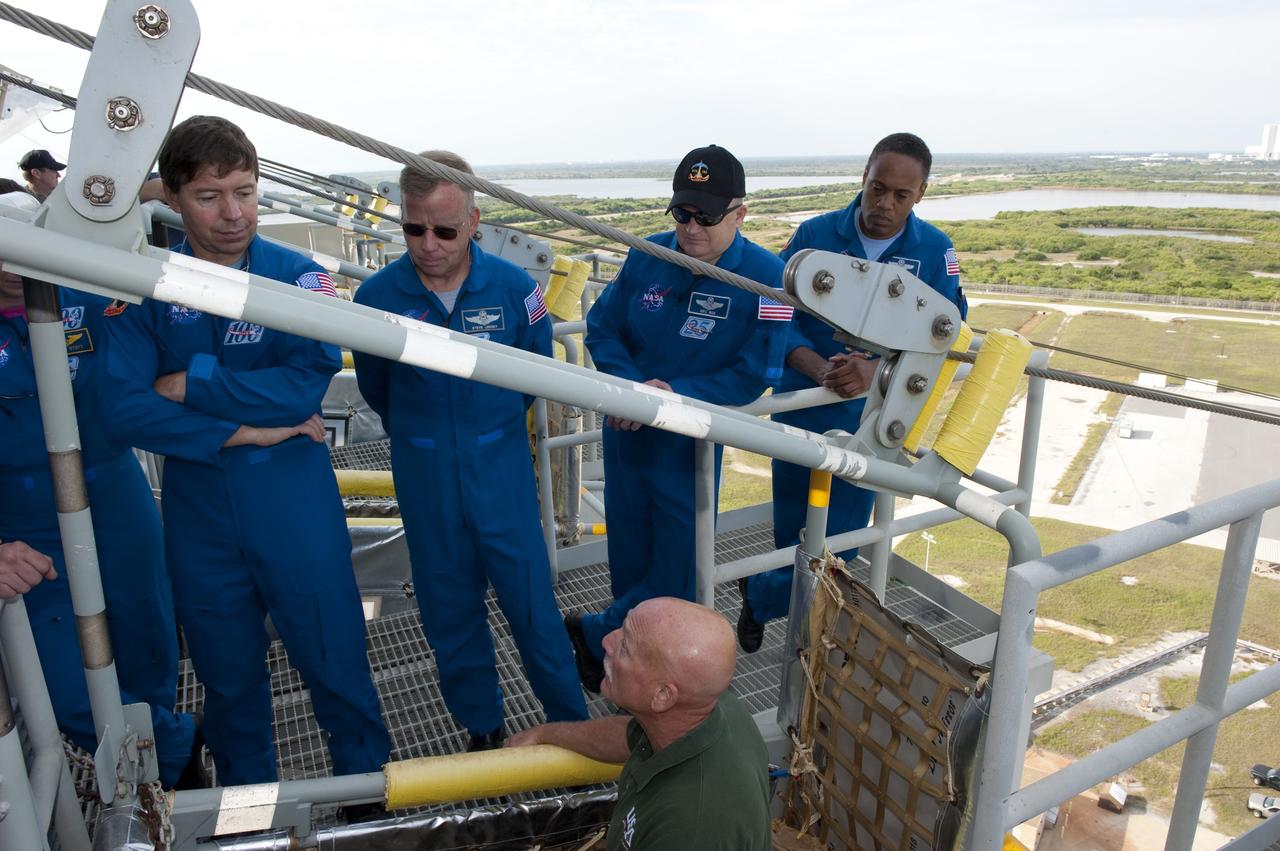
CAPE CANAVERAL, Fla. -- On Launch Pad 39A at NASA's Kennedy Space Center, STS-133 crew members receive instruction on the operation of the pad's slidewire basket system emergency exit training as part of the Terminal Countdown Demonstration Test (TCDT). From left are Mission Specialist Michael Barratt, Commander Steve Lindsey, Pilot Eric Boe and Mission Specialist Alvin Drew. TCDT provides each shuttle crew and launch team an opportunity to participate in various simulated activities, including equipment familiarization and a launch countdown. Space shuttle Discovery and its STS-133 crew will deliver the Permanent Multipurpose Module, packed with supplies and critical spare parts, as well as Robonaut 2, the dexterous humanoid astronaut helper, to the International Space Station. Launch is targeted for Nov. 1 at 4:40 p.m. For more information on the STS-133 mission, visit www.nasa.gov/mission_pages/shuttle/shuttlemissions/sts133/. Photo credit: NASA/Kim Shiflett
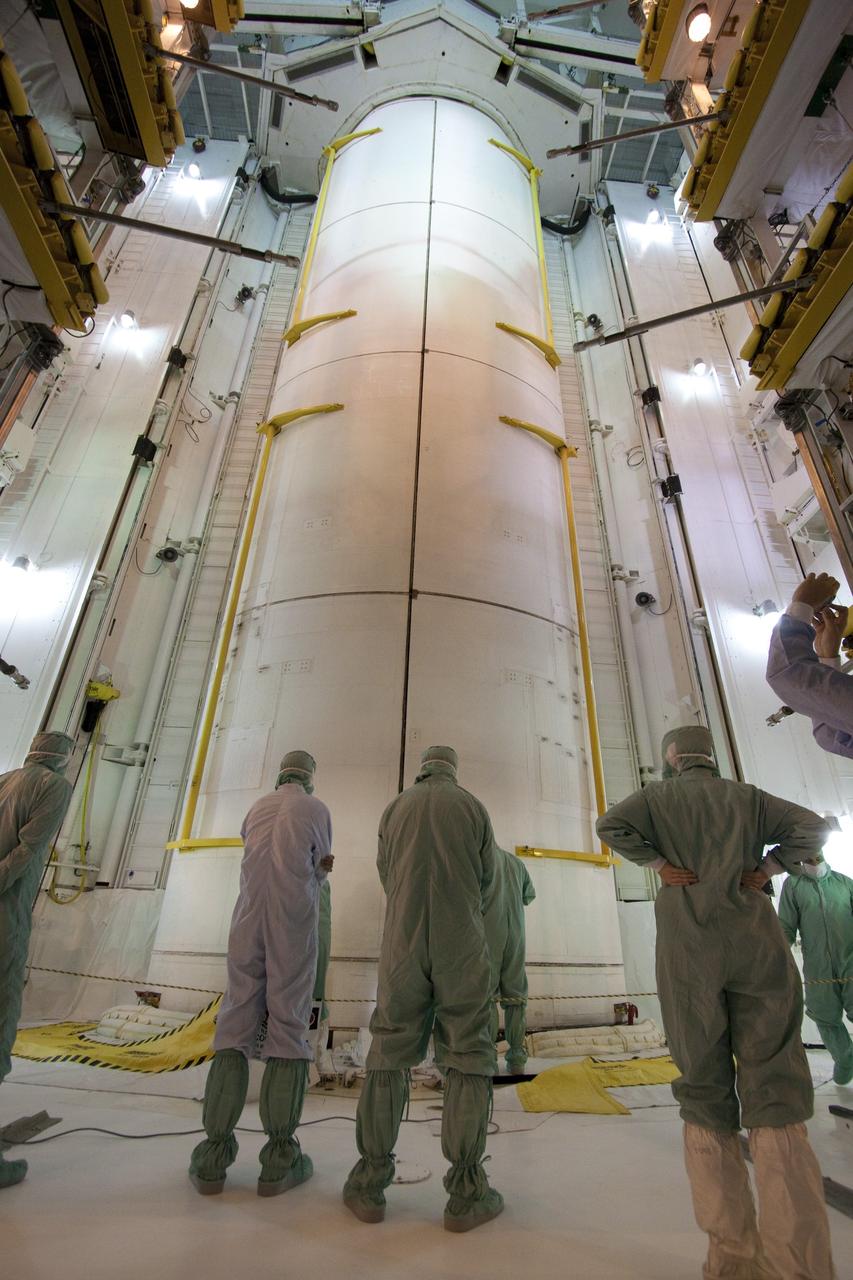
CAPE CANAVERAL, Fla. -- On Launch Pad 39A at NASA's Kennedy Space Center in Florida, the clamshell doors of space shuttle Discovery's payload bay are closed in preparation for the STS-133 launch to the International Space Station. Targeted to launch Nov. 1, STS-133 will carry the Permanent Multipurpose Module (PMM) packed with supplies and critical spare parts, as well as Robonaut 2 (R2) to the station. Photo credit: NASA/Jack Pfaller
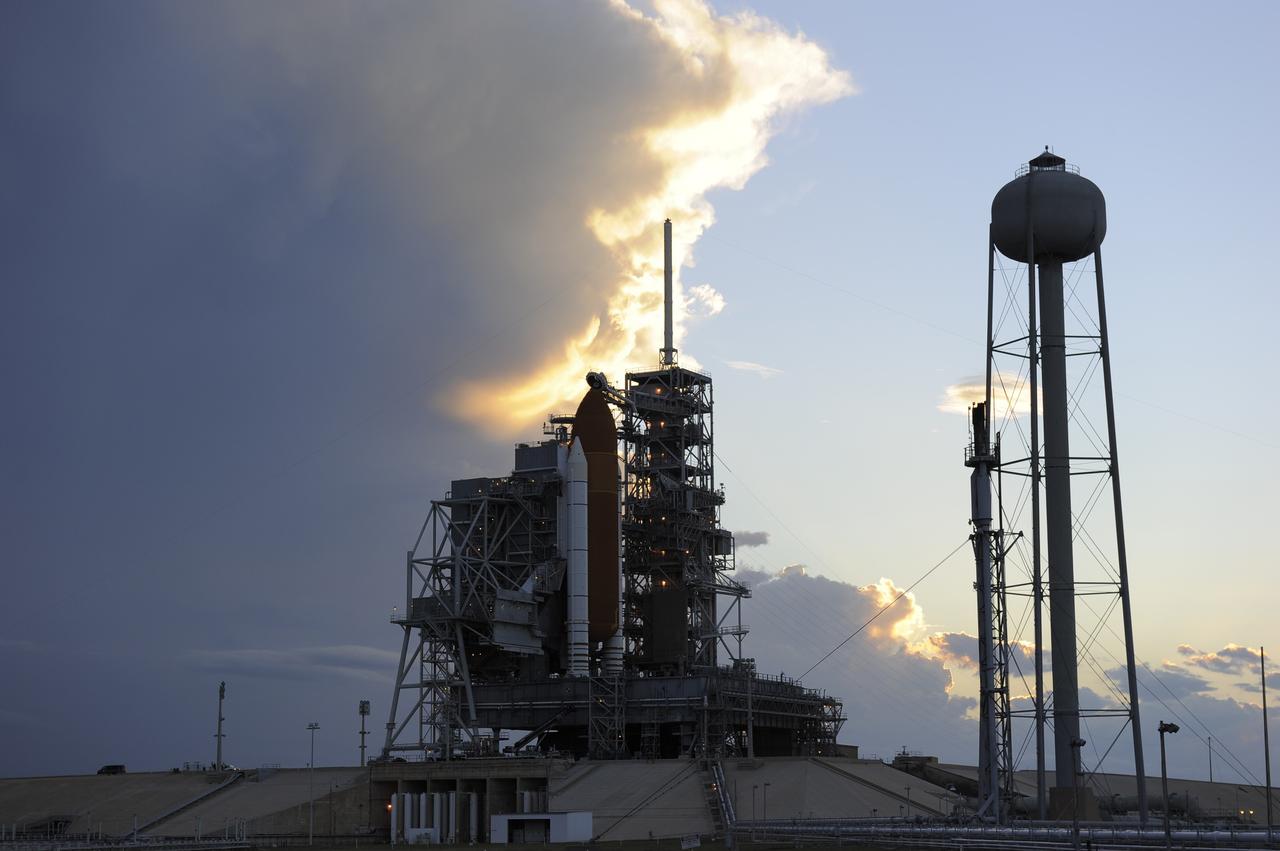
CAPE CANAVERAL, Fla. -- Storm clouds move over Launch Pad 39A at NASA's Kennedy Space Center in Florida, postponing the retraction of the pad's rotating service structure, which would reveal space shuttle Discovery. The structure provides weather protection and access to the shuttle while it awaits lift off on the pad. RSS "rollback," as it's called, will begin again after the lightning-producing clouds pass. Launch of Discovery on the STS-133 mission to the International Space Station is set for 3:29 p.m. on Nov. 4. During the 11-day mission, Discovery and its six crew members will deliver the Permanent Multipurpose Module, packed with supplies and critical spare parts, as well as Robonaut 2, to the orbiting laboratory. Discovery, which will fly its 39th mission, is scheduled to be retired following STS-133. This will be the 133rd Space Shuttle Program mission and the 35th shuttle voyage to the space station. For more information on STS-133, visit www.nasa.gov/mission_pages/shuttle/shuttlemissions/sts133/. Photo credit: NASA/Kim Shiflett
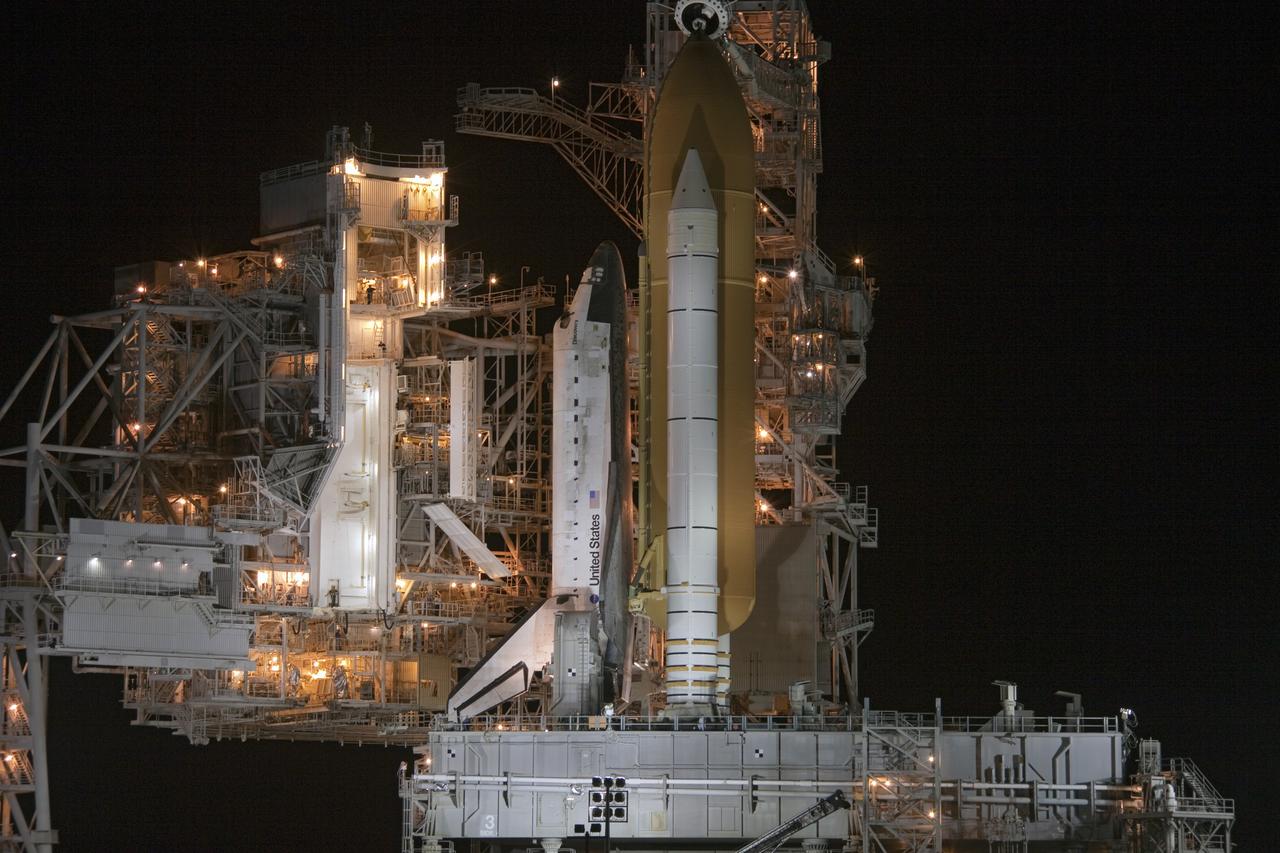
CAPE CANAVERAL, Fla. -- At NASA's Kennedy Space Center in Florida, the rotating service structure on Launch Pad 39A moves away from space shuttle Discovery. The structure provides weather protection and access to the shuttle while it awaits lift off on the pad. Launch of Discovery on the STS-133 mission to the International Space Station is set for 3:29 p.m. on Nov. 4. During the 11-day mission, Discovery and its six crew members will deliver the Permanent Multipurpose Module, packed with supplies and critical spare parts, as well as Robonaut 2, to the orbiting laboratory. Discovery, which will fly its 39th mission, is scheduled to be retired following STS-133. This will be the 133rd Space Shuttle Program mission and the 35th shuttle voyage to the space station. For more information on STS-133, visit www.nasa.gov/mission_pages/shuttle/shuttlemissions/sts133/. Photo credit: NASA/Troy Cryder
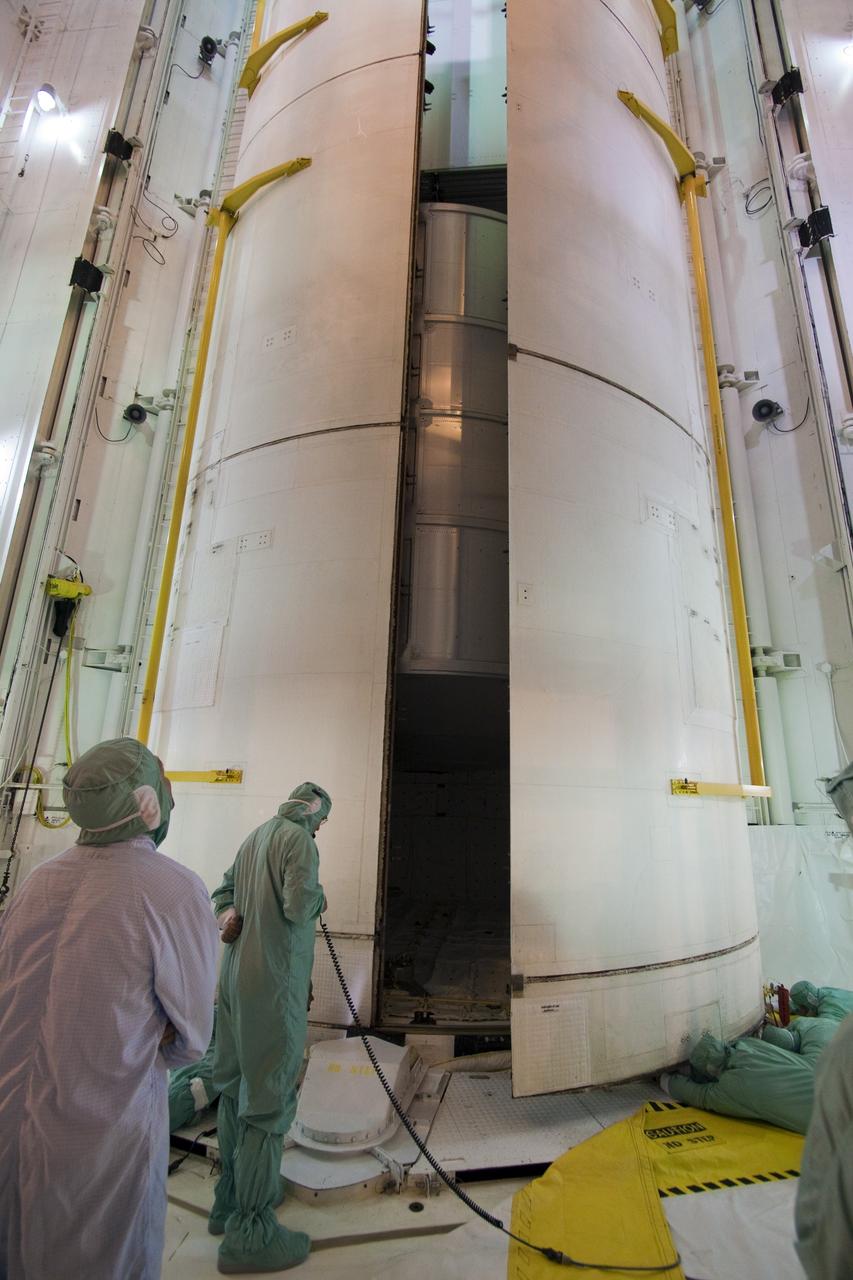
CAPE CANAVERAL, Fla. -- On Launch Pad 39A at NASA's Kennedy Space Center in Florida, technicians close the clamshell doors of space shuttle Discovery's payload bay in preparation for the STS-133 launch to the International Space Station. Targeted to launch Nov. 1, STS-133 will carry the Permanent Multipurpose Module (PMM) packed with supplies and critical spare parts, as well as Robonaut 2 (R2) to the station. Photo credit: NASA/Jack Pfaller
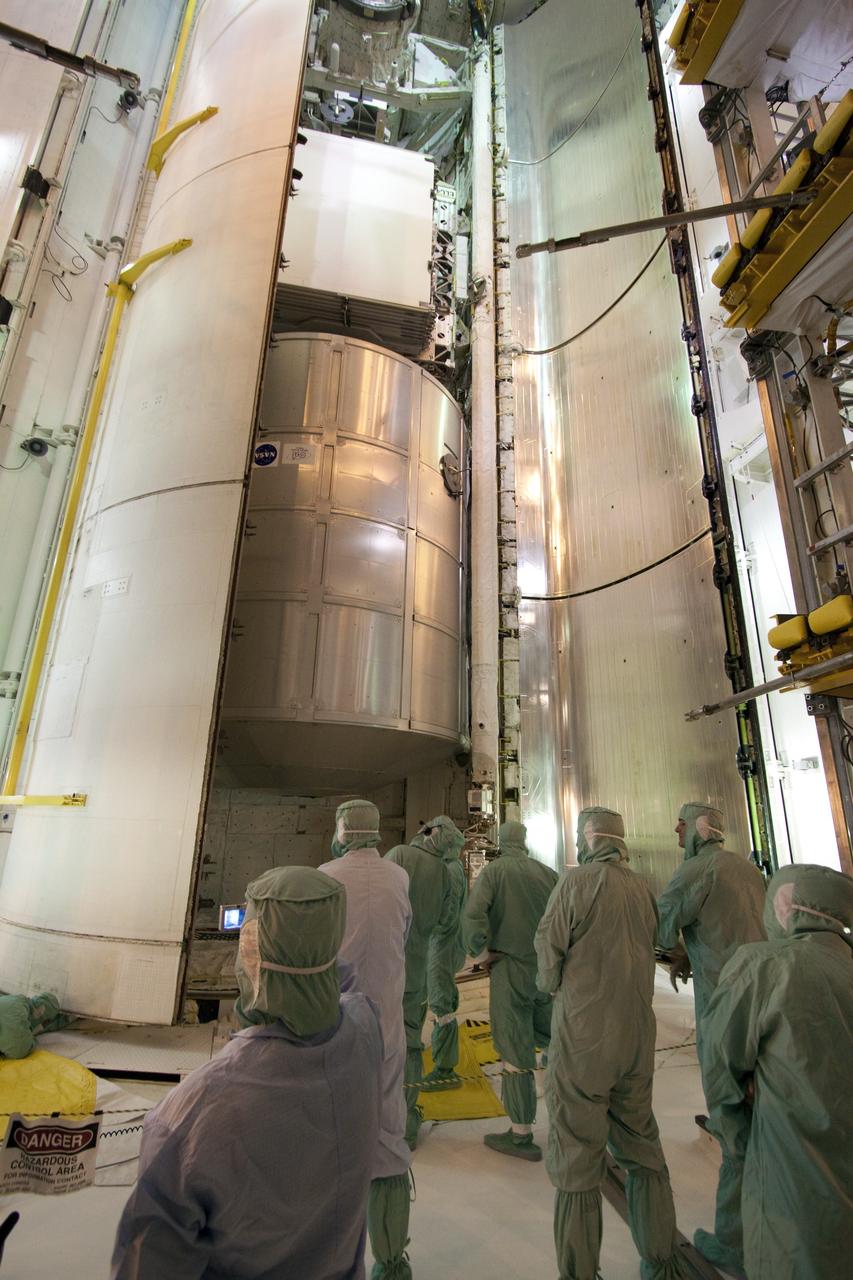
CAPE CANAVERAL, Fla. -- On Launch Pad 39A at NASA's Kennedy Space Center in Florida, technicians close the clamshell doors of space shuttle Discovery's payload bay in preparation for the STS-133 launch to the International Space Station. Targeted to launch Nov. 1, STS-133 will carry the Permanent Multipurpose Module (PMM) packed with supplies and critical spare parts, as well as Robonaut 2 (R2) to the station. Photo credit: NASA/Jack Pfaller
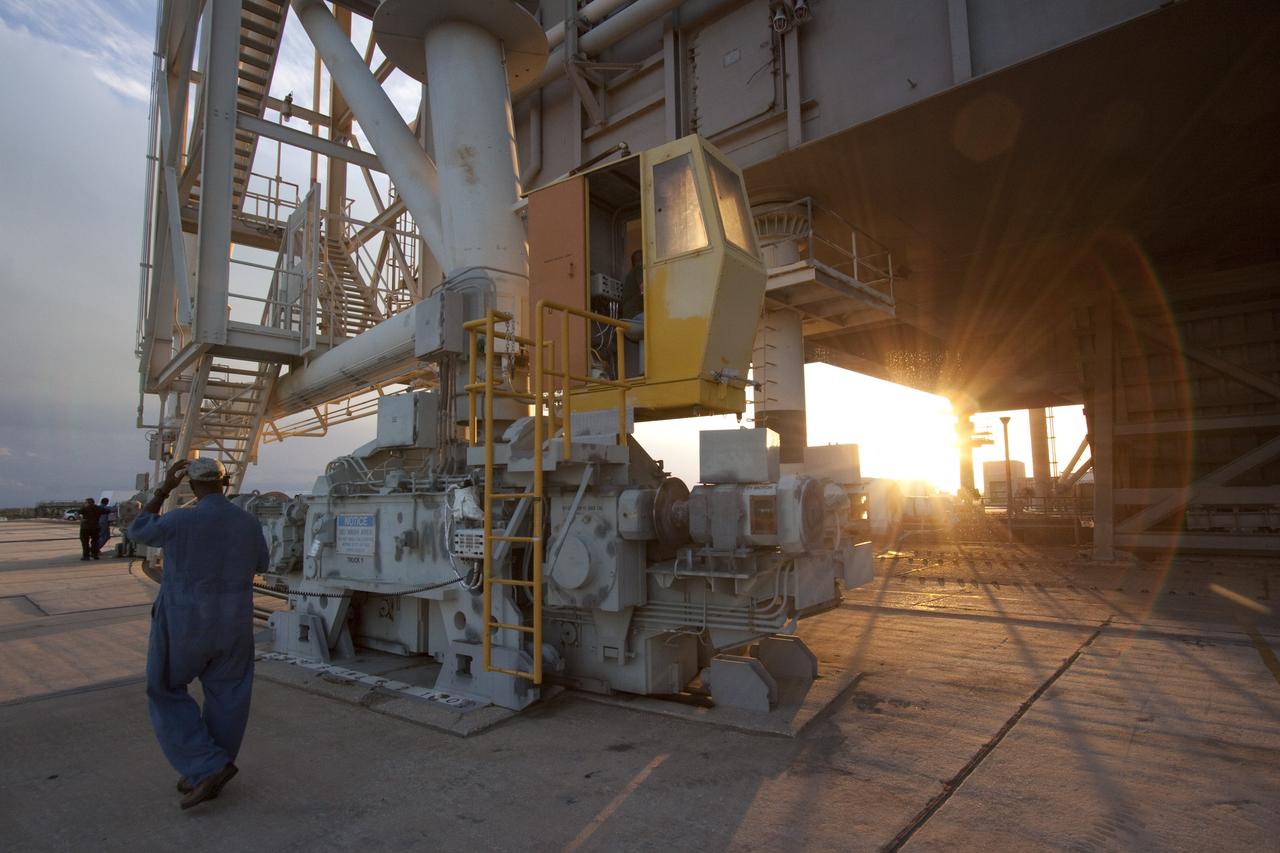
CAPE CANAVERAL, Fla. -- On Launch Pad 39A, technicians prepare to move the pad's rotating service structure away from space shuttle Discovery as the sun sets over NASA's Kennedy Space Center in Florida. The structure provides weather protection and access to the shuttle while it awaits lift off on the pad. RSS "rollback," as it's called, is a significant milestone in the launch countdown. Launch of Discovery on the STS-133 mission to the International Space Station is set for 3:29 p.m. on Nov. 4. During the 11-day mission, Discovery and its six crew members will deliver the Permanent Multipurpose Module, packed with supplies and critical spare parts, as well as Robonaut 2, to the orbiting laboratory. Discovery, which will fly its 39th mission, is scheduled to be retired following STS-133. This will be the 133rd Space Shuttle Program mission and the 35th shuttle voyage to the space station. For more information on STS-133, visit www.nasa.gov/mission_pages/shuttle/shuttlemissions/sts133/. Photo credit: NASA/Jack Pfaller
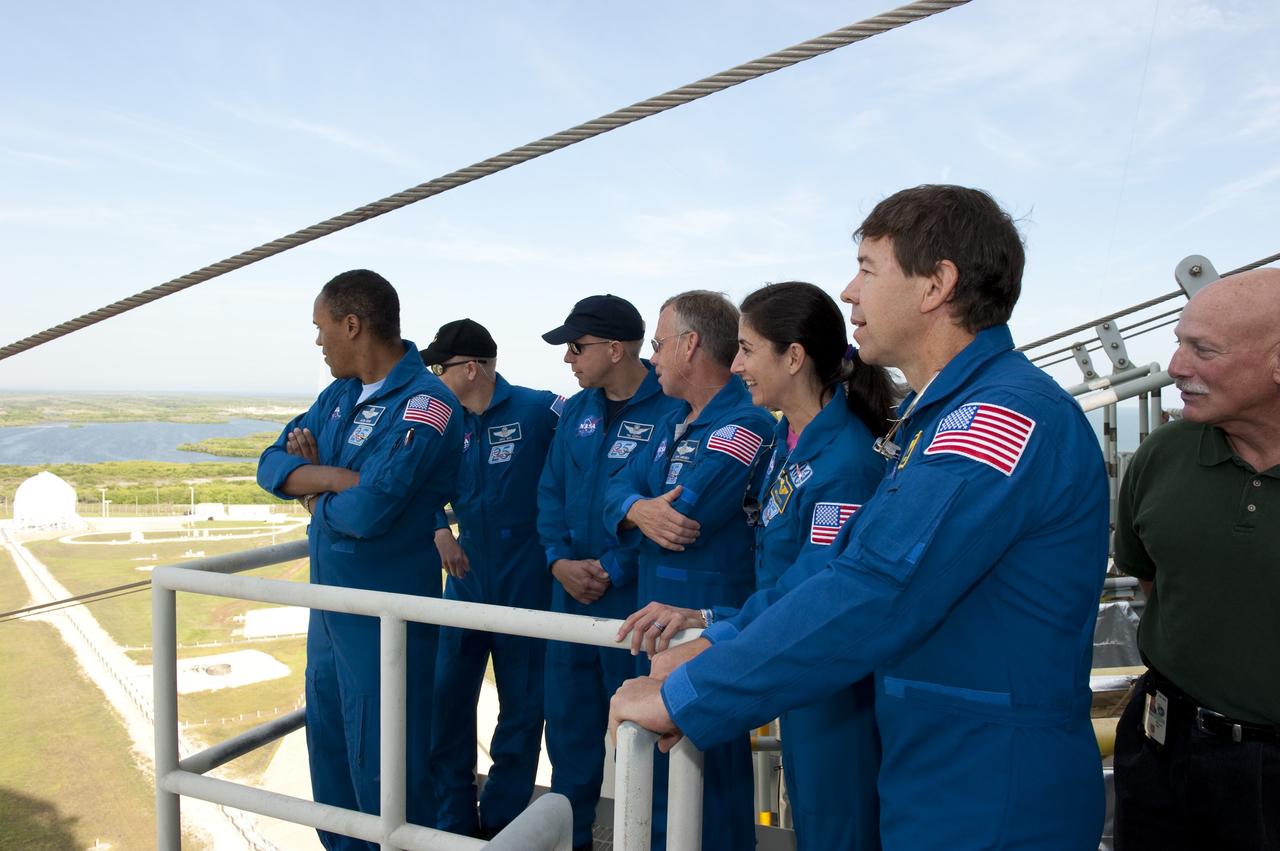
CAPE CANAVERAL, Fla. -- On Launch Pad 39A at NASA's Kennedy Space Center, STS-133 crew members receive instruction on the operation of the pad's slidewire basket system emergency exit training as part of the Terminal Countdown Demonstration Test (TCDT). From left are Mission Specialist Alvin Drew, Pilot Eric Boe, Mission Specialist Tim Kopra, Commander Steve Lindsey, and Mission Specialists Nicole Stott and Michael Barratt. TCDT provides each shuttle crew and launch team an opportunity to participate in various simulated activities, including equipment familiarization and a launch countdown. Space shuttle Discovery and its STS-133 crew will deliver the Permanent Multipurpose Module, packed with supplies and critical spare parts, as well as Robonaut 2, the dexterous humanoid astronaut helper, to the International Space Station. Launch is targeted for Nov. 1 at 4:40 p.m. For more information on the STS-133 mission, visit www.nasa.gov/mission_pages/shuttle/shuttlemissions/sts133/. Photo credit: NASA/Kim Shiflett
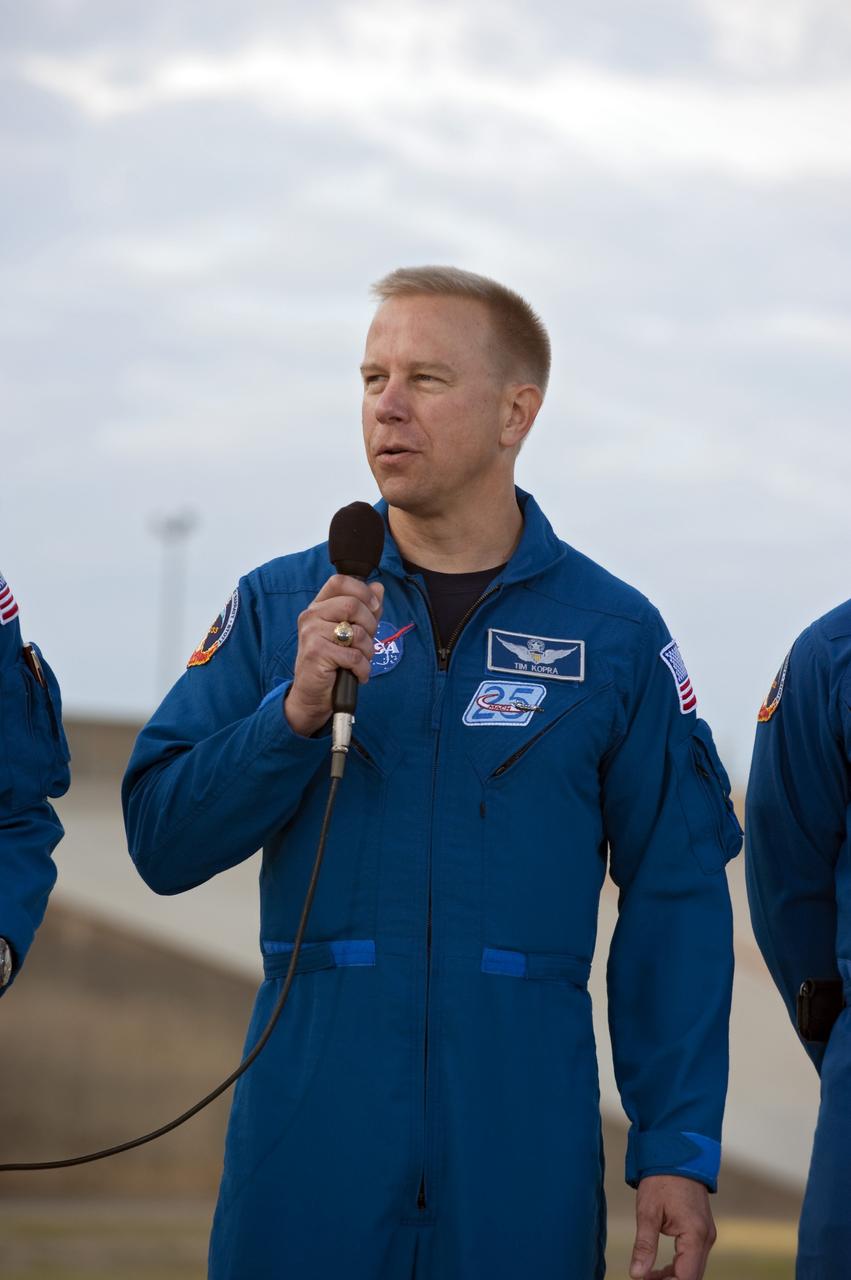
CAPE CANAVERAL, Fla. -- At NASA's Kennedy Space Center in Florida, STS-133 Mission Specialist Tim Kopra talks to media at Launch Pad 39A, where space shuttle Discovery is poised for launch next month. The six-member STS-133 crew is at Kennedy for the Terminal Countdown Demonstration Test (TCDT), which provides each shuttle crew and launch team an opportunity to participate in various simulated activities, including equipment familiarization and emergency training at the launch pad. Discovery and its crew will deliver the Permanent Multipurpose Module, packed with supplies and critical spare parts, as well as Robonaut 2, the dexterous humanoid astronaut helper, to the International Space Station. Launch is targeted for Nov. 1 at 4:40 p.m. For more information on the STS-133 mission, visit www.nasa.gov/mission_pages/shuttle/shuttlemissions/sts133/. Photo credit: NASA/Kim Shiflett
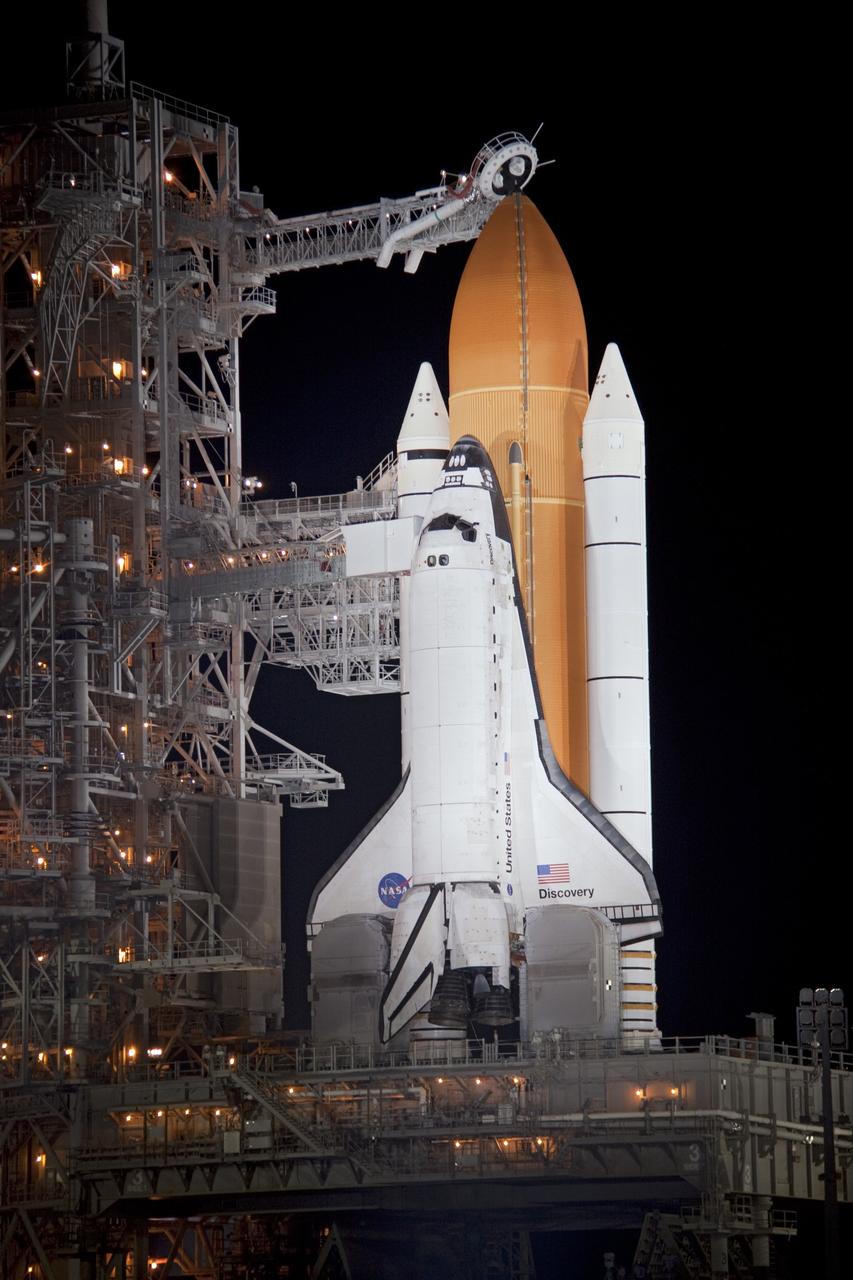
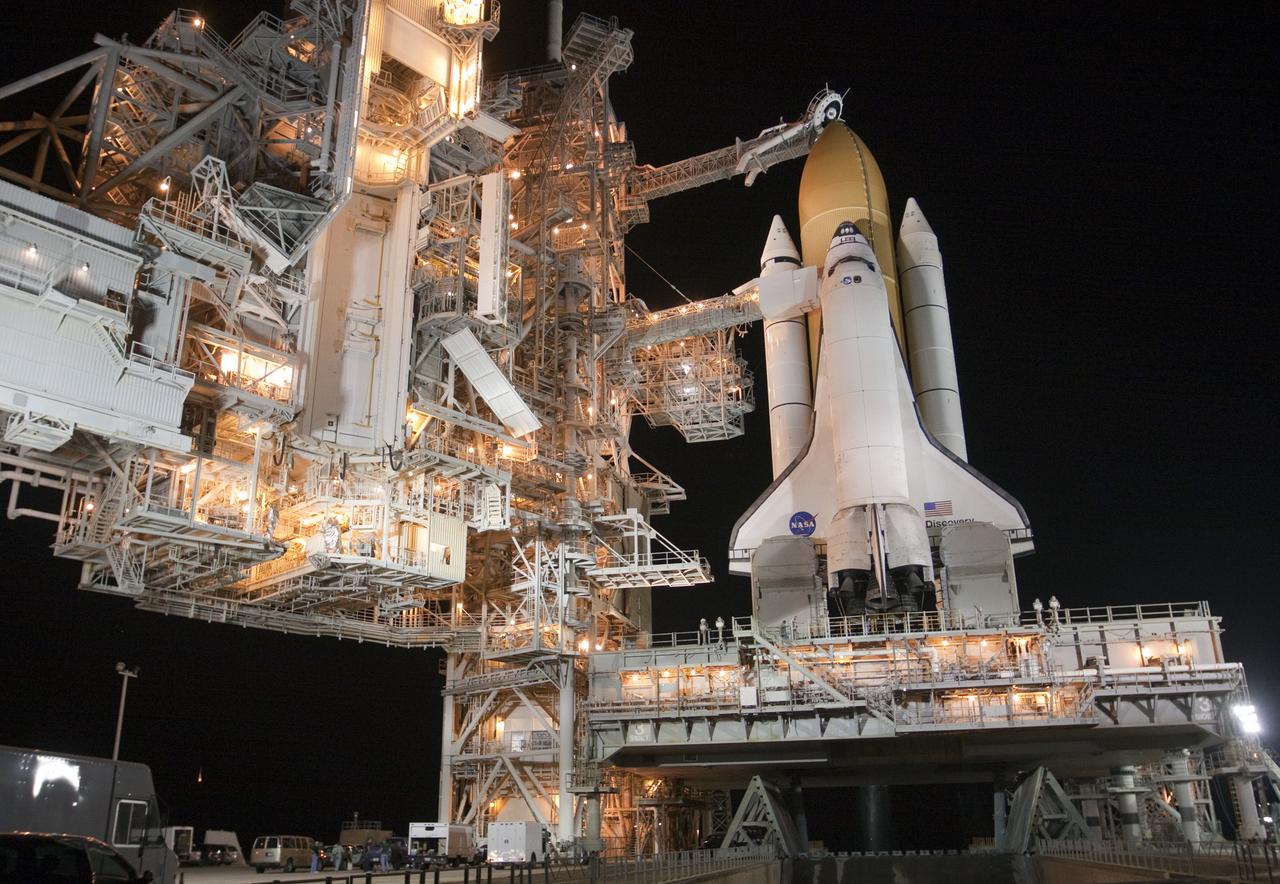
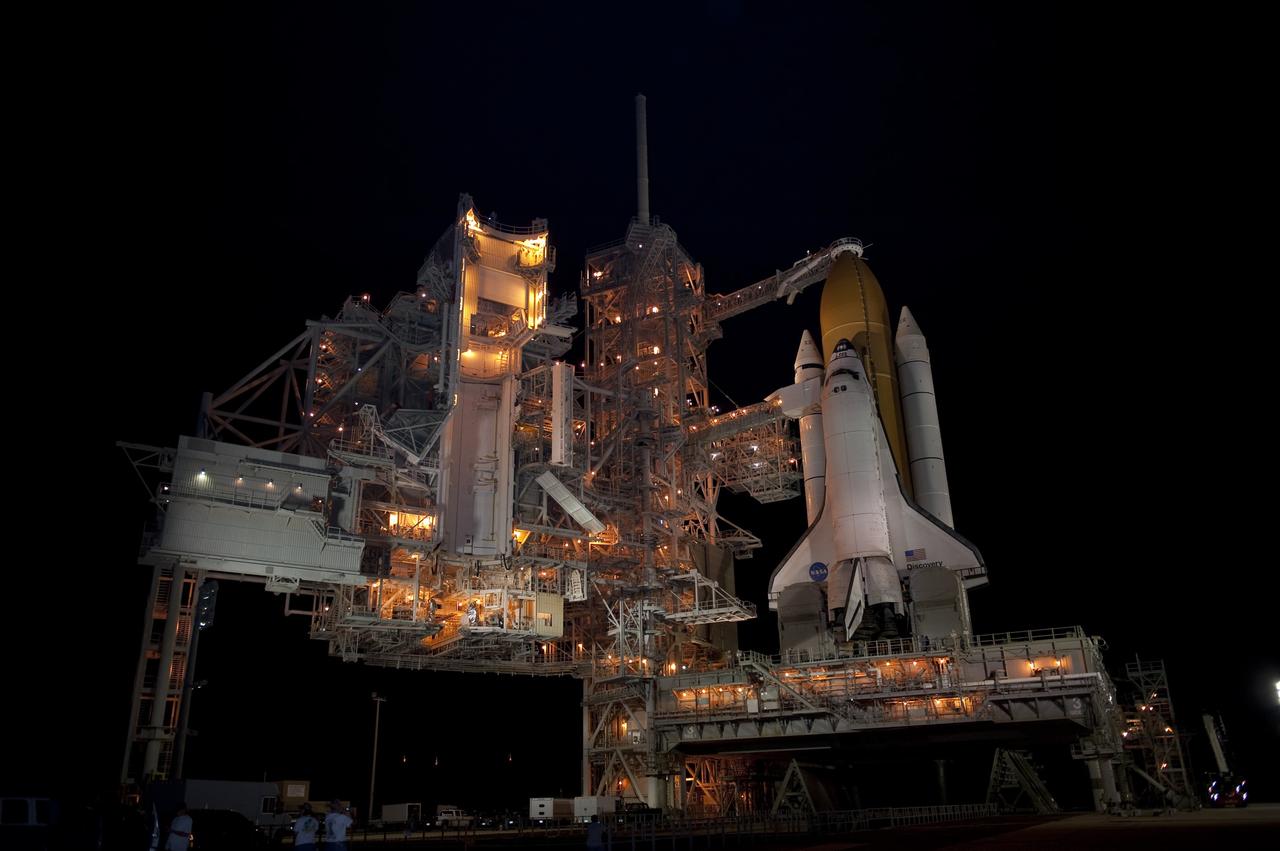
CAPE CANAVERAL, Fla. -- At NASA's Kennedy Space Center in Florida, xenon lights illuminate space shuttle Discovery on Launch Pad 39A following the retraction of the rotating service structure. The structure provides weather protection and access to the shuttle while it awaits lift off on the pad. Launch of Discovery on the STS-133 mission to the International Space Station is set for 3:29 p.m. on Nov. 4. During the 11-day mission, Discovery and its six crew members will deliver the Permanent Multipurpose Module, packed with supplies and critical spare parts, as well as Robonaut 2, to the orbiting laboratory. Discovery, which will fly its 39th mission, is scheduled to be retired following STS-133. This will be the 133rd Space Shuttle Program mission and the 35th shuttle voyage to the space station. For more information on STS-133, visit www.nasa.gov/mission_pages/shuttle/shuttlemissions/sts133/. Photo credit: NASA/Troy Cryder
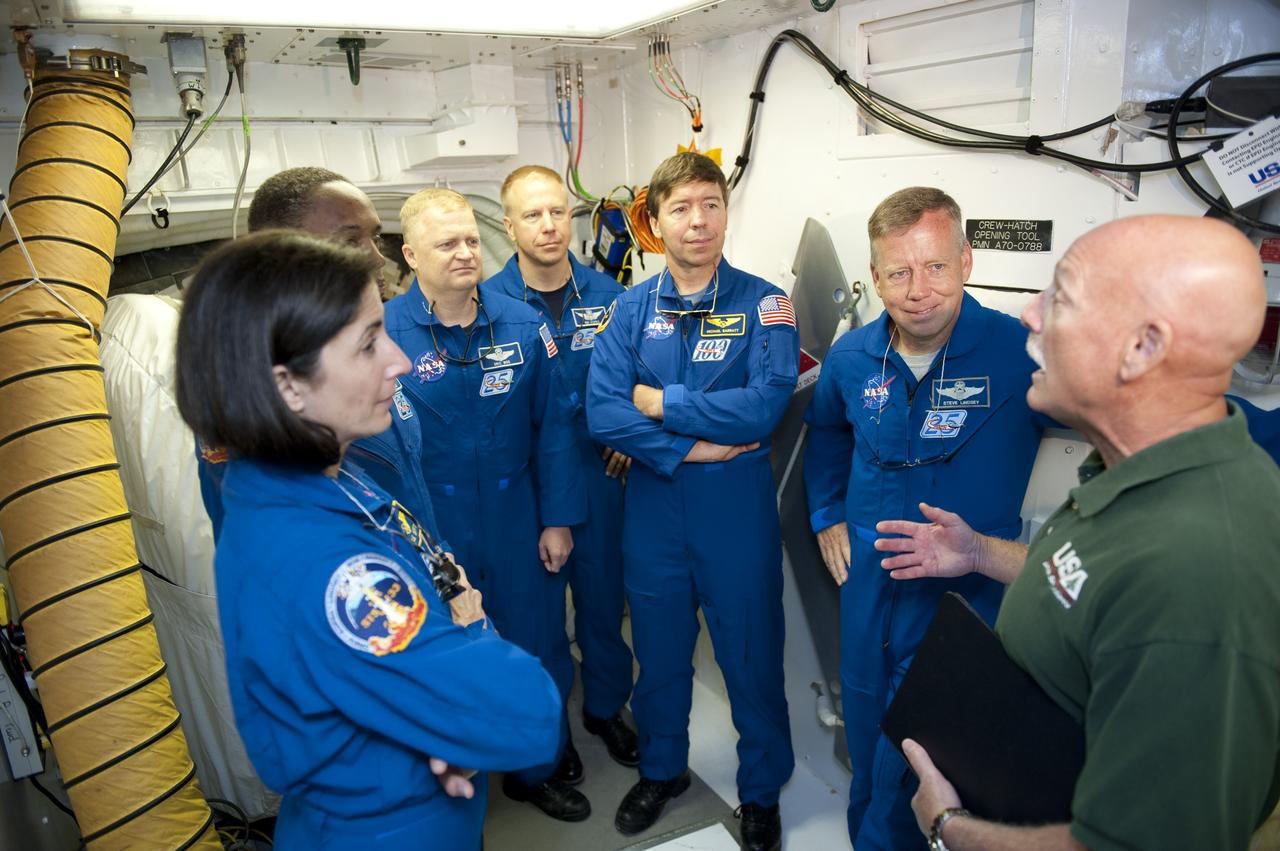
CAPE CANAVERAL, Fla. -- At NASA's Kennedy Space Center in Florida, STS-133 crew members pose for a photo in Launch Pad 39A's White Room during the Terminal Countdown Demonstration Test (TCDT). From left are Mission Specialists Nicole Stott, Alvin Drew, Pilot Eric Boe, Mission Specialists Tim Kopra and Michael Barratt, and Commander Steve Lindsey. TCDT provides each shuttle crew and launch team an opportunity to participate in various simulated activities, including equipment familiarization and a launch countdown. Space shuttle Discovery and its STS-133 crew will deliver the Permanent Multipurpose Module, packed with supplies and critical spare parts, as well as Robonaut 2, the dexterous humanoid astronaut helper, to the International Space Station. Launch is targeted for Nov. 1 at 4:40 p.m. For more information on the STS-133 mission, visit www.nasa.gov/mission_pages/shuttle/shuttlemissions/sts133/. Photo credit: NASA/Kim Shiflett
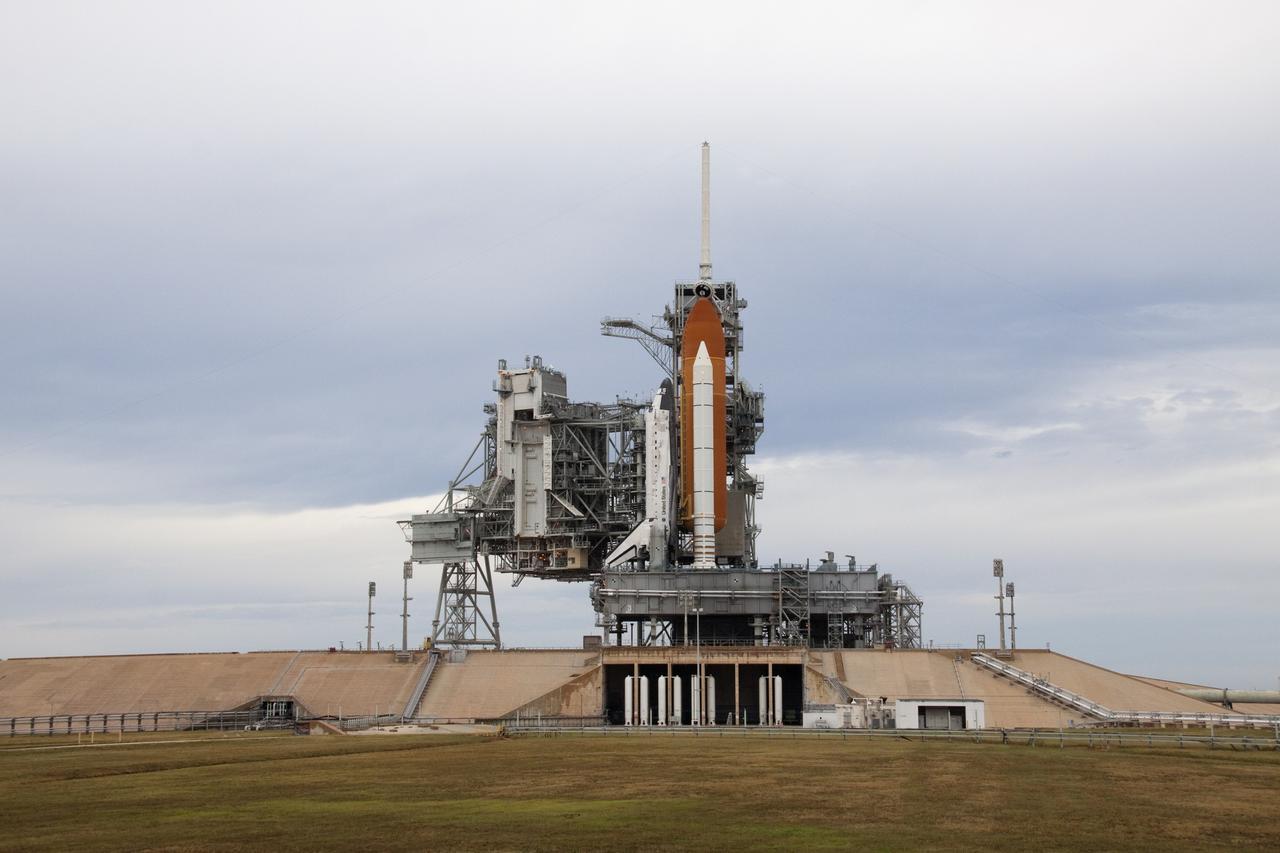
CAPE CANAVERAL, Fla. -- A cold front predicted to cause rain, wind and a low-cloud ceiling in and around NASA's Kennedy Space Center in Florida delays launch of the STS-133 mission to the International Space Station by a day. Lift off now is set for 3:04 p.m. on Nov. 5. During the 11-day mission, Discovery and its six crew members will deliver the Permanent Multipurpose Module, packed with supplies and critical spare parts, as well as Robonaut 2, to the orbiting laboratory. Discovery, which will fly its 39th mission, is scheduled to be retired following STS-133. This will be the 133rd Space Shuttle Program mission and the 35th shuttle voyage to the space station. For more information on STS-133, visit www.nasa.gov/mission_pages/shuttle/shuttlemissions/sts133/. Photo credit: NASA/Troy Cryder
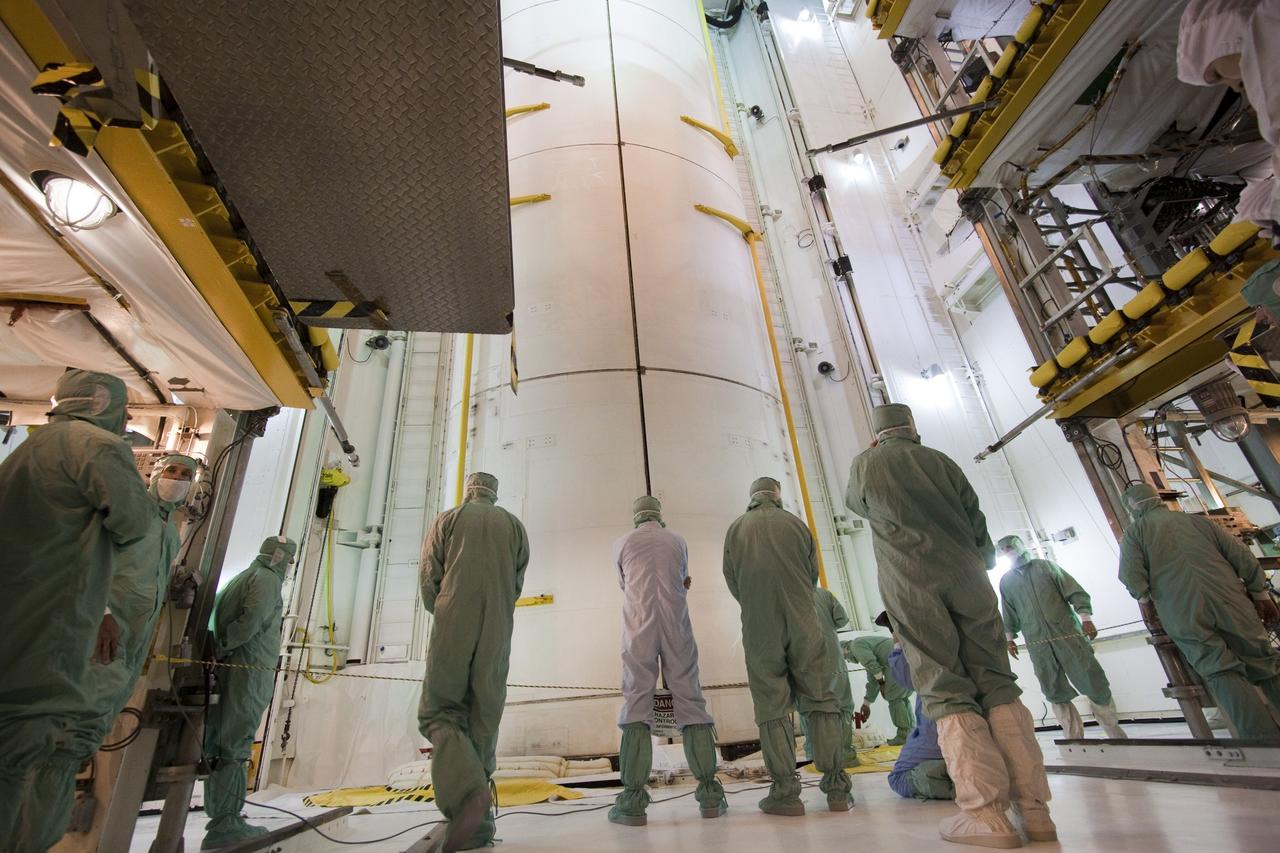
CAPE CANAVERAL, Fla. -- On Launch Pad 39A at NASA's Kennedy Space Center in Florida, the clamshell doors of space shuttle Discovery's payload bay are closed in preparation for the STS-133 launch to the International Space Station. Targeted to launch Nov. 1, STS-133 will carry the Permanent Multipurpose Module (PMM) packed with supplies and critical spare parts, as well as Robonaut 2 (R2) to the station. Photo credit: NASA/Jack Pfaller

CAPE CANAVERAL, Fla. -- At NASA's Kennedy Space Center in Florida, STS-133 Commander Steve Lindsey talks to media at Launch Pad 39A, where space shuttle Discovery is poised for launch next month. The six-member STS-133 crew is at Kennedy for the Terminal Countdown Demonstration Test (TCDT), which provides each shuttle crew and launch team an opportunity to participate in various simulated activities, including equipment familiarization and emergency training at the launch pad. Discovery and its crew will deliver the Permanent Multipurpose Module, packed with supplies and critical spare parts, as well as Robonaut 2, the dexterous humanoid astronaut helper, to the International Space Station. Launch is targeted for Nov. 1 at 4:40 p.m. For more information on the STS-133 mission, visit www.nasa.gov/mission_pages/shuttle/shuttlemissions/sts133/. Photo credit: NASA/Kim Shiflett
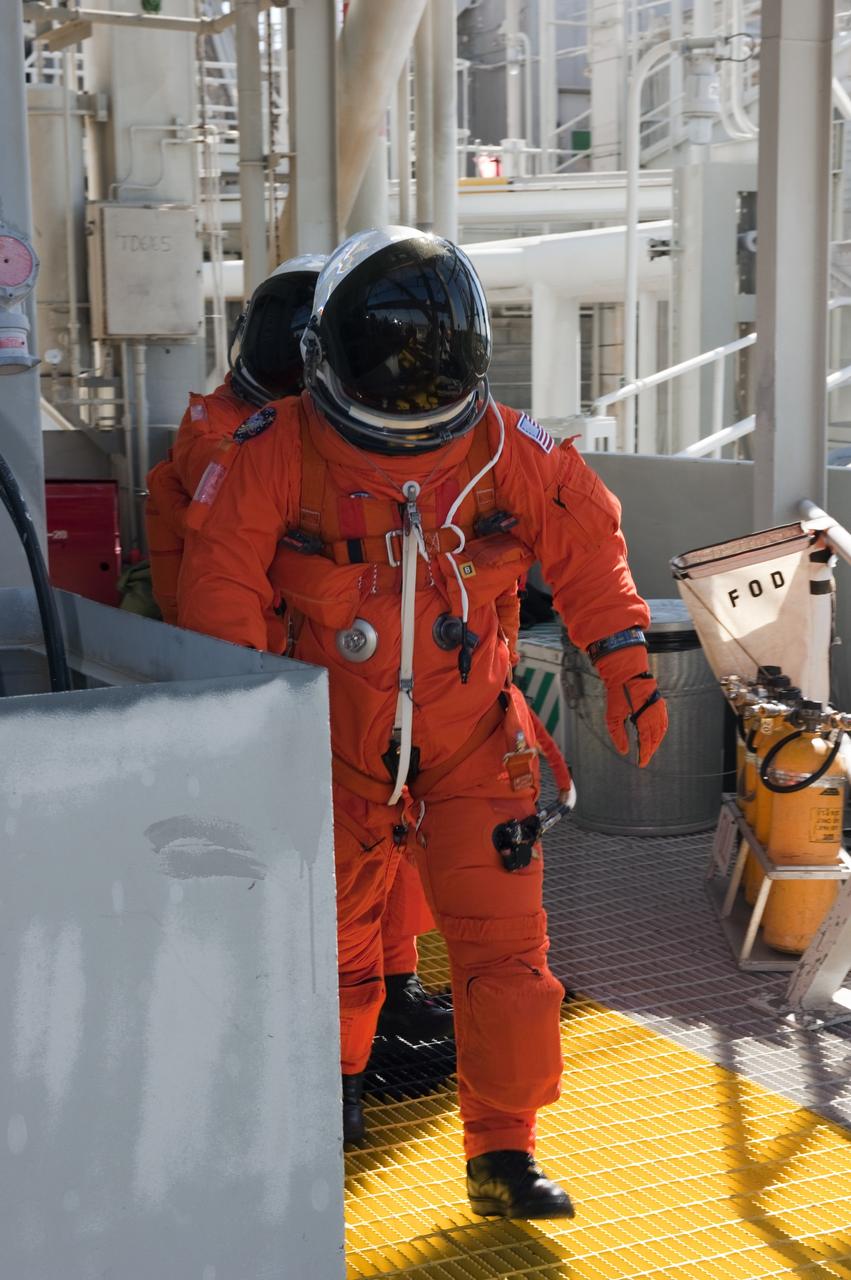
CAPE CANAVERAL, Fla. -- During a simulated pad emergency on Launch Pad 39A at NASA's Kennedy Space Center in Florida, STS-133 Pilot Eric Boe, left, and Commander Steve Lindsey make their way toward a slidewire basket that would take them to a safe bunker below the pad in an unlikely emergency situation. The emergency training while aboard space shuttle Discovery is part of a week-long Terminal Countdown Demonstration Test (TCDT). Discovery and its STS-133 crew will deliver the Permanent Multipurpose Module, packed with supplies and critical spare parts, as well as Robonaut 2, the dexterous humanoid astronaut helper, to the International Space Station. Launch is targeted for Nov. 1 at 4:40 p.m. For more information on the STS-133 mission, visit www.nasa.gov/mission_pages/shuttle/shuttlemissions/sts133/. Photo credit: NASA/Kim Shiflett
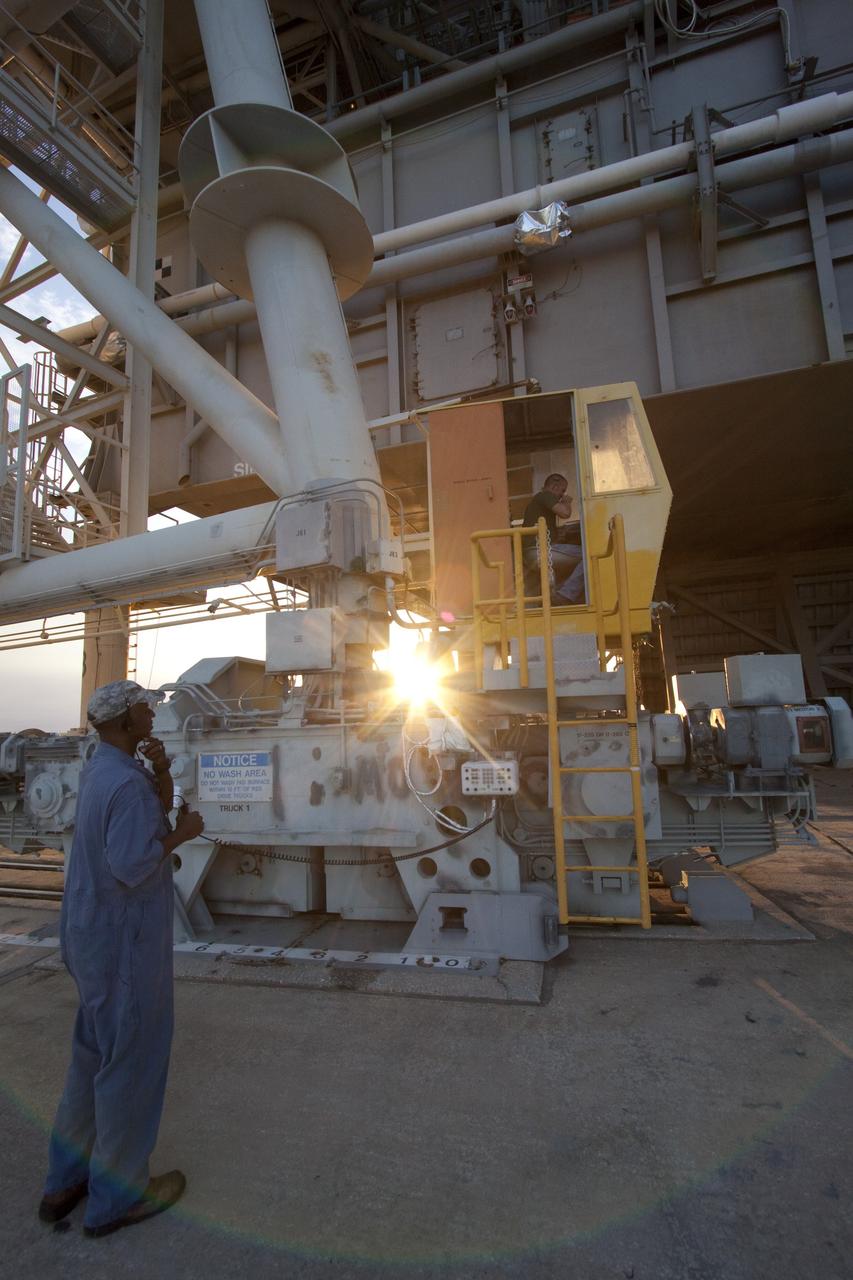
CAPE CANAVERAL, Fla. -- On Launch Pad 39A, technicians prepare to move the pad's rotating service structure away from space shuttle Discovery as the sun sets over NASA's Kennedy Space Center in Florida. The structure provides weather protection and access to the shuttle while it awaits lift off on the pad. RSS "rollback," as it's called, is a significant milestone in the launch countdown. Launch of Discovery on the STS-133 mission to the International Space Station is set for 3:29 p.m. on Nov. 4. During the 11-day mission, Discovery and its six crew members will deliver the Permanent Multipurpose Module, packed with supplies and critical spare parts, as well as Robonaut 2, to the orbiting laboratory. Discovery, which will fly its 39th mission, is scheduled to be retired following STS-133. This will be the 133rd Space Shuttle Program mission and the 35th shuttle voyage to the space station. For more information on STS-133, visit www.nasa.gov/mission_pages/shuttle/shuttlemissions/sts133/. Photo credit: NASA/Jack Pfaller
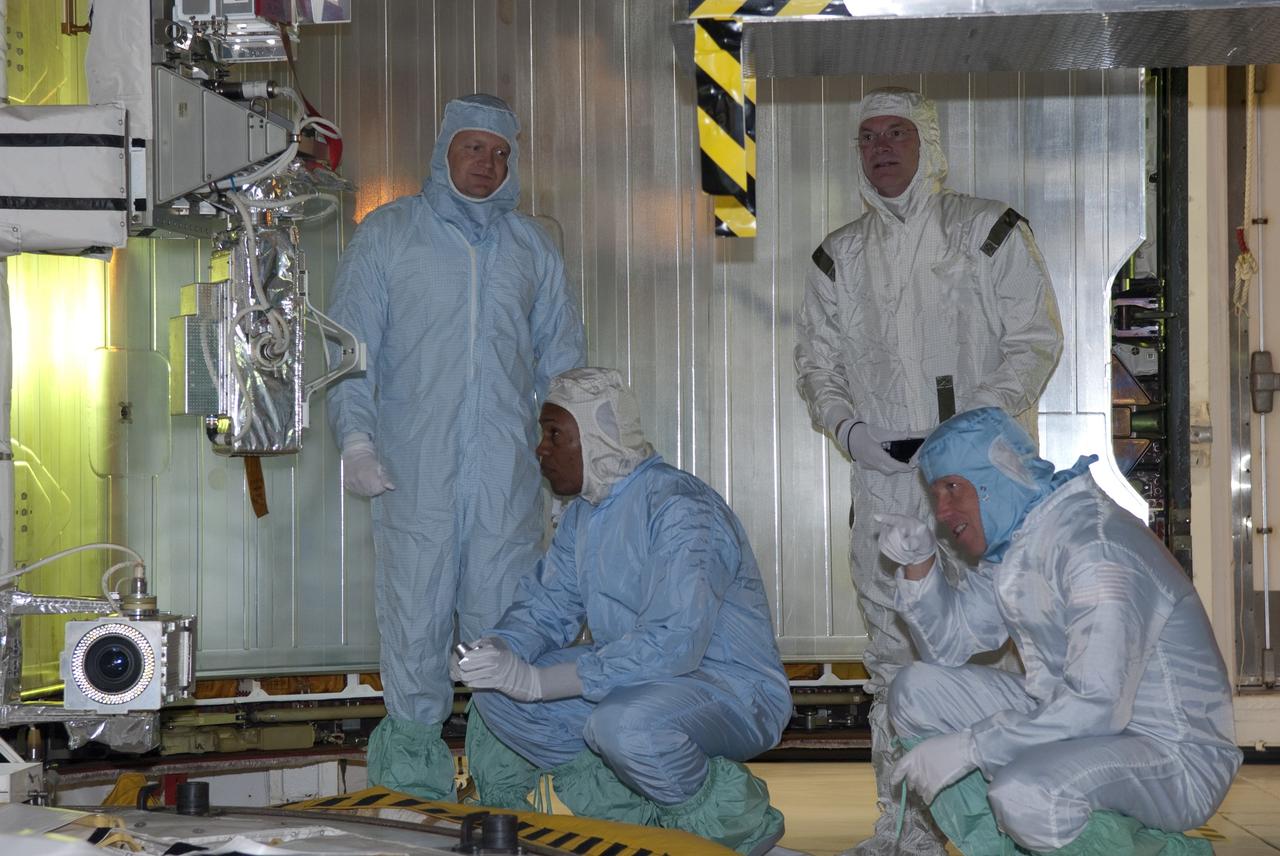
CAPE CANAVERAL, Fla. -- At NASA's Kennedy Space Center in Florida, STS-133 crew members check out their mission's payload while at Launch Pad 39A for the Terminal Countdown Demonstration Test (TCDT). From left, are Pilot Eric Boe, and Mission Specialists Alvin Drew, and Tim Kopra. Standing behind Kopra in a white "bunny suit" is a pad technician. Discovery and its STS-133 crew will deliver the Permanent Multipurpose Module, packed with supplies and critical spare parts, as well as Robonaut 2, the dexterous humanoid astronaut helper, to the International Space Station. Launch is targeted for 4:40 p.m. EDT, Nov. 1. Photo credit: NASA/Jim Grossmann
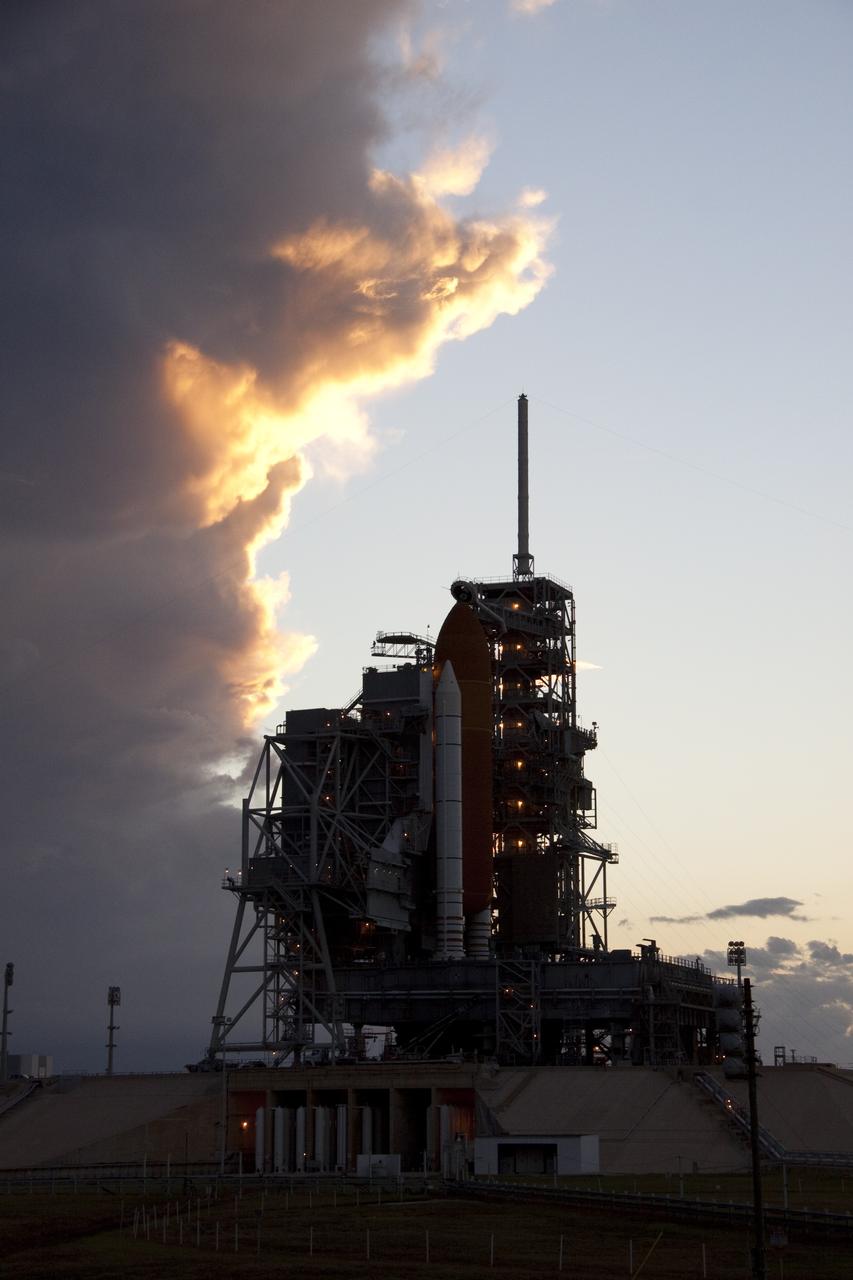
CAPE CANAVERAL, Fla. -- A lightning-producing storm cloud moves in over NASA's Kennedy Space Center in Florida as the rotating service structure on Launch Pad 39A is scheduled to be moved away from space shuttle Discovery. The structure provides weather protection and access to the shuttle. RSS "rollback," as it's called, was delayed for a few hours to allow that cloud to pass. Launch of Discovery on the STS-133 mission to the International Space Station is set for 3:29 p.m. on Nov. 4. During the 11-day mission, Discovery and its six crew members will deliver the Permanent Multipurpose Module, packed with supplies and critical spare parts, as well as Robonaut 2, to the orbiting laboratory. Discovery, which will fly its 39th mission, is scheduled to be retired following STS-133. This will be the 133rd Space Shuttle Program mission and the 35th shuttle voyage to the space station. For more information on STS-133, visit www.nasa.gov/mission_pages/shuttle/shuttlemissions/sts133/. Photo credit: NASA/Troy Cryder
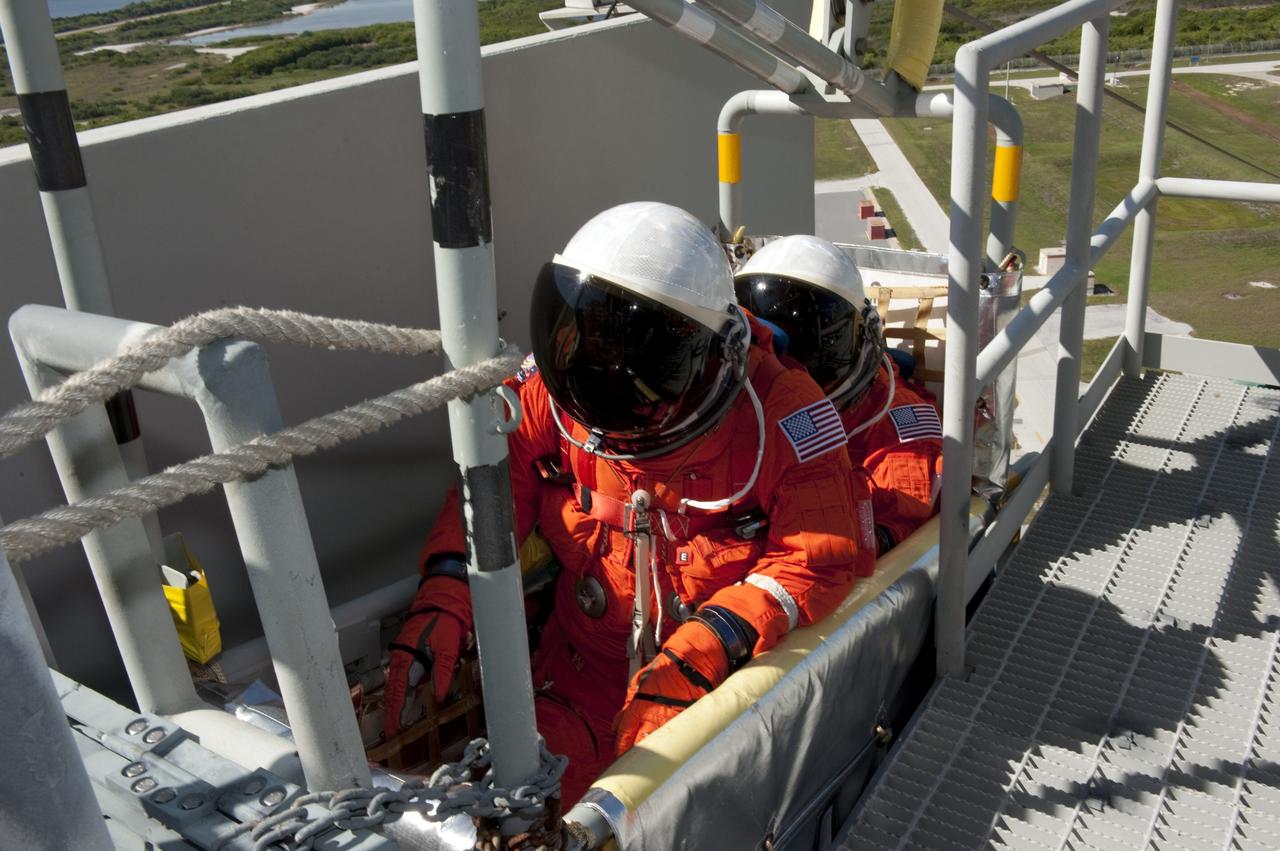
CAPE CANAVERAL, Fla. -- During a simulated pad emergency on Launch Pad 39A at NASA's Kennedy Space Center in Florida, STS-133 Mission Specialists Michael Barratt, left, and Nicole Stott hop in a slidewire basket that would take them to a safe bunker below the pad in an unlikely emergency situation. The emergency training while aboard space shuttle Discovery is part of a week-long Terminal Countdown Demonstration Test (TCDT). Discovery and its STS-133 crew will deliver the Permanent Multipurpose Module, packed with supplies and critical spare parts, as well as Robonaut 2, the dexterous humanoid astronaut helper, to the International Space Station. Launch is targeted for Nov. 1 at 4:40 p.m. For more information on the STS-133 mission, visit www.nasa.gov/mission_pages/shuttle/shuttlemissions/sts133/. Photo credit: NASA/Kim Shiflett
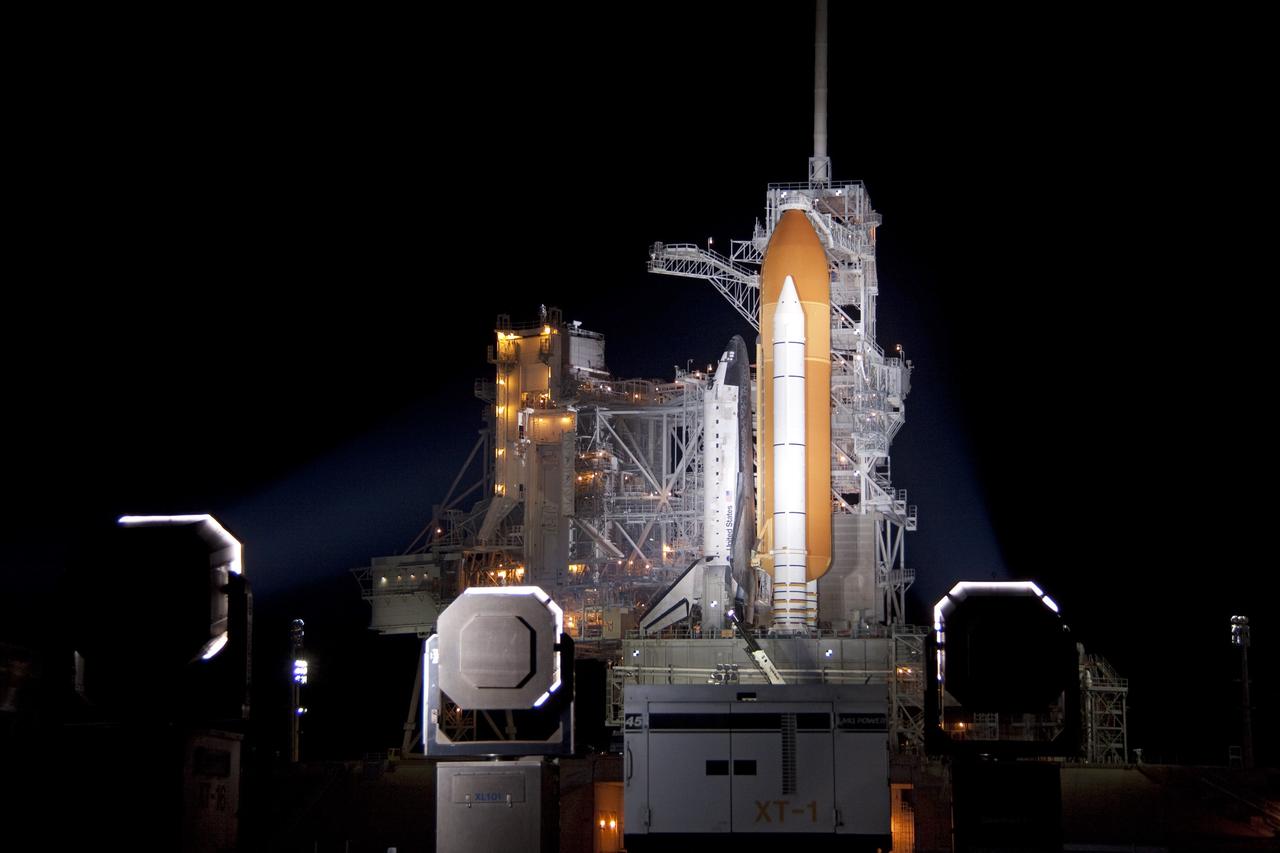
CAPE CANAVERAL, Fla. -- At NASA's Kennedy Space Center in Florida, xenon lights illuminate space shuttle Discovery on Launch Pad 39A following the retraction of the rotating service structure. The structure provides weather protection and access to the shuttle while it awaits lift off on the pad. Launch of Discovery on the STS-133 mission to the International Space Station is set for 3:29 p.m. on Nov. 4. During the 11-day mission, Discovery and its six crew members will deliver the Permanent Multipurpose Module, packed with supplies and critical spare parts, as well as Robonaut 2, to the orbiting laboratory. Discovery, which will fly its 39th mission, is scheduled to be retired following STS-133. This will be the 133rd Space Shuttle Program mission and the 35th shuttle voyage to the space station. For more information on STS-133, visit www.nasa.gov/mission_pages/shuttle/shuttlemissions/sts133/. Photo credit: NASA/Troy Cryder
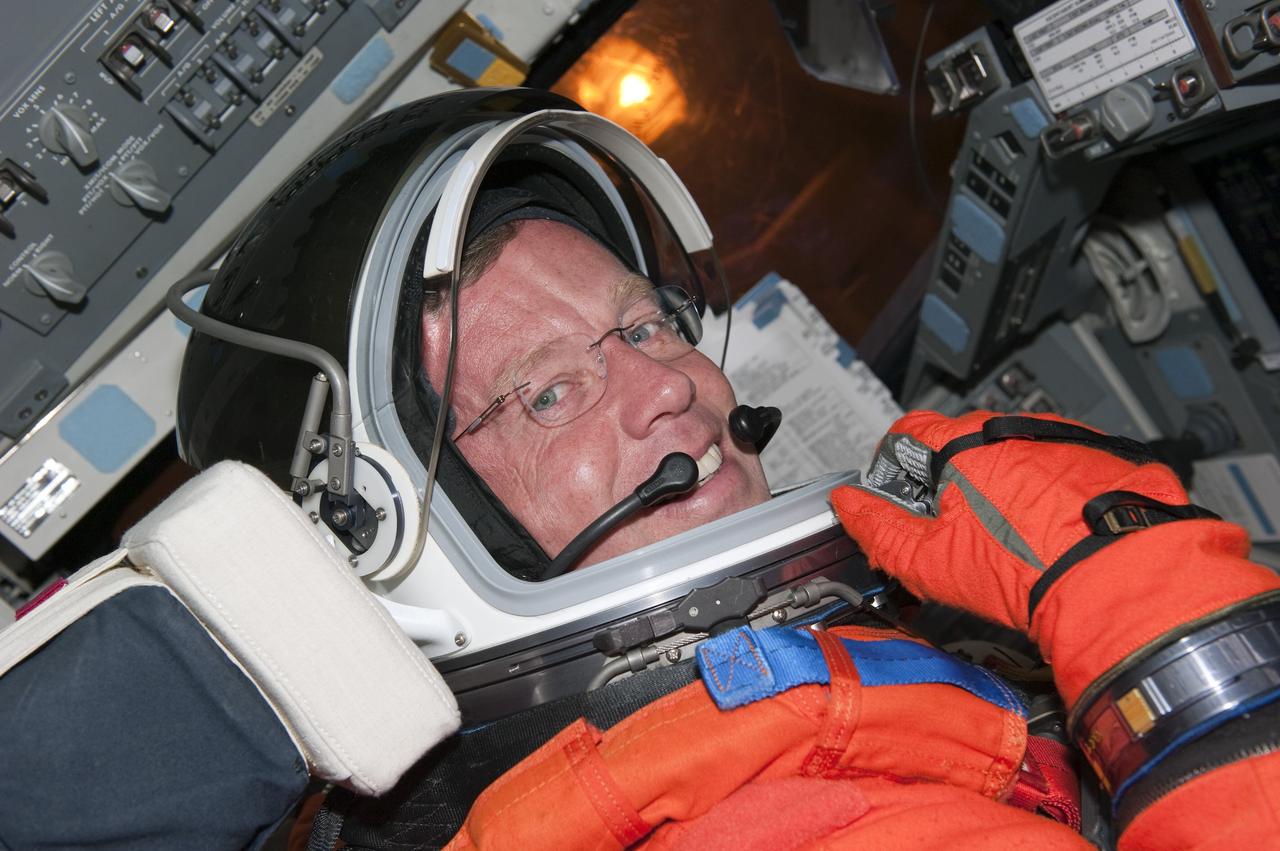
CAPE CANAVERAL, Fla. -- During a simulated launch countdown on Launch Pad 39A at NASA's Kennedy Space Center in Florida, STS-133 Commander Steve Lindsey is strapped into his seat on space shuttle Discovery. Next, the crew members will practice escaping the shuttle, in preparation for an unlikely emergency at the pad on launch day. The simulated launch countdown and emergency exit training are part of a week-long Terminal Countdown Demonstration Test (TCDT). Discovery and its STS-133 crew will deliver the Permanent Multipurpose Module, packed with supplies and critical spare parts, as well as Robonaut 2, the dexterous humanoid astronaut helper, to the International Space Station. Launch is targeted for Nov. 1 at 4:40 p.m. For more information on the STS-133 mission, visit www.nasa.gov/mission_pages/shuttle/shuttlemissions/sts133/. Photo credit: NASA/Kim Shiflett
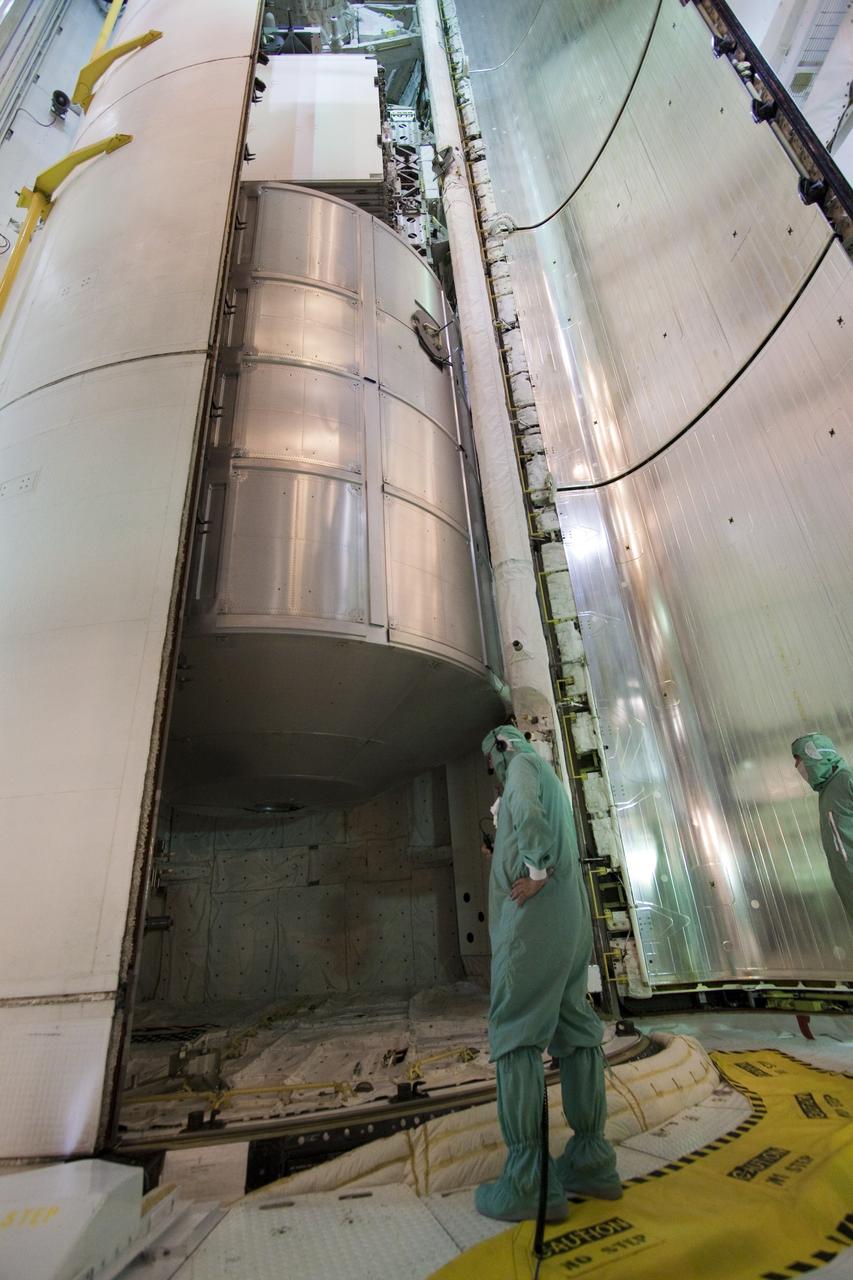
CAPE CANAVERAL, Fla. -- On Launch Pad 39A at NASA's Kennedy Space Center in Florida, technicians close the clamshell doors of space shuttle Discovery's payload bay in preparation for the STS-133 launch to the International Space Station. Targeted to launch Nov. 1, STS-133 will carry the Permanent Multipurpose Module (PMM) packed with supplies and critical spare parts, as well as Robonaut 2 (R2) to the station. Photo credit: NASA/Jack Pfaller
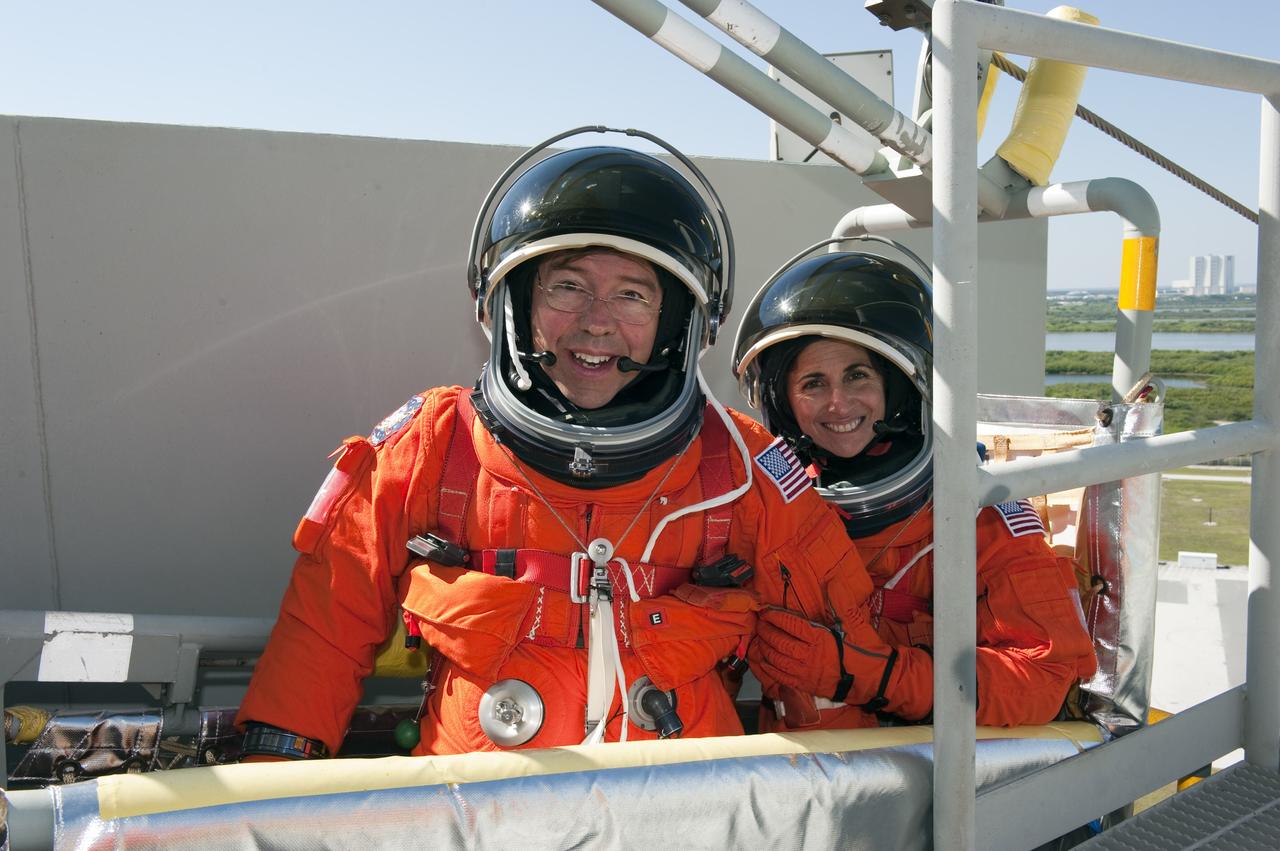
CAPE CANAVERAL, Fla. -- During a simulated pad emergency on Launch Pad 39A at NASA's Kennedy Space Center in Florida, STS-133 Mission Specialists Michael Barratt, front left, and Nicole Stott hop in a slidewire basket that would take them to a safe bunker below the pad in an unlikely emergency situation. The emergency training while aboard space shuttle Discovery is part of a week-long Terminal Countdown Demonstration Test (TCDT). Discovery and its STS-133 crew will deliver the Permanent Multipurpose Module, packed with supplies and critical spare parts, as well as Robonaut 2, the dexterous humanoid astronaut helper, to the International Space Station. Launch is targeted for Nov. 1 at 4:40 p.m. For more information on the STS-133 mission, visit www.nasa.gov/mission_pages/shuttle/shuttlemissions/sts133/. Photo credit: NASA/Kim Shiflett
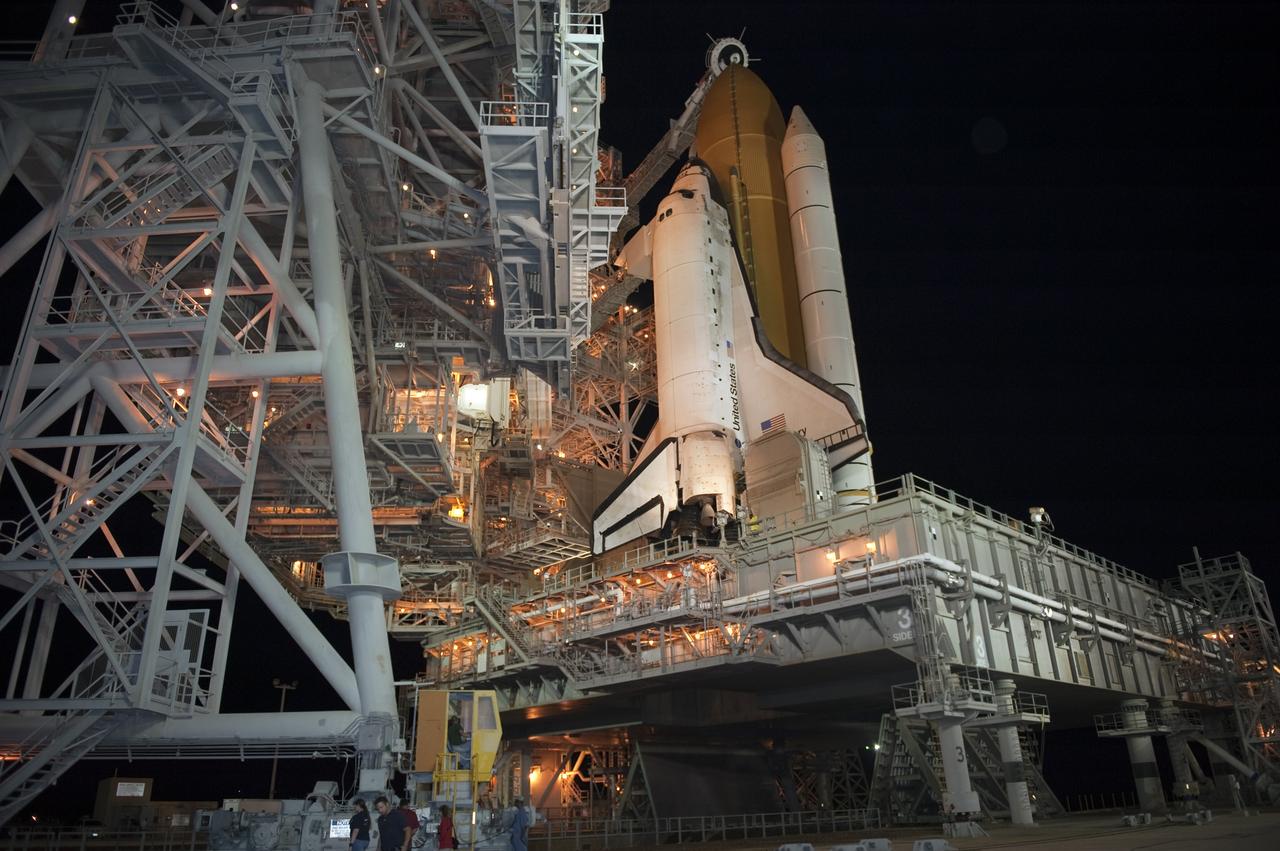
CAPE CANAVERAL, Fla. -- At NASA's Kennedy Space Center in Florida, the rotating service structure on Launch Pad 39A moves away from space shuttle Discovery. The structure provides weather protection and access to the shuttle while it awaits lift off on the pad. RSS "rollback," as it's called, was delayed for a few hours to allow a lightning-producing storm cloud to pass. Launch of Discovery on the STS-133 mission to the International Space Station is set for 3:29 p.m. on Nov. 4. During the 11-day mission, Discovery and its six crew members will deliver the Permanent Multipurpose Module, packed with supplies and critical spare parts, as well as Robonaut 2, to the orbiting laboratory. Discovery, which will fly its 39th mission, is scheduled to be retired following STS-133. This will be the 133rd Space Shuttle Program mission and the 35th shuttle voyage to the space station. For more information on STS-133, visit www.nasa.gov/mission_pages/shuttle/shuttlemissions/sts133/. Photo credit: NASA/Kim Shiflett
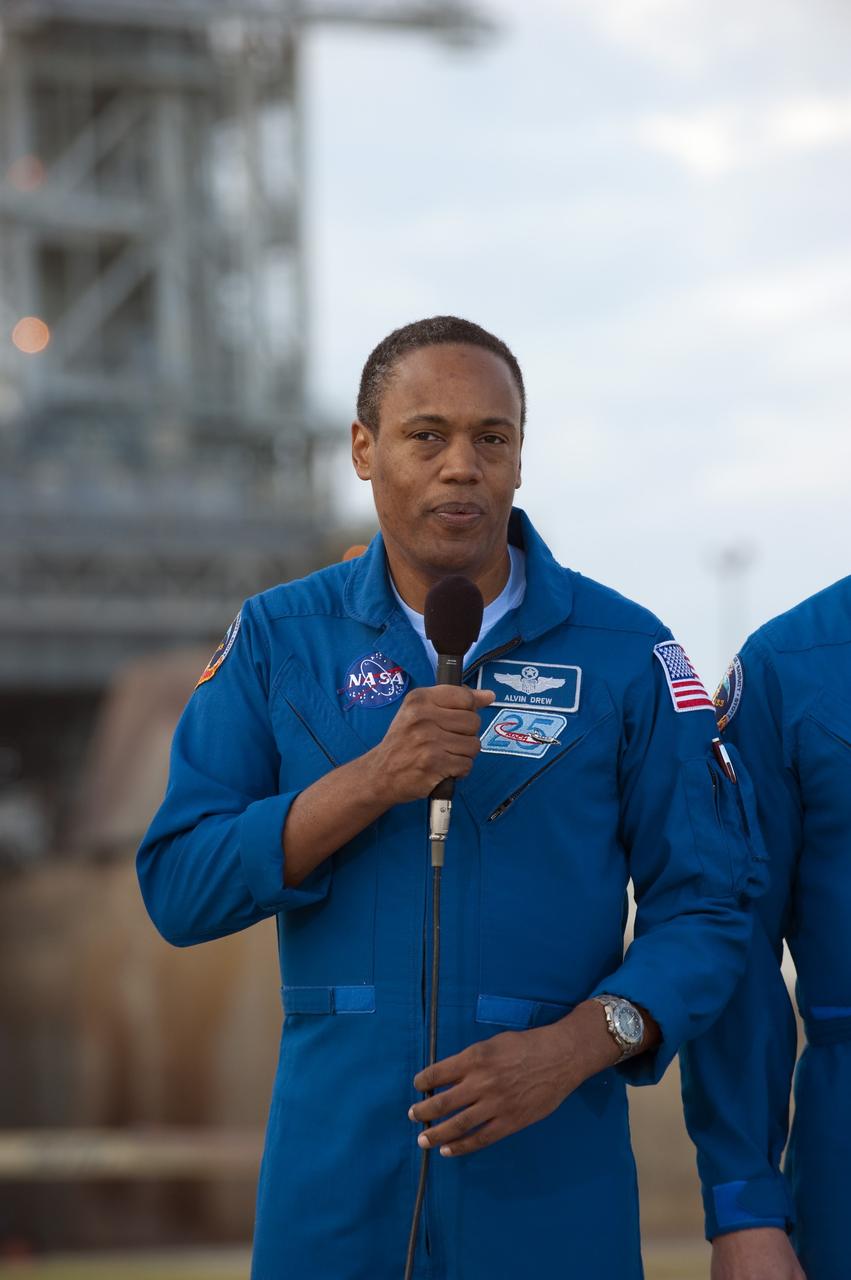
CAPE CANAVERAL, Fla. -- At NASA's Kennedy Space Center in Florida, STS-133 Mission Specialist Alvin Drew talks to media at Launch Pad 39A, where space shuttle Discovery is poised for launch next month. The six-member STS-133 crew is at Kennedy for the Terminal Countdown Demonstration Test (TCDT), which provides each shuttle crew and launch team an opportunity to participate in various simulated activities, including equipment familiarization and emergency training at the launch pad. Discovery and its crew will deliver the Permanent Multipurpose Module, packed with supplies and critical spare parts, as well as Robonaut 2, the dexterous humanoid astronaut helper, to the International Space Station. Launch is targeted for Nov. 1 at 4:40 p.m. For more information on the STS-133 mission, visit www.nasa.gov/mission_pages/shuttle/shuttlemissions/sts133/. Photo credit: NASA/Kim Shiflett
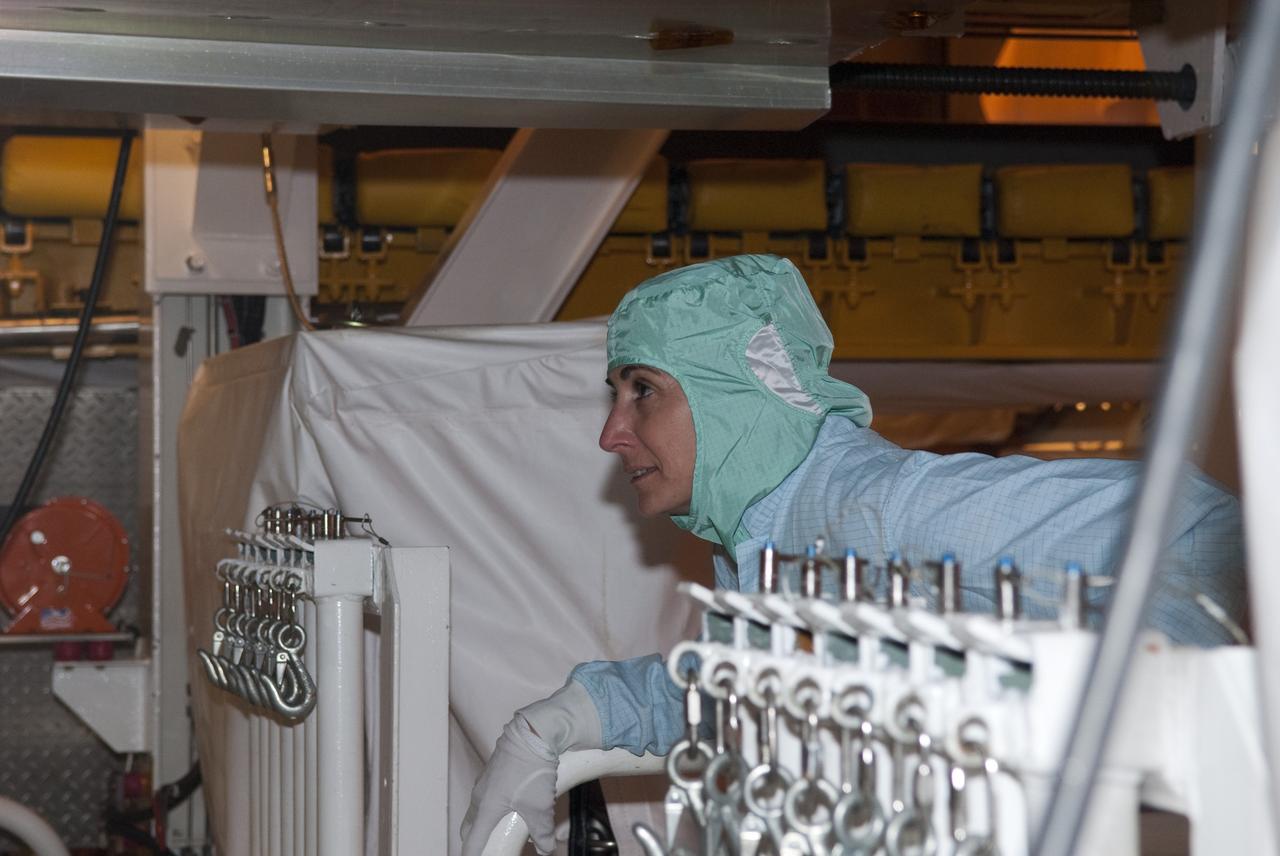
CAPE CANAVERAL, Fla. -- At NASA's Kennedy Space Center in Florida, STS-133 Mission Specialist Nicole Stott checks out her mission's payload while at Launch Pad 39A for the Terminal Countdown Demonstration Test (TCDT). Discovery and its STS-133 crew will deliver the Permanent Multipurpose Module, packed with supplies and critical spare parts, as well as Robonaut 2, the dexterous humanoid astronaut helper, to the International Space Station. Launch is targeted for 4:40 p.m. EDT, Nov. 1. Photo credit: NASA/Jim Grossmann
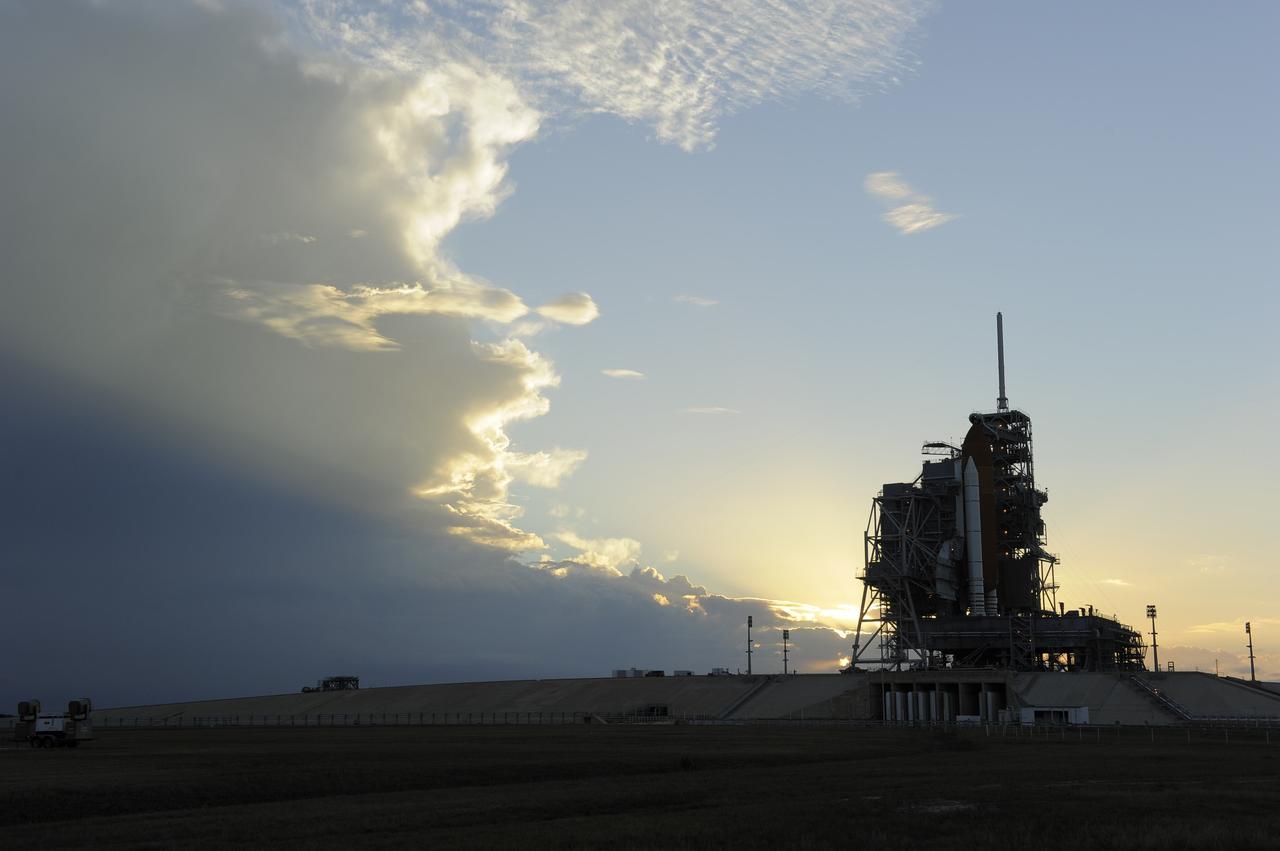
CAPE CANAVERAL, Fla. -- Storm clouds move in over Launch Pad 39A at NASA's Kennedy Space Center in Florida, postponing the retraction of the pad's rotating service structure, which would reveal space shuttle Discovery. The structure provides weather protection and access to the shuttle while it awaits lift off on the pad. RSS "rollback," as it's called, will begin again after the lightning-producing clouds pass. Launch of Discovery on the STS-133 mission to the International Space Station is set for 3:29 p.m. on Nov. 4. During the 11-day mission, Discovery and its six crew members will deliver the Permanent Multipurpose Module, packed with supplies and critical spare parts, as well as Robonaut 2, to the orbiting laboratory. Discovery, which will fly its 39th mission, is scheduled to be retired following STS-133. This will be the 133rd Space Shuttle Program mission and the 35th shuttle voyage to the space station. For more information on STS-133, visit www.nasa.gov/mission_pages/shuttle/shuttlemissions/sts133/. Photo credit: NASA/Kim Shiflett
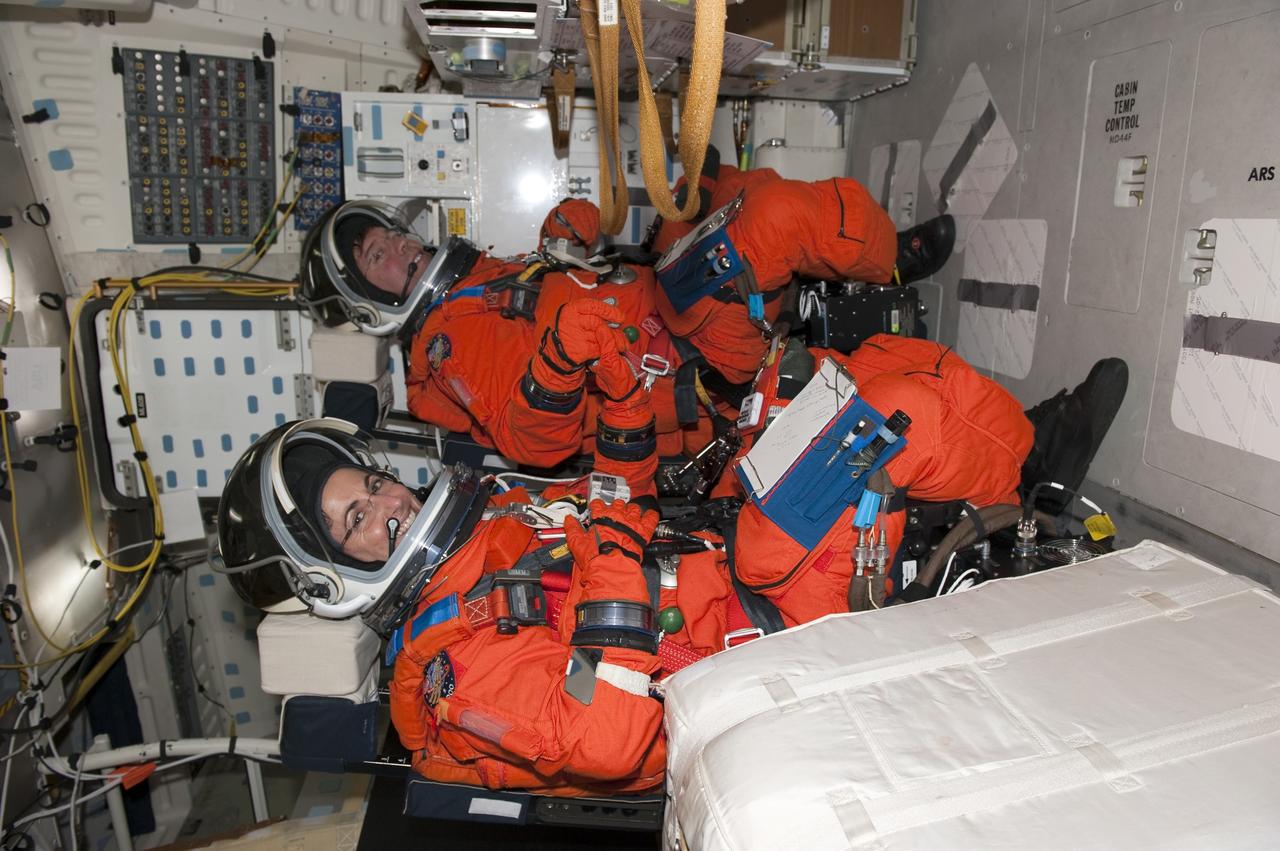
CAPE CANAVERAL, Fla. -- During a simulated launch countdown on Launch Pad 39A at NASA's Kennedy Space Center in Florida, STS-133 Mission Specialists Nicole Stott, left, and Michael Barratt are strapped into their seats on space shuttle Discovery. Next, they will practice escaping the shuttle, in preparation for an unlikely emergency at the pad on launch day. The simulated launch countdown and emergency exit training are part of a week-long Terminal Countdown Demonstration Test (TCDT). Discovery and its STS-133 crew will deliver the Permanent Multipurpose Module, packed with supplies and critical spare parts, as well as Robonaut 2, the dexterous humanoid astronaut helper, to the International Space Station. Launch is targeted for Nov. 1 at 4:40 p.m. For more information on the STS-133 mission, visit www.nasa.gov/mission_pages/shuttle/shuttlemissions/sts133/. Photo credit: NASA/Kim Shiflett
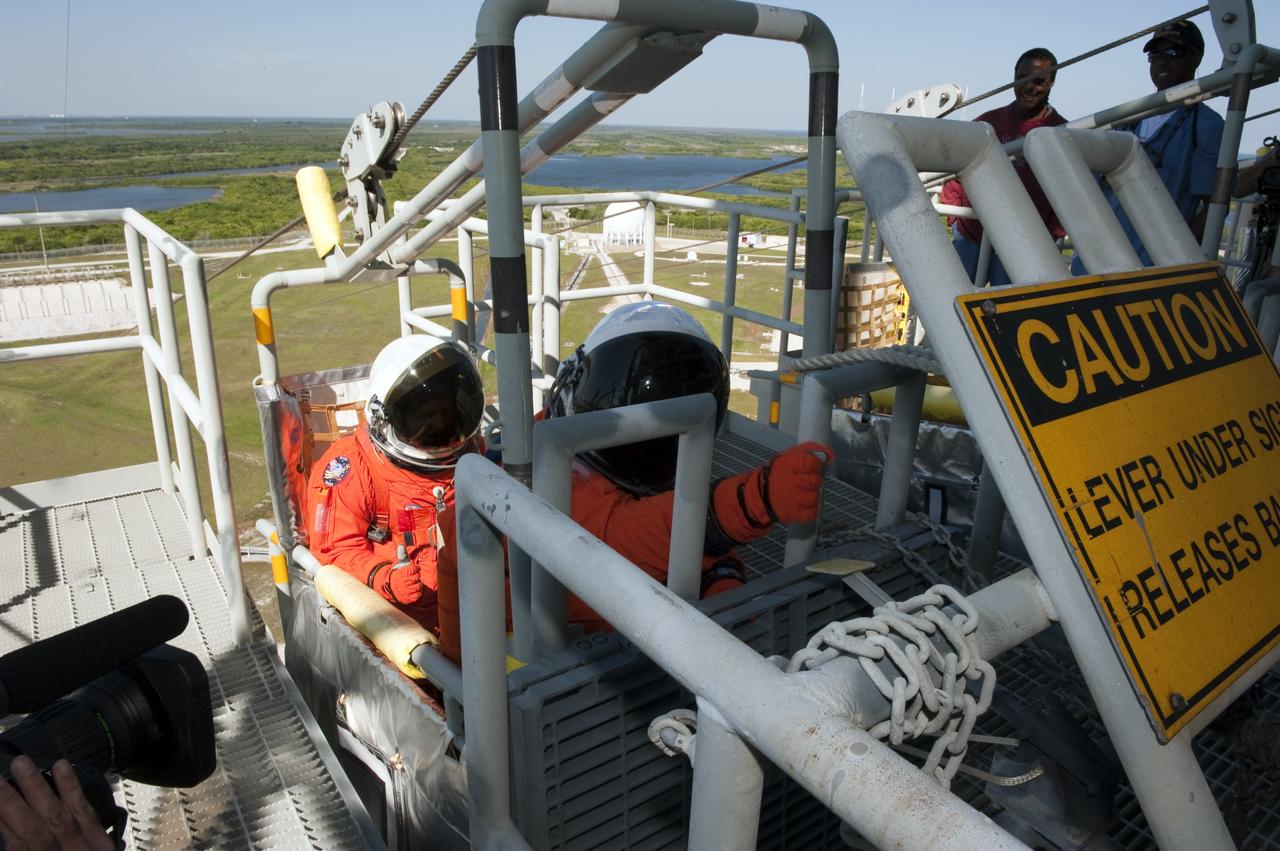
CAPE CANAVERAL, Fla. -- During a simulated pad emergency on Launch Pad 39A at NASA's Kennedy Space Center in Florida, STS-133 Mission Specialists Tim Kopra, left, and Alvin Drew hop in a slidewire basket that would take them to a safe bunker below the pad in an unlikely emergency situation. The emergency training while aboard space shuttle Discovery is part of a week-long Terminal Countdown Demonstration Test (TCDT). Discovery and its STS-133 crew will deliver the Permanent Multipurpose Module, packed with supplies and critical spare parts, as well as Robonaut 2, the dexterous humanoid astronaut helper, to the International Space Station. Launch is targeted for Nov. 1 at 4:40 p.m. For more information on the STS-133 mission, visit www.nasa.gov/mission_pages/shuttle/shuttlemissions/sts133/. Photo credit: NASA/Kim Shiflett
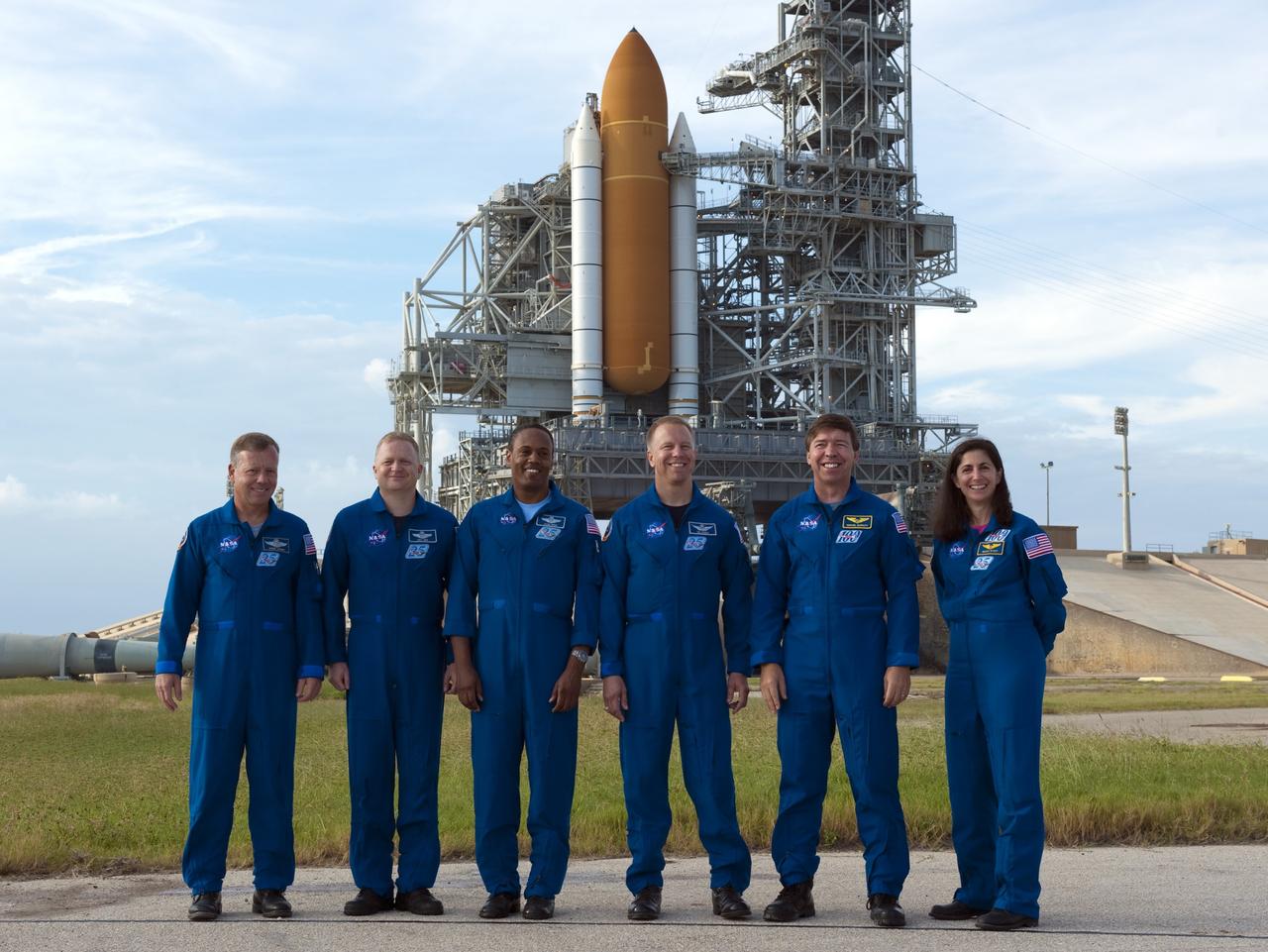
CAPE CANAVERAL, Fla. -- At NASA's Kennedy Space Center in Florida, the six-member crew of STS-133 pose for a group photo at Launch Pad 39A, where space shuttle Discovery is poised for launch next month. From left, are Commander Steve Lindsey, Pilot Eric Boe, and Mission Specialists Alvin Drew, Tim Kopra, Michael Barratt, and Nicole Stott. The crew is at Kennedy for the Terminal Countdown Demonstration Test (TCDT), which provides each shuttle crew and launch team an opportunity to participate in various simulated activities, including equipment familiarization and emergency training at the launch pad. Discovery and its crew will deliver the Permanent Multipurpose Module, packed with supplies and critical spare parts, as well as Robonaut 2, the dexterous humanoid astronaut helper, to the International Space Station. Launch is targeted for Nov. 1 at 4:40 p.m. For more information on the STS-133 mission, visit www.nasa.gov/mission_pages/shuttle/shuttlemissions/sts133/. Photo credit: NASA/Kim Shiflett
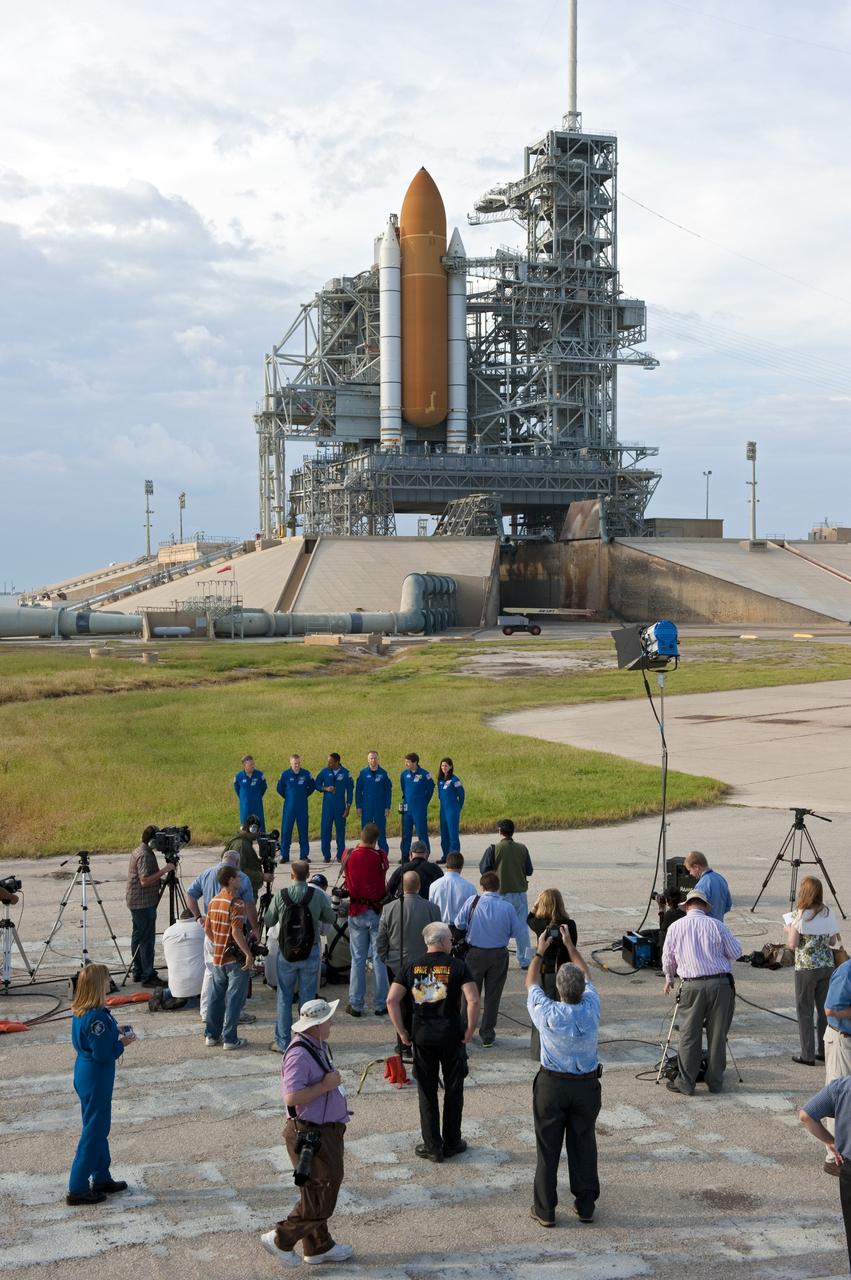
CAPE CANAVERAL, Fla. -- At NASA's Kennedy Space Center in Florida, media ask STS-133 Mission Specialist Alvin Drew questions at Launch Pad 39A, where space shuttle Discovery is poised for launch next month. The six STS-133 crew members, from left, are Commander Steve Lindsey, Pilot Eric Boe, and Mission Specialists Drew, Tim Kopra, Michael Barratt, and Nicole Stott. The crew is at Kennedy for the Terminal Countdown Demonstration Test (TCDT), which provides each shuttle crew and launch team an opportunity to participate in various simulated activities, including equipment familiarization and emergency training at the launch pad. Discovery and its crew will deliver the Permanent Multipurpose Module, packed with supplies and critical spare parts, as well as Robonaut 2, the dexterous humanoid astronaut helper, to the International Space Station. Launch is targeted for Nov. 1 at 4:40 p.m. For more information on the STS-133 mission, visit www.nasa.gov/mission_pages/shuttle/shuttlemissions/sts133/. Photo credit: NASA/Kim Shiflett
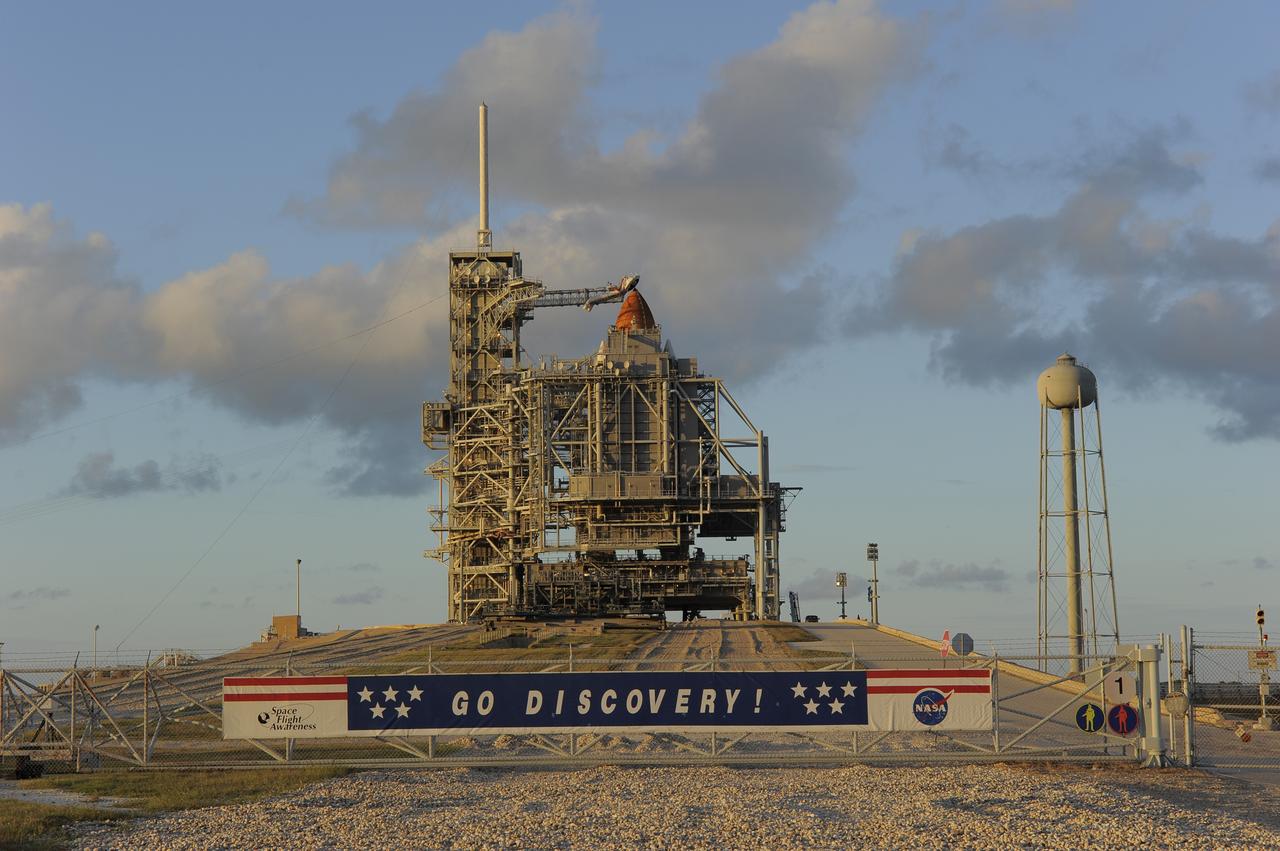
CAPE CANAVERAL, Fla. -- Before the sun sets on Launch Pad 39A at NASA's Kennedy Space Center in Florida, space shuttle Discovery is concealed by the pad's rotating service structure. The structure provides weather protection and access to the shuttle. RSS "rollback," as it's called, is a significant milestone in the launch countdown. Launch of Discovery on the STS-133 mission to the International Space Station is set for 3:29 p.m. on Nov. 4. During the 11-day mission, Discovery and its six crew members will deliver the Permanent Multipurpose Module, packed with supplies and critical spare parts, as well as Robonaut 2, to the orbiting laboratory. Discovery, which will fly its 39th mission, is scheduled to be retired following STS-133. This will be the 133rd Space Shuttle Program mission and the 35th shuttle voyage to the space station. For more information on STS-133, visit www.nasa.gov/mission_pages/shuttle/shuttlemissions/sts133/. Photo credit: NASA/Kim Shiflett
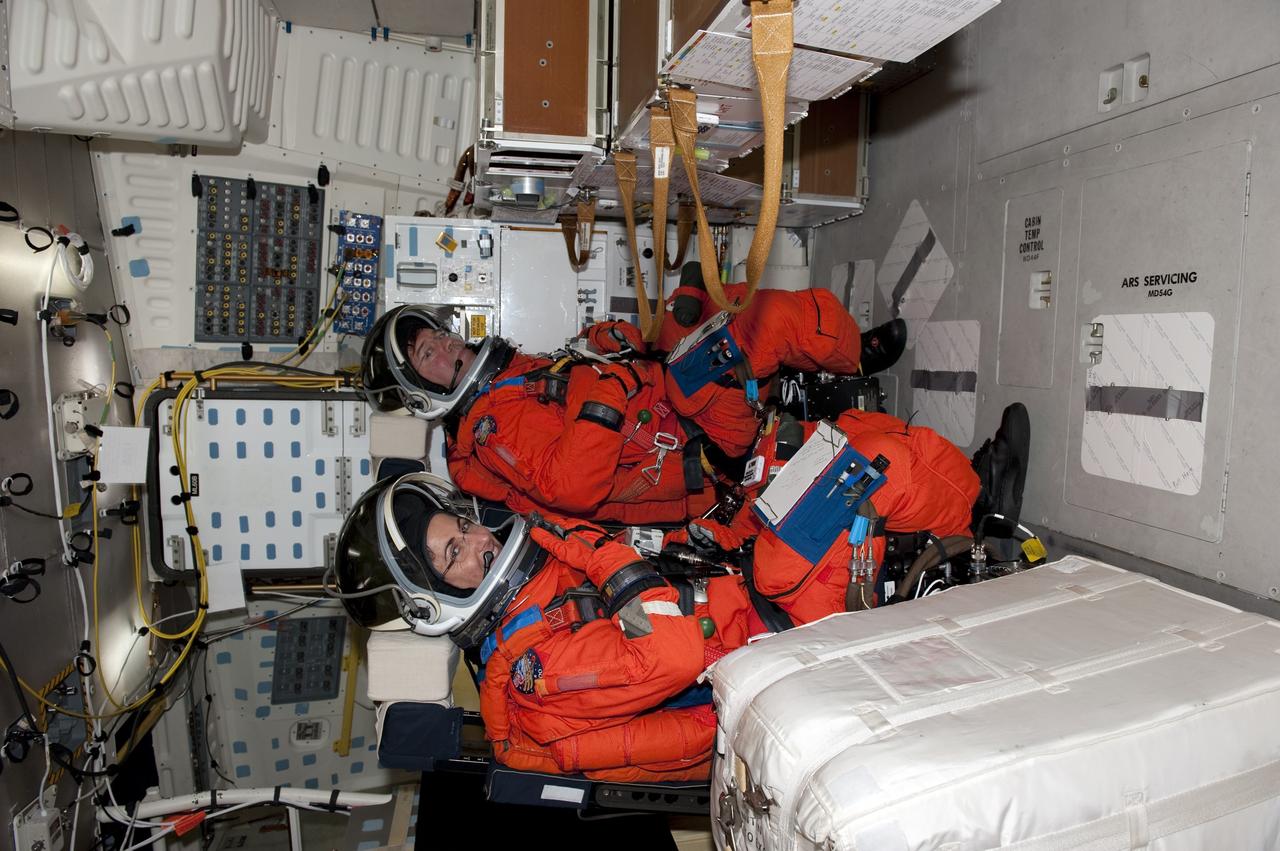
CAPE CANAVERAL, Fla. -- During a simulated launch countdown on Launch Pad 39A at NASA's Kennedy Space Center in Florida, STS-133 Mission Specialists Nicole Stott, left, and Michael Barratt are strapped into their seats on space shuttle Discovery. Next, they will practice escaping the shuttle, in preparation for an unlikely emergency at the pad on launch day. The simulated launch countdown and emergency exit training are part of a week-long Terminal Countdown Demonstration Test (TCDT). Discovery and its STS-133 crew will deliver the Permanent Multipurpose Module, packed with supplies and critical spare parts, as well as Robonaut 2, the dexterous humanoid astronaut helper, to the International Space Station. Launch is targeted for Nov. 1 at 4:40 p.m. For more information on the STS-133 mission, visit www.nasa.gov/mission_pages/shuttle/shuttlemissions/sts133/. Photo credit: NASA/Kim Shiflett
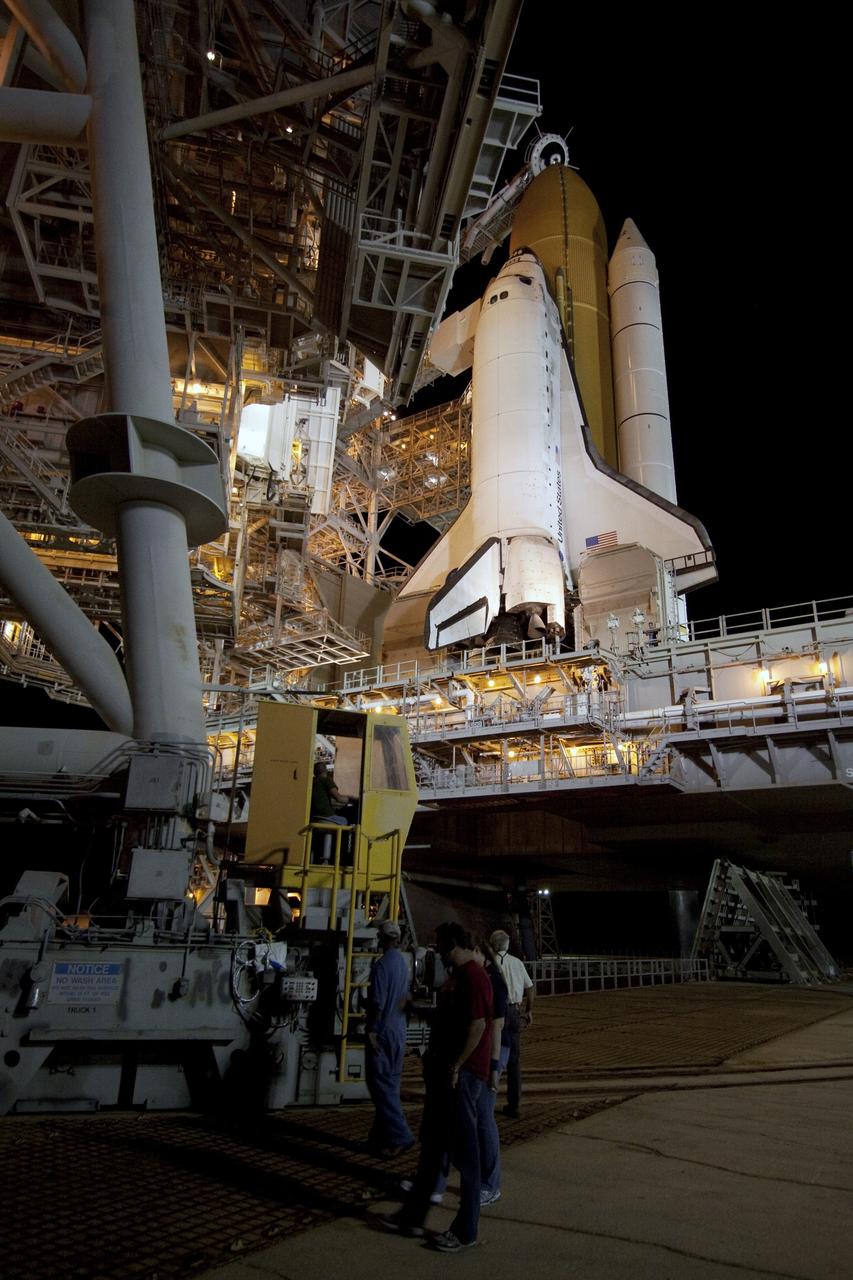
CAPE CANAVERAL, Fla. -- At NASA's Kennedy Space Center in Florida, the rotating service structure on Launch Pad 39A moves away from space shuttle Discovery. The structure provides weather protection and access to the shuttle while it awaits lift off on the pad. RSS "rollback," as it's called, was delayed for a few hours to allow a lightning-producing storm cloud to pass. Launch of Discovery on the STS-133 mission to the International Space Station is set for 3:29 p.m. on Nov. 4. During the 11-day mission, Discovery and its six crew members will deliver the Permanent Multipurpose Module, packed with supplies and critical spare parts, as well as Robonaut 2, to the orbiting laboratory. Discovery, which will fly its 39th mission, is scheduled to be retired following STS-133. This will be the 133rd Space Shuttle Program mission and the 35th shuttle voyage to the space station. For more information on STS-133, visit www.nasa.gov/mission_pages/shuttle/shuttlemissions/sts133/. Photo credit: NASA/Jack Pfaller

CAPE CANAVERAL, Fla. -- During a simulated pad emergency on Launch Pad 39A at NASA's Kennedy Space Center in Florida, STS-133 Mission Specialists Alvin Drew, front left, and Tim Kopra hop in a slidewire basket that would take them to a safe bunker below the pad in an unlikely emergency situation. The emergency training while aboard space shuttle Discovery is part of a week-long Terminal Countdown Demonstration Test (TCDT). Discovery and its STS-133 crew will deliver the Permanent Multipurpose Module, packed with supplies and critical spare parts, as well as Robonaut 2, the dexterous humanoid astronaut helper, to the International Space Station. Launch is targeted for Nov. 1 at 4:40 p.m. For more information on the STS-133 mission, visit www.nasa.gov/mission_pages/shuttle/shuttlemissions/sts133/. Photo credit: NASA/Kim Shiflett
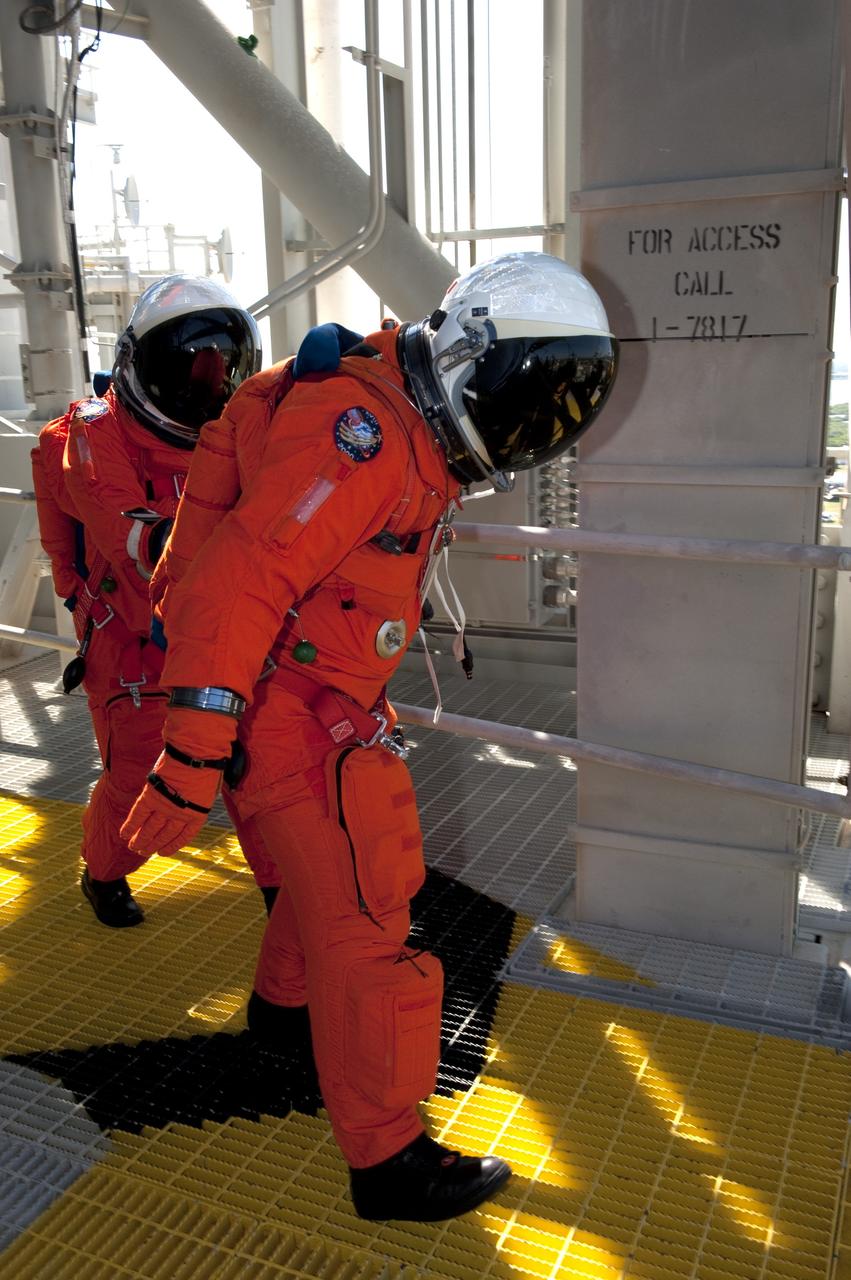
CAPE CANAVERAL, Fla. -- During a simulated pad emergency on Launch Pad 39A at NASA's Kennedy Space Center in Florida, STS-133 Mission Specialists Michael Barratt, left, and Nicole Stott make their way toward a slidewire basket that would take them to a safe bunker below the pad in an unlikely emergency situation. The emergency training while aboard space shuttle Discovery is part of a week-long Terminal Countdown Demonstration Test (TCDT). Discovery and its STS-133 crew will deliver the Permanent Multipurpose Module, packed with supplies and critical spare parts, as well as Robonaut 2, the dexterous humanoid astronaut helper, to the International Space Station. Launch is targeted for Nov. 1 at 4:40 p.m. For more information on the STS-133 mission, visit www.nasa.gov/mission_pages/shuttle/shuttlemissions/sts133/. Photo credit: NASA/Kim Shiflett
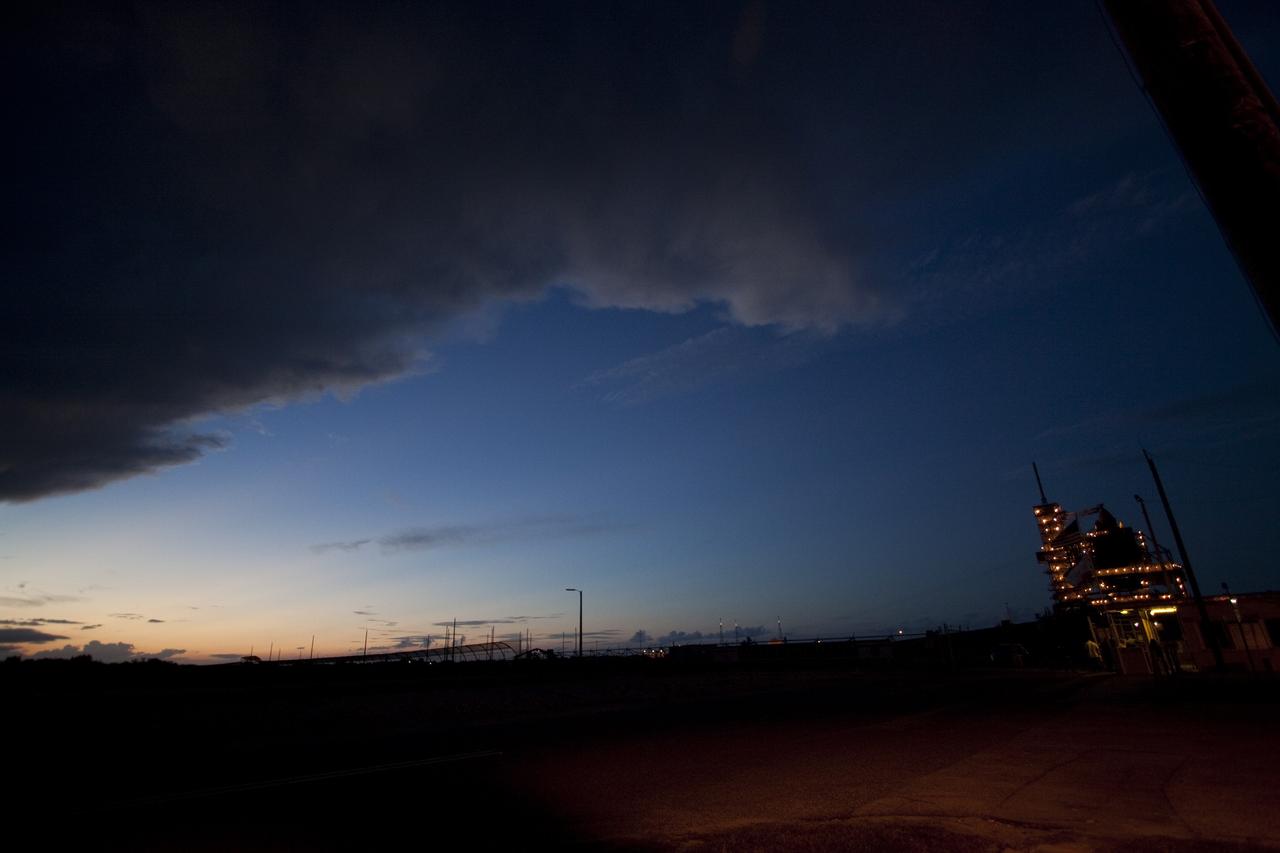
CAPE CANAVERAL, Fla. -- Storm clouds move over Launch Pad 39A at NASA's Kennedy Space Center in Florida, postponing the movement of the pad's rotating service structure away from space shuttle Discovery. The structure provides weather protection and access to the shuttle while it awaits lift off on the pad. RSS "rollback," as it's called, will begin again after the lightning-producing clouds pass. Launch of Discovery on the STS-133 mission to the International Space Station is set for 3:29 p.m. on Nov. 4. During the 11-day mission, Discovery and its six crew members will deliver the Permanent Multipurpose Module, packed with supplies and critical spare parts, as well as Robonaut 2, to the orbiting laboratory. Discovery, which will fly its 39th mission, is scheduled to be retired following STS-133. This will be the 133rd Space Shuttle Program mission and the 35th shuttle voyage to the space station. For more information on STS-133, visit www.nasa.gov/mission_pages/shuttle/shuttlemissions/sts133/. Photo credit: NASA/Jack Pfaller
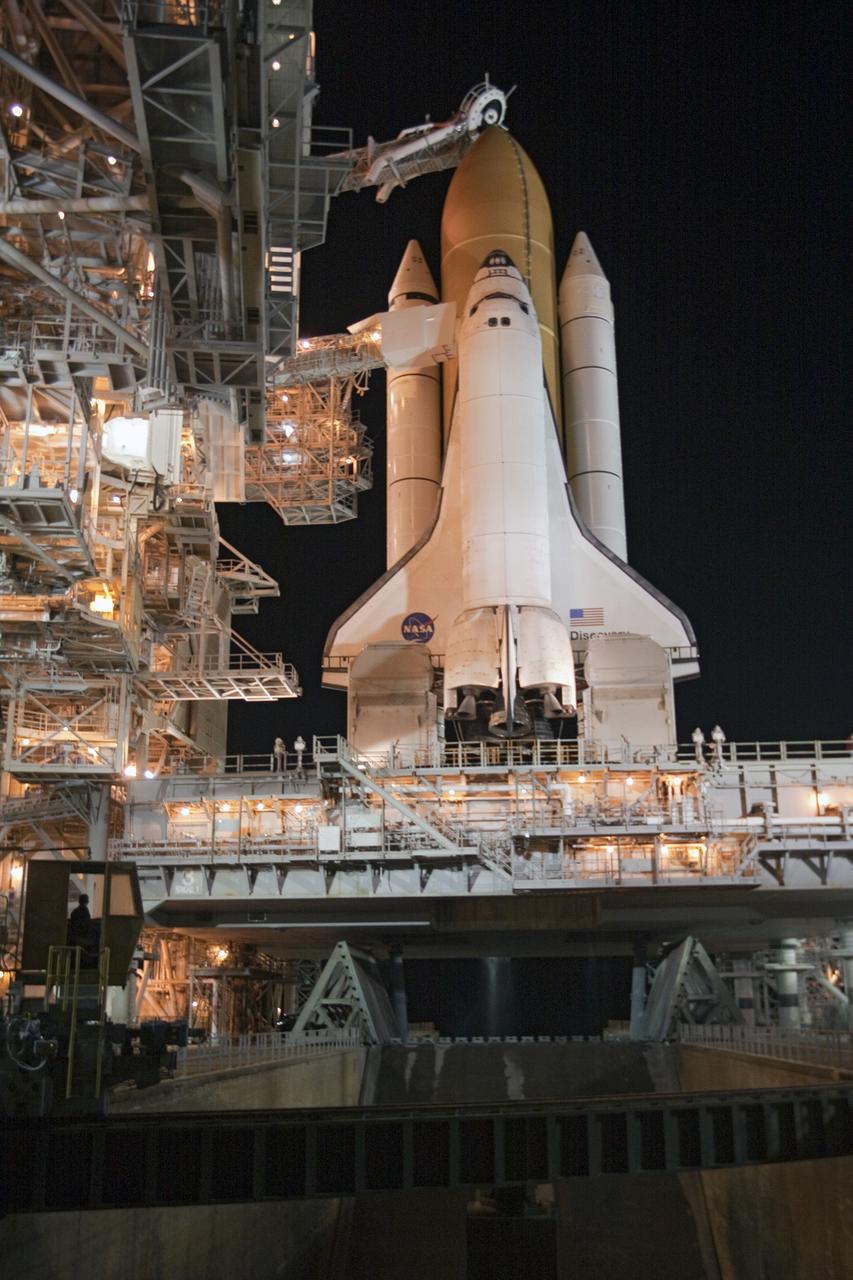
CAPE CANAVERAL, Fla. -- At NASA's Kennedy Space Center in Florida, the rotating service structure on Launch Pad 39A moves away from space shuttle Discovery. The structure provides weather protection and access to the shuttle while it awaits lift off on the pad. RSS "rollback," as it's called, was delayed for a few hours to allow a lightning-producing storm cloud to pass. Launch of Discovery on the STS-133 mission to the International Space Station is set for 3:29 p.m. on Nov. 4. During the 11-day mission, Discovery and its six crew members will deliver the Permanent Multipurpose Module, packed with supplies and critical spare parts, as well as Robonaut 2, to the orbiting laboratory. Discovery, which will fly its 39th mission, is scheduled to be retired following STS-133. This will be the 133rd Space Shuttle Program mission and the 35th shuttle voyage to the space station. For more information on STS-133, visit www.nasa.gov/mission_pages/shuttle/shuttlemissions/sts133/. Photo credit: NASA/Jack Pfaller
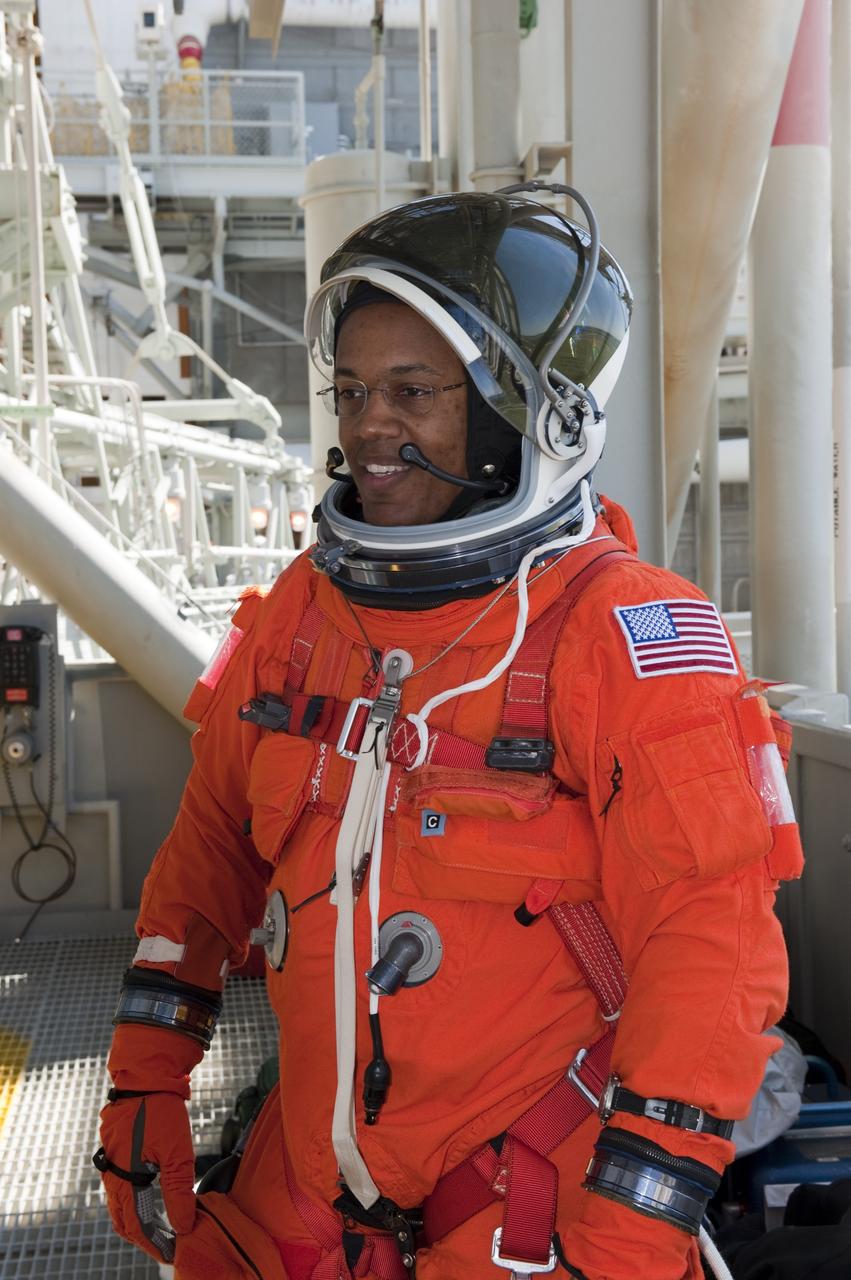
CAPE CANAVERAL, Fla. -- Following a simulated pad emergency, STS-133 Mission Specialist Alvin Drew stands on the 195-foot level on Launch Pad 39A at NASA's Kennedy Space Center in Florida. The emergency exit training from space shuttle Discovery is part of a week-long Terminal Countdown Demonstration Test (TCDT). Discovery and its STS-133 crew will deliver the Permanent Multipurpose Module, packed with supplies and critical spare parts, as well as Robonaut 2, the dexterous humanoid astronaut helper, to the International Space Station. Launch is targeted for Nov. 1 at 4:40 p.m. For more information on the STS-133 mission, visit www.nasa.gov/mission_pages/shuttle/shuttlemissions/sts133/. Photo credit: NASA/Kim Shiflett
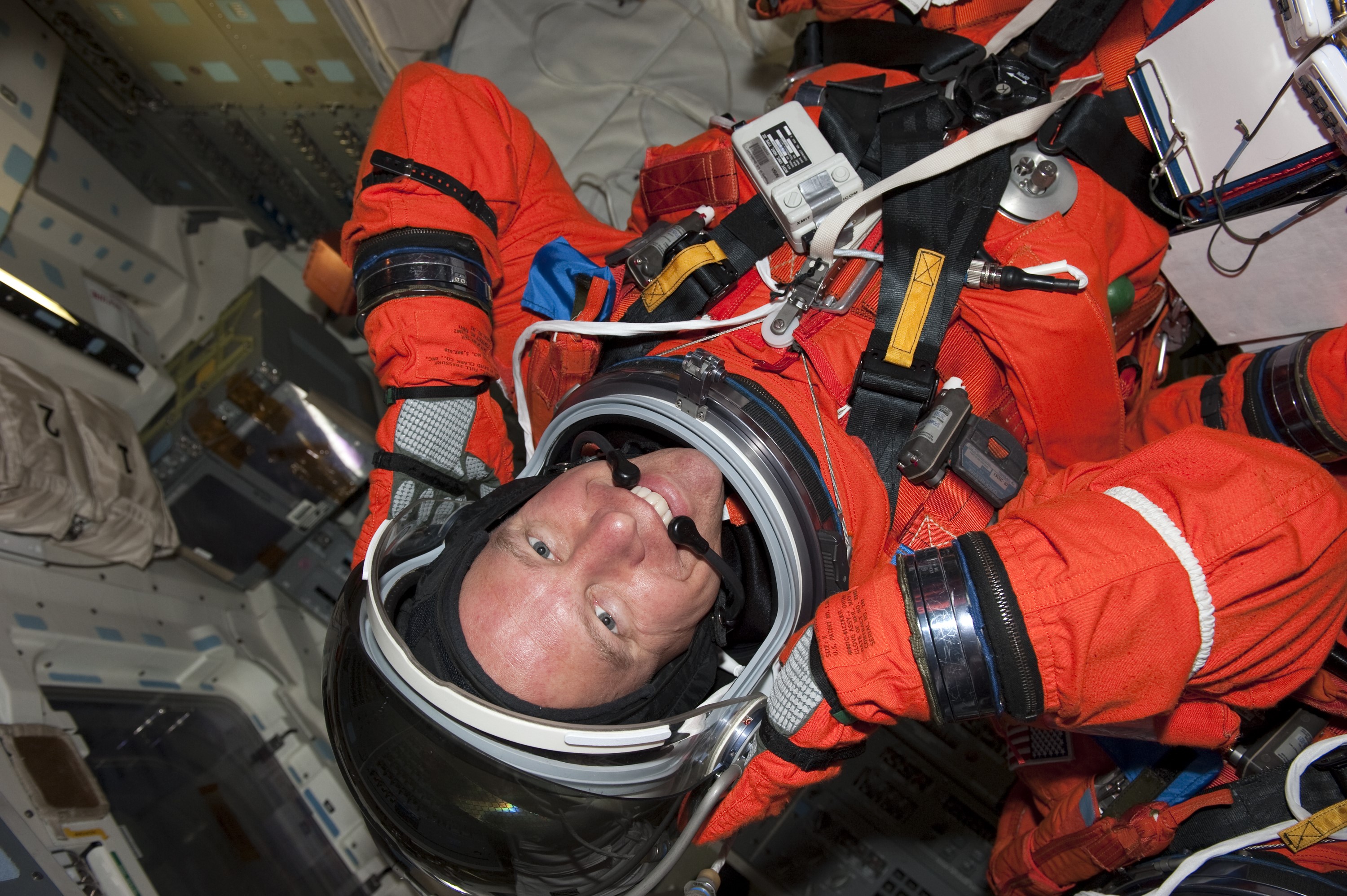
CAPE CANAVERAL, Fla. -- During a simulated launch countdown on Launch Pad 39A at NASA's Kennedy Space Center in Florida, STS-133 Mission Specialist Tim Kopra is strapped into his seat on space shuttle Discovery. Next, the crew members will practice escaping the shuttle, in preparation for an unlikely emergency at the pad on launch day. The simulated launch countdown and emergency exit training are part of a week-long Terminal Countdown Demonstration Test (TCDT). Discovery and its STS-133 crew will deliver the Permanent Multipurpose Module, packed with supplies and critical spare parts, as well as Robonaut 2, the dexterous humanoid astronaut helper, to the International Space Station. Launch is targeted for Nov. 1 at 4:40 p.m. For more information on the STS-133 mission, visit www.nasa.gov/mission_pages/shuttle/shuttlemissions/sts133/. Photo credit: NASA/Kim Shiflett
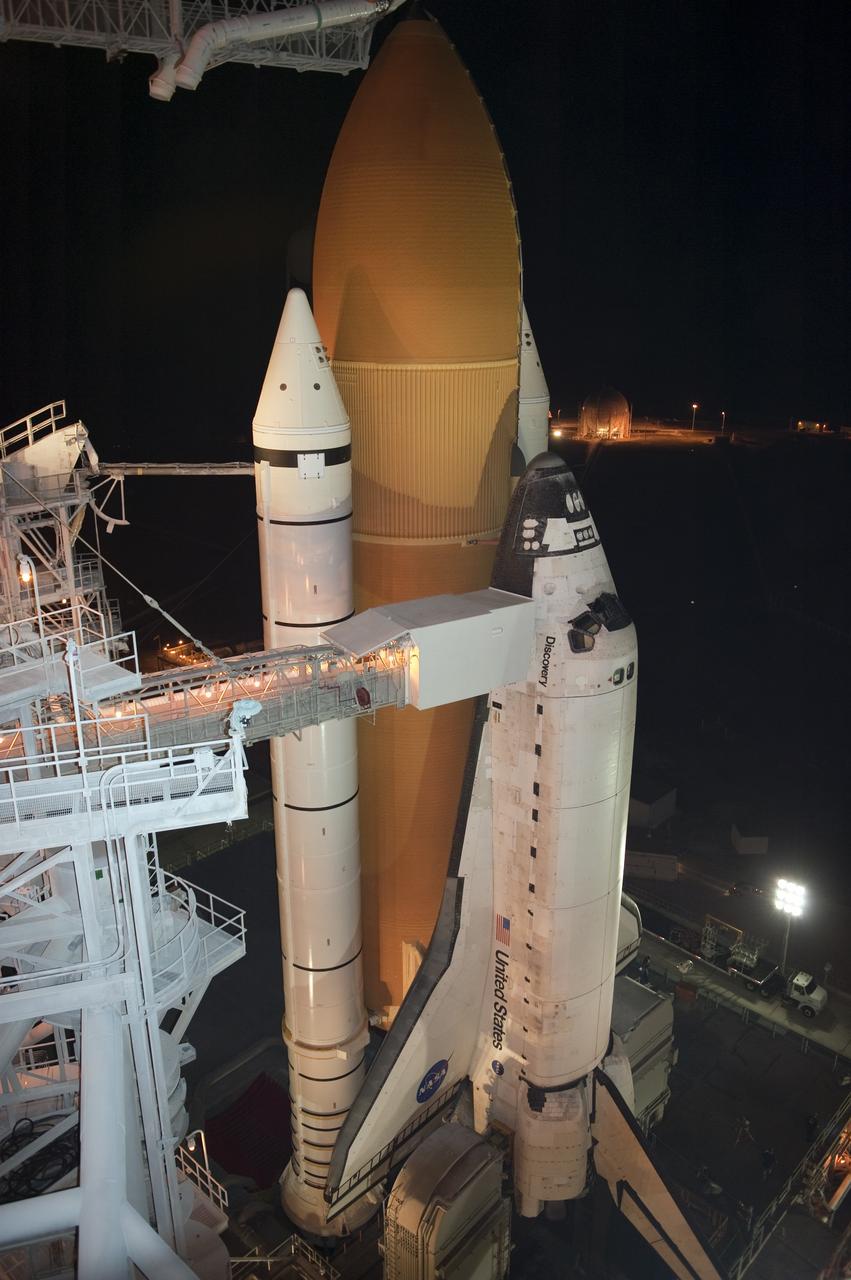
CAPE CANAVERAL, Fla. -- At NASA's Kennedy Space Center in Florida, space shuttle Discovery is visible on Launch Pad 39A following the retraction of the rotating service structure. The structure provides weather protection and access to the shuttle while it awaits lift off on the pad. RSS "rollback," as it's called, was delayed for a few hours to allow a lightning-producing storm cloud to pass. Launch of Discovery on the STS-133 mission to the International Space Station is set for 3:29 p.m. on Nov. 4. During the 11-day mission, Discovery and its six crew members will deliver the Permanent Multipurpose Module, packed with supplies and critical spare parts, as well as Robonaut 2, to the orbiting laboratory. Discovery, which will fly its 39th mission, is scheduled to be retired following STS-133. This will be the 133rd Space Shuttle Program mission and the 35th shuttle voyage to the space station. For more information on STS-133, visit www.nasa.gov/mission_pages/shuttle/shuttlemissions/sts133/. Photo credit: NASA/Kim Shiflett
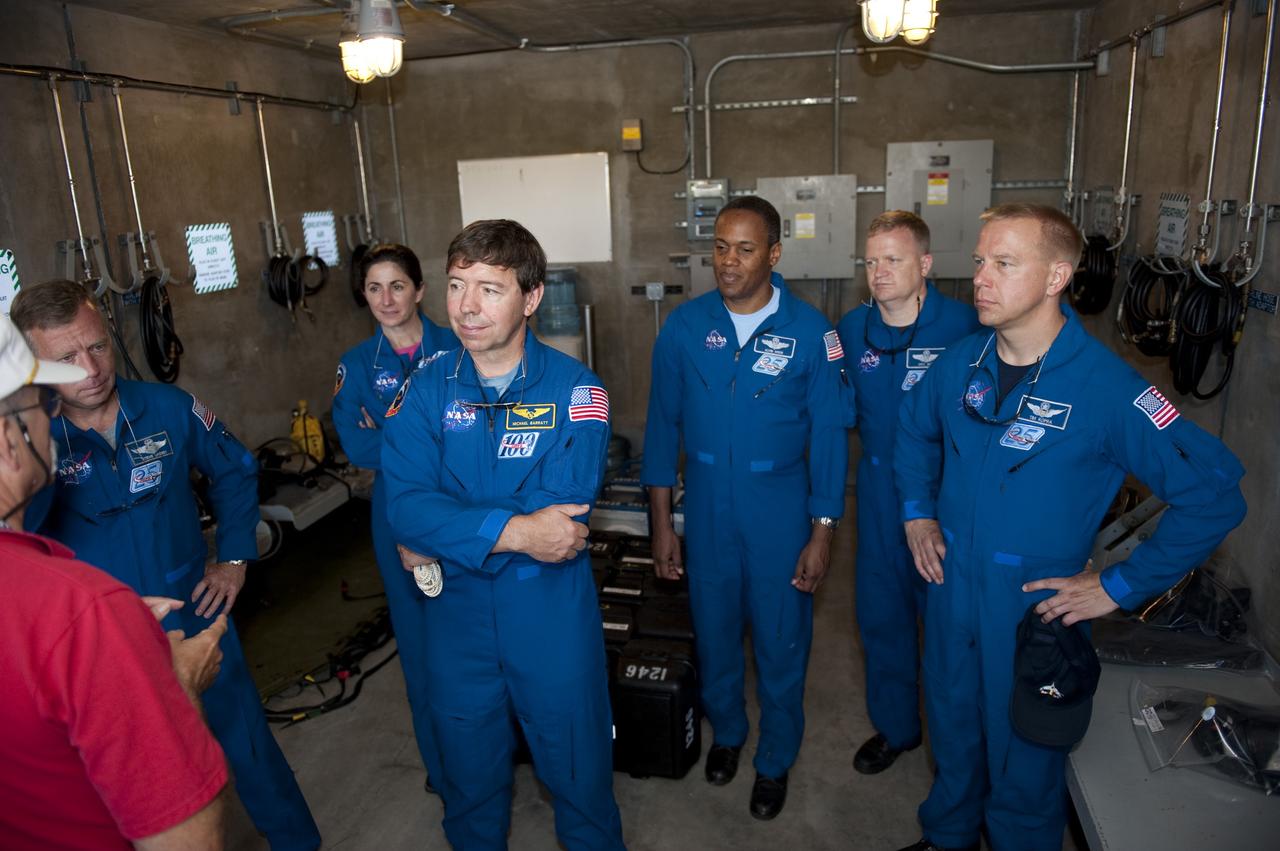
CAPE CANAVERAL, Fla. -- At Launch Pad 39A at NASA's Kennedy Space Center in Florida, members of the STS-133 crew receive instruction in the pad's bunker as part of the Terminal Countdown Demonstration Test (TCDT) emergency exit training. From left are Commander Steve Lindsey, Mission Specialists Nicole Stott, Michael Barratt and Alvin Drew, Pilot Eric Boe, and Mission Specialist Tim Kopra. TCDT provides each shuttle crew and launch team an opportunity to participate in various simulated activities, including equipment familiarization and a launch countdown. Space shuttle Discovery and its STS-133 crew will deliver the Permanent Multipurpose Module, packed with supplies and critical spare parts, as well as Robonaut 2, the dexterous humanoid astronaut helper, to the International Space Station. Launch is targeted for Nov. 1 at 4:40 p.m. For more information on the STS-133 mission, visit www.nasa.gov/mission_pages/shuttle/shuttlemissions/sts133/. Photo credit: NASA/Kim Shiflett
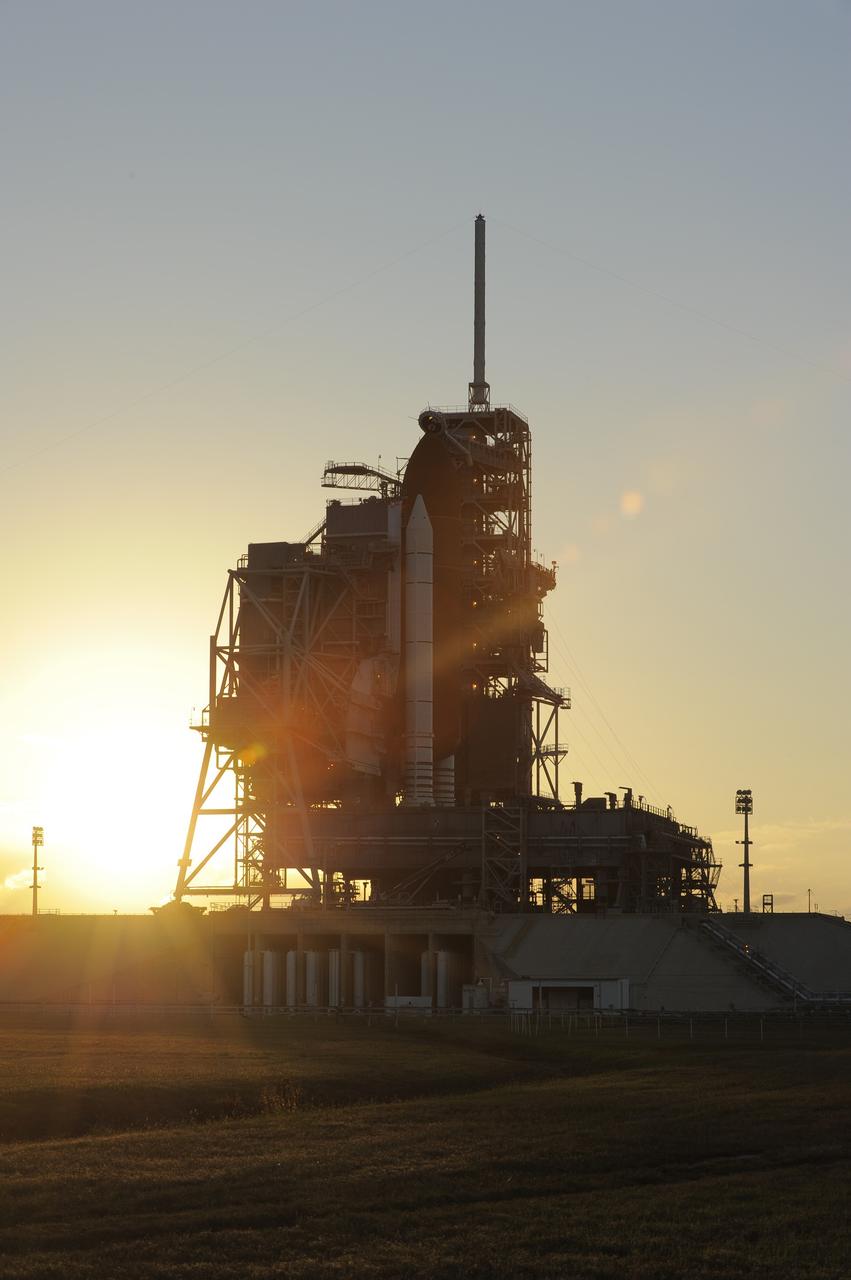
CAPE CANAVERAL, Fla. -- On Launch Pad 39A, preparations are under way to move the pad's rotating service structure away from space shuttle Discovery as the sun sets over NASA's Kennedy Space Center in Florida. The structure provides weather protection and access to the shuttle while it awaits lift off on the pad. RSS "rollback," as it's called, is a significant milestone in the launch countdown. Launch of Discovery on the STS-133 mission to the International Space Station is set for 3:29 p.m. on Nov. 4. During the 11-day mission, Discovery and its six crew members will deliver the Permanent Multipurpose Module, packed with supplies and critical spare parts, as well as Robonaut 2, to the orbiting laboratory. Discovery, which will fly its 39th mission, is scheduled to be retired following STS-133. This will be the 133rd Space Shuttle Program mission and the 35th shuttle voyage to the space station. For more information on STS-133, visit www.nasa.gov/mission_pages/shuttle/shuttlemissions/sts133/. Photo credit: NASA/Kim Shiflett
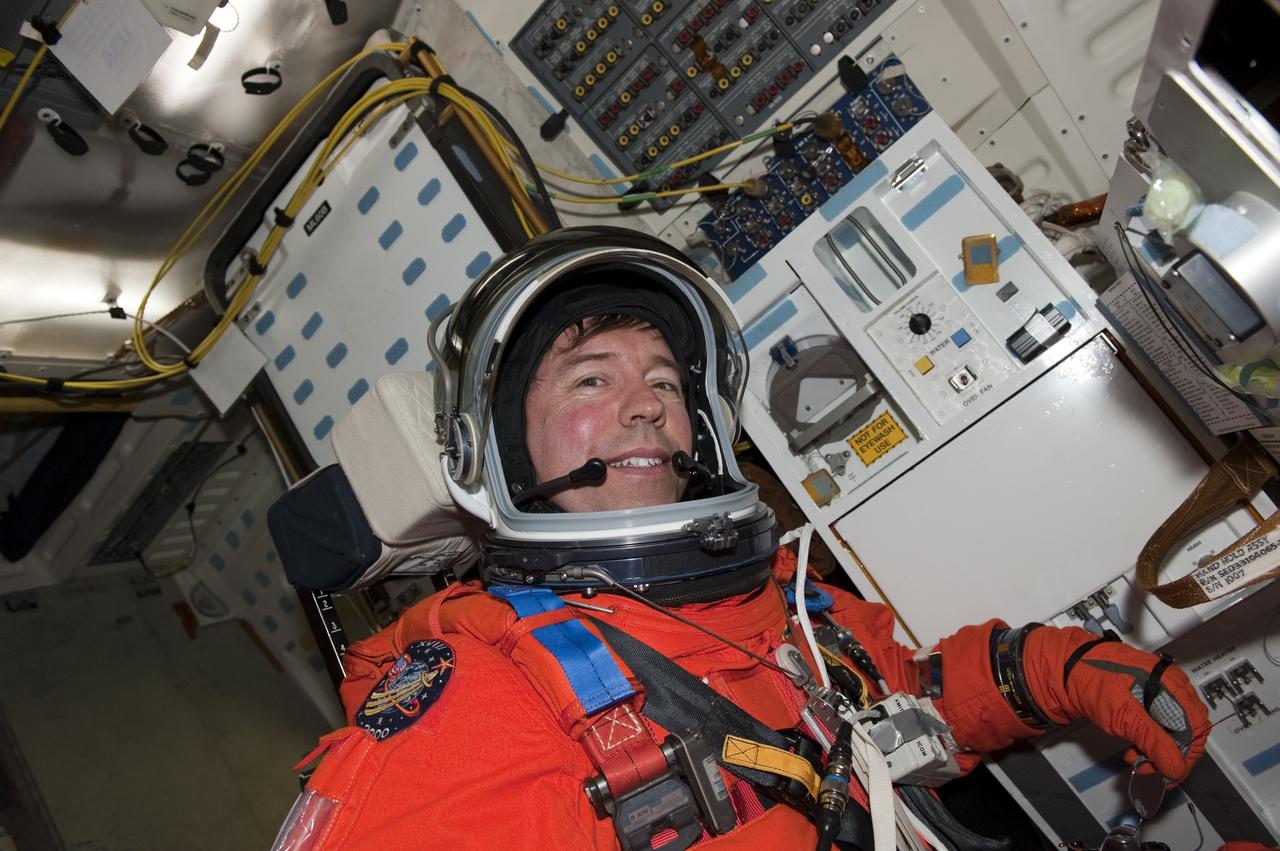
CAPE CANAVERAL, Fla. -- During a simulated launch countdown on Launch Pad 39A at NASA's Kennedy Space Center in Florida, STS-133 Mission Specialist Michael Barratt is strapped into his seat on space shuttle Discovery. Next, the crew members will practice escaping the shuttle, in preparation for an unlikely emergency at the pad on launch day. The simulated launch countdown and emergency exit training are part of a week-long Terminal Countdown Demonstration Test (TCDT). Discovery and its STS-133 crew will deliver the Permanent Multipurpose Module, packed with supplies and critical spare parts, as well as Robonaut 2, the dexterous humanoid astronaut helper, to the International Space Station. Launch is targeted for Nov. 1 at 4:40 p.m. For more information on the STS-133 mission, visit www.nasa.gov/mission_pages/shuttle/shuttlemissions/sts133/. Photo credit: NASA/Kim Shiflett
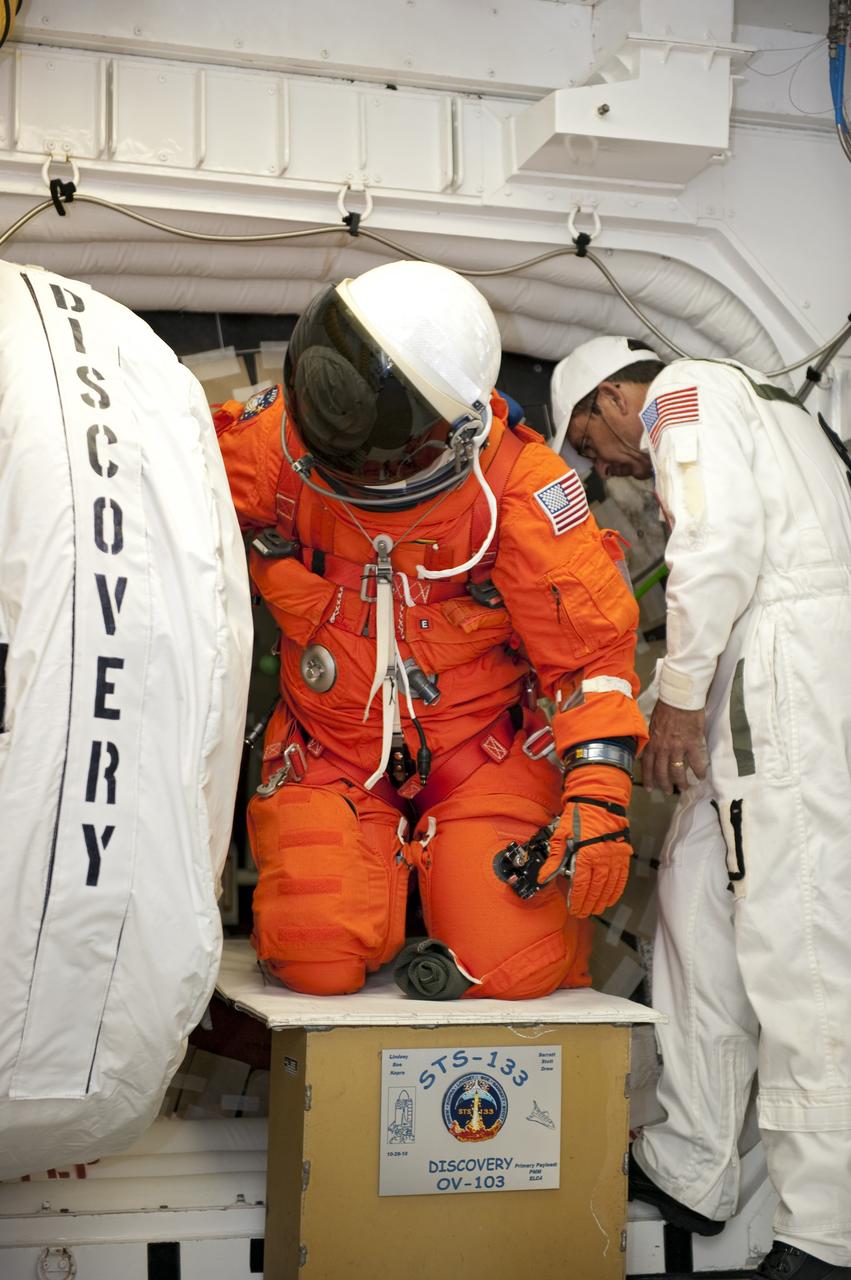
CAPE CANAVERAL, Fla. -- During a simulated pad emergency on Launch Pad 39A at NASA's Kennedy Space Center in Florida, STS-133 Mission Specialist Michael Barratt exits space shuttle Discovery through the pad's White Room. Next, the crew members will hop into the slidewire basket that will take them to a safe bunker below the pad. The emergency training is part of a week-long Terminal Countdown Demonstration Test (TCDT). Discovery and its STS-133 crew will deliver the Permanent Multipurpose Module, packed with supplies and critical spare parts, as well as Robonaut 2, the dexterous humanoid astronaut helper, to the International Space Station. Launch is targeted for Nov. 1 at 4:40 p.m. For more information on the STS-133 mission, visit www.nasa.gov/mission_pages/shuttle/shuttlemissions/sts133/. Photo credit: NASA/Kim Shiflett
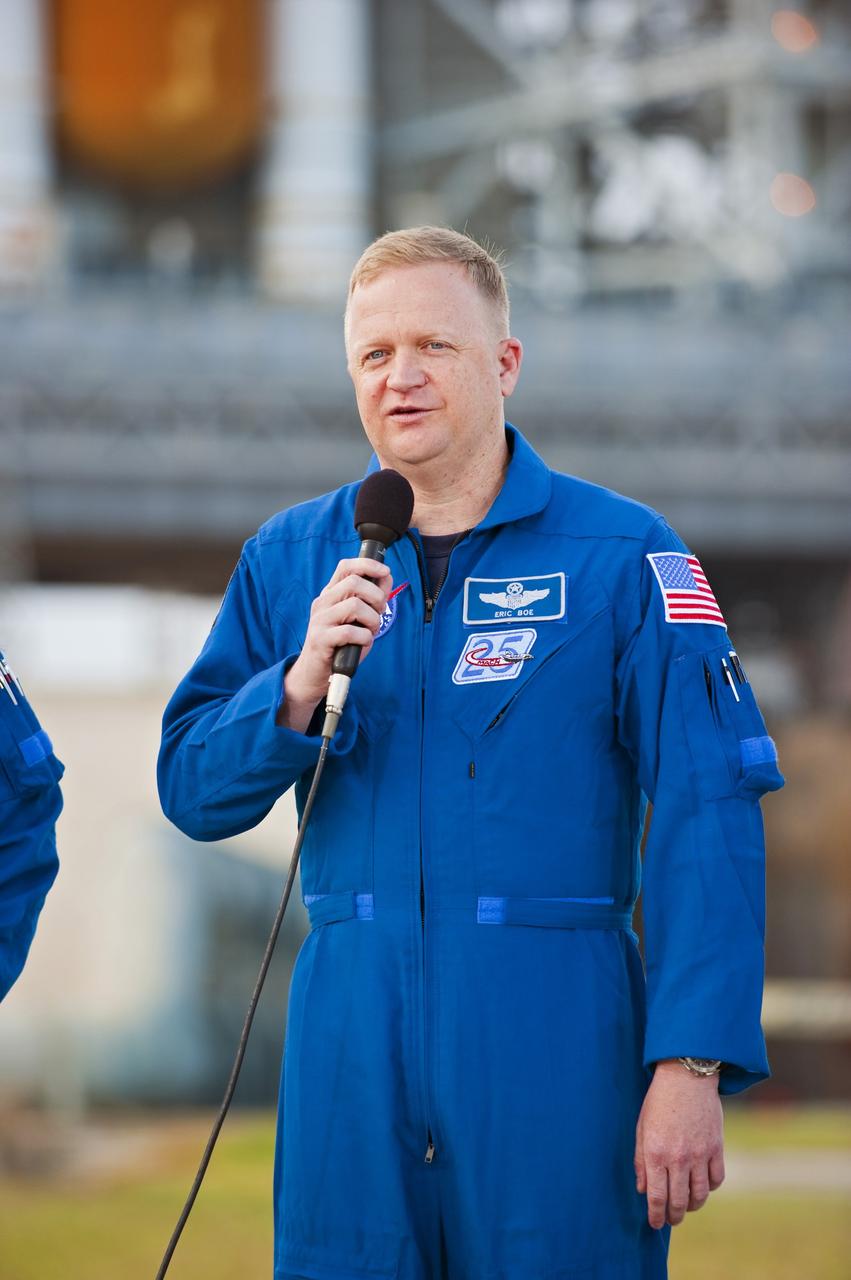
CAPE CANAVERAL, Fla. -- At NASA's Kennedy Space Center in Florida, STS-133 Pilot Eric Boe talks to media at Launch Pad 39A, where space shuttle Discovery is poised for launch next month. The six-member STS-133 crew is at Kennedy for the Terminal Countdown Demonstration Test (TCDT), which provides each shuttle crew and launch team an opportunity to participate in various simulated activities, including equipment familiarization and emergency training at the launch pad. Discovery and its crew will deliver the Permanent Multipurpose Module, packed with supplies and critical spare parts, as well as Robonaut 2, the dexterous humanoid astronaut helper, to the International Space Station. Launch is targeted for Nov. 1 at 4:40 p.m. For more information on the STS-133 mission, visit www.nasa.gov/mission_pages/shuttle/shuttlemissions/sts133/. Photo credit: NASA/Kim Shiflett
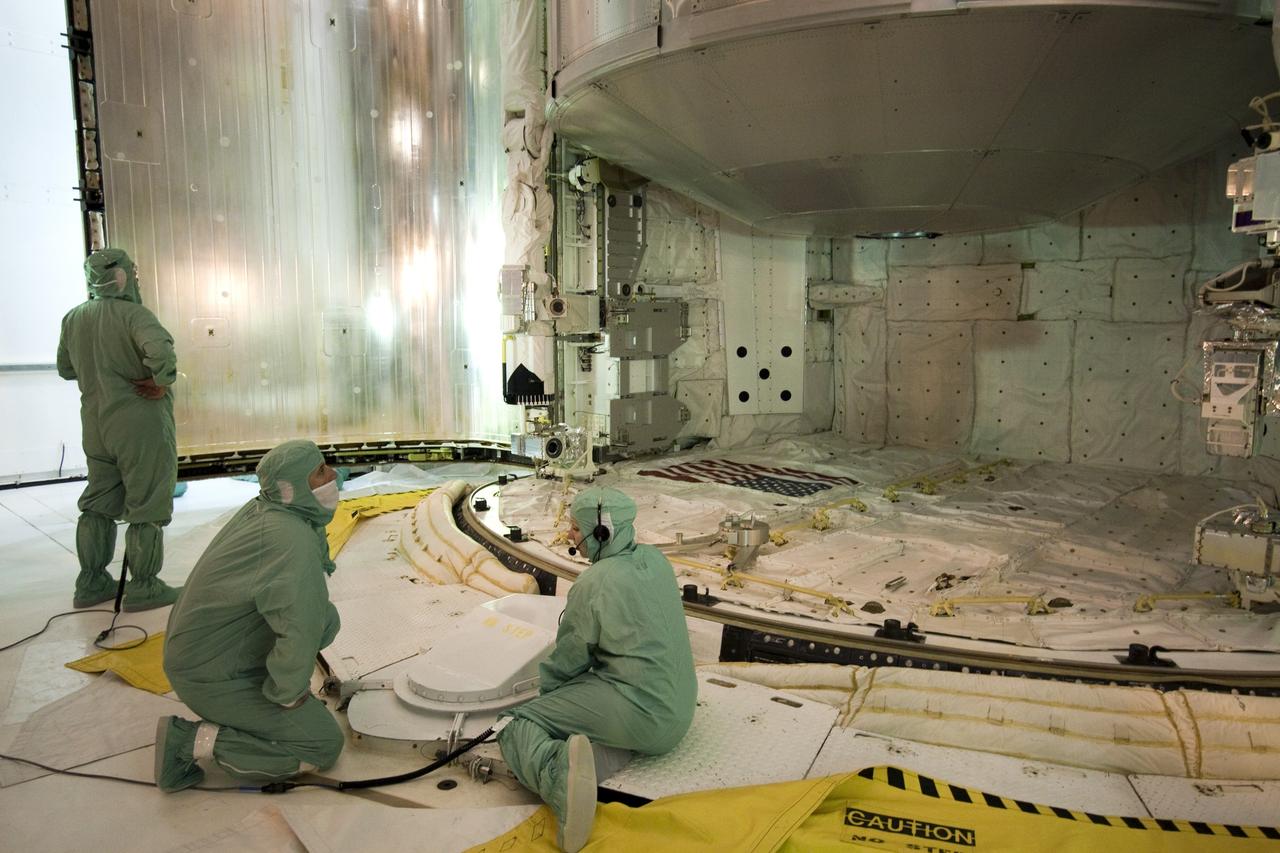
CAPE CANAVERAL, Fla. -- On Launch Pad 39A at NASA's Kennedy Space Center in Florida, technicians prepare to close the clamshell doors of space shuttle Discovery's payload bay in preparation for the STS-133 launch to the International Space Station. Targeted to launch Nov. 1, STS-133 will carry the Permanent Multipurpose Module (PMM) packed with supplies and critical spare parts, as well as Robonaut 2 (R2) to the station. Photo credit: NASA/Jack Pfaller
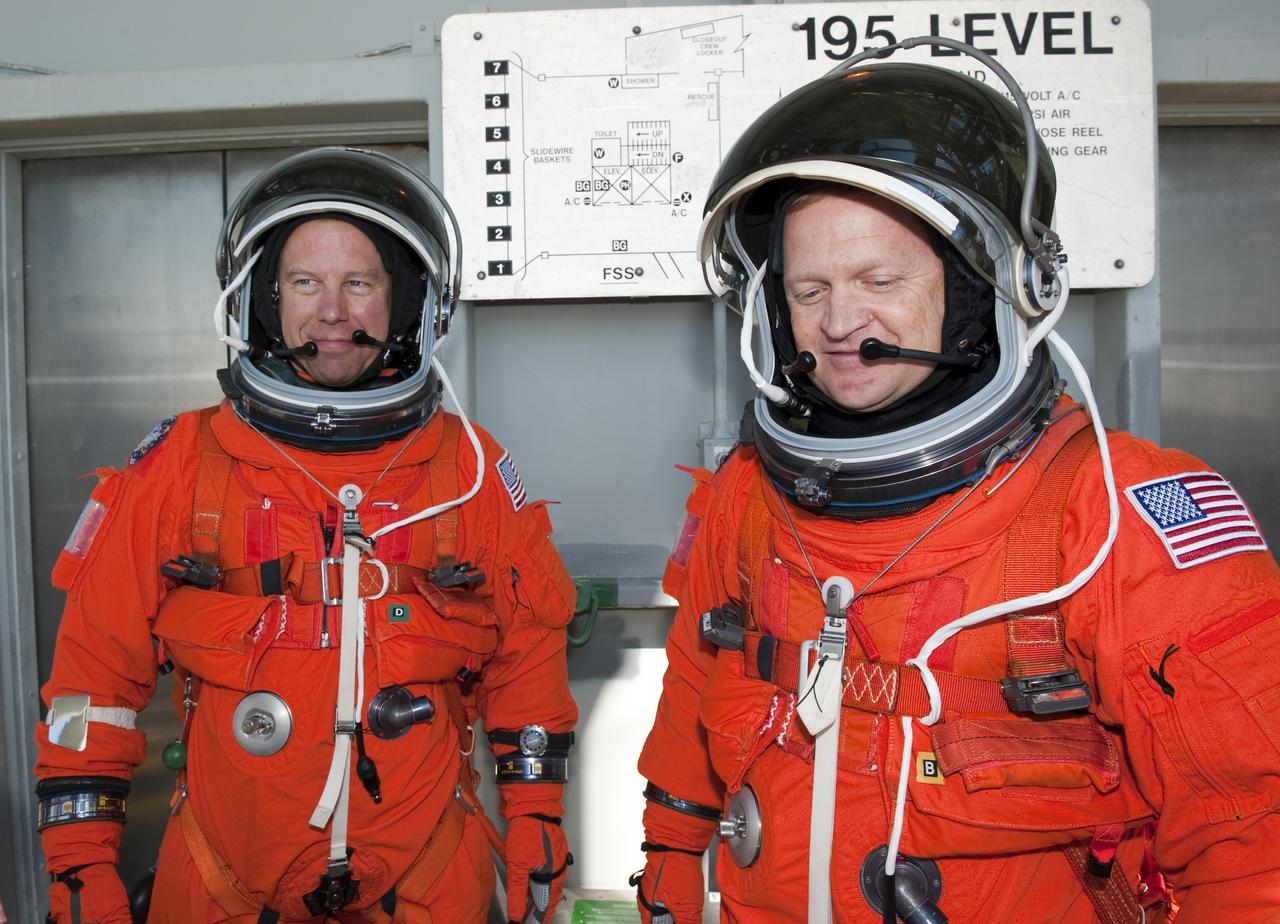
CAPE CANAVERAL, Fla. -- Following a simulated pad emergency, STS-133 Mission Specialist Tim Kopra, left, and Pilot Eric Boe stand on the 195-foot level on Launch Pad 39A at NASA's Kennedy Space Center in Florida. The emergency exit training from space shuttle Discovery is part of a week-long Terminal Countdown Demonstration Test (TCDT). Discovery and its STS-133 crew will deliver the Permanent Multipurpose Module, packed with supplies and critical spare parts, as well as Robonaut 2, the dexterous humanoid astronaut helper, to the International Space Station. Launch is targeted for Nov. 1 at 4:40 p.m. For more information on the STS-133 mission, visit www.nasa.gov/mission_pages/shuttle/shuttlemissions/sts133/. Photo credit: NASA/Kim Shiflett
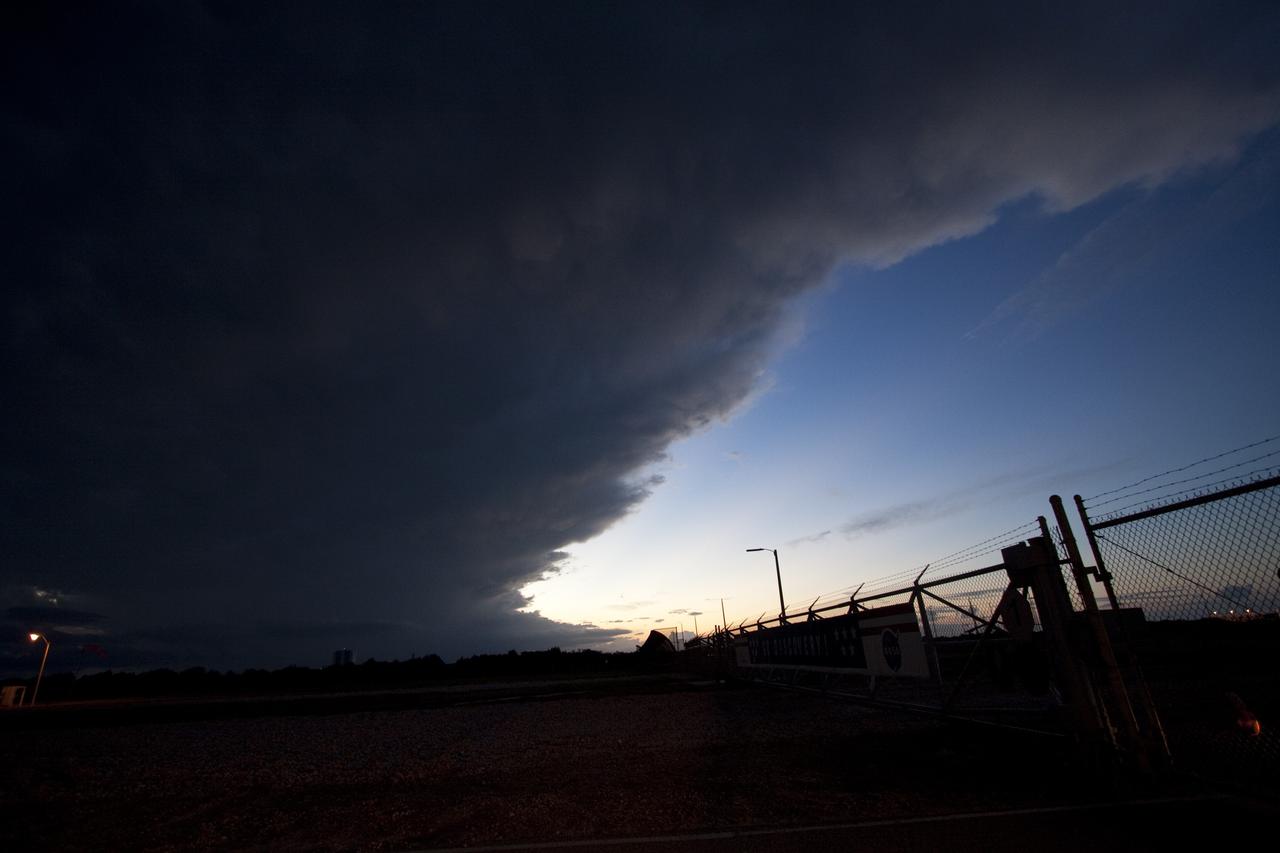
CAPE CANAVERAL, Fla. -- Storm clouds move over Launch Pad 39A at NASA's Kennedy Space Center in Florida, postponing the movement of the pad's rotating service structure away from space shuttle Discovery. The structure provides weather protection and access to the shuttle while it awaits lift off on the pad. RSS "rollback," as it's called, will begin again after the lightning-producing clouds pass. Launch of Discovery on the STS-133 mission to the International Space Station is set for 3:29 p.m. on Nov. 4. During the 11-day mission, Discovery and its six crew members will deliver the Permanent Multipurpose Module, packed with supplies and critical spare parts, as well as Robonaut 2, to the orbiting laboratory. Discovery, which will fly its 39th mission, is scheduled to be retired following STS-133. This will be the 133rd Space Shuttle Program mission and the 35th shuttle voyage to the space station. For more information on STS-133, visit www.nasa.gov/mission_pages/shuttle/shuttlemissions/sts133/. Photo credit: NASA/Jack Pfaller
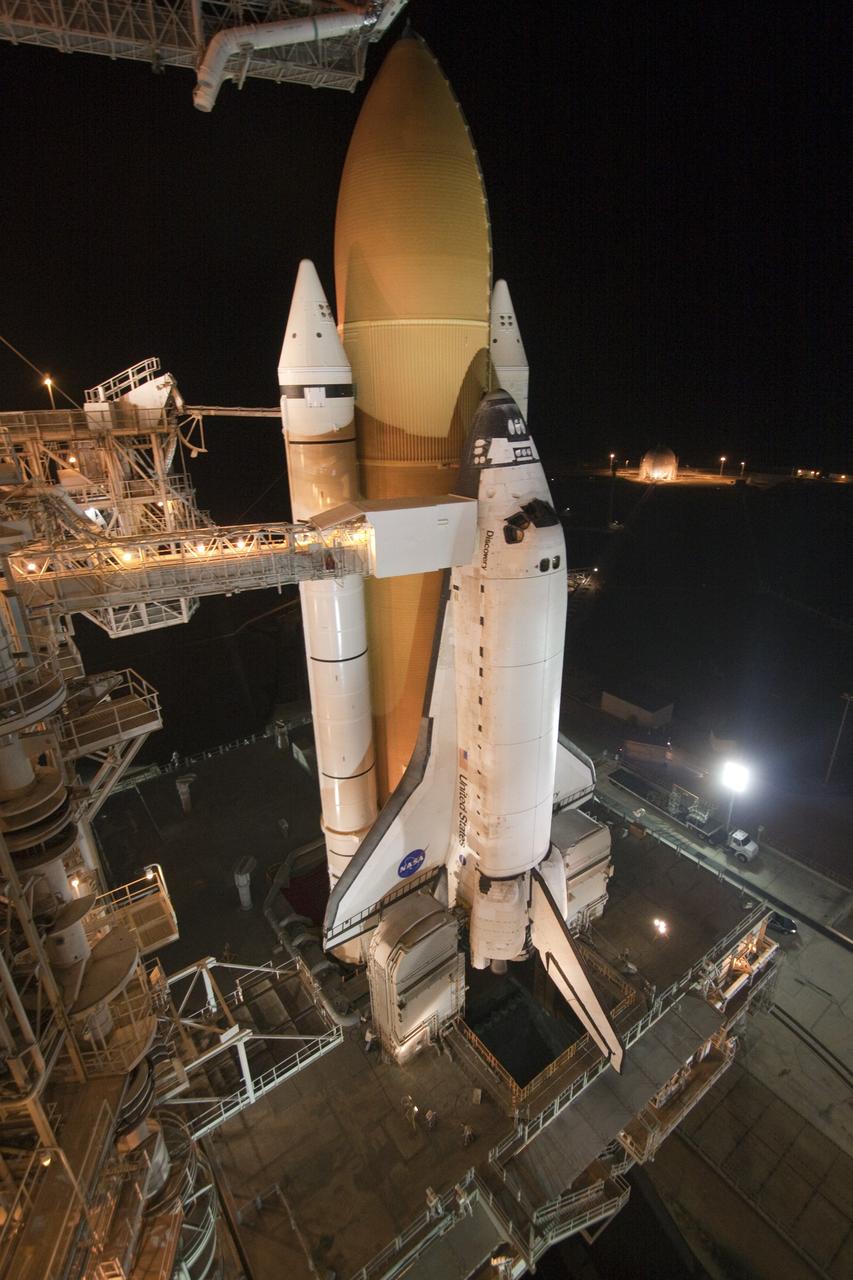
CAPE CANAVERAL, Fla. -- At NASA's Kennedy Space Center in Florida, space shuttle Discovery is visible on Launch Pad 39A following the retraction of the rotating service structure. The structure provides weather protection and access to the shuttle while it awaits lift off on the pad. RSS "rollback," as it's called, was delayed for a few hours to allow a lightning-producing storm cloud to pass. Launch of Discovery on the STS-133 mission to the International Space Station is set for 3:29 p.m. on Nov. 4. During the 11-day mission, Discovery and its six crew members will deliver the Permanent Multipurpose Module, packed with supplies and critical spare parts, as well as Robonaut 2, to the orbiting laboratory. Discovery, which will fly its 39th mission, is scheduled to be retired following STS-133. This will be the 133rd Space Shuttle Program mission and the 35th shuttle voyage to the space station. For more information on STS-133, visit www.nasa.gov/mission_pages/shuttle/shuttlemissions/sts133/. Photo credit: NASA/Jack Pfaller
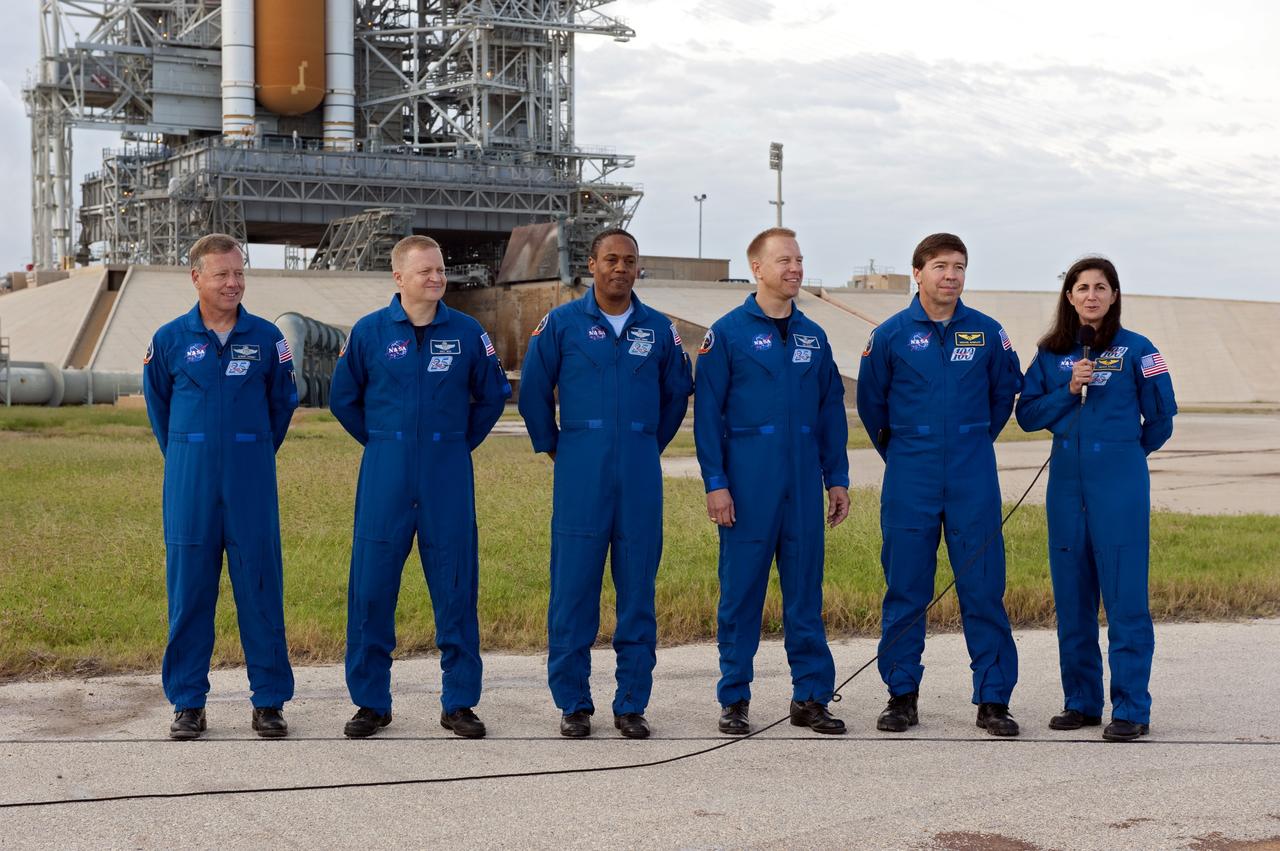
CAPE CANAVERAL, Fla. -- At NASA's Kennedy Space Center in Florida, STS-133 Mission Specialist Nicole Stott talks to media at Launch Pad 39A, where space shuttle Discovery is poised for launch next month. The six STS-133 crew members, from left, are Commander Steve Lindsey, Pilot Eric Boe, and Mission Specialists Alvin Drew, Tim Kopra, Michael Barratt, and Stott. The crew is at Kennedy for the Terminal Countdown Demonstration Test (TCDT), which provides each shuttle crew and launch team an opportunity to participate in various simulated activities, including equipment familiarization and emergency training at the launch pad. Discovery and its crew will deliver the Permanent Multipurpose Module, packed with supplies and critical spare parts, as well as Robonaut 2, the dexterous humanoid astronaut helper, to the International Space Station. Launch is targeted for Nov. 1 at 4:40 p.m. For more information on the STS-133 mission, visit www.nasa.gov/mission_pages/shuttle/shuttlemissions/sts133/. Photo credit: NASA/Kim Shiflett
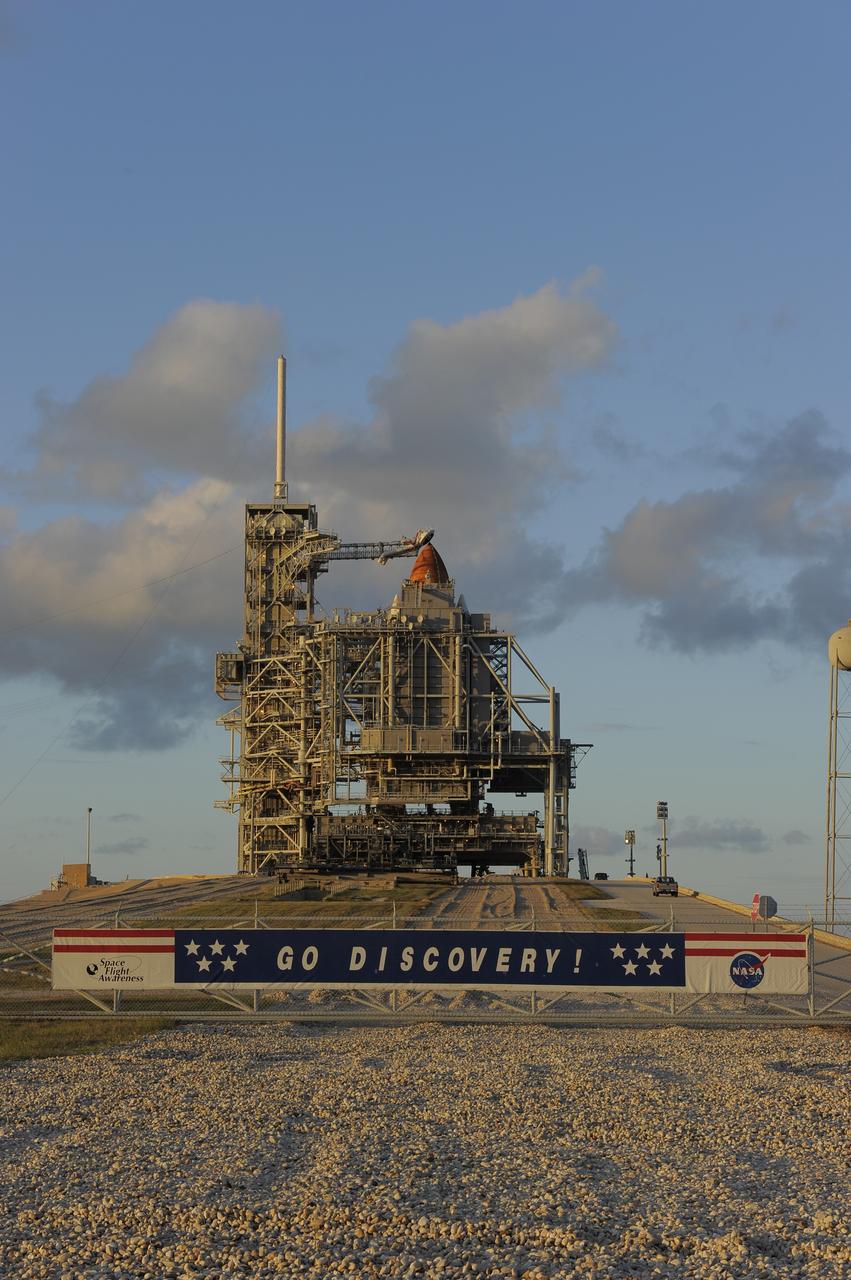
CAPE CANAVERAL, Fla. -- Before the sun sets on Launch Pad 39A at NASA's Kennedy Space Center in Florida, space shuttle Discovery is concealed by the pad's rotating service structure. The structure provides weather protection and access to the shuttle. RSS "rollback," as it's called, is a significant milestone in the launch countdown. Launch of Discovery on the STS-133 mission to the International Space Station is set for 3:29 p.m. on Nov. 4. During the 11-day mission, Discovery and its six crew members will deliver the Permanent Multipurpose Module, packed with supplies and critical spare parts, as well as Robonaut 2, to the orbiting laboratory. Discovery, which will fly its 39th mission, is scheduled to be retired following STS-133. This will be the 133rd Space Shuttle Program mission and the 35th shuttle voyage to the space station. For more information on STS-133, visit www.nasa.gov/mission_pages/shuttle/shuttlemissions/sts133/. Photo credit: NASA/Kim Shiflett
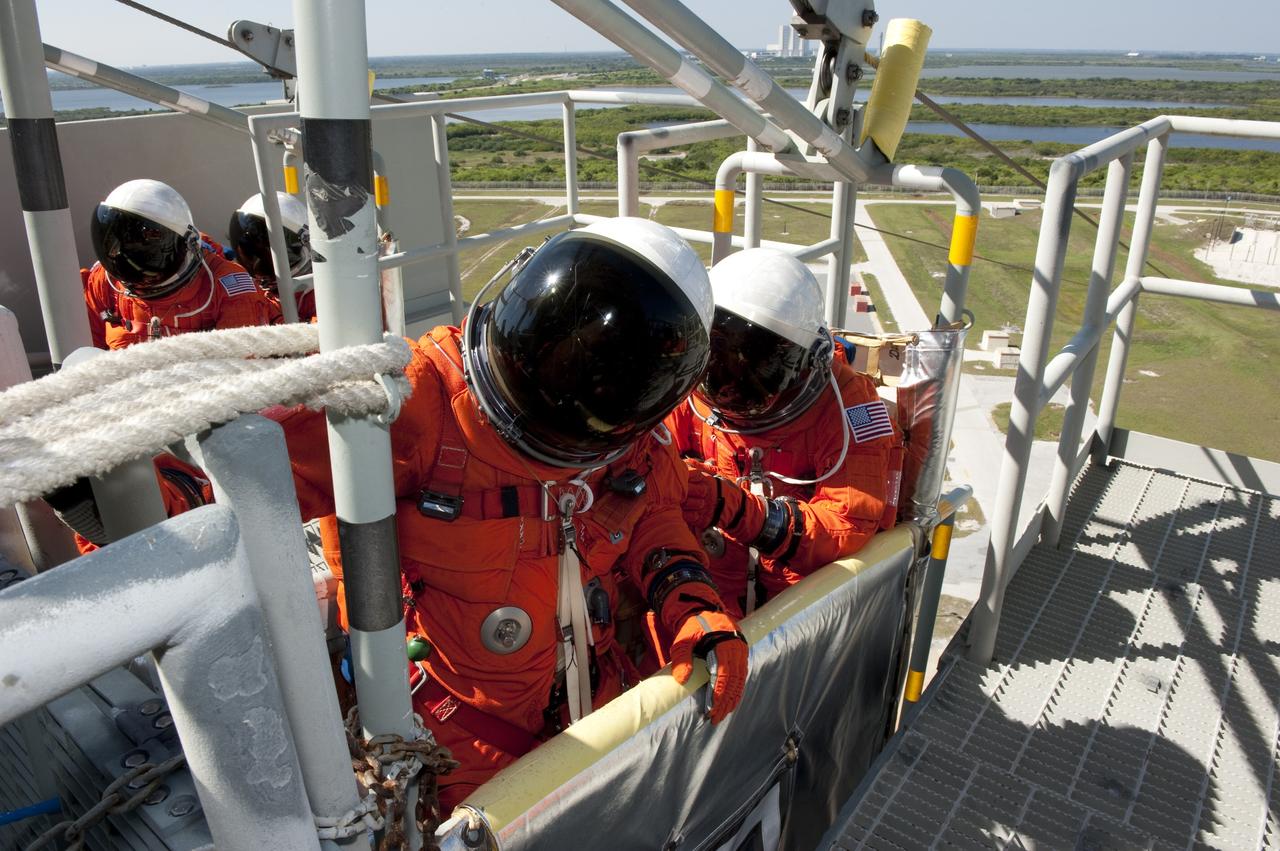
CAPE CANAVERAL, Fla. -- During a simulated pad emergency on Launch Pad 39A at NASA's Kennedy Space Center in Florida, STS-133 Mission Specialists Alvin Drew, front left, and Tim Kopra hop in a slidewire basket that would take them to a safe bunker below the pad in an unlikely emergency situation. The emergency training while aboard space shuttle Discovery is part of a week-long Terminal Countdown Demonstration Test (TCDT). Discovery and its STS-133 crew will deliver the Permanent Multipurpose Module, packed with supplies and critical spare parts, as well as Robonaut 2, the dexterous humanoid astronaut helper, to the International Space Station. Launch is targeted for Nov. 1 at 4:40 p.m. For more information on the STS-133 mission, visit www.nasa.gov/mission_pages/shuttle/shuttlemissions/sts133/. Photo credit: NASA/Kim Shiflett
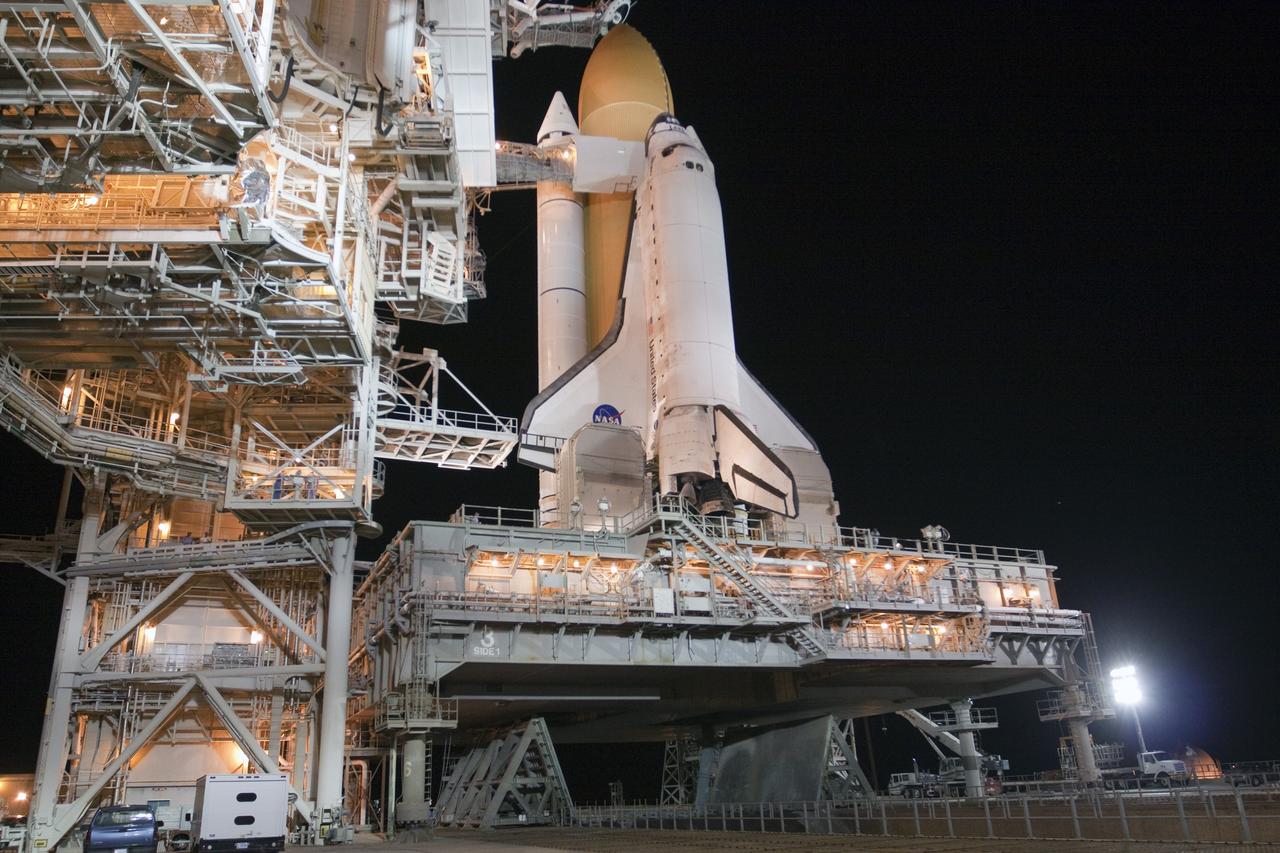
CAPE CANAVERAL, Fla. -- At NASA's Kennedy Space Center in Florida, the rotating service structure on Launch Pad 39A moves away from space shuttle Discovery. The structure provides weather protection and access to the shuttle while it awaits lift off on the pad. RSS "rollback," as it's called, was delayed for a few hours to allow a lightning-producing storm cloud to pass. Launch of Discovery on the STS-133 mission to the International Space Station is set for 3:29 p.m. on Nov. 4. During the 11-day mission, Discovery and its six crew members will deliver the Permanent Multipurpose Module, packed with supplies and critical spare parts, as well as Robonaut 2, to the orbiting laboratory. Discovery, which will fly its 39th mission, is scheduled to be retired following STS-133. This will be the 133rd Space Shuttle Program mission and the 35th shuttle voyage to the space station. For more information on STS-133, visit www.nasa.gov/mission_pages/shuttle/shuttlemissions/sts133/. Photo credit: NASA/Jack Pfaller
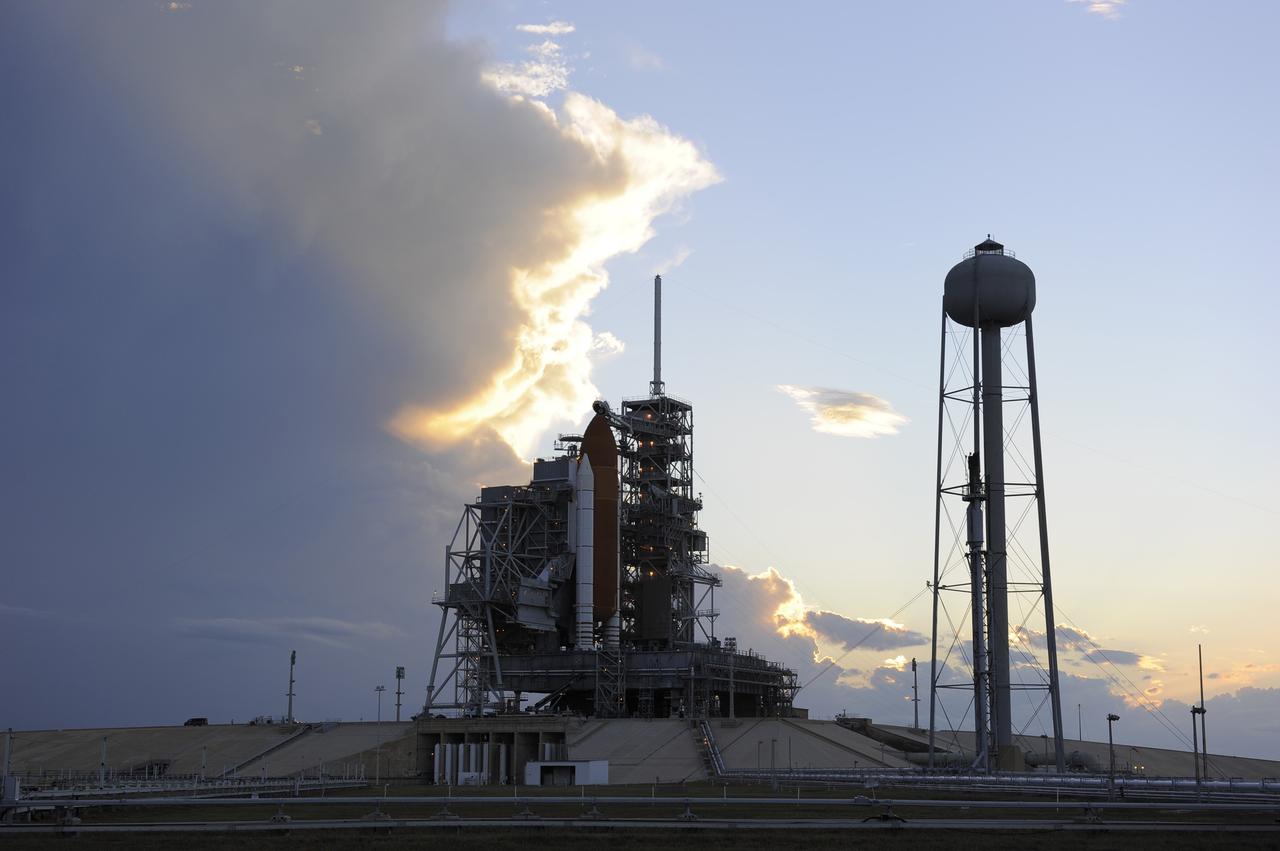
CAPE CANAVERAL, Fla. -- Storm clouds move over Launch Pad 39A at NASA's Kennedy Space Center in Florida, postponing the retraction of the pad's rotating service structure, which would reveal space shuttle Discovery. The structure provides weather protection and access to the shuttle while it awaits lift off on the pad. RSS "rollback," as it's called, will begin again after the lightning-producing clouds pass. Launch of Discovery on the STS-133 mission to the International Space Station is set for 3:29 p.m. on Nov. 4. During the 11-day mission, Discovery and its six crew members will deliver the Permanent Multipurpose Module, packed with supplies and critical spare parts, as well as Robonaut 2, to the orbiting laboratory. Discovery, which will fly its 39th mission, is scheduled to be retired following STS-133. This will be the 133rd Space Shuttle Program mission and the 35th shuttle voyage to the space station. For more information on STS-133, visit www.nasa.gov/mission_pages/shuttle/shuttlemissions/sts133/. Photo credit: NASA/Kim Shiflett
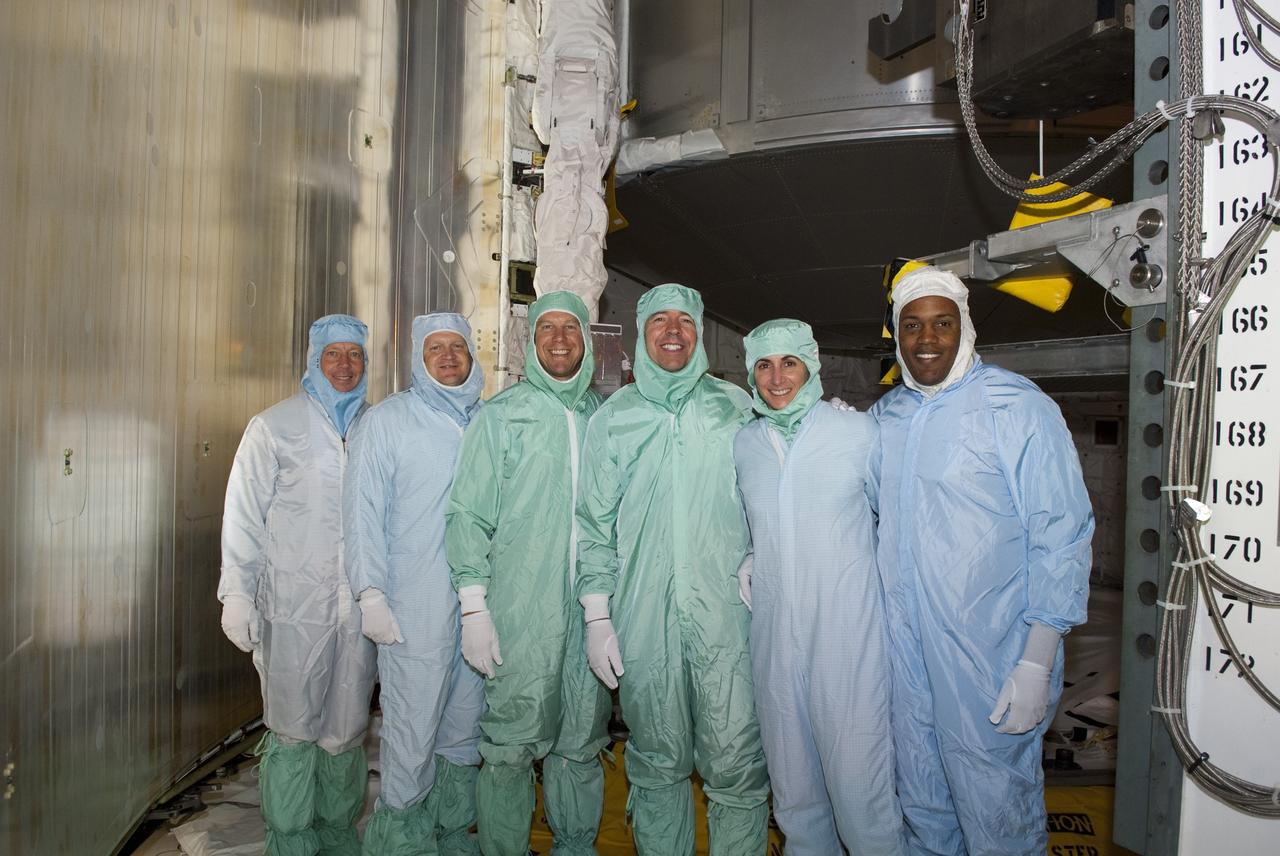
CAPE CANAVERAL, Fla. -- At NASA's Kennedy Space Center in Florida, STS-133 crew members pose for a photo after checking out their mission's payload while at Launch Pad 39A for the Terminal Countdown Demonstration Test (TCDT). From left, are Commander Steve Lindsey, Pilot Eric Boe, and Mission Specialists Tim Kopra, Michael Barratt, Nicole Stott, and Alvin Drew. Discovery and its STS-133 crew will deliver the Permanent Multipurpose Module, packed with supplies and critical spare parts, as well as Robonaut 2, the dexterous humanoid astronaut helper, to the International Space Station. Launch is targeted for 4:40 p.m. EDT, Nov. 1. Photo credit: NASA/Jim Grossmann
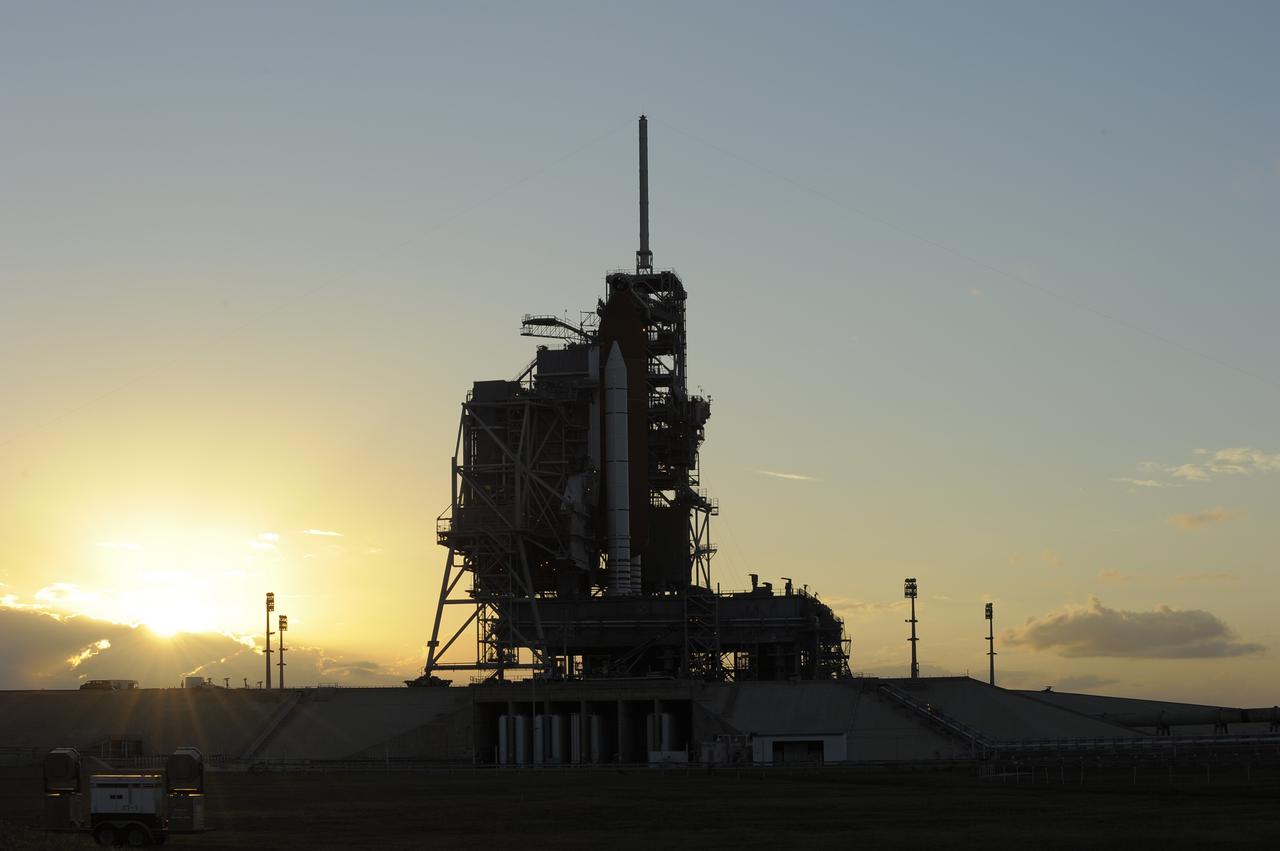
CAPE CANAVERAL, Fla. -- On Launch Pad 39A, preparations are under way to move the pad's rotating service structure away from space shuttle Discovery as the sun sets over NASA's Kennedy Space Center in Florida. The structure provides weather protection and access to the shuttle while it awaits lift off on the pad. RSS "rollback," as it's called, is a significant milestone in the launch countdown. Launch of Discovery on the STS-133 mission to the International Space Station is set for 3:29 p.m. on Nov. 4. During the 11-day mission, Discovery and its six crew members will deliver the Permanent Multipurpose Module, packed with supplies and critical spare parts, as well as Robonaut 2, to the orbiting laboratory. Discovery, which will fly its 39th mission, is scheduled to be retired following STS-133. This will be the 133rd Space Shuttle Program mission and the 35th shuttle voyage to the space station. For more information on STS-133, visit www.nasa.gov/mission_pages/shuttle/shuttlemissions/sts133/. Photo credit: NASA/Kim Shiflett
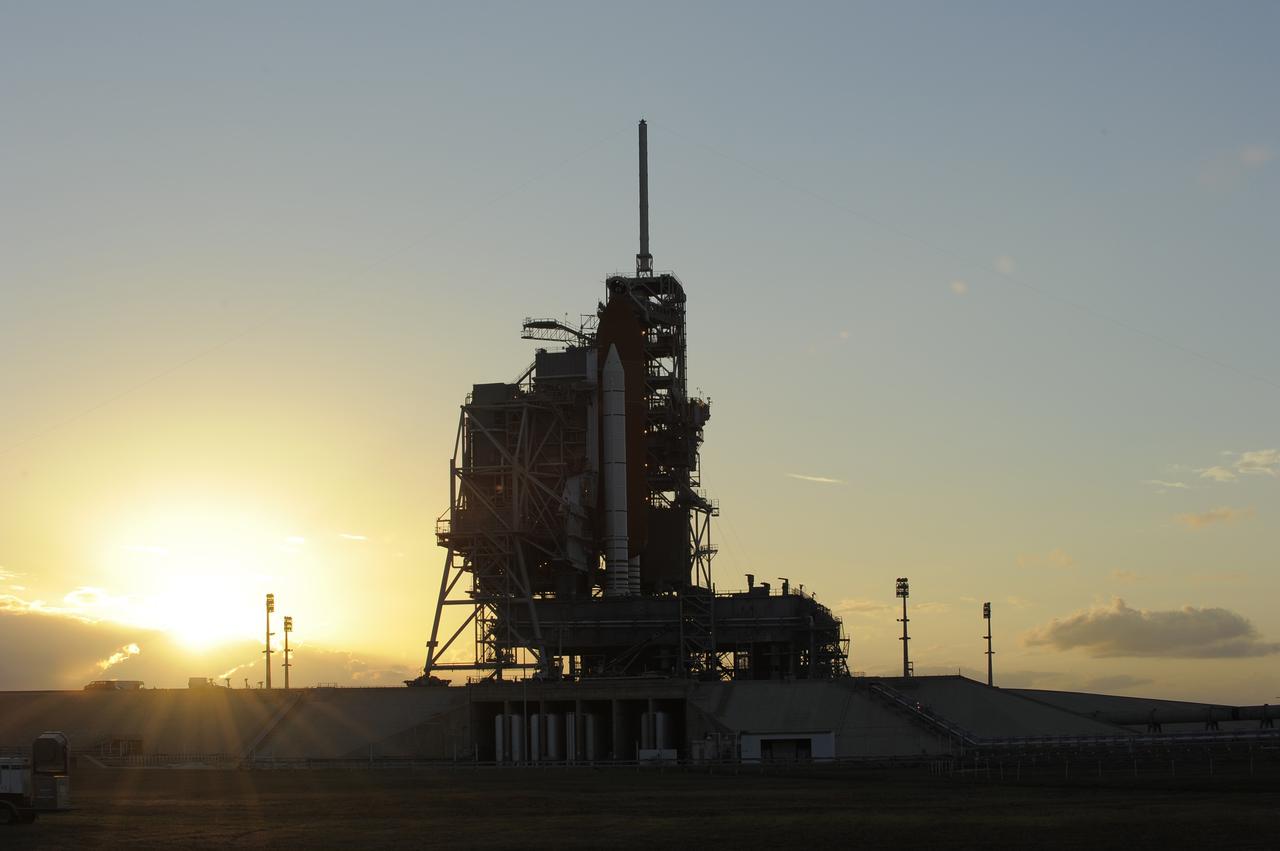
CAPE CANAVERAL, Fla. -- On Launch Pad 39A, preparations are under way to move the pad's rotating service structure away from space shuttle Discovery as the sun sets over NASA's Kennedy Space Center in Florida. The structure provides weather protection and access to the shuttle while it awaits lift off on the pad. RSS "rollback," as it's called, is a significant milestone in the launch countdown. Launch of Discovery on the STS-133 mission to the International Space Station is set for 3:29 p.m. on Nov. 4. During the 11-day mission, Discovery and its six crew members will deliver the Permanent Multipurpose Module, packed with supplies and critical spare parts, as well as Robonaut 2, to the orbiting laboratory. Discovery, which will fly its 39th mission, is scheduled to be retired following STS-133. This will be the 133rd Space Shuttle Program mission and the 35th shuttle voyage to the space station. For more information on STS-133, visit www.nasa.gov/mission_pages/shuttle/shuttlemissions/sts133/. Photo credit: NASA/Kim Shiflett
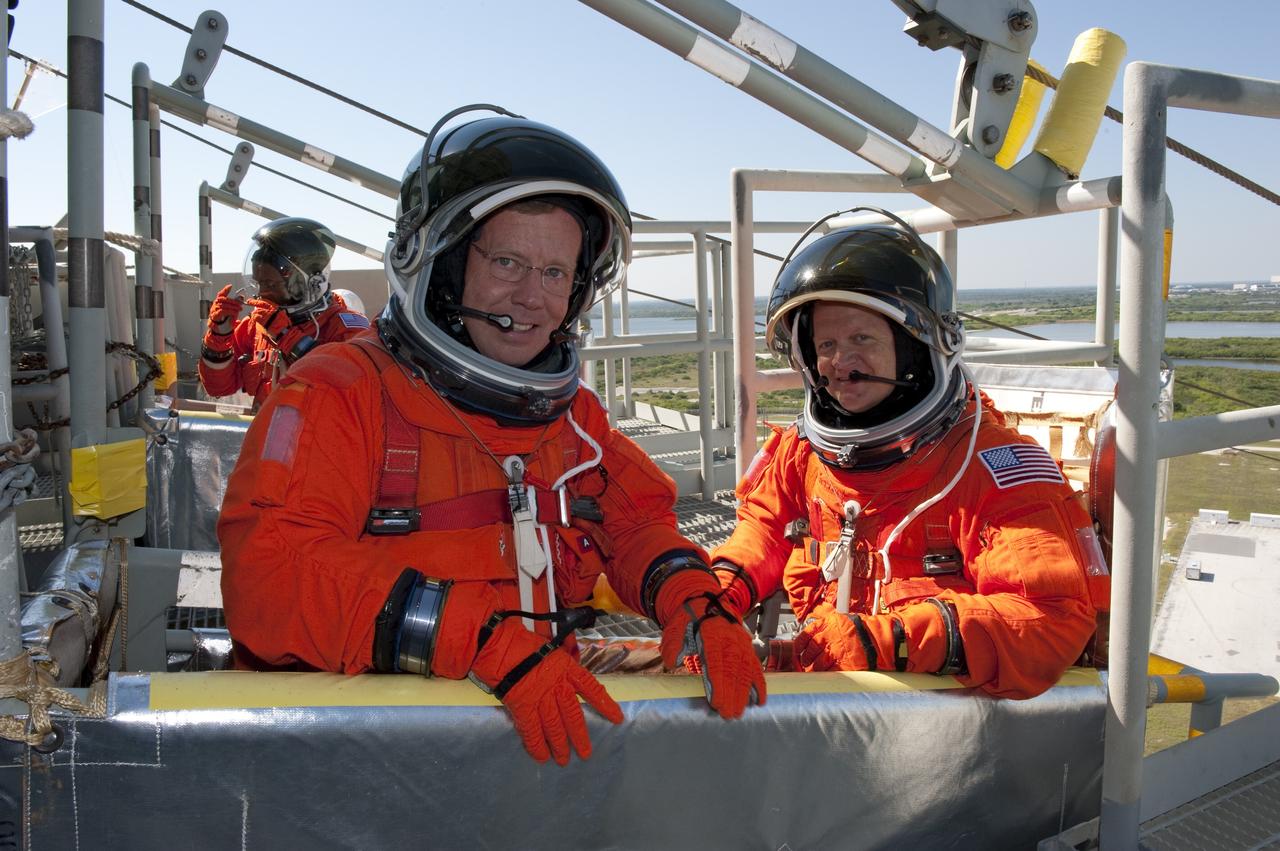
CAPE CANAVERAL, Fla. -- During a simulated pad emergency on Launch Pad 39A at NASA's Kennedy Space Center in Florida, STS-133 Commander Steve Lindsey, front left, and Pilot Eric Boe hop in a slidewire basket that would take them to a safe bunker below the pad in an unlikely emergency situation. The emergency training while aboard space shuttle Discovery is part of a week-long Terminal Countdown Demonstration Test (TCDT). Discovery and its STS-133 crew will deliver the Permanent Multipurpose Module, packed with supplies and critical spare parts, as well as Robonaut 2, the dexterous humanoid astronaut helper, to the International Space Station. Launch is targeted for Nov. 1 at 4:40 p.m. For more information on the STS-133 mission, visit www.nasa.gov/mission_pages/shuttle/shuttlemissions/sts133/. Photo credit: NASA/Kim Shiflett
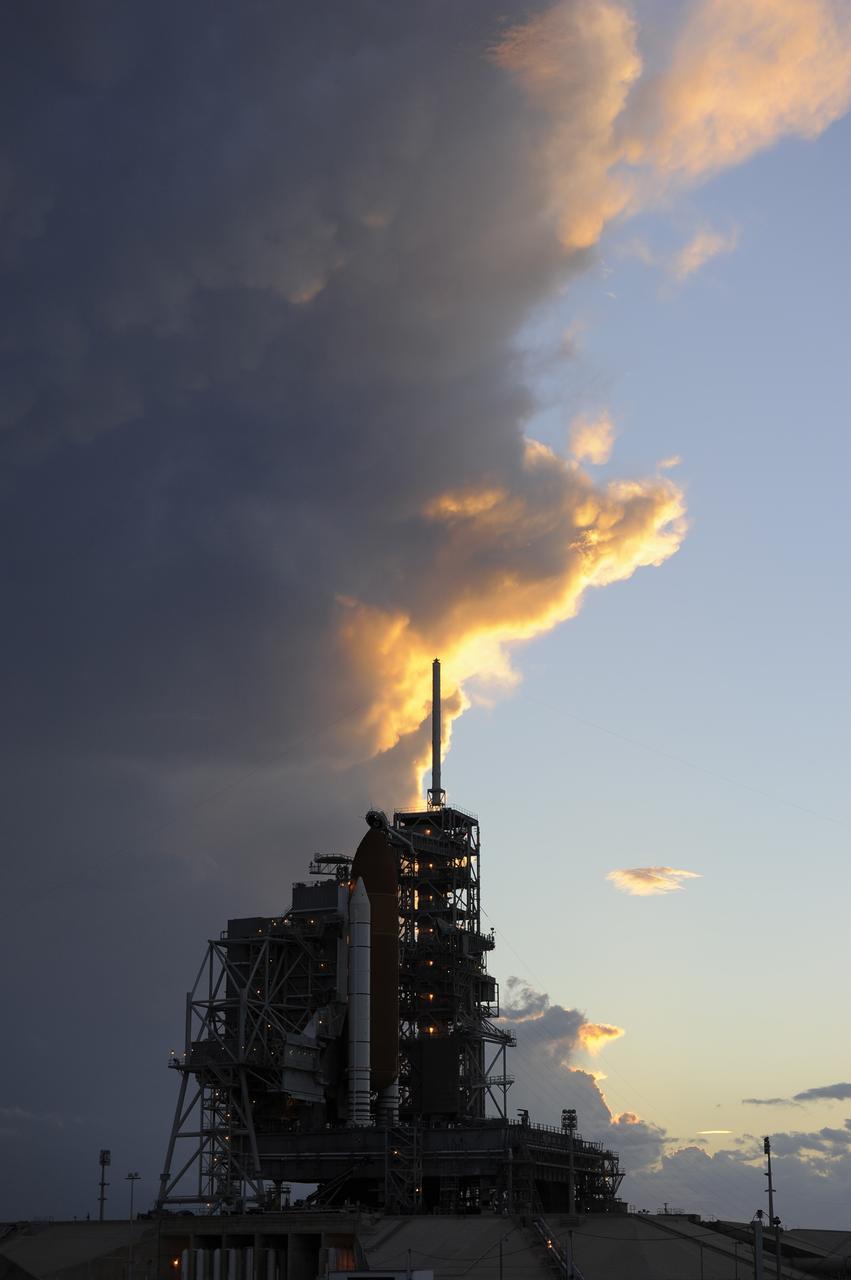
CAPE CANAVERAL, Fla. -- Storm clouds move over Launch Pad 39A at NASA's Kennedy Space Center in Florida, postponing the retraction of the pad's rotating service structure, which would reveal space shuttle Discovery. The structure provides weather protection and access to the shuttle while it awaits lift off on the pad. RSS "rollback," as it's called, will begin again after the lightning-producing clouds pass. Launch of Discovery on the STS-133 mission to the International Space Station is set for 3:29 p.m. on Nov. 4. During the 11-day mission, Discovery and its six crew members will deliver the Permanent Multipurpose Module, packed with supplies and critical spare parts, as well as Robonaut 2, to the orbiting laboratory. Discovery, which will fly its 39th mission, is scheduled to be retired following STS-133. This will be the 133rd Space Shuttle Program mission and the 35th shuttle voyage to the space station. For more information on STS-133, visit www.nasa.gov/mission_pages/shuttle/shuttlemissions/sts133/. Photo credit: NASA/Kim Shiflett
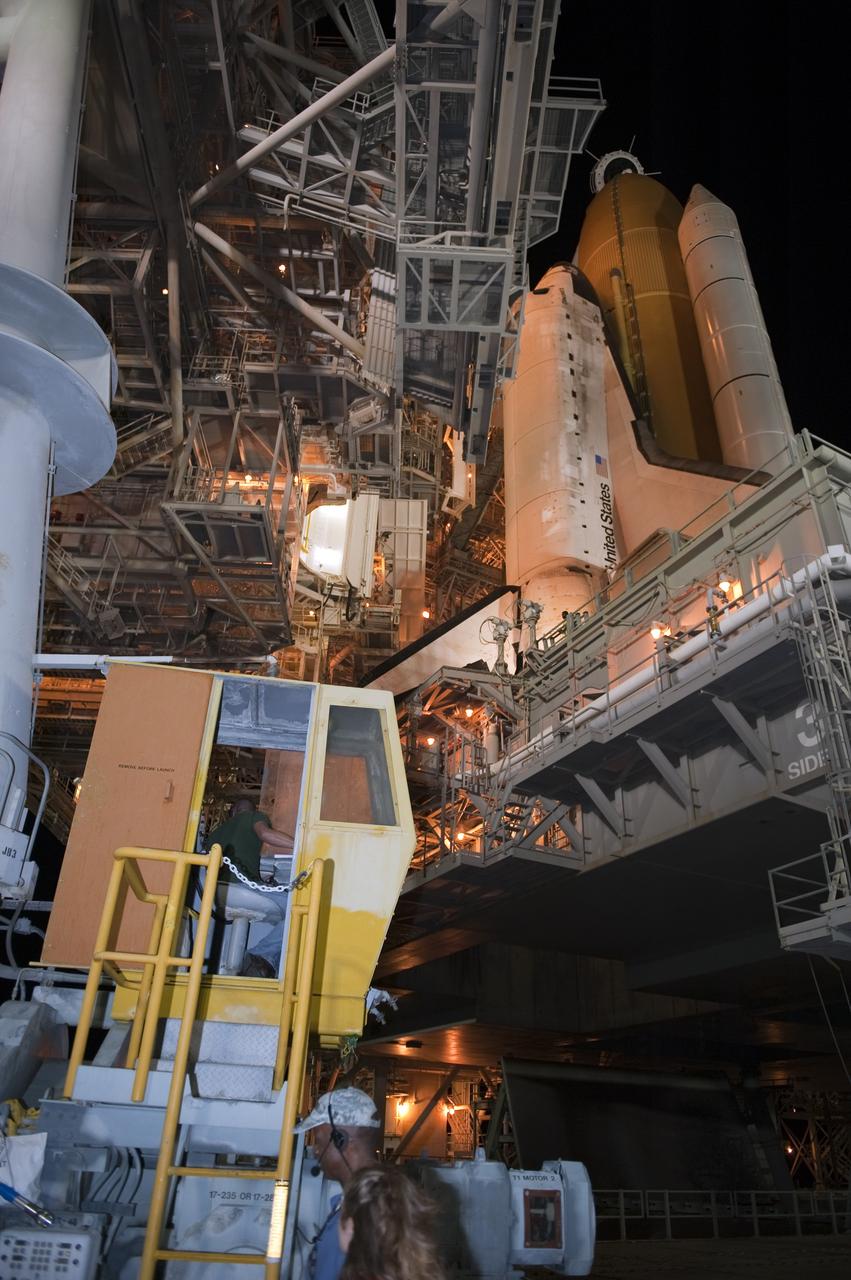
CAPE CANAVERAL, Fla. -- At NASA's Kennedy Space Center in Florida, the rotating service structure on Launch Pad 39A moves away from space shuttle Discovery. The structure provides weather protection and access to the shuttle while it awaits lift off on the pad. RSS "rollback," as it's called, was delayed for a few hours to allow a lightning-producing storm cloud to pass. Launch of Discovery on the STS-133 mission to the International Space Station is set for 3:29 p.m. on Nov. 4. During the 11-day mission, Discovery and its six crew members will deliver the Permanent Multipurpose Module, packed with supplies and critical spare parts, as well as Robonaut 2, to the orbiting laboratory. Discovery, which will fly its 39th mission, is scheduled to be retired following STS-133. This will be the 133rd Space Shuttle Program mission and the 35th shuttle voyage to the space station. For more information on STS-133, visit www.nasa.gov/mission_pages/shuttle/shuttlemissions/sts133/. Photo credit: NASA/Kim Shiflett
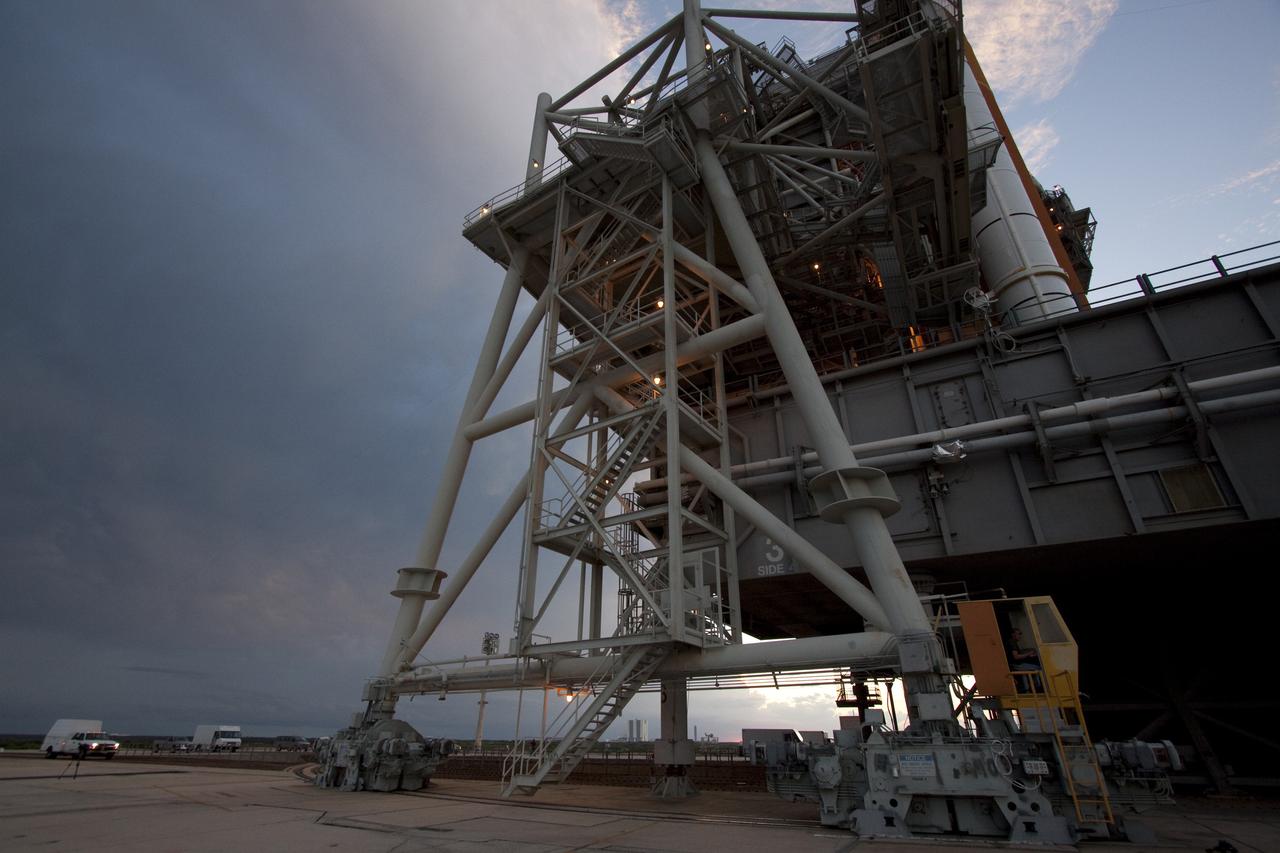
CAPE CANAVERAL, Fla. -- On Launch Pad 39A, technicians stop preparations to move the pad's rotating service structure away from space shuttle Discovery as storm clouds move in over NASA's Kennedy Space Center in Florida. The structure provides weather protection and access to the shuttle while it awaits lift off on the pad. RSS "rollback," as it's called, will begin again after the lightning-producing clouds pass. Launch of Discovery on the STS-133 mission to the International Space Station is set for 3:29 p.m. on Nov. 4. During the 11-day mission, Discovery and its six crew members will deliver the Permanent Multipurpose Module, packed with supplies and critical spare parts, as well as Robonaut 2, to the orbiting laboratory. Discovery, which will fly its 39th mission, is scheduled to be retired following STS-133. This will be the 133rd Space Shuttle Program mission and the 35th shuttle voyage to the space station. For more information on STS-133, visit www.nasa.gov/mission_pages/shuttle/shuttlemissions/sts133/. Photo credit: NASA/Jack Pfaller

CAPE CANAVERAL, Fla. -- On Launch Pad 39A, preparations to move the pad's rotating service structure away from space shuttle Discovery stop as storm clouds move in over NASA's Kennedy Space Center in Florida. The structure provides weather protection and access to the shuttle while it awaits lift off on the pad. RSS "rollback," as it's called, will begin again after the lightning-producing clouds pass. Launch of Discovery on the STS-133 mission to the International Space Station is set for 3:29 p.m. on Nov. 4. During the 11-day mission, Discovery and its six crew members will deliver the Permanent Multipurpose Module, packed with supplies and critical spare parts, as well as Robonaut 2, to the orbiting laboratory. Discovery, which will fly its 39th mission, is scheduled to be retired following STS-133. This will be the 133rd Space Shuttle Program mission and the 35th shuttle voyage to the space station. For more information on STS-133, visit www.nasa.gov/mission_pages/shuttle/shuttlemissions/sts133/. Photo credit: NASA/Jack Pfaller
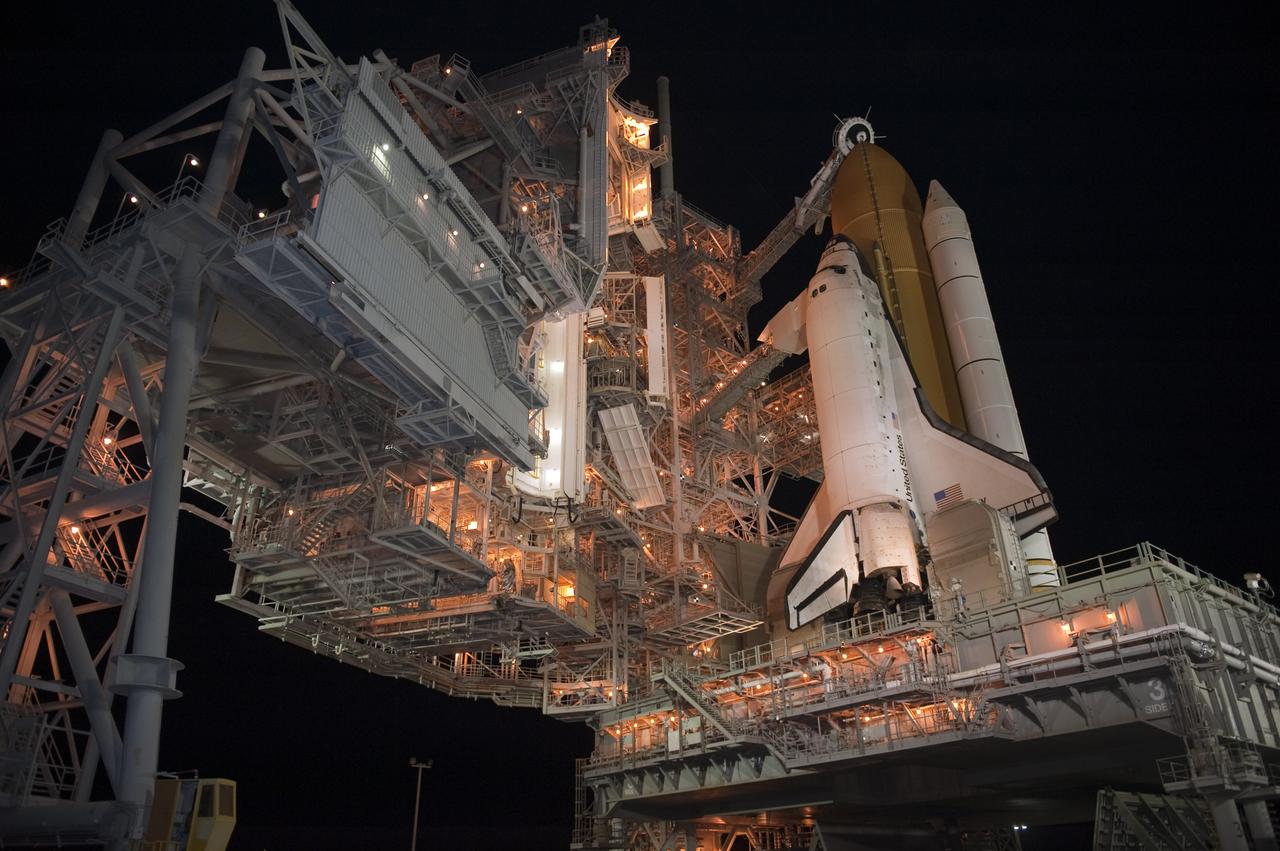
CAPE CANAVERAL, Fla. -- At NASA's Kennedy Space Center in Florida, the rotating service structure on Launch Pad 39A moves away from space shuttle Discovery. The structure provides weather protection and access to the shuttle while it awaits lift off on the pad. RSS "rollback," as it's called, was delayed for a few hours to allow a lightning-producing storm cloud to pass. Launch of Discovery on the STS-133 mission to the International Space Station is set for 3:29 p.m. on Nov. 4. During the 11-day mission, Discovery and its six crew members will deliver the Permanent Multipurpose Module, packed with supplies and critical spare parts, as well as Robonaut 2, to the orbiting laboratory. Discovery, which will fly its 39th mission, is scheduled to be retired following STS-133. This will be the 133rd Space Shuttle Program mission and the 35th shuttle voyage to the space station. For more information on STS-133, visit www.nasa.gov/mission_pages/shuttle/shuttlemissions/sts133/. Photo credit: NASA/Kim Shiflett
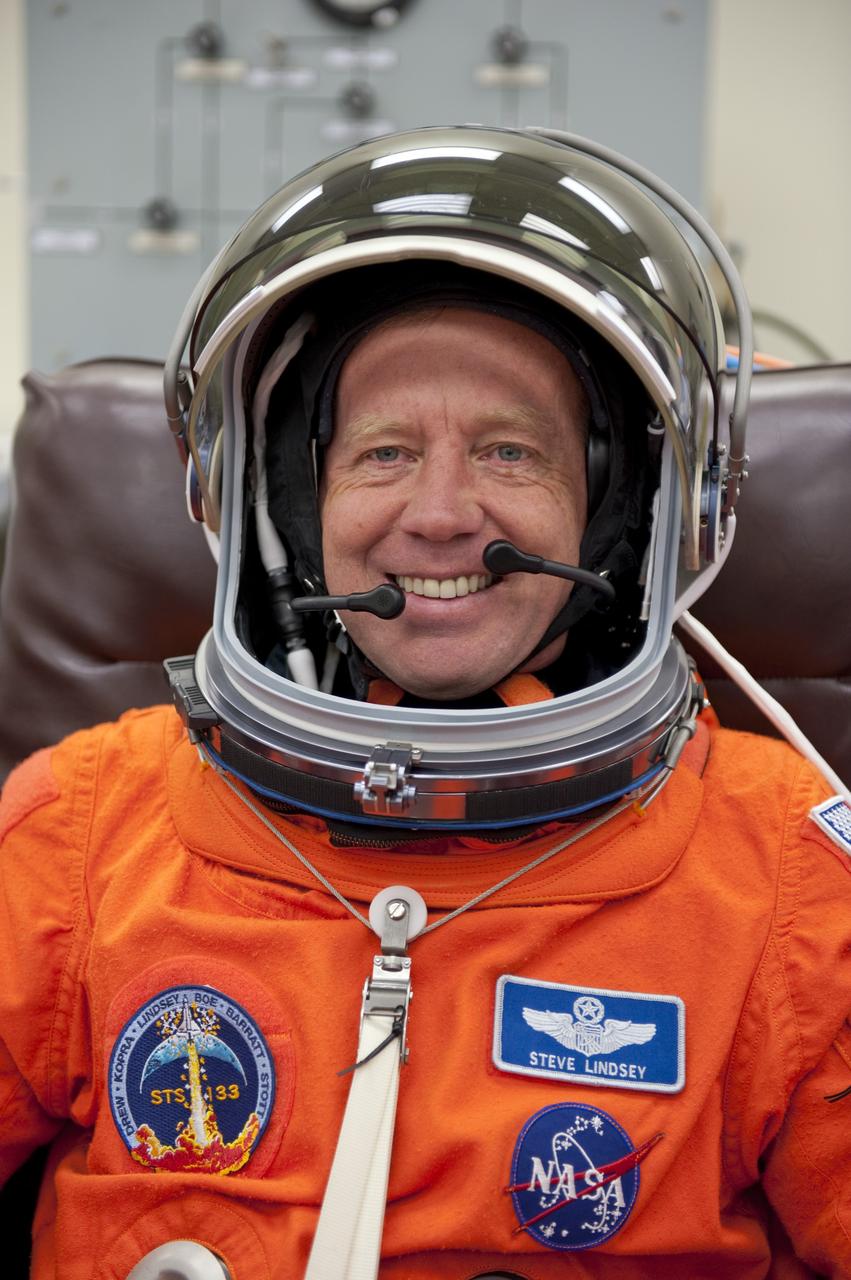
CAPE CANAVERAL, Fla. -- STS-133 Commander Steve Lindsey is suited up in the Operations and Checkout Building at NASA's Kennedy Space Center in Florida during a simulated launch countdown. Checking the fit of their orange launch-and-entry suits and helmets before launch day is part of the Terminal Countdown Demonstration Test (TCDT), which provides each shuttle crew and launch team an opportunity to participate in various simulated activities, including equipment familiarization and emergency training at the launch pad. Space shuttle Discovery and its STS-133 crew will deliver the Permanent Multipurpose Module, packed with supplies and critical spare parts, as well as Robonaut 2, the dexterous humanoid astronaut helper, to the International Space Station. Launch is targeted for Nov. 1 at 4:40 p.m. For more information on the STS-133 mission, visit www.nasa.gov/mission_pages/shuttle/shuttlemissions/sts133/. Photo credit: NASA/Kim Shiflett
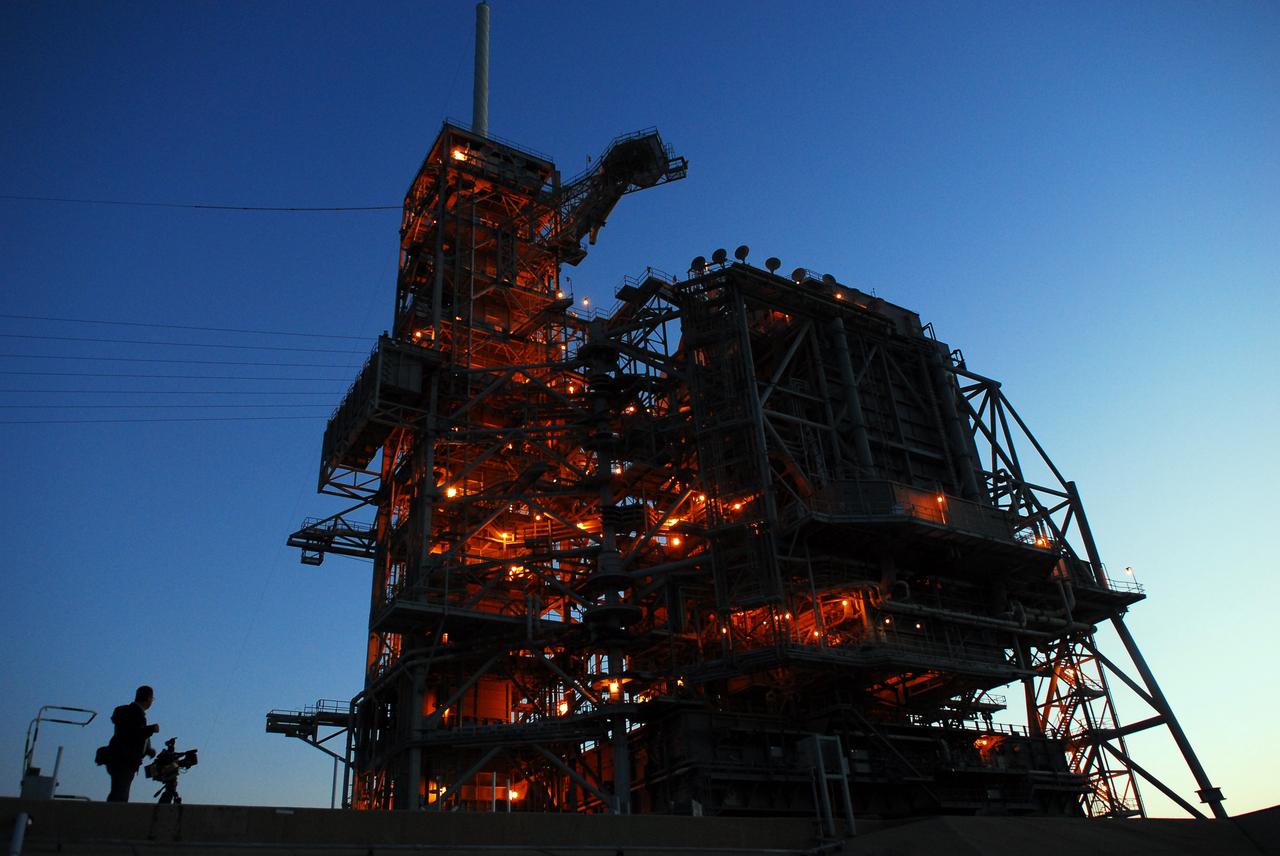
CAPE CANAVERAL, Fla. -- As the sun begins to rise at Launch Pad 39A at NASA's Kennedy Space Center in Florida, the STS-133 crew members are in the pad's White Room preparing to board space shuttle Discovery during the Terminal Countdown Demonstration Test (TCDT). Part of TCDT includes practicing the final hours of a real launch day when astronauts put on their launch-and-entry suits, ride to the pad in the Astrovan and strap into the shuttle. Discovery and its STS-133 crew will deliver the Permanent Multipurpose Module, packed with supplies and critical spare parts, as well as Robonaut 2, the dexterous humanoid astronaut helper, to the International Space Station. Launch is targeted for Nov. 1 at 4:40 p.m. For more information on the STS-133 mission, visit www.nasa.gov/mission_pages/shuttle/shuttlemissions/sts133/. Photo credit: NASA/Jim Grossmann
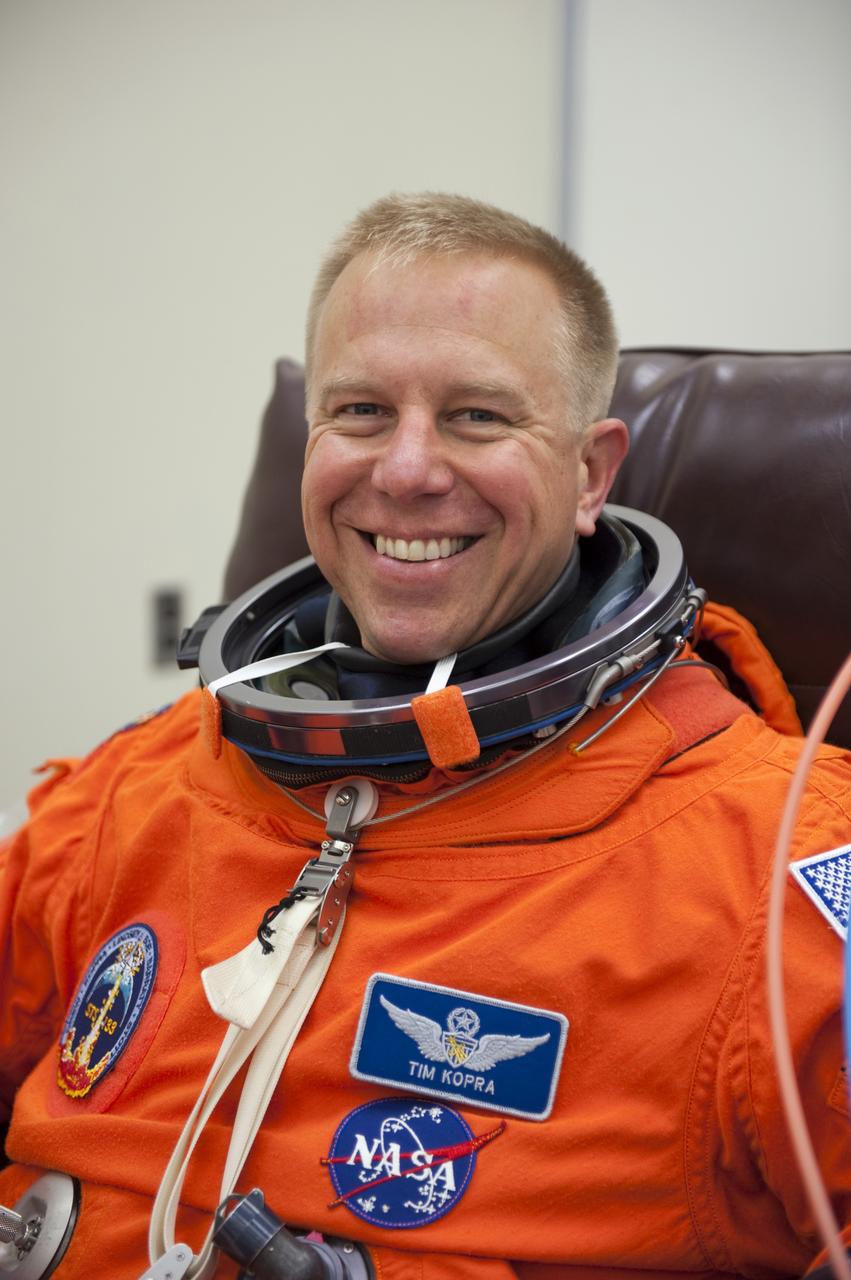
CAPE CANAVERAL, Fla. -- STS-133 Mission Specialist Tim Kopra is suited up in the Operations and Checkout Building at NASA's Kennedy Space Center in Florida during a simulated launch countdown. Checking the fit of their orange launch-and-entry suits and helmets before launch day is part of the Terminal Countdown Demonstration Test (TCDT), which provides each shuttle crew and launch team an opportunity to participate in various simulated activities, including equipment familiarization and emergency training at the launch pad. Space shuttle Discovery and its STS-133 crew will deliver the Permanent Multipurpose Module, packed with supplies and critical spare parts, as well as Robonaut 2, the dexterous humanoid astronaut helper, to the International Space Station. Launch is targeted for Nov. 1 at 4:40 p.m. For more information on the STS-133 mission, visit www.nasa.gov/mission_pages/shuttle/shuttlemissions/sts133/. Photo credit: NASA/Kim Shiflett
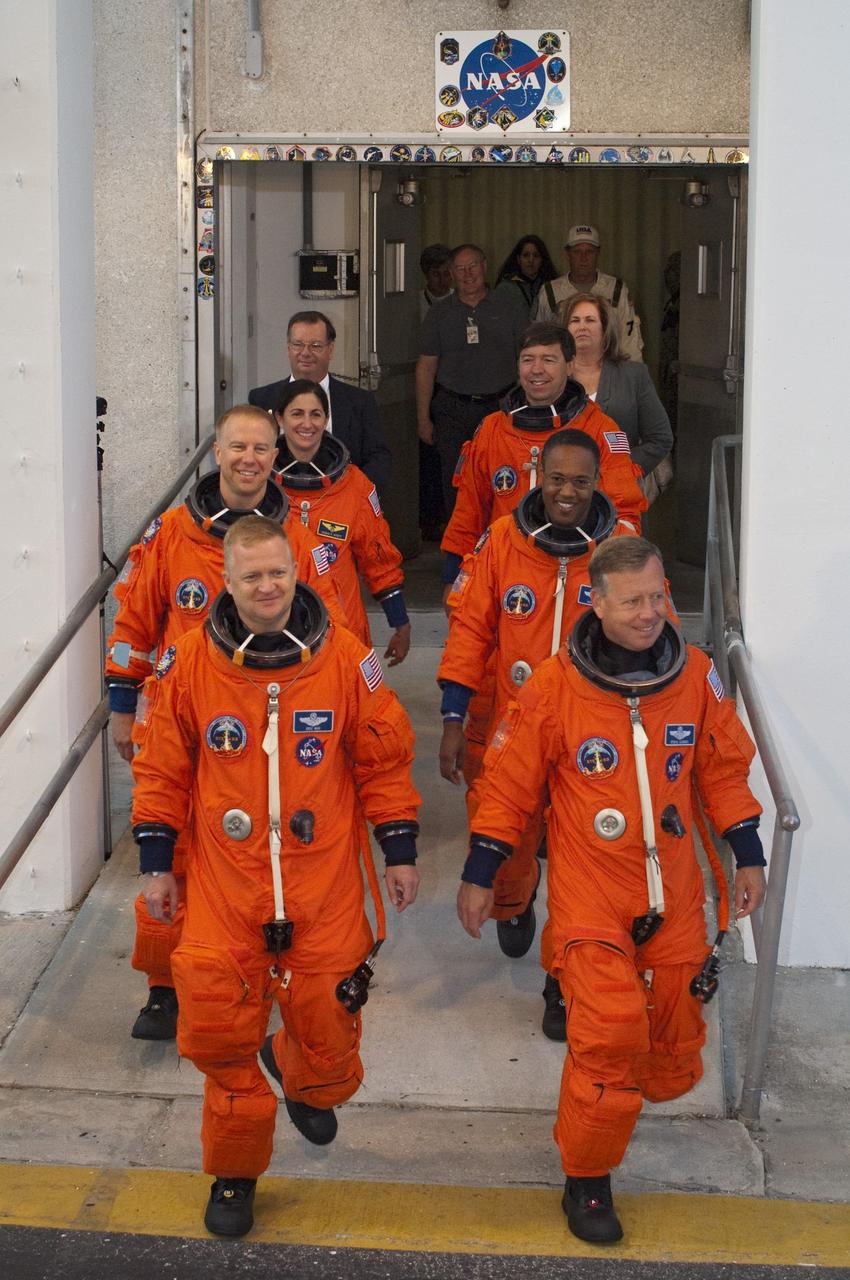
CAPE CANAVERAL, Fla. -- During a simulated launch countdown, the STS-133 crew walks out of the Operations and Checkout Building to the waiting Astrovan at NASA's Kennedy Space Center in Florida. As part of the Terminal Countdown Demonstration Test (TCDT), the crew members ride to the pad in their silver Astrovan and strap into space shuttle Discovery to practice the steps that will be taken on launch day. Discovery and its STS-133 crew will deliver the Permanent Multipurpose Module, packed with supplies and critical spare parts, as well as Robonaut 2, the dexterous humanoid astronaut helper, to the International Space Station. Launch is targeted for Nov. 1 at 4:40 p.m. For more information on the STS-133 mission, visit www.nasa.gov/mission_pages/shuttle/shuttlemissions/sts133/. Photo credit: NASA/Kim Shiflett
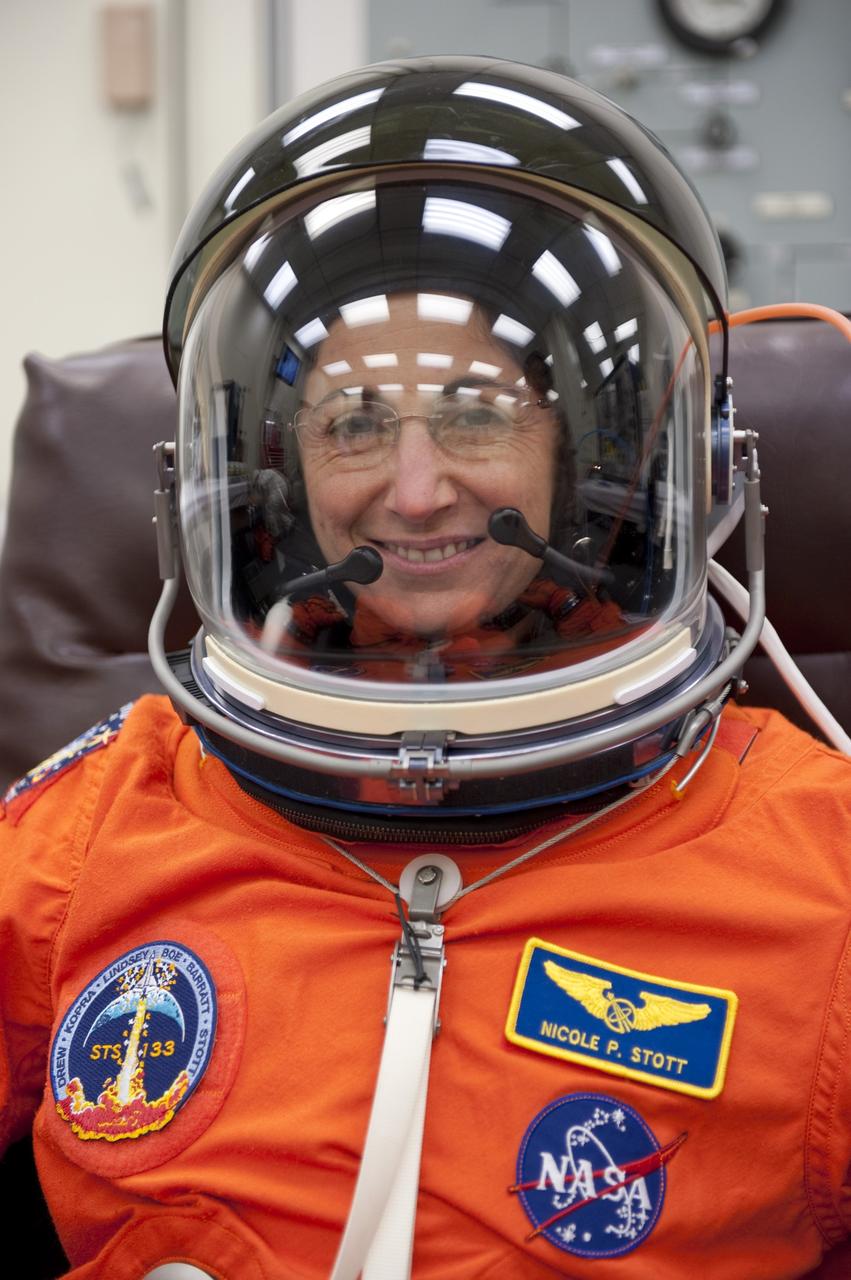
CAPE CANAVERAL, Fla. -- STS-133 Mission Specialist Nicole Stott is suited up in the Operations and Checkout Building at NASA's Kennedy Space Center in Florida during a simulated launch countdown. Checking the fit of their orange launch-and-entry suits and helmets before launch day is part of the Terminal Countdown Demonstration Test (TCDT), which provides each shuttle crew and launch team an opportunity to participate in various simulated activities, including equipment familiarization and emergency training at the launch pad. Space shuttle Discovery and its STS-133 crew will deliver the Permanent Multipurpose Module, packed with supplies and critical spare parts, as well as Robonaut 2, the dexterous humanoid astronaut helper, to the International Space Station. Launch is targeted for Nov. 1 at 4:40 p.m. For more information on the STS-133 mission, visit www.nasa.gov/mission_pages/shuttle/shuttlemissions/sts133/. Photo credit: NASA/Kim Shiflett
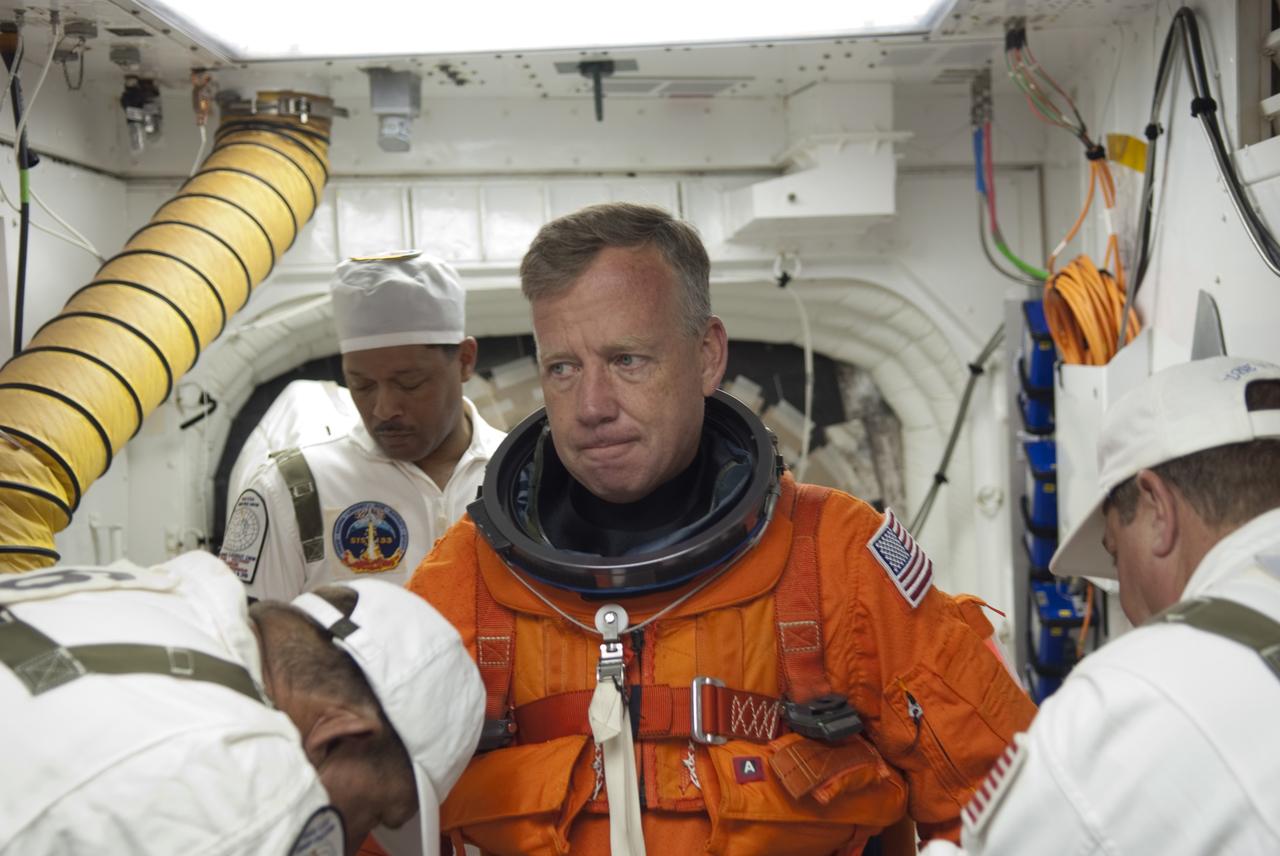
CAPE CANAVERAL, Fla. -- In the White Room of Launch Pad 39A at NASA's Kennedy Space Center in Florida, STS-133 Commander Steve Lindsey prepares to board space shuttle Discovery during the Terminal Countdown Demonstration Test (TCDT). Part of TCDT includes practicing the final hours of a real launch day when astronauts put on their launch-and-entry suits, ride to the pad in the Astrovan and strap into the shuttle. Discovery and its STS-133 crew will deliver the Permanent Multipurpose Module, packed with supplies and critical spare parts, as well as Robonaut 2, the dexterous humanoid astronaut helper, to the International Space Station. Launch is targeted for Nov. 1 at 4:40 p.m. For more information on the STS-133 mission, visit www.nasa.gov/mission_pages/shuttle/shuttlemissions/sts133/. Photo credit: NASA/Jim Grossmann
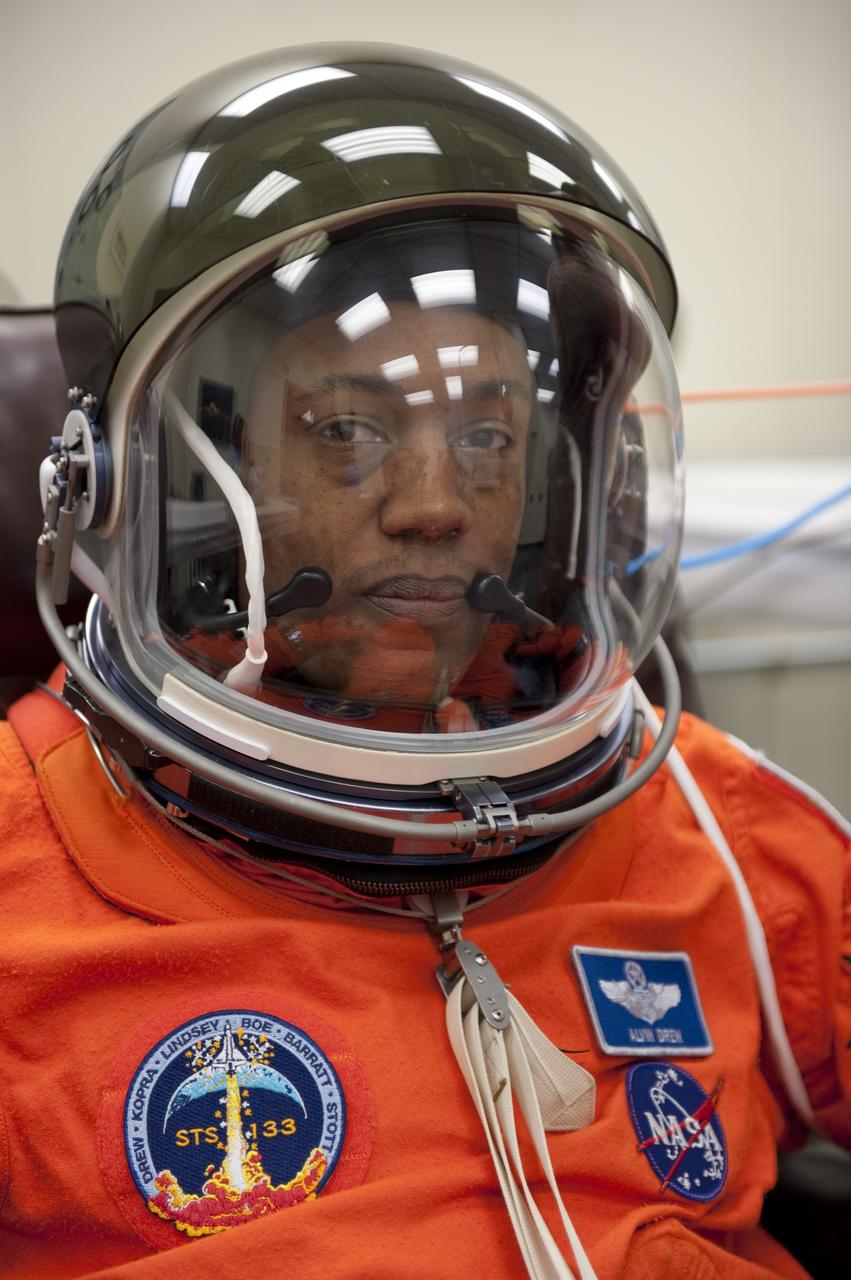
CAPE CANAVERAL, Fla. -- STS-133 Mission Specialist Alvin Drew is suited up in the Operations and Checkout Building at NASA's Kennedy Space Center in Florida during a simulated launch countdown. Checking the fit of their orange launch-and-entry suits and helmets before launch day is part of the Terminal Countdown Demonstration Test (TCDT), which provides each shuttle crew and launch team an opportunity to participate in various simulated activities, including equipment familiarization and emergency training at the launch pad. Space shuttle Discovery and its STS-133 crew will deliver the Permanent Multipurpose Module, packed with supplies and critical spare parts, as well as Robonaut 2, the dexterous humanoid astronaut helper, to the International Space Station. Launch is targeted for Nov. 1 at 4:40 p.m. For more information on the STS-133 mission, visit www.nasa.gov/mission_pages/shuttle/shuttlemissions/sts133/. Photo credit: NASA/Kim Shiflett
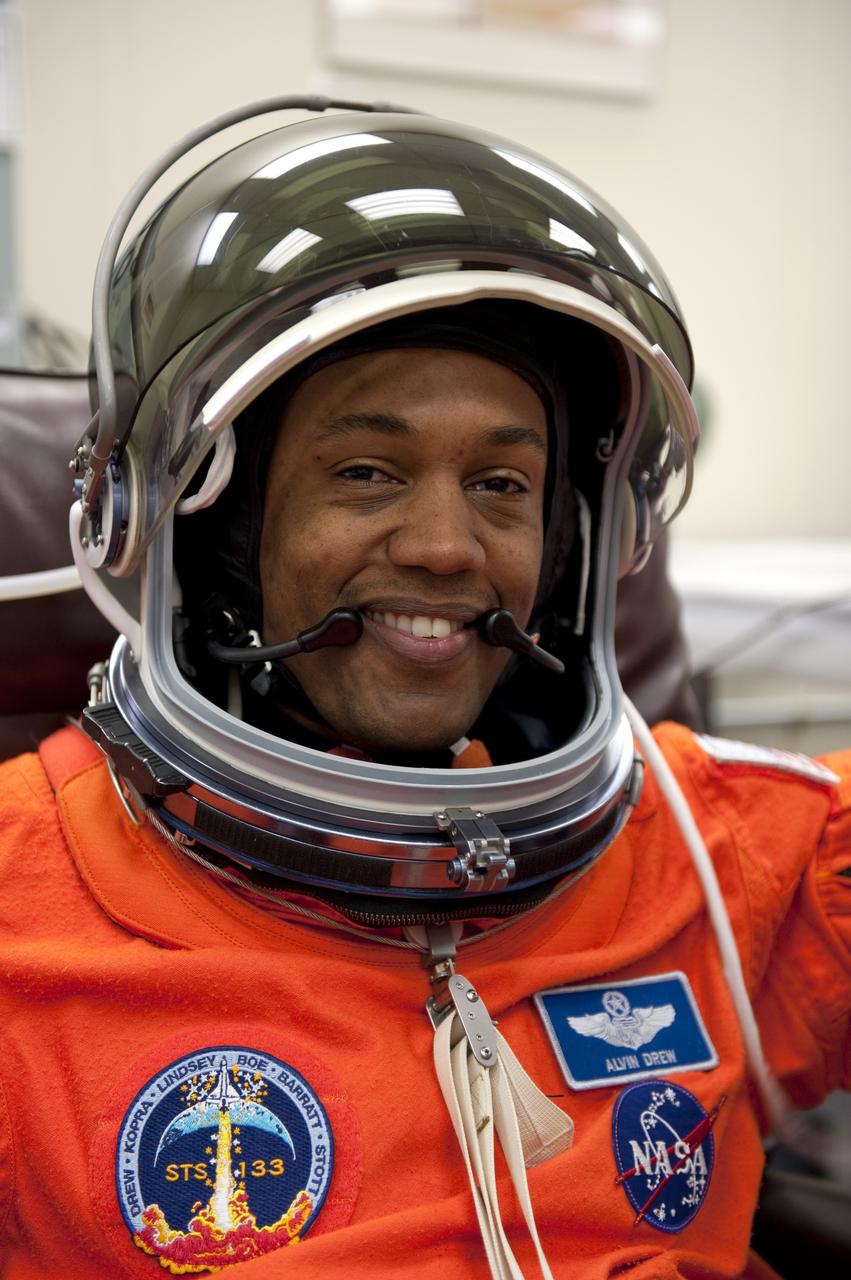
CAPE CANAVERAL, Fla. -- STS-133 Mission Specialist Alvin Drew is suited up in the Operations and Checkout Building at NASA's Kennedy Space Center in Florida during a simulated launch countdown. Checking the fit of their orange launch-and-entry suits and helmets before launch day is part of the Terminal Countdown Demonstration Test (TCDT), which provides each shuttle crew and launch team an opportunity to participate in various simulated activities, including equipment familiarization and emergency training at the launch pad. Space shuttle Discovery and its STS-133 crew will deliver the Permanent Multipurpose Module, packed with supplies and critical spare parts, as well as Robonaut 2, the dexterous humanoid astronaut helper, to the International Space Station. Launch is targeted for Nov. 1 at 4:40 p.m. For more information on the STS-133 mission, visit www.nasa.gov/mission_pages/shuttle/shuttlemissions/sts133/. Photo credit: NASA/Kim Shiflett
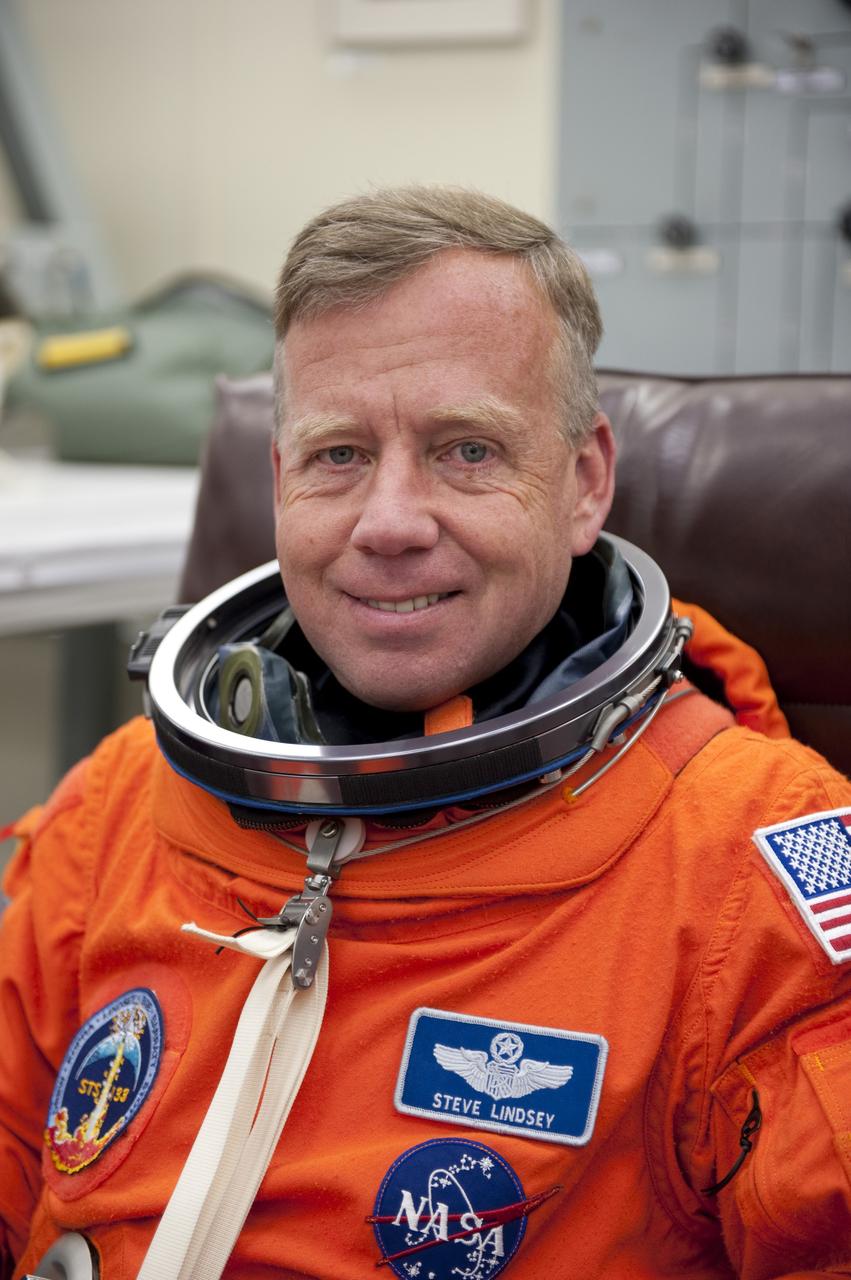
CAPE CANAVERAL, Fla. -- STS-133 Commander Steve Lindsey is suited up in the Operations and Checkout Building at NASA's Kennedy Space Center in Florida during a simulated launch countdown. Checking the fit of their orange launch-and-entry suits and helmets before launch day is part of the Terminal Countdown Demonstration Test (TCDT), which provides each shuttle crew and launch team an opportunity to participate in various simulated activities, including equipment familiarization and emergency training at the launch pad. Space shuttle Discovery and its STS-133 crew will deliver the Permanent Multipurpose Module, packed with supplies and critical spare parts, as well as Robonaut 2, the dexterous humanoid astronaut helper, to the International Space Station. Launch is targeted for Nov. 1 at 4:40 p.m. For more information on the STS-133 mission, visit www.nasa.gov/mission_pages/shuttle/shuttlemissions/sts133/. Photo credit: NASA/Kim Shiflett
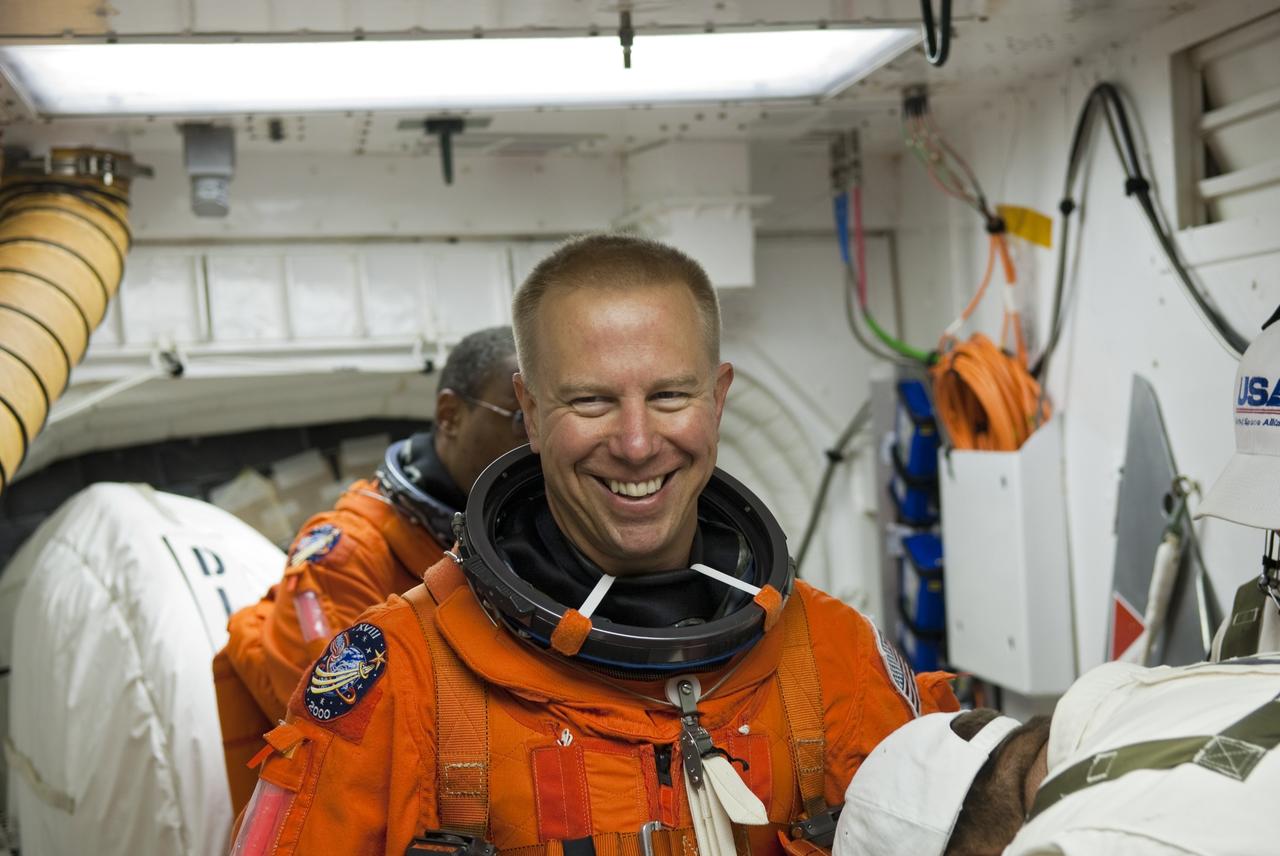
CAPE CANAVERAL, Fla. -- In the White Room of Launch Pad 39A at NASA's Kennedy Space Center in Florida, STS-133 Mission Specialist Tim Kopra prepares to board space shuttle Discovery during the Terminal Countdown Demonstration Test (TCDT). Part of TCDT includes practicing the final hours of a real launch day when astronauts put on their launch-and-entry suits, ride to the pad in the Astrovan and strap into the shuttle. Discovery and its STS-133 crew will deliver the Permanent Multipurpose Module, packed with supplies and critical spare parts, as well as Robonaut 2, the dexterous humanoid astronaut helper, to the International Space Station. Launch is targeted for Nov. 1 at 4:40 p.m. For more information on the STS-133 mission, visit www.nasa.gov/mission_pages/shuttle/shuttlemissions/sts133/. Photo credit: NASA/Jim Grossmann
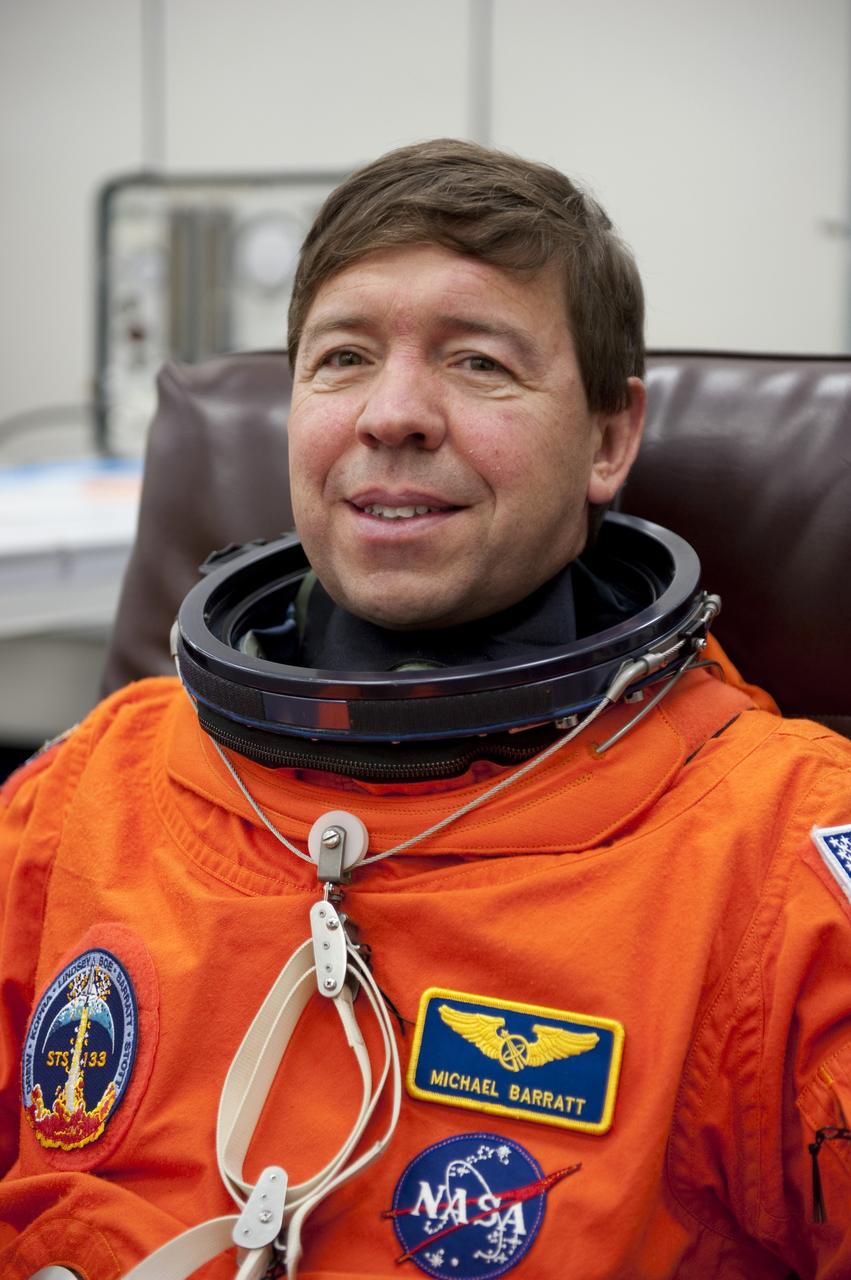
CAPE CANAVERAL, Fla. -- STS-133 Mission Specialist Michael Barratt is suited up in the Operations and Checkout Building at NASA's Kennedy Space Center in Florida during a simulated launch countdown. Checking the fit of their orange launch-and-entry suits and helmets before launch day is part of the Terminal Countdown Demonstration Test (TCDT), which provides each shuttle crew and launch team an opportunity to participate in various simulated activities, including equipment familiarization and emergency training at the launch pad. Space shuttle Discovery and its STS-133 crew will deliver the Permanent Multipurpose Module, packed with supplies and critical spare parts, as well as Robonaut 2, the dexterous humanoid astronaut helper, to the International Space Station. Launch is targeted for Nov. 1 at 4:40 p.m. For more information on the STS-133 mission, visit www.nasa.gov/mission_pages/shuttle/shuttlemissions/sts133/. Photo credit: NASA/Kim Shiflett