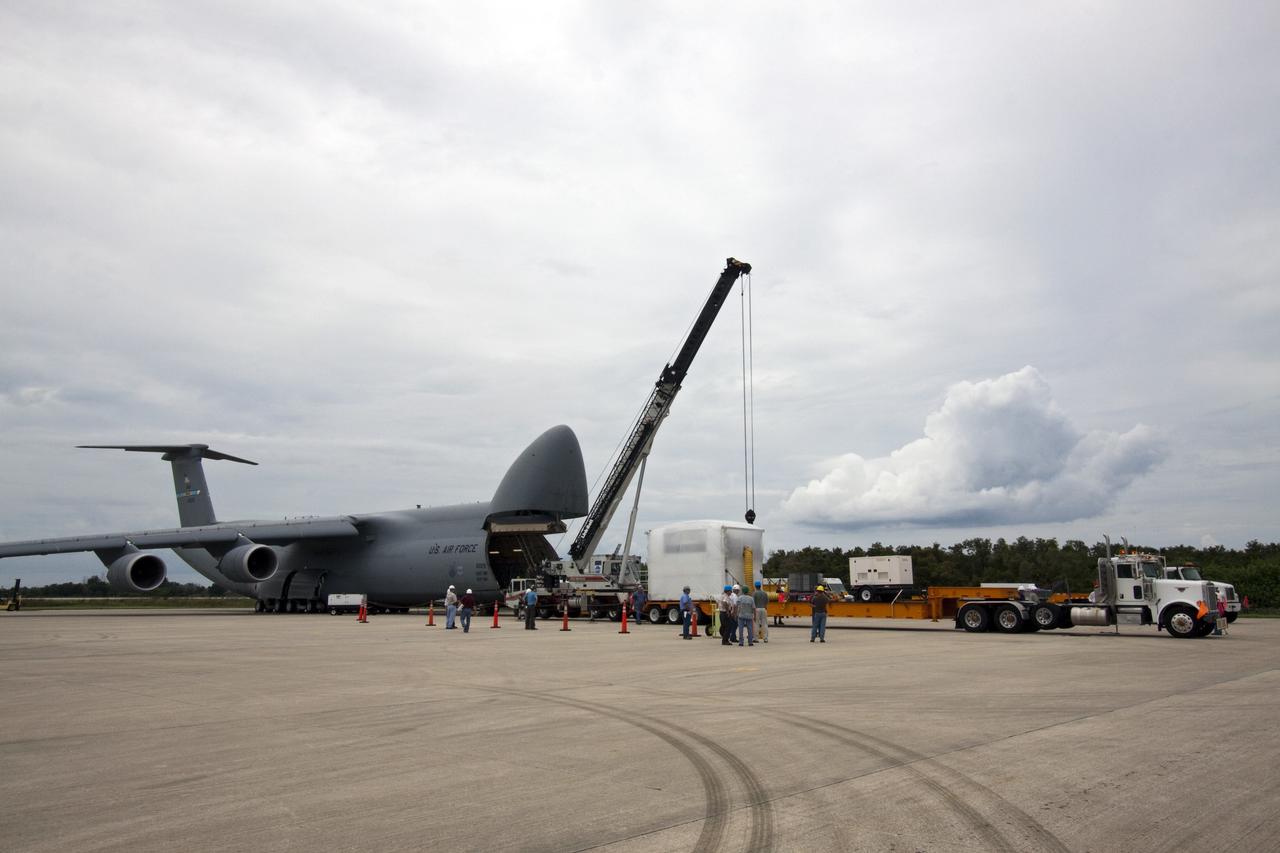
CAPE CANAVERAL, Fla. -- At NASA's Kennedy Space Center in Florida, workers begin to offload the Alpha Magnetic Spectrometer, or AMS, from an Air Force C-5M aircraft, which flew in from Europe. The tractor-trailer will transport the AMS from the Shuttle Landing Facility runway to the Space Station Processing Facility, where it will be processed for launch. The state-of-the-art particle physics detector is designed to operate as an external module on the International Space Station. It will use the unique environment of space to study the universe and its origin by searching for dark matter. AMS will fly to the station aboard space shuttle Endeavour's STS-134 mission targeted to launch Feb. 26, 2011. Photo credit: NASA/Jack Pfaller
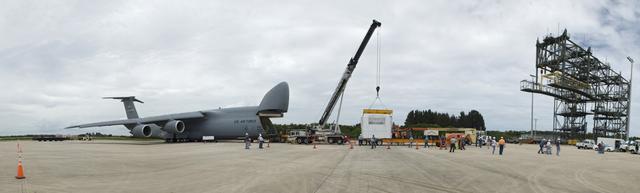
CAPE CANAVERAL, Fla. -- At NASA's Kennedy Space Center in Florida, workers offload the Alpha Magnetic Spectrometer (AMS) from an Air Force C-5M aircraft on the Shuttle Landing Facility runway. The state-of-the-art particle physics detector arrived at Kennedy from Europe and will operate as an external module on the International Space Station to study the universe and its origin by searching for dark matter. AMS will fly to the station aboard space shuttle Endeavour's STS-134 mission targeted to launch Feb. 26, 2011. Photo credit: NASA/Frankie Martin
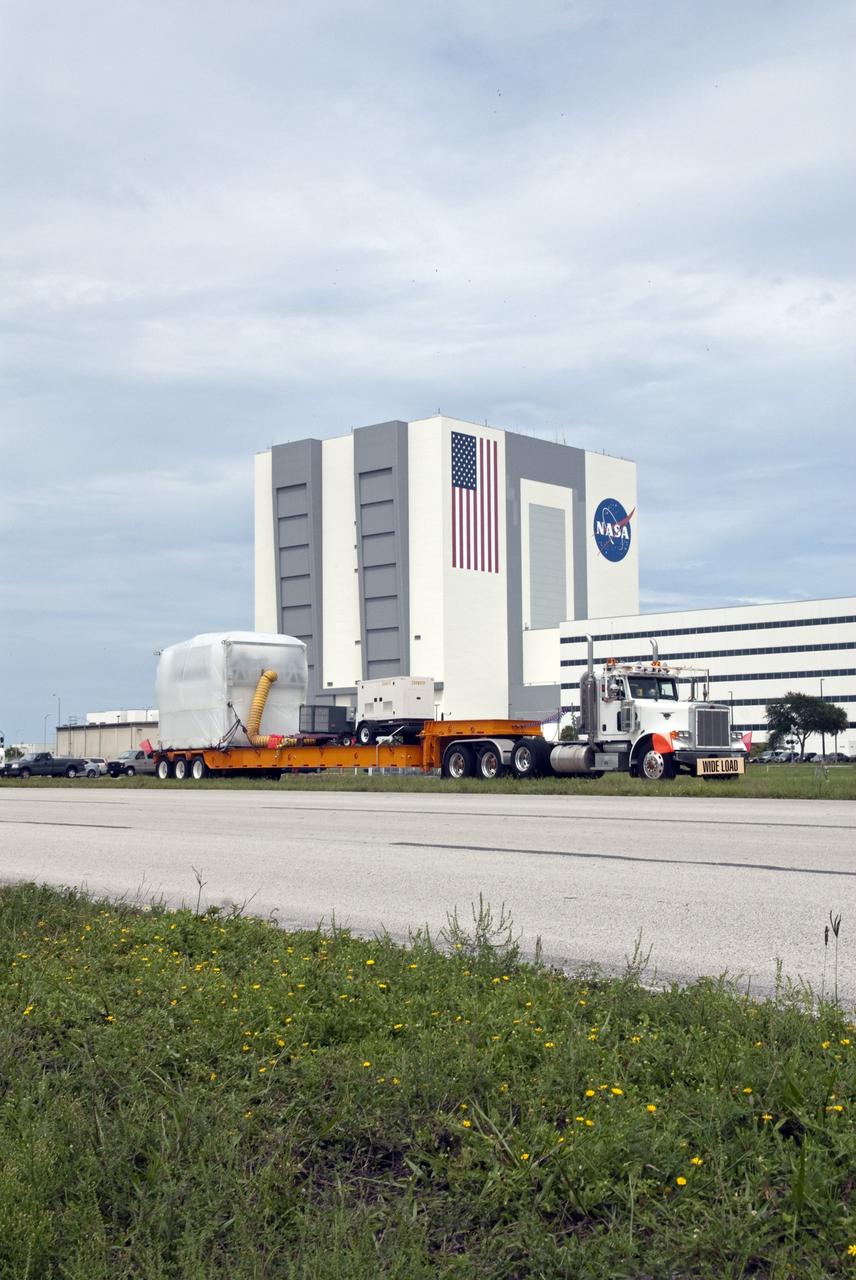
CAPE CANAVERAL, Fla. -- At NASA's Kennedy Space Center in Florida, a tractor-trailer carrying the Alpha Magnetic Spectrometer, or AMS, passes the Vehicle Assembly Building en route to the Space Station Processing Facility. The state-of-the-art particle physics detector arrived on Kennedy's Shuttle Landing Facility aboard an Air Force C-5M aircraft from Europe. It will operate as an external module on the International Space Station to study the universe and its origin by searching for dark matter. AMS will fly to the station aboard space shuttle Endeavour's STS-134 mission targeted to launch Feb. 26, 2011. Photo credit: NASA/Frankie Martin
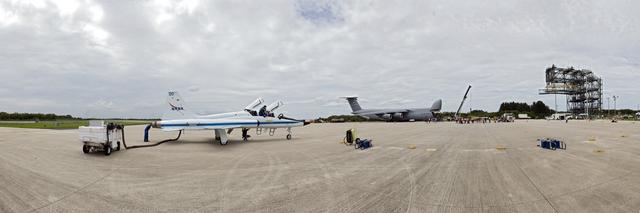
CAPE CANAVERAL, Fla. -- At NASA's Kennedy Space Center in Florida, media and workers watch as the Alpha Magnetic Spectrometer (AMS) is offloaded from an Air Force C-5M aircraft on the Shuttle Landing Facility runway. One of NASA's T-38 training jets, flown by a member of the STS-134 crew, is in the foreground. The state-of-the-art particle physics detector arrived from Europe and will operate as an external module on the International Space Station to study the universe and its origin by searching for dark matter. AMS will fly to the station aboard space shuttle Endeavour's STS-134 mission targeted to launch Feb. 26, 2011. Photo credit: NASA/Frankie Martin
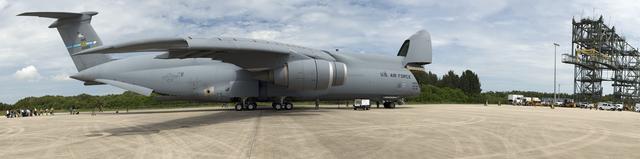
CAPE CANAVERAL, Fla. -- At NASA's Kennedy Space Center in Florida, media and workers watch as the Alpha Magnetic Spectrometer (AMS) is offloaded from an Air Force C-5M aircraft on the Shuttle Landing Facility runway. The state-of-the-art particle physics detector arrived at Kennedy from Europe and will operate as an external module on the International Space Station to study the universe and its origin by searching for dark matter. AMS will fly to the station aboard space shuttle Endeavour's STS-134 mission targeted to launch Feb. 26, 2011. Photo credit: NASA/Frankie Martin

CAPE CANAVERAL, Fla. -- At NASA's Kennedy Space Center in Florida, a tractor-trailer carrying the Alpha Magnetic Spectrometer, or AMS, arrives at the Space Station Processing Facility, where it will be processed for launch. The state-of-the-art particle physics detector arrived on Kennedy's Shuttle Landing Facility aboard an Air Force C-5M aircraft from Europe. It will operate as an external module on the International Space Station to study the universe and its origin by searching for dark matter. AMS will fly to the station aboard space shuttle Endeavour's STS-134 mission targeted to launch Feb. 26, 2011. Photo credit: NASA/Frankie Martin
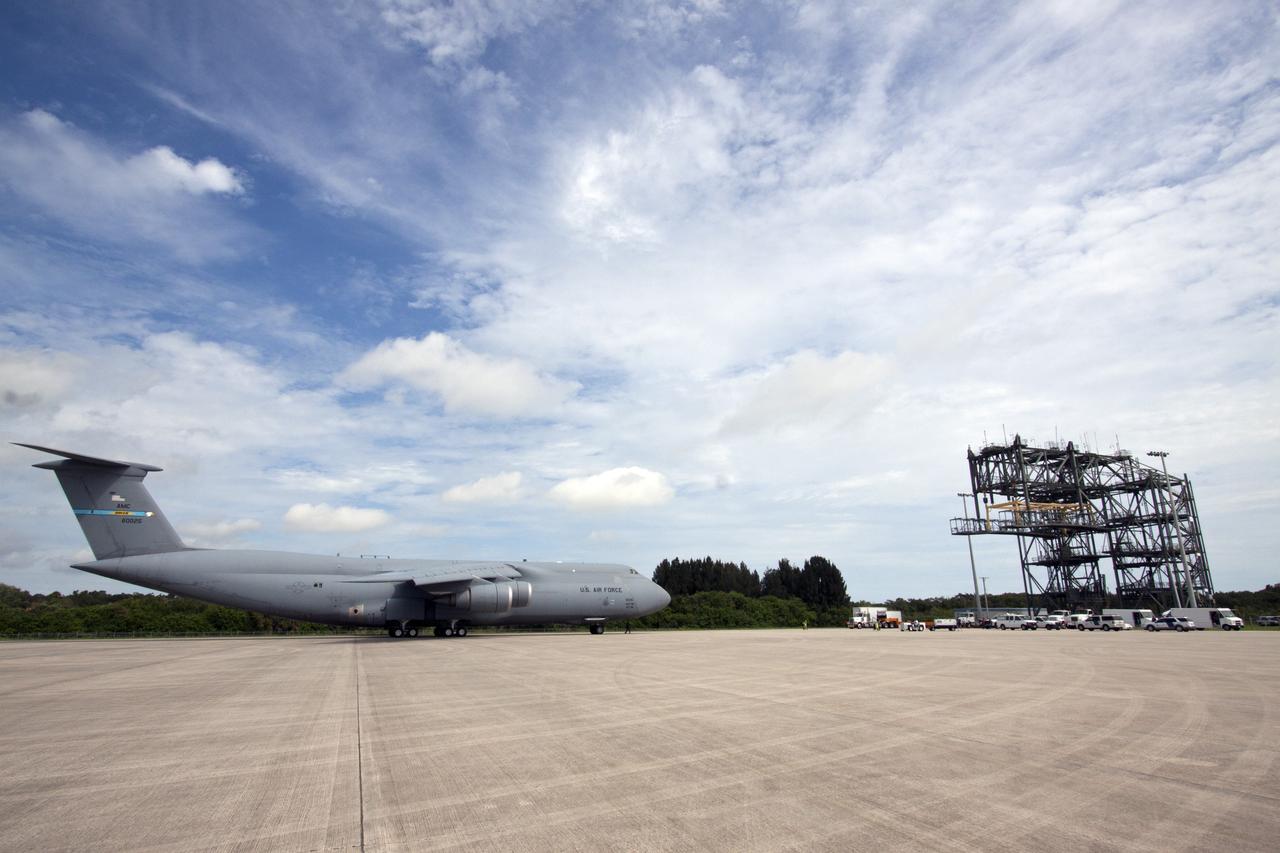
CAPE CANAVERAL, Fla. -- At NASA's Kennedy Space Center in Florida, the Alpha Magnetic Spectrometer, or AMS, arrives on the Shuttle Landing Facility runway aboard an Air Force C-5M aircraft from Europe. The state-of-the-art particle physics detector is designed to operate as an external module on the International Space Station. It will use the unique environment of space to study the universe and its origin by searching for dark matter. AMS will fly to the International Space Station aboard space shuttle Endeavour's STS-134 mission targeted to launch Feb. 26, 2011. Photo credit: NASA/Jack Pfaller
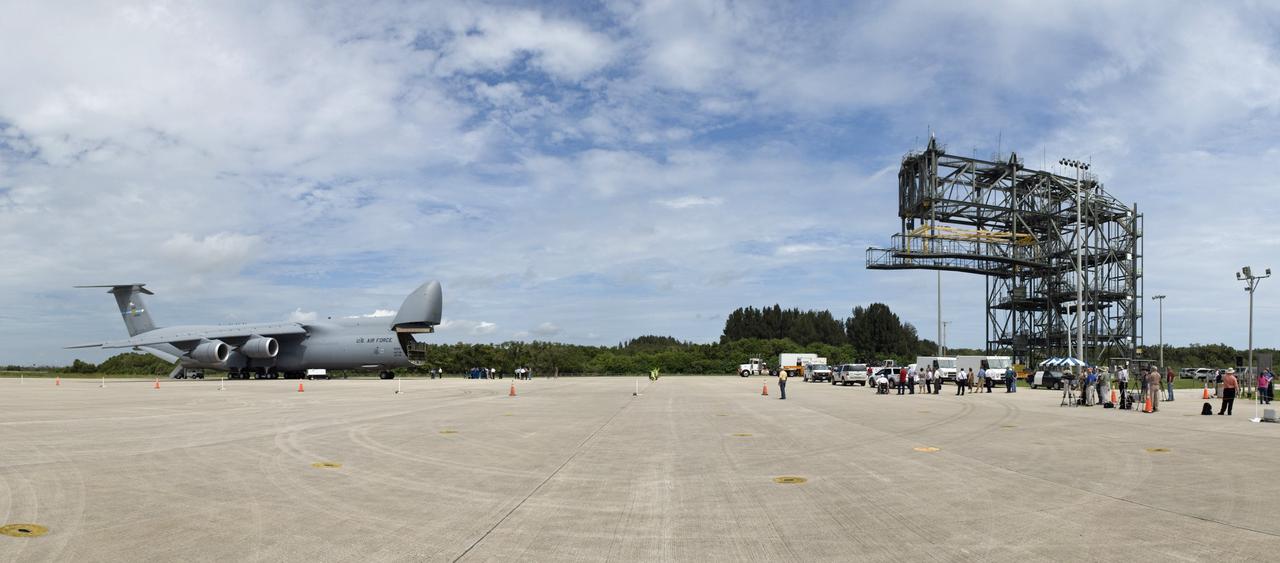
CAPE CANAVERAL, Fla. -- At NASA's Kennedy Space Center in Florida, media and workers watch as the Alpha Magnetic Spectrometer (AMS) is offloaded from an Air Force C-5M aircraft on the Shuttle Landing Facility runway. The state-of-the-art particle physics detector arrived at Kennedy from Europe and will operate as an external module on the International Space Station to study the universe and its origin by searching for dark matter. AMS will fly to the station aboard space shuttle Endeavour's STS-134 mission targeted to launch Feb. 26, 2011. Photo credit: NASA/Frankie Martin
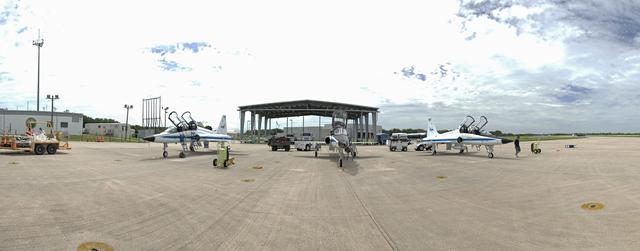
CAPE CANAVERAL, Fla. -- At NASA's Kennedy Space Center in Florida, three of NASA's T-38 training jets sit on the parking apron of the Shuttle Landing Facility. The STS-134 crew members flew the jets to Kennedy to watch the Alpha Magnetic Spectrometer (AMS) arrive aboard an Air Force C-5M aircraft from Europe. The state-of-the-art particle physics detector will operate as an external module on the International Space Station to study the universe and its origin by searching for dark matter. AMS will fly to the station aboard space shuttle Endeavour's STS-134 mission targeted to launch Feb. 26, 2011. Photo credit: NASA/Frankie Martin
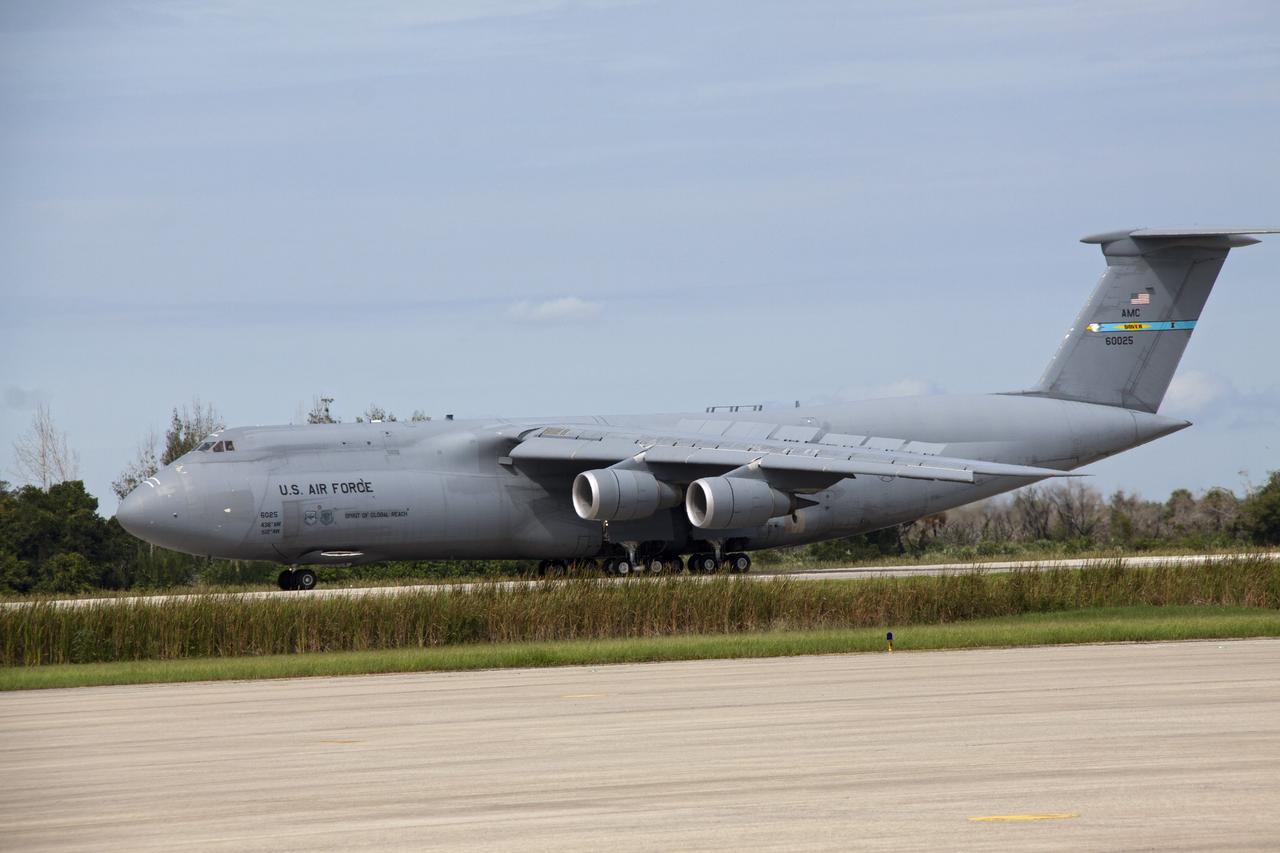
CAPE CANAVERAL, Fla. -- At NASA's Kennedy Space Center in Florida, the Alpha Magnetic Spectrometer, or AMS, arrives on the Shuttle Landing Facility runway aboard an Air Force C-5M aircraft from Europe. The state-of-the-art particle physics detector is designed to operate as an external module on the International Space Station. It will use the unique environment of space to study the universe and its origin by searching for dark matter. AMS will fly to the International Space Station aboard space shuttle Endeavour's STS-134 mission targeted to launch Feb. 26, 2011. Photo credit: NASA/Jack Pfaller